ELEVATE CARE COUNTRY CLUB HILL
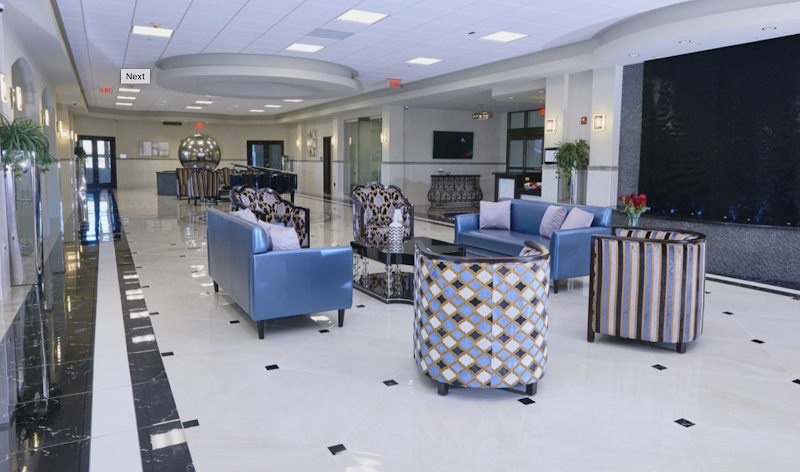
18200 SOUTH CICERO AVENUE, COUNTRY CLUB HILLS, IL 60478 (708) 798-2272
For profit - Corporation 200 Beds ELEVATE CARE Data: November 2025
Trust Grade
0/100
#352 of 665 in IL
Last Inspection: January 2024

Within standard 12-15 month inspection cycle. Federal law requires annual inspections.

Overview

Elevate Care Country Club Hills has received a Trust Grade of F, indicating significant concerns about care quality. Ranking #352 out of 665 facilities in Illinois, they fall in the bottom half, and at #113 of 201 in Cook County, only a few local options are better. While the facility is improving, with issues decreasing from 39 in 2023 to 12 in 2024, the staffing rating of 2 out of 5 stars and a turnover rate of 46% suggest challenges in maintaining experienced staff. Alarmingly, the facility has accumulated $789,318 in fines, which is higher than 97% of Illinois facilities, hinting at repeated compliance problems. Inspector findings revealed serious issues, such as a resident experiencing untreated pain due to a failure to transcribe physician orders for hospice care and another resident suffering a head injury from a fall while under inadequate supervision. Overall, while there are some signs of improvement, families should weigh these serious concerns against the facility's efforts.

Trust Score
F
0/100
In Illinois
#352/665
Bottom 48%
Safety Record
High Risk
Review needed
Inspections
Getting Better
39 → 12 violations
Staff Stability
⚠ Watch
46% turnover. Above average. Higher turnover means staff may not know residents' routines.
Penalties
○ Average
$789,318 in fines. Higher than 70% of Illinois facilities. Some compliance issues.
Skilled Nurses
○ Average
Each resident gets 38 minutes of Registered Nurse (RN) attention daily — about average for Illinois. RNs are the most trained staff who monitor for health changes.
Violations
⚠ Watch
70 deficiencies on record. Higher than average. Multiple issues found across inspections.
★★☆☆☆
2.0
Overall Rating
★★☆☆☆
2.0
Staff Levels
★★★☆☆
3.0
Care Quality
★★☆☆☆
2.0
Inspection Score
Stable
2023: 39 issues
2024: 12 issues

The Good

  • Full Sprinkler Coverage · Fire safety systems throughout facility
  • No fines on record

Facility shows strength in fire safety.

The Bad

2-Star Overall Rating

Below Illinois average (2.5)

Below average - review inspection findings carefully

Staff Turnover: 46%

Near Illinois avg (46%)

Higher turnover may affect care consistency

Federal Fines: $789,318

Well above median ($33,413)

Significant penalties indicating serious issues

Chain: ELEVATE CARE

Part of a multi-facility chain

Ask about local staffing decisions and management

The Ugly 70 deficiencies on record

22 actual harm
Dec 2024 2 deficiencies 1 Harm
SERIOUS (G) 📢 Someone Reported This

A family member, employee, or ombudsman was alarmed enough to file a formal complaint

Actual Harm - a resident was hurt due to facility failures

Quality of Care (Tag F0684)

A resident was harmed · This affected 1 resident

**NOTE- TERMS IN BRACKETS HAVE BEEN EDITED TO PROTECT CONFIDENTIALITY** Based on interview and record review, the facility failed to transcribe physician orders for comfort care medications for a resi...

Read full inspector narrative →
**NOTE- TERMS IN BRACKETS HAVE BEEN EDITED TO PROTECT CONFIDENTIALITY** Based on interview and record review, the facility failed to transcribe physician orders for comfort care medications for a resident admitted to hospice care services. This failure affected one (R1) of five residents reviewed for physician orders and resulted in R1 having untreated pain for several days before expiring in the facility. Findings include: R1 was originally admitted to the facility [DATE] with diagnoses that included but are not limited to malignant colon cancer. According to R1's electronic health record, progress notes of [DATE] indicate R1 went to an outpatient oncology appointment and was hospitalized with a diagnosis of adult failure to thrive. While in the hospital, and due to R1's sudden decline in health, R1's healthcare proxy elected for R1 to admit to hospice services upon returning to the facility. Consent for hospice services was signed in the hospital on [DATE]. R1 returned to the facility [DATE]. According to nurse progress notes, V3 LPN (Licensed Practical Nurse) received R1 upon arrival, and transcribed orders received from the hospital. An order for hospice services was written on the Physician's Order Sheet [DATE]. On [DATE] at 9:10am V9 (R1's Representative) said they went to visit R1 on [DATE]. V9 stated walking in R1's room, V9 noticed that R1's face was contorted in pain, and R1 was gripping the sheets. V9 stated, since the hospitalization, R1 was confused and would often say no to anything R1 was being asked. When V9 saw R1's presentation, V9 immediately went to find a nurse, however the nurses were not immediately available at the nursing station. V9 saw an unidentified staff member enter the room and relayed the concern of R1 showing overt signs of pain. V9 and the staff member found the nurse on duty (V10 LPN), V9 stated V10 relayed that R1 had morphine on hand and showed it to V9. However, V10 stated there was no order written and therefore could not administer it to R1. V9 stated, the nursing manager (V2 Director of Nursing) got involved and got an order for R1 to receive the medication and the nurse gave it. During this interview, V9 began crying and stated my biggest heartache is that [R1] sat there in pain before he died in the facility. [R1] had been [in the facility] since Sunday, and Thursday was the first time he got morphine and then on Friday ([DATE]), [R1] died. According to hospice notes, R1 was assessed by a hospice nurse and admitted to hospice services the following day of readmission on [DATE]. Written hospice orders included comfort kit medications orders which included morphine sulfate for pain, lorazepam for anxiety and restlessness and acetaminophen suppositories for fever and pain. Hospice RN (Registered Nurse) and facility nurse V7 LPN signed that orders were reviewed and received. At the time of this survey, review of Physician's Order Sheet for [DATE] did not include any transcription of the hospice orders for medications. V6 is representative from the hospice company caring for R1. On [DATE] at 3:40pm V6 stated R1 was transferred to the facility over the weekend, and the (hospice) nurse came to assess and admit R1 to hospice the following day [DATE]. While the nurse was at the facility, medication and other orders were confirmed with the facility nurse on duty for R1. V6 stated the nurse was identified as V7 as evidenced by name and signature on the admission forms. V6 stated the hospice company provides the comfort kit medications from a collaborating pharmacy and the medications usually arrive before or at the time the admitting nurse comes so that the medications are available to be reviewed during admission. V6 also provided a pharmacy sheet manifest that listed V8 LPN as receiving medications from the hospice pharmacy. The medications delivered included five milliliters of Morphine Sulfate 20mg/ml (milligrams/milliliter) solution received by V8 on [DATE] at 1:49pm. Hospice Comprehensive Assessment notes that the admitting hospice nurse's time in was for 1:50pm, and time out 3:00pm. Hospice Chaplain noted visiting R1 on [DATE]. Hospice Support Services Log written by the chaplain included a care plan open for pain. During the Chaplain visit R1 was noted to exhibit signs of pain: [R1] reports no, grimacing with anticipation. R1's Nursing Progress Note dated [DATE] at 5:32am stated [R1] observed with shortness of breath while lying flat, resident repositioned, head of bed elevated Vital signs taken, [oxygen] given via [nasal cannula]. [R1] appears comfortable at this time, will continue to monitor. Resident recently enrolled in hospice services. will continue to monitor. On [DATE] at 11:53am V2 DON (Director of Nursing) stated, they were not aware of any concern related to R1's pain medication not being available, however remembered helping the nurse on duty with orders on [DATE]. V2 stated the nurse (V10 LPN) was fairly new and we had to call hospice directly for the orders because R1 didn't have any orders for the morphine documented in the electronic health record. V2 stated they didn't know if the medication was available, and I didn't ask but I did put the orders in the [electronic health record]. V2 went on to say, at the time of the hospice nurse's assessment of the residents admitting to hospice care, facility nurses are expected to review any new orders provided by hospice relay them to the primary provider and transcribe the orders onto the Physician Order Sheet. Nurses are then expected to write a progress note indicating this action. Working nursing schedules were reviewed and confirmed V7 LPN and V8 LPN as the nurses working R1's unit the 7am-3pm shift on [DATE]. On [DATE] at 3:33pm V7 LPN stated the unit was short one nurse that day and it was likely very busy. V7 recalled taking care of R1 on [DATE] but did not recall receiving hospice orders. On [DATE] at 12:07pm V8 LPN stated they could not recall working the unit that morning and did not recall receiving medications for R1. The Physician Order Sheet indicated three orders documented by V2 on [DATE] at 11:03 for Morphine Sulfate: Morphine Sulfate (Concentrate) Solution 20 mg/ml (milligram/milliliter) Give 5 mg by mouth every 2 hours as needed for moderated Pain give 5mg; Morphine Sulfate (Concentrate) Solution 20 mg/ml Give 10 mg by mouth every 2 hours as needed for Severe Pain Give 10mg(0.5ml); Morphine Sulfate (Concentrate) Solution 20 mg/ml Give 5 mg by mouth every 1 hours as needed for dyspnea/ air hunger/ shortness of breath/ respiratory rate give 5mg. Policy for Transcription of Physician Orders no revision date states in part: Purpose: 1. To establish the procedure by transcribing new physician orders. 2. To document and give clear indication that physician orders have been processed and action taken. admission Protocol or Return From Hospital Stay: 1. Transcription of physician order: a. Carefully, review transfer record and discharge summary from the hospital or the transfer record from another health care facility. B. The licensed nurse should notify the physician of the resident's admission, clinical condition and findings, review and clarify transfer orders and previous orders, as applicable. C. After each order is entered in the Physician Order tab of the chart, check that all orders were entered correctly. D. After physician verification, the licensed nurse completes a progress note that denotes the physician is aware of the admission and that the orders were verified. 6. Medication and treatment orders are to be transcribed in the physician order tab of the electronic medical record. Directions must be understandable (without abbreviations other than the approved abbreviations) by all staff members who are responsible for medication and treatment administrations. Hospice Services Agreement contract with the facility signed [DATE] states in part [hospice provider] shall also provide all prescription drugs, pharmaceuticals, medical equipment and supplies relating to a resident Hospice Patient's terminal illness as may be specified in such Resident Hospice Patient' Plan of Care. Services to be provided by Nursing Facility: A. Room and Board. 1. Nursing Facility shall provide Room and Board services in the form of personal care services to each Resident Hospice Patient. It is nursing Facility's responsibility to continue to furnish 24-hour room and board care, meeting the personal care and nursing needs that would have been provided by the primary giver at home at the same level of care provided before hospice care was elected. Such Room and Board services shall include but not be limited to such services as: 3- Administration of medication as prescribed in the Plan of Care.
CONCERN (D) 📢 Someone Reported This

A family member, employee, or ombudsman was alarmed enough to file a formal complaint

Potential for Harm - no one hurt, but risky conditions existed

Grievances (Tag F0585)

Could have caused harm · This affected 1 resident

**NOTE- TERMS IN BRACKETS HAVE BEEN EDITED TO PROTECT CONFIDENTIALITY** Based on interview and record review, the facility failed to follow their grievance policy by not acknowledging a concern writte...

Read full inspector narrative →
**NOTE- TERMS IN BRACKETS HAVE BEEN EDITED TO PROTECT CONFIDENTIALITY** Based on interview and record review, the facility failed to follow their grievance policy by not acknowledging a concern written by a resident representative. This failure affected one of one (R1) resident reviewed for grievances. Findings include: R1 was originally admitted to the facility [DATE] wit diagnoses that included but are not limited to malignant colon cancer. According to R1's electronic health record, progress notes of [DATE] indicate R1 went to an outpatient oncology appointment and was hospitalized with a diagnosis of adult failure to thrive. While in the hospital, and due to R1's sudden decline in health, R1's healthcare proxy elected for R1 to admit to hospice services upon returning to the facility. R1's consent for hospice services was signed in the hospital on [DATE]. R1 returned to the facility on [DATE] and was admitted and assessed by hospice care services on [DATE]. Hospice orders were written at the time of assessment, however, were not transcribed to R1's electronic health record. As a result, R1 did not receive any of the comfort medications ordered, from [DATE] to [DATE]. On [DATE] at 9:10am V9 (R1's Representative) stated they went to visit R1 on [DATE]. V9 stated walking in R1's room, V9 noticed that R1's face was contorted in pain and R1 was gripping the sheets. V9 went on to explain that there was confusion among the nursing staff because there was medication available to give R1, however no orders were transcribed in the chart. During this interview, V9 began crying and stated my biggest heartache is that [R1] sat there in pain before he died in the facility. [R1] had been [in the facility] since Sunday and Thursday was the first time he got morphine and then on Friday, [R1] died. V9 stated these concerns were expressed to V1 Administrator via email a few weeks ago, however no facility staff have reached out to address the concerns as written. On [DATE] at 3:30pm V1 administrator stated regarding Grievances, any resident, family member or outside person is able to relay a concern to the facility staff. V1 stated no matter if the concern came via phone call, face to face or email the concern finds its way on a grievance form. V1 was unaware of any concerns related to R1 and had not received any documented concerns since R1's passing. V9 provided the surveyor a forwarded email sent to V1 Administrator on [DATE]. The email address was confirmed as provided during this survey. Facility grievance forms were reviewed from [DATE] to current and no grievance was filed for V9. Facility Policy Grievances revised [DATE] states in part; Purpose: To ensure prompt resolution of all grievances with respect to care and treatment which has been furnished as well as that which has not been furnished, the behavior of staff and of other residents, and other concerns regarding their stay at this campus. Guidelines: Grievances may be filed orally (meaning spoken), in writing, or anonymously. Grievances may also be filed anonymously through the Corporate Compliance Hotline. Contact information for the Corporate Compliance Hotline shall be posted in prominent locations through the facility. All written grievances shall include: The date the grievance was received; A summary statement of the grievance, Department assigned to investigate; Steps taken to investigate the grievance; Summary of the pertinent findings or conclusions regarding the concerns(s); Statemen as to whether the grievance was confirmed or not confirmed; Corrective action taken or to be taken by the facility as a result of the grievance, including measure taken to prevent further potential violations of any resident right while the alleged violation is being investigated. ; The date the written decision was issued to the resident or the complainant. Every effort shall be made to resolve grievances in a timely manner, usually within 5 business days (excludes weekends and holidays). Under certain circumstances, additional time may be needed to complete an investigation and implement measures to resolve the grievance. In such cases, the resident or complainant should be notified of the extension. Copies and results of grievances filed shall be maintained for a period of no less than 3 years from the issuance of the grievance decision.
Nov 2024 1 deficiency 1 Harm
SERIOUS (G) 📢 Someone Reported This

A family member, employee, or ombudsman was alarmed enough to file a formal complaint

Actual Harm - a resident was hurt due to facility failures

Accident Prevention (Tag F0689)

A resident was harmed · This affected 1 resident

**NOTE- TERMS IN BRACKETS HAVE BEEN EDITED TO PROTECT CONFIDENTIALITY** Based on interview and record review the facility failed to ensure resident safety by failure to provide two persons assist to a...

Read full inspector narrative →
**NOTE- TERMS IN BRACKETS HAVE BEEN EDITED TO PROTECT CONFIDENTIALITY** Based on interview and record review the facility failed to ensure resident safety by failure to provide two persons assist to a totally dependent resident (R121) when providing incontinence care. This failure resulted R121 falling from bed that required a visit to the hospital for evaluation and repair of a laceration to the scalp which needed three staples. This deficiency affects one (R121) of three residents in the sample of 32 reviewed for Resident safety/Fall Prevention Program. Findings include: On 11/20/24 at 10:03AM, V30 Family member stated the facility failed to provide adequate care and supervision causing R121 to fall while receiving care. R121 fell from bed resulting in a head laceration. R121 legs are contracted and laid still. On 11/20/24 at 10:30AM, V1 Administrator and V2 Director of Nursing (DON) stated that R121 fell from bed on 11/4/24 during incontinence care provided by V29 Certified Nursing Assistant (CNA). On 11/20/24 at 10:48AM, R121 lying in bed with low air loss mattress. She (R121) is nonverbal. R121 has a Tracheostomy connected to oxygen at 3LPM (liters per minute). R121 has Gastrostomy tube connected to Glucerna 1.2 feeding tube at 65ml/hour. She is totally dependent of ADLs (Activity in Daily Living) and transfers. Review of R121's incident report submitted to the State Agency on 11/5/24 indicated: Date of incident: 11/4/24 at 6:30AM. Witnessed fall with physical harm or injury. V29 CNA written statement indicated she was providing ADL care to resident. As she rolled R121 over to provide incontinence care she began to slide out of the bed. She called for assistance from V25 LPN (Licensed Practical Nurse). Observed R121 on the floor in a side lying position. Noted moderate blood to the posterior scalp. Bleeding controlled. No loss of consciousness (LOC) noted. Neuro check initiated with no deviation from baseline. ROM (range of motion) done to all extremities and were within normal limit. Physician made aware and ordered to send R121 to hospital for evaluation. V30 Family member notified. R121 returned to facility with three staples to right lateral head. R121's hospital records dated 11/4/24 indicated: Witnessed fall from her bed and hitting her head. Per EMS (Emergency medical services), staff reports that the R121 was being cleaned up by staff and she rolled off her bed. Staff reports R121 has no LOC and has laceration to the head. R121 non-verbal at baseline. Clinical impression: Laceration of scalp, Fall. Physical exam: 2 cm laceration to the right sided parietal scalp without active bleeding or surrounding erythema. Laceration repair: three staples to right parietal scalp. R121 is re-admitted on [DATE] with diagnoses listed in part but not limited to Anoxic brain damage, Chronic respiratory failure with Hypoxia, Tracheostomy, Gastrostomy, Dysphagia. Comprehensive care plan indicates she has an ADL self-care performance deficit related to disease process of anoxic brain damage, dependent for ADLs and mobility, incontinent of bowel and bladder. She has contractures to all extremities. She is at risk for falls and fall related injuries related to decreased mobility and impaired balance. Most recent MDS/Resident assessment dated [DATE] section GG Functional abilities: GG0130 Self-care indicated: Toileting hygiene, Shower/bathe self and Personal hygiene coded as 01-Dependent- helper does all of the effort, Resident does none of the effort to complete the activity or the assistance of 2 or more helpers is required for the resident to complete the activity. GG0170 Mobility indicated: Roll left and right coded as 01- Dependent- helper does all of the effort, Resident does none of the effort to complete the activity or the assistance of 2 or more helpers is required for the resident to complete the activity. On 11/20/24 at 1:48PM, V1 Administrator stated that they don't have policy on Resident safety. On 11/21/24 at 10:22AM, V25 LPN stated he was working with R121 when she had the fall incident while V29 CNA was providing incontinence care. V25 stated that R121 is totally dependent in ADLs and needed two person assist with mechanical lift transfers. V25 stated that he did not witness the fall incident. V25 stated that V29 CNA should have pulled R121 toward her or closer to her instead of rolling R121 away from her for safety. On 11/21/24 at 10:49AM, V26 Nursing Supervisor 11-7 shift stated she was called by V25 LPN to R121's room. V26 stated, she observed R121 in a lying position and observed laceration to scalp. V26 stated they controlled the bleeding. Physician and family were notified of the incident. R121 was sent to the hospital for evaluation. R121 returned with staples to the lacerated scalp. V26 stated that they did in-service the nursing staff of proper position/transition during incontinence care. V26 stated that for resident safety, CNA should get assistance of two persons to assist dependent resident for incontinence/ADL care. V29 CNA should pull R121 towards/ closer to her to prevent R121 slipping from edge of the bed. On 11/21/24 at 11:23AM, V29 CNA stated that she was providing incontinence care with R121, when she slid off the bed. V29 stated that she should have pulled R121 towards/closer to her instead of rolled her away from her placing her at edge of the bed. On 11/21/24 at 12:02PM, V27 MDS/Restorative Nurse stated that she did the MDS/Resident assessment of R121. V27 stated R121 is totally dependent with ADLs and transfers. Section GG functional abilities indicated that she needs two assists with bed mobility- roll to left and right side and personal hygiene and grooming. On 11/21/24 at 1:20PM, V2 DON stated that they did in-service the nursing staff regarding proper and safe positioning and bed mobility to dependent resident such as ensuring that there is as adequate number of caregivers present to safely position or move the patient. V2 stated, when providing ADLs/incontinence care in bed that staff should roll/pull the resident toward /closer to them to prevent placing resident at the edge of the bed and avoid slipping out of bed. Facility unable to provide policy on Resident Safety. Facility's policy on Fall Prevention Program revision 11/21/17 indicates: Purpose: To assure the safety of all residents in the facility, when possible. The program will include measures which determine the individual needs of each resident by assessing the risk of falls and implementation of appropriate interventions to provide necessary supervision and assistive devices are utilized as necessary. Facility's tips for positioning a patient in bed: The process of positioning a patient in bed should be smooth, safe, and comfortable for both the caregiver and patient. * Ensure that there is an adequate number of care givers present to safely position or move the patient.
Sept 2024 1 deficiency
CONCERN (D) 📢 Someone Reported This

A family member, employee, or ombudsman was alarmed enough to file a formal complaint

Potential for Harm - no one hurt, but risky conditions existed

Pressure Ulcer Prevention (Tag F0686)

Could have caused harm · This affected 1 resident

Based on interview and record review the facility failed to prevent a pressure injury from developing for an at-risk resident for 1 of 3 residents (R4) reviewed for pressure in the sample of 8. The fi...

Read full inspector narrative →
Based on interview and record review the facility failed to prevent a pressure injury from developing for an at-risk resident for 1 of 3 residents (R4) reviewed for pressure in the sample of 8. The findings include: R4's admission Skin Check done on 8/15/24 shows R4 had a right above the knee wound and no other wounds were documented. R4's Shower sheet dated 8/27/24 shows open sore with the coccyx area circled on the diagram. On 9/20/24 at 11:05 AM, V12 Wound Coordinator Licensed Practical Nurse stated R4 had a full body assessment done on admission and only had a surgical wound due to right above the knee amputation. V12 stated R4 was alert and oriented to person and place and was incontinent. V12 stated R4 was assessed as a risk for pressure due to his reduced mobility and incontinence. V12 stated on 8/27/24 R4 was found to have a pressure injury to his coccyx. V12 stated initially it was assessed at a Stage 2 but when the wound physician assessed it one week later, it was a Stage 3. V12 stated R4 not being turned and repositioned or not having incontinence care provided could cause a wound to develop. On 9/20/24 at 10:17 AM, V4 Certified Nursing Assistant stated R4 did not like being wet and would call and let you know when he needed to be changed. V4 stated R4 would complain to her about night shift not changing him. V4 stated R4 didn't like to be wet at all. V4 stated R4 had no wounds other than his surgical knee. V4 stated she was off for the weekend and when she came back the next week R4 had a wound on his bottom and she reported it to the nurse. R4's Wound Assessment on 8/28/24 shows facility acquired, pressure, Stage 2 to coccyx with measurements 2.50 x 4.50 x 0.10 cm with 70% pale pink non-granulating skin and serous exudate. R4's Wound Physician Note dated 9/4/24 shows Stage 3 pressure injury to coccyx full thickness 2.2 x 1.3 x 0.2 cm with moderate serous exudate. R4's Care Plan shows R4 has an amputation above the right knee with intervention to change position frequently to prevent respiratory complications, prevent dependent edema and skin pressure areas. This same care plan shows R4 is at risk for alteration in skin integrity due to alzheimer's/dementia, arteriosclerosis/atherosclerosis, diabetes, fragile skin, incontinence of bowel, incontinence of urine, limited joint mobility, muscle wasting, and peripheral vascular disease with interventions to keep skin folds clean and dry and moisture barrier cream/ointment after each incontinence episode.
Sept 2024 1 deficiency 1 Harm
SERIOUS (G) 📢 Someone Reported This

A family member, employee, or ombudsman was alarmed enough to file a formal complaint

Actual Harm - a resident was hurt due to facility failures

Free from Abuse/Neglect (Tag F0600)

A resident was harmed · This affected 1 resident

**NOTE- TERMS IN BRACKETS HAVE BEEN EDITED TO PROTECT CONFIDENTIALITY** Based on observation, interview, and record review, the facility failed to protect resident rights to be free from physical abus...

Read full inspector narrative →
**NOTE- TERMS IN BRACKETS HAVE BEEN EDITED TO PROTECT CONFIDENTIALITY** Based on observation, interview, and record review, the facility failed to protect resident rights to be free from physical abuse by staff. This failure affected two (R1 and R2) of four residents reviewed for abuse and resulted in R1 sustaining swelling and redness to her left eye and being transferred to a local hospital to rule out orbital fracture and R2 sustained redness to his face after being slapped by a staff. Findings include: R1 is a [AGE] year-old female who has resided at the facility since 2020, past medical history includes, but not limited to: cerebral palsy, spastic hemiplegic cerebral palsy, paroxysmal atrial fibrillation, vascular dementia, essential primary hypertension, encounter for attention to colostomy, anemia, schizoaffective disorder, bipolar disorder, generalized anxiety disorder, hypotension, etc. On 9/5/2024 at 10:25AM, R1, who just returned from the hospital was observed in her room, awake and alert and was being assisted with ADL (activities of daily living) care by V10 (restorative aide). R1 was asked why she went to the hospital, and she R1 stated, the two CNA's (certified nursing assistant) hurt me, one was on the right side and was twisting my hand and fingers, the other was on the left side hitting me with the remote control. R1 tried to demonstrate what happened by twisting surveyor's fingers and used her bed remote control to demonstrate how the CNA hit her face. R1 was noted with some dark purplish bruising to her right hand, some redness to her left cheek under the left eye and a little swelling around the left eye. Progress note dated 8/31/2024 at 9:32AM documented that R1 was noted with swelling and discoloration to her left eye, patient complained of some pain and pain meds were given. Attending physician who was on ground was notified, ordered for the resident to be sent out to a local hospital. Physician progress note dated 8/31/2024 at 12:10PM states in part: patient seen and examined, patient is complaining of swelling and pain on the left eye patient stated that somebody had hit her. No fever or chills, patient states she cannot move her left eye, will send patient to the hospital for evaluation of possible orbital fracture. Facility reported incident dated 8/31/2024 documented in part that R1 was noted with discoloration to her left eye, and she described the two staff that she alleged caused her the injury while providing her with ADL care. Police report dated 8/31/2024 documented that police responded to the facility for a delayed battery report. In the report, R1 was named as the victim and V6 (CNA) and V7 (CNA) named as the suspects. According to the police report, R1 reported that one staff slapped her across the face and the other one twisted her right hand and fingers, resident was noted with discoloration and swelling to her face and bruising to her right hand. Hospital record dated 8/31/2024 documented as chief complaint that R1 presented with an allegation of being hit in the face with a remote and staff twisting her fingers at the nursing home. 9/4/2024 at 1:22PM, V4 RN (registered nurse) stated that she came to work on 8/31/2024 and was making rounds around 7:15AM when she noticed R1's leg out of the bed, she asked another nurse to come and help her reposition resident. R1 reported that she was abused by two staff members (CNAs), but she does not know their names. V4 had not seen or heard R1 making such an allegation in the past. V4 confirmed that R1 was complaining of pain to her hands and left eye. V4 noticed some bruising and swelling to R1's left eye and bruising to her left hand that was purplish/blue in color. 9/4/2024 at 2:09PM, V8 MD (medical doctor) stated that he came to the facility to see R1 and noticed some swelling in her left eye and that the resident stated that 2 CNAs abused her and she was complaining of pain. V8 also noted small redness inside resident's eye and decided to send her to the hospital for further evaluation. V8 added that the redness and swelling also could result from an infection or abuse but he is not sure, he did not check resident's hands, he saw the resident before going on vacation and she did not have the redness. V8 added that R1 has never made any abuse allegation in the past, the redness and swelling was new and resulted from a recent incident. 9/4/2024 at 3:41PM, V2 DON (director of nursing) stated that she was called by a staff between 7:00 - 8:00AM and was notified that R1 said that she was hit by someone. V2 went to resident's room and noted some discoloration to her left eye. 9/4/2024 at 3:59PM, V1 (Administrator) stated that R1 has a behavior of throwing herself on the floor, removing her colostomy bag, etc. to get attention. Both CNAs denied hitting R1. Review of medical records did not show any documentation of R1 ever accusing any staff of abuse before this incident. R2 is an [AGE] year old resident with past medical history that includes: metabolic encephalopathy, acute kidney failure, unspecified injury of head, urinary tract infection, major depressive disorder severe with psychotic symptoms, hyperlipidemia, dysphasia oropharyngeal phase, alzheimer's disease, parkinson's disease, depression, anxiety disorder, etc. On 9/3/2024 at 11:15AM, R2 was observed in his room, awake, alert, and oriented with some confusion. R2 recalled being slapped on his face by someone but does not recall exactly what happened. Progress note dated 8/9/2024 documented that resident was noted with redness to the side of his face, resident denied pain, MD and family notified. Facility reported incident dated 8/9/2024 documented that the administrator was notified that R2, and a nurse practitioner (V11) were involved in a physical altercation, body assessment completed, resident noted with redness to right side of face, no complaints of pain, MD, family, and police were notified, police report completed. The report concluded that R2 was abused by V11 who was reported to her employer group and is no longer employed at the facility. Police report stated that police responded to the facility for a delayed battery. R2 was listed as the victim and V11 (Nurse Practitioner) as the offender. The same report documented that V11 admitted being at fault, stating that she was suffering from multiple problems at the time. Review of the training provided to V11 by the facility did not list any training on abuse. V11 completed training on infection control, HIPAA (health insurance portability and accountability act, antimicrobial stewardship, do not abbreviate, etc. 9/4/2024 at 12:54PM, V3 LPN (licensed practical nurse) stated that she was in the building the day R2 had an incident with a staff, she just got out of the elevator and saw R2 agitated, the nurse practitioner (V11) was trying to calm R2 down, but he became more agitated. Staff moved resident to another part of the nursing station, R2 started using vulgar terms stating V11 struck him. Resident was noted with some redness to the right side of his face, he did not require any medical treatment and denied any pain. 9/4/2024 at 3:59PM, V1 (Administrator) stated that she completed the abuse investigation for R1 and R2. For R2, the conclusion was that V11 became aggressive with the resident and was escorted out of the building immediately. The facility does not provide abuse training to non-staff, V11 is not a staff of the facility but part of a provider group, the facility is not responsible for training her on abuse. 9/4/2024 at 3:41PM, V2 (DON) state that she spoke to V11 (NP) who admitted hitting the resident and was complaining of being overwhelmed. R2 is not aggressive, he is alert and oriented with some confusion. Facility abuse prevention and reporting policy revised 1/22/2019 states in guidelines that the resident has the right to be free from abuse, neglect, misappropriation of resident property and exploitation. Under orientation and training, the document states in part that during the orientation of new employees, the facility will cover at least the following: sensitivity to resident's rights and resident's needs, what constitutes abuse, neglect, exploitation, mistreatment, and misappropriation of resident property.
Jul 2024 1 deficiency 1 Harm
SERIOUS (G) 📢 Someone Reported This

A family member, employee, or ombudsman was alarmed enough to file a formal complaint

Actual Harm - a resident was hurt due to facility failures

Quality of Care (Tag F0684)

A resident was harmed · This affected 1 resident

**NOTE- TERMS IN BRACKETS HAVE BEEN EDITED TO PROTECT CONFIDENTIALITY** Based on interview and record review, the facility failed to implement a treatment plan for (R4) who was identified as very high...

Read full inspector narrative →
**NOTE- TERMS IN BRACKETS HAVE BEEN EDITED TO PROTECT CONFIDENTIALITY** Based on interview and record review, the facility failed to implement a treatment plan for (R4) who was identified as very high risk for skin break down, admitted with an opening on the penile shaft, excoriation on the penile head/tip with the penile prosthesis in an erectile position for twenty-two days. This failure resulted in R4 sustaining a facility acquired full thickness, moisture associated skin dermatitis (MASD) measuring 8.00 centimeters (cm) x 3.00 (cm) x 0.10 (cm) (L x W x D) for one of three reviewed for wound care in a sample size of ten. Findings Include: On 7/19/24 at 12:58PM, V6 (treatment nurse) stated, MASD is caused by moisture (urine, stool, sweat and or body fluids) which would cause a break in skin due to repetitive movements or friction. R4 was admitted with a penile implant that was fixed and erect. It would not go down. We had to ensure his adult brief was in place a certain way to prevent friction. V6 stated, she was not sure what that certain way R4 adult brief was place. R4 started to have skin break down to the penis, the doctor was notified. R4 needed to have surgery to have the rod removed. V6 stated, she was not aware of what type of penile implant R4 had, how to deflate the implant, R4 did not go out on any appointment or to the hospital for the implant and was discharged before we could establish anything. On 7/19/24 at 2:45pm, V9 (ADON/assistant director of nursing) stated, R4 did not have a treatment in place upon admission for his penis. V9 stated, R4 had a photo of his penis on admission that showed an opening on the shaft and excoriation on the head/tip. V9 stated, R4 should have had a treatment put in place, the doctor should have been notified and the site should have been measured upon admission. R4 had a treatment put in place on 3/11/24. On 7/24/24 atn3:41pm, V38 (wound doctor) stated, he saw R4 once or twice. Full thickness is the third layer of skin loss. V38 stated, the facility should have been monitoring R4 for any type of skin break down. R4 needed surgery. V38 stated, he does not have any more information on R4. Hospital referral paperwork dated 2/14/2011 documents: R4 prosthesis left in the semirigid position. Nursing note dated 3/11/24 documents: R4 has a pressure injury noted to his penis. Physician order sheet date 3/11/24 document: Wound care: Penis clean with normal saline and apply zinc. Wound assessment dated [DATE] documents: R4 had a facility-acquired moisture associated skin damage. Classification: Incontinence. Stage: Full thickness. Size (cm) 8.00 x3.00 .0.10 (L x W x D). Area 24.00cm. Air loss mattress noted in place. Resident has a penile prosthesis that is fixed, erected is incontinent of bowel and bladder. Wound doctor visit dated 3/14/24 documents: wound#5. Penis is a partial thickness abrasion and had received the status of not healed. Initial wound encounter measurements are 2cm length x 2 cm width x 0.1 cm depth, with an area of 4 square cm. scant amount of sero-sanguineous. According to the national pressure injury advisory panel a stage 3 Pressure Injury is defined as a Full-thickness skin loss Full-thickness loss of skin, in which adipose (fat) is visible in the ulcer and granulation tissue and epibole (rolled wound edges) are often present. Slough and/or eschar may be visible. The depth of tissue damage varies by anatomical location; areas of significant adiposity can develop deep wounds. Undermining and tunneling may occur. Fascia, muscle, tendon, ligament, cartilage and/or bone are not exposed. If slough or eschar obscures the extent of tissue loss this is an Unstageable Pressure Injury. Pressure Injury and Skin Condition assessment dated [DATE] documents: to establish guidelines for assessing, monitoring and documenting the presence of skin breakdown, pressure injuries and other ulcers and assuring interventions are implemented.
May 2024 1 deficiency 1 Harm
SERIOUS (G) 📢 Someone Reported This

A family member, employee, or ombudsman was alarmed enough to file a formal complaint

Actual Harm - a resident was hurt due to facility failures

Pressure Ulcer Prevention (Tag F0686)

A resident was harmed · This affected 1 resident

**NOTE- TERMS IN BRACKETS HAVE BEEN EDITED TO PROTECT CONFIDENTIALITY** Based on interview and record review the facility failed to identify and treat pressure ulcers for a resident dependent on staff...

Read full inspector narrative →
**NOTE- TERMS IN BRACKETS HAVE BEEN EDITED TO PROTECT CONFIDENTIALITY** Based on interview and record review the facility failed to identify and treat pressure ulcers for a resident dependent on staff for care. This affected one of three residents (R4) reviewed for pressure ulcers. This failure resulted in R4's pressure ulcers not being found/treated until they were an advanced stage on 10/17/23, 3/21/24 and 4/11/24. The findings include: R4's face sheet printed on 5/24/24 shows that R4 was admitted to the facility on [DATE] with diagnoses including Anoxic Brain Damage, Acute and Chronic Respiratory Failure, Tracheostomy, Gastrostomy, Dependence on Ventilator, End Stage Renal Disease, Dependence on Renal Dialysis, and history of Sudden Cardiac Arrest. R4 was discharged from the facility on 4/29/24 to the hospital and was not in the facility on 5/24/24. R4's Shower Form dated 10/17/23 shows that R4 has skin tears to her sacrum, posterior right thigh, and right ear. A handwritten comment on this form states, open areas noted. R4's Wound assessment dated [DATE] shows that R4 developed a facility acquired Deep Tissue Injury measuring 7 x 8 x Unknown cm that was 90% deep maroon in color and 10% pink or red non-granulating tissue. (R4 was last readmitted to the facility from the hospital on 9/11/23) R4's Initial Wound Physician Progress Note dated 10/20/23 states, Wound #1 Sacral is an Unstageable Pressure Injury Obscured full-thickness skin and tissue loss pressure ulcer and has received a status of not healed. Initial wound encounter measurements are 6 cm length x 4 cm width x 0.1 cm depth . There is a light amount of serosanguineous drainage noted which has no odor. Wound bed has no granulation, 100% slough . On 5/24/24 the facility provided two Shower Forms both dated 3/21/24. The first form shows that R4 has four open areas, sacrum, left elbow, right heel, and left heel. This form also shows that R4 has a G-tube (Gastrostomy). This form is signed by a CNA and a nurse. The second Shower Form is dated 3/21/24 and shows that R4 has an open area on her right elbow and is signed only by a nurse. R4's Wound assessment dated [DATE] shows that R4 developed a facility acquired Unstageable wound to her left elbow measuring 1 x 1.5 x Unknown cm that is described as 50% bright pink or red and 50% necrotic soft, adherent. R4's Wound Physician Progress Note dated 3/22/24 does not address R4's left elbow. R4's Wound Physician Progress Note dated 3/29/24 states, Left elbow is a stage 3 Pressure Ulcer and has received a status of Not Healed. Initial Wound encounter measurements are 1 cm length x 1 cm width x 0.1 cm depth .There is a light amount of serous drainage noted which has no odor. R4's Treatment Administration Record shows the first treatment was applied to R4's left elbow on 3/23/24. (Wound found on 3/21/24) On 5/24/24 the facility provided two Shower Forms both dated 4/11/24. The first form shows that R4 has seven open areas (none on her right lateral foot), a Tracheostomy/trach and a Gastrostomy/Gtube. This form is signed by a CNA and a nurse. The second Shower Form also dated 4/11/24 shows that R4 has only one open area on her right lateral foot This form is signed only by a nurse. R4's Wound assessment dated [DATE] shows that R4 developed a facility acquired Deep Tissue Injury measuring 2.1 x 1.8 x unknown cm. The wound is described as a 100% blood filled blister. R4's Specialty Wound Evaluation and Management Summary dated 4/22/24 shows that R4 has an Unstageable DTI (Deep Tissue Injury) measuring 1.7 x 1.5 x Not measurable cm to her right lateral foot. The wound is described as intact with purple/maroon discoloration. On 5/24/24 at 11:40 AM V17 (LPN- Wound Care Nurse) stated that R4 had 5 pressure sites at the time of her discharge. V17 stated, We do our own assessment and then we contact the wound care physician. It would be expected that the staff notify us before seeing the wound becoming a deep tissue injury. The sacral wound, the left elbow and the right lateral foot were all found during treatment of other wounds by a treatment nurse. (R4) did not move at all and she had contractures. Our skin assessments are done 2x/times a week during the showers the CNAs have the nurse come and do a skin check. R4's Care Plan Initiated on 6/30/23 states, (R4) has active skin issues and remains at high risk for further skin breakdown related to her diagnosis of anoxic brain damage, respiratory failure, End stage renal disease with dependency on dialysis, diabetes, dependency on trach and Gtube, immobility, total dependence. The interventions for this focus include Document: if skin is intact. If skin is reddened or has open areas. Report any new openings to Registered Staff.
Mar 2024 3 deficiencies 2 Harm
SERIOUS (G) 📢 Someone Reported This

A family member, employee, or ombudsman was alarmed enough to file a formal complaint

Actual Harm - a resident was hurt due to facility failures

Accident Prevention (Tag F0689)

A resident was harmed · This affected 1 resident

**NOTE- TERMS IN BRACKETS HAVE BEEN EDITED TO PROTECT CONFIDENTIALITY** R3 was admitted with the diagnosis with muscle wasting and atrophy, reduce mobility, lack of coordination, abnormal posture, wea...

Read full inspector narrative →
**NOTE- TERMS IN BRACKETS HAVE BEEN EDITED TO PROTECT CONFIDENTIALITY** R3 was admitted with the diagnosis with muscle wasting and atrophy, reduce mobility, lack of coordination, abnormal posture, weakness, hemiplegia affecting left non-dominant side. Minimal data set section C (cognitive status) - brief interview for mental status dated 01/30/24 documents a score of fifteen which indicates cognitively intact. Section GG documents: 03- roll left and right - 03 indicated partial/moderate assistance- helper does less than half the effort. Helper lifts, hold or supports truck or limbs but provides less than half the effort, (functional abilities and goals/functional limitation in range of motion) documents: 1 upper/lower extremity - 1 indicates dependent- helper complete all the activities for the resident. On 2/13/24 at 1:28pm, R3 who was assessed to be alert and orient to person, place and time stated, R3 said, V13 (cna) disconnected his call light from the wall. R3 stated, he fell due to reaching for his call light. On 2/13/24 3:04pm, V11 (nurse manager) stated, R3 was reaching for something and had a fall. V11 stated we spoke with V13 about R3's call light not being answered. On 2/13/24 at 3:38pm, V12 (guest relations) stated, R3 who was alert and oriented times three, stated, he R3 fell out of bed attempting to reach the call light. R3 has never made an allegation of falling out the bed before or the inability of reaching the call light. V12 stated, if R3 stated it happened then it did. After speaking with R3, V12 stated, she completed a concern form related to V13 not having the call light within reach. Concern/Compliment form dated 1/29/24 document: V12 took the report- R3 was educated on call light use. Staff made aware resident (R3) call light is within reach when rounding. R3's care plan initiated 1/26/24 documents: R3 was at risk for fall related to deconditioning and weakness r/t left hemiplegia, lumbar stenosis, and sciatica. Interventions: Keep call light and desired personal items within reach. Fall incident dated 1/29/24 documents: Alerted to residents (R3) room, resident sitting on buttock on the floor next to bed. Resident stated, I slid out of bed while attempting to turn over. Resident assisted back to bed with mechanical lift. Mental status: oriented to person, place, and situation. Predisposing physiological factors: gait imbalance and impaired memory. No witnessed found. Fall prevention program dated 11/28/12 documents: to assure the safety of all residents in the facility. At the time of admission and in accordance with the plan of care the resident will be oriented to use the nurse call device. The nurse call device will be placed within the resident's reach at all times. Based on interview and record review, the facility failed to follow therapy recommendations, and fall prevention interventions to include use of a manual wheelchair and keeping the call light within reach. This affected two of three residents (R2, R3) reviewed for safe use of a motorized wheelchair and fall prevention interventions. This failure resulted in R2 using the motorized wheelchair resulting in a fall incident requiring R2 to be sent to the local hospital for treatment of a right frontal scalp hematoma. Findings include: R2 was admitted to the facility on [DATE] with a diagnosis of muscle wasting, history of falling, acute kidney failure, reduced mobility, weakness, fracture of right pubis, right artificial hip joint, osteoarthritis, and dysphagia. R2's fall report dated 1/13/24 documents: The nurse heard a loud noise in the resident's room. The nurse witnessed resident on the right side near the foot of his bed and appeared to have fallen from electric wheelchair. Under resident description: Resident stated he was attempting to move his power chair and fell. Under injury abrasion to top of scalp and laceration to left hand. Under mental status oriented to person only. Under predisposing environmental factors document equipment or device. On 1/14/23 fall root cause documents: Resident stated he was sitting up in his motorized wheelchair when he was attempting to move his chair and fell out after leaning too far. On 2/13/24 at 1:17pm, V5 (therapy director) stated when R2 was participating in therapy. R2 had a motorized wheelchair he had used in the past for mobility. At time of therapy the use of the motorized wheelchair was not attempted due to medical concern related to cognition and functional ability. R2 had poor sitting balance and required a mechanical lift for transfers which would contradict the use of a motorized scooter. R2 was utilizing a manual wheelchair during therapy. When there are any changes to a resident's assistance devices, therapy would inform the unit supervisor of the changes. R2's motorized wheelchair should have been removed by staff to ensure R2 did not use it. V5 stated the therapy department did not remove R2's chair and was unsure if it was still in R2's room after discharge from therapy. R2 should have been utilizing a manual wheelchair. On 2/15/24 at 4:00PM, V17(CNA) was the assigned aide to R2 at time of fall on 1/13/24. V17 stated she recalls R2 being in his motorized wheelchair at start of her shift in common area. A little later, R2 was on the floor in his room on the mat. V17 was unable to recall any other details of fall. V17 stated she was not sure if R2 fell from the motorized wheelchair or if the motorized wheelchair was in the room at time of fall. V17 stated she does not think she assisted R2 with going back into the bed after her shift prior to the fall. V17 does not recall anyone saying R2 could not use the motorized wheelchair. On 2/13/24 at 2:40PM, V9 assistant director of nursing (ADON/third floor supervisor) stated if there were changes in resident's assistive devices use or mobility, therapy would communicate with me or at stand-up meeting in the morning. V9 does not recall ever being told that R2 could not use the motorized wheelchair. If it was communicated that R2 could not use the device, it would be removed from the room. R2's therapy notes dated 12/16/23 documents under initial assessment wheelchair mobility: wheel fifty feet with two turns- not attempted due to medical conditions or safety concerns; type of wheelchair or scooter used - motorized; wheel one hundred fifty feet- not attempted due to medical conditions or safety concerns. Under balance: Patient sits unsupported for thirty seconds with feet flat on floor and no back support- No; amount assisted needed to sit at edge of bed- moderate assistance; time patient can sit unsupported- unable seconds. Under reason for therapy clinical impressions: Based upon examination of patient's body regions, systems and structures, patient presents with strength impairments, safety awareness deficits, balance deficits and muscle disuse and in consideration of history, personal factors and functional abilities documented in this evaluation summary. Patient requires skilled therapy. Physical therapy Discharge summary dated [DATE] documents under wheelchair mobility patient will increase ability to safely propel in wheelchair one hundred fifty feet with supervision or touching assistance on level surfaces. At discharge required partial to moderate assistance. Under wheelchair mobility type of wheelchair manual. R2's hospital record dated 1/13/24 documents CT/computed tomography scan of head impression: no acute traumatic injury in brain or spine. No acute intracranial hemorrhage. Small right frontal scalp hematoma without underlying calvarial fracture.
SERIOUS (G) 📢 Someone Reported This

A family member, employee, or ombudsman was alarmed enough to file a formal complaint

Actual Harm - a resident was hurt due to facility failures

Deficiency F0697 (Tag F0697)

A resident was harmed · This affected 1 resident

Based on interview and record review, the facility failed to follow the physician's orders for one resident with a diagnosis of osteoarthritis by not applying a prescribed lidocaine pain patch (local ...

Read full inspector narrative →
Based on interview and record review, the facility failed to follow the physician's orders for one resident with a diagnosis of osteoarthritis by not applying a prescribed lidocaine pain patch (local anesthetic) as ordered. This affected one of three residents (R3) reviewed for pain. This failure resulted in R3 complaining and enduring left knee pain with a pain score of ten out of ten for over seven hours (zero equals no pain, five equals moderate pain, and ten equal excruciating pain). Findings Include: R3 brief interview for mental status dated 01/30/24 documents a score of fifteen which indicates cognitively intact. R3's physician order summary start date 2/8/2024 documents: Lidocaine external Patch 4% (lidocaine) -Apply to left knee and low back topically one time a day for mild pain and removed per schedule. Physician progress note dated 2/12/24 documents: R3 has a diagnosis of Osteoarthritis (OA) and left knee arthroscopy. On 2/13/24 at 1:28pm, R3 who was assessed to be alert and orient to person, time and place stated, he did not get his pain patch applied to his left knee this morning. R3 stated, his pain was a 10 out of 10. R3 stated, the pain patch did not come off because it was not applied. R3 was observed in bed while V33 (cna) and V34 (cna) provided ADL/activities of daily living care. R3 was observed without a pain patch on his left knee, no patch was observed stuck to the inside of R3's pajama or on R3's bed pad/sheets. V33 (cna) and V34 (cna) both stated, R3 did not have a pain patch on his left knee nor was the patch on R3's clothing or bed/bedding. V34 said, she provided care to R3 all day. R3 did not have a patch on his left knee this morning. On 2/13/24 3:04pm, V11 (nurse manager) stated, the nurse should have applied R3's pain patch. V11 stated, she would expect physician orders to be followed. On 2/21/24 at 2:37PM, V32 (nurse), stated, she applies R3's pain patch to his lower back and knee every time she works. The administration of R3's pain patch will be recorded on the medication administration record and on the location administration report. Location of Administration report dated 2/13/24 documents: V32 (nurse) administered, topically to back -lower, mid/ thoracic (left) Pain Management Policy dated 11/28/12 documents: To establish a program which can effectively manage pain in order to remove adverse physiologic and physiological effects of unrelieved pain and to develop an optimal pain management plan to enhance healing and promote physiological and psychological wellness.
CONCERN (D) 📢 Someone Reported This

A family member, employee, or ombudsman was alarmed enough to file a formal complaint

Potential for Harm - no one hurt, but risky conditions existed

ADL Care (Tag F0677)

Could have caused harm · This affected 1 resident

Based on interview and record review, the facility failed to provide incontinence care for a resident identified as dependent on staff assistance with toileting. This affected one of three (R3) reside...

Read full inspector narrative →
Based on interview and record review, the facility failed to provide incontinence care for a resident identified as dependent on staff assistance with toileting. This affected one of three (R3) residents reviewed for incontinence care. This failure resulted in R3 not being provided incontinence care for over six hours. Findings Include: R3's minimal data set section C (cognitive pattern) dated 1/30/24 documents a score of fifteen which indicates cognitively intact. Section GG (functional abilities and goals section) documents: 01 for toileting hygiene. 01 indicates dependent- helper does ALL of the effort. Resident does none of the effort to complete the activity. Section H (Bladder and Bowel) dated 1/31/24 documents: R3 was always incontinent. On 2/13/24 at 1:28pm, R3 who was assessed to be alert and orient to person, place and time said, he was told by V13, he had to wait until the next shift to be changed one night and he did not urinate enough to be changed on a different night. R3 was unable to give exact dates. R3 said, he was left soak and wet with urine on both occasions. R3 said, he felt nasty. On 2/13/24 at 3:04pm, V11 (nurse manager) said, V13 certified nursing assistant (cna) was suspended for not providing R3's incontinence care after 1:00am on her last shift worked which was 2/9/24. V13 said, she did not make her last round. R3 was not provided incontinence care for over two hours. R3 was wet. The bowel and bladder report documents the last time R3 was provided care by V13. The morning cna provided R3's incontinence care. On 2/22/24 at 1:26pm, V1 (said) the night shift ends there shift at 7am depending on if anything extra occurs. R3's B&B/bowel & bladder- bowel continence report dated 2/9/24 at 01:04 (1:04am) documents: Incontinent by V13. R3's B&B urinary continence report dated 2/9/24 at 01:05 (1:05am) documents: Incontinent by V13. V13's disciplinary report dated 2/8/24 documents: failure to provide ADL care to R3' room/bed number. Action taken suspension. Incontinence Care policy dated 11/28/12 documents residents will be checked periodically in accordance with the assessed incontinent episodes or approximately every two hours and provide perineal and genital care after each episode.
Jan 2024 2 deficiencies
CONCERN (D)

Potential for Harm - no one hurt, but risky conditions existed

Incontinence Care (Tag F0690)

Could have caused harm · This affected 1 resident

Based on observation, interview, and record review the facility failed to stabilize the indwelling urinary catheter for one resident (R103) of six residents reviewed for catheters in the sample of 33....

Read full inspector narrative →
Based on observation, interview, and record review the facility failed to stabilize the indwelling urinary catheter for one resident (R103) of six residents reviewed for catheters in the sample of 33. Findings include: On 1/9/24 at 9:00 AM, R103 was in her bed. R103 has an indwelling urinary catheter that is draining clear purple urine. The drainage tubing was not secured to R103's leg and moved freely. On 1/9/24 at 9:04 AM, V7 (LPN-Licensed Practical Nurse) said some facilities don't have stabilizers. V7 was asked what an alternative was. V7 said it should be taped. On 1/10/24 at 12:55 PM, V2 (DON-Director of Nursing) said all catheters should have a securement device on the resident. The Wound Rounds report for R103 dated 1/11/24 indicate a Stage 4 pressure wound on the sacrum. The Order Summary Report indicates diagnosis for indwelling catheter contamination of Stage III or IV Pressure Ulcer dated 10/27/2023. The Order Summary Report indicates secure indwelling catheter tubing using anchoring device to prevent movement and urethral traction. The facility's Urinary Catheter Care policy, revision 2/14/19, documents 5. Indwelling catheters may be secured to prevent trauma and tension.
CONCERN (E)

Potential for Harm - no one hurt, but risky conditions existed

Infection Control (Tag F0880)

Could have caused harm · This affected multiple residents

Based on observation, interview, and record review the facility failed to perform hand hygiene before administering medications to three (R64, R79, and R146) of six residents reviewed for medication a...

Read full inspector narrative →
Based on observation, interview, and record review the facility failed to perform hand hygiene before administering medications to three (R64, R79, and R146) of six residents reviewed for medication administration and before providing juice and lotion to two (R9, R20) of five residents reviewed for activities in the sample of 33. Findings include: On 1/10/24 at 8:47 AM, V6 (LPN-Licensed Practical Nurse) administered Acetaminophen ER (Extended Release) 325 mg (milligrams) 2 tablets to R64 via gastric tube. V6 did not perform hand hygiene before donning gloves to administer the medication. On 1/10/24 at 8:52 AM, V6 said I didn't use the hand sanitizer because I'm very nervous because you're following me. On 1/10/24 at 10:20 AM, V10 (LPN) administered Heparin 5000 units SQ (subcutaneous) to R146. V10 did not perform hand hygiene before administering the medication. On 1/10/24 at 10:23 AM, V10 said I didn't put on hand sanitizer, but I should have. On 1/10/24 at 10:25 AM, V8 (Activities) donned gloves and adjusted the blanket on R20. V8 then removed the gloves and did not perform hand hygiene. V8 donned new gloves and opened juice and gave it to R9. V8 changed gloves without performing hand hygiene and began to apply lotion to R20's hands. On 1/10/24 at 10:30 AM, surveyor asked V8 what she should do before and after removing gloves. V8 said I should have cleaned my hands. On 1/10/24 at 4:27 PM, V13 (LPN) performed blood pressure testing, then performed blood glucose testing for R79. V13 did not perform hand hygiene before donning gloves to do blood testing. On 1/10/24 at 4:30 PM, V13 was asked if she should have performed hand hygiene before donning gloves for blood glucose testing, V13 answered yes. On 1/11/24 at 12:00 PM, V2 (DON-Director of Nursing) said staff should always sanitize their hands before putting on and after taking off gloves. Hands should be sanitized after providing care to a resident. The facility's Infection Precaution Guidelines policy, revisions 1/10/18, documents Points to Remember: Handwashing (hand hygiene) is the single most important precaution to prevent the transmission of infection from one person to another. Wash hands with soap and water before and after each resident contact, and after contact with resident belongings and equipment. Alcohol-based hand rub may be used if hands are not visibly soiled.
Dec 2023 3 deficiencies 1 Harm
SERIOUS (G) 📢 Someone Reported This

A family member, employee, or ombudsman was alarmed enough to file a formal complaint

Actual Harm - a resident was hurt due to facility failures

Accident Prevention (Tag F0689)

A resident was harmed · This affected 1 resident

**NOTE- TERMS IN BRACKETS HAVE BEEN EDITED TO PROTECT CONFIDENTIALITY** Based on observations, interviews, and records reviewed, the facility failed to implement effective fall prevention intervention...

Read full inspector narrative →
**NOTE- TERMS IN BRACKETS HAVE BEEN EDITED TO PROTECT CONFIDENTIALITY** Based on observations, interviews, and records reviewed, the facility failed to implement effective fall prevention interventions and determine the root cause of previous falls to prevent and/or reduce the risk of residents falling. This affected three of three residents (R6, R4, and R8) reviewed for fall prevention interventions. This failure resulted in R6 falling from bed while staff was providing direct care and leaving resident unmonitored returning to find R6 on the floor. R6 was sent to the hospital assessed to have sustained a bilateral subarachnoid hemorrhage. The findings include: 1.R6 is [AGE] years old with diagnoses including but not limited to End Stage Renal Dialysis, Weakness, Diabetes, Epilepsy, Encounter for Palliative Care. R6 cognitive assessment dated [DATE] indicates a score of 11 and no behaviors were reported. On 12/20/23 at 9:45AM V11, Certified Nursing Assistant (CNA), said on 10/11/23 I was giving R6 a bed bath. V11 said I left the room to get a pillowcase and sheet. V11 said when I returned to the room R6 was on the floor. V11 said during her bath R6 was a little agitated. V11 said R6 had a history of throwing her legs out the bed. V11 said I saw R6 kick her leg out before I left the room and I put it back in the bed. V11 said when R6 was on the floor she was on her right side, in between the two beds. V11 said later I was told by other staff that R6 has a behavior of throwing herself out of bed. V11 said R6 was not on a floor mat, the mat was on the other side of the bed. V11 said R6 did not land on the mat. V11 said R6 had a knot developing on her head after the fall. V11 said I had never seen R6 stand up, R6 required total care and she was not able to stand up. V11 said R6 had to roll out, if she kicked her leg out. On 12/20/23 at 12:27PM V17 said the Restorative Observation is done to get an understanding of what kind of Activity of Daily Living care the resident needs. V17 said the Restorative Observation can be used to develop the care plan. V17 said a resident's bed mobility ability can change. V17 said the staff will know how to provide care for a resident by the preceding staff communicating with the oncoming staff. V17 said R6's care plan should include her need for assistance with bed mobility. The surveyor and V17 reviewed R6's care plan. V17 said bed mobility is not on there. V17 said any information on the care plan designated with the letter K will carry to the CNA [NAME] and the CNA can see the resident care needs. On 12/20/23 at 2:10PM V21, MDS Nurse, said it is important to know a resident's functional status. V21 said it is important for staff to know how much assistance is required for a functional task. V21 was asked if as nurses we still consider Bed Mobility an activity of daily living, V21 replied, yes. On 12/20/23 at 2:49PM V3, Director of Nursing, said if a resident falls and suffers a head injury then floor mats were not an effective intervention for that person. On 12/21/23 at 10:17PM V24, Doctor, said a subarachnoid hemorrhage can be caused by trauma. V24 said R6's subarachnoid hemorrhage was likely caused by trauma. R6's Restorative Observation dated 9/12/23 documents observation of bed mobility is total dependency with two plus person's physical assist. R6 believes she is capable of increasing independence. R6's Fall Scale dated 9/12/23 indicates a score of 16, low risk. R6's fall scale dated 10/1/23 indicates a score of 31, moderate risk. Risk factors include diagnosis and R6 overestimates or forgets limits. R6's Functional Status dated 9/29/23 documents the use of one person with total dependency for bed mobility. Range of Motion Limitations include impairments to upper and lower extremities on both sides. R6's incident report dated 10/1/23 documents R6 on the floor. No cause of R6's fall was documented or provided. A summary of R6's 10/1/23 fall was provided documenting her diagnosis, orientations, and that R6 was unable to say what happened. Bed position and ability to move her own extremity is documented. No cause or circumstance causing or related to the fall was provided. R6's incident report dated 10/11/23 documents R6 on the floor with hematoma noted to the right forehead. Incident report submitted to The State Agency does not include why or cause to R6's fall. Statements in investigation include V19, Registered Nurse. Attempts to contact V19 during the survey were unsuccessful and V19 is no longer employed at the facility. V11, CNA, statement says she did not witness the fall. Care plan reviewed for R6 no bed mobility assistance listed despite self-care deficit related to hemiplegia and limited mobility. R6's hospital record CT Head dated 10/11/23 Final Result Impression: Scattered bilateral subarachnoid hemorrhages most prominent along the right MCA cistern and the right Sylvian Fissure. Subarachnoid hemorrhages (pleural) along the high left parietal lobe and posterior right temporal region also noted. Emergency Department Course notes R6 admit for further monitoring and possible hospice transition. 2. R4 is [AGE] years old with diagnoses including, but not limited to Cerebral Palsy, Atrial Fibrillation, Vascular Dementia, Autistic Disorder, Schizophrenia, Bipolar Disorder, Generalized Anxiety, and Schizoaffective. Cognitive assessment dated [DATE] indicates a score of 13. On 12/15/23 at 1:10PM V10, Licensed Practical Nurse (LPN), said on 11/12/23 I stepped into R4's room and she was sitting on the floor. V10 said this is a behavior for R4. V10 said I have never seen R4 actually put herself on the floor, but I am told this is a behavior for her. On 12/15/23 at 2:14PM V9, LPN, said R4 throws herself out of the wheelchair or bed onto the floor. On 12/19/23 at 10:48AM V2, Certified Nursing Assistant (CNA), said when things don't go R4's way, she puts herself on the floor. On 12/19/23 at 2:19PM the surveyor looked inside R4's room. R4 was not in the room and no floor mats were observed on the floor, along the walls, or inside the room. On 12/20/23 at 8:56AM the surveyor observed R4 in her bed, the bed was positioned higher than the roommate's bed, and one floor mat was observed placed between R4's bed and the roommate's bed. R4's bed is not up against a wall or surface in which a floor mat cannot be placed. V18, CNA, walked into R4's room and said she is the assigned CNA for the room. V18 showed the surveyor R4's wheelchair and lifted the seat/cushion. No skid pad was observed on the wheelchair seat. V18 said there is 1 floor mat in the room for R4's roommate, R12. R12 quickly said that's for her (indicated R4). V18 demonstrated R4's bed lowers more, nearly to the floor. V18 said no one reported to me that R4 has behaviors. V18 was asked what safety interventions are in place for R4. V18 said she could check the computer. V18 was unable to find the information and asked V22, Assistant Director of Nursing, who then called V17, Restorative Nurse, who assisted. V17 had to click multiple sites in R4's electronic record before the information for bilateral floor mats and nonskid pad were located for R4. The surveyor asked V18 if she was aware that R4 required bilateral floor mats and a nonskid pad in her wheelchair. V18 said not until now. V18 said she would not have known where to locate the nonskid pad for R4. V17 entered R4's room with the surveyor and observed only 1 floor mat, not bilateral mats for R4. V17 said someone must have taken the other mat out of the room. V17 said the restorative office has nonskid pads available for the residents. V17 said staff may have removed the nonskid pad prior if it was soiled when the surveyor reported it had not been present when V18 checked with the surveyor. R4's care plan documents she is alert and oriented times two with periods of confusion. R4 has behaviors of throwing herself on the floor and intentionally slides out of her wheelchair. R4 has floor mats (pleural), nonskid device on wheelchair and keep floor mats in place while resident in bed. 3.R8 is [AGE] years old with diagnosis including but not limited to Dementia, Repeated Falls, Hypertension, Difficulty in Walking, Transient Ischemic Attack and Cerebral Infarction. On 12/19/23 from 11:25AM thru 11:42AM R8 was observed sitting in her wheelchair. R8 was moved throughout the unit during the time from the nurses' station to the dining room with staff assistance. R8 observed to be wearing pink fuzzy socks and no shoes or slippers and the socks had no nonskid on them. R8 is documented on the Fall Incidents list with falls on 10/21/23; 10/30/23; 11/3/23 and 12/5/23. R8's incident report dated 10/21/23at 9:16PM states R8 seen on the floor and R8 stated I am trying to get out of the bed, and I fell. The fall care plan intervention states R8 should be up in wheelchair in a supervised area when awake at night. No follow up notes related to the fall investigation was provided to the surveyor. There is no documented cause of R8's fall. R8's incident report dated 10/30/23 at 9:16PM (same time as prior fall) states R8 observed sitting on the floor next to her bed. There are no follow up notes related to the fall investigation was provided to the surveyor. There is no documented cause of R8's fall. There is no added intervention to the fall care plan. R8 fell on [DATE], 3 days after her last fall. R8's care plan dated 5/16/23 for functional deficit in ambulation states ensure R8 is wearing proper footwear. On 12/19/23 the surveyor requested the documented Root Cause Analysis or investigations that show the fall root cause for R4 and R6 from V4, Administrator. V4 said V3 is the fall nurse. On 12/20/23 before interview with V4 at 10:15AM, the surveyor requested the information for the root causes analysis for R4 and R6 falls. By the end of day on 12/20/23 no root cause analysis documentation or investigations were provided to the surveyor. On 12/20/23 at 1:44PM V3, Director of Nursing, said I have been in this position since last Monday or Tuesday (12/11/23 or 12/12/23.) V3 said I have not been told I am the fall coordinator. V3 said the purpose of a root cause analysis is to find a way to prevent another fall and to develop interventions. V3 said I am not in charge of falls. The facility Fall Prevention Program dated 11/21/17 states the program includes the following: immediate change in interventions that were successful. The care plan incorporates addresses each fall. Falls will be reviewed by the Interdisciplinary Team to ensure appropriate care and services were provided and determine possible safe interventions. Interventions include direct care staff will be oriented and trained in the fall program. Footwear will be monitored to ensure the resident has proper fitting shoes or nonskid footwear.
CONCERN (D) 📢 Someone Reported This

A family member, employee, or ombudsman was alarmed enough to file a formal complaint

Potential for Harm - no one hurt, but risky conditions existed

Free from Abuse/Neglect (Tag F0600)

Could have caused harm · This affected 1 resident

**NOTE- TERMS IN BRACKETS HAVE BEEN EDITED TO PROTECT CONFIDENTIALITY** Based on interviews and records reviewed the facility failed to prevent staff from being verbally abusive. This affected one of ...

Read full inspector narrative →
**NOTE- TERMS IN BRACKETS HAVE BEEN EDITED TO PROTECT CONFIDENTIALITY** Based on interviews and records reviewed the facility failed to prevent staff from being verbally abusive. This affected one of three (R4) reviewed for verbal abuse. Findings include: R4 is [AGE] years old with diagnoses including, but not limited to Cerebral Palsy, Atrial Fibrillation, Vascular Dementia, Autistic Disorder, Schizophrenia, Bipolar Disorder, Generalized Anxiety, Schizoaffective. Cognitive assessment dated [DATE] indicates a score of 13. On 12/15/23 at 1:10PM V10, Licensed Practical Nurse (LPN) said I was working on 11/12/23 and R4 was on the floor. V10 said R4 has a known behavior of placing herself on the floor and had placed herself on the floor this day. V10 said I stayed in the room talking to R4. V10 said R4 was using a derogatory word (B!!!h) towards staff. V10 said V9, LPN, entered the room and as R4 was saying B!!!h about the staff. V10 said she heard V9 say to R4 I am no B!!!h, if I am b!!!h, you a B!!!!!h, B!!!!h. V10 said V9 said b!!!!h 3 or 4 times while in the room with R4. V10 said R4 told V2, Certified Nursing Assistant, that staff called her a B!!!. V10 said I don't think R4 has the capacity to remember the incident on 11/12/23. On 12/15/23 at 2:14PM V9, LPN, said on 11/12/23 R4 was having a tantrum and refused to cooperate. V9 said R4 has a behavior of calling staff B!!!h and putting herself on the floor. V9 said when I entered the room R4 was using the B!!!h word and I told her that is enough. V9 said we were unable to redirect her that day. V9 said I asked R4 how would you feel if someone called you that? V9 said I did say the b word to R4, the B!!!h word. On 12/20/23 at 9:00AM R4 said she does not know of the staff names. R4 said the staff changes. R4 said the staff have called her names and hurt her feelings. R4 alert to name and place and able to answer questions about her past but unable to say what she had for dinner last evening or what kind of care she needs from staff. The surveyor interviewed R4 in Spanish. On 12/20/23 at 10:15AM V4, Administrator, said to redirect a resident behavior, it is not necessary to say the B word. The facility Final Incident Investigation Report dated 11/17/23 documents on 11/12/23 an allegation was made that V9 was verbally aggressive towards R4. The facility Abuse Prevention and Reporting policy dated 12/17/21 states abuse will be prevented by establishing an environment that promotes resident sensitivity, security, and prevention of mistreatment. Verbal abuse includes use of oral, written, or gestured communication, or sounds to residents within hearing distance, regardless of age, ability to comprehend, or disability.
CONCERN (D) 📢 Someone Reported This

A family member, employee, or ombudsman was alarmed enough to file a formal complaint

Potential for Harm - no one hurt, but risky conditions existed

Abuse Prevention Policies (Tag F0607)

Could have caused harm · This affected 1 resident

Based on interviews and records reviewed the facility to implement their abuse policy by not immediately reporting and removing a staff member from resident care after an allegation of verbal abuse. T...

Read full inspector narrative →
Based on interviews and records reviewed the facility to implement their abuse policy by not immediately reporting and removing a staff member from resident care after an allegation of verbal abuse. This affected one of three residents (R4) reviewed for abuse policy. The findings include: On 12/15/23 at 1:10PM V10, Licensed Practical Nurse (LPN), said on 11/12/23 I heard V9, LPN, say to R4 I am no B&^%h, if I am B&^%h, you a B&^%h, B&^%h. V10 said V9 said B&^%h 3 or 4 times while in the room with R4. On 12/20/23 at 11:53AM V10, LPN, said the incident between V9 and R4 happened in the morning. I called V22 and reported to her around 12:00PM and she instructed me to contact the former Director of Nursing, V23, and I reported to V23. V10 said I called V22 at 12:00pm because I was working with patients in between the time frame. On 12/20/23 at 12:03PM V22, Assistant Director of Nursing, said abuse should be reported immediately, as soon as it is seen. V22 said the abuse coordinator should be called immediately. V22 said one witnessing the abuse should not continue with tasks, cares, or med pass. Immediately means to report when it is observed. V22 said V10 had called her on 11/12/23 and said another staff was using verbal abuse, something about profanity heard while in the room, V22 said the word starts with the letter B. V22 said I stopped V10 and told her to call the Director of Nursing (DON), because the Administrator who is the Abuse Coordinator, was on vacation and DON was the designated Abuse Coordinator. On 12/15/23 at 2:14PM V9, Licensed Practical Nurse (LPN), said on 11/12/23 I worked the shift and around 3:00PM when I called the V23, Former Director of Nursing, for another concern I was told to leave pending an allegation of abuse. V9 said I was informed around 3:00PM of the allegation. On 12/20/23 at 12:19AM V4, Administration, said upon an allegation of abuse we send the employee home, immediately. At 12:35PM V4 said V9 was not sent home immediately, following the allegation on 11/12/23. Review of V9's Timecard Report documents on 11/12/3 V9 clocked in at 7:19AM and clocked out at 4:10PM. The abuse was reported at 12:00PM on the same day. The facility Abuse Prevention and Reporting policy dated 12/17/21 states employees are required to report any incident, allegation or suspicion of potential abuse they observe, hear about, or suspect to the administrator immediately, or to the individual designates by the administrator. Employees of the facility who have been accused of abuse will be removed from resident contact immediately.
Nov 2023 3 deficiencies 2 Harm
SERIOUS (G) 📢 Someone Reported This

A family member, employee, or ombudsman was alarmed enough to file a formal complaint

Actual Harm - a resident was hurt due to facility failures

Free from Abuse/Neglect (Tag F0600)

A resident was harmed · This affected 1 resident

**NOTE- TERMS IN BRACKETS HAVE BEEN EDITED TO PROTECT CONFIDENTIALITY** Based on interview and record review, the facility failed to prevent or determine how an injury of unknown origin to the left fe...

Read full inspector narrative →
**NOTE- TERMS IN BRACKETS HAVE BEEN EDITED TO PROTECT CONFIDENTIALITY** Based on interview and record review, the facility failed to prevent or determine how an injury of unknown origin to the left femur for one resident. This affected one of three residents (R1) reviewed for injury of unknown origin. This failure resulted in R1 sustaining an injury to the left femur with the bone exposed through the left thigh wound causing the resident to be sent to the local hospital for treatment. Findings Include: R1 is a [AGE] year-old with the following diagnoses: functional quadriplegia and osteomyelitis of the sacral region. R1 was admitted to the facility on [DATE]. A Nursing note dated 11/7/23 documents the floor nurse (V8) was informed by the wound care nurse (V4) that R1's left thigh wound was bleeding. Upon observation, R1 was awake and in no distress. Bleeding was observed to the left thigh wound. The wound care nurse applied pressure to the site. While the nurse was reviewing R1's chart at the nurse's station, the DON informed the nurse that R1 needed to go out to the hospital via 911 due the wound bleeding and bone protrusion. The paramedics arrived in the facility and transferred R1 to the hospital. A Wound Care note dated 11/7/23 documents while doing R1's daily treatments to the left ischium and sacral wounds, R1 was repositioned on R1's back. At this time, the wound tech (V9) and the wound care nurse (V4) noticed blood along with a blood clot on R1's pad. Blood was coming from the left thigh wound. Another wound care nurse (V10) was called from another room to help assess R1. The floor nurse (V8) was notified, and pressure was applied to the wound with gauze and an ABD pad. The DON was notified. When the wound care nurse removed the gauze, bone was protruding from R1's thigh. 911 was called. The wound was covered with a dressing until the paramedics arrived and took over. The Fire Department Record dated 11/7/23 documents the crew was dispatched to the facility for a medical emergency. According to the wound care nurses on scene, R1's left femur is broken, and the bone is protruding out of the leg. The wound care nurse also mentioned R1's wound is an old wound, but the break in the femur is new. R1's leg was already wrapped up and cleansed prior to arrival. The wound care nurse also stated the old bandages were filled with blood. R1 was found alert and oriented times one in bed. A deformity was noted to the left upper leg. R1 was given 50 micrograms of fentanyl pain medication through an IV while in route. R1's level of distress is documented as moderate. R1 was transferred to the hospital without incident. The Hospital Records dated 11/7/23 documents orthopedic surgery was consulted for a broken femur on R1. The orthopedic surgery note documents staff at the nursing home was treating R1 for chronic appearing wounds on the left side. While the dressing change was performed today, they noted that bone was protruding from the wound on the left thigh. There was no known history of trauma. There is an obvious type three open left femur fracture with a chronic appearing wound. The left lower extremity has an obvious deformity. There is a large, open, chronic appearing wound measuring approximately 10 cm across its greatest diameter to the anterior medial, mid-thigh with protruding proximal femoral bone. There was slow losing blood from the wound. Given the history of the appearance of the wound, it is likely that the femur fracture is chronic, and the flexion deformity of the proximal fragment has been gradually degrading the skin with full thickness perforation through the skin earlier today at the nursing home. Reduction attempts were unsuccessful in the emergency department for realigning the femur. This is likely contributed due to the chronicity of the injury. X-ray of the femur was completed on this day and shows there is an oblique fracture through the junction of the middle third of the femur. Bone fragments are completely displaced an overriding. There is no identifiable destructive bone lesion to indicate pathological fracture. The Facility Serious Injury Incident and Communicable Disease Report dated 11/8/23 documents R1 is alert and oriented times zero and nonverbal with a history of multiple wounds. During wound care, R1 was noted with bleeding to the left leg wound site. Upon further assessment, nurses noted visible bone at the wound site. The wound was wrapped to control bleeding. R1 had no visual cues of pain or distress. 911 was called. On 11/9/23 at 10:19AM, V2 (Paramedic) stated the paramedics were called to the facility due to R1 having a bone sticking out of a wound on the left leg and the wound was bleeding. V2 endorsed facility staff was not able to say how the fracture occurred and R1 was not able to say what happened either since R1 was nonverbal. V2 reported a wound care nurse told V2 they were doing the dressing changes and when R1 was turned back on the bed the bone came out of R1's leg. V2 stated the femur is the strongest bone in the body and open fractures like the one R1 had happen from high impact. On 11/9/23 at 12:06PM, V3 (CNA) stated V3 changed R1 around 11AM and there was no bleeding noted at that time. V3 endorsed R1 is nonverbal, has contracted legs, and can't move independently. On 11/9/23 at 12:17PM, V4 (Wound Care Nurse) stated V4 was changing the wound dressings on R1's back side and had R1 rolled on R1's right side. When the wound tech rolled R1 on to R1's back to be turned to the other side, blood was noticed on the pad underneath R1 with a blood clot. V4 endorsed getting V10 (Wound Care Nurse) to help with the situation. V4 and V10 notified appropriate staff and applied pressure to the wound. V4 endorsed since R1 was actively bleeding then 911 was called for R1 to be evaluated at the hospital. V4 stated before the paramedics arrived V4 was cleaning the wound and noticed bone was sticking out of the wound once all the gauze was removed. V4 stated it was about an inch of bone sticking out of the leg. V4 denied noticing a deformity to R1's left leg. V4 reported R1 is nonverbal, and no one knows how the fracture occurred. On 11/9/23 at 12:42PM, V9 (Wound Care Tech) stated V9 was assisting V4 change R1's dressing and rolled R1 to the side while V4 changed the wounds on the back. V9 endorsed when R1 was rolled onto the back to go to the other side, they noticed blood was on the pad underneath R1 and blood was found coming from the left thigh wound. V9 stated bone was found sticking out of the left thigh wound about one or two inches while V4 was cleaning the wound. V9 denied being aware how R1 fractured the left leg. V9 stated R1 is nonverbal at baseline and not able to say how the fracture occurred. V9 denied knowing what an injury of unknown origin is. On 11/9/23 at 12:55PM, V10 (Wound Care Nurse) stated V10 was called to R1's room by V4. V10 endorsed R1 was bleeding from the left thigh wound and when staff was cleaning the wound, a piece of bone was sticking out of the wound about one inch long. V10 reported this would be considered an injury of unknown origin because R1 is not able to say what happened and neither can staff. On 11/9/23 at 1:31PM, V8 (Nurse) stated R1 was getting wound treatment completed by V4 when V8 was notified that R1 was bleeding from the left thigh wound. V8 reported V4 or V10 saw bone coming out of R1's leg so 911 was called to take R1 to the hospital. V8 defined an injury of unknown origin as when people can't talk to tell you what happened and no one else knows what happened. Based on this definition from V8, V8 was not able to say if R1's injury would be considered an injury of unknown origin. On 11/9/23 at 3:27PM, V1 (DON) stated V1 was notified R1 was bleeding from the left leg wound and told V4 to send R1 to the hospital for active bleeding. V1 endorsed when staff was cleaning the wound before the paramedics arrived, they noticed a white piece sticking out of the wound. V1 reported V4 and V10 thought it was a piece of gauze but realized it was bone when they tried to take it out. V1 stated this is an injury of unknown origin because R1 was not able to say how the fracture occurred and staff is not sure how the fracture occurred. On 11/14/23 at 10:39AM, V12 (Hospital Orthopedic Surgeon) stated R1 had an open fracture to the middle of the left femur. V12 endorsed this fracture is chronic meaning it is between three to six weeks old. V12 reported the wound to the left thigh is due to the bone causing pressure to the skin breaking it open. V12 stated this fracture is a type III fracture which means the wound caused by the exposed bone is larger than 10 centimeters. V12 stated there is an obvious deformity to the left thigh meaning the thigh looked like it was on an angle. V12 endorsed nursing staff should have noticed the deformity to the left before the bone came through the skin. V12 denied this being a pathological fracture, from osteomyelitis, or being caused by R1's leg contractures. V12 stated this kind of fracture is due to some kind of impact to the bone. The last hospitalization for R1 was on 8/4/23. The Hospital Records dated 8/4/23 document R1 was admitted to the hospital for a sacral ulcer infection. There is no deformity of the left leg documented on this hospitalization. The Restorative Contracture Observation date of 10/5/23 documents R1 has limitation and range of motion. R1 has moderate contractures of the left hip and knee. R1 is bedbound, paralyzed, and unable to initiate movement independently. The Minimum Data Set (MDS) dated [DATE] documents R1 does not have a score for the Brief Interview for Mental Status due to R1 rarely/never being understood. Section GG of the MDS documents R1 is dependent in all care areas. R1 is not able to attempt any bed mobility or transfers. Section I of the MDS documents R1 does not have any fractures and does not have any bone diseases other than osteomyelitis of the sacral region. The care plan was reviewed and there is no documentation regarding R1 having weak bones or any bone diseases that would easily cause a fracture. The policy titled, Abuse Prevention and Reporting- Illinois, dated 10/24/22 documents, .Injuries of Unknown Source: . and injury should be classified as an injury of unknown source, when both of the following conditions are met: the source of the injury was not observed by any person, or the source of the injury, could not be explained by the resident; and the injury is suspicious, because of the extent of the injury or the location of the injury (e.g., the injury is located in an area, not generally vulnerable to trauma) or the number of injuries, observed at one particular point in time or the incidence of injuries overtime.
SERIOUS (G) 📢 Someone Reported This

A family member, employee, or ombudsman was alarmed enough to file a formal complaint

Actual Harm - a resident was hurt due to facility failures

Quality of Care (Tag F0684)

A resident was harmed · This affected 1 resident

**NOTE- TERMS IN BRACKETS HAVE BEEN EDITED TO PROTECT CONFIDENTIALITY** Based on interview and record review, the facility failed to order and provide wound care treatments for a left thigh wound for ...

Read full inspector narrative →
**NOTE- TERMS IN BRACKETS HAVE BEEN EDITED TO PROTECT CONFIDENTIALITY** Based on interview and record review, the facility failed to order and provide wound care treatments for a left thigh wound for nine days after the wound was discovered for one (R1) out the three residents reviewed for wound care treatments in a total sample of three. This failure resulted in the left thigh wound increasing in size from 6.5cm x 5.5cm x 4cm to 9cm x 4cm x 4cm within seven days. Findings Include: R1 is a [AGE] year-old with the following diagnoses: functional quadriplegia and osteomyelitis of the sacral region. R1 was admitted to the facility on [DATE]. The Wound Assessment Details Report dated 10/16/23 documents the left front thigh wound was identified on this day. It is documented as unstageable. The wound measures 6.5 cm x 5.5 cm by unknown. There is no documentation of what kind of dressing was applied to the wound. The Wound Assessment Details report dated 10/24/23 documents the left front thigh wound is still unstageable and measures 6 cm x 5 cm x 4 cm. There is no documentation of what kind of dressing was applied to the wound. The Wound Assessment Details Report dated 10/31/23 documents the left front thigh wound is still unstageable and has declined. The wound is now 9 cm x 4 cm x 4 cm. The Wound Nurse Practitioner note dated 10/19/23 documents R1 developed a new pressure injury to the left thigh region. It is unstageable and measure 7cm x 5cm x 0.4cm with a moderate amount of serosanguineous drainage. This wound is documented as needing to be cleansed with normal saline with silver alginate applied and a border gauze to cover the wound. No order was put in the TAR for this wound on this date. The Wound Nurse Practitioner note dated 11/2/23 documents the left thigh wound is an unstageable pressure injury that measures 9 cm x 4 cm x 4 cm. The wound has declined by getting larger in size. The wound has a moderate amount of serosanguinous drainage with a mild odor. The wound bed has 90% bright red granulation tissue with 10% slough. On 11/9/23 at 12:17PM, V4 (Wound Care Nurse) stated the wound to the left thigh is a stage four pressure ulcer because it is down to the bone. V4 was unsure of the exact date but reported the wound developed about one month ago. V4 stated the left thigh wound has deteriorated by getting larger in size and having more slough tissue. On 11/9/23 at 2:51PM, V11 (Wound Nurse Practitioner) stated the first order placed for the left thigh wound was silver alginate and to be covered by a dressing after cleansing. V11 endorsed silver alginate is used as an antimicrobial agent and helps with absorption of drainage. V11 reported seeing R1 on 10/26/23 and changing the treatment order to Dakin's solution which is a stronger antimicrobial treatment. V1 endorsed changing the wound treatment to this because the wound was larger in size, had a mild odor, and had more slough tissue. V11 endorsed while completing rounds a wound care nurse from the facility rounds with V11 and enters the orders into the computer system after V11 verbally tells the nurse the order. V11 stated if a dressing is not completed on an open wound, then the wound can have a decline, or an infection can develop. On 11/9/23 at 3:05PM, V10 (Wound Care Nurse) stated V11 comes around weekly to round on the residents and put in any new orders as they are rounding together. V10 reported all orders made by V11 should be put in the computer otherwise staff will not know what treatments to complete. V10 endorsed if no treatments are completed on a wound then the wound can become worse or infected. V10 stated R1's left thigh wound did get worse by getting larger in size. V10 endorsed if an order is not in the computer system, then the physician should be contacted as soon as possible for an order. On 11/9/23 at 3:27PM, V1 (DON) stated a wound nurse rounds with V11 while V11 is in the building and enters in the new wound treatment orders. V1 endorsed the new orders should be put in the system immediately. V1 stated wound care dressings are not done as ordered then a wound could deteriorate. V1 endorsed if V11 verbalized the order then it should be put into the computer system where it is generated in the Treatment Administration Record/TAR so staff know how to treat the wound. When asked what does it mean if there is no documentation for wound care treatments being completed, V1 stated, If it's not charted, then it is considered not done. That's not our policy. That's a nursing policy. The Physician Order Sheet documents wound care treatment orders for the left thigh wound were placed on 10/25/23. There are no documented orders for wound care treatments for the left thigh site before this date. The Treatment Administration Record dated 10/2023 documents the first treatment for the left thigh wound was completed on 10/25/23 on the day the treatment was ordered. There are no other completed treatments documented on this wound site before 10/25/23. The Care Plan dated 10/26/23 documents R1 has active skin issues and remains at high risk for further skin breakdown related to immobility, incontinence, total assist in care status, and osteomyelitis. One of the interventions for this care plan is documented to apply treatments as ordered. The policy titled, Pressure Injury and Skin Condition Assessment, dated 1/17/18 documents, 18. Physician order treatments shall be initialed by the staff on the electronic treatment administration record after each administration. Other nursing measures not involving medication shall be documented in the weekly wound assessment or nurse's notes. The policy titled, Physician Orders- Entering and Processing, dated 1/31/18 documents, Purpose: To provide general guidelines when receiving, entering, and confirming physician or prescriber's orders .5. Following a physician visit, a licensed nurse will check for any orders that require confirmation on your clinical> orders> pending orders. The orders will be confirmed by the nurse and the instructions for the order will be completed. 6. Verbal and telephone orders will be documented as such in the electronic medical record.
CONCERN (D) 📢 Someone Reported This

A family member, employee, or ombudsman was alarmed enough to file a formal complaint

Potential for Harm - no one hurt, but risky conditions existed

Report Alleged Abuse (Tag F0609)

Could have caused harm · This affected 1 resident

**NOTE- TERMS IN BRACKETS HAVE BEEN EDITED TO PROTECT CONFIDENTIALITY** Based on interview and record review, the facility failed to report a serious injury of unknown origin immediately within two ho...

Read full inspector narrative →
**NOTE- TERMS IN BRACKETS HAVE BEEN EDITED TO PROTECT CONFIDENTIALITY** Based on interview and record review, the facility failed to report a serious injury of unknown origin immediately within two hours to the regulatory agency for one (R1) out of three residents reviewed for reporting injury of unknown origin. Findings Include: R1 is a [AGE] year-old with the following diagnoses: functional quadriplegia and osteomyelitis of the sacral region. R1was admitted to the facility on [DATE]. A Nursing note dated 11/7/23 documents the floor nurse (V8) was informed by the wound care nurse (V4) that R1's left thigh wound was bleeding. Upon observation, R1 was awake and in no distress. Bleeding was observed to the left thigh wound. The wound care nurse applied pressure to the site. While the nurse was reviewing R1's chart at the nurse's station, the director of nursing/DON informed the nurse that R1 needed to go out to the hospital via 911 due the wound bleeding and bone protrusion. The paramedics arrived at the facility and transferred R1 to the hospital. A Wound Care note dated 11/7/23 documents while doing R1's daily treatments to the left ischium and sacral wounds, R1 was repositioned on R1's back. At this time, the wound tech (V9) and the wound care nurse (V4) noticed blood along with a blood clot on R1's pad. Blood was coming from the left thigh wound. Another wound care nurse (V10) was called from another room to help assess R1. The floor nurse (V8) was notified, and pressure was applied to the wound with gauze and an ABD pad. The DON was notified. When the wound care nurse removed the gauze, bone was protruding from R1's thigh. 911 was called. The wound was covered with a dressing until the paramedics arrived and took over. The Facility Serious Injury Incident and Communicable Disease Report dated 11/8/23 documents R1 is alert and oriented times zero and nonverbal with a history of multiple wounds. During wound care, R1 was noted with bleeding to the left leg wound site. Upon further assessment, nurses noted visible bone at the wound site. The wound was wrapped to control bleeding. R1 had no visual cues of pain or distress. 911 was called. This incident occurred on 11/7/23 at 1 PM. The incident repot was not sent to the state agency until 11/8/23. The incident category is listed as severe injury of unknown origin. On 11/9/23 at 1:15PM, V6 (Nurse) stated a fracture is considered a serious injury. V6 endorsed reporting serious injuries is the responsibility of V1 (DON). On 11/9/23 at 3:27PM, V1 stated this incident was in injury of unknown origin. V1 endorsed the incident happened on Tuesday (11/7/23). V1 stated I wanted to wait to get clinicals from the hospital to confirm that it was a fracture and that it was actually bone before I sent in a report. We originally thought it was bone, but we weren't sure exactly what it was. V1 reported serious issues are sent within two hours to the state agency. V1 stated serious issues would be considered death or some kind of abuse. V1 stated, I don't think a fracture qualifies for something serious. The policy titled, Abuse Prevention and Reporting- Illinois, dated 10/24/22 documents, .Any allegation of abuse, or any incident that result in serious bodily injury will be reported to the Department of Public Health immediately, but not more than two hours after the allegation of abuse. Any incident that does not involve abuse, and does not result in serious bodily injury shall be reported within 24 hours .Injuries of Unknown Source: . and injury should be classified as an injury of unknown source, when both of the following conditions are met: the source of the injury was not observed by any person, or the source of the injury, could not be explained by the resident; and the injury is suspicious, because of the extent of the injury or the location of the injury (e.g., the injury is located in an area, not generally vulnerable to trauma) or the number of injuries, observed at one particular point in time or the incidence of injuries overtime. If classified as an injury of unknown source, the person gathering facts will document the injury, the location in time it was observed, any treatment given in notification of the residence physician in responsible party. The department of public health will be notified. Time frames for reporting and investigating abuse will be followed.
Oct 2023 1 deficiency 1 Harm
SERIOUS (G) 📢 Someone Reported This

A family member, employee, or ombudsman was alarmed enough to file a formal complaint

Actual Harm - a resident was hurt due to facility failures

Incontinence Care (Tag F0690)

A resident was harmed · This affected 1 resident

**NOTE- TERMS IN BRACKETS HAVE BEEN EDITED TO PROTECT CONFIDENTIALITY** Based on interview and record review, the facility failed to properly insert a urinary catheter and inflated the catheter balloo...

Read full inspector narrative →
**NOTE- TERMS IN BRACKETS HAVE BEEN EDITED TO PROTECT CONFIDENTIALITY** Based on interview and record review, the facility failed to properly insert a urinary catheter and inflated the catheter balloon in the resident's (R1) urethra during the insertion for one out of three residents reviewed for catheter care in a total sample of six. This failure caused R1 to be hospitalized for a traumatic urinary catheter insertion where blood collected in the urinary catheter bag, a urinary tract infection, and urinary retention. Findings Include: R1 is a [AGE] year-old with the following diagnosis: diffuse traumatic brain injury, encounter for tracheostomy and gastrostomy, and neuromuscular dysfunction of the bladder. R1 admitted to the facility on [DATE] and discharged on 9/23/23. R1's EMR- Medication Administration note dated 9/22/23 documents a new urinary catheter was reinserted due to leakage of the old urinary catheter. 100 ML of clear urine was noted. R1's Nursing note dated 9/23/23 at 1:44 PM documents R1 complained of pain from getting a urinary catheter reinserted yesterday. Blood was coming from the genital area. R1's Nursing note dated 9/23/23 at 3:32 PM documents R1 had a heart rate of 165 bpm and stomach was distended. There was no urine return into the urinary catheter bag. A new urinary catheter was reinserted, but still no urine collected into the bag. The Hospital Records dated 9/23/23 document R1 was sent to the hospital with tachycardia and appeared to be septic. R1 was initially hypotensive with blood pressures in the 80s but responded well to fluids. R1 was found to have a urinary tract infection and needed to be sent to the intensive care unit due to not being able to maintain blood pressure. A CT (computerized tomography) scan of the R1's abdomen was requested because of apparent distention. The CT of the abdomen and pelvis was completed on 9/24/23 at 1:36 AM and showed the urinary catheter balloon was located in R1's penile urethra. The Laboratory Levels dated 9/23/23 at 4:06 PM document the blood urea nitrogen level as 57 mg/dL (normal is 5-28 mg/dL) and creatinine as 1.3 mg/dL (normal is 0.74-1.2 mg/dL). R1 had a diagnosis of acute kidney injury in the intensive care unit likely to pre-and postrenal in the setting of shock and obstructive uropathy. There was a traumatic urinary catheter insertion at the nursing home. Urology was consulted. A Urology note dated 9/24/23 at 6:51 AM documents R1 had urinary retention with urethral trauma. The urinary catheter was found to be in the urethra. Hospital nursing staff was unable to successfully replace the urinary catheter. The urologist was called to insert a different type of urinary catheter. With some effort, the urinary catheter was able to be placed. 1100 mL of urine drained immediately upon the new catheter being placed. On 10/5/23 at 1:45PM, R1 stated the urinary catheter started leaking the day before going to the hospital so a new one was placed but after that I had pain in the catheter area that I did not have before. R1 endorsed the next day the catheter started bleeding and was more painful. R1 endorsed being sent to the hospital the next day due to not being able to urinate and the urinary catheter only collecting blood. R1 endorsed having a procedure done while at the hospital so a new catheter could be put in. On 10/5/23 at 1:00PM, V3 (Nurse) stated the CNA notified V3 there was bright red blood in R1's urinary catheter bag. V3 endorsed taking that catheter out and putting in a new catheter. V3 reported putting a new catheter in place but state no urine would collect in the bag. V3 stated irrigating the catheter but only got bright red blood back for return. V3 stated R1's stomach looked bigger also. On 10/5/23 at 2:56 PM, V7 (CNA) stated the day before going to the hospital V9 replaced R1's urinary catheter due to leaking. V7 denied emptying any urine from the bag before leaving for the day but endorsed it was inserted an hour before V7 left. V7 reported staff check for bleeding after a urinary catheter insertion to monitor the resident. On 10/5/23 at 3:33pm, V2 (DON) stated R1 had a difficult urinary catheter insertion and blood was in the catheter tubing. V2 reported the nurse practitioner was notified and sent R1 out to the hospital for an evaluation. V2 endorsed staff need to monitor for urinary output, a distended stomach, bleeding, and pain after a urinary catheter insertion. V2 reported if there is no urine collecting in the bag within 4-6 hours then there is an issue with the catheter. On 10/5/23 at 3:48PM, V8 (CNA) stated R1 was having problems with a leaking catheter so V3 changed the catheter but when V8 returned to the room after lunch the tubing was filled with blood during repositioning. V8 reported emptying about 500 mL of only blood from the bag. V8 reported blood was also coming from R1's genital area. On 10/5/23 at 4:02PM, V9 (Nurse) stated V9 changed the urinary catheter on 9/22/23 due to R1 having urine leak from R1's genital area. V9 stated, You insert the tube until you feel like you're far enough back. After that you insert the water to inflate the balloon. V9 stated you want to make sure that you have at least a little bit of yellow urine in the tube coming out to make sure that you're actually in the bladder. V9 reported urinary output and bleeding need to be monitored after insertion. V9 stated, You get everything set up and then you clean the head of the p****. You insert the tube until you feel like you're far enough back. After that you insert the water to inflate the balloon. Do you want to make sure that you have at least a little bit of yellow urine in the tube coming out to make sure that you're actually in the bladder. On 10/5/23 at 4:38PM, V10 (Nurse) stated V10 was not made aware R1 had a new urinary catheter but should have been told so it could have been monitored more closely. On 10/6/23 at 3:14PM, V12 (Nurse Practitioner stated nursing staff notified V12 about the amount of blood in R1's urinary catheter bag. V12 reported when assessing R1 after the catheter was attempted to be put in a second time only blood was coming out of the tubing even after irrigation. V12 endorsed urinary output should be monitored after place a new catheter to make sure the kidneys are functioning properly. V12 endorsed a physician should be notified for a difficult catheter insertion in case the resident needs to be sent out to the urologist. On 10/6/23 at 3:49PM, V13 (Primary Physician) stated the only thing that needs to be monitored after a urinary catheter insertion is that urine is collecting. V13 reported urine needs to be collecting at a minimum of 15 mL an hour to be considered normal kidney function. V13 endorsed people should make one to two liters of urine a day. V13 denied being aware of any difficulties putting in the catheter and reported a physician should be notified of difficult insertion to assist with placement. V13 stated inflating a urinary catheter balloon inside the urethra can cause direct trauma from the amount of pressure. R1's Care Plan dated 4/10/23 documents R1 has the following conditions requiring continued use of an indwelling catheter: stage four pressure ulcer with urine impeding healing. Interventions include assess for complication of catheter, position tubing to facilitate flow, observe for signs and symptoms of urinary tract infection, and notify the physician of any changes. R1's Physician Order Summary documents there was an order placed on 4/14/23 to change the indwelling urinary catheter for leakage, blockage, or accidental removal. The urinary catheter should be monitored every shift. An order on 6/19/23 documents every shift should record the total output of the urinary catheter. R1's Medication Administration Record dated 09/2023 documents an indwelling urinary catheter was changed on 09/22/23 at 3:30 PM. The output for the urinary catheter on 09/22/23 is documented three times a day. The dayshift is documented as an output of zero mL, there is no documentation for the evening shift, and there is an output of 550 mL for the night shift. The output for the urinary catheter on 09/23/23 is documented one time before R1 went to the hospital on the dayshift as zero mL. The Laboratory Report dated 7/28/23 documents the blood urea nitrogen level and creatinine level are within normal limits. There is no documentation that R1 had any issues with kidney function while at the facility. A policy on urinary catheter insertion and urinary catheter care/monitoring requested during this investigation. Per V1 (Administrator), the facility does not have any policies on urinary catheter insertion or care.
Aug 2023 6 deficiencies 1 Harm
SERIOUS (G) 📢 Someone Reported This

A family member, employee, or ombudsman was alarmed enough to file a formal complaint

Actual Harm - a resident was hurt due to facility failures

Accident Prevention (Tag F0689)

A resident was harmed · This affected 1 resident

**NOTE- TERMS IN BRACKETS HAVE BEEN EDITED TO PROTECT CONFIDENTIALITY** Based on observations, interviews, and records reviewed the facility failed to develop and implement a plan of care with interve...

Read full inspector narrative →
**NOTE- TERMS IN BRACKETS HAVE BEEN EDITED TO PROTECT CONFIDENTIALITY** Based on observations, interviews, and records reviewed the facility failed to develop and implement a plan of care with interventions to reduce and/or prevent the risk of falling to include supervision and monitoring. This affected four of four residents (R1, R10, R19, and R20) reviewed for fall prevention interventions. This failure resulted in R1 not being supervised or monitored by staff resulting in a fall incident sustaining an acute fracture of the anterior and posterior wall of the left frontal sinus, and R10 being left unassisted by facility staff resulting in a fall incident sustaining a right femoral neck fracture. Findings include: 1.R1 is [AGE] years old with diagnosis including but not limited to Skull and Facial Bones Fracture, Traumatic Subdural and Subarachnoid Hemorrhage, History of Falling, Alcoholic Cirrhosis of Liver, and Psychoactive Substance Dependence. R1's cognitive patterns assessment dated [DATE] identifies him with a score of 12, moderately impaired. R1's fall scale evaluation dated 4/30/23 identifies him as a high risk for falling. a. Incident report for R1 dated 5/11/23 states nurse heard a noise and found R1 on the floor bleeding from his head. Nurse witness statement reads she was passing medications when she heard a loud noise. Per record R1 was hospitalized from [DATE] until 5/17/23. Hospital records dated 5/11/23 note CT of the head findings Left Frontal Scalp, Forehead and Left Periorbital Hematoma. Acute Fractures of The Anterior and Posterior Wall of The Left Frontal Sinus. b. On 7/26/23 at 12:26PM V21, Certified Nursing Assistant (CNA), said on 5/21/23 R1 kept getting up from his bed, he was trying to walk. V21 said R1 was put at the nurses' station and then he fell. V21 said she and the nurse heard a sound and then R1 was on the floor. V21 said I was at the nurses' station. V21 said I would have to walk across the nurses' station to get to R1 to prevent him from falling. V21 said I think the nurse was at a medication cart. V21 said neither I or the nurse were next to R1. On 7/26/23 at 1:33PM V24, Registered Nurse (RN), said on 5/21/23 R1 had been in bed and then he became restless. V24 said the CNA brought R1 to the nurses' station, he was sitting in front of the nurses' station, and then all of a sudden he fell forward. V24 said she did not see R1 fall but heard the sound. V24 said staff was sitting at the desk. V24 said no one was assigned to watch R1 at that time. V24 said the intervention to bring him to the nurses' station was not effective that night to prevent a fall. V24 said R1 sustained a laceration. R1's progress notes dated 5/21/23 at 1:58AM state he became restless and got out of bed. He was sitting at the nurses' station when he fell out of the chair. Laceration observed to right side of head with bleeding. R1's incident report dated 5/21/23 states R1 fell before staff could intervene. R1 hit his head. V21's witness statement states R1 was unsteady and trying to get up. R1 brought to nurses' station for closer monitoring. Heard a noise resident had fallen. V24's witness statement states R1 to be more closely monitored at the nurses' station. Statement reads V24 said she heard a noise and V24 observed R1 on his stomach. Per records R1 was hospitalized from [DATE] and readmitted on [DATE]. c. R1's incident report dated 5/27/23 states resident on floor. Witness statement of V38, CNA, states on 5/27/23 R1 was sitting in a wheelchair across from the nurses station while she was charting and heard a loud noise. R1 was on the floor. V37, LPN, witness statement states on 5/27/23 V37 was off the floor when R1 fell. R1's record indicated he was hospitalized on [DATE] and readmitted on [DATE]. d.R1's incident report dated 6/3/23 notes R1 on mats next to bed on buttocks. R1 sent to the hospital and readmitted on [DATE]. R1's records indicate he was hospitalized on [DATE] and readmitted to the facility on [DATE]. R1's progress notes dated 6/30/23 states R1 has poor safety awareness and declining. R1 impulsive to ambulate/transfer unassisted and R1 not realizing he needs assistance. When out of bed kept in common area within view. On 7/26/23 at 2:34PM V13, Director of Nursing, said R1 fell on 5/11/23. V13 said the nurse reported R1 was trying to get to the bathroom. V13 said the root cause of R1's fall was he was attempting to walk unassisted with a history of Ataxic Gait. V13 said after a therapy re-evaluation they said R1 should not be walking unassisted. V13 said the root cause of R1's fall on 5/21/23 was that he fell asleep in his chair and leaned forward. V13 said he nurse, and CNA were assigned to more closely monitor him. V13 said R1 is a high fall risk and needs to be monitored despite fall precautions used. V13 said R1 is unable to be redirected. V13 said we want R1 in an area where staff can see him at all times and the goal is to intervene. V13 said when R1 fell at the nurses' station he was sitting outside the station, not inside. V13 said since the fall on 5/11/23 R1 was not placed inside the nurses' station. Following his fall on 5/21/23 R1 sustained a laceration requiring 2 or 3 sutures. V13 said if you are not looking at the resident, then you are not monitoring. V13 said R1 had another fall on 5/27/23 and the reclining chair was not in place at that time, we didn't have a chance to put the chair in place. e. R1's progress notes dated 7/26/23 state he slid out of his chair at the nurses' station. On 7/26/23 at 4:12 PM the surveyor watched surveillance camera footage from 12:00PM - 1:33PM. V12, Administrator and V13 in the room. Footage started with resident sitting in reclining chair behind nurses' station, helmet on, legs under desk writing area. Staff at his side initially. Meal tray served to R1. At 1:07PM the staff observed feeding R1. At 1:16PM R1 feeding self, sitting alone at desk, no staff at the station near him. V12 said the person at desk with back to R1 is a third-party Nurse Practitioner (NP). Surveyor observed the NP is not able to see R1 with her back towards him. R1 noted to lean forward 30 to 45 degrees while sitting in the chair. At 1:22PM observed R1 sitting alone no staff looking at him. R1 pushed self-back from desk. Chair in upright position. R1 stood up, chair rolled approximately 2 feet back from him (per view on footage), R1 lost balance, fell back onto floor and onto his buttocks, and his helmet came off. Nurse from cart, outside of station assisted R1 back into chair. V13 said for R1's safety he is at the nurses' station so staff can monitor him. The current interventions are as effective as they can be. He has a tendency to lean forward, and he has a brain tumor. The surveyor asked V13 if the interventions are effective to prevent R1 from falling. V13 said we are doing as much as we can. R1's care plan initiated on 5/18/23 for safety denotes outcome to be R1 will remain safe. Risk for fall care plan initiated on 3/31/23 notes R1 will be free from injury related to falls. Intervention implemented on 6/18/23 denotes R1 to remain in common areas when out of bed, to be visible by staff. R1's fall care plan has no intervention following his fall on 5/21/23 to prevent the fall and injury on 5/27/23. Following the fall on 5/11/23 R1 was transferred to hospital for evaluation. The next intervention is dated 5/19/23 to have Physical Therapy re-evaluate R1. 2. R10 is [AGE] years old with diagnosis including but not limited to Fracture of Right Femur (6/21/23), Alzheimer's Disease, Dementia, Stiffness of Joint, Weakness, Delusional Disorders, Restlessness and agitation. R10's cognitive states dated 5/26/23 notes R10 is severely impaired with a score of 3. On 7/27/23 at 10:17AM V29, CNA, said I seen R10 going to the bathroom on 6/18/23. V29 said she it was normal for R10 to get up unassisted to use the bathroom. R10 said when I walked into the room to check on the roommate R10 was on the floor. V29 said R10 did not know how she fell. V29 said R10 said I think she may have slipped on the urine; the floor was wet. V29 said R10 had no bottoms on, her leggings and pull up were not up on R10. V29 said prior to that R10 was calm and sleeping. On 7/28/23 at 12:58PM V13, Director of Nursing, said a leaf on the doorway is a symbol that means the resident has been identified as a fall risk based on the fall risk assessment. V13 said a score of moderate to more risk includes the resident into the fall leaf program. V13 said if a resident falls, they are included in the fall risk program. V13 said the purpose of the program is so staff knows the resident is at risk. V13 said if there is a leaf on the door then staff needs to assist residents when seen standing or walking in the rooms. V13 said the resident may not need staff touch assist but they need staff to at least be present when they have a leaf on the doorway. R10's Fall Scale Evaluation dated 11/22/23 notes a score of 41, moderate risk is scored at 25-44. R10's fall report dated 6/18/23 notes R10 has impaired memory, incontinent and improper foot ware at the time of the fall. On 8/2/23 at 9:34AM V46, MDS Coordinator, said the purpose of the care plan is to provide a road map for care and provide guidelines to help up deliver care to the patient. V46 said the care plan is individualized and reflective of the needs of the patients. V46 said if a fall happens then the care plan would be updated. R10's Investigation Report dated 6/18/23 states at around 4:55AM R10 was observed sitting on the floor. R10 attempted to transfer and ambulate to the bathroom unassisted. R10 said I slipped and fell. X-Rays completed with findings of possible right neck femoral fracture. R10 transferred to the hospital for further evaluation. R10's care plan initiated on 6/22/23 notes R10 status post right femoral neck fracture status post fall. R10's care plan initiated on 5/31/23 states R10 is at risk for falls related to dementia, poor safety awareness, right femur fracture, history of falling, delusional disorder with agitation. Interventions include educate resident/caregivers about safety reminders and what to do if a fall occurs (5/31/23). Encourage to participate in activities that promote exercise, physical activity for strengthening and improved mobility (5/31/23). These are the only fall interventions listed on the provided care plan prior to the fall on 6/18/23. 3. On 7/25/23 at 10:07AM the surveyor observed R19 self-ambulating out of the bathroom. A leaf is present on the doorway. R19's diagnosis include, but are not limited to, Seizures, Extrapyramidal and Movement Disorder, Tremors, and Unsteadiness on Feet. R19 Fall Scale Evaluation notes a score of 55, high risk is a score 45 and higher. 4. On 7/25/23 at 10:15AM R20 observed walking out of bathroom to the door entryway pushing his wheelchair and wearing a gait belt. No staff nearby. R20's diagnosis include, but are not limited to, Parkinson's Disease and Repeated Falls. R20 had a fall documented on 7/10/23. On 7/26/23 at 10:06AM V32, CNA, said the leaves on the doors mean the resident is on thin liquids. The surveyor asked V32 while clarifying and showing her the leaves on the door, which resemble an orange/red maple leaf, what these mean. V32 again said thin liquids. V32 said R20 can ambulate on his own, but he should be a 1 assist for standing. While speaking with V32 she said R19 needs supervision, like now he is just walking out of the bathroom. V32 remained in the hall with the surveyor and did not approach R19 or the room. V32 said R19 can go in and out the bathroom on his own. The facility Fall Prevention Policy date 11/21/17 states the program will include measures which determine the individuals needs of each resident by assessing the risk of falls and implementation of appropriate interventions to provide necessary supervision. Includes: use and implementation of professional standards of practice. Immediate change in interventions that were successful. Communication with staff members. Residents at risk of falling will be assisted with toileting needs. The facility Falling Leaf Program dated 11/28/12 states the team targets select residents who are at risk for falls. Criteria for the program includes impaired safety awareness that has contributed to a fall. Residents identified may have a leaf placed outside their door. The staff will visually check to ensure safety, assist with care needs, and prevent unsafe self-transfers.
CONCERN (D) 📢 Someone Reported This

A family member, employee, or ombudsman was alarmed enough to file a formal complaint

Potential for Harm - no one hurt, but risky conditions existed

Deficiency F0573 (Tag F0573)

Could have caused harm · This affected 1 resident

Based on interviews and records reviewed the facility failed to provide medical records for a resident at the request of the responsible party. This affected one of three residents (R8) reviewed for a...

Read full inspector narrative →
Based on interviews and records reviewed the facility failed to provide medical records for a resident at the request of the responsible party. This affected one of three residents (R8) reviewed for access to medical records. Findings include: On 7/25/23 at 11:56AM V31, Medical Records, said when I receive a record request, we take about 7 days to get back to the request. V31 said either the legal department will send the records to notify me to provide the records to them. At 1:00PM V31 said I gave R8's family records in January. V31 said this time R8 only wanted a care plan. V31 said all residents requesting a care plan they must complete a consent form. On 7/25/23 at 1:50PM V31 said the only medical request form we have for R8 is from April and we gave him R8's care plan as requested. On 8/3/23 at 3:50PM V40, R8 family, said they refused to give me R8's medical record. I completed the requested form twice. Review of Authorization for Record Release Form of R8 records requested by V40, R8 family. Request includes all health care information and health care information for the following dates 3/2/23 care plan. Document notes V40 is the guardian for R8. Request is signed by R8 and dated 4/4/23. V31 provided a communication she received stating please release the care plan. However, the request for all health care records was not addressed. Facility provided a HIPAA Compliant Authorization for the Release of Patient Information. Timely action by the covered entity. Except as provided in paragraph of this section, the entity must act on a request for access no later than 30 days after receipt of the request as follows.
CONCERN (D) 📢 Someone Reported This

A family member, employee, or ombudsman was alarmed enough to file a formal complaint

Potential for Harm - no one hurt, but risky conditions existed

Notification of Changes (Tag F0580)

Could have caused harm · This affected 1 resident

Based on interviews and records reviewed the facility failed to notify the physician of the unsuccessful attempt to remove a resident from the ventilator for three successive days before removing the ...

Read full inspector narrative →
Based on interviews and records reviewed the facility failed to notify the physician of the unsuccessful attempt to remove a resident from the ventilator for three successive days before removing the resident off the ventilator. This affected one (R8) of three residents reviewed for physician notification. Findings include: R8 diagnosis include but are not limited to Encephalopathy, Subacute Subdural Hemorrhage, Subarachnoid Hemorrhage, Chronic Respiratory Failure, Attention to Tracheostomy, and Dependence on Respiratory Ventilator Status. On 7/26/23 at 12:11PM V20, Respiratory Therapist, said on 5/13/23 about 6:50AM V40, R8's family approached him and asked him to take R8 off the ventilator. V20 said I weaned R8. V40 said I had an order to wean her. V20 said I had taken R8 off the ventilator over 50 times. V20 said he was not aware that R8 had not been tolerating being off the ventilator in the days prior to 5/13/23. V20 said R8 was having an elevated heart rate earlier in the shift, but she had stabilized at the time he removed the ventilator. On 7/26/23 at 1:15PM V34, Respiratory Manager, said we should call the physician if the resident is on the ventilator for 48 hours or more before placing them on trache collar. The purpose is to notify doctor the trache trial had failed and to see what steps they want you to proceed with. V34 said V20 did not call the physician prior to weaning R8 on 5/13/23. V34 said I did not call the physician before V20 weaned R8 on 5/13/23. The surveyor asked V34 if V20 should have called the doctor and V34 said yes, he should have. On 8/4/23 at 12:20PM V41, Physician, was asked if the physician should be notified if a patient is not tolerating being off a ventilator after not being off for 3 or more days. V41 said they should definitely not be taking her off and calling the doctor if she was having tachycardia. On 8/4/23 at 2:07PM V34 said successive, as mentioned in the respiratory policy, means greater than 24 hours without being removed from the ventilator. The facility Respiratory Policy dated 12/1/21 states notify the physician whenever a patient fails three successive wean trials to determine whether or not to keep the protocol.
CONCERN (D) 📢 Someone Reported This

A family member, employee, or ombudsman was alarmed enough to file a formal complaint

Potential for Harm - no one hurt, but risky conditions existed

Deficiency F0602 (Tag F0602)

Could have caused harm · This affected 1 resident

**NOTE- TERMS IN BRACKETS HAVE BEEN EDITED TO PROTECT CONFIDENTIALITY** Based on observations, interviews, and records reviewed the facility failed to ensure a resident's personal belongings were not ...

Read full inspector narrative →
**NOTE- TERMS IN BRACKETS HAVE BEEN EDITED TO PROTECT CONFIDENTIALITY** Based on observations, interviews, and records reviewed the facility failed to ensure a resident's personal belongings were not stolen or misplaced to include clothing, jewelry, and glasses. This affected one of three residents (R10) reviewed for missing items. Findings include: R10's diagnosis include but are not limited to Alzheimer's Disease and Dementia Cognitive Pattern assessment dated [DATE] scores R10 at 3, cognitively impaired. On 7/27/23 at 9:59AM V1, R10's family, said when she came to visit R10 she had no clothes of her own. V1 said we had given her clothes, everything was gone. I asked the staff and they said they knew nothing about it. V1 said that is all that was ever said about it. On 8/1/23 at 12:12PM surveyor looked inside R10's closet. There was one blanket on a hanger and what appeared to be a scarf or shawl on a hanger. No pants or shirts. R10 observed in the dining room. R10 has no jewelry, no ring or earrings, or glasses on. R10 smiled, pleasantly confused. On 8/1/23 at 12:19PM 8/1/23 V44, Certified Nursing Assistant (CNA), said R10 wears community clothes. V44 said R10 does not have her own clothing, I go to laundry and get her community clothes to dress her on the days I work. V44 said R10 has never had her own clothing. On 8/1/23 at 12:30PM V43, Guest Relations, said my department does inventory list for residents. V43 said the list is uploaded to the electronic chart. V43 said list are completed within the first business days and upon admission. V43 said I document brand names, sizes, and count of clothing. V43 provided the surveyor with a belongings list for R10. V43 said when the list is completed a resident signature, or a responsible party signature is obtained. V43 said the resident should be competent to sign the form. V43 said he determines competency by speaking with the resident and social services. At 2:47PM V43 said we emailed the daughter a copy of R10's belongings list. Once we can confirm the items, we will just reimburse her. After checking R10's room for belongings, V43 said I didn't see the suitcase, jewelry, or the glasses. I spoke to the daughter in law and asked her for receipts. R3's inventory list dated 12/3/20 includes 5 bottoms, 14 tops, 2 pair earrings, black studs, and gold hoops, 1 pair brown plastic frame eyeglasses, and 1 gold ring. A total count of 62 items are listed on R10's inventory list. R10 signed the document. The document states facility is not responsible for any lost or stolen items. Facility provided a concern form documenting a conversation with V1, R10's family, asking V1 to provide an estimated value of R10's belongings. V1 provided a monetary range between $300 and $700. Form states V34 explained the policy on the inventory list is that the facility is not responsible for items that are of value. V34 offered $150 to reimburse items. Form indicates family interviews and a search for the missing items substantiate the allegation. Form is dated 8/2/23. Review of the Personal Property and Missing Items policy dated 12/13/18 states a search of missing items will be conducted to locate items and verify if missing in the facility.
CONCERN (D) 📢 Someone Reported This

A family member, employee, or ombudsman was alarmed enough to file a formal complaint

Potential for Harm - no one hurt, but risky conditions existed

Quality of Care (Tag F0684)

Could have caused harm · This affected 1 resident

Based on interview and record review the facility failed to follow the titled entering and processing medication policy and ensure a verbal order was transcribed to include right medication, and right...

Read full inspector narrative →
Based on interview and record review the facility failed to follow the titled entering and processing medication policy and ensure a verbal order was transcribed to include right medication, and right route. This affected one of three residents (R9) reviewed for accuracy of medication orders. This failure resulted in a delay of pharmacy filling the medication order resulting in R9 missing 6 doses. Findings include: R9 face sheet denotes diagnosis of Anoxic Brain Damage, Chronic Respiratory Failure with Hypoxia, Attention for Tracheostomy, Attention For Gastrostomy, Dependent On Ventilator, Diabetes, Hypertension, TIA, Cerebral Infraction, Pressure Ulcer, Osteomyelitis, Convulsions, Anemia, Iron Deficiency Anemia, Gastrostomy Malfunction, Colostomy, Ventilator Associated Pneumonia, Acute Bronchitis, Acute And Chronic Respiratory Failure, Cellulitis Of Abdominal Wall. On 8/8/23 at 2:15PM V54 (Nurse) said V55 (Nurse Practitioner) gave a verbal order for erythromycin ointment three times a day for seven days on 7/30/23 for eye infection. V54 said she put the order in the electronic record incorrectly (transcribe). V54 said she corrected the order on 8/1/23 after she followed up with the pharmacy. V54 said she read back the verbal order. On 8/8/23 at 1:32PM V55 said she gave V54 a verbal order for Erythromycin ointment 0.5% three times a day for seven days. V55 said her expectation is that the nurse transcribes the order correctly. V55 said she was not aware that the order was not transcribe correctly and that R9 miss doses of the erythromycin ointment. R9 physician order sheet denotes erythromycin external solution (erythromycin (acne aid) apply to left eye topically three time a day for eye infection for seven days. Last ordered 7/30/23, discontinued 8/1/23. Erythromycin ointment 0.5%, instill 1 application in left eye three times a day for left eye infection. Last ordered 8/1/23, discontinued 8/4/23. R9 medication administration record denotes the first dose on erythromycin was administered on 8/2/23 at 1400 hour. On 8/8/23 at 2:23PM V56 said she documented that she administered R9 erythromycin in error, she did not give erythromycin solution. On 8/8/23 at 3:33PM V52 said he documented that she administered R9 erythromycin in error, he did not give erythromycin solution. On 8/8/23 at 3:52PM V13 (Director of Nursing) said she expectation is that the nurse transcribes the medication order correctly. R9 care plan denotes R9 has infection and is receiving antibiotic therapy related to Conjunctivitis, R9 will be free of complications from the infection. Administer medication as ordered. Facility policy titled physician orders, entering and processing with last revision date of 1/31/2018 denotes in-part to provide general guidelines when receiving, entering, and confirming physician or prescribers' orders. When receiving physician orders by phone, enter the order into the resident chart under order tab and according to the instructions for the type of order that is received. Be sure to include a diagnosis of indications for use. If a diagnosis is not already in the resident's clinical record, ask the physician for a diagnosis. Medication orders should include route, dose, time, frequency, if treatment be sure to put in the directions the specific area to be treated. Verbal and telephone orders will be documented as such in the electronic medical record.
CONCERN (D) 📢 Someone Reported This

A family member, employee, or ombudsman was alarmed enough to file a formal complaint

Potential for Harm - no one hurt, but risky conditions existed

Respiratory Care (Tag F0695)

Could have caused harm · This affected 1 resident

**NOTE- TERMS IN BRACKETS HAVE BEEN EDITED TO PROTECT CONFIDENTIALITY** Based on interviews and records reviewed the facility failed to ensure policy for ventilator removal was carried out by failing ...

Read full inspector narrative →
**NOTE- TERMS IN BRACKETS HAVE BEEN EDITED TO PROTECT CONFIDENTIALITY** Based on interviews and records reviewed the facility failed to ensure policy for ventilator removal was carried out by failing to document vitals and non-ventilator tolerance time. This affected one of three residents (R8) reviewed for ventilator protocols and procedures. Findings include: R8 was a [AGE] year-old with diagnosis including but not limited to Encephalopathy, Subacute Subdural Hemorrhage, Subarachnoid Hemorrhage, Chronic Respiratory Failure, Attention to Tracheostomy, and Dependence on Respiratory Ventilator Status. On [DATE] at 9:54AM V40, R8's family, said he arrived to the facility on [DATE] and requested the therapist attempt to wean R8 off the ventilator and onto the trache collar. V40 said the therapist complied with V40's request, but only stayed in the room less than 2 minutes. V40 said R8 began to have distress and he ran down the hall and called for help. V40 said R8 had been on the ventilator since Tuesday morning without wean. V40 said he was told R8 was on the ventilator because she couldn't take it to be off. V40 said my belief is that R8 was on life support with the ventilator that week. V40 said R8 had been making eye contact with him that week, but she was getting weaker. On [DATE] at 11:15AM V34, Respiratory Manger, said to start a wean we monitor the patient thru the pulse ox and CO2 monitor. V34 said to wean the Pulmonologist will give us the orders. V34 said we would not do a weaning without an order. V34 said R8 had not been taken off the ventilator for 3 or 4 days prior to [DATE]. On [DATE] at 1:15PM V34, Respiratory Manger, said R8's order for trache collar is dated [DATE]. V34 reviewed R8's respiratory administration record (RMAR) and said this indicates she was on the trache collar, off the vent. V34 said AC means assisted control, VT means tidal volume 450, Rate is 12 respirations - means the vent breaths 12 times for her. V34 continued FiO2 is her oxygen and PEEP is positive end pressure. V34 said PEEP is the amount of air left in the lungs after exhale. V34 said 5 means there is 5% left in her air. V34 said SIMV has Pressure support. V34 said SIMV means the patient can breathe on their own. V34 said the AC setting is not the same as SIMV. V34 said AC, assist control, does all the breathing. V34 said SIMV settings mean the patient breaths on their own. V34 said on the RMAR day means 7:00AM to 7:00PM, if tolerated. V34 said the flow sheets or progress note in the electronic charting system, will indicate the time and tolerance a resident was weaned and on the trache collar. V34 reviewed R8's RMAR with the surveyor and said R8 was not on the trache collar or off the ventilator on [DATE] or [DATE]. V34 said there is no flow sheet documentation for R8 on [DATE] at the time R8 went into distress. V34 said documentation is only in R8's progress notes. V34 said to evaluate if a patient can be weaned, we have an ETOC2 device that can be used to determine if the person's CO2 breathing in enough time. V34 said this tool is kept in the respiratory office. V34 said there is no documentation this was used on R8 on [DATE]. V34 said policy says we should call the physician if the resident is on the ventilator for 48 hours or more before placing on trache collar. V38 said the purpose is to notify doctor the trail had failed and to see what steps they want you to proceed with. V34 said V20 did not call the physician before he weaned R8 on [DATE]. V34 said yes, V20 should have called the doctor. R8 said if a patient is on a trache collar, we must document the time they are off the collar. V34 said a trache collar offers no pressure support for breathing. On [DATE] at 12:11PM V20, Respiratory Therapist, said on [DATE] R8 had been on SIMV - Mandatory Ventilation all night (early morning hours and night of [DATE]). V20 said R8's heart rate was between 105-120 beats per minute for his shift. V20 said R8's husband arrived to the facility on [DATE] prior to 8:00AM. V20 said R8's husband requested V20 about 15 to 20 minutes before the shift change, it was probably around 6:50AM. V20 said R8's husband asked V20 to wean R8 off the vent and place her onto the trache collar. V20 said the rule is, if the patient is stable, they can come off the vent and onto a trach collar. V20 said R8 had a history of being unstable at times. V20 said R8 is on the vent at night. V20 said based on my assessment R8 was stable on [DATE] to wean her off the vent onto the trache collar. V20 said he stayed with R8 about 10 minutes. V20 said when he left R8's room he went to the respiratory office. (The office is located at the end of the hallway. R8's room was located across from the nurses' station.) V20 said while in the office, R8's husband came and got him to check R8. V20 said when I walked in R8 was breathing with her accessory muscles. V20 said the first thing he did is give R8 breaths with the bag valve mask and then placed her back on the ventilator. V20 said R8 had a pulse. V20 said R8 declined, and a code blue was called. V20 said when emergency management team (EMT) arrived R8 was in distress, meaning she was desaturating. V20 said in total, R8 had been off the vent for eight to fourteen minutes. V20 said the prior shift reported to me that R8 had been tachycardic but this was stable for R8. V20 said I didn't know of any changes in R8's clinical condition. V20 said the practice is if the patient's heart rate is less than 100 and their oxygen saturation is greater than 96%, they can come off the ventilator. On [DATE] at 9:43AM V45, Pulmonologist, said R8 could not tolerate weaning and being off the ventilator related to her Encephalopathy diagnosis. V45 said he wrote SIMV orders because R8's family continued to request to try and wean R8 off the ventilator. On [DATE] at 2:30PM the surveyor asked V34 what time R8 came off the ventilator on [DATE] and for how long. V34 said it is not documented. V34 said the time R8 was attempted to be weaned from the ventilator is not documented for [DATE], [DATE], or [DATE]. V34 said the Respiratory Record was documented by mistake that R8 was off the ventilator. V34 said at the time the patient is removed from the ventilator a Respiratory Flow Sheet should be completed. V34 said the documentation should include the device the patient is changed to and how long they tolerated being off the ventilator. V34 said vitals are not necessarily required to be documented when removing the ventilator. V34 said vitals are obtained at the start of the weaning. On [DATE] at 5:15PM V47, Respiratory Therapist, said to remove a patient of the ventilator we have to assess the vitals and parameters are determined individually for the patient. On [DATE] at 12:20PM V41, Physician, said tachycardia is a heart rate over 100 beats per minute. V41 sad R8 has tachycardia, which could be an arrhythmia. V41 said yes, he expects staff to follow physician orders and contact the physician if staff has questions regarding the orders. V41 said definitely the physician should be notified when a patient is not tolerating being off the ventilator and call the doctor if the patient is having tachycardia. R8's Respiratory Medication Administration Record (RMAR) start date [DATE] Ventilator settings AC; VT 450; Rate 12; FIO2 50; PEEP 5. (V20 reported R8 was on SIMV all night.) R8's care plan date [DATE] stated call physician for any changes in condition. [DATE] Vent settings as ordered and tolerated. Monitor respiratory rate, depth, and quality. Check and document every shift/as ordered. Date [DATE] revised [DATE] ventilator settings: SIMV VT 450; Rate 8; FIO2 40; PEEP +5 PS 8 (Different than what is documented on the RMAR. R8's Physician Progress Notes dated [DATE]; [DATE]; and [DATE] all document R8 ventilator SIMV. R8's Order Listing Report Vent Settings: AC: VT: 450 Rate 12 FIO2 50 PEEP 50 every day and night shift. Order date [DATE] and discontinued on [DATE]. Respiratory Flow Sheet dated [DATE] at 12:05AM indicated R8 on SIMV Ventilator mode. Notes written by V20 state R8 suffered tachycardia. Respiratory Flow Sheet dated [DATE] 12:45PM indicates R8 on AC Ventilator Mode. Pulse 88 Respirations 18 Oxygen Saturation 98% Respiratory Flow Sheet dated [DATE] at 4:10PM documents patient on ACT (trache collar). Pulse 76; Respirations 24; Oxygen Saturation 95% on Trache. Respiratory Flow Sheets dated [DATE]; [DATE]; and [DATE] denote R8 ventilator mode is AC, Assisted Control. R8 was not on trach collar. Vitals [DATE] at 1:02AM Pulse 121; Respirations 22; Oxygen Saturations 95% Vitals [DATE] at 12:17PMPulse 138; Respirations 22; Oxygen Saturations 96% Vitals [DATE] at 12:06AM Pulse 105; Respirations 36; Oxygen Saturations 99% Vitals [DATE] at 2:35PM Pulse 103; Respirations 18; Oxygen Saturations 98% Vitals [DATE] at 12:02AM Pulse 102; Respirations 19; Oxygen Saturations 97% Vitals [DATE] at 12:01AM on SIMV Ventilator Setting, Pulse 102; Respirations 24; Oxygen Saturations 99%. (No blood pressure or Respiratory Flow Sheet is documented for 6:50AM until R8's demise on [DATE].) R8's vital summary blood pressure report does not include documentation of R8's blood pressure on [DATE] night shift or [DATE] day shift. Progress notes for [DATE] written by V20 do not include a blood pressure. Progress notes dated [DATE] at 7:25AM state High Humidity Tracheostomy Collar. Place ATC 50% SpO2 (Oxygen Saturation) drop to 83%, place back on vent SpO2 97%. Progress noted reflect on [DATE]; [DATE]; [DATE]; and [DATE] R8 did not tolerate being on the Trache Collar without the ventilator. Progress notes dated [DATE] at 7:40AM at 6:50AM, V20 summoned to R8's room and started her wean trial. After 10 minutes R8 grayish with cyanotic lips. V20 called a code blue. There are no vitals at the time ventilator was removed or during the weaning monitoring. R8's hospital record admission date [DATE] notes facility witnessed Cardiac Arrest at 7:31AM. R8 expired at 8:19AM. The facility policy Physician Orders for a Ventilator Dependent Resident dated [DATE]: The physician's orders shall be carried out by the respiratory therapist. Changes to ventilator setting note included in the physician approved weaning facility guidelines will be made only with the order of the physician and noted on the Physician Order Sheet (POS). All changes shall be documented on the Ventilator Daily Documentation Record in the electronic system. The facility policy Weaning from Mechanical Ventilation Protocol dated [DATE] states to be weaned all criteria must be present including but not limited to absence of cardiac symptoms. Exclusion criteria includes blood pressure parameters (none documented at the time of the weaning) and new cardiac arrhythmia (V20 said R8 had been tachycardic on his shift.) Response to Weaning Failure: Note vital signs and reason for failure in charting system. Rest the patient for 24 hours and then retry weaning. If patient fails again, inform the physician and consider a longer rest period (e.g. 48 hours). Notify the physician whenever a patient fails three successive wean trial to determine whether or not to keep the protocol.
Jun 2023 1 deficiency
CONCERN (D) 📢 Someone Reported This

A family member, employee, or ombudsman was alarmed enough to file a formal complaint

Potential for Harm - no one hurt, but risky conditions existed

ADL Care (Tag F0677)

Could have caused harm · This affected 1 resident

**NOTE- TERMS IN BRACKETS HAVE BEEN EDITED TO PROTECT CONFIDENTIALITY** Based on observation, interview, and record review the facility failed to follow their incontinence care policy by not checking ...

Read full inspector narrative →
**NOTE- TERMS IN BRACKETS HAVE BEEN EDITED TO PROTECT CONFIDENTIALITY** Based on observation, interview, and record review the facility failed to follow their incontinence care policy by not checking and changing an incontinent resident at least every 2 hours. This affected 1 of 4 residents (R1) reviewed for incontinence care. Findings Include: R1 is a [AGE] year-old with the following diagnosis: overactive bladder, type 2 diabetes, and malignant neoplasm of the vulva. R1 was admitted to the facility on [DATE]. On 6/3/23 at 2:50PM, R1 was lying in bed with a incontinent brief that appeared full. When asked when R1 was last changed, R1 stated, I haven't been changed since about 5:30AM. R1 was able to slightly turn to the side. The pad underneath R1 had an area that was wet the size of a grapefruit. R1 endorsed calling for a CNA to change R1 around 2PM. R1 had reported only urinating in the incontinent brief. R1 reported a CNA not assigned to R1 came in and told R1 that R1's assigned CNA would be notified. R1 denied any CNA returning to assist R1 with changing. R1 reported telling staff when R1 is wet because R1 can feel being wet. R1 stated it makes R1 feel dirty when left too long. R1 denied being able to walk at this time and needs 2 people to help get cleaned up. On 6/3/23 at 3:02PM, V4 (Nurse) was notified at 3:02PM that R1 requested to be changed. V4 told this surveyor V5 (CNA) was assigned to R1 had already left for the shift, and R1's CNA for the next shift was not there yet. At 3:15PM, V4 and V6 walked down to R1's room to change R1 and R1's bed. V4 stated staff normally check on residents every two hours. V4 stated, If a resident said they needed to be changed, they should be changed right away. Usually that's something they (the residents) communicate with a CNA's; not the nurses. You want to change people in a short timeframe or as soon as possible so they are clean and dry. Nobody wants to be sitting in a wet brief. You also change them as soon as you can to try to prevent any wounds from developing. On 6/3/23 at 3:52PM, V6 (CNA) stated V6 went in R1's room with the nurse to change R1 because V4 said R1 was wet and R1's assigned CNA was not here yet. V6 stated, When I went in there to change R1, R1 said R1 hadn't been changed since 5:30 AM. R1's brief was completely wet with urine. There was some leaking out onto the pad so we changed her bed as well. R1 said R1 told a CNA around 2 PM R1 needed to be changed but no one came back to help R1 before we changed over. R1 seemed alert oriented and knew what she was saying. I don't know why the other CNA didn't change R1. We normally round on the residents every two hours and change them and turn them if they need it. R1 is a resident who can tell you what R1 needs so if she puts in a call and told you she needed to be changed then you should change her right then or as soon as you're done taking care of your other residents. The Care Plan dated 4/26/23 documents R1 has an alteration in bowel and bladder control related to difficulty feeling need to urinate as evidenced by episodes incontinence. There are no interventions documenting how or when R1 should be changed when an incontinence episode occurs. The Minimum Data Set (MDS) dated [DATE] documents the Brief Interview for Mental Status score as 14 (no cognitive impairment). Section G of the MDS documents R1 is a 2-person extensive physical assist with bed mobility and a 2-person physical assist with total dependence for transfers. Section H of the MDS documents R1 is always incontinent of urine and bowel. The Restorative Elimination Observation dated 4/26/23 documents, R1 is incontinent of bowel and bladder. R1 has been incontinent of bowel and bladder less than 1 year. R1 can make needs known. The policy titled, Incontinence Care, dated 4/20/21 documents, Purpose: To prevent excoriation and skin breakdown, discomfort, and maintain dignity. Guidelines: incontinent resident will be checked periodically in accordance with the assessed incontinent episodes, or approximately every two hours, and provided peroneal in general care after each episode.
May 2023 4 deficiencies 2 Harm
SERIOUS (G) 📢 Someone Reported This

A family member, employee, or ombudsman was alarmed enough to file a formal complaint

Actual Harm - a resident was hurt due to facility failures

Pressure Ulcer Prevention (Tag F0686)

A resident was harmed · This affected 1 resident

**NOTE- TERMS IN BRACKETS HAVE BEEN EDITED TO PROTECT CONFIDENTIALITY** Based on observation, interviews and record reviews, the facility failed to ensure that multiple sheets are not used on low air ...

Read full inspector narrative →
**NOTE- TERMS IN BRACKETS HAVE BEEN EDITED TO PROTECT CONFIDENTIALITY** Based on observation, interviews and record reviews, the facility failed to ensure that multiple sheets are not used on low air loss mattress, failed to follow treatment orders and interventions in preventing the worsening of pressure ulcer for one (R7) of three residents reviewed for pressure ulcers. This deficiency resulted in R7's pressure ulcer on the sacral region increasing in size and developing slough, necrotic tissue. Findings include: R7 is a [AGE] year-old female, initially admitted in the facility on 09/05/22 with diagnoses of Pressure Ulcer of Sacral Region, Stage 4 and Quadriplegia, Unspecified. R7's POS (Physician Order Sheets) documented the following: 4/10/23: Sacrum: Calcium Alginate with Silver as needed for wound care soilage or dislodgement 4/11/23: Sacrum: Calcium Alginate with Silver every day shift for wound care. Cleanse with NSS (normal saline solution), pat dry, apply Calcium alginate Ag, cover with dry dressing. Physician wound notes recorded the following measurements on R7's Stage 4 pressure ulcer on the sacral area: 02/03/23: 5 cm (centimeter) x 8 cm x 1.1 cm 03/02/23: 5.5 cm x 6 cm x 1.5 cm 03/09/23: 6.5 cm x 8 cm x 1.5 cm; History of Present Illness (HPI): Sacral wound size increased compared to the last visit. Surrounding skin was noted with excoriation. 03/16/23: 10 cm x 8.5 cm x 1.1 cm; HPI: Sacral wound debrided to remove devitalized tissue. 04/20/23: 8 cm x 6 cm x 1.5 cm 04/27/23: 8 cm (centimeters) x 6 cm x 1.5 cm On 5/02/23 at 11:00 AM, V13 (Wound Care Coordinator) was observed performing wound care on R7. The sacral pressure ulcer was observed open, with current measurement of 7 cm x 5 cm x 2.8 cm. Per V13, the sacral wound is 30-40% slough, 60-70% granulation. A tan colored slough is covering almost half of the wound bed. During cleansing, the sacral wound was bleeding in minimal amount. Subsequently, the wound was treated as ordered and covered with dressing. R7 was asked if she is repositioned when in bed. R7 stated, I'm not turned every two hours, staff don't do that. My back wound stays the same, been a while. On 05/03/23, R7 was observed for repositioning. The following were noted: 9:20 AM - lying on back 9:40 AM - lying on back 10:05 AM - lying on back 10:20 AM - lying on back. R7 stated she wants to get up because she wants her hair done on the first floor. Also stated that she has not been repositioned. 10:40 AM - lying on back 11:00 AM - CNAs (Certified Nurse Assistants) V6 and V21 were observed going into R7's room. V6 stated that she (R7) wants to be cleaned because she (R7) wanted to go to the first floor to get her (R7) hair done. R7 had to direct V6 to get her up. During provision of morning and incontinence care, as V6 turned her (R7) to her (R7) right side, the brief was observed wrinkled and soiled with minimal to moderate amount of blood coming from the wound. The sacral wound was exposed with no covered dressing. The incontinence pad was also wrinkled and soiled with blood. R7 was using a low air loss mattress covered with a flat sheet. On top of the flat sheet was the soiled incontinence pad. R7 was wearing an incontinence brief. V6 stated, she checked her (R7) around 9:45 AM and she was still dry. R7 verbalized, She checked me, yes but she just asked me how I was doing and if I needed anything. She did not check my brief. She (V6) did not turn me from side to side, never ever. At 11:15 AM, V13 came to clean her wound. V13 stated, We have PRN (when needed) treatment orders, unit nurse can change dressing when needed. CNAs need to tell nurses if the dressing is soiled or been removed during incontinence care. On 05/03/23 at 2:47 PM, V13 was interviewed regarding R7's pressure ulcer on the sacral area. V13 replied, CNAs should notify any new areas to unit nurse. Unit nurse should be doing skin assessment and alerting wound care. Treatment orders should be followed and implemented. Repositioning should be done at least every two hours at the very least. Incontinence care should also be implemented in improving wound status. For low air loss mattress, one flat sheet only. There should be no more than two layers, could be the pad or the brief. Multiple layers would inhibit the functioning of the mattress. R7 should not be wearing the brief. Wound should be covered all the time, to prevent infection. CNAs should be notifying nurses if dressing gets soiled or removed so it could be replaced. R7's care plan on actual impaired skin integrity related to skin breakdown related to decreased mobility and incontinence of bladder secondary to Cervical Spine Injury, current skin breakdown of increased severity, history of Osteomyelitis; potential for signs and symptoms of ongoing and recurrent complications of delayed healing, signs and symptoms of new breakdown, and infection, documented the following interventions: apply treatments as ordered; encourage/assist resident to change position as often as possible; keep skin clean and dry; avoid friction and shearing; specialty bed surface; incontinence briefs/pads, change PRN. V11 (Wound Nurse Practitioner) was asked on 05/03/23 at 1:51 PM about R7's sacral pressure ulcer. V11 stated, Been seeing her for a couple of months now. She has a sacral wound, Stage 4. The wound is stable, no complications from last time I saw her, that was last 04/27/23. She was admitted with Osteomyelitis in the sacral wound. She is incontinent, immobile, and getting a lot of moisture due to her incontinence. It is not okay for the wound not to be covered. She should have a dressing and should be dry all the time. If her wound has 30-40% slough on wound bed, the slough should not be expected on the wound. Presence of slough means there is dead tissue, necrotic tissue and it needs to come off by debridement or medications. V11 stated dead tissue competes with healthy tissue and needs to get out. Slough is not normal but if it's there, it is indicative that tissue is dying, and wound is not improving. Repositioning relieves pressure on the wound and helps in healing. Wound progress notes dated 05/04/23 recorded: Wound measurements sacrum - 8.0 cm x 7.0 cm x 1.5 cm. Manufacturer's guidelines for the use of the low air loss mattress stated in part but not limited to the following: Operating Instructions Step 5 Patients can directly lie on the mattress or cover with a sheet and tuck loosely to increase the comfort of the patient. Facility's policy titled Pressure Ulcer Prevention revision date 1-15-18, documented in part but not limited to the following: Purpose: To prevent and treat pressure sores/ pressure injury. Guidelines: 4. Keep bottom sheet dry and tightly stretched and free of wrinkles. 5. Turn dependent resident approximately every two hours or as needed and position resident with pillow or pads protecting bony prominences as indicated.
SERIOUS (G) 📢 Someone Reported This

A family member, employee, or ombudsman was alarmed enough to file a formal complaint

Actual Harm - a resident was hurt due to facility failures

Accident Prevention (Tag F0689)

A resident was harmed · This affected 1 resident

**NOTE- TERMS IN BRACKETS HAVE BEEN EDITED TO PROTECT CONFIDENTIALITY** Based on interviews and record reviews the facility failed to follow their policy and procedures for fall prevention by not havi...

Read full inspector narrative →
**NOTE- TERMS IN BRACKETS HAVE BEEN EDITED TO PROTECT CONFIDENTIALITY** Based on interviews and record reviews the facility failed to follow their policy and procedures for fall prevention by not having effective fall interventions, not completing fall evaluations for each fall occurrence to determine root causes of falls, and to ensure proper transfer procedures were implemented for a resident who is totally dependent on staff for transfers. This failure applied to three of three residents (R4, R5, and R9) reviewed for accidents and supervision which resulted in R4 sustaining a spine fracture, R5 sustaining a leg fracture, and R9 experiencing repeated falls. Findings include: R4 is a [AGE] year-old female with a diagnoses and history of Unspecified Injury of Face Subsequent Encounter (as of 03/02/23), Unspecified Injury of Head Subsequent Encounter (as of 03/02/23), Head Bruise Subsequent Encounter (as of 03/02/23), Dementia without Behavioral Disturbance, History of Falling (as of 03/02/23), Abnormalities of Gait and Mobility, Lack of Coordination, and Late onset Alzheimer's Disease who was admitted to the facility 03/02/23. R4's most current physician orders included an active order effective 3/2/2023 for 10mg Donepezil (Cognition Enhancing Medication) by mouth at bedtime for Alzheimer. R4's care plan initiated 03/02/23 documents she is at risk for falls related to unawareness of safety needs, decreased mobility, and recent history of falls with injury with interventions including assure the floor is free of glare, liquids and foreign objects; continue with physical therapy for strengthening, encourage appropriate use of assistive device as applicable, utilizes wheelchair, keep call light and desired personal items within reach, maintain an environment free of clutter, observe for changes in ability to ambulate and/or move about, psych evaluation, recommend that resident use proper footwear, staff will offer and assist patient to rest in bed when noted restless in wheelchair. R4's care plan initiated 03/08/23 documents she is disoriented to person/place/time. Her memory is impaired. She has problems with decision-making, insight, logic, calculation, reasoning, planning, organization, sequencing, social skills and/or judgement. This problem is related to: diagnosis of Dementia with interventions including provide clear explanations regarding expectations and procedures prior to providing care; break tasks down into small, manageable sub-tasks. R4's progress note dated 3/4/2023 at 1:49 PM documents family stressed sun downs and Dementia, reassurance given to family and resident remained sitting up in chair at bedside with no attempts to get up. R4's fall scale evaluations dated 03/02/23, 03/05/23 and 03/30/23 documents she is a high risk for falls with a score of 75 with risks including an impaired gait and a history of falling. R4's post fall observation dated 03/30/23 documents she experienced an unwitnessed fall in the hallway; just prior to fall she was sitting during an unknown activity and using her wheelchair at the time, she was unable to state what happened, no injuries were noted. R4's progress note dated 3/30/2023 12:20 AM documents writer received patient at the nursing station. Patient was very agitated and wouldn't stay in her wheelchair. Patient was hitting the staff, screaming and biting the staff. Family was called and the physician was made aware and asked that the patient be sent out to the hospital; at 6:13 PM documented resident noted sitting at the nurses station in wheelchair screaming, staff attended to all needs and resident was redirected several times. Writer was assisting EMS (Emergency Medical Services) and upon turning to check on resident she was noted on the floor near nursing station screaming and yelling. R4 was noted sitting on her buttocks with the wheelchair sitting behind her. Family requested patient be sent out to emergency room for the fall. R4's progress note dated 3/31/2023 at 08:56 AM documents she was transferred to the hospital due to unwitnessed fall, call placed to hospital. Spoke with nurse at hospital who stated that patient was transferred to another hospital due to cervical fracture. Call placed to other hospital, spoke with nurse who stated that R4 will be admitted for confusion, cervical fracture with cervical collar in place and degenerative changes. Per hospital nurse R4 currently in restraints due to multiple behaviors as she attempted multiple times to get up and is pulling at cervical collar. Facility's Final Incident Investigation Report dated 04/05/23 documents on 03/30/23 R4 was observed sitting up in her wheelchair by the nurses station and was redirected multiple times after attempting to get up from her wheelchair and self-transferring by wheelchair away from the nurses station. R4 was noted to be yelling at staff. Before staff was able to reach her, she stood up and was observed sitting on the floor across from the nursing station. R4 displayed impulsive behavior during the incident and had no safety insight or safety awareness related to diagnoses. R4 was sent to the hospital emergency room for evaluation and a CT scan revealed a cervical fracture. R4's Hospital Record dated 03/30/23 documents she presented at the emergency room after an unwitnessed fall at the facility and was receiving care from a sitter while exhibiting increased agitation. On 05/03/23 from 10:36 AM - 11:26 AM V15 (Licensed Practical Nurse) stated R4 was calmer in the morning but exhibited sundowning daily from 2PM - 11PM. V15 stated R4's sundowning behavior included screaming, not wanting to go to bed or be changed, wanting to walk when she can't, and not wanting to be talked to. V15 stated some days it's possible to get R4 to sit at the nurse's station by her and talk or keep her busy with things like sorting papers or writing stuff out or talking to her about [NAME] and what she liked to do or eat. V15 stated there's always two nurses and four CNA's (Certified Nursing Assistants) that typically work during the 3- 11/11:30 PM shift. V15 stated R4 never refused medication. V15 stated when she arrived to work at 3PM 03/30/23 R4 was already screaming. V15 stated when R4 is sundowning she thinks someone is trying to kill her, and says things like why am I here, and doesn't want anyone to touch her. V15 stated R4 fell around the middle of her shift. V15 stated during the time of R4's fall it was between 6-8 PM during the time medications are being passed and residents are being placed in bed. V15 stated she only remembers her and R4 being at the nurse's station during the time of her incident. V15 stated when R4 fell she had just received a new patient in the facility that had been brought in by EMS (Emergency Medical Services) personnel. V15 stated while she was looking down at documents and completing and signing paperwork for the new resident the EMS driver began communicating with her while he was getting on the elevator. V15 stated she turned her head towards the EMS to communicate with him and when she turned back toward R4 she was on the floor. V15 stated just before R4 fell she was calm and in a low tone asking for her daughter, grandson, and expressing she wanted to go home. V15 stated when the residents come from dinner, the ones who are fall risks are placed by the nurse's station and R4 was sitting by the nurse's station during her incident. V15 stated R4 had refused to be changed so the staff were giving her time before reattempting. V15 stated several times before R4 fell she had to be redirected because she was attempting to get up out of her wheelchair and was up and out of the chair a few times. V15 stated staff had to run over and catch R4 because she was getting out of her chair. V15 stated in order for R4 to comply with sitting down in her wheelchair you have to go over to her or be right next to her. V15 stated R4 was a few feet away on the other side of the nurse's station between the medication room and the water fountain when she fell. V15 stated R4 was not within her reach when she fell. V15 stated she was passing medications when the new resident arrived and had to go and get the paperwork for the new resident and was not directly next to R4 at the time of her fall. V15 stated if she was closer to R4 when she fell, she would have seen her attempting to get up and been able to redirect her. On 05/03/23 from 12:24 PM - 1:50 PM V1 (Administrator) stated residents are supervised from the nurse's station. V1 stated the adequacy of supervision for a resident would depend on the entire plan of care including supervision and depending on the resident's behavior. V1 and V4 (Assistant Director of Nursing) stated R4 may not have been adequately supervised based on her reported behaviors of repeatedly attempting to get out of her chair prior to her fall on 03/30/23 and the nurse reporting R4 will only comply with redirection to remain in her chair when someone is directly next to her. V1 and V4 agreed that it was unlikely that V15 (Licensed Practical Nurse) could reach R4 in time to break her fall based on her distance from the nurse and the barrier of the nurse's station between her and the nurse during the time of her fall on 03/30/23. V1 and V4 agreed that R4's distance from the V15 during the time of her fall could have contributed to her fall. V1 and V4 agreed that V15 turning her head away to attend other duties during the period of time of R4's fall after R4 had been exhibiting behaviors of repeatedly trying to get out of her chair could have contributed to her fall on 03/30/23. R5 is an [AGE] year-old male with a diagnoses history of Partial Paralysis following Stroke, Vascular Dementia without Behavioral Disturbance, History of Falling (as of 08/31/21), and Anxiety Disorder who was originally admitted to the facility 06/08/2021. R5's Quarterly Minimum Data Set, dated [DATE] documents he requires total dependence on two staff for transfers, extensive one person assistance for bed mobility and toileting. R5's most current care plan initiated 06/29/22 documents he has the potential for vision impairment related to blindness in the left eye; potential for impaired safety with interventions including implement and maintain safety precautions. Tell him (R5) where you are placing his items. R5's most current care plan initiated 06/08/21 also documents he is at risk for falls related to Gait/balance problems, Psychoactive drug use, cognitive deficits, history of falling, CVA Left sided weakness, poor safety awareness, impulsive, limited mobility, poor vision, Anxiety Disorder. R5 has had a fall with no injury on 12/8/21; and he sustained a fall with no injury on 7/24/22 with interventions including: ensure resident is positioned and aligned in the middle of bed; anticipate and meet R5's needs; be sure R5's call light is within reach and encourage him to use it for assistance as needed, R5 needs prompt response to all requests for assistance; Ensure resident is positioned correctly in wheelchair; Ensure that R5 is wearing appropriate footwear when ambulating or mobilizing in wheelchair; he will have a dycem applied to his chair to prevent slipping out of chair. Review information on past falls and attempt to determine cause of falls; record possible root causes; alter remove any potential causes if possible. Educate resident/family/caregivers/ and interdisciplinary team as to causes. R5's most current care plan initiated 07/22/22 documents he requires use of full body lift for transfer with diagnoses history including partial Paralysis and Dementia. R5's most current care plan initiated 01/06/23 documents he is at risk for falls due to Confusion, Incontinence, Poor communication/comprehension, Psychoactive drug use, unaware of safety needs; with diagnosis of partial paralysis following cerebral infarction, vascular dementia, and anxiety disorder with interventions including keep furniture in locked position; Keep needed items, water, etc. in reach; maintain a clear pathway, free of obstacles. Avoid repositioning furniture. R5's progress note dated 03/25/2023 9:15 PM documents CNA (Certified Nursing Assistant) reported to writer patient complaining of pain to right lower extremity. Patient voiced having pain to right leg while being transferred back to bed and during peri care. Assessment completed noted right lower extremity with very painful range of motion. Patient is unable to straighten his right leg and hip/femur is swollen and tender to touch. This writer noted patient sitting up in the chair when arrived this morning. Patient did not complain of pain during day shift and most of PM shift until placed back in bed. Patient screamed out in pain with movement of the right lower extremity. Page placed for the Nurse Practitioner. No incidence of a fall reported for this resident; 10:13 PM progress note documents spoke with Nurse Practitioner; order received to send the patient out to the emergency room. R5's 11:15 PM progress note documents patient with complaints of severe pain to the right hip and femur. Per CNA (Certified Nursing Assistant) patient normally can move right lower extremity and straighten leg on his own without assistance without pain; noted right hip area swelling with excess fluid with pain upon physical medical assessment. Recommendation was to send the resident out to emergency room for evaluation. R5's progress note dated 3/26/2023 09:49 AM documents resident returned from hospital with no new orders alert and awake. No abnormal musculoskeletal findings were observed in hospital assessment. Resident was administered as needed pain medication and transferred to chair to eat breakfast in dining room. R5's 7:38 PM progress note documents that upon further observation of hospital discharge records writer observed that resident refused x-ray of right hip at hospital. Resident continuously complains of pain of right hip. Writer recommends x- ray of right hip. Writer left message for on call service for update, no call back at this time. R5's progress note dated 3/27/2023 10:07 AM documents new orders given by Nurse Practitioner for immediate x-ray to right hip due to complaints of pain. R5's progress note dated 3/28/2023 10:28 AM documents: resident complained of pain when right leg moved, Nurse Practitioner present at facility and examined resident, new orders received for immediate x-rays. R5's 12:03 PM progress note documents x-ray results relayed to Nurse Practitioner of right thigh fracture. New orders to send to hospital. R5's Hospital Record Dated 03/28/23 documents he was admitted for an unwitnessed fall, nontraumatic fracture of right hip, came from nursing home and is not able to give history, was seen in the emergency room two days prior due to right hip pain, it appears that an x-ray was not done at the time of initial presentation to the hospital, an x-ray was performed during this visit to the hospital and revealed a right thigh fracture. R5's progress note dated 3/29/2023 09:49 AM documents he was admitted to the hospital with a diagnosis of Right Thigh Fracture. R5's March 2023 Medication Administration Record documents he was assessed to have a pain level of 7 during the evening shift on Saturday 03/25/23 and during the morning shift on Sunday 03/26/23, and a pain level of 0 from the evening shift on Sunday 03/26/23 - the morning shift on Tuesday 03/28/23. Facility's Final Incident Investigation Report dated 04/03/23 documents on 03/25/23 while providing bedtime care for R5 CNA (Certified Nursing Assistant) observed swelling to R5's right hip, the inability of R5 to straighten his right leg, and appeared to be in pain with movement. R5's Nurse Practitioner was notified, and an order was given to transfer him to the hospital emergency room. On 03/28/23 he was examined by the Nurse Practitioner and an immediate x-ray was performed and revealed an acute right thigh fracture. An order was given to send R5 to the hospital emergency room for further evaluation and treatment. R5 was determined not to have a fall based on interviews with staff and other providers. V16 (Family Member) visited on 03/24/23 and reported no fall incidents. R5 underwent right hip surgery on 03/28/23 at the hospital and remains hospitalized at the time of this report; V22 (Certified Nursing Assistant) was interviewed and stated on 03/25/23 later on during the shift R5 complained of right hip pain when being moved after being transferred to his bed while receiving bedtime care, he was observed with swelling in right hip area and was unable to straighten his leg, the nurse was informed of his condition. A Disciplinary Report dated 03/30/23 included in the investigation packet documents V22 failed to follow care instructions for a resident during transfer and received an immediate warning; a non-dated in-service included in the investigation packet documents V22 was in-serviced regarding following resident's transfer status and care plan; there were no resident interviews other than R5 included in the investigation reports nor any documentation that there were no residents who may have had any direct knowledge of the incident. On 05/03/23 from 12:24 PM - 1:50 PM V1 (Administrator) stated while investigating an injury of unknown origin staff would be interviewed regarding interactions leading up to an injury of unknown origin. V4 (Assistant Director of Nursing) stated you can also interview family, the patient themselves and other residents if they are cognitively able to provide information to determine if they have any information on the potential cause of the injury of unknown origin. V1 stated even if the facility is unable to determine the exact cause of an injury of unknown origin after investigating the cause of the injury, the resident's injury is still the facility's responsibility. On 05/04/23 from 10:27 AM - 10:43 AM V9 (Licensed Practical Nurse) stated R5 did not complain of pain on Friday 03/24/23 when she worked. V9 stated she was off Saturday and Sunday 03/25/23 and 03/26/23. V9 stated when she came back to work on Monday 03/27/23 R5 complained of pain in his legs and an x-ray was done at the facility, but it was inconclusive. V9 stated R5 was still complaining of pain on Tuesday 03/28/23 and the Nurse Practitioner saw him in person and ordered another x-ray. V9 stated another portable in-house x-ray was done on 03/28/23 and it revealed a fracture. V9 stated it seemed like R5's injury happened over the weekend because he did not complain of pain prior to this. V9 stated she believes R5 went to the hospital on [DATE]. V9 stated R5 only complained of pain when being moved. V9 stated whenever R5's fractured leg was touched then he would report pain. V9 stated R5's complaints of pain were not constant. V9 stated R5 may have a diagnosis of Chronic Pain but did not usually ask for pain medications which is why his complaints of pain leading up to the discovery of a fracture was unusual. V9 stated R5 requires transfer by mechanical lift. V9 stated R5 is usually up in either a reclining chair or high back wheelchair, but she can't be sure which type of chair. V9 stated R5 is normally gotten up daily and has breakfast and remains out of bed. V9 stated R5 is also changed throughout the shift and is placed back in bed in the evening. On 05/04/23 from 1:44 PM - 2:03 PM V4 (Assistant Director of Nursing) stated the nurse should have attempted again to reach out to the doctor to see if R5 would be receptive to being x-rayed after the nurse observed him to be in continuous pain and made an attempt to reach the physician on the evening shift 03/26/23. V4 stated she can't explain what R5's outcome might be from the lack of additional attempts by the nurse to reach the physician on 03/26/23. V4 stated she is not sure why R5's March Medication Administration Record documented pain levels of 0 from the evening of 03/26/23 - the evening of 03/28/23 although his progress notes from 03/26/23 indicated he was in continuous pain. V4 stated she cannot explain how R5 may have sustained his fracture if he didn't fall while in the facility. R9 is an [AGE] year-old male with a diagnoses history of Partial Paralysis following a Stroke, Repeated Falls (present on admission), Dementia without Behavioral Disturbance, Degenerative Disease of the Nervous System and Blindness who was admitted to the facility 07/08/22. On 05/02/23 at 2:19 PM R9 was observed lying in his bed listening to the television. Observed R9 was observed wearing regular socks and R9 had floor mats on both sided of R9's bed. From 05/01/23 - 05/03/23 during the course of the complaint survey while making rounds suveyor did not observe R9 out of his bed and or participating in activities. R9's current care plan initiated 08/29/22 documents he is at high risk for falls related to gait/balance problems, history of falls, and impaired vision with interventions including staff to monitor for altered mental status or acute infection, encourage to call for assistance before attempting to toilet self or transfer, offer and assist to lay down after meals, psych evaluation (initiated 02/28/23), Encourage activities that minimize the potential for falls while providing diversion and distraction, Encourage to participate in activities that promote exercise and physical activity for strengthening and improved mobility, and Physical Therapy to evaluate and treat as ordered or as needed. R9's current care plan initiated 10/03/22 documents he demonstrates behavioral distress as manifested by Verbally abusive behavior; Use of profanity, demeaning statements, verbal threats, and yelling; Racial/ethnic/religious/gender slurs. With interventions including Ask the resident to calmly explain what is causing this upsetting behavior. Praise the resident for speaking calmly and appropriately, If the resident becomes verbally or physically abusive, attempt to calm the resident, by explaining that ladies and gentlemen do not talk or behave this way. R9's current care plan initiated 08/05/22 documents he exhibits the symptoms of rejecting care, places self on ground as a behavior if immediate attention is not given, with interventions including evaluate when the best time of day is to provide care. Provide care consistent with the person's schedule, as possible, give psychoactive medication, as ordered, refer the resident to the consulting psychiatrist for a psychiatric evaluation, as warranted, staff will encourage safe coping skills to help avoid possible falls due to behaviors. R9's current care plan initiated 10/22/22 documents the resident presents with signs and symptoms of Delirium such as recent onset or worsening of symptoms, including becoming easily distracted; paranoia, periods of altered perception/awareness inattention; episodes of disorganized speech; periods of restlessness; periods of lethargy; mental function varying over course of the day. Signs and symptoms are related to: Dementia with interventions including Review medical and psychosocial evaluations to assess potential delirium causes and contributing factors. Delirium is typically caused by several factors. Rule out serious illness/worsening of an acute illness; Review medication interactions. Look for drug toxicity, Review medication and food interaction, Check food and fluid intake. Review weight records. R9's Fall Evaluations from admission to Current document he is a high risk for falls. R9's progress note dated 08/26/22 documents R9 was observed yelling out repeatedly help me help me I'm on the floor, exhibited signs of confusion and behaviors and it was endorsed to shift to request a psych consult. R9's Post Fall Observation dated 08/26/22 11:30 AM documents he experienced an unwitnessed fall while lying in his bed engaging in leisurely activity in his room. Resident was reaching for call light. R9's progress note dated 10/7/2022 2:05 PM documents patient observed on the floor in his room in a side lying position on the side of the bed. Resident stated that he was attempting to go to the bathroom. Resident with complaints of pain to the right knee. R9's Post Fall Observation dated 10/7/2022 12:40 PM documents he experienced an unwitnessed fall while sitting in his room. Resident stated he was trying to go to the washroom. He experienced pain in his right knee and was provided pain medication. R9's progress note dated 12/22/2022 11:58 AM documents R9 has had a recent fall. Please refer to the Post Fall Observation for details. R9's Post Fall Observation dated 12/22/22 11:58 AM documents he experienced a witnessed fall while sitting in the lounge or dayroom engaging in leisurely activity. R9 stated he was trying to get in his wheelchair to go to bed. R9's progress note dated 12/22/2022 5:03 PM documents at 4:43PM writer notified by day nurse that resident is sitting next to bed on the floor upright, writer walked into room with male certified nursing assistant and noted resident attempting to get up. R9 stated he was reaching for his phone and just sat on floor because felt he was going to fall. R9's Post Fall Observation dated 12/22/22 4:43 PM documents he experienced an unwitnessed fall while in his room lying in bed. R9 stated he was reaching for his phone and just sat on floor because felt he was going to fall. R9 was wearing skid grip socks at the time. R9's progress note dated 12/28/2022 12:57 AM documents writer notified by certified nursing assistant that resident is sitting next to his chair in the day room. Writer walked into room with staff nurses on the floor and noted resident attempting to get up. R9 stated he tried to slide to the floor. R9 started shouting profanity at the staff. Requesting psych evaluation. R9's Post Fall Observation dated 12/28/2022 1:06 PM documents he experienced an unwitnessed fall while sitting in the dayroom or lounge. The resident stated he slid himself onto the floor from his wheelchair. R9's Nurse Practitioner progress note dated 1/2/2023 9:59 PM documents Chief Complaint of Multiple falls. Patient asked to be seen due to multiple falls. Patient sustained a fall twice in a week, noted to be due to behavior issues. R9's progress note dated 1/4/2023 10:02 PM documents Chief Complaint of Multiple falls, now with increased behavior issues. Patient was seen resting on his bed, agitated and anxious at the visit. Patient trying to get up from his bed walk independently, was redirected back to the bed. Patient had sustained to fall recently, will check labs. Assessment and Plan includes increased behavior issue. Other etiology could be worsening dementia as well. Accusing staff of stealing his belongings. Patient with attention seeking behavior. R9's progress note dated 1/21/2023 3:32 AM documents R9 has had a recent fall. Please refer to the Post Fall Observation for details. R9's Post Fall Observation dated 1/21/2023 03:32 AM documents he experienced an unwitnessed fall while in his room lying in his bed sleeping, he was wearing regular socks at the time. R9 reported I don't know what happened and I was trying to get up. R9's progress note dated 2/15/2023 8:12 PM documents Resident is threatening to drop himself on the floor if service request isnt done on time. R9 called a certified nursing assistant for help to get changed but a certified nursing assistant was busy with another patient. R9 pushed himself to the floor to get a quicker response. R9's progress note dated 2/18/2023 6:33 PM documents approximately 6:20 PM during med pass. Writer was reported to by certified nursing assistant that she observed patient lying supine on the floor in the hallway. Writer went to assess R9, and he was still lying supine. R9 was unable to verbalize how he had fallen. R9 unable to verbalize where he was experiencing pain. Nurse Practitioner was notified, verbal order to send R9 to the hospital emergency room. R9's Hospital Record dated 02/18/23 documents he presented to the hospital emergency room from the facility after an unwitnessed fall. R9 was found in the hallway on the ground. Per the emergency medical services personnel R9 stated at the time he was hurting all over. The hospital Registered Nurse spoke with the facility Registered Nurse, and it was reported that he was in significant pain after the fall. R9's progress note dated 2/24/2023 10:04 AM documents Alerted to residents' room, observed resident laying on floor alert verbal complaints of right sided rib pain, resident also stated he bumped his head, R9 is going to be transferring to the hospital emergency room. R9's progress note dated 2/28/2023 07:05 AM documents writer found the resident on the floor upon shift rounds. Resident has confused mental state. Contacted the physician, suggests the resident is sent out for psych evaluation. R9 was transported to the hospital. R9's progress note dated 3/27/2023 5:27 PM documents resident was angry and tried to get out of the bed without any assistance from staff. Resident was observed with his feet on his floor mats sliding himself onto the floor mat. Resident stated he wanted to walk by himself. Resident was re-oriented to ring his call light for assistance out of his bed. R9's progress note dated 3/29/2023 7:18 PM documents Resident was angry and tried to get out of bed without staff assistance. Resident was observed sitting on his floor mat. R9's progress note dated 4/2/2023 2:29 PM documents Writer called to sitting area that resident observed sitting on floor upright. R9's Post Fall Observation dated 4/2/2023 2:31 PM documents he experienced an unwitnessed fall while sitting in the dayroom or lounge during a leisurely activity. He was wearing regular socks at the time. R9's progress note dated 4/18/2023 6:26 PM documents R9 has had a recent fall. Please refer to the Post Fall Observation for details; at 6:52 PM Resident slid himself onto the floor in a rage. The resident was transported from the floor to the wheelchair. R9's Post Fall Observation dated 4/18/2023 6:26 PM documents he experienced a witnessed fall while sitting in the dayroom or lounge during a leisurely activity. Resident stated he was upset he didn't receive a snack immediately and slid himself on to the floor. There were no post fall evaluations completed for R9's falls on 02/15/23, 02/18/23, 02/24/23, 02/28/23, 03/27/23, and 03/29/23. R9's Behavior Diagnostic assessment dated [DATE] documents he is stressed about his money and whether his daughter is taking good care of it, he reports symptoms of frequent depression and less frequently anxiety; staff reports he can be impulsive and this has led to his falling on a few occasions; he is open and receptive to talking with therapist; patient has some dementia but will likely benefit from therapy to cope with losses and his anxiety. R9's Psychological Services Progress note dated 04/20/23 documents he reported being unable to sleep well at night, he sometimes gets very drowsy and has to go lay down. His plan includes visiting with him again in two weeks and provide support as he is coping with the loss of independence particularly his daughter managing his money and his need to get assistance with his ADL's (Activities of Daily Living), will provide an outlet for patient to talk about his concerns. Sessions scheduled every two weeks. R9 expressed appreciation for the opportunity to talk with therapist. On 05/04/23 at 10:22 AM R9 stated he does feel sad and depressed, and it does make him sad that he can't move around the way he used to. R9 stated if he could get a long a little better it would make him feel better. R9 stated he wants to be gotten out of bed and wants to be moved around. R9 stated he would like to be moved around a little more. R9 stated the facility doesn't get him out of bed very often. On 05/03/23 from 12:24 PM - 1:50 PM V1 (Administrator) stated residents are sup[TRUNCATED]
CONCERN (D) 📢 Someone Reported This

A family member, employee, or ombudsman was alarmed enough to file a formal complaint

Potential for Harm - no one hurt, but risky conditions existed

Investigate Abuse (Tag F0610)

Could have caused harm · This affected 1 resident

**NOTE- TERMS IN BRACKETS HAVE BEEN EDITED TO PROTECT CONFIDENTIALITY** Based on interviews and record reviews the facility failed to follow their policy and procedures for investigating an injury of ...

Read full inspector narrative →
**NOTE- TERMS IN BRACKETS HAVE BEEN EDITED TO PROTECT CONFIDENTIALITY** Based on interviews and record reviews the facility failed to follow their policy and procedures for investigating an injury of unknown origin by not completing a thorough investigation of the development of a fracture for a resident who is totally dependent on staff for transfers. This failure applied to one of three residents (R5) reviewed for abuse. Findings include: R5 is an [AGE] year-old male with a diagnoses history of Partial Paralysis following Stroke, Vascular Dementia without Behavioral Disturbance, History of Falling (as of 08/31/21), and Anxiety Disorder who was originally admitted to the facility on [DATE]. R5's Quarterly Minimum Data Set, dated [DATE] documents he requires total dependence on two staff for transfers, extensive one person assistance for bed mobility and toileting. R5's progress note dated 03/25/2023 9:15 PM documents CNA (Certified Nursing Assistant) reported to writer patient complaining of pain to right lower extremity. Patient voiced having pain to right leg while being transferred back to bed and during peri care. Assessment completed noted right lower extremity with very painful range of motion. Patient is unable to straighten his right leg and hip/femur is swollen and tender to touch. This writer noted patient sitting up in the chair when arrived this morning. Patient did not complain of pain during day shift and most of PM shift until placed back in bed. Patient screamed out in pain with movement of the right lower extremity. Page placed for the Nurse Practitioner. No incidence of a fall reported for this resident; 10:13 PM progress note documents spoke with Nurse Practitioner; order received to send the patient out to the emergency room. R5's 11:15 PM progress note documents patient with complaints of severe pain to the right hip and femur. Per CNA (Certified Nursing Assistant) patient normally can move right lower extremity and straighten leg on his own without assistance without pain; noted right hip area swelling with excess fluid with pain upon physical medical assessment. Recommendation was to send the resident out to emergency room for evaluation. R5's progress note dated 3/26/2023 09:49 AM documents resident returned from hospital with no new orders alert and awake. No abnormal musculoskeletal findings were observed in hospital assessment. Resident was administered as needed pain medication and transferred to chair to eat breakfast in dining room. R5's 7:38 PM progress note documents that upon further observation of hospital discharge records writer observed that resident refused x-ray of right hip at hospital. Resident continuously complains of pain of right hip. Writer recommends x- ray of right hip. Writer left message for on call service for update, no call back at this time. R5's progress note dated 3/27/2023 10:07 AM documents new orders given by Nurse Practitioner for immediate x-ray to right hip due to complaints of pain. R5's progress note dated 3/28/2023 10:28 AM documents: resident complained of pain when right leg moved, Nurse Practitioner present at facility and examined resident, new orders received for immediate x-rays. R5's 12:03 PM progress note documents x-ray results relayed to Nurse Practitioner of right thigh fracture. New orders to send to hospital. R5's Hospital Record Dated 03/28/23 documents he was admitted for an unwitnessed fall, nontraumatic fracture of right hip, came from nursing home and is not able to give history, was seen in the emergency room two days prior due to right hip pain, it appears that an x-ray was not done at the time of initial presentation to the hospital, an x-ray was performed during this visit to the hospital and revealed a right thigh fracture. R5's progress note dated 3/29/2023 09:49 AM documents he was admitted to the hospital with a diagnosis of Right Thigh Fracture. Facility's Final Incident Investigation Report dated 04/03/23 documents on 03/25/23 while providing bedtime care for R5 CNA (Certified Nursing Assistant) observed swelling to R5's right hip, the inability of R5 to straighten his right leg, and appeared to be in pain with movement. R5's Nurse Practitioner was notified, and an order was given to transfer him to the hospital emergency room. On 03/28/23 he was examined by the Nurse Practitioner and an immediate x-ray was performed and revealed an acute right thigh fracture. An order was given to send R5 to the hospital emergency room for further evaluation and treatment. R5 was determined not to have a fall based on interviews with staff and other providers. V16 (Family Member) visited on 03/24/23 and reported no fall incidents. R5 underwent right hip surgery on 03/28/23 at the hospital and remains hospitalized at the time of this report; V22 (Certified Nursing Assistant) was interviewed and stated on 03/25/23 later on during the shift R5 complained of right hip pain when being moved after being transferred to his bed while receiving bedtime care, he was observed with swelling in right hip area and was unable to straighten his leg, the nurse was informed of his condition. A Disciplinary Report dated 03/30/23 included in the investigation packet documents V22 failed to follow care instructions for a resident during transfer and received an immediate warning; a non-dated in-service included in the investigation packet documents V22 was in-serviced regarding following resident's transfer status and care plan; there were no resident interviews other than R5 included in the investigation reports nor any documentation that there were no residents who may have had any direct knowledge of the incident. On 05/03/23 from 12:24 PM - 1:50 PM V1 (Administrator) stated while investigating an injury of unknown origin staff would be interviewed regarding interactions leading up to an injury of unknown origin. V4 (Assistant Director of Nursing) stated you can also interview family, the patient themselves and other residents if they are cognitively able to provide information to determine if they have any information on the potential cause of the injury of unknown origin. V1 stated even if the facility is unable to determine the exact cause of an injury of unknown origin after investigating the cause of the injury, the resident's injury is still the facility's responsibility. On 05/04/23 from 10:27 AM - 10:43 AM V9 (Licensed Practical Nurse) stated R5 did not complain of pain on Friday 03/24/23 when she worked. V9 stated she was off Saturday and Sunday 03/25/23 and 03/26/23. V9 stated when she came back to work on Monday 03/27/23 R5 complained of pain in his legs and an x-ray was done at the facility, but it was inconclusive. V9 stated R5 was still complaining of pain on Tuesday 03/28/23 and the Nurse Practitioner saw him in person and ordered another x-ray. V9 stated another portable in-house x-ray was done on 03/28/23 and it revealed a fracture. V9 stated it seemed like R5's injury happened over the weekend because he did not complain of pain prior to this. V9 stated she believes R5 went to the hospital on [DATE]. V9 stated R5 only complained of pain when being moved. V9 stated whenever R5's fractured leg was touched then he would report pain. V9 stated R5's complaints of pain were not constant. V9 stated R5 may have a diagnosis of Chronic Pain but did not usually ask for pain medications which is why his complaints of pain leading up to the discovery of a fracture was unusual. V9 stated R5 requires transfer by mechanical lift. V9 stated R5 is usually up in either a reclining chair or high back wheelchair, but she can't be sure which type of chair. V9 stated R5 is normally gotten up daily and has breakfast and remains out of bed. V9 stated R5 is also changed throughout the shift and is placed back in bed in the evening. On 05/04/23 from 1:44 PM - 2:03 PM V4 (Assistant Director of Nursing) stated she cannot explain how R5 may have sustained his fracture if he didn't fall while in the facility. V1 (Administrator) stated because she was not involved in the investigation into R5's injury of unknown origin and had designated the Director of Nursing at the time to complete the investigation, the information in the investigation about V22 (Certified Nursing Assistant) being disciplined and in serviced about improper transfer would not have prompted her to investigate further into the origin or R5's fracture although it could not be determined. V4 stated she also would not have investigated further based on this information because she was not involved in that investigation either. The facility's Abuse Prevention and Reporting Policy reviewed 05/04/23 states: The purpose of this policy is to assure that the facility is doing all that is within its control to prevent occurrences of abuse and mistreatment of residents. This will be done by: Identifying occurrences of potential mistreatment. For resident injuries not involving an allegation of abuse, the administrator will appoint a person to gather further facts to make a determination as to whether the injury should be classified as an injury of unknown source. The appointed investigator will, at a minimum, attempt to interview anyone likely to have direct knowledge of the incident, if interviewable. Any written statements that have been submitted will be reviewed, along with any pertinent medical records or other documents.
CONCERN (E) 📢 Someone Reported This

A family member, employee, or ombudsman was alarmed enough to file a formal complaint

Potential for Harm - no one hurt, but risky conditions existed

Deficiency F0558 (Tag F0558)

Could have caused harm · This affected multiple residents

Based on interviews and record reviews, the facility failed to ensure call lights are answered in a prompt manner. This deficiency affected seven (R3, R8, R10, R11, R12, R13 and R14) of seven resident...

Read full inspector narrative →
Based on interviews and record reviews, the facility failed to ensure call lights are answered in a prompt manner. This deficiency affected seven (R3, R8, R10, R11, R12, R13 and R14) of seven residents reviewed for accommodation of needs. Findings include: On 05/01/23 at 11:00 AM, R3, R8, R10, R11, R12, R13 and R14 were interviewed for any concerns related to call light responses. All stated they have to wait for half an hour to a couple of hours for their call lights to be answered. R14 also verbalized that staff don't come at all especially during night shift. V1 (Administrator) was interviewed on 05/01/23 at 2:13 PM regarding call lights response time. V1 stated, As soon as a staff member physically can. They have to respond to call lights not longer than 15 minutes. On 05/02/23 at 10:20 AM, the call light monitor, at the second-floor nurses' station had an alarm sound showing R8 needs assistance. The monitor also indicated call light was on for 19 minutes. According to V14 (Registered Nurse, RN), When the call light system is turned on, it will tell you the length of time it is on. It also shows the bed number, and it will tell you the time. If it's 19 minutes, it means it's been going on for 19 minutes. We have to respond to call lights within a minute or two or as soon as it beeps or alarms. Facility's Resident Council Meeting minutes dated November 2022, March 2023 and April 2023 revealed residents' concerns related to call light response time. Facility's policy titled, Call Light, revised date 2-2-18, documented in part but not limited to the following: Purpose: To respond to residents' requests and needs in a timely and courteous manner. Guidelines: Resident call lights will be answered in timely manner.
Mar 2023 5 deficiencies 4 Harm
SERIOUS (G) 📢 Someone Reported This

A family member, employee, or ombudsman was alarmed enough to file a formal complaint

Actual Harm - a resident was hurt due to facility failures

Quality of Care (Tag F0684)

A resident was harmed · This affected 1 resident

**NOTE- TERMS IN BRACKETS HAVE BEEN EDITED TO PROTECT CONFIDENTIALITY** Based on interviews and record reviews, the facility failed to follow professional standards of quality care and adequately moni...

Read full inspector narrative →
**NOTE- TERMS IN BRACKETS HAVE BEEN EDITED TO PROTECT CONFIDENTIALITY** Based on interviews and record reviews, the facility failed to follow professional standards of quality care and adequately monitor oxygen saturation levels for one resident (R10) out of three reviewed for change in respiratory status. This failure resulted in R10 being sent to the local hospital for hypoxic respiratory failure. Findings include: On [DATE] at 9:38am, V21 (nurse) stated that V21 does recall R10. V21 stated that V21 does recall that R10 would remove nasal cannula at times. V21 stated that when V21 assessed R10, the nasal cannula prongs were not completely in R10's nose. V21 stated that V21 repositioned the nasal cannula prongs further into R10's nose. V21 stated that V21 does not recall any further details on the event on [DATE]. V21 stated that V21 charted all the details in R10's medical record. On [DATE] at 1:40pm, V37 NP (nurse practitioner) stated that she is unsure reason staff were not monitoring R10's respiratory status and oxygen saturation levels, but staff should be following these facilities policies. V37 stated that V37 would expect staff to be monitoring vital signs, including respirations and oxygen saturation level at least every shift. V37 stated that for residents receiving supplemental oxygenation, the nurse needs to be checking their oxygenation level. V37 stated that if a resident's oxygen saturation level drops to 82-84% on oxygen, the nurse should increase the resident's oxygen, remain with the resident to monitor status, and call EMS 911. V37 stated that with nasal cannula, can administer up to 8 liters of oxygen. If more than 8 liters is needed to get oxygen saturation level up into the 90s, the nurse should change to a non-rebreather mask. V37 stated that V37 would have expected the nurse to increase oxygen up to 8 liters and monitor R10's oxygen saturation level to see if it was improving and continue monitoring until EMS paramedics arrived and took over R10's care. Review of R10's medical record, dated [DATE] at 6:00am, V21 (nurse) noted: V21 was called to R10's room by CNA (certified nurse aide) staff, who reported R10 unresponsive. V21 assessed R10 and noted R10 to be very lethargic during assessment and non-responsive to tactile stimuli. R10 had shallow breathing and oxygen saturation level between 82-84% at 3 liters oxygen via nasal cannula. Vital signs: blood pressure 110/50, pulse 80 beats/minute, temperature 97.2 degrees, respirations 14/minute. EMS (emergency medical services) 911 call initiated and paramedics in route. On 1/18 at 6:16am, V21 noted paramedics x 3 arrived via ambulance and stretcher. R10 remains lethargic at this time with shallow respirations. R10 being transferred to the hospital per paramedics. On [DATE] the nurse noted R10 was admitted with a diagnosis of cardiac arrest. There is no documentation found in R10's medical record noting any interventions (increasing amount of oxygen, continuous oxygen saturation monitoring, monitoring respiratory status) were implemented on [DATE] prior to EMS 911 arrival. Review of R10's hospital medical record, dated [DATE], notes R10 presented to the emergency room at 6:40am. EMS 911 were called for a resident unresponsiveness. Last known normal is unknown. Upon EMS arrival at R10's bedside, R10 had agonal respirations (gasping for air during a serious medical emergency). R10 initially had a heartbeat but then lost it shortly after EMS' arrival. CPR (cardiopulmonary resuscitation) was initiated, and medication administered; return of spontaneous circulation was obtained. R10 remained with no movements and no improvement in mental status. R10's pupils minimally reactive. Distant breath sounds throughout lungs. R10 with generalized edema (swelling) throughout. R10 was intubated and placed on a ventilator. By 9:28am, R10's bilateral pupils were nonreactive and remains unresponsive. R10 expired on [DATE] at 6:40pm, cause of death: hypoxic respiratory failure. Review of R10's EMS run sheet, dated [DATE], notes the facility contacted EMS at 5:53am. EMS crew was dispatched and arrived at the facility at 5:58am. EMS crew at R10's bedside at 6:00am and found R10 unresponsive in bed. R10's respirations were 6-8 breaths/minute and shallow. R10 was quickly transferred to cot and ventilations were assisted to R10. As soon as R10 was placed in ambulance, R10 went pulseless and without any respirations. CPR was performed and ventilations continued. Return of spontaneous circulation was obtained. R10 remained unresponsive. Review of R10's medical record notes R10 was admitted to this facility on [DATE] with diagnosis including hypertensive heart disease and shortness of breath. Review of R10's medical record notes R10's respirations and oxygen saturation level were last documented on [DATE]. Review of R10's medical record notes V49's (attending physician) last documented face to face visit with R10 was on [DATE]. V37's NP (nurse practitioner) last documented face to face visit with R10 was on [DATE]. Review of R10's chest x-ray, dated [DATE], notes x-ray results were reported on 1/5 at 11:48pm. Results show infiltrates in both lung bases. This report was reviewed by V50 RN (registered nurse) on [DATE] at 1:15pm. Review of R10's POS (physician order sheet), dated [DATE], oxygen at 2 liters per nasal cannula continuous. On [DATE], notes an order for vital signs every shift x 14 days then daily. On [DATE], notes an order for chest x-ray diagnosis shortness of breath. On [DATE], orders for doxycycline (antibiotic) and Augmentin (antibiotic) oral twice daily times 10 days for pneumonia. There is no documentation in R10's medical record noting reason antibiotics were not started until [DATE] when chest x-ray results were reported on [DATE]. Review of R10's admission physician note, dated [DATE], notes R10 presented to the outside hospital after an unwitnessed fall in the bathroom where R10 landed on both knees. During hospital stay, R10 underwent surgery to both femurs. R10's hospital course was complicated by hypoxia requiring BIPAP and CPAP (both are non-invasive ventilation therapies to treat respiratory distress). R10 was medically stabilized however not yet at her functional baseline and was admitted to this facility on [DATE] for course of subacute rehabilitation. Per V1 (administrator) this facility does not have an oxygen saturation level monitoring policy or an oxygen administration policy.
SERIOUS (G) 📢 Someone Reported This

A family member, employee, or ombudsman was alarmed enough to file a formal complaint

Actual Harm - a resident was hurt due to facility failures

Pressure Ulcer Prevention (Tag F0686)

A resident was harmed · This affected 1 resident

**NOTE- TERMS IN BRACKETS HAVE BEEN EDITED TO PROTECT CONFIDENTIALITY** Based on interviews and record reviews, this facility failed to follow their pressure sore prevention protocols for a resident a...

Read full inspector narrative →
**NOTE- TERMS IN BRACKETS HAVE BEEN EDITED TO PROTECT CONFIDENTIALITY** Based on interviews and record reviews, this facility failed to follow their pressure sore prevention protocols for a resident assessed to be at moderate risk for skin breakdown. This affected 1 of 3 residents reviewed for pressure sore prevention. This failure resulted in R2 developing an unstageable pressure wound 10 days after admission. Finding Include: R2 was admitted in the facility with no skin issue, documented on 12/2/22 as skin intact. R2's Braden scale (Identifies patients at risk for pressure ulcers) score is 13 (Moderate Risk for skin alteration). R2 developed a pressure injury on R2's sacral area documented first on 12/12/22. The facility wound care team seen R2 on 12/13/22, seen by facility wound care nurse. Wound care team noted on 12/13/22 facility-acquired pressure ulceration epithelial or red=20%, slough white fibrous=80%, 5cm (L) x 5 cm (W) x unknown (D). R2 was seen by the Wound Nurse Practitioner on 12/15/22. Initial evaluation reveals unstageable pressure injury on sacrum. There is minimal to moderate amount of serous exudate. Significant contributors include generalized muscle weakness, impaired mobility, and inevitable effects of aging. Initial wound encounter measurements are 5cm x 5cm x 0.1 (L x W x D) treatment was medi-honey and cover with dry dressing change daily and as needed. V2 (DON) documented on 12/12/22, reads in part: Family thanked writer at end of conversation. NP notified of resident's new skin condition, new order received for Tylenol 1000mg q/every 6 hours as needed for pain, low air loss mattress, and ensure to be added to diet due to poor appetite. New orders noted and carried out. Surveyor interview of V2 on 3/22/23, V2 stated that she informed the wound care team at the facility. V2 did not see the wound of R2 and the only orders that was put in place were the three mentioned in her documentation on 12/12/22. V2 does not recall entering any wound treatment order but remembers informing the wound care team of the new skin condition. On 3/14/23 at 1:15pm, V3 (Wound Treatment Nurse) stated R2 skin intact upon admission [DATE] and on 12/12/22 identified by the nurse. On 12/13/22 was seen by me (wound nurse). One site, sacrum, unstageable. Measurement 5cm x 5cm, and the depth was unknown. There is a necrotic tissue covering the wound and the depth cannot be determine. Facility provided R2's TAR (Treatment Administration Record) for December 2022 reviewed. Order with a start date of 12/15/22 and discontinued date of 12/16/22, Sacrum: medihoney every day shift every Tuesday, Thursday and Saturday, cleanse with NSS (Normal Saline Solution), pat dry, apply medi honey to sacrum, zinc oxide barrier cream to periwound, cover with dry dressing and this is the first documented treatment for R2's sacral wound, then on 12/17/22, the second documented treatment for R2. No treatment on 12/12/22 when it was initially observed, none on 12/13/22 when the wound care team seen the wound, and none on 12/16/22. There was an order for as needed wound treatment order for sacral, but no signature noted in TAR that as needed order was rendered at all. Facility Policy for Pressure Injury and Skin Assessment with a revision date of 1/17/18, reads in part: Purpose: To establish guidelines for assessing, monitoring and documenting the presence of skin breakdown, pressure injuries and other ulcers and assuring interventions are implemented. Each resident will be observed for skin breakdown daily during care and on the assigned bath day by the CNA. Changes shall be promptly reported to charge nurse who will perform the detailed assessment. Physician ordered treatment shall be initiated by the staff on the electronic Treatment Administration Record (TAR) after each administration. Other nursing measures not involving medications shall be documented in the weekly wound assessment or nurses noted.
SERIOUS (G) 📢 Someone Reported This

A family member, employee, or ombudsman was alarmed enough to file a formal complaint

Actual Harm - a resident was hurt due to facility failures

Accident Prevention (Tag F0689)

A resident was harmed · This affected 1 resident

R11 was admitted to the facility in 5/27/21 with a diagnosis of alzheimer's disease, dysphagia, dementia hypertension, history of falling, and venous insufficiency. R11's brief interview for mental st...

Read full inspector narrative →
R11 was admitted to the facility in 5/27/21 with a diagnosis of alzheimer's disease, dysphagia, dementia hypertension, history of falling, and venous insufficiency. R11's brief interview for mental status dated 2/22/23 documents a score of 3/15 which indicates severe cognitive impairment. Section G under eating documents: 3-Extensive assistance- resident involved in the activity, staff provide weight bearing support and one-person physical assist. R11's dietary slip documents: Aspiration precautions and feeding assistance. On 3/22/23 at 1:13PM, V28 (MDS) stated for minimum data set for eating with a score of 3- extensive assistance and a score of 2- one-person physical assist indicates that resident is being feed by staff. On 3/23/23 at 12:55pm, V20 (speech) stated R11 needs one to one feeding due to dementia, she may not know how to use a spoon or pick up a cup. On 3/22/23 at 3:25pm, V31 (Nurse) stated she observed R11 near the elevator. V31 stated she was on the other side of the nursing station at her medication cart. V31 stated she saw R11 leaning forward and fell out of her chair. R11 was eating ice cream prior to the fall and the ice cream was on the floor and it appeared that R11 was trying to reach the ice cream cup on the floor causing her to fall. R11 complained of pain to her right wrist. On 3/22/23 at 2:16pm, V33 (restorative nurse) stated staff should be monitoring R11 while she is eating in case, she needs assistance or monitoring because she has dysphasia and is at risk for choking. V33 stated the fall on 3/6/23 occurred when R11 was sitting in her wheelchair and fell forward trying to pick up something possibly the ice cream off the floor. V33 stated R11 has no history of falls. R11's facility incident report dated 3/6/23 under description: Resident stated she wasn't sure how she fell. Witness statements: V31(Nurse) dated 3/6/23 documents: writer witnessed the resident fall from her wheelchair onto the floor. Prior to the fall R11 was sitting in her wheelchair eating ice cream. R11 lost her balance and fell forward out of her wheelchair, The resident landed on her right side and stated she had pain to her right wrist, R11 facility final reportable dated 3/9/23 documents: On 3/6/23 at approximately 3:50PM, resident observed by staff sitting in her wheelchair near the nurse's station, eating ice cream from a cup. At approximately 3:55PM, staff observed resident lean forward as if she was attempting to pick something up off the floor. R11 was then observed falling out of her wheelchair on her right side. Ice cream cup noted near resident's foot. R11's radiology results dated 3/6/23 documents: under right hand x-ray impression acute hairline distal radial intra-articular fracture. R11's care plan revised on 6/2/22 documents: R11 has difficulty swallowing and has the potential for choking, aspiration and other adverse events. Interventions revised 11/4/21 documents: Speech therapy recommends diet texture to mechanical soft/thin liquids given close supervision for cues to use general aspiration/reflux precautions. R11's care plan revised on 2/2/23 documents R11 had a functional deficient in her self-performance for eating related to cognitive impairment due to dementia. She requires supervision with verbal cues. Intervention cue/assist R11 to spear food with fork/scoop food with spoon. Based on interviews and records reviewed, the facility failed to ensure safety while providing direct resident care. The facility also failed to monitor one resident with history of dysphagia and required one person feeding assistance who was eating ice cream in the hallway to prevent an avoidable fall incident. This affected 2 of 3 (R10, R11) reviewed for safety and avoidable accidents. This failure resulted in R10 rolling out of bed during care and sustaining a left oblique distal femur fracture and a right mildly comminuted oblique distal femur fracture with minimal displacement. R11 fell out of her wheelchair attempting to pick up ice cream cup, sustaining a wrist fracture. Findings include: On 3/22/23 at 11:00am, V2 DON (director of nursing) stated that R10 informed V2 that R10 had a fall while receiving ADL care. V2 stated that V2 had just started working at this facility in September 2022 and was just getting adjusted to facility at the time of R10's fall incident on 10/30/22. When asked to review staff interviews for further details of the incident, V2 stated that V2 did not keep any documented interviews she may have conducted related to R10's fall event while receiving ADL care. V2 acknowledged that any staff interviews V2 may have done should be kept with the fall event. V2 stated that R10 was confused. V2 stated that this facility does not have a post falls policy. V2 stated that there is only a fall prevention policy. On 3/22/23 at 2:25pm, V33 (restorative nurse) stated that V2 DON is responsible for conducting staff interviews to obtain details of each resident fall. V33 stated that the fall protocol is to put immediate interventions in place for the resident then discuss the fall event in IDT (interdisciplinary team) meeting and determine what changes need to put in place to prevent further falls. V33 stated that V33 does not recall R10 or R10's fall on 10/30/22. V33 stated that the nurse should document a fall risk assessment after each fall. V33 stated that if the resident fall occurs when V33 is not present in facility, the nurse is expected to put interventions in place immediately as well as document the event and interventions implemented in the resident's medical record. V33 stated that R10's recent fall with fractures prior to admission to this facility is documented in the fall risk assessment as a history of falls. Review of R10's BIMS (brief interview of mental status) score, dated 10/28/22, notes R10's score was 14 out of 15. Review of R10's MDS (minimum data set), dated 10/28/22 and 1/18/23, notes R10 requires extensive assistance of two staff members with bed mobility. Review of V35's (physician) note, dated 11/1/22, notes R10 had a fall on 10/30/22 per chart, primary physician has ordered x-rays of lumbar spine, right arm, bilateral hips/pelvis, x-rays being taken at the bedside this morning. Pain regimen includes acetaminophen 1000mg (milligrams) twice daily and tramadol (pain medication) as needed. R10 reports pain in bilateral knees, mostly where incisions are located on the anterior and lateral aspects. R10 reports pain is constant and moderate, non-radiating, aching quality and improves somewhat with Acetaminophen/tylenol. On 11/2/22 at 3:12pm, V36 LPN (licensed practical nurse) noted: R10 verbalized that R10 had a fall on 10/30/22 while receiving care with her ADL'S. R10 is now complaining of pain to the right side of her body. Physician was called and left a message in regard to having an x-ray or her right arm and hip. On 11/2/22 at 3:23pm, V36 LPN noted V37 NP (nurse practitioner) gave orders to have an x-ray of bilateral hips and pelvis as well as the right arm. On 11/3/22, V5 ADON (assistant director of nursing) noted order received to include lumbar spine x ray due to R10's complaint of back pain per V37 NP at this time. Order placed, awaiting outside diagnostic imaging company arrival. 11/3/22, V37 NP, R10 seen today due to recent fall, per R10 she rolled out of bed, denies hitting her head, no bruising/hematoma noted on the head, R10 oriented x 3. Slight bruising noted to left neck most likely secondary to nasal cannula pulling when R10 fell. Staff to monitor for changes in mentation, activity intolerance, complains of pain. Maintain facilities fall prevention strategies, follow facilities post fall policy including neurological checks. Monitor neck bruising. There are, no post fall head to toe body assessment or post fall risk assessment documented in R10's medical record after fall on 10/30/22. Review of R10's medical record notes R10 was admitted to this facility on 10/21/22 with diagnoses including right femur fracture, left femur fracture, and history of falling. Review of R10's admission fall risk assessment, dated 10/21/22, notes regarding the history of falling, it is documented 'no'. Review of R10's fall risk assessment, dated 11/23/22, notes regarding the history of falling, it is documented 'no'. Review of R10's fall incident report, dated 11/2/22 at 3:03pm, notes R10 verbalized that R10 had a fall on Sunday, 10/30/22, while receiving care with her ADLs. There is no post fall assessment by the interdisciplinary team to determine root cause of fall to prevent further falls from occurring. Review of R10's admission note, dated 10/22/22, the physician noted R10 presented to the outside hospital after an unwitnessed fall in the bathroom where R10 landed on both knees. Bilateral knee x-rays revealed a left oblique distal femur fracture and a right mildly comminuted oblique distal femur fracture with minimal displacement. Orthopedic surgery consulted, R10 underwent surgery to both femurs. R10 was medically stabilized however not yet at her functional baseline and was admitted to this facility on 10/22/2022 for course of subacute rehabilitation.
SERIOUS (G) 📢 Someone Reported This

A family member, employee, or ombudsman was alarmed enough to file a formal complaint

Actual Harm - a resident was hurt due to facility failures

Deficiency F0692 (Tag F0692)

A resident was harmed · This affected 1 resident

Based on interviews and records reviewed, the facility failed to accurately assess residents impaired nutritional status, implement, monitor, and evaluate the effectiveness of interventions for two re...

Read full inspector narrative →
Based on interviews and records reviewed, the facility failed to accurately assess residents impaired nutritional status, implement, monitor, and evaluate the effectiveness of interventions for two residents (R3 and R4) reviewed for nutrition and hydration in a sample of 7. These failures resulted in R4 experiencing a mental change in condition and taken the local hospital. R4 was diagnosed and treated for dehydration, critically high potassium level, and acute kidney failure. R3 experienced an unplanned weight loss over a 30-day period without any interventions. Findings include: On 3/17/23 at 11:00am, V2 DON stated that V11 RD (registered dietitian) looks at all residents. V2 stated that the interdisciplinary team meets with V11 weekly to discuss residents. V2 stated that V2 is unsure if R4 was discussed at any of these meetings. V2 stated that recommendations made by V11 are discussed with V2, V8 ADON (assistant director of nursing), dietary manager, and restorative nurse and put in place. V2 stated that all residents are weighed monthly unless V11 recommends weekly monitoring. V2 stated that the staff are expected to document the percentage of each meal a resident consumes. V2 stated that the CNAs are expected to notify the nurse when a resident has poor intake or refuses meal. V2 stated that the nurse is expected to notify the physician and the resident's family when a resident does not eat a meal. When questioned how information is conveyed to nurses/CNAs when there is a recommendation to monitor oral intake. V2 stated that there is no order entered in the resident's medical record; CNAs are expected to document each meal. On 3/14/23 at 2:50pm, V4 (restorative aide) stated that R4 refused breakfast and lunch on 3/11/23 and refused breakfast on 3/12/23. V4 stated that R4 also refused to eat on 3/9/23. V4 stated that R4 did not receive a lunch meal because R4 was transported to the hospital. V4 stated that V4 usually can get R4 to eat sweets and drink coffee, but R4 refused. V4 stated that the rule is to let the nurse know if a resident is not eating. On 3/17/23 at 12:15pm, V4 stated that she took R4's weight on 3/12/23 but did not enter the result in R4's medical record. V4 stated that V4 did not enter R4's weight because R4 went out to the hospital the same day. V4 stated that she is not supposed to enter a weight if the resident goes to the hospital because the resident will be re-weighed upon re-admission. V4 stated that if a resident has a 5-pound weight change, the resident is re-weighed the following day or two. V4 stated that V4 always weighs R4 on wheelchair scale. V4 stated that on 3/12/23 R4's weight was 99.4 pounds. V4 stated that R4's weight was 102.7 pounds on 2/4/23. V4 stated that V4 knew R4 was not eating or drinking and knew R4's weight was off. On 3/16/23 at 12:35pm, V10 CNA (certified nurse aide) stated that V10 was assigned to provide care for R4 on 3/10/23 from 7:00am-3:00pm. V10 stated that R4 did not have an appetite on 3/10/23. V10 stated that R4 usually eats at least 25% of meal offered. V10 stated that R4 loves coffee. V10 stated that on 3/10/23, R4 informed V10 that she was tired and did not want to eat. V10 stated that V10 was able to get R4 to eat a couple of bites, R4 refused coffee. On 3/16/23 at 12:47pm, V12 CNA stated that on 3/10/23 R4 ate less than 50% of her dinner. When asked to clarify the discrepancy between what V12 charted and what V12 is stating about the amount R4 ate on 3/10/23, V12 stated that R4 ate less than 50% of dinner. V12 stated that R4 usually goes to the dining room to eat but on that day R4 did not want to get out of bed. V12 stated that R4 was very tired. V12 documented on 3/10/23 R4 ate 75% of dinner meal. On 3/17/23 at 11:53am, V11 RD (registered dietitian) stated that once monthly weights are done, V11 runs a monthly report and a weight changes report. V11 stated that V11 runs a weekly weight change report. V11 stated that V11 cannot remember if R4 was discussed during weekly interdisciplinary meetings. V11 stated that when she goes to the nursing units, she will ask the nurse if there are any changes. V11 stated that unless staff report any changes to V11, V11 will not know if a resident is not eating. V11 stated that only if a weight change is triggered in the report, V11 will review the amount eaten, interview staff for any changes, and complete an assessment and evaluation. V11 stated that R4's weight for March was not documented in R4's medical record. V11 stated that V11 was unable to review R4's weight and R4's weight loss would not be triggered on weekly weight change report. Review of R4's hospital medical record, dated 3/12/23, notes on previous emergency room visits, R4 had been able to state her name intermittently, answer questions, and answer some basic commands which appears to be changed in today's presentation. R4's initial vital signs taken at 12:47pm: heart rate 109 beats/minute, respirations 18/minute, and blood pressure 174/87. Physical examination noted R4 awake, not oriented, moaning, and not following commands. R4's mucous membranes dry. R4 with increased skin turgor. Potassium critically high at 6.3 (normal range 3.4-5.1), BUN (blood urea nitrogen) level 121 (normal range 6-20), creatinine 11.41 (normal range 0.51-0.95), GFR (glomerular filtration rate 3 (normal is greater than or equal to 60). Diagnoses: acute kidney failure-prerenal azotemia, elevated potassium level, dehydration, altered mental status. Admitting physician's assessment on 3/12/23 notes: R4 is ill-appearing, obtunded (diminished responsiveness to stimuli), cachectic (physical wasting with loss of weight and muscle mass), diffuse muscle wasting of all extremities, including temples, and dry mucous membranes. R4's baseline creatinine level around 1.3. Review of V11's RD (registered dietitian) note, dated 1/30/23, notes R4's estimated needs is 1543-1764 kilocalories, 44-53 grams of protein. R4's appetite is variable per meal records. R4 remains at high nutrition risk. Continue to monitor weight trends, laboratory test results, skin, and oral intake. Review of R4's dietary profile, dated 3/2/23, notes R4's BMI (body mass index) is 19 (R4 is underweight). R4's appetite is fair. R4 has chewing difficulties. Additional risk factors include BMI 20.9 or less. It also notes to monitor weights, skin, laboratory test results, and oral intake. Review of R4's weights notes: 3/12/23, weight was 99.4 pounds. 3.2% weight loss in one month. On 2/4/23, weight was 102.7 pounds On 1/1/23, weight was 103.9 pounds On 12/7/22, weight was 103.2 pounds On 11/2/22, weight was 104.9 pounds Review of R4's care plan, revised 12/19/22, notes R4 is at risk for continued weight loss related to poor appetite. Interventions include notify dietitian if oral consumption is poor more than 48 hours, administer medications as ordered, and provide nutritional supplements as ordered. Review of the amount R4 consumed at each meal for the past three months notes: January 2023, out of 93 opportunities for meals, staff documented 53 meals consumed. On 1/25/23, documentation notes R4 refused meal. February 2023, out of 84 opportunities for meals, staff documented 43 meals consumed. March 2023, out of 36 opportunities for meals, staff documented 11 meals consumed. On 3/11/23, documentation notes R4 refused breakfast and lunch. Review of the National Library of Medicine article dated 8/10/2022, notes azotemia is a biochemical abnormality, defined as elevation, or buildup of, nitrogenous products BUN, creatinine in the blood, and other secondary waste products within the body. Raising the level of nitrogenous waste is attributed to the inability of the renal system to filter (decreased glomerular filtration rate-GFR) such as waste products adequately. It is a typical feature of acute kidney injury. Prerenal azotemia is a subtype of azotemia. Acute kidney injury is generally diagnosed by an increase in creatinine by 0.3 mg/dL, creatinine increase greater than 1.5%. This diagnosis is made with urinalysis, urine electrolytes, metabolic panel and a renal ultrasound. Prerenal azotemia manifests from some insult/injury source before the kidney. Most commonly, we see this in the form of hypoperfusion, or decreased blood flow, to the kidneys from various etiologies of volume depletion, such as dehydration. Review of R3's POS (physician order sheet) notes an order, dated 2/22/23, enteral feedings at 65ml (milliliters)/hour x 12 hours, start at 8:00pm and stop at 8:00am. On 2/1/23, notes orders for dialysis every Monday, Wednesday, and Friday. There is an order for pre- and post- dialysis weights per dialysis center. There also is an order for a liberalized renal diet puree, nectar thick liquids. Review of R3's weight documentation notes: On 3/10/23, R3 weighed 179.8 pounds post dialysis. R3 had a 7.2% weight loss in one month. On 2/10/23, R3 weighed 193.8 pounds post dialysis. On 2/01/23, R3 weighed 190.5 pounds. On 1/10/23, R3 weighed 190.5 pounds. On 1/09/23, R3 weighed 188.7 pounds. There is no documentation found in R3's medical record noting weights were obtained per physician orders. There is no documentation found noting R3 was re-weighed to verify weights. Review of R3's meal consumption, dated 2/13/23-3/12/23, notes there were 84 opportunities for meals. There is documentation of 26 meals consumed by R3. Of these 26 meals, R3 refused meals on three occasions and was not available for two meals. Review of R3's nutrition care plan notes R3 is at risk for malnutrition and dehydration, weights per facility protocol. Review of V11's RD (registered dietitian) note, dated 2/18/23, notes enteral tube feeding provides 65% of estimated nutrition needs. Recent hospitalization 1/23-1/31/23. Weight loss noted post hospitalizations. Continues on, dialysis treatment 3/week. Plan: continue with current diet plan of care. Diet appropriate. There is no documentation noting V11 RD was notified of weight loss in one month. There is no documentation noting R3 was hospitalized since January 2023 to explain weight loss. Review of this facility's weight assessment and intervention policy, dated 2020, notes weights are monitored monthly or more often to ensure adequate parameters of nutritional status are maintained by preventing unintentional weight loss. Nursing staff will record the resident weight the day they move in, the next day, and once a week for 4 weeks to establish a base weight and stability of weights. Weights shall be recorded in the resident's health record. Interventions for undesirable weight loss shall be based on the nutrition and hydration needs of the resident and the use of supplementation. Review of this facility's hydration monitoring policy, dated 2020, notes residents at risk for dehydration will be identified using the dehydration risk assessment and nutritional screening assessment. Fluids consumed at meals will be documented in addition to meal intake. The nutritional assessment shall reflect factors that put the resident at risk for dehydration as well as interventions to reduce risk factors and ensure adequate fluid intake.
CONCERN (D) 📢 Someone Reported This

A family member, employee, or ombudsman was alarmed enough to file a formal complaint

Potential for Harm - no one hurt, but risky conditions existed

Deficiency F0678 (Tag F0678)

Could have caused harm · This affected 1 resident

**NOTE- TERMS IN BRACKETS HAVE BEEN EDITED TO PROTECT CONFIDENTIALITY** Based on interviews and record reviews, the facility failed to follow its CPR (cardiopulmonary resuscitation) policy for a resid...

Read full inspector narrative →
**NOTE- TERMS IN BRACKETS HAVE BEEN EDITED TO PROTECT CONFIDENTIALITY** Based on interviews and record reviews, the facility failed to follow its CPR (cardiopulmonary resuscitation) policy for a resident exhibiting signs of irreversible death including: the presence of rigor mortis, skin cold to touch, and absence of vitals. This affected 1 of 3 (R3) residents reviewed for CPR policy and procedure. This failure resulted in the facility staff initiating CPR on an expired resident whose body was in rigor mortis. Findings include: On [DATE] at 3:00pm, V5 RN (registered nurse) stated that V5 was getting on the elevator to leave to go home on [DATE]. V5 stated that V19 (agency nurse) asked V5 if V5 knows R3's baseline. V5 stated that V19 informed her that R3 requested to go to hospital earlier in the day. V5 stated that V5 assessed R3, R3 was not breathing. V5 stated that V19 initiated CPR while V5 called EMS (emergency medical services) 911. V5 stated that V5 did not return to R3's room to assist with CPR. V5 stated that R3's arm felt cool but not ice cold. V5 stated that staff are expected to round on all residents every two hours. On [DATE] at 3:30pm, V2 DON (director of nursing) stated that V2 was called regarding a code blue shortly after midnight. V2 stated that V2 was informed R3 coded, staff were doing CPR, and EMS (emergency medical services) 911 was called. V2 stated that police officers and fire department were present. V2 stated that V2 does not recall the agency nurse's, V19, name that was providing care for R3 that evening; it may have been V19's first time here. V2 stated that V2 spoke briefly with V19 regarding the code blue event. V2 stated that V2 instructed V19 to write a statement and leave for V2 to review. V2 stated that V17 CNA (certified nurse aide) rounded on R3 about 11:30pm and then again at 11:50pm. On [DATE] at 3:10pm, V19 (nurse) stated I was just filling in and this was my first time working at this facility. V19 stated that she arrived at this facility at 6:30pm. V19 stated that after she received report and got her supplies, she hit the floor at 7:00pm. V19 stated that V19 saw R3 during medication pass. V19 stated that R3 was sleeping but arousable. V19 stated that V17 CNA asked V19 to go to R3's room at 11:30pm. V19 stated that R3 was cool but not cold. V19 stated that R3's arm was cool. V19 stated that R3 was without any vital signs. V19 stated that V19 initiated chest compressions while V5 RN got the code blue cart and called EMS 911. V19 stated that V19 was performing chest compressions for 10 minutes before EMS paramedics arrived. V19's late entry documentation was entered into R3's electronic medical record on [DATE] at 2:16am. It notes at 6:00pm, V19 observed R3 in bed resting, alert, denied pain at this time. Per interview, V19 did not arrive to facility until 6:30pm. On [DATE] at 3:50pm, V17 CNA stated that V17 works 11:00pm to 7:00am shift. V17 stated that on [DATE] V17 did not arrive to assigned nursing unit until 11:15-11:20pm because there was a discrepancy on which unit she would be working on that night. V17 stated that V17 rounded on her assigned residents. V17 stated that she rounded on R3 at 11:30pm and R3 was sleeping. V17 stated that she went back to R3's room at 11:50pm and R3 was not breathing. V17 stated that she went and got V19 (agency nurse) and both returned to R3's room. V17 stated that V19 initiated chest compressions while she was using the bag valve mask. V17 stated that she is unsure of time EMS paramedics arrived at R3's bedside. On [DATE] at 11:00am, V2 DON stated that the nurse is expected to document the timeline of events in the resident's medical record. V2 stated that after a code blue event, V2 asks all staff present at the code blue for a witness timeline of events. On [DATE] at 2:30pm, V18 CNA stated that V18 worked 7:00am-3:00pm shift on [DATE]. V18 stated that V18 was not assigned to provide care for R3 on 3/12. V18 stated that V18 did not speak with R3 that day. Review of this facility's staff assignment sheet for [DATE], notes V18 was assigned to provide care for R3 on 3/12 7:00am-3:00pm. On [DATE] at 9:25am, V24 (EMS (emergency medical services) paramedic) stated that when V24 and his crew arrived at R3's room, R3 was stiff and in obvious rigor mortis. V24 stated that the staff had the back board under R3 but R3's back was not on backboard. V24 stated that due to the stiffness of R3's body, R3's body was in a V shape with back elevated off bed. V24 stated that on assessment, R3 was cold, jaw and neck in rigor mortis. V24 stated that staff were attempting ineffective CPR on R3. V24 stated that R3's jaw was clenched closed; staff would not be able to provide any effective rescue breathing. V24 stated that V24 questioned the staff for details of this event. V24 stated that one staff member told him 'She was just filling in that night and that this was her first time working at this facility'. V24 stated that this same staff member handed V24 R3's face sheet and informed him that R3 had requested to be transferred to the hospital at 10:00am on [DATE]. V24 stated that V24 questioned this staff member for a timeline of events. V24 stated that three staff members walked away for a long time and then returned with a new face sheet for R3 and a different story. On [DATE] at 9:30am, V25 (EMS paramedic) stated that when V25 arrived at R3's room, R3 was stiff and in obvious rigor mortis. V25 stated that staff were performing ineffective CPR on R3. V25 stated that V25 was present with V24 and witnessed staff informing V24 that R3 requested to be transported to the hospital that morning. On [DATE] at 1:00pm, V26 (respiratory therapy manager) stated that there are two respiratory therapists working in this facility 24/7. V26 stated that two therapists work 7:00am-7:30pm and two therapists work 7:00pm-7:30am. V26 stated that a respiratory therapist (RT) is expected to respond to all code blues. V26 stated that V44 RT and V45 RT worked [DATE] 7:00pm to 7:30am. On [DATE] at 9:30pm, V44 RT (respiratory therapist) stated that a respiratory therapist is expected to respond to all code blues called in this facility. V44 stated that he did not hear a code blue called overhead on [DATE] between 11:30pm and 12:30am. V44 stated that if V44 would have heard a code blue paged overhead, V44 would have responded. On [DATE] at 8:45am, V45 RT stated that he has not responded to any code blues at the facility from [DATE] to current. V45 stated that he usually works with the ventilator residents and would not be able to leave the unit to respond to a code. V45 stated that he does not recall hearing any code blues within last few months. Review of the EMS run sheet notes dated [DATE], notes onset time: 8:47pm on [DATE]; signs and symptoms: obvious death-rigor mortis. EMS 911 was called at 11:58pm. EMS crew dispatched at 11:59pm. EMS crew arrived at facility at 00:03am and at R3's bedside at 00:06am. Crew was called to scene for R3 in full arrest. Upon arrival, R3, was found supine in his bed. Facility staff were attempting to perform CPR. Time first CPR initiated was at 00:00am [DATE]. At 00:06am, EMS assessed R3 and found R3 to be cold to the touch with severe rigor mortis to the jaw, neck, and fingers of both hands. A 4-lead confirmed asystole in all leads. According to staff, R3 had requested to go to the hospital earlier in the day, but was never transported, nor was a request made by this facility to have R3 transported to the hospital. The local hospital was contacted for confirmation and time of death pronounced. Scene turned over to the local police department. Review of R3's medical record notes: On [DATE] at 6:00pm, late entry noted on [DATE] at 2:16am, notes V19 observed R3 in bed resting, alert, denies pain at this time. On [DATE] at 8:00pm, late entry noted on [DATE] at 2:25am, V19 noted observed R3 in bed resting comfortably at this time. On [DATE] at 10:00pm, late entry noted on [DATE] at 2:30am, V19 noted V19 in R3's room, gastrostomy tube in place, medication given, vital signs recorded. R3 resting comfortably in bed no signs of distress noted. On [DATE] at 11:45pm, late entry noted on [DATE] at 4:27am, V19 noted code blue called after R3 was unresponsive. CPR initiated. EMS took over and pronounced dead at bedside. Review of R3's medical record notes R3's vital signs were documented at 8:47pm when medications were administered to R3. Review of R3's meals documentation for [DATE] notes R3 refused lunch and dinner. Review of the facility's cardiopulmonary resuscitation-CPR policy, revised [DATE], notes regardless of full code status if there are obvious clinical signs of irreversible death, including but not limited to the following: pupils fixed and dilated, mottled discoloration of the body or rigor mortis is present, skin cold to touch, absence of vital signs with the presence of other symptoms noted. Before a decision to not resuscitate is made, two licensed nurses must verify the clinical signs. The findings shall be documented in the nursing notes. The attending physician will be notified.
Jan 2023 16 deficiencies 1 Harm
SERIOUS (G) 📢 Someone Reported This

A family member, employee, or ombudsman was alarmed enough to file a formal complaint

Actual Harm - a resident was hurt due to facility failures

Accident Prevention (Tag F0689)

A resident was harmed · This affected 1 resident

**NOTE- TERMS IN BRACKETS HAVE BEEN EDITED TO PROTECT CONFIDENTIALITY** Based on interviews and record reviews, the facility failed to follow their Fall Prevention Program by not implementing appropri...

Read full inspector narrative →
**NOTE- TERMS IN BRACKETS HAVE BEEN EDITED TO PROTECT CONFIDENTIALITY** Based on interviews and record reviews, the facility failed to follow their Fall Prevention Program by not implementing appropriate fall interventions to provide necessary supervision for 1 (R357) of 4 residents reviewed for falls in a sample of 30. This failure resulted in R357 falling out of bed unwitnessed on [DATE] at approximately 4:30am and was found on the floor with a head laceration, went into cardiac arrest in the ambulance enroute to the hospital, arrived in the emergency room (ER) as a traumatic cardiac arrest, was found hypoxic with left sided atelectasis, and was pronounced expired at 7:57am with acute respiratory failure due to mucus plug with occlusion of trachea as the cause of death. Findings include: A review of R357's clinical records revealed R357 was initially admitted in the facility on [DATE] and was re-admitted from an acute hospital on [DATE]. R357's listed diagnoses are not limited to acute and chronic respiratory failure with hypoxia, chronic obstructive pulmonary disease with acute exacerbation, dependence on respirator [ventilator] status, cognitive communication deficit, weakness, other lack of coordination, and bipolar disorder. R357's physician order sheet (POS) shows R357 was on high-risk psychotropic medication Seroquel 100mg given at bedtime. R357's admission Minimum Data Set (MDS) with assessment reference date (ARD) of [DATE] shows R357 required extensive one staff assist in bed mobility and toileting. R357's Fall Scale Evaluation dated [DATE] shows R357 was at moderate risk for falling. R357's Fall Scale Evaluation dated [DATE] shows R357 was at low risk for falling. R357's comprehensive care plan that was initiated on [DATE] shows R357 is at risk for fall R/T Deconditioning and impaired gait with only these interventions that read in part: Keep call light and desired personal items within reach and Maintain bed in lowest position. R357's Fall incident report dated [DATE] at 4:30am documented by V47 (Agency Nurse) reads in part, Resident observed laying on right side of face near trach accessory tubing. Pool of dark red blood noted under resident. Resident laying with head near right side of the wall next to bed. Feet near foot of bed. Bed in lowest position. Resident opens eyes to verbal command. Resident unable to state what happened. Periods of drowsiness noted. 4 cm laceration noted to forehead. R357's progress note documented by V42 (Respiratory Therapist) dated [DATE] at 7:28am reads, Around 4:40am called to room by nurse. Observed patient/pt on floor, vent alarmed. Both nurses & RT in room, Trach checked, it was patent and tubing intact. Nurse took vitals, and recorded SPO2 87% and began bagging pt with 100% oxygen. She had altered mental status. 911 was called, pt out to hospital. Facility's fall incident investigation on R357 documents in part: A witness statement from V61 (Certified Nursing Assistant/CNA) documents R357 on [DATE] was observed getting back into bed without assistance from using bed side commode. A witness statement from V45 (Certified Nursing Assistant) dated [DATE] documents that R357 was last seen at 2:30am while rounding and R357 was observed getting back into bed from using the bedside commode unassisted. A witness statement from V47 dated [DATE] documents at 4:30am V47 noticed R357's call light/ventilator alarm were sounding. V47 went into R357's room and observed R357 on the right side of R357's bed. A review of R357's Emergency Department (ED) triage notes dated [DATE] at 5:44am reads in part, Pt came from nursing home due to fall. Pt has a left sided facial laceration. Pt lost pulse while in ambulance. Emergency Medical Services/ EMS began CPR (no epis given). Trauma at bedside. Pt has a trach and is chronically vented. A review of R357's ED provider notes dated [DATE] at 9:06am revealed R357 was brought in as a traumatic arrest and initially managed by the trauma team. R357 reportedly fell out of bed at the nursing home and was found on the floor with a head laceration. R357 went into cardiac arrest in the ambulance enroute to the hospital. R357 arrived as a traumatic cardiac arrest and was found hypoxic with left sided atelectasis. R357 was pronounced dead at 7:57am. A review of R357's death certificate dated [DATE] shows acute respiratory failure due to mucus plug with occlusion of trachea as the cause of death. On [DATE] at 11:44am, V10 (Registered Nurse 2nd Floor Manager) was interviewed and stated that R357 was high risk for falling. V10 stated that R357 used the bedside commode for toileting and needed one staff assistance. V10 stated that at times R357 would get up without assistance and forgets to call for help when needed. V10 stated that R357 had no bed alarm. At 12:02 pm, V38 (Certified Nursing Assistant) was interviewed and stated that V38 had taken care of R357 while in the facility. V38 stated that R357 gets confused at times and would get up by herself but was not supposed to. V38 stated that R357 would sometimes forget how to use the call light. V38 stated that R357 was using a bedside commode for toileting needs and was doing it by herself but was not supposed to because it was not safe for R357. V38 stated R357 needed assistance with incontinence care. At 12:13pm, V9 (Respiratory Therapist) was interviewed and stated that R357 was on a full support ventilator and was very, very anxious. V9 stated that respiratory therapists (RTs) and the nurses should be monitoring the residents' ventilators. V9 stated that if the ventilators are not working properly, it would alarm. On [DATE] at 7:16am, a phone interview conducted with V42 (Respiratory Therapist). V42 stated that V42 was the RT assigned to R357 on [DATE] until 7:00am. V42 stated that R357 did not sleep that night. V42 stated that at around 4:00am, a nurse called V42's attention to R357's room because R357 fell from the bed. V42 stated, I saw [R357] was bleeding on [R357] forehead. On [R357] middle forehead. [R357] was lying on [R357] right side on the floor by [R357's] bed. I immediately checked the vent. The tubing was not disconnected. The nurse turned [R357] and cleaned the [R357], I checked the vent it was working properly and no other issues. [R357] right hand was lying over the trach tubing. I removed the hand from the tubing. [R357's] saturation was near about 94%. Nurse called 911 right away within 10 mins they came. [R357] was okay when 911 picked [R357] up. [R357's] heart rate was up but [R357's] saturation was 94-96%. At 11:18am, a phone interview conducted with V45 (Certified Nursing Assistant) and stated that V45 was the CNA in-charge of R357 from [DATE] night shift until [DATE] in the morning. V45 stated that V45 was on break when R357 fell out of bed. V45 stated that V45 went on break from 2:30am and came back at 5:00am. V45 stated R357 needed limited assistance from staff to use the bedside commode. V45 stated that R357 was on her (R357) phone all night that night. V45 stated R357 used the call light if needed but sometimes forgets and would get up by herself. At 11:36am, V2 (Director of Nursing) was interviewed and stated that fall risk assessment are done on resident's upon admission and after a fall. V2 stated that fall a care plan is initiated on admission and updated if there is a fall and based on the MDS calendar. V2 stated that fall interventions should be based on the nursing assessment and the resident's history. V2 stated that R357 came back from the hospital on [DATE] and R357's fall care plan was not revised. V2 stated that an appropriate fall intervention for R357 would be to remind R357 to call for assistance unless R357 was strong enough as far as therapy goes, but these were not indicated in R357's fall care plan. V2 stated, As far as I'm aware the staff did not let [R357] use the commode on her [R357] own but [R357] was observed not calling for help and staff would re-direct every time when they see [R357] transferring on her [R357] own. Surveyor asked V2 to provide documentation indicating education and re-direction were provided to R357. V2 stated that the education and re-direction were done verbally and would not be documented. On [DATE] at 11:49am, interviewed V33 (Staffing Coordinator) and stated that nursing staff can go on break for 30 minutes and a 15-minute quick break but not at the same time. V33 stated that more than an hour break is not acceptable. At 2:11pm, a phone interview conducted with V59 (Nurse Practitioner), V59 stated V59 took care of R357 while in the facility. V59 stated that R357 had tracheostomy and was too anxious. V59 stated that R357 had the tendency to not call for help when needed. V59 stated that R357 had a decline with R357's debility and needed more assistance. V59 stated that R357 fell, was sent out to the hospital, and expired. V59 stated V59 does not know R357's cause of death. Surveyor asked V59 that if a resident is on full support ventilator, fell with head trauma and wound development could that be contributory factors for a resident to have acute respiratory failure. V59 answered, Yes definitely. At 3:33pm, V50 (MDS/Care Plan Coordinator) was interviewed and stated that fall risk assessments are done first upon admission and the care plan should be implemented based of that, if the resident has history of fall, on psychotropic medications, and based on what type of assistance the resident needs. V50 stated that the resident's comprehensive care plan should be completed up to 21 days from admission. V50 stated that if a resident is at risk for falling and has the tendency to get up without assistance and is not supposed to, that problem should be included in the fall care plan. V50 stated that the care plan interventions should include based on the resident's risk factors that have been identified based on resident's assessment, staff observations, fall assessment, review of records, and resident and family interviews. V50 stated that the care plan should address what the staff assess from the resident because the purpose of the care plan is to guide the plan of care of the resident. V50 stated that the care plan is also used for communication so the staff would know what the needs, preferences, and concerns of the resident are. V50 stated that care plan interventions should be implemented based on what the staff establish from the resident, and it would be specific based of whatever the concerns of the resident are. V50 stated, If it's a fall care plan the interventions should be based on whatever the problem of the resident. It should include something that we know of about the patient. V50 stated that if the care plan is incomplete, the staff might not be able to adequately decrease the risk of the resident from falling and the staff won't be able to know the plan of care of the resident. V50 further stated that the resident's care plan should also be reviewed upon re-admission. Surveyor called V47 and left messages on these dates and times but to no avail: [DATE] at 7:12pm, 11:28am; and [DATE] at 7:40am and 3:20pm. V47 was the agency nurse in charge for R357 when the fall incident happened. The facility's policy titled; Fall Prevention Program revised on [DATE] reads in part: Purpose: To assure the safety of all residents in the facility, when possible. The program will include measures which determine the individual needs of each resident by assessing the risk of falls and implementation of appropriate interventions to provide necessary supervision and assistive devices are utilized as necessary. Quality Assurance Programs will monitor the program to assure ongoing effectiveness. Standards: Safety interventions will be implemented for each resident identified at risk. The admitting nurse and assigned CNA are responsible for initiating safety precautions at the time of admission. All assigned nursing personnel are responsible for ensuring ongoing precautions are put in place and consistently maintained. Nursing personnel will be informed of residents who are at risk of falling. The fall risk interventions will be identified on the care plan. Residents at risk of falling will be assisted with toileting needs as identified during the assessment process and as addressed on the plan of care. The facility's policy titled; Comprehensive Care Plan revised on [DATE] reads in part: Purpose: To develop a comprehensive care plan that directs the care team and incorporates the resident's goals, preferences, and services that are to be furnished to attain or maintain the resident's highest practicable physical, mental, and psychosocial well-being.
CONCERN (D)

Potential for Harm - no one hurt, but risky conditions existed

Deficiency F0557 (Tag F0557)

Could have caused harm · This affected 1 resident

**NOTE- TERMS IN BRACKETS HAVE BEEN EDITED TO PROTECT CONFIDENTIALITY** Based on observations, interviews and records review, the facility failed to follow their dignity policy by not knocking on resi...

Read full inspector narrative →
**NOTE- TERMS IN BRACKETS HAVE BEEN EDITED TO PROTECT CONFIDENTIALITY** Based on observations, interviews and records review, the facility failed to follow their dignity policy by not knocking on resident door, for one resident (R80) in sample of 30 residents reviewed. Findings include: On 1/24/2022 at 11:23am, R80 is a [AGE] year-old individual admitted to the facility on [DATE]. R80's diagnosis includes but not limited to paraplegia, unspecified, chronic respiratory failure, unspecified whether with hypoxia or hypercapnia. R80 was observed in bed laying down with the head of the bed elevated to about 35 to 45 degrees. R80's feeding tube was observed running at 70 ml/HR. R80's MDS (Minimum Data Set) section C-Brief Interview for Mental Status (BIMS) dated [DATE], documents R80's BIMS as not scored, but documents R80 as having Altered Level of Consciousness. R80's section G-Activities of Daily Living (ADL) Assistance documents R80 as being severely disabled and needing extensive assistance, and two persons assist for all ADLs. On 1/24/23 at 11:24am V9 (Respiratory therapist) V9 was observed going into R80's room without knocking. V9 stated she (V9) did not knock on R80's door before entering because She, (V9) knew R80 is comatose and would not hear V9 knock. V9 stated all staff are supposed to knock on resident rooms before entering, to let resident know staff are coming in and for resident dignity. On 1/24/2023 at 3:16pm, V1 (Administrator) stated staff are supposed to knock and announce themselves even if a resident is comatose because it is a dignity issue. Facility Policy titled Dignity, dated 4/23/18 documents: The facility shall promote care for all residents in a manner and in an environment that maintains or enhances each resident's dignity and respect in full recognition of his or her individuality. Protecting and valuing residents' private space (for example, knocking on doors and requesting permission before entering, closing doors as requested by the resident).
CONCERN (D)

Potential for Harm - no one hurt, but risky conditions existed

Comprehensive Care Plan (Tag F0656)

Could have caused harm · This affected 1 resident

Based on interviews and record reviews, the facility failed to follow their policy and procedure to develop and implement a comprehensive person-centered care plan for each resident that includes meas...

Read full inspector narrative →
Based on interviews and record reviews, the facility failed to follow their policy and procedure to develop and implement a comprehensive person-centered care plan for each resident that includes measurable objectives with timeframes and interventions to address the resident's clinical condition for 1 resident (R127) reviewed for comprehensive care plan in a sample of 30. Findings include: R127 initial admission to the facility was on 9/1/22 with diagnosis not limited to unspecified dementia, unspecified severity, with other behavioral disturbance; history of transient ischemic attach and cerebral infarction without residual deficits; other hallucinations; history of falling; disorder of muscle, unspecified. R127 is alert and oriented to self, verbally responsive. On 1/24/23 at 2:17pm R127's physician order sheet (POS) reviewed and documented in part: Cephalexin Oral Tablet 500 MG (Cephalexin) Give 1 capsule by mouth every 12 hours for UTI (Urinary Tract Infection) for 7 Days, with an order date of 1/20/23 and end date of 1/27/23. R127's urine culture and sensitivity result reported on 1/12/23 documented in part: >100,000 Col/mL Escherichia coli. R127's progress notes dated 1/18/2023 documented in part: NP/Nurse Practitioner ID/Infectious disease progress note: complication or comorbidity/CC: Seen as follow-up/FU for UTI. History of Present Illness/HPI: 88 y/o Female resident who recently tested positive for COVID-19 on contact and droplet precautions per facility protocol. Resident is also with recent UTI, currently on Keflex 500mg every/q 12hrs times/x 7 days, 1/18- 1/25/23. Resident was seen by ID NP today and is noted to be alert with confusion and can't make needs known, with skin warm and dry, easy NLB and is in NAD. Resident is with no signs of systemic infection and remains asymptomatic, afebrile. Labs: reviewed, 1/13 WBC 5.4, 1/12 Covid Positive, UA/ Culture and Sensitivity/CS with >100,000 Col/mL Escherichia coli. Impression/Plan: 88 y/o nursing home/NH resident with UTI. Resident tolerating antibiotic/ABT without adverse reactions, to continue as planned. Without signs and symptoms/SS of sepsis or systemic infection. R127 comprehensive care plan does not address antibiotic medication use and recent UTI. On 1/26/23 at 9:16am V50 (Registered Nurse - MDS and care plan coordinator) interviewed and stated she has been working in the facility for 6 years. V50 stated that the purpose of care plan is to gather the plan of care for the resident and will be used as a communication so staff would know the needs, preferences, problems and concerns of the residents. V50 stated that the care plan process is essentially based on admission date, comprehensive care plan will be completed within 21 days from admission date or 7 days after the completion of Minimum Data Set (MDS). V50 stated that comprehensive care plan should be resident centered, interventions should be based on what is the concern / problem established of the resident. R127's POS reviewed with V50 and confirmed that R127 has an active order of Cephalexin 500mg every 12h for UTI x 7days. R127's comprehensive care plan reviewed with V50 and confirmed that R127 did not have a care plan for antibiotic medication use and UTI. V50 stated that R127 should have a care plan for antibiotic and UTI to address R127's clinical condition. V50 stated that there would be no plan of care established while she (R127) is on antibiotic to communicate to staff and to monitor possible complications of having UTI and antibiotic. Reviewed facility's policy for comprehensive care plan with revision date of 11/17/17 documented in part: The facility will develop and implement a comprehensive person-centered care plan for each resident, consistent with the resident rights, that includes measurable objectives and timeframes to meet a resident's medical, nursing needs.
CONCERN (D) 📢 Someone Reported This

A family member, employee, or ombudsman was alarmed enough to file a formal complaint

Potential for Harm - no one hurt, but risky conditions existed

Deficiency F0657 (Tag F0657)

Could have caused harm · This affected 1 resident

Based on interviews and record reviews the facility failed to ensure a resident's care plan was revised after an abuse allegation to reflect changes in the resident and the care that the resident is r...

Read full inspector narrative →
Based on interviews and record reviews the facility failed to ensure a resident's care plan was revised after an abuse allegation to reflect changes in the resident and the care that the resident is receiving for 2 (R44, R127) of 2 residents reviewed for care plan revision. Findings include: On 1/24/23 at 10:51am R127 was observed lying on bed, alert and oriented to self, verbally responsive. R127 unable to recall what happened on 1/9/23. R127 stated no concerns or issues with care. R127 stated that she (R127) feels safe in the facility. On 1/25/23 at 10:05am R44 was observed lying on bed, alert and verbally responsive. R44 stated I am being helped by staff with my care. R44 stated I feel safe in the facility. On 1/24/23 at 2:35pm V1 (Administrator) was interviewed and stated that she (V1) is the abuse coordinator. V1 stated that staff is aware that any kind of abuse will be reported to V1 immediately. V1 stated that she (V1) completed an investigation regarding physical abuse allegation between R44 and R127. V1 stated that no one witnessed the allegation of physical abuse. V1 stated that R44 has a history of voicing allegations of mistreatment related to her misinterpretation or misperception. V1 stated that R44 and R127 stated that they both (R44 and R127) feel safe in the facility. V1 stated that R44 requested to be relocated to another room and R44's room was changed. V1 stated that after a complete and thorough investigation the allegation of physical abuse was unsubstantiated. On 1/25/23 at 12:18pm V19 (Licensed Practical Nurse) was interviewed and stated that on 1/9/23 around 1:45pm V49 (CNA) reported to V19 that allegedly R127 hit or slapped R44 on the face and kick R44 on the right leg. V19 stated that V49 did not witness the allegation. V19 stated that head to toe body assessment was done to both residents (R44 and R127) and there were no injuries noted. V19 stated that there were no complaints of any pain from both residents (R44 and R127). V19 stated that she immediately reported the allegation of physical abuse to the administrator as the abuse coordinator. V19 stated that she (V19) informed the physicians and families of both residents (R44 and R127). On 1/25/23 at 1:10pm V49 (CNA - Certified Nursing Assistant) was interviewed and stated that on 1/9/23 around 1:40pm, she (V49) was walking in the hallway and heard a commotion. V49 stated she (V49) attended immediately and went to R44 and R127's room. V49 stated that R44 informed her (V49) that R127 slapped R44's face and kick R44's leg. V49 stated that she (V49) did not witness any altercation or physical abuse allegation. V49 stated that she (V49) reported the allegation to the nurse (V19) immediately. V49 stated that she is aware that the abuse coordinator is the administrator. On 1/26/23 at 9:16am V50 (Registered Nurse - MDS and Care plan coordinator) interviewed and stated that the purpose of care plan is to gather the plan of care for the resident and will be used as a communication so staff would know the needs, preferences, problems and concerns of the residents. V50 stated that the care plan process is essentially based on admission date, comprehensive care plan will be completed within 21 days from admission date or 7 days after the completion of Minimum Data Set (MDS). V50 stated that comprehensive care plan should be resident centered, interventions should be based on what is the concern/problem established of the resident. V50 stated care plan can be revised at any time as needed when the situation or condition of resident arises. V50 stated that the team regularly review and revise the care plan quarterly, annually and significant changes. Reviewed R44 and R127's care plans with V50 and confirmed that care plans were not reviewed or revised after an allegation of physical abuse on 1/9/23. V50 stated there were no additional interventions implemented. V50 stated it should be revised or updated after an abuse allegation. V50 stated that care plans of R44 and R127 did not reflect that they were reviewed. At 10:21am V13 was interviewed and stated I was working at that time on 1/9/23, but I was not the assigned CNA to R44 and R127. V13 stated I don't know anything about it, I heard about it but was not around when that incident or allegation happened. R44 admission date was on 10/28/20 with diagnosis not limited to bipolar disorder, unspecified; Unspecified psychosis not due to a substance or known physiological condition. R127 admission date was on 9/1/22 with diagnosis not limited to unspecified dementia, unspecified severity, with other behavioral disturbance; other lack of coordination; hallucinations. Reviewed facility's final investigation report dated 1/16/23 documented in part: On 1/9/23 around 1:45pm, Administrator was made aware of allegation that R127 became physically aggressive toward R44. Residents (R44 and R127) were immediately separated and placed on 1:1 monitoring. Per request, R44's room was changed. R44 was referred to receive psychological services. Reviewed facility's policy for comprehensive care plan with revision date of 11/17/17 documented in part: Reviewed and revised by the interdisciplinary team after each assessment, including both the comprehensive and quarterly review assessments. The care plan should be revised on an ongoing basis to reflect the changes in the resident and the care that the resident is receiving.
CONCERN (D) 📢 Someone Reported This

A family member, employee, or ombudsman was alarmed enough to file a formal complaint

Potential for Harm - no one hurt, but risky conditions existed

Quality of Care (Tag F0684)

Could have caused harm · This affected 1 resident

**NOTE- TERMS IN BRACKETS HAVE BEEN EDITED TO PROTECT CONFIDENTIALITY** Based on observations, interviews, and record reviews the facility failed to follow wound treatments per physician orders for 2 ...

Read full inspector narrative →
**NOTE- TERMS IN BRACKETS HAVE BEEN EDITED TO PROTECT CONFIDENTIALITY** Based on observations, interviews, and record reviews the facility failed to follow wound treatments per physician orders for 2 (R209, R357) of 2 residents reviewed for skin conditions in a sample of 30. Findings include: A review of R357's clinical records revealed R357 was initially admitted in the facility on 10/06/22 and was re-admitted from an acute hospital on [DATE]. R357's listed diagnoses not limited to acute and chronic respiratory failure with hypoxia, chronic obstructive pulmonary disease with acute exacerbation, dependence on respirator [ventilator] status, cognitive communication deficit, weakness, other lack of coordination, and bipolar disorder. R357's WOUND ASSESSMENT DETAILS REPORT dated 11/4/22 at 4:11pm revealed R357 had a facility-acquired Moisture-Associated Skin Damage (MASD) on the coccyx measured 2.50cm length x 0.20cm width x 0.00 cm depth and 0.50 cm area. R357's last WOUND ASSESSMENT DETAILS REPORT prior to discharge was done on 12/8/22 at 11:15 am and revealed R357's MASD on the coccyx measured 2.00 cm length x 0.70 cm width x 0.00 cm depth and 1.40 cm area. R357's physician order sheet (POS) revealed treatment order that reads in part: COCCYX - Hydrocolloid every day shift every Mon, Wed, Fri for wound care; cleanse with normal saline solution/nss, pat dry, apply foam dressing ordered on 11/4/22. R357's Treatment Administration Record (TAR) for November 2022 shows that on 11/11 and 11/25 were not initialed by the staff if treatments were done. R357's POS also revealed treatment order was changed on 12/8/22 to COCCYX - Foam every day shift every Mon, Wed, Fri for wound care; cleanse with nss, pat dry, apply foam dressing. R357's TAR for December 2022 shows that on 12/14 was not initialed by staff if treatment was done. On 1/25/23 at 2:59pm, interviewed V20 (Wound Care Coordinator) and stated that if wound treatment is done, it should be initialized and documented in the TAR. V20 stated that if TAR is not signed, then the treatment was not completed unless it's documented in the progress note. Reviewed R357's progress notes on 11/11/22, 11/25/22, and 12/14/22. No documentation indicating R357's wound treatments were done on those days. The facility's policy titled; Pressure Injury and Skin Condition Assessment revised on 1/17/18 reads in part: 18. Physician ordered treatments shall be initialed by the staff on the electronic Treatment Administration Record after each administration. Other nursing measures not involving medications shall be documented in the weekly wound assessment or nurses noted. R209 was admitted to the facility on [DATE] with diagnosis not limited to peripheral vascular angioplasty status implants and grafts, complications of vascular implants and grafts, peripheral vascular disease, anxiety disorder and acquired absence of right toes. Order Listing Report dated 01/24/23 document in part: Right Lower Leg - Dry Dressing every day shift every Monday - Wednesday - Friday for wound care. Monitor sutures, report dehiscence, drainage, or signs and symptoms of infection to MD (Medical Doctor). Revision date 01/23/23. Right Thigh - Dry Dressing every day shift every Monday - Wednesday - Friday for wound care. Monitor staples to site. report dehiscence, drainage, or signs and symptoms of infection to MD. Revision date 01/23/23. Right Toes - Calcium Alginate every day shift every Monday - Wednesday - Friday for wound care. Revision date 01/23/23. Care Plan document in part: R209 has peripheral vascular disease. S/p (Status Post) RLE (Right Lower Extremity) bypass repair, history R (Right) toes amputation. Potential for complications. Date Initiated: 01/19/23. Treatment Administration Record dated 01/01/23 - 01/31/23 has a blank entry for the Right Lower Leg dressing change, Right toes dressing change and right upper thigh dressing change for the date of 01/23/23. On 01/24/23 at 11:59am R209 stated I saw wound care on Friday 01/20/23 and they said that my dressing would be changed on Monday - Wednesday -Friday. My dressing was not changed on Monday, and it is now Tuesday. I am concerned because I already lost two toes. R209 was observed with a dry undated dressing to the right great toe, second toe area and medial area to the right thigh and right lower leg. R209 stated my foot is very sore, I had bypass surgery to my leg, and it has sutures. On 01/24/23 at 1:09pm surveyor asked V26 (Unit Manager) when is R209 wound dressings ordered to be changed. V26 stated I will have to check R209 orders. On 01/25/23 at 09:29am V20 (Wound Care Coordinator) stated today would be the second time R209 wound dressing was changed. R209 was admitted on the 01/18/23. On 01/26/23 at 1:53pm V2 (Director of Nursing) stated When a resident has a wound the wound care nurse should followed the physician orders. If the policy says to date the wound dressings when they are changed, the dressing should be dated. If the wound dressing is not changed as ordered the wound cannot be monitored for signs and symptoms of infection. Policy: Titled Pressure Injury and Skin Condition Assessment revised 01/17/12 document in part: 1. A skin condition assessment and pressure ulcer risk assessment (Braden) will be completed at the time of admission/readmission. The pressure ulcer risk assessment will be updated quarterly and as necessary. 14. Dressings which are applied to pressure ulcers, skin tears, wounds, lesions, or incisions shall include the date of the licensed nurse who performed the procedure. Dressings will be checked daily for placement, cleanliness, and signs and symptoms of infection. 18. Physician ordered treatments shall be initialed by the staff on the electronic Treatment Administration Record after each administration.
CONCERN (D)

Potential for Harm - no one hurt, but risky conditions existed

Deficiency F0691 (Tag F0691)

Could have caused harm · This affected 1 resident

Based on observation, interview, and record review, the facility failed to provide colostomy care in a timely manner for one resident (R65) reviewed for colostomy care in a sample of 30 residents. Fin...

Read full inspector narrative →
Based on observation, interview, and record review, the facility failed to provide colostomy care in a timely manner for one resident (R65) reviewed for colostomy care in a sample of 30 residents. Findings include: On 01/24/2023 at 12:28pm, R65 was observed sleeping while sitting in a wheelchair in high fowler's position located inside of R65s' room. Surveyor observed R65s' colostomy bag torn open and feces from colostomy bag observed leaking onto R65s' clothes. R65 also observed with a white washcloth inside of R65s' right hand with feces observed on the washcloth and R65s' right hand. On 01/24/2023 at 12:32pm, V5 (LPN) stated to surveyor R65s' nurse is on break but I can assist with what you need. V5 and surveyor walked to R65s' room and V5 observed that R65s' colostomy bag was torn and leaking on R65. V5 stated R65 has a habit of taking off R65s' own colostomy bag and R65s' nurse is aware of this and has contacted R65s' sister to inform R65s' sister of R65s' behavior. Yes, I see the feces on R65, and I smell it too. V5 then removed R65s' leaking colostomy bag and disposed of it. R65s' stoma observed exposed and uncovered. V5 stated I can get this fixed and change R65s' colostomy bag, I just need to get some supplies to finish cleaning it. V5 and surveyor then exits R65s' room. On 01/24/2023 at 1:11pm, R65 observed in R65s' room sleeping in the same position with feces on R65s' clothes, wash cloth, and right hand. V5 observed located at the nurse's station on the 3rd floor of the facility and V5 states I am still looking for supplies to change R65s' colostomy bag. On 01/24/2023 at 1:26pm, V5 and R65s'assigned nurse V12 (LPN) observed inside of R65s' room changing R65s' colostomy bag. On 01/24/2023 at 1:30pm, V12 (LPN) stated I recently just came back from break and V5 informed me that R65 needed to have R65s' colostomy bag changed. I'm not sure how long R65s' colostomy bag has been off but V5 told me that V5 was trying to find more supplies to change R65s' colostomy bag. If R65s' stoma is left exposed and contaminated with feces, it could cause agitation to the stoma site and could also cause an infection. R65s' colostomy bag should be changed as soon as possible when it is noticed. R65 POS dated 09/29/2021, documents in part, Colostomy Care: Empty bag every shift and as needed. R65s' care plan dated 11/07/2022 documents the following: R65 has a colostomy. Change colostomy bag as directed. Facility document, undated, titled Colostomy Care documents in part, Policy: Colostomy care will be done to: keep stoma and surrounding skin area clean, to remove and dispose of excreta and secretions, to prevent excoriation, and eliminate odors.
CONCERN (D) 📢 Someone Reported This

A family member, employee, or ombudsman was alarmed enough to file a formal complaint

Potential for Harm - no one hurt, but risky conditions existed

Tube Feeding (Tag F0693)

Could have caused harm · This affected 1 resident

**NOTE- TERMS IN BRACKETS HAVE BEEN EDITED TO PROTECT CONFIDENTIALITY** Based on observation, interview and record review the facility failed to a.) properly position a resident while receiving entera...

Read full inspector narrative →
**NOTE- TERMS IN BRACKETS HAVE BEEN EDITED TO PROTECT CONFIDENTIALITY** Based on observation, interview and record review the facility failed to a.) properly position a resident while receiving enteral nutritional feeding to prevent aspiration b.) ensure a resident enteral tube feeding was disconnected and flushed after the feeding had completed to prevent the tubing from clogging and c.) ensure a tube feeding was administered as ordered for 3 (R18, R103, R358) of 3 residents reviewed for enteral nutritional - tube feedings. Findings Include: R18 was admitted to the facility on [DATE] with diagnosis not limited to osteomyelitis of vertebra, sacral and sacrococcygeal region, chronic osteomyelitis, pressure ulcer of sacral region, stage 4, protein-calorie malnutrition, pressure ulcer of other site, gastrostomy, unstageable and osteoarthritis. R18's Order Listing Report document in part: EN/Enteral Feed Order every shift Glucerna 1.5 at 65 ML/HR (Milliliters/hour) Feeding goes up 2pm and down at 8am. R18's Care Plan document in part: R18 requires enteral feedings as a supplement to oral feeding & at risk for: aspiration pneumonia, malnutrition, dehydration, and intolerance. EN is r/t dysphagia. R103 was admitted to the facility on [DATE] with diagnosis not limited to dysphagia, gastrostomy, severe protein-calorie malnutrition, pressure ulcer to sacral region, unstageable, pressure ulcer to other site, unstageable and dementia. R103's Order Listing Report document in part: Enteral Feed Order every shift Jevity 1.5 65 ml x Enteral feed 21 hours via pump assist on at 12 pm and off at 9 am. R103's Care Plan document in part: R103 requires tube feeding r/t inadequate caloric intake/malnutrition. S/p recent and ongoing weight loss date initiated: 06/02/22. Interventions: R103 needs the head of bed elevated 45 degrees during and thirty minutes after tube feed. Date Initiated: 06/02/22. Elevate Head of bed to prevent aspiration date initiated 11/29/22. R358 was admitted to the facility on [DATE] and transferred to another facility on 01/04/23. R358 has diagnosis not limited to dysphagia following cerebral infarction, hemiplegia and hemiparesis affecting right dominant side, dysarthria, gastrostomy, muscle weakness and lack of coordination. R358's Order Listing Report document in part: NPO (Nothing by Mouth) diet, NPO texture. Enteral Feed Order four times a day for nutrition. R358's Care Plan document in part: R358 requires EN (Enteral Nutrition) & at risk for: aspiration pneumonia, malnutrition, dehydration, and intolerance. EN is r/t (related to) dysphagia. NPO- TF (Tube Feeding): Bolus Feeds-Glucenra 1.2 @ 480ml QID (Four times a day). R358 requires tube feeding r/t Dysphagia s/p (Status post) acute CVA (Cerebral Vascular Accident) Date Initiated: 12/22/22. On 01/25/23 at 9:57am R103 was observed in a low bed lying in a low Fowler position, less than 30 degrees. R103 enteral feeding was observed infusing at 65 ml (milliliters)/hour per pump. On 01/25/23 at 10:02am surveyor entered R103's room with V5 (Licensed Practical Nurse) and asked what position was R103's bed in. V5 responded R103's bed is in a low Fowler position due to R103 falling, probably. The head of the bed should be at 45-90 degrees. There is a potential for aspiration. Progress note dated 01/4/2023 document in part: Nurses Notes: Nurse Practitioner and V32 (R358 Family Member) made aware of resident's missed bolus feeding. On 01/25/23 at 10:59am R18 was observed lying in bed with the right side of the head against the side rail. R18's enteral feeding of Glucerna was hanging on the feeding pump pole and labeled 01/25/23 6:00am. The enteral feeding tubing was connected to R18's gastric tube with the feeding pump off. Physician order dated 01/23/23 document in part: Glucerna 1.5 at 65ML/HR (Milliliters/hour). Feeding goes up 2pm and down at 8am. On 01/25/23 at 11:11am V26 (Unit Manager) stated R18 receives an enteral feeding and is on pleasure feedings as well. The feeding goes up at 2:00pm and come down at 8:00am. On 01/25/23 at 11:15am surveyor checked the electronic medical records with V26 (Unit Manager) to verify R18's enteral feeding orders. V26 stated R18 receives Glucerna 1.5 at 65ML/HR. The feeding goes up at 2pm and down at 8am. Surveyor entered R18's room with V26 (Unit Manager). Surveyor asked V26 was the feeding tubing connected to R18. V26 responded yes the feeding bottle was hung at 6:00am and should have been disconnected at 8:00am. There is a potential that the tubing will get clogged. V26 explained to R18 that she (V26) will disconnect and flush the feeding tubing. V26 attempted to flush the feeding tube without success. V26 stated I will get the Declogger for enteral tubes. On 01/25/23 at 2:55pm V12 (Licensed Practical Nurse) stated R358 was being discharged on 01/04/23 and it was a little after 2:00pm, R358 had not received the bolus feeding. R358 had not missed any feedings prior to that. R358 was dressed and sitting by the nurse station. The Director of Nursing and Assistant Director of Nursing observed trying to help but V32 (R358 Family Member) refused. On 01/26/23 at 1:16pm per telephone interview V58 stated R358 had a bolus feeding. On that day 01/02/23 I gave it a little late, but I don't remember what time. Ma'am I don't really remember, and I don't want to lie to you. On 01/26/23 at 1:53pm V2 (Director of Nursing) stated The staff should be basing everything off the policy. When a resident is receiving an Enteral feeding the head of bed should be elevated and following the physician orders. If the head of the bed is not elevated there is a risk for aspiration. At the time that R18's feeding should have been taken down, the nurse should disconnect and flush the gastric tubing. There is a potential that the gastric tube can become clogged. V32 told me the nurse told her (V32) that R358 missed one of his (R358) feedings. On 01/26/23 2:31pm V3 (Assistant Director of Nursing) stated V32 (R358 Family Member) was concerned about R358 not receiving the feedings on time, getting up, clothes changed and physical therapy. I do know R358 had an incident with a nurse that R358 did not receive the feeding on time it was a couple of hours late. The bolus was offered at the time of discharge and V32 did not want it. The first incident the nurse missed a feeding, V58 (Contracted Licensed Practical Nurse) misread the times for the feeding, assumed it was QID (Four times a day) and did not see the times on the order. V58 missed giving the 11:00am feeding on 01/02/23. V58 would have been responsible for the 11:00am and the 4:00pm feeding. Policy for documenting is to document once it is completed. On 01/26/23 at 2:45pm V1 (Administrator) stated On the day of R358's discharge V32 was upset because R358 missed a feeding. Concern/Compliment Form dated 12/26/22 document in part: V32 (R358 Family Member) had concerns regarding ADL (Activities of Daily Living) care, Feeding and Therapy. Policy: Titled Enteral Nutrition - Tube Feeding Guideline & Procedure Manual 2020 document in part: Enteral Nutrition (EN) may be instituted for individuals who have an intact gastrointestinal tract but are unable or unwilling to take food by mouth in amounts that support adequate nutrition. Enteral feedings provide nutrients and fluids using the gastrointestinal tract. Enteral feedings can be used to supplement oral intake or can provide all of an individual's nutritional needs. 7. Calculating Adequate Fluid for Enteral Nutrition: Water flushes should be divided and spread out during the day. More frequent water flushes help decrease tubes from clogging. 11.e. When an individual receives Enteral Nutrition, the head of the bed should be elevated 30 to 45 degrees at all times to decrease the risk of aspiration. 12. Complications, Aspiration: Prevention/Interventions: Position the individual's head and shoulders above the chest (head of bed 30 to 45 degrees) or more if needed.
CONCERN (D)

Potential for Harm - no one hurt, but risky conditions existed

Deficiency F0760 (Tag F0760)

Could have caused harm · This affected 1 resident

Based on observation, interview and record review, the facility failed to ensure that 1 (R158) of 5 residents observed for medication administration was free of significant medications errors. Finding...

Read full inspector narrative →
Based on observation, interview and record review, the facility failed to ensure that 1 (R158) of 5 residents observed for medication administration was free of significant medications errors. Findings include: R158 admission to the facility was on 1/10/23. R158 has diagnosis not limited to hypertensive heart and chronic kidney disease with heart failure and stage 1 through stage 4 chronic kidney disease, or unspecified chronic kidney disease; heart failure, unspecified; chronic kidney disease. On 1/24/23 at 1:04pm Medication administration observation conducted with V8 (LPN - Licensed Practical Nurse) and hydralazine was not available. V8 stated that Hydralazine 100mg was not available and was not given to R158. R158's Hydralazine was ordered for 9am. V8 stated that hydralazine was ordered from pharmacy. On 1/25/23 at 11:18am V2 (DON - Director of Nursing) interviewed and stated that staff is expected to follow the 6 rights (right resident, right medication, right dose, right time, right route and right documentation) in administering medications. V2 stated that staff should give medication on time as scheduled and according to physician's order. V2 stated that the facility does follow the one hour before and one hour after medication administration rule. V2 stated that if medication was given one hour after the ordered time it is considered late. V2 stated the potential effect of not giving blood pressure medication on time could potentially lead to high blood pressure reading. V2 stated that facility has certain medications on hand kept in Pyxis (medication dispensing), also staff can send an order to pharmacy to refill medication that is not available. R158's physician order sheet documented in part: Hydralazine HCL 100mg 1 tablet by mouth three times a day ordered time at 9am; 2pm; 9pm. Surveyor reviewed R158's medication administration record and documented that Hydralazine scheduled at 9am and 2pm on 1/24/23 were not given and documented as NA (Not Available). Surveyor reviewed resident council minutes for September 2022 documented in part: Nursing: Medication is not given as scheduled. Residents are concerned that if medication does not come on time they will not receive. Surveyor reviewed resident council minutes for January 2023 documented in part: Nursing: Always running behind on things such as medication pass. Surveyor reviewed facility's medication administration policy revised on 1/1/2015 documented in part: II. Administration of medications - Medications must be administered in accordance with a physician's order, e.g., the right resident, right medication, right dosage, right route and right time.
CONCERN (D)

Potential for Harm - no one hurt, but risky conditions existed

Deficiency F0806 (Tag F0806)

Could have caused harm · This affected 1 resident

Based on observation, interview, and record review, the facility failed to follow food preferences for one resident (R153) reviewed for food preferences in a sample of 30 resident. Findings include: O...

Read full inspector narrative →
Based on observation, interview, and record review, the facility failed to follow food preferences for one resident (R153) reviewed for food preferences in a sample of 30 resident. Findings include: On 01/24/2023 at 11:24am, R153 stated The facility gives me potatoes all the time even though my diet ticket states No potatoes. On 01/25/2023 at 12:16pm, R153 stated They gave me mashed potatoes again last night for dinner and they served me a sweet potato today. Surveyor observed a sliced sweet potato on R153s' lunch tray. On 01/25/2023 at 1:13pm, V17 (Dietary Aide) stated The meal tickets are printed a day in advance and I am responsible for checking the meal tickets during plating of the meals. Today I helped plate the meals for the 2nd floor and 3rd floor of the facility. Yes, I plated R153s' meal today. I look at every ticket to make sure the resident's ticket matches the meal then I plate it and put it on the cart. If the meal does not match the ticket, then a resident could get food that they are allergic to and have an allergic reaction. R153s' dietary meal ticket documents No pizza w/ alfredo sauce, no tomato, potato, banana, oranges/orange juice. Facility document undated, title Food Preferences documents in part 5. Resident food preferences are kept on file in the Dining Services Department as a part of the meal card system and used to ensure each resident's needs and desires are met.
CONCERN (E)

Potential for Harm - no one hurt, but risky conditions existed

Deficiency F0558 (Tag F0558)

Could have caused harm · This affected multiple residents

**NOTE- TERMS IN BRACKETS HAVE BEEN EDITED TO PROTECT CONFIDENTIALITY** On 1/24/23 at 9:50am R109 was observed lying in bed. Surveyor observed call light on the floor and not within easy reach to R109...

Read full inspector narrative →
**NOTE- TERMS IN BRACKETS HAVE BEEN EDITED TO PROTECT CONFIDENTIALITY** On 1/24/23 at 9:50am R109 was observed lying in bed. Surveyor observed call light on the floor and not within easy reach to R109. At 10:51am R127 was observed lying in bed. Surveyor observed call light on the floor and not within reach to R127. Surveyor asked the assistance of V4 (Licensed Practical Nurse) to R127's room and confirmed that call light is on the floor and not within easy reach to R127. V4 then placed the call light within reach to R127. V4 stated that call light should always be placed within reach to resident. At 11:20am R71 was lying in bed, alert and verbally responsive. Surveyor observed call light on the floor and not within easy reach to R71. R71 stated I don't know where my call light at. At 11:42am R4 was observed lying in bed, call light on the floor and not within reach to R4. On 1/25/23 at 11:18am V2 (DON - Director of Nursing) interviewed and stated that the call light system should be within reach to residents. V2 stated that anyone in the facility can answer the call light. V2 stated that call light should be answered immediately, it should not be after 10 mins to answer the call light. V2 stated that staff is expected to do rounding of their residents at least every 2 hours. V2 further stated that staff should make sure that before leaving resident's room, call light should be placed within easy reach to resident. Reviewed facility's call light policy revision date of 2/2/18 documented in part: 1. All residents that have the ability to use a call light shall have the nurse call light system available at all times and within easy accessibility to the resident at the bedside or other reasonable accessible location. Based on observations, interviews and record reviews the facility failed to follow their call light policy to ensure the call light system was available at all times and within easy accessibility for 4 residents (R109, R127, R71, R4) and the facility also failed to ensure resident call lights were responded to in a timely manner for 1 (R457) of 5 residents reviewed for call lights in a final sample of 30. Findings include: On 01/24/23 at 10:51am, R457 stated that on the morning of 01/23/23 he pressed the call light 2-3 times because R457 was wet and needed to be changed. R457 stated that no one had changed him (R457) during the night shift which is why R457's diaper was so wet by the morning. R457 stated, I was tired of being wet, and my diaper was too uncomfortable. R457 stated that no one ever responded. R457 stated that R457 tried to get up out of bed to adjust his adult brief because it was cutting into his (R457) side but fell. On 01/24/23 at 11:11am, V60 (R457 Family Member) stated that R457 often complains to V60 about the staff not answering R457's call light when R457 needs help or assistance. V60 stated sometimes R457 must wait for 2 hours or more to get help. On 01/24/23 at 12:10pm, surveyor observed R457 press R457's call light button. At 12:30pm, V13 (Certified Nursing Assistant) responded to R457's call light. On 01/24/23 at 12:32pm, V3 (Assistant Director of Nursing) stated that call lights are used by residents to let the staff know when they need assistance and that the purpose of the call light is to make the staff aware of the resident's needs and for staff to meet the resident needs. V3 stated that it is important for the call lights to be answered promptly. V3 stated that V3 cannot put a specific time on what promptly means but stated, five minutes is definitely too long for a resident to wait for staff to respond to a call light. V3 stated staff not responding promptly to call lights could place a resident at risk for a fall or for the resident's needs not being met. On 01/26/23 at 3:20pm, V2 (Director of Nursing) stated that the purpose of the call light is for residents to be able to call when they need assistance and for residents to get the assistance that they need. V2 stated that staff should respond to call lights within at least five minutes of resident triggering the call light. V2 stated that the potential risk for the resident if a call light is not responded to is fall risk, safety, and dignity concerns. Dignity if a resident needs help with an undergarment change or if resident is at risk for fall it could be a safety concern. R457 was admitted to the facility on [DATE] with diagnosis which included but not limited to chronic diastolic (congestive) heart failure, syncope and collapse, COVID-19, unspecified abnormalities of gait and mobility, unspecified lack of coordination, weakness, cognitive communication deficit, gout, orthostatic hypotension, paroxysmal atrial fibrillation, anemia, history of falling. R457's MDS (Minimum Data Set) from 01/18/23 BIMS (Brief Interview for Mental Status) score is 13 indicating intact cognition. R457's MDS from 01/18/23 section G (Functional Status) documents in part extensive assistance for bed mobility, toilet use, and personal hygiene and limited assistance with transfer, locomotion on/off the unit. Facility Resident Council Meeting Minutes dated 11/2022 documents in part resident concern about call light response is not efficient enough. Facility Resident Council Meeting Minutes dated 08/2022 documents in part residents concerned about call light response times and when staff members come to check on the call light, sometimes it is from someone is (who) is unable to complete the task and responsible staff don't respond timely once message is relayed. Facility Resident Council Meeting Minutes dated 04/2022 documents in part residents are concerned about call light response time. Facility Resident Council Meeting Minutes dated 01/2022 documents in part residents concerned about call lights getting answered in a timely manner. Facility policy titled, Call Light dated 02/02/18 documents in part, the purpose is to respond to residents' requests and needs in a timely manner and all staff should assist in answering call lights, nursing staff members shall go to resident room to respond to call system promptly. Facility job description titled, Certified Nursing Assistant documents in part essential duties and responsibilities include answering call lights and requests.
CONCERN (E)

Potential for Harm - no one hurt, but risky conditions existed

Pressure Ulcer Prevention (Tag F0686)

Could have caused harm · This affected multiple residents

**NOTE- TERMS IN BRACKETS HAVE BEEN EDITED TO PROTECT CONFIDENTIALITY** Based on observation, interview and record review the facility failed to a.) ensure an air mattress used for pressure reduction ...

Read full inspector narrative →
**NOTE- TERMS IN BRACKETS HAVE BEEN EDITED TO PROTECT CONFIDENTIALITY** Based on observation, interview and record review the facility failed to a.) ensure an air mattress used for pressure reduction was on the correct settings for 3 (R1, R53, R103) of 3 residents and b.) ensure a resident with pressure ulcers received the necessary treatment and services to promote prevention of further pressure areas and healing of pressure areas, related to low air loss mattresses for 1 (R18) resident reviewed for pressure ulcers in a sample of 30. Findings Include: R1 was admitted to the facility on [DATE] with diagnosis not limited to convulsions, anemia and paraplegia. R1's Care Plan documents in part: R1 presents with a functional deficit in bed mobility related to generalized weakness date Initiated: 01/14/22. R1 is at risk for skin breakdown R/T (Related to) Impaired mobility: paraplegia, COPD, seizure disorder, h/o (History of) subarachnoid bleed, and use of colostomy and indwelling catheter, history of healed Stage 3 pressure injury. Date Initiated: 10/01/22. Revision on 11/10/22. Interventions: Air loss mattress. Date Initiated: 10/01/22. R1's Weights and Vitals Summary document indicate R1's weight on 01/09/23 123.2 pounds. R18 was admitted to the facility on [DATE] with diagnosis not limited to osteomyelitis of vertebra, sacral and sacrococcygeal region, chronic osteomyelitis, pressure ulcer of sacral region, stage 4, protein-calorie malnutrition, pressure ulcer of other site, gastrostomy, unstageable and osteoarthritis. R18's Order Listing Report document in part: Low Air Loss Mattress Revision date 01/18/23. R18's Care Plan document in part: R18 has Stage 4 pressure ulcer to sacrum and Unstageable Pressure to R (Right) ischial tuberosity Date Initiated: 10/04/22. R53 was admitted to the facility on [DATE] with diagnosis not limited to chronic obstructive pulmonary disease, morbid obesity, acute and chronic respiratory failure, muscle weakness, spinal stenosis, osteoarthritis, obstructive sleep apnea and dependence on supplemental oxygen. R53's Order Listing Report document in part: Low Air Loss Mattress Revision date 10/24/22. R53's Care Plan document in part: R53 is at risk for additional skin breakdown according to Braden score of 9 R/T (Related to) immobility, COPD (chronic obstructive pulmonary disease, chronic respiratory failure, chronic pain syndrome, incontinence, presence of vascular and pressure wounds, use of indwelling foley catheter date initiated: 09/27/22 revision on: 01/20/23. Interventions: specialty bed surface date initiated: 09/27/22. R53 has actual alteration in skin integrity r/t L ischial Stage 4 pressure injury and right lower back leg vascular wound date initiated: 09/27/22 revision on: 11/28/22. R53's Weights and Vitals Summary document indicate R53's weight on 10/06/22 503.8 pounds. R103 was admitted to the facility on [DATE] with diagnosis not limited to dysphagia, gastrostomy, severe protein-calorie malnutrition, pressure ulcer to sacral region, unstageable, pressure ulcer to other site, unstageable and dementia. R103's Care Plan document in part: R103 is at high risk for additional skin breakdown according to Braden score of 10 and r/t impaired mobility, failure to thrive, dysphagia, CVA (cerebral vascular accident) malnutrition, dementia, bowel and bladder incontinence and healed wounds. date initiated 09/27/22. Interventions: specialty bed surface date initiated 09/27/22. R103's Weights and Vitals Summary document indicate R103's weight on 01/02/23 96.6 pounds. On 01/24/23 at 12:18pm R1 stated my butt is sore. R1's low air loss mattress setting was observed at 350 pounds. R1's most current weight dated 01/09/23 document R1's weight of 123.2 pounds. On 01/24/23 at 1:14pm surveyor asked V26 (Unit Manager) what the weight settings on R1's low air loss mattress was. V26 stated the weight setting is 350. R1 is not 350 pounds. I am not sure who set the weights. On 01/24/23 at 1:19pm R53 stated I have a wound on my bottom, and I weigh 400 to 500 pounds. R53's Low Air loss mattress setting was observed set at 220 pounds. The last document weight dated 10/06/22 document 503.8 pounds. On 01/25/23 at 9:07am R53's low air loss mattress weight setting was observed to be set at 220. On 01/25/23 at 9:16am surveyor asked V20 (Wound Care Coordinator) what was R53's weight. V20 stated I have to check what R53's weight is. The low air loss mattress is set based on the residents' weight. On 01/25/23 at 9:29am V20 (Wound Care Coordinator) stated R53 recent weight In October 2022 was 500 pounds. If the weight settings are incorrect on a low air loss mattress the bed will be ineffective. On 01/25/23 at 9:57am R103 was observed in a low bed lying in a low Fowler position, less than 30 degrees. Low air loss mattress setting was observed set on 240 pounds. On 01/25/23 at 10:59am R18 was observed lying in bed with the right side of the head against the side rail. Physician order dated 01/18/23 document in part Low Air Loss Mattress. Right arm and hand were observed to be contracted. On 01/25/23 at 11:38am surveyor asked V26 (Unit Manager) was R18 on a low air loss mattress and V26 responded no. On 01/25/23 at 11:41am V26 (Unit Manager) stated R18 definitely is supposed to be on a low air loss mattress. I checked and wound care is supposed to set the setting for the low air loss mattress. On 01/25/23 at 11:43am V26 (Unit Manager) went to check the low air loss mattress setting for R1 and R103 then returned and stated R1's low air loss mattress is set at 350 pounds and R103 low air loss mattress is set at 240 pounds. On 01/25/23 at 12:19pm V20 (Wound Care Coordinator) stated we will have to switch out the pump for R53's low air loss mattress because something is wrong with the pump, and I cannot change the settings. If a resident has wounds, we try to have a low air loss mattress. The reason for the low air loss mattress is for stageable pressure wounds. On 01/25/23/at 1:32pm V2 (Director of Nursing) presented a Delivery Order form dated 01/25/23 for a Low Air Loss Mattress and stated, we ordered R53 a new low air loss mattress because the other one was malfunctioning. On 01/25/23 at 2:23pm V20 (Wound Care Coordinator) stated there is no policy for the low air loss mattress. If a resident has a history of past skin break down or are at risk for skin break down that would qualify them for a low air loss mattress. There is a Braden score to show the risk for skin breakdown. On 01/25/23 at 4:05pm V20 (Wound Care Coordinator) stated those residents at risk for wounds can receive a low air loss mattress. If the low air loss mattress settings are incorrect it is not functioning and doing its job correctly. On 01/25/23 at 4:24pm V1 (Administrator) presented a document titled Medical Products undated document in part: Indications: pump and mattress system, is indicated for the prevention and treatment of any and all stage pressure ulcers when used in conjunction with a comprehensive pressure ulcer management program. Control Unit: Determine the patient's weight and set the control knob to that weight setting on the control unit. On 01/26/23 at 1:53pm V2 (Director of Nursing) stated My expectation for a resident that is on a low air loss mattress is the mattress should be functioning properly and it should be on the correct weight for the residents. If there is any equipment that is ordered for a resident the equipment should be provided to the resident. If a resident does not receive a low air loss mattress when ordered or if the weight settings are incorrect here is a potential for and they are at risk for skin breakdown. Policy: Titled Pressure Ulcer Prevention revised 01/15/18 document in part: Purpose: to prevent and treat pressure sores/ pressure injury. 5. Turn dependent resident approximately every two hours or as needed and position resident with pillow or pads protecting bony prominences as indicated. 9. Specialty mattresses such as low air loss, alternating pressure, etc. may be used as determined clinically appropriate. Specialty mattresses are typically used for residents who have multiple Stage 2 wounds or one or more Stage 3 of Stage 4 wounds.
CONCERN (E)

Potential for Harm - no one hurt, but risky conditions existed

Deficiency F0688 (Tag F0688)

Could have caused harm · This affected multiple residents

**NOTE- TERMS IN BRACKETS HAVE BEEN EDITED TO PROTECT CONFIDENTIALITY** Based on observation, interview and record review the facility failed to provide the appropriate equipment for residents with co...

Read full inspector narrative →
**NOTE- TERMS IN BRACKETS HAVE BEEN EDITED TO PROTECT CONFIDENTIALITY** Based on observation, interview and record review the facility failed to provide the appropriate equipment for residents with contractures to prevent further decrease in range of motion for 4 (R18, R103, R117, R119) of 4 residents reviewed for range of motion in a sample of 30. Findings Include: R18 was admitted was to the facility on [DATE] with diagnosis not limited to osteomyelitis of vertebra, sacral and sacrococcygeal region, chronic osteomyelitis, pressure ulcer of sacral region, stage 4, protein-calorie malnutrition, pressure ulcer of other site, gastrostomy, unstageable and osteoarthritis. R18's Care Plan document in part: R18 has an ADL (Activities of Daily living) Self Care Performance Deficit related to dementia, disease process osteoarthritis date initiated: 09/20/22. Interventions: restorative nursing as needed date initiated: 09/20/22. R103 was admitted to the facility on [DATE] with diagnosis not limited to dysphagia, gastrostomy, severe protein-calorie malnutrition, pressure ulcer to sacral region, unstageable, pressure ulcer to other site, unstageable and dementia. R103's Care Plan document in part: R103 would benefit from PROM (Passive Range of Motion) program due to R103 is at risk for developing contractures related to cognitive impairment date initiated 08/30/22. R117 was admitted to the facility on [DATE] with diagnosis not limited to injury at unspecified level of cervical spinal cord and quadriplegia. R117's Care Plan document in part: R117 has an ADL Self Care Performance Deficit related to fatigue, impaired balance, limited mobility date initiated: 07/28/22. Interventions: restorative nursing as needed date initiated: 07/28/22. R117's Order Listing Report document in part: Consult neurologist for worsening contracted b/l (Bilateral) upper and lower extremities. Revision date 08/10/22. R119 was admitted to the facility on [DATE] with diagnosis not limited to hemiplegia and hemiparesis following cerebral infarction affecting right dominant side and hemiplegia and hemiparesis following nontraumatic subarachnoid hemorrhage affecting left dominant side. R119's Care Plan document in part: R119 has right hemiplegia/hemiparesis s/p CVA (Cerebral Vascular Accident) date initiated: 09/16/22. R119 has an ADL Self Care Performance Deficit related to fatigue, hemiplegia, limited mobility date initiated: 07/28/22 revision on: 11/03/22. Interventions: restorative nursing as needed. Date Initiated: 07/28/22. On 01/24/23 at 11:41am R117 stated I have been asking about my hands. My hands have gotten worst. R117 right hand 2 fingers (third and fourth fingers) were observed to be bent and R117 was unable to extend the fingers. R117 stated I see restorative 2-3 times a week, but they do nothing to my legs. R117 left arm and bilateral lower extremities are contracted. R117 stated I am a feeder, and staff feed me because I cannot use my hands. On 01/24/23 at 12:04pm R119 stated I have been here a little over a year. My right arm is contracted, and I have no movement to my right hand. I have limited movement to the left hand, and I have to be fed. I do not receive restorative. I do not have splints and I have gotten worse. I can move my legs, but I have no strength and cannot walk. On 01/25/23 at 9:57am R103 was observed in a low bed lying in a low Fowler position, less than 30 degrees. R103 left arm contracted with the left hand closed forming a fist near the left side of R103 neck with bilateral lower extremities contracted. On 01/25/23 at 10:02am surveyor entered R103's room with V5 (Licensed Practical Nurse). V5 stated R103 does not have a splint for his (R103) left arm and hand. On 01/25/23 at 10:59am R18's Physician order dated 01/18/23 document in part Low Air Loss Mattress. Right arm and hand were observed to be contracted. On 01/25/23 at 11:15am V26 (Unit Manager) stated R18's right hand is contracted. On 01/25/23 at 1:12pm V21 (Director of Rehab) stated if a resident has splints that are not being used the contractures will worsen. On 01/26/23 at 10:00am V35 (Restorative Nurse/Registered Nurse) stated the restorative aide can do the active and passive range of motion with the residents. R103 is on passive range of motion 15 minutes daily. We do the documentation on Point of Care. R103 has contractures to the left arm. Restorative will try to stretch out and extend to its limit but if we meet resistance we stop. I do not know of any type of splint that is used for R103's left arm and hand. We do preventative measure like a palm protector or towel to make sure any contractures that already exist does not get any worst and maintain physical function. We use devices to help prevent further contracture. R18 is on passive range of motion 15 minutes 6 -7 days a week as well. R18 has no existing contractures, not that I know of. I will refer R18 to the therapist so they can evaluate him (R18). R117 has active range of motion 15 minutes 6 -7 days a week. I believe that R117 has contractures. That would be physical therapy to assess R117 for splints. I don't see any orders for splints. R119 is on passive range of motion 15 minutes daily 6-7 days. R119 has contractures to the right upper extremity. R119 does not have splints ordered. The restorative aide would report any increased contractures to me, and I would report it to therapy. No one has reported that there has been an increase in contractures. I assess the residents as well. I would want therapy to reassess if they feel like the residents are getting worse. Therapy assesses the residents to see if anything can be done by ordering splints or if the programs will suffice. If the programs are not effective the muscles will get flaccid, and they can get more contracted. On 01/26/23 at 11:41am V27 (Licensed Practical Nurse) I cannot say that I have seen R18 with a splint and I did not know R18 hand was contracted. I have seen R103 with a splint to the left hand. I don't know if R103 has a splint on or not, I will have to check. I am not sure if I have seen R117 with a splint, but I know the two fingers to the right hand that are bent and R117 is a feeder. R119 is a feeder and has contractures to the right arm. I don't believe I have seen R119 with any splints. I did not know that R18 had an order for a low air loss mattress that was ordered on 01/18/23. R118 has wounds. On 01/26/23 at 1:47pm V35 (Restorative Nurse/Registered Nurse) presented the surveyor with documents titled POC (Point of Care) Response History. V35 stated the times with a check mark next to the time indicate that restorative care was done at that time. If there is a blank area that mean that restorative was not done. R103's POC Response History has blank entries on 01/01/23, 01/06/23, 01/07/23, 01/08/23, 01/09/23, 01/12/23 01/13/23, 01/15/23, 01/19/23 and 01/22/23. R117 POC Response History has no entries for 01/04/23 through 01/18/23. R119 POC Response History has blank entries on 12/31/22, 01/01/23, 01/03/23, 01/04/23, 01/07/23, 01/08/23, 01/10/23, 01/15/23, 01/17/23, 01/18/23, 01/21/23, 01/22/23. On 01/26/23 at 1:53pm V2 (Director of Nursing) stated The goal of restorative and splints is to reduce the limitations and prevent further contractures. Policy: Titled Restorative Nursing Program: 01/04/19 document in part: Purpose: To promote each resident's ability to maintain or regain the highest degree of independence as safely as possible. Includes, but not limited to, programs in walking/mobility, dressing and grooming, eating, and swallowing, transferring, bed mobility, communication, splint or brace assistance, amputation care and continence program. Each resident involved in a restorative program will have an individualized program with individualized goals and measurable objectives documented on the plan of care. Documentation of the interventions and the resident's response will be completed with each implementation. Each resident's progress will be evaluated periodically by the licensed nurse. Identify residents who currently have splints/braces or previous range of motion programs or those that have actual or potential limitations with ROM (Range of Motion) and/or pain. Develop and individualized program based on the resident's restorative needs and include the restorative program on the care plan. To determine a restorative need during their stay: Review assessments quarterly and with significant changes in condition, including but not limited to, an improvement or decline in: Activities of daily living, mobility, range of motion. Develop an individualized restorative program as appropriate based on the assessment information and update the care plan. The restorative nurse or designee will review the restorative program at least quarterly and as needed for appropriateness of that individual plan and will document a note on the appropriate form. This will include reviewing the program goals, interventions, patient tolerance, and any recommended changes to the plan.
CONCERN (E)

Potential for Harm - no one hurt, but risky conditions existed

Respiratory Care (Tag F0695)

Could have caused harm · This affected multiple residents

On 1/24/23 at 12:15pm, Writer observed R19 lying in bed with a nasal cannula in the nose and the other end of the cannula tubing was hooked to a water bottle on an oxygen room concentrator. No date wa...

Read full inspector narrative →
On 1/24/23 at 12:15pm, Writer observed R19 lying in bed with a nasal cannula in the nose and the other end of the cannula tubing was hooked to a water bottle on an oxygen room concentrator. No date was observed on the nasal cannula tubing or the water bottle. On 1/24/23 at 4:07pm, V64 (Licensed Practical Nurse) stated The tubing should be labeled with the date that it was placed. If the tubing is not labeled, I don't know how old the tubing is. If the tubing is old, it is possible to set up infection in the resident. The Facility's Oxygen & Respiratory Equipment-Changing/Cleaning policy, review/revision date: 1/7/19, reads in part: 2. Nasal Cannula. c. A clean plastic bag with a zip lock or draw string, etc. will be provided to store the cannula when it is not in use. It will be dated with the date the tubing was changed. On 01/24/2023 at 11:04am, R15 observed located inside of R15s' room laying in bed in the right lateral position without any signs or symptoms of respiratory distress. Oxygen concentrator observed turned on at R15s' bedside with nasal cannula tubing connected to the oxygen concentrator and nasal cannula observed positioned wrapped around and resting on R15s' forehead. Surveyor observed that R15s' nasal cannula oxygen tubing and oxygen humidifier was not properly labeled with a date. On 01/24/2023 at 11:05am, R15 stated I don't always need to use the oxygen, so I take it out my nose when I don't need it. On 01/24/2023 at 1:44pm, surveyor and V4 (LPN) entered R15s' room and observed R15 laying in the right lateral position laying on R15s' bed with nasal cannula resting on R15s' forehead with oxygen tubing connected to oxygen concentrator next to R15s' bed. On 01/24/2023 at 1:44pm, V4 also observed that R15s' nasal cannula tubing and oxygen humidifier were not properly labeled with a date. V4 stated I'm not sure when R15s' oxygen tubing was last changed but I think it should be changed every morning. I do not see a date on R15s' oxygen tubing or humidifier, they should be dated. Facility document dated 01/07/2019 titled Oxygen and Respiratory Equipment- Changing/Cleaning states in part Guidelines: Purpose: 3. To minimize the risk of infection transmission. Procedure: 2. Nasal Cannula c. A clean plastic bag with a zip loc or draw string, etc. will be provided to store the cannula when it is not in use. It will be dated with the date the tubing was changed. 4. Oxygen Humidifiers. a. Oxygen humidifiers should be changed weekly or as needed and will be dated when changed. Based on observation, interview and record review the facility failed to ensure oxygen tubing and the CPAP (Continuous Positive Airway Pressure) mask were labeled and stored properly to prevent the potential for contamination for 7 (R15, R19, R33, R49, R53, R84, R124) of 7 residents reviewed for oxygen therapy in a sample of 30. Findings Include: On 01/24/23 at 11:56am R124 was observed in bed with oxygen at 2 liters/nasal cannula unlabeled with no humidity bottle in use. R124's Physician order dated 01/18/23 document in part: Oxygen at 2L Liters/Minute Via Nasal cannula; PRN (As needed) for SOB (Shortness of breath) every 8 hours as needed for SOB/desaturation. On 01/24/23 at 11:26am R33 was observed sitting on the bed with oxygen per nasal cannula in use. The oxygen tubing was observed to be undated. R33 stated I have to ask them to fill my oxygen bottle and I change the oxygen tubing myself. I have no portable tank and I go to dialysis without oxygen. On 01/24/23 at 12:14pm R84's oxygen tubing was observed on the floor, unlabeled and not stored in a protective bag, R84 stated I use the oxygen when I need it. The nasal cannula is on the floor. On 01/24/23 12:25pm R49's oxygen tubing was observed wrapped and tucked between the top handle of the oxygen concentrator. The CPAP (Continuous Positive Air Pressure) mask was observed on top of bedside table not in a bag. On 01/24/23 12:33pm R49 stated I did not think the bag for the oxygen tubing was important. On 01/24/23 at 1:06pm surveyor entered R33's room with V26 (Unit Manager). When asked by the surveyor was R33's oxygen tubing dated. V26 responded I do not see a date. On 01/24/23 at 1:08pm surveyor entered R124's room with V26 (Unit Manager) who stated the oxygen tubing is not dated and there is no humidity bottle. R124 should have a humidity bottle. On 01/24/23 at 01:11pm surveyor entered R84's room with V26 (Unit Manager) and asked where was R84's oxygen tubing located. V26 stated the oxygen tubing should not be left open to air for infection purposes. On 01/24/23 at 1:13pm surveyor entered R49's room with V26 (Unit Manager) and V26 stated R49 oxygen tubing is not labeled, and the oxygen tubing and CPAP mask are not stored in a bag. On 01/24/23 at 1:19pm R53 was observed with oxygen in use at 3 liters/nasal cannula. Oxygen tubing was observed laying on R53 bed undated with no humidity bottle. R53 CPAP (Continuous Positive Air Pressure) mask was observed on the bedside table not in a bag. On 01/26/23 at 1:53 pm V2 (Director of Nursing) stated Based on the policy the oxygen tubing and the CPAP (Continuous Positive Air Pressure) mask should be in a bag for infection control. Policy: Titled Oxygen & Respiratory Equipment-Changing/Cleaning reviewed 01/07/19 document in part: Purpose: 1. To provide guidelines to employees for changing all disposable respiratory supplies. 2. To ensure the safety of residents by providing maintenance of all disposable respiratory supplies. 3. To minimize the risk of infection transmission. 2. Nasal Cannula. c. A clean plastic bag with a zip loc or draw string, etc. will be provided to store the cannula when it is not in use. It will be dated with the date the tubing was changed.
CONCERN (E)

Potential for Harm - no one hurt, but risky conditions existed

Unnecessary Medications (Tag F0759)

Could have caused harm · This affected multiple residents

Based on observations, interviews and record reviews the facility failed to ensure a medication error rate of less than 5% for 4 (R157, R130, R158, R151) of 5 residents in the sample reviewed for medi...

Read full inspector narrative →
Based on observations, interviews and record reviews the facility failed to ensure a medication error rate of less than 5% for 4 (R157, R130, R158, R151) of 5 residents in the sample reviewed for medication administration. There were 29 opportunities and 5 errors resulting in a 17.24% medication error rate. Findings include: On 1/24/23 at 12:17pm medication administration observation conducted with V8 (Licensed Practical Nurse). V8 checked R157's blood sugar, the result was 279. V8 prepared Novolog insulin pen and turned the dosage knob to 14 units without priming the insulin pen. V8 injected Novolog 14 units to R157's right lower quadrant of abdomen. At 12:43pm V8 was observed preparing R130 medications, as Metoprolol 25mg ordered twice daily at 9am and was given at 12:43pm. Sucralfate susp 1gm/10ml ordered four times a day at 9am and was given at 12:43pm. R130 was observed taking the medications by mouth. At 1:04pm V8, prepared R158's medications Losartan 50mg and Brimonidine eye drops. V8 stated that Hydralazine 100mg was not available and was not given to R158. Hydralazine was ordered at 9am. V8 stated the medication, Hydralazine was ordered in the pharmacy. At 1:15pm V8 was observed preparing R151's medications. V8 stated, Calcium 500mg was not available and was not given to R151. On 1/25/23 at 11:18am V2 (DON - Director of Nursing) was interviewed and stated that staff is expected to follow the 6 rights (right resident, right medication, right dose, right time, right route and right documentation) in administering medications. V2 stated that staff should give medication on time as scheduled and according to physician's order. V2 stated that facility do follow the one hour before and 1 hour after medication administration. V2 stated that if medication was given one hour after the ordered time it is considered late. V2 stated that insulin pen should be primed before preparing the ordered dose. V2 stated that the potential effect of not priming the insulin pen is air bubbles could be introduced and not giving the correct dose to the resident. V2 stated the potential effect of not giving blood pressure medication on time could potentially lead to high blood pressure reading. V2 stated that facility have certain medications on hand kept in Pyxis (medication dispensing), also staff can order to pharmacy to refill medication that is not available. V2 stated that house stock medications such as over the counter medications should have some in the medication room. R157's physician order sheet (POS) reviewed and documented in part: NovoLOG FlexPen Subcutaneous Solution Pen-injector 100 UNIT/ML (Insulin Aspart) Inject 14 unit subcutaneously before meals ordered time at 7:30am; 11am; 4pm. R130's POS documented in part: Metoprolol Tartrate Tablet 25 MG Give 1 tablet by mouth two times a day ordered time at 9am; 6pm. Sucralfate Suspension 1 GM/10ML Give 10 ml by mouth four times a day ordered time at 9am; 12pm; 5pm; 9pm. R158's POS documented in part: Hydralazine HCL 100mg 1 tablet by mouth three times a day ordered time at 9am; 2pm; 9pm. R151's POS documented in part: Calcium Tablet 500 MG Give 2 tablet by mouth two times a day ordered time at 8am and 5pm. Surveyor reviewed resident council minutes for September 2022 documented in part: Nursing: Medication is not given as scheduled. Residents are concerned that if medication does not come on time they will not receive. Surveyor reviewed resident council minutes for January 2023 documented in part: Nursing: Always running behind on things such as medication pass. Surveyor reviewed facility's policy for Insulin pen procedure with revision date of 8/4/20 documented in part: 7. Prime the insulin pen. Priming means removing the air bubbles from the needle and ensures that the needle is open and working. The pen must be primed before each injection. 8. To prime the insulin pen, turn the dosage knob to the 2 units indicator. With the pen pointing upward, push the knob all the way. At least one drop on insulin should appear. You may need to repeat this step until a drop appears. Review facility's medication administration policy revised on 1/1/2015 documented in part: II. Administration of medications - Medications must be administered in accordance with a physician's order, e.g. the right resident, right medication, right dosage, right route and right time.
CONCERN (E)

Potential for Harm - no one hurt, but risky conditions existed

Deficiency F0761 (Tag F0761)

Could have caused harm · This affected multiple residents

**NOTE- TERMS IN BRACKETS HAVE BEEN EDITED TO PROTECT CONFIDENTIALITY** Based on observations interviews and records review, the facility failed to follow their policy on medication labeling and stora...

Read full inspector narrative →
**NOTE- TERMS IN BRACKETS HAVE BEEN EDITED TO PROTECT CONFIDENTIALITY** Based on observations interviews and records review, the facility failed to follow their policy on medication labeling and storage by failing to dispose of expired medications from three of four medication carts reviewed. This deficiency has the potential to affect 46 residents receiving medications from the three carts. Findings include: On 1/25/2023 at 9:22am, surveyor inspected medication cart number 3-second floor with V4 (Licensed Practical Nurse). V4 stated cart number 3 serves residents in rooms XXX-XXX, for a total of 13 residents. The following expired medications were found in cart 3-second floor: 1 bottle of Naproxen Sodium 220mg-Expired on 11/22/22 1 bottle of Rena Vite expired 11/22/22 1 bottle of Thiamin Vitamin B-1-Expired 8/2022 V4 stated expired medications are not supposed to be in the medication cart because residents are not supposed to be given expired medications. V4 stated giving expired medications to residents can make residents sick. On 1/25/2023 at 9:44am, with V12 (Licensed Practical Nurse) inspecting cart number 2 -on the second floor. V12 stated cart number 2 serves residents in rooms AAA-AAA, for a total of 14 residents. The following expired medications were found in cart number 2, second floor: 1 bottle of Aspirin 325mg. Expired on 12/2022 1 bottle of [NAME]-Vite. Expired 12/2022 1 bottle of Famotidine tablets 20mg. Expired 12/2022 1 bottle of Cetirizine HCL 10mg Expired 12/2022 1 bottle of Naproxen Sodium 220mg-Expired on 11/22/22 V12 stated that expired medications should not be on the medication cart because they could be given to residents and make residents sick, and the medications will not be effective. On 1/25/2023 at 9:44am, with V62(Registered Nurse) inspected cart number 3 -on 3 floor. V62 said cart 3-3rd floor serves residents in rooms YYY-YYY, for a total of 19 residents. The following expired medications, on cart 3-3 floor were found to have expired/not labelled: 1 vile Insulin Glargine -Opened, no name, no date when opened 1 bottle of Loratadine 10mg expired 10/2021 V62 said that medications that are expired are no longer good for residents to take and can have adverse reaction if given to a resident. V62 further commented that expired medications should not be in medication carts. On 1/25/2023 at 1:33pm, V2 (Director of Nursing) stated expired medications should not be on the medications carts because if a resident receives expired medications, the resident could have adverse reactions and or the medication might not be potent and beneficial to the resident. Facility Policy titled Medication Storage, dated 10-1-15 documents: -Purpose: to ensure proper storage, labeling and expiration dates of medications, biologicals, syringes and needles. Facility should destroy or return all discontinued, outdated/expired or deteriorated medications or biologicals in accordance with the Pharmacy return/destruction guidelines and other Applicable law.
CONCERN (E)

Potential for Harm - no one hurt, but risky conditions existed

Infection Control (Tag F0880)

Could have caused harm · This affected multiple residents

**NOTE- TERMS IN BRACKETS HAVE BEEN EDITED TO PROTECT CONFIDENTIALITY** On 1/24/23 at 12:17pm Medication administration observation conducted with V8 (Licensed Practical Nurse). V8 checked R157's bloo...

Read full inspector narrative →
**NOTE- TERMS IN BRACKETS HAVE BEEN EDITED TO PROTECT CONFIDENTIALITY** On 1/24/23 at 12:17pm Medication administration observation conducted with V8 (Licensed Practical Nurse). V8 checked R157's blood sugar = 279. V8 observed prepared Novolog insulin pen and turned the dosage knob to 14 units. V8 injected Novolog 14 units to R157's right lower quadrant of abdomen. V8 was observed not cleaning or disinfecting glucometer device. V8 was observed after using Novolog insulin pen, V8 returned the insulin pen to the top drawer of the medication cart with other residents' insulin without cleaning or disinfecting the insulin pen. V8 stated that R157 is on contact droplet isolation as PUI due to new admission. R157 was observed with signage for contact droplet isolation and personal protective equipment (PPE) were available outside of R157's room. V8 stated that she (V8) is using 3rd medication cart on the 4th floor with resident assignments. On 1/25/23 at 11:18am V2 (DON - Director of Nursing) interviewed and stated that glucometer device should be disinfected or sanitize in between use for 2-5mins and let it dry to prevent cross contamination. V2 also stated that insulin pen used for resident on transmission-based precaution should be sanitized before replacing in the cart to prevent cross contamination. V2 stated that the facility does not have the policy or protocol for glucometer or insulin pen used for resident on transmission-based precautions. V2 stated will make sure that we have to look at it and to come up with a policy, I will talk to the consultants in the facility. R157's admission date was on 1/17/23 with the diagnosis not limited to type 2 diabetes mellitus without complications. R157's physician order sheet documented in part: Isolation: Droplet / contact: PUI x 10 days with order date of 1/18/23 and end date of 1/27/23. Facility's daily census dated 1/24/23 documented a total of 27 residents from room [ROOM NUMBER] until room [ROOM NUMBER]. Reviewed facility's policy and procedure for glucometer cleaning with revision date of 11/17/17 documented in part: 3. To clean and disinfect the meter, use pre-moistened wipe / towel of 1ml or 5-6% sodium hypochlorite solution (household bleach) and 9ml water to achieve a 1:10 dilution final concentration of 0.5-0.6% sodium hypochlorite. 4. Wipe meter with 1:10 solution bleach wipe / towel until all surfaces of the glucometer are visibly wet. Do not wipe inside battery compartment, code chip port or test strip port. 5. Discard bleach wipe / towel. 6. Place glucometer on a clean surface such as paper towel and allow to air dry for no less than 3 minutes, or according to manufacturer instructions. Based on observations, interviews, and record reviews, the facility failed to (a) follow its infection control policy to prevent transmission of communicable and infectious disease (b) ensure the appropriate use of personal protective equipment (PPE) worn by staff caring for residents on droplet and contact isolation precautions; (c) post appropriate isolation precaution signage outside rooms for residents with COVID-19 virus; (d) to follow policy and procedure on glucometer cleaning for 1 resident (R157); (e) failed to properly store the insulin pen used for 1 resident (R157) on transmission-based precaution to prevent cross contamination. These failures affected 4 residents (R61,R83, R120, R157) in a total sample of 30 residents reviewed for infection control. Findings include: On 01/24/23 at 11:12am, surveyor observed outside R120's room with droplet and contact precautions sign posted. Red zone sign was missing and there were no N-95 masks stored outside of R120's room. On 01/24/23 at 11:17am, surveyor observed R61 and R83's door wide open with no signage outside R61 and R83's room for contact and droplet precaution, or a red zone sign. On 01/24/23 at 11:20am, V12 (Licensed Practical Nurse) observed R61 and R83's room door open and stated that R61 and R83 are COVID positive and therefore the room door should be closed, not open. V12 closed R61 and R83's door. V12 stated R61 and R83's room door should be closed to prevent other residents from wandering into R61 and R83's room and to prevent the spread of COVID. V12 stated that there should be signage outside R61 and R83's door to alert staff and visitors of what type of PPE to wear. V12 stated that a supply of N-95 masks does not need to be stored outside R120's room even though R120 is on droplet and contact isolation for COVID-19 virus because residents who are COVID positive are not allowed visitors and all staff should be wearing N-95 masks anyway. On 01/24/23 at 12:47pm, V3 (Assistant Director of Nurses) and surveyor observed the area outside of R61 and R83's room without any isolation or red zone signage and with R61 and R83's door wide open. V3 stated that because R61 and R83 are COVID positive there should be a droplet and contact isolation sign in addition to a red zone sign posted outside R61 and R83's room to alert staff and visitors about what type of PPE they need to wear. V3 stated that if the staff or visitors do not know what type of PPE to wear, they could potentially spread COVID to others. On 01/25/23 at 11:51am, V16 (Infection Preventionist) stated that residents who are COVID positive should have a droplet/contact isolation sign and a red zone sign posted outside their room. The red zone sign alerts staff that the resident inside the room has COVID. V16 stated that residents who are positive for COVID should have their door closed to keep droplet particles in the room and prevent them from possibly infecting other people. On 01/25/23 at 11:53am, surveyor observed the area outside R61, R83 and R120 room. R61, R83 and R120 had a droplet/isolation sign posted but did not have a red zone sign posted. On 01/25/23 at 3:25pm, V2 (Director of Nursing) stated that residents who are COVID positive or Person Under Investigation (PUI) require the same droplet/contact isolation signage except residents who are COVID positive also require a red zone sign outside their door. V2 stated that the facility implemented this red zone signage as an extra measure to give staff and visitors another visual reminder. V2 stated that if the appropriate signage (droplet/contact isolation and the red zone sign) are not posted outside a COVID positive resident's door there is a potential for cross contamination and risk for spreading the infection. Facility policy titled, Infection Control - Interim COVID-19 Policy dated 10/31/22 documents in part, to ensure the facility has implemented proper infection prevention and control practices to prevent the development and transmission of COVID-19 and other communicable diseases and infections, if entering a red zone under COVID-19 transmission-based precautions staff must wear full PPE including N95 respirator, eye protection, gown and gloves, PPE including N95 should be discarded and new applied between each resident encounter, red zone confirmed COVID-19 infection the room door should be kept closed.
Dec 2022 10 deficiencies 3 Harm
SERIOUS (G) 📢 Someone Reported This

A family member, employee, or ombudsman was alarmed enough to file a formal complaint

Actual Harm - a resident was hurt due to facility failures

Free from Abuse/Neglect (Tag F0600)

A resident was harmed · This affected 1 resident

Based on observation, interview and record review, the facility failed to prevent an injury of unknown origin for 1 of 3 residents (R19) reviewed for abuse. This failure resulted in R19 having multipl...

Read full inspector narrative →
Based on observation, interview and record review, the facility failed to prevent an injury of unknown origin for 1 of 3 residents (R19) reviewed for abuse. This failure resulted in R19 having multiple unexplained bruises under the left eye, left shoulder and left forearm. Findings Include: On 11/30/22 at 10:16am, V67 (R19's family member) stated, R19 mouthed and pointed to V3 (certified nursing assistant/CNA), stating you hit me when V3 walked into the room on 11/24/22. R19 accused V3 (CNA) of hitting her in the face and pinching her. The incident had to happen on 11/23 when I didn't visit. I spoke to V3. V3 stated, I did not hit R19. I would never hit R19. I love R19. I would never hurt R19. V16 (respiratory therapist) told me, R19 eyes looked swollen. I reported it to V4 (nurse). V79 (emergency medical technician/EMT) stated, R19 had a black eye. I told R19 we couldn't prove the abuse but R19 keeps reporting the same thing. V3 is usually nice and takes care of R19 but something must have happened because R19 kept mouthing and writing V3 abused her. On 12/01/22 at 11:10pm, V69 (R19's family) stated, R19 had a black eye. V68 (R19's family member) stated, R19's right eye was red and puffy. R19 said, V3 did it. On 12/01/22 at 12:39 pm, V79 (EMT) stated, R19's face was bruised up on both sides. Right side face was bruised, left cheek circular 1cm bruise area. On 12/6/22 at 3:00pm, R19 was assessed to be alert and oriented to person, place and time. R19 stated V3 (CNA) started hitting(slapping) pinching me two weeks after I arrived at the facility. I didn't tell anyone because I was afraid V3 was going to retaliate. V3 would get upset because I would push the call light. V3 slapped my hands, both sides of my face and pinched my stomach. R19 demonstrated where and how she was being hit and pinched by making a pinching motion over her stomach (lateral right side) and a slapping motion to the back of the hand and face on both cheeks with the front/palm-side of her hand. R19 was observed with two dissipating red circular spotted areas under R19's eye bags (puffy areas under R19's bilateral eyes on the lateral side). R19's left lateral eye was observed with a dissipating blue crescent area similar to the shape of a crescent moon under R19's left eye bag/puffy area. R19 had a bruised/dissipating blue irregular shaped area on the left shoulder the size of a 5-cent coin, and a larger blue dissipating area that covered R19's bicep with two circular dissipating blue circular area underneath the bicep just above the antecubital space and a dark irregular square shape on the posterior arm located at the base of the tricep above R19's elbow. Hospital paperwork dated 11/25/22 documents: Diagnosis: Suspect Elder Abuse. Skin: Bruising present. When ask is she (R19) felt scared to return to her nursing home. R19 nodded her head yes. Abuse Policy: Facility abuse prevention program policy revised 1/22/19 documents: It is the policy of the facility to prohibit and prevent resident abuse, neglect, exploitation, mistreatment, and misappropriation of resident property and crime against a resident in the facility. Abuse is the willful infliction of injury, unreasonable confinement, intimidation or punishment with resulting physical harm or pain or mental anguish or deprivation by an individual, including a caretaker of goods and services that are necessary to attain or maintain physical, mental psychosocial well-being. Willful, means the individual must have intended to inflict injury or harm. Physical abuse: hitting, slapping, pinching, kicking, etc.
SERIOUS (G) 📢 Someone Reported This

A family member, employee, or ombudsman was alarmed enough to file a formal complaint

Actual Harm - a resident was hurt due to facility failures

Quality of Care (Tag F0684)

A resident was harmed · This affected 1 resident

**NOTE- TERMS IN BRACKETS HAVE BEEN EDITED TO PROTECT CONFIDENTIALITY** Braden score dated 8/6/22 documents: R9's score as 12 which indicates high risk for acquiring pressure wounds(range 10-12) due t...

Read full inspector narrative →
**NOTE- TERMS IN BRACKETS HAVE BEEN EDITED TO PROTECT CONFIDENTIALITY** Braden score dated 8/6/22 documents: R9's score as 12 which indicates high risk for acquiring pressure wounds(range 10-12) due to sensory (slightly limited), moisture (very moist), activity (chairfast), mobility(very limited) nutrition (probably inadequate) and friction/shear (problem). Preventive recommendation: Moisture-none. On 11/3/22 at 9:58am, V82 (R9's family) stated, R9 would call me on his mobile phone, ask me to call the nursing station so R9 could be cleaned after a bowel movement. R9 had to wait two hours to be cleaned. On 11/22/22 at 3:56pm, V58 (wound doctor) stated, R9's moisture associated dermatitis (MASD) was related to R9 being incontinence. R9 was left in feces and urine every two hours. When R9 was repositioned every two hours he was soiled. On 11/22/22 at 4:17pm, V58 said, an adult brief can worsen an area with MASD. The adult brief can dig into the impaired skin. On 11/22/22 at 4:27pm, V7 (wound nurse) stated incontinence can cause MASD. On 11/23/22 at 10:30am, V59 (wound nurse practitioner) stated, R9's skin etiology started off as moisture associated dermatitis. With constant moisture of the skin and exposed/impaired skin being traumatized by the adult brief can lead to subcutaneous tissue being loss. R9's wound picture dated 8/17/22 was observed with slough. R9's wound should have not been classified a MASD but as full thickness loss (Full thickness tissue loss. Subcutaneous fat may be visible, but bone, tendon, or muscle are not exposed. Slough may be present but does not obscure the depth of tissue loss. May include undermining and tunneling.) I would have debrided R9's wound and packed it depending on the depth after the debridement. Wound assessment dated [DATE] documents: R9 had bilateral thighs moisture associated dermatitis which was facility-acquired. Clinical stage: Partial Thickness (Partial thickness loss of dermis presenting as a shallow open ulcer with a red, pink wound bed without slough.) Wound doctor assessment dated [DATE] documents: Wound #4 Right thigh is a MASD, measurements are 10cm length x 0.5cm width x 0.1cm depth (LxWxD), with an area of 5 sq cm and a volume of 0.5 cubic cm. Wound doctor assessment dated [DATE] documents: Wound #5 Left thigh is a MASD, measurements are 10cm length x 0.5cm width x 0.1cm depth (LxWxD), with an area of 5 sq cm and a volume of 0.5 cubic cm. Care plan revised on 8/17/22 documents: Bilateral Thigh- MASD- incontinence care as needed, and skin barrier applied and turn and reposition. Based on interview and record review, the facility failed to immediately report and remove an elastic band from around one residents' legs which was placed by a family member. The facility failed to monitor a resident in respiratory distress, notify the physician to obtain treatment orders for a critical high white blood cell count, failed to identify/notify the physician to obtain treatment orders for an alteration in skin around the implanted venous port and failed to implement interventions to prevent skin breakdown from moisture associated dermatitis. These failures affected 4 of 4 residents (R15, R4, R16, and R9) reviewed for quality of care. These failures resulted in R15 developing blisters to bilateral lower extremities, R4 being treated for elevated white blood cells for 3 days and being transported to the local hospital to be evaluated, diagnosed, and treated for sepsis. These failures also resulted in R16's implanted venous port dehiscence and R16 having to be transported to the local hospital and R9 developing full skin thickness skin loss. Findings include: R15 was admitted to the facility on [DATE] with diagnoses of Anoxic Brain Damage, Acute Respiratory Failure, Dysphagia, Gastrostomy, and Tracheostomy. R15's emergency service report dated 11/6/22: Emergency Medical Service (EMS) crew was dispatched to patient location for trouble breathing. Upon arrival the EMS crew found patient alone in room with no nursing staff present. Patient appeared to be aspirating on liquid food, heavy wheezing and posturing. Nursing home respiratory therapist came into the room and stated that patient was suctioned at approximately 4:00am this morning and patient was not in distress. The respiratory therapist suctioned R15, while suctioning was taken place EMS crew noticed R15's legs were bound by a rubber band across both legs. At no point during patient care at bedside did a nurse come into the room. The EMS crew only received information from the respiratory staff and face sheet. History and vital signs taken advanced life support (ALS) care started. After suctioning EMS crew bagged patient with bag valve mask and patient's oxygenation levels improved from 71% to 97%. ALS care continued. Patient loaded into ambulance where ALS care continued. On 11/9/22 at 11:15am, V26 (fire department personal) state he responded to 911 call for R15. V26 stated when they arrived to R15's room there were no staff monitoring or attending to R15. The respiratory therapist came in the room shortly after they arrived and assisted with suctioning the patient. V26 stated upon transferring R15 to the stretcher, EMS observed R15's lower legs were bound with a black elastic band on bilateral thighs above the knees. The band appeared to be indented into R15s skin. The elastic band was removed by EMS and reported to facility staff. R15's hospital record dated 11/6/22 documents: EMS stated that upon arrival, the patient's legs were bound with physical therapy band. They report the nurse did not show up when they arrived. Under Emergency triage notes: Per EMS upon arrival patient was in severe respiratory distress with oxygenation at 78% on trach collar. EMS states patient condition was extremely poor. EMS also states patient had a resistance band around her thighs binding them together. R15's legs observed with red welts with blistering from where patient was restrained. On 11/16/22 at 10:50am, R15 was observed in bed. Resident legs observed to be contracted in a butterfly pose. R15's Bilateral arms and hand contracted to the body. There were several small open and scabbed areas on right upper leg and one scabbed area noted to left upper leg. On 11/17/22 at 11:11am, V65 (R15's family) stated she saw R15 around 10:00am on 11/5/22. V65 stated she placed the band around R15's legs to help exercise but her ride arrived early. V65 stated, there was a CNA on the other side of the room assisting with care to the roommate and she asked her to remove the band from R15. V65 stated she then left. On 11/9/22 at 305PM, V21 (CNA) identified as CNA for R15 on 11/5/22 7:00am-3:00pm shift. V21 stated she did not observe the band on R15 when she provided morning care. V21 said she recalls family visiting R15 in the morning and after they left V21 said she observed the band on R15's legs when providing care. V21 said she did not report it to anyone because she thought it was supposed to be on R15. On 11/10/22 at 312PM, V21 said that no one asked her to remove the bands from R15. On 11/9/22 at 3:48pm, V29 (CNA) stated she worked with R15 for the evening shift (3pm-11pm) and overnight shift (11pm-7aam on 11/5/22 into 11/6/22. V29 stated she observed the band on R15's legs during her shifts and stated she was able to provide incontinence care with no concerns. V29 stated she reported the band to V28 ( nurse) at the end of her first shift and the nurse just said okay. V29 stated the nurse did not give any further instructions and assumed the band was meant to be there. V29 stated she assumed other people had seen the band. V29 stated she saw blisters on R15's knees. On 11/22/22 at 2:26pm, V55 (CNA) stated she was the CNA working the 11pm-7am shift on 11/5/22 into 11/6/22 . V55 stated she heard V29 (CNA) asking the nurse about the bands on R15 and why were they there. V55 stated there was no response from the nurse. On 11/9/22 at 2:16pm, V28 (nurse) was identified as the nurse working with R15 11pm-7am shift on 11/5/22 into 11/6/22. V28 stated around 7am she went to give R15's morning medications and observed R15 in distress. R15 had emesis and pulse oxygenation was in the eighties. V28 stated she yelled for oncoming nurse who called 911 and the respiratory therapists, they were trying to clear R15's airway. V28 stated she stepped away to get R15's paperwork. V28 said she did not observe the band on R15 and said no one reported to her about the band on R15's legs. On 11/10/22 at 11:37am, V19 (Respiratory therapy, RT manager) identified as RT working with R15 on 11/5/22 into morning of 11/6/22. V19 stated she was performing change of shift report with V63 (RT) when she observed paramedics exiting the elevator on R15's floor. V19 stated she was not made aware that R15 was experiencing respiratory distress prior to EMS arrival. V19 said V28 (Nurse) was at the nursing station and reported that R15 was having a change in condition. V19 stated they went with EMS to R15's rooms. V19 stated she is unable to recall if any other facility staff were present in the room with R15 at time of EMS arrival to R15's room. V19 stated R15 was in distress and suctioning was performed. R15's oxygenation was 79% on 5 liters of oxygen. We increased oxygen to 15 liters and pulse ox went up to 91%. V19 denies seeing any bands on R15's legs. On 11/10/22 at 2:43pm, V34 (restorative aide) stated R15's family showed her the bands back in October. V34 stated she told the family the bands were not appropriate and no further discussion. V34 said she reported it to V35 (restorative nurse). On 11/10/22 at 238pm, V35 (restorative nurse) stated she spoke to R15's family in October. V35 stated family had inquired about placing bands on R15's legs due to contractures. V35 said she told family facility could not place bands on R15 because it would be a restraint and family said okay. There was no further discussion about the bands. V35 stated the conversation was documented on a on grievance form. Review of R15's medical record did not document any education or discussion with family about the use of bands around her legs. Review of facility grievance binder for September and October did not document any grievance related to R15. R15's wound assessment report dated 11/12/22 documents: right lateral knee; blister measuring 18x13x0.10cm; left anterior thigh; blister measuring 1x1xunknown cm. R4 was admitted to the facility on [DATE] with a diagnoses of Respiratory Failure, Protein-Calorie Malnutrition, Chronic Kidney Disease, type II Diabetes, Pressure Ulcer and Anemia. R4's progress note dated 10/19/22 at 11:36am documents: Spoke local hospital who stated that resident was evaluated, and they found no emesis when assessed. Resident noted to have elevated white blood count and chest x-ray was clear per emergency room (ER) nurse. Resident will not be admitted and will return back to facility. R4's progress note dated 10/20/22 at 1:19pm documents: R4 had emesis times(x)3. Vital signs stable. New orders for x-ray. R4's Physician order sheets documents order 10/20/22 referral for Gastroenterologist and stat KUB for vomiting. R4's laboratory results dated [DATE] documents: white blood count of 28.7. Results phoned and faxed on 10/21/22 at 1:47pm. Normal white blood cell count range is 4.8-10.8. R4's laboratory results dated [DATE] document white blood cells 14.7. R4's progress note 10/22/22 documents: Writer called patient's primary doctor to relay critical labs; could not reach MD; writer will pass labs onto the next shift nurse to recontact MD. R4's progress note 10/23/22 at 5:58pm documents: This writer left message with the on-call number to relay labs, awaiting call back. R4's progress note 10/23/22 at 8:05pm documents: Note Text: Lab results were relayed, MD gave orders to monitor. R4's progress note 10/24/22 at 3:56pm documents: V61 gave orders for patient to be seen by infectious disease for elevated white blood count. R4's Physician order sheets documents order on 10/24/22 referral for infectious disease. There were no other orders documented related to high [NAME] blood count. R4's medication administration record for October 2022 does not document any new treatments after 10/19/22. R4's vital signs were monitored once a day. R4's hospital record dated 10/24/22 documents: [NAME] blood count of 46.7. Under clinical impression documents: Sepsis due to unspecified organism and pneumonia due to infectious organism in part of the lung. R4's care plan dated 9/16/22 documents R4 has potential to exhibit signs and symptoms of infection related to chronic leucocytes. History of C.Auris fungemia, Enterococcal Bacteremia and Klebsiella; recent history of urinary tract infection. Interventions: assess for signs and symptoms of infection. Notify the physician as indicated; notify physician of change in condition; obtain laboratory results as ordered. Report abnormal reports to physician; obtain vital signs as ordered. On 11/23/22 at 9:45am, V60 (MD) and V61 (NP) stated they both do not recall being notified of any abnormal lab results for R16. V60 stated if he was notified of results, they would have monitored the patient. When asked to explain what monitor means, V60 said he would expect the staff to monitor R4's vital signs every shift and report any changes or abnormal values. V60 said any further interventions would depend on how the patient was presenting clinically and if no changes presented, they would just continue to monitor the patient. When V60 was asked if any additional diagnostic test should have been ordered, V60 replied that it was too soon to reorder CBC and he has never had any issues with laboratory results in the past. V60 said he may have ordered a blood culture but that takes a few days so it would have been easier to send the patient to the hospital at that point. V60 stated they did order KUB to be performed due to emesis and there were no findings. V61 stated she referred R16 to infectious disease on 10/24/22 prior to hospital transfer. On 11/22/22 at 2:53pm, V2 (DON) stated facility staff should notify the physician immediately for any critical lab results. If doctor is not available, they would reach out to the medical director to report results. On 11/23/22 at 9:39pm, V25 (Medical director) stated If she or her staff would have been notified of high WBC results, staff would have ordered additional labs for following day, possibly order chest x-ray, urine collection, blood cultures and reach out to infectious disease. V25 stated an elevated [NAME] blood cell count can led to sepsis if not treated. R16 admitted in the facility on 9/27/22 and was discharged on 11/1/22. Hospital record of R16 reviewed upon initial admission to the facility dated 9/27/22, under past surgical/procedure shows IR CVA Port Insertion on 8/29/22. R16 went for chemotherapy appointment on 11/1/22. Facility documentation dated 11/1/22 reads in part: Call received from nurse at appointment, per nurse stated that R16 would be admitted to hospital thru ER (Emergency Room) due to R16's current status. Nurse was not able to give admitting diagnosis. Per nurse R16 was noted with low blood pressure, R16 noted with complications to port a cath site upon removal of dressing. Hospital record dated 11/1/22, R16 presented in the hospital with tachypnea, hypoxic and dehiscence implanted port. R16 was found unresponsive while still in the ER and then admitted in MICU (Intensive Care Unit). On 11/16/22 at 1pm, V5 (Unit Manager) stated I believed R16 was in his appointment and the clinic informed me that R16 will be admitted to the hospital from his appointment due to blood pressure being low and complication with the porta cath. If I don't put it on my notes, I do not recall what was the venous port complications. I was not present when R16 left for R16's appointment and I just received a call when the nurse from the clinic had called to inform us that R16 is going to the hospital. On 11/17/22 at 11am, V28 (Oncologist Personnel) stated R16 was in our office on 10/7/22 and the porta cath site was fine, and on 11/1/22 appointment, we saw a band aid covering the port cath site. Removed it and noted the skin around the port has deteriorated. Skin surrounding the port is open and you can see the port. The site is clean and no bleeding, so I assumed someone from the facility is aware about the site and had cleaned it and put a band aid over it. R16 was sent to the hospital because of this skin opening surrounding the port. They are high risk of infection, for anyone with port implanted on them. On 11/17/22 at 10am, V2 (DON) V5 did not report to me or if V5 did, I dent remember if V5 reported to me R16's conditions when the oncologist office called that day. For any new skin alterations. We notify the doctor, family and the wound care team. They have to document new skin alteration and must be assessed to have proper treatment. Wound care team need to evaluate new skin alteration. On 11/18/22 at 10:30am, V7 (Wound Nurse) stated that R16 was admitted with skin breakdown to his sacral, unstageable. Sacral skin alteration healed before R16 left the facility, healed on 10/28/22. I did not know any other skin issues with R16 besides the sacral site that healed in October. I am not aware of any skin opening on his chest implanted port site. My expectation is for the staff to notify the doctor, family and the wound care team. It would be a concern to me if the port site is open, implanted port site is expected to be under the skin, with the skin intact. With skin opening around the port site, it should have a treatment order to prevent further complications. R16's facility physician order sheet reviewed and there is no noted order for any treatment for implanted venous port skin alterations. R16's progress notes reviewed from admission 9/27/22 to 11/1/22, and there is no noted wound/skin alteration related to the implanted venous port site/area. R16's TAR (Treatment Administration Record) did not show any treatments for skin alteration related to implanted venous port site/area. Facility policy titled Pressure injury and skin condition assessment revised 1-17-18 documents: Each resident will be observed for skin breakdown daily during care and on assigned bath day by the CNA. Changes shall be promptly reported to the charge nurse who will perform the detailed assessment. At the earliest sign of a pressure injury or other skin problem, the resident, legal representative and attending physician will be notified.
SERIOUS (G) 📢 Someone Reported This

A family member, employee, or ombudsman was alarmed enough to file a formal complaint

Actual Harm - a resident was hurt due to facility failures

Deficiency F0773 (Tag F0773)

A resident was harmed · This affected 1 resident

**NOTE- TERMS IN BRACKETS HAVE BEEN EDITED TO PROTECT CONFIDENTIALITY** Based on interview and record review, the facility failed to immediately notify a physician of a critical high white blood cell ...

Read full inspector narrative →
**NOTE- TERMS IN BRACKETS HAVE BEEN EDITED TO PROTECT CONFIDENTIALITY** Based on interview and record review, the facility failed to immediately notify a physician of a critical high white blood cell count result for one resident (R4) of three residents reviewed for abnormal labs. This failure led to a delay in care that resulted in R4 being transferred to the hospital with a diagnosis of Sepsis. Findings include: R4 was admitted to the facility on [DATE] with a diagnoses of Respiratory Failure, Protein-Calorie Malnutrition, Chronic Kidney Disease, type II Diabetes, Pressure Ulcer and Anemia. R4's laboratory results dated [DATE] documents: white blood count of 28.7. Results phoned and faxed on 10/21/22 at 13:47pm. Normal white blood cell count range is 4.8-10.8. R4's laboratory results dated [DATE] document white blood cells 14.7. R4's progress note 10/22/22 at 6:50am documents: Writer called patient's primary doctor to relay critical labs; could not reach MD; writer will pass labs onto the next shift nurse to recontact MD. R4's progress note 10/23/22 at 5:58pm documents: This writer left message with the on-call number to relay labs, awaiting call back. R4's progress note 10/23/22 at 8:05pm documents: Note Text: Lab results were relayed; MD gave orders to monitor. R4's progress note 10/24/22 at 3:56pm documents: V61 gave orders for patient to be seen by infectious disease for elevated white blood count. On 11/23/22 at 9:45am, V60 (MD) and V61 (NP) stated they both do not recall being notified of any abnormal lab results for R16. V60 stated if he was notified of results, they would have monitored the patient. When asked to explain what monitor means, V60 stated he would expect the staff to monitor R4's vital signs every shift and report any changes or abnormal values. V60 continued by stating any further interventions would depend on how the patient was presenting clinically and if no changes presented, they would just continue to monitor the patient. When V60 was asked if any additional diagnostic test should have been ordered, V60 replied that it was too soon to reorder (complete blood count) CBC and he has never had any issues with laboratory results in the past. V60 stated he may have ordered a blood culture but that takes a few days so it would have been easier to send the patient to the hospital at that point. V60 stated they did order (kidney, ureter, bladder) KUB to be performed due to emesis and there were no findings. V61 said she referred R16 to infectious disease on 10/24/22 prior to hospital transfer. On 11/23/22 at 10:26am, V60 (MD) stated he reviewed the on-call service report and there was no call received by the facility during the time documented in the progress notes by the facility. On 11/22/22 at 2:53PM, V2 (DON) stated facility staff should notify the physician immediately for any critical lab results. If doctor is not available, they would reach out to the medical director to report results. On 11/23/22 at 9:39am, V25 (Medical director) stated she does not recall being notified of critical laboratory results for R4. If she or her staff would have been notified of high WBC results, staff would of ran additional labs for following day, possibly order chest x-ray, urine collection, blood cultures and reach out to infectious disease. If no of those things are documented, we may not have been notified of results. Facility policy titled Physician - Family notification- change in condition revised 11-13-18 documents under purpose: to ensure that the medical care problems are communicated to the attending physician or authorized designee and family/responsible party in a timely, efficient and effective manner. The facility will inform the resident, consult with the resident's physician or authorized designee such as nurse practitioner, notify the residents legal representative when there is: a significant change in the resident's physical, mental or psychosocial status. A need to alter treatment significantly.
CONCERN (D) 📢 Someone Reported This

A family member, employee, or ombudsman was alarmed enough to file a formal complaint

Potential for Harm - no one hurt, but risky conditions existed

Notification of Changes (Tag F0580)

Could have caused harm · This affected 1 resident

**NOTE- TERMS IN BRACKETS HAVE BEEN EDITED TO PROTECT CONFIDENTIALITY** Based on interview and record review, the facility failed to follow their change in condition policy by notifying the attending ...

Read full inspector narrative →
**NOTE- TERMS IN BRACKETS HAVE BEEN EDITED TO PROTECT CONFIDENTIALITY** Based on interview and record review, the facility failed to follow their change in condition policy by notifying the attending physician and family of acute changes in condition to include skin changes of a port site and fall incident. These failures affected 2 of 3 residents (R16 and R19) reviewed for change in condition notification. Findings include: R16 was admitted to the facility on [DATE] and was discharged on 11/1/22. R16's hospital records reviewed upon initial admission to the facility dated 9/27/22, under past surgical/procedure shows IR(interventional radiology) CVA(cerebral vascular accident) Port Insertion on 8/29/22. On 11/17/22 at 11am, V28 (Oncologist Personnel) stated R16 was in our office on 10/7/22 and the port cath site was fine, and at the 11/1/22 appointment, we saw a band aid covering the port cath site. Removed it and noted the skin around the port had deteriorated. Skin surrounding the port is open and you can see the port. The site is clean and no bleeding, so I assumed someone from the facility is aware about the site and had cleaned it and put a band aid over it. R16 was sent to the hospital because of this skin opening surrounding the port. They are high risk for infection, for anyone with a port implanted in them. On 11/22/22 at 10:54am, V50 (medical doctor/MD) stated he does not recall R16 having a port, but he was aware of site becoming exposed from the hospital. V50 does not recall being contacted about concerns related to R16's port prior to the hospitalization. If he was made aware he would have had resident seen by oncology for follow up, wound care to site as needed and if infected placed on antibiotics. If they observed changes to the site, it should be documented, and we should be notified of changes. If there was a bandage on area, then someone knew it was an issue. Facility policy titled Pressure injury and skin condition assessment revised 1-17-18 documents: At the earliest sign of a pressure injury or other skin problem, the resident, legal representative and attending physician will be notified. Facility policy titled Physician - Family notification- change in condition revised 11-13-18 documents under purpose: to ensure that the medical care problems are communicated to the attending physician or authorized designee and family/responsible party in a timely, efficient and effective manner. The facility will inform the resident, consult with the resident's physician or authorized designee such as nurse practitioner, notify the residents legal representative when there is: a significant change in the resident's physical, mental or psychosocial status. A need to alter treatment significantly. R19's progress note dated 11/24/22 at 5:41pm: Patient was observed in a sitting position at the side of her bed. Patient was assisted back to bed. Full body assessment shows no redness, bruising, open areas, or hematoma. Vital signs stable. All parties made aware. PRN (as needed) pain meds given. No signs of distress. On 11/30/22 at 12:24pm, V71 (nurse) stated V71 said she notified supervisor V11 of a R19's fall. V71 stated V11 did the notifications to the family and doctor. On 12/1/22 at 1:24pm, V11 (nursing supervisor) stated he did not contact the physician or family for R19's fall on 11/24/22 the nurse V71 made all the notifications. R19's progress note dated 11/24/22 at 6:13pm documents: MD paged for fall awaiting call back. There was no further documentation in the progress notes of a return call or notification to the MD. On 12/2/22 at 12:34pm, V50 (MD) stated he does not recall if he was notified of the fall on 11/24/22 but facility followed protocol because they documented they paged us and then the following day R19 was sent to the hospital. On 11/30/22 at 1:44pm V77 (nurse practitioner/NP) stated he received a call from female nurse that R19 had fallen out of her bed and was not sure what happened on 11/25/22. V77 (NP) stated he gave orders to send R19 to the hospital. V77 stated he was unable to recall if he had received a call the day prior about R19 falling. V77 stated if a patient has an unwitnessed fall, no history of falls or if they were on anticoagulants, we would usually send them to the hospital for evaluation. On 12/6/22 at 10:10am, V67 (R19's family) stated he was not notified of R19's fall until he was at the facility on 11/25/22. V67 said he did not receive any phone call on 11/24/22 to notify of any falls for R19. Facility policy titled Physician - Family notification- change in condition revised 11-13-18 documents under purpose: to ensure that the medical care problems are communicated to the attending physician or authorized designee and family/responsible party in a timely, efficient and effective manner. The facility will inform the resident, consult with the resident's physician or authorized designee such as nurse practitioner, notify the residents legal representative when there is: an accident involving the resident which results in injury and has the potential for requiring physician intervention; a significant change in the resident's physical, mental or psychosocial status. A need to alter treatment significantly.
CONCERN (D) 📢 Someone Reported This

A family member, employee, or ombudsman was alarmed enough to file a formal complaint

Potential for Harm - no one hurt, but risky conditions existed

Comprehensive Care Plan (Tag F0656)

Could have caused harm · This affected 1 resident

Based on interviews and record reviews, the facility failed to develop and implement a comprehensive care plan with interventions to address the potential needs of an implanted venous port. This affec...

Read full inspector narrative →
Based on interviews and record reviews, the facility failed to develop and implement a comprehensive care plan with interventions to address the potential needs of an implanted venous port. This affected one of three residents (R16) reviewed for comprehensive care plan. Findings Include: R16 admitted in the facility on 9/27/22 and was discharged on 11/1/22. Hospital record of R16 reviewed upon initial admission to the facility dated 9/27/22, under past surgical/procedure shows IR CVA Port Insertion on 8/29/22. Facility provided care plan of R16 and reviewed. There is no documented care plan for implanted venous port for R16. On 11/18/22 at 2pm, V2 (director of nursing/DON) stated We have comprehensive care plans so we know what care and interventions' need to be implemented for a resident. I am not sure if implanted venous port needs to be care plan. I would think so, but I have to double check our policy. Comprehensive Care Plan Policy with a revision date of 11/17/17, reads in part: Purpose: To develop a comprehensive care plan that directs the care plan and incorporates the resident's goals, preferences, and services that are to be furnished to attain or maintain the resident's highest practicable physical, mental and psychosocial well-being. The facility will develop and implement a comprehensive person-centered care plan for each resident. Consistent with the resident rights, that includes measurable objectives and timeframes to meet a resident's medical, nursing, and mental and psychosocial needs that are identified in the comprehensive assessment. The comprehensive care plan must describe the following: The services that are to be furnished to attain and maintain the resident highest practicable physical, mental and psychosocial well-being. A comprehensive care plan must be developed within 7 days after the completion of comprehensive assessment.
CONCERN (D) 📢 Someone Reported This

A family member, employee, or ombudsman was alarmed enough to file a formal complaint

Potential for Harm - no one hurt, but risky conditions existed

Deficiency F0661 (Tag F0661)

Could have caused harm · This affected 1 resident

Based on interview and record review, the facility failed to complete a medication review and reconciliation at time of discharge. This affected 1 of 3 (R22) reviewed for medication reconciliation. F...

Read full inspector narrative →
Based on interview and record review, the facility failed to complete a medication review and reconciliation at time of discharge. This affected 1 of 3 (R22) reviewed for medication reconciliation. Findings include: On 12/08/22 at 11:31am, V91 (R22's family) stated, I was given pills and scripts. The pills given did not match the scripts I received. I was given a 3-day supply of gabapentin 300mg (15 pills) mg, a 4-day supply of isosorbide 30mg (8 tablets), a 5-day supply of amlodipine 10mg (5 pills) and a 3-day supply of potassium 20mEq (3 pills) with no scripts. On 12/8/22 at 2:16pm, V90 (nurse) stated, the nurse completes the medication education portion on the discharge summary related to medication a resident is currently receiving and a nursing note about which medications were given to the resident and script for all discharges. I gave R22 all the medication that was on the medication cart. Some of the medication given was low in count, not enough for 30 days. I did not count the pills. On 12/9/22 at 11:30am, V2 (DON) stated, R22's discharge section H. medication education summary should have been completed. We did not have a medication reconciliation for R22. The nurse printed the physician order sheet, read from that list and gave a copy to R22/R22's family. On 12/9/22 at 11:38am, V2 stated, R22's gabapentin medication was stopped. R22 did not get a script for gabapentin, nor should this medication have been given to R22 from the medication cart. Nurse Practitioner note dated 11/28/22 documents: Patient (R22) medically stable to discharge with all her medication. All the medication prescriptions provided with a hard copy for 30 days. Nursing note dated 11/28/22 documents: Resident discharged (d/c) home. All medication sent with resident (R22). Order report dated 12/9/22 documents: Gabapentin was discontinued on 10/20/22. IDT (interdisciplinary team) discharge summary and resident instruction form dated 11/25/22 section H: medication education was blank. R22's clinical physician order documents: gabapentin 300mg, amlodipine 10mg and potassium chloride 20mEq were all discontinued on 9/24/22. Isosorbide 30mg was discontinued on 10/20/22. Discharge/Transfer of Resident Policy no dated documents: To provide safe departure from the facility. Procedure: Explain discharge procedure to resident and family. #1Provide additional health education or medication instruction information for resident or family as indicated in lay terms. #11 document discharge summary. Include notes on specific instruction given (medication, dressing. etc.) to resident and responsible parties in lay terminology.
CONCERN (D) 📢 Someone Reported This

A family member, employee, or ombudsman was alarmed enough to file a formal complaint

Potential for Harm - no one hurt, but risky conditions existed

ADL Care (Tag F0677)

Could have caused harm · This affected 1 resident

**NOTE- TERMS IN BRACKETS HAVE BEEN EDITED TO PROTECT CONFIDENTIALITY** Based on observation, interview and record review, the facility failed to ensure residents who were dependent on staff for incon...

Read full inspector narrative →
**NOTE- TERMS IN BRACKETS HAVE BEEN EDITED TO PROTECT CONFIDENTIALITY** Based on observation, interview and record review, the facility failed to ensure residents who were dependent on staff for incontinent care and activities of daily living (ADLs) received those service. This failure effected 3 of 3 (R11, R15 and R10 ) reviewed for assistance with activities of daily living. Findings include: R11 had the diagnoses of Hemiplegia, Hemiparesis following Cerebral Infraction affecting right dominant side, Respiratory Failure and Tracheostomy. Minimum Data Set, dated [DATE] section G (functional ability) documents: R11 required extensive assistance with one-person physical assist. Section H (bowel/bladder) documents: always incontinent. On 11/03/22 at 11:57am, R11 was observed with a strong smell of urine, wet circular rings on the bed sheets on each side of R11's hips and multiple embedded lines/ bed prints on R11's posterior/back portion of the upper right thigh. V12 (CNA) stated, I smell strong urine, V7 (treatment nurse) provided wound care an hour ago. I changed R11 an hour ago. R11 is a heavy wetter. On 11/03/22 at 12:02pm, V9 (nurse) stated, the embedded lines/bed prints on R11's thigh would have taken more than an hour to develop. On 11/03/22 at 12:18pm, V7 (treatment nurse) stated, I have not provided any services/treatments for R11 today. Incontinence Care policy dated 1/16/18 documents: To prevent excoriation and skin breakdown, discomfort and maintain dignity. Incontinent resident will be checked periodically in accordance with the assessed incontinent episodes or approximately every two hours and provided perineal and genital care after each episode. R15's Minimum Data Set, dated [DATE] documents under section H: urinary in continence a score of 3 which indicates always incontinent. Under bowel incontinence, a score of 3 which indicates always incontinent. On 11/09/22 at 11:21am, V26 (fire department personnel) stated, R15 was soiled and saturated with urine and feces. R15's was observed with a wet ring extending pass R15's bilateral hips and feces was observed under R15's buttock. On 11/9/22 at 3:48pm, V29 (CNA) stated, I worked with R15 for the evening shift (3-11pm) and overnight shift (11-7am) on 11/5/22. V29 stated, I changed R15 four times during my shifts. V29 stated, I observed the band on R15's legs during care. I was able to provide incontinence care with no concerns. V29 stated, I recall providing care to R15 around 3-4am. V29 stated, I changed the whole bed because R15 had diarrhea. V28's timecard documents on 11/5/22 punching in at 3:01pm punching out 6:57am. R15's point of care documentation under urinary incontinence dated 11/5/22 documents: entries by V28 (CNA) at 21:13pm and 4:15am. Under bowel incontinence dated 11/5/22 documents entries by V28 (CNA) at 21:13PM and 04:15am. There were no other entries documented for care provide to R15. Incontinence Care policy dated 1/16/18 documents: To prevent excoriation and skin breakdown, discomfort and maintain dignity. Incontinent resident will be checked periodically in accordance with the assessed incontinent episodes or approximately every two hours and provided perineal and genital care after each episode. On 11/2/22 at 314pm R10 was observed with V3 (CNA) in bed with dry scaley skin on bilateral lower arms and hands. V3 (CNA) said she has dry scaley snakeskin. V3 stated the family usually provides lotion but it ran out. On 11/4/22 at 2:25pm, V2 (DON) stated residents with dry skin should have lotion applied as needed. On 11/3/22 at 12:25pm, R11 observed with long curled fingernails with V7 (wound care nurse). V7 stated R11's fingernails needed to be clipped On 11/4/22 at 2:25pm, V2 (DON) stated fingernail care is performed with ADL care daily and as needed. Facility nail care policy revised 1-25-18 documents: observe condition of resident nails during each time of bathing. Note cleanliness, length, uneven edges. Document provision of care and pertinent observations.
CONCERN (D) 📢 Someone Reported This

A family member, employee, or ombudsman was alarmed enough to file a formal complaint

Potential for Harm - no one hurt, but risky conditions existed

Pressure Ulcer Prevention (Tag F0686)

Could have caused harm · This affected 1 resident

**NOTE- TERMS IN BRACKETS HAVE BEEN EDITED TO PROTECT CONFIDENTIALITY** On 11/2/22 at 4:36pm, R10 was observed with 5 dime size opened areas on the sacrum and bilateral buttock cheek. No dressing was ...

Read full inspector narrative →
**NOTE- TERMS IN BRACKETS HAVE BEEN EDITED TO PROTECT CONFIDENTIALITY** On 11/2/22 at 4:36pm, R10 was observed with 5 dime size opened areas on the sacrum and bilateral buttock cheek. No dressing was in place on R10's buttock or loose on R10 bed sheets. V5 (unit manager) stated, R10 has 5 open areas on the right/left buttock cheek. There is no dressing observed in place or on R10's bed sheets. Nursing note dated 11/2/22 documents: Patient (R10) assessed, upon assessment writer noted 5 opened areas to coccyx area, sacrum area, right buttock and left buttocks. R10 has a new skin condition which may be a pressure injury. Pressure Injury Assessment form dated 11/2/22 documents: Coccyx -pressure stage 2, Right buttock-pressure stage 2, Left buttock -pressure stage 2 and Sacrum- pressure stage 2. Braden score dated 10/27/22 documents: R10 had a score of 8 which indicated very high risk for acquiring pressure wounds (Braden risk level 0-9 very high risk). Pressure Injury and skin condition assessment dated [DATE] documents: To establish guideline for assessing, monitoring and documenting the presence of skin breakdown, pressure injuries and other ulcers and assuring interventions are implemented. On 11/3/22 at 12:09pm, R11 was observed with heel boots on, bilateral heel boots were observed with an opening in the back of the boot, R11's left heel was observed laying on the bed with a large redden circular area covering R11's lateral heel. R11's right heel was observed with a darken none blanchable circular area. On 11/3/22 at 12:13pm, V5 (unit manager) state, R11's left heel was reddened, blanchable and the right heel has a deep tissue injury (DTI). On 11/3/22 at 12:18pm, V7 (treatment nurse) stated, R11 does not have any wounds or deep tissue injury that I am treated. I was not aware of R11's deep tissue injury on the right heel. Skin/wound note dated 11/3/22 documents: R11 was noted with redness to left heel and DTI to right heel. Braden score dated 11/3/22 documents: R11 had a score of 8 (very high risk). Wound assessment dated [DATE] documents: wound: right heel, type: pressure, source: facility -acquired, stage: deep tissue pressure injury, measuring: 1.40 x 1.60 x 0.00 (L x W x D). Wound doctor note dated 11/3/22 documents: Right heel is a partial thickness pressure-induced deep tissue injury/damage, and non-blanchable (redness) to left heel. Pressure Injury and skin condition assessment dated [DATE] documents: To establish guideline for assessing, monitoring and documenting the presence of skin breakdown, pressure injuries and other ulcers and assuring interventions are implemented. Based on interview and record review, the facility failed to follow its pressure injury and skin condition policy by not preventing, identifying and treating pressure injuries for residents who were identified as at risk for skin breakdown. This failure affected 3 of 3 (R3, R10 and R11), who developed facility acquired pressure injuries Findings include: R3 was admitted to the facility on [DATE] with a diagnoses of Acute and Chronic Respiratory Failure with Hypoxia, Tracheostomy, Anemia, Congestive Heart Failure, dependance on ventilator status and Dysphagia. On 11/15/22 at 10:35am, V7 (wound care nurse) stated R3 was admitted to the facility with an unstageable wound to his sacrum. V7 was unable to provide any documentation of any treatment orders or care being provided to R3's wound. V7 stated the wound doctor was not consulted for this patient because the wound was so small and improving. V7 stated R3 had orders for site to be covered but unable to provide any documentation. V7 stated R3 did not have any other wounds or deep tissue injuries. On 11/23/22 at 10:31am, V59 (wound NP) stated he has not seen R3 for wound care services. V59 stated any resident with an unstageable wound should have some treatment in place. If an unstageable wound site does not have a treatment, there is a possibility the area can worsen. R3's medical record did not document any physician orders for wound care to sacrum. R3's treatment administration record dated 9/2022 did not document any treatments given to R3's wound site. There were no other skin alterations documented in the wound care notes R3's wound assessment detail report dated 9/3/22 documents: unstageable sacrum pressure ulceration present on admission measuring 1.50 x 3.00 x0cm. Under comments documents: Resident has wound to sacrum unstageable, wound has multiple areas of scar tissue, treatment orders in place per MD and in place. R3's wound assessment dated [DATE] documents: unstageable sacrum pressure ulceration measuring 0.80cmx0.80x0. R3's Hospital record dated 9/30/22 under skin documents: Sacral ulcer with a widen cleft. Ulcer is 2 cm x 2 cm in the midline with some Deep Tissue Injury to the right buttocks edge. Dress sacrum with aquacel and zinc oxide cream around the edges and cover with mepilex. Left heel Deep Tissue Injury 2x2cm. Dress left heel with betadine and gauze daily. Facility policy titled Pressure injury and skin condition assessment revised 1-17-18 documents: Each resident will be observed for skin breakdown daily during care and on assigned bath day by the CNA. Changes shall be promptly reported to the charge nurse who will perform the detailed assessment. At the earliest sign of a pressure injury or other skin problem, the resident, legal representative and attending physician will be notified. Physician ordered treatments shall be initialed by the staff on the electronic treatment administration record after each administration.
CONCERN (D) 📢 Someone Reported This

A family member, employee, or ombudsman was alarmed enough to file a formal complaint

Potential for Harm - no one hurt, but risky conditions existed

Accident Prevention (Tag F0689)

Could have caused harm · This affected 1 resident

**NOTE- TERMS IN BRACKETS HAVE BEEN EDITED TO PROTECT CONFIDENTIALITY** R17 has a history of falling. Section G (functional status) dated 9/14/22 documents: transfers- total dependence and bed mobilit...

Read full inspector narrative →
**NOTE- TERMS IN BRACKETS HAVE BEEN EDITED TO PROTECT CONFIDENTIALITY** R17 has a history of falling. Section G (functional status) dated 9/14/22 documents: transfers- total dependence and bed mobility extensive with two plus person physical assist. Fall scale evaluation dated 8/18/22 documents: R17 was at high risk for falling. Fall scale evaluation dated 8/22/22 documents: R17 was at moderate risk for falls. Progress noted dated 8/19/22 documents: R17 sustained a fall. Care plan initiated 8/18/22 documents: R17 is at risk for falls related to confusion, gait/balance problems, unaware of safety needs: Bolsters to be applied to prevent R17 from sliding out of bed. Progress note dated 11/17/22 documents: R17 had an unwitnessed fall. On 11/18/22 at 12:01pm - 1:10pm, R17 was observed scooting right leg off the bed onto the fall mat on the floor and scooting right hip towards the edge of the bed. V57 (R17's family) stood at the side of R17's bed to prevent R17 from falling off the edge of the bed. R17 did not have any bolster in place. A wedge cushion was observed on the top of R17's storage/dresser unit. V57 stated, R17 never had any other mattress other than the one he currently has. R17 was on an air mattress without wings or raised edges to prevent R17 from scooting out of the bed. On 11/22/22 at 12:53pm, V51 (respiratory therapist) stated, R17 was observed on the fall mat. R17's trach was out of his tracheostomy site. On 11/22/22 at 1:52pm, V53 (previous DON) state, R17 did not have an actual fall. R17's right shoulder was lending out of the bed on the fall mat. R17's bed was in the lowest position. I don't recall what R17 was doing prior to the fall nor was R17 able to report what happened. On 11/22/22 at 3:10pm, V2 (DON) stated, I spoke with V57 who stated, R17 was moving around a lot more. R17 scoots himself off the bed due to being more alert. If an intervention is suggested to prevent falls. I expect that intervention to be put in place. Fall incident dated 8/18/22 documents: R17 was observed with upper body on the bedside mat. R17 lower body was observed in the bed. R17 was alert and bedridden. Predisposing situation factor: attempting to reposition on bed causing R17 to slide out of bed. Care plan dated 8/18/22 documents: R17 is at risk for fall due to confusion, gait/balance problem and unaware of safety needs. R17 sustained a fall. Intervention: Bolster to be applied to prevent R17 from sliding out of bed. Fall incident dated 11/17/22 documents: R17 was found on the floor mat. Intervention dated 11/17/22 documents: Frequent rounding per staff. Nursing note dated 11/17/22 documents: during morning report with other RT, CNA called me into the room. R17's trach was out. Fall Policy dated 11/21/17 documents: To assure the safety of all residents in the facility, when possible. The program will include measures which determine the individual needs of each resident by assessing the risk of falls and implementation of appropriated intervention to provide necessary supervision and assistive devices are utilized as necessary. R1's referral package dated 9/7/22 documents: R1 has had multiple fall this year. R1 was admitted on [DATE] with the diagnosis of Repeated Falls. R1's Pre-admission check list dated 10/21/22 document: fall risk. Fall incident 10/22/22 documents: R1 was observed on the floor in her room. R1 stated, she was attempting to stand up at eat breakfast. R1 verbalized she hit her head on the floor. On 11/10/22 at 1:09pm, V56 (nurse)stated, R1 was attempting to stand up to eat breakfast and fell. On 11/22/22 at 3:10pm, V2 (DON) state, if a resident is admitted as a fall risk I expect fall interventions to be put in place. R1 did not have any interventions in place. Hospital paperwork dated 10/22/22 documents: chief compliant: fall, head injury without loss of consciousness and bilateral knee pain. R1 present with left side headache after fall. R1 (AOX3) stated, she was sitting in her bed when she tried to reach for something and rolled out of bed hitting the left side of her head on the floor. Neurological positive for syncope and headache. Fall Policy dated 11/21/17 documents: To assure the safety of all residents in the facility, when possible. The program will include measures which determine the individual needs of each resident by assessing the risk of falls and implementation of appropriated intervention to provide necessary supervision and assistive devices are utilized as necessary. Safety interventions will be implemented for each resident identified at risk. Based on observation, interview and record review the facility failed to follow their fall policy by not implementing fall interventions for three (R1, R17 and R19) of three residents who were identified as a fall risk and reviewed for falls. A. This failure resulted in R19 sustaining a fall, which required transfer to the hospital with a dislocation of the left 5th digit. B. This failure also resulted in R17 sustaining a second fall which caused R17's tracheostomy to dislodge. C. This failure also resulted in R1who has a history of repeated falls upon admission having an unwitnessed fall with left side head injury without loss of consciousness and bilateral knee pain. Findings include: R19 was admitted to the facility on [DATE] with diagnoses of Acute and Chronic Respiratory Failure, Anemia in Chronic Kidney Disease, Anxiety, Depression, and type II Diabetes. R19's minimum data set (MDS) dated [DATE] documents under section G functional status: bed mobility self-performance- documents score 3 which indicates extensive assistance and support documents a score of 2 which indicates one person assist. R19's fall scale evaluation dated 11/2/2022 documents: High risk for falls. R19's care plan did not document any intervention for falls prior to 11/25/22. On 11/30/22 at 2:59pm, V2 (DON) stated any resident at risk for falls should have a care plan with interventions in place. On 11/30/22 at 11:04am, V4 (Nurse) stated on 11/24/22, R19's husband reported to her that R19 was trying to grab his hand to pull out R19 out of the bed. V4 stated she told V71 (nurse) about the concern because it was the end of her shift. On 11/30/22 at 12:24pm, V71 (nurse) stated she was notified about R19 trying to get of bed and said she did her rounds with no concerns. V71 stated she does not recall if she told any other staff to directly monitor R19 due to her trying to get out of bed. R19's progress note dated 11/24/22 at 17:41pm: Patient was observed in a sitting position at the side of her bed. Patient was assisted back to bed. Full body assessment shows no redness, bruising, open areas, or hematoma. V/S (vital signs) stable. All parties made aware. PRN pain meds given. No signs of distress. On 11/30/22 at 11:04am, V4 (nurse) stated on 11/25/22, R19 had altered mental status upon the start of her shift. She conducted second rounds around 10:00am and R19 still was not herself. R19 was sent to the hospital. R19's progress note dated 11/25/22 11:15am- Resident noted with a change in mental status post fall. Resident unable to follow commands, baseline is A/O (alert and orient) x (times) 3 resident is now A/0 x2. Vitals BP 141/66 HR 88 02 97%. Pt (patient) is slightly diaphoretic with a BS (blood sugar) of 117. NP notified and advised to send to local Hospital. Family made aware. R19's hospital record dated 11/25/22 documents: Dorsal dislocation of the left finger at the MCP (knuckle) joint. Facility fall prevention program revised 11-21-17 documents: To assure the safety of all residents in the facility, when possible. The program will include measures which determine the individual needs of each resident by assessing the risk of falls and implementation of appropriate interventions to provide necessary supervision and devices are utilized as necessary. Nursing personnel will be informed of residents who are at risk for falling. The fall risk interventions will be identified on the care plan.
CONCERN (D) 📢 Someone Reported This

A family member, employee, or ombudsman was alarmed enough to file a formal complaint

Potential for Harm - no one hurt, but risky conditions existed

Deficiency F0947 (Tag F0947)

Could have caused harm · This affected 1 resident

Based on interview and record review, the facility failed to ensure a Certified Nursing Assistant (CNA) received mandatory Dementia training upon hire. This failure effected 1 of 3 (V86) files reviewe...

Read full inspector narrative →
Based on interview and record review, the facility failed to ensure a Certified Nursing Assistant (CNA) received mandatory Dementia training upon hire. This failure effected 1 of 3 (V86) files reviewed for educational training. Findings Include: On 12/6/22 at 1:39pm, V2 (DON) stated, the paperwork given by human resources is all the on boarding training we have for V86. V86 was hired after we had our annual skill training in September 2022. V86 will have training scheduled on-line with test but I don't know what the time frame is to complete those test. The other employees that have trainings in their employee file attended our annual skills fair. I don't have any other paperwork, training or test for V86. V86's hired dated documents: 11/1/22. Training paperwork dated 11/1/22 did not included Dementia training. Behavioral Health Services revised 10/24/22 Training: Facility staff shall receive training upon hire and at least annually to include at a minimum: Dementia management and resident abuse prevention.
Apr 2022 9 deficiencies
CONCERN (D)

Potential for Harm - no one hurt, but risky conditions existed

Deficiency F0655 (Tag F0655)

Could have caused harm · This affected 1 resident

**NOTE- TERMS IN BRACKETS HAVE BEEN EDITED TO PROTECT CONFIDENTIALITY** Based on observation, interview, and record review, the facility failed to follow their policy in developing baseline care plans...

Read full inspector narrative →
**NOTE- TERMS IN BRACKETS HAVE BEEN EDITED TO PROTECT CONFIDENTIALITY** Based on observation, interview, and record review, the facility failed to follow their policy in developing baseline care plans for two residents (R95, R97) out of 11 residents reviewed for baseline care plans in the sample of 29 residents. Findings: 1. On 4/5/2022 at 10:03am observed that R97 has an indwelling catheter. R97 has a diagnosis not limited to Osteomyelitis of vertebra, sacral and sacrococcygeal region, and pressure ulcer of sacral region, unstageable, acute kidney failure, and chronic kidney disease. R97 was admitted on [DATE]. Upon review of R97 care plan, this surveyor noted that there was no baseline care plan developed for R97 on indwelling catheters. On 4/6/2022, at 4:00pm, this surveyor reviewed R97 care plans with V17 (LPN), and V17 confirmed that there was no baseline care plan developed for R97 on indwelling catheter. V17 said that R97 baseline care plan for the indwelling catheter should have been developed. On 4/7/2022 at 1:30pm V20 Minimum Data Set/Care Plan Coordinator reviewed R97 care plans with this surveyor and confirmed that there is no baseline care plan for indwelling catheter developed for R97. Policy: Comprehensive Care Plan Effective Date: 11-28-2012 Department: Interdisciplinary Team (IDT) Reviewed/Approved by: IDT Revision: 11-17-2017 Purpose: To develop a comprehensive care plan that directs care team and incorporate the resident's goals, preferences, and services that are to be furnished to attain or maintain the resident's highest practicable physical, mental, and psychosocial well-being. Guidelines: The facility will develop and implement a comprehensive person-centered care plan for each resident, consistent with the resident rights, that includes measurable objectives and timeframes to meet a resident's medical, nursing, and mental and psychosocial needs that are identified in the comprehensive assessment. As a best practice, the interdisplinary team should attempt to schedule an initial meeting with the resident and/or resident representative within 5 days of admission to review the baseline plan of care and make updates or revisions as indicated based on feedback and input of the resident and/or representative prior to the development of the comprehensive care plan. 2. R95 was admitted on [DATE] with a diagnosis of Attention for Gastrostomy, esophagitis, dysphagia, cerebral infarction affecting the right dominant side. No Minimum Data Set- MDS information was available for R95. On 3/7/2022 at 1:00pm a Physician's order dated for April 2022, indicates a diagnosis of Gastrostomy tube placement on 2/15/2022 that was present on admission. An Enteral Nutritional Supplement should infuse at 40 milliliters an hour for 22 hours then down at six am and up at eight am and flush with 100 milliliters of water every eight hours. Review of R95 medical record revealed no baseline care plan for Gastrostomy insertion on the admission of 2/15/2022. On 3/7/2022 at 1:15pm V20 (Minimum data set-MDS/Care-plan) said I do not complete the baseline care plan, I only do the comprehensive. On 3/7/2022 at 2:43 pm V2 (Director of Nursing-DON) said I expect the care plan coordinator to complete all care plans when they are due.
CONCERN (D)

Potential for Harm - no one hurt, but risky conditions existed

Pressure Ulcer Prevention (Tag F0686)

Could have caused harm · This affected 1 resident

**NOTE- TERMS IN BRACKETS HAVE BEEN EDITED TO PROTECT CONFIDENTIALITY** Based on observation, interview and record review the facility failed to implement its policy on Pressure ulcer prevention and ...

Read full inspector narrative →
**NOTE- TERMS IN BRACKETS HAVE BEEN EDITED TO PROTECT CONFIDENTIALITY** Based on observation, interview and record review the facility failed to implement its policy on Pressure ulcer prevention and treatment by failure to follow manufacturer recommendation in using a special low air loss (LAL) mattress. The facility also failed to follow policy in wound care. The facility also failed to update care for resident who has new development of skin impairment. This deficiency affects all three (R126, R232 and R234) residents in a sample of 29 reviewed Wound Care Management. Findings include: R234 is admitted on [DATE] with diagnosis to include unstageable pressure ulcer of sacral region. On 4/5/22 at 12:26pm, R234 was observed on LAL mattress. Observed flat sheet, cloth pad over the LAL mattress, and R234 is wearing a disposable brief. Observed wound care provided by V12 WCN, V14 WCC and V13 CNA. R126 is admitted on [DATE] with diagnosis to include Stage 4 Pressure ulcer of sacral region. On 4/6/22 at 11:41am, R126 is on LAL mattress. Observed flat sheet, folded bath blanket over the mattress, and R126 is wearing a disposable brief. Observed V15 CNA providing incontinence care with R126. V15 removed the sacral wound dressing, exposing the sacral wound to fecal matter. V15 wiped the feces from peri-area/front to back smearing the soiled washcloth to sacral wound. V14 Wound Care Coordinator (WCC) entered the room and was informed of observation. V14 educated V15 that only the nurse can remove the wound dressing of the resident. V15 said that resident on LAL mattress, per manufacturer guidelines/recommendation should only have flat sheet and disposable brief or cloth pads. They cannot place both disposable brief and cloth pad over the flat sheet of LAL mattress. R232 was re-admitted on [DATE] with diagnosis to include Unstageable pressure ulcer of sacral region, Unstageable pressure ulcer of left heel, Pressure induced Deep tissue damage of right heel. R232 care plan indicates actual skin integrity issues. Braden scale of 9, very high risk for further skin alterations. Right elbow unstageable dated initiated/revision 11/7/21. Care plan was not revised. R232 was discharged to the hospital on 2/15/22. R232's wound care physician report dated 1/27/22 indicates: 1). Right elbow, trauma wound, 4x3.3x0.5cm, undermining has been noted at 3:00 and ends at 9:00, 25% slough, 75% pink granulation. No change in wound progression. 2). Sacral Pressure ulcer, initial exam, 7x7x2cm, muscle and adipose tissue is exposed, moderate drainage noted, 25% slough and 75% pink granulation. 3). Right heel unstageable pressure injury, initial exam, 2.5x2x0cm, 100% eschar. 4). Left heel Deep Tissue Pressure injury, initial exam, 100% maroon/purple discoloration. On 4/6/22 at 1:26pm, V14 WCC said that she formulates and update the wound care plan for the residents in the facility. Showed R232's wound report dated 1/27/22 after readmission on [DATE] and wound care plan that was not updated. V14 did not respond. On 4/7/22 at 1:55pm, Reviewed R232's wound care plan with V20 MDS/ Care plan coordinator and confirmed that wound care plan is not updated. V20 said that care plan should be updated as soon as the assessment is completed. Facility unable to provide facility's policy on LAL mattress. Facility's policy on Pressure ulcer prevention indicates: Purpose: to prevent and treat pressure sores/pressure injury Guidelines: 9. Pressure reducing mattress are used for all resident unless other wise indicated. Specialty mattresses such as LAL may be used as determined clinically appropriate. Facility's Pressure injury and skin condition assessment indicates: Purpose: to establish guidelines for assessing. Monitoring and documenting the presence of skin breakdown, pressure injuries and other ulcers and assuring interventions are implemented. Procedures: 17. The resident's care plan will be revised as appropriate, to reflect alteration of skin integrity, approaches and goals for care.
CONCERN (D)

Potential for Harm - no one hurt, but risky conditions existed

Accident Prevention (Tag F0689)

Could have caused harm · This affected 1 resident

**NOTE- TERMS IN BRACKETS HAVE BEEN EDITED TO PROTECT CONFIDENTIALITY** Based on observation, interview and record review the facility failed to implement its policy on safety to prevent aspiration fo...

Read full inspector narrative →
**NOTE- TERMS IN BRACKETS HAVE BEEN EDITED TO PROTECT CONFIDENTIALITY** Based on observation, interview and record review the facility failed to implement its policy on safety to prevent aspiration for a resident on enteral tube feeding. This failure affects one (R126) of three residents in a sample of 29 reviewed for Enteral tube feeding management. Findings include: R126 is admitted on [DATE] with diagnosis to include Gastrostomy, Dysphagia, Acute Respiratory Failure with hypoxia. R126 is on enteral feeding of Nephro 1.8 at 45ml/hr continuous. R12's Physician Order Sheet (POS) indicates Head of bed elevated 35 to 46 degrees for improved ventilation and aspiration precautions. R126's care plan indicates he requires enteral feedings the primary source of nutrition that puts resident at risk for aspiration. Intervention: Elevate head of bed to prevent aspiration. On 4/6/22 at 11:41am, Observed V15 CNA performing incontinence care to R126 flat on the bed with enteral tube feeding running. After care was provided, R126 still remained flat on the bed. V12WCN and V14 WCC provided wound care to R126's sacral pressure ulcer. After wound care was provided, Surveyor informed V12 and V14 of observations made. Both apologized that they did not check the tube feeding before they started the treatment. Both said that tube feeding should be stopped when resident is positioned flat on bed to prevent aspiration. Resident on tube feeding should have the head elevated at all times to prevent aspiration. Informed V2 DON of above observation. V2 said that during incontinence care and wound care when the resident is positioned flat on bed, the tube feeing should be stopped to prevent aspiration. Facility's policy on Gastrostomy Tube- Feeding and Care indicates: Purpose: to provide nutrients, fluids and medications as per physician orders to residents requiring feeding through an artificial opening into the stomach. Procedure: 5. Position resident on his/her back with head elevated to minimal 30 degrees and preferable 45 degrees.
CONCERN (D)

Potential for Harm - no one hurt, but risky conditions existed

Incontinence Care (Tag F0690)

Could have caused harm · This affected 1 resident

**NOTE- TERMS IN BRACKETS HAVE BEEN EDITED TO PROTECT CONFIDENTIALITY** 2. On 4/5/2022 at 10:03 observed that R97 had an indwelling catheter. R97 has a diagnosis not limited to Osteomyelitis of verteb...

Read full inspector narrative →
**NOTE- TERMS IN BRACKETS HAVE BEEN EDITED TO PROTECT CONFIDENTIALITY** 2. On 4/5/2022 at 10:03 observed that R97 had an indwelling catheter. R97 has a diagnosis not limited to Osteomyelitis of vertebra, sacral and sacrococcygeal region, and pressure ulcer of sacral region, unstageable, acute kidney failure, and chronic kidney disease. R97 was admitted on [DATE]. Upon review of R97 orders, this surveyor noted that there was no order for indwelling catheter. On 4/6/2022, at 4:00pm, this surveyor reviewed R97 orders with V17 (LPN), V17 confirmed that there was no order for indwelling catheter, and said that the admission nurse did not put the order in. V17 also said that the R97 was readmitted with the indwelling catheter in place, and the admission nurse should have called the MD to get the order for the indwelling catheter. The review of the nurse's admission note of 3/29/2022 at 10:52pm indicated that R97 was admitted with an indwelling catheter in place. This surveyor noted that R97 orders were updated to include an order for indwelling catheter for R97 on 4/6/2022 at 4:17pm. V2, Director of Nursing (DON) was informed of the observation. V2 said on 4/6/2022 at 4:30pm that the nurse should have obtained an order from the doctor. Based on observation, interview and record review the facility failed to follow its policy on indwelling catheter care by failure to obtain an order and indicate medical necessity of indwelling catheter in physician order sheet (POS). The facility also failed to ensure proper positioning of down flow of urine to prevent a back flow of urine into the bladder. This deficiency affects two (R15 and R97) of three residents in a sample of 29 reviewed for indwelling catheter care management. Findings include: 1. R15 is admitted on [DATE] with diagnosis to include Benign Prostatic hyperplasia with urinary tract symptoms, Obstructive and reflux uropathy, Urinary retention. R15's POS indicates indwelling catheter Fr14 10ml balloon for incontinence. R15's care plan indicates he has urinary retention requiring continued use of an indwelling catheter. Intervention: Position tubing to facilitate flow. On 4/6/22 at 12:45pm Observed R15 ambulating in his room with indwelling catheter connected to drainage bag anchored to his pants at waistline. R15 said that when he walks, he holds his urinary drainage bag or anchor it on his pants because it drags on the floor when he walks. Surveyor called V17 LPN and showed observation to R15's indwelling catheter. V17 said that he should have leg bag when he is walking. V17 said that the urinary drainage bag should be below his bladder to prevent back flow of the urine and prevent infection. On 4/6/22 at 1:48pm Informed V2 DON of above observation. V2 said that indwelling catheter placement order needs medical indication. V2 added that the drainage bag should be below the bladder to prevent infection. V2 said that she will educate the resident on indwelling catheter usage. Facility's policy on Urinary Catheter Care indicates: Purpose: to establish guidelines to reduce the risk of or prevent infections in resident with an indwelling catheter. Guidelines: 6. Catheters shall be positioned to maintain a downhill flow of urine to prevent a back flow of urine into the bladder or tubing, during transfer, ambulation and body positioning.
CONCERN (D)

Potential for Harm - no one hurt, but risky conditions existed

Deficiency F0692 (Tag F0692)

Could have caused harm · This affected 1 resident

Based on observation, interview and record review the facility failed to ensure a Nutritional Supplement was Administered for 1 of 1 resident (R95) in a timely manner, that was reviewed for Nutrition ...

Read full inspector narrative →
Based on observation, interview and record review the facility failed to ensure a Nutritional Supplement was Administered for 1 of 1 resident (R95) in a timely manner, that was reviewed for Nutrition and Hydration in a sample of 29. Findings include: On 3/5/2022 at 12:00pm R95 was observed in bed without an Enteral Nutritional Supplement infusing and without water hydration. At 12:40pm R95 was observed in bed with an Enteral Nutritional Supplement of 1000 ml in the feeding bag, and 250 milliliters of water in an infusion bag hanging at the bedside. At 12:47pm V6(Licensed Practical Nurse-LPN) was asked what time the Nutritional supplement should be infused, and V6 said in the morning. I had a respiratory emergency and I forgot to return and hang the feeding. As of now I'm infusing the water then I'll start the feeding. I'll stop the water when it's at the amount to be infused, which I must check the medication administration record-MAR. On 3/7/2022 at 1:30pm V2(Director of Nursing-DON) said I expect the nurses to always follow the physician's orders. On 3/7/2022 at 1:00pm a Physician's order dated for April 2022, indicates an encounter for attention to Gastrostomy tube placement on 2/15/2022 that was present on admission. An enteral Nutritional Supplement should infuse at 40 milliliters an hour for 22 hours then down at six am and up at eight am and flush with 100 milliliters of water every eight hours. Facility Gastrostomy Tube-Feeding and Care Policy: Effective 11/28/2012 Revisions on 2/21/2018; 8/3/2020 Purpose: To provide nutrients, fluids, and medications, as per physician orders, to residents requiring feeding through an artificial opening into the stomach. Continuous: Prescribed formula volume is given continuously over 16-24 hours. Procedure: 1.Licensed nurse will review physician 's order for type of formula, concentration, rate, flow, and method of administration.
CONCERN (D)

Potential for Harm - no one hurt, but risky conditions existed

Respiratory Care (Tag F0695)

Could have caused harm · This affected 1 resident

**NOTE- TERMS IN BRACKETS HAVE BEEN EDITED TO PROTECT CONFIDENTIALITY** Based on observation, interview and record review the facility failed to follow its policy on respiratory care of a resident wh...

Read full inspector narrative →
**NOTE- TERMS IN BRACKETS HAVE BEEN EDITED TO PROTECT CONFIDENTIALITY** Based on observation, interview and record review the facility failed to follow its policy on respiratory care of a resident who is on a tracheostomy tube with oxygen saturations less than 90%. The facility failed to ensure emergency spare tracheostomy tube was readily accessible in the resident's room. The facility also failed to formulate a respiratory care plan for a resident with a tracheostomy. This failure affects two (R7 and R234) of three residents in a sample of 29 reviewed for respiratory care management. Findings include: 1. R7 is admitted on [DATE] with diagnosis to include tracheostomy with acute and chronic respiratory failure. R7's Physician Order Sheet (POS) indicates she is on a high humidity trach collar: FIO2 35%, may adjust to keep saturations greater that 92%. R7 did not have care plan addressing respiratory care needs. On 4/5/22 at 10:16am, Observed V9 Hospice Respiratory Therapist (HRT) with gloves on while performing chest auscultations of R7. R7 has audible congestion and oxygen saturation was 87%. V9 asked R7 if she wanted to be suctioned. R7 is nonverbal and care planned for impaired cognitive abilities. Both V8 and V9 gave report to V7 LPN and V10 Facility's Respiratory Therapist (RT). V9 reported to V7 and V10 that R7 is saturating at 90%. Surveyor called attention of both V8 and V9 that R7's oxygen saturation is at 87% and she has audible congestion. V9 acknowledged and corrected his report. V10 checked oxygen saturation and chest auscultation of R7. V10 said that she obtained 92% but earlier this morning at 9:30am R7 had oxygen saturation of 98%. R7 had audible congestion. V10 said that R7 needs to be suctioned. V10 suctioned R7 and obtained thick pale-yellow secretions from the trach site and the tracheostomy dressing was changed. V10 said that if a resident's oxygen saturation is below 90% they need to assess resident's respiratory system and check if suction is needed. Most secretions can obstruct the airway causing desaturation. On 4/7/22 at 1:55pm, Reviewed R7's comprehensive care plan with V20 MDS/Care Plan Coordinator and cannot find care plan for R7's respiratory care due to tracheostomy. V20 confirmed that she did not formulate care plan for R7's respiratory care needs. V20 said that care plan should be initiated or updated as soon as the assessment is completed. 2. R234 is admitted on [DATE] with diagnosis to include tracheostomy with acute and chronic respiratory failure and hypoxia. R234's POS indicates she is on Vent setting: AC, VT 500, Rate 14, FIO2 24, PEEP +5. R234's care plan indicates she has tracheostomy. Intervention: Tube out procedures: Keep extra trach tube and obturator at bedside. If same size tube cannot be re-inserted, then try smaller size tube. On 4/5/22 at 11:49am, Observed R234 has only 1 spare tracheostomy tube at bedside. V10 Respiratory Therapist said that resident on trach should have 2 emergency spare trach tube- one same size and one of smaller size at bedside. V10 said that the other spare size is at Respiratory office. Facility's policy on Pulse Oximetry indicates: Policy: Respiratory Care Practitioner will perform pulse oximetry as indicated to assess oxygenation. Procedure: III Result less than 90% a. Notify physician as indicated b. Position to increase oxygenation as appropriate c. Administer oxygen as ordered Facility's policy on Tracheostomy Tube Change indicates: Additional notes: b. Each resident need to have a same size and one down size trach at bedside for safety purpose. Facility's policy on Comprehensive care plan indicates: Guidelines: *The facility will develop and implement a comprehensive person-centered care plan for each resident, consistent with the resident rights, that includes measurable objectives and timeframes to meet a resident's medical, nursing, mental and psychosocial needs that are identified in the comprehensive assessment. *Reviewed and revised by interdisciplinary team after each assessment. The care plan should be revised on an ongoing basis to reflect changes in the resident and the care that the resident is receiving.
CONCERN (E)

Potential for Harm - no one hurt, but risky conditions existed

Pharmacy Services (Tag F0755)

Could have caused harm · This affected multiple residents

Based on observation, interview and record review, the facility failed to follow their policy on securing medication carts during medication administration on 2nd and 3rd floors for 4 out 4 medication...

Read full inspector narrative →
Based on observation, interview and record review, the facility failed to follow their policy on securing medication carts during medication administration on 2nd and 3rd floors for 4 out 4 medication carts reviewed for security during medication administration. Findings Include: On 4/5/2022 at 7:14am, observed V4 Licensed Practical Nurse (LPN) left her medication cart unlocked while administering medication to one of her residents. Upon returning to the cart, this surveyor asked V4 what she should have done if she is walking away from the medication cart that is not in her view, and she said that she should have locked it. On 4/5/2022 at 7:35am, V3 LPN (Night Nurse Supervisor) said that V4 should have locked the medication cart. On 4/5/2022 at 7:48am, observed V5 LPN left her medication cart unlocked while medicating one of her residents. V5 walked away from the resident's room, to the medication cart, back to the resident's room, and to the nurses' station with the medication cart still unlocked. When V4 returned to the medication cart, she said that she should have locked the medication cart before walking away. On 4/5/2022 at 8:10am, observed V6 left the medication cart unlocked while administering medications to one of her residents. Upon returning to the cart, V6 said that she should have locked the medication cart. On 4/6/2022 at 3:29pm, observed V19 LPN left the medication cart unlocked at the nurses' station while medicating one of the resident's in the resident's room. On 4/6/2022 at 1:43pm, informed V2, Director of Nursing (DON) of above observations. V2, DON said that she expects her nurses to lock the medication cart when administering medication to the residents in their rooms. Medication Administration Policy Policy: 1. Level of Responsibility Medication Storage Areas (medication room, medication carts, and treatment cart) must be locked when not in use by authorized personnel. Authorized personnel include licensed nurses and the facility's pharmacists. Any other individual needing access to a medication storage area must be supervised by an authorized person while in the medication storage area.
CONCERN (E)

Potential for Harm - no one hurt, but risky conditions existed

Infection Control (Tag F0880)

Could have caused harm · This affected multiple residents

**NOTE- TERMS IN BRACKETS HAVE BEEN EDITED TO PROTECT CONFIDENTIALITY** 4. On 4/5/2022 at 08:00am, observed V6 Licensed Practical Nurse (LPN) taking vital signs for (R14, R43, R56, and R116) before me...

Read full inspector narrative →
**NOTE- TERMS IN BRACKETS HAVE BEEN EDITED TO PROTECT CONFIDENTIALITY** 4. On 4/5/2022 at 08:00am, observed V6 Licensed Practical Nurse (LPN) taking vital signs for (R14, R43, R56, and R116) before medication administration. V6 used the same Blood Pressure cuff, thermometer, and pulse oximeter for all of the 4 residents without disinfecting the equipment in between each resident use. On 4/5/2022, at 08:47am, V6 said that she should have disinfected the medical equipment in between each resident use. On 4/6/2022 at 1:43pm, informed V2, Director of Nursing (DON) of above observation. V2, DON said that the equipment should have been disinfected in between each resident use. Based on observation, interview and record review the facility failed to follow its infection control policy by failing to disinfect medical equipment after each resident use. The facility failed to have an adequate supply of PPE (Personal Protective equipment) accessible to staff caring for residents on droplet and contact precautions. The facility also failed to formulate isolation care plans for residents who are on droplet and contact precautions. This failure affects all seven ( R7, R14, R15, R43, R56, R116 and R234 ) residents in a sample of 29 reviewed for infection control prevention program management. Findings include: 1. R7 is admitted on [DATE] with diagnosis to include tracheostomy, acute and chronic Respiratory failure. R7's Physician Order Sheet (POS) indicated he is on a high humidity trach collar: FIO2 35%, may adjust to keep saturation greater that 92%. On 4/5/22 at 10:16am, Observed V8 Hospice Respiratory Therapist (HRT) giving the pulse oximeter to V9 HRT without disinfecting it. V9 with gloves on placed the pulse oximeter on R7's right index finger. V9 said that R7 has 87% saturation. V9 handed the pulse oximeter back to V8 and the pulse oximeter was put in his home health bag that he placed on the floor. Observed V8 placing his home health bag on the floor in different locations: R7's room, by the 2nd floor nursing station and hallway across from the Respiratory Therapy office. V8 and V9 were informed of observations of not disinfecting pulse oximeter used for R7. V9 said that he forgot to disinfect/clean it with alcohol wipes. V8 said that he has disinfecting wipes in his car. On 4/6/22 at 10:23am, V34 Infection Control Coordinator (ICC) said that non disposable medical equipment used on residents should be disinfected before and after use. V34 said that alcohol wipes is not acceptable to disinfect medical equipment -such as pulse oximeter, they should use disinfecting bleach wipes. V34 added that they should not place their home health bag on the floor. 2. R234 is admitted on [DATE] with diagnosis to include tracheostomy with acute and chronic respiratory failure. R234's POS indicated that she is on droplet/contact precaution due to recently being admitted , non-COVID vaccinated and Clostridium Difficile (C. Diff). R234 did not have a care plan for droplet/contact precaution due to recent admission, PUI /non COVID vaccinated and C. Diff On 4/5/22 at 11:45am, V11 Central Supply said that isolation cart for droplet/contact precaution should have gloves, N95 masks, face shields, hand sanitizer and disinfectant wipes. Surveyor showed V11 that R234's isolation cart did not have any of the listed supplies. 3. R15 is admitted on [DATE] and tested positive for COVID-19 on 3/25/22. R15's Laboratory report for SARS COVID rt-PCR detection indicated specimen collected on 3/24/22. Specimen received and final report given on 3/25/22. R15 did not have care plan addressing management of COVID positive residents. On 4/7/22 at 1:55pm, Reviewed R15 and R234's comprehensive care plan with V20 MDS/ Care plan coordinator and there were no care plans for droplet and contact precautions. V20 confirmed that she did not formulate care plans for both residents on droplet and contact isolation. V20 said that care plans should be initiated or updated as soon as the assessment is completed. Facility's policy on Infection Control- Interim COVID 19 indicates: *Non disposable medical equipment must be cleaned and disinfected according to manufacturer's instruction prior to re-use. Determining PPE: For residents on contact and droplet precautions for confirmed or suspected COVID 19 including undiagnosed respiratory symptoms and new admissions/readmission in quarantine for observation. * Staff apply full PPE which includes an N95 respirator, gown, gloves and eye protection before entering the room for any reason Facility's policy on Cleaning and sanitizing other medical equipment indicates: Purpose: to assure that devices are cleaned and sanitized on a regular or as needed basis Facility's policy on Comprehensive care plan indicates: Guidelines: *The facility will develop and implement a comprehensive person-centered care plan for each resident, consistent with the resident rights, that includes measurable objectives and timeframes to meet a resident's medical, nursing, mental and psychosocial needs that are identified in the comprehensive assessment. *Reviewed and revised by interdisciplinary team after each assessment. The care plan should be revised on an ongoing basis to reflect changes in the resident and the care that the resident is receiving.
CONCERN (F)

Potential for Harm - no one hurt, but risky conditions existed

Food Safety (Tag F0812)

Could have caused harm · This affected most or all residents

Based on observation, interview, and record review the facility failed to follow their policy for sanitizing equipment. This failure has the potential to affect 100 residents receiving meals from the ...

Read full inspector narrative →
Based on observation, interview, and record review the facility failed to follow their policy for sanitizing equipment. This failure has the potential to affect 100 residents receiving meals from the facility kitchen. Findings include: On 4/5/22 at 7:20am a fan was on the floor in the food prep area near the salad prep cooler. The fan had dirt and hanging cobwebs on the front and rear grill coverings of the fan. V26 (Cook) said, it shouldn't be here. They're supposed to take it out at night. It shouldn't be here with dust and cobwebs. V27 (Food Service Manager) said, it shouldn't have been left here. Policy: Sanitizing Equipment and Food Contact Surfaces, indicates employees shall sanitize equipment and food contact surfaces utilizing the proper sanitizing solutions. 1. Employees shall follow the sanitizing recommendations and procedures for each piece of equipment or food contact surface as discussed in the cleaning guideline and procedure for the specific piece of equipment, or per manufacturer's guidelines.
Understanding Severity Codes (click to expand)
Life-Threatening (Immediate Jeopardy)
J - Isolated K - Pattern L - Widespread
Actual Harm
G - Isolated H - Pattern I - Widespread
Potential for Harm
D - Isolated E - Pattern F - Widespread
No Harm (Minor)
A - Isolated B - Pattern C - Widespread

Questions to Ask on Your Visit

  • "Can I speak with families of current residents?"
  • "What's your RN coverage like on weekends and overnight?"

Our Honest Assessment

Strengths
  • • Licensed and certified facility. Meets minimum state requirements.
Concerns
  • • Multiple safety concerns identified: 22 harm violation(s), $789,318 in fines, Payment denial on record. Review inspection reports carefully.
  • • 70 deficiencies on record, including 22 serious (caused harm) violations. Ask about corrective actions taken.
  • • $789,318 in fines. Extremely high, among the most fined facilities in Illinois. Major compliance failures.
  • • Grade F (0/100). Below average facility with significant concerns.
Bottom line: Trust Score of 0/100 indicates significant concerns. Thoroughly evaluate alternatives.

About This Facility

What is Elevate Care Country Club Hill's CMS Rating?

CMS assigns ELEVATE CARE COUNTRY CLUB HILL an overall rating of 2 out of 5 stars, which is considered below average nationally. Within Illinois, this rating places the facility higher than 0% of the state's 100 nursing homes. A rating at this level reflects concerns identified through health inspections, staffing assessments, or quality measures that families should carefully consider.
How is Elevate Care Country Club Hill Staffed?

CMS rates ELEVATE CARE COUNTRY CLUB HILL's staffing level at 2 out of 5 stars, which is below average compared to other nursing homes. Staff turnover is 46%, compared to the Illinois average of 46%.

What Have Inspectors Found at Elevate Care Country Club Hill?

State health inspectors documented 70 deficiencies at ELEVATE CARE COUNTRY CLUB HILL during 2022 to 2024. These included: 22 that caused actual resident harm and 48 with potential for harm. Deficiencies causing actual harm indicate documented cases where residents experienced negative health consequences.

Who Owns and Operates Elevate Care Country Club Hill?

ELEVATE CARE COUNTRY CLUB HILL is owned by a for-profit company. For-profit facilities operate as businesses with obligations to shareholders or private owners. The facility is operated by ELEVATE CARE, a chain that manages multiple nursing homes. With 200 certified beds and approximately 157 residents (about 78% occupancy), it is a large facility located in COUNTRY CLUB HILLS, Illinois.
How Does Elevate Care Country Club Hill Compare to Other Illinois Nursing Homes?

Compared to the 100 nursing homes in Illinois, ELEVATE CARE COUNTRY CLUB HILL's overall rating (2 stars) is below the state average of 2.5, staff turnover (46%) is near the state average of 46%, and health inspection rating (2 stars) is below the national benchmark.

What Should Families Ask When Visiting Elevate Care Country Club Hill?

Based on this facility's data, families visiting should ask: "Can you walk me through typical staffing levels on day, evening, and night shifts?" "Can I visit during a mealtime to observe dining assistance and food quality?" "How do you handle medical emergencies, and what is your hospital transfer rate?" "Can I speak with family members of current residents about their experience?" These questions are particularly relevant given the below-average staffing rating.

Is Elevate Care Country Club Hill Safe?

Based on CMS inspection data, ELEVATE CARE COUNTRY CLUB HILL has a clean safety record: no substantiated abuse findings (meaning no confirmed cases of resident harm), no Immediate Jeopardy citations (the most serious violation level indicating risk of serious injury or death), and is not on the Special Focus Facility watch list (a federal program monitoring the lowest-performing 1% of nursing homes). The facility has a 2-star overall rating and ranks #100 of 100 nursing homes in Illinois. While no facility is perfect, families should still ask about staff-to-resident ratios and recent inspection results during their visit.

Do Nurses at Elevate Care Country Club Hill Stick Around?

ELEVATE CARE COUNTRY CLUB HILL has a staff turnover rate of 46%, which is about average for Illinois nursing homes (state average: 46%). Moderate turnover is common in nursing homes, but families should still ask about staff tenure and how the facility maintains care continuity when employees leave.

Was Elevate Care Country Club Hill Ever Fined?

ELEVATE CARE COUNTRY CLUB HILL has been fined $789,318 across 7 penalty actions. This is 19.3x the Illinois average of $40,972. Fines at this level are uncommon and typically indicate a pattern of serious deficiencies, repeated violations, or failure to correct problems promptly. CMS reserves penalties of this magnitude for facilities that pose significant, documented risk to resident health or safety. Families should request specific documentation of what issues led to these fines and what systemic changes have been implemented.

Is Elevate Care Country Club Hill on Any Federal Watch List?

ELEVATE CARE COUNTRY CLUB HILL is not on any federal watch list. The most significant is the Special Focus Facility (SFF) program, which identifies the bottom 1% of nursing homes nationally based on persistent, serious quality problems. Not being on this list means the facility has avoided the pattern of deficiencies that triggers enhanced federal oversight. This is a positive indicator, though families should still review the facility's inspection history directly.