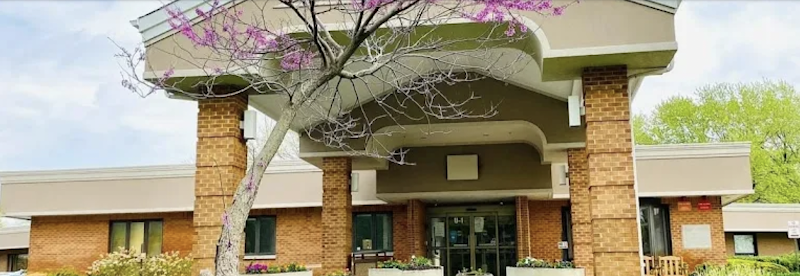
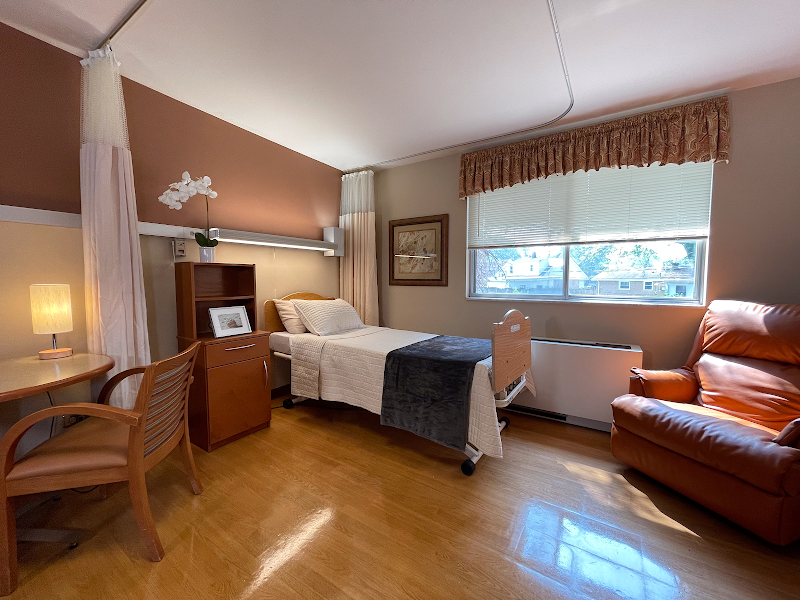
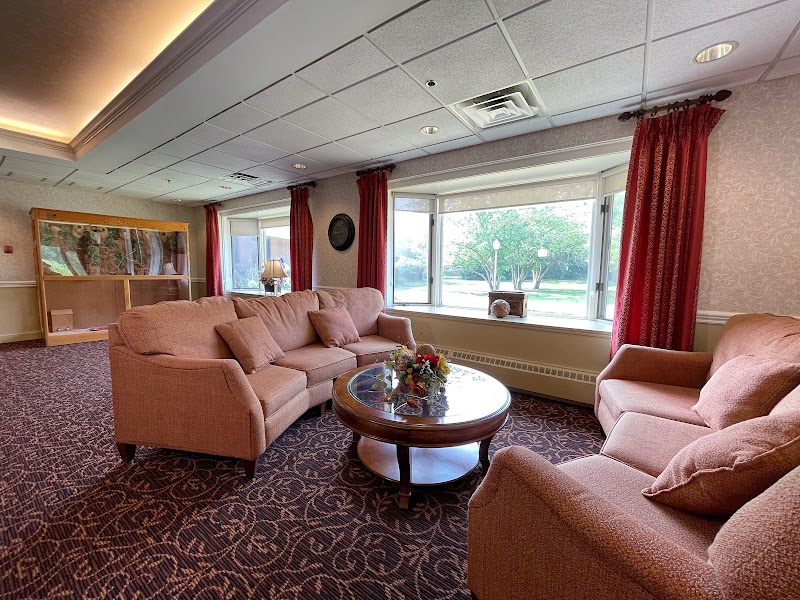
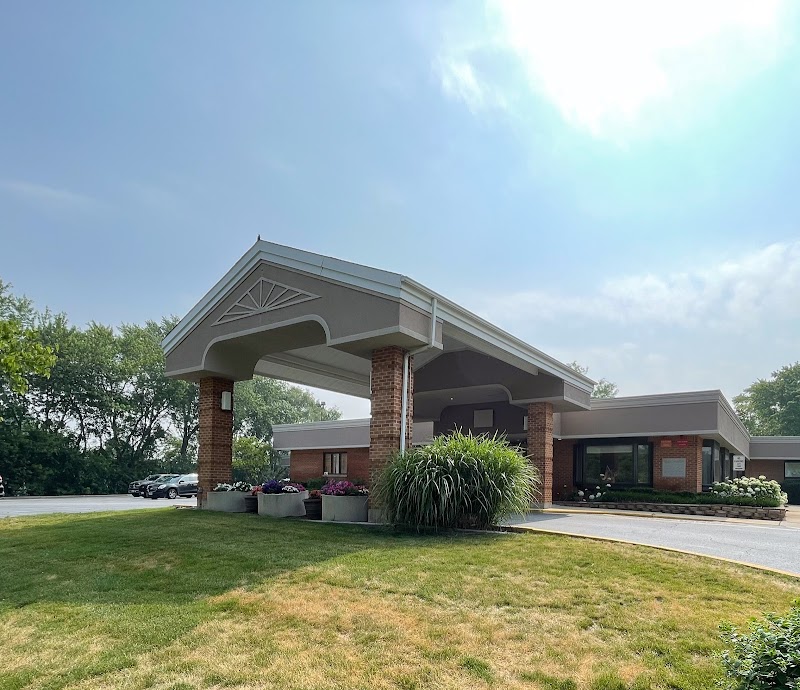
ALIYA OF CRESTWOOD

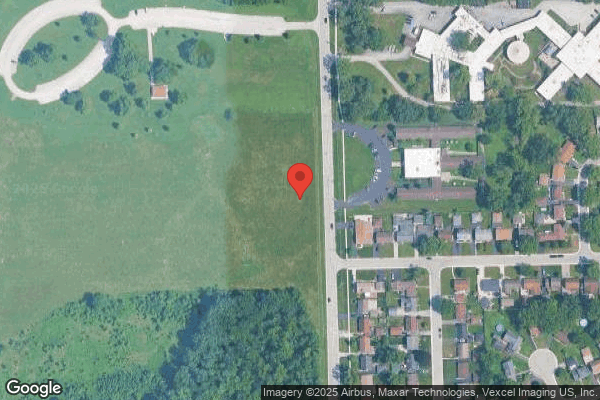
13259 SOUTH CENTRAL AVENUE, CRESTWOOD, IL 60418 (708) 597-1000
For profit - Limited Liability company 193 Beds ALIYA HEALTHCARE Data: November 2025
Trust Grade
20/100
#312 of 665 in IL
Last Inspection: February 2025

Within standard 12-15 month inspection cycle. Federal law requires annual inspections.

Overview

Aliya of Crestwood has a Trust Grade of F, which indicates significant concerns about the facility's quality of care. It ranks #312 out of 665 nursing homes in Illinois, placing it in the top half, but its overall performance is still below average. Unfortunately, the facility is getting worse, with issues increasing from 2 in 2024 to 14 in 2025. Staffing is a notable weakness, rated at 1 out of 5 stars with a turnover rate of 50%, which is average compared to the state. Additionally, the facility has faced fines totaling $103,317, which is concerning and reflects compliance problems. There have been serious incidents reported, including a resident who sustained a facial fracture and intracranial hemorrhage due to inadequate supervision and fall prevention measures. Another resident rolled off the bed during care, resulting in a fractured arm, while yet another resident required staples for a head injury from a fall. These findings highlight critical areas where the facility has failed to protect its residents adequately, despite having average RN coverage. Overall, while the facility has some strengths, such as its rank within the state, the serious safety issues and poor staffing ratings raise significant concerns for families considering this nursing home.

Trust Score
F
20/100
In Illinois
#312/665
Top 46%
Safety Record
High Risk
Review needed
Inspections
Getting Worse
2 → 14 violations
Staff Stability
⚠ Watch
50% turnover. Above average. Higher turnover means staff may not know residents' routines.
Penalties
✓ Good
$103,317 in fines. Lower than most Illinois facilities. Relatively clean record.
Skilled Nurses
○ Average
Each resident gets 41 minutes of Registered Nurse (RN) attention daily — about average for Illinois. RNs are the most trained staff who monitor for health changes.
Violations
⚠ Watch
37 deficiencies on record. Higher than average. Multiple issues found across inspections.
★★☆☆☆
2.0
Overall Rating
★☆☆☆☆
1.0
Staff Levels
★★★☆☆
3.0
Care Quality
★★★☆☆
3.0
Inspection Score
Stable
2024: 2 issues
2025: 14 issues

The Good

  • Full Sprinkler Coverage · Fire safety systems throughout facility
  • No fines on record

Facility shows strength in fire safety.

The Bad

2-Star Overall Rating

Below Illinois average (2.5)

Below average - review inspection findings carefully

Staff Turnover: 50%

Near Illinois avg (46%)

Higher turnover may affect care consistency

Federal Fines: $103,317

Well above median ($33,413)

Significant penalties indicating serious issues

Chain: ALIYA HEALTHCARE

Part of a multi-facility chain

Ask about local staffing decisions and management

The Ugly 37 deficiencies on record

3 actual harm
Aug 2025 1 deficiency
CONCERN (D) 📢 Someone Reported This

A family member, employee, or ombudsman was alarmed enough to file a formal complaint

Potential for Harm - no one hurt, but risky conditions existed

Pharmacy Services (Tag F0755)

Could have caused harm · This affected 1 resident

**NOTE- TERMS IN BRACKETS HAVE BEEN EDITED TO PROTECT CONFIDENTIALITY** Based on interview and record review, the facility failed to follow their medication administration policy by not administering ...

Read full inspector narrative →
**NOTE- TERMS IN BRACKETS HAVE BEEN EDITED TO PROTECT CONFIDENTIALITY** Based on interview and record review, the facility failed to follow their medication administration policy by not administering scheduled pain medication within the hour timeframe as ordered and failed to notify the physician of the missed dose for one (R1) out of three residents reviewed for medication administration in a total sample of four.R1 is a [AGE] year old with the following diagnosis: idiopathic neuropathy, chronic pain syndrome, and venous insufficiency.On 8/5/25 at 3:08PM, R1 said on 7/19/2025 she did not receive the scheduled morning medications at any time during the day shift (7:00 AM - 3:00 PM). R1 said the day shift nurse (V4) did not come into R1's room the whole shift. R1 stated that V4 did not check vitals and did not ask R1 for her pain level. R1 said the CNA (V10) had gotten R1 up from bed around 10:30 AM that morning. R1 said her family members came to visit her from 12PM to 3:00 PM. R1 said at approximately 3:00 PM she asked the evening nurse why she hadn't received her day time medication. R1 told the evening shift nurse she had not refused her morning medication. R1 said that V4 finally offered R1 the day time medication after 3:00 PM after it was brought to V4's attention that R1 had not received the medication. R1 stated she did not want to take the medication at that time because it was so close to the next scheduled dose. R1 stated she voiced her concerns to a manger on duty and ADON after 3PM on 7/19/2025. R1 stated that she takes duloxetine and gabapentin for her neuropathy pain. R1 said her pain level from a scale of 0 to 10 is usually a 5/10 on the pain scale and feels tingling sensation which she described as a frost bite burned sensation. R1 reported R1 needs the duloxetine and gabapentin to keep the pain under control.On 8/5/25 at 1:03PM, V1 (Food Service Manager) stated V1 was the manager on duty on 7/19/25. V1 reported R1 told V1 that R1 did not receive any medication during the morning shift. V1 reported the DON was notified and handled by nursing staff. V1 stated R1 didn't want to take any medication after lunch time because it was too close to the next dose.On 8/5/24 at 1:24PM, V2 (ADON) stated R1 told V2 that R1 didn't receive scheduled morning medication on 7/19/25. V2 denied knowing what medication was not administered. V2 reported the nurse came back to give the medication at a later time but R1 refused to take the medication because it was too close to the next dose. V1 stated scheduled medications should be given one hour before or one hour after the scheduled time. V1 reported the nurse didn't give the medication to R1 on time because R1 was not in R1's room. V2 stated the expectation is for the nurse to check the common areas for the resident if they are out of their room. V1 reported if the medication is not administered within the hour after the scheduled time then the physician has to be notified to give additional orders if needed. V2 stated the nurse should document the conversation with the physician and any attempts to give the medication.On 8/5/25 at 3:31PM, V4 (Nurse) stated all scheduled medication can be found in the electronic medical record so the nurse know when to administer it. V4 reported all scheduled medications can be given one hour before or after the schedule time. V4 stated if a resident refuses a medication or if it must be taken later than the hour after it is scheduled then the doctor must be notified so they are safe and aware of what is going on. V4 reported V4 begins morning med pass around 8AM. V4 stated V4 couldn't remember the exact time V4 first went in R1's room but R1 was not in the room. V4 reported it was sometime between 8-9AM. V4 stated V4 finished the med pass and went back to check but R1 was still not in the room. V4 reported R1 had family in the room but R1 was not in the room. V4 was unaware of what time R1 got back to the room. V4 denied looking for R1 throughout the facility. V4 stated V4 went to administer the 9AM medication around 2Pm but R1 refused to take the medication. V4 denied calling the physician about the missed medication. V4 reported the medications scheduled were some vitamins and gabapentin.On 8/6/25 at 12:06PM, V7 (Nurse Unit Manager) stated V7 was manager on duty for nursing that weekend but V7 was not in the building on 7/19/25. V7 reported being notified of the incident the next day by R1 during rounds. V7 stated V4 told V7 that R1 was out of the room during medication pass visiting with family. V7 reported getting a phone call but was unable to remember from who that the medication was never administered. V7 stated V7 instructed V4 to try to administer the medication sometime after 3:30PM after the second shift had started and to call and notify the doctor. V7 reported R1 told V7 the next day that R1 didn't take the medication because it was too close to the next scheduled dose. V7 stated R1 told V7 that r1 was only offered the medication once at 3PM. V7 reported the nurse should go look for the resident in the facility to offer the medication and put in a progress note on everything that happened. V7 stated the physician must be called to notify them of a missed dose. On 8/6/25 at 1:46PM, V10 (CNA) stated R1 gets out of bed everyday at 10:30AM. V10 denied ever getting R1 out of bed before 10:30AM. V10 reported R1 likes to sleep in until about 8-9AM so after finishing breakfast R1 is gotten ready for the day and transferred out of bed. V10 stated R1 has appointments out of the building R1 needs to be ready for by 10:30AM so that is the time staff always get R1 out of bed. V10 denied R1 being able to get out of bed without assistance. V10 reported if R1 has family in R1's room then R1 will be in the room as well visiting. V10 denied R1 being out of the room when family is visiting.A Nursing note dated 7/19/25 at 9AM documents the nurse attempted to give R1 medication but R1 was not in the room. The nurse will attempt to give medication when R1 returns.A Nursing note dated 7/19/25 at 4:11PM documents at the beginning of med pass, R1 was not in R1's room. Upon R1 returning to the room, R1 had family visiting. The nurse returned to R1's room to give the medication at the end of the shift. R1 refused and decided to call family to see if R1 should accept the medication.There are no progress notes that the nurse made any additional attempts to administer the medication other than at 9AM and did not notify the physician of the missed dose. The Physician Order Summary was reviewed and documents an order for duloxetine 40 mg once a day and gabapentin 100 mg cap twice a day.The Medication Administration Record dated 07/2025 documents R1 is scheduled vitamin B-1 tablet 100mg at 8AM once a day; multivitamin chewable tablet, collagen skin renewal tablet 833-30mg tablet, diclofenac sodium gel 1% to shoulders, duloxetine capsule 40 mg, and gabapentin capsule 100mg at 9AM, and gabapentin capsule 100mg capsule at 6PM. It is documented that R1 refused all medications at 8 and 9 AM. There is no pain score documented for 7/19/25 on the day shift.The Care Plan dated 3/31/25 documents R1 has an alteration in comfort related to a diagnosis of chronic pain syndrome. An intervention includes to administer pain medication and treatments as ordered.The Minimum Data Set (MDS) dated [DATE] documents a Brief Interview for Mental Status score as 15 (no cognitive impairment).The Concern Form dated 7/21/25 documents R1 had questions/concerns with medication administration over the weekend. R1 reported being out of the room visiting family and did not receive morning medication. R1 reported the nurse came to the room at the end of the shift to offer medication but R1 refused due to it being too close to the next medication pass. The ADON educated R1 and V4 of the five medication rights. R1 was informed that medication can be given one hour before and one hour after scheduled time.The policy titled, Medication Administration, dated 03/2025 documents, All medications are administered safely and appropriately to aid residents to overcome illness, relieve and prevent symptoms and help in diagnosis. Guideline:.13. Verify that the medication is being administered at the proper time, in the prescribed dose, and by the correct route.22. If the medication is not given as ordered, document the reason on the MAR and notify the Health Care Provider if required.
Jul 2025 2 deficiencies
CONCERN (D) 📢 Someone Reported This

A family member, employee, or ombudsman was alarmed enough to file a formal complaint

Potential for Harm - no one hurt, but risky conditions existed

Unnecessary Medications (Tag F0759)

Could have caused harm · This affected 1 resident

Based upon observation, interview, and record review the facility failed to follow policy procedures, failed to ensure that medication orders received include a prescribed dose, and failed to maintain...

Read full inspector narrative →
Based upon observation, interview, and record review the facility failed to follow policy procedures, failed to ensure that medication orders received include a prescribed dose, and failed to maintain a medication error rate below 5%. There were 4 medication errors out of 37 opportunities, resulting in a 10.81% medication error rate. Three of three residents (R7, R10, R12) in the medication administration sample were affected. Findings include:1.R10's POS (Physician Order Sheets) include Escitalopram 20mg (milligrams) give 1 tablet one time a day. Special instruction: take with 10mg tablet for total dose of 30mg daily (start date: 11/21/24).On 7/15/25 at 8:30am, V11 (LPN/Licensed Practical Nurse) dispensed (1) 20mg Escitalopram tablet in R10's medication cup (with scheduled 8am medications) and affirmed she was prepared to administer them however R10's prescribed Escitalopram dose is 30mg. Surveyor inquired how much Escitalopram was dispensed in R10's medication cup V11 checked the single dose package and affirmed it was 20mg. Surveyor inquired what R10's Escitalopram order states V11 accessed R10's EMAR (Electronic Medication Administration Record) and stated, Escitalopram 20 milligrams give 1 tablet 1 time a day and take with a 10-milligram tablet. Surveyor inquired about R10's Escitalopram prescribed dose V11 responded 30 milligrams. 2. R7's POS includes Aspirin 81mg (Chewable) tablet daily (start date: 5/2/25).On 7/15/25 at 8:57am, V3 (LPN) dispensed (1) Aspirin EC (Enteric Coated) 81mg tablet in R7's medication cup (with scheduled 9am medications) and affirmed she was prepared to administer them. Surveyor inquired about R7's dispensed Aspirin V3 inspected the Aspirin container and stated, 81 milligrams of Aspirin it says low dose pain reliever enteric coated. Surveyor inquired which Aspirin was prescribed for R7 V3 accessed R7's EMAR and responded, 81 milligrams chewable.3. R12's POS includes Calcium Carbonate-Vitamin D 600-10mg-mcg (micrograms) daily (start date: 5/18/25) and Lactobacillus 1 capsule daily (start date: 5/21/25) however the prescribed dose is excluded. On 7/15/25 at 9:30am, V12 dispensed (1) Calcium Carbonate 500mg tablet in R12's medication cup (with scheduled 9am medications) and affirmed she was prepared to administer them. Surveyor inquired about R12's Calcium Carbonate orders V12 accessed R12's EMR and stated, It says 600 milligrams, it's 600 milligrams. Surveyor inquired again about R12's Calcium Carbonate orders V12 responded Its calcium carbonate with vitamin D, I don't have that one. V12 also dispensed (1) Lactobacillus 1 billion CFU capsule in R12's medication cup and administered this medication however R12's Lactobacillus orders exclude a dose. Surveyor inquired about R12's prescribed Lactobacillus dose (after administration) V12 accessed R12's EMAR and stated, ‘It's just give one capsule. The (1/2023) medication administration policy states an order is required for administration of all medication. Check medication administration record prior to administering medication for the right medication, dose, route, resident, and time. If there's a discrepancy between the MAR and label, check orders before administering medications. Verify that no contradictions exist.
CONCERN (E) 📢 Someone Reported This

A family member, employee, or ombudsman was alarmed enough to file a formal complaint

Potential for Harm - no one hurt, but risky conditions existed

Deficiency F0760 (Tag F0760)

Could have caused harm · This affected multiple residents

Based upon observation, interview, and record review the facility failed to follow policy procedures and failed to ensure that 8 of 25 residents (R8, R10, R11, R13, R14, R16, R17, R18) remained free f...

Read full inspector narrative →
Based upon observation, interview, and record review the facility failed to follow policy procedures and failed to ensure that 8 of 25 residents (R8, R10, R11, R13, R14, R16, R17, R18) remained free from significant medication errors. Findings include:1. R10’s POS (Physician Order Sheets) include Escitalopram (Antidepressant) 20mg (milligrams) give 1 tablet one time a day. Special instruction: take with 10mg tablet for total dose of 30mg daily (start date: 11/21/24). On 7/15/25 at 8:30am, V11 (LPN/Licensed Practical Nurse) dispensed (1) 20mg (milligrams) Escitalopram tablet in R10’s medication cup (with scheduled 8am medications) and affirmed she was prepared to administer them however the prescribed dose is 30mg. Surveyor inquired what R10’s Escitalopram order states V11 accessed R10’s EMAR (Electronic Medication Administration Record) and stated, “Escitalopram 20 milligrams give 1 tablet 1 time a day and take with a 10-milligram tablet.” Surveyor inquired about R10’s Escitalopram prescribed dose V11 responded “30 milligrams.” R10’s Escitalopram 20 milligram tablet (not 30 milligrams) was dispensed by the pharmacy in single pill packs, V11 affirmed they were delivered to the facility on 7/9/25 (6 days prior to observation). R10’s MAR (Medication Administration Record) affirms staff documented 30 milligrams of Escitalopram was administered from 7/9/25-7/13/15 however 20mg was received from the pharmacy. 2. On 7/15/25 at 10:04am, surveyor inquired why residents were highlighted red on V13’s (LPN) EMAR V13 stated “I (V13) still have a couple people left, there’s seven that are red. It just means they (medications) were due at 9am and once it hits after 10:00 it’s overdue” and affirmed that (R8, R13, R14, R16, R17, R18) did not receive their scheduled am medications. R8’s (July 2025) MAR includes Eliquis (Anticoagulant) 5 mg BID (Two times a day) scheduled for 8am administration. R13’s (July 2025) MAR includes Tizanidine (Skeletal Muscle Relaxant) 4mg tablet TID (Three times a day) scheduled for 9am administration. R14’s (July 2025) MAR includes Lamotrigine (Anticonvulsant) 150mg BID (scheduled for 8am administration). R16’s (July 2025) MAR includes Metformin (Hypoglycemic) 500mg BID and Baclofen (Skeletal Muscle Relaxant) 20mg TID (scheduled for 9am administration). R17’s (July 2025) MAR includes Eliquis 5mg BID and Metformin 500mg BID (scheduled for 8am administration). R18’s (July 2025) MAR includes Metformin 1,000mg BID and Metoprolol Tartrate (Antihypertensive) 12.5mg BID (scheduled for 8am administration). The (1/2023) medication administration policy states check medication administration record prior to administering medication for the right medication, dose, route, resident, and time. Verify that the medication is being administered at the proper time. 3. R11's Minimum Data Set (6/27/2025) documents a brief interview of mental status summary score of 15, indicating R11 is cognitively intact. On 7/16/2025 at 10:03 AM, R11 stated that R11 missed medications in May 2025 on night shift. R11 could not remember all of the medications but believed one of them was Xarelto. R11 stated that V20 (Licensed Practical Nurse) was the nurse that did not administer the medication. Facility daily schedule indicates that V20 was assigned to care for R11 on 5/10/2025. R11’s physician orders document an active order (revised 12/5/2025) for one Xarelto 20 mg tablet to be administered by mouth at bedtime. This order was active on 5/10/2025. On 5/10/2025, R11’s medication administration record does not indicate that R11 was administered Xarelto 20 mg tablet. On 7/16/2025 at 10:17 AM, V2 (Director of Nursing) reviewed R11’s medication administration record and affirmed that R11 did not receive the medication. V2 affirmed that V2 was aware of the situation and that the V20 (Licensed Practical Nurse) did not administer the medication. V2 stated that V20 no longer works for the facility after the incident. V2 affirmed that the purpose of Xarelto is anticoagulation and prevention of blood clotting. Facility policy titled, “Medication Administration“ (3/2025) documents in part, “…All medications are administered safely and appropriately to aid residents to overcome illness, relieve and prevent symptoms and help in diagnosis…”.
Jul 2025 1 deficiency
CONCERN (D) 📢 Someone Reported This

A family member, employee, or ombudsman was alarmed enough to file a formal complaint

Potential for Harm - no one hurt, but risky conditions existed

ADL Care (Tag F0677)

Could have caused harm · This affected 1 resident

**NOTE- TERMS IN BRACKETS HAVE BEEN EDITED TO PROTECT CONFIDENTIALITY** Based on interview and record review, the facility failed to provide incontinence care timely for a resident who was identified ...

Read full inspector narrative →
**NOTE- TERMS IN BRACKETS HAVE BEEN EDITED TO PROTECT CONFIDENTIALITY** Based on interview and record review, the facility failed to provide incontinence care timely for a resident who was identified as dependent on staff. This affected one of three residents (R2) reviewed for incontinence care. Findings Include: R2's minimal dated set (MDS) section C brief interview for mental status dated 6/27/25 documents: a score of fifteen which indicates cognitively intact. Section H (bowel/bladder) dated 6/30/25 documents: frequently incontinence. Section GG (functional ability) documents: toileting- dependent. R2's Minimum Data Set, dated [DATE] documents: roll left and right. The ability to roll from lying on back to left and right side and return to lying on back ln the bed documents substantial/maximal assistance. On 7/1/25 at 10:48pm, R2 who was assessed to be alert and oriented to person, place and time said, she was left soiled and saturated with urine for 3.5 hours on one occasion and over two hours on another. R2 said, being left in saturated urine made her feel stressed, frustrated and concerned with her safety because she would have to let one person change her instead of the required two person assist. On 7/3/25 at 11:53am, V18 (cna- certified nursing assistant) said, when she reported to work on the day shift (unknown date), R2's call light was on. V18 said, she went into R2's room. R2 stated, she needed to be changed and her call light had been on for over an hour. R2 was visibly upset. V18 said, she looked for R2's overnight assigned aide and could not find that staff member. V18 said, she provided incontinence care for R2. V18 said, R2 was soiled and saturated with urine. V18 said, R2's sheets were also saturated with urine. V18 said, R2 was not a heavy wetter. V18 said, the amount of urine on R2 and her bed linen was consistent with not being changed overnight. V18 said, she does not recall the date but R2 was observed soiled and saturated on a different day as well. V18 said, she provide incontinence care for R2 twice when she was left soiled and saturated with urine on two separate dates. V18 said, residents should be checked and changed every two hours. An Email written by R2 documents: June 23, 2025: R2 waiting three in a half (3.5) hours to get changed this morning. R2 was left soiled with a wound. The nurse refused to assist the cna with changing R2 until R2 asked her why can't she help. June 22, 2025: R2 wrote she has been waiting since 5:30 am to be changed. Once again another cna left R2 soiled. It's now 7:45am. June 21, 2025: During both shifts R2 sat soiled in urine. The 7am-3pm. R2 waited two (2) hours for assistance. One excuse was it was the cna sitting time. R2 was also told it's only one cna helping everybody on this hall. The next shift, R2 waited almost two (2) hours to get put in bed, changed and a bed bath. Incontinence Care policy dated 1/2023: Incontinence care is provided to keep residents as dry, comfortable and odor free as possible. It also helps in preventing skin breakdown. Facility policy titled: skin care prevention reviewed 1/2024 documents: All residents will receive appropriate care to decrease the risk of skin breakdown. All residents unable to reposition themselves will be repositioned as needed based on a person centered approach (minimum of every two hours).
Apr 2025 1 deficiency 1 Harm
SERIOUS (G) 📢 Someone Reported This

A family member, employee, or ombudsman was alarmed enough to file a formal complaint

Actual Harm - a resident was hurt due to facility failures

Accident Prevention (Tag F0689)

A resident was harmed · This affected 1 resident

**NOTE- TERMS IN BRACKETS HAVE BEEN EDITED TO PROTECT CONFIDENTIALITY** Based on interviews and record reviews, the facility failed to follow their interventions of ensuring residents were adequately ...

Read full inspector narrative →
**NOTE- TERMS IN BRACKETS HAVE BEEN EDITED TO PROTECT CONFIDENTIALITY** Based on interviews and record reviews, the facility failed to follow their interventions of ensuring residents were adequately supervised who were identified as high risk for falls when left unattended, failed to modify fall prevention interventions post fall and failed to ensure a resident who is at high risk for falls whom repeatedly exhibited unsafe behaviors when in a reclining chair, was safely positioned in a reclining chair and adequately supervised during care. This failure applies to three of three (R1, R2 and R3) residents reviewed for accidents and resulted in R1 sustaining a facial fracture and intracranial hemorrhage from a fall. Findings include: 1. R1 is a [AGE] year-old female with a diagnoses history of Dementia, Insomnia, Muscle Wasting and Atrophy, and a history of falling who was admitted to the facility 07/04/2023. R1's Functional Abilities Minimum Data Sets dated 07/09/2024, 10/09/2024, 01/07/2025, and 03/30/2025 document she is dependent on staff for all activities of daily living and mobility activities. R1's current Fall care plan initiated and created 12/08/2024 documents she is at risk for falls due to functional deficits with the intervention initiated and created on 04/06/2025 of staff to monitor resident frequently to ensure proper reposition and safety in chair or bed. R1's current ADL (Activities of Daily Living) care plan initiated and created 12/16/2024 documents she requires assistance with daily care needs related to dementia, and muscle wasting and atrophy at multiple sites with interventions including one person assistance with bathing, toileting, dressing, and eating; and the intervention initiated 03/31/2025 and revised 04/14/2025 of mechanical lift with two-person assistance for transfers. R1's Restorative Comprehensive assessment dated [DATE] documents her fall risk factors included a history of falls or post fall fracture in the past 1-6 months, a fall risk score of 10 or above indicates high fall risk, and a final score for her of 21. R1's progress notes from February - April 2025 document multiple observations of behaviors. R1's progress note dated 04/06/2025 at 4:47 AM created by V8 (Registered Nurse) on 04/06/2025 at 6:28 AM documents she had a fall at 4:47 AM. CNA (Certified Nursing Assistant) notified writer that resident was in the chair and she turned to get blanket and resident tried to get up and fell, hitting head on bed. Resident assessed by this writer and noted cut to right cheek and under chin. Resident also noted bleeding from nose and mouth. Physician made aware and stated to send resident out to the hospital emergency room. R1 sent out via ambulance. R1's progress note dated 4/6/2025 at 12:01 PM documents she was admitted at Christ Hospital with a facial fracture and Intracranial hemorrhage. R1's Fall Risk Management Incident Report dated 04/06/2025 documents that at 4:47 AM she had a fall, V9 (Certified Nursing Assistant) reported that while she was providing care and placed R1 in a chair she turned around to grab something and the resident fell from the chair to the floor hitting her head on the bed, she was observed with bleeding in her face including from the nose and mouth and complained of pain; she requires total assistance with activities of daily living and transfers and the root cause of her fall is noted as having poor trunk control, and when placed in her geriatric chair by staff she fell out of the chair head first hitting the bed frame then the floor; her mental status was documented as not being oriented or oriented to person only; predisposing factors were noted to include confusion and impaired memory, gait imbalance, and weakness; the physician was notified and ordered she be sent out to the hospital emergency room for evaluation and her Power of Attorney [NAME] Fields was also notified; Interventions implemented in response to the fall included monitor her frequently to ensure proper repositioning and safety in chair. The facility's Incident Investigation report received 04/15/2025 documents on 04/06/2025 at approximately 4:47 AM R1 was observed on the floor in her bedroom by the facility aide and was unable to verbalize what occurred in the room. R1 was admitted to the Hospital with a facial fracture and intracranial hemorrhage. It is determined that R1 attempted to get up from her wheelchair and had a fall. Staff were interviewed and reported that R1 was sitting in the wheelchair and attempted to get up and fell forward. Witness statement from V9 (Certified Nursing Assistant) dated 04/06/2025 documents she was assigned to work with R1, when finished putting on R1's clothes she transferred her to the chair and then turned around to get a plastic bag to place the dirty linen in which was on the other bed in the room and heard a noise then turned her head and observed R1 on the floor. V9 stated she immediately called the night nurse and told her that R1 had fallen. Witness statement from V8 (Registered Nurse) dated 04/06/2025 documents the CNA (Certified Nursing Assistant) informed her at 4:47 am that R1 fell from her wheelchair, the CNA reported that she turned around to grab something and R1 fell when trying to get up; R1 fell forward out of chair. On 04/16/2025 at 10:23 AM V11 (Certified Nursing Assistant) stated she has worked with R1. V11 stated she would position R1 in her (Reclining) chair at a slightly tilted angle because if the chair is lowered too far back it could be considered a restraint. V11 stated R1 would like to sit straight up on the edge of her (Reclining) chair. V11 stated when R1's (Reclining) chair was tilted back she would sometimes attempt to sit up however if her chair is tilted back she couldn't get up. V11 stated R1 would attempt to sit up once or twice when receiving incontinence care. V11 stated she uses a sit to stand most of the time to transfer R1 and needs assistance with transferring her. On 04/16/2025 at 11:15 AM V6 (Therapy Director) stated (Reclining) and Geriatric chairs are used for reclining due to cognition and for residents who require two-person assistance or a mechanical lift. V6 stated there should not be one person assistance for residents who use a (Reclining) or Geriatric chair. On 04/16/2025 at 11:54 AM Observed with V7 (Minimum Data Set Director) when a care planned intervention of keep clean and dry was entered in the facility's electronic medical record system to R1's care plan; the intervention was automatically categorized as initiated and created for the date it was entered of 04/16/2025. Observed in the facility's electronic medical record system the intervention in R1's care plan of mechanical lift with two-person assistance for transfers was categorized as initiated 03/31/2025 and revised 04/14/2025. On 04/16/2025 at 1:47 PM V5 (Restorative Nurse) stated the mechanical lift was implemented for R1 due to the extensiveness of her fall and her total dependence. V5 stated since R1 is totally dependent, she should be a two-person assistance however she feels one person assistance is adequate to transferring R1. V5 stated a (Reclining) chair should be reclined and if it is reclined it is not impossible but highly unlikely that the resident will fall out of it. V5 stated she isn't sure if R1's (Reclining) chair was reclined on the day she fell because she fell forward and injured her face which may indicate the chair was in an upright position however she couldn't confirm this. On 04/16/2025 at 2:41 PM V3 (Vice President of Clinical) stated if a mechanical lift is being used there should be two people assisting. V3 stated mechanical lifts are used for resident's who require total assistance and are dependent however this intervention is used on a case-by-case basis. V3 stated what could have been done differently to prevent R1's fall was having the necessary items close by so the staff would have what they needed for the resident. On 04/17/2025 at 12:09 PM In response to surveyor's request for information on what behaviors was R1 being monitored for and documented as being observed by staff in several behavior progress notes between February 02 and April 03, 2025 V1 (Administrator) replied per the CNA's (Certified Nursing Assistant) R1's behavior can range from swinging her arms in the air to leaning forward. On 04/15/2025 at 3:20 PM V5 (Restorative Nurse) stated R1 requires full assist with all activities, she can lift either of her arms and has range of motion but can't lift her arms on cue, and doesn't do anything on her own. V5 stated R1 is 79 pounds and light however we have her in a (Reclining) chair because her trunk support isn't there and for this reason shouldn't be sitting up in a wheelchair. 2. R2 is a [AGE] year-old female with a diagnoses history of Central Nervous System Cancer, Muscle Wasting and Atrophy, Morbid Obesity, Spinal Stenosis, and Stage 3 Chronic Kidney Disease who was admitted to the facility 01/31/2025. On 04/16/2025 AT 9:12 AM Observed R2 in the unit 2 Long Term Common/Dining Area without other residents present and staff walking around the surrounding area. Observed R2 sitting in a (Reclining) chair slightly reclined. R2 stated she had fallen out of bed 2-3 months ago onto a mat, then fell again about a month later while sitting on the edge of her bed when she started to slide and couldn't stop herself. R2's Current Fall Care Plan initiated and created on 01/31/2025 documents she is at high risk for falls related to repeated falls with an intervention initiated 02/08/2025 including staff to monitor resident frequently to ensure safety. R2's Fall Risk Assessment Incident Report dated 02/05/2025 documents she was observed on the floor in the dining room and reported she was trying to sit up in the wheelchair; the root cause was determined to be she has poor thought process, very impulsive, and stood up from her wheelchair and fell with an intervention implemented of encouraging staff to continue to monitor and redirect her; there was no one identified to have witnessed the fall. R2's Fall Risk Assessment Incident Report dated 02/08/2025 documents she was observed on the floor near her bed during rounds and reported she was trying to get out of the bed and she sustained an abrasion on her right knee; there was no one identified to have witnessed the fall; the root cause was determined to be her having poor thought process and being very impulsive with an intervention implemented of encouraging staff to continue to monitor and redirect her. R2's Fall Risk Assessment Incident Report dated 02/27/2025 documents she was observed on the floor next to her bed and she reported she needed to get up and she slid on her bottom; her assigned CNA (Certified Nursing Assistant) reported she left he with her breakfast tray; the root cause was determined to be poor though process and being very impulsive with an intervention implemented of educating staff to bring her to the common area for close monitoring. 3. R3 is an [AGE] year-old male with a diagnoses history of Dementia, Generalized Muscle Weakness, and Difficulty Walking who was admitted to the facility 11/30/2024. R3's Current Fall Care Plan initiated and created on 12/09/2024 documents he is at risk for falls due to diagnoses of functional deficits, muscle weakness, and dementia with interventions created on 01/22/2025 of staff to monitor him frequently. R3's Fall Risk Assessment Incident Report dated 01/19/2025 documents he had an unwitnessed fall, with an intervention implemented of staff monitoring him more frequently. R3's Fall Risk Assessment Incident Report dated 02/01/2025 documents he was in the common area and slid out of his chair onto his buttock, while V12 (Certified Nursing Assistant) was observing in the dining room he stood up from his chair in the day room and was observed sitting on the floor with an intervention implemented of staff monitoring him more frequently. R3's Fall Risk Assessment Incident Report dated 03/16/2025 documents he was observed sitting on the floor on his buttocks in front of the (Reclining) chair in the dining room and when he was asked what happened he stated he slid out of the chair, there was no one identified to witnessed the fall; an intervention was implemented of reminding staff to monitor him more frequently; he was not receptive to education due to a diagnosis of dementia. R3's Fall Risk Assessment Incident Report dated 03/20/2025 documents he stood up from the (Reclining) chair and fell onto his buttocks in the dining room and the fall was unwitnessed; the writer of the report was alerted by the CNA (Certified Nursing Assistant) that he stood up from the (Reclining) chair and fell onto his buttocks in the dining room; the root cause was determined to be R3 standing up out of his chair unassisted and not making safe decisions due to dementia with an intervention implemented of reminding staff to monitor him more frequently. On 04/15/2025 at 3:53 PM V5 (Restorative Nurse) stated she is the fall coordinator. V5 stated she and physical therapy perform assessments to determine if residents need to use a (Reclining) chair. V5 stated residents are assessed for (Reclining) chair use on admission and if there are any significant changes in their physical ability. V5 stated upon admission therapy screens all residents and will give recommendations and she performs a follow up assessment and most of the time she uses their recommendations because they are more skilled in that area. V5 stated R2 and R3 use (Reclining) or geriatric chairs. V5 stated if a resident can't sit up safely or doesn't have proper trunk control in a wheelchair, they are placed in a (Reclining) or Geriatric chair. V5 stated the restorative assessment is used to determine if a resident needs a (Reclining)/Geriatric chair. V5 stated when R1 is sitting in the (Reclining) chair it should be tilted back and should not be sitting up for because of her poor trunk control. On 04/16/2025 at 12:23 PM V5 (Restorative Nurse) stated R3 is at high risk for falls. V5 stated R3 had an unwitnessed fall on 01/19/2025 that occurred in the hall and it was his first fall in the facility since his admission in November. V5 stated R3's first few falls were attempts to self-transfer or get up on his own. V5 stated fall interventions are updated after reviewing fall incidents and when needed. V5 stated the intervention implemented after this fall was for staff to monitor R3 more frequently. V5 could not explain what more frequently meant and stated every one to two hours was adequate monitoring for him. V5 stated R3's next fall was on 02/01/2025 where he slid out of a chair in the common area, and this was witnessed by V12 (Certified Nursing Assistant) who was written up for not actively attending to him during sitting time. V5 stated sitting time includes staff monitoring in the dining/common areas for 30-minute intervals. V5 stated R3's next fall was on 03/16/2025 in the common area when he got out of his chair. V5 stated the intervention implemented was reminding staff to monitor him more frequently because he was not receptive to education on asking for assistance due to his dementia. V5 stated R3's next fall was on 03/20/2025 when he stood up out of his chair in the dining room and the intervention was staff being reminded to monitor him. V5 stated she doesn't know how to answer the surveyors question of was R3 being adequately supervised however he should have been. V5 stated she doesn't believe there were any other interventions required for R3 and in order to move you have to be raising up to do so if there was someone there watching him they should be intervening when he attempts to ambulate or transfer. V5 stated R2 fell on [DATE] in the dining room when she slid from her wheelchair while trying to sit up in the chair. V5 stated the intervention for this fall was encouraging staff to monitor and redirect the resident. V5 stated R2 fell on [DATE] and was observed on the floor in her room near her bed during rounds. V5 stated R2 is at high risk for falls and she attempts to transfer herself. V5 stated the intervention for this fall was to have a floor mat in place when in bed. V5 stated R2 had a fall on 02/27/2025 in her room while sitting on the edge of her bed. V5 stated the CNA (Certified Nursing Assistant) had left the room to get her clothes from another area and when she returned R2 was on the floor and reported that she wanted to get out of bed. V5 stated the intervention for this fall was educating staff to bring her to the common area for close monitoring and she shouldn't have been left because she tries to get things on her own. V5 stated the CNA was educated not to leave R2 by herself. V5 stated it had already been established that R2 would attempt to self-transfer prior to this last fall for R2. The facility's Fall Prevention and Management Policy, dated January 2023 documents: The facility is committed to maximizing each residents physical well-being. The facility will facilitate as safe an environment as possible. While preventing all falls is not possible, the facility will identify and evaluate those residents at risk for falls, plan for preventative strategies, and facilitate as safe an environment as possible. All resident falls shall be reviewed, and the resident's existing plan of care shall be evaluated and modified as needed.
Feb 2025 2 deficiencies
CONCERN (D) 📢 Someone Reported This

A family member, employee, or ombudsman was alarmed enough to file a formal complaint

Potential for Harm - no one hurt, but risky conditions existed

Deficiency F0559 (Tag F0559)

Could have caused harm · This affected 1 resident

Based on interview and record review the facility failed to follow their policy and provide a written notice of room change with and explanation of the room change for one of one resident (R2) reviewe...

Read full inspector narrative →
Based on interview and record review the facility failed to follow their policy and provide a written notice of room change with and explanation of the room change for one of one resident (R2) reviewed for written room change notice. Findings include: On 2/27/25 at 10:39am V1 (R2's sister/ POA-Power of Attorney) said the facility did not discuss R2's room change with her. V1 said she did not get a copy of the room change notice. On 2/27/25 at 4:40pm request was made to V4 (Director of Nursing) V5 (Administrator) and V7 (Social Service) to review the written notice of room change for R2. On 2/28/25 upon exit of this survey V5 (Administrator), V4 (Director of Nursing), and V7 (Social Worker) did not present a copy of the written notice of room change and explanation of room change for R2, the facility did not present documentation denoting a written notice was given to R2's family/poa/ resident representative Facility policy dated 11/1/2023 denotes in-part room change/transfer within facility. To assure residents and/ or their representatives are appropriately notified of room transfers and that the room's occupants are notified that they will be receiving a new roommate. When a resident is being moved to a new room at the request of the facility, the residents, family or resident representative shall receive an explanation in writing of why the move is required. The resident will be provided the opportunity to see the new location, meet the new roommate, and ask questions about the move.
CONCERN (D) 📢 Someone Reported This

A family member, employee, or ombudsman was alarmed enough to file a formal complaint

Potential for Harm - no one hurt, but risky conditions existed

Report Alleged Abuse (Tag F0609)

Could have caused harm · This affected 1 resident

Based on interview and record review the facility failed to follow their abuse prevention policy and report an allegation of abuse to the abuse coordinator and or Director of Nursing on 2/21/25 for on...

Read full inspector narrative →
Based on interview and record review the facility failed to follow their abuse prevention policy and report an allegation of abuse to the abuse coordinator and or Director of Nursing on 2/21/25 for one of one resident (R1) reviewed for abuse reporting. Findings include: R1 face sheet denotes R1 has diagnosis of dementia. On 2/27/25 at 4:19 pm V3 (Registered Nurse) said V1 (visitor) approached him on 2/21/25 and said that V2 (Certified Nursing aide/CNA) slapped R1 on the knee. V3 said he did not report the allegation to V4 (DON) or V5 (Administrator). On 2/27/25 at 4:25 pm (Director of Nursing) said he was not aware of the allegation of abuse for R1. Facility policy titled abuse prevention dated 3/2022 denotes in-part, internal reporting requirements and identification of allegations. Employees are required to report any incident, allegation or suspicion of potential abuse, neglect, exploitation, mistreatment of resident property they observe, hear about, or suspect to the administrator immediately, to an immediate supervisor who must then immediately report it to the administrator or the compliance officer. In the absence of the administrator, reporting can be made to individual who has been designated to act in the administrator's absence.
Feb 2025 3 deficiencies
CONCERN (D)

Potential for Harm - no one hurt, but risky conditions existed

Deficiency F0761 (Tag F0761)

Could have caused harm · This affected 1 resident

Based on observation, interview, and record review, the facility failed to follow the pharmacy policy by not storing unopened Insulin in the medication refrigerator and documenting open date labels fo...

Read full inspector narrative →
Based on observation, interview, and record review, the facility failed to follow the pharmacy policy by not storing unopened Insulin in the medication refrigerator and documenting open date labels for three of three (R439, R127, R82) residents reviewed during medication storage and labeling in the sample of 32. Findings include: On 02/19/2025 at 12:15PM Surveyor conducted an inspection of the 1st floor (Unit 2-C) medication cart. Surveyor observed undated insulin pen medications not labeled opened, and unopened insulin not properly stored in facility/medication refrigerator for two residents: R439 Novolin R Flex Pen 100unit/ML - No open date written on label. Not stored in appropriate facility/medication refrigerator per pharmacy policy for all unopened insulin should be refrigerated. R127 Lispro Kwik Pen 100unit/ML - No open date written on label. Not stored in appropriate facility/medication refrigerator per pharmacy policy for all unopened insulin should be refrigerated. On 02/19/2025 at 12:50PM Surveyor conducted an inspection of the 1st floor (Unit 1-C) medication cart. Surveyor observed undated medication, opened insulin not properly labeled with an opened and expiration date for one resident: R82's Lantus Solo Injection Pen 100unit/ML - No opened and expiration date written on label. Facility Policy - 3.1: MEDICATION STORAGE IN THE FACILITY Medications and biologicals are stored safely, securely, and properly following the manufacture or supplier recommendations. R439's active physician order dated 01/27/2025 reads in part, Insulin NovoLIN R FlexPen 100 UNIT/ML Solution pen-injector, INJECT SUB-Q EVERY 6 HOURS PER SS: 150-200=1 UNITS; 201-250=2 UNITS; 251-300=3 UNITS; 301-350=4 UNITS; 351-400=5 UNITS; >400 CALL MD *CHART & ROTATE SITE*. R127's active physician order dated 01/17/2025 reads in part, HumaLOG Injection Solution 100 UNIT/ML (Insulin Lispro INJECT SUB-Q BEFORE MEALS PER SS: 150 - 200 = 1 UNITS; 201 - 250 = 2 UNITS; 251 - 300 = 3 UNITS; 301 - 350 = 4 UNITS; 351 - 400 = 5 UNITS; CALL MD IF ABOVE 400 *CHART & ROTATE SITE* *HIGH ALERT DRUG*. R82's active physician order dated 11/22/2024 reads in part Lantus SoloStar 100 UNIT/ML Solution pen-injector, INJECT 20 UNITS SUB-Q AT BEDTIME. On 02/19/2025 at 12:15PM surveyor observed V15(Licensed Practical Nurse/LPN) on Unit 2 for Medication Storage and Labeling. During review of Med Cart known as Unit 2-C, R439's Novolin R Flex Pen 100ml insulin pen and R127's Lispro Kwikpen 100 unit/ml were unopened and not stored in the appropriate facility/medication refrigerator per pharmacy policy 3.5 Refrigerated Products. R439's and R127's unopened Insulin pen were not labeled with an open date as stated in Section 5 of the Refrigerated Products Policy: Insulin Storage If unopened insulin is left at room temperature, the date opened would be the date it was sent from the pharmacy located on the prescription. V15(Licensed Practical Nurse/LPN) said she wasn't sure when the Insulin was received but said it should have been stored in the refrigerator until opened. V15(LPN) who said in summary, Insulin Pens are good for 28 days and need to be labeled with an open and expiration date. Surveyor observed original bag from pharmacy with residents' personal information, medication name, dosage, and storage instructions. Prescription bags are clearly labeled from pharmacy with a blue sticker store in fridge until opened. V15(LPN) confirmed the insulin pens were not labeled with an open date and was going to contact pharmacy for an expiration date. On 02/19/2025 at 12:50PM surveyor observed V16(Licensed Practical Nurse/LPN) on Unit 1 for Medication Storage and Labeling. During review of Med Cart known as Unit 1-C, R82's Lantus Solostar 100ml insulin pen was opened and not labeled with an open and expiration date. V16(LPN) who said in summary, Insulin Pens are good for 28 days and need to be labeled with an open and expiration date. Surveyor observed original bag from pharmacy with residents' personal information, medication name, dosage, and storage instructions. V16(LPN) confirmed the insulin pen was not labeled with an open and expiration date and was going to contact pharmacy. Surveyor interviewed V2 (Director of Nursing/DON) who said in the summary, it is important for the nurses to ensure both open and expiration dates are noted on the labels for insulin pens, per manufactures' guidelines to ensure drug safety and effectiveness. V2(DON) said unopened insulin pens should be stored in the appropriate facility/medication fridge until needed. V2(DON) said insulin pens should be individually labeled and stored in privacy bags and dated 28 days after opening so the medication can be discarded according to manufacturer's expiration date. Pharmacy policy 3.5: Refrigerated Products dated 07/2024 reads in part Medications required by the FDA to be stored in a refrigerator may be subject to special handling, storage, and record keeping: 2. Upon delivery, the nurse will be responsible for storing the medication in the appropriate facility/medication refrigerator. 5. Insulin Storage: all unopened insulin should be refrigerated. If unopened insulin is left at room temperature, the date opened would be the date it was sent from the pharmacy located on the prescription label. Expiration date for each insulin product varies, and facilities should refer to the insulin expiration date reference. Pharmacy Policy - 3.1: MEDICATION STORAGE IN THE FACILITY dated 07/2024 page 59: Medications and biologicals are stored safely, securely, and properly following the manufacture or supplier recommendations.
CONCERN (F) 📢 Someone Reported This

A family member, employee, or ombudsman was alarmed enough to file a formal complaint

Potential for Harm - no one hurt, but risky conditions existed

Safe Environment (Tag F0584)

Could have caused harm · This affected most or all residents

**NOTE- TERMS IN BRACKETS HAVE BEEN EDITED TO PROTECT CONFIDENTIALITY** Based on observations, interviews, and record review, the facility failed to ensure proper integrity of the facility roof that r...

Read full inspector narrative →
**NOTE- TERMS IN BRACKETS HAVE BEEN EDITED TO PROTECT CONFIDENTIALITY** Based on observations, interviews, and record review, the facility failed to ensure proper integrity of the facility roof that resulted in ceiling cracks in two residents' rooms and ensure dust free ventilatory outlets in all residents' rooms throughout the facility. This failure has a potential to affect all 131 residents residing in the facility. Findings include: On 02/18/2025 at 09:45 AM Surveyor was provided with facility census listing 131 residents residing in the facility. On 02/18/25 between 11:00 AM and 2:00 PM Surveyor completed initial observations that revealed: - abundant collection of black/dark grey, powder like particles on the ceiling, around and in the ventilatory outlet and smoke detector in room [ROOM NUMBER] - cracked plaster on the ceiling with rusty discoloration in room [ROOM NUMBER], water collection bucket underneath the crack in the ceiling - cracked plaster on the ceiling with rusty discoloration in the bathroom room [ROOM NUMBER] - abundant collection of dark grey/white, powder like particles in the ventilatory outlets in every resident room throughout the facility On 02/19/25 between 10:00 AM and 01:00 PM Surveyor completed 2nd day observations that revealed: - abundant collection of black/dark grey, powder like particles on the ceiling, around and in the ventilatory outlet and smoke detector in room [ROOM NUMBER] - cracked plaster on the ceiling with rusty discoloration in room [ROOM NUMBER], water collection bucket underneath the crack in the ceiling - cracked plaster on the ceiling with rusty discoloration in the bathroom room [ROOM NUMBER] - abundant collection of dark grey/white, powder like particles in the ventilatory outlets in every resident room throughout the facility On 02/19/25 at 11:14 AM Surveyor reveled abundant collection of black/dark grey, powder like particles on the ceiling, around and in the ventilatory outlet and smoke detector in room [ROOM NUMBER] and cracked plaster on the ceiling with rusty discoloration in room [ROOM NUMBER], water collection bucket underneath the crack in the ceiling to V25 (Maintenance), V25 said, Ceiling in the room [ROOM NUMBER] needs to be cleaned, it's dust. The dust heavily collected on the smoke detector, heating exhaust, and air return vent. It looks like it wasn't cleaned for a while. It is important to remove the dust for proper ventilation and proper smoke detector operation. There is roof leakage above room [ROOM NUMBER] that needs to be repaired. It's been like this for about three years. The roof needs to be patched. The yellow bucked underneath is to catch the water that gets through cracked ceiling. On 02/19/25 at 01:11 PM Surveyor reveled abundant collection of black/dark grey, powder like particles on the ceiling, around and in the ventilatory outlet and smoke detector in room [ROOM NUMBER] to V27 (Housekeeping Director), V27 said, It looks like it is dust (room [ROOM NUMBER]), it accumulated on smoke detector, outgoing vent air, and incoming air vent, and there is dark grey discoloration on the ceiling that needs to be painted but it is definitely not mold. The importance of cleaning off dust is that residents should not be breathing in type of debris that could cause potential health issues, such coughing, sneezing, or any other respiratory discomfort. Dusting of the ventilatory outlets should be done by housekeeping. Dusting was on the schedule for this week, and it should be done weekly. Dust observed in the room [ROOM NUMBER] would take at least 2-3 weeks to accumulate like that. Surveyor requested facility cleaning schedule to verify V's statement. On 02/19/25 at 02:11 PM V27 (Housekeeping Director) said, There is no cleaning schedule at this time, but I will create one for the future reference. On 02/19/25 at 03:31 PM V5 (Medical Director) said, Homelike environment in the facility is very important, especially that the residents consist of elderly population, often times demented. The homelike environment helps them stay stable and prevent exacerbation of aging process. Also, homelike environment helps residents to be more oriented to the surroundings, it goes along with residents' safety. Excessive dust may predispose residents to allergic reactions to dust or mold. Excessive dust could also exacerbate any preexisting respiratory conditions; therefore, residents' rooms should be well ventilated and free of dust. The facility Housekeeping guidelines (no date) reads in part, Purpose: To provide guidelines to maintain a safe and sanitary environment for residents, facility staff, and visitors. Standards: Housekeeping personnel shall adhere to daily cleaning assignments developed so to maintain the facility in a clean and orderly manner. The Illinois Long Term Care Ombudsman Program Residents' Right for People in Long-Term Care Facilities (no date) reads in part, Your rights to safety: Your facility must be safe, clean, comfortable, and homelike.
CONCERN (F)

Potential for Harm - no one hurt, but risky conditions existed

Food Safety (Tag F0812)

Could have caused harm · This affected most or all residents

Based on observation, interview, and record review the facility failed to follow their policy and procedures for dietary food storage, cleaning, and hand hygiene practices by not ensuring stored foods...

Read full inspector narrative →
Based on observation, interview, and record review the facility failed to follow their policy and procedures for dietary food storage, cleaning, and hand hygiene practices by not ensuring stored foods were free of contaminated substances, not ensuring stored foods were properly labeled, not ensuring coolers and freezers were clean and free of contaminated items, not ensuring food items not intended for resident use were discarded, and not performing hand hygiene after handling contaminated items. This failure applies to all 123 residents receiving food from the facility. Findings include: On 02/18/2025 at 10:18 AM In the facility's main kitchen observed a strong foul odor in the cooler along with two large boxes of meat with a red substance spilled on them. V26 (Dietary Aide) stated she observed the strong odor, and it could be spoiled food or something spilled and the cooler needs to be cleaned. Observed a container with a burger patty labeled black bean burger partially covered with plastic wrap with no labeled dates. Observed a large box of tomatoes, a large box of lettuce, and a medium size box of cucumbers with no labeled dates. V26 stated the person who stocks the kitchen usually labels the food items. Observed five large containers containing dry cereals with no labeled dates. Observed a large unmarked/unlabeled can of food stored along with other canned foods. V26 stated the label is missing and they aren't sure what's inside of it. Observed more than 20 packages of bagels stored in a freezer with no labeled dates. Observed a one-pound pack of burger buns with no labeled dates. Observed two containers of sauce stored in the cooler with no labeled dates. V26 stated the sauces were likely from a party last week and needed to be thrown away. On 02/18/2025 at 10:43 AM In the facility's second smaller kitchen observed seven ham sandwiches stored in a cooler with only one sandwich labeled as being prepared on Monday and none of them included a labeled date. Observed several milk cartons stored in the cooler with an orange substance spilled on them. Observed two large salad dressing containers inside the cooler with dressing spilled over on the outside. Observed a pan in the cooler with multiple salad dressings stored on top of it with a large spot of orange dressing spilled on it. Observed a bin full of clean serving ladles with a sticky brown substance on the exterior. Observed a cereal dispenser containing cold cereals used during breakfast per V20 (Dietary Aide) with no labeled dates stored on a rack. V20 stated the cereal dispensers are usually labeled with a date on the front. Observed V19 (Dietary Aide) placing soiled dishes in the dishwasher, doff gloves and don a new pair without performing hand hygiene, then remove clean meal trays and silverware from the dishwashing area and place them with other clean items. On 02/19/25 at 11:46 AM V10 (Registered Dietitian) stated dietary staff should not transition from handling soiled dishes to clean dishes without performing hand hygiene and staff should wash hands between changing gloves. V10 stated if an odor is present in a cooler or freezer staff should check for old or expired foods, and if possible clear, deep clean and restart cooler or freezer. V10 stated all foods stored in the cooler or freezer should be labeled with at least a received by date and typically a used by date, so we know the shelf life and are not serving expired foods. V10 stated spilled substances observed on milk cartons should be cleaned immediately and they shouldn't be stored in that condition. On 02/19/25 at 3:06 PM V10 (Registered Dietitian) stated the bagels stored in the freezer did not have any clear dates labeled on them. The facility's Food Storage Policy received 02/19/2025 states: The purpose of the policy is to minimize contamination and bacteria. Food is stored in a clean safe sanitary manner that complies with the state and federal guidelines. Containers for bulk items (flour, sugar, etc.) have tight fitting lids. Only food intended for residents should be stored in the kitchen food storage areas unless a specific area is assigned and maintained for outside items. Food should be dated upon receipt and stock rotated using first-in, first-out (FIFO) method. Food should be labeled and dated to monitor food safety. Food items in unmarked or unlabeled containers should be labeled with contents. Any food that is suspected of being contaminated or obviously contaminated should be discarded immediately. The facility's Kitchen Operations Policy for Cleaning and Sanitation received 02/19/2025 states: Kitchen staff should manually remove all excess food waste and obstacles from the surface/equipment. The facility's Hand Washing Policy received 02/19/2025 states: The purpose of the policy is food safety. Wash hand to remove contamination after handling soiled utensils or equipment, and after engaging in other activities that contaminate hands.
Jan 2025 4 deficiencies
CONCERN (D) 📢 Someone Reported This

A family member, employee, or ombudsman was alarmed enough to file a formal complaint

Potential for Harm - no one hurt, but risky conditions existed

Notification of Changes (Tag F0580)

Could have caused harm · This affected 1 resident

Based on interviews and record reviews, the facility failed to follow its skin prevention policy and notify one resident's (R1) family regarding a new facility acquired wound timely. This affects one ...

Read full inspector narrative →
Based on interviews and record reviews, the facility failed to follow its skin prevention policy and notify one resident's (R1) family regarding a new facility acquired wound timely. This affects one of three (R1) resident reviewed for change in condition notification. Findings include: On 1/23/25, V3 (wound care nurse) stated that R1 was at high risk for skin breakdown. V3 stated that R1 developed a facility acquired MASD (moisture associated skin damage) sacral wound due to loose stools, moisture in brief due to sweating, and loose skin (on 12/23/24). V3 stated that the was an overall decline in R1's medical condition. V3 stated that while R1 was in the hospital, R1 was started on dialysis treatments three times a week. V3 stated that since R1 was re-admitted from the hospital, R1's overall condition has declined. V3 stated that on 12/17 she discussed with R1's family that R1's multiple comorbidities and risk factors could cause skin impairments. V3 stated at that time, R1 did not have any skin alterations. V3 stated that on 12/30 V3 did R1's wound care treatment in the presence of R1's family member. R1's medical record documents: On 12/17, V3 noted skin assessment completed with R1's family member present at bedside. R1 continues with scattered areas of pink healed scar tissue within hyperpigmented skin to sacrum and bilateral buttock. No redness, warmth, swelling, drainage or other signs/symptoms of infection noted. Barrier cream re-applied per order without incident. No skin impairments noted however R1 does have thin fragile skin. On 12/23, R1 evaluated per wound nurse practitioner at bedside related to scattered areas of moisture associated skin damage. No signs/symptoms of infection. Area cleansed and pat dried with treatment applied per order without incident. On 12/30, R1 evaluated and treated per wound nurse practitioner at bedside. Areas cleansed and pat dried with treatment applied per order without incident. On 1/3, R1's other family member present in facility and made aware of R1's current wound status and current treatment orders-verbalized complete understanding. R1's family member informed that R1 has had poor caloric intake resulting in weight loss-verbalized complete understanding. R1's family member informed that R1 has multiple comorbidities and risk factors that can impede current wound healing and/or cause new wounds to develop despite interventions in place-verbalized complete understanding. There is no documentation found in R1's medical record noting R1's family was notified of R1's sacral wound, its deterioration, treatment plan, or the changes to the treatment plan (from 12/23/24 to 12/30/24). This facility's skin care prevention policy, dated 01/2024, notes educate the resident's representative regarding pressure ulcer prevention and treatment.
CONCERN (D) 📢 Someone Reported This

A family member, employee, or ombudsman was alarmed enough to file a formal complaint

Potential for Harm - no one hurt, but risky conditions existed

Comprehensive Care Plan (Tag F0656)

Could have caused harm · This affected 1 resident

Based on interviews and record reviews, the facility failed to follow its skin care prevention policy and develop a person-centered care plan with interventions to prevent or reduce the risk of develo...

Read full inspector narrative →
Based on interviews and record reviews, the facility failed to follow its skin care prevention policy and develop a person-centered care plan with interventions to prevent or reduce the risk of developing skin breakdown. This affects one of three residents (R1) reviewed for care plan development. Findings include: On 1/23/25 at 10:00AM, V3 (wound care nurse) stated that R1 was at risk for skin breakdown. V3 stated that R1 developed a facility acquired MASD (moisture associated skin damage) sacral wound due to fragile skin, loose stools, moisture in brief due to sweating, and loose skin. V3 stated that there was an overall decline in R1's medical condition since R1 was re-admitted from hospital stay in November. On 1/23/25 at 12:00PM, V4 CNA (certified nurse aide) stated that R1 is dependent for all ADLs (activities of daily living). On 1/23/25 at 12:35PM, V7 LPN (licensed practical nurse) stated that stated that R1 was able to make slight movements, but not able to reposition self. R1's comprehensive care plan does not note a risk for an alteration in skin integrity or actual skin impairment care plan was initiated related to R1 being at high risk for skin breakdown and developing a facility acquired wound. This facility's skin care prevention policy, dated 1/2024, notes the nursing department will review all new admissions/re-admissions to put a plan in place for prevention based on the resident's activity level, comorbidities, mental status, risk assessment.
CONCERN (D) 📢 Someone Reported This

A family member, employee, or ombudsman was alarmed enough to file a formal complaint

Potential for Harm - no one hurt, but risky conditions existed

Tube Feeding (Tag F0693)

Could have caused harm · This affected 1 resident

Based on observations, interviews, and record reviews, the facility failed to follow its tube feeding policy and check the resident's gastrostomy tube for residual prior to administering medications a...

Read full inspector narrative →
Based on observations, interviews, and record reviews, the facility failed to follow its tube feeding policy and check the resident's gastrostomy tube for residual prior to administering medications and bolus feeding. This failure affected one resident (R1) out of three residents reviewed for gastrostomy tubes in a sample of 5. Findings include: On 1/22/25 at 4:30PM, this surveyor observed V10 RN (registered nurse) administer medications and bolus feeding for R2. V10 was not observed checking R2's G-tube (gastrostomy tube) for any residual or checking placement prior to administering R2's scheduled medications. V10 was observed administering 150ml (milliliters) of water prior to initiating R2's bolus G-tube feeding. On 1/23/25 at 12:20PM, V6 LPN (licensed practical nurse) stated that the resident's G-tube should be checked for residual before administering medications and bolus feedings via G-tube. On 1/23/25 at 12:35PM, V7 LPN stated that the resident's G-tube should be checked for residual before administering medications and bolus feedings via G-tube. V6 stated that if the residual from the G-tube is greater than 150ml (milliliters), the physician needs to be notified for orders. On 1/23/25 at 1:47PM, V8 ADON (assistant director of nursing) stated that the nurse is expected to check for residual before administering any medications and bolus feedings via G-tube. R2's POS (physician order sheet), dated 12/6/24, notes an order to check for residual. This facility's tube feeding policy, dated 01/2024, notes to check tube placement via residual before initiation of formula, medication administration, and flushing tube. Flush the tube with the amount of water ordered at the end of the bolus tube feeding.
CONCERN (D) 📢 Someone Reported This

A family member, employee, or ombudsman was alarmed enough to file a formal complaint

Potential for Harm - no one hurt, but risky conditions existed

Pharmacy Services (Tag F0755)

Could have caused harm · This affected 1 resident

Based on observations, interviews, and record reviews, the facility failed to follow its enteral tube medication administration policy and administer water in between each medication administered and ...

Read full inspector narrative →
Based on observations, interviews, and record reviews, the facility failed to follow its enteral tube medication administration policy and administer water in between each medication administered and administer scheduled medications per physician orders for one resident (R1) out of three reviewed for medication administration in a sample of 5. Findings include: On 1/22/25 at 4:30PM, this surveyor observed V10 RN (registered nurse) prepare R2's medications for administration. V10 crushed R2's medications and placed each medication in a separate medication cup. V10 was observed dissolving each medication in water. V10 administered R2's medications via gastrostomy tube. V10 was not observed flushing the gastrostomy tube with 5-10ml of water in between each medication administered. On 1/22/25 at 4:30PM, V10 stated that R2's omeprazole was not present in the medication cart. V10 did not inform R2 that R2 was not receiving this medication. On 1/23/25 at 9:45AM, R2 complained of his stomach bothering him to V3 LPN (licensed practical nurse). R2 denied nausea or vomiting, but unable to describe the type of stomach pain he is experiencing. R2's medical record notes R2 with diagnoses including but not limited to gastric ulcer, esophageal obstruction, and gastrostomy. R2's POS (physician order sheet), dated 12/6/24, notes an order for omeprazole 20mg (milligrams) via G-tube twice a day related to gastric (stomach) ulcer. It also notes an order to flush G-tube with 30ml water before and after medications, with 5ml between each medication. R2's MAR (medication administration record), dated 1/22/25, notes omeprazole 20mg is scheduled to be administered at 4:00PM and is documented administered. This facility's enteral tube medication administration policy, dated 01/2023, notes to flush the feeding tube with 5-10ml (milliliters) of water after each medication administered. This facility's medication administration policy, dated 01/2024, notes verify that the medication is being administered at the proper time. Document as each medication is prepared on the MAR. If the medication is not given as ordered, document the reason on the MAR.
Sept 2024 1 deficiency
CONCERN (E) 📢 Someone Reported This

A family member, employee, or ombudsman was alarmed enough to file a formal complaint

Potential for Harm - no one hurt, but risky conditions existed

Deficiency F0558 (Tag F0558)

Could have caused harm · This affected multiple residents

**NOTE- TERMS IN BRACKETS HAVE BEEN EDITED TO PROTECT CONFIDENTIALITY** Based on observation, interview, and record review, the facility failed to monitor its call light system and answer call lights ...

Read full inspector narrative →
**NOTE- TERMS IN BRACKETS HAVE BEEN EDITED TO PROTECT CONFIDENTIALITY** Based on observation, interview, and record review, the facility failed to monitor its call light system and answer call lights within a timely manner for four residents (R2, R3, R4, R6) out of six residents reviewed for call light response times. Findings include: On 09/07/2024 at 9:58AM, V13 (R2's Family Member) states he lives in another state but came to visit R2 once V13 was informed that R2's health was declining and R2 was in the process of expiring. V13 states he was located inside of R2's room approximately two weeks ago and R2 appeared to be in pain. V13 states he located R2's call light and pressed it because he is not sure if R2 could use the call light on her own. V13 states he waited 45 minutes for someone to come to R2's room to answer R2's call light. V13 states he waited for so long that he went to the nurses' station to go and find a staff member to help assist R2 with her needs. V13 states he also made V1 (Administrator) aware that he waited a long time for someone to answer R2's call light. On 09/07/2024 at 9:23AM, V5 (Certified Nursing Assistant/CNA) states he has not seen R2 use her call light but V5 makes sure he still places R2's call light within her reach. V5 states the call light system is not audible, it is only visual. V5 states the staff answers call lights by observing the illuminated light located at the top of the resident's room door. On 09/07/2024 at 11:08AM, V1 (Administrator) states she received an email from V6 (Admissions Director) who was the manager on duty that shift on 08/24/2024. V1 states the email from V6 informed V1 that V13 had a concern with waiting more than 30 minutes for R2 to be changed because R2 was soiled. V1 states she is not certain if R2's call light was on that day on 08/24/2024 but a call light should be answered within 10-15 minutes depending on if staff are busy. On 09/07/2024 at 11:56AM, V6 (Admissions Director) states she was the manager on duty during the day shift on 08/24/2024. V6 states she was inside of her office which is located near the receptionist desk. V6 states she heard V13 (R2's Family Member) ask the receptionist if he could see the facility license to operate. V6 states she then offered to assist V13. V6 states V13 told her that he had concerns of waiting for a nurse for 30 minutes. V6 states V13 informed her that R2 needed medication, needed to be changed, and R2's air conditioning was not working. V6 states once she made it to R2's room, R2's call light was not on and V6 saw the nurse (identified as V7/RN) standing inside of R2's room doorway. On 09/07/2024 at 1:19PM, R3 states he often has to wait for long periods of time to have his call light answered. R3 states he waited three hours to have his call light answered today. R3 states he pressed his call light button for assistance this morning at approximately 9AM and no one came to answer his call light until approximately 12PM. On 09/07/2024 at 2:44PM, V8 (Agency CNA) states she is an agency CNA and last worked at the facility on Saturday 08/24/2024. V8 states she was not the CNA assigned to care for R2 on 08/24/2024. V8 states she was standing near the nurses' station in unit 1C when she saw V13 (R2's Family Member) approaching her and she met V13 half way to help assist V13. V8 states she observed at that time that R2's call light was illuminated but is unsure of how long R2's call had been illuminated. V8 states she was surprised to see R2's call light on because R2 does not press her call light. V8 states staff usually goes inside of R2's room frequently to check on R2. V8 states V13 informed her that he needed to see the nurse and that no one had been at the nurses' station to help V13. V8 states V13 seemed very frustrated so she tried to calm V13 down. V8 states she turned R2's call light off and went to find the nurse (identified as V7/RN) to inform V7 of V13's request because no one was at the nurses' station at that time. V8 states V7 told her that she would assist V13 shortly and V8 informed V13 of this and V13 said okay. V8 states she is not sure of how long it took for V7 to assist V13. V8 states she was in the process of caring for one of her assigned residents when a staff member asked V8 if she could change R2's incontinence briefs due to R2 being soiled. V8 states when she arrived inside of R2's room, she informed V13 that she needed to perform care for R2. V8 states at that time, R2's incontinence briefs and under pad were soiled with urine. V8 states she is not sure of how long R2 was soiled since she was not R2's assigned CNA. V8 states when she left R2's room she saw V13 talking to V7 at the nurses' station. On 09/07/2024 at 3:48PM, R4 states she had to wait over an hour to have someone assist her with her needs after she pressed her call light button. R4 states approximately 1 week ago, she made a bowel movement and needed assistance with having her incontinence briefs changed. R4 states she pressed her call light, and a CNA came into her room to see what she wanted. R4 states she told the CNA that she needed to be changed and the CNA turned her call light off and told R4 that she would return to assist R4. R4 states she waited for over an hour and decided to press her call light again. R4 states by this time, it was a change of shift at approximately 11PM and another CNA came into R4's room to answer R4's call light. R4 states this CNA told R4 that all staff from the previous shift have left the facility and that she will now assist R4 with changing her incontinence briefs. R4 states this is not the first time this has happened and states that she has had issues with having to wait too long to have her call light answered prior to this incident. On 09/08/2024 at 12:46PM, surveyor observed R6's call light illuminated above his room door. Several staff members observed ambulating down the hall where R6 room is located, housekeeping staff observed cleaning rooms in the hall where R6's room is located, and staff passing resident meal trays in the same hall as R6's room and does not answer R6's call light. On 09/08/2024 at 1:00PM, V12 (CNA) observed entering R6's room and turned off R6's call light. V12 stats she noticed about 5 minutes ago that R6's call light was illuminated but she was busy at that time. V12 states R6 pressed his call light requesting to be repositioned. Surveyor observed R6 leaning over in bed towards the left side of his bed. On 09/08/2024 at 1:04PM, R6 states approximately 1 week ago, he had to wait over an hour for a staff member to respond to his call light. Concern form dated 08/24/2024 documents that V13 (R2's Family Member) made a concern with R2 needing to be changed. R2's MDS/Minimum Data Set, dated [DATE] documents that R2 has a BIMS/Brief Interview for Mental Status of 5/15, indicating that R2 is severely cognitively impaired. R2's MDS documents that R2 is dependent with ADL care. R3's MDS/Minimum Data Set, dated [DATE] documents that R3 has a BIMS/Brief Interview for Mental Status of 14/15, indicating that R3 is cognitively intact. R3's MDS documents that R3 is dependent with ADL care. R4's MDS/Minimum Data Set, dated [DATE] documents that R4 has a BIMS/Brief Interview for Mental Status of 14/15, indicating that R4 is cognitively intact. R4's MDS documents that R4 requires substantial/maximal assistance with ADL care. R6's MDS/Minimum Data Set, dated [DATE] documents that R6 has a BIMS/Brief Interview for Mental Status of 9/15, indicating that R6 is mildly cognitively impaired. R6's MDS documents that R6 is dependent with ADL care. Facility policy dated 08/2008 titled Answering the Call Light documents in part, Purpose- The purpose of this procedure is to respond to the resident's requests and needs. 8. Answer the resident's call light as soon as possible. 4. Do what the resident asks of you, if permitted. If you are uncertain as to whether or not a request can be fulfilled or if you cannot fulfill the resident's request, ask the nurse supervisor for assistance. 5. If you have promised the resident you will return with an item or information, do so promptly.
Apr 2024 1 deficiency
CONCERN (D)

Potential for Harm - no one hurt, but risky conditions existed

Quality of Care (Tag F0684)

Could have caused harm · This affected 1 resident

**NOTE- TERMS IN BRACKETS HAVE BEEN EDITED TO PROTECT CONFIDENTIALITY** Based on observation, interview and record review the facility failed to provide treatment as ordered by physician for resident ...

Read full inspector narrative →
**NOTE- TERMS IN BRACKETS HAVE BEEN EDITED TO PROTECT CONFIDENTIALITY** Based on observation, interview and record review the facility failed to provide treatment as ordered by physician for resident who has swollen bilateral feet. The facility also failed to ensure ongoing assessment, identify, document, and obtain physician order for rashes on entire upper back, lateral, medial upper arm, and open wound on upper back This failure affects two (R34 and R90) of three residents in the sample of 22 reviewed for Quality of care. Findings include: 1. On 4/2/24 at 10:20AM, Observed R34 lying on bed wearing socks with noticeable tightness due to bilateral edema. She is alert and responsive with periods of forgetfulness and confusion. She said that her both feet/able has been swollen and it hurts at times. On 4/2/24 at 10:38AM, V2 DON (Director of Nursing) and V5 (Unit 2 Manager) said that R34 is alert but confused. Both said that she has Dementia. V2 DON provided copies of R34's active medical records including face sheet, physician order sheet and care plan. R34 is re-admitted on [DATE] with diagnosis listed in part but not limited to Hypertension, Metabolic encephalopathy, Dementia. Active physician order sheet indicates: Ace wraps to bilateral lower extremities (BLE) for swelling, On morning and off night. Every 12 hours, 9:00AM, 9:00PM. R34's care plan did not have care plan formulated for bilateral lower extremities swelling. On 4/3/24 at 11:10AM, V6 Social Service Director presented her notes dated 11/17/23 indicated that V20 Family member presented concern of R34's left foot has swelling, that is not new but starting up again. On 4/3/24 at 1:20PM, Observed R34 sitting on bed wearing socks with noticeable tightness due to bilateral edema with V2 DON. R34 said that she her both feet have been swollen and it hurts at times. Surveyor requested V2 DON to assist R34 to lay in bed and removed bilateral socks to assess swollen feet. V2 DON assisted R34 to bed and removed the bilateral socks. Observed line sock marks on bilateral feet/ankle from swelling and more prominent on left foot/ankle. On 4/3/24 at 1:38PM, Informed V2 DON that R34 has order for ace wraps to BLE (Bilateral lower extremities) for swelling, on morning and off at night. V2 said that he will look on it. V2 said that they are expected to follow physician order. Surveyor requested for policy. Review R34's progress notes from January 1 to April 3, 2024, no nursing documentation that she refuses to wear ace wraps to her bilateral lower extremities. On 4/4/24 at 10:30AM, Follow up V2 DON policy requested. No policy was provided. 2. On 4/3/24 at 10:20AM, Observed V15 Wound Care Nurse (WCN) and V32 Certified Nurse Assistant (CNA) providing wound care to sacral area of R90. Observed bright pinpoint rashes on the entire upper back, lateral and medical upper part of upper arm. Observed open wound on mid back with minimal bleeding and reddened peri wound. Both V15 WCN said that she did apply treatment to R90's sacral area but did not notice the rashes and open wound on her upper back. V32 CNA said that she noticed the rashes on her upper back and upper arm but not open wound last Saturday (3/30/24) and reported it to the nurse. V15 WCN measures the open wound and obtained 1.0 cm (centimeters) x2.0 cm x 0.1cm with serosanguinous drainage. On 4/3/24 at 11:10AM, Informed V2 DON of above observation. V2 said that they are expected to routinely assess skin condition of resident as when they provide care, report it to the nurse and call physician for treatment order. R90 is re-admitted on [DATE] with diagnosis listed in part but not limited to Severe protein calorie malnutrition, Gastrostomy status, Down Syndrome, Pressure ulcer sacral region stage 3, Colostomy, Rash, and other non-specific skin eruption, need for assistance with personal care, Muscle wasting and atrophy. Active physician order sheet indicates anti-fungal (miconazole nitrate) cream 2%, apply to peri area and buttocks twice a day due to rashes. Nystatin ointment 100,000 unit /gram apply to groin area four times a day. Calmoseptine (menthol -zinc oxide) 0.44-20.6%, apply to bilateral buttocks twice a day and after each incontinent episode. R90 is at high risk for skin impairment. Review R90's progress notes from January to April 3, 2024. No nursing documentation of bright red pinpoint rashes on entire upper back, and lateral and medial bilateral upper arms. No documentation of open wound at midback. Review R90's bath and skin report for month of March 2024 given by V15 WCN. R90 is scheduled every Wednesday and Sunday. R90 did not received bath and did not have skin documentation on 3/20/24, 3/27/24 and 3/31/24. Facility unable to provide policy on following physician order. Facility unable to provide policy on assessment on non-pressure ulcer skin impairment. Facility's policy on Prevention of Pressure/Skin breakdown Effective date: January 2017 Intervention and Preventive measures: 9. Routinely assess and document the condition of the resident's skin per facility's wound and skin care program for any sign and symptoms of irritation or breakdown.
Nov 2023 7 deficiencies 1 Harm
SERIOUS (G) 📢 Someone Reported This

A family member, employee, or ombudsman was alarmed enough to file a formal complaint

Actual Harm - a resident was hurt due to facility failures

Accident Prevention (Tag F0689)

A resident was harmed · This affected 1 resident

**NOTE- TERMS IN BRACKETS HAVE BEEN EDITED TO PROTECT CONFIDENTIALITY** Failures at this level required more than one deficient practice statement. A. Based on interview and record review, the facilit...

Read full inspector narrative →
**NOTE- TERMS IN BRACKETS HAVE BEEN EDITED TO PROTECT CONFIDENTIALITY** Failures at this level required more than one deficient practice statement. A. Based on interview and record review, the facility failed to utilize two persons assist for bed mobility (R1), failed to utilize a gait belt to assist with transfers (R18), failed to ensure wheelchair leg supports were in place during transport (R9), and failed implement an effective plan to prevent or reduce the risk of falling with injury for a resident identified to be at risk for falling out of bed (R13). This affected (R1, R9, 18, and R13) reviewed for safety during care and fall prevention interventions on the sample list of 21. This failure resulted in R1 rolling off the bed onto the floor while staff was providing care. R1 sustained an impacted/displaced fracture to the left upper arm with abrasion to the left knee and toe. R9 sustained a closed nondisplaced fracture of the metatarsal bone of the right foot while being transported in the wheelchair by staff, and R13 being involved in an unwitnessed fall incident sustaining a closed displaced fracture of the right femoral neck and closed fracture of the orbital of the right zygomatic bone. B. Based on interview and record review, the facility failed to supervise and monitor a resident with a history of wandering behavior (R12). This affects two of three residents reviewed for supervision and safety on the sample list of 21. This failure occurred when (R12) wandered into (R11's) room and resulted into a resident-to-resident altercation, R12 hit R11's arms with a remote control, and R11 hit R12 back on the hand. Findings Include: a) R1 had the diagnosis of need assistance with personal care, reduced mobility, muscle wasting and atrophy, dizziness and giddiness. Minimal data set dated [DATE] documents: section C (cognitive pattern) documents a score of fifteen which indicates cognitively intact. Section G (function status) documents: R1 required extensive assistance with two person physical assist with bed mobility (how resident moves to and from lying position, turns side to side and position body while in bed) and toilet use. R1 care plan dated 1/25/23 documents: R1 is at risk for fall due to general weakness. On 10/20/23 at 11:28am, R1 who was assessed to be alert to person, place and thing said, she had diarrhea, V4 (cna) was providing incontinence care. V4 rolled her over but she was not over far enough. R1 said, she did not having any bed rails. V4 rolled me over little more, R1 said, her legs started too slid off the bed. R1 said, she fell out the bed, hit the radiator then the floor on her left side. R1 said, she hit her head, skinned her knee and fractured her shoulder and elbow. R1 said, her pain was a ten out of ten. R1 said, staff caused her more pain by trying to get her up off the floor. R1 said, she could not straighten up her left arm. On 10/24/23 at 10:15am, V9 (nurse) said, V4 (cna - certified nursing assistant) informed me, R1 had fallen off the bed. R1 was on the floor against the wall and complaining of shoulder pain, we could not get R1 up off the floor based on R1's position. V9 said, she had to call 911. V4 was the only cna in R1's room providing care. R1 required two person assist with being changed/ incontinence care and transfers. On 10/24/23 at 11:24am, V10 (ADON- Assistant Director of Nursing) said, if a resident requires two person assistance with bed mobility and toileting means two staff members need to assist with those items/bed mobility and toileting. Progress note dated 4/13/2023 documents: (V9) Writer was called into (R1) patient's room by (V4) cna. V9 went into room and observed R1 lying on the floor against the wall next to bed on her left side. V9 asked R1 what happened and R1 stated, I was lying on my side while V4 was changing me and when I was going to lay back my hand gave out and I fell off the bed. R1 said, she hit the back of her head and complained of left shoulder pain ten out of ten. Unable to get R1 off the floor with mechanical lift due to position R1was lying on floor. 911 called. Event Report dated 4/13/23 documents: witnessed fall. Location of injury: left should pain, range of motion painful/limited in upper extremity and rotation/deformity of upper left extremity. First aid-immobilize/splint area. Sent to emergency room for evaluation. Incident Investigation: R1 explanation of the incident: slid of the bed. Mode of transfer: two staff maximum. Fall observation dated 4/13/23 documents: V4 was present in room at the time of fall. R1 fell off the bed. Two person assist. Fall root cause analysis form dated 4/13/23 documents: root cause determination: slid out of bed during changing. New Interventions and recommendations need to be implemented: Staff educated to use two person assist with transfer and change. Facility reportable dated 4/20/23 documents: R1 expressed, I'm sliding, I'm sliding and reached out to brace herself on the wall that was a few feet from the bed. Hospital paperwork 4/13/23 documents: R1 presented with to the emergency room after a fall causing injury to head and left shoulder. R1 rolled on the bed on her side with the help of the side earlier this morning. R1 rolled over all the way, left shoulder, left side of forehead to floor with no loss of consciousness but R1 complained of pain to left shoulder with decreased movement. Chest x-ray of R1's left should showed evidence of an acute fracture was noted in the humeral head (upper arm) extending from the humeral tuberosity (the bump of bone at top of the upper arm that serves as the attachment for two rotator cuff muscles) to the humeral neck which is impacted and displaced (shift out of placed). R1 also had an abrasion to anterior left knee and left toe. R9 was diagnosed with generalized osteoarthritis, intervertebral disc degeneration (lumbar region) difficulty walking and restless leg syndrome. On 11/02/23 at 2:21PM, R9 who was assessed to be alert to person, place and time said, she was being pushed in her wheelchair to physical therapy by V27 (restorative aide). R9 said, she had one foot crossed over the other with both of her legs raised/extended out in front of her. R9 said, her legs got tired, her right leg slipped down, buckled underneath the wheelchair and she fell forward landing on her knee. On 11/7/23 at 2:41PM, V26 (restorative nurse) said, R9 was being pushed in the wheelchair by the V27. R9 was holding her feet up. R9's foot drop while she was being pushed causing her to fall forward out of the wheelchair. R9 did not have any leg rest because she normally self -propel. R9 should have had leg rest while being pushed. On 11/7/23 at 3:02PM, V27 said, she was pushing R9 from unit one to unit two, R9 normally does not get tried. R9 was holding her legs out and up in front of her, flipped over and fell out the chair hitting her knee first on the ground. Progress note dated 9/7/23 documents: R9 stated, I fell. I fell right knee first, my right ankle twisted a little bit but I'm fine I didn't hit my head or anything my brain is still intact, my right foot got stuck under the chair as I was being pushed by restorative (V27). R9 denied pain, I get a pain pill in couple of hours. NP (nurse practitioner) made aware ordered x-ray of the right knee/ankle. Post fall observation dated 9/7/23 documents: root cause of the fall: R9's right foot got stuck under her wheelchair while being pushed down the hall. Witnessed V27. Additional fall follow-up questions dated 9/7/23 documents: V27 was pushing R9 in wheelchair, told R9 to hold legs up and let V27 know if legs get tired. V27 was pushing R9, R9 placed her foot on the floor and fell forward without warning landing on the floor. X-ray results dated 9/8/23 documents: right knee: soft tissue swelling with uncomplicated revised right knee arthroplasty. Right ankle: findings are concerning for an acute to subacute, avulsion fracture of the avulsion fracture of anterior talus. Hospital paperwork dated 9/8/23 documents: Reason for visit: fall, knee/ankle injury. R9 said, she is wheelchair-bound for issues with mobility and that she was being wheeled by a CNA yesterday. R9 states, that her feet were not resting on the foot rest and that they got dragged under her and she fell forward onto her knees and twisted her right ankle. R9 denied utilizing her hands to stabilize herself. R9 said, she was feelings pain mainly at the top of her foot where her shoes lay. X-ray right foot documents: Closed oblique nondisplaced fracture of metatarsal bone of right foot (5 digit). Assisting a client to use the wheelchair not dated given was created after R9's fall. Employee in-service dated 9/10/23 documents: All residents must have leg rest on their wheelchair during transport. R18 was diagnosis with Dementia, cognitive communication deficit, hemiplegia and hemiparesis following unspecific cerebrovascular disease affecting right dominate side, abnormalities of gait and mobility, repeated falls, need for assistance with personal care, muscle wasting and atrophy. Minimal data set section C (cognitive pattern) brief interview for mental status dated 10/12/23 document a score of eleven which indicated moderately impaired. Section G (functional status) dated 4/11/23 document: R18 need extensive assistance with one person physical assist with transfers. Balance during transitions and walking documents: surface to surface transfer (transfer between bed and chair or wheelchair) not steady, only able to stabilize with staff assistance. Quarterly Observation dated 4/18/123 documents: R18 was at high risk for falls. On 11/2/23 at 12:56PM, R18 who was pleasantly confused, said, she was in the shower by herself, had a fall and an unknown female co-peer helped her up off the floor. On 11/3/23 at 1:13PM, R18 was observed being transferred from the wheelchair to the bed safely by one staff member who used a gait belt. On 11/7/23 at 1:08PM, V25 (cna) said, she transfers R18 safely by herself utilizing a gait belt. On 11/07/23 at 1:22PM, V23 (cna) said she, (on 6/16/23) was transferring R18 from her wheelchair to the shower chair, She instructed R18 to hold on to the shower bar, told R18 they were getting ready to turn/pivot, as R18 turned, R18 fell down. V23 said, she did not use a gait belt with R18's transfer. On 11/7/23 at 2:55PM, V2 (DON- Director of Nursing) said, CNA's must use a gait belt for all transfers to help support the resident and break falls. Nursing note dated 6/16/23 documents: V23 (cna) notified writer that while assisting R18 to the shower chair the R18's knees buckled. V23 helped lower R18 to the ground. R18 complained of leg pain. Event report dated 6/16/23 documents: While assisting R18 to shower chair, R18's knees buckled and V23 help lower R18 to the ground. Fall root cause analysis dated 6/16/23 documents: R18 knees buckled during transfer to shower chair. Incident Investigation documents: Resident's explanation of incident: My legs gave out. Activity: getting ready for shower. Aide with resident at the time of event. Gait belt policy dated 2/23 documents: a gait belt is a safety device made of cloth that buckles securely around a resident's waist. The device provides a secure grasping surface to aid during transfer and ambulation. Commonly used for residents who are at risk for falls and those who require assistance during transfers. A gait belt can support a lower to the floor if the resident begins to fall or loses balance during transfer or ambulation. If the resident has one side weakness, position the destination surface (wheelchair, commode or chair) on the resident's unaffected side, grasp both side of the using an underhand grip. b. Facility Initial reported incident, dated 8/25/23 reads in part: R11 was sitting in R11's room reading and R12 independently wheeled in and approached R11's table that was next to R11. R12 started reaching for things and R11 reports that R12 hit R11, so R11 hit R12 back. R11 yelled for help and the staff immediately intervened and came to help R12 out of R11's room, R11 has a broken fingernail. Body checked refused by R11 and R12 will be completed. No other injuries noted at this time. Investigation initiated. Final report reads in part: R11 claims R12 came in to R11's room and hit R11 with remote control and the bedside table was between them, it was also being pushed at R11. R11 claims she was defending self and hit R12 on the hand. R12 is blind and R12 was not aware R12 was in wrong room. R11 has had daily follow up with nursing and did develop a slight bruising to R11's right forearm. On 11/8/23 at 11:30AM, R11 reported that back in August, R11 was in her room, up on her wheelchair, next to her bed; and bedside table was in front of her. R11 stated she was reading and dozed off and when R11 opened her eyes, R11 saw R12 on his wheelchair in her room, right in front of her, and dragging R11's cup on R11's table. R11 yelled and told R12, it is my cup, don't take it. R12 said to R11 this is my cup and my room. R11 then reported that R12 grabbed the remote and hit R11's right arm, and so R11 reported in hitting the arm of R12 to stop R12 from hitting R11 with a remote. Maintenance passed by and saw the incident and reported it to the nurse. The nurse then took R12 away of R11's room. R11 also reported that two month prior to this incident, approximately Month of May 2023, same resident (R12) wandered in R11's room. R11 coming from her shower, R11 entered her room and saw R12 in her bed, asleep. R11 yelled and asked the staff to take R12 off R11's bed. R11 reported that there were two separate occasions when R12 wandered in R11's room. On 11/8/23 at 11:10AM, V14 (Unit Manger) stated that nurses are around and other staff to keep a close look and monitor R12. Our intervention is to toilet or ask R12 if R12 needs to lay down back to bed if observed wandering the unit. Staff would ask R12 if he needs to use the toilet or assist him back to bed. On /9/23 at 915AM V1 (Administrator) stated that R11 reported the incident to V1. I think R12 may have wandered in R11's room few times before, With R11 as soon as R12 enters room R11 was able to redirect R12, except from the last incident when R11 I believe reported she fell asleep and did not see R12 came in her room. Staff knew R12 is a wanderer. My expectation is for staff to monitor all of our wandering residents. Staff to redirect R12 if noted wandering in the hallway. R12 was going in the dining because it was about the time for dinner, nurse thought R12 was going in the dining for dinner but somehow ended up in R11's room. On 11/9/23 at 9:30AM, V2 (DON) R12 has blindness and staff to redirect. Continue to guide R12. Able to move around and to keep his independence but for staff to redirect if observe with wandering behavior in the unit. We also encourage R12 to participate in activity to be able to monitor and R12 to stay occupied and not wanders the unit. Care plan for R12 dated 8/25/23 reads R12 often wanders in his wheelchair and goes into other resident rooms. Intervention: Staff will provide activities for R12, activity boards, folding clothes. Music therapy etc. Care plan for R12 dated 5/17/23 reads R12 experiences wandering and at times takes things that are not his. Interventions: Maintain calm environment and approach R12, and remove R12 from non-patient areas and return items that R12 may pick up. Care plan for R12 dated 5/15/23 reads R12 experiences wandering (moves with no rational purpose, seemingly oblivious to needs or safety). Interventions: Wander guard for safety. Check placement every shift; Approach from the front. Walk in step with R12 first before redirecting; If R12 looks for family/significant other, reassure that others know where to find him/her; Maintain a calm environment and approach with R12; When R12 begins to wander, provide comfort measures for basic needs such hunger or toileting; And when R12 becomes physically abusive, stop and try later. Do not force to do task. Care plan for R12 dated 3/2/23 reads R12 experiences wandering by entering rooms of his peers and attempt to lay in their beds. Interventions: Approach from the front. Walk in step with R12 first before redirecting; and when R12 begins to wander, provide comfort measures for basic needs (e.g., pain, hunger, toileting, too hot/cold, restless etc). R12 progress notes reviewed dated 3/1/23 and reads in part: R12 was seen in the bed of another resident. Incident was reported to R12's nurse. Other resident was not in the room at the time of this incident. R13 was admitted to the facility on [DATE] with a diagnosis of anemia, hypothyroidism, hypertension, atrial fibrillation, history of falling, and osteoporosis. R13's minimum data set dared 6/6/23 under functional status bed mobility (how a resident moves to and from a lying position, turns side to side, and positions body while in bed documents a score of 4 for self-performance which indicates total dependence- full staff performance every time during entire seven day period under support a score of two which indicates one person physical assist R13's point of care charting dated 7/13/23 documents under how resident moves in bed a score of four which indicates total dependence; Staff support provided for bed mobility documents a score of two which indicates one-person physical assist. R13's fall care plan interventions dated 9/8/22 documents: implement exercise program that targets strength, gait and balance; increased staff supervision with intensity based on resident need; obtain order for vitamin D, provide individualized toileting interventions; assessment and treatment for postural hypotension. R13's fall investigation dated 7/14/23 documents: was the cause of the fall known- No resident was in bed during sleep hours; Activity at time of fall- laying in bed; what fall interventions are listed on care card- documents not applicable for all except low bed which is not checked and documents error. floormat which documents started intervention placed on care card; were the interventions in place working at the time of the fall documents not applicable. What did the resident say they were trying to do or where were they going- she did not know how she fell. Under incident investigation documents resident explanation of incident- Roll out of bed. R13's fall risk assessment dated [DATE] documents a score of 13. Total score of 10 or above deems client at risk: initiate precautions R13's physical therapy plan of care dated 4/12/23 documents under mobility roll left to right prior level substantial/maximal assist-helper does more than half the effort. Helper lifts or holds trunk limbs and provides more than half the effort; under current level resident refused. R13's final fall reportable dated 7/25/23 documents: Upon further investigation, it has been determined that R13 experienced a fall while attempting to self-reposition and resident rolled over causing a change in plane. Staff were interviewed and were able to confirm that R1 was laying in bed with her call light within reach prior to fall. Per staff interviews R13 had received peri care 15 minutes prior. Upon interview R13 was unable to recall how she fell and was not able to communicate additional events surrounding the fall. R13 was heard yelling out by CNA while rounding and upon entry to the room R13 was observed lying on her right side on the floor parallel to the bed on top of the metal base of bedside table wrapped in bed linen. CNA notified nurse for further assessment. R13 was immediately assessed, and first aid care rendered. R13 was sent to emergency room for further evaluation and treatment. R13 returned to the facility with diagnosis of closed displaced fracture of the right femoral neck, nondisplaced fracture along the temporal process of the right zygoma, and adjacent fracture of the right lateral orbital wall. On 11/7/23 at 1:44PM, V26 (restorative nurse) said R13 had been provided incontinence care about 15 minutes prior to fall. Staff was in the next room when they heard R13 fall. R13 was wrapped in her sheets and rolled out of bed. No side rails on bed and unclear if any halo bar in place. When asked how did R13 roll out of bed when she needs assistance with bed mobility, V26 said she was unsure. On 11/7/23 at 3:42PM, V28 (Certified nursing assistant,CNA) said she provided incontinence care to R13 and roommate between four and five in the morning. R13 preferred to sleep in a fetal position and said R13 was in the middle of bed and bed in lowest position upon leaving the room. V28 said she went to the next room across the hall and heard help me and saw R13 on the floor in fetal position on top of bedside table base. Nurse came and she was assisted back to bed. She had a call light and can use it if she needs assistance, no behaviors that day, no changes observe that shift. On 11/8/23 at 12:34PM, V32 (rehab director) said R13 was dependent on staff for transfer and bed mobility in April of 2023. Rolling R13 refused but previously required a maximum assist. On 11/21/23 at 9:27AM, V49 (nurse) said she was nurse on duty at time of incident. V49 said staff informed her that R13 had a fall and when she entered the room, R13 was on the floor next to her bed on the bottom part of the bedside table. V49 said R13's bed was not in the lowest position but was not super high, unable to give any further details. R13's hospital record dated 7/14/23 documents under visit diagnosis: closed displaced fracture of right femoral neck and closed fracture of orbital portion of right zygomatic bone According to national library of medicine dated 6/27/22 fracture of zygoma is the second most common fracture of the face which can cause significant cosmetic and functional deformity. Fractures of the zygoma are almost always the result of high impact trauma. The most common mechanisms are assault, motor vehicle collisions, falls and sporting injuries.
CONCERN (D) 📢 Someone Reported This

A family member, employee, or ombudsman was alarmed enough to file a formal complaint

Potential for Harm - no one hurt, but risky conditions existed

Notification of Changes (Tag F0580)

Could have caused harm · This affected 1 resident

Based on interview and record review, the facility failed to inform the primary care physician of the change of condition for one of one resident (R21) reviewed for change of condition in a sample of ...

Read full inspector narrative →
Based on interview and record review, the facility failed to inform the primary care physician of the change of condition for one of one resident (R21) reviewed for change of condition in a sample of 10. Findings include: On 01/11/2024 at 10:30AM during record review, R21's Progress Notes by V21 (nurse practitioner/NP) dated 12/19/2023 indicated R21 was seen and examined with pain of 7/10 on both lower extremities (BLE) especially to the ankle and knee and R21 said that she slipped off her commode and fell with complaint of (c/o) tenderness to touch on the outer lateral ankle which was also swollen. The same progress note indicated that V21 notified the nurse, recommended to administer any needed medication (prn) as soon as possible (ASAP) and to also inform the primary physician about the fall. Review of R21's Progress Notes dated 12/19/2023 to 12/20/2023 did not indicate any communication or notification to primary physician related to swollen and tender ankle. R21's Progress Notes by V21 dated 12/21/2023 indicated R21 complained of pain at 6/10 (pain scale) on BLE (bilateral lower extremities) especially to left ankle and both knees, tender to touch on the left outer lateral ankle which was also swollen. On the same progress note, R21 informed V21 that no diagnostics and interventions have been done since the fall. V21 recommended the nurse to call the primary NP right away for orders to rule out (r/o) fracture. R21's Progress Notes by V15 (Licensed Practical Nurse) dated 12/21/2023 indicated R21 complained of pain on bilateral hips, left ankle, right ankle, right knee and right foot at 6/10 pain scale. R21's Progress Notes by V15 dated 12/18/2023 indicated R21 had a fall, with no visible injury, and an NP was informed with no new orders and to monitor R21. On 01/11/2024 at 3:00PM during interview with V2 (Director of Nursing), V2 stated that the nurse the NP talked to on 12/19/2023 was expected to assess R21, call the primary care physician/NP, inform of the assessment, and ask the primary care physician for any order for diagnostic tests or hospitalization if necessary. On 01/11/2024 at 1:21PM during interview with V15, V15 stated that she was the nurse when R21 fell. V15 said that she was off for a couple of days so when she came back on 12/21/2023, V15 asked R21 how she was doing. V15 said R21 complained of pain on multiple areas of her body. V15 said she called the primary physician to inform him, and he ordered x-rays for R21. On 01/12/2024 at 12:50PM during interview with V21 (NP), V21 stated that when she visited R21 on 12/19/2023, R21 reported tenderness on R21's left outer lateral ankle which was a new symptom for R21 so she advised the nurse (agency) to call primary care physician/NP so orders for diagnostic imaging can be given to rule out any fracture or tissue swelling. V21 added that if a resident falls, resident can present with delayed injuries so it is important that the nurses should be aware of a resident's fall so they can continue monitoring and assessing the resident. V21 also said that during her rounds on 12/19/2023 when she talked to the nurses, it appeared that they did not know that R21 had fallen the day before. On 01/12/2024 at 1:20PM during interview with V22 (NP), V22 said that if the resident fell and a new symptom occurred to the resident after the fall, he expected the facility to call him or R21's physician for any change of condition. Review of the facility's policy entitled Notification of Resident Change in Condition with effective date of November 2016 indicated: Policy: It is the policy of this facility to promptly notify the resident, their legal representative(s) and attending physicians of changes in the resident's health condition. Policy Specifications: To establish guidelines for assuring resident, their legal representatives and attending physicians are informed of the changes in the resident's condition. Standards: 1. A licensed nurse shall promptly inform the resident, consults with resident's physician and if known, notify the resident's legal representative or an interested family member of: b. A significant change in resident's physical, mental or psychosocial status, i.e. deterioration in health, mental or psychosocial status in either life threatening conditions or clinical complication. 11. The licensed nurse will document in the nurse's notes all assessment findings and all attempts to notify physician(s).
CONCERN (D) 📢 Someone Reported This

A family member, employee, or ombudsman was alarmed enough to file a formal complaint

Potential for Harm - no one hurt, but risky conditions existed

Deficiency F0624 (Tag F0624)

Could have caused harm · This affected 1 resident

**NOTE- TERMS IN BRACKETS HAVE BEEN EDITED TO PROTECT CONFIDENTIALITY** Based on interview and record review, the facility failed to ensure one resident who was identified as a maximum assist with act...

Read full inspector narrative →
**NOTE- TERMS IN BRACKETS HAVE BEEN EDITED TO PROTECT CONFIDENTIALITY** Based on interview and record review, the facility failed to ensure one resident who was identified as a maximum assist with activities of daily living prior to discharge and recommended 24-hour care was safely discharged back to his home. This affected one of three residents (R6) reviewed for sufficient preparation for transfer on the sample list of 21. This failure resulted in R6 being discharged home alone without 24 hour care to assist with incontinence care and lead to R6 being sent back to local emergency room with stage 1 pressure sore to buttocks six days after discharge. Findings include: R6 was admitted to the facility on [DATE] with a diagnosis of unspecified fracture of left wrist and hand, parainfluenza virus pneumonia, chronic obstructive pulmonary disease, congestive heart failure, difficulty walking, major depressive disorder, morbid obesity, seizures, diarrhea, anxiety, peripheral vascular disease, hypertension, and urinary tract infection. On 10/20/23 at 3:45Pm, R6 who was alert and oriented to place, self and time said he was discharged from nursing home and sent back to his own home to early. R6 said staff told him the doctor said he was ready to go home and he left the facility a few days later. R6 said when he got home he was bed bound and could not walk. He had bottled water and a box of cheerios that was at his bed side and was unable to get up to the bathroom so he had to urinate and defecate in the bed. R6 said he reached out to V5 (Agency) on Monday and she assisted him with care later that day. R6 said he was walking prior to admission to the facility and received a care giver services a few hours a day to help him. R6 said he eventually called emergency services because he was not able to care for himself at home unassisted and was taken to emergency room. R6 was sent to another different long term care for therapy. On 10/20/23 AT 11:45AM, V5 (agency) said R6 was sent home form long term care on 5/19/23 with no assistance at home. R6 was bedbound and unable to ambulate to the bathroom. V5 said R6 was receiving services prior to admission to long term care and called V5 on Monday for services. When V5 arrived to assist R6 he was covered in urine and feces and had been unable to get out of bed to use restroom. There had been no visits from home health. R6's skin was beat red on groin and buttocks. On 5/25/23, R6 went back to the hospital due to skin opening and not safe to be at home. V5 said that R6 had a hospital bed and raised toilet seat but no other durable medical equipment that she could recall. On 10/24/23 at 2:18PM, V20 (MD) said he was not notified of R6 wanting to discharge early. Usually if we are aware we will speak to the patient directly and if we determine they need more time or care we will try to convince them to stay or if they insist on leaving, we will have them sign Against Medical Advice. On 10/24/23 at 1:19Pm, V6 (social service director) said R6 requested to go home and said he was ready. R6 reported he had all equipment at home and care giver. When V6 was asked who she verified these items and care giver were in place, V6 said because R6 told her and did not want anyone else contacted. V6 said the doctor will sign off on the discharge to ensure safety and the nurses on the unit are responsible for getting the order. If order is not received we may delay discharge or get in contact with the doctor. V6 was unable to find an order for discharge in R6's medical record and said she was not aware there was no order. R6 physician order sheet did not documents any discharge orders. R6 discharge plan of care completed 5/19/23 documents: R6 transported by medicar alone, under equipment needs documents has all needed durable medical equipment at home. Under referrals documents aide, nursing, occupational and physical therapy. Under activities of daily living for dressing/grooming indicates one person assist; under bathing indicates one person assist, under transfer indicates one person assist, under ambulation indicates unable. R6's therapy progress and Discharge summary dated [DATE] documents under clinical impression: R6 has made minimal gains in therapy which is felt to be influenced by his complex medical history, weakness, body habitus, compliance to treatment and decreased activity tolerance. R6 requires total assist with bed to wheelchair transfers via (mechanical) lift. Goals have not been met at his time of discharge due to unexpected facility discharge. R6 discharge to home due to R6's request. Under discharge plans: R6 was to discharge home per R6's request with recommendations for 24-hour care, home health physical therapy, and durable medical equipment hospital bed, wheelchair, and (mechanical) lift for transfers. R6's physical therapy plan of care dated 4/27/23 under prior residence and living arrangement was living at home alone, caregiver for a few hours a day and home health per patient he was able to ambulate with rolling walker at home. Patient lives in multilevel home with 5 stairs to go up to the first floor. R6's hospital record dated 5/25/23 documents: redden non blanchable area noted on buttocks. Under diagnosis documents pressure sore of buttocks stage one; hypotension, bed confinement status, other problems related to housing and economic circumstances.
CONCERN (D) 📢 Someone Reported This

A family member, employee, or ombudsman was alarmed enough to file a formal complaint

Potential for Harm - no one hurt, but risky conditions existed

Deficiency F0657 (Tag F0657)

Could have caused harm · This affected 1 resident

Based on interview and record review, the facility failed to revise the care plan after a change of condition for one of one resident (R21) reviewed for care plan in a sample of 10. Findings include:...

Read full inspector narrative →
Based on interview and record review, the facility failed to revise the care plan after a change of condition for one of one resident (R21) reviewed for care plan in a sample of 10. Findings include: Review of R21's Progress Notes dated 12/22/2023 at 6:30PM indicated R21 returned from hospital with diagnosis (Dx) of fracture of left ankle and on non-weight bearing status. R21's care plan indicated last reviewed/revised on 12/21/2023 did not address the fracture and non-weight bearing status. On 01/11/2024 at 10:30AM during record review, R21's comprehensive care plan dated 12/21/2023 indicated no new problem, goal or approach after R21 came back from the hospital. At 3:00PM, R21's care plan was reviewed with V2 (Director of Nursing) and confirmed that no additional problem, goal or approach were noted on the comprehensive care plan. On 01/11/2024 at 3:00PM during interview with V2, V2 stated that the care plan should have been revised and updated after R21 came back from the hospital. On 01/11/2024 at 12:48PM during interview with V14 (Restorative Nurse), V14 said that R21's care plan related to fall should have been updated upon return from the hospital. Review of facility policy entitled Care Plan (Comprehensive) updated on October 2022 indicated: Policy: An individualized Comprehensive Care Plan that includes measurable objectives and timetables to meet the resident's medical, nursing, mental and/or psychological needs is developed for each resident. Policy Specifications: 5. Care plans are revised as changes in the resident's condition dictates. Review of facility's policy entitled Notification of Resident Changes in Condition with effective date of November 2016 indicated: Standards: 6. Changes in the resident's condition shall be communicated to the care plan team and appropriate change(s) in interventions implemented based on assessed needs.
CONCERN (D) 📢 Someone Reported This

A family member, employee, or ombudsman was alarmed enough to file a formal complaint

Potential for Harm - no one hurt, but risky conditions existed

ADL Care (Tag F0677)

Could have caused harm · This affected 1 resident

Based on observation, interview and record review the facility failed to provide incontinence care at least every two hours, and failed to ensure a shower or bath was provided at least two times a wee...

Read full inspector narrative →
Based on observation, interview and record review the facility failed to provide incontinence care at least every two hours, and failed to ensure a shower or bath was provided at least two times a week. This affected two of three residents (R7, R10) reviewed activities of daily living care on the sample list of 21. This failure resulted in R7 being left and saturated in urine, and R10 receiving 1 staff provided bath in approximately 15 days. Findings Include: 1) R7 has the diagnosis of Cerebral Infarction. Minimal data set section C (cognitive patterns) dated 9/21/23 documents a score of eight which indicates moderate impairment. Section G (functional status) documents: R7 requires extensive assistance with one person physical assist with toilet use. Section H (bladder and bowel) documents: R7 is frequently incontinent (seven or more episodes of urinary incontinence.) On 11/16/23 at 2:42pm, R7 who was assessed to be alert to person and situation, was observed sitting in her wheelchair with wet areas in between her inner thighs. R7 was asked, why her pants were wet, R7 replied, I have not been changed all day. V46 (cna- certified nursing assistant) and V47 (cna) assisted R7 out of her wheelchair via mechanical lift. R7's pants were observed saturated on her buttock area and her wheelchair seat was observed covered with liquid. R7 had a strong odor of urine when she was raised by the lift. R7's sweat shirt was observed wet around the bottom back. V46 said, R7 was wet with urine. R7's wheelchair was wet and the back of R7's clothing was wet, R7 is not a heavy wetter. V46 said, the amount of urine R7 had did not come from a two hour period, R7 has not been changed all day. V47 said, I smell a strong odor of urine. R7 was also observed with a medium amount of pasty stool on her buttock and in her adult brief. On 11/16/23 at 2:56pm, V45 (nurse) said, R7 is able to make her needs known. R7 can tell you if she is wet or if she had been changed. On 11/17/23 at 1:32pm, V48 (cna) said, R7 had to be check and change every two hours. R7 will sometimes tell staff when she need to be changed. V48 said, he last provided care for R7 on 11/16/23 between 12- 12:45pm. V48 said, he did not see R7 before he left at the end of his shift at 2:30pm. V48 said, R7 is heavy wetter especially when she has diarrhea. Urinary Continence and Incontinence-assessment and management policy dated 2001 did not apply. 2) R10 was admitted with the diagnosis of displaced fracture of left lower leg, with cast in place. Functional abilities and goals section GG dated 10/31/23 documents: shower/bathe self/admission performance - the ability to bathe self, including washing, rinsing, and drying self (excludes washing of back and hair). R10 requires supervision or touching assistance. R10 physician order sheet dated 10/24/23 documents: Shower may have shower per facility protocol. On 11/08/23 at 10:18am, R10 who was assessed to person, place and time said, she only had two bed baths since she has been admitted , one bed bath was given to her by family and the other bed bath was completed by an aide at the facility. R10 said, she has a cast in place and can't get into the shower. R10 was observed with a hard cast to the left lower extremity. On 11/8/23 at 10:36am, V17 (unit manager) said, R10 does not have any completed shower sheets in the shower book for November 2023. R10's is schedule for showers/bed baths twice a week on Friday (day shift) and Tuesday (evenings shift). If the shower/bed bath had been completed for R10, a shower sheet would be in this shower book. No shower sheet means the shower/ bed bath was not completed. There isn't any charting in R10's electronic record to document a shower/bed bath was given. The point of care charting only documents the support R10 would need from staff for bathing assistance. V33 (treatment nurse) will have R10's shower sheet for October 2023. On 11/8/23 at 10:49am, V33 said, I collect the shower sheets for the month but she did not collect them for R10's unit for October. R10's shower sheets should be at the nursing station in the shower book. V33 said, she does not have any shower sheets for R10 for October 2023. V33 said, if the shower sheets are not in my office or in the shower book then R10's showers were not completed. On 11/08/23 at 12:24pm, V2 (don) said, shower sheets should be complete for bed baths and showers to document that task was completed. Nursing note dated 10/24/23 documents: R10 had a left lower soft cast. R10 electronic record dated 10/24/23 -11/08/23 did not document any bed baths or body checks. R10's shower schedule documents showers were scheduled for Tuesday (evening shift) and Friday (day shift). Shower/Tub Bath Policy dated 8/2002 documents: The purpose of this procedure are to promote cleanliness, provide comfort to the resident and to observe the condition of the resident's skin.
CONCERN (D) 📢 Someone Reported This

A family member, employee, or ombudsman was alarmed enough to file a formal complaint

Potential for Harm - no one hurt, but risky conditions existed

Quality of Care (Tag F0684)

Could have caused harm · This affected 1 resident

Based on interview and record review, the facility failed to assess and monitor the resident after a fall for one of one resident (R21) reviewed for accidents in a sample of 10. Findings include: Rev...

Read full inspector narrative →
Based on interview and record review, the facility failed to assess and monitor the resident after a fall for one of one resident (R21) reviewed for accidents in a sample of 10. Findings include: Review of R21's Progress Notes by V15 (Licensed Practical Nurse) dated 12/18/2023 indicated R21 had a fall, with no visible injury, and an NP (nurse practitioner) was informed with no new orders and to monitor R21. On 01/11/2024 at 3:00PM during record review with V2 (Director of Nursing), R21's progress notes and observations did not indicate any follow up monitoring and assessment of R21 after the fall on 12/18/2023 at 12:40PM until 12/21/2023 at 9:00AM. R21's Progress Notes by V21 (nurse practitioner/NP) dated 12/19/2023 indicated R21 was seen and examined with pain of 7/10(pain scale) on both lower extremities (BLE) especially to the ankle and knee and R21 said that she slipped off her commode and fell with complaint of (c/o) tenderness to touch on the outer lateral ankle which was also swollen. R21's Progress Notes by V21 dated 12/21/2023 indicated R21 informed V21 that no diagnostics and interventions have been done since the fall. On 01/11/2024 at 3:00PM during interview with V2, V2 stated that R21 who fell should be monitored for 72 hours after the fall. V2 further stated but if there are no findings or complaints, documentation is not necessary. On 01/12/2024 at 12:50PM during interview with V21 (NP), V21 stated that when she visited R21 on 12/19/2023, R21 reported tenderness on R21's left outer lateral ankle which was a new symptom for R21 so she advised the nurse (agency) to call primary care physician so orders for diagnostic imaging can be given to rule out any fracture or tissue swelling. V21 added that if a resident falls, resident can present with delayed injuries so it is important that nurses should be aware of a resident's fall so they can continue monitoring and assessing the resident. V21 also said that during her rounds on 12/19/2023 when she talked to the nurses, it appeared that they did not know that R21 had fallen the day before. Review of the facility's policy entitled Evaluating Falls and Their Causes revised on August 2008 indicated: Purpose: The purpose of this procedure is to provide guidelines for evaluating a resident after a fall and to assist staff in identifying causes of fall. Steps in the Procedure: 1. After a Fall: e. Nursing staff will observe for delayed complications of a fall approximately seventy-two (72) hours after an observed or suspected fall and will document findings in the medical record. f. Documentation will include at least statements about observed signs or symptoms of pain, swelling, bruising, deformity, and/or decreased mobility. It will note the presence or absence of significant findings.
CONCERN (F) 📢 Someone Reported This

A family member, employee, or ombudsman was alarmed enough to file a formal complaint

Potential for Harm - no one hurt, but risky conditions existed

Deficiency F0925 (Tag F0925)

Could have caused harm · This affected most or all residents

Based on observation, interview and record review, the facility failed to implement an effective pest management program by not maintaining a clean kitchen dry storage area which resulted in live ants...

Read full inspector narrative →
Based on observation, interview and record review, the facility failed to implement an effective pest management program by not maintaining a clean kitchen dry storage area which resulted in live ants and mice droppings being observed which has the potential to affect all 104 residents that participate in dining services. Findings include: On 11/2/23 at 12:17PM, Kitchen dry storage area was observed with fifteen cylindrical dried small dark brown pieces on top of a flying insect light trap adhered to the middle of the wall. V34 (kitchen manager) confirmed that it was mice droppings and unsure how long it had been there. On 11/3/23 at 2:55PM, V34 (kitchen manager) tour of dry storage room observed multiple large open shelving units, with more than ten small ants crawling along the shelves edge with boxes of powdered sugar and brown sugar bags. In addition, one large clear storage bin with multiple small containers of syrup with more than 10 small ants crawling around the sides and inside of the container. On another shelve there was a large binder of recipes that had ants crawling within the book. Facility grievance form dated 9/12/23 documents: R17 reports she found ants on her cereal this morning. Grievance form dated 10/20/23 documents, R9 would like room sprayed for ants. On 11/2/23 at 1:41PM, R17 who was alert and oriented at time of interview said she had ants in her cereal. There have been ants in her room. One ant observed on the floor in her room. On 11/2/23 at 2:10PM, R9 who was alert and oriented at time of interview said she had an ant on her food tray last week when it was delivered to her room. R9 said she has seen ants in her room on nightstand and has to keep food items in containers. Pest control service report dated 11/4/23 documents: technician treated kitchen area for ants and fruit flies. Under recommendations: clean areas. Facility policy Guideline for pest control dated 11/1/23 documents: The facility maintains an effective pest control program to remain free of pests and rodents. Facility wide pest control strategies are developed emphasizing kitchens, dining rooms, laundries, central supply, garbage areas, resident areas and other areas prone to pest infestations. Facility census dated 11/2/23 documents 109 residents. Facility nothing by mouth residents list contains five residents.
Apr 2023 12 deficiencies 1 Harm
SERIOUS (G)

Actual Harm - a resident was hurt due to facility failures

Accident Prevention (Tag F0689)

A resident was harmed · This affected 1 resident

**NOTE- TERMS IN BRACKETS HAVE BEEN EDITED TO PROTECT CONFIDENTIALITY** Deficiency requires two deficient practice statements. 1. Based on observation, interview, and record review, the facility fail...

Read full inspector narrative →
**NOTE- TERMS IN BRACKETS HAVE BEEN EDITED TO PROTECT CONFIDENTIALITY** Deficiency requires two deficient practice statements. 1. Based on observation, interview, and record review, the facility failed to ensure that residents were free from falls by not implementing interventions according to the resident centered care plans and facility protocols for supervision. These failures applied to three of three (R47, R90, and R92) residents reviewed for accidents and supervision and resulted in R90 experiencing repeated falls; R92 requiring three staples to the back of the head as a result of a head injury from a fall; and R47 sustaining a right femoral neck fracture as a result of a fall. 2. Based on interview and record review, the facility failed to supervise a resident with known wandering behaviors and failed to prevent a resident from to wandering into another resident's room and relieving himself. This failure applied to two (R15 and R22) of two residents reviewed for supervision. Findings include: 1.A. R47 is an [AGE] year-old female who originally admitted to the facility on [DATE]. R47 has multiple diagnoses including but not limited to the following: nondisplaced fracture of right fibula, cerebral infarction, hemiplegia, dementia, muscle wasting, abnormalities of gait and mobility, need for assistance with personal care, lack of coordination, and type II DM. On 4/11/23 at 10:15AM, R47 was observed to be lying in bed with facial grimacing. R47 said she was having pain to her right hip and wanted to get out of bed. Attempted to interview R47 about fall incident on 4/1/23. R47 said she knows she recently hurt her hip from a fall, but she does not remember what had happened. At 10:30AM, V19 (Licensed Practical Nurse/LPN) was interviewed regarding R47. V19 said she was not present when R47 fell, but she knows she fell in the dining room during dinner shift, and she broke her hip. Facility progress note dated 4/1/23 at 6:41PM states in part but not limited to the following: R47 was observed on the floor in the dining room near the table, lying on R47 back with knees bent next to resident wheelchair and complaining of right-side hip pain. R47 said she was reaching for something for another resident and slipped and fell. On 4/12/23 at 2:42PM, V29 (Restorative Licensed Practical Nurse) was interviewed regarding incident with R47. V29 said R47 fell in the dining room during dinner time on 4/1/23. She said she was reaching for something that had fallen on the floor. Says no staff were in the dining room at this time. V2 (DON) interjected and said actually V28 (Certified Nursing Assistant/CNA) was in the dining room charting at the time of the fall, but her view was obstructed. On 4/13/23 at 10:29AM, V28 was interviewed regarding incident on 4/1/23 with R47. V28 said she was standing outside the dining room charting on a mobile laptop by the nursing station. V28 heard a loud bang and looked behind but did not see anything. A couple minutes later, I walked in the dining room to check what happened and I saw R47 on the floor screaming. She was on her bottom with her knees bent. I asked her what happened and R47 said she was reaching for something and fell. This happened around the end of dinner time. I was not assigned to supervise the dining room; I was charting near the nursing station. There was no other CNA present in the dining room at the time of the fall. At the end of the meal, the CNA assigned to the dining room will transport residents back to their rooms. There are times when a CNA may not be present in the dining room during this time. Hospital Inpatient Discharge summary dated [DATE]-[DATE] state in part but not limited to the following: Active Hospital Problems: Closed right hip fracture; Summary of admission and hospital course: [AGE] year-old female who presented to the emergency department with a mechanical fall. In the emergency department, she was found to have acute subcapital right femoral neck fracture with posterior angulation. R47 care plan with start date of 10/20/22 started in part but not limited to the following: Problem: R47 is at risk for falls due to weakness, impaired balance, decreased cognition, on psychotropic medication, and incontinence. Goal: R47 will be free of falls Approaches: Increased staff supervision with intensity based on resident need. Per Minimum Data Set Section G and GG with date of 1/19/23 states in part but not limited to the following: Balance during transitions and walking: moving from seated to standing position: not steady, only able to stabilize with staff assistance; Mobility: picking up object: the ability to bend/stoop from a standing position to pick up a small object: dependent- helper does all of the effort. Resident does none of the effort to complete the activity. Or the assistance of 2 or more helpers required for the resident to complete the activity. On 4/11/23 at 11:40AM, ten residents were observed in the dining room, with no CNA or supervision. At 11:55AM, R61 was observed assisting residents and putting clothing protectors on residents. No staff observed in dining room at this time. At 12:20PM, V18 (Certified Nursing Assistant/CNA) came in the dining room to help serve lunch. V18 was interviewed regarding supervision in the dining room. V18 said there should be one CNA in the dining room during meals; however, we have to transport the residents back to their rooms after meals. There may not be supervision in the dining room when we are transporting people. There are some residents that need assistance during mealtimes as well. I do not feel as if one CNA is enough to supervise the residents. At 1:10pm, it was observed to have six residents in the dining room with no staff present. At 1:20PM, R47 stopped this surveyor and asked if she could go back to her room. No staff present in the dining room at this time. On 4/12/23 at 2:50PM, V2 (DON) was interviewed regarding supervision. V2 said, my expectation of supervision during mealtimes is that a staff member is present throughout the entire meal while residents are in the dining room. If a resident is requesting to be transported elsewhere, they should notify another CNA or staff member to supervise while they are not present. 1.B. On 04/10/23 at 11:32 AM, observed R90's bed not in lowest position. R90 stated the remote to his bed doesn't work. R90 stated he is getting tired of calling them to ask for his bed to be adjusted. R90 stated he fell out of bed the other day while asleep, so they try to keep his bed low to the floor. R90 stated his bed should be lower but he can't adjust it. On 04/11/23 at 3:25 PM, observed R90's bed raised approximately 1.5 to 2 feet from the floor. Observed V30 (Licensed Practical Nurse/LPN) lower R90's bed manually from his foot board because his bed remote control was not working. Fall Log Received 04/11/24 from Facility Documents R90 had falls 12/01/22 at 10:27 AM, 12/07/22 at 10:27 AM, 12/24/22 at 10:00 PM, 12/28/22 at 7:33 AM and at 2:02 PM, and 04/02/23 at 10:52 PM. R90's current care plan documents he is at risk for falls with interventions including ensure (trade name) a tool aid for picking up things that are out of reach, is within reach, educate resident to use (trade name) tool aid as needed, and use call light for assistance, and ensure the bed height is at its lowest position, Increased staff supervision with intensity based on resident need, resident is educated on using proper body mechanics when repositioning in bed, ensure floor mat is in place, be sure resident call light is within reach and encourage the resident to use it for assistance as needed. The residents prompt response to all requests for assistance. R90's progress note dated 12/01/2022 at 09:57 PM documents writer was made aware by CNA (Certified Nursing Assistant) that resident was on the floor on the side of the bed. Fall was unwitnessed, and resident stated that he was trying to sit in the chair. R90's progress note dated 12/24/2022 10:15 PM documents at approx. 10pm resident was observed by CNA laying on the floor. Resident stated he had a fall while trying to reposition for comfort. R90's progress note dated 12/28/2022 07:45 AM documents at approximately 7:10 AM, resident was observed on the floor in prone position by staff. Resident stated he didn't fall but slid out of bed to the floor; at 02:15 PM CNA staff reported to writer that resident was on the floor, writer noted resident lying on the floor next to bed. R90's progress note dated 04/02/2023 10:40 PM documents writer called to room and witnessed resident on hands and knees on the floor. Writer asked resident what he was trying to do, and he stated, I was reaching for something on my dresser and ended up on my hands and knees. I really didn't even fall. I never touched the floor fully my body didn't hit anything. The resident stated he was reaching for something on his dresser when he fell. On 04/12/23 at 02:57 PM, V29 (Restorative Licensed Practical Nurse/Fall Coordinator) and V2 (Director of Nursing/DON) stated that staff needed to be educated on R90's specific needs and ensuring staff observe his care plan for fall interventions. V29 and V2 agreed that R90's bed should be in the lowest position. V29 stated if a resident is at risk for falls and their bed is not in lowest position as included in their fall interventions, they could fall, and anything can happen. On 04/13/23 from 1:51 PM - 2:09 PM, V2 (DON) stated a root cause analysis should be completed after each fall. V29 (Restorative Licensed Practical Nurse/Fall Coordinator) stated R90 has a behavior of adjusting his bed with his remote. V29 stated this behavior would contribute to his fall risk factors as well as him attempting to reposition himself in bed and transfer himself. V29 stated R90 does need increased supervision based on his fall history which would include frequent every hour - hour and a half. 1.C. 04/10/23 11:50 AM, R92 was not in his room during resident screening and was later seen at the dining area sitting with about five other residents. No staff member noted in the dining area. Resident was awake and alert but unable to answer any questions. 04/11/23 at 10:05AM, R92 was observed in the dining area with other residents, there were no staff members in the dining area with the residents. 04/12/23 11:45AM, R92 was observed in the dining area with other residents from 11:30AM to 11:45AM, there were no staff in the dining area or the nursing station. Review of facility fall log showed that R92 had an unwitnessed fall in his room on 1/3/2023 with no injuries, the intervention for that fall incident was to increase staff supervision and redirect as needed. On 3/21/2023, facility documented another unwitnessed fall in the resident's room with a head injury, was sent to the hospital and returned to facility with three staples to the back of his head. Writer was alerted to patient's room by therapy staff. Writer observed patient lying supine on floor next to his wheelchair. Writer asked resident what happened. Resident stated, I was reading my daily chronicles, one of them fell on the floor and I reached to pick it up, then I fell on the floor. Resident placed into bed with a mechanical lift. Head to toe body assessment done and noted 2cm cut to back of head and bleeding noted. Pressure and ice pack applied to back of head. bleeding stopped. (Trade Name) wound closure tape applied. No loss of consciousness. No complaints of pain voiced. Vitals taken: 145/66,62,17,98.0,97% O2 room air. Neuro checks initiated. Writer notified Hospice and ok to send to hospital for further evaluation. NP made aware. left voicemail for patient's son(s). DON made aware. (ambulance) called for pick up. (ambulance) arrived and pt exited facility on stretcher. will try again later to call son(s). R92's medical record includes documentation, 03/21/2023 07:29 PM: Resident alert and verbally responsive. Behavior calm and cooperative. Resident denies pain or discomfort at this time. Skin assessment completed revealing a laceration with 3 staples to back of head s/p fall. No swelling, drainage, or other s/s of infection at this time. Resident returned to a position of comfort with bed in lowest position and call light attached. Resident arrived back on the unit alert and in stable condition via ambulance. Neuro check WNL and all vitals stable. No signs nor complaints of any distress. Able to move all extremities. R92 arrived on the unit with three staples that was placed to posterior head and orders to leave in place for 7-10 days. Both (son) and NP made aware of arrival on unit and resident clinical situation. Monitor closely, frequent rounds, and all safety measures in place. Will continue to monitor. Facility policy titled Falls and Fall Risk, managing with revision date of 3/2019 states in part but not limited to the following: Policy Statement: Based on previous evaluations and current data, the staff will identify interventions related to the resident's specific risks and causes to try to prevent the resident from falling and to try to minimize complications from falling. Resident-centered approaches to managing falls and fall risk: The staff will implement a resident-centered fall prevention plan to reduce the specific risk factors of falls for each resident at risk or with a history of falls. 2. R22 is a [AGE] year-old male who was admitted to the facility 11/16/2021 and has diagnoses that include: dementia, lack of coordination and a history of falls. On 4/10/23 at 09:37 AM, R15 said one-time R22 came into her room, urinated in a cup, and left it on her table. Another time he came into her room and defecated on the floor and smeared it all over. Facility Concern Form: dated 3/20/23 states R15 complained about another resident going into her room. Summary of Findings determined that the confused resident is in the same room down a different hall. This resident wanders, gets confused, and then goes into R15's room and starts to clean up or remove items that are unfamiliar. Resolutions signed by V1 Administrator) said that family of this resident was contacted and asked to find a dementia unit what would better meet the needs of the resident as he is unable to be redirected easily and is upsetting the alert residents. 04/12/23 04:18 PM, V7 (Assistant Administrator) confirmed the wandering resident to be R22 and said there were concerns with R22 going into R15's room and care plans were updated to reflect that provided redirection. His room was equidistant to R15's room, and there was at least one incident where he used her toilet and missed. We had to get housekeeping to clean it up. Progress note dated 03/15/2023 at 12:34 PM stated: This writer made several attempts and left [Voice Mail] messages on 3.14.23 and 3.15.23 to son of resident (R22) regarding his increased wandering. Writer will [follow up] with another phone call. [Social Services] will continue to provide therapeutic services as needed. 04/12/23 02:52 PM, V2 (DON) stated, I think given certain residents and staff attempts to do. The residents have the right to manipulate themselves. If a resident is cognitively impaired, rounding, supervision, meaningful activities, asking for family to be more active. We expect for the residents to be supervised by staff ideally at all times. According to our payroll-based journal (PBJ) we have enough staff to provide this supervision.
CONCERN (D) 📢 Someone Reported This

A family member, employee, or ombudsman was alarmed enough to file a formal complaint

Potential for Harm - no one hurt, but risky conditions existed

Deficiency F0559 (Tag F0559)

Could have caused harm · This affected 1 resident

**NOTE- TERMS IN BRACKETS HAVE BEEN EDITED TO PROTECT CONFIDENTIALITY** Based on observation, interview, and record review, the facility failed to notify a resident or family of a reason for a room ch...

Read full inspector narrative →
**NOTE- TERMS IN BRACKETS HAVE BEEN EDITED TO PROTECT CONFIDENTIALITY** Based on observation, interview, and record review, the facility failed to notify a resident or family of a reason for a room change and failed to provide any documentation of such notice in the resident's medical record. This failure affected one (R2) of one resident reviewed for room change. Findings include: R2 is a [AGE] year old female who has resided at the facility since 1/4/2023, with past medical history including, but not limited to unspecified asthma, heart failure, acute and chronic respiratory failure, essential primary hypertension, muscle wasting, etc. 04/11/23 09:32 AM, R2 was observed in her room awake, alert and oriented and stated that she was moved from a different room to this room, she was in a room by herself previously and now she has a roommate who is always cold and R2 is always hot, the facility did not inform her prior the move and did not give her a choice of roommate. Reviewed resident's record and did not see any documentation that resident or her family member was notified of the room change and the reason for the change. 04/12/23 12:16 PM, V27 (Admissions Director) said that she oversees room change, the process is that the resident and family will be notified, she will look over and see available room and determine roommates. V27 said that either herself or nursing notifies resident of the room change and it should be documented in resident's chart, nurses could document in progress note. V27 said that the D wing in unit 2 was empty because it was the COVID unit, they had residents in the A and B wing, the C wing had about 5 or 6 residents, nursing facilitated the room change and did the notification, she added that the room change was made in March, and she will bring back the documentation of resident and family notification. At 1:23PM, V3 (Infection Preventionist) said that she could not find any documentation of resident or family notification, the resident had an agency nurse on the date of the move and the nurse probably did not document the notification. A document presented by V3 (Infection Preventionist) stated that per policy statement, that changes in room or roommate assignment shall be made when the facility deems necessary or when the resident requests the change. The same document stated in part that prior to changing a room or roommate assignment, admissions or designee will notify all parties involved in the change/assignment e.g., resident and their representatives (sponsors) promptly upon knowledge of the need for the change. Room changes based on clinical necessity will be communicated and documented on by nursing.
CONCERN (D)

Potential for Harm - no one hurt, but risky conditions existed

Incontinence Care (Tag F0690)

Could have caused harm · This affected 1 resident

**NOTE- TERMS IN BRACKETS HAVE BEEN EDITED TO PROTECT CONFIDENTIALITY** Based on observation, interview, and record review, the facility failed to ensure that resident who are dependent on staff rece...

Read full inspector narrative →
**NOTE- TERMS IN BRACKETS HAVE BEEN EDITED TO PROTECT CONFIDENTIALITY** Based on observation, interview, and record review, the facility failed to ensure that resident who are dependent on staff receive timely incontinence care. This failure applied to two of two residents (R12 and R18) reviewed for incontinence care. Findings include: R12 is a [AGE] year-old female with diagnoses history of Bed Confinement Status and Stage IV Pressure Ulcer of Lower Back who was admitted to the facility 10/18/22. On 04/11/23 at 10:37 AM, R12 stated she was last changed last night. R12 stated she doesn't request to be changed. R12 stated they just come and change her at times. On 04/11/23 at 11:45 AM, observed V33 (Certified Nursing Assistant/CNA) pull R12's brief that she just removed from her from the garbage. Observed R12's brief to be heavily saturated. Observed V33 pulled R12's sheets out from under her that she had been lying on just before receiving incontinence care to be heavily saturated. V33 stated R12's sheets are wet and will be changed. V33 stated she spilled some water on R12's sheets, but confirmed they were also wet outside of the water she spilled on them. R12's current care plan documents R12 is at risk for further skin breakdown related to decreased mobility, incontinence with interventions including keep clean and dry as possible, minimize skin exposure to moisture, R12 has a stage 4 pressure ulcer to her lower back with interventions including provide incontinence care after each incontinent episode, keep linens clean and dry. R18 is an [AGE] year-old male with diagnoses history of Partial Paralysis and Contracture who was admitted to the facility 06/17/2015. On 04/10/23 at 10:51 AM, observed R18 pulled his call light and reported to the nurse on duty he needed to be changed. R18 stated he was last changed last night. R18 stated everyone should be fired, they ignore you. R18's point of care bowel and bladder incontinence care reports from 04/07/23 - 04/08/23 documents he last received incontinence care on 04/09/23 during the evening shift, no incontinence status was documented during on 04/10/23 until 2:10 PM. Grievances from November 2022 - April 2023 document multiple concerns regarding incontinence care on 11/09/22, 01/09/23, 03/12/23. On 04/13/23 from 1:51 PM - 2:09 PM, V2 (Director of Nursing/DON) stated residents should be toileted and receive incontinence care consistently. V2 stated residents should be checked for incontinence needs at least every two hours.
CONCERN (D)

Potential for Harm - no one hurt, but risky conditions existed

Deficiency F0692 (Tag F0692)

Could have caused harm · This affected 1 resident

**NOTE- TERMS IN BRACKETS HAVE BEEN EDITED TO PROTECT CONFIDENTIALITY** Based on observation, interview, and record review, the facility failed to identify changes in the nutritional needs of a resid...

Read full inspector narrative →
**NOTE- TERMS IN BRACKETS HAVE BEEN EDITED TO PROTECT CONFIDENTIALITY** Based on observation, interview, and record review, the facility failed to identify changes in the nutritional needs of a resident who is at nutritional risk. This failure applies to one of one resident (R18) reviewed for nutrition. Findings include: R18 is an [AGE] year-old male with a diagnoses history of Partial Paralysis and Contracture who was admitted to the facility 06/17/2015. On 04/10/23 04:10 PM, R18 stated they leave his breakfast and don't help him eat. Observed R18's meal ticket, which stated that he requires tray set up. R18 stated they also don't leave his bedside table with his meal over him, and he is unable to access it. On 04/11/23 at 9:20 AM, observed R18's breakfast tray left with him and no one assisting him with his meal. On 04/11/23 at 9:39 AM, observed R18's meal ticket states he requires tray set up. Observed his breakfast included cut up sausage, scrambled eggs, oatmeal, English muffin. Observed R18 spilling food on himself. On 04/11/23 at 9:54 AM, observed V33 (Certified Nursing Assistant/CNA) collect R18's tray. Observed R18 only ate most of his oatmeal and did not eat any of the rest of his breakfast. V33 stated V33 just took his tray because he stated he was done eating. Observed there was no staff present to assist or encourage him at any time during his meal. On 04/12/23 at from 1:00 PM - 1:55 PM, observed R18's lunch tray sitting behind him on the bedside table untouched. His lunch included a sandwich and chips. R18 stated he didn't even realize his lunch tray was in the room. R18 stated he was afraid to attempt to move in his wheelchair to get his tray because he may bump his knee. R18's tray remained behind him on the bedside table untouched. Observed his tray was removed from his room without him eating any of his lunch meal and there was no staff present to assist or encourage him at any time during his meal. R18's Annual Minimum Data Set, dated [DATE] documents he requires supervision and setup for eating. R18's current care plan documents Problem: R18's oral food intake is below 75% at meals, he is a very picky eater & refuses supplements. Weights were measured at 145.4 pounds (5/10/22), 140.8 pounds (8/18/22) 142 pounds (9/10/22), and his October 2022 weight was pending with interventions including general, chopped food, thin liquids. R18 doesn't have use of his left arm and needs foods chopped, encourage to eat 75% or above at meals 3 times daily, monitor weight status for fluctuation & notify physician of any significant weight changes for need of interventions. R18's weights from 09/10/22 - 04/06/23 document his weight at 142 pounds 09/10/22, no weights recorded from January to April 2023. R18's progress note dated 03/06/2023 documents he refused staff to take his weight for the month of March 2023 and he has refused to be weighed every month since December 2022. R18's nutritional observation dated 01/18/23 documents he receives general, chopped food, thin liquids. Needs help cutting up food; Refuses supplement; was weighed at 136 pounds (12/6/22); R18 refused his weight to be taken in January 2023; Inadequate oral food/beverage intake; picky eater, decreased appetite; 50% oral food intake. On 04/13/23 at 1:51 PM - 2:09 PM, V2 (Director of Nursing/DON) stated based on the surveyors' observations and record reviews, R18 should be reassessed to determine whether he needs assistance with his meals and what his individual nutritional needs are; his nutritional care plan would be revised based on the outcome of those assessments.
CONCERN (D)

Potential for Harm - no one hurt, but risky conditions existed

Pharmacy Services (Tag F0755)

Could have caused harm · This affected 1 resident

Based on observation, interview, and record review, the facility failed to ensure that controlled medications are accurately reconciled and properly stored for two (R155 and R256) of two residents rev...

Read full inspector narrative →
Based on observation, interview, and record review, the facility failed to ensure that controlled medications are accurately reconciled and properly stored for two (R155 and R256) of two residents reviewed for medication storage and labeling. Findings include: On 04/11/23 at 11:01 AM, during inspection of medication cart A wing in Unit 2 with V6 (Licensed Practical Nurse/LPN), it was observed that R256's Tramadol tablets were counted as 14 in the medication dispensing card. In the controlled drug receipt/record/disposition form, the remaining tablets should be 15. V6 stated, One tablet is missing. R256 has an order of Tramadol HCL (Hydrochloride) tablet 50 mg (milligrams) one tablet by mouth every six hours as needed, per POS (Physician Order Sheet). Upon inspection of medication cart B wing in unit 2 also, one tablet of Oxycodone is missing in R155's medication dispensing card, leaving to 3 tablets only. In the controlled drug receipt/record/disposition form, 4 tablets should still be available. R155 has an order of Oxycodone tablet 20mg one tablet by mouth every 6 hours as needed for pain (severe). According to V6, she already prepared R155 oxycodone medication, put it in a plastic and placed it in the medication cart. V6 handed a small plastic with a white tablet inside, unlabeled with resident's name and medication name. V6 verbalized, Actually, when I pulled the medication, it should be given right away. On 04/12/23 at 10:40 AM, V2 (Director of Nursing/DON) was interviewed regarding narcotic counts and reconciliation. V2 replied, The nurse should be counting at the start of the shift with the oncoming nurse or the manager who assumes the cart and at the end of the shift with the oncoming nurse. If there is a discrepancy, they should notify the manager and DON so we can investigate further if there is an actual missing narcotic or forgot to sign out. In the event that the nurse on duty has to leave early, the nurse has to notify the manager on duty or DON regarding narcotic counts or their assignments. Once medication is prepared, it should be given right away. The medication should be labeled properly and stored until it is administered if there is an emergency, and the medication cannot be administered on time. Facility's policy titled Controlled Substances dated 03/2019 documented in part but not limited to the following: Policy Statement: The facility shall comply with all laws, regulations, and other requirements related to handling, storage, disposal and documentation of Schedule II and other controlled substances. Policy Interpretation and Implementation 9. Nursing staff must count controlled medications at the end of each shift. The nurse coming on duty and the nurse going off duty must make the count together. They must document and report any discrepancies to the Director of Nursing Services. Facility's policy titled Medication Storage dated 9/1/2016 stated in part but not limited to the following: Policy The facility shall store all medications and biologicals in a safe, secure, and orderly manner. General Guidelines: 8. Medications shall be stored in an orderly manner in cabinets, drawers, carts, or automatic dispensing systems. Each resident's medications shall be assigned to an individual cubicle, drawer, or other holding area to prevent the possibility of mixing medications of several residents.
CONCERN (D)

Potential for Harm - no one hurt, but risky conditions existed

Unnecessary Medications (Tag F0759)

Could have caused harm · This affected 1 resident

Based on observation, interview, and record review, the facility failed to have a five percent (5%) or lower medication error rate. There were six medication errors out of 36 medication opportunities ...

Read full inspector narrative →
Based on observation, interview, and record review, the facility failed to have a five percent (5%) or lower medication error rate. There were six medication errors out of 36 medication opportunities observed, resulting in a 16.67% medication error rate. This failure affected two (R39 and R65) of six residents observed during medication administration. Findings include: On 04/11/23 V9 (Licensed Practical Nurse/LPN) was observed to for medication administration from 9:10AM to 10:30AM. At 9:12AM, V9 was observed to provide medication to R65. V9 confirmed that all medications due for the morning shift we given during this observation. After reviewing the Medication Administration record for 4/11/23, the nurse omitted four medications, however, the nurse documented that they were given during the time observed. These medications included eye drops: Brimonidine 0.2%-1 drop to L eye three times a day; Dorzolamide 2% 1 drop to L eye twice a day; Timolol 0.5% gel 1 drop to L eye three times a day, and Guaifenesin tab 600mg twice daily. At 10:05 am. V9 (LPN) was observed to prepare and provide medication to R39. Review of the Medication Administration Record indicated two medications were omitted during the observation; carboxymethylcellulose sodium drops, liquid gel 1%- 1 drop to both eyes once daily and fluticasone propionate nasal spray 50mcg/actuation- once a day scheduled for seasonal allergic rhinitis. On 04/12/23 at 1:50 PM, V2 (Director of Nursing/DON) said nurses should document after the medication is given, and if the medication is not given, it should be charted why. Medication Administration Policy dated March 2014 states in part; Policy Specifications: 20. Medications shall be recorded on the MAR (Medication Administration Record) promptly after each administration by the individual who administered the drug.
CONCERN (D)

Potential for Harm - no one hurt, but risky conditions existed

Infection Control (Tag F0880)

Could have caused harm · This affected 1 resident

Based on observation, interview, and record review, the facility failed to maintain infection control standards while administering intravenous (IV) medications and while providing direct resident car...

Read full inspector narrative →
Based on observation, interview, and record review, the facility failed to maintain infection control standards while administering intravenous (IV) medications and while providing direct resident care to all residents in C and D halls. These failures applied to one (R305) of one resident receiving IV medication and to all residents currently residing on halls C and D of the facility. Findings include: On 4/10/23 at 2:22PM, V8 (Licensed Practical Nurse/LPN) was observed administering IV medication Cefazolin to R305. During this observation, V8 attached Intravenous tubing to Cefazolin bag dated 4/10/23 at 5AM which was disconnected from the resident and hanging from the IV pole prior to this observation. The opening of the tubing was not capped or covered. V8 entered room and did not wash hands with soap and water. V8 put on gloves and went to the bed side of R305 and began to administer the medication. V8 held the insertion point while cleaning the IV port R8 wiped the port quickly with an alcohol swab and flushed the tubing slowly. V8 then connected the tubing to R305. The tubing was not cleaned with alcohol prior to connecting. After completing this task, at 2:27PM, V8 said R305 has a central line intravenous catheter, and the tubing was not labeled but I changed it yesterday. It should be labeled so that we know when to change it. 04/10/23 04:32 PM, V35 (Regional Nurse Consultant) said IV tubing should be changed every 24 hours and should be labeled and dated. At the very least, using tape in lieu of a label and dated. If the tubing is left open and it is not capped, we clean vigorously with the alcohol. On 4/11/23 at 12:55PM, V9 (Licensed Practical Nurse/LPN) and a CNA were observed providing direct resident care along C and D halls of the facility, with long acrylic nails that contained shiny stones. On 04/11/23 03:54 PM, V2 (Director of Nursing/DON) said that V2's expectation is that staff refer to the employee policy and should adhere to the policy. Any staff providing care to a resident has the potential to cause an infection control issue. Facility Employee Handbook states in part; Dress code Policy- page 23: Proper hygiene is extremely important. Employee must be neat and clean at all times. Long fingernails and excessive nail treatments are not appropriate for the health care or business environment and may interfere with employee and/or resident safety; Fingernails must be clean and neatly trimmed.
CONCERN (E) 📢 Someone Reported This

A family member, employee, or ombudsman was alarmed enough to file a formal complaint

Potential for Harm - no one hurt, but risky conditions existed

Safe Environment (Tag F0584)

Could have caused harm · This affected multiple residents

Based on observation, interview, and record review, the facility failed to follow their policy and procedure for ensuring the facility's environment was clean and homelike. This failure applied to sev...

Read full inspector narrative →
Based on observation, interview, and record review, the facility failed to follow their policy and procedure for ensuring the facility's environment was clean and homelike. This failure applied to seven of seven (R16, R18, R23, R25, R60, R83, R90) residents reviewed for environment. Findings include: On 04/10/23 at 11:06 AM, V9 (Licensed Practical Nurse/LPN) stated to R18 and R23 why are your meal trays still in your room? Observed R18's and R23's breakfast trays were still left in their room. On 04/10/23 at 11:32 AM, observed R90's shared bathroom toilet with fecal spatter. On 04/10/23 at 11:43 AM, observed R83's bathroom floors and baseboards in poor condition, observed heavy buildup on wall vent, paint peeling from wall its baseboards peeling from wall. On 04/10/23 at 01:23 PM, observed R25's raised toilet seat in her bathroom with heavy build up, rust & some feces on the surface. Observed her bathroom floor vent with heavy build up, rust and chipped and warped paint around base of walls. On 04/10/23 at 03:34 PM, observed R60's bathroom vent with heavy build up and rust, base board peeling away from wall with warped paint, observed the bathroom floor with heavy buildup. On 04/11/23 at 9:03 AM, observed trash sitting on the floor behind the artificial fireplace in common area, observed common area carpet to be heavily stained, observed a plastic bag sitting on the floor behind the piano in the common area, observed common area floor vents with heavy presence of dust and debris on surface, observed floors near the sink area across from the nurse's station with heavy buildup around the base of the sink and walls. Observed radiator between sinks across from nurses' station with heavy buildup and peeling paint, observed a large area approximately 8 by 9 in on the front exterior of vent in between sinks across from nurses' station to be stained with a black mold like substance. On 04/11/23 at 9:16 AM, in the main unit dining area, observed heavy build up underneath vents, 2 large metal mouse traps and one paper mouse trap with droppings in between and near the traps, trash underneath the vents, 13 finished meal trays left behind on the tables several minutes after residents left the area, heavy trash build up behind a cabinet, and heavy build up and trash on the floor underneath the ice machine. On 04/11/23 at 3:52 PM. observed two washing machines in laundry room with buildup in chemical dispensers and clothes on the floor next to the washing machines. V31 (Housekeeping) stated the clothes on the floor shouldn't be there and will need to be washed. Observed heavy dust buildup on the floor base surrounding the washing machines and observed two dryers with seemingly burned material stuck on the inside of the machines. V26 (Maintenance Director) stated the chemical dispensers are cleaned by the machine vendor but shouldn't have buildup in them. V26 stated he wasn't aware of the burned material in the dryers. Observed two garbage bins in laundry with heavy dust buildup. V26 stated one of the garbage bins was not being used and should be thrown away. Observed broom and dustpan in corner of laundry room with heavy dust build up and floor area with heavy build up. On 04/12/2023 at 01:35 PM, observed R16 lying in his bed with a buildup of crumbs in his linens by his right side. Grievances from January - April 2023 documents multiple concerns regarding housekeeping and cleanliness of the facility including the dining room (12/15/22, 12/28/22, 01/18/23, 02/15/23, 03/11/23, 03/20/23) The facility's Laundry Cleaning Schedule reviewed 04/11/23 states: Daily cleaning includes floors and equipment should be cleaned if visibly soiled, remove lint every 4 hours or as needed. Tasks to be performed three times weekly include Clean rubber gaskets on machines, dust surfaces. The facility's Laundry Services Policy reviewed 04/12/23 states: It is the policy of this facility to provide an in-house laundry service for linens and resident personal laundry in a safe and sanitary manner. The facility provides equipment which is suitable and kept in sanitary condition. Cleaning schedules for laundry equipment per manufacture guidelines and area are adhered to. Logs for lint removal will be maintained. Monthly Quality assurance audits include inspection of the removal of lint and external dryer ducts. Inspections are recorded and monitored by the Environmental Services Director. The facility's Environmental Services Policy reviewed 04/12/23 states: The purpose of the policy is To assure that the facility is maintained to carry out all service functions protecting the health and safety of residents. The facility is designed and equipped for the safety and comfort of the residents with common areas. All walls, ceilings and flooring material installed shall be of material and of design to be easily and satisfactorily cleaned and maintained in good repair. The facility's Housekeeping Services Policy reviewed 04/12/23 states: It is the policy of this facility to maintain a clean, comfortable and orderly environment in all healthcare and public areas, which meet the sanitation needs of the facility and resident's rights for a safe, clean, comfortable home-like environment. Standards include: The department shall routinely clean the environment of care, using accepted practices, to keep the facility free from the accumulation of dust, rubbish, dirt and hazards. The department will provide daily trash collection to avoid rubbish accumulation and possible safety hazards. Trash will be deposited in outside covered refuse containers.
CONCERN (E)

Potential for Harm - no one hurt, but risky conditions existed

ADL Care (Tag F0677)

Could have caused harm · This affected multiple residents

On 4/10/23 at 10:40AM, R75 was interviewed regarding care at the facility. R75 was observed to have very long nails. R75 said she has asked the staff for a pair of scissors to cut her own nails, but n...

Read full inspector narrative →
On 4/10/23 at 10:40AM, R75 was interviewed regarding care at the facility. R75 was observed to have very long nails. R75 said she has asked the staff for a pair of scissors to cut her own nails, but no one has given her any. R75 requested this surveyor to look at her feet. Observed R75's toenails to be very long and curling up into the front of her foot. Also, observed discoloration and spots all over her feet. R75 says her feet hurt her. Says she does not know when she saw a podiatrist last and would like to. At 11:15AM, R9 was observed to be in bed sleeping at time of visit. Observed resident to have thick, long, and discolored toenails with discolored spots on his feet. On 4/12/23 at 11:15AM, V2 (DON) was interviewed regarding foot care. V2 said if a resident has thick/long nails that may need more care, then they should be seen by the podiatrist. CNAs should be providing foot care during showers and ADL (activities of daily living) care. On 4/13/23 at 1:52PM, V2 said that V2 is unsure on the schedule of the podiatrist and how often they should be coming to provide care. Residents' nails should be kept clean and kept. The length of their nails should be kept at the scope of their preferences. Per facility podiatrist list from 10/3/22-4/13/23, R75 and R9 have not been seen by the podiatrist. Per facility podiatrist list for upcoming visit on 4/14/23, R75 and R9 are not on the list to be seen. The facility's Activities of Daily Living Policy reviewed 04/13/23 states: Residents will be provided with care, treatment and services as appropriate to maintain or improve their ability to carry out activities of daily living. Residents who are unable to carry out activities of daily living independently will receive the services necessary to maintain good grooming and personal hygiene. Based on observation, interview, and record review, the facility failed to follow their policy and procedures for ensuring residents receive necessary care and services to maintain good grooming and hygiene. This failure applied to six of six residents (R7, R9, R18, R75, R90, and R95) reviewed for activities of daily living. Findings include: On 04/10/23 at 11:37 AM, observed R90 yell out in pain when V8 (Licensed Practical Nurse/LPN) adjusted his blanket. R90 stated that he has an ingrown toenail that is hurting him, and he has not seen the podiatrist in two to three months. On 04/11/23 at 9:56 AM, observed R18's fingernails to be long, yellow, and dirty. R18 stated he asked for his nails to be cut yesterday, but they couldn't because they didn't have any nail clippers. On 04/11/23 at 10:28 AM, observed R7's fingernails to be long. R7 stated his nails get clipped every now and then. On 04/11/23 at 3:25 PM, observed R90's fingernails to be very long. R90 stated he has not seen the podiatrist in months and has been asking. Observed R95's feet to be scaly and his toenails to be long and yellow. R95 stated he has not been seen by the podiatrist. On 04/13/23 from 1:51 PM - 2:09 PM, V2 (Director of Nursing/DON) stated podiatry is currently scheduled to see residents twice a month, but prior to April, she is not sure what the schedule was. V2 stated residents' nails should be kept clean and well maintained within the scope of their preferences. The facility's Podiatry reports from the October 2022 - April 2023 does not indicate that R7, R18, R90, or R95 were seen by the podiatrist.
CONCERN (E)

Potential for Harm - no one hurt, but risky conditions existed

Deficiency F0725 (Tag F0725)

Could have caused harm · This affected multiple residents

Based on observation, interview, and record review, the facility failed to provide sufficient staff to meet resident needs for assistance with Activities of Daily Living (ADLs). This failure has the p...

Read full inspector narrative →
Based on observation, interview, and record review, the facility failed to provide sufficient staff to meet resident needs for assistance with Activities of Daily Living (ADLs). This failure has the potential to affect all 23 residents currently residing on unit two of the facility. Findings include: 04/11/23 09:32 AM, R2 was observed in her room awake, alert and oriented and stated that the facility does not have enough staff, especially CNAs and sometimes you must wait for a long time before your call light is answered. 04/10/23 12:05PM, V5 (Registered Nurse/RN) pulled the surveyor aside and said that he needs to report that the workload in unit two is too much for one nurse. They used to have two nurses in the unit and recently they started scheduling only one. V5 added that they used to have agency nurses, but lately they stopped using them, and sometimes they have admissions and discharges in that unit, and one nurse must do that in addition to taking care of the residents. 04/12/23 at 11:46AM, V34 (Licensed Practical Nurse-LPN/Unit Manager) said that she has been complaining of the workload for one nurse in unit two, they do get admissions in the unit, sometimes daily, though mostly on second shift. V34 added that she understands that the managers are supposed to help but the managers are not on ground during the weekend, they are just on call. 04/13/23 12:09 PM, V14 (Scheduler) said that she does the schedule for nurses and CNAs since March of 2022. There are currently about seven registered nurses that work the floor minus the agency staff, she added that she normally schedules three nurses and three CNAs on both, unit one and unit two. When V14 came back about two weeks ago, she was informed that the census dropped and now they only schedule one nurse and two CNAs in unit two. V14 added that the unit clerk (V32) was doing the schedule while she was gone. At 12:0PM, V32 (Unit Clerk) said that while she was doing the schedule, she scheduled three nurses and three CNAs. In Unit two, the staffing dropped to one nurse and two CNAs as of April 1st; when the census dropped. V32 added that she has received complaints from staff that the workload is too much for one nurse and two CNAs. V32 did not relay the complaint to management because they were already aware of the problem. Facility grievances from November 2022 - April 2023 document multiple concerns regarding call light response time on 01/10/23, 02/17/23, and 03/13/23. Per facility census provided, there are currently 23 residents residing on Unit two of the facility.
CONCERN (F)

Potential for Harm - no one hurt, but risky conditions existed

Food Safety (Tag F0812)

Could have caused harm · This affected most or all residents

Based on observation, interview, and record review, the facility failed to follow their policy and procedures related to ensuring that open/leftover foods were properly stores and labeled/dated; they ...

Read full inspector narrative →
Based on observation, interview, and record review, the facility failed to follow their policy and procedures related to ensuring that open/leftover foods were properly stores and labeled/dated; they failed to follow their cleaning and sanitation schedule to ensure the kitchen was kept in a sanitary/cleanly manner; and failed to ensure that residents were served meals that were of appropriate temperature. This failure has the potential to affect 96 residents that are currently receiving meals from the food service department. Findings include: Per facility diet tally sheet, the facility currently has four residents that are NPO (nothing by mouth). Per resident census report, the facility has 96 residents currently residing. On 4/10/23 at 9:40AM, initial observations of the kitchen were made with V15 (Dietary Manager). Observed walk-in cooler to have debris on the floor. V15 says the walk-in cooler should be kept in a more cleanly manner. V15 said she does not have anyone to put stock away and she is having a hard time hiring people. Noted an opened pack of cookies, container of diced peaches, half tomato, and half onion to not have a label or date on them. Bag of mozzarella cheese was noted in the cooler to be not fully covered. Observed a single serving of chocolate ice cream with a disposable utensil placed inside. Walk-in freezer was noted to have a half bag of chicken nuggets with no label or date. Observed bin of thickener to have a plastic scoop stored on top of the thickener. Coffee station noted to have coffee stains and to be dirty. V15 said this area needs to be cleaned. Observed stackable ovens to be caked with food and debris. V15 said these ovens should be cleaned weekly on the weekends, but it was not done. Says it looks as if it has not been cleaned in a long time since there is a lot of buildup. At 11:50 AM, observed a bin filled with brown bananas. Noted debris, cardboard, and tape within the bin of brown bananas. Observed disinfectant cleaner to be stored next to banana bin. Observed V25 (Diet Aide) to be drinking personal coffee in the middle of the kitchen. Watched V25 place her personal coffee underneath the coffee station to be stored. Facility policy titled Food Storage Expiration Dates with revision date of 3/2019 states in part but not limited to the following: Policy: All opened food that is placed into storage shall be labeled with the date opened and/or expiration, or use-by-date. Facility cleaning schedule shows that every day, every meal the coffee counter should be wiped down, once weekly the walk-in cooler should be cleaned, wiped down, swept, and mopped, and the ovens should be cleaned and degreased. On 4/10/23 at 11:50 AM, V21 (Cook) was observed taking temperatures for lunch prior to serving. V21 took temperatures of plain pasta of 120 degrees Fahrenheit and brussels sprouts of 125 degrees Fahrenheit. V 22 (Cook) told V21 that both the items were not of appropriate temperature. V21 proceeded to place both dishes on the steam table and both items were served for lunch. Facility Food Temperature Production Logs show multiple discrepancies including but not limited to, missing temperatures and hot food temperatures that are <135 degrees Fahrenheit on 4/1/23, 4/2/23, 4/5/23, 4/6/23, 4/7/23, 4/8/23, 4/9/23, and 4/10/23. Facility policy titled Food Preparation and Service dated 3/2019 states in part but not limited to the following: Policy: Food and nutrition services employees shall prepare and serve food in a manner that complies with safe food handling practices. Food preparation, cooking, and holding temperatures and times: 1. The danger zone for food temperatures is between 41- and 135-degrees Fahrenheit. This temperature range promotes the rapid growth of pathogenic microorganisms that cause foodborne illnesses. 8. Mechanically altered hot foods prepared for a modified consistency diet must stay above 135 degrees Fahrenheit during preparation. Food Service/Distribution: 3. The temperature of foods held in steam tables will be monitored by food and nutrition services staff. Facility policy titled Food Preparation and Service Policy with revision date of 3/2019 states in part but not limited to the following: Policy: Food items will be prepared to conserve maximum nutritive value, develop, and enhance flavor and according to methods designed to prevent contamination. All food is served in a manner to ensure food safety.
CONCERN (F) 📢 Someone Reported This

A family member, employee, or ombudsman was alarmed enough to file a formal complaint

Potential for Harm - no one hurt, but risky conditions existed

Deficiency F0925 (Tag F0925)

Could have caused harm · This affected most or all residents

Based on observation, interview, and record review, the facility failed to have an effective pest control program to address insects and rodents in the facility. This failure has the potential to affe...

Read full inspector narrative →
Based on observation, interview, and record review, the facility failed to have an effective pest control program to address insects and rodents in the facility. This failure has the potential to affect all 96 residents currently residing in the facility. Findings include: On 4/10/23 at 9:40AM, it was observed that the walk-in cooler in the kitchen had three bags of uncooked pasta. V15 (Dietary Manager) said we store the dry pasta in here because we have had a problem with rodents getting into our food in the dry storage room. On 4/11/23 at 9:25AM, it was observed to have over ripened, brown/black banana in kitchen. V15 said, V15 saw a couple gnats flying around the bananas and they need to be thrown out. At 9:45AM, V16 (Cook) and V17 (Cook) were interviewed regarding rodents. V17 said we started seeing mice in the kitchen about a year ago. We would see them in the storeroom and started noticing food and package that would be chewed through and rodent droppings. We would have to throw out food. That is why we started putting certain products in the cooler because it is contained. We see mice all over the kitchen, near the dish machine, chemical rack, and in the storage room. V17 pointed out a mouse trap underneath a clean dish rack and said, there are mouse traps all over the kitchen. Facility concern forms show that on dates 2/23/23, 2/17/23, 2/3/23, 2/1/23, and 1/25/23, there were concerns from multiple residents about rodents and/or rodent droppings. Facility pest service report dated 4/10/23 shows in part but not limited to the following: Pest Summary: one dead mouse found in kitchen; multiple baits replaced due to an observation of 25-50% of bait eaten on bait; debris present in both kitchen areas with recommendation to clean area; Management informed technician of recent ant activity in dining room and kitchen areas. On 04/11/23 at 9:16 AM, in the main unit dining area, observed heavy build up underneath vents, 2 large metal mouse traps and one paper mouse trap with droppings in between and near the traps, trash underneath the vents, 13 finished meal trays left behind on the tables several minutes after residents left the area, heavy trash build up behind a cabinet, and heavy build up and trash on the floor underneath the ice machine. On 04/11/23 at 10:24 AM, R7 stated his roommate has seen a mouse in their room. R7 stated the mouse seems to be able to avoid all the traps. R7 sated there was a family of mice in his room at one point. On 04/11/23 at 10:43 AM, observed a gnat flying in R12's room. R12 stated she sees bugs and gnats in her room. On 04/11/23 at 11:11 AM, observed R16 lying in his bed with a large amount of small flying insects crawling over his vent next to his bed, over his footboard and bed, and on his bed sheets. On 04/10/23 at 04:03 PM, R18 stated he was bitten by a mouse when he was in another room. R18 stated the mouse crawled up in his bed and he flung it against the wall. R18 stated the maintenance staff removed it. R18 stated in his current room he saw a mouse crawl up his wheelchair. R18 stated that he and R23 were moved out of his old room because there were a couple of mice in there. R18 stated the facility told them they had mice because they had candy in the drawers. R18 stated the mice comes from outside through vents. The facility's Maintenance Work Order Logs from February - April 2023 documents on 02/06/23 a resident saw a mouse and the pest control will be coming out, on 03/13/23 a mouse was reported in a resident's room, on 04/04/23 a dead mouse was picked up in the kitchen.
Feb 2023 1 deficiency
CONCERN (F) 📢 Someone Reported This

A family member, employee, or ombudsman was alarmed enough to file a formal complaint

Potential for Harm - no one hurt, but risky conditions existed

Deficiency F0925 (Tag F0925)

Could have caused harm · This affected most or all residents

**NOTE- TERMS IN BRACKETS HAVE BEEN EDITED TO PROTECT CONFIDENTIALITY** Based on observation, interview, and record review, the facility has failed to have an effective pest control program in place ...

Read full inspector narrative →
**NOTE- TERMS IN BRACKETS HAVE BEEN EDITED TO PROTECT CONFIDENTIALITY** Based on observation, interview, and record review, the facility has failed to have an effective pest control program in place to address an ongoing rodent infestation. This failure affected one (R1) of three residents reviewed for pests and has the potential to affect all of the residents residing in the facility. Findings include: R1 is a [AGE] year old female admitted to the facility 6/27/22 with diagnoses that include, Hypertension, Elevated liver enzymes and Hysterectomy. MDS (Minimum Data Set) dated 1/4/23 assessed R1 to have full cognition, with a BIMS of 15 (intact cognition). R1 was interviewed on 2/24/23 at 12:27PM in her room. R1 was alert, oriented, and appropriately dressed. Surveyor noted a total of 17 varying mouse traps inside of R1's room. R1 said that several mice have been killed in the room, and she proceeded to show surveyor a cell phone recorded video of a small mouse running across the floor in the room, date stamped 2/5/23. R1 said that she is afraid to turn out the lights and can't sleep in the dark because she believes they are more active at night. R1 said that she began to smell the odor of what she thought was a dead mouse in her room and notified staff on Thursday. R1 said that despite staff also noticing the smell, it was not removed immediately. R1 said the smell got worse over the weekend, and finally on Tuesday, Maintenance Staff came into the room, and found the source of the smell and disposed of a trapped dead mouse. On 2/24/23 at 1:45PM, V1 (Administrator) and V3 (Director of Nursing/DON) were interviewed regarding rodent concerns. V1 said, There is an on-going issue with the rodents. The city was doing construction around the property and have since finished and the issue has come down but is still present. V3 said, Most of the areas of concern are sporadic and not necessarily isolated to a particular area. At 1:58PM, V5 (Maintenance Director) said, R1 did have an odor in her room, and I removed a dead rodent. We have increased the exterminator visits from monthly, to every two weeks and now they come weekly. Grievance (Concern Forms) Logs reviewed. Concern Form dated 2/17/23 said R1 reported waiting five days for mouse to be removed. This concern was forwarded to V5 (Maintenance Director). Resolution: dead mouse was disposed of. Quality Assurance tool reviewed. 13 sightings of rodent activity were documented in various areas of the facility from 1/23/23 to 2/10/23. Facility provided Pest Control Policy Statement (Revised 02/2022): Our facility shall maintain an effective pest control program. Policy Interpretation and Implementation 1. This facility maintains an on-going pest control program to ensure that the building is kept free of insects and rodents. 2. Pest control services are provided by (local) pest control company (name and phone number). 3. Windows are screened at all times and repaired as identified. 4. Only approved FDA and EPA insecticides and rodenticides are permitted in the facility and all such supplies are stored in areas away from food storage areas. 5. Garbage and trash are not permitted to accumulate and are removed from the facility daily. 6. Maintenance services assist, when appropriate and necessary, in providing pest control services.
Feb 2023 1 deficiency
CONCERN (D) 📢 Someone Reported This

A family member, employee, or ombudsman was alarmed enough to file a formal complaint

Potential for Harm - no one hurt, but risky conditions existed

Safe Environment (Tag F0584)

Could have caused harm · This affected 1 resident

Based on observation, interview, and record review, the facility failed to ensure a resident whirlpool tub was clean for 2 of 4 residents (R2, R5) reviewed for clean homelike environment. The finding...

Read full inspector narrative →
Based on observation, interview, and record review, the facility failed to ensure a resident whirlpool tub was clean for 2 of 4 residents (R2, R5) reviewed for clean homelike environment. The findings include: On 2/10/23 at 11:25 AM, R5 said the shower room smells moldy and the tub is filthy. R5 stated, The tracks on the tub are always filthy, the last time I had a bath, I had the Certified Nursing Assistant take a cloth and wipe down the tracks, and the rag was black. I like taking a tub, just needs to be cleaned. I did mention it recently at a meeting. On 2/10/23 at 12:55 PM, R2 stated, The bathtub smells like mold and it's dirty. I ask them to sanitize it right in front of me before I use it. On 2/10/23 at 11:25 AM, the resident shower room with a whirlpool tub (shower room C/D) smelled moldy to this surveyor. The bathtub had a metal track for the bath chair to slide had brown debris along the edges. The knobs had brown debris around the edges, and the water jets had debris around and inside them. The bathtub chair had brown debris on the seat area where the back met the seat of the chair. There was brown debris around the base of the tub. On 2/10/23 at 11:35 AM, V10 (Director of Environmental Services) said the tub is dirty, it should be clean. V10 said staff need to use a brush to clean around the rails and inside the jets. V10 said housekeeping is supposed to clean this daily. V10 said the facility does not have a daily cleaning log for the shower room or tub, only the deep cleaning log done by maintenance. V10 said the facility does not have a policy for cleaning the tub/shower room. On 2/10/23 at 12:05 PM, V2 (Director of Nursing/DON) said the whirlpool tub is for any resident to use and should be clean and in working order. The facility's Maintenance Work Order Log shows the last deep cleaning by maintenance was on 2/6/23.
Understanding Severity Codes (click to expand)
Life-Threatening (Immediate Jeopardy)
J - Isolated K - Pattern L - Widespread
Actual Harm
G - Isolated H - Pattern I - Widespread
Potential for Harm
D - Isolated E - Pattern F - Widespread
No Harm (Minor)
A - Isolated B - Pattern C - Widespread

Questions to Ask on Your Visit

  • "Can I speak with families of current residents?"
  • "What's your RN coverage like on weekends and overnight?"

Our Honest Assessment

Strengths
  • • Licensed and certified facility. Meets minimum state requirements.
Concerns
  • • Multiple safety concerns identified: 3 harm violation(s), $103,317 in fines, Payment denial on record. Review inspection reports carefully.
  • • 37 deficiencies on record, including 3 serious (caused harm) violations. Ask about corrective actions taken.
  • • $103,317 in fines. Extremely high, among the most fined facilities in Illinois. Major compliance failures.
  • • Grade F (20/100). Below average facility with significant concerns.
Bottom line: Trust Score of 20/100 indicates significant concerns. Thoroughly evaluate alternatives.

About This Facility

What is Aliya Of Crestwood's CMS Rating?

CMS assigns ALIYA OF CRESTWOOD an overall rating of 2 out of 5 stars, which is considered below average nationally. Within Illinois, this rating places the facility higher than 0% of the state's 100 nursing homes. A rating at this level reflects concerns identified through health inspections, staffing assessments, or quality measures that families should carefully consider.

How is Aliya Of Crestwood Staffed?

CMS rates ALIYA OF CRESTWOOD's staffing level at 1 out of 5 stars, which is much below average compared to other nursing homes. Staff turnover is 50%, compared to the Illinois average of 46%.

What Have Inspectors Found at Aliya Of Crestwood?

State health inspectors documented 37 deficiencies at ALIYA OF CRESTWOOD during 2023 to 2025. These included: 3 that caused actual resident harm and 34 with potential for harm. Deficiencies causing actual harm indicate documented cases where residents experienced negative health consequences.

Who Owns and Operates Aliya Of Crestwood?

ALIYA OF CRESTWOOD is owned by a for-profit company. For-profit facilities operate as businesses with obligations to shareholders or private owners. The facility is operated by ALIYA HEALTHCARE, a chain that manages multiple nursing homes. With 193 certified beds and approximately 131 residents (about 68% occupancy), it is a mid-sized facility located in CRESTWOOD, Illinois.

How Does Aliya Of Crestwood Compare to Other Illinois Nursing Homes?

Compared to the 100 nursing homes in Illinois, ALIYA OF CRESTWOOD's overall rating (2 stars) is below the state average of 2.5, staff turnover (50%) is near the state average of 46%, and health inspection rating (3 stars) is at the national benchmark.

What Should Families Ask When Visiting Aliya Of Crestwood?

Based on this facility's data, families visiting should ask: "Can you walk me through typical staffing levels on day, evening, and night shifts?" "Can I visit during a mealtime to observe dining assistance and food quality?" "How do you handle medical emergencies, and what is your hospital transfer rate?" "Can I speak with family members of current residents about their experience?" These questions are particularly relevant given the below-average staffing rating.

Is Aliya Of Crestwood Safe?

Based on CMS inspection data, ALIYA OF CRESTWOOD has a clean safety record: no substantiated abuse findings (meaning no confirmed cases of resident harm), no Immediate Jeopardy citations (the most serious violation level indicating risk of serious injury or death), and is not on the Special Focus Facility watch list (a federal program monitoring the lowest-performing 1% of nursing homes). The facility has a 2-star overall rating and ranks #100 of 100 nursing homes in Illinois. While no facility is perfect, families should still ask about staff-to-resident ratios and recent inspection results during their visit.

Do Nurses at Aliya Of Crestwood Stick Around?

ALIYA OF CRESTWOOD has a staff turnover rate of 50%, which is about average for Illinois nursing homes (state average: 46%). Moderate turnover is common in nursing homes, but families should still ask about staff tenure and how the facility maintains care continuity when employees leave.

Was Aliya Of Crestwood Ever Fined?

ALIYA OF CRESTWOOD has been fined $103,317 across 2 penalty actions. This is 3.0x the Illinois average of $34,112. Fines at this level are uncommon and typically indicate a pattern of serious deficiencies, repeated violations, or failure to correct problems promptly. CMS reserves penalties of this magnitude for facilities that pose significant, documented risk to resident health or safety. Families should request specific documentation of what issues led to these fines and what systemic changes have been implemented.

Is Aliya Of Crestwood on Any Federal Watch List?

ALIYA OF CRESTWOOD is not on any federal watch list. The most significant is the Special Focus Facility (SFF) program, which identifies the bottom 1% of nursing homes nationally based on persistent, serious quality problems. Not being on this list means the facility has avoided the pattern of deficiencies that triggers enhanced federal oversight. This is a positive indicator, though families should still review the facility's inspection history directly.