CRESTWOOD REHABILITATION CTR
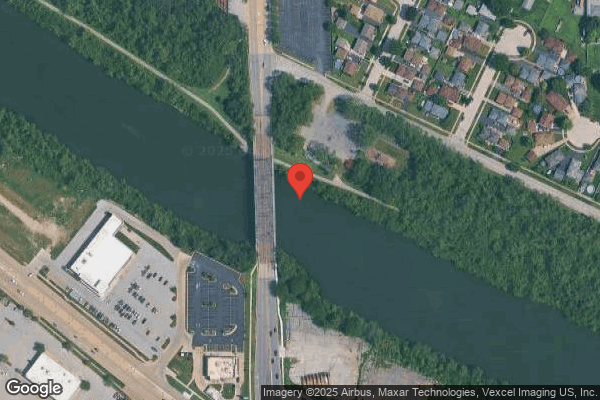

14255 SOUTH CICERO AVENUE, CRESTWOOD, IL 60445 (708) 371-0400
For profit - Limited Liability company 297 Beds EXTENDED CARE CLINICAL Data: November 2025 3 Immediate Jeopardy citations
Trust Grade
0/100
#350 of 665 in IL
Last Inspection: February 2025

Within standard 12-15 month inspection cycle. Federal law requires annual inspections.

Overview

Crestwood Rehabilitation Center has received a Trust Grade of F, which indicates significant concerns about the quality of care provided. The facility ranks #350 out of 665 in Illinois, placing it in the bottom half of nursing homes in the state, and #112 out of 201 in Cook County, meaning only a few local options are worse. The trend is worsening, with the number of reported issues increasing from 13 in 2024 to 17 in 2025. Staffing is a notable weakness, with a poor rating of 1 out of 5 stars and a 50% turnover rate, which is around the state average but still concerning. The facility has also incurred $484,889 in fines, indicating serious compliance problems, and has less RN coverage than 86% of Illinois facilities, which could impact resident care. Specific incidents that raise alarms include a critical failure to monitor a resident's fluid status, resulting in a resident's death, and multiple failures to protect residents from sexual abuse, highlighting inadequate supervision and assessment protocols. While the facility does have a high rating of 5 out of 5 for quality measures, the numerous issues noted in health inspections and staffing suggest families should approach this facility with caution.

Trust Score
F
0/100
In Illinois
#350/665
Bottom 48%
Safety Record
High Risk
Review needed
Inspections
Getting Worse
13 → 17 violations
Staff Stability
⚠ Watch
50% turnover. Above average. Higher turnover means staff may not know residents' routines.
Penalties
✓ Good
$484,889 in fines. Lower than most Illinois facilities. Relatively clean record.
Skilled Nurses
⚠ Watch
Each resident gets only 24 minutes of Registered Nurse (RN) attention daily — below average for Illinois. Fewer RN minutes means fewer trained eyes watching for problems.
Violations
⚠ Watch
54 deficiencies on record. Higher than average. Multiple issues found across inspections.
★★☆☆☆
2.0
Overall Rating
★☆☆☆☆
1.0
Staff Levels
★★★★★
5.0
Care Quality
★☆☆☆☆
1.0
Inspection Score
Stable
2024: 13 issues
2025: 17 issues

The Good

  • 5-Star Quality Measures · Strong clinical quality outcomes
  • Full Sprinkler Coverage · Fire safety systems throughout facility
  • No fines on record

Facility shows strength in quality measures, fire safety.

The Bad

2-Star Overall Rating

Below Illinois average (2.5)

Below average - review inspection findings carefully

Staff Turnover: 50%

Near Illinois avg (46%)

Higher turnover may affect care consistency

Federal Fines: $484,889

Well above median ($33,413)

Significant penalties indicating serious issues

Chain: EXTENDED CARE CLINICAL

Part of a multi-facility chain

Ask about local staffing decisions and management

The Ugly 54 deficiencies on record

3 life-threatening 8 actual harm
Jun 2025 1 deficiency
CONCERN (E) 📢 Someone Reported This

A family member, employee, or ombudsman was alarmed enough to file a formal complaint

Potential for Harm - no one hurt, but risky conditions existed

Safe Environment (Tag F0584)

Could have caused harm · This affected multiple residents

**NOTE- TERMS IN BRACKETS HAVE BEEN EDITED TO PROTECT CONFIDENTIALITY** Based on observations, interviews, and record reviews, the facility failed to implement effective interventions to maintain resi...

Read full inspector narrative →
**NOTE- TERMS IN BRACKETS HAVE BEEN EDITED TO PROTECT CONFIDENTIALITY** Based on observations, interviews, and record reviews, the facility failed to implement effective interventions to maintain resident room temperatures and dialysis room temperatures at safe/comfortable levels below 81 degrees Fahrenheit. This failure affected 53 residents (R1 - R53) out of 54 residents in a sample of 54. Findings include: On 6/18/25 starting at 2:55 PM until 3:50 PM, resident room temperatures were checked with V3 (maintenance director): Room: temperature (degrees Fahrenheit): 404 85 402 85 408 85 419 85 427 82 305 83 312 83 313 85 316 85 317 84 328 82 237 85 201 85 204 85 208 85 215 82 220 82 226 82 229 82 Dialysis room [ROOM NUMBER] Per www.timeanddate.com/weather, dated 6/18/25 at 10:53 AM, the outside temperature in Crestwood, IL was 81 degrees with humidity 67%. The highest temperature was at 12:53 PM, outside temperature was 82 degrees with humidity 63%. On 6/18/25 at 3:20 PM, R20 has a 20-inch box fan set on high positioned one foot away from R20. R20 stated that his room is hot and uncomfortable. On 6/18/25 at 3:25 PM, there were 10 residents observed receiving dialysis treatment. R1 was observed fanning herself with a piece of paper. On 6/18/25 at 3:30 PM, R28 stated that room is hot and uncomfortable. On 6/18/25 at 3:31 PM, R29 has a 20-inch box fan set on high positioned three feet away from R29. R29 stated that his room is hot and uncomfortable. R29 requested a second fan for his room. On 6/18/25 at 2:55 PM, V3 (maintenance director) stated that the air conditioning (AC) units are located on the side of the building. V3 stated that the AC units are working at this time. V3 stated that on 6/1/25 the fillers were checked and cleaned. V3 stated that it took two weeks to complete this. V3 stated that water flows through the coils in the unit in each resident room. V3 stated that the AC units blow cold air into the hallways on each nursing unit. V3 stated that there is a small portable AC unit located at each nurses ' station as well. V3 stated that cool water comes from the main intakes and goes through the pipes in the boiler room and then to the unit in each resident room. V3 stated that he started randomly checking hourly temperatures since 8:00 AM yesterday, 6/17. V3 stated that he checks temperatures from 7:00 AM until 7:00 PM. V3 stated that he does not check temperatures after 7:00 PM because the temperature starts to drop in the facility. V3 stated that the digital infrared thermometer he uses does not record humidity levels. V3 stated that he obtains the humidity from the internet. V3 stated that temperatures will be monitored throughout the weekend to ensure temperatures do not increase above 81 degrees. V3 stated that residents will be provided a fan upon request. On 6/18/25 at 4:20 PM, V6 (dialysis nurse) and V7 (dialysis nurse) stated that they were informed on Monday, 6/16, that the facility's air conditioner was not working and they facility needed to order parts. Both stated that residents are not permitted to eat or drink in the dialysis room. Both denied any staff checking on residents while receiving treatments. Both stated that there are 10 residents receiving dialysis treatments in the morning and 10 in the afternoon. V6 stated that they have been monitoring residents' vital signs throughout their treatment. V6 stated that the residents' vital signs have been fluctuating more than usual due to the heat. Both stated that residents are in treatment for 4-4.75 hours. Both stated that residents appear to be more fatigued than usual due to heat. On 6/18/25 at 4:30 PM, V2 DON (director of nursing) stated that staff are providing cold water to residents every two hours. V2 stated that staff are also providing residents with popsicles/ice cream in between meals. V2 stated that nurses are monitoring residents for signs of hyperthermia and heat exhaustion/heat stroke. V2 stated that physicians have ordered increased water flushes for residents that have gastrostomy tubes and cannot eat or drink. V2 stated that V2 will have staff bring ice packs to all of the residents in dialysis right now. On 6/20/25 at 10:30 AM, R1 and R2 stated that it is a little cooler in their room compared to the previous days. Both stated that they were unaware the facility had fans for resident use, they were never offered a fan. Both stated that it was very hot in the dialysis room on 6/18/25. On 6/20/25 at 3:00 PM, V4 (outside HVAC company) stated that he was notified on Sunday, 6/15/25, that the AC units were not functioning. V4 stated that the outside temperatures were cooler on Sunday so V4 did not come to the facility until Monday morning. V4 stated that he has been at facility all week working on the AC units. V4 stated that parts had to be ordered and replaced. V4 stated that as of right now the AC units are functioning properly. On 6/20/25 at 3:30 PM, V1 (administrator) stated that should have been checking on their residents in dialysis. V1 stated that the dialysis staff should have notified V1 and/or V2 that the dialysis room was hot. The facility ' s temperature log notes on 6/17/25 at 8:00 AM random temperatures were 82 degrees. At 11:00 AM, temperatures increased to 83 degrees. From 12:00 PM until 4:00 PM temperatures were 82 degrees. By 7:00 PM, temperatures were 79 degrees. The facility ' s temperature log notes on 6/18/25 at 7:00 AM random temperatures were 79 degrees. At 11:00 AM, temperatures increased to 83 degrees. At 5:30 PM, random room temperatures were decreasing to 80-81 degrees. On 6/24/25 at 3:00 PM, V3 stated that the facility has rented three large portable AC units for each nursing unit to help keep facility temperatures at a comfortable level.
May 2025 2 deficiencies 1 Harm
SERIOUS (G) 📢 Someone Reported This

A family member, employee, or ombudsman was alarmed enough to file a formal complaint

Actual Harm - a resident was hurt due to facility failures

Incontinence Care (Tag F0690)

A resident was harmed · This affected 1 resident

**NOTE- TERMS IN BRACKETS HAVE BEEN EDITED TO PROTECT CONFIDENTIALITY** Based on observation, interview, and record review, the facility failed to provide appropriate care and services to prevent urin...

Read full inspector narrative →
**NOTE- TERMS IN BRACKETS HAVE BEEN EDITED TO PROTECT CONFIDENTIALITY** Based on observation, interview, and record review, the facility failed to provide appropriate care and services to prevent urinary tract infection for a resident with an indwelling urinary catheter and failed to provide timely and appropriate assessment for the removal of the indwelling urinary catheter. This failure affected one (R1) of three residents reviewed for care of indwelling urinary catheter and resulted in R1 having four urinary tract infections since being admitted to the facility. Findings include: R1 is [AGE] years old admitted to the facility on [DATE], diagnosis include, but not limited to Type 2 diabetes, Rhabdomyolysis, unspecified asthma, chronic obstructive pulmonary disease, disorder of muscle, neuromuscular dysfunction of bladder, pressure ulcer of sacral region, dysphagia pharyngeal phase, history of falling, essential primary hypertension, chronic kidney disease stage 2, etc. On 5/5/2025 at 1:30PM, R1 observed in room sitting in a motorized wheelchair, alert and oriented x3 and stated that she is doing okay, trying to get her strength back. R1 said that she used to have a indwelling urinary catheter, but they took it out, she was in so much pain, begged staff to remove the urinary catheter but they refused, finally one nurse was kind enough to remove the urinary catheter. R1 added that she feels better and urinating with no problems. R1 stated that she has had urinary tract infections four times while she had the urinary catheter and they continued treating her for the UTI (urinary tract infection) with antibiotics, but it comes back after each treatment. Per record review, R1 was admitted from the hospital with an indwelling urinary catheter. Review of resident's medical record showed several nurse's progress notes indicating the R1 has been complaining of discomfort due to the indwelling urinary catheter since 11/29/2024. Review of antibiotic therapy for R1 since admission shows the following: 9/24/2024, Ciprofloxacin HCl Oral Tablet 500 MG (Ciprofloxacin HCl) Give 1 tablet by mouth every 12 hours for UTI for 7 Days. 12/3/2024 Cipro Oral Tablet 500 MG (Ciprofloxacin HCl) Give 1 tablet by mouth every 12 hours for uti for 5 Days. 12/5/2024 Macrobid Oral Capsule 100 MG (Nitrofurantoin Monohyd Macro) Give 1 capsule by mouth every 12 hours for UTI, E Coli for 7 Days. 3/13/2025 Macrobid Oral Capsule 100 MG (Nitrofurantoin Monohyd Macro) Give 1 capsule by mouth two times a day for uti E. coli for 7 Days. 4/3/2024 Cefuroxime Axetil Oral Tablet 250 MG (Cefuroxime Axetil) Give 1 tablet by mouth one time only for uti E. coli and proteus for 1 Day. On 5/6/2025 at 11:33AM, V12 (Infectious disease NP) said that he is familiar with R1, she was constantly having urinary tract infection (UTI) with e. coli as the bacteria and that could be a result of not being cleaned properly. Resident also had a sacral wound, the constant infection could be addressed with better care by avoiding poop from getting into the vaginal area, and in turn getting into the catheter, causing UTI. On 4/23/2025 V12 documented in part, patient states have some discomfort from urinary catheter, speaking to facility nurse practitioner about whether she needs same. 4/16/2025, V12 documented in part, patient still relates some dysuria (pain with urination). V12 said that the urinary catheter may also help with wound healing, resident complained to him of discomfort to the urinary catheter area but stated that it occurs when she wants to urinate. R1 has been treated so many times for UTI, surveyor asked V12 if anyone considered removing the urinary catheter to see if it will help with the constant UTI and he said that he does not make decision when it comes to discontinuing the urinary catheter, that will be a question for the medical doctor. On 5/7/2025 at 2:53PM, V12 (Infectious disease NP) said that he is not sure if R1 have seen a urologist or not, he just looked at resident's record and saw that staff were documenting no post void residual and that is good. V12 added that if R1 did not have a indwelling urinary catheter, she probably wouldn't have this many UTIs. On 5/7/2025 at 9:29AM, V13 (LPN/ Infection Prevention Nurse) said that she oversees the antibiotic stewardship, she works with the infectious disease nurse practitioner. V13 said that R1 has been on a lot of antibiotics for dysuria (Pain and burning during urination), resident had a urinary catheter for a diagnosis of neurogenic bladder. V12 said that she has never reached out to the doctor and not sure if anyone has reached out to the doctor or suggested discontinuing the urinary catheter for a while since admission. R1 complained of pain due to the urinary catheter but not all the time, when she gets treated, she will say that she feels better. 5/6/2025 at 10:16AM V8 (LPN) said that she has worked at the facility since March 2025, and has been the 4th floor supervisor since then. V8 is familiar with R1, have seen and talks to her every day. V8 is aware that R1 had a urinary catheter and was present the day it was dislodged, V8 spoke to the nurse practitioner after the urinary catheter came out and attempted to re-insert urinary catheter but resident was complaining of pain. V8 received an order to monitor resident's output and measure post void residual. R1 never complained of pain to V8, R1 have been on antibiotics for UTI for the one month that V8 has been here, not sure of what happened before she started. On 5/7/2025 at 11:52AM, V17 (Attending physician) said that he is familiar with R1, she was having some urine retention issues, that is the reason for the indwelling urinary catheter, they were planning to remove it and try weaning the resident off, she was supposed to see a urologist but V17 is not sure if she did or not. V17 said that he will review resident's chart and call surveyor back. On 5/7/2025 at 3:15PM, V17 called back and said that resident's urinary catheter is now out and they are mentoring her post void residual (PVR), so far it is negative and if it continues to be negative, they will keep the urinary catheter out. The resident needed the urinary catheter due to a diagnosis of neurogenic bladder, not sure if resident was getting UTI because of the urinary catheter, she also had a sacral pressure ulcer and the urinary catheter was needed for the healing of the ulcer. V17 added that there has never been an attempt to reassess resident or discontinue the urinary catheter prior to it coming out few days ago. Indwelling urinary catheter care procedure revised September 2005 states it purposes as to prevent infections of the resident's urinary tract. Under general guidelines, #18 states to report to the supervisor. Urinary tract infections/ bacteriuria policy revised April 2007 states that as part of the initial assessment, the physician will help identify individuals who have a history of symptomatic indwelling urinary tract infections and those who have risk factors, for example, an indwelling urinary catheter. Under monitoring, the policy states that the physician and nursing staff will review the status of the individuals who are being treated for UTI and adjust treatment accordingly. 2. When someone's urinary tract infection persists or recurs after treatment with an initial course of antibiotics, the physician should review the situation carefully with the nursing staff and possibly examine the individual or review the situation in detail before prescribing repeated courses of antibiotics.
CONCERN (D) 📢 Someone Reported This

A family member, employee, or ombudsman was alarmed enough to file a formal complaint

Potential for Harm - no one hurt, but risky conditions existed

Quality of Care (Tag F0684)

Could have caused harm · This affected 1 resident

**NOTE- TERMS IN BRACKETS HAVE BEEN EDITED TO PROTECT CONFIDENTIALITY** Based on interview and record review, the facility failed to provide necessary services upon admission to the facility to includ...

Read full inspector narrative →
**NOTE- TERMS IN BRACKETS HAVE BEEN EDITED TO PROTECT CONFIDENTIALITY** Based on interview and record review, the facility failed to provide necessary services upon admission to the facility to include medication orders and nutrition assessment/orders. This failure applied to one (R3) of three residents reviewed for quality of care. Findings include: R3 is [AGE] years old, medical diagnosis (from hospital record) include but are not limited to diabetes, hypertension, hyperlipidemia, chronic kidney disease, GERD, obesity, etc. R3 does not have any face sheet, initial admission assessment or baseline care plan in medical record. Progress note documented by V5 (LPN) on [DATE] 15:55:14 reads as follows: Patient responsive to painful stimuli only. Vital signs WNL (within normal limits). No s/s (signs and symptoms) of pain or distress noted. Patient on 7L (liters) of oxygen via Trach collar. Head to toe assessment complete. Patient lying in bed HOB (head of bed) elevated in stable condition. admission endorsed to oncoming nurse. RN/LPN. V5 also documented the following set of vital signs, B/P (blood pressure) 114/74, Temp (temperature) 98.4, Respiration: 80bpm regular, O2 (oxygen) saturation 97% trach. No height, weight or blood sugar was documented. On [DATE] at 2:22PM, V5 (Nurse) said that she recalls R3, she was the person that took the report from the hospital, resident arrived at the facility at 3:00PM which was the end of V5's shift, but she stayed a little longer because the in-coming nurse was a little late. V5 said that she took a set of vital from the resident that was within normal limits, resident arrived on 7 liters of oxygen via trach, he was non-verbal but responds to painful stimuli. V5 said that she then gave report to the afternoon nurse and left, she did not reconcile medications or received any orders for the resident. On [DATE] at 4:13PM, V7 (LPN) said that R3 was admitted before he came to work past 3:00PM, R3 had a trach, V7 was not sure how many liters of oxygen R3 was receiving but said he think R3 was on oxygen at 2 to 3 liters, resident had a G-tube, but it was not connected. V7 went to get the feeding and set up but did not connect the feeding because he did not have the rate, the nurse who took report from the hospital did not get the rate for the feeding. V7 said that the feeding rate was not in the hospital record, he called the doctor and left a message, but he did not call him back. V7 said that the resident did not get any feeding or medication from him from the time he was admitted until he coded because he was waiting for the doctor to call back, and he was busy with other residents who were asking for medication. V7 said that there was a supervisor on ground, but he did not ask her for assistance. On [DATE] at 9:07AM, V2 (DON-Director of Nursing) said sometimes it may take 4 to 6 hours for the patient's medication to be reconciled, sent, and delivered by pharmacy, but if a resident has medication scheduled for the next shift or that is urgent, it can be pulled from the pixels. If the nurse could not get in touch with the doctor for orders, they can call the medical director, resident's G-tube feeding could have been started because the feeding rate was in the admission papers. On [DATE] at 10:50AM, V10 (LPN/Nurse supervisor) said that R3 was admitted around 3 to 3:45PM, she called the nurse practitioner to verify the medications, and she told the nurse (V7) that the medications have been verified. Around 10:10PM, the C.N.A came to the nursing station and said that resident was not responding, V10 and V7 went to the room and resident was not responding, they called a code blue, called 911 and started CPR. V10 added that V7 she was not aware that R3 did not receive any medication or feeding, V7 never told her that he needed any assistance with R3's medication or G-tube feeding. On [DATE] at 9:33AM, V14 (Nurse Practitioner) said that a supervisor, (V10) called him to verify medications for R3 the day he was admitted , V14 did not see the patient because he was told that patient coded the same day and was sent out 911. V14 said that if a nurse calls to verify medication and the doctor did not answer, the nurse can call again or reach out to a different doctor. As for residents on g-tube feeding, the nurse should also reach out to the dietician, not just the doctor, waiting for the doctor should not be an excuse for not rendering patient care.
Feb 2025 1 deficiency 1 Harm
SERIOUS (G) 📢 Someone Reported This

A family member, employee, or ombudsman was alarmed enough to file a formal complaint

Actual Harm - a resident was hurt due to facility failures

Notification of Changes (Tag F0580)

A resident was harmed · This affected 1 resident

Based on interviews and record reviews, the facility failed to follow its change in resident's condition policy and its urgent laboratory testing protocol and notify the attending physician/nurse prac...

Read full inspector narrative →
Based on interviews and record reviews, the facility failed to follow its change in resident's condition policy and its urgent laboratory testing protocol and notify the attending physician/nurse practitioner the urgent laboratory tests ordered were not done within the 4-6-hour time frame. This affects one of three residents (R1) reviewed for notification of physician of changes in condition. This failure resulted in over a nine-hour delay of labs being obtained. R1 was subsequently sent to the local hospital. R1 was admitted and treated for the diagnosis of dehydration, pneumonia, and urinary tract infection. Findings include: On 2/27/25 at 10:07AM, V5 RN (registered nurse) stated that V5 is familiar with R1. V5 stated that V5 sent R1 to the hospital on 1/19 for pneumonia. Stated that R1's family member took R1 home for a couple of days. V5 stated that shortly thereafter R1 got sick. V5 stated that urgent laboratory tests should be done within 4-6 hours, if not done within that time, the nurse is expected to call the primary physician/primary nurse practitioner and ask want he/she wants to do; wait or send resident out to hospital. V5 stated that the nurse is expected to document in the resident's progress notes urgent orders and if not done within time frame document physician notification and any follow up orders. V5 stated that the nurse also documents on 24 report sheet that laboratory tests are pending. V5 stated that R1's eating had decreased and R1 was weak. V5 stated that V5 would assist R1 with eating. On 2/27/25 at 12:20PM, V6 CNA (certified nurse aide) stated that V6 is familiar with R1. V6 stated that R1 started eating and drinking less mid January when R1 became sick. V6 stated that the CNAs are expected to document the amount eaten and fluids in POC (point of care) charting. V6 stated that the CNAs are expected to report if the resident has decreased intake or refusal to eat to the nurse. V6 stated that when R1 started to get sick, R1 stopped getting out of bed. V6 stated that R1 was more tired and weak, coughing and looked dehydrated; R1 just looked sick. V6 stated that R1 started becoming incontinent of bowel and bladder, staff had to feed him. The facility's staffing assignment sheets note V6 provided care for R1 on the day shift on 1/12, 1/14, 1/16, and 1/17. On 1/17 V6 also provided care for R1 on the evening shift. On 2/27/25 at 2:05PM, V8 (primary NP) stated that when V8 orders testing to be done, V8 expects it to be done. V8 stated that when V8 was informed of R1's BMP results, R1 was really dehydrated. V8 stated that V8 ordered intravenous fluids for R1. V8 stated that when V8 was notified that V5 nor the outside midline catheter insertion nurse could not access a vein, V8 knew R1 was severely dehydrated. V8 stated that at a critical time V8 did not know what was going on with R1 because the nurses were calling any NP and not V8 or V9 (primary physician). V8 stated that V8 and V9 are responsible for managing R1's care and this can't be done if V8 and V9 are not kept informed of R1's changes in condition. On 2/28/25 at 1:50PM, V8 NP stated that R1 was not eating or drinking which would be a factor in R1's dehydration. V8 stated that V8 can only implement interventions as soon as V8 knows the test results. R1's dietary assessment, dated 1/5/25, notes R1's fluid needs are 1330-1600ml (milliliters) of fluids/day. R1's POS (physician order sheet), dated 10/19/24, notes to encourage R1 to increase fluid intake to 8 cups of water per day every shift for chemical imbalance. R1's POS, dated 1/17/25 at 1:03PM, notes orders for UA/C&S (urinalysis/culture and sensitivity), urgent BMP (basic metabolic panel) and CBC (complete blood count). R1's POC (point of care) charting notes document fluid intake - amount of milliliters R1 drank each shift. The facility is unable to provide any POC documentation of R1's fluid intake since 10/19/24. R1's urgent laboratory test results, dated 1/19/25 at 11:14AM, R1's creatinine was 4.42 (normal range is 0.67 - 1.17) and BUN was 103 (normal range is 5 -20) and WBC (white blood cell count) was 18.3 (normal range is 4.2 - 11). R1's last dehydration risk assessment was completed on 6/15/2023. On 1/17/25 at 12:45PM, V5 RN noted R1 received in bed, alert and oriented x 1-2 with confusion. R1 noted to be lethargic and fatigued while in bed. Appetite poor for breakfast. R1 able to respond to name and verbal stimuli. V8 NP notified with new orders for UA/C&S, chest x-ray, and BMP. Orders rendered and carried out. At 1:38PM, V5 called and spoke with staff from the outside laboratory company for urgent CBC/BMP. ETA 4-6 hours. On 1/18/25 at 10:13AM, V5 RN noted R1 able to tolerate 30% of breakfast. On 1/18/25 at 11:27AM, urgent chest x-ray completed. On 1/18/25 at 6:46PM, V8 NP noted R1 with generalized muscle weakness ,unsteady gait, using wheelchair. Chest x-ray positive for pneumonia. 1/18/25 at 7:00PM, V5 RN noted R1 able to consume 30% of dinner. R1 has been resting in bed during shift. R1 noted to have congestion while trying to communicate. As needed albuterol sulfate inhaler administered and tolerated well. There is no documentation in R1's MAR (medication administration record) noting R1 received albuterol inhaler. 1/18/25 at 9:55PM, V5 RN noted Still awaiting urgent laboratory testing. V5 called the outside laboratory company. New order placed urgent CBC/BMP. No ETA given. 1/18/25 at 10:24PM, urgent laboratory testing done. 1/19/25 at 9:24AM, V5 RN noted R1 received resting in bed, alert, responsive to verbal stimuli. Fluids encouraged and given. R1 able to tolerate 1 cup of water. R1 appetite poor for breakfast. V5 able to feed R1 20%. On 1/19/25 at 12:34PM, V5 RN noted abnormal laboratory results relayed to V8 NP. Per NP, new orders to give sodium chloride solution 0.9% 3 liters intravenously at 100ml/hour; repeat BMP after infusion. Orders carried out. On 1/19 at 1:21PM, V8 attempted x2 to insert peripheral intravenous line without success. Outside company was called for urgent peripheral intravenous line insertion. 1/19 at 2pm, the outside company in facility for peripheral intravenous line insertion. Unsuccessful in establishing intravenous access. On 1/19/25 at 3:27PM, R1's family member requested for R1 to be sent to the hospital. On 1/19/25 at 5:09PM, an outside ambulance service transported R1 to the hospital. R1's bladder incontinence care plan, dated 7/3/24, notes monitor R1's fluid intake. Monitor/document for signs/symptoms of UTI (urinary tract infection) no urine output, altered mental status, change in behavior, change in eating pattern. There is no documentation found in R1's medical record noting the number of bladder continence episodes or the number and quantity of urine with each incontinent episode. There is no documentation found in R1's medical record noting urine was collected for urinalysis prior to hospitalization on 1/19/25. The hospital record provided to the facility, dated 1/19/25, notes R1's urinalysis was positive for nitrites, white blood cells, and ketones; confirming R1 had a UTI. Chest x-ray showed pneumonia. Laboratory confirmed dehydration.
Feb 2025 10 deficiencies
CONCERN (D)

Potential for Harm - no one hurt, but risky conditions existed

Resident Rights (Tag F0550)

Could have caused harm · This affected 1 resident

**NOTE- TERMS IN BRACKETS HAVE BEEN EDITED TO PROTECT CONFIDENTIALITY** Based on observation, interview and record review the facility failed to protect the resident right to have access to communicat...

Read full inspector narrative →
**NOTE- TERMS IN BRACKETS HAVE BEEN EDITED TO PROTECT CONFIDENTIALITY** Based on observation, interview and record review the facility failed to protect the resident right to have access to communicate with staff on all shifts in their preferred language of Spanish. This affects one of one residents R169 reviewed for resident rights. Finding: On 2/5/25 at 12:50PM, the surveyor spoke with R169 first in English. R169 stated R169 did not speak English and could not understand. R169 reported R169 ' s preferred language is Spanish. The surveyor then began speaking to R169 in Spanish to ask questions. R169 stated there are no staff on the third floor that are able to speak to R169 in Spanish. R169 reported there are staff that work on the second floor that speak Spanish but no one on the third floor. R169 stated other bilingual residents assist with translating for R169 to relay R169 ' s needs to staff. R169 denied any use of a translating phone line or a communication board. R169 stated staff will try to use their phones to communicate what needs to be said to R169 but the translation is not accurate. R169 reported feeling scared not having any staff to turn to when R169 needs assistance. On 2/5/25 at 1:03PM V11 (Transporter) came into the room to tell R169 that it was time for dialysis. V11 asked the surveyor to translate in Spanish to R169 that R169 needed to stand and get into the chair to be brought to dialysis. When asked how does the staff communicate with R169, V11 stated the staff will use basic English and hand motions to communicate with R169. V11 denied the facility utilizing a communication board or a translating phone. On 2/5/25 at 1:05PM, R179 stated staff attempt use R179 ' s Ipad or phone to translate messages to R169 that cannot be understood with basic English. The Minimum Data Set, dated [DATE] documents R169 ' s preferred language is English and that R169 does not need translator services. This is an incorrect assessment of R169 ' s communication needs. The resident rights for people living in the long term care facilities denotes in part your facility must treat you with dignity and respect and must care for you in a manner that promotes your quality of life.
CONCERN (D)

Potential for Harm - no one hurt, but risky conditions existed

Deficiency F0558 (Tag F0558)

Could have caused harm · This affected 1 resident

**NOTE- TERMS IN BRACKETS HAVE BEEN EDITED TO PROTECT CONFIDENTIALITY** Based on observation, interview and record review, the facility failed to follow their Answering the Call Light Policy. The faci...

Read full inspector narrative →
**NOTE- TERMS IN BRACKETS HAVE BEEN EDITED TO PROTECT CONFIDENTIALITY** Based on observation, interview and record review, the facility failed to follow their Answering the Call Light Policy. The facility failed to place the call light within reach. This deficient practice affects one resident (R58) of three residents reviewed for accommodation of needs in a total sample of 55 residents. Findings Include: On 2/4//25 at 11:00AM observed R58 In bed alert and oriented x 3. R58 is with the BIMS score of 15/15 (Cognitively Intact). R58 asked writer where her call light location. Surveyor observed call light clipped next to her head pillow on R58 right side of the head, lateral to her right ear. Asked R58 if she is able to reach call light and R58 was not able to reach call light. R58 stated that she has contracture and left arm cannot reach to the location of her call light. Surveyor unclipped her call light and place and clipped it near R58 left hand, by chest area. R58 now can reach the call light and happy with the new call light placement. On 2/6/25 at 12:15PM, V9 (Restorative Nurse) stated that R58 has severe bilateral hand and finger contracture and not able to open finger and grab call light if it not place by her chest area. R58 will need the call light by her chest area, so she can hit the light button with her chin or press it against her chest to use. If the call light is place close to her head she won't be able to reach and grab it because she is not able to open her hand and fingers. R58's Joint Mobility assessment dated [DATE], reads in part: Right wrist and Left wrist: moderate, (51-75% available Range of Motion). Right and left fingers/hand: severe (0-25% available Range of Motion). Answering the Call Light Policy with a revised date of August 2008, reads in part: The purpose of this procedure is to respond to the resident's requests and needs. When the resident is in bed or confined to a chair be sure the call light is within easy reach of the resident. FACILITY Environment Based on observation, interview and record review, the facility failed to follow their Answering the Call Light Policy. The facility failed to place the call light within reach. This deficient practice affects one resident (R58) of three residents reviewed for accommodation of needs in a total sample of 55 residents. Findings Include: On 2/4//25 at 11:00AM observed R58 In bed alert and oriented x 3. R58 is with the BIMS score of 15/15 (Cognitively Intact). R58 asked writer where her call light location. Surveyor observed call light clipped next to her head pillow on R58 right side of the head, lateral to her right ear. Asked R58 if she is able to reach call light and R58 was not able to reach call light. R58 stated that she has contracture and left arm cannot reach to the location of her call light. Surveyor unclipped her call light and place and clipped it near R58 left hand, by chest area. R58 now can reach the call light and happy with the new call light placement. On 2/6/25 at 12:15PM, V9 (Restorative Nurse) stated that R58 has severe bilateral hand and finger contracture and not able to open finger and grab call light if it not place by her chest area. R58 will need the call light by her chest area, so she can hit the light button with her chin or press it against her chest to use. If the call light is place close to her head she won't be able to reach and grab it because she is not able to open her hand and fingers. R58's Joint Mobility assessment dated [DATE], reads in part: Right wrist and Left wrist: moderate, (51-75% available Range of Motion). Right and left fingers/hand: severe (0-25% available Range of Motion). Answering the Call Light Policy with a revised date of August 2008, reads in part: The purpose of this procedure is to respond to the resident's requests and needs. When the resident is in bed or confined to a chair be sure the call light is within easy reach of the resident. .
CONCERN (D)

Potential for Harm - no one hurt, but risky conditions existed

Free from Abuse/Neglect (Tag F0600)

Could have caused harm · This affected 1 resident

**NOTE- TERMS IN BRACKETS HAVE BEEN EDITED TO PROTECT CONFIDENTIALITY** Based on interview and record review the facility failed to prevent and incident of staff to residents verbal abuse and rough ha...

Read full inspector narrative →
**NOTE- TERMS IN BRACKETS HAVE BEEN EDITED TO PROTECT CONFIDENTIALITY** Based on interview and record review the facility failed to prevent and incident of staff to residents verbal abuse and rough handling during direct care. This affected one of three (R179) residents reviewed for abuse in a total sample of 55. Findings Include: R179 is a [AGE] year old with the following diagnosis: pedestrian injured in traffic accident, traumatic subarachnoid hemorrhage with loss of consciousness, fracture of the thoracic vertebra, avulsion fracture of the ilium, and intervertebral disc degeneration. On 2/4/25 at 11:32AM, R179 stated V21 (CNA) yelled at R179 after R179 told V21 to stop going through R179's personal belongings. R179 reported that V21 screamed at R179 to shut the f*ck up and to not tell V21 what to do. R179 reported V21 then began to provide incontinence care and scrubbed R179's groin area to the point it was sore. R179 stated R179 reported this incident to V13 (Nurse) on 2/4/25 at about 8PM. R179 reported V13 told R179 that V21 will no longer work with R179. On 2/5/25 at 1:32PM, V13 stated on Monday (2/4/25) sometime in the evening R179 reported V21 yelled at R179 and was rough while changing R179. V13 reported telling V8 (ADON) about the allegations because this would be considered an physical and verbal abuse. V13 stated R179 is alert and oriented and knows how to make needs known. V13 reported telling V21 to not work with R179 anymore that shift and assured R179 that V21 would no longer work with R179. On 2/6/25 at 1:46PM, V21 stated V21 and R179 did not have any problems with each other while providing care. V21 denied yelling at R179 or being too rough with R179 while providing incontinence care. V21 reported V21 was going through R179's dressers to look for a brief but asked R179 permission first. V21 reported R179 granted permission to go through the drawers but then told V21 to get out of the drawers. V21 stated V21 closed the drawer when R179 asked. V21 denied R179 reporting to V21 that R179 was upset with V21 for being too rough or yelling. The Facility Incident Report Form dated 2/5/25 documents R179 is alert and oriented times three and able to make needs known. R179 alleged V21 provided care too quickly and was upset with V21 while V21 was providing care. An investigation was initiated. The policy titled, Abuse Prevention Policy, dated that is not dated documents, this facility affirms the right of our residents to be free from abuse neglect, exploitation, misappropriation of property, deprivation of goods and services by staff or mistreatment. Abuse means any physical or mental injury or sexual assault inflicted upon a resident other than by accidental means. Abuse is the willful infliction of injury, unreasonable confinement, intimidation, or punishment with resulting physical harm, pain, or mental anguish to a resident. Physical abuse is the infliction of injury on a resident that occurs other than by accidental means and that requires medical attention .Verbal abuse is the use of oral, written, or gestured language that willfully includes disparaging and derogatory terms to residents or families, or within hearing distance, regardless of an individual's age, ability to comprehend, or disability.
CONCERN (D)

Potential for Harm - no one hurt, but risky conditions existed

Report Alleged Abuse (Tag F0609)

Could have caused harm · This affected 1 resident

**NOTE- TERMS IN BRACKETS HAVE BEEN EDITED TO PROTECT CONFIDENTIALITY** Based on interview and record review, the facility failed to report an allegation of verbal and physical abuse to Illinois Depar...

Read full inspector narrative →
**NOTE- TERMS IN BRACKETS HAVE BEEN EDITED TO PROTECT CONFIDENTIALITY** Based on interview and record review, the facility failed to report an allegation of verbal and physical abuse to Illinois Department of Public Health within 24 hours. This affected one of three (R179) residents reviewed for abuse policy in a total sample of 55. Findings Include: R179 is a [AGE] year old with the following diagnosis: pedestrian injured in traffic accident, traumatic subarachnoid hemorrhage with loss of consciousness, fracture of the thoracic vertebra, avulsion fracture of the ilium, and intervertebral disc degeneration. On 2/4/25 at 11:32AM, R179 stated V21 (CNA) yelled at R179 after R179 told V21 to stop going through R179's personal belongings. R179 reported V21 then began to provide incontinence care and scrubbed R179's groin area to the point it was sore. R179 stated R179 reported this incident to V13 (Nurse) on 2/4/25 at about 8PM. R179 reported V13 told R179 that V21 will no longer work with R179. On 2/5/25 at 1:32PM, V13 stated on Monday (2/4/25) sometime in the evening R179 reported V21 yelled at R179 and was rough while changing R179. V13 reported telling V8 (ADON) about the allegations because this would be considered an allegation of abuse that needs to be reported immediately. On 2/5/25 at 4:07PM, V8 stated V8 was just notified five minutes before coming down to talk to the surveyor about the allegations. V8 denied being told about the incident before today. V8 stated staff should immediately report the problem to the administrator. On 2/6/24 at 1:02PM, V7 (Administrator) stated V7 was told yesterday bout 5PM that R179 was unhappy about the care V21 provided to R179. V7 reported R179 told V7 that V21 was too rough when providing care and rushed through care. V7 denied being told about the incident before yesterday at 5PM. V1 stated staff should report any allegation of abuse immediately. The Facility Incident Report Form dated 2/5/25 documents R179 is alert and oriented times three and able to make needs known. R179 alleged V21 provided care too quickly and was upset with V21 while V21 was providing care. An investigation was initiated. The policy titled, Abuse Prevention Policy, dated that is not dated documents, Abuse means any physical or mental injury or sexual assault inflicted upon a resident other than by accidental means. Abuse is the willful infliction of injury, unreasonable confinement, intimidation, or punishment with resulting physical harm, pain, or mental anguish to a resident .Internal Reporting Requirements and Identification of Allegations: Employees are required to report any incident, allegation or suspicion of potential abuse, neglect, exploitation, mistreatment or misappropriation of property they observe, hear about, or suspect to the administrator immediately, to an immediate supervisor who must then immediately report it to the administrator or to a compliance hotline or compliance officer. Any allegation of abuse or any incident that results in serious bodily injury will be reported to the Illinois Department of Public health immediately, but no more than two hours of the allegation of abuse.
CONCERN (D)

Potential for Harm - no one hurt, but risky conditions existed

PASARR Coordination (Tag F0644)

Could have caused harm · This affected 1 resident

**NOTE- TERMS IN BRACKETS HAVE BEEN EDITED TO PROTECT CONFIDENTIALITY** Based on interview and record review, the facility failed to coordinate to ensure a resident had a completed level II PASRR asse...

Read full inspector narrative →
**NOTE- TERMS IN BRACKETS HAVE BEEN EDITED TO PROTECT CONFIDENTIALITY** Based on interview and record review, the facility failed to coordinate to ensure a resident had a completed level II PASRR assessment on a resident with sever mental illness. This affected one of five (R179) reviewed for PASRR screening in a total sample of 55. Findings Include: R179 is a [AGE] year old with the following diagnosis: major depressive disorder and schizoaffective disorder. R179 admitted to the facility on [DATE] with the diagnoses listed above per the face sheet. On 2/5/25 at 12:34PM, R179 was not aware of Maximum completing a level II PASRR. R179 admitted to being diagnosed with major depressive disorder and schizoaffective disorder. R179 reported R179 takes medication for these mental health diagnoses. On 2/6/25 at 12:55PM, V14 stated R179 was admitted to the facility with a diagnosis of schizoaffective disorder and major depression. V14 reported V14 confirms the PASRR level I screen with the face sheet diagnosis to determine if the screening is correct. V14 stated R179 should have a level II screen based on R179's diagnosis, and V14 must have missed it. V14 denied R179 having a level II screen as of today. The PASRR Level I Screen dated on 11/8/24 documents R179 does not have any known mental health diagnosis and no level II is recommended. This is incorrectly documented as R179 has a diagnosis of schizoaffective disorder which would qualify R179 for a level II screen. On 2/6/25 at 1:35PM, V14 stated R179 had the level I screen correctly documented to show R179 has a mental health diagnosis. V14 reported based on this screening, Maximus will be notified and come out to perform the level II screen.
CONCERN (D)

Potential for Harm - no one hurt, but risky conditions existed

Quality of Care (Tag F0684)

Could have caused harm · This affected 1 resident

**NOTE- TERMS IN BRACKETS HAVE BEEN EDITED TO PROTECT CONFIDENTIALITY** Based on interview and record review, the facility failed to follow the hospital discharge orders for a resident by not ensuring...

Read full inspector narrative →
**NOTE- TERMS IN BRACKETS HAVE BEEN EDITED TO PROTECT CONFIDENTIALITY** Based on interview and record review, the facility failed to follow the hospital discharge orders for a resident by not ensuring a prescribe wound vac was applied for two days. This affected one of one (R439) residents reviewed for physician orders. Finding Includes: R439 was admitted on [DATE] with the diagnosis of surgical aftercare following surgery on the digestive system. Hospital paperwork dated 2/3/25 documents: discharge instruction place wound vac at skill nursing facility. Physician order sheet dated 2/3/25 documents: may apply wound vac to affected area. On 2/4/25 at 10:43am, R439 who was assessed to be alert and oriented to person, place and time, said, he has not received his wound vac as ordered since his admission. R439 said, he had the wound vac in the hospital after his surgery and it supposed to be continued upon discharge. R439 was observed without a wound vac attached to his surgical wound located on R439's abdomen. R439 did not have a wound vac in his room. On 2/5/25 at 11:54am, R439 said, his wound was still not applied. R439 was observed without a wound vac on his surgical wound located on his abdomen. On 2/5/25 at 3:54pm, V6 (treatment nurse) said, we don't preorder wound vacs. R439 does not have a wound vac. It has been two days. We ordered the wound vac. A wound vac speeds up the healing of the wound. On 2/5/25 at 4:15pm, V8 (adon) said, R439 wound vac should have been order prior to his admission so that it could have been applied as soon as he arrived at the facility. It should have been in place because it was in place at the hospital, ordered upon discharge and for continuity of care. On 2/6/25 at 1:07pm, V8 (adon) said, we did not have any wound vac in the facility upon R439 admission or prior to yesterday when it was delivered. Facility order sheet dated 2/5/24 documents: Patient: R439 state -pending acceptance. Requested 2/4/25
CONCERN (D)

Potential for Harm - no one hurt, but risky conditions existed

Deficiency F0688 (Tag F0688)

Could have caused harm · This affected 1 resident

**NOTE- TERMS IN BRACKETS HAVE BEEN EDITED TO PROTECT CONFIDENTIALITY** Based on interview and record review, the facility failed to provide restorative programming for a resident after the resident w...

Read full inspector narrative →
**NOTE- TERMS IN BRACKETS HAVE BEEN EDITED TO PROTECT CONFIDENTIALITY** Based on interview and record review, the facility failed to provide restorative programming for a resident after the resident was referred to restorative therapy upon discharge from physical therapy. This affectes one of three (R179) reviewed for restorative nursing. Findings Include: R179 is a [AGE] year old with the following diagnosis: pedestrian injured in traffic accident, traumatic subarachnoid hemorrhage with loss of consciousness, fracture of the thoracic vertebra, avulsion fracture of the ilium, and intervertebral disc degeneration. On 2/5/25 at 12:34PM, R179 stated R179 received about one week of physical therapy before being discharged . R179 was not aware what the recommendations were after being discharged from physical therapy. R179 denied receive any services or programs to help R179 with movement or getting out of bed. R179 reported R179 has not been out of bed since before 12/25/24. R179 stated R179 needs assistance with turning in bed and standing. R179 it would be beneficial to R179 to be working on maintaining R179 current activity level to prepare for when R179 is discharged . On 2/6/25 at 3:33PM, V20 (Certified Occupational Therapy Assistant) stated R170 was discharged from physical therapy due to R179's decision to not pay for any sessions privately. V20 reported R179 received a total of three sessions before being discharged . V20 stated based on the discharge summary R179 was recommended to receive restorative therapy for range of motion after being discharged . V20 reported this is recommended to help the resident continue to move. V20 stated R179 needed maximum assistance with all therapy. On 2/6/25 at 3:45PM, V9 (Restorative Nurse) stated residents are screened upon admission and quarterly and this determines what restorative nursing programs the resident requires. V9 reported after discharge from therapy, therapy will email or give in writing the recommendations for each resident. V9 denied receiving any recommendations for R179 after R179 was discharged from therapy. V9 stated V9 was aware R179 discharged from therapy and did not check on the recommendations. V9 reported R179 did not want to participate in the assessment upon admission due to pain so R179 was assessed at having moderate to severe join limitation. V9 denied reassessing R179 mobility and restorative needs when R179 was in less pain. V9 stated the restorative programming charting is locate din the point of care charting. V9 confirmed R179 had no charting in the computer system for restorative programs. V9 denied R179 receiving any restorative therapy programming. The Joint Mobility Screen dated 11/13/24 documents R179 has either moderate/severe to severe limitations with every joint and range of motion. It is documented R179 is in a lot of pain at the time and declined an evaluation. The Physical therapy Discharge summary dated [DATE] documents R179 received physical therapy services from 12/3/24 through 12/18/24. R179 was recommended to the restorative range of motion program due to needing partial to moderate assistance with transfers and walking. V9 stated V9 will have R179 reassessed today (2/6/25). The Joint Mobility Screen dated 2/6/25 documents R179's range of motion is within limits for all joints. The Care Plan that has no date documents R179 has a an ADL self-care performance deficit. R179 needs maximum two person staff assist with bed mobility and needs maximum one person staff assist with bathing and dressing. There is no documentation that R179 participates in any restorative therapy. The Physician Order Sheet was reviewed and there is no order for R179 to receive restorative therapy. The Point of Care charting was reviewed and there is no documentation that any restorative services have been offered to R179 by staff. The policy titled, Rehabilitative Nursing Care, dated 04/2007 documents, Policy Statement: Rehabilitative nursing care is provided for each resident admitted . Policy Interpretation and Implementation: .2. Nursing personnel are trained in rehabilitative nursing care. Our facility has an active program of rehabilitative nursing which is developed and coordinated through the resident's care plan. 3. The facility's rehabilitative nursing care program is designed to assist each resident to achieve and maintain an optimal level of self-care and independence. 4. Rehabilitative nursing care is performed for those resident's who require such service. Such program include, but is not limited to: a. maintaining good body alignment and proper positioning; b. encouraging and assisting bedfast residents to change position at least every two hours; c. making every effort to keep residents active and out of bed for reasonable periods of time, except when contraindicated .5. Through resident care plan, the goals of rehabilitative nursing care are reinforced in the Activities Program, Therapy Services.
CONCERN (D)

Potential for Harm - no one hurt, but risky conditions existed

Deficiency F0883 (Tag F0883)

Could have caused harm · This affected 1 resident

**NOTE- TERMS IN BRACKETS HAVE BEEN EDITED TO PROTECT CONFIDENTIALITY** Based on interview and record review, the facility failed to administer the influenza and pneumococcal vaccine and provide educa...

Read full inspector narrative →
**NOTE- TERMS IN BRACKETS HAVE BEEN EDITED TO PROTECT CONFIDENTIALITY** Based on interview and record review, the facility failed to administer the influenza and pneumococcal vaccine and provide education in a language a resident understood. This affectes one of five (R169) residents reviewed for vaccinations in a total sample of 55. Findings Include: R169 is a [AGE] year old with the following diagnosis: type 2 diabetes, end stage renal disease with dependence on hemodialysis, congestive heart failure, and peripheral vascular disease. The facility vaccination log was reviewed during the annual survey process. R169 was randomly selected to check compliance with vaccination status. On 2/6/25 at 12:34PM, V12 (Infection Prevention Nurse) stated the facility hold vaccinations clinics beginning in September and calls out the vaccine company as needed to make sure all residents are vaccinated. V12 was unable to provide the exact dates but reported the vaccine clinics have been held in 09/2024, 10/2024, and 01/31/2025. V12 stated R169 was first asked about the vaccines in 09/2024 and R169 refused the vaccines at that time. V12 reported residents are asked before every vaccine clinic to determine if the residents want the vaccine or still refuse. V12 stated R169 should have been asked before each clinic and there should be documentation R169 refused each time. V12 reported R169 requested to have the vaccines on 12/31/24 when the informed consent was signed. V12 stated the vaccine company will document on the informed consent form what vaccines are given. V12 stated the vaccinations are also documented under the immunization tab in the computer system. V12 reported R169's immunizations are documented as pending immunization either due to not receiving the vaccines yet or V12 has not entered them in the computer system. V12 stated V12 would have to check why R169 did not have documentation that vaccines were administered on the informed consent form or in the computer system. V12 denied knowing why R169 refused the vaccine in September but then requested them in December. On 2/6/25 at 2:22PM, V10 (DON) stated the facility holds vaccine clinics that are scheduled by either V10 or V12 as needed to ensure all residents are vaccinated if they desire. V10 was not able to answer why R169 had not been vaccinated yet. On 2/6/25 at 3:13PM, V12 confirmed that R169 has not been given the influenza or pneumonia vaccine after signing consent on 12/31/24. V12 denied R169 having any additional refusal forms other than the documentation on 9/13/24. On 2/6/24 at 3:24PM, R169 stated R169 was offered the flu and pneumonia vaccine by an unknown staff member in 09/2024. R169 reported not understanding what the vaccine was and what it was for due to R169 speaking Spanish. R169 denied any staff members explaining what the vaccines were for in Spanish so R169 refused the vaccines at that time. R169 stated R169 went to an appointment outside the facility in 12/2024 and asked the physician what the vaccines were for since the physician spoke Spanish. R169 reported the physician recommended R169 receive the vaccinations due to R169 co-morbidities. R169 stated R169 then requested to receive the vaccines upon return to the facility. R169 denied being given any education in English or Spanish about the vaccines. R169 reported R169 signed a form allowing the facility to give the vaccines, but R169 denied the facility administering the vaccines. The Immunization tab in the computer system documents the flu and pneumonia vaccine as Pending Immunization. The Annual influenza Vaccine Consent Form and Pneumococcal Vaccine Consent Form dated 9/13/24 documents R169 refused both vaccines on this day. This form was given to R169 in English. The Informed Consent for Immunization with Inactivated and Live Vaccines dated 12/31/24 documents R169 has given consent to receive the influenza and pneumonia vaccine. This form was again given to R169 in English. The box at the bottom of the page is blank indicating r169 has not received any vaccinations. The progress notes were reviewed from 09/2024 through present. There is no documentation that R169 was given the influenza or pneumonia vaccine or that R169 was provided education about the vaccines in Spanish. As of 2/6/25, R169 was still not vaccinated for influenza or pneumonia or educated. There is also no documentation that R169 was asked about receiving the vaccines other than on 9/13/24 when R169 initially refused.
CONCERN (D)

Potential for Harm - no one hurt, but risky conditions existed

Deficiency F0887 (Tag F0887)

Could have caused harm · This affected 1 resident

**NOTE- TERMS IN BRACKETS HAVE BEEN EDITED TO PROTECT CONFIDENTIALITY** Based on interview and record review, the facility failed to administer the COVID-19 vaccine and provide education in a language...

Read full inspector narrative →
**NOTE- TERMS IN BRACKETS HAVE BEEN EDITED TO PROTECT CONFIDENTIALITY** Based on interview and record review, the facility failed to administer the COVID-19 vaccine and provide education in a language a resident understood. This affected one of five (R169) reviewed for Covid-19 vaccinations in a total sample of 55. Findings Include: R169 is a [AGE] year old with the following diagnosis: type 2 diabetes, end stage renal disease with dependence on hemodialysis, congestive heart failure, and peripheral vascular disease. The facility vaccination log was reviewed during the annual survey process. R169 was randomly selected to check compliance with vaccination status. On 2/6/25 at 12:34PM, V12 (Infection Prevention Nurse) stated the facility hold vaccinations clinics beginning in September and calls out the vaccine company as needed to make sure all residents are vaccinated. V12 was unable to provide the exact dates but reported the vaccine clinics have been held in 09/2024, 10/2024, and 01/31/2025. V12 stated R169 was first asked about the vaccines in 09/2024 and R169 refused the vaccines at that time. V12 reported residents are asked before every vaccine clinic to determine if the residents want the vaccine or still refuse. V12 stated R169 should have been asked before each clinic and there should be documentation R169 refused each time. V12 reported R169 requested to have the vaccines on 12/31/24 when the informed consent was signed. V12 stated the vaccine company will document on the informed consent form what vaccines are given. V12 stated the vaccinations are also documented under the immunization tab in the computer system. V12 reported R169's immunizations are documented as pending immunization either due to not receiving the vaccines yet or V12 has not entered them in the computer system. V12 stated V12 would have to check why R169 did not have documentation that vaccine was administered on the informed consent form or in the computer system. V12 denied knowing why R169 refused the vaccine in September but then requested them in December. On 2/6/25 at 2:22PM, V10 (DON) stated the facility holds vaccine clinics that are scheduled by either V10 or V12 as needed to ensure all residents are vaccinated if they desire. V10 was not able to answer why R169 had not been vaccinated yet. On 2/6/25 at 3:13PM, V12 confirmed that R169 has not been given the COVID-19 vaccine after signing consent on 12/31/24. V12 denied R169 having any additional refusal forms other than the documentation on 9/13/24. On 2/6/24 at 3:24PM, R169 stated R169 was offered the COVID-19 vaccine by an unknown staff member in 09/2024. R169 reported not understanding what the vaccine was and what it was for due to R169 speaking Spanish. R169 denied any staff members explaining what the vaccines were for in Spanish so R169 refused the vaccines at that time. R169 stated R169 went to an appointment outside the facility in 12/2024 and asked the physician what the vaccines were for since the physician spoke Spanish. R169 reported the physician recommended R169 receive the vaccinations due to R169 co-morbidities. R169 stated R169 then requested to receive the vaccines upon return to the facility. R169 denied being given any education in English or Spanish about the vaccines. R169 reported R169 signed a form allowing the facility to give the vaccines, but R169 denied the facility administering the vaccines. The Immunization tab in the computer system documents the flu and pneumonia vaccine as Pending Immunization. The Annual influenza Vaccine Consent Form and Pneumococcal Vaccine Consent Form dated 9/13/24 documents R169 refused both vaccines on this day. This form was given to R169 in English. The Informed Consent for Immunization with Inactivated and Live Vaccines dated 12/31/24 documents R169 has given consent to receive the COVID-19 vaccine. This form was again given to R169 in English. The box at the bottom of the page is blank indicating R169 has not received any vaccinations. The progress notes were reviewed from 09/2024 through present. There is no documentation that R169 was given the COVID-19 vaccine or that R169 was provided education about the vaccine in Spanish. As of 2/6/25, R169 was still not vaccinated for COVID-19 or educated. There is also no documentation that R169 was asked about receiving the vaccines other than on 9/13/24 when R169 initially refused.
CONCERN (E)

Potential for Harm - no one hurt, but risky conditions existed

Deficiency F0761 (Tag F0761)

Could have caused harm · This affected multiple residents

Based on observation, interview and record review, the facility failed to follow their storage of medication policy by not labelling eye drop vials after opening and using drops for four of four (R169...

Read full inspector narrative →
Based on observation, interview and record review, the facility failed to follow their storage of medication policy by not labelling eye drop vials after opening and using drops for four of four (R169, R135, R127 and R178) resident reviewed for medication storage policy and procedure. Findings include: On 2/4/25 at 3:40pm, R169 had Brimonidine Ophthalmic Solution and Dorzolamide HCl Ophthalmic Solution was on the medication cart opened and not dated. V3 (nurse) said, R169's eye drops were opened, used and not dated. Physician order sheet dated 2/1/25 documents: Brimonidine Tartrate Ophthalmic Solution Instill 1 drop in both eyes three times a day for glaucoma. Dorzolamide HCl Ophthalmic Solution Instill 1 drop in both eyes two times a day for glaucoma. On 2/4/25 at 3:40pm, R135 had Brinzolamide Ophthalmic Suspension was on the medication cart opened and not dated. V3 (nurse) said, R135 eye drops were opened, used and not dated. Physician order sheet dated 2/1/25 documents: Brinzolamide Ophthalmic Suspension Instill 1 drop in both eyes three times a day for unspecified glaucoma. On 2/4/25 at 4:44pm, R127 had Latanoprost Solution was on the medication cart open and not dated. V4 (nurse) said, R127 eye drops were opened, used and not dated. Physician order sheet dated 2/1/25 documents: Latanoprost Solution Instill 1 drop in both eyes at bedtime glaucoma. On 2/4/25 at 4:44pm, R178 had Azelastine Ophthalmic Solution was opened and not dated. V4 (nurse) said, R178 eye drops were opened, used and not dated. Physician order sheet dated 2/1/25 documents: Azelastine HCl Ophthalmic Solution Instill 1 drop in both eyes two times a day for conjunctivitis. On 2/5/25 at 4:34pm, V10 (don) said, when the eye drops are open the bottle must be dated with the opened date. The bottle has an expiration dated but when it open it must be dated by the nurse. Storage of medication dated 10/25/2014 documents: when the original seal of a manufacturer's containers or vial is initially broken, the container or vial will be dated. The nurse shall place a date opened sticker on the, medication and enter the date opened and the new date of expiration.
Jan 2025 3 deficiencies 1 IJ
CRITICAL (J) 📢 Someone Reported This

A family member, employee, or ombudsman was alarmed enough to file a formal complaint

Immediate Jeopardy (IJ) - the most serious Medicare violation

Deficiency F0698 (Tag F0698)

Someone could have died · This affected 1 resident

**NOTE- TERMS IN BRACKETS HAVE BEEN EDITED TO PROTECT CONFIDENTIALITY** Based on interview and record review, facility lacked an effective system to prevent fluid volume overload, assess and monitor f...

Read full inspector narrative →
**NOTE- TERMS IN BRACKETS HAVE BEEN EDITED TO PROTECT CONFIDENTIALITY** Based on interview and record review, facility lacked an effective system to prevent fluid volume overload, assess and monitor fluid volume status, and notify the nephrologist of treatment refusals and abnormal radiology results for one (R8) out of three residents reviewed for dialysis in a total sample of ten. This failure resulted in staff failing to recognize R8's change in condition as fluid volume overload after R8 complained of shortness of breath, and R8 expired in the facility after being found unresponsive. The Immediate Jeopardy began on 1/5/25. When R8 went over 5 days without a dialysis treatment and the facility staff failed to notify the nephrologist of R8's refusal to go the hospital as ordered and failed to notify the nephrologist/attending physician of an abnormal chest X-ray and failed to prevent and assess for fluid volume overload. R8 complained of shortness of breath and later found to be unresponsive. V1 (Asst Administrator) was notified on 1/24/25 at 12:13 PM of the Immediate Jeopardy. The surveyor confirmed through observation, interview, and record review that the Immediate Jeopardy was removed on 1.30.25, but noncompliance remains at Level Two because additional time is needed to evaluate the implementation and effectiveness of the in-service training. Findings Include: R8 is a [AGE] year old with the following diagnosis: chronic respiratory failure with hypoxia and hypercapnia, morbid obesity, congestive heart failure, cardiomegaly, lymphedema, end stage renal disease with dependence on renal dialysis, and encounter for tracheostomy and gastrostomy. A Nursing note dated 1/3/25 at 4:30 PM documents R8 refused to go to dialysis. The nurse explained the importance of dialysis and risks for not receiving treatment. The dialysis nurse spoke with the nephrologist who made an order to send R8 to the hospital for an evaluation. A Nursing note dated 1/3/25 at 7:12 PM documents the ambulance arrived for transportation to the hospital, but R8 refused to go. The primary physician was notified. There is no documentation of the nephrologist being notified of R8's refusal to go to the hospital for an evaluation. A Nurse Practitioner note dated 1/4/25 documents R8 was seen today for the initial visit. R8 refused hemodialysis on Friday and discussed concerns. R8 is to resume hemodialysis on Monday. No further orders were put in place to monitor R8 before the next dialysis session. A Nursing note dated 1/5/25 at 4:19 PM documents R8 is receiving continuous oxygen at 3 L via nasal cannula. Vital signs are within normal limits but R8 complains of shortness of breath. R8 continuously requested to go to the hospital. The nurse and management educated R8 on breathing techniques and that vital signs are normal. A chest x-ray was ordered to rule out pneumonia. R8 was also counseled on refusing dialysis treatment and the adverse effects to overall health. R8's family member was notified and reported understanding. There is no documentation that an assessment was completed to listen to R8's lungs or that any vital signs were taken after this point to assess R8 for any further changes in condition or changes in vital signs. A Nursing note dated 1/5/25 at 5:10 PM documents R8 refused to go to the hospital. The nurse educated R8 that R8 should go to the hospital due to refusing dialysis treatments and missing two sessions. R8 voiced understanding after education was provided. A STAT order for labs were put in place. This note was not charted until 10:22PM which is after the time R8 expired. The x-ray company's Portable Service Requisition Sheet dated 1/5/25 documents the tech was performing the exam at 6:36PM. R8 was morbidly obese and bedbound. R8 was nonresponsive and physically unable to maintain the lateral position during the exam. A Nursing note dated 1/5/25 at 7:45 PM documents upon rounds, R8 was found without vital signs and was unresponsive. A code blue was called and CPR was initiated. 911 was called. EMS arrived at the bedside but was unable to resuscitate R8. Time of death was called at 8:23 PM. The Emergency Code Documentation dated 1/5/25 documents R8 was found around 7:45 PM by the nurse and had absent respirations, pulse, and blood pressure. CPR was started at this time. EMS arrived at 7:53 PM and took over. R8 expired in the facility at 8:23 PM. The Fire Department Record dated 1/5/25 documents the crew was dispatched to the facility for a full arrest. Upon entering our R8's room, staff from the nursing home were performing CPR and ventilating R8 with a bag valve mask. Staff also stated that R8 missed two dialysis treatments this week. Once placed on the cardiac monitor, it showed asystole for R8's heart rhythm. R8 was given three rounds of medications and CPR with no signs of improvement. The crew called medical control and relayed report. The crew was instructed by the physician to terminate resuscitation efforts with a time of death at 8:23 PM. On 1/14/25 at 1:52PM, V16 (Nurse) stated V16 was the nurse for R8 at the time R8 refused dialysis. V16 reported telling the dialysis company that R8 refused and an order was placed by the dialysis company to send R8 out to the hospital. V16 stated the nephrologist (V22) gave the order to send R8 to the hospital. V16 reported once the ambulance arrive to the facility R8 refused to go to the hospital. V16 reported telling V24 (Primary Physician) that R8 refused to go to the hospital but did not tell V22 (nephrologist). V16 stated V16 worked with R8 on 1/5/25 on the 3 PM to 11 PM shift. V16 reported the previous nurse told V16 a chest x-ray needed to be completed on R8 but V16 was not sure why the chest x-ray was ordered. V16 stated the chest x-ray was completed around 7:30 PM and about 15 minutes later, V16 went to go check on R8. V16 reported at this time R8 was unresponsive, did not have a pulse, and was not breathing. V16 stated a cold blue was called and CPR was started. V16 reported last seeing R8 around 5:30 PM and R8 was using R8's phone. V16 stated checking R8's vital signs around 4:30 PM when V16 arrived to the facility. V16 was unaware of what the x-ray results showed. V16 denied checking the x-ray report and stated it is the responsibility of the doctor. On 1/14/25 at 3:33PM, V18 (CNA) stated V18 came on at 3 PM on 1/5/25. V18 reported this was the first time working with R8. V18 stated the only complaint R8 made was that R8 had a stomach ache and did not want to eat. V18 reported last seeing R8 around 6:30 or 7 PM (This is the time the x-ray was being completed and R8 was noted to be lethargic and unresponsive by V26 (Radiology Technician)) before V18 went on break. V18 stated the V18 was aware R8 skipped dialysis. V18 team reported as V18 was coming back from break, the paramedics were trying to resuscitate R8. V18 denied being aware R8 complained of shortness of breath earlier in the day. On 1/14/25 at 5:20PM, V19 (Nurse) stated V19 took care of R8 during the morning shift on 1/5. V19 reported shortly after breakfast, R8 kept requesting to go to the hospital. V19 stated R8 appeared fine and had normal vitals. V19 denied remembering if R8 reported being short of breath. V19 reported being aware that R8 missed at least one dialysis session. V19 stated V19 did an assessment on R8 and listened to R8's lungs, which were clear. V19 reported V19 did not chart that part of the assessment. V19 stated if you don't chart what a nurse does then it is considered that it wasn't done. V19 reported last seeing R8 between 1:30 and 2:30 PM. V19 stated R8 was sleeping during this last set of rounds and V19 did not wake R8. V19 denied remembering why a chest x-ray was ordered. V19 reported R8 stated that R8 felt panicked and was getting anxious so V19 talked R8 through some breathing exercises to calm down. V19 stated a chest x-ray was put in STAT but does not know why the x-ray was not completed on V19's shift. V19 reported fluid builds up in the body when dialysis is missed. On 1/15/25 at 10:38AM, V20 (Dialysis Nurse) stated V20 was aware that R8 refused dialysis on 1/3. V20 reported calling the nephrologist (V22) to notify of the refusal. V20 reported that V22 ordered to send R8 to the hospital for an evaluation. V20 stated it is the facilities responsibility to send R8 to the hospital. V20 denied being aware that R8 did not go to the hospital. V20 reported if V20 was made aware then V20 would have called the nephrologist to update V22 and get any further orders. V20 stated if a resident skips dialysis then they can become fluid overloaded. V20 reported fluid overload can begin anywhere from one day to three days after missing a treatment. On 1/15/25 at 11:43AM, V21 (Nurse Practitioner) stated V21 was aware that R8 refused dialysis on 1/3. V21 reported telling R8 that if R8 became short of breath that R8 would need to go to the hospital to be dialyzed. V21 stated V21 did not follow up with R8 on 1/5 because when V21 saw R8 the day before, R8 was stable. V21 reported vital signs were being done each shift on R8 so no other orders needed to be put in. V21 stated V21 did not put in any further orders to monitor for fluid overload because R8 was stable the last time R8 was assessed by V21. On 1/15/25 at 12:03PM, V22 (Nephrologist) stated V22 had a very good rapport with R8 and followed R8 since R8 began dialysis at the hospital. V22 reported being aware that R8 refused dialysis on 1/3. V22 stated that an order was put in to send R8 out to the hospital for an evaluation. V22 denied that any staff made the dialysis center or V22 aware that R8 refused to go to the hospital. V22 stated V22 was under the impression that R8 went to the hospital and got dialysis there. V22 reported R8 does not have a healthy heart or lungs to be skipping treatments without issues. V22 stated if a dialysis patient tells you they are short of breath then they need emergent dialysis. V22 reported V22 wanted to be involved if R8 was continuing to refuse care due to having a close relationship with R8. V22 stated V22 would have continued to speak with R8 or even come in to talk to R8 until R8 agreed to go to the hospital. V22 reported V22 would have gotten to the root of why R8 was refusing to go to dialysis. V22 stated that if V22 was aware that R8 did not go to the hospital that at a minimum labs and chest x-rays would have been ordered daily over the weekend. On 1/15/25 at 12:21PM, V23 (Nurse Manager) stated V23 was aware that R8 refused dialysis on 1/3. V23 reported V23 began looking through orders and realize the facility had nothing going on for him. V23 suggested getting labs and a chest x-ray to get a baseline. V23 denied R8 received any dialysis since R8 was admitted on 12/31. V23 reported vital signs were completed once a shift to monitor R8. V23 stated the facility staff communicate with a primary physician and dialysis staff communicates with the nephrologist. V23 reported if R8 was symptomatic then R8 would've been sent out to the hospital immediately. V23 stated all orders were put in STAT due to it being a weekend and it would have been a long wait if put in as a standard order. V23 reported they needed to be updated on R8's status on that day. V23 denied being aware that R8 complained of being short of breath. On 1/15/25 at 12:45PM, V1 (Asst. Administrator) stated V1 was at the facility but stepped out of the building at the time R8 was found unresponsive. V1 reported upon returning to the facility, V1 saw the paramedics and learned R8 expired. V1 stated V1 was made aware that R8 skipped dialysis on 1/3/25 and refused to go to the hospital. V1 reported the plan was to have a conversation with R8 on 1/6/25 to see if R8 wanted to continue dialysis or be put on hospice. V1 stated R8 had a chest x-ray and labs ordered on 1/5 because R8 refused dialysis. V1 reported V24 (Primary Physician) was made aware every time R8 refused dialysis or to go to the hospital. V1 stated only the dialysis nurses communicate with the nephrologist (V22). V1 reported it was portrayed that V22 put in the order for R8 to go to the hospital. V1 was not aware if V22 was called after R8 refused to go to the hospital. V1 reported the results to the x-rays are automatically uploaded to the computer system. V1 stated the nurse is responsible to read the results and notify the physician if there's any abnormalities. V1 reported if R8 was having any symptoms of fluid overload, R8 would have needed to go to the hospital and would not have had a choice at that point. V1 stated vital signs and head to toe assessments were performed each shift to monitor R8 for fluid overload. On 1/15/25 at 1:56PM, V24 (Primary Physician) stated R8 refused dialysis and refused to go to the hospital on 1/3. V24 reported R8 asked to go to the hospital again on 1/5 due to a change in condition. V24 was unable to remember what the change of condition was. V24 stated if dialysis is refused or sessions are missed that the body can fill up with fluid. V24 reported the results of R8's chest x-ray indicate R8 would've had some kind of pneumonia and that the pleural fluid was meaning that R8's heart was filling up from fluid due to the kidneys, not working. On 1/16/25 at 12:40PM, V25 (Radiology Director of Operations) stated once the facility puts in order for an image to be taken, it gets electronically sent over to the radiology company. V25 reported the x-ray was ordered for R8 and assigned to a technician at 11:39 AM. V25 reported STAT orders are normally taken between 4 to 6 hours. V25 could not answer why the x-ray was not completed within 4 to 6 hours but reported the facilities are aware that if the STAT x-ray is not completed within this timeframe, they can decide what to do by calling the physician for notification. V25 stated the facility has bidirectional access which allows them to see results once they are uploaded into the computer system after being reviewed by radiologist. V25 reported the results to the chest x-ray for R8 were uploaded into the system at 6:52 PM. On 1/17/25 at 10:05AM, V1 stated STAT x-rays are usually done with in 4 to 6 hours. V1 reported sometimes the x-rays aren't taken in that time frame. V1 stated if a resident declines any further or shows symptoms of anything then they are sent out to the hospital immediately. On 1/18/25 at 11:10AM, V26 (Radiology Technician) stated V26 got to the facility and took the ordered chest x-ray around 6:30PM. V26 reported R8 was lethargic and would not respond to any questioning. V26 stated V26 exited the room before doing the exam to ask an unknown CNA if this was R8's normal state. V26 reported the CNA told V26 that it was normal for R8 to act unresponsive and did not go into the room to check on R8. V26 stated since R8 was not able to follow directions or move, V26 was only able to get a one view chest x-ray when a two view was ordered. V26 denied R8 being able to roll onto R8's side. V26 reported out of the 17 images, 11 of them were scheduled to be STAT that day. V26 denied the facility calling and checking on the status of when the x-ray would be taken. V26 reported normally if a resident cannot move staff will come in and assist, but no staff was available to help during the time of this x-ray. On 1/21/25 at 1:17PM, V19 stated V19 received an order to send R8 to the hospital on 1/5 but R8 changed R8's mind. V19 again denied remembering if R8 complained of being short of breath V19 was shown the note that was written by V19 on /5/25. V19 said, Apparently he was complaining of shortness of breath after I read my note. V19 denied remembering what time R8 complained of shortness of breath. V19 reported checking R8's vital signs one time during that shift. V19 reported getting an order for a chest x-ray from V27 (Nurse Practitioner). V19 stated V24 (Primary Physician) gave the order to send R8 to the hospital. V19 reported an order should be put into the computer system as soon as they are received V19 denied remembering why the orders were put into the computer system by V19 after 10 PM. On 1/21/25 at 1:39PM, V27 (Nurse Practitioner) stated V27 was not called or notified about R8's change in condition. V27 reported at the time of R8's change in condition another physician's group covers for needs of the residents. V27 denied having any involvement in R8's care. On 1/21/25 at 2:13PM, V24 stated staff needs to call V24 to verify all orders before putting them in the computer system. V24 stated the order should be put into the computer system as soon as V24 agrees to it so it can be completed as soon as possible. V24 denied remembering what orders staff suggested for R8 on 1/5. V24 denied remembering why the chest x-ray was ordered for R8 on 1/5. V24 said, If the order says congestion, then I guess he was having some congestion. We have to put in a reason for every x-ray so the radiologist knows what they're looking for. V24 denied that staff ever called V24 to report a change in condition where R8 needed to be sent out via 911. V24 stated if a resident has a change then V24 must be notified, but if it is serious, then staff must send out the resident via 911 as soon as possible. The admission Hospital Records dated 12/31/24 document R8 originally came to the hospital on [DATE] after being found hypoxic due to pneumonia. R8 suffered sepsis and multi organ failure. R8 began hemodialysis for acute renal failure, experienced cardiomegaly with congestive heart failure, respiratory failure, and needed a tracheostomy as well as gastrotomy tube placed. R8 received hemodialysis on Tuesdays, Thursdays, and Saturdays at the hospital. R8 received dialysis on 12/30/24 and had 3 L of fluid removed. R8 received dialysis again on 12/31/24 and had 3.4 L of fluid removed. R8 was given an extra session of dialysis before discharge and anticipation of being admitted to a new facility. Upon discharge, R8 had no significant volume overload. The admission Evaluation dated 12/31/24 documents R8 is only able to urinate small amounts. Breath sounds upon admission are documented as clear bilaterally. The Physician Order Summary documents a STAT chest x-ray was ordered on 1/5/25 at 11:38 AM. An order was placed on 12/31/24 for R8 to receive hemodialysis on Mondays, Wednesdays, and Fridays. More orders were placed to send R8 to the hospital and or STAT CBC and CMP (laboratory work) on 1/5/25. After reviewing the order details, the orders for the transfer to the hospital and laboratory work was put in on 1/5/25 at 10:10PM. These orders were placed almost 2.5 hours after R8 was found unresponsive. The Radiology Report dated 1/5/25 documents the results of the chest x-ray showed bilateral lung infiltrates, pericardial effusion, and pulmonary vascular congestion. The Order Information Sheet from the x-ray company documents the company was notified of the chest x-ray order at 11:39 AM on 1/5/25. The order priority did come in as STAT. The technician arrived to the facility at 6:36 PM and completed the exam at 6:38 PM. The reason documented for ordering the exam is congestion. The results of the chest x-ray were read by the radiologist at 6:49 PM and uploaded into the computer system the facility could access at 6:52 PM. The chest x-ray did have a positive critical finding. The Care Plan dated 1/3/25 documents R8 is resistant to care related to anxiety and adjusting to the nursing home. R8 is currently on hemodialysis however R8 still eats food not listed on the renal diet and is resistant to care including dialysis and other care. There are no interventions or protocols on what to do when R8 refuses a dialysis treatment. The policy titled Refusal of Treatment, dated 08/2008 documents, Policy Interpretation and Implementation: .3. If a resident/resident's clinical representative refuses treatment, the unit manager, charge nurse, director of nursing services, or designee will interview the resident to determine what and why the resident is not adherent to the plan of care in order to try to address the resident's concerns and explain the consequences. 4. The care plan team will assess the resident's needs and offer the resident alternative treatments, if available, while continuing to provide other services outlined in the care plan. 5. If the resident's refusal brings about a significant change, a reassessment will be made, and such information will be incorporated into the resident's care plan. 6. The attending physician must be notified of such refusal, consistent with facilities policy and accepted standard of practice. The policy titled, Notification of Change, dated 7/1/24 documents, Purpose: It is the practice of this facility that changes in a resident's condition or treatment are immediately shared with the resident and/or resident representative, according to their authority, and are reported to and consulted with the attending physician. The resident and/or the resident representative will be educated about treatment options and supported to make informed decision . Objective of the Notification of Change Guideline: The objective of the notification guideline is to ensure facilities staff make appropriate notification to the physician or delegated non-physician practitioner in immediate notification to the resident and/or the resident representative when there is a changing condition. Requirements for Notification of Resident, the Resident Representative, and their Physician: A significant change in the resident's physical, mental, or psychosocial status - A significant change includes deterioration and health, mental, or psychosocial status in either life-threatening conditions or clinical complications and/or a need to alter treatment significantly . Physician Notification and Consultation: Notification is provided to the physician to facilitate continuity of care and obtain guidance from the physician about changes or additions to or discontinuation of treatments . Procedure: 1. Obtain orders for appropriate treatment in monitoring and promote the residents right to make choices about treatment and care preferences 2. Document the notification and record any new orders in the resident's medical record. 3. Educate the resident and/or representative about the proposed plan to treat, manage, or monitor the resident's change in condition 4. Educate the resident and/or resident representative about the risks and benefits of the proposed treatment change and provide an opportunity for the resident to make an informed choice of treatment 5. Update the resident's care plan, transcribe, and implement the providers orders 6. Communicate the changes to the care team and pharmacy. The Facility Agreement with the x-ray company dated 9/12/24 documents, .Duties and Obligations of the Facility: .f. Facility agrees to provide a clinician/staff member to be present and assist when a service is performed. The facility in-services were reviewed. The In-service on 10/15/24 and 10/23/24 document the in-service was provided to nursing staff (CNAs and nurses) about changes in condition. Topics covered include: a change in condition must be reported to the RN or MD when first noted, STAT orders must be completed within 4 hours and if not then the MD must be notified, and nurses are expected to know abnormal lab values and diagnostic results - if the MD does not provide orders for the abnormal result then it must be questioned why. The Immediate Jeopardy that began on 1.5.25 was removed on 1.31.25 when the facility took the following actions to remove the immediacy. Abatement plan 698 R8 is no longer a resident in the facility. All current 22 dialysis residents were assessed for potential fluid overload, intervention in place as appropriate. There are no current dialysis residents refusing dialysis treatment currently. Licensed nurses were educated 1/24/25 by the Director of Nursing on the need to assess and implement interventions related to fluid volume overload when residents miss dialysis treatments. Dialysis assessment orders were updated per their physician. Their assessment order reads: Monitor for signs and symptoms of fluid volume overload, edema, bloating, headache, weight gain, shortness of breath, elevated blood pressure, JVD, lung sounds with crackles or wheezing, abdominal distention, or tachycardia. This assessment will be completed every shift and PRN. Licensed nurses were educated by the Director of Nursing on 1/24/25 on the importance of notifying the Attending physician and if unable to reach him/her notifying the resident's Nephrologist. Licensed nurses were educated 1/24/25 by the Director of Nursing if STAT radiology orders are not able to be completed within the recommended 4-6 hours the provider will be notified for additional instructions. Licensed Nurses will not work until they have been educated. Radiology company (All-Stat) has been notified of the expectation of timely notification of abnormal radiology results. Based on information from the radiology provider, x rays have an approximate read time of 90 minutes. Once the radiology company's quality controls has reviewed the results the results will be uploaded into the electronic health record. Nurses will obtain the information from the record at that time and notify physician accordingly. Licensed nurses were educated on 1/30/25 to review their electronic health records within 90 minutes to check and communicate the results of the radiology report. An additional email notification system has been implemented with the radiology company. This ensures all nursing managers receive results as they are uploaded into the electronic health record. All nursing managers were educated on 1/30/25 on the additional notification system. The Director of Nursing will audit weekly all residents who refused dialysis to ensure they have been assessed, appropriate interventions are implemented, and that the physician was made aware. In the event that the resident's physician was not made aware, she will ensure that the Nephrologist was. The Director of Nursing will complete weekly audits x 3 months to ensure any STAT radiology orders were completed within the recommended 4-6 hour timeframe, and if the physician was notified.
CONCERN (E) 📢 Someone Reported This

A family member, employee, or ombudsman was alarmed enough to file a formal complaint

Potential for Harm - no one hurt, but risky conditions existed

Safe Environment (Tag F0584)

Could have caused harm · This affected multiple residents

**NOTE- TERMS IN BRACKETS HAVE BEEN EDITED TO PROTECT CONFIDENTIALITY** Based on observation, interview, and record review, the facility failed to maintain hot water temperatures in the shower rooms a...

Read full inspector narrative →
**NOTE- TERMS IN BRACKETS HAVE BEEN EDITED TO PROTECT CONFIDENTIALITY** Based on observation, interview, and record review, the facility failed to maintain hot water temperatures in the shower rooms all six shower rooms in the facility for five out of five (R1, R3-R6) residents reviewed for adequate water temperatures. Findings include: R1 is a [AGE] year old with the following diagnosis: spinal stenosis, fibromyalgia, and lumbar disc degeneration. The Facility Incident Report Form dated 1/4/25 documents at 10AM on this day the facility experienced suboptimal water temperatures. Plumbers were called out to assess the situation and identified the cause of the problem. Staff and residents were made aware of the situation. The hot water system currently operational and returned back to normal use. Water temperatures were tested to ensure compliance. The Loss of Hot Water In-service dated 1/5/25 documents the purpose of the in-service is to ensure staff know how to maintain the safety, comfort, and well-being of residents in the event of a hot water system failure. All staff must notify the Maintenance Director immediately upon discovery of loss of hot water. On 1/7/25 at 12:40PM, the surveyor asked V2 (Maintenance Director) to take water temperatures in the facility. V2 stated that the plumbing company is currently working on cleaning the part so the water tank is not on so all water temperatures in the facility would be suboptimal. The surveyor notified that water temperatures would need to be taken at some point during the day. V2 stated V2 first noticed the temperatures dropping on the water tanks on 1/3/25 and a plumbing contractor was called out immediately. V2 reported the plumbing company notified V2 there was an issue with the heat exchanger. V2 reported normal water temperatures in the facility range form 105-109 degrees F. V2 stated the temperature should stay between 100-110 degrees F for residents. V2 reported V2 discovered the issue on 1/3/25 while doing the daily water temperature checks. V2 stated V2 could not remember what the water temperatures were but knew they were under 100 degrees F which is the lowest V2 wants the shower water temperature to be. V2 reported staff was notified of the issue on 1/3/25 and were given instructions not to use the showers until further notice. On 1/7/25 at 1:34PM, R1 was sitting in a wheelchair watching TV. R1 stated R1 last took a shower on 12/29/24 because the showers have not had hot water since then. R1 reported the sink water has been warm but the showers are ice cold. R1 stated R1 ' s usual shower days are Sunday, Tuesday, and Thursday. R1 reported attempting to take a shower on Monday and Wednesday this past week due to missing the scheduled shower days but the showers were still cold on Monday and Wednesday as well. R1 stated R1 has been washing up with provided wipes or with water that is warmed in the microwave by staff. R1 reported asking CNAs and nurses why the water was cold and staff told R1 that maintenance was aware. R1 stated R1 was unaware what maintenance was doing for the problem and no updates have been provided on when the showers will be properly functioning again. R1 reported R1 has been able to wash up but still feels dirty by not being able to take a full shower. On 1/7/25 at 1:52PM, V3 (Nurse) stated V3 was notified as on today that the showers are giving out hot water. V3 reported management has told staff to hold off on giving showers until the temperatures are back within normal range. V3 stated some residents are upset at not being able to shower and only given wipes or a bucket of warm water to wash up. On 1/7/25 at 2:19PM, R4 stated the water has been cold in the facility. R4 reported R4 takes both a shower and a bed bath. R4 stated both the shower and bed bath water have been cold. R4 reported the water has been cold for about one week. R4 denied being told by management when the hot water would be fixed. On 1/7/25 at 2:25PM, V5 (CNA) stated the facility has not had hot water in the showers for about one week and residents who normally take a shower have not had the opportunity to shower for that time now. V5 reported the CNAs are bathing people with wipes or warm water after microwaving it. V5 denied knowing when this issue would be fixed. V5 stated maintenance and management were made aware of the issue as soon as staff knew about the cold water about a week ago. On 1/7/25 at 2:28PM, V6 (CNA) stated V6 last time the showers were functioning properly was on Christmas when V6 worked. V6 reported V6 was next at work and the showers only had cold water. V6 stated residents went to take a shower this day and told staff the water was too cold to shower. V6 was not aware when maintenance was notified of the issue and was also not aware when the issue will be fixed so residents can shower again. V6 stated V^ touched the water and it was really cold to the point where no one would be able to shower. On 1/7/25 at 2:38PM, R5 stated R5 was aware a company was in the building today working on the hot water. R5 reported being told this information by another resident. R5 denied being given any updates by the management at the facility. R5 reported R5 was admitted to the facility within the last 3 week and the shower have not had hot water since 12/30/24. R5 stated the facility has been giving the residents wipes to clean themselves with until the hot water is functioning again. R5 denied being given any updates on when the hot water will be working again. On 1/7/25 at 2:42PM, V8 (CNA) stated R1 normally showers independently. V8 was not able to remember the date but was told by management last week to postpone showers because they only were giving out cold water. V8 was not given any updates on when the showers would be fixed. V8 stated showers showers started giving out cold water for about a week but V8 does not know when maintenance was made aware. On 1/7/25 at 2:49PM, R6 stated R6 has not been able to take a shower since 12/29/24 due to the facility not having any hot water in the showers. R6 reported a CNA that was unable to be named told R6 on 12/31 that R6 would not be able to shower that day due to no hot water. R6 stated that R6 always takes a shower but has had to just wash up with a bucket of water and soap. R6 reported R6 needs to take a full shower instead of washing up with the bucket of water in order to feel clean. R6 stated R6 feels like the facility is moving very slow in fixing the hot water issue and has not updated the residents on when the issue will be resolved. On 1/7/25 at 2:57PM, V1 (Assistant Administrator) stated V1 was notified of the showers not having hot water on 1/4/25. V1 reported the plumbing company was called out on Friday (1/3/25) to clean the heat exchanger and told the facility 1/4/25 that the part would need to be replaced. V1 was not aware how cold the water temperatures in the shower were but was aware they were below 100 degrees F. On 1/7/25 at 3:50PM, V2 took the surveyor into the boiler room. The thermometer on the hot water tank was 151 degrees Fahrenheit (F). V2 reported this water comers in from the reservoir tank and that tank stays at 115 degrees F. V2 stated the water from the hot water tanks comes out of that tank and mixes with the reservoir tank and goes out into the pipes up to the floors at 128 degrees F. V2 reported the plumbing company took off the heat exchanger and cleaned all the sediment out of the part then replaced new copper piping which was completed at 3:20PM so the cold water is not fully cleared out of the tanks yet. V2 then took V1 (Assistant Administrator) and the surveyor to the floors to take water temperatures. At 3:53PM, room [ROOM NUMBER] sink was tested by V2 and was 104 degrees F. V2 then turned on the water of the third floor north shower room at 3:55PM. V2 let the water run until 4:01PM and then took the temperature. The temperature of the shower water was 55 degrees F. At 4:03PM, room [ROOM NUMBER] sink was 108 degrees F and the shower in this room was 74 degrees F. V2 then turned on the water of the fourth floor north shower room at 4:05PM. The temperature of the water in this shower room at 4:06PM was 68 degrees F. V2 then stated the water in the shower rooms on the second floor would be a suboptimal temperature as well due to the pipes still having cold water in them from earlier in the day. V2 reported it would take two to three hours for the water to be running within range again. On 1/7/25 at 4:21PM, V9 (Site Manager) stated V9 was notified 1/6/25 that the boiler was not properly functioning due to temperatures of the water dropping that were too cold for residents. V9 reported V9 talked to the contractor immediately and the contractors began ordering the part needed to repair the boiler. V9 said, I have no idea why I was notified yesterday. I don't know why I was not told about it sooner. On 1/9/25 at 9:45AM, V2 stated from 1/3/25 to 1/7/25 the plumbing company progressively tried different methods to get the water temperatures within range, but it ultimately took until 1/7/25 for optimal temperatures to be maintained. V2 reported the heat exchange part that needs to be replaced is still in route to the facility and will be put on as soon as it arrives. V2 stated water temperatures were taken every two hours while V2 was in the facility but V2 only documented the temperatures once a day. On 1/9/25 at 1:53PM, R3 stated the hot water was working again on Tuesday night around 8PM. R3 reported R3 took a shower last on 12/29/24. R3 stated that the facility provided wipes to wash up. R3 reported R3 only feels clean after taking a shower versus using the wipes. R3 denied being kept up to date with what was going on with the hot water. R3 denied any issues with the hot water since it was back within normal range again on Tuesday night. The Service Request dated 1/3/25 documents a service was requested for the water heaters in the mechanical boiler room due to no hot water. The heat exchange coil is malfunctioning and needs immediate attention. This request was created at 9:38 AM. A technician arrived to the facility at 12:05 PM. The technician departed the facility at 5:59 PM, but the work for this job was not yet completed. The issue is temporarily fixed and a quote is needed. The technician suggested the unit will need a new heat exchanger at the minimum to be operational. There is no documentation that the plumbing company was in the facility on 1/4/25. The Service Request dated 1/5/25 documents the plumbing company was called out to the facility at 11:10 AM. The technician arrived and completed services from 12:26 PM to 3:05 PM. It is documented that the servicing cost is not to exceed $6750 per the facility's documented not to exceed limit. The technician documented the work for the facility is not yet completed because the not to exceed limit has not been adjusted or approved. No work can be completed without a higher estimate for the job being given to the plumbing company. The plumbing manager spoke with the facility corporate regarding this repair and will follow up. The boiler plate has cracks and needs to be welded, and additional repairs may be needed after [NAME] process is started as the overall condition of the steel is unknown. If additional work is required, the not to exceed limit needs to be increased and submitted for approval. The Project Proposal dated 1/4/25 was created on this day and a pending service quote is needed. On 1/7/25 at 10:04 AM the quote is still pending approval. At 11:32 AM, the quote was accepted and authorized by V9. The Finalized Proposal dated 1/7/25 documents the maintenance director requested service for the water heaters and upon inspection, the technician determine that at a minimum, the unit requires a new heat exchanger to become operational. Work is expected to start on site within the next 2 to 10 days following approval of the proposal and availability of the part. A heat exchanger was ordered on this day. The total cost of the materials, labor, and expedited shipping cost $24,794. The Water Temperature Log from 12/13/24 through 1/6/25 document temperature ranges from 101°F through 110°F. There was no documentation of water temperatures being taken when the dipping temperature occurred. On 1/3/25 at 9 AM, shower temperatures were documented at 101°F. On 1/4/25 at 5:30 PM room [ROOM NUMBER] was documented at 101°F. A comment on this day is documented as temperatures returned. On 1/5/25 at 11 AM, showers were documented at 101°F. On 1/6/25 at 4:30 PM, showers were documented at 102°F. There is no documentation when the temperatures were dipping or how long the proper temperatures were maintained after the plumbing company came out to the facility. The Loss of Hot Water Guideline dated 12/13/24 documents, Purpose: To provide guidelines for managing a loss of hot water supply in compliance with health and safety standards while minimizing disruptions to resident care and operations. Responsibilities: Administrator: Oversees emergency response and coordinates with services providers and regulatory agencies .Maintenance Director: Identify the cause of the hot water loss, coordinate repairs, and arranges alternative solutions . Procedures: 1. Report and assess - notify the maintenance director immediately upon discovery of hot water loss, assess the extent of the issue and estimate the time required for repair, and informed the administrator and DON.
CONCERN (E) 📢 Someone Reported This

A family member, employee, or ombudsman was alarmed enough to file a formal complaint

Potential for Harm - no one hurt, but risky conditions existed

Room Equipment (Tag F0908)

Could have caused harm · This affected multiple residents

**NOTE- TERMS IN BRACKETS HAVE BEEN EDITED TO PROTECT CONFIDENTIALITY** Based on observation, interview, and record review, the facility failed to repair a heat exchanger and maintain the hot water sy...

Read full inspector narrative →
**NOTE- TERMS IN BRACKETS HAVE BEEN EDITED TO PROTECT CONFIDENTIALITY** Based on observation, interview, and record review, the facility failed to repair a heat exchanger and maintain the hot water system in functioning condition to ensure that hot water was provided to the second, third, and fourth floor shower rooms. Findings Include: R1 is a [AGE] year old with the following diagnosis: spinal stenosis, fibromyalgia, and lumbar disc degeneration. The Facility Incident Report Form dated 1/4/25 documents at 10AM on this day the facility experienced suboptimal water temperatures. Plumbers were called out to assess the situation and identified the cause of the problem. Staff and residents were made aware of the situation. The hot water system currently operational and returned back to normal use. Water temperatures were tested to ensure compliance. On 1/7/25 at 12:40PM, the surveyor asked V2 (Maintenance Director) to take water temperatures in the facility. V2 stated that the plumbing company is currently working on cleaning the part so the water tank is not on so all water temperatures in the facility would be suboptimal. The surveyor notified that water temperatures would need to be taken at some point during the day. V2 stated V2 first noticed the temperatures dropping on the water tanks on 1/3/25 and a plumbing contractor was called out immediately. V2 reported the plumbing company notified V2 there was an issue with the heat exchanger. V2 reported normal water temperatures in the facility range form 105-109 degrees F. V2 stated the temperature should stay between 100-110 degrees F for residents. V2 stated scheduled maintenance should be completed twice a year. V2 reported V2 did not know when the last time scheduled maintenance was completed on the water heater due to V2 just starting at the facility in October. V2 denied completing scheduled maintenance on the boiler since starting in October. On 1/7/25 at 2:57PM, V1 (Assistant Administrator) stated V1 was not sure when maintenance or checks are supposed to be completed but V2 is responsible for making sure the equipment is in working condition. V1 reported V2 either repairs the equipment or calls out a contractors to make repairs when needed. V1 stated V1 was notified of the showers not having hot water on 1/4/25. V1 reported the plumbing company was called out on Friday (1/3/25) to clean the heat exchanger and told the facility 1/4/25 that the part would need to be replaced. On 1/7/25 at 3:50PM, V2 took the surveyor into the boiler room. The thermometer on the hot water tank was 151 degrees Fahrenheit (F). V2 reported this water comers in from the reservoir tank and that tank stays at 115 degrees F. V2 stated the water from the hot water tanks comes out of that tank and mixes with the reservoir tank and goes out into the pipes up to the floors at 128 degrees F. V2 reported the plumbing company took off the heat exchanger and cleaned all the sediment out of the part then replaced new copper piping which was completed at 3:20PM so the cold water is not fully cleared out of the tanks yet. V2 then took V1 (Assistant Administrator) and the surveyor to the floors to take water temperatures. At 3:53PM, room [ROOM NUMBER] sink was tested by V2 and was 104 degrees F. V2 then turned on the water of the third floor north shower room at 3:55PM. V2 let the water run until 4:01PM and then took the temperature. The temperature of the shower water was 55 degrees F. At 4:03PM, room [ROOM NUMBER] sink was 108 degrees F and the shower in this room was 74 degrees F. V2 then turned on the water of the fourth floor north shower room at 4:05PM. The temperature of the water in this shower room at 4:06PM was 68 degrees F. V2 then stated the water in the shower rooms on the second floor would be a suboptimal temperature as well due to the pipes still having cold water in them from earlier in the day. V2 reported it would take two to three hours for the water to be running within range again. On 1/7/25 at 4:21PM, V9 (Site Manager) stated V9 was notified 1/6/25 that the boiler was not properly functioning. V9 reported V9 talked to the contractor immediately and the contractors began ordering the part needed to repair the boiler. V9 said, I have no idea why I was notified yesterday. I don't know why I was not told about it sooner. V9 stated V9 has the responsibility of approving proposals from the contractors but V9 needs to be made aware of the issues in the facility and be told by the facility that a proposal is ready to be reviewed. V9 denied being made aware of the proposal for the broken heat exchanger until 1/6/25. V9 reported V9 should have been made aware of the issues with the boiler as soon as the temperatures were dropping. V9 stated it is up to the facility to determine how and when maintenance is performed on the equipment to keep it functioning. On 1/9/25 at 9:45AM, V2 stated from 1/3/25 to 1/7/25 the plumbing company progressively tried different methods to get the water temperatures within range, but it ultimately took until 1/7/25 for optimal temperatures to be maintained. V2 reported the heat exchange part that needs to be replaced is still in route to the facility and will be put on as soon as it arrives. V2 stated water temperatures were taken every two hours while V2 was in the facility but V2 only documented the temperatures once a day. The Service Request dated 1/3/25 documents a service was requested for the water heaters in the mechanical boiler room due to no hot water. The heat exchange coil is malfunctioning and needs immediate attention. This request was created at 9:38 AM. A technician arrived to the facility at 12:05 PM. The technician departed the facility at 5:59 PM, but the work for this job was not yet completed. The issue is temporarily fixed and a quote is needed. The technician suggested the unit will need a new heat exchanger at the minimum to be operational. There is no documentation that the plumbing company was in the facility on 1/4/25. The Service Request dated 1/5/25 documents the plumbing company was called out to the facility at 11:10 AM. The technician arrived and completed services from 12:26 PM to 3:05 PM. It is documented that the servicing cost is not to exceed $6750 per the facility's documented not to exceed limit. The technician documented the work for the facility is not yet completed because the not to exceed limit has not been adjusted or approved. No work can be completed without a higher estimate for the job being given to the plumbing company. The plumbing manager spoke with the facility corporate regarding this repair and will follow up. The boiler plate has cracks and needs to be welded, and additional repairs may be needed after [NAME] process is started as the overall condition of the steel is unknown. If additional work is required, the not to exceed limit needs to be increased and submitted for approval. The Project Proposal dated 1/4/25 was created on this day and a pending service quote is needed. On 1/7/25 at 10:04 AM the quote is still pending approval. At 11:32 AM, the quote was accepted and authorized by V9. The Finalized Proposal dated 1/7/25 documents the maintenance director requested service for the water heaters and upon inspection, the technician determine that at a minimum, the unit requires a new heat exchanger to become operational. Work is expected to start on site within the next 2 to 10 days following approval of the proposal and availability of the part. A heat exchanger was ordered on this day. The total cost of the materials, labor, and expedited shipping cost $24,794. The surveyor requested maintenance/service logs on the water heater system but V2 was unable to provide the requested documentation.
Oct 2024 1 deficiency
CONCERN (D) 📢 Someone Reported This

A family member, employee, or ombudsman was alarmed enough to file a formal complaint

Potential for Harm - no one hurt, but risky conditions existed

Quality of Care (Tag F0684)

Could have caused harm · This affected 1 resident

Based on interview and record review, the facility failed to immediately transport one resident with an acute change in medical condition. This affected one of three residents (R1) reviewed for change...

Read full inspector narrative →
Based on interview and record review, the facility failed to immediately transport one resident with an acute change in medical condition. This affected one of three residents (R1) reviewed for change in condition. Findings include: On 10/19/24 at 11:20 AM, V5 (Nurse) stated that the nurse is responsible for obtaining the resident's vital signs. V5 stated that if there is a change in the resident's condition, the nurse calls the physician and sees what he wants to do. V5 stated that if the physician is unavailable then the nurse is expected to contact V2 DON (Director of Nursing) for further instruction; if unavailable calls V4 ADON (Assistant Director of Nursing). V5 stated that if V4 is unavailable, the nurse calls the supervisor. V5 stated that if unable to reach anyone, then calls EMS (Emergency Medical Services) 911 to transport the resident to the hospital. V5 stated that if the resident is not stable, including but not limited to, abnormal vital signs, new onset seizure, V5 would call EMS 911 immediately prior to attempting to contact physician. On 10/21/24 at 11:54 AM, V7 (Nurse) stated that 8/15/24 was the first time V7 provided care for R1. V7 stated that R1 appeared to look okay when V7 rounded on him in the morning. V7 stated that when V7 rounded on R1 in the afternoon, R1 appeared to be warm and shivering; not how he appeared earlier that day. V7 stated that V7 asked other staff how R1 was normally and was informed this was not his baseline. V7 stated that V7 sent a communication to V9 NP (Nurse Practitioner) regarding R1's change in condition. V7 stated that R1's blood pressure was low and heart rate slightly elevated at 103 beats/minute. V7 stated that V7 requested an order to administer intravenous fluids for R1's low blood pressure. V7 stated that V9 did not want to administer fluids due to possible fluid overload. V7 stated that R1's oxygen saturation level was 90% on room air so she applied oxygen at 3 liters per nasal cannula. V7 stated that V9 ordered antibiotic medication to be given intramuscularly. V7 stated that R1's oxygen level would not improve on the oxygen and R1 did not appear stable. V7 stated that she does not recall if R1 was sent to the hospital via EMS 911 or by outside ambulance company. On 10/21/24 at 1:13 PM, V9 NP (Nurse Practitioner) stated that V9 was not aware that R1's potassium level on 8/9/24 was 2.8 (normal range 3.6 - 5). V9 stated that V9 was present at this facility on 8/15/24 in the afternoon for routine rounding on residents. V9 stated that when V9 arrived on R1's nursing unit, V9 was informed to check on R1 because he did not look good. V9 stated that V9 assessed R1 and ordered urgent laboratory testing to be done. V9 stated that R1 is normally alert and communicative. V9 stated that R1's oxygen saturation level was 90% so V9 applied oxygen at 3 liters per nasal cannula. V9 stated that V9 did not send R1 to the hospital via EMS 911 because R1 was stable after V9 applied oxygen. V9 stated that R1's oxygen level improved to 95% or higher and remained stable until transported to hospital. R1's medical record, dated 8/9/24, notes R1's laboratory results of CBC (Complete Blood Count) and CMP (Comprehensive Metabolic Panel) urgent related to chills placed in the file on second floor, awaiting V9 NP's reply. On 8/10/24 at 3:18 PM, V9 NP noted laboratory results reviewed CBC and CMP- some abnormal results, R1 remains at baseline. To repeat CBC and CMP on Tuesday 8/13/2024. R1's laboratory results, dated 8/9/24, noted Potassium Level 2.8 (normal range 3.6 - 5). V9's progress note, dated 8/15/24, notes R1 seen for acute visit and review of chronic conditions. R1 seen in room in bed, alert but slow to respond, moaning, skin cool and clammy. R1 with periods of hypoxia (low oxygen level) and tachycardia (increased heart rate), heart rate irregular, oxygen started at 3 liters per nasal cannula, head of bed elevated to 90 degrees, acetaminophen suppository given, antibiotic given intramuscularly. R1 with increased lethargic symptoms with hypoxia even with oxygen, transferred to the hospital for evaluation. R1's medical record, dated 8/15/24 at 2:10 PM, V7 (Nurse) noted upon doing rounds R1 noted lethargic and experiencing shortness of breath. Vital signs: blood pressure 92/63, pulse 103, temperature 100.3 degrees Fahrenheit, respirations 21, and oxygen saturation level 90% on room air. 3 liters of oxygen administered via nasal cannula. V9 NP at bedside and aware. V7 noted low blood pressure and requesteed an order for 0.9% normal saline IV (intravenous fluids). V9 NP stated, I can't give an order for IV fluids due to R1 in possible fluid overload. V9 NP gave new orders for wound culture of R1's coccyx pressure ulcer, Ceftriaxone Sodium 2 grams intramuscular injection and oxygen at 2-3 liters per nasal cannula. On 8/15/24 at 3:40 PM, V9 NP called and made aware R1's oxygen saturation levels are desaturating. R1 was placed on non-rebreather mask at 15 liters of oxygen with oxygen saturation level of 78% and pulse of 116 beats/minute. V9 NP gave new orders to send R1 to the hospital for further evaluation. There is no documentation found in R1's medical record noting R1's oxygen saturation level from 3:40PM until 4:30PM. On 8/15/24 at 4:30 PM, R1 was transported to the hospital via ambulance. R1 was admitted to the hospital with diagnosis of severe sepsis. On 8/13/24, V10 ID NP (Infectious Disease Nurse Practitioner) noted R1 being seen today for a follow-up of chills and malaise reported during dialysis previously, catheter site culture and sensitivity previously ordered by prior provider. As viewed from 8/9, no leukocytosis, WBCs (White Blood Cell Count) 7.8 (normal range 4.8 - 10.8). No antibiotics ongoing currently. Discuss with R1 previous episode in dialysis, will order for blood cultures to be drawn in dialysis and follow-up with CBC (Complete Blood Count) ordered previously. R1's CBC laboratory results, reported on 8/13/24 at 4:14 PM, notes R1's WBCs increased to 13.17. There is no documentation found in R1's medical record noting V10 was notified by the nurse or V10 reviewed R1's CBC results for 8/13/24. On 8/13/24 at 10:33 PM, V12 (Nurse) noted R1's abnormal laboratory result of Potassium 2.9 was relayed to V11 NP, new order received to give potassium 40mEq oral (milliequivalent) x 3days. R1's MAR (Medication Administration Record), dated August 2024, notes R1 did not receive treatment for low potassium levels (2.8 on 8/9 or 2.9 on 8/13) until 8/14/24 at 9:00 AM. On 10/22/24 at 1:20PM, V2 (Assistant Administrator) presented the outside ambulance company's run sheet for R1, dated 8/15/24. Dispatch was notified at 3:45PM for R1's low oxygen saturation level. The crew arrived at R1's bedside at 4:17PM and did not depart scene until 4:55PM. R1 presented to the emergency room at 5:05PM. R1's level of care at the time of transport was ALS (advanced life support - a vehicle that transports persons in critical conditions and provides advanced medical care). R1's acuity was emergent requiring the ambulance to transport with lights and sirens activated. On 10/22/24 at 1:20PM, V2 also presented R1's CMP results collected during R1's dialysis treatment on 8/7/24. R1's potassium level on 8/7 was 4.1.
Sept 2024 1 deficiency
CONCERN (D) 📢 Someone Reported This

A family member, employee, or ombudsman was alarmed enough to file a formal complaint

Potential for Harm - no one hurt, but risky conditions existed

Free from Abuse/Neglect (Tag F0600)

Could have caused harm · This affected 1 resident

**NOTE- TERMS IN BRACKETS HAVE BEEN EDITED TO PROTECT CONFIDENTIALITY** Based on interview and record review, the facility failed to prevent an incident of resident-to-resident physical abuse. This af...

Read full inspector narrative →
**NOTE- TERMS IN BRACKETS HAVE BEEN EDITED TO PROTECT CONFIDENTIALITY** Based on interview and record review, the facility failed to prevent an incident of resident-to-resident physical abuse. This affected two of four (R4, R5) residents reviewed for abuse. Findings Include: R4 is a [AGE] year old with the following diagnosis: schizophrenia and peripheral vascular disease. R5 is a [AGE] year old with the following diagnosis: malignant neoplasm of the lung, chronic obstructive pulmonary disease, and Parkinsonism. A Nursing note dated 8/26/24 documents R4 displayed erratic behavior by striking another resident (R5) in the face. R4 also struck this resident with a cell phone to the right ring finger. R4 stated R5 hit the back of R4's wheelchair while trying to enter the elevator. This altercation caused a laceration to R5's face and pain to the right ring finger. The physician was notified and ordered for a petition for involuntary admission to the hospital for R4. A Nursing note dated 8/26/24 documents R5 was physically assaulted by a peer on the elevator. R5 was assessed and observed a scratch to the left cheek and swelling to the right ring finger due to a peer striking R5 with a cell phone. R5 complained of pain to the right ring finger. An x-ray was ordered the right hand to rule out a fracture. The Police Report dated 8/26/24 documents at around 8:29 PM police were dispatched to the facility in reference to a disturbance. The staff relayed a female resident (R4) was on the elevator on the second floor when a male resident (R5) was attempting to get on the same elevator. R4 struck R5 in the face with a cell phone. Paperwork is currently being completed to send R4 to be involuntary committed into the hospital. The police officer observed injury to the left cheek of R5. R5 reported being on the second floor, attempting to get on the elevator and R4 was already on the elevator. R5 asked R4 to move forward so they could both fit on the elevator. R5 reported R4 replied there was no room. R5 began moving R5's wheelchair causing R5 to bump R4's leg then R4 struck R5 in the face. R4 advised R4 was on the elevator in R4's wheelchair when the elevator stopped on the second floor. R5 attempted to get on the elevator in a wheelchair and asked R4 to move over. R4 told R5 there was no room and R5 began to ram R4 out of the way with R5's wheelchairs striking R4 in the leg. No marks were observed on R4. The Facility Incident Report Form dated 8/29/24 documents R4 and R5 were involved in physical altercation and were immediately separated. R4 was placed on observation and sent to the hospital for an evaluation. First aid was rendered to R5. R4 stated that R5 bumped into R4's wheelchair with R5's wheelchair while getting on the elevator which made R4 angry. R5 stated that R5 accidentally bumped into R4's wheelchair entering the elevator and R4 became physical towards R5. On 9/17/24 at 12:02PM, R5 admitted to getting into a physical altercation with R4. R5 reported R5 was trying to get onto the elevator while R4 was on the elevator first. R5 stated R5 asked R4 move up due to not having enough room to fit both of their wheelchairs on the elevator. R5 denied R4 responding, so R5 inched up closer to get all the way onto the elevator, so the door could close. R5 reported R5's wheel bumped into R4's wheelchair. R5 stated R4 immediately turned R4's wheelchair around, stood up and begin hitting R5 in the face and hand with R4's closed fist and cell phone. R5 stated R4 hit R5's hand with the cell phone causing pain to the ring finger. R5 reported having a scratch to the face and pain to the finger but denied any serious injuries. On 9/17/24 at 3:22PM, V9 (Nurse) stated R4 was on the elevator facing the rear in a wheelchair and R5 was trying to get on in a wheelchair. V9 reported R5 asked R4 to move up a little bit so R5 could have some room. V5 stated R4 said R4 couldn't move any more. V9 reported R5 tried to inch up a little bit more so the elevator door would close. V9 reported R4 turned around R4's wheelchair and then stood up and started hitting R5. V9 stated R4 hit R5 in the face a couple times and then was punching R5 in the hand with R4's cell phone. V9 reported staff jumped up and told R4 to stop hitting R5. V9 stated both residents were removed from the elevator and R5 had a scratch on R5's face from where R4 hit R5. V9 reported R5 also said R5's finger hurt. V9 stated this incident would be considered physical abuse. On 9/19/24 at 3:08PM, V14 (CNA) stated V14 was on the second floor when the elevator door opened. V14 reported R4 was already in the elevator and R5 went to go get on. V14 stated they both were in wheelchairs and R5 asked R4 to move up a little bit. V14 stated that set R4 off and R4 stood up and started hitting R5 with R4's fist and a phone. V14 reported staff all ran up to stop R4 from hitting R5. V14 stated R5 had a little mark on R5's face, but that was it. V14 reported the only thing R5 did was ask R4 to move up and R4 immediately got upset. V14 stated this would be considered physical abuse because R4 hit R5. V14 denied R5 hitting R4 back. On 9/20/24 at 11:36AM, V15 (DON) stated V15 was not present for the incident but was told both residents were trying to fit on the elevator. V15 reported R5 accidentally hit R4's wheelchair with R5's wheelchair and R4 got upset with R5. V15 stated R4 then began swinging and hitting on R5 with R4's fists and cell phone. V15 reported this would be considered physical abuse. The Care Plan dated 6/7/21 documents R4 is at risk for alteration and sensory perception related to a diagnosis of schizophrenia, being at risk for inappropriate responses, misinterpretation of environments, or inappropriate response to environment. The Care Plan dated 8/27/24 documents R4 displays physical behavioral symptoms directed towards others. R4 has been verbally and physically aggressive towards others. Appropriate interventions are documented. The Minimum Data Set for R4 dated 8/27/24 documents a Brief Interview for Mental Status score as 15 (cognitively intact). The Aggression Risk Review dated 8/27/24 documents R4 displayed physical and verbal aggression. R4 is verbally aggressive towards staff. R4 was involved in an altercation with a resident. R4 was referred for a psych evaluation. The Care Plan dated 7/1/24 documents R5 is at risk for abuse due to being in a skilled facility. On 8/27/24, R5 was involved in a physical confrontation with a peer. Interventions include: assess for risk for abuse quarterly and as needed, observe for signs and symptoms of abuse, and report all instances of abuse to the abuse coordinator. The Minimum Data Set for R5 dated 8/14/24 documents a Brief Interview for Mental Status score as 15 (cognitively intact). The Abuse Risk Review dated 5/14/24 documents R5 is at risk for abuse related to R5 residing in a skilled nursing facility. R5 has not made any allegations of abuse. R5 currently has no other risk factors. The Abuse Risk Review dated 8/27/24 documents R5 has experienced abuse and has made an allegation since the last review. The policy titled, Abuse Prevention Policy, that is undated documents, This facility affirms the right of our residents to be free from abuse, neglect, exploitation, misappropriation of property, deprivation of goods and services by staff or mistreatment. This facility therefore prohibits abuse, neglect, exploitation, misappropriation of property, and treatment of residents . Abuse: Abuse means any physical or mental injury, or sexual assault inflicted upon a resident other than by accidental means. Abuse is the willful infliction of injury, unreasonable confinement, intimidation, or punishment with resulting physical harm, pain, or mental to a resident .Physical Abuse is the infliction of injury on a resident that occurs other than by accidental means, and that requires medical attention. Physical abuse includes hitting, slapping, pinching, kicking, and controlling behavior through corporal punishment.
May 2024 2 deficiencies 2 Harm
SERIOUS (G) 📢 Someone Reported This

A family member, employee, or ombudsman was alarmed enough to file a formal complaint

Actual Harm - a resident was hurt due to facility failures

Free from Abuse/Neglect (Tag F0600)

A resident was harmed · This affected 1 resident

Based on interviews, and record reviews, the facility failed to follow its abuse prevention policy to prevent a resident-to-resident physical assault. This affected two of four residents (R1, R4) revi...

Read full inspector narrative →
Based on interviews, and record reviews, the facility failed to follow its abuse prevention policy to prevent a resident-to-resident physical assault. This affected two of four residents (R1, R4) reviewed for physical abuse. This failure resulted in R4 entering R1's room and physically assaulting R1. R1 sustained a 3cm (centimeters) laceration to the center of forehead, a 4cm laceration of left upper eyelid, a 3cm laceration just distal to left lower eyelid, left eye swollen shut, left ear redness, and swelling, and a fracture of nasal bone. R1 was transported to the hospital to receive 10 sutures to repair facial lacerations. Findings include: R1's BIMS (Brief Interview of Mental Status), dated 3/2/24, R1's cognitive decision making skills are severely impaired. On 5/7/24 at 10:45 AM, there is signage observed in the men's village noting on no occasion during the shift should men's village be left with no staff, staff must be present all the time, if scheduled to work in men's village and you are going on break, charge must make sure a CNA (Certified Nurse Aide) is moved to stay in men's village until the assigned CNA returns. On 5/9/24 at 2:00 PM, R1 was observed to be pleasantly confused. R1 was unable to answer simple questions. On 5/7/24 at 1:30 PM, V2 DON (Director of Nursing) stated that at 5:30 AM on 5/3/24, V3 LPN (Licensed Practical Nurse) reported to V2 that R1 fell. V2 stated that V2 initiated a fall investigation. V2 stated that later that same day this investigation noted R1 did not fall, but rather R1 had a physical confrontation with R4. V2 stated that when R1 returned from the hospital with facial injuries, V1 and V2 determined these injuries were not possible from a fall. V2 stated that R1 communicated to V2 that R1 was in a fight. V2 stated that R1's story never changed with subsequent interviews. V2 stated that R5, R1's roommate, was able to communicate the same story as R1. V2 stated that R4 jumped R1. On 5/7/24 at 1:55 PM, V1 (Administrator) stated that staff that are assigned to the men's village are expected to remain in there to monitor residents at all times. V1 stated that there is signage that has been posted in the men's village since before she started at this facility in February 2024. On 5/7/24 at 2:00 PM, R5 stated that on Friday in the early morning R4 came into R5 and R1's room. R5 stated that he was in bed at the time. R5 stated that R4 approached him and wanted to hit R5 but he played ignorant so R4 did not hit him. R5 stated that R4 left his bedside and went into bathroom where R1 was and just started hitting R1. R5 stated that R1 was saying please, please, please. R5 stated that V3 LPN came in and separated the residents and removed R4 from the room. On 5/8/24 at 9:30 AM, V4 CNA (Certified Nurse Aide) stated that she worked 5/2/24, 11:00 PM until 7:00 AM on 5/3. V4 stated that V4 was sitting down in the men's village (dementia unit). V4 stated that she was getting ready to do her rounds at 4:00 AM. V4 stated that R4 came out of his room and was being combative towards V4. V4 stated that she tried to calm him down, tried to re-direct R4. V4 stated that R4 kept saying 'these B****** trying to kill me'. Then R4 put his hands up and walked towards V4, V4 told R4 again to go back to his room. V4 stated that at the same time, R5 started calling out to be changed. V4 stated that she went to R5's room and informed R5 she needed to get supplies and she would be right back. V4 stated that she closed R5's door because R4 was following behind her. V4 stated that there weren't any supplies in the men's village so she started walking towards the exit door. V4 stated that R4 was following her. R4 then began running after her so she started running to get away from R4 and exited the men's village. V4 stated that V3 LPN was sitting at the nurses' station when V4 informed V3 that R4 was being combative with her and that V3 needed to go check on R4. V4 stated that V3 did not look up from the computer. V4 stated that she said 'are you going to go check?' V4 stated that V3 still did not get up. V4 stated that she informed V3 that she was not going back into the men's village until V3 went there to address the situation. V4 stated that 10 minutes later, V3 and V4 heard screaming coming from the men's village. V4 stated that she and V3 ran into the men's village and saw R4 standing by R1's room and R1 was bleeding. V4 stated that V3 told her to get a sheet, we need to clean up this blood. V4 stated that R4 was still walking around talking crazy. V4 stated that she did not know she was supposed to call the abuse coordinator to report this incident. On 5/9/24 at 2:00 PM, V1 (Administrator) stated that she was not aware that V4 left the residents in the men's village unattended and did not return for 10 minutes until after R1 was injured by R4. On 5/10/24 at 9:30 AM, V2 DON stated that she was not aware that V4 left the residents in the men's village unattended and did not return for 10 minutes until after R1 was injured by R4. On 5/10/24 at 10:34 AM, V3 LPN stated that V4 CNA came to V3 and stated that she was going on break. V3 stated that he asked V4 if she had rounded on the residents in the men's village and if the residents were okay. V3 stated that V4 stated that all of the residents were okay and V4 left for break. V3 stated that after V3 administered medication to a resident, he returned to the nurses' station to continue charting on residents. V3 stated that he heard yelling from the men's village and found R1 sitting on the bathroom floor. V3 stated that R4 was near R1. V3 stated that he thought R4 was trying to help R1 get up from floor. V3 stated that he asked R1 what happened, R1 responded he fell. V3 stated that he could see that R1 hit his head on door frame when he fell. V3 stated that he went to another nursing floor to get assistance from another nurse. V3 stated that he called for an ambulance to transport R1 to the hospital for further treatment. V3 then stated that he witnessed R1 fall in the bathroom and that R1 kept repeating thank you. R1's care plan, dated 3/19/24, notes R1 is at risk for abuse due to language barrier, dementia, difficulty in communicating and understanding others. R1 was involved in an altercation with another peer on 5/3/24. Interventions identified on 3/19/24 include, but are not limited to, report all instances of alleged abuse to the abuse coordinator. On 5/7/24, 1:1 sitter. R4's pre-admission psychiatric evaluation, dated 7/27/2023, notes R4's judgement is fair, insight is fair to poor, thought processes - loosening of associations, visual delusions, and visual hallucinations. Diagnoses include, but not limited to, dementia with psychotic disturbances and visual hallucinations. R4's care plan, dated 2/8/24, notes R4 is at risk for abuse due to generalized weakness and being at a nursing facility. R4 displayed physical aggression towards peer on 5/3/24. Interventions identified on 2/8/24 include, but are not limited to, report all instances of alleged abuse to the abuse coordinator. R4's care plans, initiated 5/6/24, note R4 has a diagnosis of hallucinations and a mood problem due to dementia and severe mental illness. There is no documentation found in R4's medical record noting care plans related to R4's psychiatric diagnoses were initiated prior to 5/6/24. This facility's abuse prevention policy, undated, notes this facility is committed to protecting our residents from abuse by anyone including, but not limited to, residents. Abuse means any physical assault inflicted upon a resident other than by accidental means. Staff orientation and training and on an annual basis will include how to assess, prevent, and manage aggressive residents in a way that protects residents. As part of the resident's life history on the admission assessment and comprehensive care plan, staff will identify residents who have needs, triggers, and behaviors that might lead to conflict. Employees are required to report any incident, allegation, or suspicion of potential abuse to the administrator immediately or to an immediate supervisor who must then immediately report it to the administrator.
SERIOUS (G) 📢 Someone Reported This

A family member, employee, or ombudsman was alarmed enough to file a formal complaint

Actual Harm - a resident was hurt due to facility failures

Accident Prevention (Tag F0689)

A resident was harmed · This affected 1 resident

Based on interviews, and record review, the facility failed to effectively supervise/monitor a resident with a diagnosis of physical aggression, and dementia from physically assaulting a peer. This af...

Read full inspector narrative →
Based on interviews, and record review, the facility failed to effectively supervise/monitor a resident with a diagnosis of physical aggression, and dementia from physically assaulting a peer. This affected two of four (R1, R4) residents reviewed for supervision of aggressive residents. This failure to monitor and supervise resulted in R1 being physically assaulted by R4. R1 sustained a 3cm (centimeters) laceration to the center of forehead, a 4cm laceration of left upper eyelid, a 3cm laceration just distal to left lower eyelid requiring 10 sutures; left eye swollen shut; left ear redness and swelling; and a fracture of nasal bone. R1 was transported to the hospital to receive 10 sutures to repair facial lacerations. Findings include: On 5/7/24 at 10:45 AM, the nurses' station for the men's village is located on the adjacent nursing unit. The men's village is a locked unit. There is signage observed in the men's village noting on no occasion during the shift should men's village be left with no staff, staff must be present all the time, if scheduled to work in men's village and you are going on break, charge must make sure a CNA (Certified Nurse Aide) is moved to stay in men's village until the assigned CNA returns. On 5/9/24 at 2:00 PM, R1 was observed to be pleasantly confused. R1 was unable to answer simple questions. On 5/7/24 at 1:30 PM, V2 DON (Director of Nursing) stated that on the morning of 5/3/24, V3 LPN (Licensed Practical Nurse) reported to V2 that R1 fell and needed to go to the hospital. V2 stated that when R1 returned from the hospital with facial injuries, V1 and V2 determined these injuries were not possible from a fall. V2 stated that R1 communicated to V2 that R1 was in a fight. V2 stated that R1's story never changed with subsequent interviews. V2 stated that R5, R1's roommate, was able to communicate the same story as R1. V2 stated that R4 jumped R1. On 5/7/24 at 1:55 PM, V1 (Administrator) stated that there is signage posted in the men's village noting staff that are assigned to the men's village are expected to remain in there monitoring residents. V1 stated that this signage has been posted there since before she started at this facility in February 2024. On 5/7/24 at 2:00 PM, R5 stated that on Friday in the early morning, R4 came into R5 and R1's room. R5 stated that he was in bed at the time. R5 stated that R4 approached him and wanted to hit R5 but he played ignorant so R4 did not hit him. R5 stated that R4 left his bedside and went into bathroom where R1 was and just started hitting R1. R5 stated that R1 was saying please, please, please. R5 stated that V3 LPN came in and separated the residents and removed R4 from room. On 5/8/24 at 9:30 AM, V4 CNA (Certified Nurse Aide) stated that she worked 5/2/24, 11:00 PM until 7:00 AM on 5/3 on the men's village. V4 stated that she was getting ready to do her rounds at 4:00 AM. V4 stated that R4 came out of his room and was being combative towards V4. V4 stated that she tried to calm him down, tried to re-direct R4. V4 stated that R4 kept saying 'these B****** trying to kill me'. Then R4 put his hands up and walked towards V4, V4 told R4 again to go back to his room. V4 stated that at the same time, R5 started calling out to be changed. V4 stated that she went to R5's room and informed R5 she needed to get supplies and she would be right back. V4 stated that she closed R5's door because R4 was following behind her. V4 stated that there weren't any supplies in the men's village so she started walking towards the exit door for the mens village. V4 stated that R4 was following her. R4 then began running after her so she started running to get away from R4, she put code in to open the door and exited leaving R4 in the men's village. V4 stated that V3 LPN was sitting at the nurses' station. V4 stated that she informed V3 that R4 was being combative with her and that V3 needed to go check on R4. V4 stated that V3 did not look up from the computer. V4 stated that she said are you gonna go check? V4 stated that V3 still did not get up. V4 stated that she informed V4 that she was not going back into the men's village until V3 went there. V4 stated that 10 minutes later, V3 and V4 heard screaming coming from the men's village. V4 stated that she and V3 ran into the men's village and saw R4 standing by R1's room and R1 was bleeding. On 5/9/24 at 2:00 PM, V1 (Administrator) stated that she was not aware that V4 left the residents in the men's village unattended and did not return for 10 minutes until after R1 was injured by R4. On 5/10/24 at 9:30 AM, V2 DON stated that she was not aware that V4 left the residents in the men's village unattended and did not return for 10 minutes until after R1 was injured by R4. On 5/10/24 at 10:34 AM, V3 LPN stated that V4 CNA came to V3 and stated that she was going on break. V3 stated that he asked V4 if she had rounded on the residents in the men's village and if the residents were okay. V3 stated that V4 stated that all of the residents were okay and V4 left for break. V3 stated that after V3 administered medication to a resident, he returned to the nurses' station to continue charting on residents. V3 stated that he heard yelling from the men's village and found R1 sitting on the bathroom floor. V3 stated that R4 was near R1. V3 stated that he thought R4 was trying to help R1 get up from floor. V3 stated that he asked R1 what happened, R1 responded he fell. V3 stated that he could see that R1 hit his head on door frame when he fell. V3 stated that he went to the nursing unit on another floor to get assistance from another nurse. R1's BIMS (Brief Interview of Mental Status), dated 3/2/24, notes R1's cognitive skills for daily decision making is severely impaired. R4's pre-admission psychiatric evaluation, dated 7/27/2023, notes R4's judgement is fair, insight is fair to poor, thought processes - loosening of associations, visual delusions, and visual hallucinations. Diagnoses include, but not limited to, dementia with psychotic disturbances and visual hallucinations. R4's care plan, dated 2/8/24, notes R4 is at risk for abuse due to generalized weakness and being at a nursing facility. R4 displayed physical aggression towards peer on 5/3/24. Interventions identified on 3/19/24 include, but are not limited to, report all instances of alleged abuse to the abuse coordinator. R4's care plans, initiated 5/6/24, note R4 has a diagnosis of hallucinations and a mood problem due to dementia and severe mental illness.
Mar 2024 3 deficiencies 1 Harm
SERIOUS (G) 📢 Someone Reported This

A family member, employee, or ombudsman was alarmed enough to file a formal complaint

Actual Harm - a resident was hurt due to facility failures

Pressure Ulcer Prevention (Tag F0686)

A resident was harmed · This affected 1 resident

**NOTE- TERMS IN BRACKETS HAVE BEEN EDITED TO PROTECT CONFIDENTIALITY** Based on interview and record review, the facility failed to identify, assess, and treat a change in skin condition until it was...

Read full inspector narrative →
**NOTE- TERMS IN BRACKETS HAVE BEEN EDITED TO PROTECT CONFIDENTIALITY** Based on interview and record review, the facility failed to identify, assess, and treat a change in skin condition until it was an unstageable, necrotic pressure ulcer for 1 of 5 residents (R1) reviewed for wounds in the sample of 13. This failure resulted in R1's wound deteriorating, showing signs of possible infection, and requiring hospitalization. The findings include: R1's admission Record (printed 3/15/24) shows he was admitted to the facility on [DATE]. R1's Minimum Data Set (MDS) dated [DATE] shows R1 is dependent on staff for toileting hygiene and required maximal assistance to roll from lying on his back to left and right side, and return to lying on his back when in bed. The same MDS shows R1 has no rejection of care behaviors, R1 is always incontinent of bowel and bladder, and R1 has one unstageable pressure ulcer which was not present upon admission to the facility. R1's Braden skin risk assessment dated [DATE] shows he is at risk for developing pressure ulcers. R1's Progress Notes dated 12/6/23 at 12:22 PM shows that the wound doctor wants R1 sent to the hospital for an evaluation related to a wound on his backside. R1's Progress Notes dated 12/6/23 at 11:07 PM show R1 was admitted to the hospital with a diagnosis of unstageable pressure injury. R1's Care Plan initiated on 9/5/23 shows R1 has potential for impairment to his skin integrity and he should be monitored for any skin injury. R1's Wound Assessment and Plan shows V4, Wound Physician, saw R1 on 11/22/23. V4 documented an initial assessment of an unstageable (depth obscured) pressure injury of R1's sacrum measuring 9 cm (centimeters) length by 9.5 cm width with a wound onset date of 11/22/23. There was moderate exudate, 20% (percent) slough and 80% eschar with no signs or symptoms of infection. V4's Wound Assessment and Plan of R1's sacral pressure ulcer shows R1 was not seen on 11/29/23 as he was out of the facility for an appointment. On 12/6/23, V4's Wound Assessment and Plan shows R1's sacral pressure ulcer has declined and measures 11 cm length by 9 cm width with 100% eschar and signs and symptoms of infection include odor. V4's comments show R1 needs surgical debridement and recommends he be sent to the hospital for further evaluation and treatment. On 3/15/24 at 11:54 AM, V3, Wound Care Nurse/Coordinator, said if everyone is doing everything they should be doing, a wound should be identified before it becomes necrotic. V3 said R1 had wounds to his left and right heels and sacrum which were all acquired in the facility. V3 said R1's sacral pressure ulcer was first identified on 11/22/23 when it was a 9 cm by 9.5 cm unstageable pressure ulcer. V3 said unstageable means the skin on top of the wound was necrotic, so you could not see what was going on underneath. V3 said wounds should be identified long before becoming necrotic. V3 said it is important to identify wounds as soon as possible so they can put treatment measures in place and prevent the site from declining further. V3 said R1 was sent to the hospital on [DATE] and was admitted with a diagnosis including, but not limited to, unstageable pressure injury. On 3/15/24 at 3:18 PM, V4, Wound Care Physician, said she remembers sending R1 to the hospital the last time she saw him in the facility because his sacral wound looked worse and possibly looked infected. V4 said the phrase Healing Status Declined means the wound did not get better, but in fact, got worse, in comparison to the previous exam. V4 said odor can lead one to think of a possible wound infection, and R1's (sacral) wound odor triggered her to believe the wound was possibly infected V4 said because there was worsening of the sacral wound with 100% eschar, she felt R1 needed further evaluation to see if debridement was necessary as she is limited on what treatment she can do at the bedside. V4 said a wound would not become necrotic overnight. V4 said she did not see R1 again and does not know his outcome. On 3/15/24 at 2:28 PM, V8, Registered Nurse (RN), said the CNAs (certified nursing assistants) will report any redness or skin changes to the floor nurse and the nurse will assess the resident's skin and do a risk management report and send it to the wound care nurses so they can assess the area and implement wound care treatments right away. V8 said it is important to identify skin changes right away so it does not worsen and progress to a pressure ulcer. V8 said it is important to catch skin changes early to start the healing. V8 said if a pressure ulcer worsens, it gets more difficult and complicated to manage. If skin changes are found early, treatment can be more successful. On 3/15/24 at 2:29 PM, V9, CNA, said she knows to report any skin changes to the nurse right away. V9 said it is important so the resident can get treatment as soon as possible. V9 said a change in skin condition would go through so many stages before becoming black that finding a black wound which was not previously identified would be very unlikely. V9 said any skin changes should begin with documentation right from when redness is first noted.
CONCERN (D) 📢 Someone Reported This

A family member, employee, or ombudsman was alarmed enough to file a formal complaint

Potential for Harm - no one hurt, but risky conditions existed

Free from Abuse/Neglect (Tag F0600)

Could have caused harm · This affected 1 resident

**NOTE- TERMS IN BRACKETS HAVE BEEN EDITED TO PROTECT CONFIDENTIALITY** Based on interview and record review the facility failed to protect two residents from verbal abuse from the staff. This applie...

Read full inspector narrative →
**NOTE- TERMS IN BRACKETS HAVE BEEN EDITED TO PROTECT CONFIDENTIALITY** Based on interview and record review the facility failed to protect two residents from verbal abuse from the staff. This applies to 2 of 3 resident (R9, R10) reviewed for abuse in the sample of 13. The findings include: On 3/15/24 at 11:30 AM, R9 stated, She came in here yelling right off the bat. She called me a F*****g B****. She was mad because I wanted to be changed. I told her I needed a 3X diaper and she said she was not looking for anything for me. My roommate (R10) told her to shut up and she grabbed the curtain and pulled it back and said, No, you shut up! I haven't had problems with anyone else here and I don't know who she was- maybe from agency. I was pretty upset for a couple days after that. I haven't see her again since then. At 11:30 AM, R10 was also in the room and confirmed R9's recollection of the incident. R9's Minimum Data Set Assessment (MDS) dated [DATE] shows that R9 has no cognitive impairment. R10's MDS dated [DATE] shows that R10 has no cognitive impairment. The facility reported incident dated 1/9/24 states, A thorough investigation was conducted. (R9) stated that the CNA (V11) entered during the overnight shift to provide incontinence care. When (R9) initially refused the care being offered, (V11) used profanity toward her. (R10- R9's roommate) told (V11) to Shut up at which point (V11) responded, No, you. Both (R9 and R10) stated the (V11) was being very loud. (V11) was interviewed. She stated that she had used profanity toward (R9) and when (R10) told her to shut up, she responded by making the point that shut up is not a nice way of speaking. She acknowledged that she was probably too loud (R9's) care plan has been reviewed and updated. She stated she does feel safe at the facility, but would prefer not to receive care from (V11) moving forward. (V11) is no longer employed at (Facility). V11's Employee File shows an untitled document dated 1/12/23 that states, Verbal over the phone voluntarily resigned due to a new job opportunity during suspension. On 3/15/24 at 3:30 PM, V10 (LPN-Nurse Manager) stated, I was asked to investigate. I interviewed (R9 and R10) and then the other residents on (V11's) assignment. They didn't have any problems. R10 knows what is going on- she is not confused. I gave my investigation to (V13- previous administrator) and he made the final decision. If (V11) had had an incident before, maybe on another floor or something, then it is our practice to just let them go but I don't know if she did. I just assumed she did something wrong and she didn't come back so everything was taken care of. The undated facility Abuse Prevention Policy states, The facility affirms the right of our residents to be free from abuse, neglect, exploitation, misappropriation of property, deprivation of goods and services by staff or mistreatment. This same policy defines Verbal Abuse as the use of oral, written, or gestures language that willfully includes disparaging and derogatory terms to residents or families, or within their hearing distance, regardless of an individuals' age, ability to comprehend, or disability .
CONCERN (D) 📢 Someone Reported This

A family member, employee, or ombudsman was alarmed enough to file a formal complaint

Potential for Harm - no one hurt, but risky conditions existed

Pharmacy Services (Tag F0755)

Could have caused harm · This affected 1 resident

Based on interview and record review the facility failed to ensure that a resident's medications were administered as ordered. This applies to 1 of 8 residents (R2) reviewed for medications in the sam...

Read full inspector narrative →
Based on interview and record review the facility failed to ensure that a resident's medications were administered as ordered. This applies to 1 of 8 residents (R2) reviewed for medications in the sample of 13. The findings include: R2's Medication Administration Record dated February 2024 shows an order for Adderall XR (Amphetamine for ADHD) 10mg on 2/13/24 and discontinued on 2/14/24. The same order is listed again on 2/20/24 and discontinued on 2/20/24. Another order for Adderall 5mg twice a day was ordered on 2/20/24 and discontinued on 2/25/24. (Resident discharged to the hospital on 2/13/24, 2/19/24 and 2/21/24). The order on 2/13/24 and 2/20/24 9:00 AM dose is marked as a 9 meaning other/see nurse's notes. The Nurse's Notes dated 2/13/24 at 8:55 AM state, Patient in bed, alert, oriented x3, V/S stable, continent of bladder and bowel functions,due meds given, Tramadol 50 mg 1 tab by mouth given for lower back pain at 8/10, refused Lyrica (Nerve Pain Medication), needs attended to, call light kept within reach. There is no Nurse's Note on 2/20/24 from (V6- RN) who documented the 9 on the Medication Administration Record. On 3/15/24 at 2:45 PM V6 (RN) stated, If a medication is not available then we follow up with the pharmacy. We have a (Locked Medication Dispensing) system but we are not able to access it and we have to let the supervisor know and they can access it. (R2) complained about not getting his Adderall but if I don't have it, I can't give it. Usually when we order medications they come. The facility Medication Administration Policy dated 10/25/2014 states, If a medication with a current, active order cannot be located in the medication cart/drawer, other area of the medication cart, medication room, and facility are searched, if possible. If the medication cannot be located after further investigation, the pharmacy is contacted or medication removed from the night box/emergency kit.
Feb 2024 6 deficiencies 1 Harm
SERIOUS (G) 📢 Someone Reported This

A family member, employee, or ombudsman was alarmed enough to file a formal complaint

Actual Harm - a resident was hurt due to facility failures

Pressure Ulcer Prevention (Tag F0686)

A resident was harmed · This affected 1 resident

**NOTE- TERMS IN BRACKETS HAVE BEEN EDITED TO PROTECT CONFIDENTIALITY** Based on interview and record review the facility failed to follow their pressure ulcer prevention protocol for one of three res...

Read full inspector narrative →
**NOTE- TERMS IN BRACKETS HAVE BEEN EDITED TO PROTECT CONFIDENTIALITY** Based on interview and record review the facility failed to follow their pressure ulcer prevention protocol for one of three residents (R263) reviewed for pressure ulcers in a sample of 36. This failure resulted in R263 developing a left hip skin tear and a right buttocks skin tear, a right and left heel deep tissue injury with eschar, and a stage three pressure ulcer to the right inferior buttocks. Findings include: On 2/2/2023 at 9:30am V35 (Wound care Manager) said that R263 was alert to name and could follow some commands, he was bed bound and incontinent of bowel and bladder and had no open skin areas. Record review documents that on 10/31/2023 R263 developed a skin tear to the right buttocks, on 11/1/2023 R263 developed a skin tear to left hip, on 11/10/2023 R263 developed a pressure ulcer with a deep tissue injury to his left and right heel, on 11/15/2023 R263 developed a pressure ulcer to the right inferior buttocks stage three with granulating tissue to the wound bed. V35 said the wound care team should have applied a pressure ulcer relieving low air loss mattress to R263's bed when he developed the skin tear to the left hip and the Braden score dropped to 14 indicating R263 was no longer at very limited risk, but had become a moderate risk for the development of pressure ulcers. On 2/2/2023 at 10:00am V36 (Wound care Nurse) said that R263 was alert and oriented to self only and that he was bed bound and was unsure of his ambulation status and that R263 did not have any skin issues upon admission. R263 developed wounds in the facility and the wound care manager is the one who makes the decision to place residents on pressure ulcer relieving mattresses. The Braden score did indicate that R263 was declining and had open wounds that required pressure ulcer prevention measures and a low air loss mattress should have been put in place. On 2/1/2023 at 3:30pm V2 (Director of Nursing-DON) said that R263 was admitted to the facility alert and oriented times one to two and was on the memory care unit, R263 was a fall risk and did not have any open areas on his skin. R263 started declining and developing skin issues, I expect my wound care team to know when to apply pressure ulcer prevention tools as needed. R263 had a stage three and he should've had a pressure ulcer relieving mattress in place. Record review documents that R263 was admitted to the facility on [DATE] alert to self, incontinent of bowel and bladder, chairbound and unable to ambulate but with skin intact. On 9/13/2023 a Braden score of 22 indicating R263 was a very limited risk for pressure ulcer development. On 10/3/2023 R263's Braden score was a 14 which indicates R263 was at moderate risk, on 10/31/2023 R263 developed a skin tear to the right buttocks measuring a 1.60 cm x 5.80 cm. On 11/1/2023 R263 developed a left hip skin tear measuring 2.40 cm x 1.70 cm. On 11/10/2023 R263 developed a left heel pressure ulcer deep tissue injury measuring 6.30 cm x 6.50 and a right heel pressure ulcer deep tissue injury measuring 5.80 cm x 7.00 cm. On 11/15/2023 R263 developed a right inferior buttocks pressure ulcer stage three measuring 0.70 cm x 1.50 cm x 0.10 cm. On 11/16/2023 R263 scored a 13 on the pressure ulcer Braden score which indicates Moderate risk for pressure ulcer development. A care plan dated 11/16/2023 indicates R263 had a pressure prevention intervention for a pressure relieving/reducing mattress device on the bed. Facility Policy: Pressure/Skin Breakdown-Clinical Protocol Effective date: January 2017 Policy Specifications. Document an individual significant risk factors for developing pressure ulcers sores, immobility, history of pressure wounds and recent weight loss. 3. Examine skin on new admission. 5. Identify factors contributing to skin breakdown. 7. The physician will authorize pertinent orders related to wound treatments, including pressure redistribution surfaces. Prevention of Pressure Wounds: January 2017 Purpose: The purpose of this procedure is to provide information regarding identification of pressure injury risk factors and interventions for specific risk factors. General Guidelines: 2. The most common site of a pressure injury is where the bones are near the surface of the body including back of the head, around the ears, elbows shoulder blades, backbone, hips, knees, heels, ankles, and toes. Interventions and Preventive Measures: 2. for a person in bed, c. If a special mattress is needed, use one that contains foam, air, as indicated. The following equipment and supplies will be necessary when providing preventive skin care. 1. Tool for assessing skin and pressure injury risk. a. Braden Risk Assessment Form b. Intervention Preventive Measures
CONCERN (D)

Potential for Harm - no one hurt, but risky conditions existed

Accident Prevention (Tag F0689)

Could have caused harm · This affected 1 resident

Based on interview and record review, the facility failed to assess a smoking resident for safety risks for one of six residents (R11) reviewed for smoking in a sample of 36. Findings include: On 02/...

Read full inspector narrative →
Based on interview and record review, the facility failed to assess a smoking resident for safety risks for one of six residents (R11) reviewed for smoking in a sample of 36. Findings include: On 02/01/2024 at 10:20AM during record review, R11's medical records did not indicate any smoking assessment from January 2023 to January 2024. On 02/01/2024 at 11:10AM during interview with R11, R11 stated that she currently smokes and she keeps her smoking paraphernalia with her in the room. On 02/01/2024 at 10:37AM during interview with V17 (Social Services), V17 stated that she just started a month ago and she is unsure if smoking assessments were done for all smoking residents before she worked in the facility. V17 added that currently, all known smoking residents carry and keep their own smoking paraphernalia. V17 also said that all known smoking residents should be assessed for safety. On 02/01/2024 at 11:02AM during interview with V2 (Director of Nursing), V2 stated that smoking assessments should be completed for all smoking residents upon admission, quarterly, annually and if there are any significant changes. R11's Order Review Report dated 02/01/2024 indicated admission date of 12/01/2017 and diagnoses not limited to Schizophrenia and Anxiety Disorder. Review of R11's care plan initiated on 01/20/2020 indicated R11 makes the choice to continue to smoke. Review of facility's policy entitled Smoking Policy revised on August 2008 indicated: Policy Statement: It is the policy of this facility to establish and maintain safe resident smoking practices. Standards: 2. All residents who desire to smoke will have a smoking assessment performed by a qualified member of the Social Services Department to determine if they are safe to smoke independently. The assessments will be reviewed by an interdisciplinary team for determination of appropriate interventions, if needed as well as care plan development. 3. Smoking risk assessments are performed upon admission, and quarterly or with any changes which could affect the safety of the resident. The assessments are reviewed by the interdisciplinary team for agreement and planning of interventions.
CONCERN (D)

Potential for Harm - no one hurt, but risky conditions existed

Tube Feeding (Tag F0693)

Could have caused harm · This affected 1 resident

Based on observation, interview and record review the facility failed to label the enteral tube feeding bags for two of three residents (R312 and R314) reviewed for tube feeding management in a sample...

Read full inspector narrative →
Based on observation, interview and record review the facility failed to label the enteral tube feeding bags for two of three residents (R312 and R314) reviewed for tube feeding management in a sample of 36 residents. Findings include: On 1/30/24 at 11:00AM during observation R314 was observed with enteral tube feeding attached to his gastrostomy tube bag with approximately 205 millimeters of feeding in the hanging bag. There was no resident's name, feeding type, initiation date, and no start time indicated. At 11:30AM during observation R312 was observed with enteral tube feeding attached to her gastrostomy tube bag with approximately 200 millimeters of feeding in the hanging bag. There was no resident's name, feeding type, initiation date, and no start time indicated. On 1/30/24 at 11:00AM, V8 (Registered Nurse/RN) stated that feeding bags should be labeled. On 1/31/24 at 11:30AM, V2 (Director of Nursing) said that all tube feeding bags not in the original bags should be labeled with the type, date, time and initials of the person who started the feeding. R312's admission record indicated admission date of 1/24/2024 and diagnoses including aphasia and cerebral infraction. R312's order listing report indicated an active order of enteral feeding with order date of 1/24/24. Care plan initiated 1/24/2024 reads . requires tube feeding related to dysphagia, Care plan dated 1/30/24 reads: Feeding-formula Jevity 1.5 cal , rate 50ml/hr, change tubing with each bottle change. R314's admission record indicated admission date of 8/2/2023 and diagnoses including dysphagia oropharyngeal phase. R314's order listing report indicated an active order of enteral feeding with order date of 10/12/2023. Care plan initiated 8/3/23 reads . requires tube feeding related to dysphagia. Physician order reads: Feeding-formula Jevity 1.5 cal , rate 55ml/hr, . change tubing with each bottle change. Facility policy last revised 2008 reads; gastric Tube Feeding via Continuous Pump. Purpose: The purpose of this procedure is to provide nourishment to the resident who is unable to obtain nourishment orally. Steps in the procedure. 2. Properly label the product to be infused. Labeling should include at least the following: date, rate of infusion, patient's name, initial of the person initiating infusion and start time
CONCERN (F)

Potential for Harm - no one hurt, but risky conditions existed

Food Safety (Tag F0812)

Could have caused harm · This affected most or all residents

Based on observation, interview, and record review the facility failed to maintain chlorine sanitation at 50 parts per million on dishes after sanitation in the dish machine, and to insure that food s...

Read full inspector narrative →
Based on observation, interview, and record review the facility failed to maintain chlorine sanitation at 50 parts per million on dishes after sanitation in the dish machine, and to insure that food stored in the refrigerator for residents had the date and time on two of three floors. This failure has the potential to affect 163 residents receiving meals. Findings include: On 1/30/24 at 9:38 AM V11 (Dietary Manager) used a test strip on a dish coming out of the dish machine. The strip measured 50 ppm (parts per million) of chlorine. V11 said we are using the low temperatures on the dish machine and using a sanitizer. V11 said the test strip should measure 50-100 parts per million. On 1/31/24 at 10:15 AM V11 said the vendor was out here yesterday and replaced a part on the dish machine. It tested at 50-100 ppm. V11 tested a dish coming out of the dish machine. The result was 10 ppm. On 1/31/24 at 12:10 PM staff was passing lunch meals. V11 said we used the dishes yesterday and today. V11 was asked if the dishes were sanitized at 10 ppm of chlorine sanitizer. V11 said no they are not sanitized. It could cause cross contamination and bacteria. They could get sick. Policy: Dishwashing and Sanitation revised June 2023 Purpose: To properly wash and sanitize is necessary to prevent food-borne diseases. Dishware, pots, pans or utensils should be thoroughly cleaned and sanitized before use in food preparation or food serving to prevent the spread of food-borne diseases. Technical Bulletin provided by the company that provides the low temperature machine sanitizer undated. Directions for use: (1) Inject (sanitizer) in the last rinse water to a concentration of a minimum of 50 ppm available chlorine but no more than a maximum of 200 ppm. On 1/31/24 at 11:20 AM the refrigerator for resident food on the 4th floor contained five dishes of food with no name or date on the food. V3, (LPN-Licensed Practical Nurse) said there should be a name and date on the food. On 1/31/24 at 11:25 AM the refrigerator for resident food on the 3rd floor contained one package of food with no name or date. V27, (LPN) said the food should have a name and date on it. On 2/1/24 at 10:40 AM V2 (Director of Nursing) said Nursing and Housekeeping are responsible for refrigerators. Food should have a name and date on it. Food should be kept for three days. Policy: Use and Storage of Outside Foods in Resident's Room-undated 2. Any food or beverage must be dated and labeled with the resident's name. 3. Unlabeled food will be discarded. 5. Any perishable food or leftover foods not consumed after 3 days will be discarded. The Resident Count By All Diet Restrictions Report indicates that 163 residents receive meals from the facility kitchen.
MINOR (B)

Minor Issue - procedural, no safety impact

Deficiency F0645 (Tag F0645)

Minor procedural issue · This affected multiple residents

**NOTE- TERMS IN BRACKETS HAVE BEEN EDITED TO PROTECT CONFIDENTIALITY** 4. On 1/31/24 at 1:10PM during record review, R83's Interagency Certification of Screening Results OBRA-I Initial Screen dated 0...

Read full inspector narrative →
**NOTE- TERMS IN BRACKETS HAVE BEEN EDITED TO PROTECT CONFIDENTIALITY** 4. On 1/31/24 at 1:10PM during record review, R83's Interagency Certification of Screening Results OBRA-I Initial Screen dated 01/05/2021 indicated that R83 has no reasonable basis for suspecting MI (mental illness), while R83's Minimum Data Set (MDS) Section I dated 4/22/2021 indicated active diagnosis of bipolar disorder. During an interview on 1/31/24 at 2:21PM, V28 (Social Services) said that if a mental illness is identified after the original screening, then a new PASSAR screening should be completed to reflect the new diagnosis. The facility was unable to provide a PASSAR policy. Based on interview and record review, the facility failed to initiate a new Level I screen for residents with known mental illness for four of eight residents (R11, R52, R63, R83) reviewed for Pre-admission Screening and Record Review (PASARR) in a sample of 36. Findings include: 1. On 01/31/2024 at 1:30PM during record review, R11's Interagency Certification of Screening Results OBRA-I Initial Screen dated 09/12/2017 indicated that R11 has no reasonable basis for suspecting MI (mental illness). R11's Minimum Data Set (MDS) Section I dated 10/12/2017 indicated active diagnosis of Schizophrenia. On 01/31/2024 at 2:21PM during interview with V28 (Social Services), V28 stated that R11 should have had another pre-admission screening when R11 was admitted on [DATE] to reflect mental illness diagnosis and any possible appropriate interventions or referrals needed for R11. Review of R11's Order Review Report dated 02/01/2024 indicated admission date of 12/01/2017 and diagnoses not limited to Schizophrenia and Anxiety Disorder. R11's Minimum Data Set (MDS) Section A dated 12/01/2017 indicated most recent entry date as 12/01/2017. 2. On 01/31/2024 at 1:50PM during record review, R52's Interagency Certification of Screening Results OBRA-I Initial Screen dated 07/17/2015 indicated that R52 has no reasonable basis for suspecting MI (mental illness). R52's Minimum Data Set (MDS) Section I dated 09/05/2017 indicated active diagnosis of Schizophrenia. On 01/31/2024 at 2:21PM during interview with V28 (Social Services), V28 stated that R52 should have had another pre-admission screening when R52 was admitted on [DATE] to reflect mental illness diagnosis and any possible appropriate interventions or referrals needed for R52. Review of R52's Order Review Report dated 02/01/2024 indicated admission date of 12/23/2023 and diagnoses not limited to Schizophrenia and Major Depressive Disorder. R52's Minimum Data Set (MDS) Section A dated 12/23/2023 indicated most recent entry date as 12/23/2023. 3. On 01/31/2024 at 2:00PM during record review, R63's Interagency Certification of Screening Results OBRA-I Initial Screen dated 04/29/2019 indicated that R63 has no reasonable basis for suspecting MI (mental illness). R63's Minimum Data Set (MDS) Section I dated 06/24/2019 indicated active diagnosis of Schizophrenia. On 01/31/2024 at 2:21PM during interview with V28 (Social Services), V28 stated that R63 should have had another pre-admission screening when R63 was admitted on [DATE] to reflect mental illness diagnosis and any possible appropriate interventions or referrals needed for R63. On 02/02/204 at 12:07PM during interview with V1 (Administrator), V1 stated that R63 went on therapeutic leave on 07/04/2023 and came back to facility on 07/05/2023 but R63's most recent admission in the facility remains 06/15/2019. Review of R63's Order Review Report dated 02/01/2024 indicated admission date of 07/05/2023 and diagnoses not limited to Other Specified Depressive Episodes, Schizophrenia and Major Depressive Disorder. R63's Minimum Data Set (MDS) Section A dated 06/15/2019 indicated most recent entry date as 06/15/2019. Facility unable to provide policy on pre-admission screening.
MINOR (C)

Minor Issue - procedural, no safety impact

Staffing Information (Tag F0732)

Minor procedural issue · This affected most or all residents

Based on observation and interview the facility failed to post a complete nurse staffing data sheet in a prominent place readily accessible to residents and visitors. This failure can affect all 165 r...

Read full inspector narrative →
Based on observation and interview the facility failed to post a complete nurse staffing data sheet in a prominent place readily accessible to residents and visitors. This failure can affect all 165 residents currently residing in the facility. Findings include: On 01/30/2024 between 9:20AM - 2:10PM during observation, no nurse staffing information was observed at the front desk and on all three units. On 01/31/2024 at 9:30AM during observation with V23 (Receptionist), no nurse staffing information was observed by the reception area. On 02/01/2024 at 11:10AM during observation with V2 (Director of Nursing), no nurse staffing information was observed by the reception area. On 01/31/2024 at 9:30AM during interview with V23, V23 stated that she has not seen any posted nurse staffing information by the reception area ever since she started working in the facility. On 02/01/2024 at 11:10AM during interview with V2, V2 stated that it should be posted across the front desk by the entrance door daily. On 02/02/2024 at 10:45AM during interview with V24 (Scheduler), V24 said that she does not keep the nurse staffing information and she throws it away daily because she was not told to keep it. Facility was unable to provide the requested facility's past four weeks of nurse staffing information.
Nov 2023 3 deficiencies
CONCERN (D) 📢 Someone Reported This

A family member, employee, or ombudsman was alarmed enough to file a formal complaint

Potential for Harm - no one hurt, but risky conditions existed

Free from Abuse/Neglect (Tag F0600)

Could have caused harm · This affected 1 resident

**NOTE- TERMS IN BRACKETS HAVE BEEN EDITED TO PROTECT CONFIDENTIALITY** Based on interview and record review, the facility failed to follow their abuse policy to prevent a resident to resident physica...

Read full inspector narrative →
**NOTE- TERMS IN BRACKETS HAVE BEEN EDITED TO PROTECT CONFIDENTIALITY** Based on interview and record review, the facility failed to follow their abuse policy to prevent a resident to resident physical assault. This affected two of three residents (R2, R3) reviewed for physical abuse. This failure resulted in R2 becoming intoxicated and striking R3 in the face. Findings Include: R2 is a [AGE] year old with the following diagnosis: type 2 diabetes and heart failure. R3 is a [AGE] year old with the following diagnosis: type 2 diabetes, heart failure, and chronic pulmonary obstructive disease. A Nursing note dated 9/28/23 documents R3 reported that R2 aggressively attacked R3 during an odd hour of the morning. R3 wanted R2 to close the door after R2 opened the door to come in. R2 refused and instructed R3 to get up and close the door. R3 got up and closed the door and upon returning to R3's bed, R2 hit R3 in the face. R3 did not hit R2 back because R3 noticed that R2 was intoxicated with the smell of liquor all over the room. R2 then knocked down R3's oxygen cylinder and threw a cell phone at R3. R3 left the room and did not return again until R2 fell asleep. R3 was assessed and had no skin alterations or injuries noted. R3 denied pain. A Social Service note dated 9/28/23 documents social services met with R3 due to being allegedly struck in the face by R2. Per R3, R2 came into the room and intoxicated and left the door open. R3 asked R2 to close the door. R2 told R3 to close the door, and R3 got up to close the door. Upon returning to R3's, bed, R2 allegedly spun R3 around and slapped R3 in the face. R3 stated R3 did not hit R2 back because R2 was intoxicated. A Social Service note dated 9/28/23 documents social services met with R2 when R2 returned from the community this evening. The meeting was due to being informed R2 was allegedly physically and verbally abusive towards R3. R2 denied the incident occurred. R2 appeared to be intoxicated during the interaction. R2's eyes were glazed over, speech was slurred, R2 smelled of alcohol, and at times appeared to lose track of the conversation. A Behavior note dated 9/28/23 documents R2 was sent to the hospital for an evaluation related to aggressive and combative behavior towards R3. The Hospital Records dated 9/28/23 document R2 was sent to the hospital for a psychiatric eval. R2 is having aggressive behavior at the nursing home. R2 reported being recently discharged from another hospital after the nursing home sent R2 there for the same reason. R2 presents with behavioral changes likely secondary to alcohol and intoxication. R2 was observed until clinically sober and was sent back to the nursing home. The Facility Incident Report Form dated 9/28/23 documents R3 stated R2 had hit R3. R3 had no complaints of pain or injury. An investigation was conducted. R3 reported that R2 was intoxicated and hit R3 in the face. R3 was not able to state for sure why R2 had done it as they had not been having an argument. R3 reported not paying much attention to the physical contact due to R2 being drunk. R3 wished to no longer be in the same room as R2. R2 was sent to the hospital for further evaluation. Upon interview after return from the hospital, R2 did not remember the incident having occurred and insisted not hitting R3. On 11/17/23 at 12:37PM, V1 (Administrator) stated a resident to resident altercation was reported to V1 by staff. V1 interviewed R3 first and endorsed R3 was not to upset. V1 confirmed R3 did not want to be R2's roommate anymore after the altercation. V1 reported R3 told V1 during an interview that R2 was intoxicated and reached out with R2's hand and hit R3. V1 stated staff and R3 told V2 (Director of Nursing) the same story. V1 stated R3 denied having any pain. V1 endorsed when R2 got back to the facility after being hospitalized , R2 denied hitting R3. V1 denied R3 having a reason why R2 hit R3. V1 stated R2 becomes belligerent when intoxicated. On 11/17/23 at 2:04PM, R3 stated R2 was intoxicated when R2 came back to the room around 9PM on the night of 9/28/23. R3 endorsed R2 was always aggressive when R2 was intoxicated. R2 was not able to say how the altercation began but stated R3 got up to close the door and while walking back to R3's bed, R2 stood up and hit R3 in the head with an open hand. R2 reported not being sure if R2 meant to hit R3 because R2 then stumbled after swinging at R3. R3 denied being hurt or having any injuries from that incident. R3 endorsed not wanting to be roommates with R2 after the altercation. On 11/21/23 at 11:36AM, V4 (Nurse Supervisor) stated R3 alleged R2 hit R3 one night R2 returned to the facility intoxicated. V4 endorsed R3 did not report this incident until hours after it occurred. V4 reported R2 returned to the room after being in the community and left the door open. V4 stated R3 wanted the door closed and asked R2 to close the door. V4 endorsed R2 refused to get up and close the door so R3 got up to close the door and on the way back to R3's bed, R2 stood up and hit R3 in the face. V4 stated R3 was able to smell the liquor on R2 so R3 did not hit R2 back. V4 stated R3's head was a little red but denied R3 having any injuries. On 11/21/23 at 4:16PM, V6 (CNA) stated anytime one resident hits another resident it has to be reported to the nurse right away because it is considered physical abuse. V6 was not able to recall any altercations between R2 and R3. On 11/21/23 at 6:23PM, V7 (CNA) stated physical abuse is anytime someone touches another person when they don't want to be touched. V7 endorsed physical abuse can be a hit, kick, punch, slap, etc. V7 did not remember R2 and R3 having any altercations but stated if R2 hit R3 like R3 said then it would be physical abuse. On 11/22/23 at 7:08PM, V8 (CNA) stated when a resident hits another resident it is considered physical abuse. V8 denied being aware of any altercations between R2 and R3. The Care Plan dated 3/29/23 documents R3 is at risk for abuse due to being in a nursing facility. On 9/28/23, R3 was allegedly physically and verbally abused by roommate (R2). There was no updated care plan about R2 being physically aggressive with R3. R2's Minimum Data Set, dated [DATE] documents a Brief Interview for Mental Status score is 15 (cognitively intact). The Aggression Risk Review dated 9/28/23 documents R2 has a history of physical and verbal aggression. On this day, R2 was verbally and physically abusive towards R3 while intoxicated. R2 denied being abusive toward R3. R2 was informed this behavior was unacceptable. The SBAR Communication Form dated 9/28/23 documents R2 is being sent to the hospital for a behavioral evaluation due to physical aggression and being a danger to self/others. The Abuse Risk Review dated 9/28/23 documents R2 was verbally and physically abusive towards R3 which caused R3 mental anguish. R3 voiced not wanting to room with R2. R3's Minimum Data Set, dated [DATE] documents a Brief Interview for Mental Status score as 15 (cognitively intact). The policy titled, Abuse Prevention, dated 02/2017 documents, This facility affirms the right of our residents to be free from abuse, neglect, exploitation, misappropriation of property or mistreatment. This facility therefore prohibits abuse, neglect, exploitation, appropriation of property, and mistreatment of residents .The following definitions are based on federal and state laws, regulations and interpretive guidelines. Abuse: Abuse means any physical or mental injury or sexual assault inflicted upon a resident, other than by accidental means. Abuses the willful infliction of injury, unreasonable, confinement, intimidation, or punishment with resulting physical harm, pain, or mental anguish of a resident . Physical abuse is the infliction of injury of a resident that occurs other than by accidental means, and that requires medical attention. Physical abuse, includes hitting, slapping, pinching, kicking, and controlling behavior through corporal punishment.
CONCERN (D) 📢 Someone Reported This

A family member, employee, or ombudsman was alarmed enough to file a formal complaint

Potential for Harm - no one hurt, but risky conditions existed

Accident Prevention (Tag F0689)

Could have caused harm · This affected 1 resident

**NOTE- TERMS IN BRACKETS HAVE BEEN EDITED TO PROTECT CONFIDENTIALITY** Based on interview and record review, the facility failed to supervise/monitor a resident with a history of alcohol abuse and im...

Read full inspector narrative →
**NOTE- TERMS IN BRACKETS HAVE BEEN EDITED TO PROTECT CONFIDENTIALITY** Based on interview and record review, the facility failed to supervise/monitor a resident with a history of alcohol abuse and implement interventions to prevent the resident from going into the community and becoming intoxicated. This affected one of three residents (R2) reviewed for supervision. This failure resulted in R2 going into the community unsupervised and becoming intoxicated and returning to the facility; and aggressively and striking a co peer (R3). Findings Include: R2 is a [AGE] year old with the following diagnosis: type 2 diabetes and heart failure. R3 is a [AGE] year old with the following diagnosis: type 2 diabetes, heart failure, and chronic pulmonary obstructive disease. A Nursing note dated 9/28/23 at 12:42AM documents the call light was put on in R2's room. R2 had thrown all personal belongings of the roommate on the floor. R2 insisted R3 stole R2's phone. The phone was found and given to R2. R2 has a strong smell of alcohol, slurred speech, and no continuity of thought process. A Nursing note dated 9/28/23 at 4:43 AM documents R2 is awake and causing further disturbance in the room. R2 is throwing anything within reach. The nurse dialed 911. The police arrived to the facility but told the nurse they are unable to take R2 due to legal issues. The ambulance was also dispatched to the facility. Police and ambulance services went to R2's room. Police found a bottle of vodka in R2's room. Police and ambulance left with R2 on a stretcher for the hospital. A Social Service note dated 9/28/23 documents social services met with R2 when R2 returned from the community this evening. The meeting was due to being informed R2 was allegedly physically and verbally abusive towards R3. R2 denied the incident occurred. R2 appeared to be intoxicated during the interaction. R2's eyes were glazed over, speech was slurred, R2 smelled of alcohol, and at times appeared to lose track of the conversation. A Behavior note dated 9/28/23 documents R2 was sent to the hospital for an evaluation related to aggressive and combative behavior towards R3. A Nursing note dated 9/28/23 documents R3 reported that R2 aggressively attacked R3 during an odd hour of the morning. R3 wanted R2 to close the door after R2 open the door to come in. R2 refused and instructed R3 to get up and close the door. R3 got up and closed the door and upon returning to R3's bed, R2 hit R3 in the face. R3 did not hit R2 back because R3 noticed that R2 was intoxicated with the smell of liquor all over the room. R2 then knocked down R3's oxygen cylinder and threw a cell phone at R3. R3 left the room and did not return again until R2 fell asleep. R3 was assessed and had no skin alterations or injuries noted. R3 denied pain. R3 reported being fine but does not want to continue to be roommates with R2. A Social Service note dated 9/28/23 documents social services met with R3 due to being allegedly struck in the face by R2. Per R3, R2 came into the room intoxicated and left the door open. R3 asked R2 to close the door. R2 told R3 to close the door, and R3 got up to close the door. Upon returning to R3's bed, R2 allegedly spun R3 around and slapped R3 in the face. The Hospital Records dated 9/28/23 document R2 was sent to the hospital for a psychiatric eval. R2 is having aggressive behavior at the nursing home. R2 reported being recently discharged from another hospital after the nursing home sent R2 there for the same reason. R2 presents with behavioral changes likely secondary to alcohol and intoxication. R2 was observed until clinically sober and was sent back to the nursing home. The Facility Incident Report Form dated 9/28/23 documents R3 stated R2 had hit R3. R3 had no complaints of pain or injury. An investigation was conducted. R3 reported that R2 was intoxicated and hit R3 in the face. R3 was not able to state for sure why R2 had done it as they had not been having an argument. R3 reported not paying much attention to the physical contact due to R2 being drunk. On 11/17/23 at 12:37PM, V1 (Administrator) stated a resident to resident altercation was reported to V1 by staff. V1 reported R3 told V1 during an interview that R2 was intoxicated and reached out with R2's hand and hit R3. V1 stated staff and R3 told V2 (Director of Nuring) the same story. V1 endorsed when R2 got back to the facility after being hospitalized , R2 denied hitting R3. V1 denied R3 having a reason why R2 hit R3. V1 stated R2 becomes belligerent when intoxicated. V1 stated general monitoring is done for a resident when they return from being in the community unless they exhibit signs of being intoxicated. V1 reported monitoring would be increased if a resident is presumed intoxicated but V1 was not able to say how often staff should be monitoring intoxicated residents. On 11/17/23 at 2:04PM, R3 stated R2 was intoxicated when R2 came back to the room around 9PM on the night of 9/28/23. R3 endorsed R2 was always aggressive when R2 was intoxicated. R2 was not able to say how the altercation began but stated R3 got up to close the door and while walking back to R3's bed, R2 stood up and hit R3 in the head with an open hand. R3 denied staff providing extra monitoring to R2 when R2 is intoxicated. On 11/21/23 at 11:36AM, V4 (Nurse Supervisor) stated R3 alleged R2 hit R3 one night R2 returned to the facility intoxicated. V4 endorsed R3 did not report this incident until hours after it occurred. V4 reported R2 returned to the room after being in the community and left the door open. V4 stated R3 wanted the door closed and asked R2 to close the door. V4 endorsed R2 refused to get up and close the door so R3 got up to close the door and on the way back to R3's bed, R2 stood up and hit R3 in the face. V4 stated R3 was able to smell the liquor on R2 so R3 did not hit R2 back. V4 reported R2 should be monitored by staff every 15 to 30 minutes when R2 is intoxicated for safety concerns. V4 stated the monitoring should be documented in the medical record. On 11/21/23 at 4:16PM, V6 (CNA) stated denied needing to monitor R2 more often. V6 reported the only reason R2 would need to be monitored is if R2 is intoxicated so R2 doesn't fall. On 11/21/23 at 6:23PM, V7 (CNA) stated V7 was never told to provide extra monitoring for R2. On 11/22/23 at 7:08PM, V8 (CNA) stated no extra monitoring for R2 was needed. The Care Plan dated 2/6/23 documents R2 has a history of drinking alcohol, and the drinking could possibly lead to falls. There are no new interventions regarding R2's alcohol use since this care plan was initiated on 2/6/23. There is no documentation of any increased monitoring for R2 when R2 was intoxicated.
CONCERN (D) 📢 Someone Reported This

A family member, employee, or ombudsman was alarmed enough to file a formal complaint

Potential for Harm - no one hurt, but risky conditions existed

Deficiency F0740 (Tag F0740)

Could have caused harm · This affected 1 resident

**NOTE- TERMS IN BRACKETS HAVE BEEN EDITED TO PROTECT CONFIDENTIALITY** Based on interview and record review, the facility failed to ensure a resident attended a therapeutic substance abuse program fo...

Read full inspector narrative →
**NOTE- TERMS IN BRACKETS HAVE BEEN EDITED TO PROTECT CONFIDENTIALITY** Based on interview and record review, the facility failed to ensure a resident attended a therapeutic substance abuse program for a known history of excessive alcohol use/abuse. This affected one of three residents (R2) reviewed for therapeutic programs for alcohol abuse. This failure resulted in R2 going into the community and becoming intoxicated returning to the facility striking a co-peer. Findings Include: R2 is a [AGE] year old with the following diagnosis: type 2 diabetes and heart failure. R2 admitted to the facility on [DATE]. A Nursing note dated 8/28/23 documents V2 (Director of Nursing) spoke with R2 regarding bringing alcohol into the facility. R2 denied bringing alcohol into the facility, but a half empty bottle of vodka was found on the floor underneath R2's bed. R2 was educated on drinking alcohol with prescribed medications and on bringing alcohol into the facility. A Behavior note dated 8/29/23 documents R3 reported that R2 was drunk, talking loudly, making racial slurs, and disturbing the room. R2 had slurred speech with delayed response time. R2 was educated on safety and disturbing roommates. A Social Service note dated 8/30/23 documents social services met with R2 about a behavior contract. R2 has been observed overindulging in the consumption of alcohol. The nurse practitioner, administrator, and interdisciplinary team reviewed R2's medical chart and recommended that the independent pass be suspended. The reason for the suspension is due to safety concerns. A Social Service note dated 8/31/23 documents R2 was met with for a supportive visit. The conversation was short and curt. R2 denied wanting a referral to alcoholics anonymous counseling. R2 was informed that counseling can be done via zoom but R2 still refused. A Nursing note dated 9/28/23 at 12:42AM documents the call light was put on in R2's room. R2 had thrown all personal belongings of the roommate on the floor. R2 insisted R3 stole R2's phone. The phone was found and given to R2. R2 has a strong smell of alcohol, slurred speech, and no continuity of thought process. A Nursing note dated 9/28/23 at 4:43 AM documents R2 is awake and causing further disturbance in the room. R2 is throwing anything within reach. The nurse got security for assistance. Security told the nurse this is a long-standing problem and the administrator won't do anything. The nurse dialed 911. The police arrived to the facility but told the nurse they are unable to take R2 due to legal issues. The ambulance was also dispatched to the facility. Police and ambulance services went to R2's room. Police found a bottle of vodka in R2's room. Police and ambulance left with R2 on a stretcher for the hospital. A Social Service note dated 9/28/23 documents social services met with R2 when R2 returned from the community this evening. The meeting was due to being informed R2 was allegedly physically and verbally abusive towards R3. R2 denied the incident occurred. R2 appeared to be intoxicated during the interaction. R2's eyes were glazed over, speech was slurred, R2 smelled of alcohol, and at times appeared to lose track of the conversation. A Behavior note dated 9/28/23 documents R2 was sent to the hospital for an evaluation related to aggressive and combative behavior towards R3. When the ambulance arrived, R2 became very aggressive and verbally abusive towards staff and the ambulance attendant. R2 was noted to be drunk at this time. R2 dialed 911 to report people are attempting to kidnap R2. When police arrived, they redirected R2 to comply with paramedics and go to the hospital due to being severely intoxicated. R2 finally agreed to go to the hospital for an evaluation. R2 was unable to stand up straight and was rocking forward and backward. R2 left the facility secured properly to the stretcher and nurse to nurse report was given to the emergency department. An admission note dated 9/30/23 documents R2 readmitted from the hospital around 2:45 AM R2 was recommended for general wellness alternative therapy and a follow up appointment with a physician in one to two days. There is no further documentation about a follow up with the alternative therapy. On 11/17/23 at 12:37PM, V1 (Administrator) stated R2 was offered education and substance abuse counseling when R2 would return to the facility intoxicated, but R2 refused the counseling. V1 was not able to say how many times R2 was offered the substance abuse counseling or what other options R2 was offered after refusing the counseling. On 11/21/23 at 10:58AM, V3 (Social Service Director) stated substance abuse therapy or groups held in the facility should be offered to residents for substance abuse problems. V3 endorsed the physician should be notified if a resident does not want to attend therapy or groups. V3 reported staff should find incentives for the resident to attend groups they have previously refused. V3 stated the importance of attending groups is to keep the residents off whatever substance they are using, and groups helps hold them responsible for their actions. On 11/21/23 at 11:36AM, V4 (Nurse Supervisor) stated R2 was recommended to attend therapy for alcohol use after the last hospitalization but R2 refused to attend. V4 endorsed offering therapy on one other occasion to R2 but R2 again refused. V4 reported staff cannot force a resident to go to therapy but therapy is always available. V4 stated a resident needs to tell staff when they are ready to attend therapy/groups after they have refused. The Care Plan dated 2/6/23 documents R2 has a history of drinking alcohol, and the drinking could possibly lead to falls. There are no new interventions regarding R2's alcohol use since this care plan was initiated on 2/6/23.
Oct 2023 2 deficiencies
CONCERN (F) 📢 Someone Reported This

A family member, employee, or ombudsman was alarmed enough to file a formal complaint

Potential for Harm - no one hurt, but risky conditions existed

Safe Environment (Tag F0921)

Could have caused harm · This affected most or all residents

**NOTE- TERMS IN BRACKETS HAVE BEEN EDITED TO PROTECT CONFIDENTIALITY** Based on observations, interviews, and record reviews, the facility failed to provide a safe and comfortable home-like environme...

Read full inspector narrative →
**NOTE- TERMS IN BRACKETS HAVE BEEN EDITED TO PROTECT CONFIDENTIALITY** Based on observations, interviews, and record reviews, the facility failed to provide a safe and comfortable home-like environment that supported and enhanced each resident's overall quality of life by not maintaining an effective preventative maintenance plan due to having several resident rooms with peeling/rolling wallpaper, holes in walls, black colored stains to multiple walls and window curtains, broken wall tiles in shower room and scraped/chipped paint to floor of shower room stalls on all three floors. This failure directly affected 5 residents (R1, R2, R3, R4, R8) and cumulatively affects all 170 residents who currently reside in the facility. Findings include: On 10/16/2023 at 12:59 PM, observed R2 in her room lying in bed asleep. Observed large portion of wallpaper to the left of bathroom door peeling and/or lifting with visible water stains on wall exposed, with scrapes and/or chipped paint along doorframe and both doors. Noted wallpaper to corner of room next to R2's nightstand that was peeling and/or lifting from wall with black discoloration that appeared mold-like observed throughout exposed areas of the wall. Observed two medium sized holes to the wall behind R2's headboard with exposed deep scratches to the wall, with wallpaper peeling off and/or missing around both areas. Observed a wooden dresser located across from the foot of R2's bed with the front of the third drawer not attached and leaning next to the side of the dresser. Observed the wallpaper around room window that was lifting and torn, and wall beneath the window had a large portion of wallpaper missing exposing deep scratches to the drywall throughout the exposed area. Observed window curtains to be heavily stained with dark grey to black colored stains throughout, and the lower portion of right window curtain with large red-orange colored stains noted. Observed the headboard of bed three in same room that was next to the window not securely attached and which was hanging down lower on right side, and noted wallpaper was also peeling and/or lifting off to the area behind headboard of same bed. On 10/17/2023 at 12:05 PM, V5 (Maintenance Director) said daily rounds of the whole facility is performed by specific staff who are looking for repairs that need to be done, such as broken equipment and furnishing, checking toilets and sinks for clogs, leaks and/or any cracks. V5 then said most of the time, he completes daily work orders and usually tries to check the entire second floor at the beginning of week because it's easier to do so. V5 continued saying that he usually checks all resident rooms on the second floor and unit on Mondays-Tuesdays, third floor resident rooms and unit on Tuesdays-Wednesdays, and fourth floor resident rooms and unit on Thursdays-Fridays. V5 then said if he can't get into a resident's room due to patient care, etc. then he will make a note of it then go back to the room at a later time. On 10/17/2023 at 01:49 PM, building tour conducted with V5 (Maintenance Director) with the following observed: second floor shower room B with multiple ceiling tiles near first shower stall with visible water stains and black colored stains to front corner of ceiling tile, and tiles all bulging downward. V5 said regarding black colored stains, looks like mold and was not aware of issues within this shower room. Also observed several ceiling tiles near larger shower stall on opposite side of room with visible water stains throughout with same tiles bulging downward. At 1:59 PM, observed in room [ROOM NUMBER] (R3's room prior to hospitalization) vent of room air and heating unit extremely dusty with portion of vent missing to right end exposing sharp edges and area below window had hole with visible exposed drywall material. Observed large portion of wallpaper behind headboard of bed two in same room that was lifting/rolling with areas of the wall with deep scraps/scratches exposed. V5 said he uses an adhesive to lift wallpaper, but if doesn't work then removes wallpaper and paints the wall. V5 added that he was not aware of the issues within this room. At 2:04 PM, observed a small piece of fecal matter near drain and a small black bug (not an ant) crawling near front of second shower stall in shower room B on the third floor. At 2:08 PM, observed in R1's room to lower wall behind headboard, the cover of phone jack broken off that was exposing wires, R1's phone was plugged in and set on bedside table next to her bed. Noted several holes to wall behind R1's headboard that exposed drywall material and dust. V5 said he was just now seeing these issues today and will fix them. When shown area to the corner of R2's room next to nightstand that was peeling/lifting from wall with black discoloration visible throughout, V5 said I would say that is mold-like. At 2:14 PM, observed in shower room A on third floor a large area to corner of wall near large bathing area to have numerous wall tiles missing that left jagged edges exposed. Also noted floors to both shower stalls with chipped paint and deep scratches throughout both stalls. V5 said he was not aware of the tile or flooring issues prior. At 2:16 PM, observed R4's wall beneath room window to have wallpaper peeling throughout with small black stains visible to area. V5 (Maintenance Director) said that the wallpaper needs to be patched and put sealant around window to keep moisture from causing deterioration. Bathroom in R4's room with visible moisture to corner of room to left of sink, V5 said he will need to check whats going on. At 2:19 PM, regarding the heavily stained window curtains in R2's room previously mentioned, V5 said I must have missed those. At 2:27 PM, observed footboard for bed two of room [ROOM NUMBER] (next to R8) missing and leaning against wall to left of bed. V5 said someone took it off for whatever reason then replaced footboard. At 2:31 PM, observed in shower room A on fourth floor, the floors to both shower stalls with chipped paint and deep scratches throughout both stalls. V5 said he was not aware of the issues previously. Reviewed facility's undated maintenance policy that documented the following: Policy: It is the policy of this facility to provide a safe, accessible, effective and efficient environment of care that is consist with its mission, services and law and regulations. Policy Specifications: To ensure that the building (interior and exterior) grounds and equipment are maintained in a safe operable manner. 5. Preventative Maintenance programs shall include the periodic inspection, general maintenance procedures and repair or replacement of at least the following: electrical equipment cords and appliances, all facility equipment, resident room and public area furniture and fixtures, interior and exterior finishings of the building. On 10/18/2023 at 2:22 PM, V1 (Administrator) presented facility's previous and updated rounding logs, daily and weekly maintenance audits that facility currently implemented then said, in April, facility began using their angel rounds program more aggressively, reviewed each page of the rounds during morning meeting and forwarded concerns to each relevant department. Additionally, V1 said the guardian angels (supervisors) are expected to refer all maintenance related concerns to the front desk so they can be added to the maintenance log to ensure that any item maintenance can't get to immediately will remain on the log to be addressed later. V1 added that this will create a system where all concerns are funneled to the morning meeting and any managers who need to be aware are made aware in real time. V1 then said moving forward, the rounds sheets were updated to put a renewed emphasis on physical plant issues, so that the maintenance department can be made aware as soon as they occur. V1 added that beginning today, maintenance will be using the attached rounding tools daily and weekly to ensure physical plant issues don't go unnoticed or uncorrected.
CONCERN (F) 📢 Someone Reported This

A family member, employee, or ombudsman was alarmed enough to file a formal complaint

Potential for Harm - no one hurt, but risky conditions existed

Deficiency F0925 (Tag F0925)

Could have caused harm · This affected most or all residents

**NOTE- TERMS IN BRACKETS HAVE BEEN EDITED TO PROTECT CONFIDENTIALITY** Based on observations, interview, and record review facility failed to maintain an effective pest control program to support a s...

Read full inspector narrative →
**NOTE- TERMS IN BRACKETS HAVE BEEN EDITED TO PROTECT CONFIDENTIALITY** Based on observations, interview, and record review facility failed to maintain an effective pest control program to support a sanitary environment and to enhance each residents' quality of life due to the continued presence of pests throughout the facility. This failure has the potential to affect all 170 residents who currently reside in the facility. Findings include: R8 is [AGE] year-old female admitted to the facility on [DATE] with diagnosis including but not limited to Cardiac Arrest, Cause Unspecified; Morbid (Severe) Obesity due to Excess Calories; Encephalopathy, Unspecified; Other Psychoactive Substance Abuse, Uncomplicated; Opioid Dependence, Uncomplicated; Myoclonus; Essential (Primary) Hypertension; and Chronic Obstructive Pulmonary Disease. According to MDS (Minimum Data Set) dated 08/09/2023 under section C, R8 has BIMS (Brief Interview of Mental Status) score of 15 indicating intact cognition. On 10/16/2023 at 12:55 PM, Surveyor interviewed R8 who related the following in summary non-verbatim: General cleanliness in the facility is ok. You see things here and there. I saw a cockroach in the bathroom last week. On 10/17/2023 at 12:12 PM, Surveyor observed cockroach crawling on R8's bathroom floor behind pink basin underneath the sink. On 10/17/2023 at 11:36 PM, Surveyor interviewed V5 (Maintenance Director) who related the following in summary non-verbatim: We occasionally have some insects in the facility, we have a company who comes in and sprays. We had recent problem with cockroaches. I know that extra rooms may get sprayed but when exterminator service inspection report says that area was treated with chemicals that means there is a pest problem. Exterminator service inspection reports for 09/28/2023, 09/11/2023, 08/17/2023, 08/16/2023, and 08/02/2023 show treatment for Main Kitchen Area; 2nd, 3rd, and 4th (floor); Restorative (room) 3rd (floor), rooms 226, 233, 235, 310, 311, 314, 317, 412, 415; medication rooms 2nd-4th (floor); soiled utilities (rooms) 2nd-4th (floor); nursing stations 2nd-4th (floor); ice rooms all floors; 1st floor employee (rooms); pantry; restrooms; and shower/tub room. Maintenance Policy (not dated) reads in part, The Maintenance Director will monitor the contract services for pest control on a regular and as needed basis and assure the building is kept free of any possible infestations of rodents or insects.
Jun 2023 3 deficiencies 2 IJ
CRITICAL (J) 📢 Someone Reported This

A family member, employee, or ombudsman was alarmed enough to file a formal complaint

Immediate Jeopardy (IJ) - the most serious Medicare violation

Free from Abuse/Neglect (Tag F0600)

Someone could have died · This affected 1 resident

**NOTE- TERMS IN BRACKETS HAVE BEEN EDITED TO PROTECT CONFIDENTIALITY** Based on interview and record review, the facility failed to protect a resident from being sexually abused by another resident; ...

Read full inspector narrative →
**NOTE- TERMS IN BRACKETS HAVE BEEN EDITED TO PROTECT CONFIDENTIALITY** Based on interview and record review, the facility failed to protect a resident from being sexually abused by another resident; the facility also failed to assess residents for abuse risk upon admission and failed to have effective interventions in place to keep residents free from abuse and/or abusing other residents. These failure applied to two (R1 and R2) of two residents reviewed for abuse and resulted in R1 being sexually assaulted by R2. R1 is not able to give consent for sexual activity due to cognitive impairment and was taken to local hospital and received prophylactic antibiotics. The Immediate Jeopardy began on 3/31/23 when R1 and R2 were found having non-consensual sex in R2's room. V1 (Administrator) was notified of the Immediate Jeopardy on 5/31/23 at 11:28 AM. The surveyor confirmed by observation, interview, and record review, that the Immediate Jeopardy was removed on 6/01/23, but noncompliance remains at Level Two because additional time is needed to evaluate the implementation and effectiveness of the resident monitoring and in-service training. Findings include: R1 is a [AGE] year-old female who has resided at the facility since 2020, with past medical history including, but not limited to history of falling, muscle weakness, adult sexual abuse, chronic kidney disease, unspecified dementia unspecified severity, essential primary hypertension, anxiety disorder, major depressive disorder, etc. During the complaint investigation on 5/24/2023 at 3:15 PM, R1 was observed in the dining room with peers and was taken to her room for private interview. At this time, R1 was alert and oriented to her name only. R1 did not recall the sexual assault incident and could only answer yes or no to questions. R1 was asked if she recalled having sex with a male resident and she said no, she is not in a relationship with anyone and does not recall having sex with anyone. R1 was asked if she would like to have sex if she had a boyfriend and she said, not exactly. Local police incident report dated 3/31/2023 titled criminal sexual assault incident at or about 1630 hour, reported 1804 hours, described the victim as R1. In the narrative, the report stated in part, on March 31, 2023, at 1804 hours, officers were dispatched to the facility in reference to a criminal sexual assault, upon arrival the officer met with a staff V5 (Nurse Manager) who related that a resident (R1) who is diagnosed with dementia was observed by staff having sex with another resident (R2). V5 added that he believed R2 may have lured R1 to his room due to her dementia. The report stated that the local fire department also arrived at the scene, while they were preparing to transport R1 to the hospital, V12 (Police Officer) asked R1 if she knew what happened today or why the police was in the facility and she stated that she did not know and that while trying to gather information from R1, she appears confused. Care plan initiated 9/04/2020 states that R1 has impaired cognitive function related to dementia, goal states that R1 will maintain current level of decision-making ability by the next review date. Interventions include but not limited to communicate with the resident/family/caregiver regarding resident's capabilities and needs, discuss concern about confusion, disease process, nursing home placement with resident/family/care giver, the resident needs supervision/assistance with all decision making. Abuse care plan dated 3/7/2023 stated that R1 is at risk for abuse due to severe cognitive impairment and being long term care at SNF. Interventions include to assess for abuse risk quarterly and as needed. R1 did not have any documented assessment for abuse risk since admission. Minimum data set assessment (MDS) dated [DATE], section C (Cognitive) coded R1 with brief interview for mental status (BIMS) score of 3, indicating severe impairment. Section G (functional status) of the same assessment coded R1 as requiring limited to extensive assistance with one-person physical assist for all activities of daily living (ADLs) including walking in room and corridor, as well as locomotion on and off unit. Another BIMS assessment dated [DATE] also coded R1's cognition as severe impairment. Hospital record for R1 dated 3/31/2023 documented the chief complaint as, reported sexual assault at a nursing home, patient with severe dementia. The same record documented in part, [AGE] year-old female from a nursing home due to reported sexual assault, patient has history of frontotemporal dementia, has been unable to recall any events that led her to the hospitalization. Patient was unable to name the place, year or even the date of her birthday, alert to self only and is unable to provide any meaningful information. The hospital record also stated that R1's dementia is severe, unlikely that she was able to consent to the act, resident complained of discomfort to the genital area and was treated with Ceftriaxone 500mg IM, doxycycline 100mg and metronidazole 500mg, resident to continue doxycycline and metronidazole pending genital culture result. R2 is a [AGE] year-old male who has resided at the facility since 2020, with past medical history of Unspecified psychosis, essential primary hypertension, hyperlipidemia, alcohol dependence, nicotine dependence, delusional disorder, other sexual dysfunction, unspecified dementia, etc. 5/24/2023 at 3:05 PM, R2 was observed in his room, alert and oriented with some confusion, did not recall R1 or being friends with any female resident. Stated that he does not recall having any sexual relationship with anyone and would not like to do so. Care plan initiated 12/13/2021 states that R2 has public displays of affection (holding hands, hugging, kissing, etc.) towards another peer, peer unable to reciprocate due to cognition, goal states that R2 will display affection in a safe and respectful manner. Interventions include allow family to be part of care plan meeting, involve R2 in activities, staff on duty to redirect as needed. Further review of R2's medical record did not show any abuse risk assessment since admission or abuse care plan for R2 prior to the incident. MDS assessment dated [DATE] coded R2 in section C (cognition) with a BIMS score of 10, section G (functional) of the same assessment coded R2 as requiring limited assistance with one-person physical assist for all ADLs except for eating. Another BIMS assessment for R2, dated 4/19/2023 coded him with a score of 13 (cognitively intact). 5/24/2023 at 12:18 PM, V4 (Social Service) said that none of the residents (R1 and R2) had any abuse risk assessment prior to the incident and added that assessment is supposed to be done on admission and when something happens. They both (R1 and R2) have an abuse care plan now, not sure if there is one prior to the incident. Facility reported incident dated 4/7/2023, presented by V1 (Administrator) documented that staff entered the room and observed R1 and R2 engaged in sexual activity, neither resident was in distress. The report continued that the local police was called, R1 was taken to the hospital per police protocol for further evaluation, R2 has been scheduled for a therapeutic home visit and was picked up by a family member. The report concluded that both residents willingly engaged in the sexual activity and abuse cannot be substantiated. On 5/24/2023 at 11:32 AM, V1 (Administrator) said that both residents were found engaging in a sexual activity by staff, the nurse was called, and the residents were separated. V1 said that he is not sure if it was abuse or consensual, staff who observed them said that they seem to have enjoyed it, none of them was in any distress. At 3:40 PM, V6 (LPN) said that she was informed by the resident assist (V7 / RA) that R1 and R2 were in the room getting busy, when she got to the room, she observed them lying down and R1's hands were around R2's neck, she asked them to stop, and they did. V6 said she had no idea how long the residents were gone before they were found, both residents are wanderers. 5/25/2023 at 10:38 AM, V7 (RA) said that she was making rounds after lunch around 1:00 PM and saw that the door to R2's room was closed and that was unusual because all the doors are normally left open. She knocked on the door and opened it, then saw R1 and R2 having sex and she told them to stop, and they both got up. 5/25/2024 at 11:35 AM, V8 (Medical Doctor) said that he is the attending physician for R1. V8 stated that he was told that (R1) had sex with another resident. He saw R1 on the 27th of May prior to the incident, she is only alert and oriented x1 and not capable of consenting to sex. 5/25/2023 at 2:09 PM, V12 (Police Officer) said that he is the officer in charge of the sexual assault allegation between R1 and R2 and when they responded to the facility for sexual assault, R1 was confused; did not know why the police were there or why she was going to the hospital, is unlikely that she consented to the act. 5/26/2023 at 12:54 PM, V3 (VP of Clinicals) said that she was very involved with the sexual assault allegation and that the facility conducted a full investigation and spoke to all nurses and CNAs. At first, they thought that R2 forced himself on R1, after the investigation it was clear that R1 was the one initiating the incident, V3 never spoke to R1 or R2 but said that R1's sister was very upset, and they think that race played a part in her anger. On 5/31/2023 at 9:56 AM, V1 (Administrator) said that during the abuse allegation investigation, he tried to speak to R2, but he really didn't want to talk to him, social services followed up with him later that day. V1 said that he did not speak to R1, when asked why not, he said that he speaks to the residents sometimes when investigating, not all the time, it depends on the nature of the investigation. V1 added that he relied on the interview of the social worker with R1 in drawing his conclusions. Facility abuse prevention policy dated 2/2017 stated in part that the facility affirms the right of residents to be free from abuse, neglect .or mistreatment. In order to do so, the facility has attempted to establish a resident sensitive and resident secure environment. The facility is committed to protecting residents from abuse, neglect .by anyone including, but not limited to facility staff, other residents, consultants, volunteers .friends or any other individuals. Under resident assessment, the document stated that as part of the resident's life history on the admission assessment, comprehensive care plan and MDS assessments, staff will identify residents with increased vulnerability for abuse, neglect .Through the care planning process, staff will identify any problems, goals, and approaches which would reduce the chances of abuse, neglect .for theses residents. Residents who allegedly abused another resident shall be immediately evaluated to determine the most suitable therapy, care approaches and placement considering his or her safety as well as the safety of other residents and employees of the facility. The Immediate Jeopardy that began on 3/31/23 was removed on 6/1/23 when the facility took the following actions to remove the immediacy: R1 remains in the facility on the dementia unit. Her care plan has been updated to include need to monitor for her engagement with male peers on the unit. She remains at baseline functioning. Initiated on 3/31/23 and ongoing R2 remains at the facility, was removed from the dementia unit. His BIMs at the time of the event were noted to be 10 (moderately Impaired) on 01/19/2023. A repeat BIMs was completed following the event on 04/03/2023 and was noted to 9 (moderately impaired). His plan of care has been updated and includes a room change outside of the dementia unit, in the immediate view of the nursing staff. He has not exhibited any seeking out of female peers. Initiated 4/3/23 and ongoing Abuse risk assessments, wander/elopement risk assessments and sexuality assessments will be reviewed and updated accordingly on residents that reside in the dementia unit. The plan of care was reviewed/updated by social services or designee to reflect necessary supervision and staff assistance on the dementia unit based on the assessments. Completed on 6/01/23 The Social Service department has been educated to complete the abuse risk assessment upon admission and with any change in condition, and on updating the plan of care accordingly. Administrator completed on 6/01/23 All staff working the dementia unit will be educated prior to working their next shift regarding the need to provide supervision based on the resident's individualized plan of care. Monitoring will be increased to every 1 hour for residents who exhibit wandering or sexual behaviors. IDT has been educated by administrator/designee to review and update the list with any new admissions or any change in condition. Conducted by Administrator / Initiated on 6/01/23 and ongoing A list of residents that require increased monitoring related to sexual behavior or elopement/wandering based on the assessment of the resident was created. This list will be placed at the nursing station on the dementia unit for all staff on that unit to have access to it. Completed by Social Services on 6/1/23 Audits will be conducted by DON/designee 3 x per week x 4 weeks then weekly thereafter, audits will include monitoring to ensure supervision is being provided to residents based on their individualized plan of care. Initiated on 6/1/23 and ongoing.
CRITICAL (J) 📢 Someone Reported This

A family member, employee, or ombudsman was alarmed enough to file a formal complaint

Immediate Jeopardy (IJ) - the most serious Medicare violation

Accident Prevention (Tag F0689)

Someone could have died · This affected 1 resident

**NOTE- TERMS IN BRACKETS HAVE BEEN EDITED TO PROTECT CONFIDENTIALITY** Based on interview and record review, the facility failed to have adequate supervision and effective interventions in place to m...

Read full inspector narrative →
**NOTE- TERMS IN BRACKETS HAVE BEEN EDITED TO PROTECT CONFIDENTIALITY** Based on interview and record review, the facility failed to have adequate supervision and effective interventions in place to monitor residents with impaired judgement/decision making skills, assessed as requiring staff supervision for all Activities of Daily Living (ADLs) and assessed to have wandering behaviors, who resided on the dementia/locked unit of the facility. These failures affected two (R1 and R2) of two residents reviewed for supervision and resulted in R1 having non-consensual sex with R2. The Immediate Jeopardy began on 3/31/23 when R1 and R2 were found having non-consensual sex in R2's room. V1 (Administrator) was notified of the Immediate Jeopardy on 5/31/23 at 11:28 AM. The surveyor confirmed by observation, interview, and record review, that the Immediate Jeopardy was removed on 6/01/23, but noncompliance remains at Level Two because additional time is needed to evaluate the implementation and effectiveness of the resident monitoring and in-service training. Findings include: R1 is a [AGE] year-old female who has resided at the facility since 2020, with past medical history including, but not limited to history of falling, muscle weakness, adult sexual abuse, chronic kidney disease, unspecified dementia unspecified severity, essential primary hypertension, anxiety disorder, major depressive disorder, etc. On 5/24/2023 at 3:15 PM, R1 was observed in the dining room with peers and was taken to her room for private interview. R1 was alert and oriented to her name only and does not recall the sexual assault incident. R1 could only answer yes or no to questions. R1 was asked if she recalled having sex with a male resident and she said no, she is not in a relationship with anyone and does not recall having sex with anyone. R1 was asked if she would like to have sex if she had a boyfriend and she said, not exactly. Care plan initiated 9/04/2020 states that R1 has impaired cognitive function related to dementia, goal states that R1 will maintain current level of decision-making ability by the next review date. Interventions include but not limited to communicate with the resident/family/caregiver regarding resident's capabilities and needs, discuss concern about confusion, disease process, nursing home placement with resident/family/care giver, the resident needs supervision/assistance with all decision making. Care plan initiated 6/8/2021 stated that R1 is a wanderer as evidenced by history of attempts to leave facility unattended, impaired safety awareness, resident wanders aimlessly. Interventions include distract resident from wandering by offering pleasant diversions, structured activities, food, conversations, televisions, books resident prefers, monitor for fatigue and weight loss etc. Minimum data set assessment (MDS) dated [DATE], section C (Cognitive) coded R1 with brief interview for mental status (BIMS) score of 3, indicating severe impairment. Section G (functional status) of the same assessment coded R1 as requiring limited to extensive assistance with one-person physical assist for all activities of daily living (ADLs) including walking in room and corridor, as well as locomotion on and off unit. Another BIMS assessment dated [DATE] also coded R1's cognition as severe impairment. R2 is a [AGE] year-old male who has resided in the facility since 2020, with past medical history of Unspecified psychosis, essential primary hypertension, hyperlipidemia, alcohol dependence, nicotine dependence, delusional disorder, other sexual dysfunction, unspecified dementia, etc. 5/24/2023 at 3:05 PM, R2 was observed in his room, alert and oriented with some confusion. R2 did not recall R1 or being friends with any female resident and stated that he does not recall having any sexual relationship with any one and would not like to do so. Care plan initiated 12/13/2021 states that R2 has public displays of affection (holding hands, hugging, kissing, etc.) towards another peer who is unable to reciprocate due to cognition, goal states that R2 will display affection in a safe and respectful manner. Interventions include allow family to be part of care plan meeting, involve R2 in activities, staff on duty to redirect as needed. Care plan initiated 2/02/2020 states that R2 is an elopement risk/wanderer as evidenced by history of attempts to leave facility unattended and impaired safety awareness. Interventions included 1:1 monitoring, resident moved to a secured unit, monitor location every 60 minutes, monitor wandering behavior and document attempted diversional interventions in behavior log, etc. MDS assessment dated [DATE] coded R2 in section C (cognition) with a BIMS score of 13, section G (functional) of the same assessment coded R2 as requiring limited assistance with on-person physical assist for all ADLs except for eating. On 5/25/2023 at 3:40 PM, V6 (LPN) said that she was informed by the resident assist (V7/RA) that R1 and R2 were in the room getting busy and when she got to the room, she observed them lying down and R1's hands were around R2's neck. V6 said she asked them (R1 and R2) to stop, and they did. V6 said she had no idea how long the residents were gone before they were found. Both R1 and R2 are wanderers. R2 has an arm bracelet to prevent him from eloping and will trigger if R2 tries to enter the elevator. 5/25/2023 at 10:38 AM, V7 (RA) said that she was making rounds after lunch around 1:00 PM and saw that the door of R2's room was closed and that was unusual because all the doors are normally left open. She knocked on the door and opened it, then saw R1 and R2 having sex, she told them to stop, and they both got up. V7 added that she did not know that the residents were not in the dining room, she was not looking for them, just making rounds. 6/1/2023 at 10:32 AM, V18 (Medical Director) said that that the facility notified her immediately of the sexual assault incident between two residents, she is not clinical at the facility and not familiar with the residents but based on the information she was provided and after some research she is not sure if R2 should be labeled as a sexual abuser. The staff stated that R1 appears to be friendly with R2 and has expressed her desire to engage in sexual activity with him. Surveyor informed V18 that based on surveyors interview and record review, it's unlikely that R1 has the cognitive ability to consent to a sexual act. V18 said, well that changes everything, I was just going with the information I was provided. If a resident is not capable of consenting, then staff have to watch her closely and intervene when they see her entering another resident's room. This becomes obvious that the facility needs to up its game as far as supervision. A document provided by V2 (DON) titled resident supervision (undated) states in its policy statement states that routine resident checks shall be made to assure that resident's safety and wellbeing are maintained. Under policy interpretation and implementation, the policy states in part, to ensure the safety and well-being of our residents, resident checks will be made at least every 2 hours throughout each 24-hour shift by nursing service personnel. The Immediate Jeopardy that began on 3/31/23 was removed on 6/1/23 when the facility took the following actions to remove the immediacy: R1 remains in the facility on the dementia unit. Her care plan has been updated to include need to monitor for her engagement with male peers on the unit. She remains at baseline functioning. Initiated on 3/31/23 and ongoing R2 remains at the facility, was removed from the dementia unit. His BIMs at the time of the event were noted to be 10 (moderately Impaired) on 01/19/2023. A repeat BIMs was completed following the event on 04/03/2023 and was noted to 9 (moderately impaired). His plan of care has been updated and includes a room change outside of the dementia unit, in the immediate view of the nursing staff. He has not exhibited any seeking out of female peers. Initiated 4/3/23 and ongoing Wander risk assessments and sexuality assessments will be reviewed and updated by social services or designee on residents that reside in the dementia unit. The plan of care will be updated to reflect necessary supervision and staff assistance, especially on the dementia unit based off the reassessments. Completed on 6/01/23 The Social service department has been educated to complete the sexuality assessment upon admission and with any change in condition, and on updating the plan of care accordingly. Administrator completed on 6/1/23 All staff working the dementia unit will be educated prior to working their next shift regarding the need to provide supervision based on the resident's individualized plan of care. This was effective 6/1/23; in-servicing remains ongoing for staff who have not yet worked since initiation date, or for new hires. Monitoring will be increased to every 1 hour for residents who exhibit wandering or sexual behaviors. IDT has been educated by administrator/designee to review and update the list with any new admissions or any change in condition. Conducted by Administrator / Initiated on 6/01/23 and ongoing A list of residents that require increased monitoring related to sexual behavior or elopement/wandering based on the assessment of the resident was created. This list will be placed at the nursing station on the dementia unit for all staff on that unit to have access to it. Completed by social services on 6/1/23 Audits will be conducted by DON/designee 3 x per week x 4 weeks then weekly thereafter, audits will include monitoring to ensure supervision is being provided to residents based on their individualized plan of care. Initiated on 6/1/23 and ongoing
CONCERN (D) 📢 Someone Reported This

A family member, employee, or ombudsman was alarmed enough to file a formal complaint

Potential for Harm - no one hurt, but risky conditions existed

Comprehensive Care Plan (Tag F0656)

Could have caused harm · This affected 1 resident

**NOTE- TERMS IN BRACKETS HAVE BEEN EDITED TO PROTECT CONFIDENTIALITY** Based on interview and record review, the facility failed to follow it abuse policy by not assessing residents for abuse risk up...

Read full inspector narrative →
**NOTE- TERMS IN BRACKETS HAVE BEEN EDITED TO PROTECT CONFIDENTIALITY** Based on interview and record review, the facility failed to follow it abuse policy by not assessing residents for abuse risk upon admission and they failed to have abuse care plans in place for cognitively impaired residents who are dependent on staff for activities of daily living and assessed to have wandering behaviors. These failure affected two (R1 and R2) of two residents reviewed for care planning. Findings include: R1 is a [AGE] year-old female who has resided at the facility since 2020, with past medical history including, but not limited to history of falling, muscle weakness, adult sexual abuse, chronic kidney disease, unspecified dementia unspecified severity, essential primary hypertension, anxiety disorder, major depressive disorder, etc. Facility reported incident dated 3/31/2023 documented that R1 was observed by staff engaging in a sexual act with another resident (R2) in R2's room, in the dementia unit of the facility. On 5/24/2023 at 3:15 PM, R1 was observed in the dining room with peers and was taken to her room for private interview. At the time, R1 was alert and oriented to her name only and did not recall the sexual assault incident. R1 was only able to answer yes or no to questions. R1 was asked if she recalled having sex with a male resident and she said no, she is not in a relationship with anyone and does not recall having sex with anyone. R1 was asked if she would like to have sex if she had a boyfriend and she said, not exactly. Care plan initiated 9/04/2020 states that R1 has impaired cognitive function related to dementia, goal states that R1 will maintain current level of decision-making ability by the next review date. Interventions include but not limited to communicate with the resident/family/caregiver regarding resident's capabilities and needs, discuss concern about confusion, disease process, nursing home placement with resident/family/care giver, the resident needs supervision/assistance with all decision making. Care plan initiated 6/8/2021 stated that R1 is a wanderer as evidenced by history of attempts to leave facility unattended, impaired safety awareness, resident wanders aimlessly. Interventions include distract resident from wandering by offering pleasant diversions, structured activities, food, conversations, televisions, books resident prefers, monitor for fatigue and weight loss, etc. Minimum data set assessment (MDS) dated [DATE], section C (Cognitive) coded R1 with brief interview for mental status (BIMS) score of 3, indicating severe impairment. R1 did not have any assessment for abuse risk since admission, abuse care in medical record was initiated on 3/7/2023. R2 is a [AGE] year-old male who has resided at the facility since 2020, with past medical history of Unspecified psychosis, essential primary hypertension, hyperlipidemia, alcohol dependence, nicotine dependence, delusional disorder, other sexual dysfunction, unspecified dementia, etc. 5/24/2023 at 3:05 PM, R2 was observed in his room, alert and oriented with some confusion. R2 did not recall R1 or being friends with any female resident. R2 stated that he does not recall having any sexual relationship with any one and would not like to do so. Care plan initiated 12/13/2021 states that R2 has public displays of affection (holding hands, hugging, kissing etc.,) towards another peer, Peer unable to reciprocate feelings due to cognition. Goal states that R2 will display affection in a safe and respectful manner. Interventions include allow family to be part of care plan meeting, involve R2 in activities, staff on duty to redirect as needed. Further review of R2's medical record did not show any abuse risk assessment or abuse care plan for R2 prior to the incident. Care plan initiated 2/02/2020 states that R2 is an elopement risk/wanderer as evidenced by history of attempts to leave facility unattended and impaired safety awareness. Interventions includes 1:1 monitoring, resident moved to a secured unit, monitor location every 60 minutes, monitor wandering behavior, and attempted diversional interventions in behavior log, etc. R2 was not observed to be on a 1:1 supervision during this complaint investigation and (upon request), facility did not provide any behavior documentation for R2. R2's MDS assessment dated [DATE] coded R2 in section C (cognition) with a BIMS score of 13 (cognitively intact. R2 was noted to have an abuse care plan in place dated 4/7/2023, after the abuse incident involving R1 occurred. 5/24/2023 at 11:32 AM, V1 (Administrator) said that the facility assesses residents for risk for abuse upon admission and when there is an incident. 5/24/2023 at 12:18 PM, V4 (Social Service) said that none of the residents have any abuse risk assessment prior to the incident, assessment is supposed to be done on admission and when something happens, they have an abuse care plan now, not sure if there is one prior to the incident. 5/25/2023 at 1:25 PM, V4 said that prior to the incident, R2 was being followed by another social worker, she is not sure why R2 was not assessed for abuse risk upon admission, V4 said she was not working at the facility at that time that R2 was admitted in 2020 and whoever was here did not complete the assessment. Care plan policy revised August 2006 presented by V1(Administrator) stated in its policy statement that the facility's interdisciplinary team (IDT) ids responsible for the development of an individualized comprehensive care plan for each resident. Under policy interpretation and implementation, the document states in part that the care plan is based on resident's comprehensive assessment and is developed by the care planning/IDT team. The resident, the resident's family and/or the resident's legal representative/ guardian or surrogate are encouraged to participate in the development of and revisions to the resident's care plan.
Mar 2023 2 deficiencies
CONCERN (D) 📢 Someone Reported This

A family member, employee, or ombudsman was alarmed enough to file a formal complaint

Potential for Harm - no one hurt, but risky conditions existed

ADL Care (Tag F0677)

Could have caused harm · This affected 1 resident

**NOTE- TERMS IN BRACKETS HAVE BEEN EDITED TO PROTECT CONFIDENTIALITY** Based on observation, interview, and record review, the facility failed to provide assistance to a resident that needs assistanc...

Read full inspector narrative →
**NOTE- TERMS IN BRACKETS HAVE BEEN EDITED TO PROTECT CONFIDENTIALITY** Based on observation, interview, and record review, the facility failed to provide assistance to a resident that needs assistance with activities of daily living (ADLs) to one (R1) of three residents reviewed for ADLs in the sample of seven. Findings include: R1's Physician Order Sheet (POS) shows R1 has diagnoses that include right sided weakness and paralysis due to stroke. R1's Facility assessment dated [DATE] shows R1 has no cognitive impairment. The same assessment shows R1 needs assistance for ADL's (bed mobility, toileting and eating) R1 is also frequently incontinent of bowel and bladder functions. On 3/31/23 at 9:30 AM, R1 was lying sideways in bed, saying, please, please help me, I needed to be changed. A strong stool and urine odor was coming from R1. R1's bedding was all soaked and wet with brownish discoloration noted on R1's covers. V3 (Assistant Director of Nursing-ADON) who was with surveyor, said she will go and find a staff to help R1. R1 said she has been waiting since this morning for someone to help her. R1's breakfast tray was on top of R1's overbed table on the opposite side of R1's bed. R1 was not able to reach her breakfast tray. R1's care plan dated 10/28/22 under nutrition shows assist resident at meals when needed. At 9:45 AM, V6 and V7 (both Certified Nursing Assistant-CNA) came to R1's room to provide incontinence care. V7 said she was R1's CNA. V7 removed R1's incontinent pad that was full of stool and urine. R1 was wet and had stool from her upper back to her thighs. All of R1's beddings were soiled with urine and stool. V7 said R1 should have been provided care sooner. V7 said she was R1's CNA. V7 said she had been so busy that she had not provided any care to R1 since starting her morning shift at 7AM. On 3/31/23 at 11 AM, V4 (License Practical Nurse) said residents should be provided morning care prior to breakfast then incontinence care every two hours. When serving meal trays, meal trays should be place where resident can reach and set up residents trays. Assist the resident if needed. The facility policy regarding Perineal Care dated 8/2008 shows the purpose of this procedure is to provide cleanliness and comfort to the resident, to prevent infections and to observe the residents skin condition.
CONCERN (D) 📢 Someone Reported This

A family member, employee, or ombudsman was alarmed enough to file a formal complaint

Potential for Harm - no one hurt, but risky conditions existed

Safe Environment (Tag F0921)

Could have caused harm · This affected 1 resident

Based on observation, interview, and record review, the facility failed to ensure resident room was sanitary and comfortable. This failure applied to two (R6 and R7) of three residents reviewed for en...

Read full inspector narrative →
Based on observation, interview, and record review, the facility failed to ensure resident room was sanitary and comfortable. This failure applied to two (R6 and R7) of three residents reviewed for environment in a sample of seven. Findings include: On 3/31/23 at 11:45 AM observations were made of R6 and R7's room. The room showed spots on the ceiling; reddish brown spots in a splatter pattern line between bed one and bed 3. Cause of spots was unable to determine. There were water stains around the edges of the ceiling; where the wall meets the ceiling. The curtains were hanging on a rod that was balancing from two hooks in the middle of the rod. The rod was not sitting on either of the hooks at the ends of the rod thus allowing the entire rod to move forward and backward from either end. The window was duct taped along the top of the window and there were remnants of old tape around the entire window frame including around the windows that open and the lower window sill. The tape around the window sill was a deep red color. The wallpaper in several spots around the room was pulling off of the wall. There was a telephone wire running across the floor from the window sill to the middle of the wall on the right side of the room (where the 4th bed should be). In this same area there was a line on the wall about one foot from the floor where the wire was once stuck to the wall - most likely behind a plastic strip to protect the wire. It appeared as if the strip had been pulled from the wall and the adhesive was left and now covered with debris. On the wall behind the head of bed three, there was a similar line of old adhesive that ran from the overhead light straight out about two feet and then straight down running behind the bed. In the bathroom, the toilet seat was a deep shade of yellowed plastic and there was a large amount of built up dirt/ debris stuck in the crease of the bathroom walls/floor, around the baseboards and about 2-3 inches up the wall. On 3/31/23 at 12:10 PM, V11 (Housekeeper) stated, We mop the floors everyday and I try to get the cracks but this looks like it needs to be scrubbed. This man that was in this bed (Bed 3), left yesterday and he was always complaining about the spots on the ceiling and the condition of the room. We don't clean the ceilings. The window and the curtain would be a maintenance thing. I just clean the toilet seat, I don't know if we can change it. On 3/31/23 at 12:00 PM, V13 (Maintenance Supervisor) stated, I've been going through and trying to fix things as I go. If we get some overflow from the floor above like a plugged toilet then there might be some water stains on the ceiling. I can replace the ceiling tiles. We can replace the toilet seats if they are bad - I didn't know about it. We have been removing wallpaper and trying to paint in some of the rooms. We try to prioritize with what is most important. It is just me and one other guy. On 3/31/23 at 1:10 PM, V1 (Administrator) stated, We had some water issues in the past that caused some of the water staining on the ceiling. I think it was a shower on the 4th floor and a broken pipe somewhere. We were in the process of working with a contractor and doing more, then we had a COVID outbreak and had to stop about mid-February. The curtains hanging like that is something that should have been fixed. The housekeeping director has a deep cleaning schedule but I don't really know where she is in the schedule. The ceiling tiles should be replaced or the ceilings that don't have tiles should be scrubbed to remove any stains. At 1:20 PM, Surveyor and V1 went to R6 and R7's room. V1 stated, The window, it may have been taped at one time due to a draft but I would at least like the tape to match; maybe the window needs to be replaced and that is a bigger project. The curtains; that is an easy fix, we can just put an end-cap on the end of the rod to hold it in place. The spots on the ceiling just need touch up of paint or cleaning. The scrap around the wall, it looks like the wire was once stuck to the wall and it was pulled off. I can have housekeeping scrape that off. The bathroom toilet seat, I see what you are talking about now. We can replace that. The housekeeper should be able to get the edges of the bathroom clean. We were cited on a complaint survey for a couple rooms on the 2nd floor and we began working on them and then the COVID outbreak happened. It is only (V13/Maintenance Supervisor) and one other guy and there should be two other guys. (V13) is very diligent and we talk about everything that needs to be done every morning and we try to prioritize. The undated facility policy entitled, Maintenance Requisition Policy and Procedure states, It is the policy of this facility that residents and employees will make known the need for maintenance repair or service to the Maintenance Department. Such requests will be in writing in order to ensure appropriate follow -through on requests and the facilitate preventative maintenance record keeping.
Mar 2023 10 deficiencies 1 Harm
SERIOUS (G) 📢 Someone Reported This

A family member, employee, or ombudsman was alarmed enough to file a formal complaint

Actual Harm - a resident was hurt due to facility failures

Accident Prevention (Tag F0689)

A resident was harmed · This affected 1 resident

**NOTE- TERMS IN BRACKETS HAVE BEEN EDITED TO PROTECT CONFIDENTIALITY** A fall report indicates that R154 had an unwitnessed fall on 2/13/2023 resulting in a fractured clavicle, and an unwitnessed fal...

Read full inspector narrative →
**NOTE- TERMS IN BRACKETS HAVE BEEN EDITED TO PROTECT CONFIDENTIALITY** A fall report indicates that R154 had an unwitnessed fall on 2/13/2023 resulting in a fractured clavicle, and an unwitnessed fall on 2/22/2023 resulting in neuro checks and resident refusing hospital visit. On 3/10/2023 at 11:00am V2 (Director of Nursing-DON) said a fall assessment should be completed after every fall a resident has with new care plan interventions. An Order Summary Report documents that R154 has a history of Displaced fracture of shaft of left clavicle, initial encounter for closed fracture, and a history of falling. R154 has an order to wear sling as ordered. A morse fall scale was done on 12/23/2022 with a score of 50 which indicates a high risk for falls. There was no fall assessment on 2/13/2023. A fall risk assessment on 2/22/2023 with a score of 19 indicates moderate risk for fall. Based on observation, interview, and record review the facility failed to follow its policy for fall prevention program by failure to implement fall prevention interventions to resident (R40) on high risk for fall and has history of multiple falls. This failure caused R40 to have an unwitnessed fall after being re-admitted within 4 hours from the hospital, sustaining a cut/laceration on right eyebrow which required a visit to hospital to control bleeding and suturing at the right eyebrow area. The facility failed to update resident's fall care plan after each fall occurrence. The facility failed to complete fall assessment after each fall incident. This deficiency affects all six (R19, R40, R63, R121, R128, and 154) residents in the sample of 34 reviewed for Fall prevention program. Findings include: R40 is re-admitted on [DATE] after hospitalization last 2/25/23 due to fall evaluation and foot infection. R40 has diagnosis listed in part but not limited to Complete traumatic amputation of right lower leg, orthopedic aftercare following surgical amputation, Acute cystitis, Diabetes mellitus with foot ulcer, Polyneuropathy, Acquired absence of left great toe and right toe, Dementia, Urinary retention. Fall assessment indicated at high risk for falls. Care plan indicated at high risk for falls and fall injuries. R40's Facility reported incident initial dated 3/8/23 indicated R40 was observed laying on floor next to his bed. Upon assessment nurse noted open area to right eyebrow. Nurse cleaned and bandaged area. Physician made aware with order send to R40 to hospital for evaluation and treatment. R40's progress note indicated: 3/8/23 at 6:45pm, R40 re-admitted from hospital. 3/8/23 at 10:50pm, incoming nurse reported that R40 observed on the floor at the bedside. R40 bleeding from the back of the head and above the eyebrow. R40 was sent out to hospital 3/9/23 at 4:14am, Returned from hospital. Sutures noted to the right side near eyebrow. 3/9/23 at 1:15pm, transferred to hospital for evaluation due to control bleeding at right eyebrow suture site. On 3/9/23 at 11:10am, Observed R40 lying in bed in slanted position, with half side rail up on the right side of the bed and no side rail on the left side of the bed. His head had a loose bandage soaked with blood positioned at the left corner of the headboard. The bed was not in the lowest position, its approximately 27 inches from the floor. R40 is lethargic but restless. Called V12 Agency nurse and V41 CNA to R40's room and showed observation. Both said that R40's bed cannot be lowered down. Observed also that the bed is not locked. V12 said that R40 was re-admitted last night around 7pm and had an unwitnessed fall incident around 11pm. R40 was sent out to the hospital for suturing of the laceration on right eyebrow area. At 11:20am, V40 Nurse Practitioner (NP) came to the room with V42 NP to examine R40. Showed observation to both NPs. At 11:22am, V13 Restorative Nurse/Fall coordinator came and showed observation. Both NPs said that R40 should be on the low bed and have frequent monitoring. On 3/9/23 at 6:38pm, Telephone interview with V45 Agency Nurse . She said that she works on 11-7 shift on 3/8/23. She was just coming in, when she heard R40 calling for help and observed him lying on the floor on his back with blood coming from his head. She called the nurse and CNA. R40 was confused and unable to give details of what happened. His bed was not in the lowest position. (She said the bed height is above her knee and she is 5'7). No floor mats. She was not sure the location of his call light. His bed was locked. He is incontinent with feces and needed to be changed. He had indwelling catheter. R40 was sent out to the hospital to control bleeding and for suturing. He came back at 4am with 15 sutures covered with dressing. He returned to the same room. He was sleepy, lethargic. Floor mat was provided but the bed cannot be adjusted to lowest position. On 3/7/23 at 9:58am, V13 Restorative Nurse /Fall coordinator said that V3 DON does the root cause analysis after each fall and both of them update the fall care plan. She said that fall assessment done upon admission, quarterly, annual and after each fall incident. Review R40 's medical record with V13. R40 is initially admitted on [DATE]. V13 she does not have access of the record before 1/3/22 due to transition to PCC ( electronic medical record). Observed V13 changed and updated that fall care plan while reviewing with the surveyor. Surveyor informed V13 that she cannot update the care plan while being interviewed. V13 said that she just wants to reflect the most recent status of the resident care plan. R40 had fall incidents on 2/25/23, 2/4/23, 1/26/23, 1/23/23, 7/15/21, 11/20/20. Fall care plan was not updated after fall incident dated 1/26/23 and 2/4/23. No fall assessment after fall incident on 2/4/21. On 3/8/23 at 10:08am, V3 DON provided post investigation for fall incidents of 1/26/23, 2/4/23 and 2/25/23 in paper form. Informed V3 that post fall investigation for R40's fall incident for 2022 was documented in computer generated fall incident report form and asked V3 why she is providing paper post investigation forms. No copies of the fall incident report provided dated 2/25/23, 2/4/23, 1/26/23 and 1/23/23. No copy of post fall investigation provided for 1/23/23. She said, that's all I have. On 3/9/23 at 11:42am, V3 DON said that fall care plan should be updated after each fall incident and fall assessment should be completed after each fall. Fall intervention should be followed. Facility's policy on Managing falls and fall risk indicates: Based on previous evaluation and current data, the staff will identify interventions related to the resident's specific risk and causes to try to prevent the resident from falling and to try to minimize complications from falling. 4. If falling recurs despite initial interventions, staff will implement additional or different interventions or indicate why the current approach remains relevant. Facility's policy on Clinical Fall protocol indicates: Monitoring and follow up: 2. The staff and physician will monitor and document the individual's response to interventions intended to reduce falling or the consequences of falling. 4. If the individual continues to fall, the staff and physician will re-evaluate the situation and consider other possible reasons for the resident's falling ( besides those that have already been identified) and will re-evaluate the continued relevance of current interventions. R19 is re-admitted on [DATE] with diagnosis listed in part but not limited to Congenital hydrocephalus, Chronic Kidney disease, Cerebrovascular disease, Muscle atrophy, Muscle weakness, Dementia. admission fall assessment dated [DATE] indicated high risk for fall. Care plan indicated at high risk for falls and fall injuries. Intervention: Fall mat when in bed. On 3/7/23 at 11:58am, Observed R19 with V15 Restorative aide and V16 CNA in her room eating lunch, no floor mat on the right side of her bed. Her bed is not in the lowest position. V15 said that she should have both floor mats on the sides of her bed. On 3/7/23 at 12:25pm, Reviewed R19's medical record with V13 Restorative nurse/Fall coordinator. R19 had following fall incidents: 5/8/21 and 9/23/21. Fall intervention indicated use of floor mats. Informed V13 that floor mat is not in place on the right side of her bed when I made rounds this morning. R63 is admitted on [DATE] with diagnosis listed in part but not limited to Acquired absence of bilateral leg below knee, Phantom limb pain, Acute respiratory failure, Diabetes Mellitus type 2. admission fall assessment and fall care plan indicated he is at high risk for falls. Progress notes dated 3/2/23 indicated: R63 was observed on the floor by the patio door on the 1st floor face down. There is a cut to upper right face with bleeding. R63 explained that his envelope fell on the floor and he tried to pick it up and fell. R63 was sent to hospital for evaluation. On 3/7/23 at 9:38am, V5 LPN said that R63 has recently fallen on 3/2/23. Rounds made with V5 to R63's room. At 9:45am, Observed R63 lying in bed, he has bilateral below the knee amputation. His call light was on the floor, unable for him to reach. V5 pick up the call light and placed it within reach. V5 said that resident's call light should be within reach. R63 said that he has fallen recently, hit his head and cause abrasion on his right forehead. Both lower leg prosthesis on the floor. His wheelchair at his bedside, no Dycem (non-slid material) placed on wheelchair seat. On 3/7/23 at 9:58am, Review R63's medical record with V13 Restorative nurse/Fall coordinator. V13 said she is not aware that R63 had fall incident on 3/2/23. She said that the floor nurse should place the incident report in the risk management report for them to see and do the root cause analysis. The floor nurse should notify her and the DON if any resident has fallen. R63 is high risk for fall. R63 had the following fall incidents: 3/2/23,12/15/22, 1/15/22, 12/21/21, 9/9/21, 8/5/21 and 6/12/21. Informed V13 that R63 does not have dycem in his wheelchair seat. R121 is admitted on [DATE] with diagnosis listed in part but not limited to Dementia, History of falling, Alzheimer, Weakness, Malaise, Lack of coordination. On 3/7/23 at 12:11pm, Observed R121 with V15 Restorative aide and V16 CNA in her room with no floor mats on both sides of her bed. V32 CNA said that she is the assigned for R121 and she is not aware that she needs to have floor mats. V15 RA said that she should have floor mats. On 3/7/23 at 12:25pm, Review R121's medical record with V13 Restorative nurse/Fall coordinator. She said that R121's fall assessment indicated that she is at high risk for fall. V13 said fall care plan indicated that she is at high risk for falls and fall injuries with intervention: Floor mats. Informed V13 that no floor mats are in place around her bed when I made rounds this morning. R128 is admitted on [DATE] with diagnosis listed in part but not limited to Hemiplegia and hemiparesis following traumatic intracerebral hemorrhage affecting left non-dominant side, Morbid obesity, Weakness, History of falling, Altered mental status. Fall assessment indicated she is at high risk for fall. Care plan indicated she is at high risk for falls and fall injuries. On 3/7/23 at 12:14pm, Observed R128 sitting on her bed. She said she had fallen three times in the facility. No floor mats and dycem (non-slid material) on her wheelchair seat. V17 CNA said that she is assigned to R128, but she is not aware not she needs to have floor mats and dycem on her wheelchair seat. On 3/7/23 at 12:25pm, Reviewed R128's medical record with V13 Restorative nurse/Fall coordinator. V13 said that a fall admission assessment was done on 3/17/22 indicating at high risk for falls. R128 had the following fall incidents: 4/11/22, 6/7/22, 7/13/22, 7/31/22 and 12/8/22. V13 said Fall interventions indicated use of floor mats and dycem. Informed V13 that floor mats and dycem are not in place when I made rounds this morning.
CONCERN (D)

Potential for Harm - no one hurt, but risky conditions existed

Deficiency F0558 (Tag F0558)

Could have caused harm · This affected 1 resident

Based on observation, interview and record review, the facility failed to ensure that call lights are located in the residents' room and within resident's reach for three (R30, R81, R107) of eleven re...

Read full inspector narrative →
Based on observation, interview and record review, the facility failed to ensure that call lights are located in the residents' room and within resident's reach for three (R30, R81, R107) of eleven residents reviewed for call lights in a sample of 34. Findings include: During observation on 03/07/2023 at 11:48AM, R107 was observed sitting in her wheelchair with no call light within her reach, and no call light was observed attached to the call light system. At 12:44PM, R81 was observed on her bed and no call light was attached to the call light system. At 1:10PM, R30 was observed on his bed and no call light was attached to the call light system. On 03/07/2023 at 12:06PM, R107 was observed with V18 (Unit Manager) and stated that there should be call light for R107. On 03/07/2023 at 12:44PM, R81 was observed with V49 (Certified Nursing Assistant) and stated that there should be call light for R81. On 03/07/2023 at 1:28PM, R81 and R30 were observed with V14 (Registered Nurse) and said that there should be call light for R81 and R30. On 03/09/2023 at 11:25AM, V3 (Director of Nursing) said that all residents are expected to have call lights and they should be placed within their reach. R107's order review report indicated admission date of 12/06/2019 and diagnoses of but not limited to repeated falls, weakness, and anxiety disorder. Morse fall scale dated 01/12/2023 indicated moderate risk for falling. Care plan last reviewed 2/27/2023 indicated R107 is at moderate risk for falls which includes intervention to keep call light within reach and instruct R107 to use it for assistance. R81's order review report dated indicated admission date of 10/12/2018, diagnoses of but not limited to heart failure, muscle weakness, weakness and COVID-19, and order for Transmission Based Precautions - contact and droplet precautions with order date of 03/05/2023. Health Status/Progress Note dated 03/05/2023 indicated that the laboratory called the facility and informed them that R81 tested positive for COVID. R30's order review report indicated admission date of 07/27/2021, diagnoses of but not limited to history of falling, benign prostatic hyperplasia with lower urinary tract symptoms, anxiety disorder and COVID-19, and order for Transmission Based Precautions - contact and droplet precautions with order date of 03/05/2023. Health Status/Progress Note dated 03/05/2023 indicated that the laboratory called the facility and informed them that R30 tested positive for COVID. Facility Policy: Title: Answering the Call Light Revised August 2008 Purpose: The purpose of this procedure is to respond to the resident's request and needs. General Guidelines: 4. Be sure that the call light is plugged in at all times. 5. When the resident is in bed or confined to a chair be sure the call light is within easy reach of the resident. 10. Call lights must be accessible to residents from their bed or other sleeping accommodation.
CONCERN (D)

Potential for Harm - no one hurt, but risky conditions existed

Safe Environment (Tag F0584)

Could have caused harm · This affected 1 resident

Based on observation, interview, and record review the facility failed to provide warm water for bed baths for 1 of 2 residents (R18) reviewed for access to warm water in a sample of 34. Findings inc...

Read full inspector narrative →
Based on observation, interview, and record review the facility failed to provide warm water for bed baths for 1 of 2 residents (R18) reviewed for access to warm water in a sample of 34. Findings include: On 3/7/2023 at 10:30am R18 complained to this surveyor that the bathroom water was cold all the time and maintenance and the nursing staff was aware. On 3/7/2023 at 10:40am V23 (Maintenance Supervisor) did a temperature test of R18's water and would not reveal to the surveyor what the temperature indicated, would only verbalize that it was 100 degrees, and that it was okay. On 3/9/2023 at 10:30am R18 called for this surveyor to come into her bedroom and complained that her water was cold this morning and the certified nursing assistant-cna let the water run for a long time until she went to another room and received warm water from that room. On 3/9/2023 at 10:35am V37(Certified Nursing Assistant-cna) said R18's water is always cold I did let the water run a long time, then just went to another room because it was too cold to give a bed-bath. On 3/9/2023 at 10:45am V23 checked the water temperature in R18's bedroom, and the reading was 83.5 degrees Fahrenheit (F), V23 said the water temperature should be between 100 degrees and 110 degrees F. On 3/9/2023 at 11:30am V3(Director of Nursing-DON) said I expect all residents to have access to warm water whenever they need to use it. Facility Policy: TELS-Testing and logging Water Temperature 1. To ensure patient room water temperature are between 105 degrees and 115 degrees Fahrenheit (or as specified by your ate requirements). Pennsylvania, Illinois, New Mexico, Kentucky, Texas, and [NAME] Virginia -100 degrees and 110 degrees.
CONCERN (D)

Potential for Harm - no one hurt, but risky conditions existed

Quality of Care (Tag F0684)

Could have caused harm · This affected 1 resident

Based on interview and record review, the facility failed to collaborate with hospice on developing and implementing a coordinated plan of care for two (R61, R141) of three residents reviewed for hosp...

Read full inspector narrative →
Based on interview and record review, the facility failed to collaborate with hospice on developing and implementing a coordinated plan of care for two (R61, R141) of three residents reviewed for hospice care in a sample of 34. Findings include: On 03/08/2023 at 12:30PM during record review, R61's hospice binder was observed without a plan of care and surveyor was unable to locate R141's hospice binder. On 03/09/2023 at 11:25AM, V3 (Director of Nursing) stated that all hospice patients are expected to have their own hospice binders with coordinated plan of care attached. R61's order review report indicated admission date of 04/02/2022 with diagnoses of but not limited to malignant neoplasm of colon and end stage renal disease, and special instructions and order for admission to hospice with order date of 10/31/2022. R141's order review report indicated admission date of 04/29/2022, and diagnoses of but not limited to hypothyroidism, personal history of traumatic brain injury, obesity, type 2 diabetes mellitus and chronic kidney disease, and order for admission to hospice due to traumatic brain injury with order date of 02/14/2023. On 03/08/2023 at 1:32PM, V48 (Licensed Practical Nurse) said that she was not aware that R141 is on hospice. Facility Policy: Title: Hospice Program Revised August 2006 Policy Interpretation and Implementation 3. When a resident participates in the hospice program, a coordinated plan of care between the facility, hospice agency and resident/family will be developed .
CONCERN (D)

Potential for Harm - no one hurt, but risky conditions existed

Deficiency F0688 (Tag F0688)

Could have caused harm · This affected 1 resident

**NOTE- TERMS IN BRACKETS HAVE BEEN EDITED TO PROTECT CONFIDENTIALITY** Based on observation, interview, and record review, the facility failed to apply splints to prevent contractures on three reside...

Read full inspector narrative →
**NOTE- TERMS IN BRACKETS HAVE BEEN EDITED TO PROTECT CONFIDENTIALITY** Based on observation, interview, and record review, the facility failed to apply splints to prevent contractures on three residents (R43, R79, and R96) out of three residents reviewed for restorative program in the sample of 34. Findings Include: On 03/07/23 at 12:50 PM, surveyor observed R43 with V5 (Nurse) with no splint on left hand contracture. On 03/07/2023 at 12:50 PM, V5 said that R43 should have the splint on her left hand. On 3/08/2023 at 2:14 PM, V3 (Director of Nursing) said that R43 should have a splint to prevent further contractures. R43 is a [AGE] year old female with initial admission date of 12/27/2018. R43 has a diagnosis not limited to end stage renal disease, seizures, primary hypertension, unspecified dementia, and anxiety. Review of R43 physician orders does not indicate any order for splint. On 03/07/2023 at 12:13 PM, surveyor observed R79 lying in bed with V5 (Nurse). R79's hands were in a closed fist. V5 asked R79 to open her hands and R79 said that she cannot. On 03/07/23 at 12:15 PM, V5 said that R79 should have splints to both hands to prevent further contractures and that R79's hands were like that when she was transferred from another floor to the 4th floor. On 3/08/2023 at 2:14 PM, V3 (Director of Nursing), said that R79 should have splints to prevent further contractures. On 3/8/2023 at 2:31 PM, V29 (Restorative Nurse) said that she noticed R79 had contractures of both hands about two months ago. V29 said that she gave instruction to the restorative CNA to apply splints to R79's hands. R79 is a [AGE] year old female with initial admit date of 10/20/21. R79 has diagnosis not limited to rheumatoid arthritis, delusional disorder, hypertension, and anxiety disorder. Review of R79 census indicated that R79 was transferred to the 4th floor on 3/29/22. Review of R79 physician orders does not indicate any order for splint. On 03/07/2023 at 12:55 PM, surveyor observed R96 with V5 (Nurse). R96 had no splint on his left hand. On 03/07/2023 at 12:57 PM, V5 said that R96 should have a splint on his left hand. On 3/08/2023 at 2:14 PM, V3 (Director of Nursing), said that R96 should have a splint to prevent further contractures. R96 is admitted on [DATE] with a diagnosis not limited to cerebral infarction, unspecified dementia, mood disbursement, and anxiety. Review of R96 physician orders did not indicate any order of a splint for R96. Goals and Objectives, Restorative Services Highlights: Policy Statement: Specialized rehabilitative service goals and objectives shall be developed for problems identified through resident assessments. Policy Interpretation and Implementation 1. Rehabilitative goals and objectives are developed for each resident and are outlined in his/her plan of care relative to Rehabilitation services. Application of Splints Effective Date: November, 2014 Purpose: To properly apply a splint for support, comfort, or aid in contractures prevention. Equipment: Physician's order Specific splint for the resident
CONCERN (D)

Potential for Harm - no one hurt, but risky conditions existed

Incontinence Care (Tag F0690)

Could have caused harm · This affected 1 resident

On 03/09/2023 at 12:50PM during observation, a box of straight catheters were observed at the bedside of R30. On 03/09/2023 at 12:50PM, R30 said that he has been using the straight catheter (cath) to...

Read full inspector narrative →
On 03/09/2023 at 12:50PM during observation, a box of straight catheters were observed at the bedside of R30. On 03/09/2023 at 12:50PM, R30 said that he has been using the straight catheter (cath) to catheterize himself when he needs to empty his bladder. He also mentioned that he has been doing it for years and no one has ever checked if he was doing it right. On 03/10/2023 at 11:17AM, V3 (Director of Nursing) said that residents who are self-managing procedures or self-administering medications should be assessed for safety, making them do a return demonstration of the procedure. On 03/10/2023 at 11:17AM, V47 (Regional Nurse Consultant) stated that resident's should have an initial assessment and be assessed again if there is a significant change with the resident. R30's order review report indicated admission date of 07/27/2021, diagnoses of but not limited to history of falling, benign prostatic hyperplasia (BPH) with lower urinary tract symptoms, anxiety disorder and COVID-19, and order for straight cath to be performed by resident r/t (related to) (BPH) with lower urinary tract symptoms with order date of 02/08/2022. Facility was unable to provide documentation of assessment for self-managing intermittent catheterization for R30. Facility Policy: Title: Self-Administration & Medication Storage Policy Effective Date: February 2014 Policy: To provide guidelines for self-administration of procedures . Policy Specifications: 1. Residents who request to self-administer drugs or self-manage procedures (such as intermittent catheterization .) will be assessed at the time of admission or thereafter, to determine if the practice is safe. 5. Residents who self-administer shall be evaluated, which may include: f. Procedure practice Based on observation, interview, and record review the facility failed to implement its policy on urinary catheter care by failure to place the urinary drainage bag lower than the bladder. The Facility failed to maintain accurate record of resident's daily output. The facility failed to keep the drainage bag off the floor. The facility failed to provide a privacy bag and failed to assess for safe self catherization. This deficiency affects two (R30 and R63) of three residents in the sample of 34 reviewed for Urinary catheter care. Findings include: On 3/7/23 at 9:45am, Observed R63 lying in bed with indwelling catheter tubing coming out over his waist band connected to drainage bag placed on the floor. The tubing is not strapped to his leg. On 3/8/23 at 1:40pm, Heard R63 calling for help. Observed R63 lying in bed with indwelling catheter connected to drainage bag hanging at the arm rest of the wheelchair with no privacy bag cover. Call light is on the floor, not within reach. R63 has bilateral below the knee amputation. R6 said that he wants his urinary bag to be emptied because it's pulling his catheter and it hurts. Called V28 Agency Nurse to R63's room to show observation made. She picked up the call light from the floor and placed it within R63's reach. She cannot find urinal or graduated cylinder to empty his urinary bag. At 1:56pm Called V18 Unit manager and showed observation. V18 removed the urinary drainage bag from the wheelchair arm rest, put privacy cloth cover to the urinary bag and hung it on the bed frame. V18 said that the bag should be lower than the bladder. Informed V18 that R63 is asking his urinary bag to be emptied because it is pulling his catheter and it hurts him. V18 said that they empty the catheter at the end of the shift, and he is the one who pulls his catheter. At 2pm, V39 CNA came with urinal to empty the urinary bag. Before she empties it, V18 asked to look how much is approximate output. V39 CNA raised the drainage bag (above R63's bladder) so she could read it. The bag has 500ml urine, then she placed the bag on top of the bed and emptied it. V39 CNA said that she does not record when she empties R63's urinary bag. She is not aware that she has to record it. V39 CNA said that R63 pees a lot, she has to empty it three times during her shift. On 3/9/23 at 11:42am, V3 DON said that the urinary drainage bag should be below the bladder. It should not be hung on the arm rest of the wheelchair. It should not be on the floor. It should have a privacy cover. The catheter tubing should be secured in the inner thigh to prevent it from pulling. The indwelling catheter urinary output should be measured and recorded each shift. Facility's policy on Urinary Catheter Care indicates: Purpose: to prevent infection of the resident's urinary tract. Guidelines: 4. The urinary drainage bag must be held or positioned lower than the bladder at all times to prevent the urine in the tubing and drainage bag from flowing back into the urinary bladder. 7. Maintain as accurate record of the resident's daily output, per facility policy and procedure. 11. Be sure the catheter tubing and drainage bag are kept off the floor. 15. Ensure that the catheter remains secured with leg strap to reduce friction and movement at the insertion site. ( Note: catheter tubing should be strapped to the resident's inner thigh)
CONCERN (E) 📢 Someone Reported This

A family member, employee, or ombudsman was alarmed enough to file a formal complaint

Potential for Harm - no one hurt, but risky conditions existed

Abuse Prevention Policies (Tag F0607)

Could have caused harm · This affected multiple residents

**NOTE- TERMS IN BRACKETS HAVE BEEN EDITED TO PROTECT CONFIDENTIALITY** Based on observation, interview and record review the facility failed to implement its policy on Abuse Prevention by failure to ...

Read full inspector narrative →
**NOTE- TERMS IN BRACKETS HAVE BEEN EDITED TO PROTECT CONFIDENTIALITY** Based on observation, interview and record review the facility failed to implement its policy on Abuse Prevention by failure to assess a resident for abuse/neglect screening upon admission. The facility failed to formulate an abuse prevention care plan for a resident who had resident to resident physical altercation incident. The facility failed to provide supervision to a resident with known history of aggression to roommate. This deficiency affects all 4 (R47, R63, R65 and R128) residents in the sample of 32 reviewed for Abuse Prevention Program. Findings include: R65 is admitted on [DATE] with diagnosis listed in part but not limited to Unspecified psychosis, Major depression, Dementia, Diabetes Mellitus type 2. There was no abuse risk assessment done upon admission and no abuse risk assessment was done after resident-to-resident altercation incident dated 12/18/22 and 2/28/23. There was also no abuse prevention care plan formulated. On 3/7/23 at 11:05am, Observed R65 ambulating independently in steady gait toward her room. Surveyor tried to interview R65, but she does not respond. On 3/7/23 at 11:13am, V5 LPN said that R65 behavioral issues of aggression. Reviewed R65's medical records with V5. She said no abuse risk assessment was done upon admission and no abuse assessment was done after the resident-to-resident altercation incident with R128 on 2/28/23. On 3/7/23 at 11:38am, V14 RN said she was the nurse on duty when R128 and R65 had resident to resident physical altercation but unable to witness the incident because she was on break when the incident happened. V14 RN said that the CNA heard R128 yelling for help from her room. R128 reported that R65 hit her head with her hand for no apparent reason while she was eating. R128 was sent out to the hospital for medical evaluation. R65 was not sent out to hospital for psychiatric evaluation. R65 has behavioral issues of aggression. R65 speaks Spanish to herself. R65's resident to resident altercation incidents with her roommates: 1)12/18/22 Physical resident to resident altercation with R47. Reported by R47 that R65 threw water on her for no apparent reason. R65 was not sent out to hospital for aggressive behavior. 2) 2/28/23 Physical resident to resident altercation with R128. Reported by R128 that R65 hit her with her hand while eating lunch for no apparent reason. R65 was not sent out to hospital for aggressive behavior. On 3/7/23 at 12:51pm V19 Social Service Director said an abuse assessment is done upon admission, quarterly and when abuse incident allegations occur. She said that when she started in the facility, she was not doing the abuse assessment. She was only recently told 1-2 months ago that she has to do the abuse assessment upon admission, quarterly and when an incident of abuse allegations occur. Reviewed R65's medical records with V19 SSD. She said that R65 does not have admission abuse risk assessment. No abuse assessment was done when she had resident to resident altercations with R47 and R128 on 12/18/22 and 2/28/23. No abuse prevention care plan was formulated. Facility's policy on Abuse Prevention indicates: Procedure: Resident assessment: As part of the resident's life history on the admission assessment, comprehensive care plan and MDS assessments, staff will identify residents with increased vulnerability for abuse, neglect, exploitation, mistreatment history of trauma or misappropriation of resident property, who have needs, triggers and behaviors that might lead to conflict. Through the care planning process, staff will identify any problems, goals, and approaches which would reduce the chances of abuse, neglect, exploitation, mistreatment, or misappropriation of resident property for these residents. Staff will continue to monitor the goals and approaches on a regular basis and update as necessary. R128 is admitted on [DATE] with diagnosis listed in part not limited to Hemiplegia and hemiparesis following intracerebral hemorrhage affecting dominant side, Morbid obesity, adult neglect or abandonment confirmed, weakness, alcohol dependence, nicotine dependence, Anxiety disorder, and Major depression. There was no abuse risk assessment done upon admission. On 3/7/23 at 11:13am, V5 LPN said that R65 has issues of behavioral aggression. She had a resident to resident physical altercation with R128. On 3/7/23 at 12:14pm, R128 said last month, R65 hit her in her head for no apparent reason while she was eating lunch. She said R65 is upset with her because she got her lunch tray first. R65 used to be her roommate. On 3/7/23 at 12:51pm, Reviewed R128's medical record with V19 SSD. V19 said that R128 does not have an admission abuse assessment. There was no abuse assessment done when she had the resident to resident altercation with R65 on 2/28/23 and there was no abuse prevention care plan formulated. R47 is admitted on [DATE] with diagnosis listed in part but not limited to Cerebrovascular disease, Fracture of lower end of left femur, End stage renal disease, Hemodialysis. There was no abuse risk assessment done upon admission, there was no abuse assessment done when she had the resident to resident physical altercation with R65 and there was no abuse prevention care plan was formulated. R63 is initially admitted on [DATE] and re-admitted on [DATE] with diagnosis listed in part but not limited to Acute respiratory failure with hypoxia, Seizures, Dementia, Nicotine dependence, Alcohol dependence, Acquired absence of bilateral below knee. Physician order sheet indicated monitoring and recording of the following behaviors: mood change, resisting care, restlessness, self-isolation, striking out, throwing objects. No abuse risk assessment done upon admission. There was no abuse prevention care plan formulated.
CONCERN (E)

Potential for Harm - no one hurt, but risky conditions existed

Deficiency F0657 (Tag F0657)

Could have caused harm · This affected multiple residents

**NOTE- TERMS IN BRACKETS HAVE BEEN EDITED TO PROTECT CONFIDENTIALITY** 3. On 03/09/2023 during record review, R141 was noted with a fall incident on 5/8/2022. On 03/09/2023 at 11:10AM, V3 (Director ...

Read full inspector narrative →
**NOTE- TERMS IN BRACKETS HAVE BEEN EDITED TO PROTECT CONFIDENTIALITY** 3. On 03/09/2023 during record review, R141 was noted with a fall incident on 5/8/2022. On 03/09/2023 at 11:10AM, V3 (Director of Nursing) stated that after each fall incident, the care plan should be updated, adding the intervention put in place to prevent further falls. R141's order review report indicated admission date of 04/29/2022, and diagnoses of but not limited to hypothyroidism, personal history of traumatic brain injury, obesity, type 2 diabetes mellitus and chronic kidney disease. Fall incident dated 05/08/2022 indicated intervention of floor mats placed at bedside. Care plan review done - no care plan regarding floor mat was noted. Based on observation, interview, and record review the facility failed to ensure residents' care plans were revised to include new interventions after a fall and after a change in condition for 5 of 5 residents (R136, R141, R149, R154, R217) reviewed for care plans in sample of 34. Findings include: 1. A fall report indicated that R136 had an unwitnessed fall on 11/4/2022 documenting that the resident was found lying on the right side. An x-ray of the right- side ribs and right hip was done and there were no findings. On 3/10/2023 at 11:00am V2 (Director of Nursing-DON) said a fall care-plan intervention should be completed after every resident fall. An Order Summary Report indicates that R136 is a Paraplegic Complete. An initial fall risk assessment dated [DATE] indicates that R136 had a score of 17 and is at moderate risk for falls. A Morse fall scale score of 40 indicates a moderate risk for falling. A care plan indicates last fall update of 10/3/2022. Facility Policy: Fall and Fall Risk, Managing Policy Statement: Based on previous evaluations and current date, the staff will identify interventions related to the residents' specific risks and causes to try to prevent the resident from falling and to try to minimize complications from falling. Policy Interpretation and Implementation Prioritizing Approaches to Managing Falls and Fall risk. 4. If falling recurs despite initial interventions, staff will implement additional or different, or indicate why the current approach remains relevant. Care Planning-Interdisciplinary Team Policy Statement-Our facility's Care Planning/Interdisciplinary Team is responsible for the development of an individualized comprehensive care plan for each resident. 2. The resident, the resident's family and/or the resident's legal representative/guardian or surrogate are encouraged to participate in the development of and revisions to the resident's care plan. A fall report indicates that R154 had an unwitnessed fall on 2/13/2023 resulting in a fractured clavicle. An unwitnessed fall also occurred on 2/22/2023 resulting in neurological checks being done as the resident refused hospitalization. An Order Summary Report dated 3/9/2023 indicates R154 has an history of Displaced fracture of shaft of left clavicle, initial encounter for closed fracture, and a history of falling, an order to may wear sling as ordered. A morse fall scale was done on 12/23/2022 with a score of 50 indicating that the resident is at high risk f or falls. There is no fall assessment on 2/13/2023. A fall risk assessment on 2/22/2023 with a score of 19 indicate moderate risk for fall. Last fall care plan update was on 2/13/2023. 2. A review of the progress note dated 1/12/23 for R149 indicates that he was sent to the hospital for an active seizure in progress. A progress note dated 1/18/23 indicates that R149 was received from the hospital status post hospitalization. The Medical Diagnoses Sheet indicates a diagnosis of other seizures with a created date of 1/18/23. A review of the Care Plan indicates that there is no focus, goal, or interventions related to seizure activity. On 3/7/23 at 1:00 PM R217 was observed to have an indwelling urinary catheter. A review of R217's electronic medical record has an order that indicates indwelling catheter 18 FR (French) 30 cc (cubic centimeters) balloon for DX (diagnosis) Stage IV Sacral/Coccyx wound. The Medical Diagnoses Sheet indicates pressure ulcer of sacral region stage 4. A review of the Care Plan indicates that there is no focus, goal, or interventions related to indwelling urinary catheter. On 3/9/23 at 11:15 AM V3 (Director of Nursing) said the care plan should be initiated and updated on admission, quarterly, annually, and when there are changes. The care plan should be updated in 48 hours.
CONCERN (E)

Potential for Harm - no one hurt, but risky conditions existed

Pressure Ulcer Prevention (Tag F0686)

Could have caused harm · This affected multiple residents

During observation on 03/07/2023 at 11:54AM, R61 was observed lying on air mattress with folded flat sheet and cloth incontinence pad over it. At 12:08PM, R141 was observed lying on air mattress with ...

Read full inspector narrative →
During observation on 03/07/2023 at 11:54AM, R61 was observed lying on air mattress with folded flat sheet and cloth incontinence pad over it. At 12:08PM, R141 was observed lying on air mattress with folded flat sheet and cloth incontinence pad over it as well. At 12:40PM, R34 was noted lying on air mattress with folded flat sheet and cloth incontinence pad over it and at 12:57PM, R47 was also observed lying on air mattress with folded flat sheet and cloth incontinence pad over it. On 03/07/2023 at 12:12PM, R61 and R141 was observed with V18 (Unit Manager) and said that there should only have one sheet over the air mattress. On 03/07/2023 at 1:00PM, R34 and R47 was observed with V14 (Registered Nurse) and said that there should only be one sheet over the air mattress. On 03/08/2023 at 3:00PM, V7 (Wound Care Coordinator) said that the air mattress with multiple layers can increase the risk of having skin breakdown on residents. R61's order review report dated 03/07/2023 indicated admission date of 04/02/2022, and diagnoses of but not limited to malignant neoplasm of colon and end stage renal disease. Patient risk profile for R61 indicated Braden score of 17 (at risk for acquiring pressure wounds) with assessment date 01/06/2023, and additional risk factor of having scar on bony prominence. R141's order review report dated 03/10/2023 indicated admission date of 04/29/2022, and diagnoses of but not limited to hypothyroidism, personal history of traumatic brain injury, obesity, type 2 diabetes mellitus and chronic kidney disease. Patient risk profile for R141 indicated Braden score of 12 (high risk for acquiring pressure wounds) with assessment date 02/09/2023. R34's order review report dated 03/07/2023 indicated admission date of 08/20/2019, and diagnoses of but not limited to peripheral vascular disease, hypothyroidism and type 2 diabetes mellitus. Patient risk profile for R34 indicated Braden score of 12 (high risk for acquiring pressure wounds) with assessment date 02/17/2023. Wound Assessment and Plan dated 2/22/2023 signed by wound physician indicated that R34 has pressure injury on right lateral heel. Wound Assessment Details Report dated 3/6/2023 indicated wound on right buttocks measuring 2.5 centimeters (cm) in length by 1.0cm in width. R34's wound assessment details report dated 3/8/2023 indicated wound on right buttocks measuring 3.40cm in length by 3.0cm in width by 0.10cm in depth. R47's order review report dated 03/07/2023 indicated admission date of 12/30/2022 and diagnoses of but not limited to malignant neoplasm of right kidney, end stage renal disease and chronic embolism and thrombosis of other specified veins. Patient risk profile for R47 indicated Braden score of 15 (at risk for acquiring pressure wounds) with assessment date 01/24/2023 and additional risk factor of having scar on bony prominence. Based on observation, interview, and record review, the facility failed to appropriately implement pressure ulcer interventions to treat and prevent the development of pressure ulcers for six residents (R34, R47, R61, R126, R134, and R141) out of 9 residents reviewed for pressure ulcer prevention in a sample of 34 residents. Findings include: On 3/7/2023 at 11:30 am R126 was observed laying on a flat sheet, draw sheet and wearing a disposable brief. On 03/7/23 at 11:45 am, V36 (CNA) verified R126 was laying on an air mattress with a flat sheet, draw sheet, and disposable brief. On 3/8/23 at 3:00 pm, V7 (Wound care nurse) stated that only a flat sheet or draw sheet should be on an air mattress to prevent pressure ulcers. Policy: facility unable to provide the manufacturer's recommendations for an air mattress. On 3/7/23 at 12:15 PM, R134 was in bed on a low air loss mattress. The weight on the low air loss mattress was set to 350 pounds. R134's weight is listed as 146.2 pounds in the electronic medical record. On 3/7/23 at 12:30 PM, V24 (RN-Registered Nurse) was asked if the low air loss mattress should be set on 350 pounds. V24 said no, it's not going to function the way it should function. It should go up and come down. It should be between the 140- and 175-pound marks. On 3/8/23 at 3:00 PM, V7 (Wound Care Coordinator) said if the weight is set too high the mattress would be firm and could cause a pressure ulcer. On 3/10/23 at 10:00 AM, V47 (Nurse Consultant) said the Wound Care team and all the nurses should be checking to make sure the settings are for the residents' weights. The facility provided Operating Instructions that indicates: 9. Turn the Pressure Adjust Knob to set a comfortable pressure level using the weight scale as a guide.
CONCERN (F)

Potential for Harm - no one hurt, but risky conditions existed

Infection Control (Tag F0880)

Could have caused harm · This affected most or all residents

**NOTE- TERMS IN BRACKETS HAVE BEEN EDITED TO PROTECT CONFIDENTIALITY** Based on observation, interview and record review, the facility failed to implement appropriate transmission-based precautions, ...

Read full inspector narrative →
**NOTE- TERMS IN BRACKETS HAVE BEEN EDITED TO PROTECT CONFIDENTIALITY** Based on observation, interview and record review, the facility failed to implement appropriate transmission-based precautions, have measures to prevent the growth of Legionella and other opportunistic waterborne pathogens in building water systems and failed to handle linens properly. This deficiency can potentially affect all 162 residents of the facility. Findings include: 1. During observation on 03/07/2023, rooms 309 - 316 were noted as the COVID wing. At 12:26PM, V29 (Certified Nursing Assistant - CNA) was observed putting on her gown and gloves inside the room of 310 and 312. She was also observed inside 312 with gown at waist level while holding a lunch tray. Between 12:44PM to 12:57PM, the bathroom in rooms 310, 311 and 312 were observed with V14 (Registered Nurse) without soap in soap dispenser. V14 was observed going inside 310, 311 and 312 without putting on a gown and not performing hand hygiene upon exiting the room. At 1:00PM, V29 was observed coming out of 310 with gown and gloves rolled on her hands and discarded it on the hallway trash bin outside the room. Rooms 309 to 316 were observed with no isolation trash bin and/or linen bin, and wall-mounted hand sanitizer inside the rooms. During observation on 03/09/2023 at 12:54PM, V50 (CNA) and V51 (Agency CNA) was observed inside room [ROOM NUMBER] without gown or gloves on. At 1:00PM, V52 (CNA) was observed coming out of room [ROOM NUMBER] with gown and gloves on. On 03/07/2023 at 12:30PM, V29 stated that she wears her gown and gloves inside the room because the door was open and has to go inside to reach it. On 03/07/2023 at 12:59PM, V14 said she should have worn gown and gloves each time she goes inside the resident's room on transmission-based precautions. On 03/08/2023 at 12:30PM, V3 (Director of Nursing) said that the gown and gloves should be worn outside the room before entering the room. She also mentioned that all rooms should have hand soaps especially in rooms on transmission-based precautions. 2. On 03/08/2023 at 1:10PM, V53 (Laundry Services) said that washer water temperature is being checked by maintenance. On 03/09/2023 at 11:40AM, V23 (Maintenance Director) said that he is not aware of any testing or monitoring done on their water system. He said that they only check their aerators, hoses, faucets, hot water temperature and ice machines for leaks. He also stated that washer water temperature are being checked by laundry. On 03/08/2023 at 1:10PM, V1 (Administrator) stated that they do not monitor their water system for possible Legionella growth unless they have suspicion of an outbreak, or they are in an outbreak already. On 03/09/2023 at 3:15PM, V3 stated that she was not aware that there are no preventative measures in place for monitoring the water system for Legionella growth. Facility was unable to provide washer temperature log, and water system monitoring log. Facility Policies: Title: Policy and Procedure: Coronavirus Disease (COVID-19) Revised: 1/5/23 Procedure: Minimize the spread: 10: Utilize personal protective equipment (PPE) appropriately - gloves, mask, face shields, gowns . Minimize chances for exposure: 9: Ensure adherence to standard, contact and droplet precautions a. Perform hand hygiene before and after all resident contact and before donning and upon removal of PPE, including gloves. i. Wash hands with soap and water for at least 20 seconds or use an alcohol-based hand rub (ABHR). b. Use personal protective equipment appropriately i. [NAME] gown before entering room and remove prior to leaving the room. iv. Remove gloves and perform hand hygiene before leaving room Title: Departmental (Environmental Services) - Laundry and Linen Revised August 2008 Purpose: The purpose of this procedure is to provide a process for the safe and aspetic handling, washing and storage of linen. General Guidelines: 11. Wash linen in water that is at least 140F, for at least twenty-five (25) minutes. On 3/7/23 at 12:30pm, during medication observation, V5 (LPN) was observed with an isolation gown in her hand entering into R71's room with a sign on the door that says Contact Precautions. V5 put on the gown while in R71's room. On 3/7/23 at 12:45pm, V5 stated, I should have put on a gown before going into the room. On 3/8/23 at 12:30pm V3 (DON) stated that isolation gowns should be worn outside before going into the room. R71 admitted on [DATE] with chronic kidney disease, morbid obesity and A-fib. R71 is on Contact Isolation for Extended-Spectrum Beta-Lactamases for (ESBL ) in the urine. On 3/7/2023 at 10:50am R133's room was observed with Isolation Signs on the door and instructions on needed supplies before entering. The Isolation box over the door did not have gloves or an N95 mask readily available. On 3/7/2023 at 10:55am V3(Director of Nursing-DON) observed the Isolation cart and said the box does not have gloves and an N95 mask and the supplies should be there. An Order Summary Report dated 3/8/2023 indicates that R133 is on Transmission Based Precautions: Contact and Droplet Precautions as of 2/26/2023. Droplet precautions sign that indicates mask, gloves before entering room. On 3/8/2023 at 10:30am V7(Wound-Care Nurse-Coordinator) was observed changing a coccyx wound dressing on R53 removed the soiled dressing and applied a clean dressing without changing gloves or using hand hygiene. On 3/8/2023 at 10:35am V7 said I should have changed my gloves and washed my hands before applying a clean dressing. On 3/9/2023 at 11:00am V3 (Director of Nursing-DON) said I expect the nurses to use hand hygiene whenever they're changing a wound. An Order Summary Report dated 3/9/2023 indicates R53 has a history of Functional Quadriplegia and Pressure ulcer of unspecified site. An order dated 2/15/2023 for coccyx cleanse with normal saline solution skin prep apply silver calcium alginate collagen with border gauze dressing once every Monday, Wednesday and Friday and as needed. On 3/7/23 at 1:00 PM signage for contact transmission-based precautions and PPE (personal protective equipment) was located on R217's door. V30 (family member) was observed in the room and was not wearing a gown or gloves. V30 was asked about wearing gown and gloves. V30 said they never told me that she was on isolation. They didn't tell me that I need to wear a gown and gloves. On 3/7/23 at 1:07 PM V31 (CNA-Certified Nursing Assistant) went to give R217 water. V31 did not clean her hands or don gown and gloves. V31 was leaning against R217's bed while giving her water. V31 was asked about the gown and gloves. V31 said, they just told me she was on isolation. There is no reason, I just forgot. On 3/8/23 at 10:53 AM V11 (LPN-Licensed Practical Nurse, Wound Care) performed wound care on the sacral wound of R217. V11 went to the room door and opened the treatment cart and reached into the cart to get more gauze and saline. V11 did not remove the gown worn during sacral wound care and the used gown touched the front of the treatment cart. This surveyor pointed out to V11 that the gown had touched the treatment cart. V11 did not respond. On 3/8/23 at 3:00 PM V7 (Wound Care Coordinator) said the treatment cart would be contaminated. On 3/9/23 at 11:15 AM V3 (Director of Nursing) said the nurse should have taken off the PPE (Personal Protective Equipment), gotten the supplies, and come back to finish the wound care. The electronic medical record of R217 indicates Isolation for UTI/ESBL (urinary tract infection/extended-spectrum beta lactamases) or per facility policy. Dated 2/26/23 Policy: Isolation-Categories of Transmission-Based Precautions Effective Date March 3, 2020 In addition to Standard Precautions, implement Contact Precautions for residents known or suspected to be infected with microorganisms that can be transmitted by direct contact with the resident or indirect contact with environmental surfaces or resident-care items in the resident's environment. c. Gloves and Handwashing (1) In addition to wearing gloves as outlined under Standard Precautions, wear gloves (clean, non-sterile) when entering the room. d. Gown (1) In addition to wearing a gown as outlined under Standard Precautions, wear a gown (clean, non-sterile) when entering the room if you anticipate that your clothing will have substantial contact with an actively infected resident, with environmental surfaces, items in the resident's room, or if the actively infected individual is incontinent, has diarrhea, an ileostomy, a colostomy, or wound drainage not contained by a dressing. (2) Remove the gown before leaving the resident's environment.
Feb 2023 1 deficiency
CONCERN (D) 📢 Someone Reported This

A family member, employee, or ombudsman was alarmed enough to file a formal complaint

Potential for Harm - no one hurt, but risky conditions existed

Quality of Care (Tag F0684)

Could have caused harm · This affected 1 resident

**NOTE- TERMS IN BRACKETS HAVE BEEN EDITED TO PROTECT CONFIDENTIALITY** Based on interview and record review, the facility failed to obtain physician orders for wound care after a change in wound stat...

Read full inspector narrative →
**NOTE- TERMS IN BRACKETS HAVE BEEN EDITED TO PROTECT CONFIDENTIALITY** Based on interview and record review, the facility failed to obtain physician orders for wound care after a change in wound status, failed to document a wound assessment after a change in wound status and failed to ensure a wound was monitored and documented on after a change in wound status for one of three residents (R1) reviewed for wounds in the sample of three. Findings include: R1's Facesheet documents R1 admitted to the facility on [DATE] with diagnoses of Left Femur Fracture with routine healing and Orthopaedic Aftercare. R1's Census Report documents R1 admitted to the facility on [DATE] and was discharged on a hospital leave on 1/9/23. R1's Order Summary Report for R1's admission dates of 12/27/22-1/9/23 documents R1 with orders for left lateral thigh surgical incision care and coccyx wound care, both with a start date of 12/28/22. R1's Wound Status Report on 1/4/23 at 9:43 AM, documents R1 with a surgical incision to R1's left lateral thigh. This same report documents a wound note signed and dated by V11 (Facility Wound Nurse) on 1/4/23 at 12:03 PM that documents sutures remain intact to R1's left lateral thigh surgical incision. As of 2/6/23, R1's medical record did not contain any further Wound Status Reports regarding R1's surgical incision to R1's left lateral thigh. R1's After Visit Summary (AVS) documents R1 was seen in the Orthopaedic/Ortho office by V12 (Orthopaedic Nurse Practitioner) on 1/4/23 at 1:30 PM. This same note documents R1's sutures were removed and for R1 to follow-up again in one week. R1's Physiatrist Progress Note, signed and dated on 1/6/23 by V24 (R1's Physical Medicine and Rehab Physician) documents R1 as having a wound vac dressing to R1's left thigh surgical wound and documents that drainage is occurring along R1's incision line and that the dressing is wet. This same note documents a recommendations/plan of wound care and incision management needed, especially with the wound vac (vacuum-assisted closure dressing). On 2/4/23 at 9:16 AM, V22 (R1's Family Member) stated that on 1/4/23, V22 accompanied R1 to R1's Orthopaedic follow-up appointment. V22 stated that at that appointment, R1's sutures were removed from R1's thigh incision. V22 stated that there was a lot of blood coming from the incision so the staff at the doctors appointment placed a wound vac (vacuum-assisted closure dressing) to R1's surgical incision. V22 stated that R1 returned back to the facility on 1/4/23 with the wound vac dressing in place. V22 stated that on 1/9/23, V22 alerted staff that R1's wound vac dressing was filled with blood and had come disconnected from R1. V22 stated V11 came to assess the wound and the dressing and V11 had stated that there had been no previous orders for care of the wound vac dressing. V22 stated that R1's wound had split open so wide that I (V22) could place my entire hand in the wound. V22 stated the ambulance was called and R1 was transferred to the hospital for evaluation. On 2/6/23 at 11:04 AM, V11 (Wound Nurse) stated that on 1/4/23, R1 returned from R1's Ortho follow-up appointment after V11 had already left for the day. V11 stated when V11 went to perform R1's original wound treatment orders the next day, 1/5/23, V11 noticed that R1 had a wound vac dressing placed. At this time, V11 verified that a new wound assessment was not completed to reflect the changes made to R1's wound. V11 stated that R1 did not return back to the facility from R1's appointment with orders for treatment or monitoring of R1's wound vac dressing. V11 stated that V11 attempted to call R1's doctor's office to get orders for care of the dressing, but V11 never got a response back. V11 verified that R1's medical record did not contain physician orders for care or monitoring of R1's wound vac dressing and did not contain documentation that R1's wound vac dressing was being monitored or assessed. V11 stated, It should be in (R1's) record. On 2/4/23 at 11:49 AM, V10 (Wound Care Coordinator) stated that R1's sutures were removed at R1's follow-up appointment and that a wound vac dressing was placed afterwards. V10 verified that R1 returned to the facility with the wound vac dressing and no orders for treatment or monitoring of the wound were received. On 2/6/23 at 4:19 PM, V2 (Director of Nursing) stated that R1's medical record should contain documentation that R1's wound vac dressing and site was assessed and being monitored and V2 verified that it does not. On 2/6/23 at 3:21 PM, V23 (V12's Medical Assistant) verified that R1's sutures were removed at R1's 1/4/23 appointment and that R1's wound vac dressing was placed following suture removal. On 2/7/23 at 1:26 PM, V12 verified that R1 was seen in the office for a follow-up appointment on 1/4/23. V12 stated R1's sutures were removed at the appointment, and it was noticed that a hematoma had developed under R1's incision site. V12 stated an incisional wound vac dressing was placed to R1's left thigh and R1 was discharged back to the facility with the device. At this time, V12 stated that if R1 returned to the facility without any orders regarding the care of R1's wound vac dressing, V12 would have expected the facility to call and obtain orders from the physician. V12 stated the wound dressing and the drainage output should have been monitored and documented on. V12 stated, Absolutely, getting physician orders and monitoring the dressing and drainage are a standard of care. As of 2/6/23, R1's medical record did not contain any documentation that R1's wound vac dressing was assessed, being monitored or care planned and did not contain any physician orders for care or management of R1's wound vac dressing.
Jan 2023 1 deficiency
CONCERN (E) 📢 Someone Reported This

A family member, employee, or ombudsman was alarmed enough to file a formal complaint

Potential for Harm - no one hurt, but risky conditions existed

Safe Environment (Tag F0921)

Could have caused harm · This affected multiple residents

Based on observation, interview, and record review the facility failed to maintain a homelike environment and repair crack, broken walls, brown stained ceiling and walls, peeling and chipped paint on ...

Read full inspector narrative →
Based on observation, interview, and record review the facility failed to maintain a homelike environment and repair crack, broken walls, brown stained ceiling and walls, peeling and chipped paint on wall for 7 of 9 residents (R6, R7, R8, R9, R10, R11, R12) reviewed for physical environment Findings include: On 1/21/23 at 10:44 am, during facility tour with V4 (Maintenance Supervisor). R6 room observed with peeling paint on wall near window, V4 (Maintenance Supervisor) said that wall damage is from a water leak, V4 said the walls have been like that for a while. R7 room observed with peeling paint, cracked, and chipped plaster/dry walls, damaged walls, V4 (Maintenance Supervisor) said that wall damage is from a water leak, V4 said the walls have been like that for a while. R8 room observed with peeling paint, brown stained ceiling, and walls, cracked, and chipped plaster/dry walls, damaged walls. R9 room observed with peeling paint, cracked, and chipped plaster/dry walls, damaged walls. R10 room observed with peeling paint, brown stained walls, cracked, and chipped plaster/dry walls, damaged walls. R11 room observed with peeling paint, cracked, and chipped plaster/dry walls, damaged walls, V4 (Maintenance Supervisor) said that wall damage is from a water leak, V4 said the walls have been like that for a while. R12 room observed with peeling paint, cracked, and chipped plaster/dry walls. V4 (Maintenance Supervisor) said that wall damage is from a water leak. Review of facility concern log, there is a concern form dated 1/1/23 for water damage on walls from R1. Resident rights for people in long term care facilities 2018 denotes; Resident rights to safety, your facility must be safe, clean, comfortable, and homelike.
Nov 2022 2 deficiencies 1 Harm
SERIOUS (G) 📢 Someone Reported This

A family member, employee, or ombudsman was alarmed enough to file a formal complaint

Actual Harm - a resident was hurt due to facility failures

Accident Prevention (Tag F0689)

A resident was harmed · This affected 1 resident

**NOTE- TERMS IN BRACKETS HAVE BEEN EDITED TO PROTECT CONFIDENTIALITY** Based on interviews and record reviews, the facility failed to prevent an avoidable fall incident and failed to develop a plan t...

Read full inspector narrative →
**NOTE- TERMS IN BRACKETS HAVE BEEN EDITED TO PROTECT CONFIDENTIALITY** Based on interviews and record reviews, the facility failed to prevent an avoidable fall incident and failed to develop a plan to prevent or reduce the risk of falling. These failures affected 1 of 3 residents (R1) reviewed for fall prevention. These failures resulted in R1 having a unwitnessed fall after R1 was observed with a low oxygen saturation level of less than 90%. This fall resulted in R1 sustaining bilateral femur fractures. Findings include: On 11/18/22 at 10:45 am, V6 RT (respiratory therapist) stated that V6 does not recall R1. V6 stated that she sees all new admissions with diagnosis of heart failure. V6 stated that these residents are only followed for 30 days unless the resident's physician requests further visits from RT. V6 stated that she comes to this facility twice a week to see residents. This surveyor reviewed R1's notes with V6. V6 stated that she will double check pulse oximetry results with a different machine if results are low. V6 stated that she contacts the nurse and the NP (nurse practitioner), if NP available, and alerts them to her findings and recommendations. V6 stated that oxygen saturation levels in the low 80s could cause a resident to exhibit confusion. There is no documentation found in R1's medical record noting the nurse or nurse practitioner/physician were notified of V6's low oxygen levels. On 11/18/22 at 12:15 pm, V7 (nurse) stated that if RT (respiratory therapist) has any new orders/recommendations, she will let the nurse know. V7 stated that V7 does not recall being informed by V6 RT of R1 having low oxygen levels. V7 stated that R1's vital signs are assessed every shift. V7 stated that V7 checked R1's oxygen saturation level while R1 was receiving oxygen. V7 stated that V7 would have known if R1's oxygen saturation level was in the 80s during her shift. When questioned how V7 would know if R1's oxygen level was low on room air if V7 only checked oxygen level while on oxygen, V7 did not respond. On 11/22/22 at 10:40 am, V13 NP (nurse practitioner) denied being aware of R1's oxygen saturation level 81% - 88% on room air. V13 stated that nobody communicated to him what was going on with R1: elevated BNP (b-type natriuretic peptide-blood test that provides how the heart is working, high level is a sign the heart is not working as it should be) and the need for oxygen use. V13 stated that V13 did not see R1 using any oxygen during his visits. V13 stated that there had to be something going on medically with R1 for her oxygen levels to be in the 80's on room air. V13 stated that if V13 had been made aware, V13 would have come to facility to assess R1. Review of V6 RT's documentation notes the following: On 9/21/22, upon entering room, R1 was sitting in high [NAME]'s position (upright position to help with breathing) in bed. R1's oxygen saturation level was 85% on room air, checked with two different pulse oximeters. R1 denies shortness of breath at this time, breath sounds are diminished bilaterally. R1 does have a non-productive cough. R1 was placed on 3 liters of oxygen via nasal cannula; oxygen saturation level gradually increased to 95% with oxygen. On 9/26/22, upon entering room, R1 was sitting in high [NAME] ' s position in bed. R1 is slightly confused and will occasionally mumble her words. R1 was found off the oxygen. Oxygen saturation level on room air, checked with two different pulse oximeters, was 83-88%. R1 was placed back on 3 liters of oxygen via nasal cannula. R1's oxygen saturation level increased to 94%. On 9/28/22, upon entering room, R1 was sitting in high [NAME]'s position in bed eating breakfast. R1 took her oxygen off to eat breakfast. Oxygen saturation level was 83% on room air. R1's breath sounds are diminished bilaterally. On 10/3/22, upon entering room, R1 was sitting in high [NAME]'s position in bed. R1 was found off the oxygen. Oxygen saturation level was 81% on room air, checked by two different pulse oximeters. R1 was placed on 4 liters of oxygen via nasal cannula. R1's breath sounds are diminished bilaterally. Review of this facility's fall investigation report, dated 10/4/22, notes R1 was observed on her knees beside bed. R1 stated that R1 was trying to go to the bathroom unassisted but knees got wobbly and R1 fell to floor. R1 complained of moderate pain to both knees. X-rays were completed at facility noting bilateral distal femur fractures. Review of R1's hospital record, dated 10/4/22, notes R1 presented to the hospital after having an unwitnessed fall in the bathroom. R1 stated she is unsure if she hit her head. R1 complained of constant, moderate pain to both knees, headache, and posterior head tenderness. Chest x-ray noted right lung airspace disease consistent with pneumonia or edema. X-ray of R1's left femur noted a displaced oblique (bone breaks diagonally) fracture of the distal femur. X-ray of R1's right femur noted a displaced comminuted oblique fracture of the distal femur.
CONCERN (D) 📢 Someone Reported This

A family member, employee, or ombudsman was alarmed enough to file a formal complaint

Potential for Harm - no one hurt, but risky conditions existed

Respiratory Care (Tag F0695)

Could have caused harm · This affected 1 resident

**NOTE- TERMS IN BRACKETS HAVE BEEN EDITED TO PROTECT CONFIDENTIALITY** Based on interviews and record reviews, the facility failed to adequately monitor and treat an oxygen saturation level of less t...

Read full inspector narrative →
**NOTE- TERMS IN BRACKETS HAVE BEEN EDITED TO PROTECT CONFIDENTIALITY** Based on interviews and record reviews, the facility failed to adequately monitor and treat an oxygen saturation level of less than 90% for one resident (R1) out of three reviewed for change in respiratory status. This failure resulted in R1 having a oxygen saturation level between 81 and 88% for 13 days. R1 had a fall incident and was sent to the local hospital. R1 sustained bilateral femur fractures and was treated for respiratory acidosis and required use of BIPAP (Bilevel positive airway pressure) machine. Findings include: On 11/18/22 at 10:45 am, V6 RT (respiratory therapist) stated that V6 does not recall R1. V6 stated that she sees all new admissions with diagnosis of heart failure. V6 stated that these residents are only followed for 30 days unless the resident's physician requests further visits from RT. V6 stated that she comes to this facility twice a week to see residents. This surveyor reviewed R1's notes with V6. V6 stated that she will double check pulse oximetry results with a different machine if results are low. V6 stated that she contacts the nurse and the NP (nurse practitioner), if NP available, and alerts them to her findings and recommendations. V6 stated that oxygen saturation levels in the low 80's could cause a resident to exhibit confusion. There is no documentation found in R1's medical record noting the nurse or nurse practitioner/physician were notified of V6's low oxygen levels. On 11/18/22 at 12:15 pm, V7 (nurse) stated that if RT (respiratory therapist) has any new orders/recommendations, she will let the nurse know. V7 stated that V7 does not recall being informed by V6 (RT) of R1 having low oxygen levels. V7 stated that R1's vital signs are assessed every shift. V7 stated that V7 checked R1's oxygen saturation level while R1 was receiving oxygen. V7 stated that V7 would have known if R1's oxygen saturation level was in the 80's during her shift. When questioned how V7 would know if R1's oxygen level was low on room air if V7 only checked oxygen level while on oxygen, V7 did not respond. On 11/22/22 at 10:40 am, V13 NP (nurse practitioner) denied being aware of R1's oxygen saturation level 81% - 88% on room air. V13 stated that nobody communicated to him what was going on with R1: elevated BNP (b-type natriuretic peptide-blood test that provides how the heart is working, high level is a sign the heart is not working as it should be) and the need for oxygen use. V13 stated that V13 did not see R1 using any oxygen during his visits. V13 stated that there had to be something going on medically with R1 for her oxygen levels to be in the 80's on room air. V13 stated that if V13 had been made aware, V13 would have come to facility to assess R1. Review of V6 RT's documentation notes the following: On 9/21/22, upon entering room, R1 was sitting in high [NAME]'s position (upright position to help with breathing) in bed. R1's oxygen saturation level was 85% on room air, checked with two different pulse oximeters. R1 denies shortness of breath at this time, breath sounds are diminished bilaterally. R1 does have a non-productive cough. R1 was placed on 3 liters of oxygen via nasal cannula; oxygen saturation level gradually increased to 95% with oxygen. On 9/26/22, upon entering room, R1 was sitting in high [NAME] ' s position in bed. R1 is slightly confused and will occasionally mumble her words. R1 was found off the oxygen. Oxygen saturation level on room air, checked with two different pulse oximeters, was 83-88%. R1 was placed back on 3 liters of oxygen via nasal cannula. R1's oxygen saturation level increased to 94%. On 9/28/22, upon entering room, R1 was sitting in high [NAME]'s position in bed eating breakfast. R1 took her oxygen off to eat breakfast. Oxygen saturation level was 83% on room air. R1's breath sounds are diminished bilaterally. On 10/3/22, upon entering room, R1 was sitting in high [NAME]'s position in bed. R1 was found off the oxygen. Oxygen saturation level was 81% on room air, checked by two different pulse oximeters. R1 was placed on 4 liters of oxygen via nasal cannula. R1's breath sounds are diminished bilaterally. Review of R1's medical record notes R1 was admitted to this facility without the need for oxygen use. Review of R1's hospital record, dated 10/4/22, notes R1 presented to the hospital after having an unwitnessed fall at this facility. Chest x-ray noted right lung airspace disease consistent with pneumonia or edema. R1 was placed on BIPAP machine due to somnolence (excessive sleepiness) and respiratory acidosis with elevated carbon dioxide level.
Understanding Severity Codes (click to expand)
Life-Threatening (Immediate Jeopardy)
J - Isolated K - Pattern L - Widespread
Actual Harm
G - Isolated H - Pattern I - Widespread
Potential for Harm
D - Isolated E - Pattern F - Widespread
No Harm (Minor)
A - Isolated B - Pattern C - Widespread

Questions to Ask on Your Visit

  • "What changes have you made since the serious inspection findings?"
  • "What safeguards are in place to prevent abuse and neglect?"
  • "Can I speak with families of current residents?"
  • "What's your RN coverage like on weekends and overnight?"

Our Honest Assessment

Strengths
  • • Licensed and certified facility. Meets minimum state requirements.
Concerns
  • • Multiple safety concerns identified: Federal abuse finding, 3 life-threatening violation(s), 8 harm violation(s), $484,889 in fines, Payment denial on record. Review inspection reports carefully.
  • • 54 deficiencies on record, including 3 critical (life-threatening) violations. These warrant careful review before choosing this facility.
  • • $484,889 in fines. Extremely high, among the most fined facilities in Illinois. Major compliance failures.
  • • Grade F (0/100). Below average facility with significant concerns.
Bottom line: This facility has a substantiated abuse finding. Extreme caution advised. Explore alternatives.

About This Facility

What is Crestwood Rehabilitation Ctr's CMS Rating?

CMS assigns CRESTWOOD REHABILITATION CTR an overall rating of 2 out of 5 stars, which is considered below average nationally. Within Illinois, this rating places the facility higher than 0% of the state's 100 nursing homes. A rating at this level reflects concerns identified through health inspections, staffing assessments, or quality measures that families should carefully consider.
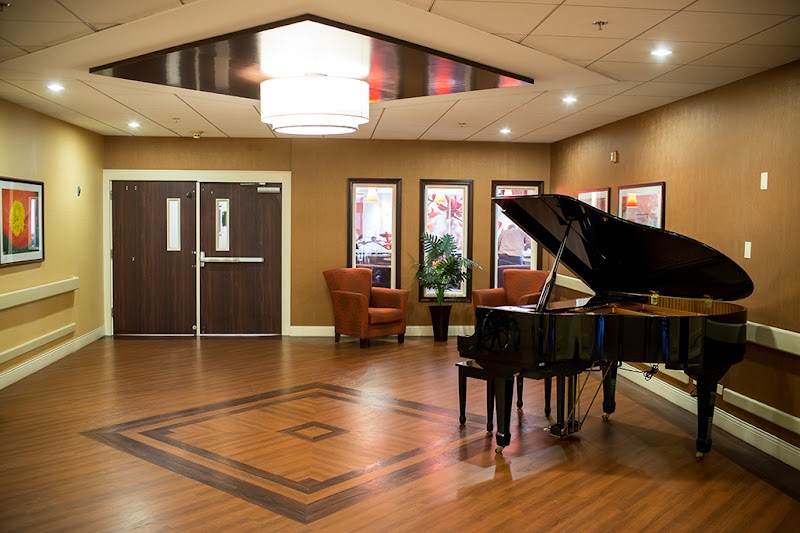
How is Crestwood Rehabilitation Ctr Staffed?

CMS rates CRESTWOOD REHABILITATION CTR's staffing level at 1 out of 5 stars, which is much below average compared to other nursing homes. Staff turnover is 50%, compared to the Illinois average of 46%.

What Have Inspectors Found at Crestwood Rehabilitation Ctr?

State health inspectors documented 54 deficiencies at CRESTWOOD REHABILITATION CTR during 2022 to 2025. These included: 3 Immediate Jeopardy (the most serious level, indicating potential for serious harm or death), 8 that caused actual resident harm, 41 with potential for harm, and 2 minor or isolated issues. Immediate Jeopardy findings are rare and represent the most serious regulatory concerns. They require immediate corrective action.
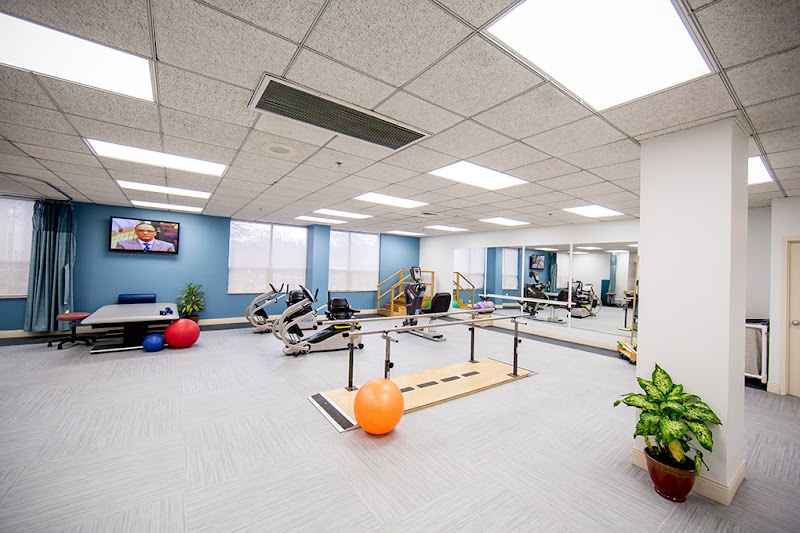
Who Owns and Operates Crestwood Rehabilitation Ctr?

CRESTWOOD REHABILITATION CTR is owned by a for-profit company. For-profit facilities operate as businesses with obligations to shareholders or private owners. The facility is operated by EXTENDED CARE CLINICAL, a chain that manages multiple nursing homes. With 297 certified beds and approximately 180 residents (about 61% occupancy), it is a large facility located in CRESTWOOD, Illinois.
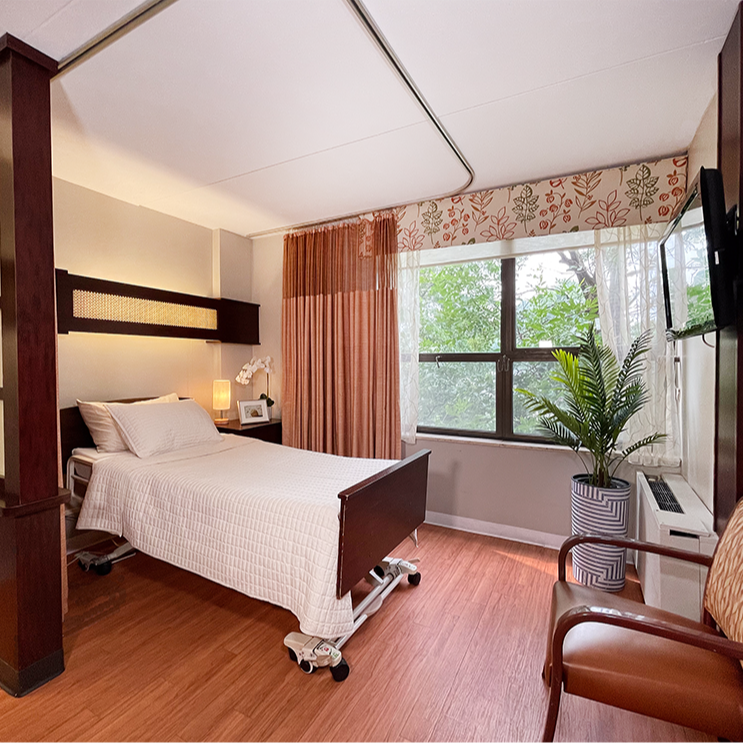
How Does Crestwood Rehabilitation Ctr Compare to Other Illinois Nursing Homes?

Compared to the 100 nursing homes in Illinois, CRESTWOOD REHABILITATION CTR's overall rating (2 stars) is below the state average of 2.5, staff turnover (50%) is near the state average of 46%, and health inspection rating (1 stars) is much below the national benchmark.

What Should Families Ask When Visiting Crestwood Rehabilitation Ctr?

Based on this facility's data, families visiting should ask: "What changes have been made since the serious inspection findings, and how are you preventing similar issues?" "What safeguards and monitoring systems are in place to protect residents from abuse or neglect?" "Can you walk me through typical staffing levels on day, evening, and night shifts?" "Can I visit during a mealtime to observe dining assistance and food quality?" These questions are particularly relevant given the facility's Immediate Jeopardy citations, the substantiated abuse finding on record, and the below-average staffing rating.

Is Crestwood Rehabilitation Ctr Safe?

Based on CMS inspection data, CRESTWOOD REHABILITATION CTR has documented safety concerns. The facility has 1 substantiated abuse finding (meaning confirmed case of resident harm by staff or other residents). Inspectors have issued 3 Immediate Jeopardy citations (the most serious violation level indicating risk of serious injury or death). The facility has a 2-star overall rating and ranks #100 of 100 nursing homes in Illinois. Families considering this facility should ask detailed questions about what corrective actions have been taken since these incidents.

Do Nurses at Crestwood Rehabilitation Ctr Stick Around?

CRESTWOOD REHABILITATION CTR has a staff turnover rate of 50%, which is about average for Illinois nursing homes (state average: 46%). Moderate turnover is common in nursing homes, but families should still ask about staff tenure and how the facility maintains care continuity when employees leave.

Was Crestwood Rehabilitation Ctr Ever Fined?

CRESTWOOD REHABILITATION CTR has been fined $484,889 across 6 penalty actions. This is 12.8x the Illinois average of $37,928. Fines at this level are uncommon and typically indicate a pattern of serious deficiencies, repeated violations, or failure to correct problems promptly. CMS reserves penalties of this magnitude for facilities that pose significant, documented risk to resident health or safety. Families should request specific documentation of what issues led to these fines and what systemic changes have been implemented.

Is Crestwood Rehabilitation Ctr on Any Federal Watch List?

CRESTWOOD REHABILITATION CTR is not on any federal watch list. The most significant is the Special Focus Facility (SFF) program, which identifies the bottom 1% of nursing homes nationally based on persistent, serious quality problems. Not being on this list means the facility has avoided the pattern of deficiencies that triggers enhanced federal oversight. This is a positive indicator, though families should still review the facility's inspection history directly.