Goldwater Care Danville
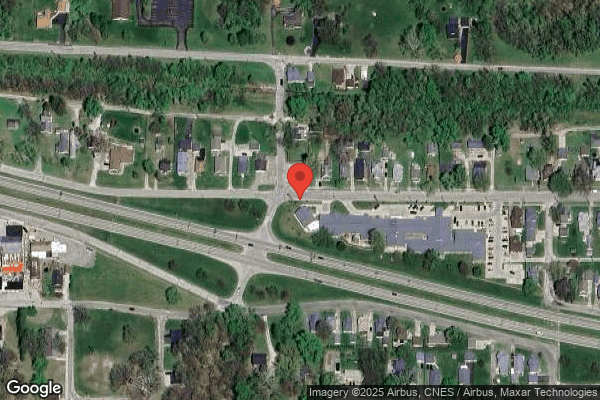
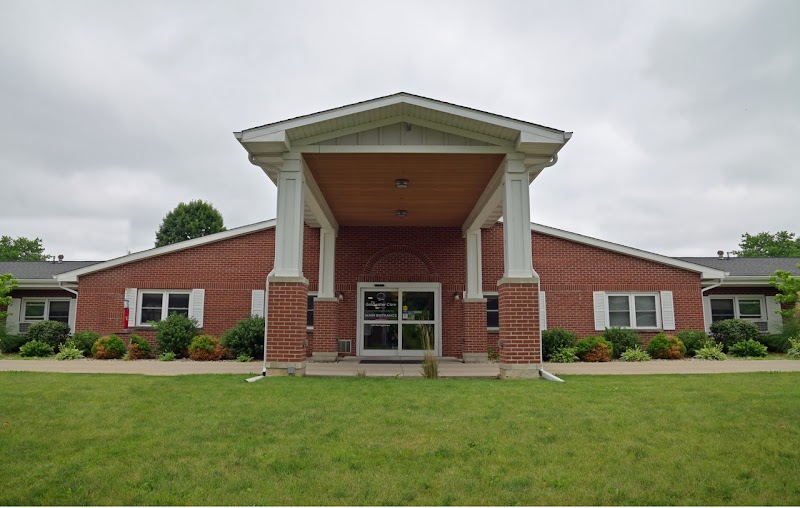
620 WARRINGTON AVENUE, DANVILLE, IL 61832 (217) 446-0660
For profit - Limited Liability company 90 Beds GOLDWATER CARE Data: November 2025 3 Immediate Jeopardy citations
Trust Grade
0/100
#535 of 665 in IL
Last Inspection: April 2025

Within standard 12-15 month inspection cycle. Federal law requires annual inspections.

Overview

Goldwater Care Danville has received a Trust Grade of F, indicating significant concerns about the quality of care provided, which means the facility is performing poorly. They rank #535 out of 665 nursing homes in Illinois, placing them in the bottom half, and #4 out of 5 in Vermilion County, where only one local option is better. The situation is worsening, with the number of issues increasing from 23 in 2024 to 31 in 2025. While staffing turnover is relatively low at 34%, which is better than the state average, the facility has accrued a concerning $242,067 in fines, indicating repeated compliance problems. Additionally, more RN coverage than 76% of state facilities is a positive aspect, but serious incidents, including critical failures in wound care and emergency response, highlight significant shortcomings in resident care.

Trust Score
F
0/100
In Illinois
#535/665
Bottom 20%
Safety Record
High Risk
Review needed
Inspections
Getting Worse
23 → 31 violations
Staff Stability
○ Average
34% turnover. Near Illinois's 48% average. Typical for the industry.
Penalties
✓ Good
$242,067 in fines. Lower than most Illinois facilities. Relatively clean record.
Skilled Nurses
✓ Good
Each resident gets 52 minutes of Registered Nurse (RN) attention daily — more than average for Illinois. RNs are trained to catch health problems early.
Violations
⚠ Watch
65 deficiencies on record. Higher than average. Multiple issues found across inspections.
★☆☆☆☆
1.0
Overall Rating
★★☆☆☆
2.0
Staff Levels
★★☆☆☆
2.0
Care Quality
★☆☆☆☆
1.0
Inspection Score
Stable
2024: 23 issues
2025: 31 issues

The Good

  • Full Sprinkler Coverage · Fire safety systems throughout facility
  • No fines on record
  • Staff turnover below average (34%)

    14 points below Illinois average of 48%

Facility shows strength in fire safety.

The Bad

1-Star Overall Rating

Below Illinois average (2.5)

Significant quality concerns identified by CMS

Staff Turnover: 34%

12pts below Illinois avg (46%)

Typical for the industry

Federal Fines: $242,067

Well above median ($33,413)

Significant penalties indicating serious issues

Chain: GOLDWATER CARE

Part of a multi-facility chain

Ask about local staffing decisions and management

The Ugly 65 deficiencies on record

3 life-threatening 6 actual harm
Oct 2025 4 deficiencies 1 IJ
CRITICAL (J) 📢 Someone Reported This

A family member, employee, or ombudsman was alarmed enough to file a formal complaint

Immediate Jeopardy (IJ) - the most serious Medicare violation

Pressure Ulcer Prevention (Tag F0686)

Someone could have died · This affected 1 resident

**NOTE- TERMS IN BRACKETS HAVE BEEN EDITED TO PROTECT CONFIDENTIALITY** A partial extended survey was conducted. Failures at this level require two separate deficient practice statements. A. Based on ...

Read full inspector narrative →
**NOTE- TERMS IN BRACKETS HAVE BEEN EDITED TO PROTECT CONFIDENTIALITY** A partial extended survey was conducted. Failures at this level require two separate deficient practice statements. A. Based on observation, interview and record review the facility failed to reposition a resident timely, prevent cross contamination during wound care, provide the correct wound treatment, complete skin assessments timely, update a resident's care plan with pressure sore interventions, provide wound supplements, obtain ordered laboratory tests timely, and implement care plan interventions for pressure sore care and prevention for one (R4) resident of five residents reviewed for pressure sores. These failures resulted in R4 obtaining 18 separate facility acquired Pressure Sores from January 2025 through September 2025. R4 currently has five facility acquired Stage 4 Pressure Sores and two facility acquired Stage 2 Pressure Sores. The immediate jeopardy began on 8/19/25. V1, Administrator was notified of the Immediate Jeopardy on 9/26/25 at 3:23PM. The surveyor confirmed by observation, interview, and record review that the Immediate Jeopardy was removed on 9/26/25, but noncompliance remains at Level Two because additional time is needed to evaluate the implementation and effectiveness of the in-service training. B. Based on observation, interview and record review the facility failed to provide a timely initial assessment of R2's Left Ischium Stage 4 Pressure Ulcer, failed to identify R2's Coccyx Stage 2 Pressure Ulcer, failed to transcribe and provide physician ordered wound supplements and dressing changes and failed to prevent cross contamination during pressure ulcer care. The facility failed to update resident care plans with wound interventions and failed to prevent infections for R2 and R4. R2 obtained a Left Ischium Stage 4 Pressure Ulcer and a Coccyx Stage 2 Pressure ulcer at the facility. R2's Left Ischium Stage 4 facility acquired infected Pressure Ulcer and R13's Right Great Toe Stage 4 facility acquired Pressure Ulcer requires Antibiotic treatment and Contact Isolation. These failures affect two of five residents reviewed for Pressure Ulcers in a sample list of 14 residents. Findings include:A. R4's Electronic Medical Record (EMR) documents R4's medical diagnoses as fusion of the spine-lumbar region, spondylolisthesis, Parkinson's disease without dyskinesia, hypokalemia, anemia, vascular dementia, Escherichia coli, methicillin-susceptible Staphylococcus aureus infection, disorders of muscle, dysphagia- oropharyngeal phase, difficulty in walking, abnormal posture, reduced mobility, and pressure ulcers of the right buttock, left hip, sacrum, and left ankle.R4's Minimum Data Set (MDS), dated [DATE], documents R4 as severely cognitively impaired. This same MDS notes R4 as being completely dependent on staff for assistance with eating, oral hygiene, toileting, dressing, personal hygiene, and bed mobility.R4's Care Plan intervention, dated 11/23/2024, instructs staff to complete weekly treatment documentation including measurements of each area of skin breakdown's width, length, depth, type of tissue, exudate, and any other notable changes or observations. This same Care Plan, initiated 11/19/2024, does not include a focus area, goal, nor interventions due to R4 being placed on contact isolation for his wound infection. It also does not include R4's Stage 4 sacral pressure ulcer; Stage 4 left lateral ankle pressure ulcer; Stage 4 right upper shin pressure ulcer; Stage 4 left lower medial knee pressure ulcer; or Stage 2 left inner buttock and right hip pressure ulcers. R4's Care Plan intervention dated 2/27/25 instructs staff to follow facility policies and protocols for the prevention and treatment of skin breakdown.R4's Pressure Ulcer Risk Assessment, dated 8/28/25, documents R4 as being at high risk for developing a pressure ulcer.R4's tasks do not include a turning schedule.R4's Pressure Report, dated 7/25/25, documents a facility-acquired left inner buttock Stage 2 pressure ulcer measuring 1.5 centimeters (cm) long by 0.8 cm wide with non-measurable depth.R4's Skin Condition Report, dated 8/19/25, documents a newly acquired coccyx pressure ulcer. This same report does not document the size, drainage, redness, signs of infection, and/or odor of R4's coccyx pressure ulcer.R4's Skin Condition Report, dated 8/27/25, documents a Stage 2 left inner buttock pressure ulcer. This same report does not document the size, drainage, redness, signs of infection, and/or odor of R4's left inner buttock pressure ulcer.R4's Physician Order Sheet (POS), dated September 2025, documents physician orders as follows:7/25/25: For R4's left inner buttock Stage 2 facility-acquired pressure ulcer-cleanse the wound, apply skin protectant, and cover with hydrocolloid dressing daily and as needed.9/12/25: Reposition R4 frequently while in bed.9/12/25: Meropenem intravenous solution reconstituted 1 GM every eight hours for twelve days, related to an unstageable sacral pressure ulcer. The same POS also documents an order to administer sulfamethoxazole-trimethoprim oral tablet 800-160 mg twice daily, related to Escherichia coli as the cause of methicillin-susceptible Staphylococcus aureus (MSSA) infection, for 11 days.9/13/25: Right hip Stage 2 pressure ulcer-cleanse with wound cleanser and apply skin prep covering in silicone border dressing daily and as needed.9/18/25: Contact precautions for methicillin-resistant Staphylococcus aureus (MRSA).9/20/25: Right hip Stage 2 pressure ulcer-cleanse with wound cleanser and gauze, apply skin protectant to periwound area, cover wound with oil emulsion sheet cut to size, cover with silicone bordered foam, three times per week and as needed.9/20/25: Sacral Stage 4 pressure ulcer-cleanse with wound cleanser and gauze, pack wound with gauze soaked in quarter-strength Dakin's solution, cover with absorbent pad, and secure with retention tape twice daily and as needed.9/20/25: Left medial lower knee/leg-cleanse with wound cleanser and gauze, apply oil emulsion dressing to wound bed, then cover with gauze soaked with quarter-strength Dakin's solution. Cover with absorbent pad and secure with retention tape twice daily and as needed.9/20/25: Right upper shin Stage 4 pressure ulcer-cleanse with wound cleanser and gauze, apply oil emulsion then gauze soaked with quarter-strength Dakin's solution to wound bed, cover with absorbent pad, wrap with roll gauze, and secure with tape twice daily and as needed.9/20/25: Left lateral ankle Stage 4 pressure ulcer-cleanse with wound cleanser and gauze, apply oil emulsion then gauze soaked with quarter-strength Dakin's solution to wound bed, cover with absorbent pad, wrap with roll gauze, and secure with tape twice daily and as needed.9/20/25: Right ischium Stage 4 pressure ulcer-cleanse with wound cleanser and gauze, pack wound with iodoform packing strip, cover with absorbent pad, and secure with tape twice daily and as needed.9/20/25: Start Vitamin C 500 milligrams (mg) twice daily.9/21/25: Start Zinc 220 milligrams (mg) daily.9/22/25: Obtain a prealbumin level.R4's Hospital Record, dated 9/2/25-9/12/25, documents R4's chief complaint as an infected sacral decubitus wound and infected left lateral malleolus ankle wound. This same record documents that R4 underwent excisional debridement of his infected sacral decubitus and left ankle wounds. The record also documents that R4 was treated for sepsis due to an infected decubitus ulcer.R4's Laboratory Results for wound culture, reported on 9/5/25, document R4 has >100,000 colony-forming units (CFU)/milliliter (ml) of Proteus mirabilis.R4's Nurse Progress Note dated 9/2/25 at 3:10 PM documents: (R4) is warm to touch, temperature 100.1 degrees Fahrenheit after ibuprofen and acetaminophen administered. Blood pressure (B/P) 92/58, pulse 99, oxygen saturation 98% on room air. Void test negative; strong odor coming from wound as well as increased drainage. (V21) Nurse Practitioner advised (V13) Wound Physician will be rounding this afternoon and will assess.R4's Nurse Progress Note dated 9/2/25 at 5:44 PM documents V13 Wound Physician debrided and obtained a culture of R4's sacral pressure ulcer. This same note documents: Infection confirmed, orders received to send (R4) out for possible sepsis due to wound infection.R4's Wound Management and Summary Evaluation progress notes dated 9/17/25 document a physician order for Zinc 220 mg daily, Vitamin C 500 mg twice daily, and to obtain a prealbumin level.R4's Laboratory Report dated 9/22/25 documents an albumin level of 3.0 grams (g)/deciliter (dl) with a normal range of 3.3-5.0 g/dl. This same laboratory report does not document a prealbumin level.On 9/20/25, from 10:05 AM to 2:45 PM, R4 was in his bed in his room. R4 was not repositioned or provided incontinence care during this timeframe.On 9/20/25 at 2:45 PM, R4's room door had a sign posted that read Contact Isolation. Personal protective equipment (PPE) supplies were hanging from R4's door, including masks, gowns, and gloves.On 9/20/25 at 2:50 PM, V9 Licensed Practical Nurse (LPN) and V10 Registered Nurse (RN) completed pressure ulcer care for R4's sacrum, right ischium, right buttock, left inner buttock, and right hip. V9 LPN did not cleanse nor apply a new dressing to R4's right hip nor left inner buttock. V9 LPN removed R4's sacral dressing that was saturated with yellow drainage. V9 LPN was standing in front of the room air conditioner that was blowing air, which caused V9's PPE gown to make contact twice with R4's sacrum Stage 4 pressure ulcer. V9 LPN used her left gloved hand to push her gown off of R4's sacral pressure ulcer and then continued to complete R4's wound dressing change without washing her hands or changing gloves. V10 RN assisted in holding R4 onto his left side during wound care. V10 RN released her hold on R4, which caused R4's sacral Stage 4 pressure ulcer to touch his contaminated incontinence brief. V9 LPN applied R4's sacral dressing without cleansing R4's sacral Stage 4 pressure ulcer after the wound made contact with the incontinence brief and prior to applying a new dressing.On 9/20/25 at 3:45 PM, V9 LPN stated she knew that her gown had made contact with R4's sacral Stage 4 pressure ulcer. V9 LPN stated she should have changed her gown and re-cleansed R4's sacral wound prior to applying a clean dressing. V9 LPN stated she had reviewed all of the orders prior to completing the wound dressing changes but said, there are so many, it is confusing. V9 LPN stated cross-contaminating R4's open pressure ulcers could cause an infection or worsen his current wound infection.On 9/21/25 at 10:30 AM, V2 Director of Nurses (DON) stated R4 has multiple facility-acquired pressure ulcers. V2 DON stated R4 has had an overall decline in his mobility over the last several months. V2 DON stated the facility should have provided complete wound care, which would involve full assessments, obtaining and following physician orders for wound care, and ensuring pressure ulcer interventions are being followed. V2 DON stated R4 is considered a long-term resident who is unable to care for himself and relies wholly on staff for all care. V2 DON stated V13 Wound Physician sees R4 weekly. V2 DON stated the facility does not always send a nurse to round with V13 Wound Physician. V2 DON stated the facility floor nurses are expected to review V13's wound progress notes for their assigned residents prior to providing wound care. V2 DON stated V13's wound progress notes are located in the miscellaneous tab and are not added to the Physician Order Sheet (POS) until V14 RN completes her review of all resident wounds on Wednesdays.On 9/21/25 at 12:00 PM, R4 was not served double portions of protein as ordered by the physician.On 9/22/25 at 11:50 AM, V14 Registered Nurse (RN)/Float Nurse stated the role of the float nurse is to take an assigned group of residents for the first half of the shift, provide all treatments for all residents, and assist R4 in eating for two meals of the day. V14 RN stated she is not the wound nurse and is not in charge of the wound program but frequently completes wound care for all residents. V14 RN stated R4's sacrum Stage 4 pressure ulcer has declined significantly. V14 stated when she first assessed R4's sacral pressure ulcer, it was smaller than my fingertip with no drainage or infection. V14 RN stated V13 Wound Physician couldn't make it on 9/16 but did round on 9/17/25. V14 RN stated she was not able to round with V13 Wound Physician that day and is not aware of any new orders. V14 RN stated the floor nurses do not look in the miscellaneous tab and search through pages of wound progress notes. V14 RN stated the floor nurses should follow what the POS has listed for wound care for any given resident. V14 RN stated she is not sure why R4's left inner buttock has not been assessed from 7/25/25 to 9/12/25. V14 RN stated she assessed R4 when he returned from the hospital on 9/12/25 and observed R4's sacral Stage 4 pressure ulcer, right ischium Stage 4 pressure ulcer, right hip Stage 2 pressure ulcer, left inner buttock Stage 2 pressure ulcer, and two separate Stage 2 pressure ulcers on R4's right buttock, in addition to other wounds on R4's right and left lower legs and left foot. V14 RN stated she documented all of these wounds on R4's readmission assessment from his return from the hospital but did not complete full assessments of each wound.On 9/24/25 at 12:15 PM, V20 (R4's Power of Attorney [POA]) stated R4 was admitted to the facility in November 2024 and was still walking in January 2025. V20 stated the facility let R4 walk all day and never changed (provided incontinence care) for R4, which caused his first pressure ulcer on R4's right ischium in January 2025. V20 stated R4 has had multiple facility-acquired pressure ulcers since January 2025, all caused by facility staff not turning and positioning R4 timely. V20 stated R4's condition declined due to his Parkinson's disease, but the facility should have been paying closer attention to R4. V20 stated R4 requires good skin care that he is not receiving. V20 stated she visits R4 daily and sees every day that the staff wait three to four hours before coming into R4's room to reposition him or to check if he is incontinent. V20 stated V13 Wound Physician had to cut all the dead skin off R4's sacral wound on 9/2/25, and the hospital then took R4 into surgery to remove the rest. V20 stated R4's sacral wound smelled horrible from outside the room.On 9/24/25 at 2:00 PM, V14 Float Nurse stated R4's wound round report dated 9/17/25 documents R4's left buttock pressure ulcer as being present on admission. V14 stated R4's left buttock pressure ulcer should have been labeled left inner buttock and facility-acquired. V14 LPN stated this was a documentation error on her part and should be corrected.On 9/30/25 at 2:45 PM, V13 Wound Physician stated the facility is expected to follow V13's orders for wound care the day the order is received. V13 stated he sees residents at this facility without any staff assistance and then writes the progress notes, which get uploaded early the next day. V13 Wound Physician stated he was under the impression that V2 Director of Nurses (DON) was reviewing and entering his wound orders into the Electronic Medical Record (EMR) the same day as they are uploaded. V13 stated it is not acceptable for the facility to wait two, three, or four days for changes in wound orders to be entered. V13 Wound Physician stated R4 is very compromised by all of his pressure ulcers. He stated R4 has had a total of 18 facility-acquired pressure ulcers since the beginning of the year. V13 stated R4 has had several pressure ulcers resolve, which shows R4 has the potential to heal his wounds. V13 stated the facility lags behind in getting the interventions and orders in place, and then when the facility finally catches up, the resident's wounds begin to heal. V13 stated this lag shows that the facility is not doing their job and that it takes a negative toll on the residents affected.The Immediate Jeopardy that began on 8/19/25 was removed on 9/26/2025 when the facility took the following actions to remove the immediacy:The facility reviewed all resident wound progress notes and Physician Order Sheets (POS) and updated them as needed prior to the resident's next scheduled treatment change. V2 Director of Nurses (DON) and V22 Regional Clinical Nurse Consultant oversee this. On 10/1/25 at 9:00 AM, V2 DON stated that V2 reviewed all resident wound progress notes and POSs to ensure they matched on 9/26/25. V22 Regional Clinical Nurse Consultant stated she will monitor V2 DON's reviews to ensure all residents with wounds have accurate records.All licensed nurses were educated on the facility Physician Ordering process, including entering and processing policy. On 10/1/25 at 9:00 AM, V2 DON stated that V2 educated all nurses and had them sign an in-service sheet on 9/26/25.All licensed nurses were educated on the facility documentation policy using an Electronic Medical Record (EMR), including timeliness, accuracy, relevance, and completeness of entries. On 10/1/25 at 9:00 AM, V2 DON stated that V2 educated all licensed nurses on documentation on 9/26/25.The facility developed and implemented a plan to ensure staff who identify residents acquiring new pressure sores document the sore assessment, make the appropriate notifications, reassess the newly acquired wound within 24 hours, and obtain consent for the resident to see V13 Wound Physician. On 10/1/25 at 9:00 AM, V2 DON stated that V2 educated all licensed nurses and Certified Nurse Aides (CNA) on this plan on 9/26/25.The facility will ensure the direct care nurse reviews the Treatment Administration Record (TAR) prior to conducting wound care. On 10/1/25 at 9:00 AM, V2 DON stated that V2 educated all licensed nurses on reviewing the TAR on 9/26/25.The facility developed a process to ensure physician orders for laboratory tests are entered in the resident EMR timely. On 10/1/25 at 9:00 AM, V2 DON stated that V2 educated all licensed nurses to enter laboratory orders timely on 9/26/25.The facility has a process to ensure staff develop and provide interventions to prevent pressure ulcers from forming and/or worsening. On 10/1/25 at 9:00 AM, V2 DON stated that V2 educated all licensed nurses and CNAs on repositioning, correct dietary supplements, following physician orders, monitoring wound treatments, and referencing the Kardex in the EMR. Education was also provided on the Pressure Injury and Skin Assessment and conducting weekly skin assessments. V2 stated dietary staff were also educated on ensuring wound supplements are served correctly and according to physician orders. V2 DON stated these educations were completed on 9/26/25.All licensed nurses were provided education on the facility Pressure Injury and Skin Condition Assessment policy. On 10/1/25 at 9:00 AM, V2 DON stated that V2 educated all licensed nurses on this policy on 9/26/25.All licensed nurses and CNAs were educated on the facility Pressure Ulcer Prevention Policy. V2 DON stated that V2 educated all CNAs and licensed nurses on this policy on 9/26/25.All CNAs were provided education on how to access wound care prevention interventions. On 10/1/25 at 9:00 AM, V2 DON stated that V2 and V1 Administrator jointly provided education to staff on 9/26/25.All licensed nurses and CNAs were educated on the facility Physician-Family Notification Policy. V2 DON stated that V2 educated all CNAs and licensed nurses on this policy on 9/26/25.All licensed nurses and CNAs were educated on the facility Basic Care Plan Policy. V2 DON stated that V2 educated all CNAs and licensed nurses on this policy on 9/26/25.All licensed nurses and CNAs were educated on the facility Resident Round guidelines. V2 DON stated that V2 educated all CNAs and licensed nurses on this policy on 9/26/25.The facility Dietary Manager was educated on following physician diet orders, including ensuring residents with wound supplements were served the correct diet. V1 Administrator stated that V1 in-serviced V30 Certified Dietary Manager (CDM) on 9/26/25.All licensed nurses, CNAs, and dietary staff were educated on the facility Diet Orders guidelines. V2 DON stated that V2 educated all CNAs and licensed nurses, and V1 Administrator assisted in educating the dietary staff on this policy on 9/26/25.All licensed nurses were educated on the facility admission of Resident guidelines. V2 DON stated that V2 educated all licensed nurses on this policy on 9/26/25.All licensed nurses and CNAs were educated on the facility Resident Round guidelines. V2 DON stated that V2 educated all CNAs and licensed nurses on this policy on 9/26/25.The facility Care Plan Coordinator was educated on the facility Comprehensive Care Plan review. V2 DON stated that V2 educated V29 Care Plan Coordinator on this policy on 9/26/25.The facility Interdisciplinary Team (IDT) members were educated on the facility Comprehensive Care Plan policy. V22 Regional Clinical Nurse Consultant stated that V22 provided education to the IDT members on 9/26/25.The facility held a Quality Assurance Performance Improvement (QAPI) meeting on 9/26/25. V1 Administrator stated that V1 Administrator, V2 DON, V29 Care Plan Coordinator, V19 Medical Director, V30 CDM, and V8 Minimum Data Set (MDS) nurse were all present on 9/26/25 for this meeting.The facility conducted a facility-wide audit of all resident wound care plans. V2 DON stated that V2 DON, V29 Care Plan Coordinator, and V8 MDS nurse completed this on 9/26/25.The facility initiated audits on 9/26/25, seven days per week, to ensure residents with pressure ulcers have correct physician orders in the EMR, completed assessments, revised care plans, reviewed wound physician progress notes, and reviewed and updated the resident Physician Order Set (POS). The facility created a Quality Assurance Tool to verify these practices are occurring. V2 DON stated that V2 initiated this tool on 9/26/25 and will complete it daily for six weeks.The facility presented an abatement plan to remove the immediacy on 9/27/25. The survey team reviewed and accepted the first version of the abatement plan on 9/29/25.B. 1. R2's undated Face Sheet documents that R2 was admitted to the facility on [DATE]. R2's undated Medical Diagnosis list documents R2's medical diagnoses as Parkinson's Disease without dyskinesia, moderate protein-calorie malnutrition, anemia, dementia, Stage 4 pressure ulcer of the left buttock, and lack of coordination.R2's Minimum Data Set (MDS) dated [DATE] documents R2 as severely cognitively impaired. This same MDS documents that R2 is dependent on staff for total assistance with oral hygiene, toileting, dressing, personal hygiene, and requires maximum assistance from staff for bathing and transfers.R2's Care Plan intervention dated 7/01/25 instructs staff to provide supplemental protein, amino acids, vitamins, and minerals as ordered to promote wound healing. R2's Care Plan does not include a focus area, goal, or interventions for R2's left ischium Stage 4 pressure ulcer or R2's coccyx Stage 2 pressure ulcer.R2's Electronic Medical Record (EMR) repositioning task documentation dated 8/22/25 through 9/21/25 documents that R2 was repositioned in bed two times on 9/20/25. There are no other entries recorded for R2 being repositioned.R2's EMR documents that V15 CNA recorded redness on R2's left lower buttock on 8/29/25 at 10:58 PM. R2's Nurse Progress Notes dated 9/1/2025 at 4:22 PM document that staff notified R10, a Registered Nurse (RN), that R2 had an open area on her buttocks. The same note documents an open area measuring 2.0 cm long by 2.0 cm wide on R2's left gluteal fold and a treatment order received for skin prep, calcium alginate, and a foam dressing to be applied daily.R2's Physician Order Sheet (POS) dated September 2025 documents the following physician orders:Starting 9/3/25 and ending 9/20/25 for R2's left gluteal fold (later labeled as left ischium): Cleanse with wound cleanser and gauze, apply skin prep to periwound, then apply calcium alginate and bordered foam dressing daily on Tuesday, Thursday, Saturday, and as needed.9/20/25 for Vitamin C 500 mg twice daily for wound care, with no end date.9/20/25, with no end date, for R2's left ischium Stage 4 pressure ulcer: Cleanse with wound cleanser and gauze, pack wound with woven gauze soaked with 1/4 strength Dakin's solution, cover with absorbent pad and secure with retention tape twice daily and as needed.9/21/25 for Zinc 220 mg daily for wound care through 10/5/25.9/21/25 for Contact Isolation Precautions for wound infection.9/21/25 to administer Levofloxacin oral tablet 500 mg daily for a wound infection through 10/5/25.9/30/25-10/14/25: administer Linezolid (antibiotic) 600 mg twice daily for R13's Stage 4 pressure ulcer.R2's Laboratory Results Report, as reported to the facility on 9/19/25, documents that R2's wound culture resulted in >100,000 colony-forming units (CFU)/ml of Escherichia coli (E. coli), Extended Spectrum Beta-Lactamase (ESBL), and Enterococcus faecalis.R2's Wound Evaluation and Management Summary dated 9/2/25 documents an initial visit to assess an unstageable pressure injury/deep tissue injury (DTI) of the left ischium. The same summary documents moderate serous drainage with purple/maroon discoloration, no signs of infection, and wound measurements of 2.0 cm long by 1.5 cm wide with undetermined depth.The Wound Summary dated 9/17/25 documents the left ischium pressure ulcer as a Stage 4 ulcer (post-surgical debridement), with moderate serous drainage, 100% thick adherent devitalized necrotic tissue, measuring 3.0 cm x 3.0 cm, with unmeasurable depth due to nonviable tissue and necrosis. A wound culture was obtained. Physician orders documented in the same summary include:Cleanse the wound, pack with gauze soaked in 1/4 strength Dakin's solution, and cover with absorbent dressing twice daily and as needed.Vitamin C 500 mg twice daily, Zinc 220 mg daily for 14 days, and obtain a pre-albumin level starting 9/17/25.On 9/20/25, from 10:30 AM to 1:50 PM, R2 was sitting upright in a reclining wheelchair in the resident common area. R2 was not repositioned or provided incontinence care during this time. At 1:55 PM, CNAs V7 and V11 assisted R2 to bed. CNA V7 stated that R2 had not been repositioned or provided incontinence care since being assisted out of bed before lunch at 10:15 AM.At 2:00 PM, RN V8 and LPN V9 provided wound care for R2's Stage 4 pressure ulcer on the left ischium. The wound had a golf ball-sized opening with moderate serous drainage and white and grey soft adherent tissue. The open wound emitted a foul odor that became more pungent as the dressing was removed. V8 RN's right forefinger fit into the wound while cleansing it. V8 RN applied calcium alginate and a dry dressing, but did not use gauze soaked in 1/4 strength Dakin's solution.R2 also had a 1 cm open, red area on her coccyx. V8 RN identified it as a Stage 2 pressure ulcer and said this was the first time they were aware of the coccyx wound. RN V8 and LPN V9 completed wound care without measuring or dressing the coccyx Stage 2 ulcer. LPN V9 described the ischium wound as smelling terrible in the morning and even worse during the dressing change.On 9/22/25 at 2:30 PM, CNA V15 stated she found a new reddened area on R2's left lower buttock on 8/29/25. She said it was closed, dark red with even darker red spots in the center. V15 CNA reported it to RN V10, who applied a brown foam patch that night. V15 stated the patch remained for a couple of days and then the area was not covered at all for several days.On 9/22/25 at 11:45 AM, Float RN V14 stated she had seen R2's ischium wound when it was still closed and again on 9/17/25. She noted significant deterioration. V14 RN emphasized that R2 is severely cognitively impaired and fully dependent on staff for turning, bed mobility, and toileting.On 9/23/25 at 2:15 PM, DON V2 stated that any time a resident develops a new pressure ulcer, a risk management assessment should be initiated. The wound should be fully assessed, including measurements, odor, drainage, and signs of infection. V2 DON stated that R2's coccyx Stage 2 ulcer should have been identified during incontinence care, skin checks, or showers. She confirmed that the Stage 4 ischium ulcer was acquired in-house and became infected during R2's stay. V2 DON acknowledged that the facility caused both the ulcer and the resulting infection.2. R13's undated Face Sheet documents that R13 was admitted to the facility on [DATE]. R13's Electronic Medical Record (EMR) lists diagnoses including chronic systolic heart failure, atrial fibrillation, anemia in chronic kidney disease, acute respiratory failure with hypoxia, dysphagia, unsteadiness on feet, reduced mobility, and disorders of the lung.R13's Minimum Data Set (MDS) dated [DATE] documents R13 as moderately cognitively impaired. The same MDS shows R13 requires maximum assistance from staff for toileting, upper and lower body dressing, putting on and taking off footwear, personal hygiene, and bed mobility. R13 is completely dependent on staff for transfers and bathing.R13's Physician Order Sheet (POS) dated September 2025 documents a physician order dated 9/20/25 for wound care for a Stage 4 pressure wound of the right, distal, medial foot:Cleanse with wound cleanser and gauze.Apply gauze soaked in 1/4 strength Dakin's solution.Fill wound cavity with collagen powder.Cover with absorbent pad (cut to size) and wrap with roll gauze twice daily and as needed.The same POS includes a physician order starting 9/26/25 through 10/4/25 to administer Linezolid (antibiotic) 600 mg twice daily for R13's Stage 4 pressure ulcer.R13's Wound Evaluation and Management Summary - Initial Evaluation dated 4/1/25 documents the Stage 4 pressure ulcer on the right, distal, medial foot as having 30% thick adherent devitalized tissue, moderate serous drainage, and measuring 1.3 cm long by 1.0 cm wide by 0.2 cm deep.A subsequent Wound Evaluation and Management Summary dated 9/17/25 documents the same ulcer as exacerbated due to infection and measuring 0.7 cm long by 1.0 cm wide by 0.5 cm deep, with signs of infection.Another Wound Evaluation and Management Summary, dated 9/24/25, documents that a wound culture was obtained via deep swab on 9/17/25 and the results revealed Methicillin-Resistant Staphylococcus Aureus (MRSA).On 9/30/25 at 3:00 PM, V13 (Wound Physician) and V23 (Registered Nurse) completed wound care for R13's right medial great toe Stage 4 pressure ulcer. RN V23 did not change gloves or perform hand hygiene after removing R13's dressing and prior to applying a clean dressing.The old dressing was adhered to the wound, requiring V23 to soak it off with normal saline. The ulcer appeared dime-sized with a thick, dry, yellow slough covering it before V13 debrided the wound, revealing a red wound bed.At 3:20 PM on the same day, RN V23 admitted she forgot to change gloves or perform hand hygiene between removing and reapplying the dressing.At 2:55 PM on 9/30/25, Wound Physician V13 stated that R13's right medial great toe Stage 4 pressure ulcer was caused by the inside of R13's shoe, which had overlapping material that rubbed against the toe. V13 stated that they had cut a hole in the side of R13's shoe to relieve pressure months ago.On 10/1/25 at 2:00 PM, DON V2 stated that facility nurses are expected to change gloves and perform hand hygiene after removing a soiled dressing and prior to applying a new one. V2 DON stated she was not in her role at the time R13 developed the pressure ulcer and therefore could not speak to how it was acquired. She also confirmed that a risk management assessment was not completed for R13's ulcer.V2 DON stated that cross-contaminating an open pressure ulcer can allow bacteria to enter the wound and cause an infection. She confirmed that R13's infected Stage 4 pressure ulcer on the right great toe was facility-acquired and could have been prevented.On 9/26/25 at 11:00 AM, Nurse Practitioner (NP) V21 stated that both R2 and R4 are completely dependent on staff for all care and are severely cognitively impaired. V21 NP stated that the facility should, at minimum:Turn, reposition, and provide incontinence care at least every two hours.Provide proper nutrition.Complete thorough admission assessments.Conduct weekly skin assessments, as required by facility protocol.V21 NP stated that the facility did cau
CONCERN (D) 📢 Someone Reported This

A family member, employee, or ombudsman was alarmed enough to file a formal complaint

Potential for Harm - no one hurt, but risky conditions existed

Infection Control (Tag F0880)

Could have caused harm · This affected 1 resident

**NOTE- TERMS IN BRACKETS HAVE BEEN EDITED TO PROTECT CONFIDENTIALITY** Based on observation, interview and record review the facility failed to maintain Contact Isolation Precautions for one (R4) res...

Read full inspector narrative →
**NOTE- TERMS IN BRACKETS HAVE BEEN EDITED TO PROTECT CONFIDENTIALITY** Based on observation, interview and record review the facility failed to maintain Contact Isolation Precautions for one (R4) resident out of four residents reviewed for Infection Control in a sample list of 14 residents.Findings include:R4's Electronic Medical Record (EMR) documents the following medical diagnoses: fusion of the spine (lumbar region), spondylolisthesis, Parkinson's disease without dyskinesia, hypokalemia, anemia, vascular dementia, Escherichia coli, methicillin-susceptible Staphylococcus aureus infection, disorders of muscle, dysphagia (oropharyngeal phase), difficulty in walking, abnormal posture, reduced mobility, and pressure ulcers on the right buttock, left hip, sacrum, and left ankle.R4's Minimum Data Set (MDS), dated [DATE], documents R4 as severely cognitively impaired. The same MDS notes that R4 is completely dependent on staff for assistance with eating, oral hygiene, toileting, dressing, personal hygiene, and bed mobility.R4's Physician Order Sheet (POS), dated September 2025, includes a physician order starting on 9/18/25 to place R4 on contact isolation precautions due to a wound infection.On 9/20/25 at 2:45 PM, a sign reading Contact Isolation was posted on R4's room door. Personal protective equipment (PPE) supplies-including masks, gowns, and gloves-were hanging on the door.On 9/20/25 at 2:50 PM, V9 (Licensed Practical Nurse, LPN) and V10 (Registered Nurse, RN) completed pressure ulcer care for R4's sacrum, right ischium, right buttock, left inner buttock, and right hip. Prior to entering R4's room, V9 stated she was entering without PPE to sanitize the bedside table. She entered the room without donning a gown or gloves and used her bare hands to turn the bedside table around twice to clean the top surface. V9 then exited the room without washing her hands or performing hand hygiene and arranged R4's dressing supplies on top of the treatment cart outside the door.On 9/21/25 at 1:15 PM, V2 (Director of Nurses, DON) stated that staff must ensure contact isolation precautions are maintained. V2 confirmed that staff should wear appropriate PPE-specifically a gown and gloves-when entering the room of any resident on contact isolation. V2 also confirmed that V9 contaminated the wound supplies, which were later used on R4's multiple infected pressure ulcers.The facility policy titled Infection Precaution Guidelines, revised May 15, 2023, states that contact precautions are to be used for residents known or suspected to be infected with microorganisms that can be easily transmitted through direct or indirect contact, such as handling environmental surfaces or resident care items.
CONCERN (E) 📢 Someone Reported This

A family member, employee, or ombudsman was alarmed enough to file a formal complaint

Potential for Harm - no one hurt, but risky conditions existed

Unnecessary Medications (Tag F0759)

Could have caused harm · This affected multiple residents

Based on observation, interview and record review the facility failed to ensure a medication error rate of less than 5%. A full medication administration observation was completed with three errors ou...

Read full inspector narrative →
Based on observation, interview and record review the facility failed to ensure a medication error rate of less than 5%. A full medication administration observation was completed with three errors out of 28 opportunities resulting in a 10.7% medication error rate. This failure affects one (R11) resident out of seven residents reviewed for medication administration in a sample list of 14 residents. Findings include:R11's Physician Order Sheet (POS) dated September 2025 documents physician orders starting 4/15/25 with no end date to administer Sertraline 175 mg daily, 3/22/25 with no end date to administer Calcium 600 milligrams (mg) + Vitamin D3 20 micrograms (mcg) daily and 7/28/25 with no end date to administer 175 micrograms (mcg) Levothyroxine. This same POS also has a physician order to administer Levothyroxine 225 mcg from 9/11/25-9/18/25 and Levothyroxine 175 mcg from 9/19/25-9/29/25. R11's Medication Administration Record (MAR), dated September 2025, documents that R11 was administered Levothyroxine 225 mcg at 8:00 AM and another dose of Levothyroxine at 8:00 AM (totaling 450 mcg) from 9/11/25 to 9/18/25. The same MAR shows that R11 was administered Levothyroxine 175 mcg at 6:00 AM and another 175 mcg at 8:00 AM (totaling 400 mcg) from 9/19/25 to 9/21/25.R11's Laboratory (Lab) Results Report, dated 9/11/25, documents R11's Thyroid Stimulating Hormone (TSH) level as abnormal, with a result of 0.26 micro-international units per milliliter (uIU/mL). The report states the normal range for TSH is 0.34-4.82 uIU/mL.R11's Nurse Progress Notes, dated 9/21/25 at 4:46 PM, document that R11 had two Levothyroxine (Synthroid) orders: 175 mcg and 225 mcg. The same note confirms the facility consulted V19, the Medical Director, who issued a new order to discontinue the 225 mcg Levothyroxine and continue R11's 175 mcg daily dose.On 9/21/25 at 8:55 AM, V10, Registered Nurse (RN), administered R11's scheduled medications. V10 administered R11's Sertraline 150 mg, Levothyroxine 225 mcg, and Calcium 600 mg + Vitamin D3 50 mcg.On 9/21/25 at 11:00 AM, V10, Registered Nurse (RN), confirmed she had administered incorrect doses of Sertraline, Levothyroxine, and Calcium + Vitamin D3 to R11. V10 stated she thought she had everything but made a few errors. V10 also stated she would be more careful in the future.On 9/22/25 at 3:00 PM, V2, Director of Nurses (DON), stated that residents are expected to receive all of their prescribed medications as ordered. V2 further stated that any medication not administered-whether due to error or omission-must be reported to the physician and the resident's family.The undated facility policy titled Medication Administration General Guidelines documents the five rights-right resident, right drug, right dose, right route and right time, are applied for each medication being administered. A triple check of these five rights is recommended at three steps in the process of preparation of a medication for administration: 1. When the medication is selected, 2. When the dose is removed from the container and finally 3. Just after the dose is prepared and the medication is put away. Check #1 select the medication-label, container and contents are checked for integrity and compared against the medication administration record (MAR) by reviewing the five rights. Check #2 Prepare the dose-the dose is removed from the container and verified against the label and the MAR by reviewing the five rights. Check #3 Complete the preparation of the dose and re-verify the label against the MAR by reviewed the five rights. Medications are administered in accordance with written orders of the prescriber.
CONCERN (F) 📢 Someone Reported This

A family member, employee, or ombudsman was alarmed enough to file a formal complaint

Potential for Harm - no one hurt, but risky conditions existed

Deficiency F0725 (Tag F0725)

Could have caused harm · This affected most or all residents

Based on observation, interview, and record review the facility failed to sufficiently staff Certified Nursing Assistants (CNAs). This failure affects all 83 residents in the facility. Findings includ...

Read full inspector narrative →
Based on observation, interview, and record review the facility failed to sufficiently staff Certified Nursing Assistants (CNAs). This failure affects all 83 residents in the facility. Findings include:On 10/1/25 between 10:30AM and 11:04AM there were a total of 7 CNAs working in the facility; 3 on the East wing, 2 on the Middle wing, and 2 on the [NAME] wing.The facility's Resident Council Meeting Minutes dated 6/30/25, 7/29/25, 8/26/25, and 9/29/25 document concerns regarding call light response times, water not being passed in the evenings, and showers not being given on scheduled shower days. The facility's Facility Assessment Tool dated 2/26/25 documents the facility has 90 licensed beds but does not identify their average daily census. This assessment documents the facility has an average of 10-15 residents with stage three or stage four pressure ulcers. This assessment documents the facility's staffing plan includes eight CNAs on dayshift and six CNAs on nights. The facility's Daily Staffing Sheets dated 9/14/25-10/1/25 document 16 day shifts had less than 8 CNAs and 11 night shifts had less than 6 CNAs. On 10/1/25 between 10:37 AM and 10:57 AM the following staff were interviewed: V38 CNA confirmed there were 7 CNAs currently working in the facility, 3 CNAs on East, 2 on Middle, and 2 on West. V14 Registered Nurse stated the facility needs 4 CNAs on East, 2 on Middle and 2 on West. V14 stated at times they have to pull a CNA from the East wing to make 2 CNAs on each hall, and the resident rooms have to be divided up between the CNAs, which doesn't seem to be enough staff. V36 CNA stated there is suppose to be 4 CNAs on East, 2 on Middle and 2 on West, but about 35% of the time we work with less than that with only 2 on each unit. V36 stated we have to help each other with the mechanical lifts and call light response is also affected. V37 CNA stated sometimes we work with 6 CNAs on day shift, which is considered short staffed, we are suppose to have 8. V37 stated when that happens we are assigned to 15 residents, showers get missed, and it affects our ability to reposition residents every two hours. V37 stated V37 doesn't feel like one CNA for middle wing is enough for night shift, sometimes the heavy wetters are soaked in the morning when V37 reports to work. V28 CNA stated there are suppose to be 4 CNAs on East, 2 on Middle and 2 on West; sometimes that is not what we are staffed with due to call offs and two employees recently quitting. V28 stated management tries to get people to come in when there are call offs and V28 often gets calls on her days off asking if she is able to come in to work. V28 stated when there are less than 8 CNAs on day shift, it is harder to get to call lights quickly and residents have to wait while we find help to assist with transferring them out of bed. V28 stated we try to stay on top of repositioning residents, but it depends on the day and sometimes it is closer to 3 hours between repositioning. On 10/1/25 at 12:04 PM V2 Director of Nursing stated currently we staff 8 CNAs on day shift, 4 on East, 2 on Middle and 2 on West. V2 stated night shift is staffed with 6 CNAs, 2 on each unit. V2 stated we recently changed night shift staff to have four CNAs for 12 hours and two that work 6-10PM. V2 stated recently the CNAs said that wasn't working so now we are doing five for 12 hour shifts. V2 stated the facility's average census is 70-80. V2 reviewed the 9/14/25-10/1/25 staffing sheets and confirmed they accurately reflect the CNA staffing, which does not match the staffing plan as outlined in the facility assessment. On 10/1/25 at 12:58 PM V2 provided a resident list report dated 10/1/25 with a total of 41 resident names highlighted residents. V2 confirmed the highlighted residents are those that require two person staff assist for transfers/cares. This list documents the facility's census of 83 residents.
Jun 2025 7 deficiencies
CONCERN (D) 📢 Someone Reported This

A family member, employee, or ombudsman was alarmed enough to file a formal complaint

Potential for Harm - no one hurt, but risky conditions existed

Deficiency F0583 (Tag F0583)

Could have caused harm · This affected 1 resident

**NOTE- TERMS IN BRACKETS HAVE BEEN EDITED TO PROTECT CONFIDENTIALITY** Based on interview and record review the facility failed to ensure confidentiality/privacy of resident information for one of fi...

Read full inspector narrative →
**NOTE- TERMS IN BRACKETS HAVE BEEN EDITED TO PROTECT CONFIDENTIALITY** Based on interview and record review the facility failed to ensure confidentiality/privacy of resident information for one of five residents (R1) reviewed for resident rights in the sample list of five. Findings include: R1's Minimum Data Set, dated [DATE] documents R1 has severe cognitive impairment. On 6/24/25 at 9:18 AM V6 Certified Nursing Assistant (CNA) stated R1 had a history of abusing/molesting R1's children prior to admitting to the facility, and this was reported to V6 by an unidentified hospice nurse. V6 stated R1 was having behaviors that caused V30 (R1's Family) to remember past experiences. V6 stated staff aren't suppose to discuss resident information with other staff in the hallways, this has happened, we all have done it. On 6/24/25 at 9:36 AM V5 CNA stated a few months ago V5 overheard unidentified staff talking about R1 having a history of abuse towards R1's family. V5 stated staff are not suppose to discuss resident information amongst each other or with family/visitors. On 6/24/25 at 10:03 AM V8 Licensed Practical Nurse stated it was going around the whole facility for months that he (R1) had molested his kids. V8 stated V6 and V32 CNAs were talking about this information, and it is not appropriate for staff to be talking about that. On 6/24/25 at 11:34 AM V10 Activity Aide stated V12 Activity Director told V10, the day after R1 fell and broke his hip (6/10/25) , that R1's children didn't want to do any medical treatment and V12 thought it was because R1 had molested his children. V10 stated V12 said this in front of V11 Activity Aide, and V11 said that R1 had urinated on his children. V10 stated this was discussed in V12's office with the doors open, and could easily be overheard by others in the hallway. V10 stated it was unnecessary for the staff to talk about this and V10 wondered what this information had to do with R1's fall. V10 stated this bothered V10 and V10 turned in her resignation that day. V10 stated V1 spoke with V10 about V10's resignation and V10 then reported this same information to V1, who told V10 the staff had violated the Health Insurance Portability and Accountability Act. On 6/24/25 at 12:22 PM V11 Activity Aide stated V12 and V6 informed V11, while in V12's office, that R1 had sexually assaulted R1's children, R1 broke his leg and R1's family declined treatment. V11 stated V12's office doors were open, and information could have been overheard if anyone was standing in the hall or nurse's station near V12's office. V11 stated V11 also overheard V6 make remarks about R1's call light going off and R1 could wait because of what R1 had done to R1's children while V6 was sitting at the nurses station and V12 also witnessed this. V11 stated this happened last month on an unknown date. On 6/24/25 at 12:57 PM V12 Activity Director stated on an unidentified date V12 overheard V6 CNA, while standing near the middle hall nurses station, tell unidentified staff that R1 molested his children and R1 urinated on R1's children when they were younger. V12 stated V6 still provided care for R1, timely answered R1's call light and was pleasant when V6 cared for R1. V12 denied overhearing or witnessing V6 make statements or refusal to answer R1's call light. On 6/24/25 at 2:30 PM V1 Administrator confirmed it would not be appropriate for staff to discuss R1's history of abuse amongst other staff and in common areas. The facility's Resident Rights policy dated 8/23/17 documents the purpose of the policy is to promote the exercise of rights for each resident, and resident rights include privacy and confidentiality.
CONCERN (D) 📢 Someone Reported This

A family member, employee, or ombudsman was alarmed enough to file a formal complaint

Potential for Harm - no one hurt, but risky conditions existed

Abuse Prevention Policies (Tag F0607)

Could have caused harm · This affected 1 resident

**NOTE- TERMS IN BRACKETS HAVE BEEN EDITED TO PROTECT CONFIDENTIALITY** Based on observation, interview, and record review the facility failed to follow their abuse policy for reporting, investigating...

Read full inspector narrative →
**NOTE- TERMS IN BRACKETS HAVE BEEN EDITED TO PROTECT CONFIDENTIALITY** Based on observation, interview, and record review the facility failed to follow their abuse policy for reporting, investigating, and documenting injuries of unknown source for one of four residents (R3) reviewed for injuries in the sample list of five. Findings include: The facility's Abuse Prevention and Reporting - Illinois policy dated 10/24/22 documents injuries of unknown source are when the source of the injury was not observed or could not be explained by the resident, and the injury is suspicious due to the extent or location of the injury (an area not generally susceptible to injury/trauma) or the number of injuries at one particular point or incidents of injuries over time. This policy documents the same time frames for reporting and investigating abuse will be followed for injuries of unknown source and the resident's physician and representative shall be notified, if necessary. This policy documents at a minimum, attempt to interview the person who reported the incident, anyone who likely has direct knowledge of the incident, and the resident. On 6/24/25 at 9:10 AM R3 was lying in bed. R3 had bruising on the right side of her face along her cheek and jawline. R3 stated R3 didn't have any bruises and was unaware of the bruise on R3's face. R3 was unsure what caused the bruising. On 6/25/25 at 12:00 PM R3 and V26 (R3's Family) were sitting near the front entrance of the facility. R3 had blue bruising on the right side of her face. V26 stated R3's bruising was present on either Friday 6/20/25 or on Monday 6/23/25. V26 stated R3 has a lot of bruising to R3's arms as well and the bruising is health related, R3 was admitted to the hospital about two weeks ago and diagnosed with a blood disorder, possible cancer. R3's MDS dated [DATE] documents R3 has moderate cognitive impairment. There is no documentation in R3's electronic medical record of R3's facial bruising as of 6/25/25. The facility's Incidents by Incident Type log dated 4/24/25-6/24/25 does not document any incidents involving R3. On 6/24/25 at 9:02 AM V4 Licensed Practical Nurse stated R3 has significant bruising to her face and arms, but her platelets are very low. V4 stated V4 notified V26, who was aware and saw it on 6/18/25. V4 stated V4 was unsure of the cause of R3's facial bruising, other than R3's low platelets. On 6/25/25 at 12:44 PM V2 Director of Nursing stated V2 was not aware of R3's facial bruising. V2 stated injuries should be investigated and if unable to determine the cause, then the injury is reported to the Illinois Department of Public Health (IDPH). V2 stated V2 should have been notified of R3's facial bruising in order to investigate the cause of the injury. V2 confirmed there was no investigation of R3's facial bruising. V2 stated R3's bruising should have been documented and R3's physician (V22) notified, which would be noted in a progress note. On 6/25/25 at 1:43 PM V1 stated V1 was not aware of R3's facial bruising. V1 stated R3 was recently hospitalized and admitted to hospice. V1 stated injury of unknown origin is reported to V2, and depending on the injury and the cause, would then be reported to V1 and IDPH. V1 stated V1 should be notified of any unknown bruising or injuries of unknown origin.
CONCERN (D) 📢 Someone Reported This

A family member, employee, or ombudsman was alarmed enough to file a formal complaint

Potential for Harm - no one hurt, but risky conditions existed

Investigate Abuse (Tag F0610)

Could have caused harm · This affected 1 resident

**NOTE- TERMS IN BRACKETS HAVE BEEN EDITED TO PROTECT CONFIDENTIALITY** Based on observation, interview, and record review the facility failed to thoroughly investigate injuries of unknown origin for ...

Read full inspector narrative →
**NOTE- TERMS IN BRACKETS HAVE BEEN EDITED TO PROTECT CONFIDENTIALITY** Based on observation, interview, and record review the facility failed to thoroughly investigate injuries of unknown origin for two of four residents (R2, R3) reviewed for injuries in the sample list of five. Findings include: The facility's Abuse Prevention and Reporting - Illinois policy dated 10/24/22 documents employees are required to report allegations or suspicions of potential abuse/neglect immediately to the administrator and abuse incidents/allegations will be investigated. This policy documents injuries of unknown source are when the source of the injury was not observed or could not be explained by the resident, and the injury is suspicious due to the extent or location of the injury (an area not generally susceptible to injury/trauma) or the number of injuries at one particular point or incidents of injuries over time. This policy documents the same time frames for reporting and investigating abuse will be followed for injuries of unknown source. This policy documents at a minimum, attempt to interview the person who reported the incident, anyone who likely has direct knowledge of the incident, and the resident. 1.) On 6/24/25 at 9:27 AM R2 was asleep and sitting in a wheelchair in his room. V25, R2's caregiver was in R2's room. V25 stated V25 visited R2 on 6/11/25 and noticed dried blood to R2's eyebrow that wasn't there the day prior. V25 showed a picture on V25's personal cellular phone that showed bruising and swelling to R2's left eye, and dried blood above R2's left eyebrow. V25 stated V25 did not talk to staff about R2's eye injury that day, V25 assumed the staff were already aware, and four days later the staff contacted V25 to ask about R2's eye injury. V25 stated R2 doesn't speak much and falls all the time. R2's Minimum Data Set (MDS) dated [DATE] documents R2 has short and long term memory impairment. R2's active physician's orders do not include blood thinning medication. R2's active care plan documents R2 has behaviors of picking items off of the floor, sleeping on the floor, lowering himself to the floor, ramming into objects, and grabbing at staff during care. R2's Nursing Note dated 6/15/2025 at 8:27 AM documents Certified Nursing Assistant (CNA) noted R2's left eye was bruised and purple in color. R2 was assessed and left eye was bruised with slight swelling to the bottom of left eye and a scratch above R2's left eyebrow. R2's Nursing Note dated 6/15/2025 at 9:32 AM documents R2's personal caregiver reported R2's left eye bruising was present yesterday. R2's Bruise of Unknown Origin report dated 6/15/25 at 8:30 AM, provided by V2 on 6/25/25, documents R2 had bruising from inner to outer eye, and above and below the eye. This report documents for resident description, R2 does not talk. This report includes only two interviews with unidentified CNAs dated 6/15/25, that document R2's eye bruising was found by the CNAs during R2's morning care/transfer. There are no other documented interviews to identify the cause of R2's injury. This report documents a note dated 6/16/25 that the interdisciplinary team (IDT) reviewed R2's eye bruising, R2 has behaviors of rolling off of bed onto a floor mat, and R2 has had no recent falls This report does not document the cause of R2's injury was witnessed. On 6/24/25 between 9:36 AM and 10:51 AM the following staff were interviewed: V5 CNA stated V5 was unsure what caused R2's eye bruising, and R2 falls a lot. V9 CNA stated V9 reported R2's eye bruising on the weekend of 6/14-6/15/25. V9 stated R2 was lying on the mat on the floor at the time and V9 was unsure what caused the injury. V9 stated R2 hasn't had any recent falls and V9 did not witness any incident to cause the injury. V8 Licensed Practical Nurse stated R2's eye bruising was reported by V9 and V29 CNAs, who reported the bruising was not there the day prior. V8 stated it looked like someone punched R2's eye, it was bruised and puffy with a laceration above his eyebrow. V8 stated no one knew how R2's injury happened and there was no documentation about the injury. On 6/25/25 between 10:35 AM and 10:45 AM the following staff were interviewed: V24 CNA stated R2 crawls around a lot and bumps into things, R2 is always on the floor. V24 stated it is hard to say what caused R2's eye injury, unless it was witnessed. V24 stated V24 did not see R2 bump into anything and R2 hasn't had any recent falls. V28 CNA stated V28 overheard V9 CNA talk about R2's eye bruising the day V9 discovered the injury. V28 stated V28 was not aware of any incidents or falls that would cause that type of injury. V28 stated R2 does crawl around a lot and is frequently found on the floor. On 6/25/25 at 10:55 AM V2 Director of Nursing (DON) confirmed the CNA interviews dated 6/15/25 were the only documented interviews for the investigation of R2's eye injury. At 12:44 PM V2 stated V2 conducted the investigation of R2's eye injury and V9 and V29 were the documented interviews on 6/15/25. V2 stated V2 talked to unidentified floor staff, R2 had no recent falls, and R2 has behaviors of crawling on the mat. V2 was asked about the cause of R2's bruise, and V2 stated at times R2 lays his head down on the mat, moving from side to side. V2 stated this was discussed with the IDT. V2 stated V2 did not consider R2's eye injury to be an injury of unknown origin. V2 confirmed the cause of the injury was not witnessed by staff and R2 is unable to explain the cause of the injury. 2.) On 6/24/25 at 9:10 AM R3 was lying in bed. R3 had bruising on the right side of her face along her cheek and jawline. R3 stated R3 didn't have any bruises and was unaware of the bruise on R3's face. R3 was unsure what caused the bruising. On 6/25/25 at 12:00 PM R3 and V26 (R3's Family) were sitting near the front entrance of the facility. R3 had blue bruising on the right side of her face. V26 stated R3's bruising was present on either Friday 6/20/25 or on Monday 6/23/25. V26 stated R3 has a lot of bruising to R3's arms as well and the bruising is health related, R3 was admitted to the hospital about two weeks ago and diagnosed with a blood disorder, possible cancer. R3's MDS dated [DATE] documents R3 has moderate cognitive impairment. There is no documentation in R3's electronic medical record of R3's facial bruising as of 6/25/25. On 6/24/25 at 9:02 AM V4 Licensed Practical Nurse stated R3 has significant bruising to her face and arms, but her platelets are very low. V4 stated V4 notified V26, who was aware and saw it on 6/18/25. V4 stated V4 was unsure of the cause of R3's facial bruising, other than R3's low platelets. On 6/24/25 at 9:36 AM V5 CNA stated R3 had facial bruising noticed today and V5 was unsure what caused it. V5 stated V5 reported it to a nurse, who said it was due to R3's blood being thin. On 6/25/25 at 10:51 AM V9 CNA stated V9 noticed R3's facial bruising yesterday and reported this to the nurse, who said it was related to blood cancer. V9 stated V9 was unsure what caused the bruising, other than the blood cancer, and R3 was unable to state what happened. On 6/25/25 at 12:44 PM V2 DON stated V2 was not aware of R3's facial bruising. V2 stated injuries should be investigated and if unable to determine the cause, then the injury is reported to IDPH. V2 stated V2 should have been notified of R3's facial bruising in order to investigate the cause of the injury. V2 confirmed there was no investigation of R3's facial bruising. On 6/25/25 at 1:43 PM V1 stated V1 was not aware of R3's facial bruising. V1 stated R3 was recently hospitalized and admitted to hospice. V1 stated injury of unknown origin is reported to V2, and depending on the injury and the cause, would then be reported to V1 and IDPH. V1 stated V1 should be notified of any unknown bruising or injuries of unknown origin.
CONCERN (D) 📢 Someone Reported This

A family member, employee, or ombudsman was alarmed enough to file a formal complaint

Potential for Harm - no one hurt, but risky conditions existed

Accident Prevention (Tag F0689)

Could have caused harm · This affected 1 resident

**NOTE- TERMS IN BRACKETS HAVE BEEN EDITED TO PROTECT CONFIDENTIALITY** Based on observation, interview, and record review the facility failed to thoroughly investigate a fall to identify the root cau...

Read full inspector narrative →
**NOTE- TERMS IN BRACKETS HAVE BEEN EDITED TO PROTECT CONFIDENTIALITY** Based on observation, interview, and record review the facility failed to thoroughly investigate a fall to identify the root cause and determine appropriate post fall interventions for one of three residents (R4) reviewed for falls in the sample list of five. Findings include: On 6/24/25 at 11:00 AM R4 was in bed and stated R4 needed to use the bathroom. R4 was asked to turn her call light on and R4 demonstrated ability to activate her call light. V21 Human Resources entered R4's room and instructed R4 to wait for nursing staff assistance. R4 did not wait for staff assistance and self ambulated to the bathroom with her wheeled walker. At 11:07 AM R4 was sitting on the side of bed and R4's wheeled walker was at the foot of R4's bed. R4 had adhesive strips covering a small scabbed wound on R4's forehead. R4 stated R4 fell while R4 was walking in her room, moving things from a dresser drawer to R4's closet. R4 stated R4 did not ask for staff assistance, but staff were in the hallway outside of R4's door at that time. R4 hit her head on the floor and received stitches at the emergency room. R4 stated R4's left arm was hurting but is feeling better now, x-rays were completed and showed no fractures. R4's Minimum Data Set, dated [DATE] documents R4 has severe cognitive impairment, R4 uses wheelchair and wheeled walker, and requires supervision/touch assistance from staff while walking. R4's active care plan documents R4 transfers/walks with wheeled walker and assistance of one staff person and gait belt. This care plan was updated on 6/17/25 with an intervention for a dressing and grooming restorative program. R4's Nursing Note dated 6/16/25 at 5:30 PM documents R4 stated R4 was trying to get dressed, lost balance and fell. R4's Nursing Note dated 6/16/2025 at 11:55 PM documents R4 returned from the hospital around 11:00 PM with stitches to forehead and left arm on a splint. Orders were received to remove stitches in seven days and keep left hand in splint for seven days until x-ray completed. R4's 6/16/25 fall investigation folder, provided by V2 Director of Nursing (DON), included an unwitnessed fall incident report for this fall. This report documents R4 stated she was trying to get an outfit from R4's closet, lost her balance and fell hitting her head on the chair. This report does not document R4's footwear or if she was using her wheeled walker at the time. This report documents the interdisciplinary team (IDT) reviewed the fall, R4 requires substantial staff assistance with dressing and supervision with standing/walking, R4 would benefit from a restorative dressing program, and R4's care plan was updated. There is no documentation that a root cause of this fall was determined. The undated interview written by V13 Certified Nursing Assistant (CNA) documents V13 was in R4's room delivering R4's meal tray, R4 was walking on the right side of R4's bed towards her closet, and R4 fell. This interview does not document if R4 was trying to get dressed, R4's footwear at the time, or if R4 was using R4's wheeled walker. On 6/24/25 at 2:38 PM V13 CNA stated on 6/16/25 between 5:00 PM and 5:30 PM V13 delivered R4's meal tray to R4's room. V13 stated R4 was between R4's bed and the wall walking towards R4's closet and within five seconds was on the floor, V13 was unable to get to R4 in time to break R4's fall. V13 stated R4's forehead was bleeding since R4's head hit the floor when she fell. V13 stated R4 was not carrying any items, R4 was not using her wheeled walker, and R4 tripped over her own feet. V13 was unsure if R4 was wearing any footwear. V13 stated R4 does a lot of things on her own, walks by herself and takes herself to the bathroom, but we try to help her. V13 stated sometimes R4 is caught walking without using her walker. V13 stated R4 told V13 that R4 was going to her closet to get eye drops. On 6/25/25 at 10:55 AM V2 DON confirmed R4's fall investigation did not identify the root cause of the fall. V2 stated the root cause of R4's fall was R4 was getting into her closet and dresser, self ambulating to get dressed, so a new intervention for a restorative dressing and grooming program was implemented. V2 stated V2 did not interview V13 and just went by V13's written statement. V2 confirmed there was no documentation of R4's footwear or if R4 was using her wheeled walker when she fell, which could change R4's post fall intervention to be more appropriate. The facility's Fall Prevention Program dated 11/21/17 documents care planned interventions are changed with each fall, as appropriate. This policy documents the IDT reviews incident/accident reports to ensure appropriate care and services are provided and determine possible safety interventions, and fall/safety interventions may include reminding the resident to cal for assistance before attempting to ambulate and monitoring for appropriate footwear.
CONCERN (D) 📢 Someone Reported This

A family member, employee, or ombudsman was alarmed enough to file a formal complaint

Potential for Harm - no one hurt, but risky conditions existed

Medical Records (Tag F0842)

Could have caused harm · This affected 1 resident

**NOTE- TERMS IN BRACKETS HAVE BEEN EDITED TO PROTECT CONFIDENTIALITY** Based on interview and record review the facility failed to maintain an accurate medical record for one of three residents (R4) ...

Read full inspector narrative →
**NOTE- TERMS IN BRACKETS HAVE BEEN EDITED TO PROTECT CONFIDENTIALITY** Based on interview and record review the facility failed to maintain an accurate medical record for one of three residents (R4) reviewed for falls in the sample list of five. Findings include: The facility's undated Neurological Assessment policy documents to complete neurological assessments when a resident experiences a head injury or when ordered by a physician for a change in resident's condition. This policy documents to observe, assess and document the resident's level of consciousness, speech, pupils, hand grasps and vital signs as part of this assessment. The facility's undated Medical Record Policy documents the facility will maintain complete and accurate resident medical records, and in accordance with applicable federal and state regulations. R4's Minimum Data Set, dated [DATE] documents R4 has severe cognitive impairment. R4's Nursing Notes document on 6/16/25 at 5:30 PM R4 lost balance and fell, neurological assessments were initiated and R4 was transferred to the hospital. R4 returned to the facility at 11:55 PM with stitches to her forehead. On 6/17/25 Purple bruising was noted to R4's forehead and right eye/cheek. R4's 72 Hour Neurological Check initiated on 6/16/25 at 6:47 PM documents entries recorded by V2 Director of Nursing, including assessments dated 6/17/25 at 12:15 AM and 4:15 AM. On 6/25/25 at 12:44 PM V2 confirmed V2 did not complete R4's 6/17/25 neurological assessments. V2 stated V2 transcribed R4's neurological assessment data from a paper form that V20 Agency Registered Nurse had completed. V2 stated V2 will have to look for this documentation. On 6/25/25 at 3:13 PM V2 stated V2 did not have any additional documentation for R4's neurological assessments.
CONCERN (E) 📢 Someone Reported This

A family member, employee, or ombudsman was alarmed enough to file a formal complaint

Potential for Harm - no one hurt, but risky conditions existed

Report Alleged Abuse (Tag F0609)

Could have caused harm · This affected multiple residents

**NOTE- TERMS IN BRACKETS HAVE BEEN EDITED TO PROTECT CONFIDENTIALITY** Based on observation, interview, and record review the facility failed to report an allegation of neglect and injuries of unknow...

Read full inspector narrative →
**NOTE- TERMS IN BRACKETS HAVE BEEN EDITED TO PROTECT CONFIDENTIALITY** Based on observation, interview, and record review the facility failed to report an allegation of neglect and injuries of unknown origin to the administrator and state survey agency for three of five residents (R1, R2, R3) reviewed for resident rights in the sample list of five residents. Findings include: The facility's Abuse Prevention and Reporting - Illinois policy dated 10/24/22 documents neglect is the failure to provide goods and services to a resident that are necessary to avoid physical harm, pain or mental anguish; this includes withholding of adequate medical care, assistance with activities of daily living, and deprivation of goods/services by staff. This policy documents employees are required to report allegations or suspicions of potential abuse/neglect immediately to the administrator. This policy documents abuse allegations or incidents that result in serious bodily injury will be reported to the Department of Public Health immediately, but no more than two hours after the allegation; or within 24 hours if the incident does not involve abuse or serious bodily injury. This policy documents injuries of unknown source are when the source of the injury was not observed or could not be explained by the resident, and the injury is suspicious due to the extent or location of the injury (an area not generally susceptible to injury/trauma) or the number of injuries at one particular point or incidents of injuries over time. This policy documents the same time frames for reporting and investigating abuse will be followed for injuries of unknown source, including notifying the state survey agency. 1.) R1's Minimum Data Set (MDS) dated [DATE] documents R1 has severe cognitive impairment, is incontinent of bowel and bladder, and requires dependence on staff assistance for toileting and supervision/touching assistance for transfers. On 6/24/25 at 12:22 PM V11 Activity Aide stated V12 Activity Director and V6 Certified Nursing Assistant (CNA) informed V11, while in V12's office, that R1 had sexually assaulted R1's children. V11 stated V11 also overheard V6 make remarks about R1's call light going off and R1 could wait because of what R1 had done to R1's children while V6 was sitting at the nurses station and V12 also witnessed this. V11 stated this happened last month on an unknown date. V11 stated V11 was unsure if this was reported to V1 Administrator, but V12 was aware. On 6/24/25 at 12:57 PM V12 Activity Director stated on an unidentified date V12 overheard V6 CNA telling unidentified staff that R1 molested his children and R1 urinated on R1's children when they were younger. V12 stated V6 still provided care for R1, timely answered R1's call light and was pleasant when V6 cared for R1. V12 denied overhearing or witnessing V6 make statements or refusal to answer R1's call light. On 6/24/25 at 1:30 PM V1 Administrator denied that anyone had reported concerns with V6 not answering R1's call light or providing R1's cares timely. At this time V11's allegation regarding V6 was reported to V1. V1 stated V1 would consider this to be an abuse allegation that should have been reported to V1, investigated and reported to the state survey agency. 2.) On 6/24/25 at 9:27 AM R2 was asleep and sitting in a wheelchair in his room. V25, R2's caregiver was in R2's room. V25 stated V25 visited R2 on 6/11/25 and noticed dried blood to R2's eyebrow that wasn't there the day prior. V25 showed a picture on V25's personal cellular phone that showed bruising and swelling to R2's left eye, and dried blood above R2's left eyebrow. V25 stated V25 did not talk to staff about R2's eye injury that day, V25 assumed the staff were already aware, and four days later the staff contacted V25 to ask about R2's eye injury. V25 stated R2 doesn't speak much and falls all the time. R2's MDS dated [DATE] documents R2 has short and long term memory impairment. R2's active physician's orders do not include blood thinning medication. R2's active care plan documents R2 has behaviors of picking items off of the floor, sleeping on the floor, lowering himself to the floor, ramming into objects, and grabbing at staff during care. R2's Nursing Note dated 6/15/2025 at 8:27 AM documents CNA noted R2's left eye was bruised and purple in color. R2 was assessed and left eye was bruised with slight swelling to the bottom of left eye and a scratch above R2's left eyebrow. R2's Nursing Note dated 6/15/2025 at 9:32 AM documents R2's personal caregiver reported R2's left eye bruising was present yesterday. R2's Bruise of Unknown Origin report dated 6/15/25 at 8:30 AM, provided by V2 on 6/25/25, documents R2 had bruising from inner to outer eye, and above and below the eye. This report documents for resident description, R2 does not talk. This report includes two interviews with unidentified staff, dated 6/15/25, that document R2's eye bruising was found by the CNAs during R2's morning care/transfer. There are no other documented interviews to identify the cause of R2's injury. This report documents a note dated 6/16/25 that the interdisciplinary team (IDT) reviewed R2's eye bruising, R2 has behaviors of rolling off of bed onto a floor mat, and R2 has had no recent falls This report does not document the cause of R2's injury was witnessed. On 6/24/25 at 10:03 AM V8 Licensed Practical Nurse stated R2's eye bruising was reported by V9 and V29 CNAs, who reported the bruising was not there the day prior. V8 stated it looked like someone punched R2's eye, it was bruised and puffy with a laceration above his eyebrow. V8 stated no one knew how R2's injury happened and there was no prior documentation about the injury. On 6/25/25 at 10:55 AM V2 Director of Nursing (DON) confirmed the CNA interviews dated 6/15/25 were the only documented interviews for the investigation of R2's eye injury. At 12:44 PM V2 stated V2 conducted the investigation of R2's eye injury. V2 sated V2 talked to unidentified floor staff, R2 had no recent falls, and R2 has behaviors of crawling on the mat. V2 was asked about the cause of R2's bruise, and V2 stated at times R2 lays his head down on the mat, moving from side to side. V2 stated this was discussed with the IDT. V2 stated V2 did not consider R2's eye injury to be an injury of unknown origin and R2's injury was not reported to the Illinois Department of Public Health (IDPH). V2 confirmed the cause of the injury was not witnessed by staff and R2 is unable to explain the cause of the injury. On 6/25/25 at 1:43 PM V1 Administrator stated V1 was not aware of R2's eye bruising. V1 stated injury of unknown origin is reported to V2, and depending on the injury and the cause, would then be reported to V1 and IDPH. V1 stated V1 should be notified of any unknown bruising or injuries of unknown origin. 3.) On 6/24/25 at 9:10 AM R3 was lying in bed. R3 had bruising on the right side of her face along her cheek and jawline. R3 stated R3 didn't have any bruises and was unaware of the bruise on R3's face. R3 was unsure what caused the bruising. On 6/25/25 at 12:00 PM R3 and V26 (R3's Family) were sitting near the front entrance of the facility. R3 had blue bruising on the right side of her face. V26 stated R3's bruising was present on either Friday 6/20/25 or on Monday 6/23/25. V26 stated R3 has a lot of bruising to R3's arms as well and the bruising is health related, R3 was admitted to the hospital about two weeks ago and diagnosed with a blood disorder, possible cancer. R3's MDS dated [DATE] documents R3 has moderate cognitive impairment. There is no documentation in R3's electronic medical record of R3's facial bruising as of 6/25/25. On 6/24/25 at 9:02 AM V4 Licensed Practical Nurse stated R3 has significant bruising to her face and arms, but her platelets are very low. V4 stated V4 notified V26, who was aware and saw it on 6/18/25. V4 stated V4 notified V27 Assistant DON. V4 stated V4 was unsure of the cause of R3's facial bruising, other than R3's low platelets. On 6/25/25 at 12:44 PM V2 DON stated V2 was not aware of R3's facial bruising. V2 stated injuries should be investigated and if unable to determine the cause, then the injury is reported to IDPH. V2 stated V2 should have been notified of R3's facial bruising. V2 confirmed an investigation to determine the cause of R3's bruising was not completed and IDPH was not notified. On 6/25/25 at 1:43 PM V1 stated V1 was not aware of R3's facial bruising. V1 stated R3 was recently hospitalized and admitted to hospice. V1 stated injury of unknown origin is reported to V2, and depending on the injury and the cause, would then be reported to V1 and IDPH. V1 stated V1 should be notified of any unknown bruising or injuries of unknown origin.
CONCERN (E) 📢 Someone Reported This

A family member, employee, or ombudsman was alarmed enough to file a formal complaint

Potential for Harm - no one hurt, but risky conditions existed

Quality of Care (Tag F0684)

Could have caused harm · This affected multiple residents

**NOTE- TERMS IN BRACKETS HAVE BEEN EDITED TO PROTECT CONFIDENTIALITY** Based on observation, interview, and record review the facility failed to implement physician's orders and complete neurological...

Read full inspector narrative →
**NOTE- TERMS IN BRACKETS HAVE BEEN EDITED TO PROTECT CONFIDENTIALITY** Based on observation, interview, and record review the facility failed to implement physician's orders and complete neurological assessments for three of four residents (R2, R4, R5) reviewed for injuries in the sample list of five. Findings include: 1.) On 6/24/25 at 11:07 AM R4 was sitting on the side of bed and R4 had adhesive strips covering a small scabbed wound on R4's forehead. There was an arm sling on the seat of R4's wheeled walker. R4 stated R4 fell while R4 was walking in her room, moving things from a dresser drawer to R4's closet. R4 stated R4 did not ask for staff assistance, but staff were in the hallway outside of R4's door at that time. R4 hit her head on the floor and received stitches at the emergency room. R4 stated R4's left arm was hurting but is feeling better now, x-rays were completed and showed no fractures. R4 stated R4 is no longer wearing the sling to her left arm. R4's Nursing Note dated 6/16/25 at 5:30 PM documents R4 stated R4 was trying to get dressed, lost balance and fell. R4's Nursing Note dated 6/16/2025 at 11:55 PM documents R4 returned from the hospital around 11:00 PM with stitches to forehead and left arm on a splint. Orders were received to remove stitches in seven days and keep left hand in splint for seven days until x-ray completed. R4's Nursing Note dated 6/17/25 at 6:45 AM documents R4 fell on 6/16/25 and per report R4 returned with stitches to forehead and left arm in splint. This note documents R4's neurological checks were initiated at this time. R4's 72 Hour Neurological Check initiated on 6/16/25 at 6:47 PM documents entries recorded by V2 Director of Nursing (DON), including assessments dated 6/17/25 at 12:15 AM and 4:15 AM. R4's left arm x-ray dated 6/16/25 documents can not definitively rule out fracture or subluxation. R4's Hospital After Visit Summary dated 6/16/25 documents R4 was evaluated for left elbow pain and head injury related to fall; remove sutures in seven days, wear sling for seven days until repeat x-ray in seven days, and follow up with orthopedics. There is no documentation in R4's medical record that R4's repeat x-ray was obtained or that an orthopedic appointment was scheduled as of 6/25/25. On 6/24/25 at 10:03 AM V8 Licensed Practical Nurse stated R4 returned from the hospital at approximately 11:00 PM and the prior shift's nurse did not complete R4's neurological assessments. On 6/24/25 at 2:16 PM V12 Activity Director stated V12 has been scheduling resident appointments. On 6/25/25 at 10:22 AM V12 stated on 6/23/25 she received a note on her desk that said R4, orthopedic, and a phone number. V12 stated V22 Physician or V2 DON will need to complete the referral, which we will do today and send over to the orthopedic office. V12 confirmed R4 does not have an orthopedic consult scheduled. On 6/25/25 at 10:55 AM V2 DON confirmed R4's follow up x-ray had not been ordered and confirmed R4 had no orthopedic appointment scheduled. V2 stated one will be ordered today. At 12:44 PM V2 confirmed V2 did not complete R4's 6/17/25 neurological assessments. V2 stated V2 transcribed R4's neurological assessment data from a paper form that V20 Agency Registered Nurse had completed. V2 stated V2 will have to look for this documentation. On 6/25/25 at 3:13 PM V2 stated V2 did not have any additional documentation for R4's neurological assessments. 2.) On 6/24/25 at 11:14 AM R5 was lying in bed and there was a scabbed area to R5's right eyebrow. R5 stated R5 fell out of his wheelchair causing the injury to R5's right eyebrow. R5 stated R5 was admitted to the hospital and diagnosed with a stroke, which is what caused R5 to fall forward out of his wheelchair. R5's Minimum Data Set (MDS) dated [DATE] documents R5 as cognitively intact. R5's active physician orders document R5 receives Aspirin 81 milligrams (mg) and Plavix 75 mg daily (medications that can contribute to bleeding). R5's Nursing Note dated 6/9/2025 at 9:37 AM documents R5 fell from his wheelchair and was lying on his stomach with his head turned on the right side. There was a large amount of bleeding from the right side of his face. R5 was transferred to the local emergency room for evaluation. R5's Nursing Note dated 6/16/2025 at 10:50 AM documents R5 had vomited a large amount and reported feeling kind of woozy since his fall. Orders were received for hourly neurological assessments for the next 12 hours. R5's 72 Hour Neurological Check initiated on 6/16/25 does not document these checks were completed hourly for 12 hours as ordered. On 6/25/25 at 12: 44 PM V2 DON stated neurological assessments should be documented under the assessments section of the resident's electronic medical record. V2 confirmed R5's neurological assessments are not documented as completed hourly as ordered on 6/16/25. 3.) R2's MDS dated [DATE] documents R2 has short and long term memory impairment. R2's Nursing Note dated 6/15/2025 at 8:27 AM documents R2's left eye was bruised, purple in color, and swelling to bottom of eye. There was a scratch above R2's left eyebrow. Neurological checks were initiated. R2's 72 Hour Neurological Check initiated on 6/15/25 at 8:15 AM, only documents nine checks were completed on 6/15/25 and 11 of the scheduled checks were incomplete. On 6/25/25 at 12:44 PM V2 confirmed neurological assessments should be completed for unwitnessed falls and head injuries. V2 reviewed R2's neurological assessments and confirmed missing entries. V2 stated neurological assessments should be completed for 72 hours. The facility's undated Neurological Assessment policy documents neurological assessments will be completed for head injuries, when necessary related to changes in condition, or when ordered by the physician. This policy documents to observe, assess, and document level of consciousness, speech, pupils, hand grasps and vital signs. This policy documents neurological assessments will be completed every 15 minutes for one hour, then every 30 minutes for two hours, then every 4 hours for 24 hours, and then every shift for 48 hours, unless otherwise ordered by the physician.
May 2025 1 deficiency 1 Harm
SERIOUS (G) 📢 Someone Reported This

A family member, employee, or ombudsman was alarmed enough to file a formal complaint

Actual Harm - a resident was hurt due to facility failures

Accident Prevention (Tag F0689)

A resident was harmed · This affected 1 resident

**NOTE- TERMS IN BRACKETS HAVE BEEN EDITED TO PROTECT CONFIDENTIALITY** 2. R12's Census Detail and Medical Diagnoses List, both dated 5/28/25, document R12 was admitted to the facility 6/4/24 with med...

Read full inspector narrative →
**NOTE- TERMS IN BRACKETS HAVE BEEN EDITED TO PROTECT CONFIDENTIALITY** 2. R12's Census Detail and Medical Diagnoses List, both dated 5/28/25, document R12 was admitted to the facility 6/4/24 with medical diagnoses including Parkinson's Disease, History of Falling, Difficulty Walking, Lack of Coordination, and Dementia. R12's Fall Risk Assessments List dated 5/28/25 documents no Fall Risk Assessment completed from 9/22/24 through 3/1/25. R12's Fall Risk Assessment dates corresponded directly with the falls experienced by R12 documented in R12's Nurses Progress Notes and Initial Fall Occurence Notes dated 6/14/24, 6/26/24, 7/5/24, 8/13/24, 9/22/24, 3/1/25, 4/4/25, and 5/20/25. The facility's Fall Prevention Program policy dated 11/21/17, provided by V2, Director of Nursing, documents fall risk assessments will be completed on admission, at least quarterly, after each fall incident, and with any significant change in status. On 5/28/25 at 11:18 AM, V20, Director of Operations, stated she had checked with the Regional Nurse and the facility policy, and confirmed the fall risk assessments should be completed on admission, quarterly, after each fall, and with any significant change. R12's Nurses Notes dated 5/20/25 document R12's wheelchair alarm was not sounding at the time of her fall on this date. R12's comprehensive Electronic Medical Record did not include any administration instructions, interventions, nor orders to check R12's alarm routinely. 3. R13's Census Detail and Medical Diagnoses List, both dated 5/28/25, document R13 was admitted to the facility 10/5/23 with medical diagnoses including Depression, Bipolar Disorder, Vascular Dementia with agitation, and Delusional Disorder. R13's Initial Fall Occurence Notes and Nursing Progress Notes, dated 5/15/25 document R13 exprienced a fall in her room on this date. R13's Fall Risk Assessments List dated 5/28/25 documents no fall risk assessment completed from 10/8/24 through 2/21/25. The facility's Fall Prevention Program policy dated 11/21/17, provided by V2, Director of Nursing, documents fall risk assessments will be completed on admission, at least quarterly, after each fall incident, and with any significant change in status. On 5/28/25 at 11:18 AM, V20, Director of Operations, stated she had checked with the Regional Nurse and the facility policy and the fall risk assessments should be completed on admission, quarterly, after each fall, and with any significant change. R13's Care Plan for fall prevention documents for R13 to wear non-skid type socks whether she is wearing tennis shoes or not, initiated 2/9/24. This same Care Plan documents R13 is to be assessed for fall risk per the facility policy. This Care Plan documents, in three separate focus areas, that R13 is a high risk for falls initiated 10/5/23, a moderate risk for fall initiated 2/20/24, and at risk for falls initiated 9/26/24. On 5/28/25 at 12:30 PM, R13 was laying in bed wearing thick fuzzy regular socks which were not of the non-skid type. V24, Registered Nurse, stated and confirmed R13 should be wearing non-skid socks, as should all residents in the facility. V24 instructed V25, Certified Nursing Assistant to place the non-skid socks on R13. V25 confirmed R13 should be wearing non-skid socks. Based on observation, interview and record review the facility failed to implement fall interventions resulting in a falls for three (R2, R12, R13) residents and failed to complete a resident fall assessment timely for two (R12, R13) residents out of three residents reviewed for falls in a sample list of thirteen residents. R2 fell at the facility resulting in R2 being sent to the emergency room and diagnosed with a Right Temporal lobe laceration requiring five staples and a Right Femoral fracture as a result of the fall which occurred in the facility. R2 experienced pain, discomfort and additional medical procedures due to R2's fall. Findings include: 1. R2's undated Face Sheet documents medical diagnoses as Chronic Ischemic Heart Disease, History of Falling, Diabetes Mellitus Type II, Glaucoma Left Eye Severe Stage, Hypertensive Retinopathy Right Eye, Primary Open Angle Glaucoma Sever Stage Bilateral, Delirium, Anxiety and Chronic Obstructive Pulmonary Disease (COPD). R2's Minimum Data Set (MDS) dated [DATE] documents R2 as severely cognitively impaired. This same MDS documents R2 requires set up/supervision assistance with eating, bed mobility, dependent on staff for toileting, dressing and maximum assistance for bathing. R2's Careplan intervention dated 4/27/25 documents requires assist by one staff for locomotion using wheelchair/walker. This same careplan includes fall interventions for the staff to ensure proper functioning and placement of an electronic bed alarm dated 4/21/25, fall mat next to R2's bed dated 4/21/25 and instructs staff to ensure R2's call light is within reach dated 6/7/24. R2's Fall Risk assessment dated [DATE] documents R2 as a risk for falls. R2's Final Incident Report to the State Agency dated 5/12/25 documents R2 had an unwitnessed fall in the facility on 5/11/25 at 6:10 AM resulting in an acute angulated impacted fracture of the Right Subcapital Femoral neck. This same report documents (R2)) is up with one assist. (R2) stated he was trying to go to the bathroom. (R2) requires supervision for transfers and ambulation. Call light was not activated at the time of the fall. (R2) is impulsive and does not always activate call light for staff assistance, (R2) diagnosed with acute angulated impacted fracture of the Right Subcapital Femoral Neck. R2's Fall Investigation dated 5/11/25 documents staff head a thud and R2 yelled out for help. This same report documents R2 was noted to be laying on the floor with his head over the bathroom floor with his pants around his lower legs. This same investigation documents R2 obtained a 2.5 centimeter (cm) laceration on the Right Side of his head with active bleeding, Right Upper Forearm measuring 2.8 cm long by 1.2 cm wide, Left Upper Forearm skin tear measuring 2.5 cm long by 3.0 cm wide. This same report documents R2 complained of Right Hip Pain. This same report documents R2 was assessed, then assisted to bed and then staff provided first aid for injuries sustained in fall. This same report documents R2's clothing was a predisposing factor in R2's fall. R2's Transfer Form dated 5/11/25 documents R2 complained of 10 out of 10 pain from unwitnessed fall. R2's Hospital Record dated 5/11/25 documents R2 presented to the emergency room due to a ground level fall at the facility resulting in hip pain at the facility. This same record documents R2 sustained abrasions to his forearms, a 3.0 centimeter (cm) laceration to the Right Frontotemporal region which required five staples and a Right acute impacted Subcapital Femoral Neck Fracture. R2's X-Ray of his Right Hip two-three views with Pelvis dated 5/11/25 document Findings: Acute angulated impacted fracture of the Right Subcapital Femoral Neck. On 5/27/25 at 10:35 AM R2's call light was laying on the floor next to his bed. R2's call light was out of reach. R2 did not have a fall mat visible in his room. R2 was not laying on a personal alarm. R2 had five staples in his Right Temporal lobe. R2 stated My hip hurts so bad (as R2 was rubbing his Right Hip). On 5/27/25 at 1:40 PM R2 was laying on his back in his bed with his call light laying on the floor next to his bed. R2's call light was out of reach. R2 was not laying on a personal alarm. R2 did not have a fall mat visible in his room. On 5/28/25 at 10:20 AM R2 was laying in his bed with his call light laying on the floor. R2's call light was out of his reach. On 5/28/25 at 10:25 AM V6 Licensed Practical Nurse (LPN) stated R2 cannot reach his call light when it is laying on the floor. V6 LPN entered R2's room and positioned R2's call light. On 5/28/25 at 11:25 AM V21 Registered Nurse (RN) stated she was R2's nurse on 5/11/25 the morning R2 fell. V21 RN stated R2 had an unwitnessed fall in his room while trying to use the bathroom. V21 RN stated she found R2 laying on the floor with his head on the bathroom floor and the rest of his body laying in the room. V21 RN stated R2 was wearing cacky casual pants around his ankles. V21 RN stated it looked like R2 was laying in bed and had tried to get up and walk over to use the bathroom but tripped because his pants were around his ankles. V21 RN stated R2 did not have siderails in the up position and did not have a fall mat on the floor. V21 RN she heard a loud thud noise and immediately following, heard R2 yelling out 'Help!'. V21 RN stated R2 was sent to the hospital because of his injuries from his fall and the amount of pain R2 was having. V21 RN stated R2 rated his pain a 10 out of 10. V21 RN stated R2 showed signs of pain by grimacing and yelling out in pain. On 5/28/25 at 12:00 PM V5 Certified Nurse Aide (CNA) stated R1 would not have been able to put his own pants on prior to his fall on 5/11/25. V5 CNA stated R1 would have been able to 'fidget' with his clothing but not able to get up out of bed, walk over to his closet, pick out a pair of pants, put his own pants on and then get back into bed just to get up again and fall. V5 CNA stated she had received report from the night shift staff and was told that they (staff) had put on R2's pants to help the day shift staff assist residents up quicker. V5 CNA stated it is common practice for the night shift to get some residents up or get some resident half dressed to make it easier on the day shift staff to get everyone up and to breakfast on time. V5 CNA stated when V5 arrived at work the morning of 5/11/25, R1 had already fallen and V5 saw that R1 had cacky colored casual pants on around his ankles. On 5/28/25 at 12:50 PM V14 Assistant Director of Nursing (ADON) stated the staff should know the fall interventions for the residents or at least know how to locate the careplan. V14 ADON stated the fall interventions should be in place to help prevent a fall. On 5/28/25 at 1:10 PM V26 Certified Nurse Aide (CNA) stated she worked the night of 5/10/25 into the morning of 5/11/25. V26 CNA stated she was not R2's assigned CNA but did help with R2's fall. V26 CNA stated R2 was laying on the floor in his room complaining of his Right Hip hurting. V26 CNA stated R2's head was bleeding enough the nurse (V21) had to apply pressure with a bandage. V26 CNA stated R2 had on 'regular' pants that were around his ankles. On 5/28/25 at 1:45 PM V27 Medical Director stated if a resident falls, there should be a fall intervention put into place to help prevent further falls. V27 stated the staff should be following the resident's careplan and make sure that the fall interventions are in place. V27 stated R2's fall was preventable due to the fall interventions not being in place at the time of R2's fall on 5/11/25. V27 stated R2 was sent to the emergency room after his fall on 5/11/25 and diagnosed with a Right Femoral fracture and Right Temporal lobe laceration. V27 stated R2's family decided to not pursue a surgical option so R2 was sent back to the facility. V27 stated R2 will most likely be bedbound until he passes away. V27 stated R2 has had a general decline since his fall. V27 Medical Director stated the basic fall precautions typically instituted were not followed resulting in certain facility protocols not being followed which resulted in R2's fall with; major injuries. The facility policy titled Fall Prevention Program dated 11/21/17 documents the facility fall program will include measures which determine the individual needs of each resident by assessing the risk of falls and implementation of appropriate interventions to provide necessary supervision and assistive devices are utilized as necessary.
May 2025 2 deficiencies 1 Harm
SERIOUS (G) 📢 Someone Reported This

A family member, employee, or ombudsman was alarmed enough to file a formal complaint

Actual Harm - a resident was hurt due to facility failures

Deficiency F0760 (Tag F0760)

A resident was harmed · This affected 1 resident

**NOTE- TERMS IN BRACKETS HAVE BEEN EDITED TO PROTECT CONFIDENTIALITY** Based on observation, interview and record review the facility failed to administer a medication according to manufacturer's dir...

Read full inspector narrative →
**NOTE- TERMS IN BRACKETS HAVE BEEN EDITED TO PROTECT CONFIDENTIALITY** Based on observation, interview and record review the facility failed to administer a medication according to manufacturer's directions and failed to utilize PRN (as needed) doses for one resident (R1) of three residents reviewed for medications in a sample list of four residents. This failure caused R1 to receive insufficient dose of medication which lead to increasing signs and symptoms of Parkinson's Disease which caused R1 to be fearful and suffer psychosocial harm. Findings Include: R1's Care Plan updated 4/17/25 includes the following diagnoses: Parkinson's Disease without Dyskinesia, Functional Quadraplegia, Chronic Obstructive Pulmonary Disease, Type II Diabetes Dysphagia, and Dysphasia with a gastrostomy tube. R1's Minimum Data Set (MDS) dated [DATE] documents R1 is cognitively intact and is dependent on staff to complete Activities of Daily Living (ADLs). R1's current physician's orders include an order for Apomorphine HCl (Apokyn)Solution Cartridge 30 MG/3ML Inject 0.6 ml subcutaneously every two hours as needed for freezing or slowness/inability to speak related to Parkinson's Disease. Can be given up to two times two hours apart. Maximum of five times daily and Inject 0.6 ml subcutaneously before meals for freezing episodes related to Parkinson's Disease. Give one hour prior to meals. The manufacturer's directions for administering Apokyn state IMPORTANT - Prior to each injection, it is important that the Apokyn Pen be properly primed. For a new Apokyn Cartridge (1 that has not been used before), repeat the priming procedure described on the next page (Steps 8-9) 3 or 4 times to make sure all the air has been removed from the needle and cartridge. For an Apokyn Cartridge you have used before (1 that has been previously primed), repeat the priming procedure described on the next page (Steps 8-9) 1 time to make sure all the air has been removed from the needle and cartridge. Step 8. You must prepare (prime) the Apokyn Pen for use before injecting the medicine. To prime the Apokyn Pen, set the dose by turning the dose knob to 0.1 ml. This is important so you can get rid of any air bubbles in the cartridge. Step 9. Remove the inner needle shield. Remember, do not let the needle touch anything. With the needle pointing up, firmly push the injection button in as far as it will go and hold for at least 5 seconds. A small stream of medicine must come out of the end of the needle. If it does not, reset the dose by repeating Step 8. Repeat these steps (Steps 8-9) until a small stream of medicine comes out the end of the needle. When medicine comes out of the end of the needle, the Apokyn Pen is primed for injection and ready to use. On 5/8/25 at 11:30AM V7, RN (Registered Nurse) administered R1's Apokyn. V7 did not prime the needle. When asked if the needle needed primed V7 stated As far as I know we have never primed the needle. V7 verified she regularly works the day shift on the hall where R1 resides. On 5/8/25 at 11:35AM (R1) was seated in a high-backed reclining chair in her room. (R1) was able to speak softly and slowly at this time. (R1) stated when I freeze up like that I am scared to death. I can't talk, but I know what is going on. All I can really do is roll my eyes up to the ceiling to let them know I am in here. I don't think all the staff know this is my only communication. If I get the shot I am able to move and talk a lot sooner. On 5/8/25 at 1:00PM V5, R1's family member stated (R1) gets the Apokyn to help her avoid or shorten the time of episodes where her muscles freeze and (R1) is unable to move, swallow, or speak. This is very frightening to (R1). I have cameras in R1's room so I can see that (R1) is taken care of. (R1) is to get her shot an hour prior to meals and that doesn't happen always. (R1) is also able to get up to two additional doses for freezing episodes and that is often not given. This is causing more frequent and longer episodes. V5 stated according to her camera on 5/5/25 (R1) had an episode from 12:00PM until 3:48PM and again from 5:42PM until 12:00AM. R1's Medication Administration Record (MAR) does not document any PRN doses of Apokyn were given on 5/5/25. On 5/12/25 at 9:54AM V13 Registered Pharmacist for the facility's contracted provider stated the manufacturer's direction should definitely be followed when administering any medication. If the needle isn't primed the resident is definitely not receiving the correct dose of the medication especially when the dose is a small amount. Not receiving the correct dose as ordered could potentially affect the efficacy of the medication. The facility's policy Subcutaneous Injection revised 2/2/18 fails to address the necessity of priming the needle when utilizing multidose cartridge pens.
CONCERN (D) 📢 Someone Reported This

A family member, employee, or ombudsman was alarmed enough to file a formal complaint

Potential for Harm - no one hurt, but risky conditions existed

Tube Feeding (Tag F0693)

Could have caused harm · This affected 1 resident

Based on observation, interview, and record review the facility failed to verify placement of a gastric feeding tube prior to instilling flush and medications and failed to flush the tube between medi...

Read full inspector narrative →
Based on observation, interview, and record review the facility failed to verify placement of a gastric feeding tube prior to instilling flush and medications and failed to flush the tube between medications for one resident (R1) of three residents reviewed for medication administration in a sample list of four. Findings Include: The facility's policy Medication Administration -Gastrostomy or Nasogastric Tube reviewed 8/3/20 states Check tube for proper placement: Aspirate to visually verify stomach contents. Gastric fluid normally appears clear or yellow with mucus or may appear milky if residual remains from previous feeding. Aspirated contents must be returned to the stomach to maintain ph (Acid Base Balance), fluid and electrolyte balance. This policy also states if more than one medication is being given at a dosing time, administer each medication separately, flushing the tube with approximately 10 milliliters of tepid water between medications, or enough to clear the tubing. Tablets will finely pulverize and disperse well in tepid water. On 5/8/25 at 11:45AM V7, RN (Registered Nurse) administered R1's Entacapone Oral Tablet 300 MG and Sinemet Oral Tablet 25-100 MG six tablets via R1's gastrostomy tube. V7 crushed the two separate medications and dissolved each in a separate cup with water. V7 entered R1's room. V7 accessed R1's feeding tube but failed to verify placement prior to placing the syringe in the tube. V7 also failed to flush the tube with water between the two medications. V7 then flushed the tube with water, removed the syringe and closed the open tube. On 5/12/25 at 10:00AM V7 stated I should have aspirated the gastrostomy tube for stomach contents before I gave the medications to (R1) yesterday and I should have flushed the tube between the medications.
Apr 2025 1 deficiency
CONCERN (D) 📢 Someone Reported This

A family member, employee, or ombudsman was alarmed enough to file a formal complaint

Potential for Harm - no one hurt, but risky conditions existed

Infection Control (Tag F0880)

Could have caused harm · This affected 1 resident

Based on observation, Interview, and record review the facility failed to implement enhanced barrier precautions (EBP) for one resident (R2) of three residents reviewed for EBP in a sample list of thr...

Read full inspector narrative →
Based on observation, Interview, and record review the facility failed to implement enhanced barrier precautions (EBP) for one resident (R2) of three residents reviewed for EBP in a sample list of three residents. Findings include: R2's current diagnoses list includes the following diagnoses: Dementia, Benign Prostatic Hypertrophy with Hyperplasia of the Lower Urinary Tract, Obstructive and Reflux Uropathy. R2's Physician's Orders for April 2025 include a physician's order for a Suprapubic Catheter. On 4/17/25 at 9:05AM V5, RN completed suprapubic catheter care for R2. V5 washed hands, donned gloves, removed the old dressing, cleaned the stoma and tubing with wound cleanser, rewashed hands, donned clean gloves, applied the stoma dressing as ordered, removed gloves, and washed hands per protocol. V5 did not wear a gown to complete this procedure. Isolation linen and trash containers were in R2's room and a cart with isolation supplies were outside R2's door. There was sign on R2's door indicating transmission-based precautions are in place. Per lab results dated 2/19/24 R2 had history of ESBL (Extended-spectrum beta-lactamase) in the urine. Per progress notes R2 had been on and is currently on antibiotics for recurrent Urinary Tract Infections (UTI). On 4/17/25 at 9:10AM V5 verified R2 is on Enhanced Barrier Precautions (EBP) for suprapubic catheter and history of UTIs from multidrug resistant Organisms. V5 stated I should have worn a gown for EBP. On 4/17/25 at 10:00AM V2, Director of Nursing stated (R2) is on EBP for the suprapubic catheter and history of ESBL.
Apr 2025 12 deficiencies 1 IJ (1 facility-wide)
CRITICAL (L)

Immediate Jeopardy (IJ) - the most serious Medicare violation

Infection Control (Tag F0880)

Someone could have died · This affected most or all residents

⚠️ Facility-wide issue

**NOTE- TERMS IN BRACKETS HAVE BEEN EDITED TO PROTECT CONFIDENTIALITY** 3.) During intermittent observations on 3/31/25 and 4/1/25 between 9:30 AM and 4:00 PM there was no Enhanced Barrier Precautions...

Read full inspector narrative →
**NOTE- TERMS IN BRACKETS HAVE BEEN EDITED TO PROTECT CONFIDENTIALITY** 3.) During intermittent observations on 3/31/25 and 4/1/25 between 9:30 AM and 4:00 PM there was no Enhanced Barrier Precautions (EBP) sign posted on R38's room door and there was no cart containing personal protection near R38's room door. On 4/01/25 at 1:11 PM V48 Certified Nursing Assistant entered R38's room and removed R38's socks in order to observe R38's heel wound dressings. V48 was not wearing a gown. On 4/01/25 at 3:38 PM V8 Assistant Director of Nursing transferred R38 into bed and administered R38's sacral and heel pressure ulcer treatments without wearing a gown. V8 confirmed R38 is not on EBP. V8 stated V8 thought EBP was only needed for open wounds and indwelling devices. V8 confirmed stage two pressure ulcers are considered open wounds. R38's Wound Management Summary dated 3/18/25 documents R38's stage two sacral pressure ulcer measures 3 centimeters (cm) x 2 cm x 0.01 cm, the right heel stage two pressure ulcer measures 1 x 1.2 x 0.01 cm, and the left heel stage two pressure ulcer measures 0.8 x 0.5 x 0.01 cm. R38's sacral wound duration was greater than 63 days. R38's Wound Management Summary dated 3/26/25 documents the sacral pressure ulcer measures 2.8 x 2 x 0.01 cm, the right heel stage two pressure ulcer measures 1 x 1.5 x 0.01 cm and the left heel stage two pressure ulcer measures 1 x 0.8 x 0.01 cm. There is no physician's order that R38 is on EBP 4.) On 4/02/25 at 11:22 AM V14 Registered Nurse applied gloves and obtained R34's blood sugar with a blood glucose meter. V14 removed gloves and placed the blood glucose meter into the top drawer of the medication cart. V14 did not perform hand hygiene before or after checking R34's blood sugar and did not disinfect the blood glucose meter after use. On 4/02/25 at 11:28 AM V14 stated there are two blood glucose meters in the medication cart and they are shared between residents on the [NAME] Hall. V14 confirmed V14 did not disinfect the blood glucose meter after use and did not perform hand hygiene before and after checking R34's blood sugar, and confirmed this should have been done. V14 stated bleach disinfect wipes should be used to disinfect the blood glucose meter. There were no bleach wipes in the medication cart, confirmed with V14. The facility's Cleaning and Sanitizing Wheelchairs and Other Medical Equipment dated 1/25/18 documents medical devices will be cleaned and sanitized between each use if shared between residents. The facility's Hand Hygiene/Handwashing policy dated 7/30/24 documents hand hygiene should be performed upon entering and leaving the resident's room, before performing aseptic tasks, after handling medical equipment, after removing gloves, and after contact with blood, body fluids, mucous membranes, non-intact skin or wound dressings. The facility's EBP policy dated 5/7/24 documents EBP is an infection control intervention used to reduce the transmission of multidrug resistant organisms by using gown and gloves during high contact resident care activities and is indicated for residents with chronic wounds. Chronic wounds includes pressure ulcers. Failures at this level require more that one deficient practice statement. A. Based on observation, interview and record review, the facility failed to follow their Norovirus policy by failing to restrict symptomatic staff from work and handling food, and by failing to implement and follow isolation and contact precautions during a Norovirus outbreak. These failures resulted in R45 contracting Norovirus and subsequently expiring. R45's documented cause of death is listed as Acute Renal Failure related to Viral Gastroenteritis. These failures have the potential to affect all 79 residents who reside in the facility. The Immediate Jeopardy began on 3/19/25 when the facility failed to restrict V20 Dietary Aide from working with gastrointestinal virus symptoms. V1 Administrator was notified of the Immediate Jeopardy on 4/4/25 at 8:15 AM. The surveyor confirmed by observation, interview, and record review that the Immediate Jeopardy was removed on 4/4/25, but noncompliance remains at a Level Two because additional time is needed to evaluate the implementation and effectiveness of the in-service training. Findings include: a. The facility's Norovirus Outbreak Measures dated 2/15/18 documents Norovirus is very resilient therefore preventative measures should be continued for at least 3 days after outbreak appears to be over. Control measures include isolation, grouping ill residents together, discontinue admissions for 7 days after onset of last known case, discontinue group activities, and post signage explaining risks of infection for residents and visitors. The Policy documents to interview each employee at the start of each shift for any symptoms of vomiting and diarrhea, exclude ill staff until asymptomatic for at least 48 hours, food staff cannot work with symptoms and are to be immediately excluded until 72 hours after last symptom. PPE (Personal Protective Equipment) of gowns and gloves should be worn by all staff, including housekeeping, and masks should be worn when providing cares for residents who are actively vomiting. The facility resident and employee infection logs document 33 residents and nine staff members with norovirus symptoms of nausea, vomiting and/or diarrhea. Logs identify V20 Dietary Aide was the first to present with symptoms on 3/19/25. The resident log includes R45 with symptom start date of 3/22/25 and R51 with symptom starting on 3/27/25. Review of employee call off forms for the dates of 3/20/25 thru 4/2/25 document a total of 10 employees who called off within that time frame. Of those 10, seven were Certified Nursing Assistants (CNAs), two were nurses and one was a dietary aide. All 10 employees reported symptoms of nausea, vomiting, fever, and/or diarrhea. On 3/31/25 at 9:10 am V3, dietary manager stated the facility is currently in Norovirus Outbreak. During intermittent observations from 3/31/25 at 8:40 am thru 4/4/25 at 10:00 am there was no signage posted at any of the facility entrances to alert staff and visitors that the facility was experiencing an outbreak of norovirus. On 3/31/25 at 11:25am R46 was seated at a main dining room table with other residents. The Progress Notes dated 3/31/25 at 5:06 am document R46 having diarrhea. The Progress Notes dated 4/4/25 document R46 is currently on contact isolation precautions related to active symptoms of nausea, vomiting, and diarrhea. On 3/31/25 at 12:34 PM V18, Activity Aide, was assisting with meal tray delivery to resident rooms. V18 entered R51's contact isolation room without putting on a gown or gloves. A contact isolation sign was posted at the room entrance. V18 stated I'm just an activity aide I'm not sure what resident's need what, you'll have to ask a CNA. On 04/01/25 from 10:20am thru 11:00am, V15, CNA, was giving direct resident care, changing soiled linens, collecting garbage, and disposing of soiled items for R50 inside the resident room. During this time V15 was not wearing a gown and gloves for contact isolation precautions. A contact isolation sign was posted at the room entrance with available PPE directly underneath. Upon completion of care, V15 exited the room without performing hand hygiene, and drug both the garbage and dirty linen bag on the floor to the dirty linen closet wearing only a mask. V15 did not perform hand hygiene after disposal of dirty linen and garbage bags. On 04/01/25 at 12:15 pm hall trays and drinks were distributed on the east hall. V16, CNA, entered a contact isolation room to serve a resident tray wearing only a mask stating they said I could serve trays without wearing a gown and gloves. V16 did not perform hand hygiene upon exiting the contact isolation rooms and prior to handling the next meal tray. On 4/1/25 at 12:16 AM, V6 Business Office Manager (BOM) delivered a tray into R51's room where a contact precautions sign was posted on the door. V6 did not have on a gown or gloves. V6 left the tray in the room, removed some drinking glasses off the bedside table with V6's bare hands and brought them to a cart with soiled dishware on it. V6 stated she was unaware that contact precautions were in place for R51. On 04/01/25 at 11:49 am, V20, Dietary Aide stated he had symptoms of vomiting and headache on Wednesday 3/19/25 while he was working in the kitchen and he called off for his shift the next day. At that time, he was told he could return to work in 48 hours and that there was nothing mentioned about having to be symptom free. V20 returned to working in the kitchen at 6:00 am Sunday (3/23/25), stating his last episode of vomiting occurred approximately at 10:00 am Saturday (3/22/25). On 4/3/25 at 1:57 PM, V20 stated that when he felt ill while working on the 19th, he wore gloves but nothing else. V20 also stated that when he returned to work that Sunday, he was told the facility was not in outbreak, therefore he only needed to wear gloves. V20's timecard dated 3/16/25-3/30/25 documents on 3/19/25 V20 worked 6:00 am-10:39 am and did not return until 6:00 am on 3/23/25. The Employee Call Off Form dated 3/21/25 documents V20 called off for the 3/21/25 shift with complaints of vomiting and diarrhea starting Thursday evening. On 4/3/25 at 9:14 AM, V31, CNA, stated her symptoms of loose stools started on Saturday 3/22/25 while working at the facility. V31 stated when she received report that morning, she was told several residents started having loose stools, nausea and vomiting the night prior (3/21/25) after eating the fish dinner served by the facility. V31 stated by Sunday everybody was sick having at least 3-4 loose stools daily. V31 stated no contact precautions were put into place that weekend but that she chose to wear a mask and gloves for resident care. V31 stated she was assigned to residents on the middle hall where at least three residents were sick with vomiting and diarrhea Saturday morning. V31 stated about four or five days later management started posting white signs indicating contact isolation outside of the rooms with residents who had been sick and during this time she was floated between all the halls to give resident care. V32 stated the facility has not provide education to staff during the outbreak. V31 stated when she called off with gastrointestinal (GI) symptoms, she was told by V2, DON, that she had to be off for 48 hours before returning to work, however she wasn't clear so she followed up with V41, Human Resources Director (HR) who told her she could return to work 24 hours after becoming asymptomatic. V31 returned to work 3/26/25 at 6:00 am, but states she started feeling really sick, having stomach pain and vomiting again yesterday (4/2/25) while at work, and was ultimately sent home and told she could return to work on Saturday (4/5/25). V31's Employee Call Off Form documents the reason for call off on 3/22/25 was GI/diarrhea. V31's Employee Call Off Form documents the reason for call off on 4/2/25 was V31 reported vomiting. On 4/3/25 at 1:15 PM, V37, CNA, stated that she had GI symptoms that started about one to one and a half weeks ago. V37 stated her stomach started to hurt, she had diarrhea and started to feel dizzy while she was at work. V37 stated that she wore gloves and a mask but no gowns while she was experiencing symptoms. They told me I just had to be off for 48 hours prior to returning to work and did not mention that V37 had to be symptom free for 48 hours before returning to work. V37's employee call off form documents the reason for call off on 3/29/25 was nausea and vomiting. On 4/3/25 at 10:40am, V21, RN, stated on 3/21/25 everyone was sick, and the facility continued to receive new admissions. V21 stated she received an admission on [DATE] (R56) and another on 3/25/25 (R14) and both residents were having GI symptoms within 12-24 hours of admission. V21 also stated management insisted on floating CNAs between halls of sick and well residents. V21 stated that just this morning (4/3/25) they attempted to tell the mid-hall CNA to float between there and east-hall. East-hall has the most recent symptomatic residents and mid-hall residents have already resolved GI symptoms. On 04/01/25 at 9:15 am V8, Assistant Director of Nursing/ Infection Preventionist (ADON/IP), stated the facility tracks and trends all infections for residents and employees on a log. V8 stated when a resident is on contact isolation anyone entering the room must put on a gown and gloves even if they aren't providing cares. It is also recommended that the residents stay in their room until symptom free for 48 hours. V8 stated she notified the County Health Department on March 24, 2025, of the Gastrointestinal Virus Infection outbreak. At 12:55 pm on 4/1/25, V8, Assistant Director of Nursing/ Infection Preventionist (ADON/IP), stated historically the housekeeping supervisor had been responsible for educating staff about isolation precautions and appropriate personal protective equipment. V8 stated the facility is aware that they are having issues regarding staff not wearing appropriate PPE and following isolation precautions this week. On 4/3/25 at 10:00am, V8 stated the dates recorded on the employee illness log for the start of symptoms are the dates the employee called off from their scheduled shift, and that she had not personally spoken to any of the employees to identify what symptoms they were having and the date of onset. V8 confirmed staff did not report to her at the beginning of the outbreak, which lead to delay in isolation precautions being implemented for four days. On 4/3/25 at 11:45 am, V8 stated she was not aware the norovirus policy stated employees must be interviewed about symptoms before each shift during active outbreak and was unclear who would be responsible for doing that. On 4/3/25 at 3:15 pm, V22 [NAME] President of Operations stated employees should be asymptomatic for at least 48 hours prior to returning to work, and all dietary staff at least 72 hours prior. V22 confirmed the facility's Norovirus policy was not being followed. R45's progress notes document date of discharge from the facility as 3/26/25 with R45 being discharged to a funeral home. R45's Death Certificate dated 3/28/25 signed by V30, Facility Medical Director, documents R45's cause of death as Acute Renal Failure related to Viral Gastroenteritis. R45's Nurse Practitioner visit notes dated 8/14/24 document a past history of chronic kidney disease resolved in October of 2021 by Urologist with urology sign off and there have been no kidney issues since. On 3/24/25 at 5:54 AM, V33, Licensed Practical Nurse (LPN), documented in R45's Medication Administration Record Progress Notes that she held R45's scheduled 6:00 AM dose of acetaminophen related to R45 vomiting. The Progress Notes dated 3/24/25 at 12:10 PM by V27, Registered Nurse (RN) document that R45 was assessed for GI symptoms and vital signs due to GI illness going around the facility. Resident's temperature 101.5 degrees Fahrenheit (F) and V30, Medical Director, and R45's POA were notified. New orders received for anti-nausea medications and to start an intravenous (IV) line and give 2 liters of Lactated Ringers (LR) intravenous (IV) solution. The Progress Notes dated 3/24/25 at 6:36 PM by V27 state R45 has IV fluids infusing, more lethargic with current temperature of 102.5 F, V30 updated, and order received to send R45 to the emergency department. The Visit Note dated 3/24/25 at 10:01pm by V30 documents R45 has symptoms of nausea, multiple episodes of vomiting after meals, diarrhea and tested positive for Norovirus. R45's Progress Note dated 3/25/25 at 12:23 PM documents R45 returned to the facility with oxygen 2 liters (L) nasal cannula (NC) with a new order for antibiotic related to a possible urinary tract infection and that V30 was notified of R45's return. R45's Progress Note dated 3/26/25 at 3:00 AM documents R45 was found unresponsive in room at 1:55 AM and pronounced deceased . On 4/3/25 at 10:20 am, V27 Registered Nurse (RN), stated on 3/24/25 V27 received report that several residents in the facility were having GI symptoms and that R45 had started vomiting throughout the night. Upon assessment of R45, V27 stated R45 had a temperature of 101.5 degrees Fahrenheit and appeared more fatigued than his baseline. V27 indicated R45 was mostly non-verbal at baseline and moderate to maximum assistance for all care but was not a sickly person, never had any urinary issues and no recent illnesses. V27 stated V30 was notified of the fever and gave orders for anti-nausea medications and to start an intravenous (IV) line and give 2 liters of Lactated Ringers (LR) IV solution. V27 stated that after about 250 milliliters of LR had infused, R45's temperature increased to over 102 and his level of consciousness (LOC) decreased. V27 stated she notified V30 and R45 was sent to the local emergency department but was quickly returned with an order for antibiotic and diagnosis of urinary tract infection but no documentation of any labs or cultures performed. On 4/3/25 at 9:52 am V30, Medical Director (MD) stated he was first informed of the facility's norovirus outbreak on Monday 3/24/25 and was told that 6-7 residents had GI symptoms including headache, fever, nausea, vomiting, and diarrhea within the last 24 hours. At that time, V30 stated he was working with the floor nurses to provide residents with acetaminophen for symptoms of headache and fever, anti-nausea medications for nausea and vomiting and IV hydration to counter dehydration. V30 stated he also ordered laboratory testing for influenza, COVID-19 and norovirus. V30 stated later that same day V27, RN, called with concerns about R45 not responding to any of the treatments and R45's fever had increased from 101.5 degrees Fahrenheit to now over 102 degrees Fahrenheit (F) and that R45's level of consciousness had declined. V30 ordered to send R45 to the emergency department for evaluation and treatment. V30 stated it is unclear as to why R45 was sent back to the facility so quickly and unfortunately R45 passed away not long after. V30 confirmed that on 3/28/25 he personally filled out and signed R45's death certificate documenting R45's cause of death as Acute Renal Failure due to Viral Gastroenteritis. V30 stated R45 had a history of hypertensive renal failure but that was resolved in October 2021 by the urologist and R45 had not had any further issues. V30 confirmed R45's last laboratory values completed on 3/3/25 indicated R45 had normal renal function. V30 stated R45 would have lived much longer without contracting Norovirus. The facilities Long-Term Care Facility Application for Medicare and Medicaid dated 03/31/25 indicates that there are 79 residents that reside in the facility. The facility presented an abatement plan to remove the immediacy on 4/4/25 at 10:35 AM and presented revision of the abatement plan on 4/4/25 at 11:00 AM, 11:15 AM, 11:45 AM, and 12:51 PM. The survey team reviewed the abatement plan and was unable to accept the plan to remove the immediacy. The abatement plan was returned to the facility for revisions on 4/4/25 at 10:50 AM, 11:04 AM, 11:43 AM, 12:20 PM, and 12:57 PM. The facility presented a revised abatement plan on 4/4/25 at 1:08 PM and the survey team accepted the abatement plan on 4/4/25 at 1:19 PM. The Immediate Jeopardy that began on 3/19/25 was removed on 4/4/25 when the facility took the following actions to remove the immediacy: 1.) Infection Preventionist, Director of Nursing and Administrator were educated by the Regional Nurse Consultant on 4/3/25 on the facility's Norovirus - Outbreak Measures Policy including but not limited to Isolate all ill residents from others by encouraging residents to remain in their room until symptom free for 48 hours after last symptom of vomiting or diarrhea, post signs explaining the risk of infection of ill patients and ill visitors, interview each employee at the start of their shift regarding vomiting and diarrhea, exclude ill staff until asymptomatic for at least 72 hours after cessation of symptoms, and staff should wash hands when entering and leaving every resident room with soap and water, and wash hands thoroughly and often during the outbreak - DO NOT use alcohol based hand sanitizers. 2.) All staff were educated on the facility's Norovirus - Outbreak Measures Policy including but not limited to Isolate all Ill residents from others by encouraging residents to remain In their room until symptom free for 48 hours after last symptom of vomiting or diarrhea, post signs explaining the risk of Infection of Ill patients and ill visitors, interview each employee at the start of their shift regarding vomiting and diarrhea, exclude Ill staff until asymptomatic for at least 72 hours after cessation of symptoms, and staff should wash hands when entering and leaving every resident room with soap and water, and wash hands thoroughly and often during the outbreak - DO NOT use alcohol based hand sanitizers by the Infection Preventionist, Director of Nursing and Administrator on 04/03/2025. Staff members who are on FMLA (Family Medical Leave of Absence) or vacation and all agency staff will be in-service prior to returning to the facility by the Infection Preventionist/Director of Nursing/ Designee or Administrator. 3.) The Infection Preventionist, Director of Nursing and Administrator were educated on the facility's Infection Precaution Guidelines including but not limited to standard precautions and transmission-based precautions including precautions needed, duration of precautions, and type of PPE that is required for each contact precautions, droplet precautions and airborne precautions. Hand hygiene, gather all equipment and supplies needed before going into the room and only take needed supplies into the room. All personal protective equipment (PPE) should be used once and discarded in either the trash or used linen receptacle before leaving the room, and precaution signs will be utilized to alert staff and visitors to see the nurse for instructions prior to entering the room by the Regional Nurse Consultant on 4/3/25. 4.) All staff were educated on the facility's Infection Precaution Guidelines including but not limited to standard precautions and transmission-based precautions including precautions needed, duration of precautions, and type of PPE that is required for each contact precautions, droplet precautions and airborne precautions. Hand hygiene, gather all equipment and supplies needed before going into the room and only take needed supplies into the room. All personal protective equipment (PPE) should be used once and discarded in either the trash or used linen receptacle before leaving the room, and precaution signs will be utilized to alert staff and visitors to see the nurse for instructions prior to entering the room by the Infection Preventionist, Director of Nursing and Administrator on 04/03/2025. Staff members who are on FMLA or vacation and all agency staff will be ln-serviced prior to returning to the facility by the Infection Preventionist, Director of Nursing/Designee, or Administrator. 5.) All staff were educated on the facility's Hand Hygiene Policy including but not limited to when to wash hands with soap and water-when hands are visibly dirty and after known or suspected exposure to Clostridium difficile, or after known or suspected exposure to patients with infectious diarrhea during norovirus outbreaks and the procedure for using alcohol-based hand sanitizer and washing hands with soap and water by the Infection Preventionist, Director of Nursing and Administrator on 04/03/2025. Staff members who are on FMLA or vacation and all agency staff will be in-serviced prior to returning to the facility by the Director of Nursing/Designee or Administrator. 6.) All staff were educated on the facility's Infection Control - Determining PPE Needs Policy including but not limited to type of personal protective equipment (PPE) used in different situations and each situation may be evaluated on an individual basis to determine the level of risk associated and may be determined to require more or less protective equipment by the Infection Preventionist, Director of Nursing and Administrator on 04/03/2025. Staff members who are on FMLA or vacation and all agency staff will be in-serviced prior to returning to the facility by the Director of Nursing/Designee or Administrator. 7.) Notification of Norovirus outbreak has been posted at all facility entrances on 4/4/25 by Administrator. 8.) A communication log will be utilized and updated at least every 24 hours to communicate the new infectious symptoms to staff to ensure awareness of all communicable diseases. Communication logs will be placed at each nurse's station and dietary department. Infectious Symptoms for Communication log will be updated by the Infection Preventionist or Director of Nursing. Staff were educated on the Communication log to communicate new infectious symptoms for current residents on communicable diseases by Infection Preventionist /Director Nursing and Administrator on 4/4/2025. 9.) All management staff were educated on reporting timely all employee illnesses to Infection Preventionist or Director of Nursing by RNC on 4/3/25. 10.) IDPH Infection Control Coordinator was contacted by [NAME] President of Operations on 4/4/25 for Infection Control and Outbreak Consulting with tentative visit on 4/22/2025. 11.) An impromptu QAPI (Quality Assurance Performance Improvement) meeting was held with the medical director and staff IDT (Interdisciplinary Team) team on 4/4/25 to discuss deficiency and facility action plan. 12.) The facility has started (4/4/25) and will continue to conduct audits (7 days per week for 6 weeks) to ensure staff are conducting hand hygiene, donning/doffing PPE, staff are interviewed prior to shift regarding vomiting/diarrhea, and staff with symptoms do not return to work until 72 hours have passed since last symptom. A QA tool will be completed to verify this practice has occurred. The QA tool will be completed by infection Preventionist/DON or designee, daily for 6 weeks. There will be oversight of the QA tool by RNC. B. Based on observation, interview, and record review the facility failed to ensure that the mixing valve on the hot water heater had temperatures that are 120 degrees Fahrenheit or above and failed to properly monitor and document water temperatures and flush water lines to reduce the risk of Legionella per the facility policy. These failures have the potential to affect all 79 residents in the facility. The facility also failed to follow contact precautions, implement enhanced barrier precautions, perform hand hygiene during blood glucose testing, and disinfect a blood glucose meter after use for three of (R13, R38, R34) 24 residents reviewed for infection control in the sample list of 51. Findings include: b. 1.) The facility's Water Management Program for the Prevention of Legionella Growth with a recent revision date of 5/17/2024 documents that the thermostats will indicate the temperature of the water entering the circulating system at the mixing valve is 120 degrees Fahrenheit or above. The policy also documents that that mixing valve temperatures will be verified and documented at least once weekly. On 4/2/25 between 2:20 PM and 2:41 PM, V5 Maintenance Supervisor went to each mechanical room to show where the thermostats are on the mixing valves. The temperatures at that time ranged between 105 degrees to 112 degrees Fahrenheit. V5 confirmed that the temperatures where not at the right temperatures that were included in their policy. V5 also confirmed that he wasn't checking/flushing lines of empty resident rooms weekly per policy. On 4/2/25 at 1:35 PM, V5 stated that he checks the mixing valve temperatures once every month. V5 stated he doesn't have any documentation showing that he has checked the thermostats that indicate the temperatures at the mixing valve. On 4/2/25 at 2:25 PM, V5 stated that water temperatures fluctuate depending on where water is being used in the building and the temperatures should be between 130 degrees and 140 degrees. The facilities Long-Term Care Facility Application for Medicare and Medicaid dated 03/31/25 indicates that there are 79 residents that reside in the facility. 2.) On 3/31/25 at 10:11 AM, a contact isolation sign for ESBL (extended-spectrum beta-lactamase) of urine was on R13's door. No PPE (Personal Protective Equipment) station was at the door to R13's room. V40 CNA stated, they just put that sign up and she was unsure which resident the sign is for. V36 housekeeper was in the room with no PPE on other than gloves. V36 picked up the resident's garbage can and leaned it against her shirt while changing the trash bag. V36 took trash bags out of her scrub pocket and then put the roll of bags back in her pocket without changing gloves. V36 set the full trash bag on R13's roommates' bed and proceeded with gathering the roommate's trash without changing gloves. V36 mopped the isolation side of R13's room and then mopped the roommate's side of the room using the same mop head. V36 placed the trash from R13's room in the regular trash on the housekeeping cart in the hall. The trash was disposed of in a clear garbage bag instead of the colored isolation trash bag. On 03/31/25 at 10:15 AM, V38 (Housekeeper) entered R13's room with no PPE, dragging his broom through the isolation room floor. V38 did not wash his hands after exiting the room. V39 (Maintenance) entered R13's room with no PPE on to check the water temperature in the bathroom. The Contact Precautions sign states that upon entry hand hygiene, gloves, and gown are required. When leaving the room the sign states- Remove PPE and wash hands with soap and water. On 4/1/25 at 9:15 AM, V2 stated that when a resident is on contact isolation, all staff entering that room must follow the PPE directions posted on the door. V2 stated for R13 staff should put on gloves and gown when entering the room and perform hand hygiene when entering and exiting the resident's room.
SERIOUS (G)

Actual Harm - a resident was hurt due to facility failures

Deficiency F0692 (Tag F0692)

A resident was harmed · This affected 1 resident

**NOTE- TERMS IN BRACKETS HAVE BEEN EDITED TO PROTECT CONFIDENTIALITY** Based on observation, interview and record review the facility failed to implement nutritional interventions, timely implement d...

Read full inspector narrative →
**NOTE- TERMS IN BRACKETS HAVE BEEN EDITED TO PROTECT CONFIDENTIALITY** Based on observation, interview and record review the facility failed to implement nutritional interventions, timely implement dietitian recommendations, care plan for weight loss, and timely notify the dietitian, physician, and resident representative of significant weight loss for three of four (R38, R72, R36) residents reviewed for nutrition in the sample list of 51. These failures resulted in ongoing and significant weight loss for R38 and R36. Findings include: The facility's undated Weight Assessment and Intervention policy documents the following: Weights will be monitored at least monthly and as recommended by the interdisciplinary team (IDT). Residents on fluid management programs will be weighed frequently to monitor changes in fluid status and if weight loss is desirable or related to fluid loss, this will be documented. Weights are documented in the resident's medical record. Weight changes of 5% or more will have a re-weigh to verify accuracy. Once the weight change is verified, nursing staff will notify the physician, Registered Dietitian (RD), Dining Services Manager, or other members of the IDT and this notification must be confirmed in writing. The weight log will be reviewed monthly by the RD to evaluate negative trends and determine significant changes and will discuss interventions with the resident's representative. A one month loss of 5% is significant and greater than 5% is severe. A three month loss of 7.5% is significant and greater than 7.5%. A six month loss of 10% is significant and greater than 10% is severe. The physician with the IDT will identify conditions or medications that may be contributing to weight loss. Undesirable weight loss will be care planned to include the problem, goals, and interventions. Interventions will be based on resident choice, nutritional needs, contributing factors, medication effects, use of supplements, and end of life decisions. 1.) On 3/31/25 at 12:16 PM R38 stated R38 is unaware if R38 has lost any weight or if anything has been done to address R38's weight loss. On 3/31/25 at 1:31 PM R38 had finished eating lunch in R38's room. R38 ate half of the chicken patty, all of the baked potato, no broccoli, 75% of fruit, and drank all of the nutritional shake. On 4/01/25 at 12:47 PM R38 was finished eating lunch in R38's room. R38 ate almost all of the meatballs, and a few bites of vegetable blend, mashed potatoes, and pineapple. R38 drank all of the nutritional shake. R38 stated R38 did not want to eat anymore of the meal. R38's Minimum Data Set (MDS) dated [DATE] documents R38 has moderate cognitive impairment, had a significant weight loss within the last month or last six months, is not on a prescribed weight loss regimen, and has one stage one and two facility acquired stage two pressure ulcers. R38's active care plan does not address R38's significant weight loss. R38's ongoing weight log documents: admission weight 104 pounds (lbs) on 11/26/24 104 lbs on 11/28/24 92 lbs on 12/11/24 (11.54% loss in less than one month) 96.4 lbs on 12/30/24 90.4 lbs on 1/27/25 (6.22% loss in one month) 92 lbs on 3/2/25 93 lbs on 4/1/25 R38's Nursing Note dated 12/24/24 documents R38 tested positive for COVID-19 and was placed on isolation. R38's meal intake report dated 12/1/24-2/28/25 document R38 ate 50% or less for 44 meals in December, 69 meals in January, and 57 meals in February. R38's meal intake report dated 3/6/25-4/4/25 document R38 ate 50% of less for 73 meals. There is no documentation in R38's medical record that R38's significant weight loss noted on 12/11/24 was reported to V43 RD or evaluated by V43 until 12/23/24. R38's Request for Diet Change dated 12/23/24 documents V43 RD recommended adding nutritional shake three times daily. This form was not signed by the physician until 12/30/24 and there is no documentation that this was implemented until 1/6/25. There is no documentation in R38's medical record that a physician was notified of R38's weight loss other than this diet change request. R38's January 2025 Medication Administration Record (MAR) documents nutritional shakes three times daily was implemented on 1/6/25. R38's Nutrition/RD Note dated 1/20/2025 documents R38 is receiving treatment for a stage two pressure ulcer. R38's Nutrition/RD Note dated 2/25/25, recorded by V43, documents R38's weight is down 6.5% in one month and 13.4% in three months, R38 has stage two pressure ulcers to left buttock and sacrum, and R38's meal intakes are poor to fair. V43 recommended adding nutritional supplement 90 milliliters (ml) three times daily for extra calories and protein. R38's March MAR documents nutritional supplement 90 milliliters three times daily was implemented on 3/4/25. There is no documentation in R38's medical record that V44, R38's Family, was notified of R38's significant weight loss prior to 2/25/25. R38's Care Conference dated 2/25/25 documents V44 was notified of R38's weight loss and weight loss was expected due to age and appetite level. R38 was refusing to eat and upset with family due to nursing home admission. R38 was noted to eat desserts prior to meal so may try incorporating yogurt and applesauce. On 4/2/25 at 1:32 PM V43 RD stated V43 is at the facility one day per month and also works remotely. V43 stated V43 has to do a lot of research herself because the facility does not have a great system for referring residents to V43. V43 stated V43 has to run a report during her visit to determine new admissions and a weight report from the beginning of the month to the beginning of the next month to determine significant weight loss. V43 stated it would be great if the facility would notify V43 at the time the significant weight loss occurs since V32 goes by the weights recorded at the beginning of each month. V43 stated V43 does not have time to run a weight report each week and relies on the facility to do that. V43 stated V43's biggest concern is if the resident is eating less than 50% of each meal. V43 stated V43's recommendations should be implemented within a week and V43 provides recommendations to the facility within 24 hours of V43's visit. V43 stated there may be a delay due to the facility having to wait for the physician or nurse practitioner to approve V43's recommendations. V43 stated V43 first evaluated R38 on 12/23/24, R38's advanced age and COVID-19 could have contributed to R38's weight loss, as well as R38's decreased appetite. V43 confirmed the facility should also report significant weight loss to the physician for review. V43 stated R38's additional weight loss could have possibly been prevented if the facility had reported R38's weight loss in December prior to V43's visit. V43 stated the facility should be monitoring weights closely to catch weight loss sooner. On 4/2/25 at 2:14 PM V2 Director of Nursing (DON) stated V3 Dietary Manager (DM) is responsible for notifying V43 of weight loss and V43's recommendations are given to nursing to follow up to obtain physician approval. V2 stated we have a new medical director , V30, that started in January who is here two or three times, and initially V30 did not want to sign off on V43's recommendations until V30 got to know the residents. V2 stated there have also been changes in the facility's nurse practitioners and the facility used to have nurse practitioners that were in the facility daily. V8 Assistant DON stated nursing staff are responsible for reporting weight loss to V3 who notifies V43. Both V2 and V8 stated physician notification would be in a nursing note or physician progress note. Neither V2 or V8 were aware of who has been notifying resident representatives of significant weight loss. V8 stated that is something nursing should probably be doing and this should be documented in a nursing note. V8 confirmed care plans should address weight loss and was unsure if V3 or V9 Care Plan Coordinator was responsible for updating this on the care plan. V2 stated weight loss is reviewed as part of the facility's monthly Quality Assurance Performance Improvement (QAPI) meetings. V2 stated nutritional supplements are recorded on the MAR and physician orders. On 4/3/25 at 11:14 AM V2 stated R38 was initially upset with R38's family for admitting to the facility, R38 was on strike, and refusing to eat. R38's family started coming during meal times and we discovered R38 likes sweets. V2 stated R38's family was notified of R38's weight loss during the care plan meeting on 2/25/25. V2 confirmed R38's diet change request was signed by the physician on 12/30/24 and confirmed there was no other documented notification to R38's family or physician. V2 stated V2 thought R38's weight loss was related to diuretic use. V2 and V34 Regional Nurse Consultant confirmed R38 had no increased or additional doses of diuretics given. V34 confirmed R38's care plan was not updated to address R38's weight loss prior to 4/1/25. V34 stated V3 DM needs to be updating the nutrition/weight loss on the care plan and will need additional training on this. V2 stated the former DON left in November 2024, V2 started as DON on 12/6/24 and is new to this role, and V9 Care Plan Coordinator was trying to catch up on V43's recommendations. On 4/2/25 at 2:35 PM V3 DM stated V3 is responsible for reporting significant weight loss to V43 RD via electronic mail or phone calls. V3 also runs a weight report weekly that is forwarded to V43 each week but V3 does not document this notification in the resident medical record. V3 stated V43 sends recommendations to V3 and nursing is responsible for implementation. V3 stated weight loss is reviewed during the monthly QAPI meetings and not during the daily IDT meetings. V3 stated V3 only updates the care plans with new supplements/interventions and V9 is responsible for updating the care plan with weight loss. On 4/3/25 at 1:35 PM V3 stated V3 had no electronic mail communication with V43 reporting R36's, R38's or R72's significant weight loss. On 4/2/25 at 3:30 PM V1 Administrator stated significant weight changes is reviewed as part of the morning IDT meetings, but no weight reports are reviewed at that time. V1 stated that is something we are going to start doing and implementing weekly weight meetings. 2.) On 3/31/25 at 10:01 AM R36 stated R36 has lost about 50 lbs since admitting to the facility and was unsure why. On 3/31/25 at 12:39 PM R36 was served lunch in R36's room which consisted of baked potato, broccoli, hamburger, bread with butter, and fruit parfait. R36's meal tray did not include a nutritional shake. R36's meal ticket does not include a nutritional shake as part of the noon meal, but lists instructions that nutritional shakes are not part of R36's fluid restriction. On 3/31/25 at 1:14 PM V31 Certified Nursing Assistant (CNA) stated R36 ate half of the hamburger, all of the dessert, and only bites of the other food. V31 stated R36 used to get nutritional shakes with meals when R36 resided on another hallway, but V31 did not think R36 gets the shakes anymore due to being on a fluid restriction. V46 CNA looked at R36's meal ticket and stated the nutritional shake is not included as part of the fluid restriction. V31 and V46 confirmed the nutritional shakes are served by dietary on the meal trays and R36 did not have a nutritional shake as part of his meal. On 4/01/25 at 12:55 PM R36 was lying in bed and finished eating lunch. R36 ate one meatball, all of his mashed potatoes, half of his pineapple, half of a slice of bread with butter and a few bites of vegetable blend. R36's meal did not include a nutritional shake and the nutritional shake was not listed on R36's meal ticket, only the instructions that the shake is not part of his fluid restriction. R36 stated R36 just doesn't have much of an appetite and R36 is depressed. R36 stated R36 had not told staff that he was feeling more depressed. At 1:15 PM R36's concerns of depression was reported to V45 Registered Nurse (RN) and V45 stated she would follow up on this. R36's MDS dated [DATE] documents R36 has moderate cognitive impairment and had a significant weight loss within one or six months without a prescribed weight loss regimen. R36's active care plan does not address R36's weight loss. R36's active Care Plan does not address R36's weight loss. R36's active physician's orders includes orders for a daily 1600 ml fluid restriction related to Congestive Heart Failure (CHF) as of 11/23/24, nutritional shake daily since 11/24/24, and nutritional supplement 90 ml three times daily as of 4/2/25. R36's March MAR documents nutritional shake daily at noon since 11/24/24 and nutritional supplement 60 ml three times daily since 1/6/25. R36's December 2024-March 2025 MARs do not document any changes in R36's diuretic medications and there is no documentation in R36's medical record that R36 had edema during this time frame. R36's Nursing Note dated 12/20/24 documents R36 tested positive for COVID-19. R36's active weight log includes the following: 165.8 lbs on 12/2/24 163.7 on 12/7/24 170.3 lbs on 12/9/24 171 lbs on 12/14/24 156.2 lbs on 12/21/24 (5.79% loss since 12/2/24) 153.5 lbs on 1/1/25 (7.42% loss in one month) 153.8 on 1/4/25 149.6 lbs on 2/2/24 146.4 lbs on 2/10/24 147 lbs on 3/3/25 144.6 lbs on 4/2/25 141.1 on 4/3/25 (8.26% loss in three months) R36's meal intake reports dated 12/1/24-2/28/25 document R36 ate 50% or less for 14 meals in December, 11 meals in January, and 23 meals in February. R36's meal intake report dated 3/5/25-4/3/25 documents R36 ate 50% or less for 27 meals. R36's Nutrition/RD Note dated 12/23/2024 at 12:34 PM documents R36's meal intakes vary and a recommendation for nutritional supplement three times daily for extra calories and protein. This recommendation was not implemented until 1/6/25. R36's Nutrition/RD Note dated 2/25/25 at 1:31 PM documents R36's weight down 12.8% in three months, intakes are fair to good for most meals, and R36 receives nutritional shake daily and nutritional supplement 60 ml three times daily. R36's Nutrition/RD Note dated 3/24/25 at 2:05 PM documents R36's weight is down 11% in three months, intakes are fair to good for most meals, and a recommendation to increase the nutritional supplement to 90 ml three times daily. There is no documentation that this was implemented prior to 4/2/25. There is no documentation in R36's medical record that R36's weight loss was reported to R36's physician after 11/20/24 until 3/28/25. As of 4/2/25 there is no documentation in R36's medical record that R36's physician was notified of R36 feeling depressed after this was reported to V45 RN on 4/1/25. On 4/2/25 at 1:32 PM V43 RD stated R36's appetite is overall fair but varies, and within the last week or so R36's appetite has been poor with meal intakes less than 50%. V43 stated on 3/24/25 V43's assessment noted weight loss and V43 recommended increasing the nutritional supplement to 90 ml three times daily. V43 confirmed R36 has had additional weight loss since then and confirmed that if the nutritional supplement was increased as recommended, it could have helped stabilize R36's weight. V43 stated V43 does not round at the facility until later in the month and the facility should be reporting any weight loss prior to V43's visits. V43 stated no one had reported R36's depressed feelings. V43 would have recommended for R36 to see a therapist or social worker and a pharmacy medication review. On 4/2/25 at 2:35 PM V3 DM stated R36's weight loss is related to CHF, fluid restriction and water weight fluctuation. On 4/3/25 at 11:14 AM V34 Regional Nurse Consultant stated on 2/6/25 R36's Zoloft (antidepressant) was decreased from 100 milligrams daily to 75 milligrams. V34 stated the facility will need to follow up with R36's physician today to report R36's depression symptoms and that the gradual dose reduction failed. On 4/2/25 at 2:14 PM V2 DON confirmed R36's nutritional supplement 60 ml was not started until 1/6/25. On 4/03/25 at 1:35 PM V2 stated V2 found s progress noted dated 11/20/24 that documented physician notification of R36's weight loss. V2 provided this documentation and confirmed this was the only physician notification V2 could locate. 3.) On 3/31/25 at 11:11 AM R72 stated R72 used to weigh around 170 lbs and is now around 150 lbs and was unsure what the facility was doing to address this weight loss. On 3/31/25 at 12:34 PM R72's noon meal was delivered to R72's room and contained a baked potato, chicken patty, broccoli, fruit parfait, and high protein ice cream. At 1:14 PM R72's meal tray was on the hall cart. R72 only ate half of the fruit parfait. R72 did not eat the high protein ice cream. V46 CNA stated R36 does not like sweets so R36 does not eat the ice cream, R36's family brings in food and nutritional supplements. On 4/01/25 at 1:02 PM R72 was in bed with lunch tray at bedside which included vegetable blend, mashed potatoes, and meatballs. R72 ate all of the high protein ice cream and only bites of mashed potatoes and meatballs. R72 stated R72 does not like broccoli and has reported this to staff. R72's meal ticket does not document R72 dislikes broccoli. R72 stated R72 ate a granola bar and drank a nutritional supplement instead of eating yesterday's lunch. R72's active weight log documents the following: 11/14/24 admission weight of 156.2 lbs 165.4 lbs on 12/3/24 172.3 lbs on 12/12/24 157.5 lbs on 1/10/25 (8.59% loss in one month) 154.8 lbs on 1/16/25 143.5 lbs on 2/5/25 (16.72% loss since 12/12/24) 148.8 lbs on 3/4/25 149 lbs on 3/12/25 152.6 lbs on 3/21/25 151.2 lbs on 3/26/25 148.8 lbs on 4/2/25 and 4/3/25 R72's Hospital Discharge summary dated [DATE] documents R72 weighed 178.3 lbs. R72's meal intake reports dated 1/1/25-2/28/25 document R72 ate 50% or less for 12 meals in January and 17 meals in February. R72's admission MDS dated [DATE] document R72 admitted with a stage four pressure ulcer. R72's MDS dated [DATE] documents R72 is cognitively intact and has a stage four pressure ulcer. R72's Care Plan dated 11/15/24 documents R72 has a nutritional problem or potential for nutritional problem related to depression and new admission. Interventions include encouraging and monitoring intake of meals and snacks, monitoring and reporting signs of malnutrition including significant weight loss to the physician, and for dietitian evaluation and recommendations. This care plan documents R72 receives a frozen nutritional supplement as of 12/31/24. This care plan has not been updated to include R72's significant weight loss since admission or any new interventions besides the frozen nutritional supplement. There is no documentation in R72's medical record that R72's significant weight loss was reported to R72's physician. R72's Initial Nutritional assessment dated [DATE] documents a recommendation for Prostat 30 ml twice daily to aid with wound healing. This same recommendation is listed in R72's Nutrition/RD Note dated 12/23/24 . R72's December 2024 MAR documents Prostat 30 ml daily was not implemented until 12/31/24. R72's January 2025 MAR documents Prostat was increased to twice daily on 1/6/25. R72's Nutrition/RD Note dated 1/20/2025 documents R72's weight of 172 was higher than usual and current weight of 154.8 lbs is more consistent with R72's prior weights. R72's nutritional interventions include high protein ice cream, nutritional supplement 120 ml, and Prostat 30 ml twice daily. R72's Nutrition/RD Note dated 2/25/2025 documents R72's weight is down 8.9% in one month and 8.1% in three months, and V43 recommended increasing the nutritional supplement to twice daily for extra calories and protein. R72's March 2025 MAR documents nutritional supplement was increased to twice daily on 3/4/25. R72's Nutrition/RD Note dated 3/24/2025 documents R72's weight is down 10% in three months and does not document any new recommendations. On 4/2/25 at 1:32 PM V43 RD stated R72 admitted with a pressure ulcer and initially had weight gain. V43's initial assessment of R72 was completed on 11/25/24 and V43 recommended Prostat 30 ml twice daily for wound healing. V43 confirmed this was also recommended on 12/23/24 as it had not yet been implemented. V43 questioned the accuracy of R72's weight of 172 and was unsure if R72's weight loss was a true weight loss. V43 stated the facility should have reweigh R72 when R72 returned from the hospital at the end of December 2024. V43 stated R72's weight has since stabilized within a 10 lb fluctuation. V43 stated on 1/20/24 R72 was already on protein ice cream and a daily nutritional supplement. V43 stated V43 was not notified of R72's significant weight loss until V43's visits on 1/20/25 and 2/25/25, and V43 would have given recommendations if V43 was notified sooner. On 4/3/25 at 1:35 PM V2 DON confirmed V2 was unable to locate documentation that R72's significant weight loss was reported to the physician.
CONCERN (D)

Potential for Harm - no one hurt, but risky conditions existed

Resident Rights (Tag F0550)

Could have caused harm · This affected 1 resident

Based on observation, interview and record review, the facility failed to provide care in a manner and environment that promotes resident's independence and dignity while dining for two (R7, R46) of 1...

Read full inspector narrative →
Based on observation, interview and record review, the facility failed to provide care in a manner and environment that promotes resident's independence and dignity while dining for two (R7, R46) of 18 residents reviewed for residents' rights in a sample size of 51. Findings include: R7's care plan, dated 12/7/24, documents R7 has a diagnosis of Multiple Sclerosis and bilateral cataract age related disease. R7 is a social person and enjoys people. R46's care plan, dated 9/17/24, documents R46 is a social person and enjoys people. R46's has a diagnosis of severe protein deficiency malnutrition as well as a diagnosis of dysphagia that requires assistance and supervision with fluid intake and meals. On 03/31/25 at 12:15 pm The noon meal in the main dining was served. R7 and R46 were served plated meals on cafeteria style trays, while other residents seated at the same table were served by removing plates from trays and placing in front of resident along with utensils needed for the meal. R7 was not properly positioned in a low seated wheelchair resulting in R7's shoulders being level with the edge of the dining table. R7 appeared to be struggling to identify where items were placed on her plate as well as removing food off of the plate and tray to eat. At 12:45 pm V11, certified nursing assistant (CNA), stood over R7 to cut food and provide feeding assistance while conversing with V10, CNA, across the dining table. V10, CNA, stood slightly behind R46's right shoulder and leaned over R46 to cut up food and open condiments. On 4/1/25 at 11:49 am, R7 was sitting at the dining room table positioned correctly in the wheelchair. R7's upper chest was level with the edge of the table. R7 struggled to bring utensils over the table to scoop food. No staff assisted R7 during the meal. At 12:00 pm, R46 was sitting in a wheelchair and R46's upper shoulder/neck area was level with the edge of the table. No staff assisted R46 during the meal. At 12:42 pm, both R7 and R46 exited the dining room without eating any of the lunch meal. On 4/2/25 at 2:00 pm, V21, Registered Nurse (RN), stated R7 and R46 should be provided something like an adjustable bedside table in the dining room so they can still have the socialization while maintaining their dignity. V21 further stated that staff standing over residents while feeding is unacceptable. At 2:38 pm on 4/2/25, V2, Director of Nursing (DON), stated R7 and R46 should be accommodated in the dining room with tables that allow proper alignment enhancing the residents' ability to eat meals independently while maintaining dignity and socialization. V2 further stated staff should not be standing while feeding residents nor should they be standing behind any residents while cutting up food or assisting with feeding. Facility policy titled Dignity with last revision date of 4/23/18 documents the facility shall promote resident independence and dignity while dining by avoiding staff standing over residents while assisting them to eat and refrain from practices demeaning to residents such as ignoring their individual needs and preferences.
CONCERN (D)

Potential for Harm - no one hurt, but risky conditions existed

Comprehensive Care Plan (Tag F0656)

Could have caused harm · This affected 1 resident

Based on interview and record review the facility failed to develop an individualized care plan that included interventions for end of life care. This failure has the potential to affect one (R76) of ...

Read full inspector narrative →
Based on interview and record review the facility failed to develop an individualized care plan that included interventions for end of life care. This failure has the potential to affect one (R76) of one resident reviewed for Hospice on a sample list of 51. Findings include: The hospice admission evaluation note dated 1/8/25 documents that R76 was admitted to (Hospice Company). On 04/01/25 at 01:14 PM, V2, Director of Nursing (DON) stated that the facility communicates with the Hospice team via a communication book and that R76's care plan should be in the communication book. V2 provided the communication book and there was no communication found on R76. On 04/02/25 at 09:21 AM , V9 Registered Nurse/Care Plan Coordinator stated that R76 is on hospice and should have a care plan with interventions in place. V9 stated V9 is new to this position, V9 started in January 2025 and is trying to catch up. On 04/02/25 at 09:31 AM, V2, stated that R76 should have had a care plan put in place when R76 was admitted to hospice. On 04/02/25 at 1:53 PM, V2 provided R76's hospice plan of care dated 1/10/25. V2 stated that the hospice care plans come from Hospice, and she will get it from R76's case manager.
CONCERN (D)

Potential for Harm - no one hurt, but risky conditions existed

Deficiency F0657 (Tag F0657)

Could have caused harm · This affected 1 resident

Based on interview and record review the facility failed to review and revise a Care Plan in a timely manner for one (R76) of eighteen residents reviewed for advanced directives on the sample list of ...

Read full inspector narrative →
Based on interview and record review the facility failed to review and revise a Care Plan in a timely manner for one (R76) of eighteen residents reviewed for advanced directives on the sample list of 51. 04/01/25 01:21 PM, R76's Care Plan dated 1/9/25 documents that R76 is a full code. On 04/01/25 at 12:48 PM, R76's medical record documents that she signed a code status form on 1/3/25 documenting that R76 doesn't want to be resuscitated. On 4/2/25 at 12:45 PM, V9 Care Plan Coordinator stated that social services usually take care of getting a resident's code status form signed and put into the medical record. V9 stated that she noticed today that R76 was a full code on the care plan. V9 stated the code status should have been updated on the care plan as soon as possible after it was signed. On 4/2/25 at 12:50 PM, V28 Social Services stated that she should have entered R76's code status in the medical record.
CONCERN (D)

Potential for Harm - no one hurt, but risky conditions existed

ADL Care (Tag F0677)

Could have caused harm · This affected 1 resident

Based on observation, interview, and record review the facility failed to provide oral care for one (R55) of 24 residents reviewed for ADL (Activities of Daily Living) care in a sample list of 51. Fin...

Read full inspector narrative →
Based on observation, interview, and record review the facility failed to provide oral care for one (R55) of 24 residents reviewed for ADL (Activities of Daily Living) care in a sample list of 51. Findings Include: The facility's policy Oral Hygiene updated 1/1/14 states: Oral care is an essential part of morning and evening care. Note: Some residents may require oral hygiene after each meal due to inability to rinse out food debris. R55's current diagnosis list includes the following diagnoses: Dysphagia following Cerebral Vascular Accident, Seizures, Anxiety, and Dementia with Behaviors. On 1/31/25 at 10:00AM R55 was lying in bed sleeping. R55 was breathing through R55's mouth with her mouth open. A large amount of crusty gray secretions were noted on R55's lips and oral cavity. On 4/2/25 at 10:00AM V8, ADON (Assistant Director of Nursing) verified it is the facility's expectation all residents who require assistance with oral care should receive it as needed. V8 also verified this is particularly important in residents with Dysphagia (difficulty swallowing).
CONCERN (D)

Potential for Harm - no one hurt, but risky conditions existed

Pressure Ulcer Prevention (Tag F0686)

Could have caused harm · This affected 1 resident

**NOTE- TERMS IN BRACKETS HAVE BEEN EDITED TO PROTECT CONFIDENTIALITY** Based on observation, interview, and record review the facility failed to document assessments and obtain treatment orders for n...

Read full inspector narrative →
**NOTE- TERMS IN BRACKETS HAVE BEEN EDITED TO PROTECT CONFIDENTIALITY** Based on observation, interview, and record review the facility failed to document assessments and obtain treatment orders for newly identified pressure ulcers, develop a care plan for pressure ulcers, develop and implement pressure relieving interventions, and timely implement treatment orders for one of four residents (R38) reviewed for pressure ulcers in the sample list of 51. Findings include: The facility's Pressure Injury and Skin Condition assessment dated [DATE] documents the following: A Braden pressure ulcer risk assessment will be completed on admission, quarterly and as needed, and nurses will complete weekly skin assessments for identified residents. Document an initial wound assessment in the resident's medical record when pressure ulcers are identified. The physician will be notified at the earliest sign of a pressure ulcer. The care plan will be updated to include skin integrity, goals, and interventions. Physician ordered treatments will be documented on the Treatment Administration Record and other nursing measures will be documented on the weekly wound assessment or nursing notes. On 3/31/25 at 12:16 PM R38 was sitting in a stationary chair in R38's room. There was no therapeutic cushion in R38's chair. R38 stated R38 has a wound on R38's bottom and one on her heel. R38 was unsure how long the wounds have been there. R38 stated staff have to assist R38 with walking/transfers and incontinence cares/toileting. On 3/31/25 at 4:18 PM and on 4/1/25 at 10:03 AM, 12:47 PM, 1:11 PM, and 3:25 PM R38 was sitting in the stationary chair in her room with no therapeutic cushion. On 4/01/25 at 3:38 PM V8 Assistant Director of Nursing transferred R38 from the chair to the bed and administered R38's pressure ulcer treatments. R38 had a small scabbed wound on the right heel and a superficial stage two pressure ulcer of the sacrum. R38's skin to left heel was intact and V8 applied a protective dressing. V8 offered for R38 to stay in bed but R38 declined. V8 assisted R38 into the stationary chair that did not contain a pressure relieving cushion. V8 stated a wedge cushion has not been used for R38, staff should be using a pillow to reposition R38 onto her side when she's in bed, repositioning/turning R38 every two hours, and this should be documented as part of the Certified Nursing Assistant (CNA) charting tasks. V8 stated an air mattress is implemented for stage three or four pressure ulcers or after trialing a wedge cushion in bed for stage one and two pressure ulcers. V8 stated typically a pressure relieving cushion is implemented, but one was not used for R38 since R38 does not like to sit in the wheelchair. V8 stated weekly skin assessments should be documented on shower days on the shower sheets. V8 stated V8 is notified of new skin issues, an assessment is completed, the physician should be notified to obtain treatment orders and determine if a referral to V50 Wound Physician is needed. V8 stated V9 Care Plan Coordinator is responsible for updating wounds on the care plan and prior to that the former wound nurse was responsible. R38's admission Minimum Data Set (MDS) dated [DATE] documents R38 as dependent on staff for toileting, substantial/maximal staff assistance for bathing, and partial/moderate staff assistance for turning in bed, transfers, and walking. R38's MDS dated [DATE] documents R38 is cognitively impaired, R38 had a significant weight loss within one or six months, requires substantial/maximal staff assistance with toileting, bathing, and turning in bed; and partial/moderate staff assistance for transfers and walking. This MDS documents R38 has one stage one pressure ulcer and two facility acquired pressure ulcers. R38 does not use a pressure relieving device in chair, has not had nutritional interventions for skin, and is not on a turning and repositioning program. R38's Braden Assessments dated 12/26/24, 1/27/25, and 2/25/25 document R38 is at risk for developing pressure ulcers. R38's care plan dated 11/26/24 documents R38 has a potential for impaired skin integrity with two interventions - assess and record changes in skin status and report changes to the physician. This care plan does not include pressure relieving interventions or R38's pressure ulcers. R38's Physician Order dated 11/26/24 documents may use use wheelchair pressure relieving cushion pressure relief and/or wound prevention. There is no documentation that this was implemented. R38's Nursing Note dated 1/20/25 at 1:01 PM documents R38's family and Nurse Practitioner were notified of R38's stage two pressure ulcer. There are no documented assessments of this wound until 1/22/25. R38's Nursing Notes dated 1/26/25 at 10:44 AM documents R38 had two small open areas to the left and right buttocks and pressure injuries to both heels. Bordered foam dressings were applied to both heels. There is no documentation that the physician was notified of these wounds or that any pressure relieving interventions and treatments were implemented at that time. R38's Skin Condition Report dated 2/20/25 documents R38 had a very small opening starting to R38's right heel and redness to the left heel with preventative measures put in place. This assessment doesn't document what preventative measures were implemented. R38's Physician Order dated 2/26/25 documents to apply heel boots in bed. R38's Wound Management Summary dated 1/22/25, recorded by V50, documents R38's stage one sacral pressure ulcer measured 6.5 centimeters (cm) by 5 cm and zinc cream twice daily as the treatment. R38's Wound Management Summary dated 1/28/25, recorded by V50, documents R38's stage one sacral pressure ulcer measured 6 cm x 5 cm and the treatment was zinc cream twice daily. R38's January Treatment Administration Record documents calcium alginate treatment was implemented on 1/20/25 and zinc cream was implemented on 1/30/25 for R38's sacral pressure ulcer. R38's Wound Management Summary dated 2/5/25 documents R38's sacral pressure ulcer deteriorated to stage two and measured 4.5 x 3 x 0.01 cm. R38's Wound Management and Summary dated 2/25/25 documents R38's stage two pressure ulcer measured 0.5 x 0.6 x 0.01 cm and R38's left heel stage two pressure ulcer measured 2.2 x 3 x 0.01 cm. R38's Wound Management and Summary dated 3/26/25 document R38's stage two sacral pressure ulcer measured 2.8 cm x 2 cm x 0.01 cm. R38's right heel stage two pressure ulcer measured 1 cm 1.5 cm x 0.01 cm. R38's left heel stage two pressure ulcer measured 1 cm x 0.8 cm 0.01 cm. On 4/01/25 at 1:11 PM V48 CNA stated pressure relieving interventions are listed in the resident's Kardex (information pulled from the care plan). V48 stated R38 is suppose to be repositioned every two hours and uses pressure relieving boots when in bed. On 4/01/25 at 1:24 PM V49 CNA stated R38 lays down during the day after meals and sits on a pillow in R38's chair when R38 asks for it. V49 stated R38 does not use a pressure relieving cushion in the chair. On 4/1/25 at 4:00 PM V8 confirmed R38 has an order that a pressure relieving cushion may be used and that this order was not implemented. V8 confirmed the zinc cream was not implemented until 1/30/25. V8 stated V50 rounds on Tuesdays and submits V50's progress notes on Wednesdays for V8 to implement and V8 does not round with V50. V8 stated the calcium alginate coccyx wound treatment was implemented per standing orders on 1/20/25 and there are no documented assessments of this wound that day. V8 confirmed this treatment order should have changed to zinc cream per V50's notes dated 1/22/25 and 1/28/25. V8 confirmed there are no initial assessments of R38's heel wounds first noted on 1/26/25 and no treatment or preventative orders for these wounds until 2/23/25. V8 stated a bordered foam dressing and boots should have been implemented as preventative measures on 1/26/25. V8 stated R38 had COVID-19, R38 had lost weight and was in bed more which were contributing factors in development of pressure ulcers. On 4/02/25 at 9:26 AM V8 confirmed R38's care plan had not been updated with pressure relieving interventions or R38's pressure ulcers. V8 stated V8 was unable to locate documentation of pressure relieving interventions that were implemented, besides the pressure relieving boots initiated in February. V8 stated there were no documented shower sheets for R38 for January and February.
CONCERN (D)

Potential for Harm - no one hurt, but risky conditions existed

Respiratory Care (Tag F0695)

Could have caused harm · This affected 1 resident

**NOTE- TERMS IN BRACKETS HAVE BEEN EDITED TO PROTECT CONFIDENTIALITY** Based on observation, interview, and record review the facility failed to obtain physician orders for oxygen use and provide hyg...

Read full inspector narrative →
**NOTE- TERMS IN BRACKETS HAVE BEEN EDITED TO PROTECT CONFIDENTIALITY** Based on observation, interview, and record review the facility failed to obtain physician orders for oxygen use and provide hygienic care and storage of nebulizer equipment for two of two residents (R36, R185) reviewed for respiratory care in the sample list of 51. Findings include: 1.) On 3/31/25 at 10:01 AM R36 was in bed wearing oxygen at 3 liters per minute. R36's nebulizer mask and tubing was uncovered in an open drawer of R36's night stand. R36 stated R36 gets daily nebulizer treatments. R36's March 2025 Medication and Treatment Administration Record (MAR/TAR) documents R36 receives Ipratropium-Albuterol nebulizer treatments four times daily and does not include an order and schedule to change nebulizer tubing. On 3/31/25 at 2:10 PM V45 Registered Nurse stated nebulizer tubing and mask should be changed weekly which is done by night shift and documented on the MAR/TAR. At 2:18 PM V45 entered R36's room and verified R36's nebulizer mask was uncovered and on top of R36's night stand. V45 stated night shift is responsible for cleaning the mask nightly and it should be stored in a bag after cleaned and when not in use. V45 stated R36 had refused the morning nebulizer treatment. 2.) On 3/31/25 at 9:41 AM R185 was lying in bed wearing oxygen at 2 liters per minute per nasal cannula. R185 stated R185 has used oxygen since her recent hospital admission. On 4/1/25 at 12:48 PM R185 was lying in bed with oxygen per nasal cannula. There are no active physician orders in R185's medical record for oxygen use as of 4/1/25. R185's nursing notes dated 3/27/25-4/3/25 document R185 admitted to the facility on [DATE] and uses oxygen. On 4/02/25 at 9:26 AM V8 Assistant Director of Nursing stated there should be physician orders for oxygen use and flow rate. On 4/02/25 at 10:22 AM V8 stated R185's hospital discharge orders did not include oxygen orders. V8 stated V8 obtained R185's oxygen orders today. The facility's Nebulizer Medication Administration policy dated 10/9/18 documents to change nebulizer tubing and equipment weekly, rinse and disinfect the nebulizer equipment per manufacturer's instructions or wash pieces with warm, soapy water daily, allow to dry, and store in a plastic bag when dry.
CONCERN (D)

Potential for Harm - no one hurt, but risky conditions existed

Medication Errors (Tag F0758)

Could have caused harm · This affected 1 resident

Based on interview and record review the facility failed to periodically assess psychotropic medication use, identify targeted resident behaviors, attempt nonpharmacological interventions, and avoid d...

Read full inspector narrative →
Based on interview and record review the facility failed to periodically assess psychotropic medication use, identify targeted resident behaviors, attempt nonpharmacological interventions, and avoid duplicate therapy for three residents (R4, R26, R64) of five residents reviewed for unnecessary medications in a sample list of 51. Findings include: The facility's policy Psychotropic Medication revised 2/1/18 states Purpose: To ensure that residents are not given psychotropic drugs unless psychotropic drug therapy is necessary to treat a specific or suspected condition as per standards of practice, and are prescribed at the lowest therapeutic dose to treat such conditions. The plan to alternatives to psychotropic medication and/or use of psychotropics shall be incorporated into the care plan with suitable goals and approaches. This will be initiated by the resident's needs/problems, goals, and approaches as it relates to the use of psychotropic drugs. 1. R4's current Medication Administration Record (MAR) for April 2025 includes the following psychotropic medications: Olanzapine (antipsychotic) Oral Tablet Give 1.25 mg by mouth at bedtime and Duloxetine Hydrochloride (antidepressant) Oral Capsule Delayed Release Particles (Duloxetine Hydrochloride) Give 30 mg by mouth in the morning. R4's Psychotropic Medication Observation dated 2/24/25 does not include the above medication. No documentation is observed to indicate nonpharmacological interventions were attempted. No documentation is observed to indicate resident specific behaviors were identified and tracked. 2. R26's current Medication Administration Record (MAR) for April 2025 includes the following psychotropic medications: Risperdal (antipsychotic) Oral Tablet (Risperidone) Give 0.25 mg by mouth in the morning and Lexapro (antidepressant) Oral Tablet 10 MG (EscitalopramOxalate) Give 1 tablet by mouth in the morning. No psychotropic medication assessment is documented. No documentation is observed to indicate nonpharmacological interventions were attempted. No documentation is observed to indicate resident specific behaviors were identified and tracked. 3. R64's current Medication Administration Record (MAR) for April 2025 includes the following psychotropic medications: Quetiapine Fumarate (antipsychotic) Oral Tablet 400 MG (Quetiapine Fumarate) Give 1 tablet by mouth at bedtime every Monday through Friday, Quetiapine Fumarate (antipsychotic) Oral Tablet 300 MG(Quetiapine Fumarate) Give 350 mg by mouth at bedtimes every Saturday and Sunday, Melatonin (sleep aid) Oral Tablet 3 MG (Melatonin) Give 2 tablet by mouth at bedtime for insomnia and Risperidone (antipsychotic) Oral Tablet (Risperidone) Give 0.25 mg by mouth two times a day. There is no justification documented for the concurrent use of two antipsychotics for (R64).No psychotropic medication assessment is documented. No documentation is observed to indicate nonpharmacological interventions were attempted. No documentation is observed to indicate resident specific behaviors were identified and tracked. On 4/3/25 at 2:00PM V2, Director of Nursing verified the above residents should have had documented psychotropic assessments, nonpharmacological interventions, and resident specific behaviors should have been identified and tracked in order to determine resident specific interventions for R4, R26, and R64. V34, Corporate Nurse Consultant was present for this interview and nodded agreement with V2's verification.
CONCERN (E)

Potential for Harm - no one hurt, but risky conditions existed

Unnecessary Medications (Tag F0759)

Could have caused harm · This affected multiple residents

Based on observation, interview, and record review the facility failed to administer medications timely, as ordered, and in accordance with pharmacy instructions resulting in five medication errors ou...

Read full inspector narrative →
Based on observation, interview, and record review the facility failed to administer medications timely, as ordered, and in accordance with pharmacy instructions resulting in five medication errors out of 25 opportunities, a 20% medication error rate. This failure affects two of five residents (R14, R47) reviewed for medication administration in the sample list of 51. Findings include: 1.) On 4/01/25 at 8:45 AM V13 Registered Nurse (RN) prepared R14's medications. V13 obtained a vial of R14's Cyclosporine 0.05% eye drops and the box contained a label to turn the vial upside down several times prior to use. V13 placed two pumps of topical menthol 5% gel into a medication cup. V13 did not turn the Cyclosporine vial upside down several times prior to administering one drop into R14's eyes. V13 applied the topical menthol gel to R14's knees. R14's April 2025 Medication Administration Record (MAR) documents R14 receives Cyclosporine 0.05 % one drop each eye twice daily and Biofreeze Pain Gel 4% menthol topically to knees four times daily. On 4/01/25 at 9:51 AM V13 verified menthol 5% gel was administered. V13 stated we don't have the 4% menthol gel so the order will need to be changed. V13 confirmed V13 did not turn the Cyclosporine vial upside down several times prior to administration and confirmed this was documented on the pharmacy label. V13 stated V13 did not realize that needed to be done. 2.) On 04/01/25 at 11:53 AM V45 RN administered R47's medications including Coreg 25 milligrams (mg) one tablet and Keppra 750 mg. V45 obtained R47's blood glucose of 116 mg per deciliter and V45 did not administer R47's Novolog insulin. At 12:05 PM V45 stated V13 RN was behind with V13's morning medication pass and V45 was trying to get caught up after taking over the hall for V45. V45 confirmed the Keppra and Coreg were scheduled to be given at 8:00 AM/9:00 AM. V45 stated based on R47's blood glucose, V45 withheld R47's scheduled 10 units of insulin because R47 would bottom out. R47's April 2025 MAR documents to give Keppra 750 mg daily at 9:00 AM and 500 mg daily at 8:00 PM, give Coreg 25 mg daily at 8:00 AM and 8:00 PM, and give Novolog insulin 10 units three times daily before meals. This MAR documents that R47 received the evening doses of Keppra and Coreg as scheduled. There are no physician ordered parameters for withholding R47's scheduled dose of Novolog 10 units. There is no documentation in R47's medical record that R47's physician was notified of the late administration of Coreg and Keppra or that Novolog 10 units was withheld. On 4/02/25 at 12:02 PM V45 confirmed V45 had not notified the physician that R47's morning medications were given late on 4/1/25. V45 stated V45 was not aware that R47 receives additional doses of Keppra and Coreg in the evening. V45 stated V45 sent a note to the nurse practitioner that V45 withheld R47's insulin which V45 should have documented in a progress note. V45 confirmed there are no orders to hold R47's scheduled Novolog insulin. On 4/02/25 at 11:42 AM V2 Director of Nursing stated the nurse should notify the provider when insulin is withheld without an order and this should be documented in a nursing note. V2 stated there is an hour window before and after the scheduled time to administer medications. V2 confirmed medications given outside of this window with additional scheduled doses during the day need to be reported to the physician, and this should be documented in a nursing note.
CONCERN (E)

Potential for Harm - no one hurt, but risky conditions existed

Deficiency F0761 (Tag F0761)

Could have caused harm · This affected multiple residents

Based on observation, interview, and record review the facility failed to label insulin vials with opened dates, appropriately store medications and destroy discharged resident medications for four of...

Read full inspector narrative →
Based on observation, interview, and record review the facility failed to label insulin vials with opened dates, appropriately store medications and destroy discharged resident medications for four of six residents (R187, R186, R47, R82) reviewed for medication storage in the sample list of 51. Findings include: 1.) On 04/01/25 at 1:57 PM the Middle Hall medication room was observed with V47 Licensed Practical Nurse. There was a bottle of R186's Clindamycin 300 milligrams (mg) containing three capsules. There was a bag of three vials of Ceftriaxone 1 gram labeled with R187's name. V47 stated these residents are no longer in the facility and have not been here since V47 started working in the facility a few months ago. V47 stated night shift is suppose to send medications back to the pharmacy. R187's Census documents R187 discharged from the facility on 12/13/24. R186's Census documents R186 discharged from the facility on 12/18/24. On 4/2/25 at 11:42 AM V8 Assistant Director of Nursing (ADON) stated after a resident discharges their medications should be returned to the pharmacy. If the bottles are the resident's from home then those are to be picked up by the resident's family. 2.) On 4/01/25 at 9:06 AM the East hall medication cart was viewed with V13 Registered Nurse (RN). There were two opened vials of R47's Novolog insulin inside a single vial box that was labeled with an opened date of 3/17/25. Each bottle was not labeled with an opened date which was confirmed with V13. V13 confirmed each bottle should be labeled with an opened date. R47's April 2025 Medication Administration Record (MAR) documents R47 receives Novolog 10 units three times daily and per sliding scale three times daily. The Novolog Highlights of Prescribing Information dated February 2015 documents once opened the vial may be stored at room temperature for up to 28 days. 3.) On 4/01/25 at 9:25 AM V14 RN was passing medications on the [NAME] Hall. There were several medication cups with prepoured unidentified pills in the top drawer of the medication cart. Each medication cup was labeled with resident initials and room numbers. V14 stated V14 prepours the medications in order to administer the morning medications on time since there are a lot of residents on the [NAME] Hall. V14 confirmed this is not an acceptable practice. V14 confirmed R82's morning medications were one of the cups of prepoured medications. R82's April 2025 MAR documents R82's morning medications include Magnesium Oxide, Eliquis, Diltiazem, Atorvastatin, Calcium, Digoxin, Hydrochlorothiazide, Losartan, Meloxicam, Multivitamin and Omeprazole. On 4/2/25 at 11:42 AM V2 DON stated the nurses should not prefill medication cups prior to medication pass and V14 has been educated on this. The facility's pharmacy policy titled Storage of Medications, dated August 2024, documents the following: Medications are dispensed by the pharmacy and stored in the container with the pharmacy label. Medications such as injectable vials have a shorter expiration date than the manufacturer's expiration date once opened, a date opened sticker will be placed on the vial for medications with specific usable durations and used within 30 days of opening.
CONCERN (F)

Potential for Harm - no one hurt, but risky conditions existed

Deficiency F0659 (Tag F0659)

Could have caused harm · This affected most or all residents

**NOTE- TERMS IN BRACKETS HAVE BEEN EDITED TO PROTECT CONFIDENTIALITY** Based on observation, interview, and record review the facility failed to ensure the licensed staff maintains a current state li...

Read full inspector narrative →
**NOTE- TERMS IN BRACKETS HAVE BEEN EDITED TO PROTECT CONFIDENTIALITY** Based on observation, interview, and record review the facility failed to ensure the licensed staff maintains a current state license. This failure has a potential to affect all 79 residents in the facility. Findings include: On [DATE], V42's employee file was requested and reviewed. V42's file contained the nursing license verification of LPN (Licensed Practical Nurse) license was conducted through the Illinois Department of Federal Professional Regulations site on [DATE]. The license verification showed V42's LPN license will expire on [DATE]. A copy of V42's nursing license was in the employee file with an expiration date of [DATE]. On [DATE] at 2:55 PM, V41 Human Resources stated that the professional licenses are kept in the employee file and in a binder. V41 checked the license binder and was unable to locate the new nursing license for V42. V42's employee file contained the nursing license that expired on [DATE]. On [DATE], V42's timecard and the facility daily staffing logs shows that V42 worked in the facility on [DATE], [DATE], and [DATE]. On [DATE] at 9:02 AM, V41 stated V41 is responsible for ensuring that the nursing licenses are current and copies of current licenses are placed in the employee record and the license binder. When asked about the schedule and nursing assignments, V41 stated that V41 attempts to keep the nurses on the same hall, however, at times the nurses do have to float to a different hall to cover call offs. The facility's LPN job description dated [DATE] states one of the qualifications of employment is Licensed Practical Nurse with current unencumbered state licensure. Long-Term Care Facility Application for Medicare and Medicaid dated [DATE] shows 79 residents residing in the facility.
Feb 2025 1 deficiency 1 Harm
SERIOUS (G) 📢 Someone Reported This

A family member, employee, or ombudsman was alarmed enough to file a formal complaint

Actual Harm - a resident was hurt due to facility failures

Deficiency F0760 (Tag F0760)

A resident was harmed · This affected 1 resident

**NOTE- TERMS IN BRACKETS HAVE BEEN EDITED TO PROTECT CONFIDENTIALITY** Based on interview and record review, the facility failed to provide pain medication and antifungal medication to one resident (...

Read full inspector narrative →
**NOTE- TERMS IN BRACKETS HAVE BEEN EDITED TO PROTECT CONFIDENTIALITY** Based on interview and record review, the facility failed to provide pain medication and antifungal medication to one resident (R1) of three residents reviewed for significant medication errors in the sample list of eight. These failures resulted in R1 experiencing pain and continued symptoms of infection. Findings include: R1's undated diagnoses sheet, documents R1's diagnoses as: aftercare following Joint Replacement surgery, presence of Left Artificial Hip Joint, Candidiasis, unspecified, and unilateral Primary Osteoarthritis, left hip. R1's Physician Order Sheet (POS) dated January 2025, documents Hydrocodone/Acetaminophen Oral Tablet 5-325 milligrams (mg), give 5 mg by mouth one time only for pain related to following Joint Replacement surgery, for 1 day, give 2 tablets Hydrocodone/Acetaminophen 5/325 mg one time only dose; start date 1/30/2025, discontinue date 1/31/2025. R1's January 2025, Medication Administration Record (MAR) has no documentation that Hydrocodone/Acetaminophen Oral Tablet 5-325 milligrams (mg), medication was given on 1/30/25. R1's MAR dated January 2025, documents an order for Clotrimazole Vaginal Cream 2%, insert one applicator vaginally at bedtime for yeast infection, start date 1/30/2025. R1's Treatment Administration Record (TAR) dated January 30, 2025, has no documentation of Clotrimazole Vaginal Cream 2% being administered on 1/30/25 at bedtime. R1's TAR dated February 2025, has no documentation of Clotrimazole Vaginal Cream 2% being administered on 2/4/25, 2/7/25, 2/8/25, and 2/13/25. R1's Orthopedic Discharge summary dated [DATE]-[DATE], documents an order for Lidocaine 4% one patch transdermal on 12 hours, off 12 hours. R1's MAR dated January 2025, documents Lidocaine External Patch 4% apply to left hip topically every morning and at bedtime for pain apply in AM, remove at night, start date 1/30/2025. R1's TAR dated February 2025, has no documentation of a Lidocaine patch being put on R1's left hip on 2/1/25. On 2/14/25 at 10:26 AM, R1 stated when she first got here, they did not have her medications so she did not get her pain medications and she was in a lot of pain. R1 stated they have forgotten her lidocaine patch too. R1 stated she is not getting her vaginal cream at night and still has symptoms of an infection On 2/14/25 at 12:54 PM, V2 (Director of Nursing) DON stated when R1 was admitted the pharmacy did not get R1's orders in time so they did not have the medications. V2 stated the script that was sent to the facility first was for Oxycodone and the facility does not have that in the convenience box and had to get another order for something else that the facility does have which took a while so R1 did not get the pain medication until the middle of the night. V2 stated if a medication is not checked off as being given then it was not administered. V2 verified R1's Clortrimazole has not be given to R1 on several days according to the TAR. V2 verified R1 did not get the one time dose of Hydrocodone on 1/30/25 and that R1 did not get the Lidocaine patch on 2/1/25. On 2/20/25 at 11:35 AM, V6 Medical Doctor (MD) stated R1's hospital discharge orders should have been followed and R1 should have gotten pain medications that were ordered. V6 stated by not getting pain medications when ordered, it can lead to an increase in pain after a hip replacement and R1 should have received the Lidocaine patch as ordered. V6 also stated R1's orders for medication for a yeast infection should have been followed and given as ordered. V6 stated with a delay in treatment, the infection can continue to get worse. The facility's Medication Administration General Guidelines Policy, undated, documents medications are administered in accordance with written orders of the prescriber.
Jan 2025 2 deficiencies
CONCERN (D) 📢 Someone Reported This

A family member, employee, or ombudsman was alarmed enough to file a formal complaint

Potential for Harm - no one hurt, but risky conditions existed

Pharmacy Services (Tag F0755)

Could have caused harm · This affected 1 resident

Based on interview and record review, the facility failed to acquire and administer medications to meet the needs of residents. This failure affects one resident (R1) out of seven reviewed for medicat...

Read full inspector narrative →
Based on interview and record review, the facility failed to acquire and administer medications to meet the needs of residents. This failure affects one resident (R1) out of seven reviewed for medications. Findings include: On 1/28/25 at 12:12 PM, V11, Family of R1, stated the facility did not have available R1's Ativan (anti-anxiety) for two days. V11 further stated she had found 2 pills in R1's bed and did not believe the nurses at the facility were making sure R1 took her medicine. V11 stated one of the pills she found in R1's bed was Zoloft (anti-depressant). R1's current Physician Order Sheet (POS) dated 1/28/25 documents R1 had physician orders for Lorazepam (Ativan) 0.5 milligrams (mg) twice daily scheduled at 8:00 AM and 8:00 PM. This same POS documents R1 had physician orders for Zoloft 75 mg every bed time at 8:00 PM, and Docusate (Colace) 100 mg every morning at 8:00 AM. This same POS documents R1 had a physician order to receive a Cyanocobalamin (B-12) injection of 1,000 micrograms monthly which was scheduled for the 17th of January 2025. On 1/28/25 at 10:31 AM, V4, Registered Nurse, stated that V11 had brought a couple of pills to her on 1/22/25, and V11 had told V4 that she had found the pills in R1's bed. V4 stated one of the pills was Colace (laxative) and then remembered the other pill was Zoloft. V4 stated she could not pinpoint when the pills ended up in R1's bed so she threw them away. V4 confirmed the Colace was scheduled to be given daily at 8:00 AM, and the Zoloft was scheduled to be given daily at bed time. R1's current Medication Administration Record (MAR) dated for January 2025 documents on 1/17/25 for the morning dose of Ativan, 1/18/25 for both the morning and evening doses of Ativan, and 1/20/25 for the morning dose of Ativan were coded with a reference number 9. The reference legend for this MAR documents the number 9 is a reference to see the nursing progress notes. R1's Nursing Progress Notes did not contain any notes whatsoever between 1/16/25 at 4:18 PM and 1/20/25 at 1:43 AM, and this latter note from 1/20/25 at 1:43 AM did not make any reference to R1's medications. R1's MAR for January 2025 documents the B-12 monthly injection was not documented as administered to R1 as scheduled on 1/17/25. On 1/29/25 at 11:20 AM, V2, Director of Nursing, stated she could not confirm that R1's B-12 injection was administered because there was no nurses initial in the blank square where the nurse should have documented the injection was given. V2 further stated she had knowledge of the situation about R1's Ativan not being available. V2 clarified that at least one of the missed doses of Ativan was due to an agency nurse being on duty and agency nurses do not have access to the facility's onsite back-up medications in the pharmacy system. V2 stated another time, a facility nurse called the pharmacy to obtain an access code for the onsite back-up system but the pharmacy never returned the call to provide an access code for the back-up system. V2 continued that R1's Ativan prescription required a renewal from R1's Primary Physician and that was why the pharmacy had not returned the call to provide an access code to obtain the Ativan from the onsite back-up system. V2 stated she did know about the pills being found in R1's bed and confirmed that when the facility nurses administer medications to residents they are supposed to watch to make sure the resident swallows the medication. V2, likewise, stated she could not pinpoint when the medications came to be in R1's bed. On 1/29/25 at 11:35 AM, V6, Registered Nurse/ Assistant Director of Nursing, confirmed the place on R1's MAR where a nurse should have documented the administration of R1's B-12 injection on 1/17/25 was blank. V6 indicated there was not a way to confirm the injection was administered. The facility policy Medication Administration General Guidelines (undated) documents the individual who administers the medication dose records the administration on the resident's MAR directly after the medication is given. The resident's MAR is initialed by the person administering the medication, in the space provided under the date, and on the line for that specific medication administration. This same policy documents that residents may cheek or pocket medications as an intentional refusal or from other causes such as dry mouth causing pills to stick inside the mouth. Nurses should observe residents take and swallow medications. To check, the nurse may offer more water or inspect the mouth. This policy further documents if a medication with a current active order can not be located, the pharmacy is contacted or the medication is removed from the emergency kit (onsite back-up pharmacy system).
CONCERN (F) 📢 Someone Reported This

A family member, employee, or ombudsman was alarmed enough to file a formal complaint

Potential for Harm - no one hurt, but risky conditions existed

Infection Control (Tag F0880)

Could have caused harm · This affected most or all residents

Based on observation, interview, and record review, the facility failed to use sanitary practice to handle and administer medications to residents. This failure has the potential to affect all 81 resi...

Read full inspector narrative →
Based on observation, interview, and record review, the facility failed to use sanitary practice to handle and administer medications to residents. This failure has the potential to affect all 81 residents in the facility. Findings include: On 1/29/24 at 9:45 AM, V10, Registered Nurse, was actively engaged in medication administration duties preparing residents' medications. V10 was manually opening drawers of the medication storage cart, removing and replacing medications cards in the drawers, and manipulating the computer mouse, all with bare hands. V10 was removing residents pills from the cards and placing them into her same bare hands then placing the pills into a small plastic cup to administer to residents. V10 stated she knew she wasn't supposed to be putting pills into her bare hands before placing the pills into the cup. V10 stated the resident she was preparing medications for at that time was R7 On 1/29/25 at 11:12 AM, V2, Director of Nursing, was actively engaged in medication administration duties preparing residents' medications. V2 was manually opening drawers of the medication storage cart, removing and replacing medication cards and house stock bottles from the drawers, and manipulating the computer mouse, all with bare hands. V2 was removing medications from the cards and bottles and placing the pills into her same bare hands then placing the pills into a small plastic cup. When questioned about the practice of placing pills into bare hands, V2 stated, Yep, that's how we do it if our hands are clean. When it was brought to V2's attention that her hands could not be considered clean because she was handling the drawers, handled by all other nurses on different shifts, grabbing the medication cards and bottles, handled by all other nurses on different shifts, and handling the computer mouse, also handled by all other nurses on different shifts, V2 responded, This has been an education. On 1/29/24 at 3:35 PM, V1, Administrator, acknowledged placing pills in bare hands is an infection control concern. The facility policy Medication Administration General Guidelines (undated) documents the person administering medications adheres to good hand hygiene including thorough handwashing and hand sanitization after coming in contact with any potentially contaminated surface. The facility's Resident Roster dated 1/28/25 documents there were 81 residents residing in the facility.
Jan 2025 1 deficiency 1 Harm
SERIOUS (G) 📢 Someone Reported This

A family member, employee, or ombudsman was alarmed enough to file a formal complaint

Actual Harm - a resident was hurt due to facility failures

Pressure Ulcer Prevention (Tag F0686)

A resident was harmed · This affected 1 resident

Based on interview and record review, the facility failed to complete pressure sore treatments for one resident (R2) of one resident reviewed for infection's in the sample list of six. This failure re...

Read full inspector narrative →
Based on interview and record review, the facility failed to complete pressure sore treatments for one resident (R2) of one resident reviewed for infection's in the sample list of six. This failure resulted in R2 developing an infection in R2's pressure wound. Findings include: R2's undated diagnosis list includes pressure ulcer left hip stage 4. R2's Wound Culture Left Hip final results dated 12/11/24, document Staphylococcus Aureus and many Gram positive cocci in pairs, chains, and clusters. R2's Medication Administration Record (MAR) dated 12/1/24 - 12/31/24, documents Probiotic Oral Capsule (Saccharomyces boulardii), give 1 capsule by mouth in the morning for wound infection for 14 Days, start date 12/14/2024 8:00 AM. This same MAR documents G (Sulfamethoxazole-Trimethoprim), give 1 tablet by mouth every morning and at bedtime for left hip wound infection for 10 days, start date 12/14/2024, 8:00 AM. R2's Physician Order Sheet (POS) dated 1/16/25, documents R2's treatment order as: wound care: left hip, cleanse with wound cleanser and gauze, apply collagen powder to wound cavity, pack wound with 3.4 inch bandage roll soaked with betadine solution, cover with (abdominal) pad, secure with retention tape three times a day (TID) and as needed (PRN). R2's Treatment Administration Record (TAR) dated November 2024, documents Treatment Administration Record (TAR) wound care left hip: twice (BID) a day and PRN, every day and evening shift for wound care, start date 11/14/24 7:00 AM, discontinue 12/4/24 10:00 AM. This same TAR documents treatments not being completed on: day shift - 11/15, 11/16, 11/17, 11/21, and 11/26/24; evening shift - 1120/24. R2's TAR dated December 2024, documents a wound treatment for R2's left hip as TID and PRN every shift for Wound Care, start Date 12/11/2024 11:00 PM, discontinue date 01/16/2025 12:04 PM. This same TAR documents treatments not being completed on: day shift - 12/14, 12/15, 12/21, 12/24 - 12/29, and 12/31/24; evening shift - 12/18, 12/27, 12/30/24; night shift - 12/13, 12/14, 12/15, 12/17, 12/23, 12/27, 12/29/24. On 1/15/25 at 11:00 AM, R2 stated he had Covid back in December (2024) and staff wore Personal Protective Equipment (PPE) in his room, stated no problems with staffing on night shift, got needs met then, stated R2 never had any symptoms either. R2 stated R2 has a pressure ulcer on his left hip and treatments do not get done. R2 stated it was almost healed and then got infected, and this has been going on since October (2024). R2 stated the dressing change is not done for 24 hours sometimes and it should be done at the beginning of the shift. On 1/16/25 at 12:13 PM, V13 Nurse Practitioner (NP) stated R2's wound has been an issue since September (2024) going back and forth with it. V13 stated V13 sees treatments are not being done and the wound gets worse. V13 stated V13 has told the staff about it but the wound still remains and has gotten infected. The facility's Licensed Practical Nurse and Registered Nurse Job Descriptions dated 5/2/2017, both document the nurse is responsible for administering professional services such as applying and changing dressings and be knowledgeable of nursing practices and procedures.
Nov 2024 6 deficiencies 1 IJ (1 facility-wide)
CRITICAL (L) 📢 Someone Reported This

A family member, employee, or ombudsman was alarmed enough to file a formal complaint

Immediate Jeopardy (IJ) - the most serious Medicare violation

Respiratory Care (Tag F0695)

Someone could have died · This affected most or all residents

⚠️ Facility-wide issue

**NOTE- TERMS IN BRACKETS HAVE BEEN EDITED TO PROTECT CONFIDENTIALITY** Based on interview and record review the facility failed to provide timely emergency airway management and suctioning for a resi...

Read full inspector narrative →
**NOTE- TERMS IN BRACKETS HAVE BEEN EDITED TO PROTECT CONFIDENTIALITY** Based on interview and record review the facility failed to provide timely emergency airway management and suctioning for a resident in respiratory distress during a medical emergency. This failure affected one of three residents (R1) reviewed for emergency airway management and has the potential to affect all 77 residents residing in the facility. This failure resulted in R1's subsequent death. The Immediate Jeopardy began on 9/19/24 when R1 aspirated and could not maintain adequate oxygenation. Staff could not locate the suctioning equipment, made multiple trips in and out of R1's room getting missing equipment, and could not get the suctioning equipment functioning therefore delaying emergency airway management and respiratory treatment for R1. V4 Licensed Practical Nurse (LPN) did not notify Emergency Medical Services or V18 Advanced Practice Registered Nurse regarding R1's medical emergency. V2 Human Resources Director was notified of the Immediate Jeopardy on 11/26/24 at 9:32 AM. The surveyor confirmed by interview and record review that the Immediate Jeopardy was removed on 11/23/24, but noncompliance remains at Level Two because additional time is needed to evaluate the implementation and effectiveness of the in-service training. Findings Include: R1's Progress Note dated 9/19/24 documents R1 was diagnosed with Esophageal Cancer, Dysphagia, Choking in Adult, and History of Esophageal Stricture. R1's Minimum Data Set, dated [DATE] documents R1 is severely cognitively impaired, requires partial/moderate assistance with eating, holds food in his mouth, and coughs or chokes during meals. R1's Physician Order Sheet dated September 2024 documents R1 is prescribed a regular diet, pureed texture, and thin liquids. R1's Care Plan dated 10/17/23 documents R1 is at risk for aspiration due to difficulty eating and coughing noted with meals. Staff are to monitor for choking or coughing with meals or liquids. The same Care Plan documents on 9/11/24 R1 was placed on a Regular diet, Pureed texture, Thin Liquid consistency. Resident placed on a puree diet temporarily related to mucus, choking, and Barrettes Esophagus. The same Care Plan documents R1 had a Do Not Resuscitate (DNR) order in place. Staff are to follow advance directives on R1's chart, honor R1's choices, and notify the physician of changes in R1's condition. R1's Practitioner Order for Life Sustaining Treatment (POLST) form dated 10/12/23 documents R1 wished to have no Cardiopulmonary Resuscitation performed however did wish to have Selective Treatment including but not limited to non-invasive forms of positive airway pressure, intravenous fluids, antibiotics, vasopressors, or antiarrhythmics. R1 wished to be transferred to the hospital if indicated. R1's Progress Note dated 9/19/24 documents R1 was observed in the dining room during the noon meal, unable to cough up phlegm or verbalize words. R1's Progress Note dated 9/19/24 documents R1 expired with family at the bedside in the facility. Time of death was 5:55 PM. R1's Progress Note: Skilled Nursing Facility Acute Note dated 9/19/24 documents at 12:30 PM that day, R1 was found coughing and choking on secretions. V7 Family Caregiver was with R1 at the start of the incident. V18 Advanced Practice Registered Nurse went into R1's room to find staff attempting oral suction for R1. R1 was in his wheelchair and hypoxic with oxygen at 50%, heart rate at 120, respiratory rate at 40. R1 was pale and diaphoretic with grossly congested lungs. V18 APRN took over suctioning, switched to nasotracheal suctioning and retrieved copious amounts of dark tan secretions. R1 however did not improve. R1 was placed on oxygen support at 10 liters via non-rebreather mask. R1's Death Certificate dated 9/24/24 documents R1's expired on 9/19/24. R1's cause of death listed: Acute Hypoxic Respiratory Failure, Acute Aspiration of Stomach Content, Esophageal Dysphagia/History of Esophageal Cancer. At 11/22/24 at 8:09 AM V7 Family Caretaker stated she arrived at the facility around 11:50 AM on 9/19/24. R1 was propelling himself down the hall in his wheelchair. V7 stated she came up to R1 and could audibly hear phlegm rattling in the back of his throat. V7 stated she took R1 to the dining room and he was served his lunch tray. V7 stated R1 took one bite of his mashed potatoes. V7 stated he was having trouble with all the extra phlegm in his throat and V7 then took him to V5 Licensed Practical Nurse (LPN) for some cough medicine. V5 gave R1 cough medicine and V7 took him back to the dining room. V7 stated R1 sat at the table for a few minutes not eating or drinking when she saw him start to struggle to breath. V7 stated she took off with R1 in his wheelchair to the nurses station and found V5 LPN. She told V5 R1 was choking on his phlegm and needed suctioning. V5 told V7 to take R1 back to his room. V7 stated R1 was struggling to breath, was visibly scared, was gasping for air, had audible gurgling sounds, and was anxiously flailing his arms around. V5 LPN could not find the suctioning equipment. V7 stated V5 asked other staff to assist and help find the suctioning equipment. V13 Certified Nurses Assistant (CNA) brought in the suctioning machine. V7 stated more staff came into R1's room and multiple staff were attempting to get the suctioning equipment put together and working. V7 stated after about 15 minutes R1 stopped moving around and went limp in his wheelchair however he was still gasping for air. V7 stated one staff member (V22 Registered Nurse) went in and out of the room multiple times to get items the suction machine was missing. V7 stated eventually V3 Registered Nurse was called from another unit to come and help get the suctioning machine working. V3 RN came and got the machine working and began to suction R1 orally however nothing much came out. A couple minutes later V18 Advanced Practice Registered Nurse (APRN) came into the room and assessed R1 and requested a different suctioning catheter. Staff ran out of the room again to retrieve what she had requested. V18 APRN was then able to suction R1 and got quite a lot of phlegm out however R1 did not seem to improve at all. V7 stated R1 was left in his wheelchair the entire time and was only placed in his bed after V18 had suctioned him. V7 stated forty minutes passed between the time she realized R1 had aspirated in the dining room until V18 Advanced Practice Registered Nurse began to suction R1. V7 stated R1's status never improved and he passed away later that same evening. V7 stated R1 was very scared of choking and it was horrible to witness someone so scared of choking end up aspirating and then no one was able to provide him the help he needed for such an extended period of time. V7 stated she had asked V24 Director of Nurses at the time if anyone had called for an ambulance and V24 stated R1 was not supposed to be transferred to the hospital. V7 stated that was not true. On 11/21/24 at 3:50 PM V4 Licensed Practical Nurse (LPN) stated V7 (R1's Caregiver) came up to her with R1 in the wheelchair and told her R1 had aspirated and was having trouble breathing. V7 took R1 back to his room and V4 called for help. V4 stated she did not know where the suctioning machine was located and V13 Certified Nurses Assistant located the suctioning machine for her and brought it to R1's room. V22 and V23 MDS Nurses came into R1's room and attempted to help get the suctioning working. V24 (DON at the time) also came into the room. V22 had to run in and out multiple times to get supplies needed for the suctioning equipment. V4 stated even when they had all the equipment needed they could not get the machine to work. V4 stated she called V3 Registered Nurse from another unit to come and help. V3 came over and was able to get the suctioning working and suctioned R1 orally. V18 APRN came in the room and asked for a different suctioning catheter. V18 then began to suction R1 and asked for a non-rebreather mask and oxygen. V4 stated she went to retrieve the oxygen supplies. V4 stated during the entire incident R1 was was struggling to breath, he was diaphoretic, and anxious. V4 denied calling for emergency services or alerting V18 APRN. On 11/20/24 at 2:35 PM V3 Registered Nurse stated on 9/19/24 she was working on another unit when she got a phone call from V4 LPN stated R1 is in respiratory distress and they needed help with the suction machine. V3 stated she ran to R1's room and the staff (V24 DON at the time, V22 and V23 MDS coordinators, and V4 LPN) were having issues with the tubing and how to place it onto the suction equipment correctly. V3 RN stated she hooked up the suctioning tubing correctly and it worked. V3 stated she did the initial oral suctioning but couldn't get much out, then V18 APRN came in and did a deep nasotracheal suctioning then asked for a non-rebreather mask and high flow oxygen and V3 left the room to get it. V3 RN stated staff should know how to use the suctioning equipment. On 11/20/24 at 3:32 PM V23 Minimum Data Set Nurse confirmed on 9/19/24 she attempted to assist in providing emergency care to R1 when he was in respiratory distress. V23 stated R1 was in his wheelchair and was diaphoretic, had labored breathing, audible gurgling, and was in severe distress. R1 oxygen saturation was very low and he was not getting enough air in and out. I was attempting to assist in getting the suctioning equipment working but the kit was missing pieces and we could not get it to work. V22 MDS Nurse was making trips in and out of R1's room to get what we were missing and we still could not get it working. V3 RN was called over and she was able to finally get the suctioning working and she began to suction R1. V23 stated she was never trained on the suctioning unit that was being used and did not know how to use it. V23 stated V18 APRN came in the room and performed nasotracheal suctioning however R1 was not responding to her efforts and had no eye contact, was not verbal or talking and continued with labored breathing post suctioning and oxygen administration. V23 stated as far as she knows 911 was never called. On 11/21/24 at 2:00 PM V22 Minimum Data Set Nurse confirmed on 9/19/24 he attempted to assist in providing emergency care to R1 when he was in respiratory distress. V22 stated entered R1's room and he could not breath- it appeared as though he had aspirated. R1 was gasping for air and trying to clear stuff from his throat but was unsuccessful. V22 stated the suctioning equipment was brought to the room however it was not complete and he had to run in and out of the room [ROOM NUMBER]-4 times to retrieve the necessary pieces for the suctioning. V22 confirmed that they still could not get the machine to work until V3 RN came over from another unit and was able to get it working. V3 then started suctioning R1. V18 APRN also came into the room and started suctioning R1. After V18 APRN suctioned R1, I moved him to his bed. R1 did not recover and passed away later that evening. On 11/22/24 at 9:18 AM V24 Registered Nurse (Previous Director of Nurses DON) confirmed on 9/19/24 she was called into R1's room to assist in caring for him. V24 stated R1 had aspirated and was struggling to breath. V24 stated when she arrived in R1's room V22 and V23 Minimum Data Set Nurses were attempting to put together the machine and get it working however pieces were missing and V22 had to leave the room a few times to get different things. Even after V22 retrieved the missing pieces they could not get the machine working and ended up calling for V3 Registered Nurse who was working on another unit to come and assist. V3 RN arrived and was able to get the suctioning machine to start working and began to suction R1. V24 stated soon after that V18 APRN came into the room and requested a different suctioning catheter, which had to be retrieved, and V18 then suctioned R1 herself. V24 confirmed many errors occurred during the incident and R1 was not able to get the suctioning/care he needed timely because of the missing suctioning pieces and that they could not get the machine working right away. V24 stated R1's primary nurse V4 Licensed Practical Nurse should have called 911, R1's Power of Attorney, and V18 APRN. On 11/22/24 at 10:11 AM V18 Advance Practice Registered Nurse (APRN) stated on 9/19/24 R1 had a massive aspiration episode. V18 stated she was in the building and was notified V24 DON at the time would be late or the meeting because she was assisting in an emergency with R1. V18 stated she jumped up and ran to R1's room to see what was going on. V18 stated when she entered R1's room, V3 RN was performing oral suctioning but it was not doing any good. R1 was hypoxic and in severe distress. V18 stated she asked for a different suctioning catheter and performed nasotracheal suctioning on R1 retrieving copious amounts of thick secretions. V18 stated despite her efforts R1's status was not improving and the suctioning was not going to relieve his distress. V18 stated she spoke with R1's POA (V6) who requested at that point they keep R1 comfortable. V18 stated R1 was provided with comfort measures and medications to keep him comfortable until he expired later that evening. V18 stated the facility nursing staff knew she was in the building and should have notified her immediately when it was first noticed that R1 was in respiratory distress. V18 stated she was not aware that initially the nursing staff had issues finding the suctioning equipment or issues with getting it working. V18 confirmed nursing staff should know where to locate suctioning equipment and how to use it. On 11/21/24 at 2:16 PM V6 (R1's) Health Care Power of Attorney/Niece stated even through R1 had a DNR order in place she would have wanted the facility to call EMS when R1 began having trouble breathing. V6 stated she feels the facility was negligent. V6 stated she was only called concerning the situation by V7 (R1's Personal Care Taker) a little before 1:00 PM. V6 stated she could hear all the commotion in the background and V7 told R1 V6 was coming. V6 stated she got there about ten minutes later. V6 stated when she arrived in R1's room, R1 was still struggling to breath but he was no longer able to speak, he was not making eye contact, or acknowledging her presence. V6 stated she knew he was not going to make it at that point. V6 stated she made a comment in the past (when he seemed to be declining naturally) that if R1 was comfortable and calm, they did not need to send him to the hospital but V6 stated- that does not mean that if there was an emergency situation, and R1 was gasping for air and needed emergent care that they should not get him the help he needed. V6 stated R1 deserved better than this and the facility should have done better. The undated Oropharyngeal Suctioning policy documents the purpose is to maintain an unobstructed airway and prevent aspiration of mucus secretions. Staff are to place a resident in semi-Fowlers or side lying position and proceed with suctioning procedure. The Facility Assessment, last reviewed on February 2024 documents the facility will ensure staff are educated and have competencies in the areas that are necessary to provide the level and type of support and care needed for their resident population. This includes specialized care such as oxygen administration and suctioning. The same assessment documents the facility on average within an typical month has eight residents requiring oxygen respiratory services and one resident requiring suctioning. (This is a typical month, not taking into an account emergency medical situations.) The facility resident roster dated 11/20/24 documents 77 residents reside in the facility. The facility presented an abatement plan to remove the immediacy on 11/26/24 at 11:34 AM. The survey team reviewed the abatement plan and was unable to accept the plan to remove the immediacy. The abatement plan was returned to the facility for revisions. The facility presented a revised abatement plan on 11/26/24 at 2:32 PM, and the survey team accepted the abatement plan on 11/26/24 at 3:22 PM. The Immediate Jeopardy that began on 9/19/24 was removed on 11/23/24 when the facility took the following actions to remove the immediacy: 1. On 11/23/24 V1 [NAME] President of Operations initiated education of all licensed nursing staff regarding Physician-Family Notification - Change of Condition Policy and policy on when to transfer or discharge the resident from the facility. 2. On 11/23/24 all facility nursing staff were in-serviced by V1 [NAME] President of Operations and V3/V24 Nurse Managers regarding the suctioning manufacturer's guidelines for suction machine maintenance including but not limited to machine inspection before each use to ensure there are not cracks, breaks, etc. before using the machine. 3. On 11/23/24 all facility nursing staff were in-serviced by V1 [NAME] President of Operations and V3/V24 Nurse Managers regarding where emergency medical equipment is stored, checking all items for medical emergency are in place weekly per checklist and a nurse is responsible to complete the audit and sign off on the checklist weekly. 4. On 11/23/24 all facility nursing staff were in-serviced by V1 [NAME] President of Operations and V3/V24 Nurse Managers regarding the facility's guidelines for Oropharyngeal Suctioning including but not limited to resident positioning, suctioning process, canister exchange, and documentation. 5. On 11/23/24 all facility nursing staff and Direct Care Staff were in-serviced by the V1 [NAME] President of Operations and V3/V24 Nurse Managers regarding the facility's Code Blue Procedure Policy, including but not limited to CPR for choking event. 6. On 11/23/24 all facility nursing staff and Direct Care Staff were in-serviced by the V1 [NAME] President of Operations and V3/V24 Nurse Managers regarding the facility's Equipment Replacement - Disposable - Nursing Policy including but not limited to suctioning equipment replacement including canister, connection tubing, oral suctioning tool, and sterile suction catheters. 7. On 11/22/24 an impromptu Quality Assurance Performance Improvement meeting was held with V12 Medical Director and staff Interdisciplinary Team to discuss facility deficiencies and an action plan. 8. The facility began it's audits (5 days per week for 6 weeks) to ensure staff is knowledgeable of the location of emergency medical equipment, how to use the equipment and how to ensure the required supplies. A Quality Assurance (QA) tool will be completed to verify this practice has occurred. The QA tool will be completed by the Directed of Nurses or designee, daily for 6 weeks. There will be oversight of the QA tool by the Regional Nurse Consultants (V27, V28). \
CONCERN (D) 📢 Someone Reported This

A family member, employee, or ombudsman was alarmed enough to file a formal complaint

Potential for Harm - no one hurt, but risky conditions existed

Deficiency F0578 (Tag F0578)

Could have caused harm · This affected 1 resident

**NOTE- TERMS IN BRACKETS HAVE BEEN EDITED TO PROTECT CONFIDENTIALITY** Based on interview and record review the facility failed to ensure nursing staff honored a resident's right for their choice of ...

Read full inspector narrative →
**NOTE- TERMS IN BRACKETS HAVE BEEN EDITED TO PROTECT CONFIDENTIALITY** Based on interview and record review the facility failed to ensure nursing staff honored a resident's right for their choice of life-sustaining treatment preferences. This failure affected one of three residents (R1) reviewed for Advance Directives on the sample list of three. Findings Include: The Advance Directive Policy dated [DATE] documents the purpose of the policy is to ensure all residents or resident representatives are informed concenring the right to accept or refuse medical treatment and formulate an Advanced Directive. If a resident or health care representative indicates an Advanced Directive regarding Cardio Pulmonary Resucitation or Scope of Treatment (Practitioner Orders for Life-Sustaining Treatment POLST), the appropriate forms will be completed. Advanced Directive(s) shall be included in the resident's plan of care, and will be reviewed during the care plan meeting with the resident and/or the resident's legal representative when present. R1's Progress Note dated [DATE] documents R1 was diagnosed with Esophageal Cancer, Dysphagia, Choking in Adult, and History of Esophageal Stricture. R1's Minimum Data Set, dated [DATE] documents R1 is severely cognitively impaired. R1's Care Plan dated [DATE] documents R1 had a Do Not Resuscitate (DNR) order in place. Staff are to follow advance directives on R1's chart, honor R1's choices, and notify the physician of changes in R1's condition. R1's Practitioner Order for Life Sustaining Treatment (POLST) form dated [DATE] documents R1 wished to have no Cardiopulmonary Resuscitation performed however did wish to have Selective Treatment including but not limited to non-invasive forms of positive airway pressure, intravenous fluids, antibiotics, vasopressors, or antiarrhythmics. R1 wished to be transferred to the hospital if indicated. R1's Progress Note dated [DATE] documents R1 was observed in the dining room during the noon meal, unable to cough up phlegm or verbalize words. R1's Progress Note: Skilled Nursing Facility Acute Note dated [DATE] documents at 12:30 PM that day, R1 was found coughing and choking on secretions. V7 Family Caregiver was with R1 at the start of the incident. V18 Advanced Practice Registered Nurse went into R1's room to find staff attempting oral suction for R1. R1 was in his wheelchair and hypoxic with oxygen at 50%, heart rate at 120, respiratory rate at 40. R1 was pale and diaphoretic with grossly congested lungs. V18 APRN took over suctioning, switched to nasotracheal suctioning and retrieved copious amounts of dark tan secretions. R1 however did not improve. R1 was placed on oxygen support at 10 liters via non-rebreather mask. R1 expired later that same day. On [DATE] at 3:50 PM V4 Licensed Practical Nurse (LPN) stated V7 (R1's Caregiver) came up to her with R1 in the wheelchair and told her R1 had aspirated and was having trouble breathing. V7 took R1 back to his room. V4 stated she alerted other staff and got help with locating the suctioning machine. V4 stated she did not call Emergency Medical Services (EMS), did not notify V6 (R1's) Health Care Power of Attorney, or V18 Advcance Practice Registered Nurse. V4 confirmed the first time she spoke with V18 was when she came into R1's room and the first time she spoke with V6 was when she arrived at the facility. On [DATE] at 2:00 PM V22 Minimum Data Set Nurse confirmed on [DATE] he attempted to assist in providing emergency care to R1 when he was in respiratory distress. V22 stated even if R1 had a DNR order in place, staff could still call Emergency Medical Services to assist due to his emergent respiratory distress related to aspiration. On [DATE] at 2:16 PM V6 (R1's) Health Care Power of Attorney/Niece stated even through R1 had a DNR order in place she would have wanted the facility to call EMS when R1 began having trouble breathing. V6 stated she feels the facility was negligent. V6 stated she was only called concerning the situation by V7 (R1's Personal Care Taker) a little before 1:00 PM. V6 stated she could hear all the commotion in the background and V7 told R1 V6 was coming. V6 stated she got there about ten minutes later. V6 stated when she arrived in R1's room, R1 was still struggling to breath but he was no longer able to speak, he was not making eye contact, or acknowledging her presence. V6 stated she knew he was not going to make it at that point. V6 stated she made a comment in the past (when he seemed to be declining naturally) that if R1 was comfortable and calm, they did not need to send him to the hospital but V6 stated- that does not mean that if there was an emergency situation, and R1 was gasping for air and needed emergent care that they should not get him the help he needed. V6 stated R1 deserved better than this and the facility should have done better.
CONCERN (D) 📢 Someone Reported This

A family member, employee, or ombudsman was alarmed enough to file a formal complaint

Potential for Harm - no one hurt, but risky conditions existed

Deficiency F0726 (Tag F0726)

Could have caused harm · This affected 1 resident

**NOTE- TERMS IN BRACKETS HAVE BEEN EDITED TO PROTECT CONFIDENTIALITY** Based on observation, record review and interview the facility failed to ensure facility nursing staff had the appropriate compe...

Read full inspector narrative →
**NOTE- TERMS IN BRACKETS HAVE BEEN EDITED TO PROTECT CONFIDENTIALITY** Based on observation, record review and interview the facility failed to ensure facility nursing staff had the appropriate competencies and skills required to provide residents with potentially life saving nursing services. This failure affected one of three residents (R1) reviewed for Dysphagia and aspiration risk on the sample list of three. Findings Include: The Facility Assessment, last reviewed on February 2024 documents the facility will ensure staff are educated and have competencies in the areas that are necessary to provide the level and type of support and care needed for their resident population. This includes specialized care such as oxygen administration and suctioning. The same assessment documents the facility on average within an typical month has eight residents requiring oxygen respiratory services and one resident requiring suctioning. (This is a typical month, not taking into an account emergency medical situations.) R1's Progress Note dated 9/19/24 documents R1 was diagnosed with Esophageal Cancer, Dysphagia, Choking in Adult, and History of Esophageal Stricture. R1's Minimum Data Set, dated [DATE] documents R1 is severely cognitively impaired, requires partial/moderate assistance with eating, holds food in his mouth, and coughs or chokes during meals. R1's Physician Order Sheet dated September 2024 documents R1 is prescribed a regular diet, pureed texture, and thin liquids. R1's Care Plan dated 10/17/23 documents R1 is at risk for aspiration due to difficulty eating and coughing noted with meals. Staff are to monitor for choking or coughing with meals or liquids. The same Care Plan documents on 9/11/24 R1 was placed on a Regular diet, Pureed texture, Thin Liquid consistency. Resident placed on a puree diet temporarily related to mucus, choking, and Barrettes Esophagus. R1's Progress Note dated 9/19/24 documents R1 was observed in the dining room during the noon meal, unable to cough up phlegm or verbalize words. R1's Progress Note: Skilled Nursing Facility Acute Note dated 9/19/24 documents at 12:30 PM that day, R1 was found coughing and choking on secretions. V7 Family Caregiver was with R1 at the start of the incident. V18 Advanced Practice Registered Nurse went into R1's room to find staff attempting oral suction for R1. R1 was in his wheelchair and hypoxic with oxygen at 50%, heart rate at 120, respiratory rate at 40. R1 was pale and diaphoretic with grossly congested lungs. V18 APRN took over suctioning, switched to nasotracheal suctioning and retrieved copious amounts of dark tan secretions. R1 however did not improve. R1 was placed on oxygen support at 10 liters via non-rebreather mask. On 11/21/24 at 3:50 PM V4 Licensed Practical Nurse (LPN) stated V7 (R1's Caregiver) came up to her with R1 in the wheelchair and told her R1 had aspirated and was having trouble breathing. V7 took R1 back to his room. V4 stated she did not know where the suctioning machine was located and V13 Certified Nurses Assistant located the suctioning machine for her and brought it to R1's room. V4 stated multiple staff (V24 DON at the time, V22 and V23 MDS coordinators) were attempting to use the suction machine but had to stop multiple times to get parts and the machine still did not work. V4 called V3 who came and knew how to work the machine. V4 stated she had never been trained on the facility's suctioning machine and did not know where it was. On 11/20/24 at 2:35 PM V3 Registered Nurse stated on 9/19/24 she was working on another unit when she got a phone call from V4 LPN stated R1 is in respiratory distress and they needed help with the suction machine. V3 stated she ran to his room and the staff (V24 DON at the time, V22 and V23 MDS coordinators, and V4 LPN) were having issues with the tubing and how to place it onto the suction equipment correctly. V3 RN stated staff should know how to use the suctioning equipment. V3 stated she has not been trained anytime recently on the suctioning equipment and any newer staff would probably not know how to use the equipment because the machines the facility has are pretty old. On 11/20/24 at 3:32 PM V23 Minimum Data Set Nurse confirmed on 9/19/24 she attempted to assist in providing emergency care to R1 when he was in respiratory distress. V22 MDS Nurse was making trips in and out of R1's room to get the necessary pieces for suctioning and they still could not get it working. V3 RN was called over and she was able to finally get the suctioning working and she began to suction R1. V23 stated she was never trained on the suctioning unit that was being used and did not know how to use it. On 11/21/24 at 2:00 PM V22 Minimum Data Set Nurse confirmed on 9/19/24 he attempted to assist in providing emergency care to R1 when he was in respiratory distress. V22 stated the suctioning equipment was brought to the room however it was not complete and he had to run in and out of the room [ROOM NUMBER]-4 times to retrieve the necessary pieces for the suctioning. V22 confirmed that they still could not get the machine to work until V3 RN came over from another unit and was able to get it working. On 11/22/24 at 9:18 AM V24 Registered Nurse (Previous Director of Nurses DON) confirmed on 9/19/24 she was called into R1's room to assist in caring for him. V24 stated R1 had aspirated and was struggling to breath. V24 stated when she arrived in R1's room V22 and V23 Minimum Data Set Nurses were attempting to put together the machine and get it working however pieces were missing and V22 had to leave the room a few times to get different things. Even after V22 retrieved the missing pieces they could not get the machine working and ended up calling for V3 Registered Nurse who was working on another unit to come and assist. V3 RN arrived and was able to get the suctioning machine to start working. V24 confirmed many errors occurred during the incident and R1 was not able to get the suctioning/care he needed timely because of the missing suctioning pieces and that they could not get the machine working right away. V24 confirmed it had been quite some time since the facility had completed any skills training and she does not think most of the current nurses had been training on the facility's suctioning equipment. On 11/20/24 at 9:45 AM when asked where the suctioning equipment is kept, V10 Licensed Practical Nurse goes into the medication room and looks all around in cabinets and on top of the cabinets to look for a suction machine and states she cannot find it. V10 stated if there was a resident who needed to be suctioned, she would have to run down to the Mid Hall and get their suction machine. On 11/22/24 at 10:11 AM V18 Advance Practice Registered Nurse (APRN) stated she was not aware that initially the nursing staff had issues finding the suctioning equipment or issues with getting it working. V18 confirmed nursing staff should know where to locate suctioning equipment and how to use it.
CONCERN (F) 📢 Someone Reported This

A family member, employee, or ombudsman was alarmed enough to file a formal complaint

Potential for Harm - no one hurt, but risky conditions existed

Deficiency F0727 (Tag F0727)

Could have caused harm · This affected most or all residents

**NOTE- TERMS IN BRACKETS HAVE BEEN EDITED TO PROTECT CONFIDENTIALITY** Based on observation, interview, and record review, the facility failed to provide a full time director of nurses to oversee and...

Read full inspector narrative →
**NOTE- TERMS IN BRACKETS HAVE BEEN EDITED TO PROTECT CONFIDENTIALITY** Based on observation, interview, and record review, the facility failed to provide a full time director of nurses to oversee and coordinate nursing services provided within the facility. This failure has the potential to affect all 77 residents residing in the facility. Findings Include: On 11/20/24 and 11/22/24 there was no staff member in the facility designated as the Director of Nursing (DON) or DON present at the facility. On 11/20/24 at 9:00 AM, V1, [NAME] President of Operations, stated, There is no DON (Director of Nursing) right now. The former DON (V24) resigned as of 11/9/24. We did hire a new DON to replace the former one but then the new one decided not to come work at this facility. On 11/22/24 at 12:40 PM, V1 further stated, We do have a Regional Nurse covering this building but she is sick, and we have a second Regional Nurse, so between the two of them, I would say they are here more than part time but not full time. On 11/20/24 at 9:30 AM, V8, Registered Nurse, stated, We have no DON right now and there is no one to facilitate, like what are we doing. On 11/22/24 at 10:15 AM, V18, Nurse Practitioner, stated there has been a general decline in resident care, especially in regards to wound care, at the facility without a DON. V18 further stated she had reported this decline in resident care to her superiors and set a meeting with the facility regional staff to discuss this decline in care. V18 then stated she was at the facility often and had not seen any of the regional nursing staff in the building. The Facility assessment dated [DATE] (revised by V1 on 11/22/24 during survey) documents the facility requires nursing services provided by a DON to provide competent support and care for the resident population on a daily basis and during emergencies. The facility Illinois Department of Public Health facility License dated 7/1/24 (expires 6/30/25) documents this facility is licensed as a skilled nursing facility with 90 bed capacity. The facility resident roster dated 11/20/24 documents 77 residents reside in the facility.
CONCERN (F) 📢 Someone Reported This

A family member, employee, or ombudsman was alarmed enough to file a formal complaint

Potential for Harm - no one hurt, but risky conditions existed

Deficiency F0839 (Tag F0839)

Could have caused harm · This affected most or all residents

Based on observation, interview, and record review, the facility failed to provide the services of a full time administrator to oversee and ensure applicable regulations are met in facility and ensure...

Read full inspector narrative →
Based on observation, interview, and record review, the facility failed to provide the services of a full time administrator to oversee and ensure applicable regulations are met in facility and ensure for operations and provision of resident services. This failure has the potential to affect all 77 residents residing in the facility. Findings Include: On 11/20/24 at 9:20 AM, V1, [NAME] President of Operations, stated, The administrator (V25) was in a motorcycle accident back in September and we are not sure if she will be coming back to work. We have considered hiring (V2, Human Resources Manager) as the administrator in training. On 11/20/24 and 11/22/24, there was no full time staff member present in the facility Licensed as a Nursing Home Administrator. The Illinois Administrative Code Title 77 Department of Public Health Long Term Care Facilities Skilled Nursing Code documents Section 300.510 Administrator, a) There shall be an administrator licensed under the Nursing Home Administrators Licensing and Disciplinary Act full-time for each licensed facility. The facility Illinois Department of Public Health facility License dated 7/1/24 (expires 6/30/25) documents this facility is licensed as a skilled nursing facility with 90 bed capacity. On 11/22/24 at 10:15 AM, V18, Nurse Practitioner, stated there has been a general decline in resident care at the facility without an administrator. V18 then stated there had not been an administrator of the facility since (V25) has been off of work. V18 further stated she had reported this decline in resident care to her superiors and set a meeting with the facility regional staff to discuss this decline in care. On 11/22/24 at 12:16 PM, V2 stated she had not yet submitted her application nor associated fees for the Administrator in Training License (Non-Examination Temporary License). On 11/22/24 at 12:40 PM, V1 confirmed that V2 was currently in the process of completing her application for the Administrator in Training License and would be starting the process of being oriented to the Administrator duties this coming Monday (11/25/24). V1 further stated that there had been some discussion about V2 assuming the position of Administrator as an Administrator in Training that began last Thursday (11/14/24) but there had been no official announcement to the facility staff, but now that there were surveyors that came in to the building, she had to make it known that V2 would begin the training to assume the Administrator position. The Facility assessment dated 2/2024 (revised by V1 on 11/22/24 during survey) documents the facility requires services provided by an Administrator to provide competent support and care for the resident population on a daily basis and during emergencies. The facility's resident roster dated 11/20/24 documents 77 residents reside in the facility.
CONCERN (F) 📢 Someone Reported This

A family member, employee, or ombudsman was alarmed enough to file a formal complaint

Potential for Harm - no one hurt, but risky conditions existed

QAPI Program (Tag F0867)

Could have caused harm · This affected most or all residents

Based on interview and record review, the facility failed to implement a quality improvement review for an adverse event resulting in a resident's (R1) death. This failure has the potential to affect ...

Read full inspector narrative →
Based on interview and record review, the facility failed to implement a quality improvement review for an adverse event resulting in a resident's (R1) death. This failure has the potential to affect all 77 residents residing in the facility. Findings Include: On 11/22/24 at 10:45 AM, V1, [NAME] President of Operations, stated, This incident was never reported to any of us (corporate staff), or the regional nurses. The first I heard of it was when you (surveyors) came in 2 days ago. V1 further stated, We would have done staff education and all the things we needed to do at that time (9/19/24). On 11/22/24 at 12:45 PM, V1 stated there had been no QAPI/ QA (Quality Assurance Performance Improvement/ Quality Assurance) reviews or risk management reviews conducted as a result of the aspiration incident involving R1. On 11/22/24 at 9:18 AM, V24, Registered Nurse/ former Director of Nursing, stated that there had been no reviews or staff education conducted after the incident involving R1 and stated, We all just kind of moved on. On 11/26/24 at 3:20 PM, V2, Human Resources Manager, stated that V24 should have been the one who should have initiated the QAPI reviews and corrective actions for clinical issues for R1's incident. The facility resident roster dated 11/20/24 documents 77 residents reside in the facility. The facility's Quality Assurance and Performance Improvement plan dated 9/15/24, and modified to document a review on 11/22/24 during the survey, documents the facility governance team will be responsible for evaluating systems and processes, gathering data from experiences of caregivers including adverse events, identifying problems, and implementing corrective actions and performance improvement projects in an effort to have a high quality of service delivery and resident quality of life.
Jun 2024 3 deficiencies
CONCERN (D) 📢 Someone Reported This

A family member, employee, or ombudsman was alarmed enough to file a formal complaint

Potential for Harm - no one hurt, but risky conditions existed

Deficiency F0568 (Tag F0568)

Could have caused harm · This affected 1 resident

**NOTE- TERMS IN BRACKETS HAVE BEEN EDITED TO PROTECT CONFIDENTIALITY** Based on record review and interview, the facility failed to provide a quarterly financial statement to two of three residents (...

Read full inspector narrative →
**NOTE- TERMS IN BRACKETS HAVE BEEN EDITED TO PROTECT CONFIDENTIALITY** Based on record review and interview, the facility failed to provide a quarterly financial statement to two of three residents (R7 and R8) reviewed for resident funds on the sample list of 10. Findings include: 1.) R7's Minimum Data Set (MDS) dated [DATE] documents R7's Brief Interview of Mental Status (BIMS) score as 15 out of a possible 15, indicating R7 has no cognitive impairment. On 6/26/24 at 4:10 pm R7 stated she had not received a quarterly statement since the new company took over the facility ownership last year. R7's Medicaid/Medicaid Pending/Responsible Party form dated 11/20/2019 and signed by R7, documents R7 agreed to make the facility representative payee to manage R7's income. R7's Quarterly Statement For The Period Of 12/30/23- 3/29/24 was signed by R7 during this survey, dated 6/26/24. 2.) R8's MDS dated [DATE] documents R8's BIMS score as 15 out of a possible 15, indicating R8 has no cognitive impairment. On 6/26/24 at 1:44 pm R8 stated R8 has never received a financial statement of her funds from the facility. R8's form dated 12/19/23 and signed by R8, documents R8 agreed to make the facility representative payee to manage R8's income. R8's Quarterly Statement For The Period Of 12/30/23- 3/29/24 was signed by R8 during this survey dated 6/26/24. On 6/26/24 at 4:25 pm, V1, Administrator/Registered Nurse, V21, Regional Nurse Consultant, and V7, Regional Financial Coordinator confirmed the residents are to receive quarterly statements regarding their resident funds. V1 stated she will have to find confirmation that the quarterly statement were provided to R7 and R8. On 6/27/24 at 9:25 am, V1 Administrator stated she was unable to find documentation to confirmed R7 and R8 had received their quarterly financial statement therefore, R7 and R8 were provided the quarterly financial statement on 6/26/24 (documented above). The facility policy Resident Funds dated 10/01/22 documents The individual financial records must be available to the resident through quarterly statements and upon request.
CONCERN (D) 📢 Someone Reported This

A family member, employee, or ombudsman was alarmed enough to file a formal complaint

Potential for Harm - no one hurt, but risky conditions existed

Notification of Changes (Tag F0580)

Could have caused harm · This affected 1 resident

**NOTE- TERMS IN BRACKETS HAVE BEEN EDITED TO PROTECT CONFIDENTIALITY** Based on interview and record review the facility failed to notify a physician/provider of a significant bruise for one of five ...

Read full inspector narrative →
**NOTE- TERMS IN BRACKETS HAVE BEEN EDITED TO PROTECT CONFIDENTIALITY** Based on interview and record review the facility failed to notify a physician/provider of a significant bruise for one of five residents (R2) reviewed for falls/injury of unknown source in the sample list of 10. Findings include: R2's Physician Order Summary Report Sheet (POS) dated 5/29/24 documents R2 was admitted to the facility on this same date. R2's POS also documents the following diagnoses: Displaced Intertrochanteric Fracture of Left Femur, Subsequent Encounter For Closed Fracture With Routine Healing. Unspecified Dementia and a History of Falling. R2's (MDS) Minimum Data Set, dated [DATE] documents R2's (BIMS) Brief Interview of Mental Status score as seven out of a possible 15, indicating severe cognitive impairment. On 6/24/24 at 4:47 pm V22, R2's Family Member stated R2 had a bruise on R2's knee that was of unknown origin. On 6/27/24 at 12:15 pm V17, Registered Nurse/Wound Nurse provided R2's Wound Assessment Detail Report dated 6/17/24. R2's assessment documents R2 had a left knee bruise, dark purple in color, that measure 11 centimeters long, by 12 centimeters wide, and zero (superficial) in depth. R2's same assessment included pictures that document R2's dark purple bruise that encapsulated R2's left patella, extended above the patella to the distal aspect of R2's upper leg, and around the medial aspect of R2's left knee which incorporated partial bruising to the back of R2's distal upper leg. The report does not document that a physician was notified. V17 stated I did not notify the physician of (R2's) bruising, but I should have, since it was just identified. I did not find that anybody else had notified the physician either. On 6/27/24 at 4:40 pm V6, Medical Director/Physician stated R2's new bruise to the left knee was likely related to R2's recent left hip surgery. V6 confirmed that (V4 or V16) Nurse Practitioners should have been notified of the new bruise, so it could be assessed by a provider.
CONCERN (D) 📢 Someone Reported This

A family member, employee, or ombudsman was alarmed enough to file a formal complaint

Potential for Harm - no one hurt, but risky conditions existed

Accident Prevention (Tag F0689)

Could have caused harm · This affected 1 resident

**NOTE- TERMS IN BRACKETS HAVE BEEN EDITED TO PROTECT CONFIDENTIALITY** Based on observations, interviews and record review, the facility failed to maintain a wheelchair free of sharp edges to prevent...

Read full inspector narrative →
**NOTE- TERMS IN BRACKETS HAVE BEEN EDITED TO PROTECT CONFIDENTIALITY** Based on observations, interviews and record review, the facility failed to maintain a wheelchair free of sharp edges to prevent injury during a mechanical lift transfer and failed to implement fall interventions to prevent falls for three of five residents (R2, R9 and R10)reviewed for injury of unknown origin/falls on the sample list of 10. Findings include: 1.) R10's Diagnoses Sheet updated 5/27/24 documents the following: Dementia, Unspecified Severity Without Behavioral Disturbance, Psychotic Disturbance, Mood Disturbance and Anxiety, Peripheral Vascular Disease, Unspecified, Restless Leg Syndrome, Spinal Stenosis Lumbar Region Without Neurogenic Claudication, and Muscle Weakness. R10's Minimum Data Set (MDS) dated [DATE] documents R10 has severe cognitive impairment. R10's Health Status Note dated 6/18/2024 at 3:08 pm, documents the following: Note Text: IP (V17, Registered Nurse/Wound Nurse/ Infection Control Preventionist) was notified by CNA ( unidentified Certified Nursing Assistant) of noticing a bruise to residents(R10) Rt (right) calf, upon examination noted linear purple bruise 11x3cm (centimeters) on posterior RLE (right lower extremity), also noted a dressing to LLE (left lower extremity) lateral leg, upon removal, noted triangular shaped skin tear 2x2cm, with skin flap loss. Area was cleansed and Xeroform gauze & silicone dressing placed, NP (unidentified Nurse Practitioner) and HCPOA (Healthcare Power of Attorney) notified, IP will cont (continue) to monitor until resolved. On 6/27/24 at 3:50 pm V17, Infection Control Preventionist/Wound/ Registered Nurse reviewed R10's injury/ progress note dated 6/18/24. V17 stated I heard in morning meeting R10 had bruise and skin tear that I needed to look at. (R10's) left lower leg skin tear and right lower leg bruise were not injury of unknown origin but occurred during a (name brand, full body mechanical lift) transfer. (R10) wheelchair had sharp edges on both footrest areas. That was the cause of her injuries. On 6/27/24 at 3:55 pm V17 walked down to R10's room. R10's wheelchair had compressed foam type padding to both footrest attachment sites. V17 removed the adhesive tape from the compressed foam type padding wrap and exposed the metal of the wheelchair, below the wheelchair seat. R10's bilateral wheelchair footrest had approximately one half inch of protruding metal with visible sharp edges. 2.) R2's Physician Order Summary Report Sheet (POS) dated 5/29/24 the day of R2's admission to the facility, documents the following diagnoses: Displaced Intertrochanteric Fracture of Left Femur, Subsequent Encounter For Closed Fracture With Routine Healing. Unspecified Dementia and a History of Falling. R2's Minimum Data Set, dated [DATE] documents R2's Brief Interview of Mental Status score as seven out of a possible 15, indicating severe cognitive impairment. R2's Care Plan updated 6/6/24 documents the following: I (R2) have had an actual fall with no injury, and a history of falls prior to admission with significant injury with Poor Balance, Unsteady gait, Left Hip Fx (fracture) and Osteoarthritis of the knee (unidentified). I will resume usual activities without further incident through the review date. 06/05/2024: Ensure wheelchair is placed right next to bed in locked position as I will attempt to self-transfer. Continue to educate me on calling for staff assistance. Bed height to be placed where my feet are flat on the floor. Date Initiated: 06/06/2024. R2's Fall IDT (Interdisciplinary Note) dated 6/5/2024 at 1:49 pm, documents the following Summary of the fall: Resident was attempting to transfer without staff assist to wheelchair. Resident is alert and oriented with intermittent confusion (per MDS above has severe cognitive impairment) and appears to have more confusion toward the evening hours. Resident has some weakness and unsteady gait and should be assisted by staff. Wheelchair was a little distance from the bed which made it a more difficult task. Root cause of fall: Resident does not alert staff to needs and was attempting to self-transfer. Wheelchair could have been placed closer to bed. Intervention and care plan updated: Resident continues to want to remain independent with transfers and does not request staff assistance, ensure that wheelchair is in locked position and placed right next to her bed to provide a safer transfer. Continue to educate resident to request assistance. R2's same IDT note fails to document the elevated height of the bed. The Care Plan documented above included an intervention after R2's fall 6/4/24 that included R2's bed height to be placed where R2's feet are flat on the floor. On 6/27/24 at 9:30 am V13, Certified Nursing Assistant (CNA) stated V13 was taking care of R2 the day she fell 6/4/24. (R2's) bed was not in the low position, as it should have been, but was not all the way up either. It was high enough that she could not touch the floor when she tried to transfer herself. Her wheelchair was some distance from the foot of the bed. Too far for her to get to it safely. I can't remember if (wheelchair) was locked. I came in at 3:00 pm and (R2) was in bed asleep. Day shift did not give me report. Day shift is bad about that. I had not been told when she went to the bathroom last. I would have taken her to the bathroom when I started my shift, had she been awake. I always took her to the bathroom before dinner. She (R2) frequently would try to get up on her own. Usually, to go to the bathroom. Her alarm would sound to alert us. I was in the room next to hers, because another resident (unidentified) with an alarm, sounded. He (unidentified resident) was trying to stand from his wheelchair. I was taking care of him. I went into (R2's) room right away after I made sure the other resident was safe. (R2's) alarm was sounding. She was on the floor and an RN (unidentified Registered Nurse) came in to assess (R2). She wasn't hurt. 3.) R9's Current Physician Order Summary Report Sheet documents the following: Transfer with STS (Mechanical Stand Lift) Lift and two assist; w/c (wheelchair) for mobility. R9's Diagnoses Sheet dated as revised 11/12/23 documents the following: Polyosteoeoarthritis, Unspecified, Chronic Fatigue Unspecified, Unspecified Symptoms and Signs Involving Cognitive Functions and Awareness, Doralagia, and Malignant Neoplasm of Unspecified Part of Unspecified Bronchus or Lung, and Other Epilepsy, Not Intractable, With Status Epilepticus. R9's Minimum Data Set, dated [DATE] documents R9's Brief Interview of Mental Status score as three out of 15, indicating severe cognitive impairment. R9's Care Plan updated 5/5/24 documents the following: Falls, I am at risk for falls r/t (related to) poor safety awareness, and weakness, pain, fatigue. Do not leave unattended in wheelchair while in room. Date Initiated: 05/05/2024 Ensure all my needs are met and items I use frequently are within reach to help reduce my need to get up unassisted. Date Initiated: 04/16/2021. I use both a BA (bed alarm) and CA (chair alarm) to remind me not to attempt to transfer myself. Date Initiated: 05/27/2022. R9's Fall-Initial Occurrence Note dated 5/4/2024 at 2:24 pm documents the following: Fall Description: Resident had an un-witnessed fall 05/04/2024, 1:00 PM Location of Fall: resident room. On the floor in front of wheelchair laying on left side. on 05/04/2024 1:00 PM Resident statement(if applicable): When asked what happened resident did not reply and unable to write statement. Assessment: Un-witnessed fall, neurological checks initiated. Alert and disoriented per usual baseline. No changes in range of motion from normal baseline. No s/s (signs or symptoms of) pain while this nurse checked ROM (range of motions). No injuries observed. Actions Taken: Assessed for pain and injury. Neuro checks initiated. Assisted from floor with mechanical lift. R9's Un-witnessed Fall report signed by V15, Licensed Practical Nurse (LPN), dated 5/4/24 does not documents R9's fall chair alarm was sounding. The same note documents R9 was incontinent. R9's Fall IDT (Interdisciplinary) Note dated 5/5/2024 at 11:44 pm documents the the followingSummary of the fall: Left resident in his bedroom after lunch and resident was attempting to self transfer from chair to bed. Root cause of fall: Wanting to go to the bed attempting to self-transfer from chair and fell. Intervention and care plan updated: Don't leave resident unattended in his bedroom in his chair. On 6/27/24 at 12:30 pm V15, LPN stated she was the nurse working when R9 fell on 5/4/24 around 1:00 pm. I (V15) was really upset. Staff all know (R9) is going to try to get up on his own. That is why we have to watch him close. Either at the nurse station to watch tv (television), or in bed with his alarm. (V20) CNA had brought (R9) back to (R9's) room and just left him (R9) next to his (R9's) bed. (V20, CNA) knew (R9) was supposed to be changed after his (R9's) lunch and put to bed. I found him (R9) on the floor, in front of his wheelchair. (R9) is supposed to have a chair alarm. It was not in his chair like it is supposed to be. (V20,CNA), knows that too. (R9) was incontinent of urine. (R9) can't really tell us what happen, but I asked him anyway. It was obvious he fell from his chair trying to get into bed. It was obvious his chair alarm was not in his chair. I did a full assessment and he was not hurt. I started neuros (neurological assessment) and we used the (name brand full-body mechanical lift) to get him in bed. On 6/27/24 at 1:35 pm V20, Certified Nursing Assistant confirmed he is aware and usually does put R9 to bed after meals, and makes sure R9 has his chair and bed alarm on. V20 also stated I (V20) have seen, a few times, where someone else got (R9) up and forget to put (R9's) alarm in his chair. V20 stated he does not remember R9's fall on 5/4/24 and therefor could not confirm if R9's alarm was or was not in his chair on 5/4/24. On 6/27/24 at 5:40 pm V1, Administrator/ Registered Nurse stated confirmed R9 should have had an alarm in his wheelchair and should have been assisted to bed after his meal on 5/4/24 to prevent the fall. Both are interventions. V1 also stated V1 became aware that R2's wheelchair was not within her reach, but V1 was not aware her bed was elevated to an unsafe level. Safety interventions to prevent further falls should consistently be implemented. The facility policy Fall Prevention Program dated as revised 11/21/2017 documents the following: Purpose: To assure the safety of all residents in the facility, when possible. The program will include measures which determine the individual needs of each resident by assessing the risk of falls and implementation of appropriate interventions to provide necessary supervision and assistive devices are utilized as necessary. Quality Assurance Programs will monitor the program to assure ongoing effectiveness.
Feb 2024 14 deficiencies 1 Harm
SERIOUS (G)

Actual Harm - a resident was hurt due to facility failures

Accident Prevention (Tag F0689)

A resident was harmed · This affected 1 resident

**NOTE- TERMS IN BRACKETS HAVE BEEN EDITED TO PROTECT CONFIDENTIALITY** Based on interview and record review, the facility failed to implement fall prevention interventions according to resident's pla...

Read full inspector narrative →
**NOTE- TERMS IN BRACKETS HAVE BEEN EDITED TO PROTECT CONFIDENTIALITY** Based on interview and record review, the facility failed to implement fall prevention interventions according to resident's plans of care. This failure affects one resident (R69) out of five reviewed for accidents and falls on the sample list of 50. This failure resulted in R69 experiencing a femur fracture requiring surgical intervention to repair. Findings include: R69's Nurses Notes dated 1/8/24 document R69 was admitted to the facility on this date, 1/8/24. R69's Medical Diagnoses (undated) list documents R69 was admitted to the facility with medical diagnoses including Anxiety, Dementia, Difficulty in Walking, and Osteoarthritis. R69's Fall Risk assessment dated [DATE] documents R69 was at risk for falls. R69's Care Plan, initiated 1/8/24, documents R69 experiences mobility performance deficits related to dementia and de-conditioning. This same Care Plan documents R69 is at high risk for falls with fall prevention interventions initiated 1/8/24 including for R69 to wear non-skid footwear when ambulating or in the wheelchair. R69's Nurses Notes dated 1/10/24 document R69 experienced a fall in the doorway of her room while attempting to go to the bathroom. R69's Fall Risk assessment dated [DATE] documents R69 was rated at risk for falls. R69's Minimum Data Set for admission dated 1/11/24 documents R69 experienced at least one fall in the month prior to admission, and at least one fall in the period of two to six months prior to admission. This same Minimum Data Set documents R69 received a score of three out of a possible 15 on a Brief Interview for Mental Status, rating R69 with severe cognitive impairment. This Minimum Data Set documents R69 could not dress her lower body without substantial to maximal assistance from staff and could not put on footwear without at least verbal cues, if not physical touching assistance. R69's Nurses Notes dated 1/27/24 document R69 experienced a fall by sliding out of the wheelchair, landing on her buttocks. R69's Nurses Notes dated 1/28/24 document R69 began to complain of pain in the right trochanter (hip) and was sent to the emergency room for evaluation. R69's Hospital Reports dated 1/28/24 document R69 received a computed tomography study (CT scan) and was determined to have experienced an acute impact fracture of the right femur neck. These same Hospital Reports include a review of R69's injury resulted from a fall at her wheelchair on 1/27/24, and documented R69 underwent a surgical open reduction internal fixation to repair the right femur fracture. R69's Nurses Notes dated 1/29/24 include an Interdisciplinary Team Investigation Note for R69's fall on 1/27/24, documenting R69 landed on her bottom with her legs straight out in front of her. This same note documents the root cause of R69's fall as resident was wearing regular socks on carpeted area and slid out of chair. On 2/20/24 at 11:33 AM, V5 (Director of Rehabilitation Services) stated, (R69's) transfer status has declined since her fall. (R69) is on the skilled therapy caseload, receiving Physical Therapy, Occupational Therapy, and Speech Therapy (ST). V5 continued, (R69) is receiving ST for cognitive rehabilitation, she has been a lot more unable to comprehend what she needs to do to maintain her balance since she had a fall a few weeks ago. (R69) was fairly independent only requiring contact with hands on assist with transfers, now she needs a maximum assist with verbal, physical, and tactile cues. (R69) doesn't seem to comprehend standing positions and she tries to stand with her hips protruding forward and her upper body leaning backwards. V5 concluded by stating, (R69) was already in skilled Physical Therapy and Occupational Therapy prior to fall and her physical recovery as far the healing of the fracture is going well, but her mobility has declined. R69's Minimum Data Set, dated [DATE] documents R69 was experiencing a significant change in condition that was not expected to resolve itself. This Minimum Data Set documents R69 had experienced declines in functional status including eating, putting on or taking off footwear, all aspects of bed mobility, transitioning from sitting to standing positions, surface to surface transfers, and her ambulation was limited to ten feet as opposed to fifty feet with two turns. On 2/22/24 at 11:27 AM, V2 (Director of Nursing) stated, It is a true statement (R69 was not wearing non-skid socks at the time of her fall on 1/27/24). V2 further stated, I think (R69) would not have the cognitive ability to know what kind of socks she had on, even if she could put them on herself. I think (R69) was declined when she first got here. V2 continued, (R69's) care plan did have to put the non-skid socks on her feet before the fall on 1/27/24 and I don't know why they (staff) didn't, but I could only imagine she was already in bed and trying to get up so they (staff) brought her out by the nurses station to keep an eye on her and just didn't put them on.
CONCERN (D)

Potential for Harm - no one hurt, but risky conditions existed

Resident Rights (Tag F0550)

Could have caused harm · This affected 1 resident

Based on observation and interview, the facility failed to protect resident dignity by serving residents seated at the same dining table at different times. This failure affects two residents (R12 and...

Read full inspector narrative →
Based on observation and interview, the facility failed to protect resident dignity by serving residents seated at the same dining table at different times. This failure affects two residents (R12 and R23) out of 22 reviewed for dining on the sample list of 50. Findings include: On 2/20/24 at 12:50 PM, R12 was served the noon meal. Seated at the same table with R12 was R23, who did not get her meal served until 1:13 PM. On 2/21/24 at 11:20 AM, V4 (Dietary Manager) stated, I was aware that the residents seated at the table were not served around the same time yesterday. We had one of our cooks who forgot to bring out the rolls and we were behind and trying to rush. That is not how I usually try to serve the meals and yesterday was just unacceptable.
CONCERN (D)

Potential for Harm - no one hurt, but risky conditions existed

Deficiency F0578 (Tag F0578)

Could have caused harm · This affected 1 resident

Based on interview and record review, the facility failed to update a resident's medical record to reflect a resident's wishes for life sustaining treatment including cardio-pulmonary resuscitation. T...

Read full inspector narrative →
Based on interview and record review, the facility failed to update a resident's medical record to reflect a resident's wishes for life sustaining treatment including cardio-pulmonary resuscitation. This failure affects one resident (R26) out of one reviewed for advanced directives on the sample list of 50. Findings include: R26's Nurses Notes dated 6/28/23 document R26 was admitted to the facility on this date, 6/28/23. R26's POLST (Practitioner Ordered Life Sustaining Treatment) form dated 6/28/23 documents R26 selected and signed her desire and election to not receive life sustaining treatment including cardio-pulmonary resuscitation. R26's Nurses Notes dated 2/3/24 document R26 was sent to the local emergency room with irregular heartbeat and low oxygen saturation reading of 49 percent. R26's Nurses Notes on this same date document the nurse in the emergency room called a report to the facility nurse to inform that the hospital was sending R26 back to the facility because R26 had a DNR (Do Not Resuscitate) order. Nurses Notes on this same date document R26's (Power of attorney, V23) wanted to revoke the DNR status and change R26 to full code so R26 would be treated at the hospital. R26's POLST form dated 2/3/24 documented R26's (V23 Power of Attorney) had given the facility verbal consent to change R26 to full code (attempt cardio-pulmonary resuscitation). R26's Nurses Notes dated 2/13/24 document R26's (V23 Power of Attorney) made a decision to change R26 back to DNR (Do Not Resuscitate). R26's POLST form dated 2/13/24 documented V23 signed the POLST form to reflect the change back to DNR on this date, 2/13/24. On 2/20/24 at 2:55 PM, R26's Electronic Medical Record including the header area, which appears on every screen in the computer record, the Physician Order Sheet, the Care Plan, and the POLST form scanned into R26's record, all reflected the full code status implemented on 2/3/24, but no part of R26's medical record reflected the subsequent change back to DNR on 2/13/24. On 2/21/24 at 1:17 PM, R26, obviously having some difficulties with memory recall, stated, I don't think anyone has talked to me about what I would want done if I had a heart attack or something. I have someone who helps me make decisions, my uncle. R26 further stated, I have a granddaughter, but she doesn't help me with decisions as much as my brother. R26 concluded by stating, I don't think I would want anyone to try to bring me back if something happened, as you get older things change a lot, I was 81 but I think I am 82 now, and I had a lot of problems here and am just starting to come back from them. R26's Face Sheet (undated) documents R26 does not have an uncle listed as a family member, does have a brother listed as an emergency contact but is not the Power of Attorney. V23 is listed as the Power of Attorney. This same Face Sheet documents R26 will not turn 81 until July of 2024. R26's Minimum Data Sets dated 1/2/24 and 2/19/24 document a cognitive decline for R26 from a Brief Interview for Mental Status score of 12 on 1/2/24, indicating intact cognition, to a 4 on 2/19/24, indicating severe cognitive impairment. On 2/21/24 at 1:33 PM, V2 (Director of Nursing) stated, When (R26) first came here, she had the cognitive capacity to make decisions like that and wanted to be DNR. (R26) has had some significant mental status changes with having covid, then going to the hospital twice with cardiac issues. V2 continued, One time when (R26) went to the hospital, (V23) got scared and didn't think (R26) should be a DNR because of some fears that someone was just going to kill (R26) off with a DNR, but now (V23) understands how the DNR works and signed the form to change (R26) back to DNR. V2 concluded by stating, I did email a new POLST form to (V23) and I saw it come back signed and I gave it to (V10 Social Services Director). I don't know why it didn't get scanned into her record and her record updated but I will find out why.
CONCERN (D)

Potential for Harm - no one hurt, but risky conditions existed

Report Alleged Abuse (Tag F0609)

Could have caused harm · This affected 1 resident

Based on interview and record review the facility failed to recognize and report injuries of unknown origin for one (R41) out of two residents reviewed for injuries of unknown origin in a sample of 50...

Read full inspector narrative →
Based on interview and record review the facility failed to recognize and report injuries of unknown origin for one (R41) out of two residents reviewed for injuries of unknown origin in a sample of 50 residents. Findings include: R41's Diagnoses List includes medical diagnoses dated 05/19/21 as follows: Unspecified Dementia, Unspecified Severity, Without Behavioral Disturbance Psychotic Disturbance, Mood Disturbance and Anxiety. On 02/20/24 at 11:28 am, R41 was seated in a wheelchair next to the dining table. R41 had a dressing on R41's right wrist that extended up R41's forearm. R41 stated she has no idea what happened to her arm. R41's Medication Administration Record dated 2/23/24 does not document R41 received administration of an anticoagulant or aspirin medication. R41's Health Status Note dated 2/20/2024 at 06:20 am documents the following: Note Text: CNA (unidentified) notified writer of observed skin tear to the back of resident hand. Observed a dry edge skin tear with fresh opening to the bottom of the tear. Skin tear is 4 (four) inches long. Cleans (cleaned) with a wound cleanser, applied TAO (triple antibiotic ointment) and cover (unidentified wound dressing). (V39) POA (Power of Attorney/ Family Member) notified. DON (V2 Director of Nursing) notified. On 2/22/24 at 1:20 pm V12 (Licensed Practical Nurse/LPN) and V16 (Certified Nursing Assistant/CNA) assisted R41 to bed to complete a head-to-toe assessment. R41 had a dark, reddish-purple bruise that extended from the inner aspect of R41's right elbow down to the inner aspect of her right wrist. The bruise tapered from approximately three inches wide at the elbow, down to one and a half inch above the inner wrist. R41 also had a skin tear with steri-strips on the posterior aspect of her wrist, that was approximately two and a half inches long and jagged. V12 stated she did not report the injuries to anyone and had not received information from the previous shift in report. On 2/22/24 at 1:40 pm V16, CNA stated I saw the bruise and the steri -strips today. I don't know what happened. I did not report it to anybody because I could see it was already treated (by steri-strip closure) by a nurse. On 2/22/24 at 2:30 pm V3 (Wound/Registered Nurse/Infection Control Preventionist) and V2 (DON) were together in V2's office and reviewed documentation in R41's electronic medical record regarding R41's skin tear and bruising. V2 and V3 confirmed there was a four-inch skin tear and large bruise that were not investigated to determine an origin. V3 stated I was told about it and you guys (survey team) showed up (2/20/24). I haven't had time to even look at it. V2 stated I am not going to lie to you, it should have been reported to (V1 Administrator/Abuse Prevention Coordinator) and investigated as injury of unknown origin. On 2/22/24 at 2:45 pm This surveyor reported to V1 (Administrator/Abuse Prevention Coordinator) that R41 had a skin tear and large right arm bruise identified by staff on 2/20/24. V1 acknowledged V1 had not been notified by staff to investigate and had not reported to the state agency or investigated the injuries. R41's Skin/Wound Note dated 02/22/24 at 4:49 pm (two days after the identifications) documents the extensive nature of the injury of unknown origin as follows: Note Text: Writer assessed skin tear of Rt. (right) wrist, steri strips intact, no drainage or s/sx (signs or symptoms) of infection noted, measures 3.5 cm (long) x 3 cm (wide). Order for OTA (open to air). Also has bruise, dark purple in color on Rt (right) forearm, 16 (long) x 8 cm (wide). No open areas noted, attempted use of geri (geriatric protective) sleeves to protect fragile skin but resident removed soon after applying, despite education for use. NP (V40 Nurse Practitioner) & (V39 POA/Family Member) notified of bruise, both had previously been notified of skin tear. The facility initial report the state agency documents R41's injury of unknown origin occurred 02/20/24 (two days prior). The facility policy 'Abuse Prevention and Reporting- Illinois' dated as revised 10/24/22 documents: Internal Reporting Requirements and Identification of Allegations: Employees are required to report any incident, allegation or suspicion of potential abuse, neglect, exploitation, mistreatment, or misappropriation of resident property they observe, hear about, or suspect to the administrator immediately, or to an immediate supervisor who must then immediately report it to the administrator. In the absence of the administrator, reporting can be made to an individual who has been designated to act as administrator in the administrator's absence. Employees, without fear of retaliation, may also independently report to the state survey agency any allegation of abuse, neglect, exploitation, mistreatment, or misappropriation of resident property, and to local law enforcement and the state survey agency if they have a suspicion that a crime was committed. All residents, visitors, volunteers, family members or others are encouraged to report their concerns or suspected incidents of potential abuse, neglect, exploitation, mistreatment, or misappropriation of resident property to the administrator or an immediate supervisor who must then immediately report it to the administrator or the person acting as administrator in the administrator's absence. Such reports may be made without fear of retaliation. Anonymous reports will also be thoroughly investigated. Reports should be documented, and a record kept of the documentation. Supervisors shall immediately inform the administrator or person designated to act as administrator in the administrator's absence of all reports of incidents, allegations or suspicion of potential abuse, neglect, exploitation, mistreatment, or misappropriation of resident property. Upon learning of the report, the administrator or a designee shall initiate an incident investigation. Any allegation of abuse or any incident that results in serious bodily injury will be reported to the Department of Public Health immediately, but not more than two hours after the allegation of abuse. Any incident that does not involve abuse and does not result in serious bodily injury shall be reported within 24 hours. The nursing staff is additionally responsible for reporting on a facility incident report the appearance of suspicious bruises, lacerations, or other abnormalities as they occur. Upon report of such occurrences, the nursing supervisor is responsible for assessing the resident, reviewing the documentation and reporting to the administrator or the person designated to act on behalf of the administrator in the administrator's absence. Injuries of Unknown Source: For resident injuries not involving an allegation of abuse or neglect, the administrator will appoint a person to gather further facts to make a determination as to whether the injury should be classified as an injury of unknown source. An injury should be classified as an injury of unknown source when both of the following conditions are met: * The source of the injury was not observed by any person or the source of the injury could not be explained by the resident *The injury is suspicious because of the extent of the injury or the location of the injury (e.g., the injury is located in an area not generally vulnerable to trauma) or the number of injuries observed at one particular point in time or the incidence of injuries over time. If classified as an injury of unknown source, the person gathering facts will document the injury, the location and time it was observed, any treatment given and notification of the resident's physician, responsible party. The (state agency) will be notified. Time frames for reporting and investigating abuse will be followed. The appointed investigator will, at a minimum, attempt to interview the person who reported the incident, anyone likely to have direct knowledge of the incident and the resident, if interviewable. Any written statements that have been submitted will be reviewed, along with any pertinent medical records or other documents. The resident's physician and representative, if necessary, shall be notified of any incident or allegation of abuse, neglect, exploitation, mistreatment or misappropriation of resident property. If the resident complains of physical injuries or if resident harm is suspected, the resident physician will be contacted for further instructions.
CONCERN (D)

Potential for Harm - no one hurt, but risky conditions existed

Quality of Care (Tag F0684)

Could have caused harm · This affected 1 resident

**NOTE- TERMS IN BRACKETS HAVE BEEN EDITED TO PROTECT CONFIDENTIALITY** Based on observation, interview and record review the facility failed to assess and monitor an injured Left Foot for one residen...

Read full inspector narrative →
**NOTE- TERMS IN BRACKETS HAVE BEEN EDITED TO PROTECT CONFIDENTIALITY** Based on observation, interview and record review the facility failed to assess and monitor an injured Left Foot for one resident (R9) out of one resident reviewed for skin/injuries in a sample list of 50 residents. Findings include: R9's undated Face Sheet documents medical diagnoses of Back Pain, Spinal Stenosis, Morbid Obesity, Chronic Obstructive Pulmonary Disease (COPD), Chronic Respiratory Failure with Hypoxia, Pain in Left Ankle and Joints of Left Foot, Permanent Atrial Fibrillation, Peripheral Vascular Disease and Chronic Diastolic Heart Failure. R9's Minimum Data Set (MDS) dated [DATE] documents R9 as cognitively intact. This same MDS documents R9 requires maximum assistance for bathing, dressing and moderate assistance for transfers and toileting. R9's Care Plan does not include a focus area, goal nor interventions for potential for alteration in skin. R9's Physician Order Sheet (POS) dated February 2024 documents a physician order starting 9/15/23 for elastic bandage wraps on bilateral lower extremities. Apply in the morning and remove at bedtime. Start mid-foot, wrap upward at an angle to below knee. This same POS does not document a physician order to assess R9's skin weekly nor monitor R9's Left foot for bruising, swelling or increased pain. R9's Electronic Medical Record (EMR) documents one weekly skin assessment as completed on 9/11/23. There are no further weekly skin assessments completed for R9. R9's Nurse Progress Note dated 11/26/23 at 9:10 PM documents (R9) complained of Left Ankle pain. On-call Nurse Practitioner (NP) notified. Order for Left Ankle AP and lateral X-ray, ice on ankle, and monitor for bruising/swelling/increased pain to notify on-call. R9's X-Ray Report dated 11/27/23 documents R9's Left Ankle X-Ray was ordered due to Acute pain due to trauma. Impression: Unremarkable Examination. On 2/20/24 at 11:00 AM, R9 was sitting up in wheelchair wearing Orthopedic (Ortho) shoe on R9's Left Foot. R9 stated I have to wear this (Ortho) shoe because something happened to my toes on my Left Foot a few months ago. I don't remember what happened, but I know it hurts. They (facility) have X-Rayed my foot three times and finally on the third time it showed I have broken toes. I don't think anything really happened, but I don't really remember. On 2/22/24 at 1:00 PM, V16 (Certified Nurse Assistant) stated (R9's) Left Foot has been bruised for a few months. They (facility) did an X-Ray or something. (R9) was mad because after we (facility) found out her toes were broken she had to use a (total body mechanical lift). (R9) hated that. (R9) was used to walking around and then she couldn't. On 2/22/24 at 2:00 PM, V2 (Director of Nurses) stated R9 began complaining of pain to her Left toes/Left Foot area in November of 2023. V2 confirmed R9's skin checks had not been completed. V2 stated I am not sure why (R9) does not have any orders for skin assessments. Normally we (facility) do those at least every week. We should definitely have been watching (R9's) Left Foot for signs of swelling and bruising. The facility policy titled 'Pressure Injury and Skin Condition Assessment' revised 1/17/18 documents residents will have a weekly skin assessment by a Licensed Nurse.
CONCERN (D)

Potential for Harm - no one hurt, but risky conditions existed

Unnecessary Medications (Tag F0759)

Could have caused harm · This affected 1 resident

**NOTE- TERMS IN BRACKETS HAVE BEEN EDITED TO PROTECT CONFIDENTIALITY** Based on observation, interview and record review the facility failed to administer medications per physician order for two of f...

Read full inspector narrative →
**NOTE- TERMS IN BRACKETS HAVE BEEN EDITED TO PROTECT CONFIDENTIALITY** Based on observation, interview and record review the facility failed to administer medications per physician order for two of five residents (R30, R12) reviewed for medication administration on the sample list of 50 residents. The facility had four medication errors out of 25 opportunities for error resulting in a 16% medication error rate. Findings include: 1.) R30's Minimum Data Set (MDS) dated [DATE] documents R30 as cognitively intact. R30's Physician Order Sheet (POS) dated February 2024 documents physician orders for Lactobacillus tablet Give two capsules via Gastrostomy Tube (G-Tube) every morning and at bedtime for gut health, Omeprazole 20 milligrams (mg)/10 milliliters (ml). Give 10 ml per G-Tube twice daily. This same POS documents a physician order to give Sinemet 25-100 mg, give four tablets, four times per day, one- and one-half hours before a meal. On 2/21/24 at 8:30 AM, V12 (Licensed Practical Nurse/LPN) administered R30's Lactobacillus, one capsule via Gastrostomy Tube (G-Tube). V12 prepared 20 milliliters (ml) of Omeprazole. V12 locked her medication cart and stated she was ready to administer R30's Omeprazole along with other morning medications that were scheduled including Sinemet. On 2/21/24 at 8:35 AM V12 (LPN) stated (R30's) Electronic Medical Record (EMR) tells me to give her the Sinemet one- and one-half hours before a meal. It was more like 30 minutes instead of one- and one-half hours. (R30) is supposed to get two lactobacillus capsules and I only put one in the cup to be administered. After reading the order again, (R30) should only receive 10 ml of the Omeprazole. Those all would be medication errors. 2.) R12's Minimum Data Set (MDS) dated [DATE] documents R12 as moderately cognitively impaired. R12's Physician Order Sheet (POS) dated February 2024 documents a physician order for Tylenol 325 milligrams (mg) twice per day for pain. This same POS does not document a physician order for Aspirin 325 mg twice per day. On 2/21/24 at 12:30 PM V8 (LPN) prepared two tablets of Aspirin 325 milligrams (mg) for R12. V8 locked her medication cart and stated she was ready to administer R12's Aspirin. On 2/21/24 at 12:32 PM V8 was questioned about Aspirin prior to administering Aspirin to R12. V8 stated R12 does not have a Physician order for Aspirin 650 milligrams. V8 LPN stated I mixed up the Aspirin and Tylenol. Both are labeled as 325 milligrams (mg). That could have really messed (R12) up since she is already on Aspirin 81 mg daily and Eliquis 2.5 mg twice per day. I don't want to make her bleed out. The undated facility policy titled 'Medication Administration General Guidelines' documents the Five Rights (right resident, right drug, right dose, right route, and right time) are applied for each medication being administered. A triple check of these five rights is recommended at three steps in the process of preparation of a medication for administration: 1. when the medication is selected, 2. when the dose is removed from the container, and finally 3. just after the dose is prepared and the medication put away.
CONCERN (D)

Potential for Harm - no one hurt, but risky conditions existed

Antibiotic Stewardship (Tag F0881)

Could have caused harm · This affected 1 resident

**NOTE- TERMS IN BRACKETS HAVE BEEN EDITED TO PROTECT CONFIDENTIALITY** Based on interview and record review the facility failed to follow their Antibiotic Stewardship policy for one (R9) resident out...

Read full inspector narrative →
**NOTE- TERMS IN BRACKETS HAVE BEEN EDITED TO PROTECT CONFIDENTIALITY** Based on interview and record review the facility failed to follow their Antibiotic Stewardship policy for one (R9) resident out of two residents reviewed for Antibiotic Stewardship in a sample list of 50 residents. Findings include: The facility policy titled 'Antibiotic/Anatomic Stewardship Program' effective 11/28/17 documents the facility utilizes the McGeer's Criteria for determining if an infection meets criteria for treatment with an antibiotic. R9's undated Face Sheet documents medical diagnoses of Back Pain, Spinal Stenosis, Morbid Obesity, Chronic Obstructive Pulmonary Disease (COPD), Chronic Respiratory Failure with Hypoxia, Pain in Left Ankle and Joints of Left Foot, Permanent Atrial Fibrillation, Peripheral Vascular Disease and Chronic Diastolic Heart Failure. R9's Minimum Data Set (MDS) dated [DATE] documents R9 as cognitively intact. This same MDS documents R9 requires maximum assistance for bathing, dressing and moderate assistance for transfers and toileting. R9's Physician Order Sheet (POS) dated February 2024 documents a physician order dated 9/16/2023-9/16/2024 for Azithromycin 250 milligrams (mg) by mouth daily for Prophylaxis. R9's Medication Administration Record (MAR) dated September-December 2023 and January-February 2024 all document R9 was administered Azithromycin 250 mg daily. On 2/22/24 at 11:45 AM V3 (Infection Preventionist) stated (R9) was started on Azithromycin 250 mg for 12 months as a prophylactic antibiotic for R9's Exacerbation of Chronic Obstructive Pulmonary Disorder (COPD). V3 stated prophylactic antibiotics do not follow the facility's Antibiotic Stewardship policy. V3 stated I adjusted the physician order to include (R9's) exacerbation of COPD. (R9) does not currently have any type of active infection. On 2/22/24 at 2:00 PM V2 (Director of Nurses) confirmed R9 is on Azithromycin as a prophylactic antibiotic. V2 stated I know we (facility) should not do that, but the doctors order it. I haven't educated the Physicians yet on antibiotic stewardship but will from now on.
CONCERN (D)

Potential for Harm - no one hurt, but risky conditions existed

Deficiency F0883 (Tag F0883)

Could have caused harm · This affected 1 resident

**NOTE- TERMS IN BRACKETS HAVE BEEN EDITED TO PROTECT CONFIDENTIALITY** Based on interview and record review, the facility failed to educate residents about the risks and benefits of receiving a pneum...

Read full inspector narrative →
**NOTE- TERMS IN BRACKETS HAVE BEEN EDITED TO PROTECT CONFIDENTIALITY** Based on interview and record review, the facility failed to educate residents about the risks and benefits of receiving a pneumonia vaccine and failed to offer the vaccine to residents. This failure affects two residents (R26 and R40) out of five reviewed for immunizations on the sample list of 50. Findings include: 1. R26's Nurses Notes dated 6/28/23 document R26 was admitted to the facility on [DATE]. R26's immunization record (undated) did not include any record of receiving nor declining any pneumococcal vaccine including the pneumococcal conjugate vaccine (PCV) 13 or 20, nor a pneumococcal polysaccharide vaccine (PPSV) 23. On 2/22/24 at 1:42 PM, V3 (Infection Preventionist) stated, I do not find any record of a pneumonia vaccine for (R26). She came from (another long-term care facility) and we would usually receive that information from them and record it in their record here. I am looking at her admission paperwork and I only see the record for her covid and influenza vaccines. 2. R40's Nurses Notes dated 8/2/22 document R40 was admitted to the facility on this date, 8/2/22. R40's Immunization Record (undated) did not contain information that R40 had been educated, offered, declined, or received a PCV 20. R40 was documented as having received a PPSV 23 vaccine 9/29/10, and a PCV 13 immunization 2/29/16. On 2/22/24 at 1:42 PM, V3 stated, (R40) had his PCV 13 in 2016. OK he could have received the PCV 20 any time after 2021, but that vaccine has only been out for about a year and a half. I do not see where he has been educated or offered the PCV 20. On 2/22/24 at 1:42 PM, V3 stated, The way it usually works is I offer and educate the residents about all the vaccines on admission. Our admission packet that comes with the resident has all the vaccines listed and their historical vaccination record along with documentation of their consents/ refusals. V3 continued, When a resident is admitted , I will look through the hospital records they came with or if they come from the community, I will call the local pharmacies to find out their vaccine history. V3 concluded by stating, I have not done a large scale audit for the whole facility for the pneumo (pneumonia/ pneumococcal) vaccines most of the residents were covered by the PCV 13 and PPSV 23 until the 20 came out which I think came out about a year and a half ago. The Centers for Disease Control and Prevention (CDC) 'Evidence to Recommendations for PCV 20' dated 1/27/22 documents the PCV 20 vaccine has been available with Food and Drug Administration (FDA) approval since 6/8/21. The facility's Influenza and Pneumococcal Immunizations policy dated 4/21/22 documents to minimize the risk of residents acquiring, transmitting, or experiencing complications from influenza and pneumococcal pneumonia, the facility shall provide pertinent information about the significant risks and benefits of vaccines to residents (or the resident's legal representative). On admission, each resident or the representative will be provided education regarding the benefits and potential side effects of the immunization. Each resident is offered a pneumococcal immunization per CDC recommendations (see CDC Pneumococcal Vaccine Timing for Adults reference tables). The CDC Pneumococcal Vaccine Timing for Adults dated 2/8/23 documents adults over [AGE] years old who have received one dose of PCV 13 and one dose of PPSV 23 should receive the PCV 20 immunization after 5 years.
CONCERN (E)

Potential for Harm - no one hurt, but risky conditions existed

Deficiency F0553 (Tag F0553)

Could have caused harm · This affected multiple residents

**NOTE- TERMS IN BRACKETS HAVE BEEN EDITED TO PROTECT CONFIDENTIALITY** Based on interview and record review, the facility failed ensure resident rights were maintained by failing to include five resi...

Read full inspector narrative →
**NOTE- TERMS IN BRACKETS HAVE BEEN EDITED TO PROTECT CONFIDENTIALITY** Based on interview and record review, the facility failed ensure resident rights were maintained by failing to include five residents in their care plan meetings. This failure affected six of six residents (R9, R16, R30, R42, R45 and R60) reviewed for care planning/resident rights on the sample list of 50. Findings include: On 02/21/24 at 9:00 am V11 (Activity Director) arranged a resident group meeting, and provided the list of residents that will attend. V11 confirmed the following residents are alert and oriented and are scheduled to participate in the group meeting: R9, R16, R30, R42, R45 and R60. On 02/21/24 at 11:00 am, during resident council group meeting R9, R16, R30, R42, R45 and R60 stated they have never been invited to a care plan meeting and did not know there was a meeting they could contribute care requests. 1. R9's Care Plan documents: Last Care Plan Review Completed: 01/07/2024. R9's Minimum Data Set, dated [DATE] documents Brief Interview of Mental Status score of 14 out of 15, indicating no cognitive impairment. 2. R16's Care Plan documents: Last Care Plan Review Completed: 01/11/2024. R16's Minimum Data Set, dated [DATE] documents Brief Interview of Mental Status score of 13 out of 15, indicating no cognitive Impairment. 3. R30's Care Plan documents: Last Care Plan Review Completed: 01/11/2024. R30's Minimum Data Set, dated [DATE] documents Brief Interview of Mental Status score of 15 out of 15, indicating no cognitive impairment. 4. R42's Care Plan documents: Last Care Plan Review Completed: 01/15/2024. R42's Minimum Data Set, dated [DATE] documents Brief Interview of Mental Status score of 13 out of 15, indicating no cognitive impairment. 5. R45's Care Plan documents: Last Care Plan Review Completed: 01/12/2024. R45's Minimum Data Set, dated [DATE] documents Brief Interview of Mental Status score of 11 out of 15, indicating moderate cognitive impairment (at the time of the assessment). 6. R60's Care Plan documents: Last Care Plan Review Completed: 11/25/2023. R60's Minimum Data Set, dated [DATE] documents Brief Interview of Mental Status score of 14 out of 15, indicating no cognitive impairment. On 2/21/24 at 1:10 pm V14 (Minimum Data Set/Care Plan Coordinator) stated It came as a directive from corporate that we needed to contact each family member when we are planning care plan meetings. They also directed us to document this notification. This is the list (provided copy to this surveyor dated 2/16/24). I don't have one (list of families contacted) for January, but I did one then too. Before January we were not keeping a list, but we were inviting families. We just started keeping the list. I give the list to V13 (Receptionist), and she sends it out to the families. I do not contact the residents. I think (V13) does that too. On 2/21/24 at 1:28 pm V13 stated I am given a list of families to contact, to find out if they want to attend a care plan meeting. They respond to (V14) by email. (V14's) email address is listed on the letter. I do not contact the residents. I do not know how they would find out. I thought (V14) did that, since (V14) schedules the meetings (care plan conference). On 2/21/24 at 2:05 pm V1 (Administrator) acknowledged it is a resident's right to participate in their care plan conference and residents should have been invited. The facility policy Resident Rights dated as reviewed and approved 01/04/19 documents the following: Residents have a right to choose their own physician and treatment and participate in decisions and care planning.
CONCERN (F)

Potential for Harm - no one hurt, but risky conditions existed

Deficiency F0761 (Tag F0761)

Could have caused harm · This affected most or all residents

Based on observation, interview and record review the facility failed to store medications and biologicals in a locked area, failed to maintain proper temperatures of the medication refrigerator, and ...

Read full inspector narrative →
Based on observation, interview and record review the facility failed to store medications and biologicals in a locked area, failed to maintain proper temperatures of the medication refrigerator, and failed to ensure only Licensed staff have access to medication room keys. These failures have the potential to affect all 65 residents residing in the facility. Findings include: The facility Long Term Care Facility Application for Medicare and Medicaid dated 2/20/24 documents 65 residents reside in facility. 1.) On 2/21/24 at 11:50 AM V8 (Licensed Practical Nurse/LPN) locked the East Hall medication cart and was able to open the second drawer exposing multiple opened and partially used creams and ointments with resident labels on them. This same drawer contained two large pair of scissors, resident labeled medications in boxes, pens, and other items. The top edge of the third drawer, where dozens of cards of resident medications are stored, was broken. V8 was able to place her hand through the top of the third drawer to remove a card of medication with the medication cart still locked. On 2/21/24 at 11:52 AM V8 (LPN) stated the East hall medication cart has been broken for a long time. V8 stated Anyone could just come by and take things out of the medication cart. We (nurses) think it may be locked because the lock button was pushed in but it sure is not locked. This is dangerous. On 2/21/24 at 12:05 PM The Middle Hall medication cart was sitting unattended next to the facility exit door. This medication cart had the drawers closed with the lock button pushed in. On 2/21/24 at 12:08 PM V12 (LPN) confirmed her Middle Hall medication cart was locked while unattended. V12 was able to open the bottom drawer with the cart in the locked position. The bottom drawer of the Middle Hall medication cart contained two entire rows of cards of a variety of resident medications, disinfectant wipes, and other nursing supplies. On 2/21/24 at 12:10 PM V12 stated I thought when I locked the cart it would be ok. But, if the bottom drawer opens while it is locked, then it really isn't locking right. Anybody could just take off with all of those medications. On 2/21/24 at 12:15 PM V2 (Director of Nurses/DON) stated the medication carts should be locked at all times when the nurse is not directly with the cart. V2 stated I had no idea that the East hall medication cart was broken like that or that the Middle Hall medication cart drawer opened with it still locked. We (facility) will take care of this right away. Anyone could have access to those medications. That is definitely not proper medication storage. On 2/22/24 at 8:15 AM V1 (Administrator) stated the facility notified the pharmacy of the broken medication carts/locks. V1 stated two new medication carts were delivered last night. V1 (Administrator) stated I am a nurse also. So, I stayed and helped get all the medications transferred over to the new carts. Those old carts went back with pharmacy. I hate that we found out like this, but I am sure glad we got it fixed. 2.) On 2/22/24 at 11:30 AM V2 (DON) stated she did not have the key to unlock the overstock room for house medications. V2 asked V20 (Inventory Specialist) for the key to the over stock medication room. V20 handed V2 the keys to the medication room. V2 then used the key to unlock the overstock medication room. On 2/22/24 at 11:32 AM V20 (Inventory Specialist) stated she is not a licensed nurse. V20 stated she is the inventory clerk and receives and stocks all the stock medications such as Acetaminophen, Aspirin, Stool Softeners and all of the vitamins and minerals. V20 stated I have always had a key. I have had a key for years. I go in that overstock medication room multiple times per day. On 2/22/24 at 11:35 AM V2 (DON) stated she did not realize that V20 could not have a key to the medication room. V2 stated I guess I never thought of vitamins as medications, but all of our residents take some variety of those vitamins, and they all need a physician order for them. So, those medications should be under the Licensed Nurses' control. 3.) The undated facility Medication Refrigerator, Food and Nutrition Food and Temperature Monitoring Log documents written results for 2/1/24 of 46 degrees Fahrenheit (F), 2/2/24 of 46 degrees F and 2/21/24 of 50 degrees F. This same log documents If the temperature is above 40 degrees (F) please notify supervisor. On 2/22/24 at 11:05 AM the refrigerator located in the East Hall locked medication room temperature read 50 degrees Fahrenheit. This same refrigerator contained dozens of insulin pens with resident labels on them, opened and partially used insulin pens with resident labels, opened and partially used stock Tubersol bottles and two opened and partially used Ativan bottles. The small freezer section inside the same refrigerator was surrounded by one half inch of melting ice that had dripped into a tray just below the freezer section to total approximately an inch of water. On 2/22/24 at 11:06 AM V9 (Licensed Practical Nurse/LPN) stated V9 works on the East unit regularly and does not remember the last time she checked the temperature for that refrigerator. V9 stated I don't think I have ever checked the temperature on that fridge. If I have, it has been forever ago. We (floor nurses) are supposed to check the temperature every shift. You can see that hasn't been done right. The last entries on the log are too high. On 2/22/24 at 11:30 AM V33 (Maintenance Director) assessed the East Hall refrigerator and stated This thing is not working right. It has done this before. The temperature should read less than 40 degrees. On 2/22/24 at 12:00 PM V2 (DON) stated the temperatures on all the medication refrigerators should be checked every shift. V2 stated By the looks of the temperature log, that has obviously not been done. The nurses all know that they are supposed to be checking the temperatures and then letting me know if the result is above 40 degrees. I will in-service them. We (facility) are checking all the temperatures of the medications in that refrigerator. The facility policy titled Medication Storage revised 7/2/2019 documents the facility should ensure all medications and biologicals are stored at their appropriate temperatures according to the United States Pharmacopoeia guidelines for temperature ranges. Refrigerators 36-46 degrees Fahrenheit. The facility should ensure that only authorized facility staff, as defined by facility, should have possession of the keys, access cards, electronic codes, or combinations which open medication storage areas. Facility should ensure that all medications and biologicals, including treatment items, are securely stored in a locked cabinet/cart or locked medication room that is inaccessible by residents and visitors. Facility should not administer/provide bedside medications or biologicals without a Physician/Prescriber order and approval by the Interdisciplinary Care Team and Facility administration. The facility Long Term Care Facility Application for Medicare and Medicaid dated 2/20/24 documents 65 residents reside in the facility.
CONCERN (F)

Potential for Harm - no one hurt, but risky conditions existed

Deficiency F0801 (Tag F0801)

Could have caused harm · This affected most or all residents

Based on observation, interview, and record review, the facility failed to provide the services of a clinically qualified director of food and nutrition services. This failure has the potential to aff...

Read full inspector narrative →
Based on observation, interview, and record review, the facility failed to provide the services of a clinically qualified director of food and nutrition services. This failure has the potential to affect all 65 residents residing in the facility. Findings include: On 2/20/24 at 9:14 AM, V4 (Dietary Manager) was actively managing kitchen personnel and directing the food sanitation and preparation activities in the facility's kitchen. On 2/20/24 at 9:14 AM, V4 stated, I am the dietary manager. I have a CFM (Certified Food Manager, sanitation) certificate. I don't have a CDM (Certified Dietary Manager),but I am just now looking around to see which school I can enroll in to do the courses. V4 continued, I started as the Dietary Manager here in June of 2022. I am sure we got the same tag (citation) on our survey last year. V4 further stated, I don't have any military experience. I did have a food sanitation (cooking) certificate before 1990, but no, never had any long courses of 90 hours before that. V4's certificate for Certified Food Manager was dated as valid until 10/27/26. 02/21/24 at 11:20 AM, V4 confirmed not meeting the state requirements for Director of Food and Services or Dietetic Service Supervisor (reference Illinois Administrative Code Part 300.330, Definitions) by stating, I have not attended a national certification school, I have not completed any 90-hour course prior to 1990, I have not enrolled in a CDM/CFPP (Certified Food Protection Professional) course. I am just now looking around for the schools to register with to get my CDM. I have no military experience. V4 further clarified her qualifications as related to the federal requirements (F801) by stating, I am not a CDM, I don't have a CFSM (Certified Food Service Manager), I do have the CFM, I don't have an associate degree or higher in anything, I do have experience as a (fast food) manager and worked in a country club for as much as 12 years but that is all different compared to a nursing home. V4 concluded by stating, We have an R.D. (Registered Dietician) (V24) who works as a consultant 1 day per month. During the course of the survey, there were concerns identified with food storage sanitation (reference F812) and preserving resident dignity during meal service (reference F550). The facility's current Resident Roster dated 2/20/24 documents 65 residents reside in the facility, all of whom consume food prepared by the facility's kitchen service personnel.
CONCERN (F)

Potential for Harm - no one hurt, but risky conditions existed

Food Safety (Tag F0812)

Could have caused harm · This affected most or all residents

Based on observation, interview, and record review, the facility failed to maintain food storage to protect food quality and potential for cross contamination. These failures have the potential to aff...

Read full inspector narrative →
Based on observation, interview, and record review, the facility failed to maintain food storage to protect food quality and potential for cross contamination. These failures have the potential to affect all 65 residents residing in the facility. Findings include: On 2/20/24 at 9:20 AM, in the facility's dry storage room was an opened, partially filled 10-pound plastic bag of uncooked pasta. This bag of pasta was not dated as to when it was opened, nor was it dated as to when to use it by before it would need to be discarded. There was an opened, partially filled metallic bag of bread croutons which was likewise undated as to when it was opened or needed to be used by. There were two 5-gallon plastic bins, one containing bulk flour and one containing bulk sugar which had the lids open. These bins were sitting on a lower wooden shelf directly underneath a second wooden shelf, potential exposing these bulk items to contamination from the shelving and other food items stored above them on the upper shelf. On 2/20/24 at 9:20 AM, V4 (Dietary Manager) stated, They (kitchen staff) are supposed to be dating opened items. On 2/21/23 at 11:20 AM, V4 stated, I never noticed the flour and sugar bin lids were open. On 2/20/24 at 9:35 AM, one of the facility's reach-in refrigerators, containing cheeses and eggs, had an interior temperature of 48 degrees Fahrenheit, according to the facility's thermometer in the door shelving of the refrigerator. V4 stated, We had a delivery this morning and the driver was putting items in that refrigerator, so the temperature probably is probably reading a little high. Having the thermometer in the door probably isn't the best place for it either. On 2/20/24 at 9:40 AM, in the facility's reach-in stainless refrigerator was a half-gallon size plastic container with an open lid, exposing the leftover food to air and potential contamination from items sitting on the shelving above. V4 stated, That is leftover broccoli salad, I'm sure it was closed when they put it in there and then as they slid other items in front of it and bumped into it and popped the lid open. That is due to be discarded today anyway. The facility Food Storage Guideline and Procedure Manual for storage of fry foods, refrigerated foods, and frozen foods, dated 2020 documents to never leave any food item uncovered. Any food item at greater than 41 degrees Fahrenheit for an unknown duration will be immediately discarded. All food items will be labeled which must include the name of the food and the date by which it should be consumed or discarded. Leftover contents of cans and prepared foods will be stored in covered, labeled, and dated containers in the refrigerator or freezer. Refrigerator settings must ensure the internal temperature of food is 41 degrees Fahrenheit or lower, place the thermometer in the warmest part of the refrigerator to monitor the air temperature in the refrigerator. Keep flour, white or whole wheat, in airtight containers. Keep sugar in an airtight container and cover tightly. The facility's Resident Roster dated 2/20/24 documents 65 residents reside in the facility, all of whom consume food prepared in the facility kitchen.
CONCERN (F)

Potential for Harm - no one hurt, but risky conditions existed

Deficiency F0868 (Tag F0868)

Could have caused harm · This affected most or all residents

Based on interview and record review the facility failed to ensure required personnel attended the required quarterly Quality Assessment and Assurance (QAA) committee meetings. This failure has the po...

Read full inspector narrative →
Based on interview and record review the facility failed to ensure required personnel attended the required quarterly Quality Assessment and Assurance (QAA) committee meetings. This failure has the potential to affect all 65 residents residing in the facility. Findings Include: The Quality Assurance Performance Improvement (QAPI) Plan dated 9/15/23 documents the facility Quality Assessment & Assurance (QAA) Committee consists of facility leadership including the Infection Preventionist. The QAA committee should meet at least quarterly and will be responsible for developing and implementing appropriate plans of action to correct identified quality deficiencies. On 2/22/24 V1 Administrator provided four Quality Assessment and Assurance (QAA) committee meeting sign-in sheets for the previous year's worth of QAA meetings. The January through March 2023 and the April through June 2023 Quality Assessment and Assurance (QAA) meeting sign-in sheets document the facility's Infection Preventionist did not attend. On 2/22/24 at 3:15 PM V1 (Administrator) confirmed there was no Infection Preventionist in attendance at two of the four quarterly Quality Assessment and Assurance (QAA) committee meetings within the last year. V1 Administrator confirmed all required members of the QAA committee, including the Infection Preventionist, should be present at all quarterly QAA meetings. The facility's Long Term Care Facility Application for Medicare and Medicaid dated 2/20/24 documents 65 residents reside in the facility.
CONCERN (F)

Potential for Harm - no one hurt, but risky conditions existed

Infection Control (Tag F0880)

Could have caused harm · This affected most or all residents

**NOTE- TERMS IN BRACKETS HAVE BEEN EDITED TO PROTECT CONFIDENTIALITY** Based on observation, interview and record review the facility failed to follow their Infection Prevention and Control Program p...

Read full inspector narrative →
**NOTE- TERMS IN BRACKETS HAVE BEEN EDITED TO PROTECT CONFIDENTIALITY** Based on observation, interview and record review the facility failed to follow their Infection Prevention and Control Program policy to investigate and report a facility communicable infectious disease outbreak to the local health department/or state agency. This failure has the potential to affect all 65 residents residing in the facility. Findings include: On 2/20/24 at 9:07 am during initial tour of the facility, R36 had an infection control set-up of Personal Protective Equipment outside her bedroom door and a red barrel for contaminated linen in R36's room. A sign was posted on R36's door that documents, Enhance Barrier Precautions. On 2/20/24 at 9:19 am V7 (Certified Nursing Assistant/CNA) stated (R36) might be on infection control precautions because she has had UTI's (Urinary Tract Infections). She (R36) may be still on isolation for vomiting and diarrhea. Several people had diarrhea and vomiting a couple weeks ago, on all units and were all put on isolation. On 2/20/24 at 10:20 am V8 (Licensed Practical Nurse) stated I was here when we had some kind of stomach flu outbreak. Every unit in the building got it. There had to be fifteen or more people with it. I got it too. I am sure I picked it up here. I was off two days and came back to work feeling fine. Diarrhea, nausea and vomiting was the worst the first day and tapered off. On 02/21/24 at 11:00 am during resident group meeting R9, R16, R30, and R60 all stated they had nausea, vomiting and or diarrhea within the past month. R9's Minimum Data Set, dated [DATE] documents Brief Interview of Mental Status score of 14 out of 15, indicating no cognitive Impairment. R16's Minimum Data Set, dated [DATE] documents Brief Interview of Mental Status score of 13 out of 15, indicating no cognitive Impairment. R30's Minimum Data Set, dated [DATE] documents Brief Interview of Mental Status score of 15 out of 15, indicating no cognitive Impairment. R60's Minimum Data Set, dated [DATE] documents Brief Interview of Mental Status score of 14 out of 15, indicating no cognitive impairment. The outbreak tracking list dated 01/23/24 through 01/28/24 documents R3, R11, R16, R21, R22, R27, R30, R36, R38, R41, R46, R50, R53, R61, R64 and R68 experienced diarrhea and vomiting. The outbreak tracking list documents that diarrhea is defined as three or more loose stools in a 24-hour period when the occurrence is not readily explained by other known or pre-disposing medical factors and that vomiting is defined as two or more episodes of vomiting in a 24-hour period when the occurrence is not readily explained by other known pre-disposing medical factors. The facility Employee and Other staff Infection Record Log call- in sick log provided by V3 (Infection Control Preventionist) dated January and February 2024 documents 15 staff members experienced symptoms of upset stomach, nausea, vomiting and/or diarrhea including nursing, dietary, activity, maintenance, social service, and administrative staff. On 2/21/24 at 9:18 am V3 (Infection Control Preventionist/Registered Nurse) stated Yes we had an outbreak of residents with diarrhea and vomiting that involved ten or twelve, maybe more residents. We did not have any diagnostics to determine the cause. The outbreak was over in 24 to 48 hours. I had no time to test or investigate the cause. We did not report to the local health department, and I did not put them on the infection control log because they were not treated with antibiotics. On 2/21/24 at 3:40 PM, V4 (Dietary Manager) stated, I do know that there was a gastro (stomach) illness outbreak here towards the end of January (2024). The outbreak started with one or two (residents) and then the outbreak. Nobody ever came to me to ask me anything about the outbreak. On 2/21/24 at 3:45 pm V15 (Registered Nurse Local County Health Department) stated the County Health Department was not notified of the facility outbreak of 17 residents presenting with nausea, vomiting, and diarrheas. Any cluster of three or more residents should absolutely be investigated, tested to determine if it is c-difficile or any other contagious disease. Any cluster should have been reported. I had three cases a couple weeks ago, at (another) Home. They had already tested the residents, who were positive for C-diff. I would expect the facility to determine the cause and educate staff on at least hand hygiene. The facility Infection Prevention and Control Program policy dated 11/28/2017 documents the following: Purpose: To comply with a system for preventing, identifying, reporting, investigating, and controlling infections and communicable diseases for all residents, staff, volunteers, visitors, and other individuals providing services under a contractual arrangement. Guidelines: 19. Communicable disease outbreaks and infections that meet criteria for reporting will be reported to the Local and State Health Department. Investigation and/or outbreak line listing report will be completed as recommended. The facility's Long Term Care Facility Application for Medicare and Medicaid dated 02/20/24 documents 65 residents reside in the facility.
Dec 2023 4 deficiencies
CONCERN (D) 📢 Someone Reported This

A family member, employee, or ombudsman was alarmed enough to file a formal complaint

Potential for Harm - no one hurt, but risky conditions existed

Notification of Changes (Tag F0580)

Could have caused harm · This affected 1 resident

Based on interview, and record review, the facility failed to ensure that a resident's (R1) representative was notified in a timely manner, of retention of urine that required an invasive device inser...

Read full inspector narrative →
Based on interview, and record review, the facility failed to ensure that a resident's (R1) representative was notified in a timely manner, of retention of urine that required an invasive device insertion to relieve pain from excessive urine retention, and critical laboratory results. This failure affected one of three residents (R1) reviewed for notification of change in condition on the sample list of five. Findings include: 1.) R1's Health Status Note dated 12/13/2023 at 07:30 am documents the following: Note Text: Res (resident, R1) crying, clutching abdomen, bladder distended at this time. Catheterized (urinary), 1600 mL (milliliters) urine drained. Light/clear amber in color. Left catheter (urinary indwelling) in place, 16 Fr (size 16 French). Called and reported to (V14 Nurse Practitioner). Order (Physician order to keep brand name, urinary indwelling catheter) in place. See POS (Physician Order Sheet) for order details. There was nothing documented in R1's medical record that V8 (R1's Power of Attorney) was notified of R1's urinary retention or that a urinary indwelling catheter was inserted and left in place by V12 (Registered Nurse/RN). On 12/29/23 at 8:00 am V12 (RN) stated I had not notified (V8 R1's Family Member). He (V8) is R1's Power of Attorney (POA). (R1) being in pain, with the distended abdomen, and having to be catheterized (urinary catheter insertion). I only notified the Nurse Practitioner (V14) and documented it. I must have gotten busy. If, I notified him (V8) I would have documented it. I document everything. Sometimes I notified him (V8) in person, but I document when I do so. 2.) R1's Laboratory (lab results) dated 12/14/2023 at 12:26 pm Basic Metabolic PNL (panel)/ CBC W. DIFF (complete blood count with white blood count differential) and & PLAT (platelet count). Reviewed by (V1 Registered Nurse/Administrator). Collection Date: 12/14/2023 at 09:22 am, Lab Information Status: Completed, Flag: (marked with a red octagon to highlight critical laboratory results): Category: Chemistry, Hematology. The same laboratory result sheet documents: BUN (measurement of blood urea nitrogen to determine how well the kidneys are functioning), 115 (results) mg/dL (milligrams per deciliter), 7 - 23 (normal range measurement of BUN). HH (critically high) Final The same laboratory sheet documents WBC (white blood cell count) 22.6 x10E3/uL (millions per millimeter), 3.6 - 11.2 (normal range measurement of WBC), HH, Final. The same report documents: Legend: Report contains critical results (results with red text). R1's Health Status Note dated 12/14/2023 at 4:00 pm documents the following: Note Text: (V14 Nurse Practitioner/NP) aware of labs of (sic) today, including critical BUN, Cr (creatine which was high but not critical) and WBC. Having hospice referral d/t (due/to) end stage CHF (Congestive Heart Failure) and CKD (chronic kidney disease) per V14, NP). There was no documentation in R1's medical record that R1's critical laboratory results were reported to V8, R1's POA/Family Member. On 12/28/23 at 2:47 pm V8 (R1's Power of Attorney/Family Member) stated V8 was surprised one day V8 came into and R1) a urinary indwelling catheter with urine that looked more like chocolate milk than urine. V8 stated The nurses should have called me. V8 also stated V8 was not informed of laboratory results drawn on 12/14/23 when he met to admit R1 to hospice on 12/15/23. On 12/29/23 at 8:55 am V1, Registered Nurse/Administrator stated I should have notified (V8 R1's Family member/ POA) when the lab results reflected critical levels. I did not do that like I know I should have done. The facility policy Physician - Family Notification - Change in Condition dated as revised 11/13/18 documents the following: Purpose: To ensure medical care problems are communicated to the attending physician or authorized designee and family/responsible party in a timely, efficient and effective manner.
CONCERN (D) 📢 Someone Reported This

A family member, employee, or ombudsman was alarmed enough to file a formal complaint

Potential for Harm - no one hurt, but risky conditions existed

Assessment Accuracy (Tag F0641)

Could have caused harm · This affected 1 resident

**NOTE- TERMS IN BRACKETS HAVE BEEN EDITED TO PROTECT CONFIDENTIALITY** Based on record review and interview, the facility failed to accurately encode a resident's health status on the Resident Assess...

Read full inspector narrative →
**NOTE- TERMS IN BRACKETS HAVE BEEN EDITED TO PROTECT CONFIDENTIALITY** Based on record review and interview, the facility failed to accurately encode a resident's health status on the Resident Assessment Instrument (Minimum Data Set) regarding falls. This failure affects one of three residents (R1) reviewed for falls/resident assessments on the sample of five. Findings include: R1's Face Sheet documents R1's initial admission to the facility occurred on 11/22/23. R1's first fall risk assessment on admission [DATE] documents R1 had 1-2 falls in the past three months. R1's Minimum Data Set (MDS) dated [DATE] inaccurately coded section J1700 by checking the letter B, which documents R1 had no falls in the past 2-6 months prior to admission [DATE]). On 12/29/23 at 8:50 am V2 (Director of Nursing/DON) reviewed R1's medical record and confirmed R1's incongruent fall information. V2 stated (R1) had falls prior to admission. She fell at home and ended up in the hospital. The MDS clearly should have been coded correctly to indicate that she had a fall at home. Her fall risk assessment on admission is accurate. On 12/29/23 at 9:10 am V15 (Minimum Data Set Coordinator) confirmed R1's MDS dated [DATE] is not coded correctly. The MDS documents R1 had no falls prior to her admission and the fall risk assessment on admission dated 11/22/23 documents R1 had 1-2 falls in the past three months. V15 stated V17 (Corporate MDS Coordinator) remotely assisted V15 with MDS's. V15 identified V17's signature as evidence that V17 miscoded R1's fall history. V15 stated he will correct and transmit the correction to reflect R1's history of falls.
CONCERN (D) 📢 Someone Reported This

A family member, employee, or ombudsman was alarmed enough to file a formal complaint

Potential for Harm - no one hurt, but risky conditions existed

Accident Prevention (Tag F0689)

Could have caused harm · This affected 1 resident

**NOTE- TERMS IN BRACKETS HAVE BEEN EDITED TO PROTECT CONFIDENTIALITY** Based on observation, record review, and interview the facility failed to implement targeted fall intervention for a two residen...

Read full inspector narrative →
**NOTE- TERMS IN BRACKETS HAVE BEEN EDITED TO PROTECT CONFIDENTIALITY** Based on observation, record review, and interview the facility failed to implement targeted fall intervention for a two resident (R1 and R4) at risk for falls, with a history of falls. R1 and R4 are two of three residents reviewed for falls on the sample list of five. Findings include: 1.) R1's Minimum Data Set, dated [DATE] documents R1's Brief Interview of Mental Status score as three out of a possible 15, indicating severe cognitive impairment. R1's Fall Risk assessment dated R1's first fall risk assessment on admission dated 11/22/23 documents R1 had 1-2 falls in the past three months and is at risk of falls. R1's Care Plan dated 11/30/23 documents the following: I am at risk for falls r/t (related to) dx (diagnoses) of polyarthritis, dementia, CHF (Congestive Heart Failure), Date Initiated: 11/22/2023. Ensure that (the) resident is wearing nonskid footwear when ambulating or mobilizing in w/c (wheelchair). The facility Incident by Incident list dated 9/27/23- 12/27/23 documents R1's un-witnessed 12/02/23 at 12:50 pm fall as follows: Predisposing Situation Factors: Gait Imbalance, Impaired Memory, Confused, forgets to use call light, other infection, Anti-Coagulant use, Improper Footwear, (and) other recent fall. R1's FALL- INITIAL OCCURRENCE NOTE dates the fall as occurring 12/02/23 at 12:50 pm. The Fall- Initial Occurrence note documents: Resident stood up out of chair and came to the door opened and lost balance and landed on her bottom. Had regular socks on and stated she didn't know where she was going just going. The same note documents interventions as follows: (brand name non- skid material) to wheelchair seat and nonskid footwear. The facility Incident by Incident list dated 9/27/23- 12/27/23 also documents R1's un-witnessed fall 12/08/23 at 7:56 am documents the following: Predisposing Situation Factors admitted (re-admitted ) within Last 72h (hours), Ambulating without Assist, Improper Footwear, (and) other recent fall. R1's Health Status Note dated 12/08/23 documents the following: Late Entry: 12/8/2023 at 09:49 am (documented occurrence above) documents the following: Note Text: Resident (R1) is in isolation for COVID 19, staff heard bed alarm sounding and responded to room, observed resident (R1) sitting on the floor with her back against the bedframe, feet towards the room door and her head still on the mattress (did not hit her head), legs out straight in front of her, she had on regular socks (not non-skid socks), bed was in lowest position to floor. ROM (range of motion) assessment completed, resident freely and independently moving her arms about, ROM to bil. (bilateral) lower extremities within normal limits, without any pain or discomfort. Resident was lifted with the (full mechanical lift) and placed back into bed. No injuries noted, voices generalized 'achiness'. Rt (right) hip dressing CDI (clean, dry, and intact). VS (vital signs) 130/70 (blood pressure measurement) -88 (pulse measurement per beat)-20 (respirations measured per breath in a minute) -96.8 (temperature measurement by Fahrenheit) -94% (blood oxygen level measurement) RA (room air). DON (V2 Director of Nursing) notified of fall. On 12/29/23 at 10:15 am V2 (DON) stated R1 had two falls on 12/2/23. V2 reviewed records and stated the following: The first fall 12/2/23 at 12:50 pm, root cause was (R1) had on regular socks. (R1) could not put on or take off her own socks. Staff was responsible to ensure she had on non-skid socks or shoes. It happened during the day when it is obvious (R1) would be up and on the move. V2 also stated (R1) second fall that was witnessed in the hall, she had on shoes and was ambulating without assistance and her walker. I had just seen R1 a few minutes prior when I was in her room. No rotation on my assessment after the second fall, as I mentioned before. I got a Tylenol order, and it was given because she complained of a little pain in the area of her hip when the (Certified Nursing Assistants) CNAs (unidentified) took her to the bathroom that day. She was sent to the hospital when she complained of more hip pain and showed bruising. (R1) fractured her hip. When she returned to us post-surgery, she had this (during review of R1's medical records) fall (12/08/23 at 9:49 am). She again was not wearing non-skid socks or shoes. It was early in the morning and staff were responsible for getting her dressed and putting on shoes or non-skid socks. Staff were re-educated. They know this is to be done for all residents that ambulate or propel themselves in the wheelchair. 2.) R4's admission Fall Risk assessment dated [DATE] documents the following: History of falls, three or more falls in the past three months. Gait balance while standing, uses an assistive device to ambulate. The facility Incident by Incident list dated 9/27/23- 12/27/23 documents R4's un-witnessed 12/1/23 at 7:15 am as follows: Predisposing Situation Factors: Recent Room Change, admitted within Last 72h, Side Rails Up, Ambulating without Assist, Improper Footwear, Restless, (and) Behavior Symptoms. R4's FALL-INITIAL OCCURRENCE NOTE dated 12/1/2023 at 10:57 am documents R4's fall without injury in her room, next to her bed. The same note documents the following: Intervention: PT/OT (Physical/Occupational Therapy) eval (evaluations), (and) Nonskid footwear. R4's Care Plan dated 12/07/23 documents the following: I have self-care and mobility performance deficit r/t (related to) back pain post-surgery. Date Initiated: 11/29/2023 Sit to stand: The ability to come to a standing position from sitting in a chair, wheelchair, or on the side of the bed as: Dependent. The same Care Plan documents the following: Potential for falls related to: hx (of history) falls recent (sic) d/t (due/to) pain in back; also, hx neuropathy, confusion, (and) anxiety. Date Initiated: 11/29/2023, Revision on: 12/07/2023 Reminded resident to ask for assistance when needed (i.e., transfers) and ensuring call light is within reach. Initiated 12/01/2023 (post-fall) Keep frequently used items in reach. Date Initiated: 11/29/2023. There is no documented intervention for non-skid footwear before or after R4's fall 12/01/23. V2's (DON) interview documented below, confirmed R4 was supposed to have on non-skid socks. On 12/28/23 at 10:20 am R4 was seated in bed side stuffed chair. R4 had a neck collar on. Four feet away sat R4's walker, next to the hallway leading out of R4's room. R4 stated The CNAs (unidentified) always leave my walker there. I have asked them to pull it over to my chair. I had my blood sugar drop low, and my blood pressure would drop, and I would fall when I was at home. I have been a little shaky. I fell once here (12/01/23 noted above), I could not find the call light, it was not anywhere on my bed. I couldn't call for help. I had to try to get into my chair myself. I was very uncomfortable in my bed. My wheelchair was not close to my bed. I don't know if I had a walker yet. If I did, I couldn't see it from my bed. I had one, I used at home. I had not had therapy yet. I tried to get into my chair by myself and ended up sliding on to the floor. I only had regular socks on. I was on the floor a good fifteen minutes. I was yelling out for help. I think they may have thought it was a lady down this hall that yells all the time. It was me yelling for help. I couldn't reach the call light. I could now see it under my bed. I was a CNA (Certified Nursing Assistant) for years. I would have turned my call light on immediately to get up out of the bed. I was very uncomfortable. When they came in, they helped me up and got me in the chair. I don't know who it was, I had only been here a day or two. I did not know anybody then. I was not hurt when I slid down onto the floor. I am here for therapy, so I hope the nerves in my neck get better, so maybe go home with no issues with my blood pressure and blood sugar. On 12/28/23 at 11:37 am V10 (CNA) acknowledged R4's walker from four feet away from R4 and up against the wall, close to the hallway that exit her room. V10 moved R4's walker and positioned it in front of R4's chair. V10 assisted R4 up to a standing position from bedside chair with walker. V10 stated (R4) wants to walk to the bathroom, usually I transfer her to the wheelchair. V10 confirmed R4's wheelchair is usually parked across from the foot of R4's bed, up against the wall, where it is parked at this time (five feet away from R4's bed). V10 stated We don't want her to get up on her own, so we don't bring either walker or wheelchair anywhere near her (R4). On 12/28/23 at 12:39 pm V12 (Registered Nurse) stated the following: I was here when (R4) fell. I documented (the fall). It was early in the morning. She tried to get out of bed by herself. She was sitting on the floor next to her bed. She said she sat on the side of the bed, she tried to stand up and her legs slid forward. She said she was holding onto the side rails. I did not know she was fall risk. She was a new resident, here post-neck surgery. She did not have non-skid socks on or shoes. Neither her walker nor wheelchair were around her bed. She was alert and once calmed, could say what happened. I can't really remember where her call light was. She (R4) is reliable, she could tell you. On 12/29/23 at 10:15 am V2 (DON) stated (R4) was trying to get up out of bed without non-skid socks on and slid to the floor. Her fall (12/01/23) was also during the day. Staff should have made sure she had proper footwear on. I was not aware (R4) did not have her call light within reach when she fell. Staff are also aware they are responsible to make sure all resident lights are within reach. Wheelchairs and walkers should also be within reach. Staff will be reeducated on this as well. The facility Fall Prevention Policy dated 11/21/17 documents the following: Purpose: To assure the safety of all residents in the facility, when possible. The program will include measures which determine the individual needs of each resident by assessing the risk of falls and implementation of appropriate interventions to provide necessary supervision and assistive devices are utilized as necessary. Quality Assurance Programs will monitor the program to assure ongoing effectiveness. The same policy documents the following guidance: Standards: * A Fall Risk Assessment will be performed by a licensed nurse at the time of admission. The assessment tool will incorporate current clinical practice guidelines. * A Fall Risk Assessment will be performed at least quarterly and with each significant change in mental or functional condition and after any fall incident. * Safety interventions will be implemented for each resident identified at risk. * The admitting nurse and assigned CNA are responsible for initiating safety precautions at the time of admission. All assigned nursing personnel are responsible for ensuring ongoing precautions are put in place and consistently maintained. * Accident/Incident Reports involving falls will be reviewed by the Interdisciplinary Team to ensure appropriate care and services were provided and determine possible safety interventions. * The Director of Nursing or Designee is responsible for monitoring the Fall Prevention Program, including further staff education programs, purchase of additional equipment, or other appropriate environmental alterations. In addition, Director of Nursing is responsible for informing the Administrator of program analysis. Fall/safety interventions may include but are not limited to: * Direct care staff will be oriented and trained in the Fall Prevention Program. * At the time of admission and in accordance with the plan of care the resident will be oriented to use the nurse call device. The nurse call device will be placed within the resident's reach at all times. The location of the placement will be verbalized for those residents with visual deficits. The same policy documents the additional interventions as follows: * Footwear will be monitored to ensure the resident has proper fitting shoes and/or footwear is non- skid.
CONCERN (D) 📢 Someone Reported This

A family member, employee, or ombudsman was alarmed enough to file a formal complaint

Potential for Harm - no one hurt, but risky conditions existed

Medical Records (Tag F0842)

Could have caused harm · This affected 1 resident

Based on interview and record review the facility failed to maintain a complete and accurate medical record for one of five residents (R4) reviewed for accuracy of medical records on the sample list o...

Read full inspector narrative →
Based on interview and record review the facility failed to maintain a complete and accurate medical record for one of five residents (R4) reviewed for accuracy of medical records on the sample list of five. Findings include: The facility Incident by Incident list dated 9/27/23- 12/27/23 documents R4's un-witnessed 12/1/23 at 7:15 am as follows: Predisposing Situation Factors: Recent Room Change, admitted within Last 72h, Side Rails Up, Ambulating without Assist, Improper Footwear, Restless, (and) Behavior Symptoms. R4's FALL-INITIAL OCCURRENCE NOTE dated 12/1/2023 at 10:57 am documents the following: Late Entry: Fall Description: Resident had an un-witnessed fall 12/01/2023 at 12:00 AM (actual fall 12/01/23 at 7:15 am), Location of Fall: room (Room), Resident (R4) was self-transferring from bed to recliner forgetting she wasn't at home, holding on the rail of bed and slipped off the bed to floor on her bottom. Denies hitting her head was very anxious., on (sic) 12/01/2023 (at) 12:00 AM (fall had not occurred yet, fall 7:15 am). Resident statement (if applicable): She (R4) states she put feet on the floor and attempted to stand, holding onto side rail with left hand. States as soon as she tried to stand, her legs went forward, sliding on the floor. Slid onto her bottom, grasping the side rail during incident. Denies hitting head. Assessment: Vital Signs: BP 162/78 - 12/1/2023(at) 06:39 (am) (did not have fall until 7:15 am). Position: Lying r/arm (right arm). T (body temperature measurement) 97.3 (Fahrenheit) - 12/1/2023(at) 07:55 Route: Skin, P (pulse) 74 - 12/1/2023 (at) 07:55 Pulse Type: Regular, R (respirations) 20.0 - 12/8/2023 (seven days after the fall occurred 12/1/23) 08:52 (am) Pnl (sic) 2 - 12/1/2023 07:15 (am) Pain scale: Numerical (sic), O2 93.0 % - 12/1/2023 (at) 07:55 (am) Method: Room Air Assessment: Witnessed (same report above documents unwitnessed) Fall- Did not strike head; Neurological checks not indicated., Alert and oriented to time, person, place and situation., No changes in range of motion from normal baseline. No injuries observed. Actions/ Interventions: Notifications: Name and Designation: (personal contact information), Actions Taken: Head to toe assessment vital signs and transferred into her recliner, Intervention: PT/OT (Physical/Occupational Therapy) eval (evaluations), Nonskid footwear. R4's Care Plan documented as updated 12/07/23 documents the following interventions post-fall 12/1/23: Potential for falls related to: hx (history of) falls recent d/t (due to) pain in back; also, hx neuropathy, confusion, (and) anxiety Date Initiated: 11/29/2023. Provided reassurance and re-orientation. Date Initiated: 12/01/2023 (does not document the targeted intervention to address the root cause of R4's fall). Reminded resident to ask for assistance when needed (i.e., transfers) and ensuring call light is within reach. Date Initiated: 12/01/2023. (Intervention was not documented until after R4 fell 12/01/23. Therapy as ordered. Date Initiated: 11/29/2023 (was documented on 12/1/23 Fall Initial Occurrence above as being an intervention for 12/1/23 fall yet was already an intervention 11/29/23). There is no documented intervention on R4's Care Plan for non-skid footwear (incomplete documentation). On 12/29/23 at 11:55 am V2 (Director of Nursing/DON) stated The call lights are always to be within residents reach and should have been on the care plan. V2 acknowledged the discrepancy in documentation on R4's FALL-INITIAL OCCURRENCE NOTE dated 12/1/2023 at 10:57 am. V2 also acknowledged and R4's Care Plan updated 12/07/23 as not reflecting the fall interventions that directly target the root cause of R4's fall. The facility policy Documentation-Electronic Health Record dated as revised 11/02/2018 documents the following: Purpose To establish the means by which this facility (i) allows only authorized users make entries into electronic health records and identifies the date and author of every entry; (ii) safeguards the confidentiality of patient records; (iii) periodically monitors the use of identifiers and takes corrective action when needed and (iv) provides access to electronic health records over the entire record retention period.; Documentation Guidelines: Entries made in the electronic health record shall be: Timely, Accurate, Relevant, Complete, Late entry documentation is not encouraged, but in some cases may be necessary. Late entries should be made within 72 hours and will be clearly indicated as late entries. Corrections to entries should be made in an addendum note or by striking the incorrect documentation and entering the corrected documentation. No entries shall be made in a resident record after discharge.
Apr 2023 5 deficiencies
CONCERN (D) 📢 Someone Reported This

A family member, employee, or ombudsman was alarmed enough to file a formal complaint

Potential for Harm - no one hurt, but risky conditions existed

Report Alleged Abuse (Tag F0609)

Could have caused harm · This affected 1 resident

Based on interview and record review the facility failed to timely report allegations of abuse to the State Survey Agency for two (R10, R9) of 23 residents reviewed for abuse in the sample list of 23....

Read full inspector narrative →
Based on interview and record review the facility failed to timely report allegations of abuse to the State Survey Agency for two (R10, R9) of 23 residents reviewed for abuse in the sample list of 23. Findings include: 1.) The facility's Report to Illinois Department of Public Health (IDPH) dated 4/10/23 completed by V24 (Senior [NAME] President of Operations) documents an employee (V7 Housekeeper) contacted the facility's corporate office at 8:45 AM and alleged that V1 (Administrator) was verbally inappropriate with residents. No specific resident names, specific dates, or instances were given. The investigative file for this allegation documents resident and staff interviews were conducted on 4/10/23. V2 (Director of Nursing) and V28 (Business Office Manager) interviewed additional staff and residents on 4/11/23. V24's electronic mail dated 4/10/23 documents V24 reported the allegation involving V1 to IDPH at 7:49 PM (11 hours later). On 4/18/23 at 11:23 AM V24 stated on 4/10/23 at 8:45 AM V25 (Human Resources Manager) received a call from V7 (Housekeeper) alleging that V1 (Administrator) was verbally inappropriate to residents. No residents or specific incidents/dates were given. V1 was immediately placed on suspension. V24 was notified of this allegation at approximately 8:45 AM. V24 confirmed IDPH was notified of this allegation by electronic mail on the date/time provided. V24 stated all resident and staff interviews were complimentary of V1, and V1 was allowed to return to work on the morning of 4/11/23. On 4/18/23 at 1:30 PM V1 stated V1 stated V1 was allowed to return to work on the morning of 4/11/23. V1 spent most of the day in V1's office and may have sat with R10 for a while. 2.) The facility's Report to IDPH dated 12/19/22 documents R9 reported an allegation to V22 (Advanced Practice Registered Nurse) that during the early morning an employee was rude to R9. The Report to IDPH dated 12/23/22 documents the employee was identified as V27 (Certified Nursing Assistant/CNA). V22's Written Statement dated 12/21/22 documents R9 reported that the CNA (V27) attempted to get R9's weight at 3:30 AM, R9 got upset, and V27 rudely told R9 to calm down. The Abuse Allegation Checklist dated 12/19/22 documents V22 reported R9's allegation at 4:00 PM and V1 was notified at 4:15 PM. The investigative file does not contain documentation that this allegation was reported within two hours to IDPH. On 4/18/23 at 12:41 PM V1 stated abuse allegations are reported to IDPH right away once the alleged perpetrator is removed. If allegations are reported during off hours, V1 does not have a computer or fax machine to submit reports to IDPH, and it takes V1 45 minutes to get to the facility. V1 was unable to give a specific time frame for when abuse allegations should be reported to IDPH. At 1:30 PM V1 stated V1 was unable to provide documentation of when R9's allegation was initially submitted to IDPH.
CONCERN (D) 📢 Someone Reported This

A family member, employee, or ombudsman was alarmed enough to file a formal complaint

Potential for Harm - no one hurt, but risky conditions existed

Quality of Care (Tag F0684)

Could have caused harm · This affected 1 resident

**NOTE- TERMS IN BRACKETS HAVE BEEN EDITED TO PROTECT CONFIDENTIALITY** Based on interview and record review the facility failed to complete post fall neurological assessments for one (R5) of three re...

Read full inspector narrative →
**NOTE- TERMS IN BRACKETS HAVE BEEN EDITED TO PROTECT CONFIDENTIALITY** Based on interview and record review the facility failed to complete post fall neurological assessments for one (R5) of three residents reviewed for accidents in the sample list of 23. Findings include: R5's Minimum Data Set, dated [DATE] documents R5 has severe cognitive impairment, is frequently incontinent of bowel and bladder, and uses extensive assistance of one staff for toileting and two staff for transfers. R5's Nursing Note dated 4/15/2023 at 7:44 AM documents at 6:45 AM R5's bed alarm was sounding, and an unidentified Certified Nursing Assistant found R5 sitting on the floor of R5's room. R5 had no injury. Post fall neurological assessments are documented on 4/15/23 at 6:45 AM and 7:00 AM, and then not again until 4/15/23 at 2:15 PM when R5 fell a second time. On 4/18/23 at 1:56 PM V2 (Director of Nursing) confirmed R5's unwitnessed fall on 4/15/23 at 6:45 AM. V2 stated neurological assessments are to be completed following unwitnessed falls. Post fall neurological assessments are completed every 15 minutes for 1 hour, then every 30 minutes for 2 hours, then hourly for 4 hours, every 2 hours for 8 hours, and then every 8 hours for another 24 hours. They are documented on a paper form or in the resident's electronic medical record. On 4/18/23 at 3:15 PM V1 (Administrator) stated V1 was unable to locate additional post fall neurological assessments completed for R5 between 7:00 AM and 2:15 PM on 4/15/23. The facility's undated fall protocol documents to complete neurological assessments every 15 minutes for 1 hour, then hourly for 4 hours, then every 2 hours until 24 hours, then every shift for 72 hours.
CONCERN (D) 📢 Someone Reported This

A family member, employee, or ombudsman was alarmed enough to file a formal complaint

Potential for Harm - no one hurt, but risky conditions existed

Pressure Ulcer Prevention (Tag F0686)

Could have caused harm · This affected 1 resident

**NOTE- TERMS IN BRACKETS HAVE BEEN EDITED TO PROTECT CONFIDENTIALITY** Based on observation, interview, and record review the facility failed to prevent pressure ulcers by failing to develop a care p...

Read full inspector narrative →
**NOTE- TERMS IN BRACKETS HAVE BEEN EDITED TO PROTECT CONFIDENTIALITY** Based on observation, interview, and record review the facility failed to prevent pressure ulcers by failing to develop a care plan with pressure relieving interventions, implement pressure relieving interventions, and implement pressure ulcer treatments as ordered for two (R5, R6) of three residents reviewed for pressure ulcers in the sample list of 23. Findings include: 1.) On 4/17/23 at 9:09 AM R5 was lying on a standard mattress in bed on R5's back. R5 stated R5 has a sore on R5's bottom that was not present on admission to the facility. R5 stated R5 needs assistance from staff for repositioning in bed and transfers, and that staff do not reposition R5 every two hours. At 11:00 AM R5 was sitting in a wheelchair. At 11:39 AM R5 was lying in bed on R5's back. V21 (Certified Nursing Assistant/CNA) entered R5's room and answered R5's call light. R5 requested to be checked for incontinence. V21 assisted R5 to turn onto R5's side and checked R5 for incontinence. R5's brief was dry. R5 had an undated foam dressing to R5's sacrum. V21 changed R5's pants, positioned R5 onto R5's back, and left the room. V21 did not offer or attempt to position R5 onto R5's side to relieve pressure from R5's back/bottom. At 12:40 PM R5 was sitting in a wheelchair. At 1:47 PM V8 (Agency Registered Nurse/RN) entered R5's room. R5 was lying in bed on R5's back. V8 assisted R5 to turn and removed the undated dressing from R5's sacrum. There was a large, red, nonblanchable area to R5's sacrum. V8 cleansed the area, applied skin protectant wipe, and applied a foam dressing. R5 was positioned onto R5's back. V8 did not offer or attempt to position R5 onto R5's side to relieve pressure off the sacral wound. At 3:48 PM R5 was lying in bed on R5's back. On 4/18/23 at 8:49 AM, 10:56 AM, 11:08 AM and 11:56 AM R5 was in bed lying on R5's back. R5's Diagnoses List dated 4/18/23 documents Left Femur Fracture (3/7/23), Rhabodmyolysis (breakdown of muscle tissue), and Severe Protein Calorie Malnutrition. R5's Minimum Data Set, dated [DATE] documents R5 uses extensive assistance of one staff for bed mobility and toileting. R5 uses two staff for transfers which only occurred once or twice during the 7 day look back period. R5 had Moisture Associated Skin Damage (MASD) and no pressure ulcers. R5's Braden Scale for Predicting Pressure Ulcer Risk Evaluation dated 3/15/23 documents R5 is at risk for developing pressure ulcers with a score of 16. Score of 12 or less indicates high risk and score of 19 or more indicates low risk. The section to document interventions is incomplete and not filled out. R5's Care Plan dated 2/1/23 documents R5 is incontinent, at risk for impaired skin integrity and needs assistance of one staff for toileting, transfers, and bed mobility. This care plan includes interventions to apply skin moisturizer, check skin weekly, and to use mild cleansers for perineal cleansing. This care plan does not document R5 has impaired skin integrity with MASD or Stage one or two pressure ulcers, or that any new pressure relieving interventions were developed/implemented after 2/21/23. There is no documentation that R5 refuses turning/repositioning in bed. R5's Nursing Notes document the following: R5 readmitted to the facility on [DATE] at 1:47 PM and there is no documentation that R5 admitted with MASD or sacral wound. On 3/29/23 R5 is alert and oriented to person, place, and time. On 3/14/2023 at 4:12 PM a new order was received for an air mattress. R5 uses a contoured mattress for fall prevention and cannot use an air mattress. Provider was notified and the order was canceled. On 3/17/23 at 2:33 PM V20 (Wound Physician) assessed R5's sacral wound. Area was irritated and inflamed, and Triamcinolone cream was ordered. On 4/14/23 at 10:22 PM R5 complained of pain to R5's bottom. R5's Wound Evaluation and Management Summaries recorded by V20 (Wound Physician) document the following: On 3/17/23 non-pressure sacral wound, MASD, measured 7.5 cm (centimeters) long by 6 cm wide and no depth. On 4/2/23 R5's MASD was resolved. R1 had a Stage one sacral pressure ulcer that measured 5 cm by 8.5 cm and no depth. The treatment order was to apply a skin protectant and a foam dressing three times weekly. V20 recommended R5 only be up for meals. On 4/9/23 R5's pressure ulcer measured 5 cm by 7.5 cm. V20 recommended R5 only be up for meals and to implement a low air loss mattress. On 4/14/23 R5's Pressure Ulcer is a Stage two (deteriorated) and measured 4.5 cm by 3.8 cm by 0.1 deep. The treatment remained the same as 4/2/23. R5's Physician's Order dated 3/21/23 documents to measure and document R5's wound weekly on Wednesdays. There are no documented wound/skin assessments after 3/17/23 until 4/2/23 in R5's medical record. R5's April 2023 Treatment Administration Record (TAR) does not document R5's treatment order for skin protectant and foam dressing three times weekly was implemented prior to 4/17/23. On 4/18/23 at 11:53 AM V15 (CNA) stated residents are to be repositioned rotating from back and side positions every two hours. R5 is typically gotten up out of bed and into R5's wheelchair as repositioning. R5 doesn't always like to lay on R5's side, but R5 really needs to be on R5's side because of R5's wound. R5 uses one person to assist with repositioning and turning in bed. V15 confirmed V15 was assigned to R5 on dayshift 4/17/23 and R5 was positioned on R5's back and up in the wheelchair throughout V15's shift. On 4/18/23 at 10:09 AM V2 (Director of Nursing/DON) stated if a resident is at risk for developing pressure ulcers we implement an air mattress, turning and repositioning at least every two hours, floating heels, and wheelchair cushions. Interventions should be documented on the care plan. Refusals of care should be documented in a nursing note and on the care plan. R5's pressure ulcer is now a Stage Two per V20's notes on 4/14/23. The wound started as a Stage One and was facility acquired. V2 stated R5's mobility changed after R5 fell and broke R5's left hip. V2 stated R5 is noncompliant with getting out of bed which contributed to the development of the pressure ulcer. R5 needs encouragement to get up in the wheelchair and turn onto R5's side. We are still using a contoured mattress as a fall intervention rather than an air mattress per physician's orders. At 12:17 PM V2 confirmed R5's care plan does not document pressure relieving interventions developed/implemented after 2/21/23. At 4:07 PM V2 stated V20 did not round after 3/17/23 until 4/2/23 and the floor nurses should have documented an assessment of R5's wound weekly. V2 confirmed there were no documented wound assessments for R5 after 3/17/23 until 4/2/23. 2.) On 4/17/23 at 10:02 AM R6 stated R6 has a wound on R6's bottom that developed after R6 admitted to the facility. R6 stated R6's air mattress and wheelchair cushion were not implemented before R6 developed the wound. R6 stated the wound was caused from sitting too much. R6 stated R6 takes a diuretic and is frequently incontinent of urine. R6 does not always call for staff when R6 needs incontinence care. The staff reposition R6 often and when R6 requests it, but not every two hours. R6 stated there were times when R6 sat in R6's wheelchair from lunch time until after supper, per R6's preference. R6 declined to allow observations of incontinence care and wound care. R6's admission MDS dated [DATE] documents R6 is cognitively intact, is frequently incontinent of urine, and uses extensive assistance of one staff person for bed mobility and toileting, and assistance of two staff for transfers. R6 has MASD and does not have any pressure ulcers. R6's Braden Scale for Predicting Pressure Ulcer Risk Evaluation dated 3/6/23 documents a score of 12, indicating R6 is at high risk for developing pressure ulcers. The section to document interventions is incomplete and not filled out. R6's Care Plan dated 4/4/23 documents R6 has impaired skin integrity/pressure ulcer with interventions to monitor the wound dressing and to use mild cleansers for perineal cleansing. This care plan does not document that R6 refuses repositioning. This care plan does not document R6 was identified to be at risk for pressure ulcers prior to 4/4/23 or that any pressure relieving interventions were developed/implemented. R6's Nursing Notes document on 2/28/23 at 10:50 AM a new order was received for an air mattress due to R6's immobility. There is no documentation on when this air mattress was implemented. V22 (Nurse Practitioner) Progress Note dated 3/1/23 at 5:50 PM documents R6 has a Stage 1 Buttock and R3 agreed to use an air mattress. On 3/14/2023 at 2:01 PM a new treatment was ordered for R6's right buttock Stage Two Pressure Ulcer. There are no documented measurements of this pressure ulcer until 3/17/23. On 3/17/2023 at 2:31 PM V20 evaluated R6's right buttock wound. The wound had worsened, and new treatment orders were implemented. R6's March 2023 TAR documents an order to cleanse the right buttock Stage Two Pressure Ulcer, apply an antimicrobial foam dressing every 3 days and as needed when soiled or not intact. Notify the physician if the dressing needs replaced more frequently than every 3 days. This order is transcribed incorrectly on the TAR as daily and not every 3 days as ordered. This TAR documents the treatment was administered daily between 3/14/23 and 3/16/23. R6's Wound Evaluation and Management Summaries recorded by V20 Wound Physician document the following: On 3/3/23 R6's buttock MASD measured 6 cm by 5 cm and no depth. On 3/13/23 the MASD measured 6.5 cm by 4.8 cm by no depth. On 3/17/23 R6's MASD was resolved and R6 had a Stage Two Pressure Ulcer of the right buttock that measured 1.5 cm by 1.3 cm by no depth. V20 ordered to apply a skin protectant followed by calcium alginate covered with a foam dressing three times weekly. On 4/14/23 the wound measured 0.1 cm by 0.1 cm by 0.1 cm deep. On 4/18/23 at 8:56 AM V9 (CNA) stated R6 has a wound to R6's bottom. R6's air mattress was implemented after R6's wound developed. V9 was unsure if R6 used a wheelchair cushion prior to R6's wound. On 4/18/23 at 10:09 AM V2 (DON) stated if a resident is at risk for developing pressure ulcers we implement an air mattress, turning/repositioning at least every two hours, and wheelchair cushions. Air mattresses are sometimes not implemented until ordered by V20. Interventions should be documented on the care plan. V2 stated R6 has a Stage Two facility acquired Pressure Ulcer. R6 does not like to get out of bed. R6 not being off R6's backside contributed to the development of R6's pressure ulcer. At 12:17 PM V2 confirmed R6's care plan does not document pressure relieving interventions or that R6 was at risk for impaired skin integrity prior to April 2023. V2 confirmed treatment orders should be implemented as ordered. V2 stated therapy staff put a cushion in R6's wheelchair on an unknown date, and V2 has no documentation of when the cushion was implemented. At 4:07 PM V2 stated there is no documentation on when R6's air mattress was applied. V2 stated the nursing note on 3/23/23 documents that R6 was using an air mattress at that time. On 4/18/23 at 4:19 V23 (Inventory) stated R6's air mattress was ordered on 3/1 and installed on either 3/1 or 3/2/23, but V23 does not have documentation of this information. The facility's Wound and Ulcer Policy and Procedure dated as revised 1/10/18 documents the following: The Braden Scale is used to determine the resident's risk for developing pressure ulcers. Interventions for residents at moderate risk include mattress with pressure relieving properties, pressure relieving wheelchair cushion, use of barrier creams, turning and positioning, nutritional review, and daily skin checks. Interventions for high-risk residents include those listed for moderate risk, the use of a specialty mattress such as an air mattress, and padding/protection of bony prominences. Interventions will be documented on the resident's care plan and the care plan is used to communicate interventions to staff. Wound assessments will be documented in the resident's medical record and completed weekly. Treatments are administered per physician's orders and recorded on the Treatment Administration Record. A Stage One Pressure Ulcer is described as non-blanchable redness to a localized area that is generally over a bony prominence. The protocol for Stage One includes relieving pressure on the affected area and the use of skin protectant wipes. Protocol for Stage Two includes pressure relief on the affected area, the use of skin protectant wipes and a hydrocolloid dressing that is changed every 3-5 days. Preventative interventions include turning and repositioning at least every two hours, avoid positioning on affected areas, keeping skin clean and dry, incontinence management/toileting schedule, and limiting time out of bed.
CONCERN (D) 📢 Someone Reported This

A family member, employee, or ombudsman was alarmed enough to file a formal complaint

Potential for Harm - no one hurt, but risky conditions existed

Accident Prevention (Tag F0689)

Could have caused harm · This affected 1 resident

**NOTE- TERMS IN BRACKETS HAVE BEEN EDITED TO PROTECT CONFIDENTIALITY** Based on observation, interview, and record review the facility failed to document a fall, complete a fall investigation to iden...

Read full inspector narrative →
**NOTE- TERMS IN BRACKETS HAVE BEEN EDITED TO PROTECT CONFIDENTIALITY** Based on observation, interview, and record review the facility failed to document a fall, complete a fall investigation to identify the root cause, and implement interventions to prevent injury for two (R3, R5) of three residents reviewed for accidents/injuries in the sample list of 23. Findings include: 1.) R3's Diagnoses List dated 4/18/23 documents R3's diagnoses include Alzheimer's Disease and Anxiety. R3's Care Plan dated 2/17/23 documents R3 is at risk for falls due to being unsteady, roaming, and being legally blind. R3 has a history of pounding on R3's beds with R3's hands, lying on the floor, and lowering R3's self to the floor from seated and standing positions. Interventions include removing R3's bed frame, placing R3's mattress on the floor, and placing fall mats around the floor of R3's room. R3's Care Plan Note dated 3/10/2023 at 2:52 PM documents a care plan meeting was held. R3 sits and naps on the floor of R3's room. R3's family, physician, hospice, social services, and V2 (Director of Nursing/DON) agreed to remove R3's bed frame, place R3's mattress on the floor, and use wall to wall floor mats on the floor of R3's room. On 4/17/23 at 3:48 PM R3 was asleep in a recliner in R3's room. R3's floor mats were folded up and not on the floor in front of R3. On 4/18/23 at 8:42 AM R3 was asleep and lying on a floor mat on the floor of R3's room. On 4/17/23 at 2:00 PM V15 (Certified Nursing Assistant/CNA) stated R3 had a bruise on R3's elbow from crawling on the floor and that is why R3 uses the fall mats. On 4/17/23 at 3:54 PM V18 (Licensed Practical Nurse) stated R3 likes to crawl around on the floor and the floor mats are for R3's safety. On 4/17/23 at 4:14 PM V2 (DON) stated R3's fall mats should be covering the floor even when R3 is sitting in R3's recliner. 2.) R5's Minimum Data Set, dated [DATE] documents R5 has sever cognitive impairment, is frequently incontinent of bowel and bladder, and uses extensive assistance of one staff for toileting and two staff for transfers. R5's Care Plan dated 3/7/23 documents R5 is unsteady, has poor balance, and had a fall with a left hip fracture and includes interventions for a bed alarm and physical therapy. R5's Care Plan dated 2/27/23 documents R5 had a fall and interventions include nonskid footwear, low bed, scoop mattress, clear path to bathroom, call light in reach, and fall mat beside the bed. This care plan has not been updated with any new fall interventions after 3/7/23. R5's Advanced Practice Nurse Note dated 4/18/2023 at 1:49 PM documents R5 fell out of bed twice within the last few days and had no injuries. R5 has a low bed and floor mats for protection. R5's Nursing Note dated 4/15/2023 at 7:44 AM documents at 6:45 AM R5's bed alarm was sounding, and an unidentified Certified Nursing Assistant found R5 sitting on the floor of R5's room. R5 had no injury. There is no documentation what interventions were in place at the time of R5's fall or that R5 had an additional fall on 4/15/23. There is no documentation that a fall investigation was completed for R5's fall on 4/15/23 6:45 AM to identify the root cause of the fall. The CNA and Nurse Post Fall Investigation documents R5 was found sitting on the floor of R5's room at 6:45 AM on 4/15/23. R5 was toileted 15 minutes prior to the fall and was confused. At 3:00 AM R5's bed alarm sounded and was sitting on the side of the bed. R5 was assisted back into bed. This investigation does not document the position of R5's bed or fall mat at the time of R5's fall, a root cause, or new post fall intervention. R5's fall investigation for a fall on 4/15/23 at 2:15 PM documents R5 was lying on the floor next to roommate's bed and R5 did not remember what R5 was trying to do. This investigation does not document when the last time R5 was toileted if a floor mat was in use or the positioning of R5's bed. The root cause is documented as R5 attempted to get out of bed and turned off R5's bed alarm. The post fall intervention was to move R5's bed alarm out of reach and add a second fall mat to the other side of R5's bed. On 4/18/23 at 11:29 AM and 11:56 AM R5 was lying in bed. The floor mat between R5's bed and doorway were folded up and not on the floor beside R5's bed. R5's wheelchair and overbed table was beside R5's bed. On 4/18/23 at 11:56 AM V17 (CNA) confirmed R5's floor mat was not on the floor beside R5's bed. V17 stated V17 will need to move R5's wheelchair and overbed table and place the floor mat beside the bed. On 4/18/23 at 1:52 PM V19 (CNA) stated R5 fell on 4/15/23 at approximately 2:30 PM. V19 had walked past R5's room and R5 was sitting on the floor between the beds. R5 had turned off R5's bed alarm. R5 had a fall mat on both sides of the bed, but R5 was not sitting on the mat. The night shift had passed on in report that R5 had fallen during the morning on 4/15/23. On 4/18/23 at 1:56 PM V2 (DON) stated V2 completes the fall investigations. Falls should be documented in the fall investigation and a progress note. R5 had an unwitnessed fall on 4/15/23 at 2:15 PM and was found on the floor beside R5's bed. The root cause was R5 had tried to get out of bed and turned off R5's alarm. R5's alarm was positioned out of R5's reach and an additional fall mat was placed on the floor on the other side of R5's bed. V2 confirmed the investigation does not document interventions in place at the time of the fall such as bed height/positioning, use or placement of a fall mat, and the last time R5 was toileted. V2 was unaware that R5 had a second fall on 4/15/23, and V2 stated there was no completed fall investigation for the fall on 4/15/23 at 6:45 AM. The facility's Fall Assessment and Management Policy dated as revised April 2019 documents following a fall the nurse will assess for injuries and pain, and a description of the circumstances of the fall including environmental factors. A Risk Watch Occurrence Report will be initiated. Consult with the resident's care givers and interdisciplinary team members for interventions.
CONCERN (E) 📢 Someone Reported This

A family member, employee, or ombudsman was alarmed enough to file a formal complaint

Potential for Harm - no one hurt, but risky conditions existed

Investigate Abuse (Tag F0610)

Could have caused harm · This affected multiple residents

Based on interview and record review the facility failed to protect residents from abuse by allowing employees/alleged perpetrators to return to work prior to the completion of abuse allegations. This...

Read full inspector narrative →
Based on interview and record review the facility failed to protect residents from abuse by allowing employees/alleged perpetrators to return to work prior to the completion of abuse allegations. This failure affects 15 (R9, R10, R11, R12, R13, R14, R15, R16, R17, R18, R19, R20, R21, R22, R23) of 23 residents reviewed for abuse in the sample list of 23. Findings include: The facility's Abuse Prohibition policy revised 3/15/18 documents when employees are the alleged perpetrator, the employee will be removed from any further contact with residents pending the outcome of the abuse investigation. 1.) The facility's Report to Illinois Department of Public Health (IDPH) dated 4/10/23 completed by V24 (Senior [NAME] President of Operations) documents an employee (V7 Housekeeper) contacted the facility's corporate office at 8:45 AM and alleged that V1 (Administrator) was verbally inappropriate with residents. No specific resident names, specific dates, or instances were given. The investigative file for this allegation documents resident and staff interviews were conducted by V24 on 4/10/23. Additional residents and staff were interviewed by V2 (Director of Nursing/DON) and V28 (Business Office Manager) on 4/11/23. The Report to IDPH signed by V24 and dated 4/14/23 documents V1 was suspended pending the outcome of the investigation. Staff and residents were complimentary of V1, and no episodes of misconduct were identified. Inappropriate verbal interactions or mistreatment by V1 was unsubstantiated. V1 was allowed to return to the facility. On 4/18/23 at 10:09 AM V2 stated V2 assisted with the investigation of the abuse allegation involving V1. V2 and V28 interviewed staff and residents as part of the investigation. V2 confirmed interviews were conducted with staff and residents on 4/10/23 and 4/11/23. On 4/18/23 at 11:23 AM V24 stated on 4/10/23 at 8:45 AM V25 (Human Resources Manager) received a call from V7 (Housekeeper) alleging that V1 (Administrator) was verbally inappropriate to residents. No residents or specific incidents/dates were given. V1 was immediately placed on suspension. V24 interviewed staff and residents on 4/10/23, as well as delegated interviews to be conducted by V2 and V28. V24 stated all resident and staff interviews were complimentary of V1, and V1 was allowed to return to work on the morning of 4/11/23. The final report of the investigation was submitted on 4/13/23. On 4/18/23 at 1:30 PM V1 stated V1 was allowed to return to work at 8:00 AM on 4/11/23. V1 spent most of the day in V1's office and may have sat with R10 for a while. 2.) The facility's Report to IDPH dated 12/19/22 documents R9 reported an allegation to V22 (Advanced Practice Registered Nurse) that during the early morning an employee was rude to R9. The Report to IDPH dated 12/23/22 signed by V1 documents the employee was identified as V27 (Certified Nursing Assistant/CNA) and V27 was suspended pending the results of the investigation. The allegation was unsubstantiated. V22's Written Statement dated 12/21/22 documents R9 reported that the CNA (V27) attempted to get R9's weight at 3:30 AM, R9 got upset, and V27 rudely told R9 to calm down. The Abuse Allegation Checklist dated 12/19/22 documents V22 reported R9's allegation at 4:00 PM. The investigation documents V29 (Minimum Data Set Coordinator/Registered Nurse) and V26 (Former DON) interviewed R9, R9's family, residents, and staff, but does not document the date the interviews were conducted. R9's family reported that R9 was anxious during the night and requested assistance to the bathroom. V27 yelled telling R9 to calm down and V27 slammed R9's door when V27 left the room. Attempts were made to reach V27, and the evening nurse was instructed that V27 was not allowed to work until the investigation was complete. These investigative notes are signed by V26 and V29 and dated 12/21/22. V27's Timecard documents V27 worked on 12/19/22 from 10:55 PM until 7:30 AM. The facility's December 2022 CNA schedule documents V27 worked on the East Hall of the facility. The Daily Census dated 12/19/22 documents R11-R23 resided on the East 2 unit, where V27 worked. On 4/18/23 at 11:30 AM V29 stated V29 received R9's allegation from V22. V26 (Former DON) and V29 conducted the investigation and interviewed R9, R9's family, staff, and residents. At 12:35 PM V29 stated the interviews were conducted on 12/19/22 and 12/20/22, due to some of the staff not returning calls until the following day. On 4/18/23 at 12:41 PM V1 (Administrator) stated allegations are reported to IDPH right away, after the alleged perpetrator is removed and placed on suspension. The employee is allowed to return to work after the investigation is complete. V1 stated the only interview V1 conducted for R9's allegation was with V27 on 12/19/22. V1 confirmed V27 worked on 12/19/22 and the investigation does not document the date the resident and staff interviews were conducted. On 4/18/23 at 3:03 PM V27 (CNA) stated V27 recalls the allegation from December 2022. V27 stated V27 reported to work that night (12/19/22) and V1 interviewed V27 about the allegation. V27 was allowed to work that night on the East 2 Unit but was not allowed to provide care for R9.
Jan 2023 2 deficiencies
CONCERN (D)

Potential for Harm - no one hurt, but risky conditions existed

Deficiency F0883 (Tag F0883)

Could have caused harm · This affected 1 resident

Based on record review and interview, the facility failed to offer pneumonia and/or influenza vaccines to three (R20, R40, R42 ) of five residents reviewed for Immunizations in the sample list of 25. ...

Read full inspector narrative →
Based on record review and interview, the facility failed to offer pneumonia and/or influenza vaccines to three (R20, R40, R42 ) of five residents reviewed for Immunizations in the sample list of 25. Findings include: 1. R20's Physician Order Sheet (POS) dated January 2023 documents that the facility may administer Influenza and Pneumonia vaccines unless contraindicated. This same POS does not document R20 having any allergies to the above vaccines or their components. R20's Immunization Sheet (current) documents R20 receiving an influenza vaccine on 10/19/21 but does not document R20 receiving this vaccine in 2022. This same Immunization Sheet also documents R20 receiving Pneumococcal Polysaccharide Vaccine 23 (PPSV23) on 12/20/05 and never having received PCV15 (Pneumococcal Conjugate Vaccine 15) or PCV20 (Pneumococcal Conjugate Vaccine 20) per CDC (Center for Disease Control) recommendations. R20's Medical Record does not have documentation that the Influenza Vaccine for 2022 was offered and/or declined. R20's Medical Record does not document R20 having been offered and/or declined any of the above Pneumonia Vaccines since R20's admit on 4/22/21. 2. R40's POS dated January 2023 documents an order that the facility may administer Influenza and Pneumonia vaccines unless contraindicated. This same POS does not document R40 having any allergies to the above vaccines or their components. R40's Immunization Sheet (current) does not document R40 ever having any kind of Pneumonia Vaccine in the facility or historically outside the facility, as recommended by the CDC. R40's Medical Record documents that R40 was offered the Pneumococcal Pneumonia Vaccine per the Vaccination Consent form dated 5/27/22. This same form documents that R40's Power of Attorney for Health Care (V12) checked the box for R40 to be vaccinated for Pneumococcal Pneumonia documenting I DO want to be vaccinated. V12's signature is documented on this form with the date of 5/27/22. As of 1/20/23, R40 has not received any Pneumococcal Pneumonia Vaccine. 3. R42's POS dated January 2023 documents an order that the facility may administer Influenza and Pneumonia vaccines unless contraindicated. This same POS does not document R42 having any allergies to the above vaccines or their components. R42's Immunization Sheet (current) documents R42 receiving a PPSV23 on 9/1/20 but never having received historically or in the facility either PCV15 or PCV20 as recommended by the CDC. R42's Medical Record does not document a declination for the above recommended Pneumonia Vaccines. On 01/19/22 at 12:50 pm, V8 (Infection Preventionist) confirmed there was no documentation that the above immunizations (per each resident as above) had been offered or declined. V8 stated V8 was uncertain of their individual immunization status for Pneumococcal vaccine and/or Influenza vaccine. The facility policy titled Influenza Protocol dated 4/30/19 documents the following directives to facility staff: All residents will be screened to determine risk factors prior to giving the vaccination. The resident and or power of attorney for health care will be educated as to the benefits and risks of receiving the vaccination (given copies of vaccine information statement). A Vaccination Consent will be completed prior to giving the vaccination. Each resident is offered the vaccination annually, which is usually between October 1st and March 31st (unless other factors such as regulatory agencies or the CDC extend the flu season), unless the vaccination is medically contraindicated, or the resident has already received the vaccination during this time period. Each Resident and/or resident's power of attorney for health care have the opportunity to refuse the vaccination. This choice will be documented on the Vaccination Consent. A physician's order is required for administration of the vaccine to all residents at risk (age 65 or older, residents with chronic lung, heart, or kidney disease, residents with diabetes and residents with weakened immune systems) and a signed consent will be obtained prior to the initial vaccination. Annual consent must be reviewed and documented thereafter. This may be achieved by receiving the consent of the resident and/or resident's power of attorney for health care and documenting this on the back of the vaccination consent form which resides in the resident's clinical record. Benefits and risks of receiving the vaccination are also reviewed at that time. The facility policy titled Pneumococcal Pneumonia Vaccination Policy dated April 2022 documents the following directives: All residents admitted will be screened to determine eligibility for the Pneumococcal pneumonia vaccines (Prevnar20, Pneumococcal Conjugate Vaccine - PCV13 and Pneumococcal Polysaccharide Vaccine - PPSV23). A physician's order is required for administration of any of the vaccines to current residents and new admissions at high risk for the disease (e.g., those 65 years and older, those with chronic illness such as lung, heart, or kidney disease, sickle cell anemia, or diabetes, those recovering from acute illness, those in nursing homes or other chronic care facilities, those with a weakened immune system). The resident or legal representative is provided education (copies of vaccine information statements) regarding the benefits and potential side effects of the vaccinations and a signed consent is obtained. The resident or legal representative has the opportunity to refuse these vaccinations. This will be documented on the Vaccination Consent.
CONCERN (F)

Potential for Harm - no one hurt, but risky conditions existed

Deficiency F0801 (Tag F0801)

Could have caused harm · This affected most or all residents

Based on observation, interview, and record review, the facility failed to employ a clinically qualified Director of Food and Nutrition Services. This failure has the potential to affect all 48 reside...

Read full inspector narrative →
Based on observation, interview, and record review, the facility failed to employ a clinically qualified Director of Food and Nutrition Services. This failure has the potential to affect all 48 residents residing in the facility. Findings include: On 1/17/2023 at 10:25AM, V4 (Dietary Manager) was actively supervising dietary operations in the facility kitchen during resident meal preparations. V4 reported being the full-time manager of the facility food service and reported not being a clinically qualified Certified Dietary Manager or having the equivalent training. The Resident Census and Conditions of Residents report (1/17/2023) documents 48 residents reside in the facility.
Understanding Severity Codes (click to expand)
Life-Threatening (Immediate Jeopardy)
J - Isolated K - Pattern L - Widespread
Actual Harm
G - Isolated H - Pattern I - Widespread
Potential for Harm
D - Isolated E - Pattern F - Widespread
No Harm (Minor)
A - Isolated B - Pattern C - Widespread

Questions to Ask on Your Visit

  • "What changes have you made since the serious inspection findings?"
  • "Can I speak with families of current residents?"
  • "What's your RN coverage like on weekends and overnight?"

Our Honest Assessment

Strengths
  • • 34% turnover. Below Illinois's 48% average. Good staff retention means consistent care.
Concerns
  • • Multiple safety concerns identified: 3 life-threatening violation(s), Special Focus Facility, 6 harm violation(s), $242,067 in fines, Payment denial on record. Review inspection reports carefully.
  • • 65 deficiencies on record, including 3 critical (life-threatening) violations. These warrant careful review before choosing this facility.
  • • $242,067 in fines. Extremely high, among the most fined facilities in Illinois. Major compliance failures.
  • • Grade F (0/100). Below average facility with significant concerns.
Bottom line: This facility is on CMS's Special Focus list for poor performance. Consider alternatives strongly.

About This Facility

What is Goldwater Care Danville's CMS Rating?

CMS assigns Goldwater Care Danville an overall rating of 1 out of 5 stars, which is considered much below average nationally. Within Illinois, this rating places the facility higher than 0% of the state's 100 nursing homes. A rating at this level reflects concerns identified through health inspections, staffing assessments, or quality measures that families should carefully consider.
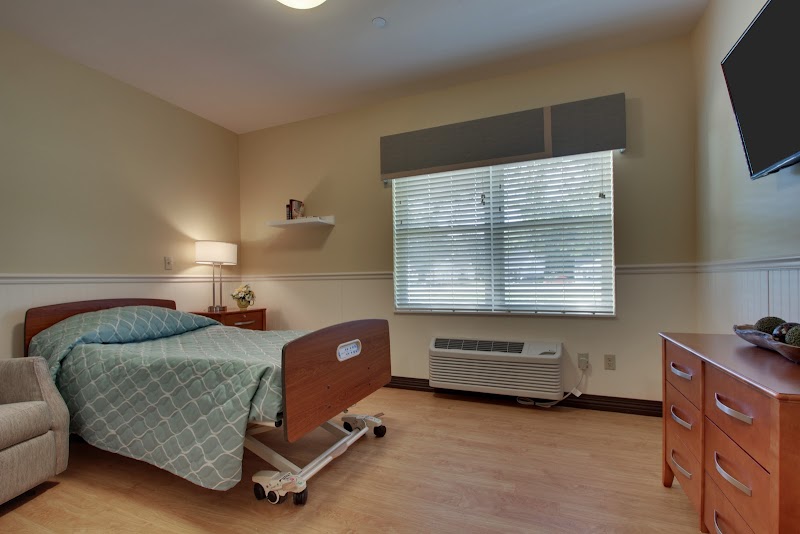
How is Goldwater Care Danville Staffed?
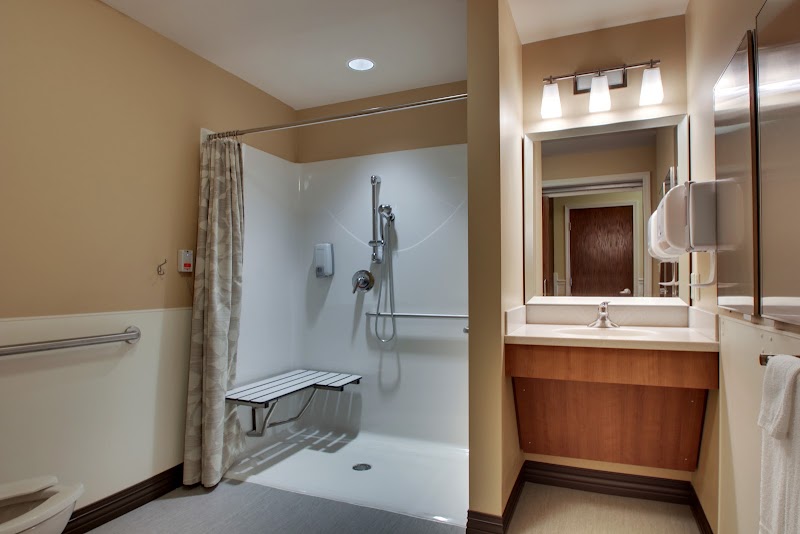
CMS rates Goldwater Care Danville's staffing level at 2 out of 5 stars, which is below average compared to other nursing homes. Staff turnover is 34%, compared to the Illinois average of 46%. This relatively stable workforce can support continuity of care.

What Have Inspectors Found at Goldwater Care Danville?

State health inspectors documented 65 deficiencies at Goldwater Care Danville during 2023 to 2025. These included: 3 Immediate Jeopardy (the most serious level, indicating potential for serious harm or death), 6 that caused actual resident harm, and 56 with potential for harm. Immediate Jeopardy findings are rare and represent the most serious regulatory concerns. They require immediate corrective action.

Who Owns and Operates Goldwater Care Danville?

Goldwater Care Danville is owned by a for-profit company. For-profit facilities operate as businesses with obligations to shareholders or private owners. The facility is operated by GOLDWATER CARE, a chain that manages multiple nursing homes. With 90 certified beds and approximately 78 residents (about 87% occupancy), it is a smaller facility located in DANVILLE, Illinois.

How Does Goldwater Care Danville Compare to Other Illinois Nursing Homes?

Compared to the 100 nursing homes in Illinois, Goldwater Care Danville's overall rating (1 stars) is below the state average of 2.5, staff turnover (34%) is significantly lower than the state average of 46%, and health inspection rating (1 stars) is much below the national benchmark.

What Should Families Ask When Visiting Goldwater Care Danville?

Based on this facility's data, families visiting should ask: "What changes have been made since the serious inspection findings, and how are you preventing similar issues?" "Can you walk me through typical staffing levels on day, evening, and night shifts?" "Can I visit during a mealtime to observe dining assistance and food quality?" "How do you handle medical emergencies, and what is your hospital transfer rate?" These questions are particularly relevant given the facility's Immediate Jeopardy citations and the below-average staffing rating.

Is Goldwater Care Danville Safe?

Based on CMS inspection data, Goldwater Care Danville has documented safety concerns. Inspectors have issued 3 Immediate Jeopardy citations (the most serious violation level indicating risk of serious injury or death). The facility is currently on the Special Focus Facility watch list (a federal program monitoring the lowest-performing 1% of nursing homes nationwide). The facility has a 1-star overall rating and ranks #100 of 100 nursing homes in Illinois. Families considering this facility should ask detailed questions about what corrective actions have been taken since these incidents.

Do Nurses at Goldwater Care Danville Stick Around?

Goldwater Care Danville has a staff turnover rate of 34%, which is about average for Illinois nursing homes (state average: 46%). Moderate turnover is common in nursing homes, but families should still ask about staff tenure and how the facility maintains care continuity when employees leave.

Was Goldwater Care Danville Ever Fined?

Goldwater Care Danville has been fined $242,067 across 4 penalty actions. This is 6.8x the Illinois average of $35,500. Fines at this level are uncommon and typically indicate a pattern of serious deficiencies, repeated violations, or failure to correct problems promptly. CMS reserves penalties of this magnitude for facilities that pose significant, documented risk to resident health or safety. Families should request specific documentation of what issues led to these fines and what systemic changes have been implemented.

Is Goldwater Care Danville on Any Federal Watch List?

Goldwater Care Danville is currently an SFF Candidate, meaning CMS has identified it as potentially qualifying for the Special Focus Facility watch list. SFF Candidates have a history of serious deficiencies but haven't yet reached the threshold for full SFF designation. The facility is being monitored more closely — if problems continue, it may be added to the official watch list. Families should ask what the facility is doing to address the issues that led to this status.