ALDEN DES PLAINES REHAB & HC
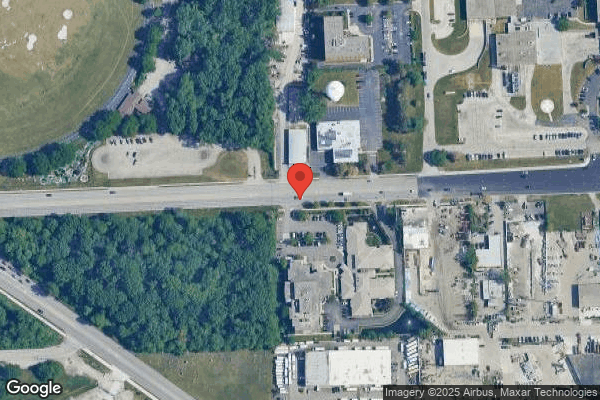
1221 EAST GOLF ROAD, DES PLAINES, IL 60016 (847) 768-1300
For profit - Corporation 110 Beds THE ALDEN NETWORK Data: November 2025
Trust Grade
60/100
#95 of 665 in IL
Last Inspection: September 2024

Within standard 12-15 month inspection cycle. Federal law requires annual inspections.

Overview

Alden Des Plaines Rehab & HC has a Trust Grade of C+, indicating it is decent and slightly above average compared to other facilities. It ranks #95 out of 665 in Illinois, placing it in the top half, and #31 out of 201 in Cook County, meaning only a few local options are better. Unfortunately, the facility's performance is worsening, with issues increasing from 2 in 2024 to 7 in 2025. Staffing is a significant concern, with a low rating of 1 out of 5 stars and a higher turnover rate than ideal; however, it has a good turnover rate of 0%. The facility has accumulated $44,450 in fines, which is average but still raises some concerns about compliance. There are serious incidents noted, such as a resident with a history of falls experiencing an unwitnessed fall that resulted in a nasal fracture and another resident sustaining a hip fracture while trying to use the commode due to inadequate fall prevention measures. On a positive note, the facility has strong quality measures, scoring 5 out of 5, indicating good outcomes for many residents. Overall, while there are strengths in quality, the serious issues regarding fall prevention and staffing should be carefully considered by families.

Trust Score
C+
60/100
In Illinois
#95/665
Top 14%
Safety Record
Moderate
Needs review
Inspections
Getting Worse
2 → 7 violations
Staff Stability
○ Average
Turnover data not reported for this facility.
Penalties
○ Average
$44,450 in fines. Higher than 73% of Illinois facilities. Some compliance issues.
Skilled Nurses
✓ Good
Each resident gets 44 minutes of Registered Nurse (RN) attention daily — more than average for Illinois. RNs are trained to catch health problems early.
Violations
⚠ Watch
13 deficiencies on record. Higher than average. Multiple issues found across inspections.
★★★★☆
4.0
Overall Rating
★☆☆☆☆
1.0
Staff Levels
★★★★★
5.0
Care Quality
★★★★☆
4.0
Inspection Score
Stable
2024: 2 issues
2025: 7 issues

The Good

  • 5-Star Quality Measures · Strong clinical quality outcomes
  • Full Sprinkler Coverage · Fire safety systems throughout facility
  • No fines on record

Facility shows strength in quality measures, fire safety.

The Bad

Federal Fines: $44,450

Above median ($33,413)

Moderate penalties - review what triggered them

Chain: THE ALDEN NETWORK

Part of a multi-facility chain

Ask about local staffing decisions and management

The Ugly 13 deficiencies on record

2 actual harm
Sept 2025 1 deficiency
CONCERN (D) 📢 Someone Reported This

A family member, employee, or ombudsman was alarmed enough to file a formal complaint

Potential for Harm - no one hurt, but risky conditions existed

Quality of Care (Tag F0684)

Could have caused harm · This affected 1 resident

**NOTE- TERMS IN BRACKETS HAVE BEEN EDITED TO PROTECT CONFIDENTIALITY** Based on observation, interview, and record review the facility failed to provide needed care and services in accordance with re...

Read full inspector narrative →
**NOTE- TERMS IN BRACKETS HAVE BEEN EDITED TO PROTECT CONFIDENTIALITY** Based on observation, interview, and record review the facility failed to provide needed care and services in accordance with resident's plan of care, facility's protocol, and professional standard of practice. This deficiency affects one (R1) of three residents reviewed for Quality of care. Findings include: On 9/16/25 at 1:15PM, V4 Insurance Case manager said that she visited R1 last week and presented to her his concerns that last month, he was being helped into bed by CNA and during the transfer, his right foot got caught under the bed and has been having foot pain since. R1 said that the CNA does not know what he is doing. V4 is concern with resident safe transfer. R1 has a right foot bandage. V4 spoke with Agency nurse and told her that R1's toes have ulceration and receiving antibiotics for cellulitis. V4 said that she did not follow up her concern with nursing management and social service in the facility. On 9/16/25 at 9:59AM, Observed R1 up in wheelchair in his room. He is alert and oriented x3. He can verbalize his needs to staff. He has O2 via nasal cannula at 2 liters per minute. He said that his right foot was hurt last month when CNA was transferring him from wheelchair to bed. The CNA and Nurse were aware and applied bandage to his right foot. He said that the CNA who works with him did not know what he is doing. On 9/16/25 at 10:04AM, V5 LPN said that R1 did not complain of pain to her, but he has scheduled pain medications that she administered this morning- Tylenol 500mg 2 tabs and Diclofenac sodium external topical gel to right knee. She said that R1 has a wound dressing on his right foot. R1 just completed oral antibiotics for his right foot wound infection/cellulitis. On 9/16/25 at 10:25AM, V2 ADON (Assistant Director of Nursing) said that R1 sustained bruise and abrasion on his right foot when CNA transferred him from wheelchair to bed on 8/11/25. V2 said, V6 Interim DON/Nurse Consultant did the bruise and abrasion incident investigation and root cause analysis. R1 was started on antibiotics on 9/3/25 due to wound infection. He was seen by wound care physician on 9/3/25 and treated with betadine swab 10% apply to right foot topically every Monday, Wednesday, and Friday. After cleansing with NSS (normal saline solution), paint with betadine then apply xeroform. Cover with abdominal dressing and wrap with kerlix three times a week and as needed. V2 said, the floor nurses do the wound treatment and weekly documentations. On 9/16/25 at 10:29AM, R1 was transferred to bed by V8 CNA (Certified Nurse Assistant) using transfer board. V2 ADON and R1 giving instruction and assistance to V8 in transferring R1. V2 removed R1's right foot shoe and sock. No dressing observed. R1 has dried dark brownish black scab on 2nd and 3rd toe. R1 can't remember when the dressing fell off. V2 cleansed the 2nd and 3rd toe with NSS then painted with betadine swab. She applied xeroform, covered with gauze and wrap with kerlix bandage. V2 said that she will call physician to evaluate wound treatment. The ABD pads is not appropriate wound covering on R1's right foot skin condition. R1 was only seen once by wound care physician for consultation. 12:21pm Review R1's medical records with V1 Administrator and V6 Interim DON/Nursing consultant. R1 is admitted on [DATE] with diagnosis listed in part but not limited to Parkinson's disease, Hypertensive chronic kidney disease, Poly osteoarthritis, Acute respiratory failure, dependence on oxygen. MDS/resident assessment dated [DATE] indicated: Section C- Cognitive pattern BIMS (Brief interview for mental status) score of 13. Section GG Functional abilities Mobility coded 02 substantial/maximal assistance. Helper does more than half of the effort. Helper lifts, holds or support trunk or limbs but provides more than half the effort. Section M Skin conditions. Marked yes for at risk for developing pressure ulcers/injuries. Marked 0 for arterial and venous ulcers. Marked 0 for other ulcers, wound and skin problems. Comprehensive care plan indicated: he has ADLs (Activity of daily living) self-care deficit. Intervention: transfer board for transfer. He has actual alteration of skin integrity. Intervention: weekly wound progress assessment by nurse. He has impaired mobility. He is on restorative program for transfer. He requires assistance from staff for transfers using sliding board. Interventions: 1 staff assist using sliding board and verbal cuing daily. Use gait belt and other transfer aids as needed. Active physician order sheet indicated: Skin check completed every Monday and Friday. Betadine swab sticks 10% apply to right foot topically every day shift Monday, Wednesday and Friday and as needed, after cleansing with NSS, the apply xeroform, cover with ABD (abdominal dressing) and wrap with kerlix. R1's bruise incident report dated 8/11/25 reported by V10 RN indicated: At approximately 2:30AM, R1 reported that his right foot was hurting particularly on great toe and second toe. V10 assessed and observed blue and purple discoloration on both great and second toes. Observed abrasion on 2nd and 3rd toes. R1 said that he was being transferred by CNA when he banged his foot on the bed. R1 was given pain medication and physician was notified. X-ray of right foot was ordered. No wound treatment for abrasion was ordered. V6 Interim DON/Nurse consultant completed the incident investigation and root cause analysis on 8/15/25. R1 is alert and oriented x 3. He needs assistance with ADLs. He reported that on 8/11/25 he accidentally bumped his toes while being transferred. He reported his right toes hurt but did not tell anyone. The x-ray was performed indicated mild tissue swelling, no evidenced of fracture noted. R1 was reminded to let the nurse on duty know for any incident/accident. Care plan reviewed and updated. R1 does not have treatment order for the right foot abrasion. R1's progress notes indicated no documentation of right foot abrasion after the incident occurred on 8/11/25. On 9/3/25 progress notes indicated, R1 reported increased pain to right foot. Upon assessment erythema noted to right foot and skin alteration to 2nd toe and 3rd toe. Physician was notified and ordered Doxycycline 100mg twice a day for 10 days and wound consult. On 9/3/25 wound notes indicated, reddish/brown, right 2nd toe 0.75cm x 0.5cm and right 3rd toe 0.5cm x 0.25cm. On 9/3/25 wound care physician assessment indicated: right foot abrasion, 2cm x 3.5cm x 0 cm, 100% scab dermis, intact, Treatment: cleanse with NSS, Betadine paint/ Xeroform, cover with 2 ABD pads and secure with fluffy kerlix, offload. On 9/4/25 Arterial doppler with ABI (Ankle Brachial index) of both lower extremities report indicated bilateral lower extremity arteries shows generalized atherosclerotic wall changes and plaques causing 80% stenosis. ABI 0.6. Suggested clinical correlation and vascular specialist consultation. On 9/4/25 Infectious disease consultation indicated, diagnosis- right 2nd and 3rd toes cellulitis secondary to wound. No documentation of weekly skin assessment of right and 2nd toes cellulitis wound with wound treatment/dressing.On 9/16/25 at 12:30PM, Informed both V1 Administrator and V6 Interim DON that R1 sustained abrasion/bruise during transfer from wheelchair to bed by V9 Former CNA. The incident occurred on 8/11/25 3-11 shift was not reported until R1 reported right foot pain with bruise and abrasion to the V10 RN on 11-7 shift. Abrasion and bruise incident was investigated and documented root cause analysis on 8/15/25 by V6 but did not document that abrasion and bruise on right foot was happened during transfer with V9 CNA. V6 did not interview R1 because he self-terminated himself after V1 interviewed him the following day of the incident. V6 indicated that care plan was updated but she did not. No new intervention for resident safe transfer to avoid foot injury. R1 sustained abrasion and bruise from wheelchair to bed transfer by CNA but no new intervention documented in care plan. No ongoing skin weekly assessment documentation of right foot abrasion since it was identified on 8/11/25. R1‘s right foot abrasion worsens to cellulitis wound. Wound treatment provided and completed antibiotics 10 days treatment. Still no ongoing weekly skin assessment of right foot cellulitis wound since it was identified on 9/3/25. R1 was observed for wound care on right foot. No dressing was observed. The wound treatment needs to be evaluated due to current wound condition. On 9/16/25 at 12:45PM, V7 MDS/Care Plan Coordinator said that any changes in resident condition or treatment such as incident of bruise/abrasion sustained from transfer with CNA assistance and worsening of abrasion to cellulitis should be care planned. New intervention should be developed for resident safety to prevent re-occurrence of incident. New intervention for treatment of abrasion to promote healing and prevention of wound infection or deterioration. V7 said that she cannot remember if she updated care plan after the incident. V7 said any nurse- floor nurse or managers who are aware of the incident can update R1's care plan as indicated in physician orders. On 9/16/25 at 1:42PM, Reviewed V9 Former CNA's employee record with V1 Administrator. V9 was hired on 7/10/25. Employee separation notice was on 8/12/25. V1 said that V9 self-terminated himself after interviewing for R1's incident on 8/11/25 bruise/abrasion resulted from transferring from wheelchair to bed. Reviewed July and August 2025 facility's transfer in-service for employees. V9 was not listed in training. V6 Interim DON presented R9's competency transfer training with employee's signature but inconsistent with his signature file in employee's record. Facility's policy on Transfer Techniques 02/2022 indicated: Purpose: To safely transfer the resident from bed to chair or from one location to another. Facility's policy on Incident/Accident Reports 09/2020 indicated: The incident/accident report is completed for all unexplained bruises or abrasions, all accidents, or incidents where there is injury or the potential to result in injury, allegation of theft and abuse registered by residents, visitors, or other and resident to resident altercations. Procedure: An accident refers to any unexpected or unintentional incident, which may result in injury to illness to a resident. 9. An incident/accident report is to be completed and shall include: b. Description and possible cause of incident, physical assessment, injuries noted, vital signs, treatment rendered and notification of appropriate parties. Facility's policy on Comprehensive care plan 11/2017 indicated: An individualized, person-centered comprehensive care plan including measurable objectives with timetables to meet resident's physical, psychosocial and functional needs, is developed and implemented for each resident. Procedure: 8) Assessment of Resident is ongoing and care plans are revised based on the resident condition, preferences, treatments, and goals change. Facility's policy on Prevention and treatment of Pressure injury and other skin alterations 03/2021 indicates: Policy: 3. Implement preventive measures and appropriate treatment modalities for pressure injuries and or other skin alterations through individualized resident care plan. Procedure: 4. Non-pressure skin alterations i.e.: skin tears, abrasions, surgical wounds, MASD, lesions and rashes will be documented weekly on a skin progress. 5. Develop a care plan for either actual or potential alteration in skin integrity and change as needed8. At least daily, staff should remain alert for potential changes in the skin condition during resident care10. Revised care plan approaches as needed based on resident's response and outcomes.
Sept 2025 1 deficiency
CONCERN (D) 📢 Someone Reported This

A family member, employee, or ombudsman was alarmed enough to file a formal complaint

Potential for Harm - no one hurt, but risky conditions existed

ADL Care (Tag F0677)

Could have caused harm · This affected 1 resident

Based on observation, interview and record review the facility failed to ensure residents who were dependent on staff for clothing change and incontinence care received those services for 1 of 3 resid...

Read full inspector narrative →
Based on observation, interview and record review the facility failed to ensure residents who were dependent on staff for clothing change and incontinence care received those services for 1 of 3 residents (R1) reviewed for Activity of Daily Living (ADL) assistance. Findings include:On 9/2/2025 at 10:30am V6(Agency Certified Nursing Assistant-CNA) said that on 7/30/2025 at about 6:30am V7(Nurse) asked V6 to clean up R1 and do incontinence care because he was going out to the hospital. V6 said upon entering the room the smell of emesis, feces and urine was observed. R1 had dried and new emesis with red fluid on his gown, upon removing the top linen R1 had feces and urine soaked on the bed with dried urine and feces rings on the bottom sheet and a red penis, scrotum and buttocks. V6 said she questioned V7 about why R1 was in this condition, V7 said the CNA for R1 had left the facility before she could tell her to clean R1.On 9/2/2025 at 11:40am this writer, V3(Assistant Director of Nursing -ADON), and V5(Certified Nursing Assistant -CNA) observed R1 in the bed with a soiled gown, red scrotum, red bilateral inner thighs, and red buttocks with feces and urine soaked on the bottom bed sheet. On 9/2/2025 at 1:00pm V4(Wound Care Nurse) said R1 has very loose stools and had been treated several times for redness on his scrotum, inner thighs and buttocks. The last treatment was 14 days and ended on 8/30/2025. R1 is now on a barrier cream twice a shift and as needed. I expect the nursing staff to do rounds every one to two hours on residents that are dependent on the staff for care and to inform me when a resident is having skin issues.On 9/2/2025 at 1:10pm V5 said R1 only responds to tactile stimuli and is totally dependent on staff for all care and he could not make his needs known. I do rounds every two hours and I did not change R1's gown, I informed the nurse when I changed R1 that morning that R1 has reddened areas on his scrotum and buttocks. On 9/2/2025 at 1:30pm V7(Nurse) said that on 7/30/2025 she was informed that R1 had an emesis I do not remember who informed me she assessed R1 and observed coffee ground emesis on his gown and top bed linen. V7 said she immediately called the physician and was given orders to send R1 to the local emergency room. V7 said she looked for the CNA for night shift and she was not on the unit, when the day shift CNA arrived, she informed V6 the CNA that was taking over that section to do care on R1 because he was transferring to the hospital. V7 said I did not check to see if R1 needed Peri-care I was concentrating on the coffee ground emesis and calling the ambulance. The CNA staff should make rounds every two hours and as needed, I thought the night CNA made rounds apparently, she did not. On 9/2/2025 at 1:45pm V3 said the bed sheets should not be soaked, I expect the CNA staff to make rounds every two hours and as needed for residents that need more frequent changing. All activity of Daily Living care should be completed for dependent residents. On 7/30/2025 I was informed that R1 had been left in a soiled gown, with urine and feces on the bed linen, and that he was going out to the hospital for having an emesis with blood in it. I did not know the extent until I was told the CNA had complained.On 9/2/2025 at 2:00pm V1(Administrator) said that she was informed about R1's condition of Activity of Daily Living care and incontinence care had not been giving, later that day and the agency CNA could not return to the facility. A resident information document dated 9/2/2025 indicates that R1 has a diagnosis of respiratory failure with hypoxia and hypocapnia, hemiplegia and hemiparesis with a cerebral infarction affecting the left no-dominant side, tracheostomy, gastrostomy, Dysphagia, dependent on supplemental oxygen. A care-plan dated 2/14/2025 for focus that R1 requires total assistance on staff with bed mobility, transfers, and all ADL, incontinence care, A focus of Peri-care after each incontinent episode and monitor for excoriation near peri area. Change clothing PRN as needed after each incontinent episodes dated 2/28/2025.Facility Policy: Perineal Care dated 9/2020Purpose:To cleanse the perineumto prevent infection and odorto maintain skin integrity
May 2025 3 deficiencies
CONCERN (D) 📢 Someone Reported This

A family member, employee, or ombudsman was alarmed enough to file a formal complaint

Potential for Harm - no one hurt, but risky conditions existed

ADL Care (Tag F0677)

Could have caused harm · This affected 1 resident

**NOTE- TERMS IN BRACKETS HAVE BEEN EDITED TO PROTECT CONFIDENTIALITY** Based on observation, interview, and record review the facility failed to provide incontinence care to dependent residents in a ...

Read full inspector narrative →
**NOTE- TERMS IN BRACKETS HAVE BEEN EDITED TO PROTECT CONFIDENTIALITY** Based on observation, interview, and record review the facility failed to provide incontinence care to dependent residents in a timely manner. This deficiency affects two (R1 and R4) of three residents reviewed for Activity of daily Living (ADL)-Incontinence care. Findings include: R1 On 5/13/25 at 10:20AM, Surveyor requested skin assessment for R1. Observed V5 WCN (Wound Care Nurse) and V10 CNA (Certified Nurse Assistant) repositioned R1 to side lying position. Observed disposable brief soaked with urine and leaked through the cloth pad underneath her. Observed V10 provided incontinence care to R1. Observed V10 did not change her gloves after cleaning peri anal area and sacral area of R1. V10 took clean disposable brief and applied to R1 with the same gloves. On 5/13/25 at 10:22AM, V11 Agency CNA said that he is assigned to both R1 and R4. V11 said that he has not provided incontinence care or morning care to both residents. V5 WCN said that CNAs should check dependent resident for incontinence every 2 hours. R1 was admitted on [DATE] with diagnosis listed in part but not limited to Traumatic subdural hemorrhage with loss of consciousness, Respiratory failure, Tracheostomy, Gastrostomy, Moderate protein calorie malnutrition, Encephalopathy, Contractures of muscle right upper arm, Mild neurocognitive disorder. Comprehensive care plan indicated: She has an ADL (Activity of daily living) functional performance deficit related to muscle weakness, impaired balance, incontinence, impaired memory, and underlying medical conditions. Intervention: Provide incontinence care/toileting needs as needed. Bowel and Bladder incontinence. Intervention: Provide peri care with episodes of incontinence. R4 On 5/13/25 at 10:33AM, Surveyor requested skin assessment for R4. V10 CNA and V11 CNA repositioned R4 to side lying position. Observed R4 soaked with urine with fecal matter on the disposable brief and rectal area. Observed V10 provided incontinence care to R4. Observed V10 did not change her gloves after cleaning peri anal and sacral area of R4. She took clean disposable brief and applied to R4 with the same gloves. Informed V10 of observation made during incontinence care of using same gloves between soiled and clean briefs for R1 and R4. V10 then changed her gloves and donned on new pair of gloves without hand hygiene. Informed V10 of observation made that she failed to perform hand hygiene before donning new pair of gloves. R4 was admitted on [DATE] with diagnosis listed in part but not limited to Chronic respiratory failure with hypoxia, Tracheostomy, Gastrostomy, Type 2 Diabetes Mellitus, Hand contractures, Muscle weakness, Incontinence without sensory awareness, Encephalopathy, Parkinson's Disease. Comprehensive care plan indicated: She has an ADL functional performance deficit related to underlying medical conditions. Intervention: Provide incontinence care/toileting needs as needed. Bowel and Bladder incontinence. Intervention: Provide peri care with episodes of incontinence. On 5/13/25 at 1:38PM, Informed V1 Administrator and V2 DON (Director of Nursing) of above observations and concerns. Requested for policies. Facility unable to provide policy for Activity of daily Livings and Incontinence care procedure guidelines. Facility's policy on Routine checks 9/2020 indicated: Policy interpretation and implementation: 1. To ensure the safety and well-being of our residents, a resident check will be made at least 2 hours throughout each 24-hour shift by nursing service personnel. 2. Routine resident checks involve entering the resident's room to determine if the resident's needs are being met. If there has been a change in the resident's condition, if the resident has any complaints, if the resident is sleeping, needs toileting assistance, etc.
CONCERN (D) 📢 Someone Reported This

A family member, employee, or ombudsman was alarmed enough to file a formal complaint

Potential for Harm - no one hurt, but risky conditions existed

Pressure Ulcer Prevention (Tag F0686)

Could have caused harm · This affected 1 resident

**NOTE- TERMS IN BRACKETS HAVE BEEN EDITED TO PROTECT CONFIDENTIALITY** Based on observation, interview, and record review the facility failed to implement its preventive measures and appropriate trea...

Read full inspector narrative →
**NOTE- TERMS IN BRACKETS HAVE BEEN EDITED TO PROTECT CONFIDENTIALITY** Based on observation, interview, and record review the facility failed to implement its preventive measures and appropriate treatment modalities for skin impairment. The facility also failed to avoid multiple layers of linens when using low air loss mattress as manufacturer's recommendation. This deficiency affects all three (R1, R4 and R5) reviewed for Wound Care Prevention Management. Findings include: R1 On 5/13/25 at 9:48AM, Observed R1 lying in bed with LAL (Low air loss) mattress. She is awake but no verbal response. She has bilateral hand splint and heel protector. She receives enteral feeding via GT (Gastrostomy Tube) connected to feeding pump. Her call light is away from her, placed on bedside dresser. V2 DON (Director of Nursing) lifted the top linen and observed cloth pad and flat sheet over the LAL mattress. R1 is wearing a disposable brief. V2 said that R1 should only have flat sheet over the mattress. V2 said resident on LAL mattress should only have flat sheet over the mattress as manufacturer recommendation. On 5/13/25 at 10:10AM, V5 WCN (Wound Care Nurse) said that R1 acquired MASD (Moisture Associated Skin Disorder) on 4/29/25. V5 unable complete wound assessment because she got busy and R1 was sent out to the hospital on 5/5/25. R1 returned on 5/11/25 but she has not updated R1's wound /Skin care plan. On 5/13/25 at 10:15AM Informed V5 WCN of observation made to R1 with V2 DON of having multiple layers of linens on the LAL mattress. V5 said that R1 should only have flat sheet over the mattress and no cloth pad over it. R1 is wearing disposable brief. V5 said that resident on LAL mattress should have flat sheet only as manufacturer recommendation. Multiple layers of linens over the mattress will impede its purpose. On 5/13/25 at 10:20AM, Surveyor requested skin assessment for R1. Observed V5 WCN and V10 CNA repositioned R1 to side lying position. Observed disposable brief soaked with urine and leaked through the cloth pad underneath her. Observed V10 provided incontinence care to R1. Observed V10 did not change her gloves after cleaning peri anal area and sacral area of R1. V10 took clean disposable brief and applied to R1 with the same gloves. V5 said that R1 has healed MASD. No treatment applied after incontinence care. On 5/13/25 at 10:22AM, V11 Agency CNA said that he is assigned to both R1 and R4. V11 said that he has not provided incontinence care or morning care to both residents. He received both residents with cloth pads and flat sheets over the LAL mattress. He said that he did not know that it's not okay to have both cloth pad and flat sheet over the mattress. V5 WCN informed V11 that resident on LAL mattress should only be on flat sheet over the mattress. On 5/13/25 at 10:33AM, Surveyor informed V5 WCN that she did not apply Treatment order of Zinc oxide ointment or barrier cream after incontinent care as indicated in care plan as part of preventive wound/skin impairment management. R1 is admitted on [DATE] with diagnosis listed in part but not limited to Traumatic subdural hemorrhage with loss of consciousness, Respiratory failure, Tracheostomy, Gastrostomy, Moderate protein calorie malnutrition, Encephalopathy, Contractures of muscle right upper arm, Mild neurocognitive disorder. Active physician order sheet indicated: Low air loss (LAL) mattress. Zinc oxide ointment 20% Cleanse with normal saline and apply to perianal topically every shift and as needed for skin condition. Comprehensive care plan indicated: she has potential for alteration in skin integrity related to Braden scale of 11 (High risk), incontinence, requires assistance with bed mobility/transfers, history of sacral pressure injury and underlying medical conditions. Interventions: Barrier cream to areas exposed to moisture/incontinence. Pressure redistribution support (low air or alternation air) in bed. Progress notes dated 4/29/25 documented by V21 RN indicated: MASD (Moisture associated noted on perineal area. Informed to V5 Wound Care Nurse (WCN) and Nurse Practitioner and carried out treatment order. V5 WCN documented on 4/30/24 indicated: Per V21 RN's request, skin check completed. Noted heavy excoriation, MASD to area of perianal. Nurse Practitioner notified and obtained order for Zinc ointment to be applied twice daily and as needed. V6 Family member notified. V5 did not updated R1's comprehensive care plan regarding acquired MASD on 4/29/25. No comprehensive wound assessment/report was completed when wound was identified. R1 was sent out to the hospital on 5/5/25 due to respiratory distress after decannulation. R1 was re-admitted on [DATE], still wound/skin care plan was not updated. R4 On 5/13/25 at 9:51AM, Observed R4 lying in bed with LAL mattress. She is unresponsive. She has tracheostomy connected to vent. She receives enteral feeding via GT (Gastrostomy Tube) connected to feeding pump. Observed visible cloth pad and flat sheet over the mattress. R4 is wearing disposable brief. Showed observation to V2 DON. V2 said that R4 should only have flat sheet. V2 said that resident on LAL mattress should only have flat sheet over the mattress as manufacturer recommendation. On 5/13/25 at 10:15AM Informed V5 WCN of observation made to R4 with V2 DON of having multiple layers of linens on the LAL mattress. V5 said that R4 should only have flat sheet over the mattress and no cloth pad over it. R4 is wearing disposable brief. V5 said that resident on LAL mattress should have flat sheet only as manufacturer recommendation. Multiple layers of linens over the mattress will impede its purpose. On 5/13/25 at 10:33AM, Surveyor requested skin assessment for R4. V10 CNA and V11 CNA repositioned R4 to side lying position. Observed R4 soaked with urine with fecal matter on the disposable brief and rectal area. Observed V10 provided incontinence care to R4. Observed V10 did not change her gloves after cleaning peri anal and sacral area of R4. She took clean disposable brief and applied to R4 with the same gloves. Informed V10 of observation made during incontinence care of using same gloves between soiled and clean briefs for R1 and R4. V10 changed her gloves and donned on new pair of gloves without hand hygiene. Informed V10 of observation made that she failed to perform hand hygiene before donning new pair of gloves. V5 WCN applied Zinc oxide to perianal and sacral area. V5 said that R4 has ordered for Zinc oxide for MASD. V5 said that R4 is being seen by Wound Care Physician for MASD. R4 is admitted on [DATE] with diagnosis listed in part but not limited to Chronic respiratory failure with hypoxia, Tracheostomy, Gastrostomy, Type 2 Diabetes Mellitus, Hand contractures, Muscle weakness, Incontinence without sensory awareness, Encephalopathy, Parkinson's Disease. Most recent Braden scale skin assessment dated [DATE] indicated at high risk for skin impairment. Active physician order sheet indicated: Low air loss mattress. Zinc oxide ointment 20% cleanse with normal saline and apply to buttocks/sacral topically every day and evening shift and as needed. Comprehensive care plan indicated: She has actual alteration in skin integrity related to requires extensive assistance with bed mobility, incontinence, and underlying medical conditions. Wound sites: Buttocks- MASD. Interventions: Low air loss mattress. Barrier cream to areas exposed to moisture/incontinence. Wound care Physician wound/skin report dated 5/6/25 indicated: Buttocks/Sacral, MASD, 100% pink epithelization, wound identified: 1/18/25. R5 On 5/13/25 at 10:56Am, Observed R5 lying in bed with LAL mattress. Observed LAL machine is on the floor. R5 does not have foot board where the LAL mattress is hanged. V13 Family member at bedside. V13 said that R5 has been in the facility for 3 months and he did not have foot board attached to his bed. V5 WCN said he should have foot board for the LAL machine/pump to be secured or hanged. On 5/13/25 at 11:05AM, Surveyor requested skin assessment for R5. V10 CNA repositioned R5 to side lying position. Observed no dressing covered to R5's sacral wound. V5 WCN said that the dressing probably got soiled and the CNA had to remove the dressing. V5 said that the CNA should inform the nurse so the nurse could cover the wound while waiting for wound care nurse. V5 said that she was not notifed that R5's sacral dressing was removed. V5 cleansed the wound. V5 said that R5 has 40% greenish slough formation and 60% reddish tissue granulation. She applied metronidazole for contaminated wound, medi honey, calcium alginate and covered with foam dressing. On 5/13/25 at 11:30AM, Informed V14 Building Manager that R5 does not have foot board. V14 said that he was not aware, and nobody told him. R5 is admitted on [DATE] with diagnosis listed in part but not limited to Stage 4 sacral pressure ulcer, Acute respiratory failure with hypoxia, Anoxic brain damage, Encephalopathy, Necrotizing fasciitis, Tracheostomy, Gastrostomy, Type 2 Diabetes Mellitus. Active physician order sheet indicated: Low air loss mattress. Cleanse sacral stage 4 with normal saline. Apply medihoney paste then maxorb II, metronidazole as needed for contamination and cover with foam dressing daily and as needed. Comprehensive care plan indicated: He has alteration in skin integrity. He is at further risk for skin breakdown due to weakness, requiring total assistance with ADLs, tracheostomy status, incontinence, and underlying diagnosis. Facility is unable to provide policy on Low air loss mattress regarding avoiding of multiple layers of linen as manufacturer recommendation. Facility's policy on Prevention and Treatment of Pressure Injury and other Skin Alterations 3/2/21 indicated: Policy: 3. Implement preventive measures and appropriate treatment modalities for pressure injuries and/or other skin alterations through individualized resident care plan. Procedure: 2. Evaluate residents for actual pressure injuries or other skin alterations on admission or re-admission by utilizing the initial nursing assessment. 5. Develop a care plan for either actual or potential alteration in skin integrity and changes as needed. 6. Complete a comprehensive pressure injury evaluation for identified pressure injuries. 8. At least daily, staff should remain alert for potential changes I the skin condition during resident care. 9. Moisture barrier may be applied as needed. 10. Revise care plan approaches as needed based on resident's response and outcomes. Facility's policy on non-sterile dressing change 3/2021 indicated: Guidelines: 1. Non-sterile dressings protect open wounds from contamination and absorb drainage. Facility's policy on Management of Low air loss mattress 3/2024 indicated: 7. Secure pump unit on the foot end of the bed frame
CONCERN (D) 📢 Someone Reported This

A family member, employee, or ombudsman was alarmed enough to file a formal complaint

Potential for Harm - no one hurt, but risky conditions existed

Respiratory Care (Tag F0695)

Could have caused harm · This affected 1 resident

**NOTE- TERMS IN BRACKETS HAVE BEEN EDITED TO PROTECT CONFIDENTIALITY** Based on observation, interview, and record review the facility failed to implement physician's order in using red rubber cathet...

Read full inspector narrative →
**NOTE- TERMS IN BRACKETS HAVE BEEN EDITED TO PROTECT CONFIDENTIALITY** Based on observation, interview, and record review the facility failed to implement physician's order in using red rubber catheter for suctioning resident. The facility failed to implement its policy on suctioning procedure. The facility also failed to have a spare tracheostomy tube, one of the same size and one of a smaller size at bedside that is readily available in case of emergency to ensure resident's airway is secured. This deficiency affects one (R4) of three residents reviewed for Respiratory Care of Resident on Tracheostomy tube. Findings include: On 5/13/25 at 9:51AM, Observed R4 lying in bed. She has tracheostomy tube connected to ventilator. V2 DON (Director of Nursing) unable to locate spare tracheostomy tube set for R4 in her room. V2 called for V8 Respiratory Therapist. On 5/13/25 at 9:53AM, V8 Respiratory Therapist (RT) said that R4 is on trach size Shiley 6. V8 said that they should have a spare tracheostomy set at beside in case of emergency such as accidental decannulation to ensure R4's airway is secured. They should have a replacement tracheostomy tube 1 of the same size and 1 of a smaller size that should be readily available. V8 searched the room but unable to find spare of tracheostomy set in R4's room. On 5/13/25 at 10:26AM, Observed V8 RT suctioned R4 using plastic transparent suction catheter for more than 13 seconds three times (3x), no ventilation provided in between suctioning. R4 gaging/coughing with facial redness as he inserted the catheter. After suctioning, he removes his gloves and donned new pair of gloves without hand hygiene. Then provided tracheostomy care. On 5/13/25 at 10:32AM, V8 RT said that he does not need to provide ventilation in between suctioning because the resident is on ventilator. He said he suctioned R4 for 15 seconds each time. Informed V8 that he removed the oxygen collar mask while suctioning R4 and he suctioned R4 more than 10 seconds each time. He continued suctioning without interval of 30 seconds to 1 minute in between suctioning. On 5/13/25 at 1:38PM, Informed V1 Administrator and V2 DON of above observations and concerns. On 5/14/25 at 11:48AM, V19 Care plan coordinator said that she developed and updated R4's comprehensive care plan. She is not aware that R4 has an order to use a red rubber catheter for suctioning due to tracheal bleeding. R4's care plan was not updated. Informed V1 administrator of above concern that V8 RT did not follow physician order when suctioning R4 and care plan was not updated. Requested to talk with respiratory therapist assigned to R4. On 5/14/25 at 12:20PM, V20 Respiratory Therapist (RT) said that V1 Administrator asked him about the red suction catheter for R4. He was not aware not until the administrator told him about the concern. V20 said that they have to follow physician order. On 5/14/25 at 12:29PM, Rounds made with V20 RT to R4's room. V20 searched R4's room for red rubber suction catheter for suctioning and unable to locate. V20 said that R4 does not have a red rubber suction catheter in her room. R4 is admitted on [DATE] with diagnosis listed in part but not limited to Chronic respiratory failure with hypoxia, Tracheostomy, Gastrostomy, Type 2 Diabetes Mellitus, Hand contractures, Muscle weakness, Incontinence without sensory awareness, Encephalopathy, Parkinson's Disease. Active physician order sheet indicated: Vent orders: AC mode, rate 16, VT350, PEEP 5, FIO2 40%. Vent checks every 6 hours and PRN (as needed). Airvo 40% 60% LPM 34 Celsius every shift for high flow humidified oxygen related to dependence on respirator. Suction every 4 hours and PRN. Use red rubber catheter for suction due to tracheal bleeding. Trach care and collar every shift and PRN. Trach Care: Shiley size 6. In case or emergency, trained nurse may reinsert outer cannula of tracheostomy PRN. Comprehensive care plan indicated: She has potential for complications related to ventilator/respirator use. Intervention: Trach care and suction as ordered. She requires oxygen therapy related to her acute respiratory failure. Facility unable to provide policy on Tracheostomy emergency protocol of having spare replacement tracheostomy tube set of the same size and 1 of a smaller size at bedside readily available in case of emergency to ensure resident's airway is secured. Facility unable to provide Nursing competency skills on Respiratory care such as Tracheostomy care and suctioning. Facility's policy on Physician's order for Medications or Treatments indicated: Policy: Medication will be dispensed and subsequently administered to a resident only upon the clear, complete, signed order of a lawfully authorized prescriber. Each medication order is documented in the resident's medical record with the date and signature of the person receiving the order. Prerequisites: 1. Physician orders for medications 2. Physician order sheet (POS), electronic or paper. Procedure: 2. The nurse will follow order-specific procedures to submit orders to pharmacy appropriately, which may include transcribing any telephone or transfer sheet orders to the POS. Facility's policy on Suctioning: Tracheostomy 9/2020 indicated: Policy: Suctioning of a tracheostomy will be done upon physician's order and as needed by nurse, respiratory therapist, or speech therapist to maintain a patent airway to facilitate the removal of accumulated tracheal secretions. Procedure: 12. Using your non-dominant hand and a manual resuscitation bag, hyperventilate and or hyper oxygenate the resident by delivering 3-6 breaths prior to suctioning (if applicable), hyperventilate and or hyper oxygenate. Pre/post suction is not a routine procedure. 14. Apply suction by intermittently occluding the Y port on the catheter with the thumb of your non dominant hand and gently rotate the catheter as it is being withdrawn. Do not suction for more than 10-15 seconds at a time. 15. If using ambu bag, hyperventilate the resident using your non-dominant hand and a manual resuscitation bag, delivering 3-6 breaths. Replace oxygen delivery device, if applicable in between passes, using your non dominant hand and have resident take several deep breaths. 17. Allow at least a 30 second to 1 minute interval if additional suctioning is needed No more than 3 suction passes should be made per suctioning episode. Encourage resident to cough and deep breathe between suctioning. 18. Perform hand hygiene after removing gloves. Facility's policy on Review of care plans 11/2017 indicated: Each resident's care plan shall be reviewed routinely by the IDT (Interdisciplinary Team). Procedure: 2. The IDT is responsible for periodic review and adjustments to the plan of care: d. When there is a change of treatment plan, goals, or interventions 5. The Resident care coordinator will be responsible to ensure that the plan of care is updated and maintained by all IDT members.
May 2025 2 deficiencies
CONCERN (D) 📢 Someone Reported This

A family member, employee, or ombudsman was alarmed enough to file a formal complaint

Potential for Harm - no one hurt, but risky conditions existed

ADL Care (Tag F0677)

Could have caused harm · This affected 1 resident

**NOTE- TERMS IN BRACKETS HAVE BEEN EDITED TO PROTECT CONFIDENTIALITY** Based on observation, interview, and record review, the facility failed to ensure that staff provide oral care for residents who...

Read full inspector narrative →
**NOTE- TERMS IN BRACKETS HAVE BEEN EDITED TO PROTECT CONFIDENTIALITY** Based on observation, interview, and record review, the facility failed to ensure that staff provide oral care for residents who are dependent on staff for Activities of Daily Living (ADL). This failure affected three (R1, R2, and R3) of three residents reviewed for ADL care. Findings include: R1 is a [AGE] year-old resident admitted to the facility on [DATE]-[DATE] with diagnoses including but not limited to: cardiac arrest, septic shock, orthostatic hypotension, tracheostomy, gastrostomy, metabolic encephalopathy, and anoxic brain damage. The Care plan initiated on 3/31/2025 has an ADL Functional Performance Deficit related to generalized muscle weakness, immunocompromised and with med dx of metabolic encephalopathy, cardiac arrest, and on tracheostomy and gastrostomy. Intervention reads: Assist resident with oral care daily as needed. R2 is a [AGE] year-old resident admitted to the facility on [DATE] with diagnoses including but not limited to: metabolic encephalopathy, respiratory failure, spinal cord injury, diabetes, quadriplegia, gastrostomy, and tracheostomy. The Care Plan, initiated on 4/26/2025, states that R2 has an ADL functional performance deficit, activity intolerance, and decreased functional ability related to generalized muscle weakness, abnormalities of gait and mobility, immunocompromised condition, quadriplegia, and tracheostomy. In the intervention, read: Assist resident with oral care daily as needed. Assist with personal hygiene as required. On 4/30/2025 at 10:35 AM observed R2 in his room, awake, and did not respond to his name. R2 had dry lips with crusted dry secretion to the right side of the mouth with yellow teeth with residue. On 4/30/2025 at 11:00 AM V7 (Certified Nursing Assistant) said, I did not clean his mouth yet and probably night shift cleaned last, but I can see that R2 needs mouth care done. On 4/30/2025 at 11:06 AM V9 (Licensed Practical Nurse) said, I did not clean R2 ' s mouth yet and do not know when it was cleaned and acknowledged that R2 needed his mouth and teeth cleaned. On 4/30/2025 at 12:08 PM V10 (Family Member) said, the only concern that I have when I come to the building is mouth care, his lips are dry and crusted and his teeth are dirty. R3 is a [AGE] year-old resident admitted to the facility on [DATE] with diagnoses including but not limited to: cerebral infarct, anemia, aortic aneurysm, aortic dissection, aortic valve replacement, tracheostomy, gastrostomy, diabetes, and pressure ulcer. The care plan initiated on 4/23/2025 states, that R3 has ADL self-care performance deficit and decreased functional ability related to fall risk, limited mobility, recent hospitalization, shortness of breath, stroke, weakness/deconditioning, tracheostomy status, anoxic encephalopathy. Interventions read: Assist resident with oral care daily as needed. Assist with personal hygiene as needed. On 4/30/2025 at 11:00 AM V11(Family Member) said, I come to the facility every day to visit my brother and the care is good, but mouth care is a problem, and his teeth are very dirty. V11 opened R3's mouth and showed the surveyor R3's teeth condition, stating look to see for yourself how yellow and crusted his teeth are. On 4/30/2025 at 4:10 PM V2 (Director of Nursing) said, the nursing assistant is responsible for oral care unless a medicated mouthwash is used. Oral care is done every shift or as needed by nursing assistants and residents who require assistance. I expect the staff to provide oral care to prevent build-up and dry-crusted secretion on lips and gums. The facility will work on adding residents to the dentist list. Facility provided policy titled, Oral Care (dated 09/2020), which includes: Procedure: Note: Offer oral care hygiene before breakfast and bedtime. 6. Inspect mouth and gum
CONCERN (D) 📢 Someone Reported This

A family member, employee, or ombudsman was alarmed enough to file a formal complaint

Potential for Harm - no one hurt, but risky conditions existed

Infection Control (Tag F0880)

Could have caused harm · This affected 1 resident

**NOTE- TERMS IN BRACKETS HAVE BEEN EDITED TO PROTECT CONFIDENTIALITY** Based on observation, interview, and record review, the facility failed to follow facility-enhanced barrier precautions during t...

Read full inspector narrative →
**NOTE- TERMS IN BRACKETS HAVE BEEN EDITED TO PROTECT CONFIDENTIALITY** Based on observation, interview, and record review, the facility failed to follow facility-enhanced barrier precautions during tracheostomy care and suctioning, failed to change gloves during suctioning and used soiled gloves to start a sterile procedure, and failed to use a sterile technique when using the sterile catheter. This failure affected one (R1) of three residents reviewed for infection control. Findings include: R2 is a [AGE] year-old resident with diagnoses including but not limited to: metabolic encephalopathy, respiratory failure, spinal cord injury, diabetes, quadriplegia, gastrostomy, and tracheostomy. R2 was admitted to the facility on [DATE]. On 4/30/2025 at 1045 AM Observed V5 (Respiratory Therapist) providing tracheostomy and suctioning care to R2. V5 touched the suctioning tubing hanging around the canister on the wall removed the yanker suction tube with yellow secretion opened to air and removed the sterile suction tubing from the opened sterile package proceeded to connect it to the wall suction tube. V5 used a nondominant hand to remove the tracheostomy oxygen collar and suctioned R2 with the dominant hand, during the procedure the suction tube touched the gown and R2's hand. After suction was completed, there was a moderate amount of secretion outside the tracheostomy on the drain gauze, V5 grabbed the yanker tubing from the bag behind the bed and suctioned R2 and did not change the drain gauze. V5 said, R2 is having a lot of secretions requiring suctioning every two hours and I will be back to change later. V5 did not use a gown to suction R2 and did not change gloves during the process or hand hygiene. V5 stated that it was a clean procedure and did not use a gown because it was a quick procedure. V5 said I was expected to do it when the enhanced barriers precaution was placed on the door and R2 had a tracheostomy. On 4/30/2025 at 2:29 PM V4 (Director of Respiratory Therapy) said, I expect the staff is taking care of a tracheostomy it is considered a clean procedure but during suctioning, if the respiratory therapist used a sterile suction kit, I expect the respiratory therapist to use a sterile technique using the dominant hand and the non-dominant hand to use clean technique and change gloves, hand washing when gloves were dirty. V5 was expected to be using enhanced barriers precaution per facility protocol during suctioning and tracheostomy care. V5 was expected to dispose of the opened suction tubing hanging around the suction canister with secretion before suctioning R2. On 4/30/2025 at 4:10 PM, V2 (Director of Nursing) said, I am the infection control preventionist for the facility. I expect the staff to use enhanced barriers precaution per facility protocol during tracheostomy and suctioning. The respiratory therapist should have changed his gloves when V5 moved from dirty to clean and washed his hands. Suction supplies opened in use should be kept in the bag. On 4/30/2025 at 4:15 PM, V1 (Administrator) said, I expect the staff to use enhanced barrier precautions per facility protocol during tracheostomy, suctioning, and respiratory procedures, and I will work with V2 to educate the staff. Facility provided policy titled, Suctioning Tracheostomy (dated 09/2020), which includes: 8. Remove soiled tracheostomy dressing. 9. Remove exam gloves and wash hands. 10. Open dressings, sterile basins, and other supplies using a clean technique. 11. Pour 50% hydrogen peroxide & 50% NS (per MD orders) into one sterile basin and sterile saline/normal saline into the other sterile basin, using aseptic technique .10. Put on a face shield or goggles and mask (if indicated). Put on sterile gloves. The dominant hand will manipulate the catheter and must remain sterile. The non-dominant hand is considered clean rather than sterile and will control the suction valve (y port) on the catheter. Facility policy titled, Enhanced Barrier Precaution (dated 12/2024) reads: POLICY: Enhanced Barrier Precautions (EBP) are an infection control intervention designed to reduce transmission of multidrug-resistant organisms (MDRO) in nursing homes. As well as to prevent multi-drug resistant organism acquisition of those with an increased risk of acquiring MDROs including residents with a chronic wound or an indwelling medical device. 2. Residents that have indwelling medical devices, regardless of MDRO status, will be on EBP. a. Some examples may include central vascular line (including hemodialysis catheter), urinary catheter, feeding tube, tracheostomy, and ventilator (excludes peripheral IVs). Facility policy titled, Hand Hygiene (date 10/2024), reads: c. When caring for a resident, when moving from a soiled body site to a clean body site of the same resident. d. After touching a resident or the resident ' s immediate environment.
Oct 2024 1 deficiency 1 Harm
SERIOUS (G) 📢 Someone Reported This

A family member, employee, or ombudsman was alarmed enough to file a formal complaint

Actual Harm - a resident was hurt due to facility failures

Accident Prevention (Tag F0689)

A resident was harmed · This affected 1 resident

**NOTE- TERMS IN BRACKETS HAVE BEEN EDITED TO PROTECT CONFIDENTIALITY** Based on interview and record review, the facility failed to ensure that fall interventions were in place for a resident with a ...

Read full inspector narrative →
**NOTE- TERMS IN BRACKETS HAVE BEEN EDITED TO PROTECT CONFIDENTIALITY** Based on interview and record review, the facility failed to ensure that fall interventions were in place for a resident with a history of falls. This failure affected one (R4) of four residents reviewed for falls and resulted in R4 experiencing an unwitnessed fall which resulted in a nasal fracture. Findings include: R4 was admitted to the facility on [DATE] with diagnoses that included: Left humerus fracture (status post fall), dementia, weakness, and lack of coordination. On admission, Minimum Data Set assessment dated [DATE] documents that R4 has severe cognitive impairment and according to notes, was non-verbal, and hard of hearing. Fall incident reports were reviewed relating to R4 experiencing three unwitnessed falls in the facility on 8/26/24, 9/9/24, and 10/10/24. 8/26/24 incident report notes at 12:40 pm a nurse on duty heard a noise and rushed to the dining room. R4 was found on the floor in the dining room laying on R4's back and left side. The nurse notes that just five minutes prior, R4 was assisted with eating lunch. R4 was sent to the hospital for evaluation related to the incident. Interventions updated in the care plan after the fall included Will prevent fall by adding the use of bed alarm and wheelchair alarm to resident fall prevention plan. R4 was admitted to the hospital for evaluation and treated for a urinary tract infection. R4 returned to the facility 9/2/24. The Order Summary Report included an order written 9/3/24: Bed alarm and wheelchair alarm for fall risk patient. On 10/23/24 at 12:26 PM, V7 ADON (Assistant Director of Nursing) said that when a resident is at a risk, or has had multiple falls, the interdisciplinary team meets and discusses the root cause of the fall and updates the care plan right away. The interventions are implemented as soon as the care plan is updated. Once the intervention is implemented, it should either auto-populate or can be added to the CNA (Certified Nursing Assistant) tasks. This ensures proper monitoring and ensuring the chair and bed alarms are functioning and being used appropriately. Fall incident of 9/9/24 occurred at 7:30 pm and was described as follows: (R4) was seated at the nursing station in wheelchair prior to fall. (R4) was observed on the floor, smiling upon the writer's arrival. (R4) unable to give description. Interventions after this fall included evaluating seating system for modifications as needed and evaluate multiple falls to determine commonalities or patterns. Fall incident of 9/10/24 occurred at 2:15 am and Nursing Description includes: 'at 2:15am R4 noted at the door in front of room face down, nosebleed noted. R4 was conscious but confused.' Nursing progress notes relating to this incident, note that R4 was sent to the hospital via 911 and was diagnosed with a nasal fracture. R4 returned to the facility after evaluation in the afternoon on the same day. On 10/23/24 at 10:23 AM, V8 Registered Nurse (Agency) said after arriving to the facility, V8 did rounds at about 1:00AM and saw R4 in the bed. V8 remembers specifically viewing R4, because V8 received in report that R4 had fallen earlier in the day. V8 said there were chairs near R4's room, however V8 did not see any nursing assistants on the unit, and furthermore V8 was answering call lights due to no nursing assistants being available. Shortly after 2:00am, V8 described sitting at the nurse's station on the computer and seeing a flash from the corner of the eye. V8 got up to investigate and found that R4 appeared to have gotten up from the bed and ambulated several feet across the hall before falling in the doorway. V8 called out for help and staff came to assist. V8 said there was no unusual sounds or alarms heard at the time. On 10/22/24 at 3:06 pm, V9 CNA (Certified Nursing Assistant) said they were working the overnight shift at the time R4 fell however, V9 was on break at the time. V9 said R4 was in bed prior to leaving for break, and informed another CNA of leaving the unit, however V9 said that they did not inform the nurse. V9 said another CNA (V10) came to assist after hearing V8 call out, and V10 texted V9 to return to the floor. V9 could not remember if R4 had a bed alarm activated, or on the bed when rounds were performed prior to leaving the unit. R4's care plan was updated 9/4/24 to duplicate the use of pressure alarms while in chair and bed, however after reviewing the Point of Care documentation (CNA tasks), staff did not begin documenting use of pressure alarms until the morning (7am-3pm) shift 9/10/24. Facility Policy Management of Falls revised 8/20 states in part; Policy: The facility will assess hazards and risks, develop a plan of care to address hazards and risks, implement appropriate resident interventions, and revise the resident's plan of care in order to minimize the risks for fall incidents and/or injuries to the resident.
Jul 2024 1 deficiency
CONCERN (D) 📢 Someone Reported This

A family member, employee, or ombudsman was alarmed enough to file a formal complaint

Potential for Harm - no one hurt, but risky conditions existed

Quality of Care (Tag F0684)

Could have caused harm · This affected 1 resident

Based on interview and record review, the facility failed to follow physician orders for one resident (R1) in the sample of three. This failure resulted in (R1's) medications not being placed on hold ...

Read full inspector narrative →
Based on interview and record review, the facility failed to follow physician orders for one resident (R1) in the sample of three. This failure resulted in (R1's) medications not being placed on hold and delay in scheduled surgery. Findings include: R1's diagnosis includes: Acquired Absence of Left Leg Below Knee, Chronic Osteomyelitis with draining sinus, Left Tibia and Fibula, Type 2 Diabetes Mellitus with proliferative Diabetic Retinopathy, Essential (Primary) Hypertension, Anemia Atherosclerotic Heart Disease of Native Coronary Artery without Angina Pectoris, Long Term (Current) Use of Insulin, Peripheral Vascular Disease, Unspecified R1's BIMS (Brief Interview of Mental Status) dated 7/6/2024 documents score of 15 (cognitively intact). R1's After Visit Summary dated 6/14/2024 at 10:34 am (in part) Today's Visit R1 saw doctor. June 14, 2024 for Pre-Op Exam What's next: June 21, 2024 Revision Below Knee Amputation, Preoperative Instructions You may be also be instructed to stop certain medications 5-7 days prior to surgery and that will also be specified. Additional instructions include: Surgery Med List Medication Multivitamin (Multiple Vitamins) PO tablet Hold prior to surgery For 7 days, ferrous sulfate 325 mg (65mg iron) PO enteric coated tablet Hold prior to surgery For 7 days, aspirin (EC) 81 mg PU TbEC enteric coated tablet Hold prior to surgery For 7 days, IBUprofen (Motrin) 200 mg PO tablet Hold prior to surgery For 7 days, clopidogrel (PLAVIX) 75 mg PO Hold prior to surgery For 7 days R1's June 2024 MAR (Medication Administration Record) documents the following medications given and not put on HOLD as ordered 7 days prior to surgery date of June 21, 2024 Aspirin (EC) 81 mg PU TbEC enteric coated tablet given 6/14/2024 thru 6/20/2024 and not put on hold until 6/21/2024 Clopidogrel (PLAVIX) 75 mg PO given 6/14/2024 thru 6/20/2024 and not put on hold until 6/21/2024 Multivitamin (Multiple Vitamins) PO tablet given 6/14/2024 thru 6/21/2024 and not put on hold until 6/22/2024 IBUprofen (Motrin) 200 mg not put on hold until 6/22/2024 Ferrous Sulfate 325 mg (65 mg iron) PO enteric coated tablet given 6/14/2024 thru 6/21/2024 (morning dose) and not put on hold until 6/21/2024 evening dose R1's Order Summary Report dated Active Orders as of 6/1/2024 (in part) documents does not document any medications to be put on hold. R1's Progress Notes dated 6/20/2024 10:02 documents (in part) Type: Nurses Note Received order from V14 (Surgeon) to hold aspirin and Plavix for 5 days pre op for his upcoming procedure Author (V10 LPN) R1's Order Details dated 6/14/2024 documents (in part) Follow Up Appointment with V14 (revision below knee amputation) 6/21/2024 R1's Appointment Month: June documents (in part) R1's date/pick up time 6/21/2024 4:45 am with V14 7 am, canceled. R1's rescheduled appointment 6/25/2024 pick up 8:30 am with V14 (surgery) 11 am On 7/12/2024 at 2:30 pm, V8 (RN) stated, he has taken care of R1 and R1 is able to make needs known and lets you know if he needs anything. Surveyor asked V8 if R1 brings after visit summary to nurse when R1 returns from medical visits. V8 stated, Yes he always gives us the report. R1 needs little help and can verbalize his care needs. I did not take care of him on 6/14/2024 when he came back from his doctor's visit. On 7/12/2024 at 3:03 pm, V4 (LPN) stated, I am familiar with him. I remember his doctor visit. I believe he had an appointment in June, I sent him out for the day to appointment and he came back with paperwork that I entered into the system as ordered. He had a couple of dates for surgery and different medications to hold. The appointments mostly were for July and I had to hold medications a week prior to July. I put in meds to be held and as far as I know they were put in to be held. V3 (Assistant Director of Nursing - ADON) was assisting me in putting the meds (medications) in on hold. I am not sure if he had surgery, nothing was brought to my attention, but I do believe he had the surgery since then. I believe the med hold was either for 7 days or 14 days depending on which one I was looking at but most between 7 and 14 days. I have not heard anything else about it. R1 is pleasant and able to make his needs known. Surveyor asked V4 if she reviewed the after-summary visit for R1 for 6/14/2024. V4 stated, Yes, R1 gave me the paperwork and I reviewed the after-visit summary. On 7/12/2024 at 3:18 pm, surveyor asked V3 who gets paperwork when resident goes to the doctor and returns with paperwork and orders. V3 stated, the floor nurse. V3 stated, we keep the original and if the resident requests a copy we give them a copy. I am familiar with R1. The nurse (V4) had R1's summary for 6/14/2024. The nurse was V4. We put in whatever orders were on the paperwork in the system. Surveyor asked, were there medication orders that needed to be put in. V3 stated, Yes, meds needed to be put on hold. On 7/12/2024 at 3:35 pm, V3 stated, I reviewed the after-visit summary with V4. When we get the after-visit summary, the nurse will put in the orders. Surveyor asked, were R1's medications put in to be held 7 days prior to 6/21/2024 surgery date. V3 stated, I did not know revision meant surgery. He was to have revision. I (V3) just showed the nurse (V4) how to hold medications. Surveyor asked when should R1's medications been held? V3 stated, 7 days prior to surgery. Medications should have been held 7 days prior to 6/21/2024 which would be 6/14/2024. We put the orders in and followed the papers. If there are any questions regarding the after-summary visit, the nurse would call the clinic. Surveyor asked, was R1's surgery delayed. V3 stated, it was rescheduled. On 7/12/2024 at 4:18 pm, V3 stated, orders stated put on hold 7 days prior to surgery and the surgery was scheduled for June 21, 2024. Surveyor asked V3, when were R1's medications actually put on hold. V3 stated, 6/21/2024 5 days prior to rescheduled surgery of 6/26/2024. V4 actually put in the orders, I showed V4 how to put in the orders. I showed her how to put medications on hold. I looked at orders for hold 7 days prior to surgery. I am not sure how it was put in for July 18. I am not sure how this was found out. The nurse is supposed to read through the after-visit summary when they receive it and place orders that are ordered. On 7/12/2024 at 4:26 pm, V2 (Director of Nursing - DON) stated, I am familiar with R1, he voiced a concern the latter part of June. R1 wanted to know who was on shift I believe, Friday June 14, 2024. He wanted the name of the nurse and ADON. I went to go look and asked R1 what was going on. He said they made a mistake and I would like to speak to them. I (V2) believe R1 spoke to them (V3 and V4). I followed up with R1 to see if he still had concerns. R1 said no and thanked me. Surveyor asked V2 did you hear about his surgery being delayed. V2 stated, I was on a call the following week and he was going to go out on 6/25 pre-op so when I saw this I saw the date was different. My understanding is that the medications were not held in time. The order stated 7 days so they had to obtain another order so they held for 5 days for him to have the revision. His scheduled surgery was rescheduled because the medication was not held. The process from appointment is the resident brings us the after care summary. We check to see if any orders for labs or diagnostics and put in medical record then put in scan box where document is ultimately uploaded. We ask for paperwork. Sometimes the resident will not tell us and hold onto it. We do not have access to hospitals records. R1 notified V10 the nurse on the next shift. He let her (V10) know I think they gave me my medication; I don't know if you know. V10 then called the doctor, rescheduled, and got orders of what to hold prior to surgery. That is when I became involved in the situation. I asked R1 why he did not relay this to me. He said V10 handled it and I did not need to talk to you. R1 did not give the nurse any paperwork, he presented it after. On 7/13/2024 at 9:47 am, V10 (LPN) stated (in part), I am familiar with R1. He used to be on my side. R1 always goes to his appointment at local hospital. R1 makes his own appointments and when he comes back, he always gives me the paper. When we get the paper, we must identify if there is any order and then carry out the order because the doctor will sometimes give an order. We keep a copy and they will usually upload it. The documents go to MISC. I (V10) heard that he was supposed to have meds held when R1 came back from appointment. I was not here on Friday; I am off on Friday. I am not sure what really happened. V10 further stated, after a few days, actually one day prior to scheduled surgery he (R1) told me that he had a scheduled surgery. I told R1 his medication was not held. R1 stated, he would call the doctor himself. I then got a call from the doctor. The doctor told me to hold his aspirin and Plavix for 5 days and they would reschedule the surgery. The process if R1 will bring his summary and the nurse, reviews it to see if there is an order. June 21st was the surgery so we should be holding the meds 7 days prior to surgery. R1 told me it is supposed to be held. I told R1, I only can start today so we have to talk to the doctor. R1 messengered his doctor and the doctor called me back. Under the POS (Physician Order Summary) there is an option to hold and for how many days. R1 always brings back paperwork to us, but if there is nothing new, he will tell me no new order, but he will always give us the paper. I review it to see if there is a new order. The floor nurse is responsible for putting in any new orders from residents visit to doctor. V10 stated, I am not sure, but I think the only order that I saw in the computer was the eye appointments. The doctor just said to hold for 5 days and they would reschedule the surgery. I did not check to see if anything was scanned in the computer. I saw the appointments. The only way to know R1 had any appointments is from looking at the after-visit summary and putting it in record. R1 is very knowledgeable about his care. On 7/13/2024 at 11:26 am, Surveyor asked V2 what the process is when a resident returns from an outside appointment. V2 stated (in part), if the resident is going out on a scheduled visit, normally the nurse will put in a progress note. If going out for a procedure will discharge resident then readmit when resident returns to the facility. Paperwork orders will be entered and documents scanned under miscellaneous. For that appointment (R1's appointment on 6/14/2024) it is an old document, it has not been scanned in R1's chart. Surveyor asked V2 when a resident goes to an appointment, is the after-visit summary scanned into the Electronic Medical Record (EMR). V2 stated, We are supposed to scan in the after-visit summary after each visit. Orders were placed by the nurse on 6/17/2024. R1 did not give us any paperwork. Surveyor asked V2 if R1 has active orders on the 6/14/2024 summary how do you know when R1 has other appointments. V2 stated, We put the order in, it is on the POS (Physician Order Summary). Surveyor asked V2 did that come from the after-visit summary. V2 stated, we did not get the after-visit summary until 6/17/2024 from R1. On 7/13/2024 at 12:11 pm, V12 (Scheduling Coordinator) stated (in part), on 6/21/2024 R1 had a doctor's appointment but it was canceled then rescheduled for 6/25/2024.The nurses get the paperwork and they send me a message in EMR telling me when the resident has an appointment. Facility Policy Description Title Staff Nurse (Registered Nurse/License Practical Nurse) dated 1/2015 documents (in part) I. Job Summary Responsible to provide direct nursing care to the customer, and to supervise the day-to-day nursing activities performed by the nursing assistants. Such supervision must be in accordance with current Federal, State, and local standards, guideline and regulations facility policies. The objective is to endure the highest degree of quality care is maintained at all times. II. Qualifications F. Must possess the ability to make independent decisions when circumstances warrant such action. IV. Essential Functions C. Assume all Nursing procedures and protocols are followed in accordance with established policies. N. Place orders for medications and treatments as necessary V. Perform routine charting duties as required and in accordance with out established Charting and Documentation Policies and Procedures X. Prepare and administer medications and treatments if appropriate as ordered by the physician. Y. Review medication record for completeness of information, accuracy in the transcription of the physician's order, and adherence to stop order policies. BB. Arrange for diagnostic and therapeutic services, as ordered by the physician.
Nov 2023 1 deficiency 1 Harm
SERIOUS (G) 📢 Someone Reported This

A family member, employee, or ombudsman was alarmed enough to file a formal complaint

Actual Harm - a resident was hurt due to facility failures

Accident Prevention (Tag F0689)

A resident was harmed · This affected 1 resident

Based on observations, interviews, and record reviews, the facility failed to develop and implement effective interventions to prevent or reduce the risk of falling for residents with history of fall ...

Read full inspector narrative →
Based on observations, interviews, and record reviews, the facility failed to develop and implement effective interventions to prevent or reduce the risk of falling for residents with history of fall and assessed to require extensive assistance for toileting. This affected two of three residents (R6, R5) reviewed for fall prevention interventions. This failure resulted in R6 falling at night while attempting to self-transfer to commode and sustaining a left comminuted and displaced hip fracture requiring surgical intervention. Findings include: 1. On 11/17/23 at 11:25 AM, this surveyor observed R6 lying in bed with eyes closed. R6 had a floor mat on the right side of bed between the bed and wall. The floor mat for the left side of the bed was folded in half and leaning against the wall. On 11/21/23 at 12:07 PM, R6 stated that R6 fell in R6's room on Friday, 10/20/23, around 8:00-9:00 PM. R6 stated that she was going to use her commode and the commode was half on the floor and half on the floor mat. R6 stated that the commode was uneven and she lost her balance and fell. R6 stated that she injured her leg and went to the hospital. R6 stated she broke her knee in 3 different places. R6 stated that she did not ask for help when she went to the commode. R6 stated that she regrets going to the commode and that if she went to the toilet this accident wouldn't have happened. R6 stated that now she can't use the commode and the staff will assist R6 to the bathroom. R6 stated that she has to call for help and she can't do anything without staff assistance. On 11/22/23 at 10:30 AM, V5 (Restorative Nurse) stated that R6 previously needed only limited assistance with ADLs (activities of daily living). V5 stated that over the past few months R6 has been needing more assistance with ADLs; weakness in both legs has increased. V5 stated that R6 is alert and oriented x 3 but needs reminders to call for toileting assistance. V5 acknowledged that R6 has had three falls at night related to toileting. V5 stated that staff are aware that R6 has a habit of getting up without asking for assistance. V5 stated that staff are aware that R6 needs frequent monitoring and rounding at night; staff round on R6 every two hours during the night. V5 stated that during the night staff should check to see if R6 needs help. V5 stated that staff should not wake R6 up but when round if R6 is awake should ask if she needs help. V5 stated that staff should make sure bedside commode properly placed with all four legs on a hard surface for stability. R6's medical record notes the following: On 6/3/23 at midnight, V10 RN (Registered Nurse) was alerted by CNA (Certified Nurse Aide) on duty that R6 was found sitting on the floor next to her bed and assisted her back to her bed, R6 did not utilize call-light bell. V10 found R6 in her bed. R6 stated that she was trying to get out of bed on her own to use the bathroom and fell from her bed. On 7/5/23 at 1:12 pm, V6 RN noted R6 was found sitting on floor on right side of bed. R6 was observed to have one brief on left ankle and one brief on right ankle. R6 stated that R6 was putting on brief and slipped from the bed landing on her buttocks. On 10/14 10:17 PM, V11 RN noted CNA noted R6 was sitting on the floor at 8.45 PM and called for help. V11 went and saw that R6 was on the floor sitting trying to get up telling V11 that she was fine. On physical examination, R6 was found to have a skin tear on her right elbow and she hit her right cheek and jaw on the commode chair and R6 has a minor cut on her cheek. V11 helped R6 to go to the bed. On 10/20 at 11:20 PM, V7 LPN (Licensed Practical Nurse) noted: R6 had an unwitnessed fall at around 11:30 PM. R6 was found lying down on her back by CNA after being alerted by R6's roommate. Initially R6 did not complain of pain but a few minutes later stated that she was feeling pain in her left hip. R6 was transported to the hospital and diagnosed with left hip fracture, awaiting surgery. R6's hospital record, dated 10/21/23, notes R6 was trying to use comode and fell down as the comode was not fully placed properly. R6 fell on left side and currently has 8 out of 10 left hip pain. R6 is not able to lift both legs off the bed due to pain; can attempt on right side but has considerable pain on the left. Left leg is externally roated and shortened. Left hip x-ray showed a comminuted (bone is broken in more than two pieces) and displaced hip fracture. Left hip surgically repaired on 10/21/23. Physical therapist noted R6 with decreased awareness of deficits and assistance required to compensate for deficits. R6's care plan, dated 12/15/2022, notes R6 is at risk for falls due to muscle weakness, use of assistive device, history of falls, and decreased muscle strength. Interventions identified after fall on 10/14 notes floor mats while R6 is in bed and develop toileting schedule for prompted voiding. This facility's management of falls policy, dated 08/2020, notes this facility will develop a plan of care to include goals and interventions which address resident's risk factors. Risk factors include but are not limited to history of fall incidents, incontinence, and behaviors. Assess and monitor resident's immediate environment to ensure appropriate management of potential hazards. 2. On 11-17-23 at 11:41 AM, R5 said he fell 2 months ago. R5 said staff left his side rails down and he rolled out of bed between the bed and his wheelchair. R5 said the staff is responsible for keeping the siderail up. R5 said he prefers his siderail up for safety. R5 said his bed was in the lowest position and he is able to use the call light. R5 said he makes sure the staff keeps his siderail up when he is sleeping. On 11-21-23 at 11:06 AM, V3 (DON) said R5 had an unwitnessed fall. V3 said R5 said he fell out of his bed. No staff found R5 on the floor, at 5:00 AM, R5 activated his call light to tell Certified Nurse Aide/CNA he rolled out of his bed. R5 was assessed and no pain or injury noted. On 11-21-23 at 2:02 PM, V3 (DON) said R5's care plan was reviewed however it was not modified with new interventions. On 11-17-23 at 12:53 PM, V5 (Fall Nurse) said siderails will protect the resident from falling from bed and assist with bed mobility, turning, and repositioning. V5 said when a resident is sleeping, the bed should be in the lowest position and siderails up to prevent a fall and for safety. It is everyone's responsibility to ensure the the siderails are up. V5 said R5's fall care plan dated 8-31-23 does not document R5's recent fall or new interventions added. Progress Note dated 9-20-23 documents: Pt had fallen at around 5 am with call light within reach and bed in the lowest position. CNA found pt standing next to bed, stated they had fallen. Pt stated rolled off bed while sleeping. Provided education and did neurological evaluation and post occurrence. Notified DON, R5's Doctor and family member. Pt was sent to hospital for further evaluation. Hospital Record Dated 9-20-23 documents: Chief Complaint: 96 y/o M with h/o HTN, HL, asthma, CKD, CHF, atrial fibrillation, pacemaker, on 2 L nasal cannula at baseline who presents for evaluation status post mechanical fall. Patient is awake alert and oriented and answering questions appropriately. He reports at the nursing home they failed to raise his bed rail and he excellently fell out of bed this morning. He did hit his head but did not lose consciousness. Does report currently that he is feeling a little lightheaded but denies any prodrome of dizziness or lightheadedness prior to the fall. MDM: Patient status post mechanical fall. We will CT head and cervical spine to further evaluate. Diagnosis: Fall, initial encounter. Management of Falls Policy dated 8-2020 documents: Policy: The facility will assess hazards and risks, develop a plan of care to address hazards and risks, implement appropriate resident interventions, and revise the resident's plan of care in order to minimize the risks for fall incidents and/or injuries to the resident. Fall Care Plan dated 8-31-23 does not reflect updates of the fall incident dated 9-20-23 nor any newly added fall interventions for the fall of 9-20-23.
Oct 2022 3 deficiencies
CONCERN (D)

Potential for Harm - no one hurt, but risky conditions existed

Deficiency F0558 (Tag F0558)

Could have caused harm · This affected 1 resident

**NOTE- TERMS IN BRACKETS HAVE BEEN EDITED TO PROTECT CONFIDENTIALITY** Based on observation, interview and record review, the facility failed to keep call lights within resident's reach for a residen...

Read full inspector narrative →
**NOTE- TERMS IN BRACKETS HAVE BEEN EDITED TO PROTECT CONFIDENTIALITY** Based on observation, interview and record review, the facility failed to keep call lights within resident's reach for a resident at risk for falls for one (R32) of three residents reviewed for call lights in a sample of 20. Findings include: On 10/18/2022 at 10:54 AM, R32 was observed sitting in her wheelchair with her bedside table in front of her and call light on the bed, out of R32's reach. In front of her, there is a posting that says Please Call Don't Fall. Your safety is important to us. If you need to get up, use the call button for assistance. On 10/18/2022 at 11:45 AM, R32 was observed with V4 (Licensed Practical Nurse) and noted call light was out of R32's reach. V4 stated that R32's call light should be within her reach. On 10/19/2022 at 12:27 PM, V2 (Director of Nursing) said that call lights should always be within resident's reach. R32's Order Summary Report dated 10/18/2022 indicated admission date of 09/05/2018 and diagnoses of but not limited to anxiety disorder and dementia. Fall Risk assessment dated [DATE] indicated R32 scored 8 which is categorized as at risk for fall. Care plan with date initiated of 09/05/2018 indicated focus that R32 has an ADL (Activities of Daily Living) Self Care Performance Deficit due to weakness and interventions include encourage use of call light for assistance when needed. It also indicated focus that R32 is at risk for falls due to generalized muscle weakness, unsteady gait, lack of coordination, Dementia, use of psychotropic, history of falls and interventions include encourage resident to call, don't fall. Facility Policy: Title: Call Light, Use Of. Dated 9/20. Purpose: 1. To respond promptly to resident's call for assistance. Procedure: 7. Be sure call lights are placed within resident's reach at all times.
CONCERN (D)

Potential for Harm - no one hurt, but risky conditions existed

Respiratory Care (Tag F0695)

Could have caused harm · This affected 1 resident

Based on observation, interview and record review the facility failed to ensure an additional tracheostomy tube was at the bedside for 1 of 1 resident (R56) reviewed for respiratory care in a sample o...

Read full inspector narrative →
Based on observation, interview and record review the facility failed to ensure an additional tracheostomy tube was at the bedside for 1 of 1 resident (R56) reviewed for respiratory care in a sample of 20. Findings include: On 10/18/2022 at 11:02 am, R56 was observed with V5 (Respiratory Therapist-RT) in bed with a mechanical ventilator, V5 was unable to locate an additional emergency tracheostomy at the bedside. On 10/18/2022 at 11:04 am, V5 was asked three times should R56 have an emergency tracheostomy at the bedside. V5 said yes, R56 should have an emergency tracheostomy at her bedside it should be easy to locate, and I cannot find one, I will put one there now. On 10/19/2022 at 9:30 am, V2 (Director of Nursing-DON) said R56 should have an emergency tracheostomy at the bedside. On 10/20/2022, R56 diagnosis of Chronic Obstructive Pulmonary disease, Encounter for attention to tracheostomy, dependence on supplemental oxygen, respiratory failure, unspecified whether with hypoxia or hypercapnia, malignant neoplasm of upper left bronchus or lung. An Order summary report dated October 20, 2022, indicates that R56 has an order dated 10/11/2022 for Tracheostomy care: size number six and to change inner cannula daily and as needed prn. A care-plan dated 3/5/2020 with a focus of, Potential for complications secondary to tracheostomy. Facility Policy: Revised on 09/2022 Tracheostomy Care Policy: Tracheostomy care will be done on all residents with tracheostomies by a nurse, respiratory therapist, or medical doctor-M.D. Procedure: 17. Replace disposable inner cannula, daily and as needed prn. Code Blue/Medical Emergencies (For Illinois Chicago area& Wisconsin Facilities) Purpose: To ensure residents with medical emergencies will be assessed and appropriately handled. Procedure: 4. First aid and BLS (Basic Life Support) will be administered.
CONCERN (D)

Potential for Harm - no one hurt, but risky conditions existed

Pharmacy Services (Tag F0755)

Could have caused harm · This affected 1 resident

**NOTE- TERMS IN BRACKETS HAVE BEEN EDITED TO PROTECT CONFIDENTIALITY** Based on observation, interview, and record review, the facility failed to document the administration of controlled medication ...

Read full inspector narrative →
**NOTE- TERMS IN BRACKETS HAVE BEEN EDITED TO PROTECT CONFIDENTIALITY** Based on observation, interview, and record review, the facility failed to document the administration of controlled medication for three of seven residents (R1, R11, and R65) observed for controlled medication reconciliation in a sample of 20. Findings include: 1. On 10/18/2022 at 12:00 PM, V3 (Nurse) observed controlled drug reconciliation documentation with this surveyor. R1's controlled drug receipt/record/disposition form for phenobarbital tab 64.8 mg indicated that 18 tablets remained but the medication pack indicated 17 tablets remained. R1 is a [AGE] year old male admitted on [DATE] with a diagnosis of hemiplegia and hemiparesis, anxiety disorder, acute respiratory failure, and epilepsy unspecified, not intractable, without status epilepticus. 2. On 10/18/2022 at 12:00 PM, V3 observed controlled drug reconciliation documentation with this surveyor. R11's controlled drug receipt/record/disposition form for Armodafinil 150 mg indicated that 11 tablets remained but the medication pack indicated 12 tablets remained. R11 is a [AGE] year old male admitted on [DATE] with a diagnosis of atherosclerotic heart disease of native coronary artery without angina pectoris, other recurrent depressive disorder, and anoxic brain damage. 3. On 10/18/2022 at 12:00 PM, V3 observed controlled drug reconciliation documentation with this surveyor. R65's controlled drug receipt/record/disposition form for Tramadol 50 mg indicated that 8 tablets remained but the medication pack indicated 7 tablets remained. On 10/18/2022 at 12:05 PM, V3 said that she should have documented the administration immediately after preparing the medication. R65 is a [AGE] year old female admitted on [DATE] with a diagnosis of the presence of an artificial knee joint, bilateral, displaced fracture of base of neck of right femur, and subsequent encounter for closed fracture with routine healing. On 10/19/2022 at 8:38 AM, V2 (Director of Nursing) DON said that staff are supposed to sign the medication out as soon as the medications are prepared and given. Controlled Drug Documentation A. PURPOSE: To maintain control and prevent loss and/or diversion of controlled substances. B. PREREQUISITES: 1. Physician's order for medication. 2. Individual Proof of Use forms for controlled medications 3. Controlled Substance Shift Count forms C. PROCEDURE: 1. C. Proof-of-Use forms should be used to document each time a dose of the medication is administered
Understanding Severity Codes (click to expand)
Life-Threatening (Immediate Jeopardy)
J - Isolated K - Pattern L - Widespread
Actual Harm
G - Isolated H - Pattern I - Widespread
Potential for Harm
D - Isolated E - Pattern F - Widespread
No Harm (Minor)
A - Isolated B - Pattern C - Widespread

Questions to Ask on Your Visit

  • "Can I speak with families of current residents?"
  • "What's your RN coverage like on weekends and overnight?"

Our Honest Assessment

Strengths
  • • Licensed and certified facility. Meets minimum state requirements.
Concerns
  • • 13 deficiencies on record, including 2 serious (caused harm) violations. Ask about corrective actions taken.
  • • $44,450 in fines. Higher than 94% of Illinois facilities, suggesting repeated compliance issues.
Bottom line: Mixed indicators with Trust Score of 60/100. Visit in person and ask pointed questions.

About This Facility

What is Alden Des Plaines Rehab & Hc's CMS Rating?

CMS assigns ALDEN DES PLAINES REHAB & HC an overall rating of 4 out of 5 stars, which is considered above average nationally. Within Illinois, this rating places the facility higher than 99% of the state's 100 nursing homes. This rating reflects solid performance across the metrics CMS uses to evaluate nursing home quality.

How is Alden Des Plaines Rehab & Hc Staffed?

CMS rates ALDEN DES PLAINES REHAB & HC's staffing level at 1 out of 5 stars, which is much below average compared to other nursing homes.

What Have Inspectors Found at Alden Des Plaines Rehab & Hc?

State health inspectors documented 13 deficiencies at ALDEN DES PLAINES REHAB & HC during 2022 to 2025. These included: 2 that caused actual resident harm and 11 with potential for harm. Deficiencies causing actual harm indicate documented cases where residents experienced negative health consequences.
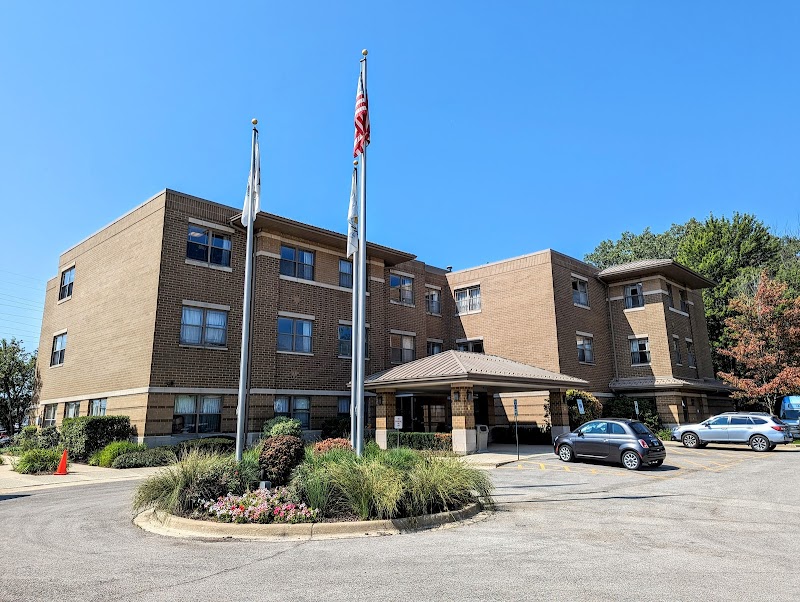
Who Owns and Operates Alden Des Plaines Rehab & Hc?

ALDEN DES PLAINES REHAB & HC is owned by a for-profit company. For-profit facilities operate as businesses with obligations to shareholders or private owners. The facility is operated by THE ALDEN NETWORK, a chain that manages multiple nursing homes. With 110 certified beds and approximately 82 residents (about 75% occupancy), it is a mid-sized facility located in DES PLAINES, Illinois.
How Does Alden Des Plaines Rehab & Hc Compare to Other Illinois Nursing Homes?

Compared to the 100 nursing homes in Illinois, ALDEN DES PLAINES REHAB & HC's overall rating (4 stars) is above the state average of 2.5 and health inspection rating (4 stars) is above the national benchmark.

What Should Families Ask When Visiting Alden Des Plaines Rehab & Hc?

Based on this facility's data, families visiting should ask: "Can you walk me through typical staffing levels on day, evening, and night shifts?" "Can I visit during a mealtime to observe dining assistance and food quality?" "How do you handle medical emergencies, and what is your hospital transfer rate?" "Can I speak with family members of current residents about their experience?" These questions are particularly relevant given the below-average staffing rating.

Is Alden Des Plaines Rehab & Hc Safe?

Based on CMS inspection data, ALDEN DES PLAINES REHAB & HC has a clean safety record: no substantiated abuse findings (meaning no confirmed cases of resident harm), no Immediate Jeopardy citations (the most serious violation level indicating risk of serious injury or death), and is not on the Special Focus Facility watch list (a federal program monitoring the lowest-performing 1% of nursing homes). The facility has a 4-star overall rating and ranks #1 of 100 nursing homes in Illinois. While no facility is perfect, families should still ask about staff-to-resident ratios and recent inspection results during their visit.

Do Nurses at Alden Des Plaines Rehab & Hc Stick Around?

ALDEN DES PLAINES REHAB & HC has not reported staff turnover data to CMS. Staff turnover matters because consistent caregivers learn residents' individual needs, medications, and preferences. When staff frequently change, this institutional knowledge is lost. Families should ask the facility directly about their staff retention rates and average employee tenure.

Was Alden Des Plaines Rehab & Hc Ever Fined?

ALDEN DES PLAINES REHAB & HC has been fined $44,450 across 1 penalty action. The Illinois average is $33,523. While any fine indicates a compliance issue, fines under $50,000 are relatively common and typically reflect isolated problems that were subsequently corrected. Families should ask what specific issues led to these fines and confirm they've been resolved.

Is Alden Des Plaines Rehab & Hc on Any Federal Watch List?

ALDEN DES PLAINES REHAB & HC is not on any federal watch list. The most significant is the Special Focus Facility (SFF) program, which identifies the bottom 1% of nursing homes nationally based on persistent, serious quality problems. Not being on this list means the facility has avoided the pattern of deficiencies that triggers enhanced federal oversight. This is a positive indicator, though families should still review the facility's inspection history directly.