GENERATIONS OAKTON PAVILLION
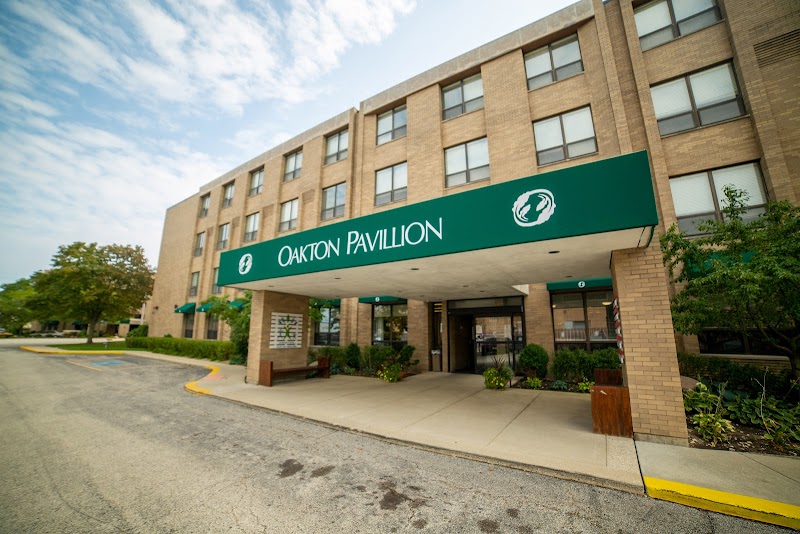
1660 OAKTON PLACE, DES PLAINES, IL 60018 (847) 299-5588
For profit - Limited Liability company 275 Beds GENERATIONS HEALTHCARE Data: November 2025
Trust Grade
0/100
#361 of 665 in IL
Last Inspection: August 2024

Within standard 12-15 month inspection cycle. Federal law requires annual inspections.

Overview

Generations Oakton Pavilion has received a Trust Grade of F, indicating significant concerns regarding its quality of care. It ranks #361 out of 665 facilities in Illinois, placing it in the bottom half, and #118 out of 201 in Cook County, meaning only a few local options are better. The facility is showing some improvement, with the number of issues decreasing from 7 in 2024 to 6 in 2025. Staffing is rated at 2 out of 5 stars, with a turnover rate of 49%, which is average compared to the state. However, the facility has incurred $345,974 in fines, which is concerning and suggests ongoing compliance issues. There is good RN coverage, exceeding 90% of state facilities, which is a strength as RNs can catch issues that CNAs might miss. Specific incidents include a serious lapse where a resident was not protected from abuse by a staff member, leading to physical injuries and hospitalization. Additionally, another resident was hospitalized due to dehydration from inadequate tube feeding care, and a third resident suffered a fracture during a transfer because they were not wearing proper footwear. While there are some positive aspects, the facility has serious weaknesses that families should carefully consider.

Trust Score
F
0/100
In Illinois
#361/665
Bottom 46%
Safety Record
High Risk
Review needed
Inspections
Getting Better
7 → 6 violations
Staff Stability
⚠ Watch
49% turnover. Above average. Higher turnover means staff may not know residents' routines.
Penalties
✓ Good
$345,974 in fines. Lower than most Illinois facilities. Relatively clean record.
Skilled Nurses
✓ Good
Each resident gets 69 minutes of Registered Nurse (RN) attention daily — more than 97% of Illinois nursing homes. RNs are the most trained staff who catch health problems before they become serious.
Violations
⚠ Watch
44 deficiencies on record. Higher than average. Multiple issues found across inspections.
★★☆☆☆
2.0
Overall Rating
★★☆☆☆
2.0
Staff Levels
★★★☆☆
3.0
Care Quality
★★☆☆☆
2.0
Inspection Score
Stable
2024: 7 issues
2025: 6 issues

The Good

  • Full Sprinkler Coverage · Fire safety systems throughout facility
  • No fines on record

Facility shows strength in fire safety.

The Bad

2-Star Overall Rating

Below Illinois average (2.5)

Below average - review inspection findings carefully

Staff Turnover: 49%

Near Illinois avg (46%)

Higher turnover may affect care consistency

Federal Fines: $345,974

Well above median ($33,413)

Significant penalties indicating serious issues

Chain: GENERATIONS HEALTHCARE

Part of a multi-facility chain

Ask about local staffing decisions and management

The Ugly 44 deficiencies on record

14 actual harm
Jul 2025 1 deficiency 1 Harm
SERIOUS (G) 📢 Someone Reported This

A family member, employee, or ombudsman was alarmed enough to file a formal complaint

Actual Harm - a resident was hurt due to facility failures

Free from Abuse/Neglect (Tag F0600)

A resident was harmed · This affected 1 resident

**NOTE- TERMS IN BRACKETS HAVE BEEN EDITED TO PROTECT CONFIDENTIALITY** Based on observation, interview and record review, the facility failed to ensure a resident remained free from staff to resident...

Read full inspector narrative →
**NOTE- TERMS IN BRACKETS HAVE BEEN EDITED TO PROTECT CONFIDENTIALITY** Based on observation, interview and record review, the facility failed to ensure a resident remained free from staff to resident abuse for one of three residents (R1) reviewed for abuse. This failure resulted in R1 sustaining physical injuries and R1 being transported to the emergency department for treatment, ultimately resulting in R1's request discharge against medical advice due to fear and dissatisfaction with the facility. R1 is a [AGE] year-old with diagnoses including heart failure, epilepsy, hypertension, hyperlipidemia and anxiety disorder. On 7/18/25 at 1:50 PM, V1 (Administrator) said she was the abuse prohibition coordinator and was present in the building due to flooding in the basement that evening she was trying to address when V4 nurse had an altercation with the resident R1. V1 indicated she was told by the resident that V4 hurt his wrists and chest during the altercation and that the resident called 911 and police and fire department came to speak with resident. V1 said she personally walked V4 out of the building at around 8:30 PM to investigate the incident and that she had reviewed the facility security closed circuit television (without audio) but did not believe V4 was at fault however suspended the staff member to follow their abuse policy. V1 then offered to show the video surveillance to the surveyor. Facility security video footage (without audio) captured the incident. Although the verbal exchange could not be heard, the footage showed V4 pointing and motioning aggressively to R1 to return to his room. The video also showed physical interaction consistent with the R1's account, including a posture and mannerisms by the nurse (V4) suggestive of an aggressive and confrontational stance. The video footage further supported that the situation escalated instead of being diffused. V4 is seen motioning with his hands for R1 to come towards him whereupon R1 appears to dash down the hall with clenched fists and confronts V4. V4 appears to remain in place instead of walking away from the situation in order to diffuse further escalation. There appears to be a verbal exchange between V4 and R1. V4 again instead of walking away, appears to push R1 away from him and makes contact with the resident's chest and hands. V4 continues to make motions with his hands and points in the direction down the hall in an effort to tell the resident to go back to his room. The whole exchange lasted over 2 minutes whereupon the resident disappears from camera view and V4 returns to nursing station. On 7/19/25 at 3:30 PM, R1 said, a male nurse treated me like some dog. I asked him to go see what's going on with another female resident who kept screaming and screaming and she sounded like she was in a lot of pain, and no one was paying attention to her. I asked this male nurse to go help her and he shouts down the hall to me to quiet down and that it wasn't his patient and to go back to my room. This really upset me because he treated me like I was some mental patient, and this angered me. He kept arguing with me that it wasn't his patient and to stop telling him what to do. He motioned to me to come to him like I was some dog as if he wanted to fight me, so I did that and went over to him, but I didn't hit him or anything, but he was pointing his finger at me and kept motioning to me to get the hell away from him instead of addressing the situation. He pushed me away and that's when I think he hurt my chest, and I must have banged my elbow, but I was so angry that I can't really recall all the details. He's a nurse and should not treat patients this way so I told this when I was in the ER (emergency room.). R1 returned to the facility after treatment but expressed to staff the following day that he no longer felt safe and requested discharge against medical advice. R1 said he was being watched by V3 social worker and other staff and he was treated like an animal and wanted to go somewhere else instead where staff were kind. R1 stated R1 was trying to get another patient some help.On 7/18/25 at 3:30 PM, V3 (Social Service Director) said that he is involved in the orientation of new employees, but that part of his orientation does not include anything related to de-escalation of behaviors but more so a general summary of dementia and emphasis on elopement prevention. On 7/18/25 at 4:10 PM telephone interview, V4 (LPN) said that he did not have any physical contact with the resident and denied raising his voice to the resident. V4 said that R1 placed his chest against his chest and his arms were at his side and he tried to control himself. Surveyor asked what he meant by trying to control himself and asked if R1 made him angry, V4 said that he meant that he wanted to try to make the resident calm was what he meant to say but admits that he was unable to calm the resident down. Surveyor asked where his arms were when this altercation came about, V4 said that his arms were at his side all the time. Surveyor asked if he raised his voice, shout at the resident, or used any type of harsh language, V4 said that he told (R1) that the resident that was screaming was not his and that he had the resident to go back to his room numerous times, but the resident did not listen to him. V4 indicated he had past dementia training but not this current facility. V4 denied de-escalation training on resident behaviors. V4 indicated he was not shown the video. On 7/18/25 at 4:30 PM, V5 LPN said V5 was the other nurse on duty the night of the incident (7/16/25) did not witness the altercation between R1 and V4 as she was busy in another room attending to a different patient however heard a loud argument down the hall. V5 said she heard the resident (R1) screaming at V4 but did not hear V4 saying anything back to the resident. V5 said she heard an argument but only heard R1 shouting. V5 again said, that she heard R1 but said that V4 did not say anything to the resident. V5 stated V5 did not observe what was written in the note, No I was busy in another room. Review of V5's nursing note entry does not align with her statement to the surveyor. On 7/16/25 at 8:30 PM, V5 (LPN) wrote, R1 approached Nurse V4 (LPN) and requested that he check on another resident who was asking for help. Nurse V4 responded promptly and went to assist the other resident. Upon returning, Resident appeared upset and began yelling at Nurse (V4), demanding that he go back and check on the resident again. Resident became increasingly agitated and attempted to physically punch (V4). Nurse V4 raised his hand to block the punch. Nurse V4 then instructed R1 to return to his room and refrain from further aggressive behavior. Shortly after the incident, Resident alleged that Nurse V4 had struck him and requested that the police be contacted. Due to the escalation and the resident's emotional state, the decision was made to send R1 to the emergency room (ER) for further evaluation and safety assessment. Supervisor was notified.Facility abuse policy revised 2022 reads in part, This facility affirms the right of our residents to be free from abuse, neglect, exploitation, misappropriation of property, deprivation of goods and services by staff or mistreatment. This facility therefore prohibits abuse, neglect, exploitation, misappropriation of property, and mistreatment of residents. In order to do so, the facility has attempted to establish a resident sensitive and resident secure environment. The purpose of this guidance is to assure that the facility is doing all that is within its control to prevent occurrences of abuse, neglect, exploitation, misappropriation of property, deprivation of goods and services by staff and mistreatment of residents.Physical Abuse is the infliction of injury on a resident that occurs other than by accidental means and that requires medical attention (77 Ill. Adm. Code 300.330). Physical abuse includes hitting, slapping, pinching, kicking, and controlling behavior through corporal punishment. Verbal Abuse is the use of oral, written, or gestured language that willfully includes disparaging and derogatory terms to residents or families, or within their hearing distance, regardless of an individuals' age, ability to comprehend, or disability.
Apr 2025 1 deficiency
CONCERN (D) 📢 Someone Reported This

A family member, employee, or ombudsman was alarmed enough to file a formal complaint

Potential for Harm - no one hurt, but risky conditions existed

Quality of Care (Tag F0684)

Could have caused harm · This affected 1 resident

**NOTE- TERMS IN BRACKETS HAVE BEEN EDITED TO PROTECT CONFIDENTIALITY** Based on interview and record review, the facility failed to follow physician orders by failing to monitor and apply a resident'...

Read full inspector narrative →
**NOTE- TERMS IN BRACKETS HAVE BEEN EDITED TO PROTECT CONFIDENTIALITY** Based on interview and record review, the facility failed to follow physician orders by failing to monitor and apply a resident's negative pressure wound therapy and dressing for a resident with necrotizing fasciitis to the right foot. These failures affect one of three residents reviewed for wound care. This failure resulted in R2 not receiving wound treatment for 5 hours, calling 911, and being transported to local emergency room. Findings include: R2 was admitted to the facility on [DATE] with a diagnosis of necrotizing fasciitis, sepsis, type II diabetes, polyneuropathy and anxiety disorder. R2's brief interview for mental status dated 4/14/25 documents a score of 15/15 which indicates cognitively intact. R2's physician order dated 4/9/25 documents: Right dorsum and plantar foot - Cleanse with Normal Saline Solution (NSS)/wound cleanser, apply negative pressure wound therapy (NPWT) at 125 mmHg (milimeters of mercury) continuous setting every day shift every Tuesday, Thursday, Sunday and as needed. On 4/22/25 at 2:23pm, R2 who was alert and oriented at time of interview said she had a bad wound on her right foot. R2 said on Saturday morning (4/19/2025) she took a shower by herself and disconnected the negative pressure wound therapy . R2 said there was a strong odor coming from her foot and she wrapped her right foot with a towel. R2 said she saw the wound care nurse down the hall after her shower and asked her to come see her but she never came. R2 said she told the social worker and nurse that she needed to see the wound care nurse but they never came. R2 said she waited until around 4 or 5 and said she decided to call 911 because no one was taking care of her foot. On 4/22/25 at 3:53PM, V9 (Certified nursing assistant, CNA) who was assigned to R2 for morning and evening shift was unable to recall if her negative pressure wound therapy was connected during her shifts. V9 said R2 had requested to see the wound care nurse, was unsure of the time but was during the first shift. V9 said the wound care nurse was on the floor and assumed she would see R2 when they did rounds. V9 did not inform anyone of R2's request for the wound care nurse. V9 said she was unsure if R2 was ever seen by wound nurse. On 4/24/25 at 1:34PM, V6 (nurse) who was assigned to R2 day shift 7-3. V6 said R2 wanted to see the wound nurse around 1100am but unsure if she was seen. V6 unable to recall if she called wound care nurse or paged her. On 4/24/25 at 2:21PM, V14 (social service director) said he was manager on duty on 4/19/2025. V14 said around 11:00 AM, he saw R2 yelling out in the hallway about her foot was in pain and her negative pressure wound therapy device had come off. V14 said R2 was observed with a bath towel around her right foot. V14 said he informed the floor nurse of R2's request to see the wound care. On 4/25/25 253PM, V15(front desk) said she saw R2 at the front desk and she was complaining about her foot. R2 reported the wound care nurse saw her in the hallway but did not come to see her to give her treatment. V15 said she paged the wound care and never received a call back. V15 said she paged again and no return call, V15 said she saw wound care nurse on the unit and just assumed she would eventually make it to R2. V15 did not inform anyone of R2's request or do anything further for R2 request. On 4/22/25 at 3:12PM, V7(nurse) who was assigned to R2 on the evening shift 3-11. Around 3:30, R2 reported that she wanted to go to the hospital to get her wound looked at. V7 said R2 negative pressure wound therapy was disconnected and there was a towel around her right foot. On 4/24/24 at 12:38PM, V13(wound care nurse) said she saw R2 in the morning around 8:00AM. R2 said she put a transparent dressing on her foot which was intact and wound drainage container which was about a quarter full. V13 said she did not see R2 after that encounter and did not receive any reports, concerns, or requests about R2. V13 said if she was aware that R2 needed to be seen she would have seen R2 during her shift. V13 said sometimes they will page her, but she does not hear it when she is in a resident room. On 4/25/25 2:48PM, V2 (ADON) said if staff need to contact the wound care nurse on duty, they would call them on their cell phone or call their office. They can leave a message in mailbox or email. V2 said its not standard protocol to page staff if needed. If a resident is requesting for wound care the nurse should call the wound care nurse. If wound care nurse is not available than they would document, and resident would be seen by wound care next day. V2 said if R2 removed her wound vac or dressing she has an as needed order that should have been followed. On 4/25/25 at 1:29PM, V16 (wound nurse practitioner) said negative pressure wound therapy helps to decrease moisture, aide with healing and help blood flow to the area. If a resident is noncompliant with device, it may be needed to change treatments to a daily dressing. If device is removed or turned off it puts the patient at risk for infection or wound to become larger. R2's April's medication administration record and treatment administration record reviewed with no documentation of any treatments provided to R2 on 4/19/25. Records reviewed do not document any monitoring or checks to R2's negative pressure wound therapy R2's progress note dated 4/19/25 at 6:28PM documents: Resident was noted to be non-compliant with prescribed wound care treatment. She independently removed her wound vac device and placed a towel over the open wound. Upon intervention, resident became visibly upset, began crying loudly, and was inconsolable. Nursing staff administered prescribed pain and antianxiety medications for symptom management. Despite being informed that wound care would be continued in-house, resident insisted on being transferred to the hospital for wound treatment. AMA (Against [NAME] l Advice) paperwork was offered; However, the resident refused to sign. Subsequently, the resident contacted 911. Paramedics arrived and transported the resident to the hospital. There were no other documented nursing progress notes on 4/19/25. R2's care plan dated documents: The resident has post surgical wounds post necrotizing fasciitis to the right dorsum foot and right planter foot, diabetic ulcers to the left ankle, blister on the left dorsum foot, and bruise on the right lower abdomen, and has potential for further skin impairment r/t resistance/non-compliance to care, diabetes, and limited mobility. Interventions include: Avoid scratching and keep hands and body parts from excessive moisture. Keep fingernails short; Educate resident/family/caregivers of causative factors and measures to prevent skin injury; Encourage good nutrition and hydration in order to promote healthier skin; Follow facility protocols for treatment of injury; Keep skin clean and dry. Use lotion on dry skin. Do not apply on (Specify: site of injury); Monitor for side effects of the antibiotics and over-the-counter pain medications: gastric distress, rash, or allergic reactions which could exacerbate skin injury; Monitor/document location, size and treatment of skin injury. Report abnormalities, failure to heal, s/sx of infection, maceration etc. to MD (medical doctor); Obtain blood work such as CBC (complete blood count) with Diff (differential), Blood Cultures and C&S (culture & sensitivity) of any open wounds as ordered by Physician; Use caution during transfers and bed mobility to prevent striking arms, legs, and hands against any sharp or hard surface; Weekly treatment documentation to include measurement of each area of skin breakdown's width, length, depth, type of tissue and exudate and any other notable changes or observations. R2's ambulance run report dated 4/19/25 at 4:03PM documents: (ambulance identifier) dispatched to the incident location for a sick person. Upon arrival, crew found R2 Alert and oriented x4 sitting upright in the nursing home lobby awaiting Emergency Medical Service arrival. Patient advises the crew that she has a chronic open wound on her right foot that she needs care for but has not received. Patient and the patient's husband advises the crew that she has been requesting wound care for the past 5 hours and pain management, but has been ignored by the nursing staff and told they would come back. Crew notes large, deep, and weeping open wound that wraps around the entire right foot. Patient has a wound vacuum to use but is not currently in use and is at the patient's side. Just prior to the crews arrival, patient was administered10-325mg of hydrocodone orally by the nursing staff per the patients PRN records. Patient advised that she was fed up with the nursing staff and needed to be transported somewhere that they would actually care for her. Patient advises the crew that she was sepsis and is currently 7 days into her cephalexin treatment. R2's hospital record dated 4/19/25 documents: R2 presents with right foot pain and erythema form nursing home with not getting proper wound care treatment today. Under skin documents chronic wounds over dorsum and plantar aspects of the right foot, pink granulation tissue with exposed tendon. Erythematous skin surrounding the wounds, swelling to the foot as well. Facility grievance dated 4/19/25 documents R2 around 3:47PM, writer was informed that R2 was asking to go to the hospital for swelling and pain. R2 states she ran into the wound care nurse in the morning and requested her to come and visit her. Wound care nurse still had not come to the room. Facility policy revised 05/17 titled Wound care documents to protect the wound from contamination and control bleeding. Under Wound care documentation documents follow physician ordered for wound care.
Feb 2025 3 deficiencies 1 Harm
SERIOUS (G) 📢 Someone Reported This

A family member, employee, or ombudsman was alarmed enough to file a formal complaint

Actual Harm - a resident was hurt due to facility failures

Deficiency F0692 (Tag F0692)

A resident was harmed · This affected 1 resident

**NOTE- TERMS IN BRACKETS HAVE BEEN EDITED TO PROTECT CONFIDENTIALITY** Based on observation, interview, and record review, the facility failed to follow their policy and procedure for hydration and t...

Read full inspector narrative →
**NOTE- TERMS IN BRACKETS HAVE BEEN EDITED TO PROTECT CONFIDENTIALITY** Based on observation, interview, and record review, the facility failed to follow their policy and procedure for hydration and tube feeding tube care by not ensuring that a resident received the recommended amount of fluids for a resident who is dependent on tube feeding for nutrition. This failure applied to one (R1) of four residents reviewed for hydration and resulted in R1 being hospitalized with diagnoses including dehydration, high blood sodium, and hypotension (low blood pressure). Findings include: R1 is a [AGE] year-old male with a diagnoses history present on admission of Brain Damage due to Oxygen Deprivation, Bacterial Infection, Epilepsy, Congestive Heart Failure, Stage 4 Pressure Ulcers, Acute Kidney Failure, UTI's, Trach Use, and Feeding Tube Use who was admitted to the facility 07/27/2024. On 02/10/2025 at 10:29 AM Observed R1 in his room lying in his bed unable to speak, bed bound, and receiving a enteral nutrition via a tube feeding. R1's current care plan documents he has potential for impaired nutrition related to acute and chronic medical conditions, wound, being tube feeding dependent, and receives nothing by mouth with interventions including; registered dietitian to provide monthly nutrition assessment and evaluate fluid needs and adequacy/appropriateness of current feeding regimen, and report any early signs of fluid overload or dehydration to the physician for further medical evaluation. R1's Monthly Enteral/Skin Note created by V9 (Registered Dietitian) dated 11/01/2024 documents R1 was being readmitted from a hospitalization and was receiving an enteral flush of 30ml of every 4 hours with recommendations to increase his flush back to 200ml every four hours the new flush would provide 2297 ml of fluid. R1's physician order history includes an order effective from 10/31/2024 to 12/02/2024 for flushing his feeding tube with 30ml and of water every four hours. R1's November and December 2024 Medication Administration Records documents he was receiving a flush with 30ml of water every four hours from 10/31/2024 to 12/02/2024. R1's progress note dated 12/2/2024 08:02 Writer spoke with a Registered Nurse at the hospital and was notified that the resident's blood pressure remains severely low, and resident is dehydrated. R1's hospital record dated 12/02/2024 documents he was admitted to the emergency room from the nursing home due to significant hypotension, was evaluated and received a primary diagnosis of dehydration, and of high blood sodium and chloride and acute kidney injury; he was assessed on admission to be profoundly dehydrated with an acute renal insufficiency and high blood sodium and it was noted that he was likely hypotensive related to these diagnoses. 02/13/2024 at 1:12 PM V2 (Director of Nursing) reported that on admission there is a section of the admission assessment that addresses nutrition and the RD (Registered Dietitian), Nurse Practitioner, Physician's Assistant, and Physician are made aware of residents enteral feeding orders received from the hospital and the orders are reconciled on admission. V2 reported the RD then further evaluates the resident's needs, makes recommendations for changes to formula, volume and flushes, and labs are also ordered on admission and readmission. V2 reported labs are ordered and evaluated by the RD, Nurse Practitioner, Physician's Assistant, and Physician and the facility uses pumps for enteral feedings and flushes and these are to be signed off on Medication Administration Records. V2 reported a collaboration of nurses assessments, weights, labs, and RD/Nurse Practitioner/Physician evaluations and recommendations are used. 02/13/2024 at 2:23 PM V2 (Director of Nursing) stated after the RD (Registered Dietitian) makes a recommendation the nurses are to call the physician to see if they agree with the orders and the orders are changed if the physician agrees. V2 stated typically the RDs will put in orders if they change the actual feeding, and the nurses verify the orders so there is a two-step process. V2 stated once the nurse confirms the orders and the orders they are verified in the resident's medical chart under physician orders. V2 stated if a flushing order was needed for R1, and it was not entered it could affect his electrolytes and his hydration. V2 stated if R1 was not receiving enough fluids and the RD recommended an increase in flushes this could possibly cause dehydration because his urine output might decrease. V2 stated fluid intake for R1 is monitored by observing feeding tube flushes and how many cc's (cubic centimeters) of fluid he receives an hour through enteral feeding and his fluid output is monitored by observing whether there is a decrease in how many times he receives incontinence care, whether there is a urine odor, or if incontinence products used may become discolored because of urine concentration. R1's progress notes from 11/01/2024 - 12/02/2024 did not include any communication with his physician regarding V9's (Registered Dietitian) recommendations to increase his fluids as documented in her notes on 11/01/2024. 02/13/2024 at 4:10 PM V2 (Director of Nursing) stated V9 (Registered Dietitian) never submitted an order for R1's recommended fluid increase. V2 stated V9's progress note regarding this recommendation was originally entered into an inactive electronic health record system on 11/04/2024 and the note was never transferred to the electronic health record system that became actively used on 11/01/2024. V2 stated the facility was not aware of or notified of V9's recommendations to increase his fluids until 12/03/2024 when V9 provided this recommendation by email. V2 stated the facility reviewed Medication Administration Records for 24 hours after the transition of the electronic medical record system on 11/01/2024 however there was no order submitted by V9 for R1's fluid increase. V2 stated it was V9's responsibility to ensure the facility received the recommendation or order to increase R1s fluids and she should have communicated this information in real time. V2 stated the concern with V9's failure to ensure the recommendation was communicated or ordered is that R1 was not getting the amount of fluids he needed. V2 stated the physician was never notified of V9's recommendation to increase R1's fluids due to the missing communication from V9. The facility's Tube Feedings/Enteral Nutrition Policy received 02/11/2025 states: Objectives: to maintain the desired fluid status of a resident.
CONCERN (E) 📢 Someone Reported This

A family member, employee, or ombudsman was alarmed enough to file a formal complaint

Potential for Harm - no one hurt, but risky conditions existed

Safe Environment (Tag F0584)

Could have caused harm · This affected multiple residents

**NOTE- TERMS IN BRACKETS HAVE BEEN EDITED TO PROTECT CONFIDENTIALITY** Based on observation, interview, and record review, the facility failed to follow their policy and procedure for housekeeping by...

Read full inspector narrative →
**NOTE- TERMS IN BRACKETS HAVE BEEN EDITED TO PROTECT CONFIDENTIALITY** Based on observation, interview, and record review, the facility failed to follow their policy and procedure for housekeeping by not ensuring the rooms and medical equipment of residents who are totally dependent on staff for care and assistance with activities of daily living, were consistently and adequately cleaned and sanitized. This failure applies to four of four residents (R1, R2, R3, R4) reviewed for environment. Findings include: 1. R1 is a [AGE] year-old male with a diagnoses history present on admission of Brain Damage due to Oxygen Deprivation, Bacterial Infection, Epilepsy, Congestive Heart Failure, Stage 4 Pressure Ulcers, Acute Kidney Failure, UTI's, Trach Use, and Feeding Tube Use who was admitted to the facility 07/27/2024. On 02/10/2025 at 10:29 AM Observed multiple dresser drawers near R1's bed open and a mild odor present. On 02/10/2025 at 10:54 AM Observed R1's oxygen machine with visible dust and particles. V5 (Registered Nurse) was present and verbally confirmed the observation and stated the oxygen equipment should be clean. Observed a clean dressing dated 02/10/2025 sitting on R1's dresser near the foot of his bed. Observed R1's respiratory equipment with visible dust in the crevices on the top of the machine. V5 verbally confirmed the observation and wiped away some of the dust to further confirm that the area was unclean. V5 stated there shouldn't be any visible dust on the respiratory equipment. Observed a brown substance spilled over on multiple areas of R1's feeding tube monitor and pole. Observed R1's dresser near the foot of his bed with multiple uncovered and exposed plastic syringes. V5 stated that one of the syringes was for stool collection and the other is for feeding tube flushing and they should both be covered and stored properly. Observed a refrigerator in R1's room with visible dust and particles on the creviced exterior and with visible residue in multiple areas of the exterior. V5 stated the refrigerator exterior surface should be clean and free of visible matter. Observed multiple dresser drawers open. V5 agreed that R1's drawers should be closed and stated it only takes a moment to close them. 2. R2 is a [AGE] year-old female with a diagnoses history of Partial Paralysis following Brain Related Bleeding, Feeding Tube Placement, Protein Calorie Malnutrition, and Dysphagia (Difficulty Swallowing Foods) who was admitted to the facility 01/23/2025. On 02/10/2025 at 11:22 AM Observed R2's oxygen machine with visible dust and particles, a large mat next to the right side of her bed with multiple visible stains and residue, R2's respiratory equipment with visible dust and particles in multiple areas, an uncovered plastic feeding tube suction syringe and a plastic glove sitting directly on top of R2's window seal, multiple yellow spots on R2's window seal and underneath the uncovered plastic feeding tube syringe, R2's feeding tube equipment with a brown substance spilled over onto the monitor and pole, and R2's night stand beside her bed with multiple open drawers with visible dust on the borders of them and visible dust on the top and side exterior of the night stand. R2's current care plan documents she is bed bound, she receives nothing by mouth and her sole source of nutrition and hydration is via enteral feeding related to diagnoses of Dementia, Congestive Heart Failure, Diabetes Mellitus, and Renal Disease or Liver Disease and is dependent with tube feeding. R2's current physician orders include an active order effective 01/23/2025 for Enteral Feeding: Tube Site Care of cleansing with normal saline solution, patting dry, and applying a drain sponge and tape every night shift. 3. R3 is an [AGE] year-old female with a diagnoses history of Alzheimer's Disease, Dementia, Protein Calorie Malnutrition, Aphagia (Inability to Swallow) and Dysphagia (Difficulty Swallowing Foods) who was admitted to the facility 03/16/2023. On 02/10/2025 at 11:14 AM Observed R3's oxygen machine with visible dust and a substance spilled on the floor directly behind it, R3's respiratory equipment with visible dust, a brown substance spilled over on multiple areas of R3's feeding tube monitor and pole, and visible dust and particles on R3's bed frame underneath the head of her bed. V2 (Director of Nursing) was also present and verbally confirmed these observations and stated they would be addressed. 4. R4 is a [AGE] year-old female with a diagnoses history of Stroke, Partial Paralysis, Dysphagia (Difficulty Swallowing), Feeding Tube Use, and Need for Assistance with Personal Care who was admitted to the facility 11/08/2024. On 02/10/2025 at 11:07 AM Observed a refrigerator in R4's room with visible dust and particles on the creviced exterior and with visible residue in multiple areas of the exterior. Observed large padding next to R4's bed with visible stains and residue. V5 (Registered Nurse) was present and verbally confirmed the observations and wiped the padding with a wet towel to confirm the stains could be removed. V5 stated the padding should be clean and free of visible substances. Observed R4's oxygen machine with visible dust and particles. V5 verbally confirmed these observations and stated there should not be any visible dust or other substances present on oxygen equipment. Observed multiple orange spots on R4's window seal and air conditioner. V5 verbally confirmed these observations and stated the spots should not be on R4's window seal. On 02/10/2025 at 11:59 AM V6 (Housekeeping Supervisor) stated nursing is responsible for cleaning the resident's medical equipment because housekeeping staff would be afraid to move the equipment and potentially disconnect something. V6 stated housekeeping staff are responsible for cleaning residents rooms daily which includes blinds, bed frames, padding, nightstands, window seals etc. which ensures these areas stay clean. V6 stated one of the housekeeping staff became ill six weeks ago and she plans on hiring more staff. V6 confirmed there should not be any visible dust, residue, substances, stains, or particles if the residents rooms are cleaned daily. 02/11/2025 1:41 PM V2 (Director of Nursing) and V5 (Registered Nurse) stated the Respiratory Therapists are responsible for replacing and cleaning respiratory care equipment and they have a schedule for this. V2 stated maintaining the cleanliness of resident's respiratory and feeding tube equipment is a collaborative effort which includes respiratory and nursing staff. V2 confirmed aides, nurses, and respiratory staff are all responsible for maintaining the cleanliness of respiratory and feeding tube equipment. When asked by surveyor if staff enter the residents room and observe their respiratory or feeding tube equipment to be unclean should the equipment be left in that condition, V2 stated this should be addressed. The facility's Daily Housekeeping Policy received 02/10/2025 states: Disinfect horizontal surfaces (dressers, nightstands, etc.). Disinfect high touch surfaces (medical equipment).
CONCERN (E) 📢 Someone Reported This

A family member, employee, or ombudsman was alarmed enough to file a formal complaint

Potential for Harm - no one hurt, but risky conditions existed

Quality of Care (Tag F0684)

Could have caused harm · This affected multiple residents

**NOTE- TERMS IN BRACKETS HAVE BEEN EDITED TO PROTECT CONFIDENTIALITY** Based on observations, interviews, and record reviews the facility failed to follow their policy and procedures for feeding tube...

Read full inspector narrative →
**NOTE- TERMS IN BRACKETS HAVE BEEN EDITED TO PROTECT CONFIDENTIALITY** Based on observations, interviews, and record reviews the facility failed to follow their policy and procedures for feeding tube care by not following physician orders of daily cleansing and dressing of feeding tube site for residents dependent on enteral nutrition. This failure applied to four of four (R1, R2, R3, and R4) residents reviewed for quality of care. Findings include: 1. R1 is a [AGE] year-old male with a diagnoses history present on admission of Brain Damage due to Oxygen Deprivation, Bacterial Infection, Epilepsy, Congestive Heart Failure, Stage 4 Pressure Ulcers, Acute Kidney Failure, UTI's, Trach Use, and Feeding Tube Use who was admitted to the facility 07/27/2024. On 02/10/2025 at 10:29 AM Observed R1 in his room lying in his bed unable to speak and bed bound. Observed V3 (Registered Nurse) uncover R1's feeding tube surgical site to reveal the site to be without a bandage/dressing and with a noticeable scab present. V3 stated feeding tube site dressings should be changed every night shift and R1 does not have a dressing over his site. V3 stated she observed R1's feeding tube surgical site with a dry scab that should be cleaned and have a new dressing applied to it. R1's current care plan documents he receives nothing orally and currently receives nutrition by feeding tube with interventions including change enteral feeding tube dressing per physician's order; he has potential for impaired nutrition related to acute and chronic medical conditions, wound, being tube feeding dependent, and receives nothing by mouth with interventions including change feeding tube dressing per physician's orders, check the feeding tube site regularly for signs/symptoms of infection such as redness, drainage etc.; registered dietitian to provide monthly nutrition assessment and evaluate calorie, protein, and fluid needs and adequacy/appropriateness of current feeding regimen, report any early signs of fluid overload or dehydration to the physician for further medical evaluation. R1's current physician orders include an active order effective 02/01/2025 for Enteral Feeding: Tube Site Care of cleansing with normal saline solution, patting dry, and applying a drain sponge and tape every night shift and as needed for feeding tube surgical opening. R1's February 2025 Treatment Administration Record documents missing information for Enteral Feeding Tube Site Care per physician's orders on 02/05/2025. 2. R2 is a [AGE] year-old female with a diagnoses history of Partial Paralysis following Brain Related Bleeding, Feeding Tube Placement, Protein Calorie Malnutrition, and Dysphagia (Difficulty Swallowing Foods) who was admitted to the facility 01/23/2025. On 02/10/2025 at 10:36 AM Observed V3 (Registered Nurse) uncover R2's feeding tube surgical site to reveal a dressing labeled 02/05/2025, with some visible brown staining, and not completely sealed with tape. V3 stated there was a scab present at R2's feeding tube site and the site is supposed to be clean before a new dressing is applied. V3 stated feeding tube site dressings should be cleaned and changed every night shift and it doesn't look like R2's was. Observed a scab around R2's feeding tube site. 3. R3 is an [AGE] year-old female with a diagnoses history of Alzheimer's Disease, Dementia, Protein Calorie Malnutrition, Aphagia (Inability to Swallow) and Dysphagia (Difficulty Swallowing Foods) who was admitted to the facility 03/16/2023. On 02/10/2025 at 10:49 AM Observed V4 (Licensed Practical Nurse) uncover R3's feeding tube site and reveal R3's site to be without a dressing. V4 stated she observed R3's feeding tube site with a bit of drainage that appears old and there is no dressing present. V4 stated the night shift typically replaces feeding tube site dressings. V4 stated dressings should be present and dated. R3's current care plan documents she is bed bound, she requires a tube feeding related to Dysphagia, receives nothing by mouth and her sole source of nutrition and hydration is by enteral feeding with interventions including requiring total assistance with tube feedings, providing local care to feeding tube site as ordered and monitoring for signs and symptoms of an infection. R3's current physician orders include an active order effective 01/30/2025 for Enteral Feeding: Tube Site Care of cleansing with normal saline solution, patting dry, and applying a drain sponge and tape every night shift and as needed. R3's February 2025 Treatment Administration Record documents missing information for Enteral Feeding Tube Site Care per physician's orders on 02/03/2025. 4. R4 is a [AGE] year-old female with a diagnoses history of Stroke, Partial Paralysis, Dysphagia (Difficulty Swallowing), Feeding Tube Use, and Need for Assistance with Personal Care who was admitted to the facility 11/08/2024. On 02/10/2025 10:44 AM Observed V4 (Licensed Practical Nurse) uncover R4's feeding tube site and reveal the dressing to be without a date. V4 stated there should be a date on R4's feeding tube site dressing. V4 stated when she examines feeding tube site dressings, she looks for a date, cleanness, and for no drainage to be present. V4 stated she observed R4's feeding tube site with a little bit of crust around it and some dry drainage. R4's current care plan documents she is bed bound, requires a feeding tube feeding related to Dysphagia, and she is dependent with tube feeding with interventions including provide local care to feeding tube site as ordered and monitor for signs and symptoms of infection. R4's current physician orders include an active order effective 11/9/2024 for Enteral - Tube Site Care every night shift. On 02/10/2025 at 11:12 AM V2 (Director of Nursing) stated both V3 (Registered Nurse) and V4 (Licensed Practical Nurse) informed her that four residents feeding tube site dressings were not changed, and the sites should be cleaned, changed, and have a dressing applied each night during the 11 PM - 7:30 AM shift. On 02/11/2025 at 1:41 PM V2 (Director of Nursing) and V5 (Registered Nurse) stated missing entries on the TAR (Treatment Administration Record) could indicate that treatment wasn't administered. V2 stated nurses should document on the TAR to confirm that treatment was administered. The facility's Tube Feedings/Enteral Nutrition Policy received 02/11/2025 states: Gastrostomy Tube care is to be done daily and as needed.
Jan 2025 1 deficiency 1 Harm
SERIOUS (G) 📢 Someone Reported This

A family member, employee, or ombudsman was alarmed enough to file a formal complaint

Actual Harm - a resident was hurt due to facility failures

Accident Prevention (Tag F0689)

A resident was harmed · This affected 1 resident

**NOTE- TERMS IN BRACKETS HAVE BEEN EDITED TO PROTECT CONFIDENTIALITY** Based on interview and record review, the facility failed to properly transfer one resident (R1) and ensure that R1 was wearing ...

Read full inspector narrative →
**NOTE- TERMS IN BRACKETS HAVE BEEN EDITED TO PROTECT CONFIDENTIALITY** Based on interview and record review, the facility failed to properly transfer one resident (R1) and ensure that R1 was wearing proper footwear during the transfer. This failure resulted in R1 being hospitalized and sustaining a fracture to the neck. Findings include: R1 is an [AGE] year old female who admitted back to the facility on [DATE] and was discharged to the hospital on 1/10/2025. R1 has multiple diagnoses including but not limited to the following: type II DM, dementia, psychosis, HTN, dysphagia, difficulty in walking, unsteadiness on feet, disorientation, and need for assistance with personal care. V3's (Licensed Practical Nurse) progress note dated 1/5/2025 at 10:00AM states in part but not limited to the following: V4 (Certified Nursing Assistant) was transferring R1 from wheelchair to the shower chair. V4 said R1 began to slide and was lowered to the floor. R1 was wearing slippers at the time of transfer. On 1/15/2025 at 11:15AM, V4 said I was going to give R1 a shower. R1 was previously a resident here and I was familiar with her. However, this was the first time I had given her a shower since she returned. R1 can transfer independently. R1 was sitting in her wheelchair. I placed her walker in front of her, she stood up using the walker, and I attempted to move the wheelchair and replace it with the shower chair. During the transfer, R1 began to slip and slide down to the ground. She was wearing slippers and she seemed weaker than normal. I assisted R1 in sliding down to the ground. V4 said R1 did not need a transfer belt. A transfer belt is used when a resident cannot mobilize themself. R1 can transfer herself and only needs supervision. It is to be noted that per R1's care plan with initiation date of 12/26/2024 states in part: R1 requires substantial/maximal assistance with 1-2 person assistance to move between services. when transferring. Use gait belt with transfers. Per Minimum Data Set (MDS) dated [DATE] states in part but not limited to the following: R1 requires maximum assistance when transferring into the shower and when going from a sitting to standing position. On 1/15/2025 at 1:41PM, V2 (Director of Nursing) stated R1 required a gait belt when transferring and I would have expected V4 to use one during this transfer. R1 was also wearing her favorite red slippers which are not appropriate when transferring. R1 should have had non-skid socks on. Hospital records dated 1/10/2025 state in part but not limited to the following: R1 presenting to the emergency room after a witnessed mechanical fall. It is reported that the fall occurred while R1 was taking a shower. R1 was guided to the ground by nursing staff and V5 (family member) observed bruising today on the back of R1's head. CT impression shows an acute C7 spinous process fracture. On 1/16/2025 at 11:15AM, V7 (Primary Physician) said this type of fracture can occur from any sudden movement or a fall especially in the elderly. Fall Prevention and Management Policy with last review dated of 02/2023 states in part but not limited to the following: The purpose of this policy is to support the prevention of falls by implementation of a preventive program that promotes the safety of residents based on care processes that represent the best ways we currently know of preventing falls. The falls prevention and management program is designed to assist staff in providing individualized, person-centered care.
Oct 2024 1 deficiency 1 Harm
SERIOUS (G) 📢 Someone Reported This

A family member, employee, or ombudsman was alarmed enough to file a formal complaint

Actual Harm - a resident was hurt due to facility failures

Incontinence Care (Tag F0690)

A resident was harmed · This affected 1 resident

**NOTE- TERMS IN BRACKETS HAVE BEEN EDITED TO PROTECT CONFIDENTIALITY** Based on observation, interview, and record review the facility failed to obtain a urine specimen from a catheter in a timely ma...

Read full inspector narrative →
**NOTE- TERMS IN BRACKETS HAVE BEEN EDITED TO PROTECT CONFIDENTIALITY** Based on observation, interview, and record review the facility failed to obtain a urine specimen from a catheter in a timely manner, document indwelling catheter output, ensure catheter care was provided and identify/respond to signs and symptoms of a UTI (Urinary Tract Infection) in a timely manner for 2 of 3 residents (R1, R3) reviewed for indwelling catheters in the sample of 3. These failures resulted in R1 requiring emergency treatment and hospitalization for a severe UTI with sepsis. The findings include: 1. The facility's Grievance Form dated 8/30/24 showed a representative from the Public Guardian's Office expressed concern regarding a phone call received by the emergency department. The ER (emergency room) informed them that R1 was admitted to the hospital with a sludged catheter. The back page of this form titled, Facility Grievance - Written Decision Form was blank. There were four sections including: Facility information, Grievance/complaint information; Investigation and Results; Was the grievance/complaint confirm (y/n); Resolution. All these sections were blank. R1's Face Sheet 9/29/24 showed diagnoses to include, but no limited to heart failure, chronic kidney disease (Stage 4), history or UTIs, dementia, diabetes, prosthetic heart valve, functional quadriplegia, neuromuscular dysfunction of the bladder, and presence of a chronic indwelling catheter. R1's facility assessment dated [DATE] showed she had severe cognitive impairment; had an indwelling catheter; was dependent on staff assistance for toilet hygiene and shower/bathe; and required substantial/maximal assistance with personal hygiene and bed mobility. R1's Physician Order Sheet dated 8/1/24 to 9/30/24 showed orders for UA (urinalysis), Reflex to Culture dated 8/8/24 and 8/13/24. It does not show an order for the UA ordered on 8/2/24 (per the facility's progress notes). This document showed orders for: Foley catheter care every shift and PRN and Document Foley output every shift. R1's August 2024 MAR (Medication Administration Record) showed Document Foley output every shift, there were no documented urine outputs for 3-11 and 11-7 shifts the entire month. The urine output was not charted 3 times for the day shift and 5 days the facility staff entered medium or large, instead of a volume of urine in milliliters (ml). This document showed R1's Foley Care every shift and PRN was not documented by 3-11 and 11-7 shifts the entire month of August and was not completed on 8/18/24 by the 7-3 shift. This document showed R1's Foley Catheter was changed on 8/11/24. R1's Progress Notes showed on 8/2/24 at 9:44 AM, R1's daughter visited and was concerned that R1 was crying, seemed more confused, and couldn't recognize family members. R1's daughter requested a urinalysis to check for a UTI. The writer notified V10 (R1's Physician) and obtained an order for a lab and a urinalysis. R1's Progress Notes dated 8/8/24 showed lab was called for the urinalysis results and the lab employee reported the urine specimen had not been collected. At 2:19 PM, the urine sample was collected and placed in the first-floor refrigerator for lab pick up. R1's Nurse Practitioner Note dated 8/8/24 showed she was seen for concerns with increased confusion. This document showed the resident slept through the entire visit but did not appear to be in pain or distress. This note showed that the urinalysis and labs ordered were discussed with the nurse. This note showed the indwelling catheter was draining clear yellow urine. R1's Progress Notes dated 8/12/24 showed the nurse called the lab to check on the urinalysis results and multiple bacterial morphotypes were found. The lab recommenced re-collecting a urine specimen. V10 was notified and orders were received to recollect the urine specimen. The nurse was unable to collect the urine sample from the indwelling catheter and reported to the next shift to obtain R1's urine specimen. R1's Progress Note on 8/28/24 by V2 (Director of Nursing/DON) showed R1's daughter called public guardian's office to have R1 sent to the ER. ADON (Assistant Director of Nursing) called R1's doctor (V10) to make him aware of the change in condition and poor appetite. The order to send R1 to the hospital was received. 911 was called. R1's Progress Note by V3 (ADON) was a late entry created on 8/30/24 at 5:45 PM (after R1's Guardian filed a Grievance with the facility). This note showed R1 was able to respond to commands, denied pain. Her family was at the bedside and vital signs were obtained. This note did not address the appearance of R1's urine. (There are no progress notes dated 8/28/24 by the V12 (Licensed Practical Nurse/LPN) that was caring for R1). R1's Progress Note dated 8/29/24 showed R1 was admitted to the hospital for a UTI. R1's UA collected on 8/8/24 showed R1's urine was cloudy yellow, had large leukocytes (white blood cells) and MANY bacteria. This report showed that multiple bacteria morphotypes were present (likely a contaminated specimen) and recommended re-collection of the urine specimen. There was no evidence of a urine specimen obtained by the facility from 8/2/24 to 8/7/24 (the first UA ordered was received 8/2/24 per to R1's progress notes), nor was there a urinalysis report after the 8/11/24 specimen report. R1's UA Report collected 8/13/24 showed R1 had cloudy, yellow urine. This report showed R1's urine contained Large leukocytes, had protein in it, MANY bacteria, had 11-20 HPF (Normal range is 0-5 HPF) Red Blood Cells and had 21-50 HPF (normal range is 0-5 HPF) [NAME] Blood Cells. R1's Lab Report showed on 7/24/24 R1's WBC (White Blood Cell Count) 5.95 and on 8/3/24 R1's WBC increased to 11.82 (Double the last result, indicating a possible infection). R1's Care Plan initiated 12/18/23 showed R1 was at risk for UTI related to history of UTIs. The interventions included, but were not limited to: Monitor for signs/symptoms of sepsis (fever, confusion, lethargy, elevated BP, tachycardia) and report to PCP (Primary Care Physician); Monitor lab work and report abnormalities; Provide peri-care as appropriate to decrease skin contact with moisture; and Report signs of UTI (acute confusion urgency, frequency, bladder spasms, nocturia, burning, pain, difficulty urinating, low back/flank pain, malaise, nausea/vomiting, chills, fever, foul order, concentrated urine, blood in urine) and notify MD as appropriate. R1's Care Plan initiated 10/14/21 showed R1 required a Foley catheter related to neuromuscular dysfunction of the bladder. The interventions included, but were not limited to: Monitor for complications related to catheter use such as catheter obstructions, bladder distension, and pain; Observe drainage (amount, type, color, odor); Provide catheter care daily and as needed; Report UTI (acute R1's emergency room records dated 8/28/24 showed R1 had a temperature of 99.9 degrees Fahrenheit; elevated lactate level (used to diagnose sepsis); elevated kidney function tests (BUN/Creat); elevated WBCs at 26.7 (normal range is 4.2 to 11 K/mcl). (This number is more than double the last WBC obtained at the facility on 8/3/24). This document showed R1 will respond to her name, but continues to say, Yes Lord, and will not answer any other questions. This document showed R1's urine was straw colored with sediment. This document showed that during ED triage, the family reported they called the ambulance because she was less responsive than normal and did not eat as much food as usual today. This document showed at 7:27 PM, the ED nurse spoke with the County Public Guardian regarding R1's condition. R1's Hospital Records dated 8/29/24 showed R1 presented with fatigue and AMS (altered mental status). This record showed R1's family visited her and noted that she was weaker than normal and was not eating/drinking. R1 appears disoriented. R1's CT of her abdomen and pelvis showed bladder wall thickening and perivesicular stranding that may represent acute cystitis (recommend correlation with urinalysis). This document showed R1 was diagnosed with acute toxic metabolic encephalopathy likely due to a CAUTI (Catheter Associated Urinary Tract Infection), sepsis, leukocytosis, and lactic acidosis. R1 was placed on intravenous antibiotics and was hospitalized from [DATE] to 9/5/24. On 9/30/24 at 3:04 PM, V18 (County Public Guardian) said R1 had a history of UTIs and had been in and out of the hospital. V18 said the ER nurse reported that R1 had sludge in her urine, and she was concerned with the appearance of the urine. V18 said that gave us concern for how the facility was taking care of R1's catheter. V18 said they had temporary guardianship of R1's financial and healthcare needs and they are responsible for ensuring R1's needs were met at the facility. On 9/29/24 at 12:12 PM, V5 (Registered Nurse/RN) said if a resident is having increased confusion or a change in their mental status, it could be a sign of a UTI or something else going on. V5 said the nurse should complete an assessment and call the doctor for orders. V5 said if a UA is order, it can be obtained for the indwelling catheter right away. The UA results are usually available within 24 hours, but the culture may take 2-3 days. The nurses can look in the chart to see if the labs are completed. V5 said a resident with an indwelling catheter should receive catheter care and urine outputs should be monitored every shift. The purpose of catheter care is to keep the area clean and reduce the risk of infections. V5 said the urine output is records and the nurses should be reviewing to see if there are any trends. V5 said the catheter care and urine output should be charted in the MAR. On 9/29/24 at 12:33 PM, V7 (LPN) said the nurses can collect a UA directly from the Foley catheter and it shouldn't take more than 24 hours to collect the specimen. The surveyor asked V7 if she remembered calling lab for the UA results on 8/8/24 and being told that the UA had not been collected. V7 stated, I don't remember, but if I documented it, then that's what happened. V7 said the nurse should document a volume of urine (in milliliters), not small, medium, large. V7 said we look at the urine output to ensure the catheter is working, the resident isn't having any health issues, and they are hydrated. V7 said the catheter care and urine output should be charted once a shift on the MAR. On 9/29/24 at 1:25 PM, V1 (Administrator) said on 8/30/24 the Grievance Form was completed because the Public Guardian's Supervisor came to the building and reported she was concerned because the ED nurse reported that R1's catheter was sludged. V1 said she assigned the investigation to V2 (DON). V1 said she wasn't sure why the back of the Grievance Form had been blank, and she would have to check with V2 (DON). On 9/29/24 at 1:37 PM, V3 (ADON) said the basic care of an indwelling catheter should include catheter care every shift; measuring the urine output every shift; securing the device; ensure its draining; and changing the catheter as needed. V3 said the resident should have orders for each item and the nurse should sign them off in the MAR as completed. This catheter maintenance is completed to reduce the risk of infections. V3 said an actual amount should be documented for urine output because there is no way to identify what small, medium, and large means. V3 said those should only be used for BMs and incontinence. V3 said the importance of measuring the urine output is to ensure the catheter is patent and monitor the resident's status. V3 said an increased WBC count shows there's possibly an infection. V3 said if a resident is experiencing fever, change in level of consciousness, poor appetite, changes in the color and clarity of the urine, then he would expect the nurse to call the doctor and obtain orders. V3 said the nurse should ensure the orders are completed. V3 said a UA can be obtained quickly from an indwelling catheter and the facility has a specimen refrigerator for storage. V3 said lab usually picks up specimens daily, Monday-Saturday. V3 said he was approached by R1's daughter on 8/28/24 and she said something was wrong with R1. V3 said he did not remember if he looked at R1's catheter, but he obtained vital signs from R1. V3 said 911 was called and R1 left for the ER with 5-10 minutes. On 9/29/24 at 2:30 Pm, V16 (Certified Nursing Assistant/CNA) said she was R1's CNA on 8/28/24. V16 said R1 wasn't acting like herself, she refused to eat breakfast. V16 said she reported it to R1's nurse, but she was an agency nurse and couldn't remember her name. V16 said R1 was screaming like she was in pain and that's not normal. V16 said the only time R1 normally screamed was during care. V16 stated, I told the nurse that too. But I didn't see the nurse go in there. Then her daughter came and asked if I saw her mom crying. I told her that she had cried most of the day. She didn't have much urine in her catheter, but she didn't eat or drink anything. She was definitely different. She is normally able to make her needs known, but she was more confused that day. She looked very tired and wasn't very alert. She was the same way at lunch. That's why I told the nurse again. I tried and tried. Her daughter called 911. On 9/30/24 at 11:11 AM, V12 (LPN) said she no longer worked at the facility, but she was R1's nurse the day she was sent to the hospital (8/28/24). V12 said she talked to R1's Guardian because R1's daughter insisted we sent her to the hospital. V12 said she doesn't remember any of the specifics, just that the daughter thought she was more confused than usual. V12 said she doesn't remember the exact time, just that she had gone on break and when she returned the Guardian called. V12 said the DON and ADON were there too. V12 said she didn't recall the CNA reported R1's poor appetite, crying, and not acting herself. V12 said she remembers giving R1 a pill and she took it fine. V12 said if she knew R1 wasn't eating, had an altered mental status, and was crying then she would have called the doctor. V12 said she didn't recall what R1's urine looked like. On 9/30/24 at 11: 25 AM, V9 (Nurse Practitioner) said the signs and symptoms of a UTI can vary with age. V9 said some possible side effects included: altered mental status, frequency, fever, dysuria, back/flank pain. V9 said if a nurse calls me because the family is concerned about increased confusion and requests a UTI, then I will discuss it with the nurse and usually order an UA. V9 said she expects the facility to collect a UA from a catheter quickly and results are usually available within 48 hours. V9 said the culture will take 2-3 days, but the UA results can be difficult to get/view through the facility's EMR. V9 said R1 is usually up in her chair and can carry on a conversation with her. V9 said R1 doesn't complain much and can tell the staff how she is feeling. V9 said the facility had in-house Providers that would give orders if resident's UA showed UTI and sometimes, she doesn't hear about the UA results until she is in to round on patients. V9 said it's a system that they are trying to improve. V9 said the facility has an in-house Infectious Disease Provider and a consult can be ordered right away. V9 said R1's WBCs doubling could have been a sign of a possible infection, but the providers are careful to not order antibiotics before the culture results. V9 said if she knew the UA had not been collected, R1 was having increased confusion, and the WBCs had doubled, then she may have ordered prophylactic antibiotics. V9 said she was not aware the UA collection was delayed. The surveyor asked V9 what increased confusion, crying, poor appetite, and poor urine output could demonstrate. V9 replied, All her symptoms are signs of UTI, septicemia, and possibly renal failure. I'm sorry to hear this about [R1]. This should have been addressed sooner. On 9/30/24 at 2:05 PM, V2 (DON) said the nurse on the floor is responsible for obtaining a urine specimen. V2 said it shouldn't take long to obtain a urine specimen from an indwelling catheter. V2 said if the resident had other labs ordered, then the nurse should try to collect the urine specimen before lab comes to draw the labs, so they can take it with them. V2 said the nurses are responsible for checking the EMR to ensure an order was entered, the specimen was obtained, the specimen was received by lab, and the results are relayed to the physician. V2 said this is done to catch a possible UTI as soon as possible and start treatment. The surveyor asked V2 what cause sludge in a catheter. V2 said it could be from a buildup of sediment or infection. V2 said catheter care every shift and monitor urine output every shift are part of routine catheter care and she expects it to be done every shift, as ordered. The surveyor asked V2 to review R1's MAR and asked why there were no 3-11 or 11-7 entries. V2 said she did not know. V2 said on 8/28/24 V3 (ADON) exited R1's room and said R1's daughter wanted her sent to the ED and she called the Guardian. V2 said she did not enter R1's room, nor did she assess R1. The surveyor asked V2 why R1's nurse (V12) did not document on R1's status 8/28/24. V2 replied, I don't know. There should be something in the legal documentation to show that something was done. She (V12) was terminated. V2 said she did not see a UA collected between 8/2/24 and 8/8/24. V2 said R1 had a catheter, and the nurse should have been able to collect a urine specimen as soon as possible. V2 said catheter care is done to protect residents from infection and can be completed by the nurse or CNA. The facility's Collecting Urine Specimen from Urinary Catheter Policy dated 2/2023 showed, Objective: To obtain a urine specimen from urinary catheter. Procedure: 1. Verify the order and assemble the supplies . 9. Urine specimens may also be collected by changing the Foley catheter and drainage bag. The facility's Catheter Care Policy dated 7/22 showed, Objective: 1. To cleanse the perineum. 2. To prevent infection and odors . 2. On 9/29/24 at 12:02 PM, R3 was sitting in his wheelchair, in his room, watching TV. R3 had catheter tubing extending from the bottom of his right pant leg. There was a large amount of brown/tan sediment noted in the catheter tubing. R3 said he's had the catheter for a while. R3 said he wasn't having any more problems with it, since they changed it last Friday. R3 said before that it was hurting him, and urine was leaking around the catheter. R3's Face sheet dated 9/29/24 showed diagnoses to include, but not limited to: COPD (chronic obstructive pulmonary disease); ataxia; anemia; bladder neck obstruction; retention of urine; obstructive and reflux uropathy; protein-calorie malnutrition; spinal stenosis; tremor; anxiety; congestive heart failure; and peripheral vascular disease. R3's facility assessment dated [DATE] showed he was cognitively intact; required substantial/maximal assist with personal hygiene; shower/bathe; and bed mobility; was dependent on staff for bed mobility and transfers; and had an indwelling catheter. R3's Physician Order Sheet showed he had orders to: Document urine output every shift and catheter care every shift and PRN (as needed). R3's September 2024 MAR showed 20 missing urine outputs and 31 entries that showed Small, medium, or large (not a volume of urine output). This document showed that R3's catheter care was not documented 8 times. R3's Urinalysis Report collected 9/3/24 showed R3's urine was cloudy, yellow, and contained nitrites, protein, MANY bacteria, RBCs, and >100 WBCs. R3's Care Plan initiated 9/9/24 showed R3 was on antibiotic therapy related positive urine culture for ESBL. R3's ID (Infectious Disease) Follow up Note dated 9/17/24 showed R3 was being seen for ESBL UTI and R3 had mild gross hematuria. On 10/4/24 at 12:23 PM, V2 (DON) said R3 was admitted to the facility with COPD, frequent UTIs, generalized weakness, and had an indwelling catheter.
Aug 2024 1 deficiency
CONCERN (D)

Potential for Harm - no one hurt, but risky conditions existed

Deficiency F0688 (Tag F0688)

Could have caused harm · This affected 1 resident

**NOTE- TERMS IN BRACKETS HAVE BEEN EDITED TO PROTECT CONFIDENTIALITY** Based on observations, interviews and records reviews the facility failed to provide a recliner wheelchair to a dependent reside...

Read full inspector narrative →
**NOTE- TERMS IN BRACKETS HAVE BEEN EDITED TO PROTECT CONFIDENTIALITY** Based on observations, interviews and records reviews the facility failed to provide a recliner wheelchair to a dependent resident. This failure affected one (R12) resident out of three residents reviewed for resident rights who expressed a desire to get out of bed and interact with the environment. Findings Includes: R12 is [AGE] years old admitted to the facility 09/08/23 with diagnoses including but not limited to multiple sclerosis, Sacral ulcer, Chronic anemia, and protein energy undernutrition. MDS (minimum data set) dated 06/17/2024 reads R12 uses a wheelchair for mobility. On 08/20/24 at 10:30AM during facility rounds R12 observed to be in bed and said, I want to get out of bed, but I don't have a wheelchair. I don't remember when the last time was, I got up. I asked the nursing assistants, but I was told I do not have a chair to get up in. On 08/21/2024 at 10:45 AM Observed V21(Certified Nursing Assistant) getting R12 out of bed to receive a shower. V21 said, I am R12's regular certified nursing assistant. R12 was under Hospice care. After R12 was discontinued from the service, the recliner wheelchair that R12 was using was pick up from the hospice company. I have not gotten R12 up since that time. On 08/21/2024 at 10:45 AM, R12 said, I want to get out of bed. On 08/21/2024 at 11:00AM V16 (Registered Nurse) said, I have not seen R12 getting out of bed. Hospice service used to get R12 out of bed. Hospice services was discontinued on 06/08/24. I am not aware that R12 does not have a recliner wheelchair to use. On 08/21/2024 at 11:15 AM V20 (Assistant Director of Nursing) said, I expect R12 to have a wheelchair. I do not know why R12 has not received a recliner wheelchair after hospice was discontinued. On 08/21/2024 at 2:00PM V2(Director of Nursing) said, I expect all the residents admitted to the facility to obtain a wheelchair during admission or as needed. The facility will provide a wheelchair to all residents that require one. On 08/20/2024 and 08/21/2024 surveyor checked R12's room both days and no wheelchair was available for R12 to use. On 08/21/2024 at 09:57 PM V1 (Administrator) presented Facility Policy titled: Residents' Right for People in the Long-term Care Facility undated, reads: facility must make reasonable arrangements to meet your needs and choices.
Jun 2024 1 deficiency
CONCERN (D) 📢 Someone Reported This

A family member, employee, or ombudsman was alarmed enough to file a formal complaint

Potential for Harm - no one hurt, but risky conditions existed

Infection Control (Tag F0880)

Could have caused harm · This affected 1 resident

**NOTE- TERMS IN BRACKETS HAVE BEEN EDITED TO PROTECT CONFIDENTIALITY** Based on observation, interview and record review, the facility failed to follow Physician Order for transmission-based precauti...

Read full inspector narrative →
**NOTE- TERMS IN BRACKETS HAVE BEEN EDITED TO PROTECT CONFIDENTIALITY** Based on observation, interview and record review, the facility failed to follow Physician Order for transmission-based precautions for 1 resident (R8) and failed to perform hand hygiene to prevent the spread of infectious microorganisms. Findings include: R8 was admitted on [DATE] with diagnosis that includes diabetes mellitus, systemic lupus erythematosus, Anemia, Acute kidney failure, Urinary tract infection, Pneumonia, unspecified organism, Acute respiratory failure, Unspecified Escherichia coli (E. coli), Listeriosis, unspecified-listeria bacteremia, Neutropenia, unspecified-Neutropenic fever, Bacteremia-listeria bacteremia. R8's Physician Order Sheet start date 5/29/2024 documented, in part Contact Isolation Precautions for Klebsiella, in the urine and MRSA of the nares. R8's Physician Order Sheet start date 5/30/2024 documented, in part Strict contact and droplet isolation precautions related to neutropenic status. All care and services provide by staff in room. R8's care plan dated 5/30/2024 documented in part: Resident is on contact and droplet isolations due to myelodysplastic syndrome and neutropenic status; Goal: Target Date: 6/27/2024 Resident's infection will be resolved/controlled till next review; Approach start date: 5/30/2024 educate visitors on necessary precautions needed for droplet and contact isolation; maintain the resident on droplet and contact isolation precautions in accordance with the Center for Disease Control (CDC) guidelines; place on a private room for strict droplet and contact precautions. Keep door closed at all times. On 5/31/2024 at 1:12pm a droplet sign and a contact precaution isolation sign was observed posted on R8's door. On 5/31/2024 at 1:13pm surveyor was standing in hallway on first floor and observed V5 (CNA) enter residents' room to collect meal tray. Surveyor observed V5 enter room next to R8's room removed tray out of resident's room then proceeded to R8's room. V5 entered R8's room without performing any hand hygiene or donning any PPE (Personal Protective Equipment) and picked up R8's meal tray and exited R8's room and put the used meal tray in cart. After V5 put used meal tray in cart, V5 did not perform hand hygiene and continued to next resident's room and entered a room without performing any hand hygiene. Posted outside of R8's room were two isolation signs. One sign read, droplet precautions and the other sign read, contact precautions, and a plastic bin filled with PPE was at entrance of R8's door. Surveyor asked V5 if she (V5) had education on infection control practice. V5 stated, yes, I have had education and we do not have to put on PPE if we are not going to touch the resident or do care. Surveyor asked V5 if R8 was on isolation and if PPE was required. V5 stated, no I did not touch the resident. Surveyor asked V5 to look at the signs posted at the door of R8. V5 stated, Oh yea, I should have put on PPE because the resident is on droplet and contact. V5 stated, I did not put on any PPE, and I walked out of the room and did not do any hand hygiene. V5 stated, we have enough PPE. On 5/31/2024 at 1:18pm surveyor asked V4 (Registered Nurse /RN) what isolation precautions R8 was on. V4 stated, the resident is on droplet and contact precautions and anyone that enters the room is supposed to wear the PPE that is stated on the signs. Any time anyone enters R8 room, they must put on PPE, so we do not spread infection. The CNA should have put on mask, gown, gloves and perform hand hygiene prior to entering the room and remove all PPE prior to exiting and performed hand hygiene. V4 further stated, the census on the floor was 21 but I sent someone home earlier so now the census is 20. On 5/31/2024 at 2:43pm V3 (Infection Prevention Nurse) if a Droplet and/or Contact sign is on the door staff must wear PPE prior to entering put on (gown, gloves, mask) and when exiting take PPE off and do hand hygiene. Risk if PPE sign is not followed, transfer of micro-organisms can occur. If there is a sign at the door regarding isolation, I expect staff to read sign and follow the sign and wear the appropriate PPE based on what they will be doing with resident. If a resident is on droplet and contact precautions, anyone entering the room must follow the sign on the door regarding PPE. On 6/1/2024 at 11:04am V2 (Director of Nursing) stated, for residents on isolation, I expect staff to follow the sign on the door for whatever PPE is needed. Infection Control Policy dated reviewed June 2020/Revised May 2024 (in part) documented Objective: The facility's written program is for the implementation of systems that provide a safe, sanitary and comfortable environment and helps prevent the development and transmission of communicable diseases and infections. The facility's infection control program includes: 4) The facility maintains protocols and precautions to prevent transmission of infectious agents using the following tiers of precautions: Transmission Based Precautions i. Contact Precautions ii. Droplet Precautions 5) The facility provides personnel protective equipment (PPE) which refer to barriers used alone or in combination to protect mucous membranes, airways, skin, and clothing from contact with infectious agents, PPE used is base upon the nature of the interaction with the resident and/or the likely mode of transmission. 6) Hand Hygiene is utilized to reduce the spread of germs to residents and the risk of the Health Care Provider's colonization of infection by germs acquired from the resident. The facility utilizes hand hygiene via handwashing and alcohol base sanitizers.
Jan 2024 2 deficiencies
CONCERN (D) 📢 Someone Reported This

A family member, employee, or ombudsman was alarmed enough to file a formal complaint

Potential for Harm - no one hurt, but risky conditions existed

Accident Prevention (Tag F0689)

Could have caused harm · This affected 1 resident

**NOTE- TERMS IN BRACKETS HAVE BEEN EDITED TO PROTECT CONFIDENTIALITY** Based on interview and record review the facility failed to ensure a resident's safety when providing care to prevent a fall for...

Read full inspector narrative →
**NOTE- TERMS IN BRACKETS HAVE BEEN EDITED TO PROTECT CONFIDENTIALITY** Based on interview and record review the facility failed to ensure a resident's safety when providing care to prevent a fall for 1 of 3 residents (R3) reviewed for safety in the sample of 9. The findings include: R3's Face Sheet shows that she was admitted to the facility on [DATE] with the diagnoses of tracheostomy, gastrostomy, sepsis, chronic respiratory failure, pressure ulcer, lupus, obstructive uropathy and malnutrition. R3's Minimum Data Set assessment dated [DATE] shows she is in a persistent vegetative state and is dependent on staff for all activities of daily living (ADL) and mobility. R3's ADL Care Plan initiated on 6/28/23 shows that she is totally dependent with two staff assist for bed mobility and bathing. R3's Nursing Notes dated 12/19/23 at 12:00 PM shows, Writer heard called [sic] from CNA (Certified Nursing Assistant) coming from resident room. Writer immediately run [sic] to resident room. Writer noted resident was being changed by CNA, CNA holding resident, resident [sic] body. Writer and CNA assisted resident to the floor. R3's Fall Incident Report shows that she had a fall in her room while being bathed on 12/19/23 at 11:40 AM. The report shows, Nurse heard yelling from CNA. CNA was providing care to resident. Writer ran to room. Noted resident sliding the [sic] bed while CNA holding resident. Writer had to lower bed and resident [sic] assisted resident with other staff members to floor Order from MD (Physician) to send resident to hospital. The Incident Follow up Report shows, Intervention-Check settings on mattress before positioning. On 1/19/24 at 12:49 PM, V11 (CNA) said that her and V9 (Registered Nurse/RN) were providing incontinence care and a dressing change to R3 prior to her falling. V11 said that during care, V9 stepped out of the room to get something but V11 could not recall what V9 was going to go get. V11 said that R3 was on her side, and she (V11) was standing on the side of the bed that R3's back side was facing when R3 started slipping. V11 said that R3 started coughing and her legs started sliding off the bed. V11 said that she held onto R3 (still with R3's backside towards her) and started yelling for help. V11 said V9 returned, and they could not lift her back to bed, so she was lowered to the floor. V11 said that R3 requires two people to provide incontinence care. On 1/19/24 at 12:55 PM, V9 (RN) said that she was in the room with V11 prior to the fall and was providing care and a dressing change to R3. V9 said that she had left to go to a cart that was at the door to get something when she heard screaming. V9 said that when she went back into the room, she saw V11 holding R3, but she was sliding off the bed. V9 said that she could not recall what side of the bed she (V9) was on before she left the room or what she (V9) went to go get from the cart. V9 said that R3 was lowered to the floor. V9 said that another nurse could have gotten her what she needed if she had asked. On 1/19/24 at 3:37 PM, V2 (Director of Nursing) said that she did an investigation after R3's fall. V2 said that she had found that V11 and V9 were providing care to R3 when V9 had to step out of the room for something and then heard V11 calling for help. V2 said that V11 said that R3 was turned and started coughing and then slid to the side of the bed and she was then lowered to the floor. V2 said that during her investigation she found that R3's air mattress was not put on the right setting that it should have been set on to provide care and that could be why she slid out of the bed. V2 said that R3 should always have two people assisting with cares and she is not sure why V9 stepped out. The facility's Fall Prevention and Management Policy revised on 12/23 shows, The purpose of this policy is to support the prevention of falls by implementation of a preventative program that promotes the safety of residents based on care processes that represent the best ways we currently know of preventing falls .Universal fall precautions are safety measures that are taken to reduce the chance of falls for all residents, regardless of individual risks
CONCERN (D) 📢 Someone Reported This

A family member, employee, or ombudsman was alarmed enough to file a formal complaint

Potential for Harm - no one hurt, but risky conditions existed

Incontinence Care (Tag F0690)

Could have caused harm · This affected 1 resident

Based on observation, interview, and record review, the facility failed to ensure a resident's urinary catheter bag was kept from resting on the floor and failed to secure the catheter tubing for 1 of...

Read full inspector narrative →
Based on observation, interview, and record review, the facility failed to ensure a resident's urinary catheter bag was kept from resting on the floor and failed to secure the catheter tubing for 1 of 3 residents (R2) reviewed for catheters in the sample of 9. The findings include: On 1/19/24 at 9:55 AM, R2 was lying in bed in her room watching TV. R2's urinary catheter drainage bag was near the end of the bed resting directly on the floor. On 1/19/24 at 10:03 AM, V4 (Certified Nursing Assistant/CNA), said a catheter bag should never be on the floor. V4 said the catheter bag should be placed inside a special bag and hung on the bedframe, it should never be on the floor, the floor is dirty, and the catheter bag needs to be clean. On 1/19/24 at 10:07 AM, V5 (CNA) said the catheter bag should not be on the floor because it could get the catheter infected. On 1/19/24 at 10:11 AM, V5 and V3 (Licensed Practical Nurse), were in with R2 to reposition R2. R2's catheter tubing was not secured/anchored to R2's person. On 1/19/24 at 1:03 PM, V9 (Registered Nurse), said they use a leg strap or a sticker securement device to secure the catheter tubing to the resident's leg. V9 said both types are available. V9 said every resident with a catheter needs one and catheters are ordered to be anchored so the tubing is not pulled for safety reasons. V9 said they don't want any trauma. V9 said the bag should not be on the floor for infection prevention; they don't want it contaminated or pulling. R2's current Face Sheet provided by the facility (undated) shows her diagnoses include, but are not limited to, urinary tract infection (UTI), chronic kidney disease, diabetes, quadriplegia, neuromuscular bladder dysfunction, prosthetic heart valve, and chronic indwelling urinary catheter. R2's current Care Plan provided by the facility shows interventions related to R2's Indwelling catheter include the following: do not allow tubing of any part of the drainage system to touch the floor, monitor foley catheter stabilization device every shift and change as needed, and store collection bag inside a protective dignity pouch. The facility's Catheter Care Policy (revised 10/2022) shows the catheter is to be secured to the resident's thigh and/or lower abdomen in men to facilitate the flow of urine and prevent excessive tension on the catheter.
Jan 2024 2 deficiencies 1 Harm
SERIOUS (G) 📢 Someone Reported This

A family member, employee, or ombudsman was alarmed enough to file a formal complaint

Actual Harm - a resident was hurt due to facility failures

Deficiency F0688 (Tag F0688)

A resident was harmed · This affected 1 resident

**NOTE- TERMS IN BRACKETS HAVE BEEN EDITED TO PROTECT CONFIDENTIALITY** Based on observation, interview, and record review, this facility failed to provide the necessary services, identify a decline, ...

Read full inspector narrative →
**NOTE- TERMS IN BRACKETS HAVE BEEN EDITED TO PROTECT CONFIDENTIALITY** Based on observation, interview, and record review, this facility failed to provide the necessary services, identify a decline, implement interventions, and evaluate the effectiveness of interventions to prevent the decline in range of motion. This affected one of three residents (R1) reviewed for a decline in functional abilities. This failure resulted in R1 developing a contracture of right hand and is unable to extend fingers. Findings include: R1's medical record notes R1 with diagnoses including, but not limited to, tracheostomy, ventilator dependent, left knee contracture, gastrostomy, nontraumatic intracerebral bleed, stroke with hemiplegia affecting right side, cardiac arrest, generalized muscle weakness. On 12/26/23 at 9:18 AM, R1's family member stated that R1's hands are contracted because he is not receiving therapy. R1's family member stated that R1 is supposed to wear a splint on right hand, but she never sees R1 wearing it and now R1's right hand is contracted. On 12/26/23 at 1:30 PM, R1 was observed lying in bed without a right-hand splint. On 12/27/23 at 10:00 AM, R1 was observed lying in bed without a right-hand splint. On 12/27/23 at 1:18pm, V8 (Restorative Aide) was observed on the nursing unit. V8 was observed entering a resident's room at 1:19pm and exiting at 1:35pm. V8 was observed entering another resident's room at 1:35pm and exiting room at 1:55pm. V8 was then observed walking down hallway towards empty resident rooms. V8 was not observed providing PROM (Passive Range of Motion) therapy with R1. V8's documentation in R1's electronic medical record, dated 12/27/23 at 2:30 PM, notes V8 completed 15 minutes of PROM and applied right hand splint for 15 minutes. On 12/27/23 from 2:05pm until 2:46pm, R1 was observed for wound care treatment. R1 was not wearing a right-hand splint. V8 was not observed at any time entering R1's room and providing therapy for R1. R1's functional abilities assessment, dated 10/27/23, notes R1 with impairment in range of motion in both upper extremities (shoulder, elbow, wrist, hand). On 12/28/23 at 8:50am, V7 (Restorative Nurse) stated that she started working at this facility in September 2023. V7 stated that residents that are not receiving skilled therapy will receive restorative therapy. V7 stated that R1 is in restorative's PROM program. V7 reviewed R1's last two restorative assessments, dated 8/25/22 and 11/21/22. V7 stated that neither assessment notes R1 using adaptive equipment for right hand. V7 stated that restorative assessments are completed quarterly for residents. There are no further restorative assessments found in R1's medical record. On 12/28/23 at 9:40am, V9 (Rehabilitation Director) reviewed R1's OT (Occupational Therapy) evaluation dated 4/7/23. V9 stated that the therapist recommended PROM program for R1 and a resting hand splint for prevention of contracture. V9 stated that it notes right wrist with increased tone. V9 stated that this means the therapist was able to work with right hand; this is reason right hand splint was recommended. V9 reviewed R1's OT evaluation dated 9/22/23. V9 stated that it notes R1's right wrist/hand with a lot of resistance, a lot of increased tone and tightness. V9 stated that the right-hand splint would help prevent bad contractures. V9 stated that evaluation also notes slight hand contracture of R1's right hand. V9 informed that R1's right hand splint and PROM program were not reordered after R1 returned from hospital on [DATE]. V9 stated that the splint and PROM program should have been re-ordered with each re-admission to this facility. V9 stated that R1's right hand splint ordered previously notes for R1 to wear at all times except with bathing or receiving PROM. V9 stated that PROM was ordered daily previously. R1's OT (occupational therapy) evaluation, dated 4/7/23, notes R1 was seen to assess therapy needs, splint assessment, and develop a restorative program. Musculoskeletal assessment noted impairments to both upper extremities. R1's right wrist with no active range of motion, passive range of motion within functional limits but with increased tone. R1 will benefit from a resting hand splint for right hand to decrease risk of contracture. R1 referred to restorative therapy for PROM of all extremities. R1's OT evaluation, dated 9/22/23, notes R1's right wrist with no active range of motion, passive range of motion within functional limits but with spasticity and stiffness noted. R1 with slight contracture noted in right hand. R1 will benefit from continued restorative program for PROM of both upper extremities, positioning in bed as well as additional daily application of a resting hand splint to right hand for prevention of contractures and maintaining current PROM. The therapist trained restorative staff on proper PROM/stretching technique for both upper extremities and completed x 10 repetitions for all joints on all planes. Additionally trained restorative staff on proper application of resting hand splint on right hand. R1's POS (Physician Order Sheet), dated 9/21/23, notes an order for restorative splint/brace to be on at all times to assist in contracture management/maintenance of current ROM (range of motion)/pain management. Special instructions: remove for bathing, ADLs (activities of daily living), and skin checks. This order was not re-ordered upon re-admission to this facility on 10/20/23 or 12/2/23.
CONCERN (D) 📢 Someone Reported This

A family member, employee, or ombudsman was alarmed enough to file a formal complaint

Potential for Harm - no one hurt, but risky conditions existed

Pressure Ulcer Prevention (Tag F0686)

Could have caused harm · This affected 1 resident

Based on observation, interview, and record review, the facility failed to implement effective preventive measures according to a resident's plan of care. The facility failed to ensure a pressure reli...

Read full inspector narrative →
Based on observation, interview, and record review, the facility failed to implement effective preventive measures according to a resident's plan of care. The facility failed to ensure a pressure relief mattress was operated correctly. This affected one of three residents (R2) reviewed for pressure sore prevention interventions. Findings include: R2's medical record notes R2 with diagnoses including, but not limited to, diabetes, stroke with hemiplegia affecting right dominant side, and generalized muscle weakness. R2's MDS (Minimum Data Set), dated 11/20/23, notes R2's cognition is severely impaired. R2 is totally dependent on staff assistance with hygiene, bathing, dressing, and toileting. On 12/26/23 at 10:35 AM, V4 (Wound Care Coordinator) was observed performing wound care treatment for R2. R2 was observed lying supine in bed. Specialty mattress was observed to be set for 120 pounds. R2 was observed to have a top sheet folded in half under her in addition to the flat sheet. On 12/27/23 at 3:15pm, V4 stated that the low air loss mattress setting is based on the weight of the resident. V4 stated that the weight setting affects different levels of alternating inflation and relieves pressure on wound. V4 stated that if the setting is too high, the mattress becomes more firm; too low, less firm. V4 stated that the floor supervisor, nurses, and wound care are expected to check the settings on the low air loss mattresses every day to ensure the proper setting. V4 stated that it is very important that there is only one flat sheet under the resident. V4 stated that multiple layers of sheets cause the low air loss mattress not to inflate and deflate in intervals correctly. On 12/28/23 at 3:10pm, V12 (Covering Wound Care Physician) stated that the low air loss mattress setting should be set at the resident's current weight. V12 stated that it is acceptable for the mattress setting to be plus or minus 10% of the resident's actual weight and still be effective. R2's weight documented on 12/4/23 is 156 pounds. 10% is plus or minus 15.6 pounds. V10's (Wound Care Physician) note, dated 12/7/23, notes R2 with an unstageable DTI (deep tissue injury) with intact skin on sacrum, measuring 3cm (centimeters) x 8.2cm. Wound identified on 12/7/23. V10's note, dated 12/14/23, notes R2 with an unstageable (due to necrosis) wound on sacrum, measuring 2.7cm x 7.7cm x 0.1cm, moderate drainage. Wound with 10% thick adherent devitalized necrotic tissue, 40% slough (yellow tissue), 20% granulation (pink/red tissue), and 30% dermis. V10 recommended low air loss mattress. Wound was debrided at bedside to remove nonviable tissue (necrotic and slough) in the wound from 50% to 20%. V10's note, dated 12/21/23, notes R2's sacral wound measures 1.9cm x 6.3cm x 0.2cm, moderate drainage. Wound with 50% slough, 20% granulation tissue, and 30% dermis. Wound debrided at bedside to decrease nonviable tissue from 50% to 25%. V12's (Covering Wound Care Physician) note, dated 12/28/23, notes R2's sacral wound measures 1.9cm x 6cm x 0.2cm, moderate purulent drainage. Wound with 50% slough, 20% granulation tissue, and 30% dermis. Wound debrided at bedside to decrease nonviable tissue from 50% to 20%.
Dec 2023 1 deficiency 1 Harm
SERIOUS (G) 📢 Someone Reported This

A family member, employee, or ombudsman was alarmed enough to file a formal complaint

Actual Harm - a resident was hurt due to facility failures

Accident Prevention (Tag F0689)

A resident was harmed · This affected 1 resident

**NOTE- TERMS IN BRACKETS HAVE BEEN EDITED TO PROTECT CONFIDENTIALITY** Based on observation, interview and record review the facility failed to follow its Accident/Incidents Reporting policy by not c...

Read full inspector narrative →
**NOTE- TERMS IN BRACKETS HAVE BEEN EDITED TO PROTECT CONFIDENTIALITY** Based on observation, interview and record review the facility failed to follow its Accident/Incidents Reporting policy by not completing an incident report, failing to document in the progress notes, failing to assess and monitor for any changes of condition, and failing to notify the physician and family immediately after an incident. The facility also failed to follow its Fall Prevention and Management policy by not implementing fall interventions and failing to update fall care plan after a fall for two (R1, R2) of three residents reviewed for falls. These failures caused a delay in treatment and hospitalization of R1 who sustained a left femoral neck fracture that required surgery. Findings include: 1.) On 12/5/23 at 9:52AM, observed R1 lying in bed. She is awake but confused and restless. Her blanket is by the foot part of her bed. The bed is not on the lowest position. The floor mattresses are folded on the floor. The call light is not within reach. The abductor wedge is at the bedside. Called V9 (Certified Nurse Assistant/CNA) to R1's room and showed V9 the observation. V9 said R1 finished her breakfast in bed before 9:00 AM. V9 said R1 is restless, keeps removing her abductor wedge in between her legs. V9 said that R1's floor mattress should be laid on bilateral sides of the bed and the bed should be on the lowest position. V9 CNA adjusted the bed on the lowest position. On 12/5/23 at 10:00 AM, called V10 (Registered Nurse/RN) and informed of above observation. V10 said that she observed R1 when she made rounds this morning with floor mattresses folded. V10 said that CNAs folded it to provide space and way for the other 2 residents when up in wheelchair for them to get out from the room. V10 said that the floor mattresses should be on both side of R1's bed for safety. On 12/5/23 at 10:30 AM, reviewed R1's medical record with V10. V10 said that R1 is ambulatory with unsteady gait, and she is at high risk for falls. There is no fall incident report and no documentation written in R1's progress notes for 11/2/23. Documentation indicated on 11/3/23 R1 was sent to the hospital due to left hip pain and was admitted with left femur fracture. On 12/5/23 at 12:37 PM, V12 (RN) said that she worked with R1 on 11/2/23 3-11 shift. She said that R1 has unsteady gait and limping when ambulating. She said, around 7:00 PM she went to R1's room and observed R1 bending over to pick up bandage on the floor, by the time she approached R1, she was already down on the floor. She was sitting in the middle of the 2 beds. She left R1 and called for help. When she came back to the room with other staff (V13 CNA, V14 CNA, V15 CNA, and V16 RN) with her, R1 was able to move herself by scooting in a sitting position and reached by the foot part of the bed closer to the door. They transferred her via mechanical lift to the wheelchair. R1 denied any pain. V12 said she assessed R1, and no injury was noted. She did not document the incident in the progress notes and did not complete an incident report. She did not notify R1's PCP (primary care physician) and family about the incident happened because R1 did not complain of any pain and no injuries were noted. She forgot to document the incident in the progress note but she endorsed to the next shift (V21 Agency Licensed Practical Nurse/LPN) what happened. She said, the following day when R1 complained of pain on her left hip, the PCP and family was notified. She said, she should document in the progress note of what happened, complete an incident report, and notified her DON (Director of Nursing) of the incident. On 12/5/23 at 1:03 PM, V13 (CNA) said that she worked on 11/2/23 3-11 shift. V13 said, R1 ambulates with unsteady gait due to her limping. V13 said, she was called by V12 (RN) to help R1. V13 said, she found R1 sitting on the floor by the foot part of the bed close to the door. There were 3 CNAs (V14, V15 and herself) and 2 Nurses (V12 RN and V16) who transferred R1 to wheelchair using gait belt. Four of them assisted R1 to wheelchair while V15 held the wheelchair. R1 was wheeled to the nursing station for monitoring because R1 is confused and trying to get up from wheelchair. On 12/5/23 at 1:24 PM, V14 (CNA) said that he worked on 11/2/23 3-11 shift. He said V13 (CNA) called him to help R1. He observed R1 was lying on the floor by the end of the bed, facing the window. They picked her up and assisted to the wheelchair. V15 (CNA) held the wheelchair and while the rest assisted R1 to the wheelchair. They did not use gait belt because R1 can still stand up. R1 was wheeled to the nursing station for supervision. On 12/5/23 at 1:30 PM, V7 (Restorative Nurse/Fall Coordinator) said that she is responsible for implementing fall interventions and investigation of fall incidents. The floor nurses do the fall assessment upon admission/re-admission, quarterly assessment, annually, significant change of condition and after each fall. She updates the care plan after each fall incident based on root cause analysis/fall investigation. Fall is any change on plane, could be kneeling, lying, anybody position on floor. It could be witnessed or observed. Reaching on the floor or bending over that ended body to land on the floor is considered a fall and should be documented in the progress notes and need to complete an incident report. Any unusual incident happened to the resident should be documented in the progress notes and complete an incident report. The nurse should report the incident to the DON or ADON. Then the nurse will be informed of what immediate intervention should be put in place. Root cause analysis/fall investigation is done by the IDT (Interdisciplinary team) during daily morning meeting. Then the fall care plan will be updated based on the root cause analysis/fall investigation to prevent future falls. R1 is ambulatory but with unsteady gait due to her limping. R1 is at high risk for falls and had multiple fall incidents. On 12/5/23 at 2:22 PM, V15 (CNA) said that she has been working in the facility for 6 weeks. The first time she worked by herself was on 11/2/23 3-11 shift when she took care of R1. She said she was called to R1's room and observed R1 sitting on the floor by the foot of her bed with her both legs extended. She did not know what happened. She held the wheelchair as the 2 nurses and 1 CNA assisted R1 to the wheelchair. R1 was wheeled to the nursing station. V15 said she placed R1 to bed around 9:00 PM by herself. R1 has having hard time pivoting/turning. R1 moaned but when she asked R1 if she is in pain, R1 denied it. V15 reported to V12 (RN) of her observation. V15 said, V12 only endorsed to her that R1 needs 1 person assist and is incontinent. V12 did not inform her that R1 needs supervision, and she is at risk for fall. V15 said that after dinner, R1 was sitting by the nursing station. She does not know who wheeled R1 to her room or if she wheeled herself or walked to her room. On 12/6/23 at 10:13 AM, V21 (Agency LPN) said that she worked on 11/2/23 at 11-7 shift and received endorsement from V12 (RN) that R1 had fall incident and denied any pain. V21 said that she did not know the details of R1's fall. V21 said that she monitored R1, but she can't remember documenting it. V21 endorsed to the next shift and reported to V22 (LPN) that R1 fell on [DATE] 3-11 shift. V21 endorsed to V22 to call R2's PCP (Primary care physician). V21 said that she was still in the facility when R1 was sent out to the hospital for evaluation. V21 said that she does not know why V12 did not complete an incident report for R1 and did not document it in the R1's progress notes of what happened. V21 said that assessment, documentation, and reporting to PCP and family should be done immediately after the incident occurred. On 12/6/23 at 10:20 AM, Review R1's medical records with V7 (Fall Coordinator). R1's fall incident that occurred on 11/2/23 was not documented in progress notes. Fall incident report was not done. R1's PCP and family were not immediately notified after the incident. R1 was not monitored for any changes of condition after the incident. Informed V7 that R1's fall prevention interventions were not implemented. R1 was observed on 12/5/23 that she is not up in chair before breakfast. The bilateral floor mattresses were folded while she was in bed. Her bed was not in the lowest position. On incident of 11/2/23, R1 was not in high traffic area so staff can monitor her. She was observed bending over to pick up something on the floor and by the she approached her she was already sitting down on the floor in her room. R1 was transferred to from wheelchair to bed by V15 (CNA) by herself instead of 2 persons assist. Informed V7 that R1's fall care plan was not updated after she came back from the hospital on [DATE] with diagnosis of total left hip arthroplasty due to fracture hip. On 12/6/23 at 11:52AM, V18 (CNA) said that he took care of R1 on 11/2/23 11-7 shift. V18 said that R1 slept during the entire shift, he did not change or repositioned her until 6:30 AM when he was about to provide incontinent care and get her up. R1 complained of pain, and he observed redness on her left hip. V18 kept R1 in bed and reported to the incoming CNA V9. V18 said that he did not report to V21 (Agency LPN) because she was busy, and it was about time for him to leave. V18 said that V21 did not inform him that R1 fell on 3-11 shift. V18 said, V17 (CNA) told him that R1 fell on 3-11 shift. V18 said that he is aware that he should report his observation regarding R1's complaint of pain to V21. On 12/6/23 at 12:50 PM, V1 (Administrator) said that V12 (RN) should complete an incident report and document the incident report in R1's progress notes immediately after the incident. The nurse should follow and implement their policy. On 12/6/23 at 1:40 PM, V17 (CNA) said that he worked on 11/2/23 11-7 with V18 (CNA). V17 said that he heard from the 3-11 CNAs that R1 fell and was found sitting on the floor in her room. All of them assisted R1 from floor to her wheelchair. V17 said that he assisted V18 to provide care to R1 because she was complaining of pain on her left hip. R1 was moaning and saying polish language Boli which means pain. They provided incontinence care to R1 at 12:00 AM and 3:00 AM, repositioned at 6:00 AM. They reported R1's complaint of pain to V21 (Agency LPN) each time they provided care. On 12/6/23 at 1:49 PM, V16 (LPN) said that she worked with V12 (RN) on 11/2/23 3-11 shift. V12 called her for help to R1's room. She observed R1 sitting on the floor by the foot part of her bed. All staff (V12 RN, V13 CNA, V14 CNA, V15 CNA, and herself) assisted R1 to her wheelchair. R1 was wheeled to the nursing station. R1 is confused and always attempted to get up and walk. R1 ate in the dining room for dinner. R1 can get up and walk from her wheelchair. V16 said that she is not aware that V12 did not complete an incident report for R1 and did not document in her progress notes of what had happened. V16 said that if she is the nurse assigned for R1 she will complete the fall incident report, document in progress notes what happened including her assessment, notify physician and family member and monitor resident for any changes of condition. On 12/6/23 at 2:15 PM, V2 (Director of Nursing/DON) said that she reviews the fall incident with IDT. Incident report is completed in any unusual occurrence with resident that cause or may potentially cause an injury. Informed V2 of interviews done with all staff who worked with R1 on 11/2/23, 3-11 shift and 11-7 shift. Informed V2 of CNAs reported R1 's complaint of pain on her left hip to the nurses on both 3-11 and 11-7 shift but was not addressed. Reviewed R1's MAR (Medication Administration Record) for 11/2/23 and 11/3/23, no nurses administered with as needed pain medication. V2 presented R1's comprehensive pain assessment done by V12 (RN) as late entry after R1 was admitted to the hospital due to fracture left hip. V2 said that V12 did not complete an incident report nor document it in the progress note because V12 said that R1 intentionally sat down on the floor but if V12 is changing her statement then she should complete an incident report because it's considered as a fall incident. V2 said that she recognized the incident as a fall and did fall in-services on 11/10/23. Informed V2 that after R1 was re-admitted on [DATE] from hospital with left total hip arthroplasty due to fracture left hip, R1's fall care plan was not updated and she had multiple fall incidents on 11/10/23, 11/11/23 and 11/19/23. R1 is initially admitted on [DATE] and re-admitted on [DATE] with diagnosis listed in part but not limited to Displaced fracture of base of neck of left femur subsequent encounter for closed fracture with routine healing, Presence of left artificial hip joint left total hip arthroplasty, Unilateral primary osteoarthritis left hip, Disorders of bone density and structure Osteopenia, Abnormalities of gait and mobility, Generalized anxiety disorder, Low back pain, Cognitive communication deficit, osteoarthritis, idiopathic scoliosis. admission fall assessment done on 9/29/23 indicated she is at high risk for fall. re-admission fall assessment done on 11/9/23 indicated she is at high risk for fall. Care plan indicates that she is at risk for falling related to muscle weakness, history of falls, oblivious to safety, unsteady gait and is not compliant with using assistive device or allowing staff assistance when attempting to ambulate. Interventions: Up in chair before breakfast per resident preference. Bilateral floor mats. Keep resident in high traffic area so staff can monitor. Resident will be monitored often while in bed. 2 persons assist with transfer. Keep the bed in the lowest position with brakes locked. She is at risk for ADL (Activity of Daily living) decline related to muscle weakness and cognitive impairment. Interventions: Locomotion and Walking requires supervision. She is unable to make her needs know due to impaired cognition, poor insight with judgement, poor safety awareness as evident by attempting to ambulate without assistance and irritability when redirected. Interventions: Observed and report changes in resident's condition. Observed for non-verbal signs of distress (e.g., guarding, moaning, restlessness, grimacing, diaphoresis, withdrawal). Turn reposition, communicate, provide peri care, assess for pain, provide liquids/food as needed. MDS (Minimum Data Set) quarterly assessment on 11/1/23 Section GG Functional abilities and goals. Coded: Moderate assistance for Walking; Maximum assistance for transfer. R1's fall incident reports for 2023: 1). 11/19/23 Unwitnessed fall. R1 was found sitting on the floor in her room by CNA. 2). 11/11/23 Unwitnessed fall. R1 was seen sitting on the floor in her room [ROOM NUMBER]). 11/10/23 Unwitnessed fall. R1 was found sitting on the floor mattress in her room. 4) 10/27/23 Unwitnessed fall. R1 was found sitting on the floor in her room. 5) 10/5/23 Unwitnessed fall. R1 was observed scooting from her room into the hallway in a sitting position. 6) 4/14/23 Unwitnessed fall. R1 was noted sitting on the floor by the nurses' station. 7) 4/4/23 Unwitnessed fall. R1 was found lying in prone position having nasal bleeding in the dining room. 8) 3/19/23 Unwitnessed fall. R1 was noticed laying on the floor in the hallway next to the entrance of her room. 9) 1/24/23 Unwitnessed fall. R2 was found on the floor on her right side in the hallway. No fall incident report or any incident report done on 11/2/23 in R1 medical records. R1 initial report of facility reported incident dated 11/3/23 indicated: On 11/3/23 R1 with complaint of left hip pain during initiation of morning care. CNA immediately notified nurse on duty. R1 provided with ordered pain medication and nursing assessment completed. The provider was contacted with order to transfer to hospital for evaluation and treatment. R1 is ambulatory and uses a wheelchair when tired. Based on initial investigation, R1 was observed in her room the previous evening bending over to reach an item on the floor and sat herself down on the floor in the process. R1 has no complaints of pain. Facility received report from the hospital that R1 has fracture of the left femoral neck and mild superior distal displacement of the distal fracture fragment is seen. Summary of the investigation: R1 has history of osteopenia and osteoarthritis, along with the behaviors of resisting care, being aggressive and scooting on the floor. On 11/2/23 around 8:00 PM, R1 was noted by V12 (RN) to be crouched down to pick an item on the floor and that she sat on the floor left hip first. R1 was unable to get herself up from her sitting position on the floor. While V12 looked for assistance R1 was able to scoot herself towards the doorway. Several staff assisted her up from the floor into the wheelchair. R1 was refusing care at this time. Staff brought her out of her room and on several occasions R1 stood up from her wheelchair while at the nurses' station. Later that evening she was assisted in transferring herself to bed. In the early morning of 11/3/23 R1 was noted to be in pain and her left leg was slight shortened. The nurse on duty administered pain medication and notified physician of change of condition and received orders to transfer to hospital. Conclusion: R1's co morbidities such as age, severe degenerative joint disease, osteoarthritis and osteopenia and the action of crouching herself and sitting position on the floor likely contributed to the non-displaced oblique fracture of the left femur. R1's hospital record on 11/3/23 indicated: Chief complaint: patient presents with fall. History of present illness: Patient was noted to have left discomfort today while turning, some abrasions on the left hip. She is ambulatory without assistance at baseline, so unwitnessed fall was suspected. Patient unable to recall events and she is very poor historian. Imaging study showed left femoral neck fracture. Mild superior displacement of the distal fracture fragment. She was given fentanyl for pain. Orthro consulted. Assessment and Plan: Left hip fracture to presumed fall. Ortho consult pending, most likely surgical repair. Pain control. 2.) On 12/6/23 at 9:30 AM, observed R2 sitting in the dining room with V7 (Fall Coordinator). Observed R2 sliding from her wheelchair with wheelchair cushion. V7 said that R2 has fall prevention intervention of anti-slip material placed on her wheelchair seat. V7 called V19 (CNA) for assistance. V7 and V19 assisted R2 to stand and observed no anti-slip material was applied to R2's wheelchair seat. Observed R2's wheelchair cushion slide half of it from the wheelchair seat. V7 said that R2 should have anti-slip material on her wheelchair seat to prevent it from sliding from her wheelchair. V7 and V19 corrected the position of R2's wheelchair cushion. On 12/6/23 at 9:40 AM, V9 (CNA) said that she is the CNA assigned for R2 and got her up in wheelchair. She said, R2 should have anti-slip material to her wheelchair seat, but she cannot find it. On 12/6/23 at 11:25 AM, Review R2's medical records with V7 (Fall Coordinator). Informed V7 that R2's fall care plan was not updated after fall incident on 12/1/23. R2's fall prevention intervention of anti-slip material to her wheelchair seat was not implemented. R2 was observed with V7 on 12/6/23 in the dining room sliding from wheelchair because she did not have anti-slip material in her wheelchair seat. R2 is admitted on [DATE] with diagnosis listed in part but not limited to Dementia with behavioral disturbance, Osteoarthritis, Age related osteoporosis, anxiety disorder. Fall admission assessment on 8/2/23 indicated she is at high risk for fall. Recent fall assessment after fall incident on 12/1/23 indicated that she is at high risk for fall. Care plan indicates that she is at risk for fall related to impaired judgement, confusion, history of falling, muscle weakness, dementia, anxiety, dermatitis, back pain hypertension, gastroesophageal reflux, glaucoma, and vertigo. Intervention: Place anti-slip material in wheelchair. Fall care plan was not updated after she has fall incident on 12/1/23. R2 fall incident reports: 1) 12/1/23 Unwitnessed fall. R2 was found sitting on the floor next to her bed. 2) 11/24/23 Unwitnessed fall. R2 was found sitting on the floor by her bed. 3) 9/27/23 at 9:30 AM Unwitnessed fall. R2 fell in the dining room. 4) 9/27/23 at 1:20 PM Unwitnessed fall. R2 fell in the dining room. 5) 9/24/23 Unwitnessed fall. R2 found lying on her right side. 6) 9/16/23 Unwitnessed fall. R2 was found sitting on the floor next to her bed. 7) 8/29/23 Unwitnessed fall. R2 was found sitting next to her wheelchair. Fall care plan was not updated after she has fall incident on 12/1/23. Facility's policy on Accident and incident report 4/2019 indicates: Objectives: to document all accidents/incidents occurring to residents, visitors, and employees. Procedure: 1. Resident: a. Provide any necessary emergency care. b. Notify the nurse, who then must notify Physician and family. c. Follow up to be continued at minimum for 72 hours which should vital signs, ROM (Range of motion), skin abnormalities, responsiveness general condition changes observed in injury site, etc. d. A complete, thorough, and accurate incident report will be completed as well as a general summary of the event within the resident's progress notes of actual or suspected injuries, family and physician notification and interventions implemented at time of incident. 4. In all cases: a. There must be an exact description of the accident/incident: 1. Location 2. Time and date 3. Level of consciousness 4. Description of injury 5. Description of any emergency care given 6. Vital signs for residents 7. Any persons notified of the incident. Facility's policy on Fall prevention and management 2/2023 indicates: Purpose: to support the prevention of falls by implementation of a preventive program that promotes the safety of residents based on care processes that represent the best way we currently know of preventing falls. The falls prevention and management program are designed to assist staff in providing individualized, person centered. The falls prevention and management program provide a framework and tools to identify and communicate about a resident's risk of fall. Additionally, the program addresses a safe process to follow for supporting a resident who has experienced a fall event. Fall prevention Practices: 1. Universal fall precautions 2. Standardized assessment of fall risk factors 3. Care planning and interventions to address risk factors 4. Post fall response including analysis of procedures and outcomes Universal Fall Precaution: are safe measures that are taken to reduce the chance of falls for all residents, regardless of individual fall risks. Care planning and interventions to address fall risk factors: * The care plan addresses universal fall precautions and individual fall risk factors as applies to the resident. *A fall risk care plan will be implemented as part of the baseline care plan to address universal fall precautions and as part of the comprehensive care plan utilizing information from the fall risk assessment. The care plan will be reviewed and revised at least quarterly and with any fall event the resident might experience.
Oct 2023 1 deficiency
CONCERN (D) 📢 Someone Reported This

A family member, employee, or ombudsman was alarmed enough to file a formal complaint

Potential for Harm - no one hurt, but risky conditions existed

Free from Abuse/Neglect (Tag F0600)

Could have caused harm · This affected 1 resident

**NOTE- TERMS IN BRACKETS HAVE BEEN EDITED TO PROTECT CONFIDENTIALITY** Based on interview and record review, the facility failed to protect a resident from verbal and physical abuse when a CNA (Certi...

Read full inspector narrative →
**NOTE- TERMS IN BRACKETS HAVE BEEN EDITED TO PROTECT CONFIDENTIALITY** Based on interview and record review, the facility failed to protect a resident from verbal and physical abuse when a CNA (Certified Nurse Assistant) was witnessed forcibly grabbing the resident's legs, threw resident's legs in bed which led to resident forcibly landing in bed and the CNA used inappropriate language directed towards resident. This affected one of three residents (R1) reviewed for abuse. This failure resulted in R1 complaining of mild shoulder pain. Findings include: On 10-3-23 at 10:52 AM, V1 (Administrator) said R1 is alert, oriented x 1-2, and able to make her simple needs known. R1 has behaviors of crying and verbal aggression. V1 said she is not aware of any physical aggression towards others. V1 has seen R1 be verbally abusive towards all staff including V1. V1 said R1 will use profanity at staff and scream at them. V1 said she has not seen any staff verbally or physically aggressive towards R1. V1 said CNA supervisor called V1 about allegation of employee to resident verbal abuse. V1 called facility to talk to nurse to walk V4 (CNA) out of the building. Initial reportable was sent from home and investigation started. Informed nurse to call family, MD (medical doctor), body assessment, and receive police when they arrive. No injury or complaints during LPN (Licensed Practical Nurse) assessment. No police findings. R1 was sent out to hospital and later returned during the next shift (morning shift). V1 said investigation ongoing however unable to substantiate abuse (verbal and physical) at this time. V1 said V4 is still suspended pending investigation and V4 did not complete her shift and was suspended immediately. On 10-3-23 at 1:13 PM, V2 (Director of Nurses/DON) said R1 is alert, oriented x1-2, and able to make simple needs known. V2 said R1 would be able to report abuse if it happened. V1 said there is an allegation of CNA calling R1 a b**** (verbal abuse). V1 told V2 that V4 was escorted out of the building, suspended and investigation started. V2 called LPN on duty telling LPN the facility wants to send R1 to hospital for evaluation. V2 told LPN to notify MD and family. LPN told V2 about head-to-toe assessment and there were no findings of pain or injury. V1 called V2 back and now it's been reported that R1's legs were thrown in bed (physical abuse), LPN on duty reported police were present and paramedics were taking R1 to local hospital. V1 conducted the staff interviews. V2 said she did not do any interviews for this investigation. It was reported 2 aides (V4 and V5) were providing care to R1. V4 called R1 a B**** and tossed R1's legs into bed. On 10-3-23 at 10:09 AM, V5 (CNA) said V4 (CNA) asked V5 for help with R1. V5 said R1 was seated at edge of bed with her feet dangling over the side. V5 said V4 grabbed both of R1's legs and aggressively threw them into the bed. V5 said V4 used unnecessary force when putting R1's legs in bed. V5 said no staff should throw any residents legs in bed. V5 said R1 was having behaviors such as screaming, yelling, and cursing at staff and V4 was cursing back at R1. V5 said V4 and R1 were screaming back and forth. V4 grabbed and threw R1's legs into bed aggressively. V5 said V4 used unnecessary aggressive force and R1 almost slid off the bed but didn't. V5 said V4 did not explain the transfer procedure to the resident. V5 said R1 was confused and forgetful at that time. V5 said she had to keep explaining the care she was providing to R1 and V4 did not explain the care she was providing to R1. V5 said V4 was verbally abusive back to R1 and used excessive force to transfer R1 back in bed. On 10-3-23 at 10:43 AM, V6 (LPN) said V5 (CNA) told V6 she was assisting V4 (CNA) and noted V4 throwing R1's legs in bed and calling R1 a B****. V6 asked V5 to immediately report to V1 (Administrator). V6 said she escorted V4 out of the building. V6 said she notified MD and R1's family. V6 said local police came and started an abuse investigation. V6 said she did head to toe assessment and no findings of injury or pain for R1. V6 said R1 is oriented x1 and said she does not remember anything regarding the incident. V6 said R1 had baseline behavior of swearing at staff. V6 said R1 was not physically aggressive at this time. In V6's assessment, there were no injuries and R1 was not able to recall what happened. V6 said she is not familiar V4. V6 said R1 did not show any signs of abuse. V6 said R1 did not return during her shift. Initial Report (dated 10-1-23) documents: Occurrence Description: It was reported to the Administrator that V4 (CNA) allegedly was verbally inappropriately towards resident. V4 was immediately suspended pending investigation. Police department notified. Hospital Record (dated 10-1-23) documents: Chief Complaint: Patient presents with Alleged Assault. HPI (history of present illness): This is a very pleasant [AGE] year-old woman history of dementia, COPD (Chronic Obstructive Pulmonary Disease), anemia, CAD (coronary artery disease), who presents today with an alleged assault from the nursing facility she lives at. Apparently, the person at the generations nursing home at Oakton Pavilion pushed the patient into bed forcibly and they threw her legs in the bed. This person was removed from the premises. This was witnessed by another staff worker. Patient complains of mild pain in his shoulders but has severe dementia and is unable to give me any other details. MDM: This is a very pleasant [AGE] year-old with history of severe dementia after an assault from a worker at nursing facility. Patient has some minor tenderness to bilateral shoulders, but this also could be severe arthritis. XR Shoulder 3 views Left: Result: Findings/Impression: There is no evidence of fracture or dislocation. XR Shoulder 3 views Right: Result: Findings/Impression: There is no evidence of fracture or dislocation. Addendum: This RN (Registered Nurse) notified Illinois Department of Public Health notified of alleged abuse. Addendum: TRIAGE: Pt (patient) arrived at ED (Emergency Department) via EMS (Emergency Medical Services) from Generations at Oakton after an alleged assault. Pt currently A&Ox2, this is pt's baseline. Per EMS pt legs were flung across the bed and pt was picked up forcibly by her shoulders and flung back onto the bed by a staff member. Incident was witnessed by another staff member. Police were called to scene. Per EMS on arrival pt was reporting L (left) shoulder pain, on arrival pt reports R (right) shoulder discomfort. Bruising noted to the L hand and R hand. Pt denies pain to the neck, head or back. Of note on arrival, pt has bilateral pedal swelling and redness. MDM: will discharge patient back to nursing home as the perpetrator has been removed from the property per nursing home and no longer poses a safety concern for patient. Facility Abuse Prevention Guidance (revised 10-22) documents: Policy Statement: This facility affirms the right of our residents to be free from abuse, neglect, exploitation, misappropriation of property, deprivation of goods and services by staff or mistreatment. This facility therefore prohibits abuse, neglect, exploitation, misappropriation of property, and mistreatment of residents.
Sept 2023 2 deficiencies 2 Harm
SERIOUS (G) 📢 Someone Reported This

A family member, employee, or ombudsman was alarmed enough to file a formal complaint

Actual Harm - a resident was hurt due to facility failures

Accident Prevention (Tag F0689)

A resident was harmed · This affected 1 resident

**NOTE- TERMS IN BRACKETS HAVE BEEN EDITED TO PROTECT CONFIDENTIALITY** Based on interview and record review the facility failed to follow the fall prevention policy to develop, implement, reevaluate ...

Read full inspector narrative →
**NOTE- TERMS IN BRACKETS HAVE BEEN EDITED TO PROTECT CONFIDENTIALITY** Based on interview and record review the facility failed to follow the fall prevention policy to develop, implement, reevaluate the effectiveness of interventions to prevent or reduce the risk of falling for a resident with dementia, poor safety awareness, and high risk for falls. This failure affected one of three residents (R1) reviewed for fall prevention intervention. These failures resulted in R1 being involved in a fall incident causing pain to the left hip area. R1 was sent to the local hospital and evaluated and treated for a displaced left femur fracture. Findings include: R1's face sheet shows diagnosis of Parkinson's disease, Alzheimer's with late onset, tremors, abnormalities of gait and mobility, dementia. MDS dated 7.21.23 section C denotes BIMS score of 7(cognitively impaired). Section G for bed mobility denotes R1 is extensive assist with one-person physical assist, transfer denotes R1 is extensive assist with one-person physical assist. Balance during transition and walking for surface-to-surface shows 2- not steady only able to stabilize with staff assistance. Facility final investigation to the department dated 8.14.23 denotes in-part date of occurrence 8.12.23, R1 is the resident, occurrence description: R1 was found on the floor next to his bed. Bed was in lowest position R1 was unable to state what happened. R1 complaint of discomfort to the left leg on exam. Nurse on duty called medical doctor and receive orders for X-rays. While waiting for X-rays it was noted to have swelling to the left hand and fingers. Nurse on duty call medical doctor for further orders, at this time receive orders to send to Emergency department for further evaluation. Nursing on duty for follow up and was informed by hospital that R1 was being admitted with sepsis. On 8.13.2023 at approximately 9:00 PM nurse on duty also have follow up with V1 who informed nurse on duty that R1 had a hip fracture. On 8.14.2023 the nurse at the hospital who stated R1 was admitted with left intertrochanteric fracture was also admitted with sepsis full investigation to follow. Final report denotes in-part, R1 is a [AGE] year-old long term care resident. R1 have (sic) a history of Alzheimer's, Parkinson's osteoarthritis, anxiety depressive disorder and lumbar fracture R1 has a BIMS of 7 and is extensive assist for activity living. R1 has behavioral of whistling, shanking half rails when in his room. R1 also has a behavior getting up out of bed without assistance. Interview with V2 (Certified Nurse Assistant/CNA) on 8.12.23 I was assigned to R1, I made rounds on him around 730am. V2 states she set him (R1) up for breakfast around 8:30 am, and he ate 75%. V2 states at 10:00am R1 was observed on his back at the head of other bed in room. V2 states he (R1) awake and alert to his norm. V2 states that she then went and informed NOD (Nurse on duty) that R1 fell. They went back to his room were NOD assessed him (R1) and took vital signs. V1 states he denied pain at this time. V2 stated that about 15-20 minutes later he (R1) c/o (complained of) left leg pain. Interview with V3 on 8.12.2023 I (V3) was assigned to R1 around 10:00 AM V2 on duty informed me that R1 was on the floor in the room. When I arrived to the room R1 was on the floor next to other bed and almost sitting position. R1 was alert to his norm. Assessed him and at this time he complained of no pain or discomfort. Neuro checks done at this time and were WNL (within normal limits). R1 was assisted up and back to bed no injuries noted at this time. V3 states about 15 minutes later aide on duty inform him of pain to left hip. On assessment I noted no deformities to area MD (medical doctor) called and nurse on duty spoke with V8 (Nurse Practitioner). V8 gave orders for X-rays and labs at this time X-ray and lab notified of orders. Interview with V9 (CNA) on duty 8.12.23 was assigned to R1 from 11pm to 7:00am, states that R1 was alert to his norm during the night. That he whistled for assistance during the night, states that R1 got up during the night and was easily directed back to his bed. Interview with V10 (nurse) on 8.12.23 I was nurse assigned to R1 from 11pm to 7:00 am. I received R1 asleep during my initial rounds. V10 states that R1 was alert to his norm. R1 had gotten out of bed 2-3 times during the night and was easily directed back to bed. Conclusion denotes in-part investigation included record review and interviews. The investigation reveals that R1 frequently gets up on his own and ambulates a few steps with an unsteady gait. On August 12, 2023, R1 experienced a fall while self-ambulating in the room. He was unable to express to staff what happened to cause the fall. On 9.6.23 at 11:26am V2 (CNA) said she was assigned to work with R1 on 8/12/23 7-3:00pm shift. V2 said she assisted R1 with breakfast that morning. R1 was in the bed. V2 said she was in the room caring for another resident when the housekeeper informed her that R1 fell. V2 said when she arrived to R1's room, R1's roommate was trying to assist R1 up from the floor. V2 said she intervened. V2 said R1 was laying on the floor on his back, his head was near the roommate's bed. V2 said she went and got the nurse. The nurse arrived. R1 denied pain. The nurse assessed R1. V2 said R1 was picked up, placed back in the bed manually using a gait belt. V2 said about 15 minutes later when she was going to get R1 dressed, R1 complained of pain to the left hip. V2 said she informed V3 (Nurse) of R1 complaint of pain. V2 said she don't know if V3 gave R1 anything for pain. V2 said during her shift she informed V3 about 3 times of R1's complaints of pain. V2 said one time she informed V3, V3 said that he has to follow the doctors' orders, and the doctor an X-ray. V2 said she worked a double (3pm-11pm shift). V2 said R1 had complaints of pain during the evening shift also. V2 said she think she informed the evening nurse about 3-4 times of R1 complaint of pain. V2 said R1's daughter did visit R1 on 8.12.23. V2 said R1 did not say how he fell. R1 did not say what he was doing when he fell. V2 said R1 has dementia. V2 said R1 bed was in a low position. R1 did not have on any shoes. R1 did not have on any skid free socks. V2 said she don't recall were R1's call light was at. V2 said R1 was a fall risk. V2 said R1's gait was not steady. V2 said R1 could transfer from bed to chair with assistant from staff. On 9.6.23 at 1:07pm V3 (Nurse) said he was assigned to R1 on 8.12.23. V3 said it was around 10:30am when V2 informed him that R1 had fallen. V3 said when he came in the room to assess R1, R1 was on the floor, kind of near the roommate's bed in sitting position almost. V3 said when he asked R1 how he fell, R1 just shrugged his shoulders, R1 did not say anything. V3 said he figured R1 was going to look at the roommate's shoes. V3 said because R1 was near the roommate's bed he figured R1 was going to look at the roommate's shoes. V3 said R1 did not tell him that he was going to look at the roommates' shoes. V3 said he was not aware that R1 was a fall risk. V3 said he found out on the day of the fall that R1 was a fall risk. V3 said he does not know what fall precautions R1 had in place. V3 said the social worker knows what fall precautions R1 has in place. V3 said the social worker puts the fall precautions in place. V3 said when he was completing the fall assessment for R1, that when he noticed R1 had a fall before and that R1 was a fall risk. On 9.7.23 at 12:32pm V9 (CNA) said he did not tell the facility that R1 got up during the night shift. V9 said R1 shakes the bed rails and whistle when he wants a brief change. V9 said he did speak to the DON (Director of Nursing) or administrator regarding this, but he did not say R1 got up that night on 8.12.23. On 9.7.23 at 12:59pm V10 (Nurse) said he did not tell the facility that R1 got up during the night shift. V10 said he heard R1 whistle that night on two occasions. V10 said when R1 whistles he wants a brief change. V10 said maybe V9 told him that R1 got up, V10 then said it was weeks ago, he doesn't remember. V10 said the previous nurse did report to him that R1 had a fall that morning, and the doctor ordered an X-ray. On 9.7.23 V6 (Care plan/ Minimum Data Set Coordinator) said she updates the care plan for medical diagnosis and post fall interventions. V6 said she developed R1's fall risk care plan. V6 said R1 is at risk for fall due to muscle weakness, unsteady gait, Parkinson's, tremors, anxiety, and history of falls. V6 said the team discuss the fall and develop fall interventions together. V6 said the fall interventions would be based on the root cause of the fall. V6 said she do not determine the root cause of the fall. R1 fall investigation conclusion reviewed with V6. V6 said the conclusion is that R1 frequently gets up on his own and ambulates a few steps with an unsteady gait. V6 said R1 getting up with an unsteady gait, with his diagnosis of dementia makes him at risk for falls. V6 said she don't know if the staff reported to her that R1 gets up frequently. V6 said she should have been made aware of R1 getting up frequently. V6 said she can't say what fall interventions would have been put in place because this is discussed with a team. V6 said an immediate intervention post R1 fall on 8.12.23 was to complete an Xray. R1 fall interventions reviewed with V6 which denotes placing R1 near to the nurse station when out of bed for supervision. V6 said this is so that staff can monitoring R1 because R1 will tray and self-transfer when sitting in his room at the bed side. Instruct resident in the proper use of any appliance or devices to aide in balance. V6 said R1 used a wheelchair, and staff is to ensure R1 is not leaning when sitting in the wheelchair. Instruct the resident to ask for assistance prior to attempting to transfer or walk. V6 said R1 should ask for assistance before trying to transfer or walk. V6 was asked if R1 had dementia and would he remember to ask for assistance. V6 was asked if R1 asked for assistance before getting up from bed on 8.12.23. V6 said she miss wrote that intervention, it should have read that staff should remind R1 to ask for assistance before trying to transfer or walk. V6 was asked if R1 would be able to remember to ask for assistance before getting up to transfer or walk. V6 then said maybe the facility could have put a sign up to tell R1 to use the call light before transferring or walking. V6 was asked if R1 would remember to read the sign before transferring or trying to get up. V6 was asked if the interventions be effective if R1 has dementia and may not be able to remember to ask for help before trying to transfer or walk. V6 said the interventions might not be effective. R1 fall risk assessment reviewed with V6 dated 6.28.23, denotes fall score of 2 (low risk). V6 said the fall risk assessment is not correct, it does not capture all the risk factors for R1. If the assessment was completed correctly the score would be 10 thereby placing R1 a risk for falls. V6 said balance problem while standing should have been checked (score1), confined to chair totally unable to ambulate without assist (score 3), and contributing factors (score 2) medications taken (score 2). R1's emergency room record dated 8.13.23 denotes in part emergency room by ambulance from skilled nursing facility. Patient had a fall yesterday evening was really scheduled for an inhouse X-ray and assessment by physician there but apparently this never happened. Today the patient is less responsive than baseline and has acute pain over the left hip patient only able to respond to his name otherwise nonverbal during assessment. This is a [AGE] year-old male with past medical history of vascular dementia Lewy body dementia, Parkinson's disease, chronic bronchitis presenting to ED (emergency department) for hip pain phone and concerns for sepsis. Patient presenting on stretcher with left leg folded and crossed under self, painful to straighten patient shouting and grimacing when placed in anatomic position was shortened and externally rotated severe tenderness on the lateral compression of hip. ED diagnosis sepsis close displaced intertrochanteric fracture on left femur. R1 care plan for fall with problem start date 4/20/2023 denotes in-part one is a risk for falls related to muscle weakness unsteady gait diagnosis of Parkinson's tremors anxiety and history of falling. Goal-R1 will remain free from major fall related injury. X-ray per order. Place resident near the nurse's station when out of bed for supervision and monitoring and guidance. Instruct resident in the proper use of any appliances or devices to aid in balance. Instruct resident to ask for assistance prior to attempting to transfer or walk. Keep it in lowest position with brakes locked. Keep call light in reach at all times. Keep personal items and frequently used items within reach. Observed frequently and place in supervised area when out of bed. Occupy resident with meaningful distractions. Orientate resident when there have been new furniture placement or other changes in environment. Provide one or more staff assist if resident has mood/ behavior, impaired mobility/ weakness pain or discomfort, restlessness and or agitation, provide well maintained footwear. Facility policy titled Falls prevention and management dated 3/2022 denotes in part the purpose of this policy is to support the prevention of falls by implementation of a preventive program that promotes the safety of residents based on care processes that represent the best ways we can currently know of preventing falls. The falls prevention and management program is designed to assist staff in providing individualized person centered care. The falls prevention and management program provide a framework and tools to identify and communicate about a resident risk of falls. Additionally, the program addresses a safe process to follow supporting a resident who has experienced a fall event. Universal fall precautions- universal fall precautions are safety measures that are taken to reduce the chance of falls fall residents regardless of individual fall risk. Care planning and interventions to address fall risk factors- development of fall risk care plan is based on results of falls of assessment as well as investigation of all circumstances and related resident outcomes. The care plan addresses universal fall for cautions and universal fall risk as applies to the resident. A fall care plan will be implemented as part of the baseline care plan to address universal phone caution and it's part of the comprehensive care plan utilizing information from the fall risk assessment the care plan will be reviewed and revised at least quarterly and will any fall event the resident might experience. Post fall response-past history of a fall is the single best predictor of future falls. In fact, there's 30-40% of those residents who fall will so do it again. Thus, it is critical for staff to respond quickly and effectively after a fall. A post fall response includes immediate actions to ensure the safety of the resident assessment clinical review investigation and observations of the dictation of immediate action to prevent further falls notification of appropriate parties.
SERIOUS (G) 📢 Someone Reported This

A family member, employee, or ombudsman was alarmed enough to file a formal complaint

Actual Harm - a resident was hurt due to facility failures

Deficiency F0697 (Tag F0697)

A resident was harmed · This affected 1 resident

**NOTE- TERMS IN BRACKETS HAVE BEEN EDITED TO PROTECT CONFIDENTIALITY** Based on interview and record review the facility failed to provide pain management after a fall for a dementia resident observe...

Read full inspector narrative →
**NOTE- TERMS IN BRACKETS HAVE BEEN EDITED TO PROTECT CONFIDENTIALITY** Based on interview and record review the facility failed to provide pain management after a fall for a dementia resident observed by the resident's family to have facial grimacing and acting out of character and complaining to staff of left hip pain during dressing. This affected one of three residents (R1) reviewed for pain management. This failure resulted in the staff being notified that R1 was in pain by a family member post fall and R1 not receiving any pain medication. R1 was transferred to the local hospital where R1 was diagnosed and treated with a displaced left femur fracture. Findings include: On 9.6.23 at 11:26am V2 (CNA) said she was assigned to work with R1 on 8/12/23 7-3:00pm shift. V2 said she assisted R1 with breakfast that morning, R1 was in the bed. V2 said she was in the room caring for another resident when the housekeeper informed her that R1 fell. V2 said when she arrived to R1's room and R1's roommate was trying to assist R1 up from the floor. V2 said she intervened, V2 said R1 was laying on the floor on his back, his head was near the roommate's bed. V2 said she went and got the nurse, the nurse arrived, R1 denied pain, the nurse assessed R1. V2 said R1 was picked up, placed back in the bed manually using a gait belt. V2 said about 15 minutes later when she was going to get R1 dressed, R1 complained of pain to the left hip. V2 said she informed V3 (Nurse) of R1's complaint of pain. V2 said she don't know if V3 gave R1 anything for pain. V2 said during her shift she informed V3 about 3 times of R1's complaints of pain. V2 said one time she informed V3, V3 said that he has to follow the doctors' orders, and the doctor an X-ray. V2 said she worked a double (3pm-11pm shift). V2 said R1 had complaints of pain during the evening shift also. V2 said she think she informed the evening nurse about 3-4 times of R1's complaint of pain. V2 said R1's daughter did visit R1 on 8.12.23. On 9.6.23 at 10:50am V1 (R1's family) said she was informed that R1 had a fall. She visited R1 around 6:00pm on 8.12.23 and notice R1 was in pain. R1 was acting out. R1 was not being himself and R1's eyes were rolling up. V1 said she told the nurse that R1 was in pain. V1 then said she don't know if it was the nurse or CNA that she informed of R1 pain. V1 said she don't remember if R1 got something for pain. On 9.6.23 at 1:07pm V3 (Nurse) said he was assigned to R1 on 8.12.23. V3 said it was around 10:30am when V2 informed him that R1 had fallen. V3 (Nurse) said 15-20 minutes after picking R1 up after the fall V2 informed him that R1 was experiencing pain. V3 said when he assessed R1 for pain, R1 denied pain. V3 said he did not give R1 anything for pain. V3 said R1 has dementia. V3 was asked would it be reasonable to believe due to R1's dementia he may not be able to verbalize his pain during your assessment. V3 said that makes since. Review of R1's medication administration record dated 8.12.23, there is no documentation denoting that R1 received pain medication for the complaint of pain in the hip on 8.12.23. On 9.7.23 at 9:44am V11 (Director of Nursing) said she V3 should have given R1 something for pain. R1's pain assessment dated 8.12.23 at 12:23pm denotes in-part, indicators of pain- vocal complaints of pain (that hurts, ouch, stop). Received scheduled pain medication regimen NO is checked. R1's physician order sheet with start date of 4.13.23 shows orders for acetaminophen tablet 500 mg (milligrams) one tablet orally every 8 hours PRN (as needed). Naproxen tablet 500 mg (milligrams) one tablet oral twice a day PRN (as needed). R1's nurse's note dated 8.13.23 1:31pm states Writer spoke with (Nurse Practitioner) about resident. Writer received orders to send patient out to (local hospital emergency room) for follow-up. Orders received and carried out. R1's emergency room record dated 8.13.23 denotes in part emergency room by ambulance from skilled nursing facility. Patient had a fall yesterday evening was really scheduled for an inhouse X-ray and assessment by physician there but apparently this never happened. Today the patient is less responsive than baseline and has acute pain over the left hip patient only able to respond to his name otherwise nonverbal during assessment. This is a [AGE] year-old male with past medical history of vascular dementia Lewy body dementia, Parkinson's disease, chronic bronchitis presenting to ED (emergency department) for hip pain phone and concerns for sepsis. Patient presenting on stretcher with left leg folded and crossed under self, painful to straighten patient shouting and grimacing when placed in anatomic position was shortened and externally rotated severe tenderness on the lateral compression of hip. ED diagnosis sepsis and close displaced intertrochanteric fracture on left femur. R1's plan of care for pain denotes alteration on comfort secondary to pain related to osteoarthritis and intervertebral disc disorders thoracolumbar region. Goal R1 will express relief/decrease discomfort as evidence by verbalization of decrease or absence of pain, relaxed facial expression and body position. Interventions are to administrator medication as per order and observe for result. Facility policy titled Pain dated 11/22 denotes in-part it is the policy of this facility to school (sic) all residents for pain identify those who are experiencing pain and assess and develop effective individualized pain management care plan.
Aug 2023 5 deficiencies
CONCERN (D)

Potential for Harm - no one hurt, but risky conditions existed

Resident Rights (Tag F0550)

Could have caused harm · This affected 1 resident

Based on observation, interview and record review, the facility failed to treat the residents with respect and dignity for one of four residents (R42) reviewed for resident's rights in a sample of 24....

Read full inspector narrative →
Based on observation, interview and record review, the facility failed to treat the residents with respect and dignity for one of four residents (R42) reviewed for resident's rights in a sample of 24. Findings include: 1. On 08/23/2023 at 11:05AM during medication administration observation, V19 (Licensed Practical Nurse) was observed giving insulin to R42 in the dining room. R42 was sitting in the dining room with two other residents in a four-seater table. All 13 tables in the dining room were observed with at least one resident seated. On 08/23/2023 at 11:12AM, V19 said that she did not provide privacy to the resident and should have. On 08/25/2023 at 10:50AM, V2 (Director of Nursing) said that insulin should be administered in the room. Facility Documents: Policy Title: Resident Privacy and Dignity Rev (Revised/Reviewed) 10/21 Objective: This policy is intended to set out the values, principles and policies underpinning the facility approach to privacy and dignity. Procedure: 1. All residents should: d) be consulted on any matter or activity, which may impinge upon their life within the facility in any way, and to have their wishes respected 2. Staff should remember the following: a) Always treat residents with sensitivity, respect, and thoughtfulness. admission Packet Residents' Rights for People in Long-Term Care Facilities: Your rights to dignity and respect - Your facility must treat you with dignity and respect and must care for you in a manner that promotes your quality of life.
CONCERN (D)

Potential for Harm - no one hurt, but risky conditions existed

Incontinence Care (Tag F0690)

Could have caused harm · This affected 1 resident

Based on observation, interview, and record review the facility failed to keep an indwelling catheter collection bag off the floor for one resident (R6) of three residents reviewed for indwelling cath...

Read full inspector narrative →
Based on observation, interview, and record review the facility failed to keep an indwelling catheter collection bag off the floor for one resident (R6) of three residents reviewed for indwelling catheters in the sample of 24. This failure could result in infection. Findings include: On 8/22/23 at 1:15 PM R6's urinary catheter collection bag was observed on the floor beside her bed. It was not attached to the bedframe. The dignity bag was attached to the bedframe. V30 (Certified Nursing Assistant) said it should be in the bag. It is contaminated. On 8/23/23 at 1:55 PM V2 (Director of Nursing) said that is a dignity and infection control issue. Catheter bags should not be on the floor. Policy: Urinary Catheter Insertion & Maintenance Rev.07/26 (sic) 2. Attach drainage bag to bed frame, below level of resident's bladder-not touching the floor.
CONCERN (E)

Potential for Harm - no one hurt, but risky conditions existed

Pressure Ulcer Prevention (Tag F0686)

Could have caused harm · This affected multiple residents

**NOTE- TERMS IN BRACKETS HAVE BEEN EDITED TO PROTECT CONFIDENTIALITY** Based on observation, interview and record review, the facility failed to implement preventative measures appropriately by not f...

Read full inspector narrative →
**NOTE- TERMS IN BRACKETS HAVE BEEN EDITED TO PROTECT CONFIDENTIALITY** Based on observation, interview and record review, the facility failed to implement preventative measures appropriately by not following the recommended pressure settings for an alternating pressure air mattress. This deficient practice affects 4 residents (R34, R48, R54 and R62) of 4 residents reviewed for skin alterations in a total sample of 24 residents. Findings Include: 1. On 8/22/23 at 10:30 AM, R34 was in bed on a low air loss (LAL) mattress set on 400 lbs. On 8/22/23 at 10:35 AM showed V10 (Assistant Director of Nursing) the setting of the low air loss mattress of R34 and V10 said that the setting should be close to the resident's weight. I will check the weight and readjust the setting. V10 reported to the surveyor that the weight of R34 is 170 lbs. (pounds). R34's care plan documents: At risk for developing pressure ulcers related to limited mobility and incontinence and multiple wounds. Approach: Use pressure reduction mattress (LAL) when resident is in bed (start date of 1/25/23). R34's weight on 8/1/23 is 170 lbs. R34's Functional Status, section G of the minimum data set (MDS) dated [DATE], reads in part: Bed mobility R34 is totally depended on and requires 2-person physical assist. 2. On 8/22/23 at 12:45 PM, R62 was in bed with a visitor at the bedside. The low air loss mattress was set on 320 lbs. as confirmed by V13 (Family member). V13 said it's supposed to be close to R62's weight and turned the dial down. V13 stated, it is always on that level, I don't know why it is off today. On 8/22/23 at 12:50 PM V13 (Family Member) and V8 (RN) were in the room and confirmed that the weight should be close to the resident's weight. V13 reported to V8 that they must turn the setting down because it was on the wrong setting. V8 checked R62's weight and it is reported to the surveyor that the weight of R62 is 200 lbs. On 8/23/23 at 11:20, V2 (DON) stated that the low air loss mattress setting is by the resident's weight. Predominantly the use of this mattress is for preventative measures and with active wound residents, although some prefers the special mattress for comfort. Not having the right setting can defeat the purpose of the low air loss mattress if not followed. The setting can be changed when providing care, and transfers, but staff should put it back to the right setting. My expectation is for the nurses to check on the setting, and other staff is present to do the room rounds. R62's care plan documents: Impaired skin integrity related to pressure related wound to right buttocks. Approach: Pressure reducing mattress (LAL) with a start date of 05/30/2023. R62's weight on 8/1/23 is 200.5 lbs. R62's Functional Status, section G of the MDS dated [DATE], reads in part: Bed mobility R62's is totally depended on and requires 2-person physical assist. R62 has a stage 4 pressure wound of the right buttock, Full thickness. Measurement 4.8 x 6.1 x 3.5 cm. 3. On 8/22/23 at 12:51 PM the low air loss mattress control on R48's bed was set to 300-425 lbs. There is a card attached to the control unit that indicates pressure setting as of 3/28/23 185-195 lbs. V42 (Registered Nurse/Nursing Supervisor) said it should be set on 185-195 lbs. after reading the card attached to the control unit. The Vitals Report for R48 indicates that her weight has been between 182-191 lbs. since 3/7/23. Her weight on 8/1/23 was 191 lbs. The Wound Evaluation and Management Summary by V26 (Wound Care Physician) dated 8/17/23 indicates that R48 has a Stage 4 pressure wound of the sacrum. 4. On 8/22/23 at 1:25 PM the low air loss mattress control on R54's bed was set to 400 lbs. There is a card attached to the control unit that indicates pressure setting as of 3/28/23 135-145 lbs. V15 (Wound Care Coordinator) said the nurses on the floor should check the mattresses. I don't know what the setting should be. The Vitals Report for R54 indicates that her weight has been between 140-143.5 lbs. since 5/7/23. Her weight on 8/1/23 was 140.0 lbs. Alternating Pressure Air Mattress policy with a revised date of 2/2023 reads in part: To provide pressure relief. Allow pad to inflate while resident is out of bed, by setting pressure midway between high and ow setting. Set higher setting for heavy resident and lower setting for lighter resident. Follow manufacturer's guidelines for specific instructions for each unit. User Manual intended use: To help and reduce the incidence of pressure ulcers while optimizing patient comfort. For long term home care of patients suffering from pressure ulcers. For pain management as prescribed by the physician.
CONCERN (E)

Potential for Harm - no one hurt, but risky conditions existed

Pharmacy Services (Tag F0755)

Could have caused harm · This affected multiple residents

Based on observation, interview and record review, the facility failed to do an accurate count of controlled medications by failing to complete the controlled drug receipt/record/disposition form upon...

Read full inspector narrative →
Based on observation, interview and record review, the facility failed to do an accurate count of controlled medications by failing to complete the controlled drug receipt/record/disposition form upon receipt of the medications for two of four medication carts affecting five residents (R29, R59, R82, R168, R172) reviewed for controlled medication reconciliation in a sample of 24. Findings include: On 08/23/2023 at 11:19AM during review of controlled medications with V23 (Licensed Practical Nurse/LPN), 3rd floor medication cart was observed with R82's controlled drug receipt/record/disposition form for Lorazepam 2mg tablets with signature of nurse receiving medication, quantity received, and the date was blank. On 08/23/2023 at 11:35AM during review of controlled medications with V24 (LPN), 1st floor medication cart was observed with the following: 1. R29's controlled drug receipt/record/disposition form for Lorazepam 0.5mg tablets with signature of nurse receiving medication, quantity received, and the date was blank. 2. R168's controlled drug receipt/record/disposition form for Tramadol 50mg tablets with signature of nurse receiving medication, quantity received, and the date was blank. 3. R168's controlled drug receipt/record/disposition form for Lorazepam 0.5mg tablets with signature of nurse receiving medication, quantity received, and the date was blank. 4. R59's two controlled drug receipt/record/disposition form for Tramadol 50mg tablets with signature of nurse receiving medication, quantity received, and the date was blank. 5. R172's controlled drug receipt/record/disposition form for Lorazepam 0.5mg tablets with signature of nurse receiving the medication was blank. On 08/23/2023 at 11:29AM, V23 said that the controlled drug receipt/record/disposition form should be signed by the receiving nurse. On 08/23/2023 at 11:35AM, V24 stated that the controlled drug receipt/record/disposition form should be completed and signed by the receiving nurse upon receipt of the medication. On 08/25/2023 at 10:50AM, V2 (Director of Nursing) stated that the nurses are expected to review what medications they are receiving and ensure that the controlled drug receipt/record/disposition form is completed. Pharmacy Policy: Title: Receiving Controlled Substances Effective Date: 10/25/2014 Policy: Medications included in the Drug Enforcement Administration (DEA) classification as controlled substances and medications classified as controlled substances by state law are subject to special ordering, receipt, and recordkeeping requirements by the facility in accordance with federal and state laws and regulations. Procedures: K. Only licensed personnel may receive controlled substances from the pharmacy driver/courier. Procedures for receiving controlled substances include: 8) Controlled substance inventory sheets are completed, if necessary, and filed appropriately.
MINOR (B)

Minor Issue - procedural, no safety impact

Deficiency F0577 (Tag F0577)

Minor procedural issue · This affected multiple residents

Based on observation, interview and record review the facility failed to have the State inspection survey results available and accessible to the residents. This deficiency affects all five (R4, R8, R...

Read full inspector narrative →
Based on observation, interview and record review the facility failed to have the State inspection survey results available and accessible to the residents. This deficiency affects all five (R4, R8, R53, R90 and R92) residents reviewed for Resident right to Survey results in a sample of 24. Findings include: On 8/23/23 at 10:30am, during resident council meeting, (R4, R8, R53, R90 and R92) all stated that they are not aware of the State inspection survey results and do not know where to locate the binder. On 8/23/23 at 11:00am, V11 (Activity Director) stated that she sets up meetings for the residents every Friday of the month. V11 stated They should know where to find the binder. Facility document titled: Illinois Long-Term Care Ombudsman Program; Residents Right for people in Long-Term Care Facilities. Your right to participate in your own care: You have the right to see the report of all inspections by the Illinois Department public health from the last five years and the most recent review of your facility with any plan that your facility gave to the surveyors saying how your facility plan to correct the problem.
May 2023 1 deficiency
CONCERN (D) 📢 Someone Reported This

A family member, employee, or ombudsman was alarmed enough to file a formal complaint

Potential for Harm - no one hurt, but risky conditions existed

Pressure Ulcer Prevention (Tag F0686)

Could have caused harm · This affected 1 resident

Based on observation, interview, and record review the facility failed to follow the individualized plan of care for pressure ulcer interventions to turn and reposition every 2 hours, this affects 1 o...

Read full inspector narrative →
Based on observation, interview, and record review the facility failed to follow the individualized plan of care for pressure ulcer interventions to turn and reposition every 2 hours, this affects 1 of 3 resident (R1) reviewed for pressure ulcer prevention. Findings include: On 5/21/23 at 11:20am R1 was observed awake, resting in bed on an air mattress. R1 did not respond to verbal communication. R1 was in a supine position with the head of bed up. R1's linen was clean, no body odor noted, no urine and stool odors noted. At 1:30pm R1 was observed in the same position as noted at 11:20am. On 5/21/23 at 1:30pm V5 (Certified Nursing Assistant/CNA) said the last time he checked on and repositioned R1 was at 9:30am. V5 said resident should be turned and repositioned every two hours. V5 said it takes a long time to come back to the residents. On 5/21/23 at 1:35pm wound care observed for R1 with V2 (Wound Treatment Nurse) assisted by V5 (CNA). R1 was noted to have a wound to the coccyx area, wound bed was noted to be pink, dark pink and surrounding skin noted to be white and darker pigment of R1 skin. V2 applied the wound treatment and R1 was repositioned for comfort. On 5/21/23 at 3:15pm V2 (Wound Treatment Nurse) said that R1 was admitted to the facility with pressure ulcer to the right buttocks (community acquired wound). V2 said the facility resolved the pressure ulcer to coccyx on 4/12/23. V2 said when R1 was sent to hospital on 5/8/23 and R1 returned with open area across the left and right buttocks. R1 had a wound consult and was seen by the wound physician on 5/17/23. The wound measured 5.1 x 7.3 with 20 slough 80% granulation tissue. R1's treatment plan is calcium alginate with silver, boarder gauze dressing, low air loss mattress, turning schedule, up in chair for one hour daily, barrier cream, and weekly skin checks. R1 should be turned every 2 hours to relieve pressure from coccyx area. Pressure relief allows for circulation to coccyx area, not having circulation and pressure from the bony area can cause the tissue to die creating a pressure sore. Turning and repositioning every two hours promotes wound healing. V2 said calcium alginate with silver is an absorbent dressing and is an antimicrobial used for full thickness wounds. R1's plan of care dated 5/19/23 denotes in-part that R1 presents with wound to coccyx. R1's wound will resolve without complications. Turn and reposition every two hours and as needed.
Feb 2023 6 deficiencies 4 Harm
SERIOUS (G) 📢 Someone Reported This

A family member, employee, or ombudsman was alarmed enough to file a formal complaint

Actual Harm - a resident was hurt due to facility failures

Free from Abuse/Neglect (Tag F0600)

A resident was harmed · This affected 1 resident

**NOTE- TERMS IN BRACKETS HAVE BEEN EDITED TO PROTECT CONFIDENTIALITY** Based on observation, interview and record review, the facility failed to follow their abuse policy by failing to prevent an inc...

Read full inspector narrative →
**NOTE- TERMS IN BRACKETS HAVE BEEN EDITED TO PROTECT CONFIDENTIALITY** Based on observation, interview and record review, the facility failed to follow their abuse policy by failing to prevent an incident of staff to resident physical abuse. This affected 1 of 3 residents (R3) reviewed for abuse. This failure resulted in R3 being aggressively pushed in back into her wheelchair. R3 was subsequently sent to the local hospital and was assessed to have sustained a strained neck muscle. Findings Include: R3 was admitted to the facility on [DATE] with a diagnosis of unspecified dementia, with other behavioral disturbances, generalized anxiety disorder, scoliosis, fusion of spine, spinal stenosis, osteoporosis without current pathological fracture and history of falling. R3's Minimum Data Set, dated [DATE] documents a brief interview for mental status score 03/15 which indicates severely impaired cognition. R3's care plan dated 8/16/22 document R3 has a diagnosis of dementia with behavioral disturbances. Interventions: allow adequate time for resident to respond; maintain a calm environment and approach to the resident; provide reassurance as needed to help the resident safe and secure. R3's screening for abuse dated 2/21/23 documents under risk measure for the likelihood of previous/recent mistreatment and potential future problems/symptoms related to mistreatment: a score of 1 which indicate low On 2/21/23 at 3:01pm, V18 (Certified Nurse Assistance/CNA) said, R3 was sitting behind the nursing station. R3 kept trying to stand up. V19 (Nurse) grabbed R3's wheelchair and slam it forcibly hard against the wall. On 2/22/23 at 5:19pm, V25 (R3's POA) said, I watch the video with R3 and V19. V19 was seen pushing R3 down forcibly in the wheelchair by her shoulder after R3 attempted to stand-up form the wheelchair. V19 look so angry on the video. I requested for R3 to go to hospital on 2/18/22. R3 was frightened. R3 looked out of sorts and upset. I was upset about the incident. Local police department report dated 2/17/23 at 16:47 documents under nature of complaint: battery. Under narrative: The following is a general summary of my recollection of events and all conversations are not verbatim. In summary dispatched to facility for a complaint of elder abuse. V18 (CNA) contacted via phone and reported that V19 (Nurse) became increasing irritated with R3 and at one point pushed R3's wheelchair causing R3 to crash into the wall. Video footage was reviewed on 2/18/23 with observations of R3 attempting to stand up multiple times. The third time R3 attempted to stand up, V19 (Nurse) can be seen entering the room visibly upset. V19 aggressively shoves R3 into the wheelchair using his right hand. V19 (Nurse) then wheels R3 into the hallway where V19 can be observed yelling in R3's face while pointing in her face with his finger. V19 makes a second lunging motion towards her, however due to the lack of camera angles, its undetermined if the lunge was an additional shove. R3's hospital record dated 2/18/23 documents: R3's family was notified yesterday that patient (R3) was forcibly pushed down by staff member at the nursing home on Thursday. He reports R3 had been complaining of neck pain which prompted visit today. Currently R3 denies any neck pain. Although R3 was denying pain initially, later did complain of some low back pain. Was offered Tylenol but declined. Hospital diagnosis: strain of neck muscle. Under neck sprain or strain documents: A sudden force that causes turning or bending at the neck can cause sprain or strain. Facility abuse final report dated 2/23/23 documents under investigation documents: On Saturday police officer returned to view footage. Officers watched the alleged interaction where the restraint was being applied by the nurse. The officer asked to see additional footage from earlier during the day before restraint was applied. At that time, V1 saw on the tape that V19 (Nurse) appeared to use force to her (R3) right shoulder to get R3 to sit back on her wheelchair after she (R3) was repeatedly trying to stand. The investigation also revealed that V19 did not follow the restraint policy and applied a plastic bag. During the course of the investigation, it was also discovered that V19 used force to encourage R3, who was a fall risk to remain in her wheelchair. While the facility believes that V19 actions were intended to protect the resident (R3) from a fall, the application of force violates facility policy and standards. V19 will be terminated. Abuse policy revised 10/2022 documents: The facility affirms the right of our residents to be free from abuse. Abuse means any physical or mental injury or sexual assault inflicted upon a resident other than by accidental mean. Abuse is the willful infliction of injury, unreasonable confinement, intimidation, or punishment with resulting physical harm, pain, or mental anguish to a resident. Physical Abuse is the infliction of injury on a resident that occurs other than by accident means and that requires medical attention. Physical abuse includes hitting. Slapping, pinching, kicking, and controlling behavior through corporal punishment.
SERIOUS (G) 📢 Someone Reported This

A family member, employee, or ombudsman was alarmed enough to file a formal complaint

Actual Harm - a resident was hurt due to facility failures

Deficiency F0604 (Tag F0604)

A resident was harmed · This affected 1 resident

**NOTE- TERMS IN BRACKETS HAVE BEEN EDITED TO PROTECT CONFIDENTIALITY** Based on observation, interview and record review, the facility failed to follow their policy on physically restraints. This aff...

Read full inspector narrative →
**NOTE- TERMS IN BRACKETS HAVE BEEN EDITED TO PROTECT CONFIDENTIALITY** Based on observation, interview and record review, the facility failed to follow their policy on physically restraints. This affected 1 of 3 residents (R3) reviewed for restraints. This failure resulted in R3 being physically tied to a wheelchair with plastic garbage bags, restricting R3 right to move freely. Using the reasonable person theory R3 would have been embarrassed and humiliated by be tied to a wheelchair with plastic bags. Findings Include: R3 was admitted to the facility on [DATE] with a diagnosis of unspecified dementia, with other behavioral disturbances, generalized anxiety disorder, scoliosis, fusion of spine, spinal stenosis, osteoporosis without current pathological fracture and history of falling. R3's Minimum Data Set, dated [DATE] documents a brief interview for mental status score 03/15 which indicates severely impaired cognition. R3's care plan dated 8/16/22 document R3 has a diagnosis of dementia with behavioral disturbances. Interventions: allow adequate time for resident to respond; maintain a calm environment and approach to the resident; provide reassurance as needed to help the resident safe and secure. R3's screening for abuse dated 2/21/23 documents under risk measure for the likelihood of previous/recent mistreatment and potential future problems/symptoms related to mistreatment: a score of 1 which indicate low. On 2/21/23 at 3:01pm, V18 (Certified Nurse Assistant) said, R3 was sitting behind the nursing station. R3 kept trying to stand up. V19 (Nurse) tied two clear plastic garbage bags together, wrapped the bags around R3, underneath R3's breast and tied it to the back of R3's wheelchair. R3 was tied to her wheelchair for fifteen minutes. I took the plastic bags off R3 and place them in the second draw behind the nursing station on the right side. On 2/21/23 at 3:30pm, the surveyor requested, V26 (Nurse) to open the second draw on the right side behind the nursing station, two clear white long plastic bags similar to garbage bags were tied together in a knot. On 2/21/23 at 3:40pm, body assessment completed by V20 (Nurse). R3 was observed with a liner redden area located on the upper back to the right of R3's spine. V20 said, R3 did not have that mark on her back yesterday. On 2/21/23 at 4:08pm, R5 who was assessed to be alert and oriented to person, place, and time, said V19 crossed the lines, R3 had to go to the bathroom. V19 grabbed a bag, tied it around R3 waist and tie R3 to her wheelchair. R3 started yelling, stop, stop it. R3 doesn't and won't remember the incident. On 2/21/23 at 5:30pm, the surveyor observed video recording with V1 (Administrator). V1 identified all staff and resident on the screen. The video recording of V19 and R3 was dated 2/16/23 at 4:43pm. R3 was observed in the dining room sitting at a table. R5 was sitting directly in front of R3. R3 attempted to stand up from her wheelchair multiple times. V18 ran to R3. R3 sat back down. V19 took R3 to another table, placed the back of R3's wheelchair to the wall and slid the table up R3's body. R3 was observed with no room to move between the wall and table. V19 left the dinning, returned with a long white plastic bag in hand. V19 wrapped the bag under R3's breast and tied it to the back of R3's wheelchair. On 2/22/23 at 5:19pm, V25 (R3's POA) said, I watch the video with R3 and V19. V19 tied a garbage bag around R3 and tied it to R3's wheelchair. R3 had attempted to stand-up from the wheelchair prior to being tied. I requested for R3 to go to the hospital on 2/18/23. R3 was frightened. R3 looked out of sorts and upset. I was upset about the incident. V19 demeanor on the video, looked angry. On 2/23/23 at 2:06pm, V29 (Medical Doctor) said, I was not informed R3 was restrained with a plastic bag and tied to the wheelchair. No human should be restrained like that. R3 had Dementia and was recovering from a hospitalization with Sepsis. Restraining R3 was not good to do and would have increased R3's agitation and made R3 upset. R3 could have hurt herself. Initial Report dated 2/17/23 documents: V18 (CNA) alleged V19 (Nurse) improperly used restrain. Local police department report dated 2/17/23 at 16:47 documents under nature of complaint: battery. Under narrative: The following is a general summary of my recollection of events and all conversations are not verbatim. In summary dispatched to facility for a complaint of elder abuse. Upon arrival, V1 (Administrator) related that on 2/16/23 V18 (CNA) came into the office and wanted to file a complaint about improper use of restraints on elderly resident. V19 (Nurse) used a piece of plastic to restrain R3's abdomen when she began attempting to stand up during mealtime. V1 further related that V19 admitted to using a piece of plastic to restrain her (R3) abdomen due to not having immediate access to proper abdomen restraint. Video footage was reviewed on 2/18/23 with observations of R3 attempting to stand up multiple times. The third time R3 attempted to stand up, V19 can be seen entering the room visibly upset. V19 returns R3 to the dining room and returns with two (2) clear plastic garbage bags tied together. V19 proceeds to tie R3 around her chest to the wheelchair with two garbage bags. R3's hospital record dated 2/18/23 documents: Family report, he was notified yesterday that patient was restrained using a plastic bag by staff member at the nursing home on Thursday. Skin assessment dated [DATE] documents: redness which measured 1.2 cm (length) X 1.2cm (width) x no depth. Facility policy regarding physical restraints undated documents: In compliance with state and federal regulations, this facility is committed to limiting and reducing the use of physical restraints. The use of physical restraints shall be limited to situations necessary to maximize the resident's physical, mental and psychosocial well-being and to treat the resident's medical symptoms. It shall be the policy of this facility that physical restraints shall not be applied for the purposes of punitive actions against a resident or for staff convenience. Physical restraint means any manual method or physical or mechanical device, equipment or material that meets all the following criteria: is attached or adjacent to the resident's body; cannot be removed easily by the resident (resident is able to remove the device the same manner it was applied to by the facility staff); restricts resident freedom of movement or normal access to his/her body. Convenience means actions taken by the facility to control resident behavior or maintain a resident, is not in the resident's best interest, with less effort or expense than would otherwise be required by the facility.
SERIOUS (G) 📢 Someone Reported This

A family member, employee, or ombudsman was alarmed enough to file a formal complaint

Actual Harm - a resident was hurt due to facility failures

Quality of Care (Tag F0684)

A resident was harmed · This affected 1 resident

**NOTE- TERMS IN BRACKETS HAVE BEEN EDITED TO PROTECT CONFIDENTIALITY** Based on interview and record review, the facility failed to monitor and recollect a contaminated urine culture sample for a res...

Read full inspector narrative →
**NOTE- TERMS IN BRACKETS HAVE BEEN EDITED TO PROTECT CONFIDENTIALITY** Based on interview and record review, the facility failed to monitor and recollect a contaminated urine culture sample for a resident with an indwelling catheter and a history of urinary tract infections. This affected 1 of 3 (R1) residents reviewed for physician orders. This failure resulted in R1 who was observed with purulent urine, abnormal urinalysis, and low urine output, being hospitalized for complicated catheter associated urinary tract infection with sepsis present on admission(POA) and pseudomonal bacteremia secondary to urinary tract infection. Findings include: R1 admitted to the facility on [DATE] with a diagnosis of urinary tract infection, multiple scleroses, sepsis, and neuromuscular dysfunction of the bladder. R1's Minimum Data Set, dated [DATE] documents a brief interview for mental status score of 13/15 which indicates cognitively intact. R1's laboratory report dated 1/26/23 documents under urine culture: mixed flora more than 100,000 count. Multiple bacterial morphotypes present, possible contamination. Suggest a recollection if clinically indicated. Urinalysis dated 1/25/23 documents under bacteria many and leukocytes large. R1's nurse practitioner progress notes dated 1/24/23 documents: Patient reports having (indwelling catheter) changed over the weekend due to being dislodged. Nursing notes indicate (indwelling catheter) was changed last night due to leaking. (Indwelling catheter) to gravity, urine purulent, yellow in tubing. Do not change (indwelling catheter) for leaking. Ok to flush if possibly clogged. (Indwelling catheter) only to be changed only monthly or if dislodged. Urinary tract infection-purulent output in (indwelling catheter). Checking urinalysis with culture and sensitivity. R1's nurse practitioner progress notes dated 1/26/23 documents: Patient states that she had (indwelling catheter) changed last night due to leaking. Urine specimen was sent to the lab. Under genitourinary documents: positive leaking. Under assessment and plan: leaking (indwelling catheter) monitor urinary output, urinalysis 1/25 positive for large leukocytes and many bacteria; urine culture showed mixed flora- contamination- will recollect; no leukocytosis, no fever; will educate nursing staff to not exchange (indwelling catheter) every time is leaking; may flush (indwelling catheter) if concerned for clogging. R1's February 2023 medication administration record for (indwelling catheter) output every shift document on 2/4/23 700-300pm shift 350ml, 300- 1100pm shift 100 ml,11-7am shift medium. On 2/5/23 700-300pm shift 200ml, 300- 1100pm shift 60 ml,11-7am shift medium. No documentation for 2/6/23 am shift. R1's progress note dated 2/6/23 at 6:52AM documents: This morning states her abdomen has colic and cramps. Abdomen somewhat distended with some tympany noted. States the last bowel movement when given a shower a few days ago. Positioned to the left side of her body and will request assistance to place her on the commode for relief. R1's progress notes dated 2/6/23 at 3:47PM documents: Writer found the patient with altered mental status, tachycardia, and fever. Referred to nurse practitioner with order to send resident to local hospital for evaluation. Picked up at 1:48PM. R1's hospital record dated 2/6/23 documents under discharge diagnosis: complicated catheter associated urinary tract infection with severe sepsis present on admission (POA), acute metabolic encephalopathy, pseudomonal bacteremia secondary to urinary tract infection. R1's hospital record dated 2/6/23 documents: bed side ultrasound utilized, does have a distended bladder with indwelling foley catheter, concern for urinary retention, possibly clogged foley catheter. Under hospital course side ultrasound, patient does have a significant urine in her bladder. On 2/21/23 at 11:28AM, V2(Assistant Director of Nurses/ADON) said nurse practitioners will verbally inform nurse on duty of any new orders and nurse would be responsible for carrying out the order. V2 said she is not sure what happened and possibly a miscommunication for why R1's urine culture was not recollected. V2 said nurses are responsible for documenting amount of urine at the end of the shift. Urine output 200 ml or less she would expect nurses to check the foley, check for abdominal distention and notify doctor of changes. On 2/22/23 at 10:00AM, V13(Physician) said for R1's urine culture with mixed flora, they would not start treatment but would have re-culture the urine to rule out infection. V13 said he would expect the physician's orders to be followed. V13 said he was not sure and would not be able to determine if the facility's failure of not rechecking R1 urine led to her hospitalization for urinary tract infection and sepsis. V13 said urine output less than 150 ml during an 8-hour shift would be abnormal and would expect to be notified. Facility policy titled Physicians orders revised 5/17 documents: the nursing staff member or the one assigned to the resident is responsible to transcribe the order. Transcribing the order includes completing laboratory requests. For facilities on electronic health records. Orders must be promptly entered into the computer. Facility policy titled catheter insertion and maintenance revised 10/22 documents: to maintain constant urinary drainage based on physician order. Maintain a closed urinary system to prevent introduction of bacteria into urinary tract. Measure drainage at the end of each eight hour shift, if ordered, unless more frequent measurement has been ordered.
SERIOUS (G) 📢 Someone Reported This

A family member, employee, or ombudsman was alarmed enough to file a formal complaint

Actual Harm - a resident was hurt due to facility failures

Accident Prevention (Tag F0689)

A resident was harmed · This affected 1 resident

**NOTE- TERMS IN BRACKETS HAVE BEEN EDITED TO PROTECT CONFIDENTIALITY** Based on interview and record review, the facility failed to follow their fall policy and plan of care by not using a mechanical...

Read full inspector narrative →
**NOTE- TERMS IN BRACKETS HAVE BEEN EDITED TO PROTECT CONFIDENTIALITY** Based on interview and record review, the facility failed to follow their fall policy and plan of care by not using a mechanical lift for transfers. This affected 1 of 3 (R2) residents reviewed for safe transfers. This failure resulted in R2 sustaining a fall with a large hematoma, swollen left knee and an oblique fracture of the proximal tibia that required hospitalization and surgical interventions. Findings Include: R2 was diagnosis with hemiplegia and hemiparesis following cerebral infraction affecting left non-dominate side and history of falling. Brief interview for mental status dated 1/12/23 documents a score of nine which indicates moderately impaired. Section F (functional status) dated 1/12/23 documents: R2 is total dependent with two plus physical assist with transfers. R2 has impairment on one side to the upper extremity (shoulder, elbow, wrist, hand) and impairment on both sides to the lower extremities (hip, knee, ankle, foot). Care plan dated 1/2/23 documents R2 had inability to transfer self and is at risk for ADL decline related to muscle weakness. R2 requires two staff assist with use of mechanical lift for transfers. On 2/17/23 at 12:01pm, R2 who was assessed to be alert to person, place and time said, I was being assisted from my wheelchair to the bed by V8 (Certified Nurse Assistant/CNA) and V10 (CNA). V8 and V10 were on each side of me, both V8 and V10 were holding me under my arm, no gait belt or mechanical device was used. V8 and V10 lifted me up from my wheelchair, I lost my balance and fell. I fell on the floor, on my buttock with my leg bent under my body. On 2/17/23 at 4:08pm, V8 said V10 help me put R2 in bed. V10 lifted R2 from the wheelchair by placing his arms under R2 arms like a forklift. V10 picked R2 up without using a gate belt or mechanical lift. V10 sat R2 up on the bed, R2's legs did not come with R2's body. I grabbed R2's leg and swung them with R2's body. We did not use the mechanical lift due to R2 not having the sling pad under her buttock while sitting in her wheelchair. It would have been impossible to get a pad under R2 while in the sitting position in her wheelchair. We did not use a gait belt either. Anytime, I need to transfer R2 from the wheelchair, I always get help from a male staff member to assist with lifting R2. I have not had any training on transfers or fall prevention. On 2/21/23 at 1:57pm, V15 (Occupation Therapist) said, R2 can't transfer from the wheelchair to the bed without a mechanic lift. A two person assist without a gait belt due to R2's limited mobility and strength would be unsafe. On 2/21/23 at 12:08pm, V27 (Nurse Practitioner) said, an oblique fracture tibia is caused by a direct landing with the knee in a flex position on a hard surface. R2 is dead weight. R2 can't stop or support herself with any momentum. R2 is not a candidate for a two-person transfer. R2 does not have strength. R2 is alert and orient times three (person, place, and time). New Employee (V8) Orientation Check List no date documents: V8's Initial for fall prevention and no trainer initial was documented. Fall risk assessment dated [DATE] documents: R2 is a high fall. R2's fall incident dated 1/21/22 documents: Type: fall Location: resident room, Activity: Transfer: Cognition prior to and after occurrence: Oriented X3. Injuries: Left lower leg skin discoloration: Notes: CNA informed writer that this resident (R2) leg does not look too good. R2's left lower extremity was noted to have increased edema and discoloration. R2 stated, I slipped off my wheelchair yesterday. Transfer form dated 1/21/23- R2 was transferred to the hospital due to left knee swelling and bruising. Hospital papers dated 1/21/23 documents: R2 presented to the emergency room from the nursing home for evaluation of the left knee hematoma that was painful to touch. R2 said, she had a fall yesterday. R2 had left weakness and flaccid, bilateral leg weakness, left knee with large hematoma, and was swollen. Bruising and erythema (redden) present. Knee X-ray dated documents: oblique fracture of the proximal tibia (The proximal tibia is the upper part of the shinbone that connects to the knee joint) extending from the medical margin superior. Preoperative diagnosis documents: Left displaced medial tibial plateau fracture, left displace tibial tubercle fracture with patellar tendon avulsion (tendon rupture) and left lower extremity hematoma with skin threatening. Procedure performed was an open reduction and internal fixation left tibial plateau, open reduction and internal fixation left tibial tubercle and incision and drainage of deep hematoma left tibia. Fall policy dated 10/2022 documents: It is the policy of the facility to have a fall reduction program that promotes the safe of resident in the facility. The program's intent is to assist clinical staff in determining the needs of each resident through the use of standard assessment, the identification of each resident's individual risks, and the implementation of appropriate interventions, supervision and/or assistive device deemed appropriate. Example of standard fall/safety precautions that may be applicable. #1. Staff will be oriented and trained in the fall reduction program. #12. Transfer conveyance shall be used to transfer resident in accordance with the plan of care.
CONCERN (D) 📢 Someone Reported This

A family member, employee, or ombudsman was alarmed enough to file a formal complaint

Potential for Harm - no one hurt, but risky conditions existed

Notification of Changes (Tag F0580)

Could have caused harm · This affected 1 resident

Based on observation, interview and record review, the facility failed to follow their change in condition policy by not contacting the emergency contact/power of attorney of an acute change in condit...

Read full inspector narrative →
Based on observation, interview and record review, the facility failed to follow their change in condition policy by not contacting the emergency contact/power of attorney of an acute change in condition. This affected 1 of 3 (R3) reviewed for notification of a change in condition. Findings Include: R3 was diagnosed with Dementia. R3's face sheet documents: V25 was R3's emergency contact/power of attorney (POA)-Health Care with phone number listed. On 2/21/23 at 5:30pm, Surveyor observed video recording with V1 (Administrator). V1 identified all staff and resident on the screen. The video recording of V19 and R3 was dated 2/16/23 at 4:43pm. V19 was observed wrapping a plastic bag under R3's breast and tying the bag to the back of R3's wheelchair. R3 was observed with her upper torso tied to the wheelchair. On 2/22/23 at 5:19pm, V25 (R3's POA) said, the facility failed to report R3's abuse to me on 2/16/23 the date of the incident. I was notified by the police department on 2/17/23 at 6:30pm. I watched a video of R3 being pushed down twice forcible by V19 (nurse). I watched R3 being restrained with a garbage bag. R3 was tied to her wheelchair with a garbage bag by V19. After I watched the video with the police, V1 (Administrator) notified me of the incident with R3 and V19. Initial report dated 2/17/23 at 7:00pm documents: Patient Name (R3). V18 (Certified Nurse Assistant) stated that V19 (Nurse) improperly used restrain. POA (V25) was made aware of the allegation. R3's electronic record dated 2/16/22-2/17/22: did not document any notification to V25. Changes in a resident's condition or status dated 5/17 documents: Our facility shall promptly notify the resident, his or her attending physician and representative of changes in the resident's condition and/or status. #2 Unless otherwise instructed by the resident, the nurse will notify the resident's representative when: (a) The resident is involved in any accident or incident including injuries of an unknown source.
CONCERN (D) 📢 Someone Reported This

A family member, employee, or ombudsman was alarmed enough to file a formal complaint

Potential for Harm - no one hurt, but risky conditions existed

Incontinence Care (Tag F0690)

Could have caused harm · This affected 1 resident

**NOTE- TERMS IN BRACKETS HAVE BEEN EDITED TO PROTECT CONFIDENTIALITY** Based on interview and record review the facility failed to follow physician orders by not using the ordered size catheter for o...

Read full inspector narrative →
**NOTE- TERMS IN BRACKETS HAVE BEEN EDITED TO PROTECT CONFIDENTIALITY** Based on interview and record review the facility failed to follow physician orders by not using the ordered size catheter for one resident. This failure resulted in facility staff inserting different size catheters causing leaks, and multiple changes within a 14-day time frame. The facility also failed to ensure indwelling catheter bags were not placed on the floor. This affected 2 of 3 residents (R1, R3) reviewed for indwelling catheters. Findings include: 1) R1 admitted to the facility on [DATE] with a diagnosis of urinary tract infection, multiple scleroses, sepsis, and neuromuscular dysfunction of the bladder. R1's Minimum Data Set, dated [DATE] documents a brief interview for mental status score of 13/15 which indicates cognitively intact. R1's progress note dated 1/14/23 at 5:38AM by V16 (Nurse) documents: Adult brief wet with urine. On assessment, R1 had a full bladder. With her consent to replace (indwelling catheter) number 20 x 30cc. The old (indwelling catheter) was removed and replaced with a new one. Within minutes(indwelling catheter) drained 500 ccs. R1's progress note dated 1/23/23 at 1:44AM by V16 (Nurse) documents: 3-11 nurses endorsed that (indwelling catheter) was leaking. (Indwelling catheter) was changed the other day and is leaking. (Indwelling catheter) number 14 x 5(ml) was leaking and removed and replaced with number 18 x 30cc with a new (indwelling catheter) bag. R1's nurse practitioner progress notes dated 1/24/23 documents: Patient reports having (indwelling catheter) changed over the weekend due to being dislodged. Nursing notes indicate (indwelling catheter) was changed last night due to leaking. (Indwelling catheter) to gravity, urine purulent, yellow in tubing. Do not change (indwelling catheter) for leaking. Ok to flush if possibly clogged. (Indwelling catheter) only to be changed only monthly or if dislodged. Urinary tract infection-purulent output in (indwelling catheter). Checking urinalysis with culture and sensitivity. R1's nurse practitioner progress notes dated 1/26/23 documents: Patient states that she had (indwelling catheter) changed last night due to leaking. Urine specimen was sent to the lab. Under genitourinary documents: positive leaking. Under assessment and plan: leaking (indwelling catheter) monitor urinary output, urinalysis 1/25 positive for large leukocytes and many bacteria; urine culture showed mixed flora- contamination- will recollect; no leukocytosis, no fever; will educate nursing staff to not exchange (indwelling catheter) every time is leaking; may flush (indwelling catheter) if concerned for clogging. R1's progress note dated 1/28/23 at 11:20PM by V16 (Nurse) documents: Endorsed by caregivers (indwelling catheter) catheter out and lying on a bed. New (indwelling catheter) was replaced, number 16 x 30 ml drain cloudy yellow (urine) to gravity. R1's physician orders dated 12/29/22 documents (indwelling catheter) change as needed size 18 French, 10 ml balloon. On 2/17/23 at 12:48PM, R1 transferred from bed to wheelchair with sit to stand machine by V4(Certified Nurse Assistant/CNA) and V5 (Nurse). R1 was assisted to the side of the bed in a sitting position, V4(CNA) placed R1's foley bag on the floor in front of R1 while preparing machine for transfer, then placed the foley bag on the bed next to the R1. R1 was transferred via machine to wheelchair. Foley bag was placed on R1's lap and then into privacy bag on wheelchair. On 2/21/23 at 10:55AM, V6(Infection control nurse) said if staff utilize a different size catheter that can cause leaking and possibly tissue damage if using a bigger size. On 2/21/23 at 11:28AM, V2(Assistant Director of Nurse) said nurses should be following physician orders for catheters size and will usually follow instructions on inflating balloon according to package unless otherwise ordered. V2 confirmed R1's order during the month of January 2023 was a catheter 18 French x 10 ml balloon. V2(ADON) said catheters bags should not be placed on the floor and should remain the below the level the level of the bladder to prevent infections. On 2/23/23 at 4:00PM, V16(Nurse) said if the catheter is leaking, he will change the system as needed. V16 (nurse) said the facility is inconsistent with catheter supplies and he utilizes the closest size that is available to change the catheter. A 5ml-10ml Catheter balloon can cause leaking, usually use 30ml or whatever the kit indicates. On 2/22/23 at 10:00AM, V13 said using a different size catheter may cause leaking and more likely for a urinary tract infection to occur. V13 said he would expect staff to follow physician's orders. Facility(indwelling catheter) kits documents: 18 French 10 ml balloon; 14 French 30 ml balloon; 20 French 30 ml balloon; 16 French and 30 ml balloon. Maximum inflation capacities for balloons: 10ml balloon - maximum inflation is 10ml; 30 ml balloon- maximum inflation is 35 ml. R1's care plan under indwelling catheter dated 6/8/22 documents following interventions: avoid obstruction to the drainage tube, change catheter bag every week and as needed, change catheter per MD order; do not allow tubing or any part of drainage system to touch the floor ;keep catheter a closed system as much as possible; monitor for complication related to catheter use such as obstruction, bladder distention; position bag below the level of the bladder; use the smallest size catheter lumen possible to avoid tissue trauma. 2) R3 was admitted to the facility on [DATE] with a diagnosis of sepsis, urinary tract infection, dementia, and retention of urine. On 2/17/23 at12:15pm, R3 was observed in her bed with her catheter bag on the floor with no privacy bag. V3 (Nurse) verified surveyor findings. V3 said the catheter bag should not be on the floor due to infection control and risk for infection. R3's physician orders dated 2/16/23 documents strict isolation for Carbapenem-resistant Enterobacterales(CRE), extended spectrum beta-lactamase (ESBL) of urine. R3's care plan dated 8/16/22 for suprapubic catheter documents following interventions: Do not allow tubing or any part of the drainage system to touch the floor. Facility policy titled catheter insertion and maintenance revised 10/22 documents: to maintain constant urinary drainage based on physician order. Maintain a closed urinary system to prevent introduction of bacteria into urinary tract. Measure drainage at the end of each eight-hour shift, if ordered, unless more frequent measurement has been ordered. Ensure urine drainage is unobstructed and continuous by avoiding dependent loops, ensuring no kinks in the tubing and bag positioned below the bladder but not on the floor.
Feb 2023 4 deficiencies 1 Harm
SERIOUS (G) 📢 Someone Reported This

A family member, employee, or ombudsman was alarmed enough to file a formal complaint

Actual Harm - a resident was hurt due to facility failures

Pressure Ulcer Prevention (Tag F0686)

A resident was harmed · This affected 1 resident

**NOTE- TERMS IN BRACKETS HAVE BEEN EDITED TO PROTECT CONFIDENTIALITY** Based on observation, interview and record review the facility failed to ensure a resident's negative pressure wound therapy mac...

Read full inspector narrative →
**NOTE- TERMS IN BRACKETS HAVE BEEN EDITED TO PROTECT CONFIDENTIALITY** Based on observation, interview and record review the facility failed to ensure a resident's negative pressure wound therapy machine was continuously on when applied to a pressure wound for 1 of 3 residents (R5) reviewed for pressure wounds in the sample of 9. This failure resulted in R5 developing an infected pressure wound and sent the hospital. The findings include: R5's Face Sheet shows that he was admitted to the facility on [DATE]. R5's hospital After Visit Summary does not show a medication order for antibiotics on admission. R5's Wound Management Detail Report dated 12/22/22 shows that R5 had a stage 4 sacrum ulcer measuring 11 centimeters (cm) x 8 cm x 2 cm that had a heavy amount of serosanguineous drainage (clear/bloody draining that is present in a healthy healing wound) with no odor present. R5 had a negative pressure wound therapy (wound V.A.C) machine attached to the wound. R5's Physicians Order Sheet shows an order dated 12/22/22 for, Site: Sacrum-cleanse area with noncytotoxic wound cleaner, pat dry, apply skin prep, drape, black foam to wound bed, drape, connect the wound vac at 125 mmHg continuous suction. May use Dakins soaked gauze and foam or bordered gauze if wound vac seal is not achievable. R5's Nursing Notes dated 12/26/22 at 10:47 AM shows, Wound care update-Upon assessment of sacral wound I observed there was no seal and the wound vac dressing was completely soaked, wound bed had a foul odor, erythema on peri wound and maceration, NOD (nurse on duty) reported she turned the machine on this am. On 2/10/23 at 9:30 AM, a wound V.A.C machine was observed in a resident room. The machine had a note on it that said, Do not turn this machine off. On 2/10/23 at 12:00 PM, V18 (Licensed Practical Nurse) said that she worked on 12/26/22 the day shift. V18 said that during her morning rounds she went into R5's room and it smelled horrible. V18 said that she checked the wound V.A.C machine and it was off. V18 said that she then turned the wound V.A.C machine on and notified the wound nurse. On 2/10/23 at 11:15 AM, V4 (Wound Registered Nurse) said that wound V.A.Cs are never to be turned off unless the dressing is being changed. V4 said that she has notes on each machine that says to not turn them off. V4 said that wound V.A.Cs can only be left off for about 2 hours before the resident is at risk for infections, drainage accumulation and wound deterioration. At 11:35 AM, V4 said that she came in Monday morning (12/26/22) and the day shift nurse said that they were having issues with the machine beeping and she turned it on when she came in. V4 said that she asked her how long the V.A.C had been turned off and the nurse did not know. V4 said that the nursing staff is directed to call her if the machine is beeping and if she cannot attend to the machine right away, the machine should be removed and a wet to dry dressing should be placed on the wound until she can re-apply the wound V.A.C. R5's Wound Culture Report dated 12/28/22 shows there was heavy growth of Escherichia coli and moderate growth of Enterococcus species present. R5's Nursing Notes on 12/30/22 show, Relayed wound culture lab results to [Nurse Practitioner], with order to send resident out for further evaluation due to worsening infection to sacral wound. On 2/10/23 at 12:15 PM, V19 (emergency room Registered Nurse) said that R5's emergency room Report from 12/30/22 documents that he arrived at the hospital with a 15 cm x 15 cm sacral wound that had purulent draining (white/yellow drainage that is a sign of infection) and a foul odor present. R5's Care Plan dated 12/27/22 shows, [R5] is currently receiving negative pressure wound therapy due to pressure ulcer [R5's] ulcer will not increase in size. Ulcer will not exhibit signs of infection .Confirm the unit is on and set the appropriate negative pressure settings, that the foam is collapsed and NPWT device is maintaining the prescribed therapy and pressure. Address and resolve alarm issues If seal the seal is broken, or alarm is [sic] does not resolve remove and apply moist dressing and notify MD (Medical Doctor). The facility's undated (brand name) Negative Pressure Wound Therapy Quick Reference Card shows, Warning alarms need to be addressed as soon as possible. The therapy is stopped or lessened as long as the cause of the alarm is not corrected. If you are unable to correct the cause of the alarm, contact the physician for instructions. If you are unable to reach the physician, contact an emergency room for assistance .Failure to obtain and follow instructions from the treating physician could result in injury or death.
CONCERN (D) 📢 Someone Reported This

A family member, employee, or ombudsman was alarmed enough to file a formal complaint

Potential for Harm - no one hurt, but risky conditions existed

Deficiency F0578 (Tag F0578)

Could have caused harm · This affected 1 resident

**NOTE- TERMS IN BRACKETS HAVE BEEN EDITED TO PROTECT CONFIDENTIALITY** Based on interview and record review the facility failed to honor resident's choice of not wanting to be resuscitated for 1 of 3...

Read full inspector narrative →
**NOTE- TERMS IN BRACKETS HAVE BEEN EDITED TO PROTECT CONFIDENTIALITY** Based on interview and record review the facility failed to honor resident's choice of not wanting to be resuscitated for 1 of 3 residents (R2) reviewed for advance directives in the sample of 9. The findings include: R2's electronic face sheet accessed on [DATE] show under R2's photo the sign in red bold letters- DNR (DO NOT RESUSCITATE). R2's physician order (POS) sheet accessed on [DATE] show R2 has diagnoses that include atrial fibrillation, hypertension, and diabetes. On top of this POS show in bold letters: DNR. R2's paper medical record included a signed IDPH uniform practitioner order for life-sustaining treatment (POLST) form. R2's POLST form dated [DATE] signed by R2 himself showing, NO CPR (cardiopulmonary resuscitation): Do not attempt resuscitation (DNR). On [DATE] at 10:48 AM, V13 (Respiratory Therapist/RT) said on [DATE] he was asked by V12 (License Practical Nurse/LPN) to check on R2. V13 (RT) said he went to R2's room. R2 was unresponsive and not breathing. R2 had no pulse. V13 said he asked V12 ( LPN) R2's code status. V12 said she did not know. V13 said he told V12 to check on R2's electronic chart. V13 said V12 was taking her time. R2's family was at bedside crying. V13 said he asked again if R2 was DNR or full code, no answer from V12. V13 said when no one can confirm R2's code status, he had to start chest compression-CPR to R2. V13 said a few moments later, he asked one of the staff (cannot recall staff's name) to take over CPR so he can get an ambubag. V13 said on his way to the crash cart, V12 was at the nurse's station still looking for R2's code status. V13 said he went quickly to glance R2's medical record and there it was in bold letters DNR. V13 said he did not know why V12 can't see R2's code status when it was easily accessible. V13 said CPR was immediately stop as soon as R2's code status was confirmed as a DNR. V13 said R2's family was very upset, crying and asked us to leave the room so they can spend time with R2. R2's progress notes dated [DATE] timed at 7:30 PM by V12 (LPN) show .writer proceeded to the nurses station to call 911 and to check code status. RT obtained oxygen tank and stated to writer that he thinks resident is DNR 911 arrived at the facility to the facility and informed of residents code status of DNR Emergency pronounced expiration to be 20:09 On [DATE] at 10:35 AM, V14 (Minimum Data Set Registered Nurse) said every resident code status was highlighted or flagged so that staff can easily get that information. V14 said V12 (LPN) and other nursing staff have been in-serviced again to look in the computer system to confirm the code status before initiating CPR. V14 said there is also a binder at every nurse's station for every resident's code status. V14 said R2 was a DNR, CPR should not have been administered to him. On [DATE] at 10:20 AM V10 (Social Service) said he make sure every resident has an advance directive that's accurate. R2's personal choice was to be a DNR. R2's DNR status was flagged by his picture in his face sheet in red bold letters where staff can easily access that information. On [DATE] at 12 PM, V2 (Director of Nursing) said resident's choice on how they die is a personal choice that should be followed and respected. V2 said it was very clear that R2 was a DNR, and CPR should not have been performed to R2. The facility policy entitled for DNR (Do not resuscitate) dated [DATE] show, A resident's choice regarding Do not resuscitate will be respected.
CONCERN (D) 📢 Someone Reported This

A family member, employee, or ombudsman was alarmed enough to file a formal complaint

Potential for Harm - no one hurt, but risky conditions existed

Quality of Care (Tag F0684)

Could have caused harm · This affected 1 resident

**NOTE- TERMS IN BRACKETS HAVE BEEN EDITED TO PROTECT CONFIDENTIALITY** Based on interview and record review the facility failed to monitor a resident's blood sugar who has a diagnosis of diabetes. Th...

Read full inspector narrative →
**NOTE- TERMS IN BRACKETS HAVE BEEN EDITED TO PROTECT CONFIDENTIALITY** Based on interview and record review the facility failed to monitor a resident's blood sugar who has a diagnosis of diabetes. This applies to 1 of 3 residents (R3) reviewed for care and services in the sample of 9. The findings include: R3's Hospital After Visit Summary dated 1/20/23 shows orders for blood glucose monitoring every 6 hours. R3's face sheet shows he was admitted to the facility on [DATE] at 3:13 PM with diagnoses including tracheostomy, gastrostomy, type 2 diabetes, encephalopathy, dysphagia following cerebral infarction and acute and chronic respiratory failure with hypoxia. R3's Physician Order Sheets dated January 2023 shows orders for Insulin aspart (rapid acting) 10 units every 6 hours and Levemir (long acting) 45 units twice a day. R3's Medication Administration Record (M.A.R.) for January shows he received his long-acting insulin on 1/21/23 at 8:00 AM without his blood glucose recorded. The M.A.R. shows there was no blood glucose recorded until 1/21/22 at 2:17 PM (approximately 24 hours after admission). R3's blood glucose was 152mg/dl. On 2/10/23 at 10:08 AM V3 (ADON) said staff should check blood sugars before administering insulin and document on the EMAR. Staff should monitor a resident's blood sugar to make sure their blood sugars are not too high or low and administer insulin according to the order. V3 said restlessness and irritability can be a sign of low blood sugar. R3's nurses note dated 1/21/23 documents R3 was found pulling out his g-tube and trach tube. The facility's Management Of Diabetes Mellitus policy dated 6/2021, states To identify and guide staff to manage metabolic and nutritional aspects of diabetes management .blood sugar checks with low and high parameters .vitals .state of consciousness .restlessness, irritability
CONCERN (D) 📢 Someone Reported This

A family member, employee, or ombudsman was alarmed enough to file a formal complaint

Potential for Harm - no one hurt, but risky conditions existed

Accident Prevention (Tag F0689)

Could have caused harm · This affected 1 resident

**NOTE- TERMS IN BRACKETS HAVE BEEN EDITED TO PROTECT CONFIDENTIALITY** Based on interview and record review the facility failed to ensure safety precautions were in place for a resident with behavior...

Read full inspector narrative →
**NOTE- TERMS IN BRACKETS HAVE BEEN EDITED TO PROTECT CONFIDENTIALITY** Based on interview and record review the facility failed to ensure safety precautions were in place for a resident with behaviors of pulling out his tracheostomy and g-tube. This applies to 1 of 3 residents (R3) reviewed for safety in the sample of 9. The findings include: R3's Hospital After Visit Summary dated 1/20/23 shows orders for mitts to both hands. R3 is agitated and restless at times. R3's admission Report dated 1/20/23 documents wearing mitten in both hands trying to grab his tracheostomy. R3's face sheet shows he was admitted to the facility on [DATE] with diagnoses including tracheostomy, gastrostomy, type 2 diabetes, encephalopathy, dysphagia following cerebral infarction and acute and chronic respiratory failure with hypoxia. On 2/10/23 at 10:35 AM, V8 (Registered Nurse/RN) said R3 was a new admission and she received in report he had a history of pulling at his tracheostomy tube. On 1/21/2 she worked 2nd shift at 3:00 PM. She received in report the daughter was visiting most of the day during day shift and the staff removed the mittens while the daughter was at the bedside. Around 4:00 PM, she entered R3's room and his tracheostomy (trach) tube and g-tube were pulled out and there was bleeding around the stoma site. R3's mittens were not on when she entered the room. R3's mittens should have been applied when the family left. R3 was sent out to the local hospital for re-insertion of his tracheostomy and g-tube. On 2/10/23 at 10:08 AM, V3 (Assistant Director of Nurses/ADON) said it was reported to her R3 had a history of pulling at his trach and g-tube and had mittens in place for safety and was admitted with the mittens. On 1/21/23 the family was visiting, and the mittens were removed. The family left and asked the staff to put the mittens back on and confirmed the mittens did not get re-applied after the family left and R3 was found with his trach and g-tube out. R3's nursing notes dated 1/21/23 at 2:37 PM, documents (R3) was received with mittens due to pulling on his tube and restless behaviors . (R3) arrived at the facility with the mittens on .family was present most of the day shift and reported to nursing upon leaving.
Dec 2022 2 deficiencies 1 Harm
SERIOUS (G) 📢 Someone Reported This

A family member, employee, or ombudsman was alarmed enough to file a formal complaint

Actual Harm - a resident was hurt due to facility failures

Quality of Care (Tag F0684)

A resident was harmed · This affected 1 resident

**NOTE- TERMS IN BRACKETS HAVE BEEN EDITED TO PROTECT CONFIDENTIALITY** 2. R3 was admitted to the facility on [DATE] with diagnosis including but not limited to bipolar disorder, History of Falls, Sco...

Read full inspector narrative →
**NOTE- TERMS IN BRACKETS HAVE BEEN EDITED TO PROTECT CONFIDENTIALITY** 2. R3 was admitted to the facility on [DATE] with diagnosis including but not limited to bipolar disorder, History of Falls, Scoliosis, Personal history of transient ischemic attack (TIA) and cerebral infarction without residual deficits, Age-related osteoporosis without current pathological fracture, Unspecified dementia, unspecified severity, without behavioral disturbance, psychotic disturbance, mood disturbance, and anxiety. According to MDS (Minimum Data Set) dated 09/30/2022 under Section C, R3 has a BIMS (Brief Interview of Mental Status) score of 6 indicating severely impaired cognitive functioning. On 12/19/2022 at 11:23 AM the surveyor observed R3 sitting in the wheelchair in the common area, participating in the activities at this time. On 12/19/2022 at 11:23 AM the surveyor asked R3 about her fall incident on 10/17/2022, R3 stated, Where did it happen? Surveyor clarified that R3 suffered a fall at the facility where she currently resides. R3 stated, Oh yes, I think I fell and hurt my hip but it's all better now. Not sure how it happened. I don't remember what happened after that. Surveyor unable to interview R3 due to R3's severe confusion. Per record review, incident report with occurrence date of 10/17/2022, reads in part, At approximately 5:00 PM on October 17th, 2022, nurse (V10 Licensed Practical Nurse) was notified by Certified Nursing Assistant that R3 had fallen in her room. R3 complained of mild pain to the right hip. Medical doctor notified with order for stat x-ray of right hip and pelvis. At approximately 11:40 AM on October 18th, 2022, x-ray results of right hip and pelvis received and revealed a fracture of the right femoral neck. V14 (Nurse Practitioner) made aware with order to send to hospital's emergency department for further evaluation and treatment. Per record review, progress note dated 10/17/2022 at 9:58 PM written by V10 (Licensed Practical Nurse) reads in part, [V10 (LPN)] was informed by the duty Certified Nursing Assistant that R3 is sitting on the floor near the edge of the bed. [V10] Conducted physical assessment, R3 [displayed] little discomfort to her right hip. Primary doctor was informed and ordered right hip x-ray; order was carried out. Per record review, radiology order dated 10/17/2022 at 9:13 AM reads in part, Order description: Rt Hip, STAT - Immediately. Per record review, outpatient medical diagnostic service company radiologic order dated 10/17/2022, reads in part, Study description: R-hip with Pelvis; reported date and time: 10/18/2022 12:06 AM; Impression right hip: impacted transcervical fracture of the right femoral neck with varus deformity. Per record review, ambulance report dated 10/18/2022 reads in part, Ambulance at scene 10/18/2022 at 1:37 PM. Emergency medical crew assessed vital signs at this time which revealed several emergent findings. Per record review, surveyor noted ambulance arrived approximately 20 hours after R3 suffered fracture to the right hip. Per record review, hospital record dated 10/19/2022 at 7:50 AM, reads in part, R3 presented to emergency department after fall. Diagnosed with right hip fracture and urosepsis. Patient has right hip pain. Per record review, operative note dated 10/20/2022 reads in part, R3's pre-op diagnosis: right hip fracture; Procedure: Hemiarthroplasty Right Hip; Findings: Displaced comminuted femoral neck fracture. Per record review, surveyor noted that R3's right femoral fracture went from an impacted fracture to a displaced fracture between 10/17/2022 and 10/20/2022. On 12/19/2022 at 2:23 PM the surveyor interviewed V2 (DON). V2 (DON) stated, Stat order should be carried out within 4-6 hours from the time when it was received. Outpatient diagnostic services company provides all of our x-ray needs, including regular and stat. When a nurse becomes aware that stat x-ray is needed, he or she should put the order into electronic health record system and call the outpatient diagnostic services company to make sure they received the order. Outpatient diagnostic services company should come withing 2 hours from the time when they receive our stat order. On 12/19/2022 at 3:33 PM the surveyor interviewed V10 (Licensed Practical Nurse/LPN). V10 (LPN) was a nurse on duty upon R3's fall. V10 (LPN) stated, R3 suffered a fall on 10/17/2022 around 5:00 PM. Once the fall was reported to me, I performed an assessment and R3 expressed that she has some pain in the right hip area. I called the doctor and suggested that we should do a stat x-ray. I proceeded to put the order into electronic health record system for stat right hip x-ray and called outpatient diagnostic services company to ensure that they received the order. I didn't see them before end of my shift at 11:00 PM. Per record review, progress note dated 10/18/2022 at 12:02 AM written by V10 (LPN) reads in part, R3 was x-ray on her right hip, waiting for results. Discrepancy in V10's (LPN) interview and progress note noted. On 12/20/2022 at 10:00 AM the surveyor interviewed V11 (LPN). V11 stated, I worked night shift from 10/17/2022 to 10/18/2022 from 11:00 PM to 7:00 AM. I don't remember seeing outpatient diagnostic services company come out on my shift. I knew that the resident suffered a fall in the afternoon of 10/17/2022 and was waiting for an x-ray. I called around 4:00 AM on 10/18/2022 to follow up with outpatient diagnostic service company and they said that they will send somebody out; however, I didn't see anyone before the end of my shift at 7:00 AM. I did not chart that I made a follow up call. Per record review, progress note dated 10/18/2022 at 11:40 AM written by V16 (LPN) reads in part, [R3's right lower extremity] shortened and externally rotated. Per V2 (DON), V16 (LPN) did not answer the phone and V2 feels that she should not provide contact number to surveyor without V16's approval. Unable to interview V16 (LPN). On 12/20/2022 at 12:11 PM the surveyor interviewed V14 (Nurse Practitioner). V14 (NP) stated, I found out about R3's fall on 10/18/2022 around 9:30 AM during team's morning meeting. I went up and checked on R3. R3 didn't complain of any major discomfort, only mild pain to her right hip that was treated with in-house pain medication. There were no x-ray results available at that time. I spoke to V16 (Licensed Practical Nurse) around 11:00 AM, and we called outpatient medical services company; we received results over the phone, and they also faxed them to the facility around that time. The surveyor asked if delay in receiving x-ray results of R3's hip could have a negative outcome on her injury. V14 (NP) stated, R3 needed an orthopedic evaluation to determine appropriate treatment. Supposedly, R3 was at a higher risk for blood clot formation due to fracture. On 12/20 2022 at 12:42 AM the surveyor interviewed V2 (DON). V2 stated, I just spoke to outpatient medical services company that performed R'3 x-ray on the night of 10/17/2022- 10/18/2022. They informed me that they faxed results on 10/18/2022 at 1:11 AM to a number that doesn't belong to our facility. Surveyor asked how did V2 (DON) find out about R3's missing hip x-ray results. V2 (DON) stated, On 10/18/2022 at 9:30 AM, during team meeting, we realized that there was no follow up of R3's fall and that's when V14 (NP) and V16 (LPN) called outpatient medical services company to follow up on R3's hip x-ray results. Surveyor clarified what could V11 (LPN) have done to prevent delay in receiving R3's stat x-ray results. V2 (DON) stated, V11 could have reached out to me to notify me that R3's x-ray was done but no results were reported. I could have tried to get R3's results myself. Our nurses are aware of urgency of stat results; however, I can't speak for the agency nurses. No stat order facility policy available upon request per V2 (DON). Based on observation, interview, and record review facility failed to provide emergency diagnostic services and failed to follow up and relay emergency diagnostic services' results to medical practitioner. The facility also failed to administer three out of four seizure medications for two (R3, R4) out of two residents reviewed for quality of care in the sample of 11. These deficiencies resulted in R3's delayed treatment of right hip fracture with subsequent right hip surgery and R4's hospitalization due to multiple seizures. Findings include: 1. R4 admitted to facility 12/02/2022 and has past medical history not limited to: Epilepsy, Metabolic Encephalopathy, Other specified postprocedural s/p craniotomy, Cerebral Ischemia, Other cervical disc degeneration (unspecified cervical region), Presence of cerebrospinal fluid drainage device s/p shunt, and Spinal stenosis (cervical region). Reviewed R4's facility transfer/discharge summary that showed on 12/04/2022, R4 was transferred to the emergency room as a result of having multiple seizures while at facility. No care plan found in R4's electronic medical record. Progress Note dated 12/04/2022 04:32 PM showed facility called hospital for follow up. Nurse stated that resident has been admitted with diagnosis of seizure. Progress Note dated 12/04/2022 04:30 AM showed, Pt began seizing @0345, lasted for 1.5 minutes. After seizure pt (patient) eyes open to stimulus but was not responding as usual. VS BP 129/84 P 134 RR 20 O2 93% BS 150. Pt began seizing again 2 minutes apart for 2.5 minutes. Called primary physician regarding findings and was advised to send pt to local emergency per nurse practitioner order. Pt was sent via fire department @0400. DON (Director of Nurses) notified. Nurse Practitioner aware. Emergency contact notified; SMS VM left with call back number and extension. Gave report to [nurse] in ER. Reviewed R4's active physician orders from 12/02/2022-12/04/2022 (upon discharge) that showed orders for the following anti-seizure medications: clobazam (Schedule IV) 10 mg tablet via gastric tube twice a day 09:00 AM, 04:30 PM; levetiracetam solution 100 mg/mL amt:20mL via gastric tube every 12 hours 09:00 AM, 09:00 PM; phenytoin suspension 125 mg/5 mL amt:10mL via gastric tube twice a day 06:00 AM, 06:00 PM; Vimpat (lacosamide) (Schedule V) 200 mg tablet via gastric tube every 12 hours 09:00 AM, 09:00 PM. Reviewed R4's medication administration record from 12/01/2022-12/20/2022 that showed R4 was not administered 3 of 4 scheduled seizure medications while at the facility as follows: R4 was not administered clobazam (Schedule IV) 10 mg tablet at 04:30 PM on 12/02/2022 and at 09:00 AM and 04:30 PM on 12/03/2022. Total of 3 missed medication administrations. R4 was not administered phenytoin suspension 125 mg/5 mL (10mL) at 04:30 PM on 12/02/2022. Total of 1 missed medication administration. R4 was not administered Vimpat (lacosamide Schedule V) 200 mg tablet at 09:00 PM on 12/02/2022, at 09:00 AM and 09:00 PM on 12/03/2022. Total of 3 missed medication administrations. R4's medication administration record from 12/01/2022-12/20/2022 also showed that R4 was not administered warfarin 6mg (anticoagulant) at 04:00 PM on 12/02/2022. Documented reasons all showed not administered: drug/item not available. On 12/20/2022 at 2:44 PM, V2 (Director of Nursing) said her expectations regarding medication administration is for nurses to administer medications as prescribed within the 1-hour window before and after its scheduled time. V2 then said if a medication is unavailable, nurses should check in the facility's automated medication dispensing system first to see if medication is available for administration, then call the pharmacy to inquire why medication is not available and can do a stat (emergency) order. When asked if a resident's physician should be contacted, V2 said she was unsure of their policy on how many missed doses warrant contacting the physician. V2 also said nurses should document the missed medication and any correspondence with pharmacy and the resident's physician within their medical record. At 2:48 PM, V2 said the facility has several consistent agency staff who are coming in to help fill staffing holes. When asked what the process is when an agency nurse comes into facility, V2 said they receive a brief one-time orientation. Requested facility policy for contract staff, none provided during course of investigation. Requested facility policy for missed medication administration, none provided during course of investigation. Requested list of medications stored within the facility's automated medication dispensing system. None provided during course of investigation. Reviewed facility's medication administration policy last reviewed 05/17 that showed: Objective: To document the administration and ordering of those medications deemed necessary by the physician to improve and/or stabilize specified diagnosis of the resident. Procedure: All Medications must be administered to the resident in the manner and method prescribed by the physician. In the event that a medication cannot be given, the reason must be documented in the Nurses Medication Notes on the MAR or Progress Notes. Documentation of meds given will be done in a consistent manner by the nurse placing their initials in the appropriate space on the MAR.
CONCERN (E) 📢 Someone Reported This

A family member, employee, or ombudsman was alarmed enough to file a formal complaint

Potential for Harm - no one hurt, but risky conditions existed

Pharmacy Services (Tag F0755)

Could have caused harm · This affected multiple residents

Based on observation, interviews, and record review, the facility failed to properly administer medications as prescribed by a primary care physician to 4 residents (R4, R8, R9, R11) reviewed for medi...

Read full inspector narrative →
Based on observation, interviews, and record review, the facility failed to properly administer medications as prescribed by a primary care physician to 4 residents (R4, R8, R9, R11) reviewed for medication administration. The facility also failed to follow their policy on proper medication administration. 1. R4 admitted to facility 12/02/2022 and has past medical history not limited to Epilepsy. Reviewed R4's facility transfer/discharge summary that showed on 12/04/2022, R4 was transferred to the emergency room as a result of having multiple seizures while at facility. Reviewed R4's active physician orders from 12/02/2022-12/04/2022 (upon discharge) that showed orders for the following seizure medications: clobazam (Schedule IV) 10 mg tablet via gastric tube twice a day; levetiracetam solution 100 mg/mL amt:20mL via gastric tube every 12 hours; phenytoin suspension 125 mg/5 mL amt:10mL via gastric tube twice a day; Vimpat (lacosamide) (Schedule V) 200 mg tablet via gastric tube every 12 hours. Reviewed R4's medication administration record from 12/01/2022-12/20/2022 that showed R4 was not administered 3 of 4 seizure medications while at the facility as follows: R4 was not administered clobazam (Schedule IV) 10 mg tablet at 04:30 PM on 12/02/2022 and at 09:00 AM and 04:30 PM on 12/03/2022. Total of 3 missed medication administrations. R4 was not administered phenytoin suspension 125 mg/5 mL (10mL) at 04:30 PM on 12/02/2022. Total of 1 missed medication administration. R4 was not administered Vimpat (lacosamide Schedule V) 200 mg tablet at 09:00 PM on 12/02/2022, at 09:00 AM and 09:00 PM on 12/03/2022. Total of 3 missed medication administrations. R4's medication administration record from 12/01/2022-12/20/2022 also showed that R4 was not administered warfarin 6mg (anticoagulant) at 04:00 PM on 12/02/2022. Documented reasons all showed not administered: drug/item not available. On 12/19/2022 at 1:18 PM, observed V4 (Licensed Practical Nurse) remove 1 vial of albuterol 2.5mg/3ml nebulizer treatment from inside her cart then place the intact vial into a small plastic cup. At 1:23 PM, observed V4 drop the unopened vial onto the floor, pick it up from the floor, open the vial then poured the liquid contents from vial into R9's nebulizer mask. At 1:24 PM, observed V4 place the nebulizer mask onto R9's face, turn nebulizer machine on which then administered the nebulizer treatment. V4 provided the empty vial to surveyor after use. 2. Reviewed R9's physician order report from 12/01/2022-12/19/2022 that showed an active order for ipratropium-albuterol nebulization 0.5 mg-3 mg (2.5 mg base)/3 mL amt:3 ml inhalation four times a day; albuterol sulfate nebulization 2.5 mg /3 mL (0.083 %); amt:3mL inhalation. Special Instructions: for wheezing or shortness of breath Every 6 Hours PRN (as needed). Reviewed R9's medication administration record from 12/01/2022-12/19/2022 that showed V4 (Licensed Practical Nurse) documented she administered ipratropium-albuterol nebulization 0.5 mg-3 mg as ordered at 12:00 PM. Reviewed R9's PRN (as needed) medication record that showed albuterol sulfate nebulization 2.5 mg /3 mL was not documented as being administered by V4 on 12/19/2022. R9's medication administration record from 12/01/2022-12/19/2022 also showed that R9 was not administered ipratropium-albuterol nebulization 0.5 mg-3 mg as scheduled at 04:00 PM and 08:00 PM on 12/03/2022; at 09:00 AM, 12:00 PM, 04:00 PM, 08:00 PM on 12/4/2022; at 09:00 AM and 12:00 PM on 12/05/2022. Documented reason showed not administered: drug/item not available for total of 8 missed administrations. 3. On 12/19/2022 at 1:40 PM, R8 said within the last month, there was one occasion he can recall where he did not receive all his scheduled medications from the agency nurse that was working that day. R8 said he's been taking the same medications for years and is aware of how many medications/pills he takes daily. At 1:44 PM, R8 added that not all nurses inform him of what medications are being administered to him, they just hand him a cup of pills. Reviewed R8's medication administration record from 12/01/2022-12/19/2022 that showed R8 was not administered his scheduled anxiety medication (clonazepam 0.5 mg tablet) at 08:00 AM or 08:00 PM on 12/01/22 for a total of 2 missed doses. Documented reason showed not administered: drug/item not available. Reviewed R8's medication administration record from 11/01/2022-11/30/2022 that showed R8 was not administered his scheduled seizure medication (divalproex extended release 24 hr. tablet 500 mg two tablets) at 08:00 PM on 11/03/2022; was not administered his scheduled blood pressure medication (labetalol 200 mg tablet) at 09:00 AM or 5:00 PM on 11/14/2022 and 11/15/2022; was not administered his scheduled depression medication (Effexor XR 75mg capsule) at 09:00 AM on 11/16/2022 and 11/19-11/24/2022; was not administered his scheduled prostate medication (Flomax 0.4 mg (tamsulosin) capsule) at 08:00 PM on 11/22/2022; was not administered his scheduled anxiety medication (clonazepam 0.5 mg tablet) at 08:00 AM on 11/23/2022 and 11/25/2022. Documented reason for all missed administrations showed not administered: drug/item not available for a total of 13 missed medications administrations. Reviewed R8's medication administration record from 10/01/2022-10/31/2022 that showed R8 was not administered his scheduled anxiety medication (quetiapine 50 mg tablet) at 08:00 PM on 10/25/2022. Documented reason for missed administration showed not administered: drug/item not available for total of 1 missed medication administration. Reviewed R8's physician order report from 09/19/2022-12/19/2022 that showed an active order for: divalproex tablet extended release 24 hr. 500 mg two (2) tablets oral at bedtime; labetalol 200 mg tablet oral three times a day; Effexor XR 75mg capsule (venlafaxine) extended release 24hr. oral once a day; Flomax 0.4 mg (tamsulosin) capsule oral at bedtime; clonazepam 0.5 mg tablet oral once a day; Seroquel (quetiapine) 50 mg tablet oral at bedtime. 4. On 12/20/2022 at 10:00 AM, observed V15 (Agency Licensed Practical Nurse) administer to R11 the following medications: amlodipine 5mg whole tablet, bupropion hcl extended release 150mg whole tablet, docusate sodium 100 mg whole tablet, ferrous sulfate 325mg whole tablet, multivitamin tablet, myrbetriq (mirabegron) 50mg whole tablet extended release, potassium chloride 20 mEq extended-release whole table, prednisone 5 mg whole tablet, Vitamin D3 (cholecalciferol) 125mcg tablet. At 10:04 AM, V15 returned to her med cart, retrieved R11's inhaler then administered to R11 one inhalation of Breo Ellipta (fluticasone furoate-vilanterol) blister with device 100-25 mcg/dose. V15 then informed R11 that she did not administer her Eliquis, calcium carbonate, or dextroamphetamine because they were unavailable. V15 then asked R11 when the last time was that she received her Eliquis. R11 said, I don't know because they don't tell me what I'm taking, they just hand me a cup of pills. On 12/20/2022 at 10:05 AM, V15 said she was told if any medications are unavailable, to administer what is available then follow up with pharmacy to order the missed medications. V15 also said there is an emergency box available to utilize. Reviewed R11's medication administration record from 12/01/2022-12/20/2022 that showed on 12/20/2022, V15 (Agency Licensed Practical Nurse) documented that she administered advanced eye relief (propylene glycol-glycerin) 1-0.3 % drops; calcium carbonate-vitamin D3 tablet 600 mg-10 mcg (400 unit); Eliquis (apixaban) 2.5 mg tablet to R11. Surveyor did not observe these previous 3 medications administered to R11 during medication observation with V15 on 12/20/2022 at 10:00 AM. V15 also documented she did not administer to R11 her dextroamphetamine (Schedule II) 10mg tablet on 12/20/2022 and noted R11 was not administered same medication at 09:00 AM on 12/04/2022. Documented reasons showed not administered: drug/item not available for total of 2 documented missed administrations. Information key showed the documented initials of TS43 are that of V15 (Agency Licensed Practical Nurse). Reviewed R11's physician order report from 12/01/2022-12/20/2022 that showed an active order for calcium carbonate-vitamin D3 tablet 600 mg-10 mcg (400 unit) 1 tablet oral once a day; dextroamphetamine (Schedule II) 10mg tablet oral once a day; Eliquis (apixaban) 2.5 mg tablet oral twice a day; Advanced Eye Relief (propylene glycol-glycerin) drops 1-0.3 % 2 drops ophthalmic (eye) twice a day. On 12/20/2022 at 2:44 PM, V2 (Director of Nursing) said her expectations regarding medication administration is for nurses to administer medications as prescribed. V2 then said if a medication is unavailable, nurses should check in the facility's automated medication dispensing system first to see if medication is available for administration, then call the pharmacy to inquire why medication is not available and can do a stat (emergency) order. When asked if a resident's physician should be contacted, V2 said she was unsure of their policy on how many missed doses warrant contacting the physician. V2 also said nurses should document the missed medication and any correspondence with pharmacy and the resident's physician within their medical record. V2 added that the med cart should be locked by the nurse when unattended. When asked what the process is when an agency nurse comes into facility, V2 said they receive a brief one-time orientation. Requested facility policy for contract staff, facility policy for missed medication administration, and list of medications stored within the facility's automated medication dispensing system. None provided during course of investigation. Reviewed facility's medication administration policy last reviewed 05/17 that showed: Objective: To document the administration and ordering of those medications deemed necessary by the physician to improve and/or stabilize specified diagnosis of the resident. Procedure: All Medications must be administered to the resident in the manner and method prescribed by the physician. In the event that a medication cannot be given, the reason must be documented in the Nurses Medication Notes on the MAR or Progress Notes. Documentation of meds given will be done in a consistent manner by the nurse placing their initials in the appropriate space on the MAR.
Jul 2022 9 deficiencies
CONCERN (D)

Potential for Harm - no one hurt, but risky conditions existed

Deficiency F0658 (Tag F0658)

Could have caused harm · This affected 1 resident

Based on observation, interview and record review, the facility failed to administered medication as per physician orders in accordance with professional standards of clinical practice for one (R52) o...

Read full inspector narrative →
Based on observation, interview and record review, the facility failed to administered medication as per physician orders in accordance with professional standards of clinical practice for one (R52) of seven residents in a sample of 31 residents. Findings include: On 7/19/22 at 11:10 am R52 was observed holding her medicine cup with 6 pills in the cup. On 7/19/22 at 11:15 am V4 and V5 (Registered Nurses) both stated that the nurse is supposed to stay wait the resident to ensure medications are taken before the nurse leaves the resident's room. On 7/19 at 1:05 pm, V6 (Nurse Consultant) stated that nurses are supposed to watch residents take their medication before leaving the room. On 7/19/22 at 2:00 pm an interview was conducted with V2 (Director of Nursing) V2 stated that nurses should stay with residents to ensure the resident takes their medication before the nurse leaves the room. On 7/20/22 at 10:30 am, medication administration history dated 7/1/22 to 7/20/22 includes Duloxetine 20mg 9am, Ferrous sulfate 325mg 9am, Gabapentin 100mg 9am, Metoprolol 25mg 9am, Myrbetriq 50mg 9am, and Senna 8.6mg 9am. On 7/20/22 at 10:30 am, the facility was unable to produce a policy on medications found at the resident's bedside.
CONCERN (D)

Potential for Harm - no one hurt, but risky conditions existed

ADL Care (Tag F0677)

Could have caused harm · This affected 1 resident

Based on observation, interview, and record review the facility failed to perform nail care on one resident (R72) of seven residents reviewed for grooming and hygiene in the sample of 31. Findings inc...

Read full inspector narrative →
Based on observation, interview, and record review the facility failed to perform nail care on one resident (R72) of seven residents reviewed for grooming and hygiene in the sample of 31. Findings include: On 7/20/22 at 11:15 AM R72 was observed to have long fingernails ½ inch past the end of his fingers. R72 said, I've been asking them to cut my nails. They keep saying that they are coming back, but they never cut them. R72's diagnoses include spinal fusion cervical spine and paraplegia. On 7/20/22 at 11:15 AM V20 (Certified Nursing Assistant Scheduler) said, the CNAs (Certified Nursing Assistants) are supposed to cut their nails. I will come back and cut them. I have to go get the equipment. On 7/21/22 at 10:45 AM V2 (Director of Nursing) said, the CNAs and nurses should be checking the length of the nails and trimming as appropriate. A Policy titled Activities of Daily Living indicates, residents who are unable to carry out activities of daily living independently will receive the services necessary to maintain good nutrition, grooming and personal and oral hygiene. The job description for Certified Nursing Assistant indicates, C. Carry out assignments for resident care including (but not limited to): a) bathing b) dressing c) grooming .
CONCERN (D)

Potential for Harm - no one hurt, but risky conditions existed

Deficiency F0688 (Tag F0688)

Could have caused harm · This affected 1 resident

**NOTE- TERMS IN BRACKETS HAVE BEEN EDITED TO PROTECT CONFIDENTIALITY** Based on observation, interview and record review the facility failed to implement care plan interventions to apply finger flexi...

Read full inspector narrative →
**NOTE- TERMS IN BRACKETS HAVE BEEN EDITED TO PROTECT CONFIDENTIALITY** Based on observation, interview and record review the facility failed to implement care plan interventions to apply finger flexion glove splint to prevent reduction in Range of Motion (ROM) to resident who is at risk for developing contractures due to functional limitation of hand. This deficiency affects one (R37) of three residents in the sample of 31 reviewed for limited ROM. Findings include: R37 was re-admitted on [DATE] with diagnosis to include Hemiplegia and hemiparesis following cerebral infarction affecting left non-dominant side. R37's care plan indicates she is at risk for developing/has actual contractures related to hemiplegia and hemiparesis following cerebral infarction affecting left non dominant side. She is on splint: finger flexion glove on left hand, on in AM and off in PM. R37's restorative assessment dated [DATE] indicated Range of Motion (ROM) functional limitation of upper extremity - on one side (left hand). Restorative quarterly evaluation 4/30/22 indicated joint mobility assessment completed and noted moderate to severe limitations to left hand/fingers and moderate limitations to bilateral lower extremities during flexion/extension and abduction/adduction. Functional ROM limitations noted to left upper and bilateral lower extremities. R37's Occupational Therapist Discharge summary dated [DATE] indicated recommendation: ROM program for proper pre-splinting ROM and donning/doffing of splint and proper scheduling. On 7/19/22 at 11:33am, V13 (Restorative Nurse) said that R37 uses splint on left hand. Observed R37 in her room with V13. She does not have splint on her left hand. R37 lying in bed, her left hand is flaccid, hanging/dangling on the side of the bed. V13 said that the restorative aide is supposed to apply the splint in the morning after morning care and remove it in the afternoon before they go home. V13 searched for her splint in her room but was unable to find it. R37 said that she has not used splint or any device on her left hand for several days. On 7/19/22 at 12:40pm, V18 (Certified Nurse Assistant/CNA) said that he is the assigned CNA for R37, but the Restorative aide is responsible for applying the splint for R37. On 7/20/22 at 12:32pm, V23 (Restorative Aide/RA) said that he is the assigned RA for R37. He said that the splint got dirty, and he sent it to laundry 3 days ago (7/16/22). He said that R37 did not have splint for 3 days. He applied back the left-hand splint yesterday (7/19/22) after lunch. V2 (Director of Nurses) and V13 (Restorative Nurse) said that they don't have policy on usage of Splint. Facility unable to provide policy on Splint application. Facility's policy on Restorative programming: Objectives: All residents will be assessed upon admission, quarterly and with any significant change of condition to determine their activity of daily living (ADL) level of functioning. Residents will be placed in restorative programming based their abilities in order to provide the necessary treatment and services to maintain or improve their individual level of functioning. These programs may include mobility, bathing, dressing, eating, elimination and range of motion. Procedures: 4. Residents with identified needs may be placed in either an active restorative program or a maintenance restorative program 5. Each resident in a restorative program will have a care plan with identified goals and approaches for staff to follow 7. Caregivers will initial resident participation on a daily basis, as it occurs, on the monthly flow sheet. For facilities using HER, care givers will complete documentation of programs in POC system.
CONCERN (D)

Potential for Harm - no one hurt, but risky conditions existed

Accident Prevention (Tag F0689)

Could have caused harm · This affected 1 resident

**NOTE- TERMS IN BRACKETS HAVE BEEN EDITED TO PROTECT CONFIDENTIALITY** Based on observation, interview and record review the facility failed to ensure effective interventions were in place to reduce ...

Read full inspector narrative →
**NOTE- TERMS IN BRACKETS HAVE BEEN EDITED TO PROTECT CONFIDENTIALITY** Based on observation, interview and record review the facility failed to ensure effective interventions were in place to reduce the risk of falls for 2 of 9 resident's (R31 and R62) reviewed for falls in a sample of 31. Findings include: 1. On 7/19/2022 at 12:30pm V10 (Licensed Practical Nurse/LPN) observed with the surveyor, R31 in the dining room in his wheelchair with his chair alarm not turned on or attached to the resident. At 12:35pm V10 said it should be turned on and attached to the resident because he's a fall risk. On 7/19/22 at 2:10pm V2(Director of Nursing/DON) said all chair alarms should be attached to the resident, turned on and functioning properly. R31's physician's order dated from 6/19/22-7/19/22 indicated that R31 has a diagnosis of Radiculopathy, lumbar region and muscle weakness, low back pain, and unspecified eye-[NAME] Corneal Dystrophy also an order dated 5/16/2022 for a Chair/bed Alarm for fall prevention every shift. A care-plan for falls and to provide wheelchair/bed alarm (clipper Alarm). Facility Policy: Revised 3/2022 Falls Prevention and Management Purpose: The purpose of this policy is to support the prevention of falls by implementation of a preventive program that promotes the safety of residents based on care processes that represent the best ways we currently know of preventing falls. The falls prevention and management program are designed to assist staff in providing individualized, person-centered care. Care Planning and Interventions to Address Fall Risk Factors. Alarms maybe a useful method of alerting staff of a resident's movement which may pose a risk to their safety. 2. On 7/19/22 between 11:00am to 12:30pm, the surveyor observed R62 in the dining room attempting to stand up and walk without assistance. R62 has wheelchair alarm but the alarm does not turn on when he stands up and attempted to walk away from his chair. Observed staff re-directing R62 but not checking on his nonfunctional wheelchair alarm. On 7/19/22 at 12:40pm, V9 (Registered Nurse/RN) and V18 (Certified Nurse Assistant/CNA) said that R62 has wheelchair pad alarm due to his risk for falls. Informed both of observation made in the dining room. Surveyor asked V9 and V18 to assist R62 to stand up to show nonfunctional wheelchair alarm. R62 stood up and the alarm did not turn on. Observed the alarm pad underneath the wheelchair cushion. V18 said that the night shift gets him up and applied the alarm pad this morning. On 7/19/22 at 1:07pm, V9 said that she observed that R62's wheelchair is not functioning or alarming when he stood up and attempted to walk without assistance. She said she re-directs him every time he stands up. She said they are short-staffed one CNA today. On 7/19/22 at 1:53pm, V2 DON said that if the wheelchair alarm is not functioning properly, she should be notified or the restorative nurse or aide to check the alarm. She said she was not aware that R62's alarm is not functioning properly. She said she will follow up with it. On 7/19/22 at 4:22pm, the surveyor checked wheelchair alarm pad with V16 (LPN) and V8 Maintenance/CNA. Both assisted R62 to stand up but the alarm did not work. Informed both that there was a problem this morning of the alarm not functioning properly. Both said that they did not receive endorsement this morning that R62's wheelchair alarm is not working. Record review documents that R62 was re-admitted on [DATE] with diagnosis to include wedge compression fracture of T11-T12 vertebrae, Degeneration of intervertebral disc lumbar region, and history of falling. R62's medical records indicate he has had 2 unwitnessed fall incidents with injury dated 5/19/22 and 6/9/22. He has soft shell helmet. His care plan indicates he is at risk for fall related muscle weakness and history of falling. He is at risk of injury related to non-compliant with safe intervention such as attempting to ambulate without assistance. He is on chair/bed alarm for fall prevention.
CONCERN (D)

Potential for Harm - no one hurt, but risky conditions existed

Incontinence Care (Tag F0690)

Could have caused harm · This affected 1 resident

Based on observation, interview, and record review the facility failed to stabilize the indwelling urinary catheter for one resident (R72) of five residents reviewed for catheters in the sample of 31....

Read full inspector narrative →
Based on observation, interview, and record review the facility failed to stabilize the indwelling urinary catheter for one resident (R72) of five residents reviewed for catheters in the sample of 31. Findings include: On 7/20/22 at 10:40 AM R72 was observed with an indwelling urinary catheter without a stabilization device on the tubing. R72 said that's been missing for days. I asked about it. V19 (Registered Nurse/Wound Care) said, the catheter tubing should be stabilized so it doesn't pull. On 7/21/22 at 10:45 AM V2 (Director of Nursing) said, the CNAs (Certified Nursing Assistants) and nurses should check every shift for the catheter leg band. Facility's Policy on Securing the Indwelling Catheter documents: The American Journal of Nursing indicates, indwelling urinary catheters should be routinely secured to reduce the risk of urinary erosion or accidental dislodgement.
CONCERN (E)

Potential for Harm - no one hurt, but risky conditions existed

Deficiency F0657 (Tag F0657)

Could have caused harm · This affected multiple residents

**NOTE- TERMS IN BRACKETS HAVE BEEN EDITED TO PROTECT CONFIDENTIALITY** 3. R20 is admitted on [DATE] with a diagnosis not limited to a history of falls. The resident occurrence report indicated that R...

Read full inspector narrative →
**NOTE- TERMS IN BRACKETS HAVE BEEN EDITED TO PROTECT CONFIDENTIALITY** 3. R20 is admitted on [DATE] with a diagnosis not limited to a history of falls. The resident occurrence report indicated that R20 had falls on 5/21/2022, 6/2/2022, 6/5/2022 x 2, and 6/18/2022. The review of R20 care plan indicated that the care plan was not updated following the falls on 5/21/2022 and 6/2/2022. On 7/22/2022 at 11:30 am, V11 (MDS Coordinator) said that care plans should be updated as soon as possible but if the fall occurred during the weekend, then it should be updated the following Monday. On 7/22/2022, V2 (Director of Nursing) said that she expects the care plan to be updated as soon as possible after each fall, but if the fall occurs during the weekend, it should be updated the following Monday. Based on record review and interview, the facility failed to update a care plan for four of six resident's R20, R25, R31 and R41 reviewed for falls in a sample of 31 residents. Findings include: 1. On 7/22/2022 at 10:30am a record review of R25 care plan indicates a diagnosis of History of falling and Unsteadiness on feet. Occurrence report for indicated that R25 had a fall on 10/16/2021, 12/8/2021, 12/17/2021, 2/7/2022, 3/10/2022, and 6/27/2022. A review of the care plan that did not indicate a revision after the fall on 12/8/2021. 2. On 7/22/2022 at 10:40am a record review of the occurrence report indicated that R31 had a fall on 3/3/2022, 3/12/2022, 4/1/2022, 4/11/2022, 5/9/2022 x2, 5/14/2022, 5/15/2022, 6/13/2022, 6/17/2022, and 6/19/2022. A review of the care plan did not indicate the care plan was revised after the fall on 3/3/2022 and 6/19/2022. On 7/22/2022 at 11:30am V11 (Minimum Data Set (MDS) Coordinator) reviewed with the surveyor, the falls occurrence report, the care plan, and the care plan policy and said all falls should be updated when they occur. On 7/22/2022 at 11:33am V2 (Director of Nursing) said the care plan should be updated the following day or if it's the weekend that following Monday. Facility Policy: 04/2019 Comprehensive Care Plans Objective: A comprehensive care plan that includes measurable objectives and timetables to meet the residents medical, nursing, mental and psychological needs shall be developed for each resident. Procedure: 4. Care plans are revised as changed in the resident's condition dictates. 4. On 7/19/22 at 10:16 AM the Occurrence Report and the Progress Notes indicate that R41 had falls on 2/7/22, 2/16/22, 2/17/22, 2/19/22, 2/20/22, 3/22/22, 4/28/22, and 5/28/22. On 7/21/22 at 4:00 PM a review of the care plan indicated revisions with interventions to decrease fall risk on 2/7/22, 2/15/22, 3/14/22, 3/23/22, and 5/31/22. The care plan was not revised after the fall incidents of 2/16/22, 2/17/22, 2/19/22, 2/20/22, and 4/28/22. On 7/22/22 at 11:15 AM the fall occurrences were reviewed with V11. V11 said the care plan should be updated after each fall occurrence.
CONCERN (E)

Potential for Harm - no one hurt, but risky conditions existed

Pharmacy Services (Tag F0755)

Could have caused harm · This affected multiple residents

Based on observation, interview, and record review the facility failed to follow the controlled substance policy by failing to account for the usage, disposition and reconciliation of controlled medic...

Read full inspector narrative →
Based on observation, interview, and record review the facility failed to follow the controlled substance policy by failing to account for the usage, disposition and reconciliation of controlled medication. This deficiency affects all 7 residents (R8, R14, R36, R39, R65, R70 and R119) in the sample of 31 reviewed for Medication storage for controlled drugs. The facility also failed to follow medication administration policy by failing to notify physician and document reason of not giving the medication in a timely manner. This deficiency affects one (R45) of 14 residents reviewed for medication administration in the sample of 31. Findings include: On 7/19/22 at 10:55am, Narcotic/controlled drug count and inventory of medication done with V10 (Licensed Practical Nurse/LPN) on 4th floor. Observed controlled/narcotic drug record/disposition form not accounted for the number of medications involving 7 residents. V10 said that she gave the medications earlier at 9am but forgot to document it. V10 said that she should document the narcotic medications given in eMAR (electronic Medication Administration Record) and on the narcotic drug receipt/disposition form after each resident administration. R8's controlled drug record form for Dextroamphet 10mg tab documents that 5 tabs are left but the medication card package has 4 tabs remaining. R14's controlled drug record form for Lorazepam 0.5mg tab documents that 9 tabs are left but the medication card package has 8 tabs remaining. R36's controlled drug record form for Clonazepam 1mg tab documents that 26 tabs are left but the medication card package has 25 tabs remaining. R39's controlled drug record form for Oxycod/APAP 10-325mg tab documents that 14 tabs are left but the medication card package has 13 tabs remaining. R39's controlled drug record form for Pregabalin 200mg cap documents that 21 tabs are left but the medication card package has 20 tabs remaining. R65's controlled drug record form for Alprazolam 0.5mg tab documents that 40 tabs are left but the medication card package has 39 tabs remaining. R65's controlled drug record form for Alprazolam 0.5mg tab documents that 2 tabs are left but the medication card package has 1 tab remaining. R70's controlled drug record form for hydrocodone-acetaminophen 5-325mg tab documents that 5 tabs are left but the medication card package has 4 tabs remaining. R119's controlled drug record form for Alprazolam 0.25mg tab documents that there are 11 tabs but the medication card package has 10 tabs remaining. R119's controlled drug record form for Lacosamide 200mg tab documents 20 tabs left but the medication card package remaining has 19 tabs remaining. On 7/19/22 at 11:24am, V2 (Director of Nursing/DON) said that the nurse should document narcotic medication in the eMAR and in the narcotic log sheet after it was given. On 7/19/22 at 3:42pm, Checked narcotic medication with V15 (Agency Nurse) on 2nd floor. Observed shift change accountability record for controlled substances for June and July 2022 is missing initials for incoming and outgoing nurses on the following dates: 6/22 for 11-7 shift; 6/23 for 11-7 shift; 6/24 for 3-11 and 11-7 shift; 6/25 for 7-3 and 3-11 shift; 6/30 for 3-11 shift; 7/1 for 7-3 and 11-7 shift. V15 said that incoming and outgoing nurse of each shift should count and do inventory of narcotic medications and sign on the shift change record for controlled substances. On 7/19/22 at 11:40am, V9 (Registered Nurse/RN) prepared medications for R45 namely: Buspirone HCL 30mg 1 tab, Metoprolol 25mg 1 tab, Multivitamin 1 tab and Stool softener 100mg 1 tab. V9 said that she is giving his 9am meds because he got up late. On 7/19/22 at 11:48am, R45 said that he had his breakfast at 9:30am and he fall asleep. R45 said he just woke up around 11:30am. V9 administered his 9am medications orally. On 7/19/22 at 12:01pm, V9 (RN) prepared R45's insulin Novolog aspart total of 19 units= 4 units of sliding for blood sugar of 219 and 15 units of scheduled dose). R45 is in the dining room and refused to go back to this room to his insulin injection. R45 said he will take the insulin in the dining room where he used to receive it. V9 explained to R45 that she cannot give in the dining room due to privacy issues. R45 said he will go back to his room after lunch and will take his insulin injection. At 1:07pm, R45 returned his room after lunch. V9 administered the insulin to R45's left upper arm. R45's medical records indicates medication orders for: Buspirone 30mg 1 tab orally twice a day ( 9am and 8pm), Multivitamin 1 tab orally daily ( 9am), Docusate Sodium 100mg 1 tab orally daily ( 9am) and Metoprolol tartrate 25mg 1 tab orally twice a day ( 9am and 4:30pm). R45 is alert and oriented x3, able to verbalize needs to staff. His care plan does not indicate that he requests to take medications later nor refusal in taking medications. On 7/20/22 at 12:10pm, V21 (RN) said that there is no documentation in the R45's progress notes nor in physician order that physician was notified of late administration of 9am medications given at 11:33am and insulin for sliding scale and scheduled with meals given at 1:07pm. V21 said that they usually call the physician if the resident refused or if they are late in giving medication. V21 said that she will call the Nurse Practitioner. On 7/20/22 at 12:31pm, Review R45's progress notes with V11 (MDS Coordinator). No documentation in progress notes or in eMAR of reason of medication not given in a timely manner and no documentation of notification of primary care physician. V11 said that late administration of medication or resident refusal in timing of taking medication should be called to the physician. On 7/20/22 at 4:10pm, V2 (DON) said that the physician should be notified if medications are not given in a timely manner or resident refusal of medication. Facility's Controlled drug policy and procedure: Objective: 1. To provide facilities and method of operation for the administration and control of narcotics, depressants and stimulant drugs, which will meet the requirement of State and Federal narcotic enforcement agencies. 2. To ensure maximum safety for residents and nursing personnel. The narcotic count and inventory: 1. Controlled drug, as determined by the facility, are counted every shift by the nurse reporting on duty with the nurse reporting on duty with the nurse reporting off duty. 2. The inventory of the controlled drugs must be recorded on the narcotics records and signed for accuracy of count. 3. The controlled drug checklist must be signed by the nurse coming on duty and going off duty to verify that the count of all controlled drug is correct, if used at facility discretion. Facility's policy on Medication administration: Objective: to document the administration and ordering of those medication deemed necessary by the physician to improve and or stabilize specified diagnosis of the resident. Procedure: 6. All medication must be administered to the resident in the manner and method prescribed by the physician. 7. In the event that a medication cannot be given, the reason must be documented in the nurse's medication notes on the MAR or progress notes and the time frame circled on the MAR.
CONCERN (E)

Potential for Harm - no one hurt, but risky conditions existed

Infection Control (Tag F0880)

Could have caused harm · This affected multiple residents

**NOTE- TERMS IN BRACKETS HAVE BEEN EDITED TO PROTECT CONFIDENTIALITY** On 7/19/2022 at 10:45 am, surveyor was standing in the hallway of the COVID-19 designated residents' rooms. The COVID-19 residen...

Read full inspector narrative →
**NOTE- TERMS IN BRACKETS HAVE BEEN EDITED TO PROTECT CONFIDENTIALITY** On 7/19/2022 at 10:45 am, surveyor was standing in the hallway of the COVID-19 designated residents' rooms. The COVID-19 residents' rooms in that hallway were all closed and had both contact/isolation signage on their doors. V26 (Housekeeper), approached R373's room and donned her personal protective equipment (PPE). V26, knocked on R373' room and entered the room but did not close the door. V26 left the door open until she finished the task she was performing. V26, then came to her service cart which she left at the entrance of R373's door, picked up her keys and unlocked her service cart without changing her gloves. V26 removed her PPE then closed R373's door. This writer asked V26 if she should have closed the door when she entered R373's room. V26 requested to get an interpreter because she speaks limited English language. V26 brought V25 (Certified Nurse Assistant) to interpret for her. On 7/19/2022 at 11:01am, V26 said that when she enters positive COVID-19 residents' rooms to clean, she always leaves the doors open. V26 also said that she unlocked her carts without changing her gloves. V25 said, she will don her PPE, knocked and when acknowledged to come in, she will enter and close the door. V25 also said that she will change gloves and sanitize her hands before touching clean objects. On 7/19/2022 at 11:11 am V2 (Director of Nursing), said that her expectation for her staff is to close the door when they enter the rooms of resident with positive COVID-19 disease, and for the staff to change gloves before touching clean objects. R373 was admitted on [DATE] with a diagnosis not limited to COVID acute respiratory disease. The physician order indicates strict contact and droplet isolation precautions for COVID-19 and was care planned for isolation precautions. Facility Policy: Management of Patients during COVID 2. Management of Residents with Confirmed COVID-19 a. Facility will place a patient with confirmed COVID-19 in single person room with the door closed (if safe to do so). Based on observation, interview, and record review the facility failed to implement appropriate infection prevention and control practices during medication administration including disinfecting of medical equipment (wrist digital blood pressure manometer and medication plastic tray) after each resident use and failed to change gloves and perform hand hygiene after each procedure. The facility failed to maintain droplet and contact precaution to a newly admitted resident who is not fully vaccinated. The facility also failed to follow transmission-based precaution protocol. This deficiency affects all 7 (R26, R45, R62, R95, R220, R221 and R373) in the sample of 31 reviewed for Infection control and prevention. Findings includes: On 7/19/22 at 11:40am V9 (Registered Nurse/RN) prepared medications for R45 wearing gloves. V9 placed all the medications and Glucometer machine on the small plastic medication tray. She went to R45 using the same gloves. At 11:48am, V9 placed the medication tray on top of the R45's bedside tray table. V9 using the same gloves, checked R45's BP (Blood Pressure) using wrist digital BP manometer on his right wrist. At 11:51am, V9 administered his medications then checked for his blood sugar using the same gloves. Then V9 placed the medication plastic tray back on top of the medication cart without disinfecting. V9 did not disinfect the wrist digital BP manometer after use. On 7/19/22 at 12:11pm, V9 (RN) prepared medication for R26 and placed the medication on the plastic medication tray that she used with previous resident without disinfecting it. V9 placed the plastic medication tray on R26's bedside tray table. At 12:13pm, after administering R26's medication, V9 placed the plastic medication tray back on top of the medication cart without disinfecting it. On 7/19/22 at 12:16pm, V9 (RN) prepared medication for R95 and placed her medication on the plastic medication tray that she used with previous residents without disinfecting it. V9 placed the medication tray on top of the R95's bedside tray table. At 12:19pm, after V9 administered the medication, she placed the plastic medication tray back on top of the medication cart without disinfecting. On 7/19/22 at 1:07pm, V9 placed the prepared insulin Novolog (Aspart) for R45 on small plastic medication tray that she used with previous residents without disinfecting it. Then V9 placed the medication plastic tray on R45's bedside tray table. After V9 administered R45's insulin, she placed the plastic medication tray back on top of the medication cart without disinfecting it. Informed V9 RN of observation during medication administration. V9 have not disinfected the wrist digital BP manometer that was used with R45. V9 said that she uses gloves when preparing for medications. V9 said that she forgot to change gloves in between procedure and perform hand hygiene. V9 said that medication plastic tray should be disinfected or sanitized after each resident use. V9 said she forgot to disinfect the medication plastic tray after each resident use. V9 said that wrist digital BP manometer should be disinfected immediately after each use. V9 said she forgot to disinfect it. On 7/19/22 at 1:53pm, V2 (Director of Nursing/DON) informed of above observation. She said that medication plastic tray and wrist digital portable BP manometer should be disinfected after each resident use. On 7/19/22 at 4:15pm, V16 (Licensed Practical Nurse/LPN) prepared medications for R62 and placed it on plastic medication tray. At 4:22pm, V16 placed the plastic medication tray on dining table where R62 is sitting. After administering his medication, V16 placed the plastic medication tray back on top of the medication cart without disinfecting it. On 7/19/22 at 4:46 pm, V16 (LPN) prepared insulin for R26 and placed it in the plastic medication tray he used from previous resident without disinfecting it. At 4:51pm, V16 placed the plastic medication tray on R26's tray table. After V16 administered insulin to R26, he placed the plastic medication tray back on top on the med cart without disinfecting it. Informed V16 of observation made. V16 said that he forgot to disinfect or sanitize the plastic medication tray after each resident use. On 7/20/22 at 11:34am, observed V19 (Wound Care Nurse) and V20 (Certified Nurse Assistant/CNA scheduler) performed wound care to R220. R220 was not on droplet and contact isolation. Both V19 and V20 stated that his isolation was discontinued when he was transferred from VVV floor to AAA floor. On 7/21/22 at 9:45am, V3 (Infection Control Coordinator) said that R220 was admitted on [DATE]. He is on droplet and contact isolation because he is not fully vaccinated, and the facility is in COVID outbreak. V3 said that R220 will stay on isolation until the facility is not in COVID outbreak. V3 said that R220 was transferred from VVV floor to AAA floor on 7/19/22 late in the afternoon. Informed V3 that R220 was not in isolation when wound care was done with V19 (Wound care Nurse) and V20 (CNA scheduler) yesterday (7/20/22) at 11:34am. Both V19 and V20 said that R220 isolation was discontinued. V3 said that R220 should be on isolation, and she is not aware that his isolation was discontinued. V3 Infection control said that the nurse should not wear gloves when preparing for oral medications, should remove gloves and perform hand hygiene after each procedure such as talking blood pressure and blood sugar testing. On 7/21/22 at 10:30am, V2 (DON) said that R220 should not be taken out of isolation. V2 said that she is not aware that R220 was removed from isolation. V2 said that they have COVID outbreak due to acquired residents and employees COVID infection. She added that R220 should be kept on isolation until they do not have COVID outbreak. Facility's policy on Standard precautions: Objective: Standard precautions will be used in the care of all residents regardless of their diagnosis or presumed infection status. Standard precaution apply to blood, body fluids, secretions and excretions regardless of whether or not they contain visible blood, nonintact skin and mucous membrane. Procedure: 5. Resident -care equipment b. Ensure that reusable equipment is not used for the care of another resident until it has been appropriately cleaned and reprocessed and single use items are properly discarded. Facility's policy on Hand hygiene: Objective: Hand hygiene (hand washing or the use of alcohol-based hand rub) is regarded by this organization as the single most important means of preventing the spread of infections. Recommendations: 2. Hand hygiene must be performed under the following conditions: l. Upon and after coming in contact with a resident's intact skin (when taking a pulse, or blood pressure and lifting a resident). 3. The use of gloves does not replace hand washing/hand hygiene. Facility's policy on COVID prevention and response plan, Newly admitted or re-admitted residents: 1. All residents who are not up to date and admitted or re-admitted will be placed in 10 day quarantine upon admission or re-admission.
CONCERN (F)

Potential for Harm - no one hurt, but risky conditions existed

Deficiency F0761 (Tag F0761)

Could have caused harm · This affected most or all residents

Based on observation, interview and record review the facility failed to ensure safe refrigerator temperatures and failed to monitor and record the temperatures daily. This deficiency affects all 4 me...

Read full inspector narrative →
Based on observation, interview and record review the facility failed to ensure safe refrigerator temperatures and failed to monitor and record the temperatures daily. This deficiency affects all 4 medication refrigerators in the medication rooms reviewed for Medication safety storage. Finding includes: On 7/19/22 at 10:35am, checked the 1st floor medication room with V7 (Agency Registered Nurse). She said that the night shift is the one checking and documenting the log for refrigeration temperatures. She said she cannot find the log. She read refrigerator thermometer at 32 degrees Fahrenheit (F). She said she does not know the normal medication refrigerator temperatures for medication storage. Observed the following medications inside the refrigerator: insulin vials, eye drops, Tubersol vials; Lorazepam bottles; Hydrocortisone acetate Suppositories and Dulcolax suppositories. On 7/19/22 at 10:41am, V2 (Director of Nurses/DON) said that V8 (Maintenance) checks all the refrigerators in the building including the refrigerator in the medication rooms. She said that V8 documents and keep the log of the daily temperature readings. On 7/19/22 at 11:03am, V8 (Maintenance/CNA) said that he works as Maintenance in the morning and CNA (Certified Nurse Assistant) in the afternoon. V8 said that he checks the medication refrigerator temperature daily and documents it. He keeps it in a clip board but some of the forms got wet and he disposed it. V8 presented daily refrigerator inspection reports that he completed. Review facility's daily inspection report for refrigeration temperature inside the medication room on each floor (1st to 4th floor). Observed record for month of July 2022, he has only documented July 11, 12, 13 and 18. For month of June 2022, he has only documented 6/9, 10, 17, 20 and 23. V8 said it got wet and he disposed the forms. V8 said that V1 (Administrator) knows that the forms got wet, and he disposed it. He said refrigerator temperature should be from 36F to 40F. On 7/19/22 at 11:20am, checked 4th floor medication room with V9 (RN). No refrigeration monitoring log in the medication room. V9 said that V2 (DON) checks the refrigerator daily. V9 said she does not know what the normal refrigerator temperature for medication storage. V9 read the refrigerator thermometer at 32F. Observed the following medications inside the refrigerator: insulin vials, eye drops, Tubersol vials, Lorazepam bottles, and Suppositories. On 7/19/22 at 11:24am, V2 (DON) said that she is not aware that most of the refrigerators medication daily temperature logs were thrown away because it was wet. She said she will check with the administrator. V2 said she does not know the normal refrigerator temperature for medication storage. On 7/21/22 at 12:30pm, checked 2nd floor medication room with V27 (RN). She said that the Maintenance checks the daily refrigerator temperature and keep the log. V27 said that she does not know the normal refrigerator temperature for medication storage. V27 read the refrigerator thermometer at 40F. Observed the following medications inside the refrigerator: insulins, eye drops, Lorazepam bottles, and Suppositories. On 7/21/22 at 12:35pm, checked 3rd floor medication room with V28 (Agency Nurse). She said that she does not know who monitors and takes the refrigerator temperatures. She said it's usually done by night shift. She said she cannot find the medication refrigerator temperature log. She does not know what the normal refrigerator temperature for medication storage. She read refrigerator thermometer at 35F. Observed the following medications inside the refrigerator: insulins , eye drops, Lorazepam bottles, and Suppositories. Facility unable provide policy on normal medication refrigerator temperature. Facility's policy on Storage of medications: Objective: Drugs and biological shall be stored in a safe, secure and orderly manner. Procedure: 8. Medication requiring refrigeration must be stored in the refrigerator located in the drug room at the nurse's station.
Understanding Severity Codes (click to expand)
Life-Threatening (Immediate Jeopardy)
J - Isolated K - Pattern L - Widespread
Actual Harm
G - Isolated H - Pattern I - Widespread
Potential for Harm
D - Isolated E - Pattern F - Widespread
No Harm (Minor)
A - Isolated B - Pattern C - Widespread

Questions to Ask on Your Visit

  • "What safeguards are in place to prevent abuse and neglect?"
  • "Can I speak with families of current residents?"
  • "What's your RN coverage like on weekends and overnight?"

Our Honest Assessment

Strengths
  • • Licensed and certified facility. Meets minimum state requirements.
Concerns
  • • Multiple safety concerns identified: Federal abuse finding, 14 harm violation(s), $345,974 in fines, Payment denial on record. Review inspection reports carefully.
  • • 44 deficiencies on record, including 14 serious (caused harm) violations. Ask about corrective actions taken.
  • • $345,974 in fines. Extremely high, among the most fined facilities in Illinois. Major compliance failures.
  • • Grade F (0/100). Below average facility with significant concerns.
Bottom line: This facility has a substantiated abuse finding. Extreme caution advised. Explore alternatives.

About This Facility

What is Generations Oakton Pavillion's CMS Rating?

CMS assigns GENERATIONS OAKTON PAVILLION an overall rating of 2 out of 5 stars, which is considered below average nationally. Within Illinois, this rating places the facility higher than 0% of the state's 100 nursing homes. A rating at this level reflects concerns identified through health inspections, staffing assessments, or quality measures that families should carefully consider.
How is Generations Oakton Pavillion Staffed?

CMS rates GENERATIONS OAKTON PAVILLION's staffing level at 2 out of 5 stars, which is below average compared to other nursing homes. Staff turnover is 49%, compared to the Illinois average of 46%.

What Have Inspectors Found at Generations Oakton Pavillion?

State health inspectors documented 44 deficiencies at GENERATIONS OAKTON PAVILLION during 2022 to 2025. These included: 14 that caused actual resident harm, 29 with potential for harm, and 1 minor or isolated issues. Deficiencies causing actual harm indicate documented cases where residents experienced negative health consequences.

Who Owns and Operates Generations Oakton Pavillion?

GENERATIONS OAKTON PAVILLION is owned by a for-profit company. For-profit facilities operate as businesses with obligations to shareholders or private owners. The facility is operated by GENERATIONS HEALTHCARE, a chain that manages multiple nursing homes. With 275 certified beds and approximately 115 residents (about 42% occupancy), it is a large facility located in DES PLAINES, Illinois.
How Does Generations Oakton Pavillion Compare to Other Illinois Nursing Homes?

Compared to the 100 nursing homes in Illinois, GENERATIONS OAKTON PAVILLION's overall rating (2 stars) is below the state average of 2.5, staff turnover (49%) is near the state average of 46%, and health inspection rating (2 stars) is below the national benchmark.

What Should Families Ask When Visiting Generations Oakton Pavillion?

Based on this facility's data, families visiting should ask: "What safeguards and monitoring systems are in place to protect residents from abuse or neglect?" "Can you walk me through typical staffing levels on day, evening, and night shifts?" "Can I visit during a mealtime to observe dining assistance and food quality?" "How do you handle medical emergencies, and what is your hospital transfer rate?" These questions are particularly relevant given the substantiated abuse finding on record and the below-average staffing rating.

Is Generations Oakton Pavillion Safe?

Based on CMS inspection data, GENERATIONS OAKTON PAVILLION has documented safety concerns. The facility has 1 substantiated abuse finding (meaning confirmed case of resident harm by staff or other residents). The facility has a 2-star overall rating and ranks #100 of 100 nursing homes in Illinois. Families considering this facility should ask detailed questions about what corrective actions have been taken since these incidents.

Do Nurses at Generations Oakton Pavillion Stick Around?

GENERATIONS OAKTON PAVILLION has a staff turnover rate of 49%, which is about average for Illinois nursing homes (state average: 46%). Moderate turnover is common in nursing homes, but families should still ask about staff tenure and how the facility maintains care continuity when employees leave.

Was Generations Oakton Pavillion Ever Fined?

GENERATIONS OAKTON PAVILLION has been fined $345,974 across 5 penalty actions. This is 9.5x the Illinois average of $36,539. Fines at this level are uncommon and typically indicate a pattern of serious deficiencies, repeated violations, or failure to correct problems promptly. CMS reserves penalties of this magnitude for facilities that pose significant, documented risk to resident health or safety. Families should request specific documentation of what issues led to these fines and what systemic changes have been implemented.

Is Generations Oakton Pavillion on Any Federal Watch List?

GENERATIONS OAKTON PAVILLION is not on any federal watch list. The most significant is the Special Focus Facility (SFF) program, which identifies the bottom 1% of nursing homes nationally based on persistent, serious quality problems. Not being on this list means the facility has avoided the pattern of deficiencies that triggers enhanced federal oversight. This is a positive indicator, though families should still review the facility's inspection history directly.