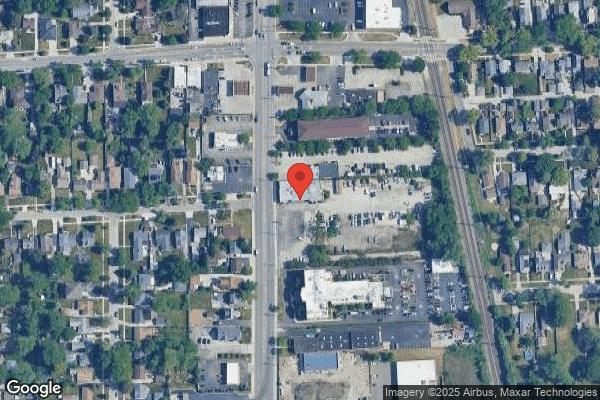
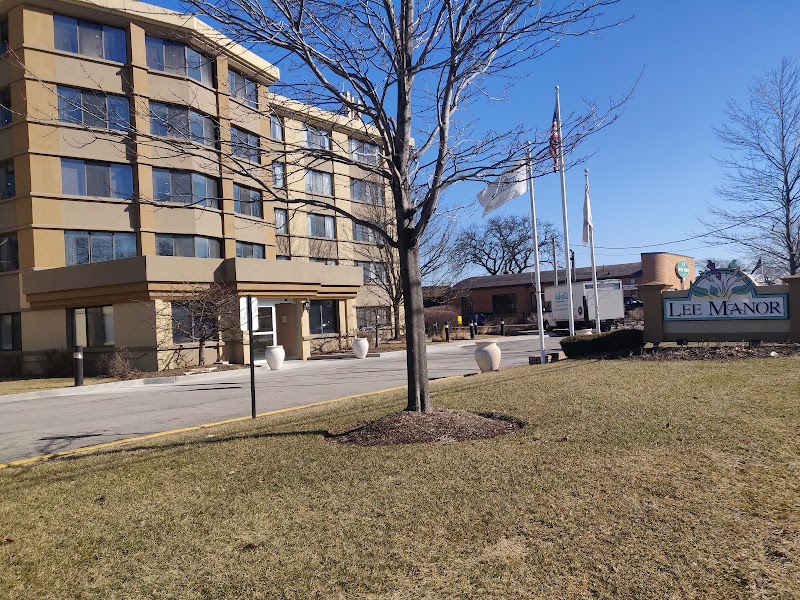
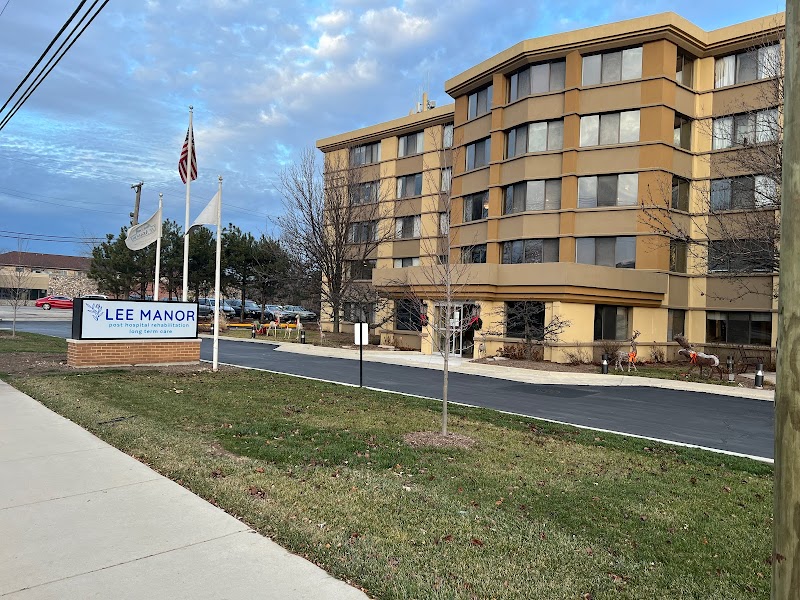
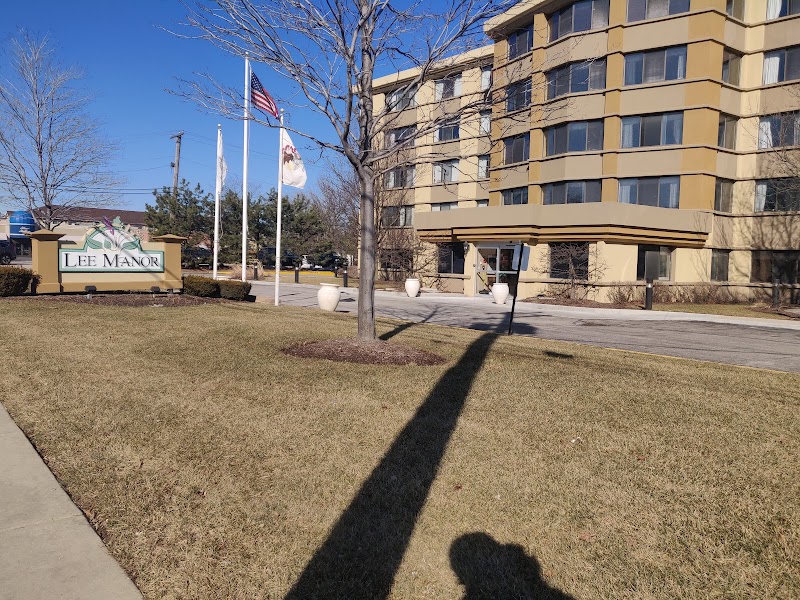
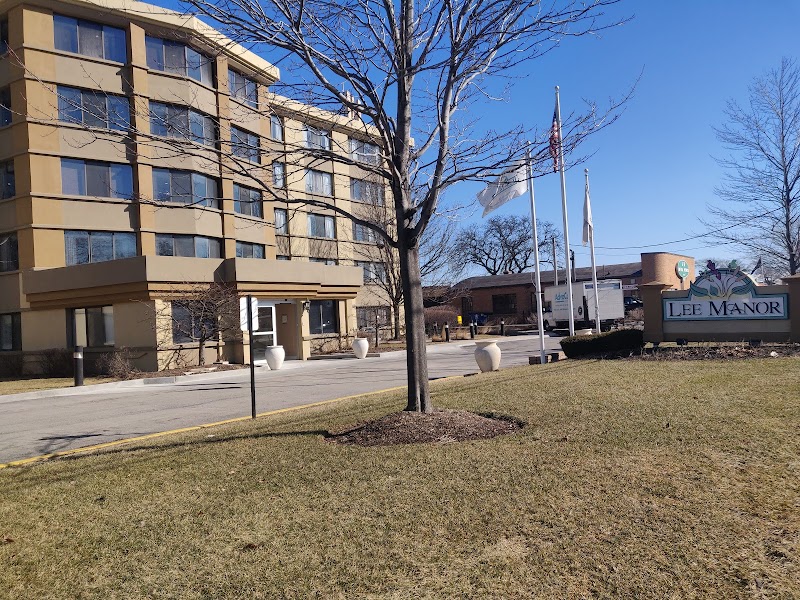
LEE MANOR

1301 LEE STREET, DES PLAINES, IL 60018 (847) 635-4000
For profit - Limited Liability company 262 Beds Independent Data: November 2025
Trust Grade
21/100
#376 of 665 in IL
Last Inspection: April 2025

Within standard 12-15 month inspection cycle. Federal law requires annual inspections.

Overview

Lee Manor in Des Plaines, Illinois, has received a Trust Grade of F, indicating significant concerns about the quality of care provided. Ranking #376 out of 665 facilities in Illinois places them in the bottom half, while their county rank of #122 out of 201 shows only a handful of local options are better. The facility is worsening, with the number of issues increasing from 3 in 2024 to 7 in 2025. Staffing is a relative strength, with a rating of 2 out of 5 stars and a turnover rate of 28%, which is well below the state average of 46%. However, the facility has faced serious incidents, such as a resident developing a severe pressure ulcer due to inadequate care and another resident suffering a serious fall because staff did not follow proper protocols for assistance. Overall, while there are some strengths, the significant issues raised in inspections should be carefully considered by families.

Trust Score
F
21/100
In Illinois
#376/665
Bottom 44%
Safety Record
High Risk
Review needed
Inspections
Getting Worse
3 → 7 violations
Staff Stability
✓ Good
28% annual turnover. Excellent stability, 20 points below Illinois's 48% average. Staff who stay learn residents' needs.
Penalties
✓ Good
$11,180 in fines. Lower than most Illinois facilities. Relatively clean record.
Skilled Nurses
✓ Good
Each resident gets 51 minutes of Registered Nurse (RN) attention daily — more than average for Illinois. RNs are trained to catch health problems early.
Violations
⚠ Watch
18 deficiencies on record. Higher than average. Multiple issues found across inspections.
★★☆☆☆
2.0
Overall Rating
★★☆☆☆
2.0
Staff Levels
★★★☆☆
3.0
Care Quality
★★☆☆☆
2.0
Inspection Score
Stable
2024: 3 issues
2025: 7 issues

The Good

  • Low Staff Turnover (28%) · Staff stability means consistent care
  • Full Sprinkler Coverage · Fire safety systems throughout facility
  • No fines on record
  • Staff turnover is low (28%)

    20 points below Illinois average of 48%

Facility shows strength in staff retention, fire safety.

The Bad

2-Star Overall Rating

Below Illinois average (2.5)

Below average - review inspection findings carefully

Federal Fines: $11,180

Below median ($33,413)

Minor penalties assessed

The Ugly 18 deficiencies on record

4 actual harm
Apr 2025 7 deficiencies 3 Harm
SERIOUS (G)

Actual Harm - a resident was hurt due to facility failures

Pressure Ulcer Prevention (Tag F0686)

A resident was harmed · This affected 1 resident

Based on interviews and records reviewed the facility failed to complete a wound assessment and document treatment and findings of the assessment of one resident (R91) who developed a reddened area on...

Read full inspector narrative →
Based on interviews and records reviewed the facility failed to complete a wound assessment and document treatment and findings of the assessment of one resident (R91) who developed a reddened area on her left and right buttock, and failed to ensure there were effective interventions to prevent further deterioration. This failure affected one of five of 5 (R91) reviewed for pressure ulcers in a sample of 36. This failure resulted in R91 developing an unstageable pressure ulcer that required debridement. The findings include: R9's diagnosis include but are not limited to Alzheimer's Disease, Parkinson's Disease, Diabetes, Retention of Urine, Vascular Dementia, Cognitive Communication Deficit, and Need for Assistance with Personal Care. On 04/15/25 at 10:50 AM R91 in bed, sleeping on air mattress, on back. R91 did not verbally respond to the surveyor for interview. On 04/16/25 at 11:15AM R91 in bed, sleeping, did not wake when spoken to. On 4/16/25 11:17AM V16, LPN said R91 has a sacral wound, at stage IV and she is on hospice. V16 said R91 stays in bed. V16 said R91 was on antibiotic for her pressure ulcer but she just finished the treatment. On 4/17/25 at 8:25AM V17, CNA, said I turn R91 every 2 hours. R91 awake, eyes open, eating breakfast, looking out the window. No verbal response. At 8:38AM V17 said R91 is completely dependent on staff, she can't move. V17 said we have to turn her; she doesn't help or try to get up. During an interview, in Spanish, in the conference room with the surveyors on 4/17/25, V17 said he reported to wound care a red area, unopened, just red on her buttocks, about the size of a lime. (V17 made a gesture with his fingers in a circle shape and the surveyor asked if that was about the size of a lime and V17 said yes.) V17 said there was no documentation or anything I wrote to report this. V17 said it is just a verbal report to the nurse, right away. V17 said we kept applying the barrier ointment to her and turning her. V17 said it was between 3-7 days when I reported to the nurse before the hospice nurse saw the wound. V17 said I told V19 about it when I first saw it. On 04/17/25 at 09:25 AM V18, Wound Care Director, said R91 has a stage IV pressure ulcer. V18 stated it is the worst one (wound) in the building. V18 said R91's wound was unavoidable because of poor nutrition and her declining health. V18 said the wound has undermining. V18 said we were treating her with antibiotics. V18 said the wound treatment was already done today. V18 said R91's wound was facility acquired, seen initially on 1/21/25 as a stage 3. V18 said R91 had a history of pressure ulcers prior to this one. V18 said the first person to report R91's wound was the hospice nurse to V16 on 1/21/25. V18 said initially R91's wound was classified by the wound doctor as an end of life wound but we can only do for 4 weeks so we classified as IV. V18 said I coded R91's wound wrong initially as stage 3 on the MDS, but I should have classified it as a Deep Tissue Injury (DTI). On 4/17/25 at 11:38AM V19, Wound Nurse, said R91 had a history of wounds that had healed. V19 said the CNA, V17, reported redness to R91's left and right buttocks. V19 said when I saw the area it was red, but she had nothing in her sacrum. V19 said the redness was from pressure, it was superficial Stage 1 when I saw it. V19 said I did not document an assessment of the wound. V17 said I should have documented it. V17 said I went on vacation on 1/17/25 and I was back to work on 2/24/25. On 4/18/25 at 8:58AM V18 said when I spoke with the hospice nurse, she said R91 skin was clear on her hospice admission assessment on 1/16/25. Her skin was reported impaired on 1/21/25. V18 said we had a treatment for a dressing to be applied in January, but we didn't put it on the treatment record. On 4/18/25 at 11:02 AM V23, Wound Doctor, said the facility had a clerical error and the wound order was not on the treatment records. When a wound is found in an ideal world there would be a wound assessment so we can determine what kind of wound it is (like pressure) and to determine if there is improvement or decline by monitoring the wound. On 4/18/25 at 11:54am V1, Director of Nursing, said the purpose of the TAR is to record and document that wound care treatments are done. V1 said if the order is not on the TAR there is no way to show the treatment was done. V1 said I expect all orders to be on the physician order sheets and the TAR. Hospice General Note on 1/16/25 documents clear skin. Treatment Administration Record (TAR) January 2025 has order for Chamosyn that was initiated July 2024, no other treatment. Progress notes for R91 dated 1/21/25 6:29PM new pressure ulcer on sacral. Current treatment bordered foam. There are no notes or assessments documenting what V17 said she saw, the redness. V17 started vacation on 1/17, so the area was seen prior to 1/17/25. Progress notes for R91 dated 1/21/25 at 7:54PM wound care noted purplish color discoloration on sacral area. R91's Wound Assessment Details dated 1/21/25 notes stage 3 size 1.50 x 0.40 x 0.20 with light serous drainage. (picture is included on assessment) Notes section written by V18 states this is a deep tissue injury. Will close the assessment and have new assessment with proper staging. Treatment identified foamed silicone three times per week. R91's Wound Assessment Details dated 4/12/25 notes stage 4, slough 20%, heavy serosanguineous drainage, 4.8x 4.8x 1.1. undermining present at 12:00 16cm. Review of Treatment Administration Record January-February 2024. Treatment documented includes Chamosyn moisture barrier to left and right buttock initiated on 7/25/24 and discontinued 4/7/25. Apply sacral wound topically every day and evening for wound care moist to dry packing after sodium hypochlorite solution 2/20/25-4/7/25. On 2/19/25 a Silver alginate foam added to sacral wound. (no treatment initiated documented on 1/21/25) Wound Evaluation and Management Summary dated 1/30/25 documents debridement procedure on R91's sacrum. Wound Evaluation and Management Summary dated 2/6/25 Dressing silicone border apply three times per week for 16 days. Leptospermum honey apply 3 times per week for 30 days. (This treatment is not on the TAR for February) The facility presented Unavoidable Wound Documentation dated 1/24/25, 3 days after identified as stage 3. The facility Pressure Ulcer Policy dated 1/19/22 states the nurse shall describe, document/report the following: full assessment of pressure sore including location, stage, length, width, and depth. The facility Wound Care Policy dated October 2020. Verify there is a physician's order for this procedure.
SERIOUS (G)

Actual Harm - a resident was hurt due to facility failures

Accident Prevention (Tag F0689)

A resident was harmed · This affected 1 resident

Based on interviews and records reviewed the facility failed to follow their practice and provide 2 person assist with bed repositioning of a dependent resident. This failure affects one of three resi...

Read full inspector narrative →
Based on interviews and records reviewed the facility failed to follow their practice and provide 2 person assist with bed repositioning of a dependent resident. This failure affects one of three residents (R91) reviewed for falls. This failure resulted in R91 falling out of bed when staff turned her and sustained head injury requiring 1 staple to the back of her head. The findings include: R91 is nonverbal and diagnosis include but are not limited to Alzheimer's Disease, Parkinson's Disease, Diabetes, Retention of Urine, Vascular Dementia, Cognitive Communication Deficit, and Need for Assistance with Personal Care. On 4/17/25 at 12:33PM V7, Assistant Director of Nursing, said on 4/5/25 around 6:00am R91 had a fall. V7 said I interviewed staff on Monday, including V20, CNA. V7 said V20 said when doing care and turning R91 she slid from the bed. V7 said R91 was on an air loss mattress. V7 said the nurse was called and there was blood. V7 said R91 was sent to the hospital for evaluation. V7 said R91 returned with 1 staple to the back of the head. V7 said it was a serious injury. V7 said R91 required 2 persons for repositioning, she should have been 2 person assist for repositioning in the bed. V7 said the root cause of R91's fall was the CNA was unable to properly turn the patient. V7 said V20 should have known to use 2 persons. V7 said in-service was done with V20 to ensure V20 uses the proper staff persons. On 4/17/25 at 1:39PM V21, Restorative Nurse, said repositioning in bed is always 2 person assist if the resident is dependent and also if they are 2 person transfer. V21 said I do the assessment quarterly. R91's incident report dated 4/5/25 CNA reported to nurse he was giving CNA care and as he turned R91 on R91 left side R91 slid off the bed. Laceration to the back of head. R91's Progress Notes dated 4/5/25 notes 2 staff persons from ambulance transported resident back to the facility. R91 noted with skin tear on left posterior cephalic, with one staple applied from the hospital. Attempts to reach V20, CNA, on 4/17/25 at 1:04PM and 1:25PM unsuccessful. R91's Restorative Evaluation dated 1/21/25 notes she is dependent with ADL. Assessment and Care plan do not identify 1 or 2 persons for assistance. R91's hospital record dated 4/5/25 notes a laceration repair to the back of her head and 1 staple used.
SERIOUS (G)

Actual Harm - a resident was hurt due to facility failures

Deficiency F0692 (Tag F0692)

A resident was harmed · This affected 1 resident

**NOTE- TERMS IN BRACKETS HAVE BEEN EDITED TO PROTECT CONFIDENTIALITY** Based on interview and record review, the facility failed to identify, assess, and develop effective interventions to prevent re...

Read full inspector narrative →
**NOTE- TERMS IN BRACKETS HAVE BEEN EDITED TO PROTECT CONFIDENTIALITY** Based on interview and record review, the facility failed to identify, assess, and develop effective interventions to prevent residents from experiencing unplanned significant weight loss. This affected three of eight residents (R49, R109, and R145) reviewed for weight loss and weight loss prevention. This failure resulted in unplanned weight loss for R49 of 14% in six months, R109 8% in one month, and R145 10% in one month. Findings Include: A. R49 is a [AGE] year old with the following diagnosis: Alzheimer's disease, vascular dementia, hypertensive heart disease with heart failure, and dysphagia. A Nursing note dated 3/9/25 documents R49 refused to eat even though staff attempted to feed. There is no notification the physician was notified of poor appetite. A Nursing note dated 3/10/25 documents R49 is still having a poor appetite. R49 verbalized being hungry but is not eating food. R49 drank 1 cup (4 oz) of ensure for breakfast and lunch. The nurse practitioner was notified. A Nursing note dated 3/14/25 documents staff attempted to feed R49 but R49 refused. R49 verbalized being hungry but is not eating food. R49 drank 1 cup (4 oz) of ensure for breakfast and lunch. There is no notification the physician was notified of poor appetite. A Physician note dated 3/14/25 documents request to follow up by nursing for poor appetite. Plan to provide nutritional supplementation, nutrition consult, and monitor labs. A Nursing note dated 3/17/25 documents the nurse practitioner was made aware of R49 not eating and weight loss. R49 only appears to be gurgling fluids and not swallowing. Order received for labs to be completed tomorrow. A Nursing note dated 3/18/25 documents R49's sodium level was elevated so R49 was sent to the hospital for an evaluation. A Nursing note dated 3/26/25 documents R49 returned to the facility from the hospital. A Nursing note dated 3/27/25 documents R49 still has a poor appetite when staff attempted to feed. A Nursing note dated 3/28/25 documents the nurse practitioner was notified of R49's poor oral intake and no new orders were put in place. A Nursing note dated 3/30/25 documents R49 only had a couple spoons for breakfast and lunch. A Nursing note dated 3/31/25 documents R49 still has a poor appetite and had two sips of thickened ensure. A Nursing note dated 4/1/25 documents the nurse called pharmacy to follow up on the appetite stimulant, but it is not covered by insurance. The nurse practitioner was notified, and the medication was discontinued. A Physician note dated 4/1/25 documents R49 had a poor appetite and refusing meals since arrival. R49 is on nutritional supplementation but an appetite stimulant is not covered by insurance, so it was removed from the MAR. A Nursing note dated 4/2/25 documents R49 was sent to the hospital for pneumonia and heart failure. A Nursing note dated 4/10/25 documents R49 returned from the hospital on hospice. The Dietary/Nutrition note dated 1/19/25 documents the most recent recorded weight was documented as 116.9 pounds. R49 is pureed with super pudding with meals with a supplement of ensure 4 oz three times a day. R49 had an unintentional weight loss related to dysphagia and inadequate energy intake as exhibited by weight loss and documented poor intake. Weights show a 7.5% decrease in three months and an almost 12% decrease in six months. R49's appetite varies from 0-100%. There is an order for daily weights and to notify the physician of weight change per criteria. Appears that different weighing methods are used at times with significant differences between them. The Dietary/Nutrition note dated 2/26/25 documents the most recent recorded weight was 120.2 pounds. This still is considered a greater than 10% decrease within six months. R49's appetite is poor. R49 is only taking sips of ensure per progress notes. No new interventions were put in place to address the significant weight loss for six months. There is no documentation of a March dietary note. A Dietary/Nutrition note dated 4/17/25 documents the most recent recorded weight was 108.6 pounds. This is an unintended weight loss related to dysphagia and inadequate energy intake as exhibited by weight loss and documented poor intake. Weights show a greater than 5% decrease in one month. R49 is now on hospice and intake is very poor. Only taking bites of each meal. Super cereal and super pudding were offered but R49 does not take more than a few bites. Continue plan of care per hospice. R49's weights are documented as follows: 4/10/25 - 108.6 pounds, 3/27/25 - 113.2 pounds, 3/17/25 - 107.4 pounds, 3/15/25 - 126 pounds, 3/7/25 - 127 pounds, 2/20/25 - 120.2 pounds, 2/15/25 - 128.1 pounds, and 1/14/25 - 116.9 pounds. On 4/17/25 at 11:32AM, V5 (Dietitian) stated V5 comes to the facility two or three times a month or as needed when contacted by staff. V5 reported V4 oversees residents on tube feeds or with weight loss concerns. V5 stated R49 was last seen in February. V5 reported R49 is on daily weights for heart failure. V5 stated in February R49 had a 7.5% weight loss from the previous visit due to multiple hospitalizations and diuretic use. V5 reported R49 had a poor appetite for about two months and was only taking sips of the nutritional shake. V5 stated R49 had super puddings twice a day and ensure twice a day in place as interventions but no other interventions were added at that time because R49 was not eating. V5 denied being notified of R49 weight loss for the month of March so R49 was not seen during March. V5 reported if R49 continued to have a poor appetite then staff should have notified V5 to put in other interventions. V5 stated V5 was last in the building assessing residents on 4/8/25. V5 reported additional supplements will be added for R49 on V5's next visit. On 4/18/25 9:12AM, V7 (ADON) stated we asked that one or two CNAs go around the first week of the month to get resident weights. V7 reported one weighing scale per floor is used to ensure accuracy. V7 stated the weights are entered in an excel sheet and sent via email. V7 reported if there is a significant weight loss then V22 will let V7 know and a reweigh will be conducted and if it is still a significant weight loss then V22 will contact V5. V7 stated weekly weights and calorie counts are put in for residents with noted weight loss. V7 reported the nurse will document the calorie count in PCC. V7 stated the physician is notified of the recommendations of the dietitian. V7 reported if here is an issue with weight the dietitian is contacted. V7 stated the weight meetings are performed quarterly and residents are discussed for who is having weight loss. V7 reported V7 goes over the weights for the residents. V7 stated if a resident is losing weight, then weekly and daily weights will be completed if they have medical conditions. V7 stated residents should also be weighed upon readmission to see if there is a significant change in weight. V7 stated more than 5 pounds of weight loss is a significant weight loss. V7 reported it will trigger in the system. It will show in PCC once the weight is entered the system will generate a remark about the weight loss. V7 reported the dietitian will recommend supplements and will be placed in PCC and communicated to the nurses. V7 stated V7 is responsible for talking to the physician about other recommendations besides supplements. V7 reported interventions will also be documented in the care plan and family will be involved to see if they have any suggestions. V7 stated the same case with R49. V7 reported R49 had a poor appetite for about two months. V7 stated R49 would say R49 would want to eat but then not consume any food. V7 reported R49's poor appetite was addressed by V22. V7 stated R49 also had worsening CHF and began having frequent hospitalizations. The Physician Order Summary documents R49 receives a pureed no added salt diet with nectar thick liquids. R49 needs feeding assistance for all meals. A calorie count with all meals for three days was ordered on 2/24/25. The facility did not provide any documentation of a completed calorie count during this investigation. Weekly weights were ordered on 4/10/25 for four weeks. The Medication Administration Record dated 03/2025 documents an appetite stimulant was ordered on 3/31/25 but was not administered due to the medication not being available. An order dated 12/3/24 documents staff need to monitor oral intake and notify if R49 has a poor appetite or decreased oral intake. The Minimum Data Set (MDS) dated [DATE] documents a Brief Interview for Mental Status could not be completed because R49 cannot/is rarely understood. Section K of MDS documents R49 had a loss of 5% or more in the last month or 10% or more in the last six months and is not on a physician-prescribed weight loss regimen. Within the last seven days, total calories received are 25% or less than what R49 should be consuming. The Dietary Profile dated 11/10/24 documents R49 has a body mass index of 18.4%. R49 has supplements of ensure 4 or three times a day, super cereal at breakfast and super pudding at breakfast, lunch, and dinner. Appetite is fair but R49 appears underweight. Goal is to improve oral intake to 75% with gradual weight gain desire. The Dietary Profile dated 4/5/25 documents R49 is still taking the same supplements. R49 is documented as having a good appetite. Plan to reassess upon readmission. R49 was sent to the hospital on 4/2/25. The POC Amount Eaten charting dated 01/2025 documents R49's appetite differs from 0-100% eaten with the majority being 51-75%. The POC Amount Eaten charting dated 02/2025 documents R49's appetite varies from 0-75% with the majority being 26-50%. The POC Amount Eaten charting dated 03/2025 documents R49's appetite varies from 0-50% eaten with the majority being 0-25%. The Care Plan revised on 4/11/25 documents R49 has a diagnosis of congestive heart failure. An intervention dated 10/06/23 documents monitor for signs of malnutrition and encourage adequate nutrition. The Care Plan revised on 2/4/25 documents R49 is at increased nutrition risk related to recent significant weight gain, receiving a mechanically altered diet, and currently on diuretic therapy. Interventions created on 2/6/20 document provide and serve ensure 8oz as ordered and monitor intake and record each meal. There are no other interventions documented on the care plan that were added to address R49's significant weight loss or poor appetite. B. R109 is a [AGE] year old with the following diagnosis: Alzheimer's disease, vascular dementia, and diastolic heart failure. A Physician note dated 3/11/25 documents R109's adult failure to thrive is stable. R109 has had an improved appetite per documentation. There is no documentation the physician was notified of the weight loss in March. A Physician note dated 3/18/25 documents R109's adult failure to thrive is stable. Recommendation to add spices and soy sauce to improve taste. A Dietary/Nutrition dated 1/19/25 documents the most recent weight was 127.6 pounds. R109 has had an unintentional weight loss related to variable intake. R109 has had a greater than 5% increase in one month. There is no dietary note for February or March. A Dietary/Nutrition note dated 4/17/25 documents the most recent weight was 116.9 pounds. This is an unintentional weight loss. R109 has variable intake. Super pudding at dinner was added on 4/6/25. An appetite stimulant was also added to promote increased appetite. COVID outbreak on the floor in February which may have contributed to weight loss. April weight was requested. R109's weights are documented as follows: no weight for April, 3/11/25- 116.9 pounds, no weight for February, 1/13/25- 127.6 pounds, 12/11/25- 121 pounds, no weight for November, 10/29/24- 122 pounds, and 10/22/24- 124 pounds. On 4/17/25 at 11:32AM, V5 reported R109 is ordered weekly weights due to heart failure. V5 reported V5 recommended a calorie count in November be completed to see how much R109 was eating. V5 denied ever looking at the calorie count or following up to see if the calorie count was completed. When asked why V5 never followed up with the completion of the calorie count, V5 said, I don't know. I guess I'm stupid. V5 stated V5 was not notified of the weight loss in December but should have been so new interventions could have been put in place. V5 reported R109 was last seen in 01/2025 due to having a significant weight loss from 127 pounds to 116 pounds. V5 stated R109 has not been seen in April yet due to no April weigh being recorded. V5 stated weights should be taken at least monthly or weekly/daily depending on the physician order. V5 reported V5 only recommends supplements, and the physician is responsible for managing medications and adding appetite stimulants. V5 denied needing to make recommendations for the appetite stimulants because the nursing staff should be talking with the physician if they want to get that ordered. V5 confirmed weight loss for R49, R109, and R145 was unintentional. On 4/18/25 at 9:12AM, V7 reported R109 was sent to the hospital and had significant weight loss when R109 returned. V7 stated the food preferences are being address. V7 reported R109 has also had a poor appetite. V7 reported the PCP will start any medications to increase appetite. V7 stated during the COIVD outbreak some February weights weren't done, and the platform scale couldn't be used. V7 stated the facility does have other scales that could have been used at that time. The Physician Order Summary documents R109 is ordered a general mechanical soft diet that needs assistance feeding each meal. A calorie count with all meals for three days was ordered on 2/24/25. The facility did not provide any documentation of a completed calorie count during this investigation. An order on 10/25/24 documents ensure plus twice a day. An order on 4/6/25 documents super pudding to be given at lunch and dinner. An order for weekly weights to be performed was ordered on 10/26/24. The Medication Administration Record dated 03/2025 documents the appetite stimulant was started on 3/18/25. The Minimum Data Set (MDS) dated [DATE] documents a Brief Interview for Mental Status score could not be completed because R49 cannot/is rarely understood. Section K of MDS documents R49 had a loss of 5% or more in the last month or 10% of more in the last six months and is not on a physician-prescribed weight loss regimen. The Dietary Profile dated 4/6/25 documents the most recent weight as 116.9 pounds. R109 is on ensure plus twice a day and recommendations including super pudding with lunch and dinner. R109's appetite is documented as good. Will continue to monitor intake, labs, and skin with a weight goal for tolerance of current diet with gradual weight gain. The POC Amount Eaten charting dated 03/2025 documents R109's appetite differs from 0-100% eaten with the majority being 26-50%. The POC Amount Eaten charting dated 04/2025 documents R109's appetite varies from 0-100% with the majority being 50-75%. The Care Plan revised 10/10/24 documents R109 is at increased risk for nutrition related to mechanically altered diet with recent significant weight loss. An intervention was created on 10/1/19 to provide supplements as ordered and monitor intake and record each meal. No new interventions were documented after this date. There is a revision dated 4/9/25 but no new interventions are noted. C. R145 is a [AGE] year old with the following diagnosis: malignant neuroendocrine tumors, encounter for gastrostomy, and dysphagia. A Nursing note dated 1/12/25 documents R145 was sent to the hospital for elevated white blood cell count. R145 was not in any acute distress. R145 was admitted with pneumonia. A Nursing note dated 1/28/25 documents R145 readmitted to the facility. A Physician note dated 1/28/25 documents R145 was recently treated at the hospital for infection. R145 also had unintentional weight loss, dysphagia, and regurgitation of undigested food. The Dietary/Nutrition note dated 12/20/24 documents the most recent documented weight as 191.6 pounds. R145 appetite varies from 51-100%. There has been a greater than 10% loss over the past six months. R145 is on a nutritional shake for added calories. No other interventions were added at this visit. The Dietary/Nutrition note dated 1/29/25 documents the weight still as 191.6 pounds. R145 has had an unintentional weight loss due to dysphagia. R145 went to the hospital on 1/12/25 and returned with a G tube. Plan is to continue feedings as ordered. The Dietary/Nutrition note dated 2/17/25 documents the most recent weight as 167.6 pounds. R145 has had an unintentional weight loss due to dysphagia and is now on G tube feeds. This has been a weight loss of greater than 10% in six months. Feedings were increased due to weight loss. The Physician Order Summary documents a dietary supplement for increased calories was added on 4/3/25. An order for tube feeds at 75 mL an hour for 21 hours was placed on 4/3/25. R145's weights are documented as the following: there is no weight documented for April, 3/10/25 - 170.8 pounds, 2/14/25- 167.6 pounds, there is no weight documented for January, 12/17/24- 191.6 pounds, 12/11/24- 183.9 pounds, 12/3/24- 191.6 pounds. On 4/17/25 at 11:32AM, V5 stated V5 started seeing R145 in 2021 but weight loss did not occur until 2024. V5 stated R145 went to the hospital in 01/2025 but V5 was not notified on any weight loss before R145 left. V5 stated R145 was taking supplements of a nutritional shake before going to the hospital. On 4/18/25 at 9:12AM, V7 stated R145 was sent out and R145 has cancer so R145 had a significant weight loss. V7 reported the dietitian would know what interventions were in place for R145. The Minimum Data Set (MDS) dated [DATE] documents a Brief Interview for Mental Status score as 15 (no cognitive impairment). Section K documents a weight loss of 5% or more in the last month or 10% or more in last six months that is not a physician prescribed weight loss regimen. The Dietary Profile dated 1/28/25 documents R145 is nothing by mouth and receives tube feedings. Awaiting readmission weight to complete assessment. The Hospital Records dated 1/12/25 document R145 was admitted to the hospital for an elevated white blood cell count. R145 reported a major unintentional weight loss, dysphagia, and regurgitating undigested food. R145 weight upon admission was 172 pounds. The Care Plan revised on 4/5/25 documents R145 requires tube feeding related to dysphagia and swallowing problems. An intervention documented on 2/24/25 documents the dietitian will evaluate quarterly and as needed to monitor caloric intake and estimate needs. There is no other documentation in the care plan addressing R145's weight loss or nutritional risk with interventions. On 4/18/25 at 10:01AM, V22 (Nutrition Support Coordinator) stated V22 responsibilities are entering the weights into the system that are received from the nursing staff. V22 reported if the weights aren't accurate then a new weight is requested. V22 stated V22 also completes the Dietary Profiles, and the facility completes them to show their weight, how their eating is doing and to provide a baseline. V22 reported the facility has had an in-service because the daily and weekly weights are done. We do a quarterly meeting with all the disciplines and weight loss of all residents are discussed. V22 stated the last quarterly meeting was in April and those meeting minutes kept in the binder. V22 reported if the weight loss is still significant then when the dietitian comes in and the report is printed V5 will see who a significant weight loss is and make sure to see those residents. V22 stated V5 comes in a couple times a week. We will discuss weight loss interventions together to see if we can come up with something. V22 reported the recommendations are given to staff verbally and then given to the doctor to see what can be ordered. V22 stated if a resident continues to have weight loss, then we just document what the interventions are in place and continue to monitor. V22 stated all residents who have significant weight loss should be seen by the dietitian. V22 also reported that V22 audits the weight loss report at the end of the month to make sure everyone is taken care of. On 4/18/25 at 1:22PM, V23 (Associate Medical Director) stated the expectation is to implement interventions when weight loss is first noted. V23 reported the weight loss meetings should be conducted to go over the current interventions. V23 stated the dietitian should be involved and see the residents who are losing weight. V23 reported the dietitian is responsible for finding supplements to help with weight loss. V23 stated residents should be weighed monthly but if they are losing weight it needs to be more often to monitor the weight loss and if any other interventions need to be put in place. V23 stated appetite stimulants, calorie counts, and medication reviews can also be added as interventions for weight loss. The policy titled, Monthly, Weekly, & Daily Weights, dated 12/12/18 documents, Statement of Policy: It is policy of [NAME] Manor Rehabilitation and Nursing Facility that all residents will be weighed monthly per State and federal Regulations unless otherwise indicated. Monthly Significant Weight Loss: All residents will be weighed starting the first day of the month. The weights will be obtained by the CNA and nursing staff. Upon completion of the re-weights, the nutrition support manager will record all of the weights into PCC. The nutrition support manager will generate the weight and vitals expectations report, which will reflect a 5% weight change for one month; 7.5% weight change for three months; and 10% weight change for six months. The weight and vital exception report will be given to the registered dietitian monthly for review. The registered dietitian will follow up on any significant weight changes on a monthly basis. Weekly and Daily Significant Weight Loss/Changes: Weekly and daily weight will be obtained by the CNA nursing staff. Nursing will enter weekly and daily weights into PCC. Upon entering weekly and daily weights into PCC, nursing will compare the weight to be entered to the previous weight obtained, if there is significant weight change, nursing at that time will determine if the weight is correct, or if reweight is necessary at that time. Nursing will also contact nutrition support manager to report any significant weight changes. Nursing will also contact the physician related to any significant weight changes and follow any physician orders related to significant weight changes at that time. The policy titled, Nutrition Assessment In-Depth, dated 2021 documents, .The dietitian exercises clinical judgement to determine the best nutrition approach(s) by recommending interventions appropriate to the individual. The policy titled, Interventions for Weight Loss, dated 2021 documents, Policy: Interventions are provided to address a decline in a client's appetite and food intake, a significant weight loss or insidious weight loss trend. Procedure: Nutrition interventions can be initiated by a member of the healthcare team prior to assessment of the client's nutrition status by the dietitian .Pharmacists can help the staff identify medications that alter taste or cause dry mouth, lethargy, nausea, or confusion. Physicians and nurse practitioners help identify causes of anorexia and weight loss.
CONCERN (D)

Potential for Harm - no one hurt, but risky conditions existed

Notification of Changes (Tag F0580)

Could have caused harm · This affected 1 resident

Based on interview and record review, the facility failed follow the Physician Notification in Change of Condition Policy by not notifying MD (Doctor of Medicine) about medications administered late. ...

Read full inspector narrative →
Based on interview and record review, the facility failed follow the Physician Notification in Change of Condition Policy by not notifying MD (Doctor of Medicine) about medications administered late. This failure affected one resident (R157) of eight residents reviewed for notification. Findings include: On 4-15-25 at 11:03 AM, surveyor observed V3 (Registered Nurse) preparing medication for administration. V3 replied R157's medications were due at 9:00 AM. On 4/17/25 at 09:39 AM, V2 (Registered Nurse) said there is a 1-hour window before and after the scheduled time. The nurse is supposed to write a note on the delay in administration of medication. Depending on the medication you would let the MD know about late administration. On 4/17/25 at 10:08 AM, V1 (Director of Nursing) said there is 1 hour window before and after the scheduled time for administration. For Doxycycline the MD should be notified because it's an antibiotic and the schedule can be re-adjusted. Eliquis and Amlodipine are once a day hence it does not need MD notification. The nurse should make a note explaining why the medication was administered late. V3 did not document any notes explaining late administration or MD notification. V3 is on vacation (after 4-16-25) however facility is trying to reach V3 for interview. On 4/17/25 at 11:06 AM, V3 (Registered Nurse) said R157 medications were due at 9:00 AM. V3 was not available for interview after 4-15-25. Facility made several attempts to contact V3 for interview. Surveyor reviewed R157's Medication Administration record and noted medications administered at 10:58 AM. Surveyor reviewed Nursing Progress Notes and did not see any physician notification notes re: late medications.
CONCERN (D)

Potential for Harm - no one hurt, but risky conditions existed

Deficiency F0685 (Tag F0685)

Could have caused harm · This affected 1 resident

**NOTE- TERMS IN BRACKETS HAVE BEEN EDITED TO PROTECT CONFIDENTIALITY** Based on observation, interview and record review, the facility failed to coordinate an appointment with the audiologist to remo...

Read full inspector narrative →
**NOTE- TERMS IN BRACKETS HAVE BEEN EDITED TO PROTECT CONFIDENTIALITY** Based on observation, interview and record review, the facility failed to coordinate an appointment with the audiologist to remove hardened ear wax from a resident's bilateral ear canals causing an increase in hearing loss for one out of one (R73) resident reviewed for hearing loss in a total sample of 36. Findings Include: R73 is a [AGE] year old with the following diagnosis: Alzheimer's disease, Parkinson's disease, vascular dementia, and paraplegia. The Audiology Progress note dated 12/18/24 documents R73 had a very hard time communicating because R73 could not hear what was being said even while wearing headphones with amplified microphone. R73 reports having poor hearing, but recently, it seems to have gotten worse. Wax was noted in both ears and removal was attempted. In the right ear, about half of the wax was successfully removed. In the left ear, the wax was too hard for any amount to be removed at the time of the appointment. The hearing aid was cleaned and working well. After half of the ear wax was removed from the left ear, R73 told the physician R73 could hear again out of the hearing aid. R73 was happy about this. The deep hardened waxed in both ears is currently making the hearing worse than what it is. Plan to use wax softening drops. Ear wax removal was scheduled for the next visit to attempt to remove more wax once it has been softened by the eardrops. On 04/15/25 at 10:45AM, the surveyor introduced self to R73, and R73 requested the surveyor write down what was being said due to not being able to hear. R73 stated R73 is hard of hearing and has a hearing aide for the left ear. R73 put on glasses to read what the surveyor wrote but told the surveyor the glasses were old and the wrong prescription so R73 could not see or hear what the surveyor was attempting to communicate. On 4/17/25 at 10:50AM, the surveyor tried to speak to R73 but R73 interrupted the surveyor stating R73 could not hear in either ear. The left hearing aide was in place. The surveyor again tried to write down the conversation but R73 told the surveyor that R73 could not see what was written on the paper. On 4/17/25 at 10:57AM, V4 (CNA) stated the nurse puts R73's hearing aides in every morning. V4 reported the hearing aides don't help R73 hear any better and R73 still is hard of hearing with the hearing aide in place. V4 stated staff write out conversations on a piece of paper or type out messages on their phones to communicate with R73. V4 reported staff will also get close to R73's and speak directly into R73's ear. V4 stated R73 can verbalize needs but it is hard for R73 to understand staff. V4 denied being aware of R73's audiology appointments and denied being aware of any excessive amounts of ear wax. On 4/17/25 at 11:02AM, V10 (Nurse) stated R73 wears the hearing aide in the left ear. V10 denied R73 had a hard ear wax build up in the ears and denied knowing about a build up of wax in the past. V10 denied knowing how often the audiologist comes to see residents. V10 stated R73 is hard of hearing and staff communicates with R73 by getting close to R73 and speaking loudly as well as using a thumbs up or thumbs down. V10 reported when a resident has a wax build up, the audiologist will order ear drops to soften the ear wax and then remove the ear wax. V10 denied being aware of how soon the doctor comes after the drops are administered. At 1:33PM, V11 (Infection Prevention Nurse) stated the facility was in COVID outbreak status from 1/4/25 through 3/13/25 when the facility received the last positive. V11 reported the facility does not allow outside physicians to the floor where the outbreak is located. V11 confirmed that outbreak status ends two weeks after the last positive which would have been 3/27/25. At V12 (Former Social Services) stated R73's sister called and wanted an update on the hearing aides. V12 reported some wax was removed the last appointment and still had some wax in the ears that was contributing to the hearing loss. V12 stated R73 got the wax softening ear drops but then the facility was under lock down for COVID for at least two months so the audiologist was not able to see R73. V12 reported V12 didn't call the audiologist to come to the facility after the lockdown was completed. V12 stated the last time the audiologist was in the facility was 03/05/25 but didn't see R73 on that visit. V12 stated the audiologist only sees 10 people per visit and if R73 was seen the last time then R73 will be moved to the end of the list. V12 stated 95% of R73's hearing loss is gone and R73 complained to the facility she couldn't hear any longer sometime before December. V12 reported staff communicates with R73 by writing information down for R73 to read or cupping their hand and yelling into R73's ear. V12 stated V12 last worked in the facility on 4/14/25 and R73 still did not have the wax removed to improve hearing. V12 denied reading the audiology note that R73 should have been assessed by the audiologist on the next visit to the facility. A Nursing note dated 1/16/25 documents R73 tested positive for Covid. The Covid Surveillance Line List documents the facility first went into outbreak status on 1/4/25 and had the last positive test on 3/13/25. Two weeks after the last positive was 3/27/25. A Social Service note dated 4/7/25 documents social services received a call from R73's family member. The family member wanted an update on the hearing aids. The family was informed that the facility was under isolation precautions due to Covid approximately two months. Social services explained that R73 had hardened ear wax that still needed to be removed per December 2024 audiology progress note. The Medication Administration Record (MAR) dated 12/2024 documents R73 received the wax softening drops to both ears two times a day for five days from 12/19/24 through 12/23/24. The Care Plan dated 12/27/24 documents R73 has a problem with receptive communication, is only sometimes able to understand communication from others and has highly impaired hearing abilities. Although an audiologist has prescribed hearing assistive devices, the hearing aids do not help R73 any better with them. R73 is now deaf in both ears. Social services communicates with R73 in writing. An intervention includes refer to ear, nose, and throat doctor to clear wax out of the ears and reevaluate hearing as directed by the physician. The Minimum Data Set (MDS) dated [DATE] documents R73 has highly impaired ability to hear. R73 does use a hearing aid. R73's ability to understand others is documented as usually understands but misses some parts of the message during conversation. Section C of the MDS documents a Brief Interview for Mental Status score as six (severe cognitive impairment). The policy titled, Hearing Impaired Resident, Care of, that is undated documents, Staff will assist hearing impaired residents to maintain effective communication with clinicians, caregivers, all the residents, and visitors. Policy Interpretation and Implementation .2. Staff will assist the resident or representative with locating available resources, scheduling appointments and arrange transportation to obtain needed services.
CONCERN (D)

Potential for Harm - no one hurt, but risky conditions existed

Deficiency F0700 (Tag F0700)

Could have caused harm · This affected 1 resident

Based on observations, interviews, and records reviewed the facility failed to accurately assess the number of side rails appropriate for one of one resident's (R137) use of side rails in a sample of ...

Read full inspector narrative →
Based on observations, interviews, and records reviewed the facility failed to accurately assess the number of side rails appropriate for one of one resident's (R137) use of side rails in a sample of 36. The findings include: On 04/15/25 at 11:28 AM R137's bed observed with bolsters, 1/4 side rails upper and lowers in bed and floor matts in the room. 04/15/25 03:16 PM V24, CNA, said R137 is dependent on us, can feed self, she can turn with help, she is confused. V24 said R137 can't get out of bed, her legs restrict her movement. V24 said R137 can't turn without assist from me. 04/15/25 11:28AM quarter rails observed on bed. Top and bottom. 04/16/25 10:33 AM R137 getting turned by V25 and 2nd CNA, IV in left hand, no heel boots, ace bandages on bilateral legs, right knee lidocaine patch. Staff rolled her, R137 not able to turn or grab rail. At the end of care V25 lowered the bed and placed floor matts. V25 raised the lower rails and left the room, the upper rails were left in the up position during care. The 2nd CNA left the room after assisting to reposition R137. On 4/17/25 at 1:39PM V21, Restorative Nurse, said I am not aware R137 has 4 rails on her bed. The family wants us to use that bed. 4/17/24 2:04PM V21, Restorative Nurse, said R137 is supposed to use upper rails, not the lower part. V21 said I don't have an assessment for the bolsters. V21 said the family wants the bed with the bolsters. V21 said I should have an assessment for the bolsters. V21 said the rail and bolster assessments are done quarterly. On 4/18/25 at 8:31AM V7, Assistant Director of Nursing, said on R91's care plan I see intervention to lower the side rails, but it does not say how many to use. V7 said there is nothing in the care plan about the bolsters for R91. Facility presented a document with the delivery date 91's bed was delivered to the facility for use on 5/15/24. Device Observation, Education, Consent form dated 3/4/25 identifies ¼ side rail to be used as an enabler (no number or pleural use of the word rail). Cognition is confused, impaired decision making, short attention span, short term memory deficit, and diminished comprehension of condition. Unable to recover balance. Mobility is impaired, non ambulatory. Range of motion deficits to all extremities. No behavioral risk. This device is being used for resident's independence and psychological well being as an enabler. Care plan updated. R91's care plan does not include use of bolster or for ¼ rails.
MINOR (C)

Minor Issue - procedural, no safety impact

Staffing Information (Tag F0732)

Minor procedural issue · This affected most or all residents

Based on observation and interview, the facility failed to post Nurse Staffing Data in a prominent area available for residents and visitors. This failure has the capacity to affect all residents. Fin...

Read full inspector narrative →
Based on observation and interview, the facility failed to post Nurse Staffing Data in a prominent area available for residents and visitors. This failure has the capacity to affect all residents. Findings include: On 4-17-25 at 12:50 PM, surveyor toured the 1st floor and was unable to find Nurse Staffing Data verified with V1 (Director of Nursing), V8 (Administrator), and V9 (Receptionist). On 4-17-25 at 1:05 PM, V9 (Receptionist) said she has not seen the Nurse Staffing Data this morning and currently V1 is working on the Nurse Staffing Data at this time. On 4-17-25 at 1:08 PM, V1 (Director of Nursing) said the scheduler is responsible for posting the Nurse Staffing Data and said the scheduler is on vacation at this time. V1 said the Nurse Staffing Data is posted at the Receptionist's Desk and at the 1st floor Nursing Station. V1 said the Nurse Staffing Data explains the staff-to-resident ratios. On 4-17-25 at 1:32 PM, V8 (Administrator) said Nurse Staffing Data shows family and visitors the staff working hours and explains the ratios of staff to residents. The scheduler is responsible for the nurse staffing data is currently on Family Medical Leave of Absence. The Nurse Staffing Data is to be posted at the front desk and Nurse Staffing Data wasn't posted earlier this morning.
Nov 2024 2 deficiencies 1 Harm
SERIOUS (G) 📢 Someone Reported This

A family member, employee, or ombudsman was alarmed enough to file a formal complaint

Actual Harm - a resident was hurt due to facility failures

Free from Abuse/Neglect (Tag F0600)

A resident was harmed · This affected 1 resident

Deficiency Text Not Available

Read full inspector narrative →
Deficiency Text Not Available
CONCERN (D) 📢 Someone Reported This

A family member, employee, or ombudsman was alarmed enough to file a formal complaint

Potential for Harm - no one hurt, but risky conditions existed

Resident Rights (Tag F0550)

Could have caused harm · This affected 1 resident

**NOTE- TERMS IN BRACKETS HAVE BEEN EDITED TO PROTECT CONFIDENTIALITY** Based on interview and record review, the facility failed to follow their Community Privileges and Notice of Resident Rights and...

Read full inspector narrative →
**NOTE- TERMS IN BRACKETS HAVE BEEN EDITED TO PROTECT CONFIDENTIALITY** Based on interview and record review, the facility failed to follow their Community Privileges and Notice of Resident Rights and Responsibilities policies by not obtaining a doctor's order or consent from the durable Power of Attorney (POA) prior to allowing a resident to leave on pass with a family member. This affected one of three residents (R1) reviewed for pass privilege policy and procedure. Findings Include: R1 was admitted on with the diagnosis of Dementia with Lewy Bodies, Traumatic Brain Injury and Cognitive Communication Deficit. R1's Brief Interview for Mental Status, dated 8/19/24, documents a score of ninety-nine, which indicates the resident was unable to complete the interview with short (recall after five minutes) and long term memory problems. R1's Community survival /risk, dated 8/10/2024, documents: Resident (R1) is new to the facility with Lewy Body and alert times one. It is recommended and agreed upon with her surrogate (V19) that resident is not capable physically or cognitively able to go into the community independently. It is recommended she may go with (V19) (ONLY) with primary care physician (PCP) order. She (V19) is aware that when leaving the property she will need to sign her off the unit and sign her back in on the floor when she returns. Nursing note, dated 10/14/24, documents: R1 accompanied by V19 went out on pass. On 11/12/24 at 2:55PM, V20 (R1's POA) said the facility called and asked when was she going to bring R1 back to the facility. V20 said she had never been to the facility to visit R1 because she lives out of the state. V20 was unable to report who called from the facility. V20 said she never gave permission for anyone to take R1 out on pass. V20 said she feared for R1's safety, and called the police to do a [NAME] being check, because the facility did not know who took R1 out on pass. On 11/13/24 at 11:21AM, V4 ( Social Service Director )said, In order for a resident to go out on pass, they must have a doctor order, completed community assessment and be safe to go out. It is the same protocol for Dementia resident, but the Power of Attorney (POA) must be notified as well. On 11/13/24 at 12:30PM, V1 (Administrator) said R1 was admitted to the facility by V19 (surrogate decision maker). V1 said, We found out about (V20, R1's POA) on 9/7/24. (V20) sent a copy of the POA paperwork with (V20's) name on it on 9/9/24. (V20) was responsible for (R1). On 11/14/24 at 10:13AM, V10 (Social Service) said she was not aware of V20 until a week after R1's admission. V10 said, In order for a resident to go out on pass, the resident must have a doctor order. (R1) did not have a doctor's order to go out on pass. (V20) was not called either time when (R1) went out on pass with (V19). (V19) did not have (V20's) authorization to take (R1) out on pass. (R1) was not verbal upon admission, and would stare at staff when spoken to. Towards the end of (R1's) stay, (R1) could answer yes or no to basic care needs questions. V10 said she was informed V20 should have been the contact person for R1. R1's physician order sheet did not document an order to go out on pass. Out on pass sign out sheet, dated 10/14/24 and 10/22/24, documents: V19 signed out R1 destination outside. Police report, dated 10/21/24, documents: V20 stated V19 took R1 from the nursing home without V20's permission. V20 stated she is R1's POA. The facility called V20 asking when she was going to bring R1 back to the facility. V20 stated she did not have R1 because V20 lives out of state. V20 asked the employee who took R1, and they stated V19. V20 told the police V19 was not allowed to have access to R1. Durable Power of Attorney, notarized on 7/10/16, documents: appoint (V20) to be my true and lawful agent for (R1) and on my behalf to perform all such acts as my agent in his/her absolute discretion may deem advisable, as fully as I could do if personally present. This Power of Attorney is durable and shall not be affected my subsequent disability or incapacity. Expect as otherwise stated in this Power of Attorney, my Agent is given the fullest powers to act on my half. To authorize my admission to a medical, nursing, residential, or similar facility and to enter into agreement for my care. To make or do any of the following (use this space to list any additional powers you want your agent to have): to rectify situation that affect my physical and/or mental health. This power of attorney shall not expire by reason of lapse of time. This Power of Attorney shall be revoked by my giving my agent written notification on the revocation. Community Privileges policy, dated 9/2005, documents: Out on pass order will be obtained. Notice of resident rights and responsibilities policy no date documents: Should a resident be adjudicated incompetent or identified as lacking decision making capacity, the resident's representative (sponsor) shall act in behalf of the resident.
Mar 2024 1 deficiency
CONCERN (E)

Potential for Harm - no one hurt, but risky conditions existed

Infection Control (Tag F0880)

Could have caused harm · This affected multiple residents

Based on observation, interview, and record review, the facility failed to implement appropriate infection prevention and control practices during medication administration by failure to disinfect med...

Read full inspector narrative →
Based on observation, interview, and record review, the facility failed to implement appropriate infection prevention and control practices during medication administration by failure to disinfect medical equipment such as blood pressure (BP) apparatus and oximeter after each resident use. This deficiency affects all four (R65, R82, R124 and R150) residents in the sample of 35 reviewed for infection control during Medication Administration. Findings include: On 3/19/2024 at 10:54AM, V12, RN (Registered Nurse), said she will take vital signs of R150 before giving his medications. V12 placed the BP cuff to R150's left arm and pulse oximeter on left index finger. V12 obtained BP 129/81mmhg (millimeter of mercury) and Oxygen (O2) saturation of 97%. V12 did not disinfect medical equipment (BP cuff and oximeter) used with R150 and prepared his medications. On 3/19/24 at 11:10AM, V12, RN, said that she will take vital signs of R124 before giving her medications. Without disinfecting the medical equipment used from another resident, V12 placed the BP cuff on R124's right arm and placed the pulse oximeter on right index finger. V12 obtained BP 128/76mmhg and O2 saturation of 95%. V12 did not disinfect medical equipment used with R124 and prepared her medications. On 3/19/24 at 11:34AM, R65 requested V12, RN, to take her vital signs. V12 took the same medical equipment, without disinfecting it. V12 placed the BP cuff to R65's left arm and pulse oximeter on left index finger. V12 obtained BP112/66mmhg and O2 saturation of 99%. V12, RN, did not disinfect the medical equipment after using it. On 3/19/24 at 11:38AM, V12, RN, said she will take R82's vital signs before giving her medications. V12 took the same medical equipment, without disinfecting it. V12 placed BP cuff around right arm and pulse oximeter on right index finger. V12 obtained BP 125/83mmhg and O2 saturation of 96%. V12 did not disinfect the medical equipment with R82 and prepared her medications. On 3/19/24 at 12:05PM, V12 said she should disinfect the BP cuff and pulse oximeter after each resident. V12 said she just forgot to disinfect it. On 3/19/24 at 12:35PM, V6, Infection Control Coordinator, said medical equipment such as BP cuff and pulse oximeter should be disinfected after each resident use. V6 added, It is a must to clean it, to prevent spread of infection. Facility's policy on Cleaning and Disinfection of Resident-Care Items and Equipment indicates: Policy statement: Resident care equipment, including reusable items and durable medical equipment will be cleaned and disinfected according to current CDC (Center for Disease Control and Prevention) recommendations for disinfection and the OSHA (Occupational Safety and Health Administration) bloodborne Pathogens Standard. Policy Interpretation and Implementation: 1. The following categories are used to distinguish the level of sterilization/disinfection necessary for items used in resident care: c. non-critical resident care items are those that come in contact with intact skin, but not mucous membranes include blood pressure cuffs 3. Durable medical equipment (DME) must be cleaned and disinfected before reuse by another resident. 7. Intermediate and low-level disinfections for non-critical items include: a. Ethyl or isopropyl alcohol b. Sodium hydrochloride (5.25-6.15% diluted 1:500 or per manufacturer's instructions c. Phenolic germicidal detergents d. Iodophor germicidal detergents and e. Quaternary ammonium germicidal detergents (low level disinfection
Sept 2023 1 deficiency
CONCERN (D) 📢 Someone Reported This

A family member, employee, or ombudsman was alarmed enough to file a formal complaint

Potential for Harm - no one hurt, but risky conditions existed

Free from Abuse/Neglect (Tag F0600)

Could have caused harm · This affected 1 resident

**NOTE- TERMS IN BRACKETS HAVE BEEN EDITED TO PROTECT CONFIDENTIALITY** Based on the interview and record review, the facility failed to prevent resident-to-resident physical assault. This affected tw...

Read full inspector narrative →
**NOTE- TERMS IN BRACKETS HAVE BEEN EDITED TO PROTECT CONFIDENTIALITY** Based on the interview and record review, the facility failed to prevent resident-to-resident physical assault. This affected two of three residents (R1, R2) reviewed for physical abuse. This failure resulted in R2 hitting R1 in the face. The findings include: R1 is a [AGE] year-old male with cognition intact as per the Minimum Data Set (MDS), dated [DATE]. R2 is a [AGE] year-old male with moderate cognitive impairment per MDS, dated [DATE]. Record review on reportable documented a physical abuse between R1 and R2 on 8/5/23. On 9/9/23 at 10:30 AM, R1 stated, A long time ago, one guy hit me. He is not a good guy, and he is on the first floor now. My roommate tried to go through the door while I was on his way (R1 and R2 were in wheelchairs). He told me to move, and I said go ahead. Then he hit me in the face. It hurt me so .so. I didn't have any bleeding/swelling. On 9/9/23 at 10:40 AM, V3 (R1's Registered Nurse/RN) stated, I was giving medications to (resident room) when I heard (R1) screaming. (R1) came to the nurse's station, and I met him in front of the nurse's station. (R1) said his roommate (R2) hurt him. When I assessed (R1), there was no injury, bleeding, or swelling. On 9/9/23 at 10:40, V3 added, Both (R1) and (R2) were roommates. On 8/5/23, (R1) said something bad, and (R2) hit him in the face. The police questioned (R2), and he admitted that he hit (R1). (R2) stated he would hit him again if (R1) said bad words. On 9/9/23 at 12:35 PM, V5 (Certified Nursing Assistant/CNA) stated, On 8/5/23, when I heard (R1) screaming at around 9:00 AM, I was in the nurse's station entering data (how much each resident ate, transfer assist/locomotion, etc.) on to my tablet. I saw (R2) punching (R1). I asked him what you are doing and separated them. (R1) was blocking (R2's) way to exit his room. (R2) punched only once, and there was no injury or bleeding. Both residents were wheelchair users. On 9/9/23 at 11:00 AM, R2 was observed in his wheelchair in his room and stated, I don't know why they moved me to the fourth floor from the second floor. My old roommate (R1) called me something st .d, and I hit him in his face. He wasn't bleeding or in pain. Record review on the nursing progress note, dated 8/5/23 at 8:45 AM, documented verbal abuse between R1 and R2, before R2 hit R1's face. The progress note documented no swelling, bleeding, or loose tooth for R1. On 9/9/23 at 10:55 AM, V2 (Assistant Director of Nursing/ADON) stated, The nurse on duty (V3) saw the allegation between (R1) and (R2). She separated them, and we interviewed both residents. (R1) was using a mechanical wheelchair, and it was hard for him to move when (R2) asked him. (R2) was trying to exit his room. (R2) hit (R1) as (R1) was being mean to (R2). It was a one-way hit. The residents shouldn't be hit by another resident. On 9/9/23 at 2:30 PM, V1 (Administrator) stated, We make sure residents are compatible in cognition to share rooms. (R1) and (R2) were roommates for quite a while, and were good for quite some period. (R2) didn't have any history of physical abuse to any other resident. Residents shouldn't hit another resident. The facility presented the Abuse Prevention Program (revised on 2/24/2017) policy statement document: It is the facility's policy to establish protocols to avoid abuse and neglect of any kind to its residents/patients and properly report and investigate allegations presented.
Apr 2023 5 deficiencies
CONCERN (D)

Potential for Harm - no one hurt, but risky conditions existed

Deficiency F0557 (Tag F0557)

Could have caused harm · This affected 1 resident

Deficiency Text Not Available

Read full inspector narrative →
Deficiency Text Not Available
CONCERN (D)

Potential for Harm - no one hurt, but risky conditions existed

Comprehensive Care Plan (Tag F0656)

Could have caused harm · This affected 1 resident

**NOTE- TERMS IN BRACKETS HAVE BEEN EDITED TO PROTECT CONFIDENTIALITY** Based on observation, interview, and record review, the facility failed ensure comprehensive, personalized activity care plans w...

Read full inspector narrative →
**NOTE- TERMS IN BRACKETS HAVE BEEN EDITED TO PROTECT CONFIDENTIALITY** Based on observation, interview, and record review, the facility failed ensure comprehensive, personalized activity care plans were completed for vulnerable residents. This failure applied to two (R13 and R118) of 35 residents reviewed for activities. Findings include: 1. On 04/24/23 from 10:46 AM - 11:10 AM, R13 was in the dining area during activities, sitting in her wheelchair at a table alone, with a puzzle [NAME] sitting on the table in front of her. Observed no staff attempt to assist R13 with the puzzle [NAME] or engage her during this time. Observed music playing from the television in the dining area during activities. On 04/25/23 from 10:40 AM - 10:57 AM, R13 was in the dining area during activities sitting in her wheelchair at a table alone with a puzzle [NAME] sitting on the table in front of her, while several other residents were participating in activities with staff directly across from R13. Observed no staff attempt to assist R13 with the puzzle [NAME] or engage her in activities during this time. Observed music playing from the television in the dining area during activities. R13's current care plan, initiated 03/24/2023, documents she is dependent on staff for all activities of daily living, she is unable to express herself and unable to get to and from activities room, husband comes twice daily to visit and assist her to eat, she will continue in the dining area and will listen to music and accept hand massage as needed; interventions also include invite and escort resident to all group activities. R13's care plan does not include information about her interests or personalized interventions based on her past interests or hobbies. R13's admission Activities Assessment, dated 06/23/2022, documents she was born in Italy, is of Catholic religion, is not interested in puzzles or music, an interview for daily and activity preferences can be conducted, prefers large or small groups, she was formerly a business owner; she was new to the facility and needs a lot of encouragement and assistance due to dementia; she has a private caregiver; activities aides will provide pop and friendly visits daily for socialization; goals include attending/participating in activities of choice (3 times weekly) by next review date; R13's past hobbies and interests were not included in the assessment. R13's Quarterly Activities Assessment, dated 10/28/2022, references progress notes for details and notes she is dependent of staff to participate in activities due to dementia. R13's Quarterly Activities Progress note, dated 10/28/2022, documents her last goal included attending and participating in activities of choice (3 times weekly) by next review date; That goal was given when she first came into the building and does not match her capabilities in general; She isn't able to participate in group due cognitive decline and needs total assist in all activities of daily living; she will remain in the dining area and will listen to music and observe while holding props for texture; her husband is also very much involve and if weather is nice he takes her for a stroll outside; her new goal includes being included in the large group and observing group while listening to music when not outside with her husband through next review date. R13's Activities Progress note, dated 3/24/2023, documents her last goal was to be included in the large group while listening to the music when not outside with her husband throughout next review date; she remains in the dining area and listens to music and activity assistant provides hand massage at least once a week; her husband visits twice daily in the morning for breakfast and in the evening for dinner and he spends quality time with her; her husband usually talks to her or feeds her goodies that he brings for her; she is unable to express herself verbally; her new goal includes listening to the music on a daily basis while also getting a gentle hand massage throughout next review date. 2. On 04/24/23 at 10:50 AM, R118 was in the dining area during activities, sitting in his wheelchair at a table alone, with no activity materials for several minutes, while multiple other residents were provided coloring materials and bead mazes. R118 answered yes when the surveyor asked him if he wanted to color. When asked if R118 was offered coloring materials, V17 (Activities Director) stated she will offer them to him now. R118 accepted V17's offer to color. R118 colored with no issue with V17's assistance. Music playing from the television in the dining area during activities. On 04/25/23 from 10:40 AM - 10:57 AM, R118 was in the dining area during activities, sitting in his wheelchair at a table alone, not being engaged by activities staff, and without any activity materials, while several other residents were participating in activities with staff directly across from R118. Observed no staff attempt to engage R118 in activities during this time. Observed music playing from the television in the dining area during activities. R118's current care plan, initiated 01/27/2023, documents he is no longer able to watch and, we don't know if he is even listening to anything that goes around him. R118 is in the dining area around others, he only watches people but is unable to do anything at this point he will only accept hand massage and activities staff will play music for him; interventions also include play music for R118 on a daily basis; provide hand massage once a week or as tolerated. R118's current care plan does not include information about his interests or personalized interventions based on his past interests or hobbies. R118's admission Activities Assessment, dated 09/17/2019, documents he has some ability to participate in activities; his recreational interests include newspaper sports edition, dogs, spring gardening, sports, watching action/comedy movies, fresh air, always liked to stay active, and votes; his favorite summer activities included planning summer vacation with family, his favorite fall activities included preparing to decorate for Halloween, his favorite winter activities included getting ready for the holidays; he needs encouragement, prefers a small group; during activities he does prefer to spend time observing, and participates in activities of his interest; A lot of encouragement is needed in order to receive participation from resident. R118's Quarterly Activities Assessment, dated 10/28/2022, references progress notes for details; and notes his advanced dementia limits his ability to independently choose activities and he requires total assistance to wheel to and from activities. R118's Quarterly Activities Progress note, dated 10/28/2022, documents his last goal included watching television, listening to music and accepting daily news in room through next review date; he is unable to participate in any group activity due to cognitive deficit and physical capability; he is also unable to speak and can't verbalize needs and wants, therefore staff will keep him dry and comfortable every shift; he will continue to listen to music and will hold props for sensory stimuli; his daughters visit resident often and they always bring goodies and clothes for him; his new goal includes watching television, listening to music and accepting daily news in his room through next review date. R118's Quarterly Activities Progress note, dated 4/25/2023, documents his last goal included continuing to bring him to the dining area on a daily basis and activities staff will continue to play music while providing hand massage once a week; R118 is in the dining area for the most part and is unable to participate in the active games and is also unable to follow directions; for the most part we play music for him and provide a hand massage once a week as well as coffee and cookies and assistance with feeding him the cookie; daughter visits monthly and they bring food and favorite drink for him; we will continue with goal and approach. On 04/26/23 from 12:51 PM - 1:40 PM, V25 (MDS Coordinator/Psychotropic Nurse/RN) stated from her observation, R13 has not been engaging even with V26 (Family Member) who visits twice daily, and does not have that much interaction. V25 stated there have been some sporadic episodes where R13 talks or interacts a little, but are very rare. V25 stated V17 (Activities Director) would be responsible for preparing the activities care plan. V17 stated R13 is not interactive. V17 stated she did not review R13's records from when she was located on another floor when completing her activities assessment, but she could speak with V26 to create a more personalized care plan for her. V17 stated she has asked V26 about R13's prior interest, and he informed that she never really participated in activities, and her main interests are family and family reunions and family oriented activities. V17 stated R13's and R118's activities care plans should be more personalized. V17 stated she is in the middle of training activities staff and has begun initiating a small group for residents like R13 and R118 who have lower functioning residents. The facility's Care Plans, Comprehensive Person Centered Policy reviewed 04/25/23 states: A comprehensive, person-centered care plan that includes measurable objectives and timetables to meet the resident's psychosocial needs is developed and implemented for each resident. The care plan interventions are derived from a thorough analysis of the information gathered as part of the comprehensive assessment. The care planning process will: facilitate resident and/or representative involvement; include an assessment of the resident's strengths and needs; and incorporate the resident's personal and cultural preferences in developing the goals of care. The comprehensive, person-centered care plan will: include measurable objectives; describe the services that are to be furnished to attain or maintain the resident's highest practicable mental and psychosocial well-being; The facility's Activity Programs Policy states: Activity programs are designed to meet the interests of and support the mental and psychosocial well-being of each resident. Activities offered are based on the comprehensive resident-centered assessment and the preferences of each resident. The activities program is ongoing and includes independent individual activities and assisted individual activities. (Activities) are considered any endeavor, other than routine Activities of Daily Living, in which the resident participates, that is intended to enhance his or her sense of well-being and to promote or enhance cognitive or emotional health. Our activity programs are designed to encourage maximum individual participation and are geared to the individual resident's needs. Individualized activities are provided that: reflect the cultural and religious interests, hobbies, life experiences and personal preferences of the residents.
CONCERN (D)

Potential for Harm - no one hurt, but risky conditions existed

Deficiency F0679 (Tag F0679)

Could have caused harm · This affected 1 resident

**NOTE- TERMS IN BRACKETS HAVE BEEN EDITED TO PROTECT CONFIDENTIALITY** Based on observation, interview, and record review, the facility failed to ensure personalized activities were provided for vuln...

Read full inspector narrative →
**NOTE- TERMS IN BRACKETS HAVE BEEN EDITED TO PROTECT CONFIDENTIALITY** Based on observation, interview, and record review, the facility failed to ensure personalized activities were provided for vulnerable residents based on their interests, preferences and needs. This failure applied to two (R13 and R118) of 35 residents reviewed for activities. Findings include: 1. On 04/24/23 from 10:46 AM - 11:10 AM, R13 was in the dining area during activities, sitting in her wheelchair at a table alone, with a puzzle [NAME] sitting on the table in front of her. Observed no staff attempt to assist R13 with the puzzle [NAME] or engage her during this time. Observed music playing from the television in the dining area during activities. On 04/25/23 from 10:40 AM - 10:57 AM, R13 was in the dining area during activities, sitting in her wheelchair at a table alone with a puzzle [NAME] sitting on the table in front of her while several other residents were participating in activities with staff directly across from R13. Observed no staff attempt to assist R13 with the puzzle [NAME] or engage her in activities during this time. Observed music playing from the television in the dining area during activities. R13's current care plan, initiated 03/24/2023,, documents she is dependent on staff for all activities of daily living, she is unable to express herself and unable to get to and from activities room, husband comes twice daily to visit and assist her to eat, she will continue in the dining area and will listen to music and accept hand massage as needed; interventions also include invite and escort resident to all group activities. R13's care plan does not include information about her interests or personalized interventions based on her past interests or hobbies. R13's admission Activities Assessment, dated 06/23/2022, documents she was born in Italy, is of Catholic religion, is not interested in puzzles or music, an interview for daily and activity preferences can be conducted, prefers large or small groups, she was formerly a business owner; she was new to the facility and needs a lot of encouragement and assistance due to dementia; she has a private caregiver; activities aides will provide pop and friendly visits daily for socialization; goals include attending/participating in activities of choice (3 times weekly) by next review date; R13's past hobbies and interests were not included in the assessment. R13's Quarterly Activities Assessment, dated 10/28/2022, references progress notes for details and notes she is dependent of staff to participate in activities due to dementia. R13's Quarterly Activities Progress note, dated 10/28/2022, documents her last goal included attending and participating in activities of choice (3 times weekly) by next review date; That goal was given when she first came into the building and does not match her capabilities in general; She isn't able to participate in group due cognitive decline and needs total assist in all activities of daily living; she will remain in the dining area and will listen to music and observe while holding props for texture; her husband is also very much involve and if weather is nice he takes her for a stroll outside; her new goal includes being included in the large group and observing group while listening to music when not outside with her husband through next review date. R13's Activities Progress note, dated 3/24/2023, documents her last goal was to be included in the large group while listening to the music when not outside with her husband throughout next review date; she remains in the dining area and listens to music and activity assistant provides hand massage at least once a week; her husband visits twice daily in the morning for breakfast and in the evening for dinner and he spends quality time with her; her husband usually talks to her or feeds her goodies that he brings for her; she is unable to express herself verbally; her new goal includes listening to the music on a daily basis while also getting a gentle hand massage throughout next review date. 2. On 04/24/23 at 10:50 AM, R118 was in the dining area during activities, sitting in his wheelchair at a table alone, with no activity materials for several minutes, while multiple other residents were provided coloring materials and bead mazes. R118 answered yes when the surveyor asked him if he wanted to color. When asked if R118 was offered coloring materials, V17 (Activities Director) stated she will offer them to him now. R118 accepted V17's offer to color. R118 colored with no issue with V17's assistance. Observed music playing from the television in the dining area during activities. On 04/25/23 from 10:40 AM - 10:57 AM, R118 was in the dining area during activities, sitting in his wheelchair at a table alone, not being engaged by activities staff and without any activity materials while several other residents were participating in activities with staff directly across from R118. No staff attempted to engage R118 in activities during this time. Observed music playing from the television in the dining area during activities. R118's current care plan, initiated 01/27/2023, documents he is no longer able to watch and, we don't know if he is even listening to anything that goes around him. R118 is in the dining area around others, he only watches people but is unable to do anything at this point he will only accept hand massage and activities staff will play music for him; interventions also include play music for R118 on a daily basis; provide hand massage once a week or as tolerated. R118's current care plan does not include information about his interests or personalized interventions based on his past interests or hobbies. R118's admission Activities Assessment, dated 09/17/2019, documents he has some ability to participate in activities; his recreational interests include newspaper sports edition, dogs, spring gardening, sports, watching action/comedy movies, fresh air, always liked to stay active, and votes; his favorite summer activities included planning summer vacation with family, his favorite fall activities included preparing to decorate for Halloween, his favorite winter activities included getting ready for the holidays; he needs encouragement, prefers a small group; during activities he does prefer to spend time observing, and participates in activities of his interest; A lot of encouragement is needed in order to receive participation from resident. R118's Quarterly Activities Assessment, dated 10/28/2022, references progress notes for details; and notes his advanced dementia limits his ability to independently choose activities and he requires total assistance to wheel to and from activities. R118's Quarterly Activities Progress note, dated 10/28/2022, documents his last goal included watching television, listening to music and accepting daily news in room through next review date; he is unable to participate in any group activity due to cognitive deficit and physical capability; he is also unable to speak and can't verbalize needs and wants, therefore staff will keep him dry and comfortable every shift; he will continue to listen to music and will hold props for sensory stimuli; his daughters visit resident often and they always bring goodies and clothes for him; his new goal includes watching television, listening to music and accepting daily news in his room through next review date. R118's Quarterly Activities Progress note, dated 4/25/2023, documents his last goal included continuing to bring him to the dining area on a daily basis and activities staff will continue to play music while providing hand massage once a week; R118 is in the dining area for the most part and is unable to participate in the active games and is also unable to follow directions; for the most part we play music for him and provide a hand massage once a week as well as coffee and cookies and assistance with feeding him the cookie; daughter visits monthly and they bring food and favorite drink for him; we will continue with goal and approach. On 04/26/23 from 12:51 PM - 1:40 PM, V25 (MDS Coordinator/Psychotropic Nurse/RN) stated from her observation R13 has not been engaging even with V26 (Family Member), who visits twice daily and does not have that much interaction. V25 stated there have been some sporadic episodes where R13 talks or interacts a little, but are very rare. V25 stated V17 (Activities Director) would be responsible for preparing the activities care plan. V17 stated R13 is not interactive. V17 stated she did not review R13's records from when she was located on another floor when completing her activities assessment, but she could speak with V26 to create a more personalized care plan for her. V17 stated she has asked V26 about R13's prior interest, and he informed that she never really participated in activities and her main interests are family and family reunions and family oriented activities. V17 stated R13's and R118's activities care plans should be more personalized. V17 stated she is in the middle of training activities staff and has begun initiating a small group for residents like R13 and R118 who have lower functioning residents. The facility's Care Plans, Comprehensive Person Centered Policy reviewed 04/25/23 states: A comprehensive, person-centered care plan that includes measurable objectives and timetables to meet the resident's psychosocial needs is developed and implemented for each resident. The care plan interventions are derived from a thorough analysis of the information gathered as part of the comprehensive assessment. The care planning process will: facilitate resident and/or representative involvement; include an assessment of the resident's strengths and needs; and incorporate the resident's personal and cultural preferences in developing the goals of care. The comprehensive, person-centered care plan will: include measurable objectives; describe the services that are to be furnished to attain or maintain the resident's highest practicable mental and psychosocial well-being; The facility's Activity Programs Policy states: Activity programs are designed to meet the interests of and support the mental and psychosocial well-being of each resident. Activities offered are based on the comprehensive resident-centered assessment and the preferences of each resident. The activities program is ongoing and includes independent individual activities and assisted individual activities. (Activities) are considered any endeavor, other than routine Activities of Daily Living, in which the resident participates, that is intended to enhance his or her sense of well-being and to promote or enhance cognitive or emotional health. Our activity programs are designed to encourage maximum individual participation and are geared to the individual resident's needs. Individualized activities are provided that: reflect the cultural and religious interests, hobbies, life experiences and personal preferences of the residents.
CONCERN (D)

Potential for Harm - no one hurt, but risky conditions existed

Medication Errors (Tag F0758)

Could have caused harm · This affected 1 resident

**NOTE- TERMS IN BRACKETS HAVE BEEN EDITED TO PROTECT CONFIDENTIALITY** Based on observation, interview, and record review, the facility failed to complete Abnormal Involuntary Movement Scale (AIMS) a...

Read full inspector narrative →
**NOTE- TERMS IN BRACKETS HAVE BEEN EDITED TO PROTECT CONFIDENTIALITY** Based on observation, interview, and record review, the facility failed to complete Abnormal Involuntary Movement Scale (AIMS) assessments every six months for monitoring of side effects while using antipsychotic medication for a resident who was exhibiting signs of sudden, irregular facial movements. This failure applied to one (R18) of five residents reviewed for unnecessary medications in sample of 35. Findings include: R18 is a [AGE] year-old female, with a Diagnoses History includes Alzheimer's, Recurrent Major Depressive Disorder (11/7/2016), Vascular Dementia, Unspecified Psychosis (as of 02/26/2010), Anxiety Disorder (12/27/2007), and Epilepsy who was admitted to the facility 12/01/2005. R18's current physician orders documents an active order effective 02/03/2021 for one 1mg Abilify (Antipsychotic) tablet to be given by mouth once daily related to unspecified Psychosis. R18's April 2023 Medication Administration Record documents she received Abilify daily as ordered from April 1 - 25th. R18's Pharmacist Clinical Review & Recommendations from January - April 2023 does not document any irregularities. R18's AIMS (Abnormal Involuntary Movement Scale), dated 09/16/2021, documents she exhibited minimal facial or oral movements including facial expressions and lip/mouth movements, and mild tongue movements with a final score of 5. R18's AIMS (Abnormal Involuntary Movement Scale), dated 12/07/22, documents she has not exhibited any signs of abnormal facial movements with a final score of 0. There were no other AIMS assessments located in R18's medical records from 09/16/2021 - 04/24/2023, and none provided by the facility during the survey from that time period. On 04/25/25 at 10:40 AM, R18 was smacking her lips, opening and closing her mouth, and thrusting her tongue repetitively. R18's dentures were moving in and out of her mouth. R18's Psychiatric Progress Note Report, dated 04/11/2023, documents she was personally examined by the Nurse Practitioner, was examined and reviewed for side effects and a brief neurological exam was completed to rule out Tardive dyskinesia (a condition where your face, body or both make sudden, irregular movements which you cannot control) with no abnormal movements noted; will titrate or make adjustments to dose of medications based on current symptom progression; no side effects noted, counseling provided on potential side effects, nursing staff advised to call with adverse side effects. On 04/25/23 from 11:46 AM - 12:00 PM, V2 (Director of Nursing) stated she noticed R18 has Tardive Dyskinesia (Abnormal Involuntary Movements) such as her movements with her eyes and sometimes involuntary facial movements. V2 stated R18 has been at the facility for approximately 10 years. V2 stated R18 is on psychotropic medication. V2 stated R18 has exhibited the facial movements for approximately more than a year. V2 stated AIMS assessments are conducted every six months, and when there are any changes. On 04/26/23 from 12:51 PM - 1:40 PM, V25 (MDS Coordinator/Psychotropic Nurse/Registered Nurse) stated she is aware of R18's symptoms of Tardive Dyskinesia (TD), and has performed an AIMS assessment on her and observed her to have those symptoms as well. V25 stated she believes she observed R18 with these symptoms during the AIMS she conducted in September 2021. V25 stated she is not sure why an AIMS assessment was not conducted every six months for R18, but there were some challenges for completing assessments during COVID. V25 stated R18's signs and symptoms of TD are minimal, and may be on and off, and perhaps may have been unnoticeable during her December AIMS assessment. V25 stated there have been some dose reductions in R18's psychotropic medications from 2018 - current. V25 stated in July of 2018, R18 was taking Abilify at 5mg once daily, then in September of 2018 it was reduced to 2.5mg daily, in November of 2019 the Ability was lowered to 2mg once daily, then in February of 2021 the Abilify was reduced to 1mg daily. V25 stated R18's TD symptoms could potentially have not been present during the time of her December 2022 AIMS due to her dose reductions, but she cannot be certain of that. V25 stated she believes R18's TD symptoms have persisted since identified, and she has been on antipsychotics for a long time. V25 stated the AIMS assessments should be conducted every six months to ensure there is no worsening of R18's TD. The facility's Psychotropic Medication Policy and Procedure revised 07/29/2019 states: It is the policy of the facility that physicians/medical providers will use psychotropic medications appropriately working with the interdisciplinary team to ensure appropriate use, evaluation and monitoring. AIMS (Abnormal Involuntary Movement Scale) will be performed on any resident on an antipsychotic on initiation of medication and every 6 months; significant change will be reported to the physician.
CONCERN (D)

Potential for Harm - no one hurt, but risky conditions existed

Unnecessary Medications (Tag F0759)

Could have caused harm · This affected 1 resident

**NOTE- TERMS IN BRACKETS HAVE BEEN EDITED TO PROTECT CONFIDENTIALITY** Based on observation, interview, and record review, the facility failed to maintain a medication administration error rate below...

Read full inspector narrative →
**NOTE- TERMS IN BRACKETS HAVE BEEN EDITED TO PROTECT CONFIDENTIALITY** Based on observation, interview, and record review, the facility failed to maintain a medication administration error rate below 5%. There were 25 opportunities with two errors resulting in an 8% medication error rate observed. This failure applied to two (R83 and R177) of two residents reviewed during the medication administration task. Findings include: 1. On 04/23/23 at 10:12 AM during medication pass observation, V16 (Registered Nurse, RN) was observed preparing R83's Diclofenac gel. R83's MAR (Medication Administration Record) recorded: Diclofenac Sodium External Gel 1% apply to neck area topically four times a day for pain on the neck area apply 2 grams (gms) 4 times a day. V16 squeezed the Diclofenac gel onto her finger and applied to R83's neck area. R83 stated, A little bit more. V16 squeezed more of the Diclofenac gel and spread it again onto her (R83) neck. V16 was asked regarding dose as ordered. V16 replied, I squeezed like a bunch on my finger, its already 2 gms. I should have used the dosing card but I cannot find it. According to Diclofenac Sodium topical Gel, 1% Instructions for Use: Important: Use the dosing card that is inside the Diclofenac Sodium topical gel carton to correctly measure each dose. The dosing card is re-usable. Do not throw the dosing card away. 2. On 04/23/23 at 10:30 AM, V16 was preparing R177's Polyethylene Glycol . R177's MAR documented: Polyethylene Glycol Powder (Polyethylene Glycol 1450) give 17 grams (g) by mouth one time a day. V16 poured the Polyethylene Glycol using the cap, filled the cap at the second line, which was below the top line. V16 verbalized, I used the cap and filled it until this line, not the top line. The back of the Polyethylene Glycol bottle stated in part: Directions in the back of the bottle: Adults and children [AGE] years of age and older: Fill to the top of the bottle cap which will provide the correct dose (17g). On 04/25/23 at 11:59 AM, V2 (Director of Nursing) was interviewed regarding medication administration. V2 replied, Staff needs to follow the 7R's during medication administration - right patient, right dose, right time, right route, right frequency, right medication/drug and right documentation. Nurses must follow the manufacturer's guidelines or specific instructions for medication administration. Facility's policy titled, Administering Medications, revised date April 2019 documented in part but not limited to the following: Policy heading Medications are administered in a safe and timely manner, and as prescribed.
Apr 2023 1 deficiency
CONCERN (D) 📢 Someone Reported This

A family member, employee, or ombudsman was alarmed enough to file a formal complaint

Potential for Harm - no one hurt, but risky conditions existed

Quality of Care (Tag F0684)

Could have caused harm · This affected 1 resident

Based on interview and record review, the facility failed to transcribe and follow physician orders for wound treatment of a surgical wound for 5 days, and failed to notify the resident representative...

Read full inspector narrative →
Based on interview and record review, the facility failed to transcribe and follow physician orders for wound treatment of a surgical wound for 5 days, and failed to notify the resident representative of the treatment plan to leave sutures in place beyond the usual time frame, for 1 of 1 resident (R2) reviewed for physician orders and notification. Findings include: On 3/31/23 at 10:44AM, V18 (R2's family) said the facility left R2 sutures in longer than they were supposed to, and the sutures were supposed to only stay in for 10 days. V18 said R2 got sutures on 2/14/23 after sustaining a laceration to the right leg when she was being transferred to bed. R2's face sheet shows R2 has diagnosis of pain in left shoulder, pain left knee, atherosclerotic heart disease, heredity and idiopathic neuropathy, obesity, bilateral artificial knee, urinary tract infection, other abnormalities of gait and mobility, other reduced mobility, abnormal posture, history of falling. R2's face sheet denotes R2 has a power of attorney for care. R2 MDS (Minimum Data Set), dated 1/4/23, denotes, in-part, R2's BIMs score of 11 (mild cognitive impairment). On 4/4/23 at 10:27AM, V11 (wound treatment nurse) said R2 sustained a laceration to the right leg during a wheelchair to bed transfer. V11 said R2 saw the wound doctor on 3/1/23, and the wound treatments to the right leg was changed on 3/1/23. V11 said the orders were not initiated until 3/6/23. V11 said the orders were changed to Bactroban and calcium alginate. V11 said Bactroban is an antimicrobial that treats and prevents infections, and calcium alginate is used as an absorbent with there is exudate from the wound. V11 said physician orders should be implemented immediately when ordered. V11 said initiating the wound treatment on 3/6/23, five days after the physician order, was not appropriate when following physician orders. V11 (wound treatment nurse) said the plan was to keep R2's sutures in place longer than usual. V11 said the physician removed several sutures from R2's right leg wound, and the plan was to keep the 3 sutures in place so that the wound would not fail (open). V11 said she did not discuss this with the family, she only informed the family that the wound was stable. V11 said a care plan was not developed for the sutures, there was a plan of care for the right leg wound. Review of R2's wound care assessment and progress note, dated 3/1/23, denotes, in-part, exam, reviewed patients' chart, discussed prognosis and tx (treatment) options with nursing staff and patient, removed all non-productive sutures today, leaving distal 3 present for removal next week. Dressed RLE (right lower extremity) wound with Bactroban, adaptic, calcium alginate and foam island, continue 3x/wk (week) after 0.9% NS( normal saline) and cover with tubi grip and derma saver. Dressed LLE (left lower extremity) wound with Bactroban and foam island, continue 3x/week after 0.9% NS (normal saline) wash and cover with tubi-grip and derma saver. R2's physician order sheet, dated 3/3/23 with start date of 3/6/23, denotes, in-part; apply to RLE (right lower extremity) laceration topically every day shift every Monday, Wednesday, Friday for wound care after 0.9NS (normal saline) cleanse and cover with adaptic, calcium alginate and bordered foam. cover with tubi-grip and derma saver to RLE (right lower extremity). On 4/4/23 at 2:24 PM, V17 (Director of Nursing) said the nurse should follow physician orders when they are received. V17 said it is her expectation that the nurse transcribe and carry out orders before their shift ends. V17 said it is her expectation that a STAT (emergency) order is carried out immediately. On 4/4/23 at 2:35 PM, V20 (wound physician) said he expects the facility to follow any orders that he gives for treatment. V20 said he ordered the calcium alginate because R2 had small drainage to the right leg wound.V20 said the calcium alginate was not vital to treatment, it was for absorption. V20 said he saw R2 on 3/1/23, and R2 did not have any signs of infection to the right leg wound, no redness, no swelling. V20 said he removed the non-vital sutures on 3/1/23, and the plan was to leave the sutures in for a longer period so that the wound did not open up. V20 said R2 had poor circulation, and that would affect wound healing. Facility policy titled Change in a resident's condition or status, denotes in-part our facility shall promptly notify the resident, his or her attending physician and representative (sponsor) of changes in the residents medical/mental condition and/or status. Facility policy titled wound care denotes in-part the purpose of this is to provide guidelines for the care of wounds to promote healing. Verify that there is a physician order for procedures. Assemble the equipment and supplies as needed. Dressing material as indicated; antiseptic as ordered.
Nov 2022 1 deficiency
CONCERN (D) 📢 Someone Reported This

A family member, employee, or ombudsman was alarmed enough to file a formal complaint

Potential for Harm - no one hurt, but risky conditions existed

Deficiency F0552 (Tag F0552)

Could have caused harm · This affected 1 resident

Based on interviews and record reviews, the facility failed to ensure the resident and/or resident representative were informed in advance of dental treatment and risks and benefits associated with tr...

Read full inspector narrative →
Based on interviews and record reviews, the facility failed to ensure the resident and/or resident representative were informed in advance of dental treatment and risks and benefits associated with treatment. This failure affected one resident (R1) out of three reviewed for dental services provided in facility in a sample of 5. Findings include: Review of R1's BIMS (brief interview of mental status), dated 9/29/22, notes R1's score is 7 out of 15. R1 has diagnoses: Alzheimer's disease and vascular dementia. On 11/7/22 at 2:08pm, V9 (Social Services) stated V9 is notified by resident or resident's family member when resident needs to be seen by dentist, and she informs V12 (Social Services). V9 stated V12 is responsible for scheduling dentist appointments and speaking with the resident's family member. V9 stated R1's family member always takes R1 to an outside dentist. V9 stated V9 made V12 aware of R1's need to see a dentist, but doesn't recall when she informed V12 of this. On 11/7/22 at 2:20pm, V12 stated R1's POA (Power of Attorney) has the phone number for V14 (Dentist) that comes to this facility, and she could speak with him if she wanted to regarding R1's teeth. V12 stated they have to obtain consent from the POA for all procedures done at the facility. V12 stated V12 does not know who obtained consent for teeth extraction. V12 stated V12 spoke with V15 (Social Services Director) who informed V12 that R1's POA has been in contact with this facility's in-house for the past 4 years. On 11/8/22 at 3:17pm, V16 (R1's POA) stated V16 did not even know of V14 (dentist) until August 2022. V16 stated she received a consent form in the mail from V14 in early August for teeth extraction for R1. V16 stated she never signed the consent form. V16 stated V16 spoke to V14 on the telephone asking if V14 could look at one of R1's teeth as long as V14 will be at the facility. V16 stated V16 was concerned this tooth might be infected and wanted V14 to look at it and prescribe an antibiotic if needed. V16 stated V16 informed V14 that R1 has an appointment with the oral surgeon on 8/23/22 regarding teeth extraction. V16 stated V16 did not want to wait until R1 was seen by oral surgeon if tooth was infected. V16 stated if V14 has seen R1 prior to August 2022, V16 was never informed. V16 stated V16 has spoken to V1 (Administrator) after R1's teeth were extracted regarding her concerns with V14. V16 stated V16 showed V1 her texts to and from V14, in which V16 asked V14 to look at R1's tooth and check for infection. V1 read the text message and agreed text message notes to look at R1's tooth. V16 stated V16 never gave consent for dentist to pull out R1's teeth. The documentation this facility provided to this surveyor from V14 was reviewed with V16. V16 stated she knows nothing about consults and exams from 2018, 2020, or 2021. V16 stated this is the first time she has heard of V14 was when V14 mailed her a consent form for teeth extraction. Review of V14 (dentist) progress notes on 7/7/22 periodic oral exam, 5 lower roots remain, R1 complains of tooth #18. On 8/8/22, dental extract lower teeth #26, #27, and #29. On 8/29/22, follow up visit, R1 has now broken tooth #22. Only teeth #18 and #22 remain. Review of R1's care profile audit report, dated 8/20/22, per R1's POA, V16 takes R1 to an outside dentist. Not to see anyone here. Review of R1's social services notes, dated 6/1/22-11/7/22, does not note any communication with V16 regarding R1's in-house dental exam and teeth extraction. Review of R1's POS (Physician Order Sheet) notes on 6/28/22 an order for a dental evaluation. On 7/19/22, there was an order entered for dental evaluation.
Understanding Severity Codes (click to expand)
Life-Threatening (Immediate Jeopardy)
J - Isolated K - Pattern L - Widespread
Actual Harm
G - Isolated H - Pattern I - Widespread
Potential for Harm
D - Isolated E - Pattern F - Widespread
No Harm (Minor)
A - Isolated B - Pattern C - Widespread

Questions to Ask on Your Visit

  • "What safeguards are in place to prevent abuse and neglect?"
  • "Can I speak with families of current residents?"
  • "What's your RN coverage like on weekends and overnight?"

Our Honest Assessment

Strengths
  • • 28% annual turnover. Excellent stability, 20 points below Illinois's 48% average. Staff who stay learn residents' needs.
Concerns
  • • Multiple safety concerns identified: Federal abuse finding, 4 harm violation(s). Review inspection reports carefully.
  • • 18 deficiencies on record, including 4 serious (caused harm) violations. Ask about corrective actions taken.
  • • $11,180 in fines. Above average for Illinois. Some compliance problems on record.
  • • Grade F (21/100). Below average facility with significant concerns.
Bottom line: This facility has a substantiated abuse finding. Extreme caution advised. Explore alternatives.

About This Facility

What is Lee Manor's CMS Rating?

CMS assigns LEE MANOR an overall rating of 2 out of 5 stars, which is considered below average nationally. Within Illinois, this rating places the facility higher than 0% of the state's 100 nursing homes. A rating at this level reflects concerns identified through health inspections, staffing assessments, or quality measures that families should carefully consider.

How is Lee Manor Staffed?

CMS rates LEE MANOR's staffing level at 2 out of 5 stars, which is below average compared to other nursing homes. Staff turnover is 28%, compared to the Illinois average of 46%. This relatively stable workforce can support continuity of care.

What Have Inspectors Found at Lee Manor?

State health inspectors documented 18 deficiencies at LEE MANOR during 2022 to 2025. These included: 4 that caused actual resident harm, 13 with potential for harm, and 1 minor or isolated issues. Deficiencies causing actual harm indicate documented cases where residents experienced negative health consequences.

Who Owns and Operates Lee Manor?

LEE MANOR is owned by a for-profit company. For-profit facilities operate as businesses with obligations to shareholders or private owners. The facility operates independently rather than as part of a larger chain. With 262 certified beds and approximately 202 residents (about 77% occupancy), it is a large facility located in DES PLAINES, Illinois.

How Does Lee Manor Compare to Other Illinois Nursing Homes?

Compared to the 100 nursing homes in Illinois, LEE MANOR's overall rating (2 stars) is below the state average of 2.5, staff turnover (28%) is significantly lower than the state average of 46%, and health inspection rating (2 stars) is below the national benchmark.

What Should Families Ask When Visiting Lee Manor?

Based on this facility's data, families visiting should ask: "What safeguards and monitoring systems are in place to protect residents from abuse or neglect?" "Can you walk me through typical staffing levels on day, evening, and night shifts?" "Can I visit during a mealtime to observe dining assistance and food quality?" "How do you handle medical emergencies, and what is your hospital transfer rate?" These questions are particularly relevant given the substantiated abuse finding on record and the below-average staffing rating.

Is Lee Manor Safe?

Based on CMS inspection data, LEE MANOR has documented safety concerns. The facility has 1 substantiated abuse finding (meaning confirmed case of resident harm by staff or other residents). The facility has a 2-star overall rating and ranks #100 of 100 nursing homes in Illinois. Families considering this facility should ask detailed questions about what corrective actions have been taken since these incidents.

Do Nurses at Lee Manor Stick Around?

Staff at LEE MANOR tend to stick around. With a turnover rate of 28%, the facility is 18 percentage points below the Illinois average of 46%. Low turnover is a positive sign. It means caregivers have time to learn each resident's needs, medications, and personal preferences. Consistent staff also notice subtle changes in a resident's condition more quickly.

Was Lee Manor Ever Fined?

LEE MANOR has been fined $11,180 across 1 penalty action. This is below the Illinois average of $33,191. While any fine indicates a compliance issue, fines under $50,000 are relatively common and typically reflect isolated problems that were subsequently corrected. Families should ask what specific issues led to these fines and confirm they've been resolved.

Is Lee Manor on Any Federal Watch List?

LEE MANOR is not on any federal watch list. The most significant is the Special Focus Facility (SFF) program, which identifies the bottom 1% of nursing homes nationally based on persistent, serious quality problems. Not being on this list means the facility has avoided the pattern of deficiencies that triggers enhanced federal oversight. This is a positive indicator, though families should still review the facility's inspection history directly.