RIVAYA CARE OF DES PLAINES
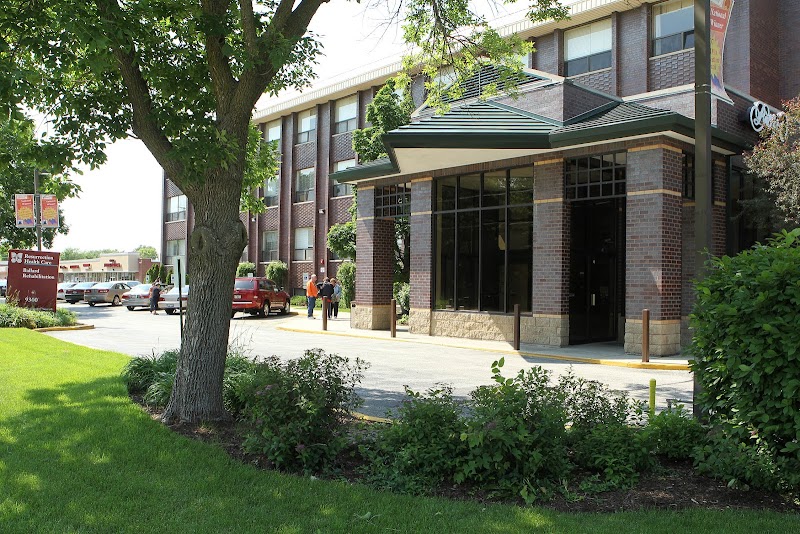
9300 BALLARD ROAD, DES PLAINES, IL 60016 (847) 294-2300
For profit - Limited Liability company 231 Beds Independent Data: November 2025 2 Immediate Jeopardy citations
Trust Grade
0/100
#618 of 665 in IL
Last Inspection: September 2024

Within standard 12-15 month inspection cycle. Federal law requires annual inspections.

Overview

Rivaya Care of Des Plaines has received a Trust Grade of F, indicating significant concerns about the quality of care provided. With a state rank of #618 out of 665 facilities in Illinois, they are in the bottom half, and locally, they rank #191 out of 201 in Cook County, which suggests limited options for better care nearby. Although the facility is trending towards improvement, reducing issues from 13 in 2024 to 5 in 2025, the current staffing rating is poor, with a troubling 56% turnover rate, which is above the state average. There have been serious issues, including a critical incident where a resident suffered an obstructed airway due to improper care during a medical emergency, and another case where a resident's deteriorating condition was not promptly reported, leading to their death. While it is positive that they have made some progress in addressing past deficiencies, the facility's history of fines totaling $274,991 and ongoing staffing challenges raise significant concerns for families considering this nursing home.

Trust Score
F
0/100
In Illinois
#618/665
Bottom 8%
Safety Record
High Risk
Review needed
Inspections
Getting Better
13 → 5 violations
Staff Stability
⚠ Watch
56% turnover. Above average. Higher turnover means staff may not know residents' routines.
Penalties
✓ Good
$274,991 in fines. Lower than most Illinois facilities. Relatively clean record.
Skilled Nurses
✓ Good
Each resident gets 45 minutes of Registered Nurse (RN) attention daily — more than average for Illinois. RNs are trained to catch health problems early.
Violations
⚠ Watch
61 deficiencies on record. Higher than average. Multiple issues found across inspections.
★☆☆☆☆
1.0
Overall Rating
★☆☆☆☆
1.0
Staff Levels
★★★☆☆
3.0
Care Quality
★★☆☆☆
2.0
Inspection Score
Stable
2024: 13 issues
2025: 5 issues

The Good

  • Full Sprinkler Coverage · Fire safety systems throughout facility
  • No fines on record

Facility shows strength in fire safety.

The Bad

1-Star Overall Rating

Below Illinois average (2.5)

Significant quality concerns identified by CMS

Staff Turnover: 56%

10pts above Illinois avg (46%)

Frequent staff changes - ask about care continuity

Federal Fines: $274,991

Well above median ($33,413)

Significant penalties indicating serious issues

Staff turnover is elevated (56%)

8 points above Illinois average of 48%

The Ugly 61 deficiencies on record

2 life-threatening 14 actual harm
Sept 2025 1 deficiency 1 Harm
SERIOUS (G) 📢 Someone Reported This

A family member, employee, or ombudsman was alarmed enough to file a formal complaint

Actual Harm - a resident was hurt due to facility failures

Accident Prevention (Tag F0689)

A resident was harmed · This affected 1 resident

**NOTE- TERMS IN BRACKETS HAVE BEEN EDITED TO PROTECT CONFIDENTIALITY** Based on interviews and record reviews, the facility failed to follow fall policy related to prevention of falls and implementat...

Read full inspector narrative →
**NOTE- TERMS IN BRACKETS HAVE BEEN EDITED TO PROTECT CONFIDENTIALITY** Based on interviews and record reviews, the facility failed to follow fall policy related to prevention of falls and implementation of resident-centered fall interventions on a resident with cognitive impairment. This failure affected one (R1) of five residents reviewed for accidents and supervision and resulted in R1 falling while walking without staff assistance and sustaining a right intertrochanteric hip fracture with associated intramuscular hemorrhage.Findings include:R1 is a [AGE] year-old, male, originally admitted in the facility on 08/20/25 with diagnoses of End Stage Renal Disease; Unsteadiness on Feet; Other Abnormalities of Gait and Mobility; Atherosclerotic Heart Disease of Native Coronary Artery without Angina Pectoris.According to R1's census report, R1 was admitted in the facility on 08/20/25 and was discharged on 08/22/25. On 09/10/25, he came back in the facility and was considered new admission.MDS (Minimum Data Set) dated 09/19/25 documented R1 has memory problem and his cognitive skills for daily decision making is severely impaired. His functional abilities recorded that he needs supervision or touching assistance when walking 10 feet; and partial/moderate assistance when walking 50 feet with two turns. MDS also indicated that he uses a manual wheelchair.Fall risk assessment dated [DATE] categorized R1 as high risk with a score of 15.R1's admit/readmit evaluation dated 09/11/25 documented:E. Neurological: Comments - confusionM. Mobility/Safety:a. walk in room: self-performance - supervisionb. walk in corridor: self-performance - activity did not occurg. wheelchairi. gait disturbance/unsteady gait Facility's incident report dated 09/19/25 recorded: R1 had an unwitnessed fall in the hallway. R1 was observed laying on the floor on his back with his walker on the side of him. Staff did full body assessment and R1 was complaining of pain. Pain medication was offered and given. Family and on call doctor were notified and order was given to send R1 out for further evaluation. Upon checking on R1's hospital status nurse on duty spoke with emergency room nurse and was informed that R1 was being admitted for a right hip fracture.R1's hospital records dated 09/19/25 documented: Xray of hip 2 views right and pelvis: Final result - Impression: Acute comminuted displaced and angulated right intertrochanteric fracture. CT (Computed Tomography) chest abdomen pelvis without contrast: Findings: Right intertrochanteric hip fracture with associated intramuscular hemorrhage. R1 was diagnosed with closed trochanteric fracture of right femur with nonunion and acute traumatic injury of cervical spine.On 09/24/25 at 2:18 PM, V10 (Certified Nurse Assistant, CNA) stated, On 09/19/25 at 1:30 AM, I was by the nurses' station and just heard a sound like something dropped on the floor. Immediately, I stood up and went to the direction of the sound and saw him (R1) on the floor by his room. I called nurse immediately, who was at the other side of the hallway, on the east side. Nurse came immediately. R1 said he wants to walk around. He complained of pain on his hip, right side. The time he fell, he was walking out from his room. I didn't see if he was using his walker at that time. I don't remember. I didn't hear any alarm. When I did my rounds around 12ish he was sleeping on bed. That time it happened; I was the only staff on that side (west wing) where R1 was. That time it was only me and the nurse worked on the west wing. Normally, he (R1) ambulates with a walker. there's no assistance needed because he can do it by himself. He can walk around by himself. He doesn't need assistance to walk around. He has no chair or bed alarm, not that I know of.On 09/24/25 at 2:53 PM, V11 (Licensed Practical Nurse, LPN) said, That time of incident on 09/19/25, I was on 1 East, because one nurse left at 1 AM and I was the only nurse on the first floor. I had two CNAs - one in west and one in east. CNA was sitting at the nurses' station. I heard CNA called me, I went there, and I saw R1 on the floor. I did assessment. I asked him (R1) and said he was walking. I asked him about pain and showed me his right hip. I gave him PRN (when needed) pain pill. I called physician he was sent out as ordered. V11 said, He is alert, oriented to self, time and place, able to verbalize needs. he never uses call light; always sitting in his room. His room is somehow close to nurse station. At night, sometimes, he was awake and will call nurse, nurse. He usually sits in bed and will call nurse, nurse. When we go to his room, he doesn't say anything. If you tell him to sleep, he will lie in bed. I don't know if he is a fall risk, it was the second time I took care of him. I've never seen him walking with a walker, only time he had was when he had the fall.R1's room was observed across nurses' station (1West). R1's door is on the side across nurses' station.On 09/25/25 at 10:25, V12 (Registered Nurse, RN) stated, R1 is very much confused; he talks nonsense. Not able to use call light. He is very much a fall risk patient. His room was just across the station. We always monitor and check on him at least every two hours. CNAs do their rounds also. RNs and CNAs do monitor at least every two hours. I always tell my CNAs to monitor him. I do my rounds then CNAs, so more or less he is monitored and checked every hour. He gets up, he has a rollator. He is able to use rollator with supervision from staff. He uses his rollator with reminders but if not, he won't use it. His legs are weak and has unsteady gait. He needs monitoring/supervision frequently and make sure he uses the rollator when he walks.On 09/25/25 at 10:52AM, V14 (CNA)verbalized, R1 is alert but confused. Able to verbalize needs. He is not able to use call light, he uses a rollator. He is supposed to use a wheelchair. We always redirect him. He always wanted to use the rollator. He is a fall risk. We have to monitor and check on him pretty often, at least every 2 hours and when we do rounds, we check on him. He has no alarms. bed should be lowered. He has a behavior of getting up and walk, needs redirection. He needs to be reminded to use the wheelchair not rollator.On 09/25/25 at 11:14 AM, V5 (LPN/Restorative Coordinator replied, On 09/19/25 at 1:30 AM, he got up from bed, attempted to self-transfer. Did not tell nurse where he was going. The CNA heard him fall, the CNA said she was doing patient care in another patient's room. When the CNA heard it, she went to the room and found him lying on his right side, the walker was next to him. The nurse came and assessed him, he was in pain to his right hip. The nurse called the doctor and R1 was sent out to the hospital. Cause of the fall - R1 was getting up and due to unsteady gait, he fell. Staff should have done rounding/monitoring at the time to ask if he needs something. Rounding/monitoring should be every hour like nurse simultaneous with CNA doing rounds; he might need to go to the bathroom at the time because it was around 1:30 AM but no one was around, cognitively he forgot to use the call light, and he did not know his limits and walked. He gets up when he wants to and walk. He uses a walker with staff assistance. R1 definitely has confusion. Somebody has to monitor and do an hour rounding on him. R1's care plans documented the following:1. Requires restorative walking program due to his limitation in walking related to weakness (dated 09/12/25):Interventions:Discuss ambulation program with resident and responsible party.Provide staff assist with ambulation at level resident requires (e.g. set up, oversight, encouragement, cueing, physical assistance).Remind resident to not ambulate without assistance.2. Resident is high risk for falls (dated 09/11/25):Interventions:Anticipate and meet the res needs.Be sure the resident (R1) call light is within reach and encourage the resident (R1) to use it for assistance as needed. The resident (R1) needs prompt response to all requests for assistance.Educate the resident (R1)/family/caregivers about safety reminders and what to do if a fall occurs.Follow facility fall protocol.The resident (R1) uses (specify: chair/bed) electronic alarm. Ensure the device is in place as needed. R1's care plan interventions focused on his (R1) education, reminders and use of call light when assistance is needed. However, R1 is confused and forgetful. R1's Progress notes dated 09/11/25 documented in part but not limited to the following: R1 was observed up in chair, in no acute distress, eating breakfast, denies pain currently, alert and oriented to self, with noted confusion, requiring redirection per staff. On 09/25/25 at 1:19 PM, V2 (Director of Nursing) stated, He is a fall risk. He came from the hospital because of a fall. He is alert, in and out, able to hold a conversation with you. He can tell you his needs and wants but detailed conversation and remembering things, not really. He needs to be redirected. He had a fall early in the morning, like at 1:30 AM, he got up and walked. His legs gave out when he was walking using the walker. It was unwitnessed fall, so he could not be redirected.Per admit evaluation note dated 09/11/25, R1 uses a wheelchair due to gait disturbance and unsteady gait. Per care plan, R1 uses electronic alarm, but was not implemented.On 09/25/25 at 10:46 AM, V13 (Nurse Practitioner) stated, R1 is confused with place and time, he has dementia, able to verbalize needs. He sits in the wheelchair. I have not seen him walk. He is a fall risk. Rounds/monitoring should be done; making sure bed is locked; wheelchair locked; wearing non-skid socks; and follow the facility fall protocol. Facility's policy titled, Falls Guideline, dated 8/2024 documented in part but not limited to the following:Purpose: To consistently identify and evaluate residents at risk for falls and those who have fallen to treat or refer for treatment appropriately and develop an organization-wide ownership for fall prevention to:To achieve each resident's maximum potential of physical functioning.To prevent or reduce injuries related to falls.To enhance residents' dignity and self-worth.The intent of this guideline is to ensure this facility provides an environment that is free from hazards over which the facility has control and provides appropriate supervision to each resident as identified through the following process:I. Identification of hazards and risksII. EvaluationIII. ImplementationIV. MonitoringV. AnalysisFall risk evaluation: a fall evaluation is used to identify individuals who have predicting factors for falls. This evaluation is completed upon admission, quarterly, annually and with a significant change in condition. Residents evaluated as at risk for falls will be identified and individualized fall precautions developed for each resident. Preventative measures shall be taken to decrease the number of falls whenever possible.Purpose:1. To consistently identify and evaluate residents who fall and to treat or refer for treatment appropriately.3. To prevent or reduce injuries related to falls.6. Individualize interventions for each resident.Evaluation may include: Residents with recent surgery or new admission; fall history; cognitive status1. If the evaluation finds the resident at risk, implement resident specific interventions/precautions.7. All residents identified as at risk for falls will be reviewed for individualized interventions.Fall Prevention is achieved through an IDT (interdisciplinary team) approach of managing predicting factors and implementing appropriate interventions to reduce risk for falls. Facility staff across all departments together with resident representatives and residents provide resourceful information with individualizing care and approaches.Understanding contributing and predicting factors that present will assist with determining individualized care approaches.Systems approach - Tips for Compliance:Involve interdisciplinary team (IDT) on: Individualized assessment for safety; identification of hazards; Development and implementation of interventions to reduce accidents.
Jun 2025 1 deficiency
CONCERN (D) 📢 Someone Reported This

A family member, employee, or ombudsman was alarmed enough to file a formal complaint

Potential for Harm - no one hurt, but risky conditions existed

Deficiency F0628 (Tag F0628)

Could have caused harm · This affected 1 resident

**NOTE- TERMS IN BRACKETS HAVE BEEN EDITED TO PROTECT CONFIDENTIALITY** Based on observations, interviews, and record review, the facility failed to notify resident's representative of discharge plann...

Read full inspector narrative →
**NOTE- TERMS IN BRACKETS HAVE BEEN EDITED TO PROTECT CONFIDENTIALITY** Based on observations, interviews, and record review, the facility failed to notify resident's representative of discharge planning, orders, and arrangements for post-discharge care for one resident (R1) out of three residents reviewed for representative notifications. Findings include: R1 is a [AGE] year-old resident admitted to the facility on [DATE] to 5/22/2025 with diagnoses including but not limited to: anemia, chronic obstructive respiratory disease, heart failure, cocaine abuse, and anxiety disorder. On the (MDS) Minimal data Set assessment of 5/17/2025 Section C the BIMS (Brief Interviewed Mental Status) score was 14/15 and indicates cognitive intact. On MDS of 4/4/2025 GG Section Functional Abilities indicates R1 can wheel 150 feet: Once seated in a wheelchair/scooter, the ability to wheel at least 150 feet in a corridor or similar space independently. R1 can walk 150 feet: Once standing, the ability to walk at least 150 feet in a corridor or similar space with setup or clean-up assistance - helper sets up or cleans up; resident completes the activity. Helper assists only prior to or following the activity. On 6/20/2025 at 11:52 PM, V3 (State Guardian) said, I sent one associate to see R1 on 6/9/2025 to the facility and R1 was discharged two weeks ago. I did not receive any update on discharge or any information about where the resident would be discharged . I spoke with V1 (Administrator) and V4 (Social Service Director) from the facility and confirmed that R1 was discharged . The facility sent me a form filled out by the physician to revoke the guardianship and the facility did not provide any court documentation that R1's guardianship was revoked. I went to the facility in January of 2025 for the first quarter assessments and visit. R1 has been under guardianship since May 9, 2022. On 6/20/2025 at 2:16 PM V4 (Social Service Director) said, I assisted R1 with discharge planning. I did not notify V3 (State Guardian) of the discharge planning for R1 before discharge. I messed up and I have to be honest with you. I should have notified the guardian, but I did not. Discharge planning is the primary responsibility of the social services, when there is no social service in the building, nursing is responsible and will call Power of Attorney/guardian or whoever the resident will appoint to assist with discharge. On 06/20/2025 at 12:27 PM V5(Vice President of Operations) said the facility does not have court documentation of the revoked guardianship for R1. I expect the staff to notify the resident's representative of discharge planning, orders, and location before the discharge. On 6/20/2025 at 4:30 PM V2 (Director of Nursing) said, I expect staff to call resident's representative/guardian to inform of discharge planning, orders, and discharge location. I do not see any records of V4 notifying the guarding under the resident's electronic notes. On 6/20/2025 at 4:30 PM V2 (Director of Nursing) provided a policy titled, Transfer and Discharge Guideline reviewed dated 10/2024. Which reads in part (but not limited to), Policy: Orientation for transfer/discharge a. The facility will provide the resident with sufficient orientation to the upcoming discharge to ensure the discharge is safe and orderly. The orientation will provide the resident or representative in a form and manner that can be understood. Notifications: Notify family/responsible party, physician, and applicable agencies (e.g., ombudsman case manager) as needed.
Jun 2025 1 deficiency
CONCERN (D) 📢 Someone Reported This

A family member, employee, or ombudsman was alarmed enough to file a formal complaint

Potential for Harm - no one hurt, but risky conditions existed

Report Alleged Abuse (Tag F0609)

Could have caused harm · This affected 1 resident

**NOTE- TERMS IN BRACKETS HAVE BEEN EDITED TO PROTECT CONFIDENTIALITY** Based on interviews and record review, the facility failed to identify and report an allegation of sexual abuse to the facility'...

Read full inspector narrative →
**NOTE- TERMS IN BRACKETS HAVE BEEN EDITED TO PROTECT CONFIDENTIALITY** Based on interviews and record review, the facility failed to identify and report an allegation of sexual abuse to the facility's abuse prevention coordinator and further to regulatory state agency for one of four (R1) residents reviewed for abuse in the sample of four. Findings include: R1 is a [AGE] year-old female admitted to the facility with diagnosis including but not limited to End Stage Renal Disease; Cerebral Infarction Due to Unspecified Occlusion Or Stenosis Of Left Posterior Cerebral Artery; Depression; Borderline Personality Disorder; Suicidal Ideations; Bipolar Disorder; Torsade De Pointes; Pulmonary Hypertension; Cocaine Abuse; and Major Depressive Disorder. On 06/03/2025 at 12:12 PM R1 said, I was sitting in the hallway, in my wheelchair and I had a stuffed animal (the lion) in my lap. R2 came up to me, complemented my stuffed animal, and asked if he could touch it. I lifted the stuffed animal for R2 to see, but R2 reached out towards my private part and touched my private part instead. I reported it and talked about it every day. I notified the police to file for restraining order. The police came out about 3 weeks ago. They gave me report number, but I don't know what happened to it. I gave it to V6 (Activity Assistant). V5 (Social Service Director) confronted me in front of police officers, and asked me what time and day it happened, knowing I wouldn't know what time and day it happened. The police told me they dropped the case because no one has seen what happened. Nobody actually seen it, because nobody was around. On 06/03/2025 at 1:34 PM V6 (Activity Aid) said, R1 participates in activities but it's based on her mood. I'm familiar with R1 though. R1 never mentioned anything about R2 groping her. R1 never gave me any police report number. I don't know of R1 calling police recently. On 06/03/2025 at 2:00 PM V1 (Administrator/Abuse Prevention Coordinator) said, I never heard of the incident alleged by R1. I see R1 almost daily, she comes to my office at least weekly, but she never mentioned anything to me. Never mentioned any resident was inappropriate towards R1. If there is an abuse allegation, resident safety is our priority, then reporting and investigation. If the perpetrator is an employee, the employee would have to be suspended, and we would then complete interviews with staff and residents. On 06/03/2025 at 3:08 PM V8 (Licensed Clinical Social Worker) said, I met with R1 on 05/30/2025 to terminate services due to new corporation terminating my contract. I was seeing her for about a year and half. R1 told me, during most recent session (05/30/2025), something that occurred with another resident, allegedly, he touched her inappropriately. R1 told me police was here to investigate it. R1 said V1 (Administrator/Abuse Prevention Coordinator), and other staff knows about it. I trusted that everyone already knew. In hindsight, I realized that I should have checked if R1, in fact, reported it to other staff. I felt that if R1 said that the police were here to investigate, I couldn't have report it to anyone else. I believed and trusted R1. On 06/03/2025 at 3:15 PM V1 (Administrator/Abuse Prevention Coordinator) said, V8 (LCSW) should have reported the incident to me, but she didn't. I just found out about the incident today, from you. I will report it to the regulatory agency and initiate the alleged abuse investigation. Progress note dated 05/30/2025 10:11 AM written by V8 (LCSW) reads in part, Met with (R1) in hallway. (R1) expressed her frustration with confines of SNF environment. (R1) mentioned she was interviewed by detectives regarding an incident that happened with another resident. (V8) provided validation of feelings and a safe space to express her emotions. The facility Abuse Prevention (no date) reads in part, Employees are required to report any incident, allegation or suspicion of potential abuse, neglect, exploitation, mistreatment, or misappropriation of resident property they observe, hear about, or suspect to the administrator immediately, to an immediate supervisor who must then immediately report it to the administrator or to a compliance hotline or compliance officer. In the absence of the administrator, reporting can be made to an individual who has been designated to act in the administrator's absence.
Apr 2025 1 deficiency
CONCERN (E) 📢 Someone Reported This

A family member, employee, or ombudsman was alarmed enough to file a formal complaint

Potential for Harm - no one hurt, but risky conditions existed

Quality of Care (Tag F0684)

Could have caused harm · This affected multiple residents

**NOTE- TERMS IN BRACKETS HAVE BEEN EDITED TO PROTECT CONFIDENTIALITY** Based on observation, interview, and record review the facility failed to ensure ongoing assessment, monitoring is implemented t...

Read full inspector narrative →
**NOTE- TERMS IN BRACKETS HAVE BEEN EDITED TO PROTECT CONFIDENTIALITY** Based on observation, interview, and record review the facility failed to ensure ongoing assessment, monitoring is implemented to identify new skin impairment to resident who is at risk and to notify physician for appropriate wound treatment. The facility failed to follow wound care treatment as ordered by physician. The facility failed to update wound care plan for newly identified wound and notify the family member. The facility failed to follow manufacturer recommendation in using low air loss mattress. This deficiency affects all four (R2, R3, R4, R5) residents reviewed for Pressure ulcer/Wound Prevention and Treatment Management. Findings include: 1. On 4/8/25 at 9:48AM, V9 family member complaint of facility providing improper wound care to R2. On 4/8/25 at 10:12AM, Reviewed R2's medical records with V5 Wound Care Nurse (WCN) and V4 Infection Preventionist (IP). R2 was admitted on [DATE] with diagnosis listed in part but not limited to Type 2 Diabetes Mellitus with hyperglycemia, Unstageable Pressure ulcer of right buttock, Severe Morbid obesity due to excess calories, Peripheral vascular disease, Chronic obstructive pulmonary disease. Braden scale/skin assessment dated [DATE] indicated R2 is at high risk for skin impairment. Wound care physician wound assessment dated [DATE] indicated R2 acquired new identified skin impairment on Right hip, Left buttocks and Sacral. Right hip DTI pressure ulcer measures 5cmx5cmx0.1cm 80% maroon, 20% open dermis, light serosanguinous drainage. Left buttock skin tear measures 3cmx2cmx0.1cm, 100% dermis. Sacral diaper dermatitis (MASD), 100% patchy redness and excoriation. Physician order sheet indicated: Sacral cleanse with normal saline, apply zinc oxide or vit A&D ointment every shift and as needed ordered 11/5/24. R hip cleanse with normal saline, apply Medi honey, Adaptic cover with a foam or bordered gauze dressing ordered 11/6/24. Left buttocks cleanse with normal saline, apply xeroform, cover with a bordered gauze dressing ordered 11/5/24. R2's comprehensive care plan indicated R2 has alteration in skin integrity and is at risk for additional skin breakdown related to comorbidities, decreased mobility, diabetes unavoidability due to condition. Care plan was not updated, and no new intervention was formulated when R2 had 2 newly acquired skin impairment on 11/5/24 during wound rounds with physician. No documentation was found V9 Family member was notified of change in R2's skin condition. Informed V5 WCN of concern identified. V5 said V10 Wound care coordinator (WCC) usually notify the family member of any skin changes and updates the wound care plan. On 4/8/25 at 10:48AM, Informed V2 DON (Director of Nursing) of above concerns. V2 said R2's wound care plan should be updated and with new interventions for newly acquired skin impairments/pressure ulcers. V9 family member should also notify of new identified skin impairments and wound treatment management. On 4/8/25 at 12:46PM, Informed V6 Care Plan Coordinator (CPC) of above concerns. V6 CPC said she initiated wound care plan upon resident admission but V11 WCC updates the care plan and does MDS/Resident assessment wound coding. V6 said V11 should update R2's wound care plan and notify and update V9 Family member of changes in skin conditions. On 4/8/25 at 1:15PM, Informed V10 Wound Care Coordinator of above concerns. V10 said he should update R2's care plan and formulates new interventions for the new identified skin impairments on 11/5/24 during rounds with wound care physician. V10 said he did not notify V9 Family member of R2's acquired new skin impairments because R2 is alert and oriented x3. V10 said he should notify R2's family member for any changes in R2's medical condition including new acquired skin impairments and update with new wound treatment management. On 4/8/25 at 3:00PM, Informed V1 administrator of above concerns. 2. On 4/8/25 at 1:31PM, Observed R3 lying in bed with low air loss mattress. R3 was connected to oxygen via nasal cannula at 2 LPM (liters per minute). R3 is alert and oriented x 3, able to express and verbalize needs to staff. V5 and V12 repositioned R3 to her left side lying position. V5 removed bordered gauze dressing on sacral area with minimal serosanguinous drainage. V5 cleansed with NSS (Normal saline solution). V5 said R3 has stage 4 sacral pressure ulcer with clean wound 100% reddish pink tissue granulation. V5 applied hydrogel then apply Permacol/collagen and covered with foam dressing. Informed V5 of observation made during wound dressing bordered gauze dressing removed from R3 prior to wound care and he applied foam dressing. V5 was also informed no soft gel like sheet was observed when he removed the bordered gauze dressing. (Gauze dressing is absorbent and used for covering and protecting wounds while foam dressing creates moist environment, absorb moderate to heavy exudate, and provide cushioning, particularly for wounds with bony prominences). Permacol/collagen dressing absorb wound exudate and convert into soft gel like sheet which helps maintain a moist wound environment conducive for healing). V5 said R3 should have foam dressing as ordered instead of gauze dressing. R3 was admitted on [DATE] with diagnosis listed, in part, but not limited to Stage 4 Sacral pressure ulcer, Diaper dermatitis, Type 2 Diabetes Mellitus, Severe morbid obesity, End stage renal disease, Acute respiratory failure. admission Braden scale/skin assessment indicated at R3 is at risk for skin impairment. Physician order sheet indicated Sacrum cleanse with NSS, apply wound gel and cover with collagen sheet, secure with bordered foam dressing. On 4/9/25 at 9:37AM, Informed V2 DON and V4 IP of above concern. V2 DON said they should be following physician order in providing wound treatment to resident. 3. On 4/8/25 at 1:50PM, Observed R4 lying in bed with low air loss mattress. R4 is alert and oriented x 3, able to express and verbalize needs to staff. He has right upper PICC line connected to IVPB (Intravenous piggy bag) antibiotic. He has right heel dressing connected to wound vac machine. He has right heel boot. V5 said R4 is recently admitted from hospital with IVPB antibiotics due to infected vascular wound on right heel. Observed V12 CNA entered the room without proper PPE for EBP, she did not wear gown. V5 WCN and V12 repositioned R4 to his left side lying position. V5 removed sacral bordered gauze dressing soaked with heavy greenish brown wound drainage. V5 cleansed all 3 wounds with NSS. V5 said R4 has stage 4 on the following locations: Right ischium and sacral area has 90% granulation tissue and 10% of slough formation. Left ischium has 80% tissue granulation and 20% slough formation. V5 apply the following to all 3 wounds: Medi honey, then calcium alginate and covered with foam dressing. Informed V5 of observation made during wound care bordered gauze dressing was removed from all wound dressing prior to wound care, and he applied foam dressing. Informed V5 that V12 did not wear proper PPE during wound care. V5 said R4 should have gauze dressing as ordered instead of foam dressing. V5 said V12 should wear gown in addition to gloves and mask. R4 was admitted on [DATE] with diagnosis listed in part but not limited to Acute osteomyelitis, Stage 4 sacral pressure ulcer, Paraplegia, Acute embolism, and thrombosis of deep vein of lower extremities, Atrial fibrillation, Congestive heart failure. admission Braden scale/skin assessment dated [DATE] indicated at risk for skin impairment. Active physician order sheet indicated: Left ischium cleanse with NSS, pat dry, apply medical grade honey, calcium alginate and cover with bordered gauze dressing every day and PRN. Right ischium cleanse with NSS, pat dry, apply medical grade honey, calcium alginate and cover with bordered gauze dressing every day and PRN. Sacrum cleanse with NSS, pat dry, apply medical grade honey, calcium alginate and cover with bordered gauze dressing every day and PRN. Low air loss mattress. On 4/9/25 at 9:37AM, Informed V2 DON and V4 IP of above concern. V2 DON said they should be following physician order in providing wound treatment to resident. 4. R5 was admitted on [DATE] with diagnosis listed, in part, but not limited to Idiopathic peripheral autonomic neuropathy, Type 2 Diabetes Mellitus, Methicillin resistant staphylococcus infection, Hypertension with chronic kidney disease with heart failure, Chronic venous insufficiency, Dependence on renal dialysis. Braden scale/skin assessment dated [DATE] indicated at risk for skin impairment. Active physician order sheet indicated: Right lower abdomen cleanse with NS, apply skin prep cover with hydrocolloid every MWF and as needed for skin tear. Scrotum cleanse with NS, apply collagen and calcium alginate leave open to air every other day and PRN. Metro cream external cream 0.75% apply to sacral topically every day shift and PRN for MASD cleanse with NS, apply metro cream, Vit A & D ointment and Zinc oxide leave open to air. Nystatin powder 100,000 unit/gm apply to scrotum topically two times a day for Candida scrotum. Zinc oxide ointment apply to affected area topically two time as day and PRN. Wound care plan indicated he is at risk for alteration in skin integrity related to incontinence of bladder and bowel, impaired mobility status, decreased sensory perception, comorbidities, failure to thrive, PVD, End stage disease process. Interventions: Skin will be checked during routine care on a daily basis and during the weekly/biweekly bath or shower schedule. Any skin integrity tissue concerns will be conveyed to the charge nurse for further evaluation and or treatment changes/new interventions and the MD will be called PRN. Provide low air loss mattress. On 4/8/25 at 2:07PM, Observed R5 lying in bed with low air loss (LAL) mattress. R5 had flat sheet and folded thick cloth bath blanket in quarters over the mattress. Observed Nystatin topical power bottle 100,000 units per gram at bedside, labeled indicated apply to scrotal area twice a day. R5 wears disposable brief. Showed observation to V5 WCN and V12 CNA/Wound Tech. Both said R5 should only be on flat sheet over the LAL mattress. R5 said he did not request to have folded bath blanket over the mattress. R5 is alert and oriented x 3, able to express and verbalize needs to staff. R5 has morbid obese abdomen. R5 said his abdominal folds hurts, left hip and sacral area. R5 said they apply zinc oxide to his sacral area. R5 said they apply nystatin powder to his abdominal folds. R5 said he did not receive wound treatment yesterday. V12 said nystatin power is left at bedside for the CNA to apply. V5 said nystatin powder should not be left at bedside and CNA cannot apply it. V5 said treatment was not done because R5 was in dialysis yesterday. V5 said R5 has MASD on sacral area and healed right side abdominal skin tear. V12 repositioned R5 to his right side. Observed excoriation on sacral area with bleeding. Blood stained observed on disposable brief and folded bath blanket. Observed excoriation on left side of the abdominal folds and open wound on left hip. V5 said the excoriation on left side of abdomen and open left hip are new to him. V5 said R5 has metro cream, zinc oxide and Vit A & D ointment to his sacral area. Observed V5 prepare wound treatment for R5. Observed metro cream prepared obtained from another resident's medication. Informed V5 of observation made. V5 searched the treatment cart but could not find R5's metro cream medication. V5 said it's probably in another treatment cart. V5 left the treatment cart with open drawer and unlocked. V5 returned and said he could not find R5's metro cream medication. Informed V5 he left his treatment cart opened and unlocked. V5 said, treatment cart should be kept locked when not in sight. V5 took single use packet of zinc oxide and Vit A & D ointment from the cart. V5 apply zinc oxide to sacral area without cleansing with NSS. Called attention of V5 he applied the treatment without cleaning. V5 apologized and cleansed the sacral wound with NSS, apply zinc oxide and Vit A & D. V5 said R5 did not have metro cream medication. On 4/8/25 at 2:15PM, V5 said left excoriation of left abdominal fold and open wound on left hip are new. Surveyor requested to assess the entire abdominal folds. R5 has obese abdomen. V12 lifted the abdominal folds and observed accumulation of dried powered in the abdominal folds with foul odor. V12 cleansed abdominal folds with wipes. Observed excoriation in the entire abdominal folds with bleeding. R5 said he has had these excoriations for almost 2 weeks, and it hurts. R5 said V11 WCN and CNAs applied nystatin powder to his abdominal folds. V5 obtained measurement of 48cm x 3cm x 0.1cm. V5 applied calcium alginate and covered with bordered gauze dressing. V12 repositioned R5 to his right side. V5 measured left hip open wound and obtained 1cm x 1.5 x0.1cm, 100% red tissue granulation with minimal bleeding. V12 repositioned R5 to his back. Observed red, swollen, and excoriated scrotum with minimal bleeding. R5 has indwelling catheter with greenish brown sediments with blood visible to the tubing connected to urinary drainage bag. V5 cleansed with NSS, apply collagen, calcium alginate and leave it open to air. On 4/8/25 at 2:49PM, V13 LPN said he is the assigned nurse for R5. V13 said the treatment nurses do the wound treatment for R5. V13 is not aware of new skin impairment on R5's abdominal folds excoriations and left hip open wound. V13 said V14 CNA is the assigned CNA for R5 and did not report any new skin impairments to V13. On 4/8/25 at 3:00PM, Informed V1 of above concerns identified. On 4/8/25 at 4:46PM, V14 CNA said she has taken care of R5. V14 said she just returned to work from vacation yesterday. V14 said she applied zinc oxide to R5's sacral area and nystatin powder to abdominal folds. V14 said he observed R5's excoriation on abdominal folds 2 weeks ago with V11 WCN. V14 said she did not inform the floor nurse of abdominal excoriation because V11 is aware of it. V14 said she is aware any resident's new skin impairment should be reported to the nurse. On 4/9/25 at 9:37AM, Informed V2 DON and V4 IP of above concerns identified they failed to fail to ensure ongoing assessment, monitoring are implemented to identify new skin impairment to resident who is at risk and to notify physician for appropriate wound treatment The facility failed to follow wound care treatment as ordered by physician. The facility failed to update wound care plan for newly identified wound and notify the family member. The facility failed to follow manufacturer recommendation in using low air loss mattress. V2 DON said they should implement their policy in wound/skin assessment, prevention, treatment management. On 4/9/25 at 11:25AM, V11 WCN said he provided wound care to R5 on 4/6/25. V11 observed redness on abdominal folds not excoriation and applied zinc oxide ointment. V11 denied applying nystatin powder. V11 said he did not document his observation on abdominal folds. Reviewed R5's physician order for wound/skin treatment and facility's policy in wound care. On 4/9/25 at 1:30PM, Informed V1 Administrator of above concerns. Facility's policy on Wound Care reviewed 8/1/24 indicated: Policy statement: To provide wound care treatments/services based on standards of care under the direction of a physician. 1. Risk assessment and prevention: b. Skin checks will be performed on a routine basis and PRN (As needed) 2. Wound assessment and documented tool a. Assess when a wound I identified, weekly and or as needed. 4. Continued/ongoing treatment a. The nurse will provide wound care per <D/NP for orders/treatment. c. Wound cleansing may be performed to removed foreign debris and surfaces contaminants from the wound. Wound may be cleansed prior to the administration of topical treatments as per MD/NP orders. Facility's policy on Skin management: Specialty mattress Guidelines for the use of specialty mattresses Low air loss: Stage 3, stage 4, Unstageable, DTI to the buttock, multiple stage 2, very high risk with multiple co-morbidities or residents who need this type of mattress for comfort. Procedure: 1. As per manufacturer guideline, no more than 1 piece of linen will be placed between the mattress and the resident. Facility's policy on Care plan policy reviewed 5/21/24 indicated: Policy statement: To meet the resident's physical, psychosocial and functional needs, facility will develop and implement a comprehensive, person-centered care plan for each resident includes measurable objectives and target goals. Procedure: 10. Assessments of residents are ongoing and care plans are revised as information about the residents and the residents' conditions change.
Jan 2025 1 deficiency
CONCERN (D) 📢 Someone Reported This

A family member, employee, or ombudsman was alarmed enough to file a formal complaint

Potential for Harm - no one hurt, but risky conditions existed

Deficiency F0745 (Tag F0745)

Could have caused harm · This affected 1 resident

**NOTE- TERMS IN BRACKETS HAVE BEEN EDITED TO PROTECT CONFIDENTIALITY** Based on interview and record review, the facility failed to verify and obtain one resident's (R1) state guardian information. T...

Read full inspector narrative →
**NOTE- TERMS IN BRACKETS HAVE BEEN EDITED TO PROTECT CONFIDENTIALITY** Based on interview and record review, the facility failed to verify and obtain one resident's (R1) state guardian information. This failure resulted in the facility failing to notify the correct guardian and obtaining consent from resident's family for one of three residents reviewed for social services. Findings include: R1 was admitted to the facility on [DATE] with a diagnosis of respiratory failure, tracheostomy, dysphagia and substance abuse. R1's face sheet dated 1/14/25 documents under contacts: V4 (R1's family) as emergency contact one. V8 (state guardian) listed as third contact. R1's admission paperwork dated 11/19/24 documents: V8 as legal guardian with different phone number listed when compared to R1's face sheet. On 1/21/25 at 11:56AM, V3 (R1's state guardian) said they have not been notified of any concerns, consents, hospitalization for R1 since admission to the facility in November. On 1/23/25 at 12:35PM, V3 said although a person is assigned to a resident all agents can act on the behalf of the resident. V3 said if the facility was having difficulty in contacting the assigned agent, the facility should have contacted the main office to speak to management or another agent for any concerns. On 1/22/25 at 1:07pm, V6 (Social service) said upon admission they will verify resident information with hospital records, resident and/or family. V6 said she left messages for V8 (state guardian) with no return calls. V6 said social service is responsible for obtaining guardian paperwork at time of admission. V6 said they usually will get paperwork at initial care plan meeting within a week of admission. V6 said she does not recall reaching out to the main number at state guardian's office. V6 said R1's sister was being notified for all information pertaining to R1. On 1/22/25 at 1:48PM, V7 (social service director) said, Within 72 hours of admission, staff meet with resident and reach out to family or representative. If a resident has a guardian, we make sure the contact information is in the medical record, we will reach out to the guardian and schedule meeting with them within week of admission. Staff are supposed to reach out the obtain guardian paperwork upon admission. V7 said he was aware of staff not being able to contact V8 (former state guardian) but said he did not call anyone else to ask about R1's guardian. R1's consent for psychotropic medication dated 12/9/24 documents: V4(R1's family) gave phone consent. R1's progress note dated 12/9/24 documents: consent given by V4(R1's family) through phone call for Lorazepam Tablet 0.5 MG every 8 hours as needed. General update given to the V4. R1's progress note dated 1/6/25 documents: This writer spoke with V4 (R1's family) in regard to transfer to another facility. V4 (R1's family) verbalized understanding of transfer/discharge process. Would appreciate any communication. R1's progress note dated 1/4/25 documents: V4 (R1's family) notified with room change and sputum culture partial result. R1's progress note dated 12/22/24 documents: resident received back from the local hospital. R1 was seen and examined at bedside by Nurse Practitioner with new order hydroxyzine 25 mg every 6 hours. V4 (R1's family) called and updated will all new orders and consented hydroxyzine to be given. Facility social service responsibilities undated documents: maintain standard of documentation in the resident's records, including initial assessment note and as needed; Coordinate with outside agencies such as case managers, insurance agencies and the ombudsman and state and public guardian for the continuity of care. Facility policy on Adult Guardianship in Illinois undated documents: The facility will reach out upon admission to guardian, including the identified representative. The guardian contact information shall be identified in the clinical record along with documents proving guardianship. Facility policy titled Resident change in condition reviewed 2/2/24 documents: Regardless of the residents current mental, medical or physical condition a nurse or provider will inform the resident and residents representative/guardian of any changes in his/her condition, any incident or accident, including changes in medical care or nursing treatments.
Dec 2024 1 deficiency
CONCERN (D) 📢 Someone Reported This

A family member, employee, or ombudsman was alarmed enough to file a formal complaint

Potential for Harm - no one hurt, but risky conditions existed

Tube Feeding (Tag F0693)

Could have caused harm · This affected 1 resident

**NOTE- TERMS IN BRACKETS HAVE BEEN EDITED TO PROTECT CONFIDENTIALITY** Based on observation, interview, and record review, the facility failed to ensure an enteral feeding was administered as ordered...

Read full inspector narrative →
**NOTE- TERMS IN BRACKETS HAVE BEEN EDITED TO PROTECT CONFIDENTIALITY** Based on observation, interview, and record review, the facility failed to ensure an enteral feeding was administered as ordered for three (R5, R10, R12) of six residents reviewed for enteral feeding in the sample of 14. This failure resulted in R10 sustaining insidious weight loss of seven pounds in one month. Findings include: 1. On 12/13/24 at 10:28 AM, R10 was in bed sleeping with an enteral feeding connected and running at 60 ml/hr. On 12/13/24 at 11:50 AM, R10 was in bed with an enteral feeding connected and running at 60 ml/hr. On 12/13/24 at 12:50 PM, V5 Registered Nurse reviewed R10's orders and said R10's enteral feeding should be Glucerna 1.5 running at 65 ml/hr. V5, with this surveyor, observed R10's enteral feeding running at 60 ml/hr. V5 said this rate is wrong and changed the rate to 65 ml/hr. V5 said R10 is NPO (nothing by mouth) and is tube fed only. R10's Physician Orders dated 6/13/24 shows, NPO diet and an order dated 6/24/24 for Enteral Feed Order one time a day for nutrition Glucerna 1.5 @65 ml/hr. x 22 hours. R10's Dietary Progress Note dated 11/12/24 shows, Current body weight 160 #. Tube feeding meeting 100% estimated needs and appears adequate for needs as evidenced by weight maintenance. Therapeutic tube feed formulary for blood sugar control along with insulin. Well, hydrated per October labs. Weight stable. R10's Weights and Vital summary shows on 11/5/24 R10's weight was 160 pounds and on 12/3/24 R10's weight was 153 pounds (a decrease in 7 pounds in approx. 1 month.) On 12/13/24 at 12:44 PM, V11 Nurse Practitioner said resident's enteral feeding should be run according to the physician orders which are based on the dietician's recommendations. V11 said the rate provides the necessary nutrition to prevent weight loss and the formula provides the correct electrolytes needed by the resident based on their medical conditions. 2. On 12/13/24 at 10:40 AM, R12 was in bed sleeping with her enteral feeding Glucerna 1.5 connected and running at 70 ml/hr. On 12/13/24 at 11:55 AM, R12 was in bed with family at the bedside. R12's enteral feeding Glucerna 1.5 was connected and running. R12's Physicians Orders dated 11/26/24 shows, Enteral Feed Order: every shift Glucerna 1.2 at 80 ml/hr. x 22 hours (on at 7 AM, off at 5 AM). R12's Physician Order dated 11/19/24 shows NPO diet. On 12/13/24 at 12:32 PM, V10 Registered Nurse said R12's enteral feeding is supposed to be Glucerna 1.2 at 80 ml/hr. V10, with this surveyor, observed R12's feeding that was running. V12 said the feeding was the wrong formula and it was running at the wrong rate. V12 changed R12's enteral feeding to the correct formula and the correct rate. V10 said the night nurse started the feeding at 2:00 AM. On 12/13/24 at 12:39 PM, V2 Director of Nursing said enteral feedings are to be administered according to the physician order to provide the proper nutrition and the formula is specific to the resident's diagnoses. 3. On 12/13/24 at 10:07 AM, R5 was observed lying in bed, his enteral feeding Osmolite 1.5 was infusing at 75ml (milliliter) /hr. (hour). At 12:11 PM, R5 was lying in bed, his enteral feeding remained infusing at 75 ml/hr. R5 was eating his noon meal. He was served two hot dogs and mashed potatoes for the noon meal. He had consumed about 90 % of his meal. R5 said he is not sure when his tube feeding gets disconnected, he is getting the tube feeding because he had poor intake. On 12/13/24 at 12:18 PM, V13 (RN) said enteral feedings orders should be followed according to the prescribed order. She said R5's intake was poor and was receiving the enteral feeding to supplement his intake. V13 said R5's enteral feeding should be off at 5:00 AM and on at 9:00 PM. Night shift staff should have stopped his feeding. She said she saw R5's feeding was infusing and did not know it was supposed to be off. Infusing to much could put the resident at risk for fluid overload. R5's Physician Order Sheets (P.O.S.) dated through December 2024 shows he is [AGE] year-old male with diagnoses including COPD, heart disease, congestive heart failure, asthma, Crohn's, and hypertension. The P.O.S. shows orders for enteral feed order Osmolite 1.5 at 75 ml/hr. x 8 hours. Off at 5:00 AM and ON at 9:00 PM. The facility's Tube Feeding Policy reviewed date 2024 states, Nasogastric, gastrostomy and jejunostomy tube are used when an alternate method of nutrition is needed .all tube feeding orders will include the formula, rate, time period, delivery method and flush . feeding pump: turn on pump, set prescribed rate and start feeding .
Nov 2024 2 deficiencies
CONCERN (D) 📢 Someone Reported This

A family member, employee, or ombudsman was alarmed enough to file a formal complaint

Potential for Harm - no one hurt, but risky conditions existed

Free from Abuse/Neglect (Tag F0600)

Could have caused harm · This affected 1 resident

**NOTE- TERMS IN BRACKETS HAVE BEEN EDITED TO PROTECT CONFIDENTIALITY** Based on interview and record review the facility failed to protect the resident from unwelcome physical touch of another reside...

Read full inspector narrative →
**NOTE- TERMS IN BRACKETS HAVE BEEN EDITED TO PROTECT CONFIDENTIALITY** Based on interview and record review the facility failed to protect the resident from unwelcome physical touch of another resident to her shoulder. This deficiency affects one (R3) of three residents reviewed for Abuse prevention Program. Findings include: On 11/12/24 at 12:20PM, Observed R2 sitting on bed in his room. He is alert and oriented, able to express himself. He denied complaint allegation of R3. He refused to talk about the allegation. On 11/12/24 at 12:32PM, Observed R3 receiving dialysis treatment monitored by V12 Dialysis Nurse in the dialysis room. R3 was sleepy and refused to be interviewed. On 11/12/24 at 1:38PM, V1 Administrator denied complaint allegation of R3 that R2 touched R3's left breast in the elevator. V1 said, their final investigation of facility reported incident revealed that on 10/25/24 after lunch time, both R2 and R3 were together in the elevator. Both are able to use and operate the elevator for transport, no other person was in the elevator when the incident happened. Both were facing the elevator door. When the elevator opened on the first floor. R3 did not moved. R2 tapped both R3's shoulder and signaling to R3 that he wanted to get out the elevator. R3 got out of the elevator first then R2 got out the elevator next. Later during therapy, R3 mentioned that she was touched by R2 inappropriately in the elevator. R3 denied any pain or physical discomfort. Skin assessment was done with no skin alteration. R3 verbalized feeling safe at the facility. Staff and resident were interviewed. Both residents were sent to the hospital for evaluation and returned to the facility a few hours later with no new orders. R2 is in 2nd floor and R3 is in 3rd floor. Both residents are monitored for safety. Police report completed and filed. It was determined that R2 and R3 were together in the elevator. Misdemeanor complaint was filed by [NAME] County Sheriff's police against R2 under case No. SH-24-00396164 for Battery/Physical contact with the court date on [DATE]. Review R3's initial and final incident report -unwelcome touch to IDPH dated 10/25/24 and 10/30/24. Review [NAME] County Sheriff's police report dated 10/25/24 against R2 for Misdemeanor complaint of Battery/Physical contact. On 11/13/24 at 9:30AM, V3 Infection Coordinator said R3 was sent to the hospital for evaluation due to change of clinical condition. On 11/13/24 at 10:00AM, Informed V1 Administrator of concern identified of failure to protect R3 from R2's unwelcome touched to her shoulder in the elevator. On 11/14/24 at 9:28AM, V3 Infection Coordinator said that R3 was admitted with diagnosis of Hypoglycemia and Pneumonia. R3 is admitted to the facility on [DATE] with diagnosis listed in part but not limited to Toxic encephalopathy, Chronic respiratory failure with hypoxia, End stage renal disease, Generalized anxiety disorder. Active physician order indicates she is on Buspirone HCL 5mg 1 tablet by mouth two time a day for anxiety related to adjustment disorder with mixed emotion and depressed mood. Mirtazapine 15mg 1 tablet by mouth at bedtime for depression. Olanzapine 5mg 1 tablet by mouth at bedtime for bipolar disorder. Comprehensive care plan indicates that she is at risk for abuse (physical, mental, sexual, verbal, financial involuntary seclusion, neglect, exploitation, and misappropriation of property). She has impaired cognitive function or impaired thought processes related to disease processes of anoxic brain injury, cognitive communication disorder, adjustment disorder, depression and dysphagia, impaired decision making, neurological symptoms. She has a behavior problem related to younger age and being at nursing home. She was caught involved with another resident. She disclosed allegations of inappropriate physical contact by another resident. R2 is re-admitted on [DATE] with diagnosis listed in part but not limited to Metabolic encephalopathy, Acute and chronic respiratory failure with hypercapnia, Type 2 Diabetes Mellitus, Bipolar disorder, Cognitive communication deficit, Schizophrenia, Opioid dependence with withdrawal. Comprehensive care indicates that he is an identified offender, He has history of criminal behavior. He has demonstrated stability during the admission screening process, does not appear to present an unusual risk and is therefore considered appropriate for admission. According to the available history he was convicted of possession of illegal substances and multiple thefts. Behavior care plan indicates that he is sexually preoccupied and focused on female staff. He is exposing himself while sitting in wheelchair by the entrance to his room. He has potential to demonstrate physical behaviors related to poor impulse control as evidenced by grabbing by hand of female staff. He has mood problem related to disease process of schizophrenia and bipolar disorder. He uses psychotropic medications. He is at risk for abuse (physical, mental, sexual, verbal, financial, involuntary seclusion, neglect, exploitation, and misappropriation of property). Facility's policy on Abuse prevention indicates: Residents have the right to be free from abuse, neglect, exploitation, misappropriation of property or mistreatment. The facility prohibits abuse, neglect, misappropriation of property and exploitation of its residents, including verbal, mental, sexual, or physical abuse, corporal punishment, and involuntary seclusion. The facility has a no tolerance philosophy, persons found to have engaged in such conduct will be terminated.
CONCERN (E) 📢 Someone Reported This

A family member, employee, or ombudsman was alarmed enough to file a formal complaint

Potential for Harm - no one hurt, but risky conditions existed

Pressure Ulcer Prevention (Tag F0686)

Could have caused harm · This affected multiple residents

**NOTE- TERMS IN BRACKETS HAVE BEEN EDITED TO PROTECT CONFIDENTIALITY** Based on observation, interview, and record review the facility failed to follow physician order in providing wound treatment. T...

Read full inspector narrative →
**NOTE- TERMS IN BRACKETS HAVE BEEN EDITED TO PROTECT CONFIDENTIALITY** Based on observation, interview, and record review the facility failed to follow physician order in providing wound treatment. The facility failed to implement wound prevention management. The facility also failed to follow manufacturer recommendation in using low air loss mattress for resident with multiple stage 4 pressure ulcers. This deficiency affects all five (R1, R4, R5, R6 and R7) residents reviewed for Wound care management. Findings include: On 11/12/24 at 11:28AM, Observed R1 lying in bed with tracheostomy connected to oxygen. He has gastrostomy feeding and indwelling catheter. He has low air loss mattress (LAL). V5 WCN (Wound care nurse) was preparing wound care to R1 assisted by V7 Wound Tech and V8 CNA (Certified Nurse Assistant). Observed folded bath blanket in quarters and flat sheet over the LAL mattress. R1 wearing disposable brief. V5 said, R1 should only have flat sheet over the mattress. V8 CNA said, she did not put it, it was from the night shift. V6 LPN said, he did not notice the multilayers of linen when he administered R1's medication this morning. Observed R1 does not have bilateral heel protectors. V5 said, R1 should have bilateral heel while on bed as preventive measures. V8 said, she did not put the bilateral heel protectors because the BP cuff is placed on R1's right ankle and the pulse oximeter is placed on right great toe. V5 WCN provided wound care to R1. V5 cleansed all wound (left hip, left ischium, Sacrum, and right ischium) with Dakins solution and applied wet to dry Dakins dressing. V5 said, R1 has multiple stage 4 pressure ulcers namely: Left hip with 60% non-granulating tissue and 40% slough; Left ischium with 80% granulating tissue and 20% non-granulating; Sacrum with 70% non-granulating and 30% slough; Right ischium with 60% slough and 40% non-granulating. At 11:52AM, V5 WCN removed dressing on back of the head. V5 said, R1 has stage 3 pressure ulcer at the back of his head with 40% non-granulating and 60% slough. V5 cleansed with Dakins solution, applied calcium alginate, and covered with bordered gauze dressing. R1 was re-admitted on [DATE] with diagnosis listed in part but not limited to Spastic quadriplegic Cerebral palsy, Acute and chronic respiratory failure, Type 2 diabetes Mellitus with other skin ulcer, Stage 4 pressure ulcer on sacral region, left hip, right buttock, left buttock and stage 3 back of head, Tracheostomy, Gastrostomy. admission and most recent Braden scale skin assessment indicated that he is at very high risk for developing skin impairment. Active physician order indicates Stage 3 Posterior back of head cleanse with normal saline pat dry, apply skin prep then Adaptic and calcium alginate and cover with a foam or bordered gauze dressing every day and as needed. Stage 4 left ischium cleanse with ¼ strength Dakins solution, apply moist saline gauze cover with bordered gauze every day shift and as needed. May apply Metrocream for contamination from feces. Stage 4 right ischium cleanse with ¼ strength Dakins solution, apply moist saline gauze cover with bordered gauze every day shift and as needed. Stage 4 sacrum cleanse with ¼ strength Dakins solution, apply moist saline gauze cover with bordered gauze every day shift and as needed. May apply Metrocream for contamination from feces. Comprehensive care plan indicates that he has alteration in skin integrity and is at risk for additional skin breakdown related to comorbidities, decreased mobility, decreased nutrition, decreased sensory perception, incontinent bladder and bowel, unavoidability due to condition. Interventions: Off load heels with heel protectors or pillow and per physician orders. Provide low air loss mattress. He requires dependent assist of 1-2 staff members in regard to his functional and cognitive impairments. On 11/13/24 at 10:38AM, V14 Wound Care Nurse Practitioner said he expects that facility will follow physician's order in performing wound care, will implements the wound care prevention and treatment management such as using of LAL mattress and heel protectors. V14 said, LAL mattress manufacturer recommendation of using 1 flat sheet over the mattress. On 11/14/24 at 10:50AM, Informed V2 ADON and V3 Infection Coordinator of the above concerns identified: 1. failed to follow manufacturer recommendation in using low air loss mattress for all 5 residents (R1, R4, R5, R6 and R7) with multiple stage 4 pressure ulcers. 2.V5 WCN failed to follow physician order in providing wound treatment for R1. V5 used Dakins solution for cleansing and applying wet to dry dressing to R1's left hip, left ischium, sacrum, and right ischium. However, physician order was to apply moist saline gauze after cleansing with Dakins solution. 3. Failed to apply bilateral heel protectors as indicated in care plan for pressure ulcer prevention. Both V2 and V3 said, they should follow physician's order in performing wound care, they should implement the wound care prevention and treatment management such as using of LAL mattress and heel protectors. Both said, LAL mattress manufacturer recommendation of using 1 flat sheet over the mattress. R4 On 11/12/24 at 11:57AM, Observed R4 lying in bed with LAL mattress. V5 WCN checked LAL mattress covering and observed folded bath blanket in quarters and flat sheet over the mattress. R4 is wearing disposable brief. V5 said, R4 should only have 1 flat sheet over the LAL mattress. R4 was re-admitted on [DATE] with diagnosis listed in part but not limited to Metabolic encephalopathy, Chronic respiratory failure, Type 2 Diabetes Mellitus, Cerebrovascular disease, Limitation of activities due to disability, Dependence on respiratory (ventilator) status, Severe protein calorie malnutrition. admission and most recent Braden scale skin assessment indicates that she is at high risk for skin impairment. Active physician order indicates Metrocream external cream 0.75% (metronidazole topical) apply to sacrum topically every day shift and as needed for Stage 4 pressure injury cleanse with ½ strength Dakins solution, apply Metrocream, Adaptic cover with border gauze or foam dressing. Left anterior lower leg, left foot 5th toe, left heel, left lateral ankle, left lateral lower leg, right 2nd toe, right 5th toe, right ankle lateral/outer, right distal lateral foot, right lateral foot, right great toe hallux, right heel, right medial ankle, right medial foot cleanse with normal saline (NS), pat dry, paint with betadine and cover with 4x4 or ABD pad wrap with kerlix and secure with tape every day shift every Mon, Wed, Fri and as needed. Left ischial tuberosity cleanse with ½ strength Dakins solution, pat dry, apply Metrocream, Adaptic cover with bordered gauze dressing every day shift and as needed for stage 4 pressure injury. Right ischial tuberosity cleanse with ½ strength Dakins solution, pat dry, apply calcium alginate cover with bordered gauze dressing every day shift and as needed for stage 4 pressure injury. Comprehensive care plan indicates she has alteration in skin integrity and at risk for additional skin breakdown related to comorbidities, decreased mobility, decreased nutrition, decreased sensory perception, diabetes, incontinent bladder, and bowel. Intervention: Low air loss mattress. She requires dependent assist of 1-2 staff members in regard to her functional mobility and ADLs related to physical and cognitive impairments. R6 On 11/12/24 at 12:00PM, Observed R6 lying in bed with LAL mattress. V5 WCN checked LAL mattress covering and observed folded linen in quarters and 2 disposable bed pads over the mattress. R6 is wearing disposable brief. V5 said, R6 should only have 1 flat sheet over the LAL mattress. R6 was admitted on [DATE] with diagnosis listed in part but not limited to Hydrocephalus, Acute and chronic respiratory failure with hypercapnia, Human immunodeficiency virus disease, intracerebral hemorrhage, Stage 4 pressure ulcer of sacral region, contracture of muscle right and left upper arm. admission and most recent Braden scale skin assessment indicates that she is at high risk for skin impairment. Active physician order indicates Left elbow cleanse with NS, apply Medihoney cover with a bordered gauze or foam dressing every day shift and as needed for cellulitis. Left and right ischium, right trochanter, and sacrum cleanse with NS, apply collagen sheet /powder or Adaptic and calcium alginate cover with a bordered gauze or foam dressing every day shift and as needed for stage 4 pressure injury. Low air loss mattress. Comprehensive care plan indicates he has alteration in skin integrity and is at risk for additional skin breakdown related to disease process, impaired mobility, and incontinence. He requires dependent assist 1-2 staff members in regard to his functional mobility and ADLs related to physical and cognitive impairments. R5 11/12/24 at 12:04PM, Observed R5 lying in bed with LAL mattress. V5 WCN checked LAL mattress covering and observed folded linen in quarters and cloth bed pads over the mattress. R6 is wearing disposable brief. V5 said, R5 should only have 1 flat sheet over the LAL mattress. R5 was admitted on [DATE] with diagnosis listed in part but not limited to Chronic respiratory failure with hypoxia and hypercapnia, Type 2 Diabetes Mellitus, Persistent vegetable state, Stage 4 pressure ulcer of sacral region, tracheostomy, gastrostomy. admission and most recent Braden scale skin assessment indicates that she is at high risk for skin impairment. Stage 4 pressure injury on Sacrum cleanse with NS, pat dry, apply Medihoney, Adaptic, calcium alginate cover with foam dressing or similar every day shift and as needed. May apply Metrocream external .75% (Metronidazole)topically as needed for contamination from feces. Comprehensive care plan indicates he has alteration in skin integrity upon admission to sacrum stage 4 and is at risk for additional skin breakdown related to chronic disease process, impaired mobility, and bowel movement. Intervention: Provide pressure reducing/relieving mattress. He requires dependent assist 1-2 staff members in regard to his functional mobility and ADLs related to physical and cognitive impairments. R7 On 11/12/24 at 12:07PM, Observed R7 lying in bed with LAL mattress. V5 WCN checked LAL mattress covering and observed folded linen in quarters and cloth bed pad over the mattress. R6 is wearing disposable brief. V5 said, R6 should only have 1 flat sheet over the LAL mattress. R7 was admitted on [DATE] with diagnosis listed in part but not limited to Anoxic brain damage, Acute respiratory failure with hypoxia, Type 2 Diabetes mellitus, Cerebral infarction, End stage renal disease, Tracheostomy. admission and most recent Braden scale skin assessment indicates that she is at high risk for skin impairment. Active physician order indicates Metrocream external 0.75% (Metronidazole) apply to sacrum to both buttocks topical every day shift and as needed for stage 3 pressure injury cleanse with NS, apply Metrocream and calcium alginate cover with bordered gauze or foam dressing. Comprehensive care plan indicates she has alteration in skin integrity and at risk for additional skin breakdown related to comorbidities, decreased mobility, decreased nutrition, decreased sensory perception, incontinent bladder, and bowel, unavoidability due to condition. Intervention: Low air loss mattress. She requires dependent assist of 1-2 staff members related to physical and cognitive impairments. Facility's policy on Wound care reviewed 8/1/2024 indicates: Policy statement: To provide wound care treatments/services based on standards of care under the direction of a physician. 1. Risk assessment and prevention a. implement interventions to prevent development of pressure injuries 2. Wound assessment and documentation tool d. Re-assess need for interdisciplinary services and appropriate DME (Durable medical equipment) -air mattress, heel protectors, positioning devices/wedges, etc. Facility's policy on Skin management: Specialty mattress review date 5/2023 indicates: Guidelines for the use of specialty mattresses: The following are guidelines for the use of specialty mattress, however, the facility wound care nurses, DON, and physician will continue to use their professional judgement to determine the type of mattresses most appropriate for the individual resident. Low Air Loss: Stage 3, stage 4, unstageable, DTI to the buttocks, multiple stage 2, very high risk with multiple co-morbidities or residents who need this type of mattress for comfort. Procedure: 1. As per manufacturer guideline, no more than 1 piece of linen will be placed between the mattress and the resident Facility's policy on Physician orders reviewed 2/28/24 indicates: Guidelines: 4. The RN/LPN will follow physician/practitioner's order as written per the resident's POS (Physician order sheet).
Oct 2024 1 deficiency
CONCERN (D) 📢 Someone Reported This

A family member, employee, or ombudsman was alarmed enough to file a formal complaint

Potential for Harm - no one hurt, but risky conditions existed

Accident Prevention (Tag F0689)

Could have caused harm · This affected 1 resident

**NOTE- TERMS IN BRACKETS HAVE BEEN EDITED TO PROTECT CONFIDENTIALITY** Based on observation, interview and record review, the facility failed to implement fall precaution interventions for two (R3, R...

Read full inspector narrative →
**NOTE- TERMS IN BRACKETS HAVE BEEN EDITED TO PROTECT CONFIDENTIALITY** Based on observation, interview and record review, the facility failed to implement fall precaution interventions for two (R3, R4) residents identified as a fall risk in a sample of three residents reviewed. Findings include: 1. On 10/27/2024 at 10:32AM, R3's bed observed to not be in the lowest position. R3 observed in a supine position with head of bed elevated at 45 degrees. R3's bed observed in a high position that reaches surveyor's mid upper thigh measuring approximately 2 feet, 8 inches in height. R3's floor mats were also observed leaning against a wall underneath R3's window in R3's room. R3 observed with a tracheostomy in place. R3 is verbally able to make his needs known. R3 stated he does not remember the last time he fell. On 10/27/2024 at 10:53AM, V2 (Licensed Practical Nurse/LPN) stated she is the nurse responsible for caring for R3. V2 observed R3's floor mats were not in place and R3's bed was not in the lowest position. V2 stated R3 is at high risk for falls and is supposed to have floor mats on both sides of the bed while in bed. V2 stated R3's bed should also be kept in the lowest position. V2 was observed operating R3's bed and lowering R3's bed to the lowest position. R3's bed is now in a position that reaches the middle of surveyor's calf muscles measuring approximately 1 foot, 1 inch in height. V2 was observed taking R3's floor mats from against the wall underneath the window and placing them on the floor on the right and left sides of R3's bed. V2 stated if R3's fall precaution interventions are not implemented, R3 could potentially fall out of bed and hurt himself while in the facility. 2. On 10/27/2024 at 11:20AM, observed R4 in a supine position with head of bed elevated at 30 degrees. R4's floor mats were observed leaning against the radiator and a wall underneath R4's window in R4's room. R4 stated he does not remember the last time he fell. On 10/27/2024 at 11:23AM, V3 (Certified Nursing Assistant/CNA) stated she is responsible for caring for R4. V3 observed R4's floor mats are not in place. V3 stated R4 is at high risk for falls and is supposed to have floor mats on both sides of the bed while in bed. V3 stated she recently was inside of R4's room changing R4's incontinence briefs. V3 stated she must have forgot to replace R4's floors mats after she was done changing him. V3 observed taking R4's floor mats from against the wall underneath the window and the radiator and placing them on the floor on the right and left sides of R4's bed. V3 stated she should not have forgotten to replace R4's floor mats and need to pay more attention to that next time. V3 stated if R4's fall precaution interventions are not implemented, R4 could potentially fall out of bed and hurt himself while in the facility. On 10/27/2024 at 2:27PM V5 (Restorative Nurse/Fall Coordinator) stated R3 and R4 are at high risk for falls. V5 stated R3 and R4's fall precaution interventions are to have floor mats in place and the bed in lowest position. V5 stated if fall precaution interventions are not implemented, R3 and R4 could potentially fall and injure themselves in the facility. V5 stated the purpose of implementing fall precaution interventions is to maintain resident safety and to prevent any injuries from occurring. R3's fall risk assessment dated [DATE] documents R3 is at high risk for falls with a fall risk score of 15. R3's care plan dated 09/23/2024 documents R3 is at high risk for falls with interventions to include floor mats. R4's fall risk assessment dated [DATE] documents R4 is at high risk for falls with a fall risk score of 14. R4's care plan dated 09/17/2024 documents R4 is at high risk for falls with interventions to include bed in the lowest position and floor mats while in bed. Facility policy dated 02/13/2024 titled, Fall Prevention and Management documents in part, Policy statement: The facility is committed to its duty of care to residents and patients in reducing risk, the number and consequences of falls including those resulting in harm and ensuring that a safe patient environment is maintained. Fall interventions: a. Fall Precautions will be implemented for residents as appropriate.
Sept 2024 5 deficiencies 2 Harm
SERIOUS (G)

Actual Harm - a resident was hurt due to facility failures

Accident Prevention (Tag F0689)

A resident was harmed · This affected 1 resident

**NOTE- TERMS IN BRACKETS HAVE BEEN EDITED TO PROTECT CONFIDENTIALITY** Based on observation, interview and record review, the facility failed to monitor and prevent a high risk cognitively impaired r...

Read full inspector narrative →
**NOTE- TERMS IN BRACKETS HAVE BEEN EDITED TO PROTECT CONFIDENTIALITY** Based on observation, interview and record review, the facility failed to monitor and prevent a high risk cognitively impaired resident from sustaining a preventable fall, failed to provide fall preventative devices, failed to develop/implement a plan of care for residents at high risk for falls, and failed to educate staff on identifying and protecting residents from accidental falls. This failure affects 1 (R57) of 1 residents reviewed for falls in the sample of 28. R57 was admitted to the hospital with a left comminuted (multiple bone breaks) femur fracture with surgical intervention as a result of this failure. Findings include: R57 is a cognitively impaired resident with diagnoses including but not limited to End Stage Renal Disease, Major Depressive Disorder, Dependence on Renal Dialysis, Other Abnormalities of Gait and Mobility, Lack of Coordination, Long Term (Current) Use of Anticoagulants, Reduced Mobility, and Weakness. R57's MDS Minimum Data Set (Comprehensive Assessment) dated 05/24/24 documents a brief interview for mental status (BIMS) score of 4 out of 15. A score of 0-7 indicates severe cognitive impairment. All 3 consecutive MDS assessments dated 05/24/24, 02/27/24, and 12/06/23 maintain R57's cognitive decision making to be severely impaired with the latest MDS assessment showing a significant change post-fall incident. Four consecutive fall risk assessments dated 12/1/2023, 4/15/2024, 5/20/2024, and 7/17/20204 all assess R57 at High Risk for Falls. On 9/23/24 at 11:15 AM, R57 was observed in bed asleep. One fall mat on the floor next to the right side of the bed. No other fall precautions were in place. On 09/25/24 at 10:51 AM, interview with V16 Maintenance Technician regarding R57's fall on 07/17/2024. V16 said, I got a work order for the room. I knocked on the door and asked if I could come in. I was there for bed B by the bathroom because the TV wasn't working. When I saw R57 she was in bed A she was sitting in the middle of the bed facing the door. I came and went in the middle of both beds. I started to set up the TV remote for bed B. I heard a loud thud noise like something dropped. I turned my face and saw (R57) on the floor. I said just a minute to R57, and I went to the nurse's station. V8 RN was in the hall, and I said somebody in the room was on the floor. She went into the room first. I didn't go back into the room. As soon as I knew what happened V1 Administrator and V5 Restorative Nurse came and talked to me. They said I had to make a report and I wrote it down. This surveyor showed V16 Maintenance the written statement provided by V1 Administrator and asked if he saw her fall. V16 said, That's mine. I didn't see her fall; I saw the privacy curtain move after she fell. On 09/25/24 at 11 :24 AM, V8 RN inquired of R57's fall incident on 07/17/2024. V8 said, V16 Maintenance came to me I was in the hallway passing medication. He told me someone had fallen in the room. I went into the room and R57 was on the floor by the side of the bed. I told V16 Maintenance to call for help to get her off the floor. While I was assessing her, I asked her if she had pain. I checked her extremities and skin. She said she had pain on both thighs. She said the pain was about 3 out of 10. She was able to move her extremities at her baseline, able to move everything. I asked if she hit her head on the floor and she said no. I asked her how she fell. She said she was trying to get out of the bed. She didn't say where she was going. The other staff came in and helped me get her off the floor. V21 CNA, another restorative person, V18 RN, and I lifted R57 and put her back in bed. R57 didn't show any pain. R57 has confusion sometimes. They helped me put her back in bed and we turned her, and I checked her skin if she had any bruises. I asked her to move her arms and legs and she was able to move as much as she can. Surveyor asked to clarify how she assessed and interviewed R57 given her severe cognitive impairment, V8 said, I didn't ask her to show me where her pain was. I just checked her skin and asked her to move. I talked to V16 Maintenance, and he said he didn't actually see her fall, he just heard her fall. I called the V20 NP Nurse Practitioner on the phone about the pain she had, and she ordered an x-ray. V20 NP Nurse Practitioner was in the building. She said to give her Tylenol. We have a protocol for 72 hour neurological checks and follow up fall monitoring. I gave her Tylenol after the incident because she had an order. I went back in thirty minutes, and she wasn't having pain. R57 speaks English and I understood her clearly. She didn't have any changes to her condition. I called for an x-ray for her hips and pelvis, left femur and left elbow. I didn't say anything about R57's left side, it's just what the V20 NP ordered. I ordered the x-ray stat (immediately). They didn't say when they'd come. I work 7AM to 7PM. They didn't do the x-ray before I left so I gave report to the oncoming nurse. I said the x-ray hadn't been done yet. I didn't tell anyone else that the x-ray wasn't done yet. V8 was asked if she completed the fall event form for R57 and why certain areas were left blank. V8 said, Yes, I did it. Was R57 ambulatory? Why was the ambulatory status and extremities section left blank? V8 was asked, did you check her range of motion and position of her extremities? V8 RN said, No, she wasn't. She was a one person assist to a wheelchair. She could bear her weight and transfer to a wheelchair. I accidently left it blank; she didn't have any deformities. V8 was asked, was R57 a fall risk? How would you know if she was a fall risk? If so, what interventions were previously in place? V8 said, I'm not sure if she was. It would have been in her profile. This was the first time I worked with her. There's a folder on the unit with the fall risks. I'm not sure I checked. I could have checked her care plan, but I didn't. A nursing note written by V8 RN reads in part, On 7/17/24 at 11:30 AM, a staff member from maintenance notified NOD (nurse on duty) that resident was on the floor. Upon arrival in resident's room, NOD noted resident sitting on the side of the bed. Resident stated I was trying to sit on the side of the bed and lost my balance while trying to get up. Head to toe assessment done, no injury noted, able to move all extremities at baseline, VS (vital signs) taken and recorded, resident with complaint of pain on both thighs, Tylenol 650 mg PRN (as needed) administered. Resident denies hitting head at this time. V20 NP Nurse Practitioner notified with order for Xray of bilateral hip and pelvis, left femur, and left elbow order confirmed and carried out. Notified POA (Power of Attorney) via voicemail as cell phone wasn't picked up. Ongoing Neurological check and 72 hour post monitoring initiated. R57's progress notes reflect the x-ray was not performed by the portable x-ray company until 07/18/24. On 09/25/24 at 12:29 PM, V21 CNA Certified Nurse Assistant said, R57 is alert and knows where she is and what she wants. I was in her room after she was done with her restorative. I warmed up her milk and set up her tray while she was in bed. She was eating and I went back to the nurse's station. V16 Maintenance came and told me someone was on the floor. When I went to the room V8 RN, another nurse and V16 Maintenance were in the room. R57 was sitting on the floor next to the bed. I asked her what happened. She's not confused. R57 said I thought I could walk by myself. V8 RN assessed her and R57 said she was fine and didn't hurt herself. The nurses and I helped lift her up and we put her sling underneath her. We hooked it up to the mechanical lift and placed her on the bed. She didn't show any pain. The nurses checked her body, we repositioned her. She was wearing a house dress. They didn't take her dress off, they just lifted it up. I just checked on her after that, she didn't say anything hurt. V21 CNA said, R57 wasn't a fall risk because she never tried to get up. If she was a fall risk, we'd have a low bed and use little mattresses on the floor both sides of the bed. She only had the low bed. How would you find out if R57 was a fall risk? V21 CNA said, The restorative nurse educates the nurses and aides. On 09/25/24 at 1:00 PM, two surveyors visited R57 and observed the resident laying in the bed. There was one fall mat beside the resident's bed and another that was folded up and leaning in the corner of the room not being utilized. A call light was wrapped multiple times around R57's side rail and with the call light button tucked under R57's pillow away from R57's reach. V8 (RN) was asked to affirm what the surveyor's observed. V8 said, The call light is under her so she can't reach it. She needs repositioning. She has a mat on the floor and the other is in the corner. It's supposed to be on the other side on the floor. There's a sign hanging on the wall, but I don't know what it means. V8 was asked if she has had any training on fall risk precautions and fall risk residents? V8 said, It was last month with V5 Restorative Nurse. The CNA or nurse should make sure the fall precautions are in place. I'll tell her CNA to put the other mat down and to give her the call light. V8 RN attempted to speak to R57 asking, How are you feeling? Do you know where you are? R57 did not respond. V8 said, She wasn't able to answer. V8 was asked if this a change in her mental status? V8 said, Yes, she usually answers. On 09/25/24 at 01:27 PM, interview with V18 RN regarding R57's fall incident from 07/17/24. V18 RN said, I didn't witness her fall, I was on the other end. One of the CNA's came and got me. I got to the room, and they were asking for help to transfer back to bed. She was sitting on the floor next to the bed on the right side. I helped them. They had a mechanical lift pad or sheet underneath her, and just helped them get her in the bed. We repositioned her and I left. R57 shook her head no when asked if in pain. On 09/25/24 at 01:33 PM, V5 Restorative Director was interviewed regarding R57's fall incident on 07/17/24. V5 said, I was aware she fell on Wednesday the 17th; V8 RN reported it to me. I wasn't there during the assessment. I saw her after when she was in bed just to look at her to see what interventions we could place. R57 was sleeping, she wasn't able to answer me. I talked to her between Thursday and Friday. I asked R57 before she went out and she told me she was sitting on the side of the bed and was trying to get up, that's what she said. She had x-rays ordered on Wednesday; we got the results on Thursday night close to midnight. It said signs of old fracture healed in the results. On Friday the nurse had the report in hand, and I called the V20 NP Nurse Practitioner. When I told her she said to send R57 out to the hospital. I called the family, her POA, and told him we received the x-rays, and he was grateful. When she went to the hospital I called to see if they were admitting her. I did the interdisciplinary note. She was a high fall risk. She scored a 10 or higher on all her fall risk assessments done upon admission, quarterly, and annual. V5 said, We do 50% or more of the effort so we put a gait belt on her and a walker and follow with a wheelchair for resting periods. V5 was asked, what interventions were in place when she fell? V5 said, I would have to check, we didn't have the landing mats at that time. We only place interventions when there's a fall. This was her first fall with me. If anyone scores high, we don't place any interventions until they fall. She didn't have any interventions at that time. The only thing was to keep her bed in a low position. We do purposeful rounds, the four P's everyone does them. Position, check a resident. Potty, if they're soiled, clean them. Possessions, place items and call light within reach, before leaving ask if there's anything they need. I can't remember the last P. R57's fall was due to lack of coordination and weakness. V5 said, Yes, she was able to use it (call light). She was alert and oriented x 1 (person) to 2 (place) with bouts of confusion, but she's able to verbalize needs and follow simple instructions. V5 was asked, what are her current fall interventions? V5 said, She has landing mats bilaterally and while in bed. Regarding knowing if resident is a high fall risk, V5 said, We started training staff to use a cared file system, it's on the residents profile. It's new about a month ago. It would say high fall risk and if they have fallen it's shows what interventions are there. V5 said, Between me, nurses, CNAs, and RNAs (restorative nurse assistant). Once a resident falls and has interventions in place we tell them the interventions. I started the training of the card file on Tuesday the 24th. I have fall binders in the nurse's station, one per floor. At that time, this was the other way to know if they were a fall risk. They could also check the care plan. The card file system is in the electronic chart record. On 09/26/24 at 12:34 PM, interview with V20 NP Nurse Practitioner regarding R57's fall on 07/17/24. V20 NP said, Nursing staff called me on 7/17 the day of the fall, I'm not sure if I was in house. R57 is in bed most of the day, a dialysis patient. She is forgetful but could voice her needs and use her call light. Alert and oriented x 2 (to person and place) maybe. She was in the bed. She wasn't in any pain or distress. She said she was attempting to sit at the edge of the bed and slid off is what was told to me by the nurse. Nursing said staff found her sitting on the floor. My note is from 7/18/24. I did a full assessment. She was complaining of pain with movement of the left leg but appeared to be comfortable. She wasn't in any distress. There was no deformity from my clinical judgement. Sometimes a fracture can't be seen. She was in some pain. I ordered x-rays bilateral hip and pelvis, left femur and elbow. In this situation I ordered them stat, so it should be done as soon as possible. I ordered blood work to make sure nothing was underlying. After I saw the x-ray from (the x-ray company), I ordered R57 to be sent to the hospital for further evaluation. The x-ray doesn't say it's acute, it says healed or healing pubic fracture and Osteopenia. Due to this and her having a fall I ordered her to be sent for further evaluation. V20 was asked, were you informed the x-ray wasn't completed until 07/18/24? V20 NP said, I don't remember when the x-ray was done. I usually ask when I come in the next day. If not, I ask them to call the x-ray company. I don't remember if the nurse told me when it was done. It's been more difficult with this company. It's a common thing that a nurse should report that. When the x-ray company comes, they don't even tell the nurses when they are there and when it (the x-ray) was done. It's expected to be done as soon as possible the same day. R57 has an order for Tylenol 650mg by mouth every 6 hours as needed. I can't remember if V8 RN told me about how well she tolerated it. The nurses usually document the pain assessment and let me know if any additional orders are needed. Review of R57's POS (Physician Order Sheet) states in part she was prescribed Heparin 5,000 units/ml (milliliter) injectable solution. Inject 1ml (milliliter) into the skin every 12 hours. Heparin is in a class of anticoagulant medications used to prevent and treat blood clots. It works by decreasing the clotting ability of the blood (blood thinner). Falls can cause bone fractures which can be more serious for patients taking blood thinners due to the risk of severe bleeding. R57's 05/20/2024 care plan indicates R57 is at risk for falls related to vomiting, generalized weakness and multiple chronic disease conditions. Dx: HTN (Hypertension), COPD (Chronic Obstructive Pulmonary Disease), CKD-4 (chronic kidney disease), Anemia diagnosis of End Stage Renal Disease, COPD, Anemia, muscle weakness, difficulty walking, reduced mobility. Interventions: educate resident to use call light for assistance. Encourage resident to ask staff to help her put her sweater on. Keep furniture in locked position. Keep needed items, water, etc. in reach. Maintain a clear pathway, free of obstacles. Avoid repositioning furniture. Provide visual prompts to ask for help. Review information on past falls and attempt to determine cause of falls. Record possible root causes. Alter remove any potential causes as possible. Educate resident/family/caregivers/interdisciplinary team as to causes. Educate R57/family/caregivers about safety reminders and what to do if a fall occurs. R57 Needs activities that minimize the potential for falls while providing diversion and distraction. Encourage R57 to participate in activities that promote exercise, physical activity for strengthening and improved mobility. Ensure that R57 is wearing appropriate footwear when mobilizing in wheelchair. R57 is on Anticoagulant therapy (Heparin injection) for clot prevention. R57 is at risk for bleeding and complications. Interventions: Daily skin inspection. Report abnormalities to the nurse. R57/family/caregiver teaching to include the following: take/give medication at the same time each day, use soft toothbrush, use electric razor, avoid activities that could result in injury, take precautions to avoid falls, signs/symptoms of bleeding, avoid foods high in Vitamin K. These include greens such as spinach and turnips, asparagus, broccoli, cabbage, brussels sprouts, milk, and cheese. Labs as ordered. Report abnormal lab results to the MD. Monitor/document/report to MD (medical doctor) PRN (as needed) signs/ symptoms of anticoagulant complications: blood tinged or frank blood in urine, black tarry stools, dark or bright red blood in stools, sudden severe headaches, nausea, vomiting, , diarrhea, muscle joint pain, lethargy, bruising , blurred vision, SOB (shortness of breath), loss of appetite, sudden changes in mental status, significant or sudden changes in vital signs. Review medication list for adverse interactions. R57'S 05/24/24 MDS Minimum Data Set (Comprehensive Assessment) Section GG Mobility states in part C. Lying to sitting on side of bed: The ability to move from lying on the back to sitting on the side of the bed and with no back support. Substantial/maximal assistance - Helper does MORE THAN HALF the effort. Helper lifts or holds trunk or limbs and provides more than half the effort. D. Sit to stand: The ability to come to a standing position from sitting in a chair, wheelchair, or on the side of the bed. Substantial/maximal assistance - Helper does MORE THAN HALF the effort. Helper lifts or holds trunk or limbs and provides more than half the effort. I. Walk 10 feet: Once standing, the ability to walk at least 10 feet in a room, corridor, or similar space. Substantial/maximal assistance - Helper does MORE THAN HALF the effort. Helper lifts or holds trunk or limbs and provides more than half the effort. The portable x-ray company's date of service for R57 states in part 07/18/2024 x-ray of the pelvis and bilateral hips, five views. Impression: 1. Impacted left subcapital femoral neck fracture deformity, of unknown age. 2. Healed or healing left inferior pubic ramus fracture. The portable x-ray company's date of service for R57 states in part 07/18/2024 x-ray of the left femur, AP (anterior to posterior) and lateral. Impression: 1. Subcapital left femoral neck fracture deformity, of unknown age. 2. Osteopenia. R57 was hospitalized on [DATE] through 07/31/2024 with a diagnosis of closed fracture of the left hip. The physical exam for musculoskeletal indicates left hip restriction of range of motion due to pain. The 07/19/2024 hospital (CT) Computed Tomography Scan of the pelvis without contrast indicates final result 1. Comminuted (a bone breaks into more than two pieces), mild to moderately displaced left sacral ala fracture, extending to the left sacroiliac joint. Additional comminuted. mildly displaced fracture of the left posterior superior iliac spine, also extending to the sacroiliac joint. Suspected mild left sacroiliac joint diastases. 2. Comminuted, mildly displaced fractures of both superior and inferior pubic rami. Additional mildly displaced fractures of both acetabular and anterior columns. 3. Mildly displaced and impacted fracture of the left femoral neck, possibly Basi-cervical. 4. Focal angulation of the right femoral head-neck cortex may represent a nondisplaced fracture. The assessment and plan indicate left hip fracture: patient has been evaluated by orthopedics plan for surgical intervention today. The preoperative diagnosis states in part 1. Left displaced femoral neck fracture. On 07/23/24 R57 had Left Hip Arthroplasty (a surgery to restore the function of a joint. The joint is replaced, remodeled, or realigned.) The 02/13/24 Fall Prevention and Management Policy states in part: Policy Statement: The facility is committed to its duty of care to residents and patients in reducing risk, the number and consequences of falls including those resulting in harm and ensuring that a safe patient environment is maintained. Procedures: Fall Risk Screening a. Residents and patients will be screened to determine fall risk. b. Fall risk screening will be used on admission, readmission to the facility, following a fall, following a change in status, and quarterly. c. High risk residents will receive interventions as appropriate to risk factors. Fall Interventions a. Fall precautions will be implemented for residents as appropriate. b. The IDT (interdisciplinary team) will discuss interventions that may be added to the resident's care plan. c. Fall interventions may include, but not be limited to: assess the need for an assistive device for mobility and locomotion. Meaningful activities are encouraged. Keep hearing aids, glasses, dentures with the resident. Pharmacy may review medications for any potential side effects/drug interactions. Physical/Occupational evaluation as appropriate. Assess needs for toileting or incontinence care. Restorative may evaluate programs such as ambulation, transfers, and bed mobility. Room change near the nurses station if available. Development of Plan of Care a. An interim or basic care plan will be initiated for all new admissions or readmissions. b. A comprehensive falls care plan will be developed. c. A review of the current care plan will be conducted after the fall with the IDT.
SERIOUS (G)

Actual Harm - a resident was hurt due to facility failures

Deficiency F0697 (Tag F0697)

A resident was harmed · This affected 1 resident

Based on observation, interview and record review the facility failed to recognize, evaluate and manage pain for a 1 (R57) resident with severe cognitive impairment of 3 residents reviewed for pain ma...

Read full inspector narrative →
Based on observation, interview and record review the facility failed to recognize, evaluate and manage pain for a 1 (R57) resident with severe cognitive impairment of 3 residents reviewed for pain management in the sample of 28 residents. This failure affected R57 receiving inadequate pain medication after an unwitnessed fall, and failure to thoroughly assess and monitor for further pain for over 48 hours until being emergently sent to the hospital for treatment of a femur fracture requiring surgical intervention. Findings include: R57 is a cognitively impaired resident with diagnoses including but not limited to End Stage Renal Disease, Major Depressive Disorder, Dependence on Renal Dialysis, Other Abnormalities of Gait and Mobility, Lack of Coordination, Long Term (Current) Use of Anticoagulants, Reduced Mobility, and Weakness On 09/25/24 at 02:25 PM, Surveyor inquired with V1 Administrator about R57's fall incident and report to IDPH Illinois Department of Public Health. V1 said, R57 fell during the daytime, and she complained of pain. X-ray was ordered, technician came the next day, and the results came at midnight. She fell on a Wednesday and the results came between Thursday night and Friday morning. Based on the results of the x-ray relayed to the V20 NP R57 was transferred to the hospital. I found out from V5 Restorative Nurse on Monday or Tuesday that R57 was going to have surgery for a hip fracture. R57 was sent to the hospital for further evaluation. It was a recommended procedure for R57 to have surgery. This is a fall with a serious injury. The hospital conducted its own evaluation and confirmed the fracture, that's why she had the surgery. A nursing note written by V8 RN reads in part, On 7/17/24 at 11:30 AM, a staff member from maintenance notified NOD (nurse on duty) that resident was on the floor. Upon arrival in resident's room, NOD noted resident sitting on the side of the bed. Resident stated, I was trying to sit on the side of the bed and lost my balance while trying to get up. Head to toe assessment done, no injury noted, able to move all extremities at baseline, VS (vital signs) taken and recorded, resident with complaint of pain on both thighs, Tylenol 650 mg PRN (as needed) administered. Resident denies hitting head at this time. V20 NP Nurse Practitioner notified with order for Xray of bilateral hip and pelvis, left femur, and left elbow order confirmed and carried out. Ongoing Neurological check and 72 hour post monitoring initiated. R57's progress notes reflect the x-ray was not performed by the portable x-ray company until 07/18/24 a day after R57 sustained a mechanical fall. There were also no pain assessments conducted or pain medications during the time period based on the medical records provided to surveyor. R57's MDS Minimum Data Set (Comprehensive Assessment) dated 05/24/24 documents a brief interview for mental status score of 4 out of 15. A score of 0-7 indicates severe cognitive impairment. Surveyor asked to clarify how she (V8-RN) assessed and interviewed R57 given her severe cognitive impairment. V8 said, I didn't ask her to show me where her pain was. I just checked her skin and asked her to move. I talked to V16 (maintenance man), and he said he didn't actually see her fall, he just heard her fall. I called the V20 NP Nurse Practitioner on the phone about the pain she had, and she ordered an x-ray. V20 NP Nurse Practitioner was in the building. She said just to give her Tylenol. We have a protocol for 72 hour neurological checks and follow up fall monitoring. I gave her Tylenol after the incident because she had an order. I went back in thirty minutes, and she wasn't having pain. R57 speaks English and I understood her clearly. She didn't have any changes to her condition. I called for an x-ray for her hips and pelvis, left femur and left elbow. I didn't say anything about R57's left side, it's just what the V20 NP ordered. I ordered the x-ray stat (immediately). They didn't say when they'd come. I work 7 AM to 7 PM. They didn't do the x-ray before I left so I gave report to the oncoming nurse. I said the x-ray hadn't been done yet. I didn't tell anyone else that the x-ray wasn't done yet. Surveyor asked if she provided any other pain medications other than the one dose of Tylenol, V8 indicated that she provided only one time. The July MAR (Medication Administration Record) showed on July 17th, 2024 on the day of the fall incident, R57 was administered two tablets of regular strength Tylenol for mild pain by V8 (RN). This same nurse assessed a severely cognitively impaired resident with a pain level of 3 for mild pain after an unwitnessed mechanical fall to the floor sustained by R57. There were no additional pain medications administered to R57 from the 1 dose throughout her discharge to the hospital on July 19, 2024. Further review of the July medication administration records showed no other pain assessments were conducted for the entire month of July 2024. On 7/17/24, there is one pain evaluation written by V8 post fall incident with incomplete information and assessment of R57's pain and interventions for the pain. V8 left blank on the pain assessment form the sight, onset of pain or duration of the residents pain. R57's quality of pain was an ache. Numerous blanks of the assessment including any non-verbal indicators of pain or pain exacerbating factors for a resident with severe cognitive impairment. There were no non-pharmacological interventions provided. V8 indicated that Tylenol 650 mg should have been provided every 4 hours and as needed but left blank whether the resident had any side effects from the pain medication or if there were any signs of sedation, nausea, constipation, indigestion or diarrhea or whether the resident was receiving any medications to alleviate side effects which again was left blank. On 09/26/24 at 12:34 PM, V20 NP Nurse Practitioner V20 NP said, Nursing staff called me on 7/17 the day of the fall, I'm not sure if I was in house. R57 is in bed most of the day, a dialysis patient. She is forgetful but could voice her needs and use her call light. Alert and oriented x 2 (to person and place) maybe. She was in the bed. Per V8, she wasn't in any pain or distress. The nurse said that the resident was attempting to sit at the edge of the bed and slid off is what was told to me by the nurse. Nursing said staff found her sitting on the floor. My note is from 7/18/24. I did a full assessment. She was complaining of pain with movement of the left leg but appeared to be comfortable. She wasn't in any distress. There was no deformity from my clinical judgement. Sometimes a fracture can't be seen. She was in some pain. I ordered x-rays bilateral hip and pelvis, left femur and elbow. In this situation I ordered them stat, so it should be done as soon as possible. I ordered blood work to make sure nothing was underlying. After I saw the x-ray from (the x-ray company), I ordered R57 to be sent to the hospital for further evaluation. The x-ray doesn't say it's acute, it says healed or healing pubic fracture and Osteopenia. Due to this and her having a fall I ordered her to be sent for further evaluation. V20 NP said, I don't remember when the x-ray was done. I usually ask when I come in the next day. If not, I ask them to call the x-ray company. I don't remember if the nurse told me when it was done. It's been more difficult with this company. It's a common thing that a nurse should report that. When the x-ray company comes, they don't even tell the nurses when they are there and when it (the x-ray) was done. It's expected to be done as soon as possible the same day. R57 has an order for Tylenol 650 mg by mouth every 6 hours as needed. I can't remember if V8 RN told me about how well she tolerated it. The nurses usually document the pain assessment and let me know if any additional orders are needed. Facility's policy dated 1/01/2021 titled Pain Management reads in part, The facility will provide adequate pain assessment and management to that residents attain or maintain the highest practicable physical mental, and psychosocial well-being. Procedure: Evaluate the resident for pain upon admission, during periodic scheduled assessments, and with change in condition or status (after a fall, etc.). Behavior signs and symptoms that may suggest the presence of pain include: change in gait, loss of function, decline in activity, resisting care, bracing, guarding or rubbing, fidgeting, facial expressions of grimacing, frowning, fear, grinding of teeth; change in behavior: depressed mood, decreased participation in usual activities of daily living, loss of appetite, sleeping poorly, sighing, groaning, crying, breathing heavily. Assessment and evaluation: Asking the patient to rate the intensity of his/her pain using a numerical scale or a verbal or visual descriptor that is appropriate and preferred by the resident. Review of the resident's diagnosis or conditions that may be causing or contributing to pain. Identifying key characteristics of the pain, obtaining descriptors of the pain, determining factors that make the pain better or worse, identifying recent exacerbations of pain, impact of pain on quality of life. Current prescribed pain medications, dosage and frequency. Non-pharmacological pain management interventions include adjusting room temperature, smoothing linens, turning and repositioning to a comfortable position.
CONCERN (D)

Potential for Harm - no one hurt, but risky conditions existed

Report Alleged Abuse (Tag F0609)

Could have caused harm · This affected 1 resident

**NOTE- TERMS IN BRACKETS HAVE BEEN EDITED TO PROTECT CONFIDENTIALITY** Based on interview and record review, the facility failed to follow their policy on incident reporting within twenty-four hours ...

Read full inspector narrative →
**NOTE- TERMS IN BRACKETS HAVE BEEN EDITED TO PROTECT CONFIDENTIALITY** Based on interview and record review, the facility failed to follow their policy on incident reporting within twenty-four hours of an unwitnessed fall with serious harm or injury to a resident to IDPH Illinois Department of Public Health and provide a final summary completed within 7 days. This failure applies to one (R57) of 1 resident reviewed for reporting of falls. R57 was admitted to the hospital with a left comminuted (multiple bone breaks) femur fracture with surgical intervention. Findings include: R57 is a cognitively impaired resident with diagnoses including but not limited to End Stage Renal Disease, Major Depressive Disorder, Dependence on Renal Dialysis, Other Abnormalities of Gait and Mobility, Lack of Coordination, Long Term (Current) Use of Anticoagulants, Reduced Mobility, and Weakness. R57's MDS Minimum Data Set (Comprehensive Assessment) dated 05/24/24 documents a brief interview for mental status score of 4 out of 15. A score of 0-7 indicates severe cognitive impairment. On 09/25/24 at 02:25 PM, V1 Administrator was asked about R57's fall incident and report to IDPH Illinois Department of Public Health. V1 said, R57 fell during the daytime, and she complained of pain. X-ray was ordered, technician came the next day, and the results came at midnight. She fell on a Wednesday and the results came between Thursday night and Friday morning. Based on the results of the x-ray relayed to the V20 NP R57 was transferred to the hospital. On the results there was a fracture, it was old or healing. We still investigated what happened with the fall. We contacted the family. I spoke with the daughter and son. I found out from V5 Restorative Nurse on Monday or Tuesday that R57 was going to have surgery for a hip fracture. V5 is the fall program coordinator and fall investigator. I sent her to the hospital for further evaluation. It was a recommended procedure for R57 to have surgery. This is a fall with a serious injury. We concluded the investigation that she had an accidental fall. We relied on the portable x-ray result. We still had to send her out to the hospital because there was an order to be sent to the hospital. The hospital conducted its own evaluation and confirmed the fracture, that's why she had the surgery. I should have reported it because she had a fall with injury. The investigation was with me, V5 Restorative Nurse, V23 [NAME] President of Operations, she's a nurse, and V22 Infection Preventionist. It was a group decision not to report. V1 said, A few days after the fall we decided we are not going to report because it was our honest opinion that the fall wasn't reportable based on the old or healing fractures. We are terminating our contract with the portable x-ray company. We cannot deny the surgery. The hospital report doesn't say the fracture was old. R57's 07/17/24 at 11:30 AM fall report #1635 by V8 RN Registered Nurse states in part: Staff member from maintenance notified NOD (nurse on duty) that resident was on the floor. Upon arrival in resident's room, NOD noted resident sitting on the side of the bed. Resident stated, I was trying to sit on the side of the bed and lost my balance while trying to get up. Was this incident witnessed: N (No). Immediate action taken: Head to toe assessment done, no injury noted, able to move all extremities at baseline, VS (vital signs) taken and recorded, resident with complaint of pain on both thighs, Tylenol 650mg (milligrams) PRN (as needed) administered. Resident denies hitting head at this time. V20 NP Nurse Practitioner notified with order for x-ray of BIL (bilateral) hip and pelvis, left femur and left elbow. Order confirmed and carried out. Notified POA (Power of Attorney) via voicemail as cell phone wasn't picked up. Ongoing neurological check and 72 hour post monitoring initiated. Injury type: No injuries observed at time of incident. Level of Pain Numerical: 4 Level of Consciousness: Alert. Mobility: Bedridden. Mental Status: Oriented to person and place. Predisposing physiological factors: Incontinent, Weakness. Root cause: Resident attempted to self-transfer out of bed by reaching for the privacy curtain and lost her balance. The portable x-ray company's date of service for R57 states in part 07/18/2024 x-ray of the pelvis and bilateral hips, five views. Impression: 1. Impacted left subcapital femoral neck fracture deformity, of unknown age. 2. Healed or healing left inferior pubic ramus fracture. The portable x-ray company's date of service for R57 states in part 07/18/2024 x-ray of the left femur, AP (anterior to posterior) and lateral. Impression: 1. Subcapital left femoral neck fracture deformity, of unknown age. 2. Osteopenia. R57 was hospitalized on [DATE] through 07/31/2024 with a diagnosis of closed fracture of the left hip. The physical exam for her musculoskeletal area states in part: left hip restriction of range of motion due to pain. The 07/19/2024 hospital CT Computed Tomography Scan of the pelvis without contrast indicates final result 1. Comminuted, mild to moderately displaced left sacral ala fracture, extending to the left sacroiliac joint. Additional comminuted. mildly displaced fracture of the left posterior superior iliac spine, also extending to the sacroiliac joint. Suspected mild left sacroiliac joint diastases. 2. Comminuted, mildly displaced fractures of both superior and inferior pubic rami. Additional mildly displaced fractures of both acetabular and anterior columns. 3. Mildly displaced and impacted fracture of the left femoral neck, possibly Basi-cervical. 4. Focal angulation of the right femoral head-neck cortex may represent a nondisplaced fracture. The assessment and plan indicate left hip fracture: patient has been evaluated by orthopedics plan for surgical intervention today. The preoperative diagnosis states in part 1. Left displaced femoral neck fracture. On 07/23/24 R57 had Left Hip Arthroplasty (a surgery to restore the function of a joint. The joint is replaced, remodeled, or realigned.) The revised 7/14 Reporting of Unusual Occurrences Policy states in part: Purpose: To provide a process for the reporting and reviewing unusual occurrences. Responsible Party: Administrator, DON (Director of Nursing), Professional Nursing Staff Guideline: 4. The resident will be evaluated after the occurrence to determine injury. The evaluation that is done is based on the occurrence and documented in the progress notes. 7. The DON and Administrator will review all incidents. 8. If the incident report is serious, by which there is serious harm or injury to the resident it will be reported to IDPH Illinois Department of Public Health within 24 hours and a final summary completed in 7 days.
CONCERN (D)

Potential for Harm - no one hurt, but risky conditions existed

Deficiency F0773 (Tag F0773)

Could have caused harm · This affected 1 resident

**NOTE- TERMS IN BRACKETS HAVE BEEN EDITED TO PROTECT CONFIDENTIALITY** Based on interview and record review, the facility failed to notify physician of abnormal results for urinalysis in a timely man...

Read full inspector narrative →
**NOTE- TERMS IN BRACKETS HAVE BEEN EDITED TO PROTECT CONFIDENTIALITY** Based on interview and record review, the facility failed to notify physician of abnormal results for urinalysis in a timely manner for 1 (R125) of 3 resident reviewed for laboratory services in the sample of 43. Findings include: R125 is a [AGE] year old male, admitted to the facility on [DATE] with diagnosis including but not limited to Hemiplegia, Heart Failure, Retention of Urine, and Urinary Tract Infection. On 09/23/24 at 12:29 PM Surveyor observed R125's urinary bag and urinary catheter tube. Urine noticed to be dark yellow and slightly cloudy. On 09/25/24 at 12:09 PM Surveyor interviewed V6 (Registered Nurse) who stated the following, I work with R125 today. We completed urinalysis with urine cultures couple of weeks ago due to R125 complaining of burning upon urination. I got the order, collected the urine sample, and received an order for an antibiotic based on the abnormal urine results. If there is a pending lab order, nurses check on an ongoing manner throughout their shift. If the lab result is critical, we get a call from the lab. It takes up to 24 hours for urinalysis to come back and about 72 hours for a final urine culture. I found out in the morning hand off report that R125 has urine culture pending. I didn't check R125's urine results today. I will do it right now. V6 (RN) checked R125's urine results in the surveyor presence and said, Based on what I see, R125's urine result is abnormal, I have to notify the nurse practitioner. On 09/25/24 at 01:04 PM Surveyor interviewed V18 (Registered Nurse) who stated the following, I worked with R125 yesterday (09/24/2024). I was not aware that that R125 had pending urinalysis yesterday, the previous nurse did not mention it to me in the hand off report. Usually, when I receive an order for urinalysis, I collect the urine sample. Once the sample is collected, its placed in the specimen fridge and lab gets notified that the specimen is ready for a pickup. Usually, specimens get picked up in the morning time. If the lab sends results back to the facility, those can be checked in the electronic medical record, under the result tab. There is no specific time to check, but most of the results come in the afternoon, and I check 3 to 4 times a shift. I checked results right before I left yesterday, around 6p, and I didn't see any results for R125. On 09/25/24 at 11:06 AM Surveyor noticed R125's Lab Result Report for Urinalysis read, Collection Date: 09/24/2024 05:00 (AM), Received Date: 09/24/2024 01:08 PM, Reported Date: 09/24/2024 03:23 PM. Review status: Reviewed. On 09/25/2024 at 12:41 PM Surveyor noticed R125's Lab Result Report for Urinalysis read, Collection Date: 09/24/2024 05:00 (AM), Received Date: 09/24/2024 01:08 PM, Reported Date: 09/25/2024 12:22 PM. Review Status: To Be Reviewed. Surveyor noticed discrepancy in Reported Date and Review Status indicating that R125's abnormal urinalysis results were reviewed on 09/24/2024 at 03:23 PM and not reported to the physician for further treatment recommendation. No progress notes present in R125's electronic medical record pertaining to abnormal urinalysis results. On 09/26/2024 at 12:22 PM Surveyor interviewed V2 (Director of Nursing) who stated the following, Collection date on the laboratory report is when the specimen is collected, receive date is when the lab receives the specimen, and report date is when the lab result is being reported back to the facility. If you open laboratory report and review it, the report date changes into most recent date and the initial date of reported date gets overwritten. When a nurse receives an abnormal lab, it goes automatically into resident's EMR, and the nurse should notify the nurse practitioner or physician of an abnormal result. If there is an order, the nurse should carry it out and make a progress note in regard to the lab result and associated interventions. The abnormal result should be reported to the physician as soon as possible. The nurse should be checking throughout the shift for lab results. The facility Policy: Diagnostic Testing Results dated 02/02/2024 reads in part, To provide direction for the staff on reporting diagnostic ad radiology report. If the results are abnormal, the nurse will communicate the results based on the severity of the results and physician request.
CONCERN (E)

Potential for Harm - no one hurt, but risky conditions existed

Pressure Ulcer Prevention (Tag F0686)

Could have caused harm · This affected multiple residents

**NOTE- TERMS IN BRACKETS HAVE BEEN EDITED TO PROTECT CONFIDENTIALITY** 2. R18 is a [AGE] year old male admitted to the facility on [DATE] with diagnosis including but not limited to Chronic Respirato...

Read full inspector narrative →
**NOTE- TERMS IN BRACKETS HAVE BEEN EDITED TO PROTECT CONFIDENTIALITY** 2. R18 is a [AGE] year old male admitted to the facility on [DATE] with diagnosis including but not limited to Chronic Respiratory Failure, Encephalopathy, Quadriplegia, and Muscle Weakness. R18's care plan dated 08/10/2023 reads in part, R18 has a potential for pressure ulcer development related to disease process, immobility, respiratory failure, and anxiety. Interventions: Provide specialty mattress (Low air loss mattress). On 09/23/24 at 11:51 AM Surveyor observed R18 laying in supine position on low air mattress in the static mode. On 09/25/24 at 10:25 AM Surveyor observed R18 laying in supine position on low air mattress in the static mode. 3. R41 is a [AGE] year old male admitted to the facility on [DATE] with diagnosis including but not limited to Hemiplegia and Hemiparesis Following Cerebral Infarction Affecting Left Non-Dominant Site, Encephalopathy, Chronic Kidney Disease, Functional Quadriplegia, and Anoxic Brain Damage. R41's care plan dated 06/12/2023 reads in part, R41 has potential for pressure ulcer development. Disease process with diagnosis of, DM, Respiratory Failure, Trach status, Anemia, Anoxic brain damage, Depressive disorder, CKD, Immobility. Interventions: R41 Requires pressure relieving/reducing device on bed/chair. On 09/24/24 at 10:38 AM Surveyor observed R41 laying in supine position on low air mattress in the static mode. 4. R121 is [AGE] year old male admitted to the facility on [DATE] with diagnosis including but not limited to Spinal Stenosis, Acute Respiratory Failure, Muscle Weakness, Epilepsy, and Depression. R121's care plan dated 05/21/2024 reads in part, R121 has potential/actual impairment to skin integrity r/t fragile skin, comorbidities. Interventions: The resident needs pressure relieving/reducing mattress, pillows, sheepskin padding etc. to protect the skin while in bed. On 09/22/24 11:51 AM Surveyor observed resident's mattress in static mode while resident was asleep in the bed. According to records, R121 has stage 4 sacral wound, acquired prior to facility admission and required a specialty air mattress to off-load pressure on his wound. 09/25/24 10:25 AM V4 (wound nurse) stated, They (residents with pressure ulcers) should be on alternating pressure. No fitted sheets, remove the static mode because if the patient is on bed it needs to be on alternating pressure because static pressure mode makes the bed firm and over-inflates the bed and does not alternate pressure for it to be effective. The weight of the patient corresponds to the settings on the mattress because if its under-inflated or over-inflated, it doesn't respond to wound healing. If its under-inflated, it makes the bed soft and if its over-inflated it makes the bed very hard and makes the patient uncomfortable. This all contributes to wound healing and if these things aren't correct, it defeats the purpose of a specialty air mattress. Air mattress user manual provided by V4 to surveyors reads in part, Effective pressure redistribution therapy, wound management and device selection should be based on the patient's specific condition and complete assessment of needs, recognizing that pressure prevention devices are only one component of a comprehensive pressure injury management program. Support surfaces are not substitutes for turning, reposition or functional weight shifts by care givers. Weight settings: Weight settings can be used to adjust the pressure of the inflated cells based on the patient's weight and comfort level. Static mode: Press the select turn button on the panel to none to set the system to static therapy mode. The system will remain in no rotation (or center position) at the constant desired patient comfort level. Rotation Mode: Turning mode can be selected from the panel to choose the appropriate turn position. Turning modes include combinations and adjustable position up to 40 degrees with left, right, both or none (static) directions. Based on observation, interview and record review, the facility failed to follow manufacturer's instructions for the proper operation and functioning of the facility's pressure relieving air mattresses for 4 residents (R54, R18, R41, R121) in the sample of 28 reviewed for pressure ulcer prevention and management. Findings include: 1. R54 is a cognitively impaired [AGE] year old with multiple pressure ulcers to the sacrum, buttocks, and posterior head. On 9/23/24 at 10:30 AM, R54 was observed in bed asleep on top of a specialty air mattress prescribed by the physician. The air-mattress was observed on static mode and did not provide the alternating pressure needed to intermittently off-load pressure from R54's wounds. The weight setting on the air-pump was set at 80 lbs. According to R54's most recent weight was 103 lbs. indicating the air-mattress was under-inflated.
Aug 2024 1 deficiency 1 Harm
SERIOUS (G) 📢 Someone Reported This

A family member, employee, or ombudsman was alarmed enough to file a formal complaint

Actual Harm - a resident was hurt due to facility failures

Quality of Care (Tag F0684)

A resident was harmed · This affected 1 resident

**NOTE- TERMS IN BRACKETS HAVE BEEN EDITED TO PROTECT CONFIDENTIALITY** Based on observations, interviews, and record reviews, the facility failed to medically manage a brittle Type 1 diabetic by fail...

Read full inspector narrative →
**NOTE- TERMS IN BRACKETS HAVE BEEN EDITED TO PROTECT CONFIDENTIALITY** Based on observations, interviews, and record reviews, the facility failed to medically manage a brittle Type 1 diabetic by failing to follow physician orders in administering insulin orders and obtaining blood glucose levels; failed to administer anti-seizure medications for a resident with a history of seizure disorders; and failed to have a care plan in place for a resident with history of seizure disorders. This failure applies to 1 resident R1 of 3 residents reviewed for quality of care and resulted in the emergent transfer to the ER (emergency room) to receive immediate critical care for treatment and prevention of imminent life-threatening deterioration of dehydration, endocrine crisis, and metabolic crisis. Findings include: R1 is [AGE] years old admitted to the facility on [DATE] with diagnoses include but are not limited to Toxic Encephalopathy, Type 1 Diabetes Mellitus, Seizures, Chronic Respiratory Failure with Hypoxia, Tracheostomy, End Stage Renal Disease, Dependence on Renal Dialysis. On 07/30/24 at 11:28 AM, R1 appeared alert and oriented to person and place. R1 was observed sitting near the nurse's station in her wheelchair. Inspection of R1's room showed snacks of diabetic cookies and sunflower seeds on her over bed table. Surveyor asked R1 about her care on 6/9/24. R1 said, I went to the hospital. R1 was unable to recall the reason for her hospitalization. On 07/31/2024 at 11:20 AM, R1's room was observed again and with V13 LPN Licensed Practical Nurse inside the room. There was a 1/2 package of diabetic cookies and 12 ounce bottle of zero sugar electrolyte drink with 1/2 amount remaining on the bedside table. No other food items were found. R1 appeared to be compliant with her nutrition. On 07/31/24 at 11: 23 AM, V10 CNA Certified Nurse Assistant was asked of R1's snacks in her room. V10 said, R1 has some diabetic wafer cookies and sunflower seeds. She usually drinks coffee or water. That's all. On 07/31/24 at 2:14 PM, Interviewed V12 LPN regarding R1's June 8, 2024, 6 AM dose of Insulin Glargine 100 units/ml (milliliters); inject 3 units subcutaneously (applied under the skin) one time a day for high sugar. V12 said, I believe I checked her blood sugar, but I can't remember since it's not documented. I have no idea. A review of R1's medication administration record dated June 8, 2024 showed insulin was not administered as ordered. The physician order states 6 AM dose of Insulin Glargine 100 units/ml (milliliters); inject 3 units subcutaneously (applied under the skin) one time a day for high sugar. This was not administered. V12 was asked of R1's seizure and blood glucose level of 255 from June 9, 2024, prior to being hospitalized . V12 said, I was the assigned nurse, I worked overnight. I was leaving at 7AM. I entered the blood sugar number at the time I documented it. I was busy calling the family and doctor, but I took it when it was scheduled at 6AM. I gave the insulin by the order at 6AM. [R1] was walking around the room when I came to do her blood sugar. I was there before I started my medication pass. She was alert. [V14 CNA] went to change her because she was incontinent. Between 6 and 7AM, [V14] called me in the room. When I came in [R1] was in the chair and she was shaking; it wasn't her normal. I called my co nurse and she called the doctor and got orders to call 911. I was taking her vitals. I took care of her the whole time. I stepped out the room when EMS (Emergency Medical Service) got here; not sure if they checked her blood sugar. She was still having seizures when they got here. V12 was asked if R1 had anything to eat during the night. V12 said, During the night, R1 came out a few times so I sat her at the desk with me. She had a snack, juice and a graham cracker or a peanut butter and jelly sandwich. I can't remember which one. It was around 3 to 4 AM. I don't think she had anything else. On 07/31/24 at 3:02 PM, V16 LPN was asked about administering R1's June 7, 2024, 8 PM Dilantin medication. V16 said, I know we have it on hand. I don't know if it was since it wasn't documented, it may be an error. She doesn't refuse medicine from me. I'm good with her. I'm not sure what happened. Review of R1's June 7, 2024, at 14:50 military time (2:50 PM) physician order and medication administration record indicates Dilantin Oral Suspension 125mg/5ml (milligrams/milliliters) (Phenytoin). Give 10ml by mouth every 12 hours for seizures. The medication is not documented as being administered as per physician order for the 8 PM dose. R1's 6/7/24 lab report states in part: Dilantin 4.0 ug/ml (microgram/milliliter) L (low). Reference range 10.0 - 20.0. On 07/31/24 at 3:09 PM, V17 LPN was asked about administering R1's Insulin Lispro Injection 100 units/ml (milliliters); inject 4 units intramuscularly with meals for high sugar. V17 said, I gave the insulin, maybe I forgot to click it. I always give my insulin with the food. Her blood sugar was fine. There is no documentation of V17 LPN administering R1's 4 units of Lispro insulin on 6/7/24 at 1700 (5PM) in the electronic medication administration record. There is no documentation of R1's blood glucose checked at 1700 (5PM) on the blood sugar summary. On 08/1/24 at 10:16 AM, V15 Nurse Practitioner was asked about R1's elevated blood sugar of 573 and abnormal Dilantin lab result of 4.0. V15 was also asked what interventions were done when the facility relayed the negative lab results. V15 said, R1 was a new resident to me. The nurses called me on 6/7/24 because her blood sugar was 573 and her Dilantin level abnormal at 4.0. Surveyor asked if the current order was sufficient to manage her seizures and whether the Valproic Acid was the same medication, V15 NP said, I increased the Valproic Acid to 10ml BID (twice daily). I just changed it in my notes. It's not the same medication. It was just a typo; it was for Phenytoin. We can increase at certain times usually 4 weeks, but she went to the hospital. Surveyor asked how the facility managed R1 being a brittle diabetic and any interventions or orders given because of the recent labs and what orders. V15 said, For the blood sugar, she's fragile diabetic type 1. Her blood sugar goes into the 20's and has been hospitalized multiple times for that. I told the nurse to give her insulin per her MAR (medication administration record). I don't see it in my notes. She [R1] had sliding scale Lispro and that's what I asked the nurse to give. It was my first time seeing her and she has a history or hypoglycemia. She's very non-compliant about her food. They check her blood sugars three times a day with meals and at night. When I did her rounds, we try to help her with her meals. We have a dietician on board with her as well. I did talk to the doctor the day before. I'm not sure how she did overnight if she ate some sugary snacks for her blood sugar to be 1600 when she went to the hospital. There are concerns with R1 not being administered blood glucose monitoring and insulin for meals as prescribed. Surveyor asked what the expectations were for R1's care, V15 NP said, The nurses have to make sure to check the blood sugar as ordered and make sure she eats, and give the insulin as ordered. If the blood sugar is more the 400, they have to notify us. Surveyor asked if there was a concern with R1 not being administered Dilantin 10ml by mouth as prescribed for 6/7/24, V15 NP said, Seizure medication should be given on timely manner. They have a window of 1 hour before and after to give it. A Review of R1's 6/7/24 09:10 AM progress note by V15 NP Nurse Practitioner states in part: HPI (History of Present Illness). Seen today for BS (medical abbreviation for blood sugar) 573. Abnormal Dilantin level. Lab/Imaging results: Dilantin (Phenytoin) 4.0. Assessment/Plan: #BS 573. Increase Valproic Acid to 10ml (milliliters) BID (medical abbreviation for twice a day). Review of R1's 06/01/2024 to 06/30/2024 physician order summary does not list Valproic Acid being an active order for her. On 08/01/24 at 11:35 AM, interview with V2 DON Director of Nursing regarding R1's blood glucose monitoring not performed and documented and insulin and Dilantin medication not administered as prescribed. Additionally, R1 was not administered blood glucose monitoring and insulin for meals as prescribed. V2 DON said, The nurses should be following the physician's orders. It should be documented on the MAR (medication administration record). Surveyor asked about R1's Dilantin 10ml by mouth not given as prescribed for 6/7/24. V2 DON said, The nurse should administer the medication as ordered and make sure to document it on the MAR. Surveyor asked about R1 not having any care plan for her seizure disorder, V2 said, She should have a care plan in place for her seizure disorder, so staff know what the precautions are, and what care to provide and what makes her at risk for a seizures. Review of records showed no documented plan of care for R1's seizure diagnosis as listed per MDS (Minimum Data Set/Comprehensive Assessment) dated 06/10/2024 Section I Active Diagnoses. Further review showed R1 was not provided an order for blood glucose monitoring until 06/07/2024. R1's 06/01/2024 to 06/30/2024 physician order summary states in part- check blood glucose before each meal and at bedtime related to Type 1 Diabetes Mellitus start date 06/07/2024. A care plan dated 06/06/24 states in part- R1 is at risk for elevated blood sugar and complications. R1 is on insulin injection (see POS Physician Order Sheet/MAR Medication Administration Record). Goal- R1 will have no complications related to diabetes through the review date. Interventions- Diabetes medication as ordered by doctor. Monitor/document for side effects and effectiveness. Educate R1/family/caregivers as to the correct protocol for glucose monitoring and insulin injections and obtain return demonstrations. Continue until comfort level with procedures is achieved. Monitor/document/report to MD (medical doctor) PRN (as needed) for s/sx (signs/symptoms) of hyperglycemia: increased thirst and appetite, frequent urination, weight loss, fatigue, dry skin, poor wound healing, muscle cramps, abdominal pain, Kussmaul breathing, acetone breath (smells fruity), stupor, coma. Monitor compliance with diet and document any problems. R1 has nutritional problem or potential nutritional problem r/t diagnosis of respiratory failure, DM (Diabetes Mellitus) 2, ESRD End Stage Renal Disease, CKD Chronic Kidney Disease, moderate protein calorie malnutrition. On clear liquids, SLP (speech language pathology) to follow. BMI (body mass index) 24.2 is WNL (within normal limit). Skin intact. 6/7/24: Diet change to Lib. renal, regular texture, thin liquids, Nepro once daily. Interventions- Obtain and monitor lab/diagnostic work as ordered. Report results to MD and follow up as indicated. Provide and serve supplements as ordered. Provide, serve diet as ordered. Monitor intake and record every meal. RD Registered Dietitian to evaluate and make diet change recommendations PRN (as needed). Weigh at same time of day and record: weekly weight x weeks or per facility protocols. R1's 06/09/2024 hospitalization documentation reads in part- [AGE] year-old female trach vent at baseline presents with seizure from nursing home she does have a history of seizure disorder her Dilantin level is very low given a dose of Fosphenytoin (anti-seizure medication). Patient also with severe hyperglycemia (high blood sugar) likely causing hyperosmolar hyperglycemic disorder, her bicarb and anion gap are actually normal not an official DKA (diabetic ketoacidosis), but hyperosmolar state may have contributed to her seizure no further seizure activity in the emergency room. Given severe hyperglycemia and severe dehydration patient started on insulin drip and multiple lactated ringer boluses (intravenous fluids). Patient admit to ICU (intensive care unit) covered with broad-spectrum IV (intravenous) antibiotics. Patient also with elevated lactic acid and metabolic acidosis noted on VBG (venous blood gas) likely multifactorial from severe dehydration as well as acute seizure IV fluids. Ordered patient lactic acid improved from 4.3 to 2.6 she did get 30 cc/kg (cubic centimeter/kilogram) bolus. Multiple liters for severe dehydration doubt septic shock. I do not have a source at this time chest x-ray was negative. Clinical Impression ED Diagnosis 1. Hyperglycemia 2. Seizure (CMD) 3. Metabolic acidosis Admit 6/9/2024 8:26 AM R1's 06/09/24 hospital lab results state in part Glucose 0720 AM 1,669 (H) High. Reference Range 70-99 mg/dl (milligrams/deciliter). Dilantin 1.1 (L) Low. Reference Range 10.0 - 20.0 mcg/mL (micrograms/milliliter). R1 remained hospitalized from [DATE] until 06/22/2024. The 2/28/24 Physician Orders policy states in part- General: Medications are administered upon orders of the primary care physician/ practitioner. Consulting physicians, podiatrists, dentists, and optometrist may write orders, and these orders will be verified by the primary care physician/ practitioner. Responsible Party: RN (Registered Nurse), LPN (Licensed Practical Nurse). Guideline: 4. The RN/LPN will follow the physician/ practitioner orders as written per the resident's POS (Physician Order Sheet). The March 2023 Drug Administration General Guidelines states in part- Policy: Medications are administered as prescribed, in accordance with good nursing principles and practices and only by persons legally authorized to do so. Personnel authorized to administer medications do so only after sufficient information regarding the resident's condition and expected outcomes of medication therapy is known. The licensed nurse is aware of an indication for the resident receiving medication, usual dose, parameters, and routes, contraindications, allergies, precautions, and side effects. Procedure: 2. Medications are administered in accordance with written orders of the attending physician. 7. Only the licensed or legally authorized personnel who prepare medication may administer it. This individual records the administration on the resident's MAR (medication administration record) at the time the medication is given. At the end of each medication pass, the person administering the medications reviews the MAR to ascertain that all necessary doses are were administered and all administered doses were documented. In no case should the individual who administered the medications report off duty without first recording the administration of any medications. 9. The resident's MAR is initialed by the person administering a medication, in the space provided under the date, and on the line for that specific medication dose administration. Initials on each MAR are verified with a full signature in the space provided on the MAR or on a master signature sheet. The 2/28/24 Care Plan policy states in part- Policy statement: To meet the resident's physical, psychosocial, and functional needs facility will develop and implement a comprehensive, person centered care plan for each resident that includes measurable objectives and target goals. Procedure: 1. A care plan is initiated at the time of admission for each resident. 2. An interdisciplinary care plan is completed according to federal regulations and the RAI (Resident Assessment Instrument) process.
May 2024 2 deficiencies
CONCERN (D) 📢 Someone Reported This

A family member, employee, or ombudsman was alarmed enough to file a formal complaint

Potential for Harm - no one hurt, but risky conditions existed

Free from Abuse/Neglect (Tag F0600)

Could have caused harm · This affected 1 resident

**NOTE- TERMS IN BRACKETS HAVE BEEN EDITED TO PROTECT CONFIDENTIALITY** Based on interviews and record reviews, the facility failed to follow their abuse policy by not protecting a resident from abuse...

Read full inspector narrative →
**NOTE- TERMS IN BRACKETS HAVE BEEN EDITED TO PROTECT CONFIDENTIALITY** Based on interviews and record reviews, the facility failed to follow their abuse policy by not protecting a resident from abuse and/or preventing a physical assault in 2 separate incidents on the same day for 2 (R5, R6) of 4 residents reviewed for abuse. Findings include: Facility reported incident final investigation report with send date of 02/09/2024 indicated that at about 2:52 PM on 02/07/2024, V1 (Administrator) received notification indicating there was a resident to resident altercation on the first floor, involving R5 and R6. While in the activity room on the first floor, R6 was watching television when R5 came over. Both residents had an argument about the television show and they each snatched the remote control. R6 then threw an object (Wii console) towards R5. Both residents were immediately separated and redirected. R5 resides on first floor and R6 resides on the third floor. During smoke time, R6 went down to the first floor and heard R5 threatening to press charges. R6 grabbed the wet floor sign used by housekeeping and started to be physically aggressive with R5. R6 allegedly hit R5 with the wet floor sign. Staff intervened and both residents were then immediately separated and educated. R5 was assessed, no visible injuries noted, head to toe assessment by wound care team, pain assessment and vital signs checked. Medical Doctor (MD) and family notified. R5 denied pain or discomfort related to the incident. Laboratory and radiology tests completed in-house with negative results. R6 was redirected, assessed by staff. Nurse Practitioner (NP) notified with order to transfer him for psychiatric evaluation due to physical and verbal aggression. R6 returned to facility a few hours later with clinical impression of anger reaction and no new orders. Interviews conducted and medical records reviewed. Both residents were seen by psychiatric NP in-house. Investigation completed with no evidence of abuse or neglect. Incident happened as a result of spontaneous response to unpleasant words that were exchanged between residents. Both residents felt offended and threatened by each other's words resulting to sudden agitation. There was no content to cause harm or injury. Both residents, family and guardian are informed of the outcome of the investigation with no concerns. R5: R5's medical records indicate he last admitted to the facility on [DATE] and has a past medical history not limited to: generalized anxiety disorder, muscle weakness, hypertension, encephalopathy, heart failure, gait and mobility abnormalities, and personal history of cocaine abuse. R5's recent Brief Interview for Mental Status (BIMS) dated 02/07/2024, indicated he is cognitively intact. R5's care plan with last completion date of 03/15/2024 reads in part: history reveals a previous allegation of suspected abuse, prior to admission pre-morbid functioning was impacted by resident's poor/declining health, smoking, ventilator, Chronic Obstructive Pulmonary Disorder, Congestive Heart Failure, Hypertension, Hyperlipidemia, anxiety, and cocaine abuse; potential for Abuse (Physical, Mental, Sexual, Verbal, Financial, Involuntary Seclusion, Neglect, Exploitation, and Misappropriation of Property) with date initiated of 02/27/2024. R5's Potential for Abuse and Neglect assessment dated [DATE] (post 2/7/24 incident) showed R5 is at minimal risk for abuse and does indicate any previous verbal and/or physical abuse under question 1. R5's active order summary report as of 05/01/2024 showed an order for x-ray facial bones with order date of 02/07/2024. On 04/29/2024 at 2:00 PM, R5 said he had gotten into some verbal altercations with R6 about 2 months ago that turned into an assault. R5 said the first incident was over a television program that ended with R6 throwing a game console at him that grazed my head. R5 stated staff came in the room after the incident, and he left the room. R5 stated that less than an hour later, he was in another resident's room that is a few doors down from his room, and they were talking about what happened earlier when R6 passed by this room and started talking trash to him (R5). R5 said he went into the hallway and started heading down the hall to smoke when R6 came up to him and began swinging a wet floor sign at him that he blocked with his arms. R5 said he wasn't injured during the incident just frustrated by it all. On 04/30/2024 at 1:04 PM, R5 said he was very upset about the incidents but didn't want to let those 2 negative issues ruin the rest of his day. R5 stated R6 should not have hit him with the game console or the floor sign. R5 said he felt that he was assaulted by R6, but added what can you do about it, it's better than prison. R5 said facility staff have been informed about issues in the past, but nothing was done about it. When asked to elaborate on the issues, R5 declined to speak about any previously reported issues. R6: R6's medical records indicate he last admitted to the facility on [DATE] and has a past medical history not limited to: encephalopathy, hypertension, opioid use with withdrawal, depression, and psychoactive substance abuse. R6's care plan with last completed date of 03/06/2024 reads in part: has displayed verbally aggressive behaviors towards staff before. Staff recognize that adjustment here has been difficult, and R6 might be fighting; has displayed conflictual and/or verbal/physical aggressive behavior towards others, has a difficult time controlling his temper towards others, and a general intolerance and limited ability to deal with his frustrations, presents with unprovoked expressions of anger towards his peers and becomes verbally/physically aggressive, is aware of his behaviors and becomes apologetic, however he struggles with maintaining control over his temper. Reviewed R6's current physician orders with no order for the management of his anger or aggression. R6's recent Brief Interview for Mental Status (BIMS) dated 04/10/2024 indicated he is cognitively intact. R6's conduct and behavior contract dated 04/10/2024 (2 months post incident) indicated R6 will be complaint with treatment and plan of care, and will behave in a safe manner, refraining from all acts that might be constructed as aggressive, intimidating, and/or harmful that may result in discharge if non-compliant. No previous contract found on file. On 04/29/2024 at 12:04 PM, R6 said he entered the dayroom/dining room on the first floor on day of incident (02/07/2024) to watch television. R6 stated that the television was turned off, so he checked with the other residents who were present, if they wanted to watch television prior to turning it on. R6 said he began watching television then minutes later, R5 entered the room and started to complain about the television program R6 was watching. R6 said he was sitting in his wheelchair near the television holding the remote when R5 approached him and continued complaining about what was on the television. R6 said R5 then grabbed his hand that was holding the remote control and began pulling R6's arm towards him (R5). R6 said the two began tugging each other's arms back and forth for several minutes when R6 told R5 to let go of the remote because R6 said he feared falling out of his wheelchair due to R5 pulling on his arms. R6 said he felt threatened by R5, so he picked up a game console that was nearby and threw it at R5. R6 said the game console bounced off R5's upper body and/or head, he could not recall because everything happened so quickly. R63 said staff came after this and broke it up. R6 said about 30 minutes after this incident, he was on the first floor heading towards the patio area at end of hall to smoke when he saw R5 in another resident's room and heard R5 talking trash and about calling the police because he was assaulted by R6. R6 said he and R5 got into a verbal altercation when he again felt threatened by R5 who was approaching him (R6) with balled up fists so R6 grabbed a wet floor sign that was near a room door and began striking R5 to his upper body in self-defense because he felt threatened by R5. R6 said R5 had blocked the strikes with the wet floor sign with both of his arms but was unsure if he was injured. R6 said he was sent to the hospital where staff talked with him. R6 returned to the facility approximately 2 hours with no problems or changes to his plan of care. Reviewed R6's hospital paperwork with admission date of 02/07/2024, indicated R6 presented to the emergency room for aggressive behavior after threatening another resident. R6 stated he punched this resident and was going to kill him. R6 was not administered any medications while at hospital and was discharged back to facility with clinical impression of anger reaction and with no new orders. On 04/30/2024 at 2:45 PM, V1 (Administrator) said R5 and R6 were involved in a verbal altercation about a television program in the first floor dining room on 02/07/2024 that led to R5 grabbing the remote control from R6. R6 threw a game console towards R5's direction. V1 said when R6 threw the object at R5, it was a concern to V1 because it was done out of anger and could have potentially injured R5. V1 said she was unsure whether R6's physician was notified after R6 initially threw the console. V1 had learned about the first incident involving the thrown console after the second incident that involved a wet floor sign. On 04/30/2024 at 3:15 PM, V20 (Activity Aide) said at about 2:00 pm on day of incident (02/07/2024), R5 and R6 started speaking loudly about a television program and were pushing at each other with the remote control. V20 said R6 picked up the game console and through it towards R5 but V20 could not see whether it hit R5. V20 said she tried to separate the residents, but they did not listen to her, so she called her boss (V21). V20 said V21 (Activity Director) came into the room while R5 was leaving the room. On 05/01/2024 at 9:45 AM, V1 (Administrator) said neither she nor the nursing staff knew about the first incident until after the second incident had occurred and she was surprised that it even had occurred because there should have been supervision in the activity room. On 05/01/2024 at 10:31 AM, V21 (Activity Director) said she wasn't in the first floor activity room at the time of incident because she was in her office that is down the hall. V21 said V20 (Activity Aide) called her into the room after the incident occurred, and upon entering, R5 was walking out of the room and R6 was still present. V21 said R6 told her that R5 approached him, and they got into a verbal altercation because R5 approached R6 and tried to take the television remote. R6 grabbed a game console, and said he threw at R5 because R5 had come at him (R6) first. V21 (Activity Director) added that V20 (Activity Aide) had separated the residents after the console was thrown. On 05/01/2024 at 10:50 AM, V23 (Licensed Practical Nurse) said around 230-245 PM on day of incident (02/07/2024), she was at the nurse's station on the first floor when she heard a noise coming from the east dining room. V23 said as she headed down the hallway, she saw R5 and R6 were in the hallway and could see R6 holding a wet floor sign and he was also saying that he was going to stab R5. She added that R5 was screaming that R6 hit him with the sign. She separated the residents and took R5 back to his room for assessment. V23 (LPN) said that R5 was refusing to be sent out to the emergency room because he was going to call 911 and the police to press charges against R6 for assaulting him. On 05/01/2024 at 11:00 AM, V24 (Registered Nurse) said she was R6's nurse but did not find out about the incident until after 3pm because she was on break during the time of incident with wet floor sign. V24 said she received the order from the psych nurse practitioner to send R6 to the hospital for evaluation of his mental state and aggressive behavior. On 05/01/2024 at 11:30 AM, V1 (Administrator) said the initial incident between R5 and R6 began as a verbal altercation that turned into a physical altercation over a television program. V1 said it was not reported to her by V21 (Activity Director) but should have been report immediately. At 11:48 AM, V1 (Administrator) said her expectations are for staff to report any incidents of abuse in a timely manner. V1 said R6's physician should have been notified after he threw the game console and would most likely had ordered to send R6 out for a psych evaluation. On 05/01/2024 at 11:46 AM, V25 (Nurse Consultant) said the facility has system in place to train staff on abuse reporting and prevention that will be reviewed to include education scenarios so that staff can better recognize abuse and understand the importance of immediately reporting any incidents of abuse. At 11:53 AM, V25 (Nurse Consultant) acknowledged R6 throwing the gaming console was a willful intent in a physical way against R5 and there should have been more supervision during smoke break times for R5 and R6. On 05/01/2024 at 12:06 PM, V1 (Administrator) said she was not convinced of willful intent on the part of R6 during her initial investigation of the incident between R5 and R6, but now after further review and thought, she understands R6 had a willful intent to throw the console at R5. At 2:48 PM, V1 said a request was made on 02/07/2024 for R6 to be seen the next day by psych NP but R6 had refused. No documentation of this request was previously noted. V1 said she spoke to psych NP on 04/30/2024 and advised her to create a document indicating the refusal. V1 provided refusal document dated and signed on 04/30/2024 along with ongoing abuse education that was initiated on 04/30/2024. Attempted to contact V34 (R6's Physician) on 05/02/2024; detailed message and call-back number both left with no return call. Abuse Prevention Program Policy with effective date of 11/22/2017 reads in part: Residents have the right to be free from abuse, neglect, exploitation, misappropriation of property or mistreatment. Purpose: to describe the process for identification, assessment, and protection of residents from abuse, neglect, misappropriation of property, and exploitation. This will be accomplished by: Orientating and training employees on how to deal with stress and difficult situations, and how to recognize and report occurrences of abuse, neglect, exploitation, misappropriation of property or mistreatment. Establishing an environment that promotes resident's sensitivity, resident security, and prevention of mistreatment. Identifying occurrences and patterns of potential mistreatment Immediately protecting residents involved in identified reports of possible abuse, neglect, exploitation, mistreatment, and misappropriation of property. Implementing systems to promptly and aggressively investigate all reports and allegations of abuse, neglect, exploitation, misappropriation of property and mistreatment, and making the necessary changes to prevent future occurrences. Filing accurate and timely investigation reports.
CONCERN (D) 📢 Someone Reported This

A family member, employee, or ombudsman was alarmed enough to file a formal complaint

Potential for Harm - no one hurt, but risky conditions existed

Menu Adequacy (Tag F0803)

Could have caused harm · This affected 1 resident

**NOTE- TERMS IN BRACKETS HAVE BEEN EDITED TO PROTECT CONFIDENTIALITY** Based on observation, interview and record review, the facility failed to provide adequate nutrition by not following dietary or...

Read full inspector narrative →
**NOTE- TERMS IN BRACKETS HAVE BEEN EDITED TO PROTECT CONFIDENTIALITY** Based on observation, interview and record review, the facility failed to provide adequate nutrition by not following dietary order for 2 of 3 residents (R7, R13) reviewed for nutrition in the sample of 13. This failure has a potential to affect all 28 residents on NAS (No Salt Packet on Tray) diet. Findings include: 1. R7 is a [AGE] year old male admitted to the facility on [DATE] with diagnosis including but not limited to Major Depressive Disorder; Bilateral Primary Osteoarthritis of Hip; Alcohol Dependence; Adjustment Disorder with e Depressed Mood; Chromic Kidney Disease, Stage 3; and Type 2 Diabetes Mellitus. According to R7's MDS (Minimum Data Set) assessment dated [DATE] under section C, R7 has BIMS (Brief Interview of Mental Status) score of 15 indicating intact cognition. R7's dietary order dated 10/27/2023 reads in part, NAS = No Salt Packet on Tray diet. Regular Texture, Thin Consistency, for requests double portions. 2. R13 is a [AGE] year old female admitted to the facility on [DATE] with diagnosis including but not limited to Cerebral Infarction; Type 2 Diabetes Mellitus with Unspecified Diabetic Retinopathy without Macular Edema; Unspecified Dementia; Cognitive Communication Deficit; Major Depressive Disorder; and Schizoaffective Disorder, Bipolar Type. According to R13's MDS (Minimum Data Set) assessment dated [DATE] under section C, R13 has BIMS (Brief Interview of Mental Status) score of 5 indicating severely impaired cognition. R13's dietary order dated 05/18/2021 reads in part, LCS (Low Concentrated Sweets) diet. Regular texture, Thin consistency, NAS diet. 3. On 04/29/2024 at 12:03 PM Surveyor interviewed R7 who stated in summary: I'm on NAS (No Salt Packet on Tray) diet. I also don't eat pork due to religious beliefs and I dislike fish, so then, I get hamburgers as a substitution and it's just a burger patty and a bun, no condiments whatsoever. I eat hamburgers seven days a week and that can't be good for me. On 04/30/2024 at 11:11 AM Surveyor observed dietary staff plate R13's lunch plate. Surveyor observed dietary staff serving: Hamburger patty on a bun, lettuce, onion, mustard, and broccoli. R13's Lunch Meal Ticket dated 04/30/2024 reads in part, Diet: CCHO (LCS)/Regular/NAS/Thin; Menu: Baked Turkey Crunch, [NAME] Pilaf, Vegetable Medley, Unsweetened Fruit, and Diet Beverage. Likes: fresh fruit every meal if available. On 04/30/2024 at 11:15 AM Surveyor interviewed V15 (Dietary Director) who stated in summary: NAS (No Salt Packet on Tray) diet is the same as a regular diet, but it doesn't come with any additional salt packets. Residents should get the same meal but no salt packet. Hamburgers should be served only if resident asks for a substitution. V15 denied any instances, such as food delivery problems, food quality issues, planned special events, or disaster situation, that would prevent R13 from getting planned lunch meal. V15 (Dietary Director) clarified with dietary staff if R13 requested substitution for today's lunch, staff denied. V15 educated dietary staff that meals should be served according to residents' meal ticket not based on staff judgment. On 04/30/2024 at 11:18 AM Surveyor interviewed V16 (Cook) who stated in summary: Residents on NAS diet doesn't get today's baked turkey crunch because gravy is very salty, so they get hamburger instead. On 04/30/2024 at 11:28 AM Surveyor attempted to interview R13. R13 non-interviewable due to severe cognitive deficit. The facility policy Sodium Precautions (no date) read sin part, The diet follows the Regular Diet and guides residents away from excessively high sodium foods. Salt is not used at the table and salt packets are not added to the meal tray. The facility policy Menu Substitution or Changes and Approval (no date) read sin part, One time menu changes are made for instances such as food delivery problems, food quality issues, planned special events, in disaster situations, etc.
Feb 2024 1 deficiency
CONCERN (D) 📢 Someone Reported This

A family member, employee, or ombudsman was alarmed enough to file a formal complaint

Potential for Harm - no one hurt, but risky conditions existed

ADL Care (Tag F0677)

Could have caused harm · This affected 1 resident

**NOTE- TERMS IN BRACKETS HAVE BEEN EDITED TO PROTECT CONFIDENTIALITY** Based on interview and record review, the facility failed to follow their policy to ensure one resident received two showers per...

Read full inspector narrative →
**NOTE- TERMS IN BRACKETS HAVE BEEN EDITED TO PROTECT CONFIDENTIALITY** Based on interview and record review, the facility failed to follow their policy to ensure one resident received two showers per week. This affected one of three (R15) residents reviewed for showers. Findings include: R15 who was admitted to the facility on [DATE] with a diagnosis of multiple sclerosis, tremors, muscle weakness and adult failure to thrive. R15 brief interview for mental status score dated 12/29/23 documents a score of 15/15 which indicates cognitively intact. On 1/19/24 at 1:47Pm, R15 who was alert and oriented at time of interview said he has not been getting his showers 2 times a week because staff do not have enough time or are short staffed. R15 said he received a shower on Tuesday but not on Saturday (1/13/24) and its ongoing issue. R15 said he feels gross when he is not able to shower or misses a shower. R15 said he does not want to be around people because he feels sweaty and dirty. On 1/24/24 at 2:52pm, V1 (regional director) said residents are scheduled for showers two times a week. R15's shower sheets and point of care charting did not document showers given on 1/6/24, 1/13/24 and 1/20/24. Facility policy 'Activities of Daily Living' dated 7/22/23 documents: Facility ensures that resident receives activities of daily living assistance and maintains resident comfort, safety and dignity.
Nov 2023 8 deficiencies 2 Harm
SERIOUS (G) 📢 Someone Reported This

A family member, employee, or ombudsman was alarmed enough to file a formal complaint

Actual Harm - a resident was hurt due to facility failures

Pressure Ulcer Prevention (Tag F0686)

A resident was harmed · This affected 1 resident

**NOTE- TERMS IN BRACKETS HAVE BEEN EDITED TO PROTECT CONFIDENTIALITY** Based on observation, interviews, and record reviews, the facility failed to implement intervention in preventing the developmen...

Read full inspector narrative →
**NOTE- TERMS IN BRACKETS HAVE BEEN EDITED TO PROTECT CONFIDENTIALITY** Based on observation, interviews, and record reviews, the facility failed to implement intervention in preventing the development and worsening of pressure ulcers on a resident with physical and cognitive impairment. This failure applied to one (R36) of three residents reviewed for skin breakdown and resulted in R36's intact skin developing an unstageable pressure ulcer on the right buttock and right ischium; and Stage 3 pressure ulcer on the left ischium worsened into Unstageable. Findings include: R36 is a [AGE] year-old, male, initially admitted in the facility on 12/31/21 with diagnoses of Acute and Chronic Respiratory Failure with Hypercapnia; Human Immunodeficiency Virus (HIV) Disease; Nontraumatic Intracerebral Hemorrhage, Unspecified; Metabolic Encephalopathy; Schizoaffective Disorder, Depressive Type; Anxiety Disorder, Unspecified; Contracture of Muscle, Right Upper Arm and Contracture of Muscle, Left Upper Arm. Per MDS (Minimum Data Set) dated 08/16/23, under Section C, R36 has long and short-term memory impairment. R36's cognitive skills for daily decision making are severely impaired. On 11/06/23 at 10:20 AM, R36 was observed in bed, asleep. He was using a low air loss mattress. R36 is nonverbal, does not respond to verbal stimuli but wakes up when repositioned. Facility's pressure ulcer list indicated that R36 has facility acquired pressure ulcers on the left ischium, right ischium, and right buttock/trochanter. On 11/07/23 at 11:30 AM, R36 was observed for wound care. The left ischium pressure ulcer had 95% (percent) granulation tissue with 2-5% slough present. The right ischium and right trochanter pressure ulcers' wound beds appeared beefy red; on negative pressure wound therapy at -125 mm Hg (millimeters mercury). R36 Physician Wound notes recorded the following, with corresponding measurements: 04/03/23: Stage 3 pressure wound of the left ischium was identified, duration of more than 1 day - 0.8cm (centimeters) x 0.5cm x 0.3cm 04/17/23: Unstageable (due to necrosis) of the left ischium - 2cm x 2cm x 0.1cm 04/24/23: Stage 3 pressure wound of the left ischium - 2.6cm x 2.5cm x 1cm 05/15/23: Stage 4 pressure wound of the left ischium - 4cm x 3.5cm x 3.5cm 05/22/23: Stage 4 pressure wound of the left ischium - 4cm x 3.3cm x 3.5cm; Unstageable DTI (deep tissue injury) of the right ischium was identified - 1cm x 1cm x not measurable cm 06/01/23: Stage 4 pressure wound of the left ischium - 4.4cm x 3.3cm x 3.5cm; Unstageable DTI of the right ischium - 1cm x 0.4cm x not measurable cm 06/05/23: Stage 4 pressure wound of the left ischium - 4.8cm x 3.9cm x 3.5cm; Stage 3 right ischium - 1cm x 1cm x 0.1cm 06/19/23: Stage 4 pressure wound pressure wound of the left ischium - 5.5cm x 4.2cm x 3.5cm; Unstageable (due to necrosis) of the right ischium - 3cm x 2.7cm x 0.1cm; Unstageable (due to necrosis) of the right buttock - 5.1cm x 4cm x 0.1cm 06/26/23: Stage 4 pressure wound of the left ischium - 5.5cm x 4.1cm x 3.5cm; Unstageable (due to necrosis) of the right ischium - 4cm x 3.8cm x 0.1cm; Unstageable (due to necrosis) of the right buttock - 5cm x 4.2cm x 0.1cm 11/03/23: Plan of Care - Preventive Measures in place, general: Avoid bony prominence under direct pressure; repositioning in the bed and wheelchair as needed, or per facility protocol, if patient cannot do it. R36's census reports indicated that there were no hospitalizations occurred from 04/14/23 to 09/01/23. On 11/07/23 at 12:35 PM, V16 (Wound Care Nurse) was asked regarding R36's pressure ulcers. V16 replied, His left ischium, right ischium and right trochanter or buttock are facility acquired pressure ulcers. He developed the wounds because of moisture and not repositioning. He has HIV and wound is compromised. On 11/08/23, random observation from 9:55 AM to 12:10 PM was conducted regarding R36's repositioning. The following were observed: From 9:55 AM to 11:31 AM, R36 was observed asleep in bed, lying on his back. The head of his bed was slightly elevated. From 11:55 AM to 12:10 PM, R36 was again observed in bed, asleep, head of bed slightly elevated, and was lying on his back. V27 (Wound Care Tech) was asked regarding repositioning. V27 stated, He (R36) needs to be repositioned every two hours. We have to position him to one side and stay in that position for two hours. Then we put pillow between his knees. It was also observed that a signage was posted on R36's bedside stating, Rock and Roll. Please turn and reposition every two hours. On 11/08/23 at 11:45 AM, V22 (Licensed Practical Nurse) and V23 (Agency Certified Nurse Assistant, CNA) both stated residents with pressure ulcers need to be turned and repositioned every one to two hours. V17 (Wound Care Coordinator) was interviewed on 11/08/23 at 12:15 PM regarding R36. V17 stated, Unfortunately, in my opinion, he is immunocompromised. He has low air loss mattress; heel protectors and he needs repositioning every two hours. V19 (Wound Physician) was also interviewed on 11/08/23 at 1:56 PM regarding R36's pressure ulcers. V19 verbalized, He has severe contractures on both legs. In preventing the development of pressure ulcers, incontinence care; use of low air loss mattress and turning and repositioning every two hours. Facility's policy titled Wound Prevention and Healing dated 06/01/2022 documented in part but not limited to the following: Policy Statement: To provide wound care treatment/services (using a multidisciplinary approach) based on evidence-based standards of care under the direction of a physician.
SERIOUS (G)

Actual Harm - a resident was hurt due to facility failures

Accident Prevention (Tag F0689)

A resident was harmed · This affected 1 resident

**NOTE- TERMS IN BRACKETS HAVE BEEN EDITED TO PROTECT CONFIDENTIALITY** 2. R124 is a [AGE] year-old male who originally was admitted to the facility on [DATE] and continues to reside in the facility. ...

Read full inspector narrative →
**NOTE- TERMS IN BRACKETS HAVE BEEN EDITED TO PROTECT CONFIDENTIALITY** 2. R124 is a [AGE] year-old male who originally was admitted to the facility on [DATE] and continues to reside in the facility. Facility reported incident dated 9/27/23 states in part but not limited to the following: R124 was utilizing the facility bus to tour another facility as part of their discharge planning. While on the way back to the facility, one of the strap harnesses securing R124's wheelchair loosened and caused R124's wheelchair to tilt when the bus was making a turn. R124 called for help and V12 (Transportation Scheduler) pulled the bus over to assist. V12 observed R124 to be tilted at a 45-degree angle while still secured in the harness straps. R124 said he felt some pain by his rib cage on the side where he fell into the armrest when the wheelchair was tilted. R124 arrived back to the facility and was assessed by nursing staff. X-ray was ordered. X-ray impression result dated 10/1/23 shows acute fractures of the seventh and eighth right rib. On 11/7/23 at 10:29AM, R124 was interviewed regarding incident on 9/27/23. R124 said. (V12) was transporting me back to the facility after touring another facility to potentially transfer to. On our way back to the facility, I was in a manual wheelchair and (V12) had made a left turn which caused me to fall on my right side. Either the strap that was strapping me in was not secure or my wheelchair brakes were not locked. I had hit my ribs on the armrest of the wheelchair and hit my head off something. They did an x-ray of my ribs where they said I fractured two of my ribs. I was in pain for about two weeks after the incident. On 11/8/23 at 10:03AM, V12 was interviewed regarding the incident on 9/27/23. V12 said, I had transported (R124) to another facility to tour. On our way back that day, I made a left turn and I heard (R124) yell for help. I immediately pulled over and assessed the situation. (R124) was strapped into the seatbelt and the floor straps but was leaning at a 45-degree angle. I adjusted his chair upright and asked him if I should call 911 which he refused. He wanted to go back to the facility however he was saying he was in pain in his rib area. At the time of the incident, it had looked as if one of the harnesses on the floor had come loose. I was able to tighten it and transport him back to the facility where he was evaluated by his nurse. V12 said, We are now required to complete a vehicle check off list before and after operating the vehicle. Prior to this we did not have this checklist in place. V12 said the floor straps on the bus were replaced due to normal use and wear and tear of the straps. It is to be noted that this surveyor requested a transportation policy involving the use of the facility bus. V1 (Administrator) did provide this surveyor a policy titled Appointments and Transportation with reviewed date of 5/19/23. At 12:37PM, V1 said this policy does not have any details regarding our facility bus or the safety checklist that was implemented after the incident. V1 said this policy needs to be reviewed in our next quality assurance meeting. Based on observation interview and record review, the facility failed to provide an individualized program for supervision to prevent recurring falls for a resident and prevent a resident who is NPO from eating and drinking by mouth (R12), failed to ensure a proper system was in place for safe and secure transfers and failed to safely transport one resident (R124) while riding on the facility bus. This failure affected two residents (R12 and R124) of seven residents reviewed for accidents. R12 have had four falls since admission, was sent to the hospital after the last fall and returned to the facility with four staples to the right top forehead. R12 has been drinking his G-tube feeding, stealing, and eating food and is currently receiving antibiotic treatment for possible aspiration on food. R124 sustained two fractures to two of the right ribs during transfer. Findings include: 1. R12 is a [AGE] year-old male admitted to the facility on [DATE], with past medical history of acute respiratory failure unspecified whether with hypoxia or hypercapnia, chronic obstructive pulmonary disease with acute exacerbation, bipolar disorder, muscle weakness, dysphagia oropharyngeal phase, schizophrenia, difficulty walking, shortness of breath etc. 11/5/2023 at 10:40AM during random observation in the unit, R12 was observed in his bed sleeping. R12 was on an air loss mattress, trach noted to the neck but was capped and not connected to the oxygen tank. R12's bed was not low to the ground. Review of progress noted showed a fall incident on 11/7/2023 documented as follows: Sent patient to hospital for witnessed fall with superficial scrape on top of right side of head. Staff, CNA was in room [ROOM NUMBER] to 15 min ago for diaper change. RT reportedly in the room [ROOM NUMBER] min ago, changing the dressing on trach due to patient removing and throwing it on the floor. Patient is awake, alert, responsive, AXO 2-3. Resident returned to the facility with 4 staples for laceration to right forehead. Review of facility fall log showed resident had a fall on 9/17/2023 (found on the floor in his room), 9/21/2023 (found on the floor at the nursing station),10/31/2023 and 11/8/2023 as documented in progress notes. Fall risk assessment dated [DATE] scored resident as 12, indicating high risk for falls. Minimum data set (MDS) assessment dated [DATE], showed section G (functional) coded R12 as requiring extensive assistance with two-person physical assist for transfer and bed mobility and extensive assistance to total dependence with one-to-two-person physical assist for all other ADLs. Care plan initiated 9/14/2023 indicated resident is at risk for falls, interventions include educate resident to use call light, frequently remind resident to use wheelchair for locomotion/long distance transfer, instruct resident to use his wheelchair for long distance transfer, etc. 11/8/2023 at 11:38AM, V4 (RN) said R12 was non-compliant with his diet, R12 is supposed to get nothing by mouth (NPO) and R12 was eating by mouth at one time. V4 stated, R12 fell at the nursing station on the third floor while carrying some ramen noodle cups. V4 asked R12 what happened but R12 could not explain. V4 said the incident happened in the evening, close to 6PM. V4 said V4 could not recall if R12 was NPO before the incident but that R12 needed assistance with ADLs including ambulation. Progress note dated 9/11/2023, documented R12 was admitted from the hospital and was supposed to have nothing by mouth (NPO). R12 has a G-tube and on Jevity 1.2, [NAME] stoma with oxygen 2 liters via nasal canula. Review of medical record showed several documentations of resident wanting to eat food by mouth, stealing food from trays and drinking his tube feeding formula. At 2:28PM, V28 (Dietary Manager) said R12 came to the facility on NPO status. R12 expressed wanting to eat. V28 spoke to R12 and explained to R12 what could happen if R12 ate by mouth. V28 said a mechanical soft diet was initiated, R12 was not tolerating diet so ENT was consulted. R12 was placed back on NPO status. On 11/8/2023 at 2:45PM V26 (ADON) said R12 came with an open stoma, R12 was supposed to be NPO but was insisting on eating. V26 said nursing staff spoke to the attending physician and he recommended to try giving resident something by mouth. However. speech therapy recommended NPO because resident could not tolerate PO feeding and was put back on NPO. V28 added resident was changed to bolus feeding to avoid R12 from drinking his tube feeding. V26 said R12's feeding should not be left in his room to avoid R12 from drinking it and possibly aspirating on it. On 9/29/2023, V33 (LPN) documented R12 was given a scheduled bolus feeding. A box of feeding was left in the room and when staff returned for the tube feeding it was gone. R12 stated he drank it. On11/9/2023 at 10:39AM, V33 (LPN) said R12 is supposed to be NPO. V33 was told R12 eats and drinks. V33 flushed the R12's tube and gave him scheduled bolus feeding. V33 said V33 left one box in a closed drawer for the next dose. Next morning V33 came to the room to give the bolus feeding and could not find it. V33 asked R12 who stated he drank the feeding. V33 said she placed the feeding in a drawer on the other side of the room. V33 said the feeding was supposed to be in the nursing station or nursing cart but she left it in the room because she was going to give it soon. V33 stated R12 could choke or get an infection from drinking his feeding. On 10/29/2023, V34 documented R12 was observed putting back G-tube feeding bottle on the pole after drinking from it. R12 was sent out to the hospital and was treated with antibiotics for possible aspiration on food. On 11/9/2023 at 10:26AM, V34 (LPN) said she did not see R12 drinking the feeding but saw R12 hanging the bottle back on the pole. R12 was on continuous feeding. R12 returned to the facility with an antibiotic prophylactic order. V34 added R12 pulls off his trach and oxygen tubing. V34 said R12 is supposed to be monitored frequently, between the nurse and the C.N.A, R12 should be monitored every 15 to 30 minutes. On 11/9/2023 at 9:55AM, V32 (Therapy Director) said she is familiar with R12. Therapy worked with R12 initially when he was first admitted . Physical therapy evaluated him on 9/13/2023 and speech evaluated him on 9/12/2023. Speech therapy declared resident not appropriate for eating by mouth due to resident having an open stoma. Diet order was NPO and recommended for R12 to follow up with ENT. R12 went to the ENT appointment and was put back on trach due to paralysis of the vocal cord. Therapy department never cleared resident to have something by mouth. V32 said she is aware R12 was eating something by mouth at one time but was a decision made by the nursing department and the attending physician that R12 did not tolerate the PO diet and was placed back on NPO. V32 said she doesn't believe R12 had a video swallow study. R12 failed the ones he had at the hospital according to the hospital record. R12 had not had another swallow study because the scheduler stated was trying to schedule in the R12, but R12 was going in and out of the hospital. Speech would not have upgraded R12 to an oral diet for risk of aspiration. 11/9/2023 at 2:11PM, V36 (Registered Dietician) said R12 was NPO and R12 failed speech therapy evaluation for diet upgrade. R12 was always hungry and always wanting to eat by mouth which was not appropriate for him. V36 said she was made aware R12 is always trying to steal food and was drinking his G-tube feeding. V36 recommended bolus feeding on 9/25/2023 but was not sure if and when R12 was changed back to continuous feeding. V36 said they increased R12's feeding and made sure he does not have any feeding or food in his room. V36 was not aware R12 was still drinking his feeding formula after he was changed to bolus. V36 added if this behavior is being documented all staff should have been aware and made sure R12 is being monitored. Fall policy revised 10/30/2023 states, facility is committed to its duty of care to residents and patients in reducing risk, the number and consequences of falls including those resulting in harm and ensuring a safe patient environment is maintained. Under procedure, the policy states in part, high risks residents and patients for falls will receive individualized interventions as appropriate to risk factors. Interventions b. High risks residents and patients for falls will receive individualized interventions as appropriate to risk factors, interventions may include meaningful and or scheduled rounds.
CONCERN (D)

Potential for Harm - no one hurt, but risky conditions existed

Resident Rights (Tag F0550)

Could have caused harm · This affected 1 resident

Based on observation, interview, and record review, the facility failed to follow their Resident's Rights policy by not ensuring one resident (R107) was treated with dignity and respect. This failure ...

Read full inspector narrative →
Based on observation, interview, and record review, the facility failed to follow their Resident's Rights policy by not ensuring one resident (R107) was treated with dignity and respect. This failure applied to one (R107) of one resident reviewed for resident rights. Findings include: On 11/06/23 at 11:55AM R107 was observed in bed, alert and oriented. R107 was explaining to that there were some agency staff members that did not provide care as requested. In particular, R107 said a CNA that worked the previous Saturday (11/04/23) dayshift refused to assist R107 with getting up out of bed. R107 did not know the CNA's name because the agency staff hardly ever give you, their names. R107 went on to say, the CNA started to help me, but never came back. The CNA didn't help put on R107's shoes, did not change the wheelchair covering as asked and didn't help R107 get to the walker. R107 said R107 is able to walk a very short distance, but it was hard to walk due to leg weakness, and when the CNA did not assist when requested, R107 got up independently and was glad R107 did not get injured. As this interview was taking place, a CNA came in to remove R107's lunch tray. R107 requested assistance with getting up out of bed. The CNA did not acknowledge R107. R107 whispered to surveyor, That is the CNA I was talking about. The CNA was identified as V30. Surveyor addressed V30 as they were exiting the room and inquired about the interaction. V30 said, I'm taking care of (R107), I heard what they said. V30 said to R107, You usually get up around 2, that's when I was planning to get you up.' To which R107 responded, Yes but I would like to get up a little earlier today and I tried to ask you this morning. At 12:30PM V30 said V30 was an agency CNA who has picked up a few shifts prior to today at this facility, so they had become familiar with some of the residents. This observation was reported to V1 Administrator around 1:30PM and V1 began an investigation. On 11/08/23 at 3:32PM, V1 said, V1 addressed this concern by speaking with R107 and then V30 and informed V30 that a Resident had expressed some concerns with the care they received. I informed V30 that V30 would have to be sent home while the investigation was conducted and that I needed a statement from V30. V1 said, V30 went on the defensive and wrote a one-page rant that did not specially address the concerns presented. V30 canceled all their shifts that were scheduled with the facility, and asked the agency not to not be assigned here anymore. The Facility provided a Policy titled Resident's Rights revised 5/8/23 which states in part; 'Policy Statement: All residents have rights guaranteed to them under Federal and State laws and regulations. This policy is intended to lay the foundation for the resident rights requirements. Each resident has the right to be treated with dignity and respect. All activities and interactions with residents by any staff, temporary agency staff or volunteers must focus on assisting the resident in maintaining and enhancing his or her self-esteem and self-worth and incorporating the resident's goals, preferences, and choices. When providing care and services, staff will respect each resident's individuality, as well as honor and value their input. This policy will include: 7. Respect, Dignity.'
CONCERN (D) 📢 Someone Reported This

A family member, employee, or ombudsman was alarmed enough to file a formal complaint

Potential for Harm - no one hurt, but risky conditions existed

Deficiency F0573 (Tag F0573)

Could have caused harm · This affected 1 resident

**NOTE- TERMS IN BRACKETS HAVE BEEN EDITED TO PROTECT CONFIDENTIALITY** Based on interview and record review, the facility failed to follow their policy and ensure one resident (R113) received their r...

Read full inspector narrative →
**NOTE- TERMS IN BRACKETS HAVE BEEN EDITED TO PROTECT CONFIDENTIALITY** Based on interview and record review, the facility failed to follow their policy and ensure one resident (R113) received their requested medical records in a timely manner. This failure applied to one (R113) of one resident reviewed for medical records. Findings include: R113 is a [AGE] year-old male who originally admitted to the facility on [DATE] and continues to reside in the facility. Minimum Data Set (MDS) assessment dated [DATE] show resident is cognitively intact and has a brief interview for mental status (BIMS) of 15. On 11/6/23 at 11:10AM, R113 said he has been requesting his medical records since February of 2023. R113 said he has requested them from multiple staff members and has yet to receive them. On 11/8/23 at 1:17PM, V9 (Social Services Worker) was interviewed regarding R113. V9 said V15 (Business Office Manager) and I spoke with R113 yesterday, 11/7/23. R113 told us he had been requesting his medical records several times in the past and has not received them. However, yesterday was the first time I was made aware he was requesting his medical records. At 2:25PM, V15 was interviewed regarding R113's medical records and procedure within the facility. V15 said V15 was unaware until yesterday R113 was requesting his medical records. V15 said, typically the resident will request the medical record and fill out a medical request form. V156 said, I do not have any records from the past of residents or family members have requested their medical records. My expectation would be we keep track of medical record requests. R113's social service progress note dated 9/1/23 and nurse practitioner progress note dated 9/6/23, show staff were aware R113 had requested his medical records. Facility policy titled Release of Information with review dated of 5/29/23 states in part but not limited to the following: Procedure: A resident may have access to his or her records within 24 hours (excluding weekends and holidays) of the resident's written or oral request.
CONCERN (D)

Potential for Harm - no one hurt, but risky conditions existed

Pharmacy Services (Tag F0755)

Could have caused harm · This affected 1 resident

**NOTE- TERMS IN BRACKETS HAVE BEEN EDITED TO PROTECT CONFIDENTIALITY** Based on observation, interview, and record review, the facility failed to 1. follow their medication administration policy by n...

Read full inspector narrative →
**NOTE- TERMS IN BRACKETS HAVE BEEN EDITED TO PROTECT CONFIDENTIALITY** Based on observation, interview, and record review, the facility failed to 1. follow their medication administration policy by not remaining with the resident to ensure that the resident swallows administered medication and 2. failed to keep the bedside free of medications not in use. These failures applied to two (R60, R73) of two residents who were reviewed for medications administration. Findings include: R60 is [AGE] years old and was originally admitted to the facility on [DATE]. On 11/06/23 at 11:51 AM, R60 was observed lying in bed resting. A plastic medication cup was noted at the bedside with a single white round tablet with markings of CB2. R60 refused to speak at that time. At 12:24 PM V31 RN (Registered Nurse) confirmed V31was the nurse on duty providing care to R60. V31 confirmed V31 recently gave R60 medication. V31 showed Surveyor the medication card and observation confirmed the tablet CB2 to be dipyridamole 50mg (milligrams). V31 said, This medication is some sort of blood thinner. I went into the room to give R60 the medication, handed it to R60 and R60 put it on the table. I didn't stay to see if it was swallowed. Medication Administration Record dated 11/6/23 noted V31 signed the medication dipyridamole 50mg given at 11:26AM. On 11/08/23 at 2:55PM V26 ADON (Assistant Director of Nursing) said when nurses are passing medications, the nurse confirms the medication is consumed at that time. The facility provided Medication Administration policy and procedure revised 8/10/23 which states in part: Intent: All medications are administered safely and appropriately to aid residents to overcome illness, relieve and prevent symptoms and help in diagnosis. Guideline: 17. Remain with the resident to ensure that the resident swallows the medication. R73 is [AGE] years old and still residing at the facility, past medical history includes dyspnea, chronic pain, constipation, liver disease, chronic respiratory failure etc. 11/08/23 02:28 PM 11/07/23 12:40PM, R73 was observed in her room, awake and alert and stated she is doing okay. Two breathing medications were at the bedside table, Fluticasone Propionate HFA Aerosol 110 MCG/ACT 2 puff inhale orally two times a day for SOB/wheezing and Anoro Ellipta Aerosol Powder Breath Activated 62.5-25 MCG/INH (Umeclidinium-Vilanterol) 1 puff inhale orally one time a day for sob. Resident stated the nurses give her the medications and she takes it by herself. Review of physician orders did not show an order for self-medication administration for the resident. 11/7/2023 at 12:15PM, R73 was noted again in her room and the two breathing medications were still at the bedside. At 12:20PM, V25 (Respiratory therapist said she was made aware by another staff today R73 has those medications and R73 refused to give the medications to staff. 11/8/2023 at 2:45PM V26 (ADON) said medications are not supposed to be left at the bedside without an order. If a resident gets a medication from an outside source the facility should call the doctor to get an order. The resident will also be evaluated to determine if they are capable of self-medication administration.
CONCERN (E)

Potential for Harm - no one hurt, but risky conditions existed

Deficiency F0740 (Tag F0740)

Could have caused harm · This affected multiple residents

**NOTE- TERMS IN BRACKETS HAVE BEEN EDITED TO PROTECT CONFIDENTIALITY** Based on interviews and record reviews, the facility failed to follow their policy and procedures for treatment and services of ...

Read full inspector narrative →
**NOTE- TERMS IN BRACKETS HAVE BEEN EDITED TO PROTECT CONFIDENTIALITY** Based on interviews and record reviews, the facility failed to follow their policy and procedures for treatment and services of mental/psychosocial concerns by not performing social service history/behavior assessments quarterly and by not providing sufficient psychosocial/behavioral services for residents with multiple mental health diagnoses that require psychosocial/behavioral health services. This failure applies to four of four residents (R12, R29, R50, and R121) reviewed for mood and behavior. Findings include: 1. R12 is a [AGE] year-old male with a diagnoses history of Bipolar Disorder, Schizophrenia, Anxiety Disorder, Alcohol Abuse, COPD, Tracheostomy, and Generalized Weakness who was admitted to the facility 09/11/2023. On 11/08/23 at 03:00 PM R12 observed with a trach and unable to verbally communicate clearly. R12 indicated by nodding his head left and right he was not being seen regularly by social services and not offered counseling or group therapy. R12 indicated by nodding his head up and down he would like to be seen more often by social services and would like more social service support. R12's admission social service history assessment dated [DATE] documents he has a history of using cocaine in past and alcohol, AA and sober for 2 years. Resident lacks a support system that can provide housing, financial support, direction, guidance, or physical care. Nursing facility required to help attain or maintain highest practical health status. R12's current care plan documents he has a history of substance abuse and has potential for complications such as recurrence of substance use, post-acute withdrawal symptoms, mood and/or behavior disturbance: Chronic Alcohol Abuse with interventions including: Meet with resident as needed to discuss behavior, expectations, reasons for behaviors; Arrange for transportation to support groups, psychological counseling, etc. as needed or as ordered by physician; R12's current care plan documents he requires psychotropic medication to help manage and alleviate: schizophrenia, bipolar disorder, agitation and aggressive behavior., depression, behavior with depressive features., mood swings, mood liability., anxiety, neurosis, anxiety disorder with interventions including: Offer behavioral counseling and intervention to help the resident cope with mood and/or behavioral distress and dysfunction. R12's Physician Psychiatric Progress Note dated 9/15/2023 2:07 PM documents: Chief Complaint: R12 is a male with a history of schizoaffective disorder depressive type and Insomnia. R12 is a black male with trach (throat) and feeding tubes. R12 is insightful but has poor judgement. Patient reports that his mood is depressed. R12 reports he is unclear of what triggers depression. R12 is seen later in a wheelchair in the milieu, blended well with others. R12 has some irritability and low frustration tolerance. R12's Past Medical History includes stage 3 chronic kidney disease, partial paralysis, Dysphagia. Epilepsy, and COPD. R12's Psychiatric History includes a history of suicidal attempts with history of bipolar disorder. R12 was admitted to facility with a diagnosis of schizoaffective disorder, depressive type. R12 presented to the hospital emergency room for reported suicidal ideations with a plan on 10/5/22 and attempted to remove his trach for which he was started on Risperidone (Antipsychotic). R12 was previously on escitalopram (Selective Serotonin Reuptake Inhibitor), lorazepam (sedative), olanzapine (antipsychotic), and Quetiapine (antipsychotic). R12 reports having at least 10 psychiatric hospitalizations. R12's last psychiatric hospitalization was 4/2023: patient admitted to intentionally cutting his feeding tube because he did not want to stay at a nursing home. R12 presented agitated and was placed on restraints for agitation and attempts to remove the trach, stating he wanted to kill himself. Social History: R12 has a history of polysubstance abuse (cocaine, marijuana, heroin, alcohol), although he denies use. R12 has a history of homelessness for 15 years. R12's Mental Status During Examination included: being calm and cooperative. Thought Process: Impoverished, Mood: Depressed, Attention: Fair, Insight: Fair, Judgment: Poor, Sensorium: Awake, alert, Orientation: Person, Place, Time. Diagnosis, Assessment, and Plan Gradual Dose Reduction: Gradual Dose Reduction (GDR) is indicated this visit: R12's treatment is designed to reduce psychiatric symptoms and has the capacity to respond to the medication/treatment. R12's social service progress note dated 9/18/2023 4:04 PM stated social services were called up to reception to see R12. R12 was agitated and attempting to leave facility. Social services coordinator told resident that the facility bus had returned at that present time. Social services coordinator made arrangements to have resident transported to behavioral healthcare office to receive items. R12 left with appointment manager. R12's medical records from admission [DATE] to 11/09/2023 does not include documentation or evidence of him receiving social service/behavioral counseling or behavioral health services. 2. R29 is a [AGE] year-old female with a diagnoses history of Schizophrenia, Anxiety Disorder, Bipolar Disorder, Major Depressive Disorder, Encephalopathy, Epilepsy, Dysphagia, and Weakness who was admitted to the facility 05/15/2020. R29's current care plan documents she has problems with reasoning, social skills, and judgement related to her diagnosis of mental illness. R29 is also non-verbal due to her current trach status and is able to respond to yes or no questions by nodding her head with interventions including: Use person-centered care approaches based upon her qualities and strengths; involve R29 in appropriate groups to promote enhanced orientation and meaningful interaction. R29's current care plan documents she demonstrates behavioral distress as manifested by verbally abusive behavior; and yelling. Physically abusive behavior when agitated; Attempting to push, shove, hit or otherwise harm another person. This behavior occurs at least 2x per week and is related to: Being challenged by mental illness, Inability to express self appropriately. R29's current care plan documents she requires psychotropic medication to help manage and alleviate: Depression, behavior with depressive features., Anxiety, neurosis, anxiety disorder with no apparent social service/behavioral service interventions in place. R29's most recent Quarterly Social Service Update assessment dated [DATE] documents she can open her eyes, does not follow commands, and is non-verbal due to her diagnoses. R29's Psychiatric progress note dated 10/06/2023 documents she expressed feeling depressed lately. No documentation of staff communication of her mood/behavior was included in the report. R29's progress notes from May - November 2023 do not include documentation or evidence of her receiving social service/behavioral counseling or behavioral health services. 3. R50 is a [AGE] year-old female with a diagnoses history of Partial Paralysis due to Stroke, Major Depressive Disorder, Limitation of Activities due to disability, Dementia, Anxiety Disorder, and adjustment disorder with Mixed Anxiety and Depressed Mood who was admitted to the facility 04/17/2018. On 11/06/23 at 10:21 AM R50 stated she just wants to go home. R50 stated social services staff don't visit her. R50's current care plan documents she has a history of a high PHQ-9 (Patient Depression Questionnaire) score and mood distress symptoms of having little interest in doing other things aside from watching television; feels sad, has trouble sleeping, has irregular appetite, feels bad about oneself, has trouble concentrating, and speaks slowly with interventions including: Evaluation and counseling by a licensed clinician (e.g. clinical social worker, licensed psychologist, licensed professional counselor). R50's most recent Quarterly Social Service Update assessment dated [DATE] documents non-pharmacological approaches or interventions included in the resident care plan as well as the response to them includes 1:1 services with Psychologist, Psych Nurse Practitioner, or Psychiatrist. No responses to these interventions were documented. R50's Nurse Practitioner progress note dated 10/31/2023 11:54 AM, Upon assessment, she is in bed with some anxiety. R50's progress notes from May - November 2023 do not include documentation or evidence of her receiving social service/behavioral counseling or behavioral health services. 4. R121 is a [AGE] year-old female with a diagnoses history of Generalized Anxiety Disorder, Schizoaffective Disorder, Metabolic Encephalopathy, Absence of Left Limb, Spinal Stenosis, and Generalized Muscle Weakness who was admitted to the facility 02/21/2022. R121's current care plan documents she requires psychotropic medication to help manage and alleviate: Agitation and aggressive behavior., Mood swings, mood liability., Anxiety, neurosis, anxiety disorder with interventions including: Offer behavioral counseling and intervention to help her cope with mood and/or behavioral distress and dysfunction. R121's electronic health/medical records document a red error message stating her Quarterly Social Service Update/Quarterly is 108 days overdue. No social service history or quarterly assessments were found in her medical records in the past 12 months. R121's Psychiatric progress note dated 9/15/2023 documents the Type of Visit was an Initial Psychiatric Evaluation, she was seen in her room, with open eyes but blank staring; observed to be withdrawn and apathy. Was unable to obtain mood but seems to have a calm affect. R121's Psychiatric Progress Note dated 10/20/2023 documents she was observed in her room, quiet and staring at the ceiling, turns her head when called but no affect. R121's progress notes from May - November 2023 do not include documentation or evidence of her receiving social service/behavioral counseling or behavioral health services. On 11/08/23 at 10:58 AM V9 (Social Services Coordinator) stated she's been with the facility for 4 months. V9 stated prior to V9 there was one social worker for the building and the social service assessments likely weren't being completed timely. V9 stated the social service/social history assessments should be completed on admission and quarterly, annually, and upon significant changes or as needed such as for behavioral. V9 stated now there is a new social services director and we are starting to complete those assessments. V9 stated for nonverbal residents or those with communication limitations to meet their psychosocial needs social services would provide them with communication boards and would contact their family to conduct care plan meetings because their family knows them best. V9 stated there are two social service staff in the building right now and they are actively trying to see residents. V9 stated every morning before rounds, social service staff check with each nurse on any behaviors or social service concerns that developed in the last 24 hours. V9 stated they are playing catch up on their social services caseload. V9 stated she is not sure how often residents need to be seen by social services, however based on her own opinion residents should be seen weekly. V9 stated with all the behaviors and the case load in the facility it's difficult to see residents daily but weekly is manageable. V9 stated social service/history assessments are performed to understand the resident better, get to know the plan of care expected for them, what their history of abuse is, with previous hospitalizations, and determine the psychosocial realm of the individual to determine the psychosocial plan of care that they need. V9 stated these assessments are also performed to put forth the best plan of care for the residents. V9 stated whenever social services staff see residents it should be documented in their medical records. On 11/08/23 at 01:23 PM V9 (Social Services Coordinator) stated the importance of individualized care is they are tailored to each individual because their needs are not the same. On 11/09/23 at 10:38 AM V9 (Social Services Coordinator) stated R12, R29, R50, and R121 all have a lot of psychosocial needs and have multiple mental health diagnoses. V9 stated they are being visited by a psychiatric physician that come to the facility once or twice a week as well as being treated with psychotropic medication. V9 stated prior to R12 having a trach and vent he was engaging in activities and had been playing in air hockey with residents. V9 stated she also had been engaging with caseworker at trilogy to coordinate getting R12's personal belongings, which pleased him and obtained a communication board for him as well. V9 stated activities staff also attempt to engage R12 in conversation as well. V9 stated R12 doesn't have family involvement, so she tries to engage him in conversations as much as possible. V9 stated it has been documented in R29's care plan that there's a lot of familial support, and activities staff do engage her in conversations as well. V9 stated R29 is being seen by psychiatry as well. V9 stated R29 will be referred to (Health Systems Group) for psychosocial services. V9 stated the facility has a scheduled zoom for R50 with her family once per week. V9 stated, activities staff engage in one-to-one stimulation conversations with R50 weekly. V9 stated, We do attempt to get R50 out of bed to go to activities weekly, but she does refuse. V9 stated R50's psychological needs are being met by psychiatry as well. V9 stated the facility is not strictly dependent on family interaction for psychosocial service support. V9 stated she will have (health system group) meet with R50 and will refer her to V35 (Psychologist) to get her started with psychology or talk therapy. V9 stated when V35 (Psychologist) completes R50's initial assessment, V35 will determine what services V35 will need. V9 stated the facility provides social services and activities for R121. V9 stated R121 is non-verbal and sometimes will respond with gestures, but we still attempt to engage her in one-to-one conversation with activities. V9 stated the facility also attempts to encourage involvement in one-to-one conversations with residents who are non-verbal or who have communication limitations even if they don't engage. V9 stated R121 used to participate in cards and bingo but as time progressed it became harder and harder to convince her to get out of bed partially due to health. V9 stated however, the facility does still try to encourage R121 to engage in activities. V9 stated R121 came to the facility in [DATE], and believes it was earlier in this year it became more difficult to get her out of bed. V9 sated therefore activities began engaging R121 in one-to-one engagement in her room. V9 stated she could not find any social service history or quarterly assessments in R121's medical records. V9 stated she will have those assessments done, will speak with R121's family, and will also have R121 meet with (health system group) this week as well, and will try to get her a communication board that she likes as well. V9 stated she sees psychiatry in the building weekly, however we do have a heavy psychiatric caseload and a lot of people being seen by psychiatric providers. V9 stated the psychiatric providers should be seeing residents at least every 2-3 weeks. V9 stated from what she has observed she is seeing that psychiatric progress notes are generally 2-3 weeks apart. V9 agreed psychosocial services from the facility should be provided in conjunction with being seen by psychiatric providers. V9 stated she's not aware or has any knowledge of activities staff being trained in psychosocial or behavioral services but social services staff do work closely with activities staff. V9 stated she would not rely on activities staff to provide psychosocial, counseling/therapeutic/or rehabilitative services for residents with mental illnesses. V9 stated social services is currently coordinating with V35 (Psychologist) who also comes to the facility, on providing groups and providing psychotherapy through (Health Systems Group). V9 stated if we can try to eliminate communication barriers social services are doing what's best in their ability to do so and she believes these barriers are involved in these residents receiving psychosocial services. The facility's Treatment/Services for Mental/Psychosocial Concerns reviewed 11/08/2023 states: It is the policy of the facility to provide Behavioral Health Services in accordance with State and Federal Regulations. Facility will ensure that a resident who displays or is diagnosed with mental disorder or psychosocial adjustment difficulty receives appropriate treatment and services to attain the highest practicable well-being. A resident who displays or is diagnoses with dementia, receives the appropriate treatment and services to attain or maintain his or her highest practicable mental and psychosocial well-being. If rehabilitative services such as rehabilitative services for mental disorders and intellectual disability are required in the resident's comprehensive plan of care, the facility will a. Provide the required services, including specialized rehabilitation services or b. Obtain the required services from an outside resource or from a Medicare and/or Medicaid provider of specialized rehabilitative services. The facility will provide medically related social services to attain or maintain the highest practicable mental and psychosocial well-being of each resident.
CONCERN (E)

Potential for Harm - no one hurt, but risky conditions existed

Deficiency F0741 (Tag F0741)

Could have caused harm · This affected multiple residents

**NOTE- TERMS IN BRACKETS HAVE BEEN EDITED TO PROTECT CONFIDENTIALITY** Based on interviews and record reviews, the facility failed to follow their policy and procedures for treatment and services of ...

Read full inspector narrative →
**NOTE- TERMS IN BRACKETS HAVE BEEN EDITED TO PROTECT CONFIDENTIALITY** Based on interviews and record reviews, the facility failed to follow their policy and procedures for treatment and services of mental/psychosocial concerns by not ensuring there is enough staff to meet the needs of residents who require these services. This failure applies to four of four residents (R12, R29, R50, and R121) reviewed for mood and behavior. Findings include: 1. R12 is a [AGE] year-old male with a diagnoses history of Bipolar Disorder, Schizophrenia, Anxiety Disorder, Alcohol Abuse, COPD, Tracheostomy, and Generalized Weakness who was admitted to the facility 09/11/2023. On 11/08/23 at 03:00 PM R12 observed with a trach and unable to verbally communicate clearly. R12 indicated by nodding his head left and right he was not being seen regularly by social services and not offered counseling or group therapy. R12 indicated by nodding his head up and down he would like to be seen more often by social services and would like more social service support. R12's admission social service history assessment dated [DATE] documents he has a history of using cocaine in past and alcohol, AA and sober for 2 years. Resident lacks a support system that can provide housing, financial support, direction, guidance, or physical care. Nursing facility required to help attain or maintain highest practical health status. R12's current care plan documents he has a history of substance abuse and has potential for complications such as recurrence of substance use, post-acute withdrawal symptoms, mood and/or behavior disturbance: Chronic Alcohol Abuse with interventions including: Meet with resident as needed to discuss behavior, expectations, reasons for behaviors; Arrange for transportation to support groups, psychological counseling, etc. as needed or as ordered by physician; R12's current care plan documents he requires psychotropic medication to help manage and alleviate: schizophrenia, bipolar disorder, agitation and aggressive behavior., depression, behavior with depressive features., mood swings, mood liability., anxiety, neurosis, anxiety disorder with interventions including: Offer behavioral counseling and intervention to help the resident cope with mood and/or behavioral distress and dysfunction. R12's Physician Psychiatric Progress Note dated 9/15/2023 2:07 PM documents: Chief Complaint: R12 is a male with a history of schizoaffective disorder depressive type and Insomnia. R12 is a black male with trach (throat) and feeding tubes. R12 is insightful but has poor judgement. Patient reports that his mood is depressed. R12 reports he is unclear of what triggers depression. R12 is seen later in a wheelchair in the milieu, blended well with others. R12 has some irritability and low frustration tolerance. R12's Past Medical History includes stage 3 chronic kidney disease, partial paralysis, Dysphagia. Epilepsy, and COPD. R12's Psychiatric History includes a history of suicidal attempts with history of bipolar disorder. R12 was admitted to facility with a diagnosis of schizoaffective disorder, depressive type. R12 presented to the hospital emergency room for reported suicidal ideations with a plan on 10/5/22 and attempted to remove his trach for which he was started on Risperidone (Antipsychotic). R12 was previously on escitalopram (Selective Serotonin Reuptake Inhibitor), lorazepam (sedative), olanzapine (antipsychotic), and Quetiapine (antipsychotic). R12 reports having at least 10 psychiatric hospitalizations. R12's last psychiatric hospitalization was 4/2023: patient admitted to intentionally cutting his feeding tube because he did not want to stay at a nursing home. R12 presented agitated and was placed on restraints for agitation and attempts to remove the trach, stating he wanted to kill himself. Social History: R12 has a history of polysubstance abuse (cocaine, marijuana, heroin, alcohol), although he denies use. R12 has a history of homelessness for 15 years. R12's Mental Status During Examination included: being calm and cooperative. Thought Process: Impoverished, Mood: Depressed, Attention: Fair, Insight: Fair, Judgment: Poor, Sensorium: Awake, alert, Orientation: Person, Place, Time Diagnosis, Assessment, and Plan Gradual Dose Reduction: Gradual Dose Reduction (GDR) is indicated this visit: R12's treatment is designed to reduce psychiatric symptoms and has the capacity to respond to the medication/treatment. R12's medical records from admission [DATE] to 11/09/2023 does not include documentation or evidence of him receiving social service/behavioral counseling or behavioral health services. 2. R29 is a [AGE] year-old female with a diagnoses history of Schizophrenia, Anxiety Disorder, Bipolar Disorder, Major Depressive Disorder, Encephalopathy, Epilepsy, Dysphagia, and Weakness who was admitted to the facility 05/15/2020. R29's current care plan documents she has problems with reasoning, social skills, and judgement related to her diagnosis of mental illness, she is also non-verbal due to her current trach status and can respond to yes or no questions by nodding her head with interventions including: Use person-centered care approaches based upon her qualities and strengths; involve R29 in appropriate groups to promote enhanced orientation and meaningful interaction. R29's current care plan documents she demonstrates behavioral distress as manifested by verbally abusive behavior; and yelling. Physically abusive behavior when agitated; Attempting to push, shove, hit or otherwise harm another person. This behavior occurs at least 2x per week and is related to: Being challenged by mental illness, Inability to express self appropriately. R29's current care plan documents she requires psychotropic medication to help manage and alleviate: Depression, behavior with depressive features., Anxiety, neurosis, anxiety disorder with no apparent social service/behavioral service interventions in place. R29's Psychiatric progress note dated 10/06/2023 documents R29 expressed feeling depressed lately. No documentation of staff communication of her mood/behavior was included in the report. R29's progress notes from May - November 2023 do not include documentation or evidence of her receiving social service/behavioral counseling or behavioral health services. 3. R50 is a [AGE] year-old female with a diagnoses history of Partial Paralysis due to Stroke, Major Depressive Disorder, Limitation of Activities due to disability, Dementia, Anxiety Disorder, and adjustment disorder with Mixed Anxiety and Depressed Mood who was admitted to the facility 04/17/2018. On 11/06/23 at 10:21 AM R50 stated she just wants to go home. R50 stated social services staff don't visit her. R50's current care plan documents she has a history of a high PHQ-9 (Patient Depression Questionnaire) score and mood distress symptoms of having little interest in doing other things aside from watching television; feels sad, has trouble sleeping, has irregular appetite, feels bad about oneself, has trouble concentrating, and speaks slowly with interventions including: Evaluation and counseling by a licensed clinician (e.g. clinical social worker, licensed psychologist, licensed professional counselor). R50's Nurse Practitioner progress note dated 10/31/2023 11:54 AM Upon assessment, she is in bed with some anxiety. R50's progress notes from May - November 2023 do not include documentation or evidence of her receiving social service/behavioral counseling or behavioral health services. 4. R121 is a [AGE] year-old female with a diagnoses history of Generalized Anxiety Disorder, Schizoaffective Disorder, Metabolic Encephalopathy, Absence of Left Limb, Spinal Stenosis, and Generalized Muscle Weakness who was admitted to the facility 02/21/2022. R121's current care plan documents she requires psychotropic medication to help manage and alleviate: Agitation and aggressive behavior., Mood swings, mood liability., Anxiety, neurosis, anxiety disorder with interventions including: Offer behavioral counseling and intervention to help her cope with mood and/or behavioral distress and dysfunction. R121's Psychiatric progress note dated 9/15/2023 documents the Type of Visit was an Initial Psychiatric Evaluation, she was seen in her room, with open eyes but blank staring; observed to be withdrawn and apathy. Was unable to obtain mood but seems to have a calm affect. R121's Psychiatric Progress Note dated 10/20/2023 documents she was observed in her room, quiet and staring at the ceiling, turns her head when called but no affect. R121's progress notes from May - November 2023 do not include documentation or evidence of her receiving social service/behavioral counseling or behavioral health services. On11/08/23 at 10:58 AM V9 (Social Services Coordinator) stated she's been with the facility for 4 months. V9 stated there are two social service staff in the building right now and they are actively trying to see residents. V9 stated every morning before rounds, social service staff check with each nurse on any behaviors or social service concerns that developed in the last 24 hours. V9 stated they are playing catch up on their social services caseload. V9 stated she is not sure how often residents need to be seen by social services, however based on her own opinion residents should be seen weekly. V9 stated with all the behaviors and the case load in the facility it's difficult to see residents daily but weekly is manageable. V9 stated whenever social services staff see residents it should be documented in their medical records. On 11/09/23 at 10:38 AM V9 (Social Services Coordinator) stated R12, R29, R50, and R121 all have a lot of psychosocial needs and have multiple mental health diagnoses. V9 stated they are being visited by a psychiatric physician that come to the facility once or twice a week as well as being treated with psychotropic medication. V9 stated the psychiatric providers should be seeing residents at least every 2-3 weeks. V9 stated from what she has observed she is seeing that psychiatric progress notes are generally 2-3 weeks apart. V9 agreed psychosocial services from the facility should be provided in conjunction with being seen by psychiatric providers. V9 stated she's not aware or has any knowledge of activities staff being trained in psychosocial or behavioral services but social services staff do work closely with activities staff. V9 stated she would not rely on activities staff to provide psychosocial, counseling/therapeutic/or rehabilitative services for residents with mental illnesses. V9 stated social services is currently coordinating with V35 (Psychologist) who also comes to the facility, on providing groups and providing psychotherapy through (Health Systems Group). The facility's Treatment/Services for Mental/Psychosocial Concerns reviewed 11/08/2023 states: It is the policy of the facility to provide Behavioral Health Services in accordance to State and Federal Regulations. Facility will ensure that a resident who displays or is diagnosed with mental disorder or psychosocial adjustment difficulty receives appropriate treatment and services to attain the highest practicable well-being. A resident who displays or is diagnoses with dementia, receives the appropriate treatment and services to attain or maintain his or her highest practicable mental and psychosocial well-being. If rehabilitative services such as rehabilitative services for mental disorders and intellectual disability are required in the resident's comprehensive plan of care, the facility will a. Provide the required services, including specialized rehabilitation services or b. Obtain the required services from an outside resource or from a Medicare and/or Medicaid provider of specialized rehabilitative services. The facility will provide medically related social services to attain or maintain the highest practicable mental and psychosocial well-being of each resident. The facility's Behavioral Health Services Policy reviewed 11/09/2023 states: The intent of this policy is to ensure that the facility has sufficient staff member who possess the basic competencies and skills sets to meet the behavioral health needs of residents for whom the facility has assessed and developed care plans. Each resident will receive and the facility will provide the necessary behavioral health care and services to attain or maintain the highest practicable mental and psychosocial well-being, in accordance with the comprehensive assessment and plan of care. The facility will have sufficient staff who provide direct services to residents with the appropriate competencies and skills sets to provide nursing and related services to attain or maintain the highest practicable mental and psychosocial well-being of each resident as determined by resident assessments and individual plans of care and considering the number, acuity and diagnoses of the facility's resident population.
CONCERN (F)

Potential for Harm - no one hurt, but risky conditions existed

Food Safety (Tag F0812)

Could have caused harm · This affected most or all residents

Based on observation, interview, and record review, the facility failed to follow their policy on the use of hair restraints, failed to obtain the appropriate sanitation level in the three compartment...

Read full inspector narrative →
Based on observation, interview, and record review, the facility failed to follow their policy on the use of hair restraints, failed to obtain the appropriate sanitation level in the three compartment sink for dish washing, failed to label and date opened food in the freezer, failed to sanitize the thermometer when obtaining food temperatures, failed to perform hand washing, failed to keep food dispensing cups covered, failed to follow standardized recipes and food preparation directions. This failure has the potential to affect all 121 residents who receive meals from the kitchen. Findings include: On 11/06/23 at 10:10 AM, V29 [NAME] has a full beard and is not wearing a beard guard in the food preparation area. V29 [NAME] was asked why he wasn't wearing a beard guard. V29 said, Oh, not sure. V28 Dietary Manager said, He should be wearing the beard guard. At 10:16 AM, V6 Dietary Aide tested the three compartment sink for dishwashing at 100 ppm using a sanitizer test strip. The strip was yellow in color. V6 said, It's ok. V28 Dietary Manager said, It should be 200. The sanitizer test strips check the level of Quaternary concentration in the water. The concentration should be 150-200 ppm (parts per million) concentration. At 10:22 AM, One open package of green peas is not dated in the freezer. There are three previously prepared chocolate pies not dated in the freezer. V28 said, These were from a party. It should be labeled and dated when they opened it. At 10:32 AM, V11 Dietary Aide is running dishes through the dishwasher, he has a mustache and isn't wearing a beard guard. V28 Dietary Manager said, He doesn't have to wear it because he doesn't serve food. At 10:38 AM V7 [NAME] performed food temperatures. V7 took the temperature of the pureed carrots at 180 degrees and removed the thermometer. V7 wiped the thermometer off with a white disposable table napkin then continued to get the temperature of the pureed meatballs at 190 degrees. V7 [NAME] wiped the thermometer off with a white disposable table napkin then continued to get the temperature of the pureed pasta at 190 degrees. V7 wiped the thermometer off with a white disposable table napkin then continued to get the temperature of the mechanical soft meatballs at 160 degrees. V7 [NAME] wiped the thermometer off with a white disposable table napkin then continued to get the temperature of the brown gravy at 180 degrees. V7 [NAME] wiped the thermometer off with a white disposable table napkin then continued to get the temperature of the regular consistency meatballs at 165 degrees. V7 wiped the thermometer off with a white disposable table napkin then continued to get the temperature of the meatballs in white sauce at 160 degrees. V7 [NAME] asked another staff for another napkin and continued wiping the thermometer with the napkin and took the temperature of the buttered noodles at 145 degrees. V7 [NAME] wiped the thermometer off with a white disposable table napkin then continued to get the temperature of the peas and carrot mixture at 178 degrees. V7 [NAME] wiped the thermometer off with a white disposable table napkin then continued to get the temperature of the baked chicken at 180 degrees. V7 [NAME] wiped the thermometer off with a white disposable table napkin then continued to get the temperature of the cream of chicken soup at 180 degrees. At 10:47 AM, V7 [NAME] was inquired of using the disposable napkin while taking food temperatures. V7 [NAME] said, We calibrate the thermometer, then sanitize it. I take the food temps then wipe it with a napkin. I have to wipe it so no cross contamination. On 11/08/23 at 10:06 AM, V7 [NAME] removed gloves and threw them away in the garbage. V7 did not wash his hands. V7 went into the walk-in refrigerator and brought out a large bag of grated parmesan cheese topping to the food preparation table. V7 put on a new pair of gloves without handwashing. At 10:14 AM, There is a large clear container labeled Farina cereal and a large clear container labeled thickener both with clear dispensing cups on top of the containers. The dispensing cups are not in a separate container or covered. At 10:19 AM, V7 [NAME] was wearing gloves in the food preparation area touching multiple surfaces while cooking. V7 opened a bag of grated parmesan cheese topping and put his gloved hand into the bag and sprinkled the topping onto a pan of zucchini during lunch preparation. At 10:22 AM, V24 [NAME] observed reading the recipe for the lunch menu. V24 opened a 10-pound bag of pasta and poured an unmeasured amount into a long silver pan. V24 said, It's a 10-pound bag, I poured it two times into the pan. I'm making 125 servings. I don't have anything to measure it. The recipe indicates 8 and 3/4 pounds of rotini pasta for 125 servings. At 10:25 AM, V24 [NAME] brought frozen Italian sausages from the freezer, opened them, and placed them on a silver pan uncovered on the food prep table. The sausages have wax paper between the layers of sausages. At 10:28 AM, V28 Dietary Manager was inquired of V24 not measuring the pasta according to the recipe. V28 said, 'He looks at the bag and estimates how much pasta to use. He should be measuring it. I need to buy some measuring cups. At 10:30 AM, V28 was inquired of staff performing hand washing. V28 said, Staff should wash their hands after taking off gloves and putting on another pair. At 10:33 AM, V28 was inquired of the dispensing cups sitting on top of the containers. V28 said, They scoop the Farina and thickener out the container with the cups. The cups should be covered. At 10:38 AM, the Italian sausages are still sitting on the food preparation table uncovered. At 10:40 AM, V24 [NAME] was wiping out the food preparation sink with a cleaning towel. V24 finished then put on gloves without washing his hands. At 10:46 AM, V24 [NAME] continued to pour an unmeasured amount of pasta into a pan and boil it. At 10:50 AM, V24 [NAME] put the pan of frozen Italian sausages into the oven. At 10:52 AM, V28 Dietary Manager was inquired of V24's handling of the Italian sausages from the freezer. V28 said, When he took it out, he should've put it in the oven. The meat on the table it could cause pathogens to get in it. At 11:02 AM, V7 was taking the food temperatures on the steam table before preparing lunch trays. V7 was using a white disposable napkin to wipe off the thermometer between each food item. At 11:05 AM, V28 was inquired of performing food temperatures on the steam table for meal service. V28 said, Clean the thermometer off with alcohol swab, start at the puree food, take the temperature and document. Before going to the next food item clean the thermometer probe with alcohol. After checking every food item, I should do that to avoid cross contamination. V7 shouldn't be using a napkin, it could cause food contamination. The 2020 Dining RD Guideline & Procedure Manual Handling Leftover Food Policy states in part: Guideline: Leftover food will be properly handled, cooled, and stored to ensure food safety minimal waste. Procedure: 7. Leftover food stored in the freezer shall be wrapped air-tight and moisture proof, dated, and labeled. 9. All staff are trained in the preparation and handling of leftovers. The 2020 Dining RD Guideline & Procedure Manual Monitoring Food Temperatures for meal service policy states in part: Guideline: Food temperatures will be monitored to prevent foodborne illness and ensure foods are served at palatable temperatures. Procedure: 1. Prior to serving a meal, food temperatures will be taken and documented for all hot and cold foods to ensure proper serving temperatures. 3. Proper procedures are followed to ensure that food temperatures are accurately and safely obtained according to safe food handling practices. These procedures include the following steps: b. Thermometers are washed, rinsed, sanitized before and after each meal use. An alcohol swab may be used to sanitize between uses while taking temperatures during the same meal or if contamination of the thermometer occurs. The 2020 Dining RD Guideline & Procedure Manual Labeling and Dating Foods (Date Marking) policy states in part: Guideline: All foods stored will be properly labeled according to the following guidelines. Procedure: 3. Date marking for freezer storage food items-Once a package is opened, it will be re-dated with the date the item was opened and shall be used by the safe food storage guidelines or by the manufacturer's expiration date. The 2020 Dining RD Guideline & Procedure Manual Standardized Recipes Policy states in part: Guideline: Standardized recipes will be used for all menu items, including pureed and therapeutic diets. Procedure: 1. Each standardized recipe will include the following: d. measurement and/or weight of ingredients. The 2020 Dining RD Guideline & Procedure Manual Thermometer Calibration Policy states in part: Guideline: All temperatures of food will be recorded using a bimetallic stem type or digital thermometer, with accuracy to within +/- 3 degrees Fahrenheit. Thermometers shall be recalibrated on a monthly basis, or as necessary. Procedure: 6. Thermometers shall be washed, rinsed, and sanitized before and after each use to prevent cross-contamination. The 2020 Dining RD Guideline & Procedure Manual Code of Dress and Personal Appearance Policy states in part: Guideline: All dining services employees will comply with printed and posted personal hygiene guidelines, sanitation practices, and dress code of this community. Procedure: 1. The following practices and guidelines will be enforced by the dining services manager: a. Employees will use effective hair restraints, such as hair nets, hair bonnets, and beard guards to prevent contamination of food or food contact surfaces. The 2020 Dining RD Guideline & Procedure Manual Hair Restraints policy states in part: Guideline: Hair restraints shall be worn by all dining services staff when in food production areas, dishwashing areas, or when serving food. Procedure: 1. Staff shall wear hair restraints in all food production, dishwashing, and serving areas. 2. Hair restraints, hats, and/or beard guards shall be used to prevent hair from contacting exposed food. Facial hair is discouraged. Any facial hair that is longer than the eyebrow shall require coverage with a beard guard in the production and dishwashing areas. The 2020 Dining RD Guideline & Procedure Manual Proper Handwashing and Glove use policy states in part: Guideline: All employees will use proper hand washing procedures and glove use in accordance with State and Federal sanitation guidelines. Procedure: 3. All employees will wash hands upon entering the kitchen from any other location, after all breaks (including washroom and smoking breaks), and between all tasks. 6. Hands are washed before donning gloves and after removing gloves. 7. Gloves are changed anytime handwashing would be required. This includes when leaving the kitchen for a break, or to go to another location in the building; after handling potentially hazardous raw food; or if the gloves become contaminated by touching face, hair, uniform, or other non-food contact surface, such as door handles and equipment. 9. When gloves must be changed, they are removed, hand washing procedure is followed, and a new pair of gloves is applied. Gloves are never placed on dirty hands; the procedure is always wash, glove, remove, rewash, and re-glove. Review of the Italian sausage package directions indicates: fry or grill directly from frozen.
Oct 2023 12 deficiencies 2 IJ
CRITICAL (J) 📢 Someone Reported This

A family member, employee, or ombudsman was alarmed enough to file a formal complaint

Immediate Jeopardy (IJ) - the most serious Medicare violation

Deficiency F0678 (Tag F0678)

Someone could have died · This affected 1 resident

**NOTE- TERMS IN BRACKETS HAVE BEEN EDITED TO PROTECT CONFIDENTIALITY** Based on interviews and record reviews, the facility failed to ensure one resident's airway (R18) was free of any obstruction an...

Read full inspector narrative →
**NOTE- TERMS IN BRACKETS HAVE BEEN EDITED TO PROTECT CONFIDENTIALITY** Based on interviews and record reviews, the facility failed to ensure one resident's airway (R18) was free of any obstruction and failed to perform effective bag-valve to tracheostomy resuscitation during a code blue. This failure resulted in R18's airway being obstructed with suction catheter tubing in her tracheostomy preventing adequate oxygenation for at least 7 minutes until Emergency services arrived when it was removed. This affected one of three residents reviewed for death. The Immediate Jeopardy began on [DATE] when R18 was not provided effective bag-valve-mask tracheostomy resuscitation. V1 (administrator) and V2 (director of nursing) were notified of the Immediate Jeopardy on [DATE] at 10:53AM. The surveyor confirmed by record review and interview that the Immediate Jeopardy was removed on [DATE], but noncompliance remains at Level Two because additional time is needed to evaluate the implementation and effectiveness of the interventions implemented. Findings include: R18 was admitted to the facility on [DATE] with a diagnosis of cerebral infarction, lack of coordination, respiratory failure muscle weakness, atrial fibrillation, hyperlipidemia, anemia, insomnia, dysphagia, dependence on supplemental oxygen, aphonia, tracheostomy history of pulmonary embolism and acute embolism of right lower extremity. R18's brief interview for mental status was 15/15 which indicated cognitively intact. R18's minimum data set under functional ability dated [DATE] documents one person assists for eating, dressing and personal hygiene. R18's physician order documents R18 is a full code. R18's progress note dated [DATE] at 7:40AM documents: 19.00 (700PM): Resident received sleeping in bed with head of the bed elevated 30 degrees and bed in the lowest position. Resident has no signs of pain or distress noted. 21.00 (9:00PM): Resident was alert awake not in distress. All due medications given. Resident kept clean and comfortable.23.00 (11:00PM): continue monitoring, not in distress. Resident kept clean and comfortable Hourly rounds performed, patient not in distress. Approximately 04.45AM writer went into the room to change the tube feeding of the co-resident, she (R18) was breathing normally, not in any kind of distress and looks comfortable. 0500am Certified nursing assistant, CNA was doing ADL for the resident (R18), he went out from the room to get necessary items for the continuation of care, at 0508 resident (R189) found unresponsive, CNA called for help, immediately ran in to the room and patient found unresponsive, code blue called, CPR initiated. At 0509, 911 called immediately. Fire department arrived at 0516 am. 911 came and took over the CPR. During resuscitation 911 removed the suction catheter, from the trach site with the help of respiratory therapist from the facility. R18's fire department run sheet dated [DATE] documents: notified at 5:02AM and patient contact at 5:09AM unresponsive, cyanotic. Narrative documents: dispatched to local nursing home for cardiac arrest. R18 found lying supine in bed with nursing home staff performing cardiopulmonary resuscitation, (CPR) with Bag Valve Mask (BVM) via tracheostomy. Upon assessment crew found R18 unresponsive, pulseless, and apneic. R18 was placed on the cardiac monitor via pads with pulseless electrical activity, (PEA) noted. Crew continued CPR with pulse and rhythm check every two minutes. While using BVM to ventilate R18 via tracheostomy crew noted resistance on BVM and was unable to ventilate and deliver breaths to pt. When checking trach crew noted an obstruction inside the trach that appeared to be part of a suction tubing. With assistance of the respiratory therapist, the suction tubing was removed from inside the trach. Crew was then able to effectively deliver ventilations to R18 via BVM with oxygen at 15 and maintain throughout. Approximately 12 minutes into CPR with cardiac monitor, R18 obtained return of spontaneous circulation, (ROSC). Crew had a strong femoral pulse and organized sinus tachycardia rhythm noted. R18 was secured to stretcher and moved to Ambulance. Crew contacted local hospital; no orders given. While crew was attempting to obtain further vital signs and a 12 lead, crew noted rhythm change on the monitor and found R18 to be in cardiac arrest with PEA on the monitor. Crew re-started CPR with BVM and continued at ER. Under arrest etiology: respiratory/asphyxia. On [DATE] at 11:49AM, V50 (EMS) said he was present for the emergency call for R18. V50 said they arrived to R18's room with staff performing cardiopulmonary resuscitation and utilizing bag valve mask to R18's tracheostomy site. V50 said he took over the bag mask valve and was meeting resistance and unable to squeeze the bag valve mask. V50 said they attempted to open airway and inspected R18's tracheostomy and observed what appeared like a straw within the tracheostomy. V50 said they requested for respiratory therapist to inspect and she then removed the tracheostomy and pulled out what looked like a suction catheter tubing approximately 5-10 inches long from the resident. The tracheostomy was put back into place and V50 said they were able to utilize the bag valve without any resistance and shortly after R18 had return of spontaneous circulation. On [DATE] at 6:23PM, V54 (respiratory therapist, RT) who was identified as the respiratory therapist working with R18 on [DATE] 7:00pm through [DATE] 7:00AM, said there were no concerns with R18 prior to code blue. V54 said she responded to the code blue and removed tracheostomy collar and checked the inner cannula and provided suctioning with smaller catheter with minimal white secretions removed. V54 (RT) said she connected bag valve mask (BVM) and administered 100 % oxygen. V54 (RT) said she was able to provide ventilations with no resistance. When V54 (RT) was asked how you ensure the resident is receiving adequate oxygen, V54 said because I could squeeze the bag. V54 was asked if there is anything else you would monitor or look for to ensure resident was receiving adequate oxygenation, V54 said no. V54 was asked if she was able to see the chest rise and V54 said no. V54 said that Emergency services took over the Cardiopulmonary resuscitation. Emergency service called respiratory therapist back into the room and observed suction tubing in her tracheostomy. V54 said she removed the tubing and emergency services left with the resident to the hospital. V54 said she did not remove tracheostomy to remove tubing and pulled it out with her hand. V54 said during a code blue staff should check patients, provide 100% oxygen, check airway, suction airway. Make sure tracheostomy is not clogged, remove inner cannula and check for mucous plug suction, may put saline, apply 100% oxygen. On [DATE] at 2:44PM, V54 (RT) said she did not provide any suctioning care to R18 during her shift because R18 self-suctions. Staff leave the suction catheter unlocked and connected to the suction canister on the wall. V54 said she last saw R18 around 4:30AM sleeping in bed. Around 5:00AM, they called a code blue. V54 said she responded to the code and went to R18's room. V54 said she removed the closed suction catheter that was attached to R18's tracheostomy and did not observe any concern. R18 had secretions around her neck and V54 utilized smaller suction catheter to remove secretions. V54 (RT) said she suctioned within the inner cannula but not deeply and observed a minimal amount of white secretions. V54 said she removed the inner cannula and did not see any obstruction. V54 proceeded to administer 100 % oxygen via bag valve mask. V54 said she could easily squeeze the bag valve mask with no resistance. Emergency services arrived and took over care to R18. Emergency services called us back into the room and told there was tubing within the tracheostomy. V54 was unable to recall if emergency services had removed R18's inner cannula or if she removed the inner cannula, but she said she saw the obstruction and removed a piece of the suction catheter tubing. V54 was unable to estimate the length of the tubing, but said it appeared to be broken off the closed suction system. V54 (RT) denied seeing the tubing prior to Emergency services arrival. On [DATE] at 12:13PM, V55 (respiratory therapist, RT) said was the assigned to the other side of R18's unit and was not directly assigned to R18. V55(RT) said V54(RT) said, She (R18) was not getting oxygen and asked V55 to obtain an oxygen tank. V55 said he obtained an oxygen tank from the storage room and went back to R18's room where V54 (RT) placed R18 oxygen on tracheostomy site. V55 said emergency services arrived and took over and asked Respiratory therapist to come into the room where they showed them a broken tubing. V55 said it appeared to be part of the suction catheter tubing from the closed suctioning kit. V55 said Emergency services removed the suction catheter tubing from R18. R18's hospital record dated [DATE] documents: Patient's presentation is most consistent with cardiac arrest potentially in the setting of hypoxia after an object was left in her trach. Patient placed on the ventilator with good oxygen saturations Patient remains unresponsive to verbal and motor stimuli but pupils are slightly more reactive. Patient also noted on reevaluation to have some blood from her trach does not appear to be actively bleeding and only minimal blood suctioned from the trach. Ear nose and throat, ENT scoped patient at the bedside and noted diffuse tracheal injury but from unclear etiology, potentially frequent suctioning. Urinalysis appears infectious but of unclear clinical significance, however patient started on broad-spectrum antibiotics. CT brain showed cerebral edema consistent with diffuse hypoxic injury. She was fluid resuscitated here. Currently her physical examination shows severe neurologic impairment with fixed and dilated pupils and no gag or corneal reflexes. CT dated [DATE] at 11:32 am, document diffuse hypoxic ischemic injury. [DATE] 11:54AM Flexible tracheoscopy performed at bedside. Tube in good position without obstruction or foreign body. Tracheal mucosa diffusely excoriated with apparent trauma. Scant miniscule sanguine crusts. Patient with recent cardiac arrest with chronic tracheostomy with tracheitis in a pattern that appears consistent with suction trauma. Neurology determined that patient had extremely poor prognosis for neurological recovery. At 1200 on 9/26, patient was taken off vent/pressor support and expired at 12:31 PM. According to the American heart association, a patent airway is essential to facilitate proper ventilation and oxygenation. Although there is no high-quality evidence favoring one technique over another for establishment and maintenance of a patient's airway, rescuers should be aware of the advantages and disadvantages and maintain proficiency in the skills required to establish an adequate airway. Patients should be monitored constantly to verify airway patency and adequate ventilation and oxygenation. V54 (respiratory therapist) basic life support from the American heart association with an issue date of [DATE] and renew by 8/2023. V54 (respiratory therapist) basic life support from the American heart association with an issue date of [DATE] and renew by 10/2025. On [DATE] an onsite visit was conducted to verify the facilities implementation of the following removal plan: Corrective action which was accomplished for those resident (s) affected by the deficient practice. The measures the facility will take or systems the facility will alter to ensure that the problem will be corrected. 1. All scheduled nursing staff received coaching and in-services from the DON, ADON, and shift nursing supervisors on BLS standards of practice including identifying signs of airway obstruction, clearing airway obstruction, and airway assessment. Initiated [DATE], completed as of [DATE], & is ongoing. 2. Facility reviewed the following guidelines. Completed [DATE]. Basic Life Support- CPR Rapid Response and Code Blue policy CAB- Circulation, Airway, breathing protocols noted in Mock Code Blue Competencies Emergency Services 3. Nursing in-services conducted on all shifts by DON, ADON, & shift nursing supervisors. Copy of policies provided to the staff. Initiated on [DATE], completed as of [DATE], and is ongoing. The following topics were discussed: Basic Life Support- CPR Rapid Response and Code Blue policy Assessment and quickly determine the need for Emergency Services. Change in condition and monitoring of residents until emergency services takes over, including CAB protocols 4. Post test was created and will be completed by all clinical staff scheduled to work on all shifts. All nursing staff are required to complete in-service & post-test prior to returning to work. This was initiated on [DATE]. 5. A mock code blue drill will be conducted on all shifts by Nursing Managers and clinical staff. This was initiated on [DATE] and continued periodically on 10/5, 10/6, 10/7, 10/9, & 10/10. Results of mock code blue drill are to be reviewed as part of the next monthly QAPI meeting to determine frequency thereafter. Mock Code Blue Competency and Code documentation attached. 6. CPR certifications were reviewed for all scheduled nursing staff on [DATE]. All scheduled staff are verified to have current CPR certification. All scheduled nursing staff are required to have current certification to return to work. Quality Assurance plans to monitor facility performance to make sure that the corrective actions are achieved and permanent. 1. QA tool was developed and utilized by nursing managers to check for compliance when applicable for 30 days. Director of Nursing and/or designee will be responsible to bring audits to the Quality Assurance Committee for review and recommendations. 2. A QAPI meeting was conducted on [DATE] attended by the Facility Department Managers to discuss F678- CPR and Removal Plan. Medical Director was informed of the meeting on [DATE] and the information discussed. 3. This will be completed with oversight of the administrator.
CRITICAL (J) 📢 Someone Reported This

A family member, employee, or ombudsman was alarmed enough to file a formal complaint

Immediate Jeopardy (IJ) - the most serious Medicare violation

Quality of Care (Tag F0684)

Someone could have died · This affected 1 resident

**NOTE- TERMS IN BRACKETS HAVE BEEN EDITED TO PROTECT CONFIDENTIALITY** Based on interviews and record reviews, the facility failed to notify the physician of an acute change in condition on [DATE] an...

Read full inspector narrative →
**NOTE- TERMS IN BRACKETS HAVE BEEN EDITED TO PROTECT CONFIDENTIALITY** Based on interviews and record reviews, the facility failed to notify the physician of an acute change in condition on [DATE] and failed to immediately activate 911 for an acute change in condition. R7 was exhibiting lethargy, blue discoloration to fingertips, slow speech, glazed eyes, and a critically low sodium level. This affected one of three resident (R7) reviewed for change of condition, and emergency management response. This failure resulted in R7 being left unmonitored with a declining clinical status for over 14 minutes. R7 was found unresponsive without pulse/respiration by the local EMS team who initiated lifesaving interventions to include CPR. However, R7 expired. The immediate jeopardy began on [DATE] when R7 experienced an acute change in condition and the facility failed to monitor and failed to immediately activate 911. V1(administrator) and V2 (director of nursing) were notified of the Immediate Jeopardy on [DATE] at 2:44pm. The surveyor confirmed by record review and interview the Immediate Jeopardy was removed on [DATE], but noncompliance remains at Level Two because additional time is needed to evaluate the implementation and effectiveness of the interventions implemented. Findings include: On [DATE] at 3:55pm, V17 CNA (certified nurse aide) stated V17 was off 4 days prior to [DATE]. V17 stated when V17 came in on [DATE], R7 did not want to eat and was sleepy. V17 stated R7 refused breakfast and lunch. V17 stated V17 told V34 (nurse) R7 did not look good at about 10:00am and again at 1:00pm. V17 stated V17 tried to feed R7, but he refused. V17 stated when she returned from break at 3:00pm, V17 checked on R7. V17 stated R7 was pointing to his nose. V17 asked R7 if he wanted his oxygen and R7 nodded yes. V17 stated V34 was busy in another resident's room, and she told V34 to check on R7. V17 stated V34 exited the room and went to R7's room and assessed R7. V17 stated V17 left R7's room to assist another resident. V17 stated V17 went back to R7's afterwards and R7 had eyes open, leaning towards the right side in bed. V17 stated R7 asked for the head of bed to be raised a little higher. V17 stated R7 stated R7 was feeling cold, so V17 covered him with blanket. V17 stated she touched his skin and R7 was cold. V17 stated V17 did not notice any other staff in R7's room. V17 stated she did not return to R7's room to check on R7. On [DATE] at 9:55am, V9 (social services) and V8 (social services director) stated social services documents on a care plan conference form which is uploaded to the resident's electronic medical record. V8 and V9 stated the care conference on [DATE] was with R7's family via telephone. V9 stated on the evening of [DATE], at about 5:30pm, V21 (wound care coordinator) approached both V8 and V9 and mentioned a decline in R7. V8 and V9 planned a care conference meeting with R7's family on [DATE]. V8 and V9 stated V21 stated R7 had discoloration in fingers, appetite poor, slow speech, glazed eyes, and lazy vision. V8 stated V8 contacted R7's family and explained to family R7's medical condition. R7's family asked what to do next and V8 and V9 mentioned hospice care. V8 and V9 stated R7's family stated hospice was not an option and family wanted R7 to remain a full code. On [DATE] at 10:05am, V21 (wound care coordinator) stated on [DATE] V21 saw R7 in the afternoon for wound care treatment. V21 stated R7 was lethargic. V21 stated R7 informed V21 he didn't feel like eating, he was not 'feeling great today'. V21 stated R7 was alert and oriented. V21 stated V21 explained the importance of eating for wound healing. V21 stated R7's skin was pale, fingertips were discolored, and skin felt cooler to touch. On [DATE] at 1:30pm, V26 (nurse) stated V26 received a telephone call from the outside laboratory company on [DATE] in the afternoon. V26 was informed of R7's critically low sodium level. V26 stated V26 called V40 (attending physician) with laboratory test results and received order for sodium tablet orally immediately and then twice a day. V26 stated R7's family was present in R7's room and V26 informed family of R7's condition. V26 stated R7's family informed V26 R7 is not eating as much as before. V26 stated V26 explained R7's decline to the family, V8 (social services), and V2 DON. When questioned to clarify R7's decline, V26 responded R7 was not eating much. When questioned if V26 asked R7 about R7's change in appetite, V26 did not respond. When questioned regarding R7's potassium level dated [DATE] having an asterisk instead of a number value, V26 responded V26 was not aware there was no potassium level resulted. V26 stated R7's vital signs were stable. V26 stated V26 asked V21 (wound care coordinator) and V2 DON to assess R7. When questioned reason V26 asked other nurses to assess R7's medical status, V26 responded R7 wasn't eating much. When questioned reason V26 discussed changing R7's full code status to DNR (do not resuscitate) with R7's family if R7 was stable, V26 did not respond. Review of V26's progress note, dated 9/18 at 5:18pm, noted: all laboratory results informed to V40 with orders. Per V40, he referred V42 (renal physician) to see R7. R7's family member informed about R7's condition. R7's family member said R7 is not feeling well or eating today. V21 and V8 informed and updated R7's condition and talked about DNR (do not resuscitate) plan, but R7's family does not want DNR. On [DATE] at 11:12am, V40 (attending physician) stated V26 (nurse) called V40 with R7's laboratory results. V40 stated V26 informed V40 R7's potassium level was 5.3 (normal 3.6-5.0) and sodium level was 119 (normal range is 138-147). V40 denied being made aware R7's potassium was not resulted. V40 stated V40 consulted with V42 (renal physician) regarding sodium 119 and potassium 5.3. V40 stated V42 wanted CMP repeated on [DATE]. V40 stated V40 spoke with V26 and ordered CMP for the following day. V40 denied being made aware of R7's change in condition - generalized weakness, slow speech, glazed eyes, lazy eyes, blue discoloration to fingertips, cool swollen hands, and poor appetite. V40 stated if V40 had been informed of R7's condition or the potassium level not reported, V40 would have sent R7 to the hospital on [DATE] for further evaluation. V40 stated V40 can only work with the information the nurse provides. Review of R7's POS (physician order sheet), dated [DATE], does not note V26 entered orders for the renal physician consult or CMP test for the morning of [DATE]. On [DATE] at 2:00pm, V2 DON (director of nursing) stated R7's family called the facility on [DATE] and requested an update on R7. V2 stated V2 informed R7's family R7 was okay. V2 stated during this phone conversation, R7's family expressed concerns of R7's poor appetite. V2 stated V2 did not receive any report from staff R7 was not eating well recently. V2 stated R7's family stated R7 has had a poor appetite for a while. V2 stated R7's family member didn't specify when R7's appetite changed. V2 stated R7's family thought maybe R7 was depressed and needed to see psychiatry. V2 stated V2 planned to put R7 on psychiatry's list to be seen. When questioned if V2 did put R7 on list, V2 responded the psychiatrist only comes to this facility on Fridays. V2 stated V2 spoke with R7 on [DATE] at 6:00pm after R7's family left. V2 stated V2 asked R7 how he felt, R7 informed V2 he was okay and everything was good. V2 stated V2 assessed R7 at time. V2 stated R7's hand was pale due to edema (swelling), head of bed was elevated 40 degrees, R7 was alert and oriented x 3. V2 stated R7's skin was dry, R7 felt warm but his left hand felt cool. When questioned if V2 compared the temperature in both hands, V2 responded V2 only felt R7's left hand, both hands were swollen. V2 stated R7 was re-admitted to this facility [DATE] with generalized edema. The NP's (nurse practitioner) progress note, dated [DATE], was reviewed with V2. The NP noted R7 with trace edema to right lower extremity. When questioned if R7's bilateral hand swelling would be a change in condition and if the physician should have been notified, V2 responded this could be considered a change in R7's condition based on the documentation. When questioned if V2 contacted the outside laboratory company regarding R7's potassium level reported on [DATE] having an asterisk instead of a number value, V2 responded she did not notice the potassium level was not resulted. V2 stated V2 was aware R7's sodium level was critically low at 119 (normal range is 138-147). V2 stated V26 (nurse) notified V40 (attending physician) of the lab results and R7's medical condition. V26's progress note, dated [DATE] at 5:18pm, reviewed with V2. V26's documentation notes all labs informed to V40. There is no documentation noting V40 was informed of R7's current medical condition. V2 acknowledged if it's not documented, it wasn't done. V2 stated V26 should have documented R7's condition in detail and informed V40. V2 stated V26 took R7's vital signs 3-4 times and R7's vital signs were stable. V2 was informed R7's vital signs were documented on [DATE] at 10:45am. V2 acknowledged V26 should have documented all vital sign results obtained. On [DATE] at 2:08pm, V34 (nurse) stated V34 was assigned to provide care for R7 on [DATE]. V34 stated R7 wasn't as interactive with V34 as he had been earlier in September. V34 stated R7 recently had an above the knee amputation and thought R7 was depressed. V34 stated V34 asked R7 if R7 was okay because V17 CNA informed V34 R7 had not eaten breakfast or lunch day. V34 stated R7 informed V34 R7 was not hungry. V34 stated V34 took a break from 2:00pm until 2:45pm. Upon returning to nursing unit, V34 stated V34 went to R7's room. V34 stated R7 informed V34 he was fine, but R7 was not his usual self. V34 stated just before dinner, at 4:00pm, V34 instructed V17 to round on the residents. V34 stated V17 came and informed V34 R7 was not looking well. V34 stated V34 went to R7's room to assess R7. V34 stated R7 had oxygen at 3 liters via nasal cannula; V34 increased R7's oxygen to 4 liters and exited R7's room and went to the nurses' station. V34 stated V34 notified V2 DON R7 was not looking well. V34 stated V34 also contacted V40 (attending physician), but V40 did not respond. V34 stated V2 informed V34 if he thought R7 did not look well, V34 should send R7 to the hospital via EMS (emergency medical services) 911. V34 stated V34 called EMS 911. V34 stated V34 was printing the paperwork for EMS and hospital when another resident was complaining of increased pain. V34 stated V34 was in the other resident's room when EMS paramedics arrived at R7's bedside. V34 stated V34 exited room and observed the paramedics working on R7. V34 stated V2 came onto nursing unit 2-3 minutes after EMS arrived. V34 stated V34 did not receive any information regarding R7 from the off going nurse at morning. V34 stated V34 reads the residents' progress notes at the beginning of V34's shift, at 7:00am, but on 9/19 V34 did not read R7's notes until after this event. V34 stated V34 did not review R7's laboratory test results from 9/18. On [DATE] at 12:40 pm, V34 (nurse) was asked to clarify 'not looking well'. V34 stated when V34 asked R7 if R7 was okay, R7 stated he was fine, but it was in a low voice and R7 was speaking slowly. V34 stated R7 did not respond per usual. V34 stated R7 was receiving oxygen at 3 liters per nasal cannula and oxygen saturation level was 94%. V34 increased oxygen to 4 liters and oxygen saturation level increased to 96%. V34 stated V2 came onto the nursing unit at 4:40pm. V34 stated V2 called EMS 911. V34 stated V17 CNA informed him another resident was complaining of pain. V34 stated he left R7's room and went to assess the other resident. V34 stated he went into R7's room just as paramedics were arriving; the paramedics immediately started performing CPR on R7. V34 stated R7's skin coloring was normal and warm and R7 did not exhibit any signs of labored breathing. On [DATE] at 2:00pm, V34 stated he texted V2 DON at 4:38pm R7 didn't look right. V34 stated V2 came onto nursing unit. V34 stated he informed V2 of R7's vital signs. V34 stated V2 left R7's room to call 911. V34 stated no staff was at R7's bedside continuously monitoring R7 until EMS crew arrived at R7's bedside. V34's progress note, dated [DATE], notes at 4:40PM - R7 seen with altered mental status, appears lethargic. Vital signs - blood pressure 154/84; heart rate 94; respirations 16 per minute; oxygen saturation level 91% on room air; blood sugar level 172. Oxygen per nasal cannula administered at 3 liters. At 4:50PM- 911 called. On [DATE] at 11:23am, V45 (EMS paramedic) stated this facility called EMS at 4:54pm for an unresponsive resident. Upon arrival at R7's bedside, it was determined R7 was in cardiac arrest. V45 stated R7's skin appeared grey/cyanotic. V45 stated there were no staff present in R7's room when EMS arrived. V45 stated EMS connected R7 to a heart monitor and began CPR. V45 stated V45 was met outside of R7's room by a nurse. V45 stated she wasn't R7's nurse and was not able to provide any information to V45. V45 stated eventually V34 (R7's nurse) appeared and was able to provide some information to V45 regarding R7. R7's EMS (emergency medical services) 911 run sheet, dated [DATE], notes 911 dispatch was notified at 4:54pm for an unresponsive resident. EMS crew were at R7's bedside at 4:59pm. The EMS crew found R7 in cardiac arrest. Per nursing home staff, R7 had last been seen normal approximately 30 minutes prior to calling emergency services. R7 was placed on a monitor which confirmed asystole (no heartbeat). Crew began chest compressions which would continue throughout the remainder of the resuscitative efforts and bagging via non-rebreather mask. A total of 5 epinephrine doses were given throughout efforts, with R7 maintaining asystole the entire time. The local hospital was contacted to end resuscitative efforts. Time of death 5:26pm. On [DATE] at 10:25am, V41 (outside laboratory representative) stated all critical test results are called to the nurse. V41 stated the technician marked the potassium level with an asterisk because the results were questionable. V41 stated the potassium level test is a very sensitive test and a high level resulted on 9/18 and it needed to be repeated to verify the results. V41 stated V26 was notified on [DATE] at 2:24pm by the technician of the critical low sodium level. V41 stated it is up to the nurse to decide if the potassium level should be re-drawn or not when there is an asterisk instead of a number value. On [DATE] at 3:28pm, V46 (diagnostic imaging company representative) stated R7's chest x-ray result was faxed to this facility on [DATE] at 6:34pm. V46 stated these results were also faxed to this facility today, [DATE], at 1:00pm. On [DATE] at 3:30pm, V2 DON stated the outside diagnostic imaging company will fax results or upload results directly into this facility's computer system. V2 stated the nurse should communicate any pending laboratory and x-ray results on the 24-hour shift report. V2 stated all the nurses should follow-up with pending results and notify the physician of the results when known. R7's chest x-ray results, dated [DATE], notes study limited by R7's suboptimal inspiration. Faint retrocardiac infiltrate could represent a small focus of pneumonitis. Correlate clinically. Follow-up chest radiographs recommended after medical management. There is no documentation found in R7's medical record noting R7's chest x-ray results were reviewed by the nurse and relayed to V40 (attending physician). R7's CMP (comprehensive metabolic panel), dated [DATE], notes R7's sodium level was critically low at 119 (normal range is 138-147). It also notes an asterisk for R7's potassium level. R7's meal intake for [DATE] notes on 9/17, R7 consumed 0-25% of each meal. There is no documentation noting R7 consumed any meals on 9/18 and 9/19. R7's POS (physician order sheet), dated [DATE], notes V44 (infectious disease physician) ordered a chest x-ray. R7's progress notes: On 9/15 at 9:17pm, V2 DON noted: returned R7's family member's phone call tonight, R7's family concerned about R7's weakness, mental status, and poor appetite. Reviewed R7's labs, last potassium 5.3, sodium 128, blood pressure 135/75, temperature 97.6, respirations 19/minute, pulse 80 beats per minute, oxygen saturation level 97%. Blood culture and chest x-ray results still pending. Called V44 for new orders. V44 ordered CBC and CMP in am, 9/16. On 9/18, V9 (social services) noted V21 (wound care coordinator) reported change in wound status and noticed a decline in care: discoloration in fingers/wound, slowed speech, glazed eyes, and lazy vision. V8 (social services director) called R7's family member for family meeting at 10:30AM on [DATE]. This facility's resident change in condition policy, reviewed [DATE], notes when there is a change in condition, the nurse will perform an assessment, provide immediate nursing interventions, continue to monitor, and follow current order to manage symptoms/emergent situations. On [DATE] an onsite visit was conducted to verify the facilities implementation of the following removal plan: Corrective action which was accomplished for those resident (s) affected by the deficient practice. The measures the facility will take or systems the facility will alter to ensure the problem will be corrected. 1. V2 and V34 received 1:1 coaching and in-services from Corporate Regional RN Nurse Consultant on notification of attending physician of acute changes, assessment and monitoring of residents until emergency takes place and code policy. This was completed on [DATE]. 2. Facility implemented the following guidelines. Completed [DATE]. Rapid Response policy Emergency Services policy 3. Facility reviewed the following guidelines. Completed [DATE]. Notification of attending physician of acute changes Rapid Response policy Code Blue policy Change in condition policy; assessment and monitoring of residents until emergency services takes over. Emergency Services policy 4. Nursing in-services conducted by DON, ADON, and day & night shift Supervisors for all shifts initiated [DATE]. Copy of the policies provided to the staff. Completed as of [DATE] & is ongoing. The following topics were discussed: Change in condition and notification of MD of acute changes in timely manner. Rapid Response and Code Blue policy Change in condition and monitoring of residents until emergency services take over. Assessment and quickly determine the need for Emergency Services. 5. Post test was created and will be completed by nurses scheduled to work on all shifts. This was initiated on [DATE] & is ongoing. All staff are REQUIRED to complete in-service & post-test prior to returning to work. 6. A mock code blue drill will be conducted on all shifts by Nursing Managers and clinical staff. This was initiated on [DATE] 23 and continued periodically on 10/5, 10/6, 10/7, 10/9, & 10/10. Results of mock code blue drill are to be reviewed as part of the next monthly QAPI meeting to determine frequency thereafter. Mock Code Blue Competency and Code documentation attached. Quality Assurance plans to monitor facility performance to make sure the corrective actions are achieved and permanent. 1. QA tool was developed and utilized by nursing managers to check for compliance daily for the next 3 weeks. Director of Nursing and/or designee will be responsible to bring audits to the Quality Assurance Committee for review and recommendations. 2. A QAPI meeting was conducted on [DATE] attended by the Facility Department Managers to discuss F684- Quality of care and Removal Plan. Medical Director was informed of the meeting on [DATE] and the information discussed. 3. This will be completed with oversight of the administrator.
SERIOUS (G) 📢 Someone Reported This

A family member, employee, or ombudsman was alarmed enough to file a formal complaint

Actual Harm - a resident was hurt due to facility failures

Notification of Changes (Tag F0580)

A resident was harmed · This affected 1 resident

Based on interviews and record reviews, the facility failed to follow its physician notification policy and notify the physician immediately of acute changes in a resident's condition. This failure af...

Read full inspector narrative →
Based on interviews and record reviews, the facility failed to follow its physician notification policy and notify the physician immediately of acute changes in a resident's condition. This failure affected one resident (R7) out of three reviewed for physician notification. Findings include: On 9/21/23 at 10:05am, V21 (wound care coordinator) stated on 9/18/23 V21 saw R7 in the afternoon for wound care treatment. V21 stated R7 was lethargic. V21 stated R7 informed V21 he didn't feel like eating, he was not 'feeling great today'. V21 stated R7 was alert and oriented. V21 stated V21 explained the importance of eating for wound healing. V21 stated R7's skin was pale, fingertips were discolored, and skin felt cooler to touch. When questioned if V21 notified R7's physician of these changes, V21 responded no. On 9/21/23 at 1:30pm, V26 (nurse) stated on 9/18/23 R7's family was present in R7's room and V26 informed family of R7's condition. V26 stated R7's family informed V26 R7 is not eating as much as before. V26 stated V26 explained R7's decline to the family, V8 (social services), and V2 DON. When questioned to clarify R7's decline, V26 responded R7 was not eating much. V26 stated V26 asked V21 (wound care coordinator) and V2 DON to assess R7. When questioned why V26 asked other nurses to assess R7's medical status, V26 responded R7 wasn't eating much. When questioned why V26 discussed changing R7's full code status to DNR (do not resuscitate) with R7's family if R7 was stable, V26 did not respond. When questioned if V26 notified V40 (attending physician) of the change in R7's condition when V26 notified V40 of R7's abnormal laboratory results, V26 responded no. On 9/26/23 at 11:12am, V40 (attending physician) stated V26 (nurse) called V40 with R7's laboratory results. V40 denied being made aware of R7's change in condition - generalized weakness, slow speech, glazed eyes, lazy eyes, blue discoloration to fingertips, cool swollen hands, and poor appetite. V40 stated if V40 had been informed of R7's condition, V40 would have sent R7 to the hospital on 9/18/23 for further evaluation. V40 stated V40 can only work with the information the nurse provides. On 9/21/23 at 2:00pm, V2 DON (director of nursing) stated V2 assessed R7 on 9/18/23. V2 stated R7's hand was pale due to edema (swelling), head of bed was elevated 40 degrees. R7 was alert and oriented x 3. V2 stated R7's skin was dry. R7 felt warm but his left hand felt cool. When questioned if V2 compared the temperature in both hands, V2 responded V2 only felt R7's left hand, both hands were swollen. V2 stated R7 was re-admitted to this facility 8/26/23 with generalized edema. The NP's (nurse practitioner) progress note, dated 9/8/23, was reviewed with V2. The NP noted R7 with trace edema to right lower extremity. When questioned if R7's bilateral hand swelling would be a change in condition and if the physician should have been notified, V2 responded this could be considered a change in R7's condition based on the documentation. V2 stated V26 (nurse) notified V40 (attending physician) of the lab results and R7's medical condition. V26's progress note, dated 9/18/23 at 5:18pm, reviewed with V2. V26's documentation notes all labs informed to V40. There is no documentation noting V40 was informed of R7's current medical condition. V2 acknowledged if it's not documented, it wasn't done. V2 stated V26 should have documented R7's condition in detail and informed V40. On 9/22/23 at 2:08pm, V34 (nurse) stated V34 was assigned to provide care for R7 on 9/19/23. V34 stated R7 wasn't as interactive with V34 as he had been earlier in September. V34 stated R7 recently had an above the knee amputation and thought R7 was depressed. V34 stated V34 asked R7 if R7 was okay because V17 CNA informed V34 R7 had not eaten breakfast or lunch day. V34 stated R7 informed V34 R7 was not hungry. V34 stated V34 took a break from 2:00pm until 2:45pm. Upon returning to nursing unit, V34 stated V34 went to R7's room. V34 stated R7 informed V34 he was fine, but R7 was not his usual self. V34 stated just before dinner, at 4:00pm, V34 instructed V17 to round on the residents. V34 stated V17 came and informed V34 R7 was not looking well. V34 stated V34 went to R7's room to assess R7. V34 stated R7 had oxygen at 3 liters via nasal cannula; V34 increased R7's oxygen to 4 liters and exited R7's room and went to the nurses' station. V34 stated V34 notified V2 DON R7 was not looking well. V34 stated V34 also contacted V40 (attending physician) one time, but V40 did not respond. V34 did not attempt to contact V40 again. V34 stated V2 informed V34 if he thought R7 did not look well, V34 should send R7 to the hospital via EMS (emergency medical services) 911. V34 stated V34 called EMS 911. V34 stated V34 was printing the paperwork for EMS and hospital when another resident was complaining of increased pain. V34 stated V34 was in the other resident's room when EMS paramedics arrived at R7's bedside. V34 stated V34 exited room and observed the paramedics working on R7. This facility's physician notification policy, dated 07/2009, notes it is the policy of this facility a resident's attending physician will be notified of any significant changes in condition. Upon determination a significant change has occurred for a resident, the nurse on duty is to notify the attending physician with as complete information about the resident as is available.
SERIOUS (G) 📢 Someone Reported This

A family member, employee, or ombudsman was alarmed enough to file a formal complaint

Actual Harm - a resident was hurt due to facility failures

Accident Prevention (Tag F0689)

A resident was harmed · This affected 1 resident

**NOTE- TERMS IN BRACKETS HAVE BEEN EDITED TO PROTECT CONFIDENTIALITY** 2. R2 was admitted on [DATE] with a diagnosis of hemiplegia following cerebral infarction affecting left side, end stage renal d...

Read full inspector narrative →
**NOTE- TERMS IN BRACKETS HAVE BEEN EDITED TO PROTECT CONFIDENTIALITY** 2. R2 was admitted on [DATE] with a diagnosis of hemiplegia following cerebral infarction affecting left side, end stage renal disease, type II diabetes, morbid obesity, atrial fibrillation, hypertension, heart disease, hyperlipidemia, dementia with behavioral disturbances, chronic kidney disease, extrarenal uremia, major depressive disorder, lack of coordination, muscle weakness, limitation of activities due to disability. R2's brief interview for mental status dated 7/18/23 documents: 05/15 which indicates severe cognitive impairment. R2's Minimum Data Set, dated [DATE] documents under functional status: transfer indicates 3-extensive assistance (resident involved in activity; staff provide weight -bearing support and 3- two persons physical assist; bed mobility documents 3-extensive assistance (resident involved in activity; staff provide weight -bearing support and 2 indicating one-person physical assist. Under balance during transitions and walking documents a score of 2 not ready, only able to stabilize with staff assistance for moving from seated to standing position, walking, turning around. Moving on and off toilet, surface to surface transfer. R2's incident report dated 7/12/23 documents: writer called by staff member that resident was on the floor. Resident observed sitting on the floor. Resident stated, I fell on the floor on my butt while trying to move to the side of the bed. R2's care plan Interventions created on 7/17/23 with initiated date of 7/13/23 documents fall 7/12/23 visual cue to be placed in the room to ask for assistance. Physical therapy to continue reinforce safety with patient. R2's incident report dated 7/24/23 documents: writer called by staff member that resident was on the floor. Resident observed lying on the floor. Resident stated, I was too close to the end of the bed and fell on the floor while trying to move to the side of the bed. R2's care plan Interventions created dated 7/24/23 document low bed and floor mats. Interventions created date 7/27/23 with an initiated date 7/25/23 documents fall 7/24/23 educate on proper transferring techniques. R2's incident report dated 8/1/23 documents: Patient was on the floor, sitting and leaning on the bedside, trying to get up. Resident stated he was trying to get to the door. R2's care plan Intervention created date 8/4/23 documents bed rest after dialysis and wheelchair for locomotion for fall 8/1/23. R2's dialysis treatment information dated 8/3/23 documents under nurse's notes: patient alert and conscious, a bit aggressive, slip on the floor while trying to transfer to wheelchair, complaints of pain in the hips afebrile. On 9/22/23 at 12:48PM, V2 (DON) said R2 had a short temper and did not like people telling him what to do. R2 had a wheelchair and sometimes he would follow direction and other times he would forget. V2 said she is unsure where they previous staff documented root cause of falls. On 9/26/23 at 3:36PM, V2 (DON) said a resident with a brief interview score of five is a lower score and has lower cognition. Fall interventions should be placed as soon as possible after a fall based on the cause of the fall. When asked how these interventions were effective in preventing R2's falls, V2 said that he had a behavior of trying to get up and leave the building. Staff would redirect resident as needed. On 9/22/23 at 12:06PM, V33 (restorative nurse) said she updated fall care plans but did not help with the development of interventions. Interventions would be placed after cause of fall determined. V33 said she only wrote in the care plan with whatever the new intervention was at the time. When asked if R2 would be able to remember and be educated on proper transferring techniques, V33 said she did not know and that previous staff had developed interventions. V33 verified the that the created date is when intervention was put into the care plan. R2's fall care plan created on 7/28/23 documents R2 is at risk for falls as evidenced by the following risk factors and potential contributing diagnosis: diabetes, end stage renal disease, generalized muscle weakness, atrial fibrillation, and hypertension. Interventions created on 12/7/22: I would like staff to review information on my past falls and attempt to determine the cause of my falls; Staff to provide me with a safe environment with floors free from spills and clutter, a working call light, be din lowest position at night, bed mobility positioning devices and transfer devices to support highest level being; complete fall risk assessment per facility fall. Interventions dated 12/8/22 document: Ensure I'm wearing proper footwear and check to ensure that bed brakes are locked prior to transferring. Interventions on 7/28/22 documents: Physical therapy and occupational therapy, anticipate needs, place call light in reach and encourage use, follow fall policy. Facility falls prevention and management policy reviewed 11/10/22 documents: facility is committed to its duty of care to residents and patients in reducing the risk, the number and consequences of falls including those resulting in harm and ensuring that a safe patient environment is maintained. Under fall risk screening: high risk residents and patient falls will receive individualized interventions as appropriate to risk factors. High risk precautions will be implemented to residents and patients who scores on resident/family notification fall risk screen shows high risk will be considered on this precaution. Universal fall precautions will be implemented in addition to high risk fall precaution interventions; pharmacy medication review; physical therapy and occupational therapy evaluations; restorative program; room near the nursing station. Procedure for post- fall management: post fall observation will be completed; perform verbal assessment to cause for fall and potential for injury; perform physical assessment including head to toe assessment, vital signs, range of motion and neurological assessment as indicated; notify the provider and family; document fall event under risk management; nurse with knowledge of the event will document pertinent facts in the medical record. Other staff will be interviewed and or written witness statements will be completed. Under fall response: evaluate and monitor resident for 72 hours after the fall; investigate fall circumstances; Under procedures for fall with potential head injury: falls where patients/residents may have sustained a head injury or on blood thinners will be assessed for neurological check. R2's fall risk review dated 7/24/23 documents high risk for falls. Based on interviews and record reviews, the facility failed to monitor/supervise a resident requiring assistance in the shower room and failed to ensure effective fall prevention interventions were in place to prevent fall incidents. This affected 2 of 4 residents (R19, R2) reviewed for falls and fall prevention. This failure resulted in R19 being in the shower room, unmonitored, experiencing an unwitnessed fall sustaining a cervical spine fracture requiring immediate surgery. This failure also resulted in R2 having four falls in three weeks. Findings include: On 10/6/23 at 12:24pm, V30 (Nurse) said she was passing medications and overheard R19 reporting to staff at the nursing station that R19 fell in the shower room and bumped her head. V30 was unable to identify staff by name (agency, female, African American) R19 was talking to at time. V30 said R19 said R19 hit her head. Physical assessment completed no visible injuries but when V30 touched the right side of R19's forehead, R19 had pain. R19 had left or right hip was painful also. V30 stated she told R19 to stay in the room but r19 insisted on walking to the church services. V30 stated she called V2 (DON) and was instructed to send R19 out 911. V30 stated R19 usually goes to the shower room herself. R19 will usually ask if she can shower. The shower room is not locked. Usually someone will supervise her while in the shower and unsure if anyone was with her at time. V30 stated R19's hair was wet and R19 had her walker but no oxygen at time. V30 stated R19 is alert and oriented x 3 and uses rolling walker. V30 stated R19 uses an oxygen concentrator in her room and will get a portable tank that hangs on her walker if she leaves the room. There was no portable oxygen in her room or with R19. V30 stated R19 went down to church without oxygen but V30 checked R19's oxygen saturation level and it was 93-94% on room air. EMS (emergency medical services) arrived. On 10/6/23 at 1:28pm, V2 DON (director of nursing) stated V30 (nurse) reported to V2, R19 had a fall in the shower. V2 stated R19 is a poor historian and can be delusional. V2 stated R19 had an unwitnessed fall in the shower on 10/1/23. V2 stated R19 walks by herself with a rolling walker. V2 stated residents must let staff know before he/she takes a shower so staff can make sure no other resident is in shower. V2 stated the restorative nurse does an assessment to determine if a resident is safe to shower independently. V2 stated the resident's care plan will have documentation if the resident can shower independently. R19's functional abilities assessment, dated 8/9/23, notes for shower/bathing, R19 requires partial/moderate assistance from staff. R19's care plan notes R19's memory is impaired, initiated 11/12/21. R19 has problems with decision-making, insight, logic, calculation, reasoning, planning, organization, sequencing, and judgement. R19's ADL (activities of daily living) care plan, initiated 12/2/22, notes R19 has a self-care deficit and requires assistance with ADLs to maintain the highest level of functioning. Intervention identified R19 requires assistance of one staff member for bathing. R19's falls care plan, initiated 12/2/22, notes R19 is at risk for falls as evidenced by the following risk factors and potential contributing diagnoses - decreased strength and endurance, cardiomyopathy, dementia. Interventions identified on 12/2/22 - nursing staff will complete a fall risk assessment per facility fall protocol and follow facility fall protocol. Review of R19's medical record notes R19 with diagnoses including, but not limited to, COPD (chronic obstructive pulmonary disease), heart failure, hypotension, cardiomyopathy, unsteadiness on feet, lack of coordination, and dependence on supplemental oxygen. Review of R19's POS (physician order sheet) notes an order for oxygen at 4 liters via nasal cannula continuous. Review of R19's hospital medical record, dated 10/1/23, notes after fall at this facility, R19 found to have severe flexion teardrop fracture of C5 (cervical spine, 5th vertebrae) vertebral body with subluxation ligamentous injury posteriorly, as well as concern for anterior longitudinal ligament rupture. R19 hesitant to move due to the pain. R19 was admitted to the neurological critical care unit after anterior cervical corpectomy C5-C6, anterior plate and cage C4-C7, and posterior fusion C2-T1 Review of R19's fall risk assessment, dated 9/28/23, notes R19 is at high risk for falls. R19's MDS (minimum data set), dated 8/9/23, notes R19's BIMS (brief interview of mental status) score is 5 out of 15, bathing requires extensive assistance of one staff member. R19's MDS, dated [DATE], 5/11/23, and 8/9/23, notes R19 has not exhibited any behaviors. This facility's incident report, dated 10/1/23, notes R19 is alert and oriented to person and place. Predisposing physiological factors: confused and gait imbalance. It notes R19 insists on privacy and independence and non-compliance with shower schedule. Review of R19's POC (point of care) charting for the past 30 days notes R19 required physical assistance of one staff member with showers on 9/8, 9/9, 9/13, 9/14, 9/17, 9/18, 9/20, 9/21, 9/23, 9/26, 9/29, and 9/30. R19 required supervision of one staff member with showers on 9/12, 9/22, and 9/24. R19 required physical assistance of one staff member for bed baths on 9/7, 9/11, 9/13, 9/16, 9/18, 9/19, 9/20, 9/23, and 9/30. Review of R19's medical record does not note any documentation R19 insists on privacy and independence and is non-compliant with shower schedule. This facility's fall prevention and management policy, dated 10/29/21, notes high risk residents for falls will receive individualized interventions. High-risk fall precautions will be implemented for residents whose scores on fall risk screen shows high risk. Staff will remain with the resident when assisted to the bathroom. Interventions will depend on identified and assessed risk factors, including root cause(s) after each fall.
SERIOUS (G) 📢 Someone Reported This

A family member, employee, or ombudsman was alarmed enough to file a formal complaint

Actual Harm - a resident was hurt due to facility failures

Deficiency F0777 (Tag F0777)

A resident was harmed · This affected 1 resident

Based on interviews and record reviews, the facility failed to notify the physician of chest x-ray results for one resident (R7) out of three reviewed for diagnostic imaging. Findings include: On 9/26...

Read full inspector narrative →
Based on interviews and record reviews, the facility failed to notify the physician of chest x-ray results for one resident (R7) out of three reviewed for diagnostic imaging. Findings include: On 9/26/23 at 3:30pm, V2 DON stated the outside diagnostic imaging company will fax results or upload results directly into this facility's computer system. V2 stated the nurse should communicate any pending x-ray results on the 24-hour shift report. V2 stated all the nurses should follow-up with pending results and notify the physician of the results when known. On 9/26/23 at 3:28pm, V46 (diagnostic imaging company representative) stated R7's chest x-ray result was faxed to this facility on 9/13/23 at 6:34pm. R7's chest x-ray results, dated 9/13/23, notes study limited by R7's suboptimal inspiration. Faint retrocardiac infiltrate could represent a small focus of pneumonitis. Correlate clinically. Follow-up chest radiographs recommended after medical management. Review of R7's POS (physician order sheet), dated 9/10/23, notes an order for a chest x-ray. There is no documentation found in R7's medical record noting R7's chest x-ray results were reviewed by the nurse and relayed to V40 (attending physician) at any time.
CONCERN (D) 📢 Someone Reported This

A family member, employee, or ombudsman was alarmed enough to file a formal complaint

Potential for Harm - no one hurt, but risky conditions existed

Deficiency F0563 (Tag F0563)

Could have caused harm · This affected 1 resident

Based on interview and record review, the facility failed to have a policy that allowed twenty-four-hour access. This affected two of three residents (R1 and R4) reviewed visitation and facility acces...

Read full inspector narrative →
Based on interview and record review, the facility failed to have a policy that allowed twenty-four-hour access. This affected two of three residents (R1 and R4) reviewed visitation and facility access. Findings Include: On 9/13/23 at 4:24PM, V12 (R1's POA) said, I am not allowed to visit R1 after 8pm nor is any of R1's family. On 9/20/23 at 10:01AM, V9 (social service coordinator) said, visiting hours are from 10am -8pm daily. If a visitor doesn't want to leave when visitation hours were over, V11 (receptionist) would go and talk to them. R1 had a lot of visitors who did not want to leave when visitation hours were over. On 9/20/23 at 10:31AM, V11 said, she would make an announcement over the public announcement system at 7:30pm to tell visitors that visitation hours would be ending at 8:00pm. V11 said, she would make rounds, walking the units to check resident's rooms for visitors. V11 said, the latest, she had to stay due to R1's family request was 8:30pm. V11 said, she would get the staff (nursing or respiratory therapist) requested, stand in the doorway/hallway until the task was completed and then R1's family would and had to leave after the completion of the requested task. V11 said, she spoke with R1's family and never had a problem with them leaving at 8pm when she was on duty. On 9/20/23 at 12:15PM, R4 who was assessed to be alert and orient to person, place and time said, I was informed visitation was from 10am to 8pm except for hospice. An announcement is made over the PA system, to inform residents and visitors that visitation hours are over at 8pm. Prior to V1 (administrator) taking over ownership, my family was allowed to spend the night. R4 said, he had a room by himself, his visitor was quiet and the building was fully staffed. R4 said, his family had to come after 8pm based on their work/school schedule. R4 said, V1 told, him and his family member, if R4's family continued to stay past 8pm/overnight he would be arrested for trespassing. R4 said, his family left because they did not want any trouble. R4 said, he was upset. R4 said, he couldn't see his family for a few week due to the 8pm restriction and his family school/work schedule. On 9/20/23 at 1:05PM, R3 (R1's roommate) who was assessed to be alert and orient to person, place and time said she did not have any problems with R1 having visitors late. R1's visitor were not loud nor did they disturb her from sleeping or anything else. On 9/21/23 at 5:50PM, V32 (R4's family) said, V1 threaten to call the police on him for trespassing when he wanted to stay pass 8pm to visit with R4. V32 said, he felt terrible not being able to visit and support R4 in his transition to the facility. V32 said, he was kicked out at 8pm. On 9/22/23 at 9:37AM, V1 (administrator) said, standard visiting hours are from 10am -8pm unless specific circumstance occur where we need to make reasonable accommodation such as hospice or other situations as outlined in the facility policy. V1 said, he has had problems with V32 (R4's family) reporting he was leaving and then hid to hang out with R4 until R4 went to sleep which was usually around midnight. V12 (R1's power of attorney/POA) instructed the facility to ensure that one of R1's family member did not stay past visiting hours. V1 said, V12 reported some intense family dynamics related to that family member. V1 said, the conversation between him and V12 was not documented due to the fact no specific circumstance were arranged for R1's other family member to stay past 8pm/the end of visitation hours. Nursing note dated 9/4/23 documents: R1's family member refused to leave after visiting hours was over. Nursing note dated 9/8/23 documents: R1's family member refused to leave after visiting hours was over, it an ongoing situation. Visitation policy dated 7/11/2018 documents: To allow authorized visitation for residents in the facility at any given time through established guidelines provide that the visit does not affect resident care. Procedure: Visiting hours is from 10:00am until 8:00pm daily but twenty-four access is available to immediate family, other relatives and other authorized persons visiting with the consent of the resident.
CONCERN (D) 📢 Someone Reported This

A family member, employee, or ombudsman was alarmed enough to file a formal complaint

Potential for Harm - no one hurt, but risky conditions existed

Deficiency F0602 (Tag F0602)

Could have caused harm · This affected 1 resident

Based on interview and record review, the facility failed to follow their abuse policy by not ensuring one of three residents reviewed for misappropriation of funds. This failure resulted in R3 having...

Read full inspector narrative →
Based on interview and record review, the facility failed to follow their abuse policy by not ensuring one of three residents reviewed for misappropriation of funds. This failure resulted in R3 having two unauthorized purchased from her bank debit card by V7 (transportation clerk) totaling $257.29. Findings Include: R3 was diagnosis with cerebral infarction. R3's minimal data set section C (cognitive pattern) brief interview for mental status dated 8/22/23 documents a score of fifteen which indicated cognitively intact. On 9/13/23 at 1:04pm, R3 who was assessed to be alert and oriented to person place and time, said, I gave V7 (previous transportation clerk) my bank card to go to the store to purchase some personal items for me. V7 made my requested purchase for $77.91 at a retail big box store. V7 made two unauthorized purchases for $132.29 at the same retail big box store and $125.00 at a phone company. R3 said, she was 'pissed off and angry' when she checked her recent transactions after V7 returned her bank card. On 9/19/23 1:39pm, V1 (administrator) said, when he spoke with V7, V7 admitted , it was missing understanding regarding spending R3's money. V7 said, she spoke to R3 and took care of it. V1 said, when he asked, V7 to write a statement, V7 wrote something different than what V7 verbalized. V1 said, he questioned V7 about the discrepancy of the verbal statement vs the written statement. R7 replied, I don't have to say anything else then got up and left. V1 said, V1 did not get an admission of guilt. V7 was terminated for not following reasonable instruction. V1 said, his conclusion of R3's investigation was: V7 went to the store by herself with R3's bank card. Two unauthorized charges were made on R3's debit card. R3 is alert and oriented with hearing and sight impairment. R3 has not made in allegations like this before. On 9/20/23 at 4:58pm, V1 said, V7 should not have access to R3's bank account. It is not recommended that employees have access to resident's money. R3's bank account statement dated 8/28/23 documents a debit card deduction for $125.00 and $132.29. Reportable dated 8/31/23 documents: S1 also known as (V7) allegedly acknowledge the charges and promised to have them reversed the next day citing, she must've gotten the card mixed up when purchasing items for herself. S1 has subsequently been terminated. Termination form dated 8/31/23 documents: V7, termination, reason -failure to perform job duties. Abuse policy 11/22/2017 documents: Residents have the right to be free from abuse, neglect exploitation, misappropriation of property or mistreatment. The facility has a no tolerance philosophy: person found to have engaged in such conduct will be terminated. Misappropriation of resident property means the deliberate misplacement, exploitation or wrongful temporary or permanent use of a resident's belonging or money without the resident's consent.
CONCERN (D) 📢 Someone Reported This

A family member, employee, or ombudsman was alarmed enough to file a formal complaint

Potential for Harm - no one hurt, but risky conditions existed

Report Alleged Abuse (Tag F0609)

Could have caused harm · This affected 1 resident

**NOTE- TERMS IN BRACKETS HAVE BEEN EDITED TO PROTECT CONFIDENTIALITY** Based on interviews and record reviews, the facility failed to report an injury of an unknown origin after being informed of R1 ...

Read full inspector narrative →
**NOTE- TERMS IN BRACKETS HAVE BEEN EDITED TO PROTECT CONFIDENTIALITY** Based on interviews and record reviews, the facility failed to report an injury of an unknown origin after being informed of R1 having multiple unexplained bruising to the body. This failure affected one resident (R1) out of three reviewed for abuse reporting. Findings include: On 9/13/23 at 4:24pm, V12 (R1's POA) said, R1 reported she was pushed and threw on the bed by three staff members. R1 had bruising to back, leg and arm. On 9/21/23 at 12:38pm, V2 (DON) said, I called to complete a follow up with V12 (R1's POA) about R1's discharge on [DATE]. V12 reported, that a family member observed R1 with a bruise on R1's arm or back. V2 said, V12 told her on Saturday one day after R1 was discharge. V2 said, she invited V12 to have a face-to-face care plan conference with V1 (administrator) Monday. At the care plan meeting, V12 recited that R1 had an unknown bruise on her arm or back when R1 was discharged to the hospital. V2 said, she explained, R1 was on blood thinner and the bruise could have happened during R1 transported to the hospital or at the hospital. A concern form was completed. Concern forms dated 9/1/23 - 9/21/23: did not document anything related to R1. IPDH reportable dated 9/1/23 - current did not list anything related to R1. Abuse policy 11/22/2017 documents: Residents have the right to be free from abuse, neglect exploitation, misappropriation of property or mistreatment. Injury of unknown source are injuries for which both of the following conditions are met: the source of injury was not observed by any person or the source of the injury could not be explained by the resident and the injury is suspicious because of the extent or location of the injury, the number of injuries observed at one particular point in time or the incidence of injuries over time.
CONCERN (D) 📢 Someone Reported This

A family member, employee, or ombudsman was alarmed enough to file a formal complaint

Potential for Harm - no one hurt, but risky conditions existed

Investigate Abuse (Tag F0610)

Could have caused harm · This affected 1 resident

**NOTE- TERMS IN BRACKETS HAVE BEEN EDITED TO PROTECT CONFIDENTIALITY** Based on interviews and record reviews, the facility failed to initiate an abuse investigation after being informed of R1 having...

Read full inspector narrative →
**NOTE- TERMS IN BRACKETS HAVE BEEN EDITED TO PROTECT CONFIDENTIALITY** Based on interviews and record reviews, the facility failed to initiate an abuse investigation after being informed of R1 having an unknown bruise. This failure affected two residents (R1) out of three residents reviewed for abuse investigations. Findings include: On 9/13/23 at 11:45am, R1 reported she fell from the Geri chair. R1 went to straighten her legs up, had slippery socks on, no staff available to help and fell in a sitting position on the floor. R1 said, three male staff members picked R1 up off the floor and pushed R1 on the bed. R1 said, she was pushed three times. On 9/13/23 at 4:24pm, V12 (R1's POA) said, R1 reported she was pushed and threw on the bed by three staff members. On 9/21/23 at 12:38pm, V2 (DON) said, I called to complete a follow up with V12 (R1's POA) about R1's discharge on [DATE]. V12 reported, that a family member observed R1 with a bruise on R1's arm or back. V2 said, V12 told her on Saturday one day after R1 was discharge. V2 said, she invited V12 to have a face-to-face care plan conference with V1 (administrator) Monday. At the care plan meeting, V12 recited that R1 had an unknown bruise on her arm or back when R1 was discharged to the hospital. V2 said, she explained, R1 was on blood thinner and the bruise could have happened during R1 transported to the hospital or at the hospital. A concern form was completed. Concern forms dated 9/1/23 - 9/21/23: did not document anything related to R1. Abuse policy 11/22/2017 documents: Residents have the right to be free from abuse, neglect exploitation, misappropriation of property or mistreatment. Injury of unknown source are injuries for which both of the following conditions are met: the source of injury was not observed by any person or the source of the injury could not be explained by the resident and the injury is suspicious because of the extent or location of the injury, the number of injuries observed at one particular point in time or the incidence of injuries over time.
CONCERN (D) 📢 Someone Reported This

A family member, employee, or ombudsman was alarmed enough to file a formal complaint

Potential for Harm - no one hurt, but risky conditions existed

Deficiency F0659 (Tag F0659)

Could have caused harm · This affected 1 resident

**NOTE- TERMS IN BRACKETS HAVE BEEN EDITED TO PROTECT CONFIDENTIALITY** Based on interview and record review, the facility failed to ensure two staff members V54 (respiratory therapist) and V63 (nurse...

Read full inspector narrative →
**NOTE- TERMS IN BRACKETS HAVE BEEN EDITED TO PROTECT CONFIDENTIALITY** Based on interview and record review, the facility failed to ensure two staff members V54 (respiratory therapist) and V63 (nurse) had valid cardiopulmonary resuscitation (CPR) cards while providing basic life support to one resident (R18) during a code blue for two of five staff members reviewed for valid CPR card. Findings include: On [DATE] at 4:46pm, V63 (nurse) said during R18's code blue she assisted with chest compressions. V63's basic life support from the American heart association with an issue date of [DATE] and renew by 4/2023. V63's basic life support from the American heart association with an issue date of [DATE] and renew date 10/2025. On [DATE] at 6:23PM, V54 (respiratory therapist) said she responded to the code blue and assisted in R18's code blue by assessing R18's airway, connecting bag valve mask (BVM) to tracheostomy, and administered 100 % oxygen. V54 (respiratory therapist) basic life support from the American heart association with an issue date of [DATE] and renew by 8/2023. V54 (respiratory therapist) basic life support from the American heart association with an issue date of [DATE] and renew by 10/2025. On [DATE] at 11:15Am, V69 (HR) said all staff need to have current and valid basic life support card to work at the facility and work on the unit. On [DATE] at 12:05PM, V2 (DON) said all staff should maintain a current cardiopulmonary resuscitation (CPR) card and need a valid card when working on the unit. Facility job description for Respiratory therapist under qualifications documents: Basic life support/advanced cardiac life support. Facility job description for registered nurse/licensed practical nurse under qualifications documents: Cardiopulmonary resuscitation CPR certified.
CONCERN (D) 📢 Someone Reported This

A family member, employee, or ombudsman was alarmed enough to file a formal complaint

Potential for Harm - no one hurt, but risky conditions existed

Respiratory Care (Tag F0695)

Could have caused harm · This affected 1 resident

**NOTE- TERMS IN BRACKETS HAVE BEEN EDITED TO PROTECT CONFIDENTIALITY** Based on interview and record review, the facility failed to ensure one resident (R18) was competent to safely self-suction via ...

Read full inspector narrative →
**NOTE- TERMS IN BRACKETS HAVE BEEN EDITED TO PROTECT CONFIDENTIALITY** Based on interview and record review, the facility failed to ensure one resident (R18) was competent to safely self-suction via tracheostomy and failed to implement a plan of care for self-suction for one of three residents reviewed for respiratory care. Findings include: R18 was admitted to the facility on [DATE] with a diagnosis of cerebral infarction, lack of coordination, repertory failure muscle weakness, atrial fibrillation, hyperlipidemia, anemia, insomnia, dysphagia, dependence on supplemental oxygen, aphonia, tracheostomy history of pulmonary embolism and acute embolism of right lower extremity. R18's brief interview for mental status was 15/15 which indicated cognitively intact. R18's minimum data set under functional ability dated 9/18/23 documents one person assists for eating, dressing and personal hygiene. On 10/3/23 at 3:30PM V24 (RT DIRECTOR) said R18 was self-suctioning using the closed suction system. V24 said she was unable to find any competency or documentation for R18 to self-suction except one respiratory assessment. R18's respiratory therapy assessment dated [DATE] by V53 (RT) documents, found patient on piece with PMV, patient tolerating. Alert suction done slf (self), will continue to monitor. On 10/4/23 at 11:35PM, V53 (RT) was asked about documentation on respiratory therapy assessment dated [DATE]. V53 said 'slf' was to indicate self and said on that day V53 entered observed R18 suctioning herself, that's why V53 put it on the form. On 10/4/23 at 2:01PM, V61 (MD) said he was not aware of R18 self -suctioning. V61 said it is not optimal to suction unattended but if resident was evaluated by a Respiratory Therapist to ensure self-suctioning is done correctly and safely then a resident would be able to suction independently. It is always good to have someone present during suctioning just in case there is a problem. On 10/4/23 10:15Am, V27 (consultant) said they did not have any competency or care plan for R18 that R18 was safely able to suction independently. R18's physician orders dated 6/19/20 document to suction tracheostomy every shift and as needed. There is no order to self-suction. R18's care plan did not document R18 was able to self-suction.
CONCERN (D) 📢 Someone Reported This

A family member, employee, or ombudsman was alarmed enough to file a formal complaint

Potential for Harm - no one hurt, but risky conditions existed

Medical Records (Tag F0842)

Could have caused harm · This affected 1 resident

**NOTE- TERMS IN BRACKETS HAVE BEEN EDITED TO PROTECT CONFIDENTIALITY** R2 was admitted on [DATE] with a diagnosis of hemiplegia following cerebral infarction affecting left side, end stage renal dis...

Read full inspector narrative →
**NOTE- TERMS IN BRACKETS HAVE BEEN EDITED TO PROTECT CONFIDENTIALITY** R2 was admitted on [DATE] with a diagnosis of hemiplegia following cerebral infarction affecting left side, end stage renal disease, type II diabetes, morbid obesity, atrial fibrillation, hypertension, heart disease, hyperlipidemia, dementia with behavioral disturbances, chronic kidney disease, extrarenal uremia, major depressive disorder, lack of coordination, muscle weakness, limitation of activities due to disability. R2's dialysis treatment record dated [DATE] documents under nurse's notes: patient alert and conscious, a bit aggressive, slipped on the floor while trying to transfer to wheelchair, complaints of pain in the hips, afebrile. On [DATE] at 10:31PM, V23 (dialysis nurse) said he saw R2 on the floor next to his bed prior to dialysis session on [DATE]. V23 said they assisted R2 back into bed and V30 (nurse) was aware of fall. On [DATE] at 12:48pm, V2 (DON) said nurses assigned to a resident following a fall should assess for injury, document in the progress note, and complete incident report. V2 said there were no other falls after [DATE] documented for R2. Facility falls prevention and management policy reviewed [DATE] documents: facility is committed to its duty of care to residents and patients in reducing the risk, the number and consequences of falls including those resulting in harm and ensuring that a safe patient environment is maintained. Procedure for post- fall management: post fall observation will be completed; perform verbal assessment to cause for fall and potential for injury; perform physical assessment including head to toe assessment, vital signs, range of motion and neurological assessment as indicated; notify the provider and family; document fall event under risk management; nurse with knowledge of the event will document pertinent facts in the medical record. Other staff will be interviewed and or written witness statements will be completed. Based on interviews and record reviews, the facility failed to maintain complete and accurate resident medical records for two resident (R7, R2) out of three reviewed for accuracy of documentation. Findings include: On [DATE] at 3:30pm, V2 DON stated the outside diagnostic imaging company will fax results or upload results directly into this facility's computer system. V2 stated the nurse should communicate any pending x-ray results on the 24-hour shift report. V2 stated all the nurses should follow-up with pending results and notify the physician of the results when known. V2 stated she does not know why V26 (nurse) entered order - chest x-ray results relayed with physician on [DATE]. V2 acknowledged staff should not go back into a resident's chart after he/she has expired and enter new orders. V2 stated chest x-ray report was not resulted until [DATE]. V2 is unsure reason V26 entered this order on [DATE]. Review of R7's POS (physician order sheet), dated [DATE], notes an order chest x-ray results relayed with physician on [DATE]. On [DATE] at 3:28pm, V46 (diagnostic imaging company representative) stated R7's chest x-ray result was faxed to this facility on [DATE] at 6:34pm. Review of R7's weekly wound evaluation, dated 9/11 and 9/18, notes V21 (wound care coordinator) did not document these evaluations until [DATE] after R7 had expired.
Jun 2023 3 deficiencies
CONCERN (D) 📢 Someone Reported This

A family member, employee, or ombudsman was alarmed enough to file a formal complaint

Potential for Harm - no one hurt, but risky conditions existed

ADL Care (Tag F0677)

Could have caused harm · This affected 1 resident

Based on observation, interview, and record review the facility failed to follow their policy in feeding assistance by failing to assess for feeding assistance needs and set up tray per needs of the r...

Read full inspector narrative →
Based on observation, interview, and record review the facility failed to follow their policy in feeding assistance by failing to assess for feeding assistance needs and set up tray per needs of the resident. This deficiency affects one (R1) of three residents reviewed for activities of daily living. Findings include: On 6/13/2023 at 1:47 pm R1 was observed in bed laying to right side with full lunch tray on the bedside table. On 6/13/2023 at 1:50pm V4 (Nurse) said the lunch trays arrive on the unit at 12:30pm R1 feeds himself, he does need to be positioned up right to feed himself. On 6/15/2023 at 2:00pm V2 (Director of Nursing-DON) said the resident should have been set up and given his food tray in a timely manner. Facility Policy: Policy and procedure-Feeding Assistance Purpose: Within a nutritional program, food intake is best accomplished by oral feedings. Residents will be assessed to determine their ability to feed themselves secondary to decreased ROM, range of motion, decreased strength, incoordination/tremors, or sensory impairment. Feeding assistance will be completed according to the individual needs of the resident. Feeding techniques will be coordinated with the speech therapist as needed. Policy: 1. Resident is assessed for feeding assistance needs. 2. Tray is Set up per needs of the resident.
CONCERN (D) 📢 Someone Reported This

A family member, employee, or ombudsman was alarmed enough to file a formal complaint

Potential for Harm - no one hurt, but risky conditions existed

Pressure Ulcer Prevention (Tag F0686)

Could have caused harm · This affected 1 resident

Based on observation, interview, and record review the facility failed to implement effective measures to prevent a facility deep tissue injury (DTI). This affected one (R8) of three residents reviewe...

Read full inspector narrative →
Based on observation, interview, and record review the facility failed to implement effective measures to prevent a facility deep tissue injury (DTI). This affected one (R8) of three residents reviewed for Prevention of Skin breakdown and Development of Pressure ulcers. Findings include: On 6/14/2023 at 9:30am V12 (Wound-care Nurse) and this writer observed a dark red area on R8 left lower leg front and left fifth toe, V12 said the skin assessment was completed on Monday I was not at work and there is not an order for it. On 6/15/2023 at 2:40pm V24 (Wound-Care Nurse) said the left lower leg front, and left foot fifth toe will be classified as a suspected Deep tissue injury-DTI and the measurements (1x2x0) cleanse with betadine leave open to air. On 6/15/2023 at 1:40pm V2(Director of Nursing - DON) said I expect the nurses to do a skin assessment daily on residents that have wounds. An order summary report indicates R8 has a history of diabetes type two, cerebral infarction, muscle weakness, hypotension, a weekly skin wound assessment of deep tissue injury, a care plan that indicates a complete skin assessment form on admission and as needed for new skin alterations, apply barrier cream. Facility Protocol: Wound Management Program 05/19/2017 The Purpose-To ensure our residents have access to the appropriate assessment and management in the prevention and treatment of pressure injuries and other wounds in accordance with clinically accepted guidelines to improve quality of life for all residents in our care. Risk and Skin Assessment - Policy: It is the policy of this facility to assess all residents for factors that place then at risk for developing pressure injuries. It is also the policy of this facility to monitor the skin integrity of our residents for the development of wounds or other skin conditions. These assessments will begin upon admission and continue throughout the resident's stay in our facility. Purpose: To establish consistent and objective method of assessing the resident risk for pressure injury and development and to implement a standardized plan of pressure injury prevention based upon a reliable and valid assessment of pressure injury risk.
CONCERN (D) 📢 Someone Reported This

A family member, employee, or ombudsman was alarmed enough to file a formal complaint

Potential for Harm - no one hurt, but risky conditions existed

Tube Feeding (Tag F0693)

Could have caused harm · This affected 1 resident

Based on observation, interview, and record review the facility failed to follow Physician orders to verify orders before administering the correct tube feeding. This affected one (R2) of three reside...

Read full inspector narrative →
Based on observation, interview, and record review the facility failed to follow Physician orders to verify orders before administering the correct tube feeding. This affected one (R2) of three residents reviewed for tube feedings. Findings include: On 6/13/2023 at 2:30pm R2 was observed in bed alert with tube feeding infusing Jevity 1.2 at 70 milliliters (ml) hours. On 6/13/2023 at 2:36pm V5 (Nurse) observed with writer R2 enteral feeding hanging with Jevity 1.2, V5 said I did not check to see if that was the correct feeding it was hanging when I started my shift it should be Jevity 1.5. On 6/14/2023 at 12:00pm V22 (Registered Dietician) said Jevity 1.5 is 2100 calories at 70 ml per hour was prescribed. It has a higher calorie given at the same rate which maintains weight, assists in weight gain, meet wound care needs, and the resident tolerates the feeding better. Jevity 1.2 at 1680 calories at 70 ml is lower in calories, delivered at the same rate which eventually, would result in weight loss and slower wound healing if given over a prolonged period. On 6/15/2023 at 2:00pm V2 (Director of Nursing - DON) the orders for enteral feeding should be checked before feeding is administered. An Order Summary Report dated June 13, 2023, indicated that R2 has an history of Encounter for Attention to Gastrostomy, Dysphagia. An order dated 5/30/2023 for Enteral Feed Order every shift Jevity 1.5 at 70 ml an hour for 20 hours total volume 1400. A care plan intervention of administer tube feeding and flushes as ordered. Enteral nutrition will meet 100% of estimated nutritional needs, notify medication doctor or registered dietician of weight change greater than 5% in one months' time, obtain weight as ordered. Monitor for weight loss. Facility Policy: Policy and Procedures Enteral Tube Care and Feeding Revised 11/1/2011 Purpose: To describe care and use of enteral tube and feeding with continuous, intermittent, closed, and open system. Procedure: 1. Verify Physician Orders.
Feb 2023 1 deficiency 1 Harm
SERIOUS (G) 📢 Someone Reported This

A family member, employee, or ombudsman was alarmed enough to file a formal complaint

Actual Harm - a resident was hurt due to facility failures

Free from Abuse/Neglect (Tag F0600)

A resident was harmed · This affected 1 resident

**NOTE- TERMS IN BRACKETS HAVE BEEN EDITED TO PROTECT CONFIDENTIALITY** Based on interview and record review, the facility failed to prevent a vulnerable resident from being the subject of physical ab...

Read full inspector narrative →
**NOTE- TERMS IN BRACKETS HAVE BEEN EDITED TO PROTECT CONFIDENTIALITY** Based on interview and record review, the facility failed to prevent a vulnerable resident from being the subject of physical abuse by an employee. This failure affected one (R4) of three residents reviewed for abuse and resulted in (R4) being mistreated while being provided with personal care from staff member. Findings include: R4 is a [AGE] year-old female who was admitted to the facility 1/27/22 with diagnoses that included Respiratory Failure, Tracheostomy, seizures, and history of Cardiac Arrest. MDS (Minimum Data Set) dated 1/14/23 notes that R4 had severely impaired cognition and required maximal assistance with all activities of daily living, was incontinent of bowel and bladder. R4 had a tracheostomy and was receiving full ventilator support. R4's Care Plan was reviewed. Care Plan initiated 2/10/22 Focus: R4 presents with an alteration in ability to communicate related to: Impaired cognitive abilities, Impaired speech. R4 has a hx of Pulseless Electrical Activity, Acute Saddle Pulmonary Embolism, and Ischemic Encephalopathy which could be affecting her cognitive abilities. R4 is also a trach/respiratory patient which could also be affecting her ability to speak. Based on surveyor review, there was no care plan included to address R4's risk of abuse. V2 Director of Nursing was interviewed 2/23/23 at 11:38AM and said, R4 was non-verbal, not responsive, and not able to track with her eyes at baseline. I helped with the allegation investigation regarding R4 and V17 CNA. The family came to the facility and asked to speak to management. She showed us a video where V17 lifted R4's head grabbing with one hand. V17 finished changing the resident and left the room. V1 Administrator was interviewed on 2/23/23 at 11:38AM. V1 said, the family of R4 had a teddy camera in the room that we were not aware of. The daughter (Power of Attorney) for R4 brought it to our attention; a video that showed R4 getting care from V17 CNA. V17 explained that when making the attempt to lift the head, her hand slipped because she was only using one hand. We would have preferred for her to use two hands to lift the head from underneath but unfortunately, she didn't. I called the local police and added to the report, and they said that there was nothing for them to investigate because it didn't appear that there was anything criminal involved. Therefore, we didn't deem this as abuse. V17 was suspended immediately pending investigation and then we decided to terminate her for discourteous behavior. Report obtained from Sheriff Police Department - Incident Report dated 4/13/22 documents: V18 (Police Officer) responded to the above address for Assault service call later reclassified to Suspicious Circumstances. Upon arrival V18 spoke with V1 (Administrator), who stated that this morning his staff removed a video camera from patients (R4) room. At approximately 1130Hrs (R4) family members arrived at the (facility). (R4's daughter) showed him a video where Staff member (V17) lifted (R4) head approximately 4-5 inches, pulled the pillow and did not place (R4) head back on the bed gently. (V1) stated (V17) might scooped or grabbed (R4) hair twice, video was unclear. (V1) said that Patient (R4) is comatose and brain dead, staff members performed head to toe physical and din not observed any signs of abuse. [sic.] (V1) stated that (V17) was suspended pending internal investigation and Illinois Department of Public health was notified via IDPH website (facility reported incident). (V1) said that he had a long conversation with (R4's) family members and explained that (V17) will be suspended pending investigation. Unable to interview (R4) due to her medical condition. Unable interview (V17), (V17) due to her not being on scene (suspended). Unable to interview family member (V20 Family Member) or watch the video of the incident. Supplemental Police Report dated 14-APR-2022 1835, completed by V18 (Police Officer) documents: In summary, V18 (police officer) responded to I.S.P. (Illinois State Police) and spoke with (V20 Family Member) who showed V19 (surveyor) the video footage that was taken in her mother's room located at (facility). (V19) observed a female subject who was identified as (V17 CNA) adjusting (R4's) pillows and body positioning. While doing so she grabs the back of R4's head and raises her off the bed to a semi seated position then roughly slams her head back onto the pillow, (V17) does this same motion twice to (R4). (V20) stated she is willing to sign Criminal Complaints against (V17). (V19) advised (V20) to save any footage for further investigation. Nothing further. V20 (Family Member) provided surveyor with video footage of interaction between V17 (CNA) and R4, in question. Video was reviewed and surveyor confirms description provided in supplemental police report completed by V18 (Police Officer). Facility provided investigation of incident which was reviewed. V17's CNA personnel file was reviewed. Employee Disciplinary Action Form dated 4/13/22 noted V17 was suspended pending investigation of Policy Violation. Employee Disciplinary Action Form dated 4/13/22 noted, After a thorough investigation, it was confirmed that the employee violated a category I offense, specifically, #27 Discourtesy to resident, family, or fellow employee. Employee was discourteous to a resident on 4/13/22. Employee is terminated effective immediately. Facility provided Employee Standards of Conduct (No revision date) which states in part: This list is intended not be representative of the types of activities that may result in disciplinary action, up to and including termination- Rough handling or abuse of a resident. (Under heading) Disciplinary Action the document explains, Category 1 offenses are most serious and subject to the employee's immediate discharge without rehire privileges. The following are Category 1 offenses: 1. Resident abuse (verbal or physical), or neglect; 27. Discourtesy to the resident, families, or fellow employees. Facility Abuse Policy revised 1/2019, was reviewed and states in part; As part of the social history evaluation and MDS assessments, staff will identify residents with increased vulnerability for abuse, neglect, exploitation, mistreatment, or who have needs and behaviors that might lead to conflict. Through the care planning process, staff will identify any problems, goals and approaches which would reduce the chances of mistreatment for these residents. Staff will continue to monitor the goals and approaches on a regular basis.
Jan 2023 2 deficiencies
CONCERN (D) 📢 Someone Reported This

A family member, employee, or ombudsman was alarmed enough to file a formal complaint

Potential for Harm - no one hurt, but risky conditions existed

Free from Abuse/Neglect (Tag F0600)

Could have caused harm · This affected 1 resident

**NOTE- TERMS IN BRACKETS HAVE BEEN EDITED TO PROTECT CONFIDENTIALITY** Based on interview and record review the facility failed to prevent a cognitively impaired resident from being verbally abused a...

Read full inspector narrative →
**NOTE- TERMS IN BRACKETS HAVE BEEN EDITED TO PROTECT CONFIDENTIALITY** Based on interview and record review the facility failed to prevent a cognitively impaired resident from being verbally abused and a resident from being physically abused by cognitively impaired resident by lack of monitoring during activities for 2 (R2 and R4) of 5 residents reviewed for abuse in the sample. Findings include: R1 is a [AGE] year-old female admitted to the facility on [DATE] with diagnoses including but not limited to Major Depressive Disorder; Anxiety Disorder; Adjustment Disorder with mixed Anxiety and Depressed Mood; Dementia, Moderate, with other Behavioral Disturbance; Heart Failure; Type 2 Diabetes Mellitus; and Primary Hypertension. According to MDS (Minimum Data Set) dated 12/19/2022 under Section C, R1 has a BIMS (Brief Interview of Mental Status) score of 12 indicating a moderately impairment of cognitive functioning. R2 is a [AGE] year-old female admitted to the facility on [DATE] with diagnoses including but not limited to Parkinson's Disease; Bipolar Disorder; Major Depressive Disorder; Anxiety Disorder; Unspecified Intellectual Disabilities; Type 2 Diabetes Mellitus; Hyperkalemia; and Need for Assistance with Personal Care. According to MDS (Minimum Data Set) dated 10/01/2022 under Section C, R2 has a BIMS (Brief Interview of Mental Status) score of 10 indicating a moderately impairment of cognitive functioning. R4 is a [AGE] year-old female admitted to the facility on [DATE] with diagnoses including but not limited to Schizoaffective Disorder, Bipolar Type; Anxiety Disorder; Bipolar Disorder; Chronic Obstructive Pulmonary Disease with Exacerbation; Hypertensive Heart Disease with Heart Failure; Obesity; Tracheostomy status; and Dependence on Supplemental Oxygen. According to MDS (Minimum Data Set) dated 12/21/2022 under Section C, R4 has a BIMS (Brief Interview of Mental Status) score of 15 indicating a intact cognitive functioning. On 01/17/2023 at 12:13 PM Surveyor interviewed V2 (Director of Nursing), V2 stated, I wasn't at the facility when the incident between R1 and R2 happened, I was off that week. From what I was told by the staff, R1 was upset with R2 over getting more attention from the staff. R2 is a fully dependent resident who gets help with incontinence care quite often and R1 wanted as much attention from staff as R2. R1 doesn't require as much assistance as R2 though. On 12/20/2022, R1 and R2 had a verbal exchange in the first-floor dining room during activities. R4 intervened by trying to defend R2, and that's when R1 spilled water on R4. R1 was later sent out for psychiatric evaluation. R1 haven't displayed aggressive behaviors in the past. Per record review, final incident report dated 12/20/2022 reads in part, R1 entered the dining room and appeared to be trying to arouse a reaction from R2 with unkind words. Staff and some residents in the immediate vicinity intervened to separate the residents and diffuse the situation. Nurse conducted a head-to-toe assessment. No injuries noted. Physician ordered to transfer R1 for psychiatric evaluation. R1 regrets tossing some water at another resident (R4) who tried to intervene. Per record review, R1's Unit Nurse Skin Review completed on 12/20/2022 reads in part, R1 was yelling and screaming at another resident. Head-to-toe assessment completed with no visible discoloration or bruising anywhere. R1 will be send out for evaluation. Per record review, R2's Unit Nurse Skin Review completed on 12/20/2022 reads in part, R2 in the dining room, another resident was yelling at R2. Skin assessment completed, no discoloration, no injuries, no bruising. Per record review, R2's Pain Review completed on 12/20/2022 indicated no new pain. Per record review, R4's Unit Nurse Skin Review completed on 12/20/2022 reads in part, R4 said that another resident touched her wrist. Head-to-toe assessment completed, no discoloration, bruising or injury noted. Patient denied pain. Per record review, R4's Pain Review completed on 12/20/2022 indicated no new pain. On 01/17/2023 at 12:25 PM Surveyor interviewed V4 (Licensed Practical Nurse), V4 stated, On the morning of 12/20/2022, R1 came to the nursing station and was complaining about R2 getting all of the staff's attention. Then, R1 headed to the dining room, where residents were participating in activities, and started yelling at R2. R4 tried to defend R2 and R1 started yelling at R4 and spilled water or juice at her. Code purple was called, and staff immediately intervened by ensuring R1 and R4 would not take the conflict any further. R1 never behaved in an aggressive manner, it was very unusual for her that day. Per record review, progress note written by V4 (LPN) dated 12/20/2022 12:17 PM reads in part, R1 noted being verbally and physically aggressive with other residents in the 1 East dining area at 11:45 AM. R1 noted yelling at her roommate and other residents. R1 physically grabbed [R4] in an aggressive manner, staff immediately intervened and separated R1 and [R4]. Several attempts were made to redirect and calm R1 down, but all attempts were unsuccessful. Orders were given to send R1 for psychiatric evaluation. Resident will be 1:1 until emergency medical team comes to pick up R1. On 01/17/2023 at 12:31 PM Surveyor observed R2 in the room. R2 laying in the bed quietly. Surveyor interview R2, R2 stated, I don't remember what happened on 12/20/2022 between me and R1. I feel safe at the facility and am not afraid of anyone. On 01/17/2023 at 12:35 PM Surveyor interviewed V5 (Licensed Practical Nurse), V5 stated, On 12/20/2022, R1 and R2 were arguing in the first-floor dining room. Once I heard the commotion, I immediately headed out to the dining room and noted that R4 also got involved. I stood between R1 and R4 while they were arguing, waiting for more staff to come and help to intervene. At some point, R4 was trying to throw some water or juice at R1 but it actually landed on me and got me all wet. R2 was just sitting at the table in her wheelchair during all the commotion. Once everyone calmed down, residents who were in the dining room at the time of an incident indicated that R1 was yelling at R2 over incontinence care issues and R4 tried to defend R2. No one got hurt; however, R1 was sent out to the hospital for behavioral evaluation. I've never seen R1 behave like this before. 01/17/2023 at 12:44 PM Surveyor observed R1 in the room, clutter on the side tray, nightstand and bed noted. R1 polite buy easily distracted during an interview. Surveyor interviewed R1, R1 stated, R2 was my roommate for a very long time who I planned on leaving. I tried talk to her about it nicely. I talked to the social worker about changing the room and wanted R2 to do the same. On 12/20/2022, I approached R2 in the dining room but R4 didn't like me talking to her. R4 tried to intimidate me and threw a juice at me. Other people came into the dining room and tried to ask me what happened. They made more of it than what it was. I just wanted to talk to R2 privately. I didn't want to be her roommate anymore. R2 was masturbating all the time and R6, who was her boyfriend, would visit her all the time. Even when R6 had Covid, he would still come to visit R2, and I didn't want to get sick. Surveyor ask if R1 feels safe in the facility or if she's afraid of anyone, R1 stated, I feel safe at the facility and am not afraid of anyone. Right after the incident on 12/20/2022, I was sent to the hospital for an assessment which served me very well. Per record review, hospital record dated 12/20/2022 reads in part, Reason for visit: psychiatric evaluation; diagnosis: aggressive behavior. On 01/17/2023 at 1:16 PM Surveyor observed R4 sitting in the armchair in the common area. R4 noted wearing tracheostomy collar attached to the oxygen tank. R4 able to speak while covering her tracheostomy. Surveyor interviewed R4, R4 stated, R1 has some mental health problems. On 12/20/2022, we were in the first floor dining room, participating in activities. R1 stormed into the dining room yelling at R2, saying that she smells like shit. R5, one of the residents present in the dining room at the time, told her to calm down and stop talking about R2's personal issues in the public. As a result, R1 started yelling at R5, R1 also knocked over my ice cup and grabbed my forearm. R1 didn't hurt me but staff called code purple and removed R1 from the dining room. I haven't seen her for a while after the incident, but I feel safe in the facility and am not afraid of anyone. On 01/17/2023 at 1:31 PM Surveyor observed R5 in the room. R5 noted to be wearing nasal cannula. R5 morbidly obese with limited mobility. Motorized wheelchair noted at the side of the bed. Surveyor interviewed R5, R5 stated, On 12/20/2022, R1 was calling R2 names in the dining room, R1 said she will put R2 out of the room they shared at the time. I told her to stop yelling, I didn't like that R1 was sharing R2's personal issues in the public. R1 then jumped up at and started yelling at me. That's when R4 tried to intervene and R1 pushed her. R1 just kept yelling and stormed out of the dining room. That's when staff became aware that there is a verbal altercation in the dining room, there was no staff in the dining room at the time of an altercation. R1 told staff that it was me and R4 fighting which was not true at all. After that, more staff came into the dining room, and they took R1 away. On 01/17/2023 at 1:40 PM Surveyor observed R6 sitting in the wheelchair in the room. Surveyor interviewed R6, R6 stated, R2 is my girlfriend. R2 shared room with R1 but they don't live together anymore. R1 would sometimes argue with R2 but I don't know why, I don't want to discuss it though R6 further indicated that he feels safe at the facility and is not afraid of anyone. On 01/17/2023 at 2:15 PM Surveyor interviewed V1 (Administrator), V1 stated, On 12/20/2022, right before lunch time, R1 went to the dining room and started complaining to R2 about R2's personal issues. R1 sometimes has moments when she conveys her thoughts out loud. R4 was trying to intervene during the argument, that's when R1 grabbed R4's forearm and R4 spilled water at R1. Code purple was called; however, staff was already in the dining room to intervene. All involved residents were assessed, no injuries were noted. R1 was counseled by V6 (Social Worker), was moved to a different room, placed on 1:1 observation, and sent out to the hospital for psychiatric evaluation. R2 didn't require any interventions after the incident, she indicated that she wasn't fazed by what happened. R4 was commended for exercising great restraint to react any further. Per record review, R1's census reads in part, 12/20/2022location 3 west low 3 301-B semi private, indicating change of the room. On 01/17/2023 at 2:27 PM Surveyor interviewed V6 (Social Worker), V6 stated, I was not aware of any type of conflict between R1 and R2 prior to the incident that happened on 12/20/2022. Neither of them brought any issues to my attention. In fact, R1 would always look out for R2 and bring staff's attention if R2 needed anything. After 12/20/2022 incident R1's behavioral care plan didn't need modifications as it already addressed appropriate interventions. Per record review, behavioral plan dated 10/04/2021 reads in part, Assure R1 is safe and secure. Assure R1 that her needs will be addressed by trained caregivers. Implement special care strategies such as having two caregivers address their needs and observe the entire situation. Have supervisory personnel observe care delivery, as possible and in accordance with privacy and dignity considerations. Per record review, behavioral plan dated 09/03/2018 reads in part, Be careful not to invade R1's personal space. Identify the causes and reassure R1. On 01/18/2023 at 9:22 AM Surveyor interviewed V2 (Director of Nursing), V2 stated, I expect staff to monitor residents during activities, there should always be activity staff or other staff around. Surveyor clarified what is code purple, V2 stated, Code purple is called anytime staff hears commotion or when somebody raising their voice, even if it may not be a true emergency; things can escalate quickly. Abuse Prevention Program policy dated 01/2019 reads in part, It is the policy of this facility to prohibit and prevent resident abuse, neglect, exploitation, mistreatment, and misappropriation of resident property and crime against a resident in the facility. The facility desires to prevent neglect, exploitation, misappropriation, and crime against a resident by establishing a resident-sensitive and resident-secure environment.
CONCERN (E) 📢 Someone Reported This

A family member, employee, or ombudsman was alarmed enough to file a formal complaint

Potential for Harm - no one hurt, but risky conditions existed

Accident Prevention (Tag F0689)

Could have caused harm · This affected multiple residents

Based on interview and record review the facility failed to monitor residents during activities to keep them safe from behavioral altercations that affected 5 residents (R1, R2, R4, R5, and R6) review...

Read full inspector narrative →
Based on interview and record review the facility failed to monitor residents during activities to keep them safe from behavioral altercations that affected 5 residents (R1, R2, R4, R5, and R6) reviewed for monitoring and supervision. Findings include: On 01/17/2023 at 12:13 PM Surveyor interviewed V2 (Director of Nursing), V2 stated, I wasn't at the facility when the incident between R1 and R2 happened, I was off that week. From what I was told by the staff, R1 was upset with R2 over getting more attention from the staff. R2 is a fully dependent resident who gets helped with incontinence care quite often and R1 wanted as much attention from staff as R2. R1 doesn't require as much assistance as R2 though. On 12/20/2022, R1 and R2 had a verbal exchange in the first-floor dining room during activities. R4 intervened by trying to defend R2, and that's when R1 spilled water on R4. R1 was later sent out for psychiatric evaluation. R1 haven't displayed aggressive behaviors in the past. Per record review, final incident report dated 12/20/2022 reads in part, R1 entered the dining room and appeared to be trying to arouse a reaction from R2 with unkind words. Staff and some residents in the immediate vicinity intervened to separate the residents and diffuse the situation. Nurse conducted a head-to-toe assessment. No injuries noted. Physician ordered to transfer R1 for psychiatric evaluation. R1 regrets tossing some water at another resident (R4) who tried to intervene. On 01/17/2023 at 12:25 PM Surveyor interviewed V4 (Licensed Practical Nurse), V4 stated, On the morning of 12/20/2022, R1 came to the nursing station and was complaining about R2 getting all of the staff's attention. Then, R1 headed to the dining room, where residents were participating in activities, and started yelling at R2. R4 tried to defend R2 and R1 started yelling at R4 and spilled water or juice at her. Code purple was called, and staff immediately intervened by ensuring R1 and R4 would not take the conflict any further. R1 never behaved in an aggressive manner, it was very unusual for her that day. On 01/17/2023 at 1:31 PM Surveyor observed R5 in the room. R5 noted to be wearing nasal cannula. R5 morbidly obese with limited mobility. Motorized wheelchair noted at the side of the bed. Surveyor interviewed R5, R5 stated, On 12/20/2022, R1 was calling R2 names in the dining room, R1 said she will put R2 out of the room they shared at the time. I told her to stop yelling, I didn't like that R1 was sharing R2's personal issues in the public. R1 then jumped up at and started yelling at me. That's when R4 tried to intervene and R1 pushed her. R1 just kept yelling and stormed out of the dining room. That's when staff became aware that there is a verbal altercation in the dining room, there was no staff in the dining room at the time of an altercation. R1 told staff that it was me and R4 fighting which was not true at all. After that, more staff came into the dining room, and they took R1 away. On 01/18/2023 at 9:22 AM Surveyor interviewed V2 (Director of Nursing), V2 stated, I expect staff to monitor residents during activities, there should always be activity staff or other staff around. Surveyor clarified what is code purple, V2 stated, Code purple is called anytime staff hears commotion or when somebody raising their voice, even if it may not be a true emergency; things can escalate quickly. On 01/18/2023 at 11:10 AM Surveyor interviewed V7 (Activity Director), V7 stated, I was not in the first-floor dining room when the incident occurred, I was supervising smoking at that time. The incident happened on 12/20/2022 around 10.30am, V8 (Activity Aid) was in the mix of bringing residents into the dining room, so she wasn't in the dining room at the time of the incident either. V8 was in the hallway when she heard a code purple, and I came after the incident occurred to respond to code purple as well. On 01/18/2023 at 11:20 AM Surveyor interviewed V8 (Activity Aid), V8 stated, In the morning time on 12/20/2022, we gather all resident to participate in the activities. Everyone got along that day. Once I left to get another resident, I heard R1 yelling at R2, so I came right back, got between R1 and R2 and I called code purple. R1 was just yelling at everybody. R4 was directly involved in the incident. I didn't see R1 grabbing R4's forearms, I also didn't see R4 spilling any water or juice on R1, there was just puddle of water on the floor. Per record review, activity calendar for December 20, 2022, reads in part, 10:30 Exercise. Per record review, activity group sign in list dated 12/20/2022 reads in part, Participants: R2, R4, R6, R5 and R1. Recreational service aide: V8 (Activity Aid). On 01/18/2023 at 12:05 PM Resident monitoring and/or supervision policy requested. V2 (DON) indicated that she'll look for it, but it may not be available. No resident monitoring and/or supervision policy provided.
Dec 2022 2 deficiencies
CONCERN (D) 📢 Someone Reported This

A family member, employee, or ombudsman was alarmed enough to file a formal complaint

Potential for Harm - no one hurt, but risky conditions existed

Pharmacy Services (Tag F0755)

Could have caused harm · This affected 1 resident

**NOTE- TERMS IN BRACKETS HAVE BEEN EDITED TO PROTECT CONFIDENTIALITY** Based on observation, interview and record review the facility failed to follow its policy on self-medication by failing to comp...

Read full inspector narrative →
**NOTE- TERMS IN BRACKETS HAVE BEEN EDITED TO PROTECT CONFIDENTIALITY** Based on observation, interview and record review the facility failed to follow its policy on self-medication by failing to complete resident assessment-self administration tool. The facility failed to keep the medications at bedside in locked box for safety, the facility failed to monitor and document resident's self-administration of medication and the facility failed to formulate resident 's care plan for self-administration of medication. This deficiency affects two (R2 and R6) of three residents reviewed for Medication administration and safety. Findings include: On 12/22/22 at 9:23AM, R2 said that she did not receive her medication for her vaginal cut after she was examined by V11 Nurse Practitioner. She said that she also did not receive her hemorrhoidal cream. R2 is admitted on [DATE] with diagnosis listed in part but not limited to Hypertension, Type 2 Diabetes Mellitus, Morbid Obesity, Chronic pain syndrome, generalized muscle weakness, Lack of Coordination, Limitation of activities due to disability. R2's Physician Order Sheet indicated: Bacitracin ointment 500 unit/gm apply to vagina topically as needed for wound healing unsupervised self-administration. Hemorrhoidal relief cream 5% lidocaine anorectal apply to rectum topically as needed for hemorrhoid pain unsupervised self-administration. R2's Medication administration record (MAR) for Nov and [DATE] no indication/documentation of R2's date and time of medication was given or administered. R2's does not have resident assessment for self-medication administration and does not have formulated care plan for self-medication. On 12/22/22 at 11:21am, V15 LPN said that R2 kept her bacitracin and hemorrhoidal cream at bedside and self-administered it. V15 said they don't monitor R2 how often she takes the medications because she is alert and oriented. The hemorrhoidal cream came from the pharmacy but the bacitracin individually they just get it from treatment cart. R2 does not have locked box for her medication at bedside. On 12/23/22 at 1:00pm, R6 said that he has been taking his medications and keeping it at bedside. He keeps his medications on top of his dresser counter. He does not have medication locked box. R6 is admitted on [DATE] with diagnosis listed in part but not limited to Somatization disorder, Major depression, Anxiety disorder, Anorexia, Obsessive compulsive disorder, Squamous blepharitis right eye, upper and lower eyelids, Seborrheic dermatitis, Dry eye syndrome of bilateral lacrimal glands. R6's POS indicated: Ketoconazole cream 2% Apply to face topically every morning and ay bedtime for face rashes unsupervised self-administered may leave at bedside, Ocusoft hypo chlor solution ( eyelid cleanser) Apply to eyes topically every 12 hours for Dry eyes unsupervised self-administration. Peridex solution 0.12% ( chlorhexidine Gluconate) Give 15ml by mouth two times a day for mouth wash ( patient may keep at bedside), preparation H ointment 0.25% 14-74.9% ( phenylephrine-mineral oil pet) Apply to rectal area topically every 4 hours as needed for pain unsupervised self-administration. R6's care plan does not indicate that he is on self-medication administration. R6's medical record does not indicate he has resident assessment for self-medication administration. On 12/23/22 at 12:42pm, V15 LPN said that R6 kept his medication at bedside and self-administered his medication. V15 said he has ketaconazole cream, eye drops and mouth wash at bedside. All medications are on his MAR and came for pharmacy. V15 said they don't monitor R6 how often she takes the medications because she is alert and oriented. V15 said that he does not have medication locked box in his room. On 12/23/22 at 1:25pm, Review R2 and R6's MAR with V6 MDS/Care plan coordinator. Both residents have an order of self-medication unsupervised. Both does not have resident assessment for self-medication administration per policy. Both residents do not have medication locked box for medications that were kept at bedside. Both residents did not have care plan for self-administration of medication. Nurses does not monitor and document self-medication administration in MAR. V6 said that resident assessment tool for self-administration should be completed prior to staring of self-medication administration. It is usually done by the floor nurses. V6 said that medications at bedside should be kept in locked box for safety and the nurse should document the date and time the resident did self-administer the medication. V6 said that resident on self-administration of medication should be care planned. Informed V1 Administrator discussed with V6. On 12/23/22 at 2:40pm V17 Nursing Supervisor said that resident medication should not be kept at bedside. If there is an order to be kept at bedside, it should place in a locked box for safety. Resident self-administration assessment should be obtained prior to start self-medication. The floor nurses should document the date and time the resident did self-administer the medication. On 12/27/22 at 1:38pm, V2 DON said that she is not aware of R2 and R6 taking their own medication without resident self-administration assessment. V2 said that the floor nurses should communicate to her or to the supervisor of resident requesting self-administration of medication. V2 said that resident assessment tool for self-administration should be completed prior to staring of self-medication administration. It is usually done by the floor nurses. V2 said that medications at bedside should be kept in locked box for safety and the nurse should document the date and time the resident did self-administer the medication. V2 said that resident on self-medication administration should be care planned. Facility's policy on Drug administration- General guidelines indicates: Policy: Medications are administered as prescribed in accordance with good nursing principles and only persons legally authorized to do so. Personnel authorized to administer medications do so only after sufficient information regarding the resident's condition and expected outcomes of medication therapy is known. The licensed nurse is aware of an indication for the resident receiving medication, usual dose, parameters and routes, contraindications, allergies, precautions, and side effects. 3. Residents are allowed to self-administer medications when specifically authorized by the attending physician and in accordance with the facility procedures for self-administration. Facility's policy on Medication Self administration indicates: Purpose: To provide procedures for determining if the resident can safely self administer and store medication in their room. Policy: 1. Resident who request to self-administer drugs will be assessed at the time of admission or thereafter to determine of the practice is safe, based on the results of the Resident Assessment Self Administration Tool. 2. The assessment results will be discussed with the attending physician and an order obtained to self-administer if appropriate. 3. Bedside storage of prescription and nonprescription drugs is permitted when the assessment demonstrates the practice is safe. 4. Personnel authorized to administer medications are responsible for documenting resident's understanding of the use of emergency and routine drugs, signs and symptoms and response to use and based on observation of resident self-administration. 5. Prescription medications stored in the resident's room should be written in the Medication Administration Record May keep at bedside. Facility's policy on self-administration by resident indicates: Policy: Self administration will be encouraged if it is desired by the resident, safe for the resident and other resident of the facility, ordered by the attending physician and approved by the interdisciplinary team (IDT). Procedure: 3. An IDT determines the resident's ability to self-administer medication by means of skills assessment. 4. If the resident demonstrates the ability to safely self-administer medications, a further assessment of the safety of bedside medication storage is conducted. 8. Application of external lotions/topical ointments must be monitored and recorded in MAR and or treatment record. 11. Update the resident care plan's quarterly or as indicated by the change in medication scheduling, dose or a change in resident's condition with reassessment of the resident's knowledge and ability to self-administer medications.
CONCERN (E) 📢 Someone Reported This

A family member, employee, or ombudsman was alarmed enough to file a formal complaint

Potential for Harm - no one hurt, but risky conditions existed

Abuse Prevention Policies (Tag F0607)

Could have caused harm · This affected multiple residents

**NOTE- TERMS IN BRACKETS HAVE BEEN EDITED TO PROTECT CONFIDENTIALITY** Based on observation, interview and record review the facility failed to implement its written policy to prevent abuse and negle...

Read full inspector narrative →
**NOTE- TERMS IN BRACKETS HAVE BEEN EDITED TO PROTECT CONFIDENTIALITY** Based on observation, interview and record review the facility failed to implement its written policy to prevent abuse and neglect of a resident by failing to complete the Trauma assessment (for resident abuse/neglect screening) upon admission. The facility failed to formulate an abuse care plan prevention as triggered in assessment form. The facility failed to update care plan after abuse allegation investigation. The facility failed to coordinate with Staffing Agency a pre-employment screening record of agency Certified Nurse Assistant (CNA) employed in the facility. This deficiency affects all five residents (R1, R2, R3, R4 and R5) reviewed for Abuse prevention program. Findings include: 1. R1 is re-admitted on [DATE]. She is initially admitted on [DATE] with diagnosis listed in part not limited to Acute respiratory failure with hypoxia and hypercapnia, Gangrene, Polyneuropathy, Heart Failure, Chronic Kidney Disease, Gait abnormality, Morbid Obesity, Type 2 Diabetes, Anxiety, Major Depression. R1's Trauma Screening assessment done on 3/21/22 and 12/5/22 indicated: history of abuse/neglect, Factors that increase resident's vulnerability, Psychiatric history/present of mental health diagnosis, Depressive illness. Form indicated: any symptomology (yes answer) should be addressed in the care plan. R1's assessment scored 4 yes answers. R1's care plan indicated: Resident presented with a minimal score of 4 on Trauma screen reports during interview physical /emotional abuse by parent. Report sexual rape 3x since age [AGE], 20 and [AGE] years old. Reports talked to someone in past. Sexual/physical abuse reported and what steps she took for self-care. She reports history of abuse and speaking with someone in past and takes steps to self-advocate continued/reported. Recently requested to change emergency contact to son. Symptoms manifested by feeling down, trouble concentrating, appetite changes and feeling tired. Scored mild depression. Abuse/neglect prevention Care plan initiated 12/7/22. R1's sexual abuse allegation dated 12/5/22 competed by V1 Administrator indicated: Hospital social worker contacted V4 admission Director to share that R1 alleged that she was touched inappropriately on her back and forehead on 9/1/22. R1 indicated that she doesn't know the name but that the worker was a Nigerian male with accent. R1 was admitted to the hospital on [DATE] for unrelated matter due to high fever and subsequently being diagnosed with sepsis and possible Altered mental status. R1 remains in the hospital. R1's Family and physician notified. Investigation initiated. Conclusion: R1 returned to the hospital after being diagnosed with Sepsis. According to staff that were interviewed, R1 often provided inconsistent accounts pertaining to the same event. From being a Nigerian male CNA with a hat to a bald CAN with a pot belly to a Nigerian CAN with a clean haircut. Details included, being touched inappropriately after ADLs care by rubbing her back to closing her legs, tightly during her ADL care. V1 and V7 SSD interviewed R1. R1 indicated that when the alleged male Nigerian CNA came to change her, she noted that he saw her crying because I missed my family and dog. R1 continued by saying that this CAN was trying to comfort her by rubbing her back and kissed her forehead and whispered in her ear. R1 also indicated that other CNAs would rub her back when she was feeling down and depressed but no one kissed my forehead or whispered in my ear. That the only concern I had. No issues when he changed my diapers. R1 did not share any other information. Due to limited physical description and the many inconsistencies in her account of events, it is very difficult to accurately identify an individual. Police was notified to augment our investigation and indicated that a detective will follow up with the facility management. R1's family and physician were notified of the outcome of the investigation. R1 was transferred to a different floor with only female CNAs. She appears to be comfortable and feels safe with no concerns. Social Services will continue to conduct wellbeing checks. The investigation is ongoing. R1's care plan was not updated after this abuse allegation investigation. R1's abuse allegation completed by V1 Administrator dated 2/8/22 indicated: IDPH surveyor indicated that R1 shared with her that she was handled in rough manner during repositioning on 1/25/22 by female CNA. R1 is assessed and no injuries noted. R1's family and physician were notified. Social Service will conduct wellbeing checks. Investigation initiated. Conclusion: R1 was interviewed as well as staff working on 1/25/22. R1 indicated that CNA by the name of [NAME]. There is no employee that goes with the name of [NAME]. R1 had another employee assigned to her - V13 CNA (male). V13 said that he was simple providing ADL care and had no issues or complaints about her care. R1 was pleasant and just asked hi for water and ice, and V13 provided immediately. R1 has severe anxiety and sometimes misconstrues social cues, words and or instructions and reacts in an impulsive manner and not often based on reality. R1 was interviewed again and says that she feels fine and has no concern. Social services continue to monitor and visit daily. This concludes the investigation. R1's care plan was not updated after this abuse allegation incident. There is no care plan formulated for abuse/neglect prevention . On 12/22/22 at 2:04pm, Review random male CNAs employee's record with V5 Human Resource Director (HRD)who works regular on 3rd floor. V5 said that they do pre-employment screening of potential employees prior to hiring in the facility. V5 said that she does not have employee record of V13 Agency CNA. V5 said that V8 CNA Supervisor/ Scheduler is trying to contact the agency for V13's employee's record. On 12/23/22 at 3:30pm V5 HRD said that V8 CNA supervisor/Scheduler still trying to get to the agency employee record of V13 Agency CNA. On 12/27/22 at 2:00pm, Facility unable to provide V13 Agency CNA's employee record for pre-screening prior to hiring. V2 DON said that V8 CNA Supervisor, who has contact with Agency staffing, should coordinate with V5 Human Resource regarding employees pre-screening record as part of the abuse prevention program. 2. R2 is admitted on [DATE] with diagnosis listed in part but not limited to Hypertension, Type 2 Diabetes Mellitus, Morbid Obesity, Chronic pain syndrome, generalized muscle weakness, Lack of Coordination, Limitation of activities due to disability. R2's Trauma screening assessment done on 11/11/22 indicated: History of abuse and or neglect, Factors that increase the resident's vulnerability, Depressive illness. The form indicated: any symptomology (yes answer) should be addressed in the care plan. R2 has total 3 yes answers. No care plan was formulated for prevent abuse/neglect prevention. R2 had allegation of abuse on 11/11/22. R2's care plan indicated self-care deficit and requires assistance with ADL to maintain highest level of functioning as evidenced by the following limitations and potential contributing factors: Diabetes Mellitus, Morbid obesity, Generalized muscle weakness. R2 prefers only female CNAs to assist with ADLs. R2's abuse allegation completed by V1 Administrator on 11/11/22 indicated: During routine rounding, R2 indicated to the V2 DON that during repositioning for ADL assistance, V9 CNA touched her inappropriately. The nurse conducted a head t toe assessment and noted no injuries. R2 appears to be comfortable. V9 CAN was suspended pending the outcome of the investigation. R2's family and physician notified. Investigation initiated. Conclusion: Facility conducted a comprehensive investigation that included numerous staff interviews. R2 alleged that during ADL assistance, she was touched inappropriately. Incidentally R2 prefers to provide her own care and seldom request assistance. R2 shared the allegation with V2 DON during rounding. V1 Administrator and V2 interviewed R2. Throughout the interview process she changed her story several times pertaining to the description and name of CNA. R2 initially stated that it was one male CAN and did not want to provide any additional details besides that it was inappropriate, and no name was given. Later she said tit was 2 male CNAs and then finally she changed her story yet again it was just V9. Police was conducted to augment the investigation. During a series of interviews, R2 indicated that she asked V11 Nurse Practitioner to look at her private area because she thought has some swelling/infection and or bump. Interviewed V11 NP who said, she thoroughly inspected R2's external private area and indicated she did not see anything unusual as R2 described. As the investigation continues to run its course, we discovered that R2 was used to staff, especially V9 CNA and V12 LPN buying her snacks at R2's incessant request. Until one day they decided not continue. When V9 asked R2 if she had any money of her own, so they can help her buy her snacks, she responded to him angrily and called him a broke a*****h. Further interview with staff, indicated that she preferred V9 for ADL support and would often refuse other employees, insisting tahts eh would wait until he returns. Will all information collected during this investigation including the many witness statements and observed evidence, it reveals the unfortunate falsehoods shared by R2 regarding her allegation of misconduct and shows that her narrative it is not credible. V9 is therefore absolved of any wrongdoing at this time and will be allowed to return to work on a different floor from R2. R2 is scheduled to be assessed by neuropsychologist for further evaluation and social services will continue to conduct well-being checks. R2 appears comfortable and feel safe. R2's physician and family notified. This concludes the investigation. Facility failed to implement R2's care plan which she prefers female CNAs to assist with her ADLs. 3. R3 is admitted on [DATE] with diagnosis listed in part but not limited to Epilepsy, Pain I left ankle, Gait abnormality, Lack of coordination, Limitation of activities due to disability, Dementia, Cognitive communication deficit, Psychosis, Repeated falls. R3's Trauma assessment done on 10/22/22 indicated: factors that increase her vulnerability, Psychiatric history. Form indicated that any symptomology (yes answer) should be addressed in the care plan. R3 has 2 marked yes answer. No abuse/neglect prevention care plan initiated. 4. R4 is initially admitted on [DATE] and re-admitted on [DATE] with diagnosis listed in part but not limited to Paraplegia, Lack of Coordination, Muscle weakness, Type 2 Diabetes Mellitus, Morbid obesity, Major depression. Most recent Trauma assessment was done on 4/13/21 indicated Depressive illness. Form indicated that any symptomology (yes answer) should be addressed in the care plan. R4 has 1 marked yes answer. No abuse/neglect prevention care plan initiated. R4's abuse allegation incident report completed by V1 Administrator dated 4/7/22 indicated: R4 alleged inappropriate staff behavior. Staff member was removed from the floor pending investigation. The nurse completed head to toe assessment. No injuries noted. R4 is comfortable and feel safe. Social Service will provide well being checks. Investigation initiated. Conclusion: R4 was interviewed by V1. R4 stated that he activated his call light and the nurse came in and stated please give me a few minutes and I will get you your CNA. Nurse returned to aid and R4 raised his voice and admits to using foul language towards the staff member for not moving quick enough. V2 DON was notified and intervened. R4 was satisfied with response. R4 stated that he always get good care here but on this day he felt it could have been more expedient. R4 was informed that the agency nurse was permanently removed, and a new staff was assigned to him. R4 was happy with the change. R4 feels safe and comfortable and stated I am totally good now. R4 care plan was not updated after the abuse allegation investigation. 5. R5 is initially admitted on [DATE] and re-admitted on [DATE] with diagnosis listed in part but not limited to Myotonic muscular dystrophy, Acute and Chronic respiratory hypoxia and hypercapnia, Chronic Obstructive Pulmonary disease with exacerbation, Type 2 Diabetes Mellitus, Congestive heart failure, Hypertension, Adjustment disorder, Mild cognitive impairment. No Trauma assessment (for abuse /neglect screening) done upon admission. Most recent Trauma assessment done on 7/31/22 indicated: Factors that increase resident vulnerability, Denial and or evasiveness, History of mistreating others. Form indicated any symptomology (yes answers) should be addressed in the care plan. R5's care plan initiated on 9/1/22 indicated he presents with factors that increase his vulnerability from Trauma screen score of 3 found as confusion/poor judgement, denial/minimizing mental health issues (unaware due to poor cognition), poor ambulation or inability to ambulate/propel wheelchair, frailty/weakness due to multiple medical challenges diagnosis and illness/dependency upon others for care. Symptoms are manifested by poor frustration tolerances, history of mistreating others such as verbal outburst, physical outburst of being upset. Care plan was not updated after abuse allegation investigation. R5's abuse allegation incident report completed by V1 Administrator on 10/15/22 indicated: R5 indicated that the V22 CNA was a bit rough during ADL care. Nurse completed a head-to-toe assessment. No injuries noted. CNA was suspended pending investigation outcome. R5's family and physician were notified. Investigation initiated. Conclusion: R5 was interviewed extensively pertaining to the allegation. His account of events changed at least four times and the details were all separate and distinct from the initial statement. R5 appeared to be confused at times. Nursing will have the physician order lab test to get a better picture. R5's sister was also present in the room visiting, she feels that R5 did not experience anything improper from the staff and agreed for the facility to conduct lab test. R5 appears to be comfortable and stated he feels safe. V22 was reinstated to duties. R5's family and physician were notified. This concludes the investigation. R5's abuse prevention care plan was not updated after the abuse investigation allegation. On 12/23/22 at 1:22pm Discussed concerns with V7 SSD regarding not completing Trauma assessments part of the abuse prevention program, not formulating abuse prevention care plan when assessment triggered and updating care plan after abuse allegation investigation. V7 stated that she just stated last October and new with as being Social Service Director. V7 said that she should complete the Trauma assessment (for resident abuse/neglect screening) upon admission/re-admission, initiated abuse prevention care plan as indicated in the form and update the care plan of any abuse/neglect concerns allegations/ investigation. V1 Administrator notified of concerns discussed with V7. On 12/22/22 at 1:49pm, Reviewed the following residents with V6 MDS/Care plan Coordinator. Review R1's e-medical record with V6. R1's initially admitted on [DATE]. She was sent out to the hospital on 3/7/22 for septic shock and re-admitted on [DATE]. She was recently sent out to the hospital on [DATE] and re-admitted on [DATE]. V6 said that no trauma assessment (for abuse/neglect screening) was done upon admission on [DATE].Trauma assessment done on 3/21/22 when R1 was re-admitted but no abuse /neglect care plan was initiated as it was triggered in assessment. Trauma assessment was done on 12/5/22 but R1 was still in the hospital at that time. Abuse prevention care plan was only initiated only initiated after R1 returned from the hospital after allegation of sexual abuse reported by R1 in the hospital. R1 had abuse allegation incident on 2/8/22. It was investigated and unsubstantiated, but the abuse prevention care plan was not initiated. Reviewed R2's e-medical record with V6 MDS/Care plan coordinator. R2's Trauma assessment was not done upon admission. Trauma assessment was done only on 11/11/22 after R2 had abuse allegation against V9 CNA. No care plan was formulated for abuse/neglect prevention after trauma assessment for abuse/neglect screening. Care plan was not updated after abuse investigation. Reviewed R3's medical record with V6. R3 was admitted on [DATE]. R3's Trauma assessment done on 10/22/22. No abuse care plan was initiated as triggered in the assessment. Reviewed R4's e-medical record with V6. R4's Trauma assessment was not done upon admission. Most recent Trauma assessment was done on 9/1/22. Care plan for abuse prevention was not updated after abuse allegation investigation on 10/15/22. Review R5's e-medical record with V6. R5 was admitted on [DATE]. R5's trauma assessment done on 7/31/22 but no abuse prevention care plan was initiated as triggered in the assessment. Abuse prevention care plan was initiated not until the quarterly assessment on 9/1/22. Abuse prevention care plan was not updated after the abuse allegation investigation on 10/15/22. On 12/22/22 at 3:00pm, V6 MDS/Care plan coordinator said that said that V7 SSD is the one assigned to complete the resident's Trauma assessment (for abuse/neglect screening) upon admission. V6 said that care abuse prevention care plan is done by V7SSD. The abuse care plan should initiate as triggered in the assessment. Abuse prevention care plan is updated if there are any concerns regarding abuse allegations. Facility's policy on Abuse Prevention program indicates: It is the policy of this facility to prohibit and prevent resident abuse, neglect, exploitation mistreatment and misappropriation of resident property and a crime against a resident in the facility. The following procedure shall be implemented when an employees or agent becomes aware of abuse or neglect of a resident or an allegation of suspected abuse or neglect of a resident by a 3rd party. Procedure: I. Pre-employment screening of potential employees. This facility will not knowingly employ any individual convicted of resident abuse, neglect, exploitation, mistreatment, or misappropriation of resident property. This facility will not knowingly employ direct care staff convicted of any of the crimes listed in the Illinois Healthcare Workers Background checks act (unless waivered under the provision of the act), or with findings of abuse listed on the Illinois Nurse Aide Registry. This facility will not knowingly hire any staff with a disciplinary action in effect against their license by a state licensing body that results from a finding of abuse, neglect, exploitation, mistreatment, or misappropriation of resident property. Prior to a new employee starting a working schedule: Initiate a reference check from previous employers, in accordance with the facility policy. Obtain copy of the license of any individual being hired for a position requiring a professional license Check the Illinois Health care worker registry on any individual being hired for prior reports of abuse, previous fingerprinting results and the six offender website links on the registry and Initiate an Illinois State police live scan fingerprint check of any unlicensed individual being hired without a previous finger print check. IV. Investigation: Any investigation that concluded that abuse, neglect, exploitation, misappropriation of resident property or a crime against a resident occurred shall be reviewed by the facility Quality Assurance Performance Improvement Committee for possible changes in facility practices to ensure that similar events do not occur again. Prevention: As part of the social history evaluation and MDS assessment, staff will identify residents with increased vulnerability for abuse, neglect and exploitation, mistreatment or who have needs and behaviors that might lead to conflict. Through the care planning process, staff will identify any problems, goals and approaches which would reduce the chances of mistreatment for these residents. Staff will continues to monitor the goals and approaches on a regular basis. On a regular basis, supervisors will monitor the ability of the staff to meet needs of residents; staff understanding of individual care needs and situations such as inappropriate language, insensitive handling or impersonal care will be corrected as they occur. Incident short of willful abuse will be handled through counseling , training and if necessary or repeated, the facility's progressive discipline policy.
Nov 2022 3 deficiencies 1 Harm
SERIOUS (G) 📢 Someone Reported This

A family member, employee, or ombudsman was alarmed enough to file a formal complaint

Actual Harm - a resident was hurt due to facility failures

Accident Prevention (Tag F0689)

A resident was harmed · This affected 1 resident

**NOTE- TERMS IN BRACKETS HAVE BEEN EDITED TO PROTECT CONFIDENTIALITY** Based on observation, interview and record review the facility failed to ensure a resident was safely transferred using a mechan...

Read full inspector narrative →
**NOTE- TERMS IN BRACKETS HAVE BEEN EDITED TO PROTECT CONFIDENTIALITY** Based on observation, interview and record review the facility failed to ensure a resident was safely transferred using a mechanical lift device to 1 of 3 residents (R1) reviewed for safe transfers in the sample of 12. This failure resulted in a right scapula fracture to R1. The findings include: R1's electronic medical record accessed on 11/4/22 show R1 has diagnoses that include chronic respiratory failure with trach, morbid obesity and diabetes. R1's facility assessment dated [DATE] show R1 has no cognitive impairment. The same assessment show R1 is dependent to 2 staff for mechanical lift transfers. R1's Facility Reported Incident (FRI) dated 10/22/22 (incident happened 10/21/22) reported to the state agency on 10/22/22 as final report show, Resident was being transferred to her chair from her bed when the mechanical lift slightly tilted in the direction of the chair, touching residents face. Nurse practitioner conducted a head-to-toe assessment and resident indicated that she had some shoulder pain. R1 was transferred to hospital and was diagnosed with closed fracture right scapula. R1's radiology report dated 10/21/22 show, Three view of radiographic evaluation of the right shoulder. Final Result: Inferior scapular fracture. R1's Emergency Department (ED) Notes dated 10/21/22 show that R1 is a 63 y/o with diagnoses that include atrial fib on Eliquis, diabetes, chronic hypoxic respiratory failure on trach collar at 3 liters presenting to the emergency room. she was being transferred from bed to an armchair at her nursing facility she was already in the chair when the [mechanical lift] tipped and fell into her. She endorses a mechanical lift hit her head, right shoulder and landed on her abdomen. The same notes show that given her scapular fracture patient encouraged to have CT scan of the abdomen as well as head, however she declines. Main reason to pursue these tests (CT scan) was because patient is on Eliquis (anticoagulant). The same ED notes show for R1 to be referred to an Orthopedic MD. On 11/4/22 at 9:13 AM, R1 was alert in bed with her trach intact. R1 said when the incident happened, the 2 (Certified Nursing Assistant-CNA) were transferring her from the bed chair to her wheelchair. R1 said there were 2 CNAs- male and female. R1 said the male CNA was busy in his phone during the care and transfer. The female CNA was the one controlling the mechanical lift. R1 said as she was suspended in the air and was being lowered down to her wheelchair, R1 informed the 2 CNAs that she was tilted sideways and need to be positioned well. R1 said then the whole lift tipped over her and the bar (where the mechanical slings were attached) hit her face and right shoulder. R1 said she was sent to the hospital and was told she fractured her right shoulder. R1 said she always had pain n that shoulder but after the incident, the pain had gotten worst. R1 said when she moves her arm over head or when she tries to comb her hair, her pain was at a 6 (0 no pain, 10 worst pain). R1 said she was waiting for his Orthopedic appointment to be scheduled. On 11/4/22 at 9:20 AM, V8 (Registered Nurse-RN) said on 10/21/22 she was called to R1's room. V8 said R1 was sitting in her wheelchair complaining of right shoulder pain. V8 (RN) said R1 was being transferred by the 2 agency CNA (V6 and V7) using a mechanical lift. The mechanical lift tipped over hitting the right side of R1's face and right shoulder. V8 said R1 complained of pain to her right shoulder and R1 was sent to the emergency room. R1 was diagnosed with fractured right shoulder. V8 said the 2 staff (V6 and V7) that transferred R1 on 10/21/22 were both agency CNAs. Both have not been allowed to go back to the facility. On 11/4/22 at 9:32 AM, V9 (Nursing Supervisor) said he investigated the incident on 10/21/22 involving R1 and the 2 agency CNAs (V6 and V7). V9 said the investigations show that when R1 was being transferred, the lift device legs were not opened wide enough. V9 said the mechanical lift device is more stable when the legs are widened preventing the device from tipping over. V9 said the 2 agency CNAs involved were not to return to the facility. V9 said since the incident, the facility staff have been re trained and reeducated how to properly operate the mechanical device. On 11/4/22 at 11:30 AM this surveyor with V10 and V11 (both Restorative Aides) observed the mechanical lift device. Both said the legs of the mechanical lift device should remain wide throughout the transfer of the resident, this ensures the lift device does not tip over and it keeps the device stable. On 11/4/22 at 12:57 AM, V2 (Director of Nursing-DON) said she also investigated the incident on 10/21/22 involving R1 and the 2 agency CNAs (V6 and V7). V2 said (V6 and V7) were operating the mechanical lift device when the incident happened. Both (V6 and V7) were not allowed to go back and work at the facility. V2 said she expected that the 2 staff should have utilized the lift device correctly and would have prevented the incident. V2 said the mechanical lift device legs should have been opened wide enough to provide balance and stability to the mechanical lift. V2 said she was looking into R1's orthopedic referral at this time. The facility policy entitled Policy and Procedure for Mechanical Lift Transfer Usage show, 3. Widen the legs of the Mechanical Lift using the shift handle located in the back. Widening the legs is essential in order to get a stable base under the mechanical lift.
CONCERN (D) 📢 Someone Reported This

A family member, employee, or ombudsman was alarmed enough to file a formal complaint

Potential for Harm - no one hurt, but risky conditions existed

ADL Care (Tag F0677)

Could have caused harm · This affected 1 resident

**NOTE- TERMS IN BRACKETS HAVE BEEN EDITED TO PROTECT CONFIDENTIALITY** Based on observation, interview and record review the facility failed to provide incontinence care in a timely matter for a resi...

Read full inspector narrative →
**NOTE- TERMS IN BRACKETS HAVE BEEN EDITED TO PROTECT CONFIDENTIALITY** Based on observation, interview and record review the facility failed to provide incontinence care in a timely matter for a resident who requires extensive assistance with activities of daily living (ADLs) for 1 of 3 residents (R11) reviewed for ADLs in the sample of 12. The findings include: R11's Minimum Data Set assessment dated [DATE] shows that she is totally dependent on staff for bed mobility and personal hygiene and is always incontinent of bowel. On 11/4/22 at 9:40 AM, V16, V17, and V18, Certified Nursing Assistants (CNAs) entered R11's room to provide incontinence care. R11 was laying in bed. When the sheets were pulled back, R11 had a large amount of loose stool between her legs that went to about midthigh. R11's front perineal area was cleaned and she was turned to her side. R11 had a large amount of stool present that extended to the back of her mid thighs. The back of R11's thighs were reddened. R11 had three open areas on her buttocks and the buttock area was reddened. On 11/4/22 at 9:40 AM, V16 (CNA) said that it was the first time that she has been in R11's room since her shift started. On 11/4/22 at 11:35 AM, V2 (Director of Nursing) said that first shift starts at 6:30 AM. V2 said that residents should be checked and changed at least every two hours for incontinence. V2 said that if a resident is not changed in a timely manner they could develop skin issues, pressure ulcers or infections. The facility's undated Incontinence Policy shows, Residents show are assessed to be incontinent shall be changed before and after mealtimes and before going to bed, or as necessary.
CONCERN (D) 📢 Someone Reported This

A family member, employee, or ombudsman was alarmed enough to file a formal complaint

Potential for Harm - no one hurt, but risky conditions existed

Pharmacy Services (Tag F0755)

Could have caused harm · This affected 1 resident

Based on interview and record review the facility failed to administer the correct medication to the correct location for 1 of 3 residents (R1) reviewed for pharmacy services in the sample of 12. The...

Read full inspector narrative →
Based on interview and record review the facility failed to administer the correct medication to the correct location for 1 of 3 residents (R1) reviewed for pharmacy services in the sample of 12. The findings include: On 11/4/22 at 9:50 AM, R1 said that a couple weeks ago an agency certified nursing assistant (CNA) applied Biofreeze (menthol topical pain reliever) to her buttocks/perineal and groin area instead of A+D ointment (skin protectant). R1 said that it started tingling and then burning once she applied it. R1 said that she asked her what she put on and she showed her the Biofreeze tube. R1's Nursing Notes dated 10/17/22 shows, CNA [V19] accidentally applied wrong ointment cream Biofreeze on groin area and private area instead of ointment vitamin A&D. On 11/4/22 at 11:35 AM, V2 (Director of Nursing) said that A+D ointment is a skin protectant and Biofreeze is used for pain relief and should be applied to the area that it is ordered for. R1's Physician's Order Sheet (POS) printed on 11/4/22 shows an order dated 9/16/22 for, Apply moisture barrier house stock (zinc oxide cream) to sacrum, buttocks, gluteal folds, perineum every shift and as needed. R1's POS shows an order dated 11/4/22 for, Biofreeze Gel 4% (Menthol Topical Analgesic) Apply to R (right) shoulder, up and midback topically as needed for pain. The facility's undated Drug Administration-General Guidelines shows, Medications are administered as prescribed, in accordance with good nursing principles and practices and only by the persons authorized to do so. Personnel authorized to administer medications do so only after sufficient information regarding the resident's condition and expected outcomes of medication therapy is known. The Licensed nurse is aware of an indication for the resident receiving medication, usual dose, parameters and routes, contraindications, allergies, precautions, and side effects.
Aug 2022 12 deficiencies 3 Harm
SERIOUS (G)

Actual Harm - a resident was hurt due to facility failures

Quality of Care (Tag F0684)

A resident was harmed · This affected 1 resident

**NOTE- TERMS IN BRACKETS HAVE BEEN EDITED TO PROTECT CONFIDENTIALITY** Based on interview and record review, the facility failed to urgently seek advanced medical care for a resident who was assessed...

Read full inspector narrative →
**NOTE- TERMS IN BRACKETS HAVE BEEN EDITED TO PROTECT CONFIDENTIALITY** Based on interview and record review, the facility failed to urgently seek advanced medical care for a resident who was assessed by Nurse Practitioners and Nursing staff to be actively bleeding and suffering from severe dehydration; the facility failed to communicate and obtain approval from a resident's power of attorney for hospital transfer for a resident with severe cognitive impairment related to diagnosis of dementia. This failure affected one (R245) of one resident reviewed for change in condition and resulted in R245 being transferred to local hospital more than a month after initial physician order for emergent transfer to local hospital; R245 expired one day after hospital transfer with death certificate listing primary cause of death as sepsis. Findings include: R245 was a [AGE] year-old female who was originally admitted to the facility [DATE] with diagnoses that include, Adult failure to Thrive, Ulcerative Colitis and Major Depressive Disorder. On [DATE], R245 was assessed for a new diagnosis of unspecified Dementia while residing in the facility. R245's MDS (Minimum Data Set assessment) dated [DATE] documents BIMs (Brief Interview for Mental Status) score of 08, which indicates cognitive impairment. Care plan last reviewed [DATE] states: R245 has problems with decision making, insight, logic, calculation, reasoning, planning, organization, sequencing social skills and/or judgment related to diagnosis of Major Neurocognitive Disorder. Medical record documents that R245 underwent several abdominal surgeries prior to admission and was actively being treated for an abdominal fistula, ileostomy, and colostomy. R245's records indicate that she was hospitalized twice since admission, with the most recent return to the facility on [DATE] after she was treated for Sepsis and Septic shock. R245's Nursing progress notes were reviewed from [DATE] to [DATE]. On [DATE] at 1:46PM, nursing staff noted reddish liquid coming out of the fistula and notified V40 Medical Doctor. Later that evening, V40 Medical Doctor assessed R245 at the bedside, and left recommendations for nursing to continue monitoring. On [DATE] at 11:26AM, a nurse documents, Noted bleeding from colostomy. Colostomy bag noted with blood drainage, V40 called and order received for STAT GI (gastrointestinal) consult. DON (Director of Nursing) notified, told to send resident to ER. At 12:24PM, note said that R245 refused to go to the hospital. The Healthcare POA (Power of Attorney) was aware, and the resident refused to speak to them. Social Services and DON were notified. On [DATE] at 10:02, nurse writes, Resident still have the blood coming out from the fistula. Resident refused to go to the hospital last night. On [DATE] at 02:30AM, Resident still have blood coming out from her fistula. V40 made aware. Pt. was screaming, complaining of pain. On [DATE] R245 was evaluated by a nurse practitioner who noted that the resident was alert to self and Hospice appropriate. Labs were reviewed with order to give 2 liters of fluid bolus and repeat labs a week later. On [DATE] a nurse noted: pt. has mucousy blood coming out from the rectal; nurse practitioner and infectious disease doctor notified, a urinalysis and culture were ordered. Progress Notes reviewed for [DATE], [DATE], and [DATE] indicate that urine was unable to be collected. No follow up or explanation documented/provided. On [DATE], R245 was seen by a Psychiatric Nurse Practitioner, who assessed the resident to be to oriented only to person and place, limitedly insightful and labile. R245 said to the NP, that she wanted to go home, but did not know where home was. On [DATE] NP assessed R245 and documented to monitor for bleeding, and included orders for a urinalysis and culture, labs, and a GI consult. Notes include: recently patient had some bloody drainage to colostomy. Patient refused to go to hospital. WBC elevated at 13.76. Resident was noted to be weak and confused alert and oriented x1 during assessment. [DATE] NP assessed R245 as alert and oriented x1, non-cooperative and not talkative. Laboratory results were reviewed and noted that BUN was elevated. On [DATE], BUN was 71, while on [DATE] BUN was 57. Nurse Practitioner ordered one liter of Intravenous fluids, repeat labs on [DATE] and a Gastrointestinal Consult. On [DATE], NP assessed R245 and reviewed lab results. WBC's- 13.43 (high), BUN 77 (high), creatinine 0.64 (normal). R245 completed antibiotic treatment for C-diff on [DATE]. Intravenous fluids were discontinued. R245 was seen on [DATE] by NP who documented, Dehydration noted on labs. Lying in bed with legs pulled up underneath her and arms crossed. Agitated with interaction. Unable to start peripheral IV for dehydration-RN instructed to get midline and start IVF, then repeat labs in am. GI consult pending for mucous/bloody rectal drainage noted earlier in the week. An order was placed [DATE] for urine collection, which was unable to be collected as noted by nursing staff. R245 was evaluated by NP on [DATE] and documented, Patient is seen today for leukocytosis and again blood is noted in colostomy. Given WBC trending up, urine sample was ordered. However unable to collect per nursing. Per nursing after (urinary catheter) insertion noted with frank blood. In the assessment/plan, the NP writes: DNR (Do Not Resuscitate) with ok for hospitalizations. Per report, family refusing hospice. Needs hospital send out or hospice. Awaiting (Primary Doctor) response, contacted x2. Review of medical record did not address any further contact with primary physician or Medical Director for additional guidance or interventions. Progress notes document that R245 continued to receive Heparin medication for clotting prevention after being assessed for acute bleeding. On [DATE] at 5:52AM, Nurse held heparin due to signs of bleeding from unknown source. On [DATE] at 6:17AM nurse wrote: signs of bleeding noted at the sacral area from unknown site, site assessed, no wound, no sign of bleeding from the vaginal, ostomy pouch intact. Withheld heparin, notified supervisor on duty, will continue to monitor. On [DATE] at 9:09AM, nurse wrote, seen by wound care team and noted bleeding to her right ostomy. Notified House NP, Director of Nursing and Assistant Director of Nursing. At 9:18AM, nurse writes: Bleeding noted from her ostomy site, NP made aware. Waiting for any orders. Resident refused to check her vital signs. On [DATE] at 10:05AM, nurse got order from NP to send to the emergency room for further evaluation. PoA made aware and agreed. Private ambulance called. Ambulance picked up R245 at 10:55AM. In the Emergency Room, R245 had labs collected at 11:25AM and was found to have multiple abnormal lab values. In the ER, R245 was assessed with red colored output from the ileostomy, and active maroon colored stool leaking from the rectum. R245 was alert to person and place, otherwise not responding to questioning. R245 was treated in the ER for abdominal infection and admitted for rectal bleeding. On [DATE] at 10:32PM R245 expired while in the hospital. Death certificate lists Causes of death as Sepsis and Gastrointestinal Bleed. [DATE] at 05:15 PM V43 Resident Representative said, in the beginning of November the Nurse Practitioner called to inform me that my mother was bleeding, but they said they weren't sending her because she was coherent and refusing to go. I told them that they should send her anyway because she was suffering from dementia. I didn't think she could have made that decision for herself. They even called my cousin who they had listed as the PoA, and she agreed to send her as well. They didn't send her until it was too late. [DATE] 11:15 AM V40 Medical Doctor said, I'm one of the primary physicians in the facility and I currently round. The facility has their own nurse practitioners who see the residents. I have requested for staff nurses to reach out to me directly about any issues about my patients. I just want to make sure I get the information and know everything that is going on about the patient. There has been an occasion where the patient is at the hospital and I didn't know about it, and I am not always informed. Sometimes there is a situation where there are orders written by the NP that I am not aware of. I always want to be informed, particularly if a resident is clinically assessed to have to go to the hospital or their clinical condition is acutely worsening. I would expect both the NP and the nurse to recognize a medical emergency and the nurse should inform the NP or myself. I vaguely recall R245. Reviewing the labs leading up to hospitalization, that suggests dehydration and an evolving infection. A cause of dehydration could have been more loss of fluid, such as bleeding or diarrhea. Infection can also cause dehydration. Based on the labs she was actively bleeding. In this case, the patient is bleeding, the staff knows, and the next step is to monitor the corresponding lab values. As I recall, the patient had a staff consult with the Gastrointestinal surgeon who was aware and continue monitoring of the CBC. I don't recall if I was notified. I would expect the nurse practitioners to recognize the signs of infection that can lead to sepsis which is life threatening. For a patient that has dementia and cognitive dysfunction, I would talk to the PoA about hospitalization because we're unable to rely on the patient to make the decision. If I was unavailable, I would expect for the staff to call 911 in an emergency or to contact the Medical Director for orders. [DATE] at 12:41 PM V41 In House Nurse Practitioner said, Reviewing these labs and not directly knowing the resident, it looks as if they were suffering from infection, dehydration, and reactive thrombosis. I would probably order more tests to determine source of infection if any. If the nurses were unable to obtain urine from the straight catheter despite giving IV fluids, the resident should have been sent out to the hospital. [DATE] at 10:03 AM V34 former Director of Nursing said, I was the DON March of 2021 and I left Early January of 2022. I vaguely recall R245 was suffering from a lot of complications. I expect that if there were a life-threatening situation, we would have called 911 and worried about notifying the doctor later. As a floor nurse I would be looking at the labs and advocating for what was best for the resident to the doctor or nurse practitioner. I'm not aware of what happened to R245 after transfer to the hospital. [DATE] at 11:47 AM V35 Former Social Services Director said, When R245 arrived at the facility she was fully alert and oriented. When she became sick and frail, we recommended hospice, but the POA refused. As she began to decline, she was not able to make her own healthcare decisions. In that condition, we would have done whatever interventions we could to preserve her life. She also had an order for Do Not Resuscitate, however but she could still get sent to the hospital.
SERIOUS (G)

Actual Harm - a resident was hurt due to facility failures

Pressure Ulcer Prevention (Tag F0686)

A resident was harmed · This affected 1 resident

**NOTE- TERMS IN BRACKETS HAVE BEEN EDITED TO PROTECT CONFIDENTIALITY** Based on observation, interview, and record review, the facility failed to prevent a resident from developing pressure ulcers wh...

Read full inspector narrative →
**NOTE- TERMS IN BRACKETS HAVE BEEN EDITED TO PROTECT CONFIDENTIALITY** Based on observation, interview, and record review, the facility failed to prevent a resident from developing pressure ulcers who was assessed to be at high risk by and, not assessing a resident's skin regularly while providing personal care; they failed to conduct weekly skin checks as ordered; they failed to follow a physician order to apply a daily foam dressing for protection of the skin; and they failed to use a low air loss mattress effectively. This failure applied to one (R64) of one resident reviewed for pressure ulcers and resulted in R64 developing a new facility acquired Stage II pressure ulcer to the coccyx. Findings include: R64 is a [AGE] year old woman admitted to the facility 12/01/21 with diagnoses that include, Chronic Respiratory Failure, Anoxic Brain Damage and Left side Hemiplegia, Hemiparesis following Cerebral infarction. R64 has a BIMs (Brief Interview of Mental Status) score of zero and is not alert or oriented. She has a respiratory status requiring a Tracheostomy and mechanical ventilation. Nutrition is provided through gastrostomy feeding tube. R64 has a colostomy and indwelling urinary catheter. R64 has a functional status requiring two person total assistance with personal hygiene, bed mobility and transferring. The facility treated sacral wounds for R64 from the time of admission and healed the sacral wound on 6/13/22. 08/08/22 at 12:40PM, R64 was observed in bed, non-responsive and breathing without any noticeable distress. V44 CNA (Certified Nursing Assistant) was noted to turn and reposition with the help of another CNA. R64 was wearing a disposable brief, lying on an low air loss mattress that was dressed with a flat sheet, a folded flat sheet used as a draw sheet and a disposable incontinence pad. V44 CNA said, this is how we always set R64, because sometimes the urine is leaking, or the colostomy will get too full before I can empty it and it will leak. 08/08/22 at 4:11PM V25 Nurse Wound Care Director was observed conducting a full body skin assessment for R64. V25 said, R64 should not need all of these sheets on the air mattress. She has a disposable brief on because sometimes I know the urinary catheter to leak. It should not be leaking but it does. Too many layers will cause the mattress not to be beneficial. R64 does not have any more wounds. We have finally healed a wound on the sacrum that she had for a long time. In order to heal a wound, we have to assess it for 3 weeks to make sure it does not re-open. Currently, the only treatment is a preventative foam dressing that should be changed by nursing daily. Because she is high risk, the wound care team will still follow and assess weekly. I am not sure when is the last time a skin assessment was done for her. During this observation, R64 had a foam dressing to the sacrum that was dated 8/2/22 (6 days prior). V25 said that the dressing should be changed every day or every other day by the nurses. This dressing has not been changed for several days. After removal of the dressing, R64 was noted to have a skin opening in the center fold of the buttocks and a reddened area surrounding the sacrum. V25 said, I would consider this to be Moisture Associated Dermatitis and a Stage II Pressure Wound of the coccyx. I was not aware of this new wound so there is no treatment for it. The CNA's and nursing staff should have notified me or someone on the wound care team when they saw early signs of skin breakdown. They should be checking the skin every time they turn and clean the resident. They are probably not turning or cleaning frequently because she has a colostomy and urinary catheter. 8/11/22 at 2:52PM V24 Medical Director said, the protocol for wound care prevention relies heavily on CNA frequency of turning and repositioning. Patients who are receiving ventilator assistance are more prone to skin breakdown, because they are bedridden and are very vulnerable to having pressure sores. I would expect that a resident who is on a ventilator to be turned and repositioned at least every two hours. I would expect for the skin to be checked and assessed at minimum daily. If there is a sign of breakdown, distinguished early enough, it may help to prevent advanced breakdown. A Stage II wound is already opened and now needs additional prevention to not only heal but also be free of infection. Requested skin care assessments and documentation for R64 for the week of 8/01/22 and it was not provided during the course of this survey. Weekly skin assessments reviewed for 7/11/22, 7/18/22, and 7/25/22 document that R64 did not have any new loss in skin integrity. Weekly Wound Evaluation dated 8/8/22 defines Stage II as partial thickness loss of dermis presenting as a shallow open ulcer with a red/pink wound bed, without slough. New wound was identified 8/8/22 categorized as an In-House Acquired Stage II of the coccyx with measurements: length-1cm, Width: 0.2cm, red in color with small amount of serous drainage and erythema surrounding tissue. Physician order sheet reviewed includes an active order for weekly skin checks for wound prevention dated 12/01/21. An order dated 4/27/22 includes to apply foam dressing for protection every day on the sacrum. (TAR) Treatment Administration Record for August 2022 were requested from the facility but during the course of this survey, the facility only provided TAR for July 2022. Facility policy titled, Change of Condition, documents: .a significant change in condition is a decline or improvement in the resident's status that will not normally resolve itself without intervention by staff or by implementing standard disease related clinical interventions. If the resident's physician does not respond to calls of a resident condition status change, the facility Medical Director will be notified to obtain orders, and this will be documented.
SERIOUS (G)

Actual Harm - a resident was hurt due to facility failures

Deficiency F0697 (Tag F0697)

A resident was harmed · This affected 1 resident

**NOTE- TERMS IN BRACKETS HAVE BEEN EDITED TO PROTECT CONFIDENTIALITY** Based on observation, interview, and record review, the facility failed to provide effective pain management for a resident who ...

Read full inspector narrative →
**NOTE- TERMS IN BRACKETS HAVE BEEN EDITED TO PROTECT CONFIDENTIALITY** Based on observation, interview, and record review, the facility failed to provide effective pain management for a resident who has a diagnosis of brain cancer and sciatica pain by failing to accurately assess resident for pain and failing to administer pain medication as ordered by the physician. This failure affected one (R129) of one resident reviewed for pain and resulted in R129 experiencing pain rated at a level 8 on a 1-10 scale. Findings include: R129 is an [AGE] year-old male who was originally admitted to the facility on [DATE], with medical diagnosis including, but not limited to other disorders of brain, generalized muscle weakness, Sciatica unspecified side, anxiety disorder, etc. 8/08/2022 at 11:31AM, resident was observed in his room lying in bed and moaning, resident is awake and alert with some confusion and stated that he is okay, floor mats were noted at both sides of the bed. Resident room is located across the hall from the dining room where the surveyors were during the survey process, and he was heard moaning throughout the day. 08/09/22 1:38 PM, R129 was again observed in his room, awake and was moaning, resident was asked if he was in pain, and he said yes. R129 rated his pain as an 8 on a scale of 1 to 10, he added that he did not receive any pain pill today and cannot remember the last time he had one. Physician orders dated July 26, 2022 shows the following orders: Tramadol HCl Tablet 50 MG *Controlled Drug*Give 1 tablet by mouth every 8 hours as needed for Pain ordered July 26, 2022. Acetaminophen Tablet Give 650 mg by mouth every 4 hours as needed for pain or fever. 08/09/22 02:05 PM Pharmacy. Resident also has an order to monitor and record pain scale based on a scale of 1 to 10. Review of MAR (Medication Administration Record) for R129 showed that he received one dose of Tylenol on 8/3/2022 and has not at any time received Tramadol as ordered. 08/09/22 1:40PM, V11 (RN/Agency) said that she is the assigned nurse for the resident, surveyor asked if she assessed resident to know why he was moaning and she said that she was told by the outgoing nurse that resident has that as a behavior, it is not pain related. V11 said that when she checked on the resident, he said he just wanted her to come into the room. Surveyor asked V11 to check and see if the resident had any Tramadol in stock, she looked in the narcotic box and said that there is none and she could not find any narcotic sheet for the resident in the narcotic count sheet. 08/09/22 1:59 PM, V2 (DON) said that R129 has cancer in the brain, he used to be alert and oriented x3 but has gone down to two or three. He gets pain medication as needed and is able to verbalize when he is in pain. V2 added that if a resident has an order for pain medication, it is supposed to be in stock, if the medication runs out, the nurses are supposed to get a new script from the doctor and reorder the medication. Care plan initiated 4/27/2022 states that resident has potential for pain related to diagnosis of Sciatica, goal is for resident to have acceptable level of pain of 0/10 based on a 0 to 10 scale. Interventions include to assess and document the frequency and intensity of pain on the pain flow sheet, identify physical and psychosomatic causes of pain, medications as ordered, if ineffective, notify the physician, etc. Facility pain management policy (undated) provided by V2 (DON) states in part that the mission is to facilitate resident independence, promote resident comfort and preserve resident dignity. The same document states that this will be achieved through promptly and accurately assessing and diagnosing pain. Under procedures, the policy states that nursing observation is an important part of pain assessment, especially in the non-verbal resident. Nursing will observe behaviors that may indicate pain in the non-verbal pr cognitively impaired residents.
CONCERN (D)

Potential for Harm - no one hurt, but risky conditions existed

Free from Abuse/Neglect (Tag F0600)

Could have caused harm · This affected 1 resident

**NOTE- TERMS IN BRACKETS HAVE BEEN EDITED TO PROTECT CONFIDENTIALITY** Based on interviews and record reviews, the facility failed to follow their abuse prevention policy and procedures by not ensuri...

Read full inspector narrative →
**NOTE- TERMS IN BRACKETS HAVE BEEN EDITED TO PROTECT CONFIDENTIALITY** Based on interviews and record reviews, the facility failed to follow their abuse prevention policy and procedures by not ensuring an abuse risk assessment was completed for a resident with a known history of psychiatric disorders and verbally abusive behavior; the facility also failed to have interventions in place to address a resident's risk for abuse. This failure applied to one (R42) resident reviewed for abuse in a sample of 27 residents and resulted in (R42) being transferred to the hospital after being physically assaulted by another resident and diagnosed with a facial injury. Findings include: R42 is a [AGE] year-old female with a diagnoses and history of Schizoaffective Disorder, Bipolar Disorder, Anxiety Disorder and Major Depressive Disorder who was originally admitted to the facility 09/18/2021. R42's current care plan documents R42 demonstrates behavioral distress as manifested by verbally abusive behavior; Use of profanity, demeaning statements, verbal threats, and yelling; Racial/ethnic/religious/gender slurs; Other behaviors include: throwing food and other things on the floor. This behavior occurs daily and is related to: Being challenged by mental illness, Feeling powerless or out of control, Inability to express self appropriately, Ineffective coping mechanisms, Poor self-esteem/ feelings of inadequacy with interventions including Explain Rules of Conduct and each person's obligation to treat others with dignity and respect at all times. Ask the resident to treat others as they would like to be treated; If talking to the resident is not successful in stopping the behavior, try to walk with the resident to a quiet area away from other individuals; If the resident becomes verbally or physically abusive, attempt to calm the resident by explaining that ladies and gentlemen do not talk/behave this way. (for example We do not touch other people.); R42's care plan does not include abuse risk. Incident Investigation report dated 07/26/2022 documents R42 and R134 had a physical altercation. Staff immediately intervened and separated both residents. R42 was noted with redness underneath her eye and R134 had a scratch like mark on his right hand. Both residents were treated. Paramedics transferred both residents to hospital for further evaluation. POA, Physician and police were notified. R134 witnessed R42 going into the common refrigerator and take his food. When R134 tried to retrieve his food from R42, she allegedly bit his hand and grabbed his hair. In an effort to protect himself R134 hit R42 to avoid any further injuries. R42 was not able to provide any reliable information due to her psychiatric diagnosis. Staff heard the disturbance and immediately rushed to intervene. They immediately separated both patients. Nurse treated for any injuries. R42's Progress note dated 7/16/2022 at 18:17 documents, this writer sitting by 2nd floor nurses station heard commotion coming from 2nd floor dining hall. Upon investigation, Observed 2 residents in verbal/physical altercation. R134 claimed R42 took his food from the fridge and when he tried to get it back from her, she bit his hand, spit on his face and grabbed his hair. R134 then hit her back in the face. R42 sustained bluish discoloration above the right cheek bone. Residents were separated. R42 is in agitated state, talking very loud and screaming. As needed medication was administered. At 19:15: R42's husband called 911, EMTs and Sheriff came. Resident complained to the police of physical altercation with another resident. Night supervisor present and aware of the situation. Director of Nursing notified by night supervisor. R42's progress note dated 7/16/2022 at 20:13 documents at 6pm was involved in an altercation with another resident where she was taking another residents food and bit the resident where she sustained a eye injury. R42's Progress note dated 7/18/2022 at 07:15 documents resident in bed refused night time medication. Behavior noted in the morning. Patient has right eye black eye from fight. R42's hospital Discharge summary dated [DATE] documents she was seen with a diagnosis of facial injury. On 08/11/22 at 12:36 PM V2 (Director of Nursing) stated R42 sustained discoloration around her eye after the physical altercation she was involved in with R134. V2 stated it was observed and reported by V20 (Registered Nurse) that R42 had a bruise on her eye after the physical altercation with R134. V2 stated R42 was sent to the hospital after the altercation and returned to the facility the same day. V2 stated R42 had not walked around the facility prior this incident. V2 stated R42 has the physical ability to ambulate in the facility but does not engage in this activity due to mental limitations. On 08/11/22 at 02:53 PM V1 (Administrator) stated residents are assessed for abuse by social services upon admission then they are monitored. V1 stated R42 is a special case because she tends to be aggressive and is not easily redirectable. V1 stated R42 did not have a history of any incidents of physical altercations while in the facility. V1 stated R134 also does not have a history of physical altercations while in the facility. V1 stated R134 will yell but is easily redirectable. V1 stated R42 did not usually ambulate around the facility but has become stronger over time with therapy and is now able to get up more often. V1 stated R42 has been ambulatory approximately less than a month. V1 stated usually R42 stays in her room, and it was unusual for her to come out of her room and engage in an altercation with a resident. R42's medical records did not include an abuse risk assessment and the facility did not provide an abuse risk assessment for R42 as requested during the course of this survey. The facility's Abuse Program Policy received 08/10/22 states: It is the policy of this facility to prohibit and prevent resident abuse. As part of the social history evaluation and Minimum Data Set assessments, staff will identify residents with increased vulnerability for abuse, or who have needs and behaviors that might lead to conflict. Through the care planning process, staff will identify any problems, goals and approaches which would reduce the chances of mistreatment for these residents. Staff will continue to monitor the goals and approaches on a regular basis. For the purposes of this policy, and to assist staff members in recognizing abuse, the following definitions shall pertain: Abuse - The willful infliction of injury with resulting physical harm or pain. Willful, as used in this definition of abuse, means the individual must have acted deliberately, not that the individual must have intended to inflict injury or harm.
CONCERN (D)

Potential for Harm - no one hurt, but risky conditions existed

Deficiency F0883 (Tag F0883)

Could have caused harm · This affected 1 resident

**NOTE- TERMS IN BRACKETS HAVE BEEN EDITED TO PROTECT CONFIDENTIALITY** Based on observations, interviews, and record reviews, the facility failed to follow their pneumococcal vaccination policy by no...

Read full inspector narrative →
**NOTE- TERMS IN BRACKETS HAVE BEEN EDITED TO PROTECT CONFIDENTIALITY** Based on observations, interviews, and record reviews, the facility failed to follow their pneumococcal vaccination policy by not ensuring that the pneumococcal vaccine was offered to eligible residents. This failure applied to two (R58 and R92) residents in a total sample of 27 residents reviewed for immunizations. Findings include: R58 is a [AGE] year-old female with a diagnoses history of Pneumonia, Chronic Respiratory Failure, and Tracheostomy who was originally admitted to the facility 08/28/2020. R58's medical records do not include documentation of receiving or refusing a dose of Pneumococcal Vaccine. R92 is a [AGE] year-old male who was originally admitted to the facility 07/31/2021. R92's medical records do not include documentation of receiving or refusing a dose of Pneumococcal Vaccine On 08/08/22 at 11:23 AM Observed R92 with coughing and congestion. R92 stated he was diagnosed with pneumonia last week when he couldn't catch his breath and bad trouble breathing. R92's progress note dated 7/31/2022 at 15:14 documents a history of recurrent pneumonia; at 15:51 resident with complaints of congestion Nurse Practitioner gave order for Chest X-ray urgent and nebulizer treatment administered. R92's physician order sheet documents and active order effective 07/31/22 for inhaling 3 ml bronchodilator inhaler orally every 4 hours as needed for congestions via nebulizer. R92's progress note dated 8/1/2022 at 09:00 documents Chest X-Ray results reviewed by nurse practitioner with new order one 125mg antibiotic tablet by mouth every 12 hours for pneumonia for 7 days. On 08/09/22 at 04:41 PM V2 (Director of Nursing) stated if COVID, influenza, or pneumococcal vaccines were offered, received historically (before admission) or while in facility it would be documented in the resident's medical record. V2 stated if no vaccine information is located in the resident's medical record it has likely not been offered or administered. V2 stated if residents have been offered or received influenza or pneumococcal vaccines as eligible it would be documented in their medical records. V2 stated residents are eligible for the pneumonia vaccine at age [AGE]. The facility's Influenza and Pneumococcal Immunizations Policy received 08/10/22 states: A discussion will be held with the resident and/or the resident responsible party during the admission process regarding the facility request that the resident receive immunizations for the Influenza and Pneumococcal disease. Obtain previous immunization history of the resident when possible. If the resident and/or responsible party refuses the administration of the vaccine then they will be contacted on an annual basis and again educated on the risks and benefits of the immunization. Another consent or refusal may be obtained. The original copy of the Immunization Consent or Refusal form will be maintained in the current medical record. Each resident or the resident's representative will receive education regarding the benefits and potential side effects of Influenza and Pneumococcal Vaccines before the immunization is offered to the resident. The administration of the Influenza and Pneumococcal vaccine is to be documented in the medical record on the immunization log. Facility was asked to provide any and all documentation and consent forms related to pneumococcal immunizations for R58 and R92; none were provided throughout the course of this survey 8/8 - 8/11/22.
CONCERN (E)

Potential for Harm - no one hurt, but risky conditions existed

Resident Rights (Tag F0550)

Could have caused harm · This affected multiple residents

Based on observations, interviews, and record review, the facility failed to provide dignity and privacy for residents with indwelling urinary catheters by not placing urine collection bags into a pri...

Read full inspector narrative →
Based on observations, interviews, and record review, the facility failed to provide dignity and privacy for residents with indwelling urinary catheters by not placing urine collection bags into a privacy bag. This failure affected three (R73, R109, R111) of 27 residents reviewed for dignity. Findings include: Reviewed R111's physician's orders with active date of 08/10/2022 that showed resident has a current diagnosis and order for indwelling urinary catheter. 08/08/2022 at 11:13 AM, R111 in bed sleeping. Observed from doorway R111's urinary catheter collection bag hanging on bedframe not within a privacy bag. Noted approximately 100ml of dark yellow urine within collection bag. Reviewed R109's physician's orders with active date of 08/10/2022 that showed resident has current order for indwelling urinary catheter. 08/08/2022 at 11:19 AM, observed R109's urinary catheter tubing beneath blanket, collection bag hanging on bed frame and not in privacy bag with 400ml clear and straw-colored urine visible in collection bag. 08/10/2022 at 10:46 AM, observed R109's urinary catheter collection bag within a privacy bag on the floor next to R109's bed. Reviewed R73's physician's orders with active as of date 08/08/2022 that showed resident has current order for indwelling urinary catheter. 08/08/2022 at 11:41 AM, observed R73's urinary catheter collection bag visible from hallway/doorway with 1200ml clear yellow urine visible in collection bag. R73 was sleeping in bed facing privacy curtain, roommate present in room. 08/10/2022 at 10:51 AM, observed R73's urinary catheter collection bag from hallway/doorway hanging on bedframe with approximately 400ml of clear yellow urine visible. Privacy bag hanging on bedframe behind collection bag. R73 sleeping in bed with call light within reach, roommate present in room. 08/08/2022 at 12:47 PM, V5 (Licensed Practical Nurse) said urinary catheter collection bags should be within privacy bags. 08/11/2022 at 12:48 PM, V2 (Director of Nursing) said urinary catheter collection bags should not be on the floor at any time. Requested policy on urinary catheter care and it was not provided during the course of this survey; only received the facility policy on insertion of (Urinary) Catheter.
CONCERN (E)

Potential for Harm - no one hurt, but risky conditions existed

Pharmacy Services (Tag F0755)

Could have caused harm · This affected multiple residents

Based on observation, interview, and record review, the facility failed to follow their policy and procedure related to controlled substances by not having two nurses conduct narcotic counts as schedu...

Read full inspector narrative →
Based on observation, interview, and record review, the facility failed to follow their policy and procedure related to controlled substances by not having two nurses conduct narcotic counts as scheduled and by not following their protocols related to noted discrepancies during narcotic reconciliation process. This failure affected four (R21, R39, R141, and R142) residents reviewed during medication storage task and has the potential to affect all 45 residents currently residing on the first floor. Findings include: On 08/09/2022 at 10:23am 1 East medication cart was check with V13 LPN agency nurse surveyor noted on the Narcotic Count Sheet missing signatures/ Initials verifying the narcotic count was completed by two nurses; dates reviewed were: August 2nd, August 3rd, August 4th, and August 9th. During the narcotic count, the following observations were made: R39's Clonazepam 0.5mg tablets, medication pack contained 26 tablets; the Controlled Drug Receipt/Record/Disposition Form documented that there should be 27 tablets. R142's Clonazepam 1mg tablets, medication pack contained two tablets; the Controlled Drug Receipt/Record/Disposition Form documented that there should be three tablets, R142's Hydromorphone HCL-1mg/ML liquid bottle contained 200ML currently in the bottle; the Controlled Drug Receipt/Record/Disposition Form documents that there should be 202ML left in the bottle. R141's Pregabalin capsule 50mg, medication pack was empty (zero capsules); the Controlled Drug Receipt/Record/Disposition documents that there should be one capsule left. 08/09/2022 at 10:23am V13 LPN said, I gave some of those this morning and just didn't sign them out because the book is too big to have on the cart, so I was going to sign them out later. Yes I did count this morning, I thought I saw 202 (Hydromorphone), I don't know. No I did not give her any this morning. We are supposed to count with another nurse at the beginning and the end of shift. 08/09/2022 at 10:52am 1 west cart checked with V11 RN (Registered Nurse); the following observations were made: R21's Methadone solution 10mg/5ML with the date received of 07/19/2022 contained 50ML in the bottle; the Controlled Drug Receipt/Record/Disposition documents that there should be 20ML currently. R21's Methadone solution 10mg/5ML with the date received 08/02/2022 contained 60ML in the bottle; the Controlled Drug Receipt/Record/Disposition documents that there are 45ML currently. 08/09/2022 at 11:18am 3 east low cart checked with V15 LPN, who said, We are supposed to count at the beginning and end of our shift. If there are discrepancies we should get the DON (Director of Nursing) and we will count together. There should be two nurses counting when doing the narcotic count. 08/10/2022 at 2:04pm, V2 DON said, The narcotic count should be done at the beginning and at the end of the shift. If there is a discrepancy they should notify me and we will check the count and try to figure out what happened. It should be two nurses counting. The count is done to ensure accuracy and to avoid missing or any diversion. They should sign after giving the medication; no they should not wait, they should sign as soon as they give it (medication). Document tilted, Policy and Procedure Controlled Substances (undated), reads: Purpose: To ensure that schedule II substances are labeled, handled and accounted for in accordance with the controlled Substance Act. Policy: To maintain individual records of receipt and distribution of all controlled drugs in sufficient details to enable an accurate reconciliation. Controlled substance shall be securely stored and precautionary measures taken to prevent misuse . Number 6: Records shall be maintained by authorized nursing personnel of all schedule II drugs administered Number 7: An individual Schedule II record in the form of declining inventory will be initiated when the Schedule II drug is delivered to the facility. The drug shall be counted by the nurse to maintain accuracy. Number 8: Change of shift counts will be conducted by authorized nursing personnel to reconcile drug availability. Discrepancies between the record and the physical count will be reported to the DON and the consultant pharmacist. An investigation will be conducted for any discrepancies identified.
CONCERN (E)

Potential for Harm - no one hurt, but risky conditions existed

Deficiency F0761 (Tag F0761)

Could have caused harm · This affected multiple residents

On 08/08/2022 at 12:47 PM, V5 (Licensed Practical Nurse) said R73 has medications due from 0900 and insulin that was scheduled for 1100. V5 (Licensed Practical Nurse) then removed an open and partiall...

Read full inspector narrative →
On 08/08/2022 at 12:47 PM, V5 (Licensed Practical Nurse) said R73 has medications due from 0900 and insulin that was scheduled for 1100. V5 (Licensed Practical Nurse) then removed an open and partially empty aspart insulin pen for R73 from medication cart with opened date of 06/10/2022 and dispose of date 07/10/2022. V5 then removed a second, opened and partially empty aspart insulin pen from medication cart for R73 with opened date of 06/11/2022 and dispose of date 07/11/2022. V5 then removed a small plastic container from medication cart and said it belonged to R73. Surveyor also observed multiple bottles of unlabeled and undated eye drops within medication container. V5 removed a bottle of eye drops from the plastic container which had a faded label with the name of eye drop, resident name, and opened date -- all were illegible. Based on observation, interview, and record review, the facility failed to properly clean medication carts and dispose of loose medications in the medication cart; they failed to ensure that the medication room refrigerator was clean and free of staff food; they failed to ensure that staff personal belongings were not kept in the medication area; they failed to ensure that medications were properly and accurately labeled and stored; and they failed to dispose of medication after the dispose of date. These failures applied to one (R73) resident and has the potential to affect all 45 residents receiving medications from the first floor. Findings include: 08/08/2022 per facility census, there are 45 residents residing on the first floor. 08/09/2022 10:47am Surveyor checked 1 east medication room with V13 LPN, observed personal belongings (purse, tote bag, and a lunch bag) on the counter. Inside the medication refrigerator, observed a coconut cake with no name noted on the cake. 08/09/2022 at 10:52am 1 west cart was checked with V11 RN (Registered Nurse). There were 42 loose, unidentified tablets and capsules observed in the cart. 08/09/2022 at 11:18am 3 east low cart checked with V15 LPN, surveyor observed 11 loose, unidentified tablets/capsules in the cart. V15 LPN, said, We are supposed to count at the beginning and end of our shift. If there are discrepancies, we should get the DON (Director of Nursing) and we will count together. Night shift is supposed to clean out the carts but I will sometimes go through the carts and pull the loose pills that may have fallen in the cart, but I have been off and just got back. 08/10/2022 at 2:04pm V2 DON said, Morning medication pass is from 7:00am to 10:00am; it's one hour before and one hour after. If its morning medication, after 10:00am it is late; they (nurses) are supposed to call the physician or the nurse practitioner to inform them and get orders. No, they should not keep personal belongings in the medications room; there should be no personal food in the refrigerator, it should only be medications. The narcotic count should be done at the beginning and at the end of the shift. If there's a discrepancy they should notify me and we will check the count and try to figure out what happened. It should be two nurses counting. The count is done to ensure accuracy and to avoid missing or any diversion. They should sign after giving the medication; they should not wait, they should sign as soon as they give it. Review of document submitted by the facility titled, Medication Storage in the Facility (undated), reads: Medications and biologicals are stored safety, securely, and properly following manufacture or supplier recommendations. The medication supply is accessible only to license nursing personnel, pharmacy personnel, or staff members lawfully authorized to administer medications. Under procedure number 13, page two, states: Refrigerated medications are to be stored separate from fruit juices, applesauce, and other foods used in administrating medications. Other food (e.g. employee lunches, activity department refreshments) should not be stored in this refrigerator. Number 15 states: Medication storage area should be kept clean, well-lit and free from clutter. Number 19 states: Medications and treatment carts are a property of the pharmacy; the facility is required to keep the carts clean and damage free. If there are any issues with locks, wheels, or the cart itself, please contact your consultant pharmacist and/or the Logistics Manager of pharmacy.
CONCERN (F)

Potential for Harm - no one hurt, but risky conditions existed

Deficiency F0678 (Tag F0678)

Could have caused harm · This affected most or all residents

**NOTE- TERMS IN BRACKETS HAVE BEEN EDITED TO PROTECT CONFIDENTIALITY** Based on observation, interview, and record review, the facility failed to ensure nursing staff followed standard cardiopulmonar...

Read full inspector narrative →
**NOTE- TERMS IN BRACKETS HAVE BEEN EDITED TO PROTECT CONFIDENTIALITY** Based on observation, interview, and record review, the facility failed to ensure nursing staff followed standard cardiopulmonary resuscitation procedures by not deflating an air mattress prior to initiating CPR and by failing to ensure that two emergency crash carts were locked, stocked, and ready for use, in the event of an emergent event. This failure applied to one (R72) of one resident reviewed for emergency procedures and has the potential to affect all 52 residents currently residing on the second floor. Findings include: R72 is an [AGE] year-old female admitted to the facility as a full code status on [DATE] with diagnoses that include: acute respiratory failure with hypoxia, chronic obstructive pulmonary disease, and acute on chronic congestive heart failure. On [DATE] R72 was found in bed unresponsive by staff at approximately 12:00PM. CPR was initiated, and facility provided seven rounds of CPR prior to paramedic arrival. On [DATE] at 12:03PM, the facility paged overhead a Code Blue to R72's room. At 12:03PM upon surveyor arrival to the room, staff calls out that the arrested resident is R72. There is a crash cart inside and outside of the room. Multiple staff are observed in the room and compressions have already begun. V37 RN is giving compressions standing at the right side of the resident. V38 Respiratory Therapist is at the head, to the resident's left side, giving continuous rescue breaths with ambu bag to the tracheostomy. V18 CNA Supervisor shouts out, Did anyone call 911? Staff at the nurses station then call 911. Automatic External Defibrillator (AED) in place, which analyzes and instructs to perform CPR. Compressions are continued. No one is heard counting aloud for breaths or compressions given. There are nine staff members inside of the room. At 12:04PM, noted that resident is on a low air loss mattress that is inflated, compressions are continued. At 12:12PM AED analyzes heart activity- no shock advised. Staff continue CPR. V16 begins giving compressions, very fast, irregular, and shallow. Surveyor noted that low air loss mattress pump at the end of the bed is still illuminated, reading Normal Pressure. Paramedics arrived on scene. At 12:18PM Paramedic asks for tube feeding to be turned off and disconnected. V39 LPN then disconnected tube feeding from the resident. At 12:20PM after placing automatic compression device to R72 and regaining a pulse and spontaneous circulation after one round of CPR, paramedics immediately proceeded to transfer R72 to local hospital. V11 RN said, I am the primary nurse for R72. I last saw her about 11:45AM when V39 helped me to boost her, and she was stable. V38 Respiratory Therapist called the code. He was also the one bagging the entire time. I did not perform any CPR. At 12:22PM V39 LPN said, I grabbed the side rail, and we put the board underneath the sheets in order to prevent skin damage. V37 RN and I were the closest to the room when V38 Respiratory Therapist called Code Blue from inside the room. We went in to immediately start CPR. At 12:24PM V37 RN said, V38 Respiratory Therapist called out and I called the receptionist. I didn't call 911, after I called the receptionist, I went in to do some compressions. At 12:27PM V38 Respiratory Therapist said, I was doing my hourly check and noticed that the patient was not responsive. On the ventilator machine she is assist control meaning that the machine is breathing fully for the patient. The machine would not alarm because there is no heart monitor connected or associated with the ventilator, so it appeared that R72 was breathing, but she was not responsive and when I checked that there was no pulse; I called for Code Blue. At 3:58PM V26 LPN said, I responded to the code blue. I did compressions a couple of times and exchanged with another nurse. I don't know if anyone deflated the air mattress because by the time I got there, people were already doing compressions. At 4:12PM V31 Nurse Practitioner said, I was at the bedside during the code. I put the pulse ox on the resident, but I don't remember the reading. I did not perform any measures. There were too many people in the room, so I left. I believe there was someone else in the room directing but I am not sure who. They had the resident connected to the blood pressure cuff, oxygen, and defibrillator. It looked like they had it covered so I left. At 4:17PM V29 RN said, I was designating roles, and helping to start an IV. I didn't see all of the details and wasn't there at the very beginning. I responded and people were there already. The board was placed underneath the sheet. I don't remember if the air mattress had been deactivated but I think so. At 4:32PM V19 RN said, as soon as I responded to the code, I viewed the scene. I noted that the head of the bed was still elevated. They had already started CPR with two nurses and the respiratory therapist. I took the board from the crash cart which was just outside the room. I took it off the cart, gave it to the people inside the room and it was placed under. I told them to lower the head of the bed to flat. I remember telling someone to call 911. I did a couple rounds of compressions and I asked to switch. Everyone was designating their own roles there was no one in charge of the code. The bed was firm and felt full while doing compressions. At 5:37PM V18 CNA Supervisor said, a nurse was already starting compressions and was yelling for the back board and the crash cart was not there. Somebody pulled the cart in; I grabbed the board and we put it under the sheet. I was given the keys to the med cart to get the glucometer. It should have been on the crash cart, I don't know if it was, I didn't look for it there. I didn't go back in the room after that. On [DATE] at 11:26AM V2 Director of Nursing said, for the air mattress, the CPR tab should be pulled at the head of the bed to release the air. This is done to make the mattress more stable while doing CPR. When air is released, the pump at the foot of the bed will say low pressure. This pump only signifies low and normal pressure. I didn't see the code from the beginning to know if it was pulled. At 11:30AM, two second floor crash carts were observed to be on the unit next to the nurses station. One crash cart did not have a back board, had a bottle of distilled water that had been opened and used, and the suction machine was open and without tubing. The second crash cart was unsecure with Narcan 4mg in the top cart readily accessible, and a used face shield hanging from the IV pole. During observation, V2 DON said, I am responsible for restocking and checking the crash carts after a code. They have not been checked since the code yesterday, almost 24 hours ago. If a code were to happen on the unit both carts are not ready to be used. Facility policy titled, Cardiopulmonary Resuscitation revised [DATE] states in part: clean and replace supplies/equipment. Facility Policy and Procedure titled, Low Air Loss Mattress states in part: In the event that a resident requires CPR, the emergency CPR release valve will be turned/pulled to facilitate appropriate chest compression procedures.
CONCERN (F)

Potential for Harm - no one hurt, but risky conditions existed

Deficiency F0726 (Tag F0726)

Could have caused harm · This affected most or all residents

**NOTE- TERMS IN BRACKETS HAVE BEEN EDITED TO PROTECT CONFIDENTIALITY** Based on observation, interview, and record review, the facility failed to ensure that agency hired nursing staff are properly t...

Read full inspector narrative →
**NOTE- TERMS IN BRACKETS HAVE BEEN EDITED TO PROTECT CONFIDENTIALITY** Based on observation, interview, and record review, the facility failed to ensure that agency hired nursing staff are properly trained on how to effectively take care of residents before allowing them to work on the unit and failed to ensure that agency staff are providing adequate care to residents. This failure has the potential to affect all 136 residents currently residing in the facility. Findings include: R129 is an [AGE] year-old male who was originally admitted to the facility on [DATE], with medical diagnosis including, but not limited to other disorders of brain, generalized muscle weakness, sciatica unspecified side, anxiety disorder, etc. 08/09/22 1:38 PM, R129 was observed in his room, awake and was moaning, resident was asked if he was in pain, and he said yes. R129 rated his pain as an 8 on a scale of 1 to 10, he added that he did not receive any pain pill today and cannot remember the last time he had one. 08/9/2022 at 1:40PM, V11 (RN/Agency) said that she was the assigned nurse for R129 and that she did not assess him for pain or try to find out why he was moaning because she was told in report that it was a behavior. Surveyor pointed out to V11 that the resident just rated his pain as 8 on a scale of 1 to 10 and she said, Oh let me see what he gets for pain. V11 looked in her computer and said that resident is on Tramadol and Tylenol for pain, she could not find any narcotic count sheet for the Tramadol or any Tramadol pills for the resident in the narcotic box. V11 said that there was no Tramadol for R129 and that she would just give him Tylenol then. Throughout the course of the survey, multiple residents voiced concerns regarding the type of care they have been receiving from agency staff. 08/09/22 12:39 PM, R110 said that days ago a new and not properly trained aide was asked for assistance, the aide was upset and yanked on his leg during change. Additionally, he has overheard staff say they do things their way despite the residents wishes. 08/09/2022 at 10:41am, R14 said, Yes, I went on the pad on my bed, I don't use the toilet and the CNA (Certified Nursing Assistant) left me there, the problem is that they have a lot of agency staff here and they don't care because they don't have to come back. 08/08/2022 at 10:53, V12 LPN (Licensed Practical Nurse/Agency Nurse) said, No, R14 has not gotten his medication yet. I didn't have a pass code because they didn't have it for me yet. I got here at 8:30am, then I went outside to my car and on my way back in I fell and hurt my knee. I let the supervisor know that I have about five people left (to give medications). 08/08/2022 at 11:09am, R119 reported to the surveyor that she was in pain because she fell either Tuesday or Saturday. V5 (LPN Agency Nurse) was then asked about pain to R119's toes and V5 said, No, I didn't know she fell. I'm agency and the person that relieved me was an agency nurse and they didn't tell me she fell and it's not in the report. I don't know if she had an X-ray or not, I must go find out. I have to talk to the DON I'm not sure of the outcome. 08/10/2022 at 12:52pm, V18 (Scheduler/CNA Supervisor) said, Yes, about two weeks ago, there was a concern with an agency CNA and R14, he was not happy with her. He said he put his light on to be cleaned up and she told him she had to go find supplies and when she came back, she told him she still had not found any supplies. 8/10/2022 at 3:57PM, V1 (Administrator) said, No, we don't have staffing issues, we fill up with agency. Surveyor asked if agency staff are receiving proper training on how to care for the residents and he said, Yes, they are trained, our scheduler/CNA supervisor takes care of that - we also have a binder at every nursing station for them. 8/11/2022 at 10:55AM, V18 (CNA Supervisor/Scheduler) said that the facility has had quite a lot of agency staff on all shifts for the past four to six months. The facility is hiring but there has been a lot of staff turnover. V18 added that the agency staff do not get formal training, they get about 30 minutes orientation in the morning when they come in and they are provided with the agency binder for them to refer to. Review of facility nursing staff schedule for the survey period (8/8 - 8/11/22) provided by V18 shows the following percentage of agency staff on the schedule: 8/8/2022 - 55% 8/9/2022 - 47% 8/10/2022 - 45% 8/11/2022 - 58%
CONCERN (F)

Potential for Harm - no one hurt, but risky conditions existed

Menu Adequacy (Tag F0803)

Could have caused harm · This affected most or all residents

Based on observation, interview, and record review, the facility failed to follow their policy of having planned meal substitutions, approved by the dietician and failed to follow their portion contro...

Read full inspector narrative →
Based on observation, interview, and record review, the facility failed to follow their policy of having planned meal substitutions, approved by the dietician and failed to follow their portion control protocols by not using the correct size utensils when serving meals. These failures have the potential to affect 111 residents who currently receive meals and dietary services from the facility. Findings include: Per facility's list of residents' diet type, there were 25 identified residents on NPO (Nothing Per Oral). Per Resident Census report dated 08/08/22, the facility has 136 residents currently residing in the facility. On 08/08/22 at 11:15 AM, R16 said that her meal tickets do not necessarily match what is being served and says they make a lot of substitutions that they are not notified of until the meal is served. On 08/09/22 at 11:00 AM, noted that watermelon was being replaced for the sugar cookies that were listed on the menu/diet spreadsheets. V6 (Dietary Manager) said he made the decision to replace sugar cookies with fresh fruit due to the sugar cookies being 'too hard'. Asked if V6 got approval from the dietitian to make this substitution, in which V6 said he reached out to their dietary software company, but not the dietitian. At 11:30 AM during tray line service, noted a #10 - 3 ounce scoop being used to serve mashed potatoes and puree vegetables. Reviewed production sheets with V6 which state #8 scoop - 4 ounces of puree vegetables and mashed potatoes. V6 said a potential outcome of not serving the correction portion is a calorie deficit which could cause the resident to lose weight. Facility's policy titled 'Portion Control' dated 05/19/2014 stated in part but not limited to the following: Policy: The facility will use standard portion control procedures and utensils to ensure that adequate portions are served to patients/residents Procedure: Follow the specific portion sizes listed on the menus for each food item. Facility's policy titled 'Meal Substitutes' dated 4/2017 stated in part but not limited to the following: Policy: The facility will have planned meal substitutes. Procedure: Substitute menus will be approved by a registered dietitian. Substitutions will be of a similar nutritive values. The substitute food will be offered from the same food group.
CONCERN (F)

Potential for Harm - no one hurt, but risky conditions existed

Infection Control (Tag F0880)

Could have caused harm · This affected most or all residents

**NOTE- TERMS IN BRACKETS HAVE BEEN EDITED TO PROTECT CONFIDENTIALITY** Based on observations, interviews, and record reviews, the facility failed to follow their policy and procedures for infection p...

Read full inspector narrative →
**NOTE- TERMS IN BRACKETS HAVE BEEN EDITED TO PROTECT CONFIDENTIALITY** Based on observations, interviews, and record reviews, the facility failed to follow their policy and procedures for infection prevention by not properly storing respiratory equipment, not properly positioning catheters, not wearing required PPE (Personal Protective Equipment) when entering a resident's room on contact precautions, and not ensuring visitors are wearing required PPE when entering a resident's room who is on contact precautions. This failure applied to six (R58, R92, R109, R128, R132, and R196) residents in a total sample of 27 residents reviewed for infection control and has the potential to affect all 136 residents currently in the facility. Findings include: On 08/08/22 at 9:30 AM observed V21 (Receptionist) wearing her face mask underneath her nose. On 08/08/22 at 10:39 AM Observed R128's catheter bag laying on the floor. R128's Current physician order sheet documents an active order effective 08/08/22 for enhanced barrier precautions every shift related to multiple microorganisms; an active order effective 05/26/22 for indwelling urinary catheter as needed for system failure; an active order effective 08/09/22 for one 160mg antibiotic tablet via feeding tube every twelve hours for urinary tract infection for 7 days. R128's Progress note dated 7/8/2022 at 17:47 documents lab result relayed to Nurse Practitioner with order to start one antibiotic tablet 875-125 MG to be given via feeding tube every 12 hours for high white blood cell count. R128's physician progress note dated 7/15/2022 documents Resident is a [AGE] year-old male that is being seen for evaluation of the progression and treatment of high white blood cell count, bacterial Infection, pneumonia, and urinary tract infection and multidrug resistant organism. On 08/08/22 at 10:46 AM survey team member observed R109's catheter bag on the floor. On 08/08/22 at 11:19 AM survey team member observed R109's respiratory equipment including mask, uncovered and not contained on his bedside table. On 08/08/22 at 11:23 AM Observed R92 with coughing and congestion. R92 stated he was diagnosed with pneumonia last week when he couldn't catch his breath and bad trouble breathing. Observed R92's breathing treatment nebulizer mask laying on his bed. R92 stated he used his nebulizer earlier in the morning. R92 stated staff usually leave his nebulizer mask on his bed or hanging behind his bed. R92 stated the facility usually doesn't clean or store his nebulizer mask until the next use. R92's progress note dated 7/31/2022 at 15:14 documents a history of recurrent pneumonia; at 15:51 resident with complaints of congestion Nurse Practitioner gave order for Chest X-ray stat and nebulizer treatment administered. R92's physician order sheet documents and active order effective 07/31/22 for inhaling 3 ml bronchodilator inhaler orally every 4 hours as needed for congestions via nebulizer. R92's progress note dated 8/1/2022 at 09:00 documents Chest X-Ray results reviewed by nurse practitioner with new order one 125mg antibiotic tablet by mouth every 12 hours for pneumonia for 7 days. On 08/08/22 at 11:51 AM Observed R58's and R196's room with an enhanced barrier precaution sign and a PPE (Personal Protective Equipment) bin outside the room door. R196 stated she receives a nebulizer breathing treatment four times day as needed. Observed R196's nebulizer mask hanging behind bed on top of other respiratory equipment uncovered. At 12:05 PM Observed V22 (Dialysis Nurse) enter R196's room without a face shield on. On 08/08/22 at 4:39 PM survey team member observed R132's catheter bag on the floor. On 08/09/22 at 10:43 AM V2 (Director of Nursing) stated residents should not be cohorted in an isolation room unless they are both colonized with the same organism. V2 stated that the facility is currently still in outbreak status until there have been no COVID positive cases for 2 weeks. V2 stated enhanced barrier precautions are the same as contact precautions. On 08/10/22 at 10:46 AM Fellow surveyor observed R109's respiratory equipment, including mask, uncovered and uncontained on his bedside table. On 08/10/22 at 11:40 AM Observed R128's room with an enhanced barrier precaution sign and a PPE (Personal Protective Equipment) bin outside the room door. Observed V23 (Family Member) in R128's room without a face shield and without a gown on. V23 stated she was not wearing a gown because it makes her hot. Observed V23 with a cream like substance on her hand. V23 stated she was applying the cream to R128's face. V23 stated R128's catheter is usually on the floor because his bed is lowered for safety. V23 stated she has never observed staff reposition R128's catheter when it touches the floor. On 08/11/22 at 12:47 PM V2 (Director of Nursing) stated catheter bags should not be lying on the floor because that poses an infection control risk. V2 stated the catheter should be hanging from a hook on the residents bed. On 08/11/22 at 12:51 PM V2 (Director of Nursing) stated nebulizer masks should be stored in a plastic bag when not in use for infection control purposes. V2 stated staff are responsible to properly store resident's nebulizer masks when not in use. On 08/11/22 at 01:04 PM V2 (Director of Nursing) stated R58 and R196 are currently on enhanced barrier precautions. V2 stated staff entering a resident's room who are on enhanced barrier precautions should be wearing a face shield and mask. V2 stated R128 is on enhanced barrier precautions. V2 stated any family visiting residents on enhanced barrier precautions should be wearing a gown, gloves, mask, and face shield for infection control. V2 stated if family members won't wear the proper PPE (Personal Protective Equipment) we have to educate them but cannot force them to leave or wear PPE. The facility's PPE and Universal Precautions Guideline received 08/11/22 states: - Transmission Based Precautions includes Contact Precautions. - Common variables included with contact precautions includes a gown.
Understanding Severity Codes (click to expand)
Life-Threatening (Immediate Jeopardy)
J - Isolated K - Pattern L - Widespread
Actual Harm
G - Isolated H - Pattern I - Widespread
Potential for Harm
D - Isolated E - Pattern F - Widespread
No Harm (Minor)
A - Isolated B - Pattern C - Widespread

Questions to Ask on Your Visit

  • "What changes have you made since the serious inspection findings?"
  • "What safeguards are in place to prevent abuse and neglect?"
  • "Why is there high staff turnover? How do you retain staff?"
  • "Can I speak with families of current residents?"
  • "What's your RN coverage like on weekends and overnight?"

Our Honest Assessment

Strengths
  • • Licensed and certified facility. Meets minimum state requirements.
Concerns
  • • Multiple safety concerns identified: Federal abuse finding, 2 life-threatening violation(s), 14 harm violation(s), $274,991 in fines, Payment denial on record. Review inspection reports carefully.
  • • 61 deficiencies on record, including 2 critical (life-threatening) violations. These warrant careful review before choosing this facility.
  • • $274,991 in fines. Extremely high, among the most fined facilities in Illinois. Major compliance failures.
  • • Grade F (0/100). Below average facility with significant concerns.
Bottom line: This facility has a substantiated abuse finding. Extreme caution advised. Explore alternatives.

About This Facility

What is Rivaya Care Of Des Plaines's CMS Rating?

CMS assigns RIVAYA CARE OF DES PLAINES an overall rating of 1 out of 5 stars, which is considered much below average nationally. Within Illinois, this rating places the facility higher than 0% of the state's 100 nursing homes. A rating at this level reflects concerns identified through health inspections, staffing assessments, or quality measures that families should carefully consider.
How is Rivaya Care Of Des Plaines Staffed?

CMS rates RIVAYA CARE OF DES PLAINES's staffing level at 1 out of 5 stars, which is much below average compared to other nursing homes. Staff turnover is 56%, which is 10 percentage points above the Illinois average of 46%. High turnover can affect care consistency as new staff learn residents' individual needs.

What Have Inspectors Found at Rivaya Care Of Des Plaines?

State health inspectors documented 61 deficiencies at RIVAYA CARE OF DES PLAINES during 2022 to 2025. These included: 2 Immediate Jeopardy (the most serious level, indicating potential for serious harm or death), 14 that caused actual resident harm, and 45 with potential for harm. Immediate Jeopardy findings are rare and represent the most serious regulatory concerns. They require immediate corrective action.

Who Owns and Operates Rivaya Care Of Des Plaines?

RIVAYA CARE OF DES PLAINES is owned by a for-profit company. For-profit facilities operate as businesses with obligations to shareholders or private owners. The facility operates independently rather than as part of a larger chain. With 231 certified beds and approximately 124 residents (about 54% occupancy), it is a large facility located in DES PLAINES, Illinois.

How Does Rivaya Care Of Des Plaines Compare to Other Illinois Nursing Homes?

Compared to the 100 nursing homes in Illinois, RIVAYA CARE OF DES PLAINES's overall rating (1 stars) is below the state average of 2.5, staff turnover (56%) is significantly higher than the state average of 46%, and health inspection rating (2 stars) is below the national benchmark.

What Should Families Ask When Visiting Rivaya Care Of Des Plaines?

Based on this facility's data, families visiting should ask: "What changes have been made since the serious inspection findings, and how are you preventing similar issues?" "What safeguards and monitoring systems are in place to protect residents from abuse or neglect?" "How do you ensure continuity of care given staff turnover, and what is your staff retention strategy?" "Can you walk me through typical staffing levels on day, evening, and night shifts?" These questions are particularly relevant given the facility's Immediate Jeopardy citations, the substantiated abuse finding on record, the facility's high staff turnover rate, and the below-average staffing rating.

Is Rivaya Care Of Des Plaines Safe?

Based on CMS inspection data, RIVAYA CARE OF DES PLAINES has documented safety concerns. The facility has 1 substantiated abuse finding (meaning confirmed case of resident harm by staff or other residents). Inspectors have issued 2 Immediate Jeopardy citations (the most serious violation level indicating risk of serious injury or death). The facility has a 1-star overall rating and ranks #100 of 100 nursing homes in Illinois. Families considering this facility should ask detailed questions about what corrective actions have been taken since these incidents.

Do Nurses at Rivaya Care Of Des Plaines Stick Around?

Staff turnover at RIVAYA CARE OF DES PLAINES is high. At 56%, the facility is 10 percentage points above the Illinois average of 46%. High turnover means new staff may not know residents' individual needs, medications, or preferences. It can also be disorienting for residents, especially those with dementia who rely on familiar faces. Families should ask: What is causing the turnover? What retention programs are in place? How do you ensure care continuity during staff transitions?

Was Rivaya Care Of Des Plaines Ever Fined?

RIVAYA CARE OF DES PLAINES has been fined $274,991 across 5 penalty actions. This is 7.7x the Illinois average of $35,829. Fines at this level are uncommon and typically indicate a pattern of serious deficiencies, repeated violations, or failure to correct problems promptly. CMS reserves penalties of this magnitude for facilities that pose significant, documented risk to resident health or safety. Families should request specific documentation of what issues led to these fines and what systemic changes have been implemented.

Is Rivaya Care Of Des Plaines on Any Federal Watch List?

RIVAYA CARE OF DES PLAINES is not on any federal watch list. The most significant is the Special Focus Facility (SFF) program, which identifies the bottom 1% of nursing homes nationally based on persistent, serious quality problems. Not being on this list means the facility has avoided the pattern of deficiencies that triggers enhanced federal oversight. This is a positive indicator, though families should still review the facility's inspection history directly.