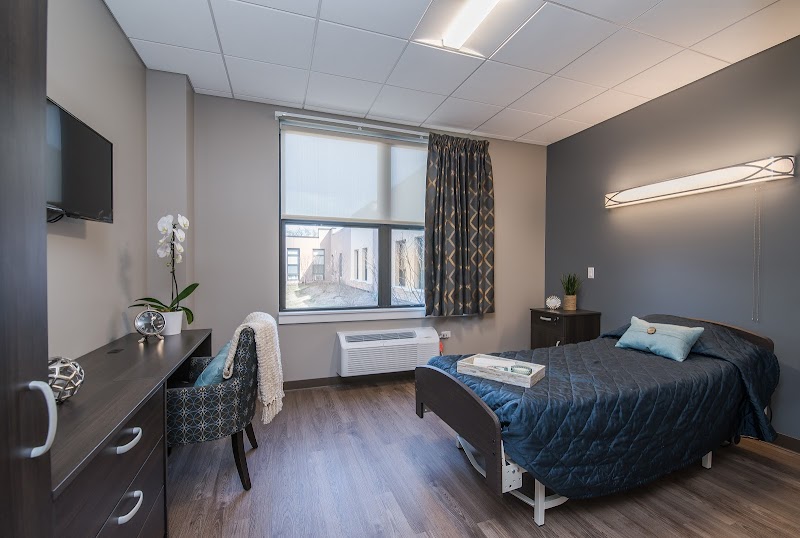
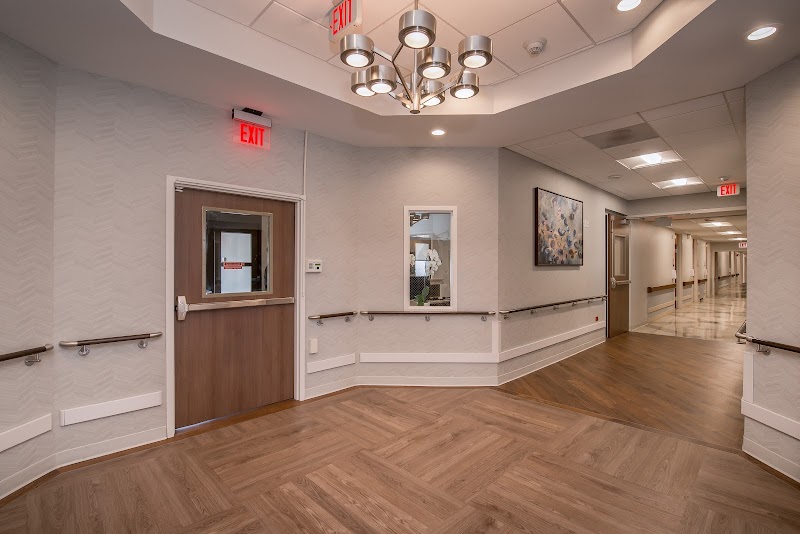
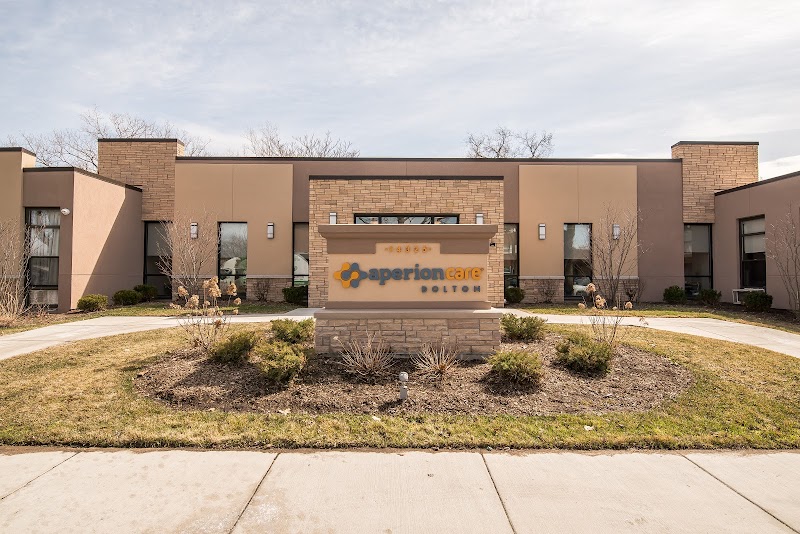
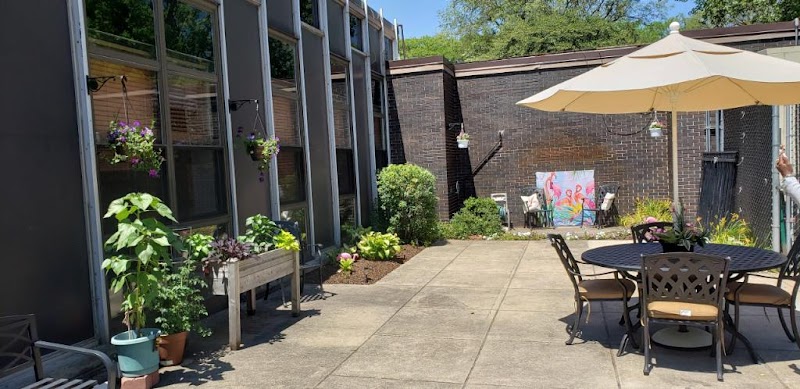
APERION CARE DOLTON

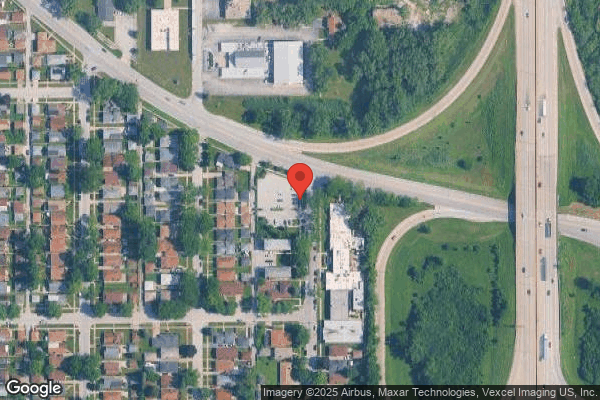
14325 SOUTH BLACKSTONE, DOLTON, IL 60419 (708) 849-5000
For profit - Corporation 88 Beds APERION CARE Data: November 2025
Trust Grade
5/100
#321 of 665 in IL
Last Inspection: March 2024

Within standard 12-15 month inspection cycle. Federal law requires annual inspections.

Overview

Aperion Care Dolton has received a Trust Grade of F, indicating significant concerns about its overall quality and care. The facility ranks #321 out of 665 nursing homes in Illinois, placing it in the top half of the state, but its poor trust grade raises red flags for potential residents. While the facility is improving, having reduced issues from 9 in 2024 to just 2 in 2025, it still has a concerning record with $228,209 in fines, which is higher than 93% of Illinois facilities. Staffing is a mixed bag; while the turnover rate is relatively low at 38%, the staffing rating is poor at 1 out of 5 stars, suggesting a lack of adequate personnel. Notably, there have been serious incidents reported, including a resident who required hospitalization after being left unsupervised during a meal and another who fell due to inadequate monitoring, highlighting significant gaps in supervision and care.

Trust Score
F
5/100
In Illinois
#321/665
Top 48%
Safety Record
High Risk
Review needed
Inspections
Getting Better
9 → 2 violations
Staff Stability
○ Average
38% turnover. Near Illinois's 48% average. Typical for the industry.
Penalties
○ Average
$228,209 in fines. Higher than 60% of Illinois facilities. Some compliance issues.
Skilled Nurses
⚠ Watch
Each resident gets only 28 minutes of Registered Nurse (RN) attention daily — below average for Illinois. Fewer RN minutes means fewer trained eyes watching for problems.
Violations
⚠ Watch
36 deficiencies on record. Higher than average. Multiple issues found across inspections.
★★☆☆☆
2.0
Overall Rating
★☆☆☆☆
1.0
Staff Levels
★★★☆☆
3.0
Care Quality
★★★☆☆
3.0
Inspection Score
Stable
2024: 9 issues
2025: 2 issues

The Good

  • Full Sprinkler Coverage · Fire safety systems throughout facility
  • No fines on record
  • Staff turnover below average (38%)

    10 points below Illinois average of 48%

Facility shows strength in fire safety.

The Bad

2-Star Overall Rating

Below Illinois average (2.5)

Below average - review inspection findings carefully

Staff Turnover: 38%

Near Illinois avg (46%)

Typical for the industry

Federal Fines: $228,209

Well above median ($33,413)

Significant penalties indicating serious issues

Chain: APERION CARE

Part of a multi-facility chain

Ask about local staffing decisions and management

The Ugly 36 deficiencies on record

6 actual harm
Jul 2025 1 deficiency
CONCERN (E) 📢 Someone Reported This

A family member, employee, or ombudsman was alarmed enough to file a formal complaint

Potential for Harm - no one hurt, but risky conditions existed

Infection Control (Tag F0880)

Could have caused harm · This affected multiple residents

**NOTE- TERMS IN BRACKETS HAVE BEEN EDITED TO PROTECT CONFIDENTIALITY** Based on observation, interview, and record review, the facility failed to ensure three residents (R1, R2, and R5) were properly...

Read full inspector narrative →
**NOTE- TERMS IN BRACKETS HAVE BEEN EDITED TO PROTECT CONFIDENTIALITY** Based on observation, interview, and record review, the facility failed to ensure three residents (R1, R2, and R5) were properly placed on enhanced barrier precautions, staff were adequately informed of isolation procedures and failed to follow their infection precaution guideline procedure. This failure has the potential to affect all 14 residents currently residing on the South-2 Unit.Findings include:Per facility census dated 7/9/2025 shows 14 residents residing in the South-2 Unit.R1 is a [AGE] year-old female who originally admitted to the facility on [DATE] and continues to reside in the facility. R1 has multiple diagnoses including but not limited to the following: acute myelitis in demyelinating disease of central nervous system, dementia, altered mental status, multiple contractures, need for assistance with personal care, urinary tract infection, ESBL (Extended-Spectrum Beta-Lactamase), quadriplegia, COPD (Chronic obstructive pulmonary disease), and anxiety. It is to be noted that R1 has multiple wounds and a urinary catheter. R2 is a [AGE] year-old male who originally admitted to the facility on [DATE] and continues to reside in the facility. R2 has multiple diagnoses including but not limited to the following: ESRD (End-Stage Renal Disease) dependent on dialysis, type II DM (Diabetes Mellitus), lack of coordination, pneumonia, sepsis, muscle wasting, difficulty in walking, abnormal posture, and prostate cancer. It is to be noted that R2 has a dialysis port, a central venous catheter, and multiple wounds.R4 is a [AGE] year-old male who originally admitted to the facility on [DATE] and continues to reside in the facility. R4 has multiple diagnoses including but not limited to the following: CKD (Chronic Kidney Disease), CHF (Congestive Heart Failure), type II DM, and repeated falls. It is to be noted that R4 has a VRE (Vancomycin-Resistant Enterococci) infection in his wound.R5 is a [AGE] year-old male who originally admitted to the facility on and continues to reside in the facility. R5 has multiple diagnoses including but not limited to the following: quadriplegia, depression, MRSA (Methicillin-Resistant Staphylococcus aureus), UTI (Urinary Tract Infection), anxiety, seizures, cachexia, obstructive uropathy, and psychotic disorder.It is to be noted that R5 has a urinary catheter and an active pressure ulcer.Order Listing Report dated 7/8/2025 shows R5 on Enhanced Barrier Precautions due to suprapubic catheter and wounds. R4 is on Contact Isolation for VRE of the wound. It is to be noted that R1 or R2 are not on the Enhanced Barrier Precautions list.On 7/8/2025 at 11:20AM, observed R2 and R5's room to have no enhanced barrier sign on door or isolation bin outside of door. At 11:30AM, observed V7 (Certified Nursing Assistant) changing linens to R1's bed. V7 was wearing gloves, however no gown or mask was worn. At 11:45, V6 (Certified Nursing Assistant) was asked about enhanced barrier precautions and contact isolation. V6 was noted to be confused and unable to accurately describe the differences between isolations and the expectations of CNA's regarding infection control when dealing with residents on various types of isolations.At 11:55AM, V7 (Certified Nursing Assistant) was also asked about enhanced barrier precautions and contact isolation. V7 was also unable to accurately describe the differences between isolations and the expectations of CNA's regarding infection control when dealing with residents on various types of isolations.At 1:10PM, V8 (Certified Nursing Assistant) was observed entering R4's room (who was on contact isolation) not wearing any PPE's.On 7/9/2025 at 11:16AM, V12 (Certified Nursing Assistant) was observed in R4's room assisting resident with transferring from bed to wheelchair. R4 was noted to be wearing gloves, however no mask or gown was worn. V12 assisted R4 with transferring, repositioning, and fixed wheelchair. V12 exited room wearing gloves, grabbed bag of soiled linen from hallway, and put soiled linen from R4's bed in bag. V12 then began making R4's bed with clean linen without changing gloves or conducting hand hygiene. V12 then carried soiled linen bag out to hallway and grabbed a clean sheet from clean linen cart, still wearing same gloves. V12 then grabbed R4 a soft drink off of dresser which R4 began to drink.V12 said she was unaware that R4 was on contact isolation, but she does see the contact isolation sign on his door and isolation bin outside of his room. V12 said I should have worn gloves, mask, and a gown when caring for R4. It is to be noted that V12 was also unable to adequately explain expectations of CNA's when a resident is on enhanced barrier precautions and was unable to provide this surveyor with a time she was in-serviced on isolation.At 1:30PM, V2 (Director of Nursing) said residents who have wounds or a medical device that cause an opening to the body should be on enhanced barrier precautions. This is to help prevent the spread of infection. My expectation would be that any staff providing direct patient care would be expected to wash their hands before and after and wear a gown, gloves, and a mask when providing care. Asked V2 when the last time the staff was in-serviced on isolation. V2 provided this surveyor with an in-service for enhanced barrier precautions dated 4/8/2025. V2 said staff is also trained on many things upon hire.Facility Contact Precautions sign shows providers must put on gloves and gown before entering room and discard upon exiting room. Facility Enhanced Barrier Precautions sign shows providers and staff must put on gloves and gown for the following high contact resident care activities: dressing, bathing, transferring, changing linens, providing hygiene, changing briefs or assisting with toileting, device care, and wound care.Facility policy titled Infection Prevention Guidelines with last revision date of 5/15/2023 states in part but not limited to the following: It is the policy of this facility to, when necessary, prevent the transmission of infections within the facility through the use of isolation precautions.
Feb 2025 1 deficiency
CONCERN (D) 📢 Someone Reported This

A family member, employee, or ombudsman was alarmed enough to file a formal complaint

Potential for Harm - no one hurt, but risky conditions existed

Deficiency F0761 (Tag F0761)

Could have caused harm · This affected 1 resident

Based on interview and record review the facility failed to securely store a resident's injectable medication for 1 of 3 residents (R1) reviewed for medication storage in the sample of 3. The finding...

Read full inspector narrative →
Based on interview and record review the facility failed to securely store a resident's injectable medication for 1 of 3 residents (R1) reviewed for medication storage in the sample of 3. The findings include: R1's Face Sheet shows a diagnosis of acute transverse myelitis in demyelinating disease of central nervous system. On 2/21/25 at 10:50 AM, V6 (R1's Family Member) said that she delivered three doses of R1's Enspryng injection that she had delivered to her home from a specialty pharmacy to the facility. V6 said that she received a call from the nurse on 2/7/25 and the nurse said that they could not find her third dose of the injection. V6 said that R1 was sent to the emergency room but was not able to receive the medication but they re-ordered the medication for her and the resident received the dose on 2/12/25. R1's Medication Administration Record (MAR) for January and February shows an order for: Enspryng Subcutaneous Solution Prefilled syringe 120 mg (milligrams)/ML (milliliter)-Inject 120 mg/ml subcutaneously in the afternoon every 2 weeks on Friday for neuromyelitis for 6 weeks. R1's January MAR shows that she received a dose on 1/10/25 and 1/24/25. R1's February MAR shows that she was supposed to get a dose on 2/7/25 but received it on 2/12/25. R1's Nursing Note dated 1/10/25 shows, Approached by [V6] in facility regarding order for Enspryng Three available injections in frig (refrigerator) as per [V6] she brought 3 injections R1's Nursing Note dated 2/7/25 shows, Reached out to [V6] regarding need for Enspryng Subcutaneous Solution Prefilled Syringe. Patient is due for administration this afternoon. None available. Per pharmacy is a specialty medication. Daughter provided last doses. She was made aware of need for medication at this time. On 2/21/25 at 10:39 AM, V3 (Licensed Practical Nurse) said that she was R1's nurse on the day that she needed her third injection. V3 stated that V6 had brought three doses of the injection, and they were put in the medication room refrigerator. V3 stated that they were in separate boxes and had R1's name on them. V3 stated that she administered R1's first and second dose of the medication but the day that her third injection was due, she could not find it in the fridge. V3 stated that she notified V6, V2 (Director of Nursing) and R1's Nurse Practitioner. On 2/21/25 at 12:38 PM, V2 (Director of Nursing) said that she was notified by V3 that she could not find R1's Enspryng injection. V2 stated that she searched the medication room and facility and could not find the injection. V2 stated that she then called V6 and told her that she thinks that the medication got thrown out in error. A Concern Form dated 2/7/25 for R1 shows, Staff reached out to family that a dose of Enspryng injection is missing for [R1] Summary of Pertinent Findings: Substantiated Facility was searched not able to locate. Pt (patient) monitored, sent out to hospital. No adverse reaction. Physician notified On 2/21/25 at 1:59 PM, V1 (Administrator) stated that the facility does not have a policy for when family brings in medications for the resident. The facility's undated Storage of Medication Policy shows, Medications and biologicals are stored safely, securely, and properly, following manufacturer's recommendations or those of the supplier.
Sept 2024 1 deficiency 1 Harm
SERIOUS (G) 📢 Someone Reported This

A family member, employee, or ombudsman was alarmed enough to file a formal complaint

Actual Harm - a resident was hurt due to facility failures

Accident Prevention (Tag F0689)

A resident was harmed · This affected 1 resident

**NOTE- TERMS IN BRACKETS HAVE BEEN EDITED TO PROTECT CONFIDENTIALITY** Based on interview and record review, the facility failed to adequately supervise a resident who is at risk for aspiration and r...

Read full inspector narrative →
**NOTE- TERMS IN BRACKETS HAVE BEEN EDITED TO PROTECT CONFIDENTIALITY** Based on interview and record review, the facility failed to adequately supervise a resident who is at risk for aspiration and requires staff assistance during meals (R3) and failed to provide adequate staff supervision for a resident during smoking (R4). These failures affected two (R3, R4) of four resident reviewed for accidents and supervision and resulted in R3 sustaining an injury during mealtime, while in her room unsupervised and required treatment of two sutures; R4 was found on the floor while out on the patio, unsupervised, during a smoke break and required transfer to local hospital for evaluation of swelling to forehead. Findings include: R3 is a [AGE] year-old female who has resided at the facility since 2020, past medical history includes, but not limited to other lack of coordination, cerebral infarction, unsteadiness on feet, dysphagia oral and oropharyngeal phase, type two diabetes, abnormal posture, hyperlipidemia, difficulty walking, other symptoms and signs concerning food and fluid intake, etc. On 9/24/2024 at 1:40PM, R3 was observed in her room, awake, alert, and oriented with some confusion sitting in her wheelchair. R3 answers yes or no to questions but was speaking in what appears to be a different language. R3's Minimum Data Set (MDS) assessment dated [DATE] section C (cognitive patterns) scored resident with a BIMS score of 00, section GG (Functional status) of the same assessment documented that R3 requires partial/moderate assistance to substantial / maximal assistance to being dependent on staff for all ADL care needs including eating. R3's Care plan initiated 5/27/2020, revised 9/20/2024 documented that R3 requires assistance with meal consumption related to diagnosis of dementia, decrease in strength and endurance, and lack of coordination. Interventions includes provide cueing as needed, offer substitutes, and provide socialization during meals. R3's Care plan initiated 4/21/2020 and 1/02/2024 states that R3 is at risk for nutritional problem related to current diet and diagnosis. Interventions include Monitor/document/report as needed any signs and symptoms of dysphagia: Pocketing, Choking, Coughing, Drooling, holding food in mouth, several attempts at swallowing, refusing to eat, appears concerned during meals. Facility reported incident dated 6/27/2024 documented in part: the evening of 6/27/2027, resident was observed in her room asleep in front of her bedside table bleeding from her mouth. Resident was sitting up with her bedside table in front of her having dinner, resident had nodded off and bumped her chin on the bedside table, sustaining the lip wound and bruised area to her chin. Progress note documented by V4 registered nurse (RN) dated 6/27/2024 17:41:15 states as follows: Writer's attention called into resident's room notifying of a bleeding gum, upon assessment bleeding noted to resident's upper mouth/gums as well the bridge of the mouth. Resident's mouth was cleaned out and attempt made to stop the bleeding. Writer unable to stop bleeding currently. Nurse Practitioner (NP) made aware, and orders received to send resident to a local hospital emergency room. 9/24/2024 at 2:44PM, V5 certified nursing assistant (C.N.A) stated that she was at work the day R3 injured herself, R3 was in her bed around 5 to 5:30PM and was eating dinner. V5 stated she was not in the room with resident, her roommate was there eating too, when V5 came back, she saw blood on resident's cover, V5 could not see where the blood is coming from and R3 could not open her mouth. V5 called the nurse who came and assessed resident and noted that she was bleeding from her mouth. V5 added that R3's roommate was in the room at the time but did not see anything, both were eating dinner when V5 saw them last. R3 eats by herself and does not require staff assistance, she only require supervision if she does not eat. V5 added that she was not in the room and cannot explain how R3 got her injury. 9/24/2024 at 3:54PM, V4 (RN) stated that she was assigned to R3 the day she had an incident, she was called by the C.N.A, when she got to the resident's room, she noted that she was bleeding in her mouth. V4 stated she could not stop the bleeding she called the NP and received an order to send the resident to the hospital. V4 added that R3 was sitting up in bed, there was nothing in front of her or on the floor, the blood was on the resident, no blood was noted on the bed or floor. V4 stated that she doesn't usually work that set, R3 eats by herself and does not require staff supervision except when she refuses to eat, then staff will assist her. V4 then stated that she thinks R3 feeds herself with supervision, V4 was not sure the last time she saw R3 before the incident. V4 stated that she was passing medication at the time. Feeding assistance policy provided by V1 (Administrator) (undated) states its purpose as to assist the resident to obtain nutrients and hydration. Under procedures, #20 states: report all pertinent observations and resident preferences for food to the charge nurse. Swallowing, chewing, choking episodes, bite and gag reflex, lip closing, poor tongue control, etc. to be recorded in the nursing notes by a licensed nurse. R4 is an [AGE] year-old male admitted to the facility on [DATE], past medical history includes orthostatic hypertension, unspecified psychosis due to a substance or known physiological condition, pain in unspecified joint, history of falling, laceration without foreign body of scalp, other fracture of left femur initial encounter for closed fracture, hyperlipidemia, type 2 diabetes, etc. On 9/24/2024 at 2:06PM, R4 was observed in his room sitting in a wheelchair, awake and alert with some confusion. R4 was asked if he recalls going to the hospital and what happened. He stated that he remembers going to the hospital but not sure why, surveyor asked R4 if he recalled falling in his room and he (R4) said that he remembers falling outside not in his room. R4's Facility MDS dated [DATE] section C, scored R4 with a BIMs of 08, section GG of the same assessment coded R4 as requiring staff assistance for all ADL care. R4's Smoking care plan initiated 8/20/2024 states, I am a smoker, I will not smoke without supervision through the review date. Interventions include - Instruct about smoking risks and hazards and about smoking cessation aids that are available, observe clothing and skin for signs of cigarette burns, etc. An incident report dated 9/22/2024 18:43:17, by V7 (RN) states: Resident had an un-witnessed fall 09/22/2024 6:00 PM Location of Fall: outside patio writer was called outside (patio) and observed resident sitting in the floor next to his wheelchair on 09/22/2024 6:00 PM. 9/25/2024 at 3:30PM, V7 (RN) stated that she was called by a staff because someone fell outside, she went there and saw R4 on the floor with the rest of the residents, they were supposed to be monitored by the activity aide, but she was not there at the time. They assisted resident back to his wheelchair, V7 assessed resident with no injuries. 9/25/2024 at 3:58PM, V8 (Activity Aide) stated she was supposed to be monitoring the residents that were outside smoking the day R4 fell. V8 stated she had just stepped out to go to the cart and get more cigarettes. V8 stated she came back and R4 was on the floor. V8 stated the incident occurred around 5:30PM there were about seven residents outside at that time. V8 stated that she was the only one monitoring the smoke break, it was the last smoke break, and she (V8) usually monitors it before she leaves. V8 stated that she did not inform anyone that she was going inside so no one was monitoring the residents while she was gone. Facility smoking policy revised 10/24/2022 states its purpose as to provide a safe and healthy living environment with respect for the health and well-being needs of each resident, staff member and visitor. It is also the objective of this policy to communicate to each resident that they are responsible for following each rule and on-going compliance with this policy. Under safety measures, the policy states that a Smoking Safety Assessment will be completed to determine the level of assistance and supervision needed during smoking, the ability to carry and store smoking materials, and if a smoking apron is indicated. The plan of care shall reflect the results of this assessment. This assessment will be completed upon admission, quarterly and with significant change.
Aug 2024 1 deficiency
CONCERN (D) 📢 Someone Reported This

A family member, employee, or ombudsman was alarmed enough to file a formal complaint

Potential for Harm - no one hurt, but risky conditions existed

Free from Abuse/Neglect (Tag F0600)

Could have caused harm · This affected 1 resident

**NOTE- TERMS IN BRACKETS HAVE BEEN EDITED TO PROTECT CONFIDENTIALITY** Based on observation, interview, and record review the facility failed to ensure a resident was free from sexual abuse from a re...

Read full inspector narrative →
**NOTE- TERMS IN BRACKETS HAVE BEEN EDITED TO PROTECT CONFIDENTIALITY** Based on observation, interview, and record review the facility failed to ensure a resident was free from sexual abuse from a resident (R4) with a history of sexual inappropriate behaviors. This applies to 1 of 2 residents (R3) reviewed for abuse in the sample of 11. The findings include: R3's face sheet shows R3 is a [AGE] year-old female with diagnoses including degenerative disease of basal ganglia, unspecified psychosis, diabetes mellitus, and hypertension. R4's face sheet shows R4 is [AGE] year-old male with diagnoses including cerebral infarction, high risk heterosexual behavior, vascular dementia with other behavioral disturbance, and personality disorder. On 8/2/24 at 10:05 AM, R3 was observed in her room sitting in her wheelchair. R3 stated last month she was touched by R4. R3 stated we (R3 and R4) were in the dining room, he (R4) was rubbing my right leg/thigh area, I told him (R4) to stop. R4 then touched my right breast, I (R3) moved his hand, and told him (R4) to stop again. I reported to a staff member the incident and wanted to move to another table. R3 stated she does feel comfortable sitting at the same table with R4. On 8/2/24 at 11:18 AM, R3 was in the dining room sitting at the same table with R4. At 11:27 AM, R3 and R4 remained seated at the same table. On 8/2/24 at 11:05 AM, V16 (Resident Liaison) stated on 7/11/24, she saw R3 in the dining room upset she was trying to move from her table. V16 stated R3 reported to me R4 touched her leg/thigh and was trying to touch her chest. R3 stated people can't touch you without your permission, R3 was upset. V16 stated she separated the residents and spoke to R4. R4 stated he didn't do anything. R11 was at the table who witnessed the incident. R4 had some behaviors of hypersexual activity recently, he pulled out his private parts in the dining room and exposing himself. V16 stated we keep R3 and R4 separated while in the dining room. V16 stated I don't think it was abuse because R3 moved herself from R4. On 8/2/24 at 11:20 AM, R11 stated she was sitting at the same table when she saw R4 rubbing on R3's leg. R4 was putting his hand on her bosoms trying to get into her shirt. R3 told him to stop, and she moved away. On 8/2/24 at 11:48 AM, V1 (Administrator) stated she was notified about the incident with R3 and R4. V1 stated it was reported R3 and R4 were in the dining room. V1 stated R3 alleged R4 touched her leg/thigh and her chest. V1 stated she spoke with R3, and she said no one should be touched without their permission, she was upset. V1 stated when she spoke with R4, he said R3 was being friendly to him, and he touched her leg. R4 has an issue with boundaries and a history of sexual behaviors. V1 stated she did not substantiate the abuse, but it was an invasion of her privacy. V1 stated going forward we will make sure R3 and R4 are not seated at the same table, that's what R3 was comfortable with. On 8/2/24 at 9:46 AM, V15 (LPN/ Licensed Practical Nurse) stated R4 has a mental health disorder, and he does not say much. V15 stated R4 has childlike behaviors. V15 stated R4 is horny he has pulled out his private parts in the dining room and will shake and dance inappropriately. When you talk to him and tell him that's inappropriate, he puts his head down and says, I'm sorry. On 8/2/24 at 10:10 AM, V18 (CNA/Certified Nursing Assistant) stated R4 is confused, acts like a big kid, just looks at you and laughs when you talk to him. V18 stated R4 has sexual tendencies and he used to pull his thing out. V18 stated When you tell him not to do that, he would say I'm sorry. The Final Abuse Incident dated 7/16/24 documents on 7/11/24 an incident with R3 and R4 occurred .On 7/12/24, V1 interviewed R3, she alleged that she was touched by somebody (R4) on her leg and her chest, on her shirt, while she was about to have dinner. R3 stated she told the person to move away, she is alert and oriented in 3 spheres. On 7/12/24, R4 stated while at dinner, he thought the young lady (R3) was moving towards him, being friendly or she needed help, and he was just being playful, nothing more to it. R4 is observed alert and oriented to person and place. R3 was reassured of her security during the entire process of this investigation, and she persistently expresses she feels safe and wants to continue to reside at the facility. R4 was educated on the definition of personal spaces and the need to respect such. He voiced his understanding. He was referred for Psych Consult. Both residents' care plans were reviewed and updated. R4's Psychiatric Nurse Practitioner note dated 7/18/24 documents he is high risk for sexual behavior, major neurocognitive disorder without behavioral disturbance, vascular dementia. R4 has been having sexually acting out behavior, touching himself and exposing his privates in the dining room, trying touch other females' breasts while touching himself. She recommends close monitoring when in public area. R4's care plan dated 7/5/24 shows he has maladaptive behaviors at times manifested by exposing himself in appropriate areas such the dining room dated 7/5/24; interventions include to counsel on inappropriate behaviors and proper social skills. The same care plan dated July 11, 2024, documents he has a behavior problem related to poor boundaries, invasion of privacy and touching other inappropriately, with interventions resident monitored by staff, divert attention, remove from situation, and take to alternative location. The facility's Abuse Prevention and Reporting Policy revised 2022, states, This facility affirms the right of our residents to be free abuse .sexual abuse is non-consensual contact of any type with a resident .unwanted intimate touching of any kind especially of breasts or perineal area .sexual contact is nonconsensual if the residents either does not want the contact to occur .
Mar 2024 5 deficiencies
CONCERN (D)

Potential for Harm - no one hurt, but risky conditions existed

Resident Rights (Tag F0550)

Could have caused harm · This affected 1 resident

**NOTE- TERMS IN BRACKETS HAVE BEEN EDITED TO PROTECT CONFIDENTIALITY** Based on observation, interview and record review, the facility failed to provide privacy during blood sugar check for one (R59)...

Read full inspector narrative →
**NOTE- TERMS IN BRACKETS HAVE BEEN EDITED TO PROTECT CONFIDENTIALITY** Based on observation, interview and record review, the facility failed to provide privacy during blood sugar check for one (R59) of two residents reviewed for blood sugar monitoring. The facility also failed to empty and cover a urinary collection canister for one resident (R329) of eight residents reviewed for dignity in a sample of 20 residents. Findings Include: During medication administration on 3/21/24 at 12:00pm with V4 (Registered Nurse) performed blood sugar check on R59 with a resident and family member sitting opposite R59 in the 400-hall dining area. R59's room was being cleaned at the time blood sugar check was due. On 3/21/24 at 12:30pm, V4 stated that the blood sugar check should have been done in a private area to provide privacy to R59. On 3/21/24 at 1:42pm, V2(Director of Nursing) stated that all patients should be provided privacy during blood sugar check. Review of records indicates R59 was admitted on [DATE] with diagnosis of type 2 Diabetes Mellitus with orders for Novolog Flex Pen Subcutaneous solution injector 100 unit/ml (Insulin Apart) 3units with meals and inject per sliding scale before meals. Care plan dated 5/12/22 indicates, I have Diabetes Mellitus. Facility unable to provide patient privacy policy for blood sugar monitoring. On 3/19/24 at 12:30 PM R329 was observed in a wheelchair eating lunch. The tray was placed on the overbed table in front of her. A canister half filled with urine was on top of the bedside table. R329 said that the canister was connected to her external female catheter overnights. R329 said that she used the catheter at night and took it off in the morning. The canister was not covered. On 3/20/24 at 11:00 AM the urine canister was observed on the bedside with a small amount of urine, the canister was not covered. R329 said that it is hit or miss if they empty the urine. Sometimes it is not emptied. On 3/20/24 at 12:04 AM V2 (Director of Nursing) said the urine collection should be covered. The urine should be emptied when the catheter is removed in the mornings. The Order Summary Report indicates catheter care every shift and as needed. The Care Plan indicates I have a female external catheter in place related to potential for incontinence episodes of bladder and skin issues on right medial thigh. Policy Urinary Catheter Care, Revision 2/14/19 12. Catheter drainage bags will be emptied one time on each shift or as needed, using a separate collecting container for each resident's drainage bag. Dignity, Revision 4/23/18 Maintaining a resident's dignity should include but is not limited to the following: Refraining from practices demeaning to residents such as leaving urinary catheter bags uncovered, refusing to comply with a resident's request for bathroom assistance during meal times, and restricting residents from the use of common areas open to the general public, such as lobbies and restrooms, unless they are on transmission-based isolation precautions or are restricted according to their care planned needs.
CONCERN (D)

Potential for Harm - no one hurt, but risky conditions existed

Deficiency F0658 (Tag F0658)

Could have caused harm · This affected 1 resident

**NOTE- TERMS IN BRACKETS HAVE BEEN EDITED TO PROTECT CONFIDENTIALITY** Based on observation, interview and record review, the facility failed to provide professional standards of care by failing to p...

Read full inspector narrative →
**NOTE- TERMS IN BRACKETS HAVE BEEN EDITED TO PROTECT CONFIDENTIALITY** Based on observation, interview and record review, the facility failed to provide professional standards of care by failing to prime an insulin Flex pen prior to administering insulin to one resident (R59) of two residents reviewed for insulin administration in a sample of 20 residents. Findings include: During medication administration on 3/21/24 at 12:20pm with V4 (Registered Nurse), V4 removed R59's flex pen from a plastic bag, turned it to 1 unit with no needle attached to the pen. V4 then proceeded to attach the needle to the pen and turned it to seven (units to be administered). V4 proceeded to administer seven units of Aspart insulin to R59 for a blood glucose of 277mg/dl. On 3/21/24 at 1:00pm, V4 stated that the Flex pen should have been primed before administering to R59. On 3/21/24 at 1:45pm, V2(Director of Nursing) stated that the Flex pen should have the needle attached to the pen before priming with 2units. Review of records indicates R59 was admitted on [DATE] with diagnosis of type 2 Diabetes Mellitus with orders for Novolog Flex Pen Subcutaneous solution injector 100 unit/ml (Insulin Aspart) 3units with meals and inject per sliding scale before meals. Care plan dated 5/12/22 indicates, I have Diabetes Mellitus. Facility policy updated 2/2024 indicates: Brand, Novolog U-100 Flex Pen, Generic; Aspart. Pen Priming Requirements: 2 units.
CONCERN (D)

Potential for Harm - no one hurt, but risky conditions existed

ADL Care (Tag F0677)

Could have caused harm · This affected 1 resident

Based on observation, interview, and record review the facility failed to provide grooming for three residents (R5, R25, and R57) of eight residents reviewed for activities of daily living in the samp...

Read full inspector narrative →
Based on observation, interview, and record review the facility failed to provide grooming for three residents (R5, R25, and R57) of eight residents reviewed for activities of daily living in the sample of 20. Findings include: On 3/19/24 at 11:45 AM R57 was observed in his room with untrimmed beard growth. R57 said they were supposed to shave me, but they never did. On 3/20/24 at 10:00 AM R57's beard growth had not been trimmed or shaved. R57 said (Certified Nursing Assistant unnamed) kept saying that she was going to shave me. Every time that I asked, she said that she would come back and do it. She never came back. On 3/19/24 at 11:48 AM R5 was observed with untrimmed beard growth. R5 said, I asked them to shave me, but it hasn't happened yet. On 3/20 24 at 10:05 AM R5's beard growth was unchanged. R5 said (Certified Nursing Assistant unnamed) said that she was going to shave me yesterday, but she never came back. On 3/19/24 at 11:50 AM R25 said I need a shave. R25's beard is untrimmed and overgrown. On 3/20/24 at 10:55 AM R25's beard growth remains unchanged. R25 said they never came back to shave me. She (Certified Nursing Assistant unnamed) said that she was coming back. On 3/20/24 at 12:04 PM V2 (Director of Nursing) stated the residents should be shaved the same day that they ask. Policy Activities of Daily Living reviewed 1/2023 Grooming: Maintaining personal hygiene, including planning the task and gathering supplies, combing and/or styling hair, face and hands, brushing teeth, shaving or applying makeup, oral hygiene, self-manicure (safety awareness with nail care), and/or application of deodorant or powder.
CONCERN (D)

Potential for Harm - no one hurt, but risky conditions existed

Infection Control (Tag F0880)

Could have caused harm · This affected 1 resident

Based on observation, interview and record review, the facility failed to follow its infection control policy by failing to disinfect an intravenous tubing valve for 30 seconds for one (R330) of one r...

Read full inspector narrative →
Based on observation, interview and record review, the facility failed to follow its infection control policy by failing to disinfect an intravenous tubing valve for 30 seconds for one (R330) of one resident reviewed for intravenous medication administration in a sample of 20 residents. Findings include: During medication administration on 3/19/24 at 2:00pm, V3(Registered Nurse) was observed wiping the valve of an intravenous tubing. V4 did not disinfect the valve for 25 to 30 seconds. On 3/19/24 at 2:00pm, V3 stated that the valve should be cleaned for at least one minute to prevent the growth of bacteria. V3 stated that she should have waited a bit longer. On 3/20/24 at 1:45pm, V2(Director of Nursing) stated that the valve should be cleaned for 25 to 30 seconds. R330's face sheet indicates an admission date of 3/12/24 with a diagnosis of history of Diabetic Foot Ulcer, a physician order for Cefazolin Sodium Injection Solution with start date of 3/23/24 and end date of 4/18/24 to be given three times a day for DM (Diabetes Mellitus) foot ulcer. Care plan dated 3/13/24 indicates; I have a PICC (Peripheral Inserted Venous Catheter) line and have the potential risk for infection at the site. PICC line site will remain free from sing and symptoms of infection. Facility policy dated 12/2014 title; Administration Procedures: Intermittent Infusion Administration. 11. Disinfect valve with alcohol swab, .
CONCERN (D)

Potential for Harm - no one hurt, but risky conditions existed

Deficiency F0883 (Tag F0883)

Could have caused harm · This affected 1 resident

Based on interview and record review the facility failed to offer pneumococcal immunization to one resident (R57) of five residents reviewed for immunizations in the sample of 20. Findings include: On...

Read full inspector narrative →
Based on interview and record review the facility failed to offer pneumococcal immunization to one resident (R57) of five residents reviewed for immunizations in the sample of 20. Findings include: On 3/20/24 at 4:00 PM surveyor conducted a review of the immunizations for five residents. R57 did not have any documentation related to the pneumococcal immunization education, consent, or refusal. V2 (Director of Nurses/Infection Preventionist) stated that she did not know if R57 had a pneumococcal immunization. On 3/21/24 at 11:00 AM V2 said I don't know why R57 was missed for pneumonia. We have a clinic coming this month and he will be offered the pneumonia vaccine then. Policy: Influenza and Pneumococcal Immunizations revision 4/21/22 Pneumococcal Immunization: Before offering the pneumococcal immunization each resident or the resident's representative will be provided education regarding the benefits and potential side effects of the immunization. Each resident is offered a pneumococcal immunization per CDC (Center for Disease Control) recommendations (see CDC Pneumococcal Vaccine Timing for Adults reference table) unless the immunization is medically contraindicated, or the resident has already been immunized: A second pneumococcal vaccine will be offered only when necessary, according to CDC guidelines. The resident or the resident's representative has the opportunity to refuse immunization. The resident's medical record includes the documentation that indicates, at a minimum, the following: That the resident or resident's representative was provided education regarding the benefits and potential side effects of influenza immunization; and That the resident either received or did not receive the pneumococcal immunization due to medical contraindications or refusal.
Mar 2024 1 deficiency
CONCERN (D) 📢 Someone Reported This

A family member, employee, or ombudsman was alarmed enough to file a formal complaint

Potential for Harm - no one hurt, but risky conditions existed

Tube Feeding (Tag F0693)

Could have caused harm · This affected 1 resident

Based on observation, interview, and record review, the facility failed to check placement of a gastric tube immediately before starting a feeding for one (R3) of two residents reviewed for gastric tu...

Read full inspector narrative →
Based on observation, interview, and record review, the facility failed to check placement of a gastric tube immediately before starting a feeding for one (R3) of two residents reviewed for gastric tube feedings in the sample of three. Findings include: On 2/28/24 at 2:15 PM V4 (LPN-Licensed Practical Nurse) was observed in R3's room. V4 was noted turning on the gastric tube feeding at 75 ml/hour. V4 was asked if the tube placement had been checked. V4 responded I checked it about twenty minutes when I gave medicine. I always check them early. I check the residual and listen for the air blowing. On 2/29/24 at 1:05 PM V2 (DON-Director of Nursing) said I expect the nurses to check the placement of a g-tube when they get ready to start the feedings and before they do the flushes. They can pour a small amount of water in the tube and listen for the swoosh. Policy: Gastrostomy Tube-Feeding and Care revised 8-3-20 Procedure: 7. Observe for tube placement before: a. Starting feeding. b. Water Flushes and Hydration, and c. Medication Administration. CHECKING FOR TUBE PLACEMENT a. Aspirate to visually verify stomach contents. NOTE: Auscultation is no longer recommended for checking placement of the feeding tube. Movement of air would likely be heard whether the tube was in the correct or incorrect location.
Jan 2024 1 deficiency 1 Harm
SERIOUS (G) 📢 Someone Reported This

A family member, employee, or ombudsman was alarmed enough to file a formal complaint

Actual Harm - a resident was hurt due to facility failures

Incontinence Care (Tag F0690)

A resident was harmed · This affected 1 resident

**NOTE- TERMS IN BRACKETS HAVE BEEN EDITED TO PROTECT CONFIDENTIALITY** Based on observation, interview and record review, the facility failed to provide appropriate treatment and services for care of...

Read full inspector narrative →
**NOTE- TERMS IN BRACKETS HAVE BEEN EDITED TO PROTECT CONFIDENTIALITY** Based on observation, interview and record review, the facility failed to provide appropriate treatment and services for care of a resident with a clinically justified indwelling catheter that affected 1(R1) of 3 residents in the sample of 3 reviewed for catheter care. This failure resulted in R1's emergent transfer to an acute care hospital where resident was diagnosed and treated in the ICU for septic shock and injury to the urethra. Findings include: R1 is a [AGE] year-old male admitted to the facility on [DATE] with diagnoses including but not limited to Quadriplegia; Neuralgia and Neuritis; Neuromuscular Dysfunction of Bladder; Major Depressive Disorder; and Hypertension. According to R1's MDS (Minimum Data Set) assessment dated [DATE] under section C, R1 has BIMS (Brief Interview of Mental Status) score of 14 indicating intact cognition. According to R1's MDS (Minimum Data Set) assessment dated [DATE] under section H, R1 voids through an indwelling urinary catheter. R1's care plan dated 06/16/2023 reads in part, I have Indwelling Catheter related to sacral wound. Goal: I will be free from catheter related trauma through review date. Interventions: Monitor and document intake and output as per facility policy. Monitor for signs and symptoms of discomfort on urination and frequency. Monitor/document for pain/discomfort due to catheter; Monitor/record/report to MD for signs and symptoms of Urinary Tract Infection: pain, burning, blood-tinged urine, cloudiness, no output, deepening of urine color, increased pulse, increased temperature, Urinary frequency, foul smelling urine. Physician orders dated 6/14/23 shows, Foley catheter. Per record review, no other indwelling urinary catheter orders with start date before 08/12/2023 noticed in R1's medical electronic record. On 01/24/2024 at 2:57 PM V1 (Administrator/Abuse coordinator) stated, There is no complete urinary indwelling catheter physician order and urinary catheter care for every shift physician order for R1 between June 2023 and August 2023. A review of MARs (medication administration records) from June 2023 through August 2023 showed no maintained records of input/output that would demonstrate any ill-effects due to urine retention or presence of blood in urine. emergency room hospital record dated 8/13/2023 authored by V8 (emergency room doctor) reads in part, (R1) is a [AGE] year-old with previous medical history of neurogenic bladder and quadriplegia presents with evaluation of hematuria after improperly inserted urinary catheter in the nursing care facility. The patient states that a urinary catheter was placed earlier in the day. The patient began having abdominal discomfort. When the nursing care staff removed the catheter, they noticed that the patient had bleeding from his urethra. R1 was transferred from the Emergency Department to the ICU with admitting diagnosis of 1. Septic Shock and 2. Injury of urethra. V8 (ED emergency room doctor) continued with ICU records which read in part, Total critical care time 60 minutes. Due to a high probability of clinically significant, life-threatening deterioration, the patient required my highest level of preparedness to intervene emergently, and I personally spent this critical care time directly and personally managing the patient. This critical time included urgent treatment with development of a management plan, evaluation of patient's response to treatment, and discussion with other providers. On 01/24/2024 at 10:10 AM Surveyor interviewed V3 (Licensed Practical Nurse) who related the following in summary: R1 had a chronic urinary catheter and pain medication pump due to the accident that he suffered before his admission to the facility. On 08/12/2024, R1's assigned nurse asked me if I could change his catheter per R1's request. I used a urinary catheter kit. There are different sizes of urinary catheters, I look at what the size that resident has inserted, and based on that, I reinsert the same size. If it is a first time that a resident is getting urinary catheter, I start with the smallest size and see if it works. If it too small, it's going to leak, so it needs to be observed for at least 24 hours. R1 wanted to change it due to catheter leakage. He was concerned about urine getting into his wounds and getting them infected. I heard R1 say that for a few days before I reinserted it on 08/12/2023. Urinary catheter insertion is a sterile procedure. I wash hands with soap and put on sterile gloves that are included in the kit. Clean the area, with iodine swabs, get a cup/tray to catch the initial urine return, put some lubricant, and insert it. When catheter is in the place, urine comes out right away. Next, I inject normal saline to inflate the balloon to secure the catheter in the bladder. I believe it takes 30 ml of saline to inflate the balloon. I connect the catheter to the collection bag and secure the tubing. In R1's case, there was a mist of urine in the tubing upon insertion, but then, I felt resistance, and couldn't insert the catheter any further. R1 didn't indicate any discomfort during the procedure. Later in the day, he started bleeding, and was sent out to the hospital. Progress note dated 08/12/2023 at 1:00 PM written by V3 (LPN) reads in part, Resident c/o (complaining of) (urinary catheter) was leaking urine, writer changed (urinary catheter) 16f without any difficulty with urine return, will continue to monitor. Progress note dated 08/12/2023 at 2:03 PM written by V10 (Licensed Practical Nurse) reads in part, Resident observed with new (urinary catheter) with no urine return. Per resident, voiced uncomfortable, writer checked the urine return and the bag was empty. NP (Nurse Practitioner) made aware, (urinary catheter) was removed and there was blood noted. On 01/24/2024 at 12:45 PM Surveyor interviewed V2 (Director of Nursing) who related the following in summary: There should always be an order for urinary catheter, it usually gets put in upon admission and readmissions. Order should include when to reinsert it, flushing intervals, bag change or when to do urinary catheter care. Urinary catheter order set includes accident dislodgement and there is no need for a new order for reinsertion; however, nurses should let the doctor know and follow their recommendations. The order is individual for each resident. When there is an issue with a urinary catheter, for example, when it is leaking, nurse should let the doctor know for further guidance. Urinary catheter balloon should be inflated with 10 ml of saline, that's what's included in the urinary catheter kit. Any licensed nurse is trained appropriately to insert the urinary catheter, for example Licensed Practical Nurse, Registered Nurse, or even Nurse Practitioner. Urinary catheter care is established between CNAs and nurses. CNAs render perineal care and empty the bag. CNAs should empty the bag at least once a shift and PRN, and need for perineal care should be checked at least every 2 hours and done at least once a shift. Urinary catheter care is charted in the MAR (Medical Administration Record) or TAR (Treatment Administration Record). If CNAs notice any changes of urine appearance, they should let the nurse know. On 01/24/2024 at 1:48 PM Surveyor interviewed V6 (Nurse Practitioner) who related the following in summary: I've been taking care of R1 since October 2023, so I was not part of the medical team during the time when he had traumatic urinary catheter insertion followed by the hospitalization. R1 had a chronic urinary catheter because he was quadriplegic. Every resident needs a complete physician order if they have a urinary catheter. There is an order set with urinary catheter maintenance that can be adjusted to resident's needs. Additionally, there should be an order for each time when urinary catheter is reinserted. If a urinary catheter is leaking, that means balloon might be deflated. In such case, I would suggest reinflating balloon and if that doesn't help, reinsertion of a urinary catheter. If a nurse feels resistance or any difficulty during reinsertion of a urinary catheter, doctor should be notified, and resident would be sent out immediately to the hospital for further evaluation. Often, residents with neurogenic bladders have spasm upon urinary catheter insertion, followed by lack of urine return, in that case, urinary catheter needs to be removed right away and doctor should be notified. Facility policy dated 02/14/2019 titled Urinary Catheter Care, reads in part, Purpose: To establish guidelines to reduce the risk of or prevent infections in resident with an indwelling catheter. Guidelines: Urinary catheter and tubing may be removed or reinserted when any of the following are observed: Inability to observe urine contents in the urinary drainage bag or tubing; Upon physician's orders; The date of catheter insertion shall be documented in the nurses notes and Treatment Record.
Dec 2023 1 deficiency 1 Harm
SERIOUS (G) 📢 Someone Reported This

A family member, employee, or ombudsman was alarmed enough to file a formal complaint

Actual Harm - a resident was hurt due to facility failures

Accident Prevention (Tag F0689)

A resident was harmed · This affected 1 resident

**NOTE- TERMS IN BRACKETS HAVE BEEN EDITED TO PROTECT CONFIDENTIALITY** Based on interview and record review, the facility failed to place effective fall prevention interventions to include monitoring...

Read full inspector narrative →
**NOTE- TERMS IN BRACKETS HAVE BEEN EDITED TO PROTECT CONFIDENTIALITY** Based on interview and record review, the facility failed to place effective fall prevention interventions to include monitoring to reduce or prevent the risk of falling for a cognitively impaired resident with a behavior of getting out of bed unassisted. This affected one of three residents (R1) reviewed for fall prevention. This failure resulted in R1 being involved in a fall incident suffering resulting in a hematoma to the left eye. Findings Include: R1 is an [AGE] year-old with the following diagnosis: Alzheimer's Disease, Dementia, and Adult Failure to Thrive. A Fall note dated 12/5/23 documents around 4:35 AM R1 was found in R1's room on the floor. The physician was notified and ordered to send R1 out to the hospital for an evaluation. The ambulance arrived around 7:15 AM. R1 was alert but confused. A large hematoma to the left eye was noted. The Fall Occurrence note dated 12/5/23 documents the fall occurred around 4:35 AM. The fall was unwitnessed in R1's bedroom. During rounds, R1 was observed on the floor with a bump to the left eyebrow. R1 was assessed for other injuries none were noted. R1 was safely transferred back into the bed. R1 was unable to give an adequate description of what occurred but stated, I hurt myself. I didn't mean to hurt myself. I am sorry. R1 has a gait imbalance and is confused. The physician was notified and ordered to send R1 to the emergency room for further evaluation. R1 is alert and oriented per baseline. There is no documentation of when R1 was last monitored by staff before the fall. The Hospital Records dated 12/5/23 documents R1 presented to the emergency room for an evaluation of a head injury after an unwitnessed fall. R1 has left periorbital edema and bruising. R1 is alert and oriented times one at baseline. A CT (computed tomography) scan of the head and C spine were negative for fractures or brain bleeds. Left periorbital soft tissue swelling is noted. Family is at the bedside and plan to discharge R1 home. The photos submitted by the complainant were reviewed. The second picture of R1 with a hematoma covering the entire left eye. There is a large bump to the upper left eyelid. R1's eye is closed. On 12/6/23 at 2:16PM, V3 (Restorative/Fall Nurse) stated when R1 was initially assessed, R1 was lethargic and would not respond verbally. V3 endorsed a family member was at the bedside during the assessment and endorsed R1 was ambulatory before going to the hospital. V3 reported R1 was a high fall risk because R1 was a new admission, not able to get up and walk, and had decreased cognitive function. V3 stated fall mats were put in place as an intervention. V3 denied R1 was able to follow any directions. V3 endorsed R1 rolled out of the bed onto the floor on the floor mat per the report from staff. V3 stated V3 asked the family member at the bedside if they wanted to put the bed bolsters on at the time of assessment, but the family denied. V3 reported R1 did not need the bed bolsters at that time because R1 was not actively trying to get out of bed when the assessment took place. V3 stated if V3 was aware that R1 was more active after the assessment, then bed bolsters would have been put into place as an intervention to help prevent any falls. On 12/6/23 at 2:42PM, V2 (DON) stated R1 fell and bumped R1's head. V2 endorsed residents are rounded on every two hours, but when a new admission is in the facility, staff should check on them every time they walk by the room. V2 denied being aware of when the last round was made on R1 before R1 was found on the floor. V2 stated R1 was a high fall risk due to a history of falls, and R1's cognition level. V2 denied being aware of any behavior of R1 continuing to attempt to get out of bed without assistance. V2 stated if a resident is having a behavior where they're getting out of bed constantly, then staff should be making restorative or V2 aware. V2 endorsed the care plan would then be reviewed to see if any additional interventions could be added. On 12/6/23 at 2:52PM, V4 (Nurse) stated R1 was able to roll from side to side in the bed without any assistance. V4 endorsed R1 was a high fall risk based on the history of Dementia and a fall history. V4 reported seeing R1 being taken away by ambulance the morning of the fall. V4 stated there was a large knot on R1's left eyebrow that was about the size of a golf ball. V4 endorsed R1 had a habit of staying up all night and sleeping during the day. V4 reported this made R1 higher fall risk because R1 was more active when less staff were in the building for monitoring. On 12/6/23 at 4:32PM, V5 (Nurse) stated R1 was alert to self only and denied R1 being able to follow any directions. V5 endorsed R1 did attempt to get out of bed without assistance on the day of admission. V5 reported redirecting R1 back to bed, but R1 did not follow directions and kept attempting to get out of bed. V5 stated R1 was then put in a wheelchair and taken into the nurse's station for closer monitoring. V5 endorsed R1 is a high risk for falls because R1 does not have good mobility and has a decreased cognition level. V5 reported if a new resident does not want to stay in the bed, then staff should get them up and set them in an area where more staff is available to monitor them. V5 stated V2 or the restorative department should be made aware of the behavior so new interventions can be put in place. On 12/7/23 at 8:05AM, V6 certified nursing assistant (CNA) stated V6 was assigned to R1 the day before the fall. V6 endorsed on this day R1 kept hanging R1's feet off the side of the bed where R1 would be half in the bed and half out of the bed. V6 reported other staff would be calling for help from R1's room because they caught R1 attempting to get out of bed without any help. V6 stated the nurse staff decided to put R1 in a wheelchair and take R1 to the dining room to be monitored more closely. V6 denied R1 being able to follow any directions. V6 stated when residents continue getting out of the bed, staff bring them to an area that has more people to be more closely monitored. V6 endorsed telling the nurse that R1 kept getting out of bed but is unaware if the nurse told anyone else to put in further interventions. V6 reported R1 is a high fall risk because R1 was confused and could not stand alone. On 12/7/23 at 10:31AM, V7 (CNA) stated R1 was found in R1's room on the floor but V7 was not able to remember an exact time R1 was found. V1 reported sometime between 2AM and 4 AM R1 was found on the floor mat. V7 endorsed staff was checking on R1 every two hours but they would try to check on R1 every hour. V7 reported R1 would hang R1's legs over the side of the bed and staff would reposition R1 back in the bed. V7 endorsed R1 was able to move without assistance in the bed. V7 denied R1 was able to explain how the fall occurred because R1 is confused. V7 stated V9 (Nurse) knew R1 kept trying to get out of bed and was moving around a lot that night. V7 endorsed staff would put R1 back to sleep when they found her attempting to get out of bed alone and direct R1 to stay in bed. V7 reported R1 would get back in bed when redirected but when checked on again, R1 would be attempting to get out of bed alone. V7 denied R1 followed the direction to stay in bed. V7 denied remembering when V7 rounded last on R1. On 12/7/23 at 11:00AM V1 (Administrator) stated R1 was able to move from side to side in the bed alone. V1 endorsed the fall was unwitnessed. V1 reported R1 was a high fall risk due to being a new resident and having bouts of confusion. V1 stated the staff was still trying to assess R1's baseline because R1 was a new resident. V1 stated if R1 was not at the previous baseline that R1 was admitted at, then that should have been reported to the next nurse or V2 to follow up with the physician and the care plan should have been reviewed for any new intervention needed. On 12/7/23 at 1:50PM, V8 (Primary Physician) stated R1 had intermittent confusion probably due to being in a new environment along with generalized weakness. V8 endorsed sometimes residents are more confused after coming to a new facility when they have dementia, and the confusion can be worse until they get settled into a new place. V8 stated, with these types of residents, staff should keep them near the nurse's station with a low bed, and if they have anyone available to be sitting with them while they're awake, then they should be doing so. V8 denied being aware of R1's behavior of getting out of the bed unassisted before the fall. V8 endorsed if V8 was made aware of the behavior a psych consult would have been ordered to see if they could have evaluated R1 to manage the behavior with medication. On 12/7/23 at 2:12PM, V9 (Nurse) stated V7 found R1 on the floor mat next to the bed. V9 reported R1 had a bump to the left forehead. V9 reported when R1 was asked what happened the only thing R1 could say was I'm sorry I hurt myself. V9 endorsed the fall happened around 4 AM. V9 stated R1 was a high fall risk due to being a new resident and being confused. V9 endorsed the night of the fall R1 kept sitting up at the edge of the bed. V9 reported while doing rounds, V9 would lay R1 back down to try to get R1 to sleep. V9 stated V9 repositioned R1 two or three times before the fall. V9 endorsed being assigned to R1 on the 2 PM to 10 PM shift and the 10 PM to 6 AM shift. V9 stated during the evening shift, R1 was in a wheelchair sitting by the nurse's station because R1 kept trying to get out of bed alone during the dayshift. V9 reported putting R1 back to bed because staff did not want R1 falling asleep and falling out of the chair. V9 was not able to answer how the left eyebrow bump occurred if R1 fell onto the floor mat next to the bed. V9 stated there is a possibility R1 fell off the mat when R1 fell out of bed. V9 reported if a resident is having a behavior where they are trying to get out of bed unassisted then it should be passed onto the next nurse or to the restorative department. V9 endorsed the restorative department would put in new interventions for a resident, and they are in charge of putting in interventions unless it is an emergency situation. V9 reported V9 could have called V2 to get access to the bed bolsters that night, but staff instead kept redirecting R1 back to sleep. V9 stated R1 would go back to sleep for an unknown amount of time before getting up again. V9 endorsed the size of the bump on the left eyebrow was about the size of a walnut and it did grow a little bit bigger by the end of the shift. V9 denied remembering the time R1 was last rounded on before the fall. V9 stated between V7 and V9 they were attempting to round on R1 every hour. The admission Hospital Records dated 11/19/23 document R1 was admitted to the hospital for Acute on Chronic Encephalopathy Versus Worsening Dementia and Adult Failure to Thrive. R1 is alert and oriented times one at baseline and is able to follow one step commands with reinforcement. R1 has decreased balance, upper extremity/lower extremity strength, and impaired cognition. The admission Observation dated 11/30/23 documents R1 arrived from the hospital with a diagnosis of Failure to Thrive. R1 is total dependence for bed mobility, transfers, and all ADL (activities of daily living) care. The skin assessment documents the only skin alteration is to the sacrum, which is a small, excoriated area. The Fall Risk assessment dated [DATE] documents R1 is at risk for falls due to intermittent confusion, history of falls, medical history, and being chairbound. The Fall Risk assessment dated [DATE] documents R1 is still at risk for falls for the same reasons listed as above. The SBAR Communication Form dated 12/5/23 documents R1 fell, and a bump is noted in the skin evaluation, but is not documented where on the body. The Brief Interview for Mental Status dated 12/4/23 documents the score as zero (severe cognitive impairment). The Care Plan dated 12/4/23 documents R1 is at high risk for falls related to a decrease in strength and endurance, gait/balance problems, incontinence, and adult failure to thrive. All interventions were documented on 12/4/23. There are no interventions documented before the fall addressing R1's behavior of continuously attempting to get out of bed. There is no documentation on the care plan regarding what kind of monitoring R1 requires as a high fall risk actively attempting to get out of bed. The IDT Fall Committee Meeting dated 12/5/23 documents during rounds, R1 was observed on the floor mat with a bump to the left eyebrow. Contributing physiological factors to the fall are documented as gait imbalance, incontinence, weakness, confused, impaired memory, forgets to use call light, and declining cognitive skills. The root cause of the fall was determined to be R1 rolled out of the bed onto the floor mat. Interventions in place at the time the fall were floor mats. The policy titled, Fall Prevention Policy, dated 11/21/17 documents, Standards: . All assigned nursing personnel are responsible for ensuring ongoing precautions are put in place and consistently maintained .Inform family of risk factors and reinforce interventions as needed . In addition to the use of Standard Fall Precautions, the following interventions may be implemented for residents identified at risk: the resident will be checked, approximately every two hours, or as according to the care plan, to assure they are in a safe position. The frequency of safety monitoring will be determined by the resident's risk factors in the plan of care.
Aug 2023 3 deficiencies
CONCERN (D) 📢 Someone Reported This

A family member, employee, or ombudsman was alarmed enough to file a formal complaint

Potential for Harm - no one hurt, but risky conditions existed

Comprehensive Care Plan (Tag F0656)

Could have caused harm · This affected 1 resident

**NOTE- TERMS IN BRACKETS HAVE BEEN EDITED TO PROTECT CONFIDENTIALITY** Based on observation, interview and record review, the facility failed to follow their policy on implementing a care plan for 1 ...

Read full inspector narrative →
**NOTE- TERMS IN BRACKETS HAVE BEEN EDITED TO PROTECT CONFIDENTIALITY** Based on observation, interview and record review, the facility failed to follow their policy on implementing a care plan for 1 (R2) of 3 residents reviewed in the sample for care plans. This failure caused R2 to fail to maintain dignity and psychosocial wellbeing. Findings include: R2 is [AGE] years of age. Current diagnoses include but are not limited to Cerebral Infarction due to Embolism of Right Middle Cerebral Artery, Lack of Coordination, Abnormal Posture, and Quadriplegia. On 8/29/23 at 11:51 AM, R2 is alert and oriented to person, place, and time. He is resting in bed with the call light. R2 was inquired of his incontinence care. R2 said, I'm soaking wet now! They changed me at 3:30 in the morning. My aide is V3 CNA Certified Nurse Assistant. I refused her because we are always having problems. Her attitude. When I ask her to do something she doesn't do it and has a smart mouth. When I ask her to roll me over or pull me up in bed, she says she has to find someone to help her, and she never comes back. I told the nurse; I can't think of her name. She said it's my right. She said everybody refused to take care of me. This is not the first time this has happened. R2's incontinent brief appears to be wet. At 12:09 PM, V3 CNA was inquired of R2 refusing her care. V3 stated, R2 refused me today, he does it every day when I work. He doesn't want me to take care of him. I told V4 RN and I informed V2 DON Director of Nursing and the administrator that R2 doesn't want me to give him any care. The nurse V4 fed him breakfast this morning. I documented that he refused me to take care of him this morning. At 12:26 PM, V4 RN Registered Nurse stated, This is not the first time this has happened. R2 will refuse care if he doesn't like you, he will refuse you to care for him. It was about 8am in the morning and V3 CNA went to pass him his breakfast tray. That was the only time she came to me. V3 said R2 refused for her to feed or care for him. I went and fed R2 his breakfast and talked to him. He didn't respond today. I charted a note that he was refusing care this morning. It's hard to find someone to help R2. I haven't told anyone yet. I still have to go in and feed him lunch. I will ask R2 again if he will allow V3 to care for him. At 12:58 PM, V5 CNA is in R2's room. R2 is speaking with V5, he agreed to allow her to care for him with V4 RN. V5 CNA stated, No one asked me about helping R2 this morning. I already knew what was going on. I have an understanding with R2. At 1:12 PM, V4 RN and V5 CNA are providing ADL (activities of daily living- eating, bathing, grooming and toileting) and perineal care (cleaning the genital area) and applying a clean incontinence brief for R2. R2 is wearing an incontinent brief that is soaked with urine at this time. At 1:32 PM, V2 DON was inquired of V4 being made aware that R2 refused care from V3 CNA. What should V4 RN have done when R2 refused care from V3 CNA? V2 stated, I was not informed today that R2 refused care from V3 CNA. V4 should have looked at the schedule of CNAs to see who could go to R2 and provide care. Most of the time if we can't find anybody, we will get social services to go in and speak with R2. They can help point out the concerns and inform him that there is staff here willing to help him. We do a check and change at least every 2 hours. Our heavy wetter's we try to get them changed more frequently. On 8/31/23 at 10:02 AM, V2 DON was inquired of R2's care plan and interventions being carried out. V2 stated, For his care plan for incontinence of the bladder because of his condition of quadriplegia he isn't aware to perceive, he doesn't know when he has to urinate. The intervention to call for assistance when feeling the urge isn't measurable. He wasn't assigned an aide by V4 RN after refusing. He didn't get toileted. His care plan for resistance to care should have been carried out according to his interventions. At 10:38 AM, R2 was asked if staff put him on the toilet every 2 hours. R2 stated, They don't put me on the toilet. They said it dangerous; they don't want to do it because I'm a mechanical lift. R2's comprehensive assessment section C for cognitive patterns dated 6/11/23 documents a brief interview for mental status score of 13/15. A score of 13-15 indicates the person is cognitively intact. R2's comprehensive assessment section G for functional status dated 6/11/23 documents toilet use- how a resident uses the toilet room, commode, bedpan, or urinal; transfers on/off the toilet, cleanses self after elimination; changes pad; manages an ostomy or catheter; and adjusts clothes. The resident's self-performance indicates a 4- total dependence. Full staff performance every time. The support provided indicates a 3- two plus persons physical assistance needed. V2 DON provided V3 CNA's POC (point of care) documentation for 8/29/23 regarding R2 refusing care from V3. On 8/29/23 at 9:48 AM, V3 documented resident refused all AM care. Resident said he does not want me to feed him or do any care for him and I told the nurse. At 11:50 AM, V4 RN Registered Nurse documented- resident refused all morning ADL's (activities of daily living- eating, bathing, grooming and toileting) with CNA despite patient teaching and encouragement. There is no documentation of V4 RN returning to speak with R2 regarding his refusal of care by V3 or of V4 offering another staff to provide him with care. R2's care plan for incontinence of the bladder is not measurable due to his Quadriplegia diagnosis. The care plan acknowledges R2's absence of perception to void. The intervention listed states to encourage resident to call for assistance when feeling urge to void (urinate) or have a bowel movement. R2 is not being toileted every two hours by staff as documented in his care plan intervention. On 8/29/23, R2 was not assigned another CNA to provide his care to be toileted by V4 RN causing him to be soiled in urine from 3:30 AM until 1:12 PM when V4 RN and V5 CNA provided his incontinence care. The care plan for R2 being resistive to care and refusing care was not implemented V4 RN. The interventions state, if possible, negotiate a time for ADL's (activities of daily living- eating, bathing, grooming and toileting) so that the resident participates in the decision-making process. Return at the agreed upon time. If resident resists with ADL's, reassure resident, leave, and return 5-10 minutes later and try again. The revised 11/17/17 Comprehensive Care Plan policy states in part: Purpose: To develop a comprehensive care plan that directs the care team and incorporates the resident's goals, preferences, and services that are to be furnished to attain or maintain the resident's highest practicable physical, mental, and psychosocial well-being. Guidelines: The facility will develop and implement a comprehensive person-centered care plan for each resident, consistent with the resident's rights that includes measurable objectives and timeframes to meet a resident's medical, nursing, and mental and psychosocial needs that are identified in the comprehensive assessment.
CONCERN (D) 📢 Someone Reported This

A family member, employee, or ombudsman was alarmed enough to file a formal complaint

Potential for Harm - no one hurt, but risky conditions existed

ADL Care (Tag F0677)

Could have caused harm · This affected 1 resident

**NOTE- TERMS IN BRACKETS HAVE BEEN EDITED TO PROTECT CONFIDENTIALITY** Based on observation, interview and record review, the facility failed to follow their policy on incontinence care for 1 (R2) of...

Read full inspector narrative →
**NOTE- TERMS IN BRACKETS HAVE BEEN EDITED TO PROTECT CONFIDENTIALITY** Based on observation, interview and record review, the facility failed to follow their policy on incontinence care for 1 (R2) of 3 residents in the sample reviewed for incontinence care. This failure caused R2 to not have his basic needs met as well as a loss of dignity. Findings include: R2 is [AGE] years of age. Current diagnoses include but are not limited to Cerebral Infarction due to Embolism of Right Middle Cerebral Artery, Lack of Coordination, Abnormal Posture, and Quadriplegia. On 8/29/23 at 11:51 AM, R2 is alert and oriented to person, place, and time. He is resting in bed with the call light. R2 was inquired of his incontinence care. R2 said, I'm soaking wet now! They changed me at 3:30 in the morning. My aide is V3 CNA Certified Nurse Assistant. I refused her because we are always having problems. Her attitude. When I ask her to do something she doesn't do it and has a smart mouth. When I ask her to roll me over or pull me up in bed, she says she has to find someone to help her, and she never comes back. I told the nurse; I can't think of her name. She said it's my right. She said everybody refused to take care of me. This is not the first time this has happened. R2's incontinent brief appears to be wet. At 12:09 PM, V3 CNA was inquired of R2 refusing her care. V3 stated, R2 refused me today, he does it every day when I work. He doesn't want me to take care of him. I told V4 RN and I informed V2 DON Director of Nursing and the administrator that R2 doesn't want me to give him any care. He likes the younger CNAs to take care of him. V2 DON and V1 Administrator said I can switch him with another resident when I work. The other aides don't like to care for R2, he can be a difficult patient. He accuses the other aides of stealing or something and the other staff are burned out from caring for him. The nurse V4 fed him breakfast this morning. I documented that he refused me to take care of him this morning. At 12:26 PM, V4 RN Registered Nurse stated, This is not the first time this has happened. R2 will refuse care if he doesn't like you, he will refuse you to care for him. I worked with R2 as a CNA as well. It was about 8am in the morning and V3 CNA went to pass him his breakfast tray. That was the only time she came to me. V3 said R2 refused for her to feed or care for him. I went and fed R2 his breakfast and talked to him. He didn't respond today. I charted a note that he was refusing care this morning. It's hard to find someone to help R2. I haven't told anyone yet. I still have to go in and feed him lunch. I will ask R2 again if he will allow V3 to care for him. This is like every day, there are 3 CNAs on this wing. At 12:58 PM, V5 CNA is in R2's room. R2 is speaking with V5, he agreed to allow her to care for him with V4 RN. V5 CNA stated, No one asked me about helping R2 this morning. I already knew what was going on. I have an understanding with R2. At 1:12 PM, V4 RN and V5 CNA are providing ADL (activities of daily living- eating, bathing, grooming and toileting) and perineal care (cleaning the genital area) and applying a clean incontinence brief for R2. R2 is wearing an incontinent brief that is soaked with urine at this time. At 1:32 PM, V2 DON Director of Nursing was inquired of being informed R2 refused care by V3 CNA this morning. V2 stated, I was not informed today that R2 refused care from V3 CNA. Last week he made a request that V3 not give care to him, but he didn't give a reason. It was told to me by V3 CNA that R2 didn't want her to be his care giver. I play a part in CNA scheduling. V3 has R2's section and we do a tradeoff R2 to another CNA. When I came in nothing was reported to me. We had morning meeting and there was no concern. When V1 Administrator was trying to print off the POC documents for V3 CNA, that's when I found out there was a concern with R2 refusing care from V3. When we do a trade off with V3 CNA, sometimes R2 will say no, he'll rather keep V3. The staff say they don't want to care for R2 by themselves because R2 makes it very difficult to care for him. What should V4 RN have done when R2 refused care from V3 CNA? V2 stated, V4 should have looked at the schedule of CNAs to see who could go to R2 and provide care. Most of the time if we can't find anybody, we will get social services to go in and speak with R2. V3 is one of a handful of staff that will care for R2 because of his comments to them. We have CNA's that are uncomfortable taking care of R2. They can help point out the concerns and inform him that there is staff here willing to help him. We do a check and change at least every 2 hours. Our heavy wetter's we try to get them changed more frequently. R2's comprehensive assessment section C for cognitive patterns dated 6/11/23 documents a brief interview for mental status score of 13/15. A score of 13-15 indicates the person is cognitively intact. R2's comprehensive assessment section G for functional status dated 6/11/23 documents toilet use- how a resident uses the toilet room, commode, bedpan, or urinal; transfers on/off the toilet, cleanses self after elimination; changes pad; manages an ostomy or catheter; and adjusts clothes. The resident's self-performance indicates a 4- total dependence. Full staff performance every time. The support provided indicates a 3- two plus persons physical assistance needed. V2 DON provided V3 CNA's POC (point of care) documentation for 8/29/23 regarding R2 refusing care from V3. On 8/29/23 at 9:48 AM, V3 documented- resident refused all AM care. Resident said he does not want me to feed him or do any care for him and I told the nurse. At 11:50 AM, V4 RN Registered Nurse documented- resident refused all morning ADL's (activities of daily living- eating, bathing, grooming and toileting) with CNA despite patient teaching and encouragement. There is no documentation of V4 RN returning to speak with R2 regarding his refusal of care by V3 or of V4 offering another staff to provide him with care. R2 is not being toileted every two hours by staff. On 8/29/23, R2 was not assigned another CNA to provide his care to be toileted by V4 RN causing him to be soiled in urine from 3:30 AM until 1:12 PM when V4 RN and V5 CNA provided his incontinence care. The revised 4/20/21 Incontinence Care policy states in part: Purpose: To prevent excoriation and skin breakdown, discomfort and maintain dignity. Guidelines: Incontinent residents will be checked periodically in accordance with the assessed incontinent episodes or approximately every two hour and provided perineal and genital care after each episode.
CONCERN (D) 📢 Someone Reported This

A family member, employee, or ombudsman was alarmed enough to file a formal complaint

Potential for Harm - no one hurt, but risky conditions existed

Accident Prevention (Tag F0689)

Could have caused harm · This affected 1 resident

**NOTE- TERMS IN BRACKETS HAVE BEEN EDITED TO PROTECT CONFIDENTIALITY** Based on interview and record review, the facility failed to safely transfer 1 (R1) of 3 residents (R2 and R3) in the sample rev...

Read full inspector narrative →
**NOTE- TERMS IN BRACKETS HAVE BEEN EDITED TO PROTECT CONFIDENTIALITY** Based on interview and record review, the facility failed to safely transfer 1 (R1) of 3 residents (R2 and R3) in the sample reviewed using a mechanical lift. This failure caused the arm of the lift to hit R1 on the head causing a laceration which required medical attention. Findings include: R1 is [AGE] years of age. Current diagnoses include but are not limited to Primary Osteoarthritis Right Shoulder, Fracture of Lower End of Right Femur, Obesity, Lack of Coordination, Abnormal Posture. On 8/29/23 at 1:57 PM, R1 has a dark burgundy colored dime sized bruise to her left forehead area. There are 5 staples to the top left side of her head. R1 was inquired of her accident. R1 stated, I don't walk. They were getting me up to put me in my wheelchair. This happened in the morning. My regular girl V6 CNA Certified Nurse Assistant was here, she's a CNA. I think it was 3 of them, CNA's, I don't remember. They were all talking. They put the pad under me. They had the lift machine and hooked me up to it. They were busy talking to each other and they should have been paying attention to what they were doing. When they tried to get me up, the machine came down on my head. The aides started hollering, one of them went to get the nurse. My head was bleeding bad, it was bleeding profusely. The staff was trying to soak up the blood. The nurse called the ambulance. I don't remember what the aides said to the nurse because I was in pain. The ambulance came and took me to the hospital. They did a CT (Computed Tomography) scan to see how much damage was caused. They found a hole in my head. They worked on me most of the night, then they did what they could. I think it was that night when they sent me back here. On 8/30/23 at 9:40 AM, V7 CNA regarding R1's accident with injury. V7 stated, I was R1's CNA that day, it was 1st shift later in the day. It was me and V6 CNA in the room. I can't remember who the nurse was. Once R1's ADL's (activities of daily living- eating, bathing, grooming and toileting) were done I asked V6 to help me put R1 into her chair. We put the mechanical lift sling underneath R1. We hooked it onto the lift machine. We lifted her and guided the lift over to R1's wheelchair. We had the legs of the lift open to fit over the wheelchair. V6 had the control of the lift. I can't remember if it was myself or V6. The lift control only has 2 buttons, 1 to go up and 1 to go down. The lift goes down slow. Once R1's bottom touched her wheelchair, we made sure to pull her back in the wheelchair and the whole lift machine tipped over with R1 in the wheelchair. The top bar of the lift hit R1 one on the front left side of her head. R1 had her head leaning forward. We were struggling to get R1 to sit back and unhook the sling from the lift machine. We were trying to reposition her. I went and told V8 LPN know we were putting R1 into the wheelchair and it tipped over and hit her in the head. When we got her off the lift is when we saw that she was bleeding from her head. What position were the wheels of the machine in? Were they locked? V6 stated, The wheels were on the floor, and they were locked. The grey lock buttons were down, that means the wheels were locked. How did R1's get hit with the top part of the lift machine? Who was using the lift controls? V7 stated, As long as you press the down button on the lift it'll keep lowering down until you remove your thumb off of it. It has to be let down far enough to release the sling from the hooks. At 10:08 AM, the Proactive medical product mechanical lift labeled number 1 indicates a weight limit of 500 pounds maximum load. The machine appears to be in good repair. R1's electronic medical record indicates her weight as 237 pounds. At 11:15 AM, a telephone call was attempted to contact V6 CNA regarding R1. Unable to leave a message due to the voicemail being full. V2 DON attempted to call with no response. At 11:17 AM, V11 stated the manufacturer was inquired of proper usage of the mechanical lift. V11 stated, In order for the patient be lifted from the bed, the mast should not be tilted. The lift is supposed to go under the bed to lift the patient from the bed, then moved to the desired surface. The base of the machine has to be widened and the wheels have to be locked. The staff should not be pulling the patient, that will add more weight to the lift and cause the lift to move forward. The staff should only be guiding the patient to the surface they are transferring them to. If they are repositioning or pulling the patient while connected to the lift machine it could cause an injury to the patient. At 11:47 AM, V9 LPN Licensed Practical Nurse was inquired of R1's accident with injury. V9 stated, I was not present during R1's transfer. I think V6 CNA told me to come into R1's room. V6 and V7 were in R1's room. R1 was in the chair. Both of them explained it to me. They said the top bar hit R1 in the head. The only thing they said was after seating her in the chair they were trying to situate R1 in the wheelchair and trying to unhook the sling from the machine and it swung and it her in the head. That's what I was told. Did R1 sustain an injury? She had a laceration to her head and a bump to her forehead. I think it was the left side. R1 was bleeding from the laceration to her head. I did my assessment and cleaned the laceration with normal saline. R1 said she didn't want anything on her laceration. She allowed me to clean it. R1 said she wanted to go to the hospital. I checked her vital signs and range of motion they were stable, same as her baseline. I assessed her head, and she said it was hurting. I gave her Tylenol because of the pain; she had a PRN (as needed) order. I called the doctor and let him know and he gave an order to send R1 out to the hospital. I started neurological checks (an evaluation of a person's nervous system) on R1 after her vital signs (temperature, heart rate, respirations, and blood pressure) and every 15 minutes. R1 didn't lose consciousness. I contacted her family and V2 DON. Usually the aides use the lifts, I have had in-services on how to use it. I left the building after R1 was sent to the hospital. I think the staff said she came back later in the day. They said she had stitches. At 12:34 PM, V7 CNA was inquired of repositioning R1 during the transfer using the mechanical lift. V7 stated, R1 was sitting on the wheelchair. I repositioned her while she was still hooked to the lift to make sure she was seated back in her wheelchair. When should a resident be repositioned when using a mechanical lift to prevent injury? V7 stated, Once R1 is unhooked, move the lift out of the way. Each person uses the sling to slide her back in the wheelchair. I'm not sure but it could have been because she was still connected. At 12:57 PM, a second telephone call was attempted to contact V6 CNA regarding R1. The voicemail is full and there was no response. V2 provided R6's witness statement of the incident for review. At 1:07 PM, V2 DON Director of Nursing was inquired of R1's accident with injury. V2 stated, V9 LPN informed me of R1's accident on that Saturday 8/19/23. She called me and said V6 CNA called her to R1's room and upon arriving, R1 was sitting in her wheelchair, and she observed blood from the left side of her head and a raised bump on the temporal area. V9 LPN said R1 was alert and oriented, no change in cognition. She did first aid, like a pressure dressing and proceeded to contact R1's doctor. She got the order to transfer R1 to the hospital. V9 said according to V6 CNA it was after the transfer from the bed to the chair when they repositioned R1 the lift bar swung, and they couldn't catch it. It hit R1 on the side of the head. Was R1 still connected to the lift machine from the sling? V2 stated, Yes, R1 was still connected when they noticed R1's back was not properly against the back of her wheelchair. When should a resident be repositioned when using a mechanical lift? V2 stated, After you disconnect the Hoyer (mechanical lift) sling from the lift. It should be disconnected from the spreader bar where the hooks are and then the resident should be repositioned. I'm picturing that the lift should not have been in the way while repositioning. V2 and surveyor both looked at the Proactive Protect power lift manual. Could the staff repositioning the resident while still connected to the mechanical lift machine cause harm/injury to the resident? V2 stated, Yes, if the resident is still connected to the lift and staff are repositioning the resident they could be harmed. At 1:13 PM, V12 Maintenance Director was inquired of the mechanical lift maintenance. V12 stated, Mechanical lift number 1 is the new lift. I have Proactive number 2 and Reliant E. We have 3 mechanical lifts being used by staff. I look them over and do the checklist monthly. V12 provided the monthly checklists for review. The mechanical lift monthly checklists appear to be completed timely. No concerns identified. At 3:12 PM, V2 DON was inquired of training for the mechanical lift. V2 stated, The first form (unlabeled) is a return demonstration check list. Human resources gave V13 Restorative Nurse the validation of competency for mechanical lift to use for in-service competency. The form hasn't been used for staff. Going forward we will use this form. I will have them add once the resident is seated and the lift machine is moved away from the resident, then reposition the resident. At 3:18 PM, V13 Restorative Nurse was inquired of the teaching material used during in-service training. V13 stated, We have a checklist and I just go down the list and explain each step and do a demonstration. If they don't understand, we do a return demonstration. If needed, we do one on one training. We use the first form (unlabeled) to do return demonstrations. V6 and V7 CNAs were provided in-service training on 7/17/23 and 8/21/23 by the restorative department for the mechanical lift. R1's comprehensive assessment section C for cognitive patterns dated 7/26/23 documents a brief interview for mental status score of 15 out of 15. A score of 13-15 indicates the person is cognitively intact. R1's comprehensive assessment section G for functional status dated 7/26/23 indicates how R1 transfers- moves between surfaces including to or from bed, chair, wheelchair and standing position. The resident's self-performance indicates a 4- total dependence. Full staff performance every time. The support provided indicates a 3- two plus persons physical assistance needed. R1's mobility device indicates a wheelchair. The 5/17/23 care plan indicates: R1 has an ADL (activities of daily living- eating, bathing, grooming and toileting) self-care deficit related to impaired balance, limited mobility, limited range of motion (the totality of movement a joint is capable of doing), shortness of breath and musculoskeletal impairment. Interventions indicate transfer- total dependence, two plus persons physical assistance needed. R1 requires a mechanical lift with two staff assistance with transfers. 8/21/23 R1 has a surgical site to the left scalp with staples. Interventions indicate keep incision site clean/dry. Monitor site for signs and symptoms of infection (i.e., increased drainage, foul odor, redness, warmth etc.). The progress note dated 8/19/23 by V9 LPN states in part- called into resident's room by aide to assess resident due to incident that occurred during her transfer into the chair from her bed. R1 observed in chair with a bump noted on the left side of her forehead and laceration on the left side of her head; bleeding from laceration cleaned and kept dry. R1 complained of pain and as needed pain medication administered. Vital signs are stable. R1 informed she would be going out to the emergency room for further evaluation, and she stated she would prefer further treatment at the hospital. Nurse practitioner, V2 Director of Nursing, and R1's family notified. R1's 8/19/23 skin condition report by V9 LPN indicates a new skin condition. Laceration on the left side of the head and a bump on the left side of the forehead. Treatment/pain assessment- first aid, initiation of neurological checks, notification of the doctor with transfer to the emergency room for further evaluation and notification of the ambulance for transport. Witness statement from V6 CNA on 8/21/23 states in part We had just completed R1's transfer from bed to her wheelchair and as we (another aide) repositioned her in chair the Hoyer (mechanical lift machine) bar swung and before I could stop it the bar hit R1's left side of her head. The hospital assessment documentation dated 8/19/23 indicates a left parietal 4-to-5-centimeter linear laceration with no [NAME] apparent, bleeding controlled with local tamponade. Laceration repaired with 5 staples. The Transfers Manual Gait Belt and Mechanical Lift policy dated 1/19/18 states in part: Purpose: In order to protect the safety and well-being of the staff and residents, and to promote quality care, this facility will use mechanical lifting devices for the lifting and movement of residents. Responsibility: Licensed Nurse, CNA Certified Nurse Assistant, Restorative and Therapy. Guidelines: 1. Mechanical lifting devices shall be used for any resident needing a two person assist, or who cannot be transferred comfortably and/or safely by normal transfer technique. Except during emergency situations or unavoidable circumstances, manual lifting is not permitted. 2. Staff responsible for direct resident care will be trained in the use of mechanical lifting devices annually and as needed. Refer to the manufacturers guide for proper instructions for use of equipment for transfer and weighing.
Aug 2023 1 deficiency 1 Harm
SERIOUS (G) 📢 Someone Reported This

A family member, employee, or ombudsman was alarmed enough to file a formal complaint

Actual Harm - a resident was hurt due to facility failures

Pressure Ulcer Prevention (Tag F0686)

A resident was harmed · This affected 1 resident

**NOTE- TERMS IN BRACKETS HAVE BEEN EDITED TO PROTECT CONFIDENTIALITY** Based on interview and record review, the facility failed to follow their policy addressing pressure injury and skin assessment....

Read full inspector narrative →
**NOTE- TERMS IN BRACKETS HAVE BEEN EDITED TO PROTECT CONFIDENTIALITY** Based on interview and record review, the facility failed to follow their policy addressing pressure injury and skin assessment. This failure affects one (R1) out of three residents reviewed for pressure injuries and resulted in a delay in treatment and assessment for R1 who developed a Stage III pressure ulcer to the sacrum and deep tissue pressure injury to the left heel. Findings include: R1 is a [AGE] year-old female admitted to the facility 8/30/2016 for long term care. According to nursing progress notes the evening of 6/5/23, R1 was sent to the emergency room for evaluation after a fall and returned to the facility several hours later the following morning. Upon return, facility staff did not indicate any pressure injuries were present. On 8/15/23 at 1:32PM, V7 (Wound Care Coordinator) said, we determined that R1 developed a pressure injury from the hospital transfer. V7 said that they were certified in wound care and were able to accurately provide classifications to pressure wounds. V7 said, that when they assessed R1, it was determined that R1 had developed a Stage III pressure ulcer to the sacrum, and a deep tissue pressure injury to the left heel. V7 said, that the nursing staff are expected to assess all the resident's skin upon readmission to the facility so that orders and treatment could be initiated as necessary. On 8/16/23 at 10:41AM V9 Wound Care NP (Nurse Practitioner) said that wounds could develop within a couple of hours in the circumstances of pressure, moisture, and other risk factors. Stage III pressure injuries are openings in the skin that penetrate multiple layers, meaning it is more than just the top superficial portion. Because of this, Stage III pressure injuries are at greater risk of becoming infected and require immediate treatment. Depending on the location and time, without proper treatment, the opening could further decline and cause additional concerns. The facility was unable to provide documentation that R1 was assessed for having any pressure injuries upon readmission from the hospital on 6/6/23. Additionally, the first documentation for pressure injuries was written by V7 on 6/13/23. In the assessment, V7 wrote that R1's representative was informed of the wound that day. Physician Order Sheet created 6/13/23, included a treatment order for the coccyx/sacrum: clean with normal saline and apply Medi honey, skin prep and cover with foam dressing. Treatment Administration Record (TAR) indicated that no treatments for the sacrum and heel were rendered to R1 from the date of transfer on 6/6/23 until 6/15/23. During a skin observation with V7 on 8/16/23 at 1:45PM V7 said, that Medi honey would be used as an antimicrobial agent applied directly to the wound. On 8/15/23 at 3:38PM, V2 Director of Nursing said, CNA's (Certified Nursing Assistants) are expected to round every two hours to check on the status of the residents. When they are providing incontinence care, they should note the skin condition of the resident and report to the nurse any unusual findings. I cannot say why the wounds for R1 were not documented at the time she returned from the hospital, or why there are no skin assessments in the electronic health record available. Looking at the TAR (Treatment Administration Record), it indicates that the treatments were not completed as the order implies. Facility Policy Titled Pressure Injury and Skin Condition Assessment revised 1/17/18 stated 1. A skin condition assessment and pressure ulcer risk assessment will be completed at the time of admission/readmission. 3. A wound assessment will be initiated and documented in the resident chart when pressure and/or other ulcers are identified by licensed nurse. 4. Each resident will be observed for skin breakdown daily during care and on the assigned bath day by the CNA (Certified Nursing Assistant). Changes shall be promptly reported to the charge nurse who will perform the detailed assessment.
Feb 2023 2 deficiencies
CONCERN (D) 📢 Someone Reported This

A family member, employee, or ombudsman was alarmed enough to file a formal complaint

Potential for Harm - no one hurt, but risky conditions existed

Free from Abuse/Neglect (Tag F0600)

Could have caused harm · This affected 1 resident

**NOTE- TERMS IN BRACKETS HAVE BEEN EDITED TO PROTECT CONFIDENTIALITY** Based on interview and record review, the facility failed to ensure that a resident was free from physical abuse for one (R5) of...

Read full inspector narrative →
**NOTE- TERMS IN BRACKETS HAVE BEEN EDITED TO PROTECT CONFIDENTIALITY** Based on interview and record review, the facility failed to ensure that a resident was free from physical abuse for one (R5) of three residents reviewed for abuse in the sample of eight. Findings include: R5's Face Sheet shows that she was admitted to the facility on [DATE] with diagnoses of chronic obstructive pulmonary disease, breast cancer, anxiety, hypertension, gastro-esophageal reflux disease and chronic kidney disease. R5's Progress Notes dated 1/24/23 shows that she was admitted to the facility at 5:27 PM and was alert and oriented. R5's Progress Notes dated 1/24/23 at 6:05 PM show, Resident received physical aggression from roommate and was slapped on the face sustaining a minimal nosebleed. On 2/24/23 at 10:07 AM, R5 stated that about one month ago, her roommate (R6) slapped her across the face for no reason. R5 stated that she was just sitting in her room and R6 walked over to her and slapped her across the face. R5 stated it made her feel leery about the facility at first. On 2/24/23 at 11:35 AM, V6 (Certified Nursing Assistant) stated that on 1/24/23 she was making rounds and went into R5 and R6's room. R5 was laying in bed and R6 was sitting on her bed. V6 stated that R6 asked her, Why is that lady in my house. V6 stated that she responded by telling her that they share the room. V6 stated that she walked out of the room and continued her rounds and then heard a holler come from R5. V6 stated that she immediately went to the room and asked what happened and R5 stated, She just slapped the ***** out of me. V6 stated that she immediately went and told the nurse. On 2/24/23 at 11:42 AM, V4 (Registered Nurse) stated that the aide came out of R5's room and stated that R6 just slapped R5. V4 stated that she immediately went into the room. V4 stated that R5 appeared upset and anxious and had a minimal bloody nose. R6's Face Sheet shows a diagnoses of schizoaffective disorder, bipolar type, psychosis, and anxiety. R6's History and Physical dated 1/21/23 show that she admitted to the local behavioral hospital on December 17th and was given the diagnosis of psychosis with aggression. R6's Progress Notes dated 1/24/23 at 6:05 PM shows, Resident received a roommate this evening and adjusting to the new admission. Without provocation from roommate, this resident approached her and slapped her on the face. On 2/24/23 at 11:20 AM, V1 (Administrator) stated that if a resident slaps another resident, that is abuse. The facility Abuse Prevention Program Facility Policy reviewed on 9/1/16 shows, This facility affirms the right of our residents to be free from abuse, neglect .This facility therefore prohibits mistreatment, neglect, or abuse of its residents .Physical abuse is the infliction of injury on a resident that occurs other than by accident means and the requires medical attention. Physical abuse includes hitting, slapping, pinching, kicking, and controlling behavior through corporal punishment.
CONCERN (D) 📢 Someone Reported This

A family member, employee, or ombudsman was alarmed enough to file a formal complaint

Potential for Harm - no one hurt, but risky conditions existed

Accident Prevention (Tag F0689)

Could have caused harm · This affected 1 resident

**NOTE- TERMS IN BRACKETS HAVE BEEN EDITED TO PROTECT CONFIDENTIALITY** Based on interview and record review, the facility failed to follow their fall prevention protocol by not having two staff avail...

Read full inspector narrative →
**NOTE- TERMS IN BRACKETS HAVE BEEN EDITED TO PROTECT CONFIDENTIALITY** Based on interview and record review, the facility failed to follow their fall prevention protocol by not having two staff available while providing care to a resident assessed to require two staff assist with all ADLs (Activities of Daily Living). This failure applied to one (R2) of three residents reviewed for safety in the sample of eight. Findings include: R2's Physician Order Sheet (POS) show R2 has diagnoses that include stroke, weakness, and paralysis to right side due to stroke, respiratory failure, and tracheostomy placement. R2's facility assessment dated [DATE] show R2 is totally dependent of 2 or more staff for all activities of daily living including bed mobility. The same assessment shows that R2 has functional limitations of both upper and lower extremities. R2's fall risk assessment dated [DATE] shows that R2 is at risk for falls. R2's Fall Incident Report dated 12/19/22 under description of occurrence documented by V5 (License Practical Nurse-LPN) show: Writer heard CNA's call for assistance answered by writer and another CNA. Upon entry into the resident's room resident was observed laying on her right side by the side of her bed on the floor .CNA attending to resident stated resident coughed and had a sudden change in position during care so she CNA gently laid her on the floor to avoid a fall. Resident had no signs of discomfort, distress, pain and was safely transferred back into bed after assessment. On 2/24/23 at 11:58 AM, V8 (Certified Nursing Assistant-CNA) stated she was R2's CNA. V8 stated she was by herself in R2's room. V8 (CNA) stated she was providing care to R2 and turned R2 to her side. V8 stated all of a sudden R2 coughed and started shaking uncontrollably. V8 stated R2 was almost at the edge of the bed and R2 was sliding out of bed. V8 stated she then yelled out for help. V8 stated V9 (CNA) came and R2 was then slid down to the floor. V8 stated R2 has tracheostomy and on tube feeding. R2 was total care and needs 2 of more staff assist for care but I thought one person can do it. On 2/24/23 V5 (LPN) stated she heard V8 calling for help. V5 stated when she entered R2's room, she saw R2 on the floor. V5 stated she was told that R2 had a jerking movement during care and slid out of bed. V5 stated R2 is totally dependent of staff for care. V5 stated there should always be 2 staff taking care of R2 from the time care is provided until the care was completed to ensure resident's safety. On 2/24/23 at 11:50 AM, V3 (Restorative Registered Nurse) stated R2 had stroke and has weakness and paralysis on one side. R2 has contraptions (trach and tube feeding) R2 is totally dependent for all cares for her safety and in need of two or more physical assist from staff. R2's care plan dated 4/19/22 show: I am at risk for falls r/t decrease in strength and endurance, poor trunk control/sitting balance. Gait balance problems. Unaware of safety needs. Impaired balance Stroke. With intervention: to include total dependence Two plus person's physical assist. Facility Policy titled Fall Prevention Program (dated 11/21/17): To assure the safety of all residents in the facility when possible. The program will include measures which determine the individual needs of each resident by assessing the risk of falls of and implementation of appropriate interventions to provide necessary supervision and assistive devices are utilized as necessary.
Dec 2022 12 deficiencies 2 Harm
SERIOUS (G) 📢 Someone Reported This

A family member, employee, or ombudsman was alarmed enough to file a formal complaint

Actual Harm - a resident was hurt due to facility failures

Deficiency F0688 (Tag F0688)

A resident was harmed · This affected 1 resident

Based on observations and interviews, this facility failed to provide the necessary services, identify a decline, implement interventions, and evaluate the effectiveness of interventions for one resid...

Read full inspector narrative →
Based on observations and interviews, this facility failed to provide the necessary services, identify a decline, implement interventions, and evaluate the effectiveness of interventions for one resident (R64) with a decline in range of motion bilateral hands out of three reviewed for a decline in functional abilities in a sample of 20. R64 has developed a contracture of bilateral hands, left worse than right, and is unable to extend fingers fully. Findings include: On 12/20/22 at 10:00am, R64 was observed lying in bed with both hands closed. On 12/21/22 at 8:40am, this surveyor observed V2 DON (director of nursing) extend R64's fingers on both hands. V2 stated that V2 is unable to fully extend the fingers on either hand. V2 stated that the left hand is stiffer than the right hand. On 12/21/22 at 9:40am, this surveyor observed V6 (restorative aide) perform PROM (passive range of motion) exercises with R64. R64 was observed crying when her fingers on both hands were extended. On 12/21/22 at 9:15am, V4 (restorative nurse) stated that R64 does not need splints as her hands are not contracted. V4 stated that R64 tenses up and clenches her hands. V4 stated that R64 is able to extend fingers fully on both hands. On 12/21/22 at 9:35am, V5 LPN (licensed practical nurse) stated that R64 is totally dependent on staff for all ADLs (activities of daily living). V5 stated that the restorative staff apply splints to R64's hands daily to prevent contractures. When questioned where R64's hand splints were, V5 did not respond. On 12/21/22 at 9:40am, V6 (restorative aide) stated that R64 does not have any contractures in her extremities. V6 stated that R64 receives PROM (passive range of motion) exercises daily. After completion of exercises, V6 stated that R64 has contractures.
SERIOUS (G) 📢 Someone Reported This

A family member, employee, or ombudsman was alarmed enough to file a formal complaint

Actual Harm - a resident was hurt due to facility failures

Accident Prevention (Tag F0689)

A resident was harmed · This affected 1 resident

Based on interview and record review, the facility failed to ensure a resident was properly in her wheelchair. This failure affected one resident (R49) reviewed for falls in a total sample of 20. This...

Read full inspector narrative →
Based on interview and record review, the facility failed to ensure a resident was properly in her wheelchair. This failure affected one resident (R49) reviewed for falls in a total sample of 20. This failure resulted in R49 suffering from a subdural hematoma after falling. Findings include: On 12-21-22 at 9:17am, R49 state 2 CNAs placed R49 in the wheelchair using mechanical lift and R49 slid out of the chair and hit her head. On 12-21-22 at 10:24am, V2 (director of nursing) stated 2 CNAs (V7 and V6) used the mechanical lift to put R49 in the wheelchair. When R49 was in the wheelchair, V7 (CNA) went to get a washcloth for R49 and V16 (CNA) left to provide care to other residents. As V7 came back with washcloth, R49 slid out of her chair and ended up on the floor. V2 stated R49 is a fall risk and staff were using a mechanical lift for transfers (2 person) assist prior to incident. R49 was given nonslip pad and a pommel cushion to her wheelchair after the incident. On 12-21-22 at 10:46am, V7 (CNA) stated she transferred R49 to the wheelchair with the mechanical lift using another CNA. V7 stated R49 was on top of the wheelchair with mechanical lift sling under her. After the transfer, the other CNA left to take care of other residents and V7 went to get a washcloth for R49. When V7 returned, V7 saw R49 on the floor in front of her wheelchair. V7 did not see the fall. V7 asked R49 if she was OK and R49 said she hit her head. Initial State Reportable dated 11-8-22 documents: Description of Occurrence: Reported to nurse that resident had slid out of the wheelchair and bumped her head on the floor. No LOC. Resident is alert and oriented x 3 and reports sliding to the floor and bumping her head. Complete body assessment rendered and ROM (range of motion) to AE (adverse event) WNL (within normal limits) of resident's baseline. Resident assisted back to bed with no complaints. During NP rounding later that morning, resident verbalized the start of blurred vision. NP gave the order to transfer resident to the ER for the further medical evaluation. Injuries: Hospital diagnosis: Initial encounter of fall with possible head injury. Final State Reportable dated 11-11-22 documents: Follow Up/Final Report Summary: Hospital records is revealing stable right frontal ventriculoperitoneal shunt and stable vascular stent in the right carotid area. No shift of midline structures. No mass lesions. No skull fracture or suspicious focal osseous lesion. There is a small low-density right subdural fluid collection, approximately 0.4 cm in thickness, age, indeterminate, indicative of a subdural hematoma. Hospital Record dated 11-8-22 documents: History of Present Illness: R49 is a 60 yrs.-old female with past medical history/PMX of cerebral vascular accident/CVA with left hemiplegia who presents to ED for medical evaluation status post/s/p mechanical fall from a wheelchair. Per EMS, nursing home/NH staff patient/pt. slipped out of her chair. Currently complaining of dizziness. Denies loss of consciousness/LOC, neck or backpain, visual disturbances, changes in weakness, or any other symptoms at this time. Clinical Impression: 1.Subdural hematoma. R49's MDS (assessment reference date/ARD 11-4-22) documents: BIMS= 12, Transfers: Self= total dependence, Support= 2+ person. Fall Risk Assessments dated 11-8-22 and 11-4-22 documents R49 is at risk for falls. R49's Fall Care Plan reviewed.
CONCERN (D)

Potential for Harm - no one hurt, but risky conditions existed

Resident Rights (Tag F0550)

Could have caused harm · This affected 1 resident

Based on observations and interviews, the facility failed to ensure staff respected the resident's private space by knocking on the door and requesting permission to enter one resident's room (R18) ou...

Read full inspector narrative →
Based on observations and interviews, the facility failed to ensure staff respected the resident's private space by knocking on the door and requesting permission to enter one resident's room (R18) out of three reviewed for respect/dignity in a sample of 20. This facility also failed ensure R18's urinal was emptied after use. Findings include: On 12/20/22 at 10:30am, this surveyor observed a urinal with 200ml yellow liquid at R18's bedside. On 12/20/22 at 10:35am, V16 LPN (licensed practical nurse) was observed entering R18's room without knocking on door first. On 12/20/22 at 12:45pm, this surveyor observed a urinal with 200ml yellow liquid at R18's bedside. On 12/20/22 at 12:45pm, R18 stated that he has to beg staff to do anything for him such as receiving fresh water throughout the day or emptying urinal after each use. R18 stated that urinal has had urine in it since before breakfast today.
CONCERN (D)

Potential for Harm - no one hurt, but risky conditions existed

Safe Environment (Tag F0584)

Could have caused harm · This affected 1 resident

Based on observations and interviews, the facility failed to provide a clean, homelike environment for one resident (R64) out of three reviewed for cleanliness of room in a sample of 20. Findings incl...

Read full inspector narrative →
Based on observations and interviews, the facility failed to provide a clean, homelike environment for one resident (R64) out of three reviewed for cleanliness of room in a sample of 20. Findings include: On 12/20/22 at 10:00am, this surveyor observed clumps of dust and pieces of paper under R64's bed. There was also a washcloth on the floor. On 12/21/22 at 8:40am, this surveyor observed clumps of dust and pieces of paper under R64's bed. On 12/21/22 at 8:40am, V2 DON (director of nursing) stated that R64's floor under bed was not cleaned as there is dust noted. V2 stated that staff are expected to clean the entire floor. On 12/21/22 at 9:20am, V3 (environmental services director) acknowledged that there were clumps of dust under R64's bed. V3 stated that housekeeping is expected to clean under each resident's bed daily with room cleaning.
CONCERN (D) 📢 Someone Reported This

A family member, employee, or ombudsman was alarmed enough to file a formal complaint

Potential for Harm - no one hurt, but risky conditions existed

Investigate Abuse (Tag F0610)

Could have caused harm · This affected 1 resident

Based on interview and record review, the facility failed to follow their Abuse Policy by not investigating injury of unknown origin for 1 resident (R42) reviewed for injury of unknown origin in a tot...

Read full inspector narrative →
Based on interview and record review, the facility failed to follow their Abuse Policy by not investigating injury of unknown origin for 1 resident (R42) reviewed for injury of unknown origin in a total sample of 20. Findings include: On 12-21-22 at 9:20am, R42 stated he does not know how his left hip was fractured. R42 stated he had a new onset of left hip pain and the medicine he was given provided relief. R42 stated the facility did an x-ray and found a fracture. R42 was sent to the hospital and no surgical intervention was done. R42 stated he returned to the facility. On 12-21-22 at 10:29am, V2 DON (director of nursing) stated she did the investigation however she did not document any interviews. V2 stated the facility concluded the fracture was pathological, was not treated as an injury of unknown origin, and an injury of unknown origin was not investigated. State Reportable (Abuse) and R42's Progress Notes were reviewed and do not document concerns of injury of unknown origin. Surveyor requested to see staff interviews (investigation) however no interviews were presented. Abuse Prevention and Reporting Policy (revised 10-24-22) documents: For resident injuries not involving an allegation of abuse or neglect, the administrator will appoint a person to gather facts to make a determination as to whether the injury should be classified as an injury of unknown source.
CONCERN (D) 📢 Someone Reported This

A family member, employee, or ombudsman was alarmed enough to file a formal complaint

Potential for Harm - no one hurt, but risky conditions existed

Deficiency F0635 (Tag F0635)

Could have caused harm · This affected 1 resident

**NOTE- TERMS IN BRACKETS HAVE BEEN EDITED TO PROTECT CONFIDENTIALITY** Based on observations, interviews, and record reviews, this facility failed to follow its transfer policy and admission procedur...

Read full inspector narrative →
**NOTE- TERMS IN BRACKETS HAVE BEEN EDITED TO PROTECT CONFIDENTIALITY** Based on observations, interviews, and record reviews, this facility failed to follow its transfer policy and admission procedures to ensure one resident's (R64) current medications were given to the hospital upon the resident's transfer and re-ordered upon re-admission out of three residents reviewed for re-admission medication orders in a sample of 20. Findings include: On 12/20/22 at 10:00am, R64 was observed with a small patch behind right ear. On 12/21/22 at 8:40am, R64 was observed with the same small patch behind right ear. On 12/22/22 at 11:20am, R64 was observed again with the same small patch behind right ear. On 12/22/22 at 11:20am, V2 DON (director of nursing) stated that the patch behind R64's right ear is a scopolamine transdermal patch. V2 stated that this patch is used to control R64's excessive salivary secretions. Review of R64's hospital discharge medications list, dated 12/9/22, notes orders to continue the medications R64 was receiving prior to admission to the hospital including scopolamine transdermal patch 1mg (milligram), apply one patch onto the skin every 3 days; budesonide suspension 0.5mg/2ml (milliliters) via tracheostomy every 12 hours; chlorhexidine gluconate solution 0.12%, give 15ml by mouth two times daily; and short acting insulin sliding scale, inject into skin every 6 hours. Review of R64's hospital medical record, dated 12/10/22, does not note a complete medication list was sent with R64 to the hospital. R64's pre-hospital medication list sent does not include scopolamine transdermal patch, budesonide suspension, chlorhexidine gluconate solution, or insulin sliding scale. Upon discharge from the hospital on [DATE], R64 was to continue prior to hospitalization medications. Review of R64's POS (physician order sheet), dated 12/17/22, does not note orders for scopolamine transdermal patch, budesonide suspension, chlorhexidine gluconate solution, or insulin sliding scale. Review of this facility's discharge/transfer policy, dated 11/28/2012, notes to complete transfer form accurately and completely. Ensure that resident's current physical and psycho/social assessment, medications and current treatment is completely described and available to the receiving facility upon transfer.
CONCERN (D) 📢 Someone Reported This

A family member, employee, or ombudsman was alarmed enough to file a formal complaint

Potential for Harm - no one hurt, but risky conditions existed

Assessment Accuracy (Tag F0641)

Could have caused harm · This affected 1 resident

Based on observation, interviews, and record review, this facility failed to ensure accurate assessments were performed to identify a decline in functional mobility for one resident (R64) with a decli...

Read full inspector narrative →
Based on observation, interviews, and record review, this facility failed to ensure accurate assessments were performed to identify a decline in functional mobility for one resident (R64) with a decline in range of motion in both hands out of three reviewed for a decline in functional abilities in a sample of 20. R64 has developed a contracture of both hands, left worse than right, and is unable to extend fingers fully. Findings include: On 12/20/22 at 10:00am, R64 was observed lying in bed with both hands closed. R64 is able to move head left to right and right to left. On 12/21/22 at 8:40am, this surveyor observed V2 DON (director of nursing) extend R64's fingers on both hands. V2 stated that V2 is unable to fully extend the fingers on either hand. V2 stated that the left hand is stiffer than the right hand. On 12/21/22 at 9:40am, this surveyor observed V6 (restorative aide) perform PROM (passive range of motion) exercises with R64. R64 was observed crying when her fingers on both hands were extended. On 12/21/22 at 9:15am, V4 (restorative nurse) stated that R64 does not need splints as her hands are not contracted. V4 stated that R64 tenses up and clenches her hands. V4 stated that R64 is able to extend fingers fully on both hands. On 12/21/22 at 9:40am, V6 (restorative aide) stated that R64 does not have any contractures in her extremities. V6 stated that R64 receives PROM (passive range of motion) exercises daily. After completion of exercises, V6 stated that R64 has contractures. Review of R64's restorative observations documentation, dated 11/4/22, notes a contracture screening was completed. It notes no paralysis/paresis on any extremities. It also notes there is an existing contracture (fixed/no mobility) of neck, both upper extremities and lower extremities.
CONCERN (D) 📢 Someone Reported This

A family member, employee, or ombudsman was alarmed enough to file a formal complaint

Potential for Harm - no one hurt, but risky conditions existed

Quality of Care (Tag F0684)

Could have caused harm · This affected 1 resident

Based on interview and record review, the facility failed to ensure an x-ray was taken when ordered and failed to follow up with radiology. This failure affected 1 resident (R42) in a total sample of ...

Read full inspector narrative →
Based on interview and record review, the facility failed to ensure an x-ray was taken when ordered and failed to follow up with radiology. This failure affected 1 resident (R42) in a total sample of 20. Findings include: On 12-21-22 at 10:29am, V2 (DON) stated on 9-27-22, R42 complained of new onset of left hip pain and was treated with as needed acetaminophen with relief and reported to MD. On 9-30-22, R42 was seen by V15 (Nurse Practitioner) saw R42 who verbalized left hip pain. X-ray was ordered on 10-1-22 and x-ray was taken on 10-3-22. V2 said the expectation is x-ray to be taken within 24 hours unless it is a stat x-ray. V2 stated R42's x-ray was delayed 3 days later. V2 stated there is no documentation of staff follow up with Radiology company. Physician Order Summary documents: Left Hip x-ray (dated 10-1-22). Radiology Report dated 10-3-22 documents: Findings: Bones/Joints: acute left femoral neck fracture. Impression: acute left femoral neck fracture. R42's Progress Notes were reviewed and do not document any follow up with Radiology regarding X-ray order for 10-1-22.
CONCERN (D) 📢 Someone Reported This

A family member, employee, or ombudsman was alarmed enough to file a formal complaint

Potential for Harm - no one hurt, but risky conditions existed

Pressure Ulcer Prevention (Tag F0686)

Could have caused harm · This affected 1 resident

**NOTE- TERMS IN BRACKETS HAVE BEEN EDITED TO PROTECT CONFIDENTIALITY** Based on observations, interviews, and record reviews, the facility failed to implement pressure ulcer interventions to prevent ...

Read full inspector narrative →
**NOTE- TERMS IN BRACKETS HAVE BEEN EDITED TO PROTECT CONFIDENTIALITY** Based on observations, interviews, and record reviews, the facility failed to implement pressure ulcer interventions to prevent the development of a facility acquired pressure ulcers for one resident (R64) out of 3 residents reviewed for risk for pressure ulcers in a sample of 20. Findings include: On 12/20/22 10:00am until 1:15pm, R64 was monitored every 15 minutes. R64 was observed in bed laying on left side, not repositioned throughout the observation. On 12/20/22 at 1:30pm, R64 was observed to have a small, reddened area to left heel, reddened buttocks, and reddened right side of neck. R64 was observed with both heels resting on a pillow, not offloaded. R64's head was turned to the right and the tracheostomy collar was noted rubbing against right side of neck. On 12/20/22 at 3:45pm, R64's family member stated that R64's heel protectors were lost during recent hospitalization and the facility has not replaced. R64's family member showed the surveyor the right side of R64's neck and stated R64's neck is reddened and looks excoriated; the was not present when R64 was in hospital. On 12/21/22 at 9:30am, again R64 was observed to have a small, reddened area to left heel, reddened and excoriated buttocks, and reddened and excoriation to right side of neck. R64 was observed with both heels resting on pillow, not offloaded. R64's head was turned to the right and the tracheostomy collar was noted rubbing against right side of neck. On 12/21/22 at 9:35am, V5 LPN (licensed practical nurse) stated that R64 is totally dependent on staff for all ADLs (activities of daily living). On 12/21/22 at 10:00am, V7 CNA (certified nurse aide) stated that V7 informed V11 (wound care nurse) of redness noted to R64's buttocks. On 12/22/22 at 10:00am, this surveyor observed V11 (wound care nurse) perform a skin assessment on R64. R64 was observed to have a small, reddened area to left heel, reddened and excoriated buttocks, and reddened area to right side of neck. R64 was observed with both heels resting on pillow, not offloaded. On 12/22/22 at 10:00am, V11 stated that R64's heel protectors were lost at the hospital. V11 stated that V11 has heel protectors for R64 but they have to be washed. When questioned how long it takes to wash heel protectors since R64 was re-admitted on [DATE], V11 responded R64 can get the heel protectors today. V11 stated that V11 was informed by CNA (certified nurse aide) of redness on buttocks. V11 stated that R64's buttocks looks like the beginning of excoriation. When questioned about the right side of R64's neck, V11 responded there is nothing there. When V11 assessed R64's neck again, V11 stated it's closed. When questioned when wound was open, V11 responded I don't know. On 12/22/22 at 11:30am, V2 DON (director of nursing) stated that the facility keeps extra heel protectors available for resident use. When questioned why wound new heel protectors need to be washed, V2 responded that the facility would not wash new ones. V2 stated that residents should be turned/repositioned every 2 hours and as needed. V2 stated that R64 is totally dependent on staff for turning/repositioning. Review of R64's MDS (minimum data set), dated 11/4/22, notes R64 is totally dependent on two staff members for bed mobility, transfers, toileting, and bathing. Review of R64's Braden score, dated 12/20/22, notes R64 is at very high risk for skin breakdown. Review of R64's ADL (activities of daily living) care plan, dated 10/5/2021, notes self-care deficit related to anoxic brain injury, total dependence of one staff for eating and hygiene, two staff for bed mobility, transfers, dressing toileting, bathing. Monitor/document/report as needed any changes, decline in function. Review of R64's potential for impairment of skin integrity related to impaired mobility and incontinence, dated 10/5/2021, notes assess/record changes in skin integrity and report changes in skin status to physician. Review of the facility's pressure ulcer prevention policy dated 11/28/2012, notes inspect the skin several times daily during bathing, hygiene, and repositioning measures. Turn dependent residents approximately every two hours.
CONCERN (D)

Potential for Harm - no one hurt, but risky conditions existed

Respiratory Care (Tag F0695)

Could have caused harm · This affected 1 resident

Based on observation, interview and record review the facility failed to place an inner cannula at the bedside for one resident (R66) of three residents reviewed for tracheostomy (delivers oxygen to t...

Read full inspector narrative →
Based on observation, interview and record review the facility failed to place an inner cannula at the bedside for one resident (R66) of three residents reviewed for tracheostomy (delivers oxygen to the lungs if the patient is unable to breath) management in a sample of 20 residents. Findings include: On 12/20/22 at 10:40 am, R66 was observed in bed connected to a tracheostomy with a humidifier. There was no inner cannula observed at the bedside. On 12/20/22 at 10:40am, V12 (licensed practicing nurse) stated We are out. I will get a new one. On 12/21/22 at 11:30am V3 (Director of Nursing) stated there should be an extra cannula at the bedside. Policy: Tracheostomy Care Policy Statement: Tracheostomy care should be performed once per shift, or as often as required to maintain patency of the airway and minimize the risk of infection. A replacement tracheostomy tube is to always be kept at the bedside, clearly visible. Equipment needed. H. inner cannula (if applicable)
CONCERN (D)

Potential for Harm - no one hurt, but risky conditions existed

Deficiency F0757 (Tag F0757)

Could have caused harm · This affected 1 resident

Based on observations, interviews, and record reviews, this facility failed to follow physician orders and adequately monitor blood sugar levels before meals for 2 residents (R18 and R53) of three res...

Read full inspector narrative →
Based on observations, interviews, and record reviews, this facility failed to follow physician orders and adequately monitor blood sugar levels before meals for 2 residents (R18 and R53) of three residents reviewed for diabetic management in a sample of 20. Findings include: 1. On 12/20/22 at 10:35am, R18 was observed finishing a bowl of cereal. On 12/20/22 at 10:37am, this surveyor observed V16 LPN (licensed practical nurse) check R18's blood sugar. R18's blood sugar was 291. V16 was observed administering insulin dosage based on this result. On 12/22/22 at 11:30am, V2 DON (director of nursing) stated that the nurses are expected to check the resident's blood sugar level before the meal is consumed. V2 stated that the results obtained would not be accurate if checked immediately after the meal. V2 stated that the nurses should not be checking blood sugar levels more than 30 minutes before a meal is served. V2 stated that it is important to obtain accurate blood sugar levels because insulin dosages are based on the results. V2 stated that R18 and R53's blood sugar levels are not accurately monitored. Review of R18's POS (physician order sheet) notes to administer short acting insulin sliding scale per blood sugar results before meals and at bedtime. Review of R18's blood sugar monitoring documentation notes the following: On 12/1/22, 11:00am blood sugar was checked at 12:48pm after lunch; 4:00pm blood sugar was checked at 7:25pm after dinner; and bedtime blood sugar was checked at 8:53pm. On 12/4, 11:00am blood sugar was checked at 12:34pm after lunch. On 12/5, 11:00am blood sugar was checked at 1:38pm after lunch; 4:00pm blood sugar was checked at 7:13pm; and bedtime blood sugar was checked at 9:29pm. On 12/6, 7:30am blood sugar was checked at 10:02am; 11:00am blood sugar was checked at 2:02pm; 4:00pm blood sugar was checked at 9:34pm; and bedtime blood sugar was checked at 9:35pm. On 12/7, 7:30am blood sugar was checked at 9:49am after breakfast; 11:00am blood sugar was checked at 1:09pm after lunch; 4:00pm blood sugar was checked at 5:59pm after dinner. On 12/8, 4:00pm blood sugar was checked at 7:45pm and bedtime blood sugar was checked at 9:14pm. On 12/9, 4:00pm blood sugar was checked at 8:37pmand bedtime blood sugar was checked at 8:28pm. On 12/10, 11:00am blood sugar was checked at 2:11pm after lunch. On 12/11, 7:30am blood sugar was checked at 1:31pm after lunch; 11:00am blood sugar was checked at 1:32pm; and 4:00pm blood sugar was checked at 3:40pm. On 12/14, 4:00pm blood sugar was checked at 8:03pm and bedtime blood sugar was checked at 9:23pm. On 12/15, 7:30am blood sugar was checked at 10:20am; 11:00am blood sugar was checked at 11:06am. On 12/16, 11:00am blood sugar was checked at 1:35pm; 4:00pm blood sugar was checked at 6:29pm; bedtime blood sugar was checked at 8:41pm. On 12/17, 4:00pm blood sugar was checked at 7:55pm and bedtime blood sugar was checked at 8:28pm. On 12/20, 7:30am blood sugar was checked at 10:23am; 11:00am blood sugar was checked at 10:37am; 4:00pm blood sugar was checked at 8:13pm; and bedtime blood sugar was checked at 9:30pm. 2. Review of R53's POS (physician order sheet) notes to administer short acting insulin sliding scale per blood sugar results before meals. Review of R53's blood sugar monitoring documentation for December 2022 notes the following: On 12/1/22, 4:00pm blood sugar was checked at 6:29pm after dinner. On 12/2, 7:30am blood sugar was checked at 10:13am and 11:00am blood sugar was checked at 11:08am. R53's 4:00pm blood sugar was checked at 6:23pm. On 12/3, 4:00pm blood sugar was checked at 8:57pm. On 12/4, 11:00am blood sugar was checked at 12:37pm after lunch. 4:00pm blood sugar was checked at 6:58pm. On 12/6, 7:30am and 11:00am blood sugars were checked at 2:56pm. R53's 4:00pm blood sugar level was not checked. On 12/7, 4:00pm blood sugar was checked at 9:36pm. On 12/8, 4:00pm blood sugar was checked at 6:51pm. On 12/9, 7:30am blood sugar was checked at 10:42am. 11:00am blood sugar was checked at 2:01pm. 4:00pm blood sugar was checked at 8:43pm. On 12/10, 11:00am blood sugar was checked at 12:36pm after lunch. 4:00pm blood sugar was checked at 9:11pm. On 12/11, 4:00pm blood sugar was checked at 9:34pm. On 12/13, 4:00pm blood sugar was checked at 8:55pm. On 12/14, 11:00am blood sugar was checked at 1:34pm after lunch. 4:00pm blood sugar was checked at 6:34pm after dinner. On 12/15, 7:30am blood sugar was checked at 9:15am; 11:00am blood sugar was checked at 12:33pm; and 4:00pm blood sugar was checked at 9:44pm. On 12/16, 11:00am blood sugar was checked at 1:40pm; 4:00pm blood sugar was checked at 3:37pm. On 12/17, 7:30am blood sugar was checked at 8:20am. On 12/18, 11:00am blood sugar was checked at 12:37pm after lunch. 4:00pm blood sugar was checked at 10:09pm. On 12/20, 7:30am blood sugar was checked at 11:29am; 11:00am blood sugar was checked at 12:15pm; and 4:00pm blood sugar was checked at 9:34pm.
CONCERN (E)

Potential for Harm - no one hurt, but risky conditions existed

Deficiency F0761 (Tag F0761)

Could have caused harm · This affected multiple residents

Based on observation, interview, and record review the facility failed label insulin and eyedrops with an opened or use by date and to remove expired medications from two of two medication carts revie...

Read full inspector narrative →
Based on observation, interview, and record review the facility failed label insulin and eyedrops with an opened or use by date and to remove expired medications from two of two medication carts reviewed for medication storage. This failure has the potential to all insulin dependent residents and residents who are prescribed eyedrops. Findings Include: On 12/21/22 at 4:10pm the North medication cart contained opened and used insulins that did not have an opened or used by date. R50's insulin lispro 3 ml (milliliter) vial, R40's insulin lispro 3 ml two vials, R55's insulin lispro 10 ml vial, R34's insulin lispro 10 ml vial, insulin glargine pen injector, R22's insulin regular human 10 ml vial, R9's insulin lispro 10 ml vial, insulin glargine 10 ml two vials. V17 (LPN-licensed practical nurse) stated, insulins are good for thirty days. The date should be on them when they are opened. R40's insulin lispro opened 10/24/22. Floor stock oyster shell calcium 500 mg expired date 6/22. V17 stated, that's out of date. R74's dorzolomine 2% eye drops, observed to have no opened or use by date. V17 stated, I don't know how long those are good for. On 12/21/22 at 4:35pm the South One cart contained opened and used insulins that did not have an opened or use by date. R18 basaglar pen injection device, insulin aspart injection device, R64 insulin lispro 10 ml vial. V18 (RN-registered nurse) said, there is no way to tell when they are opened. The date should be on them. On 12/22/22 at 8:30am V2 (DON-director of nursing) stated, the insulins should be dated when opened. They should be disposed of after 30 days. Expired medications should be removed from the cart. Policy: Medication Storage revised 7/2/19 3. General Storage Procedures 4. Facility should ensure that medications and biologicals that: (1) have an expired date on the label; (2) have been retained longer than recommended by manufacturer or supplier guidelines; or (3) have been contaminated or deteriorated, are stored separate from other medications until destroyed or returned to the supplier. 5. Once any medication or biological package is opened, Facility should follow manufacturer/supplier guidelines with respect to expiration dates for opened medications. Facility staff should record the date opened on the medication container when the medication has a shortened expiration date once opened. Policy: Medication Administration Policy revised 1/1/2015 Expired medication may not be administered to the resident. Return the medication to the pharmacy for a new supply. The website Solutionhttps://www.medicines.org.uk indicates Dorzolamide/Timolol eye drops should be used within 28 days after the bottle is first opened. Therefore, you must throw away the bottle 4 weeks after you first opened it, even if some solution is left. To help you remember, write down the date that you opened it in the space on the carton.
Feb 2021 6 deficiencies
CONCERN (D)

Potential for Harm - no one hurt, but risky conditions existed

Deficiency F0558 (Tag F0558)

Could have caused harm · This affected 1 resident

Based on observation, interview and record review the facility to keep the call light in reach for one resident (R56) of eight residents reviewed for accommodation of needs in the sample of 18. Findin...

Read full inspector narrative →
Based on observation, interview and record review the facility to keep the call light in reach for one resident (R56) of eight residents reviewed for accommodation of needs in the sample of 18. Findings include: On 2/17/21 at 9:58 AM R56 was in bed on her right side. R56 said, I'm in pain. I need to let them know I need some help. I can't find my button.' The call light was in the top drawer of the bedside table. On 2/17/21 at 10:10 AM V7 (Licensed Practical Nurse) said R56 should be able to reach the call light. It should not have been left in the drawer. The MDS (Minimum Data Set) dated 1/18/21 for R56 rates her bed mobility at 3/3, which means that she needs extensive assistance of two people. A Policy titled Call Light, revised 5/20/20, reads: Resident call lights will be answered in timely manner. 1. All residents that have the ability to use a call light shall have the nurse call light system available at all times and within easy accessibility to the resident at the bedside or other reasonable accessible location.
CONCERN (D)

Potential for Harm - no one hurt, but risky conditions existed

Deficiency F0658 (Tag F0658)

Could have caused harm · This affected 1 resident

**NOTE- TERMS IN BRACKETS HAVE BEEN EDITED TO PROTECT CONFIDENTIALITY** Based on interview and record review the facility failed to notify the doctor or nurse practitioner and to document the notifica...

Read full inspector narrative →
**NOTE- TERMS IN BRACKETS HAVE BEEN EDITED TO PROTECT CONFIDENTIALITY** Based on interview and record review the facility failed to notify the doctor or nurse practitioner and to document the notification for low Phenytoin (Dilantin) level for one patient (R73) reviewed for physician notification. Findings include: R73 is a [AGE] year old male originally admitted on [DATE] with medical diagnoses that include and are not limited to epilepsy, seizures and cerebral infarction. According to laboratory result dated 1-27-2021, R73's Phenytoin results read 4.5 ug/ml. Results contain a legend in red that reads: Critical Results, Normal range is 10-20. According to laboratory result dated: 2-10-2021, R73's Phenytoin results read 6.8 ug/ml. Results contain a legend in red that reads: Critical Results. On 02/18/21 10:27 AM V2 (Acting Director of Nursing) stated, My expectation for any lab results is that the nurse needs to check the lab results during the shift and report them to the Attending Physician or the Nurse Practitioner. For R73 the Dilantin level was done on 1-27-2021 with results of 4.6 I do not see any follow up documentation that the Medical Doctor or Nurse Practitioner were contacted. On 2-10-2021 with results 6.8, I do not see any follow up documentation that the Medical Doctor or Nurse Practitioner were contacted. On 02/18/21 11:56 AM V11 (Advanced Nurse Practitioner) stated, I work in collaboration with V10 (Medical Doctor); my expectation is that the nurses are following the orders that V10 or I give.
CONCERN (D)

Potential for Harm - no one hurt, but risky conditions existed

ADL Care (Tag F0677)

Could have caused harm · This affected 1 resident

Based on observation, interview and record review the facility failed to provide incontinence care for one resident (R33) of eight residents reviewed for activities of daily living in the sample of 18...

Read full inspector narrative →
Based on observation, interview and record review the facility failed to provide incontinence care for one resident (R33) of eight residents reviewed for activities of daily living in the sample of 18. Findings include: On 2/17/21 at 9:52 AM R33 stated, My catheter has been leaking and they have not changed my {incontinence brief} since last night. A dried yellow stain was visible on the pad that was under the resident. On 2/17/21 R33's catheter was changed, and incontinence care was provided. The pad under the resident had dried yellow stains. On 2/17/21 at 11:30 AM V12 (Certified Nursing Assistant) stated, I make rounds on the residents when I start my shift. I saw R33 about 6:45 this morning and he was wet. I notified the nurse that the catheter was leaking. I waited until I had help to clean him up. He wants everything done at once. The MDS (Minimum Data Set) dated 12/16/20 for R33 rates bathing at 4/3 which means that R33 is totally dependent on two people for bathing. A Policy titled Incontinence Care, revised 12/15/20, reads: Incontinent resident will be checked periodically in accordance with the assessed incontinent episodes or every two hours and provided perineal and genital care after each episode.
CONCERN (D)

Potential for Harm - no one hurt, but risky conditions existed

Deficiency F0760 (Tag F0760)

Could have caused harm · This affected 1 resident

**NOTE- TERMS IN BRACKETS HAVE BEEN EDITED TO PROTECT CONFIDENTIALITY** Based on observation, interview and record review the facility failed to follow the doctor order for safe medication administrat...

Read full inspector narrative →
**NOTE- TERMS IN BRACKETS HAVE BEEN EDITED TO PROTECT CONFIDENTIALITY** Based on observation, interview and record review the facility failed to follow the doctor order for safe medication administration for one patient (R73) observed for Medication Administration. Findings include: R73 is a [AGE] year old male originally admitted on [DATE] with medical diagnoses that include and are not limited to epilepsy, seizures and cerebral infarction. On 02/18/21 at 9:15 AM V6 (Licensed Practical Nurse) was observed giving R73 Phenobarbital tablet 64.8 mg. When V6 was asked to confirm the doctor's order, V6 stated, I gave R73 the wrong medication. The dose I gave is double; R73's order is for 32.4 mg once a day. This medication is for seizures; it is anticonvulsant medication. On 02/18/21 at 10:27 AM V2 (Acting Director of Nursing) stated, My expectation is that the nurse will follow the medication guidelines. The nurse needs to follow the correct patient, correct time, correct dose, correct route and complete documentation of medication pass. On 2/18/21 at 11:45 AM V10 (Medical Doctor) stated, My expectation is that the nurse follows the orders the nurse practitioner or I give and medicate the patient correctly. On 2-19-21 9:20 AM V1 (Administrator) presented Medication Administration Policy dated 11-28-12 with revision 10-15-2020, which documents: Medication must be administered in accordance with a physician's order, e.g. the right resident, right medication, right dosage, right route and right time.
CONCERN (D)

Potential for Harm - no one hurt, but risky conditions existed

Deficiency F0761 (Tag F0761)

Could have caused harm · This affected 1 resident

Based on observation, interview and record review the facility failed to follow medication storage policy, failed to write the open date and expiration dates on insulin vials, insulin pens, eye drop, ...

Read full inspector narrative →
Based on observation, interview and record review the facility failed to follow medication storage policy, failed to write the open date and expiration dates on insulin vials, insulin pens, eye drop, tuberculin purified (Aplisol) vials, and inhaler once opened and failed to remove expired medications from the medication carts. This deficiency was observed in one medication cart and one medication room reviewed for medication storage. Findings include: On 2-16-2021 at 11:24 AM medication cart and labeling observation was conducted on 1 south medication cart with V6 (Licensed Practical Nurse). The following was observed: R74's Lantus Insulin vial, opened without any documented open date or expiration date. R51's Lantus Insulin vial, opened without any documented open date or expiration date. R7's Lantus Insulin Vial and Novolog Flexpen, both opened without any documented open date or expiration date. R25's Atropine 1% eye drops opened without any documented open date or expiration date. One bottle of Calcium Citrate with expiration date of 1-2020 was observed in the bottom drawer of the medication cart. V6 stated, I do not see any documented open dates and expiration dates on the insulins or the eye drops. I do not know why the expired bottle is in the cart. On 02/16/21 at 11:45 AM medication room observation was conducted on 1 South medication room with V6. The following was observed: Two vials of Tuberculin Purified (Aplisol) opened without any documented open date or expiration date. V6 stated, I do not see any dates on the vials. We (nurses) are responsible to date the vial when is open because the vial is good for specific number of days.
CONCERN (F)

Potential for Harm - no one hurt, but risky conditions existed

Food Safety (Tag F0812)

Could have caused harm · This affected most or all residents

Based on observation, interview and record review, the facility failed to follow their policy on dating opened food items in refrigerator cooler area for 71 of 76 residents who receive meals from the ...

Read full inspector narrative →
Based on observation, interview and record review, the facility failed to follow their policy on dating opened food items in refrigerator cooler area for 71 of 76 residents who receive meals from the kitchen. Findings include: On 2/16/2021 at 11am during observation in the refrigerator cooler area, the following items were observed opened without an opened date: 1 bottle of dijon mustard, garlic in water, grape jelly, jalapeno nacho peppers, Italian creamy ranch dressing, turkey salami, 4 bags of English muffins, and 7 undated pitchers of a flavored drink. On 2/16/2021 at 11:15am V3 (Dietary Manager) stated, All food that arrives from the company should be dated and all food items that are opened should have a use by date. On 2/16/2021 review of the facility policy Labeling and Dating Foods (Date Marking) documented: 2. Date marking for refrigerated storage food items. Once opened, all ready to eat, potentially hazardous food will be re-dated with a use by date according to current safe food storage guidelines or by the manufacturer's expiration date.
Understanding Severity Codes (click to expand)
Life-Threatening (Immediate Jeopardy)
J - Isolated K - Pattern L - Widespread
Actual Harm
G - Isolated H - Pattern I - Widespread
Potential for Harm
D - Isolated E - Pattern F - Widespread
No Harm (Minor)
A - Isolated B - Pattern C - Widespread

Questions to Ask on Your Visit

  • "Can I speak with families of current residents?"
  • "What's your RN coverage like on weekends and overnight?"

Our Honest Assessment

Strengths
  • • 38% turnover. Below Illinois's 48% average. Good staff retention means consistent care.
Concerns
  • • Multiple safety concerns identified: 6 harm violation(s), $228,209 in fines, Payment denial on record. Review inspection reports carefully.
  • • 36 deficiencies on record, including 6 serious (caused harm) violations. Ask about corrective actions taken.
  • • $228,209 in fines. Extremely high, among the most fined facilities in Illinois. Major compliance failures.
  • • Grade F (5/100). Below average facility with significant concerns.
Bottom line: Trust Score of 5/100 indicates significant concerns. Thoroughly evaluate alternatives.

About This Facility

What is Aperion Care Dolton's CMS Rating?

CMS assigns APERION CARE DOLTON an overall rating of 2 out of 5 stars, which is considered below average nationally. Within Illinois, this rating places the facility higher than 0% of the state's 100 nursing homes. A rating at this level reflects concerns identified through health inspections, staffing assessments, or quality measures that families should carefully consider.

How is Aperion Care Dolton Staffed?

CMS rates APERION CARE DOLTON's staffing level at 1 out of 5 stars, which is much below average compared to other nursing homes. Staff turnover is 38%, compared to the Illinois average of 46%. This relatively stable workforce can support continuity of care. RN turnover specifically is 57%, which is notably high. RNs provide skilled clinical oversight, so turnover in this role can affect medical care quality.

What Have Inspectors Found at Aperion Care Dolton?

State health inspectors documented 36 deficiencies at APERION CARE DOLTON during 2021 to 2025. These included: 6 that caused actual resident harm and 30 with potential for harm. Deficiencies causing actual harm indicate documented cases where residents experienced negative health consequences.

Who Owns and Operates Aperion Care Dolton?

APERION CARE DOLTON is owned by a for-profit company. For-profit facilities operate as businesses with obligations to shareholders or private owners. The facility is operated by APERION CARE, a chain that manages multiple nursing homes. With 88 certified beds and approximately 81 residents (about 92% occupancy), it is a smaller facility located in DOLTON, Illinois.

How Does Aperion Care Dolton Compare to Other Illinois Nursing Homes?

Compared to the 100 nursing homes in Illinois, APERION CARE DOLTON's overall rating (2 stars) is below the state average of 2.5, staff turnover (38%) is near the state average of 46%, and health inspection rating (3 stars) is at the national benchmark.

What Should Families Ask When Visiting Aperion Care Dolton?

Based on this facility's data, families visiting should ask: "Can you walk me through typical staffing levels on day, evening, and night shifts?" "Can I visit during a mealtime to observe dining assistance and food quality?" "How do you handle medical emergencies, and what is your hospital transfer rate?" "Can I speak with family members of current residents about their experience?" These questions are particularly relevant given the below-average staffing rating.

Is Aperion Care Dolton Safe?

Based on CMS inspection data, APERION CARE DOLTON has a clean safety record: no substantiated abuse findings (meaning no confirmed cases of resident harm), no Immediate Jeopardy citations (the most serious violation level indicating risk of serious injury or death), and is not on the Special Focus Facility watch list (a federal program monitoring the lowest-performing 1% of nursing homes). The facility has a 2-star overall rating and ranks #100 of 100 nursing homes in Illinois. While no facility is perfect, families should still ask about staff-to-resident ratios and recent inspection results during their visit.

Do Nurses at Aperion Care Dolton Stick Around?

APERION CARE DOLTON has a staff turnover rate of 38%, which is about average for Illinois nursing homes (state average: 46%). Moderate turnover is common in nursing homes, but families should still ask about staff tenure and how the facility maintains care continuity when employees leave.

Was Aperion Care Dolton Ever Fined?

APERION CARE DOLTON has been fined $228,209 across 5 penalty actions. This is 6.5x the Illinois average of $35,361. Fines at this level are uncommon and typically indicate a pattern of serious deficiencies, repeated violations, or failure to correct problems promptly. CMS reserves penalties of this magnitude for facilities that pose significant, documented risk to resident health or safety. Families should request specific documentation of what issues led to these fines and what systemic changes have been implemented.

Is Aperion Care Dolton on Any Federal Watch List?

APERION CARE DOLTON is not on any federal watch list. The most significant is the Special Focus Facility (SFF) program, which identifies the bottom 1% of nursing homes nationally based on persistent, serious quality problems. Not being on this list means the facility has avoided the pattern of deficiencies that triggers enhanced federal oversight. This is a positive indicator, though families should still review the facility's inspection history directly.