ARC AT DWIGHT

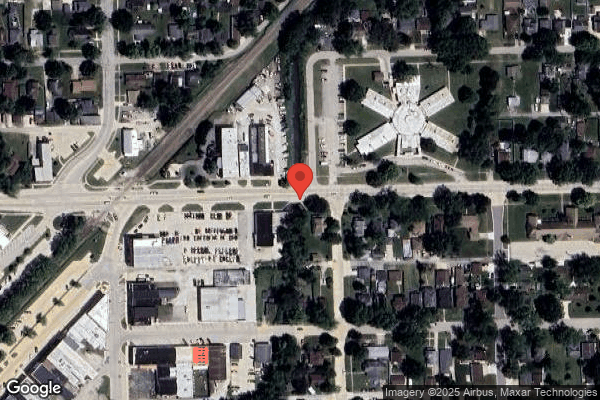
300 EAST MAZON AVENUE, DWIGHT, IL 60420 (815) 584-1240
For profit - Limited Liability company 92 Beds ARCADIA CARE Data: November 2025
Trust Grade
80/100
#107 of 665 in IL
Last Inspection: April 2025

Within standard 12-15 month inspection cycle. Federal law requires annual inspections.

Overview

ARC at Dwight has received a Trust Grade of B+, indicating it is above average and recommended for families considering care options. It ranks #107 out of 665 facilities in Illinois, placing it in the top half of the state's nursing homes, and #3 out of 6 in Livingston County, meaning only two facilities nearby have better rankings. The facility's trend is stable, with the number of reported issues remaining consistent at four over the past two years. While staffing has a rating of 2 out of 5, indicating below-average performance, the turnover rate is 42%, which is better than the state average. Notably, the facility has no fines on record, suggesting compliance with regulations, and offers more RN coverage than 84% of state facilities, ensuring better oversight for residents. However, there are concerns regarding food service management; the facility has failed to employ a clinically qualified director of food and nutrition services, which could affect residents’ dietary needs. There have also been incidents of dietary aides working without the necessary food handler certifications, highlighting potential risks in meal preparation and service. Overall, while ARC at Dwight has several strengths, including good RN coverage and no fines, families should consider the staffing issues and food service management concerns when making their decision.

Trust Score
B+
80/100
In Illinois
#107/665
Top 16%
Safety Record
Low Risk
No red flags
Inspections
Holding Steady
4 → 4 violations
Staff Stability
○ Average
42% turnover. Near Illinois's 48% average. Typical for the industry.
Penalties
✓ Good
No fines on record. Clean compliance history, better than most Illinois facilities.
Skilled Nurses
✓ Good
Each resident gets 47 minutes of Registered Nurse (RN) attention daily — more than average for Illinois. RNs are trained to catch health problems early.
Violations
○ Average
9 deficiencies on record. Average for a facility this size. Mostly minor or procedural issues.
★★★★☆
4.0
Overall Rating
★★☆☆☆
2.0
Staff Levels
★★★☆☆
3.0
Care Quality
★★★★☆
4.0
Inspection Score
Stable
2024: 4 issues
2025: 4 issues

The Good

  • Full Sprinkler Coverage · Fire safety systems throughout facility
  • No fines on record
  • Staff turnover below average (42%)

    6 points below Illinois average of 48%

Facility shows strength in fire safety.

The Bad

Staff Turnover: 42%

Near Illinois avg (46%)

Typical for the industry

Chain: ARCADIA CARE

Part of a multi-facility chain

Ask about local staffing decisions and management

The Ugly 9 deficiencies on record

Apr 2025 4 deficiencies
CONCERN (D)

Potential for Harm - no one hurt, but risky conditions existed

Unnecessary Medications (Tag F0759)

Could have caused harm · This affected 1 resident

Based on observation, interview, and record review the facility failed to follow pharmacy/hormone replacement medication guidance, for one of eight residents (R32) reviewed during medication administr...

Read full inspector narrative →
Based on observation, interview, and record review the facility failed to follow pharmacy/hormone replacement medication guidance, for one of eight residents (R32) reviewed during medication administration observation. The facility had three medication errors out of 30 opportunities resulting in a 10 percent medication error rate. Findings include: R32's Medication Administration Record (MAR) dated 04/01/2025- 4/30/2025 documents the following: Levothyroxine Sodium (hormone replacement medication) Oral Tablet, 75 MCG (micrograms), give 75 mcg by mouth in the morning, related to Hypothyroidism. Unspecified, Omeprazole (proton-pump inhibitor medication) Oral Tablet, Delayed Release, 20 MG (milligrams), give 1 tablet by mouth in the morning for acid reflux, and Acetaminophen (pain medication) Oral Tablet, give 1000 mg by mouth every 8 hours as needed for pain rated 1-5. The same MAR documents V19's initial indicated document R32 was scheduled to receive both Levothyroxine and Omeprazole during Liberal AM, medication time frame of 4:00 am - 6:00 am. R32's same MAR documents V19 initials also document Acetaminophen was administered during the same Liberal AM medication time frame of 4:00 am - 6:00 am. On 4/17/25 at 5:00 am, V19, Licensed Practical Nurse (LPN) administered R32's Levothyroxine 75 mcg tablet, Omeprazole delayed release 20 mg tablet, and two tablets of Tylenol 500 mg (1000 mg). A detailed electronic medical record (EMR) report dated 4/17/205 at 12:02 pm, signed by V2, Director of Nursing, documents the following times the above medications were signed out as administered during the Liberal AM medication pass time frame: Omeprazole oral tablet, Delayed Release 20 MG (milligrams) was administered on 4/17/25 at 5:02 am, Levothyroxine Sodium oral, 75 mcg tablet was signed out as administered the same time at 4/17/25 at 5:02 am, and Acetaminophen Oral Tablet, 1000 mg was signed out as administered four minutes later, at 5:06 am. On 4/17/25 at 11:45 am V2, Director of Nursing stated Levothyroxine should not be administered with any other medication. Yes, those are medication errors. The facility Medication Error Report dated 4/17/25 documents: a physician (unidentified) was notified Omeprazole Oral Tablet Delayed Release 20 MG (milligrams), Levothyroxine Sodium Oral, 75 mcg and Acetaminophen Oral Tablet, 1000 mg were given together in error, and Synthroid (name brand for Levothyroxine) is to me given on an empty stomach, prior to other medication. The same report documents the type of error was medications given at the wrong time and caused by a transcription error (scheduled at the same time). The facility pharmacy pamphlet undated insert for Levothyroxine (thyroid hormone replacement) directs the administration of the medication to be administered once daily, preferably on an empty stomach, one-half to one hour before breakfast and at least four hours before or after other medication, that can interfere with absorption of the Levothyroxine medication.
CONCERN (E)

Potential for Harm - no one hurt, but risky conditions existed

Deficiency F0809 (Tag F0809)

Could have caused harm · This affected multiple residents

Based on observation, interview, and record review, the facility failed to provide meal service in the posted service times. This failure affects six residents (R14, R15, R21, R47, R59, and R195) of s...

Read full inspector narrative →
Based on observation, interview, and record review, the facility failed to provide meal service in the posted service times. This failure affects six residents (R14, R15, R21, R47, R59, and R195) of six residents who received meal trays in their rooms, on the sample list of 34. Findings include: On 4/15/25 between 11:00 AM and 12:45 PM, R14, R15, R21, R47, and R195, were identified as waiting in their rooms for meal service on the facility's A Hall. Each of the identified residents stated the food is consistently late for the hall trays delivered to rooms. Each resident identified that breakfast is due around 7:30 AM, lunch around 11:30 AM, and supper around 4:30 PM. Each resident stated the meals actually arrive around 9:00 AM, lunch around 1:00 PM, and supper around 6:00 PM. On 4/15/25 at 1:10 PM, the cart containing the meal trays arrived on the facility's A Hall. On 4/15/25 at 1:14 PM, V8, Certified Nursing Assistant, stated the meals are often served late because there weren't enough kitchen staff. V8 stated at least three days per week the breakfast goes out for the hall trays around 9:00 AM and lunch is right around this time (1:10 to 1:15 PM). V8 stated she did not work the evening shift and could not speak as to when supper was delivered to the residents eating in their rooms. On 4/16/25 at 8:25 AM, V9, Dietary Manager, stated the kitchen serves any resident who comes to the dining room between 6:30 AM and 8:30 AM, then they can determine which residents need a hall tray. V9 stated for lunch, the kitchen serves the A and D Halls in the dining room starting at 11:30 AM, then the B and C Halls in the dining room starting at 12:15 PM. V9 stated after the dining room is finished serving, they start preparing the meal carts that go out to the residents eating in their rooms. V9 stated a similar routine happens during the supper meal service with A and D Hall starting in the dining room at 4:30 PM, then the B and C Halls at 5:15 PM, then determine which residents did not come to the dining room and prepare to serve the trays to the residents eating in their rooms. The facility's posted signs in the hallway leading to the dining room, on the Care Plan Coordinator's office door, and in the central rotunda, all document meal service times for breakfast for all halls 6:30 AM through 8:30 AM, lunch for A and D Hall at 11:30 AM, B and C Halls at 12:15 PM, and dinner A and D Hall at 4:30 PM, and B and C Hall at 5:15 PM. On 4/16/25 at 12:20 PM, V29, Dietary Aide, was able to identify the residents who were requesting to eat in their rooms and would need to be provided a hall tray. On 4/16/25 at 12:57 PM, in addition to the aforementioned five residents, R59 (A Hall) also stated she had not yet been served lunch and the meals have been coming late routinely.
CONCERN (F)

Potential for Harm - no one hurt, but risky conditions existed

Deficiency F0801 (Tag F0801)

Could have caused harm · This affected most or all residents

Based on observation, interview, and record review, the facility failed to provide a clinically qualified director of food and nutrition services. This failure has the potential to affect all 87 resid...

Read full inspector narrative →
Based on observation, interview, and record review, the facility failed to provide a clinically qualified director of food and nutrition services. This failure has the potential to affect all 87 residents residing in the facility. Findings include: On 4/15/25 at 9:20 AM, V9, Dietary Manager, introduced herself as the dietary manager. During the ensuing tour of the facility kitchen, V9 was actively managing and directing kitchen support personnel and their food preparation and food storage activities. V9's food service certificate, issued 8/27/21, documents V9 was certified as a Food Service Manager. V9 stated the requirements for this certificate were to review course material for approximately eight hours in a single day and take a test. V9 stated the certificate course was directed for cooking sanitation. V9 further stated there was not any clinical information such as how nutrition is involved with healing pressure ulcers, reducing weight loss, gastrostomy tube feeding requirements, or for residents receiving dialysis. V9 then stated she had been told by the facility administration that she needs to get signed up for the CDM (Certified Dietary Manager) course ASAP (as soon as possible). V9 stated she understands the CDM course is 6 months to a year long and includes the clinical aspects of nutrition, not simply cooking sanitation. V9 then stated the facility Registered Dietician (V13) would only work on a consultant basis. V9 concluded by confirming she did not meet the State requirements for a Director of Food Services, or definition of a Dietetic Service Supervisor, by stating she was not a Registered Dietician, had not graduated from an authorized dietetic and nutrition program, had no food service experience prior to 1990, had not completed the course study as a CDM and was not a CDM, and had no military service. The facility's Resident Roster and Form 802 Resident Matrix, both dated 4/15/25, document 87 residents reside in the facility, all of whom receive nutritional services in the facility. R11 was one resident who receives no food by mouth but rather receives gastrostomy feedings.
CONCERN (F)

Potential for Harm - no one hurt, but risky conditions existed

Deficiency F0802 (Tag F0802)

Could have caused harm · This affected most or all residents

**NOTE- TERMS IN BRACKETS HAVE BEEN EDITED TO PROTECT CONFIDENTIALITY** Based on interview and record review, the facility failed to provide certified food handlers for the meal service and food prepa...

Read full inspector narrative →
**NOTE- TERMS IN BRACKETS HAVE BEEN EDITED TO PROTECT CONFIDENTIALITY** Based on interview and record review, the facility failed to provide certified food handlers for the meal service and food preparation operations. This failure has the potential to affect all 87 residents residing in the facility. Findings include: On 4/15/25 at 9:20 AM, V9, Dietary Manager, stated there were three Dietary Aides (V10, V11, and V12) who did not yet have a Food Handler's certificate. The Illinois Public Act [PHONE NUMBER], documents a food handler or food employee is defined as any individual working with unpackaged food, food equipment, utensils, or food contact surfaces. This Act documents all food handlers working in non-restaurants such as nursing homes, must have the food handler's training by 7/1/2016 with enforcement beginning 1/1/2017. On 4/16/25 at 11:47 AM, V9 confirmed V10, V11, and V12 had been working in the facility kitchen and dining room and did engage in meal service activities serving food trays and plates to residents, rolled service utensils into napkins for resident meal preparations, and V11 also operated the dishwasher. The facility's Resident Roster and Form 802 Resident Matrix, both dated 4/15/25, document 87 residents residing in the facility, all of whom, with the exception of R11 who receives no food by mouth, consume food prepared and served from the facility kitchen.
Jul 2024 1 deficiency
CONCERN (D) 📢 Someone Reported This

A family member, employee, or ombudsman was alarmed enough to file a formal complaint

Potential for Harm - no one hurt, but risky conditions existed

Report Alleged Abuse (Tag F0609)

Could have caused harm · This affected 1 resident

**NOTE- TERMS IN BRACKETS HAVE BEEN EDITED TO PROTECT CONFIDENTIALITY** Based on interview and record review the facility failed to report an allegation of sexual abuse to the state survey agency for ...

Read full inspector narrative →
**NOTE- TERMS IN BRACKETS HAVE BEEN EDITED TO PROTECT CONFIDENTIALITY** Based on interview and record review the facility failed to report an allegation of sexual abuse to the state survey agency for two of three residents (R1, R2) reviewed for sexual abuse in the sample list of three. Findings include: The facility's Abuse Prevention and Reporting - Illinois policy with a revised date of October/2022 documents, Internal Reporting Requirements and Identification of Allegations: Employees are required to report any incident, allegation or suspicion of potential abuse, neglect, exploitation, mistreatment or misappropriation of resident property they observe, hear about, or suspect to the administrator immediately, or to an immediate supervisor who must then immediately report it to the administrator. In the absence of the administrator, reporting can be made to an individual who has been designated to act as administrator in the administrator's absence. External Reporting Initial Reporting of Allegations: When an allegation of abuse, exploitation, neglect, mistreatment or misappropriation of resident property has occurred, the resident's representative and the Department of Public Health's regional office shall be informed by telephone or fax. R1's Minimum Data Set (MDS) dated [DATE] documents R1 is severely cognitively impaired. R2's MDS dated [DATE] documents R2 has moderately impaired cognition. On 7/29/24 at 9:10 AM, V1 (Administrator) stated that she got a call from V3 (Registered Nurse-RN) that said R2 was touching R1 inappropriately. V1 stated that she couldn't remember if it was last weekend or the weekend before but confirmed she did her own investigation and did not report it to the state survey agency. V1 stated that she did not think it was abuse so she did not report it. On 7/29/24 at 10:00 AM, V5 (Certified Nursing Assistant/CNA) stated on Saturday the 20th, V5 was in the bathroom next to R1's room assisting another resident and she heard R1 say No, No, No which V5 stated R1 often did if she was falling out of bed. V5 stated as soon as she could she went to R1's room and R2 was in his wheelchair next to R1's bed and appeared to have his hand between her legs and V5 asked him what he was doing. V5 stated that R2 told her he was trying to push her back into bed as she was falling out. V5 stated that R1 had to sleep without any clothing on as she has [NAME] and will eat her clothing and the briefs so she was naked. V5 stated that she reported it to her nurse V3. On 7/29/24 at 10:35 AM, V3 stated that on 7/20/24 V5 came to her and told her that she walked into R1's room and R2 appeared to have his hand between R1's legs. V3 stated that V3 called V1 and reported it to her. V3 stated that V1 told her not to document anything about it. On 7/29/24 at 11:11 AM, V8 (Hospice Social Worker) stated that one of the hospice Certified Nursing Assistants (CNA) reported to her that when the CNA was visiting R1 over the weekend that one of the facility CNAs reported to her that R2 (R1's husband and roommate) was touching R1 inappropriately. V8 stated that V8 went to the facility to follow up and V1 (Administrator) and V2 (Director of Nursing) told V8 that they were handling the investigation internally and that they had moved R1 to a different room. On 7/29/24 at 1:24 PM, V1 confirmed she did not report the allegation, she stated that she thought about reporting it but did not.
Apr 2024 3 deficiencies
CONCERN (E)

Potential for Harm - no one hurt, but risky conditions existed

Resident Rights (Tag F0550)

Could have caused harm · This affected multiple residents

**NOTE- TERMS IN BRACKETS HAVE BEEN EDITED TO PROTECT CONFIDENTIALITY** Based on observation, interview, and record review the facility failed to honor residents' right to dignity during dining by dai...

Read full inspector narrative →
**NOTE- TERMS IN BRACKETS HAVE BEEN EDITED TO PROTECT CONFIDENTIALITY** Based on observation, interview, and record review the facility failed to honor residents' right to dignity during dining by daily serving of meals on disposable dishware and by standing over residents while providing feeding assistance. This failure affects seven residents (R8, R13, R15, R17, R22, R37, and R61) out of 18 reviewed for dignity on the sample list of 47. Findings Include: 1. On 4/2/24 at 12:10 PM, V3 Dietary Manager stated, We are serving the foam plates due to the dishwasher being broken. The dishwasher has been broken since February (2024), it first started leaking and it got worse, and then it finally quit. The server today started serving on regular plates then realized she intended to use foam plates for everybody. On 4/3/24 at 12:42 PM, R37 stated, I don't like the foam plates. It is too easy to cut through the foam plates with the metal knives, and the foam cups are small at the bottom and large at the top so I am always afraid I am going to tip them over and spill them. It's easy to lose track of time in here but I would say they have been serving the foam plates for about 3 weeks straight or so. On 4/3/24 at 12:44 PM, R13 stated, Foam plates, yeah, the dishwasher must be broken, there's nothing like a regular plate. On 4/3/24 at 12:46 PM, R8 stated, The dishwasher is broken, that's why they are using foam plates. On 4/3/24 at 12:48 PM, R61 stated, The foam plates are easier to get rid of, they just throw them away. On 4/3/24 at 12:55 PM, V10 [NAME] stated, We are using the foam plates because the dishwasher is broken. They are supposed to get us a new one. The use of the foam plates has varied but we have been steady using them for about 3 weeks. Nobody wants to stand over the sink and do dishes by hand. On 4/4/24 at 9:45 AM, R15 unprompted, stated, For a couple of months we have been served meals on foam plates. The food gets cold a lot quicker because they can't use the plate warmers on foam plates like they do with regular plates. I hope they fix that dishwasher soon. 2. R17's Minimum Data Set, dated [DATE] documents R17's staff assessment as R17 has memory problems with moderate cognitive impairment. R17's Care Plan dated 1/04/24 documents R17 is dependent on staff for assistance with eating. On 4/3/24 at 11:50 AM, during medication administration observation, V7 Registered Nurse entered R17 and R22's shared room. Both R17 and R22 were seated in partially reclined geriatric specialty wheelchairs. R17 and R22's geriatric specialty wheelchairs sat on opposite sides of their room. V8 Certified Nursing Assistant (CNA) was feeding R17 while in a standing positron, next to R17's reclined geriatric specialty wheelchair. There were no chairs in R17's room for V8 CNA to sit down in while feeding R17. On 4/3/24 at 11:59 AM, V8 CNA exited R17's room after R17 finished his meal. V8 CNA stated she did not know it was a dignity issue to feed R17 while she (V8) was standing next to R17's chair. 3. R22's Minimum Data Set, dated [DATE] documents R22's Brief Interview of Mental Status score as nine out of a possible 15, indicating moderate cognitive impairment. R22's Care Plan dated 3/06/24 documents R22 is dependent on staff for assistance with eating. On 4/3/24 at 11:50 AM, during medication administration observation, V7 Registered Nurse entered R17 and R22's shared room. Both R17 and R22 were seated in partially reclined geriatric specialty wheelchairs that sat on opposite sides of their room. V9 Licensed Practical Nurse (LPN) was feeding R22 while standing up beside R22's chair. There were no chairs in R22's room for V9 LPN to sit down on while feeding R22. On 4/3/24 at 11:55 AM, V9 LPN exited R22's room, after R22 finished his meal. V9 stated V9 recognized it is a dignity issue to feed a resident while standing up. On 4/3/24 at 12:01 PM, V1 Administrator acknowledged it is a dignity issue when staff feed residents while the staff member remains standing. The facility policy Dignity dated 03/2024 documents the following: Guidelines: The facility shall promote care for residents in a manner and in an environment that maintains or enhances each resident's dignity, and respect in full recognition of his or her individuality. The facility shall consider the resident's life style and personal choices identified through the assessment processes to obtain a picture of his or her individual needs and preferences. Staff shall carry out activities in a manner which assists the resident to maintain and enhance his/her self-esteem and self-worth. Maintaining a resident's dignity should include but is not limited to the following: *Encouraging and assisting residents to dress in their own clothes, rather than hospital- type gowns, and appropriate footwear for the time of day and individual preferences; *Placing labels on each resident's clothing in a way that is inconspicuous and respects his or her dignity (for example, placing labeling on the inside of shoes and clothing or using a color coding system); *Promoting resident independence and dignity while dining, such as avoiding: *Daily use of disposable cutlery and dishware; *Bibs or clothing protectors instead of napkins (except by resident choice); *Staff standing over residents while assisting them to eat; *Staff interacting/conversing only with each other rather than with residents while assisting with meals.
CONCERN (E)

Potential for Harm - no one hurt, but risky conditions existed

Accident Prevention (Tag F0689)

Could have caused harm · This affected multiple residents

**NOTE- TERMS IN BRACKETS HAVE BEEN EDITED TO PROTECT CONFIDENTIALITY** Based on observation, interview, and record review the facility failed to maintain safe and comfortable water temperatures in re...

Read full inspector narrative →
**NOTE- TERMS IN BRACKETS HAVE BEEN EDITED TO PROTECT CONFIDENTIALITY** Based on observation, interview, and record review the facility failed to maintain safe and comfortable water temperatures in resident hand sinks on the facility's C Hall (300 Hall). This failure affects 14 residents (R5, R10, R11, R13, R26, R31, R33, R38, R46, R52, R57, R58, R59, and R61) out of 18 reviewed for accident hazards on the sample list of 47. Findings Include: On 4/2/24 at 2:15 PM, the water temperature in the hand sink in room [ROOM NUMBER] had a stinging sensation to the hand. The water temperature in this same sink measured 119.4 degrees Fahrenheit (F) with an Illinois Department of Public Health Digital Automatic Calibration thermometer. room [ROOM NUMBER] had a hand sink water temperature of 115.3 F. room [ROOM NUMBER] had a hand sink water temperature measuring 122.3 F. room [ROOM NUMBER] hand sink water temperature measured 114.6 F. On 4/2/24 at 2:28 PM, V5 Maintenance Director, stated, We just got a new water heater and the mixing valve on it is so sensitive, I move it a millimeter and it sends the temperatures way off. V5 continued, Even the 114 (F) is too hot, our standard is to keep it below 110 (F). On 4/3/24 at 2:05 PM, the water temperature in the hand sink in room [ROOM NUMBER] measured 116.9 F. In room [ROOM NUMBER] the hand sink water temperature measured 117.3 F. The water temperature in the hand sink in room [ROOM NUMBER] measured 126.6 F. The water in this hand sink was hot enough to trigger a reflex withdrawal motion when a hand was placed under the water stream. In room [ROOM NUMBER] the water temperature of the hand sink measured 120.7 F, again hot enough to trigger a reflex withdrawal motion. The temperature of the water in the hand sink in room [ROOM NUMBER] measured 117.8 F. The hand sink water temperature in room [ROOM NUMBER] measured 115.7 F. On 4/3/24 at 3:07 PM, V5 Maintenance Director stated, Yesterday I adjusted the mixer valve to turn down the temperature, then I asked my Assistant to check the temperatures first thing this morning and they actually went the wrong way, they went up. We had a plumber out here and he said the mixing valve needs a whole new kit or replaced. On 4/3/24 at 3:10 PM, while observing the mixing valve, V5 stated, I have the valve turned all the way down so right now it should be passing basically 100 percent cold water but it isn't, so I know the temperatures are hot again today. The facility's Resident Roster dated 4/2/24 documents R5, R10, R11, R13, R26, R31, R33, R38, R46, R52, R57, R58, R59, and R61 reside on the facility's 300 Hall (C Hall). R5's Minimum Data Set (MDS) dated [DATE] documents R5 received a score of 2 out of a possible 15 during a Brief Interview for Mental Status (BIMS), rating R5 as severely cognitively impaired. R10's MDS dated [DATE] documents R10 did not have the cognitive capacity to complete a BIMS and received a staff assessment as moderately cognitively impaired with long term memory problems and could not recall the current season. R11's MDS dated [DATE] documents R11 received a score of 11 out of a possible 15 during a BIMS, rating R11 as moderately cognitively impaired. R13's MDS dated [DATE] documents R13 received a score of 14 out of a possible 15 during a BIMS, rating R13 as cognitively intact. R26's MDS dated [DATE] documents R26 received a score of 5 out of a possible 15 during a BIMS, rating R26 as severely cognitively impaired. R31's MDS dated [DATE] documents R31 received a score of 6 out of a possible 15 during a BIMS, rating R31 with severe cognitive impairment. R33's MDS dated [DATE] documents R33 received a score of 8 out of a possible 15 during a BIMS, rating R33 as moderately cognitively impaired. R38's MDS dated [DATE] documents R38 received a score of 2 out of a possible 15 during a BIMS, rating R38 as severely cognitively impaired. R46's MDS dated [DATE] documents R46 received a score of 10 out of a possible 15 during a BIMS, rating R46 as moderately cognitively impaired. R52's MDS dated [DATE] documents R52 received a score of 6 out of a possible 15 during a BIMS, rating R52 as severely cognitively impaired. R57's MDS dated [DATE] documents R57 received a score of 5 out of a possible 15 during a BIMS, rating R57 as severely cognitively impaired. R58's MDS dated [DATE] documents R58 received a score of 13 out of a possible 15 during a BIMS, rating R58 as cognitively intact. R59's MDS dated [DATE] documents R59 received a score of 6 out of a possible 15 during a BIMS, rating R59 as severely cognitively impaired. R61's MDS dated [DATE] documents R61 received a score of 11 out of a possible 15 during a BIMS, rating R61 as moderately cognitively impaired.
CONCERN (F)

Potential for Harm - no one hurt, but risky conditions existed

Deficiency F0801 (Tag F0801)

Could have caused harm · This affected most or all residents

Based on observation, interview, and record review the facility failed to provide the services of a clinically qualified director of food and nutrition services. This failure has the potential to affe...

Read full inspector narrative →
Based on observation, interview, and record review the facility failed to provide the services of a clinically qualified director of food and nutrition services. This failure has the potential to affect all 77 residents residing in the facility, with R18 being one exception. Findings Include: On 4/2/24 at 9:44 AM, V5 Dietary Manager stated, I am the Dietary Manager. I started here as the manager in 2019. I have an FSM (Food Service Manager, cooking sanitation certificate) certificate. The FSM took one day to get. It was a one day course of study and take a test. I also have a CFM (Certified Food Manager, cooking sanitation certificate) certificate which is basically the same course of study and take a test that also took one day. V5 continued and confirmed neither of these certificates is similar to a CDM (Certified Dietary Manager), nor CFPP (Certified Food Protection Professional) (nationally certified, 6 months or greater of clinical nutritional study followed by a certification exam). V5 then stated, I am enrolled in the CDM course through the University of North Dakota. This course has a set of 4 books for study and since I have these 2 sanitation certificates, I only have to complete 2 of the books, so I am about halfway through the course. V5 continued, We do have an RD (Registered Dietician) who is here several days per month but is not full time, she works as a consultant. V5 then confirmed she did not meet the state requirements as a Dietetic Service Supervisor (reference Illinois Admin Code 77, Section 300.330, Definitions) by stating, I am not an RD, I haven't graduated from any school or program, I have not completed the CDM course so I don't have the CDM certificate, and I don't have any military service. V5 concluded by stating, We have one resident (R18) who receives feedings through a G-tube (gastrostomy tube) who is NPO (nothing by mouth). On 4/2/24 at 9:44 AM and 11:55 AM, and on 4/3/24 at 12:08 PM through 1:47 PM, V5, Dietary Manager was actively directing and managing the food preparation and food service activities in the facility's kitchen. There were concerns with resident dignity identified during the survey with the daily use of disposable dish wares (reference F550). The facility's Form 802 Resident Matrix dated 4/2/24 documents 77 residents reside in the facility, all of whom, with one exception, R18, consume food prepared from the facility kitchen. This same Form 802 documents R18 receives all nutrition and hydration through a gastrostomy tube and takes nothing by mouth.
Feb 2023 1 deficiency
CONCERN (D)

Potential for Harm - no one hurt, but risky conditions existed

Deficiency F0578 (Tag F0578)

Could have caused harm · This affected 1 resident

**NOTE- TERMS IN BRACKETS HAVE BEEN EDITED TO PROTECT CONFIDENTIALITY** Based on interview and record review the facility failed to accurately record a resident's preference for life-sustaining treatm...

Read full inspector narrative →
**NOTE- TERMS IN BRACKETS HAVE BEEN EDITED TO PROTECT CONFIDENTIALITY** Based on interview and record review the facility failed to accurately record a resident's preference for life-sustaining treatment in the medical record for one (R24) of two residents reviewed for advance directives in the sample list of 24. Findings include: On [DATE] at 11:48 am, V2 Director of Nursing (DON) said, R24 recently updated R24's code status from a Full code to a Do Not Resuscitate (DNR). V2 said, the care plan coordinator should of received the updated form and updated R24's Care Plan to reflect the DNR status. V2 said, we must of missed it and its being updated now. R24's Physician Order Sheet (POS) dated [DATE] documents R24 as a Do Not Resuscitate (DNR). R24's POLST (Physician Order for Life Sustaining Treatment) dated [DATE] in R24's electronic medical record documents: Attempt Resuscitation/CPR (Cardiopulmonary Resuscitation). (Selecting CPR means Full Treatment in Section B is selected). Section B: Full Treatment Primary goal of sustaining life by medically indicated means. In addition to treatment described in Selective Treatment and Comfort Focused Treatment, use intubation, mechanical ventilation and cardioversion as indicated. Transfer to hospital and/or intensive care unit if indicated. R24's POLST (Physician Order for Life Sustaining Treatment) dated [DATE] in R24's electronic medical record documents: No CPR: Do Not Attempt to Resuscitation (DNAR). R24's Care Plan dated [DATE] documents R24 formulated Advance Directives, R24's Advance Directives will be honored, Full Code and Guardian. The Advance Directive Policy revised 11/2022 documents residents will be afforded the opportunity upon admission to the facility to submit any Advance Directive regarding their care in the facility, thereby informing the facility of each resident's desires regarding decision making and end of care. Each resident's medical record will reflect advanced directive in effect.
Understanding Severity Codes (click to expand)
Life-Threatening (Immediate Jeopardy)
J - Isolated K - Pattern L - Widespread
Actual Harm
G - Isolated H - Pattern I - Widespread
Potential for Harm
D - Isolated E - Pattern F - Widespread
No Harm (Minor)
A - Isolated B - Pattern C - Widespread

Questions to Ask on Your Visit

  • "Can I speak with families of current residents?"
  • "What's your RN coverage like on weekends and overnight?"

Our Honest Assessment

Strengths
  • • Grade B+ (80/100). Above average facility, better than most options in Illinois.
  • • No major safety red flags. No abuse findings, life-threatening violations, or SFF status.
  • • No fines on record. Clean compliance history, better than most Illinois facilities.
  • • 42% turnover. Below Illinois's 48% average. Good staff retention means consistent care.
Concerns
  • • No significant concerns identified. This facility shows no red flags across CMS ratings, staff turnover, or federal penalties.
Bottom line: Generally positive indicators. Standard due diligence and a personal visit recommended.

About This Facility

What is Arc At Dwight's CMS Rating?

CMS assigns ARC AT DWIGHT an overall rating of 4 out of 5 stars, which is considered above average nationally. Within Illinois, this rating places the facility higher than 99% of the state's 100 nursing homes. This rating reflects solid performance across the metrics CMS uses to evaluate nursing home quality.

How is Arc At Dwight Staffed?

CMS rates ARC AT DWIGHT's staffing level at 2 out of 5 stars, which is below average compared to other nursing homes. Staff turnover is 42%, compared to the Illinois average of 46%. This relatively stable workforce can support continuity of care.

What Have Inspectors Found at Arc At Dwight?

State health inspectors documented 9 deficiencies at ARC AT DWIGHT during 2023 to 2025. These included: 9 with potential for harm.

Who Owns and Operates Arc At Dwight?

ARC AT DWIGHT is owned by a for-profit company. For-profit facilities operate as businesses with obligations to shareholders or private owners. The facility is operated by ARCADIA CARE, a chain that manages multiple nursing homes. With 92 certified beds and approximately 87 residents (about 95% occupancy), it is a smaller facility located in DWIGHT, Illinois.

How Does Arc At Dwight Compare to Other Illinois Nursing Homes?

Compared to the 100 nursing homes in Illinois, ARC AT DWIGHT's overall rating (4 stars) is above the state average of 2.5, staff turnover (42%) is near the state average of 46%, and health inspection rating (4 stars) is above the national benchmark.

What Should Families Ask When Visiting Arc At Dwight?

Based on this facility's data, families visiting should ask: "Can you walk me through typical staffing levels on day, evening, and night shifts?" "Can I visit during a mealtime to observe dining assistance and food quality?" "How do you handle medical emergencies, and what is your hospital transfer rate?" "Can I speak with family members of current residents about their experience?" These questions are particularly relevant given the below-average staffing rating.

Is Arc At Dwight Safe?

Based on CMS inspection data, ARC AT DWIGHT has a clean safety record: no substantiated abuse findings (meaning no confirmed cases of resident harm), no Immediate Jeopardy citations (the most serious violation level indicating risk of serious injury or death), and is not on the Special Focus Facility watch list (a federal program monitoring the lowest-performing 1% of nursing homes). The facility has a 4-star overall rating and ranks #1 of 100 nursing homes in Illinois. While no facility is perfect, families should still ask about staff-to-resident ratios and recent inspection results during their visit.

Do Nurses at Arc At Dwight Stick Around?

ARC AT DWIGHT has a staff turnover rate of 42%, which is about average for Illinois nursing homes (state average: 46%). Moderate turnover is common in nursing homes, but families should still ask about staff tenure and how the facility maintains care continuity when employees leave.

Was Arc At Dwight Ever Fined?

ARC AT DWIGHT has no federal fines on record. CMS issues fines when nursing homes fail to meet care standards or don't correct problems found during inspections. The absence of fines suggests the facility has either maintained compliance or corrected any issues before penalties were assessed. This is a positive indicator, though families should still review recent inspection reports for the full picture.

Is Arc At Dwight on Any Federal Watch List?

ARC AT DWIGHT is not on any federal watch list. The most significant is the Special Focus Facility (SFF) program, which identifies the bottom 1% of nursing homes nationally based on persistent, serious quality problems. Not being on this list means the facility has avoided the pattern of deficiencies that triggers enhanced federal oversight. This is a positive indicator, though families should still review the facility's inspection history directly.