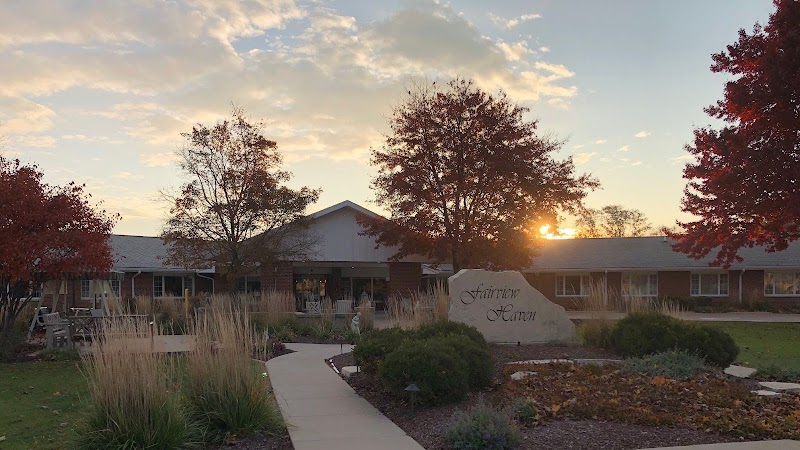

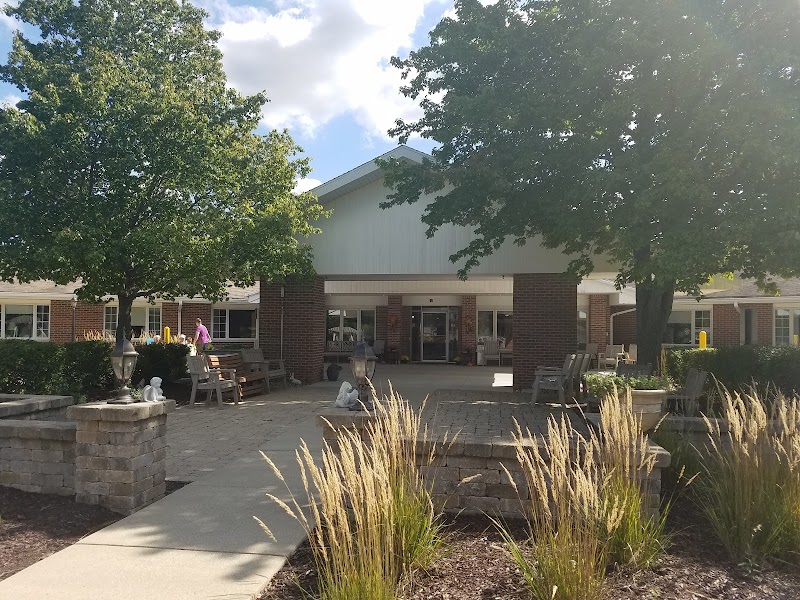
FAIRVIEW HAVEN

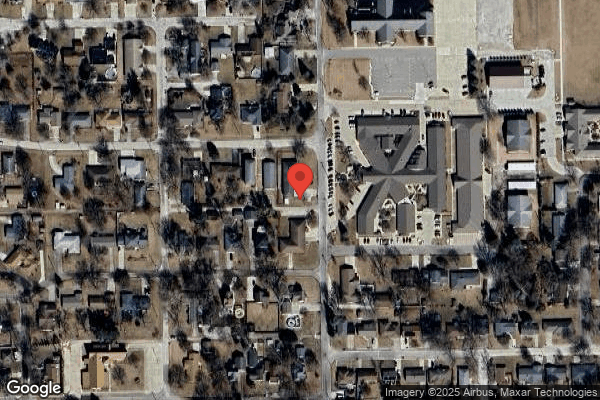
605 NORTH 4TH STREET, FAIRBURY, IL 61739 (815) 692-2572
Non profit - Church related 52 Beds Independent Data: November 2025
Trust Grade
90/100
#35 of 665 in IL
Last Inspection: September 2024

Within standard 12-15 month inspection cycle. Federal law requires annual inspections.

Overview

Fairview Haven in Fairbury, Illinois, has an excellent Trust Grade of A, which indicates they are highly recommended and perform well compared to other facilities. They rank #35 out of 665 nursing homes in the state, placing them in the top half, and #2 out of 6 in Livingston County, meaning only one local option is better. The facility is improving, with the number of issues decreasing from 4 in 2023 to 3 in 2024, and they have a strong staffing rating with only 18% turnover, significantly lower than the state average. They have not incurred any fines, which is a positive sign, but there are some concerns, including issues with medication storage, disposal of unused medications, and maintaining kitchen cleanliness, all of which could affect resident safety. Overall, Fairview Haven exhibits many strengths, but families should be aware of the identified weaknesses.

Trust Score
A
90/100
In Illinois
#35/665
Top 5%
Safety Record
Low Risk
No red flags
Inspections
Getting Better
4 → 3 violations
Staff Stability
✓ Good
18% annual turnover. Excellent stability, 30 points below Illinois's 48% average. Staff who stay learn residents' needs.
Penalties
✓ Good
No fines on record. Clean compliance history, better than most Illinois facilities.
Skilled Nurses
✓ Good
Each resident gets 47 minutes of Registered Nurse (RN) attention daily — more than average for Illinois. RNs are trained to catch health problems early.
Violations
⚠ Watch
14 deficiencies on record. Higher than average. Multiple issues found across inspections.
★★★★★
5.0
Overall Rating
★★★★★
5.0
Staff Levels
★★★★★
5.0
Care Quality
★★★★★
5.0
Inspection Score
Stable
2023: 4 issues
2024: 3 issues

The Good

  • 5-Star Staffing Rating · Excellent nurse staffing levels
  • 5-Star Quality Measures · Strong clinical quality outcomes
  • Low Staff Turnover (18%) · Staff stability means consistent care
  • Full Sprinkler Coverage · Fire safety systems throughout facility
  • No fines on record
  • Staff turnover is low (18%)

    30 points below Illinois average of 48%

Facility shows strength in staffing levels, quality measures, staff retention, fire safety.

The Bad

No Significant Concerns Identified

This facility shows no red flags. Among Illinois's 100 nursing homes, only 1% achieve this.

The Ugly 14 deficiencies on record

Sept 2024 3 deficiencies
CONCERN (D)

Potential for Harm - no one hurt, but risky conditions existed

Accident Prevention (Tag F0689)

Could have caused harm · This affected 1 resident

Based on observation, interview and record review the facility failed to implement fall prevention interventions for one of three residents (R27) reviewed for falls in the sample list of 34. Findings ...

Read full inspector narrative →
Based on observation, interview and record review the facility failed to implement fall prevention interventions for one of three residents (R27) reviewed for falls in the sample list of 34. Findings include: The facility's Falls-Clinical Protocol with a revised date of 5/3/13 documents, Treatment/Management 1. Based on the preceding assessment, the staff and physician will identify pertinent interventions to try to prevent subsequent falls and to address risks of serious consequences of falling. R27's Order Summary Report dated 9/10/24 documents diagnoses including Unspecified Dementia, Without Behavioral Disturbance, Psychotic Disturbance, Mood Disturbance, Anxiety and Osteoarthritis. R27's Nurse's Notes dated 5/14/24 documents R27 was found on the floor in his room with an abrasion to the left elbow and to the forehead. R27's Care Plan dated 5/3/22 documents R27 is at risk for falls and documents an intervention dated 5/18/22 that non-skid footwear should be worn at all times. On 9/9/24 at 10:06 AM, 9/10/24 at 10:09 AM and on 9/10/24 at 2:18 PM, R27 was lying in bed sleeping with regular socks on his feet. On 9/10/24 at 2:18 PM, V2 Director of Nursing confirmed R27 had regular socks on and confirmed that R27's Care Plan documents he should have gripper socks on his feet at all times.
CONCERN (D)

Potential for Harm - no one hurt, but risky conditions existed

Infection Control (Tag F0880)

Could have caused harm · This affected 1 resident

Based on observation, interview, and record review the facility failed to initiate Enhanced Barrier Precautions for one (R14) of sixteen residents reviewed for infection control in a sample list of 34...

Read full inspector narrative →
Based on observation, interview, and record review the facility failed to initiate Enhanced Barrier Precautions for one (R14) of sixteen residents reviewed for infection control in a sample list of 34. Findings include: The facility's policy Enhanced Barrier Precautions dated 9/10/24 documents Enhanced Barrier Precautions expand the use of Personal Protective Equipment and refer to the use of gown and gloves during high contact resident care activities that provide opportunities for transfer of Multidrug Resistant Organisms (MDROs) to staff hands and clothing. MDROs may be indirectly transferred from resident to resident during these high contact care activities. Nursing home residents with wounds and indwelling medical devices are at especially high risk of both acquisition of and colonization with MDROs. The use of gown and gloves for high-contact resident care activities is indicated, when Contact precautions do not otherwise apply, for nursing home residents with wounds and/or indwelling medical devices regardless of MDRO colonization As well as for residents with MDRO infection or colonization. R14's physician's orders dated 9/6/24 documents, R14 was readmitted to facility with an order for an indwelling urinary catheter. These orders did not contain an order for enhanced barrier precautions. On 9/9/24 at 10:00 AM, R14 was in bed with the indwelling urinary catheter secured on the side of the bed. There was clear yellow urine contained in the bag and tubing. There was no Personal Protective equipment outside R14's door. There was no sign posted outside R14's door to indicate Enhanced Barrier Precautions were being implemented for R14. On 9/10/24 at 2:00 PM, V2 Director of Nursing stated (R14) has a urinary catheter and he definitely should be on Enhanced Barrier Precautions. V2 verified R14 has not been placed on Enhanced Barrier Precautions.
CONCERN (F)

Potential for Harm - no one hurt, but risky conditions existed

Deficiency F0761 (Tag F0761)

Could have caused harm · This affected most or all residents

Based on observation, interview and record review the facility failed to monitor medication room freezer temperatures and failed to store medications separately from food. This failure affects all 47 ...

Read full inspector narrative →
Based on observation, interview and record review the facility failed to monitor medication room freezer temperatures and failed to store medications separately from food. This failure affects all 47 residents residing in the facility. Findings include: The facility's Storage of Medications policy with a revised date of 9/10/24 documents, Medication requiring refrigeration must be stored in a refrigerator located in the drug room at the nurses' station or other secured location. Medications must be stored in a separate compartment from food. On 9/10/24 at 10:15 AM, V3 Licensed Practical Nurse opened the medication storage room refrigerator and there was food and drink in the refrigerator. There was bisacodyl suppositories and acetaminophen suppositories in the bottom drawer of the refrigerator and there was a medication card of Florastor (probiotic) for R251 in the top shelf of the refrigerator door. V3 opened the freezer and there was no thermometer in the freezer. The freezer contained individual ice cream cups and popsicles. V3 confirmed there was no thermometer in the freezer and confirmed there was no log to monitor the temperatures of the freezer. V3 also confirmed that the food and drinks in the refrigerator and freezer were for the residents. V3 confirmed there was another smaller refrigerator in the medication room that contained more medications. R251's Order Summary dated 9/10/24 documents an order for Florajen Acidophillus Oral Capsules (probiotic) with a start date of 8/22/24. On 9/10/24 at 11:08 AM, V2 Director of Nursing provided a list of items in the medication room refrigerator and confirmed that food and medications were contained in the same refrigerator. This list documents the medication refrigerator contained nutritional drinks, nutritional/extra calorie shakes, juice, soda, pudding, yogurt, apple sauce and sandwiches. This list documents the medications contained in the medication refrigerator were Bisacodyl Suppositories, Acetaminophen Suppositories, Hydrocortisone cream and Probiotic. The facility's Long-Term Care Facility Application for Medicare and Medicaid dated 9/9/24 documents 47 residents reside in the facility.
Jul 2023 4 deficiencies
CONCERN (D)

Potential for Harm - no one hurt, but risky conditions existed

Deficiency F0554 (Tag F0554)

Could have caused harm · This affected 1 resident

**NOTE- TERMS IN BRACKETS HAVE BEEN EDITED TO PROTECT CONFIDENTIALITY** Based on observation, interview and record review, the facility failed to complete a self administration of medication assessmen...

Read full inspector narrative →
**NOTE- TERMS IN BRACKETS HAVE BEEN EDITED TO PROTECT CONFIDENTIALITY** Based on observation, interview and record review, the facility failed to complete a self administration of medication assessment for residents with medications at bedside for two of two residents (R4, R29) reviewed for self administration of medications on the sample list of 18. Findings Include: The facility's undated Self Administration of Medication Policy documents residents in our facility who wish to self administer their medications may do so if it is determined that they are capable of doing so. The staff and practitioner will assess each resident's mental and physical abilities to determine whether a resident is capable of self administering medications and document their findings and the choices of the residents who are potentially capable of self administering medications. Self administered medications must be stored in a safe and secure place, which is not accessible by other residents. If safe storage is not possible, the medications will be kept in the medication cart and nursing will transfer the unopened medication to the resident when the resident requests them. The resident's ability to self administer medications will be reevaluated periodically (for example, during quarterly MDS (Minimum Data Set) reviews). 1.) On 7/10/23 at 11:54 AM, R29 was sitting up in the recliner in R29's room, without staff present, with a medication cup containing three pills; a white capsule, a white tablet and black gel coated pill sitting on the over bed table. When asked about the pills, R29 stated I will take them and dumped them out of the cup and onto a tray but didn't take them at this time. The only Self Administration of Medication Assessment in R29's medical record is dated 1/26/23. On 7/10/23 at 11:57 AM, V4 LPN (Licensed Practical Nurse) stated V4 left R29's vitamins and cranberry pill in the room with R29 because V4 had already prepared them however R29 wanted to wait to take them. V4 stated the facility used to be able to leave medications with R29 but they are not supposed to anymore because R29 isn't limber enough to take them independently. On 7/11/23 at 3:23 PM, V2 DON (Director of Nursing) stated a Self Administration Medication Assessments should be completed quarterly, at the time of the MDS, and if a resident is able to self administer medications, there should be a physician's order for that. R29's July 2023 Physician Order's do not contain an order for R29 to self administer medications. R29's Care Plan dated 5/17/23 does not document that R29 is able to self administer medications. 2.) On 7/10/23 at 9:31 AM there was a container of chewable antacid tablets on the bedside table in R4's room. R4 stated that R4's family brings in R4's medications to the facility. R4's Order Summary dated 7/12/23 does not document an order for a chewable antacid. R4's Minimum Data Set (MDS) dated [DATE] documents R4 is cognitively intact. On 7/11/23 at 1:32 PM, V2 Director of Nursing stated that if a resident is able to self administer medications, they can keep them in their room and they would complete a self administration of medication assessment and it would be entered into the resident's electronic medical record. On 7/11/23 at 3:24 PM, V2 confirmed that R4 does not have a self administration of medication assessment completed at this time. V2 stated that they discussed with R4 and R4's Power of Attorney that if R4 would like to keep the antacids in R4's room they could complete a self administration of medication assessment. V2 stated at this time the medication is in the nurse's medication cart.
CONCERN (D)

Potential for Harm - no one hurt, but risky conditions existed

Medication Errors (Tag F0758)

Could have caused harm · This affected 1 resident

**NOTE- TERMS IN BRACKETS HAVE BEEN EDITED TO PROTECT CONFIDENTIALITY** Based on interview and record review the facility failed to complete residents initial assessment for an antidepressant and fail...

Read full inspector narrative →
**NOTE- TERMS IN BRACKETS HAVE BEEN EDITED TO PROTECT CONFIDENTIALITY** Based on interview and record review the facility failed to complete residents initial assessment for an antidepressant and failed to complete quarterly assessments for antidepressants and an antipsychotic medication. This failure affects one of five residents (R22) reviewed for unnecessary medications in the sample list of 18. Findings include: The facility's undated Psychotropic Medication Use policy provided on 7/12/23 documents, Physicians and mid-level providers will use psychotropic medications appropriately working with the interdisciplinary team to ensure appropriate use, evaluation and monitoring. Discussion of non-medication behavior management strategies that could be implemented in an attempt to reduce/eliminate the behaviors prior to initiation of drug treatment as well as on an ongoing basis. Primary care physician, PA (Physician's Assistant) or APN (Advanced Practice Nurse) Evaluates with the interdisciplinary team, effects and side effects of psychoactive medications within one month of initiating, increasing or decreasing dose and during routine visits thereafter. Nursing Reviews the use of the medication with the physician and the interdisciplinary team on a quarterly basis to determine the continued presence of target behaviors and or the presence of any adverse effects of the medication use. R22's Order Summary dated 7/12/23 documents R22 was admitted to the facility on [DATE] with diagnoses including Unspecified Dementia, Altered Mental Status, Insomnia, Other Bipolar Disorder and Depression. This Order Summary documents orders for Remeron 30 mg (milligrams) (Antidepressant) at bedtime for Insomnia with a start date of 1/4/23, Risperdal 0.5 mg (Antipsychotic) one tablet twice a day for Bipolar Disorder with a start date of 1/4/23 and Trintellix 5 mg with the noon meal for Depression with a start date of 1/4/23. R22's medical record documents a Psychotropic Justification for Trintellix and Risperdal dated 1/4/23 but does not include an assessment for the Remeron. R22's medical record documents a Psychotropic Medication Review entered on 7/10/23 for Trintellix, Risperdal and Remeron. There is no Psychotropic medication assessment for these medications in April 2023 (the first quarter after initiation) in R22's medical record. R22's medical record documents a psychotropic medication assessment for these medications dated 4/13/23 but this assessment documents it was not completed until 7/10/23. On 7/11/23 at 1:32 PM, V7 Resource Nurse/Infection Control Nurse stated that R22 admitted with those medications. V7 stated that V18 Medical Director follows R22 and prescribes R22's medications now. V7 stated that they complete a medication justification when they enter the facility and complete quarterly assessments after that. On 7/12/23 at 12:40 PM, V2 Director of Nursing confirmed that R22's Psychotropic Justification dated 1/4/23 does not include Remeron.
CONCERN (E)

Potential for Harm - no one hurt, but risky conditions existed

Accident Prevention (Tag F0689)

Could have caused harm · This affected multiple residents

**NOTE- TERMS IN BRACKETS HAVE BEEN EDITED TO PROTECT CONFIDENTIALITY** Based on observation, interview and record review the facility failed to prevent injury during care transfers for a resident req...

Read full inspector narrative →
**NOTE- TERMS IN BRACKETS HAVE BEEN EDITED TO PROTECT CONFIDENTIALITY** Based on observation, interview and record review the facility failed to prevent injury during care transfers for a resident requiring total assist and protective sleeves to both arms. This failure affects one (R12) of three residents reviewed for transfers from a total sample list of 18. Findings include: R12's Minimum Data Set, dated [DATE] documents R12 as cognitively intact and requiring total assistance for transfers, including a mechanical lift. R12's skin care plan dated 6/19/23 documents R12 is to wear protective sleeves to both arms and may remove for hygiene. R12's progress notes document the following: 3/11/23 document a skin tear approximately one centimeter on the left leg 4/12/23 documents during a shower, R12 sustained a skin tear on the left elbow from the yellow (transfer) sling which had scraped R12's left elbow, approximately 1.5 cm .0.5cm. in size 5/9/23 document that R12' sustained a skin tear to R12's right forearm when transferring the resident. 5/25/23 documents, Bruising and skin tear noted to right upper arm. Bruise is dark purple in color. 6/18/23 document, Resident noted to have a skin tear to left forearm measuring at one centimeter. Small amount of blood. 6/20/23 document, During (bedtime) cares (Certified Nursing Assistant) noted a spot on the back of (R12's) right leg, lateral under the crease of her knee. It appears to be scabbed. The area is 1cm x 1cm x 0.1cm. On 7/10/23 at 11:35 AM, R12 stated that she had a skin tear on her leg. At this time multiple bruises were visualized on both arms and no protective sleeves were being worn. On 7/11/23 at 12:00PM, R12 was eating in the dining room and no protective sleeves were being worn. On 7/12/23 at 9:50AM, R12 showed a healing wound on her right forearm with a purple bruise on her right forearm. No protective sleeves were being worn. On 7/12/23 at 9:52AM, R12 stated, I get these (pointing to the right forearm bruise) when they grab me to move me in the (mechanical lift). On 7/12/23 at 10:00AM V16 Certified Nursing Assistant stated, (R12) is one who gets skin tears and bruises easily. On 7/11/23 at 10:00AM, V2 Director of Nursing said that the facility was having some issues with mechanical lift transfers resulting in skin tears and bruises.
CONCERN (F)

Potential for Harm - no one hurt, but risky conditions existed

Pharmacy Services (Tag F0755)

Could have caused harm · This affected most or all residents

Based on observation, interview and record review the facility failed to dispose of unused medications from unknown residents. This failure has the potential to affect all 46 residents residing in the...

Read full inspector narrative →
Based on observation, interview and record review the facility failed to dispose of unused medications from unknown residents. This failure has the potential to affect all 46 residents residing in the facility reviewed for medication disposal in the sample list of 18. Findings include: The facility's undated Discarding and Destroying Medications policy provided on 7/12/23 documents, Medications that cannot be returned to the dispensing pharmacy (e.g. {example} non unit-dose medications, medications refused by the resident, and/or medications left by residents upon discharge) shall be destroyed. Non-controlled and Schedule V controlled drugs must be destroyed in the presence of two (2) licensed nurses. Staff shall contact the provider pharmacy if they are unsure of proper disposal methods for a medication. On 7/12/23 at 10:41 AM during the medication room tour, V15 Registered Nurse opened an unlocked drawer labeled CD (hall cart CD) and there were medication cards in the front of the drawer. V15 stated that V15 did not know where those medication cards came from or why they were in the drawer. The medication cards had the resident's name blacked out with black marker and were unidentifiable. The first medication card was for Ondansetron (anti-nausea) 4 mg (milligrams). The residents name was marked out and the word stock handwritten on the card. There were 23 tablets left on the medication card. The second medication card was for Phenergan (anti-nausea). The strength of the medication and the resident's name were marked out in black marker and unidentifiable. The name of the medication Phenergan had black marker through it but was readable. There were 25 tablets left on the medication card. The third medication card was for Hyoscyamine (antispasmodic) 0.125 mg. The resident's name was marked out with black marker and unidentifiable. The word stock was handwritten on the card and there were 28 tablets left on the medication card. The fourth medication card was also for Hyoscyamine 0.125 mg with the resident's name marked out in black marker and unidentifiable. The word stock was handwritten on the medication card and there were 28 tablets left on this medication card. On 7/12/23 at 11:26 AM, V2 Director of Nursing stated that those medications should not have been left in the medication room in that drawer where they were. V2 stated that that is not their policy. V2 stated the nurse should have put them in the locked box in the medication room. V2 stated that two nurses go through those discontinued medications and dispose of them together in a drug disposal solution. V2 stated that V2 was not sure which resident those medications were prescribed for. V2 stated V2 assumes it was for a resident that has passed away recently. On 7/12/23 at 2:02 PM, V2 confirmed that all nurses that administer medications have access to the medication room and would have access to those medications in the drawer. The facility's Resident Census and Conditions of Residents form dated 7/10/23 documents 46 residents reside in the facility.
Jun 2022 7 deficiencies
CONCERN (D)

Potential for Harm - no one hurt, but risky conditions existed

Resident Rights (Tag F0550)

Could have caused harm · This affected 1 resident

Based on observation, interview and record review, the facility failed to ensure dignity was maintained by administering an injection in the dining room for one of six residents (R35) reviewed for med...

Read full inspector narrative →
Based on observation, interview and record review, the facility failed to ensure dignity was maintained by administering an injection in the dining room for one of six residents (R35) reviewed for medication administration on the sample list of 25. Findings Include: On 6/22/22 at 8:34 AM, V7 RN (Registered Nurse) prepared R35's ordered insulin injections and entered the dining room to administer it. R35 was sitting at the dining room table with R44 when V7 stated V7 needed to administer R35's insulin. R35 lifted R35's shirt to make R35's abdomen accessible to V7, and V7 administered the two insulin injections. On 6/22/22 at 8:44 am, R35 stated, staff normally don't give R35 insulin in the dining room but instead make R35 go to R35's room to get it. On 6/22/22 at 1:38 pm, V1 Administrator stated the facility does not have a policy for dignity. On 6/23/22 at 8:30 am, V10 RN (Registered Nurse)/Director of Senior Services stated we {facility} prefer staff not give injections in the dining room but there are some residents who request it though due to not wanting to go back to their room. V10 stated those wishes should be care planned. R35's Care Plan dated 5/18/21 does not document that R35 wishes to have R35's insulin administered in the dining room.
CONCERN (D)

Potential for Harm - no one hurt, but risky conditions existed

Comprehensive Care Plan (Tag F0656)

Could have caused harm · This affected 1 resident

**NOTE- TERMS IN BRACKETS HAVE BEEN EDITED TO PROTECT CONFIDENTIALITY** Based on interview and record review the facility failed to develop a comprehensive care plan for anticoagulant therapy for one ...

Read full inspector narrative →
**NOTE- TERMS IN BRACKETS HAVE BEEN EDITED TO PROTECT CONFIDENTIALITY** Based on interview and record review the facility failed to develop a comprehensive care plan for anticoagulant therapy for one of 13 residents (R19) reviewed for care plans in the sample list of 25. Findings include: The facility's Care Plan - Comprehensive policy dated 3/28/19 documents, Policy Statement(:) An individualized comprehensive care plan that includes measurable objectives and timetables to meet the resident's medical, nursing, mental and psychological needs is developed for each resident. 2. The comprehensive care plan is based on a thorough assessment that includes, but is not limited to, the MDS (Minimum Data Set). 3. Each resident's comprehensive care plan is designed to: a. Incorporate identified problem areas; b. Incorporate risk factors associated with identified problems; 5. Care plan interventions are designed after careful consideration of the relationship between the resident's problem areas and their causes. When possible, interventions address the underlying source(s) of the problem area(s), rather than addressing only symptoms or triggers. It is recognized that care planning individual symptoms or Care Area Triggers in isolation may have little, if any, benefit for the resident. 7. The resident's comprehensive care plan is developed within seven (7) days of the completion so the resident's comprehensive assessment (MDS). 8. Assessments of residents are ongoing and care plans are revised as information about the resident and resident's condition change. R19's Order Summary dated 6/21/22 documents diagnoses including Chronic Embolism and Thrombosis of Unspecified Vein, History of Falling and Dementia without Behavior Disturbances. R19's Order Summary documents orders to obtain PT/INR (Prothrombin Time/International Normalized Ratio) on 7/7/22, one time only. This Order Summary documents orders for Coumadin (anticoagulant) 2 mg (milligrams) by mouth, every evening on Monday, Tuesday, Wednesday, Thursday and Friday. This Order Summary also documents an order for Coumadin 3 mg by mouth every evening on Saturday and Sunday. R19's Minimum Data Set (MDS) dated [DATE] documents resident is moderately cognitively impaired and this MDS documents that R19 receives an anticoagulant seven days a week. R19's Care Plan provided on 6/22/22 by V3 Director of Nursing does not document anticoagulant therapy for the treatment of Chronic Embolism and Thrombosis or the risk of bleeding and any interventions to prevent bleeding. On 6/23/22 at 9:05 AM, V9 Clinical Care Coordinator/Care Plan Coordinator confirmed that R19's anticoagulant therapy is not on R19's Care Plan. V9 stated that it should be on there because R19 has a history of having an Embolism.
CONCERN (D)

Potential for Harm - no one hurt, but risky conditions existed

Respiratory Care (Tag F0695)

Could have caused harm · This affected 1 resident

**NOTE- TERMS IN BRACKETS HAVE BEEN EDITED TO PROTECT CONFIDENTIALITY** Based on record review, observation, and interview, the facility failed to keep a resident's oxygen tubing off the floor and fai...

Read full inspector narrative →
**NOTE- TERMS IN BRACKETS HAVE BEEN EDITED TO PROTECT CONFIDENTIALITY** Based on record review, observation, and interview, the facility failed to keep a resident's oxygen tubing off the floor and failed to label portable oxygen tubing according to facility policy. This failure affects two of three residents (R14 and R16) reviewed for respiratory care on the sample list of 25. Findings include: 1.) On 06/21/22 at 11:22 AM R14 was seated in a wheelchair at the side foot area of R14's bed. R14 had an oxygen bedside concentrator that was plugged into the wall outlet at the head of the bed. R14 had a portable oxygen tank on the back of R14's wheelchair. The bedside oxygen concentrator tubing was stretch out on the floor three feet from the concentrator to reach R14's wheelchair. The oxygen concentrator tubing had several feet of oxygen tubing coiled on the floor at the side of R14s wheelchair. R14 stated R14 just changed over to the portable oxygen in preparation to leave R14's room. R14 stated The oxygen tubing dangles from the concentrator and onto the floor sometimes. R14's portable oxygen with the nasal cannula tubing was not dated to indicate when it was last changed. R14 stated R14 is not sure when the portable concentrator tubing was last changed. R14's Minimum Data Set (MDS) dated [DATE] documents the following: Brief Interview of Mental Status score of 13 out of 15, indicating no cognitive impairment R14's Diagnoses Sheet dated 4/8/22 documents the following: Pulmonary Fibrosis Unspecified. R14's Physician Order Summary Report Sheet dated as active 6/13/22 documents the following: Resident (R14) uses O2 (oxygen) per NC ( nasal cannula) at 2L (two liter per minute) when at rest. Increase oxygen) to 3L (three liter per minute) with activity. 2.) R16's Physician Order Summary Report Sheet (POS) dated June 1/30/22 documents the following diagnoses and oxygen order: Acute Respiratory Failure Unspecified Whether Hypoxia or Hypercapnia, Down Syndrome Unspecified, Muscle Weakness Generalized, and Chronic Obstructive Pulmonary Disease. The same POS documents: May use O2 (oxygen)per NC (nasal cannula) at 2.5L (2.5 liters per minute) when at rest and up to 4L (four liters) with walking to keep SpO2 (oxygen saturation) greater than 90%. Active 12/14/2021. On 06/21/22 12:15 pm - 12:40 pm R16 was feeding herself in dining room. R16's portable oxygen tank was attached to the back of R16's wheelchair and was in the on position, administering 2.5 liters per minute via nasal cannula. The oxygen tubing that attached the nasal cannula to the portable oxygen tank had several feet of excess oxygen tubing that dropped to the floor. The oxygen tubing on floor was directly behind R16's wheelchair tire and was partially coiled. On 6/21/22 at 12:40 pm R16 's oxygen tubing continued to lay on the floor. Several unidentified staff members passed by R16. V5, Registered Nurse acknowledged R16's oxygen tubing was on the floor. V5, Registered Nurse stated All oxygen tubing and humidifier bottle are dated when they are changed weekly. The oxygen tubing is never supposed to be on the floor. It can be a trip hazard as well as an infection control issue. On 6/23/22 at 3:15 pm V2, Director of Nursing (DON) stated residents' oxygen tubing should never be on the floor. The facility policy Oxygen Procedures dated January 12, 2018, documents the following: 5. Date the humidifier bottle and tubing. 6. Ensure there is a storage bag attached to the concentrator for storage of unused nasal cannula and excess tubing. 7. Change tubing and nasal cannula /mask every two weeks ,or as needed. 8. Change the humidifier bottle every two weeks, or as needed. 9. Place nasal cannula/mask and excess tubing in the storage bag attached to the concentrator when not in use. Tubing should not rest on the floor.
CONCERN (D)

Potential for Harm - no one hurt, but risky conditions existed

Unnecessary Medications (Tag F0759)

Could have caused harm · This affected 1 resident

Based on observation, interview and record review, the facility failed to administer medications according to Manufacturers Recommendations and facility policy for one (R35) of six residents reviewed ...

Read full inspector narrative →
Based on observation, interview and record review, the facility failed to administer medications according to Manufacturers Recommendations and facility policy for one (R35) of six residents reviewed for medication administration in the sample list of 25. The facility had 2 errors out of 33 opportunities for a medication error rate of 6.06%. Findings Include: R35's June 2022 POS (Physician Order Sheet) documents orders for Lantus {Long Acting Insulin} 10 units SQ (Subcutaneously) every morning and Novolog {Rapid Acting Insulin} 100 units /ml per sliding scale coverage SQ before meals and at bedtime{based on blood glucose level}: 151-175 = 1 unit, 176-200 = 2 units, 201-225 = 3 units, 226-250=5 units, 251-275=7 units, 276-300 = 9 units, 301-325 = 12 units, 326-350=15 units, and if greater than 351, call physician On 6/22/22 at 8:34 AM, V7 RN (Registered Nurse) stated V7 had already checked R35's blood glucose level, which was 162, therefore R35 would be receiving one unit of Novolog. V7 pulled an unlabeled Novolog Flexpen from the medication cart and prepared the ordered Novolog. At this time, V7 stated V7 knew it was R35's as it was in the bag with R35's name on it. V7 pulled a bag from the medication cart that contained needles for the Flexpen and an unlabeled Lantus pen. The bag had a worn pharmacy label on it which included R35's name, which was barely legible and no other information, due to it being worn. V7 then pulled up 10 units of Lantus from the unlabeled Lantus Pen that was in the bag. At 8:44 am, after the medication was prepared, V7 administered the medications to R35. R35 had R35's breakfast plate on the table in front of R35, which was empty. R35 stated R35 had already finished breakfast as it was served around 7:45 am {an hour prior}. R35 stated this is not unusual, they always give me (R35) insulin after eating. The Manufacturers Recommendations for NovoLog dated March 2008 documents Novolog should be given immediately (within 5-10 minutes) prior to the start of a meal. The facility's undated Administering Medications Policy documents medications must be administered in accordance with the orders, including any required time frame. This policy also documents the individual administering the medications must verify the right medication, right dosage, right time and right method before giving the medications. The facility Labeling of Medication Containers Policy dated June 2020 documents medication labels must be legible at all times. Labels shall include all necessary information such as: the resident name, prescribers name, pharmacy information including name/address/telephone number, the name/strength/quantity of the medication, prescription number, and expiration date.
CONCERN (D)

Potential for Harm - no one hurt, but risky conditions existed

Deficiency F0761 (Tag F0761)

Could have caused harm · This affected 1 resident

Based on observation, interview and record review, the facility failed to ensure medications are labeled appropriately for one of six residents (R35) reviewed for medication labeling in the sample lis...

Read full inspector narrative →
Based on observation, interview and record review, the facility failed to ensure medications are labeled appropriately for one of six residents (R35) reviewed for medication labeling in the sample list of 25. Findings Include: The facility Labeling of Medication Containers Policy dated June 2020 documents medication labels must be legible at all times. Labels shall include all necessary information such as: the resident name, prescribers name, pharmacy information including name/address/telephone number, the name/strength/quantity of the medication, prescription number, and expiration date. On 6/22/22 at 8:34 AM, V7 RN (Registered Nurse) prepared R35's morning medications which included insulin's: Novolog {Rapid Acting Insulin} and Lantus {Fast Acting Insulin}. V7 pulled the unlabeled Novolog and Lantus from a bag in the medication cart that had a worn pharmacy label on it. The label had R35's name on it, which was barely legible due to being worn and no other information. V7 stated, V7 knew that the Novolog and Lantus belonged to R35 due to being in the bag that was labeled for R35.
CONCERN (E)

Potential for Harm - no one hurt, but risky conditions existed

Medication Errors (Tag F0758)

Could have caused harm · This affected multiple residents

**NOTE- TERMS IN BRACKETS HAVE BEEN EDITED TO PROTECT CONFIDENTIALITY** 2. R30's Physician Order Recap dated June 2022 documents the following orders: 5/13/22 Cymbalta {Antidepressant} 30 mg (milligr...

Read full inspector narrative →
**NOTE- TERMS IN BRACKETS HAVE BEEN EDITED TO PROTECT CONFIDENTIALITY** 2. R30's Physician Order Recap dated June 2022 documents the following orders: 5/13/22 Cymbalta {Antidepressant} 30 mg (milligrams) daily for depression 6/3/22-6/16/22 Lorazepam Concentrate {Benzodiazepine} 2 mg/ml (milliliters) - give 0.25 ml every 4 hours PRN for agitation 5/13/22 Trazodone {Serotonin Modulator} 50 mg - give 0.5 tablets every HS (bedtime) for sleep R30's medical record does not contain a psychotropic medication assessment prior to starting the above medications. R30's Care Plan dated 5/11/22 documents R30 requires mood/behavior monitoring due to yelling out and situations of anger. This Care Plan documents interventions of implementing the above medications but does not include any non-pharmacological interventions. On 6/22/22 at 3:13 PM, V7 RN (Registered Nurse)/Psychiatric Nurse explained that when R30 returned from the hospital on 4/28/22, R30 was not on any psychotropic medications but then hospice recommended R30 be started on the above medications. V7 stated there should have been a justification assessment completed at that time but V7 doesn't see that one was completed, (after checking the computer). V7 also confirmed R30's psychotropic care plan does not include any non-pharmacological interventions. 3. R27's Order Summary Report dated June 22, 2022, documents an order for Lorazepam { Benzodiazepine} 0.5 mg - one tablet every three hours PRN for anxiety and shortness of breath until 7/14/22 due to resident being on Hospice. R27's Progress Notes dated 4/25/22 by V5 RN (Registered Nurse) documents R27 has been discharged from hospice due to no longer being terminally ill, and R27's condition is stable. On 6/22/22 at 3:13 PM, V7 RN/Psychiatric Nurse stated when a resident comes off of hospice, they should be re-evaluated for the use of the PRN psychotropic medication, to ensure they still need them and to adjust the length of time medications are ordered for. R27's medical record does not contain a psychotropic medication assessment since being discharged from hospice services. The facility Psychotropic Medication Use Policy dated May 13, 2022, documents the following: Physicians and mid-level providers will use psychotropic medications appropriately, working with the interdisciplinary team to ensure appropriate use, evaluation and monitoring. Psychotropic medication refers to drugs which are used for anti-psychotic, anti-depressant, anti-anxiety, and/or hypnotic purposes. It is the policy of this facility to keep each resident's medication regime free from unnecessary drugs, yet we support the appropriate use of psychopharmacologic medications that are therapeutic and enabling for residents suffering from mental illness. Psychotropic medications will not be administered for the purpose of discipline, staff convenience and will only be used when it is necessary to treat a specific condition. The facility supports the goal of determining the underlying cause of behavioral symptoms so the appropriate treatment of environmental, medical, and/or behavioral interventions, as well as psychopharmacological medications can be utilized to meet the needs of the individual resident. The resident's need for the psychotropic medication will be monitored by the Psychotropic Drug Monitoring Team. The monitoring will include: * Identification and daily monitoring of the resident's behaviors that the psychotropic drug could conceivably address (i.e., target behaviors). * Assessment of potential causes of the behaviors that , if addressed, could eliminate the behaviors without the use of psychotropic drugs.* Discussion of non-medical behavior management strategies that could be implemented in an attempt to reduce/eliminate the behaviors prior to the initiation of drug treatment as well as on an ongoing basis. This policy also documents, Policy Interpretation and Implementations number 8. Orders for PRN (as needed) psychotropic medications will be time limited (i.e., times two weeks) and only for specific clearly documented circumstances. Based on interview and record review, the facility failed to ensure PRN (as needed) medications were not ordered for more than 14 days maximum duration permitted for PRN medications without justification, failed to complete a psychotropic medication assessment prior to starting a psychotropic medication, and failed to care plan non-pharmacological interventions to assist with behavior management for three of five residents (R27, R30, and R36) reviewed for psychotropic medications on the sample list of 25. Findings include: 1.) R36's Physician Order Summary Report Sheet (POS) dated June 1-30, 2022, documents the following diagnosis: Unspecified Dementia Without Behavioral Disturbance, Anxiety Disorder Due to Known Physiological Condition, and Delusional Disorder. R36's Physician Order Summary Report Sheet (POS) dated February 1-28, 2022, documents the following psychotropic medication order: Lorazepam Tablet 0.5 MG( milligram) Give 1(one) tablet by mouth as needed (PRN) for Anxiety take every 12 hours. Active 2/01/22. There is no physician order to discontinue or change the as needed (PRN) Lorazepam medication order after the maximum required duration for prn psychotropic medications. R36's Note To Attending Physician/Prescribe documented by V12, Pharmacist, signed by V11, Physician on 03/24/22, documents the following: Resident was started on Lorazepam 0.5 milligrams q (every) 12 hours added 2/8/22 (actual order as noted on February 2022 POS above has a start date of 2/1/22). The same Note To Attending Physician/Prescribe documents: Please provide a rational and duration for a PRN psychotropic order that exceeds 14 days per CMS requirements as indicated above. V11, Physician documented duration updated as 180 days for intermittent anxiety (dated 3/24/22). As documented below, R36 received 31 doses after the 14 day maximum duration. R36's Medication Administration Record dated February 1-28, 2022, documents R36 received prn Lorazepam 0.5 mg, 31 times after the 14 day maximum prn order permits. R36 Lorazepam administration occurred on the following dates: February 15-19, 21-24, and the 27, 2022. R36's Medication Administration Record dated March 1-31, 2022, documents R36 Lorazepam was also administration on the following dates, March 1-13th, March 15-23, 2022. On 6/23/22 at 9:45 am V10, Director of Clinical Services/ Registered Nurse and V2, Director of Nursing (DON) confirmed R36 was admitted to the facility on [DATE] with an order for Lorazepam 0.5 mg by mouth, as needed every 12 hours. V2 and V10 acknowledged R36's Lorazepam order did not document the 14 day maximum duration. V2, DON and V10, Director of Clinical Services/RN also confirmed R36 continued to receive administration of Lorazepam 0.5 mg po every 12 hours until V11, Physician responded to V12, Pharmacist request to provide a rational and duration for a psychotropic order that exceeds 14 days as required by CMS.
CONCERN (F)

Potential for Harm - no one hurt, but risky conditions existed

Food Safety (Tag F0812)

Could have caused harm · This affected most or all residents

Based on observation, interview, and record review, the facility failed to maintain equipment and utensils in a safe, clean, sanitary condition to prevent the potential for cross-contamination of food...

Read full inspector narrative →
Based on observation, interview, and record review, the facility failed to maintain equipment and utensils in a safe, clean, sanitary condition to prevent the potential for cross-contamination of food from physical contaminants. These failures have the potential to affect all 47 residents in the facility. Findings include: 1.) On 6/21/2022 at 9:45 am on tour of the kitchen, accompanied by V8, Dietary Manager, there was a manual tabletop can opener. The tabletop can opener had thick, dark brown grease-like build-up on the blade and an accumulation of metal shavings in gears. V8, Dietary Manager stated I see the metal shavings. I will get that taken care of right away. That is bad and is a potential hazard that could affect all the residents in the facility. 2.) On 6/21/2022 at 9:50 am continuing on the tour of the kitchen accompanied by V8, there was one large 24 inch by 18 inch acrylic cutting board and two smaller 18 inch by 12 inch acrylic cutting boards. The three cutting boards each had deep slice-like divots over the majority of the boards The center sliced divot had imbedded builds-up of brown and yellow food-like debris in the slice-like crevices. V8, Dietary Manager stated These (cutting boards) need to be thrown out. I will replace them. They can't be used in that condition. 3.) On 6/21/22 at 9:55 am continuing on the tour of the kitchen accompanied by V8, there were four large rubber spatulas. The four large rubber spatulas had slice-like divots with food-like debris. The same four rubber spatulas had uneven chew-like pieces of the rubber missing at the edges. V8, Dietary Manager stated I have to throw those (spatulas) away too. They can't be used. The facility policy Cleaning Instruction: Can Opener dated 2020 documents the following: 2. Protocol for counter-mounted can openers: * Remove can opener shaft from the base; wash in sink with soap and water. * Pay close attention to the blade and other moving parts. * Rinse, sanitize and air dry. * Wash the base carefully with mild detergent and hot water; be sure to get rid of all food particles from the blade and the base. * Sanitize and then air dry. * Reassemble can opener once dry. The Resident Census and Conditions of Residents report dated 6/21/22 documents 47 residents reside in the facility.
Understanding Severity Codes (click to expand)
Life-Threatening (Immediate Jeopardy)
J - Isolated K - Pattern L - Widespread
Actual Harm
G - Isolated H - Pattern I - Widespread
Potential for Harm
D - Isolated E - Pattern F - Widespread
No Harm (Minor)
A - Isolated B - Pattern C - Widespread

Questions to Ask on Your Visit

  • "Can I speak with families of current residents?"
  • "What's your RN coverage like on weekends and overnight?"

Our Honest Assessment

Strengths
  • • Grade A (90/100). Above average facility, better than most options in Illinois.
  • • No major safety red flags. No abuse findings, life-threatening violations, or SFF status.
  • • No fines on record. Clean compliance history, better than most Illinois facilities.
  • • 18% annual turnover. Excellent stability, 30 points below Illinois's 48% average. Staff who stay learn residents' needs.
Concerns
  • • 14 deficiencies on record. Higher than average. Multiple issues found across inspections.
Bottom line: Generally positive indicators. Standard due diligence and a personal visit recommended.

About This Facility

What is Fairview Haven's CMS Rating?

CMS assigns FAIRVIEW HAVEN an overall rating of 5 out of 5 stars, which is considered much above average nationally. Within Illinois, this rating places the facility higher than 99% of the state's 100 nursing homes. This rating reflects solid performance across the metrics CMS uses to evaluate nursing home quality.

How is Fairview Haven Staffed?

CMS rates FAIRVIEW HAVEN's staffing level at 5 out of 5 stars, which is much above average compared to other nursing homes. Staff turnover is 18%, compared to the Illinois average of 46%. This relatively stable workforce can support continuity of care.

What Have Inspectors Found at Fairview Haven?

State health inspectors documented 14 deficiencies at FAIRVIEW HAVEN during 2022 to 2024. These included: 14 with potential for harm.

Who Owns and Operates Fairview Haven?

FAIRVIEW HAVEN is owned by a non-profit organization. Non-profit facilities reinvest revenue into operations rather than distributing to shareholders. The facility operates independently rather than as part of a larger chain. With 52 certified beds and approximately 47 residents (about 90% occupancy), it is a smaller facility located in FAIRBURY, Illinois.

How Does Fairview Haven Compare to Other Illinois Nursing Homes?

Compared to the 100 nursing homes in Illinois, FAIRVIEW HAVEN's overall rating (5 stars) is above the state average of 2.5, staff turnover (18%) is significantly lower than the state average of 46%, and health inspection rating (5 stars) is much above the national benchmark.

What Should Families Ask When Visiting Fairview Haven?

Based on this facility's data, families visiting should ask: "Can I visit during a mealtime to observe dining assistance and food quality?" "How do you handle medical emergencies, and what is your hospital transfer rate?" "Can I speak with family members of current residents about their experience?"

Is Fairview Haven Safe?

Based on CMS inspection data, FAIRVIEW HAVEN has a clean safety record: no substantiated abuse findings (meaning no confirmed cases of resident harm), no Immediate Jeopardy citations (the most serious violation level indicating risk of serious injury or death), and is not on the Special Focus Facility watch list (a federal program monitoring the lowest-performing 1% of nursing homes). The facility has a 5-star overall rating and ranks #1 of 100 nursing homes in Illinois. While no facility is perfect, families should still ask about staff-to-resident ratios and recent inspection results during their visit.

Do Nurses at Fairview Haven Stick Around?

Staff at FAIRVIEW HAVEN tend to stick around. With a turnover rate of 18%, the facility is 28 percentage points below the Illinois average of 46%. Low turnover is a positive sign. It means caregivers have time to learn each resident's needs, medications, and personal preferences. Consistent staff also notice subtle changes in a resident's condition more quickly. Registered Nurse turnover is also low at 11%, meaning experienced RNs are available to handle complex medical needs.

Was Fairview Haven Ever Fined?

FAIRVIEW HAVEN has no federal fines on record. CMS issues fines when nursing homes fail to meet care standards or don't correct problems found during inspections. The absence of fines suggests the facility has either maintained compliance or corrected any issues before penalties were assessed. This is a positive indicator, though families should still review recent inspection reports for the full picture.

Is Fairview Haven on Any Federal Watch List?

FAIRVIEW HAVEN is not on any federal watch list. The most significant is the Special Focus Facility (SFF) program, which identifies the bottom 1% of nursing homes nationally based on persistent, serious quality problems. Not being on this list means the facility has avoided the pattern of deficiencies that triggers enhanced federal oversight. This is a positive indicator, though families should still review the facility's inspection history directly.