BRIA OF ELMWOOD PARK
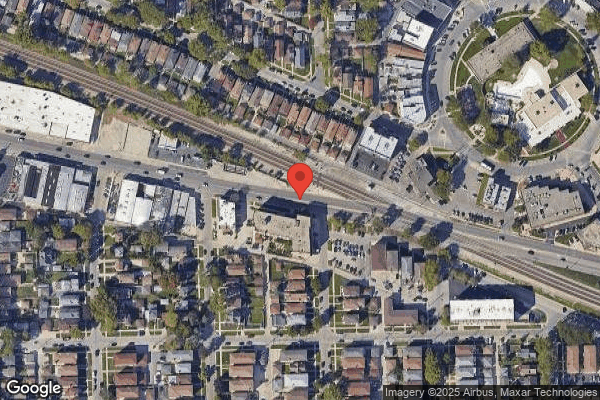

7733 WEST GRAND AVENUE, ELMWOOD PARK, IL 60707 (708) 452-9200
For profit - Limited Liability company 245 Beds BRIA HEALTH SERVICES Data: November 2025 4 Immediate Jeopardy citations
Trust Grade
0/100
#471 of 665 in IL
Last Inspection: February 2025

Within standard 12-15 month inspection cycle. Federal law requires annual inspections.

Overview

Families researching Bria of Elmwood Park should be aware that the facility has received an overall Trust Grade of F, indicating significant concerns about care quality. It ranks #471 out of 665 nursing homes in Illinois, placing it in the bottom half of all facilities statewide, and #152 out of 201 in Cook County, meaning there are only a few local options that perform better. While the facility's issues have decreased from 39 in 2024 to 16 in 2025, the current high fines of $481,447 are concerning, suggesting repeated compliance problems that exceed those of 86% of Illinois facilities. Staffing remains a challenge with a 53% turnover rate, and the facility has less RN coverage than 79% of state facilities, which is critical since RNs are essential for monitoring complex health issues. Specific incidents have included failures to provide timely respiratory care for residents, resulting in serious health risks, such as a resident being left in respiratory arrest due to inadequate monitoring. Overall, while there are some signs of improvement, the facility still has significant weaknesses that families should consider carefully.

Trust Score
F
0/100
In Illinois
#471/665
Bottom 30%
Safety Record
High Risk
Review needed
Inspections
Getting Better
39 → 16 violations
Staff Stability
⚠ Watch
53% turnover. Above average. Higher turnover means staff may not know residents' routines.
Penalties
✓ Good
$481,447 in fines. Lower than most Illinois facilities. Relatively clean record.
Skilled Nurses
○ Average
Each resident gets 32 minutes of Registered Nurse (RN) attention daily — about average for Illinois. RNs are the most trained staff who monitor for health changes.
Violations
⚠ Watch
75 deficiencies on record. Higher than average. Multiple issues found across inspections.
★☆☆☆☆
1.0
Overall Rating
★☆☆☆☆
1.0
Staff Levels
★★☆☆☆
2.0
Care Quality
★☆☆☆☆
1.0
Inspection Score
Stable
2024: 39 issues
2025: 16 issues

The Good

  • Full Sprinkler Coverage · Fire safety systems throughout facility
  • No fines on record

Facility shows strength in fire safety.

The Bad

1-Star Overall Rating

Below Illinois average (2.5)

Significant quality concerns identified by CMS

Staff Turnover: 53%

Near Illinois avg (46%)

Higher turnover may affect care consistency

Federal Fines: $481,447

Well above median ($33,413)

Significant penalties indicating serious issues

Chain: BRIA HEALTH SERVICES

Part of a multi-facility chain

Ask about local staffing decisions and management

The Ugly 75 deficiencies on record

4 life-threatening 18 actual harm
Sept 2025 1 deficiency 1 Harm
SERIOUS (G) 📢 Someone Reported This

A family member, employee, or ombudsman was alarmed enough to file a formal complaint

Actual Harm - a resident was hurt due to facility failures

Accident Prevention (Tag F0689)

A resident was harmed · This affected 1 resident

**NOTE- TERMS IN BRACKETS HAVE BEEN EDITED TO PROTECT CONFIDENTIALITY** Based on observation, interview and record review, the facility failed to prevent multiple fall incidents for a resident assesse...

Read full inspector narrative →
**NOTE- TERMS IN BRACKETS HAVE BEEN EDITED TO PROTECT CONFIDENTIALITY** Based on observation, interview and record review, the facility failed to prevent multiple fall incidents for a resident assessed to be high risk for fall. Facility also failed to follow proper post fall procedure and transferred resident back to bed who complained of right leg pain upon ROM (Range of Motion) assessment. This deficient practice affects one resident (R1) of three residents reviewed for fall incidents. R1 was sent out to the hospital and admitted with Right Closed Hip Fracture.Findings Include:R1 is a [AGE] year-old female resident with diagnoses of but not limited to: Muscle Weakness, Abnormal Posture, Depression, Profound Intellectual Disabilities, Seizure, Atherosclerotic Heart Disease, Dementia without Behavioral Disturbance, Anemia, Anxiety, and Generalized Osteoarthritis. admitted in the facility on 4/12/2010.R1 had a fall incident on 3/25/25 and 7/5/25.Fall incident Report dated 3/25/25, reads in part: R1 observed by staff member to be on the floor next to her bed on her left side. When the writer entered the room, R1 was lying on the floor, noted a bump in a small cut over left eye. Nurse Practitioner in the building and notified of incident with orders to send to local hospital via 911. R1 returned the same day to the facility with no major findings from the hospital. Care plan reviewed and noted 3 interventions added for this fall (3/25/25): Promote placement of call light within reach and assess residents' ability to use; encouraged to use call light for any assistance needed; Therapy to evaluate and treat.On 9/3/25 at 11:00AM, V2 (Director of Nursing) stated that the IDT (Interdisciplinary Team) meet and analyze the root cause of the fall. The intervention then will be added on resident plan of care based on the root cause. V2 stated they are unable to identify the root cause and call light intervention was added on 3/25/25. V2 also stated V2 does not know the reason why call light intervention was added and that the fall incident did not mention anything about the call light concerns related to this fall incident.Facility Reported Incident to IDPH, final report dated 7/11/25, reads in part: fall date incident 7/5/25. CNA observed R1 lying on the floor. The CNA informed the nurse. The doors immediately performed a head-to-toe assessment and noticed facial grimace and R1 would not extend the right leg. The nurse informed telehealth and was ordered to medicate to send out for further evaluation. Conclusion: the nurse had medicated R1 and left the room. The nurse noticed the door was closed. The nurse preceded to open the door and noticed R1 on the floor lying in the dorsal position. The nurse immediately assessed the resident. Nurse performs range of motion on all extremities, R1 could that extend right leg and in doing so the residents had facial grimaces. R1 is nonverbal and cannot recall what happened. Nurse called the physician and was ordered to send out for x-ray and pain management. Pain medication given and transported to local hospital for evaluation. Progress Note reviewed and dated 7/6/25: R1 admitted in the hospital with closed right hip fracture. Care plan interventions added for this fall (7/5/25) was Floor mat and therapy to evaluate and treat. On 9/2/25 at 1040AM, V3 (CNA) assigned to R1. Stated that V3 observed R1 on the floor next to her bed during her round right before dinner. V3 stated that the last time she saw the resident was during the beginning of V3's shift. V3 stated that V3 provided incontinent care during this time. V3 stated that R1 was calm, not in distress when V3 left the room. V3 stated she placed the bed in lowest position as always. Does not recall if the side rails were in use at the time. Assisted in transferring back the resident to bed using Hoyer lift.On 9/2/25 at 11:40AM, V4 (Nurse) assigned to R1. Stated that V4 was doing medication pass when the V3 informed V4 of the incident. Stated that the last time V4 saw R1 was during medication administration to R1 approximately 4pm to 5pm. That R1 was not in distress, calm and in the center of the bed. Bed in low position. V4 stated that after the report of the unwitnessed fall, V4 immediately checked on the resident. Check the surroundings to see if anything might have hit R1's head during the fall. No sign of head injury but stated that during the assessment R1 was making facial grimace when right leg was moved and right leg does not look right. V4 called the physician and ordered to send R1 out for further evaluation and to medicate for pain management. V4 stated that R1 was placed back to bed with 3 persons assist using a blanket.On 9/3/25 at 9:05AM, V7 (Restorative Nurse) stated that R1 requires substantial/maximal assistance, which requires more than half of staff effort. R1 needs guidance in holding and placing hand to side rail to reposition herself. IDT met and analyzed the root cause. It was unwitnessed and maybe R1 was not reposition in the bed right, or R1 was closer to the edge of the bed and rolled off the bed onto the floor.On 9/3/25 at 9:20AM, V2 (Director of Nursing) stated that R1 was observed by the CNA on the floor next to her bed. No floor mat at the time, floor mat was added as one of the interventions after this fall incident (7/5/25). Nurse assessed R1 and head to toes and ROM (Range of Motion), facial grimace on right leg movement. Our expectation if suspected of any possible injury is for staff not to move the resident because we do not want to further injure the resident, until paramedics come. Root cause analysis for R1 fall incident completed; the fall was unwitnessed. Resident was not able to tell us what happened and because the bed was so close to the floor that we concluded that R1 rolled off the bed onto the floor.On 9/4/25 at 9:10AM, V2 (Director of nursing) Placing call light intervention for the 3/25/25 fall incident is ineffective because it does not stop R1 rolling off her bed. We would probably consider room change, closer to the nurses' station to have a closer visual monitoring for R1 and prevent further fall incident.R1 has a care plan for Bed Mobility with a revision date of 1/4/24, reads in part: R1 has a self-care deficit in bed mobility related to decreased ability to position or reposition self in bed due to diagnoses of Seizure, Alzheimer's, Anemia and Osteoarthritis.Care plan for ADL (Activities of Daily Living) with a revision date of 1/4/24, reads in part: R1 is an extensive assist of one staff member for bed mobility, toileting and transfer.Section GG-Functional Abilities dated 5/12/25, reads in part: R1 coded 02 (Substantial/Maximal Assistance)-helper does more than half the effort. Helper lifts or holds trunks or limbs and provides more than half the effort for:A. Roll left and right: the ability to roll lying on back to left and right side and return on back the bed.B. Sit to lying: the ability to move from sitting on side of bed to lying flat on the bed.C. Lying to sitting on side of bed: the ability to move from lying on back to sitting on the side of the bed and with no back support.D. Sit to stand: the ability to come to a standing position from sitting in a chair, wheelchair or on the side of the bed.E. Chair/Bed-to-chair transfer: the ability to transfer to and from a bed to a chair (or wheelchair).R1 Fall Risk Evaluation dated 5/12/25 scored 15 and 7/13/25 scored 19. Scoring a 10 or higher makes resident high risk for falls. R1 has a care plan for Fall with a revision date of 4/8/24, reads in part: R1 is at risk for fall related to diagnoses and history of Dementia, Seizures, MDD (Major Depressive Disorder), Anxiety, and Muscle weakness.Fall Prevention and Management policy with a review date of 10/2018, reads in part: This facility is committed to maiming each resident's physical, mental and psychosocial well-being. While preventing all falls is not possible, the facility will identify and evaluate those residents at risk for falls, plan for preventative strategies, and facilitate as safe an environment as possible. All residents' falls shall be reviewed, and the residents' existing plan of care shall be evaluated and modified.A fall risk evaluation is completed by the nurse. A score of 10 or greater indicates the resident is at high risk for falls. As score less than 10 indicates at risk for fall.Care Plan to be updated with new intervention based on root cause analysis after each fall occurrence.
Jul 2025 1 deficiency
CONCERN (D) 📢 Someone Reported This

A family member, employee, or ombudsman was alarmed enough to file a formal complaint

Potential for Harm - no one hurt, but risky conditions existed

ADL Care (Tag F0677)

Could have caused harm · This affected 1 resident

**NOTE- TERMS IN BRACKETS HAVE BEEN EDITED TO PROTECT CONFIDENTIALITY** Based on observation, interview, and record review the facility failed to follow its Activities of Daily Living (ADL) policy by ...

Read full inspector narrative →
**NOTE- TERMS IN BRACKETS HAVE BEEN EDITED TO PROTECT CONFIDENTIALITY** Based on observation, interview, and record review the facility failed to follow its Activities of Daily Living (ADL) policy by not providing ADL care assistance to dependent residents. This applies to 2 of 3 residents (R4 and R5) reviewed for ADL care in a sample of 5.The Findings include:1. R4 is a [AGE] year-old male admitted on [DATE] having severe cognitive impairment as per the MDS (Minimum Data Set) dated 5/22/25. On 7/8/25 at 10:05 AM, R4 was observed on his low bed, confused with an unkempt and dirty beard with discolored facial hair around his mouth and food debris on the beard. R2 was also observed with long dirty-looking discolored fingernails on both hands.The MDS dated [DATE] documents that R4 requires substantial/maximal assistance to personal hygiene. A review of the R4's ADL care plan document to assist resident with ADLs.2. R5 is a [AGE] year-old male admitted on [DATE] having cognition intact as per the MDS dated [DATE]. On 7/8/25 at 9:30 AM, R5 was observed on his bed with long facial hair about 5-7 centimeters long. On 7/8/25 at 9:30 AM, R5 stated, I can't walk, If I could get a razor and someone could take me to the bathroom, I can shave myself. I told them and they just ignored me. I requested multiple times in my two-month stay and they just keep ignoring my request.The MDS dated [DATE] documents that R5 requires partial/moderate assistance with personal hygiene. A review of the R5's ADL care plan document to assist the resident with ADLs.On 7/8/25 at 11:00 AM, V2 (DON) stated that their CNAs are supposed to provide hygiene care to all residents who require assistance.The facility presented ADL Guidelines reviewed on 9/2024 document: A program of ADL is provided to prevent disability and return or maintain residents at their maximal level of functioning based on their diagnosis. Guidelines:2. A program of assistance and instruction in ADL skills is care planned and implemented.
Jun 2025 1 deficiency 1 Harm
SERIOUS (G) 📢 Someone Reported This

A family member, employee, or ombudsman was alarmed enough to file a formal complaint

Actual Harm - a resident was hurt due to facility failures

Quality of Care (Tag F0684)

A resident was harmed · This affected 1 resident

**NOTE- TERMS IN BRACKETS HAVE BEEN EDITED TO PROTECT CONFIDENTIALITY** Based on observation, interview, and record review, the facility failed to adequately transcribe hospital nutrition support orde...

Read full inspector narrative →
**NOTE- TERMS IN BRACKETS HAVE BEEN EDITED TO PROTECT CONFIDENTIALITY** Based on observation, interview, and record review, the facility failed to adequately transcribe hospital nutrition support orders for one resident (R1) who readmitted to the facility on [DATE] and failed to follow physician orders for three residents (R2, R3, and R4) who require nutrition support. This failure resulted in R3 having a severe weight loss of 11.7% in six months and R1 who was severely underweight with multiple pressure ulcers to not receive adequate nutrition. Findings Include: R1 is a [AGE] year-old male who originally admitted to the facility on [DATE]. R1 was hospitalized on [DATE], readmitted to the facility on [DATE], and sent to the hospital again on 6/2/2025. R1 remains in the hospital at the time of this survey. R1 has multiple diagnoses including but not limited to the following: Respiratory failure, protein calorie malnutrition, intracranial injury, hydrocephalus, traumatic brain injury, seizures, dysphagia, tracheostomy, gastrostomy, oxygen dependence, AFib, and dependence on oxygen. Hospital discharge records dated 5/26/2025 show tube feeding diet of TwoCal (2.0) at 35 mililiters per hour to be ran continuously. Also shows resident was to receive the following nutritional supplements: Prosource one time a day and Juven two times a day. R1's physician orders dated 5/26/2025 state in part but not limited to the following: TwoCal at 35 mililiters/hour to be started at 11AM and off at 6AM. It is to be noted that the the nutritional supplements of Juven was not started until 5/29/2025 and Promote was not started until 5/30/2025. It is to be noted that R1's body weight measurements were as follows: 88.8 lbs (Admission-3/17/2025); 77.0 lbs (Readmission-5/29/2025); and 74.4 lbs (6/2/2025) R1 experienced a weight loss of 3.4% in four days, is considered to be severely underweight, and had multiple pressure ulcers. R2 is a [AGE] year-old male who originally admitted to the facility on [DATE] and continues to reside in the facility. R2 has multiple diagnoses including but not limited to the following: respiratory failure, emphysema, alcoholic liver disease, COPD, tracheostomy, gastrostomy, anxiety, epilepsy, dysphagia, schizophrenia, and dependence on respirator. On 6/10/2025 at 10:50AM, R2 was observed laying in bed with no tube feeding running. R2's physician orders state in part but not limited to the following: Jevity 1.5 at 70 mililiters/hour x 22 hours (On at 10AM and off at 8AM). R3 is a [AGE] year-old female who originally admitted to the facility on [DATE] and continues to reside in the facility. R3 has multiple diagnoses including but not limited to the following: respiratory failure, dysphagia, tracheostomy, gastrostomy, seizures, dementia, psychoactive substance abuse, anoxic brain damage, and pneumonia. At 10:52AM, R3 was observed laying in bed with no tube feeding running. R3's physician orders state in part but not limited to the following: Jevity 1.5 at 50 mililiters/hour x 21 hours (On at 2PM and off at 11AM). Nutritional assessment dated [DATE] states in part but not limited to the following: R3 exhibited a significant weight loss of 11.7% in six months and 9.2% weight loss in two months. Recommended to increase tube feeding to help promote weight stability. At 11:00AM, V5 (Licensed Practical Nurse) said when I arrive for my shift at 7AM, R3's tube feeding is usually not running. I know it starts at 2PM which is when I start it. I am looking at R3's physician orders now and I see it says run till 11AM, so I am not sure why it is not running when I get here at 7AM. V5 said sometimes the CNA's will turn off the tube feedings when they are performing ADL care. R4 is a [AGE] year-old female who originally admitted to the facility on [DATE] and continues to reside in the facility. R4 has multiple diagnoses including but not limited to the following: cerebral infarction, DM, pressure ulcer, gastrostomy, epilepsy, psychosis, adjustment disorder, neuromuscular dysfunction of bladder, and respiratory failure. At 11:20AM, R4 was observed laying in bed with no tube feeding running. R4's physician orders state in part but not limited to the following: Osmolite 1.5 at 85 mililiters/hour x 22 hours (On at 2pm and off at 12PM). At 11:30PM, V7 (Licensed Practical Nurse) was on break when this surveyor asked to speak to her. V7 said I gave her medication around 10AM and I turned it off then. I typically turn it off for 30 minutes-1 hour to let the medication absorb and then I turn it back on after this. At 11:45AM, V8 (Registered Dietitian) said when a resident admits from the hospital. The admitting nurse is to follow the orders from the hospital discharge. When a resident comes from the hospital on a continuous feeding, they should follow this order until I come in to evaluate and make the recommendation to change it. I did not make a recommendation to change R1's tube feeding and recommended to keep it as continuous. I wanted to monitor R1's tolerance of this new formula and since he has multiple comorbidities including weight loss, was severely underweight, and had pressure ulcers, a continuous feeding makes sense for now. When I evaluated him on 5/28/2024, I recommended to continue the continuous feeding. V8 said if residents do not receive the correct nutritional support order, this can lead to weight loss. At 2:11PM, V9 (Nursing Supervisor) said when R1 was readmitted on [DATE], I transcribed the orders from the hospital. The hospital discharge paperwork had the formula and rate but not how many hours it should be run. I thought his order was the same as when he discharged so I reactivated the previous order. It is my understanding that the nursing management staff will double check it from there. I found out later that he was supposed to be on a continuous feeding. V9 said when CNA's provide ADL care such as changing and repositioning, they ask the nurse to stop the feeding temporality and the nurse is to restart it immediately after they are done with care. When medication is given, the nurse is to stop the feeding, give the medication and flush with water, then resume the feeding. Per physician orders, resident was receiving Osmolite1.5 at 60 militers/hour to start at 11AM and stop at 6AM at time of hospitalization on 3/23/2025 and hospital discharge paperwork dated 5/26/2025 state TwoCal at 35 mililiters/hour continuous. It is to be noted that R1 was not on the same formulary as prior to hospitalization. At 2:30PM, V3 (Assistant Director of Nursing) said when CNA's provide ADL care, the nurse will turn off the feeding and restart it when they are done. When the nurses give the residents medication, the tube feeding can be stopped, the medication given, they will flush the tubing, and if everything looks good, they can restart the feeding. To my knowledge, there is no reason to hold the feeding more than this after giving medication unless indicated. Facility policy titled Tube Feeding with review date of 9/2024 states in part but not limited to the following: Gastrostomy tubes are used when an alternate method of nutrition is needed. Continuous tube feedings are based upon a 22-hour consumption period or other time frame based on individual resident need per Registered Dietitian assessment and delivered over a 24-hour period. Facility policy titled Physicians Orders with last revision date of 01/2023 states in part but not limited to the following: physician orders are followed as written.
May 2025 1 deficiency
CONCERN (D) 📢 Someone Reported This

A family member, employee, or ombudsman was alarmed enough to file a formal complaint

Potential for Harm - no one hurt, but risky conditions existed

Accident Prevention (Tag F0689)

Could have caused harm · This affected 1 resident

**NOTE- TERMS IN BRACKETS HAVE BEEN EDITED TO PROTECT CONFIDENTIALITY** Based on interview and record review, the facility failed to provide adequate supervision to one (R1) out of three residents rev...

Read full inspector narrative →
**NOTE- TERMS IN BRACKETS HAVE BEEN EDITED TO PROTECT CONFIDENTIALITY** Based on interview and record review, the facility failed to provide adequate supervision to one (R1) out of three residents reviewed for falls (R1, R2, and R3) and failed to follow their fall policy and procedure after R1 experienced a fall on 5/14/2025. Findings include: R1 is a [AGE] year-old female who originally admitted to the facility on [DATE] and continues to reside in the facility. R1 has multiple diagnoses including but not limited to the following: paraplegia, PTSD, conversion disorder with seizures, depression, UTI, and osteoporosis. Minimum Data Set (MDS) dated [DATE] shows R1 has a Brief Interview of Mental Status (BIMS) of 15, meaning R1 is cognitively intact. MDS dated [DATE] shows R1 needs maximal assistance during transferring and toileting. On 5/15/2025 at 11:05AM, R1 stated the staff at night never want to assist me. I cannot walk or use my legs. I need help doing certain things. R1 said I had a procedure on 5/13/2025 and I after couldn't transfer myself like I normally do. I was in pain and feeling weak. That next morning, I had to go to the bathroom. I put on my call light, but no one came. I waited for so long. I went to the bathroom by myself, but I wasn't feeling good. I got weak and fell in my bathroom. No one was coming to help me. I crawled to my wheelchair and pushed it into the hallway so someone would see. It is to be noted that the facility fall report log does not show a fall for R1 on 5/14/25. Progress note dated 5/14/2025 written by V6 (Agency LPN) states in part but not limited to the following: This writer was notified that R1 had gotten out of her wheelchair and laid on the floor. Writer observed R1 on bathroom floor. R1 stated to this writer and V8 (Nursing Supervisor) that R1 laid herself on the floor and pushed the wheelchair in the hallway because R1 felt her call light was not answered fast enough. R1 was assisted back to bed and educated about staying in bed and calling for assistance before getting up. Will pass onto next shift to monitor R1's behavior. It is to be noted that no fall risk management incident was opened until 5/15/2025 when this surveyor began asking. At 2:04PM, V6 said on 5/14/2025 in the early morning, V7 (Certified Nursing Assistant) notified me that R1 was in her bathroom on the floor. V7 told me that R1 took herself out of the chair and laid herself on the floor. R1 said she was waiting for a long time and no one answered her call light. She said she didn't feel good and felt as if the CNA was ignoring her. V8 was present also and assisted me in getting R1 up off the floor and into bed. V6 said it was my understanding that this was a behavior of R1's that she does normally according to V7 and V8. However, I am an agency nurse and am unfamiliar with R1. I did not do a risk management assessment since I was told that this was a normal behavior of R1's. At 2:15PM, V2 (Director of Nursing) said my expectation would be that when a resident falls, the nurse on duty conducts a full body assessment, notifies the doctor, the family, as well as the supervisor on duty, and opens a risk management assessment. V8 should have provided support to V6 and assisted her on our procedure when a resident falls. V2 said the staff have mentioned to me in the past that R1 has behaviors of putting herself on the floor. It is to be noted that this surveyor requested any documentation related to R1's behavior of placing herself on the floor. However, no documentation was received during the course of this survey. R1's care plan also does not show any behaviors of placing herself on the ground. Facility policy titled Fall Prevention and Management with last review date of 08/2024 states in part but not limited to the following: The facility will identify and evaluate those residents at risk for falls, plan for preventative strategies, and facilitate as safe an environment as possible. All residents' falls shall be reviewed. Facility guideline following a fall incident: Complete a fall incident report. A fall risk evaluation is completed.
Apr 2025 2 deficiencies
CONCERN (D) 📢 Someone Reported This

A family member, employee, or ombudsman was alarmed enough to file a formal complaint

Potential for Harm - no one hurt, but risky conditions existed

Abuse Prevention Policies (Tag F0607)

Could have caused harm · This affected 1 resident

Based on interview and record review the facility failed to revise and update Abuse/Neglect Care Plan affecting 1 of 3 (R1) residents reviewed for Abuse Care Plan. Findings Include: On 4/24/2025 at 9:...

Read full inspector narrative →
Based on interview and record review the facility failed to revise and update Abuse/Neglect Care Plan affecting 1 of 3 (R1) residents reviewed for Abuse Care Plan. Findings Include: On 4/24/2025 at 9:27 AM, V6 (Social Service Director) stated Social Service Department is responsible for updating resident Abuse Comprehensive Care plan. Care plan is updated quarterly, annual, and significant change such as grievance/concern related to allegation. V6 said sexual abuse allegation is considered a concern. V6 stated R1's abuse/neglect comprehensive care plan was last updated/revised on 3/28/2024. V6's abuse care plan should have been updated on 4/22/2025 when a sexual abuse allegation was reported to IDPH. On 4/24/2025 at 10:24 AM, V9 (MDS Coordinator) said she oversee the overall care plan like a gate keeper. V9 said comprehensive care plan should be updated whenever there is an allegation of abuse. On 4/24/2025 at 11:00 AM, V10 (Social Service Coordinator) said care plan is updated as needed. Care plan is reviewed quarterly (during ARD), any significant changes in behavior and care. Abuse care plan needs to be updated when there is an allegation of abuse. Review of R1's Electronic Health Records read: admission Record, admission date 7/13/2024, Diagnosis Information include APHASIA FOLLOWING UNSPECIFIED CEREBROVASCULAR DISEASE; DEMENTIA IN OTHER DISEASES CLASSIFIED ELSEWHERE, UNSPECIFIED SEVERITY, WITHOUT BEHAVIORAL DISTURBANCE, PSYCHOTIC DISTURBANCE, MOOD DISTURBANCE, AND ANXIETY; PERSONAL HISTORY OF TRANSIENT ISCHEMIC ATTACK (TIA), AND CEREBRAL INFARCTION WITHOUT RESIDUAL DEFICITS; BIPOLAR DISORDER, UNSPECIFIED. SS: Abuse and Neglect Screening, effective date 9/8/2023, 1/5/2024 indicating R1 with risk factors. Care Plan Report, (last) revision date 6/4/2024 read Focus: R1 have reported the alleged target of verbal aggression from a peer. R1 have reported being alleged target of sexual abuse from peer. Policy and Procedure Title: Abuse Policy and Prevention Program 2022 Abuse Policy: This facility affirms the right of our residents to be free from abuse, neglect, exploitation, misappropriation of property, deprivation of goods and services by staff or mistreatment. This facility therefore prohibits abuse, neglect, exploitation, misappropriation of property, and mistreatment of residents. In order to do so, the facility has attempted to establish a resident sensitive and resident secure environment. The purpose of this policy is to assure that the facility is doing all that is within its control to prevent occurrences of abuse, neglect, exploitation, misappropriation of property, deprivation of goods and services by staff and mistreatment of residents. IV. Establishing a Resident Sensitive Environment Resident Assessment: As part of the resident's life history on the admission assessment, comprehensive care plan, and MDS assessments, staff will identify residents with increased vulnerability for abuse, neglect, exploitation, mistreatment, history of trauma or misappropriation of resident property, who have needs, triggers and behaviors that might lead to conflict. Through the care planning process, staff will identify any problems, goals, and approaches, which would reduce the chances of abuse, neglect, exploitation, mistreatment, or misappropriation of resident property for these residents. Staff will continue to monitor the goals and approaches on regular basis and update as necessary. Title: Comprehensive Care Plan, Review date 3/2024 General: The facility must develop a comprehensive person-centered care plan for each resident. Policy: 3. The comprehensive care plan should drive the care and services provided for the resident and allow for the highest level of physical, mental, and psychosocial function based on the comprehensive MDS assessment. 5. The comprehensive care plan is reviewed quarterly, annually, and with any significant change.
CONCERN (D) 📢 Someone Reported This

A family member, employee, or ombudsman was alarmed enough to file a formal complaint

Potential for Harm - no one hurt, but risky conditions existed

Report Alleged Abuse (Tag F0609)

Could have caused harm · This affected 1 resident

**NOTE- TERMS IN BRACKETS HAVE BEEN EDITED TO PROTECT CONFIDENTIALITY** Based on interview and record review the facility failed to report immediately resident to resident sexual abuse allegation to I...

Read full inspector narrative →
**NOTE- TERMS IN BRACKETS HAVE BEEN EDITED TO PROTECT CONFIDENTIALITY** Based on interview and record review the facility failed to report immediately resident to resident sexual abuse allegation to Illinois Department of Public Health and Local Law Enforcement affecting 1 of 3 (R1) residents reviewed for Abuse. Findings Include: On 4/22/2025 at 9:15 AM during initial interview, V1 (Administrator) stated that the facility was aware of the sexual assault allegation by R1. V1 stated R1 was upset because of room change and allegation about roommate was told to V11 (Licensed Practical Nurse/LPN) who was the nurse on duty. V1 stated the sexual allegation that R1 stated was he was touched inappropriately and penetrated by his roommate. V1 stated R1's roommate has been discharged from facility. V1 stated he did not report the sexual assault allegation, nor did facility called police on 3/28/2025 (alleged date of event) because V1 stated after interviewing R1 and staff he concluded that R1's sexual assault allegation was fabricated. On 4/22/2025 at 9:30 AM V2 (Director of Nursing) stated sexual abuse/assault allegation should be reported to State. On 4/22/2025 at 12:09 PM V6 (Social Service Director) stated he was aware of the sexual assault allegation but was not reported to him directly. The allegation was reported to Social Service Coordinator by V11. However, V6 stated the allegation should be investigated. V6 said abuse allegation investigation will be done by Social Service and Administrator, but Administrator will be responsible for reporting the allegation. On 4/22/2025 at 1:00 PM, R1 in R1's room, seated on the wheelchair. R1 stated to Surveyor that sexual assault happened 2x with 2 different people, one was from a year ago which has been resolved and the other was more recent (about 2 months ago, alleged date of event 3/28/2025). The most recent assault was reported to the nurse and someone from facility administration talked to him. R1 said he complained that he was sexually assaulted by his roommate. According to R1, it was late at night (res not able to give exact time) when his roommate climbed up to his bed and put his penis in him. R1 was able to name R5. R1 said R5 did it to him one time. On 4/23/2025 at 9:30 AM, V1 stated that R1's sexual assault allegation was reported on 4/22/2025 to the police and initial report was sent to IDPH. Copies of Initial report provided to surveyor. On 4/24/2025 at 11:00 AM, V10 (Social Service Coordinator) stated she is familiar with R1. V10 stated her 3/28/2025 Progress Note entry was based on information gathered from nurse on duty who first reported to her the sexual abuse allegation. Progress note (3/28/2025) read SS met with resident regarding accusation of his roommate. Discussed with administration. V10 said when she interviewed R1 there was no clear answer and no claim/allegation of him being raped. V10 said based on investigative statement of inappropriately being touched by the roommate, V10 reported it to the Administrator. V10 said she reported this on 3/28/2025. It will be up to the Administrator to report or whatever is the next step. On 4/24/2025 at 11:25 AM, V11 (Licensed Practical Nurse/LPN) said she was the nurse on duty (NOD) on 3/28/2025 and R1's sexual abuse allegation was first reported to her. V11 said she was not informed of R1's room changed. When she got to R1's new room V11 asked R1 if he was ok with the room changed and the same roommate. R1 said no. V11 said R1 stated that he is not ok with the room change because his roommate was playing with him. R1 continued to say that roommate touched him in his lower back by his butt area and it happened the night before. V11 said R1 did not say he was raped/sexually assaulted. V11 informed Social Service. Social Service and Nurse went to Administrator's office to inform of the statement allegation. On 4/25/2025 at 12:23 PM, V12 (Elmwood Park Police) stated the facility called on 4/22/2025 regarding sexual abuse allegation of R1. V12 stated this is the only time facility called. Police was not called on 3/28/2025, alleged date of sexual assault allegation. Stated he did not know why the facility did not call on 3/28/2025 because normally facility will call for this kind of allegation. Review of R1's Electronic Health Records read: admission Record, admission date 7/13/2024, room [ROOM NUMBER]-1. Diagnosis Information include APHASIA FOLLOWING UNSPECIFIED CEREBROVASCULAR DISEASE; DEMENTIA IN OTHER DISEASES CLASSIFIED ELSEWHERE, UNSPECIFIED SEVERITY, WITHOUT BEHAVIORAL DISTURBANCE, PSYCHOTIC DISTURBANCE, MOOD DISTURBANCE, AND ANXIETY; PERSONAL HISTORY OF TRANSIENT ISCHEMIC ATTACK (TIA), AND CEREBRAL INFARCTION WITHOUT RESIDUAL DEFICITS; BIPOLAR DISORDER, UNSPECIFIED. SS: Abuse and Neglect Screening, effective date 9/8/2023, 1/5/2024 indicating R1 with risk factors. Care Plan Report, revision date 6/4/2024 read Focus: R1 have reported the alleged target of verbal aggression from a peer. R1 have reported being alleged target of sexual abuse from peer. Census List, date 4/22/2025 indicated R5 (former roommate of R1) location of 115-3 on 3/28/2025. 3/18/2025 Brief Interview for Mental Status (BIMS), R1's score of 11, Moderately Impaired. MDS, Section C - Cognitive Patterns BIMS Summary Score 11. Policy and Procedure Title: Abuse Policy and Prevention Program 2022 Abuse Policy: This facility affirms the right of our residents to be free from abuse, neglect, exploitation, misappropriation of property, deprivation of goods and services by staff or mistreatment. This facility therefore prohibits abuse, neglect, exploitation, misappropriation of property, and mistreatment of residents. In order to do so, the facility has attempted to establish a resident sensitive and resident secure environment. The purpose of this policy is to assure that the facility is doing all that is within its control to prevent occurrences of abuse, neglect, exploitation, misappropriation of property, deprivation of goods and services by staff and mistreatment of residents. Definitions Sexual Abuse includes, but not limited to, sexual harassment, sexual coercion, or sexual assault (42 CFR 483.12 Interpretive Guidelines) including non-consensual or non-competent to consent sexual activity. V. Internal Reporting Requirements and Identification of Allegations Any allegation of abuse . will be reported to the Illinois Department of Public Health immediately. VIII. External Reporting 1. Initial Reporting of Allegations. When an allegation of abuse, exploitation, neglect, mistreatment misappropriation of resident has been made, the administrator, or designee, shall notify Department of Public Health's regional office immediately by telephone or fax. This report shall be made immediately. Informing Local Law Enforcement. The facility shall also contact local law enforcement authorities (i.e. telephoning 911 where available) in the following situations: Sexual abuse of a resident by a staff member, another resident, or visitor.
Feb 2025 9 deficiencies 1 IJ
CRITICAL (J)

Immediate Jeopardy (IJ) - the most serious Medicare violation

Respiratory Care (Tag F0695)

Someone could have died · This affected 1 resident

**NOTE- TERMS IN BRACKETS HAVE BEEN EDITED TO PROTECT CONFIDENTIALITY** Based on observations, interviews, and record review, the facility failed to provide a credentialed certified respiratory staff,...

Read full inspector narrative →
**NOTE- TERMS IN BRACKETS HAVE BEEN EDITED TO PROTECT CONFIDENTIALITY** Based on observations, interviews, and record review, the facility failed to provide a credentialed certified respiratory staff, as required by state law, to perform respiratory assessment, treatment, and monitoring for residents requiring respiratory care for 3 of 19 (R67, R79, R149) residents reviewed for respiratory care in the sample of 58. The Immediate Jeopardy began on 01/27/2025 at 12:07 PM when V5 (Respiratory Technician/Student) was observed independently providing tracheostomy care to R149. V1 (Administrator) was notified on 01/29/2025 at 03:12 PM of the Immediate Jeopardy. The facility presented an acceptable removal plan, and the immediacy was removed on 02/03/2025 The surveyor conducted onsite investigation on 02/03/2025 to confirm the removal plan was implemented. V1 (Administrator) was informed that the Immediate Jeopardy was removed on 02/03/2025. Findings include: R67 is a [AGE] year old female admitted to the facility on [DATE] with diagnosis including but not limited to Chronic Respiratory Failure, Nontraumatic Intracranial Hemorrhage, Dysphasia following Nontraumatic Intracerebral Hemorrhage, Neurocognitive Disorder with Lewy Body; Encounter for Attention to Tracheostomy, and Quadriplegia. R67's physician order dated 10/06/2024 reads in part, Tracheostomy tube Portex 6. R67's physician order dated 12/04/2024 reads in part, Oxygen: TP/TC 40% FiO2. R79 is a [AGE] year old female admitted to the facility on [DATE] with diagnosis including but not limited to Chronic Respiratory Failure with Hypoxia, Dysphasia following Cerebral Infarction, Tracheostomy Status, Dementia, Encephalopathy, Generalized Anxiety Disorder, and Anoxic Brain Damage. R79's physician order dated 12/13/2024 reads in part, TRACH: Other: Flex cuffless, SIZE: 6. R79's physician order dated 12/13/2024 reads in part, Oxygen: Trach collar 40%. R149 is a [AGE] year old male admitted to the facility on [DATE] with diagnosis including but not limited to Respiratory Failure, Chronic Obstructive Respiratory Disease, Heart Failure, Epilepsy, Tracheostomy Status, and Anemia. R149's physician order dated 01/24/2025 reads in part, Trach: Shiley, Size: 6 FLEX. R149's physician order dated 01/24/2025 reads in part, VENTILATOR SETTINGS: Mode: A/C, Rate: 14 Tidal Volume: 450, PEEP: 5, FIO2: 40, Continuous? Yes. On 01/27/25 at 11:43 AM V4 (Respiratory Therapy Director) said, It's me and another staff, she's a student, working today (on the respiratory unit). There are 20 residents, 19 have been assessed as needing respiratory therapist attention. V5 (Respiratory Technician/Student) is not a student, but she is not certified yet. Some of our tasks, respiratory therapist, include suctioning, tracheostomy care, ventilator checks, assessments, responding to respiratory emergencies, and transporting tracheostomy dependent residents to the dialysis. On 01/27/25 at 12:07 PM Surveyor observed V5 (Respiratory Technician/Student) independently providing tracheostomy care to R149. V5 (Respiratory Technician/Student) said upon interview, I have 10 residents assigned to me today, in rooms 310-322. As a respiratory technician, I do assessments, tracheostomy care, I check vital signs, and I also give medications. On 01/27/25 at 01:37 PM Surveyor observed V5 (Respiratory Technician/Student) gathering tracheostomy care supplies and independently going into R79's room. Shortly after, upon leaving R79's room, V5 said, I just finish R79's tracheostomy care and will be giving medications, breathing treatment, to R67 next. On 01/27/25 at 01:40 PM V5 (Respiratory Technician/Student) said in the follow up interview, I've been working in the facility since January of 2022. At first, I was shadowing respiratory therapists to get my clinical experience; however, I have been working independently since January of 2023. I've always been a full-time employee. My assignment changes, essentially, I provide care to all residents on the respiratory unit. When I was initially hired (January of 2022), I wasn't told that I have to finish respiratory program within any time period. The facility administration recently started to push me to finish the program. I am supposed to graduate in June of 2025, and then I can register for the Certified Respiratory Therapist (CRT) test that will allow me to obtain my license. Upon observation, V5's employee badge does not designate V5 as a student. On 01/27/25 at 01:45 PM Surveyor observed V5 (Respiratory Technician/Student) independently administer medications consisted of breathing treatment to R67. R67's physician order dated 12/04/2024 reads in part, IPRATR/ALBUT 0.5MG-3MG/3ML NEB 3 ml via trach every 8 hours related to CHRONIC RESPIRATORY FAILURE, UNSPECIFIED WHETHER WITH HYPOXIA OR HYPERCAPNIA. On 01/27/25 at 02:09 PM V4 (Respiratory Therapy Director) said in the follow up interview, The condition given to V5 (Respiratory Technician/Student) was 6 to 12 months to obtain the credentials to get respiratory certification, but it is not documented. The requirement to work in the facility as a respiratory therapist, is to have an active license. V5 hasn't obtained her license yet. I think she finished the respiratory program in December of 2024 but won't graduate until May of 2025, so there is no documentation to confirm that. There are no limitations as to what tasks V5 can perform as a respiratory staff at this point, V5 can do everything that's listed under respiratory therapist job description, such as assessments, tracheostomy care, and medication administration. V5 works independently and does not require supervision while completing her tasks. On 01/28/2025 10:52 AM V6 (Human Resources Director) said, I facilitate process of new hire orientation, employee relations, and corrective actions in the facility. I also run background checks and check licenses (upon hire only) to make sure to make sure new hired staff gave active licenses but don't check after the initial check. I was not here when V5 (Respiratory Technician/Student) was hired (January of 2022). V5 does not have respiratory therapy license. I've been made aware when I started in October of 2024 of it by V4 (Respiratory Therapy Director). When V4 brought it to my attention, I didn't do anything. Knowing now, that V5 doesn't have a license, I'll have to go through regulations and make sure she's not practicing respiratory therapist duties if she's not a respiratory therapist. On 01/28/2025 at 11:05 AM V7 (Regional Respiratory Program Director) said, V5 (Respiratory Technician/Student) does not have respiratory therapy license. V5 was originally hired as a student. V5 was allowed to work as she's completing her study. V5 is assigned with a licensed respiratory therapist while she's on the duty, she has not been working independently. There is never a time when she's worked solely. A licensed respiratory therapist should be available to V5 for any reference. The supervising staff should be on the same unit but does not have to have direct eyesight on the individual. V5 only does routine respiratory care. We gave V5 time to obtain her license until June of 2025. V5 has been a student since January of 2022. V5 has been passing medication, completing assessments and monitor respiratory therapy dependent residents under licensed respiratory therapist supervision since then (01/2022). We've been monitoring and supervising V5 for approximately two years now. V5's job responsibility is respiratory therapist job, but she's not allowed to do ventilator set up, testing, and changes to ventilator setting. The respiratory therapist job description doesn't differentiate specific job duties limited to respiratory technician. On 01/28/2025 at 11:24 AM V1 (Administrator) said, Respiratory department is new to me. When I started (October 2024), I was made aware we have a student working and that she should be supervised by a licensed respiratory staff. Licensed respiratory staff has to work with her on the same unit. I don't know the acceptable time frame for unlicensed personnel to complete the school and obtain their license. On 01/28/2025 at 1:27 PM In the follow up interview V1 (Administration) said, I was told that we need two respiratory therapists for each 12 hour shift. V5 is counted as one of the two respiratory therapists needed on the shift. On 01/28/2025 at 1:55 PM V7 (Regional Respiratory Program Director) said in the follow up interview, There is no particular calculation to come up with respiratory therapist to resident ratio, but we keep it under 1:14, so 1 respiratory therapist to 14 residents. The ratio was created by the company, but there is no federal or state standard for that. It seems reasonable. On 01/28/2025 at 01:56 PM V9 (Medical Director) said, All direct patient care staff have to be licensed in order to provide patient care. Unless they are students. If direct patient care staff consist of students, they should be directly supervised, in the supervisor's presence, when performing their tasks. Students cannot provide direct care by themselves. Students should identify themselves as a student. The resident safety is the number one concerns if care by unlicensed staff. Even licensed staff makes mistake, nonetheless, unlicensed. On 01/28/2025 at 2:00 PM surveyor asked V6 (Human Resources Director) to present active respiratory therapy licenses for all active respiratory therapist working in the facility. Shortly after, V6 (HR Director) brought everyone's but V10 (Respiratory Technician/Student) and said, V10 was hired under the same conditions as V5 and does not have a respiratory therapy license. On 01/29/2025 at 11:42 AM V7 (Regional Respiratory Director), V6 (Human Resource Director) and V4 (Respiratory Therapy Director) should be checking credentials every 2 years when licenses are due to be renewed, and active licenses should be in an employee file. The agreement was to have V5 and V10 obtain their credentials upon graduation, [DATE] for V10 and June 2025 for V5. Their respiratory program is three years I think, normally, the respiratory program is two years. They go to the same school. Surveyor clarified, how are V5 and V10 competent to complete assigned tasks and make acute care decisions in the respiratory setting, V7 (Regional Respiratory Director) said, V5 and V10 had 1 on 1 orientation upon hire, they have competence checks and in-services provided in the facility, and direct observation by V4 (Respiratory Therapy Director). Surveyor asked to define student appropriate respiratory tasks, V7 (Regional Respiratory Director) said, V5 and V10 are both students, are their responsibilities are done under supervision and consist of: oral and tracheal suctioning, general resident assessment that includes vital signs, oxygen levels, responding to alarms, responding emergencies, providing care to tracheal stoma, which consist of cleaning stoma site, and changing the dressing; and reporting any changes to the therapist and/or the nurse who works with them. V5 and V10 cannot do ventilator set up, testing and changes to ventilator setting. When asked why it is inappropriate for V5 and V10 do ventilator set up, testing, and changes to ventilator setting, V7 (Regional Respiratory Director) said, I know the answer to your question; however, refused to answer the question. V5's (Respiratory Technician/Student) most recent competency check done 09/23/2022 and most recent in-service done 03/16/2024. Neither training differentiates V5 as a student. V10's (Respiratory Technician/Student) most recent competency check done 01/25/2024 and most recent in-service done 03/08/2024. Neither training differentiates V10 as a student. R67's ventilator administration record dated 01/01/2025 to 01/27/2025 shows V5 (Respiratory Technician/Student) and V10 (Respiratory Technician/Student) completing respiratory assessment, treatment, and monitoring multiple times within the above time interval. R79's ventilator administration record dated 01/01/2025 to 01/30/2025 shows V5 (Respiratory Technician/Student) and V10 (Respiratory Technician/Student) completing respiratory assessment, treatment, and monitoring multiple times within the above time interval. R149's ventilator administration record dated 01/01/2025 to 01/30/2025 does not show observed tracheostomy care performed on 01/27/25 at 12:07 PM by V5 (Respiratory Technician/Student). Per electronic medical record legend, V5's initials are vc99, V10's initials are it13. R67's ventilator/aerosol flowsheets dated 01/01/2025, 01/07/2025, 01/10/2025, 01/13/2025, 01/16/2025, 01/19/2025, 01/21/2025, 01/24/2025, and 01/27/2025 show V5 (Respiratory Technician/Student) performing ventilator setting checks, providing tracheostomy care, completing respiratory assessment, and suctioning. R67's ventilator/aerosol flowsheets dated 01/10/2025, 01/11/2025, 01/18/2025, and 01/24/2025 show V10 (Respiratory Technician/Student) performing ventilator setting checks, providing tracheostomy care, completing respiratory assessment, and suctioning. R79's ventilator/aerosol flowsheets dated 01/01/2025, 01/05/2025, 01/13/2025, 01/16/2025, 01/18/2025, 01/19/2025, 01/21/2025, 01/24/2025, 01/26/2025, and 01/27/2025 show V5 (Respiratory Technician/Student) performing ventilator setting checks, providing tracheostomy care, completing respiratory assessment, and suctioning. R79's ventilator/aerosol flowsheets dated 01/10/2025, 01/11/2025, 01/18/2025, and 01/24/2025 show V10 (Respiratory Technician/Student) performing ventilator setting checks, providing tracheostomy care, completing respiratory assessment, and suctioning. R149's ventilator/aerosol flowsheets dated 01/01/2025, 01/04/2025, 01/05/2025, 01/07/2025, 01/10/2025, 01/13/2025, 01/16/2025, 01/25/2025, 01/26/2025, and 01/27/2025 show V5 (Respiratory Technician/Student) performing ventilator setting checks, providing tracheostomy care, completing respiratory assessment, and suctioning. R79's ventilator/aerosol flowsheets dated 01/11/2025, 01/18/2025, and 01/24/2025 show V10 (Respiratory Technician/Student) performing ventilator setting checks, providing tracheostomy care, completing respiratory assessment, and suctioning. August 2024 - January 2025 respiratory therapy schedule lists V5 (Respiratory Technician/Student) and V10 (Respiratory Technician/Student) as respiratory therapists with no assigned preceptor and no indication of student designation. The facility assessment Overall Staffing Needs shows, Respiratory Therapist Director 7a-7p - 1, Respiratory Therapist 7a-7p - 1, and Respiratory Therapist 7p-7a - 2. Staff list provided by the facility misrepresents, both V5 (Respiratory Technician/Student) and V10 (Respiratory Technician/Student) as Respiratory Therapists. Per record review, facility does not ensure accurate credentialed certified respiratory therapist to patient ratio by including students in the respiratory therapy schedule. V5's (Respiratory Technician/Student) healthcare worker registry lists V5 as Technical, Unlicensed Health Care personnel. V10's (Respiratory Technician/Student) healthcare worker registry lists V10 as Technical, Unlicensed Health Care personnel. The facility Respiratory Therapist job description signed by V5 (Respiratory Technician) on 01/17/2022 reads in part, Qualification: 1. Graduate of an accredited Respiratory Therapy program; 2. Respiratory Therapist certification is listed as Respiratory Care Practitioner in the State of Illinois; 3. Current License in good standing. The facility Respiratory Therapist job description signed by V10 (Respiratory Technician) on 04/27/2022 reads in part, Qualification: 1. Graduate of an accredited Respiratory Therapy program; 2. Respiratory Therapist certification is listed as Respiratory Care Practitioner in the State of Illinois; 3. Current License in good standing. Respiratory Care Practice Act reads in part, The purpose of the Act is to protect and benefit the public by setting standards of qualifications, education, training, and experience for those who seek to obtain a license and hold the title of respiratory care practitioner, to promote high standards of professional performance for those licensed to practice respiratory care in the State of Illinois, and to protect the public from unprofessional conduct by persons licensed to practice respiratory care. Licensed means that which is required to hold oneself out as a respiratory care practitioner as defined in this Act. Proximate supervision means a situation in which an individual is responsible for directing the actions of another individual in the facility and is physically close enough to be readily available, if needed, by the supervised individual. Respiratory care education program means a course of academic study leading to eligibility for registry or certification in respiratory care. The training is to be approved by an accrediting agency recognized by the Board and shall include an evaluation of competence through a standardized testing mechanism that is determined by the Board to be both valid and reliable. Sec. 20. Restrictions and limitations. (a) No person shall, without a valid license as a respiratory care practitioner (i) hold himself or herself out to the public as a respiratory care practitioner; (ii) use the title respiratory care practitioner; or (iii) perform or offer to perform the duties of a respiratory care practitioner. Sec. 50. Qualifications for a license. (a) A person is qualified to be licensed as a licensed respiratory care practitioner, and the Department may issue a license authorizing the practice of respiratory care to an applicant who: (1) has applied in writing on the prescribed form and has paid the required fee; (2) has successfully completed a respiratory care training program approved by the Department; (3) has successfully passed an examination for the practice of respiratory care authorized by the Department, within 5 years of making application; and (4) has paid the fees required by this Act. A person may practice as a respiratory care practitioner if he or she has applied in writing to the Department in form and substance satisfactory to the Department for a license as a licensed respiratory care practitioner and has complied with all the provisions under this Section except for the passing of an examination to be eligible to receive such license, until the Department has made the decision that the applicant has failed to pass the next available examination authorized by the Department or has failed, without an approved excuse, to take the next available examination authorized by the Department or until the withdrawal of the application, but not to exceed 6months. An applicant practicing professional registered respiratory care under this subsection (c) who passes the examination, however, may continue to practice under this subsection (c) until such time as he or she receives his or her license to practice or until the Department notifies him or her that the license has been denied. No applicant for licensure practicing under the provisions of this subsection (c) shall practice professional respiratory care except under the direct supervision of a licensed health care professional or authorized licensed personnel. In no instance shall any such applicant practice or be employed in any supervisory capacity. The Immediate Jeopardy that began on 01/27/2025 was removed and the deficient practice corrected on 02/03/2025 when the facility took the following actions to remove the Immediacy and correct the noncompliance. Corrective Action Taken: 1. Affected resident corrective actions. . R67, R79 and R149 were provided with respiratory care and assessment. There are no negative effects noted resulting from the alleged deficiency. The assessment and respiratory care were completed by a licensed RT (respiratory therapist) on 1/29/25. . Currently, there is a total of 18 residents identified who receive respiratory care: 12 are on ventilators and 6 residents have tracheostomy. Respiratory assessments on all current 18 residents were completed by a licensed RT. There are no concerns identified. This was completed on 1/29/2025. . The Medical Director who is also the physician of R67, R79 and R149 was notified of the alleged deficiency by the DON (director of nursing) on 1/29/25. No new order was obtained. Additionally, each ventilator residents responsible party was notified of the alleged deficiency on 1/30/25. 1. Immediate Actions and Actions to prevent recurrence. (Initiated on 1/29/2025 and will continue until all credentialed staff licenses are verified and confirmed active and current.) The facility took the following immediate actions to address the citation and prevent any residents from suffering an adverse outcome. . The two (2) unlicensed respiratory staff (Staff A and Staff B) were immediately removed from schedule and will be terminated from their role are a respiratory aide effective immediately. . Staff A's last day of schedule was 1/27/2025 . Staff B'S last day of schedule was 1/25/2025 .2. The Respiratory Program Director, The Director of Human Resources and the Administrator were provided with education by the Regional Director of to ensure that each newly hired credentialed staff meets the facility's requirements for hiring: Have a valid and active license related to their job description and responsibilities. This immediate action was initiated and completed on January 29, 2025. . The Regional Director of Operations and the [NAME] President of Clinical services checked and verified that all respiratory therapists have a valid and active license. This immediate action was initiated and completed on January 29, 2025. . Quarterly, the Human Resources Director will also review the licenses of all RT to ensure compliance. . To ensure qualified certified respiratory staff are available to complete respiratory assessment, treatment, and monitoring for residents requiring respiratory care, the Director of RT and/or Regional RT will continue to develop a biweekly schedule. In addition, an on-call schedule will also be created to ensure a licensed RT is available. Additionally, the facility has two current contracts with staffing agencies to provide supplemental licensed Respiratory Therapists to cover call in, vacations or vacancies. The RT schedule will also be reviewed with the facility Administrator. Any concern related to staffing will be reported to Director of RT and/or Regional RT and will be addressed immediately. . To ensure that the Respiratory Therapist to Patient ratio is always a sufficient ratio, the facility Administrator and Director of Nursing will review the Respiratory Therapist ratio on a daily basis at the facility's morning meeting. . The Administrator provided education to the Director of Nursing and Director of Staffing to ensure that any Nurses, CNAs, and Respiratory Therapist allowed to work in the facility from any outside agency have the appropriate valid and active license before working on the floor. (This immediate action was initiated on January 29, 2025) To ensure compliance, the Administrator will review newly hired licensed professional staff employee files to ensure that they: Have a valid and active license and credentials related to their job description. This will be completed prior to the first day of work of the employee. 3 Any identified concern will be addressed immediately and will also be discussed during the weekly Ad-hoc QAPI. . To ensure that the Respiratory Therapist licenses do not lapse, the Human Resource Director will send out communication on renewing their licenses 3 months prior to their licenses expiring. Any Respiratory Therapist that does not renew their license one (1) week prior to their expiration date will be removed from the schedule. The Administrator will monitor for overall compliance. 1. The facility will reinforce the following process. . The Director of Human Resources will conduct audits on newly hired licensed professionals to identify non-compliance. Their licenses will be reviewed and verified during the audit. (This will be initiated on 1/30/2025 and will be done for the next four weeks.) . All results of the audits will be reported to the QAPI committee. An Ad-hoc QAPI meeting will be held weekly to review results of the audits to determine if additional interventions are necessary to ensure compliance. . The Administrator and Director of Human resources will monitor the completion of this plan of removal. Date Facility Asserts Likelihood for Serious Harm No Longer Exists
SERIOUS (G)

Actual Harm - a resident was hurt due to facility failures

Deficiency F0658 (Tag F0658)

A resident was harmed · This affected 1 resident

**NOTE- TERMS IN BRACKETS HAVE BEEN EDITED TO PROTECT CONFIDENTIALITY** Based on interviews and record review, the facility failed to ensure care and services were provided in accordance with professi...

Read full inspector narrative →
**NOTE- TERMS IN BRACKETS HAVE BEEN EDITED TO PROTECT CONFIDENTIALITY** Based on interviews and record review, the facility failed to ensure care and services were provided in accordance with professional standards of practice for a resident who was experiencing a change in condition for 4 of 4 (R61, R67, R79, R149) of residents reviewed for services provided to meet professional standards in the sample of 58. This failure resulted in R61's unnecessarily prolonged physical distress and anxiety lasting until the resident made arrangements to be taken to the hospital, where she was diagnosed with pneumonia and influenza A Findings include: 1. R61 is a [AGE] year-old female with medical diagnoses listed in part, but not limited to chronic obstructive pulmonary disease (COPD); acute respiratory failure with hypoxia; asthma; influenza due to identified novel influenza A virus with other respiratory manifestations; narcolepsy; morbid obesity; and adjustment disorder with anxiety. On 01/29/2025 at 11:30 AM, R61 said that on 01/12/2025, sometime during the night, she began feeling bad, physically. R61 said she felt very drowsy and was coughing a lot of phlegm, making it hard for her to breath. R61 said she, then, decided she needed to go to the emergency room of the local hospital; so, she asked the nurse on duty to call 911 on her behalf. R61 said she did not remember the name of the nurse she spoke to, but the nurse told her she was not going to call 911 for her because there was nothing wrong with her, and she could get treated at the facility. R61 also said that the following morning, she did not feel any better; so, she asked the same nurse to call 911, and, again, she told her, No. R61 added that the nurse told her she had no coughing medicine prescribed, so, she would have to wait until the doctor ordered it for her. R61 said she, then, fell asleep, and when she woke up, she let V24 (Family Member) know that she wanted to go to the hospital because she felt bad; so, she, eventually, called 911, herself, on 01/13/2025 and was taken to the local hospital. Lastly, R61 said V24 called the facility, and spoke with V2 (Director of Nursing), adding that V24 told her V2 didn't know what to say, and that V2 told V24 V2 would speak to the nurses at the facility but the nurses did what they wanted to do. On 01/29/2025 at 1:01 PM, V2 said R61 was complaining of knee pain on 01/13/2025 and requested to go out. V2 said R61 was given pain medication. V2 said that R61 called 911 all the time, and that the facility was warned R61, and the facility would be cited and fined for line abuse in the future. V2 said that when R61 called 911 on 01/13/2025, there was no reason for her to be sent out. V2 said she did not know how long R61 stayed at the hospital but that she tested positive for the flu while there. V2 said there were no new medications prescribed for R61 while at the hospital. V2 said she was unaware of any other medical concerns for R61, other than having the flu. Lastly, V2 said the facility staff did not share with her any concerns R61 had on 01/13/2025 about her health. On 01/29/2025 at 3:18 PM, V2 said R61 called 911 because she preferred having therapy at the hospital. Per a progress note found in R61's electronic health record and dated 01/13/2025 at 7:37 PM, by V19 (LPN), R61 complained of body pain; V19 gave R61 Acetaminophen 650 mg at 6:30 PM; at approximately 6:40 PM, staff notified V19 that R61 was in her bedroom on the phone with 911; the fire department arrived at 6:50 PM; proper paperwork was given to the team lead; R61 was alert times four; R61 was being transferred to the local hospital via a stretcher; and V19 informed the nurse supervisor on duty. Per progress note found in R61's electronic health record and dated 01/14/2025 at 7:16 AM, by V25 (LPN), V25 noted to have spoken with a staff member at the local hospital where R61 was taken to the hospital, and was told R61 had been admitted with pneumonia due to infectious organisms and had tested positive for the flu. Per a progress note found in R61's electronic health record and dated 01/15/2025 at 10:36 PM, R61 arrived back to the facility in stable condition via a private ambulance and was placed on isolation precautions for influenza. Per R61's electronic health record, no documentation of a head-to-toe physical assessment performed on R61, either on 01/12/2025 or 01/13/2025 was found. Also, no documentation of R61 complaining of knee pain on 01/13/2025, as stated by V2, was found. The only documentation found of an R61 complaint was the progress note by V19 on 01/13/2025 that stated R61 complained of body pain. Per R61's hospital discharge documents dated 01/15/2025, two new medications were prescribed for R61 at the hospital; the antibiotic Cefuroxime 500 mg tablet, one tablet by mouth two times daily for five days; and Oseltamivir 75 mg capsule, one capsule by mouth every twelve hours for four days. Per R61's January 2025 medication administration record, Cefuroxime 500 mg was given to R61 twice per day from 01/16/2025 to 01/20/2025 and Oseltamivir 75 mg was given to R61 twice per day from 01/16/2025 to 01/19/2025. The facility Registered Nurse/Licensed Practical Nurse job description reads in part, Essential Duties: Recognize significant changes in the condition of residents and take necessary action. 2. R67 is a [AGE] year old female admitted to the facility on [DATE] with diagnosis including but not limited to Chronic Respiratory Failure, Nontraumatic Intracranial Hemorrhage, Dysphasia following Nontraumatic Intracerebral Hemorrhage, Neurocognitive Disorder with Lewy Body; Encounter for Attention to Tracheostomy, and Quadriplegia. R67's physician order dated 10/06/2024 reads in part, Tracheostomy tube Portex 6. R67's physician order dated 12/04/2024 reads in part, Oxygen: TP/TC 40% FiO2. R79 is a [AGE] year old female admitted to the facility on [DATE] with diagnosis including but not limited to Chronic Respiratory Failure with Hypoxia, Dysphasia following Cerebral Infarction, Tracheostomy Status, Dementia, Encephalopathy, Generalized Anxiety Disorder, and Anoxic Brain Damage. R79's physician order dated 12/13/2024 reads in part, TRACH: Other: Flex cuffless, SIZE: 6. R79's physician order dated 12/13/2024 reads in part, Oxygen: Trach collar 40%. R149 is a [AGE] year old male admitted to the facility on [DATE] with diagnosis including but not limited to Respiratory Failure, Chronic Obstructive Respiratory Disease, Heart Failure, Epilepsy, Tracheostomy Status, and Anemia. R149's physician order dated 01/24/2025 reads in part, Trach: Shiley, Size: 6 FLEX. R149's physician order dated 01/24/2025 reads in part, VENTILATOR SETTINGS: Mode: A/C, Rate: 14 Tidal Volume: 450, PEEP: 5, FIO2: 40, Continuous? Yes. On 01/27/25 at 11:43 AM V4 (Respiratory Therapy Director) said, It's me and another staff, she's a student, working today (on the respiratory unit). There are 20 residents, 19 have been assessed as needing respiratory therapist attention. V5 (Respiratory Technician/Student) is not a student, but she is not certified yet. Some of our tasks, respiratory therapist, include suctioning, tracheostomy care, ventilator checks, assessments, responding to respiratory emergencies, and transporting tracheostomy dependent residents to the dialysis. On 01/27/25 at 12:07 PM Surveyor observed V5 (Respiratory Technician/Student) independently providing tracheostomy care to R149. V5 (Respiratory Technician/Student) said upon interview, I have 10 residents assigned to me today, in rooms 310-322. As a respiratory technician, I do assessments, tracheostomy care, I check vital signs, and I also give medications. On 01/27/25 at 01:37 PM Surveyor observed V5 (Respiratory Technician/Student) gathering tracheostomy care supplies and independently going into R79's room. Shortly after, upon leaving R79's room, V5 said, I just finish R79's tracheostomy care and will be giving medications, breathing treatment, to R67 next. On 01/27/25 at 01:40 PM V5 (Respiratory Technician/Student) said in the follow up interview, I've been working in the facility since January of 2022. At first, I was shadowing respiratory therapists to get my clinical experience; however, I have been working independently since January of 2023. I've always been a full-time employee. My assignment changes, essentially, I provide care to all residents on the respiratory unit. When I was initially hired (January of 2022), I wasn't told that I have to finish respiratory program within any time period. The facility administration recently started to push me to finish the program. I am supposed to graduate in June of 2025, and then I can register for the Certified Respiratory Therapist (CRT) test that will allow me to obtain my license. Upon observation, V5's employee badge does not designate V5 as a student. On 01/27/25 at 01:45 PM Surveyor observed V5 (Respiratory Technician/Student) independently administer medications consisted of breathing treatment to R67. On 01/28/2025 10:52 AM V6 (Human Resources Director) said, I facilitate process of new hire orientation, employee relations, and corrective actions in the facility. I also run background checks and check licenses (upon hire only) to make sure to make sure new hired staff gave active licenses but don't check after the initial check. I was not here when V5 (Respiratory Technician/Student) was hired (January of 2022). V5 does not have respiratory therapy license. I've been made aware when I started in October of 2024 of it by V4 (Respiratory Therapy Director). When V4 brought it to my attention, I didn't do anything. Knowing now, that V5 doesn't have a license, I'll have to go through regulations and make sure she's not practicing respiratory therapist duties if she's not a respiratory therapist. On 01/28/2025 at 11:05 AM V7 (Regional Respiratory Program Director) said, V5 (Respiratory Technician/Student) does not have respiratory therapy license. V5 was originally hired as a student. V5 was allowed to work as she's completing her study. V5 is assigned with a licensed respiratory therapist while she's on the duty, she has not been working independently. There is never a time when she's worked solely. A licensed respiratory therapist should be available to V5 for any reference. The supervising staff should be on the same unit but does not have to have direct eyesight on the individual. V5 only does routine respiratory care. We gave V5 time to obtain her license until June of 2025. V5 has been a student since January of 2022. V5 has been passing medication, completing assessments and monitor respiratory therapy dependent residents under licensed respiratory therapist supervision since then (01/2022). We've been monitoring and supervising V5 for approximately two years now. V5's job responsibility is respiratory therapist job, but she's not allowed to do ventilator set up, testing, and changes to ventilator setting. The respiratory therapist job description doesn't differentiate specific job duties limited to respiratory technician. On 01/28/2025 at 11:24 AM V1 (Administrator) said, Respiratory department is new to me. When I started (October 2024), I was made aware we have a student working and that she should be supervised by a licensed respiratory staff. Licensed respiratory staff has to work with her on the same unit. I don't know the acceptable time frame for unlicensed personnel to complete the school and obtain their license. On 01/28/2025 at 01:56 PM V9 (Medical Director) said, All direct patient care staff have to be licensed in order to provide patient care. Unless they are students. If direct patient care staff consist of students, they should be directly supervised, in the supervisor's presence, when performing their tasks. Students cannot provide direct care by themselves. Students should identify themselves as a student. The resident safety is the number one concerns if care by unlicensed staff. Even licensed staff makes mistake, nonetheless, unlicensed. On 01/28/2025 at 2:00 PM surveyor asked V6 (Human Resources Director) to present active respiratory therapy licenses for all active respiratory therapist working in the facility. Shortly after, V6 (HR Director) brought everyone's but V10 (Respiratory Technician/Student) and said, V10 was hired under the same conditions as V5 and does not have a respiratory therapy license. On 01/29/2025 at 11:42 AM V7 (Regional Respiratory Director), V6 (Human Resource Director) and V4 (Respiratory Therapy Director) should be checking credentials every 2 years when licenses are due to be renewed, and active licenses should be in an employee file. The agreement was to have V5 and V10 obtain their credentials upon graduation, [DATE] for V10 and June 2025 for V5. Their respiratory program is three years I think, normally, the respiratory program is two years. They go to the same school. Surveyor clarified, how are V5 and V10 competent to complete assigned tasks and make acute care decisions in the respiratory setting, V7 (Regional Respiratory Director) said, V5 and V10 had 1 on 1 orientation upon hire, they have competence checks and in-services provided in the facility, and direct observation by V4 (Respiratory Therapy Director). Surveyor asked to define student appropriate respiratory tasks, V7 (Regional Respiratory Director) said, V5 and V10 are both students, are their responsibilities are done under supervision and consist of: oral and tracheal suctioning, general resident assessment that includes vital signs, oxygen levels, responding to alarms, responding emergencies, providing care to tracheal stoma, which consist of cleaning stoma site, and changing the dressing; and reporting any changes to the therapist and/or the nurse who works with them. V5 and V10 cannot do ventilator set up, testing and changes to ventilator setting. When asked why it is inappropriate for V5 and V10 do ventilator set up, testing, and changes to ventilator setting, V7 (Regional Respiratory Director) said, I know the answer to your question; however, refused to answer the question. V5's (Respiratory Technician/Student) healthcare worker registry lists V5 as Technical, Unlicensed Health Care personnel. V10's (Respiratory Technician/Student) healthcare worker registry lists V10 as Technical, Unlicensed Health Care personnel. The facility Respiratory Therapist job description signed by V5 (Respiratory Technician) on 01/17/2022 reads in part, Qualification: 1. Graduate of an accredited Respiratory Therapy program; 2. Respiratory Therapist certification is listed as Respiratory Care Practitioner in the State of Illinois; 3. Current License in good standing. The facility Respiratory Therapist job description signed by V10 (Respiratory Technician) on 04/27/2022 reads in part, Qualification: 1. Graduate of an accredited Respiratory Therapy program; 2. Respiratory Therapist certification is listed as Respiratory Care Practitioner in the State of Illinois; 3. Current License in good standing. Respiratory Care Practice Act reads in part, The purpose of the Act is to protect and benefit the public by setting standards of qualifications, education, training, and experience for those who seek to obtain a license and hold the title of respiratory care practitioner, to promote high standards of professional performance for those licensed to practice respiratory care in the State of Illinois, and to protect the public from unprofessional conduct by persons licensed to practice respiratory care. Licensed means that which is required to hold oneself out as a respiratory care practitioner as defined in this Act. Proximate supervision means a situation in which an individual is responsible for directing the actions of another individual in the facility and is physically close enough to be readily available, if needed, by the supervised individual. Respiratory care education program means a course of academic study leading to eligibility for registry or certification in respiratory care. The training is to be approved by an accrediting agency recognized by the Board and shall include an evaluation of competence through a standardized testing mechanism that is determined by the Board to be both valid and reliable. Sec. 20. Restrictions and limitations. (a) No person shall, without a valid license as a respiratory care practitioner (i) hold himself or herself out to the public as a respiratory care practitioner; (ii) use the title respiratory care practitioner; or (iii) perform or offer to perform the duties of a respiratory care practitioner. Sec. 50. Qualifications for a license. (a) A person is qualified to be licensed as a licensed respiratory care practitioner, and the Department may issue a license authorizing the practice of respiratory care to an applicant who: (1) has applied in writing on the prescribed form and has paid the required fee; (2) has successfully completed a respiratory care training program approved by the Department; (3) has successfully passed an examination for the practice of respiratory care authorized by the Department, within 5 years of making application; and (4) has paid the fees required by this Act. A person may practice as a respiratory care practitioner if he or she has applied in writing to the Department in form and substance satisfactory to the Department for a license as a licensed respiratory care practitioner and has complied with all the provisions under this Section except for the passing of an examination to be eligible to receive such license, until the Department has made the decision that the applicant has failed to pass the next available examination authorized by the Department or has failed, without an approved excuse, to take the next available examination authorized by the Department or until the withdrawal of the application, but not to exceed 6months. An applicant practicing professional registered respiratory care under this subsection (c) who passes the examination, however, may continue to practice under this subsection (c) until such time as he or she receives his or her license to practice or until the Department notifies him or her that the license has been denied. No applicant for licensure practicing under the provisions of this subsection (c) shall practice professional respiratory care except under the direct supervision of a licensed health care professional or authorized licensed personnel. In no instance shall any such applicant practice or be employed in any supervisory capacity.
SERIOUS (G)

Actual Harm - a resident was hurt due to facility failures

Quality of Care (Tag F0684)

A resident was harmed · This affected 1 resident

**NOTE- TERMS IN BRACKETS HAVE BEEN EDITED TO PROTECT CONFIDENTIALITY** Based on interview and record review, the facility failed to timely assess and respond to a significant change in condition for ...

Read full inspector narrative →
**NOTE- TERMS IN BRACKETS HAVE BEEN EDITED TO PROTECT CONFIDENTIALITY** Based on interview and record review, the facility failed to timely assess and respond to a significant change in condition for 1 (R61) of 1 resident reviewed for acute medical changes from the sample of 58. This failure resulted in the delay of care to send the resident to the emergency department, failure to assess the resident's medical condition after pleas for hospitalization, resulting in prolonged physical distress, pain, and anxiety for nineteen hours, after which she was admitted for pneumonia and influenza. Findings include: R61 is a [AGE] year-old female with medical diagnoses listed in part, but not limited to chronic obstructive pulmonary disease (COPD); acute respiratory failure with hypoxia; asthma; and influenza due to identified novel influenza A virus with other respiratory manifestations. On 01/29/2025, during interview, at 11:30 AM: R61 said that on 01/12/2025, at about 11:00 PM, she began feeling bad, physically. R61 said she felt very drowsy and was coughing up a lot of phlegm, making it hard for her to breath. R61 said it was then that she decided she needed to go to the emergency room of the local hospital; so, she asked the nurse on duty to call 911 on her behalf. R61 said she did not remember the name of the nurse she spoke to, but the nurse told her she was not going to call 911 for her because there was nothing wrong with her, and she could get treated at the facility. R61 also said that the following morning, she did not feel any better; so, she asked the same nurse to call 911, and, again, she told her, No. R61 added that the nurse told her she had no cough medicine prescribed, so, she would have to wait until the doctor ordered it for her. R61 said she, fell asleep, and when she woke up, she let V24 (Family Member) know that she wanted to go to the hospital because she did not feel well; so, she, eventually, called 911, herself, on 01/13/2025 and was taken to the local hospital. R61 said that V24 called the facility and spoke to V2 (DON) who told her that the facility nurses always did what they wanted to do. On 01/29/2025 at 1:01 PM, V2 said R61 was given pain medication, and that the resident called 911 all the time; so, the facility was warned by the local emergency services they would be fined for abusing 911 services. V2 added that when R61 called 911 on 01/13/2024, there was no reason for her to be sent out, and that her staff did not inform her of R61's health concerns or need for urgent medical care. Progress note dated 01/13/2025 at 7:37 PM by V19 (LPN), noted R61 complained of body pain; V19 gave R61 Acetaminophen 650 mg at 6:30 PM; at approximately 6:40 PM, staff notified V19 that R61 was in her bedroom on the phone with 911; the fire department arrived at 6:50 PM; proper paperwork was given to the team lead; R61 was alert times four; R61 was being transferred to the local hospital via a stretcher; and V19 informed the nurse supervisor on duty. Surveyor made several calls to a phone number provided by the facility to interview V19, but there was no reply. Message was also left, with no response. Progress note dated 01/14/2025 at 7:16 AM by V25 (LPN) noted V25 spoke with a staff member at the local hospital where R61 was taken and was told R61 had been admitted with pneumonia due to infectious organisms and had tested positive for the flu. Progress note dated 01/15/2025 at 10:36 PM noted R61 arrived back to the facility in stable condition via a private ambulance and was placed on isolation precautions for influenza. R61's electronic health record revealed no documentation of a head-to-toe physical assessment performed on R61, either on 01/12/2025 or 01/13/2025 by the facility staff. Also, no documentation of R61 complaining of knee pain on 01/13/2025, as stated by V2, was found. The only documentation found of an R61 complaint was the progress note by V19 on 01/13/2025 that stated R61 complained of body pain. R61's hospital discharge papers dated 01/15/2025, noted two new medications were prescribed for R61 at the hospital; the antibiotic Cefuroxime 500 mg tablet, one tablet by mouth two times daily for five days; and Oseltamivir 75 mg capsule, one capsule by mouth every twelve hours for four days. R61's January 2025 medication administration record showed Cefuroxime 500 mg was given to R61 twice per day from 01/16/2025 to 01/20/2025 and Oseltamivir 75 mg was given to R61 twice per day from 01/16/2025 to 01/19/2025. R61's care plan, dated 01/09/2025, noted one focus addressed R61's potential risk for difficulty in breathing related to COPD, asthma, and respiratory failure. The care plan goal stated respiratory symptoms would be managed through the next review. The intervention stated among other things, that the nursing staff would monitor R61 for lung sounds and assess respiratory status. No documentation of monitoring for lung sounds or assessment of respiratory status was found for 01/12/2025 or 01/13/2025 in R62's electronic health record. The facility's Change in Resident Condition policy, last reviewed October 2024, stated, Nursing will notify the resident's physician or nurse practitioner when there is a significant change in the resident's physical, mental or emotional status. No documentation was found in R61's electronic health record indicating the nursing staff assessed R61 after she told them she was not feeling well on 01/12/2025 and 01/13/2025, nor was any documentation found indicating the facility notified R61's physician or nurse practitioner of her change in condition. R61's antibiotic therapy evaluation, dated 01/18/2025, stated R61's reason for antibiotic therapy was lower respiratory infection (Pneumonia, Bronchitis), with cough and congestion as the signs and symptoms. This documentation confirmed that R61 had a reasonable expectation for requesting help from the facility staff, prior to calling 911herself to be evaluated for emergent intervention on 01/13/2025. Prior calls to 911 from R61 should not deter the staff from performing a physical assessment, including monitoring R61 for lung sounds and assessing respiratory status to confirm an emergent situation; and notifying the physician regarding a change of condition as per the facility policy and R61's care plan, which provides for her present diagnosis of chronic obstructive pulmonary disease; acute respiratory failure with hypoxia; and asthma.
CONCERN (D)

Potential for Harm - no one hurt, but risky conditions existed

Pharmacy Services (Tag F0755)

Could have caused harm · This affected 1 resident

Based on observation, interview, and record review, the facility failed to follow their policy by 1. Failing to ensure staff properly document medication administration of medication on the controlled...

Read full inspector narrative →
Based on observation, interview, and record review, the facility failed to follow their policy by 1. Failing to ensure staff properly document medication administration of medication on the controlled substance record for three (R14, R17, and R256) residents, and 2. Failed to follow their policy by failing to ensure a newly admitted resident's Oxycodone controlled medication was initially documented on an individual controlled substance form for one (R257) resident. These failures affected four (R14, R17, R256, and R257) residents reviewed for pharmacy services. Findings include: On 1/28/25 at 11:39 AM, the controlled substances were reviewed with V12 LPN. Findings include: 1. Review of the individual controlled substance record for R256's Oxycodone HCl (Hydrochloride) Oral Tablet 5 mg (milligram) *Controlled Drug*, give 1 tablet via G-Tube (gastrostomy/stomach tube) two times a day related to Fractures is blank. The scheduled dose for 8:00 AM has not been documented as administered to R256. The medication administration record documents V12 LPN administered the Oxycodone at 8:00 AM. V12 LPN was inquired of the medication administration. V12 LPN said, The sheet should have one left, I haven't signed it out yet. It's supposed to be signed off when it's given. On 1/28/25 at 11:42 AM, review of the individual controlled substance record for R14's Clobazam Oral Suspension 2.5 mg/ml (milligram/milliliter) *Controlled Drug*, give 4 ml via G-Tube two times a day for Anxiety is blank. The scheduled dose for 8:00 AM has not been documented as administered to R14. The medication administration record documents V12 LPN administered the Clobazam at 8:00 AM. V12 LPN was inquired of the medication administration. V12 LPN said, I gave it at 10:30 this morning, the record should be 55.5 ml. I haven't signed it out yet. It's supposed to be signed off when it's given. On 1/28/25 at 11:45 AM, review of the individual controlled substance record for R14's Lacosamide Oral Solution 10 mg/ml (milligram/milliliter) *Controlled Drug*, give 20 ml via G-Tube two times a day related to Seizures is blank. The scheduled dose for 9:00 AM has not been documented as administered to R14. The medication administration record documents V12 LPN administered the Lacosamide at 9:00 AM. V12 LPN was inquired of the medication administration. V12 LPN said, I haven't given it to her yet, it's BID (twice a day). It's for seizures. V12 LPN and this surveyor reviewed R14's MAR medication administration record in the electronic medical record which indicates the physician order is to be given at 9:00 AM and 1700 (5:00 PM). On 1/28/25 at 12:29 PM, the fourth floor medication cart was reviewed with V17 LPN. Findings include: 1. Review of the individual controlled substance record for R99's Pregabalin cap 50 mg (milligrams) *Controlled Drug*, give 1 capsule orally three times a day for Epilepsy is blank. The scheduled dose for 9:00 AM has not been documented as administered to R99. The medication administration record documents V17 LPN administered the Pregabalin at 9:00 AM. V17 LPN was inquired of the medication administration. V17 said, I gave it at 9:45 this morning, I haven't signed it out yet. 2. R257's Oxycodone-Acetaminophen Oral Tablet 5-325 mg (milligrams) *Controlled Drug*, give 2 tablet by mouth every 12 hours as needed for moderate to severe pain is handwritten on a piece of paper. There is no individual controlled substance record for R257's controlled medication. V17 LPN was inquired of the record. V17 LPN said, We don't have any sheets up here, maybe in the nursing office. R257's medication administration record documents V17 LPN administered his 9:00 AM dose of Oxycodone-Acetaminophen Oral Tablet 5-325 mg (milligrams). V2 DON is present in the facility at this time and V17 LPN did not make V2 aware that R257 needed the controlled substance form. The revised 5/2017 facility Medication Administration policy states in part: General: All medications are administered safely and appropriately to aid residents to overcome illness, relieve and prevent symptoms, and help in diagnosis. Level of Responsibility: RN Registered Nurse, LPN Licensed Practical Nurse. Guideline: 13. Verify that the medication is being administered at the proper time, in the prescribed dose, and by the correct route. The 12/2024 Pharmacy Preparation and General Guidelines IIA2: Medication Administration Policy states in part: Policy: Medications are administered as prescribed in accordance with good nursing principles and practices and only by persons legally authorized to do so. Personnel authorized to administer medications do so only after they have been properly oriented to the facility's medication distribution system (procurement, storage, handling, and administration). The facility has sufficient staff and a medication distribution system to ensure safe administration of medications without unnecessary interruptions. Procedures: B. Administration 2. Medications are administered in accordance with written orders of the prescriber. D. Documentation (including electronic) 1. The individual who administers the medication dose records the administration of the resident's MAR/eMAR (electronic medication administration record) to ensure necessary doses were administered and documented. The 12/2024 reviewed facility Controlled Substance policy states in part: General: Medications classified by the FDA (Food and Drug Administration) as controlled substances have high abuse potential and may be subject to special handling, storage, and record keeping. Responsible party: Nursing Policy: 3. All controlled substance orders will be delivered to a licensed nurse. It is the nurse's responsibility to promptly: 5. Sing the manifest sheet verifying receipt of medication and quantity of medication. 8. Record each dose at the time of administration of the following: 10. Controlled substances count sheet a. Date b. Time c. Signature (which includes a minimum of first initial, last name and title) of nurse who administered dose. d. Number of doses remaining. The 12/2024 Medication Ordering and Receiving from Pharmacy IC4: Receiving Controlled Substances Policy states in part: Policy: Medications included in the Dreg Enforcement Administration (DEA) classification as controlled substances and medications classified as controlled substances by state law are subject to special ordering, receipt, and recordkeeping requirements by the facility in accordance with federal and state laws and regulations. Procedures: E. An individual resident's controlled substance record is prepared by the pharmacy or the facility for each controlled substance prescribed for a resident. The following information is completed upon dispensing or upon receipt of the controlled substance: 1. Name of resident 2. Prescription number 3. Drug name, strength (if designated), and dosage form of medication 4. Date received 5. Quantity received 6. Name of person receiving the medication supply. Resident #14 FTag Initiation Resident #99 FTag Initiation Resident #257 FTag Initiation
CONCERN (D)

Potential for Harm - no one hurt, but risky conditions existed

Deficiency F0760 (Tag F0760)

Could have caused harm · This affected 1 resident

**NOTE- TERMS IN BRACKETS HAVE BEEN EDITED TO PROTECT CONFIDENTIALITY** Based on observations, interviews, and record review the facility failed to ensure licensed staff administered medicated breathi...

Read full inspector narrative →
**NOTE- TERMS IN BRACKETS HAVE BEEN EDITED TO PROTECT CONFIDENTIALITY** Based on observations, interviews, and record review the facility failed to ensure licensed staff administered medicated breathing treatment for 1 of 6 (R67) residents reviewed for medication administration in the final sample of 58. Findings include: R67 is a [AGE] year old female admitted to the facility on [DATE] with diagnosis including but not limited to Chronic Respiratory Failure, Nontraumatic Intracranial Hemorrhage, Dysphasia following Nontraumatic Intracerebral Hemorrhage, Neurocognitive Disorder with Lewy Body; Encounter for Attention to Tracheostomy, and Quadriplegia. On 01/27/25 at 01:37 PM Surveyor observed V5 (Respiratory Technician/Student) gathering tracheostomy care supplies and independently going into resident's room. Shortly after, upon leaving resident's room, V5 said, I just finish the resident's tracheostomy care and will be giving medications, breathing treatment, to R67 next. On 01/27/25 at 01:40 PM V5 (Respiratory Technician/Student) said in the follow up interview, I've been working in the facility since January of 2022. At first, I was shadowing respiratory therapists to get my clinical experience; however, I have been working independently since January of 2023. I've always been a full-time employee. My assignment changes, essentially, I provide care to all residents on the respiratory unit. When I was initially hired (January of 2022), I wasn't told that I have to finish respiratory program within any time period. The facility administration recently started to push me to finish the program. I am supposed to graduate in June of 2025, and then I can register for the Certified Respiratory Therapist (CRT) test that will allow me to obtain my license. Upon observation, V5's employee badge does not designate V5 as a student. On 01/27/25 at 01:45 PM Surveyor observed V5 (Respiratory Technician/Student) independently administer medications consisted of breathing treatment to R67. R67's physician order dated 12/04/2024 reads in part, IPRATR/ALBUT 0.5MG-3MG/3ML NEB 3 ml via trach every 8 hours related to CHRONIC RESPIRATORY FAILURE, UNSPECIFIED WHETHER WITH HYPOXIA OR HYPERCAPNIA. On 01/28/2025 10:52 AM V6 (Human Resources Director) said, I facilitate process of new hire orientation, employee relations, and corrective actions in the facility. I also run background checks and check licenses (upon hire only) to make sure to make sure new hired staff gave active licenses but don't check after the initial check. I was not here when V5 (Respiratory Technician/Student) was hired (January of 2022). V5 does not have respiratory therapy license. I've been made aware when I started in October of 2024 of it by V4 (Respiratory Therapy Director). When V4 brought it to my attention, I didn't do anything. Knowing now, that V5 doesn't have a license, I'll have to go through regulations and make sure she's not practicing respiratory therapist duties if she's not a respiratory therapist. V5's (Respiratory Technician/Student) healthcare worker registry lists V5 as Technical, Unlicensed Health Care personnel. The facility Medication Administration policy last revised on 04/2024 reads in part, Medications are administered by licensed personnel only. The facility's pharmacy Medication Administration - General Guidelines policy dated 12/2024 reads in part, Medications are prepared only by licensed nursing, medical, pharmacy, or other personal authorized by state law and regulations to prepare and administer medications.
CONCERN (D)

Potential for Harm - no one hurt, but risky conditions existed

Deficiency F0761 (Tag F0761)

Could have caused harm · This affected 1 resident

**NOTE- TERMS IN BRACKETS HAVE BEEN EDITED TO PROTECT CONFIDENTIALITY** Based on observation, interview, and record review, the facility failed to follow their policy by 1. Failing to ensure medicatio...

Read full inspector narrative →
**NOTE- TERMS IN BRACKETS HAVE BEEN EDITED TO PROTECT CONFIDENTIALITY** Based on observation, interview, and record review, the facility failed to follow their policy by 1. Failing to ensure medication without a resident name and medication discontinued by the physician was removed from the active medications in the medication cart for one (R15) resident, 2. Failed to follow their policy by failing to ensure expired insulin and insulin without a resident's name was removed from the active medications in the medication cart for one (R75) resident, 3. Failed to follow their policy by failing to ensure new unopened insulin was refrigerated per the facility policy to retain purity and potency for one (R256) resident. These failures affected three (R15, R75, and R256) residents reviewed during medication storage and labeling. The facility failed to follow their policy by failing to remove two vials of expired Tuberculin testing solution from the medication refrigerator in the medication storage room. This failure has the potential to affect all newly admitted residents to the first floor. Findings include: On 01/28/25 at 10:49 AM, the first floor side one medication care was reviewed with V15 LPN Licensed Practical Nurse. Findings include: 1. Simbrinza 8 ml (milliliter) open bottle of eye drops with resident no label is in the top of the medication cart with multiple bottles of eye drops. 2. Gentamycin Sulfate Ophthalmic Solution 0.3% open bottle of eye drops with resident no label is in the top of the medication cart with multiple bottles of eye drops. On 1/28/25 at 11:01 PM, V15 LPN was inquired of the two open unlabeled bottles of eye drops in the medication cart. V15 LPN said, The Simbrinza, this is R116's, he's the only one down here with this medicine. They must have thrown the box out. V15 LPN was inquired how can you confirm this medication belongs to R116. V15 LPN said, I don't know, his name's not on the bottle. V15 LPN was inquired of the Gentamycin bottle. V15 LPN said, I don't know who's it is, there's no label on it. Review of R116's discontinued medication in the electronic medical record indicates the Simbrinza was discontinued by the physician on 11/7/2024. The Gentamycin was discontinued by the physician on 1/17/25. Both medications remained inside the medication cart without R116's name on either bottle of eye drops. On 1/28/25 at 11:11 AM, the second floor side two medication care was reviewed with V16 LPN. Findings include: 1. R75's open vial of Novolog (insulin aspart) 100 U/ml (units/milliliter) multiple dose vial of insulin with an expiration date of 12/17/24 is in the top of the medication cart. 2. One open vial of Novolog (insulin aspart) 100 U/ml (units/milliliter) multiple dose vial of insulin with an expiration date of 11/14/24 and no resident label is in the top of the medication cart. On 1/28/25 at 11:25 AM, V16 LPN was inquired of R75's vial of insulin. V16 said, It's expired. V16 LPN was inquired of the unlabeled vial of insulin. V16 said, There's no name on it and it's expired. I missed those; they should've been taken off the cart. Review of R75's medication administration record documents V16 LPN administered two doses of the expired insulin at 8:00 AM and 12:00 PM. On 1/28/25 at 11:30 AM, the third floor side one medication cart was reviewed with V12 LPN. Findings include: 1. R256's Insulin NPH (neutral Protamine [NAME]) (Human) (Isophane) Subcutaneous Suspension 100 unit/milliliter, inject 34 unit subcutaneously two times a day related to Type 2 Diabetes Mellitus is in the pharmacy plastic bag with a sticker with directions to store in the refrigerator. The insulin is unopened in the top drawer of the medication cart. On 1/28/25 at 11:37 AM, V12 LPN was inquired of the insulin. V12 LPN said, It should be in the fridge because it's insulin and it's not opened. It's for preservation. On 1/29/25 at 12:01 PM, the first floor medication storage room was reviewed with V23 LPN. Findings include: 1. One open vial of house stock Tuberculin Purified Protein Derivative (Mantoux) Tubersol. Test dose 5TU/0.1 ml intradermally. Bio-equivalent to 5 US units (TU) of PPD. 10 tests/vial. The vial is marked date opened 11/25/24 and is in the medication refrigerator. 2. One open vial of house stock Tuberculin Purified Protein Derivative (Mantoux) Tubersol. Test dose 5TU/0.1 ml intradermally. Bio-equivalent to 5 US units (TU) of PPD. 10 tests/vial. The vial is marked date opened 12/2/24 and is in the medication refrigerator. On 1/29/25 at 12:05 PM, V23 LPN was inquired of the open Tuberculin vials. V23 LPN said, It's good for thirty days. On 1/29/25 at 1:39 PM, V2 DON Director of Nursing was inquired of medication being labeled with a resident's name. V2 said, It's a part of the five rights of medication administration and to make sure it goes to the right person. For safety. How long is opened insulin to be used and when should it be discarded? V2 DON said, It should be used for 28 days. It could go bad and not be as effective. When insulin is delivered to the unit from pharmacy how should it be stored and why? V2 DON said, It's put into the refrigerator until opened to keep it fresh. There's usually a label on it to be put in the refrigerator. It can go bad if it's in the medication cart, so we follow what the pharmacy puts on the label. The 12/2024 revised facility Storage of Medications policy states in part: General: To provide the staff with guidance on the proper storage of medications. Responsible Party: RN Registered Nurse, LPN Licensed Practical Nurse. Protocol: Storage of Medications 1. Medications and biologicals must be stored safely. securely. and properly, following manufacture's recommendations or those of the supplier. 9. Medications requiring refrigeration or temperature between 36 degrees Fahrenheit, and 46 degrees Fahrenheit are kept in a refrigerator with a thermometer to allow temperature monitoring. 11. Outdated, contaminated, or deteriorated medications, and those in containers that are cracked, soiled or without secure closures should be immediately removed from stock and disposed of according to medication disposal procedure. 12. Outdated, contaminated, or deteriorated medications will be moved from the medication carts and placed in the pharmacy return bin within the medication room. The 12/2024 Medication Ordering and Receiving from Pharmacy IC10: Medication Labels policy states in part: Medications are labeled in accordance with facility requirements and state and federal laws. Only the dispensing pharmacy/registered pharmacist can modify, change, or attach prescription labels. Procedures B. Each prescription medication label includes: 1. Resident's name. G. Medication labels are not altered, modified, or marked in any way by nursing personnel. H. Medication containers having soiled, damaged, incomplete, illegible confusing, or makeshift labels are returned to the dispensing pharmacy for relabeling or destroyed in accordance with the medication destruction policy. The 12/2024 Pharmacy Medication Storage in the Facility ID1L Storage of medications policy states in part: Medications and biologicals are stored safely, securely, and properly, following manufacturer's recommendations or those of the supplier. The medication supply is accessible only to licensed nursing personnel, pharmacy personnel, or staff members lawfully authorized to administer medications. Procedures: H. Outdated, contaminated, or deteriorated medications and those in containers that are cracked, soiled, or without secure closures are immediately removed from inventory, disposed of according to procedures for medication disposal. Temperature A. Medications and biologicals are stored at their appropriate temperatures and humidity according to the United States Pharmacopeia guidelines for temperature ranges. C. Medications requiring refrigeration are kept in a refrigerator at temperatures between 36 degrees Fahrenheit (2 degrees Celsius) and 46 degrees Fahrenheit (8 degrees Celsius) with a thermometer to allow temperature monitoring. Expiration Dating (Beyond-use dating) C. Certain medications or package types, such as IV intravenous solutions, multiple dose injectable vials, ophthalmics, nitroglycerin tablets, blood sugar testing solutions and strips, once opened, require an expiration date shorter than the manufacturer's expiration date to ensure medication purity and potency. 1 c. Drugs dispensed in the manufacturer's original container will carry the manufacturer's expiration date. Once opened, these will be good to use until the manufacturer's expiration date is reached unless the medication is :1. In a multi-dose injectable vial D. When the original seal of the manufacturer's container or vial is initially broken, the container or vial will be dated. 1) The expiration date of the vial or container will be 30 days unless the manufacturer recommends another date or regulations/guidelines require different dating. E. The nurse will check the expiration date of each medication before administering it. F. No expired medication will be administered to a resident. G. All expired medications will be removed from the active supply and destroyed in the facility, regardless of amount remaining. The medication will be destroyed in the usual manner.
CONCERN (F) 📢 Someone Reported This

A family member, employee, or ombudsman was alarmed enough to file a formal complaint

Potential for Harm - no one hurt, but risky conditions existed

Deficiency F0565 (Tag F0565)

Could have caused harm · This affected most or all residents

**NOTE- TERMS IN BRACKETS HAVE BEEN EDITED TO PROTECT CONFIDENTIALITY** Based on observation, interview, and record review the facility failed to implement a grievance council that addresses residents...

Read full inspector narrative →
**NOTE- TERMS IN BRACKETS HAVE BEEN EDITED TO PROTECT CONFIDENTIALITY** Based on observation, interview, and record review the facility failed to implement a grievance council that addresses residents' complaints to voice and resolve concerns of food quality. This failure affected four residents (R71, R81, R99 and R107) out of a total sample size of 30 and has the potential to affect 128 of 150 residents residing in the facility. Findings include: R71 is a [AGE] year-old male resident with diagnoses including but not limited to major depressive disorder, recurrent, mild; other sequalae of cerebral infarct and memory deficit following cerebral infarction. Minimum Data Set (MDS) dated [DATE] has a Brief Interview for Mental Status (BIMS) score of 15 which indicates R71's cognition is intact. R81 is a [AGE] year-old female resident with diagnoses including but not limited to chronic respiratory failure, unspecified whether with hypoxia or hypercapnia; schizoaffective disorder, unspecified; anxiety disorder, unspecified; tracheostomy status. Minimum Data Set (MDS) dated [DATE] has a Brief Interview for Mental Status (BIMS) score of 15 which indicates R81's cognition is intact. R99 is a [AGE] year-old female resident diagnoses including but not limited to morbid (severe) obesity due to excess calories; obstructive sleep apnea; adjustment disorder with depressed mood. Minimum Data Set (MDS) dated [DATE] has a Brief Interview for Mental Status (BIMS) score of 15 which indicates R99's cognition is intact. R107 is a [AGE] year-old male resident with diagnoses including but not limited to generalized anxiety disorder; chronic pain syndrome; chronic respiratory failure, unspecified whether with hypoxia or hypercapnia. Minimum Data Set (MDS) dated [DATE] has a Brief Interview for Mental Status (BIMS) score of 14, which indicates that R107's cognition is intact. Per facility census of 150, 22 residents receive tube feeds. 128 of residents receive meal trays. On 01/28/25 at 01:19 PM surveyor attended resident council meeting with 11 members present and verbal. R71, R81, R99 and R107 stated, the food is horrible. Some food comes in uncooked, some food cold. The food is garbage. When we ask for alternatives, we get told it's not in the budget. On 01/28/25 at 01:25PM PM R71, R81, R99 and R107 stated that the grievance committee does not address their concerns. On 01/29/25 at 10:42 AM R81 stated, we have complained to V14 (Dietary Manager). We tell her that our food is cold, not properly cooked and it doesn't taste right. It tastes bland. V14 says she will try to do better, and she has been trying to do better. Somethings have been better. The tacos are tasting better. We go down to the kitchen to tell her. On 01/29/25 at 10:49 AM R107 stated, I complain to V14 that the food is no good. I go down to the kitchen to tell her. She says it is what is ordered. Sometimes the food is alright. For breakfast they only send eggs and oatmeal. On 01/29/25 at 10:51 AM R71 stated, I complain to V14 in the kitchen. I tell her that the food is not like it used to be. I think her hands are basically tied. I don't think there's anything she can do. On 01/29/25 at 10:57 AM R99 stated, that I complain to V14 in the kitchen. I tell her the food is cold and food is not properly cooked, not all the time. The food used to be good when I first came here. They used to have hot plates. She usually says I'll see what I can do. On 01/29/25 at 11:02 AM V14 (Dietary Manager), stated I have worked here for 28 years, (1 1/2 years with [NAME]). My response is when they complain about the food, I always offer them a substitute or a new plate. Most of the time they accept the offer. The majority always asks for a substitute. If they complain that the food is cold, we offer them a new plate or we warm it up. I have never seen the food not properly cooked. Sometimes it is properly cooked to their liking like hamburgers. I have notified social service, administration and the floor managers. On 01/28/25 at 02:50 PM V9 (Medical Director) stated, resident's concerns must be addressed. Food concerns must be brought to the food manager. V9 stated, he had not been made aware of resident council with complaints of grievance committee not addressing their complaints. I don't know of any specific concerns. However, any resident concerns must be addressed. For food related concerns they must talk to the food manager to address the specific food related issues. For linens not being cleaned properly it should be addressed by the laundry department; every facility must provide clean linens. If staff is being rude, they must do in-service. The patient is always right. Sometimes when we have QAPI, we do discuss the concerns that are brought up in Resident councils. For example, residents' concerns about being allowed to go out. We do get social service involved. On 01/29/25 at 02:09 PM V18 (Social Service Director) stated, I have been here for 2 years, have been SSD for less than a year. Grievances and concerns are addressed by social service. The residents and social service completes a form. I haven't gotten any complaints of food not being well prepared. Depending on what the complaint or grievance is, social service brings it directly to the department and have the director of the department address the complaint directly. On 01/29/25 at 12:43 PM surveyors proceeded to the kitchen to do a test tray. Observations upon entering the kitchen was that the last cart in kitchen with door wide open while waiting for the rest of food trays and test tray to be prepared. Portions of meat appeared to be less than 2 oz. Facility ran out of meat and subbed with burgers which were still cooking. V14 stated, I portioned and weighed the meat slices myself and they were 2 oz. On 01/29/2025 at 1:05 PM Test tray was started. Burgers' temperature was 105 degrees Fahrenheit, mashed potatoes were 150 degrees Fahrenheit, carrots were 130 degrees Fahrenheit. Final test end temperature for burgers was 105 degrees Fahrenheit, mashed potatoes 105 degrees Fahrenheit, carrots 98 degrees Fahrenheit. V14 did not know the proper serving temp for food safety, said its what's palatable for the resident. Asked if there was a certain temperature for the food to be served, V14, again, repeated same response. Review of the Grievance Policy and Procedure (1/22/2018) revealed in part the following: 483.10(j)(2) The resident has the right to and the facility must make prompt efforts by the facility to resolve grievances the resident may have, in accordance with this paragraph. 483.10(j)(3) The facility must make information on how to file a grievance or complaint available to the resident. 483.10(j)(4) The facility must establish a grievance policy to ensure the prompt resolution of all grievances regarding the residents' rights contained in this paragraph. Upon request, the provider must give a copy of the grievance policy to the resident. Procedure 2. The appropriate staff will meet with the complainant to discuss the nature of the complaint and will act promptly to resolve the matter to the resident or representative's satisfaction. If the person voicing the grievance is not satisfied with the facility's response, the issue will be reviewed by administration and may be considered at the next Department Head or Quality Assurance/Quality Improvement Meeting. Administration may revisit the issue to resolve the matter to a satisfactory conclusion. This failure has the potential to affect all 128 residents who receive meal trays from the facility's kitchen.
CONCERN (F)

Potential for Harm - no one hurt, but risky conditions existed

Deficiency F0839 (Tag F0839)

Could have caused harm · This affected most or all residents

**NOTE- TERMS IN BRACKETS HAVE BEEN EDITED TO PROTECT CONFIDENTIALITY** Based on observations, interviews, and record review, the facility failed to provide a credentialed certified respiratory staff,...

Read full inspector narrative →
**NOTE- TERMS IN BRACKETS HAVE BEEN EDITED TO PROTECT CONFIDENTIALITY** Based on observations, interviews, and record review, the facility failed to provide a credentialed certified respiratory staff, as required by state law, to perform respiratory assessment, treatment, and monitoring for residents requiring respiratory care. This failure has a potential to affect all residents requiring respiratory care. Findings include: On 01/27/25 at 11:43 AM V4 (Respiratory Therapy Director) said, It's me and another staff, she's a student, working today (on the respiratory unit). There are 20 residents, 19 have been assessed as needing respiratory therapist attention. V5 (Respiratory Technician/Student) is not a student, but she is not certified yet. Some of our tasks, respiratory therapist, include suctioning, tracheostomy care, ventilator checks, assessments, responding to respiratory emergencies, and transporting tracheostomy dependent residents to the dialysis. On 01/27/25 at 12:07 PM Surveyor observed V5 (Respiratory Technician/Student) independently providing tracheostomy care to R149. V5 (Respiratory Technician/Student) said upon interview, I have 10 residents assigned to me today, in rooms 310-322. As a respiratory technician, I do assessments, tracheostomy care, I check vital signs, and I also give medications. On 01/27/25 at 01:37 PM Surveyor observed V5 (Respiratory Technician/Student) gathering tracheostomy care supplies and independently going into R79's room. Shortly after, upon leaving R79's room, V5 said, I just finish R79's tracheostomy care and will be giving medications, breathing treatment, to R67 next. On 01/27/25 at 01:40 PM V5 (Respiratory Technician/Student) said in the follow up interview, I've been working in the facility since January of 2022. At first, I was shadowing respiratory therapists to get my clinical experience; however, I have been working independently since January of 2023. I've always been a full-time employee. My assignment changes, essentially, I provide care to all residents on the respiratory unit. When I was initially hired (January of 2022), I wasn't told that I have to finish respiratory program within any time period. The facility administration recently started to push me to finish the program. I am supposed to graduate in June of 2025, and then I can register for the Certified Respiratory Therapist (CRT) test that will allow me to obtain my license. Upon observation, V5's employee badge does not designate V5 as a student. On 01/27/25 at 01:45 PM Surveyor observed V5 (Respiratory Technician/Student) independently administer medications consisted of breathing treatment to R67. On 01/28/2025 10:52 AM V6 (Human Resources Director) said, I facilitate process of new hire orientation, employee relations, and corrective actions in the facility. I also run background checks and check licenses (upon hire only) to make sure to make sure new hired staff gave active licenses but don't check after the initial check. I was not here when V5 (Respiratory Technician/Student) was hired (January of 2022). V5 does not have respiratory therapy license. I've been made aware when I started in October of 2024 of it by V4 (Respiratory Therapy Director). When V4 brought it to my attention, I didn't do anything. Knowing now, that V5 doesn't have a license, I'll have to go through regulations and make sure she's not practicing respiratory therapist duties if she's not a respiratory therapist. On 01/28/2025 at 11:05 AM V7 (Regional Respiratory Program Director) said, V5 (Respiratory Technician/Student) does not have respiratory therapy license. V5 was originally hired as a student. V5 was allowed to work as she's completing her study. V5 is assigned with a licensed respiratory therapist while she's on the duty, she has not been working independently. There is never a time when she's worked solely. A licensed respiratory therapist should be available to V5 for any reference. The supervising staff should be on the same unit but does not have to have direct eyesight on the individual. V5 only does routine respiratory care. We gave V5 time to obtain her license until June of 2025. V5 has been a student since January of 2022. V5 has been passing medication, completing assessments and monitor respiratory therapy dependent residents under licensed respiratory therapist supervision since then (01/2022). We've been monitoring and supervising V5 for approximately two years now. V5's job responsibility is respiratory therapist job, but she's not allowed to do ventilator set up, testing, and changes to ventilator setting. The respiratory therapist job description doesn't differentiate specific job duties limited to respiratory technician. On 01/28/2025 at 11:24 AM V1 (Administrator) said, Respiratory department is new to me. When I started (October 2024), I was made aware we have a student working and that she should be supervised by a licensed respiratory staff. Licensed respiratory staff has to work with her on the same unit. I don't know the acceptable time frame for unlicensed personnel to complete the school and obtain their license. On 01/28/2025 at 01:56 PM V9 (Medical Director) said, All direct patient care staff have to be licensed in order to provide patient care. Unless they are students. If direct patient care staff consist of students, they should be directly supervised, in the supervisor's presence, when performing their tasks. Students cannot provide direct care by themselves. Students should identify themselves as a student. The resident safety is the number one concerns if care by unlicensed staff. Even licensed staff makes mistake, nonetheless, unlicensed. On 01/28/2025 at 2:00 PM surveyor asked V6 (Human Resources Director) to present active respiratory therapy licenses for all active respiratory therapist working in the facility. Shortly after, V6 (HR Director) brought everyone's but V10 (Respiratory Technician/Student) and said, V10 was hired under the same conditions as V5 and does not have a respiratory therapy license. On 01/29/2025 at 11:42 AM V7 (Regional Respiratory Director), V6 (Human Resource Director) and V4 (Respiratory Therapy Director) should be checking credentials every 2 years when licenses are due to be renewed, and active licenses should be in an employee file. The agreement was to have V5 and V10 obtain their credentials upon graduation, [DATE] for V10 and June 2025 for V5. Their respiratory program is three years I think, normally, the respiratory program is two years. They go to the same school. Surveyor clarified, how are V5 and V10 competent to complete assigned tasks and make acute care decisions in the respiratory setting, V7 (Regional Respiratory Director) said, V5 and V10 had 1 on 1 orientation upon hire, they have competence checks and in-services provided in the facility, and direct observation by V4 (Respiratory Therapy Director). Surveyor asked to define student appropriate respiratory tasks, V7 (Regional Respiratory Director) said, V5 and V10 are both students, are their responsibilities are done under supervision and consist of: oral and tracheal suctioning, general resident assessment that includes vital signs, oxygen levels, responding to alarms, responding emergencies, providing care to tracheal stoma, which consist of cleaning stoma site, and changing the dressing; and reporting any changes to the therapist and/or the nurse who works with them. V5 and V10 cannot do ventilator set up, testing and changes to ventilator setting. When asked why it is inappropriate for V5 and V10 do ventilator set up, testing, and changes to ventilator setting, V7 (Regional Respiratory Director) said, I know the answer to your question; however, refused to answer the question. V5's (Respiratory Technician/Student) healthcare worker registry lists V5 as Technical, Unlicensed Health Care personnel. V10's (Respiratory Technician/Student) healthcare worker registry lists V10 as Technical, Unlicensed Health Care personnel. The facility Respiratory Therapist job description signed by V5 (Respiratory Technician) on 01/17/2022 reads in part, Qualification: 1. Graduate of an accredited Respiratory Therapy program; 2. Respiratory Therapist certification is listed as Respiratory Care Practitioner in the State of Illinois; 3. Current License in good standing. The facility Respiratory Therapist job description signed by V10 (Respiratory Technician) on 04/27/2022 reads in part, Qualification: 1. Graduate of an accredited Respiratory Therapy program; 2. Respiratory Therapist certification is listed as Respiratory Care Practitioner in the State of Illinois; 3. Current License in good standing. Respiratory Care Practice Act reads in part, The purpose of the Act is to protect and benefit the public by setting standards of qualifications, education, training, and experience for those who seek to obtain a license and hold the title of respiratory care practitioner, to promote high standards of professional performance for those licensed to practice respiratory care in the State of Illinois, and to protect the public from unprofessional conduct by persons licensed to practice respiratory care. Licensed means that which is required to hold oneself out as a respiratory care practitioner as defined in this Act. Proximate supervision means a situation in which an individual is responsible for directing the actions of another individual in the facility and is physically close enough to be readily available, if needed, by the supervised individual. Respiratory care education program means a course of academic study leading to eligibility for registry or certification in respiratory care. The training is to be approved by an accrediting agency recognized by the Board and shall include an evaluation of competence through a standardized testing mechanism that is determined by the Board to be both valid and reliable. Sec. 20. Restrictions and limitations. (a) No person shall, without a valid license as a respiratory care practitioner (i) hold himself or herself out to the public as a respiratory care practitioner; (ii) use the title respiratory care practitioner; or (iii) perform or offer to perform the duties of a respiratory care practitioner. Sec. 50. Qualifications for a license. (a) A person is qualified to be licensed as a licensed respiratory care practitioner, and the Department may issue a license authorizing the practice of respiratory care to an applicant who: (1) has applied in writing on the prescribed form and has paid the required fee; (2) has successfully completed a respiratory care training program approved by the Department; (3) has successfully passed an examination for the practice of respiratory care authorized by the Department, within 5 years of making application; and (4) has paid the fees required by this Act. A person may practice as a respiratory care practitioner if he or she has applied in writing to the Department in form and substance satisfactory to the Department for a license as a licensed respiratory care practitioner and has complied with all the provisions under this Section except for the passing of an examination to be eligible to receive such license, until the Department has made the decision that the applicant has failed to pass the next available examination authorized by the Department or has failed, without an approved excuse, to take the next available examination authorized by the Department or until the withdrawal of the application, but not to exceed 6months. An applicant practicing professional registered respiratory care under this subsection (c) who passes the examination, however, may continue to practice under this subsection (c) until such time as he or she receives his or her license to practice or until the Department notifies him or her that the license has been denied. No applicant for licensure practicing under the provisions of this subsection (c) shall practice professional respiratory care except under the direct supervision of a licensed health care professional or authorized licensed personnel. In no instance shall any such applicant practice or be employed in any supervisory capacity.
CONCERN (F)

Potential for Harm - no one hurt, but risky conditions existed

Infection Control (Tag F0880)

Could have caused harm · This affected most or all residents

Based on observations, interviews, and record review, the facility failed to adequately protect its residents by failing to supply individuals entering the facility with appropriate masks during an in...

Read full inspector narrative →
Based on observations, interviews, and record review, the facility failed to adequately protect its residents by failing to supply individuals entering the facility with appropriate masks during an influenza outbreak. This failure had the potential to adversely affect the facility's entire resident population of 150. Findings include: On 01/28/2025 at 1:05 PM, V3 (Infection Preventionist) said presently the facility had implemented contact and droplet precautions due to an influenza outbreak. V3 said she recommended that her staff wear a face-shield and N95 mask for contact and droplet precautions. V3 said that the non-medical masks the facility was providing staff and residents were not appropriate, and acknowledged some of the staff were wearing them. V3 said she had to be repetitive with staff, and remind them not to use the non-medical masks. V3 said she told V2 (DON) about not using the non-medical masks, adding she felt V2 needed to back her up on the issue. V3 said she also alerted V1 (Administrator) a couple of weeks ago about the non-medical masks, and even argued with a nurse about it. V3 added the flu outbreak began at the facility last week. V3 said the best way to fix the problem of staff wearing the non-medical masks that were available on every floor of the facility was to simply not put out non-medical masks on the floors. On 01/28/25 at 1:33 PM, V1 said no one had asked him to replace the facility's non-medical masks. On 01/28/2025 at 1:40 PM, V2 said V11 (Control Supply Director) was the facility's supplier responsible for ordering the non-medical masks at the facility. V2 said she was not sure who would tell V11 what to order but that somebody did. V2 said the influenza outbreak began on the fourth floor around 01/12/2025 with about nine people, and that one resident on the fourth floor, who was short of breath, was sent to the hospital. V2 said the flu then spread from the fourth to the first floor. V2 said nurses and CNA's would sometimes float between floors, and didn't know if it was staff or family that took the flu to the first floor. V2 said the infection preventionist, the managers, and herself were responsible for ensuring that proper masks were available. On 01/28/25 at 3:15 PM, V11 said he ordered all the facility face masks from a healthcare supply website on the internet. V11 said when he received the latest delivery, he realized the masks they had sent him were non-medical masks instead of surgical masks, and that it was the first time he had ever received them. V11 added that, perhaps, the company that he ordered the masks from were out of the surgical ones, so they sent the facility those instead. Lastly, V11 said he could not recall who in the administration ever told him what type of masks to order, and that he would, simply, place the same order every time. On 01/28/2025 at 2:48 PM, V9 (Medical Director) said to completely prevent an influenza outbreak at a facility, all staff and residents needed to wear N95 masks. On 01/28/2025 at 11:08 AM, V13 (Housekeeper) who was wearing a non-medical mask, said the facility was not specific as to what type of masks she needed to wear while at work, adding they just said, here are the masks we have, use the ones you want. On 01/28/2025 at 10:08 AM, Surveyor observed seven non-medical face mask boxes located within the PPE stations throughout the first floor, and one at the reception desk. On 01/28/2025 at 10:18 AM, Surveyor observed four non-medical face mask boxes located within the PPE stations throughout the second floor. On 01/28/2025 at 10:30 AM, Surveyor observed ten non-medical face mask boxes located within the PPE stations throughout the third floor; one staff wearing a visor but no mask; four staff wearing non-medical masks; and one respiratory therapist providing care to a resident in a room wearing a non-medical mask. On 01/28/2025 at 11:00 AM, Surveyor observed thirteen non-medical face mask boxes located within the PPE stations throughout the fourth floor. Surveyor reviewed facility's contact tracing list of residents and counted 34 listed as having tested positive for influenza; two residents positive for pneumonia and influenza; two residents positive for RSV; and two residents hospitalized (R61 and R115), from 01/10/2025 to 01/26/2025. Per a Centers for Disease Control and Prevention (CDC) guidelines and recommendations notification on its website, dated 09/17/2024, Seasonal influenza viruses are believed to be transmitted from person-to-person primarily through virus-laden droplets that are generated when persons speak, cough, or sneeze; these droplets can be deposited onto the mucosal surfaces of the upper-respiratory tract of susceptible persons who are near the droplet source. The notification adds, a combination of infection prevention control strategies is recommended to decrease transmission of influenza viruses in healthcare settings. These include source control (immediately putting a surgical mask on patients being evaluated for respiratory symptoms), and having healthcare personnel wear personal protective equipment (PPE) when caring for patients with suspected influenza. Per the Hospital Respiratory Protection Program Toolkit, updated April 2022 and approved by the U.S. Department of Labor; Occupational Safety and Health Administration (OSHA); and the CDC, an aerosol transmissible disease (ATD) is any disease or pathogen requiring Airborne Precautions and/or Droplet Precautions. This program recommends placing a surgical mask on patients with a suspected or confirmed ATD in order to minimize the amount of infectious aerosol in the air. Per a leading manufacturer of PPE, non-medical masks are not considered surgical masks, and are for the general public or use in non-healthcare related environments. They should be worn when there is low risk of exposure, and/or outside of healthcare facilities. In contrast, medical masks are designed as PPE for use in medical environments. Medical face mask options include surgical masks, N95 masks, and respirators.
Jan 2025 1 deficiency 1 Harm
SERIOUS (G) 📢 Someone Reported This

A family member, employee, or ombudsman was alarmed enough to file a formal complaint

Actual Harm - a resident was hurt due to facility failures

Accident Prevention (Tag F0689)

A resident was harmed · This affected 1 resident

Based on interview and record review, the facility failed to follow their mechanical lift policy by not keeping the base in the widest/opened position when lowering/transferring a resident with the me...

Read full inspector narrative →
Based on interview and record review, the facility failed to follow their mechanical lift policy by not keeping the base in the widest/opened position when lowering/transferring a resident with the mechanical lift. This affected one of three residents (R3) reviewed for safety when using the mechanical lift for transfers. This failure resulted in R3 hitting his head hard on the floor sustaining an acute subdural hematoma . Findings include: R3 was diagnosed with morbid (severe) obesity and need for assistance with personal care. Care plan initiated on 11/15/2024 documents: R3 has inability to self-transfer related to decrease muscle tone and comorbidities. R3 is a mechanical lift for transfers. Care plan initiated on 11/18/2024 documents: R3 is at risk for falls weakness/ discomfort when moving/ spasm of affected area/ poor motivation/ inactivity resulting from impaired cognition/neurological deficit. Nursing note dated 12/9/24 documents R3 fell on the chair while two certified nursing assistance (CNA) put him on the chair. R3 hit his head on the floor. On 1/2/25 at 12:43PM, V4 (cna) said, R3 was removed from bed via mechanical lift. There was not enough space in R3's room to put R3 into his dialysis chair. V4 said, V5 (cna) and herself rolled R3 to the hallway on the lift in order to put R3 in his dialysis chair. R3 was in the sling on the mechanical lift with his hand in his lap. V4 said, we lowered R3 to the chair. R3 started to fidget as he was being lowered. R3 did not keep his hands inside of the sling or on his lap. R3 hands was moving around like he was nervous. R3 was top heavy. R3 and his chair fell backwards. R3 hit his head hard on the floor. The mechanical lift legs were closed when R3 was being lowered to the chair. On 1/2/25 at 1:03PM, V2 (don) said, she saw R3 was on the floor with his body inside the mechanical lift sling with the machine on his side. V2 said, she could not recall if the machine was on the left or right side of R3. R3's buttock was in dialysis chair. R3's head was on the ground maybe by three inches above the back of the chair. R3 was assessed on the ground. R3 was on his back, denied pain, reported hitting the back of his head and denied loss of consciousness. A pillow was place under R3's head for comfort. 911 was called. The emergency medical techs couldn't get R3 up off the floor. They called the fire department. It took seven people to get R3 off the ground. V2 said, the root cause of the fall was when R3 took his arms out of the sling, once his buttock hit the chair and attempted to scoot/push himself backwards while holding on to the sides of the chair. R3 was scooting left and right resulting in his chair falling backwards when staff was lowering him. On 1/2/25 at 1:55PM, V5 (cna) said, R3 was scared and nervous to go onto the mechanical lift. R3 kept jumping back. R3 was heavy. V5 said, as V4 and herself were lowering R3 down to the chair, positioning his body in the chair, R3 jumped a few times and R3 fell. The mechanical lift fell with R3. R3 hit the floor. V5 said, she can't recall if the legs on the lift were opened or closed. On 1/7/25 at 3:16pm, V2 (don) said, she expect her staff to follow the mechanical lift policy. Hospital paperwork dated 12/10/24 documents R3 presents after a fall with closed head trauma and has an acute subdural hematoma. Mechanical lift owner's manual documents: During lifting or lowering, whenever possible, always keep the base off the lift in the widest position. Mechanical lift policy dated 10/2024 documents: Spread the legs of the machine around the chair or under the bed.
Dec 2024 1 deficiency 1 Harm
SERIOUS (G) 📢 Someone Reported This

A family member, employee, or ombudsman was alarmed enough to file a formal complaint

Actual Harm - a resident was hurt due to facility failures

Free from Abuse/Neglect (Tag F0600)

A resident was harmed · This affected 1 resident

**NOTE- TERMS IN BRACKETS HAVE BEEN EDITED TO PROTECT CONFIDENTIALITY** Based on interview and record review, the facility failed to prevent and protect a resident (R1) from resident-to-resident physi...

Read full inspector narrative →
**NOTE- TERMS IN BRACKETS HAVE BEEN EDITED TO PROTECT CONFIDENTIALITY** Based on interview and record review, the facility failed to prevent and protect a resident (R1) from resident-to-resident physical abuse. This failure affected one (R1) resident out of four residents reviewed for abuse. As a result of this failure, R2 hit R1 in the face with a remote control resulting in R1 sustaining facial lacerations with bleeding, requiring medical attention. Findings include: Facility reported incident (FRI) dated 12/2/2024 documents: R1 reported to staff that he was involved in a physical altercation with his roommate R2. R1's face sheet dated 12/23/2024 documents that R1 is an [AGE] year-old resident with diagnoses including but not limited to: unspecified dementia, anxiety disorder, depression, and suicidal ideations. R1's Minimum Data Set (MDS) dated [DATE] documents that R1 has a Brief Interview for Mental Status (BIMS) score of 10, which suggests R1 is moderately cognitively impaired. On 12/23/2024, at 10:50 AM, R1 stated, I argued with someone here, one of the residents. We did not hit each other but we argued. He came in my room, and he takes things. We did not hit each other. A lady came when we were arguing and stopped it from getting physical. It almost did get physical. I did not hit him, and he did not hit me. Since then, he has not come in my room when I am here. I do not know if he has come in when I am not here. I just want him to respect me and my room and my things. Resident was clean and well groomed. Resident was up walking in room. No foul odors noted. R1's nurses note dated 12/2/2024 documents: This resident came to the nurse's station and said his roommate was next to bed and was holding the remote control. There was a skin issue noted to bridge of nose and under chin. Area cleaned and bacitracin applied. Family notified. R2's face sheet dated 12/23/2024 documents that R2 is a [AGE] year-old resident with diagnoses including but not limited to: Wernicke's encephalopathy, unspecified dementia, anxiety disorder, and alcohol abuse. R2's Minimum Data Set (MDS) dated [DATE] documents that R2 has a Brief Interview for Mental Status (BIMS) score of 8, which suggests R1 is moderately cognitively impaired. R2's nursing progress note dated 12/2/2024 documents: Note Text: The resident had an exchange of words that allegedly ended in a physical altercation with co-peer as evidenced by the co-peer resident---- stating that the resident hit him in the face with the remote controller. -----Nurse practitioner notified. New order to send the resident to hospital for psychiatric evaluation. Orders placed in electronic medical record and carried out. Transport services called to escort the resident. Family notified. Director of nursing aware. R2's social service progress note dated 12/2/2024 documents: Note Text: WELL-BEING CHECK 1/3: Social Services met with R2, following an altercation with a co-peer. R2 stated that he was upset because his co-peer (R1) unplugged his television. Social services offered to refer the resident (R2) for one-on-one counseling services; resident (R2) declined. Resident (R2) stated that they feel safe in the facility. Social Services will follow-up. R2's Petition for involuntary/judicial admission dated 12/2/2024 documents: R2 is a [AGE] year-old male who exhibited physical aggression towards another resident. It included striking the other resident with a remote resulting in medical intervention. Resident has a MHdx (mental health diagnosis) including dementia, anxiety disorder and alcohol abuse. Due to the mention behaviors resident is placing himself in harm's way and others and requires involuntary psy (psychiatric) admission. On 12/23/2024, at 11:11 AM, V7 Certified Nursing Assistant (CNA) stated, I was here when R1 and R2 got into an argument. R1 had blood on his face. R2 had a remote control in his hand. I was at the nurse's station when that happened. The nurse assessed him, management came up here. R2 had the remote control in his hand and said he didn't do it. R2 got sent out to the hospital. I don't remember who the nurse was or when it was. It was probably a couple weeks ago. I am not sure if that was the only time they got into it. The rooms got changed that day. Social services, Director of Nursing, and Administrator all came up here. On 12/23/2024, at 11:24 AM V10 Psychiatric rehabilitation services coordinator stated, I was in the building when R2 and R1 got into an argument. Based off what both individuals stated, it was ultimately an argument over the TV in their bedroom. R2 stated, R1 unplugged the television. R1 stated, R2 unplugged the television. It ultimately got physical. There was an altercation and one resident got sent out to hospital. R2 used the remote to hit R1. R1 had blood on his face, it was cleaned up by the time I seen R1. R2 got sent out. Wound care nurse took care of R1's face. I had to have V3 (Social Service Director) here to translate for R1. On 12/23/2024, at 11:32 AM, V11 Licensed Practical Nurse (LPN)/wound care nurse stated, when R1 and R2 got in an altercation, I assisted with wound care on R1's face. R1 was bleeding from the nose. R1 had two small marks one on bridge of nose and one above left eyebrow. I just cleaned it up. It stopped bleeding right away. There was no need for a dressing. There was no need to send R1 out to the hospital. R1 did not tell me what happened. R1 told me the guy (R2) was upset about the tv but did not describe how R1 was bleeding. I have never observed any altercations between R1 and R2 before. On 12/23/2024, at 11:44 AM, V12 Licensed Practical Nurse (LPN) stated, I was here on floor orientation the day R1 and R2 had an altercation. I recall that R1 came to the desk and had blood on his face. He really didn't say anything at first. We got the interpreter V3 (Social Service Director) and encouraged R1 to speak about it, and R1 said his roommate (R2) hit him in the face with the remote control. We kept them away from each other, notified the Director of Nursing (DON) who came right up, and treatment nurse came up and cleaned up R1's face. R2 got sent out to the hospital. On 12/23/2024, at 11:49 AM, V3 Social Service Director stated, I was here the day R1 and R2 got into an argument. It did go from verbal argument to altercation with a remote control. R1 got hit in the face with a TV remote from R2. I did interpret for R1. R1 said he got hit by a microphone. I was not present when R1 was bleeding from the face. We sent R2 out for psychiatric evaluation. On 12/23/2024, at 2:18 PM V2 Director of Nursing (DON) stated, Regarding R2 and R1, I was in the building the day of altercation. My understanding of what happened is that the TV was too loud and one of the residents was trying to get the remote from the other resident to turn the TV down. The certified nursing assistant or nurse heard it and broke it up immediately. Social services were notified and did an immediate petition for R2. I think R2 was trying to get the remote away from R1 and remote hit R1 in the face. R1 had a little scratch on his face, we called the wound care down and she cleaned R1's face and she put bacitracin on it. When surveyor asked V2 if there was anything that could have been done to prevent this from happening V2 stated, we encourage residents to come out to activities. Sometimes they like to take a nap in the afternoons. Sometimes they refuse so we try to do person centered care. I mean education could have been done regarding TV's to possibly prevent this. Education on TV volume level. I think education was done, maybe reinforcement of education could have been done. I know we always encourage them to come out of room for activities. Abuse policy and prevention program 2022 dated 10-22 documents: Abuse policy This facility affirms the right of our residents to be free from abuse, neglect, exploitation, misappropriation of property, deprivation of goods and services by staff or mistreatment. This facility therefore prohibits abuse, neglect, exploitation, misappropriation of property, and mistreatment of residents. In order to do so, the facility has attempted to establish a resident sensitive and resident secure environment. The purpose of this policy is to assure that the facility is doing all that is within its control to prevent occurrences of abuse, neglect, exploitation, misappropriation of property, deprivation of goods and services by staff and mistreatment of residents. This will be done by: - Orienting and training employees on how to deal with stress and difficult situations, and how to recognize and report occurrences of abuse, neglect, exploitation, and misappropriation of property. - Establishing an environment that promotes resident sensitivity, resident security and prevention of mistreatment. The facility is committed to protecting our residents from abuse, neglect, exploitation, misappropriation of property and mistreatment by anyone including, but not limited to facility staff, other residents, consultants, volunteers, staff from other agencies providing services to the individual, family members or legal guardians, friends, or any other individuals. Physical Abuse is the infliction of injury on a resident that occurs other than by accidental means and that requires medical attention (77 Ill. Adm. Code 300.330). Physical abuse includes hitting, slapping, pinching, kicking, and controlling behavior through corporal punishment (42 CFR 483.12 Interpretive Guidelines)
Dec 2024 1 deficiency
CONCERN (D) 📢 Someone Reported This

A family member, employee, or ombudsman was alarmed enough to file a formal complaint

Potential for Harm - no one hurt, but risky conditions existed

Report Alleged Abuse (Tag F0609)

Could have caused harm · This affected 1 resident

**NOTE- TERMS IN BRACKETS HAVE BEEN EDITED TO PROTECT CONFIDENTIALITY** Based on interview and record review, the facility failed to report allegations of physical abuse for one (R1) resident out of t...

Read full inspector narrative →
**NOTE- TERMS IN BRACKETS HAVE BEEN EDITED TO PROTECT CONFIDENTIALITY** Based on interview and record review, the facility failed to report allegations of physical abuse for one (R1) resident out of three residents reviewed for physical abuse. Findings include: On 12/14/2024, at 10:03AM, R1 states there was an altercation that took place, and he was sent out to the hospital. R1 states he told another resident to turn their television/TV down and then the other resident attacked him. R1 states he does not know the other residents' name and forgot which room number the incident occurred in. R1 states himself and the other resident were not roommates. R1 states he was inside of his own room, which was separate from the other residents' room. R1 states he went to the other residents' room to tell him to turn the TV down and the other resident attacked him from the back. R1 then states the event occurred so long ago that he can't remember what happened and maybe the other resident was his former roommate. R1 states he is unable to describe the resident who attacked him but states he is a white male. R1 states the white male attacked him from behind and was trying to choke him. R1 states there were no witnesses to the incident that occurred. R1 states he was hospitalized for one day and returned to the facility. Record review documents that R1 and R3 were former roommates who resided in the same room on 11/15/2024. On 12/14/2024, at 10:29AM, R3 states he had two former roommates (identified as R1 and R4) residing with him in the same room on 11/15/2024. R3 states on 11/15/2024, R4 was watching TV inside of their shared room. R3 states R1 told R4 to turn his TV down and R1 got upset. R3 states R4 is elderly and uses a wheelchair for ambulation. R3 states R1 became upset and proceeded to start charging towards R4 while R4 was sitting in his wheelchair. R3 states R1 was about to attack R4 but R3 intervened by grabbing R1 and holding R1 back. R3 states he had R1 in a bear hug holding him down until staff entered the room. R3 states if he had not stopped R1, R1 would have hit R4. R3 states staff came inside of their room and separated them. R3 states he told the staff everything that happened and R1 was sent out to the hospital. R3 states he never attacked or choked R1 and R1 is a trouble maker who has a history of starting stuff. R3 states R1 returned from the hospital and the facility moved R1s' room down the hall. R3 states R4 was discharged home and no longer resides in the facility. Record review documents that R4 resided in the same room as R1 and R3 on 11/15/2024. R4 was discharged home from the facility on 11/22/2024. On 12/14/2024, at 12:59 PM, V7 (Social Service Director/SSD) states he is aware of the altercation that took place between R1 and R3. V7 states R1 and R3 were former roommates who had an argument because R1 thought R3s' TV was too loud. V7 states R3 did not want to turn his TV down so the facility made a room change. V7 states during the time of the altercation, R1 was not redirectable so R1 was sent out to the hospital via involuntary petition so that R1 can have a psychiatric evaluation. V7 states the facility has a hospital contact person (identified as V8) who is employed at the veterans' hospital. V7 states he contacts V8 whenever anything happens that involve veteran residents. V7 states R1 and R3 are both veterans so he informed V8 about the altercation involving R1 and R3. V7 states he was made aware by V8 that when R1 went to the hospital, R1 informed V8 that R3 had choked R1. V7 states he was made by V8 via email regarding allegations of R3 choking R1. V7 states he performed an investigation and asked other staff members who worked that day about the allegations. V7 states he also interviewed R1, R3, and R4. V7 states R4 told him that R1 was the one with verbal aggression. V7 states he informed V8 that the facility reported the allegations to the state agency. V7 states he informed his administrator (identified as V1) about the allegations made by R1. V7 states V1 (Administrator) told him to start an investigation and he did. V7 states V1 is the person who submitted the initial and final report to the state agency. Record review documents that V6 (Registered Nurse/RN) was the nurse assigned to care for R1 and R3 on 11/15/2024. On 12/14/2024, at 1:36PM, V6 (Registered Nurse/RN) states R1 and R3 were former roommates, and she was the nurse assigned to care for both of them on 11/15/2024. V6 states she did not witness the altercation between R1 and R3. V6 states she was coming back from break and remembers seeing R3 sitting in the lobby, and she inquired why. V6 states other staff members were present and handling the situation with R1 and R3. V6 states R3 informed her that R1 threatened R3 so R3 felt the need to defend himself. V6 states R3 informed her that R3 put R1 in a choke hold/head lock. V6 states she did not get a chance to get an account of R1s' story. V6 states the facility was in the process of sending R1 out to the hospital to be evaluated. V6 states R1 has never reported to her that R3 abused R1. V6 states she is trained on abuse and knows who to report abuse to. V6 is able to verbalize different types of abuse. V6 states she knows to report abuse if she witnesses abuse or if it is reported to her. Facility reported incidents dated 10/04/2024 to 11/26/2024 were reviewed. There is no file/folder or documentation to show that the facility reported allegations of abuse to the state agency for R1 and R3. Surveyor made V7 aware of this. On 12/14/2024, at 2:28 PM, V7 (SSD) states he is unaware of where the entire folder/documentation is, which shows proof that the facility submitted/reported allegations of abuse related to R1 and R3. On 12/14/2024, at 2:06 PM, V5 (Licensed Practical Nurse/LPN) states she was not the nurse assigned to care for R1 and R3 on 11/15/2024, but she did work on that day. V5 states she saw R3 siting in the lobby and she was told that R1 and R3 were in an altercation. V5 states she did not witness the altercation between R1 and R3. V5 states R1 told her that R3 attacked him from behind and hit him in the head. V5 states R1 told her that R1 doesn't want R3 anywhere near R1. V5 states R1 told her that his altercation with R3 was due to the TV being too loud. V5 states someone in the social services department asked her what happened but she can't remember who questioned her. V5 states she believes she filled out a form stating what happened, but she can't be sure. V5 states to her knowledge, R1 does not have a history of aggression and R1 and his new roommate have not had any altercations. V5 states to her knowledge, R3 also does not have a history of aggression. Record review documents that R1 and R3 resided on the first floor of the facility on 11/15/2024. Review of the facility nursing staff schedule documents that V12, V13, V14, and V15 were all assigned to work on the first floor of the facility on 11/15/1014. On 12/14/2024 at 2:55PM, an attempt to contact V12 (Certified Nursing Assistant/CNA) was made, no answer, left voice message, awaiting call back. On 12/14/2024 at 2:57PM, an attempt to contact V13 (Certified Nursing Assistant/CNA) was made, no answer, left voice message, awaiting call back. On 12/14/2024 at 2:58PM, an attempt to contact V14 (Certified Nursing Assistant/CNA) was made, no answer, left voice message, awaiting call back. On 12/14/2024, at 3:00PM, V15 (CNA) states she was the CNA assigned to care for R1 and R3 on 11/15/2024. V15 states she was on her lunch break and upon returning to the facility, V15 was informed by staff that there was an altercation between R1 and R3. V15 states she did not witness the altercation between R1 and R3 and was not made aware of any abuse allegations. On 12/15/2024, at 10:36AM, V1 (Administrator) states has been the abuse coordinator at the facility since 09/2024. V1 states he was out of state from 11/14/2024 to 11/19/2024 and returned back to work at the facility on 11/20/2024. V1 states when he returned to work, he was made aware by V7 (SSD) that V8 (Veteran Hospital Staff) shared concerns of an altercation related to R1 and R3. V1 states V7 is the person who started the investigation and submitted the initial report to the state agency. V1 states he does not remember any names of the staff or residents that were interviewed during the process of investigations. V1 states V7 also completed and submitted a final report and submitted it to the state agency. V1 states if he does not initiate an abuse report, then he does not complete a final abuse report since he is not the one who initiated it. V1 states the protocol for resident-to-resident abuse allegations are as follows: separate residents and ensure they are safe, perform 1:1 observation, send a resident out to the hospital if warranted, notify the doctor and the family, initiate an investigation, interview staff and residents and obtain statements, then determine a conclusion. V1 states the facility initially report allegations of abuse to the state agency as soon as possible or within 2 hours. V1 states another final report is submitted to the state agency within 5 days. V1 states the facility only use fax communication to submit reportable documents to the state agency. V1 states though the process of investigating, R1s' abuse allegations were unfounded. Surveyor inquires to V1 about documentation of proof of an investigation and proof of submitting a report to the state agency for R1s' allegations. V1 states unfortunately, he is unable to find the folder containing those documents. V1 then states to surveyor that he was informed that surveyor was given the initial abuse report as proof. Surveyor makes V1 aware that there is no documentation to show that the initial report was faxed/submitted to the state agency. Surveyor then shows V1 the initial abuse report that was provided to surveyor by V7 (SSD) on 12/14/2024. V1 observes the initial abuse report and is made aware that there is no fax confirmation and no date to show proof of when/if the abuse report was submitted to the state agency. V1 states the initial report that V7 (SSD) provided to surveyor was saved and printed from V1s' computer. R1s' MDS/Minimum Data Set, dated [DATE], documents that R1 has a BIMS/Brief Interview for Mental Status of 9/15, indicating R1 is cognitively impaired. R1s' care plan documents that R1 is care planned for aggression, problems with leisure activities, ADL self-care deficit, risk for falls, and risk for seizures. R3s' MDS/Minimum Data Set, dated [DATE], documents that R3 has a BIMS/Brief Interview for Mental Status of 14/15, indicating R3 is cognitively intact. R3s' care plan documents that R3 is care planned for schizoaffective disorder, psychotropic medication, identified offender, problems with leisure activities, ADL self-care deficit, and risk for falls. Social service progress note dated 11/15/2024, documents, R1 went out involuntary petition due to using inappropriate language. Family and MD/medical doctor notified; IDT/interdisciplinary team aware. Writer to provide ongoing support. Facility policy dated 10/2022, titled Abuse Policy and Prevention Program documents in part, V. Internal Reporting Requirements and Identification of Allegation: Any allegations of abuse or any incident that results in serious bodily injury will be reported to the Illinois Department of Public Health immediately, but not more than two hours after the allegation of abuse. Any incident that does not involve abuse and does not result in serious bodily injury shall be reported within 24 hours.
Nov 2024 2 deficiencies
CONCERN (D) 📢 Someone Reported This

A family member, employee, or ombudsman was alarmed enough to file a formal complaint

Potential for Harm - no one hurt, but risky conditions existed

Deficiency F0658 (Tag F0658)

Could have caused harm · This affected 1 resident

Based on interview and record review the facility failed to ensure a resident recieved the correct dose of medication as prescribed, Oxycodone 5 milligrams every eight hours as needed. This affected o...

Read full inspector narrative →
Based on interview and record review the facility failed to ensure a resident recieved the correct dose of medication as prescribed, Oxycodone 5 milligrams every eight hours as needed. This affected one of three residents (R1) reviewed for professional standards of care for medication administration. Findings include: On 11/21/24 at 8:15am, R1 observed alert to person, place, time and situation. R1 said his pain is being managed. R1 said he doesn't take Oxycodone 5 mg like that, R1 said he doesn't take Oxycodone every four hours. R1 said he takes other medications to reduce his pain also. R1 said he might take Oxycodone 5 mg after returning to the facility from being out on pass, R1 said when he's out on pass he's moving around more and that increases his pain. R1 said he last took Oxycodone last night (11/20) when he returned to the facility. R1 said he went out on pass on Monday 11/18/24, R1 said it was later in the day. R1 said he does not know what time he requested Oxycodone 5 milligrams on Monday 11/18/24. Review of facility resident sign out log with V2 (Social Services Director), V2 said he reviewed the record with R1 and R1 identified his signatures and R1 said on 11/18/24 R1 went out on pass at 3:40pm and returned at or around 7:00 ish before 8:00pm. R1 was not in the facility at 4:50pm (time of signed out oxycodone on 11/18/24). V2 said he verified with the front desk staff that the front desk staff wrote R1's name in areas on the resident sign out log by initials that were R1's initials. Review of R1 controlled drug log for Oxycodone 5 mg. V1 signed out Oxycodone for R1 at 4:50pm on 11/18/24. V2 said R1 was not in the facility at 4:50pm. Review of R1 control drug receipt/record/ distribution form for Oxycodone tab 5 mg (milligrams), directions denote in part take one tablet by mouth every 8 hours as needed DX (diagnosis) pain in bilateral legs. Every dose must be accounted for and requires charting on the medication administration record. Oxycodone 5 mg was signed out on 11/13/24 at 7:00am, 11/13/24 at 11:30am, 11/13/24 at 4:00pm, 11/13/24 at 8:00pm, 11/14/24 at 9:00am, 11/15/24 at 8:00am, 11/17/24 at 8:00am, 11/17/24 at 2:32pm, 11/18/24 at 1:00am, 11/18/24 at 8:00am, 11/18/24 at 12:30pm, 11/18/24 at 4:50pm, 11/19/24 at 7:45pm, 11/20/24 at 9:00am and 11/20/24 at 7:00pm. Review of R1's medication administration record there are no documented initials by the Nurse, denoting administration for Oxycodone 5 mg on 11/13/24 at 7:00am, 11/13/24 at 11:30am, 11/13/24 at 4:00pm, 11/13/24 at 8:00pm, 11/14/24 at 9:00am, 11/15/24 at 8:00am, 11/17/24 at 8:00am, 11/17/24 at 2:32pm, 11/18/24 at 1:00am, 11/18/24 at 8:00am, 11/18/24 at 12:30pm, 11/18/24 at 4:50pm, 11/19/24 at 7:45pm, 11/20/24 at 9:00am and 11/20/24 at 7:00pm. R1 physician order sheet shows orders for Oxycodone HCI oral tablets 5 mg (milligrams), give one tablet by mouth every 8 hours as needed for Dx; pain bilateral legs. Order date 11/12/24. On 11/21/24 at 11:00am, request was made to V3 (Director of Nursing) to review documentation for administration of Oxycodone 5mg for R1 from 11/13/24 to 11/21/24. V3 (Director of Nursing) said she has in-serviced her staff on documenting control substance. V3 said her expectation is that the Nurse assess the resident complaints of pain, document the complaints of pain, sign out the control substance on the control drug log and sign out the mediation when it is administered on the medication administration record. V3 said the Nurse should sign out the medication immediately after administering the medication to the resident. V3 failed to present documentation denoting R1 was administrated Oxycodone 5 mg from 11/13/24 through 11/21/24 (with exceptions to 11/16/24 at 5:28, and 11/19/24 at 6:12am). Upon exit of this survey the facility failed to present documentation denoting R1 was administrated Oxycodone 5 mg from 11/13/24 through 11/21/24 (with exceptions to 11/16/24 at 5:28, and 11/19/24 at 6:12am). Upon exiting this survey, the facility failed to present documentation denoting that R1 was sent out on pass with narcotics on 11/18/24 at 4:50pm. On 11/21/24 at 9:15am V1 (LPN) said she administered Oxycodone 5 mg to R1 without reviewing the medication administration record and physician orders. V1 said she administered oxycodone 5 mg to R1 every four hours. V1 said the order was for every 8 hours. V1 said she did not review the physician orders, nor did she review the medication administration record when removing the narcotic from the lock box, and when she signed the narcotic out on the control drug log. V1 said she realized she was administering Oxycodone 5 milligrams to R1 in error last week. V1 said she had not reported this medication error to V3 (Director of Nursing). Facility policy titled Narcotic Medications with last review date of 1/2024 denotes in part to provide guidelines for handing, distribution, and destruction of narcotics. The following medication are classified as narcotic, oxycodone. When a narcotic medication is administered it should be signed out in the individual Narcotic sign out record and documented. If a resident goes out on pass, narcotic may be sent with corresponding order. Document what was sent.
CONCERN (D) 📢 Someone Reported This

A family member, employee, or ombudsman was alarmed enough to file a formal complaint

Potential for Harm - no one hurt, but risky conditions existed

Pharmacy Services (Tag F0755)

Could have caused harm · This affected 1 resident

Based on interview and record review the facility failed to follow their narcotic medication policy to ensure control medication Oxycodone 5 milligrams are documented and accounted for. This affected ...

Read full inspector narrative →
Based on interview and record review the facility failed to follow their narcotic medication policy to ensure control medication Oxycodone 5 milligrams are documented and accounted for. This affected one of three resident (R1) reviewed for controlled medications. Findings include: On 11/21/24 at 8:15am, R1 observed alert to person, place, time and situation. R1 said his pain is being managed. R1 said he doesn't take Oxycodone 5 mg like that, R1 said he doesn't take Oxycodone every four hours. R1 said he takes other medications to reduce his pain also. R1 said he might take Oxycodone 5 mg after returning to the facility from being out on pass, R1 said when he's out on pass he's moving around more and that increases his pain. R1 said he last took Oxycodone last night (11/20) when he returned to the facility. R1 said he went out on pass on Monday 11/18/24, R1 said it was later in the day. R1 said he does not know what time he requested Oxycodone 5 milligrams on Monday 11/18/24. Review of facility resident sign out log with V2 (Social Services Director), V2 said he reviewed the record with R1 and R1 identified his signatures and R1 said on 11/18/24 R1 went out on pass at 3:40pm and returned at or around 7:00 ish before 8:00pm. R1 was not in the facility at 4:50pm (time of signed out oxycodone on 11/18/24). V2 said he verified with the front desk staff that the front desk staff wrote R1's name in areas on the resident sign out log by initials that were R1's initials. Review of R1's controlled drug log for Oxycodone 5 mg. V1 (Licensed Practical Nurse) signed out Oxycodone for R1 at 4:50pm on 11/18/24. R1 was not in the facility at 4:50pm. Review of R1's control drug receipt/record/ distribution form for Oxycodone tab 5 mg (milligrams), directions denote in part take one tablet by mouth every 8 hours as needed DX (diagnosis) pain in bilateral legs. Every dose must be accounted for and requires charting on the medication administration record. Oxycodone 5 mg was signed out on 11/13/24 at 7:00am, 11/13/24 at 11:30am, 11/13/24 at 4:00pm, 11/13/24 at 8:00pm, 11/14/24 at 9:00am, 11/15/24 at 8:00am, 11/17/24 at 8:00am, 11/17/24 at 2:32pm, 11/18/24 at 1:00am, 11/18/24 at 8:00am, 11/18/24 at 12:30pm, 11/18/24 at 4:50pm, 11/19/24 at 7:45pm, 11/20/24 at 9:00am and 11/20/24 at 7:00pm. Review of R1 medication administration record there are no documented initials by the Nurse, denoting administration for Oxycodone 5 mg on 11/13/24 at 7:00am, 11/13/24 at 11:30am, 11/13/24 at 4:00pm, 11/13/24 at 8:00pm, 11/14/24 at 9:00am, 11/15/24 at 8:00am, 11/17/24 at 8:00am, 11/17/24 at 2:32pm, 11/18/24 at 1:00am, 11/18/24 at 8:00am, 11/18/24 at 12:30pm, 11/18/24 at 4:50pm, 11/19/24 at 7:45pm, 11/20/24 at 9:00am and 11/20/24 at 7:00pm. R1 physician order sheet shows orders for Oxycodone HCI oral tablets 5 mg (milligrams), give one tablet by mouth every 8 hours as needed for Dx; pain bilateral legs. Order date 11/12/24. On 11/21/24 at 11:00am, request was made to V3 (Director of Nursing) to review documentation for administration of Oxycodone 5mg for R1 from 11/13/24 to 11/21/24. V3 (Director of Nursing) said she has in-serviced her staff on documenting control substance. V3 said her expectation is that the Nurse assess the resident with complaints of pain, document the complaints of pain, sign out the control substance on the control drug log and sign out the mediation when it is administered on the medication administration record, V3 said the Nurse should document the response to the pain medication also. V3 said the Nurse should sign out the medication immediately after administering the medication to the resident. V3 failed to present documentation denoting R1 was administrated Oxycodone 5 mg from 11/13/24 through 11/21/24 (with exceptions to 11/16/24 at 5:28, and 11/19/24 at 6:12am). Upon exit of this survey the facility failed to present documentation denoting R1 was administrated Oxycodone 5 mg from 11/13/24 through 11/21/24 (with exceptions to 11/16/24 at 5:28, and 11/19/24 at 6:12am). Upon exiting this survey, the facility failed to present documentation denoting that R1 was sent out on pass with narcotics on 11/18/24 at 4:50pm. On 11/21/24 at 9:15am V1 (LPN) said she administered Oxycodone 5 mg to R1 without reviewing the medication administration record and physician orders. V1 said she administered Oxycodone 5 mg to R1 every four hours. V1 said the order was for every 8 hours. V1 said she did not review the physician orders, nor did she review the medication administration record when removing the narcotic from the lock box, and when she signed the narcotic out on the control drug log. V1 said she realized she was administering Oxycodone 5 milligrams to R1 in error last week. V1 said she had not reported this medication error to V3 (Director of Nursing). Facility policy titled Narcotic Medications with last review date of 1/2024 denotes in part to provide guidelines for handing, distribution, and destruction of narcotics. The following medication are classified as narcotic, oxycodone. When a narcotic medication is administered it should be signed out in the individual Narcotic sign out record and documented. If a resident goes out on pass, narcotic may be sent with corresponding order. Document what was sent.
Nov 2024 3 deficiencies
CONCERN (D) 📢 Someone Reported This

A family member, employee, or ombudsman was alarmed enough to file a formal complaint

Potential for Harm - no one hurt, but risky conditions existed

Deficiency F0774 (Tag F0774)

Could have caused harm · This affected 1 resident

**NOTE- TERMS IN BRACKETS HAVE BEEN EDITED TO PROTECT CONFIDENTIALITY** Based on interview and record review, the facility failed to make transportation arrangements that took into account the residen...

Read full inspector narrative →
**NOTE- TERMS IN BRACKETS HAVE BEEN EDITED TO PROTECT CONFIDENTIALITY** Based on interview and record review, the facility failed to make transportation arrangements that took into account the resident's physical and mental needs, in order to avoid a missed appointment with the resident's oncologist. This failure applied to one (R1) of four residents reviewed for assistance with transportation arrangements. Findings include: R1 is the subject of this complaint and is no longer in the facility. R1 is a [AGE] year-old male with a history of Acute Respiratory Failure, Emphysema, Malignant Neoplasm of Larynx, COPD, Severe Protein-Calorie Malnutrition, and documented behavioral disturbances. Nursing Progress Note with Created Date : 10/10/2024 15:20:47, reads: Resident is supposed to have appointment with oncologist today but d/t no escort it is deemed unsafe for patient to go alone with only the transport guy d/t his behavior. Family is aware. The clinic called writer and they will call us back to reschedule. Endorsed to nnod. [sic] 11/16/24 at 10:19AM, V3 (Transportation) stated that she is responsible for setting up the transportation for residents appointments. If residents need an escort, she will usually go with them but if she is not available, the facility will provide a CNA (Certified Nursing Assistant) to go with the resident. V3 confirmed that on the day of R1's scheduled oncology appointment (10/10/24), she was having a scheduled day off but had notified the scheduler and DON (Director of Nursing) that R1 would need an escort for the appointment. R1 required an escort due to behaviors that needed to be monitored and elopement risk. So, the issue was not transportation because that was set up, we just didn't have an escort to go with him. The clinic later called me to reschedule his appointment, but they said it was just a consult because there was nothing really that they could do for the resident. 11/16/24 at 10:40AM, V1 (DON / Director of Nursing) said, the scheduler will try to get a CNA to pick up a shift if a resident needs an escort. V3 (Transportation) tries to go when she can. We do offer this as a service but don't guarantee it. We let the families know that we can't guarantee it. We try to accommodate as much as possible. 11/16/24 at 11:39AM, V4 (Scheduler) said, I don't remember the instance on 10/10 for R1. Generally, if we need an escort, I will put out a request for available staff to volunteer to work. Luckily, we haven't had an issue so far and have always been able to find someone. No specific policy or protocol that we follow regarding escorts for appointments. Review of facility appointment log for the month of October 2023, documents that R1 had an appointment scheduled for 10/10/24 at 10am with Oncologist, Medicar was scheduled with a pickup time of 9am and it is documented that no escort is needed. However, during interview with V3 (noted) above, V3 stated that this was an error, and that the facility was made aware previous to this date that R1 required an escort for this appointment. There is a note that the appointment is to be rescheduled. Facility was asked to provide any policy or documentation of admission information provided to residents/families regarding appointment and transportation, but none was provided during the course of this survey.
CONCERN (E) 📢 Someone Reported This

A family member, employee, or ombudsman was alarmed enough to file a formal complaint

Potential for Harm - no one hurt, but risky conditions existed

Deficiency F0804 (Tag F0804)

Could have caused harm · This affected multiple residents

**NOTE- TERMS IN BRACKETS HAVE BEEN EDITED TO PROTECT CONFIDENTIALITY** Based on interview and record review the facility failed to serve palatable resident meals. This failure affects six ( R3, R6, R...

Read full inspector narrative →
**NOTE- TERMS IN BRACKETS HAVE BEEN EDITED TO PROTECT CONFIDENTIALITY** Based on interview and record review the facility failed to serve palatable resident meals. This failure affects six ( R3, R6, R7, R8, R9 and R10) residents reviewed for food palatability. Findings include: R3 is a [AGE] year-old female originally admitted on [DATE] with medical diagnoses that includes and are not limited to: malignant neoplasm of the breast, spondylosis of lumbar region and obesity. Based on MDS (Minimum Data Set) dated: [DATE], BIMS (Brief interview for mental status) reads results of 15/15 intact cognition. On 11-16-2024 at 9:00 am R3 said, I am very unhappy with the dietary services here, the food does not have any flavor, is undercooked or overcooked. I have to buy food and keep as you see I have cans of food and chips just in case I do not like what I am getting on the tray I can supplement with what I have in the room. R6 is a [AGE] year-old female, originally admitted on [DATE] with medical diagnosis that includes and are not limited to: diabetes, malignant neoplasm of the vulva and depression. Based on MDS (minimum Data Set) dated: [DATE]. BIMS (Brief interview for mental status) reads results of 15/15 intact cognition. On 11-16-2024 at 1:10pm, R6 said, I do not like the food, is overcooked and it does not have any taste. On Wednesday I did not receive my dinner tray at 6:30 pm, I kept asking and the people told me that the food was coming late. My dinner tray came in after 9:45 pm and the chicken was hard and dry, I was not able to eat it, not having good food makes me feel sad and unhappy, we deserve better. R7 is an [AGE] year-old female, originally admitted on [DATE] with medical diagnosis that includes and are not limited to: diabetes, anemia, embolism, and thrombosis. Based on MDS (minimum Data Set) dated: Sep. 20,2024. BIMS (Brief interview for mental status) reads results of 15/15 intact cognition. On 11-16-2024 at 1:30 pm, R7 said, the food is not good, it is awful, taste bad, On Wednesday 11-13-2024 I received my dinner tray after 9:45 pm and the chicken was dry and hard, I was not able to eat it. R8 is a [AGE] year-old female, originally admitted on [DATE] with medical diagnosis that includes and are not limited to: diabetes, obesity, metabolic encephalopathy. Based on MDS (minimum Data Set) dated: [DATE]. BIMS (Brief interview for mental status) reads results of 15/15 intact cognition. On 11-16-2024 at 1:40 pm, R8 said, I do not like the food, it tastes terrible. On last Wednesday I received my food after 10:00 pm, the nurse told me the food finished and they had to cook some more. I did not eat the chicken it was overcooked hard and terrible. I had to call my family to put money in my card and I order food from a local restaurant, I have to order out at least 4-5 times a week because the food is terrible. R9 is a [AGE] year-old male, originally admitted on [DATE] with medical diagnosis that includes and are not limited to: respiratory failure, quadriplegia, and hypertension. On 11-16-2024 at 1:50 pm said, I do not like the food, on Wednesday I was sleeping, and I woke up at 8:00 pm, I asked the nurse where my dinner tray was and she told me the kitchen never sent the tray and we are waiting, I received the tray after 10:00 pm and the chicken did not taste good, it was very hard. My roommate (R18) gave me some food that he had. The food here is not appetizing. R10 is a [AGE] year-old female originally admitted on [DATE] with medical diagnosis that include and are not limited to: lupus, dependent on renal dialysis and asthma. Based on MDS (Minimum Data Set) dated: Sep 30, 2024, BIMS (Brief interview for mental status) reads results of 15/15 intact cognition. On 11-16-2024 at 9:15 am R10, observed eating breakfast. R10 said, I do not like the powder eggs, the bread does not have any taste. The food is awful, it is terrible. I have my family to bring me food, this box of cereal was brought to me, at least I can eat something. On Wednesday 11-13-2024 I received my dinner tray after 10:00pm, the chicken was hard and overcooked, I could not eat it. I had to ask my roommate for some of her personal snacks. On 11-16-2024 at 10:05 am, V11 (Dietary Manager) said, the food needs to be appetizing. On 11-16-2024 at 11:00 am, V12 (Cook) said, I had received concerns that the food is burned, I will send a replacement tray and apologize to the resident. On 11-16-2024 at 11:40 am, V18 (Dietary Aide) said, I know some patient's complain that they do not like the food. My supervisor knows about it. On 11-16-2024 at 11:50 am, V2 (DON) said, my expectation is for the food to be appetizing. On 11-16-2024 at 2:00 pm, V13 (Cook) said, I had received complaints from patients that do not like the food because it is overcooked, I apologized and sent a replacement tray. When I am working, I make sure to do the best for the preference of the patients. On 11-6-2024 at 3:00 pm, V14 (Cook) said, I had received concerns that the food is overcooked, I just apologize to the patient and if they want a substitute I will send it, we receive requests for substitutes very frequently because residents do not like the food. V2 presented undated policy titled: Resident Meal Service: reads; residents will be provided with nourishing, palatable attractive meals that meet daily nutritional and special dietary needs.
CONCERN (E) 📢 Someone Reported This

A family member, employee, or ombudsman was alarmed enough to file a formal complaint

Potential for Harm - no one hurt, but risky conditions existed

Deficiency F0809 (Tag F0809)

Could have caused harm · This affected multiple residents

**NOTE- TERMS IN BRACKETS HAVE BEEN EDITED TO PROTECT CONFIDENTIALITY** Based on interview and record review the facility failed to provide residents with dinner meal at the facility's designated meal...

Read full inspector narrative →
**NOTE- TERMS IN BRACKETS HAVE BEEN EDITED TO PROTECT CONFIDENTIALITY** Based on interview and record review the facility failed to provide residents with dinner meal at the facility's designated mealtimes. This failure affected 14 (R6, R7, R8, R9, R10, R11, R12, R13, R14, R15, R16, R17, R18, R19) residents review for frequency of meals. Findings include: R3 is a [AGE] year-old female originally admitted on [DATE] with a medical diagnosis that includes and is not limited to malignant neoplasm of the breast, spondylosis of the lumbar region, and obesity. Based on MDS (Minimum Data Set) dated: [DATE], BIMS (Brief interview for mental status) reads results of 15/15 intact cognition. On 11-16-2024 at 9:00 am, R3 said, on Wednesday 11-13-2024 many of the patients did not eat until 10:00 pm. My roommate (R10) received her dinner tray at 10:00 pm, the chicken that came on the tray was all overcooked and hard. R6 is a [AGE] year-old female, originally admitted on [DATE] with medical diagnoses that include and are not limited to: diabetes, malignant neoplasm of the vulva, and depression. Based on MDS (Minimum Data Set) dated: [DATE]. BIMS (Brief interview for mental status) reads results of 15/15 intact cognition. On 11-16-2024 at 1:10pm, R6 said, on Wednesday 11-13-2024, I did not receive my dinner tray at 6:30 pm, I kept asking and the people told me that the food was coming late. My dinner tray came in after 9:45 pm, not having good food makes me feel sad and unhappy, we deserve better. R7 is an [AGE] year-old female, originally admitted on [DATE] with medical diagnoses that include but are not limited to diabetes, anemia, embolism, and thrombosis. Based on MDS (Minimum Data Set) dated: Sep. 20, 2024. BIMS (Brief interview for mental status) reads results of 15/15 intact cognition. On 11-16-2024 at 1:30 pm, R7 said, on Wednesday 11-13-2024 I received my dinner tray after 9:45 pm. R8 is a [AGE] year-old female, originally admitted on [DATE] with medical diagnoses that include but are not limited to diabetes, obesity, and metabolic encephalopathy. Based on MDS (Minimum Data Set) dated: [DATE]. BIMS (Brief interview for mental status) reads results of 15/15 intact cognition. On 11-16-2024 at 1:40 pm, R8 said, last Wednesday I received my food after 10:00 pm. R9 is a [AGE] year-old male, originally admitted on [DATE] with medical diagnoses that include and are not limited to: respiratory failure, quadriplegia, and hypertension. On 11-16-2024 at 1:50 pm, R9 said, on Wednesday I was sleeping, and I woke up at 8:00 pm, I asked the nurse where my dinner tray was and she told me the kitchen never sent the tray and we are waiting, I received the tray after 10:00 pm. My roommate (R18) gave me some food that he had. R10 is a [AGE] year-old female originally admitted on [DATE] with medical diagnoses that include and are not limited to: lupus, dependent on renal dialysis, and asthma. Based on MDS (Minimum Data Set) dated: Sep 30, 2024, BIMS (Brief interview for mental status) reads results of 15/15 intact cognition. On 11-16-2024 at 9:15 am, R10, was observed eating breakfast. R10 said, that on Wednesday 11-13-2024 I received my dinner tray after 10:00 pm, the chicken was hard and overcooked, I could not eat it. I had to ask my roommate for some of her personal snacks. R11 is an [AGE] year-old male, R11 was admitted on [DATE] with medical diagnoses that include but are not limited to obstructive pulmonary disease, protein malnutrition, and hypokalemia. Based on MDS (Minimum Data Set) dated: Sep. 16, 2024, BIMS (Brief interview for mental status) reads results of 14/15 intact cognition. R12 is a [AGE] year-old male originally admitted with medical diagnoses that include and are not limited to hemiplegia and hemiparesis, vitamin D deficiency, and hypertension. Based on MDS (Minimum Data Set) dated: Sep. 27, 2024, BIMS (Brief interview for mental status) reads results of 9/15 cognitive deficit. R13 is a [AGE] year-old male originally admitted on [DATE] with diagnoses that include but are not limited to diabetes, metabolic encephalopathy, and respiratory failure. Based on MDS (Minimum Data Set) dated: Oct. 22, 2024, BIMS (Brief interview for mental status) reads results of 5/15 impaired cognition. R14 is a [AGE] year-old female originally admitted on [DATE] with diagnoses that include but are not limited to: diabetes, schizophrenia, and hypertension. Based on MDS (Minimum Data Set) dated: Oct. 7, 2024, BIMS (Brief interview for mental status) reads results of 14/15 intact cognition. R15 is a [AGE] year-old female originally admitted on [DATE] with diabetes, hemiplegia and vitamin D deficiency Based on MDS (minimum Data Set) dated: Sep. 2, 2024, BIMS (Brief interview for mental status) reads results of 14/15 intact cognition. On 11-16-2024 at 1:50 pm, R15 said, I do not like the food, I am not going to tell you anymore. R16 is a [AGE] year-old male admitted on [DATE] with diagnosis diabetes, polyosteoarthritis and cirrhosis of the liver. Based on MDS (minimum Data Set) dated: Nov.14, 2024 BIMS (Brief interview for mental status) reads results of 15/15 intact cognition. R17 is a [AGE] year-old female admitted on [DATE] with diagnosis chronic obstructive pulmonary disease, hypertension, and chronic kidney disease. Based on MDS (minimum Data Set) dated: Oct. 4, 2024, BIMS (Brief interview for mental status) reads results of 15/15 intact cognition. R18 is a [AGE] year-old male admitted on [DATE] with diagnosis fracture of right tibia, anxiety, and lack of coordination. Based on MDS (minimum Data Set) dated: Aug. 26, 2024, BIMS (Brief interview for mental status) reads results of 15/15 intact cognition. During rounds R18 was identified to be out on pass, unable to visually see R18. R19 is a [AGE] year-old male admitted on [DATE] with diagnosis that include and are not limited to: diabetes, lack of coordination and schizoaffective disorder. Based on MDS (minimum Data Set) dated: Oct. 22, 2024, BIMS (Brief interview for mental status) reads results of 12/15 intact/mild impairment cognition. On 11-16-2024 at 10:05 am, V11 (Dietary Manager) said, My expectation is that the food needs to be available for the 3 meals and snacks on time following the facility schedule meals, the trays need to be delivered between 6:15 to 6:30 pm not after 9:30 pm, we did not keep the 14 hours window for 14 residents affected on 11-13-2024 diner trays. V11 provided a list of 14 residents and said these are the residents that did not receive the tray at 6:30 pm. On 11-16-2024 at 11:50 am, V2 (DON) said, my expectation is for the food to be delivered on time 6:15 to 6:30pm On 11-16-2024 at 3:00 pm, V14 (Cook) said, I sent the dinner trays for 14 residents after 9:30 pm. The meals need to be on time, we did not keep our scheduled time of 6:30 pm. V11 presented updated policy titled: Frequency of meals reads: the community will provide three meals a day along with a bedtime snack. There will be no more than fourteen hours between the evening meal and breakfast the following day.
Oct 2024 1 deficiency
CONCERN (D) 📢 Someone Reported This

A family member, employee, or ombudsman was alarmed enough to file a formal complaint

Potential for Harm - no one hurt, but risky conditions existed

Pharmacy Services (Tag F0755)

Could have caused harm · This affected 1 resident

**NOTE- TERMS IN BRACKETS HAVE BEEN EDITED TO PROTECT CONFIDENTIALITY** Based on observation, interview, and record review, the facility failed to follow their narcotic and medication administration p...

Read full inspector narrative →
**NOTE- TERMS IN BRACKETS HAVE BEEN EDITED TO PROTECT CONFIDENTIALITY** Based on observation, interview, and record review, the facility failed to follow their narcotic and medication administration policy by not documenting in the electronic medical record (EMR), that narcotic medication was administered. This failure applied to one (R11) of four residents reviewed for medication administration. Findings include: R11 is an [AGE] year-old male who was admitted to the facility 08/22/24 with the diagnoses history of left perinephric hematoma, intervertebral disc degeneration, hypertension, Atrial fibrillation, Benign prostatic hyperplasia, chronic myelomonocytic leukemia, monoclonal gammopathy, idiopathic gout, multiple sites, non-Hodgkin lymphoma, b-cell lymphoma, and chronic kidney disease. R11's physician orders for September 2024 reads: Hydrocodone-Acetaminophen Oral Tablet 5-325 MG (Hydrocodone-Acetaminophen) Give 1 tablet by mouth every 6 hours as needed for Moderate Pain (4-7). On record review R11 had 5 doses of Hydrocodone-Acetaminophen Oral 1 Tablet 5-325 MG controlled medication signed out under the Individual narcotic sign out (Receipt/record/disposition form) on the following dates: 09/19/2024 4:45 PM, 09/20/2024 at 11:15 PM, 09/23/2024 at 9:00 AM, 09/23/2024 10:00 PM and 09/24/2024 at 6:00 PM, but not documented under Electronic Medication Administration Records (EMAR). Surveyor unable to communicate with V6 (Licensed Practical Nurse), V16 (Agency Nurse), V17 (Agency Nurse), V18 (Agency Nurse) to discuss narcotic medication administration, several calls made and message left. On 10/16/24 at 1:43 PM, V4 (Licensed Practical Nurse) said, when she is administering medication, she has the Medication Administration Records (MAR) open and click yes on each medication and pop the pills into the medication cup, if any resident requires narcotic as needed, she unlocks the narcotic box and get the medication for the resident. She signs the individual narcotic sign out sheet (controlled Receipt/record/disposition form) and goes to the resident and gives the medication. After medication is given, she saves all the medications that she clicked yes before given to the resident, if any refusal she will unclick yes and enter no. Sometimes she stated, forgetting to sign medications under the EMAR and only signs the individual narcotic sign out sheet (controlled Receipt/record/disposition form). On 10/17/2024 at 12:22 PM, V2 (Director of Nursing) said that she expects her staff to sign narcotic under the Individual Narcotic Sign Out Sheet (controlled Receipt/record/disposition form) and EMAR. V2 said, that the five doses of Hydrocodone-Acetaminophen Oral 1 Tablet 5-325 MG controlled medication should be signed under the EMAR and that V15 (Vice President of Clinical Operations) can discuss in detail the Narcotic Medication Policy and Medication Administration policy. On 10/17/2024 at 12:33 PM, V15 (Vice President of Clinical Operations) said that she expects the nurses to follow the Narcotic Medication Policy and Medication Administration policy. Surveyor requested V15 to explain what the narcotic medication guideline number three stated as when a narcotic medication is administered it should be signed out in the individual narcotic sign out and document, V15 said, that nurses are expected to sign out narcotics after medication is removed from the narcotic box under the individual Narcotic Sign out (controlled Receipt/record/disposition form) and have the EMAR (Electronic Medication Administration Records) open and click on the medication to be administered, go give the medication to the resident. After resident received medication click to save under the EMAR. Nurses are expected to chart pain level if medication is given for pain and follow up with pain assessment. V15 said, that she expected nurses to complete both steps, first step to sign the individual narcotic count signed out and the other to sign under the resident records (EMAR) as given. On 10/17/2024 at 12:33 PM, V15 (Vice President of Clinical Operations) provided Facility policy titled, Narcotic Medication (revised date 1/2024), which reads: .3. When a narcotic medication is administered it should be sign out in the individual narcotic sign out and document. On 10/17/2024 at 12:33 PM, V15 also provided Facility Policy Titled, Medication Administration (revised date 04/2024), which reads: .6. Check the medication administration record prior to administering medication right medication, dose, route, patient/resident, and time. 18. Document as each medication is prepared on the MAR. 22. If medication is not giving as ordered, document the reason on the MAR (Medication Administration Records) and notify the Health Care Provider if required. 24. Document reason and response for PRN Medication
Aug 2024 5 deficiencies 1 Harm
SERIOUS (G) 📢 Someone Reported This

A family member, employee, or ombudsman was alarmed enough to file a formal complaint

Actual Harm - a resident was hurt due to facility failures

Free from Abuse/Neglect (Tag F0600)

A resident was harmed · This affected 1 resident

**NOTE- TERMS IN BRACKETS HAVE BEEN EDITED TO PROTECT CONFIDENTIALITY** Based on interview and record review the facility failed to prevent an incident of staff to resident mental abuse. This affected...

Read full inspector narrative →
**NOTE- TERMS IN BRACKETS HAVE BEEN EDITED TO PROTECT CONFIDENTIALITY** Based on interview and record review the facility failed to prevent an incident of staff to resident mental abuse. This affected one of three residents (R5) reviewed for mental abuse. This resulted in V9 (Activity Aide) pulling a wig off R5's head after a disagreement. R5 said she felt humiliated and embarrassed. Findings include: R5's MDS dated [DATE] denotes BIMS score of 15. On 8/6/24 at 2:20 pm, R5 observed alert and oriented to person, place, and time and situation. R5 said that V9 (Activity Aide) snatched her wig off. R5 said V9 was upset because she (R5) had borrowed a portable speaker from a friend that V9 wanted to borrow. R5 said V9 told her (R5) that she (R5) was selfish and an inconsiderate person for borrowing the speaker. R5 said this happened in the hall and there was staff in the area. R5 said her and V9 exchanged words, R5 said V9 said to her ( R5) to go get some teeth and R5 responded by saying go get a body, you're shaped like sponge bob, R5 said V9 then said I will pull your wig off, R5 responded by saying what wig, not this this wig, well do it then, and V9 snatched her (R5) wig off. R5 said she then threw a cup at V9 and grabbed V9 shirt. R5 said she was embarrassed that V9 pulled her wig off her head, R5 said she doesn't have hair, just a few strings of hair. R5 said V9 knows her (R5) family and she thought V9 was like family, but no one in her family would have ever pulled her wig off her head. R5's statement gathered during facility investigation denotes in-part, R5 stated that V9 pulled her (R5) wig off and it embarrassed her (R5). 8/6/24 at 3:26 pm, V7 (Administrator) said she interviewed the nurse that was on duty when the incident occurred with R5 and V9. V7 read the statement from the nurse denoting that R5 told the nurse that V9 pulled her wig off. V7 said, V9's actions were not willful. V7 said, the nurse stated that she (V37) doesn't think the activity aide had ill intent. V7 was asked, how can the nurse speak for a resident that is alert and oriented, who stated that she was embarrassed by V9's actions. V37's (Nurse) interview from facility investigation denotes in-part V37 said she heard commotion and when she turned around R5 was throwing cups at V9. V37 immediately went to separate R5 and V9 because R5 had a hold of V9's shirt and did not let want to let go. V37 stated that R5 did not want to let go of V9's shirt because R5 stated V9 pulled her wig off. V37 stated that V38 from therapy came out of the therapy room and was able to get R5 to let go of V9's shirt. V37 (Nurse) denies seeing V9 pull off R5's wig. V37 states, that what she did witness she did not feel like V9 was intentionally trying to hurt R5 in anyway. On 8/9/24 at 4:09 pm, V38 (Occupational Therapist) said he heard the commotion, he observed V9 and R5 arguing, R5 grabbed V9. V38 said he separated V9 and R5 and left the facility for the day. Facility Abuse prevention policy dated 2/2017 denotes in-part this facility affirms the right to our residents to be free from abuse, neglect, exploitation, misappropriation of property or mistreatment. This facility therefore prohibits abuse, neglect, exploitation, misappropriation of property and mistreatment of residents. This facility is committed to protecting our residents from abuse, neglect, exploitation, misappropriation of property or mistreatment by anyone but not limited to facility staff, other residents, consultants, volunteer, staff from other agencies providing services to the individual, family members or legal guardian, friends, or any other individuals. The Resident's Rights for the people living in the long-term care facilities denotes in-part your facility must treat you with dignity and respect and must care for you in a manner that promotes your quality of life. You must not be abused, neglected, or exploited by anyone - financially, physically, verbally, mentally, or sexually.
CONCERN (D) 📢 Someone Reported This

A family member, employee, or ombudsman was alarmed enough to file a formal complaint

Potential for Harm - no one hurt, but risky conditions existed

Notification of Changes (Tag F0580)

Could have caused harm · This affected 1 resident

**NOTE- TERMS IN BRACKETS HAVE BEEN EDITED TO PROTECT CONFIDENTIALITY** Based on interviews and records reviewed the facility failed to notify the attending physician of an acute change in condition t...

Read full inspector narrative →
**NOTE- TERMS IN BRACKETS HAVE BEEN EDITED TO PROTECT CONFIDENTIALITY** Based on interviews and records reviewed the facility failed to notify the attending physician of an acute change in condition to include loose stools and weakness. This affected one of three residents (R1) reviewed for notification of a change. The findings include: Ambulance record dated [DATE] documents called to location for patient in cardiac arrest. RN says this patient was last checked on by CNA around 2:00AM, however she had come on at 11:00PM and not seen this patient. Patient is pale cold to the touch. Patient is laying in fluids that have dried to the linens. Crew takes over compressions and places patient on monitor. Rhythm check confirms asystole and no pulse. Crew removes CPR board and notes the patient's neck remains in position without being held. Crew notes severe stiffness to the mandible and neck. Crew contact hospital and received orders to terminate resuscitation. Reason rescue stopped: Obvious signs of death. On [DATE] at 11:02AM, V16, Certified Nursing Assistant (CNA), said I started at 3:00PM on Sunday [DATE] and remained until 7:00AM on [DATE]. V16 said I started with rounds around 11:00PM. V16 said I saw R1 he was sleeping, I did not wake him up. V16 said R1 is usually sleeping on night shift and he had his eyes closed. V16 said on night shift R1 is incontinent of urine and bowel and I check his diaper. V16 said I checked R1 between 1:00AM and 2:00AM he had diarrhea, he was not talking too much, I changed his diaper. V16 said that is his usual not talking. V16 said I pushed him to help roll him and R1 grabbed the side rail while I changed him. V16 said that day it was new for him to have diarrhea. V16 said R1 had diarrhea twice on 3-11 shift and I told V17, RN. V16 said V17 said she would look for Imodium. V16 said R1 had diarrhea after dinner, around 8:00PM. V16 said R1 ate a little, he said he didn't want to eat. He drank ok, he drank ice water he drank half of it. V16 said R1 only drank half the ice water for both shifts. V16 said R1 didn't say anything to me about the diarrhea. V16 said then around 1:00AM R1 had diarrhea and I cleaned him. V16 said R1 seemed weak maybe from the diarrhea. V16 said I asked the nurse, V3, for Imodium and she said R1 did not have an order for Imodium. V16 said at 4:00AM R1 was not responding I called the nurse. V16 said when I entered R1's room, he was not responding I ran to the nurse, I said check him he looks like he is not breathing. V16 said I shook R1 on his shoulder and arm. R1 had a facility gown on, he was on his back and had a pillow under his head. V16 said the bed was slightly elevated. V16 said R1 had a bowel movement at that time that is why I was checking him. Nurse started pumping his chest, we called 911. We called a code blue. V16 said the ambulance did not take R1 from the facility. V16 said I and the other CNA cleaned him. He had diarrhea on the pad, it was all water at that time. V16 said on 3-11 shift the stool was all water and on 11-7 shift the stool was still water. On [DATE] at 11:55AM V3, Licensed Practical Nurse, said around 4:00AM I was called by the CNA and when I entered the room R1 wasn't breathing, he was cold, and had no pulse. V3 said this was the first time I saw R1. V3 said when I got report, I asked the nurse if there is anyone I need to lookout for, and the nurse said no. I was not aware that anything was going on with R1. On [DATE] at 12:41PM V6, Paramedic, said we were called to the facility for cardiac arrest. V6 said when we arrived, we started advanced life support. V6 said when we were starting to intubate R1 was sitting up a little, from the shoulder up. V6 said we started to connect R1 to the Cardiopulmonary Resuscitation (CPR) machine we saw R1 had early stages of rigor mortis. V6 said R1's jaw and neck and everything was stiff. V6 said we couldn't move R1's mouth without his whole head moving. V6 said R1 was beyond help at that time. V6 said we asked the staff when they checked R1 and they (facility staff) had no time line of when they were last checked on. V6 said we (EMS team) could tell R1 has been deceased for a little while. V6 said when I touched R1 he was ice cold, cold to the touch. V6 said I saw R1's upper body from the nipples up was stiff, his jaw had rigor mortis, his eyes were fixed and dilated, he was asystole on the monitor, and his mouth was open. V6 said the cloth bed chuck under R1 had dry ring on it and the pad was dry he had been sitting on it a while. V6 said the pad had feces and urine, the ring was a light brown, there was an odor possibly feces odor. V6 read the narrative sheet and said the narrative says the nurse said she had not seen the patient her shift. He should not be past help. On [DATE] at 11:26AM V17, RN, said on Sunday 3-11:00PM shift I didn't have any reports of patients with watery diarrhea. I don't know who V16 is. V17 said if a resident is having frequent stool or diarrhea, I would call the doctor and get an order for a stool sample. V17 said I would check the stool, check vitals, temperature, check for hemorrhoids, listen to and palpate the abdomen. V17 said I would document the call and assessment. V17 said I would need an order for Imodium and to give any medication to a resident. On [DATE] at 2:25 PM, V8, Director of Nursing, said CNAs and nurses to do rounds every 1-2 hours. V8 said if the resident is sleeping the staff are expected to check them, make sure the call light is in reach, they are awake, and offer assistance. V8 said for reports of diarrhea or loose/watery stools the nurse should assess the resident, offer as needed medication if available. If the condition is new the nurse should notify the Nurse Practitioner or Doctor and follow orders. V8 said the Nurse Practitioner or Doctor should be made aware if loose stools continue into 2 shifts. On follow up interview on [DATE] at 2:07PM, V8 said the Nurses should do rounds on residents every 1-2 hours. V8 said the expectation for the nurse, including night shift, is for first rounds should be done within the first hour. The surveyor asked V8 what are the risk of untreated loose stools in a patient? V8 said dehydration is the highest risk. V8 said hydration can be done by IV in the facility. The RN can start a peripheral IV and the contracted companies can be called for a hard stick. On [DATE] at 12:09PM, V42 Doctor, said at the onset of new diarrhea I expect they should let me or the NP know if it occurs. I would order a c-diff test and possibly labs, especially in a nursing home patients. I would expect to be notified of loose stools if occur 3-5 times especially if not resolving. I would expect the nurse to have assessed the patient for symptoms, any pain, and how does the patient present and report it. Diarrhea is loose or watery stools with 3-5 bouts of it. I don't recall being notified of R1 having loose stools. I don't recall R1 having Chronic loose stools. R1's diagnosis include but are not limited to Osteomyelitis, Adjustment Disorder, Anemia, Hypertension, Hypotension, Lymphedema, Stage Four Pressure Ulcer, and Adult Failure to Thrive. Review of R1's Medication Review Report includes orders from [DATE] until [DATE] has no order for as needed anti diarrhea medication. R1's Order Summary Report reviewed and no order for as needed anti diarrhea medication. R1's care plan reviewed which includes focus on non-compliance, aggression, cognition, need for assistance with activities of daily living including needing assistance for incontinence of bowel and bladder, and bowel constipation. R1's care plan has no care plan for diarrhea. Review of R1's Medication Administration Record for [DATE] shows no as needed medication to treat diarrhea was given or added to the record from [DATE]-[DATE]. Vitals are documented completed but no values (blood pressure, temperature, pulse, or respirations were provided when requested. Review of R1's Progress Notes from [DATE] thru [DATE]. There is no documentation that a physician was notified of R1 having loose stools. There is no documentation of a nursing assessment related to R1 having loose stools. Review of the facility policy Change in Resident Condition dated 09/2023 states: It is the policy of the facility, except in medical emergency, to alert the resident, resident's physician and responsible party of a change in condition. 1. Nursing will notify the resident's physician or nurse practitioner when: there is a significant change in the resident's physical, mental, or emotional status. Once the physician has been notified and a plan developed the nursing or social service staff will alert the resident and family of the issue and any physician orders. Communication will be documented in the medical record. The care plan will be updated as appropriate.
CONCERN (D) 📢 Someone Reported This

A family member, employee, or ombudsman was alarmed enough to file a formal complaint

Potential for Harm - no one hurt, but risky conditions existed

Quality of Care (Tag F0684)

Could have caused harm · This affected 1 resident

**NOTE- TERMS IN BRACKETS HAVE BEEN EDITED TO PROTECT CONFIDENTIALITY** Based on interviews and records reviewed the facility failed to conduct a comprehensive assessment of one resident who developed...

Read full inspector narrative →
**NOTE- TERMS IN BRACKETS HAVE BEEN EDITED TO PROTECT CONFIDENTIALITY** Based on interviews and records reviewed the facility failed to conduct a comprehensive assessment of one resident who developed new loose stools. This affected one of three residents (R1) reviewed for quality of nursing care and assessments. This failure resulted in R1's loose stools being left untreated. The findings include: Ambulance record dated [DATE] documents called to location for patient in cardiac arrest. RN says this patient was last checked on by CNA around 2:00AM, however she had come on at 11:00PM and not seen this patient. Patient is pale cold to the touch. Patient is laying in fluids that have dried to the linens. On [DATE] at 11:02 AM, V16 Certified Nursing Assistant (CNA), said I started at 3:00 PM on Sunday [DATE] and remained until 7:00 AM on [DATE]. V16 said I started with rounds around 11:00 PM. V16 said I saw R1 he was sleeping, I did not wake him up. V16 said R1 is usually sleeping on night shift and he had his eyes closed. V16 said on night shift R1 is incontinent of urine and bowel and I check his diaper. V16 said I checked R1 between 1:00 AM and 2:00 AM he had diarrhea, he was not talking too much, I changed his diaper. V16 said that is his usual not talking. V16 said I pushed him to help roll him and R1 grabbed the side rail while I changed him. V16 said that day it was new for him to have diarrhea. V16 said R1 had diarrhea twice on 3-11 shift and I told V17, RN. V16 said V17 said she would look for Imodium. V16 said R1 had diarrhea after dinner, around 8:00 PM. V16 said R1 ate a little, he said he didn't want to eat. He drank ok, he drank ice water he drank half of it. V16 said R1 only drank half the ice water for both shifts. V16 said R1 didn't say anything to me about the diarrhea. V16 said then around 1:00 AM R1 had diarrhea and I cleaned him. V16 said R1 seemed weak maybe from the diarrhea. V16 said I asked the nurse, V3, for Imodium and she said R1 did not have an order for Imodium. V16 said at 4:00 AM R1 was not responding I called the nurse. V16 said when I entered R1's room, he was not responding I ran to the nurse, I said check him he looks like he is not breathing. V16 said I shook R1 on his shoulder and arm. R1 had a facility gown on, he was on his back and had a pillow under his head. V16 said the bed was slightly elevated. V16 said R1 had a bowel movement at that time that is why I was checking him. Nurse started pumping his chest, we called 911. We called a code blue. V16 said the ambulance did not take R1 from the facility. V16 said, me and the other CNA cleaned him. He had diarrhea on the pad, it was all water at that time. V16 said on 3-11 shift the stool was all water and on 11-7 shift the stool was still water. On [DATE] at 11:55 AM, V3 Licensed Practical Nurse, said around 4:00 AM I was called by the CNA and when I entered the room R1 wasn't breathing, he was cold, and had no pulse. V3 said this was the first time I saw R1. V3 said when I got report, I asked the nurse if there is anyone I need to lookout for, and the nurse said no. I was not aware that anything was going on with R1. On [DATE] at 12:41 PM, V6 Paramedic, said we were called to the facility for cardiac arrest. V6 said when we arrived, we started advanced life support. V6 said we asked the staff when they checked R1 and they (facility staff) had no time line of when they were last checked on. V6 said we (EMS team) could tell R1 has been deceased for a little while. V6 said when I touched R1 he was ice cold, cold to the touch. V6 said I saw R1's upper body from the nipples up was stiff, his jaw had rigor mortis, his eyes were fixed and dilated, he was asystole on the monitor, and his mouth was open. V6 said the cloth bed chuck under R1 had dry ring on it and the pad was dry he had been sitting on it a while. V6 said the pad had feces and urine, the ring was a light brown, there was an odor possibly feces odor. V6 read the narrative sheet and said the narrative says the nurse said she had not seen the patient her shift. On [DATE] at 11:26 AM, V17 RN, said on Sunday 3-11:00 PM shift I didn't have any reports of patients with watery diarrhea. I don't know who V16 is. V17 said if a resident is having frequent stool or diarrhea, I would call the doctor and get an order for a stool sample. V17 said I would check the stool, check vitals, temperature, check for hemorrhoids, listen to and palpate the abdomen. V17 said I would document the call and assessment. V17 said I would need an order for Imodium and to give any medication to a resident. On [DATE] at 2:25 PM, V8 Director of Nursing, said CNAs and nurses to do rounds every 1-2 hours. V8 said if the resident is sleeping the staff are expected to check them, make sure the call light is in reach, if they are awake, offer assistance. V8 said for reports of diarrhea or loose/watery stools the nurse should assess the resident, offer as needed medication if available. If the condition is new the nurse should notify the Nurse Practitioner or Doctor and follow orders. V8 said the Nurse Practitioner or Doctor should be made aware if loose stools continue into 2 shifts. On follow up interview on [DATE] at 2:07 PM, V8 said the Nurses should do rounds on residents every 1-2 hours. V8 said the expectation for the nurse, including night shift, is for first rounds should be done within the first hour. The surveyor asked V8 what are the risk of untreated loose stools in a patient? V8 said dehydration is the highest risk. V8 said hydration can be done by IV in the facility. The RN can start a peripheral IV and the contracted companies can be called for a hard stick. On [DATE] at 12:09 PM, V42 Doctor, said if a patient develops loose stools or diarrhea, would expect the nurse to have assessed the patient for symptoms, any pain, and how does the patient present and report it. Diarrhea is loose or watery stools with 3-5 bouts of it. I don't recall being notified of R1 having loose stools. I don't recall R1 having Chronic loose stools. R1's diagnosis include but are not limited to Osteomyelitis, Adjustment Disorder, Anemia, Hypertension, Hypotension, Lymphedema, Stage Four Pressure Ulcer, and Adult Failure to Thrive. Review of R1's Medication Review Report includes orders from [DATE] until [DATE] has no order for as needed anti diarrhea medication. R1's Order Summary Report reviewed and no order for as needed anti diarrhea medication. R1's care plan reviewed which includes focus on non-compliance, aggression, cognition, need for assistance with activities of daily living including needing assistance for incontinence of bowel and bladder, and bowel constipation. R1's care plan has no care plan for diarrhea. Review of R1's Medication Administration Record for [DATE] shows no as needed medication to treat diarrhea was given or added to the record from [DATE]-[DATE]. Vitals are documented completed but no values (blood pressure, temperature, pulse, or respirations were provided when requested. Review of R1's Progress Notes from [DATE] thru [DATE]. There is no documentation that a physician was notified of R1 having loose stools. There is no documentation of a nursing assessment related to R1 having loose stools. There is no record that R1 refused assessment from the nurses on [DATE].
CONCERN (E) 📢 Someone Reported This

A family member, employee, or ombudsman was alarmed enough to file a formal complaint

Potential for Harm - no one hurt, but risky conditions existed

Deficiency F0678 (Tag F0678)

Could have caused harm · This affected multiple residents

**NOTE- TERMS IN BRACKETS HAVE BEEN EDITED TO PROTECT CONFIDENTIALITY** Based on interview and record review the facility failed to ensure that all healthcare personnel have current basic life support...

Read full inspector narrative →
**NOTE- TERMS IN BRACKETS HAVE BEEN EDITED TO PROTECT CONFIDENTIALITY** Based on interview and record review the facility failed to ensure that all healthcare personnel have current basic life support cardiopulmonary resuscitation training and certification. Ten certified Nursing Aides 10 of 10 (V27, V28, V29, V30, V31, V32, V33, V34, V35, V36) reviewed for current CPR. Findings include: [DATE] at 1:39 pm, V7 (Administrator) said the facility does not require that all the Certified Nursing Assistants have a cardiopulmonary resuscitation training and certification, she only encourages the aides to have the training. V11 (Human Resource Staff) presented a list of Certified Nursing Aides that do not have current CPR certification and are currently working at the facility. V11 said all the certified nursing aides do not need to be CPR trained. [DATE] at 2:13 pm, V8 (Director of Nursing) said some of the aides that currently work at the facility do not have CPR training and certification. V8 said they do not have to have CPR training and certification. Facility CPR policy reviewed with V8 denoting that it is all staff responsibility to perform CPR. V8 said if an aide finds a resident unresponsive, they should go and inform a nurse. V27, V28, V29, V30, V31, V32, V33, V34, V35, V36 names are listed as the CNA staff that do not currently have CPR cards. Date of hire range from [DATE] to [DATE]. Facility policy titled Cardiopulmonary Resuscitation dated 2015 presented by V7 denotes that cardiopulmonary resuscitation in attempt to restore breathing respiration and the heartbeat pulse by compressing the chest and or artificially breathing for a person based on American Heart Association current guidelines. Level of responsibility ALL STAFF. The facility policy denotes that all staff is responsible to perform CPR, however per V7 (Administrator) the certified nursing aides are not required to have CPR certification. Using a reasonable person concept, it is reasonable to believe that the CNA that do not have CPR training will not be able to perform CPR according to the American Heart Association during a situation where a resident is found without a pulse and or without respirations.
CONCERN (E) 📢 Someone Reported This

A family member, employee, or ombudsman was alarmed enough to file a formal complaint

Potential for Harm - no one hurt, but risky conditions existed

Deficiency F0836 (Tag F0836)

Could have caused harm · This affected multiple residents

Based on observation, interview, and record review the facility failed to have a licensed respiratory therapist on duty on 8/8/24 for the entire duration of the shift. This affected 11 of 11 residents...

Read full inspector narrative →
Based on observation, interview, and record review the facility failed to have a licensed respiratory therapist on duty on 8/8/24 for the entire duration of the shift. This affected 11 of 11 residents (R13-R23) reviewed for respiratory care. Findings include: On 8/8/24 at 6:40 am, V19 (Respiratory Aide/respiratory therapy student) was observed going from resident room to resident room, administering respiratory care and treatments, working unsupervised by a licensed respiratory therapist on the trach/vent unit. V19 said the Licensed Respiratory Therapist left at 6:30 am, V19 said he always leaves early. V19 said she was a student, and she does not graduate school until December 2024. R13-R23 was assigned to V19 on 8-8-24. On 8/9/24 at 9:59 am, V25 (Respiratory Therapy Supervisor/ Director) said respiratory therapy students should not be working alone, unsupervised, and they should be working with a licensed respiratory therapist. V25 said she was not aware that V25 was working without a licensed therapist. V25 said she was not aware that the licensed therapist left early. V25 said there should be two respiratory therapists on the trach/ vent unit. V25 said the respiratory student can conduct the same task as the licensed respiratory therapists if the student has received the competency and are comfortable in the skill set. V25 said the licensed respiratory therapist must be on the unit to check the work behind the respiratory student. During this survey the facility failed to present policy/procedures/protocol for respiratory assistance/ respiratory therapy student. Facility assignment sheet denotes V39 and V19 are the respiratory therapist assigned to the 7:00pm-7:00am shift of 8/7/24. V39 time card reviewed, denoted V39 punched out at 6:35am on 8/8/24. Facility assessment tool with review date 1/8/2024 presented by V7 (Administrator) denotes the facility require 2 respiratory therapists for the 7:00pm to 7:00am shift. The facility assessments tool does not denote information regarding respiratory therapy assistance/ respiratory therapy students. The Professions, occupations, and business operations, (225 ILCS 106/) Respiratory Care Practice Act describes Proximate supervision means a situation in which an individual is responsible for directing the actions of another individual in the facility and is physically close enough to be readily available, if needed, by the supervised individual.
Mar 2024 3 deficiencies 2 IJ
CRITICAL (J) 📢 Someone Reported This

A family member, employee, or ombudsman was alarmed enough to file a formal complaint

Immediate Jeopardy (IJ) - the most serious Medicare violation

Quality of Care (Tag F0684)

Someone could have died · This affected 1 resident

**NOTE- TERMS IN BRACKETS HAVE BEEN EDITED TO PROTECT CONFIDENTIALITY** Based on interview and record review, the facility nursing staff failed to respond to a resident requiring respiratory care and ...

Read full inspector narrative →
**NOTE- TERMS IN BRACKETS HAVE BEEN EDITED TO PROTECT CONFIDENTIALITY** Based on interview and record review, the facility nursing staff failed to respond to a resident requiring respiratory care and the nursing staff failed to provide needed suctioning for a resident in potential hypoxia (lack of oxygen); for one (R2) of three residents reviewed for respiratory care in the sample of four. Findings include: R2 is a [AGE] year old male admitted to the facility on [DATE] with diagnosis including but not limited to Acute and Chronic Respiratory Failure with Hypoxia or Hypercapnia; Dysphagia; Chronic Obstructive Pulmonary Disease; Systolic (Congestive) Heart Failure; Hypertension; and Gastrostomy and Tracheostomy Status. According to R2's face sheet, R2's code status: Full Code. According to R2's MDS (Minimum Data Set) assessment dated [DATE] and [DATE] under section E, R2 had no behaviors that impacted care. R2's care plan dated [DATE] (revised on [DATE]) reads in part, (R2) is Ventilator dependent related to Respiratory Failure. Patient is refusing to turn to ventilator at night. Goal: Will actively participate in the weaning process. Resident will have appropriate ventilator alarm settings. Disconnect Alarm: High Pressure Alarm: Date Initiated: [DATE] Revision on: [DATE]. Resident will maintain a patent airway. [DATE] Revision on: [DATE]. Trach type: Trach size: Will be maintained on the lowest Fi02/PEEP/PS to support an adequate oxygenation level of: (Specify) through the review date. [DATE] Revision on: [DATE]. Interventions: Assess for s/sx of hypoxia: altered level of consciousness, irritability, listlessness, educate resident/family/caregivers purpose/mode/and all treatments; encourage resident to relax and breath with the ventilator; explain alarms; teach importance of deep breathing; Keep call bell within reach. Keep head of bed elevated above 30 degrees unless providing care or resident request. Patient and family educated on the importance of return to ventilator during night. All parties all aware of this behavior. A review of R2's care plan showed revisions made on [DATE] to goals and interventions for R2 on the same day of the resident's death with no explanation. R2's Call Light Ability Screen dated [DATE] reads in part, (R2) is unable to use a call light due to cognitive status. R2's order dated [DATE] reads in part, Ventilator Settings: Mode: AC, Rate: 12, Tidal Volume: 400, PEEP: 5, FiO2: 40%; Ventilator: noc. Every night shift. R2's order dated [DATE] reads in part, Weaning orders: TC 40% dayshift. No oxygen saturation level monitoring nor acceptable oxygen saturation level order noticed among R2's orders. On [DATE] at 12:31 PM, Surveyor interviewed V4 (Respiratory Therapist) who stated in summary: The company is trying to cut down on respiratory therapists. There is only 1 respiratory therapist from 07:00 AM to 07:00 PM for over 20 residents with tracheostomy needs. Our manager is on the floor today because you are here. My respiratory therapy duties are to check vital signs for residents with tracheostomies, make sure all residents with tracheostomy status are connected to ventilators, make sure there is water present for humidity, make sure tracheostomy site is clean and secured, and give breathing treatments. Additionally, majority of alarms sounding in this unit, are for suctioning needs, so I need to respond to those. On Mondays, Wednesdays, and Fridays, we have to assist with transport to dialysis and check on residents while they're in the dialysis. I was here on [DATE], I started at 7:00 AM. I provided R2 with routine morning tracheostomy care, which included suctioning, around 9:25 AM - 9:30 AM. I don't remember being called by the nurse for additional suctioning needs for R2 at any time before or after that. R2 was agitated before, during, and after tracheostomy care that morning ([DATE]). Then the code blue was called, and, when I came in to R2's room, I noticed his tracheostomy tube was dislodged. R2's tracheostomy would not initiate unit alarms because he was not connected to the ventilator during day shift, and only ventilators trigger unit alarm. [DATE] at 2:19 PM, Surveyor interviewed V5 (Licensed Practical Nurse) who stated in summary: I remember R2, he suffered cardiac arrest on [DATE] while in the facility. Earlier in the day ([DATE]), around 9:00 AM, I checked on R2's roommate and noticed R2 gesturing and pointing to his tracheostomy, which meant, that he needed to be suctioned. I told V4 (RT) right away. I'm not sure when or whether she went back to provide suctioning for R2. When I was finishing medication pass, around 10:30 AM, a CNA came out of R2's room and said that R2 doesn't look right and asked me to check on him. I went in right away, checked for pulse, didn't feel it, and yelled out to the CNA to call code blue. The code blue protocol was initiated, staff rushed in with emergency cart, and started chest compressions. I could not tell if R2's tracheostomy tube was dislodged at that time, but when V6 (Respiratory Therapy Director) attempted to bag (oxygenate) R2, she realized, that R2's tracheostomy tube was dislodged. R2 was paralyzed on the right side but had some strength in the left arm and leg. I've never witnessed R2 pulling on his tracheostomy tube. On [DATE] at 1:20 PM, Surveyor re-interviewed V5 (LPN) to clarify how did V5 know R2 was not in distress despite being agitated and repetitively pointing to his tracheostomy, V5 said, I knew R2 was not in respiratory distress, respiratory distress can be recognized by resident's inability to communicate. R2 just needed to be suctioned and respiratory therapist was next door, so I just told her to go into R2's room. He did not appear to be in respiratory distress because he was able to communicate. Surveyor reiterated that R2 was agitated and was unable to speak. Surveyor asked who and when can suction resident's air way, V5 (LPN) responded, Respiratory therapists will always suction, as it is their primary job. The only event when nurses would be required to suction resident's airway is, if a resident was in any sort of distress. On [DATE] at 10:23 AM, Surveyor interviewed V6 (Respiratory Therapy Director) who stated in summary: On [DATE], at the time of the incident, I was in the morning meeting. The code blue was called, and everyone left the morning meeting immediately and headed out to R2's room. When I got to the room, staff were doing chest compressions. When I looked, I noticed, staff bagging (oxygenating) R2 without noticing that his tracheostomy tube was dislodged. I immediately placed a spare tracheostomy tube and continued oxygenating R2. A little later, EMS arrived and took over resuscitation efforts. R2 was under V4's (RT) care that day. Based on R2's orders, he was supposed to be on ventilator at night, and tracheostomy collar throughout the day. We don't have alarm system on residents who are connected to tracheostomy collars, we are supposed to do physical rounds and look at the resident, between nurses, CNAs, and respiratory therapists. Frequency of monitoring is based on secretion load and resident's comfort. R2 fluctuated, there were times when he was calm, but he was combative and aggressive other times. Surveyor clarified who is allowed to suction resident's air way, V6 (RT Director) stated, Nurses and respiratory therapists can suction resident's airway, whether the nurse is a Licensed Practical Nurse or a Registered Nurse. Surveyor asked why was R2's ventilator dependency care plan revised on the day of his death, V6 (RT Director stated), I don't know why somebody would revise his care plan after he passed away, but it wasn't me making those changes. On [DATE] at 11:29 AM, Surveyor interviewed V2 (Director of Nursing) who stated in summary: Based on nurses' assessment, they can suction any resident in need of suctioning. My expectation for nurses and respiratory therapists is to suction all residents in need for suction. V5 (Licensed Practical Nurse) assessed R2 on the morning of [DATE] and concluded that there was no immediate need for suctioning, so she left the room, saw V4 (RT) and asked her to go in and suction R2. V4 (Respiratory Therapist) who was making morning rounds on [DATE], said that she suctioned R2's air way, but there was not much secretions, and R2's agitation was more so anxiety driven. Surveyor clarified, if a resident remains agitated regardless of suctioning needs, what should the nurse do, V2 (DON) said, If a resident remains agitated, they should be assessed, maybe checked for repositioning or pain needs, and go forward from there. I rounded on R2 that morning, around 9:20 AM, but he looked like he was at his baseline, did not appear to be in distress. On [DATE] at 12:20 PM Surveyor interviewed V3 (Licensed Practical Nurse) who stated in summary: Since I've been working here (5 months), respiratory therapists are ones who suction residents; however, nurses should be able to suction if they have skills and training to do so. In a critical moment, nurse should suction the resident. Seeing an agitated resident who is pointing to his tracheotomy, nurse should stay and attend resident's needs until, at least, until respiratory therapist arrives. There is no documentation that the facility monitored or provided any follow-up assessment to R2 for an hour after suctioning even though he showed signs of agitation, which is outside of his baseline per his MDS Section E:Behavioral assessment. On [DATE] at 1:55 PM, Surveyor interviewed V7 (Medical Director) who stated in summary: R2 was a [AGE] year old with chronic respiratory failure, tracheotomy, and congestive heart failure with ejection fraction of 35%. R2 had cardiac arrest followed by intracranial bleeding and stroke before his admission into the facility. R2 was stable on tracheostomy, his main problem, was cardiomyopathy. On [DATE], R2 requested suctioning around 9:15 AM from V5 (LPN), V5 (LPN) asked V4 (RT) to suction R2, who suctioned R2 at 9:30 AM. R2 had minimal secretions. At 10:30 AM, CNA found him unresponsive, and CPR was started. If R2 was in respiratory failure related to mucus plug, they would be cyanotic, their oxygen saturation would drop, they would be unable to talk, and their respiratory rate would be elevated. Surveyor clarified that R2 was unable to talk, was agitated, and was pointing to his tracheostomy site, communicating that his tracheostomy needs to be addressed, V7 (MD) said, Respiratory distress and agitation are completely different. Surveyor further clarified if dislodged tracheostomy could cause respiratory distress, V7 (MD) stated, Tracheostomy dislodgement would not have impact on R2's respiratory status. Based on his vital signs at the time (last known vital signs documented at 09:30 AM), it is very unlikely R2 was in respiratory distress. If resident is in respiratory distress, nurse have to make a clinical judgment, to see if it's appropriate to suction or call for respiratory therapist. I think the nurse did the right thing by looking at the timeline of this incident. On [DATE] at 3:18 PM, Surveyor interviewed V8 (Respiratory Program Director) who stated in summary: We have respiratory therapists whose primary duty is to care for residents' air way. Nurses are cross trained to care for an air way, but it's their secondary duty. If there is a resident in respiratory distress, both respiratory therapist and nurse can address the issue. It is not written in the policy but assumed that nurses are expected to address air way issues. V2 has noted prior to that statement that there is no policy regarding suctioning, monitoring or ratios for ventilated residents. On [DATE] at 10:03 AM Surveyor interviewed V9 (Respiratory Therapist) who stated in summary: Residents who are not connected to the ventilator are not connected to the unit alarm, so, if they were in respiratory distress, we would not know. We check resident's oxygen saturation with pulse oximeter twice a shift, on a 12 hour shift. We also do frequent checks, or we are notified by nurses if any resident needs respiratory therapist attention. There is no camera or any kind of alarm for residents with tracheotomies who are not connected to the ventilator. We wouldn't know if anybody's tracheotomy would be dislodged, so you don't always know if they are breathing ok. I'm not aware of any specific expectation as far as resident monitoring. 3. According to National Library of Medicine article Respiratory Failure in Adults dated [DATE], Type 1 respiratory failure occurs when the respiratory system cannot adequately provide oxygen to the body, leading to hypoxemia. Type 2 respiratory failure occurs when the respiratory system cannot sufficiently remove carbon dioxide from the body, leading to hypercapnia. If either type of respiratory failure is not identified and addressed early, it will become life-threatening and lead to respiratory arrest, coma, and death. Signs of respiratory failure may be present throughout the body. Physical examination findings by region appear below: General inspection: Accessory muscle use, altered mental status, cachectic, conversational dyspnea, diaphoresis, fever, respiratory distress (i.e., at rest or with exertion), obesity, and purse-lipped breathing No comprehensive assessment documented in R2's electronic medical record related to R2's ongoing distress on [DATE]. Altered mental status documented prominently by V4 (Respiratory Therapist) in R2's last known assessment on [DATE] at 09:30 AM. According to National Library of Medicine article Pain, agitation and delirium in acute respiratory failure dated [DATE], Since pain, agitation and delirium compromise respiratory function they should also be regarded during noninvasive ventilation and during ventilator weaning. Progress Noted dated [DATE] at 9:15 AM, written by V5 (Licensed Practical Nurse) reads in part, While caring for (R2) in bed, alert, and gesturing for respiratory. RT (V4, respiratory therapist) informed that (R2) is in need of suctioning. RT (V4) states, she is on her way to (R2's) room. R2's Ventilator/Aerosol Flowsheet assessment dated [DATE] at 09:30 AM written by V4 (Respiratory Therapist) reads in part, Breath sounds Left: rhonchi. Breath sounds Right: rhonchi. Upon entry, (R2) seemed to be irritated and turned combative while assessing him. Trach care done - trach ties changed, trach secured and intact - (R2) was very aggressive with RT, (R2) was alert and responsive. VS (vital signs): 88 HR (heart rate), 16 RR (respiratory rate), 96% suctioning small amount of thick, yellow secretions from trach, BS rhonchi bilaterally, HOB 35% throughout the entire procedure and after will continue to monitor. Progress note dated [DATE] at 10:30 AM written by V5 (Licensed Practical Nurse) reads in part, (V5) called to (R2's) room via CNA to check on resident. (R2) vs (vital signs) absent at this time with no pulse present. 10:32 am (V5) called for CNA to call code blue, code blue called and 911 called, all available staff on scene 10:34 am Chest Compressions initiated, trach observed dislodged 10:35 am RT (V6, respiratory therapy director) at bedside, trach immediately replaced via RT without difficulty,02 applied 10:37am AED applied, no shock advised 10:41am Peripheral IV line placed and 0.9 NACL infusing 10:45 am Paramedics arrived and continue with CPR 10:50 am 1 round of epi (epinephrin) given, (R2) remains asystole, CPR continues 10:55 am 2nd round of epi (epinephrin) given, (R2) remains asystole, CPR continues 11:07am Code called to end, (R2) declared deceased at this time. Ambulance run sheet dated [DATE] 01:37 PM reads in part, Dispatched to above location for a reported cardiac arrest. U/a (upon arrival) found (R2) lying supine in bed, nursing staff doing CPR and ventilating (R2) via BVM (bag valve mask) to trach. Per staff, (R2) was last seen alive 30 minutes ago. AED (automated external defibrillator) was applied (R2) with no shock advised. Crew placed (R2) on monitor and asystole noted, IO (intraosseous) established in right leg. CPR (cardiopulmonary) continued by crew throughout duration of call, only pausing for rhythm checks, asystole noted on all rhythm checks. Pupils noted to be fixed and dilated. (Local hospital) contacted and orders to terminate resuscitation given. Facility's policy Oxygen Therapy dated 09/2022 reads in part, Oxygen therapy may be provided through various types of supply and delivery systems. Equipment may include trans-tracheal oxygen catheters. Residents who require O2 therapy will have an ongoing assessment of respiratory status and response to respiratory therapy; Monitoring of SPO2 levels and/vital signs as ordered will be documented in medical record.
CRITICAL (J) 📢 Someone Reported This

A family member, employee, or ombudsman was alarmed enough to file a formal complaint

Immediate Jeopardy (IJ) - the most serious Medicare violation

Respiratory Care (Tag F0695)

Someone could have died · This affected 1 resident

**NOTE- TERMS IN BRACKETS HAVE BEEN EDITED TO PROTECT CONFIDENTIALITY** Based on interview and record review, the facility nursing staff failed to provide timely respiratory care to a resident with a ...

Read full inspector narrative →
**NOTE- TERMS IN BRACKETS HAVE BEEN EDITED TO PROTECT CONFIDENTIALITY** Based on interview and record review, the facility nursing staff failed to provide timely respiratory care to a resident with a tracheostomy and failed to provide documentation of monitoring for an agitated resident for an hour after suctioning. These failures affected one (R2) of three residents reviewed for respiratory care in the sample of four. This failure resulted in R2 left being agitated with no follow up for one hour after trach care from RT, found with this trach out and in respiratory arrest. The Immediate Jeopardy began on [DATE] when R2 gestured and pointed to his trach, was not immediately suctioned by nursing staff, but later was by respiratory who admitted R2 was agitated before, during, and after trach care. V1 (Administrator), V2 (Director of Nursing), V10 (Regional Consultant), and V11 (Regional Director of Operations) were notified on [DATE] at 11:29 AM of the Immediate Jeopardy. The surveyor confirmed by observation, interview, and record review that the Immediate Jeopardy was removed on [DATE], but noncompliance remains at Level Two because additional time is needed to evaluate the implementation and effectiveness of the in-service training. Findings include: R2 is a [AGE] year old male admitted to the facility on [DATE] with diagnosis including but not limited to Acute and Chronic Respiratory Failure with Hypoxia or Hypercapnia; Dysphagia; Chronic Obstructive Pulmonary Disease; Systolic (Congestive) Heart Failure; Hypertension; and Gastrostomy and Tracheostomy Status. According to R2's face sheet, R2's code status: Full Code. According to R2's MDS (Minimum Data Set) assessment dated [DATE] and [DATE] under section E, R2 had no behaviors that impacted care. R2's care plan dated [DATE] (revised on [DATE]) reads in part, (R2) is Ventilator dependent related to Respiratory Failure. Patient is refusing to turn to ventilator at night. Goal: Will actively participate in the weaning process. Resident will have appropriate ventilator alarm settings. Disconnect Alarm: High Pressure Alarm: Date Initiated: [DATE] Revision on: [DATE]. Resident will maintain a patent airway. [DATE] Revision on: [DATE]. Trach type: Trach size: Will be maintained on the lowest Fi02/PEEP/PS to support an adequate oxygenation level of: (Specify) through the review date. [DATE] Revision on: [DATE]. Interventions: Assess for s/sx of hypoxia: altered level of consciousness, irritability, listlessness, educate resident/family/caregivers purpose/mode/and all treatments; encourage resident to relax and breath with the ventilator; explain alarms; teach importance of deep breathing; Keep call bell within reach. Keep head of bed elevated above 30 degrees unless providing care or resident request. Patient and family educated on the importance of return to ventilator during night. All parties all aware of this behavior. A review of R2's plan showed revisions made on [DATE] to goals and interventions for R2 on the same day of the resident's death with no explanation. R2's Call Light Ability Screen dated [DATE] reads in part, (R2) is unable to use a call light due to cognitive status. R2's order dated [DATE] reads in part, Ventilator Settings: Mode: AC, Rate: 12, Tidal Volume: 400, PEEP: 5, FiO2: 40%; Ventilator: noc. Every night shift. R2's order dated [DATE] reads in part, Weaning orders: TC 40% dayshift. No oxygen saturation level monitoring nor acceptable oxygen saturation level order noticed among R2's orders. On [DATE] at 12:31 PM, Surveyor interviewed V4 (Respiratory Therapist) who stated in summary: My respiratory therapy duties are to: check vital signs for residents with tracheostomies, make sure all residents with tracheostomy status are connected to ventilators, make sure there is water present for humidity, make sure tracheostomy site is clean and secured, and give breathing treatments. Additionally, majority of alarms sounding in this unit, are for suctioning, so I need to respond to those. On Mondays, Wednesdays, and Fridays, we have to assist with transport to dialysis and check on residents while they're in the dialysis. I was here on [DATE]. I started at 7:00 AM, I provided R2 with routine morning tracheostomy care, which included suctioning, around 9:25 AM - 9:30 AM. Then code blue was called, and when I came in to R2's room, I noticed his tracheostomy tube was dislodged. R2's tracheostomy would not initiate unit alarms because he was not connected to the ventilator at the time of the incident, and only ventilators trigger unit alarm. [DATE] at 2:19 PM, Surveyor interviewed V5 (Licensed Practical Nurse) who stated in summary: Earlier in the day ([DATE]), around 9:00 AM, I checked on R2's roommate and noticed R2 gesturing and pointing to his tracheostomy, which meant, that he needed to be suctioned. I told V4 (RT) right away. I'm not sure when or whether she went back to provide suctioning for R2. When I was finishing medication pass, around 10:30 AM, a CNA came out of R2's room and said that R2 doesn't look right and asked me to check on him. I went in right away, checked for pulse, didn't feel it, and yelled out to the CNA to call code blue. Code blue protocol was initiated, staff rushed in with emergency cart, and started chest compressions. I could not tell if R2's tracheostomy tube was dislodged at that time, but when V6 (Respiratory Therapy Director) attempted to bag (deliver oxygen) R2, she realized, that R2's tracheostomy tube was dislodged. On [DATE] at 1:20 PM, Surveyor re-interviewed V5 (LPN). Surveyor asked who is qualified to suction resident's air way, V5 (LPN) responded, Respiratory therapy will always suction resident's air way, as it is their primary job. The only event when nurses would be required to suction resident's air way is, if a resident was in any sort of distress. On [DATE] at 10:23 AM, Surveyor interviewed V6 (Respiratory Therapy Director) who stated in summary: On [DATE], during the incident, I was in the morning meeting. The code blue was called, and everyone left the morning meeting immediately and headed out to R2's room. When I got to the room, staff was doing chest compressions. When I looked, I noticed staff bagging (oxygenating) R2 without noticing that his tracheostomy tube was dislodged. I immediately placed a spare tracheostomy tube and continued oxygenating R2. A little later, EMS arrived and took over resuscitation. R2 was under V4's (RT) care that day. Based on R2's orders, he was supposed to be on ventilator at night, and tracheostomy collar throughout the day. We don't have alarm system on residents who are connected to tracheostomy collars, we are supposed to do physical rounds and look at the resident, between nurses, CNAs, and respiratory therapists. Frequency of monitoring is based on secretion load and resident's comfort. R2 fluctuated, there were times when he was calm, but he was combative and aggressive other times. Surveyor clarified who is allowed to suction residents' air way, V6 (RT Director) stated, Nurses and respiratory therapists can suction the residents' air way, whether the nurse is a Licensed Practical Nurse or a Registered Nurse. On [DATE] at 11:29 AM, Surveyor interviewed V2 (Director of Nursing) who stated in summary: Based on nurse's assessment, they can suction any resident in need of suctioning. My expectation for nurses and respiratory therapist is to suction all residents in need for suction. V5 (Licensed Practical Nurse) assessed R2 on the morning of [DATE] and concluded that there was no immediate need for suctioning, so she left the room, saw V4 (RT) and asked her to go in and suction R2. V4 (Respiratory Therapist) who was making morning rounds on [DATE], said that she suctioned R2, but there was not much secretions, and R2's agitation was more so anxiety driven. Surveyor clarified, if a resident remains agitated regardless of suctioning needs, what should the nurse do, V2 (DON) said, If a resident remains agitated, they should be assessed, maybe checked for repositioning or pain needs, and go forward from there. I rounded on R2 that morning, around 9:20 AM, but he looked like he was at his baseline, did not appear to be in distress. Review of R2's MDS section E:Behavior did not show that R2 had any assessed behaviors related to agitation. On [DATE] at 12:20 PM, Surveyor interviewed V3 (Licensed Practical Nurse) who stated in summary: Since I've been working here (5 months), respiratory therapists are ones who suction residents; however, nurses should be able to suction if they have skills and training to do so. In a critical moment, nurse should suction the resident. Seeing an agitated resident who is pointing to his tracheotomy, nurse should stay and attend resident's needs until, at least, when respiratory therapist arrives. Even though R2 presented with agitation, there was follow-up or increased monitoring provided by the facility. On [DATE] at 1:55 PM, Surveyor interviewed V7 (Medical Director) who stated in summary: On [DATE], R2 requested suctioning around 9:15 AM from V5 (LPN), V5 (LPN) asked V4 (RT) to suction R2, who suctioned R2 at 9:30 AM. R2 had minimal secretions. At 10:30 AM, CNA found him unresponsive, and CPR was started. There was no documentation or report on interviews that any other contact was made with R2 between 9:30 AM and 10:30AM. V7 continued, if R2 was in respiratory failure related to mucus plug, they would be cyanotic, their oxygen saturation would drop, they would be unable to talk, and their respiratory rate would be elevated. Surveyor clarified that R2 was unable to talk, was agitated, and was pointing to his tracheostomy site, communicating that his tracheostomy needs to be addressed, V7 (MD) said, Respiratory distress and agitation are completely different. Surveyor further clarified if dislodged tracheostomy could cause respiratory distress, V7 (MD) stated, Tracheostomy dislodgement would not have impact on R2's respiratory status. Based on his vital signs at the time (last known vital signs documented at 09:30 AM), it is very unlikely R2 was in respiratory distress. If resident is in respiratory distress, the nurse has to make a clinical judgment, to see if it's appropriate to suction or call for respiratory therapist. I think the nurse did the right thing by looking at the timeline of this incident. On [DATE] at 3:18 PM, Surveyor interviewed V8 (Respiratory Program Director) who stated in summary: We have respiratory therapists whose primary duty is to care for residents' air way. Nurses are cross trained to care for an air way, but it's their secondary duty. If there is a resident in respiratory distress, both respiratory therapist and nurse can address the issue. It is not written in the policy but assumed that nurses are expected to address air way issues. On [DATE] at 10:03 AM Surveyor interviewed V9 (Respiratory Therapist) who stated in summary: Residents who are not connected to the ventilator are not connected to the unit alarm, so, if they were in respiratory distress, we would not know. We check resident's oxygen saturation with pulse oximeter twice a shift, on a 12 hour shift. We also do frequent checks, or we are notified by nurses if any resident needs respiratory therapist attention. There is no camera or any kind of alarm for residents with tracheotomies who are not connected to the ventilator. We wouldn't know if anybody's tracheotomy would be dislodged, so you don't always know if they are breathing ok. I'm not aware of any specific expectation as far as resident monitoring. According to National Library of Medicine article Pain, agitation and delirium in acute respiratory failure dated [DATE], Since pain, agitation and delirium compromise respiratory function they should also be regarded during noninvasive ventilation and during ventilator weaning. Progress Noted dated [DATE] at 9:15 AM, written by V5 (Licensed Practical Nurse) reads in part, While caring for (R2) in bed, alert, and gesturing for respiratory. RT (V4, respiratory therapist) informed that (R2) is in need of suctioning. RT (V4) states, she is on her way to (R2's) room. R2's Ventilator/Aerosol Flowsheet assessment dated [DATE] at 09:30 AM by V4 (Respiratory Therapist) reads in part, (R2) in no respiratory distress. Upon entry, (R2) seemed to be irritated and turned combative while assessing him. Trach care done - trach ties changed, trach secured and intact - (R2) was very aggressive with RT, (R2) was alert and responsive. VS (vital signs): 88 HR (heart rate), 16 RR (respiratory rate), 96% suctioning small amount of thick, yellow secretions from trach, BS rhonchi bilaterally, HOB 35% throughout the entire procedure and after will continue to monitor. Progress note dated [DATE] at 10:30 AM written by V5 (Licensed Practical Nurse) reads in part, (V5) called to (R2's) room via CNA to check on resident. (R2) vs (vital signs) absent at this time with no pulse present. 10:32 am (V5) called for CNA to call code blue, code blue called and 911 called, all available staff on scene 10:34 am Chest Compressions initiated, trach observed dislodged 10:35 am RT (V6, respiratory therapy director) at bedside, trach immediately replaced via RT without difficulty,02 applied 10:37am AED applied, no shock advised 10:41am Peripheral IV line placed and 0.9 NACL infusing 10:45 am Paramedics arrived and continue with CPR 10:50 am 1 round of epi (epinephrin) given, (R2) remains asystole, CPR continues 10:55 am 2nd round of epi (epinephrin) given, (R2) remains asystole, CPR continues 11:07am Code called to end, (R2) declared deceased at this time. Ambulance run sheet dated [DATE] 01:37 PM reads in part, Dispatched to above location for a reported cardiac arrest. U/a (upon arrival) found (R2) lying supine in bed, nursing staff doing CPR and ventilating (R2) via BVM (bag valve mask) to trach. Per staff, (R2) was last seen alive 30 minutes ago. AED (automated external defibrillator) was applied (R2) with no shock advised. Crew placed (R2) on monitor and asystole noted, IO (intraosseous) established in right leg. CPR (cardiopulmonary) continued by crew throughout duration of call, only pausing for rhythm checks, asystole noted on all rhythm checks. Pupils noted to be fixed and dilated. (Local hospital) contacted and orders to terminate resuscitation given. From the National Library of Medicine: https://www.ncbi.nlm.nih.gov/books/NBK593189/ After completing suctioning, the outcomes from the procedure should be evaluated and documented, including the following: Improvement of lung sounds Removal of secretions Improvement of pulse oximetry Decreased work of breathing Stabilized respiratory rate Decreased dyspnea Facility's policy Oxygen Therapy dated 09/2022 reads in part, Oxygen therapy may be provided through various types of supply and delivery systems. Equipment may include trans-tracheal oxygen catheters. Residents who require O2 therapy will have an ongoing assessment of respiratory status and response to respiratory therapy; Monitoring of SPO2 levels and/vital signs as ordered will be documented in medical record. The Immediate Jeopardy that began on [DATE] was removed on [DATE] when the facility took the following actions to remove the immediacy: 1. Affected resident corrective actions. A. Resident #1 - Resident 1 is no longer a resident in the facility. 2. Immediate Actions and Actions to prevent recurrence. (Initiated on [DATE] at 12:00 noon and will continue until all staff are in-serviced and trained prior to the start of their shift.) The facility took the following immediate actions to address the citation and prevent any additional residents from suffering an adverse outcome. A. The Respiratory Program Director checked and verified proper function of all ventilator alarm system. There was no concern identified. (This immediate action was initiated and completed on [DATE], 12:30pm) B. Respiratory assessment was completed for all residents requiring respiratory care - on ventilators and tracheostomy. There was no concern identified. (This immediate action was initiated and will be completed on [DATE], 2:30pm) C. All Nurses and respiratory staff were provided with education by the DON/ Respiratory Program Director. The training will include but is not limited to appropriate assessments to recognize potential respiratory distress on residents on ventilators and tracheostomy and identifying appropriate interventions to address any identified respiratory problem. (This immediate action was initiated and will be completed on [DATE], 3:30pm) D. All Nurses and Respiratory Therapists were educated by the DON/ Respiratory Program Director on timely response to the ventilator alarm system and appropriately address any identified safety concerns. (This immediate action was initiated and will be completed on [DATE], 3:30pm) E. The Medical Director, Administrator, Director of Respiratory Program and DON reviewed the facility's policies which includes but are not limited to: a. Respiratory Care b. Suctioning c. Ventilator alarm There was no revision necessary. This was initiated and completed on [DATE]. F. The DON/Respiratory Program Director provided all nurses and respiratory therapists with training related to the above-mentioned policies, focusing on appropriate respiratory assessment, hypoxia and appropriate interventions. (This immediate action was initiated and will be completed on [DATE], 3:30pm) G. New hires will be trained by the DON, ADON or RT Director. All staff members who are currently on vacation, or are not available, will also receive the same education upon their return to work. The staff members will also be provided with the same educational materials. H. The facility will utilize the same process of providing education to ensure that Agency staff will receive the same training as the facility staff prior to the start of their shift. The Administrator/DON will send the same training materials to the staffing agency. (This immediate action was initiated and will be completed on [DATE], 3:30pm) Additionally, the agency staff will be provided with the same training as mentioned above. An agency staff will not start the shift without finishing the training first. I. The DON/ADON/RT Director will conduct daily rounds to identify any potential concerns related to this plan of removal. (This immediate action was initiated on [DATE]) J. The DON/ADON/RT Director will also conduct staff (nurses & respiratory therapists) interview, with at least five employees, daily to gauge knowledge retention and determine if additional training is required. (This immediate action will be initiated on [DATE]) K. During the weekends, the assigned Nursing Supervisor/Respiratory Therapist will conduct unit rounds to identify any concern related to Ventilator/tracheostomy residents' respiratory status. Any identified concern will be addressed immediately. L. Residents are monitored every two hours by respiratory therapists or nursing staff. a. Staff make rounds every two hours. b. Any change in the resident's condition will be identified such as difficulty breathing, changes in color, change in mental status, or other changes that may signal further evaluation is needed. c. The nurse or respiratory therapist will assess the resident whenever changes are identified. d. If the change requires immediate intervention (resident is in distress, having difficulty breathing, etc.), the assessment will be completed and appropriate interventions implemented. M. During the Q2H rounds, a. if there is any change of condition observed which includes but not limited to: i. change in vitals signs including Respiratory Rate ii. signs of dyspnea iii. cyanosis, iv. coughing, v. change of characteristics of sputum,signs of potential infection, or vi. presence of behavioral changes that may reflect hypoxia including anxiety, apprehension, level of consciousness b. the RT will do the following: i. Notify the MD. ii. Increase the respiratory monitoring from Q2 hours to either q15, Q30, or QH based on the RT's discretion and MD orders iii. The increased respiratory monitoring by RT will be continued for a minimum of 24 hours. iv. The RT will notify the MD after 24 hours to report results of the increased respiratory monitoring. v. The RT will notify the MD to obtain order to downgrade the respiratory monitoring based on the collected information for 24 hours. (Downgrade maybe done as follows: Q15 minutes to Q30 minutes, or Q30 minutes to Q-hour rounds.) vi. To ensure resident safety, the same frequency of increased monitoring will not be used for less than 24 hours. vii. The MD will order to discontinue the increased respiratory monitoring, based on the RT's assessment. viii. The RT will resume the Q2H rounds after receiving a discontinuation order of the increasing respiratory monitoring from the MD. ix. Care plan will be revised accordingly. x. The resident will be sent to the hospital for further evaluation is deemed necessary. N. To ensure compliance, the result of the flowsheet will be reviewed daily during the meeting which is attended by the Director of Respiratory Therapy and clinical leadership which includes but is not limited to the: DON, ADON, MDS, IP, Restorative, and the Administrator. O. Any identified concern will be addressed immediately and will also be discussed during the weekly Adhoc QAPI. P. The current flowsheet which are being used already includes the Q15, Q30, Qh and Q2 and PRN. Q. The facility will ensure that the staffing ratio will be followed as indicated in the facility staffing grid: Vent Residents RT Comments 1-15 1 RT on-site 15-30 2 RT on-site 30-40 3 RT on-site 3. The facility will reinforce the following process. A. The DON/ADON/RT Director will conduct clinical rounding and observations to identify non-compliance. Staff shall be randomly evaluated by the DON/ADON/RT Director on their knowledge of the facility's policy and procedure on respiratory care and suctioning. (This will be initiated on [DATE] and will continue for 4 weeks.) B. All results of the audits and unit rounds will be reported to the QAPI committee. An Ad-hoc QAPI meeting will be held weekly to review results of the audits and rounds to determine if additional interventions are necessary to ensure compliance. C. The Administrator and Director of Respiratory Program will monitor completion of this plan of removal.
CONCERN (E) 📢 Someone Reported This

A family member, employee, or ombudsman was alarmed enough to file a formal complaint

Potential for Harm - no one hurt, but risky conditions existed

Deficiency F0658 (Tag F0658)

Could have caused harm · This affected multiple residents

Based on interview and record review, the facility failed to provide care in accordance with professional standards of quality by 1. Failing to provide timely respiratory tracheostomy care; 2. Failed ...

Read full inspector narrative →
Based on interview and record review, the facility failed to provide care in accordance with professional standards of quality by 1. Failing to provide timely respiratory tracheostomy care; 2. Failed to respond to request from resident for respiratory suctioning to clear airway; 3. Failed to have staff who had the necessary skills to adequately meet the needs of the resident in respiratory distress; 4. Failed to provide adequate supervision and monitoring of tracheostomy patients to avoid life-threatening situations. These failures affect 1 (R2) of 3 residents reviewed for respiratory care in the sample of 4 and have the potential to affect 12 residents in the facility. Findings include: On 03/11/2024 at 2:54 PM, V1 (Administrator) presented surveyor the facility tracheostomy status resident list showing 12 residents with tracheostomy status. On 03/04/2024 at 12:31 PM, Surveyor interviewed V4 (Respiratory Therapist) who stated in summary: My respiratory therapy duties are to: check vital signs for residents with tracheostomies, make sure all residents with tracheostomy status are connected to ventilators, make sure there is water present for humidity, make sure tracheostomy site is clean and secured, and give breathing treatments. Additionally, majority of alarms sounding in this unit, are for suctioning, so I need to respond to those. On Mondays, Wednesdays, and Fridays, we have to assist with transport to dialysis and check on residents while they're in the dialysis. I was here on 02/19/2024. I started at 7:00 AM, I provided R2 with routine morning tracheostomy care, which included suctioning, around 9:25 AM - 9:30 AM. Then code blue was called, and when I came in to R2's room, I noticed his tracheostomy tube was dislodged. R2's tracheostomy would not initiate unit alarms because he was not connected to the ventilator at the time of the incident, and only ventilators trigger unit alarm. 03/04/2024 at 2:19 PM Surveyor interviewed V5 (Licensed Practical Nurse) who stated in summary: Earlier in the day (02/19/2024), around 9:00 AM, I checked on R2's roommate and noticed R2 gesturing and pointing to his tracheostomy, which meant, that he needed to be suctioned. I told V4 (RT) right away. I'm not sure when or whether she went back to provide suctioning for R2. When I was finishing medication pass, around 10:30 AM, a CNA came out of R2's room and said that R2 doesn't look right and asked me to check on him. I went in right away, checked for pulse, didn't feel it, and yelled out to the CNA to call code blue. Code blue protocol was initiated, staff rushed in with emergency cart, and started chest compressions. I could not tell if R2's tracheostomy tube was dislodged at that time, but when V6 (Respiratory Therapy Director) attempted to bag (deliver oxygen) R2, she realized, that R2's tracheostomy tube was dislodged. On 03/06/2024 at 1:20 PM, Surveyor re-interviewed V5 (LPN). Surveyor asked who is qualified to suction resident's air way, V5 (LPN) responded, Respiratory therapy will always suction resident's air way, as it is their primary job. The only event when nurses would be required to suction resident's air way is, if a resident was in any sort of distress. On 03/05/2024 at 10:23 AM, Surveyor interviewed V6 (Respiratory Therapy Director) who stated in summary: On 02/19/2024, during the incident, I was in the morning meeting. The code blue was called, and everyone left the morning meeting immediately and headed out to R2's room. When I got to the room, staff was doing chest compressions. When I looked, I noticed staff bagging (oxygenating) R2 without noticing that his tracheostomy tube was dislodged. I immediately placed a spare tracheostomy tube and continued oxygenating R2. A little later, EMS arrived and took over resuscitation. R2 was under V4's (RT) care that day. Based on R2's orders, he was supposed to be on ventilator at night, and tracheostomy collar throughout the day. We don't have alarm system on residents who are connected to tracheostomy collars, we are supposed to do physical rounds and look at the resident, between nurses, CNAs, and respiratory therapists. Frequency of monitoring is based on secretion load and resident's comfort. R2 fluctuated, there were times when he was calm, but he was combative and aggressive other times. Surveyor clarified who is allowed to suction residents' air way, V6 (RT Director) stated, Nurses and respiratory therapists can suction the residents' air way, whether the nurse is a Licensed Practical Nurse or a Registered Nurse. On 03/05/2024 at 11:29 AM, Surveyor interviewed V2 (Director of Nursing) who stated in summary: Based on nurse's assessment, they can suction any resident in need of suctioning. My expectation for nurses and respiratory therapist is to suction all residents in need for suction. V5 (Licensed Practical Nurse) assessed R2 on the morning of 02/19/2024 and concluded that there was no immediate need for suctioning, so she left the room, saw V4 (RT) and asked her to go in and suction R2. V4 (Respiratory Therapist) who was making morning rounds on 02/19/2024, said that she suctioned R2, but there was not much secretions, and R2's agitation was more so anxiety driven. Surveyor clarified, if a resident remains agitated regardless of suctioning needs, what should the nurse do, V2 (DON) said, If a resident remains agitated, they should be assessed, maybe checked for repositioning or pain needs, and go forward from there. I rounded on R2 that morning, around 9:20 AM, but he looked like he was at his baseline, did not appear to be in distress. On 03/05/2024 at 12:20 PM Surveyor interviewed V3 (Licensed Practical Nurse) who stated in summary: Since I've been working here (5 months), respiratory therapists are the ones who suction residents; however, nurses should be able to suction if they have skills and training to do so. In a critical moment, nurse should suction the resident. Seeing an agitated resident who is pointing to his tracheotomy, the nurse should stay and attend resident's needs until, at least, when respiratory therapist arrives. On 03/05/2024 at 3:18 PM, Surveyor interviewed V8 (Respiratory Program Director) who stated in summary: We have respiratory therapists whose primary duty is to care for residents' air way. Nurses are cross trained to care for an air way, but it's their secondary duty. If there is a resident in respiratory distress, both respiratory therapist and nurse can address the issue. It is not written in the policy but assumed that nurses are expected to address air way issues. On 03/12/2024 at 10:03 AM, Surveyor interviewed V9 (Respiratory Therapist) who stated in summary: Residents who are not connected to the ventilator are not connected to the unit alarm, so, if they were in respiratory distress, we would not know. We check resident's oxygen saturation with pulse oximeter twice a shift, on a 12 hour shift. We also do frequent checks, or we are notified by nurses if any resident needs respiratory therapist attention. There is no camera or any kind of alarm for residents with tracheotomies who are not connected to the ventilator. We wouldn't know if anybody's tracheotomy would be dislodged, so you don't always know if they are breathing ok. I'm not aware of any specific expectation as far as resident monitoring. Facility's policy Oxygen Therapy dated 09/2022 reads in part, Oxygen therapy may be provided through various types of supply and delivery systems. Equipment may include trans-tracheal oxygen catheters. Residents who require O2 therapy will have an ongoing assessment of respiratory status and response to respiratory therapy; Monitoring of SPO2 levels and/vital signs as ordered will be documented in medical record.
Mar 2024 8 deficiencies
CONCERN (D)

Potential for Harm - no one hurt, but risky conditions existed

Deficiency F0558 (Tag F0558)

Could have caused harm · This affected 1 resident

**NOTE- TERMS IN BRACKETS HAVE BEEN EDITED TO PROTECT CONFIDENTIALITY** Based on observation, interview and record review, the facility failed to ensure that staff accommodate a resident's need to uti...

Read full inspector narrative →
**NOTE- TERMS IN BRACKETS HAVE BEEN EDITED TO PROTECT CONFIDENTIALITY** Based on observation, interview and record review, the facility failed to ensure that staff accommodate a resident's need to utilize a wheelchair for mobility as assessed and according to resident's care plan. This failure affected one resident (R89) of 3 residents review for mobility/limited range of motion. Findings include: R89 is a [AGE] year-old female she has resided at the facility since 6/4/2022 with past medical history including but not limited to type 2 diabetes with diabetic neuropathy, morbid (severe) obesity due to excess calories, hyperlipidemia, essential primary hypertension, end stage renal disease, etc. On 03/12/24 at 11:40 AM, R89 was observed in her room, awake, alert and oriented and stated, she has been in the facility for a couple of years. R89 stated, she has an electric wheelchair but had only used it twice, when a man came from outside and trained her on how to use it and then one more time. R89 further stated, staff always tell her (R89) that they do not have enough staff to get her up, she only gets up for dialysis, after that she lays in her bed. On 3/12/2024 at 12:00PM, surveyor observed an electric wheelchair parked at the end of the hallway on the same wing that R89 resides. Surveyor asked V15 (LPN) if the wheelchair belonged to R89. V15 stated, I am not sure, it might be her own. On 3/12/2024 at 1:56PM, V5 (LPN) stated, R89 was on restorative care, there is no schedule for restorative care, the certified nurse assistants (CNAs) just get to the residents and perform the restorative care. V5 stated, that the resident has a motorized wheelchair but does not use it, she (R89) has only seen resident up once or twice, she is not on therapy since V5 has been here, but R89 requires extensive assistance with all activities of daily living (ADLs). V5 further stated, she does not know why R89 is not using her electric wheelchair. On 3/13/2024 at 10:15AM, V1 (Administrator) stated, R89 has an electric wheelchair she has been on it twice. V1 stated, V1 was not sure when resident got the wheelchair but will find out. On 3/13/2024 at 2:30PM, V1 stated, R89's wheelchair was ordered while she was at the facility, but she cannot find the actual date it was ordered, she does not think the wheelchair is broken and does not know why resident is not using it. On 3/13/2024 at 10:39AM, V11 (Therapy Manager) stated, he (V11) has no idea why R89 is not using her electric wheelchair, the chair is not broken, R89 just started therapy about one week ago after she came back from the hospital, attends therapy three times a week. V11 stated, I have been at the facility since June of 2023, the new therapy department started in May/2023, I (V11) do not know when the resident got her electric wheelchair or how long it has been in the hallway. Minimum data set (MDS) assessment dated [DATE] section GG (functional abilities) coded resident as requiring manual or electric wheelchair under mobility devices. Fall care plan initiated 7/14/2023 states that resident is at risk for falls related to weakness, interventions include to encourage use of assistive device, and to keep frequently used items within reach.
CONCERN (D)

Potential for Harm - no one hurt, but risky conditions existed

Pressure Ulcer Prevention (Tag F0686)

Could have caused harm · This affected 1 resident

**NOTE- TERMS IN BRACKETS HAVE BEEN EDITED TO PROTECT CONFIDENTIALITY** Based on observation, interview and record review, the facility failed to provide one resident (R54) with existing pressure ulce...

Read full inspector narrative →
**NOTE- TERMS IN BRACKETS HAVE BEEN EDITED TO PROTECT CONFIDENTIALITY** Based on observation, interview and record review, the facility failed to provide one resident (R54) with existing pressure ulcers with necessary treatment and services consistent with professional standards of practice to promote wound healing and prevent infection and failed to provide psychological services for a resident with a history of refusing pressure ulcer treatments. These failures affected one resident (R54) of 5 residents reviewed for pressure ulcers. Findings include: R54 is a [AGE] year-old male admitted to the facility on [DATE], past medical history includes, but not limited to cellulitis, need for assistance with personal care, chronic embolism, and thrombosis of deep veins of bilateral lower extremity, pressure ulcer of sacral region stage 4, osteomyelitis, etc. On 03/11/24 at 12:10PM, R54 was observed in his room, awake and alert, unkempt with long matted hair and very long overgrown beard. R54 stated, he came to the facility for wound care and would like to go home, resident stated that he gets home health and will be more comfortable in his own home. On 3/12/2024 at 11:00AM, surveyor observed wound care for resident with V30 (LPN) who stated, R54 always refuses his wound care, he has wounds on both legs and a stage 4 pressure ulcer to his sacrum, resident was admitted with all wounds. During the wound care treatment observation, R54 stated, staff can only do treatment on his legs, he does not want her to treat his sacrum. V30 stated, the last time resident's sacral pressure ulcer was treated or seen by the wound team was in January, the wound care doctor signed off on resident due to refusing treatments. Wound management evaluation dated 8/2/2023 documented a stage 2 sacral wound measuring 3.4 x 3.5 x0.4cm. Wound assessment dated [DATE] documented the same wound as measuring 7.0 x7.1 x3.5cm. The last documented measurement for the sacral wound dated 1/15/2024 showed an area of 24.52cm and length 6.22cm. Delusional/Hallucination care plan initiated 11/21/2023 stated R54 displays behavioral symptoms related symptoms of mental illness and are manifested by being out of touch with reality. Interventions include give psychoactive medications as ordered. Review of physician order did not show R54 is receiving psych medications or received psych consult. On 03/12/24 10:15AM, V6 (Social Services) stated, R54 is homeless, he is alert x2, and unable to make decisions. Resident is delusional when it comes to going home, always stating that he gets home health three times a week, resident has no home to go to, he is long term right now. On 3/13/2024 at 12:00PM, V6 said, from what the previous social worker said, all the information that R54 provided is untrue, he is here for long term and refuses a lot of things, resident could have seen a psychiatrist, the process is for nursing to let the doctor know when resident is refusing care and get an order for psych consult. On 3/14/2024 at 3:48PM, survey team interviewed Medical Director (V32) during a conference call. V32 stated, patient has the right to refuse treatment, R54 refused to see a psychiatrist, he is probably senile, but the facility cannot do anything. V32 indicated in a sarcastic tone, he was a physician and not a magician and stated, he would rather let the resident remain in the facility if R54 refused wound treatment instead of providing R54 with acute care in a hospital setting. V32 further stated, if the facility cannot meet the needs of the resident, there is nothing else they can do. On 3/14/2024 at 10:39AM, V6 (Social Worker) stated, he had been assigned to R54 since the beginning of February, his old social worker left the company. V6 stated, in his experience, if a resident is refusing care, the facility will do an involuntary petition to a hospital or another health care setting, he is not sure if R54 has been petitioned before but will follow up with admissions. V6 stated that he will tell nursing to notify the doctor and maybe start an involuntary petition process. Facility involuntary petition policy (undated) states Under process, the document states that the nurse or social worker shall follow instruction to contact the appropriate receiving hospital to make arrangements for a psychiatric transfer. The nurse shall relay report to the receiving organization as indicated.
CONCERN (D)

Potential for Harm - no one hurt, but risky conditions existed

Accident Prevention (Tag F0689)

Could have caused harm · This affected 1 resident

**NOTE- TERMS IN BRACKETS HAVE BEEN EDITED TO PROTECT CONFIDENTIALITY** Based on observation, interview and record review, the facility failed to implement fall interventions for one (R112) of 5 resid...

Read full inspector narrative →
**NOTE- TERMS IN BRACKETS HAVE BEEN EDITED TO PROTECT CONFIDENTIALITY** Based on observation, interview and record review, the facility failed to implement fall interventions for one (R112) of 5 residents reviewed for falls in the sample of 74. Findings include: On 3/11/24 at 10:15 AM, V2 (DON-Director of Nursing) was asked to provide a fall log showing all the incidents involving falls in the facility. This log presented showed 73 total falls in the last 90 days. On 3/11/24 V31 (Corporate Nurse Consultant) was asked which staff member oversees fall prevention, V31 stated, V5 (Restorative Nurse) is the fall prevention nurse but the DON V2 helps, so they both are. On 3/11/24 at 11:10 AM, V5 affirmed she was the restorative director in charge of restorative nursing but was not the fall prevention nurse. V5 indicated that her duties were to update the care plans and interventions for residents who had fallen but she was not the dedicated fall nurse. On 3/11/24 at 11:30 AM, V2 (DON) indicated that she did not have a fall prevention nurse at the time. V2 stated, I'm not sure why V31 said that but I'm not the fall nurse, I'm the director of nursing. R112 is an alert and confused [AGE] year-old with a medical diagnosis including dementia, reduced mobility, generalized weakness, hypertension, and anxiety disorder. R112's most recent fall risk assessment dated [DATE] documented the resident with a total score of 24. This form shows Scoring a 10 or higher makes resident high risk for falls. R112's previous fall risk assessments dated 1/25/24 scored at a 19; 1/5/24 fall assessed scored at a 12; 10/15/23 fall assessment scored at a 14; 8/30/23 fall assessment scored at a 23; and 8/29 23 fall assessment scored at a 12. All 5 consecutive fall assessments scored the resident at a high risk for falls. Records document R112 was sent to the emergency room for evaluation and treatment due to fall related incidents on 8/23/23, 10/15/23, 1/5/24 and 3/7/24. On 3/12/24 at 10:30 AM, V2 DON was asked multiple times for fall investigations related to R112. V2 stated, she could not find any investigations except for the latest fall of 3/6/24 which she was in the process of conducting interviews. V31 (Corporate Nurse Consultant) provided the survey team with risk management documents related to all 4 of R112's fall incidents but was unable to show documentation of any root cause analysis to determine how to prevent future falls. Care plan dated 1/18/24 reads in part, (R112) is at risk for falls related to weakness discomfort when moving spasm of affected area, poor motivation/ inactivity resulting from impaired cognition/neurological deficit. Goal: (R112) will remain free from falls through next review date. Interventions: Apply non-skid pad to wheelchair; Encourage appropriate use of Assistive Device; Evaluate multiple falls to determine commonalities or patterns; Falling Star program; Floor Mats times two; Keep bed in lowest position; Keep frequently used items within reach; Monitor for any changes in condition; Promote placement of call light within reach and assess residents ability to use; Resident sent out to ER for evaluation and treatment as of 10/15/23. Resident sent out to ER for evaluation and treatment. 8/30/23; Sent out to ER for evaluation and treatment. 3/7/24; Therapy to evaluate and treat as indicated. 01/25/24 Hospital records dated 3/7/24 reads in part, Reason for visit: Fall. Diagnosis: Subluxation (dislocation) of finger, initial encounter. During the course of the survey beginning on 3/11/24 at 12:05 PM, surveyor observed R112 in bed asleep in a low bed with a fall mat that was folded and stored against the wall and not placed by the bed as indicated on her care plan to protect the resident from injury. On 3/12/24 at 12:00 PM, R112 was observed laying upright in bed with a tray table in front of the resident with a sandwich on her tray table. R112 was struggling to eat and tried to grab her sandwich but was unable to do so. R112's bed was raised waist high above the floor and two floor mats were stored away and leaning against the front wall not being used. R112's call light was dangling on the left side of R112's bed rail and out of R112's reach. Surveyor ask R112 if she needed help but R112 appeared confused and was unable to answer surveyors questions. V16 (Agency RN) entered R112's room and was asked about the resident. V16 stated, she did not know R112 as it was only her second- or third-time taking care of the resident. Surveyor asked V16 if the resident was at risk for falls. V16 stated, she was told the resident had recently fallen so she presumed she was. V16 then saw the two folded fall mats leaning against the wall and took the mats and placed them on both sides of R112's bed and stated, I think these should be here when she is in bed sorry. Surveyor asked what other fall preventative measures the resident should have in place to prevent her from future falls. V16 stated, she didn't know other than the fall mats. Surveyor asked if she was provided any in-service training on fall prevention. V16 stated, No, I'm agency here. Surveyor asked if R112 needed assistance to eat. V16 stated, No she used to be set-up only, but I think because of her fall last week she might need help now. On 3/13/24 at 12:25 PM, R112 was observed in bed as V24 (CNA) was changing the resident's soiled and wet undergarments. A tray of uneaten food remained on the bedside table. V24 turned the resident to the left side and was naked from the waist down. V24 then left the resident unattended as she walked over to the washroom, to wash her hands. Surveyor asked if she should have left the resident in the side lying position to go to the bathroom. V24 stated, I had to get something but she's fine. Surveyor asked if she knew if the resident was a fall risk. V24 stated, I'm not sure but I know she's confused. Surveyor asked if she was trained on how to prevent the resident from falling. V24 stated, No, the nurse didn't tell me anything but I knew she fell before. Surveyor asked about the tray of uneaten food, V24 stated, She usually eats on her own, but she might not have been hungry. Surveyor asked if she was aware of any injury the resident may have had that prevented her from eating her food, V24 stated, No, I just know she had a fall last week. On 3/13/24 at 12:35 PM, V25 (RN) was seated at the nursing station and was asked if R112 was her resident, V25 indicated R112 was her resident but was not familiar with her due to the fact that she worked only PRN (as needed) at the facility. V25 stated, I don't know R112 at all. I work mainly weekends here and PRN. Surveyor asked if she knew whether R112 was at risk for falls and what fall preventative measures were in place to prevent the resident from falling. V25 stated, I'm sorry, I don't know. Surveyor asked if she had received any communication from the previous nurse about any fall preventative measures for R112. V25 stated, No. Surveyor asked if she had received any fall training from the facility, V25 indicated she could not recall. On 3/13/24 at 2:10 PM, surveyor asked V27 (Restorative Aide) if R112 was being seen to help with her eating after she sustained an injury on her hand. V27 stated, When she doesn't want the food, she will not want you to feed her is what I know. She can eat by herself. I was told by the nurses that she had a fall, but I didn't know she had an injury and nobody gave me instructions to help her with her eating. I didn't even know she got injured. Policy dated 5/2015 reviewed 9/22 titled Fall Prevention and Management reads in part, This facility is committed to maximizing each resident's physical, mental and psychosocial well-being. While preventing all falls is not possible, the facility will identify and evaluate those residents at risk for falls, plan for preventive strategies, and facilitate as safe an environment, as possible. All resident falls shall be reviewed, and the resident's existing plan of care shall be evaluated and modified as needed. Residents at risk for falls will have fall risk identified on the interim plan of care with interventions implemented to minimize fall risk.
CONCERN (D)

Potential for Harm - no one hurt, but risky conditions existed

Incontinence Care (Tag F0690)

Could have caused harm · This affected 1 resident

**NOTE- TERMS IN BRACKETS HAVE BEEN EDITED TO PROTECT CONFIDENTIALITY** Based on observation, interview, and record review, the facility failed to maintain infection control practice during incontinen...

Read full inspector narrative →
**NOTE- TERMS IN BRACKETS HAVE BEEN EDITED TO PROTECT CONFIDENTIALITY** Based on observation, interview, and record review, the facility failed to maintain infection control practice during incontinence care. This failure affected 1 (R124) of 9 residents reviewed for bowel and bladder care. Findings include: R124 is [AGE] years of age. Current diagnoses include but are not limited to Type 2 Diabetes Mellitus, Schizoaffective Disorder, and Hypertension. R124's comprehensive assessment dated [DATE] documents a brief interview for mental status score of 15 out of 15. A score of 13-15 indicates the person is cognitively intact. On 03/11/24 at 12:37 PM, V34 CNA (Certified Nurse Assistant) came in room to provide incontinence care. V34 CNA was observed putting on gloves, turning R124, and opening her incontinent brief. V34 stated, R124 is wet, and she had a bowel movement. V34 proceeded to clean R124's buttocks of feces with disposable wipes. V34 then applied a clean incontinent brief while wearing the same gloves used to clean the feces. V34 continued to put on R124's pants and adjust her linen while wearing the same gloves. On 3/11/24 at 12:54 PM, surveyor asked V34 CNA what should be done when cleaning a resident soiled with urine and feces during incontinence care to maintain infection control? V34 said, I wipe from front to back. Make sure the resident is clean and dry. I should keep the dirty linen away from the clean linen. Put the diaper and linen in separate bags. I throw away my gloves after I get done tying up the bags. On 03/13/24 at 02:34 PM, surveyor asked V2 DON (Director of Nursing) what should be done while cleaning a resident soiled with urine and feces during incontinence care to maintain infection control? V2 DON said, The aide will wear a gown or gloves if needed. They may need another aide to assist them. Wash their hands before putting on gloves. Bring linen, diaper, or wipes. Clean the resident with the initial set of gloves. Once they are clean, they should put on another pair of gloves. Apply barrier cream and diaper and if needed clean linen. Surveyor asked V2 why is it important for the CNA to change the gloves after cleaning feces from the resident prior to putting on the clean incontinent brief and linen? V2 DON said, Infection control. V2 DON failed to state the CNA should wash their hands after removal of the soiled gloves before putting on a clean pair of gloves to continue care. On 3/11/24 at 3:30 PM, V1 Administrator provided the 01/22/24 incontinence care in-service for staff. V34 signed in as being in attendance for the training. R124's care plan states in part: R124 requires assistance with daily care needs related to weakness/ discomfort when moving/ spasm of affected area/ poor motivation/ inactivity resulting from impaired cognition/neurological deficit. R124 will maintain current daily care abilities with assistance from the staff without showing a decline throughout next review. Interventions: Keep clean and dry after each incontinent episode. R124 is incontinent of bowel and bladder due to weakness/ discomfort when moving/ spasm of affected area/ poor motivation/ inactivity resulting from impaired cognition/neurological deficit. R124 will be kept clean, dry and odor free through stay in the facility. Interventions: Provide incontinence care at routine timely intervals. Keep skin clean, dry and moisturized. The 10/2013 Certified Nursing Assistant Job Description states in part: Job Summary: The purpose of this position is to assist the nurses in the providing of resident care primarily in the area of the daily living routine. Main duties: R. Assure that established infection control and universal precaution practices are maintained when performing nursing procedures. The revised 03/2022 Incontinence care policy states in part: General: Incontinence care is provided to keep residents as dry, comfortable and odor free as possible. It also helps in preventing skin breakdown.
CONCERN (E)

Potential for Harm - no one hurt, but risky conditions existed

Safe Environment (Tag F0584)

Could have caused harm · This affected multiple residents

**NOTE- TERMS IN BRACKETS HAVE BEEN EDITED TO PROTECT CONFIDENTIALITY** Based on observation, interview, and record review, the facility failed to ensure two resident shower rooms on the first floor w...

Read full inspector narrative →
**NOTE- TERMS IN BRACKETS HAVE BEEN EDITED TO PROTECT CONFIDENTIALITY** Based on observation, interview, and record review, the facility failed to ensure two resident shower rooms on the first floor were in working order. This failure affected R25 and has the potential to affect all 28 residents residing on the first floor. Findings Include: On 3/11/24 at 11:40AM, R25 stated, I do not like receiving showers because the water temperature in the shower is too cold. The CNA's will turn the hot water all the way up and it is still freezing cold. I request for bed baths instead of showers because the hot water in the shower does not work. On 3/11/2024 at 12:35PM, this surveyor observed two shower rooms on the first floor. One of the shower rooms was observed to be missing a handle and not in working order. The second shower room temperature was noted to not reach an acceptable hot water temperature. On 3/12/24 at 10:55AM, V9 (Maintenance Director) was interviewed regarding first floor shower rooms. V9 and this surveyor went to first floor to observe shower rooms. V9 checked water temperature in second shower room which registered 80 degrees Fahrenheit V9 stated, appropriate hot water temperature is between 100-110 degrees Fahrenheit. V9 stated, the first shower room has been broken and not in working order since I started here in May 2023. V9 stated, the staff and residents are utilizing the second shower room for showers. This is the only shower that is available on the first floor. V9 stated, we have been struggling with the hot water temperatures in the second shower room since May 2023. V9 stated, I do not have any work order or documentation that the first floor shower room is being worked on or in the process of getting fixed. Progress note dated 3/7/24 for R25 states in part but not limited to the following: R25 refused her scheduled full body shower stating The water isn't hot enough. Job Description titled Maintenance Director states in part but not limited to the following: Essential Duties and Responsibilities: Repair facility/resident property as necessary. In the event of inability to repair, coordinate with outside vendors to make repair or replace as cost effectively as possible. Policy titled Safe Water Temperatures dated 05/2023 states in part but not limited to the following: It is the policy of this facility to maintain appropriate water temperatures within the facility. Compliance Guidelines: Check water temperatures and record. Patient room [ROOM NUMBER]-110 degrees Farenheight. Staff will report abnormal findings such as complaints of water too cold.
CONCERN (E)

Potential for Harm - no one hurt, but risky conditions existed

ADL Care (Tag F0677)

Could have caused harm · This affected multiple residents

**NOTE- TERMS IN BRACKETS HAVE BEEN EDITED TO PROTECT CONFIDENTIALITY** 4. R89 is a [AGE] year-old female she has resided at the facility since 6/4/2022 with past medical history including but not lim...

Read full inspector narrative →
**NOTE- TERMS IN BRACKETS HAVE BEEN EDITED TO PROTECT CONFIDENTIALITY** 4. R89 is a [AGE] year-old female she has resided at the facility since 6/4/2022 with past medical history including but not limited to type 2 diabetes with diabetic neuropathy, morbid (severe) obesity due to excess calories, hyperlipidemia, essential primary hypertension, end stage renal disease, etc. On 03/12/24 11:40 AM, R89 was observed in her room, awake and alert, and stated that she has been here for about three years and has received showers only twice, they give her bed bath maybe once or twice a week and does not wash her up or dry her well. R89 stated, she does not even know when her shower is scheduled because she never gets one. Review of 4th floor shower schedule indicated that R89 is scheduled to receive showers two times a week, Wednesdays on day shift and Saturdays on the evening shift. On 03/12/24 12:20PM, V4 (CNA) stated, the facility documents resident's showers on a shower sheet that is kept in a binder. Surveyor asked V4 to pull any shower sheets for R89. V4 looked through the binder for the month of March 2024 and could not find any shower sheet for R89. V4 stated, the other months are pulled out and she does not know who does that. Surveyor requested for shower sheet for R89 from the facility, but during course of survey none was provided. On 3/12/2024 at 1:56PM, V5 (LPN) stated, R89 was on restorative care, she has only seen resident up once or twice, she is not on therapy since V5 has been at the facility. V5 further stated, R89 requires extensive assistance with ADLs, she has not seen R89 receive any showers. Minimum data set (MDS) assessment dated [DATE], section C (Cognitive patterns) scored resident with a BIMs score of 15, indicating that resident is cognitively intact. Section GG (functional abilities) of the same assessment indicated that R89 requires substantial/maximal assistance to total dependence for most ADL care. Physician order dated 9/27/2023 for R89 stated that shower is to be given by certified nurse assistant (C.N.A), nurse to follow-up, shower sheet to be signed and placed in binder every day for hygiene. Care plan initiated 7/14/2023 stated that resident requires assist with daily care needs related to weakness. Interventions include to assist resident with activities of daily living. Facility bathing policy revised 12/2022 stated that all residents are bathed or showered at least one time per week. More frequent bathing or showering is given as needed. Responsible party was listed as RN, LPN, and Certified Nurse Assistants. Under guideline, the policy states in #2, if a resident requires a bed bath, a complete bed bath is giving one time per week, and a partial bed bath on the other days. Based on observation, interview and record review, the facility failed to provide ADL (Activities of Daily Living) care to 4 (R89, R92, R95, R154) of 8 residents reviewed for residents dependent on staff to provide ADLs in the sample of 74. Findings include: 1. R92 is a [AGE] year old with diagnosis including chronic respiratory failure with hypoxia, tracheostomy, paraplegia and gastrostomy. R92's care plan reads in part, ADL: requires assist with daily care needs related to weakness/ discomfort when moving/ spasm of affected area/ poor motivation/ inactivity resulting from impaired cognition/neurological deficit. Staff will anticipate and meet all of residents needs on a daily basis through next review. Interventions: clean, dry, groomed, turned and positioned. Assist resident with ADLs. Encourage/ Assist with turning and repositioning every two hours and as needed. Mechanical lift with two assist for transfers. Keep clean and dry after each incontinent episode. Monitor for changes with daily care abilities and provide more or less assist if needed. Restorative program as appropriate. Two person assist for transfers On 3/11/24 at 10:55 AM, R92 was observed in bed awake and eyes staring at the ceiling. R92's hands were contracted and were semi-raised up towards the ceiling. The resident's mouth was caked with dried whitish colored mucus. Her hair was matted and she leaned towards the left side of the bed and appeared uncomfortable. On 3/12/24 at 12:00 PM, R92 was observed in bed awake, contracted hands with mouth caked with dried whitish colored mucus with matted hair that was sticking up and tracheostomy that was mucus filled and in need of suctioning. 2. R95 is a [AGE] year old with diagnosis including hemiplegia, hemiparesis, tracheostomy and gastrostomy status R95's care plan reads in part, ADL: requires assist with daily care needs related to/ impaired functional mobility/ weakness/ discomfort when moving/ spasm of affected area/ poor motivation/ inactivity resulting from impaired cognition/ inactivity resulting from neurological deficit. Staff will anticipate and meet all of residents needs on a daily basis through next review ie: clean, dry, groomed, turned and positioned Assist resident with ADLs Encourage/ Assist with turning and repositioning every two hours and as needed. Keep clean and dry after each incontinent episode. Monitor for changes with daily care abilities and provide more or less assist if needed. Provide rest periods during ADL care if needed. Restorative program as appropriate. On 3/11/24 at 10:45 AM, R95 was in bed asleep with his bed high up above waist level. R95 appeared with facial and nasal hairs that appeared to need trimming and cleaning. R95's hair was greasy and had flecks of dandruff. On 3/11/24 at approximately 10::50 AM, V19 (LPN) was in the hallway and asked about R95 but V19 indicated that the resident was not hers. V19 was asked however, when the residents on the floor were groomed or bathed, V19 stated, The CNA's should be cleaning them up daily. They all are given bed baths when needed. On 3/11/24 at approximately 10:53 AM, V18 (CNA) was stopped in the hallway and asked about grooming and hygiene of residents, V18 stated, We give bed baths but there's a shower schedule we follow. On 3/12/24 at 10:45 AM, V2 (Director of Nursing) was asked to provide shower schedules for the facility. On 3/13/24 at 3:15 PM, a shower schedule was finally provided by V31 (Corporate Nurse Consultant) but did not show completed showers or bed baths. 3. R154 is a [AGE] year old resident with diagnosis including anoxic brain damage, acute respiratory failure with hypoxia, dysphagia, and need for assistance with personal care. A review of R154's clinical record showed no plan of care to address the residents dependence on ADLs (activities of daily living). On 3/11/24 at 10:57 AM, R154 was in bed asleep. Her hair was matted and greasy. Her face was shiny with sweat and her hospital gown was gray and soiled and wet with perspiration. R154 wore mitts on both hands resembling oven mitts that were well worn and stained. On 3/11/24 at approximately 11:05 AM, V15 (LPN) was seated at the nursing station and was asked who the aide in charge of R92, R95 and R154. V15 stated, There are 3 CNA's today but I don't know where they are. They're probably in one of the resident rooms. Surveyor asked when residents were supposed to be cleaned and or bathed. V15 stated, They're all bed-ridden and they don't get up. This is a trach/ventilator floor. Surveyor asked who helped these residents with personal hygiene and grooming and whether there was a shower or grooming schedule. V15 stated, The CNA's do that. We don't have any schedule. On 3/12/24 at 12:00 PM, R154 appeared in a similar condition from previous observation with the same oven mitts worn but not replaced as they were stained. R154's face was cleaner but hair remained matted. Revised policy dated 1/2023 titled Activities of Daily Living, reads in part, A program of activities of daily living is provided to prevent disability and return or maintain residents at their maximal level of functioning based on their diagnosis. Responsible party: All Nursing Personnel. Hygiene: Resident self-image is maintained. Resident is positioned at sink or bedside with all necessary equipment within reach. Privacy is provided for resident. Showers or baths are scheduled and assistance is provided when required.
CONCERN (E)

Potential for Harm - no one hurt, but risky conditions existed

Unnecessary Medications (Tag F0759)

Could have caused harm · This affected multiple residents

Based on observation, interview and record review, the facility failed to have a five percent (5%) or lower medication error rate. There were 3 medication errors out of 25 medication opportunities res...

Read full inspector narrative →
Based on observation, interview and record review, the facility failed to have a five percent (5%) or lower medication error rate. There were 3 medication errors out of 25 medication opportunities resulting in a 12% medication error rate. This failure affected one resident (R43) and has the potential to affect all 53 residents on the 4th floor. Findings include: On 03/11/24 at 11:45 AM, surveyor observed medication administration on the 4th floor with V3 (RN). V3 administered medication to R43, who received among other medications, Lorazepam 2mg 1 tablet by mouth three times a day, and Buspirone 10mg, 1 tablet by mouth three times a day. Surveyor documented 11 medications during the medication preparation for R43, but V3 had a total of 12 pills in her medication cup. Surveyor presented this observation to V3. V3 stated that resident gets 2 tablets of Vitamin D, that's why she has 12 pills. She also added that she is an agency nurse and must locate the residents, that's why she is still passing morning at this time. Per medication reconciliation, review of physician order for the resident indicated that Vitamin D3 2000IU, 1 tablet daily. Resident's Lorazepam 2 mg by mouth, Buspirone 10mg 1 tablet by mouth were scheduled to be given at 0900, 1700 and 2100. These medications were administered at 11:45AM. On 3/12/2024 at 10:22AM, V2 (DON) stated, nurses are supposed to follow the five rights of medication administration, make sure the order and EMAR matches, medications are to be given one hour before or one hour after the scheduled time. If a medication is being given late, the nurse practitioner will be notified, and staff will follow whatever order given. Review of medical record did not show any indication that the medical doctor or nurse practitioner were notified of resident's late medication administration or any changes in schedule for the remaining scheduled doses. Medication administration policy reviewed 03/2023 stated that all medications are administered safely and appropriately to aid residents to overcome illness, relieve and prevent symptoms and help in diagnosis. Under guideline, the policy states in part: 1. An order is required for administration of all medications. 13.Verify that the medication is being administered at the proper time in the prescribed dose and by the right route.22. If medication is not given as ordered, document the reason on the medication administration record (MAR) and notify the health care provider if required.
CONCERN (F)

Potential for Harm - no one hurt, but risky conditions existed

Abuse Prevention Policies (Tag F0607)

Could have caused harm · This affected most or all residents

**NOTE- TERMS IN BRACKETS HAVE BEEN EDITED TO PROTECT CONFIDENTIALITY** Based on interviews and record reviews, the facility failed to follow the facility abuse policy to conduct criminal background c...

Read full inspector narrative →
**NOTE- TERMS IN BRACKETS HAVE BEEN EDITED TO PROTECT CONFIDENTIALITY** Based on interviews and record reviews, the facility failed to follow the facility abuse policy to conduct criminal background checks within 24 hours after admission of a new resident for 11 (R14, R35, R45, R48, R52, R56, R68, R70, R95, R106, R122) of 11 residents reviewed for criminal background check. This failure has the potential to affect the 153 residents currently residing in the facility. Findings include: Per census report, there are 153 residents currently residing in the facility. Per facility list, there are 11 identified offenders currently residing in the facility. According to face sheets, the following identified offenders were admitted on the following dates, along with the dates their criminal history records were checked from the state law enforcement agency: R14, admitted on [DATE]; records checked on 04/19/13, which was 144 hours post admission R35 was admitted on [DATE]; records checked on 03/13/23 R45, admitted on [DATE]; records checked on 02/23/19 R48 was admitted on [DATE]; records checked on 01/04/24 R52 was admitted on [DATE]; records checked on 09/16/14, which was 144 hours after admission R56 was admitted on [DATE]; records checked on 02/06/23 R68 was admitted on [DATE]; records checked on 06/07/17 R95 was admitted on [DATE]; records checked on 10/17/22, which was 72 hours after admission R106 was admitted on [DATE]; records checked on 10/11/22 R122 was admitted on [DATE]; records checked on 12/26/22, which was 72 hours post admission R14, R35, R45, R48, R52, R56, R68, R95, R106, R122 were found convicted with criminal offenses. R95 was also convicted with criminal sexual abuse. On 03/13/24 at 12:29 PM, V6 (Social Services Director) was asked regarding background checks on residents. V6 stated, We do background checks on all residents upon admission. We have to complete it within 24 hours upon admission. We checked with Criminal History Information Response and if we get a hit, we check offender websites and department of corrections and do the fingerprinting. I started working in the facility mid-April 2023 and the new company took over 05/01/23, I don't know what had been done. A review of medical records also showed facility failed to check R14, R35, R45, R48, R52, R56, R68, R95, R106, R122 status under local and national sex offender registry on admission. There were no records on file as presented by facility. R70 was admitted in the facility on 08/04/22 and his criminal history check was completed on 08/05/22 with a hit. There were no records that his (R70) name was also checked under local and national sex offender registry websites. On 03/13/24 at 3:05 PM, V1 (Administrator) was interviewed regarding length of time background checks are completed for new residents admissions. V1 replied, For new admissions, background checks need to be completed 24 hours post admission. I am the Abuse Coordinator. I make sure that abuse policy is implemented. V32 (Medical Director) was also asked on 03/13/24 at 3:33 PM regarding screening of residents upon admission. V32 stated, Residents are screened upon admission, what types of residents the facility is getting and any behavior these residents might have. Background checks are standard and admission department is doing it. I know they are doing background checks. Identified Offender care plans were initiated on the following dates: R95 - 11/01/23 R106 - 07/13/23 R35 - 12/13/23 R70 - 07/13/23 R68 - 07/10/23 R56 - 11/21/23 R122 - 06/20/23 R52 - 03/12/24 R45 - 11/27/23 R14 - 12/08/23 According to V6 during interview on 03/14/24 at 3:43 PM, We initiate the Identified Offender Care Plans once we get the results of the criminal history records, that is when we get the receipt, upload the website and from there we do the care plan. R14, R35, R45, R52, R56, R68, R70, R95, R106, R122 identified offender care plans were initiiated within six months to ten years per facility documentation. Facility's policy titled, Abuse Prevention Program dated 02-07-2017, documented in part but not limited to the following: This facility affirms the right of our resident to be free from abuse, neglect, exploitation, misappropriation of property or mistreatment. This facility therefore prohibits abuse, neglect, exploitation, misappropriation of property, and mistreatment of residents. In order to do so, the facility has attempted to establish a resident sensitive and resident secure environment. The purpose of this policy is to assure that the facility is doing all that is within its control to prevent occurrences of abuse, neglect, exploitation, misappropriation of property and mistreatment of residents.This will be done by: Conducting pre-employment screening of employees and pre-admission screening of residents.Procedures II. Pre-admission Screening of Potential Residents This facility shall check the criminal history background on any resident seeking admission to the facility in order to identify previous criminal convictions. The facility will: Request a Criminal History Background Check within 24 hours after admission of a new resident. Check for the resident's name on the (name of State) Sex Offender Registration web site. Check for the resident's name on the (name of State) Department of Corrections sex registrant search page. While the background or fingerprint checks, and/or Identified Offender Report and Recommendations are pending, the facility shall take all steps to ensure the safety of residents.
Feb 2024 11 deficiencies 5 Harm
SERIOUS (G) 📢 Someone Reported This

A family member, employee, or ombudsman was alarmed enough to file a formal complaint

Actual Harm - a resident was hurt due to facility failures

Free from Abuse/Neglect (Tag F0600)

A resident was harmed · This affected 1 resident

**NOTE- TERMS IN BRACKETS HAVE BEEN EDITED TO PROTECT CONFIDENTIALITY** Based on interview and record review the facility failed to protect a resident from sexual abuse from another resident when both...

Read full inspector narrative →
**NOTE- TERMS IN BRACKETS HAVE BEEN EDITED TO PROTECT CONFIDENTIALITY** Based on interview and record review the facility failed to protect a resident from sexual abuse from another resident when both residents were found engaging in inappropriate behavior in bed earlier that same day. This failure resulted in R13 found with her breast exposed and R6 poking R13's genitals through R13's clothes. This failure affected 1 resident (R13) of 2 residents reviewed for sexual abuse in a total sample of 21. Findings include: On 2-8-24 at 9:02 AM, V1 (Admin) said staff reported the incident and V1 was on duty at that time. V1 said CNA found both residents fully clothed in bed and R13's leg was resting over R6's hand. V1 said CNA removed R13 from the room and brought to dining room. R13 was brought to dining room for closer observation. V1 said R6 and R13 are non-decisional and unable to give consent. V1 said she is unsure if R6 was being monitored. V1 said this was before mealtime and staff was passing trays. Minutes later, CNA found R6 and R13 sitting in R6's bed, R6 was poking R13's genitals through her clothes. On 2-7-24 at 10:46 AM, V2 (Director of Nursing) said CNA reported both residents were found in R6's room around 3:30 or 4:00 PM. V2 said CNA said R6 was on top of R13 and both were fully clothed. V2 said the CNA immediately separated the two residents and both placed in dining room at opposite sides for monitoring and during the process of a room change. V2 said CNA broke the couple up because both residents are confused and both residents could not consent to this. At 4:30 PM, both residents walked to R6's room. V2 said CNA observed both residents on the bed and CNA reported that she saw R6 poking his fingers between R13's legs with her pants on. On 2-8-24 at 10:30 AM, V29 (LPN) said around the beginning of shift (3:30 PM) the CNA called V29. V29 said she came to R6's room and saw R6 and R13 sitting on R6's bed. R6 was sitting close to R13. Both R6 and R13 were clothed however, R13's shirt was slightly up and a breast was exposed. V29 said R13's legs were open but clothes were on. On 2-7-24 at 9:03 AM, V15 (CNA) said around 6:00 PM, she made rounds and saw R6's door slightly open. V15 said she went into R6's room and saw R13 (fully clothed) in R6's bed. R6 was sitting at the foot of the bed. V15 saw R6 poking R13's genital area with her pants on. V15 saw R13 refusing and saying No. V15 said R6 stopped when he saw V15 enter the room. Initial State Reportable (dated 1-10-24) documents: At approximately 5pm staff reported that (R6) and (R13) both confused residents were in (R6's) room laying on his bed. (R13's) shirt was up exposing her breasts and his hand was placed on her genital area on top of her clothes. Both residents were immediately separated and placed on 1:1. Final State Reportable (dated 1-18-24) documents: after a thorough investigation of residents medical records, staff, and resident interviews it has been determined this allegation is unfounded. Both residents have a cognitive impairment, are confused, and has a diagnosis of Dementia. Neither resident was able to recall any interactions with the other resident. Staff interviews conducted and staff deny seeing any inappropriate or sexual behaviors noted for either resident. ER report for (R13) states a full body assessment was completed and there were no clinical signs for physical or sexual trauma and was cleared to return to facility. At the time of alleged incident (R6) was immediately moved to another unit and residents remain separated. Both residents immediately placed on enhanced supervision (1:1) and will continue until further orders from physician. Care plans have been reviewed and revised as necessary. R13's Hospital Record dated 1-10-24 documents: Assessment/Plan/MDM: [AGE] year-old who presents for wellness examination. Afebrile, hemodynamically stable, nontoxic in NAD, saturating well on RA. Full body exam without clinical signs for physical or sexual trauma. Pt cleared for discharge to NH in stable condition. Subjective: (R13) is a 77y female who presents for wellness check. Pt with hx of advanced dementia, coming from (Facility), Per staff, pt was found in another male patient's room. Staff reports that they found pt on top of male but reports both of their clothes were on. EMS reports clothes were on both of them when they arrived, did note that part of pt's depends diaper was ripped on the side, but sweatpants were still on fully. sent to ER for evaluation. Pt pleasantly demented, difficult to follow pt's train of thought, but she did not mention any concerns for sexual or physical assault. Pt repeatedly requesting that she wants to go home. Police Report (dated 1-10-24) documents: Narrative: V2 (Director of Nursing) related at appropriately 1545, that a female resident later identified as R13 and a male resident later identified as R6 were caught possibly trying to have sexual relations twice today (1-10-24) and when they were separated R13 was blowing kisses at R6. Both times they were stopped by two different CNAs. V2 further related that both of the above listed residents have dementia and do not recall what occurred. A CNA related she was making rounds checking on the residents and walked into R6's room at approximately 1545hrs and observed R6 on top of R13 in between her legs. CNA further related that both residents had their clothes on. CNA then requested help from other staff member and was able to separate both residents. V15 (CNA) related she was making her rounds checking in on the residents when she observed the door on (R6's) room opened slightly and the bathroom door opened as well blocking her view in to the actual room at approximately 1645. V15 entered and observed R13 and R6 were in the bed together. R13 had one of her breasts exposed and R6's hand was rubbing his fingers on the outside of R13's pants near her vagina. V15 asked what they were doing and R6 replied She's bothering me V15 requested for other staff members to separate R13 and R6. R6 was then relocated to the fourth floor. V17 (Social Services Director) related that both residents R13 and R6 were both considered non-consenting adults because they are both diagnosed with dementia. R6's MDS (ARD 1-4-24) documents: BIMS summary score = 6. Active Diagnoses (not limited to): Non-Alzheimer's Dementia, Altered Mental Status, unspecified. R13's MDS (ARD 12-5-23) documents: BIMS summary score = 9, Active Diagnoses (not limited to): Non-Alzheimer's Dementia, Psychotic Disorder, and Altered Mental Status, unspecified. Abuse Prevention Program (dated 2-2017) documents: Policy: This facility affirms the right of our residents to be free from abuse, neglect, exploitation, misappropriation of property, or mistreatment. The facility therefore prohibits abuse, neglect, exploitation, misappropriation of property, and mistreatment of residents.
SERIOUS (G) 📢 Someone Reported This

A family member, employee, or ombudsman was alarmed enough to file a formal complaint

Actual Harm - a resident was hurt due to facility failures

Deficiency F0602 (Tag F0602)

A resident was harmed · This affected 1 resident

**NOTE- TERMS IN BRACKETS HAVE BEEN EDITED TO PROTECT CONFIDENTIALITY** Based on interview and record review, the facility failed to follow their abuse policy by not ensuring one resident (R11) social...

Read full inspector narrative →
**NOTE- TERMS IN BRACKETS HAVE BEEN EDITED TO PROTECT CONFIDENTIALITY** Based on interview and record review, the facility failed to follow their abuse policy by not ensuring one resident (R11) social security checks were returned to the office of social security after being discharged from the facility for four months. This affected one of three residents (R11) reviewed for misappropriation of funds. This failure resulted in R11's family not receiving two months of social security payments for daily expenses. Findings include: R11 was admitted to the facility on [DATE]. R11 was discharged from the facility on 10/20/23. R11's resident statement documents on 11/3/23 Social security administration payment of 2030.00 deposited ; on 11/3/23 1800.64 removed from account for care costs. On 12/1/23 social security payment of 2030.00 deposited; on 12/1/23 1800.64 removed from account for care costs. Under status: closed 12/29/23. On 2/7/24 at 3:12pm, V9 (Business Office Manager) said R11's family came to speak to her some time last week about concerns related to R11's social security checks not being received. V9 said she instructed the family to speak to social security because the check had been returned. V9 said she thought the family was only asking about January social security funds which were already returned and was not aware of the November or December checks not being received by R11. On 2/6/24 at 4:08PM, V23 (Medicaid specialist) said resident accounts are supposed to be closed when the resident discharges from the facility. The November and December social security income checks for R11 were deposited into the facility account and have not been returned to social security at this time. V23 said the account should have been closed timely to prevent those checks/funds social security from being directly deposited into the account. On 2/7/24 at 12:45PM, V22 (R11's family) said she spoke to V9 about concerns related to R11's November and December social security checks and she was referred to go to the social security office because V9 (business office) said the income had been returned. V9 said she reached out to social security office who said the checks had not been returned by the facility. V22 said R11 was living with her and that money was needed to assist with bills and food. V22 said R11 had passed away this week and that money would be needed to help pay for the cost of funeral services. V22 said she is trying to borrow money from other family members to help pay for the services. Facility abuse prevention program dated 2/2017 documents: This facility affirms the right of our residents to be free from abuse, neglect, exploitation, misappropriation of property or mistreatment. This facility therefore prohibits abuse, neglect, exploitation, misappropriation of property and mistreatment of residents. Misappropriation of resident property means the deliberate misplacement, exploitation or wrongful temporary or permanent use of a resident's belongings or money without the resident's consent.
SERIOUS (G) 📢 Someone Reported This

A family member, employee, or ombudsman was alarmed enough to file a formal complaint

Actual Harm - a resident was hurt due to facility failures

Pressure Ulcer Prevention (Tag F0686)

A resident was harmed · This affected 1 resident

**NOTE- TERMS IN BRACKETS HAVE BEEN EDITED TO PROTECT CONFIDENTIALITY** Based on observations, interviews, and record reviews, the facility failed to implement effective pressure prevention interventi...

Read full inspector narrative →
**NOTE- TERMS IN BRACKETS HAVE BEEN EDITED TO PROTECT CONFIDENTIALITY** Based on observations, interviews, and record reviews, the facility failed to implement effective pressure prevention interventions. This affected one of three residents (R7) reviewed for pressure sores. This failure resulted in R7 stage 4 pressure ulcer progressing to develop osteomyelitis (an inflammation or swelling of bone tissue this is usually the result of an infection.) Findings include: On 2/6/24 at 12:05 PM, V28 (Wound Care Nurse) was observed performing wound care treatment for R7's sacral pressure ulcer. R7's sacral dressing was observed to be nonocclusive on the distal half of dressing. There was bowel movement on top and under R7's dressing. Bowel movement was also observed in R7's wound. R7 was observed to have a flat sheet folded in half twice under R7's buttocks. On 2/7/24 at 9:30 AM, V28 was observed performing wound care treatment for R7 with V20 (Wound Care Physician). R7 was observed to have a blanket folded twice underneath R7. R7's sacral dressing was covered in old bowel movement. On 2/7/24 at 9:50 AM, V20 (Wound Care Physician) stated that the residents on low air loss mattresses can have one flat sheet and one draw sheet under the resident. V20 stated that blankets and flat sheets folded twice should not be placed underneath the resident. V20 stated that the nurse should change R7's dressing if dressing becomes nonocclusive or soiled after R7 has a bowel movement. V20 stated that R7's ESR (sedimentation rate) and CRP (C-reactive protein) levels are elevated suggesting osteomyelitis (infection in bone) of sacral bone. On 2/7/24 at 10:45 AM, V2 DON (Director of Nursing) stated that the nurse is expected to change wound dressing if it becomes nonocclusive or soiled. V2 stated that the nurse should document in the resident's electronic medical record if the dressing is changed. On 2/8/24 at 2:45 PM, V3 LPN (Licensed Practical Nurse) stated that some CNAs (Certified Nurse Aides) will notify V3 if R7's sacral dressing becomes soiled and needs dressing changed. R7's POS (Physician Order Sheet), notes an order, dated 1/7/24, for sacrum - stage 4 pressure wound, clean with normal saline, dry with gauze, apply alginate calcium with silver, cover with ABD pad and tape, change dressing daily and as needed. This order was discontinued on 1/15/24. Upon R7's re-admission on [DATE], there were no orders for wound care treatments obtained until 1/18/24 at 4:00 PM. On 1/18, sacrum - stage 4 pressure wound, clean with normal saline, dry with gauze, apply alginate calcium with silver, cover with ABD pad and tape, change dressing daily and as needed was ordered. This order was discontinued on 1/27; re-ordered on 1/28; and discontinued again on 1/30. R7's POS, dated 1/19/24, notes an order for sacrum - stage 4 pressure wound, clean with normal saline, dry with gauze, apply dakins soaked gauze, cover with ABD pad and tape, change dressing daily and as needed. This order was discontinued on 1/27 and re-ordered on 1/30. R7's POS, dated 2/7/24, notes an order for Levofloxacin (antibiotic) 750mg (milligrams) via gastrostomy tube daily x 14 days for osteomyelitis. R7's TAR (Treatment Administration Record), dated January and February 2024, notes R7's sacrum stage 4 pressure ulcer did not receive wound care treatment on 1/7, 1/9, 1/13, 1/17, 1/18, 1/29, 2/2, 2/3, 2/4, or 2/5. R7's medical record, dated 1/13/24, notes R7 was transported to the hospital at 3:54 PM. R7 was re-admitted to this facility on 1/16/24 at 5:50pm. V20 (Wound Care Physician) note, dated 1/31/24, notes R7 with a stage 4 sacral pressure ulcer, measuring 14cm (centimeters) x 12cm x 2.4cm, moderate serosanguinous (clear blood tinged yellow fluid) drainage, 100% granulation tissue. A factor affecting wound healing is fecal incontinence. V20 (Wound Care Physician) note, dated 2/7/24, notes R7 with a stage 4 sacral pressure ulcer, measuring 14cm x 10.5cm x 2.4cm, heavy serous (clear yellow fluid) drainage, thick adherent devitalized necrotic (dead) tissue 10%, granulation tissue 80%, fascia (band of connective tissue) 10%. ESR (sedimentation rate) was very elevated (134) and CRP (C-reactive protein) was also elevated suggestive of underlying osteomyelitis. Plan: start antibiotics to treat osteomyelitis. R7's laboratory test results, dated 2/1/24, notes CRP 1.6 (normal range 0.1-0.9) and ESR 134 (normal range 0-20). R7's MDS, (Minimum Data Set), dated 10/16/23, notes R7's cognition is severely impaired and R7 is dependent on staff for all ADLs (activities of daily living). R7 is always incontinent of bowel. R7's skin care plan, initiated 7/14/23, notes R7 is at risk for skin breakdown due to limited mobility. R7 also has a pressure ulcer to sacrum. R7 does not have a care plan related to bowel incontinence.
SERIOUS (G) 📢 Someone Reported This

A family member, employee, or ombudsman was alarmed enough to file a formal complaint

Actual Harm - a resident was hurt due to facility failures

Accident Prevention (Tag F0689)

A resident was harmed · This affected 1 resident

**NOTE- TERMS IN BRACKETS HAVE BEEN EDITED TO PROTECT CONFIDENTIALITY** Based on interview and record review the facility failed to monitor and supervise a resident with a diagnosis of dementia and a ...

Read full inspector narrative →
**NOTE- TERMS IN BRACKETS HAVE BEEN EDITED TO PROTECT CONFIDENTIALITY** Based on interview and record review the facility failed to monitor and supervise a resident with a diagnosis of dementia and a history of wandering. This failure affected two of three residents (R6, R13) reviewed for supervision. This failure resulted in R13 being able to wander into R6 room, and being found by facility staff with R6 inappropriately touching and groping R13 while exposing R13's breast. Findings include: On 2-8-24 at 9:02 AM, V1 (Admin) said staff reported the incident and V1 was on duty at that time. V1 said CNA found both residents fully clothed in bed and R13's leg was resting over R6's hand. V1 said CNA removed R13 from the room and brought to dining room. R13 was brought to dining room for closer observation. V1 said R6 and R13 are non-decisional and unable to give consent. V1 said she is unsure if R6 was being monitored. V1 said this was before mealtime and staff was passing trays. Minutes later, CNA found R6 and R13 sitting in R6's bed with R6 was poking R13's genitals through her clothes. On 2-7-24 at 10:46 AM, V2 (Director of Nursing) said CNA reported both residents were found in R6's room around 3:30 or 4:00 PM. V2 said CNA said R6 was on top of R13 and both were fully clothed. V2 said the CNA immediately separated the two residents and both placed in dining room at opposite sides for monitoring and during the process of a room change. V2 said CNA broke the couple up because both residents are confused and both residents could not consent to this. At 4:30 PM, both residents walked to R6's room. V2 said CNA observed both residents on the bed and CNA reported that she saw R6 poking his fingers between R13's legs with her pants on. V2 said the staff placed the residents in the dining room for monitoring however the staff was not able to prevent the residents from going back to his room the 2nd time. On 2-8-24 at 10:30 AM, V29 (LPN) said around the beginning of shift (3:30 PM) the CNA called V29. V29 said she came to R6's room and saw R6 and R13 sitting on R6's bed. R6 was sitting close to R13. Both R6 and R13 were clothed however, R13's shirt was slightly up and a breast was exposed. V29 said R13's legs were open but clothes were on. V29 said she was not aware of previous incident when R6 and R13 were found in R6's bed. On 2-7-24 at 9:03 AM, V15 (CNA) said she last saw R13 in dining room around 4:00 PM. V15 said around 6:00 PM, she made rounds and saw R6's door slightly open. V15 said she went into R6's room and saw R13 (fully clothed) in R6's bed. R6 was sitting at the foot of the bed. V15 saw R6 poking R13's genital area with her pants on. V15 saw R13 refusing and saying No. V15 said R6 stopped when he saw V15 enter the room. V15 said she took V13 from the room and notified the nurse on duty. Initial State Reportable (dated 1-10-24) documents: At approximately 5pm staff reported that (R6) and (R13) both confused residents were in (R6's) room laying on his bed. (R13's) shirt was up exposing her breasts and his hand was placed on her genital area on top of her clothes. Both residents were immediately separated and placed on 1:1. Final State Reportable (dated 1-18-24) documents: after a thorough investigation residents medical records, staff, and resident interviews it has been determined this allegation is unfounded. Both residents have a cognitive impairment, are confused, and has a diagnosis of Dementia. Neither resident was able to recall any interactions with the other resident. Staff interviews conducted and staff deny seeing any inappropriate or sexual behaviors noted for either resident. ER report for (R13) states a full body assessment was completed and there were no clinical signs for physical or sexual trauma and was cleared to return to facility. At the time of alleged incident (R6) was immediately moved to another unit and residents remain separated. Both residents immediately placed on enhanced supervision (1:1) and will continue until further orders from physician. Care plans have been reviewed and revised as necessary. R13's Hospital Record dated 1-10-24 documents: Assessment/Plan/MDM: [AGE] year-old who presents for wellness examination. Afebrile, hemodynamically stable, nontoxic in NAD, saturating well on RA. Full body exam without clinical signs for physical or sexual trauma. Pt cleared for discharge to NH in stable condition. Subjective: (R13) is a 77y female who presents for wellness check. Pt with hx of advanced dementia, coming from (Facility), Per staff, pt was found in another male patient's room. Staff reports that they found pt on top of male but reports both of their clothes were on. EMS reports clothes were on both of them when they arrived, did note that part of pt's depends diaper was ripped on the side, but sweatpants were still on fully. sent to ER for evaluation. Pt pleasantly demented, difficult to follow pt's train of thought, but she did not mention any concerns for sexual or physical assault. Pt repeatedly requesting that she wants to go home. Police Report (dated 1-10-24) documents: Narrative: V2 (Director of Nursing) related at appropriately 1545, that a female resident later identified as R13 and a male resident later identified as R6 were caught possibly trying to have sexual relations twice today (1-10-24) and when they were separated R13 was blowing kisses at R6. Both times they were stopped by two different CNAs. V2 further related that both of the above listed residents have dementia and do not recall what occurred. A CNA related she was making rounds checking on the residents and walked into R6's room at approximately 1545hrs and observed R6 on top of R13 in between her legs. CNA further related that both residents had their clothes on. CNA then requested help from other staff member and was able to separate both residents. V15 (CNA) related she was making her rounds checking in on the residents when she observed the door on (R6's) room opened slightly and the bathroom door opened as well blocking her view in to the actual room at approximately 1645. V15 entered and observed R13 and R6 were in the bed together. R13 had one of her breasts exposed and R6's hand was rubbing his fingers on the outside of R13's pants near her vagina. V15 asked what they were doing and R6 replied She's bothering me V15 requested for other staff members to separate R13 and R6. R6 was then relocated to the fourth floor. V17 (Social Services Director) related that both residents R13 and R6 were both considered non-consenting adults because they are both diagnosed with dementia. R6's MDS (ARD 1-4-24) documents: BIMS summary score = 6. Active Diagnoses (not limited to): Non-Alzheimer's Dementia, Altered Mental Status, unspecified. R13's MDS (ARD 12-5-23) documents: BIMS summary score = 9, Active Diagnoses (not limited to): Non-Alzheimer's Dementia, Psychotic Disorder, and Altered Mental Status, unspecified.
SERIOUS (G) 📢 Someone Reported This

A family member, employee, or ombudsman was alarmed enough to file a formal complaint

Actual Harm - a resident was hurt due to facility failures

Deficiency F0773 (Tag F0773)

A resident was harmed · This affected 1 resident

**NOTE- TERMS IN BRACKETS HAVE BEEN EDITED TO PROTECT CONFIDENTIALITY** Based on interviews and record reviews, the facility failed to notify the physician of abnormal laboratory test results for one ...

Read full inspector narrative →
**NOTE- TERMS IN BRACKETS HAVE BEEN EDITED TO PROTECT CONFIDENTIALITY** Based on interviews and record reviews, the facility failed to notify the physician of abnormal laboratory test results for one resident (R7) out of three reviewed for physician notification in a sample of 18. R7's elevated sodium level (sodium 151, normal range is 135-145) was reported to this facility on 1/17/24 at 4:02pm and not reviewed by nursing staff until 1/18/24 at 2:54 AM. This result was not communicated to R7's physician prior to R7 being admitted to the hospital on [DATE] at 9:20pm with diagnoses including dehydration and elevated sodium level (sodium 158). Findings include: On 2/8/24 at 1:50 PM, V35 NP (Nurse Practitioner) stated that V35 would expect the nurse to notify her of all abnormal laboratory results. V35 denied being made aware that R7's sodium level was elevated (151) on 1/17/24. V35 stated that she would have given the nurse an order to start intravenous fluids to reduce R7's sodium level to within normal range. V35 stated that V35 also would have ordered follow up laboratory testing to monitor R7's sodium level. On 2/8/24 at 1:55 PM, V34 NP stated that V34 expects the nurse to call with all abnormal laboratory results. On 2/8/24 at 2:45 PM, V3 LPN (Licensed Practical Nurse) stated that every nurse should check the dashboard in assigned residents' electronic medical record to see if any laboratory results have been reported and if any are abnormal. V3 stated that the nurse should note any test results reviewed and relay results to the NP or Physician. V3 stated that there is no way to know if test results have been reviewed by the nurse and relayed to the NP/Physician, if the nurse does not document this has been done. V3 stated that R7 has a gastrostomy tube and receives water flushes for hydration. V3 stated that he does not recall seeing R7's laboratory results from 1/17/24. V3 stated that V3 was not aware R7's sodium level was elevated. V3 stated that the nurse should call all abnormal laboratory results. R7's laboratory test results, dated 1/17/24, were reported/uploaded into R7's electronic medical record at 4:02 PM and were flagged with a yellow triangle symbol noting abnormal test results. R7's sodium level was 151 (normal range is 135-148). On 1/13/24, R7's sodium level was 141. R7's hospital record, dated 1/19/24 - 1/28/24, notes R7's sodium level was 158. R7 was admitted to the intensive care unit with diagnoses dehydration and elevated sodium level. R7 was treated with intravenous fluids and increased water flushes via gastrostomy tube to decrease R7's sodium level.
CONCERN (D) 📢 Someone Reported This

A family member, employee, or ombudsman was alarmed enough to file a formal complaint

Potential for Harm - no one hurt, but risky conditions existed

Report Alleged Abuse (Tag F0609)

Could have caused harm · This affected 1 resident

Based on interviews and record reviews, the facility failed to report and investigate an allegation of injury of unknown origin. This deficient practice affects one resident (R5) of three residents re...

Read full inspector narrative →
Based on interviews and record reviews, the facility failed to report and investigate an allegation of injury of unknown origin. This deficient practice affects one resident (R5) of three residents reviewed for abuse. R5 was noted to have bruising on right shoulder, reported to the facility by a family member on 12/24/23. Findings Include: Facility Reportable Incidents reported to IDPH in December 2023, there is no report filed for R5's allegation of injury of unknown origin On 2/7/24 at 2:45PM, V1 was asked if there was reportable done to R5 on December of 2023. V1 stated nothing was reported to V1 about abuse and bruising. Stated that the DON and the wound care team looked at it on the 12/29/23 when it was reported to them, it was not bruising it is skin pigmentation. Facility unable to provide state reportable and investigation of injury of unknown source for R5. Grievance Facility Form reviewed and noted that on 12/24/23 a concern was filed by V30 (Concern Party). Stated R5 has bruising on right shoulder, report taken by V17 (Social Service Director) on 12/24/23. On 2/8/24 at 11:10AM, V17 (SSD), explained the grievance form stating that date of filing is the day it was reported to V17 by V30 (R5's concerned party) on 12/24/23. Stated that V30 filed a report about bruising on right shoulder. V17 stated that V17 reported this to the V1 (Administrator), does not recall when but knows that it was investigated. Abuse Prevention Program dated 2-2017 Internal Investigation The nursing staff is responsible for reporting the appearance of suspicious bruises, laceration, or other abnormalities of an unknown origin as soon as it is discovered. The report is to be documented on a facility incident report and provided to the nursing supervisor, administrator or designated individual. Following the discovery of any suspicious bruises, lacerations or other abnormalities of an unknown origin, the nurse shall complete a full assessment of the resident for bruises, laceration or pain. If classified as and injury of unknown source the person gathering facts will document the injury, the location and time it was observed, any treatment given and notification of the resident's physician, responsible party. The Department of Public health will be notified. Time frames for reporting and investigating abuse will be followed. The appointed investigator will, at a minimum attempt to interview the person who reported the incident, anyone likely to have direct knowledge of the incident and the resident, if interviewable. Any written statements that have been submitted will be reviewed, along with any pertinent medical records or other documents. External Reporting: Initial reporting of allegation. When allegation of abuse, exploitation, neglect, mistreatment or misappropriation of resident property has been made, the administrator or designee, shall notify Department of Public Health's regional office immediately by telephone or fax. Public Health shall be informed that an occurrence of potential abuse, exploitation, neglect, mistreatment or misappropriation of resident property has been reported to the administrator and is being investigated. The report shall include the following information, if known at the time of the report. The term immediately as it is used in this policy in relation to reporting abuse, exploitation, mistreatment, misappropriation of resident property, and suspicion of crime shall be defined as, following management of the immediate risk to the resident or residents, including the administration of necessary medical attention, and establishing the safety of the resident or resident involved or not later than two hours after forming the suspicion, if the events that cause the suspicion result in serious bodily injury, or not later than 24 hour if the events that cause suspicion do not result in serious bodily injury.
CONCERN (D) 📢 Someone Reported This

A family member, employee, or ombudsman was alarmed enough to file a formal complaint

Potential for Harm - no one hurt, but risky conditions existed

Deficiency F0692 (Tag F0692)

Could have caused harm · This affected 1 resident

**NOTE- TERMS IN BRACKETS HAVE BEEN EDITED TO PROTECT CONFIDENTIALITY** Based on observation, interview and record review, the facility failed to follow their weight management policy and the recommen...

Read full inspector narrative →
**NOTE- TERMS IN BRACKETS HAVE BEEN EDITED TO PROTECT CONFIDENTIALITY** Based on observation, interview and record review, the facility failed to follow their weight management policy and the recommendation of the dietician by not monitoring weekly weights for one of three (R12) residents. This failure resulted in R12 sustaining an unplanned 24.5% weight loss over three months. Findings include: R12 was admitted to the facility on [DATE] with a diagnosis of left femur fracture, dysphagia, anemia, cognitive communication deficit, and failure to thrive. On 2/8/24 at 10:46AM, V10 (Dietician) said R12 was at risk for malnutrition based on initial assessment. V10 said weights should be monitored when admitted to monitor a residents nutritional status and how they are adjusting to the facility. V10 said she recommended weekly weights x4 weeks in her notes on 12/19/23 and 1/9/24 due to weight changes. Weekly weights are important to evaluate the effectiveness of the nutritional interventions put in place. R12's dietary note 12/19/23 documents: significant weight loss in one month. Weekly weights x4 weeks. R12's medication administration record for November 2023 December 2023 does not document any weekly weights. There was no documentation of weekly weights for R12 in medical record for November following admission. There was no documentation of weekly weights x4 after recommendation on 12/19/23. R12's weight documents: November 2023 119.2 pounds; December 2023 106 pounds; January 2024 106 pounds; February 90 pounds. The February weight loss is a 24.5 % compared to November weight. A 15.1% weight loss in one month compared to January. Weight management policy reviewed 10/2023 documents: to establish a policy for consistent, timely monitoring and reporting of resident's weights. All residents will be weighed on admission and readmission, weekly first four weeks and then at least monthly. Weekly weights will also be done with significant change in condition, food intake decline or with order.
CONCERN (D) 📢 Someone Reported This

A family member, employee, or ombudsman was alarmed enough to file a formal complaint

Potential for Harm - no one hurt, but risky conditions existed

Deficiency F0697 (Tag F0697)

Could have caused harm · This affected 1 resident

Based on interviews and record reviews, the facility failed to follow physician's order and failed to administer medication for pain. This deficient practice affect one resident (R8) of three resident...

Read full inspector narrative →
Based on interviews and record reviews, the facility failed to follow physician's order and failed to administer medication for pain. This deficient practice affect one resident (R8) of three residents reviewed for medication administration and fall incident. R8 had a fall, and complaint of right hip pain. Staff received an order for right hip and femur STAT x-ray and to give 650mg of acetaminophen for the pain. Findings Include: R8 had a fall incident on 2/7/24 upon record reviewed. Nursing notes reviewed and on 2/7/2024, Nurses Notes reads in part: R8 found on floor, full assessment completed, no signs and symptoms (s/s) of injury noted, no s/s of pain noted. Placed back in bed. Bed in lowest position. R8 had no pain after fall incident, however on the 2/7/23 (day shift), R8 complaint of right hip pain. Nurse received an order for STAT hip and femur x-ray and to give Tylenol for pain. On 2/7/2024 11:04 Nurses Notes reads in part: Writer informed NP that resident is complaining of right hip pain. NP gave orders for X-RAY of the hip and femur and to give 650mg acetaminophen for the pain On 2/7/2024 12:06 Nurses Notes, reads in part: R8 observed with complaints of pain to R forearm at this time, new orders for STAT (designed to give priority to orders that are needed most quickly) x-ray carried out and ALLSTAT company called. Physician order sheet reviewed and noted that R8 has an order for Tylenol 325mg give 2 tablets via G-tube every 4 hours as needed for pain and fever dated 1/4/24. Medication Administration Record reviewed for the month of February 2024, and on 2/7/24, there is no documentation that Tylenol was given. On 2/8/24 at 1:55PM, V34 (Nurse Practitioner) stated that V34 was told that R8 had a mechanical fall and with R hip pain, no head injury and no loss of consciousness. R hip pain only was reported to V34 and V34 ordered x-ray on right hip and femur .Also ordered Tylenol 650mg for pain. I expect for the pain medication to be given as ordered to relieve the complaint of pain. On 2/9/24 at 10:20AM, V2 (DON) stated that in general, any medications order by the doctor must be admistered and have documentation if not given. We are working with staff and doing in-services with their documentation. V2 will talk to the nurse and have them do late entry documentation if the pain medication for R8 was given and the reason if the pain medication was not given. Physician Orders policy with a review date of 9/2023, reads in part: Drugs will be administered only upon a clean, complete and signed order of a person lawfully authorized to prescribe. Verbal orders will be received only by the licensed nurses or pharmacist and confirmed in writing by the physician. Each Medication order is documented in the resident's medication record with the date and signature of the person receiving the order. The order is recorded in the physician order sheet and PCC and the medication administration record (MAR) or treatment administration record (TAR). Medication Administration policy with a review date of 10/2023, reads in part: All medications are administered safely and appropriately to aid resident to overcome illness, relieve and prevent symptoms, and help in diagnosis. If medication is not given as ordered, document the reason on the MAR, and notified the health care provider if required. If the physician order cannot be followed for any reason, the physician should be notified in a timely manner (depending on the situation), and a note should reflect the situation in the residents medical record.
CONCERN (D) 📢 Someone Reported This

A family member, employee, or ombudsman was alarmed enough to file a formal complaint

Potential for Harm - no one hurt, but risky conditions existed

Deficiency F0698 (Tag F0698)

Could have caused harm · This affected 1 resident

Based on interview and record review, the facility failed to follow a resident who was diagnosed with End Stage Renal Disease and dependence on renal dialysis plan of care by not transporting 1 of 3 (...

Read full inspector narrative →
Based on interview and record review, the facility failed to follow a resident who was diagnosed with End Stage Renal Disease and dependence on renal dialysis plan of care by not transporting 1 of 3 (R3) to their scheduled dialysis treatment. This failure resulted in R3 missing one three hour treatment. Findings Include: R3 was diagnosed with End Stage Renal Disease and dependence on renal dialysis. Brief interview for mental status dated 01/08/24 documents a score of thirteen which indicate cognitively intact. Section GG (functional abilities) documents: R3 had impaired lower extremity (hip, knee, ankle, foot) on both sides and required a wheelchair. On 2/7/23 at 10:42AM, V16 (Dialysis Nurse) said, R3 was scheduled for 6:00am dialysis treatment on 12/6/23. V16 said, she called R3's nursing station to inquire about R3 who was not in dialysis. V16 said, she was informed that R3 was going to miss dialysis due to no staff available to transport R3 which was in the house/facility. On 2/7/23 at 11:09AM, V2 (DON) said, the nurse is provided with a list of residents who require dialysis which include their chair times. The CNA is responsible for getting the resident ready and transported to dialysis. The nurse is responsible for completing the dialysis communication form. It is not acceptable for any resident to miss dialysis based on no staff to transport. On 2/8/24 at 11:21AM, R3 who was assessed to be alert and oriented to person, place and time, said the night shift certified nursing assistant was responsible for getting her prepared for dialysis. R3 said, she was not taken to dialysis on 12/6/23 because the certified nursing assistant reported she did not have time. R3 said, she informed the nurse who replied, there was nothing she could do about it. R3 said, no one mentioned if she would attend dialysis later that day nor did staff attempt to get her ready to attend her scheduled three hour treatment. R3 said, she can't walk or dress herself and she depends on staff for assistance. R3's treatment history dated 12/6/23 documents: absent from treatment, no skilled nursing facility (SNF) staff available to transport patient (R3) to dialysis. Facility dialysis patient's schedule effective 12/03/2023 and 12/11/23 documents: R3 arrival time was 6:00AM, dialysis treatment length of time 3.25 hours, end time 9:15AM. Dialysis Protocol policy dated 2/2015 documents: The resident's care plan will reflect their dialysis needs. R3's care plan initiated 10/10/23 documents: assist with arranging transportation to and from dialysis center.
CONCERN (D) 📢 Someone Reported This

A family member, employee, or ombudsman was alarmed enough to file a formal complaint

Potential for Harm - no one hurt, but risky conditions existed

Deficiency F0777 (Tag F0777)

Could have caused harm · This affected 1 resident

Based on interviews and record reviews, the facility failed to follow physician orders and obtain a stat x-ray of the right hip and femur within 4-6 hours. This affected one of three residents R8 revi...

Read full inspector narrative →
Based on interviews and record reviews, the facility failed to follow physician orders and obtain a stat x-ray of the right hip and femur within 4-6 hours. This affected one of three residents R8 reviewed for radiology. This failure resulted in delay in R8 being x-rayed post fall for over 24 hours. Findings Include: R8 had a fall incident on 2/7/24 upon record reviewed. Nursing notes reviewed and on 2/7/2024, Nurses Notes reads in part: R8 found on floor, full assessment completed, no signs and symptoms (s/s) of injury noted, no s/s of pain noted. Placed back in bed. Bed in lowest position. R8 had no pain after fall incident, however on the 2/7/23 (day shift), R8 complaint of right hip pain. Nurse received an order for STAT hip and femur x-ray and to give Tylenol for pain. On 2/7/2024 11:04 Nurses Notes reads in part: Writer informed NP that resident is complaining of right hip pain. NP gave orders for X-RAY of the hip and femur and to give 650mg Acetaminophen for the pain On 2/7/2024 12:06PM, Nurses Notes, reads in part: R8 observed with complaints of pain to R forearm at this time, new orders for STAT (designed to give priority to orders that are needed most quickly) x-ray carried out and x-ray company called. On 2/8/2024 07:28AM Nurses Notes, reads in part: Diagnostic Tech called to Inform Nurse that the Tech will be out after 5:30am for Stat X-RAY of R shoulder, R forearm, R hip, R femur, R knee, and R tibia/ fibula to rule out FRACTURE. Record Reviewed there is no documentation of facility trying to reach the x-ray company after the order was made on 2/7/24 at 12:06PM that x-ray was called (in morning shift). The next documentation was dated on 2/8/24 at 7:28AM in the morning that a technician will be in the facility. Portable x-ray technician observed in the facility on the 2nd floor around 1pm on her way to R8's room. On 2/8/24 at 1PM, observed X-ray rep V33 and stated It was ordered at 12:24PM on 2/7/24 STAT. STAT order is usually within 4 hours. It was not done yesterday because they sent me to another facility. Nurse in the facility was informed by our company. On 2/9/24 at 10:20AM V2 (DON) stated STAT order is usually within 4 hours. The staff in morning, evening and night shift has been calling the company and asking for technician to come. I was present during the day time when the nurse called the company again. Portable facility Agreement dated May 2023, reads in part: Provider shall provide services within 24 business hours or scheduled time for the service. The provider will promptly notify the facility if the services time is not able to be met.
CONCERN (E) 📢 Someone Reported This

A family member, employee, or ombudsman was alarmed enough to file a formal complaint

Potential for Harm - no one hurt, but risky conditions existed

Deficiency F0725 (Tag F0725)

Could have caused harm · This affected multiple residents

**NOTE- TERMS IN BRACKETS HAVE BEEN EDITED TO PROTECT CONFIDENTIALITY** Based on observation, interview and record review, the facility failed to follow their facility assessment tool for staffing by ...

Read full inspector narrative →
**NOTE- TERMS IN BRACKETS HAVE BEEN EDITED TO PROTECT CONFIDENTIALITY** Based on observation, interview and record review, the facility failed to follow their facility assessment tool for staffing by not having two nurses on the first floor morning shift on 2/2/24. This failure resulted in R2, R14, R15 and R16 receiving their medication over one hour late. In addition, the facility failed to have enough staff to provide direct care on the night shift for 12/05/23. This failure resulted in R2 not being provided incontinence care and R3 who was diagnosed as dependence on renal dialysis missing her scheduled in-house dialysis treatment as prescribed. This failure affects five of five residents reviewed for staffing. Findings include: On 2/2/24 there was only one nurse observed on the first floor. On 2/2/24 at 10:00AM, R2 who was alert and oriented at time of interview, R2 said the facility is always short staffed and he has to wait for incontinence care and medications. R2 said he receives his medications late most days. When asked how does he know its late, R2 said he watches the View and he usually does not get his medication until after the show which is over at 11AM. R2 said he recalls a time back in December when he was not given incontinence care, because the facility was short staffed. R2 said he pulled his call light and eventually an aide answered the light and then never came back to provide care. R2 said he was not assisted with care until the following morning shift. On 2/7/24 at 1:00pm, V21(Hospital Social Worker) said she received call from resident on 12/6/23 that he had not received care timely due to only one staff member. R2 reported he was given incontinence care around 2:00pm on 12/5/23 and was not changed until the following day at 8:50AM. R2 said a certified nursing aide(CNA) came in around 4:30 AM on 12/6/23 but never came back to provide care. V21 said she spoke to V27 (former DON) who confirmed that staffing was short those shifts but unsure if any resolution. R2's Point of Care charting dated December under bowel and bladder continence does not have any documentation on 12/5/23 for care. R2's Minimum Data Set, dated [DATE] documents a brief interview for mental status score for 15/15 which indicates cognitively intact. Under section GG toileting documents a score of 2 which indicates substantiate/maximal assistance. R3 was diagnosed with dependence on renal dialysis. Brief interview for mental status dated 01/08/24 documents a score of thirteen which indicate cognitively intact. Section GG (functional abilities) documents: R3 had impaired lower extremity (hip, knee, ankle, foot) on both sides and required a wheelchair. On 2/7/23 at 10:42AM, V16 (Dialysis Nurse) said, R3 was schedule for 6:00am dialysis treatment on 12/6/23. V16 said, she called R3's nursing station to inquire about R3 who was not in dialysis. V16 said, she was informed that R3 was going to miss dialysis due to no staff available to transport R3. On 2/7/23 at 11:09AM, V2 (DON) said, the nurse is provided with a list of residents who require dialysis and their chair times. The certified nursing assistance (CNA) was responsible for getting the resident ready and transported to dialysis. The nurse was responsible for completing the dialysis communication form. It is not acceptable for any resident to miss dialysis based on no staff to transport. On 2/8/24 at 11:21AM, R3 who was assessed to be alert and orient time, person, place, said the night shift certified nursing assistant was responsible for getting her prepared for dialysis. R3 said, she was not taken to dialysis on 12/6/23 because the certified nursing assistance reported she did not have time. R3 said, she informed the nurse who replied, there was nothing she could do about it. R3 said, no one mentioned if she would attend dialysis later that day nor did staff attempt to get her ready to attend the scheduled three hour treatment. R3 said, she can't walk or dress herself and she depends on staff for assistance. R3's treatment history dated 12/6/23 documents: absent from treatment, no skilled nursing facility (SNF) staff available to transport patient (R3) to dialysis. Midnight census for R3's floor on 12/5/23 documents: twenty-nine (29) residents. On 2/2/24 at 10:20AM, R14 who was alert and oriented at time of interview, said she needs assistance from staff with care. R14 said she has not received any care this morning and usually on dialysis days she will not be changed or provided care until after 11:30AM. R14 said she had not received her morning medications for the day and medications are usually late depends on staff. R14 said what else am I going to do, I have to wait. R14's Minimum Data Set, dated [DATE] documents a brief interview for mental status score for 14/15 which indicates cognitively intact. On 2/2/24 at 11:27AM, R14 received her morning medications by V7 (Nurse). R14's medication administration record documents morning medication are due at 900AM. On 2/2/24 at 11:54AM, R16 was administrated morning medications by V7. R16's medication administration record documents morning medication are due at 900AM. On 2/2/24 at 12:20PM, R2 was administrated morning medications by V7. R2's medication administration record documents morning medication are due at 900AM. On 2/2/24 at 12:46PM, R15 was administrated morning medications by V7. R15's medication administration record documents morning medication are due at 900AM. On 2-7-24 at 10:00 AM, V2 (Director of Nursing) said 1st floor is mix of skilled and long-term residents. V2 said the 1st floor has indwelling catheter residents (2), dialysis residents (7), gastrostomy tubes residents (3), blood glucose monitoring residents (15), total care residents (9), and tracheostomy residents (2). V2 said cooperate recommends 1 nurse for up to 30 residents. V2 said last Friday (2-2-24) had 1 nurse on duty. V2 said the facility assessment tool says the facility should staff 2 nurses on 1st floor during day and evening shifts. On 2-2-24 at 1;41 PM, V7 (RN) said she is the only nurse for 33 residents today on the 1st floor. V7 said the facility can have 1-2 nurses for the 1st floor. V7 said patient medications can be given late due to prioritizing blood glucose monitoring, dialysis patients, answering phones, assisting CNAs, and g-tube feedings. V7 said she gave some residents medications late and some 9:00 AM medications were given closer to 12:00 PM. V7 said she told V2 (Director of Nursing) this is too much and V2 is aware. On 2-2-24 at 2:16 PM, V8 (CNA) said facility is short staffed for the 1st floor. V8 said there is 1 nurse and 1 CNA currently on duty for the 1st floor (2-2-24). V8 said facility used to staff 2 nurses but there is 1 nurse. V8 said 1 nurse for 33 residents is heavy assignment because of high acuity residents, blood glucose monitoring, 8 or more total care residents, dialysis residents, and g-tube residents. V8 said Administration is aware of staff concerns and the nurses are scared for their licenses. On 2/6/24 at 3:01PM, V38 (Nurse) said she works the first floor and usually there is only one nurse to the whole unit. V38 said she worked on 2/1/24 by herself on the first floor. V38 said she is not able to pass all the medications to the residents within 2 hour timeframe when she works by herself. On 2/7/24 at 11:32AM, V2 (DON) said medications should be administrated one before or one hour after the medication times. On 2/9/24 at 1:21PM, V8 (Nurse/Staffing Coordinator) said she was given a total number of staff per shift by corporate to schedule nursing staff at the facility. The staffing numbers were as followed: 7 nurses for am/pm shift ; 11 Certified Nursing assistants for am/pm shift; 5 nurses and 10 Certified Nursing assistants for overnight shift. On 2-7-24 at 10:22 AM, V1 (Administrator) said the facility staffed 1 nurse for the 1st floor which did not follow the facility assessment tool. Facility Assessment Tool documents: Our 1st floor is 2nd and 3rd floors high resident acuity, they are staffed with 2 nurses and 4 nursing aides during the day and evening shifts. Staffing Schedule dated 2-2-24 documents 1 Nurse (V7) for the 1st floor. Facility census dated 2/2/24 documents 34 residents on first floor. Facility census dated 12/5/23 documents 146 residents. Facility census reports 29 residents on the first floor. Facility census dated 12/6/23 documents 145 residents. Facility census reports 29 residents on the first floor. Staffing sheet dated 12/5/23 11PM- 7AM shift on first floor documents one nurse and 2 Certified nursing aides; second floor documents one nurse and two certified nursing assistants; third floor documents 2 nurses and 2 Certified nursing aides; fourth floor documents 2 nurses and 2 Certified nursing aides. Facility was asked on 2/6/24 to provide the staff time cards for the 11PM- 7AM shift on 12/5/23. Facility was only able to provide staff timecards for two nurses and three certified nursing assistants for the entire facility. Surveyor requested timecards from V1 (Administrator) on 2/7/24 and 2/8/24. V1 said they were trying to obtain the punches from nursing agency, but no additional documentation was given related to staffing.
Jan 2024 4 deficiencies 1 IJ
CRITICAL (J) 📢 Someone Reported This

A family member, employee, or ombudsman was alarmed enough to file a formal complaint

Immediate Jeopardy (IJ) - the most serious Medicare violation

Free from Abuse/Neglect (Tag F0600)

Someone could have died · This affected 1 resident

**NOTE- TERMS IN BRACKETS HAVE BEEN EDITED TO PROTECT CONFIDENTIALITY** Based on observation, interview, and record review, the facility failed to follow their abuse prevention policy and procedures b...

Read full inspector narrative →
**NOTE- TERMS IN BRACKETS HAVE BEEN EDITED TO PROTECT CONFIDENTIALITY** Based on observation, interview, and record review, the facility failed to follow their abuse prevention policy and procedures by failing to protect 1 of 3 residents (R1) in the sample from abuse by a staff member. This failure resulted in R1 being pushed to the bed, forcibly restrained, and roughly suctioned by a respiratory therapist (V3) after a physical struggle. This failure also led to R1 expressing fear, anger, and frustration with facility for not preventing further contact with this staff member after the resident reported the incident to his nurse and family member. This resulted in an Immediate Jeopardy (IJ). The Immediate Jeopardy began on 12/25/2023 when V3 (Respiratory Therapist) physically abused R1 and satisfied interventions were not implemented to prevent it from happening again. The immediacy was removed on 01/07/2024. On 01/09/2024 the Administrator (V1) was notified of the Immediate Jeopardy and provided the IJ template. The facility presented an initial removal plan on 1/09/2024. After a modification of the plan was done and resubmitted the removal plan was approved on 01/10/2024. Although, the immediacy was removed the facility remains out of compliance at a level 2 until the facility has an opportunity to evaluate the effectiveness of the removal plan. Findings include: R1 is an alert and oriented [AGE] year-old with diagnosis of tracheotomy, gastrostomy, acute and chronic respiratory failure with hypoxia, and alcoholic liver disease. On 1/5/24 at 11:45 AM, R1 was observed in bed watching television, appeared alert and oriented, able to recall events of an incident, and able to respond to questions appropriately when asked. R1 stated that he was slapped by a respiratory therapist while he was being suctioned around Christmas time and that it happened on two separate occasions. R1 indicated he ignored the first time it had occurred but could not ignore the second time because he realized it was now done on purpose. R1 then appeared distraught and became emotional when describing the events that occurred and added that the respiratory therapist pushed him on the bed and fought with him to get a tube down his throat. Surveyor tried to calm the resident and asked the resident if he was able to write the events down on paper, so he didn't have to struggle to talk through his trachea. R1 wrote on a piece of paper a similar statement he made with the surveyor that the respiratory therapist slapped him for coughing two times and that he told a nurse supervisor the next day. R1 added on this statement that he saw the respiratory therapist the next day and proceeding days thereafter and that he did not feel safe when he saw him. 1/5/24 at 12:30 PM, V1 Administrator stated, The incident was reported to me on Christmas day around 3 PM but the incident happened on Christmas eve. I interviewed V3 (Respiratory Therapist) on Christmas day over the phone and I suspended him that day. It was reported that V3-respiratory therapist was standing on the left-hand side of the bed and the resident coughed and mucus came out and that the respiratory therapist slapped him on the face. I asked him to describe the employee and R1 said he was tall with long straight white hair. He did identify him as V3. Every time I spoke with (R1) he told me the same story, so it was consistent. The only thing that changed was that was that it was the left side of the face, not the right. I spoke with his sister, and she requested that he (V3) not take care of the resident again, but I explained to her that if something happened, and that the resident needed care, that two people would come in just in case if it was an emergency. Surveyor asked why nurses or other staff couldn't respond to the emergency, V1 had no response except to say, We always have two respiratory therapists at night. Surveyor asked how she ensured that V3 never came into R1's room at night since there is no supervisor at night and the respiratory office is on the same floor close to R1's room, V1 stated, To my knowledge V3 has not come in to service (R1). On 1/5/24 at 2:20 PM, V3-Respiratory Therapist came to the facility to be interviewed by the surveyor. The VP of Clinical Operations (V 4) was requested to be present in the room. V3 stated, Everybody knows that since he has been here (referring to the resident) he's been giving a hard time to all the staff, nurses, staff CNA's. He is refusing everything as far as respiratory care is concerned. He is totally refusing suctioning and in short, he doesn't like to be bothered. Sometimes he's in good mood then he will let you suction him. Everybody knows this. I reported to V11(Respiratory Director) and when I reported it to her, she said try to make the best and don't force him. Also, he just doesn't cooperate. He fights and wants me to suction him while you are standing. That's not easy and he wants to lie down in bed. It has happened 2-3 times. I tried to get him in bed. He was standing so I had to push him to the bed. I struggled with him to put him in bed for his safety. I pushed him to bed and struggled and he still wanted to get up, so I had to hold him down and check his saturation. Surveyor asked if he asked for any assistance, V3 stated, I did not get any help. I suctioned him a little bit, he was very mad, and he was pulling my gown repeatedly and he was trying to push me away. I was trying to hold his hand and I pushed his hand away from my lab coat. I finished suctioning and tried to check his oxygen saturation. He coughed when he was lying down and when he coughed out his phlegm, I turned my face. I never touched his face when he coughed. Surveyor asked if he should have returned later when the resident calmed down, V3 stated, No, I struggled with him and he's stronger than me. I even told the administrator that I struggled with the man and that I was upset about the whole thing. Surveyor asked V3 how upset it made him, V3 stated, I was a little upset, but then I got very upset because I couldn't suction him thoroughly. He constantly fought me. I told the patient care tech and the nurse at the station as soon as I left the room, I told them to watch for that guy, he is out of control. Surveyor asked if at any point he had to manipulate the resident's face during suctioning that could have been construed as a slap, V3 stated, No I never touched his face. (V3 became argumentative with surveyor and began lecturing surveyor of the location of the trachea). V3 stated, If you knew where his trachea is then you'd know his trachea doesn't move so I didn't do anything to him like that. Surveyor asked V3 to go through the events again for clarity in case anything was missed, V3 stated, The resident coughed two to three times. At no time did his cough hit me. Because of the struggle and I suctioned him real hard, and I was upset, not frustrated. I had to press his hands down so I could suction him. I was moving his hand away and I did not stabilize his face. The trachea remains the same and I don't need to touch his face. I had to restrain his hands. There was another respiratory therapist on duty there but she was busy, so I did not get any help. During and after the interview, V3 affirmed and repeated his statements to the surveyor and to V4. On 1/6/24 at 12:45 PM, R1 was observed seated in a chair in an upright position and was asked how he was doing, R1 stated that he was still upset about the situation that happened to him on Christmas and that V3 was still around after that occurred. R1 became upset and stated that no one did anything to V3 after he was slapped by him and indicated that he felt the facility chose not to believe him when he reported it to the nurse of what happened. R1 stated, I told my sister, and she told me she would take care of it. On 1/6/24 at 1:15 PM, R1's sister V15 requested to meet with surveyor. V15 stated, I was informed by the facility you were here. I just got back from the police station. I've been telling the administrator (V1) that I did not want V3 to ever come in to take care of my brother, but she kept giving me excuses as if they didn't believe my brother. V1 told me that in case of an emergency that V3 needed to go into my brother's room, but he would take someone with him. I was like, why couldn't anyone else do that in an emergency, the guy slapped my brother! I told her (V1) why can't you just call 911? On 1/6/24 at 2:30 PM, V4 (VP of Clinical Operations) stated, I told the administrator and director of nursing to take V3 off the schedule and we walked him out. Our plan is to terminate V3 and train our staff. I thought that there's a language barrier with V3, but he speaks good English. The administrator should've brought him in to conduct an in-person for interview. We're changing that process moving forward. At 3:00 PM, V4 returned to surveyor and stated, We terminated him. I'm going to refer the administrator (V1) and DON (V2) for training on how to conduct a thorough investigation including calling the police for any physical abuse, investigate alleged perpetrators in person, and in service when a resident indicates that they do not want to be taken care of by particular staff. We have to consider that to prevent psychosocial effect on a resident. I will have the Assistant DON (V12) conduct the in services for the whole staff on behavioral management. On 1/6/24 at 1:55 PM, V9 (Social Service Director) stated, I met with the resident last night and checked on him on his well-being and how he was doing. I checked to see if he felt safe and felt comfortable in the building and he said he did. He mouthed words and it was very brief, and he didn't want to elaborate too much and said he was ok. He seemed calm and seemed comfortable and didn't see any distress that I saw. I was prompted to see him due to the investigation. The administrator told me to do this. Surveyor asked if it was her role to conduct a psychosocial assessment during these types of incidents and V9 affirmed that it was. Surveyor asked why no such assessment was conducted during the first alleged incident that was reported by R1 on 12/25/23, V9 stated, I was on vacation the whole week, so I was not aware of it. I have an assistant V13 but from my knowledge no one directed him to be seen after the initial allegation. Surveyor asked what type of abuse training she received, V9 stated, As directed by the administrator our procedure is to follow up after any alleged abuse. I was not informed of the one that happened on Christmas day. On 1/9/24 at 2:10 PM, V14 (Medical Director) stated, I've been discussing this incident the last few days and am very aware of what happened. I was told by administration about this RT (respiratory therapist-V4) and about his history. That is a pattern. I did discuss with facility with the abuse situation on our aspect that has to be answered. Sometimes this therapist or any staff they are not children and should know how to respond to abuse. They all know abuse and should know how respond. When the new company took over the operations, they let this facility go down and didn't pay any attention. After this new operation, I took medical directorship about a month ago, so I have been working with management including abuse prevention. protecting residents is what I am working with the facility, and I am working closely with the facility. I have scheduled a meeting next Thursday. Abuse will be included in the QAPI meeting. On 1/11/24 at 11:15 AM, V14 Medical Director met with surveyor and stated, I am working closely with administration to improve their function. This incident should not have happened and even though the resident and the respiratory therapist stories don't match we still know that some abuse occurred. Surveyor asked whether administration acted effectively and efficiently to maintain the safety and psychosocial well-being of the resident, V14 stated, Well in hindsight not for this instance, that is why I am here as part of quality assurance meeting to discuss changes moving forward. Surveyor asked since the original incident occurred last year on 12/24/23, whether a doctor should have examined him by then, V14 stated, I have not seen him, yet, but I am on my way to see R1 after this meeting. Facility policy on abuse preventions dated 2/2017 reads in part, The facility affirms the right of our residents to be free from abuse, neglect, exploitation, misappropriation of property, and mistreatment of residents. In order to do so the facility has attempted to establish a resident sensitive and resident secure environment. The purpose of this policy is to assure that the facility is doing all that is within its control to prevent occurrences of abuse, neglect, exploitation, misappropriation of property and mistreatment of residents. Abuse means any physical or mental injury or sexual assault inflicted upon a resident other than by accidental means. Abuse is a willful infliction of injury, unreasonable confinement, intimidation, or punishment with resulting physical harm, pain, or mental anguish to a resident. On 01/11/2024, the surveyor confirmed via observation, record review and interview that the facility did the following to remove the immediacy: 1. Affected resident corrective actions. A. Resident #1 - resident was immediately assessed by the ADON and the DON to identify signs of injury. There was no sign of injury identified resulting from the deficiency. Per assessment completed by the ADON and DON on 1/5 at 5:46 pm the resident did not exhibit changes in speaking, no changes in voice, no sign of noisy breathing, no bruising or swelling in the neck area and denies any pain on the neck area. (Initiated and completed on 1/5/2024 at 5:46 pm) B. Resident #1 - Psychosocial well-being of the resident was assessed by the Social worker to identify the need for additional interventions. The resident was calm, cooperative at the time. Resident reports he feels safe and comfortable in the facility. (Initiated on 1/6/2024 at 10:43 am and completed on 1/8/2024 at 2:27 pm). C. The resident was immediately notified by the administrator of the corrective actions in place. (Initiated and completed on 1/5/2024 at 6 pm) D. The resident's responsible party was immediately notified by the Administrator of the additional information gathered during IDPH investigation and the facility's corrective action. (Initiated and Completed on 1/5/2024 at 5:45pm) E. Alleged Perpetrator was escorted out of the facility by the Administrator and the DON on 1/5/2024 at 2:30 pm. F. Local Police Department was immediately notified by the Administrator of the additional information collected by the facility during IDPH investigation. (Completed on 1/5/2024 at 2:35 pm) G. A new investigation was immediately initiated to include interview of all staff who worked when the incident occurred. (Initiated on 1/5/2024 at 2:30 pm and expected date of completion will on or before 1/12/2024). An initial Abuse Reportable was submitted to the Illinois Department of Public Health on 1/5/2024 at 4:29 pm. 2. Immediate Actions and Actions to prevent recurrence. (Initiated on 1/5/2024 at 5:46 pm and will continue until all staff are in-serviced and trained prior to the start of their shift.) The facility took the following immediate actions to address the citation and prevent any additional residents from suffering an adverse outcome. A. All residents who received care from the alleged perpetrator who are cognitively intact and interviewable were interviewed by the Administrator to identify for Abuse. If any of the residents who is cognitively intact and interviewable reports any allegation against the alleged perpetrator or any staff or resident, the facility's abuse policy will immediately be enacted. (Initiated on 1/5/2024 at 5:45 pm and Completed on 1/9/2024 at 1:30 pm) B. Skin assessments were completed by the Director of Nursing and the Assistant Director of Nursing to all residents who are cognitively impaired and/or not interviewable and who received care from the alleged perpetrator to identify any signs of injury. (Initiated on 1/6/2024 at 10 am and Completed on 1/9/2024 at 1:30 pm) C. All residents who received care from the alleged perpetrator will be monitored for adverse effects three (3) times a week for two (2) weeks. (Initiated on 1/5/2024 at 5:45 pm and will be completed on 1/19/2024) D. Based on the results of both assessments, the IDT (interdisciplinary team) which includes the DON, ADON, Social Service Director, Administrator, MDS (minimum data set) nurse, will determine the appropriate intervention to protect the residents. (Initiated on 1/5/2024 at 10:44 pm and Completed on 1/9/2024 at 12:00 noon). E. All staff who worked during the shift (including Agency staff) when the alleged incident occurred were interviewed by the administrator. (Initiated on 1/5/2024 at 5:45 pm and Completed on 1/7/2024 at 5:00 pm) F. All staff who worked in the unit (including Agency staff) were interviewed by the administrator. (Initiated on 1/5/2024 5:45 pm and completed on 1/7/2024 at 1:00 pm) G. The VP of Policies & Staff education/VP of Regulatory Compliance & Clinical Services will provide the Administrator/DON/SSD (social service director)/ADON/RT Director with education related to the above-mentioned Policies. (Initiated and completed on 1/5/2024 at 4 pm) H. The Administrator and DON reviewed the facility's policies which includes but not limited to: a. Abuse b. Behavior Management c. Suctioning There was no revision necessary. This was initiated and completed on 1/5/2024 at 4:30 pm. I. After the training, DON/ADON will provide all nurses with training related to the above-mentioned policies, focusing on Behavior Management, Abuse and Neglect, Burn out Prevention and Management. The training will include posttests and the acceptable score is 100%. Any staff who did not achieve 100% test results was provided with additional retraining from a trained department head, DON, ADON, RT Director or Administrator. (Initiated on 1/6/2024 at 10 am and will continue until all nurses have been trained and in-serviced.) J. After the training, RT Director will provide all Respiratory Therapists with training related to the above-mentioned policies, focusing on Behavior Management, Abuse and Neglect, Burn out Prevention and Management. The training will include posttests and the acceptable score is 100%. Any staff who did not achieve 100% test results was provided with additional retraining from a trained department head, DON, ADON, RT Director or Administrator. (Initiated on 1/6/2024 at 10 am and will continue until all Respiratory Therapist has been trained and in-serviced.) K. New hires will be trained by the DON, ADON, SSD, RT Director or Administrator. To validate retention of knowledge, posttests will also be used, and the acceptable score is 100%. All staff members who are currently on vacation will also receive the same education via telephone and complete the post test. The staff members were also provided with the same educational materials. Upon their return to work, the Administrator/DON/ADON/SSD will also provide a review of the training provided. L. The facility will utilize the same process of providing the education to ensure that Agency staff will receive the same training as the facility staff prior to the start of their shift. An agency staff will not start the shift without finishing the training first. M. The VP for Regulatory Compliance and Clinical Services/VP of Education and Policy will provide training to the Administrator, DON/ADON on the following but not limited to: a. Abuse & Neglect, b. Law enforcement notification c. Thorough investigation d. Best practice interview - interview alleged perpetrator in person if possible. e. Interview all staff when an alleged event occurs. N. The social workers will conduct an assessment on all residents to identify: a. Residents who are vulnerable for abuse, b. Identify residents with aggressive behavior. (Completed on 1/5/2024) O. The Social workers will review and revise, if necessary, all care plans of residents who are identified as: a. High risk for abuse, b. Noted with aggressive behavior (Completed on 1/5/2024) P. The DON/ADON/SS/Administrator will train all staff the interventions as indicated in the resident's plan of care. (Completed 1/6/2024) Q. The DON/ADON will review the process of communicating care plan interventions with the staff. (Completed 1/6/2024) There is no revision necessary at this time. R. The Administrator/DON/ADON/RT Director/SSD will conduct daily rounds and interview at least five employees daily to gauge knowledge retention and determine if additional training is required. S. During the weekends, the assigned MOD (manager on duty) will conduct unit rounds to identify any concern related to resident's safety. Any identified concern will be addressed immediately. 3. The facility will reinforce the following process. A. The IDT will review behavior monitoring tracking to ensure completion. An Audit Tool was started on 1/8/2024. B. The HR Director will review all personnel files to ensure background checks and orientation are complete. (Initiated on 1/7/2024 at 8 am and will continue until all employees files have been completely reviewed) C. An audit will be conducted weekly by Social Services Director/Administrator to ensure that current residents, and new admissions identified to be at risk for abuse have appropriate care plans and care plans are implemented to protect the residents. (This will be initiated on 1/6/2024 and will continue for 4 weeks. D. The DON/Administrator/Social Services staff will conduct clinical rounding and observations to identify non-compliance. Staff shall be randomly evaluated by the Administrator/DON/Social Services on their knowledge of the facility's policy on abuse and management of aggressive/violent behavior. (This will be initiated on 1/6/2024 and will continue for 4 weeks.) E. All results of the audits and unit rounds will be reported to the QAPI committee. An Ad-hoc QAPI meeting will be held weekly to review results of the audits and rounds to determine if additional interventions are necessary to ensure compliance. F. The Administrator will monitor completion of this plan of removal.
SERIOUS (G) 📢 Someone Reported This

A family member, employee, or ombudsman was alarmed enough to file a formal complaint

Actual Harm - a resident was hurt due to facility failures

Investigate Abuse (Tag F0610)

A resident was harmed · This affected 1 resident

**NOTE- TERMS IN BRACKETS HAVE BEEN EDITED TO PROTECT CONFIDENTIALITY** Based on observation, interview, and record review, the facility failed to follow their abuse prevention investigation procedure...

Read full inspector narrative →
**NOTE- TERMS IN BRACKETS HAVE BEEN EDITED TO PROTECT CONFIDENTIALITY** Based on observation, interview, and record review, the facility failed to follow their abuse prevention investigation procedures by failing to conduct a thorough investigation of an alleged abuse by a staff member; Failed to remove access by the alleged perpetrator to the victim; and failed to provide ongoing assurances of protection after appeals from the resident and family member to disallow alleged staff member access to the resident. This failure affects 1 of 3 residents (R1) in the sample and led to R1 being physically abused, restrained, and roughly suctioned by a staff person, and continued fearfulness of staff person's return. Findings include: On 1/5/24 at 12:30 PM, V1 Administrator and designated abuse prohibition designee stated, An incident of abuse was reported to me on Christmas day around 3 PM about a staff person slapping R1 but the incident happened on Christmas eve. I interviewed V3 (Respiratory Therapist) on Christmas day over the phone and I suspended him that day. It was reported that V3 was standing on the left-hand side of the bed and the resident coughed and mucus came out and that the therapist slapped him on the face. I asked him to describe the employee and R1 said he was tall man with long straight white hair. He did identify him as (V3). Every time I spoke with (R1) he told me the same story, so it was consistent. The only thing that changed was that it was the left side of the face, not the right. I spoke with his sister, and she requested that he (V3) not take care of the resident again, but I explained to her that if something happened and that the resident needed care, that two people would come in just in case if it was an emergency. Surveyor asked why nurses or other staff couldn't respond to the emergency, V1 had no response except to say, We always have two respiratory therapists at night. Surveyor asked how she ensured that V3 would never come into R1's room at night since there is no supervisor at night and the respiratory office is on the same floor close to R1's room, V1 stated, To my knowledge (V3) has not come in to service (R1). R1 is an alert and oriented [AGE] year-old with diagnosis of tracheotomy, gastrostomy, acute and chronic respiratory failure with hypoxia, and alcoholic liver disease. On 1/5/24 at 11:45 AM, R1 was observed in bed watching television, appeared alert and oriented, able to recall events of the incident, and able to respond to questions appropriately when asked. R1 stated that he was slapped by a respiratory therapist while he was being suctioned around Christmas time and that it happened on two separate occasions. R1 indicated he ignored the first time it had occurred but could not ignore the second time because he realized it was now done on purpose. R1 then appeared distraught and became emotional when describing the events that occurred and added that the respiratory therapist pushed him on the bed and fought with him to get a tube down his throat. Surveyor tried to calm the resident and asked the resident if he was able to write the events down on paper, so he didn't have to struggle to talk through his trachea. R1 wrote on a piece of paper a similar statement he made with the surveyor that the respiratory therapist slapped him for coughing two times, and that he told a nurse supervisor the next day. R1 added on this statement that he saw the respiratory therapist the next day and on following days thereafter, and that he did not feel safe when he saw him. On 1/5/24 at 11:45 AM, surveyor affirmed R1's room to be on the same floor and in close proximity to the respiratory therapist office. On 1/5/24 at 2:20 PM, V3 (RT/ Respiratory Therapist) came to the facility to be interviewed by surveyor with V4 (VP of Clinical Operations) present during the interview. During this interview, V3 indicated that R1 was a difficult resident for all staff to contend with and that he struggled with the resident during care. V3 stated that he pushed the resident to the bed, struggled with the resident throughout in an effort to suction the resident but did not obtain any assistance from anyone or return at a different time to conduct care. V3 added that during the struggle with the resident he had to forcibly restrain R1's hands and that the resident became mad. V3 went on to say that he became upset to the extent he had to suction the resident in a hard manner. On 1/6/24 at 1:15 PM, R1's sister V15 requested to meet with surveyor. V15 stated, I was informed by the facility you were here. I just got back from the police station. I've been telling the administrator (V1) that I did not want V3 to ever come in to take care of my brother, but she kept giving me excuses as if they didn't believe my brother. V1 told me that in case of an emergency that V3 needed to go into my brothers room, but he would take someone with him. I was like, why couldn't anyone else do that in an emergency, the guy slapped my brother! I told her (V1) why can't you just call 911? On 1/5/24 at 11:45 AM surveyor affirmed R1's room to be on the same floor and in close proximity to the respiratory therapist office. Reviews of respiratory ventilator flow sheets showed V3 returned on duty 12/31/23 with easy access to the resident. Review of V3's employee file showed one abuse Inservice training upon hire in 2022 and no other abuse prohibition training provided throughout 2023, and no abuse training immediately after the alleged incident occurrence on 12/25/23 or upon V3's return to duty. On 1/6/24 at 1:55 PM, V9 (Social Service Director) stated, I met with the resident last night and checked on him on his well-being and how he was doing. I checked to see if he felt safe and felt comfortable in the building and he said he did. He mouthed words and it was very brief, and he didn't want to elaborate too much and said he was ok. He seemed calm and seemed comfortable and didn't see any distress that I saw. I was prompted to see him due to the investigation. The administrator told me to do this. Surveyor asked if it was her role to conduct a psychosocial assessment during these types of incidents and V9 affirmed that it was. Surveyor asked why no such assessment was conducted during the first alleged incident that was reported by R1 on 12/25/23, V9 stated, I was on vacation the whole week, so I was not aware of it. I have an assistant V13 but from my knowledge no one directed him to be seen after the initial allegation. Surveyor asked what type of abuse training she received, V9 stated, As directed by the administrator our procedure is to follow up after any alleged abuse. I was not informed of the one that happened on Christmas day. On 1/6/24 at 2:30 PM, V4 (VP of Clinical Operations) stated, I told the Administrator and Director of Nursing to take V3 off the schedule and we walked him out. Our plan is to terminate V3 and train our staff. The administrator should've brought him in to conduct an in-person for interview. We're changing that process moving forward. At 3:00 PM, V4 returned to surveyor and stated, We terminated him. I'm going to refer the Administrator (V1) and DON (V2) for training on how to conduct a thorough investigation including calling the police for any physical abuse, investigate alleged perpetrators in person, and Inservice when a resident indicates that they do not want to be taken care of by particular staff. We have to consider that to prevent psychosocial effect on a resident. I will have the Assistant DON (V12) conduct the in-services for the whole staff on behavioral management. On 1/9/24 at 2:10 PM, V14 (Medical Director) stated, I've been discussing this incident the last few days and am very aware of what happened. I was told by administration about this RT (respiratory therapist-V4) and about his history. That is a pattern. I did discuss with facility with the abuse situation on our aspect that has to be answered. Sometimes this therapist or any staff they are not children and should know how to respond to abuse. They all know abuse and should know how respond. When the new company took over the operations, they let this facility go down and didn't pay any attention. After this new operation, I took medical directorship about a month ago, so I have been working with management including abuse prevention. protecting residents is what I am working with the facility, and I am working closely with the facility. I have scheduled a meeting next Thursday. Abuse will be included in the QAPI meeting. On 1/11/24 at 11:15 AM, V14 Medical Director met with surveyor and stated, I am working closely with administration to improve their function. This incident should not have happened and even though the resident and the respiratory therapist stories don't match we still know that some abuse occurred. Surveyor asked whether administration acted effectively and efficiently to maintain the safety and psychosocial well-being of the resident, V14 stated, Well in hindsight not for this instance, that is why I am here as part of quality assurance meeting to discuss changes moving forward. Surveyor asked since the original incident occurred last year on 12/24/23, whether a doctor should have examined him by then, V14 stated, I have not seen him yet, but I am on my way to see R1 after this meeting. Facility policy on abuse preventions dated 2/2017 reads in part, The facility affirms the right of our residents to be free from abuse, neglect, exploitation, misappropriation of property, and mistreatment of residents. In order to do so the facility has attempted to establish a resident sensitive and resident secure environment. The purpose of this policy is to assure that the facility is doing all that is within its control to prevent occurrences of abuse, neglect, exploitation, misappropriation of property and mistreatment of residents. Abuse means any physical or mental injury or sexual assault inflicted upon a resident other than by accidental means. Abuse is a willful infliction of injury, unreasonable confinement, intimidation, or punishment with resulting physical harm, pain, or mental anguish to a resident. Investigation Procedures: a review of the initial written reports; completion of a written report on the status of the investigation within 24 hours of the occurrence; An interview with the persons reporting the incident; Interviews with any witnesses to the incident; Where appropriate, an interview with the resident's attending physician or psychiatrist; A review of the medical records of any residents involved in the occurrence, including care plans and medications; If the accused individual is an employee, a review of the personnel file to check for references, background check, and documentation of orientation and training; Interviews with the resident's roommate, family members, visitors or others who were in the vicinity of the incident; interviews with other residents to which the accused individual has regular contact; An interview with the accused individual; A review of all circumstances surrounding the incident.
CONCERN (D) 📢 Someone Reported This

A family member, employee, or ombudsman was alarmed enough to file a formal complaint

Potential for Harm - no one hurt, but risky conditions existed

Respiratory Care (Tag F0695)

Could have caused harm · This affected 1 resident

**NOTE- TERMS IN BRACKETS HAVE BEEN EDITED TO PROTECT CONFIDENTIALITY** Based on observation, interview and record review, the facility failed to follow their policy for tracheotomy suctioning, failed...

Read full inspector narrative →
**NOTE- TERMS IN BRACKETS HAVE BEEN EDITED TO PROTECT CONFIDENTIALITY** Based on observation, interview and record review, the facility failed to follow their policy for tracheotomy suctioning, failed to follow physician orders to provide adequate and appropriate respiratory and tracheal suctioning consistent with professional standards of practice for 1 of 3 residents (R1) in the sample. This failure resulted in R1 not receiving sufficient suctioning to maintain tracheal airway free from mucus/phlegm and failed to conduct tracheal suctioning care by being forcibly suctioned in a harsh and non-gentle manner by the respiratory therapist who caused pain and fear to the resident. Findings include: R1 is an alert and oriented [AGE] year-old with diagnosis of tracheotomy, gastrostomy, acute and chronic respiratory failure with hypoxia, and alcoholic liver disease. On 1/5/24 at 11:48 AM, R1 was in bed watching television. Surveyor tried to interview R1, but his tracheotomy appeared gray, and phlegm filled. R1 was coughing and tried to cover the tracheal opening to talk with the surveyor but was unable to due to the phlegm accumulation in his tracheotomy. Surveyor then searched for staff assistance. On 1/5/24 at 11:50 AM, V6 (LPN/ Licensed Practical Nurse) stated, R1 is alert and oriented times three. The resident is relatively calm when I work with him, and he receives trachea care from the respiratory therapist. Surveyor asked if she had recently conducted tracheal care such as suctioning of the resident, V6 stated, Nurses don't do that here, it's the respiratory therapists job. V5 (RT/Respiratory therapist) is here today for R1. On 1/5/24 at 11:55 AM, V5 stated, I suctioned R1 an hour ago but I will suction him again if needed and I see he does. Surveyor asked how often R1 needed to be suctioned in order for R1 to breath freely, V5 stated, We suction him once a shift and PRN (as needed). Surveyor asked where in the record the therapists record their tracheal care and suctioning when done, V5 stated, We document it each time we do it on a flow sheet. On 1/5/24 at 2:20 PM, V3 (RT/ Respiratory Therapist) came to the facility to be interviewed by surveyor with V4 (VP of Clinical Operations) present during the interview. During this interview, V3 indicated that R1 was a difficult resident for all staff to contend with and that he struggled with the resident during care. V3 stated that he pushed the resident to the bed, struggled with the resident throughout in an effort to suction the resident but did not obtain any assistance from anyone or return at a different time to conduct care. V3 added that during the struggle with the resident he had to forcibly restrain R1's hands and that the resident became mad. V3 went on to say that he became upset to the extent he had to suction the resident in a hard manner. On 1/6/24 at 12:40 PM, R1 was observed sitting up in a chair with a plastic bib on his chest. R1's tracheotomy again appeared gray with thick mucus/phlegm buildup. A sponge around the tracheal opening was discolored, yellowish, and wet with what appeared to be secretions and mucus buildup. Surveyor asked whether anyone came to provide him suctioning, R1 covered his tracheal opening to speak, coughed up phlegm and informed the surveyor that someone came in earlier this morning but only one time. Surveyor asked if he needed to be suctioned again, R1 nodded yes. On 1/6/24 at 12:45 PM, V8 (RT) was asked by surveyor if she could suction the resident. V8 stated, I did him already this morning around 8 but I can do it again if you'd like. Surveyor asked how often R1 needed to suctioning, V8 stated, We mostly do it once a shift and whenever the resident asks us to do it. Surveyor asked if the resident had to ask in order to be suctioned or if the respiratory therapists check, V8 stated, Well, sometimes R1 refuses. Surveyor asked V8 to ask or observe whether R1 needed additional suctioning. V8 asked R1 and R1 nodded yes. Review of physician orders dated 11/2/23 states, Suction resident each shift and as needed. Trachea care each shift and PRN (as needed). A review of respiratory care flow sheets titled Ventilator/Aerosol Flow sheet from 12/23/23 to 1/5/24 showed R1 received suctioning and trachea care a majority of once a shift with multiple days of no documented suctioning or tracheal care rendered. The flow sheets appeared that the physician order for PRN (as needed) order was not followed. Policy titled Tracheal Suctioning reads in part, The facility will ensure that residents who need respiratory care, including tracheal suctioning, are provided such care consistent with professional standards of practice, the comprehensive person-centered care plan and resident goals and preferences. Tracheal suctioning is performed by a licensed nurse to clear the throat and upper respiratory tract of secretions that may block the airway. Procedure: Gather equipment and set up, attach suction tubing to canister. Explain the procedure to the resident and screen for privacy. Remember suctioning can be a frightening experience. Reassure resident and allow the resident an opportunity to catch his/her breath between episodes of suctioning, providing oxygenation as indicated. Insert catheter into tracheotomy tube opening gently during inspiration until resistance is felt. Repeat suctioning if necessary. Document procedure and any significant findings. On 1/11/24 at 11:15 AM, V14 Medical Director met with surveyor and stated, I am working closely with administration to improve their function. This incident should not have happened and even though the resident and the respiratory therapist stories don't match we still know that some abuse occurred. Surveyor asked whether administration acted effectively and efficiently to maintain the safety and psychosocial well-being of the resident, V14 stated, Well in hindsight not for this instance, that is why I am here as part of quality assurance meeting to discuss changes moving forward. Surveyor asked about an order for suctioning every shift and as needed, V14 indicated that doctor's orders should always be followed. Surveyor asked since the original incident occurred last year on 12/24/23, whether a doctor should have examined him by then, V14 stated, I have not seen him yet, but I am on my way to see R1 after this meeting.
CONCERN (D) 📢 Someone Reported This

A family member, employee, or ombudsman was alarmed enough to file a formal complaint

Potential for Harm - no one hurt, but risky conditions existed

Administration (Tag F0835)

Could have caused harm · This affected 1 resident

**NOTE- TERMS IN BRACKETS HAVE BEEN EDITED TO PROTECT CONFIDENTIALITY** Based on observation, interview, and record review, the facility administration failed to take appropriate action to ensure the ...

Read full inspector narrative →
**NOTE- TERMS IN BRACKETS HAVE BEEN EDITED TO PROTECT CONFIDENTIALITY** Based on observation, interview, and record review, the facility administration failed to take appropriate action to ensure the safety of 1 of 3 residents (R1) in the sample. The facility administration failed to protect a resident from harmful actions inflicted by staff, failed to conduct a thorough investigation of an allegation of abuse, and failed to honor the requests of the resident to remain safe and free from harm. Findings include: On 1/5/24 at 12:30 PM V1 Administrator and Abuse Prohibition Coordinator stated, I was informed of an incident that was reported to me on Christmas day around 3 PM and for an allegation of abuse that occurred on Christmas Eve by V3 RT/Respiratory Therapist When I interviewed the RT over the phone and I suspended him on the 25th and he returned on the 31st. Surveyor asked when the resident was interviewed, V1 stated, I interviewed the resident on Christmas day. He reported that a respiratory therapist slapped him on the left-hand side and he coughed and mucus came out and the RT slapped him on the face. I asked him to describe to employee and he said he was tall male with long straight, white hair. He identified him, it was close. Every time I spoke to R1 he told me the same story. The only thing that changed was that it was the left side that he was slapped. I also spoke with his sister (V15) and she requested that this therapist not take care of him but I explained that if something were to happen, that he needed care, that two people would come in in case of an emergency. Surveyor asked why V3 would have to be present at all since the resident and family expressed they didn't want V3 around the resident, V1 stated, We always have two RT's at night but I told the sister that I'd always have someone with V3 if he needed to go into the room. Surveyor asked how she ensured V3 did not go back to the room since the therapist worked at night and with no supervision, V1 stated, To my knowledge V3, has not come in to service the resident. Surveyor asked where the respiratory office was located in proximity to R1's room, V1 stated, R1 is on the same floor as the respiratory therapist office and it's several doors down. Surveyor asked how V3's interview was conducted, V1 stated, I called him on the phone, and he told me what happened. That's when I called his supervisor V11 who told him he was suspended. Surveyor asked why she conducted a telephone interview and not asked this staff member to come in person to be interviewed to obtain a more thorough investigation, V1 declined to comment. Surveyor asked how the conclusion of her investigation led no evidence of abuse, V1 stated, We didn't find any bruising or discoloration on the resident's face. A review of V3's incident folder on 1/5/24 at 10:35 AM pertaining to the allegations by R1 showed all statements from staff members including V3 were all written, signed, and generated by V1 Administrator. Missing from the records were interviews from V10 Agency Nurse and an unknown CNA on duty during the alleged incident. R1 is an alert and oriented [AGE] year-old with diagnosis of tracheostomy, gastrostomy, acute and chronic respiratory failure with hypoxia, and alcoholic liver disease. On 1/5/24 at 11:45 AM, surveyor affirmed R1's room to be on the same floor and in close proximity to the respiratory therapist office. On 1/5/24 at 2:20 PM, V3 (RT/ Respiratory Therapist) came to the facility to be interviewed by surveyor with V4 (VP of Clinical Operations) present during the interview. During the interview, V3 indicated that R1 was a difficult resident for all staff to contend with and that he struggled with the resident during care. V3 stated that he pushed the resident to the bed, struggled with the resident throughout in an effort to suction the resident but did not obtain any assistance from anyone or return at a different time to conduct care when the resident calmed down. V3 added that during the struggle with the resident, he had to forcibly restrain R1's hands and that the resident became mad. V3 went on to say that he became upset to the extent he had to suction the resident in a hard manner. During and after the interview, V3 affirmed and repeated his statements to the surveyor and to V4. On 1/6/24 at 1:15 PM, R1's sister V15 requested to meet with surveyor. V15 stated, I was informed by the facility you were here. I just got back from the police station. I've been telling the administrator (V1) that I did not want V3 to ever come in to take care of my brother, but she kept giving me excuses as if they didn't believe my brother. V1 told me that in case of an emergency that V3 needed to go into my brothers room, but he would take someone with him. I was like, why couldn't anyone else do that in an emergency, the guy slapped my brother! I told her (V1) why can't you just call 911? On 1/6/24 at 2:30 PM, V4 (VP of Clinical Operations) stated, We're changing that process on how we conduct incident investigations moving forward. I'm going to refer the Administrator (V1) and DON (V2) for training on how to conduct a thorough investigation including calling the police for any physical abuse, investigate alleged perpetrators in person and not over the phone, and Inservice when a resident indicates that they do not want to be taken care of particular staff. We have to consider that to prevent psychosocial effect on a resident. I will have the Assistant DON (V12) conduct the in-services for the whole staff on behavioral management. On 1/11/24 at 11:15 AM, V14 Medical Director met with surveyor and stated, I am working closely with administration to improve their function. This incident should not have happened and even though the resident and the respiratory therapist stories don't match we still know that some abuse occurred. Surveyor asked whether administration acted effectively and efficiently to maintain the safety and psychosocial well-being of the resident, V14 stated, Well in hindsight not for this instance, that is why I am here as part of quality assurance meeting to discuss changes moving forward.
Dec 2023 2 deficiencies 1 Harm
SERIOUS (G) 📢 Someone Reported This

A family member, employee, or ombudsman was alarmed enough to file a formal complaint

Actual Harm - a resident was hurt due to facility failures

Pressure Ulcer Prevention (Tag F0686)

A resident was harmed · This affected 1 resident

**NOTE- TERMS IN BRACKETS HAVE BEEN EDITED TO PROTECT CONFIDENTIALITY** Based on observation, interview, and record review, the facility failed to monitor and implement a treatment plan for one reside...

Read full inspector narrative →
**NOTE- TERMS IN BRACKETS HAVE BEEN EDITED TO PROTECT CONFIDENTIALITY** Based on observation, interview, and record review, the facility failed to monitor and implement a treatment plan for one resident who was at moderate risk for skin breakdown and readmitted to the facility with a stage two pressure sore.This affected one of three residents (R11) reviewed for pressure sore prevention. This failure resulted in R11's wound worsening and progressing to a stage 4. Findings include: R11 was admitted to the facility on [DATE] with a diagnosis of dysphagia, respiratory failure, hemiplegia, cerebral infarction, need for assistance with personal care, tracheostomy status, and lack of coordination. R11 had no documented wounds on admission. R11's Braden scale dated 9/13/23 documents a score of 13 which indicates moderate at risk. R11's progress note dated 10/17/23 documents: R11 was readmitted to facility from local hospital by ambulance via stretcher accompanied by husband. Resident is full code, has left side weakness with right sided contraction, trach collar and wound on the sacrum area. R11's treatment administration record and physician order sheets for October 2023 does not document any wound treatments or orders for R11's sacrum. Facility shower sheets dated 10/19/23 and 10/23/23 document an open area on the sacrum. R11's progress note dated 11/1/23 documents: writer informed by CNA that resident has open wound on buttocks, shower sheet sent to wound care to follow up. R11's wound evaluation dated 11/2/23 documents: new wound sacrum measuring 8.7 cm length x 8.18 cm width. On 12/5/23 at 12:12 PM, V2 (Wound Care Nurse) said all resident's skin is assessed upon admission/readmission within a day. A progress note would be documented in the medical record and if any skin breakdown a skin assessment would be completed. V2 said they do not always know when residents return form hospital stay and was unaware of any skin concerns with R11 until 11/2/23. V2 said 11/2/23 is the first skin assessment documented on R11. On 12/1/23 at 2:19 PM, V12 (Director of Nursing, DON) said wound care should conduct an assessment by the next day of any new admission or readmission. R11's initial Wound Doctor visit dated 11/8/23 documents unstageable necrotic wound has revealed underlying deep tissue at muscle. This wound has revealed itself to be a Stage 4 pressure injury. Wound measurements 8.0 x 10.0 x not measurable due to necrosis. R11's wound evaluation dated 11/27/23 documents: length 9.86 x 8.59 cm width. R11's Wound Care Doctor note dated 11/29/23 documents: Stage 4 pressure ulcer measuring 9.1 x 9.7 x 2.2 cm. R11's skin plan of care dated 9/18/23 documents: assess and document of progress areas weekly; observe and assess regularly. On 11/30/23 at 12:52 PM, on third floor unit, R11 was observed on her back in the middle of the bed with hands crossed at her wrist on her stomach. Brace observed to her right hand and lower arm. A wedge pillow was observed under her left side of her upper body from her waist to her shoulder. Observations were conducted on R11 every 15 minutes with no staff observed providing any repositioning to the resident and resident remained in same position. On 11/30/23 at 3:23 PM, V9 (CNA) said, she repositioned R11 around 1:00 PM. V9 said, she is getting ready to reposition R11 now, and R11 was in the same position from when she repositioned her around 1:00 PM. R11 needs to be repositioned every two to three hours. On 12/1/23 at 2:19 PM, V12 (Director of Nursing, DON) said turning and reposition should be conducted at least every two hours. On 12/1/23 at 12:18 PM, V15 (Wound Care Nurse) said R11 should be turned and repositioned every 2 hours to relieve pressure from the wound. R11's plan of care for pressure sore dated 11/2/23 documents following interventions: administrator treatments as ordered; remind/assist to change position at least every two hours. R11's skin plan of care dated 9/18/23 documents: assess and document of progress areas weekly; observe and assess regularly. Facility skin management policy reviewed, dated 6/2023 document under treatment guideline for stage two pressure injuries: turn and reposition every two hours, pressure redistribution devices for bed and/or chair, hydrocolloid dressing; transparent film dressing, hydrogel, thin foam or composite dressing. On 11/30/23 at 3:35 PM, R11 was observed with a bordered dressing over her sacrum with blood noted on dressing. The adhesive border was observed to be on the wound bed. R11 was observed on top sheet, mattress pad and incontinence brief on air mattress which was set to weight of between 210 and 250 pounds. On 12/1/23 at 12:05 PM, R11's wound care was performed by V15 (Wound Care Nurse). R11 was observed on air mattress with sheet, mattress pad soiled with dried serosanguinous rings, and incontinence product. R11 had bed sheet indentations to her upper back confirmed by V15. R11 had a bordered gauze dressing that was undated and adhesive tape on the wound bed. It appeared to be the same dressing observed on 11/30/23. The dressing was removed with no packing noted with in the wound. Dressing had moderate amount of serosanguinous drainage. Area cleaned and packed and orders followed. On 12/1/23 at 12:18 PM, V15 (Wound Care Nurse) said, The air mattress should only contain a sheet and/or a pad or incontinence brief. The air mattress should not have all three layers of linen because it will not restrict the airflow. V15 verified the weight setting on R11's air mattress that was set between 210 and 250 pounds . V15 verified R11's weight in her medical record and said it was on the wrong weight which causes the mattress to be more firm not beneficial wound healing. V15 said the old dressing that was removed was not the correct dressing and there was no packing within the wound. On 12/1/23 at 2:19 PM, V12 (Director of Nursing, DON) stated, Floor nurses are expected to follow the physician orders for wound care and have access to all the supplies. Wound care is responsible for ensuring the air mattress are set appropriately. On 12/6/23 at 1:10 PM, V16 (Wound Doctor) said he would expect his wound orders to be followed as written. V16 said the wound should be packed with saline gauze if topical antiseptic (Dakins) solution not available to keep the wound moist and clean. Topical antiseptic (Dakin's) solution is an antimicrobial to help clean out bacteria and he would expect to be informed of any treatments missed for more than 24 hours. V16 would expect staff to follow facility protocols for turning and repositioning and mattress settings. R11's weight summary documents weight on 11/14/23 163.6 pounds R11's Physician Order Sheet dated 11/24/23 documents: sacrum, clean with dakins, dry with gauze, apply metro gel, insert dakin gauze sponge and cover with abdominal pad (ABD) secure with tape. R11's plan of care for pressure sore dated 11/2/23 documents following interventions: administrator treatments as ordered; remind/assist to change position at least every two hours. R11's skin plan of care dated 9/18/23 documents: assess and document of progress areas weekly; observe and assess regularly. Facility skin management policy dated 6/2023 documents under treatment guideline for stage two pressure injuries: turn and reposition every two hours, pressure redistribution devices for bed and/or chair, hydrocolloid dressing; transparent film dressing, hydrogel, thin foam or composite dressing. Facility skin care prevention policy dated 1/2023 documents: nursing department will review all new admission/readmissions to put a plan in place for prevention based on residents activity level, comorbidities, mental status and other pertinent information, all residents will be evaluated for changes in skin condition weekly. All residents unable to reposition them selves will be repositioned as needed
CONCERN (D) 📢 Someone Reported This

A family member, employee, or ombudsman was alarmed enough to file a formal complaint

Potential for Harm - no one hurt, but risky conditions existed

Investigate Abuse (Tag F0610)

Could have caused harm · This affected 1 resident

Based on interview and record review, the facility failed to thoroughly investigate an allegation of sexual abuse. This affected two of three residents (R1, R2) reviewed for investigation of an allega...

Read full inspector narrative →
Based on interview and record review, the facility failed to thoroughly investigate an allegation of sexual abuse. This affected two of three residents (R1, R2) reviewed for investigation of an allegation of sexual assault. This failure resulted in R2 not being physically assessed by facility after an allegation of sexual assault was made by R1. Findings include: R1's progress note dated 11/11/23 documents: Around 1am this writer heard resident's bathroom call light sounding. CNA immediately went to assist resident. CNA returned to nursing station stating that resident was requesting to see the nurse because he needed his butt to be examined. Both this writer and nursing supervisor who was at nursing station as well went to assess resident's request. Resident stated that he needed his butt examined because he woke up with roommate on top of him. During examination resident did not verbalize any pain. No swelling or discoloration was seen at time of examination. There was poop at anus and on bedding, R2's progress note dated 11/11/23 documents: Around 1am it was reported by roommate of resident that resident was on top of him. When this writer and nursing supervisor arrived to resident's bed, resident was sleeping. When this writer asked resident what happened resident seemed confused and stated, Nothing I'm sleeping. R2's medical record did not document any physical assessment conducted after allegation. On 11/14/23 AT 2:34 PM, V2 (Nurse) who was the nurse assigned to residents on the day of allegation said, she did not do a body check on R2 and did not do anything with any other residents in the room. On 12/1/23 at 2:19 PM, V12 (Director of Nursing, DON) said staff working on day of incident with R1 did only a visual assessment and no physical assessment was conducted. V12 (DON) said during the investigation of sexual abuse, she would expect nurses to conduct a full body assessment on R2 to assess genital areas to look for any bruising, redness, swelling, discharge, or stains in the underwear. On 12/5/23 at 4:42 PM, V1(Administrator) said, he thought the nurses did a physical assessment on R2 at time of incident and would have expected them to complete a physical exam to check for any signs of sexual assault Facility abuse prevention policy dated 2/2017 documents under possible sexual abuse: the facility shall take all reasonable steps to preserve evidence of the alleged sexual assault. Do not shower, bath or change the clothes of the person attacked. If an allegation of physical sexual contact without penetration is involved do a full body exam.
Sept 2023 12 deficiencies 3 Harm
SERIOUS (G) 📢 Someone Reported This

A family member, employee, or ombudsman was alarmed enough to file a formal complaint

Actual Harm - a resident was hurt due to facility failures

Accident Prevention (Tag F0689)

A resident was harmed · This affected 1 resident

**NOTE- TERMS IN BRACKETS HAVE BEEN EDITED TO PROTECT CONFIDENTIALITY** Based on interviews and record reviews, the facility failed to provide appropriate and sufficient supervision to prevent avoidab...

Read full inspector narrative →
**NOTE- TERMS IN BRACKETS HAVE BEEN EDITED TO PROTECT CONFIDENTIALITY** Based on interviews and record reviews, the facility failed to provide appropriate and sufficient supervision to prevent avoidable accidents for two residents (R2 and R19) out of three residents reviewed for falls in a sample of 34. This failure resulted in R19 sustaining a right pelvic fracture. Findings include: 1. On 9/5/23 at 4:15 pm, V11 (Nurse) stated that V11 recalls R19's fall incident, but does not recall the date it occurred. V11 stated that the CNA (Certified Nurse Aide) found R19 on the floor in R19's room. V11 stated that R19 is alert with confusion. V11 stated that V11 performed a head to toe assessment and assessed R19's range of motion. V11 stated that V11 did not note any injuries. V11 stated that R19 was sent to the hospital for evaluation because it was an unwitnessed fall. On 9/6/23 at 12:25 pm, V39 (Restorative Aide) stated that R19's fall precaution intervention is bed in lowest position. V39 stated that R19 is non-ambulatory. V39 stated that V39 has not seen R19 try to walk on own. V39 stated that the restorative nurse informed the aides what interventions needed to be put in place after a resident falls. V39 stated that the restorative nurse's last day was 9/1/23 and at this time, there isn't a restorative nurse. On 9/6/23 at 12:40 pm, V4 (Restorative Aide) stated that R19 is non-ambulatory. V4 stated that staff pivot R19 from bed to wheelchair. V4 stated that R19 does not attempt to self propel wheelchair or attempt to ambulate on own. R19's medical record notes R19 with diagnoses including, but not limited to, dementia, generalized muscle weakness, unsteadiness on feet, and falls. R19's medical record notes on 8/11/23, V11 RN noted R19 found on the floor by CNA as she was doing her rounds, unwitnessed, and V11 was notified. V11 went immediately to R19's room and saw R19 on the floor on her bottom by her bed. No injuries noted, vital signs taken, within normal limits, and range of motion within baseline. R19 stable, no complaints of pain, not in any distress. R19 transferred back onto bed, made clean and comfortable. Nurse practitioner made aware and ordered to send R19 to the hospital for evaluation. R19's fall care plan, dated 5/9/23, notes R19 is at high risk for falls related to poor safety awareness. R19's MDS (Minimum Data Set), dated 8/2/23, notes R19's cognition is moderately impaired for daily decision making. R19 requires extensive assistance with bed mobility. R19 is totally dependent on two staff members for all transfers. R19 is totally dependent on one staff member for toileting/incontinence care. This facility's investigation of R19's fall incident notes R19 is alert and oriented x 1 with confusion. R19 has poor safety awareness and impulsivity due to dementia. The agency CNA assigned to provide care for R19 on 8/11/23 was interviewed by facility staff at the time of the incident. Per the CNA's interview, R19's bed was in the lowest position, call light was within reach, and R19's bedside table was by R19's bed where R19 could easily reach her stuff. There is no documentation found in R19's medical record or care plan noting R19 has a behavior of being impulsive. R19's behavior charting, dated 8/6/2023 at 12:23 pm noted R19 in the common room area where lunch is being served where she is closely supervised. R19 is seen sliding off her wheelchair onto the floor. Actions taken by staff: Reposition R19. R19 was placed on a 1:1 for feeding. Where she continued to attempt to slide off her wheelchair. The nurse re-positioned R19 x2. After lunch R19 was then placed back to her bed. Continuously rounding by staff and fall precautions in place. Where R19 was noted to be calm and resting. Any new treatment or interventions initiated: Monitor R19 closely. Continuously rounding by staff. Continue with fall precautions in place. R19's behavior charting, dated 8/10/23 at 2:42 pm, noted R19 in the common room area where she is closely supervised. R19 is seen sliding off her wheelchair onto the floor. Actions taken by staff: Reposition R19. R19 was placed on a 1:1 for feeding. Where she continued to attempt to slide off her wheelchair. The nurse re-positioned R19 x 2. After lunch R19 was then placed back to her bed. Continuously rounding done by staff and fall precautions in place. Where R19 was noted to be calm and resting. Any new treatment or interventions initiated: No. 2. On 9/6/23 at 10:50 am, V36 CNA stated that R2 requires two person assist for all care. V36 stated that all residents that are totally dependent for care should have two CNAs present during care. V36 stated that when R2 coughs, his legs will move towards the sides of bed. V36 stated that staff should use pillows and wedges to prevent R2 from falling out of bed. On 9/6/23 at 3:00 pm, V28 (Wound Care Nurse) stated that R2 has a history of moving legs to the sides of bed. V28 stated that these are not purposeful movements. V28 stated that when R2 coughs, R2's legs will sometimes move. Review of R2's medical record notes R2 with diagnoses including chronic respiratory failure with hypoxia (lack of oxygen), gastrostomy, anoxic brain damage, and tracheostomy-ventilator dependent. R2's MDS, dated [DATE] notes R2 with severely impaired cognition . R2 is totally dependent on two staff members for bed mobility, transfers, and toileting. R2 has impairment in range of motion to all extremities. Review of R2's medical record, dated 9/1/23 at 8:10 pm, notes the CNA reported that during resident care, the CNA turned R2 to the left side to clean R2. R2 started to move leg and fell on floor. R2 sustained a small scratch on right eyebrow and was transported to the hospital for evaluation. R2 returned from hospital by ambulance via stretcher. R2 came back with no new orders and discharge papers. R2 has a laceration to the right eyebrow with a bandage over eyebrow. R2's fall care plan notes R2 is at risk for falling related to dependent with ADLs (activity of daily living) and transfers. R2 requires staff anticipation with ADLs. This facility's fall prevention and management policy, dated 09/2022, notes a fall risk evaluation will be completed on admission, re-admission, quarterly, significant change, and after each fall. Care plan to be updated with a new intervention based on root cause analysis after each fall occurrence.
SERIOUS (G) 📢 Someone Reported This

A family member, employee, or ombudsman was alarmed enough to file a formal complaint

Actual Harm - a resident was hurt due to facility failures

Tube Feeding (Tag F0693)

A resident was harmed · This affected 1 resident

Based on interview and record review, the facility failed to adequately monitor a gastrostomy stoma site for placement and signs/symptoms of infection. This affected one of three residents (R14) revie...

Read full inspector narrative →
Based on interview and record review, the facility failed to adequately monitor a gastrostomy stoma site for placement and signs/symptoms of infection. This affected one of three residents (R14) reviewed for Gastrostomy tube care. This failure resulted in R14's gastrostomy tube requiring hospitalization and requiring abdominal surgery. Findings include: On 9/5/23 at 2:45 pm, V5 (Nurse) stated that V5 was the one that documented first about R14's abdomen feeling hard on palpation, G-tube (gastrostomy tube) area warm to touch. V5 denied any redness to abdomen. V5 stated that when she attempted to flush R14's G-tube, it was a little tighter (difficult to flush) and R14 appeared to be in pain. V5 stated that she notified V52 NP (Nurse Practitioner), R14's enteral feeding held, an urgent abdominal x-ray was ordered, and intravenous fluids started. V5 stated that when she checked the G-tube for any residual, she did not get any. V5 stated that it was difficult to pull back on syringe. V5 stated that R14's G-tube looked like what appeared to be curdled milk. On 9/7/23 at 12:25 pm, V25 (Nurse) stated that V25 endorsed to oncoming nurse that R14's abdomen was distended, abdominal x-ray ordered. V25 stated that R14's feedings held while waiting for x-ray to be done. V25 stated that V25 did not hold R14's medications or water flushes via gastrostomy tube because only the enteral feedings were held. V25 stated that V25 did not clarify order with nurse practitioner. V25 stated that R14's abdomen was reddened and firm. V25 stated that there was resistance with instilling water and medications via gastrostomy tube. V25 stated that abdominal ultrasound results were obtained on 7/5/23 and the nurse practitioner was notified. Order received to resume G-tube feedings. On 9/13/23 at 9:45 am V2 DON (Director of Nursing)stated that when staff receive order for an urgent x-ray, the nurse is expected to call the outside diagnostic imaging company, and then staff wait for technician to come to facility to complete the testing. V2 stated that depending on the situation, may have to send resident to the hospital if testing cannot be done within 24 hours. V2 stated that if the order is for an urgent abdominal x-ray and the resident is a diabetic, do not want resident to be without feeding for 24 hours, so would send resident to hospital for testing to be done. V2 stated that typically routine testing should be completed within 24 hours, urgent orders should be completed much sooner and the same day. V2 was informed that V52 NP ordered to hold R14's feedings until results known, staff continued to use G-tube (gastrostomy tube) for water flushes and administration of medications. V2 acknowledged that staff should have clarified order with physician/NP regarding water flushes and medications as well as delay in x-ray being done. V2 stated that there is a lack of communication between nurses, between physician/NP and nurses due to the use of a lot of agency nurses. V2 was informed that on 7/7/23, R14 was sent to the hospital due to abnormal vital signs and had a CT (computerized tomography) scan of abdomen that showed R14's G-tube was dislodged and there was fluid collection in the abdominal subcutaneous tissue requiring surgical incision and drainage and debridement. V2 is unsure why abdominal x-ray was changed to abdominal ultrasound as there is no order for an ultrasound. On 9/13/23 at 11:00 am V58 (attending physician) stated that if R14 would have had an abscess, the abdominal ultrasound should have shown fluid collection or abscess. V58 stated that at the time of the ultrasound, there may not have been enough fluid collecting in R14's abdomen to show up. V58 stated that the physician can only order testing based on the information the nurse provides. If the nurse does not let the physician know of any difficulty with flushing G-tube, he will not know. If he had known that, he would have ordered a abdominal x-ray with gastrografin to check G-tube placement. V58 stated that based on the information provided, abdomen hard, reddened, V58 would suspect skin infection. V58 stated that there was a lack of communication between the nurse and V52 NP regarding what was going on with R14. R19's hospital medical record, dated 7/7/23 at 2:12pm, notes R19 presented to the hospital with fever, low blood pressure, and diaphoresis (sweating). The physician's physical assessment noted dry mucus membranes in mouth, rapid heart rate - 148 beats per minute, coarse breath sounds, G-tube with surrounding redness, tenderness, and cellulitis (inflammation), and skin hot. R19's G-tube was flushed with water and the water was coming out of G-tube site. Physician notified. WBC (white blood cell) count 16.2 (normal range is 3.5-10.5). CT (computerized tomography) scan of R19's abdomen noted gastrostomy tube dislodged with the distal tip now positioned in the subcutaneous (under the skin) tissues; large amount of abdominal wall subcutaneous emphysema (air in the tissues under the skin); and diffuse abdominal wall inflammatory fat stranding (thickened fat tissue indicating inflammation or infection in the surrounding tissues) suggesting abscess or instillation of feeding material. R19 was transferred to another hospital due to need for a bed in an intensive care unit. R19 diagnosed with G-tube infection from dislodged G-tube. R19's G-tube was removed and abdomen surgically debrided. R19's abdomen with large subcutaneous fluid collection and displacement of G-tube into the subcutaneous tissue. Review of R14's medical record notes: On 7/3, V5 (nurse) noted g-tube area site is hard to palpate and with abscess. V52 NP notified with order to hold feeding and do urgent abdominal x-ray. On 7/4 at 2:12pm, V25 (nurse) noted abdominal x-ray not done yet, informed V52, ordered to start intravenous fluids and discontinue once abdominal ultrasound result is in, orders carried out. On 7/5 at 6:44 am, V53 (nurse) noted V53 called the outside diagnostic imaging company and spoke with representative in regards to R14's abdominal x-ray. Representative stated someone will be in facility when they have someone available. Endorsed to oncoming shift nurse. On 7/5 at 2:32pm, V25 noted x-ray not done yet, followed up outside company, V25 was informed that somebody will come and do it this afternoon, endorsed accordingly. On 7/6, V52 NP made rounds, informed about redness and tenderness at R14's abdominal wall, V52 noted abdominal ultrasound negative for abscess, but showed some abdominal wall edematous changes. Site is red and painful. area superior and right of g-tube with erythema, edema, warmth, and tenderness. On 7/7, V32 (nurse) noted at 7:40 am noted by respiratory therapist on duty that R14's heart rate is 140 beats/minute. Vital sign checked and blood pressure 100/56, respirations 23 breaths per minute, temperature 97.7, oxygen saturation level 93%. V52 NP notified with order to send R14 to the hospital. All due medication given. R14 left facility at 11:00 am by private ambulance. On 7/7, R14 admitted with diagnosis sepsis. R14 was to be transferred to another hospital for a higher level of care. On 8/29/23, R14 was re-admitted status post surgery for infected G-tube site. This facility's tube feeding policy, dated 09/2022, notes to check for G-tube placement using auscultation prior to flushing.
SERIOUS (G) 📢 Someone Reported This

A family member, employee, or ombudsman was alarmed enough to file a formal complaint

Actual Harm - a resident was hurt due to facility failures

Antibiotic Stewardship (Tag F0881)

A resident was harmed · This affected 1 resident

**NOTE- TERMS IN BRACKETS HAVE BEEN EDITED TO PROTECT CONFIDENTIALITY** 2. R12's lab results dated 3/21/23, 4/10/23 and 6/15/23 documents: Positive C-difficile Toxin. On 9/1/23 at 10:30 AM, V31 (Pharm...

Read full inspector narrative →
**NOTE- TERMS IN BRACKETS HAVE BEEN EDITED TO PROTECT CONFIDENTIALITY** 2. R12's lab results dated 3/21/23, 4/10/23 and 6/15/23 documents: Positive C-difficile Toxin. On 9/1/23 at 10:30 AM, V31 (Pharmacy Personnel) said, it appears that R12's original dose of vancomycin in March was not effective which is why it was restarted in April at a higher dose. On 9/7/23 at 3:03 pm, V51 (Nurse Practitioner) refused to answer any questions. On 9/7/23 at 4:55 PM, V2 (DON) said, R12 was not followed by an infectious diseases doctor. It was not customary to have R12 on vancomycin for four months. I wasn't aware until now. V2 said, they are unable to provide any documentation of antibiotic stewardship prior to end of June. On 9/12/23 at 11:00 AM, V41 (IP Nurse) said, he did not have any other tracking information for R12's antibiotic use. Facility antibiotic tracking log documents: R12; 6/20/23; C-Diff, KPC; Vancomycin; 6/30 -7/20. Pharmacy dispense record documents: Vancomycin was dispensed on 3/21/23, In April, on 5/22/23, on 6/20/23, a three day supply was sent 6/23 and 6/26 with a request for the facility to check the stop date. This order was cancelled by the facility on 7/5 and they sent the following update on 7/5 (which is in line with the previous taper dose from 6/20) and on 7/18 until 7/20 (still in line with the original taper dose). On 3/21/23 - Vancomycin oral capsules 125 milligram (mg) - one capsule every six hours times (x) ten (10) days In April, Vancomycin oral caps restarted at higher dose and tapered down - 4/12-4/22/23: 250mg by mouth four times a day. - Starting 4/23: 250mg by mouth three times a day x 10 days - Starting 5/3: 250mg by mouth twice a day x 10 days - Starting 5/13: 250mg by mouth every day x 10 days (end of therapy 5/22/23). Nursing note dated 4/15/23 documents: no loose stools, (4/18/23)-no loose stools two bowel movements semi-formed, (4/22/23, 4/24/23, 5/8/23) - no loose stool. On 5/22/23, Vancomycin was restarted: 250 mg by mouth twice a day x 10 days, then 250mg by mouth every day x 10 days. Nurse Practitioner note dated 5/22/23 documents: Pt was to complete treatment for C-difficile today, however, continues to have soft stools with mucus. (6/15/23)- CNA stating patient (R12) with diarrhea, loose stools again today, recently completed long vancomycin taper for c-difficile. Nursing note dated 6/7/23 documents no loose stools. (6/14/23)- per nurse practitioner resident can come off isolation, no foul smell, diarrhea or other symptoms, (6/15/23) - R12 was observed by nurse and CNA to have loose stool, stool collected to rule out c-difficile, (6/16/23) - normal bowel movement, (6/20/23) - R12's stool results were positive for c-difficile and (6/26/23) R12 has a small formed stool. On 6/20/23, oral vancomycin solution 25mg/ml was ordered: - Sent stat 6/21/23 - 10ml (250mg) PO QID (stop date 6/30/23) - 7/1 - 10ml (250mg) by mouth three times a day x 10 days - 7/11 - 10ml (250mg) by mouth twice a day x 10 days - 7/21 - 10ml (250mg) by mouth every day x 10 days On 6/23 we received an updated order (label change) stating to take 10ml (250mg) QID with no stop date. A three day supply was sent 6/23 and 6/26 with a request for the facility to check the stop date. (Nursing note dated 6/26/23 documents: R12 had a small formed stool.) This order was cancelled by the facility on 7/5 and they sent the following update on 7/5 (which is in line with the previous taper dose from 6/20): - 7/5 - 7/10: 10ml (250mg) by mouth three times a day - 7/11 - 7/20: 10ml (250mg) by mouth twice a day - 7/21 - 7/29: 10ml (250mg) by mouth every day On 7/18 - received new order for Vancomycin oral solution 25mg/1ml - give 10ml (250mg) PO BID until 7/20 (still in line with the original taper.) Physician order sheet dated 3/22/23- 7/21/23 documents: R12 had vancomycin ordered. Medication administration record dated 4/11/23 - 5/11/23, 5/12/23 - 6/11/23, 6/12/23 -7/11/23 documents: R12 was given vancomycin. Facility antibiotic stewardship revised 9/2022 documents: It is the policy of facility to maintain an antibiotic stewardship program with mission of promoting the appropriate use of antibiotics to treat infections and reduce possible adverse event associated with antibiotic use. Tracking we will monitor antibiotic use and outcome from antibiotic use. Reporting we will provide regular feedback on antibiotic use and resistance to prescribing clinicians, nursing staff and other relevant staff. Based on interview and record review the facility failed to follow their antibiotic stewardship policy to ensure one resident was receiving the correct treatment for a urinary tract infection and wound infection, and failed to track the duration of antibiotic therapy, in order to monitor the effectiveness of antibiotic therapy. This affected two of three residents (R9, R12) reviewed for antibiotic therapies. This failure resulted in R9 being hospitalized with a white blood count of 79.1(normal range 3.5-10.5) and diagnosed with septic shock related to sacrococcygeal osteomyelitis and urinary tract infection/cystitis. Findings include: 1. R9 was admitted to the facility on [DATE] with a diagnosis including hemiplegia affecting right side, unspecified dementia with behavioral disturbance, urinary tract infection, vitamin D deficiency, transient ischemic attack and cerebral infarction, hypertension, chronic obstructive pulmonary disease, osteoarthritis right knee, pain in right foot and rhabdomyolysis. R9's wound evaluation and management summary dated 6/28/23 documents: skin tear left buttocks 16 x 19 x 2.0cm, heavy purulent exudate. Wound progress: deteriorated due to infection, patient non complaint with wound care, generalized decline of patient. Deep undermining cavity with purulence expressed. Culture taken and sent by MD for rapid culture and sensitivity. Nurse practitioner started doxycycline on 6/27/23. Will adjust based on sensitivity. On 9/6/23 at 11:04 AM, V37 (Wound MD) said R9's wounds had declined, resulting in the right and left wounds on buttocks merging into one wound. V37 said he ordered a rapid culture for R9's buttocks wound due to purulent drainage and possible abscess. V37 said R9 was being treated with doxycycline and was awaiting culture results. V37 said he received the results but said it was on him for the delay in relaying culture result and changing the antibiotics due to the holiday. V37 said the culture results showed that doxycycline was resistant to wound pathogens identified in R9's wound. R9's wound culture report collection date 6/28/23 and reported date of 6/30/23 documents pathogens detected: peptostreptococcus 76%, Escherichia coli 7.6%, prevoteela 7.6%, staphylococcus aureus enterotoxins A/B 7.6%, peptoniphilusharei ivorii 0.76%, Acinetobacter baumannii 0.076%, enterococcus faecalis 0.076%, kiebsiella 0.076%, pseudomonas aeruginosa 0.076%, serratia marcescens 0.076%. Under resistance genes detected and potential medication class affected: methicillin, Bactrim, tetracycline, and quinolones. The bacteria identified in this patient carries same gene that confers potential resistance to methicillin. Due to the potential seriousness of methicillin resistance, this infection should be treated aggressively and with close and vigilant monitoring of treatment effectiveness. R9's wound evaluation and management summary dated 7/5/23 documents: skin tear left buttocks size 17 x 20 x 2.0 cm. under additional wound details: culture grew multiple organism with resistance . Will switch antibiotics. Under recommendations: discontinue doxycycline. Start Augmentin and Bactrim. R9's physician order sheet dated 7/6/23 documents new orders for Bactrim and Augmentin. R9's urine culture collected date 5/19/23, specimen received 5/23/23, specimen reported 5/25/23 documents positive for kiebsiella greater than 100,000. Documents resistance to cipro. R9's physician order sheet dated 5/22/23 documents new orders Cipro. R9's progress notes dated 5/23/23 documents: relayed urinalysis results to Nurse Practitioner and ordered to continue Cipro. On 9/7/23 at 4:55 PM, V2 (DON) said the nurses are responsible for informing the doctor or nurse practitioner of culture results to ensure residents are treated with the correct medication. V2 said they are unable to provide any documentation of antibiotic stewardship prior to end of June. R9's hospital record dated 7/5/23 documents: admitted with acute hypoxic respiratory failure, acute encephalopathy, hypotension, possible sepsis, severe leukocytosis and thrombocytosis. Labs white blood count of 79.1 (normal 3.5-10.5. CT scan under impression documents: multifocal pneumonia in left lung, collection of gas and fluid in left hip joint and areas of osseous erosion. Findings consistent with osteomyelitis and septic arthritis; prominent decubitus ulcer in sacrococcygeal region with erosion of the coccygeal segments consistent with osteomyelitis's, thickening of bladder wall possibility of cystitis. Facility antibiotic stewardship revised 9/2022 documents: It is the policy of facility to maintain an antibiotic stewardship program with mission of promoting the appropriate use of antibiotics to treat infections and reduce possible adverse event associated with antibiotic use. Tracking we will monitor antibiotic use and outcome from antibiotic use. Reporting we will provide regular feedback on antibiotic use and resistance to prescribing clinicians, nursing staff and other relevant staff
CONCERN (D) 📢 Someone Reported This

A family member, employee, or ombudsman was alarmed enough to file a formal complaint

Potential for Harm - no one hurt, but risky conditions existed

Notification of Changes (Tag F0580)

Could have caused harm · This affected 1 resident

Based on interview and record review, the facility failed to notify a resident's family representative with changes in sacral pressure ulcer and treatments. This failure affected one resident (R14) ou...

Read full inspector narrative →
Based on interview and record review, the facility failed to notify a resident's family representative with changes in sacral pressure ulcer and treatments. This failure affected one resident (R14) out of three residents reviewed for notification of change and treatments. Findings include: On 9/7/23 at 11:25 am, V48 (Wound Care Nurse) stated that when R14 was admitted to this facility in December 2022, R14 had a state guardian. V48 stated that V48 notifies the residents' representative with weekly updates and with any changes that occur, such as wound decline or development of a new wound, between weekly updates. V48 stated that during a scheduled skin check for R14, V48 noticed a new phone number listed for contact person on R14's face sheet. V48 stated that V48 does not know when family took over guardianship of R14, but as soon as V48 noticed the change, V48 started contacting the family with updates. Review of R14's medical record notes: On 2/16/23, social services received call from R14's State Guardian who reports R14's family member has been made the assigned guardian of R14. Information updated on facesheet to reflect. Social services will continue to follow up. On 2/22/23, V48 (wound care nurse) noted: R14 receives daily treatment for sacrum, right foot, left heel, and right heel. Sacrum wound are improving, right heel deteriorated. Attempted to notify state guardian but was unsuccessful will try again. 2/28/23, V48 noted: R14 receives daily treatment for sacrum and left heel. Wounds are improving, Attempted to notify state guardian, but was unsuccessful, will try again. On 3/7/23, V48 noted: R14 receives daily treatment for sacrum. Left heel wound is resolved as of 03/07/2023. Wound is improving. Attempted to notify state guardian, but was unsuccessful, will try again. On 3/14/23, V48 noted: R14 receives treatment for sacrum three times a week. Wound is improving. Attempted to notify state guardian, but was unsuccessful, will try again. On 3/22/23, V48 noted: R14 receives treatment for sacrum three times a week. Wound is improving. Attempted to notify state guardian, but was unsuccessful, will try again. On 3/28/23, V48 noted: R14 receives treatment for sacrum three times a week. Wound is improving. Attempted to notify state guardian, but was unsuccessful, will try again. On 4/4/23, V48 noted: R14 receives treatment for sacrum three times a week. Wound is improving. Attempted to notify state guardian, but was unsuccessful, will try again. On 4/13/23, V48 noted: R14 receives treatment for sacrum three times a week. Wound is improving. Attempted to notify state guardian, but was unsuccessful, will try again. On 4/19/23, V48 noted: R14 receives daily treatment for sacrum. Wound has deteriorated. Notified R14's family member, update received successfully.
CONCERN (D) 📢 Someone Reported This

A family member, employee, or ombudsman was alarmed enough to file a formal complaint

Potential for Harm - no one hurt, but risky conditions existed

Investigate Abuse (Tag F0610)

Could have caused harm · This affected 1 resident

Based on interviews and record reviews, the facility failed to follow its abuse policy and conduct a thorough investigation for an allegation of physical abuse involving two residents (R23 and R24) ou...

Read full inspector narrative →
Based on interviews and record reviews, the facility failed to follow its abuse policy and conduct a thorough investigation for an allegation of physical abuse involving two residents (R23 and R24) out of 3 reviewed for abuse in a sample of 34. Findings include: On 9/1/23 at 3:55 pm, residents were observed standing in line unsupervised waiting to go outside and smoke. On 9/6/23 at 3:50 pm, V43 (CNA (Certified Nurse Aide) Supervisor) stated that V43 was upstairs on another nursing unit at the time of the incident on 5/13/23. V43 stated that by the time V43 got downstairs, the altercation was just about over. V43 stated that he was informed that R23 stated something to R24 and R24 hit R23. V43 stated that both residents fell to the floor. V43 stated that R24 walked off and R23 was put back in wheelchair. V43 stated that V43 did not watch the video recording of the altercation. V43 stated that R23 was sent out to the hospital because R23's posterior head was split open. R23 returned to facility with staples. V43 stated that staff are assigned to monitor residents during smoke breaks. V43 stated that V43 and the Activity Aide were assigned to the 4:00 pm smoke break. V43 stated that the residents start lining up on the first floor nursing unit at 3:50 pm before staff arrive to area to monitor residents. V43 stated that when R23 and R24 are in line waiting to go out to smoke, they could be near one another. V43 stated that the incident occurred while R23 and R24 were still in line waiting to go outside. On 9/5/23 at 10:00 am, V1 (Administrator) stated that he is unable to locate the abuse investigation involving R23 and R24. On 9/7/23 at 9:40 am, V47 (Nurse Consultant) stated that this facility is unable to locate the abuse reportable or the investigation related to the abuse reportable dated 5/13/23 involving R23 and R24. On 9/12/23 at 3:40 pm, V55 (Activity Aide) stated that V55 was getting residents ready for smoking, V55 was holding the door open and letting residents outside. V55 stated that R23 was sitting in wheelchair in line waiting to smoke. V55 stated that R24 told R23 to move up with the line, R23 said stop telling me what to do. V55 stated that the other residents present at time of altercation informed her that R23 jumped out of his wheelchair and hit R24 in left eye. V55 stated that she heard R24 yelling, when she came around corner saw R24 on top of R23, hitting R23. V55 stated that V56 (Housekeeping) intervened and pulled R24 off R23. V55 stated that when R23 got up, she noted a gash on the back of his head. V55 stated that V43 was not present in facility at the time of the incident between R23 and R24. V55 stated that V43 was called in to the facility to initiate report of incident. On 9/12/23 at 3:50 pm, V56 (Housekeeping)stated that V56 was working on first floor nursing unit at the time of the altercation. V56 stated that V56 heard the incident, and then saw R23 swing at R24 and hit R24 in the right eye. V56 stated that R23 and R24 were on the floor side by side fighting. V56 stated that he pulled R24 away from R23. V56 stated that R24 walked away and V56 helped R23 off floor to his wheelchair, back of R23's head was bleeding. V56 stated that R24 went to R24's room unescorted while R23 went out to smoke. This facility's abuse investigation was unable to be reviewed during this survey. This facility's interviews related to this altercation were unable to be reviewed. The residents present in the hallway at the time of the altercation were unable to be identified. This facility's abuse policy, last reviewed 09/2017, notes all incidents will be documented. Any incident or allegation involving abuse will result in an investigation. The appointed investigator will, at a minimum, attempt to interview the person who reported the incident, anyone likely to have direct knowledge of the incident and the resident, if interviewable. Any written statements that have been submitted will be reviewed.
CONCERN (D) 📢 Someone Reported This

A family member, employee, or ombudsman was alarmed enough to file a formal complaint

Potential for Harm - no one hurt, but risky conditions existed

Deficiency F0635 (Tag F0635)

Could have caused harm · This affected 1 resident

Based on interview and record review, the facility failed to follow the physician orders to restart glaucoma eye drops for one of three residents (R12) reviewed for readmission orders after hospitaliz...

Read full inspector narrative →
Based on interview and record review, the facility failed to follow the physician orders to restart glaucoma eye drops for one of three residents (R12) reviewed for readmission orders after hospitalization. Findings Include: On 9/6/23 at 4:55 pm, V2 (Director of Nurses) said, R12 had multiple hospitalizations. R12's Latanprost eye drop was not reinstated as a mistake. At that time we had a lot of agency nurses working. R12's eye drops should not have been discontinued nor should they have been stopped without a doctor's orders. On 9/1/23 at 10:30 am, V31 (Pharmacy Personnel) said, R12 did not have Latanprost eye drops for three months. R12 did not have any billing issues. Every time, R12's eye drops were requested we sent them. Nurse Practitioner note dated 6/6/23 documents: Follow up to Glaucoma, patient (R12) was previously taking Latanoprost drops and was discontinued when patient had a hospital stay. Assessing need and starting treatment again today. R12's Latanprost eye drop dispensing history documents: 3/4/23 a request was made on 2/24/23 but it was a refill too soon. On 6/6/23 we received a new prescription request.
CONCERN (D) 📢 Someone Reported This

A family member, employee, or ombudsman was alarmed enough to file a formal complaint

Potential for Harm - no one hurt, but risky conditions existed

Deficiency F0657 (Tag F0657)

Could have caused harm · This affected 1 resident

Based on interview and record reviews, the facility failed to review and revise the falls care plan to prevent or reduce the risk of falling. This affected one of three residents (R19) reviewed for pl...

Read full inspector narrative →
Based on interview and record reviews, the facility failed to review and revise the falls care plan to prevent or reduce the risk of falling. This affected one of three residents (R19) reviewed for plan of care review and revisions. Findings include: On 9/6/23 at 1:25 pm, V40 (MDS (Minimum Data Set) Consultant) stated that the nurse updates the fall care plans. V40 stated that the interdisciplinary team collaborates on interventions. V40 stated that any nursing department head investigating the resident's fall needs to update the resident's care plan. Review of R19's MDS (Minimum Data Set), dated 8/2/23, notes R19 with moderately impaired cognitive skills for daily decision making. R19 requires extensive assistance with bed mobility. R19 is dependent on staff for transfers, toileting, and bathing. Review of R19's medical record notes on 7/19/23, V16 RN (Registered Nurse) noted R19 was in dining area when V16 was approached by CNA (Certified Nurse Aide) stating R19 was on the floor in the dining area. R19 was noted on floor laying on buttocks. R19 is very confused and unable to answer questions correctly. R19 stated that R19 hit her head and she was experiencing pain in the back of her head. R19 was assisted back to wheel chair with a two person assist. Call placed to physician and she gave order to send R19 out to hospital. On 7/20/23 at 2:02 pm, V54 LPN (Licensed Practical Nurse) noted V54 was informed by another resident, R19 was on the floor. V54 observed R19 on left side on floor under the table. R19 stated she hit her head, R19 is also confused which is baseline. Nurse practitioner gave order to send R19 to the hospital. On 7/26/23 at 10:11 am, V54 LPN noted R19 was observed on the floor in the dining room, R19 slid out of the wheelchair. On 8/2/23 at 7:55 pm, V16 RN noted at 7:55 pm, R19 was at the nurses' station in wheelchair and slid to floor landing on her left side. On 8/6/23 at 12:23 pm, noted R19 in the common room area where lunch is being served where she is closely supervised. R19 is seen sliding off her wheelchair onto the floor. The nurse re-positioned R19 x 2. After lunch R19 was then placed back to her bed. Continuously rounding by staff and fall precautions in place. Where R19 was noted to be calm and resting. On 8/10/23 at 2:42 pm, noted R19 in the common room area where she is closely supervised. R19 is seen sliding off her wheelchair onto the floor. Actions taken by staff: Reposition R19. R19 was placed on a 1:1 for feeding. Where she continued to attempt to slide off her wheelchair. The nurse re-positioned R19 x2. After lunch R19 was then placed back to her bed. Continuously rounding done by staff and fall precautions in place. Where R19 was noted to be calm and resting. Any new treatment or interventions initiated: No. On 8/11/23 at 8:49 pm, V11 RN noted R19 was found on the floor by CNA as she was doing her rounds, fall unwitnessed, and V11 was notified. V11 went immediately to R19's room and saw R19 on the floor on her bottom by her bed. No injuries noted, range of motion within baseline. Resident stable, no complaints of pain, not in any distress. R19 was transferred back onto bed. Nurse Practitioner made aware and ordered to send to the hospital for evaluation. R19 was admitted with a right pelvic fracture. R19's falls care plan, initiated 7/15/23, notes R19 is at high risk for falls related to poor safety awareness. Interventions were implemented on 7/15, 7/21, and 8/31 to encourage appropriate use of assistive device, keep bed in lowest position, keep frequently used items within reach, landing pad, monitor for any changes in condition, notify physician and family of any new fall, and re-direct resident not to get up from wheelchair without assistance. There were no interventions implemented related to R19 sliding out of wheelchair in dining room and nurses' station on 7/19, 7/20, 7/26, 8/2, 8/6, or 8/10. There is no documentation found in R19's medical record noting R19's falls care plan was reviewed and/or revised after falls on 7/26, 8/2, 8/6, 8/10, or 8/11. This facility's comprehensive care plan policy, dated 03/2023, notes the care plan will include a focus, measurable goal, and interventions specific to the resident's medical, nursing, mental, and psychosocial needs. The comprehensive care plan should drive the care and services provided for the resident and allow the highest level of physical, mental, and psychosocial function based on the comprehensive MDS (minimum data set) assessment. It should be reviewed with resident and/or resident's representative and changes made as appropriate.
CONCERN (D) 📢 Someone Reported This

A family member, employee, or ombudsman was alarmed enough to file a formal complaint

Potential for Harm - no one hurt, but risky conditions existed

Pressure Ulcer Prevention (Tag F0686)

Could have caused harm · This affected 1 resident

**NOTE- TERMS IN BRACKETS HAVE BEEN EDITED TO PROTECT CONFIDENTIALITY** R20 has diagnosis with Immobility Syndrome (Paraplegic). R20's Braden scale for prediction pressure sore risk dated 8/8/23 docum...

Read full inspector narrative →
**NOTE- TERMS IN BRACKETS HAVE BEEN EDITED TO PROTECT CONFIDENTIALITY** R20 has diagnosis with Immobility Syndrome (Paraplegic). R20's Braden scale for prediction pressure sore risk dated 8/8/23 documents a score of eight which indicate very high risk. Minimal data set section G (functional status) dated 8/18/23 documents: R20 was total dependence with two plus person assist with bed mobility. Wound Care Note dated 9/1/2023 documents: Resident (R20) noted with a deep tissue injury (DTI) on right heel. On 9/5/23 at 12:13 pm, R20 was observed with a [NAME]/redden irregular circular area on right heel. On 9/5/23 at 1:58 PM, V33 (CNA) said, R20 had the heel protectant boots with the hole in the back. Those heel boots look like they need to be fluffed up more. R20 currently has the heel protectant boots that cover the entire heel. On 9/5/23 at 4:11 PM, V2 (DON) said, a deep tissue injury (DTI) is caused by not off loading, no turning and reposition and not wearing heel protectant boot. We have both heel in and heel out heel protector boots. I'm not sure which boot R20 had prior to getting his DTI. On 9/6/23 at 3:19 PM, V28 (Treatment Nurse) said, I am not sure why R20 got a DTI, it could be from pressure or something internal. R20 was not admitted with a right heel wounds. R20 had a little grey area on right heel. On 9/12/23 at 3:17 pm, V38 (Medical Doctor) said, I saw R20 had a red spot on his right heel. R20's family preferred to use a different color heel protector because the green heel protector has more cushion than the blue. Skin assessment dated [DATE] documents: In-House Acquired, Right Heel measuring 2.0cm (area) x 1.9cm (length) x 1.5 cm (width) Progress: New Skin Management: Pressure Injury Treatment revised 12/2022 documents: Implement prevention protocol according to resident needs. Turn and reposition every two hours and as needed. Based on interviews and record reviews, the facility failed to consistently monitor and implement pressure relieving interventions to prevent the development of a facility acquired pressure ulcer for one resident (R13). This failure resulted in R13 developing a stage 3 sacral pressure ulcer on 2/27/23 which worsened to a stage 4 pressure ulcer during R13's stay at this facility. In addition, the facility failed to prevent one resident (R20) who was identified as very high risk for pressure injuries from developing a facility acquired deep tissue injury for two of three residents reviewed for wound care. Findings include: On 9/6/23 at 3:00 pm, V28 (Wound Care Nurse) stated that R13's sacral pressure ulcer worsened while at this facility. V28 stated that the wound care physician will use same treatment for 14 days and then re-evaluate wound's progress. If deteriorating, will change treatment at that time. V28 stated that fecal pouches and indwelling catheters are only used with stage 3 and 4 wounds on sacrum. V28 stated that R13 was totally dependent on staff for turning/repositioning. On 9/7/23 at 11:25 am, V48 (Former Wound Care Nurse) stated that R13 admitted to this facility with a rectal pouch and indwelling catheter. V48 stated that the rectal pouch was discontinued on admission because R13 did not have a sacral wound. V48 stated that a rectal pouch was placed as an intervention by wound care staff when R13 developed C -Diff (Clostridium Difficile) infection on 3/2 and was having frequent loose stools. V48 stated that R13's wound became infected with purulent drainage. V48 stated that the wound care physician did not order to send R13 to the hospital due to wound infection because R13's vital signs were stable. R13's medical record notes R13 was admitted to this facility on 2/20/23 with diagnoses including, but not limited to, encephalopathy, epilepsy, bacteremia, dementia, anemia, gastrostomy, acute and chronic respiratory failure with hypoxia (lack of oxygen), tracheostomy, stroke residual right arm paralysis. R13's braden score, dated 2/21/23, notes R13 was at high risk for skin breakdown. Review of R13's POS (Physician Order Sheet), dated 3/2/23, notes an order to collect stool for C-diff. R13's progress notes: On 2/27/23, new skin tear and redness noted on R13's sacrum, wound care nurse notified. On 2/27/23, wound care team evaluation: Reports were made that R13 had skin opening on sacrum. Upon assessment a skin tear 8cm (centimeters) x 2cm was observed, wound was cleansed with normal saline and medihoney and foam dressing was applied. On 2/28, V22 (Wound Care Physician) noted R13 with stage 3 sacral pressure ulcer, measuring 7.9cm x 5.9cm x 0.1cm. Periwound with deep tissue injury. Wound is 20% necrotic (dead/black) tissue, 10% slough (yellow tissue), 50% granulation (pink) tissue, and 20% skin. On 3/2/23, stool sent for C-diff. On 3/2/23, the Nurse Practitioner noted R13 orignally had a rectal pouch and condom catheter which both are unable to stay in place. Monitor and if sacral wound worsens, can add indwelling catheter. On 3/4/23, Received call from outside laboratory regarding result of stool collection on 3/2/23 that R13 is possitive for C-diff. Informed the Nurse Practitioner with order Vancomycin 125mg (milligrams) every 6 hours x 10 days. On 3/10/23, wound care team evaluation: R13's sacral wound, stage 3 pressure ulcer, measuring 8cm x 6cm, some slough. Applied medi-honey, covered border gauze. On 3/14/23, wound care team noted sacral wound declining. V22 noted stage 4 sacral pressure ulcer, measuring 13cm x 10cm x 0.1cm. Periwound with deep tissue injury. Wound is 80% necrotic tissue and 20% skin. On 3/22/23, wound care team noted sacral wound declining. V22 noted stage 4 sacral pressure ulcer, measuring 14.1cm x 14.5cm x 0.1cm. Wound is 100% necrotic tissue.
CONCERN (D) 📢 Someone Reported This

A family member, employee, or ombudsman was alarmed enough to file a formal complaint

Potential for Harm - no one hurt, but risky conditions existed

Deficiency F0777 (Tag F0777)

Could have caused harm · This affected 1 resident

2. On 9/7/23 at 4:55 PM, V2 (DON) said stat orders should be completed within 24 hours. If orders cannot be completed the physician should be notified. V2 said that there have been issues with radiolo...

Read full inspector narrative →
2. On 9/7/23 at 4:55 PM, V2 (DON) said stat orders should be completed within 24 hours. If orders cannot be completed the physician should be notified. V2 said that there have been issues with radiology company not coming timely and residents need to go to the emergency room to have tests completed. R9's physician order dated 6/28/23 documents: stat bilateral arterial doppler. R9's wound evaluation and management summary dated 6/28/23 documents under left heel: toes are now cyanotic. Obtain Arterial doppler to assess. May need to go out if shows signs of occlusion. On 9/6/23 at 11:04 AM, V37 (Wound MD) said on 6/28/23 visit, R9's feet and toes were cyanotic and ordered a doppler to rule out an occlusion. V37 said he was not aware it would take five days to have test completed and was not notified of the delay. V37 said he is unsure if R9 was sent out to the hospital sooner if that would have had a different outcome. On 9/6/23 at 1:47 PM- V42 (Radiology Rep) said they received R9's doppler order on 7/3/23 and no previous request were noted in R9's record. Facility policy titled radiology ordering dated 9/17 documents: to provide or obtain radiology or other diagnostic monitoring in accordance with the orders of physician. 1. Based on interview and record review, the facility failed to follow physician orders by not ensuring an urgent abdominal x-ray was completed as ordered on 7/3/23 for one resident (R14). This failure resulted in R14 having an abdominal ultrasound, not an x-ray as ordered, 48 hours later on 7/5/23. In addition, the facility failed to follow physician orders to obtain a stat doppler for one resident (R9) who was displaying signs of cyanosis in lower bilateral lower extremities for two of three reviewed for diagnostic testing. Findings include: On 9/5/23 at 2:45 pm, V5 (Nurse) stated that when the physician or nurse practitioner orders an urgent test for a resident, the nurse is expected to call the outside diagnostic imaging company. V5 stated that urgent orders need to be completed within 4 hours; this is the standard of practice. V5 stated that if not done in that time, the nurse will call the diagnostic company again. V5 stated that the nurses don't usually call the physician or nurse practitioner again until it has been 7-8 hours and testing still not done. On 9/13/23 at 9:45 am, V2 DON (Director of Nursing) stated that when staff receive order for an urgent x-ray, the nurse is expected to call the outside diagnostic imaging company, and then staff wait for technician to come to facility to complete the testing. V2 stated that depending on the situation, may have to send resident to the hospital if testing cannot be done within 24 hours. V2 stated that if the order is for an urgent abdominal x-ray and the resident is a diabetic, do not want resident to be without feeding for 24 hours, so would send resident to hospital for testing to be done. V2 stated that typically routine testing should be completed within 24 hours, urgent orders should be completed much sooner and the same day. V2 was informed that V52 NP (Nurse Practitioner) ordered to hold R14's feedings until results known, staff continued to use G-tube (gastrostomy tube) for water flushes and administration of medications. V2 acknowledged that staff should have clarified order with physician/NP regarding water flushes and medications as well as delay in x-ray being done. V2 stated that there is a lack of communication between nurses, between physician/NP and nurses due to the use of a lot of agency nurses. V2 was informed that on 7/7/23, R14 was sent to the hospital due to abnormal vital signs and had a CT (computerized tomography) scan of abdomen that showed R14's G-tube was dislodged and there was fluid collection in the abdominal subcutaneous tissue requiring surgical incision and drainage and debridement. V2 is unsure why abdominal x-ray was changed to abdominal ultrasound as there is no order for an ultrasound. Review of R14's medical record notes: On 7/3/23, V5 RN (Registered Nurse) noted g-tube (gastrostomy tube) area site is hard on palpation and with abscess. V52 NP (Nurse Practitioner) notified with order to hold feeding and do an urgent abdominal x-ray. On 7/4 at 2:12 pm, V25 RN noted abdominal x-ray not done yet, informed V52 NP, ordered to start intravenous fluids at 85 ml (milliliters)/hour, discontinue fluids once x-ray result is in, orders carried out. On 7/5 at 6:44 am, V53 LPN (Licensed Practical Nurse) noted V53 called the outside diagnostic imaging company and spoke with a representative in regards to R14's abdominal x-ray. Representative stated someone will be in facility when they have someone available. Endorsed to oncoming shift nurse. On 7/5 at 2:32 pm, V25 RN noted abdominal ultrasound not done yet, followed up with the outside diagnostic imaging company, V25 was informed that somebody will come and do it this afternoon, endorsed accordingly. On 7/6 V53 LPN noted R14's abdominal ultrasound results received. V52 NP was called, left message. Awaiting call back. On 7/6, nurse received orders from V52 to resume R14's feeding and discontinue intravenous fluids. On 7/6, V52 NP made rounds, informed about redness and tenderness at R14's abdominal wall. V52 NP noted R14 seen and examined for acute visit. Abdominal ultrasound negative for abscess, but showed some abdominal wall edematous changes. Site is red and painful. Area superior and right of g-tube with erythema (redness), edema (swelling), warmth, and tenderness.
CONCERN (E) 📢 Someone Reported This

A family member, employee, or ombudsman was alarmed enough to file a formal complaint

Potential for Harm - no one hurt, but risky conditions existed

ADL Care (Tag F0677)

Could have caused harm · This affected multiple residents

**NOTE- TERMS IN BRACKETS HAVE BEEN EDITED TO PROTECT CONFIDENTIALITY** R15's Minimal Data Set Section C (cognitive patterns) dated 6/20/23 documents a score of fourteen which indicate cognitively int...

Read full inspector narrative →
**NOTE- TERMS IN BRACKETS HAVE BEEN EDITED TO PROTECT CONFIDENTIALITY** R15's Minimal Data Set Section C (cognitive patterns) dated 6/20/23 documents a score of fourteen which indicate cognitively intact. Section G (functional status) document: total dependent with one person physical assistant with toileting. Section H (bladder and bowel) documents: urinary continence - always incontinent and bowel not rated. Point of care charting for bladder documents last incontinence care was provide on 8/16/23 at 20:52 (8:52 pm). On 8/17/23 at 3:17 pm, R15 was observed in a soiled saturated adult brief with a cloth bed pad underneath that was wet and dry with yellow stains and multiple irregular shaped rings that extended from R15's buttock to mid-back. R15 who was assessed to be alert to person, place and time, said, I have not be changed today. I was changed last night. No one changed my adult brief today. V4 (CNA) and V6 (CNA) provided incontinence care. V4 said, R15 had a strong smell of urine and was saturated. V6 said, I smell urine and the bed sheet was wet. On 9/7/23 at 2:32 pm, V2 (DON) said, incontinence care should be done every two hours or as needed. Incontinence care policy revised 3/2022 documents: Incontinence care is provided to keep resident as dry, comfortable and odor free as possible. R16's Minimal Data Set Section C (cognitive patterns) dated 8/14/23 documents a score of fourteen which indicate cognitively intact. Section G dated (functional status) documents: total dependent with one person physical assistant with toileting/bathing and extensive assistance with one person physical assistant with personal hygiene. Section H (bladder and bowel) documents: urinary continence - always incontinent and bowel continence - frequently incontinent. Point of care charting for bladder documents last incontinence care was provide on 8/16/23 at 20:56 (8:56 pm). On 8/17/23 at 3:55 pm, R16 was observed with large/medium sized beige crusty flaky beige clumps/patches (similar to cradle cap) covering her front hair line/forehead with multiple raisin size beige fleshy balls raised from R16's scalp and intertwine in her hair strands and a few thin flaky pieces on her upper chest. R16 was scratching her face that had multiple small dry, white and red irregular shaped patch areas under her nose/mouth and a square patchy area larger than a quarter in front of her left ear near her jaw line. R16 said, my face itches. I have not had a bath and my hair had not be washed for one month. Extra strength dandruff shampoo was observe sitting on R16's night stand. R16 also was observed in a wet soiled adult brief with watery dark green stool in the front/buttock area of the brief and yellow strong smelling urine covered the entire upper back portion of the brief. R15 said, no one has provide care for either of us. R16 said, I was not changed today. I am wet and soiled. On 9/7/23 at 2:32 pm, V2 (DON) said, incontinence care should be done every two hours or as needed and hair should be shampooed with each shower or bed bath and everything done should be charted on the shower sheets. R16's point of care charting dated 6/1/23-7/31/23 documents a complete bath was given on 6/6/23 (Tuesday) and 6/19/23 (Monday). Skin Monitoring Sheet dated (7/4/23) documents use this while performing visual assessment of resident's skin when conducting a skin assessment shower or bath: R16's hair washed; skin ok; was shower given - yes, (8/19/23) redness written on body figure on left buttock; was shower given - blank and (8/22/23) skin alteration left buttock; was shower given - blank Shower List documents: R16 should have a shower on Tuesdays (day shift) and Friday (evening shift). Based on observations, interviews, and record reviews, the facility failed to follow their policies to include bathing and incontinence care for residents reliant on staff for care needs. This affected six of six residents ( R1, R2, R3, R4, R15, R16) all reviewed for assistance with activities of daily living. Findings include: On 8/17/23 at 3:03 pm, R1 was observed with a white layer of flaky dried skin covering his entire scalp and long thick brown nails. R1 who was assessed to be alert and oriented to person, place, and time, said, I would like my nails cut. I get my hair shampooed once in a while. R1 could not report the last time his hair was shampooed. On 8/22/23 at 1:10 pm, R4 observed lying in bed on right side, bilateral hand splints are not on properly, both hands clenched and over the wrist area of splint. Hair observed to be greasy with scaly skin on head and face. On 8/22/23 at 12:50 pm, V10 CNA (Certified Nurse Aide) stated that V10 started working at this facility in January and works on the second floor nursing unit. V10 stated that residents are offered a shower/bed bath twice a week; once on day shift and once on evening shift. V10 stated that sometimes R1 will take a shower, it depends on how he is feeling mentally. V10 stated that the residents have hair washed on shower days. V10 stated that R1 and R4's hair and face are greasy. V10 stated that R1 and R4's hair looked like they had cradle cap. V10 stated that R1 and R4's hair has been this way since V10 started in January. V10 stated that R4 has crusty flaky skin that starts at the base of R4's neck and extends upward. V10 stated that R1's hair condition is worse than R4's. On 8/22/23 at 4:25 pm, V2 DON (Director of Nursing) stated that the CNA's document when a shower/bed bath is given in the resident's electronic medical record. V2 stated that the CNA's also complete a shower sheet for each resident showered/bathed and have the nurse sign the sheet. V2 stated that the shower sheets that were provided are all the shower sheets they have. V2 acknowledged if shower/bed bath not documented, it wasn't done. On 9/7/23 at 2:32 pm, V2 stated that the resident's hair should be shampooed with each shower or bed bath and everything done should be charted on the shower sheets. V2 stated that this would be documented on the shower sheet if it was done. On 8/22/23 at 4:40 pm, V17 CNA stated that V17 works on all of the nursing units, but mostly on the third floor nursing unit. V17 stated that residents are showered/bathed twice a week. V17 stated that residents needing a shower/bed bath on V17's shift will be noted on the assignment sheet. V17 stated that if a resident refuses a shower/bed bath, V17 notifies the nurse and documents refusal on shower sheet. On 9/1/23 at 2:30 pm, V47 (Nurse Consultant) stated that all of the shower/complete bed bath sheets for R1, R2, R3, and R4 from 5/1-9/1 have been provided to this surveyor. R1's Minimal Data Set Section C (cognitive patterns) dated 7/19/23 documents a score of ten which indicate moderately impaired. Section G dated (7/19/23) (functional status) documents: activity occurred only once or twice with one person physical assistant with personal hygiene. Shower List documents: R1 should have a shower on Saturday (day shift) and Tuesday (evening shift). Review of R1's bathing documentation, dated 4/1/23-9/1/23, notes R1 received a complete bed bath on 4/11, 5/15, and 5/17. There is no documentation found in R1's medical record noting R1 received a shower/bed bath from 4/12-5/14 or 5/18-9/1. R1's ADL Care Plan notes R1 requires assistance with daily care needs. Review of R2's bathing documentation, dated 5/1/23-9/1/23, notes R2 received a complete bed bath on 6/6, 6/7, 6/8, 6/19, 6/20, 6/21, 6/29, 6/30, 7/3, 7/4, 7/5, 7/6, 7/8, 7/13, and 7/14. There is no documentation found noting R2 received a complete bed bath from 5/1/23-6/5/23 or 7/15/23-9/1/23. R2's MDS (Minimum Data Set), dated 8/10/23, notes R2 with severely impaired cognition. R2 is totally dependent on staff for all ADLs. R2 has functional limitations in range of motion in both upper extremities and both lower extremities that interferes with daily functioning. R2's ADL Care Plan notes R2 requires assistance with daily care needs. Review of R3's bathing documentation, dated 5/1/23-9/1/23, notes R3 received a complete bed bath on 6/6, 6/7, 6/8, 6/17, 6/19, 6/21, 6/22, 6/27, 6/29, 7/5, 7/9, 7/30, and 8/1. There is no documentation found noting R3 received a complete bed bath from 5/1/23-6/5/23, 7/10/23-7/29/23, or 8/2/23-9/1/23. R3's MDS, dated [DATE], notes R3 with severely impaired cognition. R3 is totally dependent on staff for all ADLs. R3's functional assessment, dated 5/3/23, notes R3 has functional limitations in range of motion in both upper extremities and both lower extremities that interferes with daily functioning. R3's ADL Care Plan notes R3 requires assistance with daily care needs. Shower List documents: R4 should have a shower on Friday (day shift) and Monday (evening shift). R4's MDS, dated [DATE], notes R4's cognition is severely impaired; R4 is totally dependent on staff for all ADLs. R4 has functional limitations in range of motion in both upper extremities and both lower extremities that interferes with daily functioning. Review of R4's bathing documentation, dated 5/1/23-9/1/23, notes R4 received a complete bed bath on 5/17, 6/27, 8/2, 8/29, and 8/30. There is no documentation found noting R3 received a complete bed bath from 5/1-5/16, 5/18-6/26, 6/28-8/1, or 8/3-8/28. R4's ADL Care Plan notes R4 requires assistance with daily care needs. Bathing policy dated 6/2015 documents: All resident are bathed or showered at least one time per week. More frequent bathing or showering is given as needed. If a resident requires a bed bath, a complete bed bath is given one time per week and a partial bed bath the other days.
CONCERN (E) 📢 Someone Reported This

A family member, employee, or ombudsman was alarmed enough to file a formal complaint

Potential for Harm - no one hurt, but risky conditions existed

Infection Control (Tag F0880)

Could have caused harm · This affected multiple residents

**NOTE- TERMS IN BRACKETS HAVE BEEN EDITED TO PROTECT CONFIDENTIALITY** Based on observations, interviews, and record review this facility failed to properly prevent and/or contain the spread of Covid...

Read full inspector narrative →
**NOTE- TERMS IN BRACKETS HAVE BEEN EDITED TO PROTECT CONFIDENTIALITY** Based on observations, interviews, and record review this facility failed to properly prevent and/or contain the spread of Covid-19 by not following their infection control protocol to include donning and doffing the appropriate personal protective equipment prior to entering and exiting a Covid-19 isolation room, and following hand hygiene policy and procedures. This affected four of four residents (R12, R25, R29, and R30) reviewed for infection control. Findings include: On 8/30/23, R25's Covid-19 test result was positive. On 9/1/23 at 10:19 am, V62 (Nurse) was observed entering a resident's room. V62 stated to R25 I found you. V62 did not don appropriate PPE prior to entering room with a Covid-19 positive resident, R25. V62 administered medications to R25. R25 was observed lying in bed under the covers. V62 was observed exiting room. V62 did not re-direct R25 back to his Covid-19 isolation room nor perform hand hygiene. V62 was then observed entering R29 and R30's room and removing a lunch meal tray. No hand hygiene performed before entering room or after exiting room. V62 was then observed entering R12's room. No hand hygiene performed before entering room or after exiting room. On 9/1/23 at 2:20 pm, V3 ADON (Assistant Director of Nursing) was questioned the name of the resident lying in bed under the covers in room [ROOM NUMBER] bed 1 on the second floor, V3 responded that this is an unoccupied room. V3 stated that V41 (Infection Prevention Nurse) went to check room. V3 stated that R25 was in that room. V3 stated that R25 has dementia. V3 stated that R25 is Covid-19 positive. V3 was informed that V62 (Nurse) administered medication to R25 and left R25 in the room; V62 did not re-direct R25 back to his isolation room. V3 stated that this is a problem if V62 did not redirect R25 to his room. V3 stated that the dementia residents wander. V3 stated that we (staff) can't watch them all of the time. On 9/6/23 at 1:53 pm, V63 CNA (Certified Nurse Aide) was observed entering an isolation room without donning appropriate PPE or performing hand hygiene. V63 was observed exiting resident's room at 2:00 pm. No hand hygiene performed. On 9/6/23, R30's Covid-19 test result was positive. On 9/8/23, R29's Covid-19 test result was positive. On 9/12/23 at 11:00 am, V41 (Infection Prevention Nurse) said residents are isolated for 10 days, droplet/contact precautions PPE-- N95, face covering, eye covering, gowns, and gloves prior to entering and remove prior to exiting isolation bin in rooms. Covid-19 positive- stay in room, can come out for smoke breaks, go outside, but are separated, wear face mask, activity staff take them outside. This facility's Covid-19 Transmission Based Precautions policy, revised 06/2023, notes residents with Covid-19 infection will be placed in an isolation room with contact and droplet precautions. Gloves, gown, N95 mask is required upon entry into room, removed prior to exiting room, followed by hand hygiene.
CONCERN (E) 📢 Someone Reported This

A family member, employee, or ombudsman was alarmed enough to file a formal complaint

Potential for Harm - no one hurt, but risky conditions existed

Deficiency F0885 (Tag F0885)

Could have caused harm · This affected multiple residents

Based on interviews and record reviews, the facility failed to notify residents' family members of positive Covid-19 infection by 5:00 pm the next calendar day following confirmed infection of Covid-1...

Read full inspector narrative →
Based on interviews and record reviews, the facility failed to notify residents' family members of positive Covid-19 infection by 5:00 pm the next calendar day following confirmed infection of Covid-19. This failure affected 9 residents (R4, R25, R26, R29, R30, R31, R32, R33, and R34) out of 20 residents positive for Covid-19 infection in a sample of 34. Findings include: On 9/12/23 at 11:00 am, V41 (Infection Prevention Nurse) stated that V41 only reports Covid-19 positive residents to the resident and resident's family. V41 stated that V41 documents in the resident's progress notes when resident's family is notified of Covid-19 positive test results. V41 stated that V41 also notifies resident's family when isolation ends. V41 stated that the Covid-19 outbreak started on 8/20/23 with the first positive case identified. Review of R4, R25, R26, R29, R30, R31, R32, R33, and R34's medical records does not note that their family members were notified of positive Covid-19 test results. Review of this facility's outbreak line testing notes: R4's test result was positive on 9/5. R25's test result was positive on 8/30. R26's test result was positive on 9/4. R29's test result was positive on 9/8. R30's test result was positive on 9/6. R31's test result was positive on 9/2. R32's test result was positive on 9/4. R33's test result was positive on 9/7. R34's test result was positive on 9/8.
Feb 2023 6 deficiencies 1 Harm
SERIOUS (G) 📢 Someone Reported This

A family member, employee, or ombudsman was alarmed enough to file a formal complaint

Actual Harm - a resident was hurt due to facility failures

Pressure Ulcer Prevention (Tag F0686)

A resident was harmed · This affected 1 resident

Based on observation, interview, and record review, the facility failed to implement interventions to prevent pressure ulcers for two residents (R72, R246) of five residents reviewed for pressure ulce...

Read full inspector narrative →
Based on observation, interview, and record review, the facility failed to implement interventions to prevent pressure ulcers for two residents (R72, R246) of five residents reviewed for pressure ulcer in a sample of 30. This failure resulted in R246 developing a stage 3 pressure ulcer to the right bunion. Findings Include: 1. On 2/1/2023 at 12:53 PM, surveyor observed R72 laying in his bed with V4 - Registered Nurse (RN). R72 did not have a heel protector on. On 2/1/2023 at 12:55 PM, V4 said that the heel protector should have been on. On 2/2/2023 at 10:45 AM, surveyor observed R72 laying in his bed with V10 - (Wound Care Nurse). R72 did not have a heel protector on. On 2/2/2023 at 10:47 AM, V10 said that the heel protector should have been on. On 2/2/2023 at 4:00 PM, V2 (Director of Nursing) said, R72 should have his heel protector on when resting in bed. R72 is admitted with a diagnosis not limited to chronic respiratory failure, major depressive disorder, peripheral vascular disease, and unspecified-arterial insufficiency. Review of R72 physician order dated 3/31/2020 documents, Bilateral Heel protectors q shift. Review of R72 care plan dated 3/21/2019 documents: R72 is at a very high risk of skin breakdown related to Braden Score of below 12, level of dependence, incontinence, immobility, impaired cognition, decreased tissue perfusion, impaired circulation, poor nutritional status, presence of non-removable devices (trach, gastric tube), presence of scar tissue, hx of wounds, decreased sensory of perception, and presence of severe contractures to bilateral lower extremities. 2. R246 has a diagnosis not limited to hereditary and idiopathic neuropathy, hypertension, and type 2 diabetes. Review of progress note dated 12/1/2022 at 02:13 PM documents that R246 was assessed, stage 3 pressure ulcer noted to right outer foot measuring 2cm x 1.5cm. New orders noted. On 2/1/2023 at 4:45 PM, V20 (Nurse) said that she was the one that sent R246 to the hospital due to x-ray result that showed dislocation of the right foot. V20 said that she usually works on a different floor. V20 said that she does weekly skin checks but cannot remember if she did skin check on R246 when she took care of her. V20 said that R246's wound should have been observed before it advanced to stage 3. On 2/2/2023, V10 stated she saw R246 for right metatarsal location for wound treatment and noticed a dislocation and the wound for the first time on 12/1/2023, and it was at stage 3. V10 said that wound should have been observed before it advanced to stage 3. V10 said that R246 had heel protectors in place but R246 kicks them off. V10 said that she always calls the nurses to medicate R246 before her wound treatment, and also assess her pain before, during and after providing wound care treatment. On 2/2/2023 at 5:10 PM, V21(CNA) said that she took care of R246 and that she gave R246 bed baths when she took care of her. V21 said that R246 started getting red at the ankle bone and pillows were used to separate her legs. V21 does not recall if R246 had a heel protector. V21 said that R246 was admitted and the metatarsal was red. V21 noticed the wound and notified the nurse and wound care nurse was notified. On 2/2/2023 at 3:54 PM V2 said that she expects CNA'S to inspect the skin and notify the nurse and wound care nurse of any skin care alteration, and also document in the observation sheet. V2 said that the wound should have been discovered before it advanced to stage 3. On 2/2/2023 at 4:42 PM, V19 (Wound Doctor) said that when she assessed R246's wound on 12/6/2023, she staged the wound at stage 4. V19 said that the wound should have been discovered before it got to stage 3, which was when it was first noticed by the facility staff. Reviewed Care plan dated 12/15/2022 Reviewed Braden scale for initial assessment document R246 at score of 13. Facility unable provide weekly skin assessment. Policy: Pressure Ulcer Prevention Protocol Objective: 1. Residents will be assessed to determine their risk factor(s) for pressure ulcer development. Procedure: 4. Interventions necessary to maintain skin integrity or to promote healing will be incorporated into the plan of care based on each resident's individual needs and risks. 6. Residents will have their skin checked and documented utilizing Treatment Administration Record. This skin check will be performed at minimum of weekly.
CONCERN (D)

Potential for Harm - no one hurt, but risky conditions existed

Deficiency F0558 (Tag F0558)

Could have caused harm · This affected 1 resident

3. On 01/31/23 at 10:39 AM, during observation, R20 was observed lying on bed, call light cord was on the floor by the head of the bed, out of reach of the resident. On 02/01/23 at 12:56 PM, during ob...

Read full inspector narrative →
3. On 01/31/23 at 10:39 AM, during observation, R20 was observed lying on bed, call light cord was on the floor by the head of the bed, out of reach of the resident. On 02/01/23 at 12:56 PM, during observation, R20 was again observed lying on bed with V16 (Licensed Practical Nurse), call light cord was again noted on the floor by the head of the bed, out of reach of the resident. On 02/01/23 at 12:57 PM, V16 said that the call light cord should always be within resident's reach. R20's Physician Order Report dated 12/31/2022-01/31/2022 indicated admit date of 05/27/2014, diagnosis of but not limited to obstructive sleep apnea. Care plan revised 12/07/2022 indicated R20 is at risk for falling with approach including keep call light in reach at all times. Based on observation, interview and record review the facility failed to ensure call lights where in reach for 3 of 21 residents (R10, R20, R38) in a sample of 30 reviewed for call lights. Findings include: 1. On 1/31/2023 at 9:50 am, R38 was observed in bed with her call light hanging off the side of the bed out of reach. On 1/31/2023 at 9:55 am, V13 (Nurse/Minimum Data Set-MDS Nurse) observed with this surveyor the call light hanging on the side of the bed out of reach and said, R38's call light should be in reach of her and placed the call light in reach. On 1/31/2023 at 2:30 pm, V2 (Director of Nursing-DON) said I expect all call lights to always be in reach of the resident. A record review of the Physician Order Report dated 12/31/2022-1/31/2023 indicates R38 has a diagnosis of unspecified lack of coordination, abnormal posture, and muscle weakness. A care plan that indicates a history of falls with injury and an Approach to keep call light in place. 2. On 1/31/2023 at 9:50 am, R10 was observed in bed with the call light attached to the wall out of reach and the privacy curtain pulled closed, R10 wanted the curtain open and to get out of bed. On 1/31/2023 at 9:55 am, V13 said R10's call light should be in reach especially if the curtain is pulled closed. On 1/31/2023 at 2:30 pm, V2 (Director of Nursing-DON) said I expect all call lights to be in reach of the resident. A record review of the Physician Order Report indicates that R10 has an History of Falling and ADL Functional -Activity of Daily Living/Rehabilitations. Facility Policy: The facility did not have a policy on Call lights.
CONCERN (D)

Potential for Harm - no one hurt, but risky conditions existed

Deficiency F0761 (Tag F0761)

Could have caused harm · This affected 1 resident

Based on observation, interview and record review the facility failed to store medication in its original container for one resident (R58) reviewed for medication storage and labeling in a sample of 3...

Read full inspector narrative →
Based on observation, interview and record review the facility failed to store medication in its original container for one resident (R58) reviewed for medication storage and labeling in a sample of 30 residents. Findings include: During medication review on 2/2/23 at 9:45 am, an inhaler was observed in the second-floor medication cart with no cover to the mouthpiece, no expiration date and not in a storage bag or in the original container. During an interview with V5 (LPN), V5 stated that R58 came with the inhaler from home with no cover to the mouthpiece. V5 stated that the mouthpiece should be covered. Facility policy titled; storage of medications Objective-Drugs and biologicals shall be stored in a safe, secure, and orderly manner. Drugs and biological are stored in the container in which they are received. Transfer between containers is performed only by issuing pharmacy.
CONCERN (E)

Potential for Harm - no one hurt, but risky conditions existed

Deficiency F0688 (Tag F0688)

Could have caused harm · This affected multiple residents

**NOTE- TERMS IN BRACKETS HAVE BEEN EDITED TO PROTECT CONFIDENTIALITY** 4. On 02/01/23 at 12:53 PM, Observed R72 in lying in bed with V4 (Nurse). R72 has both bilateral hand and feet contractures. R72...

Read full inspector narrative →
**NOTE- TERMS IN BRACKETS HAVE BEEN EDITED TO PROTECT CONFIDENTIALITY** 4. On 02/01/23 at 12:53 PM, Observed R72 in lying in bed with V4 (Nurse). R72 has both bilateral hand and feet contractures. R72 had a splint on the right hand only, but not on the left hand. On 2/1/2022 at 12:55 PM, V4 said that R72 should have the split on the left hand also. On 2/2/2022 at 10:45 AM, surveyor observed R72 with V10 (Wound Nurse) lying in his bed with no splint on his left hand. On 2/2/2022 at 10:48 PM, V10 said that R72 should have his splint on his left hand. On 2/2/2023 at 4:00 PM, V2 (DON) said that R72 should have splint on as ordered. R72 is a [AGE] year old male admitted with a diagnosis not limited to chronic respiratory failure, major depressive disorder, peripheral vascular disease, and unspecified-arterial insufficiency. Based on observation, interview and record review, the facility failed to apply a hand splint to prevent further contracture for 4 residents (R37, R64, R72, R80) reviewed for splint application in a sample of 30 residents. Findings include: 1. During observation on 1/31/23 and 2/1/23 at 10:00 am, R80 was observed with bilateral contractures to hands with no splints applied. During an interview on 2/1/23 at 11:00 am, with V6 (RN), V6 stated that hand splints are applied by the restorative nurse. During an interview on 2/1/23 at 11:00 am, with V7 (Restorative Director), V7 stated that R80 should have hand rolls on to prevent further contracture. Facility policy titled Restorative Programming Objective. All residents will be assessed upon admission, quarterly and with any significant change of condition to determine activity of daily living level of functioning. Residents will be placed in restorative programming .these programs may include . and range of motion. Procedure: If a need for skilled therapy service is identified, the physician will be contacted for the appropriate orders. 5. Each resident in a restorative program will have a care plan with identified goals and approaches for staff to follow. 2. On 1/31/2023 at 10:00 am, R37 was observed in bed with bilateral hands contracted closed. R37 said I can do for myself without the splints but when I'm finished with my care, I would like the left splint on, and I did mention that to the nursing staff. On 1/31/2023 at 10:05 am, V13 (Nurse/Minimum Data Set-MDS Nurse) said R37 can do for herself, so we do not put on the splints. On 1/31/2023 at 10:30 am, V7(Restorative Nurse) said R37 should have a splint on daily after am care. On 1/31/2023 at 2:30 pm, V2 (Director of Nursing-DON) said I expect all residents that have splints to be applied daily or according to their schedule. Physician Order Report dated 12/31/2022-1/31/2023 indicated that R37 has a diagnosis of Rheumatoid Arthritis with rheumatoid factor, unspecified. A General Order dated 11/29/2022 for a Restorative-Splint/Brace: Resident will tolerate use of splint to Left wrist without any untoward reaction. Splint to be on during the day as tolerated. A care plan dated 11/29/2022 for ADL-Activity of Daily Living/Rehabilitation being at risk for developing/has actual contractures related to diagnosis of arthritis. 3. On 2/1/2023 at 10:00 am, R64 was observed in bed with bilateral hands contracted. On 1/31/2023 at 10:30 am, V7 (Restorative Nurse) said R64 should have hand rolls on daily after am care. On 1/31/2023 at 2:40 pm, V2 (Director of Nursing-DON) said I expect all resident that have hand rolls to be applied daily or according to their schedule. Physician Order Report dated 1/1/2023-2/1/2023 indicated that R64 has a diagnosis of Parkinson's Disease Primary. A care plan dated 12/6/2022 Activity of Daily Living-ADL Functional/Rehabilitation Potential to apply bilateral hand rolls.
CONCERN (E)

Potential for Harm - no one hurt, but risky conditions existed

Respiratory Care (Tag F0695)

Could have caused harm · This affected multiple residents

Based on observation, interview and record review the facility failed to handle oxygen safely for four (R16, R118, R48, R89) of six residents reviewed for oxygen therapy in a sample of 30. Findings in...

Read full inspector narrative →
Based on observation, interview and record review the facility failed to handle oxygen safely for four (R16, R118, R48, R89) of six residents reviewed for oxygen therapy in a sample of 30. Findings include: On 01/31/2023 at 10:26 AM, during observation, R16 was observed with undated nasal cannula tubing connected to the oxygen machine. At 10:28 AM, R118 was observed with undated nasal cannula tubing connected to the oxygen machine. At 10:46 AM, R48 was observed with undated nasal cannula tubing connected to the oxygen machine. At 11:16 AM, R89 was also observed with undated nasal cannula tubing connected to the oxygen machine. On 01/31/2023 at 11:15 AM, V17 (Licensed Practical Nurse) stated that all oxygen tubings should have dates on it and must be changed weekly. On 02/02/2023 at 4:05 PM, V2 (Director of Nursing) said that it is expected that all oxygen tubings must have date on it and must be changed on a weekly basis. R16's Physician Order Report indicated admit date of 01/28/2021, diagnosis of but not limited to chronic obstructive pulmonary disease, and order for oxygen at 3 liters per minute continuously with start date of 01/21/2023. R118's Physician Order Report indicated admit date of 04/11/2022, diagnosis of but not limited to chronic obstructive pulmonary disease, and order for oxygen at 2 liters with order date 04/12/2022. R48's Physician Order Report indicated admit date of 01/25/2019, diagnosis of but not limited to chronic obstructive pulmonary disease, and order for nasal cannula 4 liters per minute continuous with order date of 01/04/2023. R89's Physician Order Report indicated admit date of 02/07/2020, diagnosis of but not limited to malignant neoplasm of unspecified part of unspecified bronchus or lung, and order for oxygen at 2 liters per minute with order date of 05/21/2021. Facility Policy: Title: Oxygen Therapy Rev. 10/22 Procedure: 7. Oxygen set-up (cannula/mask, tubing) should be exchanged weekly and marked with date.
CONCERN (E)

Potential for Harm - no one hurt, but risky conditions existed

Infection Control (Tag F0880)

Could have caused harm · This affected multiple residents

Based on observation, interview and record review, the facility failed to implement appropriate hand hygiene practices and transmission-based precautions affecting five (R99, R106, R100, R196, R130) o...

Read full inspector narrative →
Based on observation, interview and record review, the facility failed to implement appropriate hand hygiene practices and transmission-based precautions affecting five (R99, R106, R100, R196, R130) of thirteen residents observed for medication administration and transmission-based precautions in a sample of 30. Findings include: 1. On 02/02/2023 at 10:45 AM, during observation on incontinence care to R130, V14 (Certified Nursing Assistant - CNA) was observed wearing personal protective equipment (PPE) without performing hand hygiene, double gloving, touching clean linen with dirty gloves on, stepping out of the room with PPE on twice, touching the clean linen cart with dirty gloves on, and leaving the room without performing hand washing. R130's door has sign that reads Contact Plus which indicates hand hygiene, isolation gown, gloves every time you enter the room and When Leaving: remove gloves and gown and wash your hands with soap and water only. At 11:13 AM during observation, V9 (Social Service Director) was observed inside R196's room without gown and gloves on. R196's door has sign that reads Contact Plus which indicates hand hygiene, isolation gown, gloves every time you enter the room and When Leaving: remove gloves and gown and wash your hands with soap and water only. At 11:15 AM, V9 then walked out of the room without performing hand hygiene. V14 was also being observed fixing R196's bed when she stepped out of the room with gown on and touched the clean linen cart to grab a pillowcase. On 02/02/2023 at 11:45 AM, V14 stated that she should perform hand hygiene before donning gown and gloves, and in between changing gloves. She also mentioned that she should do hand hygiene and change gloves after touching dirty linens and before touching clean linen. She also added that she should have washed her hands with soap and water before coming out of the room since they are on Contact Plus precaution. On 02/02/2023 at 12:00 PM, V9 said that she did not see the sign outside R196's room and she should have worn PPE before going inside the room. On 02/02/2023 at 4:05 PM, V2 (Director of Nursing) stated that with Contact Plus Precautions, all staff are expected to wear personal protective equipment (PPE) prior to entering the resident's room and should remove all their PPE then wash their hands with soap and water before going out of the room. She also added that nursing staff should prepare all they need to care for the resident on Contact Plus precautions before going inside the room, and if they forgot something, they have to remove all their PPEs and wash their hands with soap and water then go out of the room. She also mentioned that reaching out from the door to linen cart is not acceptable. She also said that once the gloves were used for dirty procedure, the gloves should be removed after, and hand hygiene should be performed before a new pair of gloves can be worn. R130's Physician Order Report indicated admit date of 09/15/2022, diagnosis but not limited to sepsis. R196's Physician Order Report indicated admit date of 01/26/2023 and diagnosis but not limited to end stage renal disease. Facility Policies: Title: Hand Hygiene Revised: 05/17 Objective: 1. Hand hygiene (hand washing or the use of Alcohol Based Hand Rub) is regarded by this organization as the single most important means of preventing the spread of infections. Recommendations: 2. Hand Hygiene must be performed under the following conditions: o. After contact with a resident with infectious diarrhea including, but not limited to infections cause by . C. difficile (hand washing with soap and water); r. After handling soiled equipment or utensils; t. After removing gloves . Title: Laundry Handling Revised 02/2015 Objective: Soiled linen contaminated with blood or other potentially infectious materials will be handled as little as possible and with a minimum of agitation. Procedure: 6. Employees handling soiled laundry will remove gloves and wash hands after handling soiled linens and before touching clean linens. Title: Infection Control Policy Reviewed June 2020 Objective: The facility's written program is for the implementation of systems that provide a safe, sanitary and comfortable environment and helps prevent the development and transmission of communicable disease and infections. The facility's infection control program includes: 4. The facility maintains protocols and precautions to prevent transmission of infectious agents . 6. Hand Hygiene is utilized to reduce the spread of germs to residents and the risk of the Health Care Provider's colonization of infection by germs acquired from a resident. 2. On 01/31/23 at 1:02 PM during observation, V4 (Registered Nurse) was observed preparing medications for R99. She then wore gloves to open the capsule medication, removed her gloves and wore another set of gloves without performing hand hygiene before entering the room to administer the medications enterally. At 1:11PM, V4 was observed preparing medications for R106. She was observed wearing gloves, opened a capsule medication, removed gloves, and wore another set of gloves without performing hand hygiene then administered the medications enterally. At 1:19 PM, V4 was observed preparing medications for R100. She wore gloves, crushed medications, removed gloves, donned personal protective equipment (PPE) without performing hand hygiene, entered the room and administered medications enterally. On 01/31/23 at 1:44 PM, V4 stated that she should have performed hand hygiene in between changing gloves and before putting on PPE. 3. On 2/1/23 at 1:30 PM, V8 (Respiratory Therapist) failed to perform hand hygiene before donning gloves. V8 went to R99's bedside and adjusted the sheet while explaining his tracheostomy care. V8 removed her gloves and returned to the kiosk in the hall and began using the keyboard. V8 did not perform hand hygiene after removing her gloves. V8 was asked why she did not perform hand hygiene and she responded I forgot.
Understanding Severity Codes (click to expand)
Life-Threatening (Immediate Jeopardy)
J - Isolated K - Pattern L - Widespread
Actual Harm
G - Isolated H - Pattern I - Widespread
Potential for Harm
D - Isolated E - Pattern F - Widespread
No Harm (Minor)
A - Isolated B - Pattern C - Widespread

Questions to Ask on Your Visit

  • "What changes have you made since the serious inspection findings?"
  • "What safeguards are in place to prevent abuse and neglect?"
  • "Can I speak with families of current residents?"
  • "What's your RN coverage like on weekends and overnight?"

Our Honest Assessment

Strengths
  • • Licensed and certified facility. Meets minimum state requirements.
Concerns
  • • Multiple safety concerns identified: Federal abuse finding, 4 life-threatening violation(s), 18 harm violation(s), $481,447 in fines, Payment denial on record. Review inspection reports carefully.
  • • 75 deficiencies on record, including 4 critical (life-threatening) violations. These warrant careful review before choosing this facility.
  • • $481,447 in fines. Extremely high, among the most fined facilities in Illinois. Major compliance failures.
  • • Grade F (0/100). Below average facility with significant concerns.
Bottom line: This facility has a substantiated abuse finding. Extreme caution advised. Explore alternatives.

About This Facility

What is Bria Of Elmwood Park's CMS Rating?

CMS assigns BRIA OF ELMWOOD PARK an overall rating of 1 out of 5 stars, which is considered much below average nationally. Within Illinois, this rating places the facility higher than 0% of the state's 100 nursing homes. A rating at this level reflects concerns identified through health inspections, staffing assessments, or quality measures that families should carefully consider.

How is Bria Of Elmwood Park Staffed?

CMS rates BRIA OF ELMWOOD PARK's staffing level at 1 out of 5 stars, which is much below average compared to other nursing homes. Staff turnover is 53%, compared to the Illinois average of 46%. RN turnover specifically is 56%, which is notably high. RNs provide skilled clinical oversight, so turnover in this role can affect medical care quality.

What Have Inspectors Found at Bria Of Elmwood Park?

State health inspectors documented 75 deficiencies at BRIA OF ELMWOOD PARK during 2023 to 2025. These included: 4 Immediate Jeopardy (the most serious level, indicating potential for serious harm or death), 18 that caused actual resident harm, and 53 with potential for harm. Immediate Jeopardy findings are rare and represent the most serious regulatory concerns. They require immediate corrective action.

Who Owns and Operates Bria Of Elmwood Park?

BRIA OF ELMWOOD PARK is owned by a for-profit company. For-profit facilities operate as businesses with obligations to shareholders or private owners. The facility is operated by BRIA HEALTH SERVICES, a chain that manages multiple nursing homes. With 245 certified beds and approximately 148 residents (about 60% occupancy), it is a large facility located in ELMWOOD PARK, Illinois.

How Does Bria Of Elmwood Park Compare to Other Illinois Nursing Homes?

Compared to the 100 nursing homes in Illinois, BRIA OF ELMWOOD PARK's overall rating (1 stars) is below the state average of 2.5, staff turnover (53%) is near the state average of 46%, and health inspection rating (1 stars) is much below the national benchmark.

What Should Families Ask When Visiting Bria Of Elmwood Park?

Based on this facility's data, families visiting should ask: "What changes have been made since the serious inspection findings, and how are you preventing similar issues?" "What safeguards and monitoring systems are in place to protect residents from abuse or neglect?" "Can you walk me through typical staffing levels on day, evening, and night shifts?" "Can I visit during a mealtime to observe dining assistance and food quality?" These questions are particularly relevant given the facility's Immediate Jeopardy citations, the substantiated abuse finding on record, and the below-average staffing rating.

Is Bria Of Elmwood Park Safe?

Based on CMS inspection data, BRIA OF ELMWOOD PARK has documented safety concerns. The facility has 1 substantiated abuse finding (meaning confirmed case of resident harm by staff or other residents). Inspectors have issued 4 Immediate Jeopardy citations (the most serious violation level indicating risk of serious injury or death). The facility has a 1-star overall rating and ranks #100 of 100 nursing homes in Illinois. Families considering this facility should ask detailed questions about what corrective actions have been taken since these incidents.

Do Nurses at Bria Of Elmwood Park Stick Around?

BRIA OF ELMWOOD PARK has a staff turnover rate of 53%, which is 7 percentage points above the Illinois average of 46%. Moderate turnover is common in nursing homes, but families should still ask about staff tenure and how the facility maintains care continuity when employees leave.

Was Bria Of Elmwood Park Ever Fined?

BRIA OF ELMWOOD PARK has been fined $481,447 across 7 penalty actions. This is 12.7x the Illinois average of $37,893. Fines at this level are uncommon and typically indicate a pattern of serious deficiencies, repeated violations, or failure to correct problems promptly. CMS reserves penalties of this magnitude for facilities that pose significant, documented risk to resident health or safety. Families should request specific documentation of what issues led to these fines and what systemic changes have been implemented.

Is Bria Of Elmwood Park on Any Federal Watch List?

BRIA OF ELMWOOD PARK is not on any federal watch list. The most significant is the Special Focus Facility (SFF) program, which identifies the bottom 1% of nursing homes nationally based on persistent, serious quality problems. Not being on this list means the facility has avoided the pattern of deficiencies that triggers enhanced federal oversight. This is a positive indicator, though families should still review the facility's inspection history directly.