AVANTARA EVERGREEN PARK
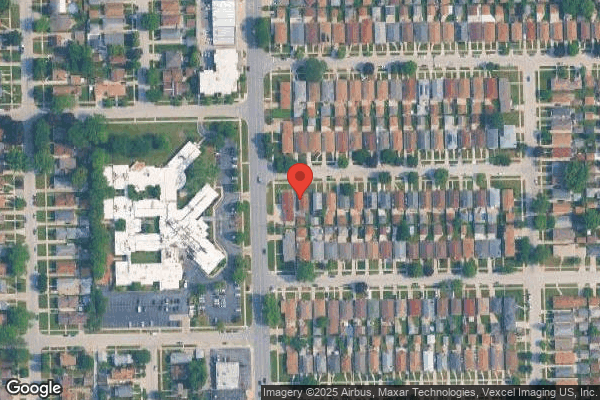

10124 SOUTH KEDZIE, EVERGREEN PARK, IL 60805 (708) 907-7000
For profit - Limited Liability company 242 Beds LEGACY HEALTHCARE Data: November 2025
Trust Grade
0/100
#453 of 665 in IL
Last Inspection: May 2025

Inspected within the last 6 months. Data reflects current conditions.

Overview

Avantara Evergreen Park has received a Trust Grade of F, indicating significant concerns about the quality of care provided. They rank #453 out of 665 facilities in Illinois, placing them in the bottom half, and #150 out of 201 in Cook County, suggesting there are many better options available locally. While there is a trend of improvement, with reported issues decreasing from 21 in 2024 to 18 in 2025, the overall situation remains troubling. Staffing is a major weakness here, with a low rating of 1 out of 5 stars and a high turnover rate of 62%, significantly above the state average. Additionally, the facility has incurred $349,677 in fines, indicating compliance problems that are higher than 78% of Illinois facilities. Specific incidents of concern include a failure to transfer a resident showing signs of sepsis for six hours, leading to hospitalization for septic shock, and neglecting to implement a proper bowel regimen for another resident, which resulted in severe fecal impaction. Furthermore, there were failures to consistently monitor and prevent skin breakdown in residents, resulting in pressure sores. While there is some RN coverage, it remains average, meaning there may not be enough oversight to catch all potential health issues. Overall, families should weigh these significant risks against any strengths when considering this facility for their loved ones.

Trust Score
F
0/100
In Illinois
#453/665
Bottom 32%
Safety Record
High Risk
Review needed
Inspections
Getting Better
21 → 18 violations
Staff Stability
⚠ Watch
62% turnover. Above average. Higher turnover means staff may not know residents' routines.
Penalties
✓ Good
$349,677 in fines. Lower than most Illinois facilities. Relatively clean record.
Skilled Nurses
✓ Good
Each resident gets 47 minutes of Registered Nurse (RN) attention daily — more than average for Illinois. RNs are trained to catch health problems early.
Violations
⚠ Watch
65 deficiencies on record. Higher than average. Multiple issues found across inspections.
★☆☆☆☆
1.0
Overall Rating
★☆☆☆☆
1.0
Staff Levels
★★☆☆☆
2.0
Care Quality
★★☆☆☆
2.0
Inspection Score
Stable
2024: 21 issues
2025: 18 issues

The Good

  • Full Sprinkler Coverage · Fire safety systems throughout facility
  • No fines on record

Facility shows strength in fire safety.

The Bad

1-Star Overall Rating

Below Illinois average (2.5)

Significant quality concerns identified by CMS

Staff Turnover: 62%

16pts above Illinois avg (46%)

Frequent staff changes - ask about care continuity

Federal Fines: $349,677

Well above median ($33,413)

Significant penalties indicating serious issues

Chain: LEGACY HEALTHCARE

Part of a multi-facility chain

Ask about local staffing decisions and management

Staff turnover is elevated (62%)

14 points above Illinois average of 48%

The Ugly 65 deficiencies on record

13 actual harm
Sept 2025 1 deficiency 1 Harm
SERIOUS (G) 📢 Someone Reported This

A family member, employee, or ombudsman was alarmed enough to file a formal complaint

Actual Harm - a resident was hurt due to facility failures

Quality of Care (Tag F0684)

A resident was harmed · This affected 1 resident

**NOTE- TERMS IN BRACKETS HAVE BEEN EDITED TO PROTECT CONFIDENTIALITY** Based on interview and record review, the facility failed to follow their guidelines of promptly transferring a resident who exh...

Read full inspector narrative →
**NOTE- TERMS IN BRACKETS HAVE BEEN EDITED TO PROTECT CONFIDENTIALITY** Based on interview and record review, the facility failed to follow their guidelines of promptly transferring a resident who exhibited signs and symptoms of sepsis for six hours prior to transfer. This failure affected one (R1) of three residents reviewed for quality of care. This failure resulted in R1 requiring hospitalization and diagnosed with septic shock and pneumonia. Findings include:R1 is a [AGE] year old resident with diagnoses including but not limited to Benign Neoplasm of Cerebral Meninges, Other Seizures, Spastic Hemiplegia Affecting Right Dominant Side, Encephalopathy, Unspecified, Neoplasm of Unspecified Behavior of Brain, Type 2 Diabetes Mellitus Without Complications, Hyperlipidemia, Unspecified, Depression, Unspecified, Cerebral Edema, Cerebral Infarction, Unspecified, Gastro-Esophageal Reflux Disease Without Esophagitis, Shortness of Breath, Aphasia, Anemia, Thrombocytopenia, Unspecified, Acute Embolism and Thrombosis of Unspecified Deep Vein of Left Lower Extremity, Localized Swelling, Mass, and Lump, UnspecifiedR1's hospital records ([DATE]) documents (in part), R1 presented to the ER (emergency room) due to abnormal labs and leukocytosis. Per the ER physician, EMS (emergency medical staff) reported that R1 was on 2 L(liters) nasal cannula but was hypoxic on the 2 L, and R1 was placed on a non-rebreather mask. On arrival to the ER, R1 had a 103-degree Fahrenheit fever, 22 respirations per minute, and tachycardia between 120-140 beats/min (minute). R1 was subsequently diagnosed with pneumonia and septic shock.R1's Speech Therapy Treatment Encounter Note ([DATE] at 11:10 AM) completed by V7 documents in part that during R1 was warm to the touch and grimaced at time (non-verbal indication of pain). V7 notified the nurse on duty, vital signs were assessed and R1 had increased heart rate and low BP (potential signs of sepsis).On [DATE] at 10:14 AM, V4 (Registered Nurse) documented, Was notified by ST (Speech Therapist) that resident's skin is hot to touch. Vitals checked as follows: BP (blood pressure) 97/58 PR (pulse rate) 135 RR (respiration rate) 30 rapid shallow Temp 98.8 non-contact O2 RA (oxygen room air) 85-90% no verbal complaints of pain but resident is observed to be grimacing with movement. Checked g tube site as well - site is dry, no redness/ swelling. Abdomen is soft to touch. (V6 Nurse Practitioner) made aware - orders for STAT KUB (kidneys ureters and bladder x-ray), CXR (chest xray), EKG (electrocardiogram), CBC (complete blood count) and BMP (basic metabolic panel), hold feeding for now, put on o2 (oxygen), 0.9 nacl (sodium chloride, Intravenous solution) x 83ml/hr (milliliters/hour) x 1 liter and respiratory panel and covid testing. All orders in place, carried out and called in. Resident placed on o2 via nasal cannula at 1LPM (liter per minute)- sat 96%.On [DATE] at 12:47 PM (Late Entry, created on [DATE] at 1:51 PM), V6 (Nurse Practitioner) documented, (R1) was seen on [DATE]. His blood sugars have been elevated. He was placed on 1 liter n/c (nasal cannula). He has coarse breath sounds. He did have an episode of n/v (nausea/vomiting) yesterday per the nurse. No fever or chills noted. Vitals are stable. PMH: T2DM (Type 2 Diabetes Mellitus), CVA (cardiovascular accident), hyperlipidemia, PE (pulmonary embolism), depression, DVT (deep vein thrombosis. Upon examination, pt was seen lying in bed. NAD (no acute distress). Normocephalic. Conjuctivae clear. Oral mucosa is moist. Neck supple, no JVD (jugular vein distention) or carotid bruit. Heart rate is regular, normal S1 and S2, no murmurs. Lungs are coarse throughout, no wheezes, on 1 liter n/c. Abdomen is soft, non-tender, non-distended, bowel sounds present, PEG tube in place. No LE edema. Right side is flaccid. Right ankle swelling noted. A/P (assessment/plan): #1 Acute hypoxic respiratory failure, on 1 liter n/c (this indicates organ failure, signs of severe sepsis) #2 T2DM w/hyperglycemia #3 Acute/subacute left ACA (Anterior Cerebral Artery) stroke #4 Benign neoplasm of cerebral meninges s/p (status post) bilateral frontal craniotomy with mass resection #5 h/o (history of) CVA w/right-sided weakness #6 Dysphagia s/p PEG #7 Depression #8 h/o DVT/PE on Eliquis #9 Hyperlipidemia #10 Fall risk #11 Right ankle pain/swelling #12 Seizures on Keppra #13 At risk for malnutrition Plan: Stat chest xray, KUB and labs ordered. Titrate O2 to keep sats >92%. I will add a sliding scale for better bs (blood sugar) control. Continue PT/OT/ST (physical therapy, occupational therapy, speech therapy). Dietician following, continue tube feeding recommendations. Maintain fall precautions per facility protocol. Plan discussed with pt.'s nurse. (Per this documentation, there was no assessment of R1's vital signs or addressing the abnormal vital signs and symptoms that V4 reported/obtained.)On [DATE] at 10:54 AM, V4 (Registered Nurse) documented, Follow up made with (Hospital) spoke with RN (REDACTED)- (R1) to be admitted . Dx: Pneumonia and septic shock.On [DATE] at 9:34 PM, V5 (Registered Nurse) documented a late-entry SBAR note for [DATE] that documents (in part) R1's change in condition and identifies that R1 had abnormal labs and labored breathing. V6 (Nurse Practitioner) was notified at 6:30 PM and R1 was transferred to the hospital for evaluation.On [DATE] at 9:50 AM, V9 (R1's Family Member) recalled on [DATE], a nurse had called in the morning saying R1 had elevated blood sugar levels and R1's blood pressure was 80/64. V9 told the nurse to send R1 to the hospital because R1 was clearly septic, this is always what (R1) does when (R1) develops sepsis. They didn't send him when I requested for (R1) to be sent out. (R1) got sent out later that night and developed shock. (R1) could have died. I told them (the facility) he was septic.On [DATE] at 11:27 AM, V4 (Registered Nurse) stated that sepsis is a whole-body response that is caused by infection. V4 explained that signs of sepsis include elevated temperature, elevated pulse rate, elevated respiratory rate, and low blood pressure. V4 reviewed R1's electronic health record with surveyor and recalled caring for R1 on [DATE]. V4 explained, V4 was doing rounds and asked R1 if he was in pain and R1 didn't respond. R1 was usually able to respond with a smile or shaking R1's head, but that day R1 didn't. V4 stated, He wasn't at his baseline, I thought there was something wrong. V4 recalled assessing R1's vital signs and noted that R1 had increased heart rate and rapid shallow breathing. V4 affirmed that V4 was concerned that R1 was potentially developing sepsis so V4 contacted V6 (Nurse Practitioner) and recalled telling V6 about the change in status. V4 stated, I didn't say anything to (V6) about sepsis, (V6) was aware of the signs and symptoms (R1) was experiencing. (V6) gave orders and I carried them out. V4 affirmed that sepsis is potentially life-threatening and would normally immediately send a resident to the hospital if a resident was experiencing a life-threatening change in condition. V4 could not recall speaking to V9 about R1's change in condition.On [DATE] at 11:38 AM, V2 (Director of Nursing) was familiar with R1 but did not recall the events that led to R1 being sent to the hospital on [DATE]. V2 explained that sepsis is potentially life-threatening whole-body response to an infection and signs of sepsis include fever, low or high blood pressure, increased pulse, and increased respirations. V2 affirmed that the facility is not able to treat sepsis within the facility and sepsis requires a higher level of care. V2 stated that if a nurse suspects or has signs of sepsis that they call the physician immediately and expect to send the resident out to the hospital. V2 explained that if sepsis is not treated, it can lead to septic shock and death.On [DATE] at 12:47 PM, V6 (Nurse Practitioner) affirmed that V6 is supervised by V8 (Medical Director). V6 explained any infection can cause sepsis and sepsis can present with changes in condition including low blood pressure, tachycardia, tachypnea, fever, changes in mental status, and abnormal laboratory values. V6 stated, if sepsis is not treated patients can crash, deteriorate and can develop septic shock but not always. V6 recalled being told about a change in condition for R1 from V4 on [DATE]. V6 stated, I do not recall them (abnormal vital signs). I do recall visiting (R1) a few hours after I talked to (V4) but (R1) seemed fine to me. I did not assess (R1's) vital signs during my visit. Tachypnea and tachycardia, I thought maybe aspiration pneumonia because (R1) had vomited the day before which is why I ordered for a chest x-ray and CBC, CMP. (R1) did have crackles in (R1's) lungs. V6 denied knowledge that R1's family members requested R1 to be sent to the hospital. V6 affirmed that V6 was not notified of any other changes in condition after V6's visit and did not give the order to send R1 to the hospital. V6 stated, I think they (facility staff) sent (R1) out because of an increase white count. R1's vital signs from [DATE] were reviewed with V6 and V6 stated, yeah in the hospital they would have called a code sepsis. But if I were to send people out every time, they had an increased pulse and respirations, we would be sending people out all the time. On [DATE] at 1:47 PM, V7 (Speech Therapist) affirmed that V7 was familiar with R1 and recalled treating R1 on [DATE]. V7 explained that V7 went to treat R1 and R1 wasn't acting per R1's baseline. V7 stated, (R1) usually wasn't too happy to see me as (R1) had a lot of difficulties speaking and would struggle with speech therapy. That day, (R1) grabbed my hand and it was really warm, there was something off. I (V7) recall asking (R1) if (R1) wanted to go to the hospital. (R1) couldn't speak well, so I told (R7) to squeeze my hand if (R1) wanted to go the hospital and (R1) squeezed my hand. I told him I would go get the nurse and (R1) didn't want me to leave. This wasn't (R1's) baseline at all. I left and got the nurse. I heard afterward, (R1) was hospitalized .On [DATE] at 2:43 PM, V2 (Director of Nursing) and V3 (Infection Preventionist, Registered Nurse) reviewed R1's electronic health record and confirmed that no screening for sepsis was completed for R1, per the facility policy. V2 affirmed that R1 was not comfort care, and there was no indication that R1 requested not to go to the hospital. V2 affirmed there is no records that blood cultures, a CMP, coagulation tests or a lactate were ordered or drawn, per facility policy. V3 recalled seeing R1 on [DATE] and recalled that R1 was experiencing malaise and the facility obtained respiratory panel lab work to rule out infection. V2 was unsure if the facility had a sepsis screening UDA (user defined assessment) within the electronic health record that could be used to screen for sepsis. V3 affirmed that R1 was not sent out by the time V3 left for the day around 5:00 PM. On [DATE] at 3:44 PM, V5 (Registered Nurse) affirmed that V5 was the nurse that sent R1 to the hospital on [DATE]. V5 recalled seeing that R1's white count was elevated during V5's medication pass. V5 could not recall if R1 had any changes in condition, labored breathing or assessing R1 for a change in condition. V5 stated that V5 received a call from R1's family and they were concerned about R1 going into sepsis as R1 had a history of sepsis. V5 sent R1 to the hospital because the family requested it, so I called an ambulance and sent him out. V5 recalled leaving V6 a voicemail to notify V6 of R1 being sent out. V5 affirmed that paramedics did place R1 on a non-rebreather mask prior to leaving the facility. V5 could not recall if V5 completed an assessment of R1's health status and could not recall vital signs. V5 could not recall if V5 listened to R1's breath sounds.On [DATE] at 4:30 PM, V8 (Medical Director) stated, V8 is the medical director for the facility, and is the supervising physician for V6. R1's vital signs were reviewed with V8 and V8 stated the vital signs could indicate sepsis, it's a possibility, there's a lot of things that could cause that. R1's progress notes were reviewed with V8 and V8 stated, You know, facilities can treat sepsis in house now. V6 did everything right, the hospital wouldn't have done anything different than V6 did. The facility's Sepsis Nursing Care Guidelines were reviewed with V8, and surveyor asked if staff should have followed the facility-approved guidelines. V8 became aggressive and stated, Let me ask you something. Did the patient die? No? Then (V6) did everything (V6) needed to. In my professional opinion, (V6) sent (R1) out due to change in condition, that's my answer.Facility policy titled, Sepsis Nursing Care Guidelines (undated) documents in part Purpose: The facility will use a standardized, physician approved, nursing assessment and care guidelines to help identify sepsis as early as possible in its course in order to provide early treatment and prevent progression leading to hospitalization or adverse event. II. Criteria/ Definitions: 1. Sepsis: Sepsis in an infection, regardless of the primary site of the source that manifests with select systemic symptoms, signs and/or functional capacity changes and may be associated with one or more organ dysfunction and/or failure. 2. Systemic Inflammatory response Syndrome (SIRS) Criteria a. Fever greater than or equal to 100.4 Fahrenheit or less than or equal to 96.8 Fahrenheit. b. Heart rate greater than 90 beats per minute c. Respiratory rate greater than 20 breaths per minute d. Systolic blood pressure less than 90 mmHg. 3. SIRS screening results a. Sepsis: Suspicion or documentation of infection AND two or more SIRS criteria b. Severe Sepsis: Sepsis and one or more organ dysfunctions 4. Organ Dysfunction a. Assessed through observation and clinical assessment (clinical correlation and comparison to patient's baseline vital signs are important consideration): i. Respiratory SQ02 less than 90 percent or increasing 02 requirements ii. Cardiovascular: Systolic blood pressure less than 90 mmHg or 40 mmHg less than baseline iii. Renal: Urine output less than 0.5 ml/kg over the last 8 hours iv. Central nervous system: New mental status changes b. Assessed through laboratory results with clinical correlation and comparison to baseline levels (use results during last 24 hours) 1. Platelets less than 100,000 ii. INR greater than 1.5 (if not on anticoagulant therapy with Coumadin/Warfarin) iii. Bilirubin greater than or equal to 4.0 ml/dl iv. Serum lactic acid greater than or equal to 2mEq/l. III> Process: 1. All residents/patients with a confirmed or suspected infection will be screened for sepsis using SIRS criteria by the IP/IC nurse or designee. Confirmed or suspected infection includes but is not limited to . d) myalgia . f) vomiting . h) localized, redness, heat pain swelling purulent discharge . 2. If a resident/patient with a confirmed of suspected infection meets two or more SIRS criteria, the Sepsis Nursing Care Guidelines will be implemented by the IP/IC nurse or designee . IV. Procedures: 1. The nurse will review assess the SIRS screening results and assess for organ dysfunction. 2. If the resident screens positive for sepsis or severe sepsis, the IP/IC nurse or designee contacts the physician and initiates the physician approved sepsis care guidelines by starting IV fluids stat. 3. The Interact Care Path recommends that all patients/residents with suspected or confirmed infection and possible sepsis be considered for transfer to an acute care hospital unless; a) the patient is on comfort or palliative care plan or is on hospice with an order for no hospitalization from the attending physician. b) the patient or decision maker wants the condition to be treated but not in the acute care hospital and understands the risks; and the facility has the capability of managing sepsis according to recommended interventions . 4. Family or resident representative is contacted about change in condition. 5. If sepsis is being considered and patient/resident is not being immediately transferred to the acute care hospital by the physician (See item #3), blood will be drawn for cultures, CMP, coagulation tests and lactate level stat before starting antibiotics as indicated. 6. Nurse will assess the residents response to IV fluids as soon as possible. Additional fluid administration should be guided by frequent reassessment of hemodynamic status. 7. If the decision is to transfer to acute care hospital, nurse will contact ER to give nurse to nurse report/handoff. 8. Ensure that all recent lab results and completed SBAR are communicated to the ER and included in the transfer documents
Jun 2025 2 deficiencies
CONCERN (E) 📢 Someone Reported This

A family member, employee, or ombudsman was alarmed enough to file a formal complaint

Potential for Harm - no one hurt, but risky conditions existed

Safe Environment (Tag F0584)

Could have caused harm · This affected multiple residents

**NOTE- TERMS IN BRACKETS HAVE BEEN EDITED TO PROTECT CONFIDENTIALITY** Based on observation, interview, and record review the facility failed to maintain resident's room temperatures within a comfort...

Read full inspector narrative →
**NOTE- TERMS IN BRACKETS HAVE BEEN EDITED TO PROTECT CONFIDENTIALITY** Based on observation, interview, and record review the facility failed to maintain resident's room temperatures within a comfortable range of 71-to 81- degree Fahrenheit. This affected seven of seven residents (R1 - R7) reviewed for comfort environment. Findings include: On 06/23/25 from 1:02pm to 1:45pm, during the facility tour with V8 (Maintenance Director) the following observation were made on the 100 unit hallway: room [ROOM NUMBER] temperature measured 81.3 degrees Fahrenheit room [ROOM NUMBER] temperature measured 81.5 degrees Fahrenheit, room [ROOM NUMBER] temperature measured 81.6 degrees Fahrenheit room [ROOM NUMBER] temperature measured 81.5 degrees Fahrenheit room [ROOM NUMBER] temperature measured 81.6 degrees Fahrenheit room [ROOM NUMBER] temperature measured 81.3 degrees Fahrenheit Unit 200 back hallway temperature measured 81.5 degrees Fahrenheit. On 06/23/25 at 1:12pm, both R3 and R4 are roommates and they both stated that their room is very hot, but the staff are aware of it, and they have done nothing about it. R3 stated this has been worse on the last weekend (referring to 06/21 and 06/22/25. V8 (Maintenance Director) who was present by the hallway by the room doorway then stated I (V8) guess I should provide a portable fan for the residents who are still complaining (about the hot temperature in their rooms). On 06/23/25 at 1:33pm, R2 observed in current room for being transferred from the previous room. R1 stated that I suffered the heat in my room with my roommate, the room was boiling one day last week and this weekend it was worse. R1 stated in part that I am old I should not be feeling hot the way I was feeling the heat, I was sweating. On 06/23/25 at 1:40pm, R1 was observed in the room after transfer from the old room, when the surveyor asked R1 about the previous room condition regarding temperature, R1 stated in part that she was admitted to the facility on Friday 06/20/25 and her experience so far has been bad (referring to care). R1 stated that my room was uncomfortable but on Saturday and Sunday (06/21/25 and 06/22/25) it was so hot, it was horrible. R1 stated her assigned (Certified Nurse's Aide) identified as (V10) help her into the hallway where she stayed for some hours R1 stated that the family and friend who visited complained to the facility staff on both days and her niece had to bring a portable fan that was on the bedside dresser. R1 stated this morning (06/23/25) the facility started rushing her to another room that she is currently staying after suffering through the weekend. On 06/23/25 at 1:12pm, both R3 and R4 are roommates and they both stated that their room is very hot, but the staff are aware of it, and they have done nothing about it. R3 stated this has been worse on the last weekend (referring to 06/21 and 06/22/25. V8 (Maintenance Director) who was present listening by the hallway to the room doorway then stated I (V8) guess I should provide a portable fan for the residents who are still complaining (about the hot temperature in their rooms). On 06/24/25 at 2:00pm, V10 CNA (Certified Nurse Assistant) stated in part that at the beginning of the shift 3pm to 11pm on 06/21/25 it was very hot and by the end of the shift it was cooling down. V10 stated in part that some of the residents have their windows open and the supervisor told the staff to close the windows and that makes sense to her. V10 could not remember the supervisor's name or the nurse that relayed the message to her (V10). R1' medical record admission Record showed that R1 was admitted to the facility on [DATE] with diagnosis list that includes but not limited to Acute respiratory distress, dependence on supplemental oxygen, severe persistent asthma uncomplicated, and Epilepsy. R2 medical record diagnosis information listed includes but not limited to Mild intermittent asthma with acute exacerbation, presence of automatic (implantable) cardiac defibrillator, anemia, dependence on supplemental oxygen, heart transplant status, and immunodeficiency. R1 medical record showed that MDS (Minimum Data Set) is in progress. R2's MDS (Minimum Data Set) dated 4/4/2025 showed that R2's BIMS (Brief Interview for Mental Status) as 09. R3's MDS dated [DATE] scored BIMS as12, indicating that R3 is moderately cognitively impaired. R4's medical record MDS dated [DATE] scored R4 BIMS as 15, indicating that is cognitively intact. R5's medical record MDS dated [DATE] scored R5 BIMS as 14, indicating that R5 is cognitively intact. R6's medical record admission Record showed that R6 was admitted [DATE] with MDS in progress. R7's MDS dated [DATE] scored R7's BIMS as 14, indicating that R7 is cognitively intact. On 06/23/25 at 3:02pm, V4 stated that on 06/21/25 he did take the temperature when he noted that the building was warm and the temperature are between 76-and 78-degrees Fahrenheit, but the vents are not cooling enough because the fan belt are broken and this affect mostly the 100-units because the individual AC are not in working condition. V4 stated that the AC must be properly functioning. The facility policy on Ambient Temperature presented documented that it is the facility's policy to ensure that facility ambient temperature at comfortable level. Listed procedure includes but not limited to keeping temperature level all throughout the facility between 71 - to 80-degrees Fahrenheit, and in extreme hot temperature procedure should be activated. Facility policy on Extreme High temperature and Hot Weather documented that Administrative Code: Zones of Physiological Perception Comfort Level is between 68- to 75 degrees and following hot weather and extreme high temperatures precautions have been established for personnel to follow during the hot weather of summer (outdoor temperatures climb into the 80's and above. Listed guidelines includes but not limited to identify high risk residents who are susceptible to heat exhaustion and adverse health effects of hot weather, check air conditioning system for proper functioning, refer to maintenance for needed repairs or services, making sure the residents are properly dressed. The facility Job Description for Director of Maintenance summary objective documented that in keeping with our organization's goal of improving the lives of the guest (referring to Residents) we serve, the Director of Maintenance plays a role in maintaining all physical plant assets on the property. The director of maintenance manages the day-to-day operations of the maintenance department. Listed essential functions includes but not limited to responsible for all service and repair task as assigned, operates the maintenance department in a safe manner by ensuring compliance with Federal, State, and local regulations and following established policies and procedures, and ensure that regular equipment and system maintenance schedules are monitored must be followed. Facility Job description for Nurse supervisor LPN (Licensed Practical Nurse) documented under summary /objectives that in keeping with our organization's goal of improving the lives of the guest (referring to Residents) we serve, the Nurse Supervisor (LPN) plays a critical role in providing superior customer service and nursing services to all guest on the assigned unit as well in the facility as a whole, and the nurse supervisor LPN assist the Assistant Director of Nursing and the Director of Nursing (DON) in planning, development and overall operation of the assigned unit, which ensures that the guest (residents) receive quality care. Facility Job description for Nurse supervisor RN (Registered Nurse) documented under summary /objectives that in keeping with our organization's goal of improving the lives of the guest (referring to Residents) we serve, the RN unit manager plays a critical role in providing superior customer service and nursing services to all guest on the assigned unit as well in the facility as a whole, and RN Unit Manager assist the Assistant Director of Nursing and the Director of Nursing (DON) in planning, development and overall operation of the assigned unit, which ensures that the guest (residents) receive quality care.
CONCERN (E) 📢 Someone Reported This

A family member, employee, or ombudsman was alarmed enough to file a formal complaint

Potential for Harm - no one hurt, but risky conditions existed

Safe Environment (Tag F0921)

Could have caused harm · This affected multiple residents

**NOTE- TERMS IN BRACKETS HAVE BEEN EDITED TO PROTECT CONFIDENTIALITY** Based on observation, interview, and record review the facility failed to assure that the resident environment remains comfortab...

Read full inspector narrative →
**NOTE- TERMS IN BRACKETS HAVE BEEN EDITED TO PROTECT CONFIDENTIALITY** Based on observation, interview, and record review the facility failed to assure that the resident environment remains comfortable and homelike with cooling system in proper working order to maintain acceptable temperature within 71- to 81-degree Fahrenheit. This failure affected 100-unit and 200-unit wings in the facility. Findings include: On 06/23/24 at 9:45am, V4 (Assistant Maintenance Director) stated in part that the whole 100 units in the building was hot the AC (Air-conditioner) was not working well with the temperature outside very hot it became hard to keep the inside cool. V4 stated that there were 20 unit of the fans in the roof and two fan belts were broken. The vents are not producing enough cool air for circulation since the belt is broken. On 06/23/25 at 10:25am, V1 (Administrator) stated that she was made aware of this problem with the temperature on Sunday 06/22/25. During the facility tour observation starting at 1:02pm with V8 (Maintenance Director) the following observation made: 100-unit back hallway by room [ROOM NUMBER] temperature measured 81.3-degree Fahrenheit, Unit 200 back hallway temperature measured 81.5 degrees Fahrenheit. V8 stated we are working on it. On 06/23/24 at 2:29pm when this observation was brought to V1 (Administrator)'s attention, V1 stated that the external AC repair company will be supplying and installing portable AC units for the hallways in the building that will be big enough to circulate the areas in each unit. On 06/23/25 at 3:02pm, V4 stated that he did take the temperature when he noted that the building was warm and the temperature are between 76-and 78-degrees Fahrenheit, but the vents are not cooling enough because the fan belt are broken and this affect mostly the 100-units because the individual AC are not working. V4 stated that the AC must be properly functioning. The facility policy on Ambient Temperature presented documented that it is the facility's policy to ensure that facility ambient temperature at comfortable level. Listed procedure includes but not limited to keeping temperature level all throughout the facility between 71 - to 80-degrees Fahrenheit, and in extreme hot temperature procedure should be activated. The facility Job Description for Director of Maintenance summary objective documented that in keeping with our organization's goal of improving the lives of the guest (referring to Residents) we serve, the Director of Maintenance plays a role in maintaining all physical plant assets on the property. The director of maintenance manages the day-to-day operations of the maintenance department. Listed essential functions includes but not limited to responsible for all service and repair task as assigned, operates the maintenance department in a safe manner by ensuring compliance with Federal, State, and local regulations and following established policies and procedures, and ensure that regular equipment and system maintenance schedules are monitored must be followed.
May 2025 14 deficiencies 2 Harm
SERIOUS (G)

Actual Harm - a resident was hurt due to facility failures

Quality of Care (Tag F0684)

A resident was harmed · This affected 1 resident

**NOTE- TERMS IN BRACKETS HAVE BEEN EDITED TO PROTECT CONFIDENTIALITY** Based on interview and record review, the facility failed to ensure that one resident who was on pain medication had an effectiv...

Read full inspector narrative →
**NOTE- TERMS IN BRACKETS HAVE BEEN EDITED TO PROTECT CONFIDENTIALITY** Based on interview and record review, the facility failed to ensure that one resident who was on pain medication had an effective bowel regime program to prevent constipation. This affected one of one resident (R18) reviewed for quality of nursing care and prevention of constipation. This failure led to R18 being sent to the hospital with a diagnosis of severe fecal impaction with stool ball measuring over 8 centimeters (CM). Findings include: R18 was admitted to the facility on [DATE] with a diagnosis of dependence on supplemental oxygen, heart failure , spinal stenosis, type II diabetes and atrial fibrillation. R18's brief interview for mental status dated 3/4/25 documents a score of 9 which indicates moderate cognitively impairment. R18 physician orders document: tramadol 50 mg (milligrams), take one tablet by mouth twice a day for moderate to sever pain. Start date 12/11/24. Fentanyl patch 12mcg/hr (micrograms/hour). Apply one patch every 72 hours for pain. Start date 1/17/25. On 5/23/25 at 12:00PM, V27( Nurse Practitioner) said fecal impaction is caused by constipation which is preventable but can be attributed to lack of movement, nutrition, hydration and pain medications. R18 did not mention being constipated and were unaware that R18 was having concerns. V27 said she would expect staff to notify them of any changes in bowel movement or lack of bowel movements for three days. On 5/22/25 at 11:46, V17(ADON) said R18's hospital stay related to fecal impaction was preventable. R18 was taking a pain medication and had a medication related to constipation but was not effective. R18's medical doctor assisted with putting in an effective bowel management for R18. Point of care charting for March 2025 bowel movements documents 3/1/25 and 3/2/25 a small bowel movement; 3/3/25 - 3/7/25 documents none. R18's hospital record dated 3/9/25 documents under CT abdomen impression severe fecal impaction at the rectum with stool ball measuring over 8 centimeters. Mild perirectal inflammatory changes may reflect stercoral proctocolitis. Under history documents Patient is found to have sever fecal impaction with findings consistent with stercoral proctocolitis. Patient disimpacted with large amount of stool collected, no blood noted or black, and she is feeling better afterwards, also received enema. Bowel management revised 7/26/24 documents: it is the facility policy to record resident's bowel movement in the medical record. The certified nurse aide each shift will record the resident's bowel movement. The facility will assess the resident when the resident shows sign and symptoms of abdominal stress, if there is a change in the resident's pattern of bowel movements, the facility will notify the physician.
SERIOUS (G)

Actual Harm - a resident was hurt due to facility failures

Pressure Ulcer Prevention (Tag F0686)

A resident was harmed · This affected 1 resident

**NOTE- TERMS IN BRACKETS HAVE BEEN EDITED TO PROTECT CONFIDENTIALITY** Based on observations, interviews, and record reviews, this facility failed to consistently and accurately assess, monitor, and ...

Read full inspector narrative →
**NOTE- TERMS IN BRACKETS HAVE BEEN EDITED TO PROTECT CONFIDENTIALITY** Based on observations, interviews, and record reviews, this facility failed to consistently and accurately assess, monitor, and implement interventions to prevent skin breakdown, and failed to ensure the intervention of the low air loss mattress was implemented per manufacture guidelines. This affected two of three residents (R62, R176) reviewed for pressure sore and pressure sore prevention. This failure resulted in R62 being admitted to the facility on [DATE] with skin in tact and developing a facility acquired pressure sore ( unstageable) wound to the sacrum area by 4/25/25. Findings include: 1. R62's braden scale evaluation, dated 4/2/25, notes R62 is at high risk for developing skin breakdown. R62's admission skin/wound evaluation, dated 4/2/25, notes R62 does not have a current skin alteration and/or newly healed wound. V13 (wound care nurse practitioner) initial assessment of R62's sacral wound, dated 4/30/25, notes R62 with an unstageable pressure injury to sacrum, measuring 9cm x 8cm x 0.1cm. 60% epithelial, 30% granulation tissue, 10% slough. There is no order for LAL mattress or documentation of when it was placed on R62's bed; R62 had a LAL mattress at start of survey on 5/20/25. R62's POS (physician order sheet), dated 5/6/25 notes an order for juven supplement twice daily and prostat supplement twice daily. There also is an order for pureed diet, thin liquids. On 5/23/25 11:30 AM, wound care observation with V12 (wound care director). R62 was observed to have an unstageable sacral pressure injury, measuring 6cm (centimeters) x 7.5cm x 0.1cm, 30% epithelial tissue, 10% granulation, 60% eschar. Wound cleaned with normal saline, medihoney applied, calcium alginate applied and covered with bordered gauze. On 5/22/25 at 3:00 PM, V12 stated that R62 developed a facility acquired pressure ulcer. V12 stated that R62 has scarring on sacrum due to pressure ulcer from previous stay in this facility (2023) and it re-opened. V12 stated that R62 was placed on a low air loss mattress and heel protectors were applied bilaterally. V12 stated that R62 receives nutritional supplements to promote wound healing. 2. R176 was diagnosis with scalp surgical dehiscence and left lateral ankle full thickness wound. R176's vital report dated 5/6/25 documents: 124.6 (one hundred and twenty-four point six) pounds. Skin and wound note dated 5/15/25 documents: The patient (R176) continues on an alternation air mattress for pressure redistribution. Ensure settings are maintained at an appropriate level bases on the patient's needs and body habitus. On 5/20/25 at 11:28am, R176 was observed laying on an alternation air mattress for pressure redistribution control panel/weight setting at one hundred and fifteen (115) pound. R176's mattress was observed deflated in the upper middle portion of the mattress. R176's shoulder was sunk in between the partially inflated sections of the middle top portion of the mattress. V17 (adon) said, R176's mattress was set at 115 pound. V17 said, R176 mattress was deflated middle top portion of the mattress. R176 who was alert and orient to person place and time, said his mattress had been deflated since yesterday. R176 said, his hurting his back. R176 complained of pain a 10/10. Pain management provided. On 5/20/25 at 11:32am, V12 (wound care director) said, the middle top portion of R176's mattress looks flat/deflated. V12 said, someone must have move R176's bed, the cord has been pulled out of the socket. R176's power cord to his alternating air mattress was observed hanging out of the electric socket. The electric cord was not secure to the power source so that R176's mattress would remain inflated. On 5/20/25 at 11:37am, V16 (cna) said, R176's alternative mattress was deflated in the top middle upper portion. V16 said, R176 mattress was full at the bottom and flat at the top. V16 said, she informed staff an hour ago that R176 mattress was deflated. On 5/21/25 at 12:35pm, R176 was observed on his specialized mattress which was set at one hundred and fifty (150) pounds. R176 said, his specialized mattress feels much better today. On 5/22/25 at 11:09am, V12 said, R176's weighs one hundred and twenty four (124) pounds. R176 requested for his specialized mattress to remain set at one hundred and fifty (150) pounds because it was comfort. On 5/23/25 at 8:23am, V12 (wound director) said, R176 has a full thickness wound on his ankle that could be classified as a stage three or four. V12 said, R176 is on the alternating pressure redistribution mattress. If the mattress is not fully inflated it's cannot providing redistribution. Alternating pressure redistribution mattress guidelines 3/2020 documents: Enter resident's weight accordingly if the alternating pressure redistribution mattress has a weight specification button.
CONCERN (D)

Potential for Harm - no one hurt, but risky conditions existed

Resident Rights (Tag F0550)

Could have caused harm · This affected 1 resident

Based on observations, interviews, and record reviews, the facility failed to follow its electronic monitoring policy and post signage regarding electronic monitoring in use on facility entry and the ...

Read full inspector narrative →
Based on observations, interviews, and record reviews, the facility failed to follow its electronic monitoring policy and post signage regarding electronic monitoring in use on facility entry and the resident's room, failed to obtain informed consent from residents and resident representatives before initiating video monitoring and audio monitoring for residents. This affected two of two residents (R83 and R159) reviewed for resident rights in a sample of 49. Findings include: On 5/21/25 at 3:00 PM, an electronic monitoring device was observed by this surveyor and V2 DON (director of nursing) on R159's bedside refrigerator. V2 stated that this device was monitoring the refrigerator temperature. On 5/21/25 at 3:10 PM, R83 stated that R83 was not aware that there was electronic monitoring being done in R83 and R159's room. R83 stated that R83 did not understand what this surveyor and V2 DON were talking about regarding the electronic monitoring device. On 5/22/25 at 9:15 AM, R159 stated that she was not aware there was an electronic monitoring device on her bedside refrigerator. When questioned if staff discussed electronic monitoring with her, R159 stated no. When questioned if R159 had given consent to be video and audio monitored, R159 stated no. On 5/22/25 at 9:20 AM, R83 stated that she was not aware there was an electronic monitoring device on R159's bedside refrigerator prior to 5/21/25. When questioned if staff discussed electronic monitoring with her, R83 stated no. When questioned if R83 had given consent to be video and audio monitored, R83 stated no. On 5/23/25 at 8:56 AM, V25 (R83's POA (power of attorney)) stated that a staff member from this facility called her yesterday and asked if R83's roommate, R159, could have a video and audio monitoring device so R159's family could monitor R159. V25 denied being informed of R83's roommate having a video and audio electronic monitoring device prior to now. V25 stated that it was explained to her that the audio would only be on if R159 was if need of assistance. V25 stated that she was not informed that the audio recording would be on 24/7. V25 stated that she understood that the device would be voice activated when R159 needed help. V25 stated that she was informed that the video and audio monitoring would only be recording R159 because R159 is an older resident and may need extra assistance to prevent her from falling. V25 stated that she does not consent to having R83 being audio recorded. R159's medical record does not note a care plan for electronic monitoring was developed. The facility presented an electronic monitoring notification and consent form noting R159's family would like to have a video and audio monitoring device placed in R159's room. Page 1 does not note R159's first and last name or when the electronic monitoring device will be installed. Page 2 is dated 4/15/25. Page 5 notes V25 wants restriction in place: turn off the electronic monitoring device or block the video recording component of the electronic monitoring device for the duration of an exam or procedure by a health care professional. Page 6 does not note R83 signed the consent form. It also notes V25 gave consent on 4/19/25. Page 8 does not note the first and last name of the employee who was present when R83 was asked if R83 wants authorized electronic monitoring to be conducted. The facility was unable to provide documentation noting the electronic monitoring device was turned off during exams and provision of care for R83. The facility's authorized electronic monitoring of resident's room policy, revised 6/10/21, notes prior to another person consenting on behalf of a resident, the resident must be asked by that person, in the presence of a facility employee, if he or she wants authorized electronic monitoring to be conducted. The resident's response must be documented on the consent form. Prior to the authorized electronic monitoring, a resident must obtain the written consent of any other resident residing in the room on the consent form. Authorized electronic monitoring may begin only after the required consent form has been completed and submitted to the facility. If a person other than the resident signs the consent form, the form must document: the date the resident was asked if he or she wants authorized electronic monitoring to be conducted, who was present when the resident was asked, and an acknowledgement that the resident did not affirmatively object. If a person other than the roommate signs the consent form, the form must document: the date the roommate was asked if he or she wants authorized electronic monitoring to be conducted, who was present when the roommate was asked, and an acknowledgement that the roommate did not affirmatively object. A copy of the resident's consent form shall be placed in the resident's file. A sign shall be clearly and conspicuously posted at all building entrances accessible to visitors and at the entrance to a resident's room where authorized electronic monitoring is being conducted.
CONCERN (D)

Potential for Harm - no one hurt, but risky conditions existed

Deficiency F0558 (Tag F0558)

Could have caused harm · This affected 1 resident

Based on observation, interview the facility failed to ensure the call light was in reach for a dependent resident. This affected one of three residents (R146) reviewed for call light accessibility. F...

Read full inspector narrative →
Based on observation, interview the facility failed to ensure the call light was in reach for a dependent resident. This affected one of three residents (R146) reviewed for call light accessibility. Findings include: On 5/20/25 at 11:41am R146 was observed resting in bed, R146 observed alert to person and able to communicate. R146 call light was observed hanging down to the floor on the left-hand side of the bed. R146 said she don't know where her call was, R146 was observed to feel around for the call light but not able to reach it. At 12:27pm R146 call light remains out of reach. On 5/23/25 at 9:52am V17 (Assistant Director of Nursing) said call lights should be in reach of the resident; the residents use the call lights to call for the Nurse assistant when they need something. Facility policy titled Call Light Policy with last revised date of 7/26/2024 denotes in part, it is the policy of this facility to ensure that there is prompt response to the residents call assistance. The facility also ensures that the call system is in proper working order.
CONCERN (D)

Potential for Harm - no one hurt, but risky conditions existed

Assessment Accuracy (Tag F0641)

Could have caused harm · This affected 1 resident

**NOTE- TERMS IN BRACKETS HAVE BEEN EDITED TO PROTECT CONFIDENTIALITY** Based on record review and interviews, facility staff failed to accurately code a Minimum Data Set (MDS). This affected three of...

Read full inspector narrative →
**NOTE- TERMS IN BRACKETS HAVE BEEN EDITED TO PROTECT CONFIDENTIALITY** Based on record review and interviews, facility staff failed to accurately code a Minimum Data Set (MDS). This affected three of three residents (R130, R81, R43) reviewed for accurate assessment. Findings include: 1. On 5/20/25 R130 observed alert to person, place and time, R130 said she has not received dialysis in over two years. R130 said she has a new kidney, and she is not receiving dialysis. R130 said she has never received dialysis at the this Nursing home. Review of R130 MDS dated [DATE], section o for special treatment, procedures and programs, J1 denotes dialysis , performed while a resident of this facility and within the last 14 days. Yes is checked with an X. Review of R130 physician orders including discontinued orders, R130 does not have any orders for dialysis treatment. On 5/22/25 at 10:49am V22 (MDS Coordinator/RN) said the MDS assessment should be coded accurately, the MDS drives the plan of care and is also used for reimbursement. V22 said R130 does not received dialysis and has never received dialysis while a resident of the facility. V22 said she has to submit a correction MDS. 2. R81 was admitted on [DATE] with a diagnosis of anemia, dementia, adult failure to thrive and malnutrition. R81's physician order dated 2/8/24 document hospice evaluate and treat. R81's hospice note dated 3/18/25 documents: Resident continues to have six months or less prognosis if disease runs its normal course. Proceed with recertification of hospice services under terminal diagnosis of cerebral atherosclerosis. On 5/22/25 at 11:59AM, V22 (MDS Coordinator) said for hospice residents they code section J related to prognosis if documentation (physician certificate) is available. V22 said that R81's Minimum data set should have been coded yes based on documentation that was uploaded into the medical record prior to the minimum data set being completed. R81's Minimum Data Set, dated [DATE] documents under section J prognosis does the resident have a condition or present illness that may result in life expectancy of less than 6 months. Coded a 0, which indicates no. 3. R43 minimal data set section O (special treatment procedure and program) dated 5/15/25 documents: Hospice Care. Response locked: Yes. Social service note dated 8/6/24 was advised that the patient's last cover date (LCD) for Hospice is July 25, 2024. On 5/22/25 at 11:20am, V17 (adon) said, R43 is not on hospice. The MDS should have be change when resident was removed from hospice. On 5/22/25 11:59am, V22 (mds coordinator) said, significant change needs to be completed with-in fourteen (14) days after being informed. R43 had a payor source change from hospice on July 26. 2024. R43's minimal data set should have been changed in July 2024.
CONCERN (D)

Potential for Harm - no one hurt, but risky conditions existed

Comprehensive Care Plan (Tag F0656)

Could have caused harm · This affected 1 resident

**NOTE- TERMS IN BRACKETS HAVE BEEN EDITED TO PROTECT CONFIDENTIALITY** Based on interview and record review the facility failed to ensure care plans reflect the patients care needs for safe transfer ...

Read full inspector narrative →
**NOTE- TERMS IN BRACKETS HAVE BEEN EDITED TO PROTECT CONFIDENTIALITY** Based on interview and record review the facility failed to ensure care plans reflect the patients care needs for safe transfer status to include mechanical lift. This affected one of eight residents (R52) reviewed for implementation of care plan interventions in the sample of 49 residents. The findings include: On 05/20/25 at 11:21 AM V9, Certified Nursing Assistant (CNA), assisted R52 into the resident bathroom in her wheelchair. V9 told R52 to stand to use the toilet. R52 hesitant and required verbal and physical cueing from V9 to stand. No gait belt was applied to R52 during the transfer onto the toilet. V9 stood and R52 assisted with removing the soiled brief. R52 turned with V9 assisting and sat on the toilet. V9 said I know how to transfer the resident with the care cards instruction. V9 said R52 is recovering from a hip fracture. On 5/21/25 at 9:48AM V5, Restorative Nurse, said transfer status for R52 prior to her fall on 5/1/25 was stand and pivot with 1 assist. V5 said currently R52 should be a mechanical lift transfer due to a diagnosis of hip fracture. On 5/21/25 at 12:46PM V7, CNA, said I was transferring R52 from her bed to wheelchair. V7 said I had transferred R52 before. V7 said I did not use any equipment to transfer her. V7 said R52 does not use a walker or cane for transfers. V7 said I don't recall using the gait belt, everything happened so fast. V7 said R52 was a stand and pivot with 1 person assist with transfers. On 5/22/25 at 12:51PM V22, MDS Nurse, said the care plan is driven by the Care Area Assessment (CAAs) medications, and acute issues. V22 said the care plan reflects the residents care needs. V22 said staff should follow the interventions on the care plan. R52's care plan dated 8/8/24 intervention dated 11/13/24 identifies she requires x2 staff participation with full body mechanical lift transfers. There is no identification that she was a 1 person with gait belt assist for transfers. MDS dated [DATE] identifies R52 uses a walker and requires partial to moderate assistance from the staff for transfers.
CONCERN (D)

Potential for Harm - no one hurt, but risky conditions existed

ADL Care (Tag F0677)

Could have caused harm · This affected 1 resident

Based on observations, interviews, and record reviews, this facility failed to provide incontinence care/checks at least every two hours. This affected one of three (R150) residents reviewed providing...

Read full inspector narrative →
Based on observations, interviews, and record reviews, this facility failed to provide incontinence care/checks at least every two hours. This affected one of three (R150) residents reviewed providing incontinence care for dependent residents in the sample of 49 residents. Findings include: On 5/20/25 from 11:45 AM until 1:45 PM, continuous observation was made by this surveyor. There was noted to be a malodor coming from R150's room. During this time period, staff did not provide incontinence care or turning/repositioning for R150. On 5/20/25 at 12:40 PM, V15 (nurse) was observed entering R150's room to provide gastrostomy tube care. V15 exited R150's room without checking if R150 needing incontinence care. On 5/20/25 at 1:45 PM, R150 was observed to have a urine saturated brief on, the flat sheet under R150 was wet from R150's upper back down to her knees with a brown discoloration outlining it. When R150 was turned towards her left side, the mattress was wet with liquid pooled where buttocks was. R150's sacral pressure ulcer dressing was saturated with urine. On 5/20/25 at 1:45 PM, V4 CNA (certified nurse aide) stated that V4 is the first resident she provides care for when she starts her shift. V4 stated that R150 is not able to assist staff with ADLs; R150 is totally dependent on staff for care. On 5/22/25 at 8:22 AM, V12 (wound care director) stated that staff are expected to turn and reposition residents every two hours. V12 stated that staff are expected to provide incontinence care for residents every two hours and as needed. V12 stated that if a resident's dressing becomes saturated with urine or stool, the nurse is expected to perform an as needed dressing change. R150'2 MDS (minimum data set), dated 1/9/25 and 4/4/25, notes R150's BIMS (brief interview of mental status) score is 3 out of 15. R150 is dependent on staff for all ADLs (activities of daily living).
CONCERN (D)

Potential for Harm - no one hurt, but risky conditions existed

Accident Prevention (Tag F0689)

Could have caused harm · This affected 1 resident

**NOTE- TERMS IN BRACKETS HAVE BEEN EDITED TO PROTECT CONFIDENTIALITY** Based on observation, interviews, records reviews the facility failed to follow the identified mechanical lift transfer status w...

Read full inspector narrative →
**NOTE- TERMS IN BRACKETS HAVE BEEN EDITED TO PROTECT CONFIDENTIALITY** Based on observation, interviews, records reviews the facility failed to follow the identified mechanical lift transfer status while transferring onto the toilet and failed to follow their policy and use a gait belt to perform a safe transfer from bed to wheelchair for one resident. This affected one of three residents (R52) reviewed for safety during staff assisted transfers. This failure resulted in R52 falling during the bed to wheelchair staff assisted transfer and sustaining an acute impacted right femoral fracture. The findings include: R52 cognition on 4/21/25 was 13 and on 5/8/25 her cognition score decreased to 8. Facility reported incident report for R52 dated 5/1/25 states R52 was lowered to the floor during a transfer and found to have right hip fracture requiring right hip pinning. On 05/20/25 at 11:21 AM V9, Certified Nursing Assistant (CNA), assisted R52 into the resident bathroom in her wheelchair. V9 told R52 to stand to use the toilet. R52 hesitant and required verbal and physical cueing from V9 to stand. No gait belt was applied to R52 during the transfer onto the toilet. When V9 stood a wheelchair cushion was on the seat of the chair, no other device. V9 stood and R52 assisted with removing the soiled brief. R52 turned with V9 assisting and sat on the toilet. V9 removed the wheelchair from the bathroom, closed the bathroom door, and stepped out of the room. At 11:26AM V9 went to retrieve towels and a brief. At 11:28AM V9 returned to R52. V9 said I know how to transfer the resident with the care cards instruction. V9 said R52 is recovering from a hip fracture. R52 alert to name and situation but did not want to answer the surveyors questions regarding the fall on 5/1/25. On 5/21/25 at 9:48AM V5, Restorative Nurse, said transfer status for R52 prior to her fall on 5/1/25 was stand and pivot with 1 assist. V5 said currently R52 should be a mechanical lift transfer due to a diagnosis of hip fracture. V5 said the Kardex identifies R52 as 2 person transfer because of limited mobility with the fracture. At 1:11PM V5 said I am in charge of training staff on using gait belt for 1 assistance. V5 said all staff are issued a gait belt. V5 said gait belts are issued by Human resources. On 5/21/25 at 11:39AM V6, Fall Nurse, said when investigating a fall, I gather witness statements from staff and I try to speak with the patient. V6 said I do a root cause analysis, and we discuss with the team to develop interventions. V6 said I notify the staff about the interventions, and I update the care plan. V6 said R52 was not a fall risk before her fall, she was a low risk. V6 said R52 has no history of falls. V6 said when R52 fell, her bed was at about waist height, she was wearing shoes, and as she was going from bed to chair. V52 said I don't know what R52 was wearing when she fell. V6 said R52 said her leg gave out and she was lowered to the floor. V6 said after the fall R52 was referred to therapy and her transfer status was changed. V6 said staff should utilize the identified transfer technique on residents for safety. On 5/21/25 at 12:55PM V2, Director of Nursing, was asked who is in charge of training staff on transfer techniques? V2 said that would be V5, Restorative Nurse. On 5/21/25 at 12:46PM V7, CNA, said I was transferring R52 from her bed to wheelchair. V7 said R52 didn't say anything and her knees were buckling, she was :too heavy for me to hold up. V7 said she hit kind of hard. V7 said I had transferred R52 before. V7 said R52 was wearing pants, a shirt, a sweater and footies with her non skid shoes. V7 said I did not use any equipment to transfer her. V7 said R52 does not use a walker or cane for transfers. V7 said I don't recall using the gait belt, everything happened so fast. V7 said R52 was a stand and pivot with 1 person assist with transfers. V7 said after the fall the nurse and I got R52 off the floor and assisted her into the wheelchair. On 5/22/25 at 10:40AM V1, Administrator said the only policy for transfer is in the Restorative Nursing Program policy dated 8/19/24. V1 pointed in the policy where it reads Nursing and restorative services may include the following, transfer. V1 said the CNAs are expected have a gait belt as part of their uniform and restorative department does the training with CNAs for transfer of residents. On 5/22/25 at 10:41AM V20, CNA, said for 1 person assisted transfer we always use a gait belt. V20 said we have to use a gait belt to balance the resident if they are falling we can hang on. ON 5/22/25 at 10:45AM V21, Human Resources, said I tell CNAs at orientation that gait belts are part of their uniform. CNAs perform competency at orientation. V21 provided Competencies for V7 and V9. On 5/22/25 at 10:56AM V2, Director of Nursing, said staff should not leave residents at risk for falls on the toilet alone. V2 said the resident might forget to not get up and stand up and fall. V2 said the patient might forget they are here because they need help. R52's x-ray report from the hospital identifies an acute mild impacted right subcapital femoral fracture. According to the hospital records R52 underwent surgery for her hip. The surveyor requested a fall risk assessment for R52 prior to 5/1/25 fall and the facility provided 5/1/25 identifying her score as high risk. On a review of R52's chart the only Fall Risk Evaluation found is dated 5/1/25. On 5/21/25 at 1:18PM unsuccessful in attempting to contact V8, LPN, nurse on duty when R52 fell 5/1/25. V21 provided the employee handbook that includes Gait Belt Policy, page 57, states in part CNA is expected to use the gait belt whenever ambulating got transferring a resident for the safety of the resident and the employee. Gait belts will be used when helping the resident mover from bed , chair or commode/toilet. MDS dated [DATE] section GG states R52 utilizes a walker. Partial to moderate assistance for sit to stand: The ability to come to a standing position from sitting in a chair, wheelchair, or on the side of the bed. Partial to moderate assistance Chair/bed-to-chair transfer: The ability to transfer to and from a bed to a chair (or wheelchair). R52's care plan does not identify use of a gait belt or 1 person assist for period prior to 5/1/25. Facility Fall Prevention Program Guidelines dated 12/5/21 states this program shall include measures to determine the individual needs of each resident by assessing the risk for fall and the implementation of evidence-based prevention interventions. A fall risk assessment shall be completed upon admission, re-admission, quarterly, significant change, annually, an after each fall. Safety interventions shall be initiated and implemented for each resident identified at risk for fall. All nursing personal and facility staff shall be responsible for ensuring ongoing precautions are put into place. Interventions shall include staff, family and resident education, programs, purchase of equipment or other environmental -related alternative to prevent the resident from falling.
CONCERN (D)

Potential for Harm - no one hurt, but risky conditions existed

Respiratory Care (Tag F0695)

Could have caused harm · This affected 1 resident

**NOTE- TERMS IN BRACKETS HAVE BEEN EDITED TO PROTECT CONFIDENTIALITY** Based on observation, interview, and record review the facility failed to follow their oxygen therapy and administration policy ...

Read full inspector narrative →
**NOTE- TERMS IN BRACKETS HAVE BEEN EDITED TO PROTECT CONFIDENTIALITY** Based on observation, interview, and record review the facility failed to follow their oxygen therapy and administration policy by failing to ensure residents have physician orders for oxygen use and ensure the oxygen concentrator is in working order. This affected one of one (R18) resident reviewed for oxygen use. Findings include: R18 was admitted to the facility on [DATE] with a diagnosis of dependence on supplemental oxygen, heart failure and atrial fibrillation. On 5/20/25 at 11:40AM, R18 observed in bed with nasal cannula in place. R18 oxygen concentrator was off. Staff notified of concern. At 12:03PM, V17(ADON) assisted R18 with oxygen and attempted to turn on concentrator but concentrator began to beep and not working properly. V17 exchanged oxygen concentrator for a new one. V17 said she was not notified prior of any concern to the oxygen concentrator. On 5/21/25 at 1:42PM, V2 (director of nursing) said there was no order for R18's oxygen. The last order for oxygen was discontinued on 4/7/25 when R18 went to the hospital. V2 said any oxygen should have an order and that the oxygen order was not continued when readmitted to the facility. V2 said R18 still has a need for oxygen and should have an order for oxygen. Oxygen therapy and administration policy revised 8/16/24 documents: Oxygen therapy shall be administrated to patients as indicated and upon a physician order. Confirm order from physician (this should include liter flow, FIO2 and delivery device) Assemble equipment as needed. Use humidifiers for all patients requiring nasal cannula. Before placing on the patient, test the setup by feeling for the flow at the patient connection. You may also occlude the flow to test the pressure release valve. Date your equipment. Oxygen rounds should be completed weekly by registered nurse, depending on facility. oxygen rounds include checking that the humidifier bottle has at least an inch of water; device is connected properly; Oxygen setups should be changed every seven days and as needed.
CONCERN (D)

Potential for Harm - no one hurt, but risky conditions existed

Antibiotic Stewardship (Tag F0881)

Could have caused harm · This affected 1 resident

Based on interviews and records reviewed the facility failed to develop and implement protocols and a system to monitor antibiotic use for one resident with a history of Clostridium difficile currentl...

Read full inspector narrative →
Based on interviews and records reviewed the facility failed to develop and implement protocols and a system to monitor antibiotic use for one resident with a history of Clostridium difficile currently on antibiotics. This failure affected one of eight (R28) residents reviewed for infection control practices. Findings include: On 5/21/25 1:21PM V3, IP (Infection Prevention) Nurse, said R28 was removed from contact isolation for C-Diff because there were no symptoms. Symptoms would include loose stools or abdominal cramping. There have been no reports that he has 3 loose stools or cramping. Consistency for c-diff stool can be putty, loose, runny, or slimy. Stool putty like should be reported. R28 Is on antibiotics currently and the floor nurse are responsible to monitor him. There should be an antibiotic assessment or progress notes to show the documentation of the assessment. On 5/21/25 2:01PM V3 said They (nurses) are not documenting the assessments for R28. V3 said we should be doing it, I expect it, but we don't have a policy for them to document when on antibiotics. V3 said they should document daily on the antibiotics, at least when the antibiotic is given. The purpose was to monitor antibiotic use and monitor for any side effects. On 5/22/25 at 12:51PM V22, MDS Nurse, said the care is driven by the Care Area Assessment (CAAs) medications, and acute issues. V22 said the care plan reflects the residents care needs. V22 said staff should follow the interventions on the care plan. R28 progress notes dated 5/19/25 identify Doxycycline and Amoxicillin used of for under arms skin microbiota. This is the only antibiotic monitoring for R28 R28's Consistency of bowel movements identifies stool loose/diarrhea on 5/13/25 - 5/17/25. Putty like 5/8/25-5/12/25 and again 5/17-20. Order summary report for R28 includes Amoxicillin every 12 hours and Doxycycline every 12 hours R28's care plan interventions include any antibiotic may cause diarrhea, nausea, vomiting, anorexia, and hypersensitivity/allergic reaction. Monitor every shift for adverse side effects.
CONCERN (D)

Potential for Harm - no one hurt, but risky conditions existed

Safe Environment (Tag F0921)

Could have caused harm · This affected 1 resident

Based on observation, interview and record review the facility failed ensure that the resident was provided a clean homelike environment for one residents (R7) reviewed for home like environment. Fin...

Read full inspector narrative →
Based on observation, interview and record review the facility failed ensure that the resident was provided a clean homelike environment for one residents (R7) reviewed for home like environment. Findings include: On 5/20/25 at 11:15am R7 was observed resting in bed, there was dry substance on the tube feeding machine, thick dry substance was observed on the floor, numerous dry substances observed on the wall (flowing down the wall), dry substance observed on the bed side table, and dark substance observed on the bed framing. At 3:00pm dry substance remains on the floor, walls, machine and bed framing. On 5/21/25 at 10:56am dry substance remains on the floor, walls, machine and bed framing. On 5/21/25 at 11:20am R7 was observed resting in bed, R7 said she received a bed bath today, R7 said she is dry, and not soiled. R7 pillowcase was observed with a wet yellow/brown stain, smelled of urine. R7 said the aide did not change her bed linen today. R7 said she doesn't know if the sheets have the same stains as the pillowcase. R7 agreeable for observation of checking her bed sheets. V23 (RN-Registered Nurse) summons to the room to assist with observation. R7 bed sheets was observed soiled with yellow/brown stains. R7 said she doesn't want to be smelling like urine. V23 said the staff should have changed the pillowcase and bed sheets when they provided R7 bed bath today. On 5/22/25 at 12:01pm during a tour with V24 (Housekeeper supervisor) to observe the environment of R7's room, V24 stated that he was aware of the substance on the bedrails, the substance on the wall, and the dried substance on the floor. V24 said the substance should not be on the floor, walls and bed frame. V24 said the substance on the wall looked like feeding and he doesn't know what the substance on the bed framing. V24 said he is working to get the rooms deep cleaned including R7 rooms. V24 said the Nurse should remove the substance when it spills and not wait until it gets dry and harden. Facility policy titled General Housekeeping with last revised date of 7/30/2024 denotes in-part the facility will ensure that the facility and resident rooms will be clean, orderly and sanitary through housekeeping services. The house keeping will clean and sanitize the resident rooms and bathrooms daily using (cleaning solution) and keep surfaces wet x 4 minutes.
CONCERN (E)

Potential for Harm - no one hurt, but risky conditions existed

Deficiency F0700 (Tag F0700)

Could have caused harm · This affected multiple residents

**NOTE- TERMS IN BRACKETS HAVE BEEN EDITED TO PROTECT CONFIDENTIALITY** Based on observations, interviews, and record reviews, the facility failed to follow its side rail policy and assess residents f...

Read full inspector narrative →
**NOTE- TERMS IN BRACKETS HAVE BEEN EDITED TO PROTECT CONFIDENTIALITY** Based on observations, interviews, and record reviews, the facility failed to follow its side rail policy and assess residents for the need of side rails use and/or obtain consent prior to the use of side rails for four residents (R26, R150, R159, and R161) of seven in a sample of 49. Findings include: On 5/20/25 at 10:00 AM, R159 was observed to have raised upper quarter side rails on both sides of bed. R26 was observed to have upper 1/2 side rails on both sides of bed. R150 was observed to have raised upper quarter side rails on both sides of bed. R161 was observed to have upper 1/2 side rails on both sides of bed. On 05/21/25 11:17 AM V5 (restorative nurse) stated that all beds in this facility have bilateral upper side rails. V5 stated that all residents should have a side rail assessment completed on admission, quarterly, significant change, and annually. V5 was unable to locate a side rail assessment for R159, admitted on [DATE]. V5 stated that side rail consents are kept in a binder. On 5/21/25 at 3:00 PM, V2 DON (director of nursing) and V5 stated that the resident's first and last name should be printed on the consent form. Both stated that the consent should also have the signature of the resident/resident representative and the date signed (month, day, and year). Both stated that the reason for side rail use and the type of side rail in use should be documented on the consent. Both stated that two nurses need to witness verbal consent. 1. R26: R26's medical record notes R26 was admitted to this facility on 10/3/2009. R26's side rail care plan was initiated on 3/7/19. There are no quarterly side rail assessments other than one completed on 3/7/19. There is no consent for side rails found in R26's medical record. 2. R150: On 5/20/25 at 1:45 PM, V4 CNA (certified nurse aide) stated that R150 is not able to assist staff with ADLs; R150 is totally dependent on staff for care. V4 stated that R150 is not able to use side rails. R150's medical record notes R150 was admitted to this facility on 1/7/25. R150'2 MDS (minimum data set), dated 1/9/25, notes R150's BIMS (brief interview of mental status) score is 3 out of 15. R150 is dependent on staff for all ADLs (activities of daily living). R150's side rail care plan was initiated on 1/22/25 noting ADL side rail enabler to enhance functional independence. There are no quarterly side rail assessments found in R150's medical record. The facility presented a consent for the use of side rails for R150 that notes R150 cannot sign for self and there is no consent obtained from R150's representative. On 5/21/25, the facility presented a corrected consent for side rail use signed by R150's representative. 3. R159: R159's medical record notes R159 was admitted to this facility on 10/3/24. R159's side rail care plan was initiated on 10/30/24. There are no consent for side rails found in R159's medical record. 4. R161: R161's medical record notes R161 was admitted to this facility on 11/12/24. R161's side rail care plan was initiated on 12/10/24. There is no consent for side rails found in R161's medical record. On 5/21/25, the facility presented a corrected consent for side rail use signed by R150's representative. The facility's side rail policy, revised 8/19/24, notes prior to the use of side rails, alternative devices will be utilized first for residents in need of repositioning. If the alternative devices failed to assist the resident in repositioning, the resident will be assessed for the use of side rails. If side rails are appropriate for the resident, a verbal or written consent will be obtained by the facility prior to the use of side rails. The use of side rails will be evaluated at least on a quarterly basis.
CONCERN (E)

Potential for Harm - no one hurt, but risky conditions existed

Deficiency F0761 (Tag F0761)

Could have caused harm · This affected multiple residents

**NOTE- TERMS IN BRACKETS HAVE BEEN EDITED TO PROTECT CONFIDENTIALITY** Based on observation, interview and record review, the facility failed to follow their medication labeling, Storage of medicatio...

Read full inspector narrative →
**NOTE- TERMS IN BRACKETS HAVE BEEN EDITED TO PROTECT CONFIDENTIALITY** Based on observation, interview and record review, the facility failed to follow their medication labeling, Storage of medications and insulin administration policies by not discarding medication for discharge residents, ensuring open date and expiration dates were labeled on insulin pens, ( R80, R136, R33, R59, R172) of five of five residents reviewed for medication storage. Findings include: On [DATE] at 10:56am, V15 (nurse) said, when insulin has been opened, it must be dated with an open/ expiration date. Resident who are currently residing in the facility should be the only residents with medication on the cart. R80 was discharged . R80's insulin should have been discarded. R80's was observed with a lispro insulin bottle dispensed on [DATE] on the medication cart opened and not dated. R80 had two bottles addition bottles of lispro insulin dispensed on [DATE] on the medication cart opened and not dated. V15 (nurse) said, expired insulin must be discarded. On [DATE] at 8:36am, V17 (adon) said, resident that have been discharge should not have any medication on the medication cart. V17 said, insulin must have an open date written on it. R80's face sheet documents: Type 2 Diabetes Mellitus. Date of discharge [DATE]. R80's physician order dated [DATE] documents: lispro insulin discontinued [DATE]. Progress note dated [DATE] documents: Resident discharge home. On [DATE] at 10:56am, R136 had insulin degludec with the open date of [DATE] and expiration dated [DATE] written in the bottle on the medication cart R136 had insulin degludec with the open date [DATE] and expiration date [DATE] written on the pen in the medication cart. V15 (nurse) said, expired insulin must be discarded. On [DATE] at 8:36am, V17 (adon) said, insulin must have an open date written on it. R136's face sheet documents: Type 2 Diabetes Mellitus. R136's physician order dated [DATE] documents: insulin degludec: Inject 15 unit subcutaneously at bedtime. Order Status: Active. On [DATE] at 10:56am, R33 was observed with insulin glargine on the medication cart opened and not dated. V15 (nurse) said, insulin should be dated after it's been opened. On [DATE] at 8:36am, V17 (adon) said, insulin must have an open date written on it. R33's face sheet documents: Type 2 Diabetes Mellitus. R33's physician order dated [DATE] documents: insulin glargine: Inject 10 unit subcutaneously at bedtime. Order Status: Active. On [DATE] at 12:14pm, R59 was observed with lispro insulin opened and not dated on the medication cart. V19 (nurse) said, insulin should be dated after it's been open. On [DATE] at 8:36am, V17 (adon) said, insulin must have an open date written on it. R59's face sheet documents: Type 2 Diabetes Mellitus. R59's physician order dated [DATE] documents: insulin lispro: Inject 6 unit subcutaneously three times a day. Order Status: Active. On [DATE] at 12:14pm, R172 was observed with a lispro insulin that was open and not dated. V19 (nurse) said, insulin should be dated after it's been open. On [DATE] at 8:36am, V17 (adon) said, insulin must have an open date written on it. R172's face sheet documents: Type 2 Diabetes Mellitus. R172's physician order dated [DATE] documents: insulin lispro: Inject as per sliding scale. Order Status: Active. Medication Pass Policy dated [DATE] documents: Medication Labeling- All opened medication vials in the refrigerator should be labeled with the date when it was opened and discarded with in twenty-eight (28) days of opening expect levemir inulin which can be discarded forty-two (42) days after opening and eye drops which can be discarded six (6) weeks after opening.
CONCERN (E)

Potential for Harm - no one hurt, but risky conditions existed

Infection Control (Tag F0880)

Could have caused harm · This affected multiple residents

Based on observations, interviews, and record review this facility failed to follow their infection prevention and control policy and perform appropriate hand hygiene before entering and after exiting...

Read full inspector narrative →
Based on observations, interviews, and record review this facility failed to follow their infection prevention and control policy and perform appropriate hand hygiene before entering and after exiting resident room, failed to follow their infection control policy for donning appropriate PPE (personal protective equipment) prior to entering resident rooms in enhanced barrier precautions to perform resident care. This affected four of four (R26, R150, and R137) residents reviewed for infection control practices Findings includes: On 5/20/25 at 12:40 PM, V15 (nurse) was observed donning gloves and entering R150's EBP room. V15 was observed bringing R68's bedside table to R150's bedside. V15 was observed flushing R150's gastrostomy tube with water. V15 did not don a gown prior to providing care to R150. On 5/21/25 at 8:45 AM, V13 NP (nurse practitioner) and V14 NP donned gloves and entered an EBP resident room. V13 and V14 performed a new admission skin assessment on the resident. V13 and V14 assessed resident head-to-toe for any skin abnormalities. Neither donned a gown prior to performing direct resident care. On 5/21/25 at 8:55 AM, V12 (wound care director) was observed entering R26's EBP room. V12 did not don PPE. V12 was observed removing a dressing on R26's left forearm, placed dressing in garbage, touched both sides of head with hands, moved bedside table, raised R26's bed, performed hand hygiene and exited R26's room. At 9:05 AM, V12 returned to R26's room with dressing supplies and placed supplies on R26's bed. V12 then donned PPE and performed wound care to R26's left forearm. On 5/22/25 at 8:53 AM, outside laboratory employee was observed entering an EBP resident room to perform blood specimen collection. The laboratory employee donned gloves prior to entering R137's EBP room. The laboratory employee was observed touching bed controls to raise bed, turned on the light over bed, and obtain blood specimen. No hand hygiene performed or no gown donned. 05/21/25 09:30 AM, V3 (infection prevention nurse) stated that before staff enter a resident's room they are expected to observe the sign on the resident's door to determine what PPE is needed, if providing direct care, staff are expected to don a gown, enter room, clean hands, and then don gloves. As long as staff are not physically touching the resident they do not have to don PPE. V3 stated that staff are expected to perform hand hygiene before and after entering resident rooms. The facility's infection prevention and control policy, revised 7/31/24, notes a sign will be provided outside the room for residents on transmission-based precaution indicating the type of the precaution (contact, droplet, EBP). Hand hygiene will be performed by staff before and after direct patient contact and after each situation that necessitates hand hygiene. EBP involves the use of gloves and gowns during high contact resident care activities.
Mar 2025 1 deficiency
CONCERN (D) 📢 Someone Reported This

A family member, employee, or ombudsman was alarmed enough to file a formal complaint

Potential for Harm - no one hurt, but risky conditions existed

Quality of Care (Tag F0684)

Could have caused harm · This affected 1 resident

**NOTE- TERMS IN BRACKETS HAVE BEEN EDITED TO PROTECT CONFIDENTIALITY** Based on interview and record review, the facility failed to document in residents electronic health record and notify family r...

Read full inspector narrative →
**NOTE- TERMS IN BRACKETS HAVE BEEN EDITED TO PROTECT CONFIDENTIALITY** Based on interview and record review, the facility failed to document in residents electronic health record and notify family regarding a resident's fall. This failure affected one resident (R4) out of eight residents reviewed for quality of care. Findings include: R4 was [AGE] years old with diagnosis but not limited to: Senile Degeneration Of Brain, Shortness Of Breath, Dysphagia, Difficulty In Walking, Muscle Wasting And Atrophy, Muscle Wasting And Atrophy, Gerd, Hypertension , Conversion Disorder With Seizures Or Convulsions, History Of Falling, Dependence On Renal Dialysis, Raynaud's Syndrome Without Gangrene. On 3/29/25 at 9:32 am V12 (Fall Nurse) said R4 on 3/19/25 had fall. V12 said, R4 was transferred to bed 30 minutes prior to the fall and the bed was in low position. V12 said, during rounds R4 was observed lying next to her bed on the floor, she was a hospice resident, she was not sent out to the hospital as there was no need for hospital admission. V12 said, the protocol for falls is V12 herself need to be notified, doctor and hospice also. V12 said, nurse on the floor (V13) did not know the protocol when a resident has a fall. V12 said, the hospice nurse came in and made V13 aware R4 had a fall so V12 opened up the investigation regarding this. V12 said, she spoke to the nurse (V13) and the aide from the night shift, and they told her the resident did have a fall. V12 said, the nurse called the doctor and not family and should have called herself (V12). V12 said, V13 should have filled out the risk management forms, however V13 did not know how to do that and V13 ended up filling the forms out and she educated V13 on the fall protocol. V12 said, V13 should have called the family but did not and should have documented the incident. V12 said, V13 initiated the risk management documentation, but did not fill it out. On 3/29/25 at 10:02 am V13 (Licensed Practical Nurse) said she was the nurse on duty for R4 on 3/19/25. V13 said regarding the fall, V13 was on a break and she was informed by another nurse R4 was on the floor, after she was informed she went in and assessed R4 and she opened up the risk management (forms to fill out when a resident has a fall) but did not fill it out. V13 said, she notified the doctor and no one else, that was it. V13 said, she did not know who to call, she was agency at that time and she just got hired to be a wound nurse at the facility. V13 said, she has now received an education by V12 on documentation when a resident has a fall. Surveyor asked V13 if she documented a progress note regarding this incident, V13 said she did. V13 and surveyor reviewed R4's progress notes for 3/19/25 and V13 stated I guess I did not document the incident in the residents medical record On 3/29/25 at 11:00 am V2 (Director of Nursing) said regarding R4 and the fall, nurse (V13) had to call the doctor and the family, and it should be done within the time frame of the shift and not the next day. V2 said, nurses are to fill out in risk management and follow any new orders. V2 said, R4's family was made aware the next day on 3/20 that R4 had a fall. R4's (3/19/25 at 9:35 pm) Falls without injury assessment (filled out by V12) documents only the residents doctor was made aware of the incident. This document reads Privileged and Confidential. Not part of the clinical record. Review of (3/19/25) R4's progress notes, the resident's fall is not documented. Facility's (rev 7/26/24) Fall Occurrence policy documents in part: an incident report will be completed by the nurse each time a resident had fallen. Facility's (rev 8/16/24) Notification for Change of Condition policy documents in part: The facility will provide care to residents and provide notification of resident change in status. 1. The facility must immediately inform the resident; consult with the resident's physician; and if known, notify the resident's legal representative or an interested family member when there is: a. An accident involving the resident which results in injury and has the potential for requiring physician intervention; b. A significant change in the resident's physical, mental, or psychosocial status (i.e., a deterioration in health, mental, or psychosocial status in either life-threatening conditions or clinical complications);
Dec 2024 1 deficiency
CONCERN (D) 📢 Someone Reported This

A family member, employee, or ombudsman was alarmed enough to file a formal complaint

Potential for Harm - no one hurt, but risky conditions existed

Abuse Prevention Policies (Tag F0607)

Could have caused harm · This affected 1 resident

Based on interview and record review, the facility failed to follow the Abuse and Neglect Policy by not reporting an allegation of rough handling to the Administrator immediately for one of three resi...

Read full inspector narrative →
Based on interview and record review, the facility failed to follow the Abuse and Neglect Policy by not reporting an allegation of rough handling to the Administrator immediately for one of three residents (R1) reviewed for Improper Nursing Care on the total sample list of three. Findings include: On 12-3-24 and 10:00 AM and 11:25 AM, surveyor told V1 (Director of Nursing) and V2 (Assistant Director of Nursing) about allegations of night shift staff rough handling R1. No further follow up was mentioned by V1. On 12-5-24 at 9:57 AM, V17 (Administrator) said if she receives a concern of rough handling, she will send state reportable and begin investigation immediately. V17 said she was not aware of rough handling allegation received on 12-3-24. V17 said she will send state reportable and begin investigation immediately. On 12-5-24 at 9:15 AM, V1 (Director of Nursing) said when there is an allegation of rough handling, V1 said she would immediately report this concern to V17 (Administrator). V1 said she did not report this incident (on 12-3-24) however she will immediately tell Administrator about the allegation of rough handling. On 12-5-24 at 9:34 AM, V10 (Social Service Director) said if an allegation of abuse or rough handling was received, V10 would report to administrator right away. Initial State Reportable dated 12-5-24 was reviewed. Abuse and Neglect Policy (revised 7-12-24) documents: All allegations and/or suspicions of abuse must be reported to the Administrator immediately. If the Administrator is not present, the report must be made to the Administrator's Designee. All allegations of abuse will be reported to IDPH immediately not exceeding 2 hours after the initial allegation is received.
Nov 2024 1 deficiency
CONCERN (D) 📢 Someone Reported This

A family member, employee, or ombudsman was alarmed enough to file a formal complaint

Potential for Harm - no one hurt, but risky conditions existed

Accident Prevention (Tag F0689)

Could have caused harm · This affected 1 resident

**NOTE- TERMS IN BRACKETS HAVE BEEN EDITED TO PROTECT CONFIDENTIALITY** Based on interview and record review the facility failed to follow the facility protocol to safely operate a full body mechanica...

Read full inspector narrative →
**NOTE- TERMS IN BRACKETS HAVE BEEN EDITED TO PROTECT CONFIDENTIALITY** Based on interview and record review the facility failed to follow the facility protocol to safely operate a full body mechanical lift by failing to use 2 staff persons when transferring a patient to a wheelchair from bed. This affected one of three resident (R1) reviewed for mechanical lift. This failure resulted in the full body mechanical lift tipping onto the floor and R1 falling to the floor, while still hooked by the sling to the lift. findings include: R1 incident report dated 11/1/24 states writer heard R1 yelling help. Writer observed R1 on the floor with the full body mechanical lift on the floor next to the resident. R1 complained of lower back pain, rated 10. R1's diagnosis include but are not limited to Encounter for Orthopedic Aftercare, Heart Failure, Atrial Fibrillation, Peripheral Vascular Disease, Chronic Kidney Disease, End Stage Renal Disease, Pain in Left hip, Displaced Fracture of Left Femur. On 11/8/24 at 10:13AM V8, R1's family, said R1 said the facility called me about 7:30AM. V8 said they said R1 was getting up for dialysis that morning and had a fall. V8 said they told me I didn't need to come in, but I came right in and R1 told me the mechanical lift fell on her. V8 said the whole time R1 said she was in pain, she had head and back pain. V8 said R1 said she hit her head. On 11/8/24 at 1:58PM V7, CNA, said on 11/1/24 I was getting R1 ready for dialysis that morning. V7 said instead of getting someone to help spot me, I just did it. V7 said R1 was cooperative during the transfer, she was fine. V7 said I had R1 in the lift, and as it was going up it was not correct, I should have had someone there to spot. V7 said R1 was up in the air over the bed and as I was going towards the dialysis chair, moving to the chair, as lowering it, it happened quickly. V7 said I was turning it a little, I was getting ready to turn, getting over the chair, and as I was lowering R1 the fall occurred. V7 said everything went straight down. V7 said nothing came undone, R1 remained connected in the sling. V7 said V6, LPN, came in the room. V7 said we had to straighten the lift up, it was on one of the sides. V7 said R1 was all shook up. V7 said I am supposed to get a second person, a spotter, always, I did not on that day. V7 said I knew better that morning. V7 said I was just trying to get done. V7 said I have been inserviced yearly on the use of lifts. V7 said I would have to search for someone to help me. V7 said we used the same lift and put R1 back to the bed. V7 said V6 came and helped. V7 said R1 was all shook up. V7 said after the fall R1 was apologizing to me while we were putting her back to bed. On 11/8/24 at 11:16AM V6, Licensed Practical Nurse, said I had a resident fall last week. V6 said a Certified Nursing Assistant (CNA) said R1 had a fall during the transfer. V6 said I was walking down the hall, and I heard a resident yelling help. When I went in the room I had to push the door, I could not open it all the way, because R1 was up against the door. V6 said the CNA said the full body mechanical lift lost control. V6 said when I got in the room, I saw the lift and R1 on the floor. V6 said R1 was on the transfer pad and the lift was dangling over her. V6 said we unhooked the sling R1 was in from the lift. V6 said then I picked up the lift, it was on the floor on it's side, and we then put R1 back in the lift and into her bed. V6 said the CNA said she had R1 up in the lift and the lift got caught on the floor mat and tipped over. V6 said R1 was going from bed to dialysis chair. V6 said the only witness was V7, CNA, no other witness. V6 said for a mechanical lift transfer there are supposed to be 2 persons at all times. V6 said I spoke to V7 about using 2 persons, she knows, she was apologetic. V6 said V7 could have gotten me or another CNA to help with the transfer. V6 said this fall could have been avoided V6 said R1 got Tramadol for back pain. V6 said this is the first time R1 reported back pain to me. On 11/8/24 at 1:49PM V3, CNA, said R1 was cooperative with full body lift transfers. V3 said we always have 2 people for lift transfers. V3 said I was trained that way. On 11/8/24 at 12:29PM V2, Restorative Nurse, said when training staff on the use of the full body mechanical lift we tell them to use 2 people at minimum at all times. V2 said this is so 1 person to drive the lift and 1 person to stay with the resident and guide. V2 said the lift should be used with 2 people at all times, there is no time 2 people would not be required. V2 said the company comes out to check the lifts. V2 said I have not received reports that the lifts are not working properly. On 11/8/24 at 2:12 V9, Director of Nursing, was interviewed with V5, Administrator, present. V9 said the aid went in and transferred R1 and during the transfer the full body mechanical lift tilted and the resident ended up falling down and the lift was over her. V9 said I am not sure how the lift tilted. V9 said R1 was on the floor. V9 said on the incident report the incident was entered as other. The surveyor asked V9 what is the definition of a fall, V9 did not answer. V5 answered and said when there is a change in plane to another. V5 said R1 was in the sling. V5 said there was nothing mechanically wrong with the lift, we have them checked, it was fine. On 11/13/24 at 12:08PM V2, Restorative Nurse, provided document Transfer Status dated 10/29/24. V2 said this shows R1 is total dependent and X over box where V2 said that should be a picture of mechanical lift is not clear but that box means to use the mechanical lift. Restorative assessment dated [DATE] states R1 is Full Mechanical sling lift with 2 or more assist. The facility presented training record for V7 dated 11/1/24 which states when transferring a resident with mechanical lift two people should be transferring the resident. Employee skill observational competency test for V7 dated 4/20/24 Indicates while preparing the resident for transfers the following safe techniques are demonstrated placing the equipment in position with the assistance of a second staff member. Using the steering handle move the lift away from the bed with second staff member guiding the sling to ensure safety of resident. The facility provided patient lifts last passed inspection dated 9/11/24. Disciplinary record for V7 provided indicating suspension for 3 days due to improper mechanical lift transfer. 2 copies of suspension provided, one dated 11/1/24 but one dated 11/8/24 was initially presented. The facility policy Mechanical Lift Transfers dated 8/16/24 states there will always be two staff to assist resident. One person operating the machine while the other staff will guide resident and sling as resident is transferred and lowered.
Oct 2024 2 deficiencies 1 Harm
SERIOUS (G) 📢 Someone Reported This

A family member, employee, or ombudsman was alarmed enough to file a formal complaint

Actual Harm - a resident was hurt due to facility failures

Accident Prevention (Tag F0689)

A resident was harmed · This affected 1 resident

**NOTE- TERMS IN BRACKETS HAVE BEEN EDITED TO PROTECT CONFIDENTIALITY** 4. R1 diagnosis include but not limited to Alzheimer's Disease, History of Falling, Unsteadiness On Feet, Repeated Falls, Scolio...

Read full inspector narrative →
**NOTE- TERMS IN BRACKETS HAVE BEEN EDITED TO PROTECT CONFIDENTIALITY** 4. R1 diagnosis include but not limited to Alzheimer's Disease, History of Falling, Unsteadiness On Feet, Repeated Falls, Scoliosis, Age Related Osteoporosis, Dementia, Mood Disorder, Generalized Anxiety Disorder. Fall with Injury report dated 9/17/24 stated R1 observed laying on floor. Facility Final Incident Report stated 9/25/24 states R1 transported to hospital for evaluation. R1 return to the facility with 8 sutures to forehead and a closed nondisplaced fracture of second metacarpal bone of right hand. R1 fall without injury dated 7/16/2024 notes R1 on the floor. R1 stated she was trying to transfer herself from wheelchair to bed. Root cause analysis states R1 was trying to get back in bed. On 10/5/24 at 10:41AM R1 in regular wheelchair, no pommel cushion, R1 wearing black slacks. R1 crescent shape bruise, yellow/light blue under right eye, right arm dressed in what looks like a white ace wrap. On 10/8/24 at 11:05AM V3, Registered Nurse (RN), said on 9/17/24 R1 was in the wheelchair. V10, CNA, said she got R1 up for lunch and she was eating in her room. V3 said V10 said she left the room to care for another patient. V3 said V10 said she left R1 alone about 10 minutes. V3 said R1 said she did not know what she was trying to do when she fell. V3 said R1 probably fell forward. V3 said R1 was a resident at risk for falls. On 10/8/24 at 12:22PM V10, Certified Nursing Assistant (CNA), said on 9/17/24 I got R1 up for lunch and sat her at the side of the bed, with her tray table. V10 said after R1 ate I picked up her tray and went to the bathroom and then I stopped by another resident's room. V10 said in that time a co worker came and told me R1 was on the floor. V10 said the Nurse and coworker were in R1's room when I got there. V10 said when I left the room R1 had been sitting in the wheelchair. V10 said R1 had one cushion in her wheelchair at the time. V10 said I was in the room with R1 while she ate and after I got her tray I left her alone. V10 said I am not sure if R1 could sit in her room alone. V10 said I knew she was a fall risk. On 10/8/24 at 12:09PM V6, CNA, said R1 has confused memory. V6 said R1 is a two person assist for transfer and she can be resistant. V6 said R1 can stand. V6 said I would not recommend R1 be left in her room in her wheelchair alone because she tries to get up unassisted. After interview V6 showed the surveyor R1 sitting on royal blue pommel cushion during meal. Surveyor observed R1 also sitting on black wheel chair cushion. V6 with ace bandage on right wrist. (R1 had not been on this cushion during earlier observation.) At 12:55PM the surveyor observed R1 with only the one blue pommel cushion, the black one had been removed. On 10/8/24 at 1:03PM V9, Fall Coordinator, said R1's intervention since the July fall is to not leave her alone in the room when in her wheelchair. V9 said R1's 2nd fall (9/17/24) they left her in the room and when staff returned R1 was on the floor. V9 said they should have taken R1 to activity and not left her alone in her room. V9 said we place the interventions on the care plan. V9 said I don't put the dates on the careplan interventions. R1 fall report on 7/16/24 stated R1 mental status confused, alert and oriented times one, poor safety awareness. R1 attempting to stand/transfer without assistance. Root cause analysis of fall states R1 stated she was trying to get back in bed when she fell. R1's safety fall care plan initiated on 9/12/22 includes risk factors of poor sitting balance, poor standing balance, poor safety awareness, unsteady gait, and needs assistance in transfer. Interventions dated 9/12/24 include therapy evaluation, floor mats, pommel cushion. R1's hospital emergency department record dated 9/17/24 reads, noted to have large laceration to head. Laceration repair performed to 3cm laceration on forehead, 8 sutures. R1's hospital emergency department record dated 9/19/24 states R1 presenting for evaluation of right hand pain. Sent back for evaluation of right wrist pain that has been going since her fall 2 days ago. Right wrist and right hand x-rays an acute nondisplaced oblique fracture involving the proximal metadiaphysis of the right second metacarpal. 5. R2 diagnosis include but are not limited to Alzheimer's Disease, Dementia, Hallucinations, and Encounter for Palliative Care. R2 incident report dated 9/19/24 at 3:00AM states writer heard a thump, upon investigation, R2 observed sitting on the floor. Post fall investigation notes R2 was attempting to get out of bed. R2 alert, poor safety awareness. Root Cause Analysis states a summary of the fall. R2 was unable to explain the nature of the incident. Interventions to address incident noted perimeter cover and room change close to the nurses station. Actual cause of the fall is not included. On 10/10/24 at 10:09AM V12, CNA, said on 9/19/24 the last time I saw R2 she was asleep in the bed. V12 said when I saw R2 on the floor she was sitting with her legs up, with squatting legs, looked like she was trying to get up. V12 said R2 was in the middle of the room, between the beds. R2 was barefoot, she was not on the floor mat. V12 said I had never had R2 try to get up before. V12 said R2 is usually a check and change at night. V12 said I didn't think R2 could walk. V12 said I had not worked with her again. V12 said to my knowledge R2 had not fallen before. On 10/4/24 at 2:00PM R2's bed observed in her room. Air mattress in use and white flat sheet. On 10/8/24 at 12:55PM R2 bed observed, no ridged/lipped mattress on the bed. Air mattress in place, pump at foot of the bed. On 10/8/24 at 11:20AM V4, CNA, said R2 requires total care to get into her reclining chair. V4 said once she is up she is to come out to a supervised area. V4 said R2 is a fall risk, she scoots to the edge of the bed. On 10/8/24 at 1:57PM The surveyor asked V15, Licensed Practical Nurse (LPN), to show R2's perimeter cover. V15 looked in the computer and paper and was unable to answer. V14, Medical Records, walked to R2's room with the surveyor. V14 removed the covers on R2's bed and presented only the air mattress. V14 said the perimeter covers need to be brought to the unit when needed. V16, Clinical Manager, approached and surveyor asked if R2 is supposed to have a perimeter cover. V16 went to get a list and said R2's name is on the list and yes she should have one. V16 showed the surveyor what a perimeter cover looks like. Perimeter cover has raised bolster like areas along the head of the bed and foot of the bed. On the surveyors observations 10/4/24 and 10/8/24 R2's bed did not have the device in place. On 10/9/24 at 11:52AM V9, Fall Coordinator, said after R2's fall on 9/6/24 we had got a new bed that goes lower to the floor than her prior bed. On 9/19/24 R2 had a fall. V9 said they probably removed her socks. V9 said proper footwear can be shoes or non-skid socks. V9 said on 9/6/24 R2 has a 15 fall risk score, it means she is a high fall risk. V9 said the interventions for R2 were not effective to prevent an injury on 9/19. V9 said the perimeter cover was added after R2's fall on 9/19/24. R2's care plan date initiated 1/9/24 states if resident is ambulating staff to make sure that resident is wearing proper footwear. Interventions include low bed, fall mats, and perimeter cover. R2 was high fall risk with a score of 15 on 9/6/24. R2's cognition assessment on 9/5/24 score is 6, severely impaired. R2 Functional Abilities assessment dated [DATE] states she is dependent on staff for eating, toileting, bathing, dressing, personal hygiene, and rolling when in bed. Walking and transferring was not attempted. R2 fell on 9/6/24 at 7:45AM. R2 observed sitting on the floor at the foot of the bed. Post fall investigation states R2 was attempting to get out of bed, was confused, poor safety awareness, R2's last fall was 8/21/24. Root cause analysis notes R2's diagnosis, BIMS score 6, alert times 1. R2 observed in a sitting position on the floor by her bed. R2 was unable to recall the nature of the incident. Intervention notes low bed (hospice). Actual cause of fall is not included. R2's hospice records reviewed. Medical equipment provided does not include the mattress perimeter cover. Employee statement dated 9/19/24 written by V17, LPN, reads R2 was bare foot when she fell. R2's hospital record states has a 3cm laceration above her right eye. Laceration repair performed on 9/19/2024 for 3cm length laceration to right eyebrow region, 6 sutures. 6. R8 diagnosis include but are not limited to End Stage Renal Disease, Malignant Neoplasm of Bronchus, Anemia in Chronic Kidney Disease, Depression, Anxiety, Chronic Right Heart Failure, Cirrhosis of Liver, Arthritis, Adult Failure to Thrive, Dependence on Renal Dialysis, and Difficulty in Walking. The facility Incident Report initial date 9/25/24; final dated 10/1/24 states R8 received sutures to his right eyebrow. On 9/25/24 at 00:30AM R8 observed on the floor on front of his walker near his bed. Noted with an open area to his right eyebrow. R8's cognition score is 11/15. R8 said I got up from my bed with a walker in the dark to walk to the bathroom. I tripped over a wheelchair and fell hitting my head and face on the floor. According to assigned CNA, around 10:20PM R8 was toileted and made comfortable in bed. On 10/15/24 at 11:13AM V24, CNA, said R8 was in bed asleep, I rounded on him about 10:45PM him and all his room mates. V24 said I sat down at the nurses station, the call light came on, when I went in the room I saw R8 on the floor with the walker by his side. V24 said R8 said he was walking to the washroom, I called the nurse, and she came in. V24 said the room mate had called with the call light. V24 said R8 was by bed one and bed two at the foot of the roommates' bed. V24 said R8 had not made it to the bathroom. V24 said we put him in the bed 911 was called and they came and got him. V24 said R8 was not wet when we found him. V24 said R8 had a bowel movement after he was in the bed. V24 said I was not assigned to R8. V24 said before that day, there are times, I had seen him in the bathroom calling for assistance with the call light. V24 said I had not taken R8 to the bathroom on my shift, he was in bed asleep when I last saw him. V24 said my shift started at 2:30PM, I did a double. On 10/15/24 at 2:42PM V25, LPN, said R8 had his walker in front of him. V25 said the CNA, V24, notified me of the fall I was getting ready to go have lunch. V25 said the walker on the floor was the walker that was in his room. V24 said R8 had been using that walker before by himself. V25 said R8 had walked with that walker to the nurses' station to get snacks on other days. V25 said R8 was on the floor, right in front of the bathroom door. V25 said there were a couple of wheelchairs in the room. V25 said I didn't see a wheelchair that he said he tripped on. V25 said R8 said when he was turning he went down. V25 said I assume the room mates called for help, but I didn't ask them anything. On 10/15/24 at 1:41PM V16, Unit Manager, said I helped R8 in a wheelchair. V16 said I never seen R8 walking with nursing. V16 said R8 was in a dialysis chair and I am not aware of R8 having a walker. On 10/15/24 at 12:39PM V26, Director of Rehab said R8 had diminished strength and endurance. V26 said R8 was non ambulatory with physical therapy because he had a lot of pain with range of motion and bed mobility. V16 said R8 used a manual wheelchair with supervision. V26 said therapy did not give R8 a walker because R8 could not even stand. V26 said therapy never gave R8 a walker and we (therapy) would have been the ones to give it to him. V26 said if restorative gave R8 a walker we would have been asked to assess him for the need. V26 said we never leave assistive devices in the room, unless it is someone who has been here long term. V26 said if we leave a walker in the room then we would say it is safe for the resident to use. At 2:28PM V26 provided the evaluation and plan of treatment for R8. V26 said R8 was unable to ambulate and he was disoriented when I attempted to screen after admission (period of 9/6/24-9/25/24). I attempted to screen R8 multiple times. V26 said R8 told us he was able to walk and take care of himself. During treatment we saw R8 was unsafe for a lot of physical therapy things and he had poor endurance even to sit up. V26 said when we had the care plan and we spoke with the family they said he was mainly here for therapy. V26 said the family said R8 was needing assistance with care. V26 said on R8's evaluation the goal was for R8 to ambulate 50 feet with a walker, but due to his safety and medical condition he couldn't even stand. V26 said when the evaluation states not attempted due to medical conditions or safety concerns it means R8 could not stand that was for transfers and gait. V26 said my goal for R8 was to spread out his therapy to prevent. V26 said R8's posture was poor, he couldn't even tolerate sitting. The surveyor asked if the staff should have been allowing R8 to walk without assistance? V26 said R8 should not have been walking. On 10/15/24 at 12:29PM V9, Fall Coordinator, said R8 got up in the dark to go to the bathroom attempting to take himself. V9 said V24 was the aid and she had taken him to the bathroom earlier. V9 said when R8 was taking himself he tripped over a wheelchair. V9 said I don't know who's wheelchair he tripped on. V9 said R8 needed assistance of 1 to ambulate. V9 said R8 had not received a urinal before so we gave him one and a nightlight. V9 said I am not sure if R8 was needing to have a bowel movement or urinate at that time. At 1:03PM during a follow up interview, V9 said R8 tripped over the roommates wheelchair and hit his head. V8 said the Therapy Department gives the ambulation status and assistive devices. V9 said I gave R8 a urinal after the fall, when he came back from the hospital (10/1/24). V9 said I don't know if R8 had a urinal in the room the night of the fall. The surveyor asked if the resident tripped on a chair, how was his path free of clutter. V9 did not answer. Physical Therapy Evaluation and Plan of Treatment record dated 9/12/24-10/11/24 states R8 Transfer and Gait goals were not attempted due to medical conditions or safety concerns. Precautions listed fall/safety risk intense low back and right thoracic area with movements. Dialysis. Bed mobility sit to lying and lying to sitting on side of bed not attempted due to medical conditions or safety concerns (unable to perform due to intense back and right thoracic pain with movement. R8's Medication Administration Record for September 2024 includes Amiodarone (cardiac anti-arrhythmic drug) start dated 9/10/24 and Sertraline (Antidepressant) start date 9/7/23. R8's Restorative assessment (UDA) dated 9/6/24 states requires assist with ambulation and transfer. Adaptive Equipment notes [NAME] (therapy said they did not give R8 a walker). R8 is one person assist for transfer. Fall risk score is not documented on this form. Medications listed on Fall Risk Evaluation list no for antidepressants. Mobility the resident is able to walk with assistant and/or assistive devices: yes. The residents gait is steady R8's care plan initiated on 9/6/24 Safety/ Fall R8 is at risk for fall due to multiple medical, functional, mental and physiological condition resulting to be at risk for fall. Ambulation: needs assist in walking, poor sitting balance, poor standing balance, unsteady gait, needs assistance in transfer, pain and discomfort. Forgetful needs reminders. Poor safety awareness regarding preventions to use call light. Period of restlessness and agitation. Interventions dated 9/6/24 include: Use assisted device during ambulation to prevent falls (therapy said R8 can not walk). Keep needed items, like urinal within reach (9/6/24) and staff to provide a safe environment free of clutter (9/6/24). Employee Statement dated 9/25/24 for V24, CNA, notes Yes I am the assigned CNA for the resident. (V24 said I was not assigned to R8.) R8's incident report dated 9/25/24 at 12:30AM stated observed on floor face down in room next to walker. Active bleeding to right eyebrow. R8 stated I fell trying to go to the washroom. I tripped. Laceration right eyebrow. R8 incident factors note ambulating without assist, using walker, toileting needs. R8 Post Fall Investigation for the fall on 9/25/24 notes R8 ambulating independently, has poor safety awareness, poor lighting, R8 not at risk for falls. R8 was toileted at 10:20PM, last seen in bed at 11:40PM by his CNA. R8 said I had to go to the bathroom. I got out of bed using a walker in the dark and tripped over a wheelchair. I fell and hit my face and head on the floor. I was feeling weak. Interventions to address incident: Night light and urinal. Date completed 9/25/24 (same day as the fall). The facility Incident Report initial date 9/25/24; final dated 10/1/24 states R8 the wheelchair the R8 tripped on was identified as the roommate's wheelchair, which was properly adjacent to the roommate's bed, not posing a hazard. R8 received sutures (No procedure report was included in the hospital record and no count of sutures was documented in R8's electronic record.) to his right eyebrow. Based on observation, interview, and record review the facility failed to ensure fall prevention intervention to include supervision/monitoring were implemented to reduce the risk of falling, failed to ensure residents were assessed and able to use assistive device safely to prevent falls and injuries. This affected six of six residents (R1, R2, R4, R5, R6, R8) reviewed for falls and safety. This resulted in R1, R2, R6, and R8 having fall resulting lacerations to the scalp, R4 being in a fall incident attempting to use an assistive device and sustained a left fibula fracture, and R5 bumping into open door using a motorized wheelchair and sustain a right and left tibia fracture. Findings include: 1. R4 face sheet shows diagnosis of hemiplegia, hemiparesis following cerebral infraction affecting right dominate side, other lack of coordination, and history of falling. R4 MDS assessment dated [DATE] denotes in-part section C for cognition shows a score of 3 (cognitive impairment). R4 incident report dated 9/11/24 denotes in-part writer summons to room by CNA, upon entering I (writer) observed resident sitting on floor in front of her closet. Prior to sitting in wheelchair near closet. Predisposing physiological factors- confused, gait imbalance. Predisposing situational factors- trying to stand without assist. R4 fall risk evaluation dated 9/11/24 denotes in-part a score of 13 (high risk), R4 fall risk evaluation dated 9/29/24 denotes in-part a core of 18 (high risk). R4 incident report dated 9/29/24 completed by V1 denotes in-part fall without injury, incident location, resident room. right at her residence bed alarm sounding upon entering residence room writer observed resident sitting on the edge of the bed holding her walker writer asked resident what she was trying to do, and resident stated she needed to use the restroom. While writer was assisting residents to the restroom, resident appeared to lose her balance, while assisting resident to the floor both the writer and resident fell resulting in resident falling on writer. Resident noted with non-skid socks on, room free of clutter. Call light in reach but not activated. Head to toe assessment completed no bleeding bruising or deformities noted at this time. Vitals assessed BP 110 / 60, heart rate 57, temp 97.6, blood sugar 100, respirations 18, O2sat 97% room air. Resident transfer back to bed via Hoyer lift, two staff assist, resident complaints of pain 0 of 10. Fall coordinator notified. Physician notified and orders received to send resident to (hospital name) hospital for further evaluation. Sister notified. Predisposing environmental factors none of the above. Predisposing physiological factor; use of blood thinners, diabetes, balance poor/balance disorders. Predisposing situation factors: ambulating with assist, recent room change, using walker. Agencies/people notified; DON/designee and family. R4 post fall investigation/ RCA (root cause analysis) dated 9/30/24 denotes in-part observed fall with injury, location- resident room, did incident result in injury-yes, type of injury- left closed fibula fracture. Activity at time- ambulating with staff, mental status- alert and orient 2-3, poor safety awareness, is resident at risk for falls- yes, does resident have history of falls- yes. Root cause analysis- R4 is a [AGE] year old female with diagnosis of bipolar disorder major depressive disorder hemiplegia and hemiparesis following cerebral infarction affecting right dominant side alert and oriented times 2 to 3 BIM score of three and a stand and pivot in transferring. R4 was changed in bed by CNA at 4:00 PM. The nurse responded to R4's bed it alarm sounding when the nurse entered the room R4 was observed sitting on the edge of the bed. When the nurse asked R4 what she was trying to do R4 stated she had to use the bathroom. The nurse was assisting a resident to the bathroom using a gate belt when R4 lost her balance the nurse eased the resident to the floor both resident and a nurse fell resulting in falling on top of the nurse resident was transferred out for evaluation per MD orders facility anticoagulation protocol. Therapy to evaluate and treat. On 10/4/24 R4 said the nurse was helping her to bathroom and she fell. R4 said she broke her ankle. On 10/8/24 at 11:48am V2 (CNA) said he has worked with R4, V2 said he has ambulated R4 using her walker. V2 said when he uses the walker, he put the wheelchair behind R4 just in case she gets weak and fall. V2 was asked how is R4 safe to use a walker if she might get weak and fall. V2 said that's why I use the wheelchair too, it just depends on what she needs. V2 said he was R4's aide when R4 had a fall on 9/11/24. V2 said he observed R4 on the floor in her room sitting on her buttocks, R4 told him her legs got weak and she fell, when she was at the closet. On 10/8/24 at 10:21am V1 (Nurse) said she heard R4 bed alarm sound, she went in the room and observed R4 sitting at the bedside with a walker. V1 said R4 stated she wanted to go to the restroom, V1 said she offered to help R4. V1 said she put a gait belt around R4 waist, she stood R4 up, R4 had the walker in front of her, as R4 was ambulating R4 lost her balance a fell backwards toward her, which caused her to fall with R4. V1 said R4 landed on top of her. V1 said R4 used a walker for ambulating. On 10/8/24 at 1:14pm V9 (Fall coordinator) said she conducted the fall investigation for R4 fall, date of fall was 9/29/24. V9 said R4 had a fall while ambulating to the restroom. V9 said the root cause of R4 fall was that R4 was ambulating and fell. V9 said R4 was not assessed to use a walker, V9 said R4 ambulation status was not assess or evaluated. V9 said she had never observed R4 ambulating. V9 said R4 had a room change and she believes that walker was left in the room. V9 said she called R4's family and the said they did not give R4 that walker. V9 said R4 should not have a walker, that's why she removed the walker when she found out staff was using that walker for R4. V9 said she was not aware that staff was ambulating R4, she was not aware that staff was ambulating R4 with a walker. V9 said R4 family did not want R4 to have any functional decline. V9 said she did not refer R4 to therapy for functional decline until R4 had the fall on 9/29/24. On 10/8/24 at 2:01pm V11 (Restorative Director) said staff should not ambulate a resident without having an assessment completed. V11 said staff should not be ambulating R4 with a walker if R4 was not assessed to use a walker by therapy. During a follow up interview V11 said R4 did not receive an evaluation or an assessment from restorative after the fall for 9/11/24. R4 was referred to physical therapy after the 9/29/24 fall with injury. On 10/11/24 at 1:59pm V22 (care plan coordinator) said she initiated R4 plan of care and the assistive device for ambulating should be a gait belt, V22 said she don't know why she did not document what assistive device that R4 uses. V1 (Nurse) witness statement denotes in-part, resident was being assisted by staff to restroom when resident lost her balance and was shaky and fell down with staff member. R4 current plan of care presented by V8 (Director of Nursing) denotes safety: fall admitted in unit was observed she is high risk for falls related to current medications use, poor safety awareness, unsteady gait, disease process: sarcoidosis, CHF, alcohol use with withdrawals cognitive impairment, gait problems, such as unsteady gait, even with mobility aid or personal assistance, slow gait, takes small steps, takes rapid steps or lurching gait, hemiplegia/hemiparesis, history of falls. Contributing factors: physical/function status, ambulation; needs physical and verbal assist, poor standing balance, unsteady gait, needs assist in transfers, on and off pain/ discomfort, incontinence, needs reminders: safety awareness, prev (prevention) of fall reminders to use call light. R4 will participate during safe transfer technique with 1-2 staff assistance from bed to chair w/o (without) resistance, w/o undetected, unrepeated incident of fall. R4 need to wear nonskid socks/shoes, proper footwear, bed locks/WC (wheelchair), locks engage for transfer, use assistive devices during ambulation to prevent falls, skilled rehab therapy eval and treatment as indicates, ensure call light, phone and supplies within reach, keep mostly needed items within reach, ensure room is clutter free and dry. SPOST (status post) fall initial intervention5/3/24 sent to hospital for eval, signage (precaution) floor mat (1), bed alarm, restorative to evaluate/referral, therapy eval. R4 hospital records dated 9/30/24 denotes in part clinical impression closed fibula fracture. Facility falls occurrence policy with last revised date of 7/26/24 denotes in-part it is the policy of the facility to ensure that residents are assessed for risk for falls, that interventions are put in place, and interventions are reevaluated and revised as necessary. The fall assessment form will be completed by the nurse or the falls coordinator upon admission, quarterly, significant change and annually. Those identified as high risk for falls will be provided fall interventions. An incident report will be completed by the nurse by the nurse each time a resident fall. The falls coordinator will review the incident report and may conduit his/her own fall investigation to determine the reasonable cause of fall. The nurse may immediately start interventions to address falls in the unit even prior to the Fall Coordinator investigation. Ultimately, the falls coordinator may change the interventions provided by the nurse if the falls investigation identifies a more appropriate intervention for the individual. Facility care plan policy with last revised date of 7/26/24 it is the policy of the facility to ensure that all care plans including baseline care plans are in conjunction with the federal regulations. Comprehensive care plan must be developed after the comprehensive assessment of the resident. 2. R6 face sheet shows diagnose of history of falling, unspecified dementia. R6 MDS dated [DATE] denotes in part, BIMS score of 7 (cognitive deficits). Section GG for functional abilities and goals denotes toileting hygiene: 03 (partial to moderate assist). R6's final incident report to the department dated 9/17/24 denotes in-part, diagnosis COVID, hypertension, anemia, hyperlipidemia, atherosclerotic heart disease, atherosclerotic coronary artery bypass graft, GERD, prostate hyperplasia, non-infective gastroenteritis colitis, type 2 diabetes mellitus, COPD, dementia. R6 was observed lying on the floor near his bedside. Body assessment was completed, resident noted with small cut to the left side of his head. Area was cleansed with normal saline and dry dressing applied. Pain medication administration per physician order. Range was limited as patient did not want to move. BP (blood pressure) 148/76, P (pulse) 77, R(respiration) 19, T(temp) 97.6, 02 sat 95%. Physician was notified. Resident transported to hospital for further evaluation. R6 readmitted back to the facility with three staples to the left side of his head. No additional injuries noted. The plan of care has been reviewed and updated to address the resident's needs. Injury: yes, 3 staples to left side of head. When interviewed R6 stated I got up to go to the bathroom by myself I didn't push the call light for help because I thought I could make it by myself. I took a couple steps and lost my balance landing on floor. Based upon further investigation, staff interviews, and medical records review. Prior to the incident at 11:30 PM the assigned CNA did rounds and noted the residence in the dry and resting comfortably. At 1:50 AM upon rounds the nurse heard R6 calling out for assistance, when she entered the room, she noted R6 laying on the floor his incontinence brief was open and urine on the floor. Body assessment was completed. Resident sustained a small cut to left side of his head. Area was cleaned with normal saline and dry dressing applied. Pain medication administered. V9 was asked if R6 had the mental capacity to remember to pull call light before going to the bathroom. V9 said R6 knew how to use the call light. V9 was asked does R6 have the mental capacity to understand safety concerns and that he could injury himself if he did not press the call light and wait for staff to coma and take him to the bathroom. V9 did not respond. Facility incident report dated 9/11/24 denotes in-part upon doing rounds resident noted on the floor near his bedside with his brief off and urine on the floor. Prior to the incident resident was noted resting in bed comfortably with no distress noted. Injury type: top of scalp. Pain:8. Oriented to person. Wet floor, incontinent, weakness/fainted, altered mental status, dementia related behaviors, fragile skin. Physician, ombudsmen, and family notified. Facility post fall investigation/ RCA (root cause analysis) R6 is an [AGE] year-old male with diagnosis of unspecified dementia, history of falls, COPD, type 2 diabetes, alert, and oriented x2-3 with periods of confusion. R6 was observed by CNA in the bed at 11:30pm, resting comfortably and dry. R6 stated he had to go to the bathroom and did not pull his call light for assistance, he got out the bed independently, took a couple of steps and that's when he fell onto the floor. R6 couldn't remember if he had any socks or shoes on and 45 minutes prior to the incident, R6 was seen in bed asleep by the nurse. R6 admission/ readmission assessment shows call light evaluation- is the resident cognitively able to use the call light, no is checked. R6 fall risk assessment dated [DATE] shows a score of 17 (high risk). On 10/10/24 at 10:02am V9 (Fall coordinator) said R6 was admitted on [DATE], R6 fell on 9/11/24. V9 said R6 was admitted for rehab and due to a respiratory infection. V9 said R6 was alert times 2 (person, place) with episodes of confusion. V9 said R6 root cause of his fall was due to R6 had a fall because he got up to go to the bathroom. V9 said the incident happened around 1:50am. V9 said R6 had a sitter that was provided by the family during the day. V9 said the unit Nurse's informed her that R6's family request that R6 have a chair alarm and that R6 had previous falls at home. V9 said she provided R6 with the chair alarm. V9 said she did not follow up with the family to inquire about R6 fall history at home and why the family was requesting a chair alarm. V9 said the nurse did not give her any information regarding R6 fall history. V9 said she don't know if the nurse asked the family about R6 fall history. V9 did not respond when asked if she asked R6 about his fall history at home. V9 said she don't know if R6 was getting up at night at home when his falls occurred. V9 said she should have inquired further about R6 fall hi[TRUNCATED]
CONCERN (D) 📢 Someone Reported This

A family member, employee, or ombudsman was alarmed enough to file a formal complaint

Potential for Harm - no one hurt, but risky conditions existed

Deficiency F0602 (Tag F0602)

Could have caused harm · This affected 1 resident

**NOTE- TERMS IN BRACKETS HAVE BEEN EDITED TO PROTECT CONFIDENTIALITY** Based on interviews and records reviewed the facility failed to ensure one resident's (R3) money was managed from her monthly po...

Read full inspector narrative →
**NOTE- TERMS IN BRACKETS HAVE BEEN EDITED TO PROTECT CONFIDENTIALITY** Based on interviews and records reviewed the facility failed to ensure one resident's (R3) money was managed from her monthly portion paid to the facility. The facility collected a balance of $5,504.06 from R3's facility managed account and did not present an itemized record of services for the amount taken. This failure affected 1 of 3 residents reviewed for finances. The findings include: R3's diagnosis include but are not limited to Cerebral Infarction, Depressive Disorder, Diabetes, Heart Disease, and Dementia. R3 died on [DATE] and had resided at the facility since 2016. R3 was [AGE] years old. Facility Abuse Report dated [DATE] states V19 (R3's POA), called and spoke to V13, Business Office Manager (BOM), regarding the trust account for R3 on [DATE]. V13 disclosed the amount in R3's account of $840.94. V19 said the amount should be more and V13 explained that in February 2023 the amount of $5504.06 should be applied to the balance of $6636.72. V19 states she never signed anything. Facility investigation states R3 still owed the facility $398.42. R3's Power of Attorney dated [DATE] identifies V19, as 1 of 2 power of attorneys for R3. On [DATE] at 12:19PM V19, R3's POA, said I mailed the facility the letter requesting they remove myself and my mother from the bills. V19 said I did not write, sign, or provide the second letter authorizing withdrawal of funds. V19 said I did not write it and that is not my signature. V19 said I did not come to the facility and I did not sign that letter. V19 said the facility has not given me an explanation on the bills or verbally for what was owed. V19 said the facility did not tell me that R3 had a balance due or still owed money when they closed her account. V19 said I did receive the $840.94 from the account. V19 said my mother, who is the other POA listed, did not consent either, she is not able to give consent anymore. On [DATE] at 11:39AM V13 said after R3 passed away V19 called and requested her balance to be used for funeral arrangements. V13 said V19 said R3 should have $6000 -$7000 in her account they were saving for funeral arrangements. V13 said I emailed corporate to review R3's resident trust account for the withdrawal in February 2023. V13 said corporate said V19 had singed to consent to withdraw for the owed balance. I called V19 and told her $5500 were withdrawn from her account for the old balance. V13 said V19 denied giving consent. V13 said I told V19 I would inform corporate office she is saying she did not give permission. V13 said V19 said someone forged her signature and she does not have a copy of the documents. V13 said V19 said she had never been in the facility to sign anything. V13 said V19 provided us a copy of the letter that she claims she sent us back in February 2023. V13 said I have been here since [DATE]. At 11:58PM V13 said the facility needs authorization to withdraw any funds. At 12:16PM the surveyor reviewed the signatures with V13 from four documents provided by the facility with V19's signature. V13 said the signature on the consent for withdrawal does not look the same to me. V13 said the first letter looks like an F to me and V13 signs with the P initial on the other documents. V13 said I don't see the P on the withdrawal signature. V13 said if I was doing this in a large amount, I would get a witness in case of something of this sort happened. V13 said we have no policy for this. On [DATE] at 9:36AM V13 said when a resident is Medicaid pending the bill is still sent out with full bill amount. V13 said once Medicaid approves the resident, the patient responsibility amount can change. While reviewing the Transaction report for R3, V13 said R3 was paying an amount less than her portion, in the amount of $113.00, and the amount is still owed. V13 said the $113.00 shortage each month continued to accumulate. V13 said Medicaid determined R3's patient liability was $1097 for July, August and [DATE]. At 11:06AM V13 said R3's bills changed if she enrolled in other services, dental and vision plans. V13 said $113 was to pay for her dental and vision plan if she signed up for it. V13 said R3 wasn't paying her dental vision and she still owed it to the facility. V13 said that amount kept accumulating. On [DATE] at 1:25PM V13 said the amount on the LTC Inquiry Results (TPL) form for the date ranges show the amount we are allowed to take out for resident care cost. V13 said the amount on the form should be the same as the amount on the resident bank statement withdrawal. V13 said that is how much medicaid has allowed them for their care, it includes dental and vision. V13 said the withdrawal amounts on the statement for R3 are different because she has elected to have vision and dental benefits. On [DATE] at 11:41AM the surveyor asked V7, Administrator, why V13 was sent a check for her full amount if she still owed $398.42? V7 said V19 would not agree to that amount be taken out. V19 said they have to agree for us to take it. On [DATE] at 2:05PM V13 presented a Cash Receipts Report for R3. V13 said we are going to refund $2156.00 related to the vision and dental benefits to V13 for R3's account. Facility presented a letter regarding R3 dated [DATE] addressed to the financial department. Letter states V19 would like for R3's $5504.06 amount to applied to her back balance. Also, continue to deduct R3's $30.00 each month and apply towards the back balance until the balance is paid in full. There are 2 signatures on document, includes V19 and former BOM. Review of R3 bank statements $30.00 not taken out. The facility presented four documents with V19's signature, witness certificate dated [DATE], certification for surrogate dated [DATE], and the withdrawal letter and a letter written by V19 requesting she be removed from the bill dated [DATE]. The signature on the withdrawal document that the facility alleges is V19 is not similar to the other two documents. The withdrawal consent is dated [DATE]. On [DATE] V7 Administrator said we were sending V19 collection letters for the balance owed. R3's banking statement reviewed since [DATE]. Every month SSA Treas credit was made. Every month an amount, determined to be R3's care cost was withdrawn by the facility. After 2020 R3 had balance amounts between $4000.00 - $5000.00. The facility did not present collection letters requested during the survey on [DATE] or [DATE]. The facility was unable to present an itemized billing statements for the alleged BALANCE FORWARD $7894.72. On [DATE] R3's banking statement description is Resident Advance Debit $5504.06. The facility presented R3 billing statement dated [DATE]. The statement list BALANCE FORWARD $7894.72 The facility paid out $840.94 to V19 and did not deduct the alleged $398.42 owed as stated on the facility's IDPH (Illinois Department of Public Health) report. Dental Insurance plan dated [DATE] notes a monthly premium of $199.36 for R3. Documents states, in part, I authorize the facility to disburse payment. Document was signed by R3. Vision Policy application dated [DATE] notes R3 monthly premium increased to $70.00. This amount totals $269.36, not $113.00. The Resident Rights booklet provided by the facility states if you ask the facility to manage your money it may only spend your money with your permission. It must give you a current, itemized written statement at least once every three months. If your facility manages your money and you get Medicaid your facility must tell you if your savings come within the amount Medicaid allows you to keep.
Sept 2024 5 deficiencies 3 Harm
SERIOUS (G) 📢 Someone Reported This

A family member, employee, or ombudsman was alarmed enough to file a formal complaint

Actual Harm - a resident was hurt due to facility failures

Pressure Ulcer Prevention (Tag F0686)

A resident was harmed · This affected 1 resident

**NOTE- TERMS IN BRACKETS HAVE BEEN EDITED TO PROTECT CONFIDENTIALITY** Based on interview and record review, the facility failure to develop an effective pressure sore prevention plan to reduce the r...

Read full inspector narrative →
**NOTE- TERMS IN BRACKETS HAVE BEEN EDITED TO PROTECT CONFIDENTIALITY** Based on interview and record review, the facility failure to develop an effective pressure sore prevention plan to reduce the risk of developing wound infection, failed to ensure wound dressings were replaced after being soiled and failed to ensure the air loss mattress were set for according to resident weight. This affected three of three residents (R2 - R4) reviewed for pressure sore protocols. This failure resulted in R2 developing an infected pressure hand wound due to contracted fingernails pressing into the palm of her hand. Findings Include: 1. R2's diagnosis include Vascular Dementia and adult failure to thrive. On 9/25/24 at 1:30pm, V7 (wound director) said, R2 did not a treatment for her hand nor did R2 have a splints or carrot to prevent contraction. On 9/25/24 at 1:51pm, V10 (restorative) said, R2 was on restorative services for range of motion and bed mobility starting on 2/2024 through 9/15/24. Restorative services would include flexion and extension of hands wrists, arms shoulders, knees if tolerable feet ankle and hip abduction if they can tolerate. R2 was receiving upper and lower extremities range of motion. Per restorative assessment R2 did not have any contractures at time of assessment 3/30/24. Restorative UDA completed on admission, annual. Quarterly and with significant change. V10 said she did not see any refusal by R2. If R2 develops a contracture therapy will assess the resident and we will follow orders. On 9/27/24 at 1:00pm, V15 (wound nurse practitioner) said, if she did not document R2's left hand wound in her notes dated 8/29/24, R2's left hand was not being treated. On 9/27/24 at 4:33pm, V2 (don) said, she was not aware of R2's left hand wound until she reviewed the hospital records. R2 was not under hospice or palliative care. Wound Specialist's Assessment of wound/pressure injury avoidability/unavoidabilty date 8/22/24 documents: right/left ear pressure, sacrum pressure, left hip pressure and left shoulder pressure. (A left hand was NOT documented). Progress note dated 8/29/24 documents: Refer/transfer patient out for an immediate care and a higher level of care for worsening wound. She continues to lose significant weight and increased contracture. Wound assessment: Sacrum, left malleolus, left ear, right ear, left hip, left shoulder and left lateral heel. (A left hand was NOT documented). Hospital paperwork dated 8/29/24 documents: patient had a left hand pressure wound in the palm with pus due to her contracted finger nail pressing on her skin. MRI left hand-small skin and superficial soft tissue ulcer and infection at the central palm, second metacarpal level , with second mild infectious tenosynovitis suspected in the deep adjacent index finger flexor tendons. Left palm superficial resolving infection with prior sutures removed, secondary to contracture of hand/nails. X-ray hand dated 8/29/24 documents: Clinical indication: open ulcer. Patient from nursing home with left hand infection. 2. R3 was admitted to the facility on [DATE] with a diagnosis of peripheral vascular disease, acquires absence of right leg below knee and left leg below the knee, hypertension, type II diabetes, pressure ulcer of right buttocks stage three and pressure ulcer of continuous site of back, buttocks and hip stage four. R3's Minimum Data Set, dated [DATE] documents a brief interview for mental status score of 14/15 which indicates cognitively intact. Section GG for toileting hygiene documents: dependent which indicates helper does all the effort, or the assistance of two or more helpers is required for the resident to complete the activity. Roll left to right documents: substantial/ maximal assistance which indicates helper does more than half the effort to complete the activity. R3's physician orders dated 9/18/24 documents: sacrum site cleanse with normal saline. Pat dry, apply medi-honey and calcium alginate 4 x 4 and cover with dry dressing every day shift every other day for wound care. R3's physician orders dated 9/24/24 documents: right gluteal site cleanse with normal saline. Pat dry, apply medi-honey and calcium alginate cover with dry dressing every day shift every other day for wound care. R3's physician orders dated 9/22/24 documents: right ischium (gluteal site) cleanse with normal saline. Pat dry, apply medi-honey and calcium alginate cover with dry dressing every day shift every other day for wound care. Order discontinued 9/24/24. On 9/24/24 at 1:10pm, R3's body assessment was completed by V4 (nurse). R3 was observed with gauze on her sacrum wound and right buttocks wound. No wound dressing was covering the gauze. V4 (nurse) said, R3 had a gauze covering her sacrum wound, he believed wound care had been in to provide R3's treatment. On 9/24/24 at 1:19pm, V5 (CNA) assigned to R3. V5 said, he provided care around 8:00 am after R3 had a bowel movement. R3's dressing was soiled with feces and removed. V5 said, he placed a clean gauze on R3's wound and informed wound nurse but unable to recall nurses' name. On 9/24/24 at 2:16pm, V7 (wound director) said, the nurse on the floor should have changed R3's dressing when it was soiled or replaced it within two hour after it was removed. On 9/24/24 at 2:36pm, V7 (wound director) changed R3's dressing. During wound care observations V7 cleaned R3's wound and placed calcium alginate to sacral wound and covered with bordered gauze. There was no medihoney applied to site. R3's site to right gluteal/buttocks/ ischium was cleaned and bordered gauze placed. V7 said, she did not have the treatment for this site because the computer kicked her out. V7 then placed a clean dry dressing over area with no other treatment applied to site. On 9/27/24 at 1:00pm, V15 (wound nurse practitioner) said, she would expect all treatment orders to be followed as ordered. R3's braden scale dated 9/20/24 documents a score of six which indicates high risk for skin breakdown. R3's care plan dated 8/31/24 documents: Resident has an actual impairment to skin integrity. Interventions include apply wound treatment as ordered by the physician; monitor/document location, size and treatment of skin injury. Report abnormalities failure to heal, signs and symptoms of infection, maceration dated initiated 8/31/24. R3's wound note on 9/18/24 documents under wound assessment: Wound# 1 Location: sacrum Primary Etiology: Pressure Stage/Severity: Stage 4; Size: 9 cm x 10 cm x 1.6 cm. Wound # 1 sacrum Pressure Treatment Recommendations: 1. Cleanse with normal saline. 2. apply Medical grade honey, Calcium alginate to base of the wound, 3. secure with ABD, Bordered gauze, 4. change Every other day, and PRN (as needed). Wound# 5 Location: right gluteal Primary Etiology: Pressure Stage/Severity: Stage 3 Size: 6.5 cm x 5 cm x 0.3 cm Wound # 5 right gluteal Pressure Treatment Recommendations: 1. Cleanse with normal saline .2. apply medical grade honey, Calcium alginate to base of the wound. 3. secure with ABD, Bordered gauze .4. change Every other day, and as needed. Wound# 6 Location: right hip Primary Etiology: Pressure Stage/Severity: Stage 4 Size: 8 cm x 11.5 cm x 0.1 cm. Wound # 6 right hip Pressure Treatment Recommendations: 1. Cleanse with normal saline. 2. apply Medical grade honey, Calcium alginate to base of the wound. 3. secure with Bordered gauze .4. change 3 times per week, and PRN . Facility physician order policy revised 8/16/24 documents: it is the policy of this facility to ensure that all resident medications, treatments and plan of care must be followed in accordance to the licensed physician orders. The facility shall ensure to follow physician orders as it is written in the physician order sheet. On 9/24/24 at 1:10pm, R3's body assessment completed by V4 (nurse). R3 was observed laying on an air mattress set at 320 pounds, static off with a flat sheet, cloth pad and wearing an incontinence brief. R3's weight for September of 2024 documents 90.8 pounds. On 9/24/24 at 2:35pm, V7 (wound director) was observed turning R3's air mattress knob as she walked passed R3's footboard. V7 said, she just turned R3's air mattress to 120lbs (pounds). It was on 240 pounds. It should have been set on 120lbs. V7 said, the air mattress should be set to a resident's body weight. On 9/27/24 at 1:00pm, V15 (wound nurse practitioner) said, V15 said, mattress setting should be set accordingly to a resident's weight so the mattress is not to hard or to soft. R3's wound note on 9/18/24 documents under preventative measures: The patient continues on an alternating air/low air loss mattress for pressure redistribution. Ensure settings are maintained at an appropriate level based on the patient's needs and body habitus. R3's braden scale dated 9/20/24 documents a score of 6 which indicates high risk for skin breakdown. Air loss mattress operation manual documents: determine the resident weight and set the control knob to the weight setting on the control unit. 3. On 9/24/24 at 2:35pm, V7 (wound director) said, the air mattress should be set to a resident's body weight. On 9/24/24 at 3:00pm, R4's air loss mattress was set to 290 pounds with alternating pressure and confirmed by V7. R4's weight for September of 2024 documents 219 pounds. On 9/27/24 at 1:00pm, V15 (wound nurse practitioner) said, V15 said, mattress setting should be set accordingly to a resident's weight so the mattress is not to hard or to soft. R4's wound note on 9/18/24 documents under preventative measures: The patient continues on an alternating air/low air loss mattress for pressure redistribution. Ensure settings are maintained at an appropriate level based on the patient's needs and body habitus. R4's braden scale dated 9/23/24 documents a score of 9 which indicates high risk for skin breakdown. Air loss mattress operation manual documents: determine the resident weight and set the control knob to the weight setting on the control unit.
SERIOUS (G) 📢 Someone Reported This

A family member, employee, or ombudsman was alarmed enough to file a formal complaint

Actual Harm - a resident was hurt due to facility failures

Accident Prevention (Tag F0689)

A resident was harmed · This affected 1 resident

**NOTE- TERMS IN BRACKETS HAVE BEEN EDITED TO PROTECT CONFIDENTIALITY** Based on interview and record review the facility failed to follow their fall policy by not implementing new and effective fall ...

Read full inspector narrative →
**NOTE- TERMS IN BRACKETS HAVE BEEN EDITED TO PROTECT CONFIDENTIALITY** Based on interview and record review the facility failed to follow their fall policy by not implementing new and effective fall interventions, completing an incident report/fall investigation following a fall for one resident who was identified as high risk for falls. This affected one of three (R1) reviewed for falls. This failure resulted in R1 sustaining three falls within 30 days and being transferred to the hospital with a diagnosis of a subacute subdural hematoma. Findings include: R1 was admitted to the facility on [DATE] with a diagnosis of unspecified dementia, hypertension, anemia, and atrial fibrillation. R1's Minimum Data Set, dated [DATE] documents under toilet transfer a score of three which indicates partial moderate assistance. R1's incident report dated 8/12/24 documents: R1 was found by staff on right side of bed near the window. R1 said he got up to go the bathroom and did not remember to use call light. Under predisposing situation factors: improper footwear and unsafe transfer without assist. R1's fall risk evaluation dated 8/12/24 under cognition documents: Resident displays memory problem. Under mobility Resident is not able to walk even with assistance device. Under history documents resident just had a fall. Score 16 which indicates high risk for falls. R1's care plan documents Safety/Fall admitted in the unit on 7/30/24 R1 was observed that he is at risk for fall /self injury related to multiple medical ,functional , mental; shortness of breath, renal disease, Diagnosis SIRS ( Systemic inflammatory respiratory response syndrome; cardiovascular condition; congestive heart failure CHF, hypertension HTN, contributing factors; A. Physical /Functional Status Ambulation : Needs assist in walking poor sitting balance , poor standing balance unsteady gait , needs assistance in Transfer; Pain/discomfort B. Cognition /behavior: Forgetful needs reminders cues; Poor safety awareness regarding prevention to use call light; Call for assistance periods of restlessness and agitation Recent change in condition: newly admitted in the Facility , new environment admitted with a recent decline in function multiple aches and pain. Date initiated 8/13/24. Interventions initiated on 8/13/24 document the following: greetings to resident. Provide privacy, staff to make sure bed in lowest position; staff to give a friendly approach to resident , and to anticipate needs; Provide safe / therapeutic environment ( Free from clutter) Manage pain for comfort and facilitate free movements; administer as needed medications for breakthrough pain see Medication administration record/ physician order sheet (POS) /MD (physician) as directed; If resident is ambulating staff to make sure that: Resident is wearing proper footwear; Bed locks /Wheelchair locks engage for transfer; Use assistive device during ambulation to prevent falls; Keep mostly needed items (i.e remote control, pitcher) within reach Ensure call light, phone, and supplies within reach; Skilled Rehab Therapy evaluation and Treatment as indicates >Signage >Non-skid socks >Transferred to hospital Date Initiated: 08/13/2024. There were no other fall interventions documented in R1's plan of care or any new updates after a fall on 8/17/24. R1's fall risk evaluation dated 8/17/24 under cognition documents: Resident displays memory problem. Under mobility Resident is not able to walk even with assistance device. Under history documents resident just had a fall. Under narrative documents: While I was getting report the CNA (certified nursing assistant) came and told myself (V18) and the morning nurse (V14) that the patient was sitting on the floor. We went into the patients room and he was sitting between the bed and the wall with his back against the wall. He stated that he was trying to go to the bathroom and couldn't find his urinal. Myself (V18) and the other nurse helped him up to the bed and the CNA got his vitals. No bruises or skin tears were noted. Patient stated that he didn't hit his head and he fell due to feeling weakness in his legs. V14 contacted the family and the fall risk manager. I will continue to monitor his vitals and neuro checks. Fall risk Score 15 which indicates high risk for falls. On 9/25/24 at 11:03AM, V11 (Fall Nurse) said R1 had two falls on 8/12/24 and 9/11/24. V11 said there were no other incident reports for R1. R1 upon admission was not a fall risk and did not have any interventions in place prior to the fall. The fall on 8/12/24 documents R1 was trying to go to the bathroom independently without staff or using call light. Root cause that R1 needed to use the restroom. R1 had the following interventions implemented: signage (Call don't fall) , non skid socks, and hospital. V11 was asked if R1 went to the hospital following fall on 8/12/24 and confirmed R1 was not transferred to the hospital. V11 was unable to find any incident report of fall on 8/17/24. V11 was shown fall risk report dated 8/17/24 that documented fall. V11 said she was not informed of fall and there were no interventions put in place following the fall (of 8/17/24). On 9/25/24 at 12:38PM, V18 (Nurse) said recalls assisting V14 (nurse) with fall for R1 on 8/17/24. V18 said it was change of shift and aide reported R1 was on the floor in his room. V18 said she was starting her shift and assisted V14 and other staff from getting R1 for the floor. On 9/25/24 3:31PM, V14 (Nurse) who was identified in report on 8/17/24 said she getting report and standing at nursing station. An aide reported R1 was on the floor. V14 said she was in the doorway and observed R1 on the floor but did not assist with transfer or any documentation of incident. V14 said R1 was trying to get to the bathroom unassisted. R1 was one to two persons assist to the toilet. R1 used a wheelchair but it was not near R1. If there is a fall we do incident report, fall risk, neurochecks, notify family and doctor. R1's incident report dated 9/11/24 documents: R1 was observed on the floor by his bathroom to have a bowel movement and fell when trying to get up from the toilet. A skin tear was noted on his coccyx. He also appeared to have hit his head on the sliding door of the bathroom. R1 was sent to local hospital for evaluation. Under mental status: alert with periods of forgetfulness, lack of safety awareness, oriented to person and situation. Predisposed situational factors documents: toileting needs, ambulating without assist, improper footwear. R1' hospital record dated 9/11/24 documents a CT head scan under impression. Left convexity mixed density subdural collection noted with a width of 15mm (millimeters) compatible with a subacute subdural hematoma. There is mass effect on the left lateral ventricle and approximately 5mm midline shift to the right. On 9/26/24 at 12:40PM, V16 (radiologist) said a subacute subdural hematoma can occur approximately between one to three months prior to the scan. Facility policy titled Fall occurrence revised 7/26/24 documents: It is the policy of the facility to ensure that residents are assessed for risk for falls, that interventions are put in place and interventions are reevaluated and revised as necessary. An incident report will be completed by the nurse each time a resident falls. The nurse may immediately start interventions to address falls in the unit, even prior to the falls coordinator's investigation. The falls coordinator will add the intervention in the residents care plan.
SERIOUS (G) 📢 Someone Reported This

A family member, employee, or ombudsman was alarmed enough to file a formal complaint

Actual Harm - a resident was hurt due to facility failures

Deficiency F0692 (Tag F0692)

A resident was harmed · This affected 1 resident

Based on interview and record review, the facility failed to ensure that a resident prescribed a mechanical soft diet with thin liquids and gastrostomy tube received enough water to prevent dehydratio...

Read full inspector narrative →
Based on interview and record review, the facility failed to ensure that a resident prescribed a mechanical soft diet with thin liquids and gastrostomy tube received enough water to prevent dehydration. This affected one of three residents (R2) reviewed for dehydration. This failure resulted in R2 having a calculated free water deficit of 1.9L (liters), a high sodium level and according to the hospital record a large amount of colonic stool with large amount of stool in rectum compatible with fecal impaction. Findings Include: R2 had the diagnosis of Vascular Dementia, Metabolic Encephalopathy, Severe Protein- Calorie Malnutrition, Adult Failure to Thrive and Encounter for Attention to Gastrostomy (G-tube). Physician order sheet dated 8/1/24 documents diet: mechanical soft, thin liquids and enteral feed Jevity 1.2 via g-tube continuous at sixty-five milliliters per hour (65ml/hr) to total volume 1040ml in twenty-four hour period. Enteral feeding- Flush with one hundred milliliters (100 mL) water every four hours. Care plan initiated 3/20/24 documents: R2 has the following conditions and risk factors that put R2 at risk for dehydration: Increased weakness, medication regimen (i.e., use of diuretics, laxatives, enemas), poor skin elasticity, Presence of infection, fever, vomiting, diarrhea, nausea, excessive sweating. Diagnosis with severe Protein Calorie Malnutrition: Intervention: Review the comprehensive assessment (including the MDS and CAAs) to identify risk factors for dehydration. On 9/27/24 at 9:40am, V17 (dietitian) said, enteral feeding (g-tube) feeding is calculated based on calorie and protein needs of the resident. If a resident has wounds with exudate or a fever more water needs to be added to the flushes unless the doctor has ordered fluid restrictions. All of R2's nutrition was being proved by g-tube feeding. R2 did not have anything documented issues that would suggest she had any water loss conditions (i.e fever). Dehydration can be determined by abnormal/elevated BUN and Sodium level. If R2 was receiving, the enteral feeding and water flushes as prescribed she would not be dehydrated. On 9/27/24 at 1:00pm, V15 (wound nurse practitioner) said, R2 wasn't eating well. R2 had enteral feedings. Enteral feeding will supply all nutritional and hydration needs that are not processed by eating. R2 was malnourished. R2 did not have any edema. Refer to the dietitian for amount of R2's caloric intake and hydration needs which should be provide by the g-tube feeding. V15 said, she sent R2 to the hospital for decondition and worsening wounds. On 9/27/24 at 1:41pm, V19 (dietician) said, R2 was a dual feeder. R2 had g-tube feeding and a diet. R2 would eat a spoon full or bite of food. R2 was receiving Jevity 1.2 at 65ml/hr and 100 ml of water flushed every four hours. R2 was receiving all of her nutrition/hydration from the enteral feed/flushes. R2 received a total of 1439 milliliters (ML) of water daily between the two sources of nutrition prior to being discharge to the hospital. It would be impossible for R2 to be dehydrated with the water from the formula and water flushes. Elevated sodium levels are indicators of dehydration. R2 did not have any fever. R2's diet order dated 5/7/24 documents: Regular diet, Mechanical Soft texture, thin liquids consistency. Stop date 8/29/24. R2's enteral feed dated 2/27/24 documents: Enteral feeding- Flush with 100 mL water every 4 hours. Stop date 8/29/24. R2 enteral feed order dated 7/4/2024 documents: every shift for feeding Jevity 1.2 via g-tube continuous at 65ml/hr total volume 1040ml in a 24 hour period. Start at 2pm. Turn off during activities for daily living (ADL's) and as needed (PRN). Stop date 8/29/2024. R2's Medication Administration Records do not document the administration of 100ml of water at 2200 on 8/27/24 and do not document the administration of Jevity 1.2ml at 65ml/hr on 8/27/24 in the PM. R2's nutritional note dated 8/26/24 documents: RD completed Nestle Mini Nutritional Assessment (MNA). Resident scored a two (2) which is consistent with at high risk of malnutrition category. Resident meets criteria for severe protein calories malnutrition related to diagnosis of metabolic encephalopathy as evident by moderate loss of muscle mass of the temporalis, trapezius and interosseous muscle and moderate loss of subcutaneous fat from Orbital and buccal fat pads and triceps. Resident condition and current decline. No dietary interventions at this time. R2's nutritional note dated 8/6/24 documents: RD monthly enteral note. Resident is a dual feeder and receives a Mechanical Soft, thin liquid diet. During writer's meal rounds, resident had finished ~35% of her breakfast tray, which is consistent with staff report of poor to fair by mouth (PO) intake at mealtimes, thus resident receives the remainder of her nutrition via tube feed (TF). Currently ordered to receive Jevity 1.2 at 65ml/hr over 16 hours, or until a total volume of 1040ml infused. TF provides the resident with 1248kcals/day (39.6kcals/kg), 57g of protein (1.81g/kg) and 839ml of H2O. Additional flush of 100ml every 4 hours, for a total of 1439ml/day (45.7ml/kg). No reported issues tolerating tube feeding. Current TF regimen and protein supplement exceeds resident's estimated nutritional/fluid needs. No significant weight changes noted; weight has fluctuated x past 6 months; however, weight has trended up since last month due to TF adjustment. Current TF regimen and protein supplement exceeds resident's estimated nutritional/fluid needs. No edema noted. Medications noted. No recommended changes present at this time. Resident remains at increased nutritional risk secondary to mechanically altered diet, enteral feeding, BMI (body mass index), diagnosis and medications. Progress note dated 8/29/24 documents: Refer/transfer patient out for an immediate care and a higher level of care for worsening wound. She continues to lose significant weight and increased contracture. Hospital paperwork dated 8/29/24 documents: Emergency department (ED) to hospital admission, Results dated 8/29/24 at 1524 (3:24PM) documents Sodium 154 High reference range (136-145mmol/L, Bun 25 High reference range (10-20mg/dL). ED (Emergency Department) course: CT incidentally notable for large stool burden suggestive for fecal impaction. Large amount of colonic stool with a large amount of stool in the rectum compatible with fecal impaction. Nephrology- follow up note dated 9/4/24 documents: Hypovolemic hypernatremia sodium 158 secondary to volume depletion inadequate G-tube replenishment, calculated free water deficit 1.9 Liters.
CONCERN (D) 📢 Someone Reported This

A family member, employee, or ombudsman was alarmed enough to file a formal complaint

Potential for Harm - no one hurt, but risky conditions existed

Notification of Changes (Tag F0580)

Could have caused harm · This affected 1 resident

Based on interview and record review, the facility failed to follow their notification for change in condition policy by failing to notify the family and physician following a fall for one resident (R...

Read full inspector narrative →
Based on interview and record review, the facility failed to follow their notification for change in condition policy by failing to notify the family and physician following a fall for one resident (R1) for one of three residents reviewed for falls. Findings include: R1's fall risk evaluation dated 8/17/24 under cognition documents: Under history documents resident just had a fall. Under narrative documents: While I (V18) was getting report the CNA came and told myself and the morning nurse (V14)that the patient was sitting on the floor. We went into the patient's room and he was sitting between the bed and the wall with his back against the wall. He stated that he was trying to go to the bathroom and couldn't find his urinal. On 9/25/24 3:31PM, V14 (Nurse) who was assigned to R1 on 8/17/24 morning shift denied making any notifications to the family, doctor or falls coordinator related to R1's fall on 8/17/24. On 9/25/24 at 12:38PM, V18 (Nurse) said recalls assisting V14 (nurse) for fall on 8/17/24. V18 she did not notify anyone of the fall and V14 was responsible for notifications. On 9/25/24 at 11:03AM, V11 (Fall Nurse) said she was unable to find any documentation of the physician or family being notified of fall on 8/17/24. V11 said staff are to call the physician and family after a fall. R1' progress notes or medical record did not document any notification to the family or physician following R1's fall on 8/17/24. Facility policy notification for change in condition revised 8/16/24 documents: The facility will provide care to residents and provide notification of resident change in status. The facility must immediately inform the resident, consult with the residents physician and if known, notify the residents legal representative or an interested family member when there is: An accident involving the resident in injury and has the potential for requiring physician intervention. A significant change in the residents physical, mental or psychosocial status(i.e deterioration in health, mental, or psychosocial life threatening conditions or clinical complications).
CONCERN (D) 📢 Someone Reported This

A family member, employee, or ombudsman was alarmed enough to file a formal complaint

Potential for Harm - no one hurt, but risky conditions existed

Quality of Care (Tag F0684)

Could have caused harm · This affected 1 resident

**NOTE- TERMS IN BRACKETS HAVE BEEN EDITED TO PROTECT CONFIDENTIALITY** Based on observation and interview, the facility failed to follow physician orders for no-pressure wound treatment for one resid...

Read full inspector narrative →
**NOTE- TERMS IN BRACKETS HAVE BEEN EDITED TO PROTECT CONFIDENTIALITY** Based on observation and interview, the facility failed to follow physician orders for no-pressure wound treatment for one resident. This affected one of three residents (R4) reviewed for non-pressure wound orders. Findings include: R4 was admitted to the facility on [DATE] with a diagnosis of type II diabetes, hidradenitis suppurativa acquired absence of right and left leg below the knee amputations. R4's Minimum Data Set, dated [DATE] documents a brief interview for mental status score of 15/15 which indicates cognitively intact. Under section GG under roll left to right documents substantial/ maximal assistance which indicates helper does more than half the effort to complete the activity. R4's braden scale dated 9/23/24 documents a score of nine which indicates high risk for skin breakdown. On 9/25/24 at 12:47pm, V12 (restorative aide) said, she gave R4 a shower on 9/24/24 before lunch which was around noon. R4's dressing to the right arm pit came off during the shower. V12 said, she notified V7 (wound care director) that R4 needed a new dressing. On 9/24/24 at 1:28pm, R4 who was alert and oriented at time of interview said, he did not have any wound care services today. R4 said, he had a shower. R4 raised up his right arm. No dressing was observed. R4 had hydro blue gauze under arm that was not secured. R4 did not have a wound dressing covering the blue gauze/pads under his right arm. On 9/24/24 at 2:16pm, V7 (wound director) confirmed no dressing was present on R4 right axillary and flank sites, V7 said, R4 should have a dressing covering the blue form pads. V7 (wound director) said, the nurse on the floor should have changed R4's dressing when it was soiled or within two hour after it was removed. On 9/24/24 at 3:00PM, R4 wound care was observed. V7 used dakins solution to clean right axillary/underarm. Hydrofera blue was applied and covered with abdominal pad and dry dressing. Right and left ischium sites were observed with no old dressing present. Sites were cleaned with normal sterile saline and silver alginate applied and secured with bordered gauze. R4's wound care note dated 9/18/24 documents: Wound: 3 Location: right ischium Primary Etiology: Hidradenitis. Size: 2 cm (centimeters) x 3 cm x 0.2 cm. Wound # 3 right ischium Hidradenitis. Treatment Recommendations: 1. Cleanse with Hibiclens. 2. apply Silver alginate to base of the wound. 3. secure with Bordered gauze .4. change Daily, and PRN .Wound: 5 Location: left ischium. Primary Etiology: Hidradenitis. Size: 1 cm x 2.5 cm x 0.2 cm. Wound # 5 left ischium Hidradenitis Treatment Recommendations:1. Cleanse with Hibiclens. 2. apply Silver alginate to base of the wound. 3. secure with Bordered gauze. 4.change Daily, and PRN. Wound: 7 Location: right underarm Primary Etiology: Hidradenitis Size: 9 cm x 19.5 cm x 0.1 cm. Wound # 7 right underarm Hidradenitis. Treatment Recommendations:1. Cleanse with Hibiclens. 2.apply Hydrofera Blue to base of the wound. 3. secure with ABD, Bordered gauze. 4.change Daily, and PRN. R4's physician order dated 8/28/24 for right axilla documents: cleanse with Dakin's, pat dry, apply hydrofera blue 4x4 cover with abdominal pad and dry dressing every day shift. R4's physician order dated 8/27/24 for right and left ischium documents: cleanse with Dakin's, pat dry, apply silver alginate 4x4 cover with dry dressing every day shift. R4's plan of care initiated on 10/25/23 documents: R4 has actual impairment to skin integrity. He is at risk for further alteration in skin due to PMH. He has skin impairments to his Left ischial Tuberosity, left thigh Front, Left Under arm, Lower abdomen, Mid Abdomen, Penis/scrotum, Right Flank, Right ischial tuberosity, Right thigh Front, right under arm. Interventions initiated 10/25/23 documents: Apply wound treatment as ordered by the physician. Facility physician order policy revised 8/16/24 documents: it is the policy of this facility to ensure that all resident medications. Treatments and plan of care must be followed in accordance with the licensed physician orders. The facility shall ensure to follow physician orders as it is written in the physician order sheet.
Jul 2024 1 deficiency
CONCERN (D) 📢 Someone Reported This

A family member, employee, or ombudsman was alarmed enough to file a formal complaint

Potential for Harm - no one hurt, but risky conditions existed

Free from Abuse/Neglect (Tag F0600)

Could have caused harm · This affected 1 resident

**NOTE- TERMS IN BRACKETS HAVE BEEN EDITED TO PROTECT CONFIDENTIALITY** Based on interview and record review, the facility failed to prevent financial abuse and theft for one resident (R1) in a sample...

Read full inspector narrative →
**NOTE- TERMS IN BRACKETS HAVE BEEN EDITED TO PROTECT CONFIDENTIALITY** Based on interview and record review, the facility failed to prevent financial abuse and theft for one resident (R1) in a sample of 8 residents reviewed for abuse. Findings include: Facility's reportable documents in part: R1 is a female resident with a BIMs (Brief Interview of Mental Status) score of 12/15. Diagnosis including Osteoarthritis of the knee, obstructive sleep apnea, depression, pulmonary hypertension, and difficulty in walking. R1 reported on 6/17/2024 that her purse was missing. R1 reported, her purse missing to V3, (Activity Director). V3, then went and told V16 Assistant Administrator. V16 then went and spoke with R1 and she then explained, that when she woke up on Saturday morning that she could not find her purse. V16 filed an initial reportable. Notified the police. After carefully searching the unit R1 purse was found in another resident's room nightstand. After thorough Investigation, staff, and resident interviews, and after carefully searching the unit R1 purse was found in another resident's room nightstand. R1's debit card was canceled, and all transactions were documented. On 7/27/24 at 9:39 am, R1 was observed. R1 said, she lost he purse, and she got it back now. R1 said, after she reported the purse was missing, facility started right away to look for it. R1 said, her purse was found however her debit card was missing and it was discovered $2.85 was used in vending machine. R1 said, facility checked the cameras, and it was discovered a staff member took it and brought it back to another resident's room. R1 said, she left her purse in the nightstand next to her bed. R1 said, the staff member who took it was arrested for this. R1 said, she felt safe at the facility and was glad she got her purse back and no longer had a concerns with this issue. On 7/27/24 at 10:35 am V1 (Administrator) and V16 (Assistant Administrator) were present. V16 said, one day when she came in the activity director (V3) informed her that R1 was missing her purse. V16 said, she went to talk to R1 and said her purse was missing and last time she saw it was over the weekend, but she reported it on (6/17/24) Monday morning. V16 said, R1 described the purse, and she went to look for it on the unit and she found the purse down the hall, in the night stand of R8's room in his night stand. V16 said, R8 walks and he is confused and he thinks he owns a hotel. V16 asked if this was his purse and he did not know how the purse got there. V16 said, she got the purse and she went back to R1 and R1 said her ID and bus card and debit card was missing and there was a charge to vending machine. V16 said, police was called, R1 showed V16 R1's bank transactions and there was a vending machine purchase (in the facility) and a transaction under $3 was used. V16 said, police, family and doctor was notified and police talked to R1, and they took a screen shot of her bank activity. V1 (Administrator) said, police arrested V17 (CNA) due to video footage. V1 said, V17 was caught going into R1's room and he was not assigned to R1 or R1's unit. V1 said, V17 kept going into this area and went to R1's room twice. V1 said, V17 received abuse training and it included theft. V17 was arrested for outstanding warrant she believed from Ohio. V1 said, facility did background check on V17, and he was clean and did not have any outstanding warrant and is no longer employed by the facility. V1 said, R1 is on the list to be seen by driver services to have her identification care replaced. V1 said, V17 was identified by facility and police because he went to R1's room while he was not assigned to her. V1 said, V17 was arrested in the facility, he was seen on camera walking in with a sheet over his hands and was coming out of the room with the same sheet over his hands. V1 said, V17 worked only a few weeks in the facility. On 7/27/24 at 11:28 am V5 (LPN) said, if she would observe a staff member going into a room that staff is not assigned she would question why the staff is there and not in their assigned area. V5 said, unless a call light is going off and the staff is trying to help. On 7/27/24 at 12:53 PM V16 said, V17 was observed going to R1's room Friday night (6/14/24), he went into the room twice, stayed only like a couple of minutes, around 10:30 pm on Friday night, he was actually assigned to a different unit and he was not assigned to R1 so he had no reason to go to the room. On 7/29/24 at 7:46 PM V21 (Police Officer) said, V17 was arrested in the facility as he was identified as a person of interest for the theft of R1's purse and debit card transaction at the vending machine. V17 said, V17 was arrested for outstanding warrants in another state. V21 said, V17 was observed going into other residents room and opening their dressers. Finally, he came in to R1's room and the camera did catch him taking R1's purse out of the dresser and he moved with the purse behind the door out of the camera's view. V21 said, shortly after V17 was seen leaving R1's room and going to a cart and taking a sheet and he returned to R1's room shortly after and again went behind the same door where he brought the purse. V21 said, then V17 second time leaves R1's room and is seen holding something in his hand and is covered by the flat sheet he brought in the room and was seen [NAME] again room to room and V17 did go to R8's room where later the purse was found. V17 said, when he reviewed R1's bank transaction and time of V17 purchasing something from the vending machine it all matched meaning V17 purchased something from a vending machine with a card and same time R1's card was used in the facility at the vending machine. Facility's staffing assignment sheet affirms V17 was not assigned to R1 on 6/14/24. Facility's (6/24) Abuse policy documents in part: It is the policy of the facility to provide professional care and services in an environment that is free from any type of abuse, corporal punishment, misappropriation of property, exploitation, neglect, or mistreatment. The facility follows the federal guidelines dedicated to prevention of abuse and timely and thorough investigations of allegations. Types of abuse: 1. Physical, 2. Verbal, 3. Mental, 4. Sexual, 5. Neglect (including medical neglect), 6. Theft/ Misappropriation of Property/Financial abuse 7. Involuntary Seclusion, 8. Exploitation, 9. Injury of Unknown Origin
May 2024 7 deficiencies 1 Harm
SERIOUS (G) 📢 Someone Reported This

A family member, employee, or ombudsman was alarmed enough to file a formal complaint

Actual Harm - a resident was hurt due to facility failures

Accident Prevention (Tag F0689)

A resident was harmed · This affected 1 resident

**NOTE- TERMS IN BRACKETS HAVE BEEN EDITED TO PROTECT CONFIDENTIALITY** Based on observation, interview, and record review the facility failed to implement fall prevention intervention to R53 who has ...

Read full inspector narrative →
**NOTE- TERMS IN BRACKETS HAVE BEEN EDITED TO PROTECT CONFIDENTIALITY** Based on observation, interview, and record review the facility failed to implement fall prevention intervention to R53 who has history of fall. The facility also failed to ensure individualized fall prevention care plan interventions are in place upon admission for a resident who has history fall and fracture of left femur. This deficiency affects two (R53 and R229) of three residents in the sample of 32 reviewed for Fall Prevention Management. This failure resulted in R229 having an unwitnessed fall and sustained acute comminuted left ischial pubic and tuberosity fractures that required hospitalization. Findings include: 1. On 5/14/24 at 11:28AM, V6 Restorative nurse stated R229 admitted on [DATE] with history of falls from home and fracture of left femur. R229 was admitted to the facility for rehabilitation. R229 is non ambulatory and dependent with activities of daily living. She is alert but confused with poor safety awareness. V6 said that on 1/13/24, R229 attempted to get out from bed to go to the bathroom without assistance. She has unwitnessed fall and was sent out to the hospital for evaluation. V6 said that it is was protocol of the facility that resident with unwitnessed fall and currently on anticoagulant was sent to the hospital for evaluation. V6 said she does not know what happened with R229 after. V6 denied V22 Family member presented concern regarding R229 fall incident. On 5/15/24 at 10:47AM, Review R229's medical records with V6 Restorative Nurse. R229 admitted on [DATE] with diagnosis listed in part but not limited to Repeated falls, Alzheimer's disease, Displaced fracture of greater trochanter of right femur, Fracture of left pubis, Displaced transverse fracture of shaft of left femur, History of falling, Muscle wasting and atrophy, Poly arthritis. admission fall assessment done on 1/9/24 indicated R229 is at high risk for fall. R229 has history of falls with injury. Interim care plan dated 1/9/24 indicated that R229 is at risk for falls related to current medication use, poor safety awareness, unsteady gait, and disease process. Interventions: Restorative program to prevent further falls. Skilled rehabilitation therapy evaluation. Informed V6 that R229 did not formulate individualized care plan based on admission fall assessment done on 1/9/24 indicating that she is at high risk for falls due to history of falls with injury. Fall care plan was not updated until 1/15/24 after R229 had unwitnessed fall with injury dated 1/13/24. R229's hospital record dated 1/13/24 indicated a [AGE] year-old female with past medical history of Hyperlipidemia, Hypertension, Gastro Esophageal Reflex Disease, Depression, Anxiety, Thyroid, Coronary Artery Disease, Dementia presenting with chief complaint of fall from nursing home on left side present with pelvic pain found to have pelvic fracture. She had right femur intermedullary nail fixation right femur in [DATE]. She complaint of pain 10/10. Ortho consult. Diagnosis: Acute traumatic left pelvic fracture. Imaging: Acute left ischial pubic ramus and tuberosity fractures, minimally displaced. Review Post fall investigation completed by V6 Restorative Nurse dated 1/15/24 indicated: Unwitnessed fall with injury: fracture of left pubis. 1/13/24 at 15:10. Resident's room. Attempting to stand or transfer. Awake, confused, poor safety awareness. At risk for fall. History of falls 12/21/23 from home. Root cause analysis: She was last noted sitting on the bed. R229 attempted to ambulate to the bathroom without assistance or using the call light. Interventions to address incident: The resident was sent to the hospital for evaluation. Upon return her room was moved closer to nursing station, she was given ultra-low bed. On 5/15/24 at 2:10PM, V9 Fall Coordinator said that interim care plan intervention is formulated within 24 hours after resident admission. Resident who is at risk for fall should have fall preventions interventions in placed based on fall assessment and resident needs upon admission. On 5/15/24 at 2:48PM, Informed V1 Administrator and V2 Director of Nursing (DON) of above concerns. On 5/15/24 at 5:58PM, V27 Registered Nurse (RN) said that she completed the unwitnessed fall incident report of R229, but she did not observe R229 on the floor. The agency nurse who worked on 7a-3p shift 1/13/24 was the one who observed R229 on the floor after she fell and assessed her. V27 said that the incident was endorsed to her, and she sent R229 to the hospital for evaluation. On 5/16/24 at 10:12AM, Surveyor requested V2 DON for the nurse and CNA who worked with R229 to be interviewed. On 5/17/24 at 10:45AM, V38 Agency Nurse said that she worked with R229 the day she (R229) fell on 7a-3p shift. V38 said that R229 fell during shift change. V38 said that R229 is high risk for fall. V39 said R229 had unwitnessed fall in her room. She was found sitting on the floor next to her bed, R229 said that she wanted to go to the bathroom. R229 was assisted with 2 persons assist using mechanical lift back to bed. R229 denied any pain. R229 was sent to the hospital for evaluation. V39 Agency CNA who worked with R229 on the day of the fall was not available for interview. 2. On 5/14/24 at 10:48AM, Observed R53 lying in bed on slanting position (R53's head was on the left side of the bed with her forehead touching the side rail and her feet are on the right side of the foot part of the bed). The bed is on high position (approximately 30 inches from the floor) with bilateral floor mats on the side of bed. Called V17 CNA (Certified Nurse Assistant) and V18 Agency RN (Registered Nurse) who are assigned to R53 and showed observation made. Both said that R53's bed should be on the lowest position. V18 took the bed control on the right side of the bed, away and out of reach from R53. V18 adjusted the bed to the lowest position. V18 said that R53 had breakfast in bed and probably who ever pick up her breakfast tray forgot to put her bed in the lowest position after eating. V17 CNA denied that she picks up R53's breakfast tray after she ate. On 5/14/24 at 12:12PM, V9 Fall Coordinator said that she is responsible for ensuring implementation of fall prevention policy. V9 said that one of their fall prevention interventions is providing low bed. Resident on low bed should be always on the lowest position when in bed. V9 said that R53 is at high risk for fall, had history of falls and on fall prevention monitoring risk. Informed V9 of above observation made with R53. V9 said that R53 is on low bed and should be in the lowest position when in bed. On 5/15/24 at 10:12AM, V2 DON said that they are expected to implement fall care plan interventions to prevent falls. On 5/15/24 at 2:48PM, Informed V1 Administrator of above concerns. R53 is admitted on [DATE] with diagnosis listed in part but not limited to Metabolic encephalopathy, Pain in left knee, Dementia. admission fall assessment dated [DATE] indicated that R53 is at high risk for fall due to history of falls. Care plan indicates that R53 is at risk for falls related to current medication use, poor safety awareness, unsteady gait, and disease process. Intervention: Bed should be in a lowest possible position. R53's most recent fall incident dated 9/11/23 indicated unwitnessed fall without injury from bed in her room. Facility's policy on Fall occurrence revised 7/17/23 indicates: Policy statement: to ensure that residents are assessed for risk for falls, that interventions are put in place and interventions are re-evaluated and revised as necessary. Procedures: 1. A fall risk assessment form will be completed by the nurse or the falls coordinator upon admission, readmission, quarterly, significant change and annually. 2. Those identified as high risk for falls will be provided fall interventions. 3. If resident has fallen, the resident is automatically considered as high risk for falls. Facility's policy on Care Plan Revised 7/27/23 indicates: Policy statement: to ensure all care plans including base line care plans are in conjunction with the federal regulations. Procedures: 1. During admission, the facility may put in place baseline care plans within 48 hours to address resident's care. 2. The baseline care plan at minimum should include initial goals based on admission orders, physician orders, dietary orders, therapy services, social services and PASARR recommendations if applicable.
CONCERN (D) 📢 Someone Reported This

A family member, employee, or ombudsman was alarmed enough to file a formal complaint

Potential for Harm - no one hurt, but risky conditions existed

Deficiency F0551 (Tag F0551)

Could have caused harm · This affected 1 resident

**NOTE- TERMS IN BRACKETS HAVE BEEN EDITED TO PROTECT CONFIDENTIALITY** Based on interview, and record review, the facility failed to exercise the right of the resident representative to choose a Long...

Read full inspector narrative →
**NOTE- TERMS IN BRACKETS HAVE BEEN EDITED TO PROTECT CONFIDENTIALITY** Based on interview, and record review, the facility failed to exercise the right of the resident representative to choose a Long-Term Care Facility of their choice in one of four (R329) residents reviewed for residents right in a sample of 32. Finding includes: On 5/17/2024 at 09:52 AM, V37 (R329's daughter) said that V37 is the surrogate decision maker for her mother. V37 said that her mother was admitted to the facility for physical therapy only after a hospitalization. V37 said that her mother needed a permanent long term care facility when discharged . V37 said that V37 requested for her mother to be transferred to an assisted living Facility. V37 said that her mother was transferred to another long term care facility without her permission. V37 said that her mother was not happy at that facility and she followed up with having V44 (representative from the assisted living facility ) to come to the long term care facility to assess her mother through the assistance of someone she knew. V37 said that the assisted living facility representative came to long term care facility, evaluated her mother, and her mother was accepted. V37 said that her mother has been residing at the assisted living facility 5/1/2024. On 5/15/2024 at 10:34 AM, V7 (Social Service Director) said that V7 reached out to the assisted living facility per V37 request. V7 said that V44 (Representative from assisted living facility) came to the facility to evaluate R329 and after assessing R329, R44 told V7 that R329 is inappropriate and thus, will not be accepted. 05/16/24 12:12 PM V1(Administrator), said that the referral was sent to the assisted living facility by V7 (Social Service Director), on 4/16/24 at 4:30 PM. V1 said that assisted living facility clinical reviewed R329 referral on 4/17. V1 said that assisted living came to the facility to assess R329 on 4/19, but R329 was already transferred to the long term care facility, and the daughter was aware. V1 said that the representative was informed that R329 has been transferred to the long term care facility. V1 said that V1 called the assisted living facility representative today (5/16/2024) who informed V1 that he (representative) went out to the long term care facility and assess R329. V1 said that assisted living facility informed V1 that R329 was accepted and was transferred on 5/1/2024. V1 said that she spoke with representative who confirmed that R329 is at assisted living. mother was accepted. V37 said that her mother has been residing at the assisted living since 5/1/2024. On 5/17/2024, V1 said that expectation is for V7 to follow -up in a week with the request of the family in a week. R329 is a [AGE] year-old female admitted on [DATE] with diagnosis not limited to type 2 diabetes, depression, dementia, and chronic kidney disease. Policy: RESIDENTS' RIGHTS for People in Long-Term Care Facilities As a long-term care resident in Illinois, you are guaranteed certain rights, protections and privileges according to state and federal laws As an individual living in a long-term care facility, you retain the same rights as every citizen of Illinois and of the United States. The following regulations provide clarity on specific rights granted to residents living in long-term care facilities. Your rights to dignity and respect You have a right to make your own choices.
CONCERN (D) 📢 Someone Reported This

A family member, employee, or ombudsman was alarmed enough to file a formal complaint

Potential for Harm - no one hurt, but risky conditions existed

Pressure Ulcer Prevention (Tag F0686)

Could have caused harm · This affected 1 resident

**NOTE- TERMS IN BRACKETS HAVE BEEN EDITED TO PROTECT CONFIDENTIALITY** Based on observation, interview, and record review the facility failed to ensure implementation of pressure ulcer prevention int...

Read full inspector narrative →
**NOTE- TERMS IN BRACKETS HAVE BEEN EDITED TO PROTECT CONFIDENTIALITY** Based on observation, interview, and record review the facility failed to ensure implementation of pressure ulcer prevention interventions and manufacturer recommendation for using low air loss mattress for resident with Stage 4 pressure ulcers. This deficiency affects one (R48) of three residents in the sample of 32 reviewed for Pressure Ulcer Prevention and Treatment Management. Findings include: On 5/15/24 at 10:24AM, Observed R48 lying in bed with LAL (low air loss) mattress. R48 has flat sheet and thick bath blanket folded in quarters over the LAL mattress. Called V5 Unit Manager and showed observation made. V5 said that R48 has pressure ulcers on sacral and bilateral heels. V5 said that R48 should only be on flat sheet over the mattress. Surveyor asked V5 to see the bilateral feet of R48. Observed bilateral heels with dressing but no heel protectors to off load heels. Bilateral heels on pillows, not elevated off from bed. R48 is admitted on [DATE] with admitting diagnosis listed in part but not limited to Osteomyelitis of vertebra, sacra and sacrococcygeal region, Stage 4 pressure ulcer of sacral region, Pressure ulcer induced deep tissue damage, Stage 2 pressure ulcer, Unstageable pressure ulcer of right ankle, Sepsis, Metabolic encephalopathy. Active physician order sheet indicates Off load heels in bed (use heel protectors to offload) every shift. Pressure relieving device. Care plan indicates she has an actual skin impairment to skin integrity due to medical history. Interventions: Low air loss mattress. Off load heels as ordered. Most recent Braden scale/skin risk assessment dated [DATE] indicated that R48 is at high risk for developing skin impairment/pressure ulcer. R48's most recent wound assessment/report from Wound care Physician dated 5/9/24 indicated: 1. Stage 4 Pressure Ulcer Sacrum measures 10cm x 10cm x 5.5cm (centimeter). Wound base 50-74% epithelial, 25-49% granulation, 1-24% slough. Wound edges attached. Peri wound intact. Exudate moderate amount of serosanguineous. 2. Left heel Pressure ulcer measures 2cm x 1.5 x 0.2cm. Wound base 100% slough. Wound edges attached. Peri wound intact, fragile. Exudate none. 3. Right heel Pressure ulcer Unstageable. Measures 3cm x 4cm x 0.1cm. Wound base 75-99% epithelial, 0% granulation, 1-24% slough, 0% eschar. Wound edges attached. 4. Left lateral foot Pressure ulcer. Measures 1.3cm x 1cm x 0cm. Wound base 100% epithelial. Wound edges attached. Exudate none. 5. Right ankle Pressure ulcer. Measures 1.5cm x 0.7cm x 0.1cm. Wound base 100% epithelial. Wound edges attached. Exudate none. On 5/15/24 at 1:38PM, V2 Director of nursing said that they are expected to implement physician orders, wound care plan interventions, and follow manufacturers recommendation in using low air loss mattress for resident with multiple pressure ulcers. On 5/15/24 at 1:51PM, V8 Wound Care Director said that they are expected to implement physician orders, wound care plan interventions, and follow manufacturers recommendation in using low air loss mattress. V8 said that resident (R48) on low air loss mattress should have flat sheet and incontinence pad over the low air loss mattress. On 5/15/24 at 2:48PM, Informed V1 Administrator of above concerns. Facility's policy on Wound care Guidelines Revised 1/24/24 indicates: Overview of the program: This facility adheres to the federal and State regulatory requirements for wound care management and the care guidelines for wound care established by the National Pressure Injury Advisory Panel. The goal of this guidelines is to achieve compliance to regulatory requirements and provide evidence-based recommendations for the prevention and treatment of pressure injuries that can be used by the health professionals in the facility. The purpose of the prevention recommendations is to guide evidence-based care to prevent development of pressure injuries and the purpose of the treatment focused recommendations is to provide evidence-based guidance on the most effective strategies to promote pressure injury/ulcer healing. Procedures: Timely identification of residents assessed to be risk for skin breakdown. d. Facility shall develop a plan of care and implement intervention according to the resident's Braden Scale and Clinical Evaluation or identified individual risk factors. 4. Activity, Mobility and Positioning i. Evaluate and utilize appropriate pressure redistribution surface modalities while in bed and or up in wheelchair. *Low air loss mattress: alternating or static J. Off load elbows and heels as needed. k. Elevate resident heels off the bed as indicated (e.g., place pillows under calf (not under ankles or use heel protector that offloads the heel from the bed surface) to raise heels off the bed, unless contraindicated due to medical condition. Facility's policy on Skin Care Regimen and Treatment formulary revised 1/24/24 indicates: Policy statement: to ensure prompt identification, documentation and to obtain appropriate treatment for resident with skin breakdown. Procedures: 9. Residents with stage 3 and or 4 pressure injuries will be placed in specialized air mattresses like air loss mattress with an incontinence brief if they are incontinent only, incontinence pad which will act as repositioning aid, and a flat/fitted sheet which are all necessary to prevent infection control issue. Facility's policy on Specialized Mattress and Appropriate layers of padding Revised 7/28/23 indicates: Policy statement: it is the policy of this facility to use the NPIAP guidelines on the use of layers on top of specialized mattress appropriately in accordance with the need of the resident. Procedures: 1. Limit the amount of layers on top of specialized air mattress such as low air loss (LAL) mattress according to the resident's needs and individual's condition in order to manage comfort, positioning and moisture. For LAL mattresses, consider 1 fitted or flat sheet on top of the bed for dignity, 1 cloth incontinence pad and or 1 absorbent brief to absorb fecal and or urinary incontinence and help with repositioning and prevent fecal and urinary soiling of the entire bed and resident's skin if the resident is incontinent.
CONCERN (D)

Potential for Harm - no one hurt, but risky conditions existed

Deficiency F0688 (Tag F0688)

Could have caused harm · This affected 1 resident

**NOTE- TERMS IN BRACKETS HAVE BEEN EDITED TO PROTECT CONFIDENTIALITY** Based on observation, interview, and record review the facility failed to ensure appropriate restorative services consistent to ...

Read full inspector narrative →
**NOTE- TERMS IN BRACKETS HAVE BEEN EDITED TO PROTECT CONFIDENTIALITY** Based on observation, interview, and record review the facility failed to ensure appropriate restorative services consistent to resident's functional need is provided to a resident with a limitation of range of motion to both upper extremities. This deficiency affects one (R30) of three residents in the sample of 32 reviewed for Restorative Nursing Program. Findings include: On 5/14/24 at 11:15AM, Reviewed list of residents on Braces /Splint program presented by V5 Unit Manager. V5 said that R30 is on bilateral hand splint to prevent contractures. Surveyor and V5 went to R30's room. Observed R30 lying in bed without bilateral hand splint. R30 has bilateral wrist hand and elbow flexion contractures. Observed 1 hand splint on top of bedside drawer. V5 Unit manager searched for the other hand splint but unable to locate. R30 said that she has only using left hand splint. R30 said that she has cannot move both of her hands/arms without assistance. On 5/14/24 at 11:28AM, V6 Restorative Nurse said that she ensures provision of restorative program to the residents such as Braces and splints. Review list of residents on Braces and Splints with V6. She said that R30 is on Restorative program for bilateral hand splint due to her bilateral contractures. V6 said that the restorative aide is responsible to apply the splint during that day and off at bedtime. They usually apply it around 8am. V6 said that Splint and braces should have physician order and care planned. Review R30's medical records with V6. No order found for bilateral hand splint on active physician notes. No care plan was found for using bilateral hand splint due to limitation of ROM. R30's Restorative assessment done quarterly dated 1/1/24 and 4/1/24 indicated that R30 has limitation of ROM on left shoulder, left elbow and left wrist and hand. She in on splint assistance on left hand. V6 said that she applied bilateral splint because she noticed limitation of movement on her right hand. R30 was discharged from occupational therapy on 1/10/23 and was referred to Restorative nursing for application of left-hand splint (carrot) to prevent further contractures. V6 said that R30 was not re-evaluated by occupational therapy. On 5/15/24 at 10:47AM, V6 Restorative Nurse said they do not have policy or procedure guidelines in splint application. On 5/15/24 at 11:11AM, V25 Therapy Director said that she received order to evaluate R30 for bilateral hand splint, but she has to wait for insurance approval due to Medicaid provider. V25 said that R30 was provided occupation therapy services on 11/16/22 to 1/10/23. R30 was referred to Restorative Nursing program on 1/10/23 for left hand splint /carrot splint and Passive ROM to left upper extremity to prevent further contractures. R30 is admitted on [DATE] with diagnosis listed in part but not limited to Primary Generalized osteoarthritis, Intervertebral disc degeneration lumbar region, Chronic Respiratory Failure with hypoxia. R30's Restorative program assessment dated [DATE] and 4/1/24 indicated that she has limitation in ROM (range of motion) in the following areas: Left shoulder, left elbow, Left wrist and hand. She is on splint or brace assistance program on left hand. R30's MDS (minimum data set) assessment dated [DATE] did not mark that she is on splint assistance program. R30's Active physician order sheet and comprehensive care plan did not indicate that she is on bilateral hand splint as indicated in facility's monitoring list for residents using Splints/Braces. R30's Occupational Therapy discharge summary for date of service 11/16 22 to 1/10/23 indicated: discharged recommendation: Restorative program for ROM and Splint /brace. ROM program- PROM to left arm for all range. Splint/brace Program- to wear carrot hand splint to left hand 4 hours daily to improve ROM and prevent further contractures. Review R30's active physician orders dated 5/15/24 and 5/16/24 indicated: Bilateral palm guard on in am and off in pm. Occupational therapy evaluation and treatment. Review R30's updated care plan dated 5/15/24 indicated she is on a splint and or brace assistance program musculoskeletal impairment. Interventions: Splint/brace program. Please provide assistance and supportive device as needed bilateral palm guard. On 5/17/24 at 11:30AM, Review R30's Occupational Therapy evaluation dated 5/16/24 with V25 Therapy Director. V25 said that they did occupational evaluation for R30 due to exacerbation of decrease in ROM, decrease coordination, joints stability, limited and painful movement, pain and reduced ADL participation. R30 was referred for orthosis assessment for both hands. R30 has history of arthritis and contractures. Musculoskeletal assessment: She has impaired ROM to both right (RUE) and left upper extremities (LUE). She has impaired ROM on right shoulder, elbow, and forearm. She has impaired ROM on left shoulder, elbow/forearm, wrist, hand, thumb, index finger, middle finger, ring finger, little finger. R30 has functional limitation due to present of contractures. Facility's policy on Restorative Nursing Program revised 7/28/23 indicates: Policy statement: it is the policy of this facility to assess for comprehensive nursing and restorative needs upon admission. Procedures: 2. Appropriate nursing and restorative services consistent to the resident's functional needs must be provided. If the assessment shows the resident needs therapy, then therapy should be provided. 3. Nursing and Restorative Services may include the following: c. Contracture Prevention and Management ii. Splint/Orthotic management 4. Nursing and restorative services shall be reflected in the resident's individualized care plan consistent to the completion of the resident comprehensive assessment. 6. Restorative program shall be reflected and indicated in the resident's electronic restorative log in order to document the provision of services and the frequency by the nurses, CNAs (certified nursing assistant), and restorative aides. Facility unable to provide policy and procedure for splint application.
CONCERN (D)

Potential for Harm - no one hurt, but risky conditions existed

Incontinence Care (Tag F0690)

Could have caused harm · This affected 1 resident

**NOTE- TERMS IN BRACKETS HAVE BEEN EDITED TO PROTECT CONFIDENTIALITY** Based on observation, interview, and record review the facility failed to ensure ongoing assessment and implementation of cathet...

Read full inspector narrative →
**NOTE- TERMS IN BRACKETS HAVE BEEN EDITED TO PROTECT CONFIDENTIALITY** Based on observation, interview, and record review the facility failed to ensure ongoing assessment and implementation of catheter care to resident with indwelling urinary catheter. This deficiency affects one (R48) of three residents in the sample of 32 reviewed for Catheter Care Management. Findings include: On 5/15/24 at 10:24AM Observed R48 lying in bed with Low air loss mattress. Observed indwelling catheter with brownish, yellow-colored sediments attached inside the lining of the catheter tubing. The urinary drainage has privacy bag. Called V5 Unit Manager/Infection Coordinator and showed observation made. V5 assessed R48's indwelling catheter tubing. Noted the entire catheter tubing from the urinary catheter connectors down to the urinary drainage bag has brownish, yellow-colored sediments attached inside the lining of the catheter tubing. V5 said that indwelling catheter care is rendered every shift to prevent catheter associated urinary tract infection. Any changes in color of the urine or formulation of sediments should be called to the physician. V5 said she will have the floor nurse change R48's catheter tubing immediately. R48 is admitted on [DATE] with admitting diagnosis listed in part but not limited to Osteomyelitis of vertebra, sacra and sacrococcygeal region, Stage 4 pressure ulcer of sacral region, Pressure ulcer induced deep tissue damage, Stage 2 pressure ulcer, Unstageable pressure ulcer of right ankle, Sepsis, Metabolic encephalopathy, Sepsis, Bacteremia. Active physician order indicates Indwelling catheter 16FR, 30cc balloon Reason for use: Sacral wound. Change indwelling catheter drainage bag as needed for monitoring. Indwelling catheter care every shift and as needed for monitoring and documenting output. Care plan indicates she is at risk for alteration of bowel and bladder functioning related to decreased mobility. Interventions: Catheter care every shift and as needed. Change catheter catheter per facility protocol or physician order. Monitor urine/catheter output every shift. R48's Medication Administration Record indicates monitor and record catheter catheter output every shift has missing documentation dated 5/5/24 (7-3 shift), 5/6/24 (11-7 shift), 5/14/24 (7-3 and 3-11 shift) On 5/16/24 at 10:58AM, Review R48's indwelling catheter assessment with V2 Director of Nursing (DON). Informed V2 that R48's quarterly assessment dated for 3/11/24 and 5/15/24 are both signed on 5/15/24. No quarterly catheter assessment done prior to 3/11/24. R48 was initially admitted on [DATE]. On 5/16/24 at 1:10PM, V5 Unit Manager/Infection Coordinator said that R48 has history of UTI (urinary tract infection). R48 was on antibiotics for UTI when she was re-admitted from hospital on 3/10/24. Review R48's McGeer Criteria for infection dated 3/10/24. On 5/16/24 at 2:28PM, Informed V1 Administrator of above concerns. Facility's policy on Urinary Catheter Care revised 7/28/23 indicates: Purpose: to prevent catheter-associated urinary tract infections. Changing Catheters: 1. Changing indwelling catheter or drainage bags at routine, fixed intervals is not recommended. Rather, it is suggested to change catheters and drainage bags based on clinical indications such as infection, obstruction or when the closed system is comprised. Complications: 1. Observe the resident for complications associated with urinary catheters. b. Check the urine for unusual appearance (i.e., color., blood, etc.) Documentation: 4. Character of urine such as color (straw-colored, dark, or red) clarity) cloudy, solid particles or blood) and odor. Facility's policy on Indwelling catheter revised 7/28/23 indicates: Policy statement: to ensure that no resident will have indwelling catheter, unless condition shows that there is a medical reason to justify the use of indwelling catheter. Procedures: 4. A care plan for the use of catheter will be made per policy 5. The use of indwelling catheter will be assessed at least quarterly to determine if use still justified. 9. An indwelling catheter may be changed as needed (PRN). Urine bag will be changed on PRN (as needed) basis.
CONCERN (D)

Potential for Harm - no one hurt, but risky conditions existed

Infection Control (Tag F0880)

Could have caused harm · This affected 1 resident

**NOTE- TERMS IN BRACKETS HAVE BEEN EDITED TO PROTECT CONFIDENTIALITY** Based on observation, interview, and record review, the facility failed to implement appropriate use of Personal Protective Equi...

Read full inspector narrative →
**NOTE- TERMS IN BRACKETS HAVE BEEN EDITED TO PROTECT CONFIDENTIALITY** Based on observation, interview, and record review, the facility failed to implement appropriate use of Personal Protective Equipment (PPE) during high contact care activities on a resident with urinary catheter and on Enhanced Barrier Precaution (EBP). This facility also failed to perform hand hygiene before donning new pair of gloves after incontinence care. These failures affect 2 of 5 residents (R137, R140) reviewed for infection control in a sample of 32. Findings include: 1. On 5/15/2024 at 01:44 PM observed V30 (Certified Nursing Assistant/CNA) without gloves on while emptying R140's urinary catheter bag. R140 on Enhanced Barrier Precaution (EBP) On 5/15/2024 at 01:45 PM V30 stated he should used gloves while emptying the catheter bag. On 5/15/2024 at 02:03 PM V5 (Infection Control Nurse) said staff should use gown and gloves when emptying the catheter bag and must do handwashing after the task. On 5/15/2024 at 02:25 PM V2 (Director of Nursing/DON) said gown and gloves must be worn while emptying the urinary catheter bag. Order Summary Report: Diagnoses include malignant neoplasm of prostate, Pseudomonas aeruginosa, pressure ulcer of sacral region. 4/4/2024: Suprapubic catheter, catheter size: 16FR (french), 30ml (milliliter) balloon, Reason for use: pressure ulcer of sacral region, stage 3 Care Plan Focus: R140 is on Enhanced Barrier Precaution to prevent further infection due to Dialysis, urinary catheter and wounds. Interventions: Ensure that gown and gloves are used during high-contact resident care activities Policy Name: Enhanced Barrier Precaution, Revised 10/23/23 Policy: The facility will use Enhanced Barrier Precautions (EBP) to reduce transmission of multi-drug resistant organisms in the nursing homes. EBP involves the use of gowns and gloves to reduce transmission of resistant organisms during high-contact resident care activities for residents known to be colonized or infected with MDROs as well as residents with wounds and/or indwelling medical devices. Procedure: 1. EBP will be used for any resident in the facility: Has indwelling medical devices (e.g. central line, urinary catheter, feeding tube, tracheostomy/ventilator) 3. The EBP requires the use of gown and gloves during high-contact resident care activities Examples of high-contact resident care activities requiring gown and glove use among residents that trigger EBP use include: g. Device care or use: central line, urinary catheter, feeding tube, tracheostomy/ventilator. 2. On 5/14/24 at 12:25PM, Observed V20 CNA (Certified Nurse Assistant) provided incontinence and changed bed sheets/linens to R137. Observed V20 removed gloves and donned new pair of gloves without performing hand hygiene. Informed V20 of observation made that she did not perform hand hygiene after removing her gloves. V20 said she just forgot it. V20 said she should perform hand hygiene after removing gloves, before putting new pair of gloves. On 5/14/24 at 12:40PM, Informed V3 Assistant Director of Nursing (ADON) of above observation made. V3 said that they are expected to perform hand hygiene after removing of gloves and before donning new pair of gloves. R137 is admitted on [DATE] with diagnosis listed in part but not limited to Hemiplegia and hemiparesis following cerebral infarction affecting right dominant side, Mixed receptive expressive language disorder, Dementia, Muscle wasting and atrophy. Facility's policy on Hand hygiene revised 7/28/24 indicates: Policy statement: Hand hygiene is important in controlling infections. Hand hygiene consists of either hand washing or the use of alcohol gel. The facility will comply with the CDC. Guidelines in regard to hand hygiene. Procedures: 1. Hand hygiene using alcohol based is recommended during the following situations: i. After removing gloves
CONCERN (F)

Potential for Harm - no one hurt, but risky conditions existed

Food Safety (Tag F0812)

Could have caused harm · This affected most or all residents

Based on observation, interview and record review, the facility failed to label foods being thawed inside the refrigerator. This failure has the potential to affect all 159 residents currently residin...

Read full inspector narrative →
Based on observation, interview and record review, the facility failed to label foods being thawed inside the refrigerator. This failure has the potential to affect all 159 residents currently residing in the facility. Findings include: On 05/14/2024 at 10:15AM during initial kitchen tour with V4 (Dietary Manager), the refrigerator was observed with unlabeled food thawing. V4 verified and identified the food as chicken breast, ham, turkey, ground beef, and a pitcher of orange juice. On 05/14/2024 at 10:20AM V4 said that the food thawing should all be labeled. On 05/15/2024 at 10:19AM Informed V1 (Administrator) of above observation made. V1 said that the expectations of food being thawed referred to facility policy. Review of facility policy with section entitled Food Safety/ Thawing and Food Handling Standards and Procedures on Labeling Processes developed on 05/08/2023 indicated the following: Policy: Thawing Ensure food is only thawed using one of these four approved methods: 1. In refrigerators operating at <40F (<4C) 2. Under cold running water that's <70F (<21C) ensuring product is completely sealed to prevent cross-contamination and fully submerge under water line. 3. In a microwave, if food is fully cooked immediately after 4. As part of the cooking process 5. Ensure all foods are labeled correctly during thawing. Policy: The facility will follow 8. Labeling Processes Standards and Procedures 8.1.1. Prepared Foods Definition Inclusive of any ingredients or foods that have been washed, prepped, sliced, cooked, assembled, opened, thawed, or otherwise processed within Aramark food service establishments. 8.1.2. TCS Refrigerated Food Label Requirements- - These food labels intended for storage must include this information: - Item Name - Preparation Date - Use-by Date (within 7days of preparation or opening commercially-prepared TCS foods) - Employee Initials Procedure: Labeling Requirements By Food Type, Preparation/Process, and Packing TCS foods will be stored, dated and labeled in the refrigerator held at 41F for a maximum of 7 days. The count begins on the day thawing starts.
Mar 2024 2 deficiencies
CONCERN (D) 📢 Someone Reported This

A family member, employee, or ombudsman was alarmed enough to file a formal complaint

Potential for Harm - no one hurt, but risky conditions existed

Quality of Care (Tag F0684)

Could have caused harm · This affected 1 resident

**NOTE- TERMS IN BRACKETS HAVE BEEN EDITED TO PROTECT CONFIDENTIALITY** Based Based on interview and record review, the facility failed to follow their policies regarding indwelling urinary catheter c...

Read full inspector narrative →
**NOTE- TERMS IN BRACKETS HAVE BEEN EDITED TO PROTECT CONFIDENTIALITY** Based Based on interview and record review, the facility failed to follow their policies regarding indwelling urinary catheter care by failing to identify and promptly treat a catheter related laceration for one resident (R1). This failure applies to one (R1) of one resident reviewed for catheter care. Findings include: R1 is [AGE] years old and admitted to the facility 3/2/24 with diagnoses that included hypertension, diabetes type II and acquired absence of great toe. According to progress notes dated 3/4/24, nursing staff utilized a bladder scanner on R1, and it was determined that R1 was retaining urine. Subsequently, an order was placed for R1 to receive an indwelling urinary catheter to maintain emptying of bladder. According to the Physician's Order Sheet, on 3/4/24, an order was placed for 16F (French) indwelling catheter and included separate orders for changing the catheter and drainage bag as needed, however, the order set did not include instructions that would prompt nursing staff to perform indwelling catheter care such as cleaning at specified intervals. Facility progress notes reviewed 3/9/24 indicated that R1 was sent to the hospital for a work-up after a fall. Hospital emergency room notes were reviewed and included documentation of skin assessments. On 3/9/24 at 4:35PM, emergency room report stated that R1 arrived with a mid penis pressure injury from indwelling catheter. V5 Hospital Nurse on duty at the time of the encounter was interviewed on 3/19/24 at 11:30AM and said that when R1 was received, there was caked and dried cream that was difficult to remove from the skin. V5 said that there was an opening on the penis where the catheter was positioned directly against the skin. When R1 returned to the facility later that evening, point of care documentation provided by the facility notes that R1 received perineal care at 8:04PM, however, there is no documentation that indicates an opening of the skin was identified. Facility provided notes written by Nurse Practitioner (NP) who assessed R1 on 3/11/24 to have an open laceration to the penis. The NP noted R1 would be referred to the wound care team. According to progress notes, the wound care team did not follow up until 3/11/24, and a new wound (#5 location: penis) was initiated. A follow-up note by the NP on 3/15/24 indicated that R1 was assessed to have a lot of tenderness and purulent drainage coming from meatus. An order for wound culture was obtained and carried out by nursing staff as well as an order for antibiotic levofloxacin 500mg (milligrams) once daily for purulent discharge for five days. The wound culture resulted on 3/17/24, positive for gram negative bacteria. On 3/20/24 at 3:20PM, V2 DON (Director of Nursing) said that per policy, nursing staff was not required to perform a skin assessment when R1 returned to the facility from the emergency room on 3/9/24 because they were not admitted , and the laceration was not identified. V2 said that they were not certain of how the NP was notified regarding the concern on 3/11/24 and did not provide any documentation indicating the issue was addressed 3/9/24 or 3/10/24. On 3/21/24 at 2:20PM V1 Administrator said, the laceration was noted in the emergency room notes, but was not available to be reviewed by the facility at the time R1 returned. On 3/18/24 at 1:23PM R1 was observed lying in bed, alert, coherent and able to verbally express their immediate needs. R1 denied having any pain or discomfort at the time of observation and interview but was unable to express any previous areas of concern related to nursing care or the indwelling catheter. The electronic health record reviewed for R1 did not include any documentation for care plan and focused interventions for urinary catheter care. Point of care reports provided by the facility does not document perineal care was provided every shift from 3/6/24 to 3/18/24. An order to provide catheter care every shift and care plan for urinary catheter was initiated 3/20/24 during this survey after Surveyor requested the information. Urinary Catheter Care policy revised 7/23 states in part: The purpose of this procure is to prevent catheter-associated urinary tract infections. Steps in the Procedure: 14- assess urethral meatus. Documentation: 1. The date and time that catheter care was given. 2. The name and title of individual(s) giving the catheter care. 3. All assessment data obtained when giving catheter care. 5. Any problems noted at the catheter-urethral junction during perineal care such as drainage, redness, bleeding, irritation, crusting or pain. 9 The signature and title of the person recording the data.
CONCERN (D) 📢 Someone Reported This

A family member, employee, or ombudsman was alarmed enough to file a formal complaint

Potential for Harm - no one hurt, but risky conditions existed

Incontinence Care (Tag F0690)

Could have caused harm · This affected 1 resident

**NOTE- TERMS IN BRACKETS HAVE BEEN EDITED TO PROTECT CONFIDENTIALITY** Based on interview and record review the facility failed to follow their policies by not documenting catheter care and cleaning ...

Read full inspector narrative →
**NOTE- TERMS IN BRACKETS HAVE BEEN EDITED TO PROTECT CONFIDENTIALITY** Based on interview and record review the facility failed to follow their policies by not documenting catheter care and cleaning every shift (R1 and R3) failed to ensure a care plan was in place for residents with indwelling urinary catheters (R1 and R4). This failure applied to three (R1, R3 and R4) of four residents reviewed for catheter care. Findings include: R1's progress notes dated 3/4/24 documents, nursing staff utilized a bladder scanner on R1, and it was determined that R1 was retaining urine. Subsequently, an order was placed for R1 to receive an indwelling urinary catheter to maintain emptying of bladder. The electronic health record reviewed for R1 did not include any documentation for care plan and focused interventions for urinary catheter care. Point of care reports provided by the facility does not document perineal care was provided every shift from 3/6/24 to 3/18/24. An order to provide catheter care every shift and care plan for urinary catheter was initiated 3/20/24 during this survey after Surveyor requested the information. R1's Physician's Order Sheet, on 3/4/24,documents an order for 16F (French) indwelling catheter. On 3/18/24 at 1:45PM V4 CNA (Certified Nurse Assistant) said that they were caring for R1 and provided cleaning to the genital and catheter insertion area but did not document the procedure and could not give a definitive time to which it was performed. V4 was not sure of where this information would be charted in the electronic health record. R3 is [AGE] years old, resides in the facility and has orders for indwelling and suprapubic catheters. R3 was observed on 3/19/24 at 1:35PM lying in bed, alert and coherent. R3 said that the nursing staff provided catheter care at least once daily, however, did not perform the care every shift. Care plan initiated 10/25/23 for catheter care included an intervention of catheter care every shift, however the facility was not able to provide documentation that this intervention was carried out as stated. A new order for Indwelling Catheter care was initiated in the Physician's Order Sheet 3/20/24. R4 is an [AGE] year old who admitted to the facility 9/18/23 with diagnoses that include gout, chronic ulcer of left heel and mid foot, infection and inflammatory reaction due to indwelling urethral catheter. During this survey R4 was observed on 3/18/24 and 3/19/24 lying in bed with an indwelling urinary catheter, alert, coherent, pleasant, and able to make needs known. Upon record review, R4's electronic health record did not include a care plan for indwelling urinary catheter management. Facility Policy titled Indwelling Catheter revised 7/23 states in part: Procedures- 4. A care plan for the use of the indwelling catheter will be made per policy. Urinary Catheter Care policy revised 7/23 states in part: The purpose of this procure is to prevent catheter-associated urinary tract infections. Steps in the Procedure: 14- assess urethral meatus. Documentation: 1. The date and time that catheter care was given. 2. The name and title of individual(s) giving the catheter care. 3. All assessment data obtained when giving catheter care. 5. Any problems noted at the catheter-urethral junction during perineal care such as drainage, redness, bleeding, irritation, crusting or pain. 9 The signature and title of the person recording the data.
Feb 2024 2 deficiencies
CONCERN (D) 📢 Someone Reported This

A family member, employee, or ombudsman was alarmed enough to file a formal complaint

Potential for Harm - no one hurt, but risky conditions existed

Accident Prevention (Tag F0689)

Could have caused harm · This affected 1 resident

**NOTE- TERMS IN BRACKETS HAVE BEEN EDITED TO PROTECT CONFIDENTIALITY** Based on observation, interview, and record review, the facility failed to ensure residents were transferred in a safe manner fo...

Read full inspector narrative →
**NOTE- TERMS IN BRACKETS HAVE BEEN EDITED TO PROTECT CONFIDENTIALITY** Based on observation, interview, and record review, the facility failed to ensure residents were transferred in a safe manner for 1 of 3 residents (R3) reviewed for safety and supervision in the sample of 18. The findings include: On 2/9/24 at 9:49 AM, R3 was sitting in her wheelchair outside her room near the nurse's station. A mechanical lift sling was not positioned under R3. On 2/9/24 at 9:57 AM, V15, Certified Nursing Assistant (CNA), said she got R3 dressed and out of bed this morning. V15 said she used a one person pivot to transfer R3 from her bed to her wheelchair. On 2/9/24 at 2:15 PM, V21, Restorative Aide, said R3 is supposed to be transferred with a mechanical lift. V21 said R3 cannot stand and pivot to be transferred at this time. On 2/9/24 at 2:30 PM, V16, Registered Nurse/Unit Manager, said staff leave the sling (pad), under the resident after using the mechanical lift to transfer them. R3's Minimum Data Set (MDS) dated [DATE] shows R3 did not attempt to come to a standing position from sitting in a chair, wheelchair, or the side of the bed due to medical condition or safety concerns and R3 is dependent (Helper does ALL of the effort. Resident does none of the effort to complete the activity.) R3's Care Pan (Last Review Completed 12/12/23) shows R3 has impaired mobility and requires two staff persons to participate with transferring R3 using a (mechanical) lift. The facility's Mechanical Lift Transfers Policy (revised 7/28/23) shows staff are to leave the sling under the resident in wheelchair or recliner as it is a safety issue and a fall risk situation when a sling is removed under a resident in a sitting position on a wheelchair or a recliner. It is also a safety issue putting back the sling under a resident who is sitting on a wheelchair or a recliner.
CONCERN (D) 📢 Someone Reported This

A family member, employee, or ombudsman was alarmed enough to file a formal complaint

Potential for Harm - no one hurt, but risky conditions existed

Pharmacy Services (Tag F0755)

Could have caused harm · This affected 1 resident

Based on observation, interview, and record review the facility failed to accurately document the administration of a controlled medication on a resident's Medication Administration Record and Control...

Read full inspector narrative →
Based on observation, interview, and record review the facility failed to accurately document the administration of a controlled medication on a resident's Medication Administration Record and Controlled Drug Administration Form for 1 of 3 residents (R15) reviewed for controlled medications in the sample of 18. The findings include: R15's Medication Administration Record (MAR) for January 2024 documents an order for Hydromorphone (narcotic pain medication) 1 milligram/milliliter (mg/ml)-2 ml by mouth every 4 hours as needed for pain. R15's MAR documents that she received two- 2 ml doses of hydromorphone on 1/24/24 and one- 2 ml dose of hydromorphone on 1/25, 1/26, 1/29, 1/30 and 1/31/24. R15's February MAR documents that she received two-2 ml doses on 2/1/24 and 2/7/24 and received one- 2 ml dose on 2/2, 2/3, 2/4, 2/5, 2/8 and 2/9/24. (17-2 ml doses total) R15's Controlled Drug Administration Record documents that 60 ml of hydromorphone was delivered to the facility on 1/22/24. R15's Controlled Drug Administration Record documents that she received three-2 ml doses of hydromorphone on 1/24/24 (MAR only has 2), no doses on 1/25 (MAR shows 1), one dose on 1/26, one dose on 1/27 (MAR shows none), no doses on 1/28, one dose on 1/29, no doses on 1/30 (MAR shows 1), one dose on 1/31, two doses on 2/1, one dose on 2/2, two doses on 2/3 (MAR shows 1), one dose on 2/4, one dose on 2/5, two doses on 2/6 (MAR shows none), two doses on 2/7 , two doses on 2/8 (MAR shows 1) and one dose on 2/9/24. The controlled Drug Administration Record documents there was 16 ml of hydromorphone left on 2/9/24. On 2/9/24 at 1:30 PM, V7 (RN) measured how much hydromorphone was left in R15's bottle. There was only 10 mls (milliliters) left. On 2/9/24 at 12:30 PM, V16 (Assistant Director of Nursing) said that if a staff member is giving a controlled substance, the medication should be signed out on the narcotic sheet once it is taken from the drawer and then the medication should be given to the resident and signed out as administered on the MAR. V16 said that the MAR and the narcotic sheet should match dates and roughly the same time. V16 said that all narcotics are counted with the incoming and outgoing nurse each shift. The facility's Controlled Medications Count Policy revised on 7/27/23 shows,It is the policy of the facility to maintain an accurate count of Scheduled II controlled medications. After removing the controlled medication from the bingo card or individual packet, the nurse will sign off the accompanying controlled medication sheet indicating the medication is taken. After administration of the controlled medication, the nurse will sign off the eMAR .
Nov 2023 1 deficiency
CONCERN (D) 📢 Someone Reported This

A family member, employee, or ombudsman was alarmed enough to file a formal complaint

Potential for Harm - no one hurt, but risky conditions existed

Accident Prevention (Tag F0689)

Could have caused harm · This affected 1 resident

**NOTE- TERMS IN BRACKETS HAVE BEEN EDITED TO PROTECT CONFIDENTIALITY** Based on observation, interview, and record review, the facility failed to ensure that a resident's plan of care related to fall...

Read full inspector narrative →
**NOTE- TERMS IN BRACKETS HAVE BEEN EDITED TO PROTECT CONFIDENTIALITY** Based on observation, interview, and record review, the facility failed to ensure that a resident's plan of care related to falls was carried out accordingly and failed to ensure that staff were aware of resident fall risk status in order to implement fall risk interventions, for a resident assessed to be at high risk for falls. This failure applied to one (R1) of three residents reviewed for falls. Findings include: R1 is [AGE] years old and admitted to the facility 11/15/23 with diagnoses that include Dementia, Cerebral infarction, and Adult Failure to Thrive. Hospital records on admission to the facility indicated that R1 was admitted to the hospital on [DATE] and treated for weakness, decreased oral intake, and was admitted for Failure to Thrive. While in the hospital R1 was considered to be at high risk for falls, and cognition was assessed with findings of poor attention/concentration, poor judgment, poor safety awareness and short term memory loss. Per record review, R1 is in the facility for short term rehabilitation due to weakness and difficulty walking. On 11/28/23 at 10:35 AM, R1 was noted sitting in the wheelchair with a chair alarm activated. A small scab was noted to the left brow that R1 said only hurt when they touched it. Prior to lunch, a nurse was noted assisting R1 with care needs and when R1 was moved from the chair, the alarm did not sound. At 1:02 PM, V6 Restorative Aid was noted in R1's room with the CNA and said, the nurse informed them that the chair alarm was not working. V6 troubleshooted the device and determined that although the indicator light on the alarm was blinking green (which meant that the device was in working order), the connecting line to the pressurized pad was broken. V6 held up the system and showed that the connecting line was frayed saying that it was likely caught in the wheels of the chair and pulled apart. The facility initiated a care plan on admission [DATE]) that noted R1 was at risk of falls due to poor safety awareness, unsteady gait, and disease process. Interventions included bed alarm as a precaution. Fall incident report dated 11/20/23 described that during the evening (2nd) shift, staff noted R1 was in the hallway with blood present and laceration on the left temple. R1 stated to the staff that they were attempting to walk. R1 was later sent to the emergency room for evaluation and returned to the facility with no further orders. The care plan was updated 11/22/23 to add a chair alarm as a fall intervention. On 11/29/23 at 3:49 PM, V4 agency RN (Registered Nurse) said they were the nurse on duty at the time R1 was found on the floor. V4 said that they had previously given R1 medications approximately 20-30 minutes prior and R1 was left calmly sitting in the wheelchair unattended. V4 said they picked up the shift last minute through staffing agency due to a call off and when they arrived at the facility, there was no previous nurse to give end of shift report. V4 said they were unaware that R1 was at risk for falls and said if they would have known, R1 would have been assisted to bed, or led to an area that was visible to staff as a means of supervision and fall prevention. On 11/29/23 at 3:30 PM, V10 CNA (Certified Nursing Assistant) said approximately 10-20 minutes prior to the fall, V10 assisted R1 with eating dinner. V10 noted that R1 did not have a chair alarm and was not aware that R1 was at risk for falling. V10 said, if they knew R1 was at risk, they would not have left R1 unattended, and would have transferred R1 to bed. On 11/28/23 at 4:10 PM, V3 Restorative Nurse said that they were in the facility when staff notified them of R1's fall incident. V3 said, R1 was noted to be a fall risk at the time of admission which is why the bed alarm was implemented but was unable to say why a chair alarm had not been implemented at the same time. V3 said that a chair alarm was implemented after the fall incident and had it been in place, prior to the fall, staff may have noted R1's attempts to get out of the chair sooner to prevent the fall. V3 assured that the chair alarm had been replaced and the restorative and nursing staff were evaluating all of the alarms in the facility for proper use.
Sept 2023 1 deficiency 1 Harm
SERIOUS (G) 📢 Someone Reported This

A family member, employee, or ombudsman was alarmed enough to file a formal complaint

Actual Harm - a resident was hurt due to facility failures

Accident Prevention (Tag F0689)

A resident was harmed · This affected 1 resident

**NOTE- TERMS IN BRACKETS HAVE BEEN EDITED TO PROTECT CONFIDENTIALITY** Based on observation, interview, and record review, the facility failed to ensure that a resident was transferred into bed with ...

Read full inspector narrative →
**NOTE- TERMS IN BRACKETS HAVE BEEN EDITED TO PROTECT CONFIDENTIALITY** Based on observation, interview, and record review, the facility failed to ensure that a resident was transferred into bed with the use of a mechanical assistance machine as required. This failure affected one resident (R1) reviewed for accidents and resulted in R1 obtaining a closed fracture of right tibial plateau and experiencing severe pain. Findings include: R1 is an [AGE] year-old female who has resided at the facility since 2020, with past medical history including, but not limited to Hemiplegia and hemiparesis following cerebral infarction affecting left dominant side, other fracture of shaft of right tibia initial encounter for closed fracture, polyosteoarthritis, hypertensive heart and chronic kidney disease with heart failure, essential primary hypertension, venous insufficiency, etc. 9/26/2023 at 12:55 PM, R1 was observed in bed, awake, alert and oriented. R1 was asked about her injury, and she stated that she did not fall, two women who she didn't recall ever seeing before were putting her in bed and she told them that she cannot stand or walk and needed to be transferred with a mechanical lift. They told her that they were going to put her in bed anyway. R1 said that both women lifted her, one towards her head and the other one on her feet and tried to transfer her to bed, they stuck her right knee under her bed, she told them that her knee was under her bed, but they would not listen to her. R1 stated that she was in so much pain and was screaming. The nurse gave her pain medicine and someone came and took and x-ray of her right leg. R1 said, I used to get in my wheelchair and go out to the lobby. I also enjoy playing bingo but now I am stuck in this bed, the doctor said I cannot get up until my leg heals. Facility reportable dated 9/14/2023 documented in part, follow up call made to local hospital, facility was notified that resident's X-ray result revealed a closed fracture .On 9/14/2023 at 22:49 PM, R1 complained of pain to her right knee after being transferred to bed, body assessment completed, resident's left and right knee noted edematous, MD notified, order received to send resident to emergency room for further evaluation. Care plan initiated 5/19/2020 stated that R1 has an Activities of Daily Living (ADL) self-care performance deficit and impaired mobility, intervention for transfer stated that R1 requires total assistance x 2 staff participation for transfers via a mechanical lift. Restorative ADLs care plan initiated 01/18/2022 states that R1 should be provided assist with all ADLs as needed including transfer, use gait belt. A written statement by V11 (C.N.A) provided by V4 reads in part: I was told by the off going CNA that the patient was a two person transfer assist, when I got to the room, the resident said you need to get the machine, I went and got someone to assist me with putting resident in bed. V11 no longer works at the facility and surveyor was unable to reach her via phone for interview. 9/27/2023 at 4:11 PM, V9 (RN) said that the day R1 injured herself, she was put in bed by the CNAs, her call light went off and when V9 answered the call light, resident complained of pain to her leg; resident did not want pain medicine and stated that she thinks her leg is broken. R1 said that two CNAs put her in bed and her leg hit the bed, V9 called the supervisor who told her to get an order for an x-ray. V9 added that the incident happened at the end of her shift, she did not get a chance to speak to the CNAs; she gave report to the on-coming nurse ad went home. 9/26/2023 at 3:36 PM, V4 (LPN) said that R1 required the use of a machine (sit to stand) with two staff assistance for transfer at the time of the incident, resident said that she told the staff member that she requires a machine for transfer, but she ignored her. V4 conducted the investigation, and stated that the conclusion from her investigation is that an improper transfer was done by the two CNAs and resident sustained a fracture as a result. 9/27/2023 at 2:42 PM, V6 (Restorative Nurse) said that R1 requires extensive assistance with two people using a sit to stand machine for transfer, she was able to bear weight and get in the wheelchair prior to her injury, but her transfer mode is being changed to mechanical lift after the injury. V6 said that she follows therapy recommendation, R1 was evaluated as requiring sit to stand machine for transfer and that's what they have been following. Restorative Nursing program policy revised 7/28/2023, provided by V2 (DON) states in its policy statement, it is the policy of this facility to assess for comprehensive nursing and restorative needs upon admission. Under procedure, the policy states in part, item 2, appropriate nursing, and restorative services consistent to the resident's functional needs must be provided. If the assessment shows that the resident needs therapy, then therapy should be provided. 4. Nursing and restorative services shall be reflected in the resident's individualized care plan consistent to the completion of resident's comprehensive assessment. 9. Resident assistance with ADLs will be based on the above functional assessment, for example, a resident assessed as in need of manual transfer assistance will be provided with that specific assistance using a gait belt. Mechanical lift transfer policy revised 7/28/2023 also provided by V2 (DON) states in part: 1. Follow manufacturer's guideline on how to operate the machine. 2. Explain the task and purpose to resident. 4. Use sling compatible with mechanical lift and appropriate size. 5. there will be 2 staff to assist resident. 1 staff will control the lift ad the other will guide resident and support back and neck to transfer surface.
Sept 2023 1 deficiency
CONCERN (D) 📢 Someone Reported This

A family member, employee, or ombudsman was alarmed enough to file a formal complaint

Potential for Harm - no one hurt, but risky conditions existed

Assessment Accuracy (Tag F0641)

Could have caused harm · This affected 1 resident

**NOTE- TERMS IN BRACKETS HAVE BEEN EDITED TO PROTECT CONFIDENTIALITY** Based on interviews and record reviews, the facility failed to complete an accurate MDS regarding the skin condition of resident...

Read full inspector narrative →
**NOTE- TERMS IN BRACKETS HAVE BEEN EDITED TO PROTECT CONFIDENTIALITY** Based on interviews and record reviews, the facility failed to complete an accurate MDS regarding the skin condition of resident for one of six sampled residents (R3) Findings include: Per R3's face sheet, resident admitted to the facility on [DATE] with a stage 4 pressure ulcer of the sacral region. R3's hospital documentation dated 07/07/2023 indicated post debridement measurement to sacral region pressure ulcer as 13 x 16 centimeters (cm). No depth to wound is documented. R3's skin evaluation assessment dated [DATE] completed by V11 (Wound Care Nurse) indicated resident has an alteration in skin integrity, and a pressure ulcer to his sacrum that measured in centimeters at 14.00 x 17.00 x 2.00 (length x width x depth) and staged at IV (four). Assessment indicated air loss mattress in use by R3 but no physician order found for this mattress type. R3's admission assessment signed by V8 (Licensed Practical Nurse) on 07/12/2023 indicated resident admitted to facility on 07/10/2023. On page 8 of same assessment, under section H Clinical Evaluation, the assessment did not correctly document that R3 had a history of and/or existing pressure ulcer which would have indicated upon admission that R3 was a high risk for issues with skin integrity and/or the development of a pressure ulcer/injury. R3's wound care notes both dated and electronically signed by V10 (Wound Physician) on 07/12/2023 documented R3 was a new patient being seen for wounds and had a pressure ulcer to his sacrum that measured 14cm length x 17cm width x 1cm depth. R3's Minimum Data Set (MDS) Section M: Skin Conditions dated 07/13/2023 does not indicate under section M1200 the use of a pressure reducing device for bed upon admission per wound care policy. R3's physician's orders showed no previous order for a low air loss mattress as per wound care policy. Facility did not provide documentation indicating when an air loss mattress was implemented for R3. R3's care plan with date initiated of 07/11/2023, indicated R3 has an actual impairment to skin integrity with a history of stage four sacral wound but does not indicate the implementation of an air loss mattress per wound care policy. On 09/19/2023 at 1:15 PM, V8 (Licensed Practical Nurse) said that a head to toe assessment is performed upon admission, but she did not properly document R3's admission assessment. She then said it is important to document upon admission whether there is the presence of a wound so that the plan of care is initiated. At 1:26 PM, V8 (LPN) said she did review the nurse to nurse report received from the hospital that indicated R3 had a sacral wound.
Jul 2023 1 deficiency
CONCERN (D) 📢 Someone Reported This

A family member, employee, or ombudsman was alarmed enough to file a formal complaint

Potential for Harm - no one hurt, but risky conditions existed

ADL Care (Tag F0677)

Could have caused harm · This affected 1 resident

**NOTE- TERMS IN BRACKETS HAVE BEEN EDITED TO PROTECT CONFIDENTIALITY** Based on observation, interview, and record review, the facility failed to change 1 of 7 residents (R5) reviewed for Activities ...

Read full inspector narrative →
**NOTE- TERMS IN BRACKETS HAVE BEEN EDITED TO PROTECT CONFIDENTIALITY** Based on observation, interview, and record review, the facility failed to change 1 of 7 residents (R5) reviewed for Activities of Daily Living (ADLs) in the sample of 8. The findings include: On 7/14/23 at 10:40 AM, V7, Certified Nursing Assistant (CNA), said R5 was last changed around 6:00 or 7:00 AM. V7 was giving R5 a bed bath, changing, and dressing R5. V7 turned R5 to her side, the sheet under R5 was soaked up to R5's mid back with a yellowish line of demarcation evident at her mid back. On 7/14/23 at 10:31 AM, V6, Registered Nurse (RN), said residents are checked and changed at least every two hours, and as needed. On 7/14/23 at 1:48 PM, V2, Director of Nursing (DON), said residents are to be checked, changed, and repositioned at least every two hours and as needed. R5's Minimum Data Set, dated [DATE] shows R5 requires extensive assistance with bed mobility, transfers, dressing, toilet use, and personal hygiene, is always incontinent of bowel and bladder, and is at risk of developing pressure ulcers/injuries. The facility's Incontinent and Perineal Care Policy (revised 7/28/22) shows the following: Policy Statement- It is the policy of the facility to provide perineal care to ensure cleanliness .Procedures 1. Do rounds at least every 2 hours to check for incontinence .put on clean briefs/incontinent pads, to make resident comfortable, groom and change clothing .
Jun 2023 6 deficiencies 2 Harm
SERIOUS (G) 📢 Someone Reported This

A family member, employee, or ombudsman was alarmed enough to file a formal complaint

Actual Harm - a resident was hurt due to facility failures

Notification of Changes (Tag F0580)

A resident was harmed · This affected 1 resident

**NOTE- TERMS IN BRACKETS HAVE BEEN EDITED TO PROTECT CONFIDENTIALITY** (A) Based on interview and record review the facility failed to follow the change in condition policy and immediately notify the...

Read full inspector narrative →
**NOTE- TERMS IN BRACKETS HAVE BEEN EDITED TO PROTECT CONFIDENTIALITY** (A) Based on interview and record review the facility failed to follow the change in condition policy and immediately notify the physician of new onset of pain and abnormal radiology report. This failure affected 1 of 3 residents (R8) reviewed for notification of change. This failure resulted in an over 24-hour notification of onset of ankle pain, and resulted in over a 16 hour delay in notification and treatment of a fractured right tibia. Findings include: R8's face sheet denotes R8 had the diagnosis of orthopedic after care, displaced oblique fracture of right tibia, torus fracture of lower end of right fibula, pancytopenia, anemia, thrombocytopenia, rheumatic tricuspid insufficiency, hypertension, hypertensive heart and kidney disease, atherosclerotic heart disease, pulmonary hypertension, systemic lupus erythematous, infection and inflammatory reaction, dependence on renal dialysis, personal history of sudden cardiac arrest, endocarditis, age related osteoporosis with current pathological fracture, personal history of venous thrombosis, infection following a procedure, and pericarditis in systemic lupus. R8's MDS (minimum data set) dated [DATE] section C denotes BIMS scores is 15 (cognitively intact). Facility final abuse report dated [DATE] denotes in-part R8's name, injury of unknown origin, R8 complained of pain to right ankle. NP (Nurse Practitioner) order received to transport the resident to hospital for further evaluation. X-ray revealed an acute minimally displaced oblique fracture of right tibia and buckling fracture of distal fibula. Family and Doctor notified. R8 is [AGE] year-old female alert and oriented x3. Past medical history (PMH) osteoporosis, systemic lupus, end stage renal disease, secondary to lupus nephritis, [NAME]-sacks endocarditis, status post bioprosthetic tricuspid valve replacement 2020, pulmonary hypertension, Pulseless Electrical Activity (PEA) cardiac arrest, chronic hypoxic respiratory failure, left atrial appendage thrombus, infection at right hip surgical site. On [DATE] NP saw R8 and R8 complained of pain to her right ankle. R8 did not have any fall. R8 stated that during a transfer her right foot got caught unintentionally bent when she was transferred to the chair. She (R8) did not have any pain at the time. R8 was sent to hospital for further evaluation. The Xray revealed an acute minimally displaced oblique fracture of right tibia and buckling fracture of distal fibula. R8 returned to the facility with a right lower extremity (RLE) splint and follow up appointment to ortho [DATE]. R8's progress note dated [DATE] at 3:45 PM, completed by V26 (Agency Nurse) denotes in-part, C/o (complain of) right ankle pain at change of shift. Notified oncoming nurse to follow up with patient/MD (Medical Doctor). R8's progress note dated [DATE] at 5:59 PM, denotes in-part, new order for X-ay of right ankle received from doctor r/t (related to) pain and swelling. X-ray completed and results pending. R8's progress notes dated [DATE] at 11:56 AM, denotes in-part patient is going to hospital for right ankle fracture determined by Xray. Ride called in to ambulance service with last vitals posted. R8's progress note dated [DATE] at 10:48 PM, denotes in-part, resident returned from hospital Dx (diagnosis) right ankle fracture vitals 90/76 HR (heart rate) 78, RR (respiratory rate) 19, temperature 98.1, no complaints of pain at this time resident did not return with any new orders all needs met at this time resident is currently in bed watching tv all safety measures are in place endorsed to oncoming nurse to continue to monitor. R8's Emergency Department records dated [DATE] denotes in-part impression and plan, acute right ankle pain, [AGE] year-old female with complicated medical Hx (history) as indicated in doctors note, presents with right ankle pain after ankle twisted underneath her while she was being transitioned from her wheelchair into a chair. Lateral and anterior ankle pain, limited ROM due to pain, swelling which is chronic. Xray reveals acute fracture as indicated. Ortho c/s (consult). Plan for splint, pain control, out f/u (follow up) in ortho clinic. Xray ankle 2 views; oblique minimally displaced fracture of the diaphysis of the tibia, buckling fracture distal diaphysis of the fibula. Placed posterior short leg splint, patient still with sensation intact to light touch (SILT) throughout toes of the RLE (right lower extremity), able to wiggle toes, cap refill less than 2 seconds, no numbness/tingling after splint placement. R8's post-acute skilled nursing home subsequent visit notes completed by the provider denotes patient is seen today laying in bed just back from HD (hemodialysis), says she feels well, still with RLE pain and R (right knee immobilizer in place. Patient reports an incident that occurred 4 days ago, while being transferred at dialysis her R (right) leg was bent in an unusual manner; this was reported by her mother who is concerned that she might have another fracture; patient is pointing at her ankle will obtain Xray. [DATE] denotes in-part pt (patient) (R8) c/o pain R (right) ankle to MD (medical doctor) yesterday. Per nursing pt (patient) was being moved to get into HD (hemodialysis) chair and per patient her right foot went the wrong way and since then has been having pain. Xray reviewed and shows acute distal tibial fracture. See below under labs. Pt sent to hospital for further imaging and possible ortho consult. Pt with immobilizer to R (right) knee/leg. NWB to RLE x3 months-right femoral neck fracture s/p hemiarthroplasty 7/8 and ORIF 7/17; R (right) plateau repair done around this time as well. Patient to have wound vac placed to right hip per doctor but has not placed yet and will do once patient returns. [DATE] denotes patient seen laying in bed. Patient went to ER for imaging shows fractures of distal tibia and fibula. Returned with splint to RLE (right lower extremity) and has a f/u (follow up) with ortho 11/1. Scheduler changed from 10/31 since that is a HD day. Patient with pain per therapy and not using Norco as she thought she was receiving it and didn't realize she has to ask for pain meds. Scheduled Norco and script prescribed to pharmacy. Patient also with thrush and ordered nystatin. Max A (assist) for scooting in bed. Pain limiting her progress. Scheduled Norco. On [DATE] at 5:59 PM, V26 (Agency Nurse) said she documented the progress note for [DATE] when R8 had complaints of right ankle pain, V26 said her shift (7am-330 pm) was ending and she endorsed to the oncoming nurse to notify the physician. V26 said she does not remember giving R8 anything for pain, V26 said does not remember asking R8 about what happened to her ankle. V26 describe the nurse as tall, lighter skin female. V26 said she does not know the name of the nurse that she endorsed to. On [DATE] at 5:24 PM, V52 (Agency Nurse) said she was the nurse that sent R8 out to the hospital on [DATE]. V52 said she remembers R8 telling her that staff inadvertently hit her foot or leg during a transfer, and that R8 mentioned it happened days ago. V52 said she talked to the medics when they picked R8 up for transport, R8 medic report reviewed with V52, V52 said yes that was her statement to the medics. V52 said V6 (Restorative Nurse) informed her that R8's X-ray showed a fracture and that R8 needed to go to the hospital. R8's radiology exam report with exam date [DATE] at 7:24 PM, reported date [DATE] 7:25 PM denotes in-part right ankle X-ray, findings- there is an acute displaced fracture at the distal tibia, no dislocated or subluxation. No osteoblastic or osteolytic lesion noted, the other visualized structure appears osteoporotic. Impression un-displaced fracture at the distal tibia. Review of R8's progress notes there is no documentation that the physician was notified on the next shift 3-11:30 PM, there is no documentation that an assessment of R8's right ankle was conducted by the nurse, there is no documentation that the physician was notified on the 11:00 PM-730 AM shift. R8 progress notes dated [DATE] at 5:59 PM denotes new orders for Xray of right ankle received from doctor related to pain and swelling. R8's Physician Order Sheet (POS) dated [DATE] documents X-ray right ankle for pain. On [DATE] at 6:30 PM, V12 (Director of Nursing) said the physician should be notified of the residents' complaints of pain/ change in condition before the nurse leave their shift. V12 said the nurse should conduct and assessment, gather information, and notify the physician of the assessment findings and resident complaints of pain. V12 said the nurse should notify the physician for further directives. R8's progress notes reviewed with V12, V12 was asked if there was documentation that the physician was notified of R8's complaints of pain, and documentation that the nurse conducted an assessment, V12 said she did not find any documentation. V12 was made aware of the concern for physician notification for over 24 hours for complaint of pain, and that R8 was not sent to hospital for over 15 hours after the positive Xray results. V12 said R8 transferred with mechanical lift with 2-person physical assist. V12 said the facility did not complete an incident report for R8's fracture to the right ankle. On [DATE] at 6:32 PM, V50 (Consultant) said R8 had a history of multiple fractures, comorbidities, and conditions that could result in a fracture from the slightest bump. V50 was asked should the physician be notified immediately when there's a complaint of pain since R8 has a history of being at risk for fractures from a slightest bump. V50 said that's a good analogy. V50 said V42 (Medical Director) can speak to surveyor regarding R8's health history. On [DATE] at 12:19 PM, V42 (Medical Director) said he agrees with V50's statement that R8 could sustain a fracture from the slightest bump. V42 said R8 was not under his care, and he spoke with the provider from PAN, V42 said R8 has a history of lupus, R8 was on steroids long term, steroids can cause bone loss, R8 had kidney disease, receiving hemodialysis for end stage renal disease and R8 developed osseus dystrophy which cause bone loss of patients with renal disease. V42 said R8 had a hip fracture in the past, where hardware was implanted, V42 said R8's fracture was not healing, and they physician wanted to remove the hardware but R8's bones are so thin. V42 said R8 is highly susceptible to fractures of the bones. V42 said the physician should have been notified of R8 complaints of pain if it was persistent, it did not have to be immediately, because R8 already had a fracture. V42 was informed that R8 had new complaints of pain to her ankle. V42 said he was informed by V12 (Director of Nursing) that R8 did not have any complaints of pain. R8 records reviewed with V42 denoting that R8 complained of pain on [DATE] to the physician, and V42 was informed that R8 complained of pain on [DATE] to the nurse per progress notes. V42 was asked if R8 is susceptible to fractures should the physician be made aware of R8 complaints of pain for directives. V42 said R8 received an Xray. V42 said he was not aware that R8 was not sent out to the hospital for over 15 hours after the Xray showed a fracture. R8's Xray results reviewed with V42 denoting results reported at 7:25 PM on [DATE]. V42 then said there was no delay in care because R8 did not require treatment. V42 was informed that R8's hospital discharge summary denotes that R8 required a splint to the right ankle. V42 clarified that R8 did not require a surgical treatment. V42 said as a medical director that he would have not sent R8 out to the hospital immediately because R8 did not have pain, V42 said it would have been a burden to R8. R8 progress note reviewed with V42, denoting R8 had complaints of pain, R8 and her family was concerned that there may be another fracture. V42 was asked how this could be a burden for R8 when R8 had complaints of pain, and concerns for new fracture. V42 said R8 already had a brace in place. R8 records reviewed and V42 was informed that R8's brace was for the right knee and not the ankle. V42 clarified that he was not R8's physician. V42 said the physician should have been notified of R8 complaints of pain and the physician should have been notified of the Xray results showing a fracture. V42 said he was just saying there was no harm to R8 because of the physician not being notified. V42 was made aware that the facility is surveyed for the care and safety of the residents, and that R8's Xray was not ordered for over 24 hours after complaints of pain, and R8 was not sent to the hospital for over 15 hours after the positive X-ray results. V42 said the care and safety of the residents are his concerns also. On [DATE] at 2:24 PM, V51 (radiology company personnel) said the radiology company was notified at 18:02 (6:02 PM) of request for Xray, V51 said the tech was notified at 18:10 (6:10 PM), V51 said the facility was notified of the X-ray results at 19:25 (7:25 PM), V51 said the results are uploaded to the electronic medical records after completion for the facility to view. V51 said the results are reviewed by the physician and uploaded to the electronic records. V51 said the process is the radiology company should call the facility and inform the facility of the positive results. V51 said the radiology company did not contact the facility and speak to someone and inform the facility of the positive results. V51 said the results were reported to the facility when the results were uploaded to the electronic records. On [DATE] at 1:00 PM, request made to review facility radiology contract; facility failed to present radiology contract for review during this survey. Facility Policy titled change in condition with last revision date of [DATE] denotes in-part the facility will provide care to residents and provide notification of residents change in condition status. The facility must immediately inform the residents; consult with the resident's physician; and if known, notify the residents legal representative, or an interested family member when there is a significant change in in the resident physical, mental or psychosocial status, a need to alter treatment significantly; or a decision to transfer or discharge the resident from the facility. Per federal definition a need to alter treatment significantly means a need to stop a form of treatment because of adverse consequences or commence a new form of treatment to deal with a problem (the use of any medical procedures, or therapy that has not been used on that resident before). (B) Based on interview and record review the facility failed to notify the resident representative of the arrival/ admission to the facility. This affected 1 of 3 residents (R4) reviewed for notification of admission. Findings include: R4 was admitted to the facility on [DATE] at or around 8:50 PM per facility record, R4's fire department record dated [DATE] denotes R4 was pronounced deceased on [DATE] at 12:45 AM. R4's admission report dated [DATE] completed by V13 (Charge Nurse) denotes in-part code status-full code. Primary diagnosis AMS (Altered Mental Status), Fever. History diagnosis IDDM (Diabetes Mellitus) HTN (Hypertension), ESRD (End Stage Renal Disease) CVA (Cardiovascular Accident), Dementia. Mental status x1 only. On [DATE] at 9:46 AM, V20 (R4's Family) said R4 was going to be admitted to nursing home for long term stay after a hospital stay due to altered mental status and infection. V20 said a nurse at the facility contacted her and informed her that R4 had expired. V20 said she immediately got dressed and went to the nursing home. V20 said when she arrived at the facility, she was allowed to see R4, V20 said she notice that R4's dialysis catheter was not in his chest. V20 said V16 (Nurse) informed her that R4 was found unresponsive, and his catheter was observed on the floor at the bed side. V20 said R4 was on restraints at the hospital because he was picking with the dialysis catheter in his chest. V20 said she didn't inform anyone at the facility about R4 picking at his catheter because no one called her and informed her that R4 had arrived and was admitted to the nursing facility. V20 said R4 was a full code, and the facility should have initiated all life sustaining measures for R4. V20 said no one from the facility contacted her to review R4's code status. V20 said she wants R4's death investigated because she believes R4's death was exacerbated by the facility lack of care and supervision. V20 said she was shocked by the report of R4's death when the facility contacted her at midnight. On [DATE] at 12:35 PM, V15 (Nurse) said she was the admitting Nurse for R4. V15 said she was aware that she was receiving a new admission, that was going to be residing on unit (100). V15 said she was assigned to work on unit 500 or 300, she didn't remember. V15 said the aide on the unit that she was working was also going to be assigned to the new admission (R4). V15 said she was the nurse responsible for the care of R4, it was not the responsibility of the nurse on the unit that R4 was admitted to. On [DATE] at 2:08 PM V15 (Nurse) said she did not notify R4's family of his admission to the facility, V15 said she does not normally notify the families of the admissions, V15 said the hospital is supposed to notify the family of the admission to the facility. V15 said she was not aware that R4 was on restraints at the hospital for picking at his catheter, she did not see that in the hospital referral records. V15 said she was not aware of R4 trying to pull out the catheter and mitten applied in the hospital. R4's admission report reviewed with V15, and statement V15 then said she does not remember getting the hospital admission report. V15 said she has not had an in-service on ADL (activity of daily living) care, new admission, readmission process expectation on [DATE]- [DATE]. V15 said she has not had an in-service as to this date of [DATE]. On [DATE] at 10:15 AM, V12 (Director of Nursing) said the nurse should notify the family of the resident admission to the facility after the nurse puts the medication orders in the electronic records and notify the physician of the admission just in case the nurse would have to get consent or something. R4's progress note dated [DATE] time stamp 11:08 PM, completed by V15 denotes in-part this is a new admit to Facility room (number) from hospital, alert and responsive, skin warm and dry, abdomen soft and non-distended, lung sound are clear, bowel sound present in all quadrants, wounds to sacral noted, resting quietly in bed, call light within reach. Review of R4's progress note completed by V15, there is no documentation denoting that V15 notified R4 family of his arrival and admission to the nursing facility. Review of R4's medication order audit, it is denoted that V15 (Nurse) input medication orders for R4 on [DATE] at 9:48 PM. Review of R4's facility admission report, it is denoted that R4 mental status is x1 ONLY. Review of R4's facility face sheet denotes V20's name and phone number as emergency contact and care giver.
SERIOUS (G) 📢 Someone Reported This

A family member, employee, or ombudsman was alarmed enough to file a formal complaint

Actual Harm - a resident was hurt due to facility failures

Accident Prevention (Tag F0689)

A resident was harmed · This affected 1 resident

**NOTE- TERMS IN BRACKETS HAVE BEEN EDITED TO PROTECT CONFIDENTIALITY** Based on observation, interview and record review the facility failed to monitor and supervise residents with impulsive restless...

Read full inspector narrative →
**NOTE- TERMS IN BRACKETS HAVE BEEN EDITED TO PROTECT CONFIDENTIALITY** Based on observation, interview and record review the facility failed to monitor and supervise residents with impulsive restless behavior and poor judgement, failed to ensure residents at risk for falls wore non-slip footwear, and failed to ensure direct care staff were aware of residents who were at risk for falling. This affected 3 of 3 (R7, R5, R2) residents reviewed for falls and fall prevention. This failure resulted in R5 falling to the floor after an incident of restless behavior sustaining a facial laceration. R2 was involved in a fall incident without wearing non-slip footwear sustaining fractures to the 8th-10th ribs. R7 fell from the bed sustaining an impacted comminuted fracture of the nasal bone. The findings include: On 5/3/23 at 2:38 PM, V7 Licensed Practical Nurse (LPN), said CNAs are notified of fall risk by the red wrist band the resident wears. On 5/5/23 at 12:13 PM, V10 Fall Coordinator, said each resident fall is investigated and an intervention should be added to prevent falls. On 5/16/23 at 12:15 PM, V28 Registered Nurse (RN), said the staff is made aware of who is a fall risk by the use of the care cards inside the residents' closet. V28 said the CNA binder does not include fall risk residents. On 5/16/23 at 1:46 PM, V10 Fall Coordinator, said the CNAs are made aware of residents at risk for falls by the binder at the nurses' station. V10 said the restorative CNA will review the binder with the CNAs. V10 said the nurses should know about the binder. Additionally, V10 said we use blue wrist bands to identify fall risk residents. On 5/16/23 at 1:25 PM, the surveyor observed R5 and R7's closets for safety interventions card. The card observed only shows Activity of Daily Living Status, including transfers, and diet orders. None of the 3 cards includes fall prevention interventions or fall risk status. On 5/16/23 at 2:05 PM, the surveyor observed R7 had no dark blue wrist band. While walking to the unit with V10 she said she has been putting the bracelet on anyone who falls. Observation made with V10, R7 has no dark blue wrist band on. V28 RN, at R7's bedside when V10 asked V28 if R7 has a blue wrist band on and V10 said no. On 5/18/23 at 10:18 AM, V12 Director of Nursing, said a blue band identifies the fall risk residents. 1. R5 is [AGE] years old with diagnosis including but not limited to Gout, Anxiety Disorder, Insomnia, Depression, History of Falling, Dementia, and Seizures. On 5/5/23 at 11:03 AM, V14 Nurse, said R5 has dementia and agitation, and we know to monitor him continuously. V14 said at 5:00 AM, the Certified Nursing Assistant (CNA), was in a room giving another patient care. V14 said at 5:00 AM, I was getting ready to start my medication pass. V14 said while passing medications, I was 3 rooms away from R5's room when I heard the alarm sound. V14 said I went into the room, R5 was agitated and trying to get out of bed. V14 said R5 was really agitated, he wanted his shoes. V14 said I redirected him, he was confused. V14 said R5 laid back down in the bed. V14 said I resumed my medication pass. V14 said I was 4 or 5 rooms away from R5's room and again heard R5's alarm sounding. V14 said this time the CNA made it to the room before me. R5 was laying on the side of the bed on the floor. V14 said R5 had a laceration to his left lateral eye. On 5/5/23 at 12:13 PM, V10 Fall Coordinator, said on 4/21/23 R5 fell and got a laceration over his eye. V10 said the CNA, who V10 does not know by name and thinks may have been agency staff, said R2 was asking for shoes. V10 said R5 was a known fall risk resident prior to 4/21/23. V10 said if a resident is restless, has Dementia, and is a fall risk the staff should not leave him alone in bed. V10 said R5 is persistent if he was awake they should have got him up in the wheel chair. V10 reviewed R5's fall report dated 11/15/22 and R5's fall care plan. V10 said I don't know the cause of R5's fall on 11/15/22 and the care plan has no intervention for November 2022, but June and July 2022 are listed. R5's Fall Risk Evaluation dated 11/14/22 notes a score of 13, high risk. Review of R5's Fall report dated 11/15/22 notes R5 observed laying on mat at bedside. Post Fall Investigation record documents unwitnessed fall without injury. The root cause analysis documents R5 was attempting to transfer without alerting staff. The resident has a BIMS of 3 with poor safety awareness. Interventions documented in care plan is left unanswered [yes/no]. Review of R5's fall report dated 4/21/23 at 5:00 AM documents at 5:00 AM the CNA entered R5's room and observed R5 was falling over onto his left side. Writer observed the patient falling over the onto his left side. Post Fall investigation for the fall on 4/21/23 documents R5's root cause analysis was R5 attempting to get out of bed without assistance. Review of R5's care plan does not have a fall prevention intervention after his fall on 11/15/22. Interventions dates listed include 5/9/22; 6/23/22; and 7/7/22. R5's hospital records dated 4/21/23 impression documents facial lacerations. Physical assessment documents 2cm laceration above the left eyebrow. Emergency Department (ED) Course documents laceration repair performed. 2. R2 is [AGE] years old with diagnosis including but not limited to Metabolic Encephalopahty, Acute Heart Failure, Dementia, Anxiety Disorders, Muscle Wasting and Atrophy, Retention of Urine, Partial Intestinal Obstruction, Alcohol Abuse with Intoxication On 5/3/23 at 12:51 PM, V4 Nurse, said if a new resident is admitted the nurse gets in report if the resident is a fall risk. V4 said if we know the resident is a fall risk, we keep the bed in the lowest position, we can implement floor mats, an alarm, and keep the call light in reach. V4 said on 4/15/23 I think R2 was cleaned by V5, CNA, because R2 had a bowel movement. V4 said I was passing medications and R2's daughter called me to say he was on the floor. V4 said when I saw R2 he was sitting on the floor next to the bed. V4 said R2 was sitting on his bottom with his legs out in front of him. V4 said R2 was confused and had an incontinent brief partially off. On 5/3/23 at 1:39 PM, V5 CNA, said I know R2 fell the first day I met him on 4/15/23. V5 said the CNA before me told me R2 was a fall risk. V5 said on the day he fell his daughter had the light on and she said R2 had to use the bathroom. V5 said the daughter stepped out of the room. V5 said I gave him the bedpan, I waited a few minutes, he said he did not have to use it. V5 said R2 sat on the bedpan for a while, then he was moving around. V5 said I asked him if he was done and he did not say anything. V5 said R2 did not have a bowel movement in the bed pan. V5 said R2 wore briefs. V5 said when he left the room R2 was just lying in the bed. V5 said then I was walking down the hall and R2's daughter had returned to the room and I heard someone say R2 had fallen. V5 said when I saw R2 he had his back up against the wall by the bathroom door, the bed was in the same spot. V5 said R2 would have taken about 3 or 4 steps from the bed before he fell. V5 said R2 was sitting on the floor facing the bed. V5 said R2 didn't say anything. V5 said no one has asked me anything about R2's fall until now. V5 said R2 had bowel on the bed and floor. V5 said R2 had nothing on his feet, he probably should have grippy socks. On 5/4/23 at 11:44 AM, V10 Fall Coordinator, said fall risk should be determined on admission. V10 said according to the Fall Risk Evaluation, the higher the number the higher the risk. V10 said a fall evaluation score of 8 or greater places the resident at risk for falls. V10 said R2 should have been closer to the nurses' station. V10 said R2's daughter was the first to see R2 on the floor. V10 said R2 was sitting by the wall and had slid out of bed. V10 said she did not ask the staff if R2 had socks or shoes on, so she was unable to answer what footwear R2 had on at the time of the fall. V10 said she was unable to determine the cause of R2's fall. V10 said the nurse and the CNA she spoke to did not mention R2 having a bowel movement. On 5/4/23 at 2:43 PM, V13 Nurse Supervisor, said if I had put an alarm on a resident, I would have documented it in the progress notes. On 5/5/23 at 1:49 PM, V22 Therapy Director, said R2 was evaluated by Occupational Therapy. V22 said R2 required extensive assistance from staff and should absolutely have 1 person assist for transfers. On 5/11/23 at 10:54 AM, V23 Admissions Director, said prior to R2's admission she let them know he was a fall risk resident. V23 said she was aware of R2's fall risk because it was on his referral packet. On 5/18/23 at 11:36 AM, V12 DON, said the purpose of using foot wear, like non skid, is to prevent the resident from sliding. A Nursing- Admission/readmission should be completed before end of shift or responsible admitting nurse leaves the building. V12 said all new residents have an admission assessment completed. Progress Notes dated 4/14/23 at 10:38 PM, documents R2 received at 3:00 PM. Wife requesting bed alarm for resident, nurse supervisor notified. R2's care plan documents he is at risk for falls date initiated 4/14/23. Interventions dated 4/14/23 ensure wearing appropriate footwear when ambulating or mobilizing. No Fall Risk Evaluation dated 4/14/23 was found in the record for R2. No Nursing- Admission/readmission was found for R2. Fall Risk Evaluation dated 4/15/23 at 12:25 PM (after his fall) for R2 notes a score of 17. R2 not continent of bowel and bladder, medications identified include but not limited to diuretic, antihypertensive, narcotics, antipsychotic. R2 has had medication changes in the last 5 days. R2 has a memory problem. R2 not able to walk and confined to a chair. Evaluation documents R2 had a fall. Fall report dated 4/15/23 at 12:25 PM, notes R2 noted sitting on the floor. Resident unable to give description. Predisposing factors notes ambulating without assist and toileting needs. Post Fall investigation documents Fall Risk Evaluation score is 16, R2 is at risk for falls. R2 has a history of falls, at home before admission. No root cause is listed, only facts of R2's admission and his family saw R2 on the floor. R2's hospital records dated 4/15/23 document CT Lumber spine impression nondisplaced fracture of the 8-10th rib heads. 3. R7 is [AGE] years old with diagnosis including but not limited to Dementia, Difficulty in Walking, Cognitive Communication Deficit, and Cerebral Infarction. R7 was admitted to the facility on [DATE]. Cognitive assessment dated [DATE] documents R7 is severely cognitively impaired. On 5/9/23 at 9:59 AM, R7 observed in bed with floor mat. R7 has no wrist band on. On 5/11/23 9:27 AM, R7 observed, floor mats and bed alarm in place. On 5/11/23 at 1:07 PM, V37 CNA, said R7 is on my assignment today. V37 said this was the first time she has been assigned to R7. V37 said R7 does not try to get up out of bed. V37 said residents at risk for falls are identified when they try to get out of bed or have weakness. V37 said she was told about the CNA binder for showers and assignments today. The surveyor asked V37 if she has a list of people at risk for falls. V37 responded she asks the nurse. On 5/11/23 at 2:32 PM, V25 RN, said she was told on 5/5/23 that R7 was on the floor. V25 said when she entered the room she saw R7 sitting on the floor and R7 said her nose hurt. V25 said she had been assigned to R7 before and she never got of bed before, I was shocked. V25 said R7 had floor mats, the bed was in the lowest position, and she was on an air mattress. V25 said possibly she rolled out of bed. V25 said R7 was barefoot when she saw her on the floor. During a follow up interview, V25 said R7's nose was bleeding and I sent her to the hospital. On 5/16/23 at 9:57 AM, V10 Fall Coordinator, said I got a call on 5/5/23 around 7:00 PM, that R5 had fallen and they were sending her to the hospital. V10 said during her investigation she spoke with V38, Guest Services, who told V10 that as she was passing the room she saw R7 face down on her stomach on the floor. V10 said V38 told her R7 was squirming and got herself sitting when the nurse walked into the room. V10 said I spoke with V28 RN, she told me that R7 tries to get out of bed. V28 said R7 was admitted as a fall risk. V10 said the cause of R7's falls is her Dementia, impulsiveness, and R7 was trying to get out of bed. On 5/16/23 at 12:15 PM, V28 RN, said R7 goes from calm and sleeping to trying to get out of bed and she will scream. V28 said R7 really has no purpose in trying to get out of bed, except that she is confused. V28 said before 5/5/23 we stopped getting R7 out of bed. On 5/16/23 at 1:57 PM, V29 Physical Therapy, said R7 requires assistance to get out of bed. V29 said R7 does not follow verbal cues. V29 said on therapy evaluation (4/28/23) I tried to get R7 to roll in the bed and I had to help her with her arms and legs to roll. R7's Functional Status assessment dated [DATE] documents R7 requires extensive assistant with bed mobility, including turning side to side on the bed. R7's fall care plan initiated on 4/27/23 denotes R7 is at risk for falls related to diagnosis including Dementia and poor safety awareness. Initial interventions do not include interventions of moving R7 closer to the nurses' station, floor mat, blue wrist band, alarm, or list at the nurses station. On 5/11/23 interventions include addition of low bed, floor mats. R7's Progress Notes dated 5/2/23 document fall risk. R7's Progress Notes dated 5/5/23 documented by V25, Registered Nurse, reads R7 on the floor with bleeding. Order received to send R7 to hospital. Post Fall Investigation for R7 dated 5/5/23 notes fall with injury, history of fall at home. R7 went to the hospital. R7 is non-ambulatory. R7 attempted to get out of bed without assistance. The facility provided a Fall Occurrence policy revised on 5/17/22 documents the residents will be assessed for risk for falls and interventions are put in place. A fall risk assessment form will be completed by the nurse or the falls coordinator upon admission. Those identified as high risk for falls will be provided fall interventions. If a resident has fallen the resident is automatically considered as high risk for falls. The nurse may immediately start interventions to address falls in the unit, even prior to the Falls Coordinator's investigation.
CONCERN (D) 📢 Someone Reported This

A family member, employee, or ombudsman was alarmed enough to file a formal complaint

Potential for Harm - no one hurt, but risky conditions existed

Free from Abuse/Neglect (Tag F0600)

Could have caused harm · This affected 1 resident

**NOTE- TERMS IN BRACKETS HAVE BEEN EDITED TO PROTECT CONFIDENTIALITY** Based on interview and record review the facility failed to prevent 1 resident (R10) from being mentally abused when a Certified...

Read full inspector narrative →
**NOTE- TERMS IN BRACKETS HAVE BEEN EDITED TO PROTECT CONFIDENTIALITY** Based on interview and record review the facility failed to prevent 1 resident (R10) from being mentally abused when a Certified Nursing Assistant told R10 never push the button again and 1 resident (R11) from having her call light taken away. This failure affected 2 of 3 residents reviewed for abuse. The finding include: 1. R10 is [AGE] years old with diagnosis, including but not limited to Aftercare Following Joint Replacement Surgery, Diabetes, Hyperlipidemia, Depressive Disorder, Insomnia, Hypertension, and Osteoarthritis of Knee. R10's cognitive assessment dated [DATE] denotes R10 is moderately cognitively impaired with a score of 10. R10's care plan does not denote she is cognitively impaired or unable to make her own decisions. R10's Functional Status assessment dated [DATE] denotes R10 is unable to transfer out of bed or move on or off the unit without extensive assistance. R10's Abuse Report Initial Form dated 5/7/23 denotes Allegation type Verbal/Mental. V28, Registered Nurse, first to be made aware. Allegation made by R10. R10 alleges a lady who is very tall with long grey braid told her not to keep ringing her bell. On 5/24/23 at 10:11 AM, R10 was in her bed and sat up to speak with the surveyor. R10 initially spoke in English with Spanish mixed in. The surveyor asked R10 if she is more comfortable speaking in Spanish. R10 said yes and interview proceeded in Spanish. R10 said a CNA (Certified Nursing Assistant), she was tall, has grey hair in her braids, said to me never push the button again. R10 said she had turned the light on because she wanted to speak with the nurse. R10 said she reported it the next day to the nurse. During interview R10 was alert and oriented and able to answer questions of present time in detail. Despite R10's cognitive score she was able to provide the surveyor on 5/24/23 with a detailed account of what she reported regarding her call light allegation reported on 5/7/23. On 5/24/23 at 10:22 AM, V8 Administrator, said V48, CNA was removed from the schedule. V8 said R10 reported the incident occurred on the night shift. V8 said V28, Nurse, spoke with R10 and the manager on duty (MOD) and the MOD called me. V8 said I went in and interviewed R10. V8 said I spoke with V48. V8 said during the interview R10 spoke about her ice machine and her son was in the room. V8 said R10 described the alleged person to be tall and have long braids. V8 said only R10, me, and her son were in the room. V8 said R10 spoke to me in English, I don't speak Spanish. V8 said I asked R10 if her call light is ok and R10 said yes. V8 said I asked R10 if anyone took the light away from her and she said no. On 5/24/23 at 11:31 AM, V28 LPN, said I was doing med pass and I went into R10's room and she seemed upset. V28 said R10 reported she told her not to hit the call light. V28 said R10 seemed upset about it. V28 said R10 described the CNA having long grey braid, female, and African American. V28 said R10 does not use the call light often. V28 said the morning medication pass starts between 8:00 am to 10:00 pm. V28 said I reported to the manager on duty because any complaint I report immediately. On 5/24/23 at 11:57AM, V47 Wound Care Nurse, said she was the manager on duty the weekend of 5/6-5/7/23. V47 said that weekend V28 reported 2 complaints about call lights. V28 said she was told the residents did not know the name of the person alleged. V47 said she spoke with both R10 and R11. V47 said when I spoke with R10 I asked her if she needed anything, and she said no. V47 said I did not ask (R10) about the call light. V47 said I did not ask about the call lights because when I asked if there were any concerns, they would tell me about it. V47 said I did not mention what V28 had reported to me while speaking with R10 and R11. V47 said based on what V28 reported the complaints would fall into abuse. On 5/24/23 at 12:12 PM, V48 said she was contacted by phone by V8 and asked, how did my night go? V48 said I told her my night went well and I had no issues, she asked about my residents. V48 said one Hispanic resident put her light on a couple times and wanted to speak with the nurse. V48 said I was not asked if I said don't turn the call light on to anyone. V48 said she (V8) never asked me if I removed the call light from anyone. On 5/24/23 at 2:32 PM, V8 discussed the process after an allegation of abuse is reported. V8 said I interview the staff and residents. V8 said we notify the physician and family. V8 said we do a head-to-toe assessment. V8 said after the investigation is complete, we circle back to the family and physician with a phone call update. V8 said everything is documented in the reportable and final report. V8 said when she interviewed V48 I believe I did ask if she took the call light. Review of V48 Interview Witness Statement dated 5/9/23 does not include statement to address if she did or did not tell R10 to not call again. Statement does not include if she placed or moved R11' s call light out of reach. R10's Progress Notes do not include documentation of any reports of abuse or call light concerns. Final and Initial report for R10 do not document assessment of injury. 2. R11 is [AGE] years old with Cerebral Infarction, Depressive Disorder, Low Back Pain, Diabetes, Hemiplegia and Hemiparesis Following Cerebral Infarction Affecting Right Dominant Side, and Cognitive Communication Deficit. R11's Initial Report Form sent to IDPH on 5/7/23 denotes R11 alleges that a lady came in and told her to not put on her call light. There is no documentation of assessment for injury. On 5/24/23 between 10:00 AM and 10:20 AM the surveyor met with R11 in her room. R11 was unable to answer questions related to current events and did not remember if her call light was taken away. On 5/24/23 at 10:22 AM, V8 said for R11 the allegation was reported to V28. V8 said when she interviewed R11 she was talking about going home. V8 said V48 was assigned to both R10 and R11. V8 said according to the nurses both R10 and R11 are capable of using and turning on the call lights. The surveyor clarified if R10 and R11 are on the same assignment and V8 said I know. On 5/24/23 at 11:31 AM V28 said R11 is the same set as R10 for caregivers. V28 said when she entered R11's room, R11 seemed upset and teary eyed. V28 said she asked R11 what was wrong and R11 said she could not reach the call light, it was on the floor. V28 said I reported to the manager on duty. V28 said R11 mentioned it had been taken away. V28 said this was an immediate red flag. V28 said R11 reported her complaint before R10. V28 said after she called the Manager on Duty, she then walked into R10's room and R10 then reported her allegation. The surveyor notes that the allegation reported by V28 is not the same as what was reported to be investigated to IDPH. On 5/24/23 at 11:57 AM V47, Wound Care Nurse, said V47 said she spoke with both R10 and R11. V47 said when she interviewed R11 she asked her how you doing and any concerns? V47 said she made a joke and R11 smiled. V47 said I did not specifically ask R11 about her call light. V47 said I did not mention what V28 had reported to me while speaking with R10 and R11. V47 said based on what V28 reported the complaints would fall into abuse. V47 said R11's usual is pleasant mood and smiling. On 5/25/23 at 12:19 PM V42, Medical Director, said the staff should listen to the patients. On 5/25/23 at 1:44 PM, V8 said she reported the allegation for R11 just as it was reported to her. V8 said V28 must have mixed up what she told you. Review of V48's Witness Statement for R11's investigation does not document a conversation of V48 being asked if she had taking away R11's call light. The facility abuse policy effective 10/24/22 denotes in part it is the policy of the facility to provide professional care and services in an environment that is free form abuse, corporal punishment, misappropriation of property exploitation, neglect, or mistreatment. Section VI Protection documents protect resident from physical and psychosocial harm during the investigation. 2. Affected residents will be assessed for injury.
CONCERN (D) 📢 Someone Reported This

A family member, employee, or ombudsman was alarmed enough to file a formal complaint

Potential for Harm - no one hurt, but risky conditions existed

Investigate Abuse (Tag F0610)

Could have caused harm · This affected 1 resident

**NOTE- TERMS IN BRACKETS HAVE BEEN EDITED TO PROTECT CONFIDENTIALITY** Based on interview and record review the facility failed to conduct a thorough investigation of an allegation of mental abuse th...

Read full inspector narrative →
**NOTE- TERMS IN BRACKETS HAVE BEEN EDITED TO PROTECT CONFIDENTIALITY** Based on interview and record review the facility failed to conduct a thorough investigation of an allegation of mental abuse that one resident's (R11) call light was taken away. This failure resulted in 1 resident's (R11) allegation not being investigated. This failure affected 1 of 3 residents reviewed for abuse. The findings include: R11 is [AGE] years old with Cerebral Infarction, Depressive Disorder, Low Back Pain, Diabetes, Hemiplegia and Hemiparesis Following Cerebral Infarction Affecting Right Dominant Side, and Cognitive Communication Deficit. The facility cognitive assessment of R11 documents she is moderately impaired. On 5/24/23 between 10:00 AM and 10:20 AM the surveyor met with R11 in her room. R11 was unable to answer questions related to current events and did not remember if her call light was taken away. On 5/24/23 at 10:22 AM, V8 Administrator, said R11's allegation was reported to V28. At 2:32 PM V8 said I am not aware of required documentation for an abuse allegation to be documented in the progress notes or incident report. V8 presented abuse allegation red folder for R11. No documented statement/interview from V28 the nurse the allegation was reported to is included. No documentation of the allegation found in R11's progress notes and no incident report provided. On 5/24/23 at 11:31 AM, V28 Registered Nurse, said on 5/7/23 R11 was teary eyed when she walked into her room. V28 said she asked R11 what was wrong and R11 said she could not reach the call light, it was on the floor. V28 said the call light was not in R11's reach. V28 said R11 mentioned it had been taken away. V28 said this was an immediate red flag. The surveyor notes that the allegation reported by V28 of the call light being out of reach is not the same as what was reported to be investigated to IDPH that someone told R11 not to put her light on. On 5/24/23 at 11:57AM, V47 Manager on Duty, said V28 reported to me that 2 residents complained of call lights were taken away, by a staff member, they did not know who did. V47 said both residents located in the front of 500 unit, R10 and R11. V28 said she reported the allegations to V8. V47 said I spoke with R11 following the allegation. V47 said I did not ask R11 about the call light, not specifically. V47 said she wrote on a concern form regarding the allegation. On 5/24/23 at 12:12 PM, V48 CNA, said V8 called her and asked her how her shift on the night of 5/6/23 went. V48 said she (V8) never asked me if I removed the call light from anyone. On 5/25/23 at 1:44 PM, V8 Administrator, said I submitted R11's investigation to IDPH based on what V28 told me. V8 said she V28 must have mixed up what she told you. As of 5/25/23 no concern form was provided for R11's allegation. Final Report Investigation dated 5/12/23 documents R11 stated on 5/7/23 alleged a lady came in and told her to not put on her call light. The facility abuse policy if abuse/neglect is suspected the facility will conduct a careful and deliberate investigation centering on facts, observations, and statements from the alleged victim and witnesses. Investigation: interview all involved person including victim, perpetrator, witness, and others who may have knowledge of the allegation. Thorough documentation of the investigation.
CONCERN (D) 📢 Someone Reported This

A family member, employee, or ombudsman was alarmed enough to file a formal complaint

Potential for Harm - no one hurt, but risky conditions existed

Deficiency F0678 (Tag F0678)

Could have caused harm · This affected 1 resident

**NOTE- TERMS IN BRACKETS HAVE BEEN EDITED TO PROTECT CONFIDENTIALITY** Based on interview and record review the facility failed to follow their practice for a newly admitted resident to ensure and do...

Read full inspector narrative →
**NOTE- TERMS IN BRACKETS HAVE BEEN EDITED TO PROTECT CONFIDENTIALITY** Based on interview and record review the facility failed to follow their practice for a newly admitted resident to ensure and document the full code status in the electronic records, failed to give code status during shift report resulting in delay in initiating CPR for 1 resident (R4), R4 was observed unresponsive, pulseless, breathless, blood stain on the bed and his tunneled venous catheter on the floor, R4 pronounced deceased at 12:45 AM. Findings include: R4 was admitted to the facility on [DATE] at or around 8:50 PM per facility record, R4's fire department record dated [DATE] denotes R4 was pronounced deceased on [DATE] at 12:45 AM. R4's admission report dated [DATE] completed by V13 (Charge Nurse) denotes in-part code status-full code. Primary diagnosis AMS (altered mental status), fever. History diagnosis IDDM (Diabetes Mellitus) HTN (Hypertension), ESRD (End Stage Renal Disease) CVA (Cardiovascular Accident), Dementia. Mental status x1 only. R4's Face Sheet shows R4 was an [AGE] year-old male, medical diagnosis of Vascular Dementia severe with other behavioral disturbance. Metabolic Encephalopathy, End Stage Renal disease, dependence on Renal Dialysis, Cerebral Infraction, Stage 5 Chronic Kidney Disease, Sepsis due to Methicillin Resistance Staphylococcus Aureus, Chronic Congestive Heart Failure, Anemia in chronic disease, Hyperlipidemia. R4 discharge MDS (Minimum Data Set) dated [DATE] at 12:42 PM denotes death in the facility. On [DATE] at 9:46 AM, V20 (R4 family) said R4 was going to be admitted to the facility nursing home for long term stay after a hospital stay due to altered mental status and infection. V20 said a nurse at the facility contacted her and informed her that R4 had expired. V20 said she immediately got dressed and went to the nursing home. V20 said when she arrived at the facility, she was allowed to see R4, V20 said she notice that R4 dialysis catheter was not in his chest. V20 said V16 (Nurse) informed her that R4 was found unresponsive, and his catheter was observed on the floor at the bed side. V20 said R4 was on restraints at the hospital because he was picking with the dialysis catheter in his chest. V20 said she didn't inform anyone at the facility about R4 picking at his catheter because no one called her and informed her that R4 had arrived and was admitted to the facility. V20 said R4 was a full code, and the facility should have initiated all life sustaining measures for R4. V20 said no one from the facility contacted her to review R4's code status. V20 said she wants R4's death investigated because she believes R4 death was exacerbated by the facility lack of care and supervision. V20 said she was shocked by the report of R4's death when the facility contacted her. On [DATE] at 8:14 AM, V16 (Nurse/shift supervisor) said she was the shift supervisor and she started work at 11:00 PM on [DATE]. V16 said she was at the front desk; she was on the phone, and she noticed the agency nurse from the 100 unit about to leave the facility. V16 said she asked the nurse if she counted, and she informed her that she would count with her. V16 said they counted the narcotics, and V35 (Agency Nurse) gave her report. V16 said V35 gave report and reported there was 2 admissions on the 100-unit, one admission she completed the admission and the other admission she did not complete and that she did not have any information regarding that resident (R4). V16 said she completed her supervisor rounds (going from unit to unit and getting report from the nurses, report on what happened during the shift, information on admissions), V16 said she knew that she was assigned to work the 100 unit since the scheduled nurse did not show up for the shift (night shift 11:00 PM to 7:30 AM). V16 said she was doing her nursing rounds on the 100 unit and by the time she got to R4's room, R4 looked like he was trying to get out of bed. V16 described R4's back was to the door, he was in a sitting position with upper body sort of leaning against the bed/mattress (head of bed was up), R4's leg/legs out the bed as if he was about to get up. V16 said she stated to R4 oh don't get up, let me help you so she grabbed some gloves and went to assist R4 back in bed. V16 said she notice R4 was unresponsive, she did a sternal rub, no response, R4 was pulseless, breathless and his dialysis chest catheter on the floor next to the bed. V16 said there was blood under R4, and a blood stain at the top like blood had dripped down. V16 said she ran out the room to check R4 electronic records for the code status. V16 said R4 code status was not in the electronic records. V16 said she then ran to the 200 unit to ask V15 (Nurse) about R4's code status. V16 said V15 was the admitting nurse for R4. V16 said she ran to the 200 unit and said what's R4's code status, call a code blue. V16 said V15 replied, he's a full code. V16 said she ran back to R4's room, grabbing the crash cart on the way. V16 said her and V18 (CNA) arrived at the room at the same time, and they went in, and she started chest compression and V18 start bagging R4. V16 said she recalls switching out with V18 at least once or twice. V16 said other nurses and CNAs arrived to assist with the code. V16 said once staff arrived to assist, she (V16) left the room, but she was in and out of the room, V16 said she was calling the doctor, calling the family, and ensuring paperwork was being completed for the transfer. V16 said when she did the supervisor rounds (get report from unit nurse) V15 informed her that R4 was a new admission, R4 was on dialysis and R4 had a perma-cath. V16 said V15 reported that R4 had dementia, but he was okay, not having behaviors. V16 omitted that V15 informed her of R4 code status during the report. V16 said the reason she did not yell out for help initially because there was no one on the unit (100). V16 said the aide was not on the unit. Review of V16 progress note dated [DATE] at 2:14 AM, V16 said V17 (CNA- Certified Nurse Aide) did not inform her that she provided ADL care to R4 at 10:30 PM, V16 said when she talked to V17 after the code, V17 informed her (V16) that she (V17) said she walked pass R4's room around 10:30 PM and she (V17) saw R4 sitting at the bed side, V16 said V17 did not tell her that she provided care to R4, V16 said it was an over site in her documentation, and she should have not documented that the CNA provided ADL care when the CNA did not report that she provided care. V16 said she does not know what position R4 was in when V17 observed R4 at 10:30 PM, V16 said she did not ask V17. V16 said she does not remember if she informed the doctor that R4's dialysis catheter was out and observed on the floor. V16 said she should have informed the doctor that R4's catheter was out and observed on the floor. V16 said when she called the doctor, the doctor asked her was that the resident that was just admitted , V16 said she informed the doctor that it was. On [DATE] at 12:35 PM, V15 (Nurse) said she was the admitting Nurse for R4. V15 said she was aware that she was receiving a new admission, that was going to be residing on unit (100). V15 said she was assigned to work on unit 500 or 300, she didn't remember. V15 said the aide on the unit that she was working was also going to be assigned to the new admission (R4). V15 said she was the nurse responsible for the care of R4, it was not the responsibility of the nurse on the unit that R4 was admitted to. V15 said around 9:00 PM, 9:30 PM, or 10:00 PM she went to R4's room and conducted a general body check, completed vital sign assessment and she changed R4's clothing into a gown. V15 said R4 was noted with a catheter in the chest and wound to the sacrum. V15 said the catheter was for dialysis. V15 said the catheter had a dressing (4x4 gauze with tegaderm) over it. V15 said she received the report from the hospital nurse, and she was made aware that R1 was on dialysis and was a full code. V15 said before she exited the room, she asked R4 if he needed anything, initially R4 said no and then said yes, he wanted some water. V15 said she gave R4 water, V15 said R4 was okay, and he was laying in the bed. V15 said she thinks she told the CNA to keep an eye on R4, V15 said she does not know who the CNA (Certified Nursing Aide) was, V15 said she does not know if it was a male or female. V15 said she did not give a report to the 100-unit Nurse of R4's condition or status after doing her general body check. V15 said she did not go back to the 100-unit to check on R4 after doing the body check. V15 said she went to finish doing the admission (putting orders in electronic records, complete user defined assessments (UDA), indicate if the resident is on antibiotics, and page the doctor. V15 said she would normally put the dialysis dates in the electronic records, but she didn't. V15 said she put R4's orders in the electronic records, V15 said she did not document R4's full code status in the electronic records, physician orders or progress notes. V15 said she does not know why she didn't document R4's code status, but she should have put the code status in the electronic records. V15 said it's important for code status to be in the records in case of an emergent situation, and so other staff could review the code status. V15 said the last time she saw R4 was around 9:00 PM, 9:30 PM, 10:00 PM when she did R4's body check. V15 said R4 was a full code, this was reported to her by the hospital nurse during report. V15 said she was at the 100-unit nurse station to bring V16, R4's chart, when V16 informed her (V15) that R4 pulled his perma-catheter out, and was lying flat in the bed not breathing, V15 said she went to see R4, left the room to start the paperwork and call 911. V15 said other staff were providing CPR to R4 when 911 arrived and took over. V15 said she directed 911 to R4's room. V15 said she does not know who got the crash cart. V15 said V16 must have told the front desk to call a code blue. On [DATE] at 2:08 PM, V15 said she did not notify R4's family of his admission to the facility, V15 said she does not normally notify the families of the admissions, V15 said the hospital is supposed to notify the family of the admission to the facility. V15 said she was not aware that R4 was on restraints at the hospital for picking at his catheter, she did not see that in the hospital records. V15 said she was not aware of R4 trying to pull out the catheter and mitten applied in the hospital. R4's admission report reviewed with V15, and statement V15 then said she don't remember getting the hospital admission report. V15 said she has not had an in-service on ADL (activity of daily living) care, new admission, readmission process expectation on [DATE]- [DATE]. V15 said she has not had an in-service as to this date of [DATE]. On [DATE] at 9:50 AM, V18 (CNA-Certified Nursing Assistant) said he was the agency CNA working on the 200-unit (front) on [DATE] night shift. V18 said he was standing at the 200-unit (front) nurses station talking with V15, V15 was explaining to him what was expected of him, and V15 mentioned that she was charting on her new admission and that he was on the other side. V18 said about 30 to 40 minutes into the shift a nurse came running down the hall to the 200 unit and saying code blue, code blue. V18 said he and V15 jumped up and he ran behind V16 to R4's room. V18 said V16 started chest compression and he started bagging R4. V18 said V16 placed the board under R4. V18 said he believed V15 grabbed the crash cart but he's not quite sure. V18 said he heard code blue being announced when they were giving CPR (cardiopulmonary resuscitation) to R4. V18 said a lot of staff began to arrive to the room, V18 said he's not familiar with names because he's from the agency. V18 said he does recall that V16 and him (V18) switching off at least once, V18 recalls doing 2 rounds of chest compressions and two rounds of bagging. V18 said 911 arrived and took over. V18 said he stayed there the entire time. On [DATE] at 5:27 PM, V12 (Director of Nursing) said the resident code status is documented in the electronic records and if the resident has an DNR (Do Not Resuscitate) order, the DNR form is located on the unit in the red book. V12 said the nurse should put the full code status in the electronic records when they input the orders in the records. V12 said if the resident is admitted to the facility without a DNR form, or without any information regarding their code status, the resident is considered a full code. V12 then said the nurse can put the full code status in the electronic records when they are doing their admission. V12 said the nurse should ensure they input/ document the code status before the end of their shift. V12 then said sometimes the nurse has to stay over their shift time to finish up the admission documentation. V12 was asked what's the expectation of the nurse staff when inputting/ documenting the resident full code status. V12 said the nurse should document the code status before they're shift is over. V12 was asked what happens if the admitting nurse leaves the facility without documenting the full code status of a new admission, V12 was asked would the staff be expected to run around the facility from unit to unit to figure out the resident code status during an emergent situation. V12 did not give response. V12 said the nurse should give the resident code status during nurse-to-nurse report. On [DATE] at 10:15 AM, V12 said she did not see the documentation in R4's hospital records regarding R4 being confused, trying to pull out catheter, removed dressing by himself, MD (Medical Doctor) at bed side, applied mitten. MD order continue monitoring. V12 said if she would have saw this documentation, she would have had more questions. V12 said she cannot speak on what she would have done as a further course of action if she would have saw the documentation in R4's hospital record. On [DATE] at 1:28 PM, V21 (Social Service Director) said the Advance Directive form should be completed upon admission. V21 said all residents usually come from the hospital with an Advance Directive for their code status. V21 said there does not have to be a form completed to acknowledge the residents code status. V21 said the resident advance directive/ code status should be documented in the electronic records upon admission to the facility. V21 said the facility/care staff need to know the resident code status in an end-of-life event or if CPR should be initiated, V21 said it is important that this information is known if the resident is found unresponsive. V21 said R4 did not have an advance directive form, however R4 was a full code. V21 said it is the nurse's responsibility to input/ document in the resident electronic records the resident code status (full code or DNR). V21 said this information has high importance as medication. V21 said the advance directive form does not have to be completed in order for the nurse to document the resident code status. R4's progress note dated [DATE] at 2:14 PM, documented by V16 (Nurse/Nurse Supervisor) denotes in-part, 2230 (10:30pm) CNA rounded on the resident and provided ADL (activity of daily living) care. 00:00 writer observed the resident in a reclined position with legs hanging over the side of the bed. The writer went to reposition the resident and observed the resident to be unresponsive, vitals unobtainable. Writer further assessed the resident and noted the resident dialysis perma-cath dislodged with no bleeding noted at the insertion site. 00:02 Writer confirmed code status and called code blue; CPR initiated immediately. AED applied no shock advised.00:10 Right hand IV attempted, but unsuccessful. 00:12 Local Fire Department arrived and took over code. 00:20 V20 was notified of the change of condition. 00:39, V39 (Doctor) pronounced the resident deceased , postmortem care performed. V40 (Doctor) and V20 (Emergency Contact) updated on the resident condition. Family has made arrangements for Funeral Home to come pick up body. R4's progress note dated [DATE] at 11:08 PM, completed by V15 denotes in-part this is a new admit to facility from hospital, alert and responsive, skin warm and dry, abdomen soft and non-distended, lung sound are clear, bowel sound present in all quadrants, wounds to sacral noted, resting quietly in bed, call light within reach, there are no documentation denoting R4 is a full code. Review of the documentation completed by V34 (Agency Nurse) during the attempt to resuscitate R4, it is denoted in-part time of unresponsive 12:09 AM. On [DATE] at 4:28 PM, V34 said 12:09 AM was the time she responded to the code. V34 said she was doing her nursing rounds when she heard the code blue and when she responded she saw staff doing CPR on R4. V34 said she was documenting what was occurring. On [DATE] during observation tour with V41 (Maintenance Director), V41 measured the distance from 200-unit front nurse station to room (number), the distance was observed to be 75 feet. V16 had to run/ go 75 feet to get the code status information from V15 and 75 feet back to R4 room, before she could initiate CPR. Review of R4 medication order audit, it is denoted that V15 (nurse) input medication orders for R4 on [DATE] at 9:48 PM. Review of R4 POS (Physician Order Sheet) 4 pages there are no orders noted for full code status, there is no documentation noted on the POS denoting R4 full code status. Review of R4 face sheet there are no documentation noted for R4 full code status. Police report for R4 dated [DATE] time reported at 12:09 AM, denotes in-part offense-death investigation, on [DATE] at 12:09 am hours I (officer name and number noted) responded to an ambulance arrest at (nursing facility address noted) dispatch informed me that a [AGE] year-old male was unresponsive in room (room number noted) and CPR is being performed. Upon arrival I (officer) spoke with charge nurse V15 (name is noted) who stated the following: R4 was brought to (nursing home name) by ambulance from hospital on [DATE] around 8:30 pm hours. He (R4) arrived at the above location to be admitted and given dialysis treatments. She (V15) last seen R4 alive at 9:30 pm hours in his room (room number noted). I (officer) spoke with another charge nurse on scene now known as V16 (name is noted) (person discovering) who stated the following: she (V16) was doing her rounds at 12:09 am hours, she (V16) observed her patient R4 deceased laying with one leg off the bed. His (R4) port for dialysis was pulled out. She (V16) tried to reposition him at which point she realized he was unresponsive. Staff started to perform CPR on R4. V16 further related he had following medical history that he was currently being treated for: kidney disease, hypertension, dementia, history of stroke. In review, the facility presented documentation denoting R4 arrived at the facility at 8:50 PM, R4 was observed unresponsive at 12:00 AM per the nurse's documentation in progress note. The facility PM schedule for nurse's is identified to be 3:00 PM to 11:30 PM. R4 was in the facility approximately 3 hours and the nurse had not documented R4 code status in the records. V16 (nurse) said V15 (nurse) did not report R4 code status during nurse-to-nurse report. V16 reported that she checked the electronic records and there was no documentation noted for R4 code status, V16 said she had to run to the 200 unit and inquire about R4 code status. During this survey, unit 200 was observed to be 75 feet from room (room number) were R4 was observed unresponsive, pulseless, and breathless. Facility policy titled Advance Directives with last review date of [DATE] denotes in-part upon admission designated staff will review and explain the statement on Illinois law addressing advance directives options and life sustaining treatment with the resident and or resident representative. An advance directive form (as provided by the healthcare facility) shall be completed with resident and legal representative to verify treatment options as well as code status. If the resident is unable to choose not to initiate any type of advance directive, it is the policy of this facility for the residents to be full code and to receive appropriate life sustaining treatment interventions such as CPR (cardio-pulmonary resuscitation). Facility policy titled CPR with last revised dated of [DATE] denotes in-part it is the policy of this facility to provide basic life support including CPR (Cardiopulmonary Resuscitation) to any resident requiring such emergency procedure subject to the residents advanced directives and physician orders. Basic life support and or CPR will be immediately provided to a resident requiring cardiac, respiratory, or cardiopulmonary resuscitation subject to the physician orders and the resident's advance directives. Basic life support and/or CPR will be immediately provided to a resident requiring cardiac, respiratory, or cardiopulmonary resuscitation in the absence of a DNR (Do Not Resuscitate) order. Only staff who are CPR certified are to give CPR to a resident requiring resuscitation. Every shift should have available staff who are CPR certified to ensure that in case of emergency, CPR can be provided immediately 24 hours a day.
CONCERN (D) 📢 Someone Reported This

A family member, employee, or ombudsman was alarmed enough to file a formal complaint

Potential for Harm - no one hurt, but risky conditions existed

Quality of Care (Tag F0684)

Could have caused harm · This affected 1 resident

**NOTE- TERMS IN BRACKETS HAVE BEEN EDITED TO PROTECT CONFIDENTIALITY** Based on interview and record review the facility failed to assign a certified nurse aide to monitor, round and provide direct c...

Read full inspector narrative →
**NOTE- TERMS IN BRACKETS HAVE BEEN EDITED TO PROTECT CONFIDENTIALITY** Based on interview and record review the facility failed to assign a certified nurse aide to monitor, round and provide direct care to a newly admitted resident, the facility failed to enter the code status into the electronic medical record, and failed to provide code status during nurse-to-nurse report, and failed provide a plan to monitor a resident with a history of pulling at the dialysis catheter. These failures affected 1 of 4 residents (R4) reviewed for supervision and monitoring. These failures resulted in R4 being found in his room in blood, pulseless, unresponsive, breathless with the dialysis catheter pulled out of his body. R4 was pronounced deceased at 12:45 AM. Findings include: R4 was admitted to the facility on [DATE] at or around 8:50 PM per facility record, R4 fire department record dated [DATE] denotes R4 was pronounced deceased on [DATE] at 12:45 AM. R4's admission report dated [DATE] completed by V13 (Charge Nurse) denotes in-part code status-full code. Primary diagnosis AMS (altered mental status), fever. History diagnosis IDDM (diabetes mellitus) HTN (hypertension), ESRD (end stage renal disease) CVA (cardiovascular accident) dementia. Mental status x1 only. R4's Face Sheet shows R4 was an [AGE] year-old male, medical diagnosis of vascular dementia severe with other behavioral disturbance. Metabolic encephalopathy, end stage renal disease, dependence on renal dialysis, cerebral infraction, chronic kidney disease with stage 5 chronic kidney disease or end stage renal disease, sepsis due to methicillin resistance staphylococcus aureus, chronic congestive heart failure, anemia in chronic disease, hyperlipidemia. R4's discharge MDS (Minimum Data Set) dated [DATE] at 12:42 PM denotes death in the facility. On [DATE] at 9:46 AM, V20 (R4 family) said R4 was going to be admitted to facility nursing home for long term stay after a hospital stay due to altered mental status and infection. V20 said a nurse at the facility contacted her and informed her that R4 had expired. V20 said she immediately got dressed and went to the nursing home. V20 said when she arrived at the facility, she was allowed to see R4, V20 said she noticed that R4's dialysis catheter was not in his chest. V20 said V16 (Nurse) informed her that R4 was found unresponsive, and his catheter was observed on the floor at the bed side. V20 said R4 was on restraints at the hospital because he was picking with the dialysis catheter in his chest. V20 said she didn't inform anyone at the facility about R4 picking at his catheter because no one called her and informed her that R4 had arrived and was admitted to the facility. V20 said R4 was a full code, and the facility should have initiated all life sustaining measures for R4. V20 said no one from the facility contacted her to review R4's code status. V20 said she wants R4's death investigated because she believes R4's death was exacerbated by the facility lack of care and supervision. V20 said she was shocked by the report of R4's death when the facility contacted her. On [DATE] at 12:35 PM, V15 (Nurse) said she was the admitting Nurse for R4. V15 said she was aware that she was receiving a new admission, that was going to be residing on the 100 unit. V15 said she was assigned to work on unit 500 or 300, she didn't remember. V15 said the aide on the unit she was assigned to work was also going to be assigned to the new admission (R4). V15 said she was the nurse responsible for the care of R4, it was not the responsibility of the nurse on the unit that R4 was admitted to. V15 said around 9:00 PM, 9:30 PM, or 10:00 PM she went to R4's room and conducted a general body check, completed vital sign assessment and she changed R4's clothing into a gown. V15 said R4 was noted with a catheter in the chest and wound to the sacrum. V15 said the catheter was for dialysis. V15 said the catheter had a dressing (4x4 gauze with tegaderm) over it. V15 said she received the report from the hospital nurse, and she was made aware that R1 was on dialysis and was a full code. V15 said before she exited the room, she asked R4 if he needed anything, V15 said initially R4 said no and then said yes, he wanted some water. V15 said she gave R4 water, V15 said R4 was okay, and he was laying in the bed. V15 said she thinks she told the CNA to keep an eye on R4, V15 said she does not know who the CNA (certified Nursing Aide) was, V15 said she does not know if it was a male or female. V15 said she did not give a report to the 100-unit Nurse of R4's condition or status after doing her general body check. V15 said she did not go back to the 100-unit to check on R4 after doing the body check. V15 said she went to finish doing the admission (putting orders in electronic records, complete UDA, indicate if the resident is on antibiotics, and page the doctor). V15 said she would normally put the dialysis dates in the electronic records, but she didn't. V15 said she put R4's orders in the electronic records, V15 said she did not document R4's full code status in the electronic records, physician orders or progress notes. V15 said she does not know why she didn't document R4's code status, but she should have put the code status in the electronic records. V15 said it's important for code status to be in the records in case of an emergent situation, and so other staff could review the code status. V15 said the last time she saw R4 was around 9:00 PM, 9:30 PM, 10:00 PM when she did R4's body check. V15 said R4 was a full code, this was reported to her by the hospital nurse during report. V15 said she was at the 100-unit nurse station to bring V16 (nurse), R4's chart, when V16 informed her (V15) that R4 pulled his perma-catheter out, and was lying flat in the bed not breathing, V15 said she went to see R4, she (V15) left the room to start the paperwork and call 911. V15 said other staff were providing CPR to R4 when 911 arrived and took over. V15 said she directed 911 to R4's room. V15 said she does not know who got the crash cart. V15 said V16 must have told the front desk to call a code blue. On [DATE] at 4:46 PM doing a follow up interview with V15, V15 was made aware that the facility assignment sheet was reviewed and she was assigned to work unit 200, not 300 or 500 that was reported to surveyor, V15 was informed that V30, V32, V33 were the aides on the 200 unit that she worked on [DATE] when R4 was admitted , and V30, V32, V33 said they were not assigned to work with R4. V15 was asked does she know which CNA that she informed to care for R4. V15 was given the names from the 100-unit assignment sheet. V15 then said V17 (CNA) helped her with R4's body check. When asked if she informed V17 that she was responsible for the care of R4, V15 was asked what she reviewed with V17, what assistance did she inform V17 that R4 needed. V15 said the CNA's do their own assessments of the residents. V15 began to say that she didn't remember anything. On [DATE] at 2:08 PM V15 said she did not notify R4's family of his admission to the facility, V15 said she does not normally notify the families of the admissions, V15 said the hospital is supposed to notify the family of the admission to the facility. V15 said she was not aware that R4 was on restraints at the hospital for picking at his catheter, she did not see that in the referral packet. V15 said she was not aware of R4 trying to pull out the catheter and mitten applied in the hospital. R4 admission report reviewed with V15, and V15 statement of getting the report from the hospital nurse. V15 then said she does not remember getting the hospital admission report. V15 said she has not had an in-service on ADL (activity of daily living) care, new admission, readmission process expectation on [DATE]- [DATE]. V15 said she has not had an in-service as to this date of [DATE] and time. On [DATE] facility assignment sheet requested for review. On [DATE] facility presented assignment sheets dated for [DATE] PM shift (2:30 pm-10:30 pm) with staff names, date and census, the room assignment was not noted to be documented for the 100-unit, the 200-unit assignment sheet did not show R4 name as being assigned to any aides on the 200 unit. The NOC (night shift) assignment sheet dated [DATE] denotes the staff name, date, and census. The room assignment is not noted to be documented for the 100-unit. On [DATE] facility presented assignment sheet completed with staff name, date and room assignment. V17 was denoted to have the room assignment for R4 on the 10:30 pm-6:30 am shift. On [DATE] at 3:35 PM, V17 (CNA- Certified Nursing Aide) was asked if she was assigned to the new admission, V17 responded, which admission, V17 was asked if she was the CNA assigned to work with/ care for R4 in room (number) on [DATE]. V17 said she heard the overhead page for the new admission, she remembers this because she was about to go on her lunch break, V17 said she didn't go immediately, V17 said obviously she went to take care of a resident. V17 said it was not R4 who she went to care for. V17 said she doesn't know who the resident was. V17 said she doesn't know what she did immediately coming back from her lunch break. V17 was asked if she helped the nurse with the body check for R4, V17 said no she did not help the nurse with R4's body check. V17 said she got back from break around 9:30 PM. V17 said she asked V35 (Agency Nurse) working unit 100 about R4 and the agency nurse said R4 was fine and that R4 was not her (V35) patient. V17 said R4 was just sitting there (sitting on the side of the bed, back facing the door). V17 said she was concerned about R4. When asked why where you concerned, V17 replied because R4 was new, and he was just sitting there. V17 was asked if she informed V30 (Agency Nurse) of her concerns. V17 said no. V17 was asked if she informed the supervisor of her concern for R4, V17 said no. V17 was asked if she knew that V15 was the admitting nurse for R4. V17 replied no she did not know that V15 (Nurse) was the admitting nurse for R4. V17 was asked if she knew that R4 the new admission was assigned to her care because his room was in her set, V17 replied well I guess he was. V17 said no one informed her that R4 was assigned to her. V17 was asked if V15 told her that R4 was assigned to her care, V17 said V15 did not tell her that R4 was assigned to her. V17 was asked if V13 (Nurse Supervisor) told her that R4 was assigned to her care. V17 said V13 did not tell her that R4 was assigned to her care. V17 was asked if V35 (Agency Nurse) told her that R4 was assigned to her care. V17 said, Well I (V17) asked V35 how was R4, and she said he was okay, and that he (R4) was not her patient. V17 then said she checked on R4 and gave R4 water at 9:45 PM and R4 was sitting at the bed side. V17 demonstrated R4 hand on his lap. V17 described checking on R4 by asking him if he needed anything. V17 then said she checked on R4 at 10:15 PM. V17 said she went into R4's room and asked R4 if he needed anything. V17 was made aware that V16 (Nurse) reported that she (V17) told her (V16) that she (V17) walked past R4's room only at 10:30 PM. V17 said if that's what the nurse said then that's what I (V17) said. V17 was asked if she told V16 that she provided ADL care to R4 at 10:30 PM. V17 starred at surveyor, with no response. Facility night assignment (10:30 pm-630 am) was reviewed with V17. V17 said the other CNA was pulled from the 100 unit. V17 was asked if another CNA arrived to work with her. V17 didn't respond. V17 was asked if she was the only CNA on unit 100 that night, V17 said yes. V17 was asked if she was responsible to work the entire unit alone. V17 said she guess she was. V17 was asked if she was the assigned aide for R4. V17 said she guess she was. V17 was asked if anyone informed her that she was assigned to work the entire unit by herself. V17 said no. V17 was asked when the last time was, she saw R4, V17 said at 10:15 PM, V17 said R4 was sitting at the bed side (back to the door). V17 said she was sitting in the hallway when she saw V16 go past her as if she was in a hurry. V17 was made aware that V16 said there were no staff on the unit when she had to run to the 200-unit. V17 said I was sitting right there. V17 was asked if she heard the code blue announcement for room (number), V17 said yes. V17 was asked what she did when she got to the room, V17 said she was there for support and her presence. On [DATE] at 10:24 AM, V31 (Agency CNA) said she was the agency CNA, and she did not work the 100-unit at all, she went directly to the 500 unit when she started her night shift. On [DATE] at 1:38 PM, V13 (Nurse Supervisor) said she received the nurse report for R4 from the hospital. V13's name is noted for the admission report. V13 said she makes the admitting nurse aware of the admission after getting the report and assigning the nurse. V13 said sometime there's multiple admissions to one unit and one nurse cannot do all the admissions, so the facility will assign a nurse that's not on the admitting unit to complete the admission. V13 said she informed V15 that she will be assigned R4's admission on [DATE]. V13 said she informed V15 about 2 hours before the arrival of R4. V13 said the admitting nurse is assigned to the admission however the unit nurse is responsible for the care of the resident. V13 explained that the admitting nurse would not be able to check on the resident because they are on another unit. V13 said the admitting nurse should give the unit nurse a report on the new admission after completing the body check, the admitting nurse should give report on the resident status, code status, medical history, current history, vital signs, report how resident goes to the bathroom, eating status, if the resident has wounds, the nurse should give report based on her assessment. V13 said the admitting nurse should make a copy of the admission report and leave it with the unit nurse, also give a report from the admission report. V13 said V15 was responsible for R4's admission notes, assessment, and completing the admission documents, putting in the orders, and calling the physician. V13 said she did not inform V17 that R4 was assigned to her (V17) care. When asked are you supposed to inform V17 that she is getting a new admission, V13 replied that the CNA knows, they know because there's an overhead page when a new admission arrives, they will say the room number. V17 said she heard the overhead page for R4 arrival/admission. V13 said if the CNA goes on break when a new admission arrived, upon returning from break the CNA should go to the admitting nurse and inquire about the new admission. V13 said she last saw R4 at 10:15 PM sitting at his bed side. V15's name is not noted on the admission report as the person receiving the report as stated by V15. On [DATE] at 8:14 AM, V16 (Nurse/ shift supervisor) said she was the shift supervisor and she started work at 11:00 pm on [DATE]. V16 said she was at the front desk; she was on the phone, and she notice the agency nurse from the 100 unit about to leave the facility. V16 said she asked the nurse if she counted, and she informed her that she would count with her. V16 said they counted the narcotics, and V35 (Agency Nurse) gave her report. V16 said V35 gave report and reported there was 2 admissions on the 100-unit, one admission she completed the admission and the other admission she did not complete and that she did not have any information regarding that resident (R4). V16 said she completed her supervisor rounds (going from unit to unit and getting report from the nurses, report on what happen during the shift, information on admissions), V16 said she knew that she was assigned to work the 100 unit since the scheduled nurse did not show up for the shift (night shift 11:00 pm to 7:30 am). V16 said she was doing her nursing rounds on the 100 unit and by the time she got to R4's room, R4 looked like he was trying to get out of bed. V16 described R4's back was to the door, he was in a sitting position with upper body sort of leaning against the bed/mattress (head of bed was up), R4 leg/legs out the bed as if he was about to get up. V16 said she stated to R4 oh don't get up, let me help you so she grabbed some gloves and went to assist R4 back in bed. V16 said she noticed R4 was unresponsive, she did a sternal rub, no response, R4 was pulseless, breathless and his dialysis chest catheter on the floor next to the bed. V16 said there was blood under R4, and a blood stain at the top like blood had dripped down. V16 said she ran out the room to check R4's electronic records for the code status. V16 said R4's code status was not in the electronic records. V16 said she then ran to the 200-unit to ask V15 (Nurse) about R4's code status. V16 said V15 was the admitting nurse for R4. V16 said she ran to the 200 unit and said what's R4 code status, call a code blue. V16 said V15 replied, he's a full code. V16 said she ran back to R4's room, grabbing the crash cart on the way. V16 said her and V18 (CNA) arrived at the room at the same time, and they went in, and she started chest compression and V18 start bagging R4. V16 said she recalled switching out with V18 at least once or twice. V16 said other nurses and CNAs arrived to assist with the code. V16 said once staff arrived to assist, she (V16) left the room, but she was in and out of the room, V16 said she was calling the doctor, calling the family, and ensuring paperwork was being completed for the transfer. V16 said when she did the supervisor rounds (get report from unit nurse) V15 informed her that R4 was a new admission, R4 was on dialysis and R4 had a perma-cath. V16 said V15 reported that R4 had dementia, but he was okay, not having behaviors. V16 omitted that V15 informed her of R4's code status during the report. V16 said the reason she did not yell out for help initially because there was no one on the unit (100). V16 said the aide was not on the unit. Review of V16 progress note dated [DATE] at 2:14 AM, V16 said V17 (CNA- Certified Nurse Aide) did not inform her that she provided ADL care to R4 at 10:30 PM, V16 said when she talked to V17 after the code, V17 informed her (V16) that she (V17) said she walked past R4's room around 10:30 PM and she (V17) saw R4 sitting at the bed side, V16 said V17 did not tell her that she provided care to R4, V16 said it was an over site in her documentation, and she should have not documented that the CNA provided ADL care when the CNA did not report that she provided care. V16 said she doesn't know what position R4 was in when V17 observed R4 at 10:30 PM, V16 said she did not ask V17. V16 said she does not remember if she informed the doctor that R4 dialysis catheter was out and observed on the floor. V16 said she should have informed the doctor that R4's catheter was out and observed on the floor. V16 said when she called the doctor, the doctor asked her was that the resident that was just admitted , V16 said she informed the doctor that it was. On [DATE] at 5:27 PM, V12 (Director of Nursing) said the resident code status is documented in the electronic records and if the resident has an DNR (Do Not Resuscitate) order, the DNR form is located on the unit in the red book. V12 said the nurse should put the full code status in the electronic records when they input the orders in the records. V12 said if the resident is admitted to the facility without a DNR form, or without any information regarding their code status, the resident is considered a full code. V12 then said the nurse can put the full code status in the electronic records when they are doing their admission. V12 said the nurse should ensure they input/ document the code status before the end of their shift. V12 then said sometimes the nurse has to stay over their shift time to finish up the admission documentation. V12 was asked what's the expectation of the nurse staff when inputting/ documenting the resident full code status. V12 said the nurse should document the code status before they're shift is over. V12 was asked what happens if the admitting nurse leaves the facility without documenting the full code status of a new admission, V12 was asked would the staff be expected to run around the facility from unit to unit to figure out the resident code status during an emergent situation. V12 did not give response. V12 said the nurse should give the resident code status during nurse-to-nurse report. On [DATE] at 10:15 AM, V12 said she did not see the documentation in R4's referral packet regarding R4 being confused, trying to pull out catheter, removed dressing by himself, MD (Medical Doctor) at bed side, applied mitten. MD order continue monitoring. V12 said if she would have saw this documentation, she would have had more questions. V12 said she cannot speak on what she would have done as a further course of action if she would have saw the documentation in R4's referral packet. On [DATE] at 3:41 PM, V35 (Agency Nurse) said she did not tell V17 that R4 was not her patient because all patients are their patients. V35 said what she may have said was the R4 was not her admission. V35 said R4 was not her admission. V35 said she did not give V16 report on R4 during their nurse-to-nurse report. V35 said she left the facility at 11:35 PM. V35 said her and V15 arrived at R4's room at the same time to assess R4's vitals upon admission, and V15 informed her (V35) that she was going to do it. V35 said V15 may have left a report sheet at the nurse station for her (V35) but she can't be sure, V35 said she can't be certain because that was her first time at the facility, and she didn't know the staff names. V35 said she doesn't know when V15 left the 100 unit to go to the 200 unit. On [DATE] at 1:28 PM, V21 (Social Service Director) said the advance directive form should be completed upon admission. V21 said all residents usually come from the hospital with an advance directive for their code status. V21 said there does not have to be a form completed to acknowledge the residents code status. V21 said the resident advance directive/ code status should be documented in the electronic records upon admission to the facility. V21 said the facility/care staff need to know the resident status in an end-of-life event or if CPR should be initiated, V21 said it is important that this information is known if the resident is found unresponsive. V21 said R4 did not have an advance directive form, however R4 was a full code. V21 said it is the nursers responsibility to input/ document in the resident electronic records the resident code status (full code or DNR). V21 said this information has high importance as medication. V21 said the advance directive form does not have to be completed in order for the nurse to document the resident code status. On [DATE] at 2:00 PM, V23 (admission Director) said she gets the referral packets, she prints them and reviews them so that she can have the story of the resident, reason for hospital admission, H&P (history and physical) fall risk status, dialysis information, use of restraints, she looks for DME information so that she can make sure she gets the assistive device they need. V23 said she reviews the entire admission referral page by page, highlights important information. V23 said the packet is then given to the Administrator for review. V23 said she doesn't know what they are reviewing for. V23 said the packet is then given to V12 (DON) or V43 (Assistant Director of Nursing) for review. V23 said V12 and/ or V43 is reviewing for the clinical aspect of the records. V23 said if the resident has been on restraints in the hospital, the resident would have to be off restraints for 24 hours prior to being accepted for admission. V23 said if she notices documentation in the referral packet denoting that a resident has been on restraints, she will then contact the facilities hospital liaison and inform them, follow up with the hospital regarding the restraints. V23 said she would ask the liaison to gather information as to how long has the resident been out of restraints, are they out of restraints, and documentation would need to be provided. V23 said she would look at the date the restraint order was started and start from there. R4's hospital record reviewed with V23, V23 said she did not see that documentation of confused, trying to pull out catheter, removed dressing by himself, MD at bedside, applied mitten/ MD order. Continue monitoring, at [DATE] 10:04 AM. V23 said oh that's a dialysis flow sheet. V23 said when V12 or V43 review the referral packet and has concerns about something in the referral packet they will bring it to her attention. V23 said she remembers V12 asking her if she got the dialysis orders for R4 and that's it. V23 said V12 did not inquire about R4 trying to pull out line, remove dressing and MD order mittens. V23 said V12 or V43 has to determine what the clinical management of a resident with history of restraints. R4's progress note dated [DATE] at 2:14 PM, documented by V16 (Nurse/nurse supervisor) denotes in-part, 2230 (10:30pm) CNA rounded on the resident and provided ADL (activity of daily living) care. 00:00 writer observed the resident in a reclined position with legs hanging over the side of the bed. The writer went to reposition the resident and observed the resident to be unresponsive, vitals unobtainable. Writer further assessed the resident and noted the resident dialysis perma-cath dislodged with no bleeding noted at the insertion site. 00:02 Writer confirmed code status and called code blue; CPR initiated immediately. AED applied no shock advised.00:10 Right hand IV attempted, but unsuccessful. 00:12 Local Fire Department arrived and took over code. 00:20 V20 was notified of the change of condition. 00:39, V39 (Doctor) pronounced the resident deceased , postmortem care performed. V40 (Doctor) and V20 (Emergency Contact) updated on the resident condition. Family has made arrangements for Funeral Home to come pick up body. R4's progress note dated [DATE] at 11:08 PM, completed by V15 denotes in-part this is a new admit to facility from hospital, alert and responsive, skin warm and dry, abdomen soft and non-distended, lung sound is clear, bowel sound present in all quadrants, wounds to sacral noted, resting quietly in bed, call light within reach, there are no documentation denoting R4 is a full code. Review of the documentation completed by V34 (Agency Nurse) during the attempt to resuscitate R4, it is denoted in-part time of unresponsive12:09 AM. On [DATE] at 4:28 PM, V34 said 12:09 AM was the time she responded to the code. V34 said she was doing her nursing rounds when she heard the code blue and when she responded she saw staff doing CPR on R4. V34 said she was documenting what was occurring. On [DATE] at 11:40 AM, V42 (Medical Director) said he reviewed the hospital records and determine the cause of R4's death to be sepsis and line infection, with significant conditions of ESRD, dementia, and psychosis. V42 said R4 was not his patient however he did review the records. V42 said R4 was extremely sick in the hospital. V42 said it is not uncommon for residents with dementia to pull out gastric tubes and lines. V42 said he did review the hospital record denoting R4 had pulled off the dressing and messing with the line. V42 said he cares for a lot of geriatric residents, and he is against inserting central lines in residents with dementia. V42 said before a resident is admitted to the facility the facility makes sure there's no behaviors and use of restraints prior to admission. V42 said there's no way the facility could have known the residents behavior in the hospital. V42 was made aware of the documentation in the referral packet. V42 said he read that record. V42 said it would be his expectation that the facility has monitoring in place if they know of the behavior. V42 continued to say if the facility knows of the behavior and the hospital communicated that to the facility. V42 said R4 had delirium, and the delirium caused R4 to pull out the line. V42 said pulling out the line did not cause R4's death. V42 said the facility made him aware the next day [DATE] that R4 had pulled out his perma-catheter. On [DATE] during observation tour with V41 (Maintenance Director), V41 measured the distance from 200-unit front nurse station to room (number), the distance was observed to be 75 feet. V16 had to run/ go 75 feet to get the code information from V15 and 75 feet back to R4 room, before she could initiate CPR. Review of R4's medication order audit, it is denoted that V15 (nurse) input medication orders for R4 on [DATE] at 9:48 PM. Review of R4's POS (Physician Order Sheet) 4 pages there are no orders noted for full code status, there is no documentation noted on the POS denoting R4's full code status. Review of R4's Face Sheet there is no documentation noted for R4's full code status. R4's Death Certificate with date of death [DATE] denotes cause of death to be sepsis and line infection, with significant conditions of ESRD, dementia, and psychosis, signed by V42 on [DATE]. R4's prehospital report from the local fire department dated denotes in-part, cardiac arrest, in summary crew responded to above location for a report of a cardiac arrest. Upon arrival crew observed a male unconscious not breathing. Nursing staff started CPR prior to EMS arrival. Unknown time patient was last seen well. EMS crew provided all ALS interventions with no change in patient condition. Pronouncement of death by V39 (Physician) at 12:45 AM. Hospital. Public Safety Answering Person (PSAP) time is denoted to be 12:10 AM. Police report for R4 dated [DATE] time reported at 12:09 AM denotes in-part offense-death investigation, on [DATE] at 12:09 AM hours I (officer name and number noted) responded to an ambulance arrest at (nursing facility address noted) dispatch informed me that a [AGE] year-old male was unresponsive in room (room number noted) and CPR is being performed. Upon arrival I (officer) spoke with charge nurse V15 (name is noted) who stated the following: R4 was brought to (nursing home name) by ambulance from hospital on [DATE] around 8:30 PM hours. He (R4) arrived at the above location to be admitted and given dialysis treatments. She (V15) last seen R4 alive at 9:30 PM hours in his room (room number noted). I (officer) spoke with another charge nurse on scene now known as V16 (name is noted) (person discovering) who stated the following: she (V16) was doing her rounds at 12:09 AM hours, she (V16) observed her patient R4 deceased laying with one leg off the bed. His (R4) port for dialysis was pulled out. She (V16) tried to reposition him at which point she realized he was unresponsive. Staff started to perform CPR on R4. V16 further related he had following medical history that he was currently being treated for: kidney disease, hypertension, dementia, history of stroke. In review, the facility presented documentation denoting R4 arrived at the facility at 8:50 PM, R4 was observed unresponsive at 12:00 AM per the nurse's documentation in progress note. The facility PM schedule for nurse's is identified to be 3:00 pm to 11:30 pm. R4 was in the facility approximately 3 hours and the nurse had not documented R4's code status in the records. V16 (nurse) said V15 (nurse) did not report R4's code status during nurse-to-nurse report. V16 reported that she checked the electronic records and there was no documentation noted for R4's code status, V16 said she had to run to the 200 unit and inquire about R4's code status. During this survey unit 200 was observed to be 75 feet from room (room number) were R4 was observed unresponsive, pulseless, and breathless. Facility policy titled Advance Directives with last review date of [DATE] denotes in-part upon admission designated staff will review and explain the statement on Illinois law addressing advance directives options and life sustaining treatment with the resident and or resident representative. An advance directive form (as provided by the healthcare facility) shall be completed with resident and legal representative to verify treatment options as well as code status. If the resident is unable to choose not to initiate any type of advance directive, it is the policy of
Apr 2023 12 deficiencies 1 Harm
SERIOUS (G)

Actual Harm - a resident was hurt due to facility failures

Quality of Care (Tag F0684)

A resident was harmed · This affected 1 resident

**NOTE- TERMS IN BRACKETS HAVE BEEN EDITED TO PROTECT CONFIDENTIALITY** Based on observation, interview, and record review, the facility failed to follow their skin care treatment policy by not assess...

Read full inspector narrative →
**NOTE- TERMS IN BRACKETS HAVE BEEN EDITED TO PROTECT CONFIDENTIALITY** Based on observation, interview, and record review, the facility failed to follow their skin care treatment policy by not assessing a resident's skin for breakdown and failed to have a plan of care in place to address assessment and monitoring of a resident's skin with a soft cast in place. This failure affected one (R12) of one resident reviewed for skin breakdown and resulted in R12 developing a vascular injury to the top of his right foot measuring 7.00 x 6.80, with an unknown length and area of 47.60cm. Findings include: R12 is a [AGE] year-old man who has resided at the facility since 8/30/2022 with past medical history including, but not limited to Hemiplegia and hemiparesis following cerebral infarction affecting left non-dominant side, wedge compression fracture of T7 -T8 vertebra subsequent encounter for fracture with routine healing, essential primary hypertension, type 2 diabetes, anemia, etc. Per record review, facility minimum data set (MDS) assessment dated [DATE] section C (cognitive) coded R12 with a BIMS score of 14 (cognitively intact), section G (functional) coded resident as requiring extensive assistance with two-person physical assist for transfer, extensive with one-person physical assist for bed mobility, locomotion non and off unit, dressing, toilet use and personal hygiene. Section H (bowel and bladder) of the same assessment coded resident as always incontinent of bowel and bladder. 04/03/23 11:00 AM, R12 was observed in his room, awake and alert and stated that he is doing okay. R12 stated that he needs to see a podiatrist, he saw one in December and since then no one has been here. R12 said he has wounds to his legs and the one on top of his right foot resulted from him wearing a cast for too long. 4/3/2023 at 2:23 PM, observed wound care for R12 with V4 (LPN/wound care and V21 RN/wound care) and noted a large area of excoriation on top of R12's right foot. V4 was asked how the resident got the injury and she said, the resident had a cast, and the wound was under the cast; it was discovered when he went to the orthopedic doctor on 3/31/2023. He has an order for Betadine on Xeroform to top of the right foot. Wound assessment dated [DATE] documented a facility acquired vascular wound to the top of right foot measuring 7.00 x 6.80 with an unknown depth, with an area of 47.60cm. Review of R12's care plans, did not include any plan of care related to care of the soft cast on R12's right foot. Care plan initiated 2/10/2023 states the following: R12 is at risk for alteration in skin integrity including pressure injury due to impaired mobility, incontinence, repeated falls, and disease process associated with dx: lt side hemiparesis post CVA, anemia, HTN, HLD, DM2, prostate CA, polyneuropathy, and retinal ischemia. Resident will not incur any pressure injuries through the next review as evidenced by absence of pressure injuries. Interventions include Follow facility policies/protocols for the prevention/treatment of skin breakdown. Obtain and monitor lab/diagnostic work as ordered. Report results to MD and follow up as indicated. Turning and Repositioning, Use lifting device, draw sheet, etc. to reduce friction. On 4/4/2023 at 2:00 PM, V16 (LPN) said that she was the assigned nurse for R12 the day he went for an appointment. R12 had two escorts when he left, he did not complain of anything to her, she came back the following day and was told that resident had a cast, she is not sure what happened. V16 added that the cast was wrapped up, she never took care of it, just gave resident his medications. At 2:52 PM, V2 (DON) said that there was no treatment for R12's cast, the skin under the cast should be assessed by the wound care team and it should be documented in the medical record. 4/5/2023 at 10:40 AM, V4 (Wound Care Coordinator) said that she does not know the date the resident got the cast, they were not doing any treatments or assessment of the cast; she was notified of the injury by another nurse on 3/28/2023. Surveyor requested for any documentation of when the resident got the cast and how long it was on the resident, but none was provided. Review of R12's medical records show a hospital after-visit summary dated 2/20/2023 which includes instructions for caring for a knee sleeve or brace and reads: to wear the knee sleeve or brace as told by the doctor. Take it off only as told by the doctor, loosen if toes [NAME], become numb turn cold or blue. Keep it clean, if sleeve or brace is not waterproof do not get it wet . Document presented by V2 (DON) titled, Skin Care Treatment Regimen, (revised 7/28/2022) states that it is the policy of the facility to ensure prompt identification, documentation and to obtain appropriate topical treatment for residents with skin breakdown. The same policy states, in part, that residents who are not able to turn and reposition themselves will be turned and repositioned every 2 hours unless specified in POS (physician order summary).
CONCERN (D)

Potential for Harm - no one hurt, but risky conditions existed

Safe Environment (Tag F0584)

Could have caused harm · This affected 1 resident

Based on observations, interviews, and record reviews, the facility failed to follow their policy and procedures to ensure a resident's furniture was in working condition by not repairing or replacing...

Read full inspector narrative →
Based on observations, interviews, and record reviews, the facility failed to follow their policy and procedures to ensure a resident's furniture was in working condition by not repairing or replacing a resident's bed timely. This failure affected one (R233) of five residents reviewed for environment. Findings include: On 04/03/23 at 11:00 AM Observed R233 in his room lying in his bed with his footboard completely detached on one end and his pressure relieving machine attachment on the floor. R233 stated his footboard has been broken for some time. R233 stated his mattress was deflated last night. On 04/03/23 at 11:12 AM V22 (Guest Relations) stated they were waiting for R233 to be out of his bed in order to fix his footboard. Grievances Dated 03/30/23, 04/02/23, and 04/03/23 documents R233's footboard was knocked off on the right side and it was brought to attention by V22; Foot board was observed to be off on right side; Follow up actions tightening up screws on the footboard, and maintenance went to the room with longer screws to repair and tighten footboard. On 04/03/23 at 12:45 PM V6 (Maintenance Director) stated maintenance requests to the front desk and the front desk staff complete the log. V6 stated maintenance attempted to fix R233's bed multiple times and believed it was repaired sufficiently. V6 stated if it is not possible to repair the resident's bed it would be replaced. On 04/06/23 at 3:02 PM V2 (Director of Nursing) stated once staff became aware that R233's footboard was in disrepair and he was still lying in the bed they should have notified maintenance and maintenance should have addressed it. The facility's Maintenance Policy reviewed 04/06/23 states: It is the facility's policy to maintain equipment. Any staff who is made aware of a malfunctioning equipment or ay part of the building that is in disrepair will report the issue to the maintenance department. The maintenance department will address the issue as soon as possible. Any equipment that cannot be fixed will be replaced accordingly.
CONCERN (D)

Potential for Harm - no one hurt, but risky conditions existed

Accident Prevention (Tag F0689)

Could have caused harm · This affected 1 resident

Based on observation, interview, and record review, the facility failed to follow manufacturer instructions of medical equipment by using extension cords as primary power sources for resident medical ...

Read full inspector narrative →
Based on observation, interview, and record review, the facility failed to follow manufacturer instructions of medical equipment by using extension cords as primary power sources for resident medical equipment. This failure affected two (R78 and R333) of two residents reviewed for accidents and hazards. Findings include: On 04/03/23 at 10:58 AM, R333 was observed in bed resting. A five-prong power strip was observed on the floor just beside the bed. Surveyor traced cords to a wound suction machine that was on and in use connected to a wound on R333's right foot, the bed and air mattress. On 4/03/23 at 11:27AM, R78 was observed sitting up with nebulizer mask in bed. The mask is seen to emit some mist, but resident says she removed it because the treatment is complete. A five-prong power strip was observed on the floor just beside the bed. Surveyor traced cords to a nebulizer machine, oxygen concentrator and c-pap machine. Oxygen was in use with a nasal cannula. On 4/3/23 at 11:47AM, V24, Unit Nurse Manager observed the power strip and said, plugged into the power strip are the oxygen concentrator, bipap machine and nebulizer machine. I assume that it is safe because the power strip would have come from maintenance. On 4/4/23 at 2:08 PM, V6 Maintenance Director said, medical equipment is not to be used with any extension cords. Sometimes family members bring them in, and we have to inspect them before they are put to use. At 2:12 PM, V6 and surveyor observed power strip in use for R333. V6 said, it looks like the bed, wound machine and refrigerator are plugged into this strip. Shortly after, V6 and surveyor noted that R78's power strip had been removed and devices unplugged. User manuals were requested for nebulizer machine, bipap, oxygen concentrator and air mattress. Facility provided manuals for bed and air mattress. [brand name] medical products-Pocket air manual: Installation Instructions: Step 5- Plug the power cord into an electrical outlet with grounded AC power. This product should be grounded. The power cord has a grounding wire with a grounding pin. NOTE!- Before inserting the plug into the outlet, make sure the voltage is compatible. Also make sure this product is well grounded. [brand name]: Electric Bed Manual: WARNING! Power cord must be plugged into appropriate wall outlets, ensuring it can be unplugged easily in case of an emergency. The bed MUST be connected to an appropriate power source. Unless equipped with the optional battery backup, this bed will not operate when not plugged in. [NAME] cable and proper function must be checked regularly.
CONCERN (D)

Potential for Harm - no one hurt, but risky conditions existed

Incontinence Care (Tag F0690)

Could have caused harm · This affected 1 resident

**NOTE- TERMS IN BRACKETS HAVE BEEN EDITED TO PROTECT CONFIDENTIALITY** Based on interview and record review, the facility failed to immediately act upon a resident's report of experiencing burning wi...

Read full inspector narrative →
**NOTE- TERMS IN BRACKETS HAVE BEEN EDITED TO PROTECT CONFIDENTIALITY** Based on interview and record review, the facility failed to immediately act upon a resident's report of experiencing burning with urination for over 14 days. This failure applied to one (R85) of one resident reviewed for UTI's (urinary tract infections) and infections. Findings include: R85 is a [AGE] year old female who originally admitted to the facility on [DATE]. R85 is experiencing multiple diagnoses including but not limited to the following: cerebral infarction, acute kidney failure, Parkinson's disease, depression, anxiety, dysphagia, hyperlipidemia, GERD, HTN, and hemiplegia. On 04/03/23 at 11:05 AM, R85 was interviewed regarding care at the facility. R85 voiced that she has been experiencing a burning sensation between her legs for about a month. Says she has told multiple regular and agency nurses but she feels as if no one is doing anything about it. R85 said she has told V11 (Registered Nurse) on multiple occasions. Facility progress noted dated 3/22/23 states in part but not limited to the following: R85 says that I have a UTI, reports burning with urination. V29 (Nurse Practitioner) informed and reports that she will inform V28 (Nurse Practitioner), endorsed to oncoming nurse. On 04/04/23 at 2:55 PM, V9 (Licensed Practical Nurse) was interviewed regarding R85. V9 said he was unaware of the resident experiencing any pain while urinating however he would reach out to V28 (Nurse Practitioner). Per physician order sheets, V28 ordered a urinalysis with culture and sensitivity, complete blood count with differential, and consulted the infectious disease nurse practitioner after reviewing results. R85's laboratory report dated 4/4/23 shows in part but not limited to the following: trace blood, PH 8.0 (High), large leukocytes, and occasional bacteria. On 04/04/23 at 3:20 PM, V11 (Registered Nurse) was interviewed regarding R85. V11 said she was unaware of R85 having any burning sensation when urinating. Says the nurses are required to do a daily communication between shift changes. This is where they are to go through each resident and report on any updates. If a resident were to complain about burning or pain while urinating, the nurse should notify the doctor or nurse practitioner and the family or representative. They should then follow through with any orders they are given. R85's care plan with initiation date of 09/10/2021 states in part but not limited to the following: Focus: R85 is at risk for alteration of bowel and bladder functioning related to diagnosis of hemiplegia to non-dominate side. Goal: R85 will remain free from skin breakdown due to incontinence and brief use. Interventions: Report to the nurse any signs and symptoms of discomfort on urination and frequency. Facility Job Description for Charge Nurse states in part but not limited to the following: Job Summary: The primary purpose of your job position is to supervise, and to provide the nursing and personal care required by residents of the facility in your nursing unit, and to safeguard the health, safety, and welfare of all residents of the facility. Job Requirements: F. Make regular rounds in your unit to ensure that individual care plans are being followed and assess each resident's status in accord with his/her care plan. Q. Be responsible for well-being and nursing care of all residents assigned to your unit while on duty. Immediately contact appropriate person if there is any significant change in a resident's condition. AA. Communicate the condition of residents to physicians, other caregivers and supervisors, verbally and by use of 24-hour reports in an accurate, timely, and effective manner.
CONCERN (D)

Potential for Harm - no one hurt, but risky conditions existed

Deficiency F0697 (Tag F0697)

Could have caused harm · This affected 1 resident

**NOTE- TERMS IN BRACKETS HAVE BEEN EDITED TO PROTECT CONFIDENTIALITY** R333 is a [AGE] year old woman admitted to the facility 3/25/23 with diagnoses that include venous insufficiency and peripheral ...

Read full inspector narrative →
**NOTE- TERMS IN BRACKETS HAVE BEEN EDITED TO PROTECT CONFIDENTIALITY** R333 is a [AGE] year old woman admitted to the facility 3/25/23 with diagnoses that include venous insufficiency and peripheral vascular disease. According R333's health record, she was admitted to the facility for rehabilitation and wound care due to recent amputation of a right foot toe. On 04/03/23 at 10:58AM, R333 was observed in bed, awake and oriented. Right foot is observed with wrapped gauze covering ankle and foot with great toe exposed. R333 said, I am okay right now, but over the weekend I couldn't get any sleep because I was in so much pain at night. It was 10 out of 10 when they ask me. They gave me a pill, but I don't know what it was. It helps for a little while but then the pain comes back. When I called for a nurse, they come in but didn't come back. As R333 was being interviewed V30 LPN came into the room and upon hearing R333's concerns, asked if R333 was in pain at that moment. R333 said her pain was 7 out of 10. V30 said she gave medications that morning but was not certain what medication was given if any for pain. Physicians Order Sheet reviewed which includes order for R333 hydrocodone-APAP 5MG-325MG tablet to be given every 6 hours as needed for pain. No additional mediation or intervention for pain was noted in physician orders. Medication Administration Record for R333 hydrocodone-APAP 5MG-325MG tablet was reviewed which indicated that during the weekend, R333 was given pain medication Saturday 4/01/23 at 12:11 AM, and Sunday 4/02/23 at 8:14 AM. Pain assessments were reviewed however no assessments were documented outside of when the medication was administered. On 4/05/23 at 2:55 PM, V2 DON (Director of Nursing) said, the nurses should have assessed R333 for pain when they were passing their medications. If the interventions were not effective, that should have been communicated in the nurse to nurse report and I would have expected them to contact a Nurse Practitioner or the Doctor for further orders. You should go back to assess the patient and see if they are relieved of pain. The nurses are expected to assess the resident for pain every shift and as needed. They can document in a nursing note or if they have pain medication, they assess pain before giving the medicine in the MAR (Medication Administration Record). After the medication is administered, the nurse should follow-up and document if the medication was effective. The MAR will prompt them to do this some-time after if the medication has been signed out. After the concern was brought to our attention by the Survey team, I did an in-service with the nurses to remind them of this expectation. I did not complete an audit on any of the residents. On 4/05/23 at 3:30 PM, a new order was added for ibuprofen 400mg every 6 hours as needed for break-through pain. No progress notes documented regarding pain assessment from nursing staff or provider. Facility policy Pain revised 7/28/22 states in part; It is the policy of the facility to ensure that all residents are assessed for pain in every situation where there is a potential for pain. For pain complaints and for situation/incidents that might result to pain, the nursing staff may document it in any part of the resident's medical record that includes Nurses Notes, Incident Report, and Medication Administration Record. Procedures: After the administration of prn [as needed] pain medication, the resident will be assessed for the effectiveness of the pain medication. If the resident is still unrelieved of pain despite pharmacologic and nursing measures, the resident's physician will be called to refer the lack of relief. Based on observation, interview, and record review, the facility failed to assess and treat pain for two (R236 and R333) out of three residents reviewed for pain management. Findings include: On 04/03/23 at 11:17 AM, R236 stated he can't walk because his legs hurts when he stands on it. R236 stated right now his pain level is a 7 but is a 9 when in dialysis. R236 stated he is due for dialysis today and this will be his second time going but his afraid to go because of pain. R236 stated he last received pain medication yesterday and would like to have his pain medication now because he is going to need it for dialysis. On 04/04/23 at 12:27 PM, V2 stated R236 went to the hospital for refusing dialysis care. R236's Current care plan documents he is at risk for pain related to Arthritis, Neurogenic cause, Ortho surgery, Musculoskeletal issues, Other with interventions including Evaluate efficacy of pain management; Resident has impairment to skin integrity with interventions including Assess for pain and administer pain medication as ordered, observe feedback and notify MD as necessary. R236's current physician order sheet documents an active order effective 03/30/23 for pain patch to be applied to lower back topically in the morning for pain for 12 hours and off for 12 hours at night; for opioid pain medication to be given by mouth every 6 hours as needed for pain; for pain cream to be applied to affected areas three times daily. R236's progress note dated documents on 04/01/23 at 1:15 PM his pain level was at a 6 and his opioid pain medication to be given by mouth every 6 hours as needed for pain was not documented to be administered as ordered. R236's progress note dated 4/2/2023 at 3:00 PM documents his pain cream to be administered topically three times daily was not available and the facility was awaiting a supply. R236's progress note dated 4/2/2023 at 10:53 PM documents his pain cream to be administered topically three times daily was not available and was on order. R236's progress note dated 4/3/2023 at 05:44 AM, documents his pain cream to be administered topically three times daily was not available; pain patch to be applied to lower back topically in the morning for pain for 12 hours and off for 12 hours at night was not available. R236's progress note dated 4/3/2023 at 6:41 PM, documents he refused to be dialyzed, and will be transferred to the hospital. V33 (Emergency Contact) was made aware. R236's April 2023 Medication Administration Record documents on 04/01/23 at 1:15 PM his pain level was at a 6 and his opioid pain medication to be administered by mouth every six hours as needed for pain was not administered; on 04/02/23 at 4:57 PM his pain level was at a 7; his pain patch to be placed on for 12 hours in the morning and off for 12 hours at night was not administered on 04/01/23 and 04/03/23; his pain cream to be applied to affected areas topically three times a daily for skin alteration was not administered 03/31/23 - 04/03/23. On 04/05/23 at 12:29 PM, V33 (Emergency Contact) stated R236 loves going to dialysis and is always eager to go so he has no idea why R236 was refusing to go. V33 stated R236 is always in a lot of pain and has reported having a hard time getting his medications. On 04/06/23 at 11:44 AM, V2 (Director of Nursing) stated scheduled pain medication should be available and administered as ordered. If not available and administered as ordered and resident is in pain it could lead to pain or agitation. On 04/06/23 at 3:02 PM, V2 (Director of Nursing) stated R236's pain cream is for arthritis. V2 stated even if a pain medication is prescribed as needed it should be available and R236's pain patch and pain cream is part of the facility's house stock. The facility's Pain Management Policy reviewed 04/06/23 states: If available in the convenience box or facility house stock, the pain medicaton ordered will be administered to the resident as soon as possible.
CONCERN (D)

Potential for Harm - no one hurt, but risky conditions existed

Pharmacy Services (Tag F0755)

Could have caused harm · This affected 1 resident

Based on observation, interview, and record review, the facility failed to maintain an adequate record of controlled medication count for two (R131 and R132) residents and failed to recognize that a c...

Read full inspector narrative →
Based on observation, interview, and record review, the facility failed to maintain an adequate record of controlled medication count for two (R131 and R132) residents and failed to recognize that a controlled medication was missing for one (R44) resident. This failure affected three (R44, R131, and R132) of three residents reviewed during medication storage task. Findings include: On 04/04/2023 at 11:55 AM, during narcotic reconciliation with V7 (Agency Registered Nurse) on 300-unit medication cart, observed R131's Lyrica (Pregabalin) 150 MG oral capsule narcotic count sheet showed 9 capsules remaining yet her medication card showed 8 capsules within card. V7 said that she had administered the medication earlier to R131 then proceeded to sign out the medication on the narcotic count sheet at this time. Reviewed R131's active physician order that showed an order for Pregabalin Oral Capsule 150 MG (Pregabalin) Give 150 mg by mouth two times a day for pain. On 04/04/2023 at 12:08 PM, during narcotic reconciliation with V16 (Licensed Practical Nurse) on 400 unit (cart one), observed R44's Norco 5-325 MG (Hydrocodone-Acetaminophen) narcotic count sheet showed 25 tablets remaining yet her medication card showed 24 capsules within card, tablet in #8 bubble was missing. V16 said she gave her a pill this morning then signed it out. She then counted the medication card and verified 24 tablets. V16 checked the narcotic lock box on her cart, pulled out a thin white tablet and compared with the medication card then said, these aren't the same pills. V16 then called V3 (Assistant Director of Nursing) who was sitting at nurse's station and explained to her the situation. V3 told V16 to follow-up on the issue then signed the narcotic sheet now reconciled to 24 with V16. Reviewed R44's active physician order that showed an order for Norco Oral Tablet 5-325 MG (Hydrocodone-Acetaminophen) Give 1 tablet by mouth every 4 hours as needed for pain. On 04/04/2023 at 12:23 PM, during narcotic reconciliation with V17 (Licensed Practical Nurse) on 500 back unit cart, observed R132's Norco 5-325 MG (Hydrocodone-Acetaminophen) narcotic count sheet showed 7 yet the bottle contained 6 tablets. V17 said she gave him a pill at noon and should have signed it out after she administered it. Reviewed R132's active physician order that showed an order for Norco Oral Tablet 5-325 MG (Hydrocodone-Acetaminophen) Give 1 tablet by mouth every 4 hours for pain. On 04/05/2023, the facility presented in-service education provided to V16 regarding narcotic count. On 04/06/2023 at 11:29 AM, V2 (Director of Nursing) said her expectations of the nurses when administering narcotics is to document on count sheet after removing medication from the bingo card, then sign out on the medication administration record after administering to the resident. V2 also said her expectations of nursing is to complete narcotic count between shifts, and nurses should count the pills on the bingo card to ensure the log shows the same amount. V2 added that the protocol with missing narcotics is the nurse should inform the nurse manager immediately that the count is off, then that manager will investigate and complete a report to ensure the medication was documented as given on the medication record, check with the nurse to see if she forgot to sign out, then check with resident to see if the medication was received. V2 added after all these are completed, then the narcotic count sheet can be adjusted. Reviewed the controlled medication policy last revised 07/27/22 that showed it is the policy of the facility to maintain an accurate count of scheduled II controlled medications. Policy also showed after removing the controlled medication from the bingo card or individual packet, the nurse will sign off the accompanying controlled medication sheet indicating the medication is taken.
CONCERN (D)

Potential for Harm - no one hurt, but risky conditions existed

Deficiency F0761 (Tag F0761)

Could have caused harm · This affected 1 resident

**NOTE- TERMS IN BRACKETS HAVE BEEN EDITED TO PROTECT CONFIDENTIALITY** Based on observation, interview, and record review, the facility failed to adequately label and dispose of insulin; failed to ad...

Read full inspector narrative →
**NOTE- TERMS IN BRACKETS HAVE BEEN EDITED TO PROTECT CONFIDENTIALITY** Based on observation, interview, and record review, the facility failed to adequately label and dispose of insulin; failed to adequately dispose of expired medications from medication cart; and failed to follow their facility policy by not properly labeling, storing and disposing of expired medications. These failures applied to three (R28, R95, and R133) of three residents reviewed during medication storage task. Findings include: On 04/04/2023 at 12:02 PM, during medication cart review with V16 (Licensed Practical Nurse) on 400-unit (cart one), observed in top drawer of cart an unlabeled 3ml vial of Humalog (100 units per ml) insulin with date of 2/25/23 written in black marker, expiration date on vial showed 04/01/2023. Also observed R28's 3ml vial of Humalog (100 units per ml) insulin within a labeled plastic bag with written dates that showed date opened 2/5/23 and date expired 10/24, expiration date on vial and label on plastic bag both showed 04/01/2023. When asked if R28's vial of insulin is expired and should be discarded, V16 said there's one more dose left in the bottle then I can throw it away. Reviewed R28's active physician orders that showed orders for Humalog Injection Solution 100 UNIT/ML (Insulin Lispro) Inject as per sliding scale: if 150 - 200 = 1 unit; 201 - 250 = 2 units; 251 - 300 = 3 units; 301 - 350 = 4 units; 351 - 400 = 5 units CALL MD FOR GLUCOSE GREATER THAN 400, subcutaneously before meals and at bedtime for diabetes; and Humalog Solution 100 UNIT/ML (Insulin Lispro (Human)) Inject 4 unit subcutaneously before meals and at bedtime for diabetes. On 04/04/2023 at 12:14 PM, reviewed 2nd medication cart on 400 unit with V16 (Licensed Practical Nurse) and observed a stock bottle of opened multivitamin 200 tablet with date opened that showed 3/2/23 with expiration date on bottle that showed 12/22. Also observed a stock bottle of opened Vitamin D 10mcg 100 tablets with date opened that showed 6/4/22 with expiration date on bottle that showed 03/23. On 04/04/2023 at 12:16 PM, during medication cart review with V17 (Licensed Practical Nurse) on 500 back unit cart, observed in top right drawer of cart a used Humalog [NAME] 100 unit/ml insulin pen for R133 with an illegible date opened that showed 3/?5/??, no expiration date visible with dispensed date of 03/14/23. Observed a second used Humulin 70/30 100 UNIT/ML insulin pen for R133 with date opened that showed 3/18/23, no expiration date visible with dispensed date of 03/14/23. Also observed 2 used Basaglar insulin pens 100 UNIT/ML (Insulin Glargine) with no date opened visible and date dispensed for both pens 03/18/2023 for R95. Reviewed R133's active physician order that showed an order for Humalog [NAME] KwikPen Subcutaneous solution pen-injector 100unit/ml per sliding scale: 150-199 = 2 units; 200-249 = 4; 250-299 = 6; 300-349 = 8; 350 - 399 = 10, subcutaneously before meals for DM and Humulin 70/30 Subcutaneous Suspension Pen-injector (70-30) 100 UNIT/ML (Insulin NPH Isophane & Reg (Human)) Inject 25 unit subcutaneously in the morning for DM AND Inject 20 unit subcutaneously in the evening for DM. Reviewed R95's active physician order that showed an order for Basaglar KwikPen Solution Pen-injector 100 UNIT/ML (Insulin Glargine) Inject 25 unit subcutaneously at bedtime for Diabetes. At 12:23 PM, during narcotic reconciliation with V17 (Licensed Practical Nurse) on 500 back unit cart, observed R132's Norco 5-325 MG (Hydrocodone-Acetaminophen) narcotic count sheet showed 7 yet the bottle contained 6 tablets. V17 said she gave him a pill at noon and should have signed it out after she administered it. Reviewed R132's active physician order that showed an order for Norco Oral Tablet 5-325 MG (Hydrocodone-Acetaminophen) Give 1 tablet by mouth every 4 hours for pain. On 04/06/2023 at 11:29 AM, V2 (Director of Nursing) said her expectations with labeling insulin is to label with date when opened and no expiration date is needed because all nurses should know which insulins expire after 28 days, 31 days, 45 days, etc. V2 then said nurses are in-serviced on this upon hire and annually and if questions arise, they can ask managers and/or pharmacy. V2 said the importance of dating insulin vials/pens and disposing of expired medications is because they shouldn't be used after the expiration date because they're no good. Reviewed medications with shortened expiration dates list provided by facility that showed Humalog (insulin lispro) once opened, expires 28 days after first use; Humulin 70/30 (insulin NPH, regular) once opened, expires 31 days after first use; and Basaglar (insulin glargine) once opened, expires 28 days after first use. Reviewed facility policy titled Medication Storage, Labeling, and Disposal with revision date of 10/24/22 states in part but not limited to the following: Policy Statement: It is the facility's policy to comply with federal regulations in storage, labeling, and disposal of medications. Procedures: 2. House stocks designed for multiple administration will be labeled with the name of the medication, the strength, instruction, and expiration. The medication automatically expires based on the expiration date based on the manufacture's guidelines.
CONCERN (D)

Potential for Harm - no one hurt, but risky conditions existed

Deficiency F0919 (Tag F0919)

Could have caused harm · This affected 1 resident

**NOTE- TERMS IN BRACKETS HAVE BEEN EDITED TO PROTECT CONFIDENTIALITY** Based on observations, interviews, and record reviews, the facility failed to follow their policy and procedures for ensuring re...

Read full inspector narrative →
**NOTE- TERMS IN BRACKETS HAVE BEEN EDITED TO PROTECT CONFIDENTIALITY** Based on observations, interviews, and record reviews, the facility failed to follow their policy and procedures for ensuring residents are able to call for assistance by not ensuring a dependent resident's call light system was in working order. This failure affected one (R235) of five residents reviewed for environment. Findings include: R235 was an [AGE] year old male with a diagnoses history of Alzhemer's Disease, Dementia, and Prostate Cancer who was admitted to the facility 03/01/23. On 04/04/23 at 12:08 PM Observed R235 press his call light for assistance multiple times and the light outside of his room did not activate. On 04/06/23 at 11:44 AM V2 (Director of Nursing) stated residents need to be able to alert staff they need assistance and if the call light is not working maintenance should be informed right away. The facility's Call Light Policy reviewed 04/06/23 states: It is he policy of this facility to ensure that there is prompt response to the resident's call for assistance. The facility also ensures that the call light system is in proper working order. Be sure that when the call light is triggered, it will either alert the staff visually or audibly or both.
CONCERN (E)

Potential for Harm - no one hurt, but risky conditions existed

Deficiency F0658 (Tag F0658)

Could have caused harm · This affected multiple residents

**NOTE- TERMS IN BRACKETS HAVE BEEN EDITED TO PROTECT CONFIDENTIALITY** Based on observation, interview, and record review, the facility failed to follow professional standards of practice by not ensu...

Read full inspector narrative →
**NOTE- TERMS IN BRACKETS HAVE BEEN EDITED TO PROTECT CONFIDENTIALITY** Based on observation, interview, and record review, the facility failed to follow professional standards of practice by not ensuring that residents took medication at the time given and in the presence of the nurse until given completely. This failure affected two (R78 and R335) of two residents who were reviewed for medication administration. Findings include: R335 is a [AGE] year old male admitted to the facility 3/26/23 with diagnoses that include hemiplegia and hemiparesis following cerebral infarction affecting right side and dysphagia. According to MDS (Minimum Data Assessment) dated 3/30/23, R335 is cognitively impaired. On 4/04/23 at 12:24 PM, R335 was observed sitting up in wheelchair, alert and eating his lunch independently. On his tray was a clear medication cup that contained 3 tablets- 1 round white, 1 round yellow and 1 oblong white. R335 was asked about the medication, and he was not able to communicate verbally. R335 pointed to the cup, picked it up and took the medications. On 12:27 PM, V7 Registered Nurse said, I gave R335 medications this morning, but he doesn't have any afternoon medications scheduled.' V7 was asked to pull the medications from the cart. V7 checked the Medication Administration Record and said I gave R335 three medications this morning. They were Aspirin 81mg, Metoprolol 50mg and Amlodipine 10mg. Surveyor confirmed the medications utilizing the color shape and markings on the tablets. V7 said, I don't really know what his cognitive status is, I am not familiar with this resident because I am agency staff and haven't been here in a while. This is the first day that I have met him. There should not have been any medications left at the bedside or on his table. Facility Policy named Medication Pass revised 7/28/21, states in part; Policy Statement: It is the policy of the facility to adhere to all Federal and State regulations with medication pass procedures .Procedures: 7. PO [oral] meds: After medication is administered to each resident, sign MAR [Medication Administration Record] that it was given. R78 is a [AGE] year old woman admitted to the facility 12/9/2020 with diagnoses that include: COVID-19 Pneumonia, and acute and chronic respiratory failure with hypoxia. On 4/03/23 at 11:27AM, R78 was observed sitting up with nebulizer mask in bed. The mask is seen to emit some mist, but resident says she removed it because the treatment is complete. R78 said the nurse put it on and left the room, hasn't returned to check since. I put the call light on for someone to turn it off. At 11:35 AM, V30 LPN is observed telling V24 Nursing Unit Manager that she is going on break. V30 and V24 counted narcotics and exchanged medication cart keys. During this observation, no staff member was noted to enter R78's room. At 11:47AM, V24 said I am the only nurse working this hall since V30 is on break. I haven't been in the room since 10am this morning. Facility Policy Medication Pass revised 7/28/21, states in part; 4. Nebulizer treatments: c. Stay with resident to ensure all meds are given completely. Based on observation, interview, and record review, the facility failed to ensure agency staff provided care aligned with professional standards of practice and with facility protocols/practices. This failure applied to three (R8, R105, R332) of three residents reviewed for quality of care. Findings include: On 4/04/23 at 3:07 pm, V8 Scheduler/CNA Supervisor said, we have too many agency nurses and they have got to go! They act like they are at home and not at work sometimes. They don't want to work, do rounds, and if you ask them to do something, they don't like being micromanaged. I have a big class coming in at the end of the week that is five nurses and 12 CNAs that will be hired directly for the facility. 04/05/23 04:03 PM, Staffing is based on acuity of the patients and who we have in house. I have been doing this for over a year, and they don't have a rubric or a list to determine how much staff is needed. I rate the acuity of the residents utilizing the resident charts. I go and greet them and I assess them by eye. On 4/05/23 at 3:54 PM, V24 Nurse Unit Manager said, the agency staff are given a quick orientation before starting their shift. We have a resource book which is on the unit at the nursing station, but they don't get their own. During this survey, the team determined concerns with direct resident care including call light response, activities of daily living care, medication. On 4/6/23 at 1:50 PM, V2 DON (Director of Nursing) said, I would have expected any agency staff to adhere to our policies and procedures because they have facility resources available to them. On 04/04/23 at 12:47 PM, - 12:49 PM R105 stated she asked for a bedside commode in January because she fills up her bed pan and sometimes soils her sheets but they haven't provided her with one. Observed no bedside commode in R105's room. R105 stated it can take a half an hour for staff to respond to her call light so she can use or remove her bed pan. R105 stated it can take up to two hours for staff to come and collect her filled pan and clean her. On 04/06/23 at 11:44 AM, V2 (Director of Nursing) stated a call light should be answered as soon as possible. V2 stated it shouldn't be a half hour or an hour for staff to respond. V2 stated if staff respond to a call light they should address the residents needs once. V2 stated if a resident asks for their bed pan to be changed it should be done. V2 stated there shouldn't be any long waiting times for bed pan use or removal of bed pan and staff should be sure to follow up on requests for assistance with bed pan use. On 04/04/23 at 10:46 AM, during resident council meeting, R332 stated staff are slow to respond and you could be sick or on the floor. R8 stated staff are slow to respond to call lights. R332 stated she has to push the call light multiple times to get a response or they may say they're coming back and don't. Grievance form dated 03/12/23 documents a concern regarding call light response time; Resident and her family reported sometimes it takes up to 10 minutes for her call light to be answered and when she asked to be pulled up in bed staff states I need to get help to lift you out of bed. Reportable Investigation dated 04/03/23 documents a resident reported a male nurse working 04/02 on the night shift told her she would need to wait to use the bed pan.
CONCERN (E)

Potential for Harm - no one hurt, but risky conditions existed

ADL Care (Tag F0677)

Could have caused harm · This affected multiple residents

**NOTE- TERMS IN BRACKETS HAVE BEEN EDITED TO PROTECT CONFIDENTIALITY** On 4/3/23 at 11:15AM, it was observed that outside R50's room had a strong odor of feces. V12 (Certified Nursing Assistant) was ...

Read full inspector narrative →
**NOTE- TERMS IN BRACKETS HAVE BEEN EDITED TO PROTECT CONFIDENTIALITY** On 4/3/23 at 11:15AM, it was observed that outside R50's room had a strong odor of feces. V12 (Certified Nursing Assistant) was interviewed regarding incontinence care. V12 was asked when the last time incontinence care was performed for R50. V12 said she was unsure since she has yet to provide her with any since she started this morning. It is to be noted that V12's shift started at 6:30AM on 4/3/23. The facility's Incontinence Care Policy reviewed 04/06/23 states: It is the policy of the facility to provide perineal care to ensure cleanliness and comfort to the resident. Do rounds at least every 2 hours to check for incontinence during shift. The facility's General Care Policy reviewed 04/06/23 states: It is the facility's policy to provide care for every resident to meet their needs. Physical needs would include but are not limited to ADL (Activities of Daily Living). The facility will assist the resident to meet these needs, unless it shows that the residents needs cannot be met in the facility. The facility's Call Light Policy reviewed 04/06/23 states: It is he policy of this facility to ensure that there is prompt response to the resident's call for assistance. Facility shall answer call lights in a timely manner. Based on observations, interviews, and record reviews, the facility failed to follow their policy and procedures to provide residents with timely and adequate care and services by not responding to call lights and providing incontinence care timely. This failure affected five of five residents (R50, R105, R233, R234, and R236) reviewed for activities of daily living. Findings include: On 04/04/23 at 12:47 PM - 12:49 PM R105 stated she for a bedside commode in January because she fills up her bed pan and sometimes soils her sheets but they haven't provided her with one. Observed no bedside commode in R105's room. R105 stated it can take a half an hour for staff to respond to her call light so she can use or remove her bed pan. R105 stated it can take up to 2 hours for staff to come and collect her filled pan and clean her. R105's point of care incontinence care bowel and bladder reports from 03/22/23 - 04/03/23 documents multiple days of only one - two entries for incontinence care. On 04/03/23 at 11:00 AM Observed R233 in his room lying in his bed wearing his gown. R233 stated he has been waiting all morning to be removed out of bed. R233 stated he has been in bed in his gown all morning. R233 stated he wants to be bathed and transferred out of bed. 233 stated when he presses the call light no one answers. R233 stated the staff always say they'll be back and never return. On 04/03/23 at 10:26 AM Observed R234 crying out from her room I'm soaking wet, I cannot do it, I cannot do it, I'm soaking wet. Observed [NAME] calling for her family to come and change her because she's wet Observed R234 yelling Oh my shoes are soaking wet, my shoes are wet! On 04/03/23 10:59 AM V31 (Certified Nursing Assistant) stated R234's clothes were wet and bagged so her family could clean them. Observed R234's incontinence brief to be saturated. V31 stated R234's brief is full because she is a heavy wetter. V31 stated R234's clothes were just changed between 7-7:15 AM. On 04/03/23 at 12:13 PM R236 reported that he is sitting in a dirty diaper and has to wait a long time for staff to provide care and has a hard time getting help. R236 reported he had to sit in a dirty diaper during dialysis when he last went as well. Observed R236's incontinence brief to be full. R236 stated he is so sorry he came to this facility. R236's point of care bowel and bladder incontinence care documents incontinence care for two of three shifts only on 04/03/23, does not indicate incontinence care was received during second shift from 3PM - 10:30PM; and was last documented at 6:29 AM to have received incontinence care during morning shift. Grievance form dated 03/12/23 documents a concern regarding call light response time; Resident and her family reported sometimes it takes up to 10 minutes for her call light to be answered and when she asked to be pulled up in bed staff states I need to get help to lift you out of bed. Reportable Investigation dated 04/03/23 documents a resident reported a male nurse working 04/02 on PM shift told her she would need to wait to use the bed pan. On 04/06/23 at 11:44 AM V2 (Director of Nursing) stated CNA's (Certified Nursing Assistants) begin their shifts at 6:30 AM. V2 stated if R233 requested to be up and out of bed staff should have assisted him with being transferred out of bed. V2 stated it is expected that staff round every two hours to monitor incontinence care needs. On 04/06/23 at 3:02 PM V2 (Director of Nursing) stated incontinence care is documented each shift and if not documented maybe staff forgot to document it. V2 affirmed if incontinence care is not documented, and the resident is observed to be soiled during that time it could indicate it was not provided.
CONCERN (E)

Potential for Harm - no one hurt, but risky conditions existed

Infection Control (Tag F0880)

Could have caused harm · This affected multiple residents

04/03/23 10:15AM, V18 (RN) left her medication cart in the hallway and went to a resident's room to pass medication. When presented with this observation, V3 ( ADON) told the nurse to make sure her ca...

Read full inspector narrative →
04/03/23 10:15AM, V18 (RN) left her medication cart in the hallway and went to a resident's room to pass medication. When presented with this observation, V3 ( ADON) told the nurse to make sure her cart is locked before walking away. At 10:18AM, the nurse went into the room passed medication, switched her gloves twice with no hand hygiene. 04/04/23 At 9:15AM, staff was explaining the different medications for Resident # 93 who did not want to take all her medications. Staff was touching the different tablets with his gloved hands, touches his facial mask several times and continued to touch the pills without performing any hand hygiene. Staff was speaking to the resident who does not have any facial mask, was leaning close to the resident even while his mask was pulled down. At 9:27AM staff grabbed the same blood pressure cuff and used it to take a blood pressure for Resident # 2 without sanitizing the cuff. 11:27 AM Followed V9 (LPN) for medication administration, staff checked a resident's blood pressure with a manual blood pressure cuff, took resident's temperature and placed the cuff and the thermometer back in his cart without sanitizing any of the equipment. Based on observations, interviews, and record reviews the facility failed to follow their policy and procedures for infection prevention and control by not performing hand hygiene during medication administration and by not labeling respiratory equipment when opened. This failure applied to five (R2, R93, R235, R232, and R237) of five residents reviewed for infection control. Findings include: On 04/04/23 at 12:02 PM, Observed R235's oxygen equipment not dated. On 04/03/23 at 12:47 PM, Observed R232's oxygen tubing equipment not dated. On 04/03/23 at 12:47 PM, Observed R237's oxygen tubing and humidifier bottle not dated. On 04/06/23 at 08:58 AM, V32 (Infection Preventionist) stated oxygen humidifiers should be changed nightly and tubing on Sundays and both should be dated and stored when not in use, and dated when in use. V32 stated if this is not being done it is an infection control issue and could lead to contamination. V32 stated if oxygen equipment accessories are not dated you don't know how long that tubing has been there. V32 stated during medication administration staff should perform hand hygiene prior to administration and wash their hands or use hand sanitizer in between each resident. The facility's Hand Hygiene Policy reviewed 04/06/23 states: Hand hygiene is important in controlling infections. The facility's Respiratory Therapy Equipment Policy reviewed 04/06/23 states: All oxygen equipment including nasal cannula, humidifier, and nebulizer mask will not be reused. Once opened, this equipment will be dated and discarded after 7 days of use, whether used continuously or on an as needed basis. The facility's Legacy Basic PPE and COVID Guidance Policy reviewed 04/06/23 states: Visitors are required to wear a mask inside the facility as required by the policy.
CONCERN (F)

Potential for Harm - no one hurt, but risky conditions existed

Food Safety (Tag F0812)

Could have caused harm · This affected most or all residents

Based on observation, interview, and record review, the facility failed to adequately store food items by labeling and dating; and discarding expired food items. This failure has the potential to affe...

Read full inspector narrative →
Based on observation, interview, and record review, the facility failed to adequately store food items by labeling and dating; and discarding expired food items. This failure has the potential to affect 133 residents who currently reside in the facility. Findings include: On 4/3/23 at 9:45 AM, this surveyor conducted an initial observation of the kitchen. Walk-in cooler was noted to have two bags of lettuce with use by date of 3/29/23. Observed a box of shredded carrots to be dated 2/3/23 and were noted to be wet and slimy. Observed various produce to be in boxes and bags with no dates or labels on them including but not limited to: box of leaf lettuce, box with various items including half a cucumber, half an onion, bag of cabbage, and bag of spring mix. Noted half a lemon cake to be labeled with use by date of 4/1/23. Observed box of green bell peppers with date 3/7/23 and observed mold on multiple bell peppers in box. Observed walk-in freezer to have ice buildup on shelf on the racks in the back. Noted box of croissants to not have a date or label. Reach-in freezer was observed to have open bag of cookie dough with no label or date and exposed to air. Observed reach-in cooler 3 to have cherry gelatin with use by date of 3/29/23. Noted bread rack to have a box of four hot dog buns exposed to air without label or date. Hot dog buns were noted to be hard and stale. Conducted initial observation of food storage room. A #10 can of cranberry sauce was observed to have no label or date. Observed five jars of chili paste to be dated 9/16/22. Noted open liquid smoke jug to be dated 10/23/22. Observed bag of egg noodles and tri-colored pasta to be opened with no label or date. At 12:15PM, observed V27 (Cook) prepare side salad with unlabeled, half cucumber that was in walk-in refrigerator. On 4/4/23 at 10:05AM, V14 (Regional Director of Operations) was interviewed regarding labeling and dated. V14 says it is my expectation of the staff to label and date anything that has been opened and label food items with the received date if it is not opened. I also expect them to discard of any products that are out of date or are spoiled. Facility policy titled Kitchen with revision date of 1/23/23 states in part but not limited to the following: Procedures: 1. Food Storage: b. Food should be free of slime and mold. e. Refrigerated food should be covered, dated, labeled, and shelved to allow air circulation. h. Open containers or potentially hazardous food or leftover should be dated and used within 3-5 days in the refrigerator.
Feb 2023 4 deficiencies 1 Harm
SERIOUS (G) 📢 Someone Reported This

A family member, employee, or ombudsman was alarmed enough to file a formal complaint

Actual Harm - a resident was hurt due to facility failures

Accident Prevention (Tag F0689)

A resident was harmed · This affected 1 resident

**NOTE- TERMS IN BRACKETS HAVE BEEN EDITED TO PROTECT CONFIDENTIALITY** Based on observation, interview, and record reviewed the facility failed to have identified fall prevention interventions in pla...

Read full inspector narrative →
**NOTE- TERMS IN BRACKETS HAVE BEEN EDITED TO PROTECT CONFIDENTIALITY** Based on observation, interview, and record reviewed the facility failed to have identified fall prevention interventions in place, to develop individualized fall prevention interventions, to update the resident care plan post fall with new interventions, and failed to develop a resident specific root cause analysis for falls This affectes 3 of 3 (R1, R12, and R11) residents reviewed for falls. This failure resulted in one resident (R1) sustaining a head laceration requiring 6 sutures. Findings include: 1. R1 is [AGE] years old with diagnosis including, but not limited to Metabolic Encephalopathy, Muscle Wasting and Atrophy, Anemia, Dementia, Bipolar Disorder, Alzheimer's Disease, Hypertension, Acute Kidney Failure, Chronic Kidney Disease, Dysphagia, Altered Mental Status, Gastrostomy Status, and History of Fracture of Left Tibia. R1 was initially admitted to the facility on [DATE]. Functional Mobility on admission documents R1 required total dependence of 1 person for bed mobility. Mobility Criteria notes R1 is completely immobile and does not make even slight changes in body or extremity position without assistance. Fall Risk Evaluation notes R1 is in bed and is non-mobile. R1 received Physical Therapy from 10/5/22 until 11/10/22. Physical Therapy Discharge Summary notes Prior Medical History (in part) lists: altered mental status, fracture of left tibia closed fracture status post 7/9/22, falls. On 1/31/23 at 9:53 AM, V11, LPN said when R1 fell she was told by the CNA that he was giving care and R1 fell from the bed onto the blue mat. V11 said R1's baseline is that she can roll and move back and forth in the bed. V11 said the CNA said he was giving care and she rolled. V11 said R1 had been calm that morning and was in her usual behavior. V11 said she was a fall risk before the fall on 12/5/22. V11 said intervention in place were to have the bed in the lowest position, blue floor mat, bed and chair alarm as well. V11 said I saw the floor mats in place when I assessed R1 from the fall. V11 said she saw R1 had her head split (V11 pointed to the left forehead area of her head). V11 said she stopped the bleeding, got R1 up, made calls to family and doctor, and then sent R1 for hospital evaluation. V11 said when R1 returned she had 6 sutures in her head at the laceration. V11 said after the fall R1 became a 2 person assist for all cares, the newest intervention is she is 2 person assist at all times. On 1/31/23 at 10:46 AM, V13, Restorative and Falls Nurse, said R1 fell on [DATE] during the process of receiving care. V13 said the CNA was washing her and wringing out the towel and R1 rolled off the bed. V13 said the bed was at hip level, and the staff turned at the bedside to wring the towel and R1 rolled off the bed. V13 said R1 had been on her back on an air mattress. V13 said R1 is not very mobile but was able to throw her legs off the bed. V13 said prior to the fall R1 was not a fall risk. V13 said R1 did not have impulsive movements. V13 said following the fall, R1 had bleeding and was sent to the hospital for evaluation. V13 said R1 returned with 6 sutures. V13 said she did not know what R1 hit her head on to cause the open area. On 1/31/23 at 3:17 PM, V23, CNA, said he was in the room with R1 on 12/4/22. V23 said he had seen R1 hanging out of the bed earlier during the shift and repositioned her 3 times. V23 said R1 has put both her legs out of the bed and was in slanted position with her legs out of the bed. V23 said on the third time he decided to get her washed up. V23 said he was washing R1 and he went to the bathroom to get another towel and rinsed a towel. V23 said he turned his back towards R1 and when he turned towards R1 he saw she threw herself out of the bed. V23 said the bed was in the raised position and not in the lowest position when he was in the bathroom. V23 said R1's behavior of moving around is her usual. On 1/31/23 at 12:45 PM, V18, CNA, said R1 requires 2 staff persons when providing care because she resists and grabbed at staff hands. R1's care plan for Focus for falls initiated on 8/18/22 noted R1 is at risk for falls. Undated intervention states bed in a lowest possible position. R1's care plan focus for Activity of Daily Living Restorative Nursing, documents R1's goal will receive assistance from 1-2 CNA for all ADLs. Date initiated is 8/18/22 R1's incident report dated 12/4/22 at 11:11 AM, notes staff reports during care R1 rolled off the bed onto the floor. Nurse observed R1 lying on her left side. R1 bleeding from her left temple/scalp area. Noted R1 with 1cm laceration. Post fall investigation for R1 states she has poor safety awareness and impulsive movements with periods of restlessness due to cognitive impairment. Review of R1's Documentation survey from 1/6/22-1/31/22 denotes 2 person care has been provided 21 days, post the fall. V18 said R1 requires 2 person assist. V11 said her intervention was to always use 2 person care for R1. 2. R12 is [AGE] years old with diagnosis including, but not limited to, of nontraumatic subdural hemorrhage (onset 10/22/22), Difficulty in Walking, Unspecified Fall, Alcohol Dependence with Intoxication, Mild Cognitive Impairment, Seizures, Hypertension, Chronic Obstructive Pulmonary Disease, Osteoarthritis, and Altered mental Status. On 1/31/23 at 1:12 PM, R12 observed in bed with no floor mats on either side of the bed. On 1/31/23 at 1:31 PM, R12 observed with V20, CNA, and no floor mats in place. V20 showed the surveyor R12's wheelchair. The surveyor observed a black wheelchair with a wheelchair cushion in it. There is no nonskid device on top of the wheelchair cushion. V20 lifted the wheelchair cushion, and no non-skid device was in place under the cushion. V20 said she was going to clean R12's wheelchair but had not done it yet. On 1/31/23 at 1:41 PM, V21, RN, said she was assigned to R12 on 1/30/23 and he was sitting up in his wheel chair on 1/30/23. V21 said R12 is a fall risk. On 1/31/23 at 9:53 AM, V11, LPN said R12 is a very high fall risk. V11 said R12 can walk if assisted 3 to 5 steps. V11 said R12 needs a wheelchair. R12 said V11 safety intervention included bed in the lowest position, floor mats, bed and chair alarms. V11 said R12 never used the call light and was placed in a room across from the nurses' station. On 1/31/23 at 10:46 AM, V13, Restorative and Falls Nurse, said R12 is at risk for falls due to his poor safety awareness. V13 said R12's fall on 12/29/23 was due to his poor safety awareness and improper transfers. V13 said R12 was attempting to use the toilet. V13 said the CNA told her that she heard R12's alarm and when she responded she saw R12 on his knees, kneeling by the sink in the bathroom. V13 said R12's safety interventions included a low bed and bed and chair alarms. V13 said R12 was wheel chair bound and did not use a walker. Fall report dated 12/29/22 at 6:43 PM, documents R12 was observed on his knees in the bathroom. R12's statement was that he was trying to get on the toilet and slipped to the floor. R12's care plan fall focus initiated on 10/24/22 notes an undated intervention for bed in lowest position and fall mats. 3. R11 is [AGE] years old with diagnosis including but not limited to Chronic Diastolic (congestive) Heart Failure, Dementia, Alzheimer's Disease, Unsteadiness on Feet, and History of Falling. On 1/31/23 at 2:37 PM, V11 said she was doing rounds at the start of her shift and saw R11 was holding himself from the bed rail. V11 said R11 was sitting on his but on the floor on the right side of his bed. V11 said R11's bed was at regular height, he had a chair alarm and a bed alarm. V11 said R11's bed was not low. V11 said I don't recall hearing it or shutting it off. V11 said R11 was confused and could not tell me what was going on, but he had been trying to get up. V11 said R11 went to the emergency room for evaluation. V11 said at the time of the fall R11 complained of hip pain, but that was from an old injury. V11 said following the fall we added floor mats as an intervention. R11's admission report dated 1/6/23 states R11 requires extensive assistance with bed mobility, transfers, and toilet use. R1's cognition is documented as impaired. R11 is confused, or in stupor or in coma due to cognitive deficit, resident will be unable to use the call light system effectively. R11's fall report dated 1/28/23 states upon rounds the nurse observed R11 lying on the floor next to his bed with his feet pointing towards the top of the bed, holding on to the side rail. R11's Post Fall Investigation notes R11 has a history of fall in the facility on 1/10/23. Interventions in place state low bed', V11, LPN, said during interview the bed was at a regular height. Root cause notes R11 has poor safety awareness and impulsive movements with periods of restlessness due to cognitive impairment. R11's Baseline Careplan dated 1/6/23 notes R11 has cognitive deficit and with a goal to be free from injury. R11's Baseline Careplan dated 1/6/23 includes fall risk due to poor safety awareness. Intervention includes keep call light in reach when in bedroom or bathroom. (admission assessment documented R11 is unable to use the call light.) R11's Comprehensive care plan for fall has date initiated 1/17/23 notes intervention to ensure call light is within reach. R11's care plan does not include the use of alarms. R11's care plan received on 1/31/23 does not include new interventions, after 1/29/23, to prevent future falls. The root cause analysis for R1, R11, and R12 all state resident has poor safety awareness and impulsive movements with periods of restlessness due to cognitive impairment. The facility Fall Occurrence policy revised on 5/17/22 states 3. If a resident had fallen, the resident is automatically considered as high risk for falls. 6. The nurse may immediately start interventions to address falls in the unit, even prior to the Falls Coordinator's investigation. 7.Ultimately, the Falls Coordinator may change the interventions provided by the nurse if the Falls Coordinator's investigation identifies a more appropriate intervention for the individual fall. 8. The Falls Coordinator will add the intervention in the resident's care plan. The facility policy on Falls revised 8/5/20 states 2. To gather accurate, objective and consistent data for the purpose of implementing an individualized Plan of Care designated to meet the resident's needs. 6. Residents who have been identified at risk or who have experienced a recent fall have all recommended interventions in place.
CONCERN (D) 📢 Someone Reported This

A family member, employee, or ombudsman was alarmed enough to file a formal complaint

Potential for Harm - no one hurt, but risky conditions existed

Deficiency F0554 (Tag F0554)

Could have caused harm · This affected 1 resident

**NOTE- TERMS IN BRACKETS HAVE BEEN EDITED TO PROTECT CONFIDENTIALITY** Based on observations, interviews, and records reviewed the facility failed to ensure a resident who was self-administering medi...

Read full inspector narrative →
**NOTE- TERMS IN BRACKETS HAVE BEEN EDITED TO PROTECT CONFIDENTIALITY** Based on observations, interviews, and records reviewed the facility failed to ensure a resident who was self-administering medications and keeping medications at bedside had a Self-Administration Evaluation completed. This failure affected 1 of 3 (R16) residents reviewed for medications. Findings include: R16 is [AGE] years old admitted to the facility on [DATE]. R16's diagnosis include, but are not limited to Chronic Diastolic Heart Failure, Multiple Myeloma, Major Depressive Disorder, Obstructive Sleep Apnea, Chronic Pain Syndrome, Essential Hypertension, Atherosclerotic Heart Disease, Chronic Obstructive Pulmonary Disease, Gastro Esophageal Reflux Disease, Chronic Kidney Disease, Shortness of Breath, and Weakness. On 2/3/23 at 11:02 AM, R16 was sitting in her room, in her wheelchair. While speaking with R16 the surveyor observed a clear, sandwich bag, with 3 bottles in front of her on her bedside table. The bottles had no pharmacy label or resident name on them. The bag contained a brown glass bottle of Fluticasone Nasal spray, a light green bottle of Refresh Tears, and a light colored Ellipta inhaler. R16 said I use these 1 or 2 times a day, they are mine. On 2/3/23 at 3:00 PM, V35, Registered Nurse, reviewed R16's medication administration record on her computer and said R16 has orders for Fluticasone. R16 opened the medication cart and showed the surveyor a bottle of Fluticasone Nasal Spray, an Albuterol Inhaler, and V35 said I don't see any eye drops for her. On 2/3/23 at 3:03 PM, R16 said I don't know if the nurses know I have these medications. The 3 bottles are still in the clear bag at bedside with R16. R16 said I have been here since Monday (1/30/23). On 2/3/23 at 3:32 PM, V6, Assistant Director of Nursing, said R16 does not have an order for medications at bedside. V6 did not provide a Medication Self Administration Evaluation for R16. R16's Order Review notes an order for Fluticasone Propionate Nasal Suspension 2 sprays in both nostrils one time a day. There is no order for Ellipta or Refresh Tears. The facility policy for Self-Administration of Medication revised on 7/28/22. The team will assign a staff to evaluate the resident's ability to safely administer medication. A Self-Administration Evaluation will be filled out to determine capability. A return demonstration will be done to accurately evaluate resident's ability after the health teaching. The resident may store the medication at bedside if there is a physician order to keep it at bedside.
CONCERN (E) 📢 Someone Reported This

A family member, employee, or ombudsman was alarmed enough to file a formal complaint

Potential for Harm - no one hurt, but risky conditions existed

Deficiency F0558 (Tag F0558)

Could have caused harm · This affected multiple residents

**NOTE- TERMS IN BRACKETS HAVE BEEN EDITED TO PROTECT CONFIDENTIALITY** Based on observations, interviews, and records reviewed the facility failed to provide a wheelchair for mobility. This failure ...

Read full inspector narrative →
**NOTE- TERMS IN BRACKETS HAVE BEEN EDITED TO PROTECT CONFIDENTIALITY** Based on observations, interviews, and records reviewed the facility failed to provide a wheelchair for mobility. This failure affected 1 of 3 residents (R2) reviewed for reasonable accomadations Findings include: R2 is [AGE] years old and admitted to the facility on [DATE]. Diagnosis include but are not limited to Diverticulitis of Small Intestine with Perforation and Abscess, Enterococcus, Insomnia, Essential Hypertension, Perforation of Intestine, Right Upper Quadrant Abdominal Swelling, Mass, and Lump, Encounter for Surgical Aftercare Following Surgery of the Digestive System, and Ileostomy Status. On 1/27/23 at 1:15 PM the surveyor interviewed R2 in his room. The surveyor observed there was no walker or wheelchair in R2's room. R2 was in his bed. The surveyor observed a side chair in the room. The surveyor asked R2 if he has been out of bed, R2 said he has not been out of the bed since being admitted to the facility. R2 said he has not sat in that chair, that is where his brother sits during visits. R2 said while in the hospital he was walking with therapy and sat up in a hospital chair. R2 said yeah, I asked them for a wheelchair so I can get up. They said they aint got none. On 1/31/23 at 10:15 AM, V14, Rehab Director, said the therapy department will screen residents for devices. V14 said if we have the needed device, like a wheelchair, then we will give it to the resident. The surveyor asked if they have enough wheelchairs and V14 said at this time they are working on getting more wheelchairs. On 1/31/23 at 10:39 AM, V3, Physical Therapy Assistant, said I worked with R2 on 1/30/23 and gave him a walker. V3 said R2 did not have a wheelchair in his room on 1/30/23. V3 said he looked in the gym on 1/30/23 for a wheelchair for R2 but we had no extra wheelchairs. V3 said if a resident is being seen by therapy, then we should provide the wheelchair. V3 said R1 was capable of sitting up into a wheelchair. On 1/31/23 during an interview that began at 10:46 AM, V13, Restorative and Fall Nurse, said when a new admission is admitted she tries to see the resident the next day. V13 said she saw R2 on Wednesday following his admission. V13 said she assessed R2 to need minimal to moderate assistance with care. V13 said it would be safe for staff to assist R2 to get out of bed. V13 said R2 would walk with therapy. V13 said R2 would require minimal to moderate assistance to get to the bathroom. V13 said we would wheel him to the toilet. V13 said I don't think I saw a wheelchair when the surveyor asked if R2 had a wheelchair in his room. V13 said we have extra wheelchairs, we keep them in the basement, in the back of 400 unit, and in the front. V13 said R2 did ask her if he could get up when she saw him. V13 said she told R2 therapy had to see him. V13 said I did not provide R2 with a wheelchair. V13 said R2 can ask nursing staff and Certified Nursing Assistants for a wheelchair. V13 said the staff will then request it from me. V13 said if I can find him one, I will get him one and a wheelchair cushion. V13 said R2 does not have a reason why he can't sit up in a wheelchair. Following the interview the surveyor toured the facility with V13 to see the extra wheelchairs. During the tour V13 said we keep spare wheelchairs in front of the therapy gym. The surveyor saw 0 wheelchairs at the indicated location. V13 said we keep them by the elevator. In the presence of V13 the surveyor saw 0 wheelchairs near the elevator. V13 said we keep them here, indicating in front of the dialysis unit. The surveyor saw 1 wheelchair, but it had a residents name and V13 said that is someone's personal chair. During the tour of the facility with V13 no extra wheelchair was found. V13 said they said there are none in the basement. V13 said V10 has 2 wheelchairs in his office. V13 said I don't have the key to V10's office. On 1/31/23 at 11:34 AM, V10, Maintenance Director, said his assistant brought 1 wheelchair up to the floor from the basement right now. V10 said I had 3 extra wheelchairs in my office. The surveyor then went with V10 to his office where 1 wheelchair was in a box, no other usable wheelchair was seen in the basement. V10 said some wheelchairs are kept and used for parts. The surveyor observed wheelchairs with out seats and a frame without a wheel. On 1/31/23 at 11:39 AM, after completing the tour with V13 and V10 looking for wheelchairs the surveyor was returning to the provided work area when 5 wheelchairs were observed in the front of the therapy gym. No staff was observed with the chairs. On 2/1/23 at 11:23 AM, V1, Infection Preventionist Nurse, said R2 was admitted with VRE (vancomycin-resistant enterococcus) in the wound. V1 said R2 is on Enhanced Barrier Precaution (EBP). On 2/2/23 at 3:18 PM, V7, Administrator, said the wheelchairs were in the basement. V7 said when I was notified you were looking for wheelchairs, I called the transportation department and told them to bring the chairs up. R2's care plan initiated on 1/28/23 focus for safety notes an intervention educate staff to ensure residents cushion is attached properly and securely to the wheelchair when the resident is up. Review of R2's progress notes have no record that he has been out of bed or sitting up. On 2/7/23 at 9:35 AM, V6 presented the surveyor with purchase order #1070582. V6 said V7 wanted me to give you this. Purchase order notes order placed on 2/6/23 at 5:26 PM for 8 wheelchairs. The facility policy for EBP revised 7/14/22 states Residents on EBP are not restricted to their rooms or limited from participation in group activities.
CONCERN (F) 📢 Someone Reported This

A family member, employee, or ombudsman was alarmed enough to file a formal complaint

Potential for Harm - no one hurt, but risky conditions existed

Safe Environment (Tag F0921)

Could have caused harm · This affected most or all residents

Based on observation, interview and record review the facility failed to ensure that all residents have toilet paper for use in their bathrooms. This failure has the potential to affect all residents ...

Read full inspector narrative →
Based on observation, interview and record review the facility failed to ensure that all residents have toilet paper for use in their bathrooms. This failure has the potential to affect all residents using the toilet residing in the facility. Findings include: On 1/31/23 the facility provided a census listing 139 in house residents. On 2/3/23 at 10:26 AM, the surveyor toured with V33, Maintenance, toured supply closets and storage in central supply room in basement. No toilet paper observed. V33 said V34, Housekeeping, has the toilet paper. V34 said delivery of toilet paper is coming on Monday (2/6/23). In the housekeeping supply room a pallet with 1 box of paper towels on it and no toilet paper was observed. V34 said, while pointing at the pallet, that is where the toilet paper should be. V34 said he orders all the toilet paper for the facility. V34 called the housekeepers to check carts for toilet paper. V34 said he orders 5 to 8 cases of toilet paper cases and delivery is about every 2 weeks. V39, Housekeeper, said I usually leave 2 new rolls of toilet paper in the bathrooms. V39 said I started this morning with 14 rolls of toilet paper, I have 18 rooms, I would need 36 rolls to stock all the bathrooms in my unit. V36, Housekeeper, observed with 5 rolls of toilet paper on her cart. V36 said I leave 2 new rolls per bathroom. V37, Housekeeper, said I have no rolls of toilet paper on my cart. V37 said I left 4 or 5 rooms without toilet paper refilled today because I ran out. V38, Housekeeper, has 2 new toilet paper rolls on his cart. V38 said I started with 7 rolls this morning. V38 said the housekeeping closet on his unit has 14 rolls in it while the surveyor observed him counting. V34 said this is all the toilet paper we have. On 2/3/23 at 11:02 AM, R16 was sitting in her room, in her wheelchair. The bathroom has 1 role of toilet paper on the holder with about 1/3 of paper left in it. R16 said she does use the washroom. On 2/3/23 from 11:02 AM - 11:08 AM the surveyor observed R17's bathroom to have no toilet paper on the holder or extra rolls in the bathroom. R17 has a shared bathroom with 2 other residents. The surveyor then observed in R18's bathroom had no toilet paper on the holder or extra rolls. The surveyor observed a half roll on R18's nightstand, next to R18. R18 has 2 other roommates. The surveyor observed R19 coming out of the bathroom in her room. The surveyor observed a reusable shopping bag with 6 visible, unwrapped, toilet paper rolls in it. R19 said I got those because we ran out of toilet paper. On 2/3/23 at 11:23 AM V7, Administrator, said personal hygiene wipes are ordered, but they are not used for everyone. On 2/3/23 at 11:48 AM, V34 presented 2 unopened cases of toilet paper on a wheeled cart and said he got the toilet paper from a sister facility. On 2/3/23, V34 presented the last shipment date of 5 cases of toilet paper shipped in 1/26/23. V34 presented an order slip dated 2/3/23 for 8 cases of toilet paper. No ship quantity was indicated. (Last shipment was 9 days ago. Next shipment is anticipated to be delivered in 3 days. ) On 2/3/23 at 11:54 AM, V31, CNA, said he uses toilet paper for residents who use the bathroom and need assistance with wiping. V31 said if there is no toilet paper he will call central supply to bring some to the unit. V31 said the facility does not supply baby wipes or personal care wipes. On 2/3/23 at 12:07 PM, V27, CNA, said the bathrooms are stocked with at least 2 rolls of toilet paper. V27 said we don't have wipes for the residents. V27 said if there was no toilet paper she would call housekeeping, supply, maintenance, or the manager on duty to get more toilet paper.
Understanding Severity Codes (click to expand)
Life-Threatening (Immediate Jeopardy)
J - Isolated K - Pattern L - Widespread
Actual Harm
G - Isolated H - Pattern I - Widespread
Potential for Harm
D - Isolated E - Pattern F - Widespread
No Harm (Minor)
A - Isolated B - Pattern C - Widespread

Questions to Ask on Your Visit

  • "Why is there high staff turnover? How do you retain staff?"
  • "Can I speak with families of current residents?"
  • "What's your RN coverage like on weekends and overnight?"

Our Honest Assessment

Strengths
  • • Licensed and certified facility. Meets minimum state requirements.
Concerns
  • • Multiple safety concerns identified: 13 harm violation(s), $349,677 in fines, Payment denial on record. Review inspection reports carefully.
  • • 65 deficiencies on record, including 13 serious (caused harm) violations. Ask about corrective actions taken.
  • • $349,677 in fines. Extremely high, among the most fined facilities in Illinois. Major compliance failures.
  • • Grade F (0/100). Below average facility with significant concerns.
Bottom line: Trust Score of 0/100 indicates significant concerns. Thoroughly evaluate alternatives.

About This Facility

What is Avantara Evergreen Park's CMS Rating?

CMS assigns AVANTARA EVERGREEN PARK an overall rating of 1 out of 5 stars, which is considered much below average nationally. Within Illinois, this rating places the facility higher than 0% of the state's 100 nursing homes. A rating at this level reflects concerns identified through health inspections, staffing assessments, or quality measures that families should carefully consider.

How is Avantara Evergreen Park Staffed?

CMS rates AVANTARA EVERGREEN PARK's staffing level at 1 out of 5 stars, which is much below average compared to other nursing homes. Staff turnover is 62%, which is 16 percentage points above the Illinois average of 46%. High turnover can affect care consistency as new staff learn residents' individual needs. RN turnover specifically is 55%, which is notably high. RNs provide skilled clinical oversight, so turnover in this role can affect medical care quality.

What Have Inspectors Found at Avantara Evergreen Park?

State health inspectors documented 65 deficiencies at AVANTARA EVERGREEN PARK during 2023 to 2025. These included: 13 that caused actual resident harm and 52 with potential for harm. Deficiencies causing actual harm indicate documented cases where residents experienced negative health consequences.

Who Owns and Operates Avantara Evergreen Park?

AVANTARA EVERGREEN PARK is owned by a for-profit company. For-profit facilities operate as businesses with obligations to shareholders or private owners. The facility is operated by LEGACY HEALTHCARE, a chain that manages multiple nursing homes. With 242 certified beds and approximately 173 residents (about 71% occupancy), it is a large facility located in EVERGREEN PARK, Illinois.
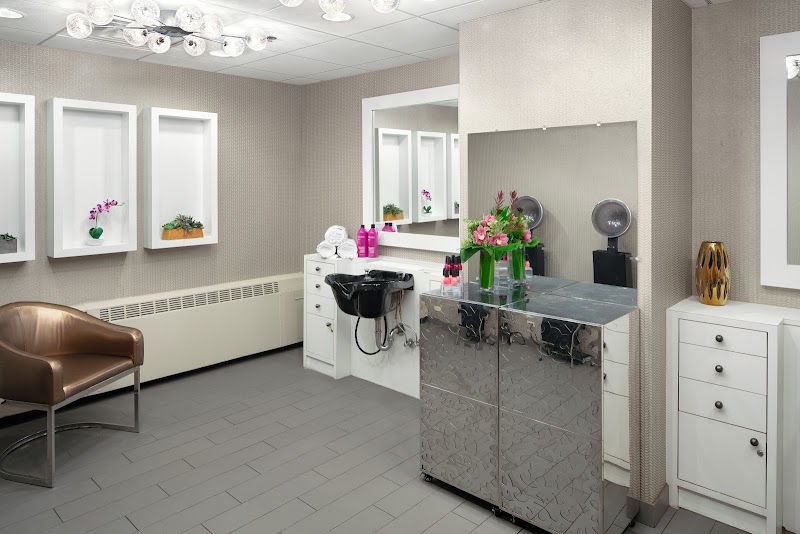
How Does Avantara Evergreen Park Compare to Other Illinois Nursing Homes?

Compared to the 100 nursing homes in Illinois, AVANTARA EVERGREEN PARK's overall rating (1 stars) is below the state average of 2.5, staff turnover (62%) is significantly higher than the state average of 46%, and health inspection rating (2 stars) is below the national benchmark.

What Should Families Ask When Visiting Avantara Evergreen Park?

Based on this facility's data, families visiting should ask: "How do you ensure continuity of care given staff turnover, and what is your staff retention strategy?" "Can you walk me through typical staffing levels on day, evening, and night shifts?" "Can I visit during a mealtime to observe dining assistance and food quality?" "How do you handle medical emergencies, and what is your hospital transfer rate?" These questions are particularly relevant given the facility's high staff turnover rate and the below-average staffing rating.

Is Avantara Evergreen Park Safe?

Based on CMS inspection data, AVANTARA EVERGREEN PARK has a clean safety record: no substantiated abuse findings (meaning no confirmed cases of resident harm), no Immediate Jeopardy citations (the most serious violation level indicating risk of serious injury or death), and is not on the Special Focus Facility watch list (a federal program monitoring the lowest-performing 1% of nursing homes). The facility has a 1-star overall rating and ranks #100 of 100 nursing homes in Illinois. While no facility is perfect, families should still ask about staff-to-resident ratios and recent inspection results during their visit.

Do Nurses at Avantara Evergreen Park Stick Around?

Staff turnover at AVANTARA EVERGREEN PARK is high. At 62%, the facility is 16 percentage points above the Illinois average of 46%. Registered Nurse turnover is particularly concerning at 55%. RNs handle complex medical decisions and coordinate care — frequent RN changes can directly impact care quality. High turnover means new staff may not know residents' individual needs, medications, or preferences. It can also be disorienting for residents, especially those with dementia who rely on familiar faces. Families should ask: What is causing the turnover? What retention programs are in place? How do you ensure care continuity during staff transitions?

Was Avantara Evergreen Park Ever Fined?

AVANTARA EVERGREEN PARK has been fined $349,677 across 7 penalty actions. This is 9.6x the Illinois average of $36,576. Fines at this level are uncommon and typically indicate a pattern of serious deficiencies, repeated violations, or failure to correct problems promptly. CMS reserves penalties of this magnitude for facilities that pose significant, documented risk to resident health or safety. Families should request specific documentation of what issues led to these fines and what systemic changes have been implemented.

Is Avantara Evergreen Park on Any Federal Watch List?

AVANTARA EVERGREEN PARK is not on any federal watch list. The most significant is the Special Focus Facility (SFF) program, which identifies the bottom 1% of nursing homes nationally based on persistent, serious quality problems. Not being on this list means the facility has avoided the pattern of deficiencies that triggers enhanced federal oversight. This is a positive indicator, though families should still review the facility's inspection history directly.