
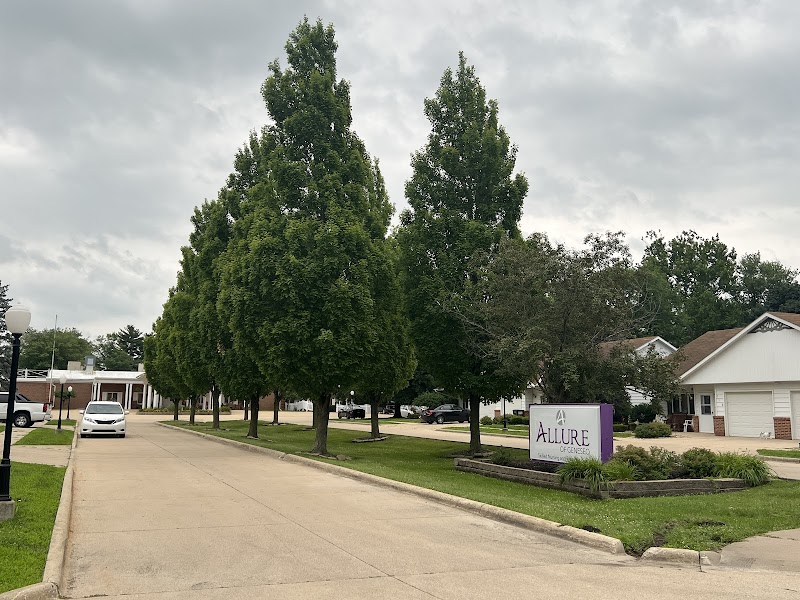
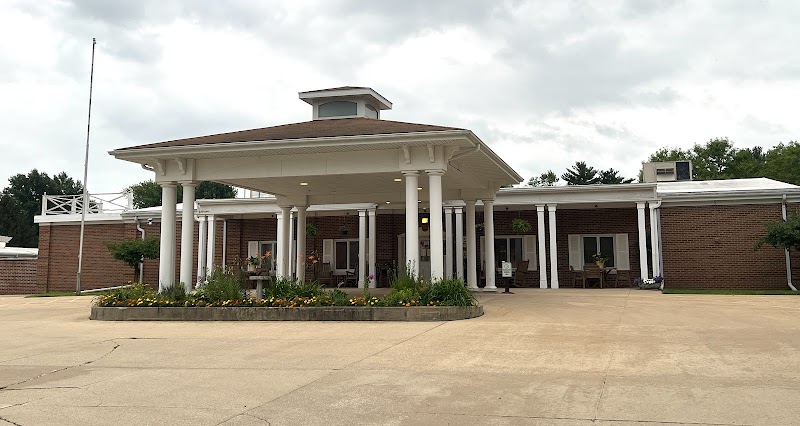
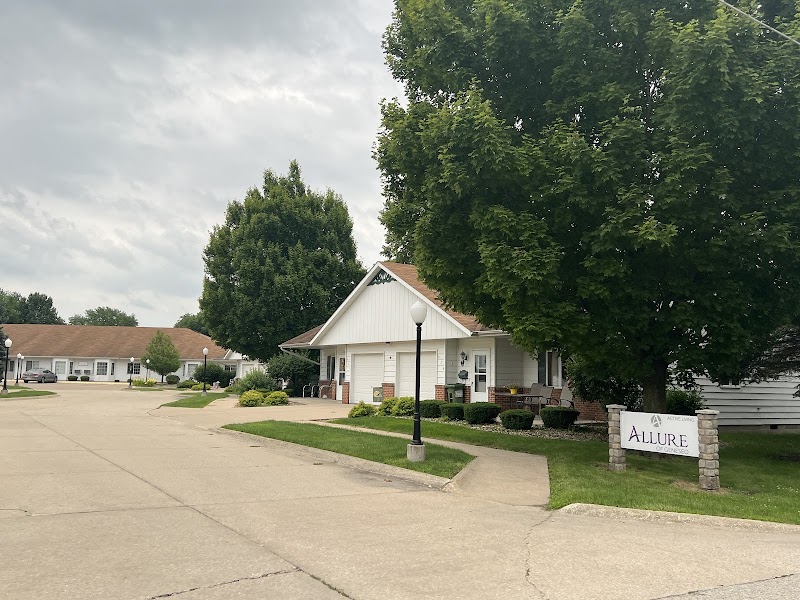

ALLURE OF GENESEO

704 SOUTH ILLINOIS STREET, GENESEO, IL 61254 (309) 944-6424
For profit - Limited Liability company 72 Beds ALLURE HEALTHCARE SERVICES Data: November 2025
Trust Grade
60/100
#210 of 665 in IL
Last Inspection: February 2025

Within standard 12-15 month inspection cycle. Federal law requires annual inspections.

Overview

Allure of Geneseo has a Trust Grade of C+, which means it is decent and slightly above average compared to other facilities. It ranks #210 out of 665 in Illinois, placing it in the top half, and #3 out of 5 in Henry County, indicating that only two local options are better. Unfortunately, the facility's trend is worsening, increasing from 7 issues in 2024 to 8 in 2025. Staffing is a notable weakness here, with a low rating of 1 out of 5 stars and a turnover rate of 41%, which, while below the state average, still suggests instability. There have been no fines, which is a positive sign, and the facility offers average RN coverage, indicating some level of nursing oversight. However, there are concerning incidents documented by inspectors. For example, opened food items were not dated, which poses a risk to residents, and there were cleanliness issues in the kitchen, such as dust and debris on equipment. Additionally, drinks were served at improper temperatures, and the facility failed to employ a Certified Dietary Manager, which is essential for maintaining food service standards. Overall, while there are some strengths, families should carefully consider these weaknesses when researching Allure of Geneseo.

Trust Score
C+
60/100
In Illinois
#210/665
Top 31%
Safety Record
Low Risk
No red flags
Inspections
Getting Worse
7 → 8 violations
Staff Stability
○ Average
41% turnover. Near Illinois's 48% average. Typical for the industry.
Penalties
✓ Good
No fines on record. Clean compliance history, better than most Illinois facilities.
Skilled Nurses
○ Average
Each resident gets 37 minutes of Registered Nurse (RN) attention daily — about average for Illinois. RNs are the most trained staff who monitor for health changes.
Violations
⚠ Watch
22 deficiencies on record. Higher than average. Multiple issues found across inspections.
★★★☆☆
3.0
Overall Rating
★☆☆☆☆
1.0
Staff Levels
★★★★☆
4.0
Care Quality
★★★★☆
4.0
Inspection Score
Stable
2024: 7 issues
2025: 8 issues

The Good

  • 4-Star Quality Measures · Strong clinical quality outcomes
  • Full Sprinkler Coverage · Fire safety systems throughout facility
  • No fines on record
  • Staff turnover below average (41%)

    7 points below Illinois average of 48%

Facility shows strength in quality measures, fire safety.

The Bad

3-Star Overall Rating

Near Illinois average (2.5)

Meets federal standards, typical of most facilities

Staff Turnover: 41%

Near Illinois avg (46%)

Typical for the industry

Chain: ALLURE HEALTHCARE SERVICES

Part of a multi-facility chain

Ask about local staffing decisions and management

The Ugly 22 deficiencies on record

Feb 2025 8 deficiencies
CONCERN (D)

Potential for Harm - no one hurt, but risky conditions existed

Resident Rights (Tag F0550)

Could have caused harm · This affected 1 resident

Based on interview, observation and record review, the facility failed to maintain a resident's dignity by ensuring clothing attire was clean and free of debris for one resident (R47) reviewed for dig...

Read full inspector narrative →
Based on interview, observation and record review, the facility failed to maintain a resident's dignity by ensuring clothing attire was clean and free of debris for one resident (R47) reviewed for dignity in the sample of 33. Findings include: R47's Minimum Data Set Assessment (dated 02/20/25) documents (in Section C), a Brief Interview for Mental Status score of 3, indicating R47 is severely cognitively impaired. On 02/26/25 at 11:20 AM, R47 was sitting in a high back wheelchair with V8 (R47's husband) sitting next to her. R47 had a full mechanical lift sling in place underneath of her. V8 pointed to several scattered areas of dried, crusted debris on the lap of R47's pants and stated, I am not sure if they are just not using the (clothing protectors) at breakfast. I keep finding her wearing dirty pants from food spilled on her. The pants she was wearing on Monday (02/24/25) were like this as well. They had areas of dried food that had been spilled all over them. I wish they would change her clothes when they look like this. She would have never kept a dirty pair of pants on if food had been spilled on them, V8 then began scraping the dried, crusted areas of debris off of R47's pants with his fingernail. On 02/6/25 at 11:40 AM, V1 (Administrator) stated facility staff should be changing a resident's clothing if it becomes soiled after a meal.
CONCERN (D)

Potential for Harm - no one hurt, but risky conditions existed

Quality of Care (Tag F0684)

Could have caused harm · This affected 1 resident

**NOTE- TERMS IN BRACKETS HAVE BEEN EDITED TO PROTECT CONFIDENTIALITY** Based on observation, interview and record review, the facility failed to apply physician-ordered compression stockings for one ...

Read full inspector narrative →
**NOTE- TERMS IN BRACKETS HAVE BEEN EDITED TO PROTECT CONFIDENTIALITY** Based on observation, interview and record review, the facility failed to apply physician-ordered compression stockings for one of one resident (R31), with a known history of acute/chronic heart failure, reviewed for edema, in a sample of 33. FINDINGS INCLUDE: R31's facility admission Record documents that R31 was admitted to the facility on [DATE] with the following diagnoses: Chronic Diastolic (Congestive) Heart Failure; Atrial Fibrillation; Chronic Kidney Disease, Stage 3; Edema. R31's current Physician Order Sheet, dated February 2025 includes the following orders: (Compression stockings) to bilateral lower extremity, on in AM (morning), off at HS (bedtime) for bilateral lower extremity edema on 9/7/2024. R31's current Care Plan, dated 9/7/24 includes the following Focus Area: (R31) has an activity of daily living self-care performance deficit related to impaired mobility, osteoarthritis, muscle weakness, visual and hearing deficits. Also included are the following Interventions/Tasks: (R31) requires substantial assist of one for upper/lower body dressing and putting on/taking off footwear. (R31) dependent on staff for (compression stockings) to be worn on bilateral lower extremity due/to edema, on in morning and off at bedtime. This same form includes the following Focus Areas: (R1) has altered cardiovascular status related to Congestive Heart Failure, Hypertension, Bilateral Lower Extremity Edema, Anemia. Also included are the following Focus Areas: (R31) to wear (compression stockings on bilateral lower extremities, on in the morning, off at bedtime. R31's Cardiology Progress Notes, dated 01/31/2025 documents, Follow up for cardiac med reconcile, titrating cardiac meds, lab follow up, following volume status, adjusting diuretics as needed, monitoring hemodynamics/symptoms during and post physical therapy, and increased risk for cardiac re-admission. Chief Complaint / Nature of Presenting Problem: Diastolic CHF (Congestive Heart Failure), A fib (Atrial Fibrillation), HTN (Hypertension). Review Of Systems General: Ext (Extremities) 4+ edema (swelling caused by buildup of fluid in body tissues) BLE (bilateral lower extremity). PLAN: --continue antihypertensive meds --avoid hypotension (low blood pressure) --avoid hypertension--heart healthy low sodium diet--cont (continue) to monitor. Echocardiogram to be ordered in the near future to determine baseline cardiac function. Will monitor to assess for CHF and possible myocarditis (inflammation of heart tissue). Limit sodium intake to augment blood pressure control and avoid worsening renal function. Maintain a healthy weight and increase activity as tolerated. On 2/24/25 at 10:01 A.M., R31 was lying in bed, sleeping. 3-4+ bilateral pitting edema was noted to (R31's) feet and ankles. (R31's) feet and legs were not elevated but resting on the mattress. No compression stockings were in place. On 2/24/25 at 2:55 P.M., (R31) was up in a wheelchair, in her room. R31's feet were resting on unelevated foot rests. Edema was present to R31's bilateral feet, the edema was over the top of R31's slippers. R31 did not have (compression stockings) on. At that time, R31 stated she does not wear compression stockings, as staff do not put them on her. On 2/25/25 at 9:56 A.M., (R31) was lying in bed, sleeping. 4+ bilateral edema was present to (R31's) lower legs, ankles, and feet. (R31's) legs and feet were resting on the mattress, not elevated, no (compression) stockings were present to (R31's) bilateral lower extremities. On 2/25/25 at 4:30 P.M., V1/Registered Nurse/Administrator verified R31 had a current physician's orders for the application of compression stockings daily.
CONCERN (D)

Potential for Harm - no one hurt, but risky conditions existed

Deficiency F0688 (Tag F0688)

Could have caused harm · This affected 1 resident

**NOTE- TERMS IN BRACKETS HAVE BEEN EDITED TO PROTECT CONFIDENTIALITY** 3. R7's current medical record documents R7's diagnoses to include: History of falling, Need for Assistance with Personal Care, ...

Read full inspector narrative →
**NOTE- TERMS IN BRACKETS HAVE BEEN EDITED TO PROTECT CONFIDENTIALITY** 3. R7's current medical record documents R7's diagnoses to include: History of falling, Need for Assistance with Personal Care, Weakness, Fatigue, Vertigo, Osteoarthritis, Unsteadiness on Feet, Difficulty in Walking, Displaced Oblique Fracture of Shaft of Fibula, Subsequent Encounter for Closed Fracture with Routine Healing, Abnormalities of Gait and Mobility. R7's Minimum Data Set Assessment (dated 12/12/24) documents (in section GG), R7 has impairment on one side of her lower extremities. This section also documents R7 utilizes a wheelchair. R7's current Physician's Orders document an order in place to discontinue skilled physical therapy on 01/27/25. On 02/26/25 at 11:15 AM, R7 was sitting in her wheelchair at a table in the dining room drinking a cup of coffee. R7 stated she is currently not receiving any type of range of motion/restorative exercises. R7 stated, I haven't done anything since they told me I was finished with therapy about a month ago. I wish they would do something. That is the only way that I will be able to walk again, and I want to be able to walk. R7's Activities of Daily Living self-care performance deficit documents the following: Nursing Rehab/Restorative: Active Range of Motion program 3-6 days a week. Hand bike Resistance Level 6 up to 15 minutes; Bilateral Lower Extremity exercises with 2 pound weights 1 set 10 reps; Fine motor-concentration game; Bilateral upper extremities with two pound wand or dumbbells all planes-curls, push outs, etc. 1 set of 10 reps. On 02/26/25 at 10:35 AM, V5 (Chief Nursing Officer) stated she could not provide documentation to confirm R7 has received range of motion/restorative exercises as indicated after she was discharged from physical therapy on 01/27/25. Based on Observation, Interview and Record Review, the facility failed to ensure residents were provided range of motion exercises and contracture alleviation devices to prevent further decline in range of motion and care plan and assess a resident's contracture for three of three residents (R6, R7, R27) reviewed for limitations in range of motion in the sample of 33. Findings include: The facility's Prevention of Decline in Range of Motion policy, dated 8/2024, documents Range of Motion means the full movement potential of a joint. Residents who exhibit limitations in range of motion, initially and thereafter, will be referred to the therapy department for a focused assessment of range of motion. Nursing assistants will report any significant changes in range of motion, as noted during daily care activities, to the resident's nurse when any changes are noted. The assessment should include identified risks which could impact resident's range of motion including, but not limited to; Immobilization, Neurological conditions causing functional limitations, any condition where movement may result in pain, spasms or loss of movement, Clinical conditions such as immobilized limbs or digits because of injury, fractures or surgical procedures including amputations. Based on comprehensive assessment, the facility will provide interventions, exercises and/or therapy to maintain or improve range of motion. Care plan interventions will be developed and delivered through the facility's restorative program, or through specialized rehabilitative services as ordered by the attending practitioner. This same policy documents Staff will be educated on the risk factors for a decline in range of motion. These include but are not limited to: Limbs or digits immobilized because of injury or surgical procedures, immobilization, deformities arising out of neurological deficits (such as strokes, multiple sclerosis, cerebral palsy, and polio), pain spasms, and immobility associated with arthritis, late state Alzheimer's disease or other conditions. Residents will receive services from restorative aides or therapists as needed. The facility's Restorative Nursing Programs policy, dated 10/2024, document It is the policy of this facility to provide maintenance and restorative services designated to maintain or improve a resident's abilities to the highest practicable level. Residents, as identified during the comprehensive assessment process, will receive services from restorative aides when they are assessed to have a need for restorative nursing services. These services may include Passive or Active range of motion, Splint or brace assistance, Bed mobility training and skill practice. This same policy documents Potential candidates for restorative nursing services may be identified through one or more of the following processes: physical assessments, MDS (Minimum Data Set assessments), Specialized Rehabilitation assessments, In-house referrals due to unusual occurrence/event. 1. On 2/24/25 at 1:50 PM, R6 was in her room lying in bed. R6's left hand was balled into a contracted fist. R6 stated she cannot move her left arm and her hand stays in that position unless she uses her right hand to force the fingers open. R6 stated she does not receive any range of motion exercises or therapy and she has not had a cone, or any devices placed into her left hand since living in the facility (8/5/24). R6's Minimum Data Set assessment, dated 2/7/25 documents R6 has no impairments to her upper or lower extremities. R6's Current Care Plan, dated 8/5/24, documents (R6) has an ADL (Activities of Daily Living) self-care performance deficit related to dementia, dizziness, epilepsy, muscle wasting and atrophy, history of CVA (Cerebrovascular Accident) with decreased use of left arm, generalized weakness, need for assistance with personal care, muscle weakness. This plan has an intervention of AROM (Active Range of Motion) program three to six days a week for bilateral upper extremities with two pound weight, one set of 20 repetitions. This Care Plan does not address R6's contracted left hand or document any interventions to relieve the contracture tightness, prevent skin breakdown under the tightened hand or provide Passive Range of Motion to the left hand. R6's Active Range of Motion Point of Care documentation dated 2/8/25- 2/26/25, documents R6 was not provided with any minutes of AROM and documents Not applicable on six occasions within that time frame. On 2/26/25 9:00 AM V5 (Chief Nursing Operations director) stated When (R6) was admitted to the facility, she never had a formal written therapy evaluation and was only put on the restorative plan (AROM). On 2/26/25 at 9:40 AM V5 stated I went down and assessed (R6). We are going to add her to OT (Occupational Therapy) for 12 sessions and they are going to be placing a rolled cloth in her left hand now. I don't have any therapy evaluations, care plan for her specific contracture or documentation of any further restorative exercises or assessments. At this time, V5 confirmed the Minimum Data Set assessment and the Care Plan for R6 do not include her contracted left hand impairment and stated they both should address that impairment. 2. R27's admission Record, dated 2/26/25, documents R27 was admitted to the facility on [DATE] with the following, but not limited to, diagnoses: Hemiplegia and Hemiparesis following Cerebral Infarction affecting Left Non-Dominant Side, Essential Hypertension, Need for Assistance with Personal Care, Type Two Diabetes Mellitus with Hyperglycemia, and Muscle Weakness. R27's MDS (Minimum Data Set) Assessment, dated 9/5/2020, documents R27 is cognitively intact and has an impairment to his left upper and lower extremity. This same MDS Assessment documents R27 does not receive any splint assistance. R27's current Care Plan documents R27 has an ADL (Activity of Daily Living) self-care performance deficit related to history of stroke with left side hemiplegia, lack of coordination, muscle weakness, and need for assistance with personal care. R27's Occupational Therapy Plan of Care, dated 12/24/21, documents General Long Term Goal: Therapist will facilitate (R27) with maintaining and/or increasing LUE (Left Upper Extremity) (shoulder/forearm/wrist/all five digits of hand) joint ROM (range of motion), splinting/brace wear, and optimal positioning in order to prevent worsening of existing contracture, prevention potential subluxation of shoulder, promote increased blood flow, prevent edema, optimize joint excursion, purposeful activities, and to assess LUE (extra space) for pressure sores or red areas. On 02/24/25 at 11:14 AM R27 was sitting in a recliner in his room. R27's left hand was in a closed fist with fingers facing his palm. R27 stated, I am supposed to wear a splint to my left hand every day. Only one staff member (V9/Restorative Nursing Assistant) puts it on me when they work, no one else puts it on me. I want to wear it, so my fingers don't get worse. On 2/25/25 at 11:25 AM R27 was sitting in his recliner in his room. R27's left hand was in a closed fist with fingers facing his palm. R27 did not have on his left-hand splint. R27 stated, See no one has put my left-hand splint on today. I wish they would. On 2/25/25 at 11:32 AM V2/Director of Nursing stated according to R27's care plan in December 2024, R27 should wear his splint one time a week then gradual increase to tolerate. V2 stated, I don't see where anyone increased (R27) to wear his splint more often. (R27) should be wearing it more than one time a week. (R27) used to wear his left-hand splint during the day and off at night. I am not sure why it even got changed. On 2/25/25 at 12:42 PM V9/Restorative Nursing Assistant stated, I have not been putting (R27's) splint on him that often. Sometimes if I remember I will put it on (R27) for two hours and then take it off him. There is no consistency on when to put (R27's) left-hand splint on him. I did not put it on (R27) yesterday or today. On 2/26/25 at 9:30 AM V5/Chief Nursing Officer stated We (the facility) clearly have a deficiency in the restorative programming. (R27) should have orders in the treatment record on when to apply his left-hand splint and when to remove the splint. Clearly we need to fix things. On 2/26/25 at 11:10 AM V10/Registered Nurse/Care Plan Coordinator stated, (R27) was supposed to be wearing his splint two hours a day every day. It was something that slipped through the cracks. I just updated (R27's) care plan yesterday so restorative is aware (R27) should be wearing it daily for two hours. We (the facility) want (R27) to wear his splint to prevent contractures to his left hand, since (R27) is unable to move his left hand/fingers.
CONCERN (D)

Potential for Harm - no one hurt, but risky conditions existed

Respiratory Care (Tag F0695)

Could have caused harm · This affected 1 resident

Based on observation, interview and record review, the facility failed to ensure a nebulizer mask and nebulizer tubing was changed every 72 hours and stored in a bag between uses and ensure oxygen tub...

Read full inspector narrative →
Based on observation, interview and record review, the facility failed to ensure a nebulizer mask and nebulizer tubing was changed every 72 hours and stored in a bag between uses and ensure oxygen tubing was changed every seven days for one of one resident (R57) reviewed for respiratory care in a sample of 33. Findings include: The facility's Nebulizer Therapy Policy, dated 2024, documents Policy: it is the policy of this facility for nebulizer treatments, once ordered, to be administered by nursing staff as directed using proper technique and standard precautions. If the nebulizer will supply oxygen to the patient, refer to policy Oxygen Concentrator. Care of the Equipment: 7. Once completely dry, store the nebulizer cup and the mouthpiece in a zip lock bag. 8. Change nebulizer tubing every seventy-two hours or per facility policy. The facility's Oxygen Administration Policy, dated 2024, documents Policy: Oxygen is administered to residents who need it, consistent with professional standards of practice, the comprehensive person-centered care plans, and the resident's goals and preferences. Policy Explanation and Compliance Guidelines: 5. Staff shall perform hand hygiene and don gloves when administering oxygen or when in contact with oxygen equipment. Other infection control measures include: If applicable, change nebulizer tubing and mask/cannula weekly and as needed if it becomes soiled or contaminated. On 02/24/25 at 11:20 AM R57's nebulizer mask was lying on R57's dresser undated and unbagged. On 2/24/25 at 11:25 AM R57 was in the dining room with oxygen flowing via nasal cannula. R57's nasal cannula oxygen tubing was un-dated. On 2/24/25 at 11:40 AM V4/Registered Nurse verified R57's nebulizer mask and nebulizer medication cup was undated and un-bagged. V4 also verified R57's nasal cannula oxygen tubing was undated. V4 stated, Nebulizer masks and nebulizer medications cups should be changed at least every 72 hours, dated, and placed in a bag after each use. Oxygen tubing should be changed at least once weekly and dated as well.
CONCERN (D)

Potential for Harm - no one hurt, but risky conditions existed

Infection Control (Tag F0880)

Could have caused harm · This affected 1 resident

Based on observation, interview and record review facility staff failed to disinfect a shared glucometer between resident use for three of three residents (R6, R11 and R25) reviewed for infection cont...

Read full inspector narrative →
Based on observation, interview and record review facility staff failed to disinfect a shared glucometer between resident use for three of three residents (R6, R11 and R25) reviewed for infection control, in a sample of 33. The (undated) facility policy, Glucometer Disinfection directs staff, The purpose of this procedure is to provide guidelines for the disinfection of capillary-blood glucose sampling devices to prevent transmission of blood borne diseases to residents and employees. The facility will ensure blood glucometer's will be cleaned and disinfected after each use and according to manufacturer's instructions for multi-resident use. The glucometer's will be disinfected with a wipe pre-saturated with an EPA (Environmental Protection Agency) registered healthcare disinfectant that is effective against HIV (Human Immunodeficiency Virus), Hepatitis C and Hepatitis B virus. R6's current Physician Order Sheet, dated February 2025 includes the following diagnosis: Diabetes Mellitus with Hyperglycemia. Also included are the following physician orders: Finger stick blood glucose monitoring three times daily. R11's current Physician Order Sheet, dated February 2025 includes the following diagnosis: Diabetes Mellitus with Diabetic Polyneuropathy. Also included are the following physician orders: Finger stick blood glucose monitoring before each meal and at bedtime. R25' current Physician Order Sheet, dated February 2025 includes the following diagnosis: Diabetes Mellitus with Diabetic Retinopathy. Also included are the following physician orders: Finger stick blood glucose monitoring before each meal daily. On 2/24/25 at 11:01 A.M., V6/Licensed Practical Nurse (LPN) prepared to perform a blood glucose finger stick for R6. V6/LPN removed a glucometer from the top of her medication cart, placed it in her pocket and went to R6's room, performed a finger stick blood glucose test with the glucometer, returned to the medication cart and without cleansing the machine, prepared to administer medications and perform a finger stick blood glucose test for R11. On 2/24/25 at 11:12 A.M., V6/Licensed Practical Nurse (LPN) prepared to perform a blood glucose finger stick for R11. V6/LPN picked up the nondisinfected glucometer machine from the top of her medication cart, performed a finger stick blood glucose test with the glucometer on R11, returned to the medication cart and without cleansing the machine, prepared to administer medications and perform a finger stick blood glucose test for R25. On 2/24/25 at 11:21 A.M., V6/Licensed Practical Nurse (LPN) prepared to perform a blood glucose finger stick for R25. V6/LPN removed a nondisinfected glucometer from the top of her medication cart, placed it in her pocket and went to R25's room, performed a finger stick blood glucose test with the glucometer, returned to the medication cart and without cleansing the machine, prepared to administer medications for the next resident. At that time, V6/LPN confirmed she had not disinfected the shared glucometer between R6, R11 and R25.
CONCERN (F)

Potential for Harm - no one hurt, but risky conditions existed

Food Safety (Tag F0812)

Could have caused harm · This affected most or all residents

Based on observation, interview, and record review, the facility failed to ensure opened food items were dated upon opening and ensure areas in the kitchen were clean. This failure has the potential t...

Read full inspector narrative →
Based on observation, interview, and record review, the facility failed to ensure opened food items were dated upon opening and ensure areas in the kitchen were clean. This failure has the potential to affect all 63 residents currently residing in the facility. Findings include: The facility's Labeling and Dating policy (undated) documents the following: Leftovers and opened foods shall be clearly labeled with date food item is to be discarded. Food items to be labeled and dated include items prepared in house and food items that are opened and stored for later use. On 02/24/25 at 09:50 AM, multiple scattered areas of dust and debris were adhered to the fan covers and surrounding areas of wall and ceiling in the walk-in cooler. V7 (Dietary Manager) confirmed the presence of dust and debris on the fan covers and the surrounding areas of wall and ceiling. On 02/24/25 at 09:55 AM, the reach-in cooler contained a large bag of shredded mild cheddar cheese that was open and did not contain the date it was opened. The reach-in cooler also contained a large, opened salad bag with scattered pieces of browning lettuce noted throughout the bag. The bag of salad did not contain the date it was opened. V7 verified both bags of shredded cheese and salad mix were opened and undated. V7 stated both opened items should be labeled with the date in which they were opened, and then proceeded to place both items back into the reach-in cooler. The facility's Long-Term Care Facility Application for Medicare and Medicaid (CMS Form 671) dated 02/24/25 and signed by V1 (Administrator), documents 63 residents currently reside in the facility.
MINOR (C)

Minor Issue - procedural, no safety impact

Transfer Notice (Tag F0623)

Minor procedural issue · This affected most or all residents

**NOTE- TERMS IN BRACKETS HAVE BEEN EDITED TO PROTECT CONFIDENTIALITY** 2. R219's Nursing Progress Notes, dated 2/16/2025 at 6:06 PM documents R219 was sent to the local emergency room due to a recent...

Read full inspector narrative →
**NOTE- TERMS IN BRACKETS HAVE BEEN EDITED TO PROTECT CONFIDENTIALITY** 2. R219's Nursing Progress Notes, dated 2/16/2025 at 6:06 PM documents R219 was sent to the local emergency room due to a recent change in condition. R219's electronic medical record does not document that R219 or R219's representative was provided with a written notice of transfer when R219 was sent to the hospital. The facility's CMS (Centers for Medicare and Medicaid Services) Long Term Care Facility Application for Medicare and Medicaid Form 671 dated 2/24/24 and signed by V1/Administrator documents 63 residents currently reside within the facility. On 2/26/25 at 10:20 AM V1 (Administrator) verified the facility did not provide (R12 and R219) or their representatives with a written notice of transfer. V1 stated, I know the resident's have not been receiving a written notice of transfer when they are discharged to the hospital because we do not have a good process in place. I doubt anyone has received them. Based on interview and record review the facility failed to provide the resident/resident representatives with a written notice of transfer. This has the potential to affect all 63 resident's residing in the facility. Findings include: 1. R12's medical record documents that R12 was transferred to a local hospital on [DATE]. No evidence of a facility notification to R12 or R12's representative of a transfer/discharge was present in R12's chart
MINOR (C)

Minor Issue - procedural, no safety impact

Deficiency F0625 (Tag F0625)

Minor procedural issue · This affected most or all residents

**NOTE- TERMS IN BRACKETS HAVE BEEN EDITED TO PROTECT CONFIDENTIALITY** 2. R219's Nursing Progress Notes, dated 2/16/2025 at 6:06 PM documents R219 was sent to the local emergency room due to a recent...

Read full inspector narrative →
**NOTE- TERMS IN BRACKETS HAVE BEEN EDITED TO PROTECT CONFIDENTIALITY** 2. R219's Nursing Progress Notes, dated 2/16/2025 at 6:06 PM documents R219 was sent to the local emergency room due to a recent change in condition. R219's electronic medical record does not document that R219 was provided with a bed hold notice when R219 was sent to the hospital. The facility's CMS (Centers for Medicare and Medicaid Services) Long Term Care Facility Application for Medicare and Medicaid Form 671 dated 2/24/24 and signed by V1/Administrator documents 63 residents currently reside within the facility. On 2/26/25 at 10:20 AM V1 (Administrator) verified the facility did not provide (R12 and R219) or their representatives with a bed hold. V1 stated, I know the residents' have not been receiving a bed hold when they are discharged to the hospital because we do not have a good process in place. I doubt anyone has received them. Based on interview and record review the facility failed to provide a copy of the bed hold policy for facility residents discharging to the hospital. This failure has the potential to affect all 63 residents currently residing in the facility. Findings include: The facility's Bed Hold Notice, dated 2025, documents It is the policy of this facility to provide written information of the resident and/or the resident representative regarding bed hold practices both well in advance, and at the time of, a transfer for hospitalization or therapeutic leave. Policy Explanation and Compliance Guidelines: 2. In the event of an emergency transfer of a resident, the facility will provide written notice of the facility's bed hold policies to the resident and/or the resident representative with 24 hours. The facility will document multiple attempts to reach the resident's representative in cases where the facility was unable to notify the representative. The facility will keep a signed and dated copy of the bed-hold notice information give to the resident and/or resident representative in the resident's file and/or medical record. 1. R12's medical record documents that R12 was hospitalized on [DATE]. R12's medical record does not contain documentation of the facility bed hold policy given to R12 or R12's representative.
Jan 2024 7 deficiencies
CONCERN (D)

Potential for Harm - no one hurt, but risky conditions existed

Deficiency F0583 (Tag F0583)

Could have caused harm · This affected 1 resident

**NOTE- TERMS IN BRACKETS HAVE BEEN EDITED TO PROTECT CONFIDENTIALITY** Based on observation, interview and record review the facility failed to ensure privacy during incontinent care for one resident...

Read full inspector narrative →
**NOTE- TERMS IN BRACKETS HAVE BEEN EDITED TO PROTECT CONFIDENTIALITY** Based on observation, interview and record review the facility failed to ensure privacy during incontinent care for one resident (R26) of 15 residents reviewed for privacy in the sample of 27. Findings include: Facility Policy/Promoting/Maintaining Resident Dignity dated 2023 documents: Maintain resident privacy. Current Physician Order Report Summary indicates R26 has diagnoses that include Neurocognitive Disorder with [NAME] Bodies, Dementia with Psychotic Disturbance, Parkinson's Disease with Dyskinesia. Progress Notes dated 12/19/23 at 1:12pm indicates R26 is moderately cognitively impaired. On 1/16/24 at 11:37am R26 and R22 roommates, both sitting in wheelchairs in the room. R26 was closest to the window which covered 75% of the wall nearest R22's bed. The shade was completely retracted to the top of the window. The window view was directly to a parking lot on the ground floor with a car parked approximately 2 car widths from R26's window. At that time, R26's shirt was completely unbuttoned, exposing most of R26's breasts and abdomen. R26 was only wearing an incontinent brief, no pants. R26 had no linen or blanket covering her bare legs. R26 had pulled the brief loose from the side tabs and was constantly tugging at the front part of the brief. V11, CNA (Certified Nurse Assistant) responded to request for assistance with R26. V11 stated he did not know who got R26 dressed in the morning but thinks it was a nurse. V11 attempted to stand R26 up with a gait belt to transfer R26 to the toilet with the bathroom door open in full view of R22. V11 was unable to transfer R26 and brought R26 back out into the room where R26 sat nearby R22 until V11 returned a few minutes later. R26 was left sitting with the brief open and exposing R26's front groin area. V11 returned, backed R26 into the middle of the room, lifted R26 up with a sit-to-stand style lift, exposing R26's entire bare body from mid-back to feet except for the incontinent brief that was saturated on the back side with urine and feces. R26's body was exposed to the entire window area and to R22 while being suspended from the sit-to-stand lift and transported into the bathroom. The bathroom door was left open in view of R22 while R26 received incontinent care. At that time R22 stated the staff Never pull the window blind down. On 1/18/23 at 9:35am R22 confirmed she was a nurse in the Army for 22 years and stated staff should provide privacy for her and R26 when they are giving them care, stating It's not right. We should have privacy. On 1/18/24 at 2:15pm V2, DON (Director of Nursing) acknowledged the proximity of the parking lot to R26's room, the very large window next to R26's bed and V2 confirmed the shade should be pulled while providing care as well as the privacy curtain between resident beds.
CONCERN (D)

Potential for Harm - no one hurt, but risky conditions existed

PASARR Coordination (Tag F0644)

Could have caused harm · This affected 1 resident

Based on interview and record review the facility failed to refer one resident (R20) for a Preadmission Screening and Resident Review (PASARR) after onset of new possible serious mental illness of fiv...

Read full inspector narrative →
Based on interview and record review the facility failed to refer one resident (R20) for a Preadmission Screening and Resident Review (PASARR) after onset of new possible serious mental illness of five reviewed for PASARR in a total sample of 27. Findings Include: The Facility's Resident Assessment-Coordination with PASARR Program policy dated 01/01/2024 documents This facility coordinates assessments with the preadmission screening and resident review (PASARR) program under Medicaid to ensure that individuals with a mental disorder, intellectual disability, or a related condition receives care and services in the most integrated setting appropriate to their needs. Any resident who exhibits a newly evident or possible serious mental disorder, intellectual disability, or a related condition will be referred promptly to the state mental health or intellectual disability authority for a level II resident review. Examples include: a.) A resident who exhibits behavioral, psychiatric, or mood related symptoms suggesting the presence of a mental disorder (where dementia is not the primary diagnosis) b.) A resident whose intellectual disability or related condition was not previously identified and evaluated through PASARR. R20's current Physician Order Sheet dated January 2024 documents 09/30/2020 as R20's original admission date. R20's Admitting History and Physical done by V5 (Attending Physician) dated 05/18/2020 documents Psychiatric/Behavioral: Negative for behavioral problems. R20's Office Visit done by V8 (Attending Physician) dated 07/14/2020 documents Psychiatric/Behavioral: Negative for agitation and confusion. R20's Nurse's Notes dated 10/09/2022 documents resident was verbally foul and swinging at staff. R20's Nurse's Notes dated 10/27/2022 documents inappropriate comments and sexual demands of nurse. R20's Nurse's Notes dated 11/05/2022 documents making sexual comments to CNAs (Certified Nurse Aides). R20's Nurse's Notes dated 11/24/2022 documents confused and delusional. R20's Current Physician Order Sheet dated January 2024 documents Bipolar Disorder as a diagnosis as of 12/06/2022. On 01/18/24 at 10:30 AM V1 (Administrator) stated that the Bipolar Disorder Diagnosis was initiated by V7 (Psychiatric Doctor) on 11/14/2022. R20's Nurse's Notes dated 12/06/2022 documents Wife notified of new diagnosis of Bipolar Disorder and wife stated (R20)'s family had a strong history of bipolar disorder. R20's PASARR dated 9/25/2022 documents Based upon all information and data available to me for this person there is a reasonable basis for suspecting DD (Developmental Disability) or MI (Mental Illness): No. On 01/18/24 at 9:00 AM V1 (Administrator) confirmed that no new PASARR was initiated or completed after new onset of behaviors and/or new diagnosis of Bipolar Disorder. It should have been done and was not.
CONCERN (D)

Potential for Harm - no one hurt, but risky conditions existed

Deficiency F0645 (Tag F0645)

Could have caused harm · This affected 1 resident

**NOTE- TERMS IN BRACKETS HAVE BEEN EDITED TO PROTECT CONFIDENTIALITY** 2) Physician Order Report Summary indicates R22 was admitted to the facility on [DATE] with diagnosis of Generalized Anxiety Dis...

Read full inspector narrative →
**NOTE- TERMS IN BRACKETS HAVE BEEN EDITED TO PROTECT CONFIDENTIALITY** 2) Physician Order Report Summary indicates R22 was admitted to the facility on [DATE] with diagnosis of Generalized Anxiety Disorder. Resident Medical Diagnosis List indicates R22 has diagnoses that include: Moderate, Recurrent Major Depressive Disorder (6/27/23) Adjustment Disorder (7/15/21) Delusional Disorder (12/27/21) Initial Pre-admission OBRA (Omnibus Budget Reconciliation Act) Screen dated 6/8/20 indicates at that time there was no reasonable basis for suspecting DD (Developmental Disability) or MI (Mental Illness). State Screening Verification Form dated 6/8/20 indicates This form is used for prospective residents who are being admitted from another nursing facility where a copy of the original screening assessment completed for admission to the transferring nursing facility cannot be found. Admitting facilities must make every effort to obtain a copy of the screening assessment from the discharging facility prior to completing this form. State Notice of PASRR (Preadmission Screening and Resident Review) Level l Screen Outcome dated 1/18/24 indicates the screening completed for R22 on 1/18/24 shows that R22 needs a face-to-face Level ll evaluation. Notice indicates (R22) may have a serious mental illness or an intellectual/developmental disability. Level l Screen dated 1/18/24 indicates (R22) has never had a PASSR Level ll evaluation and shows signs or symptoms that indicate (R22) may have a PASARR condition. No prior PASSR Level l or Level ll screen was found or presented for R22 prior to 1/18/23. Based on interview, and record review the facility failed to obtain a PASARR (Preadmission Screening and Resident Review) Level I prior to admission to the facility and failed to request or obtain a PASARR Level II Screening for two (R10 and R22) of five residents reviewed for PASARR Screenings in the sample of 27. Findings include: The facility's Resident Assessment - Coordination with PASARR Program, dated 1/1/24, documents: This facility coordinates assessments with the preadmission screening and resident review (PASARR) program under Medicaid to ensure that individuals with a mental disorder, intellectual disability, or a related condition receives care and services in the most integrated setting appropriate to their needs. All applicants to this facility will be screened for serious mental disorders or intellectual disabilities and related conditions in accordance with the State's Medicaid rules for screening. a. PASARR Level I - initial pre-screening that is completed prior to admission. i. Negative Level I Screen - permits admission to proceed and ends the PASARR process unless a possible serious mental disorder or intellectual disability arises later. ii. Positive Level I Screen - necessitates a PASARR Level II evaluation prior to admission. b. PASARR Level II - a comprehensive evaluation by the appropriate state-designated authority (cannot be completed by the facility) that determines whether the individual has MD (mental disorder), ID (intellectual disability), or related condition, determines the appropriate setting for the individual, and recommends any specialized services and/or rehabilitative services the individual needs. 3. A record of the pre-screening shall be maintained in the resident's medical record. On 01/18/24 at 9:00 am V1 Administrator confirmed a PASARR Level I and II have not be completed for R10 and R22 and she has already started the process and stated It should have been done prior to admission and was not. 1. The EHR (electronic health record) for R10 documents R10 admitted to the facility on [DATE] with the following diagnoses: Bipolar, GAD (General Anxiety Disorder), Dementia, Brief Psychotic Disorder, and MDD (Major Depressive Disorder). This same EHR does not include documentation of the PASARR Level I or II having been completed prior to R10 admitting to the facility. The current Care Plan for R10, documents a Focus area as: R10 currently prescribed anti-psychotic medication related to Bipolar Disorder with Generalized Anxiety Disorder and Brief Psychotic Disorder. On 1/18/24 V1 Administrator confirmed there was no prior PASSR Level I or Level II screen found or presented for R10 prior to 10/18/23. V1 provided a PASARR Level I screen request for R10, dated 1/17/23, and a referral, dated 1/18/23 to local company for a PASARR Level II to be completed. This referral documents Reason For Screening: This nursing facility resident has never had a PASRR Level II evaluation and shows signs or symptoms that indicate she/he may have a PASARR condition.
CONCERN (D)

Potential for Harm - no one hurt, but risky conditions existed

Deficiency F0692 (Tag F0692)

Could have caused harm · This affected 1 resident

**NOTE- TERMS IN BRACKETS HAVE BEEN EDITED TO PROTECT CONFIDENTIALITY** Based on observation, interview and record review the facility failed to assist two residents (R25, R26) at risk of malnutrition...

Read full inspector narrative →
**NOTE- TERMS IN BRACKETS HAVE BEEN EDITED TO PROTECT CONFIDENTIALITY** Based on observation, interview and record review the facility failed to assist two residents (R25, R26) at risk of malnutrition and who require assistance with meals of nine residents reviewed for nutrition in the sample of 27. Findings include: Facility Policy/Meals Supervision and Assistance dated 2023 documents: --The resident will be prepared for a well-balanced meal in a calm environment, location of his/her preference and with adequate supervision and assistance to prevent accidents, provide adequate nutrition, and assure an enjoyable event. --The facility will develop an individualized care plan based on the Resident Assessment Instrument to address the resident's needs and goals, to monitor the results of the planned interventions such as adequate supervision during meal time. --Assemble equipment and supplies needed. Do not serve the meal until the attendant is ready to assist the resident. Current Physician Order Summary Report indicates R25 was admitted to the facility on [DATE] and has the following diagnoses: Kidney Cancer, Anorexia, Mild Protein-Calorie Malnutrition, Depression and Alzheimer's Disease. Nutrition Risk assessment dated [DATE] at 10:47am indicates R5 is nutritionally compromised as evidenced by anorexia and malnutrition. R25 is at risk for further compromise in nutrition and hydration status due to need for therapeutic diet, oral intakes less than 75%. Weight Log indicates R25 weighed 120.2 pounds on 12/6/23 and 116.8 pounds on 1/3/24. Current Care Plan indicates R25 has a potential risk for nutritional deficit due to psychomotor/Alzheimer's Disease, poor intake at meals, anorexia, risk for malnutrition. Care Plan interventions include: encourage adequate fluids and nutrition; Care Plan also indicates R25 has an ADL (Activities of Daily Living) self-care performance deficit related to Dementia and psychomotor deficit. Care Plan interventions dated 8/8/23 include: Dining Program 7 days/week; R25 to eat all meals in Rehab DR; Set up tray, hand R5 utensils; Provide encouragement as needed; R25 can feed herself after set-up help with supervision, but requires partial/moderate assist times one. On 1/16/24 at 12:20pm R25 was in bed with eyes closed. A meal tray was on a bedside table next to R25's bed. At no time between 12:20pm and 1pm did staff enter R25's room until R25's lunch tray was removed - uneaten at 1:05pm. On 1/17/24 at 8:23am R25 was sitting up in a chair at bedside, drinking from a cup with a handle and several food items still on a plate. No staff were present in the room. R25's Fluid Intake record for 1/16/24 (noon meal) and 1/17/24 (noon meal) indicates zero fluid intake for lunch meal and 240 ml (milliliters) at breakfast meals. R25's Amount Eaten/ Meal Intake record dated 1/16/24 and 1/17/24 indicates zero to 25% eaten at breakfast meals and zero to 25% eaten at noon meal on 1/17/25. 2) Nutritional Risk assessment dated [DATE] at 11:04pm indicates R26 is nutritionally compromised as evidenced by impaired skin integrity and low BMI (Body Mass Index). R26 is at risk for further compromise in nutrition and hydration status due to oral intake less than 75%. Current Care Plan indicates R26 has a nutritional problem related to diagnoses of Dysphagia, Parkinson's Disease and Dementia. Care Plan interventions (date revised 12/18/23) include: R26 requires supervision and/or assistance at meals. R26 to use a scoop plate; offer small bites and sips; R26 to sit upright at 90 degree angle during meals and eat all meals in the Rehab DR (dining room). Provide verbal cues and supervision to ensure proper nutritional intake for wound healing and weight maintenance. On 1/16/24 at 11:40am R26 was in her room, with the door closed, sitting in a wheelchair with breakfast tray in front on a bedside table in front of R26. R26 was sitting with her head down and eyes closed and did not initially respond to name called. None of the breakfast items on R26's plate appeared to have been eaten. Milk or some white liquid was spilled under R26's table and wheelchair. At that time, R22 - R26's roommate - stated She doesn't eat. R26 was asked if staff had assisted her with her meal R22 replied No. They just put the food there. On 1/16/24 at 12:15pm R26's lunch tray was brought into her room and placed on a bedside table in front of R26. Lids were not removed from the cups of liquids and utensils were not given to R26. Continuous observations from 12:15 to 1pm found no staff were seen returning to R26's room until 1pm when staff entered R26's room and removed R26's meal tray. 1/17/24 at 8:20am R26 was sitting in her wheelchair with breakfast meal on bedside table in front of R26. R26 was holding a milk carton and attempting to drink from the carton. No staff were present in the room while R26 was eating/drinking. On 1/17/24 at 9:45am R26 had cups and cartons of liquids on the bedside table and was attempting to chew on the plastic lid from one of the cups. R26's Fluid Intake record for 1/16/24 (noon meal) indicates zero fluid intake for lunch meal. No other fluid intake documentation was recorded for breakfast or dinner meal on 1/16/24. Fluid intake record dated 1/17/24 indicated R26 took 240 ml fluids at dinner meal. No other fluid intake documentation was recorded for 1/17/24. R26's Amount Eaten/ Meal Intake record dated 1/16/24 indicates R6 ate zero to 25% for breakfast meal, no documentation was found for noon meal. Record dated 1/17/24 had no meal intake documentation for breakfast or noon meals. On 1/17/24 at 12:15pm V9, CNA was assisting R16 with the lunch meal. V9 stated that she took R16's tray early from the kitchen because two other residents, R25 and R26, would also require assistance with eating when their trays arrived. V9 stated that R25 and R26's trays had not yet been delivered to their rooms so she would assist them when she was done with R16. On 1/18/24 at 2:40pm V2, DON (Director of Nursing) stated that R22, R25 and R26 all ate in the Rehab Dining room until they became positive for the flu. V2 acknowledged R22, R25 and R26 should have been assisted with their meals.
CONCERN (D)

Potential for Harm - no one hurt, but risky conditions existed

Medication Errors (Tag F0758)

Could have caused harm · This affected 1 resident

**NOTE- TERMS IN BRACKETS HAVE BEEN EDITED TO PROTECT CONFIDENTIALITY** Based on observation, interview and record review the facility failed to have any indication for use for an antipsychotic medica...

Read full inspector narrative →
**NOTE- TERMS IN BRACKETS HAVE BEEN EDITED TO PROTECT CONFIDENTIALITY** Based on observation, interview and record review the facility failed to have any indication for use for an antipsychotic medication for one resident (R20) of five reviewed for psychotropic medication use in a total sample of 27. Findings Include: The Facility's undated Use of Psychotropic Medications documents Residents are not given psychotropic drugs unless the medication is necessary to treat a specific condition, as diagnosed and documented in the clinical record, and the medication is beneficial to the resident, as demonstrated by monitoring and documentation of the resident's response to the medication. R20's Medical Record documents R20 was admitted on [DATE] with diagnosis of CVA (Cerebral Vascular Accident) with hemiparesis. R20's history and physical dated 5/18/2020 from V6 (Attending Physician) that document Psychiatric/Behavioral: Negative for behavioral problems. R20's Current Physician Order Sheet dated January 2024 documents Bipolar Disorder as a diagnosis as of 12/06/2022. R20's Current Physician Order Sheet dated January 2024 documents R20 receives Haloperidol Oral Tablet 5 mg (milligrams) every night on Monday, Tuesday, Thursday, Friday, Saturday and Sunday related to delusional disorder and Bipolar Disorder and 2 mg of Haloperidol every Wednesday night. R20's Nurse's Notes dated 10/09/2022 documents resident was verbally foul and swinging at staff. R20's Nurse's Notes dated 10/27/2022 documents inappropriate comments and sexual demands of nurse. R20's Nurse's Notes dated 11/05/2022 documents making sexual comments to CNAs (Certified Nurse Aides). R20's Nurse's Notes dated 11/24/2022 documents confused and delusional. R20's Current Care Plan with target date of 02/21/2024 documents Resident displays behaviors at times related to history of CVA (Cerebral Vascular Accident) with cognitive communication deficit delusion disorder, Major Depressive Disorder, recurrent severe with psychotic features. R20's care plan documents an undated entry of Behavior #1: resistive to cares, Behavior #2: attention seeking behaviors, verbally aggressive toward staff, accusative towards staff (not receiving care, mistreatment), Behavior #3: sexually inappropriate to female staff requested sexual favors and attempting to grab at their breasts, Behavior #4 continuous use of call light, delusions-wife kidnapped by CNAs (Certified Nurse Aides) and going to Mexico, yelling out to call a lawyer and the police because he thinks his wife is cheating, inappropriate sexual comments about wife and staff, Behavior #5 throwing things in room, Behavior #6 attempting to throw self out of bed, Behavior #6 attempting to call police and fire department due to delusions believing his wife is cheating on him. On 01/18/24 at 10:00 AM V5 (Registered Nurse/ Care Plan Coordinator) stated I don't know if (R20) is still actively having these behaviors, I don't work the floor. V5 stated she would assume all the behaviors on the current care plan are from R20's episode in 2022. R20's Medical Record from January 2023 until present did not contain any documentation of further behaviors after 11/24/2022. R20's Psychiatry Notes from January 2023 until present do not include any notes of active delusions or behaviors other than being uncooperative with cares. Throughout the survey R20 refused to speak, would make eye contact and track conversation and then close his eyes and not acknowledge being spoken to. R20 remained calm and cooperative with cares except getting out of bed during the survey. On 01/18/24 at 2:30 PM V1 (Administrator) confirmed R20 had no documentation of any harmful or concerning behaviors since 2022.
CONCERN (E)

Potential for Harm - no one hurt, but risky conditions existed

Accident Prevention (Tag F0689)

Could have caused harm · This affected multiple residents

**NOTE- TERMS IN BRACKETS HAVE BEEN EDITED TO PROTECT CONFIDENTIALITY** 1. Facility Policy/Safe Resident Handling/Transfers dated 2023 documents: All residents require safe handling when transferred t...

Read full inspector narrative →
**NOTE- TERMS IN BRACKETS HAVE BEEN EDITED TO PROTECT CONFIDENTIALITY** 1. Facility Policy/Safe Resident Handling/Transfers dated 2023 documents: All residents require safe handling when transferred to prevent or minimize the risk for injury to themselves and the employees who assist them. While manual lifting techniques may be utilized dependent upon the resident's condition and mobility, the use of mechanical lifts are a safer alternative and should be used. Mechanical lifting equipment or other approved transferring aids will be used based on the resident's needs to prevent manual lifting except in medical emergencies. Staff will perform mechanical lifts/transfers according to the manufacturer's instructions for use of the device. Sit -to-Stand Lift Operators Instructions dated 12/21/10 documents: Transferring the patient: Position harness (sling) around the upper body of the patient so the sides of the harness are between the patient's torso and arm, resting 2-3 inches below the underarm. For the safety of the patient, securely fasten the safety strap around patient's torso. Secure the buckle and pull the strap to tighten. As the patient is being raised, simultaneously tighten the safety strap buckled around their torso. Stop lifting when the patient is in a standing position. Current Physician Order Report Summary indicates R26 has diagnoses that include Neurocognitive Disorder with [NAME] Bodies, Dementia with Psychotic Disturbance, Parkinson's Disease with Dyskinesia. Progress Notes dated 12/19/23 at 1:12pm indicates R26 is moderately cognitively impaired. R26's Current Care Plan indicates R26 was positive for Influenza A on 1/15/24. Care Plan also indicates R26 is weight bearing as tolerated and requires extensive assist of two staff using a sit-to-stand lift for transfers. On 1/16/24 at 11:37am V11, CNA (Certified Nurse Assistant) attempted to stand R26 up from a wheelchair, with a gait belt to transfer R26 to the toilet. V11 was unable to transfer R26, as R26 could not fully stand up. V11 then left the room and returned with a sit-to-stand style lift. V11 placed the sling around R26's upper back, secured the sling loops to the lift arms, placed R26's hands onto the lift handles, was joined by another staff member and proceeded to lift R26 up to a semi-standing position. R26 appeared weak and struggling to comprehend and follow instruction. As V11 pushed the lift from the middle of the room into the bathroom, R26 was suspended from the lift sling with the sling riding up R26's upper back under her arms until R26 appeared to be hanging from the sling. V11 did not secure the safety strap around R26's torso at any time during transfer. During transfer onto the toilet R26 appeared to be struggling to keep hold of the handle grips and required repeated instruction from V11 to hold on. The same procedure was used to lift and transfer R26 back into the wheelchair from the toilet, however R26 required several attempts by V11 to replace R26's hands onto the handles. At no time during transfer onto or off the toilet was R26 able to fully stand and was transferred while being suspended from the sling under R26's arms. On 1/16/24 at 11:55am V11 acknowledged R26 seemed weaker recently due to having the flu, had more difficulty holding onto the handle grips and was not as secure in the lift. On 1/18/24 at 2:30pm V2, DON (Director of Nursing) stated residents should not hang in the sling when being transported in a lift and acknowledged R26's risk of falling through the sling if she were to let go of the handles. 2. Facility Policy/Meals Supervision and Assistance dated 2023 documents: --The resident will be prepared for a well-balanced meal in a calm environment, location of his/her preference and with adequate supervision and assistance to prevent accidents, provide adequate nutrition, and assure an enjoyable event. This include: Identifying hazards and risks; Evaluating and analyzing hazards and risks; Implementing interventions to reduce hazards and risks; Monitoring for effectiveness and modifying interventions as necessary. --Supervision/Adequate Supervision refers to an intervention and means of mitigating the risk of an accident. Facilities are obligated to provide adequate supervision to prevent accidents. Adequate supervision is determined by assessing the appropriate level and number of staff required, the competency and training of the staff, and the frequency of supervision needed. This determination is based on the individual resident's assessed needs and identified hazards in the resident environment. Adequate supervision may vary from resident to resident and from time to time for the same resident. --The facility will develop an individualized care plan based on the Resident Assessment Instrument to address the resident's needs and goals, to monitor the results of the planned interventions such as adequate supervision during meal time. --Assemble equipment and supplies needed. Do not serve the meal until the attendant is ready to assist the resident. Alternate food and liquids, as desired and needed in order to cleanse mouth of food. Current Care Plan indicates R22 has a potential nutritional problem related to Dysphagia, history of CVA (Cerebrovascular Accident) and Malnutrition. Care Plan interventions include: Monitor/document report as needed any signs/symptoms of dysphagia: pocketing, choking, coughing, drooling, holding food in mouth, several attempts at swallowing, refusing to eat; Provide/serve diet as ordered; Pudding thick liquids; Supervision for all intake and resident to sit upright in chair; R22 requires supervision during meals due to dysphagia; eats meals in Rehab DR (dining room). On 1/16/24 at 12:15pm R22's lunch tray was brought into her room and placed on a bedside table in front of R22. No staff were seen returning to R22's room until 1pm when staff entered R22's room and removed R22's meal tray. On 1/17/24 and 1/18/24 R22 was seen in her room with a breakfast tray which included oatmeal and several thickened liquids. No staff were present at that time. R22 verified that prior to getting the flu she ate all her meals in the dining room, but staff had not been present during meals since she had to stay in her room due to the flu. 3. Current Care Plan indicates R25 has an ADL (Activities of Daily Living) self-care performance deficit related to Dementia and psychomotor deficit. Care Plan interventions dated 8/8/23 include: Dining Program 7 days/week; R25 to eat all meals in Rehab DR; Set up tray, hand R25 utensils; Provide encouragement as needed; R25 can feed herself after set-up help with supervision, but requires partial/moderate assist times one. Monitor/document report as needed any signs/symptoms of dysphagia: pocketing, choking, coughing, drooling, holding food in mouth, several attempts at swallowing, refusing to eat; On 1/16/24 at 12:20pm R25 was in bed with eyes closed. A meal tray was on a bedside table next to R25's bed. At no time between 12:20pm and 1pm did staff enter R25's room until R25's lunch tray was removed at 1:05pm. On 1/17/24 at 8:23am R25 was sitting up in a chair at bedside, drinking from a cup with a handle and several food items still on a plate. No staff were present in the room. 4. Current Care Plan indicates R26 has a nutritional problem related to diagnoses of Dysphagia, Parkinson's Disease and Dementia. Care Plan interventions (date revised 12/18/23) include: R26 requires supervision and/or assistance at meals. R26 to use a scoop plate; offer small bites and sips; R26 to sit upright at 90 degree angle during meals and eat all meals in the Rehab DR (dining room). On 1/16/24 at 11:40am R26 was in her room, with the door closed, sitting in a wheelchair with breakfast tray in front on a bedside table in front of R26. R26 was sitting with her head down and eyes closed and did not initially respond to name called. None of the breakfast items on R26's plate appeared to have been eaten. Milk or some white liquid was spilled under R26's table and wheelchair. At that time, R22 - R26's roommate - stated She doesn't eat. R26 was asked if staff had assisted her with her meal R22 replied No. They just put the food there. On 1/16/24 at 12:15pm R26's lunch tray was brought into her room and placed on a bedside table in front of R26. Lids were not removed from the cups of liquids and utensils were not given to R26. Continuous observations from 12:15 to 1pm found no staff were seen returning to R26's room until 1pm when staff entered R26's room and removed R26's meal tray. 1/17/24 at 8:20am R26 was sitting in her wheelchair with breakfast meal on bedside table in front of R26. R26 was holding a milk carton and attempting to drink from the carton. No staff were present in the room while R26 was eating/drinking. On 1/17/24 at 9:45am R26 had cups and cartons of liquids on the bedside table and was attempting to chew on the plastic lid from one of the cups. On 1/17/24 at 12:15pm V9, CNA was assisting R16 with the lunch meal. V9 stated that she took R16's tray early from the kitchen because two other residents, R25 and R26, would also require assistance with eating when their trays arrived. V9 stated that R25 and R26's trays had not yet been delivered to their rooms so she would assist them when she was done with R16. On 1/18/24 at 2:40pm V2, DON (Director of Nursing) stated that R22, R25 and R26 all ate in the Rehab Dining room until they became positive for the flu. V2 acknowledged R22, R25 and R26 should have supervision while eating/drinking. Based on observation, record review and interview the facility failed to provide safe mechanical lift transfer for one resident (R26) of 15 residents reviewed for falls and failed to supervise for three residents (R22, R25, R26) requiring supervision during meals of nine residents in the sample of 27. Findings include:
CONCERN (F)

Potential for Harm - no one hurt, but risky conditions existed

Deficiency F0804 (Tag F0804)

Could have caused harm · This affected most or all residents

Based on observation, interview and record review the facility failed to serve drinks at palatable temperatures. This failure has the potential to affect all 59 resident who currently reside in the fa...

Read full inspector narrative →
Based on observation, interview and record review the facility failed to serve drinks at palatable temperatures. This failure has the potential to affect all 59 resident who currently reside in the facility. Findings Include: The Facility's Record of Food Temperatures Policy dated 01/01/2024 documents Hot foods will be held at 135 degrees Fahrenheit or greater. Potentially hazardous cold food temperatures will be kept at or below 41 degrees Fahrenheit. Place cold menu items such as ham salad or egg salad over an ice bath in a pan (preferably on a separate cart) and not beside a heated steam table. Resident Council Meeting Minutes dated December 2023 documents The food is sometimes cooled off by the time it gets to the rooms. On 01/17/24 at 11:30 AM V4 (Dietary Manager) sat all lemonades, prune juices, waters and milks pre poured on the counter outside of the serving window in the kitchen. None of these fluids were sitting in an ice bath. On 01/17/24 at 12:10 PM V4 (Dietary Manager) began serving the trays and did not stop serving the non iced fluids until 1:15 PM. On 01/18/24 at 11:30 AM V4 (Dietary Manager) sat all lemonades, prune juices, waters and milks pre poured on the counter outside of the serving window in the kitchen. None of these fluids were sitting in an ice bath. On 01/18/24 at 12:05 PM V4 (Dietary Manager) began serving the trays and continued to serve fluids off the counter until 1:30 PM. On 01/17/2024 at 8:05 AM R5 was served her breakfast tray. R5's milk temperature was 57.2 degrees Fahrenheit. When R5 took a sip of her milk she stated I've had colder. On 01/16/24 02:05 PM R 28 Reported milk is warm and hot foods are served cold 75% of the time. On 01/18/24 at 12:05 PM R28's milk temperature was 49.6 degrees Fahrenheit and his prune juice temperature was 59.2 degrees Fahrenheit. R28 made a thumbs down motion when asked if his fluids were cold enough for his liking. On 01/17/2024 at 12:25 PM R26's milk temperature was 56.2 degrees Fahrenheit and her supplemental shake temperature was 61.1 Fahrenheit. On 01/17/2024 at 12:30 PM R24's milk temperature was 54.2 degrees. On 01/17/2024 at 12:34 PM, R45's milk temperature was 59.8 degrees. On 01/17/2024 at 12:36 PM R11's milk temperature was 55.6 degrees. On 01/18/2024 at 1:45 PM V4 (Dietary Manager) confirmed that all residents who drink any fluids out of the dining room during meals would be served from the fluids that were sitting on the counter not in ice. V4 stated I bet if I put the drinks on some ice they would stay colder longer. I will start to do that. The Facility's Daily Census dated 01/15/2024 documents 59 residents are currently residing in the facility.
Dec 2022 7 deficiencies
CONCERN (D)

Potential for Harm - no one hurt, but risky conditions existed

Deficiency F0558 (Tag F0558)

Could have caused harm · This affected 1 resident

Based on observation and interview, the facility failed to respond timely to a call light for one of one resident (R2) reviewed for call lights, in a sample of 28. FINDINGS INCLUDE: The facility polic...

Read full inspector narrative →
Based on observation and interview, the facility failed to respond timely to a call light for one of one resident (R2) reviewed for call lights, in a sample of 28. FINDINGS INCLUDE: The facility policy, Call Lights: Accessibility and Timely Response, dated (implemented) 2/1/22 documents, The purpose of this policy is to assure the facility is adequately equipped with a call light at each resident's bedside, toilet and bathing facility to allow residents to call for assistance. Call lights will directly relay to a staff member or centralized location to ensure appropriate response. All staff members who see or hear an activated call light are responsible for responding. If the staff member cannot provide what the resident desires, the appropriate personnel should be notified. R2's last Minimum Data Set Assessment, dated 9/15/22 documents R2's cognitive status as 14:15 (cognitively intact). On 11/28/22 at 8:30 A.M., R2 was lying in bed crying and distraught, with his left leg hanging off the bed and a cell phone in his hand. R2 stated, I've had my call light on for the past 2 hours. I've been laying in my own p*ss for the past two hours. I've never been treated so poorly in my life. Have you ever laid in your p*ss. I have a sore on my butt. I'm so humiliated. I have been trying to get up even though I can't walk. I'm going to crawl to the bathroom. I was just getting ready to call 9-1-1. On 11/28/22 at 8:45 A.M., V7/Certified Nursing Assistant (CNA) entered R2's room and stated, I'm so sorry. I was giving a shower to another resident. I haven't had time to come in here since I started my shift. I know your call light has been on for a long time. After assisting R2, V7/CNA left the room and verified that R2's call light had been on for a long period of time.
CONCERN (D)

Potential for Harm - no one hurt, but risky conditions existed

Deficiency F0561 (Tag F0561)

Could have caused harm · This affected 1 resident

Based on interview and record review, the facility failed to ensure a designated smoking area was located an adequate distance from a resident's room to allow the resident the choice to open the windo...

Read full inspector narrative →
Based on interview and record review, the facility failed to ensure a designated smoking area was located an adequate distance from a resident's room to allow the resident the choice to open the window, for one of 24 residents (R48) reviewed for choices in a sample of 28. FINDINGS INCLUDE: The facility Resident's Rights document, The right to live in an environment that promotes and supports each resident's dignity, individuality, independence, self-determination, privacy and choice to be treated with consideration and respect. R48's most recent Minimum Data Set Assessment, dated October 6, 2022, documents R48's Cognition as 15:15, cognitively intact. On 11/28/22 at 8:13 A.M., R48 was in her resident room, lying in bed, watching television. R48 was alert, oriented (to time, place, person and purpose) and talkative. At that time, R48 stated, I can't open my windows because of the staff outside smoking all the time. I have told many (staff), many times. They finally moved the chair that was right underneath my window, but I still can't open my window for fresh air. The cigarette smoke is horrible. I really want to be able to open my windows and breathe fresh air. On 11/28/22 at 9:00 A.M., three (facility)staff members were seated outside of (R48)'s room, on the facility patio, smoking. On 11/28/22 at 9:45 A.M., V7/Certified Nursing Assistant stated, I know (R48) wants to be able to open her window. She likes the fresh air, but the cigarette smoke is bad.
CONCERN (D)

Potential for Harm - no one hurt, but risky conditions existed

Deficiency F0688 (Tag F0688)

Could have caused harm · This affected 1 resident

3. R19's Restorative Nursing Assessment, dated 10/6/22, documents an impairment of one side of upper and lower extremities. This form documents to continue restorative program: Passive Range of Motion...

Read full inspector narrative →
3. R19's Restorative Nursing Assessment, dated 10/6/22, documents an impairment of one side of upper and lower extremities. This form documents to continue restorative program: Passive Range of Motion will continue due to Contracture of left hand and resistance to having foam roller in place. R19's currant care plan documents to do passive range of motion three to six days per week to all extremities, including fingers and toes, five repetitions to each extremity to avoid further contract R19's Restorative Nursing Record, dated June 2022, documents that R19's Passive Range of Motion was not done from June 13th, 2022, through June 20th, 2022. R19's Passive Range of Motion, dated July 2022, was not done after 7/7/22. R19's Passive Range of Motion was not done from 8/8/22 through 8/14/22. R19's Passive Range of Motion was only completed eight times for the month of September 2022. R19's October 2022 Passive Range of motion was only completed on 10/2/22, 10/6/22 and 10/7/22. On 11/30/22 at 11:20 AM, V8 (Certified Nursing Assistant/Restorative Aide) stated the following: I am one of the restorative aides, but I also have other things assigned to me each day. In addition to restorative, I have a couple of showers to give each day. I assist residents with toileting when needed. I also help with meals. By the time I get through all of these things, there is just not enough time to get to all of the residents. V8 confirmed that range of motion exercises are not being conducted at a minimum of three days per week for R19. Based on interview, observation and record review, the facility failed to ensure a resident with limited range of motion was provided appropriate treatment and services to maintain and/or prevent a further decrease for three of five residents (R8, R19 and R29) reviewed for limited range of motion in the sample of 28. Findings include: The facility's Prevention of Decline in Range of Motion policy (dated 02/02/22) documents the following: The facility in collaboration with the medical director, director of nurses and as appropriate, physical/occupational consultant shall establish and utilize a systemic approach for prevention of decline in range of motion, including the assessment, appropriate care planning, and preventative. 1. R8's current Physician's Orders document R8's diagnoses to include: Osteoarthritis, Gout, Weakness, Muscle Wasting and Atrophy of left and right thigh, Rheumatoid Arthritis, and Lack of Coordination. R8's Minimum Data Set Assessment (09/01/22), Section G Functional Status, documents R8 has impairment on both sides of her lower extremities. R8's current Care Plan documents the following focus: The resident has an ADL (activities of daily living) self-care performance deficit related to pain secondary to impaired mobility, range of motion limitations in bilateral lower extremities, muscle wasting, Osteoarthritis, Gout, Rheumatoid Arthritis, muscle weakness, and decreased activity tolerance. This same care plan documents the following Goal: Resident will participate in restorative AROM (active range of motion) and PROM (passive range of motion) programs 3 - 6 days per week. This same care plan also documents the following Interventions: Restorative AROM Fine motor: decreased range of motion in left shoulder; Restorative PROMS: Lower extremities 10 reps each extremity. R8's Restorative Nursing Assessment (dated 09/01/22) documents the following programs are recommended: AROM and PROM. On 11/28/22 at 10:50 AM, R8 was driving an electric wheelchair in the hallway towards the dining room. R8 stated she can no longer walk, and she is supposed to perform range of motion exercises throughout the week, but they are not consistently being performed. R8's Monthly Restorative Nursing Record forms (dated 06/22 - 11/22) does not document AROM and PROM exercises have not consistently been performed at least three times per week throughout this time frame. On 11/30/22 at 11:00 AM, V4 (Registered Nurse/Restorative) stated the following: The goal is for the resident to perform restorative program exercises at least three days per week. We used to have two full-time restorative aides, and the only thing they did was restorative. The two restorative aides we have now do restorative exercises, but also have other tasks assigned and there is just not enough time to get to every resident that is currently on a program. On 11/30/22 at 11:20 AM, V8 (Certified Nursing Assistant/Restorative Aide) stated the following: I am one of the restorative aides but I also have other things assigned to me each day. In addition to restorative, I have a couple of showers to give each day. I assist residents with toileting when needed. I also help with meals. By the time I get through all of these things, there is just not enough time to get to all of the residents. V8 confirmed that range of motion exercises are not being conducted at a minimum of three days per week for R8. 2. R29's current Physician's Orders document R29's diagnoses to include: Rheumatoid Arthritis, Muscle Weakness, Left and Right Knee Contracture, Left and Right Hip Contracture, and Lack of Coordination. R29's current Care Plan documents the following Focus: I have an ADL (activities of daily living) self-care performance deficit related to decreased range of motion in both shoulders, bilateral knees/hips, Dementia, Rheumatoid Arthritis, Fibromyalgia, Osteoarthritis, and muscle weakness. This care plan documents the following Goal: Resident will allow staff to perform PROM (passive range of motion) 3 - 6 days per week. This care plan also documents the following Intervention: Restorative PROM: 5 reps to right and left fingers, wrists, elbows, shoulders, hips, knees, ankles, arms and legs 3 - 6 days per week for contracture prevention. R29's Minimum Data Set Assessment (dated 10/20/22), Section G Functional Status, documents R29 has impairments on both sides of her upper and lower extremities. R29's Restorative Nursing Assessment (dated 10/20/22) documents the following programs are recommended: AROM and PROM. On 11/28/22 at 10:32 AM, R29 was sitting in a high-back wheelchair in her room. R29 stated she is supposed to have range of motion exercises completed, but she hasn't had them completed for awhile. R29's Monthly Restorative Nursing Record (dated 07/22 - 11/22) documents range of motion exercises have not consistently been completed at a minimum of three times per week during this time frame. On 11/30/22 at 11:00 AM, V4 (Registered Nurse/Restorative) stated the following: The goal is for the resident to perform restorative program exercises at least three days per week. We used to have two full time restorative aides, and the only thing they did was restorative. The two restorative aides we have now do restorative exercises, but also have other tasks assigned and there is just not enough time to get to every resident that is currently on a program. On 11/30/22 at 11:20 AM, V8 (Certified Nursing Assistant/Restorative Aide) stated the following: I am one of the restorative aides, but I also have other things assigned to me each day. In addition to restorative, I have a couple of showers to give each day. I assist residents with toileting when needed. I also help with meals. By the time I get through all of these things, there is just not enough time to get to all of the residents. V8 confirmed that range of motion exercises are not being conducted at a minimum of three days per week for R29.
CONCERN (D)

Potential for Harm - no one hurt, but risky conditions existed

Deficiency F0694 (Tag F0694)

Could have caused harm · This affected 1 resident

**NOTE- TERMS IN BRACKETS HAVE BEEN EDITED TO PROTECT CONFIDENTIALITY** Based on observation, interview and record review, facility staff failed to follow facility protocol for the administration of i...

Read full inspector narrative →
**NOTE- TERMS IN BRACKETS HAVE BEEN EDITED TO PROTECT CONFIDENTIALITY** Based on observation, interview and record review, facility staff failed to follow facility protocol for the administration of intravenous antibiotic therapy for one of one resident (R15), reviewed for intravenous therapy, in a sample of 28. The facility policy, Intravenous Therapy, dated 2/1/22 documents, The facility will adhere to accepted standards of practice regarding infusion practices. Intravenous therapy is the administration of parental fluids or medications through an IV (Intravenous) catheter to treat a condition. Intermittent Medication Infusion: Review and verify practitioner's order for mediation and route of administration. Review chart for any allergies or previous reverse reactions to medications/solutions. Perform hand hygiene. [NAME] gloves. Prepare infusion by spiking the medication, priming tubing, ensuring all air is out of the tubing. Program IV pump and insert tubing into the pump as per manufacturer's instructions. Disinfect needleless connector with appropriate antiseptic agent as per facility protocol. Attach 10 ML syringe normal saline and confirm patency of vascular device as per protocol. Disinfect needleless connector again with appropriate antiseptic agent. R15's current Hospitalization Discharge Orders document that R15 was discharged from a local hospital on [DATE] with the following diagnoses: Peripheral Arterial Disease, Non-Healing Wound of Right Heel, Osteomyelitis. Also included are the following physician's orders: Entapenem (antibiotic)1 Gram in 100 Milliliters of Normal Saline via PICC (Peripherally Inserted Central Catheter) every 24 hours for 6 weeks. On 11/28/22 at 2:40 P.M., V6/Agency Registered Nurse (R15) prepared to administer R15's intravenous antibiotic. (R15) cleansed her hands with alcohol gel, and without applying gloves, spiked a 100 ML bag of Normal Saline and mixed Entapenem 1 Gram into the fluid and hung the solution via a pump at 200 ML/HR (Hour). V6/RN then exposed R15's PICC line, located in R15's right outer antecubital area. Without cleansing the port of (R15's) PICC line with an antiseptic agent, V6/RN attached a pre-filled syringe with 10 ML NS and administered it via IV push. V6/RN then disconnected the syringe, cleansed the PICC port with an alcohol swab, attached the IV tubing and started IV pump. V6/RN then left the room. At that time, V6/Registered Nurse verified she did not wear gloves for the administration of R15's intravenous antibiotic therapy nor did she cleanse the PICC line port prior to administering the Normal Saline flush.
CONCERN (D)

Potential for Harm - no one hurt, but risky conditions existed

Deficiency F0757 (Tag F0757)

Could have caused harm · This affected 1 resident

Based on interview and record review the facility failed to document a rational for the continued use of an antibiotic for one of one resident (R19) reviewed for unnecessary antibiotic use in a sample...

Read full inspector narrative →
Based on interview and record review the facility failed to document a rational for the continued use of an antibiotic for one of one resident (R19) reviewed for unnecessary antibiotic use in a sample of 28. Findings include: The facilities Antibiotic Stewardship Program, dated 2/1/22, documents that all prescriptions for antibiotics shall specify the dose, duration, and indication for use. This form also documents to monitor response to antibiotics, and laboratory results when available, to determine if the antibiotic is still indicated or adjustments should be made. Antibiotic orders obtained upon admission, whether new admission for or readmission, to the facility shall be reviewed for appropriateness. R19's current Physician Order Sheet documents to take Nitrofurantoin Macrocrystal (antibiotic) capsule 100 milligrams one time daily for urinary tract infection, prophylaxis. This form documents that R19's Nitrofurantoin Macrocrystal 100 mg capsule was ordered on 1/14/22, prophylaxis. There is no discontinue date documented in R19's medical record. On 11/29/22 at 2:00pm, V2, Director of Nursing, stated that there is no documentation for the continued use of R19's antibiotic therapy. V2 stated that R19 does not have an abnormal urinalysis to warrant the use of an antibiotic.
CONCERN (F)

Potential for Harm - no one hurt, but risky conditions existed

Deficiency F0801 (Tag F0801)

Could have caused harm · This affected most or all residents

Based on interview and record review, the facility failed to employ a Certified Dietary Manager. This failure has the potential to affect all 56 currently residing in the facility. Findings include: T...

Read full inspector narrative →
Based on interview and record review, the facility failed to employ a Certified Dietary Manager. This failure has the potential to affect all 56 currently residing in the facility. Findings include: The facility's Dietary Manager Job Description (undated) documents the following: Major Duties and Responsibilities: Oversees the budget and purchasing of food and supplies, and food preparation, services, and storage. Maintains a clean and sanitary environment. This policy also documents, Minimum requirements include: Certification as a dietary manager. Must also meet State requirements for food service managers or dietary managers. On 11/28/22 at 09:45 AM, a tour of the kitchen was conducted with V10, Dietary Manager. V10 stated he is the Dietary Manager, and has been for nearly six months. V10 stated he currently does not have the certification of Certified Dietary Manager. The facility's CMS (Centers for Medicare and Medicaid Services) Form 672 Resident Census and Conditions of Residents dated 11/29/22 and signed by V4 (Minimum Data Set Coordinator), documents 56 residents currently reside in the facility.
CONCERN (F)

Potential for Harm - no one hurt, but risky conditions existed

Food Safety (Tag F0812)

Could have caused harm · This affected most or all residents

Based on interview, observation and record review, the facility failed to ensure equipment in the kitchen was clean, opened food items were dated, and expired food items were discarded. This failure h...

Read full inspector narrative →
Based on interview, observation and record review, the facility failed to ensure equipment in the kitchen was clean, opened food items were dated, and expired food items were discarded. This failure has the potential to affect all 56 residents currently residing in the facility. Findings include: The facility's Food Receiving and Storage policy (dated 02/01/22) documents the following: Food shall be received and stored in a manner that complies with safe food handling practices. Food Services, or other designated staff, will maintain clean food storage areas at all times. This same policy also documents, All foods stored in the refrigerator or freezer will be covered, labeled and dated (use by date). Other opened containers must be dated and sealed or covered during storage. On 11/28/22 from 09:45 AM - 10:20 AM, a tour of the kitchen was conducted with V10, Dietary Manager. On 11/28/22 at 09:57 AM, the reach-in refrigerator contained the following: an opened, undated carton of thickened orange juice; an opened gallon of Vitamin D milk with a use by date of 11/22/22; a gallon of fat free milk with a use by date of 11/12/22; and two large bags of opened, undated lettuce. V10 confirmed the opened items were undated and the gallon of milks were expired. On 11/28/22 at 10:01 AM, the fan covers in the walk-in cooler were coated with dust and debris. V10 confirmed the fan covers were dirty and stated, They need to be cleaned. On 11/28/22 at 10:06 AM, the walk-in freezer had a large area of a sticky, black substance on the main walkway of the floor near the entrance to the freezer. V10 confirmed the substance on the floor and stated, It is difficult to clean because when you use water, it turns to ice. On 11/28/22 at 10:11 AM, the dry storage room contained the following: an opened, undated container of honey; an opened, undated container of pancake syrup; an opened, undated container of vanilla extract; an opened, undated container of cooking wine; an opened, undated container of white vinegar; an opened, undated container of apple cider vinegar; an opened, undated container of molasses; an opened, undated bag of crispy fried onions; and 5 cartons of thickened cranberry cocktail with a use by date of October 2022. V10 confirmed all of the opened, undated food items and the expired cartons of cranberry cocktail and stated, I am very disappointed in my staff. On 11/28/22 at 10:16 AM, the hot water spigot in the dining room had a large amount of hard, white build-up around the area where hot water is dispensed. V10 stated, That is lime scale build-up. The spigot needs to be cleaned. At this same time, the facility's ice/water machine in the dining room had a large amount of white build-up on the water dispensing spigot. V10 stated, The spigot needs de-limed. The facility's CMS (Centers for Medicare and Medicaid Services) Form 672 Resident Census and Conditions of Residents dated 11/29/22 and signed by V4 (Minimum Data Set Coordinator), documents 56 residents currently reside in the facility.
Understanding Severity Codes (click to expand)
Life-Threatening (Immediate Jeopardy)
J - Isolated K - Pattern L - Widespread
Actual Harm
G - Isolated H - Pattern I - Widespread
Potential for Harm
D - Isolated E - Pattern F - Widespread
No Harm (Minor)
A - Isolated B - Pattern C - Widespread

Questions to Ask on Your Visit

  • "Can I speak with families of current residents?"
  • "What's your RN coverage like on weekends and overnight?"

Our Honest Assessment

Strengths
  • • No major safety red flags. No abuse findings, life-threatening violations, or SFF status.
  • • No fines on record. Clean compliance history, better than most Illinois facilities.
  • • 41% turnover. Below Illinois's 48% average. Good staff retention means consistent care.
Concerns
  • • 22 deficiencies on record. Higher than average. Multiple issues found across inspections.
Bottom line: Mixed indicators with Trust Score of 60/100. Visit in person and ask pointed questions.

About This Facility

What is Allure Of Geneseo's CMS Rating?

CMS assigns ALLURE OF GENESEO an overall rating of 3 out of 5 stars, which is considered average nationally. Within Illinois, this rating places the facility higher than 99% of the state's 100 nursing homes. This mid-range rating indicates the facility meets federal standards but may have areas for improvement.

How is Allure Of Geneseo Staffed?

CMS rates ALLURE OF GENESEO's staffing level at 1 out of 5 stars, which is much below average compared to other nursing homes. Staff turnover is 41%, compared to the Illinois average of 46%. This relatively stable workforce can support continuity of care.

What Have Inspectors Found at Allure Of Geneseo?

State health inspectors documented 22 deficiencies at ALLURE OF GENESEO during 2022 to 2025. These included: 20 with potential for harm and 2 minor or isolated issues.

Who Owns and Operates Allure Of Geneseo?

ALLURE OF GENESEO is owned by a for-profit company. For-profit facilities operate as businesses with obligations to shareholders or private owners. The facility is operated by ALLURE HEALTHCARE SERVICES, a chain that manages multiple nursing homes. With 72 certified beds and approximately 62 residents (about 86% occupancy), it is a smaller facility located in GENESEO, Illinois.

How Does Allure Of Geneseo Compare to Other Illinois Nursing Homes?

Compared to the 100 nursing homes in Illinois, ALLURE OF GENESEO's overall rating (3 stars) is above the state average of 2.5, staff turnover (41%) is near the state average of 46%, and health inspection rating (4 stars) is above the national benchmark.

What Should Families Ask When Visiting Allure Of Geneseo?

Based on this facility's data, families visiting should ask: "Can you walk me through typical staffing levels on day, evening, and night shifts?" "Can I visit during a mealtime to observe dining assistance and food quality?" "How do you handle medical emergencies, and what is your hospital transfer rate?" "Can I speak with family members of current residents about their experience?" These questions are particularly relevant given the below-average staffing rating.

Is Allure Of Geneseo Safe?

Based on CMS inspection data, ALLURE OF GENESEO has a clean safety record: no substantiated abuse findings (meaning no confirmed cases of resident harm), no Immediate Jeopardy citations (the most serious violation level indicating risk of serious injury or death), and is not on the Special Focus Facility watch list (a federal program monitoring the lowest-performing 1% of nursing homes). The facility has a 3-star overall rating and ranks #1 of 100 nursing homes in Illinois. While no facility is perfect, families should still ask about staff-to-resident ratios and recent inspection results during their visit.

Do Nurses at Allure Of Geneseo Stick Around?

ALLURE OF GENESEO has a staff turnover rate of 41%, which is about average for Illinois nursing homes (state average: 46%). Moderate turnover is common in nursing homes, but families should still ask about staff tenure and how the facility maintains care continuity when employees leave.

Was Allure Of Geneseo Ever Fined?

ALLURE OF GENESEO has no federal fines on record. CMS issues fines when nursing homes fail to meet care standards or don't correct problems found during inspections. The absence of fines suggests the facility has either maintained compliance or corrected any issues before penalties were assessed. This is a positive indicator, though families should still review recent inspection reports for the full picture.

Is Allure Of Geneseo on Any Federal Watch List?

ALLURE OF GENESEO is not on any federal watch list. The most significant is the Special Focus Facility (SFF) program, which identifies the bottom 1% of nursing homes nationally based on persistent, serious quality problems. Not being on this list means the facility has avoided the pattern of deficiencies that triggers enhanced federal oversight. This is a positive indicator, though families should still review the facility's inspection history directly.