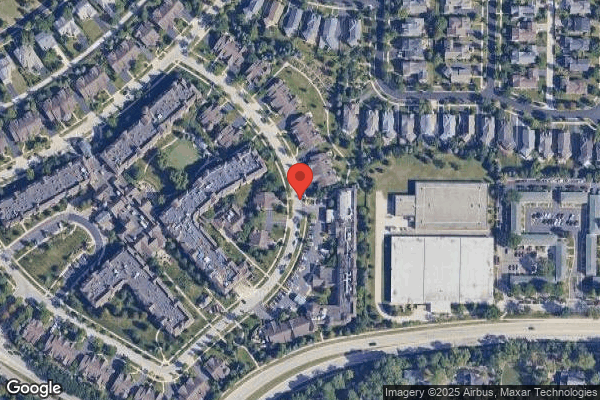
VI AT THE GLEN

2401 INDIGO LANE, GLENVIEW, IL 60026 (847) 904-4700
For profit - Corporation 47 Beds VI LIVING Data: November 2025
Trust Grade
95/100
#87 of 665 in IL
Last Inspection: June 2025

Inspected within the last 6 months. Data reflects current conditions.

Overview

VI at the Glen has an impressive Trust Grade of A+, indicating it is an elite facility that ranks among the best in the state. It holds the #87 position out of 665 nursing homes in Illinois, placing it in the top half, and it ranks #28 out of 201 in Cook County, suggesting only a few local options are better. The facility is on an improving trend, having reduced its issues from two in 2024 to none in 2025, with staffing rated at 5 out of 5 stars and a low turnover rate of 19%, which is well below the state average. There have been no fines, which is a positive sign of compliance, and the facility offers more RN coverage than 96% of Illinois facilities, ensuring that residents receive attentive care. However, there are some concerns to note. Recent inspections found that the facility did not conduct proper background checks for ten residents, which could potentially impact the safety of current residents. Additionally, a resident experienced a fall, and there was no updated care plan in place to address fall prevention, indicating a gap in care management. Lastly, there was a failure to document a resident's complaint about a stained carpet, highlighting issues in addressing grievances effectively. Overall, while VI at the Glen offers excellent care and staffing, families should be aware of these areas needing improvement.

Trust Score
A+
95/100
In Illinois
#87/665
Top 13%
Safety Record
Low Risk
No red flags
Inspections
Getting Better
2 → 0 violations
Staff Stability
✓ Good
19% annual turnover. Excellent stability, 29 points below Illinois's 48% average. Staff who stay learn residents' needs.
Penalties
✓ Good
No fines on record. Clean compliance history, better than most Illinois facilities.
Skilled Nurses
✓ Good
Each resident gets 133 minutes of Registered Nurse (RN) attention daily — more than 97% of Illinois nursing homes. RNs are the most trained staff who catch health problems before they become serious.
Violations
○ Average
6 deficiencies on record. Average for a facility this size. Mostly minor or procedural issues.
★★★★★
5.0
Overall Rating
★★★★★
5.0
Staff Levels
★★★★☆
4.0
Care Quality
★★★★★
5.0
Inspection Score
Stable
2024: 2 issues
2025: 0 issues

The Good

  • 5-Star Staffing Rating · Excellent nurse staffing levels
  • 4-Star Quality Measures · Strong clinical quality outcomes
  • Low Staff Turnover (19%) · Staff stability means consistent care
  • Full Sprinkler Coverage · Fire safety systems throughout facility
  • No fines on record
  • Staff turnover is low (19%)

    29 points below Illinois average of 48%

Facility shows strength in staffing levels, quality measures, staff retention, fire safety.

The Bad

Chain: VI LIVING

Part of a multi-facility chain

Ask about local staffing decisions and management

The Ugly 6 deficiencies on record

Jun 2024 2 deficiencies
CONCERN (D)

Potential for Harm - no one hurt, but risky conditions existed

Grievances (Tag F0585)

Could have caused harm · This affected 1 resident

**NOTE- TERMS IN BRACKETS HAVE BEEN EDITED TO PROTECT CONFIDENTIALITY** Based on observation, interview and record review, the facility failed to implement their grievance policy by not documenting a ...

Read full inspector narrative →
**NOTE- TERMS IN BRACKETS HAVE BEEN EDITED TO PROTECT CONFIDENTIALITY** Based on observation, interview and record review, the facility failed to implement their grievance policy by not documenting a complaint and applicable resolution as made by a resident. This failure affected 1 (R24) of 27 residents reviewed for grievances. Findings include: R24 is [AGE] years old and admitted to the facility 4/18/23. R24 has diagnoses that include anxiety disorder, weakness, history of falling and difficulty walking. On 6/10/24 at 12:20PM, R24 was observed sitting in an armchair in their bedroom and expressed a complaint that they and their family member made regarding the carpet in R24's room. R24 pointed to a particular area of the carpet in the immediate walkway into the room that was stained. R24 said that they had asked about a month ago to have the carpet replaced, and the administrator and building engineer had informed R24 and the family member that the carpet would only be replaced at their personal expense. R24 insisted that the carpet was not only stained but was torn and said that they almost tripped and was afraid of falling should they trip over the carpet while walking to the bathroom. R24 said that nothing had been completed in writing, but the staff notified R24 by phone. Upon observation by surveyor, the carpet did not appear to be torn, however, some fibers where the carpet was cut were not homogenous which took on a white boarder with a darkened stain in the middle. On 6/11/24 at 3:54PM V1 Administrator said, the carpet in R24's room was replaced about a year ago when R24 first moved in. I, the housekeeping director, and the director of engineering went to evaluate the carpet and could not find any reason to replace it. I informed R24 and their family that we would be happy to replace the carpet if they would like to pay for it. The grievances and concern binder were reviewed from August 2023 to current, however it did not include a grievance for R24's concern. On 6/12/24 at 1:28PM V1 said, R24 made the complaint a few weeks ago and there was no grievance created for the concern because V1 didn't think it was considered a grievance. On 6/13/24, V1 Administrator presented grievance dated 6/13/24 with additional correspondence from R24's family member regarding the issue. Follow up will include deep cleaning which R24 and the family member are amenable. Policy Protocol titled Grievance Resolution Process revised 10/23 states in part; 2. Grievances include written and verbal complaints submitted to the Care Center Administrator, Director of Nursing or designee, as the Grievance Official or any other employee. 2.1 If a resident and/or their responsible agent is unable to complete a written complain, assistance may be provided by the Grievance Official or any other employee. 2.2 Grievances may be filed anonymously. 2.3 Grievance may be submitted using the Grievance Report Form. If a grievance is received verbally, the staff member should complete the Grievance Report Form. 3.5 The resident has a right to obtain a written decision regarding his or her grievance. All written grievance decisions include: (1) The date the grievance was received; (2) A summary statement of the resident's grievance; (3) The steps taken to investigate the grievance; (4) A summary of the pertinent findings or conclusions regarding the resident's concern(s); (6) Any corrective action taken or to be taken by the facility because of the grievance; and (7) The date the written decision was issued. 3.6 All steps of the grievance resolution process are documented on designated forms. 3.8 The facility maintains evidence demonstrating the results of all grievances for a period of no less than 3 years from the issuance of the grievance decision.
CONCERN (F)

Potential for Harm - no one hurt, but risky conditions existed

Abuse Prevention Policies (Tag F0607)

Could have caused harm · This affected most or all residents

**NOTE- TERMS IN BRACKETS HAVE BEEN EDITED TO PROTECT CONFIDENTIALITY** Based on interview and record review, the facility failed to follow its policy in conducting background checks for 10 (R8, R17, ...

Read full inspector narrative →
**NOTE- TERMS IN BRACKETS HAVE BEEN EDITED TO PROTECT CONFIDENTIALITY** Based on interview and record review, the facility failed to follow its policy in conducting background checks for 10 (R8, R17, R27, R28, R33, R39, R40, R44, R93 and R94) of 10 residents reviewed for admission screening. This deficiency also has the potential to affect the 42 residents currently residing in the facility. Findings include: Per census report, there are 42 residents currently residing in the facility. On 06/11/24 at 2:45 PM during review of documentation pertaining to background checks, the following were presented by facility: R8 is a [AGE] year-old, female admitted in the facility on 03/26/24 with diagnosis of Urinary Tract Infection, Site not Specified and Type 1 Diabetes Mellitus with Hyperglycemia. There were no records on file that her Criminal History Information Response Process (CHIRP) was checked upon admission and department of corrections. Her name was checked in the state sex offender registry on 06/11/24. R17 is a [AGE] year-old, female, admitted in the facility on 05/10/24 with diagnosis of Infection and Inflammatory Reaction due to Internal Left Knee Prosthesis, Subsequent Encounter. Her name was checked under state sex offender website on 06/11/24, which was 32 days after admission. There were no records on file that R17's name was checked in the department of corrections website. R27 is an [AGE] year-old, female, admitted in the facility on 05/02/24 with diagnosis of Unspecified Dementia, Mild, with other Behavioral Disturbance. Her CHIRP was conducted on 05/10/24, which was eight days after admission. Her name was checked under state sex offender registry on 06/11/24. There were no records that her name was checked under department of corrections. R28 is a [AGE] year-old, male, admitted in the facility on 05/10/24 with diagnosis of Essential Hypertension and Liver Cell Carcinoma. His name was checked in the state sex offender registries on 06/11/24, which was 32 days after admission. There was no record showing his name was checked from the department of corrections. R33 is an [AGE] year-old male, admitted in the facility on 04/04/24 with diagnosis of Neurocognitive Disorder with Lewy Bodies. There were no records showing that his name was checked under department of corrections. There was also no CHIRP done on R33. His name was checked in the state sex offender registry on 06/11/24, which was almost two months after admission. R39 is a [AGE] year-old, female, admitted in the facility on 05/09/24 with diagnosis of Metabolic Encephalopathy and Type 2 Diabetes Mellitus without Complications. Her name was checked in the state sex offender registry websites on 06/11/24, which was 33 days after admission. There were no records showing her name was checked from the department of corrections. R40 is an [AGE] year-old, male admitted in the facility on 05/03/24 with diagnosis of Atherosclerotic Heart Disease of Native Coronary Artery Without Angina Pectoris. He has no records on file that his name was run for CHIRP or department of corrections. His name was checked in the state sex offender website on 06/11/24, which was 39 days after admission. R44 is a [AGE] year-old, female, admitted in the facility on 05/21/24 with diagnosis of Laceration without Foreign Body of Scalp, Subsequent Encounter. There were no records that her name was ran from the department of corrections. Her name was checked in the state sex offender database on 06/11/24, which was 21 days post admission and her CHIRP on 06/12/24. R93 is an [AGE] year-old, female, admitted in the facility on 06/08/24 with diagnosis of Paroxysmal Atrial Fibrillation. There was no documentation on file in her medical records related to CHIRP or department of corrections. Her name was checked in the state sex offender registry on 06/11/24. R94 is an [AGE] year-old, female, admitted in the facility on 05/29/24 with diagnoses of Dysarthria following Cerebral Infarction and Cerebral Infarction due to Embolism of Left Middle Cerebral Artery. There was no CHIRP done on R94. No document related to department of corrections presented during review of her records. Her name was checked in the state sex offender registry on 06/11/24. On 06/11/24 at 2:48 PM, V3 (Social Worker) was asked regarding background checks on new admissions. V3 replied, I am responsible for the background checks of new admission. Background checks should be done within the 24 hours of admission. I don't have an answer as to why the background checks were done a month after admission. I did not check the department of corrections for these new admitted residents. On 06/11/24 at 2:57 PM, V1 (Interim Administrator) was interviewed regarding new admissions. V1 verbalized, For residents who will admitted in the care center, V3 run the background checks prior or within the 72 hours of admission. She needs to run the CHIRP, state and sex offender registries and Department of Corrections. If there is a hit, we follow our policy. On 06/12/24 at 12:55 PM, V1 stated that they just ran all residents' background checks in the state and sex offender registry websites. Facility presented the following documentation: R27 - checked state sex offender registry on 06/12/24 R93 - checked state sex offender websites on 06/12/24 On 06/13/24 at 10:31AM, V11 (Medical Director) was interviewed regarding background checks on residents. V11 stated, If background checks on residents is a state mandate and if its in their policy, facility has to follow the regulations and their policy. Facility's policy titled Resident Screening dated October 2023 documented in part but not limited to the following: Purpose: This policy outlines the process for screening Skilled Nursing (SN) residents prior to admission. Process: At the community, the Admissions Coordinator or designee will screen all persons seeking admission to SN against the Sex Offender Registry database for the State in which the Community is located and against the National Registry and, as applicable, perform criminal background checks of the person seeking admission in accordance with state law. 1. Sex Offender Registry Screening: Prior to or within 72 hours of admission, unless a shorter timeframe is required by state law, the applicable Community must perform a screening against national and state sex offender registries of the resident, based on the resident's first and last name verified by a government-issued identification. 2. Criminal Background Check. The applicable Community must request a criminal background check when required by law. Communities must request criminal background checks of potential residents 18 or older through the state-specific processes listed below, prior to or within 72 hours of admission, unless a shorter time frame is required by state law, based on the resident's name, date of birth , and other identifiers as required by the specific State Police. While the sex offender screening and background checks (if applicable) are pending, Community will take steps to ensure the safety of residents. Facility's policy titled Abuse/Neglect Prevention, dated May 2007 stated in part but not limited to the following: Process: The Community seeks to protect its residents from abuse by anyone including, but not limited to staff, other residents, consultants, volunteers, and staff from other agencies providing services to the individual, family members or legal guardians, friends, or any other individuals.
Aug 2023 4 deficiencies
CONCERN (D)

Potential for Harm - no one hurt, but risky conditions existed

Accident Prevention (Tag F0689)

Could have caused harm · This affected 1 resident

**NOTE- TERMS IN BRACKETS HAVE BEEN EDITED TO PROTECT CONFIDENTIALITY** On 8/23/2023 at 12:00pm V4 (Care-Plan Coordinator) reviewed with the surveyor the fall log from the facility dated 7/11/2022 to ...

Read full inspector narrative →
**NOTE- TERMS IN BRACKETS HAVE BEEN EDITED TO PROTECT CONFIDENTIALITY** On 8/23/2023 at 12:00pm V4 (Care-Plan Coordinator) reviewed with the surveyor the fall log from the facility dated 7/11/2022 to 8/22/2023. R11 had an unwitnessed fall on 11/28/2023 where R11 complained of pain to right hip, and on 1/25/2023 R11 had an unwitnessed fall with no injury. On 8/23/2023 at 12:20pm V4 said that R11 should have had interventions for prevention of falls on 11/28/2023 to try and prevent any further falls which occurred on 1/25/2023. A Physician order report dated 7/25/2023 to 8/25/2023 indicates that R11 has an history of falling. A Fall Risk assessment tool dated on 11/21/2023 indicates that R11 has a score of 11 which is a moderate fall risk. A care-plan dated 11/21/2022 a problem of falls and no approach to fall interventions on 11/28/2022. Based on observation, interview and record review the facility failed to follow its fall prevention protocol by failure to notify the State Agency Illinois Department of Public Health (IDPH) in a timely manner of a resident fall incident that required hospitalization. The facility also failed to ensure effective intervention were in place to reduce the risk of falls. This deficiency affects two (R11 and R39) residents in the sample of 16 reviewed for Resident safety. Findings include: On 8/22/23 at 10:38AM, Observed R39 lying in bed with V8 Private Caregiver at bedside. V8 said that R39 had fall incident last month and was admitted to hospital due to fractured hip. On 8/23/23 at 10:10AM, Review R39's medical records with V2 Nursing Supervisor. R39 is re-admitted on [DATE] with diagnosis listed in part but not limited to Periprosthetic fracture around internal prosthetic left hip joint, Aftercare following joint replacement surgery, Presence of artificial hip joint, Fracture of part of neck of left femur subsequent encounter for closed fracture with routine healing, History of falling, Difficulty in walking, Cognitive decline, Weakness, Abnormalities in gait and mobility, Lack of coordination, Ataxia following Cerebral infraction. V2 said that R39's fall risk assessment indicated that she is at high risk. V2 said that R39 is care plan for at risk for falling related to cognitive impairment, disease process, recent illness, new surroundings, advancing age with comorbidities, poly pharmacy. V2 said that R39 has several fall incidents. Review R39's fall incidents report with V2. Most recent witnessed fall incident dated 7/24/23 at 12:00pm indicated: CNA notified the Nurse on duty that R39 was observed on the floor. V8 Private caregiver, who was with R39 at the that time, turned around to press the call light and in that moment R39 stood up from her wheelchair and fell. R39 hit her head and left hip. R39 was sent to the hospital and admitted with diagnosis of Comminuted Left Intertrochanteric Fracture. R39 had Left hip revision on 7/25/23 and returned to the facility on 7/28/23. On 8/23/23 at 12:08PM, V7 Care plan Coordinator said that she updates all the resident care plan in the facility. V7 said that fall care plan is updated after each fall and when there is change of resident condition. Review R39's Fall care plan with V7 Care Plan Coordinator. V7 said that she did not update R39's care plan intervention after she returned from the hospital status post left hip revision from a fall sustaining Comminuted Left Intertrochanteric Fracture. On 8/23/23 at 12:32PM, Review R39's Fall incident report of 7/24/23 was reported to IDPH on 7/26/23 with V1 Administrator. V1 said that the fall incident with injury should be reported to IDPH within 24 hours. V1 said she does not know why there was a delayed in reporting to IDPH because she was vacation when it happened. Facility's policy on Fall Prevention Protocol revised October 2017 indicates: Purpose: This protocol describes mechanism for assessing residents at risk for falls and providing interventions to reduce the likelihood of falls. Desired outcome: To reduce both the number of resident falls and injuries related to those falls. Post fall Guidelines: 4. The nursing staff notifies the following individuals of the resident's fall: a. Appropriate State Agency, as required by regulation. Documentation: 1. Documentation of the event, the assessment of the resident and post fall interventions is recorded in the resident's medical record. 2. An incident report is completed and maintained as per the incident report policy 3. For residents who are determined to be at risk for falls on admission, a care plan is developed, and the appropriate Minimum Date Set Documentation is completed. These documents are updated for falls that occur after admission.
CONCERN (D)

Potential for Harm - no one hurt, but risky conditions existed

Deficiency F0740 (Tag F0740)

Could have caused harm · This affected 1 resident

**NOTE- TERMS IN BRACKETS HAVE BEEN EDITED TO PROTECT CONFIDENTIALITY** Based on observation, interview and record review the facility failed to provide psychiatric/ psychological evaluation as ordere...

Read full inspector narrative →
**NOTE- TERMS IN BRACKETS HAVE BEEN EDITED TO PROTECT CONFIDENTIALITY** Based on observation, interview and record review the facility failed to provide psychiatric/ psychological evaluation as ordered and behavioral management interventions for resident who presented delusion of being food poisoned. This deficiency affects one (R26) of three residents the sample of 16 reviewed for Behavioral Management. Findings include: On 8/22/23 at 10:45AM Observed R26 ambulates with rolling walker. She said that somebody has been tampering her food for several months since she was admitted . She does not feel well after she eat because someone is tampering her meals. She has not been eating and has been losing weight. She reported it, but nothing is being done. V9 R26's Private caregiver said that R26 has is confused and thinking that someone is tampering her food or poisoning her. V9 said she needs reassurance and able to convince her if she refused to eat. She has fair to good appetite and did not lose weight. On 8/22/23 at 10:48AM, V10 RN said that she is the nurse assigned to R26. She said that R26 has behavioral problems of refusing care and medications but able to response to redirections. She has delusion and paranoid that her food is being tampered or poisoned. She denied R26 of losing weight. On 8/22/23 at 10:52AM, V11 CNA said that she is the CNA assigned for R26. She said that R26 has behavioral problems of refusing care and medications but able to response to redirections. R26 has delusion and paranoid that her food is being tampered or poisoned. She denied R26 of losing weight. On 8/22/23 at 10:55 AM, V3 Food Service director said that she is aware that R26 has behavioral issues of refusing to eat due to paranoia of food being poisoned. V3 denied R26 of losing weight but rather has gained weight. On 8/22/23 at 10:59AM, Review R26's care plan with V10 RN. Noted there is no behavioral care plan found addressing the issues of delusion and paranoid of food being tampered or poisoned. On 8/22/23 at 11:10AM, Review R26's medical records with V2 Nursing Supervisor. R26 is admitted on [DATE] with diagnosis listed in part but not limited to anxiety disorder due to known physiological condition. Physician order sheet indicates: Psychiatry, Psychology evaluation and treatment as indicated. She is on Quetiapine (Seroquel) for Delirium. Quetiapine 25mg 1 tab orally twice a day for agitation and 25mg orally 1 tab daily as needed, Alprazolam 0.25mg 1 tab orally at bedtime for anxiety. R26's progress notes indicated behavioral of resistance to care, refusing medications, and delusion and paranoia of her food is being tampered or poisoned. R26's dietary notes indicated that she often says that her food is poisoned. R26 is at risk for possible weight. R26's comprehensive care plan did not address her behavioral issues of delusion and paranoid of food being tampered or poisoned. V2 said that R26 is not referred or seen by psychiatrist/psychologist regarding her behavioral issues. R26's Primary Care Physician (PCP) does not come to the facility. R26's last visit to her PCP was last June 2023. R26's PCP notes during her visit no documentation addressing behavioral issues of R26's delusion and paranoid of being food poisoned. On 8/22/23 at 11:18AM V7 Care plan Coordinator said that she formulates and updates the resident's care plan in the facility. V7 said that care plan should be individualized based on the resident needs. Care plan should be addressing the needs/issues of resident. She said that R26 has behavioral problems of refusing care and medications but able to response to redirections or encouragement. She has delusion and paranoid that her food is being tampered or poisoned. V7 said that she did not write behavioral care plan addressing the issues of delusion and paranoid of food being tampered or poisoned. V7 said that she should written care plan intervention addressing the behavioral needs of R26. V7 said that R26 is not seen by psychiatrist or psychologist for her behavioral issues. R26's MDS (Minimum Date set)/Resident Quarterly assessment dated [DATE] indicated: Section E Behavior: E0100 Potentials indication of Psychosis: B. Delusions (Misconception or beliefs that are firmly held, contrary to reality); Section N Medications: N0410 Medications Received: A. Antipsychotic B Antianxiety On 8/22/23 at 2:30PM Informed V1 Administrator and V2 Nursing Supervisor that R26 is on antipsychotic (Quetiapine) medication related to diagnosis of delirium as indicated in physician order sheet. Asked both if this is appropriate diagnosis for usage of Quetiapine. Both said that they will have to review their policy and get back to the surveyor. On 8/23/23 at 10:30am V2 Nursing Supervisor said that she called R26's Nurse Practitioner for appropriate diagnosis for R26 usage of Quetiapine. V2 said that they are not aware that Delirium is not appropriate diagnosis for usage of anti-psychotic medication (Quetiapine). The diagnosis given is Dementia with behavioral disturbance. On 8/24/23 at 2:58pm Informed V1 Administrator informed of above concerns identified. Facility's policy on Behavior Management- Psychotropic/Antipsychotic Drugs revision date October 2017 indicates: Process: 2. Residents will not be given psychotropic drugs unless necessary to treat a specific condition that is documented in the resident's clinical record based upon a comprehensive assessment. 5. Documentation of behavioral monitoring includes: *Symptoms demonstrated which require the use of psychotropic medication *If the symptoms are transient or ongoing *Evaluation of other reason or potential cause of behavior * Ruling out of other medical causes for the behavior 6. In addition to pharmacologic treatments for residents with behavior issues, behavioral management interventions may be utilized either as directed by a health care provider with prescriptive authority or as part of the interdisciplinary plan of care. These interventions may include but not limited to those listed below: *Consultation with a psychologist or psychiatrist for team and for the resident 1. Psychiatrist/psychological consults are documented in the resident's medical record. 3. Changes in the resident's behavior or issues related to the psychotropic medication regime are directed to the psychiatrist. The health care provider with prescriptive authority. The change in plan is also discussed with the resident's responsible agent if needed. Facility's policy on Care Plan Protocol revised date November 2011 indicates: Standard of Practice: 2. When establishing care plan, in as far as is possible, the dame personnel are assigned to care for each patient. Steps to be taken in developing the care plan include: *Revision of the plan of care as frequently as necessary to reflect the changing care needs of the patient.
CONCERN (D)

Potential for Harm - no one hurt, but risky conditions existed

Deficiency F0757 (Tag F0757)

Could have caused harm · This affected 1 resident

**NOTE- TERMS IN BRACKETS HAVE BEEN EDITED TO PROTECT CONFIDENTIALITY** Based on observation, interview and record review the facility failed to adequately monitor the resident on antibiotics without ...

Read full inspector narrative →
**NOTE- TERMS IN BRACKETS HAVE BEEN EDITED TO PROTECT CONFIDENTIALITY** Based on observation, interview and record review the facility failed to adequately monitor the resident on antibiotics without adequate indication. This deficiency affects one (R24) of three residents in the sample of 16 reviewed for Unnecessary medication. Findings include: On 8/22/23 at 10:45am, Observed R26 ambulating with walker with V9 Private Care giver. R26 denied any signs and symptoms of UTI (Urinary Tract Infection). V9 said that R26 did not present signs and symptoms of UTI. On 8/23/23 at 9:35am, Review R26's medical record with V2 Nursing Supervisor. R26 is admitted on [DATE] with diagnosis listed in part but not limited to Chronic lymphocytic leukemia of B-cell type not having achieved remission. V2 said that R26 is on antibiotic (Cephalexin) 250mg 1 cap orally at bedtime since 4/18/23 upon admission as prophylaxis for UTI (Urinary Tract Infection) indefinitely. V2 said that R26 is not on antibiotic stewardship program. V2 said that they only put resident on stewardship program when resident was started antibiotic in the facility. R26 was not included because she came in with antibiotics. V2 said that there is no documentation of R26's PCP (Primary Care Physician) regarding justification of antibiotic usage. V2 said that R26's PCP has not been in the facility. R26 goes to her PCP's office. V2 said that R26's urinalysis was done on 6/7 PCP's office, but the test result was not sent to the facility. V2 said that there is no urine culture was done since admission. V2 said that she called R26's PCP to fax his progress notes regarding usage of antibiotics and UA test results. V2 said that there is no care plan in placed in regards with R26's usage of prophylaxis antibiotics. V2 said that there is no documentation in R26's chart indicating that she is presenting signs and symptoms of UTI. No documentation that R26 is being monitored for sign and symptoms for UTI. V2 said that V7 DON (Director of Nursing) is the infection Preventionist and is on vacation, not available for interview. On 8/23/23 at 12:08PM, V4 Care Plan Coordinator said that she responsible for developing and updating care plan for all residents in the facility. Review R26's comprehensive care plan with V4. V4 said that she did not develop care plan for R26's usage of antibiotics indefinitely due to prophylaxis for UTI. Review R26's MDS (Minimum, date set)/ Resident Quarterly assessment dated [DATE] indicated: Section N Medications: N0410 Medications Received. F Antibiotic On 8/24/23 at 2:58pm Informed V1 Administrator informed of above concerns identified. Facility's policy on Antibiotic Stewardship program indicates: Purpose: This policy establishes directives for Antibiotic Stewardship to develop antibiotic use protocols and a system to monitor antibiotic use. Process: 3). The Antibiotic Stewardship Committee will support and promote antibiotic use protocol which include: 1. Assessment of residents for infection using standardized tools and criteria. The criteria used will be adapted from McGeer's Criteria. 2. Therapeutic decisions regarding antibiotics prescriptions based on evidence (Clinical guidelines) appropriate for the care of long-term care facility residents. 3. Specific dose, duration, and indication on all antibiotic's prescriptions. 4. Reassessment of empiric diagnostic test, laboratory reports and or changes in the clinical status of resident. 5. Use of narrow spectrum antibiotics that are appropriate for the condition being treated whenever possible. 4)The Antibiotic Stewardship Committee will develop and maintain a system to monitor antibiotic use which includes: 1. Review of antibiotics prescribed to residents upon admission or transfer to the facility and those prescribed during evaluation by an outside practitioner. 2. Quarterly review of a subset of antibiotic prescriptions for inclusion of dose, duration, and indication (or for length of therapy, documentation of an antibiotic time-out, appropriateness based on antibiotic use protocol and written documentation of clinical justification for antibiotic use that does not comply with the facility antibiotic use protocol). Periodically review rates of prescription for any antibiotics or conditions identified by the committee as being of special interest. Facility's policy on Minimum Criteria for Antibiotic Use Protocol indicates: Purpose: This protocol aims to improve appropriate antibiotic use and establish minimum criteria/clinical guidelines for the use of antibiotics based on McGeer's Criteria for Infection Surveillance/minimum criteria for antibiotic initiation. Desired outcome: Reduce the unnecessary use of antibiotics when the clinical condition being treated does not meet clinical guidelines for the use of an antibiotic.
CONCERN (E)

Potential for Harm - no one hurt, but risky conditions existed

Deficiency F0657 (Tag F0657)

Could have caused harm · This affected multiple residents

**NOTE- TERMS IN BRACKETS HAVE BEEN EDITED TO PROTECT CONFIDENTIALITY** Based on interview and record review the facility failed to update fall care plan interventions after each fall incidents on res...

Read full inspector narrative →
**NOTE- TERMS IN BRACKETS HAVE BEEN EDITED TO PROTECT CONFIDENTIALITY** Based on interview and record review the facility failed to update fall care plan interventions after each fall incidents on resident who are at risk for fall. The facility also failed to update resident care plan who is on prophylaxis antibiotic indefinitely. These deficiencies affect four (R11, R21, R26 and R39) of eight residents in the sample of 16 reviewed for care plan revision and updates. Findings include: On 8/23/2023 at 12:20pm V4 (Care Plan Coordinator) observed an unwitnessed fall incident report dated 11/28/2022 resulting in R11 complaining of right hip pain and an unwitnessed fall incident report on 1/25/2023. A care plan review dated on 11/21/2022 with a problem of falls on 11/28/2022 and no fall intervention approach in place. On 8/23/2023 at 12:25pm V4 said the care plan should be updated after every fall incident. Facility Policy: Care Plan Protocol Revised in 2011 Care Plan Protocol This protocol provides care plan guidelines for the Agency. 2. Revision of the plan of care as frequently as necessary to reflect the changing care needs of the patient. On 8/22/23 at 10:48AM, V10 RN said that R21 had recent witnessed fall on 8/12/23. Observed R21 lying in bed. On 8/23/23 at 12:15PM, Review R21's medical records with V7 Care plan Coordinator. R21 is admitted on [DATE] with diagnosis listed in part but not limited to Unsteadiness on feet, Lack of Coordination, Weakness, Senile Degeneration of brain. V7 said that R21's fall assessment is at high risk. Review R21's Fall incident report on 8/12/23 with V7 indicated: R21 was assisted to the washroom by CNA when her legs gave out. CNA assisted R21 to the floor. No injury or bruises noted on the resident. Review R21's care plan with V7 indicates: R21 is at risk for fall due to debility from recent illness, new surroundings, advancing age with comorbidities, poly pharmacy. V7 said that she did not update R21's fall care plan intervention after her fall on 8/12/23. V7 said that fall care plan intervention should be updated after each fall incident. On 8/22/23 at 10:45am, Observed R26 ambulating with walker with V9 Private Care giver. R26 denied any signs and symptoms of UTI (Urinary Tract Infection). V9 said that R26 did not present signs and symptoms of UTI. On 8/23/23 at 9:35am, Review R26's medical record with V2 Nursing Supervisor. R26 is admitted on [DATE] with diagnosis listed in part but not limited to Chronic lymphocytic leukemia of B-cell type not having achieved remission. V2 said that R26 is on antibiotic (Cephalexin) 250mg 1 cap orally at bedtime since 4/18/23 upon admission as prophylaxis for UTI (Urinary Tract Infection) indefinitely. V2 said that there is no care plan in placed in regards with R26's usage of prophylaxis antibiotics. V2 said that there is no documentation in R26's chart indicating that she is presenting signs and symptoms of UTI. No documentation that R26 is being monitored for sign and symptoms for UTI. On 8/23/23 at 12:08PM, Review R26's comprehensive care plan with V4 Care plan Coordinator. V4 said that she did not develop care plan for R26's usage of antibiotics indefinitely due to prophylaxis for UTI. On 8/22/23 at 10:38AM, Observed R39 lying in bed with V8 Private Caregiver at bedside. V8 said that R39 had fall incident last month and was admitted to hospital due to fractured hip. On 8/23/23 at 10:10AM, Review R39's medical records with V2 Nursing Supervisor. R39 is re-admitted on [DATE] with diagnosis listed in part but not limited to Periprosthetic fracture around internal prosthetic left hip joint, Aftercare following joint replacement surgery, Presence of artificial hip joint, Fracture of part of neck of left femur subsequent encounter for closed fracture with routine healing, History of falling, Difficulty in walking, Cognitive decline, Weakness, Abnormalities in gait and mobility, Lack of coordination, Ataxia following Cerebral infraction. V2 said that R39's fall risk assessment indicated that she is at high risk. V2 said that R39 is care plan for at risk for falling related to cognitive impairment, disease process, recent illness, new surroundings, advancing age with comorbidities, poly pharmacy. V2 said that R39 has several fall incidents. Review R39's fall incidents report with V2. Most recent witnessed fall incident dated 7/24/23 at 12:00pm indicated: CNA notified the Nurse on duty that R39 was observed on the floor. V8 Private caregiver, who was with R39 at the that time, turned around to press the call light and in that moment R39 stood up from her wheelchair and fell. R39 hit her head and left hip. R39 was sent to the hospital and admitted with diagnosis of Comminuted Left Intertrochanteric Fracture. R39 had Left hip revision on 7/25/23 and returned to the facility on 7/28/23. On 8/23/23 at 12:08PM, V7 Care plan Coordinator said that she updates all the resident care plan in the facility. V7 said that fall care plan is updated after each fall and when there is change of resident condition. Review R39's Fall care plan with V7 Care Plan Coordinator. V7 said that she did not update R39's care plan intervention after she returned from the hospital status post left hip revision from a fall sustaining Comminuted Left Intertrochanteric Fracture. Facility's policy on Care Plan Protocol revised date November 2011 indicates: Standard of Practice: 2. When establishing care plan, in as far as is possible, the dame personnel are assigned to care for each patient. Steps to be taken in developing the care plan include: *Revision of the plan of care as frequently as necessary to reflect the changing care needs of the patient. Facility's policy on Fall Prevention Protocol revised October 2017 indicates: Purpose: This protocol describes mechanism for assessing residents at risk for falls and providing interventions to reduce the likelihood of falls. Desired outcome: To reduce both the number of resident falls and injuries related to those falls. Post fall Guidelines: 3. For residents who are determined to be at risk for falls on admission, a care plan is developed, and the appropriate Minimum Date Set Documentation is completed. These documents are updated for falls that occur after admission.
Understanding Severity Codes (click to expand)
Life-Threatening (Immediate Jeopardy)
J - Isolated K - Pattern L - Widespread
Actual Harm
G - Isolated H - Pattern I - Widespread
Potential for Harm
D - Isolated E - Pattern F - Widespread
No Harm (Minor)
A - Isolated B - Pattern C - Widespread

Questions to Ask on Your Visit

  • "Can I speak with families of current residents?"
  • "What's your RN coverage like on weekends and overnight?"

Our Honest Assessment

Strengths
  • • Grade A+ (95/100). Above average facility, better than most options in Illinois.
  • • No major safety red flags. No abuse findings, life-threatening violations, or SFF status.
  • • No fines on record. Clean compliance history, better than most Illinois facilities.
  • • 19% annual turnover. Excellent stability, 29 points below Illinois's 48% average. Staff who stay learn residents' needs.
Concerns
  • • No significant concerns identified. This facility shows no red flags across CMS ratings, staff turnover, or federal penalties.
Bottom line: Generally positive indicators. Standard due diligence and a personal visit recommended.

About This Facility

What is Vi At The Glen's CMS Rating?

CMS assigns VI AT THE GLEN an overall rating of 5 out of 5 stars, which is considered much above average nationally. Within Illinois, this rating places the facility higher than 99% of the state's 100 nursing homes. This rating reflects solid performance across the metrics CMS uses to evaluate nursing home quality.

How is Vi At The Glen Staffed?

CMS rates VI AT THE GLEN's staffing level at 5 out of 5 stars, which is much above average compared to other nursing homes. Staff turnover is 19%, compared to the Illinois average of 46%. This relatively stable workforce can support continuity of care.

What Have Inspectors Found at Vi At The Glen?

State health inspectors documented 6 deficiencies at VI AT THE GLEN during 2023 to 2024. These included: 6 with potential for harm.

Who Owns and Operates Vi At The Glen?

VI AT THE GLEN is owned by a for-profit company. For-profit facilities operate as businesses with obligations to shareholders or private owners. The facility is operated by VI LIVING, a chain that manages multiple nursing homes. With 47 certified beds and approximately 42 residents (about 89% occupancy), it is a smaller facility located in GLENVIEW, Illinois.

How Does Vi At The Glen Compare to Other Illinois Nursing Homes?

Compared to the 100 nursing homes in Illinois, VI AT THE GLEN's overall rating (5 stars) is above the state average of 2.5, staff turnover (19%) is significantly lower than the state average of 46%, and health inspection rating (5 stars) is much above the national benchmark.

What Should Families Ask When Visiting Vi At The Glen?

Based on this facility's data, families visiting should ask: "Can I visit during a mealtime to observe dining assistance and food quality?" "How do you handle medical emergencies, and what is your hospital transfer rate?" "Can I speak with family members of current residents about their experience?"

Is Vi At The Glen Safe?

Based on CMS inspection data, VI AT THE GLEN has a clean safety record: no substantiated abuse findings (meaning no confirmed cases of resident harm), no Immediate Jeopardy citations (the most serious violation level indicating risk of serious injury or death), and is not on the Special Focus Facility watch list (a federal program monitoring the lowest-performing 1% of nursing homes). The facility has a 5-star overall rating and ranks #1 of 100 nursing homes in Illinois. While no facility is perfect, families should still ask about staff-to-resident ratios and recent inspection results during their visit.

Do Nurses at Vi At The Glen Stick Around?

Staff at VI AT THE GLEN tend to stick around. With a turnover rate of 19%, the facility is 27 percentage points below the Illinois average of 46%. Low turnover is a positive sign. It means caregivers have time to learn each resident's needs, medications, and personal preferences. Consistent staff also notice subtle changes in a resident's condition more quickly. Registered Nurse turnover is also low at 17%, meaning experienced RNs are available to handle complex medical needs.

Was Vi At The Glen Ever Fined?

VI AT THE GLEN has no federal fines on record. CMS issues fines when nursing homes fail to meet care standards or don't correct problems found during inspections. The absence of fines suggests the facility has either maintained compliance or corrected any issues before penalties were assessed. This is a positive indicator, though families should still review recent inspection reports for the full picture.

Is Vi At The Glen on Any Federal Watch List?

VI AT THE GLEN is not on any federal watch list. The most significant is the Special Focus Facility (SFF) program, which identifies the bottom 1% of nursing homes nationally based on persistent, serious quality problems. Not being on this list means the facility has avoided the pattern of deficiencies that triggers enhanced federal oversight. This is a positive indicator, though families should still review the facility's inspection history directly.