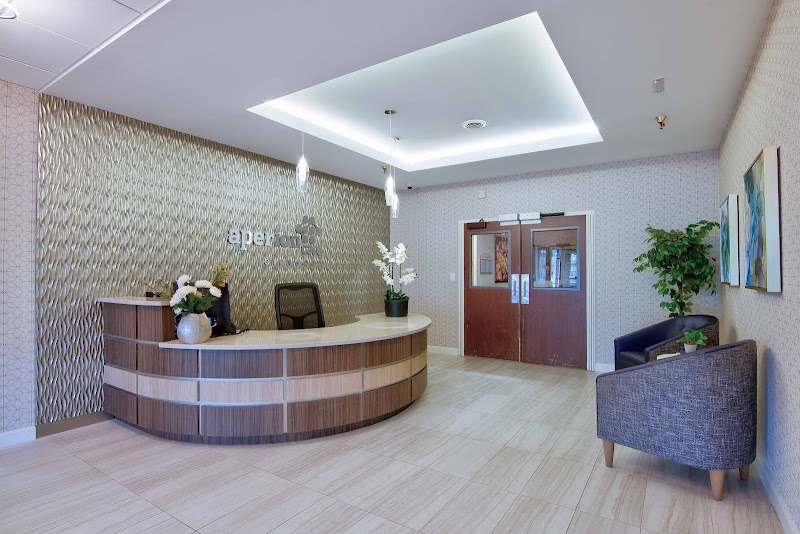

ALIYA OF GLENWOOD

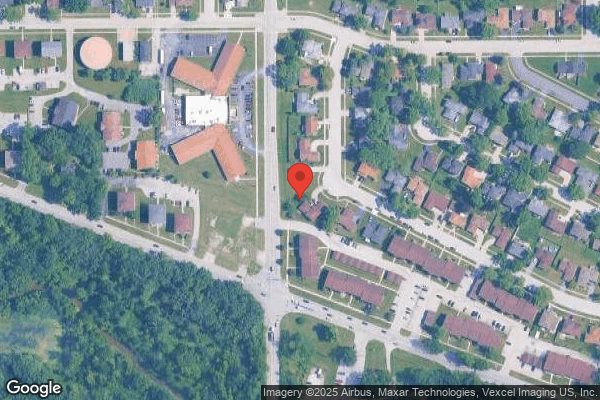
19330 SOUTH COTTAGE GROVE, GLENWOOD, IL 60425 (708) 758-6200
For profit - Limited Liability company 184 Beds ALIYA HEALTHCARE Data: November 2025
Trust Grade
0/100
#426 of 665 in IL
Last Inspection: April 2025

Within standard 12-15 month inspection cycle. Federal law requires annual inspections.

Overview

Aliya of Glenwood has received a Trust Grade of F, indicating significant concerns and poor overall performance. It ranks #426 out of 665 in Illinois and #138 out of 201 in Cook County, placing it in the bottom half of facilities in both the state and county. The facility is showing improvement, as the number of issues has decreased from 19 in 2024 to 8 in 2025. Staffing is a weakness, with a low rating of 1 out of 5 and a turnover rate of 56%, which is higher than the state average. Additionally, the facility has incurred $293,550 in fines, which is concerning and suggests ongoing compliance issues. However, there are serious incidents that raise further alarm, including one case where a resident did not receive necessary blood pressure medication and monitoring, leading to hospitalization for septic shock. Another incident involved a resident with dementia who fell multiple times without adequate supervision, resulting in head injuries. There was also a failure to prevent skin wounds, leading to a serious infection. While the quality measures rating is better at 4 out of 5, families should weigh these strengths against the significant weaknesses when considering this facility for their loved ones.

Trust Score
F
0/100
In Illinois
#426/665
Bottom 36%
Safety Record
High Risk
Review needed
Inspections
Getting Better
19 → 8 violations
Staff Stability
⚠ Watch
56% turnover. Above average. Higher turnover means staff may not know residents' routines.
Penalties
✓ Good
$293,550 in fines. Lower than most Illinois facilities. Relatively clean record.
Skilled Nurses
⚠ Watch
Each resident gets only 26 minutes of Registered Nurse (RN) attention daily — below average for Illinois. Fewer RN minutes means fewer trained eyes watching for problems.
Violations
⚠ Watch
63 deficiencies on record. Higher than average. Multiple issues found across inspections.
★☆☆☆☆
1.0
Overall Rating
★☆☆☆☆
1.0
Staff Levels
★★★★☆
4.0
Care Quality
★★☆☆☆
2.0
Inspection Score
Stable
2024: 19 issues
2025: 8 issues

The Good

  • 4-Star Quality Measures · Strong clinical quality outcomes
  • Full Sprinkler Coverage · Fire safety systems throughout facility
  • No fines on record

Facility shows strength in quality measures, fire safety.

The Bad

1-Star Overall Rating

Below Illinois average (2.5)

Significant quality concerns identified by CMS

Staff Turnover: 56%

Near Illinois avg (46%)

Frequent staff changes - ask about care continuity

Federal Fines: $293,550

Well above median ($33,413)

Significant penalties indicating serious issues

Chain: ALIYA HEALTHCARE

Part of a multi-facility chain

Ask about local staffing decisions and management

Staff turnover is elevated (56%)

8 points above Illinois average of 48%

The Ugly 63 deficiencies on record

15 actual harm
Aug 2025 3 deficiencies
CONCERN (D) 📢 Someone Reported This

A family member, employee, or ombudsman was alarmed enough to file a formal complaint

Potential for Harm - no one hurt, but risky conditions existed

Abuse Prevention Policies (Tag F0607)

Could have caused harm · This affected 1 resident

Based on interview and record review , the facility failed to implement their abuse prohibition policy to ensure the safety of a resident when an employee is accused of abuse and was permitted to rema...

Read full inspector narrative →
Based on interview and record review , the facility failed to implement their abuse prohibition policy to ensure the safety of a resident when an employee is accused of abuse and was permitted to remain in the facility, the facility also failed to ensure a resident had an initial abuse screening and initial abuse care-plan and failed to revise the care-plan for 1 of 1 resident (R3) in a sample of 5 reviewed for Abuse. Findings include:On 8/19/2025 at 10:30am R3 said that on 8/5/2025 at about 12:30am, she requested pain medication from V8 (Nurse) and that V8 said she did not have any pain medication available, and she would administer the medication when available. Upon returning to her room R3 said she overheard the nurse at the station reading her chart out loud stating, I see why her legs are burned. R3 said she felt bad and did not come out of her room anymore that night. R3 reported this to V15 (Social Service), which she was told by V1 (Administrator) that V8 would not work on this unit anymore. On 8/17/2025 at 12:30am R3 said she ask the (Certified Nursing Assistant-CNA) to inform the nurse she needed pain medication, at about 2:30am V8 entered her room and informed her she did not have any medication and her medication would be delivered in the morning, R3 said she was surprised to see V8 working on the unit, she did not want to speak to her any longer and proceeded to lay in the bed until the day shift arrived feeling lied to and belittled. On 8/21/2025 at 12:30pm V14 (MDS/ Care plan Coordinator) said that R3 should have an abuse care-plan put in by the social service department and should have an abuse screening.On 8/21/2025 at 1:00pm V15 said that R3 informed her that V8 was overheard reading her chart out loud and refused to give her pain medication, V15 said I then put in a concern form for both accusations. V15 said that R3 does not have an initial abuse screening and should have one and does not have an initial abuse care plan and no care-plan updates for the following abuse accusations because she was auditing and updating all the abuse care-plans and had not gotten to her yet. On 8/21/2025 at 2:00pm V8 said that on 8/5/2025, the Certified Nursing Assistant-CNA informed her that R3 wanted pain medication, R3 then arrived at the nurse's station and asked why she was reading her chart out loud, I then informed R3 that she did not have any pain medication, and it would be delivered. I was informed by V1(Administrator) that I was accused of mental abuse by reading a chart out loud and not administering pain medication when a resident asks and was suspended, I was not informed that I could not work on that unit anymore that is why I worked that unit on 8/17/2025 I thought the allegations were unfounded my name was on the schedule for that unit.On 8/21/2025 at 10:00am V7 (Nurse scheduler) said she was informed on 8/8/2025 not to put V8 back on unit A and her name is there in error, I did not inform her to return to that unit. On 8/21/2025 at 1:40pm V2 (Director of nursing-DON) said that on 8/5/2025 V8 had been informed not to work on that unit anymore and had not been informed to work on A-unit that night and should not have worked on that unit. R3 should have an abuse screening upon admission, an abuse care-plan and care plan updates as needed. I expect the nurses to treat all residents with dignity and respect and administer medications as ordered. On 8/19/2025 at 1:00pm V1 said that on 8/5/2025 R3 had made a concern form that V8 was discussing her medical information and that V8 would not give her any pain medication. I educated V8, sent her home until the investigation was complete and then she returned with pay. V8 was informed not to work on unit A anymore and the Nurse Scheduler was also informed on 8/8/2025 not to place her on unit A, today I find out she was working on A unit again and was not told to not return. R3 should have an initial abuse screening, an abuse care plan, and updates as needed. I expect all residents to be treated with respect and dignity. I will start another abuse investigation. A resident information sheet dated 8/20/2025 indicates that R3 has a diagnosis of low back pain, venous thrombosis and embolism and post-traumatic stress syndrome with burns to bilateral lower extremities. An order summary report dated 8/20/2025 indicates an order date of 8/2/2025 for burn wounds to the bilateral lower extremities. Every shift staff is to cleanse with wound cleanser and gently pat dry, cover open areas with xeroform and abdominal dressing pads and wrap with rolled gauze. An order dated 7/31/2025 for oxycodone-acetaminophen oral tablet 5-325mg indicates to give I tab by mouth every four hours as needed for pain/discomfort. A care-plan dated 8/7/2025 focus for pain and discomfort/low back pain, wounds, DM, asthma intervention to administer pain meds and treatments as ordered. Facility Policy: Abuse Policy and PreventionAbuse PolicyThis facility affirms the right of our residents to be free from abuse, neglect, exploitation, misappropriation of property, deprivation of goods and services by staff or mistreatment. The purpose of this policy is to assure that the facility is doing all that is within its control to prevent occurrences of abuse, neglect, exploitation, misappropriation of property, deprivation of goods and services by staff and mistreatment of residents.This will be done by:Identifying occurrences and patterns of potential mistreatment:Mental abuse includes, but is not limited to, humiliation, harassment, threats of punishment or deprivation. Base line Care-plan-reviewed on 1/2023General: To provide the staff with guidance on completion of comprehensive person-centered care baseline care planning.Responsible Party: RN, LPN, IDTProtocol: 1.The facility will develop and implement a baseline care plan for each resident that includes the instructions needed to provide effective and person-centered care.
CONCERN (D) 📢 Someone Reported This

A family member, employee, or ombudsman was alarmed enough to file a formal complaint

Potential for Harm - no one hurt, but risky conditions existed

Deficiency F0697 (Tag F0697)

Could have caused harm · This affected 1 resident

Based on interview and record review the facility failed to effectively monitor and treat pain for a resident with bilateral burns to lower extremities for 1 of 1 resident (R3) reviewed for pain. Find...

Read full inspector narrative →
Based on interview and record review the facility failed to effectively monitor and treat pain for a resident with bilateral burns to lower extremities for 1 of 1 resident (R3) reviewed for pain. Findings Include:On 8/19/2025 at 10:30am R3 said that on 8/17/2025 about 12:30am she informed the (Certified Nursing Assistant-CNA) that she needed some pain medication for her legs. At about 2:30am the night shift nurse entered her room and said she did not have any pain medication available and that it would be delivered in the morning. R3 said at that time her pain level was at an 8 out of 10. On 8/21/2025 at 1:00pm, V8 (Nurse) said she was R3's night nurse on 8/17/2025, the CNA informed me that R3 wanted pain medication. I did check for pain medication and R3 did not have any, I followed up with the pharmacy and the pharmacy indicated that the medication would be delivered in the early morning. It was 2:30am at that time, I offered R3 an alternative until delivery and R3 said no. I did not ask what R3's pain level was she did not want to talk to me any longer, I should have gotten it out of the convenience box, I don't know why I didn't.On 8/21/2025 at 1:00pm V2 (Director of Nursing-DON) said I expect all resident's medication to be administered as ordered and the medication to be retrieved from the convenience box immediately. I also expect for the nurses to ask each resident's pain level every shift and treat according to the physician orders.A resident information sheet dated 8/20/2025 indicates that R3 has a diagnosis of low back pain, venous thrombosis and embolism and post-traumatic stress syndrome with burns to bilateral lower extremities. An order summary report dated 8/20/2025 indicates an order date of 8/2/2025 for wounds related to burns to the bilateral lower extremities, every shift cleanse with wound cleanser and gently pat dry, cover open areas with xeroform and abdominal dressing pads and wrap with rolled gauze. An order dated 7/31/2025 for oxycodone-acetaminophen oral tablet 5-325mg indicates to give I tab by mouth every four hours as needed for pain/discomfort. A care-plan dated 8/7/2025 focus for pain and discomfort/low back pain, wounds, DM, asthma intervention to administer pain meds and treatments as ordered. Facility Policy; Pain Management Review date 1/2024General: To facilitate and provide guidance on pain observations and management, to facilitate resident independence, promote resident comfort and preserve resident dignity. This will be accomplished through an effective pain management program, providing our resident's the means to receive necessary comfort, exercise greater independence, and enhance dignity and life involvement.Responsible partyNursing, DONGuideline: . Pain Management is multidisciplinary care process that includes the following:Effectively recognizing the presence of pain, Policy:2. pain will be assessed at least once every shift and documented on the EMAR using the pain scales appropriate for the patient. The following pain scales are available. a. numerical scale
CONCERN (D) 📢 Someone Reported This

A family member, employee, or ombudsman was alarmed enough to file a formal complaint

Potential for Harm - no one hurt, but risky conditions existed

Pharmacy Services (Tag F0755)

Could have caused harm · This affected 1 resident

Based on interview and record review the facility failed to ensure a resident's beta blocker medication was available for 1 of 3 residents (R1) and the facility failed to ensure that a resident's pain...

Read full inspector narrative →
Based on interview and record review the facility failed to ensure a resident's beta blocker medication was available for 1 of 3 residents (R1) and the facility failed to ensure that a resident's pain medication was available for 1 of 3 residents (R3) reviewed for medication administration in a sample of 5. Findings Include:On 8/19/2025 at 11:30am R1's electronic medication administration record was reviewed and the dates of 8/8-8/11/2025 Toprol XL 50mg, a beta blocker, was not administered. On 8/19/2025 at 1:45pm V4 (Nurse) said she was the nurse working on the following days of 8/8 - 8/11/2025 and that the medication was not available. V4 said she called the pharmacy and the pharmacy said they would deliver the medication as soon as possible, V4 said she should have retrieved the medication from the convenience box and did not.On 8/19/2025 at 2:00pm V2 (Director of Nursing-DON) said I expect all medications to be given to the resident's as ordered and retrieved from the convenience box if available. A resident information sheet dated 8/19/2025 indicates that R1 has a diagnosis of heart failure and hypertension. An order summary report dated 8/19/2025 documents an order for Toprol XL oral extended release 24-hour 50mg one tablet by mouth one time a day for Beta Blockers. An electronic medication administration record dated 8/19/2025 indicates the dates 8/8 - 8/11/2025 with V4 initials and NA - not available above the initials, an electronic medication administration record with the staff administration legend to indicate initials for 8/2025 V4 was identified. A care plan dated 8/19/2025 indicates R4 has a potential for altered cardiac function related to diagnosis of hypertension and heart failure and an intervention to administer medication as ordered. On 8/19/2025 at 10:30am R3 said that on 8/17/2025 about 12:30am she informed the (Certified Nursing Assistant-CNA) that she needed some pain medication and at about 2:30am the night shift nurse came to her room and said she did not have any pain medication available and that it would be delivered in the morning. Her pain level was an 8 out of 10 at the time.On 8/21/2025 at 2:00pm V8 (Nurse) said I was R3's night nurse on 8/17/2025. I did check for pain medication for R3 and she did not have any. I followed up with the pharmacy and the pharmacy indicated that the medication would be delivered in the early morning. It was 2:30am, I offered R3 an alternative until delivery and R3 said no. I should have gotten it out of the convenience box, I don't know why I didn't.On 8/21/2025 at 1:00pm V2 (Director of Nursing-DON) said I expect all resident's medication to be administered as ordered and the medication to be retrieved from the convenience box immediately.A resident information sheet dated 8/20/2025 indicates that R3 has a diagnosis of low back pain, venous thrombosis and embolism and post-traumatic stress syndrome with burns to bilateral lower extremities. An order summary report dated 8/20/2025 documents a date of 8/2/2025 for burn wounds to the bilateral lower extremities. Orders indicate every shift cleanse with wound cleanser and gently pat dry, cover open areas with xeroform and abdominal dressing pads, wrap with rolled gauze. An order dated 7/31/2025 for oxycodone-acetaminophen oral tablet 5-325mg give I tab by mouth every four hours as needed for pain/discomfort. A care-plan dated 8/7/2025 focus for pain and discomfort low back pain, wounds, DM, asthma intervention to administer pain meds and treatments as ordered. Facility Policy: Medication Administration review date 1/2024 General: All medications are administered safely and appropriately to aid residents to overcome illness, relieve and prevent symptoms and help in diagnosis.Level of ResponsibilityRN/LPNGuideline:26. If medication is ordered, but not present, check to see if it was misplaced and then call the pharmacy to obtain the medication. If available, obtain it from the contingency or convenience box.
May 2025 1 deficiency
CONCERN (D) 📢 Someone Reported This

A family member, employee, or ombudsman was alarmed enough to file a formal complaint

Potential for Harm - no one hurt, but risky conditions existed

Pressure Ulcer Prevention (Tag F0686)

Could have caused harm · This affected 1 resident

**NOTE- TERMS IN BRACKETS HAVE BEEN EDITED TO PROTECT CONFIDENTIALITY** Based on interview and record review the facility failed to implement measures for unstageable wound. This facility also failed ...

Read full inspector narrative →
**NOTE- TERMS IN BRACKETS HAVE BEEN EDITED TO PROTECT CONFIDENTIALITY** Based on interview and record review the facility failed to implement measures for unstageable wound. This facility also failed to implement wound care treatment orders and develop a wound care plan. This deficiency affects one (R4) of three residents reviewed for Wound/Pressure Ulcer Prevention and management. Findings include: On 5/10/25 at 10:25AM, V5 (Wound Care Nurse) said that R4 sacral wound was identified on 4/28/25. V5 said that R4 had multiple co morbidities and was declining rapidly. On 05/10/25 at 1:20PM V3 (Director of Nursing) said that R4 develop a wound in facility and based on documentation it was observed on 4/26/25 by staff V6 (Certified Nurse Aide) and V7 (Licensed Practical Nurse). V3 said that residents with new skin concerns or wounds should have been notified to Nurse Practitioner or MD for treatment orders, and care plan should be updated with interventions. Treatment orders should reflect on the resident treatment administration record for wound care management. V3 said that there is no treatment administration record for the month of April 2025 for R4, no treatment orders were put in place on the physician orders to reflect wound care. The nurse who identified the sacral wound should have called MD or Nurse Practitioner to obtain treatment orders. On 5/10/25 at 1:35PM, V7 (Licensed Practical Nurse) said that V6 (Certified Nurse Aide) notified her about R4 sacral wound, V7 cleansed area and applied dry border gauze dressing. V7 said she did not notify Nurse Practitioner or MD to obtain any treatment orders. V7 said she knows she is supposed to notify Nurse Practitioner and MD of any new open skin areas, obtain treatment orders and update care plan but did not do it. On 5/10/25 at 1:45PM, V6 (Certified Nurse Aide) said that she noticed the sacral area completely opened and notified V7 (Licensed Practical Nurse). V6 said she documented on R4 shower sheet and gave it to V7. On 5/10/25 at 2:30PM, V5 said that there should have been a wound care order on 4/26/25 when the wound was identified, and care plan should have been updated as well. V5 said she is unsure of what happened. On 5/10/25 at 3:03PM, V1 (Administrator) made aware of above findings, and said that her expectations for wound care management are to have the staff notify the physician or Nurse Practitioner for orders, make sure that there is a treatment administration record in place, and care plans updated. R4 readmitted on [DATE] with diagnosis listed in part but not limited to other encephalopathy, Dysphagia, other lack of coordination, acute respiratory failure, iron deficiency, unspecified dementia, atrial fibrillation. R4 is at moderate risk for skin impairment. Physician orders for 4/1/2025 through 4/30/25 did not indicate any wound care treatment orders. No available Treatment administration record for 4/1/24 through 4/30/25. Wound care plan updated on 4/30/25 indicated the resident has potential/actual impairment to skin integrity of the buttocks. interventions include Monitor /document location, size, and treatment of skin injury, Report abnormalities, failure to heal, symptoms of infection, maceration, etc. to MD. Review of physician order for 5/1/2025 through 5/7/25 indicated wound care order dated 5/5/25 Sacrum: clean with wound cleaner pat dry apply Santyl and alginate and bordered gauze. every day shift for wound care. Progress note dated 5/5/25 skin/wound note, with treatment orders received. Treatment administration record indicated 5/5/25 order Sacrum: clean with wound cleaner pat dry apply Santyl and alginate and bordered gauze. every day shift for wound care. record indicated documentation wound care treatment completed on 5/6/25 and 5/7/25. Facility unable to provide policy on Prevention of Pressure/Wound Management Facility's policy on Skin Care Prevention revised 1/2024 General: All residents will receive appropriate care to decrease the risk of skin breakdown. Responsibility: All nursing Staff Guideline: 1.The nursing department will review all new admissions/readmissions to put a plan in place for prevention based on the residents activity level, comorbidities, mental status, risk assessment and other pertinent information. 2. Dependent residents will be assessed during care for any changes in skin condition including redness (non-blanching erythema), and this will be reported to the nurse. The nurse is responsible for alerting the Health Care Provider. 3. All residents will be evaluated for changes in their skin condition. Facility's policy on Change in Resident Condition revised 1/1/24. General: It is the policy of the facility, except in a medical emergency to alert the resident, resident physician and residents responsible party of a change in condition. Policy: 1. Nursing will notify the residents physician or nurse practitioner when: b. There is a significant change in the residents physical, mental, or emotional status.
Apr 2025 1 deficiency
CONCERN (E)

Potential for Harm - no one hurt, but risky conditions existed

Infection Control (Tag F0880)

Could have caused harm · This affected multiple residents

**NOTE- TERMS IN BRACKETS HAVE BEEN EDITED TO PROTECT CONFIDENTIALITY** Based on observation, interviews and record review, the facility failed to follow the infection control policy related to placem...

Read full inspector narrative →
**NOTE- TERMS IN BRACKETS HAVE BEEN EDITED TO PROTECT CONFIDENTIALITY** Based on observation, interviews and record review, the facility failed to follow the infection control policy related to placement of isolation precaution signs and wearing of personal protective equipment before entering room and during provision of care for four (R51, R87, R99 and R107) of five residents in the sample of 41 reviewed for infection control. Findings include: 1. R87 is a [AGE] year-old, male, admitted in the facility on 01/07/25 with diagnoses of Malignant Neoplasm of Rectum; Colostomy Status; and Metabolic Encephalopathy. POS (Physician Order Sheet) dated 03/26/25 documented R87 is on contact precautions for E. coli (Escherichia coli) of sacral wound. R87's care plan dated 03/27/25 recorded: Resident has active infection of the wound - Interventions: Isolation as per physician's orders. On 04/07/25 at 10:52 AM, it was observed that a sign stating R87 is on contact isolation was posted by the door. An isolation bin containing yellow gowns, gloves and masks were stored. R87 is alert, oriented, has colostomy bag and indwelling urinary catheter intact and in placed. On 04/07/25 at 12:35 PM, V17 (Hospice Account Executive) was observed inside R87's room conducting interviews not wearing any PPE (personal protective equipment) such as gown and gloves. V17 was asked regarding R87, stated that she was just explaining about hospice and hospice care. Signage posted on R87's door stated: Contact Precautions Providers and Staff must also: Put on gloves before room entry Put on gown before room entry. Discard gown before room exit. 2. R99 is a [AGE] year-old male, admitted in the facility on 11/17/24 with diagnoses of Unspecified Injury at Unspecified Level of Cervical Spinal Cord, Subsequent Encounter; Paraplegia, Unspecified; Neuromuscular Dysfunction of Bladder, Unspecified. R99's care plan dated 08/09/24 documented: Enhanced barrier precautions will be maintained. Interventions: Educate staff/resident/family on enhanced barrier precautions as needed. Gown and glove during high contact resident care activities (such as dressing, bathing, showering, transferring, providing hygiene, changing linens, changing briefs or assisting with toileting, device care/use, wound care (any chronic skin opening) Maintain enhanced barrier precautions for the duration of their stay OR until resolution of the wound or discontinuation of the indwelling medical device that placed them at higher risk. On 04/07/25 at 10:58 AM, R99 was in bed, alert, oriented. R99 has an indwelling urinary catheter in placed, connected to a urinary bag, draining well. A sign at his door stating that he is on enhanced barrier precaution (EBP). On 04/08/25 at 11:42 AM, CNAs V19 and V20 were observed in R99's room providing care without wearing isolation gowns. V19 was assisting R99 in putting on his shirt. V20 was emptying his (R99) urinary bag. Subsequently, V19 and V20 used a mechanical lift device and transferred R99 to his motorized wheelchair. V19 was asked regarding EBP on R99. V19 stated, I'm not sure if he is on EBP, because I don't work here every day. On EBP, we are supposed to wear gloves, gown, and goggles. We have to wash our hands before and after. Signage posted on R99's door: Providers and staff must also: Wear gloves and a gown for the following High-Contact resident care activities. Dressing Transferring Device care or use: central line, urinary catheter, feeding tube, tracheostomy. 3. R51 is a [AGE] year-old, female, admitted in the facility on 09/11/18 with diagnoses of Malignant Neoplasm of Colon, Unspecified; Colostomy Status and Alzheimer's disease, Unspecified. R51 has colostomy bag, intact and in placed. There was no sign at R51's door stating she is on any type of precautions, as observed on 04/06/25, 04/07/25 and 04/08/25. On 04/08/25 at 9:46 AM, V3 (Infection Preventionist) was asked regarding R51. V3 replied, She has colostomy. She should be on enhanced barrier precautions for that. They must have flipped the sign around backwards by accident. Every room does not need a supply bin. I have binders at the nurses' station as well. If the signs get knocked down, staff is supposed to go to the nurse and ask or go to the nurses' station and look at the binder. And there is supposed to be an orange dot to know who is on enhanced precaution. V3 flipped the sign to show that resident is on enhanced barrier precautions. On 04/08/25 at 1:37 PM, V3 was interviewed regarding transmission based and enhanced barrier precautions. V3 verbalized, For transmission-based precautions (TBP) such as contact/droplet precautions, there should be a signage at the door upon entrance; orders need to be placed; isolation bins placed outside the room. Staff needs to wash their hands before and after entering and exiting the rooms; staff and visitors need to wear PPE - gown; gloves and if its droplet - gown, gloves, face shields; N95. For contact isolation - anybody entering the room should wear gown and gloves. So, infection is contained. For enhanced barrier precautions, anybody that is on high contact with resident needs to wear gown and gloves. High contact such as bathing, transferring, feeding, changing linens; administering IV (intravenous); indwelling urinary catheter care; gastrostomy tube care or ADL (activities of daily living) care. On 04/09/25 at 12:46 PM, V2 (Director of Nursing) was also asked regarding infection control in the facility. V2 stated, Staff has to follow all infection control policies and procedures, which includes isolation precautions; TBP; EBP and standard universal precautions. I am a part of providing education on staff regarding infection control. We constantly asking questions on staff regarding what to do for isolation, handwashing, hand hygiene, donning and doffing PPE. We do random audits on staff for hand hygiene, hand washing and PPE. Staff has to make sure outside vendors, visitors that PPE should be worn for isolation rooms. 4. R107 is [AGE] years of age. Current diagnoses include but are not limited to Cerebral Infarction affecting the left side, Benign Prostatic Hyperplasia with Lower Urinary Tract Symptoms, Urinary Tract Infection, Obstructive and Reflux Uropathy, and Resistance to Vancomycin. R107's comprehensive assessment section C cognitive patterns dated 2/7/2025 documents a brief interview for mental status score of 15 out of 15 indicating he is cognitively intact. On 04/07/25 at 11:00 AM, this surveyor observed the 400 hallway during screening of residents. There are multiple residents with EBP (Enhanced Barrier Precaution) and TBP (Transmission Based Precaution) signs and PPE Personal Protection Equipment bins in place at the room entrance. On 04/07/25 at 11:32 AM, this surveyor entered R107's room for interview. Upon entrance to the room, there is no signage at the door for R107 indicating contact isolation precautions. There is no hand sanitizer solution in the dispenser at the entrance to R107's room. On 04/07/25 at 11:34 AM, while this surveyor is conducting an interview with R107 in his room, V3 arrived in the room with a contact isolation sign and PPE bin. V3 was inquired of the sign and PPE bin placement. V3 said, R107 is on contact isolation for VRE (Vancomycin Resistant Enterococcus) in his urine, he has a urinary catheter. We just moved his room. The only supplies he needs are gowns, gloves, and hand sanitizer. Little said, It' important for the staff and visitors to know R107 is on contact isolation so the infection isn't spread. On 04/07/25 at 11:38 AM, V16 (Director of Environmental Services) was in the hallway near R107's room. V3 asked V16 to put hand sanitizer into the dispenser at R107's door. V16 left and came back to the room and refilled the hand sanitizer dispenser. 04/07/25 11:40 AM, R107 was inquired of being moved to his current room. R107 said, They moved me here yesterday evening. R107's census documents his room on 04/06/2025 as 401 private room. R107's medical diagnoses include Resistance to Vancomycin present on admission. R107 was admitted to the facility on [DATE]. Review of R107's progress notes document the following nurses note: Position: RN-Director of Nursing Created By: V2 Created Date : 4/6/2025 1:24 PM: Writer received call from doctor regarding resident's urine culture results. Order received to place resident on contact isolation for VRE of the urine and to initiate ABT (antibiotic) ampicillin 500mg every 6 hours x 10 days. Orders noted and carried out. Daughter has been notified of infection and made aware of room change. She was thankful for the updates. Writer will update daughter once room change is completed. R107's progress note by V24 (LPN Licensed Practical Nurse) documents: Department: Nursing Position: Licensed Practical Nurse Created Date: 4/6/2025 7:06 PM. Narrative: The resident's daughter called the writer to say that if there is anything I can do not to transfer him for his isolation. And that he is used to his roommate and friend. The writer told her that it is an established protocol that if a resident has some particular infection he/she has to be isolated for some days while on treatment for the infection in order to prevent the spread. The writer told her to call the infectious disease coordinator in the morning for further clarification. R107's physician order dated 04/06/2025 documents Maintain Contact precaution for VRE of the Urine every shift for VRE of the Urine for 10 Days Strict Contact isolation precautions maintained. VRE Vancomycin Resistant Enterococcus is a gram-positive bacteria that is resistant to the antibiotic Vancomycin. VRE infections are a serious threat often occurring in healthcare settings and causing bloodstream infections with high mortality rates. On 4/7/25 at 7:19 PM, R107's order for contact isolation was discontinued by the nurse practitioner. On 4/7/25 at 7:28 PM, V3 contacted R107's physician. V3's progress note documents the following: Department: Nursing Position: RN/LPN Writer update ID NP on resident VRE infection in urine. Resident infection is contained in foley catheter. No c/o urinary discomfort nor pain. Orders carried out to DC contact isolation and place resident on Enhanced barrier precautions related to MDRO (Multiple Drug-Resistant Organism). Daughter and resident made aware and updated on room change. All safety precautions in place. Facility's policy titled Transmission Based Precautions dated 1/1/2023 documented in part but not limited to the following: General: Transmission Based Precautions are a second tier of basic infection control and are to be used in addition to standard precautions for patients who may be infected or colonized with certain infectious agents for which additional precautions are needed to prevent infection transmission. Policy: Set up - contact: sign on door; hand hygiene is required; gloves are required upon entry to room, must be removed before exiting, followed by hand hygiene; gown is required. Facility's policy titled IC - Enhanced Barrier Precautions (EBP) dated 1/2024 stated in part but not limited to the following: General: EBP expand the use of PPE and refer to the use of gown and gloves during high - contact resident care activities that provide opportunities for transfer of MDROs (multidrug resistant organisms) to staff hands and clothing. MDROs may be indirectly transferred from resident-to-resident during these high-contact care activities. Nursing home residents with wounds and indwelling medical devices are at especially high risk of both acquisition of and colonization with MDROs. The use of gown and gloves for high-contact resident care activities is indicated, when Contact Precautions do not otherwise apply, for nursing home residents with wounds and/ or indwelling medical devices regardless of MDRO colonization as well as for residents with MDRO infection or colonization. Policy: EBP requires the use of gown and gloves during high-contact resident care activities that provide opportunities for transfer of MDROs to staff hands and clothing. Use of eye protection may be necessary when splash or spray may occur but is not necessary in other situations. High contact resident care activities requiring gown and glove use among residents that trigger EBP use include: dressing; transferring; providing hygiene; device care or use: urinary catheter. Citation written by Surveyor: [NAME] with supporting documentation based on observations from [NAME], [NAME] and [NAME].
Apr 2025 2 deficiencies 1 Harm
SERIOUS (G) 📢 Someone Reported This

A family member, employee, or ombudsman was alarmed enough to file a formal complaint

Actual Harm - a resident was hurt due to facility failures

Quality of Care (Tag F0684)

A resident was harmed · This affected 1 resident

**NOTE- TERMS IN BRACKETS HAVE BEEN EDITED TO PROTECT CONFIDENTIALITY** Based on interview and record review, the facility failed to ensure that staff administer prescribed PRN (as needed) blood press...

Read full inspector narrative →
**NOTE- TERMS IN BRACKETS HAVE BEEN EDITED TO PROTECT CONFIDENTIALITY** Based on interview and record review, the facility failed to ensure that staff administer prescribed PRN (as needed) blood pressure medication for a resident; failed to assess and document vital signs for a resident with a change in condition; and failed to monitor and document a resident's blood sugar as ordered. This failure affected one (R2) of three residents reviewed for nursing care and resulted in R2 becoming unresponsive while at the facility and required hospitalization and treatment that included intubation and being admitted to the intensive care unit (ICU) for treatment of septic shock and healthcare associated pneumonia. Findings include: R2 is [AGE] years old and was originally admitted to the facility on [DATE], face sheet listed the following medical diagnosis among others: Dysphagia following cerebral infarction, type 2 diabetes, hypertensive heart and chronic heart disease, essential primary hypertension, systemic lupus erythematous, acquired absence of right leg, unspecified viral hepatitis C, etc. Hospital record dated 3/6/2025 states in part, patient brought in ALS per Emergency Medical Service (EMS). EMS called uncontrolled blood pressure, upon arrival at nursing home EMS states unresponsive and diaphoretic with shallow respirations. The same hospital record documented in part, [AGE] year-old male with past medical history of diabetes, CKD, hypertension .presents to the emergency department from nursing home via EMS for evaluation after he became unresponsive. Reportedly, his blood pressure was uncontrolled earlier, (unclear if it was low or high) and then he became unresponsive and diaphoretic with shallow respirations. Patient was intubated on 3/6/2025 at 6:01am, lab revealed positive RSV, chest x-ray with possible pneumonia, clinical impression septic shock and health care associated pneumonia. Review of physician orders showed the following: clonidine HCl Tablet 0.1 MG Give 1 tablet by mouth three times a day for antihypertensive. Hydralazine HCl Tablet 10 MG Give 10 milligram by mouth every 6 hours as needed for Elevated blood pressure. Give for SBP over 160 and DBP over 100. Blood Glucose Fingerstick Monitoring BID at breakfast & dinner. Call MD if BS is under 70___ or over _250__. two times a day for diabetic monitoring. Order date 10/25/2024. Medication administration record for the month of March 2025 showed that R2 received only one dose of the ordered PRN (as needed) hydralazine on 3/6/2025 at 0100. Last vital [NAME] documented for R2 was on 2/25/2025 prior to the one documented by V8 on 3/5/2025. Last blood sugar documented was on 2/25/2025 prior to the 3/6/2025. Per record review, R2 was observed with poor appetite for breakfast and lunch and diminished lung sounds with rumbling upon auscultation as documented in progress note dated 3/3/2025at 15:08. Medical doctor was notified and an order for respiratory panel and chest x-ray was obtained. 3/32025 at 15:10, respiratory panel was collected and placed in the soiled utility refrigerator. Laboratory result dated 3/4/32025 stated that R2's lab was canceled due to an unlabeled specimen. There was no follow up documentation to the collected sample, no assessment or vital signs documented for the resident the rest of 3/3/2024 and all three shifts on 3/4/2025. Laboratory result dated 3/4/32025 stated that R2's lab was canceled due to an unlabeled sample. Repeat lab result dated 3/5/2025, reported at 20:18 showed that R2 tested positive for RSV. 3/5/2025 at 13:04, V9 (LPN) documented the following: During med pass writer heard congestion during breathing in the resident, writer contacted Primary doctor to alert of s/s, order for Geri-tussin DM 10ML three times a day for 10 days PO (by mouth), cont. to monitor. V9 did not document any assessment or vital signs for R2 after she made this observation. On 4/2/2025 at 11:41AM, V9 (LPN) said that said that she assessed R2 and noted that he was having a respiratory issue and coughing, there was an outbreak of RSV in the facility, so she called the doctor and received an order for cough syrup. V9 said that R2 should have gone out the same day but she followed the order. Care plan initiated 12/25/2022 states that R2 have altered cardiovascular status r/t CHF, Hypertension, and heart disease. Interventions include assess for shortness of breath and cyanosis every shift as needed, monitor vital signs, notify MD of significant abnormalities, monitor/document/report PRN any changes in lung sounds on auscultation (i.e. crackles), edema and changes in weight, monitor/document/report PRN any s/sx of CAD: chest pain or pressure especially with activity, heartburn, nausea and vomiting, shortness of breath, excessive sweating, dependent edema, changes in cap refill, color/warmth of extremities. On 3/5/2025 19:07:20, V8 (RN) documented the following Writer observed that the resident refused to communicate with him when asked a question, he looks confused, refuses to take his medication and dinner. V/S (vital signs) BP.166/85. P.98. T.97.8. SPO2 87. writer assists with 2 liters of oxygen, will continue to monitor. On 4/1/2025 at 4:05PM, V8 (RN) said that he is familiar with R2, when he came to work on 3/5/2025, the outgoing nurse told him to monitor resident's respiration; V8 continued passing medications and decided to check his lab results. V8 called the doctor to report a positive RSV result for R2 but the doctor did not answer, V8 faxed the result to the doctor. V8 called the DON (Director of Nursing) to let her know and she advised him to follow up with the doctor. Night shift nurse came and V8 handed over to her, he is not sure what the blood pressure was at that time. Vital sign documented by V8 at 23:57 is as follows: B/P 166/98, Pulse 127, T-97.8 02 sat 94%, no respiratory rate charted. V8 was asked if he gave R2 any PRN (as needed) blood pressure medicine and he said, I did not know that the resident have such medication, I don't really know the resident because I hardly work that set, it was the night nurse that informed me that resident have a PRN hydralazine and I even went with her to pull it. On 3/6/2025 at 03:16, V5 documented the following: Writer observed resident sweating, lethargic, not verbally responsive with labored breathing. Vitals 160/89, Temp.99.0 Pulse 84 on oxygen, BS 90. CO -nurse called EMS. EMS arrived at the facility @ 0301. On 4/1/2025 at 1:08PM, V5 (RN) said that she is familiar with R2 and was the person that sent him to the hospital 3/6/2025. V5 came to work at 11:00PM and was notified by the outgoing nurse that R2 was not feeling well. V5 assessed the resident with the outgoing nurse and noted that his blood pressure was elevated, the outgoing nurse made some calls while V5 stayed with the resident. V5 rechecked resident's vitals and his blood pressure got higher, she medicated resident with a PRN blood pressure medicine and Tylenol for elevated temperature. V5 said that resident's blood pressure and temperature came down a little after the medication, but the respiration remains shallow, and resident was unresponsive. V5 said that the physician did not call back until early morning and she informed him that resident was sent to the hospital. V5 added that resident is usually responsive but not that night. Medication administration record for the month of March 2025 showed that R2 received only one dose of the ordered PRN hydralazine on 3/6/2025 at 0100. Last vital [NAME] documented for R2 was on 2/25/2025 prior to the one documented by V8 on 3/5/2025. Last blood sugar documented was on 2/25/2025 prior to the 3/6/2025. On 4/2/2025 at 11:22AM, V10 (Primary Physician) said that R2 was sent to the hospital immediately and his test came back positive for RSV; he was treated and he came back to the facility. Surveyor informed V10 that R2 did not return to the facility and presented the documentation by the nurse that they called with the positive RSV result and V10 did not call back until the morning after the resident has been sent out. V10 then said that he must have mistaken this admission with resident's previous hospital visit, V10 added that he keeps his phone with him all the time and always calls the facility back. If the nurse thinks that something is wrong with a patient and the doctor does not answer then they can call the DON and make the decision to send out the resident; they don't have to wait for the doctor to take an action. On 4/12025 at 3:12PM, V2 (DON) said that nurses are supposed to check blood sugar and vital signs as ordered and it should be documented in the MAR (Medication Administration Record) or in the vitals section of the medical record. On 4/2/2025 at 10:30AM, V2 (DON) said that the protocol to follow when staff cannot reach the physician is to call the medical director, all the nurses are aware of this, if they cannot reach the physician they should continue trying and inform the DON of what is going on. V2 added that the rule of thumb is to reach for the nurse practitioner first, then the attending physician and the medical director if needed. Job description for registered nurse and licensed practical nurse document (undated) states in part: The basic functions: under the direction of the physician is responsible for total nursing care to all residents on assigned unit during the assigned shift including responsibility for delegation of duties, resident nursing care, staff performance and adherence by staff members to facility policies and procedures. Essential duties: 3. Administer prescribed medications and treatments according to policy and procedure, evaluate treatment effectiveness on a continuing basis. 9. Recognize significant changes in the condition of residents and take necessary action. 10.Document nursing care rendered, resident response, and all other pertinent and necessary data as outlined in facility's policies and procedures.
CONCERN (D) 📢 Someone Reported This

A family member, employee, or ombudsman was alarmed enough to file a formal complaint

Potential for Harm - no one hurt, but risky conditions existed

Deficiency F0658 (Tag F0658)

Could have caused harm · This affected 1 resident

**NOTE- TERMS IN BRACKETS HAVE BEEN EDITED TO PROTECT CONFIDENTIALITY** Based on interview and record review, the facility failed to ensure that nursing staff met professional standards of practice by...

Read full inspector narrative →
**NOTE- TERMS IN BRACKETS HAVE BEEN EDITED TO PROTECT CONFIDENTIALITY** Based on interview and record review, the facility failed to ensure that nursing staff met professional standards of practice by not adequately monitoring and documenting all resident assessments, vital signs, results of blood glucose level for diabetic residents. This failure affected two (R1 and R2) of three residents reviewed for nursing care. Findings include: R1 is [AGE] years old and was admitted to the facility on [DATE]. Face sheet listed the following medical diagnosis among others: Hemiplegia and hemiparesis following cerebral infarction affecting left non-dominant side, and affecting right dominant side, type 2 diabetes without complications, hyperlipidemia, chronic kidney disease stage 3, neurocognitive disorder with Lewy bodies, unspecified dementia severe with other behavioral disturbance, etc. Per record review, R1 was sent to the hospital on 1/6/2025 for altered mental status and unstable vital signs. On 1/6/2025 11:43:39, V9 (LPN) documented the following: Resident out with family. 1/6/2025 15:05:15, V9 documented: Family brought resident back in lethargic state, resident is not talking and appears very sleepy, Vitals obtained 114/57 (96) 97.4 temp, 548 BS, unable to get O2 resident's fingers were too cold, Writer called NP, orders given to give 4u Humalog, CBC, CMP, if condition does not change orders to send out to hospital. Physician order dated 12/10/2024 reads: Blood Glucose Fingerstick Monitoring BID at breakfast & dinner. Call MD if BS is under 70___ or over 250___. two times a day for diabetic monitoring. Last blood glucose reading documented in medical record is as follows: 1/4/2025 07:38 341.0 mg/dl. There was no documented blood glucose for the second shift on 1/4/2024 and none documented on 1/5/2025 all shifts. 4/2/2025 at 11:41AM, V9 (LPN) said that R1 was picked up by the family around 9:30AM for an appointment and brought back between 2 and 3PM, towards the end of shift, a family member ran to V9 and told her that something is wrong with R1, she went and checked resident and he was lethargic and not responding as usual. V9 checked resident's blood glucose and it was 548, she called the doctor and received an order to give 4 units of insulin, monitor resident and send him out if he does not improve. Surveyor asked V9 what resident's blood sugar was before he went out and if there are any assessment or vitals after the resident returned. V9 said that she does not recall the blood sugar because it was taken by the night nurse, it must be normal because she did not give resident any coverage. V9 added that resident took all his morning medications and ate a little breakfast before he left the facility, V9 did not document resident's blood sugar because the order said to monitor, she does not know the protocol when the order is to monitor but per V9, going forward, she will be documenting the blood sugar. Care plan for R1 dated 12/10/2024 states, the resident has Diabetes Mellitus. Interventions include Fasting Serum Blood Sugar as ordered by doctor, Monitor/document/report to MD PRN s/sx of hypoglycemia: Sweating, Tremor, Increased heart rate (Tachycardia), Pallor, Nervousness, Confusion, slurred speech, lack of coordination, Staggering gait, etc. On 4/1/2025 at 3:26PM, V7 (LPN) said that she is familiar with R1; the day he was sent out to the hospital, V7 came in on 3 to 11PM shift and the outgoing nurse told her that R1 might be going out to the hospital because he was not feeling well. V7 said that she assessed the resident and noted that he was not himself. V7 said that family member was in the room and had already called the ambulance because they wanted the resident to go to a specific hospital. V7 said that she thinks she took vitals on R1 and even checked his blood sugar and thinks that she documented it. Surveyor informed V7 that there was no documentation of any vitals or blood sugar level for the resident and she said, well I don't know what happened. R2 is [AGE] years old and was originally admitted to the facility on [DATE]. R2's face sheet listed the following medical diagnosis among others: Dysphagia following cerebral infarction, type 2 diabetes, hypertensive heart and chronic heart disease, essential primary hypertension, systemic lupus erythematous, acquired absence of right leg, unspecified viral hepatitis C, etc. Review of physician orders showed the following: Blood Glucose Fingerstick Monitoring BID at breakfast & dinner. Call MD if BS is under 70___ or over _250__. two times a day for diabetic monitoring. Order date 10/25/2024. Last vital sign documented for R2 was on 2/25/2025 prior to the one documented by V8 on 3/5/2025. Last blood sugar documented was on 2/25/2025 prior to the one documented on 3/6/2025 before resident was sent out to the hospital. On 3/5/2025 at 13:04, V9 (LPN) documented the following: During med pass writer heard congestion during breathing in the resident, writer contacted Primary doctor to alert of s/s, order for Geri-tussin DM 10ML three times a day for 10 days PO (by mouth), cont. to monitor. V9 did not document any assessment or vital signs for R2 after she made this observation. On 4/2/2025 at 11:41AM, V9 (LPN) said that she assessed R2 and took vital signs, she thought she documented it in R2's record. On 4/12025 at 3:12PM, V2 (DON) said that nurses are supposed to check blood sugar and vital signs as ordered and it should be documented in the MAR or in the vitals section of the medical record. Job description for registered nurse and licensed practical nurse document (undated) states in part: The basic functions: under the direction of the physician is responsible for total nursing care to all residents on assigned unit during the assigned shift including responsibility for delegation of duties, resident nursing care, staff performance and adherence by staff members to facility policies and procedures. Essential duties: 3. Administer prescribed medications and treatments according to policy and procedure, evaluate treatment effectiveness on a continuing basis. 9. Recognize significant changes in the condition of residents and take necessary action. 10. Document nursing care rendered, resident response, and all other pertinent and necessary data as outlined in facility's policies and procedures.
Mar 2025 1 deficiency
CONCERN (D) 📢 Someone Reported This

A family member, employee, or ombudsman was alarmed enough to file a formal complaint

Potential for Harm - no one hurt, but risky conditions existed

Medical Records (Tag F0842)

Could have caused harm · This affected 1 resident

**NOTE- TERMS IN BRACKETS HAVE BEEN EDITED TO PROTECT CONFIDENTIALITY** Based on interview and record review, the facility failed to accurately document a narcotic medication on the Medication Adminis...

Read full inspector narrative →
**NOTE- TERMS IN BRACKETS HAVE BEEN EDITED TO PROTECT CONFIDENTIALITY** Based on interview and record review, the facility failed to accurately document a narcotic medication on the Medication Administration Record and only documented the medication give on the Controlled Substance Record for one out of three reviewed for medication administration in a total sample of four. Findings Include: R2 is an [AGE] year old with the following diagnosis: type 2 diabetes, stage 4 chronic kidney disease, heart failure, and neoplasm of the cerebral meninges. Due to R2's mental status only being alert to self, R2 was unable to answer any questions related to medication. On 3/4/25 at 1:19PM, V1 (Nurse) stated when any narcotic medication is administered it must be documented on the Medication Administration Record (MAR) and the Controlled Substance Sheet. V1 reported an accurate record must be kept on both the Controlled Substance Sheet and MAR because anytime any medication is administered it has to be documented on the MAR so other staff can see when medications are given. On 3/4/25 at 2:36PM, V4 (DON) stated when a narcotic medication is given it needs to be documented on the Controlled Substance Sheet and the MAR so the nurses can reference when the medication was given when looking at either the MAR or Controlled Substance Sheet. V4 reported there is no documentation that R2 received the medication based on the MAR charting for 01/2025 and 02/2025. V4 stated per the Controlled Substance Sheet, R2 was given a narcotic medication by nursing staff. V4 was unable to answer why the narcotic medication was not documented on the MAR. On 3/4/25 at 4:15PM, V5 (Nurse) stated a narcotic medication is signed out on the Controlled Substance Sheet when administered and also documented on the MAR. V5 reported a nurse needs to document in both areas so all staff know what medications were given. V5 stated V5 remember giving R2 the narcotic medication but was unable to remember the times it was administered. V5 reported V5 did not chart the medications in the MAR because the facility frequently had problems with their computer system. V5 refused to elaborate on the problems with the computers. V5 denied telling management about the computer issues. V5 said, Yes, it should have been charted in both areas, but what was I supposed to do? On 3/4/25 at 4:39PM, V6 (Hospice Nurse) stated the hospice company will ask the facility nurse how much pain medication a resident has been taking and the nurses will usually reference the MAR to give V6 an answer. V6 denied having access to the facility computer system. V6 reported on a visit to the facility (the date was unable to be identified) V6 was told by the facility nurse that R2 did not receive any pain medication from the last weekly visit. V6 stated the storage box where the narcotic pain medication was checked and V6 saw that R2 was administered the hydromorphone more than once for the month. V6 reported the storage box is not always checked so V6 would have documented that R2 did not receive any pain medication if V6 didn't happen to check the narcotic storage box. V6 stated if the facility is not accurate in charting on the MAR the hospice company has no way to verify what a resident is given. The Hospice notes document an order was placed for Hydromorphone 4 mg/ML with a dose of 1 mL every 1 to 2 hours for pain or shortness of breath as needed. This order was placed on 11/6/24. The Physician Order Sheet documents R2 was admitted into hospice on 11/7/24. There is an active order for a narcotic pain medication (Hydromorphone 4mg/mL) for 1 mL that is to be given by mouth every four hours. This order was placed on 1/20/2025. This medication was changed on 1/21/25. An order was placed to give 0.25 ML every two hours. That order was also discontinued on 1/21/25. The order from 1/20/25 is currently in place. The Medication Administration Record (MAR) dated 01/2025 documents R2 did not receive any narcotic pain medication as needed. The MAR dated 02/2025 does not have any documentation that R2 took any narcotic pain medication. The Individual Controlled Substance Record documents Hydromorphone was given on 1/18/25 at 11 PM, 1/21/25 at 9:30 AM, 1/21/25 at 12:05 PM, 2/6/25 at 9 AM, and 2/26/25 at 5 AM. There is no documentation in the MAR that R2 received this medication at these times. The policy titled, Medication Administration, dated 1/2024 documents, All medications are administered safely and appropriately to aid residents to overcome illness, relieve and prevent symptoms and help in diagnosis . Guideline: .6. Check medication administration record prior to administering medication for the right medication, dose, route, patient/resident and time .18. Document as each medication is prepared on the MAR .24. Document reason and response for any PRN medication.
Dec 2024 3 deficiencies
CONCERN (D) 📢 Someone Reported This

A family member, employee, or ombudsman was alarmed enough to file a formal complaint

Potential for Harm - no one hurt, but risky conditions existed

Incontinence Care (Tag F0690)

Could have caused harm · This affected 1 resident

**NOTE- TERMS IN BRACKETS HAVE BEEN EDITED TO PROTECT CONFIDENTIALITY** Based on observation, interview, and record review, the facility did not provide timely incontinence care for one resident who i...

Read full inspector narrative →
**NOTE- TERMS IN BRACKETS HAVE BEEN EDITED TO PROTECT CONFIDENTIALITY** Based on observation, interview, and record review, the facility did not provide timely incontinence care for one resident who is dependent on staff for activities of daily living including incontinence care. This failure affected one of one resident (R1) reviewed for incontinence care who developed moisture associated skin dermatitis. Findings include: R1 is [AGE] years old, admitted to the facility 2/7/24 and has diagnoses that include but are not limited to Peripheral Vascular Disease, Chronic atrial fibrillation, and Diabetes Mellitus with Diabetic Neuropathy. According to the Minimum Data Assessment, R1 was assessed as unable to ambulate (walk), is frequently incontinent of bowel and bladder function and requires physical assistance from nursing staff to perform hygiene related to incontinence care. On 11/19/24 at 11:35am R1 was observed alert and coherent in bed. R1 expressed a tone of frustration regarding the lack of responsiveness from nursing staff when R1 uses the call light in order to receive care. R1 said, that even though R1 can feel the need to urinate or have a bowel movement, staff insist on using disposable briefs because it's understood, that they may not arrive to assist R1 in time. R1 also explained that in R1's current condition, R1 finds it difficult to change position or sit up enough to use a urinal. R1 verbalized within the past week, R1 began to feel burning and itching whenever the brief was soiled. R1 mentioned just earlier that day at about 1:00am, R1 waited for over an hour sitting in discomfort before using the cell phone to call the main nurse's station and showed the call log. R1 said that although the call light was used, staff came into the room to deactivate the call light but did not render care nor return until using the cell phone. R1 denied having a history of skin breakdown or receiving skin treatments to the groin or buttock. R1's electronic health record was reviewed. R1 was assessed to have moderate risk of developing skin issues due to a scale that evaluates history of wounds, bedfast activity and nutrition. R1's records did not indicate a history of skin breakdown to the perineal, groin or sacral area. The facility did not provide any skin assessment results for R1 in the week of 11/15/24. On 11/20/24 at 12:12pm, a skin integrity observation was conducted with V10 Wound Care Coordinator and the Wound Care Technician. R1 was noted with reddened skin with some small, scattered openings to the posterior scrotum and anterior genital area. At the time of this observation, V10 said the nursing staff had not made V10 aware of this skin condition, although they should have as it was considered a new concern. V10 verbally categorized the concerns as Moisture Associated Dermatitis, red in color, with skin tears. V10 said new orders would be placed for zinc ointment as well as providing education and reminders to nursing staff regarding notification of new skin concerns. Wound assessment dated [DATE] was viewed and included the following: Wound site: groin; Date identified: 11/20/24; Type MASD (Moisture Associated Dermatitis); Classification: incontinence. After the observation was conducted, V10 said that timely incontinence care and application of moisture barrier cream are measures used to prevent MASD for residents who demonstrate incontinence. V4 said timely care reduces time the resident the exposure of urine or stool. Physician's Order Sheet dated 11/20/24 included the following order: Groin: Clean with soap and water, pat dry apply zinc. On 12/02/24 at 11:03am V10 said after applying the zinc ointment daily, R1 was healed of the skin issue on 11/29/24. Photos were uploaded and viewed in the wound care application associated with the electronic health record. On 11/20/24, the facility presented an in-service record for one CNA (Certified nursing Assistant) who proved care for R1 in the early morning. Topic Title: Informing nurse and wound care immediately where new wound found. Description: Inservice to fill out shower sheets and report to nurse and wound care immediately with any concern. CNA verbalized understanding. Inservice's dated 11/20/24 also included Shower sheets to be done, Skin Assessments 2x (times) weekly for Nurses and CNA's; and When New Wound found, fill out shower sheet, inform nurse and wound care immediately! Skin Care Prevention Policy (no revision date) states in part: General- All residents will receive appropriate care to decrease the risk of skin breakdown. Guideline: 1. The Nursing Department will review all new admissions/readmissions to put a plan I place for prevention based on the resident's activity level, comorbidities, mental status, risk assessment and other pertinent information. 2. Dependent resident will be assessed during care for any changes in skin condition including redness (non-blanching erythema), and this will be reported to the nurse. The nurse is responsible for alerting the Health Care Provider. 3. All residents will be evaluated for changes in their skin condition. 9. Clean skin at time of soiling and at routine intervals. 10. If incontinent, use a topical agent as a moisture barrier.
CONCERN (D) 📢 Someone Reported This

A family member, employee, or ombudsman was alarmed enough to file a formal complaint

Potential for Harm - no one hurt, but risky conditions existed

Deficiency F0697 (Tag F0697)

Could have caused harm · This affected 1 resident

**NOTE- TERMS IN BRACKETS HAVE BEEN EDITED TO PROTECT CONFIDENTIALITY** Based on interview and record review, the facility failed to have physician ordered pain medication available for administration...

Read full inspector narrative →
**NOTE- TERMS IN BRACKETS HAVE BEEN EDITED TO PROTECT CONFIDENTIALITY** Based on interview and record review, the facility failed to have physician ordered pain medication available for administration for a resident experiencing pain. This failure applies to one (R1) of four residents reviewed for pain management. Findings include: R1 is [AGE] years old, admitted to the facility 2/7/24 with diagnoses that are not limited to peripheral vascular disease, Type II Diabetes Mellitus, Diabetic Neuropathy, Opioid Dependence and Hypertension. According to Minimum Data Set (9/13/24) R1 is cognitively intact, frequently experiences pain with a score of eight out of ten on the pain scale and pain occasionally affects R1's sleep. R1's Physician's Order Sheet reviewed includes an active order since admission for Oxycodone 10-325mg (milligrams) give one tablet by mouth every eight hours as needed for Pain. R1's care plan initiated on 3/5/24 documents, Focus: I have pain/potential for pain related to multiple wounds, status post toe amputation, PVD (peripheral vascular disease). Intervention: initiated 3/5/24, revision on 11/13/24 Administer analgesics Oxycodone/Acetaminophen 10/325 as per orders. Give 1/2 hour before treatments of cares. On 11/19/24 at 11:30am, R1 was observed siting up in bed, alert and coherent. R1 said that recently the facility underwent a change in ownership which affected ordering of the medications. R1 said the nurses explained due to the change of ownership, the pharmacy provider also changed, and they were unable to get the oxycodone ordered. R1 said R1 usually asks nurses daily for Oxycodone for pain, and without it, the nurses were only administering acetaminophen because it was the only thing available on hand. R1 said this went on for more than five days, and the pain affected R1's ability to sleep or get rest. R1 said the Oxycodone was finally delivered by the new pharmacy and R1 had been getting the medication since for about a week since it was unavailable. V3 Assistant Director of Nursing (ADON) was interviewed 11/21/24 at 2:20pm and explained that the facility has recently undergone a change in ownership during in the first week of November which included changing pharmacy providers. During the interview, the ADON said that although the pharmacy changed, there was no interruption of pharmacy services and medications were available as usual. V3 personally communicated with the new pharmacy and was directly involved in the transition of pharmacy services. V3 said they were not aware of R1's concerns regarding Oxycodone not being available and if they knew about the concern, the facility's in-house nurse practitioners would be able to help address any needs for prescriptions or refills. The drug control sheet for Oxycodone 10-325mg were requested for review for the month of November 2024. The facility presented the record from 11/13/24, however was unable to locate the control sheet prior in order to show the medication was available to be administered. R1's November Medication Administration Record was also reviewed, and it was noted that Oxycodone was not signed out as given from 11/4/24 to 11/13/24. R1's MAR's only document Aceteminophen 650 milligrams administered one time on 11/10/24 at 1:13PM. Facility policy Pain (no revision date) states in part; General- To facilitate and provide guidance on pain observations and management. To facilitate resident independence, promote resident comfort and preserve resident dignity. This will be accomplished through an effective pain management program, providing our residents the means to receive necessary comfort, exercise greater independence, and enhance dignity and life involvement. Guideline: The pain management program is based on a facility-wide commitment to resident comfort. Pain is defined as whatever the experiencing person says it is and exists whenever he or she says it does. Pain Management is defined as the process of alleviating the resident's pain to a level that is acceptable to the resident and is based on his or her clinical condition and established treatment goals. Pain management is a multidisciplinary care process that includes the following: Observing for the potential for pain. Effectively recognizing the presence of pain. Identifying the characteristics of pain Addressing the underlying causes of the resident's pain. Developing and implementing approaches to pain management. Identifying and using specific strategies for different levels and sources of pain. Monitoring for the effectiveness of interventions; and modifying approaches as necessary.
CONCERN (E) 📢 Someone Reported This

A family member, employee, or ombudsman was alarmed enough to file a formal complaint

Potential for Harm - no one hurt, but risky conditions existed

Deficiency F0804 (Tag F0804)

Could have caused harm · This affected multiple residents

Based on interview and record review, the facility failed to take and record food temperatures prior to serving in order to ensure meals were provided at an appetizing temperature. This failure affect...

Read full inspector narrative →
Based on interview and record review, the facility failed to take and record food temperatures prior to serving in order to ensure meals were provided at an appetizing temperature. This failure affected five (R1, R2, R3, R4 and R7) of five residents who were reviewed for dietary services. Findings include: On 11/19/24 at 10:35am R2 and R3 were observed in their room, alert and coherent and expressed concerns about dinner being served cold on several occasions within the past week. R2 and R3 both clarified that the issue was on-going and specific to dinner. At 11:00am R4 Resident Council President said the food is often served cold when it should be warm, but people (other residents) get tired of complaining about it. At 11:30am R1 and R7 was observed alert and coherent in their bedroom. R1 and R7 expressed sometimes getting dinner that is ice cold by the time it is served in their rooms. On 11/20/24 at 12:24pm the temperature logs for Breakfast, Lunch and Dinner were reviewed with V4 Dietary Manager. During this observation, it was noted that temperatures for Dinner Service were not recorded for dates from 11/9/24 to 11/14/24 and 11/19/24. Copies of these logs were requested at the time of viewing. V4 said that during these dates, V4 had time off from the facility and a new cook (V14) was on duty during these dates. V4 said after returning to the facility, V4 was informed by resident's and staff that there were complaints of residents receiving cold dinner which was intended to be warm. V4 said that without the documented temperatures, it would be hard to determine if the food was at the proper temperature prior to being served. On 11/20/24 at 1:59pm V14 [NAME] said, V14 was new to the facility- about a few weeks and V14 said I haven't been doing the temperature logs or writing the temperatures down. V14 said V14 has only been cooking dinner and knows that the temperatures should be documented before serving but has been forgetting. V4 provided an in-service sheet dated 11/20/24 signed by V14 which states: Topic- Temperature log sheet. Temperature control is one of the most critical factors in preventing foodborne illness. Pathogens that cause foodborne illness can grow rapidly if food is not kept at the correct temperatures, either too hot or too cold. By logging temperatures regularly, we are able to ensure that food is stored, prepared, and served safely. Temperatures must be logged for each meal daily. Monitored by Food Service Director. Food temperature logs were not given as requested on 11/20/24. On 12/2/24, V4 presented temperature logs that were edited to include temperatures that were missing at the time of observation. These temperatures were confirmed not to be documented per the cook on duty (V14). Food Safety Policy (no revision date) states in part; Purpose: [Facility] maintain proper food safety to ensure resident well being. This policy includes a general overview of food safety best practices followed: Keep hot foods at 135 degrees and cold foods at 41 degrees Fahrenheit. Take food temperatures during and after cooking and keep temperature logs; food safety monitoring software can help ensure compliance.
Oct 2024 1 deficiency 1 Harm
SERIOUS (G) 📢 Someone Reported This

A family member, employee, or ombudsman was alarmed enough to file a formal complaint

Actual Harm - a resident was hurt due to facility failures

Accident Prevention (Tag F0689)

A resident was harmed · This affected 1 resident

**NOTE- TERMS IN BRACKETS HAVE BEEN EDITED TO PROTECT CONFIDENTIALITY** Based on interview and record review, the facility failed to supervise one resident (R2) who was diagnosed with Dementia, cognit...

Read full inspector narrative →
**NOTE- TERMS IN BRACKETS HAVE BEEN EDITED TO PROTECT CONFIDENTIALITY** Based on interview and record review, the facility failed to supervise one resident (R2) who was diagnosed with Dementia, cognitively impaired with a history of falls and identified as high fall risk from sustaining three falls within forty-five days. This affected one of three residents (R2) reviewed for falls. This failure resulted in R2 sustaining an unwitnessed fall with a laceration to the back of the head injury requiring suture and staple repair and sustaining another fall with a laceration to the back of the head requiring staples. Findings include: R2 was admitted to the facility on [DATE]with a diagnosis of type II diabetes, dementia, psychosis, Alzheimer's disease, anemia, encephalopathy, and history of falling. R2's Minimum Data Set, dated [DATE] documents brief interview for mental status score a 3/15 which indicate severe cognitive impairment. R2's fall risk dated 8/26/24 documents R2 at risk for falls. R2's psycho therapy progress note dated 8/15/24 documents: chief complaint: follow up on restlessness and dementia. Info gathered from staff: staff report patient is less anxious, less restless, confused, tries to get up at times with no assistance, requires close monitoring. Patient seen sitting on wheelchair by the nurses' station, appears comfortable, pleasantly confused. Denies anxiety or depression. denies sleep and appetite concerns. Patient is being continuously monitored by staff for safety due to unsteady gait and trying to get up with no help. R2's incident report dated 8/17/24 documents: Resident noted face down on the side of her bed. Resident was assessed head to toe. No injury noted. R2 assisted back to wheelchair. Under mental status: disoriented but within normal limits for this resident, oriented to person. Under predisposing physiological factor: impaired memory; Under predisposing situation factors- ambulating without assistance. On 10/3/24 at 12:32PM, V11 (Restorative nurse) R2 is confused due to diagnosis of dementia and she can be restless. V11 said R2's fall on 8/17/24 was due to R2 unaware of safety needs. V11 said R2 has dementia and may do things that are unsafe. Interventions placed were x-rays, toileting before and after meals, and floormats were added. R2 is in the busy bee program during the day and should be monitored by staff. R2 needs to be in a high visual area when out of bed. R2 will sometimes be at the nursing station after activities so staff are present. R2 has a behavior of standing up from her wheelchair. R2's incident report dated 9/1/24 documents: Writer was informed by another staff that resident was on the floor. Writer observed laceration to the back of head and resident was bleeding. Under mental status: disoriented but within normal limits for this resident, oriented to person. Under predisposing situation factors documents restless. Facility reportable dated 9/1/24 documents: R2 had an unwitnessed fall on 9/1/24 around 6:26PM at the nurse's station. Resident was unable to state what occurred. Full body assessment noted bleeding from the head. Md notified and order to the hospital for evaluation. Resident retuned with a diagnosis of laceration to the head and four staples to the area. Under Final: Based off the facility investigation, it can be determined that the resident had a fall event due to standing from her wheelchair, causing it to tilt backwards. As a precaution, antitippers were added to R2' wheelchair while remaining in visible sight of staff during wake hours. Under summary of investigation: V5 (laundry aide) was interviewed. V5 said he was pulling linen on C/D wing when R2 suddenly stood up form her wheelchair and fell backwards. V21 (nurse) said she was administrating medication on her assigned wing when she heard V5 call for help.V9 (Nurse) said she was administrating medication on her assigned wing when she was notified by peer that resident had fallen. On 10/1/24 at 2:52PM, V5 (laundry aide) said he was going to pull the soiled linen near nursing station and observed R2 sitting behind the nursing station at the desk. V5 said there were no other staff present. The nurses were in the hallways passing medication. V5 said he saw R2 start to stand up and heard another resident telling for R2 to sit down. V5 said he heard a noise and when he looked he did not see R2 anymore. V5 said he went closer and observed R2 on the floor next to her wheelchair. V5 said the wheelchair was flipped back. R2 hit her head on the floor. On 10/3/24 at 3:23PM, V10(CNA)said he was familiar with R2's care. R2 likes to stand up from her wheelchair and try to walk. R2 requires frequent checks and staff will take turns sitting with her because of her impulsive behaviors. R2 will usually sit by the nursing station so someone is with her because she is a high fall risk. On 9/1/24, V10 said he was R2's assigned aide. V10 said R2 was sitting behind the nursing desk with staff. V10 said he told staff he was going on break and when he returned he received report that R2 had fallen and was sent to the hospital. On 10/3/24 at 3:48PM, V9 (Nurse) said she was familiar with R2 care needs. V9 said R2 is agitated and restless and staff will keep her at the nurses station for close monitoring. R2 is always trying to stand up from her wheelchair to go to the store or home. V9 was one of nurses working on 9/1/24 when R2' fall occurred. V9 said she was not at nursing station when R2 fell and unsure what staff was there. R2's fall was unwitnessed and she was found behind the nursing desk on the floor with head injury. V9 said someone should have been at the nursing station watching the residents. On 10/3/24 at 12:32PM, V11(Restorative nurse) said the fall on 9/1/24 root cause was impulse, and anti-tippers added to wheelchair and therapy screen. On 10/4/24 at 10:31AM, V20 (ADON) said they do not currently have any residents on one to one monitoring. Some residents maybe on close monitoring which indicates staff are making frequent rounds and watching the residents closely. Some at risk residents are placed near the nursing station when activities are not being done for close monitoring. The nurse's station is not left unattended, and staff are always near the area. The nurses or aides are responsible for monitoring the residents. R2's fall IDT (interdisciplinary team) note dated 9/2/24 documents: Summary of incident: The writer was notified by the other nurse that the resident is on the floor. The writer assesses the resident and observes that the resident is bleeding from her head, the writer stabilizes the resident until the ambulance arrives at about 6:31pm. Root cause of fall determined by IDT: nothing documented. New interventions and/or changes suggested by the IDT at this time: Bed mat in place , call light within reach and bed in lowest position. R2's hospital record dated 9/1/24 documents under notes: R2 is alert and oriented x1 which is her baseline. R2 states she does not recall how the fall happened as it occurred very quickly. Per nurse who spoke to nursing home staff, fall was unwitnessed, but they suspect R2 fell out of her wheelchair. Under physical exam: 2 centimeters by 3 centimeter laceration in the shape of a cross with central gaping revealing skull. Under laceration repair for occipital scalp length 3 centimeters x 4 milmeters depth. Sutures and staples used. Two sutures used for gaping center and 4 staples applied to the edges. R2's therapy notes dated 9/5/24 documents under precautions: fall risk, confusion with decreased safety awareness, 1:1 supervision for safety. R2's facility state reportable dated 9/28/24 documents: R2 had witnessed fall on 9/28/24 around 11:30PM at the nurse's station. Full body assessment noted bleeding from the head. MD notified and order to send the hospital for evaluation. R2 returned with diagnosis of laceration and four staples to the area. R2's incident report dated 9/29/24 documents: Resident was observed sitting in wheelchair across from the nurses station, she stood up and tried to sit back down and missed the chair and fell on her buttocks, hit her head against the wall, a small laceration with blood was noticed from the back of her head pressures was applied, 911 called. On 10/3/24 at 1:13PM, V12 (Nurse) said he was working the night R2 fell on 9/28/24. V12 said R2 has behaviors of trying to get out of bed and standing up from wheelchair. R2 has always had these behaviors and staff will take turns sitting with her during the shift to prevent her from falling. V12 said R2 was sitting across from the nursing station. V12 said R2 was attempting to get out of bed prior and that's why she was at the nursing station. V12 said they were doing change of shift report and V15(CNA) was assisting another resident with his shoes near R2. R2 stood up from her wheelchair and was instructed to sit back down but she must have moved and missed the wheelchair and fell to the ground. R2 hit her head on the floor or wall and did have an injury. R2 was sent out to the hospital. On 10/3/24 at 3:48PM, V9 (Nurse) said R2's fall on 9/29/24 was during change of shift. R2 was sitting in her wheelchair in front of the nursing station. R2 stood up from her wheelchair and staff instructed her to sit back down but she must have stepped to the side because when she sat back down she missed the wheelchair and fell hitting her head on the wall or other chair near her. There was an aide sitting near R2 who was helping another residents with his shoes but she could not see R2. Nurses were all busy doing change of shift and could not reach R2 in time. On 10/3/24 at 2:08PM, V15 (CNA) said she was familiar with R2's care needs and was present at time of fall on 9/28/24. V15 (CNA) said she was working on the unit and was near the station when another resident approached her to assist with his shoes. V15 said she took a chair that was near R2 and sat down with her back turned to R2. V15 said she assisted the resident with his shoes and during that time, R2 stood up and nursing staff was verbally instructing R2 to sit down. V15 said R2 will usually sit down when told and she was sitting but she moved and fell down to the floor by missing her wheelchair and hit her head possibly on the wall. V15 said she was not assigned to watch R2 at time of the fall. On 10/3/24 at 2:40PM, V11 (Restorative nurse) said The root cause of fall on 9/29/24 was impulse. V11 was asked where and what interventions were in place for R2's impulsive behaviors. V11 presented careplan for behavior problem manifested by attention seeking behaviors that include sitting or laying on the ground, making statements that are false. Interventions documented: administrate medications as ordered and anticipate the needs of the residents. R2's hospital record dated 9/29/24 documents under diagnosis fall, blunt head injury and scalp laceration. Under procedures laceration repair: occipital scalp 2 centimeter wound. Repaired with four staples. R2 plan of care documents: R2 is at risk for High risk falls related to impaired mobility, weakness, Diabetes, high risk medication use, impaired cognition, agitation, history of falling prior to admission Date Initiated: 06/17/2024 Revision on: 06/27/2024. Interventions: Anticipate and meet The resident's needs. Date Initiated: 06/17/2024. Be sure the resident's call light is within reach and encourage the resident to use it for assistance as needed. The resident needs prompt response to all requests for assistance. Date Initiated: 06/17/2024 Dycem to bed added to wheelchair Date Initiated: 06/23/2024 Revision on: 07/05/2024 Educate the resident/family/caregivers about safety reminders and what to do if a fall occurs. Date Initiated: 06/17/2024 Ensure that the resident is wearing appropriate footwear shoes, non-skid socks when mobile on unit Date Initiated: 06/17/2024 Revision on: 06/25/2024 Follow facility fall protocol. Date Initiated: 06/17/2024 Medication review Date Initiated: 09/30/2024 Revision on: 09/30/2024 Placed in busy bee Activities during the day Date Initiated: 06/17/2024 Pt evaluate and treat as ordered or PRN. Date Initiated: 06/17/2024 PT screen Date Initiated: 09/01/2024 Review information on past falls and attempt to determine cause of falls. Record possible root causes. Alter remove any potential causes if possible. Educate resident/family/caregivers as to causes. Date Initiated: 06/17/2024 Tippers to wheel chair Date Initiated: 09/01/2024 Revision on: 09/09/2024 Toilet before meals after meals, and at bed time. Date Initiated: 08/17/2024 Xray to left hand and Left knee Date Initiated: 06/25/2024 Facility policy titled Fall prevention and management reviewed 1/24 documents: The facility is committed to maximizing each resident's physical, mental and psychosocial well -being. While preventing all falls is not possible, the facility will identify and evaluate those residents at risk for falls, plan for preventative strategies, and facilitate as safe as an environment as possible. All residents fall shall be reviewed, and the residents existing plan of care shall be evaluated and modified as needed. Care plan to be updated with a new intervention based on root cause analysis after each fall occurrence.
Sept 2024 2 deficiencies 2 Harm
SERIOUS (G) 📢 Someone Reported This

A family member, employee, or ombudsman was alarmed enough to file a formal complaint

Actual Harm - a resident was hurt due to facility failures

Quality of Care (Tag F0684)

A resident was harmed · This affected 1 resident

Based on interviews and record reviews, the facility failed to follow its skin care prevention policy and implement effective interventions and monitoring to prevent one resident developing three faci...

Read full inspector narrative →
Based on interviews and record reviews, the facility failed to follow its skin care prevention policy and implement effective interventions and monitoring to prevent one resident developing three facility acquired non-pressure wounds to the right foot and ankle. This affected one of three R1 residents reviewed for non-pressure wounds in a sample of 11. This failure resulted in R1 presenting to the hospital emergency room on 9/1/24 with sepsis secondary to a right heel wound that was infected and with acute osteomyelitis (bone infection). Findings include: On 9/5/24 at 1:40 PM, V11 (wound care nurse) stated that the staff nurses are responsible for monitoring residents' skin for any breakdown. V11 stated that V11 noted R1 with right heel bruising on 8/19/24 and obtained order for wound cleaning and the application of skin prep. V11 stated that the blister opened on 8/24/24 and V11 obtained an order for xeroform and dry dressing daily. V11 stated that the wound on the top of R1's foot was still a blister so V11 continued applying skin prep to this wound. V11 stated that V11 placed a pillow between R1's legs, because V11 was concerned that R1's left lower leg cast was putting pressure on R1's right leg and foot. V11 stated that R1 is unable to move self in bed, dependent on staff. V11 stated that R1's legs were contracted, crossed at knees, and V11 was concerned for pressure on right leg. V11 stated that R1's right foot wounds were trauma related because nothing was wrong with R1 prior to left foot fracture on 8/7/24. V11 stated that V11 performed wound care treatments six days a week and repositioned R1 during treatments. V11 stated that V11 checked to ensure she was able to insert two fingers under R1's rim of cast at toes and positive capillary refill. On 9/6/24 at 1:20 PM, V10 NP (nurse practitioner) stated that R1's legs were very contracted. V10 stated that R1 returned from the emergency room with a post mold to left tibia/fibula fractures on 8/8/24. V10 stated that V10 visited R1 on 8/12/24 and observed bruising to R1's right foot and left knee area. V10 stated that V10 would have V11 (wound care nurse) manage residents with bruising as well as open wounds. V10 stated that fractures, contractures, and poor nutrition puts R1 at risk for skin breakdown. V10 is unable to articulate how the bruising to R1's right foot and left knee could be from trauma on 8/7/24. V10 stated that if due to trauma would have been present at the time of injury on 8/7. V10 was able to review R1's current hospital record which notes right heel wound infection with osteomyelitis. V10 stated that once a wound is present, it can deteriorate very quickly to an infection. V10 stated that the mottling and increased respirations observed by nursing on 9/1 could be due to R1's body responding to the infection. On 9/6/24 at 4:26 PM, V14 (family member) stated that when she was visiting with R1 on 8/31/24, V14 noted R1's right foot wounds with a foul odor. V14 stated that V14 informed the nurse on duty of the foul odor. R1's weekly skin observation, dated 8/8/24, notes R1's skin warm, dry, within normal limits. Skin turgor is fair. Swelling observed to left foot. No skin concerns noted. There were no further weekly skin observations documented between 8/9/24 and when 9/1/24 when R1 was hospitalized . The CNAs (certified nurse aides) documentation, dated 8/8/24 -9/1/24, notes 8/8, 8/9, 8/14, and 8/21, the CNAs noted discoloration. On 8/11 and 8/18, the CNAs noted redness. On 8/21, the CNA charted skin tear. There is no documentation found in R1's medical record noting the nurse assessed R1 for these skin abnormalities. V10's NP progress note, dated 8/12/24, notes R1 with a soft cast on left leg. There are surrounding bruising and discoloration to R1's left knee and right foot. R1's wound assessment, dated 8/27/24, notes R1 was identified with a facility- acquired right dorsal foot hematoma (bruise) due to trauma on 8/27/24. It is a full thickness wound with 100% intact skin. Maceration (softening and breaking down of skin resulting from prolonged exposure to moisture) noted to periwound. Wound measured 11.10cm (centimeters) x 9.6cm. On 8/29/24, V11 initiated skin prep and gauze dressing treatment. R1's wound assessment, dated 8/27/24, notes R1 with a facility acquired right heel bruise due to trauma, identified on 8/20/24. It is a full thickness wound with 100% bright pink or red tissue. Wound measured 5.5cm x 4.5cm with serous (clear) drainage. On 8/26/24, V11 initiated xeroform and gauze dressing treatment. R1's wound assessment, dated 8/27/24, notes R1 with a facility-acquired right lower leg front bruise due to trauma, identified on 8/27/24. Wound with 100% pink or red non-granulating tissue. Wound measured 18.3cm x 3.1cm. On 8/27/24, V11 initiated application of skin prep treatment. R1's POS (physician order sheet), dated 8/20/2024, notes an order for right foot wound apply skin prep every day shift to prevent skin breakdown. There is an order, dated 8/24/24, for right ankle wound clean with wound cleaner pat dry, apply xeroform and rolled gauze every day shift for wound care. R1's TAR (treatment administration record), dated August 2024, notes R1 did not receive treatment to right ankle wound on 8/25 or 8/31. R1 also did not receive treatment to right foot blister on 8/25 or 8/31. R1's hospital record, dated 9/1/24, notes R1 presented to the emergency room at 11:07 AM. Condition is serious. R1's primary admitting diagnosis is osteomyelitis right foot. R1 with necrotic (dead tissue) right heel ulceration with foul-smelling drainage and right foot blister. R1's white blood cell count was 19.2 (normal range 4-11). X-ray of R1's right foot noted heel with soft tissue gas tracking superiorly along the achilles tendon. Impression: heel ulcer with evidence of infection by a gas-forming organism. R1 with sepsis secondary to necrotic infected right heel wound. Infectious disease physician consulted and noted severe sepsis, necrotic right heel ulcer with wet gangrene, and osteomyelitis. Along the medial ankle there appears to be tissue necrosis also. It is unlikely that the limb will be salvageable given the extensive necrosis of the heel. Antibiotics alone will not take care of the infection given the tissue damage. Very foul-smelling odor noted from the right foot. Wound dressings with small bugs noted. Podiatrist consulted and noted R1's right heel ulcer with achilles tendon exposed, limb not salvageable. Right heel wound measured 14.3cm x 12.2cm x 0.4cm. This facility's skin care prevention policy, reviewed 01/2024, notes dependent residents will be assessed during care for any changes in skin condition including redness and this will be reported to the nurse. The nurse is responsible for notifying the health care provider.
SERIOUS (G) 📢 Someone Reported This

A family member, employee, or ombudsman was alarmed enough to file a formal complaint

Actual Harm - a resident was hurt due to facility failures

Pressure Ulcer Prevention (Tag F0686)

A resident was harmed · This affected 1 resident

Based on interviews and record reviews, the facility failed to implement effective pressure relieving interventions to prevent one resident, who's lower extremities are severely contracted, at very hi...

Read full inspector narrative →
Based on interviews and record reviews, the facility failed to implement effective pressure relieving interventions to prevent one resident, who's lower extremities are severely contracted, at very high risk for skin breakdown, and dependent on staff for all ADLs (activities of daily living), from developing a facility acquired pressure ulcer on the left posterior distal thigh due to pressure from posterior mold splint on the left lower leg. This affected one of three residents R1 reviewed for pressure ulcers in a sample of 11. This failure resulted in R1 presenting to the hospital emergency room on 9/1/24 with a pressure wound to the left posterior distal thigh with hamstring tendon exposed. Findings include: On 9/5/24 at 1:40 PM, V11 (wound care nurse) stated that the staff nurses are responsible for monitoring residents' skin for any breakdown. V11 stated that R1 is unable to move self in bed, dependent on staff. V11 stated that R1's legs were contracted, crossed at knees. V11 stated that V11 checked to ensure she was able to insert two fingers under R1's rim of cast at toes and there was positive capillary refill. On 9/6/24 at 1:20 PM, V10 NP (nurse practitioner) stated that R1's legs were very contracted. V10 stated that R1 returned from the emergency room with a post mold to left tibia/fibula fractures on 8/8/24. V10 stated that V10 visited R1 on 8/12/24 and observed bruising to R1's right foot and left knee area. V10 stated that V10 would have V11 (wound care nurse) manage residents with bruising as well as open wounds. V10 stated that fractures, contractures, and poor nutrition puts R1 at risk for skin breakdown. R1's weekly skin observation, dated 8/8/24, notes R1's skin warm, dry, within normal limits. Skin turgor is fair. Swelling observed to left foot. No skin concerns noted. R1's left ankle down to the foot dark purple bruise, swollen and painful. Left elbow with dark purple bruising. The CNAs (certified nurse aides) documentation, dated 8/8/24 -9/1/24, notes 8/8, 8/9, 8/14, and 8/21, the CNAs noted discoloration. On 8/11 and 8/18, the CNAs noted redness. On 8/21, the CNA charted skin tear. There is no documentation found in R1's medical record noting the nurse assessed R1 for these skin abnormalities. R1's progress notes, dated 8/8/24 - 9/1/24, notes on three occasions, 8/27 at 1:18 AM, 8/28 at 00:17 AM, and 8/29 at 1:49 AM, documentation of positive capillary refill and two fingers can fit under the rim of the soft cast. There were no further weekly skin observations documented between 8/9/24 and when 9/1/24 when R1 was hospitalized . V10's NP progress note, dated 8/12/24, notes R1 with a soft cast on left leg. There are surrounding bruising and discoloration to R1's left knee. There is no documentation found in R1's medical record noting staff monitored the bruising and discoloration to R1's left knee or skin to left thigh area. R1's POS (physician order sheet), dated 8/11/2024, notes an order to monitor left lower extremity cast and surrounding areas for circulation, motion, and sensation, signs/symptoms of skin breakdown every shift, notify physician of abnormalities. R1's hospital record, dated 9/1/24, notes R1 presented to the emergency room at 11:07 AM. Condition is serious. Podiatrist consulted and noted R1's left distal thigh wound with hamstring tendon exposed related to pressure on leg from post mold splint on left lower leg. This facility's skin care prevention policy, reviewed 01/2024, notes dependent residents will be assessed during care for any changes in skin condition including redness and this will be reported to the nurse. The nurse is responsible for notifying the health care provider.
Jun 2024 10 deficiencies
CONCERN (D)

Potential for Harm - no one hurt, but risky conditions existed

Deficiency F0583 (Tag F0583)

Could have caused harm · This affected 1 resident

Based on observation, interview and record review, the facility failed to provide privacy during wound care treatment for 1 of 2 residents (R5, R40) observed for wound treatment in a sample of 26. Fin...

Read full inspector narrative →
Based on observation, interview and record review, the facility failed to provide privacy during wound care treatment for 1 of 2 residents (R5, R40) observed for wound treatment in a sample of 26. Findings include: On 6/12/2024 at 09:50AM, V19 (Wound Nurse) observed for wound care treatment including dressing changed of R40's left heel. V19 prepared supplies needed and proceeded to R40's room. R40's door was not closed, and privacy curtain was not drawn the entire time treatment was performed. R40 is visibly seen in the hallway during treatment. On 6/12/2024 at 10:00AM, V19 stated she should have closed R40's door during treatment to provide privacy. On 6/12/2024 at 11:15AM, V2 (Director of Nursing/DON) stated staff is expected to close the door and curtain drawn when providing care to residents, including all treatment performed to maintain privacy. On 6/12/2024 and 6/13/2024, Privacy Policy related to treatment procedure was requested on multiple occasions to V1 (Administrator), V2 (DON), and V16 (Nurse Consultant) and facility was not able to provide. admission Record: Diagnosis Information: Type 2 Diabetes Mellitus Without Complications, Peripheral Vascular Disease, Unspecified Order Summary Report: Left heel clean with wound cleanser, pat dry apply Santyl and Calcium alginate bordered gauze daily, everyday shift for wound care Care Plan: R40 has a pressure ulcer to left heel. Administer treatment as ordered.
CONCERN (D)

Potential for Harm - no one hurt, but risky conditions existed

Abuse Prevention Policies (Tag F0607)

Could have caused harm · This affected 1 resident

Based on interview and record review, the facility failed to perform criminal history background checks within 24 hours of admission for three of five residents (R118, R322, R323) reviewed for crimina...

Read full inspector narrative →
Based on interview and record review, the facility failed to perform criminal history background checks within 24 hours of admission for three of five residents (R118, R322, R323) reviewed for criminal history background check in a sample of 26. Findings include: 1. On 06/12/2024 at 10:50AM during record review, R118 was noted with admission date of 05/14/2024 and Criminal History Information Response Process was initiated on 06/11/2024. On 06/11/2024 at 12:45PM during interview with V24 (Admissions Director), V24 stated that criminal background checks should be done within 24 hours of admission. On 06/13/2024 at 11:40AM during interview with V1 (Administrator), V1 stated that criminal background checks should be done within 24 hours of admission but because the facility staff did not have access to request Criminal History Information Response Process they were not able to do it within 24 hours for R118. Review of R118's order summary report printed 06/13/2024 indicated admission date of 05/14/2024. Review of R118's Criminal History Information Response Process indicated dated of 06/11/2024. 2. On 06/12/2024 at 10:50AM during record review, R322 was noted with admission date of 06/01/2024, Criminal History Information Response Process was initiated on 06/11/2024. R322's electronic health records did not indicate the other background checks. On 06/11/2024 at 12:45PM during interview with V24 (Admissions Director), V24 stated that criminal background checks should be done within 24 hours of admission. On 06/13/2024 at 11:40AM during interview with V1 (Administrator), V1 stated that criminal background checks should be done within 24 hours of admission but because the facility staff did not have access to request Criminal History Information Response Process they were not able to do it within 24 hours for R322. On 06/14/2024 at 11:30AM during interview with V24, V24 stated that R322's name were not requested on Illinois Sex Offender website until today, 06/14/2024. Review of R322's order summary report printed 06/13/2024 indicated admission date of 06/01/2024. Review of R322's Criminal History Information Response Process indicated date of 06/11/2024. Review of R322's Illinois Sex Offender Registration indicated date of 06/14/2024. 3. On 06/12/2024 at 10:50AM during record review, R323 was noted with admission date of 06/05/2024 and Criminal History Information Response Process was initiated on 06/11/2024. On 06/11/2024 at 12:45PM during interview with V24 (Admissions Director), V24 stated that criminal background checks should be done within 24 hours of admission. On 06/13/2024 at 11:40AM during interview with V1 (Administrator), V1 stated that criminal background checks should be done within 24 hours of admission but because the facility staff did not have access to request Criminal History Information Response Process they were not able to do it within 24 hours for R323. Review of R323's order summary report printed 06/13/2024 indicated admission date of 06/05/2024. Review of R322's Criminal History Information Response Process indicated dated of 06/11/2024 and result of Hit. Review of facility's policy entitled Abuse Policy and Prevention Program dated 10-2022 indicated the following: II. Pre-admission Screening of Potential Residents - ILLINOIS ONLY This facility shall check the criminal history background for any resident seeking admission to the facility in order to identify previous criminal convictions. This facility will - Request a Criminal History Background Check with 24 hours after admission of a new resident - Check for the resident's name on the Illinois Sex Offender Registration Web site: www.isp.state.il.us
CONCERN (D)

Potential for Harm - no one hurt, but risky conditions existed

ADL Care (Tag F0677)

Could have caused harm · This affected 1 resident

**NOTE- TERMS IN BRACKETS HAVE BEEN EDITED TO PROTECT CONFIDENTIALITY** Based on observation, interview, and record review the facility failed to provide care and maintain hygiene for the resident's n...

Read full inspector narrative →
**NOTE- TERMS IN BRACKETS HAVE BEEN EDITED TO PROTECT CONFIDENTIALITY** Based on observation, interview, and record review the facility failed to provide care and maintain hygiene for the resident's nails for 1 of 7 residents (R98) in a sample of 26. Findings include: On 6/11/24 at 10:30AM, Observed R98 with long dirty fingernails, R98 said he would like is fingernails to be cut down, R98 said that the staff does not cut them. On 6/11/24 at 10:32AM, Informed V12 (Licensed Practical Nurse) of above observation, V12 said that R98 sometimes refuses getting his fingernails cut. On 6/13/24 at 12:54PM, V2 (Director of Nursing) said that nail care should be provided to the residents, the nails should be cut and cleaned as needed by the CNA's (Certified Nursing Assistants). V2 said if the resident refuses, then the staff should notify the nurse so that a refusal care plan can be added. V2 said that the staff should follow the nail care facility policy. Review of R98 medical records. R98 admitted on [DATE] R98 is alert and verbal, with diagnosis listed in part but not limited to Primary osteoarthritis, right shoulder, Hemiplegia and Hemiparesis following cerebral, infarction affecting right dominant side, Muscle wasting and atrophy, other lack of coordination. Review of comprehensive care plan did not indicate R98 had any Refusal of care/nail care refusal care planed. Facility's policy on Nail Care Review Date 1/10/24 Policy Statement: To provide care and maintain hygiene for the resident's nails. Guideline: Nail care is offered and performed on the resident's shower day and as needed. Notify the nurse if the resident refuse nail care and when nail care is unable to be performed due to the resident's condition.
CONCERN (D)

Potential for Harm - no one hurt, but risky conditions existed

Accident Prevention (Tag F0689)

Could have caused harm · This affected 1 resident

**NOTE- TERMS IN BRACKETS HAVE BEEN EDITED TO PROTECT CONFIDENTIALITY** On 06/12/2024 at 1:30PM during record review, R46 was noted to have fall incidents on 1/20/2024, 2/12/2024, 5/28/2024 and 6/5/20...

Read full inspector narrative →
**NOTE- TERMS IN BRACKETS HAVE BEEN EDITED TO PROTECT CONFIDENTIALITY** On 06/12/2024 at 1:30PM during record review, R46 was noted to have fall incidents on 1/20/2024, 2/12/2024, 5/28/2024 and 6/5/2024. On 06/13/2024 at 10:05AM during record review with V25 (Minimum Data Set [MDS]/Care Plan Coordinator), no documentation of fall investigation was noted on R46's electronic health records and R46's care plan did not indicate that the care plan was updated after the fall incidents on 2/12/2024 and 5/28/2024. On 06/13/2024 at 10:05AM during interview with V25, V25 stated that R46's care plan should have been updated after the interdisciplinary team (IDT) investigated the fall incidents on 2/12/2024 and 5/28/2024 were completed. V25 also stated that the IDT meets every morning to discuss any issues that happened during the previous day, including falls, and discuss there if the interventions that has to be put in place to prevent further falls. V25 stated that the goal of putting new interventions and updating the care plan is to prevent further falls of residents as much as possible. At 1:30PM, V25 stated that she is unable to provide documentation of fall investigation/root-cause analysis for falls on 2/12/2024 and 5/28/2024 because she was not aware that she was the one who was supposed to do it. Review of R46's order summary report dated 6/13/2024 indicated admission date of 01/19/2024 and diagnosis of not limited to cerebral infarction affecting right dominant side. Review of R46's fall incident reports indicated that R46 had fall on 2/12/2024 and 5/28/2024. Review of R46's fall care plan did not indicate an update related to falls on 2/12/2024 and 5/28/2024. Review of R46's care plan initiated on 01/19/2024 indicated R46 is at risk for falls related to (r/t) hemiplegia, history of (H/O) falling prior to admission, weakness, deconditioning with interventions/tasks including to review information on past falls and attempt to determine cause of falls, record possible root causes, alter remove any potential causes if possible, and educate resident/family/caregivers/IDT as to causes. Review of facility's policy entitled Fall Prevention and Management reviewed on 1/2024 indicated the following: General: This facility is committed to maximizing each resident's physical, mental and psychosocial well-being. While preventing all falls is not possible, the facility will identify and evaluate those residents at risk for falls, plan for preventative strategies, and facilitate as safe an environment as possible. All resident falls shall be reviewed, and resident's existing plan of care shall be evaluated and modified as needed. Guidelines: Facility Guideline following a fall incident: 4. Care plan to be updated with a new intervention based on root cause analysis after each fall occurrence. Based on observation, interview, and record review the facility failed to accurately complete smoking assessment to a resident who smokes and formulate care plan for smoking safety. The facility also failed to initiate fall investigation and update fall care plan. This deficiency affects two (R46, R55) of five residents in the sample of 26 reviewed for Smoking Safety. Findings include: On 6/11/24 at 8:31AM, V11 said that R55 is a smoker. On 6/11/24 at 9:30AM, Observed R55 lying in his room. He said that he smokes daily. He said that he needs assistance when he goes to smoke. R55 is admitted on [DATE] with admitting diagnosis listed in part but not limited to Diabetes Mellitus type 2, Fractured of right toe, Osteoarthritis, Dependence of Renal dialysis. Smoking assessment dated [DATE] indicated that he is not smoking. No care plan formulated for safety smoking. Smokers list as of 6/11/24 given by V2 Director of Nursing (DON) indicated that R55 is included in the list of residents who smokes. On 6/12/24 at 10:53AM, V17 Social Service Director said that R55 is a smoker. He said that they are responsible for completing his smoking assessment and formulate smoking care plan. Informed V17 that R55 smoking assessment dated [DATE] indicated that he does not smoke, and no care plan is formulated for safety smoking interventions. On 6/13/24 at 10:23AM, V23 Activity Director said that R55 is a smoker and goes to smoking area when he is not on dialysis. Facility's policy on Smoking safety revised on 10/24/22 indicates: Purpose: To provide a safe and healthy living environment with respect for the health and well being needs of each resident, staff, member, and visitor. It is also the objective of this policy to communicate to each resident that they are responsible for following each rule and on-going compliance with this policy. Safety measures: *A smoking safety assessment will be completed to determine the level of assistance and supervision needed during smoking, the ability to carry and store smoking materials and if as smoking apron is indicated. The plan of care shall reflect the results of this assessment. This assessment will be completed upon admission, quarterly and with significant change.
CONCERN (D)

Potential for Harm - no one hurt, but risky conditions existed

Deficiency F0760 (Tag F0760)

Could have caused harm · This affected 1 resident

**NOTE- TERMS IN BRACKETS HAVE BEEN EDITED TO PROTECT CONFIDENTIALITY** On 6/11/2024 at 12:20pm R54 said to surveyor I would like my blood sugar taken and my insulin given, the nurse gives it to me af...

Read full inspector narrative →
**NOTE- TERMS IN BRACKETS HAVE BEEN EDITED TO PROTECT CONFIDENTIALITY** On 6/11/2024 at 12:20pm R54 said to surveyor I would like my blood sugar taken and my insulin given, the nurse gives it to me after I eat, and it should be before I eat. On 6/11/2024 at 12:22pm V8 (Registered Nurse-RN) was asked when does R54 receive her blood glucose and insulin. V8 said, I held it this morning because she did not eat well, and I was waiting for R54 to return to her room to obtain her blood glucose and give her insulin. V8 was asked what is the physician order and V8 said R54 should have her blood glucose before meals and insulin with meals. On 6/11/2024 at 12:30pm V8 obtained R54 blood glucose at (334) and administered 6 units of Insulin Lispro. On 6/12/2024 at 10:30am V2(Director of Nursing-DON) observed with V8 and surveyor R54 electronic medication administration log with V8 initials, on 6/1/24 at 8am blood glucose of 171, 6 units held no order from physician to hold, at 12 noon a blood glucose of 377. 6/4/2024 at 12 noon blood glucose of 138, 6 units held no physician order to hold at 5pm blood glucose of 211. On 6/10/24 blood glucose of 179 blood glucose held no physician order, at 5pm blood glucose of 184. On 6/11/2024 at 8am blood glucose of 124, 6 units of insulin held no physician order at 12 noon a blood glucose of 334. V2 said I expect for the nurses to administer insulin as ordered by the physician and report any abnormal elevations. V8 said I should have given the insulin. A order summary report indicate that R54 has a diagnosis of long term recurrent use of insulin , and type 2 diabetes mellitus without complications. A order for Insulin glargine subcutaneous solution 38 units one time daily, Insulin lispro 6 units with meals related to type 2 diabetes mellitus with out complications. A care plan focus of diabetes mellitus insulin dependent and receive antidiabetic meds, interventions blood glucose monitoring as ordered, diabetes medication as ordered by doctor, administer insulin as ordered following sliding scale, monitor glucometer checks as ordered and report results to medical doctor Based on observation, interview, and record review the facility failed to administer medication as ordered by physician. This deficiency affects two (R5 and R54) of three residents in the sample of 26 reviewed for Significant medication error. Findings include: On 6/11/24 at 8:07AM, V9 RN (Registered Nurse) prepared IVPB (Intravenous piggy bag) medication of Meropenem 50mg /100ml (milligrams/milliliter)0.9% NS (sodium chloride) infused for 1 hour every 8 hour for R5. Observed signage posted at the door indicating EBP (Enhanced barrier precaution). V9 donned gloves and entered the room with the medication. R5 has central intravenous line with double lumen on right chest. V9 primed the IVPB antibiotic. V9 cleansed the blue colored lumen from the central line, flushed the lumen with 10ml NSS (normal saline solution), attached the IVBP medication and set it at dial flow regulator at 200 rates. V9 said that the IVBP medication should infused for 1 hour. R5 is re-admitted on [DATE] with diagnosis listed in part but not limited to Osteomyelitis of vertebra, sacral and sacrococcygeal region. Active physician order sheet indicated Meropenem-Sodium Chloride intravenous (IV) solution reconstituted 500mg /50ml (Meropenem and Sodium Chloride) use 500mg IV three times a day for infection until 7/1/24 start on 6/4/24. On 6/12/24 at 9:30AM, V2 Director of Nursing (DON) said that they should follow physician order in medication administration. On 6/12/24 at 10:10AM, V16 Nursing Consultant said that the nurse should set the rate at 100 using the dial flow rate regulator for the 100ml IVPB to be infused for 1 hour. On 6/12/23 at 10:48AM, Informed V9 RN of observation made yesterday. V9 said that she did not realize it, it should be set at rate of 100 for 100ml for infused for an hour. V9 said that she just followed what the other nurses are doing and setting it at 200 flow rates. Facility's policy on Peripheral insertion and maintenance revision 1/11/18 indicates: Purpose: To establish guidelines to reduce the risk or to prevent infection during the insertion of peripheral IV, administration of IV fluids and or medications. Guidelines: 2. Physician's order for IV or saline lock start will be verified. Facility's policy in medication administration review date 1/2024 indicates: General: All medications are administered safely and appropriately to aid residents to overcome illness, relieve and prevent symptoms and help in diagnosis. Guideline: 1. An order is required for administration of all medication. 13. Verify that the medication is being administered at the proper time, in the prescribed dose and by the correct route. 16. Follow special instruction written on the label
CONCERN (D)

Potential for Harm - no one hurt, but risky conditions existed

Deficiency F0849 (Tag F0849)

Could have caused harm · This affected 1 resident

**NOTE- TERMS IN BRACKETS HAVE BEEN EDITED TO PROTECT CONFIDENTIALITY** Based on observation, interview, and record review the facility failed to obtain physician order for resident on hospice care an...

Read full inspector narrative →
**NOTE- TERMS IN BRACKETS HAVE BEEN EDITED TO PROTECT CONFIDENTIALITY** Based on observation, interview, and record review the facility failed to obtain physician order for resident on hospice care and failed to access hospice staff documentation of visit to ensure coordinated care and communication. This deficiency affects one (R71) of three residents in the sample of 26 reviewed for Hospice care management. Findings include: On 6/11/24 at 8:31AM, V11 said that R71 is on hospice care. On 6/11/24 at 9:20AM, Observed R71 sleeping in bed with bilateral floor mat on side on the bed. R71 is admitted on [DATE] with diagnosis listed in part but not limited to Dementia without behavioral disturbance, Benign neoplasm of pituitary gland. Active physician order indicates no order of hospice evaluation or hospice care. Review R71's hospice binder by the nursing station. Noted hospice nurse and CNA (certified Nurse Assistant) visit log from 5/1/24 to 6/11/24 but cannot find documentation/ notes in the binder. On 6/12 24 at 9:30AM, Informed V2 DON (Director of Nursing) that R71 is on hospice care but no order in chart. V2 said that there should be an order in chart for hospice service. Informed V2 that no hospice staff documentation of visit found in the hospice binder. V2 referred the surveyor to V17 Social Service Director (SSD). On 6/12/24 at 10:53AM, Informed V17 of above concerns. V17 said that there should be physician order from the hospice referral to admission to hospice care management. The hospice service provider has a binder for each resident. V17 unable to locate nurses and CNAs documentations of visits from the log dated 5/1/24 to 6/11/24. V17 said that hospice documentation should be accessible and available for coordinated care services. V17 said that he will call the hospice service to obtain their documentation's of visits as indicated in the log. Facility's policy on Hospice revision date 1/2024 indicates: General: To provide guidance on how services will be administered within the facility. A written agreement with the hospice that is signed by an authorized representative of the hospice provider and an authorized representative of the LTC (long term care) facility before hospice care is furnished to resident. Purpose: Ensure that hospice services meet the professional standards and principles that apply to individuals providing services in the facility and to the timeliness of the services. Protocol: 4. Communication process, including how the communication will be documented between the LTC facility and hospice provider, to ensure that the needs of the resident are addressed and met 24 hours per day. Hospice communication: 3. Any hospice staff will communicate verbally and when necessary, in writing with the facility staff every visit outcome of the hospice visit.
CONCERN (E)

Potential for Harm - no one hurt, but risky conditions existed

Infection Control (Tag F0880)

Could have caused harm · This affected multiple residents

On 6/11/24 at 10:20AM, Observed R16 with nebulizer treatment mask on top of dresser with no covering or dated tubing. On 6/11/24 at 10:26AM, Informed V12 (Licensed Practical Nurse) of above observati...

Read full inspector narrative →
On 6/11/24 at 10:20AM, Observed R16 with nebulizer treatment mask on top of dresser with no covering or dated tubing. On 6/11/24 at 10:26AM, Informed V12 (Licensed Practical Nurse) of above observation, V12 said that R16 nebulizer mask should be placed in a bag after use, and it gets changed weekly. On 6/12/24 at 10:58AM, V2 (Director of Nursing) said that she expects the staff to follow the facility policy for usage of Nebulizer treatment and care procedures. On 6/11/24 at 10:02AM, Observed R68 with nebulizer treatment mask on top of dresser with no covering or dated tubing. On 6/11/24 at 10:25AM, Informed V12 (Licensed Practical Nurse) of above observation, V12 said that R68 nebulizer mask is to be placed inside a plastic bag after use for infection control purposes and it gets changed weekly. On 6/12/24 at 10:58AM, V2 (Director of Nursing) said that she expects the staff to follow the facility policy for usage of Nebulizer treatment and care procedures. Facility's policy on Oxygen & Respiratory Equipment- Changing/ Cleaning Revision date: 1-7-19. Purpose: 1. To provide guidelines to employees for changing all disposable respiratory supplies. 2. To ensure the safety of residents by providing maintenance of all disposable respiratory supplies. 3. To minimize the risk of infection transmission. Procedure: 1. Hand Held Nebulizer (HHN) and Mask, if applicable. a. The hand held nebulizer should be changed weekly and PRN (as needed). b. A clean plastic bag with a zip loc or draw string, etc. will be provided with each new set up, and will be marked with the date the set up was changed. Based on observation, interview, and record review the facility failed to perform hand hygiene during medication administration in between residents, failed to disinfect medical equipment such as pulse oximeter and Blood pressure (BP) machine after each resident use, and failed to disinfect glucometer properly as manufacturer recommendation. The facility also failed to implement enhanced barrier precaution (EBP) during intravenous ( IV) medication administration to resident with central line. The facility also failed to store the nebulizer mask in a plastic bag. This deficiency affects all 7 residents (R5, R16, R22, R31, R39, R68 and R77) in the sample of 26 reviewed for infection control during medication administration. Findings include: On 6/11/25 at 7:30AM, V8 Registered Nurse (RN) prepared medication for R22. V8 about to go to R22's room to administer his medication when she saw R31 propelling himself on wheelchair in the hallway, she asked R31 to stop as she placed the pulse oximeter to his left index finger and instructed him to wait for her. Then she went to R22 to administer his medication orally. After R22 took his medication, V8 went back to R31 and removed the pulse oximeter. V8 obtained reading of 95% oxygen saturation. Then she placed BP (blood pressure) cuff on R31's right wrist and obtained BP reading of 113/72mmhg. V8 did not disinfect both pulse oximeter and BP cuff/machine after using and placed it on tip of the medication cart. She did not perform hand hygiene between in contact with R22 and R31. On 6/11/24 at 7:40AM, V8 RN placed oximeter on R77's left index finger and BP cuff machine on left wrist without disinfecting it. V8 obtained oxygen saturation reading of 97% and BP reading of 124/69mmhg. She removed the pulse oximetry and BP apparatus without disinfecting it. V8 prepared his medications. On 6/11/24 at 7:46AM, V8 RN placed BP cuff machine to R39's right wrist. V8 obtained BP reading of 150/80mmhg. V8 did not disinfect the BP cuff machine and placed it on top of the med cart. Then she checked R39's blood sugar (BS) on his right thumb. V8 obtained BS reading of 114. She cleansed the glucometer using disinfectant wipes for few seconds only and placed it inside the medication cart. On 6/11/24 at 7:58AM, Informed V8 RN of observations made during medication administration. V8 that she should perform hand hygiene between R22 and R31 contact. V8 said that she should disinfect pulse oximeter and BP cuff machine in between resident use. V8 said that she should keep the disinfectant wipes in contact with the glucometer for 1-2 minutes. On 6/11/24 at 8:07AM, V9 RN prepared IVPB (Intravenous piggy bag) medication for R5. Observed signage posted at the door indicating EBP (Enhanced barrier precaution). V9 donned gloves and entered the room with the medication. R5 has central intravenous line with double lumen on right chest. Observed V9 touches her clothes to the side of the bed and bedside table of resident as she administered his IVPB medication. On 6/11/24 at 8:18AM, Informed V9 RN of observation made that she did not observe EBP precaution posted. V9 said that she should donned gown aside from gloves when administering IVBP medications to resident with central line. On 6/11/24 at 8:52AM, V2 DON (Director of Nursing) informed of above observations. V2 said that nurses should perform hand hygiene in between residents' contact. V2 said that she nurses should disinfect pulse oximeter and BP cuff machine in between residents' usage. V2 said that nurses should clean the glucometer machine according to the manufacturer recommendation. V2 said that she will get back to the surveyor because she does not know what the manufacturer recommendation is in disinfecting the glucometer after using. V2 said that they should be implementing enhance barrier precaution as indicated in their policy. On 6/11/24 at 8:57AM, Informed V3 Infection Preventionist of above concerns. V3 said that nurses should perform hand hygiene in between residents' contact. V3 said that she nurses should disinfect pulse oximeter, BP cuff machine and glucometer after each resident use. V3 said that nursing staff should wear gloves and gown when providing IVPB medication to central line. On 6/12/24 at 9:30AM, Surveyor follow up with V2 DON regarding their policy in disinfecting glucometer or manufacturer recommendation in disinfection after using it. V2 said she does not know and she still looking for it. On 6/12/24 at 10:10AM, V16 Nursing Consultant said that the nurses should wipe down the glucometer with disinfecting wipes then allow 2-minute wet time. Informed V16 of above infection control concerns. Facility unable to provide policy on disinfection of medical equipment such as pulse oximeter and portable blood pressure machine after resident usage. Facility's policy on Hand hygiene review date 1/2024 indicates: General: Proper hand hygiene is necessary for the prevention and the transmission of infectious disease. Guideline: 1. Hand hygiene is done before and after resident contact. Facility's policy on Enhanced barrier precaution (EBP) review date 1/2024 indicates: Policy: EBP requires the use of gown and gloves during high contact resident care activities that provide opportunities for transfer of MDROs to staff hands and clothing. Use if eye protection may be necessary when splash or spray may occur but is not necessary in another situation. High contact resident care activities requiring gown and gloves use among residents that trigger EBP use include: *Device care or use of central line, Facility's policy on Glucometer cleaning revision date 11/17/17 indicates: Purpose: To prevent the growth and spread of microorganism and bloodborne pathogens. Guidelines: The blood glucose monitor should be cleaned and disinfected between each resident test. Procedure: 3. To clean and disinfect the meter, use pre-moistened wipe/towel of 1ml or 5-6% sodium hydrochloride solution (household bleach) and 9ml water to achieve a 1:10 dilution final concentration of 0.5-0.6% sodium hydrochloride. 4. Wipe meter with 1:10 solution bleach wipe/towel until all surfaces of the glucometer are visibly wet. Do not wipe inside battery compartment, code ship port or test strip port. 5. Discard bleach wipe/towel. 6. Place glucometer on a clean surface such as paper towel and allow to air dry for no less than 3 minutes or according to manufacturer instructions. Glucometer manufacturer's instructional instruction manual indicates: Page 47 Cleaning and disinfecting guidelines: Option 1: *Cleaning and disinfecting can be completed by using a commercially available EPA registered disinfectant detergent or germicide wipe. *To use a wipe, remove from container and follow product label instructions to disinfect the meter. Take extreme care not to get liquid in the test strip and key code ports of the meter. *Many wipes acts as both cleaner and disinfectant, though if blood is visible present on the meter, two wipes must be used; use one wipe to clean and a second wipe to disinfect.
CONCERN (E)

Potential for Harm - no one hurt, but risky conditions existed

Deficiency F0883 (Tag F0883)

Could have caused harm · This affected multiple residents

Based on record review and interview the facility failed to ensure immunization documentation for 5 of 5 residents (R13, R17, R40, R55, R71) reviewed for immunization administration. Findings include:...

Read full inspector narrative →
Based on record review and interview the facility failed to ensure immunization documentation for 5 of 5 residents (R13, R17, R40, R55, R71) reviewed for immunization administration. Findings include: On 6/13/2024 at 11:00AM, V3 (Infectious Preventionist) provided immunization record of R13, R17, R40, R55, and R71. Record revealed (R13, R17, R40, R55, R71) did not received pneumonia vaccine as evidenced by lack of documentation in the immunization record. On 6/13/2024 at 01:00PM, V3 stated vaccine should be offered on admission. When vaccine is given, documentation on resident immunization record should be completed. Facility Policy: Guideline: Infection Control Program - General Manual: Nursing Review Date: 2/2024 General: The facility is committed to ensuring that all appropriate infection and control measures are in place as determined by State and Federal Regulations as well as CDC (Centers for Disease Control) recommendations and guidance. Policy: c. Ensure that all residents and staff are offered and encouraged to receive immunizations as recommended by CDC and State and Federal Regulations. All immunizations should have appropriate documentation including but not limited to, consents, refusals, historical, and administration of immunizations.
CONCERN (F)

Potential for Harm - no one hurt, but risky conditions existed

Pharmacy Services (Tag F0755)

Could have caused harm · This affected most or all residents

Based on observation, interview, and record review the facility failed to account for the usage, disposition, and reconciliation of all controlled medications. This deficiency affects all 4 (four) med...

Read full inspector narrative →
Based on observation, interview, and record review the facility failed to account for the usage, disposition, and reconciliation of all controlled medications. This deficiency affects all 4 (four) medication carts reviewed for Controlled Substance reconciliation. Findings include: On 6/11/24 at 6:12AM, Checked A unit medication cart with V7 Registered Nurse. Observed shift change narcotic count form marked May unit C /D cart C wing. V7 verified that this is A unit narcotic medications binder. The shift changes narcotic count form listed count monitoring beginning June 9 and June 10, missing June 1 to 8, 2024. Noted missing shift nurses' signatures on 6/9 and 6/10/24. V7 said she does not know; this is how she received it. V7 and surveyor search the binder but unable to find the narcotic medication reconciliation for June 1 to June 8. V7 said she did not count the narcotic medications when she arrived to work at 11:30pm, the 3-11 shift nurse already left. V7 said that the off going and on coming nurses should count the narcotic medications. Count narcotic medications with V7. Observed R52's Tramadol HCl 50mg (milligram) tab medications card has correct number of remaining medications, but it was tampered. Observed R17's Lorazepam 0.5mg tab medications card has correct number of remaining medications but discrepancies on wasted medication dated 4/14/24 indicated wasted. V7 said that she does not know what happened. Observed R104's Oxycodone10mg tab medications card with remaining 2 tabs. The controlled drug administration record indicated remaining 2 tablets however discrepancy noted on record indicated on 6/10/24 at 1725 remaining tablet was 5. R104 took 1 tablet on 6/10/24 at 2000 but the remaining tablet documented was 3. V7 said she does not know; this is what she received. Then V7 picked up and showed to surveyor a small pink tablet at the bottom of the narcotic drawer. V7 said that the oxycodone medication must fall off from the medication card. V7 said that she should report to the Director of Nursing (DON) any discrepancy in the narcotic medications' reconciliation. On 6/11/24 at 6:31AM, Checked B unit medication cart with V6 RN. V6 corrected the marking on the Shift change narcotic count from C wing to B wing cart and from Unit C/D to A/B. The form was marked May. The shift changes narcotic count form listed count monitoring beginning June 5 to June 10, missing June 1 to June 4, 2024. Noted also missing shift nurses' signatures on 6/7 and 6/10/24. V6 said she does not know; this is how she received it. V6 and surveyor searched the binder but unable to find the narcotic medication reconciliation for June 1 to June 4. V6 said she did not count the narcotic medications when she arrived to work at 11:15pm, the 3-11 shift nurse already left. V6 said that the off going and on coming nurses should count the narcotic medications. Count the narcotic medications with V6. Observed R109's Oxycodone 5mg/5ml (milligram/milliliter) solution bottle remaining 40ml. Observed discrepancy on controlled drug administration record dated 4/14/24 9:30PM remaining amount of medication recorded at 95ml. The next entry dated 5/10/24 7AM received amount of 70ml. V6 said she does not know what happened, this is how she received it. V6 said that she should report to the Director of Nursing (DON) any discrepancy in the narcotic medications' reconciliation. On 6/11/24 at 7:16AM, Checked D unit medication cart with V9 RN. Observed shift change narcotic count form marked unit C/D, Cart C wing. Erased May marking. The shift changes narcotic count form listed count monitoring beginning June 4 to June 11, missing June 1 to 3 and duplicate entry of 6/4/24. V9 said she does not know; this is how she received it. V9 and surveyor searched the binder but unable to find the narcotic medication reconciliation for June 1 to June 3. Noted missing nurses shift signatures dated 6/4, 6/5, 6/6, 6/8, 6/9, 6/10 and 6/11/24. V9 said that off-going and on-coming nurses should count the narcotic medications and signed. On 6/11/24 at 7:26AM, Checked C unit medication cart with V8 RN. Observed shift change narcotic count form marked unit C/D, Cart C wing. Erased May marking and replaced June 24. The shift changes narcotic count form listed count monitoring beginning June 9 to June 10, missing June 1 to 8, 2024. V8 said she does not know; this is how she received it. V8 and surveyor searched the binder but unable to find the narcotic medication reconciliation for June 1 to June 8. V9 said that off-going and on-coming nurses should count the narcotic medications and signed. On 6/11/24 at 8:52AM, V2 DON said that they have 4 medication carts in the facility. V2 informed of above observations. V2 said that all controlled substances /narcotic medications should be counted each shift between off- going and on-coming licensed nurses. If the nurse has to leave early during the shift for emergency reason, she should count it with another nurse before she leaves the unit. Any discrepancies in the narcotic medications count shall be reported. Facility's policy on Controlled Substance review date 1/10/24 indicates: General: Medications classified by the FDA as controlled substances have high abuse potential and may be subject to special handling, storage and record keeping. Policy: 2. All controlled substances will be dispensed in tamper resistant containers designed for easy counting of contents. 10. Controlled Substance Count sheet: a. Date b. Time c. Signature (which includes minimum of first initials) of nurse who administered dose d. Number of doses remaining 11. All schedule II-controlled substances (and other schedules if facility policy so dictates) will be counted each shift or whenever there is an exchange of keys between off-going and on-coming licensed nurses. The two nurses will: a. Inspect both drug package and the corresponding count sheet to verify the accuracy of the amount remaining. b. Both nurses will count the number of packages of controlled substances that are being reconciled during the shift/shift count and document on the Shift Controlled Substance Count Sheet. c. Both nurses will count the Controlled Substance count sheet and verify the accuracy of the number of remaining count sheets. d. Both nurses will sign the Shift/Shift Controlled Substance Count Sheet acknowledge that the actual count of controlled substance and count sheet matches the quantity documented. Discrepancies: a. Any discrepancy in the count of controlled substances shall be reported in writing to the responsible supervisor. b. The supervisor shall institute an investigation to determine the reason for discrepancy. The record shall then be updated.
CONCERN (F)

Potential for Harm - no one hurt, but risky conditions existed

Deficiency F0761 (Tag F0761)

Could have caused harm · This affected most or all residents

Based on observation, interview, and record review the facility failed to ensure the medications are stored safely, securely, and properly following manufacturer/supplier recommendations. This deficie...

Read full inspector narrative →
Based on observation, interview, and record review the facility failed to ensure the medications are stored safely, securely, and properly following manufacturer/supplier recommendations. This deficiency affects all two (2) medication storage rooms reviewed for Medication Storage. Findings include: On 6/11/24 at 6:23AM, Checked medication storage room for Unit A and B with V7 Registered Nurse (RN). Observed Medication refrigerator unlocked. V7 said that medication refrigerator should be always locked. Observed 1 carton of thickened dairy. V7 said that she does not know who placed the carton of thickened milk inside the refrigerator. V7 said that no food should be placed inside the medication refrigerator. On 6/11/24 at 6:31AM, Checked medication cart and count controlled substance/narcotic medications. Observed R25's lorazepam 2mg /ml (milligram/milliliter) concentrate bottle inside the locked drawer inside the medication cart. The medication labeled keep refrigerated. On 6/11/24 at 7:21AM, Checked medication storage room for Unit C and D with V9 RN. Observed Medication refrigerator unlocked. V9 said that medication refrigerator should be always locked. Observed salad container in plastic bag inside the medication refrigerator. V9 said that V8 RN placed her food inside the medication refrigerator. V9 said that she does not know if employee is allowed to place their food inside the medication refrigerator. The medication refrigerator is filled with overflowing medications. On 6/11/24 at 7:26AM, V8 RN admitted that she placed her lunch food (salad) inside the medication refrigerator. V8 said that she should place her food in the employee's breakroom refrigerator instead of medication refrigerator. On 6/11/24 at 7:30AM, Observed V8 RN prepared medications for R22. After she prepared the medications, she left the medication cart unlocked with medications on top of the cart in the hallway across R22's room to administer medication to R22. V8 left the medications in plastic cup and water on R22's bedside table and instructed the resident to take it. V8 stood by the R22's door as she watched R22 taking his medication and the unlocked medication cart. On 6/11/24 at 7:58AM, Informed V8 RN of observation made during medication administration. V8 said that she should keep the medication cart always locked when out of site during medication administration. On 6/11/24 at 8:52AM, V2 Director of Nursing ( DON) said that they have 2 medication storage rooms in the building. Informed with V2 of above observation made. V2 said that medication refrigerator should be always locked. V2 said that any kind of foods should not be placed in medication refrigerators. V2 said that medication cart should be locked at all times when out of site during medication administration. Facility's policy on Medication storage in the facility review date 1/2024 indicates: General: Medications and biologicals are stored safety, securely and properly following the manufacture or supplier recommendations. The medication supply is accessible only to licensed nursing personnel, pharmacy personnel or staff members lawfully authorized to administer medications. Procedure: 3. Medication rooms, carts and medication supplies are locked or attended by person with authorized access: a. Licensed Nurses 11. Medications requiring refrigeration or temperatures between 36 degrees Fahrenheit, and 46 degrees Fahrenheit are kept in a refrigerator. Medications requiring storage in a cool place are refrigerated unless otherwise directed on the label. 13. Refrigerated medications are to be stored separate from fruit juices, applesauce and other foods used in administering medications. Other foods (e.g., employee lunches, activity department refreshments) should be not stored in this refrigerator. 15. Medication storage areas are kept clean, well lit, and free of clutter Facility's policy on Medication Administration review date 1/2024 indicates: General: All medications are administered safely and appropriate to aid residents to overcome illness, relieve and prevent symptoms and help in diagnosis. Guideline: 28. Never leave the medication cart open and unattended.
May 2024 2 deficiencies 1 Harm
SERIOUS (G) 📢 Someone Reported This

A family member, employee, or ombudsman was alarmed enough to file a formal complaint

Actual Harm - a resident was hurt due to facility failures

Accident Prevention (Tag F0689)

A resident was harmed · This affected 1 resident

Based on observation, interview and record review the facility failed to ensure a plan of care was followed to review information on past falls, attempt to determine cause of falls, and anticipate and...

Read full inspector narrative →
Based on observation, interview and record review the facility failed to ensure a plan of care was followed to review information on past falls, attempt to determine cause of falls, and anticipate and meet the resident's needs. The facility also failed to follow their fall protocol to ensure effective interventions for safety were in place to reduce the risk for falls for 1 of 3 resident's (R1) reviewed for safety. This failure resulted in R1 sustaining a left hip fracture of the femur head on 4/21/2024. Findings include: On 5/7/2024 at 10:30am R1 was observed at the nurse's station in his wheel-chair alert to name only. On 5/9/2024 at 12:30pm R1 was observed in his room sitting on the edge of the bed with a t-shirt, incontinent brief, no pants or socks on and with one foot half under the fall mat asking for pants. On 5/9/2024 at 12:35pm V5 (Nurse) observed with writer R1's condition and said he is a fall risk, he should be dressed and at the nurse's station for observation or in activities after breakfast. On 5/9/2024 at 12:36pm V6 (Certified Nurses Assistant - CNA) said R1 is a fall risk. I checked on him when I brought his breakfast tray in and he was in the bed. I was attending to my other residents. On 5/9/2024 at 2:30pm V8 (Certified Nursing Assistant - CNA) said on 4/19/2024 at about 8:30am upon doing morning care, R1 was very combative, guarding his leg and complained of pain. I immediately notified the nurse. On 5/9/2024 at 2:25pm V3 (Nurse) said on 4/19/2024 between 8am and 9am, V8 reported to her that R1 was guarding his left leg, complaining of pain and being combative with care. V3 said she called the physician for an x-ray and received it back on 4/21/2024 reporting that it was a fracture of the left femur. On 5/9/2024 at 12:50pm V2 (Director of Nursing - DON/Falls Coordinator) said I expect all the nursing staff to follow the safety protocol in place for each resident. R1 has a history of falls and is a fall risk. R1 is alert x1, ambulatory with a walker upon admission. R1 complained of pain on 4/19/2024, he was placed in a wheelchair and put on high risk for falls with interventions in place. R1 should have been up in his wheelchair for all meals, at the nurse's station or in activities. Never alone in his room. On 5/9/2024 at 3:00pm V1 (Administrator) said I thought R1 was dressed and in his wheelchair at the desk or activities. He's a fall risk because we do not know how R1 fractured his leg. We suspect a fall, but no one found him on the floor, so that is why we called it an injury of unknown origin. He was admitted with a history of falls. An admission record indicates R1 has an history of falls and unspecified dementia, severe with other behavioral disturbance. A care plan with a focus of a risk for falls related to impaired cognition, impaired mobility a history of prior falls prior to admission. An intervention of anticipate and meet the resident's needs, follow facility fall protocol and review information on past falls and attempt to determine cause of falls. An incident report dated 4/21/2024 of injury of unknown injury with a stat x-ray and possible fracture of left hip. A nurse's progress note dated 4/21/2024 at 14:16 indicating that R1 had a x-ray result of a positive fracture if the left femur heads. A diagnostic radiology report dated 4/21/2024 indicates that R1 had a acute fracture of the left femoral neck. Facility Policy: Fall Prevention and Management revision date 1/2024 General: This facility is committed to maximizing each resident's physical, mental and psychosocial well-being. While preventing all falls is not possible, the facility will identify and evaluate those residents at risk for falls, plan for preventive strategies, and facilitate as safe an environment as possible. A resident fall shall be reviewed, and the resident's existing plan of care shall be evaluated and modified as needed. Guidelines: Upon admission: 1.A fall risk evaluation will be completed on admission, readmission, and quarterly significant change and after each fall.
CONCERN (D) 📢 Someone Reported This

A family member, employee, or ombudsman was alarmed enough to file a formal complaint

Potential for Harm - no one hurt, but risky conditions existed

ADL Care (Tag F0677)

Could have caused harm · This affected 1 resident

Based on observation, interview and record review, the facility failed to aid with dressing, incontinent care, and provide clean linen in a timely manner to a resident identified as dependent for need...

Read full inspector narrative →
Based on observation, interview and record review, the facility failed to aid with dressing, incontinent care, and provide clean linen in a timely manner to a resident identified as dependent for needing assistance with Activities of Daily Living (ADL) for 1 of 3 resident's (R2) reviewed for ADL care. Findings include: On 5/9/2024 at 11:57am R2 was observed in bed leaning over to the left side. No gown or clothing on, in a soiled incontinent brief and with soiled bed linen. On 5/9/2024 at 11:58am R3 is R2 roommate and is alert and oriented times three. R3 said R2 is always leaning and that no one assists him with his meals. His clothing is always dirty, smells of the urine and feces and they never give him fresh water. On 5/9/2024 at 12:00 pm V3 (Nurse) said R2 is confused and I really don't know him well. The Certified Nursing Assistant-CNA is with another resident. I will find another CNA to assist R2 he should be dressed and cleaned up and not leaning to the side. On 5/9/2024 at 12:05pm V4 (Certified Nursing Assistant - CNA) said R2 is confused, I make my rounds every two hours. He had on clothes when I rounded this morning. He always leans over and he wasn't soiled when I rounded this morning. I'll assist R2 with dressing. On 5/9/2024 at 12:15pm V7 (Certified Nursing Assistant - CNA) said the CNA round every two hours and as needed. The dependent resident's meal trays should be set and assisted as much as possible. All residents should be dressing and sitting up properly for meals. The linen should be changed when soiled and incontinence care should be always provided. Clean water should be provided at the start of the shift and as needed. On 5/9/2024 at 12:15pm V4 was observed providing care to R2. R2's incontinent brief was observed soiled from the front to the back with dark urine and the linen was soiled. On 5/9/2024 at 2:00pm V2 (Director of Nursing-DON) said R2 is alert but confused and needs full assistance. He is dependent on staff for dressing, meal set up, and incontinence care. I expect the Certified Nursing Assistant - CNA to complete those tasks for any resident that is dependent. An admission record indicates that R2 has a diagnosis of type 2 diabetes mellitus with diabetic neuropathy, unspecified, cerebral infarction, absence of bilateral lower extremities, vascular dementia with severe psychotic disturbance. A care-plan with a focus of Functional ADL subtask performance deficit related to lupus, impaired mobility, bilateral amputations with interventions of eating supervision, lying to sitting position, toileting, and hygiene. At risk for alteration in fluid balance, intervention to ensure fresh water is always available at bedside and within reach. Facility Policy: Activities of Daily living 2/2023 General: A program of activities of daily living is provided to prevent disability and return or maintain residents at their maximal level of functioning based on their diagnosis. Responsible party: All nursing personnel Guideline: 2. A program of assistance and instructions in ADL skills is care planned and implemented. Hygiene: a. Resident self-image is maintained. Dressing: d. Residents are given instructions and assistance as required. Grooming: d. Clothes should be clean and free form odors. Feeding: a. Proper positioning for eating is maintained. Elimination: b. Adaptive equipment, assistance and instruction are given as required.
Apr 2024 1 deficiency 1 Harm
SERIOUS (G) 📢 Someone Reported This

A family member, employee, or ombudsman was alarmed enough to file a formal complaint

Actual Harm - a resident was hurt due to facility failures

Comprehensive Care Plan (Tag F0656)

A resident was harmed · This affected 1 resident

**NOTE- TERMS IN BRACKETS HAVE BEEN EDITED TO PROTECT CONFIDENTIALITY** Based on interview and record review the facility failed to developed a resident specific care plan with interventions to addres...

Read full inspector narrative →
**NOTE- TERMS IN BRACKETS HAVE BEEN EDITED TO PROTECT CONFIDENTIALITY** Based on interview and record review the facility failed to developed a resident specific care plan with interventions to address a residents drug use history. This failure resulted in R1 being found unresponsive, non-breathing and was pronounced dead at the hospital. This failure affected R1 out of 8 residents reviewed for comprehensive care plan. Findings include: R1 was [AGE] years old, was admitted to the facility on [DATE] with diagnosis of but not limited to: Anoxic brain damage, Poisoning by unspecified drugs and functional quadriplegia. R1's BIMS Score (Cognition test) was 14 meaning R1 was cognitively intact. R1's (10/22) admission paperwork from the hospital document in part: Anoxic brain damage secondary to drug overdose. R1's (10/10/2022 at 2:05 pm) progress note documents in part: Resident is a [AGE] year old, male, Caucasian newly admitted to the facility on [DATE]. Resident is alert x3 and he can make his needs known. Resident was diagnosed with anoxic brain injury due to drug overdose. Resident also has protein calorie malnutrition and dysphagia. R1's (12/4/23) death certificate documents cause of death: drug overdose, due to toxic effects of Fentanyl and Cocaine. R1's (12/4/2023 at 10:48 am) progress note documents: Upon rounding by staff, resident observed unresponsive and non-breathing. Resident a full code, code blue called, 911 emergency services contacted and CPR (cardio pulmonary resuscitation) initiated with crash cart present. Resident last observed alert and sleeping at approximately 7:50am. CPR continued until Emergency services arrived to facility and transferred resident to the hospital. Nurse Practitioner made aware. Family contacted and made aware. On 4/13/24 at 9:10 am V10 (Certified Nursing Assistant) said, she is on staff at the facility and has been here little over a year. She remembers R1, was keeping to himself, had an electric wheelchair and spoke to some residents. R1 needed help with putting on clothes, he was smoking cigarettes when it was time for smoke breaks, she did not have a clue or did not see signs of drug use, if she would suspect drug use she would let the nurse on duty and V2 (Director Of Nursing) and V1 (Administrator) know. V10 said, V16 was assigned to him but she was duty on that wing also. V10 asked V16 if if R1 wanted his breakfast tray, sometimes he didn't want anything. V10 said, V16 told her she just checked on him earlier and he was sleeping but if V10 could check on R1 because R1 didn't look right. V10 said, she went into R1's room and she went over by the window (R1's bed was by the window) and he didn't respond, he slept with pillow on his face usually, she got closer and noticed his fingertips were purple and it freaked her out because his eyes were open and she never seen anything like that. V10 said, she ran towards nurses station and she yelled called blue and everyone started running, even from different wings to help. On 4/13/24 at 9:28 am R8 said she was a friend of R1 and they were close. R8 said, she knew something of his history of drug use however she did not suspect R1 to do drugs. R8 said, she never saw R1 doing drugs or talk about drugs. R8 did not know R1 was struggling with drugs. R8 said, she never saw residents doing drugs. R8 said, he passed on Monday morning and the last time she saw him was Saturday evening and he was his normal self. R8 said, she was supposed to see R1 on Sunday but he never come over to her room. On 4/15/24 at 10:13 AM with V1 (Administrator), V2 (Director of Nursing) and V12 (Social Service Director) were present for the interview. V1 said, she was here at the facility, little after 9 am, code blue was called, she went there with V17 (ADON), as she was headed down there the nurse started CPR, 911 was called and staff continued CPR, paramedics were doing CPR also even as leaving the facility, Narcan was given but unsure if it was the paramedics or the facility that gave the Narcan. V15 (RN) was R1's assigned nurse. V1 said, she was not aware of R1 cause of death until she was informed by the surveyor. V12 (Social Service Director) said R1 had history of drug use. V2 said, one of R1's diagnosis were Poisoning by unspecified drugs and it could be drug are pharmaceutical and recreational. V12 was asked what facility had in place for R1 with known history of drug use, V12 said, R1 came with history of drugs and was in no condition to inject any drugs, he was not alert and oriented on admission, he became more oriented with time, R1 made improvements in functional abilities and was able to do more by himself, and he got physical therapy and got stronger. V12 said facility monitors residents and also does constant monitoring, for unusual behavior as needed. V12 said, he believes R1 was care planned for drug use (V12 was provided copy of R1's care plan and asked by surveyor to show where the care plan documents interventions for history of drug use). V12 said, he is not seeing R1 was care planned for drug use, and in hindsight R1 should have been care planned for drug use. V12 said, resident monitoring is based on observation and staff would document if something is observed and increased monitoring if required. V1 said, R1 never presented with active drug use and never facility found any drugs on him. V12 said, R1 had his own phone that he was using. V2 said, is someone comes in and they want to leave something for a resident, it goes first to social service and it is inspected and inventoried. V1 said, if (online food delivery platform system) is delivered or dropped off the facility does not inspect/open residents food, like staff will not open the actual wrapper but will look in the bag. V1 said, if packages come thru the mail they are inventoried so facility can keep track of resident belongings and social service inspects them first. R1's care plan does not document intervention in place for history of drug use. R1's (1/21/23) community assessment documents R1 does not appear to be capable of unsupervised outside pass privileges at this time. Facility's (11/22, rev.11/17) Comphrensive Care Plan policy documents in part: Facility will develop and implement a comprehensive person-centered care plan for each resident, consistent with the resident's rights, that includes measurable objectives and timeframes to meet a residents medical, nursing, and mental and psychosocial needs that are identified in the comprehensive assessment.
Dec 2023 1 deficiency
CONCERN (E) 📢 Someone Reported This

A family member, employee, or ombudsman was alarmed enough to file a formal complaint

Potential for Harm - no one hurt, but risky conditions existed

Safe Environment (Tag F0921)

Could have caused harm · This affected multiple residents

Based on observation, interview and record review, the facility failed to ensure window screens were free of damage/holes for 14 of 14(R8-R20) windows reviewed for environment. Findings includes: On 1...

Read full inspector narrative →
Based on observation, interview and record review, the facility failed to ensure window screens were free of damage/holes for 14 of 14(R8-R20) windows reviewed for environment. Findings includes: On 12/7/23 at 11:39AM, V5 (maintenance) was observed by R1's room in the hallway with a window screen observed with a hole in the bottom corner of the screen approximately 4x 4 inch. V5 confirmed that the screen was removed from R1's room. V5 said he was told to exchange out the screens and started today because of the weather being nice. At this time, no other screens had been replaced and R1's was the first one. When asked why R1's room which was in the back of the facility in the middle of wing was being replaced first, V5 said he just decided to start there. A tour was conducted with V5 around the facility to observe for any further damage to the screens. The following windows were observed with screen damaged for R8-R20. On 12/13/23 at 10:51Am, V5(maintenance) said he checks the building every day and was unable to recall when he observed the screens to be damaged. V5 said he does not have a log that includes checks of window screens. V5 said he received material to replace screens over thanksgiving but was off and unable to fix them until that day. V5 unable to provide an invoice for materials. On 12/13/23 at 11:07AM, V1(administrator) said he instructed V5(maintenance) to replace the damaged screens prior to thanksgiving. V1 was asked why screens was not replaced when requested and V1 replied procrastination. Preventative maintenance and inspections undated documents under inspections: A schedule is developed to delineate all inspections that are to be completed on a regular basis. Inspections verify that all equipment and furnishings are in working order, esthetically pleasant, clean, and free from safety hazards. The building exterior and interior inspection will be conducted and documented weekly, Windows, screens.
Nov 2023 3 deficiencies 1 Harm
SERIOUS (G) 📢 Someone Reported This

A family member, employee, or ombudsman was alarmed enough to file a formal complaint

Actual Harm - a resident was hurt due to facility failures

Pressure Ulcer Prevention (Tag F0686)

A resident was harmed · This affected 1 resident

**NOTE- TERMS IN BRACKETS HAVE BEEN EDITED TO PROTECT CONFIDENTIALITY** Based on observation, interview, and record review the facility failed to follow their pressure ulcer prevention policy by not p...

Read full inspector narrative →
**NOTE- TERMS IN BRACKETS HAVE BEEN EDITED TO PROTECT CONFIDENTIALITY** Based on observation, interview, and record review the facility failed to follow their pressure ulcer prevention policy by not preventing a resident from developing a facility acquired Stage 3 pressure ulcer and failed to have effective interventions and physician orders in place for the treatment of the pressure ulcer once acquired. This failure applied to one (R3) of one resident reviewed for pressure ulcers and resulted in R3 not receiving the care and services required to aid in the healing and prevention of pressure ulcers. R3 developed a new stage 3 pressure ulcer to his left ischium. Findings include: R3 is [AGE] years old and have resided at the facility since 2/01/2023, with past medical history including, but not limited to Paraplegia, Type 2 diabetes without complication, colostomy status, acquired absence of left leg above knee, neuromuscular dysfunction of bladder, ataxia following other cerebrovascular disease, pain, major depressive disorder, hypertensive chronic kidney disease, Kidney failure, benign prostatic hyperplasia, etc. 11/27/2023 at 11:30AM, observed resident in his bed, awake and alert but said that he is tired, just came back from dialysis. Resident was noted to have a urinary catheter. R3 stated that it is supra pubic, and he also has a colostomy bag. 11/27/2023 at 1:40PM, resident was observed still lying on his back in the same position and stated that he is feeling a little better. Review of facility pressure ulcer log documented that R3 has a stage 3 pressure ulcer to left thigh back, facility acquired and identified on 9/22/2023. 11/28/2023 at 11:30AM, observed wound care for resident with V5 (Licensed Practical Nurse/LPN) and V7 (Wound Care Tech) noted a large area of excoriation on the residents back left tight with some whitish substance, resident's stoma site was noted with some brownish crusty substances and resident stated that the area is sore to touch. V5 wiped away the substances and stated that the wound doctor just changed the treatment to reduce the drainage. V5 proceeded to remove the old dressing, applied the new treatment. Neither V5 nor V7 repositioned the resident after the wound care or offered to reposition him. Surveyor presented this observation to V5 who stated that R3 refuses care and prefers to lie on his back and will not allow staff to reposition him. Surveyor pointed out that R3 was not offered an opportunity to be repositioned after the wound care treatment so how does he refuse if the care is not even offered and V5 did not have an answer to that question. 11/28/2023 at 2:30PM, R3 was observed in his room still lying in the same position since the wound care observation. Surveyor asked resident why he is still in the same position, and he said that he cannot turn, and that staff will not help him. R3 was asked if he refuses care from staff and he said no, he never refused any type of care from staff; they just don't help. Braden (pressure ulcer risk) score assessment dated [DATE] scored R3 as 11 indicating high risk for alteration in skin integrity. Minimum Data Set assessment (MDS) dated 10 /26/2023 section C (Cognition) scored R3 with a BIMs score of 14 (cognitively intact), section GG (functional abilities and goals) coded R3 as being dependent on staff for all ADL care. Care plan initiated 2/01/2023 states: I have a potential for impairment to skin integrity r/t need for assistance with mobility and HX of pressure injury, interventions include Avoid skin-to-skin contact, Encourage, and assist with turning and repositioning at regular intervals every shift as tolerated and when requested for comfort, Minimize pressure over boney prominences, etc. Pressure ulcer care plan initiated 2/01/2023 stated that resident has pressure ulcer related to immobility, LLE amputation and fragile skin. Interventions include Encourage and assist with turning and repositioning at regular intervals every shift as tolerated and when requested for comfort. Wound care note dated 10/16/2023 documented a stage 3 pressure ulcer to the left ischium measuring 2.6 X 2.0 X 0.1cm, surface area 7.54cm, >25 days duration, 70% granulation tissue and 30% skin. Recommendation: turn side to side in bed every 1-2 hours if able, offload wound, reposition per facility protocol. 11/27/2023 at 3:38PM, V5 (LPN/Wound Care) said that the doctor saw R3 today and put in an order for zinc oxide, he was previously getting treatment with zinc oxide before he went to the hospital. V5 does not have any treatment orders since the resident came back from the hospital, he does not get daily dressing change because he does not allow her to do the dressing change. V5 said, what good will it do to have an order when he will not let me change his dressing? V5 added that the previous order was for three times a week and she cannot recall when resident went to the hospital or how long he has been at the facility without a wound care order, resident has a stage 3 facility acquired pressure ulcer that was identified on 9/22/2023. 11/28/2023 at 2:05PM, V2 (Director of Nursing) said that if a resident is refusing care, everybody should be involved, the doctor, family, IDT, and they are supposed to provide education, document in the progress note and it should be care planned. V2 confirmed that V2 has never been notified by anyone that R3 refuses ADL and wound care. There was no care plan noted that addressed R3 refusing care. Pressure ulcer policy revised 1/15/2018 states its purpose as to prevent and treat pressure sores/pressure injury. Guidelines: 2. Inspect the skin several times daily during bathing, hygiene, and repositioning measures, may use lotion on dry skin. 5. Turn dependent resident approximately every two hours or as needed and position resident with pillow or pads protecting bony prominences as indicated.
CONCERN (D) 📢 Someone Reported This

A family member, employee, or ombudsman was alarmed enough to file a formal complaint

Potential for Harm - no one hurt, but risky conditions existed

Deficiency F0726 (Tag F0726)

Could have caused harm · This affected 1 resident

**NOTE- TERMS IN BRACKETS HAVE BEEN EDITED TO PROTECT CONFIDENTIALITY** Based on interview and record review, the facility failed to ensure that nursing staff were provided with training to ensure tha...

Read full inspector narrative →
**NOTE- TERMS IN BRACKETS HAVE BEEN EDITED TO PROTECT CONFIDENTIALITY** Based on interview and record review, the facility failed to ensure that nursing staff were provided with training to ensure that Certified Nursing Assistants had the required competencies and skills to provide service to residents with special care needs. This failure affected two (R3 and R7) of seven residents reviewed for special care. Findings include: 1.) R3 is [AGE] years old and has resided at the facility since 2/01/2023, with past medical history including, but not limited to Paraplegia, Type 2 diabetes without complication, colostomy status, acquired absence of left leg above knee, neuromuscular dysfunction of bladder, ataxia following other cerebrovascular disease, pain, major depressive disorder, hypertensive chronic kidney disease, Kidney failure, benign prostatic hyperplasia, etc. 11/28/2023 at 11:30AM, observed wound care for resident with V5 (Licensed Practical Nurse/LPN) and V7 (Wound Care Tech) and noted a large area of excoriation on the residents back left tight with some whitish substance, resident also has a supra pubic catheter, and the stoma site was noted with some brownish crusty substances, resident stated that the area is sore to touch. Surveyor asked who was supposed to clean the stoma and V7 said that the CNAs (Certified Nurse Assistants) are supposed to clean the stoma when they provide ADL (activities of daily living) care. 11/28/2023 at 11:55AM, V13 (CNA) said that she is assigned to R3, she has not washed the resident up yet, she only changed the colostomy bag because it was full. R3 said that she wiped around the area and is waiting for clean towels before washing the resident up. V13 added that she usually changes resident's colostomy bag and that she was not trained at this facility but had the experience previously. V13 said she normally cleans the resident's stoma but has not washed him up yet. As V13 was walking down the hallway with surveyor, she pointed at another resident's room (R7) and said, she also has a colostomy and I always change her bag too. R3's care plan dated 2/19/2023 states, I have a Colostomy, Goal, my ostomy site will remain free from infection or skin breakdown, my ostomy will remain functional and patent. Interventions Maintain resident's dignity during ostomy care [LPN, RN], Monitor intake and output per orders [CNA], Notify physician of any problems, [LPN, RN], Observe ostomy site daily for redness or swelling, [LPN, RN, WC], Provide ostomy care daily and PRN, [LPN, RN, WC]. 2.) R7 is a [AGE] year-old female who has resided at the facility since 2022, with past medical history of cerebral palsy, unspecified lack of coordination, gastrostomy status, dysphagia oropharyngeal phase, colostomy status, other seizures, etc. R7's care plan dated 1/9/2023 states, I have an Ostomy: Colostomy, goal My ostomy site will remain free from infection or skin breakdown, interventions: Maintain resident's dignity during ostomy care [LPN,RN), Notify physician of any problems [LPN,RN], Observe ostomy site daily for redness or swelling [LPN,RN,WC],Provide ostomy care daily and PRN [LPN,RN,WC],Treatment/dressing to ostomy site as ordered [LPN,RN,WC). 11/28/2023 at 2:05PM, V2 (Director of Nursing) said that they have some CNAs that change colostomy bags because they feel confident, and they can do it. Per interview, V2 is not sure if they (CNAs) were trained; they were doing it (changing colostomy bags and cleaning stoma area) when she came to the facility, and they still do. V2 said that the CNAs can clean around the stoma site during ADL care for residents with catheter but if there is any irritation, they are supposed to notify the nurse. During a later interview, 11/28/2023 at 3:50PM, V2 said that the CNAs are not supposed to change the colostomy bag; the nurses are supposed to do that. A document presented by V2, which is undated, titled job description: Certified Nursing Assistant, stated in part, the Certified Nursing Assistant (CNA) is responsible for providing resident care and support in all activities of daily living and ensures the health welfare and safety of all residents. Essential duties and responsibilities did not indicate that the CNAs can change a colostomy bag. Job description for Registered Nurses (RN) and Licensed Practical Nurse (LPN) (undated) also provided by V2 (DON) states in part that the RN/LPN is responsible for providing direct nursing care to the residents, and to supervise the day-to-day activities performed by the nursing assistants. Essential duties and responsibilities include, but not limited to administer professional services such as catheterization, tube feedings, suction, applying and changing dressings/bandages, packs, colostomy, and drainage bags, taking blood, giving massages and ranger of motion exercises, etc., as required.
CONCERN (F) 📢 Someone Reported This

A family member, employee, or ombudsman was alarmed enough to file a formal complaint

Potential for Harm - no one hurt, but risky conditions existed

Deficiency F0725 (Tag F0725)

Could have caused harm · This affected most or all residents

**NOTE- TERMS IN BRACKETS HAVE BEEN EDITED TO PROTECT CONFIDENTIALITY** Based on observations, interviews, and record reviews the facility failed to provide sufficient nursing staff to provide daily c...

Read full inspector narrative →
**NOTE- TERMS IN BRACKETS HAVE BEEN EDITED TO PROTECT CONFIDENTIALITY** Based on observations, interviews, and record reviews the facility failed to provide sufficient nursing staff to provide daily care needs for dependent residents. This failure applies to three of seven residents (R2, R4 and R6) reviewed for staffing and has the potential to affect all 116 residents in the facility. Findings include: Facility census provided documents there are currently 116 residents in the building. On 11/27/2023 at 11:40 AM R2 stated the night shift staff don't answer call lights and don't do anything. R4 is a [AGE] year-old male with a diagnosis history of Dementia with Agitation, Muscle Wasting and Atrophy, Low Back Pain, and Heart Failure who was admitted to the facility 05/02/2023. On 11/28/2023 at 11:12 AM observed a strong urine smell in the hallway of R4's room. Observed R4 lying in his bed in his room appearing to be well groomed. Observed R4's room smelled strongly of urine. R4 stated he needs assistance with using the bathroom. On 11/28/2023 at 11:15 AM V8 (Certified Nursing Assistant/CNA) stated it was R4's room that was the source of the strong urine odor in the hallway. V8 stated R4 needs close monitoring and urinates on the floor thinking he's urinating in a urinal. V8 stated R4 usually begins this behavior early in the morning. V8 stated she does not receive any communication from the overnight staff regarding R4 or the other residents and doesn't ask for any information prior to starting her shift in the morning. V8 stated she believes R4 has dementia. V8 stated dementia residents require frequent monitoring, checking, and changing. V8 stated she is usually assigned to 16-17 residents at a time and more staff is needed. V8 stated there is just not enough manpower or time to complete showers and provide assistance with activities of daily living. On 11/28/2023 at 12:41 PM V8 (CNA) stated R4 urinated on the floor again. Observed urine on R4's floor next to his bed. V8 stated she was assisting other residents when this happened. R4's Current Care Plan documents he has a selfcare deficit for activities of daily living related to impaired mobility and generalized weakness and requires one person assistance with toileting and is dependent for toileting hygiene; he is at risk for falls related to impaired mobility, psychotropic drug use, and impaired cognition. On 11/28/2023 at 11:42 AM V10 (CNA) stated she usually works on the AB Wing of the facility, and it includes approximately 60 or so residents and the CD wing has approximately over 50 residents. V10 stated she works all shifts and during the night shift there are between 2-3 CNAs working on one wing but often there is two. V10 stated at least 3 CNAs are needed at night for the AB wing. V10 stated all the residents are up at night and the call lights are going off constantly. V10 stated it is challenging to provide care at night with that number of residents, due to them all requiring hands on assistance and being very active at night. V10 stated the facility could use more nursing staff. V11 (CNA) and V10 stated some nurses provide assistance with residents but not all of them. V11 and V10 stated they have not experienced being assisted by administrative nursing staff with resident care. 11/28/2023 1:11 PM R6 stated recently at night he had to call V16 (Family Member) because he was waiting for two hours for a call light response. R6 stated the staff responded after his sister contacted them and that shouldn't have to happen. R6 stated he is R4's roommate and R4 urinates on the floor often and staff are not around when it happens. R6 stated R4 also urinates on the floor at night and staff are not supervising him at night for this behavior. On 11/28/2023 at 1:48 PM V2 (Director of Nursing) stated the facility is hiring CNAs (Certified Nursing Assistants) right now. V2 stated the facility does not use agency staff. V2 stated the facility's residents are pretty much dependent on staff for care. V2 stated there are more dependent residents than independent residents. V2 stated the typical census in the past month has been between approximately 115 - 125. V2 stated during the day shift there are 9 CNAs, during the evening shift there are 8 CNAs, and during the night shift 5 CNAs. V2 stated if the number of CNAs falls below those amounts during those shifts, it would require assistance from the nurses. V2 stated R4 does not require increased supervision compared with the other residents. V2 stated increased supervision would require one-one supervision. V2 stated a sign of needing more CNAs than what the facility currently has would mainly be a lot of care not being provided. V2 stated the buildings ratio is divided by the five CNAs that are working at night. V2 stated she advises staff that all residents don't require care at night, and some are independent and able to do things for themselves and so they don't provide care to every resident that they have. V2 stated there are residents with dementia that are confused and confirmed they are spread throughout the facility. V2 stated demented residents do require more care and supervision. V2 stated she isn't sure why R4 urinates on the floor frequently and he doesn't ask for assistance. V2 stated the nurse informed her of R4 urinating on the floor frequently just yesterday. V2 stated R4 can urinate at any time, and no one is standing there to watch him. On 11/28/2023 at 2:35 PM V2 (Director of Nursing) stated there could be an issue with R4 being in the room with someone and constantly urinating on the floor but that would be the only issue she could see. V2 stated she doesn't think a visiting family member would be very happy with R4 urinating on the floor. V2 stated all residents are fall risks, and the urine on the floor could be a hazard for fall risks. The facility's PBJ (payroll-based journal) report for 3rd quarter (April - June 2023) documents the facility was triggered for a one-star staff rating. The facility's Time reports from 11/13/2023 - 11/27/2023 document only four Certified Nursing Assistants were working during the evening shift on 11/25/2023, only five Certified Nursing Assistants were working during the evening shift on 11/23/23, only six Certified Nursing Assistants were working during the evening shift on 11/18/23 and 11/26/23; only two Certified Nursing Assistants were working during the night shift on 11/27/2023, only three Certified Nursing Assistants were working during the night shift on 11/13/23, 11/21/23, 11/22/23, 11/25/23, and 11/26/23, and only four Certified Nursing Assistants were working during the night shift on 11/16/23, 11/17/23, 11/20/23, and 11/24/23.
Nov 2023 4 deficiencies
CONCERN (D) 📢 Someone Reported This

A family member, employee, or ombudsman was alarmed enough to file a formal complaint

Potential for Harm - no one hurt, but risky conditions existed

Free from Abuse/Neglect (Tag F0600)

Could have caused harm · This affected 1 resident

Based on interview and record review the facility failed to follow its Abuse Prevention and Reporting policy by not providing a resident secure environment free from verbal abuse for 3 of 4 residents ...

Read full inspector narrative →
Based on interview and record review the facility failed to follow its Abuse Prevention and Reporting policy by not providing a resident secure environment free from verbal abuse for 3 of 4 residents (R5, R7 and R8) reviewed for abuse in a sample of ten. Findings include: The 9/12/2023 incident report for R5 indicated that V24 (Licensed Practical Nurse/LPN) was verbally inappropriate to her (R5) for requesting assistance and using the call light at 2am, saying I know your family complains a lot but you're not going to keep putting on this call light. On 11/7/2023 1:15pm R8 said that she thought V24 would have been fired by now she yells at the residents for using the call light at night, I did not report it because my daughter talked to her and I'm not afraid of her. On 11/7/2023 at 1:30pm R7 said that on 11/5/2023 V24 entered her bedroom between 1:30am and 2:30am and began yelling saying that she was irritating and if she keeps up with the call light, she will document her psychotic behavior and she had to wait for the (Certified Nursing Assistant/CNA) staff for assistance. An admission record that indicates R7 had a history of multiple sclerosis, anxiety, and morbid obesity. A care plan dated 1/30/2023 for moderate risk for abuse and when to report it. On 11/7/2023 at 1:35pm R10 (roommate to R7) said on 11/5/2023 that V24 did enter the room around 1:30am to 2:30am and said that R7 is very irritating for asking for assistance and threatened to document her behavior as psychotic, she often yells at R7 for asking for assistance. On 11/9/2023 at 12:30pm V24 (LPN) said that she is familiar with R5 and that she is alert and oriented times three with forgetfulness. V24 said that R5 did call for assistance one night and she assisted her with what she could and then informed her that the CNA will be in her room for any other assistance because I was administering medication. R5's family complained a lot about the facility not me. V24 said she was familiar with R8 and that she never recalled even answering R8's call light. V24 said she is familiar with R7 and that she is alert and oriented times three with confusion at times, the last time she worked with R7 was Sunday 11/5/2023 on the 11-7 am shift she had half of hall A and all of hall B, V24 said that R7 often times puts on the call light and yells into the hallway and calls the desk with her cell phone, I assisted her with pain medication and then informed her she would have to wait for the CNA staff for further assistance because I was administering medication. I never called her irritating or threatened to chart about any psychotic behavior. R7's roommate knows she uses the call light a lot. On 11/8/2023 at 11:00am V2 (Director of Nursing/DON) stated V24 had been disciplined in the past for verbal abuse and the allegations could be not substantiated. She was allowed to return to work. The facility does not tolerate any type of abuse and all allegations will be investigated and the employee is informed via person or phone and sent home until further notice. Facility Policy: Abuse Prevention and Reporting Illinois Revisions on 10/24/2022 Guidelines: This facility affirms the right of our residents to be free form abuse, neglect, exploitation, misappropriation of property, deprivation of goods and services by staff or mistreatment of residents. To do so, the facility has attempted to establish a resident sensitive and resident secure environment. The purpose of this policy is to assure that the facility is doing all that is within its control to prevent occurrences of abuse, neglect, exploitation, misappropriation of property, deprivation of goods and services by staff and mistreatment of residents. This will be done by: Establishing an environment that promotes resident sensitivity, resident security, and prevention of mistreatment. Identifying occurrences and patterns of potential mistreatment. Implementing systems to investigate all reports and allegations of abuse, neglect exploitation, misappropriation of property and mistreatment, and making the necessary changes to prevent future occurrences promptly and aggressively. Verbal abuse may be a type of mental abuse. Verbal abuse includes oral, written, or gestured communication, or sounds, to residents within hearing distance, regardless of age, ability to comprehend, or disability. Yelling or hovering over a resident, with the intent to intimidate.
CONCERN (D) 📢 Someone Reported This

A family member, employee, or ombudsman was alarmed enough to file a formal complaint

Potential for Harm - no one hurt, but risky conditions existed

Accident Prevention (Tag F0689)

Could have caused harm · This affected 1 resident

**NOTE- TERMS IN BRACKETS HAVE BEEN EDITED TO PROTECT CONFIDENTIALITY** Based on observation, interview and record review the facility failed to implement fall prevention interventions for residents w...

Read full inspector narrative →
**NOTE- TERMS IN BRACKETS HAVE BEEN EDITED TO PROTECT CONFIDENTIALITY** Based on observation, interview and record review the facility failed to implement fall prevention interventions for residents with a history of multiple falls. This deficiency affects two (R1 and R2) of three residents reviewed for Fall Prevention Management Program. Findings include: 1.) On 11/7/23 at 11:32AM, R2 was lying in bed in the high position. R2 is alert and responsive, but with garbled speech. R2 has bilateral above the knee amputations. No bedside commode. No anti-slip material to his wheelchair seat. On 11/7/23 at 11:40AM, V10 (Certified Nursing Assistant/CNA) said that she is assigned to R2. Showed V10 the observation of R2's bed in high position. V10 said that R2 is not at risk for falls but his bed should be in the lowest position. V10 took the bed remote control located by the foot part of the bed and adjusted the bed to the lowest position. V10 said that R2 does not use floor mat nor anti-slip material on his wheelchair seat. On 11/8/23 at 9:57AM, V16 (CNA) said that she is the CNA assigned for R2. V16 said R2 is not at risk for fall. R2 has not fallen, he just placed himself on the floor. Surveyor went to the R2's room with V16. R2 was lying in bed and had just finished eating breakfast. There was no floor mat and no anti-slip material on his wheelchair. V16 said that R2 does not use a floor mat and does not use anti-slip material on his wheelchair seat. R2 was re-admitted on [DATE] with diagnosis listed in part but not limited to Acquired absence of right and left above the knee amputation, Epilepsy, Vascular dementia with psychotic disturbance, Hypertensive heart, and chronic kidney disease with heart failure. The care plan indicates: He is at risk for falls related to deconditioning bilateral amputations, Lupus, Impaired balance during transition, psychotropic drug use. Interventions: Anti-slip material to wheelchair. The care plan was not updated after the fall incident on 7/6/23. The incident report intervention documented: Floor mat. No IDT (Interdisciplinary Team) fall investigation was documented as being done. The care plan states R2 requires assistance with transfers related to bilateral amputation, history of falls and poor safety awareness and being impulsive. Intervention: low bed to promote safety. R2 has ADL (activity of daily living) self-care performance deficit related to bilateral amputations, Lupus. Intervention: low bed to be added in a lowest position. R2's fall incident reports: 9/7/23- Witnessed fall. R2 observed lying on the floor in another resident's room. 7/6/23- Witnessed fall. R2 was observed on the floor shaking uncontrollably. New intervention: Floor mat. 4/21/23- Unwitnessed fall. R2 was observed on the floor by his bed. 4/15/23- Unwitnessed fall. R2 was observed lying on the floor by his door having seizure. 3/24/23- Witnessed fall. R2 found sitting in the bathroom floor. New intervention: Anti-slip material to motorized and manual wheelchair. 3/1/23- R2 reported that he fell from bed when trying to go to the bathroom. He was able to get back to his wheelchair holding on to the bed frame. New intervention: Bedside commode to be placed at bedside. 2/16/23- Witnessed fall. R2 observed transferring himself to wheelchair and slid to the bathroom floor. 2/12/23- Unwitnessed fall. R2 observed lying on the floor in his room by his bedside. 2/9/23- Unwitnessed fall. R2 found on the floor in his room. R2 stated that he slid from wheelchair when he was trying to get to his bed. 2.) On 11/7/23 at 11:50AM, V11 (Licensed Practical Nurse/LPN) said that she is the assigned nurse for R1. V11 said that R1 is alert and oriented x3, able to verbalize needs to staff. R1 is bed bound. He had a fall recently because his feet slid from the footrest of his wheelchair. On 11/7/23 at 11:54AM, R1 was lying in bed with the bed in the high position. There was no anti-slip material in the wheelchair seat. Showed V12 (CNA) the observation of R1's bed. V12 said that R1 is not at risk for falls and its okay for his bed to be in the high position. On 11/7/23 at 11:57AM, called for V11 (LPN) and showed V11 R1's bed in high position. V11 said that R1 is not at risk for fall, he only fell once, and he does not move a lot. V11 said that it's okay for R1's bed to be in the high position. On 11/8/23 at 10:07AM, V18 (CNA) said that she is the CNA assigned to R1. V18 was preparing R1 to be transferred to wheelchair via the mechanical lift. There was no anti-slip material noted on the seat of R1's wheelchair. V18 said that R1 does not use anti-slip material on his wheelchair seat. R1 was admitted on [DATE] with diagnosis listed in part but not limited to Hemiplegia and Hemiparesis following Cerebral Infarction affecting right dominant side, History of Traumatic brain injury, Lack of coordination, Fusion of spinal cervical region and Abnormal posture. Care plan indicates: He is at risk for falls related to conclusions, Traumatic brain injury, Fusion of spine, Disorder of Vagus nerve and Hemiplegia/Hemiparesis of the right side. Interventions: anti -slip material to be added to wheelchair. He has a communication problem related to Traumatic brain injury, Attention and concentration deficit and schizoaffective disorder. Intervention: Ensure/provide a safe environment: Bed in lowest position. There was no new care plan intervention in placed after fall incident on 8/12/23. R1's fall incident reports: 9/28/23- Witnessed fall. R1 witnessed slipped out of wheelchair on his buttocks by his bedside in his room. New care plan intervention: Anti-slip material to be applied to wheelchair. 8/12/23- Witnessed fall. CNA reported to the nurse that while bringing R1 to the dining room, he stretched his right leg/foot on the floor and fell. Incident report reviewed by IDT (Interdisciplinary team) with new intervention: will add anti-slip material on foot pedal to prevent foot from sliding off but was not updated in care plan. 3/5/23- Unwitnessed fall. R1 noted on the floor next to his bed, lying on his back. New Interventions: Bed in lowest position. On 11/7/23 at 12:10PM, V2 (Director of Nurses/DON) said that R1 and R2 are both on high risk for falls. Their beds should be in the lowest position when residents are in bed. On 11/8/23 at 1:15PM, review R1 and R2's fall incident reports, fall investigation/root cause analysis, progress notes and care plan. Informed V2 of the observations made with R1 and R2. Informed V2 both fall prevention interventions that were in place for R1 and R2 were not implemented. V2 said that the fall prevention interventions should be implemented. Facility's policy on Fall Prevention program 11/21/17 indicates: Purpose: To assure the safety of all residents in the facility, when possible. The program will include measures which determine the individual needs of each resident by assessing the risk of falls and implementation of appropriate interventions to provide necessary supervision and assistive are utilized, as necessary. Quality Assurance Program to assure ongoing effectiveness. Guidelines: *Care plan incorporations: Address each fall. Interventions are changed with each fall as appropriate. Prevention measures. Standards: *Safety interventions will be implemented for each resident identified at risk. *Accident/incident reports involving falls will be reviewed by the interdisciplinary team to ensure appropriate care and services were provided and determine possible safety interventions. *The Director of Nursing (DON) or Designee as responsible for monitoring the Fall prevention program, including further staff education programs, purchase of additional equipment or other appropriate environmental alterations. In addition, DON is responsible for informing the administrator of program analysis. Fall/safety interventions may include but are not limited to: *Nursing personnel will be informed of residents who are at risk of falling. The fall risk interventions will be identified on the care plan.
CONCERN (D) 📢 Someone Reported This

A family member, employee, or ombudsman was alarmed enough to file a formal complaint

Potential for Harm - no one hurt, but risky conditions existed

Deficiency F0826 (Tag F0826)

Could have caused harm · This affected 1 resident

**NOTE- TERMS IN BRACKETS HAVE BEEN EDITED TO PROTECT CONFIDENTIALITY** Based on interview and record review, the facility failed to implement the physician's order to provide therapy services to a re...

Read full inspector narrative →
**NOTE- TERMS IN BRACKETS HAVE BEEN EDITED TO PROTECT CONFIDENTIALITY** Based on interview and record review, the facility failed to implement the physician's order to provide therapy services to a resident who has a decrease in functional mobility. This deficiency affects one (R3) of three residents reviewed for specialized rehabilitation services. Findings include: On 11/07/2023 at 10:15 AM, R3 was lying in bed. R3 said that he has not received any physical therapy since admission to the facility. On 11/9/2023 at 1:00 PM, V26 (Physical Therapy Assistant/PTA) said that R3 was evaluated for physical and occupational therapy treatment. V26 said that the facility sent the result of the evaluation to Veteran Administration for approval of services, but no approval has been received. V6 said that R3's primary doctor should have been notified if R3 was not receiving the rehabilitation services as ordered. V26 said that the director of the physical therapy department is the person that will notify R3's primary doctor regarding R3 not receiving rehabilitation services as ordered. V26 said that he will go and check if there is any document in R3's medical records to indicate that doctor has been notified. On 11/9/2023 at 1:44 PM, V26 said that he can't find any documentation in R3's medical record that indicates that R3's primary doctor was notified about him not receiving rehabilitation services. V26 said that he only found the evaluation for both physical and occupational therapy services. R3 was admitted on [DATE]. R3's order summary documents a physician order dated 7/11/2023: Therapy: PT clarification order: patient for skilled PT services eval and tx (treat) 3-5 week x 30 days tx include therapeutic ex NMRE strength balance transfer gait group and safety. Also documented is Skilled OT Evaluation and treatment 3-5X/week X 15 days for therapeutic exercises, self-care/ADL, neuro [NAME], and patient/care giver education - fall prevention and general safety to improve physical deficits to increase ADLs skills. Physical Therapy: PT Evaluation & Plan of Treatment for Certification Period: 7/11/2023 - 8/9/2023 documents: Treatment Approaches May Include: - Physical therapy evaluation: moderate complexity (97162) Frequency: 3 to 5 time (s)/week Duration: 30 day (s) Intensity: Daily Cert Period: 7/11/2023 - 8/9/2023 Reason for Referral/Current Illness: The patient is a 71 y/o male who was recently admitted after multiple falls in past several weeks my knee keeps locking up; has hx (history) of PD HTN and other medical complexities; referred by nursing to skilled PT services due to weakness to both LE, decrease functional mobility as to transfer and gait with balance deficit; will benefit from skilled PT therapy to decrease fall risk. Occupational Therapy: OT Evaluation & Plan of Treatment for Certification Period 7/11/2023 - 7/25/2023 Treatment Approaches May Include: -Occupational therapy evaluation: moderate complexity (97166) Frequency: 3 to 5 time (s)/week Duration: 15 days Intensity: Daily Cert. Period: 7/11/2023 - 7/25/2023 R3's care plan dated 10/16/2023 indicates that R3 is at risk for falls r/t Parkinson's disease, history of frequent falls prior to admission, generalized weakness, impaired balance during transitions. Facility Specialized Rehabilitation Services Policy: Definition: Specialized rehabilitation services include but not limited to physical therapy, speech/language and audiology, pathology, respiratory therapy, occupational therapy. Such services are utilized to restore, maintain or improve the resident's optimal level of functioning, self-care, independence, and quality of life. Purpose: To ensure appropriate rehabilitation services are available to the residents and outline the responsibilities of therapy providers as well as facility staff. Policy: It is the policy of this facility to provide specialized and supportive rehabilitative services either directly or through arrangements with services provider. Services shall be provided in accordance with the assessments results, the written comprehensive plan of care in accordance with physician's orders. Standards: 3. Rehabilitative services shall be provided to all residents whose physician has Determined a need and the resident or legal representative consents to the service. 4. A qualified therapist evaluates the resident and develop a plan of care includes the amount, frequency and duration of therapy as ordered by the physician.
CONCERN (F) 📢 Someone Reported This

A family member, employee, or ombudsman was alarmed enough to file a formal complaint

Potential for Harm - no one hurt, but risky conditions existed

Deficiency F0727 (Tag F0727)

Could have caused harm · This affected most or all residents

Based on interview and record the facility failed to have a Registered Nurse (RN) on duty for a least eight consecutive hours a day, 7 days a week. This has the potential to affect all 113 residents. ...

Read full inspector narrative →
Based on interview and record the facility failed to have a Registered Nurse (RN) on duty for a least eight consecutive hours a day, 7 days a week. This has the potential to affect all 113 residents. Findings include: On 11/7/23 at 1:14PM V13 (Vice President of Regional Operation) said that V1 (Administrator) is responsible for submitting the staffing summary report through Payroll Base Journal. V13 said last quarter report submitted for April to June 2023, they got cited for non-compliance. V13 presented copy of plan of correction submitted. V13 said that V5 (Scheduling Coordinator) does the staffing schedules for both nurses and CNAs (Certified Nursing Assistants). V2 (Director of Nursing/DON) oversees it. They use agency if needed but most of the time the staff picked up extra hours. On 11/7/23 at 1:53PM V2 (DON) said that they have a census of 113 residents. For unit A&B 7-3 and 3-11 shift, they have 2 nurses and 4 CNAs while for 11-7 shift, they have 1 nurse and 2 nurses. For unit C & D 7-3 shift, they have 2 nurses and 5 CNAs, 3-11 shift they have 2 nurses and 4 CNAs and 11-7 shift they have 2 nurses and 3 CNAs. V2 said that they have a mix of intermediate and skilled Long-Term Care residents. V2 said that they have adequate staffing. They have a RN on duty at least daily. Requested for copy of posting for Daily nursing staffing and Facility floor schedule from July to November 2023. On 11/9/2023 at 11:37AM, V2 (DON) was not available for interview. V1 (Administrator) presented the copy of the Daily nursing staffing posted from June to November 2023. Upon reviewing with V1, it was found that there are 5 days (9/5/23, 10/1/23, 10/14/23, 10/15/23 and 10/18/23) with no RN scheduled for the entire 3 shifts (7-3, 3-11 and 11-7) per day. V1 said that there should be a RN working at least an 8-hour shift daily. Followed up request again for copy of the facility floor schedule from July to November 2023. On 11/9/2023 at 12:05PM, V17 (Assistant Director of Nursing/ADON) presented a copy of the facility floor schedule from July to November 2023. Verified with V17 the facility floor schedules on the following dates: 9/5/23, 10/1/23, 10/14/23, 10/15/23 and 10/18/23. Upon reviewing with V17, it was noted on those above dates mentioned, there was no RN scheduled on all 3 shifts for the entire units. V17 said that there were only LPNs working on each floor, for the entire 3 shifts. There was no RN scheduled to work on those days. V17 said that there should be a RN working at least an 8-hour shift on the unit. On 11/9/23 at 12:35PM, V1 Administrator said that they don't have policy on RN Staffing. Facility unable to provide policy.
Jul 2023 11 deficiencies
CONCERN (D)

Potential for Harm - no one hurt, but risky conditions existed

Deficiency F0558 (Tag F0558)

Could have caused harm · This affected 1 resident

Based on observation, interview and record review, the facility failed to ensure that the call light was within reach for two residents (R41 and R70) reviewed for accomodation of needs in a sample of ...

Read full inspector narrative →
Based on observation, interview and record review, the facility failed to ensure that the call light was within reach for two residents (R41 and R70) reviewed for accomodation of needs in a sample of 28 residents. Findings include: During observation on 7/25/23 at 11:19 am, R41's call light was observed behind his bed away from R41's reach while R70's call light was observed under his bed. Both were unable to locate the call light. On 7/25/23 at 11:20 am, V8 (Registered Nurse) stated that the call light is down but should be with the residents. On 7/26/23 at 7/27/23 at 1:00 pm, V2 (Director of Nursing) stated that residents' call light should be within residents' reach. Facility policy dated 2/2/2018 reads, Call Light. Purpose: To responds to resident's request and needs in a timely courteous manner. Guidelines: Residents call light will be answered in timely manner. 5. hand bells will be provided for alert dependent residents when positioned out of reach of permanent call light when needed.
CONCERN (D)

Potential for Harm - no one hurt, but risky conditions existed

Deficiency F0658 (Tag F0658)

Could have caused harm · This affected 1 resident

**NOTE- TERMS IN BRACKETS HAVE BEEN EDITED TO PROTECT CONFIDENTIALITY** Based on observation, interview and record review the facility failed to follow the physician's orders to apply anti-embolic sto...

Read full inspector narrative →
**NOTE- TERMS IN BRACKETS HAVE BEEN EDITED TO PROTECT CONFIDENTIALITY** Based on observation, interview and record review the facility failed to follow the physician's orders to apply anti-embolic stockings to a resident who has swollen bilateral lower extremities. This failure affects one (R22) of three residents in the sample of 28 reviewed for Care and Management of edema to lower extremities. Findings include: On 7/25/23 at 11:00am, Observed R22 in his room sitting on his bed with bilateral lower extremities swollen. R22 said that he wears sleeves to his bilateral feet and wears socks over it. R22 said that his bilateral feet/ankles have been swollen for a while. On 7/26/23 at 10:15am, Review R22's medical record with V19 LPN. R22 is admitted on [DATE] with diagnosis listed in part but not limited to Hypertension. Physician order sheet indicated: [NAME] hose (anti-embolic stocking) to bilateral lower extremities edema and remove per schedule dated 7/6/23. V19 (LPN) said that she noted R22's bilateral lower extremities swollen on 7/6/23, called the physician and obtained order of anti-embolic stocking (TED hose) for the leg swelling. V19 said that the night shift should apply it at 6am and off at bedtime at 10pm. V19 said that 7-3 shift is responsible for monitoring that stocking is applied. Informed V19 that R22 was observed yesterday without the stocking. At 10:20am, Observed R22 with V19 LPN, not wearing his anti-embolic stocking. R22 said that he only wears the sleeves and his socks, no staff applies anti -embolic stocking to his lower leg. V19 LPN removed R22's socks and the tight sleeves. Observed bilateral feet/ankles and lower legs are swollen. V19 said that he has +1-2 pitting edema to both lower feet/ankles. V19 searched the room, no anti-embolic stocking found. V19 said that they are expected to follow physician's orders and monitor that it is implemented. On 7/26/23 at 10:30am, V2 DON informed of above observation. V2 said that they should follow Physician's orders. V2 said that the CNA is the one responsible for applying the anti-embolic stocking/TED hose and should be monitored by the nurse. Informed V2 that the nurses are documenting that anti-embolic stocking is being applied even if it was not applied. V2 said that the nurse should physically assess that the resident is wearing the ted hose before documenting it was applied. On 7/26/23 at 12:44pm, V2 DON said that they don't have policy or guidelines for using anti-embolic stocking (Ted hose). Facility is unable to provide policy.
CONCERN (D)

Potential for Harm - no one hurt, but risky conditions existed

Pressure Ulcer Prevention (Tag F0686)

Could have caused harm · This affected 1 resident

**NOTE- TERMS IN BRACKETS HAVE BEEN EDITED TO PROTECT CONFIDENTIALITY** Based on observation, interview and record review the facility failed to follow Physician's orders in providing wound care to re...

Read full inspector narrative →
**NOTE- TERMS IN BRACKETS HAVE BEEN EDITED TO PROTECT CONFIDENTIALITY** Based on observation, interview and record review the facility failed to follow Physician's orders in providing wound care to resident with Stage 3 Pressure Ulcer (PU) to left ischial tuberosity. This deficiency affects one (R35) of three residents in the sample of 28 reviewed for Pressure ulcer treatment and management. Findings include: On 7/25/23 at 11:13am, Observed V12 Wound Care Nurse (WCN) and V13 CNA/wound tech perform wound care to R35's left ischial tuberosity. V12 WCN removed the wound dressing with blood stained soaked with serous drainage. V12 removed calcium alginate with blood stains. V12 WCN said that R35 has Stage 3 PU with 80% yellowing slough formation and 20% granulation tissues. Noted wound bleeding. After cleansing the wound site with NSS ( normal saline solution) , V12 applied Leptospermum honey( Medi honey) to open wound, then applied calcium alginate then covered with dry dressing. On 7/26/23 at 10:48am, Review of R35's medical records with V12 WCN. R35 is admitted on [DATE] with diagnosis listed in part but not limited to Paraplegia, Acquired absence of left leg above the knee. Physician order sheet indicated: Medihoney Wound/Burn Dressing External gel ( Wound Dressing) Apply to left thigh topically every day shift for wound healing, clean with NSS, pat dry, apply medi honey to wound and cover with dry dressing dated 7/18/23. Wound assessment report dated 7/24/23 indicated: Left ischial tuberosity stage 3 pressure ulcer. Facility acquired. 50% epithelial, 50% bright red/pink tissues. Light bloody drainage. Erythema on peri wound. 1cmx 2.3cmx0.3cm. Informed V12 of wound care observation yesterday that she applied calcium alginate without Physician's orders. V12 said that she did not carry out the new order for R35's wound treatment on 7/24/23 when wound care physician made rounds. V12 said that she wrote the orders after she did wound care on 7/25/23. On 7/26/23 at 12:44pm, Informed V2 DON of above concern. V2 said that they should follow Physician's orders in providing wound care. Facility's policy Dressing Change- (Clean -Non-Sterile) indicates: Guidelines: 1. Prior to beginning treatment: a. Check physician order and resident allergies. 16. Apply prescribed ointment and or dressing per doctor order.
CONCERN (D)

Potential for Harm - no one hurt, but risky conditions existed

Incontinence Care (Tag F0690)

Could have caused harm · This affected 1 resident

Based on observation, interview, and record review the facility failed to obtain orders for urinary catheter and catheter care for one resident (R33) of three residents reviewed for catheters in the s...

Read full inspector narrative →
Based on observation, interview, and record review the facility failed to obtain orders for urinary catheter and catheter care for one resident (R33) of three residents reviewed for catheters in the sample of 28. Findings include: On 7/25/23 at 10:29 AM R33 was observed in the bed with a catheter draining clear yellow urine. On 7/27/23 at 2:57 PM R2 (Director of Nursing) and this writer observed that R33 had an indwelling urinary catheter in place draining clear yellow urine. The physician order for urinary and catheter was requested. On 7/27/23 at 3:40 PM V2 DON (Director of Nursing) said that there was no order for the catheter for R33. He was admitted with the catheter. V2 said if a resident is admitted with a catheter the nurse should notify the doctor that the catheter is in place. The nurse should get an order for the catheter and catheter care when they call the doctor to reconcile the medications. On 7/28/23 at 10:50 AM V 31 (Physician) said the nurse should have notified me of the catheter. I would have continued the catheter until the skin breakdown closed. I consulted the wound care doctor today and the wound is closed. We discontinued it today. On 7/28/23 at 10:58 AM V32 (Licensed Practical Nurse) said when we put the orders in we continue or discontinue the catheter. He (R33) had the catheter for a reason, his wound. We left it in. A review of the face sheet for R33 indicated that there were no diagnoses related to urinary obstruction or retention. A review of the Physician Orders for R33. A progress note by R32 dated 7/1/23 indicates that R33 had a urinary catheter on admission. Policy: Transcription of Physician's Orders-Procedure a. Carefully, review transfer record and discharge summary from the hospital or the transfer record from another health care facility. b. The licensed nurse should notify the physician of the resident's admission, clinical condition and findings, review and clarify transfer orders and previous orders, as applicable.
CONCERN (D)

Potential for Harm - no one hurt, but risky conditions existed

Pharmacy Services (Tag F0755)

Could have caused harm · This affected 1 resident

**NOTE- TERMS IN BRACKETS HAVE BEEN EDITED TO PROTECT CONFIDENTIALITY** Based on observation, interview and record review the facility failed to follow its policy in documentation of narcotic /control...

Read full inspector narrative →
**NOTE- TERMS IN BRACKETS HAVE BEEN EDITED TO PROTECT CONFIDENTIALITY** Based on observation, interview and record review the facility failed to follow its policy in documentation of narcotic /controlled substance drug reconciliation during shift change. The facility also failed to document medication taken from controlled drug administration record. This deficiency affects two medication carts reviewed for controlled substance medication reconciliation. Findings include: On 7/25/23 at 10:44am, Checked medication cart with V9 RN. Reviewed July 2023 shift to shift substance check. Observed numerous missing initials of different shifts from incoming and outgoing nurses for the entire month of July. V9 said that the incoming and outgoing nurses each shift should count the narcotics and sign the sheet after counting. Checked the narcotic/controlled substances with V9. Observed R42's medication Lacosamide 100mg 1 tab by mouth twice daily remaining at [NAME] # 14 but documented on controlled administration record remaining tab at #15. V9 said that she gave the medication at 9am but forgot to sign it when she administered it. V9 said that she should document the number of tablet/medications used from R42's-controlled medication after she administered it. On 7/25/23 at 11:25pm, Checked medication cart with V8 RN. Reviewed July 2023 shift to shift substance check form. Observed 7/25/23 7-3 shift incoming was not signed. Also noted numerous missing initial of different shifts from incoming and outgoing nurses for the entire month of July. V8 said that she forgot to sign it. V8 said that the incoming and outgoing nurses each shift should count the narcotic and sign the sheet after counting. On 7/25/23 at 11:50am, Informed V2 DON of above observation. V2 said that the incoming and outgoing nurses each shift should count the narcotic and sign the sheet after counting. Controlled medication should be documented on the corresponding controlled drug administration record right after taking the medication. Facility's policy on Counting Controlled substances and responding to errors in a controlled substance count. Purpose: 1. To count controlled substances with a partner and to verify the accuracy of the log sheets 2. Knowledge of correct response should an error be discovered in the controlled substance count General Guidelines: 1. Always participate in the counting of the controlled substance at the beginning and ending of your shift. Never say, go ahead without me and I'll sign later. Never leave it to someone else's discretion when you are the one on duty. If you do not observe the medication that you sign as being present, you may be implicated if the medications are later missing. General procedure for counting controlled substances: 1. Follow your facilities specific guidelines and use their specific log sheet. 16. Sign name, time and date of completed count.
CONCERN (D) 📢 Someone Reported This

A family member, employee, or ombudsman was alarmed enough to file a formal complaint

Potential for Harm - no one hurt, but risky conditions existed

Deficiency F0760 (Tag F0760)

Could have caused harm · This affected 1 resident

**NOTE- TERMS IN BRACKETS HAVE BEEN EDITED TO PROTECT CONFIDENTIALITY** Based on interview and record review the facility failed to administer antibiotic intravenous medication to a resident that has ...

Read full inspector narrative →
**NOTE- TERMS IN BRACKETS HAVE BEEN EDITED TO PROTECT CONFIDENTIALITY** Based on interview and record review the facility failed to administer antibiotic intravenous medication to a resident that has acute osteomyelitis of the right ankle and foot. This deficiency affects one (R213) of three residents in the sample of 28 reviewed for Medication Administration. Findings include: V18 Hospital Social Worker reported to IDPH that R213 did not receive his intravenous antibiotics as ordered. On 7/26/23 at 9:50am, Reviewed R213's medical records with V2 DON. R213 is admitted on [DATE] with diagnosis listed in part but not limited to Acute osteomyelitis of right ankle and foot. Physician order sheet indicated: Piperacillin Sod-Tazobactam So Solution Reconstituted 4-0.5gm. Use 4.5 gm intravenously (IV) every 8 hours for infection for 6 weeks. V2 said that R213 was admitted on [DATE] at 7:31pm. V2 said after the nurse verify the medications with the physicians, the nurse will put the medications into the system and the pharmacy will get the admission order of medications. V2 said that R213's medications should arrive first thing in the morning. Informed V2 that R213's IV antibiotics were not given as indicated on MAR (Medication administration record). V2 said IV antibiotics should be given as scheduled to maintain its therapeutic effects. V2 said that per R213's MAR he is scheduled for IV antibiotics at 12midnight, 8am and 4pm. V2 said that R213 should receive his medication at 12am and 8am on 6/24/23. V2 said that the nurse should call the pharmacy to follow up for R213's antibiotics and notify the physician that he did not receive his medication. No documentation in R213's progress notes indicates why his IV antibiotics were not given at 12am and at 8am. Facility's policy on Physician orders- entering and processing indicates: Purpose: To provide general guidelines when receiving , entering, and confirming physician or prescriber's orders ( a prescriber is noted as physician, nurse practitioner and a physician's assistant.) Facility's policy on Medication Administration General Guidelines indicates: Policy: Medications are administered as prescribed with good nursing principles and practices and only by persons legally authorized to do so. Personnel authorized to administer medications do so only after they have been properly oriented to the facility's medication distribution system (procurement, storage, handling and administration). Administration: 1. Medications are administered only by licensing nursing, medical, pharmacy, or other personnel authorized by state laws and regulations to administer medications. 2. Medications are administered in accordance with written orders of the prescriber. Documentation (including electronic) 1. The individual who administers the medication dose records the administration on the resident's MAR (Medication Administration Record) directly after the medication is given. At the end of each medication pass, the person administering the medication reviews the MAR to ensure necessary doses were administered and documented. In no case should the individual who administered the medications report off-duty without first recording the administration of any medications. 6. If a dose is regularly scheduled medication is withheld, refused, and not available or given at a time other than the scheduled time (e.g., the resident is not in the facility at scheduled dose time or a starter dose of antibiotics is needed), the space provided on the front of MAR for that dosage administration is initiated and circled. An explanatory note is entered on the reverse side of the record. If 3 consecutive doses if a vital medication are withheld, refused or not available the physician is notified. Nursing documents the notification and physician response.
CONCERN (D)

Potential for Harm - no one hurt, but risky conditions existed

Deficiency F0883 (Tag F0883)

Could have caused harm · This affected 1 resident

Based on interview and record review, the facility failed to ensure that 3 of 5 residents (R27, R94 and R40) reviewed for immunizations in a sample of 28, were educated and given the option to receive...

Read full inspector narrative →
Based on interview and record review, the facility failed to ensure that 3 of 5 residents (R27, R94 and R40) reviewed for immunizations in a sample of 28, were educated and given the option to receive or refuse the pneumonia vaccine and failed to ensure that R94 was educated and given the option to receive or refuse the influenza vaccine. Findings include: On 7/25/2023 11:50 AM Reviewed R20, R40, and R94's electronic immunization record and they are absent of any education for the pneumonia vaccine. There is also no indication the pneumonia vaccine was refused or received by R20, R40 and R94. There is no indication that R94 received education for the influenza vaccine and no documentation that R94 refused or received the influenza vaccine. On 07/25/23 12:08 PM V2 (DON/IP) states documentation of Pneumonia, Influenza, and Covid is documented in immunization tab in the electronic medical record. On 07/25/23 2:55 PM requested documentation from V1 (Administrator) that R20, R40 and R94 received or refused pneumonia vaccine and R94 refused or received influenza vaccine. On 07/26/23 11:11 AM requested from V2 (DON) any documentation that residents R27, R94 and R40 received education and receipt or refusal of the Pneumonia vaccine and also no education receipt or refusal of the influenza for R94. On 07/26/23 01:00 PM V2 states the facility does not have any documentation of education, refusal or receipt of pneumonia vaccine for R27, R94, and R40 and influenza for R94. The facilities Influenza and Pneumoccocal immunizations policy dated 9/1/17 documents the following: The resident's medical record includes documentation that indicates, at minimum, the following: That the resident or resident's representative was provided education regarding the benefits and potential side effects of influenza and pneumonia immunization; and that the resident either received or did not receive the influenza or pneumococcal immunization due to medical contraindications or refusal.
CONCERN (E)

Potential for Harm - no one hurt, but risky conditions existed

Resident Rights (Tag F0550)

Could have caused harm · This affected multiple residents

Based on observation, interview and record review, the facility failed to knock on resident's doors, prior to entering, for 4 of 4 resident's (R15, R56, R63, R77) reviewed for dignity in a sample of 2...

Read full inspector narrative →
Based on observation, interview and record review, the facility failed to knock on resident's doors, prior to entering, for 4 of 4 resident's (R15, R56, R63, R77) reviewed for dignity in a sample of 28 residents. Findings include: On 7/27/2023 at 8:30am V23(Certified Nursing Assistant-CNA) was observed entering R15's room with a breakfast tray without knocking. On 7/27/2023 at 8:55am V23 was asked should she knock before entering a resident's bedroom, V23 said yes, she should knock. An admission record indicates that R15 has a history of depression. On 7/27/2023 at 8:40am V23 was observed entering R56's room without knocking. On 7/27/2023 at 8:55am V23 said I should knock before entering a resident's room. An admission record indicates that R56 has a history of Delusional Disorders. On 7/27/2023 at 8:00am V24(Licensed Practical Nurse-LPN) was observed entering R63's room during medication pass without knocking. On 7/27/2023 at 8:55am V24 said I should knock before entering a resident's room and announce myself. An admission record indicates that R63 has a history of Major Depressive disorder. On 7/27/2023 at 8:15am V24 was observed entering R77's room without knocking. On 7/27/2023 at 8:55am V23 said I should knock before entering a resident's room. An admission record indicates that R77 has a history of Schizophrenia unspecified. On 7/27/2023 at 9:00am V2(Director of Nursing-DON) said she expects all staff to knock on resident's doors prior to entering and announce themselves. Facility Policy: Dignity 4/23/2018 Guidelines: The facility shall promote care for residents in a manner and in an environment that maintains or enhances each resident's dignity and respect in full recognition of his or her individuality. The facility shall consider the resident's lifestyle and personal choices identified through the assessment processes to obtain a picture of his or her individual needs and preferences. Maintaining a resident's dignity should include but is not limited to the following: Protecting and valuing residents' private space (for example, knocking on doors and requesting permission before entering, closing doors as requested by the resident.
CONCERN (E)

Potential for Harm - no one hurt, but risky conditions existed

Deficiency F0761 (Tag F0761)

Could have caused harm · This affected multiple residents

**NOTE- TERMS IN BRACKETS HAVE BEEN EDITED TO PROTECT CONFIDENTIALITY** Based on observation, interview and record review the facility failed to maintain the medication storage room in an orderly mann...

Read full inspector narrative →
**NOTE- TERMS IN BRACKETS HAVE BEEN EDITED TO PROTECT CONFIDENTIALITY** Based on observation, interview and record review the facility failed to maintain the medication storage room in an orderly manner and failed to return expired medical/ Intravenous supplies to the pharmacy. This deficiency affects one of one medication rooms reviewed for Medication storage. Findings include: On [DATE] at 10:32am Checked 1st floor medication rooms with V2 DON. Observed overflowing used medications in card-type packaging in box and IV supplies scattered on the floor. V2 DON said that those medications are for return to pharmacy. V2 DON said that no medications or medical supplies should be on the floor. Checked the stock medications and medical supplies for expirations in the cabinet with V2 DON, observed 1pc central line kit expired on [DATE], 4pcs of individual Dressing change trays expired on [DATE], 1 bag of prefilled syringes with normal saline solution and15pcs of individual IV starter kit expired on [DATE]. V2 said that expired medical supplies should be sent to the pharmacy. V2 showed to surveyor their automated dispensing system (Pyxis) for stock supply of medications but she does not know how to operate it. V2 does not have the list of stock medication they have available in the facility. Facility's policy on Medication Storage indicates: Purpose: To ensure proper storage. Labeling, and expiration dates of medications, biologicals, syringes and needles. Guidelines: 2. Facility should ensure that medications and biologicals are stored in an orderly manner in cabinets, drawers, carts, refrigerators/freezers of sufficient size to prevent crowding. 14. Infusion Therapy Storage and Labeling: 16. Facility should destroy or return all discontinued, outdated/expired or deteriorated medications or biologicals in accordance with Pharmacy return/destruction guidelines and other Applicable Law.
CONCERN (F)

Potential for Harm - no one hurt, but risky conditions existed

Infection Control (Tag F0880)

Could have caused harm · This affected most or all residents

Based on interview and record review the facility failed to assess their water system to determine where Legionella and other waterborne pathogens can grow and spread. The facility also failed to foll...

Read full inspector narrative →
Based on interview and record review the facility failed to assess their water system to determine where Legionella and other waterborne pathogens can grow and spread. The facility also failed to follow their policy and ensure that their eye wash station was flushed weekly. This failure has the potential to effect all 104 residents residing in the facility. Findings include: On 07/25/23 10:29 AM V1 (Administrator) states Maintenance Director (V3) handles water management issues. On 07/25/23 at 11:05 AM V3 (Maintenance Director) states the facility is not doing any testing for Legionella. V3 states he is not aware of any measures in place to prevent Legionella. on 7/25/23 at 11:42 AM V3 states he is not aware of any measure in place to prevent Legionella or any other water-borne pathogens since he has been working at the facility, and he has been working at the facility since October 2021. On 07/25/23 12:08 PM V2 (DON/IP) states she is the Infection Preventionist. V2 states she is not aware of any water management plan or testing for waterborne pathogens. On 7/26/23 at 12:00 PM V3 states he has not flushed the new eyewash station yet and has had it for 3 weeks. On 7/26/23 at 12:10 PM V3 states he is not aware of any assessment of the water system to determine where legionella might grow. V3 states he would check with corporate. At the end of the day on 7/26/2023, no documentation was provided. The facility's water management program for prevention of Legionella Growth dated 6/27/23 and document preventative maintenance will be performed as applicable: Eye was stations will be inspected and flushed weekly.
CONCERN (F)

Potential for Harm - no one hurt, but risky conditions existed

Deficiency F0882 (Tag F0882)

Could have caused harm · This affected most or all residents

Based on interview and record review the facility failed to ensure that their designated Infection Preventionist had specialized training in infection prevention and control. This failure has the pote...

Read full inspector narrative →
Based on interview and record review the facility failed to ensure that their designated Infection Preventionist had specialized training in infection prevention and control. This failure has the potential to effect all 104 residents residing in the facility. Findings include: On 07/25/23 10:29 AM V1 (Administrator) states that V2 (DON) is the Infection Preventionist. On 07/25/23 12:08 PM V2 (DON/IP) states she is the Infection Preventionist. V2 states she does not have any specialized training in infection control and therefore has no certificate or documentation of completing such training. There was no policy provided related to the qualifications for the Infection Preventionist.
Jun 2023 2 deficiencies 1 Harm
SERIOUS (G) 📢 Someone Reported This

A family member, employee, or ombudsman was alarmed enough to file a formal complaint

Actual Harm - a resident was hurt due to facility failures

Accident Prevention (Tag F0689)

A resident was harmed · This affected 1 resident

**NOTE- TERMS IN BRACKETS HAVE BEEN EDITED TO PROTECT CONFIDENTIALITY** Based on interview and record review, the facility failed to ensure that proper precautions were in place during therapy session...

Read full inspector narrative →
**NOTE- TERMS IN BRACKETS HAVE BEEN EDITED TO PROTECT CONFIDENTIALITY** Based on interview and record review, the facility failed to ensure that proper precautions were in place during therapy session for a resident who was assessed as being at risk for falls. This failure affected one resident (R3) who had a witnessed fall during therapy, was transported to the hospital where she was diagnosed with a hip fracture, requiring a surgical intervention. Findings include: R3 is a [AGE] year-old female who was admitted to the facility on [DATE], with past medical history including, but not limited to encounter for other orthopedic aftercare, acquired absence of left leg below knee, type 2 diabetes mellitus with diabetic neuropathy, presence of left artificial hip, fracture of unspecified part of neck of femur, major depressive disorder, anxiety disorder, delusional disorder, etc. On 6/12/2023 at12:35PM, R3 was observed in her room, awake, alert and oriented and stated that she was having an occupational therapy session with a staff, she was required to pick up some socks that the staff dropped on the floor using a Reacher, R3 walked to the first clothing with a walker, wanted to pick up the socks and fell, R3 said she heard a pop and knew that she had broken something. This was her first time doing this exercise, she had a gait belt on her, but the staff did not hold on to the belt, she was just standing there. R3 said that she is used to a staff holding on to her gait belt and another staff following behind with her wheelchair when she is walking with her walker, she added that she is very upset because she was getting ready to go home before this happened, and this could have been avoided if the staff was holding on to her gait belt. Hospital record documented resident's diagnosis as hip fracture requiring operative repair. Facility reported incident dated 5/24/2023 documented in part, while resident was participating in her walking therapy, resident verbalized losing her balance and falling to the floor. She remained alert and oriented, was transferred to the hospital, admitted with the diagnosis of closed displaced fracture of the left femoral neck. Fall risk assessment dated [DATE] coded R3 with a score of 11 (at risk for falls). Minimum data set assessment (MDS) section G (functional) coded R3 as requiring supervision with one-person physical assist for transfer, bed mobility for bed mobility and transfers, and limited assistance with one-person physical assist for walk in room and walk in corridor. Care plan initiated 10/9/2022 stated that R3 have functional task performance deficit related to impaired mobility generalized weakness, left BKA, etc. Interventions include lying to sitting- supervision or touching assistance, sit to lying, supervision or touching assistance, sit to stand partial/moderate assistance, etc. Another care plan initiated 9/14/2021 states that R3is at risk for falls related to cognitive impairment, new BKA, generalized weakness, pain, impaired mobility, etc. Interventions include to encourage resident to participate in activities that promote exercise physical activity for strengthening and improved mobility, PT to evaluate and treat, therapy to screen. 6/13/2023 at 12:10PM, V5 (OT Assistant and Director of Rehab) said that she has been discussing discharge plan with R3, they went to the room to do some exercise of her (V6) tossing some socks on the floor and the resident are supposed to pick them up with a Reacher while standing/walking. R3 had a gait belt on and came to the location in her wheelchair. When R3 stood up with a walker, V5 said that she would have taken the wheelchair for safety reasons, this was her first time doing this exercise with the resident, she has walked in the past but always with a walker. V5 said that when they were doing the exercise, R3 stood up from her wheelchair, her left hand was on her walker, and she was holding the Reacher in her right hand. Resident reached and picked up a sock, tried to put it in a container and lost her balance and fell to her left side. when the resident bent down, she can't recall holding on to the gait belt. R3 cannot ambulate independently only with a walker, V5 also said that for residents that are unsteady, staff is supposed to follow them with a wheelchair, she has seen restorative staff do that with R3. V5 was asked what she could have done differently to prevent the incident and she said, possibly holding on to the gait belt or with staff following her with a wheelchair, at that time, I did not think it was necessary. Occupational therapy treatment encounter notes dated 5/24/2023. Presented by V5 documented the precautions for R3 as fall risk. On 6/13/2023 at 12:39PM, V4 (LPN) said that the day R3 had a fall, she was on the phone when a therapy staff was yelling that R3 was on the floor, she ran to the area and saw the resident on the floor, the therapy staff was standing by the resident who was lying on her right side. V4 said she don't know if the staff used it or not, she has seen the restorative staff walking with R3, there are usually 2 staff, one staff will hold on to the gait belt and the other staff will be following them with a wheelchair. 6/15/2023 at 1:16PM, V27 (Restorative aide) said that she is familiar with R3, have worked with her since August of last year, when they do a restorative activity with R3, if she is already sitting in her wheelchair, staff will put a gait belt around her waist and position the walker in front of the resident. They will assist resident to a standing position to hold on to the walker, when the resident starts to walk, one staff will hold on to the gait belt, and the other will be following behind with resident's wheelchair. V27 said that the purpose of the gait belt is for safety, to enable the staff ease resident to her wheelchair if she gets weak and need to sit down. She added that she is aware that resident wears a prosthetics on her left leg, will consider her a fall risk. 6/15/2023 at 1:30PM, V28 (Restorative aide) said that she was at work the day R3 had a fall with injury but R3 was in therapy at that time. She has worked with R3 as a restorative aide with R27, it is usually 2 staff with the resident when she is walking with her walker, one holding on to her gait belt and the other following with her wheelchair. V28 said that the restorative people would not do an activity that requires resident to pick something from the floor while standing, she considers R3 to be slightly unsteady and would expect staff to hold on to her gait belt. V28 said that R3 has never been assessed as not needing chair follow and they always take that precaution with her. Facility falls prevention program revised 11/21/2017 presented by V2 (DON) states in part in its purpose; to assure the safety of all residents in the facility, when possible. The program will include measures which determine the individual needs of each resident by assessing the risk for falls to provide necessary supervision and assistive devices are utilized as necessary.
CONCERN (E) 📢 Someone Reported This

A family member, employee, or ombudsman was alarmed enough to file a formal complaint

Potential for Harm - no one hurt, but risky conditions existed

ADL Care (Tag F0677)

Could have caused harm · This affected multiple residents

**NOTE- TERMS IN BRACKETS HAVE BEEN EDITED TO PROTECT CONFIDENTIALITY** Based on observations, interviews, and record reviews the facility failed to follow their policy and procedures for aiding with ...

Read full inspector narrative →
**NOTE- TERMS IN BRACKETS HAVE BEEN EDITED TO PROTECT CONFIDENTIALITY** Based on observations, interviews, and record reviews the facility failed to follow their policy and procedures for aiding with activities of daily living and call light response time by not ensuring residents received supervision or assistance with eating as needed, not ensuring residents were repositioned in bed as needed, and not ensuring call lights were answered in a timely manner. This failure applies to 5 of 9 residents (R5, R6, R9, R11, and R12) reviewed for activities of daily living. Findings include: R5 was a [AGE] year-old male with a diagnoses history of Adult Failure to Thrive, Alzheimer's Disease, Dementia with Behavioral Disturbances, Dysphagia, and Left and Right-Side Partial Paralysis who was admitted to the facility 9/3/2021. R5's Minimum Data Set, dated [DATE] documents he required extensive one-person physical assistance with eating. R5's most current care plan documents a nutritional problem or potential nutritional problem related to needing a mechanically altered diet and thickened liquids, cerebral infarction, dementia, depressive disorder, Alzheimer's Disease; is at risk for weight fluctuations related to chronic kidney disease and heart failure with interventions including: Provide, serve diet as ordered, monitor intake and record meals; self-care deficit in performing activities of daily living due to right partial paralysis, impaired mobility, cognitive impairment with interventions including extensive one person feeding assistance with eating. R5's point of care records for eating indicated the amount of food eaten from 03/01/2023 - 03/30/2023 documents missing information for several meals. R6 was a [AGE] year-old male with a diagnosis's history of Vascular Dementia, Anemia, and Dysphagia who was admitted to the facility 04/05/2023. R6's admission Minimum Data Set, dated [DATE] documents required set up and supervision with meals. R6's most current care plan documents, unable to consume regular consistency foods and requires a mechanically altered diet with interventions including monitor and record intake each shift, monitor for signs and symptoms of aspiration; nutritional problem or potential nutritional problem related need for mechanically altered diet and thickened liquids due to dysphagia, cerebral infarction, and vascular dementia with interventions including provide, serve diet as ordered and monitor intake and record each meal; he had a self-care performance deficit in activities of daily living related to impaired mobility, impaired cognition, generalized weakness, and status changes, etc. with interventions including extensive 2-person assistance with bed mobility and one person supervision with eating. R6's point of care reports indicating assistance received with bed mobility/repositioning from 04/05/2023 - 04/15/2023 documents missing information for multiple shifts. R6's point of care reports with meals and point of care records indicating the amount of food eaten from 04/05/2023 - 04/15/2023 documents missing information for multiple meals. On 06/13/2023 from 11:06 AM - 11:16 AM Observed R9's call light on. Observed V15 (Certified Nursing Assistant) rise from sitting in the hall to respond to R9's call light once surveyor entered room. Observed R9 complain to V15 that he's been asking multiple times for his colostomy bag to be changed. Observed V15 leave R9's room. R9 stated his call light has been on since after breakfast. V13 (Certified Nursing Assistant) stated she was busy assisting another resident with going out for an appointment and will change R9's bag as soon as she is done. On 06/14/2023 at 4:08 PM observed R11 and R12's room call light on. R11 stated she pressed the call light an hour ago to request a snack. Observed R11 to be bed bound. R11 and R12 stated that call light response time is often too long. Observed R12 to be chair bound. Observed V24 (Certified Nursing Aide) to respond to R11's call light at 4:29 PM. On 06/14/2023 from 9:45 AM - 10:24 AM Observed call lights ringing for longs periods of time at nurse's station. Grievances dated 05/15/2023 note long call light response times during the evening shift on 05/14/2023 and generally frequent long call light response times. On 06/14/2023 from 1:19 PM - 2:19 PM V2 (Director of Nursing) stated the certified nursing assistants should be documenting how much a resident is eating and whether they are receiving feeding assistance or supervision. V2 stated bed mobility or repositioning in bed should be documented if the residents' medical records are set up to do so. V2 stated if care is not documented it indicates it was not done. V2 stated although R6 was on hospice it is still expected that he would receive feeding supervision, staff would ensure he is eating well, and he would be repositioned. V2 stated any staff can answer call lights and if they can't provide service, they can notify the nurse or certified nursing aides of their needs. V2 stated staff should respond to call lights immediately once observed to be on. V2 stated 21 minutes is unacceptable for a call light response time. The facility's Call Light Policy reviewed 06/15/2023 states: The residents call lights will be answered in a timely manner. All staff should assist in answering call lights. Nursing staff members shall go to resident room to respond to call system.
Mar 2023 3 deficiencies 1 Harm
SERIOUS (G) 📢 Someone Reported This

A family member, employee, or ombudsman was alarmed enough to file a formal complaint

Actual Harm - a resident was hurt due to facility failures

Accident Prevention (Tag F0689)

A resident was harmed · This affected 1 resident

**NOTE- TERMS IN BRACKETS HAVE BEEN EDITED TO PROTECT CONFIDENTIALITY** Based on observations, interviews, and records reviewed the facility failed to follow the care plan interventions, failed to imp...

Read full inspector narrative →
**NOTE- TERMS IN BRACKETS HAVE BEEN EDITED TO PROTECT CONFIDENTIALITY** Based on observations, interviews, and records reviewed the facility failed to follow the care plan interventions, failed to implement effective interventions, and conduct root cause analysis to prevent or reduce the risk of falling. This affected 3 of 4 residents (R1, R4, and R6) all reviewed for falls and fall prevention. This failure resulted in R1 falling while trying to retrieve a television remote sustaining a laceration to the right ear. This failure also resulted in R6 rolling out of bed and sustained Impression: 6.2mm oblique transverse fracture of posterior superior corner of this C4 vertebral body which appears acute, and acute appearing impacted fracture to the nasal bone. The findings include: On 3/23/23 at 11:50AM the surveyor toured the units with V19, MDS/Care Plan/ Restorative Nurse. V19 presented a binder with list of residents at risk for falls. V19 presented the list on each unit, an undated copy was presented to the surveyor. R1 is listed with interventions low bed is not indicated for R1. R4 has bilateral side rails listed as an intervention. A.R1 is [AGE] years old with diagnosis including but not limited to Muscle Wasting and Atrophy, Obstructive and Reflux Uropathy, Spina Bifidia, Protein Calorie Malnutrition, Dysphagia, retention of Urine, Functional Quadriplegia, Hyperlipidemia, Hypertension, Convulsions, History of Traumatic Brain Injury, and History of Falling (onset date 10/29/22). On 3/23/ at 9:58AM V12, Licensed Practical Nurse (LPN), said on 2/20/23 R1 had just returned from the hospital that shift and he fell. V12 said the CNA said R1 was pointing at the television and she had tried to turn it on for him, but it did not turn on. V12 said R1 was trying to get the remote, I told R1 I was going to get him the remote and left the room. V12 said before I got the remote he rolled out of the bed. V12 said I can't remember if a floor mat was in use. V12 said R1 had a cut on his head and the Director of Nursing told her to send R1 back to the hospital. R1 had a fall on 2/20/23 at 5:55PM. Incident report documents R1 observed face down on the floor next to the bed. R1's progress notes dated 2/21/23 document the cause of R1's fall is he rolled out of bed or attempted a self transfer. R1 has traumatic brain injury and has moments of impulsive behaviors. Intervention update stated R1 moved closer to the nurses' station, ensure personal items are within reach on bedside table. The care plan dated 2/20/23 keep all needed items in reach. Care plan intervention dated 10/31/22 states anticipate and meet resident needs. Intervention dated 2/13/23 states bedside matt. Hospital records obtained dated 2/20/23 documents R1 underwent a laceration repair to his right ear. Laceration documented to measure length 1.5 x depth 2. R1 received 4 sutures. On 3/22/23 at 3:10PM V5, LPN, said on 3/14/23 the CNA called for him and said the CNA had been changing R1 in bed. V5 said the CNA said she was dropping him (R1) to the floor mat. V5 said R1 was in the bed receiving care when he fell. V5 said there was only 1 CNA in the room when R5 fell. V5 said R1 is always restless. V5 said R1 was a fall risk. V5 said R1 is able to move side to side, but it is not purposeful movements, he needs staff assistance to roll for care. On 3/28/23 at 10:38AM V24, CNA, said on 3/14/23 she was replacing R1's linens with him in the bed. V24 said R1 rolled over to the side and he kept going and rolled off the bed. V24 said I have not seen a fall list or symbols to indicate who is a fall risk. R1 incident report dated 3/14/23 at 8:50PM documents the CNA said R1 rolled onto his floor mat while the CNA was changing him. R1's progress notes dated 3/16/23 document the cause of R1's fall is muscle weakness and lack of coordination. Intervention R1 will be a 2 person assist. R1's care plan for bed mobility initiated on 1/16/23 reads R1 requires assistance with bed mobility. Intervention dated 1/16/23 documents Provide assistance of 2 persons disciplines listed RN, LPN, CNA, and RN. ADL self care performance deficit care plan intervention dated 3/15/23 notes extensive assist by 2 persons. Fall intervention dated 3/14/23 documents change to 2 person assist with bed mobility tasks. (This intervention has been in place since 1/16/23.) On 3/24/23 at 11:01AM V17, LPN, said when R1 fell on 3/18/23 I was entering the room and saw R1 on the floor, on the right side of the bed. V17 said R1 had been in the bed when she saw him about 10 minutes earlier and he was moving some in the bed. V17 said his sheet was off his feet, I repositioned his sheet and spoke with him. V17 said R1 looked like he had rolled out of his bed, all of his body was on the floor mat. V17 said R1 was incontinent when he fell. V17 said R1 is not able to turn himself purposefully, he has control of his upper body more than his lower. V17 said R1 can't just turn himself. Incident report dated 3/18/23 at 3:15PM for R1 documents he was on floor mat on the right side of the bed. On 3/24/23 at 10:10AM V7, RN, said on 3/20/23 the CNA called my attention and I saw R1 on the side of the bed sitting, we asked him what happened. V7 said R1 said he said he wanted to get up. V7 said R1 said he fell from the bed. V7 said R1 does not roll he scoots. V7 said I had seen R1 around 2:00PM he got his medication. When I saw R1 he was ok, he was calm, he was not restless and he was not hot. V7 said R1 was a fall risk. V7 said we don't have a fall list or a fall binder. R1's progress notes dated 3/20/23 at 2:02AM document R1 observed on the floor beside his bed. On 3/20/23 at 2:38PM R1 was observed sitting on the floor by his bed. The root cause of one fall documented at 2:28PM is documented R1 restless in bed and was hot causing him to move about in bed and due to muscle weakness and lack of coordination R1 rolled self to floor. The root cause documented at 2:31PM states poor coordination with increase restlessness. On 3/24/23 at 11:20AM V18, CNA, said R1 is known for falling. V18 said I was on my 15 min break and I was told R1 had fallen. V18 said for R1 to turn in the bed he is an extensive assist. V18 said she has seen R1 put his foot on the ground or put his feet on the side of the bed. On 3/24/23 at 11:33AM V19, MDS/Care Plan Restorative Nurse, said on 3/14/23 I assessed R1 and he can move his arms and legs purposefully. V19 said R1 can turn side to side. V19 said last week R1 was having seizures and was more restless. V19 said when a fall occurs the nurse will inform the family, doctor, and add an immediate intervention. V19 said the Inter-disciplinary Team (IDT) will discuss the fall and develop appropriate interventions from the root cause. V19 said the root cause is the reason for the fall. V19 said identifying the contributing factors that caused a fall will lead to new interventions. V19 said R1 is weak with muscle atrophy and spinal bifida. V19 said diagnosis alone are not the root cause of a fall. V19 said more than a diagnosis is needed for a root cause. V19 said once the intervention is added the staff needs to follow the intervention listed on the care plan. V19 said every wing has fall list with interventions. On 3/24/23 at 12:33PM V21, Director of Rehab, said when she was working with R1 he was not able to roll in the bed independently. V21 said I have not seen R1 being restless or moving around in the bed. R1's Physical Therapy Discharge Summaries are dated 2/7/23 and 3/22/23. On 3/29/23 at 10:06 AM V19, MDS/Care Plan Restorative, said if a resident is having behavior, like restlessness, rolling, kicking, then I may not leave the resident in their bed. V19 said I may get them in a chair and take them to activities or nurses station to get them to supervision. V19 said if a resident is having behaviors during the shift the nurse should assess the resident to find out why they are having the behavior. V19 said after a fall the new intervention should be listed on the care plan. V19 said the intervention is added to the care plan during the interdisciplinary team meeting. V19 said the root cause of R1's fall on 2/20/21 was that R1 was trying to get up by himself. V19 said there was not charting about a remote related to R1's fall. V19 said bed mobility includes rolling from side to side. V19 said if the staff is changing R1's bed linens and he is in the bed, there should be 2 persons with him, one on each side of the bed. The surveyor asked V19 if R1's care plan before 3/14/23 stated 1 or 2 person assistance for bed mobility. While reviewing the care plan V19 said I am confused the care plan included both 1 and 2 person assist. V19 discussed the restorative care plan for bed mobility that states 2 person assist. V19 said all disciplines should use 2 person assistance for R1's bed mobility. While reviewing R1's care plan V19 said according to the care plan R1 should have 2 person assistance when rolling. V19 said on 3/18/23 R1 rolled out of bed because he was hot. V19 said the root cause of R1's fall on 3/19/23 was because he was restless. V19 discussed the root cause of R1's 2 falls on 3/20/23. V19 said a bedside floor mat was provided to R1 on 2/13/23. V19 said I can't prove the interventions are preventing the falls. On 3/29/23 at 12:45PM V33, Physician, said I have told the staff they need to bring R1 out to the nurses station, it could help prevent a fall. V33 said people need to pay attention to R1 so he does not fall. R1's Fall Risk assessment dated [DATE] notes he is at risk for falls with a score of 14. B.R6 is [AGE] years old with diagnosis including, but not limited to Ataxia, Lack of Coordination, Dementia, Adult Failure to thrive, Seizures, Syncope and Collapse, Protein Calorie Malnutrition, Hyperlipidemia, Bipolar Disorder, Intellectual Disabilities, Hypertension, Atherosclerotic heart Disease, and Dysphagia. On 3/28/23 during two interviews at 10:38AM and 11:05AM V24, CNA, said R6 had been in the bed when she did rounds. V24 said R6 was able to move himself in the bed. V24 said R6 was a 1 person assist with cares if he was not being combative. V24 said R1 was not having any behaviors before the fall, he was fine. V24 said if R6 had been combative or aggressive that shift she would have reported to her nurse. V24 said the nurse, V31, called her to the room and V24 saw R6 on the floor and he was bleeding from the nose. V24 said R6 became combative while she was assisting to get him off the floor. V24, CNA, said R6 was fine before the fall. V24 said if R6 was trying to be up and down or getting up on his own from the bed, I would have assisted him into a chair and probably brought him up to the nurses station for supervision. On 3/28/23 at 1:07PM V31, Registered Nurse, said I had been in R6's room giving his room mate medications. I then went out to the hallway to prepare R6's medications. V31 said I heard a bump, so I ran in, and called for help. V31 said R6's room mate said R6 was restless and fell. V31 said when I saw R6 he was on the floor in a sitting position trying to get up. V31 said R6 was sent to the hospital. V31 said when R6 came back to the facility he had a cervical collar a healing wound on his nose. V31 said R6 will get restless when he is incontinent and move from side to side. V31 said when R6 fell she had no eye vision of the room. V31 said before the fall R31 was in bed with is eyes closed, head of the bed was slightly elevated, about 30 degrees, and only the head pillow was in use. V31 said R31 had no rails in use, no floor mat, no alarm, and the call light was not on. V31 said V24 and V25, both CNAs, got R6 off the floor. V31 said before the fall, I was not told R5 was kicking. V31 said the CNAs will let me know when the patient is restless and I will check them. V31 said the CNAs will report when they are being hit or abused by residents. V31 said R6 was a fall risk before he fell. Transfer Form notes on 2/8/23 R6 was transferred to the hospital for a nose laceration. Progress Notes dated 2/2/23 note R6 has weakness and extensive assistance with bed mobility. Progress Notes dated 2/8/23 note R6 observed on floor by his bed after a fall. Laceration on nose with swelling. Progress Notes dated 2/9/23 documents R6 admitted to hospital with diagnosis of Neck Injury. Progress Notes dated 2/9/23 notes the root cause of the fall was R6 flailing and combative. R6's Functional Status assessment dated [DATE] notes he required extensive assist for bed mobility and transfer. Cognition on 2/7/23 is documented to be severely impaired. R6's fall risk assessment documents him at risk for fall with a score of 13. R6's hospital records dated collection on 2/8/23 CT Spine Cervical. Impression: 6.2mm oblique transverse fracture of posterior superior corner of this C4 vertebral body which appears acute. Spine surgical consultation is advised as the injury appears to involve least 2 columns and may be unstable. CT examination of the facial bones collected 2/8/23 impression: nasal septum is sharply angulated as the anterior aspects for acute fracture with deviation of the anterior portions of the left increased from previous exam suggestive of acute fracture with comminuted acute appearing impacted fracture of the distal aspect of the nasal bone. C.R4 is [AGE] years old with diagnosis including but not limited to Hemiplegia/Hemiparesis, History of Traumatic Brain Injury, Schizoaffect Disorder, Lack of Coordination, Fusion of Spine - Cervical Region, Seizures, Cerebrovascular Disease, Dysphagia, Abnormal Posture, Disorder of Brain. On 3/22/23 at 10:22AM R4 interviewed. R4 said when I fell the CNA was standing where you are, surveyor on side of bed at about R4's knee level. R4 said the CNA said she was going to change me. R4 said the CNA pulled on the sheet under me and then I just rolled and fell off the bed. R4 was alert to name, month, and situation when surveyor spoke with him. The surveyor observed R4 had one halo rail to the top side of his left bed and no standard style side rails. On 3/22/23 at 10:32AM R4 observed in his bed with a halo on the top left side of his bed, no siderails. On 3/22/23 at 1:45PM V3, LPN, said R4 is alert and oriented times 2 to 3 and is sometimes forgetful. V3 said R4 knows what is going on.V3 said R4 does not complain about anything. V3 said R4 fell off the bed one time. V3 said following the fall R4 requested side rails, he did not have them before the fall. V3 said when R4 fell, I was called to the room by the CNA, V2. V3 said V2 said R4 was on the floor, when I walked in R4 was on his back on the floor. V3 said R4 said I fell and he did not say any description of the fall. V3 said V2 was in R4's room, but she did not witness the fall. V3 said V2 said she was in the restroom in the room. V3 said V2 said R2 was trying to do patient care, but V2 said she did not witness him fall. On 3/22/23 at 2:03PM V2, CNA, said on 3/5/23 I was preparing to change R4. V2 said R4 was flat in the bed. V2 said I had not touched R4 and was in the bathroom getting the towels and bucket ready for bathing. V2 said I heard it (sound) and ran out and saw R4 on the floor. V2 said R4 had not asked for anything before the fall. V2 said R4's bed had not been raised for patient care. V2 said she did not see R4 roll out of bed. During a second interview on 3/24/23 at 1:19PM V2 said R4 had fallen sometime after breakfast and before lunch. V2 said she had done rounds at the start of her shift and he did not need any care at that time. V2 said she served R4 his breakfast in bed and had set him up to eat. V2 said R4 is alert and knows what is going on. V2 said R4 sometimes leans to the side. V2 said when she provided R4 his breakfast she had to reposition him in the bed. V2 said someone else helped me reposition R4 before breakfast, V2 said she did not know the name of the person who helped her reposition R4. V2 said she is not sure who collected R4's breakfast tray on 3/5/23. V2 said she later entered R4's room and stood at his bedside when letting him know she would give him a bath. V2 said she then went into the bathroom. V2 said when she initially into the room R4 was flat on the bed. V2 said I am not sure how the bed was when I saw him on the floor. V2 said R4 always has a lift sheet under him. On 3/24/23 at 11:50AM the surveyor observed, with V19, R4 with bilateral half side rails on his bed. R4 said they put the side rails on the bed the day before yesterday. On 3/24/23 at 12:23PM V20, MDS Coordinator, said with assistance R4 can roll and he can move a little with staff assistance. V20 said R4 can move slightly on his own in the bed, but not without staff assistance. V20 said R4 cannot roll without staff touching him if he is flat in the bed. V20 said R4 is alert and oriented and does not lie. V20 said when R4 tells you things it is probably accurately. V20 said they said he rolled out the bed on 3/6/23. V20 said R4 is not impulsive. At 12:55PM V20 said R4's side rails should have been put in place following his fall. On 3/24/23 at 12:33PM V21, Director of Rehab, said R4 was on therapy caseload. V21 said R4 was not able to turn unassisted in the bed. V21 said R4 has no function in his legs, he is not able to move his knees or hips. V21 said hip and knee movement is used for turning. V21 said in my opinion R4 can not roll out of bed unassisted. V21 said R4 is not impulsive and is alert and oriented, not confused or forgetful. On 3/24/23 at 1:48PM V4, Social Services, said R4's cognition is a 10 out of 15, he is moderately impaired. On 3/29/23 at 10:06AM V19, said the root cause of R4's fall on 3/5/23 is that he rolled out of bed. V19 said the root cause does not say why R4 rolled out of bed, it needs to say more. R4'sDocumentation Survey Report for March 2023 notes on 3/3/23; 3/4/23; and 3/5/23 R4 required extensive to total assistance from staff for bed mobility. R4's cognitive assessment dated [DATE] notes a score of 10, moderately impaired. Incident report dated 3/5/23 notes R4 noted on the floor next to his bed. R4 noted to be oriented to place, time, person, and situation. Progress Notes dated 3/6/23 notes R4's root cause of the fall rolled out of bed. R4's Occupational Evaluation and Plan of Treatment dated 2/28/23-3/14/23 notes R4's bed mobility assessment roll left and right = substantial/maximal assistance. R4's care plan for Activity of Daily Living assistance initiated on 8/28/19 identifies intervention bed mobility, extensive, 2 person. R4's fall care plan identifies on 3/8/23 half side rails added to the bed. On 3/24/23 at 10:10AM V7, RN, said if a fall risk resident with weakness is restless will tell staff to get them up, bring them out for us to keep an eye on them to prevent a fall. R6's fall risk assessment dated [DATE] notes he is at risk for falls with a score of 12. The facility policy Incident and Accidents review date 4/7/19 states all incident/accident reports are reviewed, signed, and investigated. The facility fall prevention program review date 11/21/17 states the program will include measures which determine the individual needs of each resident by assessing the risk of falls and implementation of appropriate interventions to provide necessary supervision and assistive devices are utilized as necessary. Care plan incorporated interventions are changed with each fall, as appropriate. Preventative measures. Safety interventions will be implemented for each resident identified at risk. Fall safety interventions mentioned include, keeping resident belongings in reach, nursing personal will be informed of residents who are at risk of falling.
CONCERN (D) 📢 Someone Reported This

A family member, employee, or ombudsman was alarmed enough to file a formal complaint

Potential for Harm - no one hurt, but risky conditions existed

Quality of Care (Tag F0684)

Could have caused harm · This affected 1 resident

**NOTE- TERMS IN BRACKETS HAVE BEEN EDITED TO PROTECT CONFIDENTIALITY** Based on interview and record review the facility failed to notify the attending physician of a right heel skin alteration. This...

Read full inspector narrative →
**NOTE- TERMS IN BRACKETS HAVE BEEN EDITED TO PROTECT CONFIDENTIALITY** Based on interview and record review the facility failed to notify the attending physician of a right heel skin alteration. This affected 1 of 3 residents (R3) reviewed for change in skin condition. This failure resulted in a 3-day delay and R3 developing a foul smell and necrotic tissue to the right heel and delay in wound treatment orders. R3 was sent to the local hospital for treatment and evaluation of the open wound. Findings include: R3 physician order sheet shows diagnosis of hypertension, hyperlipidemia, moyamoya disease, anemia, long term use of insulin, contracture of muscles, type 2 diabetes, schizophrenia disorder, bipolar disorder, nicotine dependence, acquired absence of left leg below knee, hemiplegia and hemiparesis following cerebral infraction affecting left non dominant side, attention concentration deficit following non traumatic subarachnoid hemorrhage. MDS dated [DATE] denotes in-part that R3 required extensive assist of two plus person with dressing. On 3/21/23 at 4:39pm V27 (R3 family) said R3 developed a pressure sore at the facility and the facility did not have interventions and treatments in place. V27 said R3 wound had gangrene and R3 had sepsis because of the wound was not cared for. V27 said she visit with R3 on 3/13/23 and thought R3 wasn't her usual self and so she requested that R3 be sent to the hospital. V27 said R3 daughter went to the hospital with R3 on 3/10/23 and the hospital informed her of the sore on R3 right foot. V27 said R3 has since been treated in the hospital and the infection has cleared up. V27 said R3 has a history of left lower extremity amputation, V27 said she does not know why R3 had that surgery. V27 said R3 is a smoker, has diabetes, R3 has had a stroke in the past and now has paralysis to the left side. V27 said she didn't not have information that R3 was not being transferred or she do not have information that R3 did not have a wedge for pressure relief. On 3/22/23 at 3:22pm V6 (Nurse) said she was conducting R3's weekly skin assessment on 3/7/23, and she noticed that R3 had a dark, hard skin to the right heel. V6 said it was an old skin issue. V6 said there were no drainage, the area was not open, and there was no odor noted. V6 said she did not notify the physician/nurse practitioner; she did not notify the family. V6 said she discussed R3's foot issue with V7 (Nurse) and V7 said the dark hard skin to R3's right heel was old. V6 said she did not get report that R3 had any skin issues to the right heel or right foot. V6 said she don't know if she was the first person to identify the skin issue to R3'sright foot. V6 said she did not remove any treatment dressing from R3's foot that day. V6 said she completed the skin assessment on 3/7/23 when the task showed up on her screen (electronic medical records). V6 said she got a call from V9 (Director of Nursing) on 3/10/23 and he inquired about the skin assessment and requested that she redo the form. V6 continue to say that R3 skin issue was not new, V6 said she don't know if she was the first nurse to document the findings of R3 right foot. V6 said she did not document the details of her observation of R3 right foot. V6 said she probably should have documented the description of R3 skin issue to the right foot. On 3/28/23 at 2:15pm V14 (CNA-certified Nursing Assistant) said she is the aide that found R3 foot with foul smell on 3/10/23. V14 said she was not aware that R3 had any skin issue on her foot prior to that. V14 said she smelled something bad, and she was trying find out where it was coming from. V14 said she worked with R3 on 3/6/23 in the morning (7am-300pm) shift and she can't say if she checked R3 right foot that day. V14 said sometimes R3 is up and dressed when she arrives to her shift. V14 said she do not complete daily skin checks on R3's right foot, V14 said if R3 is up and dressed for the morning she doesn't check R3 foot. V14 said if R3 is in the bed when she arrives for her shift, she will help R3 get dressed, she will look at the top of R3 foot and the side of the foot, V14 said she can't say that she lifts R3 foot up to look at the heel of the foot. V14 said she raises R3 foot up high enough to put on the sock and shoe. V14 said she is not aware or not if she should be looking at the bottom of R3 feet when she's scanning over R3 body. On 3/24/23 at 9:57am V7 (Nurse) said she did not tell V6 that the skin issue to R3's foot was old. On 3/29/23 at 1:40pm V28 (Nurse Practitioner) said when the nurse observed the skin issue to R3's right foot she (V28) should have been made aware, V28 said the nurse should at minimum inform the wound nurse of the observation, regardless of if she thought the skin issue was new or old. V28 said she was made aware of R3 right foot skin issue on 3/10/23, and she sent R3 to the hospital for further evaluation. V28 said her partner saw R3 on 3/10/23 and informed her (V28) that R3 right heel was noted with necrotic tissue. V28 said she should have been made aware so that she could implement monitoring of R3 right foot at minimum. V28 said she ordered wound treatment of betadine for R3 right foot on 3/10/23. On 3/24/23 at 3:12pm V26 (prior wound care physician) said she saw R3 for a diabetic ulcer to the right heel on 3/13/23, V26 said betadine was an appropriate treatment for the heel wound. V26 said R3 did have gangrene to the right heel. V26 said gangrene, necrotic tissue, and scab is used interchangeably when describing a diabetic ulcer/wound. V26 said she ordered betadine, and a doppler for the right lower extremity. V26 said the issue to R3 right foot is related to R3's risk factors of diabetes, history of smoking, history of left lower extremity amputation, and vascular issues. V26 said when circulation is compromised, and the tissue does not get adequate blood flow it causes the tissue to die and become necrotic/ die/ gangrene. V26 said a diabetic ulcer is identified when the patient has risk factors. V26 said a diabetic ulcer is not identified as avoidable or unavoidable, V26 said R3 has risk factors that puts her at high risk for diabetic ulcers. V26 said treatment was in place and a doppler was ordered. V26 said the facility did not do anything wrong, V26 said she cannot say how long it take before the skin becomes gangrene or necrotic. V26 said the without oxygenation the tissue can become necrotic within hours. V26 said the facility has their practice of checking the residents' feet and she can not speak on that. V26 said R3 does not have a pressure ulcer to the right foot. On 3/29/23 at 2:07pm V19 (MDS/ care plan coordinator) said R3 foot should be checked daily for skin alterations due to R3 having diabetes. V19 said R3 is at risk for skin alterations. V19 said due to the diabetes R3 is more prone to developing skin issues. V19 said the aides should check the skin and feet when they are providing care, or when they get the resident dressed. V19 said the aides should look at the entire foot including under the bottom of the foot/feet to observe the heel. V19 said the nurse does the weekly skin checks on the shower days. V19 said the aides should be looking for redness, skin tears, the aides and the nurse should be looking for anything that should not be there (on the foot). R3 weekly skin assessment dated [DATE] denotes in-part effective date 3/7/23, time 7:37am, general skin observation warm, dry, describe foot problems -corns, are any of these foot concerns new- no is checked, describe any s/s (signs/ symptoms) of infection present to feet - right foot is denoted. Skin problems- skin intact, signed by V6. R3 progress note dated 3/10/23 denotes in-part, gave nurse to nurse report to ( name) hospital ER, described wound to right foot and the need to r/o ( rule out) infection. R3 emergency room record dated 3/13/23 denotes clinical impression, open wound to right foot, altered mental status, leukocytosis; unspecified. R3 plan of care with initiated date 2/6/2021 denotes in-part I (R3) have diabetes mellitus insulin dependent and receives antidiabetic meds, I (R3) will have minimal complications related to diabetes thru the next review date, check all of body for breaks in skin and treat promptly as ordered by doctor. Inspect feet daily for open areas, sores, pressure areas, blister, edema or redness. Monitor/ document/ report PRN any s/sx signs/ symptoms of infection to any open areas: redness, pain, heat, swelling, or pus formation. R3 care plan with initiated dated of 1/25/22 denotes in-part, I (R3) have cardiovascular status r/t hypertension, I( R3) will be free from complications of cardiac problems through next review date, Monitor/ document/ report PRN( as needed) any s/sx (signs / symptoms) of CAD: chest pain or pressure especially with activity, heartburn, nausea, and vomiting, shortness of breath, excessive sweating, dependent edema, changes in cap refill, color/ warmth of extremities. R3 plan of care dated 1/21/21 denotes in-part, I (R3) have functional bladder incontinence r/t physical limitation, poor toileting habits, DM and medication use, I (R3) will remain free from skin breakdown due to incontinence and brief use through next review date, monitor skin and report any areas of breakdown. R3 plan of care dated 10/15/2020 denotes in-part advance directives status pursuant to resident rights, personal choices and the individual desire to retain control and autonomy over her health care decisions, notify physician of any changes. Facility policy titled change in condition with last revision date 11/13/18 denotes in-part to ensure that the medical care problems are communicated to the attending physician or authorized designee and family responsible party in a timely, effective, and effective manner. The facility will inform the resident, consult the resident physician or authorized designee such as Nurse practitioner, and if known notify the resident legal representative or an interested family member when there is a significant change in the resident physical, mental, or psychosocial status (deterioration in health, mental, or psychosocial status in either life-threatening condition or clinical complication). Facility policy titled Pressure Ulcer Prevention with revision date of 1/15/18 denotes in-part To prevent and treat pressure sores/ pressure injury, inspect the skin several times daily during bathing, hygiene, and repositioning measures.
CONCERN (D) 📢 Someone Reported This

A family member, employee, or ombudsman was alarmed enough to file a formal complaint

Potential for Harm - no one hurt, but risky conditions existed

Deficiency F0687 (Tag F0687)

Could have caused harm · This affected 1 resident

**NOTE- TERMS IN BRACKETS HAVE BEEN EDITED TO PROTECT CONFIDENTIALITY** Based on interview and record review the facility failed to follow the plan of care and conduct a daily foot assessment for a re...

Read full inspector narrative →
**NOTE- TERMS IN BRACKETS HAVE BEEN EDITED TO PROTECT CONFIDENTIALITY** Based on interview and record review the facility failed to follow the plan of care and conduct a daily foot assessment for a resident at risk for skin alteration. This affected 1 of 3 residents (R3) reviewed for foot care and assessments. This failure resulted in R3 developing a foul smell, necrotic tissue to the right heel. Findings include: R3 physician order sheet shows diagnosis of hypertension, hyperlipidemia, moyamoya disease, anemia, long term use of insulin, contracture of muscles, type 2 diabetes, schizophrenia disorder, bipolar disorder, nicotine dependence, acquired absence of left leg below knee, hemiplegia and hemiparesis following cerebral infraction affecting left non dominant side, attention concentration deficit following non traumatic subarachnoid hemorrhage. MDS dated [DATE] denotes in-part that R3 required extensive assist of two plus person with dressing. On 3/21/23 at 4:39pm V27 (R3 family) said R3 developed a pressure sore at the facility and the facility did not have interventions and treatments in place. V27 said R3 wound had gangrene and R3 had sepsis because of the wound was not cared for. V27 said she visit with R3 on 3/13/23 and thought R3 wasn't her usual self and so she requested that R3 be sent to the hospital. V27 said R3 daughter went to the hospital with R3 on 3/10/23 and the hospital informed her of the sore on R3 right foot. V27 said R3 has since been treated in the hospital and the infection has cleared up. V27 said R3 has a history of left lower extremity amputation, V27 said she does not know why R3 had that surgery. V27 said R3 is a smoker, has diabetes, R3 has had a stroke in the past and now has paralysis to the left side. V27 said she didn't not have information that R3 was not being transferred or she do not have information that R3 did not have a wedge for pressure relief. On 3/22/23 at 3:22pm V6 (Nurse) said she was conducting R3's weekly skin assessment on 3/7/23, and she noticed that R3 had a dark, hard skin to the right heel. V6 said it was an old skin issue. V6 said there were no drainage, the area was not open, and there was no odor noted. V6 said she did not notify the physician/nurse practitioner; she did not notify the family. V6 said she discussed R3's foot issue with V7 (Nurse) and V7 said the dark hard skin to R3's right heel was old. V6 said she did not get report that R3 had any skin issues to the right heel or right foot. V6 said she don't know if she was the first person to identify the skin issue to R3'sright foot. V6 said she did not remove any treatment dressing from R3's foot that day. V6 said she completed the skin assessment on 3/7/23 when the task showed up on her screen (electronic medical records). V6 said she got a call from V9 (Director of Nursing) on 3/10/23 and he inquired about the skin assessment and requested that she redo the form. V6 continue to say that R3 skin issue was not new, V6 said she don't know if she was the first nurse to document the findings of R3 right foot. V6 said she did not document the details of her observation of R3 right foot. V6 said she probably should have documented the description of R3 skin issue to the right foot. On 3/28/23 at 2:15pm V14 (CNA-certified Nursing Assistant) said she is the aide that found R3 foot with foul smell on 3/10/23. V14 said she was not aware that R3 had any skin issue on her foot prior to that. V14 said she smelled something bad, and she was trying find out where it was coming from. V14 said she worked with R3 on 3/6/23 in the morning (7am-300pm) shift and she can't say if she checked R3 right foot that day. V14 said sometimes R3 is up and dressed when she arrives to her shift. V14 said she do not complete daily skin checks on R3's right foot, V14 said if R3 is up and dressed for the morning she doesn't check R3 foot. V14 said if R3 is in the bed when she arrives for her shift, she will help R3 get dressed, she will look at the top of R3 foot and the side of the foot, V14 said she can't say that she lifts R3 foot up to look at the heel of the foot. V14 said she raises R3 foot up high enough to put on the sock and shoe. V14 said she is not aware or not if she should be looking at the bottom of R3 feet when she's scanning over R3 body. On 3/24/23 at 9:57am V7 (Nurse) said she did not tell V6 that the skin issue to R3's foot was old. On 3/29/23 at 1:40pm V28 (Nurse Practitioner) said when the nurse observed the skin issue to R3's right foot she (V28) should have been made aware, V28 said the nurse should at minimum inform the wound nurse of the observation, regardless of if she thought the skin issue was new or old. V28 said she was made aware of R3 right foot skin issue on 3/10/23, and she sent R3 to the hospital for further evaluation. V28 said her partner saw R3 on 3/10/23 and informed her (V28) that R3 right heel was noted with necrotic tissue. V28 said she should have been made aware so that she could implement monitoring of R3 right foot at minimum. V28 said she ordered wound treatment of betadine for R3 right foot on 3/10/23. On 3/24/23 at 3:12pm V26 (prior wound care physician) said she saw R3 for a diabetic ulcer to the right heel on 3/13/23, V26 said betadine was an appropriate treatment for the heel wound. V26 said R3 did have gangrene to the right heel. V26 said gangrene, necrotic tissue, and scab is used interchangeably when describing a diabetic ulcer/wound. V26 said she ordered betadine, and a doppler for the right lower extremity. V26 said the issue to R3 right foot is related to R3's risk factors of diabetes, history of smoking, history of left lower extremity amputation, and vascular issues. V26 said when circulation is compromised, and the tissue does not get adequate blood flow it causes the tissue to die and become necrotic/ die/ gangrene. V26 said a diabetic ulcer is identified when the patient has risk factors. V26 said a diabetic ulcer is not identified as avoidable or unavoidable, V26 said R3 has risk factors that puts her at high risk for diabetic ulcers. V26 said treatment was in place and a doppler was ordered. V26 said the facility did not do anything wrong, V26 said she cannot say how long it take before the skin becomes gangrene or necrotic. V26 said the without oxygenation the tissue can become necrotic within hours. V26 said the facility has their practice of checking the residents' feet and she can not speak on that. V26 said R3 does not have a pressure ulcer to the right foot. On 3/29/23 at 2:07pm V19 (MDS/ care plan coordinator) said R3 foot should be checked daily for skin alterations due to R3 having diabetes. V19 said R3 is at risk for skin alterations. V19 said due to the diabetes R3 is more prone to developing skin issues. V19 said the aides should check the skin and feet when they are providing care, or when they get the resident dressed. V19 said the aides should look at the entire foot including under the bottom of the foot/feet to observe the heel. V19 said the nurse does the weekly skin checks on the shower days. V19 said the aides should be looking for redness, skin tears, the aides and the nurse should be looking for anything that should not be there (on the foot). On 3/30/23 at 1:20pmV9 (Director of Nursing) said V6 should have identified the alteration to R3 right heel as a new skin alteration and if she was not sure she should have contacted the wound care nurse. V9 said V6 have to be in-service on identifying skin alterations, and documentation of skin alterations. V9 said V6 should have documented what she observed to R3's right foot. R3 weekly skin assessment dated [DATE] denotes in-part effective date 3/7/23, time 7:37am, general skin observation warm, dry, describe foot problems -corns, are any of these foot concerns new- no is checked, describe any s/s (signs/ symptoms) of infection present to feet - right foot. Skin problems- skin intact, signed by V6. R3 progress note dated 3/10/23 denotes in-part, gave nurse to nurse report to ( name) hospital ER, described wound to right foot and the need to r/o ( rule out) infection. R3 emergency room record dated 3/13/23 denotes clinical impression, open wound to right foot, altered mental status, leukocytosis; unspecified. R3 wound assessment detail report dated 3/10/23 denotes in-part right heel, active, pressure ulceration, facility acquired, unstageable, necrotic hard , firm adherent 100%, peri wound -maceration, size 9.00 (length) x 8.00(width)x unknown (depth). R3 plan of care with initiated date 2/6/2021 denotes in-part I (R3) have diabetes mellitus insulin dependent and receives antidiabetic meds, I (R3) will have minimal complications related to diabetes thru the next review date, check all of body for breaks in skin and treat promptly as ordered by doctor. Inspect feet daily for open areas, sores, pressure areas, blister, edema or redness. Monitor/ document/ report PRN any s/sx signs/ symptoms of infection to any open areas: redness, pain, heat, swelling, or pus formation. R3 care plan with initiated dated of 1/25/22 denotes in-part, I (R3) have cardiovascular status r/t hypertension, I( R3) will be free from complications of cardiac problems through next review date, Monitor/ document/ report PRN( as needed) any s/sx (signs / symptoms) of CAD: chest pain or pressure especially with activity, heartburn, nausea, and vomiting, shortness of breath, excessive sweating, dependent edema, changes in cap refill, color/ warmth of extremities. R3 plan of care dated 1/21/21 denotes in-part, I (R3) have functional bladder incontinence r/t physical limitation, poor toileting habits, DM and medication use, I (R3) will remain free from skin breakdown due to incontinence and brief use through next review date, monitor skin and report any areas of breakdown. R3 plan of care dated 10/15/2020 denotes in-part advance directives status pursuant to resident rights, personal choices and the individual desire to retain control and autonomy over her health care decisions, notify physician of any changes. Facility policy titled change in condition with last revision date 11/13/18 denotes in-part to ensure that the medical care problems are communicated to the attending physician or authorized designee and family responsible party in a timely, effective, and effective manner. The facility will inform the resident, consult the resident physician or authorized designee such as Nurse practitioner, and if known notify the resident legal representative or an interested family member when there is a significant change in the resident physical, mental, or psychosocial status (deterioration in health, mental, or psychosocial status in either life-threatening condition or clinical complication). Facility policy titled Pressure Ulcer Prevention with revision date of 1/15/18 denotes in-part To prevent and treat pressure sores/ pressure injury, inspect the skin several times daily during bathing, hygiene, and repositioning measures.
Feb 2023 2 deficiencies 1 Harm
SERIOUS (G) 📢 Someone Reported This

A family member, employee, or ombudsman was alarmed enough to file a formal complaint

Actual Harm - a resident was hurt due to facility failures

Accident Prevention (Tag F0689)

A resident was harmed · This affected 1 resident

**NOTE- TERMS IN BRACKETS HAVE BEEN EDITED TO PROTECT CONFIDENTIALITY** Based on interview and record review, the facility failed to ensure that staff were aware of care plan interventions for residen...

Read full inspector narrative →
**NOTE- TERMS IN BRACKETS HAVE BEEN EDITED TO PROTECT CONFIDENTIALITY** Based on interview and record review, the facility failed to ensure that staff were aware of care plan interventions for residents at risk for falls and failed to ensure that a resident who required staff assistance with ambulation was provided with assistance while ambulating in the hallway. This failure affected two (R3, R4) of four residents reviewed for falls and resulted in R3 having an unwitnessed fall in room and being admitted to local hospital with a diagnosis of subdural hematoma and resulted in R4 having a fall while ambulating without staff assistance, which resulted in an inter trochanteric fracture, requiring surgical intervention. Findings include: R3 is a [AGE] year-old male who was admitted to the facility on [DATE], with medical history including but not limited to: Traumatic subdural hemorrhage without loss of consciousness, unsteadiness on feet, dysphagia oropharyngeal phase, weakness, other lack of coordination, history of falling, muscle wasting and atrophy hemiplegia and hemiparesis following unspecified cerebrovascular disease, etc. R3 was not at the facility at the time of the investigation, per progress note dated 2/3/2023, resident had an unwitnessed fall and was taken to the hospital by 911. Facility reportable dated 2/8/2023 stated that resident was observed lying on the floor in his room beside his bed facing the wall, rolled out of bed, time of incident 23:18PM. Same document stated that follow-up report from the hospital documented that CT of the head was positive for subdural hematoma, no significant midline shift. Fall risk assessment dated [DATE] scored R3 as (12) at risk for falls, interim care plan dated 1/31/2023 stated that resident is at risk for fall, goal; I will not sustain any serious injury through the review date, the only intervention was to follow facility fall protocol. Minimum Data Set (MDS) assessment dated [DATE] section C (cognitive) scored R3 with a BIMs score of 2 (severe cognitive impairment), G (functional) coded R3 as requiring extensive assistance with 2-person physical assist for bed mobility, transfer, dressing, toilet use and personal hygiene, extensive assistance with one-person physical assist for eating, locomotion in room and off unit. Section H (bowel and bladder) of the same assessment documented that R3 is always incontinent of bowel and bladder. 2/21/2023 at 3:29PM, V6 (LPN) said that the day R3 fell was her first time working with the resident, he was okay during medication pass, maybe around 5:00PM, then she heard a yelling from resident's room, ran to the room and saw resident on the floor by the bed facing the wall. She got resident up with the help of other staff, assessed resident and noticed an old wound to his hip, there was no bleeding, but resident was grimacing to touch as if he is in pain, cannot tell if resident hit his head. V6 said that she does not know if resident is a fall risk, or if he has any fall interventions, she did not get any report from the outgoing nurse, resident is a new admit, they may have given report, but she cannot remember. V6 said she is not sure how resident takes his medication or the type of assistance he needed from staff, resident was alert but confused by the time he was sent to the hospital, his vitals were okay, and his neuro check seems to be normal. V6 does not remember who the C.N.A was and not sure the last time herself or the C.N.A saw resident before the fall. R4 is a [AGE] year-old male who was admitted to the facility on 5/4.2021, with history of Chronic obstructive pulmonary disease, dysphagia oropharyngeal phase, cellulitis left lower limb, unsteadiness on feet, essential primary hypertension, other lack of coordination, etc. R4 was no longer at the facility; was sent to the hospital on 2/4/2023 for coffee ground emesis as documented in medical record. Review of facility reportable showed that R4 had a fall on 1/17/2023 at approximately 10:30am while ambulating in the hallway with a cane. R4 was sent to the hospital was admitted and treated for a right hip fracture. Hospital record dated 1/17/2023 states, patient is from nursing home after a fall, states he was walking and lost his balance, fell, complained of right hip pain, denies dizziness. X-ray show displaced inter trochanteric fracture. Resident had a surgical procedure (right hip pinning-ORIF) on 1/18/2023. R4 also had a documented fall in his room on 10/2/2022 while walking in the room and complained of pain to his left elbow as stated in resident's progress note. Fall risk assessment dated [DATE] score resident as 12, at risk for falls. MDS assessment dated [DATE] section G (functional) coded R4 as requiring supervision (oversight, encouragement, or cueing) with one- person physical assist for walk in room and supervision with set up for walk in corridor. R4 was also coded as requiring supervision to limited assistance with one-person physical assist for all other ADL cares. Fall care plan initiated 10/9/2018 and revised 7/7/2022 states that R4 is at risk for falls related to impaired mobility. Interventions include call light within reach, ensure resident is wearing appropriate footwear when ambulating or mobilizing with wheelchair, bed in low position at night, even floors free from clutter and spills, etc. ADL care plan initiated 1/8/2019, revised 10/6/2022 states that resident requires assistance with ADLS due to weakness and debility, under locomotion on unit; it states supervision, one person. On 2/22/2023 at 10:28AM, V9 (LPN) said that the day R4 fell, she was at the nursing station, the C.N.A called her stating that resident fell, she saw the resident on the floor in the hallway, in front of the conference room. R4 was going to an appointment, he was ambulating with a cane, 3 staff members were already with the resident before V9 got there, V9 assessed resident and noted a blood spot on his head, she cleaned the area and placed resident on a wheelchair. V9 was asked what type of assistance resident needed from staff and she said that he will ask for water sometimes, he does not look like a fall risk and V9 is not sure if resident has any fall precautions. At 12:40PM, V11 (MDS/Care Plan) said that nurses do a fall risk assessment on residents upon admission and after every fall, based on the score, the MDS will develop a fall care plan which have to be updated after every fall. V11 said that R4 ambulates with a cane; all residents are to be supervised by staff. The day R4 fell, V11 was told that R4 was supposed to go to an appointment, something happened, and he was going back to his room when he fell. V11 added that she is not sure if someone was with the resident when he fell; she was not present at the time. At 2:06PM, V12 (ADON) said that she has worked at the facility for a few months. For resident care needs or those that are risk for falls, communication is done in stand up and during shift change, the precautions with interventions in place should be communicated to the C.N.A. As by the nurses. V12 also said that resident's needs are also documented in the task section of the medical record. Document presented by V1 (Administrator) titled, Fall Prevention Program (revision date 11/21/2017), states: Purpose .to assure safety of all residents in the facility when possible. The program will include measures which determine the individual needs of each resident by assessing the risk of falls and implementation of appropriate interventions to provide necessary supervision and assistive devices are utilized as necessary .Standards .the admitting nurse and assigned C.N.A are responsible for initiating safety precautions at the time of admission. All assigned nursing personnel are responsible for ensuring ongoing precautions are put in place and consistently maintained.
CONCERN (D) 📢 Someone Reported This

A family member, employee, or ombudsman was alarmed enough to file a formal complaint

Potential for Harm - no one hurt, but risky conditions existed

Infection Control (Tag F0880)

Could have caused harm · This affected 1 resident

**NOTE- TERMS IN BRACKETS HAVE BEEN EDITED TO PROTECT CONFIDENTIALITY** Based on observations, interviews, and record reviews, the facility failed to follow their policy and procedures for Contact Iso...

Read full inspector narrative →
**NOTE- TERMS IN BRACKETS HAVE BEEN EDITED TO PROTECT CONFIDENTIALITY** Based on observations, interviews, and record reviews, the facility failed to follow their policy and procedures for Contact Isolation for a resident with a C Difficile infection by not ensuring proper cohorting of resident rooms. This failure applied to two (R1 and R8) residents reviewed for infection control. Findings include: R1 is a [AGE] year-old male with a diagnoses history of Metabolic Encephalopathy, Enterocolitis due to C Difficile Recurrent (Present on Admission), and Alcohol Abuse who was admitted to the facility on [DATE]. On 02/21/2023 at 10:11 AM Observed R1 in an isolation room. V5 (Licensed Practical Nurse) stated R1 is on isolation for C Difficile. On 02/21/23 at 10:47 AM Observed R1 in a private isolation room. R1 stated he was originally located in a different wing of the facility in a two bedroom unit and was in a room prior to that but could not recall the location. R1 stated he had been placed in his current room because he has C Difficile. R1 stated he had been in a total of four different rooms since he was admitted to the facility. R1 stated in the first room he was in there wtih two other residents in it and none of them were ill or had any infections. R1 stated when he was living in room a two bedroom unit he shared with one other resident, and they were not ill or had any infections. R1 stated he believes none of the residents he shared a room with had C Difficile. R1 stated he developed C Difficile in December and believes he never got rid of it. R1 stated he was admitted to the hospital for C Difficile a couple of days after Christmas. R1's current care plan initiated 02/13/23 documents R1 has C. Difficile and requires strict contact precautions and all services to be provided in room with interventions including: Contact Isolation procedures: wear gowns and masks when changing contaminated linens, place soiled linens in bags marked biohazard, bag linens and close bag tightly before taking to laundry, disinfect all equipment used before it leaves the room, and five antibiotic as ordered. R1's Hospital Report dated 02/05/2023 documents he developed an active C - Difficile Infection on 02/07/23 and includes an active order effective from 02/08/23 - 02/18/23 for a 125mg antibiotic capsule by mouth four times daily R1's current physician orders documents an active order effective 02/19/2023 for one 125mg antibiotic capsule by mouth four times daily for 7 days for C Difficile; an active order effective 02/13/2023 for strict contact precautions for C Difficile, all services to be provided in room. R1's admission progress note dated 2/10/2023 documents he was admitted from the hospital; Diagnoses includes C Difficile, Oral antibiotic 125mg to be taken for 10 Days. R1's progress note dated 2/12/2023 documents Infection Type C-difficile, R1 is receiving a 125mg oral antibiotic capsule by mouth four times daily, resident has watery/loose stools. R1's physician progress note dated 2/13/2023 documents R1 was being seen today at facility's request for C diff. Patient had two episodes of watery diarrhea. C difficile toxin and antigen positive. Patient started on antibiotic on 2/8/23. Patient discharged to nursing home for continuation of care. Today patient reports a watery stool today. R1's progress note dated 2/14/2023 documents Infection Type C-difficile, R1 is receiving a 125mg oral antibiotic capsule by mouth four times daily, Resident has watery/loose stools. Maintain Contact Isolation R1's progress note dated 2/15/2023 documents Resident requires isolation due to highly transmittable and contagious infection of C difficile. Resident is not able to complete proper hand washing technique after staff education and reiteration of proper hand Hygiene. All Services including meals and activities to be provided in residents room. R1's Medical Census Records documents he was placed in a two bedroom unit from 02/11/23 - 02/13/23 and then placed in a private room on 02/14/23. The facility's Census Report Dated 02/11/23 documents R1 shared a room with R8. R8's face sheet documents he is a [AGE] year-old male with a diagnoses history of Metabolic Encephalopathy, Unspecified Lack of Expected Normal Physiological Development in Childhood who was admitted to the facility 11/22/2022. R8's admission Minimum Data Set assessment dated [DATE] documents he requires extensive two person assistance with bed mobility, transfers, and toilet use. R8's Medical Census Records documents he has been in the same room two bedroom unit since 11/23/23. On 02/22/2023 from 1:52 PM - 2:07 PM V12 (Assistant Director of Nursing) stated a resident with a C Difficile infection would be placed on contact isolation and only cohorted with a resident that has the same infection. V12 stated a resident with C Difficile would remain on contact isolation while exhibiting diarrhea and until they complete their antibiotic. V12 stated R8 has not had a C Difficile infection. On 02/22/2023 at 2:30 PM V12 (Assistant Director of Nursing) stated R1 had shared a room with R8 from 02/11/23 - 02/13/23 and was then transferred to another room. The Facility's Clostridium Difficile Policy Reviewed 02/22/23 states: Any resident diagnosed with a clostridium difficile infection will be placed on contact precautions when symptomatic (diarrhea). Contact Precautions may be discontinued when there is documented absence of diarrhea for at least 72 hours. When contact precautions are warranted, place C-Diff infected residents in private rooms or in rooms with other residents who have C-Diff, or with residents requiring very limited assistance with care having non-complex conditions.
Jan 2023 4 deficiencies 3 Harm
SERIOUS (G) 📢 Someone Reported This

A family member, employee, or ombudsman was alarmed enough to file a formal complaint

Actual Harm - a resident was hurt due to facility failures

Pressure Ulcer Prevention (Tag F0686)

A resident was harmed · This affected 1 resident

**NOTE- TERMS IN BRACKETS HAVE BEEN EDITED TO PROTECT CONFIDENTIALITY** Based on observation, interview, and record review, the facility failed to follow their pressure ulcer prevention policy by fail...

Read full inspector narrative →
**NOTE- TERMS IN BRACKETS HAVE BEEN EDITED TO PROTECT CONFIDENTIALITY** Based on observation, interview, and record review, the facility failed to follow their pressure ulcer prevention policy by failing to ensure that interventions were carried out, including turning and repositioning, in order to prevent residents from developing new pressure ulcers while in the facility. This failure applied to three (R3, R4, and R5) of three residents reviewed for pressure ulcers and resulted in (R3, R4, and R5) developing multiple stage 3 pressure ulcers while in the facility. Findings include: R3 is a [AGE] year old male who was admitted to the facility 9/3/21 with diagnoses that include Cerebral Infarction, Adult Failure to Thrive, Dementia and Dysphagia. According to R3's health record, MDS (Minimum Data Set) dated 1/9/23 notes R3 to have impaired cognition as with a BIMS (Brief Interview for Mental Status) score of 07. The MDS also indicated R3 required Extensive two person staff assist for bed mobility, toileting, and hygiene. On 1/23/23 at 12:36PM, R3 was observed sleeping in bed, presented with contractions of both legs and a urinary catheter hanging from the bed frame. Surveyor periodically observed R3 between 12:36PM and 3:15PM and R3 was noted to be in the same position as evidenced by position of head, body positioning wedge and urinary catheter bag which had not been emptied. Medical records indicate R3 is seen weekly by V19 Wound Care Physician and is being treated for a Stage 4 pressure wound on the right hip identified in the facility 11/15/22, Stage 3 pressure wound to the left hip identified in the facility 12/21/22 and Stage 3 pressure wound to the right lateral fifth toe identified in the facility 1/16/23. According to most recent Wound Care Physician assessment dated [DATE], left hip and right toe are healing and the right hip wound did not change in status. On 1/26/23 at 2:29PM, V19 Wound Care Physician said, some of the wounds I am currently treating for R3 are healing based on my notes so I wouldn't consider them to be unavoidable. On 1/24/23 at 2:07PM V8 CNA (Certified Nursing Assistant) said, I work with R3 regularly during the morning shift. He has wounds and should be repositioned every two hours because he has sores. When we are short staffed, it can be hard to turn and change every body within that time. R3's care plan for alterations in skin integrity initiated 10/9/22 and revised 1/19/23 include interventions that state: Follow facility policies/protocols for the prevention/treatment of skin breakdown; Assist and encourage turning and repositioning every two hours as tolerated every shift. R4 is a [AGE] year old male who was admitted to the facility 12/7/22 with diagnoses that include Multiple Sclerosis and paraplegia. According to R4's health record, MDS (Minimum Data Set) dated 1/3/23 indicates R4 has full cognition and requires extensive two person physical assistance with bed mobility, extensive one person assist with personal hygiene and is always incontinent of bowel and bladder function. According to wound care notes R4 arrived to the facility with multiple wounds and was initially assessed by V19 Wound Care Physician on 12/12/22. V19 weekly assessment dated [DATE] indicated all wounds present on admission were resolved. On 1/18/23 the facility identified two newly acquired wounds: a Stage 3 Pressure Ulcer to the left lateral lower leg, and Stage 3 pressure ulcer to the right medial knee. On 1/23/23 at 1:08PM, R4 was interviewed, and said, I developed new sores on my legs while in the facility. I can't turn on my own because I can't move my lower body. I need help from staff to turn and sometimes I'm in the same position for a while. Sometimes, I don't see a CNA regularly or every two hours in the evening or night. Care Plan for R4 initiated 12/14/22 revised 12/19/22 state R4 has potential for impairment to skin integrity related to impaired mobility and requires turning and repositioning frequently and as needed. R5 is an [AGE] year old male admitted to the facility 4/20/2012 with diagnoses that include cerebral infarction with hemiplegia and hemiparesis affecting left side, dysphagia, dementia and contracture of the left hand. According to R5's medical records, MDS dated [DATE] indicated R5 has mild cognitive deficits with a BIMS (Brief Interview for Mental Status) score of 09. R5 is incontinent of bowel and bladder and requires extensive two person assistance with bed mobility, transfers and hygiene. According to R5's wound care notes, the facility identified a Stage 3 pressure ulcer to the left lateral calf on 11/7/22. On 1/23/23 at 1:17PM R5 said, I have a pressure sore on my left leg that they change every day. I've had it for a while, and they say it is healing but I can't see it. I have occasional pain, and a while back the pain was too much for me about a month ago. It would sometimes prevent me from wanting to get up out of bed. The CNA's don't help me to change position and most of the time I lay in the same spot. R5 Care plan for Impaired Skin integrity initiated 7/21/22 and revised 7/28/22 include interventions that states, assist with turning and repositioning as needed. On 1/24/23 at 3:54PM V2 Assistant Director of Nursing said, CNAs should be turning and repositioning dependent residents every two hours and charting once per shift. The (electronic record) where they chart does not prompt every two hours, so it is unclear if the task is completed. I am not aware of any where else they would document this. I wouldn't know that turning and repositioning is happening if it isn't documented. Facility policy titled, Pressure Ulcer Prevention (revised 1/15/18) states in part: The purpose to prevent and treat pressure sores/pressure injury. 3. Turn dependent resident approximately every two hours or as needed and position resident with pillow or pads protecting bony prominences as indicated.
SERIOUS (G) 📢 Someone Reported This

A family member, employee, or ombudsman was alarmed enough to file a formal complaint

Actual Harm - a resident was hurt due to facility failures

Incontinence Care (Tag F0690)

A resident was harmed · This affected 1 resident

**NOTE- TERMS IN BRACKETS HAVE BEEN EDITED TO PROTECT CONFIDENTIALITY** Based on observation, interview. and record review, the facility failed to ensure that staff provide timely incontinence care in...

Read full inspector narrative →
**NOTE- TERMS IN BRACKETS HAVE BEEN EDITED TO PROTECT CONFIDENTIALITY** Based on observation, interview. and record review, the facility failed to ensure that staff provide timely incontinence care in a manner consistent hygiene standards of practice for residents dependent on staff for care. This failure applied to six (R1, R4, R5, R6, R7, and R8) of seven residents reviewed for incontinence care and resulted in R1 requiring interventions for newly acquired MASD (moisture associated dermatitis); R6 requiring current treatment for a facility acquired UTI (urinary tract infection); and R7 has experienced emotional distress as a result of having to wait for an extended amount of time to be provided with incontinence care. Findings include: R1 is a [AGE] year-old female who has resided at the facility since 2020, with past medical history of other specified arthritis, chronic obstructive pulmonary disease, abnormal posture, schizoaffective disorder bipolar type, other benign neoplasm of skin, morbid severe obesity due to excess calories, essential primary hypertension, iron deficiency anemia, etc. 1/23/2023 at 12:45PM, observed R1 in her room in bed, awake, alert and oriented x 3, stated she does not get changed very often; they will tell her that they are coming back but never do. R1 said that when she gets cleaned, staff do not clean inside vagina, they just clean around the area. R1 said that staff get upset when she has a bowel movement because it is loose and sticky; she even refuses her stool softener because she does not need them, though she takes Norco for pain, but she never gets constipated. R1 said that she has not been changed today, the last time she was changed was yesterday. Surveyor asked R1 if it is okay to observe her incontinence care and she said yes. At 1:58PM, observed incontinence care for R1 with V4 (CNA) and noted resident's incontinence brief visibly soaked with urine and brown in color, resident's bed sheet was also noted very wet with brown colored marks from dried urine all around the sheet. An open area was noted to the resident's sacral area actively bleeding. V4 (CNA) said that due to the number of people they need to care for, sometimes it takes a while before getting to some of the residents. V4 was observed wiping resident's front and vaginal area with a gloved hand using one wet towel, after removing the wet incontinence brief and sheets, then wiped resident's bottom area with another wet towel, removed the wet incontinence brief and sheets and proceeded to put clean sheets and a clean incontinence brief on the resident without changing her gloves or performing any hand hygiene. V4 also applied Vaseline and powder all over resident's body with the same pair of gloves. When V4 was about to put a clean brief on R1, R1 complained of itching in her vaginal area. V4 told R1 that she must go and get another towel. V4 covered R1 with a clean sheet, brought a clean towel and wiped resident's vaginal area and some dark/brownish substances that looked like bowel movement was noted on the towel. V4 said that this must have been left there from before because the resident does not have any bowel movement at this time. 1/24/2023 at 11:16AM, R1 was observed again in her room, awake and alert and states that she was not changed again last night, the staff did not change her because they said that she ran out of incontinence briefs. R1 stated that the facility provides the incontinence briefs but they keep a particular size for her in her drawer, but some staff will use them for her roommate. R1 said that she is wet right now and just had a bowel movement. 1/24/2023 at 12:25PM, observed staff providing incontinence care to R1, V8 (CNA) said that she is the assigned staff and had not yet changed R1 today. At this time, observed with V8 that R1 had a bowel movement and her brief was heavily soiled. V8 was not sure if R1 was changed last night. V8 asked R1 if she was changed last night and she said no. R1 was still noted with an open area in her bottom that was actively bleeding. At 12:30PM, V7 (Nurse Consultant) said that R1 (currently) has a laceration on her left buttocks due to moisture. V7 was asked what the cause of the moisture was and she said it might be urine. V7 added that she will apply some barrier cream to resident now and call the doctor for some orders. Review of physician orders for R1 shows an order to apply dermaseptin to gluteal folds q (every) shift and each incontinent care every shift for incontinent care and as needed, order date 1/24/2023. Care plan dated 7/11/2018 and revised 7/08/2022 states that R1 is incontinent of bowel and bladder. Interventions include to check resident frequently and as needed for incontinence, change incontinent brief frequently and as needed, etc. Facility MDS section C (cognitive pattern) coded R1 with a BIMS score of 13, section G (functional) coded R1 as requiring extensive assistance with two persons physical assist for dressing toilet use bed mobility and personal hygiene. Section H of the same MDS coded R1 as always incontinent for bowel and bladder. 1/23/2023 at 12:35PM R6 was observed in her room awake and alert, stated that she is doing okay, she was asked if she has been changed and she said no, the last time she was changed was yesterday. R6 said that this happens most of the time, she finishes eating lunch before being changed. At 12:50PM, observed incontinence care for R6 with V3 (CNA), resident was noted with an incontinence brief that is saturated with urine and brown in color with a very strong smell. R6 was noted to be lying on top of two draw sheets, which were wet. Staff wiped resident's frontal area with a wet cloth, and wiped the back area with a wet cloth, did not clean the labial area. V3 proceeded to put clean linens and a clean incontinence brief on resident without changing her gloves or performing any type of hand hygiene. V3 added that she still has some people to change, she is not sure how many. Review of R6's medical record shows a urine culture dated 1/22/2023 with a positive result for ESBL, physician orders for R6 shows that she is currently receiving Bactrim DS Tablet 800-160 MG (Sulfamethoxazole-Trimethoprim), give 1 tablet by mouth every 12 hours for UTI for 7 Days. Review of medical records showed the following care plan initiated 1/8/2020, I have had functional, bladder and bowel incontinence due to Impaired mobility, generalized weakness. Interventions include Brief use: resident uses, disposable briefs. Change frequently and prn. Check resident frequently and as needed for incontinence. Wash, rinse, and dry perineum. Change clothing PRN after incontinence episodes, etc. MDS assessment dated [DATE] coded R6 as requiring extensive assistance with 2 persons physical assist for dressing, toilet use and personal hygiene, section H coded resident as always incontinent of bowel and bladder. 1/23/2023 at 12:55PM, R7 was observed in the same room with R1, awake and alert and stated that she is waiting to get up, she was left in bed since Friday, she has not been changed either and is wet right now. At 1:30PM, observed incontinence care for R7 with V3 (CNA) and V4 (CNA) and noted resident with what looked like like two incontinence briefs, when surveyor asked if resident was wearing two briefs, V3 said that it is an inserted pad, both the pad and brief were visibly saturated with urine, brown in color and has a strong smell. R7 was asked the last time she was changed, and she said, Yesterday afternoon, the night shift staff here don't do sh**, they don't even come into the room. R7 added that she wears the insert in addition to her brief because she is a heavy wetter. V3 provided the incontinence care while V4 was assisting with holding the resident because resident is a two person assist. V3 removed the dirty brief and linen, wiped the resident with a wet cloth and proceeded to apply a clean brief, some powder and deodorant and clean linens to the bed without changing her gloves or performing any type of hand hygiene. Care plan dated 3/5/2021 and revised 5/28/2022 states that R7 is incontinent of bowel and bladder, interventions include check resident as required for incontinence, wash, rinse, and dry perineum after incontinence episode. Facility MDS assessment section G (functional status) coded R7 as requiring extensive assistance with two persons physical assist for bed mobility, dressing, toilet use and personal hygiene, section H coded R7 as always incontinent of bowel and bladder. 1/24/23 at 1:00PM while surveyor was interviewing V5 (CNA), R7 approached and asked V5 when she could be changed because she had been waiting for a while. V5 informed R7 that she was busy but would find another staff to assist when possible because R7 is a two person staff assist. R7 said to surveyor, I asked a little while before and I was told I couldn't get changed right away. At 2:17PM R7 approached another surveyor in the hall and said, I am not happy. I have a feeling that they'll make me wait until after 3'o clock when the next shift comes to be changed. It has happened before. I haven't been changed since 6am today when they got me up and put me in the chair. R7 began crying and said, I know I am a two person assist and she needs help but why is that my problem? Why should I have to suffer and wait? V5 came in and changed both of my roommates, what about me? When I have a bowel movement it goes up into my pubic hair and vagina because I'm sitting and can't get up because I'm paralyzed. It's gotten to the point where I want to go somewhere else. The nurses don't help either. I ask the nurses for help and they say they don't know where the CNA is. At 2:33PM V15 (LPN) informed surveyor that V5 (CNA) told her that she had been waiting to be changed 15 minutes prior and did not know she had been waiting long before that. V15 said, the nurses help when we have time, but right now, I have been running around like crazy because we are short a nurse and two CNA's and it's the end of the shift. At 2:34PM, V5 (CNA) was heard behind the nurse's station loudly saying to another CNA, I don't have no help! I shouldn't have to beg nobody to help me V5 and the other CNA were then observed telling R7 they would change her. R4 is a [AGE] year-old male who was admitted to the facility 12/7/22 with diagnoses that include Multiple Sclerosis and paraplegia. According to R4's health record, MDS (Minimum Data Set) dated 1/3/23 indicates R4 has full cognition and requires extensive 2-person physical assistance with bed mobility, extensive one person assist with personal hygiene and is always incontinent of bowel and bladder function. According to wound care notes R4 arrived to the facility with multiple wounds and was initially assessed by V19 Wound Care Physician on 12/12/22. V19 weekly assessment dated [DATE] indicated all wounds present on admission were resolved. On 1/18/23 the facility identified two newly acquired wounds: a Stage 3 Pressure Ulcer to the left lateral lower leg, and Stage 3 pressure ulcer to the right medial knee. On 1/23/23 at 12:52PM V5 and V9 CNAs (Certified Nursing Assistants) were observed providing incontinence care for R4. Before securing the incontinence brief, V5 placed an additional folded brief inside the front and said, I put an extra brief because sometimes R4 urinates so much it soaks the brief. No one told me to do this, this is just something that I do. On 1/23/23 at 1:08PM, R4 was observed alert and oriented in bed and said during an interview, I get changed at least once per shift. I urinate more than that but they come when they come. Sometimes I wait so long for them to come that I have to ask or pull my light which also takes a while for them to answer. R4's health record contained a care plan for incontinence initiated 12/9/22 and revised 12/14/22 which stated check R4 s required for incontinence; Wash, rinse, and dry perineum; Change clothing as needed after incontinence episodes. 1/24/2023 at 11:10AM, observed incontinence care for R8 with V9 (CNA) who tried to wash resident up in her bed. R8 was alert with confusion and continuously asking unrelated questions. V8 wiped resident's face with one end of a bath towel soaked in water, used the same towel to wipe resident's upper body and went down to wiping the vaginal area with the same towel. Surveyor asked V8 if she is using only one towel to wash and dry the entire body and she said yes. V9 was asked if that is the standard or that they do not have any towels and she said sometimes they don't have enough towels. Facility Minimum Data Set (MDS) assessment dated [DATE] coded R8 as requiring extensive assistance with one-person physical assist for transfer, bed mobility, dressing, toilet use and personal hygiene. Care plan for R8 dated 2/22/2022, revised on 10/11/2022 states that resident is incontinent of bowel and bladder related to moderate to severe cognitive impairment and impaired mobility. Interventions include but not limited to provide peri care after each incontinent episode, apply barrier cream after each incontinent episode, etc. R5 is an [AGE] year-old male admitted to the facility 4/20/2012 with diagnoses that include cerebral infarction with hemiplegia and hemiparesis affecting left side, dysphagia, dementia, and contracture of the left hand. According to R5's medical records, MDS dated [DATE] indicated R5 has mild cognitive deficits with a BIMS (Brief Interview for Mental Status) score of 09. R5 is incontinent of bowel and bladder and requires extensive 2-person assistance with bed mobility, transfers, and hygiene. On 1/23/23 at 1:17PM R5 was observed in bed alert and oriented. R5 said during an interview, I have to use the brief to relive myself. Sometimes I must wait an hour or more which is quite a time to sit in urine or feces. I like to be clean, and I just have to sit and wait. R5's health record contained a care plan for incontinence initiated 10/28/21 and revised 1/19/22 stating that R5 is incontinent f bowel and bladder and requires staff assistance with toileting task due to diagnoses of Parkinson's, Arthritis, Neuropathy and Hemiplegia. Care plan Interventions include checking R5 as required for incontinence; Wash, rinse, and dry perineum; Change clothing as needed after incontinence episodes. 1/24/2023 at 3:54PM, V2 (ADON) said that she has not provided any in-services on incontinence care since she started at the facility about six weeks ago. Her expectation from staff during incontinence care is for them to clean residents using proper cleaning solution, making sure they are cleaning from front to back. If providing a bath, they are supposed to use soap and water but for changing incontinent briefs, a wet wipe is okay. V2 said that staff should have at least two towels when providing ADL care, one for the face and the other for the body. When providing incontinence care for a female resident, staff are supposed to clean from front to back as well as the vaginal/labial area. Staff are supposed to perform hand hygiene before and after care and between soiled and clean surfaces. Residents should be checked and changed every two hours and as needed. A resident not having any incontinence briefs in the room should not be an excuse for not changing a resident, the facility provides the briefs, and they always have some in storage. V2 said that MASD (moisture associated dermatitis) on an incontinent resident is probably from being wet and soiled all the time. Incontinent care policy dated 11/28/2012 and revised 1/16/2018 provided by V1 (Administrator) stated its purpose as to prevent excoriation and skin breakdown, discomfort and maintain dignity. Under guidelines, the policy states that incontinent residents will be checked periodically I accordance with the assessed incontinent episodes or every two hours and provided perineal and genital care after each episode. Under procedure, the policy states in part; soap one cloth at a time to wash genitalia using a clean part of the cloth for each swipe, wash the labia firs, then groin areas, in the female resident, separate labia, wash with strokes .each side separately with a clean cloth or clean .keep labia separated with one hand. Clean/rinse inner/upper thigh areas to remove urine moisture, change gloves and perform hand hygiene, apply clean incontinence brief or incontinence pad, do not touch any clean surfaces while wearing soiled gloves, etc.
SERIOUS (G) 📢 Someone Reported This

A family member, employee, or ombudsman was alarmed enough to file a formal complaint

Actual Harm - a resident was hurt due to facility failures

Deficiency F0725 (Tag F0725)

A resident was harmed · This affected 1 resident

**NOTE- TERMS IN BRACKETS HAVE BEEN EDITED TO PROTECT CONFIDENTIALITY** Based on observation, interview, and record review, the facility failed to have sufficient nursing coverage in order to provide ...

Read full inspector narrative →
**NOTE- TERMS IN BRACKETS HAVE BEEN EDITED TO PROTECT CONFIDENTIALITY** Based on observation, interview, and record review, the facility failed to have sufficient nursing coverage in order to provide adequate resident care and support. This failure effected 3 (R4, R5 and R7) out of 4 residents reviewed for lack of staff and has the potential to affect all 125 residents residing in the facility. Findings include: On 1/23/23 at 1:08PM, R4 said, CNA (Certified Nursing Assistant) staff can be low. It seems like they are sparse; like you don't see them as the day gets long. It usually takes two CNAs to change me because my legs are stiff. I get changed at least once per shift. I urinate more than that but they come when they come. Sometimes I wait so long for them to come that I have to ask or pull my light which also takes a while for them to answer. On 1/23/23 at 1:17PM R5 said, I have to use the brief to relive myself. Sometimes I have to wait an hour or more which is quite a time to sit in urine or feces. I like to be clean, and I just have to sit and wait. We usually don't have a problem in the morning but in the evening and night, it is more common that CNAs don't come in to check. They don't come and turn or reposition me regularly if they aren't even coming in the room. I don't put my light on or complain because I don't want to get anyone upset or retaliate against me. On 1/24/23 at 2:10PM V8 CNA said, I am having a hard time getting staff to help me change a resident (R7) that requires two staff assist to use the mechanical lift because we are short staffed. We are working with three CNA's today and we should have five. At 2:33PM V15 LPN said, when we are short CNAs; the nurses do help with care but today I am running and busy because we are also short a nurse. On 1/24/23 at 3:54PM V2 ADON (Assistant Director of Nursing) said I am currently responsible for the nursing schedule. A fully staffed shift is four to five nurses and 10 CNAs (Certified Nursing Assistant). The building is organized as A/B wing and C/D wing. A fully staffed day and evening shift has five CNAs for each wing and three CNAs for night shift. The A/B wing has three medication carts and can staff three nurses and the C/D wing is staffed with two nurses per shift. Staffing is challenging due to multiple call offs and because of that I am working the floor today. This is the second time that I have had to work the floor and I am a new employee to the facility. There is a registered nurse scheduled to work every shift and there is at least one working every day. On 1/25/23 at 12:10PM V1 Administrator said, the facility budget allows us to staff 13 nurses and 30 CNAs every day for direct patient care. We don't utilize any agency for staffing at this time. We hire some under contract but after the contract ends, often they don't stay. I think that the high turnover and the increased call ins are impacted by the fact that they really need a leader. We have had three DONs (Director of Nursing) in the past year and a new one just started today. When we don't have enough people to do what we need, we have to do the best we can. During the course of this survey, residents were observed to be soiled with feces and urine and in need of incontinence care for several hours. V1 was asked if lack of staff has contributed to delays in care and V1 stated, I can't answer that. We want them to be checked and changed and if that is not happening, we are looking at why. Nursing Assignment sheet dated for 1/23/23 and 1/24/23 were reviewed and included the following: 1/23/23 A/B wing: 7am to 3pm - 2 nurses, 3 CNAs - 3pm to 11pm, 3 nurses 2 CNAs C/D wing: 3pm to 11pm -2 nurses, 2 CNAs - 11pm to 7am, 2 nurses 2 CNA's 1/24/23 A/B wing: 7am to 3pm - 2 nurses 3 CNAs; 3pm to 11pm 2 nurses 2 CNAs; 11pm to 7am 1 nurse 3 CNAs C/D wing: 7am to 3pm - 2 nurses 3 CNAs; 3pm to 11pm 2 nurses 2 CNAs; 11pm to 7am 2 nurses 2 CNAs During the course of this survey, facility cited for concerns related to incontinence care not being provided (F690) and pressure ulcers (F686), with staffing as a contributing factor. Based on observation, interview, and record review, the facility failed to have sufficient staff to provide necessary care and services to residents required to meet their plan of care. This failure applied to six (R1, R4, R5, R6, R7, and R8) of seven residents reviewed for nursing care and resulted in R1 requiring interventions for newly acquired MASD (moisture associated dermatitis); R6 requiring current treatment for a facility acquired UTI (urinary tract infection); and R7 has experienced emotional distress as a result of having to wait for an extended amount of time to be provided with incontinence care. Findings include: R1 is a [AGE] year-old female who has resided at the facility since 2020, with past medical history of other specified arthritis, chronic obstructive pulmonary disease, abnormal posture, schizoaffective disorder bipolar type, other benign neoplasm of skin, morbid severe obesity due to excess calories, essential primary hypertension, iron deficiency anemia, etc. 1/23/2023 at 12:45PM, observed R1 in her room in bed, awake, alert and oriented x 3, stated she does not get changed very often; they will tell her that they are coming back but never do. R1 said that when she gets cleaned, staff do not clean inside vagina, they just clean around the area. R1 said that staff get upset when she has a bowel movement because it is loose and sticky; she even refuses her stool softener because she does not need them, though she takes Norco for pain, but she never gets constipated. R1 said that she has not been changed today, the last time she was changed was yesterday. Surveyor asked R1 if it is okay to observe her incontinence care and she said yes. At 1:58PM, observed incontinence care for R1 with V4 (CNA) and noted resident's incontinence brief visibly soaked with urine and brown in color, resident's bed sheet was also noted very wet with brown colored marks from dried urine all around the sheet. An open area was noted to the resident's sacral area actively bleeding. V4 (CNA) said that due to the number of people they need to care for, sometimes it takes a while before getting to some of the residents. V4 was observed wiping resident's front and vaginal area with a gloved hand using one wet towel, after removing the wet incontinence brief and sheets, then wiped resident's bottom area with another wet towel, removed the wet incontinence brief and sheets and proceeded to put clean sheets and a clean incontinence brief on the resident without changing her gloves or performing any hand hygiene. V4 also applied Vaseline and powder all over resident's body with the same pair of gloves. When V4 was about to put a clean brief on R1, R1 complained of itching in her vaginal area. V4 told R1 that she must go and get another towel. V4 covered R1 with a clean sheet, brought a clean towel and wiped resident's vaginal area and some dark/brownish substances that looked like bowel movement was noted on the towel. V4 said that this must have been left there from before because the resident does not have any bowel movement at this time. 1/24/2023 at 11:16AM, R1 was observed again in her room, awake and alert and states that she was not changed again last night, the staff did not change her because they said that she ran out of incontinence briefs. R1 stated that the facility provides the incontinence briefs but they keep a particular size for her in her drawer, but some staff will use them for her roommate. R1 said that she is wet right now and just had a bowel movement. 1/24/2023 at 12:25PM, observed staff providing incontinence care to R1, V8 (CNA) said that she is the assigned staff and had not yet changed R1 today. At this time, observed with V8 that R1 had a bowel movement and her brief was heavily soiled. V8 was not sure if R1 was changed last night. V8 asked R1 if she was changed last night and she said no. R1 was still noted with an open area in her bottom that was actively bleeding. At 12:30PM, V7 (Nurse Consultant) said that R1 (currently) has a laceration on her left buttocks due to moisture. V7 was asked what the cause of the moisture was and she said it might be urine. V7 added that she will apply some barrier cream to resident now and call the doctor for some orders. Review of physician orders for R1 shows an order to apply dermaseptin to gluteal folds q (every) shift and each incontinent care every shift for incontinent care and as needed, order date 1/24/2023. Care plan dated 7/11/2018 and revised 7/08/2022 states that R1 is incontinent of bowel and bladder. Interventions include to check resident frequently and as needed for incontinence, change incontinent brief frequently and as needed, etc. Facility MDS section C (cognitive pattern) coded R1 with a BIMS score of 13, section G (functional) coded R1 as requiring extensive assistance with two persons physical assist for dressing toilet use bed mobility and personal hygiene. Section H of the same MDS coded R1 as always incontinent for bowel and bladder. 1/23/2023 at 12:35PM R6 was observed in her room awake and alert, stated that she is doing okay, she was asked if she has been changed and she said no, the last time she was changed was yesterday. R6 said that this happens most of the time, she finishes eating lunch before being changed. At 12:50PM, observed incontinence care for R6 with V3 (CNA), resident was noted with an incontinence brief that is saturated with urine and brown in color with a very strong smell. R6 was noted to be lying on top of two draw sheets, which were wet. Staff wiped resident's frontal area with a wet cloth, and wiped the back area with a wet cloth, did not clean the labial area. V3 proceeded to put clean linens and a clean incontinence brief on resident without changing her gloves or performing any type of hand hygiene. V3 added that she still has some people to change, she is not sure how many. Review of R6's medical record shows a urine culture dated 1/22/2023 with a positive result for ESBL, physician orders for R6 shows that she is currently receiving Bactrim DS Tablet 800-160 MG (Sulfamethoxazole-Trimethoprim), give 1 tablet by mouth every 12 hours for UTI for 7 Days. Review of medical records showed the following care plan initiated 1/8/2020, I have had functional, bladder and bowel incontinence due to Impaired mobility, generalized weakness. Interventions include Brief use: resident uses, disposable briefs. Change frequently and prn. Check resident frequently and as needed for incontinence. Wash, rinse, and dry perineum. Change clothing PRN after incontinence episodes, etc. MDS assessment dated [DATE] coded R6 as requiring extensive assistance with 2 persons physical assist for dressing, toilet use and personal hygiene, section H coded resident as always incontinent of bowel and bladder. 1/23/2023 at 12:55PM, R7 was observed in the same room with R1, awake and alert and stated that she is waiting to get up, she was left in bed since Friday, she has not been changed either and is wet right now. At 1:30PM, observed incontinence care for R7 with V3 (CNA) and V4 (CNA) and noted resident with what looked like like two incontinence briefs, when surveyor asked if resident was wearing two briefs, V3 said that it is an inserted pad, both the pad and brief were visibly saturated with urine, brown in color and has a strong smell. R7 was asked the last time she was changed, and she said, Yesterday afternoon, the night shift staff here don't do sh**, they don't even come into the room. R7 added that she wears the insert in addition to her brief because she is a heavy wetter. V3 provided the incontinence care while V4 was assisting with holding the resident because resident is a two person assist. V3 removed the dirty brief and linen, wiped the resident with a wet cloth and proceeded to apply a clean brief, some powder and deodorant and clean linens to the bed without changing her gloves or performing any type of hand hygiene. Care plan dated 3/5/2021 and revised 5/28/2022 states that R7 is incontinent of bowel and bladder, interventions include check resident as required for incontinence, wash, rinse, and dry perineum after incontinence episode. Facility MDS assessment section G (functional status) coded R7 as requiring extensive assistance with two persons physical assist for bed mobility, dressing, toilet use and personal hygiene, section H coded R7 as always incontinent of bowel and bladder. 1/24/23 at 1:00PM while surveyor was interviewing V5 (CNA), R7 approached and asked V5 when she could be changed because she had been waiting for a while. V5 informed R7 that she was busy but would find another staff to assist when possible because R7 is a two person staff assist. R7 said to surveyor, I asked a little while before and I was told I couldn't get changed right away. At 2:17PM R7 approached another surveyor in the hall and said, I am not happy. I have a feeling that they'll make me wait until after 3'o clock when the next shift comes to be changed. It has happened before. I haven't been changed since 6am today when they got me up and put me in the chair. R7 began crying and said, I know I am a two person assist and she needs help but why is that my problem? Why should I have to suffer and wait? V5 came in and changed both of my roommates, what about me? When I have a bowel movement it goes up into my pubic hair and vagina because I'm sitting and can't get up because I'm paralyzed. It's gotten to the point where I want to go somewhere else. The nurses don't help either. I ask the nurses for help and they say they don't know where the CNA is. At 2:33PM V15 (LPN) informed surveyor that V5 (CNA) told her that she had been waiting to be changed 15 minutes prior and did not know she had been waiting long before that. V15 said, the nurses help when we have time, but right now, I have been running around like crazy because we are short a nurse and two CNA's and it's the end of the shift. At 2:34PM, V5 (CNA) was heard behind the nurse's station loudly saying to another CNA, I don't have no help! I shouldn't have to beg nobody to help me V5 and the other CNA were then observed telling R7 they would change her. R4 is a [AGE] year-old male who was admitted to the facility 12/7/22 with diagnoses that include Multiple Sclerosis and paraplegia. According to R4's health record, MDS (Minimum Data Set) dated 1/3/23 indicates R4 has full cognition and requires extensive 2-person physical assistance with bed mobility, extensive one person assist with personal hygiene and is always incontinent of bowel and bladder function. According to wound care notes R4 arrived to the facility with multiple wounds and was initially assessed by V19 Wound Care Physician on 12/12/22. V19 weekly assessment dated [DATE] indicated all wounds present on admission were resolved. On 1/18/23 the facility identified two newly acquired wounds: a Stage 3 Pressure Ulcer to the left lateral lower leg, and Stage 3 pressure ulcer to the right medial knee. On 1/23/23 at 12:52PM V5 and V9 CNAs (Certified Nursing Assistants) were observed providing incontinence care for R4. Before securing the incontinence brief, V5 placed an additional folded brief inside the front and said, I put an extra brief because sometimes R4 urinates so much it soaks the brief. No one told me to do this, this is just something that I do. On 1/23/23 at 1:08PM, R4 was observed alert and oriented in bed and said during an interview, I get changed at least once per shift. I urinate more than that but they come when they come. Sometimes I wait so long for them to come that I have to ask or pull my light which also takes a while for them to answer. R4's health record contained a care plan for incontinence initiated 12/9/22 and revised 12/14/22 which stated check R4 s required for incontinence; Wash, rinse, and dry perineum; Change clothing as needed after incontinence episodes. 1/24/2023 at 11:10AM, observed incontinence care for R8 with V9 (CNA) who tried to wash resident up in her bed. R8 was alert with confusion and continuously asking unrelated questions. V8 wiped resident's face with one end of a bath towel soaked in water, used the same towel to wipe resident's upper body and went down to wiping the vaginal area with the same towel. Surveyor asked V8 if she is using only one towel to wash and dry the entire body and she said yes. V9 was asked if that is the standard or that they do not have any towels and she said sometimes they don't have enough towels. Facility Minimum Data Set (MDS) assessment dated [DATE] coded R8 as requiring extensive assistance with one-person physical assist for transfer, bed mobility, dressing, toilet use and personal hygiene. Care plan for R8 dated 2/22/2022, revised on 10/11/2022 states that resident is incontinent of bowel and bladder related to moderate to severe cognitive impairment and impaired mobility. Interventions include but not limited to provide peri care after each incontinent episode, apply barrier cream after each incontinent episode, etc. R5 is an [AGE] year-old male admitted to the facility 4/20/2012 with diagnoses that include cerebral infarction with hemiplegia and hemiparesis affecting left side, dysphagia, dementia, and contracture of the left hand. According to R5's medical records, MDS dated [DATE] indicated R5 has mild cognitive deficits with a BIMS (Brief Interview for Mental Status) score of 09. R5 is incontinent of bowel and bladder and requires extensive 2-person assistance with bed mobility, transfers, and hygiene. On 1/23/23 at 1:17PM R5 was observed in bed alert and oriented. R5 said during an interview, I have to use the brief to relive myself. Sometimes I must wait an hour or more which is quite a time to sit in urine or feces. I like to be clean, and I just have to sit and wait. R5's health record contained a care plan for incontinence initiated 10/28/21 and revised 1/19/22 stating that R5 is incontinent f bowel and bladder and requires staff assistance with toileting task due to diagnoses of Parkinson's, Arthritis, Neuropathy and Hemiplegia. Care plan Interventions include checking R5 as required for incontinence; Wash, rinse, and dry perineum; Change clothing as needed after incontinence episodes. 1/24/2023 at 3:54PM, V2 (ADON) said that she has not provided any in-services on incontinence care since she started at the facility about six weeks ago. Her expectation from staff during incontinence care is for them to clean residents using proper cleaning solution, making sure they are cleaning from front to back. If providing a bath, they are supposed to use soap and water but for changing incontinent briefs, a wet wipe is okay. V2 said that staff should have at least two towels when providing ADL care, one for the face and the other for the body. When providing incontinence care for a female resident, staff are supposed to clean from front to back as well as the vaginal/labial area. Staff are supposed to perform hand hygiene before and after care and between soiled and clean surfaces. Residents should be checked and changed every two hours and as needed. A resident not having any incontinence briefs in the room should not be an excuse for not changing a resident, the facility provides the briefs, and they always have some in storage. V2 said that MASD (moisture associated dermatitis) on an incontinent resident is probably from being wet and soiled all the time. Incontinent care policy dated 11/28/2012 and revised 1/16/2018 provided by V1 (Administrator) stated its purpose as to prevent excoriation and skin breakdown, discomfort and maintain dignity. Under guidelines, the policy states that incontinent residents will be checked periodically I accordance with the assessed incontinent episodes or every two hours and provided perineal and genital care after each episode. Under procedure, the policy states in part; soap one cloth at a time to wash genitalia using a clean part of the cloth for each swipe, wash the labia firs, then groin areas, in the female resident, separate labia, wash with strokes .each side separately with a clean cloth or clean .keep labia separated with one hand. Clean/rinse inner/upper thigh areas to remove urine moisture, change gloves and perform hand hygiene, apply clean incontinence brief or incontinence pad, do not touch any clean surfaces while wearing soiled gloves, etc.
CONCERN (D) 📢 Someone Reported This

A family member, employee, or ombudsman was alarmed enough to file a formal complaint

Potential for Harm - no one hurt, but risky conditions existed

Deficiency F0692 (Tag F0692)

Could have caused harm · This affected 1 resident

**NOTE- TERMS IN BRACKETS HAVE BEEN EDITED TO PROTECT CONFIDENTIALITY** Based on observation, interview, and record review, the facility failed to ensure that a resident received maximum assistance wi...

Read full inspector narrative →
**NOTE- TERMS IN BRACKETS HAVE BEEN EDITED TO PROTECT CONFIDENTIALITY** Based on observation, interview, and record review, the facility failed to ensure that a resident received maximum assistance with eating, per their assessed needs and plan of care and experienced a weight loss of 10 lbs in one month. This failure applied to one (R3) of one resident reviewed for nutrition. Findings include: R3 is a [AGE] year old male who was admitted to the facility 9/3/21 with diagnoses that include Cerebral Infarction, Adult Failure to Thrive, Dementia and Dysphagia. According to R3's health record, MDS (Minimum Data Set) dated 1/9/23 notes R3 to have impaired cognition as with a BIMS (Brief Interview for Mental Status) score of 07. The MDS also indicated R3 requires extensive 1 person assistance for eating. R3 is currently receiving hospice care while in the facility. On 1/23/23 at 10:51AM V20 Family member was interviewed and stated, I spoke to the administrator on 1/18/23 about a suspicion that R3 hasn't been fed. Earlier, I spoke with the wound care doctor and they said he lost ten pounds since last month. One day when I came to visit, I walked into the room and saw his lunch tray on the table to be served. R3 is contracted all over and can't feed himself. I started feeding him and the CNA (Certified Nursing Assistant) came into the room with dinner while I was feeding him. I didn't even realize what I was feeding him was lunch. He kept saying thank you, thank you as I was feeding him, and I just started crying. He ate so ravenously it was like he was starving. On 1/23/23 at 12:36PM V12 Hospice CNA was observed at the bedside of R3 and showed surveyor the lunch tray. V12 said, I tried to feed him, and he ate a little, but I had previously given him a bath and he fell asleep. I am leaving now, but I'm going to ask the CNA's to try and feed him a little later. I usually come 5-6 times a week to see him, and he usually eats his lunch with me. The lunch tray was observed at 2:07PM and 3:13PM at the bedside and was observed to be in the same position and food untouched in appearance both times. On 1/23/23 at 3:15PM V13 LPN (Licensed Practical Nurse) said, R3 is the only resident that needs feeding assistance on my unit. The morning shift CNA is no longer here but told me that R3 ate all his food. I went in to give him 1PM medications which he took and I didn't notice the lunch tray. Surveyor and V13 LPN proceeded to enter R3's room and V13 said, this is the lunch tray, and it doesn't look like much was eaten. On 1/24/23 during lunch, R3 was not observed to be positioned for eating assistance and a tray was not noted to be provided. At 12:59PM, V8 CNA said, lunch is still going on; I tried to feed R3 and offered some food but he knocked my hand away. V8 showed this surveyor R3's lunch tray which was in the hall on the cart and it was noted that the fork and spoon were clean and the food appeared to not have been touched. V8 said, R3 didn't eat anything off his lunch tray; I only tried a few minutes. V8 then removed the tray from the cart and said, I'll try feeding him again. At 2:07PM V8 said, R3 ate a little bit of the food and drank most of the juice on the tray. R3's health record was reviewed. Nursing Care Plan initiated 7/13/22, revised 7/13/22 states that R3 has a functional task performance deficit related to impaired mobility, hemiplegia and cognitive impairment. Interventions include R3 should receive substantial max assist for eating. Physicians Order sheet dated 11/2/22 includes an order for Mechanical Soft Textured diet with nectar consistency thickened liquids. Weight was recorded on 12/5/22 (146.0 lbs) and 1/6/23 (136.6 lbs) which demonstrates a 10 lb weight loss. Facility Policy titled, Feed and Assisting Residents to Eat (no revision date) states in part: The purpose of this policy is to assist the resident to obtain nutrients and hydration and provide a socializing experience for he resident. 14. If resident resist, arrange to keep food warm, and try later.
Jan 2023 6 deficiencies 2 Harm
SERIOUS (G) 📢 Someone Reported This

A family member, employee, or ombudsman was alarmed enough to file a formal complaint

Actual Harm - a resident was hurt due to facility failures

Free from Abuse/Neglect (Tag F0600)

A resident was harmed · This affected 1 resident

**NOTE- TERMS IN BRACKETS HAVE BEEN EDITED TO PROTECT CONFIDENTIALITY** Based on interviews and records reviewed the facility failed to ensure that one resident (R5) of 4 residents reviewed was free f...

Read full inspector narrative →
**NOTE- TERMS IN BRACKETS HAVE BEEN EDITED TO PROTECT CONFIDENTIALITY** Based on interviews and records reviewed the facility failed to ensure that one resident (R5) of 4 residents reviewed was free from abuse from a CNA in a total sample of 21. This failure resulted in R5 being screamed at and threatened to be hit with a cane by a CNA and R5 feeling afraid and unsafe at the facility. Findings include: The facility's final Incident reported dated 10/17/2022 documents the following: R5 stated on Monday 10/17/2022 that a C.N.A. on the night shift the night before threatened to hit him with a cane. He described her as a young lady with a nice physique who was African American with blonde curly hair. No one with that description worked on that day. R14 was the roommate of R5 and is alert and oriented. R14 states that he does not know why, but a C.N.A came in the room and waved the cane at R5 and said she was going to hit him with it. Report also documents 2 staff members being interviewed: V29 (nurse) and V22 (CNA) Review of R5's face sheet documents a [AGE] year old male with history of the following diagnoses: Encounter for Surgical aftercare following surgery on the digestive system, Encounter for attention to colostomy, Type 2 Diabetes Mellitus Without complications, Obesity, hypertension, Benign Prostatic Hyperplasia, personal history of Transient Ischemic Attack and Cerebral Infarction Without Residual Deficits, Colostomy status, long term (current) use of anticoagulants. R5's Minimum Data Sheet (MDS) dated [DATE] section C documents R5's mental status was intact as noted in the Brief Interview for Mental Status (BIMS) score of 14 out of 15. R5's admission observation dated 9/28/2022 documents R5 Alert and oriented to person, place, time and situation. On 10/3/2022 V34 (FNP) document R5 to be alert and oriented. On 12/29/22 at 12:55 PM V1 (Administrator) states that she is the abuse coordinator. V1 states that on 10/17/2022 R5 asked to see her and family called and said go see him because he had a concern. V1 states that R5 said the CNA threatened to hit him with a cane the previous night. V1 states, R5 said it was an African American with light curly hair. V1 states we had no one with that description. V1 states then someone told her that V22 (CNA) wears a light colored wig. V1 states on the video she saw she could see the room and did not see a CNA go into his room. V1 states that on 10/15/2022 she saw that V22 was on the unit and saw her wearing light colored hair on 10/15/2022. V1 states she never saw V22 go into R5's room. Surveyor asked for clock-ins for V22 for that week. V22's time clock in report documents she did not work on 10/15/2022. After pointing that out to V1 that V22 did not work 10/15/2022, V1 states she doesn't remember the day she saw V22 in the light colored wig on video and she no longer has the video. V1 states V22 was suspended pending investigation. We had figured out it was V22 that R5 was talking about. V1 states R5's Roommate, R14 added info that helped her figure it out. V1 states something wasn't sitting right with her about the allegation and R14 had corroborated it, so they suspended V22 on 10/20/22 pending the investigation. Incident reported on 10/17/22 documents that she was suspended on 10/20/22. V1 states she interviewed V22 on the 20th and suspended her on the same day. Then when surveyor states that V22 worked the night shift on 10/20/22 then V1 stated it was probably the 21st that we suspended her. V1 states V22 agreed she was assigned to R5 then we let V22 go. On 1/3/2023 at 10:33 AM V1 states that R5 said young lady who threatened him had blonde hair. V1 states she looked at the video from 10/16/2022 from 11pm to 7 am at the nurse's station only for who fit that description. V1 states, she did not look at who was going in and out of R5's room for that time period. V1 states she does not know if V22 went into R5's room because she did not look on the video by his room. V1 states several people working that unit that evening and she interviewed V29 (nurse) and the V22 (CNA) only. Video lasts only one week. V1 states she found video of V22, fitting the description that R5 gave on a different day, but she does not know what day that was. V1 states, when they figured out that it was V22 R5 was talking about they told V22 she was no longer employed. V1 states R5 had never had any allegations about any staff or residents before. On 12/28/2022 at 12:27 PM R14 states R14 that he remembers the situation with R5 and a CNA in October. R14 states the facility fired the CNA. R14 states that R5 was sitting up at the side of the bed and he had a colostomy bag. R14 states the CNA came into the room and she never said anything about emptying the bag or what she wanted to do. R14 states she just told R5 to lay down and R5 said no that he did not have to lay down. The CNA was then screaming lay down, lay down! she said if you don't I will hit you with this cane. V14 states, he saw her shadow and heard the commotion and he got up. R14 states the CNA was screaming lay down, lay down right now or I'll hit you with this cane, and she had the cane holding it up like she was going to hit him. R14 states he told the administrator what happened when she came and asked him about it. R14 states, I felt like it was wrong. R14 states R5 wasn't in the best of health, and R14 states he felt like the CNA was taking advantage of R5. R14 states he had back surgery but he got up to see what was going on. R14 states R5 was mad. The CNA had his cane in her hand and holding it up above his head like she was going to strike him. After that happened the CNA went to work on A&B for about a week and then I didn't see her again. The incident happened about midnight. I had my T.V on and the CNA was saying Lay down, I said lay down right now, If you don't lay down I'm going to hit you with this cane. R14 states, I thought she was going to hit him (R5) for real. On 12/28/2022 at 2:53 Pm V30 (family of R5) states that when she went to the facility on [DATE], they said they had started the investigation. V30 states V1 told her they would review the camera's because they didn't find anyone that fit the description R5 gave. V30 states that R5's roommate explained to them that the CNA wears different wigs and had a had a short wig that night. V30 states a few days later, V1 called and said I have good news, we found out who the CNA was and we terminated her on the spot. V30 put R5 on the phone and R5 assessed to be alert to person, place, event, and states in the middle of the night I was sitting on the side of the bed and the CNA came in and wanted me to lay back. R5 states the CNA didn't say why she wanted me to lay down. R5 states, she wanted me to lay down like a kid. She made it sound like I was a child. R5 states he told the CNA, You can't make me get in the bed. I'll get in the bed when I'm ready. R5 states, she took his cane and said I am going to hit you with this cane if you don't lay down. R5 states, I said please don't hit me. I felt like she was wrong. I was afraid. I was scared. I put my hands up so she wouldn't hit me in the head. The facility said no one fit the description with short hair. R5 states, I didn't feel safe after that, because I couldn't believe they would do that to me. I don't think they would fire her for nothing. R5 states he did not want to hit her, but was feeling like he would have to protect himself if she hit him. Review of staffing schedule and assignment sheet for 10/16/2022 documents V22 working the night of 10/16/2022 and was assigned to R5. Review of R5's clock in sheet document she worked the 3rd overnight shift (11PM to 7:30 AM) on 10/16/2022, 10/17, 2022, 10/18/2022, 10/19/2022 and 10/20/2022. Review of staffing schedule also documents V29 (nurse D wing), V35 (CNA), V36 (CNA), and V37 (CNA) working on C and D wings on 10/16/2022 . On 12/30/22 at 6:22 AM V29 (Nurse) states he has never heard of any situation with a resident and staff threatening with cane. V29 states he does not remember R5 and no one has interviewed him regarding R5. On 1/2/2023 at 11:45 PM V37 (CNA) states she doesn't remember R5. V37 states no staff has interviewed her regarding any situation or allegation of abuse with R5. The facility's Abuse Prevention and Reporting policy dated 10/24/2022 documents the following: This facility affirms the right of our residents to be free from abuse, neglect, exploitation, misappropriation of property, deprivation of goods and services by staff or mistreatment.
SERIOUS (G) 📢 Someone Reported This

A family member, employee, or ombudsman was alarmed enough to file a formal complaint

Actual Harm - a resident was hurt due to facility failures

Pressure Ulcer Prevention (Tag F0686)

A resident was harmed · This affected 1 resident

**NOTE- TERMS IN BRACKETS HAVE BEEN EDITED TO PROTECT CONFIDENTIALITY** Based on interview and record reviews, the facility failed to follow their practice and perform weekly skin assessments for one ...

Read full inspector narrative →
**NOTE- TERMS IN BRACKETS HAVE BEEN EDITED TO PROTECT CONFIDENTIALITY** Based on interview and record reviews, the facility failed to follow their practice and perform weekly skin assessments for one resident R6, out of 4 residents reviewed for pressure ulcer prevention in a sample of 21. This failure resulted in R6 developing an unstageable pressure ulcer to his coccyx, a deep tissue pressure injury to the left buttock and a left medial upper thigh full thickness wound. The facility also failed to properly assess one resident's (R8) wounds and order wound care treatments for 5 days after R8 was admitted with 3 wounds. This failure led to the worsening of R8's sacral wound. Findings Include: 1. R6 is a [AGE] year old admitted on [DATE] with a diagnosis not limited to major depressive disorder, unspecified hemiplegia and hemiparesis, essential (primary) hypertension, and multiple sclerosis. R6's admission skin assessment indicates that R6's skin was intact. MDS section G indicates that R6 needs extensive assistance, and is total dependence with activities of daily living. R6's Wound assessment dated [DATE] documents 3 new wounds identified on 10/27/2022: 1) Coccyx- unstageable, size 7.5 x2.5 x unknown, and 70% slough 2) Left buttock- deep tissue pressure injury. 6.00 x 5.00 x unknown, deep [NAME] 60% 3) Left medial upper thigh- full thickness On 12/30/22 at 2:24 PM V8 (MDS) states she looked for all assessments for R6 and was only able to find one assessment and handed surveyor an admission assessment dated [DATE]. Surveyor Reviewed R6's electronic records for wound assessments and there were no skin/wound assessments documented. Review of R6's Braden observation dated 6/2/2022 documents R6 as a moderate risk for development of pressure ulcers. On 10/07/2022, skin assessment documentation indicated wound observation on right knee (front), and sacrum. Review of R6's progress notes by the previous director of nursing documents the following: Resident observed with 3 new skin issues: unstageable wound to coccyx, DTI to left buttock, and skin tear/shearing to left inner thigh. 2. Review of R8's face sheet documents a [AGE] year old male with diagnoses including the following: Complete traumatic amputation at level between left hip and knee, sepsis, malignant neoplasm, diabetes mellitus, pressure ulcer of sacral region unstageable, and end stage renal disease. R8's Discharge wound care recommendations from the hospital dated 11/2/222 documents wound treatments for a Left Knee Amputation site, a Sacral Wound, and a Right Foot Wound. Review of R8's Braden observation dated 11/2/2022 documents R8 as at risk for development of pressure ulcers. Review of R8's admission skin integrity assessment is absent of any wounds and documents R8 to have potential for impairment to skin integrity. The admission skin assessment also documents R8 has a pressure ulcer, but does not specify a location of any wound or pressure ulcer or any measurements. Review of R8's wound assessment dated [DATE] documents a pressure ulceration that documents an unstageable sacral wound measuring 6.50 x 9.00 x unknown with 80% slough and no tunneling. The only other wound assessment is dated 11/15/2022, the day R8 was discharged and it documents the sacral wound with the same measurements and 100% slough and tunneling present. Review of R8's Physician orders documents he did not have any wound care orders for 5 days from admission [DATE] through 11/6/2022. The first wound care orders are dated 11/7/2022. Review of R6's care plan does not document his new 3 wounds or any new interventions. On 01/03/2023 at 10:15 am, V14 (Nurse) said that R6 had a wound on his sacrum and coccyx. V14 said that she started taking care of R6's wound after the wound care nurse left. V14 said that the facility wound care doctor does not see VA residents in the facility. V14 said R6 was never assigned to her because R6 resides on D-Wing, and she works on C-Wing. V14 said that weekly assessments are done when it pops up on the medication administration record or the treatment administration record. V14 said that weekly assessments are supposed to be done on all the residents and it could pop up to be done on different shifts. On 12/30/2022 at 1:03 pm, V32 (Previous Wound Nurse) said that she recalled taking care of R6. She said that R6 is 1 - 2 assist but she does not recall seeing any wounds. V32 said that if she notices any wounds on the residents, she tells the nurse and also document in the POC. On 12/30/2022 at 2:00 PM V18 (Nurse) said that she remembered that R6 had wounds but she cannot recall the location of the wounds. V18 said that R6 is not ambulatory, can only turn with assistance, and as such, is at high risk for developing a wound. V18 said that when she notices a wound on residents, she cleans the wound, covers it and notify the doctor for orders. V18 said that the wound care nurse is responsible for all wound care. V18 said that the nurses perform baseline skin assessment upon admission and on a weekly basis to ensure that the resident's skin integrity is intact or notify the doctor to initiate treatment for any skin breakdown in a timely manner. On 1/3/2023 at 09:58 AM, V18 said that she took care of R6 every day she worked. V18 said that the nurse does the skin assessment if it shows up on the medication administration record (MAR) or the treatment administration record (TAR). V18 said that she does not recall performing a skin assessment on R6, but if she did, it would be charted. On 1/3/2023 at 2:30 PM V2 (ADON) states upon admission all residents should have a skin assessment. V2 states, the admitting nurse documents the wounds and refers the resident to the wound care nurse. The nurse will then notify the doctor of wounds. V2 states, you want to document whatever skin condition is there on admission to have a baseline of where they are and that is standard practice. V2 states nursing staff should do skin assessments weekly. V2 states that nursing staff should be documenting skin or wounds on a skin assessment form or some nurses put it in the progress notes. V2 states, nurses should be documenting skin assessments weekly in the weekly skin assessment tool in the electronic medical record. Wound care team does the measurements of wounds. V2 states that within 72 hours the wound care team should see wounds and measure and assess the wounds. V2 states, orders for wound care should come with admission and immediately be put into the system. V2 states, she can't see any reason to wait 5 days to get wound care orders on a person with wounds and/or unstageable wounds. V2 states, If there are empty spaces on the Treatment Administration record (TAR) and it is not initialed, then it is not done. V2 states, the C.N.A.'s should be doing skin checks and documenting it when providing care to a resident. The facility's Pressure Injury and Skin Condition assessment dated [DATE] documents the following: 2) Residents identified will have a weekly skin assessment by a licensed nurse. 4) Each resident will be observed for skin breakdown daily during care and on the assigned bath day by the CNA. Changes shall be promptly reported to the charge nurse who will perform the detailed assessment. 10) Pressure injuries and other ulcers will be measured at least weekly and recorded in centimeters in the resident clinical record.
CONCERN (D) 📢 Someone Reported This

A family member, employee, or ombudsman was alarmed enough to file a formal complaint

Potential for Harm - no one hurt, but risky conditions existed

Deficiency F0692 (Tag F0692)

Could have caused harm · This affected 1 resident

Based on observation, interview and record review the facility failed to ensure water was at residents' bedside for 2 of 2 residents (R11 and R21) reviewed for hydration in a sample of 21. Findings I...

Read full inspector narrative →
Based on observation, interview and record review the facility failed to ensure water was at residents' bedside for 2 of 2 residents (R11 and R21) reviewed for hydration in a sample of 21. Findings Include: On 12/29/2022 at 11:30am R11 was observed at bedside without water or a water pitcher. R11 said I would like some water; I don't have a cup or a pitcher. On 12/29/2022 at 11:35am V21 (Certified Nursing Assistant-CNA) said I know they should have water I just was put on this unit; I'm trying to give morning care 1st. R11 needs help getting water. A care plan revised on 12/27/2022 indicates a focus of an Activity of daily living-ADL self -care performance deficit and need assistance from staff. On 12/29/2022 at 11:38am R21 is observed without a water picture or cup at bedside. On 12/29/2022 at 11:40am V21 said R21 needs full assistance and must be given water. A care plan dated 10/9/2022 indicates R21 has a potential nutritional risk and is receiving hospice. On 12/30/2022 at 11:30am V2(Assistant director of Nursing-ADON) said all residents should be given water at the start of the shift and as needed. Facility Policy: Hydration Monitoring Protocol 2020 Guideline: Residents at risk for dehydration will be identified using the dehydration risk assessment, care assessment areas (CAA s) for dehydration /fluid maintenance, nutritional screening assessment, or other appropriate quality indicators. Determining residents at risk for dehydration is completed with collaboration between the dining services manager, registered dietitian, and nursing staff. Procedure: 2. Fluids consumed at meals will be documented in addition to meal intake for at risk residents on designated form or entered into the appropriate flow sheet with an EMR-Electron Medical Record. There are additional fluids that may have been consumed at snacks or form bedside water pitcher and or with med pass.
CONCERN (D) 📢 Someone Reported This

A family member, employee, or ombudsman was alarmed enough to file a formal complaint

Potential for Harm - no one hurt, but risky conditions existed

Deficiency F0697 (Tag F0697)

Could have caused harm · This affected 1 resident

**NOTE- TERMS IN BRACKETS HAVE BEEN EDITED TO PROTECT CONFIDENTIALITY** Based on observation, interview, and record review, the facility failed to assess the residents' pain before providing wound car...

Read full inspector narrative →
**NOTE- TERMS IN BRACKETS HAVE BEEN EDITED TO PROTECT CONFIDENTIALITY** Based on observation, interview, and record review, the facility failed to assess the residents' pain before providing wound care in 2 of 2 residents (R17, R18) observed for wound care dressing change in a sample of 21 residents. Findings include: 1. On 12/28/2022 at 10:00 am R17 was observed for a wound care dressing change by V12 (Wound Care Nurse). R17 was observed trembling with his hands shaking while being turned to the side for a wound care dressing change. V12 did not assess R17's pain level prior to the procedure. On 12/28/2022 at 10:10 am after the wound care dressing change, R17 said yes to having pain during the wound care dressing and afterwards, and rated his pain level at 8 on a pain scale of 0 - 10, 0 = no pain, and 10 = highest pain. On 12/28/2022, at 10:10 am V12 said that she should have assessed R17 pain level before performing the wound care dressing change. On 12/28/2022 at 10:14 am, review of R17's medication administration record with V13 (nurse) shows no documentation that R17 received any medication prior to the wound care dressing change. V13 said that she administered acetaminophen 500 mg 1tab via G-Tube at 09:00 am but forgot to document it. V13 agreed to the nursing rule of when something is not documented, it is assumed that it was not done. R17 is a [AGE] year old male admitted on [DATE] with a diagnosis not limited to gastro-esophageal reflux, major depressive disorder, chronic pain disorder, age relate osteoporosis without pathological fracture, and essential (primary) hypertension. Physician orders indicates that acetaminophen tablet 500 mg 1 tablet via G-Tube every 6 hours for pain is ordered for R17. 2. On 12/28/2022 at 10:25 am, R18 was observed for a wound care dressing change by V12 (Wound Care Nurse). R18 was observed moaning while being turned to the side for the wound change. V12 did not assess R18's pain level before performing the dressing change. On 12/28/2022 at 10:30 am after the dressing change, R18 answered yes to having pain during and after the procedure and rated his pain level at 9 on a pain scale of 0 - 10, 0 = no pain, and 10 = highest pain. On 12/28/2022 at 10/30/2022, V12 said that she should have assessed R18 pain level before performing the wound care dressing change. On 12/28/2022 at 10:35 am, review of R18's medication administration record with V18 (nurse) indicates that R18 received pain medication, tramadol 50mg 1 tablet at 9:00 am, but the effectiveness of the pain medication was not assessed. R18 is a [AGE] year old male with a diagnosis not limited to essential (primary) hypertension, pressure ulcer of left heel, stage 4; pressure ulcer of sacral region, stage 4; and primary generalized osteoarthritis. Physician orders indicate that R18 has orders for Tramadol HCL tablet 50 mg, 1 tablet by mouth every 12 hours as needed for pain and Morphine Sulfate 20mg/ml, 0.25 ml by mouth every 4 hours as needed for pain/shortness of breath. Facility Policy: Pain Management Program Effective Date: 11-28-12 Department: Nursing Reviewed/Approved by: IDT Revision: 1-29-18; 7-6-18 Purpose: To establish a program which can effectively manage pain in order to remove adverse physiologic and physiological effects of unrelieved pain and develop an optimal pain management plan to enhance healing and promote physiological and psychological wells. Guidelines: It is the goal of the facility to facilitate resident independence, promote resident comfort, preserve and enhance resident dignity and facilitate life involvement. The purpose of this policy is to accomplish that goal through an effective pain management program.
CONCERN (E) 📢 Someone Reported This

A family member, employee, or ombudsman was alarmed enough to file a formal complaint

Potential for Harm - no one hurt, but risky conditions existed

Deficiency F0925 (Tag F0925)

Could have caused harm · This affected multiple residents

**NOTE- TERMS IN BRACKETS HAVE BEEN EDITED TO PROTECT CONFIDENTIALITY** Based on observation, interview and record review the facility failed to provide prompt pest control after a mouse was visualize...

Read full inspector narrative →
**NOTE- TERMS IN BRACKETS HAVE BEEN EDITED TO PROTECT CONFIDENTIALITY** Based on observation, interview and record review the facility failed to provide prompt pest control after a mouse was visualized and mouse feces were noted in resident's room for 4 of 4 (R9 - R12) residents reviewed for pest control in a sample of 21. Findings include: On 12/27/2022 at 11:00am R9 said it's been mice running around in my room for a long time and I told the maintenance guy, he gave me a plastic container to put my food in. On 12/27/2022 at 11:05am V4 (Maintenance) said I put down traps I don't see them, I check for traps every day. I did give all the residents plastic containers for their food, because it was complaints of mice in the facility. There were no mouse traps were observed by the surveyor. A record review of R9's resident information sheet indicates that R9 was admitted on [DATE], a care plan dated 7/26/2022 indicates R9 usually can understand when communicating information to others and usually is able to understand information presented as per section B of the (Minimum Data Set-MDS). On 12/27/2022 at 11:15am R10 said its mice that run around by my dresser every day, the maintenance knows. I haven't seen him put anything down to kill them. On 12/27/2022 at 11:17am V4 said I have been putting traps in all rooms, I don't know what happened to the traps in this room. There was no mouse trap observed by surveyor. A record review of R10's resident information sheet indicates R10 was admitted on [DATE]. Section B of the (Minimum Data Set-MDS) indicates understanding. On 12/27/2022 at 11:25am R11 said the maintenance man knows I have mice all in my clothes, look at the mice droppings. The surveyor and V4 observed mice dropping on resident's clothing. On 12/27/2022 at 11:27 V4 said I will put down some traps, I was not aware of the droppings on R11 clothes. I also must make sure the air conditioning units in the rooms are closed off so I'm working on the mice as quickly as possible. There were no mice traps observed by surveyor. R11's resident information sheet indicates an admission date of 12/8/2020, a care plan dated 1/3/2022 for communication and that R11 can understand information as presented in section B of the (Minimum Data Set-MDS). On 12/27/2022 at 11:35am R12 said I see mice all by my dresser, I wish they would kill them I'm afraid of mice. On 12/27/2022 at 11:37am V4 said I put a trap under the dresser I don't know what happened to them, I check them daily. I'll get traps again and put them down now. There were no mouse traps observed by surveyor. A record review of R12's resident information sheet indicates that R12 was admitted on [DATE]. Section B of the (Minimum Data Set-MDS) indicates understanding. On 12/30/2022 at 11:30am V2 (Assistant Director of Nursing-ADON) said a family member complained recently about seeing mice in her family's room I notified maintenance, I have not seen any mice myself. On 1/3/2023 at 9:30am V1 (Administrator) said I had verbal reports of mice but not written, I did call pest control but I don't know why they did not write that they had conducted rodent control. I did not put it in (QAPI-Quality Assurance Performance Improvement) because it was not written anywhere. A maintenance request form dated 10/9/2022 indicates concern forms had been put in on 10/9/2022, 12/8/2022 and 12/25/2022. Pest control dates of 11/7/2022, 11/21/2022, 12/5/22, 12/19/2022 did not indicate that rodent control had been serviced. A pest control dated on 1/20/2022 indicated under conditions/observations, conditions- Permanent rodent control recommended, reported on 2/10/2020, reviewed on 4/12/2021. Facility Policy: Pest Control Revisions 2/14/2018, 9/1/2022 Guidelines: 3. The pest control program will be conducted on a regular and as needed basis. 8. Outside openings shall be protected against the entrance of insects by tight fitting, self -closing doors, closed windows, screening controlled air currents or other means. 9. All building openings shall be tight fitting and free of breaks.
MINOR (C) 📢 Someone Reported This

A family member, employee, or ombudsman was alarmed enough to file a formal complaint

Minor Issue - procedural, no safety impact

Staffing Information (Tag F0732)

Minor procedural issue · This affected most or all residents

Based on observation, interview and record review the facility failed to post daily nurse staffing information in a readily accessible location. This has the potential to effect 124 residents in the f...

Read full inspector narrative →
Based on observation, interview and record review the facility failed to post daily nurse staffing information in a readily accessible location. This has the potential to effect 124 residents in the facility. On 12/28/2022 at 10:30am V1 (Administrator) said I know I should have the (Payroll based journaling-PBJ) posted, I don't know what happened and I do not have a policy for that. On 12/29/2022 at 1:30pm V25 (Staffing Coordinator) said the daily direct care staff should be posted daily and visible to see. Facility Policy: Facility does not have a policy.
Understanding Severity Codes (click to expand)
Life-Threatening (Immediate Jeopardy)
J - Isolated K - Pattern L - Widespread
Actual Harm
G - Isolated H - Pattern I - Widespread
Potential for Harm
D - Isolated E - Pattern F - Widespread
No Harm (Minor)
A - Isolated B - Pattern C - Widespread

Questions to Ask on Your Visit

  • "Why is there high staff turnover? How do you retain staff?"
  • "Can I speak with families of current residents?"
  • "What's your RN coverage like on weekends and overnight?"

Our Honest Assessment

Strengths
  • • Licensed and certified facility. Meets minimum state requirements.
Concerns
  • • Multiple safety concerns identified: 15 harm violation(s), $293,550 in fines, Payment denial on record. Review inspection reports carefully.
  • • 63 deficiencies on record, including 15 serious (caused harm) violations. Ask about corrective actions taken.
  • • $293,550 in fines. Extremely high, among the most fined facilities in Illinois. Major compliance failures.
  • • Grade F (0/100). Below average facility with significant concerns.
Bottom line: Trust Score of 0/100 indicates significant concerns. Thoroughly evaluate alternatives.

About This Facility

What is Aliya Of Glenwood's CMS Rating?

CMS assigns ALIYA OF GLENWOOD an overall rating of 1 out of 5 stars, which is considered much below average nationally. Within Illinois, this rating places the facility higher than 0% of the state's 100 nursing homes. A rating at this level reflects concerns identified through health inspections, staffing assessments, or quality measures that families should carefully consider.

How is Aliya Of Glenwood Staffed?

CMS rates ALIYA OF GLENWOOD's staffing level at 1 out of 5 stars, which is much below average compared to other nursing homes. Staff turnover is 56%, which is 10 percentage points above the Illinois average of 46%. High turnover can affect care consistency as new staff learn residents' individual needs. RN turnover specifically is 77%, which is notably high. RNs provide skilled clinical oversight, so turnover in this role can affect medical care quality.

What Have Inspectors Found at Aliya Of Glenwood?

State health inspectors documented 63 deficiencies at ALIYA OF GLENWOOD during 2023 to 2025. These included: 15 that caused actual resident harm, 47 with potential for harm, and 1 minor or isolated issues. Deficiencies causing actual harm indicate documented cases where residents experienced negative health consequences.

Who Owns and Operates Aliya Of Glenwood?

ALIYA OF GLENWOOD is owned by a for-profit company. For-profit facilities operate as businesses with obligations to shareholders or private owners. The facility is operated by ALIYA HEALTHCARE, a chain that manages multiple nursing homes. With 184 certified beds and approximately 124 residents (about 67% occupancy), it is a mid-sized facility located in GLENWOOD, Illinois.

How Does Aliya Of Glenwood Compare to Other Illinois Nursing Homes?

Compared to the 100 nursing homes in Illinois, ALIYA OF GLENWOOD's overall rating (1 stars) is below the state average of 2.5, staff turnover (56%) is near the state average of 46%, and health inspection rating (2 stars) is below the national benchmark.

What Should Families Ask When Visiting Aliya Of Glenwood?

Based on this facility's data, families visiting should ask: "How do you ensure continuity of care given staff turnover, and what is your staff retention strategy?" "Can you walk me through typical staffing levels on day, evening, and night shifts?" "Can I visit during a mealtime to observe dining assistance and food quality?" "How do you handle medical emergencies, and what is your hospital transfer rate?" These questions are particularly relevant given the facility's high staff turnover rate and the below-average staffing rating.

Is Aliya Of Glenwood Safe?

Based on CMS inspection data, ALIYA OF GLENWOOD has a clean safety record: no substantiated abuse findings (meaning no confirmed cases of resident harm), no Immediate Jeopardy citations (the most serious violation level indicating risk of serious injury or death), and is not on the Special Focus Facility watch list (a federal program monitoring the lowest-performing 1% of nursing homes). The facility has a 1-star overall rating and ranks #100 of 100 nursing homes in Illinois. While no facility is perfect, families should still ask about staff-to-resident ratios and recent inspection results during their visit.

Do Nurses at Aliya Of Glenwood Stick Around?

Staff turnover at ALIYA OF GLENWOOD is high. At 56%, the facility is 10 percentage points above the Illinois average of 46%. Registered Nurse turnover is particularly concerning at 77%. RNs handle complex medical decisions and coordinate care — frequent RN changes can directly impact care quality. High turnover means new staff may not know residents' individual needs, medications, or preferences. It can also be disorienting for residents, especially those with dementia who rely on familiar faces. Families should ask: What is causing the turnover? What retention programs are in place? How do you ensure care continuity during staff transitions?

Was Aliya Of Glenwood Ever Fined?

ALIYA OF GLENWOOD has been fined $293,550 across 9 penalty actions. This is 8.2x the Illinois average of $36,014. Fines at this level are uncommon and typically indicate a pattern of serious deficiencies, repeated violations, or failure to correct problems promptly. CMS reserves penalties of this magnitude for facilities that pose significant, documented risk to resident health or safety. Families should request specific documentation of what issues led to these fines and what systemic changes have been implemented.

Is Aliya Of Glenwood on Any Federal Watch List?

ALIYA OF GLENWOOD is not on any federal watch list. The most significant is the Special Focus Facility (SFF) program, which identifies the bottom 1% of nursing homes nationally based on persistent, serious quality problems. Not being on this list means the facility has avoided the pattern of deficiencies that triggers enhanced federal oversight. This is a positive indicator, though families should still review the facility's inspection history directly.