WARREN BARR NORTH SHORE
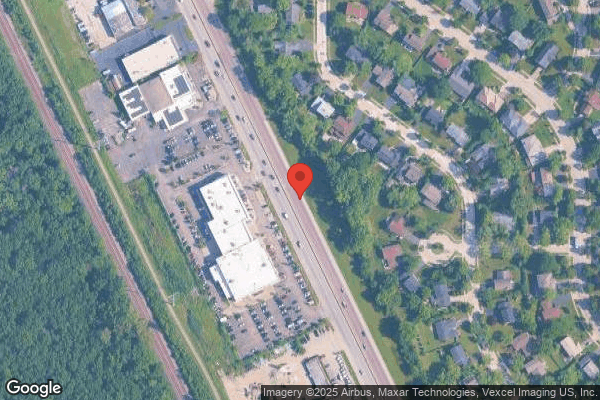

2773 SKOKIE VALLEY ROAD, HIGHLAND PARK, IL 60035 (847) 266-9266
For profit - Limited Liability company 215 Beds LEGACY HEALTHCARE Data: November 2025
Trust Grade
38/100
#298 of 665 in IL
Last Inspection: October 2024

Within standard 12-15 month inspection cycle. Federal law requires annual inspections.

Overview

Warren Barr North Shore has a Trust Grade of F, indicating significant concerns about the quality of care provided. It ranks #298 out of 665 nursing homes in Illinois, placing it in the top half, but still reveals room for improvement. The facility is showing an improving trend, decreasing from 11 issues in 2024 to just 1 in 2025, which is a positive sign. Staffing is rated below average with a 2/5 star rating, but the turnover rate is low at 26%, which suggests that many staff members stay long-term, potentially providing better continuity of care. However, the facility has faced serious incidents, such as a resident experiencing a hip fracture due to rough handling during a care procedure, and another resident who sustained a nasal fracture from a fall that occurred because proper supervision was not in place. Overall, while there are strengths, including improving trends and stable staffing, the serious incidents and low trust grade raise valid concerns for families considering this home for their loved ones.

Trust Score
F
38/100
In Illinois
#298/665
Top 44%
Safety Record
High Risk
Review needed
Inspections
Getting Better
11 → 1 violations
Staff Stability
✓ Good
26% annual turnover. Excellent stability, 22 points below Illinois's 48% average. Staff who stay learn residents' needs.
Penalties
○ Average
$40,278 in fines. Higher than 65% of Illinois facilities. Some compliance issues.
Skilled Nurses
✓ Good
Each resident gets 43 minutes of Registered Nurse (RN) attention daily — more than average for Illinois. RNs are trained to catch health problems early.
Violations
⚠ Watch
45 deficiencies on record. Higher than average. Multiple issues found across inspections.
★★★☆☆
3.0
Overall Rating
★★☆☆☆
2.0
Staff Levels
★★★☆☆
3.0
Care Quality
★★★☆☆
3.0
Inspection Score
Stable
2024: 11 issues
2025: 1 issues

The Good

  • Low Staff Turnover (26%) · Staff stability means consistent care
  • Full Sprinkler Coverage · Fire safety systems throughout facility
  • No fines on record
  • Staff turnover is low (26%)

    22 points below Illinois average of 48%

Facility shows strength in staff retention, fire safety.

The Bad

3-Star Overall Rating

Near Illinois average (2.5)

Meets federal standards, typical of most facilities

Federal Fines: $40,278

Above median ($33,413)

Moderate penalties - review what triggered them

Chain: LEGACY HEALTHCARE

Part of a multi-facility chain

Ask about local staffing decisions and management

The Ugly 45 deficiencies on record

4 actual harm
Jun 2025 1 deficiency
CONCERN (D) 📢 Someone Reported This

A family member, employee, or ombudsman was alarmed enough to file a formal complaint

Potential for Harm - no one hurt, but risky conditions existed

Accident Prevention (Tag F0689)

Could have caused harm · This affected 1 resident

**NOTE- TERMS IN BRACKETS HAVE BEEN EDITED TO PROTECT CONFIDENTIALITY** Based on observation, interview, and record review the facility failed to ensure fall interventions were in place for 1 of 3 res...

Read full inspector narrative →
**NOTE- TERMS IN BRACKETS HAVE BEEN EDITED TO PROTECT CONFIDENTIALITY** Based on observation, interview, and record review the facility failed to ensure fall interventions were in place for 1 of 3 residents (R1) reviewed for safety in the sample of 3. The findings include: R1's Face Sheet printed on 6/11/25 showed R1 was [AGE] years old and had the diagnosis of lack of coordination and had an abnormal gait. The May 2025 Incident report had R1's name listed with a date of 5/29/25. R1's Progress Note dated 5/29/25 showed R1 had an unwitnessed fall and found next to her bed. R1's Care Plan with a last reviewed date of 5/19/25 showed R1 was at high risk for falls. Listed under interventions was to provide floor mats at bedside. On 6/11/25 at 9:10 AM and 1:26 PM, R1 was in bed. There were no floor mats in place. No floor mats were visible in R1's room. On 6/11/25 at 1:19 PM, V12 (Restorative Nurse) said after a fall occurs, they do an investigation and come up with fall interventions. V12 said the interventions are listed in the care plan. V12 added the care plan interventions should be in place.
Nov 2024 1 deficiency 1 Harm
SERIOUS (G) 📢 Someone Reported This

A family member, employee, or ombudsman was alarmed enough to file a formal complaint

Actual Harm - a resident was hurt due to facility failures

Accident Prevention (Tag F0689)

A resident was harmed · This affected 1 resident

**NOTE- TERMS IN BRACKETS HAVE BEEN EDITED TO PROTECT CONFIDENTIALITY** Based on interview and record review the facility failed to ensure a resident was repositioned safely. This failure resulted in ...

Read full inspector narrative →
**NOTE- TERMS IN BRACKETS HAVE BEEN EDITED TO PROTECT CONFIDENTIALITY** Based on interview and record review the facility failed to ensure a resident was repositioned safely. This failure resulted in R1 sustaining a intertrochanteric (thigh/femur/hip bone) fracture that required an open reduction surgery. This applies to 1 of 3 residents (R1) reviewed for safety in the sample of 12. The findings include: On November 23, 2024 at 1:08 PM, R1 stated, V11 Certified Nursing Assistant (CNA) came to her room to change her multiple times. She refused to have V11 change her because she felt like she was rough with her. She refused to be changed two times. The third time, V11 CNA told her she was going to get changed and threw her legs over the rail and she heard a pop. After that she had pain in her left leg. She stated, she (V11) would not listen to nothing. Told her don't touch me and no, thank you. Now, I have to suffer for my hip fracture and have surgery. I might not be able to walk again. R1 started crying and gave the phone to her daughter (V3). R1's local hospital records dated November 21, 2024 shows, General: admission H&P (history and physical): History of present illness: R1 is a 60F ([AGE] year old female) w PMH (with a past medial history of) GERD (gastroesophageal reflux disease), OSA (obstructive sleep apnea), bipolar 1, HTN/HLD (hypertension/hyperlipidemia), asthma, hip replacement 8/17 with V14 c/b (complicated by) recurrent prosthestic left hip joint infection w recent discharge on 11/13, discharged on vancomycin and cefepime (both antibiotics), pw (patient with) left hip pain. She was at the facility receiving antibiotics and stated that one of the staff was too rough with me when changing my diaper and felt a pop in the area, reporting pain in the left hip . Assessment & Plan: .Stated she was handled roughly by staff and heard a pop in her joint. XR (x-ray): Left revision total hip arthoplasty with acute comminuted periprosthetic fracture of the left intertrochanteric region as described . On November 23, 2024 at 3:38 PM, R12 (R1's room mate) stated, she woke up to R1 having a problem with someone. R1 was upset because they hurt her while turning her. It had to do with her being moved in bed. Apparently whatever the CNA did added to her pain. R1 complained of pain the next day. Then she left to the hospital. I was under the impression she was in more pain than normally. On November 24, 2024 at 9:05 PM, V11 CNA stated, she worked November 19th on the night shift (into November 20th morning). That night she went to R1's room to change her and R1 stated no. She went back again and told her no again. The third time she tried to change her, R1 told her no, don't touch me. She denied ever changing her or touching her that night. R1's task list for November 19, 2024 shows, she was incontinent during the night shift. R1's change in condition form dated November 20, 2024 shows, Situation: patient is complaining of pain anytime you move the left leg. On November 26, 2024 at 11:04 AM, V13 Physician Assistant (PA) stated, he is part of R1's surgery team. R1 originally broke her left hip and had surgery back in August. She had an infection in the hip so they placed a cement spacer. She was sent to the facility following that cement spacer placement. They had followed up with her after and re-did x-rays, there was no fracture. When she came into the hospital this time she claimed staff was aggressive with her, twisted her leg and she heard a pop. The x-rays showed a fracture. She had surgery for an open reduction the day before (November 25th) with him. The fracture is caused by a twisting torsion type of injury. The only way to get the fracture is by twisting the leg. On November 24, 2024 at 9:50 PM, V15 Assistant Administrator stated, R1 told her V11 CNA tried to change her 3 times where she told her no and on the third time, she changed her. She moved her and heard a pop in her leg. V11 CNA, swears R1 refused to be changed three times. The facility's SNF/NF (skilled nursing facility/nursing facility) to hospital transfer form dated November 20, 2024 shows, R1 is dependent on staff for all ADL's (activities of daily living) and is incontinent of bowel and bladder. R1's minimum data set (MDS) shows, she is cognitively intact. R12's (R1's room mate) minimum data set (MDS) shows, she is cognitively intact. R1's care plan initiated on November 14, 2024 shows, Focus: R1 has an ADL Self Care Performance Deficit and Impaired Mobility r/t (related too) weakness, impaired balance, impaired balance and pain, therefore requires weight bearing assist with bed mobility, transfer, toileting, dressing, locomotion and walking. Comorbidities include: Infected left total hip Arthroplasty, AKI (acute kidney infection), Hypercalcemia, Anemia, Bipolar, HTN, Asthma, Obesity and OSA. Interventions: I would like staff to provide gentle range of motion as tolerated with daily care. BED MOBILITY: R1 use(s) assistive device (bed rails) to reposition and turn in bed. TOILET USE: [NAME] require(s) Max. staff participation to use toilet. The facility's resident council minutes for the month of September 2024 shows, Nursing/CNAs: Residents had some concerns about CNAs professionalism. Resident expressed 3rd shift is rough at times. CNAs tends to just get in and get out of rooms.
Oct 2024 7 deficiencies
CONCERN (D)

Potential for Harm - no one hurt, but risky conditions existed

Deficiency F0558 (Tag F0558)

Could have caused harm · This affected 1 resident

**NOTE- TERMS IN BRACKETS HAVE BEEN EDITED TO PROTECT CONFIDENTIALITY** Based on observation, interview and record review the facility failed to ensure residents were provided comfortable medical equi...

Read full inspector narrative →
**NOTE- TERMS IN BRACKETS HAVE BEEN EDITED TO PROTECT CONFIDENTIALITY** Based on observation, interview and record review the facility failed to ensure residents were provided comfortable medical equipment for 2 of 29 residents (R99, R24) in the sample of 29. The findings include: 1. On 10/07/24 at 10:04 AM, R99 was in bed finishing breakfast. R99 stated I have my own chair, but it isn't comfortable. They know my chair is uncomfortable, but they say it won't happen when I ask to get another one. On at 10/09/24 at 9:35 AM, V4 (Registered Nurse) said R99 had not mentioned anything to her about her wheelchair, but V6 (Restorative Director) might know about it. V4 said V5 (Central Supply) has wheelchairs and would get her one. V4 said if her wheelchair was uncomfortable, we could get her a new one. On 10/09/24 at 9:39 AM, R99 said she has complained about her wheelchair a number of times to the nurses and aides, and she was told they couldn't do anything until her kids removed her old one. R99 said my feet don't touch the ground in mine so it makes sitting uncomfortable. R99's wheelchair was in the bathroom, with clothes draped over it. On 10/09/24 at 9:45 AM, V5 (Central Supply) said this is the first time hearing about R99's wheelchair. V5 said usually nursing will tell me. V5 said she has wheelchairs in the store room she could give R99. On 10/09/24 at 9:50 AM, V6 (Restorative Director) said she didn't know anything about R99's wheelchair, nursing had not reported to her. R99's Minimum Data Set, dated [DATE] shows R99 is cognitively intact and is dependent on staff for transfers from the bed to chair. The Resident Rights for People in Long-Term Care Facilities (from State of Illinois Department on Aging) pamphlet shows your facility must provide services to keep your physical and mental health, at their highest practical levels. 2. R24's admission Record dated October 8, 2024 shows she was admitted to the facility on [DATE] with diagnoses including chronic obstructive pulmonary disease, malnutrition, dementia, Alzheimer's disease, rheumatoid arthritis, anxiety disorder, and major depressive disorder. On October 7, 2024 at 12:03 PM, V25 and V26 CNAs (Certified Nursing Assistants) provided ADL (Activities of Daily Living) care for R24. R24 was laying crooked in bed. The foot of R24's bed was elevated and V26 could not get it to go down. V26 said (R24's) bed is not working. On October 8, 2024 at 10:51 AM, V28 (CNA) provided ADL care to R24. R24 was laying in bed crooked again. R24's foot of the bed was still stuck elevated. On October 9, 2024 at 10:45 AM, V29 (Maintenance Director) said if residents' items are not working, the staff can call maintenance, page them, or use an app. V29 said that maintenance constantly walks around the facility. V29 said there are three maintenance personnel. V29 said he was not aware that R24's beds was not working. V29 said that any staff can report issues with equipment and it should be reported right away. V29 said he is on call 24/7.
CONCERN (D)

Potential for Harm - no one hurt, but risky conditions existed

Quality of Care (Tag F0684)

Could have caused harm · This affected 1 resident

Based on observation, interview, and record review the facility failed to set up a physician's appointment for 1 of 29 residents (R107) reviewed for quality of care in the sample of 29. The findings i...

Read full inspector narrative →
Based on observation, interview, and record review the facility failed to set up a physician's appointment for 1 of 29 residents (R107) reviewed for quality of care in the sample of 29. The findings include: On 10/07/24 at 10:56 AM, R107 said she went to the hospital in January of this year and then came here. R107 said she has been in and out of the hospital with multiple medical issues going on. R107 said one of ongoing treatments is injections in her eyes. R107 said she missed an appointment because she was in the hospital last month and they were supposed to re-schedule it for her. R107 said she is not sure if they scheduled it yet. R107 was upset and stated there is no follow through here! They say they will take care of it and then I never hear anything. I have to either call myself or keep on telling them, but when I leave messages no one gets back to me. It's very frustrating. R107's Physician Orders dated (9/23/24) shows Appointment: Ophthalmologist, ASAP (as soon as possible), [Name of facility], Patient would like appointment scheduled on Monday or Friday. R107's Physician Progress Note dated 9/23/24 shows R107 seen in her room today and examined. Asking about appointments for ortho and ophthalmologist. On 10/09/24 at 9:55 AM, V7 (Ward Clerk/Scheduler) said she had not scheduled R107's appointment for the Ophthalmologist yet, it was on her to do list for today (16 days after physician order). On 10/09/24 at 10:05 AM, V8 (Receptionist for R107's Ophthalmologist office) said there has been no appointment scheduled for R107 and there are no notes that the facility has called. V8 said R107's appointment could be scheduled right away, R107 just needs a follow up appointment since she missed the last few appointments due to hospitalization. On 10/09/24 at 10:13 AM, V2 (Assistant Administrator) said the expectations is for appointments to be scheduled within a few days of the order.
CONCERN (D)

Potential for Harm - no one hurt, but risky conditions existed

Accident Prevention (Tag F0689)

Could have caused harm · This affected 1 resident

Based on observation, interview and record review the facility failed to ensure a resident was transferred in a safe manner to 1 of 29 residents (R95) reviewed for safety in the sample of 29. The fin...

Read full inspector narrative →
Based on observation, interview and record review the facility failed to ensure a resident was transferred in a safe manner to 1 of 29 residents (R95) reviewed for safety in the sample of 29. The findings include: R95's Physician order sheet dated 10/24 show R95 has diagnoses that include right sided paralysis due to stroke and chronic end stage renal disease receiving hemodialysis. On 10/7/24 at 10:15 AM, R95 was sitting in his reclined chair being brought to his room after dialysis treatment. V13 and V14 (both Certified Nursing Assistants-CNAs) applied gait belt around R95's waist and used the gait belt to pull R95 in a standing position. R95 was hunched over and was noted to be leaning towards his right side. R95 could not hold himself up in a standing position. V13 and V14 (CNAs) then placed their hands under R95's armpits and lifted him to transfer him to his bed. R95 was not able to bear weight and unable to pivot during the transfer. V13 (CNA) said the stand lift would be a better way to transfer R95. R95's latest careplan with date initiation of 1/26/24 showed, hemiplegia and hemiparesis following cerebral infarction (Stroke) affecting right side. Transfer: (R95) require(s) Mechanical Aid (Sling) for transfers. (R95) has an ADL Self Care Performance Deficit and Impaired Mobility r/t (related to) CVA/TIA/Stroke, Musculoskeletal impairment . Chronic Kidney Disease) and Impaired balance. (R95) is high risk for falls related to recent fall, .Cerebrovascular Accident (CVA)/stroke. Decline in functional status . Difficulty maintaining standing position, Hemiplegia & Hemiparesis affecting Right side, Muscle weakness. On 10/8/24 at 2:00 PM V16 (Physical Therapist) said all residents should be transferred correctly for their safety.
CONCERN (D)

Potential for Harm - no one hurt, but risky conditions existed

Deficiency F0692 (Tag F0692)

Could have caused harm · This affected 1 resident

**NOTE- TERMS IN BRACKETS HAVE BEEN EDITED TO PROTECT CONFIDENTIALITY** Based on observation, interview, and record review, the facility failed to ensure a resident with a history of weight loss was s...

Read full inspector narrative →
**NOTE- TERMS IN BRACKETS HAVE BEEN EDITED TO PROTECT CONFIDENTIALITY** Based on observation, interview, and record review, the facility failed to ensure a resident with a history of weight loss was served an ordered supplement for one of ten residents (R24) reviewed for weight loss in the sample of 29. The findings include: R24's admission Record dated October 8, 2024 shows she was admitted to the facility on [DATE] with diagnoses including moderate protein calorie malnutrition, Alzheimer's disease, anemia, and major depressive disorder. R24's Order Summary Report dated October 8, 2024 shows an order for fortified pudding two times a day with lunch and dinner dated October 19, 2023. R24's Meal ticket shows magic cup and fortified pudding for lunch and dinner. R24's Dietary Evaluation dated February 28, 2024 shows, Conclusion: Order for fortified pudding twice daily, magic cup twice daily, and ensure plus daily as ordered. Recommend discontinue magic cup due to unavailability in house. Registered dietitian to follow up as needed. R24's Dietary Evaluation dated May 22, 2024 shows, Conclusion: Order for fortified pudding twice daily and ensure plus daily as ordered. Registered dietitian to follow up as needed. R24's Dietary Evaluation dated August 14, 2024 shows, Conclusion: Order for fortified pudding twice daily and ensure plus daily as ordered. Registered dietitian to follow up as needed. R24's weights summaries show on September 7, 2024, R24 weighed 149.4 lbs. On October 1, 2024, R24 weighed 145 pounds which is a -2.95 % Loss. On July 2, 2024, R24 weighed 155 lbs. On October 1, 2024 R24 weighed 145 pounds which is a -6.45 % Loss. On April 3, 2024 R24 weighed 160.4 lbs. On October 1, 2024 R24 weighed 145 pounds which is a -9.60 % Loss. On October 8, 2024 at 12:11 PM, R24 was in bed attempting to feed herself the lunch meal. R24 had lemonade, small chicken chunks, pasta, broccoli, and mandarin oranges on her tray. There was no fortified pudding on her lunch tray. On October 8, 2024 at 12:20 PM, V24 (Dietitian) said she last saw R24 on August 14, 2024 for a quarterly assessment. V24 said R24 is on fortified pudding for lunch and dinner, and ensure with the noon meal. V24 said the house supplement and fortified foods are given by the dietary staff. R24's Nutrition Note dated October 8, 2024 at 4:05 PM by V24 shows, Noting insidious weight loss from previous 155 pounds, possible multifactorial due to sleeping during the day and not easily aroused to be interested in eating at meal time, fluid shift with diuretic and congestive heart failure. Per staff, patient often sleeps between meals and is not easily aroused to wake for a meal. For nutrition interventions for additional calories/protein for weight maintenance, orders for ensure plus daily and fortified pudding twice daily. Due to sleeping between meals, recommend offering a snack when patient is most alert/awake; bedtime snack due to patient wakes up at night. Offer ensure in addition to bedtime snack and as needed to supplement intake. Provide interventions as above and continue to monitor meal intake. R24's Care Plan intitiated September 17, 2023 shows R24 experienced weight loss and she is at risk for continued weight loss. Dietary health supplements as ordered. The facility's Weights policy revised August 19, 2024 does not include information regarding insidious weight loss.
CONCERN (D)

Potential for Harm - no one hurt, but risky conditions existed

Deficiency F0697 (Tag F0697)

Could have caused harm · This affected 1 resident

**NOTE- TERMS IN BRACKETS HAVE BEEN EDITED TO PROTECT CONFIDENTIALITY** Based on observation, interview, and record review, the facility failed to perform an assessment on a resident with complaints o...

Read full inspector narrative →
**NOTE- TERMS IN BRACKETS HAVE BEEN EDITED TO PROTECT CONFIDENTIALITY** Based on observation, interview, and record review, the facility failed to perform an assessment on a resident with complaints of pain for one of 29 residents (R24) reviewed for pain in the sample of 29. The findings include: R24's admission Record dated October 8, 2024 shows she was admitted to the facility on [DATE] with diagnoses including chronic obstructive pulmonary disease, malnutrition, dementia, Alzheimer's disease, rheumatoid arthritis, anxiety disorder, and major depressive disorder. R24's Care Plan initiated November 17, 2020 shows R24 is at risk for pain/discomfort related to disease process. Monitor [R24] and record/report to nurse any signs/symptoms of non verbal pain, nurse know the pain characteristics as needed, such as: quality, severity, anatomical location; onset; duration; aggravating factors; relieving factors. Staff to observe any behavior changes in usual routine, sleep patterns, decrease in functional abilities, decrease range of motion, withdrawal or resistance to care. On October 7, 2024 at 12:03 PM, V25 and V26 CNAs (Certified Nursing Assistants) attempted to perform incontinence care to R24. R24 complained of left hip pain. R24 would not let V25 and V26 change R24's incontinence brief due to pain. R24 rated her pain to her left hip at 7/8 on a scale of 0-10 pain with 10 being the worse pain. V25 went out of R24's room and told V27 (Registered Nurse/RN) that R24 was having pain. At 12:12 PM, V27 (RN) came into R24's room and gave her a Norco (narcotic pain medication). V27 did not ask R24 about her pain, what it was rated, or where it was located. V27 did not do a skin assessment or range of motion assessment prior to leaving R24's room. V25 and V26 attempted to clean R24's peri area right after R24 received her pain medication. R24 was unable to turn side to side due to the pain. R24 said she did not want to get dressed because of her pain. At 1:08 PM, staff removed R24's untouched lunch tray. R24's Medication Administration Record shows R24 received Norco for pain rated a 6 at 12:10 PM. On October 8, 2024 at 11:00 AM, V28 (CNA) attempted to perform incontinence care to R24. V28 wiped R24's front peri area, R24 said Oh your hurting me. R24 was holding her left hip area. V28 was attempting to turn R24 in bed using the incontinence pad and R24 was saying my leg is killing me Ow! V28 went into the hall and got V10 (Licensed Practical Nurse/LPN) to help with repositioning R24. At 12:11 PM, staff were in R24's room with the door closed. R24 was heard in the hallway with the door closed saying My back and my hip bone. I beg you please take it off me. Its very painful. V10 (LPN) went into R24's room and administered a Tylenol to R24. On October 8, 2024 at 2:28 PM, V3 (Director of Nursing/DON) said she was in R24's room at 12:11 PM. V3 said that R24 was talking about the sheet when R24 was heard saying take it off . V3 said that V10 (LPN) was with her and they pulled R24 up in bed using the incontinence pad and put a pillow on R24's left side. V3 said if a CNA sees a resident complaining of pain, then the cna should tell the nurse. V3 said the nurse should perform an assessment on the resident to determine what kind of pain, perform a skin assessment, range of motion, and if its a new pain, the nurse practitioner should be notified. R24's progress note dated October 8, 2024 at 3:59 PM and entered by V3 shows, Around 12:00 PM while doing rounds, resident seen laying in bed, alert and oriented x 1, confused and forgetful at baseline. Resident complained to this writer about lower back pain, resident repositioned in the bed with the help of the CNA, stating she is more comfortable after being repositioned. Around 3:00 PM, per nurse on duty, resident complained of left hip pain. Head to toe assessment done and range of motion within normal limits per resident's baseline. Nurse on duty said that she reached out to doctor and order for STAT [immediate] xray of left hip was received and ordered. As needed pain medication was administered by nurse on duty. The facility's Pain Policy revised August 16, 2024 shows, It is the policy of the facility to ensure that all residents are assessed for pain in every situation where there is a potential for pain. During treatment procedure, the resident will be assessed for pain.
CONCERN (D)

Potential for Harm - no one hurt, but risky conditions existed

Infection Control (Tag F0880)

Could have caused harm · This affected 1 resident

**NOTE- TERMS IN BRACKETS HAVE BEEN EDITED TO PROTECT CONFIDENTIALITY** Based on observation, interview, and record review the facility failed to ensure Enhanced Barrier Precautions (EBP) was in place...

Read full inspector narrative →
**NOTE- TERMS IN BRACKETS HAVE BEEN EDITED TO PROTECT CONFIDENTIALITY** Based on observation, interview, and record review the facility failed to ensure Enhanced Barrier Precautions (EBP) was in place for a resident with an implanted medical device which applies to 1 of 29 residents (R339) reviewed for infection control in a sample of 29. The findings include: R339's Facesheet dated 10/8/24 showed R339 was admitted to the facility on [DATE] with diagnoses which included: dependence on renal dialysis and complete traumatic amputation (toes). R339's admission Summary note dated 10/4/24 at 3:01 PM showed R339 was noted to have a peritoneal dialysis catheter and a gauze dressing on left lower foot. On 10/7/24 at 11: 35 AM, R339's room had no EBP sign or Personal Protective Equipment (PPE) cart outside the room to identify R339 needing to be on EBP. V30 (Certified Nursing Assistant/CNA) was standing at the bedside preparing to turn R339 with no PPE gown on. V30 stated R339 had a bowel movement and needed to be changed. On 10/8/24 at 10:15 AM, V16 (Infection Control Preventionist/ICP) stated when a R339 was admitted she should have been put on EBP. R339 has the peritoneal dialysis catheter and has a surgical dressing change. On 10/8/24 at 10:45 AM V17 (Registered Nurse) stated a resident with a implanted medial device should me put on isolation when they are admitted . We notify V16 about the resident. If V16 is not here the admitting nurse can put the resident on EBP. When a resident is on EBP staff needs to wear a gown and gloves when providing cares (dressing change, hygiene, etc) for the resident. R339's Physician orders printed 10/9/24 showed orders for peritoneal dialysis catheter management, daily dressing changes for left foot surgical wound, but no order for EBP. The facility's Infection Prevention and Control Policy dated 7/31/24 showed EBP involves using gloves and gowns during high contact resident care activities for residents infected or colonized with a Multidrug-Resistant Organism (MDRO), wounds, and/or indwelling medical devices.
CONCERN (E)

Potential for Harm - no one hurt, but risky conditions existed

Deficiency F0761 (Tag F0761)

Could have caused harm · This affected multiple residents

Based on observation, interview, and record review the facility failed to ensure medications were stored according to manufacturer's guidelines for 4 of 29 residents (R9, R12, R123, R132) reviewed for...

Read full inspector narrative →
Based on observation, interview, and record review the facility failed to ensure medications were stored according to manufacturer's guidelines for 4 of 29 residents (R9, R12, R123, R132) reviewed for medications in the sample of 29. The findings include: 1. On 10/08/24 at 9:37 AM, this surveyor with V10 (Licensed Practical Nurse/LPN) opened the locked narcotic box on the first floor dementia unit medication cart. Inside the locked box contained boxes of liquid lorazepam. The boxes shows Store in Refrigerator. R12's box containing liquid lorazepam had a new and unopened bottle with a received date of 7/30/24. R9's box containing liquid lorazepam had an opened, used bottle with approximately 29 ml (milliliters) and had a received date of 8/20/24 and an opened date of 8/30/24. V10 (LPN) said lorazepam should be refrigerated, these boxes of lorazepam have not been kept in refrigerator, they have been stored in the cart. 2. On 10/08/24 at 9:49 AM, this surveyor with V11 (LPN) opened the locked narcotic box of the first floor medication cart. Inside the locked box contained boxes of liquid lorazepam which showed Store in refrigerator. R123's box containing liquid lorazepam had a new and unopened bottle with a received date of 6/8/24. V11 (LPN) said liquid lorazepam should be kept in the refrigerator. R12's Physician Orders dated 10/7/24 shows lorazepam oral concentrate 2 mg (milligrams)/ml Give 1.0 mg sublingually every 4 hours as needed for anxiety/restlessness for 2 weeks. R9's Physician Orders dated 10/7/24 shows lorazepam oral concentrate 2 mg/ml Give 0.25 ml by mouth every 4 hours as needed for agitation for 14 days. R123's Physician Orders dated 10/7/24 shows lorazepam oral concentrate 2 mg/ml Give 0.5 mg sublingually every 4 hours as needed for anxiety/restlessness for 14 days. 3. On 10/8/24 at 10:15 AM, the Medication cart on 2nd floor was checked with V15 (Registered Nurse-RN). R132's two bottles of Lorazepam (Ativan) was noted in the narcotic box (not refrigerated.) One 30 milliliters (ml) bottle of Ativan was opened (undated) with 4 ml left, and 1 full bottle of Ativan with 30 ml. V15 (RN) said that R132's Ativan has always been stored in the Narcotic box and not in the refrigerator. R132's Lorazepam (Ativan) order shows, give 0.5 ml every 6 hours for anxiety and agitation with order date of 9/30/24 and stop date of 10/14/24. The Manufacturer's guide attached to the Ativan medication box shows, Store at a cold temperature, refrigerate 36 degrees Fahrenheit (F) to 46 degrees F. The facility policy entitled Storage of Medications (undated) show, Medications and biological are stored safely, securely, and properly, following manufacturer's recommendations or those of the supplier .
Aug 2024 1 deficiency 1 Harm
SERIOUS (G) 📢 Someone Reported This

A family member, employee, or ombudsman was alarmed enough to file a formal complaint

Actual Harm - a resident was hurt due to facility failures

Quality of Care (Tag F0684)

A resident was harmed · This affected 1 resident

Based on interview and record review the facility failed to provide ongoing assessments for a resident who had an injury of unknown origin on 7/3/24. R1 remained at the facility until he was sent to t...

Read full inspector narrative →
Based on interview and record review the facility failed to provide ongoing assessments for a resident who had an injury of unknown origin on 7/3/24. R1 remained at the facility until he was sent to the emergency room on 7/8/24 for abnormal behavior. This failure resulted in R1 having a mildly impacted and angulated left femoral neck fracture and deep venous thrombosis for 1 of 3 residents reviewed for a change in condition in the sample of 6. The findings include: The Nursing Daily Evaluation dated 7/3/24 for R1 showed R1 was wincing when being changed. The nurse practitioner was notified. An order for an x-ray to both hips was received and completed. The Nurse Practitioner Note dated 7/3/24 at 11:12 AM for R1 showed, R1 seen and examined in his room, per nurses, he has not been at his baseline lately as he is usually seen walking in halls. Per staff, resident noted to be wincing when leg is touched. On exam, resident noted to be rubbing along his left lateral and anterior thigh. He does show some discomfort with palpation to left upper leg. Plan to order x-rays and follow up. The eMAR (electronic medication administration record) note dated 7/3/24 at 5:14 PM showed R1 was given 1000 mg of Tylenol Extra Strength. The X-ray (radiography) dated 7/3/24 for R1 showed, faintly visualized linear sclerotic opacity of the neck of the left femur - suspicious for a stress fracture in the appropriate clinical setting. Mild degenerative arthritic changes are seen in both hip joints, left greater than right. The bony mineralization and the visualized portion of the pelvis are unremarkable. The Progress Note dated 7/3/24 at 6:59 PM for R1 showed, medical doctor/nurse practitioner is aware of x-ray results to both hips. Left his is suspicious of a stress fracture. Order for orthopedic consult. Need consult as soon as possible, Tylenol PM given at 5:00 PM. R1's Progress Notes/Nurse's Notes from 7/4/24 - 7/7/24 did not show any assessments of R1's left leg. The facility did not have any Nursing Daily Evaluations for R1 from 7/4/24 - 7/7/24. The SBAR (situation background assessment and response) Note dated 7/8/24 at 11:50 AM for R1 showed, patient behavior noted not at baseline. V6 NP (Nurse Practitioner) notified of change and ordered patient to be sent out to ER (emergency room) for further evaluation. The Progress Note dated 7/8/24 at 7:50 PM for R1 showed he was admitted to the hospital for a closed left hip fracture. The Emergency Department Doctor's Note dated 7/8/24 showed, R1 presented to the emergency department with the complaint of not being able to walk where he is usually very ambulatory. Per emergency medical services report he has been in bed for the last 4-5 days. About a week ago he had difficulty with transitions per wife, and now he has not been able to get up at all and likes to lay on his right side. The patients baseline mental status limits his ability to communicate and give an appropriate history. He does call out in pain when his left hip and knee is palpated or moved in any way. The hospital X-ray dated 7/8/24 for R1 showed, mildly impacted, and angulated left femoral neck fracture. The Orthopedic History and Physical Note dated 7/8/24 for R1 showed, found to have a left femoral neck fracture; has been bed bound for about a week. Patient lying in bed, left hip rotated, and pain to left hip. Decision made to proceed with surgery. Assessment/Plan: admit to orthopedics, bedrest until surgery, non-weight bearing to left lower extremity, pain management, venous doppler of lower extremities (prolonged bedbound, not on deep venous thrombosis prophylaxis), medical per-operation evaluation and risk stratification, and preoperative for surgery (done). The Orthopedic Surgery Note dated 7/8/24 for showed, patient (R1) seen in hospital room with wife at bedside. R1 with severe dementia, does not recognize wife or where he is. Appears anxious, scared. Unable to provide history but grimacing on attempt to passively move left leg. Assessment and Recommendations: admitted to hospital for hip pinning The Operative Report dated 7/10/24 for R1 showed he had an open reduction and internal fixation of the left femoral neck fracture. R1's Vascular Imaging Studies dated 7/9/24 showed, acute occlusive vein thrombosis of the popliteal vein, gastrocnemius vein and peroneal vein. Acute partially occlusive vein thrombosis of the mid to distal femoral vein. The Vascular Medicine Consult dated 7/11/24 for R1 showed, on 7/8/24 presented from Memory Care after staff reported that, patient usually ambulatory; but has been bed bound and moans in pain x 10 days when his leg is moved/touched. Last time the patient was seen walking was 6/28/24 of note, the patient has been living at the nursing home since 9/2023 due to his Alzheimer's, had a fall episode 2 months ago but was able to ambulate until 6/28 per wife (V4). Hip x-ray on 7/3 at the memory care reportedly showed a fracture leading to his emergency department visit on 7/8. In the emergency department, CT (computerized tomography) of the hip (7/8) showed angulated left femoral neck fracture. Subsequently, he was admitted for hip ORIF (open reduction and internal fixation) procedure, which he underwent on 7/10. On 7/9, bilateral lower extremity dopplers obtained and showed acute left lower extremity deep venous thrombosis. Vascular medicine service consulted to assist with anticoagulation management. On 7/9/24 an IVC (inferior vena cava) filter placed per vascular medicine recommendation. On 7/30/24 at 11:20 AM, V5 (Licensed Practical Nurse/LPN) stated on 7/3/24 the CNAs (certified nursing assistants) were changing R1 and when they were moving him, he was wincing. V5 stated she was there to see R1, and he was uncomfortable. When they would go to turn R1 he was uncomfortable. V5 stated she talked to V6 (NP) and the doctor. V5 stated she did not document an assessment. V5 stated she should do an assessment when they see something new or different; she should at least do that. V5 stated assessments can be documented in the general progress notes. V5 stated R1 normally walked around; that day he wasn't getting up for us. That wasn't normal. V5 stated the NP wanted an orthopedic consult. V16 (Unit Secretary) schedules the appointments. V5 stated she would continue to assess r1 for pain after that and he was fine if he was still but if he was moved, he had pain. V5 stated they should do physical assessments and see if R1 was in pain. On 7/30/24 at 11:50 AM, V4 (R1's wife) stated she was with R1 on 6/25/24 and he was fine. When she saw R1 on 6/28/24 he wasn't fine. R1 was sitting in his roommate's bed, and she could not get him to his bed. V4 stated the CNA (Certified Nursing Assistant) helped her and they pushed the beds together as close as they could to get R1 into his bed. On 6/28/24 at around 6:00 PM, the CNA said R1 wouldn't walk that day. V4 stated she wasn't at the facility on 6/29/24. On 6/30/24 when she came in to see R1 he was laying on his right side and he would yell out when they would change him. R1 maintained that pattern of laying on his right side and was not eating as well. On 7/3/24 R1's x-rays came back, and the nurse said it was a hairline fracture. V4 stated she kept coming in and R1 was the same, so she doesn't know what prompted the facility to take R1 to the hospital on 7/8/24. R1 yelled in pain when rolling him and he did not get out of bed during that time from 7/3/24 - 7/8/24. At the ER (Emergency Room) the nurse wanted an x-ray of R1's left knee; it was swollen when he went there. They said he must have a blood clot. R1 was admitted to the hospital and was sent to another hospital where they could do orthopedic surgery. On 7/30/24 at 2:39 PM, V12 (CNA) stated she was told R1 had a stress fracture then he had another test and that said he had a hip fracture. V12 stated R1 would normally get up with one assist for activities of daily living. R1 would walk around. One day she came in for her shift and R1 was lying in bed and did not want to get up. V12 stated after 7/4/24 she noticed when they would touch his leg he would scream. On 7/8/24 R1 had pain just on touching him so her and her partner told the nurse. V12 stated R1's son and wife even said R1 did not want to be touched. That had been going on since 7/4/24, but 7/8/24 was the day they sent him out. On 7/31/24 at 9:21 AM, V6 NP (Nurse Practitioner) stated, on 7/3/24 R1 had an x-ray done because before that date he was walking and then stopped walking. V6 stated the nurse told him that the night before on 7/2/24 R1 was rubbing his leg. V6 stated he discussed it with the nurse and ordered an x-ray to be done on 7/3/24. V6 stated either on 7/3/24 or 7/5/24 the results of the x-ray came back and showed a suspected left proximal femur fracture. V6 stated he put in for an urgent orthopedic evaluation, Tylenol, and ice packs. V6 stated there weren't any fall reports. V6 stated he saw R1, and he was laying on his right side. R1 could extend his left leg partially but not fully. The orthopedic consult was put in as urgent. Usually, we put in for the consult and the facility sets up the appointment. V6 stated he did not hear any follow up with that. V6 stated he wanted it done as soon as possible. V6 stated the nurses should be checking R1's vital signs, assess his leg, and assess for pain. Vital signs should be done every shift. An assessment of the leg every shift and during the shift. V6 stated it was important to assess because of a suspected fracture, to see if there are any changes and/or increased pain. V6 stated he went to assess R1 closer on 7/8/24 and he did not look comfortable. V6 stated he felt R1 needed to be assessed further for a fracture. V6 stated he saw swelling to R1's leg and he had not received any reports from staff that R1 had swelling. V6 stated what could have been done differently would have been closer assessments and checking on R1 more often, then notify of any little changes in his assessment that the staff find. On 7/31/24 at 11:23 AM, V3 (Director of Nursing/DON) stated R1 was a resident that would normally be up walking around. On 7/1/24 R1 had a temperature, they called his wife, had lab work and urine collected. R1's lab work and urine came back normal. On 7/3/24 R1 was wincing when being changed so the NP ordered an x-ray. The results came back at 6:00 PM with a stress fracture. The nurse tried to reach the doctor who did not respond. The nurse called the NP who gave an order for an orthopedic consult. We called and the appointment was made for 7/10/24 at 9:15 AM. In the meantime, we tell the staff to monitor him. The NP said to notify him of any change in condition. V3 stated the only way to know if there is a change in condition is to assess. The nurses can document in the progress notes or an SBAR (situation background assessment and response). Take vitals at least once a day. V3 stated there wasn't any nurse's notes/assessments for R1 from 7/3/24 - 7/8/24. V3 stated she is counting on them to do assessments and document. V3 stated they must assess thoroughly. V3 stated she saw R1 had a blood clot when he went to the hospital; if staff had been assessing R1 they would have caught it. V3 stated staff must assess, document the assessment and let the doctor or NP know. The Face Sheet dated 7/31/24 for R1 showed diagnoses including fracture, osteoarthritis, acute embolism and thrombosis, depression, insomnia, dementia, dysphagia, unsteadiness on feet, metabolic encephalopathy, anxiety disorder, and Alzheimer's disease. The MDS (Minimum Data Set) dated 5/20/24 for R1 showed severe cognitive impairment; supervision or touching assistance for rolling left and right, sit to lying, lying to sitting, transfers, and walking 150 feet. The facility's Notification Procedures for Change in Resident Condition policy (1/14/24) showed, the charge nurse or nurse supervisor will notify the resident's attending physician or covering physician when there has been; a significant change in the resident's physical, emotional/mental condition. Significant change in medical treatment or plan of care. SBAR (situation background assessment and response) communication form and progress note - documentation tool that guides the licensed nurse through structured evaluation of change in condition by facilitating structured and systemic communication with the resident's attending physician. The policy did not show any procedure for ongoing assessments after a change in condition. The Facility's Incident/Accident Procedures policy (8/20/23) showed, an accident or incident report must be completed by the nurse for all incidents/accident including injuries of unknown source. Assess all accident/incident patients for signs and symptoms of injuries. Assess for pain and manage accordingly. Notify the patient's attending physician and family/next of kin or guardian of the accident or incident. Transfer patient to the hospital as medically necessary when ordered by the physician.
Mar 2024 1 deficiency 1 Harm
SERIOUS (G) 📢 Someone Reported This

A family member, employee, or ombudsman was alarmed enough to file a formal complaint

Actual Harm - a resident was hurt due to facility failures

Accident Prevention (Tag F0689)

A resident was harmed · This affected 1 resident

**NOTE- TERMS IN BRACKETS HAVE BEEN EDITED TO PROTECT CONFIDENTIALITY** Based on observation, interview, and record the facility failed to supervise a resident who was at risk for falls due to history...

Read full inspector narrative →
**NOTE- TERMS IN BRACKETS HAVE BEEN EDITED TO PROTECT CONFIDENTIALITY** Based on observation, interview, and record the facility failed to supervise a resident who was at risk for falls due to history of falls and failed to put specific fall intervention in place to prevent further falls, this failure resulted in R3 sustaining a nasal fracture and left forehead lacerations requiring stitches for 1 of 3 residents reviewed for falls in the sample of 6. The findings include: R3's face sheet show R3 is 76 y/o with diagnoses that include chronic venous hypertension, kidney failure and heart disease. R3's fall risk assessment dated [DATE] shows R3 is HIGH risk for falls. A Facility Reported Incident dated 3/22/24 (initial) show, At 1 pm, NOD (Nurse on duty) responded to a call for help from the room. Resident noted lying face down on then floor with wheelchair behind her. No loss of consciousness. Resident alert and oriented and verbally responsive. Residents states that she dropped something on the floor and wanted to pick it up, but resident unable to recall what item. Rapid response and 911 called. Resident noted with lacerations on left eyebrow, bridge of nose, left elbow, and left foot. Pressure applied to all areas, ice pack in place. R3's Hospital Records dated 3/22/24 show, pt arrives (from nursing home) c/o (complaint of) fall out of wheelchair, states she was reaching for something on the floor , reached too far, lost her balance and fell out of w/c striking face onto floor, laceration to forehead, skin tear to left elbow . CT scan of face results dated 3/22/24: bilateral acute nasal bone fracture. There is a laceration and small to moderate-sized soft tissue swelling involving the left forehead . diagnoses,complex laceration of left eyebrow, contusion of face, skin tear left elbow. R3's Hospital discharge instructions show, you have a bilateral fractured nasal bones and laceration above left elbow. Sutures will need to be removed in 7 days. R3's progress notes dated 3/22/34 show, x-rays- nasal bone fracture, R3's laceration above the left eye has 6 sutures in place, sutures have to be removed in 7 days. On 3/25/24 at 9:30 AM, R3 was in bed alert. R3 has deep dark purple bruising from the top of her forehead to underneath both of her eyes to her nasal area. There was stitches noted above her left eyebrow. When asked what happened, R3 said she was in her wheelchair, she thought something was on the floor so she leaned forward and fell. R3 said that was all she can remember. On 3/25/24 at 12:30 PM, V9 (License Practical Nurse-LPN) said she was the Nurse working last 3/22/24. V9 (LPN) said it happened around lunch time. V9 said R3 was found facedown on the floor, her wheelchair behind her. There was poll of blood around R3's head. R3 had fallen forward from her wheelchair. V9 said 911 was called and R3 was sent to a local hospital. V9 said R3 had a fall last month, (R3 fell out of her wheelchair inside her room reaching for something.) V9 said R3's room is in the middle of the hallway, far from the Nurses Station where staff usually are. R3's room cannot be seen when in the Nurses Station so R3 cannot be supervised. V9 said there was also no device to alert staff when R3 was trying to reach too far when in her wheelchair to prevent her from falling forward. R3's fall careplan dated 2/2/24 show R3 is high risk for falls due to recent fall, poor safety awareness, impaired balance due to disease process. She has a habit of reaching/bending down to obtain items from the floor despite education and redirection. She requires max weight bearing assistance with bed mobility, transfers locomotion and toileting. She is noted to experience dizziness when changing position. She utilizes wheelchair as a primary mode of locomotion at this time. R3's fall interventions did not address R3's behavior of reaching/bending until today, 3/25/24 when surveyor was at the facility investigating R3's fall. The facility policy dated 7/1/7/23 entitled Fall Occurrence show It is the policy to ensure that residents are assessed for risk for falls, that intervention are reevaluated and revised as necessary. On 3/25/24 at 1PM, V2 (Director of Nursing) said they will be looking for R3's room placement and ways for R3 being monitored closer.
Feb 2024 1 deficiency
CONCERN (D) 📢 Someone Reported This

A family member, employee, or ombudsman was alarmed enough to file a formal complaint

Potential for Harm - no one hurt, but risky conditions existed

Pressure Ulcer Prevention (Tag F0686)

Could have caused harm · This affected 1 resident

Based on interview and record review the facility failed to notify the physician when a resident developed an unstageable pressure ulcer and failed to notify the physician and implement a new treatmen...

Read full inspector narrative →
Based on interview and record review the facility failed to notify the physician when a resident developed an unstageable pressure ulcer and failed to notify the physician and implement a new treatment order after a change in a pressure ulcer for 1 of 3 residents (R1) reviewed for pressure ulcers in the sample of 8. The findings include: R1's Wound Assessment Details Report dated 2/3/24 shows that an unstageable pressure ulcer with necrosis measuring 3 centimeters (cm) x 3 cm was identified on 2/3/24. The wound had a moderate amount of serous drainage and no odor. R1's Nursing Notes dated 2/3/24 at 6:40 PM shows, Noted a pressure injury on [R1's] sacrum. Cleansed with NS (normal Saline), pat dried, and applied bordered foam Notified and explained treatment plan to POA R1's Treatment Administration Record (TAR) for February shows an order entered on 2/3/24 for, Treatment: Sacrum: Cleanse with NS, pat dry, and apply bordered foam every day shift every 3 days(s) for wound treatment. R1's Electronic Medical Record does not document that R1's physician was notified of the new pressure ulcer. On 2/14/24 at 2:02 PM, V6 (Wound Registered Nurse) said that he found R1's wound on 2/3/24. V6 said that the wound had eschar and some drainage but did not have an odor and was not painful. V6 said that he put in an order for a foam dressing to be applied and changed on Monday, Wednesday, and Friday until she saw the wound physician for further treatment. V5 (Wound Director) said that he was called to the room on 2/5/24 to look at the wound. V5 said that he took the dressing off and noticed an odor, so he applied Dakin's solution (antiseptic wound cleaner) and wanted the dressing changed daily using Dakin's until she saw the wound physician. On 2/14/24 at 2:38 PM, V6 said that he did not notify R1's physician of her new pressure ulcer. V6 stated, We do not call the doctor all the time if a resident develops a pressure ulcer. We can use our judgement until the resident is seen by the wound physician. We only call them if there is an issue like we think it is infected or something. R1's EMR does not document that R1's physician was notified when there was a change to R1's wound (odor) and no new orders were placed on R1's TAR on 2/5/24. R1's Wound Evaluation and Management Summary dated 2/8/24 shows that the wound physician saw R1, and the pressure wound on her sacrum was classified as a stage 4 pressure ulcer measuring 3.6 cm x 4 cm x 1 cm. R1's dressing treatment plan was for Dakin's-soaked gauze wet to moist dressing daily. Under additional wound details it shows, Unavoidable and unpredictable wound secondary to decline in overall pt (patient) condition Pt has been sharply declining in all faculties including PO (by mouth) intake, mobility/activity, and mental acuity which no doubt instigated the wounds development Was found to have developed an open wound on her sacrum on Saturday; The wound was already fairly large and necrotic with odor, which appeared in only 1 day; Dakin's dressing was started immediately, and family was notified that day . R1's February 20245 TAR shows that the daily dressing change using Dakin's solution was not ordered until 2/10//24 (7 days after wound was identified). R1's TAR and Nursing Notes do not show that she had received any dressing changes using Dakin's solution or that it was done daily since the wound was first identified. R1's TAR shows that treatment of: cleanse with NS, pat dry, and apply bordered foam dressing to her sacrum wound was performed on 2/3, 2/5, 2/6, and 2/9/24. The facility's Skin Care Treatment Regimen Policy revised on 7/28/23 shows, Charge nurses must document in the nurse's notes and/or the Wound Report form any skin breakdown upon assessment and identification. Furthermore, topical skin treatment must be obtained from the patient's physician .TAR Nursing Documentation: Routine wound care completed by wound care nurse or designee Topical Treatment Protocol: Unless otherwise indicated by the attending physician stage 3 and 4 Cleaned wound Base: Ca Alginate, Hydrocolloid Gauze/gel daily, xeroform gauze. Necrotic areas: Santyl Ointment daily .
Nov 2023 1 deficiency
CONCERN (D) 📢 Someone Reported This

A family member, employee, or ombudsman was alarmed enough to file a formal complaint

Potential for Harm - no one hurt, but risky conditions existed

Menu Adequacy (Tag F0803)

Could have caused harm · This affected 1 resident

Based on observation, interview, and record review the facility failed to follow R6, R7, and R10's menu for three of ten residents (R6, R7, R10) reviewed for Dietary Services in the sample of ten. Th...

Read full inspector narrative →
Based on observation, interview, and record review the facility failed to follow R6, R7, and R10's menu for three of ten residents (R6, R7, R10) reviewed for Dietary Services in the sample of ten. The findings include: 1. On 11/20/23 at 1:15PM, R6's lunch tray did not have a tossed salad. On 11/20/23 at 1:15PM, R6 said, I ordered a tossed salad, they did not send it. Every time I order a salad this happens. I ordered a salad last Friday or Saturday and the sent it up with onions. Onions will kill me! R6's Menu dated 11/20/23 at Lunch, shows, Low Concentrated Sweets, Allergies: Onion. Menu: Tossed Salad/Dressing. 2. On 11/20/23 at 1:21PM, R7 said, I ordered a plain tuna on wheat, baked chips, and sherbet. Instead of the alternate menu items I received a regular lunch menu of chicken, fried potatoes, spinach, and strawberry ice cream. I am lactose intolerant; I cannot have ice cream. The kitchen told me to stop calling them. On 11/20/23 at 1:23PM, V4 Ombudsmen said, I looked at R7's lunch menu. R7 ordered plain tuna on wheat and baked chips. R7's menu showed lactose intolerant and there was ice cream on her tray. On 11/20/23 at 2:26PM, V5 Assistant Culinary Director said, we give the resident the menu Tuesday the week before it starts. We request the resident to complete their request by Friday, so we know what to serve the resident. We provide lactose intolerant residents with sherbet. Lactose intolerant was not written on R7's menu. Residents are also given the extension of the kitchen or office. Staff should never tell the resident not to call the kitchen. R7 reported to me last week a male staff member had told her to stop calling the kitchen. R7's Diet Order dated 03/08/23 shows, no added salt, regular texture, Lactose Intolerant. 3. On 11/20/23 at 3:00PM, R10 was sitting in the activity area playing the piano. On 11/20/23 at 1:52PM, V3 Ombudsman said, V10 ordered a bagel for breakfast, kitchen sent up toast. It was reported to V5 Assistant Culinary Director. They brought V10 her breakfast bagel at noon, her lunch came shortly after. Yesterday R10 ordered a hot dog with condiments, ketchup, mustard, and rice pilaf. She reported the missing items and they told R10 they ran out of rice, so they made mashed potato instead. The staff never brought the potatoes, and she ate the hot dog plain with no condiments. On 11/20/23 at 3:02PM, R10 said, for the Sunday evening meal I ordered a hot dog with onions and tomatoes, it came up plain. I also did not get the rice dish. I was told they ran out of rice and were substituting mashed potatoes; I never got my potatoes either. This morning for breakfast I ordered a bagel with two cream cheese. I got two slices of toast. I called down to the kitchen and was told they only had cinnamon bagels. I told them that was fine send it up. Around noon I received a plain bagel. On 11/20/23 at 2:26PM, V5 Assistant Culinary Director stated whenever a resident orders a hotdog or hamburger, ketchup and mustard is sent up, we also add relish for the hot dogs. The condiments should have been sent with the order. There was a miscommunication with R10's bagel this morning. She got everything except the bagel. Towards the end of the Sunday evening meal, we ran out rice, we had to substitute with mashed potatoes for the starch. The facility menu dated Sunday (11/19/23) shows, Supper: [NAME] Pilaf Resident Council Minutes dated August 21, 2023, at 2:15PM, shows, Kitchen- Residents had concerns about their meals not being what they ordered from the menu. Residents stated that the customer service on the phone calling down to the kitchen needs work. Resident Council Minutes dated September 18th, 2023, at 2:15PM, shows, Kitchen- Residents had concerns about not getting what they had put on their menu. The facility's Kitchen Policy dated 7/23/23 shows, all food items in the menu and recipe will be followed.
Nov 2023 6 deficiencies
CONCERN (D)

Potential for Harm - no one hurt, but risky conditions existed

Deficiency F0557 (Tag F0557)

Could have caused harm · This affected 1 resident

**NOTE- TERMS IN BRACKETS HAVE BEEN EDITED TO PROTECT CONFIDENTIALITY** Based on observation, interview, and record review, the facility failed to treat a resident with dignity while using the commode...

Read full inspector narrative →
**NOTE- TERMS IN BRACKETS HAVE BEEN EDITED TO PROTECT CONFIDENTIALITY** Based on observation, interview, and record review, the facility failed to treat a resident with dignity while using the commode for 1 of 30 residents (R37) reviewed for dignity in the sample of 30. The findings include: On 11/6/23 at 10:03 AM, R37 was visible from the hallway outside of his room. R37 was sitting on the bed side commode with his door wide open and his brief pulled down around his knees. There was no curtain or barrier providing any privacy as he used the commode. R37's Care Plan (last review completed 9/19/23) shows R37 requires extensive assistance in ADLs (activities of daily living) and is legally blind. R37's Care Plan shows nursing is to assist R37 to and from the bedside commode for his toileting needs and are to emphasize dignity. R37's Minimum Data Set (MDS) dated [DATE] shows R37 requires extensive assistance with personal hygiene and has severely impaired vision. On 11/6/23 at 11:58 AM, R37 said he would like privacy when using the commode and yes, it bothers him if the door is left wide open for everyone to see him using the commode. On 11/7/23 at 2:33 PM, V15, Resident Assistant, said the door should be shut and the curtain should be pulled when a resident is using the bed side commode for privacy. On 11/7/23 at 2:37 PM, V10, Certified Nursing Assistant, said if a resident is on the commode, the curtain needs to be closed for privacy and a call light provided. The facility's Privacy and Dignity Policy (revised 7/28/23) shows it is the facility's policy to ensure that resident's privacy and dignity is respected by the staff at all times.
CONCERN (D)

Potential for Harm - no one hurt, but risky conditions existed

ADL Care (Tag F0677)

Could have caused harm · This affected 1 resident

**NOTE- TERMS IN BRACKETS HAVE BEEN EDITED TO PROTECT CONFIDENTIALITY** 2. On 11/6/23 at 11:58 AM, R37 was lying in bed in his room, R37's fingernails were all very long (at least a quarter of an inch...

Read full inspector narrative →
**NOTE- TERMS IN BRACKETS HAVE BEEN EDITED TO PROTECT CONFIDENTIALITY** 2. On 11/6/23 at 11:58 AM, R37 was lying in bed in his room, R37's fingernails were all very long (at least a quarter of an inch beyond the fingertips). R37 said he would like his fingernails cut, but they have not done it yet. On 11/7/23 at 2:37 PM, V10, Certified Nursing Assistant (CNA), said nail care is done weekly and includes cleaning and trimming of the fingernails. V10 said CNAs can trim residents' fingernails as long as the resident is not on any blood thinners. If the resident is on blood thinners, the nurse of the podiatrist can cut them. R37's Care Plan (last review completed 9/19/23) shows R37 requires extensive assistance in ADLs and is legally blind. R37's Minimum Data Set (MDS) dated [DATE] shows R37 requires extensive assistance with personal hygiene and has severely impaired vision. R37's Order Summary Report dated 11/8/23 shows there is no podiatrist referral. The facility's Nail Care Policy (reviewed 7/28/23) shows nursing staff shell check the residents for nail care which includes cleaning and regular trimming. Diabetic residents are referred to podiatry for further interventions as indicated. Based on observations, interview and record review the facility failed to provide assistance to residents that need extensive assist with Activities of daily living (ADL's) for 2 of 30 residents (R25 and R37) reviewed for ADLs in the sample of 30. The findings include: 1. R25's facility assessment dated [DATE] shows R25 has no cognitive impairment. R25 needs extensive assist with ADLs and is incontinent of bladder functions. On 11/6/23 at 10:45 AM, a strong urine odor was coming from R25. R25 said she felt very wet. V16 (Certified Nursing Assistant) was in R25's room and said this was her first time that she had a chance to change R25. V16 said she came in at 7AM but had been so busy. V16 removed R25's incontinent pad and the pad was fully saturated urine. V16 said it was the night shift who last changed R25. R25's care plan dated 10/10/23 shows, ADL Self-care deficit related to history of CVA (stroke) with left sided weakness, impaired mobility. With intervention to include, resident will receive assistance necessary to meet ADL needs including incontinence care. The facility's policy entitled Incontinent and Perineal care dated 7/28/23 shows, 1. Do rounds at least every 2 hours to check for incontinence care.
CONCERN (D) 📢 Someone Reported This

A family member, employee, or ombudsman was alarmed enough to file a formal complaint

Potential for Harm - no one hurt, but risky conditions existed

Quality of Care (Tag F0684)

Could have caused harm · This affected 1 resident

**NOTE- TERMS IN BRACKETS HAVE BEEN EDITED TO PROTECT CONFIDENTIALITY** Based on interview and record review the facility failed to provide care and services to a resident that needed a gastroenterolo...

Read full inspector narrative →
**NOTE- TERMS IN BRACKETS HAVE BEEN EDITED TO PROTECT CONFIDENTIALITY** Based on interview and record review the facility failed to provide care and services to a resident that needed a gastroenterologist appointment, and the facility failed to ensure a resident with a high blood pressure (bp) received treatment for 2 of 30 resident (R124 and R106) reviewed for care and services in the sample of 30. The findings include: 1. R124's Physician Order Sheet (POS) shows R124 had a diagnosis of gastroesophageal reflux disease. R124's facility assessment dated [DATE] shows R124 had no cognitive impairment. A physician progress notes dated 8/9/23 from V20 (Gastroenterologist GI MD) shows, Seen for bleeding hemorrhoids next appointment in 4 weeks- 9/13/23. On 11/6/23 at 10:12 AM, R124 said she has not seen her GI MD due to transportation problems for months now. R124 said she needed a follow up appointment after GI issues. R124 said she was not able to go last September due to a medical condition. R124 said she had an appointment last month (October) but there was no transportation. Then it was rescheduled for November 1, 2023, again, there was no transportation, and it was canceled. R124 said the GI office was only open Wednesdays and Saturdays. R124 said she was not aware if there was a new schedule appointment made. On 11/7/23 at 10 AM, V19 (Scheduler) said she was the facility scheduler. R124 had a GI appointment scheduled last September but had to be rescheduled to October. Last October 28, 2023, R124 had an appointment but there was an issue with transport so R124 missed her GI appointment. Then R124 had an appointment again 11/1/23 and again there was no transportation. V19 said she had apologized to R124 and is now rescheduled to 11/15/23. V19 said she will let R124 know about her new appointment. On 11/7/23 at V22 (Licensed Practical Nurse- LPN) said residents follow up appointments were important to maintain their good health condition. The facility policy on Appointments and Transportation dated 7/27/23 show, when a resident requires an appointment outside the facility, the appointment will be scheduled in a timely manner. The facility will assist in arranging transportation for the resident . 2. R106's POS show R106 has a diagnoses that include hypertension and atrial fibrillation. On 11/7/23 at 2:00 PM, R106 said she had a high blood pressure that was in the 190's last 10/8/23 and nothing was done. R106 said that day she was not feeling well. R106 said she was told she was only on water pill. R106's blood pressure on 10/8/23 at 12:07 PM, shows a blood pressure of 190/99. R106's medical record did not show that R106's physician was updated or informed of R106's blood pressure. R106's physician order sheet shows that she was started on blood pressure medications 2 days after having a high bp. On 11/8/23 at 10:30 AM, V17 LPN said she was the nurse working on 10/8/23. The blood pressure of 190/99 was high, and she was not sure why she did not notify R106's physician. On 11/8/23 at 11:30 AM, V2 (Director of Nursing) said she cannot understand why V17 did not act on R106's high bp that day. R106 was started on antihypertensive medications 2 days after her high bp. V2 said R106's physician should have been notified at that time when R106's BP was high (190/99).
CONCERN (D)

Potential for Harm - no one hurt, but risky conditions existed

Incontinence Care (Tag F0690)

Could have caused harm · This affected 1 resident

Based on observation, interview, and record review the facility failed to ensure a catheter drainage bag was maintained below the level of the bladder for 1 of 6 residents (R79) reviewed for catheters...

Read full inspector narrative →
Based on observation, interview, and record review the facility failed to ensure a catheter drainage bag was maintained below the level of the bladder for 1 of 6 residents (R79) reviewed for catheters in the sample of 30. The findings include: On 11/6/23 at 10:57 AM, V11, Restorative Aid, and V12, Certified Nursing Assistant (CNA) were using a mechanical lift with a body sling to weigh R79. As they raised R79 from the bed, V11 placed R79's urinary catheter drainage bag on his abdomen. On 11/7/23 at 2:37 PM, V10, CNA, said the urine catheter drainage bag cannot be above the level of the bladder to allow the urine to drain and so the urine cannot go back up into the bladder. R79's Order Summary Report dated 11/7/23 shows an order for an indwelling (urinary) catheter. R79's Care Plan (last review completed 9/19/23) shows R79's diagnoses include, but are not limited to, chronic kidney disease, multiple myeloma, neutropenia (an abnormally low count of white blood cells leading to increased susceptibility to infection), myelodysplastic syndrome, and a disorder involving the immune mechanism. The facility's Indwelling Catheter Policy (revised 7/28/23) shows the indwelling catheter bag will always be positioned below the bladder region to prevent backflow.
CONCERN (D)

Potential for Harm - no one hurt, but risky conditions existed

Tube Feeding (Tag F0693)

Could have caused harm · This affected 1 resident

**NOTE- TERMS IN BRACKETS HAVE BEEN EDITED TO PROTECT CONFIDENTIALITY** 2. R48's Order Summary Report shows she was admitted to the facility on [DATE], with diagnoses including major depressive disord...

Read full inspector narrative →
**NOTE- TERMS IN BRACKETS HAVE BEEN EDITED TO PROTECT CONFIDENTIALITY** 2. R48's Order Summary Report shows she was admitted to the facility on [DATE], with diagnoses including major depressive disorder, Picks's Disease, gastrostomy status, dysphagia, and dementia. Aspiration Precautions: elevate head of bed while on feeding. On November 6, 2023, at 9:53 AM, R48 was in bed asleep. R48 had enteral feeding infusing via percutaneous gastrostomy tube. R48 was making audible noises with each breath. R48's head of bed was between 20 and 25 degrees. On November 7, 2023, at 9:35 AM, R48 was asleep in bed. R48's enteral tube feeding was infusing. R48's head of bed was at 30 degrees. R48 again was making audible noises when breathing. V5 Restorative Aide said the bed controls on the bed control the elevation level of R48's head and the number under the mattress tells you how elevated her head was. On November 7, 2023, at 9:47 AM, V4 LPN (Licensed Practical Nurse) said R48's head should be at least 45 degrees so she doesn't aspirate the feeding into her lungs. At 11:27 AM, V4 LPN said R48's head of bed was at 30 degrees. R48 is very prone to aspiration and has a history of aspiration pneumonia. V4 said she lifted R48's head of bed. On November 7, 2023 at 11:29 AM, R48's head of bed was at 45 degrees and R48 was breathing quieter. V6 CNA (Certified Nursing Assistant) said R48's head of bed should be at 45 degrees so that the tube feeding does not go into R48's lungs. The facility's Enteral Tube Feeding Care policy reviewed July 28, 2023, shows, Residents on enteral feeding must be positioned in fowler's position (head of bed elevated between 45-60 degrees) at all times while the feeding is running. Based on observation, interview and record review the facility failed to ensure treatment and services were provided for residents with tube feedings for 2 of 6 residents (R93 and R48) reviewed for tube feedings in the sample of 30. The findings include: 1. R93's diagnoses include alzheimer's disease, gastric tube and adult failure to thrive. On 11/6/23 at 10 AM, R93 was in bed. A feeding tube was noted at R93's overbed table. V18 License Practical Nurse-LPN) was in the room and said the feeding tube was removed from R93. V17 (LPN) who was also in the room said R93's gastric tube was intact when she gave R93's meds via tube at 8:30 AM. V17 said R93 was being sent to the hospital to have her tube reinserted. V17 said R93 was also sent to the hospital yesterday 11/5/23 with the same reason, R93's tube was dislodged. This surveyor and V18 checked and R93 had no abdominal binder applied to her abdominal area. Both V18 and V17 said the abdominal binder helps the tube stays secured and in place and to prevent the tube from being accidentally pulled. On 11/7/23 at 9:30 AM, V7 (Certified Nursing Assistant- CNA) said she was the CNA working yesterday. V7 said she found R93 in bed with her tube being out and was just laying by her side. V7 said she did not know what happened. V7 said she immediately called the nurse (V17). V7 said she was wondering why R93 did not have an abdominal binder, but other residents with tube feeding does. R93's progress notes dated 11/6/2023 at 7:02 PM, shows R93, was back from hospital for g-tube replacement, F20 tube was on, flush and running well, binder applied, continue to monitor. R93's care plan dated 10/11/23 shows, R93 relies on enteral feedings as the primary source of nutrition, due to the following conditions and risk factors: previous unplanned weight loss d/t do to inadequate PO intake. Wear abdominal binder day and night. Intervention: Apply abdominal binder to keep resident from pulling out the tube.
CONCERN (F)

Potential for Harm - no one hurt, but risky conditions existed

Food Safety (Tag F0812)

Could have caused harm · This affected most or all residents

Based on observation, interview, and record review the facility failed to ensure leftover food was labeled. This has the potential to affect all 149 residents in the facility reviewed for dietary serv...

Read full inspector narrative →
Based on observation, interview, and record review the facility failed to ensure leftover food was labeled. This has the potential to affect all 149 residents in the facility reviewed for dietary services. The findings include: The federal form 671 that was completed by the facility on 11/7/23 showed the facility's census was 149. On 11/06/23 at 9:47 AM, in the freezer was a gray plastic container. The container was about 2 feet (ft) x 3 ft x 1-2 ft deep. The container was filled with pie slices. The slices were on plates and were individually wrapped in plastic wrap. There were no dates on the individual pie slices or on the container. V3 (Dietary Director) said the pies were leftovers and confirmed they were not dated. On 11/06/23 at 11:25 AM, there was a white plastic container sitting on a metal shelf by the meal prep area. The container was about 3 ft x 4 ft x 2 ft deep. The container was a third of the way filled with cookies. The cookies were individually wrapped in plastic wrap. There were no dates on the cookies or on the container. V3 said the cookies were leftovers and confirmed they were not dated. On 11/06/23 at 09:48 AM, V3 said leftovers were to be labeled and kept for 3-5 days. V3 said labeling is done to ensure the leftovers are not kept for more then 3-5 days. The facility's Kitchen policy with a revised date of 7/23/23 showed leftovers should be dated and used within 3-5 days.
Sept 2023 1 deficiency
CONCERN (F) 📢 Someone Reported This

A family member, employee, or ombudsman was alarmed enough to file a formal complaint

Potential for Harm - no one hurt, but risky conditions existed

Infection Control (Tag F0880)

Could have caused harm · This affected most or all residents

Based on interview, and record review the facility failed to ensure all staff were tested for COVID-19 during an outbreak. This applies to all residents in the facility reviewed for Infection Control....

Read full inspector narrative →
Based on interview, and record review the facility failed to ensure all staff were tested for COVID-19 during an outbreak. This applies to all residents in the facility reviewed for Infection Control. The findings include: The facility's Daily Roster dated 9/25/23 showed the facility census was 139 residents. On 9/25/23 at 10:25 AM, V3 Assistant Director of Nursing/Infection Control Preventionist stated the facility had some residents who were symptomatic and were tested for COVID. The outbreak started on 9/15/23 with 14 residents (first and third floors) and 1 staff member. On 9/25/23 at 2:00 PM, V11 Wound Nurse stated he had not been tested for COVID-19 since the outbreak occurred in the facility (9/15/23). V11 stated he has been working during the outbreak. On 9/25/23 at 2:15 PM, V4 Dietary Manager stated she had tested on ce since the outbreak started, but the kitchen staff had not been tested for COVID. On 9/25/23 at 2:35 PM, V10 Director of Therapy stated none of the therapy department staff had been COVID tested during the outbreak. On 9/26/23 at 9:15 AM, V2 Director of Nursing stated once we determined there were positive residents on multiple floors, we tested all the residents. We should have started testing all the staff at that time and tested all the staff on the following testing days. The facility's staff testing summary showed multiple staff members were not tested after the outbreak started on 9/15/23 which included: most of the dietary staff, care staff not working on the day the outbreak started, and the Therapy department staff. The facility COVID Testing Policy dated 8/29/23 showed if the initial testing showed positive cases, then it is recommended to switch to broad-based (unit or facility wide) testing. Broad-based testing includes the residents and staff on units/floors or entire facility. Testing is done every 3-7 days until no additional positive cases have been identified for 14 days.
Sept 2023 1 deficiency
CONCERN (D) 📢 Someone Reported This

A family member, employee, or ombudsman was alarmed enough to file a formal complaint

Potential for Harm - no one hurt, but risky conditions existed

Notification of Changes (Tag F0580)

Could have caused harm · This affected 1 resident

**NOTE- TERMS IN BRACKETS HAVE BEEN EDITED TO PROTECT CONFIDENTIALITY** Based on interview and record review the facility failed to notify an orthopedic physician for a resident with fracture experien...

Read full inspector narrative →
**NOTE- TERMS IN BRACKETS HAVE BEEN EDITED TO PROTECT CONFIDENTIALITY** Based on interview and record review the facility failed to notify an orthopedic physician for a resident with fracture experiencing a change in condition. This applies to 1 of 5 (R2) residents reviewed for change in condition in the sample of 5. The findings include: R2's face sheet shows, she was admitted to the facility on [DATE]. Her face sheet lists her diagnoses to include an unspecified fracture of left femur. R2's admission summary dated [DATE], shows, A [AGE] year-old female from local hospital was admitted to this facility on 7/24/23, she came on a stretcher with two EMT (emergency medical technician) staff. She is alert but forgetful and in stable condition. Head to toe assessment was done and was introduced to the use of the call light. She is incontinent with both bowel and bladder. On a regular mechanical soft diet. Diagnosis: Left femoral fracture, Depression, Fall, HTN (hypertension) . On September 5, 2023, at 12:08 PM, V10 Licensed Practical Nurse (LPN) stated, R2 was admitted to the facility from a local assisted living facility after sustaining a fall and fracturing her left femur. She was admitted to the facility for rehab therapy and had a brace on her left leg to immobilize her leg. R2's brace went from approximately her mid-thigh to her mid-calf. It wrapped around her leg with Velcro and straps to hold it in place. She was non-weight bearing on her left leg, wearing her brace at all times. V10 LPN stated, about 2-3 weeks ago R2's physical therapist (PT) came to him and said her leg was bleeding. There was an abrasion on top of her knee cap. They didn't know how it happened. He notified the wound care nurse (V3 Wound Care Coordinator) to have him come look at it. R2's progress notes dated August 22, 2023, shows, The writer (V10 LPN) was notified by the PT staff that there's a small amount of bleeding on the Left Knee. Upon assessment the writer observed slight bleeding oozing from the Left Knee. The area cleansed with normal saline and covered with foam dressing. The Knee brace was also loosened for comfort. Wound Care was notified . On September 5, 2023, at 1:34 PM, V3 Wound Care Coordinator stated, PT called and informed him that R2's knee was bleeding. There was a calcification on the left knee with 2 little openings on it. R2 was supposed to be discharged to her assisted living the next day but he wanted the Nurse Practitioner (NP) to see the wound before she left. He called V7 NP, she agreed to see her before she discharged . R2's progress notes dated August 22, 2023, shows, Writer (V3 Wound Care Coordinator) contacted R2's son (V8) with an update regarding the left knee of R2. Discussed bony prominence location on the left knee. PT made wound care aware of open wound on the bony prominence that was oozing serous fluid. V8 R2's son was asked if he would like R2 to see the wound care MD on Thursday. V8 R2's son made writer aware that R2 will be discharging tomorrow (8/23) and is asking if a provider can see R2 prior to discharge. Writer told V8 R2's son that NP (V7 NP) would be contacted and inquire if R2 can be seen prior to discharge. V8 R2's son expressed understanding and agreeable with plan. All questions were answered at this time. V7 NP was contacted and asked to see R2 prior to discharge. V7 NP agreed to see the knee of R2. Writer will assess R2 with V7 NP tomorrow. On September 6, 2023, at 9:55 AM, V7 NP stated, R2 was going to be discharged that day and found 2 small little wounds on her left knee. She wanted her to be seen by the wound care doctor before she discharged to be safe. The wound was not like an abrasion but a little pinpoint with skin removal, very superficial. R2's progress notes dated August 23, 2023, shows, Writer (V3 Wound Care Coordinator) went to see R2 earlier this morning with V7 NP to assess the wound to the left knee. Per V7 NP's recommendations, R2 will hold off on discharging on 8/23 and is to see wound care specialist, V5 Wound Care Doctor . R2's progress notes by V7 NP dated August 23, 2023, shows, .Seen today for per nursing request and wound care request for wound and discharge noted on left knee . left knee wound with bone elevation possible caused by rubbing of the leg splint, dressing with gauze, will hold off discharge today and to be seen by wound care specialist tomorrow in am . On September 6, 2023, at 3:26 PM, V5 Wound Care Doctor stated, she saw R2 one time. She had a 1-centimeter break in the skin on the knee with exposed bone. I recommended her to see ortho (orthopedics). R2's initial wound evaluation and management summary dated August 24, 2023, shows, Focused Wound Exam (Site 1): Non-pressure wound of left knee wound of left knee full thickness, etiology: trauma/injury, Wound size (L (length) X W (width) X D (depth)): 1.1 x 0.5 x 0.1 cm (centimeter), Other visible tissue: 100% (bone) . Additional Wound Detail: Per WCN (wound care nurse (V3 Wound Care Coordinator)) it was reported by PT that patient had a wound under leg cast. WCN, DON (Director of Nursing) and PT (patient) stated that there was no history of fall that would cause protrusion of bone on knee. Patient (SIC (statement is correct)) is contracted and leg cast is in place. Discussed with WCN, DON and POA that I recommend topical antibiotic at this time done to exposure of bone, however, there is no s/s (signs/symptoms) of gross infection (pain, erythema, foul odor or purulent drainage from site). Recommend that patient follow up with ortho for protrusion of bone and if current leg cast is appropriate . On September 5, 2023, at 1:34 PM, V3 Wound Care Coordinator stated, he did not call R2's orthopedic doctor to let him know what was going on. They allowed her to discharge to a local assisted living facility. R2's face sheet shows, she was discharged on August 24, 2023, to a local assisted living facility. On September 6, 2023, at 9:23 AM, V6 Registered Nurse for R2's orthopedic doctor stated, the facility did not contact their office to let them know about R2's knee. It is normal etiquette to call and let the doctor know there was a change from the last time he seen the patient. Don't just send her home. V6 stated, R2 ended up at the local hospital on August 30, 2023, and was admitted for a subacute open distal femur fracture with necrotic bone.
Apr 2023 1 deficiency
CONCERN (D) 📢 Someone Reported This

A family member, employee, or ombudsman was alarmed enough to file a formal complaint

Potential for Harm - no one hurt, but risky conditions existed

Accident Prevention (Tag F0689)

Could have caused harm · This affected 1 resident

Based on observation, interview, and record review the facility failed to ensure the safety of a resident by ensuring R2's wheelchair breaks locked the wheels of the chair during a transfer for one of...

Read full inspector narrative →
Based on observation, interview, and record review the facility failed to ensure the safety of a resident by ensuring R2's wheelchair breaks locked the wheels of the chair during a transfer for one of three residents reviewed for safety in the sample of nine. The findings include: On 04/25/23 at 11:00AM, R2 was observed sitting on the side of her bed with her wheelchair at bedside. R2 had a splint on her right thumb. On 04/25/23 at 11:00AM, R2 stated, my wheelchair did not lock. I got out of bed to use the bathroom. I locked the breaks on my wheelchair; when I pushed against the chair to stand up, the break let loose. I fell in the bathroom. On 04/25/23 at 11:20AM, V4 Restorative Director stated, I interviewed R2 after she fell. R2 stated she locked her wheelchair, but the wheelchair lock would pop open by itself. I checked the wheelchair break; it would not stay locked. The facility's Maintenance Policy revised 07/28/22 shows, it is the facility's policy to maintain equipment.
Apr 2023 2 deficiencies
CONCERN (D) 📢 Someone Reported This

A family member, employee, or ombudsman was alarmed enough to file a formal complaint

Potential for Harm - no one hurt, but risky conditions existed

Incontinence Care (Tag F0690)

Could have caused harm · This affected 1 resident

**NOTE- TERMS IN BRACKETS HAVE BEEN EDITED TO PROTECT CONFIDENTIALITY** Based on observation, interview, and record review, the facility failed to provide incontinence care in a manner to prevent infe...

Read full inspector narrative →
**NOTE- TERMS IN BRACKETS HAVE BEEN EDITED TO PROTECT CONFIDENTIALITY** Based on observation, interview, and record review, the facility failed to provide incontinence care in a manner to prevent infection for 1 of 3 residents (R11) reviewed for incontinence care in the sample of 14. The findings include: R11's electronic face sheet printed on 4/12/23 showed R11 has diagnoses including but not limited to acute cystitis without hematuria, anxiety disorder, heart failure, and metabolic encephalopathy. R11's facility assessment dated [DATE] showed R11 has no cognitive impairment and requires 2 staff assist with personal hygiene. R11's undated care plan showed, (R11) has a self-care deficit, therefore requires assistance with activities of daily living (be mobility, transfers, dressing, bathing, personal hygiene, eating, and toileting) . On 4/12/23 at 9:47AM, V15 (Resident Assistant) and V16 (Certified Nursing Assistant) provided incontinence care for R11. V15 removed R11's incontinence brief that was soiled with urine and feces. V15 then cleansed R11's vaginal area in an up and down and circular motion with the same side of the washcloth with feces on it. V15 and V16 then turned R11 to her left side and V16 began cleansing feces off of R11's buttocks. V15 and V16 then rolled R11 onto her right side and V15 cleansed feces from R11's buttocks. V15 and V16 rolled R11 onto her back and applied lotion to R11's body and also placed clean linens for R11 with the same contaminated gloves used for providing incontinence care. V15 and V16 did not remove their soiled gloves until they left R11's room. V15 stated in school she learned to provide incontinence care by cleansing with one wipe then folding the washcloth to wipe again with a clean area of the washcloth to prevent infections. V15 stated there is no reason why she did not do this, she was just nervous. V15 also stated she was unaware she did not change her gloves throughout the incontinence care and again stated she was just nervous. On 4/12/23 at 12:42PM, V3 (Director of Nursing) stated, The aides know how they should be providing incontinence care. I think (V15) was just nervous because I've never heard of her doing it incorrectly. She knows she should be using clean sides of the washcloth with each time she wipes a resident during incontinence care to prevent infection. Both (V15 and V16) know they should be changing their gloves when going from a dirty to clean task. That is common sense to all of my staff, and they know this. The facility Incontinent and Perineal Care policy, revised 7/28/22, showed, It is the policy of the facility to provide perineal care to ensure cleanliness and comfort to the resident, to prevent infection and skin irritation, and to observe the resident's skin condition .5. maintain clean techniques. 6. wash the perineal area and gently dry after the procedure. 7. Discard disposable items into designated containers/plastic bag. 8. Remove gloves and dispose to designated plastic bag. Wash hands. 9. Put on new set of clean gloves to put on clean briefs/incontinent pads, to make resident comfortable, groom and change clothing .
CONCERN (F) 📢 Someone Reported This

A family member, employee, or ombudsman was alarmed enough to file a formal complaint

Potential for Harm - no one hurt, but risky conditions existed

Deficiency F0804 (Tag F0804)

Could have caused harm · This affected most or all residents

Based on observation, interview, and record review, the facility failed to measure the temperature of hot foods prior to serving it. This failure has the potential to affect all 133 residents. The fin...

Read full inspector narrative →
Based on observation, interview, and record review, the facility failed to measure the temperature of hot foods prior to serving it. This failure has the potential to affect all 133 residents. The findings include: On 4/11/23 at 10:50 AM, R2 said his food is cold when it is served. On 4/11/23 at 11:42 AM, V6 (Dietary Aide) was preparing to begin plating the residents' noon meal. The food temperatures were not observed being checked prior to the start of food service. V6 said the cook checks the food temperature, and he (V6) serves it. On 4/11/23 at 12:11 PM, V9 (Cook) said she checks the food temperature after it finishes cooking. V9 said she is supposed to check the food temperature before serving the food, but she has been busy today. The facility's Food Temperature Forms were reviewed for the past month. The Food Temperature Form for the week of 4/9/23 provided by the facility shows, Record food temperature when taking out of the oven, prior to service and halfway after meals. There were no recorded food temperatures recorded for Breakfast or Lunch on Sunday or Monday of that week (4/9/23 or 4/10/23), and no recorded food temperatures prior to serving Lunch on 4/11/23. The Food Temperature Form for the week of 4/2/23 shows no recorded food temperatures for Breakfast or Lunch on Friday and Saturday of that week (4/7/23 and 4/8/23). The Food Temperature Form for the week of 3/12/23 shows no recorded food temperatures for Breakfast or Lunch on Monday, Friday, and Saturday (3/13/23, 3/17/23, and 3/18/23). A test meal was requested on both 4/11/23 and 4/12/23 and was never received either day. A review of the facility's Concern/Compliment Forms shows a concern from a resident (dated 2/19/23) stating the food is not hot enough when it arrives. The facility's Food Temperature Maintenance Policy (revised 7/11/22) shows, Hot food items should leave the kitchen or steam table and served to the residents at a temperature above 135 degrees Fahrenheit, and At every meal, food temperature should be tested and results should be documented in the temperature log.
Mar 2023 1 deficiency 1 Harm
SERIOUS (G) 📢 Someone Reported This

A family member, employee, or ombudsman was alarmed enough to file a formal complaint

Actual Harm - a resident was hurt due to facility failures

Quality of Care (Tag F0684)

A resident was harmed · This affected 1 resident

**NOTE- TERMS IN BRACKETS HAVE BEEN EDITED TO PROTECT CONFIDENTIALITY** Based on interview and record review the facility failed to provide ongoing assessments for a resident after an incident for 1 o...

Read full inspector narrative →
**NOTE- TERMS IN BRACKETS HAVE BEEN EDITED TO PROTECT CONFIDENTIALITY** Based on interview and record review the facility failed to provide ongoing assessments for a resident after an incident for 1 of 3 residents (R1) reviewed for change in condition. This failure resulted in R1 experiencing a delay in acute care treatment and treatment for pain after sustaining a left hip fracture. The findings include: R1's face sheet showed he was admitted to the facility on [DATE] with diagnoses to include cerebral infarction, dementia, psychotic disorder, dysphagia, neuromuscular dysfunction of bladder, atherosclerotic heart disease, contracture, major depressive disorder, hemiplegia, and osteoarthritis of knee. R1's facility assessment dated [DATE] showed he had moderate cognitive impairment and required extensive assistance from staff for all cares. R1's February 2023 Physician Order Sheet showed a current order for Pain Assessment: Numeric Scale (0 = No Pain; 1 to 3 = Mild Pain; 4 to 7 = Moderate Pain; 8 to 10 = Severe Pain) every shift. R1's Nursing Note dated 2/25/23 at 6:00 PM showed, Received a call from [acute care hospital] at 5:51 PM, resident will be admitted . Diagnosis: left hip fracture . There were no progress notes between 2/6/23 and 2/25/23 note showing R1's admission. There were no progress notes entered in R1's record indicating the reason R1 was sent to the hospital. R1's complete medical record was reviewed and showed no evidence of any nursing assessments being completed for R1 during the month of February. R1's 2/25/23 Change in Condition form completed by V8 (Licensed Practical Nurse/LPN) showed, At around 10:00 AM, during patient care, nurse on duty went to resident room to give medications. Resident complained of pain to left groin. When tried to assess his left leg and groin, resident refused. Resident verbalized pain 8/10. Tylenol 1000 mg given. [Primary Physician] was informed at 10:21 AM and ordered to send the resident to the hospital for evaluation . R1's February 2023 eMAR (electronic Medication Administration Record) showed an order for Tylenol 500 mg, Give 2 tablets by mouth every six hours as needed for pain or fever. The only dose of Tylenol given during the month of February was documented at 10:05 AM on 2/25/23. On 3/1/23 at 1:09 PM, V8 (LPN) said, Last Thursday (2/23/23) around 9 PM I was doing medication pass when V9 (Certified Nursing Assistant/CNA) came up to me and said they were changing [R1] when they heard something 'pop'. I went in and asked him about pain, and he told me he did not have pain. I went back at the end of my shift because I was worried about him. At the end of my shift I told the oncoming nurse what happened and asked the CNA to explain to the oncoming nurse what happened also. I did not work on Friday (2/24/23). On Saturday morning the same CNA [V9] who was working with me on Thursday came up to me and told me R1 was still in pain. I went into R1's room and he said 'don't touch me'. I asked if he was still having pain and he pointed to his leg/groin area and said his pain was an 8 (Pain scale 1-10). I contacted the doctor, and R1 was sent to the emergency room. He would not allow me to assess his leg, which is why I messaged the doctor right away. On 3/1/23 at 2:20 PM, V9 (CNA) said she was assisting to change R1's incontinence brief when R1 became very combative. V9 said R1 flails his arms, curses, and calls staff names. V9 said they heard a noise, so they stopped changing his brief and went to get V8 (LPN) to check on him. V9 said she was concerned about him, so she checked on him again before she left after her shift. V9 said she explained to the nurse coming onto the shift what happened before she left. V9 said on Saturday morning (2/25/23) she went into R1's room to try and change his incontinence brief and she could not change it because he was 'getting too crazy' with her. V9 said she went and told V8 (LPN) that R1 would not allow her to change his brief. V9 said R1 is always combative verbally but they are usually able to distract him and get it done. On 3/1/23 at 1:27 PM, V10 (CNA) said he was working Thursday (2/23/23) and was changing R1's incontinence brief with V9 (CNA). V10 said while they were changing R1's incontinence brief, R1 got combative, and they heard something crack or pop. V10 stated, We stopped and got the nurse. It was the first time we heard something like that while changing him. V10 said he worked Friday, and he was able to change R1 but they were careful to make sure they turned him on the other side. V10 said R1 did not complain of pain to him on Friday (2/24/23) but said to leave him alone which is a normal behavior for him. On 3/1/23 at 3:00 PM, V14 (LPN) said she worked Friday 2/24/23 starting at 7:00 AM. V14 said R1 did not express that he was having pain. V14 said she does not know much about the resident because she does not usually work on his hall. V14 said she gave him his medications and he took them. V14 said she did not assess R1 on Friday and she did not ask him if he was having pain. On 3/1/23 at 2:52 PM, V11 (CNA) said she worked Friday 2/24/23, and she was assigned to R1. V11 said, He was in a lot of pain. He said he could not turn on his side because he was hurting. We could not turn him at all because he would yell out in pain. We talked to V12 (LPN) because she came in the room because he was yelling. V12 acted like it was not unusual for R1 to do this, but I have taken care of him frequently before this and this was different. On 3/2/23 at 9:00 AM, V12 (LPN) confirmed she worked on 3rd shift on Thursday night. V12 said the nurse before her told her to keep an eye on R1, but there was nothing new. V12 said it is normal to be told in report to monitor everyone because of the kind of hall it is. V12 said the only thing she knows is that R1 did not complain of pain to her and his yelling out is not new to her. When V12 was asked about entering R1's room because she heard him yelling, she stated that this maybe happened. V12 said, I went in to calm him down. It seemed like regular behavior. I told him if the pain is really not going away, I will send him to the hospital. He said 'no stop, don't touch me'. I'm not ignoring what he is saying but if he is saying he really has pain and wants to go to the hospital I would send him. The pain assessments I do is I go in their room and ask 'How are you doing? How's your day? Is there anything you want to say?' I have a regular conversation with them. They say nothing. On 3/2/23 at 9:34 AM, V17 (CNA) said, I had R1 last Friday on 3rd shift. He is normally combative, but if you give him a different approach it takes his mind off of being changed. That day I did go to change him, but he was screaming that his leg hurt. I asked another CNA to come help so we could roll him the other way. I think it was his left leg, because he always has that one bent. I looked at it and tried to touch it with my finger, but he kept screaming. I told him it might feel better if we straighten that leg out, but it didn't work. He was hitting us saying 'please don't'. I told the nurse [V12] that he was screaming. I let her know so she could see him. I told her he was refusing care. He does always get upset during care, but this time the screaming was different. I was just taking off the covers and he was screaming. I knew it was probably something else (not behaviors). He was screaming so loudly you could hear him outside the door, at the top of his lungs. I told V12 that R1's leg was hurting, he was refusing care, and screaming, she said 'ok, thanks for letting me know'. On 3/1/23 at 3:41 PM, V2 (Director of Nursing/DON) said the nurse called her on Saturday morning to let her know R1 was in pain. V2 said she asked the nurse what happened, and she told her while the CNAs were doing cares on Thursday R1 started getting combative and they heard 'something.' V2 said R1 is different for the nurses than the CNAs because R1 does not like to be touched and the nurses don't have to touch him very much since they are passing his medications. V2 said the timeframe for pain assessments is not specific, but vitals are done every shift. V2 said pain is documented on the eMAR when a PRN pain medication is given. V2 said R1 is able to give a pain level if he is asked. V2 said if the nurse is notified of a resident having pain, she would expect an assessment be documented. V2 said since V12 works that hall all the time he may have assumed this was just his normal behavior. On 3/2/23 at 3:14 PM, V18 (Nurse Practitioner) said, I was not notified of R1 having anything happen with him during care. I was told he sustained a fracture and went to the hospital. They should have notified myself or the primary care physician when the resident was complaining of pain. There should have been an assessment done when the injury first occurred, and once he started complaining of pain it should have been charted and assessments completed. If I had been notified that he had an incident during care which the aides heard a pop and he was complaining of pain, I would have ordered diagnostic tests to be done. The facility's policy and procedure revised 7/28/22 showed, Policy Name: Pain . Policy Statement: It is the policy of the facility to ensure that all residents are assessed for pain in every situation where there is a potential for pain, For pain complaints and for situations/incidents that might result to pain (ex: fall incident, altercation, cute, bruises, wound care, etc.) the nursing staff may document it in any part of the resident's medical record that includes nurses notes, incident report, and medication administration record . Procedures: 1. After the administration of PRN (as needed) pain medications, the resident will be assessed for the effectiveness of the pain medication. If the resident is still unrelieved of pain despite pharmacologic and nursing measures, the resident's physician will be called to refer the lack of relief . The facility's policy and procedure revised 7/28/22 showed, Policy Name: Notification for Change of Condition . Policy Statement: The facility will provide care to residents and provide notification of resident change in status. Procedures: The facility must immediately inform the resident; consult with the resident's physician; and if known, notify the resident's legal representative or an interested family member when there is: a. An accident involving the resident which results in injury and has the potential for requiring physician intervention; b. A significant change in the resident's physical, mental, or psychosocial status .
Feb 2023 4 deficiencies
CONCERN (D) 📢 Someone Reported This

A family member, employee, or ombudsman was alarmed enough to file a formal complaint

Potential for Harm - no one hurt, but risky conditions existed

Deficiency F0558 (Tag F0558)

Could have caused harm · This affected 1 resident

**NOTE- TERMS IN BRACKETS HAVE BEEN EDITED TO PROTECT CONFIDENTIALITY** Based on observation, interview, and record review, the facility failed to ensure call lights were available for 2 of 3 resident...

Read full inspector narrative →
**NOTE- TERMS IN BRACKETS HAVE BEEN EDITED TO PROTECT CONFIDENTIALITY** Based on observation, interview, and record review, the facility failed to ensure call lights were available for 2 of 3 residents (R1, R2) reviewed for call lights in the sample of 8. The findings include: 1. R1's electronic face sheet printed on 2/23/23 showed R1 has diagnoses including but not limited to hemiplegia and hemiparesis, right femur fracture, left hand contracture, and acute and chronic respiratory failure. R1's facility assessment dated [DATE] showed R1 has no cognitive impairment. R1's care plan dated 1/5/21 showed, (R1) is at risk for falls related to anemia, cerebrovascular accident, hemiplegia/hemiparesis, impaired balance, use of narcotics and neuroleptics. I would like staff to provide me with a safe environment .a working and reachable call light. On 2/23/23 at 11:05AM, R1 was located in her bed in her room on contact/droplet isolation with her door closed. R1 was lethargic and stated she had not been changed since earlier this morning. R1 was requesting to be changed. Surveyor prompted R1 to push her call light to alert staff for assistance. R1's call light was clipped on the right edge of her bed, out of R1's sight as she was positioned towards her left side. R1 was unable to feel for the call light with her right hand. Surveyor alerted staff of R1's request to be changed. On 2/23/23 at 11:25AM, V3 (Resident Assistant) arrived to R1's room to assist her with incontinence care. V3 stated she felt R1's call light was within reach for her and that R1 could feel around for her call light if she needed to. V3 then provided incontinence care for R1 and left the room with R1's call light laying on her nightstand in her room, out of R1's reach. On 2/23/23 at 1:18PM, V3 (Resident Assistant) and V5 (Certified Nursing Assistant/translator for V3) stated, I (V3) didn't realize that I forgot to leave (R1's) call light with her when I left the room. She has always been able to use her call light and should definitely have it. She's needing a lot of assistance from us since being back from the hospital. The facility's Call Light Policy, revised on 7/27/22, showed, It is the policy of this facility to ensure that there is prompt response to the resident's call for assistance .5. Be sure call lights are placed within reach of residents who are able to use it at all times . 2. R2's electronic face sheet printed on 2/23/23 showed R2 has diagnoses including but not limited to hemiplegia and hemiparesis, psychophysiological insomnia, alcoholic cirrhosis of liver, unspecified convulsions, and hypertensive heart disease. R2's facility assessment dated [DATE] showed R2 has moderate cognitive impairment and requires staff assistance with transfers. R2's care plan dated 11/12/22 showed, (R2) has an activities of daily living self-care performance deficit and impaired mobility related to weakness, impaired balance, activity intolerance, and impaired cognition .Place (R2's) call light within accessible reach. Encourage (R2) to use call light for assistance. On 2/23/23 at 10:04AM, R2 was lying in his bed, low to the floor with fall mats on either side of the bed. R2's call light was not present near R2, nor could surveyor locate R2's call light around R2's bed. On 2/23/23 at 10:30AM, R2 stated he wanted to get up for the day but didn't know how to tell staff. R2 was prompted by surveyor to push his call light and R2 stated he could not locate it. Surveyor alerted staff that R2 was requesting assistance to get up for the day. V7 and V8 (Certified Nursing Assistants/CNAs) arrived to assist R2 with morning cares and transfer assistance. Surveyor inquired whether R2 was able to use his call light and V7 stated R2 is able to use his call light but doesn't always remember to push the button. V7 was initially unable to locate R2's call light but then located it stuck in the dividing wall in R2's room. V7 confirmed there was no way that R2 would have been able to access his call light in this location. V7 and V8 stated it is important for all residents to have access to their call lights so they can alert staff when assistance is needed. V7 stated that R2 sometimes has behaviors and will pull on his call light but today is a good day for him so he should definitely be able to use it. On 2/23/23 at 1:43PM, V2 (Director of Nursing) stated, All residents should have their call light within reach at all times while in their room. Just because (R2) has behaviors doesn't meant his call light should not be available to him. (R2) has improved with his behaviors since his medications have been changed. (R1) just got back to the facility last night and has a fractured leg so R1 is in bed all the time and is also on isolation. She has a lot of needs right now and needs to be able to alert staff when she needs assistance. We don't want her trying to get up or do anything on her own and cause further injury to herself.
CONCERN (D) 📢 Someone Reported This

A family member, employee, or ombudsman was alarmed enough to file a formal complaint

Potential for Harm - no one hurt, but risky conditions existed

ADL Care (Tag F0677)

Could have caused harm · This affected 1 resident

**NOTE- TERMS IN BRACKETS HAVE BEEN EDITED TO PROTECT CONFIDENTIALITY** Based on observation, interview, and record review, the facility failed to provide skin care to 1 of 3 residents (R1) reviewed f...

Read full inspector narrative →
**NOTE- TERMS IN BRACKETS HAVE BEEN EDITED TO PROTECT CONFIDENTIALITY** Based on observation, interview, and record review, the facility failed to provide skin care to 1 of 3 residents (R1) reviewed for Activities of Daily Living (ADL) care in the sample of 7. The findings include: R1's electronic face sheet printed on 2/23/23 showed R1 has diagnoses including but not limited to hemiplegia and hemiparesis, right femur fracture, left hand contracture, and acute and chronic respiratory failure. R1's facility assessment dated [DATE] showed R1 has no cognitive impairment. R1's care plan dated 1/8/21 showed, Resident has impairment to skin integrity. Keep skin clean and dry. Use lotion to dry skin. On 2/23/23 at 11:25AM, V3 (Resident Assistant/RA) was providing daily care and incontinence care to R1 with assistance from V4 (Licensed Practical Nurse/LPN). R1's feet and legs were cracking, dry, and flaking brown flakes onto R1's bedding. V3 stated this was R1's morning care. V3 and V4 provided incontinence care to R1 then elevated R1's feet and legs up on a pillow. R1's feet and legs were completely visible to V3 and V4. Neither V3 nor V4 offered or applied any lotion to R1's feet and legs. On 2/23/23 at 1:18PM, V3 (RA) and V4 (LPN) stated resident's get lotion applied on their shower days. V4 stated if R1's skin is cracking and flaking she should clearly get lotion applied to her skin more often and definitely with her morning care. V3 stated she was unsure if R1 had lotion in her room and that is why she didn't apply it. On 2/23/23 at 1:43PM, V2 (Director of Nursing) stated, If a resident's skin is dry and flaking, I would absolutely expect staff to moisturize their skin with lotion or ointment. If it is severely dry and cracking, then the nurse should be notified as the resident may need a stronger cream or ointment. The facility's ADL Care policy, reviewed on 10/31/21, showed, ADL care is provided for each resident in the facility in accordance with the comprehensive assessment .4. ADL nursing care is performed daily for the residents based on the plan of care. Such care may include as appropriate, but is not limited to .h. daily assistance in eating, grooming/hygiene, transfer, locomotion, and mobility.
CONCERN (D) 📢 Someone Reported This

A family member, employee, or ombudsman was alarmed enough to file a formal complaint

Potential for Harm - no one hurt, but risky conditions existed

Pressure Ulcer Prevention (Tag F0686)

Could have caused harm · This affected 1 resident

**NOTE- TERMS IN BRACKETS HAVE BEEN EDITED TO PROTECT CONFIDENTIALITY** Based on observation, interview, and record review, the facility failed to provide preventative measures to prevent pressure ulc...

Read full inspector narrative →
**NOTE- TERMS IN BRACKETS HAVE BEEN EDITED TO PROTECT CONFIDENTIALITY** Based on observation, interview, and record review, the facility failed to provide preventative measures to prevent pressure ulcers for 1 resident (R1) and failed to remove a soiled dressing from a resident's pressure ulcer for 1 resident (R1). These failures apply to 1 (R1) of 3 residents reviewed for pressure ulcers in the sample of 7. The findings include: R1's electronic face sheet printed on 2/23/23 showed R1 has diagnoses including but not limited to hemiplegia and hemiparesis, right femur fracture, left hand contracture, and acute and chronic respiratory failure. R1's facility assessment dated [DATE] showed R1 has no cognitive impairment and is at risk for skin breakdown. R1's care plan dated 12/8/22 showed, (R1) has potential for skin alteration and is at risk for skin breakdown due to (skin assessment) score of 13 .(R1) needs extensive assistance with mobility and activities of daily living .offload heels when in bed, may use pillows or heel boots .apply house stock incontinence barrier cream to buttock and perineal area after each incontinence episode. R1's physician's orders for February 2023 showed, Skin: Apply house stock incontinence barrier cream to buttock and perineal area after each incontinence episode. Offload heels when in bed, may use pillows or heel boots. R1's nursing readmission assessment dated [DATE] showed, Right buttock wound, left buttock multiple wounds. On 2/23/23 at 11:25AM, R1 was lying in her bed, positioned to her left side. Both of R1's heel were resting flat on the mattress. A pillow was located under R1's calves but was providing no offloading of R1's heels. R1's heel suspension boots were located across the room on a couch in her room. V3 (Resident Assistant) entered R1's room and confirmed that R1's heels were not lifted up off the bed. V3 and V4 (License Practical Nurse) then began providing incontinence care to (R1) after she had a large, liquid, bowel movement. V4 cleansed R1's buttocks and stated to V3 that there was stool on R1's pressure ulcer dressing. V4 wiped the stool off of the dressing to the best of her ability with stool still remaining on the bottom portion of the dressing. V4 did not remove the soiled dressing from R1's buttocks. V3 and V4 then rolled R1 onto her back and V3 applied barrier cream to R1's groin area. No barrier cream was applied to R1's buttocks or sacral area outside of the area where the pressure dressing was applied. On 2/23/23 at 1:18PM, V3 (Resident Assistant) and V5 (Certified Nursing Assistant/translator for V3) stated, (R1) wears her heel boots at night mainly and then we give her a break from them during the day and elevate her heels off the bed with a pillow. It is not acceptable for R1's heels to be resting on the bed because that doesn't provide pressure relief. I (V3) didn't know that (V4) did not put barrier cream on (R1's) buttocks but she should have, because (R1) has sores and might get more. On 2/23/23 at 1:25PM, V4 stated, If a resident's dressing is soiled, we have extras in our cart that we can put on if the wound care team is not available to change the dressing. If a resident's dressing is only soiled on the outside, then it is okay to leave that on because it doesn't affect the wound. On 2/23/23 at 1:43PM, V2 (Director of Nursing) stated, If a resident's dressing becomes soiled on either the inside or outside of the dressing, it should be changed as soon as possible because it is contaminated. Any nurse can contact wound care to change it or change it themselves. All residents that need assistance with positioning in bed should have their heels elevated as tolerated. If a resident refuses any of these interventions, then it should be documented by the nurse in the resident's chart. The facility's Wound Care Program Care Guidelines policy, reviewed on 8/12/21, showed, The purpose of the prevention recommendations is to guide evidence-based care to prevent development of pressure ulcers and the purpose of the treatment focused recommendations is to provide evidence-based guidance on the most effective strategies to promote pressure ulcer healing .4. Activity, Mobility, and Positioning .j. offload elbows and heels as needed.
CONCERN (D) 📢 Someone Reported This

A family member, employee, or ombudsman was alarmed enough to file a formal complaint

Potential for Harm - no one hurt, but risky conditions existed

Incontinence Care (Tag F0690)

Could have caused harm · This affected 1 resident

**NOTE- TERMS IN BRACKETS HAVE BEEN EDITED TO PROTECT CONFIDENTIALITY** Based on observation, interview, and record review, the facility failed to provide incontinence care to a resident (R1), failed ...

Read full inspector narrative →
**NOTE- TERMS IN BRACKETS HAVE BEEN EDITED TO PROTECT CONFIDENTIALITY** Based on observation, interview, and record review, the facility failed to provide incontinence care to a resident (R1), failed to provide incontinence care in a manner to prevent urinary tract infections for 1 resident (R1), and failed to perform hand hygiene and glove changes during incontinence care for 1 resident (R1). These failures apply to 1 of 3 residents reviewed for incontinence care in the sample of 7. The findings include: R1's electronic face sheet printed on 2/23/23 showed R1 has diagnoses including but not limited to hemiplegia and hemiparesis, right femur fracture, left hand contracture, and acute and chronic respiratory failure. R1's facility assessment dated [DATE] showed R1 has no cognitive impairment and is always incontinent of bowel and bladder. R1's care plan dated 1/5/21 showed, (R1) displays frequent incontinent episodes of bowel and bladder incontinence related to activity intolerance, diminished perception/sensation of urge to void .I would like the staff to check me for incontinence episode every (2-3hrs). I would also need assistance to wash, rinse, and dry my perineum. On 2/23/23 at 11:25AM, V3 (Resident Assistant/RA) and V4 (Licensed Practical Nurse/LPN) provided incontinence care to R1. V3 stated, I have not provided incontinence care to (R1) since I got here at 7:00AM today. The night shift staff said they changed her around 6:30AM. We are supposed to check and change all incontinent residents at least every 2 hours or more if needed. V3 then removed R1's incontinence brief where a large amount of liquid stool was present. V3 took a wipe and wiped in a downward motion on the front of R1's vaginal area and pushed the wipe down into the incontinence brief. V3 then went over to R1's door (with soiled gloves), opened the door, and obtained clean linens out of the linen cart. V4 then assisted V3 to roll R1 over onto her left side, cleansed feces from R1's buttocks and went to open R1's door with her soiled gloves to obtain more wipes. V4 then removed her soiled gloves, applied clean gloves, and did not perform hand hygiene between glove changes. V3 then finished cleansing R1's buttocks, applied barrier cream to R1's groin area, and applied a clean incontinence brief to R1 without removing her soiled gloves. Neither V3 nor V4 cleansed R1's vaginal area during her incontinence care. V3 then obtained clean linens for R1 including a clean sheet, clean pillowcase, and clean blanket and put them on R1 with her soiled gloves. On 2/23/23 at 1:18PM, V3 (RA) and V5 (Certified Nursing Assistant/translator for V3) stated, I (V3) wash my hands when I go in and out of the resident's room. I should not have used the same pair of gloves for all of (R1's) care because they were dirty after I cleaned her up. I did not clean her whole vaginal area because she was having pain. On 2/23/23 at 1:25PM, V4 (LPN) stated, Hand hygiene should be done prior to putting on clean gloves and in between glove changes. I didn't realize that I didn't do it. It is important to perform hand hygiene to prevent cross contamination. I was touching a lot of different surfaces in her room during her care. On 2/23/23 at 1:43PM, V2 (Director of Nursing) stated, Gloves should be changed after changing a resident, after washing them, and before applying any creams. The staff should be washing a female resident's entire vaginal area, especially (R1's) because she has a long history of vaginal issues and irritation. Incontinence care is offered/given at least every 2 hours or more if needed to prevent skin breakdown and to keep the skin clean and dry. The facility's Incontinent and Perineal Care policy, revised on 7/28/22, showed, It is the policy of the facility to provide perineal care to ensure cleanliness and comfort to the resident, to prevent infection and skin irritation, and to observe the resident's skin condition .1. Do rounds at least every 2 hours to check for incontinence during shift .6. Wash the perineal area and gently dry after the procedure .8. Remove gloves and dispose to designated containers/bag. 9. Put on new set of clean gloves to put on clean briefs/incontinence pads, to make resident comfortable, groom and change clothing.
Jan 2023 1 deficiency
CONCERN (D) 📢 Someone Reported This

A family member, employee, or ombudsman was alarmed enough to file a formal complaint

Potential for Harm - no one hurt, but risky conditions existed

Deficiency F0659 (Tag F0659)

Could have caused harm · This affected 1 resident

**NOTE- TERMS IN BRACKETS HAVE BEEN EDITED TO PROTECT CONFIDENTIALITY** Based on interview and record review the facility failed to ensure qualified staff provided appropriate life saving measures to ...

Read full inspector narrative →
**NOTE- TERMS IN BRACKETS HAVE BEEN EDITED TO PROTECT CONFIDENTIALITY** Based on interview and record review the facility failed to ensure qualified staff provided appropriate life saving measures to an unresponsive resident. This applies to 1 of 4 residents (R1) reviewed for incidents in the sample of 4. The findings include: R1's incident report dated December 28, 2022 shows, Incident description: Nursing Description: this writer (V3 Licensed Practical Nurse/LPN) heard code blue. I immediately went to the dining room, saw the resident was unresponsive and CPR (cardiopulmonary resuscitation) initiated continuously and 911 called. Immediate Action Taken: Description: food particles were removed from the patient the mouth and suctioning was done in between . On January 3, 2023 at 10:20 AM, V3 (LPN) stated that R1 was in the dining room eating dinner. V3 was in another resident's room helping them eat dinner. She saw V8 (Certified Nursing Assistant/CNA) calling for help and a code blue being called at the same time. She (V3) rushed to the dining room. She (V3) found V6 (CNA) doing chest compressions on R1 in R1's wheelchair. On January 3, 2023 at 10:28 AM, V6 (CNA) stated that she had just returned from her lunch break and went into the dining room to help the other CNA (V8) with dinner. They talked for a few seconds and started picking up the dinner trays. She (V6) noticed R1 did not look right. She (V6) immediately sent V8 (CNA) to get help while she started doing chest compressions on R1. R1 was blue and not breathing. She (V6) was doing chest compressions on R1 in R1's wheelchair. R1's wheelchair is a high-back wheelchair. She (V6) did lay the back down and held the wheelchair with her leg while she continued to do chest compressions until the other staff arrived to the dining room. On January 3, 2023 at 12:44 PM, V4 (Nurse Practitioner) stated that she didn't have a lot of experience with high-back wheelchairs but if they could not lay the resident completely flat and climb on top of resident like a [NAME], then she would expect them to lay the resident on the floor or a hard surface. On January 3, 2023 at 3:10 PM, V2 (Director of Nursing) stated, if staff cannot do CPR in the proper position then they need to move the resident where they can do proper CPR. V6's (CNA) CPR card shows a certification date of April 18, 2022. The facility's emergency care guidelines - choking (no date) shows, Clinical Guidelines: Trained staff will assist the resident who is choking by attempting to expel the foreign body from the airway. Unconscious resident- lying down (or when unable to reach around the resident) 1. Ease the resident as gently as possible to the floor .
Dec 2022 15 deficiencies
CONCERN (D)

Potential for Harm - no one hurt, but risky conditions existed

Report Alleged Abuse (Tag F0609)

Could have caused harm · This affected 1 resident

Based on interview and record review the facility failed to ensure an injury of unknown origin was properly identified and reported to the abuse coordinator for 1 of 27 residents (R119) reviewed for a...

Read full inspector narrative →
Based on interview and record review the facility failed to ensure an injury of unknown origin was properly identified and reported to the abuse coordinator for 1 of 27 residents (R119) reviewed for abuse in the sample of 27. The findings include: On 12/13/22 at 8:30 AM, R119 was in the dining area on the memory care unit and had an abrasion on the top of his nose. R119's face sheet shows he has a diagnosis of dementia. R119's 12/5/22 facility assessment shows his cognition is severely impaired. R119's nursing progress notes written by V21 (Licensed Practical Nurse/LPN) on 12/10/22 at 1:31 AM, states, At 10:48 PM, noted bleeding from nose while patient was walking in the hallway near the nursing station. The patient was unable to describe how the incident happened. R119 was sent to a local community hospital for evaluation. On 12/13/22 at 12:03 PM, V1 (Administrator) was asked by this surveyor to see the investigation into R119's injury of unknown origin. V1 said it was reported to him that R119's injury was the result of a fall, and he was not aware the cause of the injury was unknown. On 12/14/22 at 8:25 AM, V1 said after reviewing R119's nursing note he became aware it was documented that the injury was from an unknown origin. V1 said it should have been reported to him this way and not an assumption that the injury was from a fall. On 12/15/22 at 8:54 AM, V2 (Director of Nursing) said V21 had called her and reported that R119 had an injury to his nose from a fall. V21 said she relies on her nurses to accurately report any injuries because a resident with a injury of unknown origin needs to be reported to V1 immediately since he is the abuse coordinator. On 12/15/22 at 9:03 AM, V21 said she saw R119 earlier in her shift. He was sitting in his room and she had given him some snacks. Then while she was charting at the nurses' station he came up to her and was bleeding from the top of his nose. She said R119 has dementia and was not able to tell her how the injury happened. V21 said that she just assumed he had fallen or hit his head on his headboard of his bed in his room. V21 said she could not say for sure that V21 had a fall, but he is a fall risk and has fallen before. The facility's Abuse and Neglect policy with a renewed date of 10/24/22 states, The administrator is the abuse coordinator in the facility and is responsible for developing and implementing the abuse prevention training curriculum and conducting the investigation of alleged abuse/neglect.Injuries of unknown origin include 1.) The source of the injury was not observed by any person and the source of the injury could not be explained by the resident.
CONCERN (D)

Potential for Harm - no one hurt, but risky conditions existed

Quality of Care (Tag F0684)

Could have caused harm · This affected 1 resident

Based on observation, interview and record review the facility failed to ensure weights were monitored for a resident with a diagnosis of CHF (Congestive Heart Failure) and failed to ensure dressing t...

Read full inspector narrative →
Based on observation, interview and record review the facility failed to ensure weights were monitored for a resident with a diagnosis of CHF (Congestive Heart Failure) and failed to ensure dressing treatments were performed on a resident's surgical wound. This applied to 2 of 27 residents (R53, R184) reviewed for quality of care in the sample of 27. The findings include: 1. R53's Physician Order Sheets (P.O.S.) dated December 2022 showed diagnoses including CHF, COPD, atrial fibrillation, chronic respiratory with hypoxia and type 2 diabetes. The P.O.S. showed orders to weigh weekly. The physician progress note dated 12/13/22 documented that R53 was hospitalized form 11/6/22 to 11/22/22 and treated for fluid overload. R53's weight report from 11/22/22 to 12/13/22 (three weeks) shows one weight recorded on 11/22/22 of 163 lb (pounds). There were no other weights documented. On 12/13/22 at 12:25 PM, R53 said he has not been weighed in a while and did not know why. On 12/14/22 at 11:47 AM, V3 (ADON) said residents with CHF should have their weights monitored because they have a risk of going into fluid overload. The CNAs (Certified Nursing Assistants) should be taking the weights and it's nursing responsibility to notify the CNA who needs to be weighed. The facility's Congestive Heart Failure Clinical Protocol revised 2/2018 states, It is the policy of this facility to ensure implementation of the following clinical protocols for all residents who are admitted with a primary diagnosis of CHF Hydration and Fluid Balance .3. Obtain and record the daily weight as ordered and notify the practitioner/dietitian of a weight gain of >5 lbs in one week or > 5 lbs in 72 hours . 2. R184's face sheets showed diagnoses including sepsis, paraplegia, acquired absence above the right and left knee and pressure ulcer stage 4. R184's P.O.S. for December 2022 showed an order to cleanse the right stump with normal saline, pat dry and cover with dry dressing daily. On 12/12/22 at 12:43 PM, R184 was lying in bed. V12 (Wound Nurse) was performing wound care. R184's right stump dressing was dated 12/10/22. On 12/14/22 at 10:10 AM, V12 said staff should follow the treatment orders for wound care. The facility's Skin Care Treatment Regimen Policy revised 7/28/22 stated, 2. Routine daily wound care treatment dressing change is administered by the wound care nurse or designee unless otherwise indicated by the patient's attending physician .b. surgical wounds .[sic]
CONCERN (D)

Potential for Harm - no one hurt, but risky conditions existed

Tube Feeding (Tag F0693)

Could have caused harm · This affected 1 resident

**NOTE- TERMS IN BRACKETS HAVE BEEN EDITED TO PROTECT CONFIDENTIALITY** 2. R434's Physician's Order Report, provided by the facility and dated 12/13/22, showed the resident had a diagnosis of severe p...

Read full inspector narrative →
**NOTE- TERMS IN BRACKETS HAVE BEEN EDITED TO PROTECT CONFIDENTIALITY** 2. R434's Physician's Order Report, provided by the facility and dated 12/13/22, showed the resident had a diagnosis of severe protein-calorie malnutrition. The orders also showed an enteral feeding order dated 12/12/22 at 11:00 PM, which changed the resident's infusion rate from 40 mL/hr to 45 mL/hr. On 12/12/22, at 9:59 AM, R434 was lying elevated in bed while a continuous enteral tube feeding was being administered at 40 mL/hr. On 12/13/22 at 9:03 AM, 10:59 AM, and 12:59 PM, R434's tube feeding rate was still infusing at 40 mL/hr. On 12/13/22 at 11:01 AM, V14 (Registered Nurse) stated as soon as a tube feeding order is confirmed in the Electronic Medication Administration Record (eMAR), the tube feeding rate should be adjusted. On 12/14/22 at 11:17 AM, V13 (Registered Dietitian) stated tube feeding administration is indicated when a resident can no longer get enough nutrients during meals by mouth. V13 stated if the correct rate is not administered, a resident would not get the correct amount of nutrients needed. V13 assesses and calculates total daily needs upon admission to confirm the ordered rate or to recommend a new rate based upon V13's findings. If V13 determines a new order is needed, V13 will enter the new order. The order will be pending until the nurse on duty confirms the order and administers it according to the eMAR. The facility's Enteral Tube Feeding Care policy and procedure, dated 12/6/22, states the, Nurse is to check the Physician's Orders (POS) and/or Medication Administration Record (MAR) for the formula, type (bolus or continuous), rate, and duration. Based on observation, interview and record review the facility failed to ensure a residents enteral feeding was infusing for a resident total dependent on enteral feedings and failed to ensure residents' enteral feedings were infusing at the prescribed rate. This applied to 2 of 3 (R185, R434) residents reviewed for tube feeding in the sample of 27. The findings include: 1. R185's Physician Order Sheets (P.O.S.) dated through December 2022 showed he was an [AGE] year old male with diagnoses including sepsis, gastrostomy status, dementia, severe protein-calorie malnutrition, malignant neoplasm of cardia (stomach cancer) and adult failure to thrive. The P.O.S. showed an order for enteral feeding of Jevity 1.5 at 55 mL/hr (milliliters/hour) infuse continuously. On 12/12/22 at 11:09 AM, R185 was observed in the sitting in a wheelchair in the hallway. R185's enteral feeding was not infusing. On 12/13/22 at 10:03 AM, R185 was observed in his room. Jevity 1.5 was infusing at 83 mL/hr. On 12/13/22 at 12:51 PM, R185 was observed lying in his bed with his eyes closed. R185's tube feeding machine was shut off and his tube feeding was not infusing. On 12/13/22 at 9:25 AM, V11 (LPN) said R185 has gastric cancer, is NPO (nothing by mouth). His tube feeding should be infusing continuously and said yesterday R185's tube feeding was not infusing at the correct rate.
CONCERN (D)

Potential for Harm - no one hurt, but risky conditions existed

Pharmacy Services (Tag F0755)

Could have caused harm · This affected 1 resident

2. On 12/12/22 at 10:09 AM, R97 was in bed in her room on the memory care unit. On R97's bed side table there was a plastic medication cup that had 4 pills in it. R97 said the nurses always leave her ...

Read full inspector narrative →
2. On 12/12/22 at 10:09 AM, R97 was in bed in her room on the memory care unit. On R97's bed side table there was a plastic medication cup that had 4 pills in it. R97 said the nurses always leave her medication on the table and she takes them when she is ready, a couple pills at a time. On 12/13/22 at 8:42 AM, V28 (Licensed Practical Nurse/LPN) said there are no residents that she is aware of that have assessments or orders to be able to self administer their medications. Nurses should watch the residents take their medication and this is a memory care unit so especially they should be watched. On 12/14/22 at 10:09 AM, V20 (Nurse Consultant) said there are no residents in the memory care unit that have orders to self-administer medications and they should be observed by the nurse during med pass taking the medications. R97's active Physician Order Summary shows there is no order for her to self administer medication. Based observation, interview and record review the facility failed to ensure residents took their medications during medication administration pass and failed to ensure staff checked the medications expiration date prior to administration. This applied to 2 of 27 residents (R49, R97) reviewed for medication storage and administration in the sample of 27. The findings include: 1. On 12/13/22 at 8:55 AM, V11 (LPN) was preparing R49's morning medications. V11 placed a multivitamin tablet in the medication cup and did not check the expiration date of the bottle. The multivitamins bottle had a expiration date of May 2022 (7 months past the expiration date). V11 said the night shift staff and nursing should check the expiration dates of the bottles prior to administration. V11 then prepared five medications and placed them in the medication cup. V11 entered R49's placed the medication cup on the bedside table and left the room without observing R49 take his medications. R49's medications remained at the bedside. R49's Medication Administration Record dated December 2022 shows orders for Amiodarone 200 mg daily, Aspirin 325 mg daily, Coenzyme Q10 100 mg, Pentoxifyline ER (extended release) 400 mg twice a day, Pyridostigmine 60 mg 1/2 tablet twice a day.
CONCERN (D)

Potential for Harm - no one hurt, but risky conditions existed

Medication Errors (Tag F0758)

Could have caused harm · This affected 1 resident

2. R68's Physician's Order dated 12/9/22, shows haloperidol lactate 2 mg (milligram)/mL (milliliter), give 1.5mL by mouth every six hours as needed for anxiety indefinite for comfort care per hospice ...

Read full inspector narrative →
2. R68's Physician's Order dated 12/9/22, shows haloperidol lactate 2 mg (milligram)/mL (milliliter), give 1.5mL by mouth every six hours as needed for anxiety indefinite for comfort care per hospice orders. On 12/15/22 at 9:59 AM, V3 (Assistant Director of Nursing) said that all as needed psychotropic medications should have an end date of 14 days. The facility's Psychotropic Medication policy reviewed 10/24/22 shows, All as needed anti-psychotic medication will not be ordered beyond 14 days. A physician needs to physically evaluate the resident and document in the resident's medical record why the as needed anti-psychotic medication needs to be reordered after 14 days. Based on interview and record review the facility failed to ensure residents as needed anti-psychotic medications had a stop date to signal providers to re-evaluate the resident's need for an as needed anti-psychotic medication for two of five residents (R26, R68) reviewed for unnecessary medications in the sample of 27. The findings include: 1. R26's Physicians Orders dated 12/08/22 shows, Haldol lactate 0.5 mg (milligrams) by mouth every four hours as needed for agitation, hallucinations, nausea or vomiting. (No Stop Date) On 12/15/22 at 10:45AM, V2 DON (Director of Nursing0 said, R9's Physicians Orders for Haldol was written as indefinite.
CONCERN (D)

Potential for Harm - no one hurt, but risky conditions existed

Unnecessary Medications (Tag F0759)

Could have caused harm · This affected 1 resident

**NOTE- TERMS IN BRACKETS HAVE BEEN EDITED TO PROTECT CONFIDENTIALITY** 2.) On 12/13/22 at 8:55 AM, during morning medication pass was observed with nurse V28 (LPN). R95's fluticasone propionate nasa...

Read full inspector narrative →
**NOTE- TERMS IN BRACKETS HAVE BEEN EDITED TO PROTECT CONFIDENTIALITY** 2.) On 12/13/22 at 8:55 AM, during morning medication pass was observed with nurse V28 (LPN). R95's fluticasone propionate nasal spray was not given. V28 said she was not going to give the nasal spray because there was not a date on it indicating when it was opened so she would have to order a new one. R95's Medication Administration Record shows he is supposed to receive fluticasone propionate suspension 1 spray to each nostril at 9:00 AM daily. On 12/14/22 at 10:15 AM, V20 (Nurse Consultant) said V28 should have given R95 the nasal spray. There is no need for it to be dated when it is opened it has an expiration date on it. Based on observation, interview, and record review the facility failed to administer the residents medication at the scheduled time and ordered dosages, there was eight errors in forty-one opportunities resulting in a 19.51% error rate for three of five residents (R6, R49, R95) observed during medication administration in the sample of twenty-seven. The findings include: 1. On 12/12/2022 at 10:10AM, V22 LPN-Licensed Practical Nurse was administering R6's medication. The screen of the electronic medication administration record was red. The screen showed, R6, the medication, prescribed dose, rational, and time of administration. The medications listed were: 8:00AM, sevelamer carbonate 800 milligrams two tablet by mouth with meals for End Stage Renal Disease 9:00AM, Clopidogrel 75mg give one tablet by mouth one time a day prevents blood clot formation. 9:00AM, Aspirin enteric coated tablet delayed release 81mg give one tablet by mouth one time a day for prophylaxis related to peripheral vascular disease. 9:00AM, Carvedilol tablet 3.125mg give one tablet by mouth two times a day for hypertension. 8:00AM, Insulin aspart (fast acting insulin) injection solution three units subcutaneously with meals for diabetes mellitus. 9:00AM, Celecoxib oral capsule 100mg give one capsule by mouth one time a day for pain. 6:00AM, lidocaine Patch 4% Apply to right knee topically in the morning for pain and remove per schedule. On 12/12/2022 at 10:10AM, V22 LPN said, I started at the other end of the hall, I provide Activities of Daily Living cares to the residents as I pass the medication. Wiping up the floor or assisting a resident to the bathroom during their medication pass slows me down. On 12/13/22 at 9:34AM, R6 returned from hemodialysis in a reclining wheeled chair being pulled backward down the hall. There was a breakfast tray on the overbed table in her room. On 12/13/22 at 9:40AM, R6 said, I have not received my morning medications; I was in dialysis. Yesterday, I did not have dialysis (12/12/22). I had already eaten breakfast before I got my medications. Breakfast was late yesterday, it was given to me at 8:45AM, I take a phosphate binder and my insulin three times a day with my meals. On 12/14/22 at 9:33AM, V16 Dialysis Registered Nurse said, dialysis patients can have elevated blood phosphorous levels. Sevelamer binds the phosphorus. When taken with meals it binds the phosphorus that is in the food. R6 Physician Orders on 12/12/2022 shows, sevelamer carbonate 800mg give two tablets by mouth with meals for end stage renal disease. Insulin aspart (fast acting insulin) injection solution three units subcutaneously with meals for diabetes mellitus. R6's Minimum Data Set, dated [DATE] shows, R6 Brief Interview for Mental Status-Mentally Intact. 3. On 12/13/22 at 8:55 AM, V11 (LPN) administered R49's morning medications. V11 administered enteric coated aspirin 81 mg (milligrams) to R49. R49's Medication Administration Record for December 2022 shows orders for Aspirin 325 mg daily.
CONCERN (D)

Potential for Harm - no one hurt, but risky conditions existed

Deficiency F0761 (Tag F0761)

Could have caused harm · This affected 1 resident

Based on observation, interview, and record review the facility failed to ensure medications were securely stored. This applies to 1 of 27 (R47) residents in the sample of 27. The findings include: O...

Read full inspector narrative →
Based on observation, interview, and record review the facility failed to ensure medications were securely stored. This applies to 1 of 27 (R47) residents in the sample of 27. The findings include: On 12/12/22 at 10:51 AM, a bottle of multivitamins was on R47's side table with her other belongings. On 12/14/22 at 11:40 AM, V3 ADON (Assistant Director of Nursing) stated that a bottle of multivitamins should not be at the resident's bedside without a physician's order. R47's Physician's Orders Report provided by the facility and dated 12/13/22, shows an active order for Multivitamin Tablet once daily by mouth. R47's Physician's Order Report does not authorize medications to be stored at bedside or to be self-administered. The facility's Medication Storage, Labeling, and Disposal policy and procedure, dated 10/24/22, states Medications will be stored safely under appropriate environmental conditions and will be secured in locked storage area.
CONCERN (D)

Potential for Harm - no one hurt, but risky conditions existed

Infection Control (Tag F0880)

Could have caused harm · This affected 1 resident

Based on observation, interview, and record review the facility failed to ensure staff wore required PPE in a COVID isolation room. This has the potential to affect all residents in the facility. Find...

Read full inspector narrative →
Based on observation, interview, and record review the facility failed to ensure staff wore required PPE in a COVID isolation room. This has the potential to affect all residents in the facility. Findings include On 12/12/22 at 12:35 PM, R99 had a contact droplet isolation sign on door of the room and person protective equipment supplies outside the room. V8 Licensed Practical Nurse said R99 is on isolation for COVID, he is done with his medication. R99's door was closed. On 12/12/22 at 12:50 PM, V9 Certified Nursing Assistant entered R99's room wearing a gown, gloves, N95 mask and a face shield and closed R99's door. V9 and this surveyor were at R99's bedside when V8 came into the room. V8 was wearing an N95 mask and eye protection only. V8 left the door to the room open and came to R99's bedside. On 12/13/22 at 11:20 AM. V9 said for COVID isolation you should wear goggles, N95 mask, gown and gloves. R99's Physician Orders dated 12/2/22 shows an order for Isolation-Droplet/Contact Reason: Active COVID every shift until 12/13/22. The facility's COVID 19 Guidelines and Emergency Preparedness Plan Policy dated 11/7/22 shows Healthcare personnel entering the COVID 19 isolation or quarantine room should use standard precautions, contact precautions, droplet precautions, and use full personal protective equipment which includes gown, gloves, N95, and eye protection.
CONCERN (E)

Potential for Harm - no one hurt, but risky conditions existed

Safe Environment (Tag F0584)

Could have caused harm · This affected multiple residents

Based on observation, interview and record review the facility failed to ensure resident rooms were clean and sanitary, for 5 of 27 residents (R92, R102, R32, R34 and R60) reviewed for homelike enviro...

Read full inspector narrative →
Based on observation, interview and record review the facility failed to ensure resident rooms were clean and sanitary, for 5 of 27 residents (R92, R102, R32, R34 and R60) reviewed for homelike environment in the sample of 27. The findings include: 1.) On 12/12/22 at 10:18 AM, R92's room was noted by the surveyor to have a strong smell of urine that could be smelled from the hallway. On the floor next to R92's bed were pieces of breakfast cereal, numerous pieces of Cheetos and chips, wrappers from the chips, and several napkins. The floor was sticky and had additional food debris caked onto it. R92's finished breakfast tray was on his bedside table. 2.) On 12/12/22 at 10:24 AM, R102's room was observed to have trash spread all over the floor next to her bed. There were what appeared to be used gloves, straws, straw wrappers, and napkins. On 12/13/22 at 8:45 AM, R102's room still had the same items on the floor in addition to 2 more gloves. 3.) On 12/12/22 at 12:29 PM, the floor and fall mat in R32's room had what appeared to be spilled food that was smeared on the floor and on the fall mat that was next to his bed. 4.) On 12/12/22 at 12:40 PM, the floor in R34's room had a brown liquid spilled on the floor at the foot of her bed. The liquid that spilled had run under her bed and was starting to become solid. The floor on both sides of her bed were very sticky. On 12/13/22 at 8:45 AM, the floor in R34's room still had the spilled sticky liquid on it. 5.) On 12/13/22 at 9:56 AM, the waste basket in R60's room was overflowing and there were dirty wipes with stool on them, as well as pieces of food on the floor next to the waste basket. R60 said no one had cleaned his room since Saturday (12/10/22), and lack of housekeeping at the facility had been an ongoing issue for a while. On 12/12/22 at 11:04 AM, V10 (Infection Prevention Nurse) said there are often housekeeping complaints from the residents and on the weekends sometimes there are no housekeepers on the floor. On 12/12/22 at 1:15 PM, V25 (Agency CNA/Certified Nursing Assistant) said since the surveyor had pointed it out to her V25 was noticing that the resident rooms are very dirty and have lots of garbage on the floors. On 12/12/22 at 2:04 PM, V23 (Housekeeping) said the facility has been short of housekeepers on the weekends. She said she agrees that the residents' rooms appear to not have been cleaned but she did not work over the past weekend. On 12/13/22 at 8:33 AM, V27 (CNA) said anyone can clean up the garbage in a resident's room and that it is just common sense to do that if the staff see it. V27 said spilled liquids and wrappers can present as a fall risk for residents if they are not picked up. On 12/14/22 at 11:45 AM, V24 (Housekeeping Supervisor) said the facility is short housekeepers especially over the weekends. She said on Sunday 12/11/22 they had only 3 housekeepers in the building all day, and that it really takes about 6 to keep up with the building. V24 said every resident's room should be cleaned every day including taking out the garbage and sweeping and mopping the floors, and any staff person who sees garbage on the floor should pick it up immediately. A review of the facility-provided housekeeping schedule showed that on 12/11/22 only 3 housekeepers were in the building all day. A review of the Resident Council Meeting Minutes from 9/19/22 shows housekeeping was identified as a concern at the facility. The facility's General Housekeeping policy revised on 7/28/22 states, The facility will ensure that the facility and resident rooms will be clean, orderly and sanitary through housekeeping services.
CONCERN (E)

Potential for Harm - no one hurt, but risky conditions existed

ADL Care (Tag F0677)

Could have caused harm · This affected multiple residents

**NOTE- TERMS IN BRACKETS HAVE BEEN EDITED TO PROTECT CONFIDENTIALITY** Based on observation, interview and record review the facility failed to ensure Activities of Daily Living (ADLs) (showers, groo...

Read full inspector narrative →
**NOTE- TERMS IN BRACKETS HAVE BEEN EDITED TO PROTECT CONFIDENTIALITY** Based on observation, interview and record review the facility failed to ensure Activities of Daily Living (ADLs) (showers, grooming and nail care), were provided for 4 of 27 residents (R92, R13, R80 and R53) reviewed for ADLs in the sample of 27. The findings include: 1. On 12/12/22 at 10:18 AM, R92 was in his room sitting up at his bedside. He had a strong odor of urine which could be smelled outside his room into the hallway. His pants were wet with what appeared to be urine, and dirty with dried food on them. He had no socks or shoes on, and his hair appeared greasy and unkempt. On 12/12/22 at 10:43 AM, V26 (Agency Certified Nursing Assistant/ CNA) was sitting at the end of the hallway scrolling through her cellular phone. She said she was assigned to R92 but had not attempted to change him since she came on duty (at 7:00 AM). On 12/13/22 at 8:33 AM, V27 (CNA) said residents need to be checked and changed every 2 hours and as needed. The facility's Incontinent and Perineal Care policy revised on 7/28/22 states, It is the policy of the facility to provide perineal care and to ensure cleanliness and comfort to the resident, to prevent infection and skin irritation, and to observe the resident's skin condition. Do rounds at least every 2 hours to check for incontinence during shift. 2. On 12/12/22 at 10:43 AM and on 12/13/22 at 8:30 AM, R13 pointed out to the surveyor that her fingernails were very long and dirty and she wanted them cut. R13 said they always say they will come back and file them down and no one ever does. On 12/14/22 at 10:00 AM, V18 (CNA) said residents should be showered 2 times a week and nail care is provided with showers. She said if a resident is diabetic they then inform the nurse so she can come and cut the residents nails. R13's ADL care plan initiated on 9/29/16, shows she has a ADL self care deficit and requires staff assistance. The facility's Nail Care policy revised on 7/28/22 states, The purposes of this procedure are to clean the nail bed, to keep the nails trimmed, and to prevent infection. 3. On 12/12/22 at 10:50 AM, R80 was in bed eating breakfast. R80's skin on her arms was dry with visible flakes of skin and her hair was frizzy and contained numerous flakes of skin throughout. R80 scratched her head and stated, It's been awhile since I got a shower. I want to shower. I haven't had that since I've been here from quarantine. For months it's just a bed bath. My hair hasn't been washed in 3-4 months. On 12/14/22 at 11:22 AM, V8 Licensed Practical Nurse (LPN) said R80 is alert and oriented, needs help with activities of daily living, and doesn't refuse care. On 12/14/22 at 12:01 PM, R80 was up in her wheelchair in the hallway. R80 had a hat on and her skin was dry and flaky and her arms and face. R80 stated, I haven't had a bath or a shower still, no hair wash. I would love that. I haven't refused, [and] haven't been offered. They never shower me, just give me bed baths. On 12/15/22 at 9:05 AM, R80 stated, No shower yet. I haven't even got a rag to wash my face yet this morning. The facility's Shower and Hygiene Policy, dated 7/28/22 showed, Administer resident shower once weekly and/or as often as necessary. 4. On 12/12/22 at 10:17 AM, R53 was sitting in his wheelchair with his oxygen on. His facial hair was outgrown and scruffy. R53 said he needs staff assistance to shower and his last shower was a couple weeks ago. The Minimum Data set assessment dated [DATE] shows he's cognitively intact and requires one person assist with bathing. R53's Shower/Bathing report from 11/23/22 to 12/14/22 showed he received 1 shower in 22 days. His last shower received on 12/2/22 (10 days ago). The facility's Shower and Hygiene Policy revised 7/28/22 states, It is the Policy of this facility to ensure shower/hygienic care is provided by the nursing staff to promote cleanliness, provide comfort to the resident and observe the condition of the resident's skin. Administer resident shower once weekly and/or as often as necessary. Any resident who needs hygienic care will be provided care to promote hygiene (facial, body, perineal etc) .
CONCERN (E)

Potential for Harm - no one hurt, but risky conditions existed

Pressure Ulcer Prevention (Tag F0686)

Could have caused harm · This affected multiple residents

**NOTE- TERMS IN BRACKETS HAVE BEEN EDITED TO PROTECT CONFIDENTIALITY** 3. On 12/12/22 at 11:56 AM, R22 stated, I have a sore on my bottom. It hurts. It's been about a month. It needs a dressing on it...

Read full inspector narrative →
**NOTE- TERMS IN BRACKETS HAVE BEEN EDITED TO PROTECT CONFIDENTIALITY** 3. On 12/12/22 at 11:56 AM, R22 stated, I have a sore on my bottom. It hurts. It's been about a month. It needs a dressing on it, so it doesn't burn. V9 Certified Nursing Assistant (CNA) assisted R22 to turn to her side and lowered R22's brief. R22 had a red open area about the size of a quarter on her left butt cheek. There was no dressing on the wound. V9 said she changed R22 about an hour and a half ago before breakfast and the patch came off. V9 stated, I will let wound care know but wound care is busy and maybe they forgot. V8 (Licensed Practical Nurse) said she didn't know the dressing was not on. On 12/14/22 at 10:53 AM, V7 (Wound Director) said R22 has a new wound and he was notified last week about it. V7 stated, We did assess the wound, and the treatment is bordered foam every 3 days and as needed to protect it from worsening and promote healing. If the dressing is off, staff should notify the nurse who can replace the dressing. They should not wait for wound care. I see the pro stat order. It just slipped thru the cracks. She should be getting it to get nutrition to promote wound healing. R22's Wound Evaluation Physician Note dated 12/8/22 showed R22 had a pressure wound of the left buttock full thickness, measuring 3.2 x 0.8 x 0.2 cm. The note showed, Foam with border dressing apply every three days as needed and patient on pro stat (liquid protein supplement) PO TID [three times per day] with meals and prn [as needed]. R22's wound assessment dated [DATE] shows start prostat for resident. R22's Physician Orders (POS) dated 12/9/22 shows left buttock wound, cleanse with normal saline, pat dry and apply bordered foam every day shift every 3 days. This same POS does not contain an order for the pro stat supplement. 4. On 12/12/22 at 12:30 PM, R90 had both heels resting on bed. R90's knees/legs were on a flattened pillow with his heels directly on the mattress. R90 stated, They [heels] should be in the air. On 12/13/22 at 10:05 AM, R90 was in bed eating breakfast with his heels flat on mattress and a flat pillow under his knees and legs. R90 stated, I'm supposed to have my heels over the pillow so they are in the air. On 12/14/22 at 10:39 AM, V7 stated, R90 has a deep tissue injury on his heel over a bony prominence that has opened up. It's pressure. He refuses heel boots but will offload [his heels] with pillows. He is very aware his heels should be off the bed and will tell you. R90's heels should be offloaded, not touching the bed. R90's Physician Orders dated 10/27/22 showed, Off load heels when in bed, may use pillows or heel boots. 5. On 12/12/22 at 10:36 AM, R28's heels were flat on the bed. R28 had a pillow under her knees/legs but her feet were resting on the bed. R28 had a wedge cushion at the end of the bed and heel protector boots in the wheelchair next to her bed. V8 LPN rolled R28 to her side to check the dressing on R28's bottom and then rolled R28 back. V8 did not adjust the pillow under R28's legs and R28's heels were still flat on the bed. On 12/13/22 at 10:00 AM, R28 was in bed eating breakfast. R28's right heel and left outer edge of her foot was resting on the bed. R28's heel protector boots were in the wheelchair beside R28's bed. On 12/14/22 at 10: 42 AM, V7 said R28 has an abrasion to her right buttock and has a treatment foam in place. V7 stated, R28 should have her heels offloaded with heel boots or pillows. Floating heels means heels are not touching the bed, to relieve as much pressure as possible. R28's Physician Orders shows offload heels when in bed, may use pillows or heel boots every shift. The facility's Wound Care Program Care Guidelines dated 7/3/2019 shows the goal of this policy is to provide evidence-based recommendations for the prevention and treatment of pressure ulcers the purpose of the prevention recommendation is to guide evidence-based care to prevent development of pressure ulcers and the purpose of the treatment focused recommendations is to provide evidence-based guidance on the most effective strategies to promote pressure injury/ulcer healing. Based on observation, interview and record review the facility failed to ensure protective treatment dressings and pressure relieving interventions were in place, failed to ensure a wound vac was initiated for resident with stage 4 pressure ulcer. This applies to 5 of 8 residents (R184, R67, R22, R28, R90) reviewed for pressure ulcer injures in the sample of 27. The findings include: 1. R67's Wound Report dated 12/8/22 showed the resident has a unstageable necrosis pressure ulcer to the right heel measuring 2.6 cm x 1.0 cm with treatment orders to apply betadine daily with a gauze dressing. On 12/12/22 at 12:09 PM, R67 was lying in his bed. V12 (Wound Nurse) removed R67's right heel boot there was no treatment dressing in place. A black area was observed on his heel. On 12/14/22 at 10:35 AM, V7 (Wound Director) said R67 should have had on a treatment dressing. 2. R184's face sheets showed he was a [AGE] year old male admitted to the facility on [DATE] with diagnoses including paraplegia, pressure ulcer stage 4, sepsis, acquired absence of right and left above the knee, and neuromuscular dysfunction of the bladder. R184's nursing note dated 11/28/22 showed he was sent out to the local hospital. R184's hospital discharge orders dated 12/9/22 showed he had a wound vacuum device and dressing on the sacrum for Negative Pressure Wound Therapy (NPWT), .continuing [sic] NPWT for draiange control, to facilitate granular tissue growth, decrease dressing frequency, and decreased [sic] infection risk .continue NPWT and wound care at next level of care Physical Therapy wound care to follow 3 x/week [3 times a week] for NPWT and specialized dressings Nursing to monitor and troubleshoot VAC [wound vacuum device] RN communication updated R184's Physician Orders dated December 2022 did not show an order for the NPWT (wound vacuum). R184's Wound assessment dated [DATE] documented a stage 4 pressure ulcer to the left superior buttock measuring 4.5cm x 4.0 cm x 2.0 cm, undermining present with 100% slough in the wound bed. Current plan showed, Dakins soaked with dry dressing. R184's Wound assessment dated [DATE] documented a stage 4 pressure ulcer the right superior buttock measuring 4.0 cm x 4.0 cm x 2.0 cm, underingmining present with 100% slough in the wound bed. Current plan showed, Dakins soaked with dry dressing. On 12/12/22 at 11:45 AM, V34 (R184's caregiver) said she has a concern with his dressings not being changed. V34 said she was, .here most of the day yesterday and his dressings did not get changed and no one has come in to change them today. On 12/12/22 at 12:43 PM, V12 (Wound Nurse) provided wound care to R184. R184's sacral/buttocks dressings were saturated with serosanginous drainage and the dressings were not dated. V12 said he has not performed his wound rounds prior to now for R184. R184 did not have a wound vacuum in place to his sacral/buttock wounds. On 12/14/22 at 10:10 AM V7 (Wound Director) and V12 said R184 was re-admitted to the facility on [DATE] over the weekend. V7 said when residents get re-admitted , nursing should review the discharge orders and notify the physician to continue orders. V7 said he was not aware of R184's wound vacuum order, and said, It would be very beneficial for R184's stage 4 wounds to have a wound vac. We did not look at his discharge orders, unfortunately we lacked on this part.
CONCERN (E)

Potential for Harm - no one hurt, but risky conditions existed

Incontinence Care (Tag F0690)

Could have caused harm · This affected multiple residents

**NOTE- TERMS IN BRACKETS HAVE BEEN EDITED TO PROTECT CONFIDENTIALITY** Based on observation, interview and record review the facility failed to ensure urinary catheter tubing was free of kinks, and f...

Read full inspector narrative →
**NOTE- TERMS IN BRACKETS HAVE BEEN EDITED TO PROTECT CONFIDENTIALITY** Based on observation, interview and record review the facility failed to ensure urinary catheter tubing was free of kinks, and failed to ensure urinary catheter bags were positioned below the level of the bladder and not touching the floor for 4 of 10 residents (R99, R62, R67, R184) reviewed for urinary catheters in the sample of 27. The findings include: 1. On 12/12/22 at 12:35 PM, R99's urinary catheter bag was filled with urine and on the floor on the left side of his bed. R99 was complaining of pain to this surveyor and pointing to his penis. R99 stated it's not right repeatedly. On 12/12/22 at 12:50 PM, V9 Certified Nursing Assistant (CNA) came into the room and R99 complained of pain and pointed to his penis. V9 lowered R99's brief and R99's penis tip was red and had pus around the insertion site of the catheter. When V9 moved the catheter tubing, R99 said, Ouch. On 12/12/22 at 12:52 PM, V8 Licensed Practical Nurse (LPN) came in to the room and V9 told her about R99 complaining about his catheter. V8 said she was not comfortable adjusting R99's type of catheter would get the Assistant Director of Nursing. On 12/12/22 at 1:55 PM, V8 said she is going to send out R99 to the ER per the Nurse Practitioner because R99's catheter site looks infected. R99's Progress Note dated 12/13/22 shows resident is admitted for Urinary Tract Infection. 2. On 12/12/22 at 10:28 AM, R62's right nephrostomy tubing was attached to upper bed rail and the drainage bag was level with bladder. The nephrostomy bag and tubing were full of urine. R62's left nephrostomy bag was full of urine and resting on the floor. On 12/12/22 at 1:55 PM, R62's left nephrostomy drainage bag spout was touching floor. On 12/13/22 at 9:26 AM, R62's left nephrostomy bag and urinary catheter bag spouts were touching the floor. On 12/14/22 at 11:20 AM, V8 stated, [R62's] nephrostomy bag and catheter bag should not touch the floor. If it touches the floor, he could get an infection. R62's Physician Note dated 12/9/22 shows Urinary Tract Infection, on levaquin (antibiotic) 500 mg by mouth daily for 10 days, nurse continue to monitor output. 3. On 12/12/22 at 11: 34 AM, R67 was lying in his bed. R67's indwelling urinary catheter spout was observed on the floor. On 12/12/22 at 12:16 PM, R67 was lying in bed. V12 (Wound Nurse) was in the room repositioning R67 to observe his wounds. R67's indwelling urinary catheter tubing was looped (kinked) in an upward position coming from the top of his incontinent brief (above his bladder) without a catheter secure lock in place. Urine was observed in the catheter tubing obstructing the flow into the catheter bag. V12 said urinary catheter tubing should be positioning downward coming out of the brief to prevent backflow and urinary tract infections. Residents should also have a catheter secure lock in place. R67's face sheet showed he is a [AGE] year old male with diagnosis including history of urinary tract infections, sepsis, benign prostatic hyperplasia, and acute kidney failure. 4. On 12/12/22 at 12:41 PM, R184 was lying in bed. V32 (CNA) and V33 (Restorative Aide) were in the room obtaining his weight using the mechanical lift. R184's indwelling catheter tubing and bag were observed on the floor. V31 lifted R184's indwelling catheter bag up in the air above his bladder with urine observed backflowing in the tubing. On 12/14/22 at 11:44 AM, V3 (ADON) said catheter bags should always be held below the level of the bladder and tubing should be positioned downward to prevent infections. R184's face sheet shows he was a [AGE] year old male with diagnosis including neuromuscular dysfunction of the bladder, sepsis, paraplegia, and acute cystitis. The facility's Indwelling Catheter Policy revised 7/28/22 states, Indwelling catheter bag will always be positioned below the bladder region to prevent backflow .
CONCERN (E)

Potential for Harm - no one hurt, but risky conditions existed

Deficiency F0804 (Tag F0804)

Could have caused harm · This affected multiple residents

Based on observation, interview, and record review the facility failed to ensure the recipe was followed while making pureed foods. This applies to 10 of 27 (R67, R14, R71, R69, R122, R22, R91, R94, R...

Read full inspector narrative →
Based on observation, interview, and record review the facility failed to ensure the recipe was followed while making pureed foods. This applies to 10 of 27 (R67, R14, R71, R69, R122, R22, R91, R94, R113, R105) residents in the sample of 27. On 12/12/2022, V4 Assistant Kitchen Manager was observed making purees for the lunchtime meal service for residents on a pureed diet. V4 added plain water to the pureed carrots and pureed chicken. V4 was not able to accurately quantify the amount of water added to the carrots or pureed chicken. On 12/12/2022, V5 Certified Dietary Manager (CDM) said the recipe should be followed. V5 said the pureed chicken recipe calls for chicken broth and chicken broth should have been used. V5 said nutritive value can decrease if pureed menu items are watered down. On 12/12/2022, the recipe card provided by the facility for pureed chicken list the ingredients for pureeing as Broth Chicken Low Sod. On 12/12/2022, the recipe card provided by the facility for pureed carrots does not list water as one of the ingredients needed for pureeing carrots. On 12/12/2022, a pureed test tray was ordered from the kitchen. The carrots would not hold their consistency and spread out across the plate and tasted watery. The facilty provided a list dated 12/12/22 identifying R67, R14, R71, R69, R122, R22, R91, R94, R113, R105 as resident on a pureed diet.
CONCERN (F)

Potential for Harm - no one hurt, but risky conditions existed

Food Safety (Tag F0812)

Could have caused harm · This affected most or all residents

Based on observation, interview, and record review the facility failed to ensure food preparation was completed in a sanitary manner. This has the potential to affect all residents in the facility. T...

Read full inspector narrative →
Based on observation, interview, and record review the facility failed to ensure food preparation was completed in a sanitary manner. This has the potential to affect all residents in the facility. The findings include: The facility's CMS 672 dated 12/12/2022 shows there are 136 residents residing in the facility. On 12/12/2022, V4 Assistant Kitchen Manager was observed washing dirty dishes and returning to clean food preparation without changing gloves or washing his hands during lunch preparation for the day. V4 washed a dirty dish and went back to stirring chicken in a large pot. V4 said the chicken being stirred was the main dish for the residents at the facility and would be served to all residents as their first choice, unless the resident wanted something different. On 12/12/2022, V31 Dietary Aide was observed during lunchtime food preparation. V31 was observed answering the phone with gloves on and then returning to clean food preparation without changing gloves or washing her hands. On 12/12/2022, V5 Certified Dietary Manager (CDM) said gloves should be changed and hands should be washing completed when changing tasks to prevent cross contamination. The facility's Food: Preparation policy, revised 10/2019, states It is the center policy that all foods are prepared in accordance with the guidelines of the FDA Food Code. Cross-contamination - means the transfer of harmful substances or disease-causing microorganisms to food by hands, food contact surfaces, sponges, clothe towels, or utensils which are not cleaned after touching raw food, and then touch ready-to-eat food. Cross-contamination can also occur when raw food touches or drips onto cooked or ready-to-eat-foods.
MINOR (B)

Minor Issue - procedural, no safety impact

Menu Adequacy (Tag F0803)

Minor procedural issue · This affected multiple residents

Based on observation, interview, and record review the facility failed to ensure the menu was followed for residents with pureed diet orders. This applies to 3 residents in the sample (R67, R22, R113)...

Read full inspector narrative →
Based on observation, interview, and record review the facility failed to ensure the menu was followed for residents with pureed diet orders. This applies to 3 residents in the sample (R67, R22, R113) and 7 residents (R14, R71, R69, R122, R91, R94, R105) residents outside the sample of 27. On 12/12/2022, V4 Assistant Kitchen Manager was observed making purees for the lunchtime meal service for residents on a pureed diet. V4 was not observed making pureed broccoli for the lunchtime meal service. V4 was observed making pureed carrots. On 12/12/2022, V5 Certified Dietary Manager (CDM) said the vegetable of the day was broccoli and carrots were not on the menu for the day. V5 said the residents on pureed diets should receive the same menu items as the residents on the regular diets. V5 said the menu should be followed. On 12/12/2022, a pureed test was ordered from the kitchen. Broccoli was not part of menu items given. On 12/12/2022, the facility provided menu for Monday December 12 lists broccoli cuts as one of the menu items and does not list carrots as one of the menu items for lunch.
Understanding Severity Codes (click to expand)
Life-Threatening (Immediate Jeopardy)
J - Isolated K - Pattern L - Widespread
Actual Harm
G - Isolated H - Pattern I - Widespread
Potential for Harm
D - Isolated E - Pattern F - Widespread
No Harm (Minor)
A - Isolated B - Pattern C - Widespread

Questions to Ask on Your Visit

  • "Can I speak with families of current residents?"
  • "What's your RN coverage like on weekends and overnight?"

Our Honest Assessment

Strengths
  • • 26% annual turnover. Excellent stability, 22 points below Illinois's 48% average. Staff who stay learn residents' needs.
Concerns
  • • Multiple safety concerns identified: 4 harm violation(s), $40,278 in fines. Review inspection reports carefully.
  • • 45 deficiencies on record, including 4 serious (caused harm) violations. Ask about corrective actions taken.
  • • $40,278 in fines. Higher than 94% of Illinois facilities, suggesting repeated compliance issues.
  • • Grade F (38/100). Below average facility with significant concerns.
Bottom line: Trust Score of 38/100 indicates significant concerns. Thoroughly evaluate alternatives.

About This Facility

What is Warren Barr North Shore's CMS Rating?

CMS assigns WARREN BARR NORTH SHORE an overall rating of 3 out of 5 stars, which is considered average nationally. Within Illinois, this rating places the facility higher than 99% of the state's 100 nursing homes. This mid-range rating indicates the facility meets federal standards but may have areas for improvement.

How is Warren Barr North Shore Staffed?

CMS rates WARREN BARR NORTH SHORE's staffing level at 2 out of 5 stars, which is below average compared to other nursing homes. Staff turnover is 26%, compared to the Illinois average of 46%. This relatively stable workforce can support continuity of care.

What Have Inspectors Found at Warren Barr North Shore?

State health inspectors documented 45 deficiencies at WARREN BARR NORTH SHORE during 2022 to 2025. These included: 4 that caused actual resident harm, 40 with potential for harm, and 1 minor or isolated issues. Deficiencies causing actual harm indicate documented cases where residents experienced negative health consequences.

Who Owns and Operates Warren Barr North Shore?

WARREN BARR NORTH SHORE is owned by a for-profit company. For-profit facilities operate as businesses with obligations to shareholders or private owners. The facility is operated by LEGACY HEALTHCARE, a chain that manages multiple nursing homes. With 215 certified beds and approximately 150 residents (about 70% occupancy), it is a large facility located in HIGHLAND PARK, Illinois.

How Does Warren Barr North Shore Compare to Other Illinois Nursing Homes?

Compared to the 100 nursing homes in Illinois, WARREN BARR NORTH SHORE's overall rating (3 stars) is above the state average of 2.5, staff turnover (26%) is significantly lower than the state average of 46%, and health inspection rating (3 stars) is at the national benchmark.

What Should Families Ask When Visiting Warren Barr North Shore?

Based on this facility's data, families visiting should ask: "Can you walk me through typical staffing levels on day, evening, and night shifts?" "Can I visit during a mealtime to observe dining assistance and food quality?" "How do you handle medical emergencies, and what is your hospital transfer rate?" "Can I speak with family members of current residents about their experience?" These questions are particularly relevant given the below-average staffing rating.

Is Warren Barr North Shore Safe?

Based on CMS inspection data, WARREN BARR NORTH SHORE has a clean safety record: no substantiated abuse findings (meaning no confirmed cases of resident harm), no Immediate Jeopardy citations (the most serious violation level indicating risk of serious injury or death), and is not on the Special Focus Facility watch list (a federal program monitoring the lowest-performing 1% of nursing homes). The facility has a 3-star overall rating and ranks #1 of 100 nursing homes in Illinois. While no facility is perfect, families should still ask about staff-to-resident ratios and recent inspection results during their visit.

Do Nurses at Warren Barr North Shore Stick Around?

Staff at WARREN BARR NORTH SHORE tend to stick around. With a turnover rate of 26%, the facility is 20 percentage points below the Illinois average of 46%. Low turnover is a positive sign. It means caregivers have time to learn each resident's needs, medications, and personal preferences. Consistent staff also notice subtle changes in a resident's condition more quickly. Registered Nurse turnover is also low at 9%, meaning experienced RNs are available to handle complex medical needs.

Was Warren Barr North Shore Ever Fined?

WARREN BARR NORTH SHORE has been fined $40,278 across 3 penalty actions. The Illinois average is $33,482. While any fine indicates a compliance issue, fines under $50,000 are relatively common and typically reflect isolated problems that were subsequently corrected. Families should ask what specific issues led to these fines and confirm they've been resolved.

Is Warren Barr North Shore on Any Federal Watch List?

WARREN BARR NORTH SHORE is not on any federal watch list. The most significant is the Special Focus Facility (SFF) program, which identifies the bottom 1% of nursing homes nationally based on persistent, serious quality problems. Not being on this list means the facility has avoided the pattern of deficiencies that triggers enhanced federal oversight. This is a positive indicator, though families should still review the facility's inspection history directly.