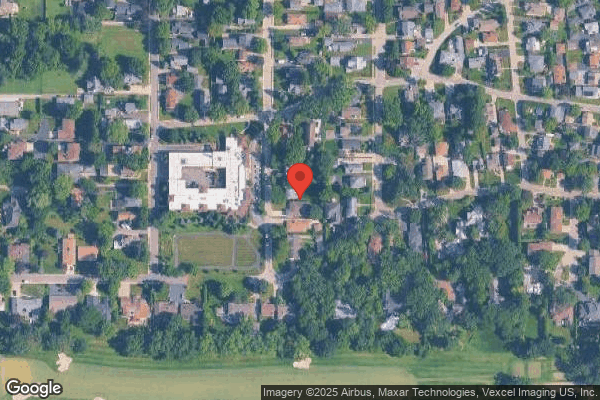
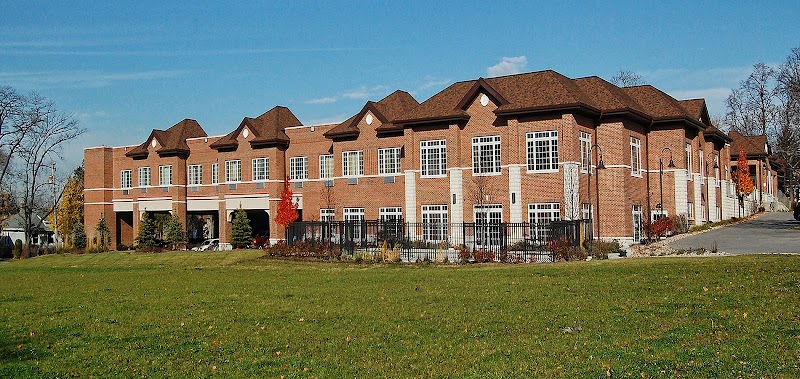
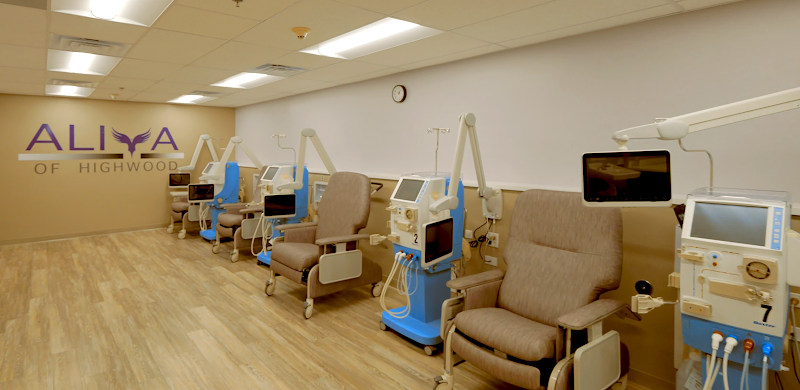
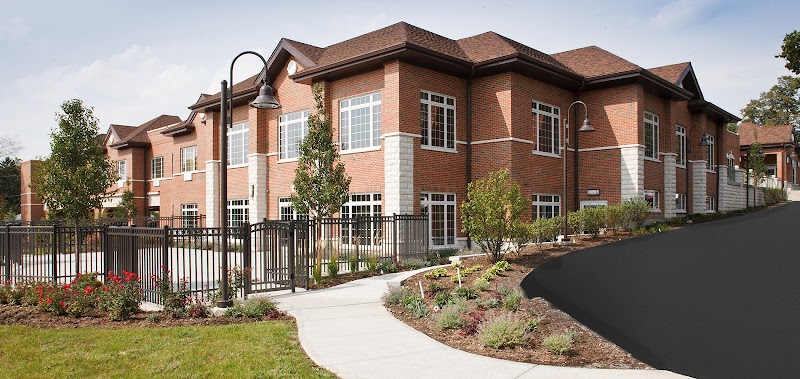
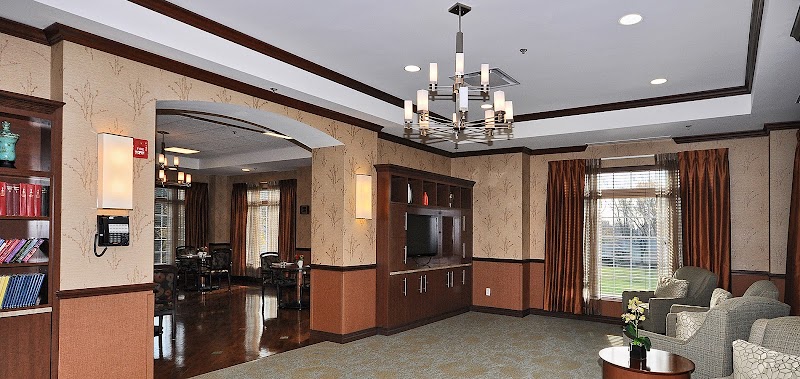
ALIYA OF HIGHWOOD

50 PLEASANT AVENUE, HIGHWOOD, IL 60040 (847) 432-9142
For profit - Corporation 104 Beds ALIYA HEALTHCARE Data: November 2025
Trust Grade
70/100
#97 of 665 in IL
Last Inspection: November 2024

Within standard 12-15 month inspection cycle. Federal law requires annual inspections.

Overview

Aliya of Highwood has a Trust Grade of B, indicating it is a good choice among nursing homes. It ranks #97 out of 665 facilities in Illinois, placing it in the top half, and #5 out of 24 in Lake County, meaning only four local options are better. The facility is on an improving trend, reducing its issues from 14 in 2024 to just 2 in 2025. Staffing has a rating of 2 out of 5 stars, which is below average, but the turnover rate is only 14%, significantly lower than the Illinois average of 46%, suggesting that staff remain familiar with the residents. There have been no fines, which is a positive sign, and the facility offers more RN coverage than 77% of Illinois facilities, ensuring better oversight of resident care. However, there are some weaknesses to consider. The most concerning incident involved a failure to prevent pressure injuries for three residents, resulting in unstageable wounds for one individual. Additionally, there were issues with meal preparation, as the facility did not follow the menu or ensure that meals maintained their nutritional value and flavor, which could affect residents' dining experience. Overall, while Aliya of Highwood has strengths in its trust grade and RN coverage, families should be aware of the reported deficiencies and the need for improvement in specific care practices.

Trust Score
B
70/100
In Illinois
#97/665
Top 14%
Safety Record
Moderate
Needs review
Inspections
Getting Better
14 → 2 violations
Staff Stability
✓ Good
14% annual turnover. Excellent stability, 34 points below Illinois's 48% average. Staff who stay learn residents' needs.
Penalties
✓ Good
No fines on record. Clean compliance history, better than most Illinois facilities.
Skilled Nurses
✓ Good
Each resident gets 43 minutes of Registered Nurse (RN) attention daily — more than average for Illinois. RNs are trained to catch health problems early.
Violations
⚠ Watch
31 deficiencies on record. Higher than average. Multiple issues found across inspections.
★★★★☆
4.0
Overall Rating
★★☆☆☆
2.0
Staff Levels
★★★★☆
4.0
Care Quality
★★★★☆
4.0
Inspection Score
Stable
2024: 14 issues
2025: 2 issues

The Good

  • 4-Star Quality Measures · Strong clinical quality outcomes
  • Low Staff Turnover (14%) · Staff stability means consistent care
  • Full Sprinkler Coverage · Fire safety systems throughout facility
  • No fines on record
  • Staff turnover is low (14%)

    34 points below Illinois average of 48%

Facility shows strength in quality measures, staff retention, fire safety.

The Bad

Chain: ALIYA HEALTHCARE

Part of a multi-facility chain

Ask about local staffing decisions and management

The Ugly 31 deficiencies on record

1 actual harm
Jul 2025 1 deficiency
CONCERN (E) 📢 Someone Reported This

A family member, employee, or ombudsman was alarmed enough to file a formal complaint

Potential for Harm - no one hurt, but risky conditions existed

Resident Rights (Tag F0550)

Could have caused harm · This affected multiple residents

**NOTE- TERMS IN BRACKETS HAVE BEEN EDITED TO PROTECT CONFIDENTIALITY** 4. On 7/2/25 at 9:30 AM R4 stated, The CNAs say they don't have any large diapers. They are given 5 large diapers per shift and ...

Read full inspector narrative →
**NOTE- TERMS IN BRACKETS HAVE BEEN EDITED TO PROTECT CONFIDENTIALITY** 4. On 7/2/25 at 9:30 AM R4 stated, The CNAs say they don't have any large diapers. They are given 5 large diapers per shift and they run out. I can change my own pull up so I use 1-2 of those a day and 6-8 diapers a day. This has been going on for a while. They say they are locked up in the supply room but then when the CNAs try to get them they say there aren't any. This happens on and off but for the past few months. They have some and then they don't. On 7/2/25 at 9:35 AM R5 stated, They do not have the large pullups- they keep bringing in the XL and they are too big. The CNAs say they do not have any. This is from last week. I go though 1-2 pull ups per day and 2-4 diapers. I can't understand how they can not have any! On 7/2/25 at 9:45 AM R7 stated, Staff tell me they don't have any. I need a size 3XL. This has happened quite often recently. I just got back from the hospital and I went about 3 days without any. They have the 2 XL and they have to double them up because they are not big enough and I take a water pill and I go a lot. On 7/2/25 at 1:10 PM R9 stated, I have talked to (V1- Administrator) directly and she has assured me that the diapers are here. I want the white ones. The green ones are a 2 x and they are too small - I need the 3 X. Over the weekend the nurse and the CNA said they are not here. (V1) told me maybe the CNAs are using the wrong sizes on residents and that is why they are running out. I have been here 9 months and this has happened every weekend to someone in this building- not always to me but this is about the 3rd time in the last 3 months. (V7- Central Supply) is always walking around here with diapers but then they say we don't have any. This past Sunday they said they looked in the storage area and they could not find them. (V1) said they are on site but maybe the CNAs are stashing the diapers. R4's Minimum Data Set (MDS) dated [DATE] shows she has no cognitive impairment. R5's MDS dated [DATE] shows she has no cognitive impairment. R7's MDS dated [DATE] shows she has no cognitive impairment. R9's MDS dated [DATE] shows he has no cognitive impairment. On 7/2/25 at 9:40 AM V5 stated, We have a problem with diapers. I have 12 residents and 3 of them are independent and do not use the diapers. They used to be in a storage room downstairs but now they are in the HR office and we can not get to them. They send 2 CNAs down in the morning to get a cart with all sizes of diapers on them and they distribute them to the CNAs. I get like 12 diapers for 8 hour shift- it is not enough. On 7/2/25 at 10:25 AM V6 (CNA) stated, All sizes of diapers are delivered before each shift- if there are not enough then we have to go to the HR office downstairs and get more. On 7/2/25 at 11:05 AM V7 (Central Supply) stated, We are still working out the kinks. At the beginning of each shift the Preceptor CNA comes down and gets the cart and with the diapers and distributes them to the other CNAs based on their assignment. Typically we have all sizes. Weekly the order is placed on Tuesday and it comes in on Wednesday. The past couple weeks I have been over budget and ordering more to make sure we have enough. Many residents hide or hoard them. We are just trying to control our supply. We order based on census. If we need more then we can have more. I didn't know they are asking for more. On 7/2/25 at 2:10 PM V1 (Administrator) stated, We have tried a couple different ways and I think the residents and the CNAs are hoarding them. We have diapers but sometimes they are using the wrong sizes on residents. I had (Supply company) come and re-measure everyone so we can order the sizes we need. They all want to see the bag of diapers in their room. Just yesterday, I gave R4 four of them and then later in the day she asked for another 4 and I had a staff go down and get them for her. When we first took over this building like so many residents had up to 10 packages of diapers in their room. I have talked to staff and we have a new system in place that we just started a few days ago. We also made an extra key at the nurse's station so the staff can have access to the supply downstairs. We will start giving them bags of them but again if we have to but they are all hoarding them. On 7/2/25 at 11:15 AM Surveyor observed the storage room with V7. V7 stated that the delivery of diapers was coming today. The storage room contained several packages of diapers from small to 3XL. Based on observation, interview, and record review the facility failed to ensure residents were treated in a dignified manner by other residents and also failed to ensure a resident's dignity by providing the preferred size incontinence briefs. This applies to 8 of 14 residents (R1, R4, R5, R7, R9, R10, R12, R14) reviewed for dignity in the sample of 14. The findings include: R14's Facesheet shows R14 has diagnoses that include, but are not limited to: insomnia, epilepsy, bipolar disorder, and conduction disorder. R14's Care Plan focus, created on 1/6/25 shows R14 has mental illness diagnoses and his care needs include aggression/anger/impulsivity management and psychiatric/mental health. R14's Care Plan also shows R14 may be short-tempered, anxious, easily annoyed. My behavior may include, verbal and socially inappropriate actions. These symptoms may represent feelings of anger, emotional distress, confusion, and insecurity. R14's Minimum Data Set (MDS) Section E dated 6/12/25 shows R14 exhibited verbal behavior symptoms directed towards others 1 to 3 days in one week. R1's MDS dated [DATE] shows he has no cognitive impairment. R9's MDS dated [DATE] shows he has no cognitive impairment. R10's MDS dated [DATE] shows he has no cognitive impairment. R12's MDS dated [DATE] shows he has no cognitive impairment. 1. On 7/2/25 at 10:47 AM, R12 said R14 has made fun of his weight and called him names. R12 said the behavior escalated over the last few weeks and the last interaction with R12 says R14 told R12, you're (R12) going to die and I'm (R14) going to piss on your grave. R12 said he did not tell any staff, including V1 (Administrator) of the incident. R12 said he has not experienced any emotional distress from R14 and he feels safe within the facility. On 7/2/25 at 1:15 PM, R9 said he has witnessed R14 making fun of R9's weight and is not sure if staff are aware. R9 also said he generally hears R9 be loud and rude to residents throughout the facility. 2. V3 (Assistant Director of Social Services) said on 6/24/25, V3 was in V3's office and overheard R14 yelling in the dining room during lunch. When V3 entered the dining room, V3 said R14 was yelling loudly at R1 and accusing R1 of being a thief. V3 said R1 was not retaliating and was calm. On 7/2/25 at 9:28 AM, R1 said the argument with R14 on 6/24/25 occurred after R14 asked R1 for coffee. R1 keeps instant coffee in R1's room and R14 asked R1 for some. R1 provided some in a cup for R14 and R1 stated when R1 handed R14 the cup, R14 looked into the cup, then back up at R1 and claimed it wasn't enough coffee. R1 told R14 that was all R1 was going to provide R14 and R14 started yelling and at R1. On 7/2/25 at 11:45 AM, R6, whose room is a few doors from the dining room, said she was not in the dining room at the time of the incident but heard yelling from inside her room. R6 said she went towards the dining room to see what was going on and R6 said when R6 entered the dining room, R14 was yelling at R1 and R1 was responding saying [R14] I don't want to talk to you in a calm manner. 3. On 7/2/25 at 11:55 AM, R10 said approximately two weeks ago, R10 and R14 had gotten into a verbal argument in the hallway. R10 said R14 has a smart mouth, they exchanged words, and went the other way with no further issues. On 7/2/25 at 12:23 PM, V1 said she was not aware of the allegations against R12 but knows R14 can be loud and very vocal towards others. At 3:35 PM, V1 said they have been trying and doing everything they can to prevent R14's behaviors including having R14 receive psych services, receive antipsychotic medications, have social services meet with him, and have him attend activities of his preferences. V1 agreed that R14 should not be going around and talking towards other residents in an undignified manner. Facility resident rights/dignity policy was requested on 7/2/25, but was not received.
Apr 2025 1 deficiency
CONCERN (D) 📢 Someone Reported This

A family member, employee, or ombudsman was alarmed enough to file a formal complaint

Potential for Harm - no one hurt, but risky conditions existed

Infection Control (Tag F0880)

Could have caused harm · This affected 1 resident

Based on observation interview and record review the facility failed to ensure staff donned all applicable Personal Protective Equipment (PPE) for a resident with Enhanced Barrier Precautions (EBP) an...

Read full inspector narrative →
Based on observation interview and record review the facility failed to ensure staff donned all applicable Personal Protective Equipment (PPE) for a resident with Enhanced Barrier Precautions (EBP) and sign was posted indicating EBP for 2 of 3 residents (R2, R1) reviewed for infection control in the sample of 3. The findings include: On 4/29/25 this surveyor was provided a list of residents on Enhance Barrier Precaution (EBP) that included R2 and R1 due to chronic wounds. V2 (Director of Nursing (DON) said all residents that were on EBP have an orange dot by their names outside their rooms and on EBP sign inside the room. 1. On 4/29/25, at 10:10 AM, An orange dot was noted by R2's name outside of his room. V3 (Certified Nursing Assistant-CNA) was in R2's room providing morning care to R2. A sign was noted on R2's head of the bed, Enhance Barrier Precaution. (EBP). R2 was being gotten up from bed. V3 (CNA) applied new incontinent brief, pulled his pants up then V3 transferred R2 from his bed to his wheelchair. V3 (CNA) proceeded to remove R2's soiled linens from the bed and applied new linens. V3 completed all these tasks with gloves on but not wearing a gown. At 10:30 AM, V3 (CNA) said R2 was on EBP precautions due to his wounds. V3 said she should have worn gown and gloves to prevent cross contamination. R2's careplan dated 3/17/25 documents, Resident is on enhanced barrier precautions. Patient on EBP per applicable infection prevention and control standards and regulation. Prevent the spread of infection. Maintain precautions as indicated. 2. On 4/29/25 at 9AM, R1's name outside of his door had no orange dot. There was no EBP sign inside his room. R1 showed this surveyor a dressing to his right knee and said this was an unhealing wound from surgery last March 2025. R1 said he just completed his oral antibiotics for possible wound infection. On 4/29/25 at 10:50 AM, V2 (Director of Nursing) said R1 has a surgical wound that requires daily wound dressing. R1 is on EBP. R1 should have a sign to show precautions to be observed due to EBP. R1 used to be in a different room. R1's EBP sign might have been removed during the move or when housekeeping was cleaning his room. V2 also said when providing care to EBP residents, staff should wear PPE of gloves and gown to prevent the spread of infection. On 4/29/25 at 1:30 PM, V6 (Infection Control Nurse) said an EBP sign should be placed in the room of an EBP resident to indicate the precautions the staff has to observe and what PPE to wear. R1's careplan with initiated date of 4/29/25 (today) as confirmed by V2 (DON) show, Resident is on enhanced barrier precautions . per applicable infection prevention and control standards and regulation. Prevent the spread of infection. Maintain precautions as indicated The facility policy entitled Enhanced Barrier Precaution with revision date of 3/20/24 documents, EBP expands the use of PPE and refer to the use of gown and gloves during high-contact resident activities that provide opportunities for transfer of MDRO's to staff hands and clothing. MDRO's may be indirectly transferred from resident to resident during these high contact care activities. Nursing home residents with wounds and indwelling devices are especially high risk of both acquisition and colonization with MDRO's. The use of gown and gloves for high contact resident activities is indicated . High contact resident care activities requiring gown and glove use that trigger EBP use include: Wound care, dressing, bathing/showering, transferring, changing linens, changing brief/assisting in toileting, devices use-central line, urinary catheter, feeding tubes .
Nov 2024 8 deficiencies
CONCERN (D)

Potential for Harm - no one hurt, but risky conditions existed

Resident Rights (Tag F0550)

Could have caused harm · This affected 1 resident

Deficiency Text Not Available

Read full inspector narrative →
Deficiency Text Not Available
CONCERN (D)

Potential for Harm - no one hurt, but risky conditions existed

Deficiency F0645 (Tag F0645)

Could have caused harm · This affected 1 resident

Based on observation, interview, and record review the facility failed to ensure a resident with a reasonable suspicion of mental illness was referred for a Level II PASARR screening for 1 of 1 reside...

Read full inspector narrative →
Based on observation, interview, and record review the facility failed to ensure a resident with a reasonable suspicion of mental illness was referred for a Level II PASARR screening for 1 of 1 residents (R2) reviewed for PASARR screening in the sample of 20. The findings include: On 11/13/24 at 10:46 AM, R2 was lying in his bed, watching TV. The surveyor asked R2 how it was going at the facility. R2 replied, Not great, but there's nothing you can do about it. R2 had a flat affect and continued to make negative statements. R2 was alert and oriented and able to express himself. The surveyor asked R2 if he had any specific complaints. R2 looked at the ground and stated, It is what it is. R2 didn't want to speak any further. R2's Facesheet dated 11/14/24 showed diagnoses to include, but not limited to: epilepsy, heart failure; bipolar disorder; and suicidal ideations. This document showed R2 was admitted to the facility 6/21/19. R2's Care Plan initiated 10/26/19 showed R2 is on antipsychotic medications due to bipolar diagnosis. R2's Care Plan initiated 5/20/20 showed he was on antidepressant medications. R2's Care Plan initiated 6/21/19 showed he had a mood problem related to bipolar disorder and had depression and passive death wishes. R2's Interagency Certification Screening Results dated 12/6/19 showed R2 had a reasonable basis for suspicion mental illness and had been formally diagnosed with bipolar disorder. This form showed that if yes was marked in Part II or III of the form (both boxes contained a yes answer), then the facility should refer R2 to the appropriate agent to complete Part IV (PASARR Level II screening). The facility was unable to provide R2's PASARR Level II screening or any documentation to show that the referral had been made to the appropriate agency. (R2 had resided at the facility for 5 years. The surveyor requested R2's PASARR Level II screening on 11/12, 11/13, and 11/14/24. The facility was unable to provide it.) On 11/14/24 at 10:41 AM, V7 (RN - Registered Nurse) said R2 has behaviors sometimes due to his bipolar disorder. V7 said R2 gets irritated with other residents and argues with other residents. V7 stated, We just try to keep him calm and redirect. V7 said R2 is alert and oriented and is able to make his needs known. On 11/14/24 at 11:04 AM, V6 (Social Services Director) said she had been in the role for 2-3 years, but was working in Admissions when R2 admitted to the facility (2019). V6 said the residents initial screening is completed at the hospital, prior to admission. V6 said if the Level I screening showed there is a reasonable suspicion of mental illness, then she will reach out to the referral agency for further evaluation. V6 said the purpose of the PASARR Level II was to further evaluate mental illness and ensure the resident is in the appropriate care setting and determines any additional services that are needed. V6 said she was unable to find a PASARR Level II screening for R2. V6 said she didn't know why it wasn't completed. V6 said there should have been a referral to the proper agency and she would see if she could locate any documentation (V6 was unable to provide documentation that R2's referral had been made.). V6 said once the referral is made, then the agency usually comes to complete the assessment within a week. V6 said if they did not show up to complete the assessment, then she would call to follow-up. V6 said she was not the Social Service Director when R2 was admitted and was unsure what happened. V6 said R2 should have had a PASARR Level II screening completed. On 11/14/24 at 11:19 AM, V2 (DON - Director of Nursing) said R2 was alert and oriented. V2 said R2 does have mood changes due to his bipolar disorder. V2 said she wasn't involved in the PASARR Level I or II screenings for residents. V2 stated, I think that's more Admissions or Social Services. The facility's PAS Screening Policy reviewed 1/2024 showed, In accordance with Illinois regulatory standards and recommended practices, this organization requests Level I (one) and Level 2 (two, where applicable) Pre-admission Screening documents prior to the individual's arrival at the facility . Responsible Party: Admissions, Social Services. Policy: It is the policy of this facility to: 1. Comply with Illinois standards addressing the PAS assessment/screening process. 2. Request full and complete PAS materials (Level 1 and 2) from each referral source prior to admission. 3. Review the PAS documents to help assess/ascertain what type of problems, needs and issues need to be addressed to help the resident function at his/her maximum level of well-being. 4. Provide a copy of OBRA -1 and PAS-MR 1 (as applicable) to an identified clinician (in most cases this will be the Director of Social Service). 5. Place the PAS paperwork in the resident's business file . Procedure: 1. Facility representative shall request the complete screening packet from appropriate screening agency/referral source. 2. A copy of all materials received will be placed in the resident's business file and a copy may be placed in the chart at the discretion of administration. 3. The screening agency/referral source may be contracted, as indicated via phone/fax/email and asked to provide any missing or incomplete documents. Facility documentation should include information addressing the date, time, and person contacted. 4. As indicated, the screening material should be reviewed as a component of the assessment process and treatment suggestions/recommendations should be identified and appropriately addressed .
CONCERN (D)

Potential for Harm - no one hurt, but risky conditions existed

Quality of Care (Tag F0684)

Could have caused harm · This affected 1 resident

**NOTE- TERMS IN BRACKETS HAVE BEEN EDITED TO PROTECT CONFIDENTIALITY** Based on observation, interview, and record review the facility failed to assess a new wound and failed to document treatment or...

Read full inspector narrative →
**NOTE- TERMS IN BRACKETS HAVE BEEN EDITED TO PROTECT CONFIDENTIALITY** Based on observation, interview, and record review the facility failed to assess a new wound and failed to document treatment orders for 1 of 2 residents (R51) reviewed for non-pressure wounds in the sample of 20. The findings include: R51's face sheet printed on 11/14/24 showed diagnoses including but not limited to cellulitis of the left lower limb, lymphedema, morbid obesity, and heart failure. R51's facility assessment dated [DATE] showed moderate cognitive impairment. R51's wound summary report printed on 11/14/24 showed a history of venous stasis wounds to the left lateral and left posterior leg. The same report showed a history of lymphedema to the right leg. On 11/12/24 at 11:38 AM, R51 was seated on the edge of his bed and was wearing shorts. Both lower extremities were wrapped with bandages from just below the knees to the toes. R51 stated he has poor circulation to his lower legs and trouble with fluid build-up. R51 said the staff found a new sore on his right leg yesterday. R51 said he was unsure what was being done for the new wound. R51's electronic wound round reports were reviewed on 11/12/24 and did not show any open or active wounds. On 11/13/24 at 9:39 AM, R51 was seated on the edge of his bed and wearing shorts. Both lower extremities were still wrapped from the knee to the toes. R51 stated he was due for a shower in the afternoon and was very concerned about the new sore getting wet. On 11/13/24 at 1:26 PM, V8 (Registered Nurse) stated R51 has a history of open wounds but all have been healed. V8 stated there are no current skin issues and no orders for any wound treatments. V8 stated the wound care nurse wraps his legs a few times per week to treat his lymphedema but there are no active wounds. On 11/13/24 at 1:32 PM, V3 (WCN-Wound Care Nurse) stated R51 has his leg wraps changed three times per week. V3 said R51 has a history of venous ulcers and was being followed by the wound doctor in the past. V3 said since he is healed, the doctor no longer sees him at the weekly visits. V3 said R51 has no current skin issues and nothing has been reported to her. V3 said any new skin changes should be reported to her immediately and the wound doctor needs to be notified. V3 said R51 is cognitively alert and only has slight short term memory problems. On 11/13/24 at 1:42 PM, R51 was lying on his bed and V3 (WCN) unwrapped both bandages on his lower legs. R51 had a 4 inch by 4 inch dressing on his right lateral calf area. V3 said it was the first time she was aware of any skin issues and removed the dressing. An oblong, egg size fluid filled blister was under the it. V3 said the blister should have been reported to her the day it was found. V3 said she did not know how it was being treated or when it was discovered. V3 said the wound looked to be venous related. V3 said the wound doctor should have been notified and a treatment order should have been received. V3 stated there are no wound orders or wound assessments in R51's medical record. On 11/13/24 at 2:48 PM, V2 (Director of Nursing) and V7 (Registered Nurse) stated they both were aware of R51's blister on his right leg on 11/11/24 (two days ago). The nurses said it was discovered when the leg wraps were being changed. The nurses said the nurse practitioner was notified and an order to cover it was obtained. The nurses stated they failed to document the new order or perform any assessment of the new skin issue. On 11/14/24 at 11:20 AM, V3 (WCN) stated the wound doctor just looked at R51's leg yesterday and a new treatment order was obtained. V3 stated yesterday was the first time the wound was assessed. V3 said the wound should have been assessed the day it was found, and treatment orders placed directly in the medical record. V3 stated R51 had open sores on his lower legs in the past and is already a high risk for more to develop. V3 said the assessment is important to have an ongoing comparison of any improvement or decline. Clearly documented orders ensure the next shift's nurse can follow through and do the treatment properly. R51's wound evaluation dated 11/13/24 (two days after identified) showed a lymphademic wound to the right lateral leg measuring 1.5 x 4.5 centimeters with a duration of greater than two days. The report showed an order for xerofoam gauze three times per week and as needed for 30 days. The facility's Skin Management policy review dated 1/2024 states: It is important that the facility have a system in place to assure that the protocols for daily monitoring and for periodic documentation of measurements, terminology, frequency of assessment, and documentation are implemented consistently throughout the facility.
CONCERN (D)

Potential for Harm - no one hurt, but risky conditions existed

Accident Prevention (Tag F0689)

Could have caused harm · This affected 1 resident

**NOTE- TERMS IN BRACKETS HAVE BEEN EDITED TO PROTECT CONFIDENTIALITY** Based on observation, interview, and record review the facility failed to safely transport a resident in a wheelchair for 1 of 4...

Read full inspector narrative →
**NOTE- TERMS IN BRACKETS HAVE BEEN EDITED TO PROTECT CONFIDENTIALITY** Based on observation, interview, and record review the facility failed to safely transport a resident in a wheelchair for 1 of 4 residents (R83) in the sample of 20. The findings include: On 11/12/24 at 10:08 AM, R83 was sitting in his wheelchair, at the nurses' station, drawing in a sketch book. V6 (SSD - Social Service Director) asked R83 if he wanted to go participate in activities. V6 stood and pushed R83's wheelchair down the length of the hall to the elevator. R83 did not have foot pedals on his wheelchair. R83 was wearing running shoes. Initially, R83 crossed his ankles and attempted to lift his feet under the wheelchair, with his toes pointing toward the ground. R83's toes hit the ground multiple times, slowing the transport. V6 reminded R83 to lift his feet and stopped. R83 then moved his feet forward, easily lifting the left foot 2 inches off the floor, but was unable to consistently hold his right foot off the ground. R83 put his right foot down multiple times from the middle of the hallway to the elevator. R83's Facesheet dated 11/14/24 showed diagnoses to include, but not limited to: Alzheimer's; restlessness and agitation; epilepsy; and cerebral amyloid angiopathy. This document showed R83 was admitted on [DATE]. R83's facility assessment dated [DATE] showed he had severe cognitive impairment and required substantial/maximal assistance from staff for personal hygiene, sit to stand and transfers. R83's admission Evaluation dated 10/14/24 showed he was at High Fall Risk. R83's Progress notes showed he had a fall on 10/20/24 and 11/8/24. On 11/14/24 at 10:41 AM, V7 (RN - Registered Nurse) said R83 had dementia was very confused. V7 said R83 was at high risk for falls and required frequent monitoring. V7 said R83 can self-propel his wheelchair, but if staff are pushing him in the wheelchair, then he needs to have foot pedals on the wheelchair. V7 said R83 had a tendency to put his feet down. V7 said using foot pedals on R83's wheelchair, during transport, will prevent him from putting his feet down and possible getting injured or falling from the chair. V7 stated, It's a safety thing. On 11/14/24 at 11:19 AM, V2 (DON - Director of Nursing) said if a resident is being pushed in a wheelchair by staff, then the wheelchair should have food rests in place for safety. V2 said the purpose of foot rests is to prevent any injury to the resident's leg or reduce the risk of falls. A policy for Safely Transporting a Resident in a Wheelchair was requested and not provided.
CONCERN (D)

Potential for Harm - no one hurt, but risky conditions existed

Tube Feeding (Tag F0693)

Could have caused harm · This affected 1 resident

**NOTE- TERMS IN BRACKETS HAVE BEEN EDITED TO PROTECT CONFIDENTIALITY** Based on observation, interview, and record review the facility failed to check placement of a gastrostomy tube (G-tube) prior t...

Read full inspector narrative →
**NOTE- TERMS IN BRACKETS HAVE BEEN EDITED TO PROTECT CONFIDENTIALITY** Based on observation, interview, and record review the facility failed to check placement of a gastrostomy tube (G-tube) prior to performing water flushes for 1 of 1 resident (R35) reviewed for feeding tubes in the sample of 20. The findings include: R35's face sheet printed on 11/14/24 showed diagnoses including but not limited to chronic respiratory failure, cerebral infarction, dysphagia (difficulty swallowing), use of a tracheostomy tube (tube through neck and trachea for breathing) and gastrostomy tube (tube through abdomen to supply liquid nutrition to stomach). R35's facility assessment dated [DATE] showed severe cognitive impairment and staff assistance for all activities of daily living. R35's November 2024 physician orders showed an order start dated 8/21/24 for: Enteral feed order every 4 hours rec (receive) 200 milliliters flush every 4 hours. On 11/13/24 at 2:08 PM, V8 (Registered Nurse) stated R35 receives water flushes through the G-tube every shift and medications via the G-tube. V8 gathered supplies for the flush and went to the bedside. V8 connected a piston syringe onto the G-tube and poured the water flush directly into the tube. V8 did not check for tube placement prior to performing the flush. On 11/14/24 at 10:36 AM, V2 (Director of Nurses) stated staff should be checking for the proper placement of the tube before inserting any medications or water flushes into it. It is important to ensure it is open and in the proper position. The resident is at a high risk of aspiration if it is not in the stomach. Nurses should be checking gastric residual levels or listening for an air swoosh. V2 said our policy does not directly state how to check placement, but it is necessary. It is important and is a standard of safe nursing care. The facility's Enteral Tube Medication policy dated 1/2023 states: The facility assures safe and effective administration of enteral formulas, route and methods of administration .
CONCERN (D)

Potential for Harm - no one hurt, but risky conditions existed

Pharmacy Services (Tag F0755)

Could have caused harm · This affected 1 resident

Based on observation, interview, and record review the facility failed to follow manufacturer instructions regarding the use of an insulin pen. This applies to one resident (R21) reviewed for insulin ...

Read full inspector narrative →
Based on observation, interview, and record review the facility failed to follow manufacturer instructions regarding the use of an insulin pen. This applies to one resident (R21) reviewed for insulin administration outside the sample of 20. The findings include: R21's admission Record showed he had type II diabetes. R21's Order Summary Report (Physician Order Sheet) showed an active order for 5 units of rapid-acting insulin to be given at meals. In addition to the 5 units of rapid-acting insulin, R21 order sheet showed an order for blood sugar dependent (Sliding Scale) insulin. The order showed 8 units of the same rapid-acting insulin should be given for a blood sugar between 301 and 350. On 11/12/24 at 12:41 PM, V5 Registered Nurse (RN) began preparing R21's rapid acting insulin pen. V5 removed the pen cap, dialed in 2 units of insulin, held the pen horizontally and depressed the injection button. V5 then selected 2 more units, held the pen horizontally, and depressed the injection button. (During this priming process, the needle was not attached.) V5 then attached the needle and selected 13 units of insulin for a blood sugar reading of 311. The manufacturer instructions for the rapid-acting insulin pen (Dated July 2023) showed, Step 4: Push the capped needle straight onto the pen and twist the needle on until it is tight. The instructions continue with steps 5 and 6 which were removing the outer caps of the needle. The instructions continued, Step 7: Turn the dose selector to select 2 units. Step 8: Hold the pen with the needle point up. Tap the top of the pen gently a few times to let any air bubbles rise to the top. Step 9: Hold the pen with the needle pointing up. Press and hold in the dose button until the dose counter shows 0. A drop of insulin should be seen at the needle tip. If you do not see a drop of insulin repeat steps 7 to 9. If you still do not see a drop of insulin change the needle and repeat steps 7 to 9 . On 11/13/24 at 1:39 PM, V2 Director of Nursing stated the purpose of priming the insulin pen is to ensure the resident receives the full dose of insulin. V2 said the needle should be attached prior to priming the insulin pen. V2 said the purpose of holding the pen vertically is to expel any bubbles so the resident receives the full dose of insulin.
CONCERN (D)

Potential for Harm - no one hurt, but risky conditions existed

Deficiency F0807 (Tag F0807)

Could have caused harm · This affected 1 resident

**NOTE- TERMS IN BRACKETS HAVE BEEN EDITED TO PROTECT CONFIDENTIALITY** Based on observation, interview, and record review the facility failed to provide water for 1 of 1 residents (R56) reviewed for ...

Read full inspector narrative →
**NOTE- TERMS IN BRACKETS HAVE BEEN EDITED TO PROTECT CONFIDENTIALITY** Based on observation, interview, and record review the facility failed to provide water for 1 of 1 residents (R56) reviewed for hydration in the sample of 20. On 11/12/24 at 10:57 AM, R56 was lying in her bed. R56's lips were dry. There was no water cup, water pitcher, or beverages in R56's room. R56 mouth, tongue, and lips were dry. It was difficult to understand what R56 was saying due to her dry mouth. R56 stated, I'm really thirsty. I need water. The surveyor asked R56 if she had something to drink in her room. R56 replied, No, I don't know why they don't leave water in my room. I'm just so thirsty. The surveyor left the room and notified V5 (RN - Registered Nurse) that R56 was thirsty and needed water. At 11:14 AM, V5 (RN) took water to R56's room for medication administration. R56 drank the entire cup of water and stated, I was so thirsty. On 11/13/24 at 10:26 AM, R56 was lying in bed with her eyes closed. There was no water cup, water pitcher, or beverages in R56's room. R56's lips and mouth were dry and she said she was thirsty. On 11/14/24 at 10:35 Am, R56 was lying in bed. There was a pitcher of water on R56's overbed table, but the table was pushed away from the bed, near the window. The water was not in R56's reach. R56's Facesheet dated 11/14/24 showed resident had diagnoses to include, but not limited to: stroke, severe protein-calorie malnutrition, Alzheimer's Disease, dysphagia, weakness, anxiety, lack of coordination, and major depressive disorder. R56's Physician Order Sheet dated 11/14/24 was reviewed. R56 was not on a fluid restriction, did not have orders for swallowing precautions, and showed she could receive thin liquids. R56's facility assessment dated [DATE] showed she had severe cognitive impairment; required partial/moderate assistance with eating and oral hygiene; was dependent for transfers and personal hygiene; and had no documented swallowing disorder. R56's Dietary Evaluation dated 8/20/24 showed she was on hospice care. This note showed on 8/8/24, R56 received intravenous therapy for hydration/nutrition needs due to labs showed probable dehydration. This document showed R56 needed 1400-1800 ml of fluids a day. Care Plan initiated 5/20/24 showed resident is at risk for alteration in fluid volume. Encourage fluid intake. Keep fresh water in reach of resident. Monitor resident for early signs and symptoms of dehydration: thirst, loss of appetite, dry skin, dark colored urine, fatigue. On 11/14/24 at 10:41 AM, V7 (RN) stated, R56 is alert and oriented to person, but is able to make her needs known. V7 said R56 is on hospice now, but it is important that the staff emphasize the importance of nutrition and hydration for her. V7 said R56 isn't on a fluid restriction and he's not aware of her having any swallowing issues. V7 stated, There's no reason why she shouldn't have water (at her bedside). V7 said an early sign of dehydration could be dry lips and mouth. V7 said hydration is important for over health and could also be a comfort measure. On 11/14/24 at 11:19 AM, V2 (DON - Director of Nursing) said the residents have water pitchers in their rooms. V2 said in the morning, the CNAs are expected to refresh the water for the residents. V2 said the nurses provide water in the clear cups, during medication passes. V2 said the water should be within the resident's reach. V2 said R56 was able to verbalize her needs and doesn't have any swallowing concerns. V2 said R56 was safe to have water at her bedside because she's not on any restrictions. V2 said water is important to keep the residents hydrated, decrease the risk of UTI (urinary tract infection), and overall health. V2 said if a resident becomes dehydrated, their skin and lips may become dry. The facility's Hydration Policy reviewed 1/2024 showed, The policy allows for each resident to be provided with sufficient fluid intake to maintain proper hydration and health. This is done through an evaluation to identify risk factors that may lead to dehydration, and, if present, a preventative care plan is developed . Guideline: 1. Nursing will routinely monitor each resident for signs of dehydration such as cracked lips, dry oral mucosa, poor skin turgor and dark urine color. If present, they will be recorded in the medical record and the Health Care Provider will be notified. 2. Nursing will routinely observe the resident's consumption of fluids to determine if individual residents have reduced fluid intake. Pertinent observations will be recorded in the resident's medical record. The Intake Record may be used for this purpose . 5. Unless restricted by diet or food preference, residents will receive appropriate fluids at each meal. Water will be made available to residents unless otherwise restricted .
CONCERN (E)

Potential for Harm - no one hurt, but risky conditions existed

Deficiency F0761 (Tag F0761)

Could have caused harm · This affected multiple residents

Based on observation, interview, and record review the facility failed to double lock the controlled substance box in a medication cart. This applies to 5 of 5 residents (R56, R85, R46, R65, R2) revie...

Read full inspector narrative →
Based on observation, interview, and record review the facility failed to double lock the controlled substance box in a medication cart. This applies to 5 of 5 residents (R56, R85, R46, R65, R2) reviewed for medication storage in the sample of 20 and 5 residents (R86, R58, R19, R43, R3) outside the sample. The findings include: The facility provided list of residents with controlled substances in the long term medication cart showed; R56 had morphine (narcotic pain medication); R86 had hydrocodone/acetaminophen (combination narcotic and over-the-counter pain medication); R85 had oxycodone (narcotic pain medication); R46 had zolpidem (prescription sleep medication); R58 had hydrocodone/acetaminophen, methadone (narcotic pain medication), and alprazolam (anti-anxiety medication); R65 had tramadol (narcotic pain medication); R19 had clonazepam (anti-anxiety medication), codeine/acetaminophen (narcotic pain reliever), and methylphenidate (stimulant medication); R43 had tramadol; and R3 had tramadol. Beginning on 11/12/24 at 11:03 AM through 11/12/24 at 11:31 AM, a continuous observation of V5's morning medication administration was conducted while he administered R16, R56, and R17's medications. At 11:08 AM, V5 prepared R16's medications he then entered R16's room without locking the medication cart. During his time in R16's room, V5 was not able to see his medication cart. At 11:14 AM, V5 prepared R56's medications and then entered her room without locking the medication cart. While V5 was in R56's room, he was unable to maintain visual contact with his medication cart. At 11:24 AM, V5 prepared R17's medications and then entered her room without locking the medication cart. V5 was not able to see his medication cart while he was in R17's room. At 11:31 AM, when V5 exited R17's room, the medication drawer, which housed the controlled substanc lockbox, was pulled out. The controlled substance lockbox was not locked and was able to be opened without the key. The lockbox housed numerous controlled substances. V5 stated this was the long-term medication cart. (During the time the cart was out of view, the controlled substances were not single or double locked.) At 11/13/24 at 1:39 PM, V2 Director of Nursing stated the medications in the controlled substances box are the residents' medications that are prone to abuse and therefore, most likely to be stolen. V2 said the purpose of double locking is to prevent theft of the residents' medications. The facility's Medication Administration policy (1/2023) showed, .never leave the medication cart open and unattended .
Sept 2024 1 deficiency
CONCERN (D) 📢 Someone Reported This

A family member, employee, or ombudsman was alarmed enough to file a formal complaint

Potential for Harm - no one hurt, but risky conditions existed

Pressure Ulcer Prevention (Tag F0686)

Could have caused harm · This affected 1 resident

Based on observation, interview, and record review, the facility failed to ensure wound treatment was provided as ordered for 1 of 3 residents (R3) reviewed for wounds in the sample of 9. The findings...

Read full inspector narrative →
Based on observation, interview, and record review, the facility failed to ensure wound treatment was provided as ordered for 1 of 3 residents (R3) reviewed for wounds in the sample of 9. The findings include: On 9/24/24 at 11:41 AM, V3, (Wound Care Nurse/Assistant Director of Nursing-ADON), said R3 should have had wound care/dressing change to her coccyx wound on Sunday (9/22/24), as her treatments are ordered every other day. V3 and V4, Certified Nursing Assistant (CNA) positioned R3 on her side to allow V3 to provide her wound care. R3 had a dressing in place on her backside which was dated 9/18. On 9/25/24 at 12:57 PM, V7, (Licensed Practical Nurse), said wound care/dressing changes are done according to the doctor's orders. The facility's Pressure Wounds as of 9/24/24 shows R3 has an active pressure ulcer of her sacrum first identified on 8/8/2023. R3's Order Summary Report dated 9/25/24 shows active treatment orders for cleansing, medication, and a dressing to be completed every other day and as needed to R3's sacral wound. R3's current care plan provided by the facility shows R3 has a stage 4 pressure ulcer of her sacrum and wound treatment is to be applied as ordered by the physician.
Sept 2024 2 deficiencies
CONCERN (D) 📢 Someone Reported This

A family member, employee, or ombudsman was alarmed enough to file a formal complaint

Potential for Harm - no one hurt, but risky conditions existed

Report Alleged Abuse (Tag F0609)

Could have caused harm · This affected 1 resident

Deficiency Text Not Available

Read full inspector narrative →
Deficiency Text Not Available
CONCERN (D) 📢 Someone Reported This

A family member, employee, or ombudsman was alarmed enough to file a formal complaint

Potential for Harm - no one hurt, but risky conditions existed

Investigate Abuse (Tag F0610)

Could have caused harm · This affected 1 resident

**NOTE- TERMS IN BRACKETS HAVE BEEN EDITED TO PROTECT CONFIDENTIALITY** Based on observation, interview and record review the facility failed to investigate an allegation of abuse. This applies to 2 o...

Read full inspector narrative →
**NOTE- TERMS IN BRACKETS HAVE BEEN EDITED TO PROTECT CONFIDENTIALITY** Based on observation, interview and record review the facility failed to investigate an allegation of abuse. This applies to 2 of 5 residents (R1 & R4) reviewed for abuse in the sample of 5. The findings include: On August 29, 2024 at 9:30 AM, R1 was sitting up in his wheelchair in his room. He stated, he had a different room mate (R4) that called him a N****R. He reported it to V5 Registered Nurse (RN) and called the local police department. The police department came to the facility. They moved R4 out of the room and to a different room. On August 29, 2024 at 10:27 AM, V1 Administrator stated, R1 called the police on R4 for calling him a N****R. The police didn't do anything about it and R4 denied ever calling him that. She did not do an abuse investigation because she moved the resident out of the room and didn't treat it as an abuse allegation. On August 29, 2024 at 10:47 AM, R4 was lying in bed watching television. He stated, he was upset that R1 had the television on at 2 AM. R4 called the police pulling the race card. R1's progress note by V5 RN dated August 22, 2024 shows, Resident approached writer complaining about his roommate. Resident stated that he had a disagreement with the resident. Writer asked resident the details of the incident, he claimed that his roommate saying words that he does not like. Resident stated that he feels uncomfortable sleeping with his roommate around. He stated that he will call the police. He stated that he reported it earlier to the administrator. The police came and mediated with the situation. The facility did not provide any abuse investigation or further information. R1's Minimum Data Set, dated [DATE] shows, he is cognitively intact. R4's Minimum Data Set, dated [DATE] shows, he is cognitively intact. The facility's abuse policy and prevention program dated October 2022 shows, Abuse policy: This facility affirms the right of our residents to be free from abuse, neglect, exploitation, misappropriation of property, deprivation of goods and services by staff or mistreatment of residents. In order to do so, the facility has attempted to establish a resident sensitive and resident secure environment. The purpose of this policy is to assure that the facility is doing all that is within its control to prevent occurrences of abuse, neglect, exploitation, misappropriation of property, deprivation of goods and services by staff and mistreatment of residents. This will be done by: implementing systems to promptly and aggressively investigate all reports and allegations of abuse, neglect, misappropriation of property and mistreatment, and making the necessary changes to prevent future occurrences . The following definitions are based on federal and state laws, regulations and interpretive guidelines. Abuse: Abuse means any physical or mental injury or sexual assault inflicted upon a resident other than confinement, intimidation, or punishment with resulting physical harm, pain, or mental anguish to a resident . V. Internal reporting requirements and identification of allegations: .Upon learning of the report, the administrator of designee shall initiate an incident investigation.
Aug 2024 1 deficiency
CONCERN (D) 📢 Someone Reported This

A family member, employee, or ombudsman was alarmed enough to file a formal complaint

Potential for Harm - no one hurt, but risky conditions existed

Pharmacy Services (Tag F0755)

Could have caused harm · This affected 1 resident

Based on interview and record review the facility failed to ensure a resident took his medication at the time it was administered by leaving a medication cup at the bedside for 1 of 1 residents (R1) r...

Read full inspector narrative →
Based on interview and record review the facility failed to ensure a resident took his medication at the time it was administered by leaving a medication cup at the bedside for 1 of 1 residents (R1) reviewed for medication administration in the sample of four. The findings include: The Face Sheet dated 8/13/24 for R1 showed diagnoses including delusional disorder, major depressive disorder, parkinsonism, cervical disc disorder, spinal stenosis, and history of falling. The Nurse's Note dated 8/9/24 at 8:29 PM, for R1 showed, At 5:00 PM, Writer entered residents room to administer due medications. Resident observed in the restroom and refused administration. At 6:00 PM, Writer entered residents room to re-attempt administration of medication. Resident refused. Reinforcement provided, resident continued to refuse. At 8:30 PM, Writer entered residents room with ADON (Assistant Director of Nursing) to assist with skin assessment, wound treatment and offer medication administration. Resident was observed in the restroom. ADON/Wound nurse offered skin assessment and wound treatment. Medications offered to resident by writer. Resident removed medication cup from writers hands and placed on bedside table. (R1) verbalized, Leave them there. I'm going to make a call. Resident refused to take medications in front of writer. ADON observed interaction. Writer exited the room due to the resident wanting to speak with ADON (Assistant Director of Nursing). The ADON later approached me and informed writer that the resident did not want writer to administer eye ointment medication. The MAR (Medication Administration Record) dated August 2024 for R1 showed on 8/9/24 at 5:00 PM his Propranolol HCL 60 mg and Senna plus 8.6-50 pills were signed out as given. On 8/13/24 at 2:11 PM, V3 (Assistant Director of Nursing/ADON) stated she went to R1's room with V4 (Licensed Practical Nurse/LPN) because she wanted to do a skin assessment. V3 stated they go in pairs when providing care for R1. The skin assessment was refused by R1 and V4 walked away. V4 brought R1 his medications. V3 stated she was outside of R1's door listening and R1 did not see her. R1 refused to have his vital signs taken. R1 did not want to take his medications in front of V4 and told V4 to leave his medications. V3 stated she went into R1's room and R1 stated he did not want V3 to give him his medications anymore. V3 stated she gave R1 his eye drops. V3 stated R1 had told V4 to leave his medications on the table. V3 stated it is not okay to leave the medications. V3 stated she personally would not leave the medications because she would not know if he took them or not. V3 stated V4 left R1 alone after that and did not go back into R1's room. V3 stated she did not check to see if R1 took his medications. V3 stated she did an assessment for R1 to be able to apply his petroleum jelly himself but an assessment was not done for him to administer his own medications. On 8/13/24 at 2:36 PM, V4 (LPN) stated he has a note in R1's chart about trying to administer medications to the resident last week. V4 stated, I attempted to give (R1) his medications and he was not available. V4 stated he became busy with other resident. V4 stated he went back to R1's room with V3 (ADON) to to a skin assessment and give R1 his medication. R1 grabbed the medication from him and placed them on his table. V3 was by R1's door and heard everything. R1 said he did not want his vital signs checked or take his medications. V4 stated he was later informed that R1 does not want care by him; V4 stated he did not go back into R1's room. V4 stated he was not aware if R1 took the medications or not. V4 stated he did not monitor R1 taking his medications so he doesn't know if R1 took the medications. On 8/13/24 at 2:45 PM, V1 (Administrator) stated the facility does have a self medication policy. V1 stated there are assessments that need to be done first for the resident. V1 stated the resident needs a doctor's order and it needs to be care planned. V1 stated R1 does not have that in place for his medications. The facility's Medication Administration Policy (1/2024) showed, Verify that the medication is being administered at the proper time, in the prescribed dose, and by the correct route. Remain with the resident to ensure the resident swallows the medication.
Jul 2024 1 deficiency
CONCERN (D) 📢 Someone Reported This

A family member, employee, or ombudsman was alarmed enough to file a formal complaint

Potential for Harm - no one hurt, but risky conditions existed

Quality of Care (Tag F0684)

Could have caused harm · This affected 1 resident

Based on observation, interview, and record review the facility failed to provide the necessary care and treatment to residents with nonpressure wounds for 2 of 3 residents (R2, R3) reviewed for nonpr...

Read full inspector narrative →
Based on observation, interview, and record review the facility failed to provide the necessary care and treatment to residents with nonpressure wounds for 2 of 3 residents (R2, R3) reviewed for nonpressure wounds in the sample of 4. The findings include: 1. R2's admission skin and nursing assessments dated 7/14/24 showed R2 was admitted to the facility, from a local hospital, with diagnoses of infectious wounds to her right and left buttock related to a diagnosis of necrotizing fascitis (flesh eating bacterial infection) to both areas. Clusters of wounds were also noted to R2's right and left posterior lower legs. These assessments showed R2 was cognitively intact. R2's wound care notes dated 7/21/24 showed R2's wounds as the following: 1. A left buttock infectious wound measuring 6.5 cm (centimeters) x 16 cm x 0.3 cm. 2. A right buttock infectious wound measuring 10 cm x 28 cm x unknown. 3. A cluster of vascular wounds to R2's left lower leg measuring 15 cm x 17 cm x 0.3 cm. 4. A cluster of venous wounds to R2's right lower leg measuring 22 cm x 20 cm x 0.3 cm. R2's left and right buttock physician treatment orders dated 7/17/24 showed, Cleanse with 1/2 Dakins (wound cleanser), pat dry, pack wound with moist Kerlix (gauze dressing) every day. R2's left and right lower leg physician treatment orders dated 7/14/24 showed, Cleanse with 1/2 Dakins, pat dry, apply Neosporin (antibacterial ointment), Xeroform (petroleum gauze dressing), and wrap wound with gauze, secure with tape, every day. On 7/23/24 at 8:49 AM, R2 was in bed, lying flat on her stomach. A large, linear, open, weeping wound was noted to R2's right buttock. No dressing was noted to the wound. A large amount of serous drainage was noted to the bed sheet lying on top of R2's right buttock wound. A smaller linear wound was noted to R2's left buttock. No drainage was noted from the wound. No dressing was noted to the wound. Gauze dressings, dated 7/21/24, were noted around both of R2's ankles, leaving the wounds to R2's posterior right and left lower legs exposed. Large reddened, clusters of open wounds were noted to both of R2's posterior lower legs. When R2 was asked when her wound dressing were last changed, R2 stated, A couple of days ago. On 7/23/24 at 10:45 AM, V3 Wound Nurse stated, (R2) should have wound care done every day. She should have dressings to her right and left buttocks and lower legs. If I am not here to do wound treatments, the floor nurse can do wound care also. 2. R3's wound care notes dated 7/19/24 showed R3 had open wounds to his left axila, right axila, and left groin areas related to his diagnosis of Hiradenitis Suppurativa (chronic skin condition causing lumps and blistering to the skin). R3's left and right axila physician treatment orders dated 4/28/24 showed, Cleanse with 1/2 Dakins solution and apply Medihoney (wound cream) and leave open to air every day shift. R3's left groin physician treatment order dated 4/17/24 showed, Cleanse with NS (normal saline), pat dry, apply Bacitracin (antibacterial ointment), leave open to air daily. R3's July 2024 Treatment Administration record showed R3 received no wound care to his axila wounds or groin wound on 7/6/24, 7/9/24, 7/11/24, 7/16/24, 7/18/24, and 7/20/24. On 7/23/24, V1 Administrator was asked for a facility policy on the care and treatment of nonpressure resident wounds. No policy was provided by the facility.
Mar 2024 1 deficiency
CONCERN (D) 📢 Someone Reported This

A family member, employee, or ombudsman was alarmed enough to file a formal complaint

Potential for Harm - no one hurt, but risky conditions existed

Grievances (Tag F0585)

Could have caused harm · This affected 1 resident

**NOTE- TERMS IN BRACKETS HAVE BEEN EDITED TO PROTECT CONFIDENTIALITY** Based on observation, interview, and record review the facility failed to follow their grievance policy and failed to ensure a g...

Read full inspector narrative →
**NOTE- TERMS IN BRACKETS HAVE BEEN EDITED TO PROTECT CONFIDENTIALITY** Based on observation, interview, and record review the facility failed to follow their grievance policy and failed to ensure a grievance was resolved promptly for 3 of 3 residents (R1, R2, R3) reviewed for grievances in the sample of 8. The findings include: 1. On 3/28/24 at 12:24 PM, R1 was lying in bed with her cell phone in her hand. R1 stated, It's been a long time since all this laundry business started. I will check my emails to give you a better timeline. It's just ridiculous that they lost my clothes and I still haven't been re-imbursed for $56! I provided all the information that was requested, the photos, a receipt and still nothing. It's been very frustrating and I have to keep following up on it. No one here is communicating with me about the hold-up and if I don't keep bringing it up, then they don't do anything. I was missing 3 pieces of clothing in October and it's March now! Still no check and no communication about the hold-up. When I realized the clothes didn't come back from the laundry, I told [V6 - Housekeeper] and he watched for my clothes. I told [V6] on 10/11/23. When [V6] couldn't locate my clothes, then he told me we had to complete a form. We completed the concern form and I didn't hear anything else. On 10/15/23 I sent a follow-up email asking when I will receive my re-imbursement check for the clothing. Crickets . It was silence. No one was telling me anything. I sent another follow up on 10/27/23. (Resident turned her phone to the surveyor and all the emails were present, as R1 described). I have all the receipts (proof of communication with the facility), you see. Apparently the department that handles the paperwork, didn't get it. So, I got (V7 - Guest Relations Director) involved. [V7] told me that he would re-submit the paperwork. I didn't hear anything after that. Then I started having more pain and didn't care about anything, so I stopped following up. I was hospitalized for 14 days and had 3 different operations. I sent a final email on 3/13/24 asking the status of my clothing re-imbursement and that this was it! I was giving them (the facility) until 2 PM on 3/15/24 to get some answers. It was only $56. Are they looking into it? [V6's - Guest Relations Director] said he would notify [V1 - Administrator], but I still had no communication from the facility what was happening. I told them I wanted a check written to me or a detailed plan how the re-imbursement would happen, but I didn't get that by the deadline I set. I've waited way too long. Why wasn't management following up on this issue? It's just ridiculous. At some point (in early March 2024), [V3 - Assistant Director of Nursing] got involved. She asked me how I was doing and I told her I was frustrated, but it wasn't a nursing issue. She asked if she could help and I told her no, I was addressing it with the [V7]. She insisted on helping, so I told her what was happening. She (V3) looked into it and before she left that day she communicated more with me about the situation than anyone else had in the last 6 months. She (V3) said the hold up was because the laundry company had to issue the check. I don't understand why administration couldn't communicate like [V3] did. It's been 6 months. My deadline for 3/15/24 at 2 PM passed with no communication from [V7]. I gave an extra hour grace period and still nothing. I was furious and I called in the complaint. The facility has changed ownership while all this was happening and [V7] told me he was busy with the transition. It's all just so ridiculous! R1 pointed to a yellow bag in the corner of the room. The bag had a skew number and room number written in black marker. R1 said the facility labels the bag with the resident room numbers. The resident laundry is collected in the yellow bag and the CNAs are supposed to remove the laundry bags to send out. R1 said sometimes the CNAs don't remove the laundry and V6 (Housekeeper) will remove them. R1 said in the past she had received an entire bag of clothing that did not belong to her and once her blanket got mixed into someone else's bag. R1 stated, I know to check what I put in the laundry bag and what comes back to me. This isn't the first and probably won't be the last time I have a laundry issue. They (the facility) need to get it together! It's 3/28/24 and I still have no check! R1's Facesheet dated 3/28/24 showed diagnoses to include, but not limited to: asthma, morbid obesity, mechanical complications of an implanted neurostimulator of the spinal cord, hyperkalemia, hypothyroidism, anxiety, dorsalgia, major depression, and insomnia. R1's facility assessment dated [DATE] showed she was cognitively intact. R1's Progress Notes were reviewed from 10/1/23 - 3/28/24. These notes did not contain anything about R1's missing clothing or updates regarding the clothing. The progress notes showed R1 was admitted to the hospital on [DATE] and readmitted to the facility on [DATE]. The facility's Grievance Log showed an initial missing item concern filed by R1 on 10/12/24 with a due date of 10/19/24. The log showed R1 filed another missing item concern on 3/21/24 with due date of 3/28/24. R1's Concern/Complaint Form dated 10/12/24 showed V7 (Guest Relations Director) took the complaint in person on 10/12/23. This document showed, The resident states a black PJ top, lounge pants with blue combo top and bottom did not return from the laundry. This form showed V7 was assigned the concern for follow-up. The form showed the allegation was substantiated and there was a search for the missing items. The missing items were not located and a re-imbursement form was sent to [the laundry company]. This form showed, .They do not contact us for follow-up and mail out a check to the resident. [R1] was satisfied . R1's Re-imbursement Form dated 10/12/23 showed R1's lost items cost $55.98 with each item price listed below. The form had a '?' listed under Resident Bag Number. This form does not show the date it was sent to the laundry company. The surveyor requested a fax transmittal or email to prove the form was sent on 10/12/23. The facility was unable to provide these documents. R1's Concern/Complaint Form dated 3/20/24 showed, Resident states she did not receive reimbursement from laundry company from a prior concern last year. V7 documented, Reached out to [the laundry company] again, they stated they will locate the bar code and follow-up. Apologized for the inconvenience. This formed showed Y the concerns was resolved on 3/22/24, but showed N the resident was not satisfied with the resolution, Will not be satisfied until check is received. (R1 had not received the check as of 3/28/24.) The facility's Resident Council Meetings Minutes dated 3/6/24 showed, Maintenance: There were concerns about a resident's missing laundry . On 3/28/24 at 1:52 PM, V3 (ADON) said the resident laundry is collected in yellow bags. The yellow bags are labeled with the resident's room number. The CNAs collect the yellow bags on Monday, Wednesday, and Fridays and place them in the soiled utility room. V6 (Housekeeping) picks up the yellow bags, places them in a big bin, and takes them downstairs for the pick up. The laundry is not done here at the facility. It's all done off site. The laundry is returned after it's cleaned and V6 returns it to the residents. V3 said a week or 2 ago, R1 was very upset. At first R1 said that it wasn't a nursing issue, but she could tell R1 was very upset. V3 said eventually, R1 said she was very upset that she hadn't been reimbursed for clothes that were lost in October 2023. V3 said a concern form was completed and she told R1, I'll try to do what I can. She (R1) told me she was waiting for a $56 check since October and I thought there must be a logical explanation. I looked into it and apparently the laundry company is responsible for issue of the check. Before the end of my shift, I stopped and updated [R1]. I have no idea why it's taken so long. I have no idea what happened. I just knew she was very upset and tried to do what I could. That's what nurses do. On 3/28/24 at 2:07 PM, V5 (Maintenance/Housekeeping Director) said the facility does not launder the resident clothes, but had a contracted laundry service. V5 said yellow laundry bags are supplied by the laundry company. The bags are coded with a skew number, but we write the room number on the outside of them. The bags are given to the residents and the resident or the CNAs load the clothing into the bags. The CNAs collect the resident bags and take them to soiled utility room. The housekeepers collect the laundry bags in a cart and keeps them downstairs until the laundry company comes to pick them up. V5 said the facility is in the process of changing how they track the bags, but it is still a work in progress. V5 said the facility would write the resident's room number on the outside of the bag in black marker, but the laundry company tracks the bags by the skew number. V5 said some of the room numbers weren't matching the skew codes. V5 said lost clothing is handled by himself or V7 (Guest Relations Director). V5 said he wasn't aware R1 had lost clothing in October 2023 and still had not been reimbursed. V5 said there have been issues with getting reimbursement from the laundry company. V5 stated, I've only gotten 1 reimbursement in 6 years and it was a $50 gift card, not a check. We should have regular communication with the resident while there is a claim out. We want to at least keep them updated. Unfortunately that part is out of our hands. V5 said V6 (Housekeeper) has the most interaction with the residents and should report any missing items to himself or V7 right away. On 3/28/24 at 2:16 PM, V6 (Housekeeper) said picks up the laundry bags from the soiled utility room and placed them in a cart for pick up. V6 said when the clothes come back, then he usually delivers them and checks the bag with the resident. V6 said if a resident is missing clothing, then I'll keep an eye out for it. If I can't find the clothing, then I notify V7 (Guest Relations Director). V6 said if the resident is only missing 1-2 articles of clothing it is difficult to track. V6 said it's easier to locate an entire bag. V6 said the laundry company does laundry for other facilities and there are times the contents get mixed up. V6 said a resident had received an entire bag of someone else's clothing. V6 stated, It happens. V6 said in the past R1's blankets were mixed with another rooms linens. V6 said he does not do the grievance and can't promise anything, but the does try to locate lost clothing. V6 said R1's very frustrated because her clothes went missing in October 2023 and she still hasn't been reimbursed. V6 stated, She (R1) gave me a list of the missing items and I gave it to whoever was handling it. I'm sorry I'm not sure who it was. I think (V7) was on vacation when it all happened. On 3/28/24 at 2:41 PM, V7 (Guest Relations Director) said lost resident laundry is usually handled by Maintenance. V7 said if the clothing can't be located, then a reimbursement form must be completed and sent to the laundry company. V7 stated, That's it for me. From there it is up to the laundry company. V7 said he sent the reimbursement R1's reimbursement form. (The form does not show a fax transmittal. The surveyor requested email proof of the date the form was sent. The facility was unable to provide emails of communication with the laundry company from 10/2023-2/2024. The only email provided was dated 3/20/24). V7 said R1 requested follow up and he thinks he followed up in November on R1's concern, with the laundry company. V7 said the laundry company doesn't usually contact him and there is minimal contact between himself and the laundry company. V7 said R1 complained again in March 2024 and he filed another concern via email. V7 provided an email dated 3/20/24. The email showed, I submitted an inquiry around November abut missing clothes for a resident and was never able to get a response. We were also previously known as [previous facility name] and are now [current facility name]. I had submitted a Reimbursement form as well. The resident states that the quoted price of missing belongings is $55.98. Are you able to write a check to her? It has been a long time since then and she is still asking for compensation for it. What are some steps we can do to remedy this? V7 said he still hadn't received a response from the laundry company (8 days later). V7 said he had not attempted to call the laundry company, but pointed to the phone number on the bottom of the reimbursement form. V7 said he had not updated the resident on the status of her concern because R1 is very upset about this situation and he didn't want to have her shoot the messenger. V7 said 6 months was too long for a response to R1's concern. V7 said he notified V1 (Administrator), but he was not sure what happened after that. V7 said unfortunately, they have problems reaching the laundry company. On 3/28/24 at 3:24 PM, V1 (Administrator) said when a resident has a concern, then a Concern/Grievance concern is started. The concern is assigned to the appropriate manager. The manager is responsible for the follow-up and he oversees the process. The manager is responsible for discussing the concern with the resident, updating the resident, and discussing the resolution with the resident. V1 said he had communication with the laundry company, but was unable to provide a date. V1 said the communication and follow-through on the laundry company's part was not the greatest. V1 said R1 was informed that her reimbursement claim was submitted and payment can take 15-20 days to process. V1 said R1 didn't receive a check yet. V1 said a couple weeks ago R1 brought the concern up again. V1 said the facility had issues with the laundry company in the past. V1 stated, It's the downside of having the laundry outsourced. [R1's] laundry did not go missing on this premises. On 3/28/24 at 5:21 PM, V8 (Customer Relations for the laundry company) said she recalls R1 missing clothing. V8 was unsure of the date the Reimbursement Form was sent. V8 said she would review the file when she returned to the office and call back. V8 said V7 wasn't notified that the Form did not include the bag skew number. V8 said that is how the laundry company tracks the resident laundry. V8 said there were emails that went back and forth, but had not received the bag numbers. V8 said the laundry company hadn't heard anything until two weeks ago and V7 escalated his concern. V8 said V7 provided 3 bag numbers and the laundry company was in the process of reviewed that information. The surveyor asked when the initial Reimbursement Form was received and when V7 had emailed the laundry company. V8 said she reviewed her email and did not see anything from October or November 2023. V8 said she would check the paper file when she returned to the office. (As of 3/29/24 at 2:14 PM, V8 had not provided this information). V8 said the facility is responsible for all communication with the resident's. V8 said the laundry company only communicates with a facility representative. V8 said the checks are directly issued to the resident, but one had not been sent to R1 yet. The facility's Missing Items Policy dated 1/2023 showed, It is the policy of the facility to take seriously all issues of missing items and take the necessary measure to locate the items. Responsible Party: Administrator, Social Services. Guideline: 1. All reports of missing items shall be discussed with the resident. 2. A search for the missing items will occur . 4. If the item is not located, then the Administrator will discuss the possible options with the resident . The Laundry Company's Reimbursement Policy for Lost/Damaged Personal Items showed, .Lost items: [The laundry company] will pay for the replacement of any lost items resulting from negligence on our part as outlined below. 1. [The laundry company] will be held responsible only for personal items sent in the bags designated for personal laundry. [The laundry company] is not responsible for any items sent to us mixed in with the bulk linen, or in regular soiled linen bags . 3. In order to receive reimbursement for a lost item, customer shall provide: a. Date item was sent to laundry. b. Date item was returned. c. A picture of the item (if available) and full description. d. Item cost. e. Approximate age of the item. The facility's Concerns/Grievance Policy reviewed 1/10/24 showed, It is the policy of this facility that each resident has the right to voice grievances to the facility or other agency or entity that hears grievances without discrimination or reprisal and without fear of discrimination or reprisal. Responsible Party: All facility staff. Guideline: 1. Notification that Grievances/Concerns may be filed anonymously; A response in writing may be requested; and the grievance must be answered within 72 hours. 2. Any staff member in the facility may receive a grievance or concern from the resident or family member. 3. If possible, upon receiving the grievance or concern, attempt to resolve the grievance or direct the resident or family to the appropriate department head or the Administrator . 6. The department head is responsible for investigating the grievance or concern and speaking with the resident or family member who made the complaint regarding both the concern and possible resolution. 7. The department head will summarize on the bottom of the concern form the resolution and forward the completed form to the Administrator. 8. The Administrator will be the designated Grievance Officer and will review the completed form and action taken and do any follow-up necessary. 2. On 3/28/24 at 12:13 PM, R2 was lying on her bed, eating lunch. R2 said she was missing an off-white sweater with a light stripe across it. R2 said she told V7 (Housekeeping) and he said he would keep an eye out for it. R2 said she told him yesterday (3/27/24). R2 said her clothing had her name on the tag and the laundry bag had her room number on it. R2 stated, I know they were talking in Resident Council about missing clothing. It seems to be a problem. I'm not mad at [V7] it's not his fault, but my clothes aren't cheap and I can't really afford to lose a bunch. R2 said she's received another resident's laundry before, but she didn't know who the clothes belonged to. R2 stated, I just know it wasn't mine. R2's Facesheet dated 3/28/24 showed diagnoses to include, but no limited to: polyosteoarthritis, unsteadiness on feet, polyneuropathy, repeated falls, lack of coordination, and weakness. R2's facility assessment dated [DATE] showed she had moderate cognitive impairment. The facility's March 2024 Grievance Tracking Log showed on 3/8/24 R2 had missing items. There was not other listed Grievances for R2. The facility did not provide a Concern/Complaint Form related to the 3/8/24 Missing Items concern. The facility did not provide a concern form about R2's missing sweater. R2's Concern/Complaint Form dated 3/19/24 showed, Resident believed she misplaced her [NAME] and her silk top . Maintenance found [NAME] ring under sink and silk top in the closet . On 3/28/24 at 2:07 PM, V5 (Maintenance/Housekeeping Director) said the facility does not launder the resident clothes, but had a contracted laundry service. V5 said V6 (Housekeeper) has the most interaction with the residents and should report any missing items to himself or V7 right away. V5 said lost clothing is handled by himself or V7 (Guest Relations Director). V5 said he was not aware R2 was missing any clothing. On 3/28/24 at 2:16 PM, V6 (Housekeeper) said picks up the laundry bags from the soiled utility room and placed them in a cart for pick up. V6 said when the clothes come back, then he usually delivers them and checks the bag with the resident. V6 said if a resident is missing clothing, then I'll keep an eye out for it. If I can't find the clothing, then I notify V7 (Guest Relations Director). V6 said he wasn't sure if R2 was missing any clothes. The surveyor described the off-white sweater. V6 stared blankly, I don't recall, but I deal with a lot of residents and laundry. On 3/28/24 at 2:41 PM, V7 (Guest Relations Director) said he was not aware that R2 was missing any clothing. V7 said if R2 notified V6 (Housekeeper), then he should have reported it so a Concern Form could be started. 3. On 3/28/24 at 12:45 PM, R3 was sitting up in bed, eating her noon meal. R3 said she's had several issues with her laundry. R3 said one time they faded her clothes, but they did reimburse her for that. R3 said right now she is missing one pair of black sweatpants, 1 pair of blue sweatpants, a green T-shirt, and a pink T-shirt with blue and white on the front. R3 said the pants have been missing for about 1 month. R3 stated, I talked to V7 (Guest Relations Director) about it, but haven't heard anything back. I did not get a check for these clothes yet. I don't have much money and I can't afford to replace the clothes. The clothes I do have were gifts to me. Those black sweatpants were so warm and comfortable. I miss those the most. It would be nice if someone would follow-up and tell us what is going on. R3 said she told V7 (Housekeeping) about the missing clothes and he said he would look for them. R3 continued, I guess he hasn't seen them because I haven't heard anything. R3's Facesheet dated 3/28/24 showed diagnoses to include, but not limited to: diabetes, abnormal posture, morbid obesity, left below the knee amputation, lack of coordination. R3's facility assessment dated [DATE] showed she was cognitively intact. The facility's March 2024 Grievance Tracking Log showed R3 reported missing items on 3/8/24. R3's Concern/Complaint Form dated 3/19/24 showed, Resident believes to have misplaced some clothing. Resident stated she informed [V7] about her missing items. Stated she has not seen them in 2 weeks . Helped resident find clothing with assistance in going through closet . The facility did not provide a Concern/Grievance Form for the off-white sweater R3 reported missing. On 3/28/24 at 2:07 PM, V5 (Maintenance/Housekeeping Director) said the facility does not launder the resident clothes, but had a contracted laundry service. V5 said V6 (Housekeeper) has the most interaction with the residents and should report any missing items to himself or V7 right away. V5 said lost clothing is handled by himself or V7 (Guest Relations Director). V5 said he was not aware R3 was missing any clothing. On 3/28/24 at 2:16 PM, V6 (Housekeeper) said he picks up the laundry bags from the soiled utility room and places them in a cart for pick up. V6 said when the clothes come back, then he usually delivers them and checks the bag with the resident. V6 said if a resident is missing clothing, then I'll keep an eye out for it. If I can't find the clothing, then I notify V7 (Guest Relations Director). V6 said he wasn't sure if R3 was missing any clothes. The surveyor described the off-white sweater. V6 stared blankly, I don't recall, but I deal with a lot of residents and laundry. On 3/28/24 at 2:41 PM, V7 (Guest Relations Director) said he was not aware that R3 was missing any clothing. V7 said if R2 notified V6 (Housekeeper), then he should have reported it so a Concern Form could be started.
Nov 2023 1 deficiency
CONCERN (D) 📢 Someone Reported This

A family member, employee, or ombudsman was alarmed enough to file a formal complaint

Potential for Harm - no one hurt, but risky conditions existed

Notification of Changes (Tag F0580)

Could have caused harm · This affected 1 resident

**NOTE- TERMS IN BRACKETS HAVE BEEN EDITED TO PROTECT CONFIDENTIALITY** Based on interview and record review, the facility failed to notify a resident's responsible party when initiating physician's o...

Read full inspector narrative →
**NOTE- TERMS IN BRACKETS HAVE BEEN EDITED TO PROTECT CONFIDENTIALITY** Based on interview and record review, the facility failed to notify a resident's responsible party when initiating physician's orders, failed to notify a resident's responsible party regarding room changes, failed to notify a resident's responsible party with positive COVID test results. These failures apply to 1 of 3 residents (R1) reviewed for notification of changes in the sample of 7. The findings include: R1's electronic face sheet printed on 11/29/23 showed R1 has diagnoses including but not limited to Alzheimer's disease, Dementia without behaviors, major depressive orders, and malignant neoplasm of prostate. On 11/29/23 at 10:15 AM, V14 (R1's wife) stated, There have been a lot of things that I have not been notified about recently. My husband's roommate calls me and tells me when he moves rooms or when the doctor has seen him. I don't get the notifications from the facility like I should and I am his legal representative and have the right to know what his condition is and what room he is in. I went to visit him recently and his bed was empty and I couldn't find him. Come to find out, he had moved rooms because his roommate had tested positive for COVID. R1's Nurse Practitioner progress notes dated 11/20/23 showed, Dexamethasone 10mg x7days, complete blood count, and comprehensive metabolic panel ordered. (R1's nursing progress notes showed no documentation that V14 was notified of new orders). R1's COVID-19 Rapid Testing Results assessment dated [DATE] showed, Test Result: Positive .Notification: Physician/Nurse Practitioner. (R1's assessment and progress notes showed no documentation that V14 was notified of R1 testing positive for COVID). The facility's room move report printed on 11/29/23 showed R1 has moved rooms 5 times in the month of November 2023. R1's notes in his electronic medical record showed V14 was notified of 2 of the 5 room moves. On 11/29/23 at 10:43 AM, V4 (Licensed Practical Nurse) stated, Whenever a resident tests positive for COVID, we immediately notify the resident's representative if the resident is not alert and oriented enough to relay that information to their family. If a resident has to move rooms then the social service department notifies them. Anytime a new order is received, the nurse must notify the resident's representative so they are updated on the resident's current plan of care. We document these conversations in the resident's progress notes anytime we contact family members. On 11/29/23 at 10:57 AM, V5 (Registered Nurse) stated, When we receive new orders or test results for a resident, the nurse has to notify the resident's family and document it in progress notes. Room changes are relayed to the family by the guest services department. On 11/29/23 at 11:50 AM, V15 (Admissions) stated, Our current COVID outbreak has caused a lot of room changes so it has been hard to keep up with. Guest relations is responsible for notifying family members of any resident room changes and documenting the notification in the notes section of the resident record. I know that (R1) has had a lot of room changes this month but we have had to do a lot of moving around due to having shared bathrooms; however, his wife should have been notified of all of the room changes when they occurred. On 11/29/23 at 12:42 PM, V2 (Director of Nursing) stated, All notifications of resident's condition, room change, new orders will go under progress notes. A room change will also go under the notes section of the resident chart because guest services usually does that notification for us. I looked at (R1's) documentation and saw there were several instances where his wife was not notified of room changes, COVID+ status, and new orders. In my professional opinion, (R1) would not be able to relay any of his medical information to (V14) due to his declining cognitive status. This is unacceptable and is not the standard of care we provide here. The facility's policy titled, Physician-Family Notification-Change in Condition dated 11-13-18 showed, Purpose: To ensure that medical care problems are communicated to the attending physician or authorized designee and family/responsible party in a timely, efficient, and effective manner .The facility will inform the resident; consult with the resident's physician or designee such as nurse practitioner; and if known, notify the resident's legal representative or an interested family member when there is: (B) A significant change in the resident's physical, mental, or psychosocial status (i.e. a deterioration in health, mental, or psychosocial status in either life-threatening conditions or clinical complications) . The facility's policy titled, Physician Orders-Entering and Processing dated 1-31-18 showed, Purpose: To provide general guidelines when receiving, entering, and confirming physician or prescriber's orders .3 .Notify the family/responsible party and the resident of the new order (if resident is alert) . The facility's policy titled, Room Changes dated 1-4-19 showed, Guidelines: Room changes will be assigned based on resident's needs and nursing care required. The following examples may include but are not limited to: If a transfer is necessary because of an emergency. This includes transfer (2) to control the spread of an infectious disease .Under these circumstances, the facility may move the resident to another room and notify the resident representative after the resident has been moved .Social Service or designee shall notify the resident and/or resident representative, either verbally or in writing, with as much notice as possible prior to a room change .Notification shall be documented in the clinical record .
Oct 2023 1 deficiency 1 Harm
SERIOUS (G) 📢 Someone Reported This

A family member, employee, or ombudsman was alarmed enough to file a formal complaint

Actual Harm - a resident was hurt due to facility failures

Pressure Ulcer Prevention (Tag F0686)

A resident was harmed · This affected 1 resident

Based on observation, interview, and record review the facility failed to develop and implement interventions to prevent pressure injuries. The facility also failed to identify two pressure wounds pri...

Read full inspector narrative →
Based on observation, interview, and record review the facility failed to develop and implement interventions to prevent pressure injuries. The facility also failed to identify two pressure wounds prior to becoming unstageable. This failure resulted in R1 developing two unstageable pressure injuries to her heels. The facility also failed to accurately implement pressure injury prevention interventions for two residents (R3,R4) with pressure injuries. This applies to 3 of 3 residents (R1, R3, R4) reviewed for pressure injuries in the sample of 6. The findings include: 1. R1's admission Record (Face Sheet) showed an original admission date of 5/26/22 with diagnoses to include dementia, Parkinson's disease (a brain disorder that causes a lack of coordination and uncontrollable movements), diabetes type two, weakness, and hypertension (High blood pressure). R1's 7/24/23 Minimum Data Set (MDS) showed she used a wheelchair for mobility. The MDS showed she required extensive assistance of two people for bed mobility (turning from side to side and positioning herself in bed), she required extensive assistance of one person for locomotion on and off the unit (the amount of assistance she required after she was in her wheelchair), and she required extensive assistance of two people for dressing. R1's 9/11/23 Nurses Note from 10:10 AM showed, Upon assessment, noted resident with blister on right heel and diabetic ulcer on left heel . Resident is alert but has confusion and forgetfulness at times. Resident was complaining of tight shoes but still insisting to use it; eventually, resident developed blisters and opened up. Family is aware that she's wearing tight shoes. Resident is encouraged not to use the shoes anymore, advised family to bring a larger pair of shoes . (The note was authored by V3 Assistant Director of Nursing/Wound Care nurse.) R1's 9/12/23 Nurse Practitioner wound note showed, Patient has left and right unstageable pressure ulcers identified . The note showed the left heel had a .medium amount of necrotic (dead) tissue within the wound bed . The note stated the right heel had .medium amount of necrotic (dead) tissue within the wound bed . On 10/25/23 at 1:15 PM, V6 Licensed Practical Nurse stated, .I did tell her daughter (V12 R1's daughter) that she should have slippers because her shoes were too tight. The resident still wanted to wear her shoes anyways but I told the CNAs (Certified Nursing Assistannts) not to put them on her. I'm not sure when she stopped wearing the shoes, if it was before or after the wounds developed but she did have the slippers after the pressure ulcers developed. If I want to know the pressure ulcer interventions for a resident, I go to the orders or the care plan. Those are the only places I can think of to look for them . On 10/25/23 at 1:35 PM, V8 Certified Nursing Assistant (CNA) stated it had been some time since she provided care for R1, but she did recall R1. V8 said she required a mechanical lift to get out of bed. V8 said, I remember she always wanted to wear her purple shoes. She also did have house slippers, she had them for a long time. I don't recall ever being told that we couldn't use her shoes. On 10/25/23 at 1:20 PM, V7 CNA stated R1 had tennis shoes that she liked to wear. V7 said she does not recall ever being told R1 should not wear her shoes. On 10/25/23 at 2:30 PM, V12 R1's Daughter said she saw her mother often, and on September 9th or 10th, 2023 (Saturday or Sunday) she saw her mother in her room. V12 said her mother was wearing her shoes and she could see her socks were bloody. V12 said she took off her mother's shoes and socks and there was no dressing in place. V12 said, Yes, she was wearing her shoes and not her slippers .[V6] did talk to me about her shoes and she said she needed slippers, but it was up to them (facility staff) to put them on. The CNAs would always just put on the her gym shoes and not use the slippers. No one ever said the shoes were too tight, but she had slippers, that's why I got the slippers because they were easier for the staff to put on. They never should have put the gym shoes on her with those wounds, that's just common sense. She was not able to make any decisions for herself prior to developing the wounds, I would have to make her decisions. If the staff had asked me if they could take away her shoes, I absolutely would have been okay with taking them away even if she liked to wear them. I could have gone up and talked to her (R1) about why they needed to take them (shoes) away, but no one asked me to do anything like that. Especially if they were going to hurt her. The CNAs just kept putting her in the gym shoes even though she had the slippers. On 10/25/23 at 10:30 AM, V3 Wound Care Nurse/Assistant Director of Nursing stated, on 9/11 she had developed bilateral heel wounds. Prior to that the CNA's were saying her shoes were too tight, but she wanted to use the same shoes and I talked to [V12] about bringing bigger shoes. She had two pairs of shoes, but they were the same size, so I told the CNA to use the socks and not the shoes. V3 stated she believes she may have been notified of the heel wounds on the 9th or 10th of September and then assessed the wounds on 9/11/23 when she came to work. V3 stated R1 was at risk for pressure wound development, due to her history. She is diabetic, she has Parkinson's disease, she is hypertensive (high blood pressure), she has weakness, and dementia . V3 said, while reviewing her documentation and the images of the wounds, the right heel wound should have been identified prior to becoming unstageable. On 10/25/23 at 1:57 PM V3 stated, .She should have had a pressure ulcer prevention care plan in place prior to developing pressure wounds. I do not see that she has one. They (care plans) are important, it is the backbone of their care, so we know what our plans are for the resident, and we are addressing the medical problems they have. I would agree that the care plan is an effort of us sitting down and looking at a [R1's] medical history and addressing the issues that would lead to her developing pressure. V3 was asked what she believed caused the wounds, to which she replied, One thing to consider is her tight shoes and the CNA's have difficulty putting on her shoes. The CNA's told me about it (tight shoes) and I'm not sure when I discussed it with [V12]. I tried to find her bigger shoes. I do think the shoes were a contributing factor to her getting the heel wounds. V3 said, When the CNA said the shoes were tight, I think I put foam in her shoes (V3 added more material inside an already tight shoe), but she kept on wearing them. She did wear the shoes until she got the wounds. She stopped when she got the blisters. V3 said she did not take away the shoes because, She (R1) loved them. She was confused at this point. She had hallucinations .I did not discuss with [V12] taking away the shoes but we did discuss with [V12] about getting a new pair of shoes. She has the right to wear the shoes. [R1] would not have been able to make her own decisions. I think we should have asked the daughter about taking away the shoes until she (V12) could get her (R1) new shoes. On 10/25/23 at 2:55 PM, V11 Wound Care Nurse Practitioner stated a pressure wound occurs when tissue, generally over a bony prominence, is in prolonged contact with a surface for an extended period. V11 said certain areas are more prone to developing pressure wounds such as the heels and the sacrum (lower back area.) V11 said certain health conditions put a resident at higher risk such as Parkinson's, dementia, diabetes, hypertension, and weakness. V11 said, based on R1's history, she was at risk for developing pressure injuries. V11 said shoes that are too tight can cause pressure injuries. V11 said, For residents with these comorbidities it is important to have a care plan for prevention. Once they have the care plan then they should put interventions in place to prevent the pressure injury. Interventions like repositioning and offloading of the heels. It is possible they can still develop pressure wounds even with interventions in place. It is better to try and prevent the wound before it develops. Depending on the situation it can be difficult to prevent pressure wounds, but they should still try. I would have a concern, if a resident with DM, Parkinson, dementia, and hypertension had shoes that are too tight, my recommendation would be to get them another pair of shoes and get podiatry on board to get them a different pair of shoes. They should wear slippers instead of shoes that are too tight. No one made me aware that she had shoes that were too tight, either before or after she developed the heel wounds. V11 said, They should have been able to notice them (heel wounds) prior to them becoming unstageable. On 10/25/23 at 11:50 AM, R1's pressure ulcer prevention care plan, prior to 9/11/23, was requested. On 10/25/23 at 3:50 PM V1 Administrator stated, R1's Care Plan Focus area skin integrity was R1's pressure ulcer prevention care plan. R1's care plan (Provided by the facility following the request on 10/25/23) showed I have a potential for impairment to skin integrity r/t (related to) aging/disease process, decreased mobility, incontinence The care plan was initiated 6/13/22. The following list of interventions is all inclusive and were initiated on 6/13/22: Avoid scratching and keep hand and body parts from excessive moisture. Keep fingernails short. Keep skin clean and dry. Use Lotion on dry skin. Protective skin barrier cream as ordered. Provide diet as ordered and monitor nutritional status and dietary needs. (The care plan does not discuss shoes, air mattress, or offloading of heels.) R1's Orders showed an order to Use Pillows to off load bilateral (both) heels. The order stopped on 7/21/23. The next order to off load heels was not until the wounds were found on 9/11/23. R1's September 2023 Treatment Administration Record showed no heel offloading or air mattress interventions. The facility's Comprehensive Care Plan policy showed, the purpose is To develop a comprehensive care plan that directs and incorporates the resident's goals, preferences, and services that are to be furnished to attain or maintain the resident's highest practicable physical, mental, and psychosocial well-being. The policy showed, The comprehensive care plan must describe the following: The services that are to be furnished to attain or maintain the resident's highest practicable physical, mental and psychosocial well-being. Any services that would otherwise be required but are not provided due to the resident's exercise of rights, including the right to refuse treatment . The facility Pressure Ulcer Prevention policy (Revised 1/15/18) showed, the purpose is To prevent and treat pressure sores/pressure injury Inspect the skin several times daily during bathing, hygiene, and repositioning measures .Turn dependent resident approximately every two hours or as needed and position resident with pillow or pads protecting bony prominences as indicated . 2. R3's admission Record (Face Sheet) showed an original admission date of 5/26/23 with diagnoses to include: myasthenia gravis (Muscle weakness), dementia, heart failure, and blood clots in her legs. R3's 8/17/23 Significant Change Minimum Data Set (MDS) showed she had severe cognitive impairment. The MDS also showed she required extensive assistance of two people for bed mobility and transfers. R3's 10/17/23 Progress Note (Wound Note by V11 Nurse Practitioner/Wound Care) showed she has unstageable pressure ulcer to the right and left heel. R3's Order Summary Sheet showed an order to Ensure low air loss mattress functioning properly to be done every shift. The order was active as of 10/25/23 and was started on 10/16/23. R3's October 2023 Treatment Administration Record showed, beginning the night of 10/16/23, an order to Ensure low air loss mattress functioning properly. The order was documented as being done three times a day; 10/21/23 through 10/25/23. On 10/20/23 at 11:54 AM, R3 was in bed, her low air loss mattress was on and set to 400 pounds. On 10/24/23 at 2:25 PM, R3 was asleep in bed, her low air loss mattress was on and set to 400 pounds. On 10/25/23 at 9:35 AM, R3 was in her reclining high back chair and her low air loss mattress was set to 400 pounds. R3's air mattress had a digital read out with push buttons to adjust the pressure. R3's electronic charting showed her weight on 10/4/23 was 156.3 pounds. (A difference of 243.7 pounds between her measured weight and the low air loss mattress.) On 10/25/23 at 1:15 PM, V6 Licensed Practical Nurse (LPN) stated she was the nurse for R3's hallway. V6 stated she does not check or adjust air mattress pressure. V6 said she believes the pressure is set when the air mattress is delivered. On 10/25/23 at 1:20 PM, V7 Certified Nursing Assistant (CNA) stated she does not adjust or check air mattress pressures. On 10/25/23 at 10:30 AM, V3 Assistant Director of Nursing/Wound Care Nurse stated, the low air loss mattresses are used for residents at risk of developing pressure injury and for those residents with pressure injuries. V3 stated, the air mattress helps to distribute the pressure across the residents entire body instead of localized areas of the body. V3 said the air mattresses do have settings and one of those settings is a weight setting. V3 said the setting should be set as close as possible to the resident's actual weight. V3 said a pressure too high will make the mattress too firm and not work as intended. V3 did not know why R4's air mattress was set incorrectly. V3 said she checks all air mattresses in the facility once a week. V3 said all residents with an air mattress should have an order and a corresponding treatment intervention to be done once a shift. V3 said the purpose of the intervention is for nursing staff to verify the air mattress is functioning properly and it is set to the resident's weight. The facilities Pressure Ulcer Prevention policy (Revision 1/15/18) showed, .Specialty mattresses such as low air loss, alternating pressure may be used as determined clinically appropriate. Specialty mattresses are typically used for residents who have multiple Stage 2 wounds or one or more Stage 3 or Stage 4 wounds . 3. R4's admission Record (Face Sheet) showed an original admission date of 8/26/23 with diagnoses to include: dementia, diabetes, and chronic obstructive pulmonary disorder (COPD). R4's 9/29/23 Quarterly Minimum Data Set (MDS) showed he required extensive assistance of two people for bed mobility. R4's 10/17/23 Progress Note (Wound Note by V11 Nurse Practitioner/Wound Care) showed he had a 13 centimeter by 8 centimeter wound to his lower back that had 11 centimeters of tunneling. R4's Order Summary Sheet showed an order to Ensure low air loss mattress functioning properly to be done every shift. The order was active as of 10/25/23 and was started on 10/16/23. R4's October 2023 Treatment Administration Record (TAR) showed, beginning the night of 10/16/23, an order to Ensure low air loss mattress functioning properly. The TAR showed this intervention was documented as being done three times a day; 10/21/23 through 10/25/23. On 10/20/23 at 12:30 PM, R4 was in bed, his low air loss mattress was on and set to 300 pounds. On 10/24/23 at 2:30 PM, R4 was in bed, his low air loss mattress was on and set to 300 pounds. The adjustment for R4's air mattress weight setting was a dial type with a range of weights. On 10/25/23 at 9:50 AM, V3 Assistant Director of Nursing/Wound care nurse provided wound care for R4. At the completion of R4's wound care, V3 doffed her personal protective equipment and exited the room. R4's air mattress was set to 320 pounds. R4's electronic charting showed his weight on 10/4/23 was 179.0 pounds. (A difference of more than 120 pounds between his measured weight and the low air loss mattress weight setting.) On 10/25/23 at 1:15 PM, V6 Licensed Practical Nurse (LPN) stated she was the nurse for R4's hallway. V6 stated she does not check or adjust air mattress pressure. V6 said she believes the pressure is set when the air mattress is delivered. On 10/25/23 at 1:20 PM, V7 Certified Nursing Assistant (CNA) stated she does not adjust or check air mattress pressures. On 10/25/23 at 10:30 AM, V3 Assistant Director of Nursing/Wound Care Nurse stated, the low air loss mattresses are used for residents at risk of developing pressure injury and for those residents with pressure injuries. V3 stated, the air mattress helps to distribute the pressure across the residents entire body instead of localized areas of the body. V3 said the air mattresses do have settings and one of those settings is a weight setting. V3 said the setting should be set as close as possible to the resident's actual weight. V3 said a pressure too high will make the mattress too firm and not work as intended. V3 did not know why R4's air mattress was set incorrectly. V3 said she checks all air mattresses in the facility once a week. V3 said all residents with an air mattress should have an order and a corresponding treatment intervention to be done once a shift. V3 said the purpose of the intervention is for nursing staff to verify the air mattress is functioning properly and it is set to the resident's weight. The facilities Pressure Ulcer Prevention policy (Revision 1/15/18) showed, .Specialty mattresses such as low air loss, alternating pressure may be used as determined clinically appropriate. Specialty mattresses are typically used for residents who have multiple Stage 2 wounds or one or more Stage 3 or Stage 4 wounds .
Oct 2023 4 deficiencies
CONCERN (D)

Potential for Harm - no one hurt, but risky conditions existed

Deficiency F0694 (Tag F0694)

Could have caused harm · This affected 1 resident

Based on observation, interview and record review the facility failed to administer intravenous medications according to standard of care to 1 of 1 resident (R193) reviewed for medications in the samp...

Read full inspector narrative →
Based on observation, interview and record review the facility failed to administer intravenous medications according to standard of care to 1 of 1 resident (R193) reviewed for medications in the sample of 19. The findings include: R193's Physician Order Sheet (POS) dated 10/23 show R193 has diagnosis of Osteomyelitis of Vertebra. The same POS show R193 has an order of on antibiotic therapy (Cefazolin Sodium Injection Solution Reconstituted 2 gram intravenously (IV) every 8 hours for osteomyelitis (bone infection) until 11/18/2023. R193's progress notes dated 9/28/23 show, (R193) came to the facility from (local hospital) .with PICC line (Peripherally inserted central catheter) to right arm-inserted today 9/28/23 by the hospital. On 10/17/23 at 9:33 AM, R193 was in bed. R193's PICC line to right upper arm intact. R193 had an ongoing IV antibiotics thru his PICC line. The IV was alarming. R 193 said he came with his PICC line due to an antibiotics for bone infection. V4 (License Practical Nurse) entered the room, turned off the IV machine, disconnected the IV tubing from the PICC line (central line) and then flushed R193's PICC line. V4 (LPN) said she was the one who administered R193's IV antibiotics through R193's central line earlier and has been doing this more than once. V4 confirmed to this surveyor that she was an LPN and did not have any additional training regarding central lines, and did not have any IV certifications and no special education that she went thru after she was hired in this facility. V4 said she only learned IV's through her LPN school. When V4 was asked if she knew what a PICC line was, she pointed to her arm and said here but she did not know where the central line flows. On 10/17/23 at 9:40 AM, V2 ( Director Of Nursing) said R193 has a central line (Peripheral Inserted Central Catheter) surgically placed in the hospital prior to admit to the facility due to a long term use of antibiotics. V2 ( DON) also said LPNs can do central lines in this facility. On 10/18/23 at 9 AM, V6 (Registered Nurse) said she was an RN and only RNs can do IV's including central lines. On 10/18 23 at 9:37AM, V2 (DON) said it was her mistake, she spoke with her Nurse Consultant and she was informed that LPN cannot administer any IV meds for central lines. V2 said since this morning it was now an RN who administered R193's IV medication through his central line. V2 said RN's have more training than LPNs when it comes to central lines. On 10/18/23 at 9:44 AM, V5 (Pharmacist) said pharmacy can provide additional trainings for nurses that need trainings for any IV administration. V5 said the facility had not requested any IV training regarding PICC line at this time . The facility policy entitled Intravenous and Maintenance dated 11/28/23 show, 1. Nurses who possess education, training and experience shall insert IV, administer IV fluids and medications .
CONCERN (D)

Potential for Harm - no one hurt, but risky conditions existed

Medication Errors (Tag F0758)

Could have caused harm · This affected 1 resident

Based on interview and record review the facility failed to ensure as needed (PRN) psychotropic medications had a stop/duration date for 2 of 5 residents (R40, R63) reviewed for psychotropic medicatio...

Read full inspector narrative →
Based on interview and record review the facility failed to ensure as needed (PRN) psychotropic medications had a stop/duration date for 2 of 5 residents (R40, R63) reviewed for psychotropic medications in the sample of 19. The findings include: R40's Physician Order Sheet as of 10/18/23 show R40 has the diagnosis of anxiety. The same document show R40 has an order for Lorazepam 2gm/ml give 0.5 mg every 4 hours as needed (anti-anxiety psychotropic medication) for anxiety, nausea vomiting and restlessness to be given as needed (PRN). There was no stop date or duration for the order. R63'S Physician Order Sheet as of 10/18/23 show R63 had the diagnosis of anxiety. The same document show R63 has an order for Lorazepam (anti-anxiety psychotropic medication) give 0.25 ml by mouth every 4 hours as needed PRN. There was no stop date or duration for the order. On 10/18/23 at 11:20 AM, V2 (Director of Nursing-DON) said both residents (R40 and R63) were both on Hospice and did not have stop dates on the PRN meds but will be working on the stop dates as of this time. The facility policy entitled Psychotropic Medication dated 2/1/18 (revision date) show, to ensure the residents are not given psychotropic drugs unless psychotropic drug therapy is necessary to treat a specific or suspected condition as per current standards of practice and prescribed at the lowest therapeutic dose to treat such condition. PRN Psychotropic- hypnotic, antianxiety or antidepressant medications shall not be used beyond 14 days unless the prescribing practitioner indicates clinical rationale for extended use and and expected duration for PRN use of medication.
CONCERN (E)

Potential for Harm - no one hurt, but risky conditions existed

Deficiency F0657 (Tag F0657)

Could have caused harm · This affected multiple residents

Based on interview, and record review the facility failed to include residents during the resident centered care plan meetings. This applies to 4 of 4 (R52, R77, R27, R9) residents in the sample of 19...

Read full inspector narrative →
Based on interview, and record review the facility failed to include residents during the resident centered care plan meetings. This applies to 4 of 4 (R52, R77, R27, R9) residents in the sample of 19 reviewed for care planning. The findings include: On 10/17/2023 from 11:00AM-12:00PM a meeting was held with R52, R77, R27, and R9 present. On 10/17/2023 at 11:00AM, R27 said she was not being included in her care plan meetings quarterly. On 10/17/2023 at 11:00AM, R52, R77, R9 agreed and said they were not being included in their care plan meetings. On 10/17/2023 at 1:10 PM, V8 Care Plan Coordinator/Restorative/ICP Nurse said care plans are done on a quarterly basis with the interdisciplinary team and the resident or their representative is invited to the care plan meeting. V8 said the care plan meetings are completed in the conference room. R52's Careplan Meeting Invite Letter shows a notification date of 3/1/2023 and a meeting date of 3/3/2023. R77's Careplan Meeting Invite Letter shows a notification date of 4/20/2023 and a meeting date of 4/20/2023. R27's Care Conference document shows a date of 3/15/2023. The facility did not provide a Care Plan Meeting Invite Letter for R27. R9's Care Plan Meeting Invite Letter shows a notification date of 6/18/2023 and a meeting date of 6/20/2023. The facility's Comprehensive Care Plan policy revised on 11/17/2017 states, the resident and/or resident representative shall be invited to review the plan of care with the interdisciplinary team either in person, via telephone or video conference (if available) at least quarterly.
CONCERN (E)

Potential for Harm - no one hurt, but risky conditions existed

Deficiency F0883 (Tag F0883)

Could have caused harm · This affected multiple residents

**NOTE- TERMS IN BRACKETS HAVE BEEN EDITED TO PROTECT CONFIDENTIALITY** Based on interview and record review, the facility failed to offer the pneumococcal vaccination after a resident turned [AGE] ye...

Read full inspector narrative →
**NOTE- TERMS IN BRACKETS HAVE BEEN EDITED TO PROTECT CONFIDENTIALITY** Based on interview and record review, the facility failed to offer the pneumococcal vaccination after a resident turned [AGE] years of age. This applies to 1 of 5 (R78) residents in the sample of 19 reviewed for immunizations. The findings include: R78's admission Record lists R78 as [AGE] years old male with a birthday of 3/2/1958. On 10/18/2023 at 11:28AM, V2 Director of Nursing (DON) said the facility does not hold the pneumococcal vaccinations onsite they are ordered individually and should be addressed upon admission.V2 said if we are unsure of a residents vaccination status we should investigate it further. V2 said facility staff place the immunization data into the computer charting system based on resident/family interview or hospital records. V2 said she was working on the pneumonia vaccination consents but did not have them completed yet because she was working on influenza consents currently. V2 said there is a flu and pneumonia clinic scheduled at the end of October on the 30th and 31st for residents and staff. On 10/18/2023 at 3:00PM, V1 Administrator said [R78] turned 65 this year and should have been offered an additional dose of the pneumonia vaccine. R78's Immunization Report, dated 10/18/2023, lists historical data for R78 receiving the PPSV23/Pneumovac 23 on 7/1/2018. The facility's Influenza and Pneumococcal Immunizations policy, revised 4/21/2022, states each resident is offered a pneumococcal immunization per CDC recommendations (see CDC Pneumococcal Vaccine Timing for Adults reference table) unless the immunization is medically contraindicated or the resident has already been immunized.
May 2023 1 deficiency
CONCERN (D) 📢 Someone Reported This

A family member, employee, or ombudsman was alarmed enough to file a formal complaint

Potential for Harm - no one hurt, but risky conditions existed

Deficiency F0558 (Tag F0558)

Could have caused harm · This affected 1 resident

**NOTE- TERMS IN BRACKETS HAVE BEEN EDITED TO PROTECT CONFIDENTIALITY** Based on observation, interview and record review, the facility failed to provide pull-up type incontinent briefs for 2 of 10 r...

Read full inspector narrative →
**NOTE- TERMS IN BRACKETS HAVE BEEN EDITED TO PROTECT CONFIDENTIALITY** Based on observation, interview and record review, the facility failed to provide pull-up type incontinent briefs for 2 of 10 residents (R9, R10) reviewed for resident rights in the sample of 13. The findings include: R10's admission Record, provided by the facility on 5/16/23, showed she had diagnoses including, but not limited to, multiple sclerosis (MS), anxiety disorder, neuromuscular dysfunction of bladder, and chronic kidney disease, stage 3. R10's facility assessment dated [DATE], showed she was cognitively intact (BIMS score of 15) and required extensive assist of one staff member for transfers and toileting. The assessment also showed that R10 was occasionally incontinent of urine and frequently incontinent of bowel. R10's care plan, with a review date of 3/10/23, showed she has bowel incontinence related to decreased mobility, R10's care plan, with a review date of 3/10/23, showed she had bladder incontinence related to MS, obesity, chronic kidney disease stage 3, diabetes mellitus, .and rhabdomyolysis (a breakdown of muscle tissue that releases damaging protein into the blood that can damage the kidneys) due to a compression injury. R10's care plan, with a review date of 3/10/23, showed R10 had a limited range of motion related to MS, Obesity, chronic kidney disease stage 3, diabetes mellitus, and rhabdomyolysis. R9's admission Record, provided by the facility on 5/16/23, showed she had diagnoses including, but not limited to, Parkinson's disease, dysphagia (difficulty swallowing), weakness, frequency of micturition (the need to urinate more often than normal), abnormal posture, abnormalities of gait and mobility, type II diabetes mellitus, unsteadiness on feet, polyneuropathy (the simultaneous malfunction of many peripheral nerves throughout the body), unspecified dementia and anxiety disorder. R9's facility assessment dated [DATE], showed she required extensive assist of two staff members for transfers and toileting. The assessment showed R9 was occasionally incontinent of urine and frequently incontinent of bowel. R9's undated ADL (Activities of Daily Living) care plan, provided by the facility on 5/16/23, showed R9 had an ADL self-care performance deficit related to Parkinson's disease, weakness, difficulty with walking and balance. R9's undated care plan, provided by the facility on 5/16/23, showed R9 had bladder incontinence related to dementia, diuretics, and impaired mobility. On 5/11/23 at 3:34 PM, V7 (R9's daughter) said she pays for R9's pull-up type of incontinent briefs. V7 said she was told that it was her responsibility. On 5/16/23 at 1:02 PM, V7 said she had informed V9 (former Assistant Administrator) months prior that she wanted the facility to provide the pull-up type incontinent briefs for R9. V7 said V9 told her that the facility does not supply pull-up type incontinent briefs. On 5/12/23 at 10:25 AM, V8 (Ombudsman) said she has been working with the residents in the facility. V8 said the residents told her that the facility does not make pull-up type incontinent briefs available to the residents, and if the residents want that type of incontinent brief, they (the residents) can purchase them on their own if it is not covered by their insurance. V8 said she had been working with R10 since January of 2022, trying to get the facility to supply the pull-up type incontinent briefs, and was not getting anywhere. V8 said her supervisor sent a letter to the facility's attorney and the attorney responded the following week, saying the residents are now being asked what their preferred incontinent product is, and they will be getting their preferred choice. V8 said she believes that was on 1/24/23. V8 said she went to the facility and spoke with the residents after that, and the residents told her that they were not asked what their preferred choice for incontinent products were. V8 said she spoke with V1 (Administrator), and he said the residents were asked. On 5/12/23 at 11:11 AM, R10 was sitting in her wheelchair in her room. R10 was alert, oriented and well-groomed. R10 said the facility only provides diaper-type incontinent products. R10 pointed to the package of pull-up type incontinent briefs in her room and said she has to pay for her own pull-up briefs. R10 said V1 told V8 that the residents were being asked what their preference was, and we are not being asked. R10 said she has to have staff help her if she uses the diaper-type incontinent brief, but she can do it herself if she has the pull-up type. V8 said she is only [AGE] years old; it is a dignity thing. At 11:25 AM, R9 was in her room, sitting in her wheelchair. R9 was alert, oriented and well-groomed. R9 said her daughter has to pay for her pull-up type incontinent briefs. R9 said no one from the facility had asked her what type she prefers. R9 said her daughter (V7) has been trying to get the facility to pay for the pull-up type. R9 said V7 spoke with someone at the facility about it a while ago. On 5/12/23 at 12:52 PM, V3 (Regional [NAME] President) said she had been told that the facility was providing the pull-up type of incontinent briefs for R10. V3 said V1 had been providing proof of the facility purchasing the pull-ups. V3 identified V4 (Medical Records/Central Supply) as the one who does the purchasing. V3 was asked to show the surveyors the pull-up type incontinent briefs that they provide the residents. At 1:16 PM, V3 and V1 returned to the room. V1 provided the surveyors with an invoice dated 5/12/23 for the order of protective pull-up style incontinent briefs. V1 said they (facility) just ordered some for R10. V1 said the facility had not ordered any pull-up style incontinent briefs for R10 yet. V1 said We made it known to (R10), (V8-Ombudsman) and the resident council that we would provide pull-up type to anyone who requests them. V1 said R10 wants a certain brand, and she had her own stock. V1 said R10 did not let the facility know how much she needed because she wanted a certain brand. V1 added, All they have to do is ask and we will provide pull-up style. On 5/16/23 at 10:07 AM, V1 said R10 wanted the facility to pay for her brand of pull-up type. V1 said he spoke in the resident council meeting in February and told the residents to let V4 (Medical Records/Central Supply) know how much they needed. V1 said to this date (5/16/23), no resident has told the facility they wanted pull-up type, other than R10. At 1:46 PM, V1 said the facility gets reimbursed for incontinent products, including the pull-up type. On 5/16/23 at 12:10 PM, V4 (Medical Records/Central Supply) said she is the one that does the purchasing for the facility. V4 said the only time in the last two years that she ordered the pull-up style incontinent briefs, was when she first started doing the supply job. V4 said she accidently ordered the pull-up style. V4 said there was only one time about two years ago, when she accidently ordered the wrong thing, that she had spoken with a resident about ordering the pull-up type. V4 said she had not spoken with any residents about the pull-up type since that time, and no resident has let her know how many pull-up type incontinent briefs they would require. On 5/16/23 at 12:26 PM, R10 said the facility had not shown her what pull-up type they would provide. R10 said she has not refused to use the brand the facility provides. R10 said V1 did not tell the residents during a resident council meeting to let the facility know the amount of pull-up type incontinent briefs they would need, and the facility would purchase them. On 5/15/23 at 1:16 PM, V8 (Ombudsman) said V1 did not tell her that the facility informed the residents to let them know how many pull-up type incontinent briefs they needed, and the facility would order them. V8 said she is not aware of R10, or any other resident being offered, and declining the pull-up type provided by the facility due to wanting a certain brand. On 5/16/23 around 12:50 PM, R2, R7 and R11 (residents on the list during the February resident council meeting) said V1 did not tell the residents in the meeting to let V4 know how many they needed, and the facility would order them. At 1:02 PM, V7 (R9's daughter) said she was at the February resident council meeting, and she did not hear V1 tell the residents to let them know how many pull-up type they needed, and the facility would order them. R9 and R10's admission Records, diagnoses, most recent facility assessments, care plans and progress notes for the last three months were reviewed. The facility's resident council meeting minutes from February 2023-May 2023 were reviewed. The February resident council minutes showed Residents asked if the facility has to provide pull-ups? No other information was on the resident council meeting minutes. On 5/16/23, V1 provided a Concern/Compliment Form dated 2/9/23 showing Residents ask if facility provides pull-up type. The form showed if residents want the pull-up style they can be provided (if appropriate) and should request from V4. The facility's grievance logs were reviewed for February, March, and April 2023. No entry on grievance log regarding the facility not providing pull-up style briefs. On 5/12/23 at 1:20 PM, the facility was asked for correspondence/emails regarding pull-ups between V8 (Ombudsman) and the facility. The review of the correspondence was denied.
Jan 2023 1 deficiency
CONCERN (D) 📢 Someone Reported This

A family member, employee, or ombudsman was alarmed enough to file a formal complaint

Potential for Harm - no one hurt, but risky conditions existed

Deficiency F0576 (Tag F0576)

Could have caused harm · This affected 1 resident

**NOTE- TERMS IN BRACKETS HAVE BEEN EDITED TO PROTECT CONFIDENTIALITY** Based on interview and record review, the facility failed to ensure a resident's right of receiving packages was not infringed ...

Read full inspector narrative →
**NOTE- TERMS IN BRACKETS HAVE BEEN EDITED TO PROTECT CONFIDENTIALITY** Based on interview and record review, the facility failed to ensure a resident's right of receiving packages was not infringed upon and failed to ensure packages were not opened by the facility. This applies to 1 of 3 residents (R1) reviewed for resident rights in the sample of 3. The findings include: On 1/17/23 at 10:00 AM, R1 said a friend sent her a package to the facility, which was supposed to arrive on the facility on 12/19/22. Her friend sent her the tracking information and the package was sent to the facility. R1 said she asked staff about her package, and they kept on saying they don't know where it is. The facility said they came to my room with my package but did not leave it in my room because I was not in my room. R1 said they could have left the package in my room, and she did not receive her package until 12/27/22 because staff were off for the holidays. My friend sent the package in box of baby wipes and the facility does not want residents using wipes because someone was flushing wipes down the toilet and caused some huge plumping issue. When I received my package, V2 (Assistant Administrator) said, Oh that's why you didn't get your package (because of the box of baby wipes). R1 said there was no wipes in the package, it was baked goods she had placed in the box of wipes. By the time I got the package the baked goods were stale. R1 said another time she had her package delivered, it was open by V11 (Licensed Practical Nurse/LPN), she thought it was my medications and she opened my package. R1 said V1 (Administrator) told her you signed a contract that we can open your packages because we want to make sure you're not receiving drugs or alcohol. This is my home and I feel like it's a prison. It's my right and a violation of privacy for them to do that. On 1/17/23 at 1:00 PM, V6 (Social Services) said she received a call from R1's niece, who was upset we were violating R1's rights. V12 (R1's niece) said it's illegal to keep or go through residents' mail, she was upset and wanted to talk to V1. V6 said mail is delivered to the front desk and the activity department delivers the mail. There was an incident about one of R1's packages being opened, and another package was not delivered to her. R1 came to her asking about her package last month. She went looking for her package, when she found the package, V6 went to R1's room to give to her, but she was not there, so she did not leave the package. The package was a box of baby wipes, and we have to educate residents on the use of them, so she did not leave the package because she was not in the room for her to receive education. I was off for a couple of days for the holiday and when she came back, R1's package was not still delivered to her, it sat in the office. We typically will drop of packages in a resident's room when they are not there, but because it was a box of wipes, we have to educate them first. The package ended up not having wipes in the box. On 1/17/22 at 11:49 AM, V1 (Administrator) said R1 is the resident council president, she's alert and oriented. Packages are delivered to the front desk and sorted out, and activity staff delivers them to the residents. If the packages are addressed to the resident, staff are not allowed to open their packages. We don't require residents to sign for their packages when we delivery to them and the turn-around time for a resident to receive their package after it is delivered varies from 3 to 5 days if there's a lot of coming in. V1 said he was not aware of any concerns regarding residents not receiving their packages. At 1:50 PM, V1 said they do have an issue with plumbing and the use of wipes, and they have to educate residents first before the use of wipes. On 1/17/23 at 12:20 PM, V2 (Director of Nursing/DON) said R1 is alert and oriented; she's the resident council president. Staff are not allowed to open resident packages unless it's medication. If the package has medication, staff should be able to tell by the labeling. R1's package was opened by another staff member. On 1/17/23 at 10:30 AM, V11 (LPN) said a package was delivered to her for R1. I was busy and not paying attention, I opened it. I thought it was her medication. R1's face sheet shows she is a [AGE] year-old female with diagnoses including multiple sclerosis, type 2 diabetes, neuromuscular dysfunction of the bladder, and anxiety. R1's minimum data set assessment dated [DATE] shows she's cognitively intact, it is very important for her to take care of personal belongings or things, requires extensive assist with bed mobility, transfers, and toileting. R1's admission Packet dated 12/11/2020 states, Contract Between Resident and Facility .C. Resident's Rights and Obligations .3. The resident has the right to privacy in making and receiving telephone call, sending, and receiving mail (expect as agreed to in the Authorization to Inspect and Open Official Correspondence) . Authorization to Inspect and Open Official Correspondence form states, I understand I have the right to receive personal mail delivered to me unopened. However, I also do not want important mail affecting my financial or legal affairs to get lost or misplaced. Consequently, I hereby agree and authorize representatives of the facility to inspect, open and remove the contents of the following mail, realizing that I will be informed of the issues deemed necessary: Social Security Checks, Pension Checks, Veterans Administration Checks, Correspondence from Illinois Department of Human Services and Illinois Department of Healthcare and Family Services, Social Security, Medicare Insurance and Doctor of Hospital [NAME] signed by R1.
Nov 2022 3 deficiencies
CONCERN (D) 📢 Someone Reported This

A family member, employee, or ombudsman was alarmed enough to file a formal complaint

Potential for Harm - no one hurt, but risky conditions existed

Incontinence Care (Tag F0690)

Could have caused harm · This affected 1 resident

Based on observation, interview, and record review, the facility failed to ensure a urinary catheter was maintained in a manner to prevent infection for 1 of 3 residents (R1) in the sample of 4. The f...

Read full inspector narrative →
Based on observation, interview, and record review, the facility failed to ensure a urinary catheter was maintained in a manner to prevent infection for 1 of 3 residents (R1) in the sample of 4. The findings include: On 11/16/22 at 9:44 AM, R1 was in bed with his urinary catheter collection bag hanging on the bed frame. R1's collection bag was full of urine, measuring over the 1700 cc (cubic centimeter) mark on the bag. The plastic collection box at the end of the catheter tubing was full, with over 50 cc off urine, and there was urine backed up into the catheter tubing extending from the bag, down around the collection bag, and back up the collection bag to about 6 inches above the top of the bag. R1 stated, They haven't emptied that since yesterday. I have the catheter because I couldn't urinate and went to the ER. I had a urinary tract infection and was in the hospital for days. They put the catheter in at the hospital. On 11/16/22 at 11:30 AM, V5 (Certified Nursing Assistant/CNA) stated, [R1] always has a lot of urine, I didn't empty his catheter yet. I'm not sure if the night shift did or not. You are supposed to empty the catheter bag when it is getting full, sometimes twice per shift if needed and then report the amount to the nurse. On 11/16/22 at 11:35 AM, R1 stated, They just came in and changed my diaper, but they didn't empty the catheter bag. R1's catheter bag remained with over 1700 cc in the collection bag, over 50 cc in the collection plastic box, and the tubing was filled up to R1's mattress (approximately about 2.5 feet of tubing). On 11/16/22 at 12:40 PM, R1's catheter bag was emptied but the tubing was kinked at the bag entrance site and the tubing was filled with urine all the down the one side of the bag, around the bottom of the bag, back up the side of the bag and to the top of R1's mattress (about 3 feet). On 11/16/22 at 1:30 PM, V3 (Director of Nursing) said urinary catheter bags should be emptied at the end of every shift and as needed. V3 said when the bag is emptied, it should be positioned to prevent kinks in the tubing. V3 said kinks cause urine to back up into the tubing and lead to discomfort, pain, and/or a urinary tract infection. R1's Physician Orders shows for November 2022 showed, R1 has a diagnosis of urinary tract infection and has orders for urinary catheter and catheter output every shift. The facility's Urinary Catheter Care Policy, dated 2/14/19, showed, guidelines to reduce the risk of or prevent infections in resident with an indwelling catheter catheters shall be positioned to maintain a downhill flow of urine to prevent a back flow of urine into the bladder or tubing during transfer, ambulation, and body positioning and catheter drainage bags will be emptied one time on each shift or as needed.
CONCERN (F) 📢 Someone Reported This

A family member, employee, or ombudsman was alarmed enough to file a formal complaint

Potential for Harm - no one hurt, but risky conditions existed

Menu Adequacy (Tag F0803)

Could have caused harm · This affected most or all residents

Based on observation, interview, and record review, the facility failed to follow the noon meal menu for all 93 residents residing at the facility. The findings include: The Facility Data Sheet, date...

Read full inspector narrative →
Based on observation, interview, and record review, the facility failed to follow the noon meal menu for all 93 residents residing at the facility. The findings include: The Facility Data Sheet, dated 11/16/22, showed there were 93 residents residing in the facility. The undated Menu Week 3 showed that the noon meal should consist of bacon ranch chicken, macaroni and cheese, peas and carrots, and pineapple cake. There was no notation of change of the menu documented. On 11/16/22 during the noon meal, residents were served a piece of chicken with turkey gravy on top of it, macaroni and cheese, peas and carrots, and a cup of canned pineapple pieces. The recipe for bacon ranch chicken included: Chicken, oil, teriyaki sauce, ranch dressing, shredded cheddar cheese, green onion, and bacon. The recipe for pineapple cake included: crushed pineapple, yellow cake-mix, and margarine. On 11/16/22 at 12:40 PM, R4's meal ticket showed that bacon ranch chicken and pineapple cake were served. R4 said that the chicken did not look like or taste like bacon ranch chicken. On 11/16/22 at 11:37 PM, V4 (R2's wife) stated, This [pointing to the chicken on R2's plate] is supposed to be bacon ranch chicken, but there is no bacon. Resident Council Minutes, dated 10/5/22, showed, Some staff in the PM shift don't follow what's on the menu. The facility's Standardized Recipes Policy, dated 2020, showed, Standardized recipes will be used for all menu items .Each standardized recipe will include the following: Name of product, number of servings, ingredients, measurement and/or weight of ingredients .The Registered Dietitian will approve recipe changes or new recipes utilized for a menu item.
CONCERN (F) 📢 Someone Reported This

A family member, employee, or ombudsman was alarmed enough to file a formal complaint

Potential for Harm - no one hurt, but risky conditions existed

Deficiency F0804 (Tag F0804)

Could have caused harm · This affected most or all residents

Based on observation, interview, and record review, the facility failed to ensure the noon meal was prepared in a way that conserved nutritive value, flavor, and palatability for all 93 residents that...

Read full inspector narrative →
Based on observation, interview, and record review, the facility failed to ensure the noon meal was prepared in a way that conserved nutritive value, flavor, and palatability for all 93 residents that reside in the facility. The findings include: The Facility Data Sheet, dated 11/16/22, showed there were 93 residents residing in the facility. The recipe for bacon ranch chicken showed, Preheat oven to 350 degrees F (Fahrenheit) .In a large skillet, heat oil over medium-high heat. Saute chicken breasts for 4-5 minutes each until lightly browned. Place browned chicken breasts in a baking dish. Brush with teriyaki sauce. Top each chicken breast with 2 tsp (teaspoons) of ranch dressing. Sprinkle each breast with shredded cheese and sliced green onions. Bake for 25-35 minutes. Final cooking temperature much reach > 165 degrees F. Maintain 135 degrees F or above. While chicken is baking, cook bacon according to package directions. Crumble into bits. Sprinkle each chicken breasts with bacon bits. The recipe for Macaroni and Cheese showed, Stir macaroni into boiling water; cook 10-12 minutes .Melt margarine in pan. Stir in flour and seasonings. [NAME] for 5-7 minutes. Add milk gradually, stirring constantly with wire whip. [NAME] until thickened. Add shredded cheese to sauce. Stir until cheese melts. Add Worcestershire sauce and ground mustard. Stir to mix. Pour over macaroni and mix carefully. Scale into greased pans. Mix breadcrumbs with melted margarine. Sprinkle over macaroni and cheese. On 11/16/22 at 10:11 AM, V7 (Cook) added canned cheese sauce to macaroni noodles and put it in the oven. At 10:15 AM, V7 took two baking sheets of chicken breasts out of the oven (set at 375 degrees Fahrenheit), placed them in a pan, and put them back in the oven (set at 375 degrees Fahrenheit). On 11/16/22 at 10:27 AM, V7 said that she put the chicken in the oven around 9:45 AM. V7 said that after she took them out and put them in the pan, she decreased the temperature of the oven to 300 degrees, so it did not dry out the chicken. V7 said that she wanted the chicken to be moist when served. The oven temperature was then verified, and it was set at 375 degrees Fahrenheit. On 11/16/22 at 10:32 AM, V7 showed the surveyor a package of turkey gravy-mix and said that it is what she is using on top of the chicken. On 11/16/22 at 11:46 AM, V7 took the chicken out of the oven and placed it onto the steam table. The temperature of the chicken measured 209.8 degrees F. On 11/16/22, during the noon meal, the residents were served a piece of chicken with turkey gravy on top of it and macaroni and cheese with no breadcrumbs on top. A test tray was provided. The chicken was dry and paste-like when chewed, and it tasted of turkey gravy. There was no ranch dressing, cheese, or bacon on the chicken. The macaroni and cheese was bland-tasting. There were no breadcrumbs on top of the macaroni. On 11/16/22 at 12:18 AM, R4 said that the flavor of the foods is lacking and the chicken is usually really dry. At 12:40 AM, R4 said that the chicken today was a bit dry and did not look or taste like bacon ranch chicken. On 11/16/22 at 9:44 AM, R1 stated, The food here is terrible! The chicken is always too dry. On 11/16/22 at 10:15 AM, V4 (R2's spouse) stated, Sometimes the chicken is dry, and he can't swallow it, so I have to ask for something else. on 11/16/22 at 11:37 AM, V4 was observed mixing the pineapples with the chicken and stated, It is too dry, so I have to mix it with his pineapples. On 11/16/22 at 1:50 PM, V2 (Assistant Administrator) said that the recipes should be followed when the cooks are preparing a meal. V2 said that V7 has been with the facility for a long time so she may not need to reference the recipe if she already knows how to cook a specific thing. The facility's Standardized Recipes Policy, dated 2020, showed, Standardized recipes will be used for all menu items .Each standardized recipe will include the following: Name of product, number of servings, ingredients, measurement and/or weight of ingredients The Registered Dietitian will approve recipe changes or new recipes utilized for a menu item. The facility's The Dining Experience: Objectives showed, Meals will be nourishing, attractive and palatable.
Oct 2022 4 deficiencies
CONCERN (D)

Potential for Harm - no one hurt, but risky conditions existed

Safe Environment (Tag F0584)

Could have caused harm · This affected 1 resident

Based on observation, interview, and record review the facility failed to ensure that a resident's wheelchair was clean and without tattered armrests. This applies to 1 of 19 residents (R71) reviewed ...

Read full inspector narrative →
Based on observation, interview, and record review the facility failed to ensure that a resident's wheelchair was clean and without tattered armrests. This applies to 1 of 19 residents (R71) reviewed for clean, comfortable and homelike conditions in a sample of 19. The findings include: On 10/03/22 at 10:00 AM, R71 was seated in his wheelchair in his room. The armrests of the chair were torn and tattered on both sides. The frame and the sides of R71's wheelchair was dirty with dust, debris, and food splatters. R71 asked Surveyor to please let someone know stating, The chair is about to fall apart as he pulled up on the unattached, exposed padding on the arm rest of the chair. On 10/4/22 a wheelchair cleaning schedule was requested from the facility but one was not provided. On 10/05/22 at 9:17 AM, V3 (Assistant Administrator) stated, Wheelchairs are assessed by a mix between maintenance and therapy. If it is one of our wheelchairs then our maintenance looks at them and repairs them. We can bring (R71) a new wheelchair, we have them available. On 10/05/22 at 10:26 AM, V12 (Regional Nurse Consultant) stated, We have assigned the wheelchair cleaning to Thursday nights. The facility policy entitled Cleaning and Sanitizing- Wheelchairs and Other Medical Equipment dated 1/25/18 states, Medical equipment/devices will be cleaned and sanitized weekly or more often if needed when used by the same resident. This same policy also states, A weekly schedule shall be developed by the Director of Nursing or designee to assure devices are maintained in a clean and sanitary manner. and Nursing Assistants shall be responsible for cleaning and sanitizing the device when soiled.
CONCERN (D)

Potential for Harm - no one hurt, but risky conditions existed

ADL Care (Tag F0677)

Could have caused harm · This affected 1 resident

**NOTE- TERMS IN BRACKETS HAVE BEEN EDITED TO PROTECT CONFIDENTIALITY** 2. On 10/03/22 at 09:52 AM, V97 was in bed with the overbed table in front of her. On the table was a 3 compartment plate with p...

Read full inspector narrative →
**NOTE- TERMS IN BRACKETS HAVE BEEN EDITED TO PROTECT CONFIDENTIALITY** 2. On 10/03/22 at 09:52 AM, V97 was in bed with the overbed table in front of her. On the table was a 3 compartment plate with pureed food. R97 was playing with the spoon and napkin and scooped one whole compartment of food into a cup she was holding. R97 covered it with a napkin and then began scooping the other compartments of food into the napkin and cup. There were no staff present in the room. On 10/04/22 at 9:41 AM, V7 Registered Nurse stated, [R97] eats with supervision. Someone should watch her eat, not for safety but for monitoring how much she eats. On 10/04/22 at 01:21 PM, V6 Speech Therapist said due to R97's cognition she needs cues and reminders with supervision more for monitoring consumption of food. R97 Minimum Data Set, dated [DATE] shows R97 requires extensive assistance with eating. R97's Care Plan shows Provide assistance with food/liquid consumption as needed. The facility's undated Feeding and Assisting Residents to Eat Policy shows Purpose: To assist the resident to obtain nutrients and hydration. Based on observation, interview, and record review the facility failed to ensure that residents in need of extensive assist received assistance with toileting/incontinence care and feeding. This applies to 2 of 19 residents (R80 and R97) reviewed for activities of daily living in a sample of 19. The findings include: 1. On 10/03/22 at 12:30 PM, R80 was sitting upright in her bed with her lunch tray in front of her. R80's prosthetic legs were lying in her wheelchair at the end of the bed. R80 stated, I recently had a problem with my prosthetic legs and they were very unstable. So therapy said I had to get new ones made. In the meantime I have to use a (mechanical lift) to get in and out of bed. The staff do not have time to get me up before lunch so I have accepted the idea that I just get up after lunch. However, what I do have a problem with is that once I am up, the staff will not put me back to bed to use a bedpan so I have to sit in my own poop and/ or pee until it is time for bed. If they put me back to bed before that then they will not get me back up again. R80 stated, It has been three weeks since my new legs were ordered and they have arrived now but need to be adjusted and the man is supposed to be coming tomorrow. Then I will work with therapy and hopefully I will be able to pivot transfer with my new legs. On 10/5/22 at 9:45 AM V10 (Registered Nurse - RN) stated that certified nursing assistants (CNA) should put R80 back to bed to use the bedpan but then it would be the expectation that they would get her back up in the wheelchair if that is what she wanted to do. R80's Physician's Order Sheet date 10/5/22 shows that R80 has diagnoses including acquired absence of left leg below the knee, acquired absence of right leg above the knee and bladder disorder (unspecified). R80's Minimum Data Set assessment dated [DATE] shows that R80 has no cognitive impairment and requires extensive assist of two staff for transfers and toileting. R80's Care Plan lasted reviewed on 12/30/21 states, the resident requires Mechanical Lift with 2 staff assistance for transfers. R80's Care Plan also states, I have bladder incontinence [related to] diuretic use and impaired mobility. Checks and change every 2-3 hours and PRN (as needed). The facility policy entitled Bowel and Bladder- Assessment and Toileting Programs dated 12/3/18 states, Based on the resident's comprehensive assessment the facility will ensure that each resident with bowel and bladder incontinence will receive appropriate treatment and services to restore as much normal bowel and bladder functioning as possible.
CONCERN (D)

Potential for Harm - no one hurt, but risky conditions existed

Incontinence Care (Tag F0690)

Could have caused harm · This affected 1 resident

Based on observation, interview, and record review the facility failed to ensure a resident's urinary catheter bag was changed to help prevent infection for 1 of 3 residents (R45) reviewed for urinary...

Read full inspector narrative →
Based on observation, interview, and record review the facility failed to ensure a resident's urinary catheter bag was changed to help prevent infection for 1 of 3 residents (R45) reviewed for urinary catheters in the sample of 19. The findings include: On 10/03/22 at 10:23 AM, R45's urinary catheter drainage bag was hanging on bed rail. There was dark colored urine with sediment in tubing and the bag. The lower portion of the bag contained a pool of dark urine and the top of the bag had areas of dried crusty looking urine. The bag was dated 9/4/22. On 10/04/22 at 9:38 AM, V7 Registered Nurse said R45's urinary catheter bag is changed every week. R45's Physician Orders shows Foley catheter drainage bag to be changed weekly. R45's Care Plan shows I have a indwelling urinary catheter at risk for bladder infection.
CONCERN (E)

Potential for Harm - no one hurt, but risky conditions existed

Deficiency F0692 (Tag F0692)

Could have caused harm · This affected multiple residents

**NOTE- TERMS IN BRACKETS HAVE BEEN EDITED TO PROTECT CONFIDENTIALITY** Based on observation, interview, and record review the facility failed to provide nutritional supplements for 4 of 19 residents ...

Read full inspector narrative →
**NOTE- TERMS IN BRACKETS HAVE BEEN EDITED TO PROTECT CONFIDENTIALITY** Based on observation, interview, and record review the facility failed to provide nutritional supplements for 4 of 19 residents (R97, R72, R77, and R14) reviewed for nutrition in the sample of 19. The findings include: 1. On 10/03/22 at 12:33 PM, R97 was in her room with family feeding her. There was no magic cup (dietary supplement) on R97's meal tray and there was a carton of 2% milk. On 10/04/22 at 12:40 PM, R97 was up in a chair in her room with family feeding her. R97 had a 2% milk carton on her tray. On 10/04/22 at 9:41 AM, V7 Registered Nurse said the magic cup and whole milk is to provide extra calories for R97. R97's Dietary Ticket shows, MAGIC CUP!!! WHOLE MILK!!! R97's Physician Orders shows General diet pureed texture .whole milk with all meals .Magic cup two times a day with lunch and dinner. R97's Care Plan shows provide diet as ordered. 2. On 10/04/22 at 12:40 PM, R72 was up in the dining room for lunch being fed by V13 Certified Nursing Assistant (CNA). R72 had a mechanical soft diet served in a 3 compartment plate. There was no magic cup, yogurt, or milk at R72's place setting at the table or served to her. On 10/03/22 at 12:50 PM, V8 (R72's) sister stated R72 especially likes yogurt. I bring it in just to make sure she gets it. Sometimes its not served to her. She doesn't like much meat so she gets protein from the yogurt. R72's Dietary Card shows YOGURT!!; MAGIC CUP; MILK WITH ALL MEALS. R72's Minimum Data Set, dated [DATE] shows R72 is cognitively impaired and requires extensive assistance with eating. R72's Physician Orders for October 2022 shows magic cup with meals. R72's Care Plan shows I am at potential nutritional risk due to dementia which may cause decreased hunger sensation provide diet as ordered, provide nutritional supplement as ordered. 3. On October 3, 2022 at 12:43 PM, R77's lunch tray was on her bedside table. Her meal tickets shows, Whole milk magic cup; hamburger (per family request). She did not have whole milk or a magic cup. On October 4, 2022 at 12:31 PM, R77's husband was feeding her lunch. She did not have whole milk or a magic cup. He stated, she likes ice cream (magic cup is fortified ice cream) and would eat it if they gave it to her. Her meal ticket shows, Whole milk, magic cup, hamburger (per family request). On October 4, 2022 at 12:37 PM, V9 Certified Nursing Assistant (CNA) stated, the CNAs are responsible for putting liquids and supplements/magic cups on the resident's trays. They have to check the meal ticket. R77's current order summary report provided on September 5, 2022 shows, Diet: General diet, regular texture, thin consistency, pleasure feeding, as tolerated. Whole milk with meals. Dietary- Supplements: magic cup two times a day with lunch and dinner. R77's nutrition assessment dated [DATE] shows, 3. Diagnosis/medication: A. Enter any additional indications: at high risk for changes in weight appetite, & or hydration status .Weight history, per referral doc: 37.5kg (kilograms)/82.5 pounds (8/27/22). 3% weight loss x 2 days as compared to CBW (current body weight) of 80 pounds. Recommendations: add order for pleasure feeding, as tolerated. magic cup with lunch and dinner, whole milk with meals . R77's care plan date initiated September 1, 2022 shows, Focus: I have a nutritional problem or potential nutritional problem . Interventions: provide nutrition supplement, as ordered. 4. On 10/4/22 at 12:30 PM, R14 was in his room with his lunch tray in front of him. R14's tray did not have a magic cup on it. R14 was asked if he ever received the supplement and R14 stated, I have never seen one. On 10/4/22 at 12:45 PM, V11 (Restorative CNA) was passing lunch trays in the hall outside of R14's room. On top of the food cart there was a small metal pan containing ice and magic cups. V11 stated, If the card shows 'Magic Cup' then we give them a Magic Cup. They have an order for it. R14's Dietary Meal Slip dated 10/4/22 shows that R14 is to receive a Magic Cup at the lunch meal.
Understanding Severity Codes (click to expand)
Life-Threatening (Immediate Jeopardy)
J - Isolated K - Pattern L - Widespread
Actual Harm
G - Isolated H - Pattern I - Widespread
Potential for Harm
D - Isolated E - Pattern F - Widespread
No Harm (Minor)
A - Isolated B - Pattern C - Widespread

Questions to Ask on Your Visit

  • "Can I speak with families of current residents?"
  • "What's your RN coverage like on weekends and overnight?"

Our Honest Assessment

Strengths
  • • No fines on record. Clean compliance history, better than most Illinois facilities.
  • • 14% annual turnover. Excellent stability, 34 points below Illinois's 48% average. Staff who stay learn residents' needs.
Concerns
  • • 31 deficiencies on record, including 1 serious (caused harm) violation. Ask about corrective actions taken.
Bottom line: Mixed indicators with Trust Score of 70/100. Visit in person and ask pointed questions.

About This Facility

What is Aliya Of Highwood's CMS Rating?

CMS assigns ALIYA OF HIGHWOOD an overall rating of 4 out of 5 stars, which is considered above average nationally. Within Illinois, this rating places the facility higher than 99% of the state's 100 nursing homes. This rating reflects solid performance across the metrics CMS uses to evaluate nursing home quality.

How is Aliya Of Highwood Staffed?

CMS rates ALIYA OF HIGHWOOD's staffing level at 2 out of 5 stars, which is below average compared to other nursing homes. Staff turnover is 14%, compared to the Illinois average of 46%. This relatively stable workforce can support continuity of care.

What Have Inspectors Found at Aliya Of Highwood?

State health inspectors documented 31 deficiencies at ALIYA OF HIGHWOOD during 2022 to 2025. These included: 1 that caused actual resident harm and 30 with potential for harm. Deficiencies causing actual harm indicate documented cases where residents experienced negative health consequences.

Who Owns and Operates Aliya Of Highwood?

ALIYA OF HIGHWOOD is owned by a for-profit company. For-profit facilities operate as businesses with obligations to shareholders or private owners. The facility is operated by ALIYA HEALTHCARE, a chain that manages multiple nursing homes. With 104 certified beds and approximately 97 residents (about 93% occupancy), it is a mid-sized facility located in HIGHWOOD, Illinois.

How Does Aliya Of Highwood Compare to Other Illinois Nursing Homes?

Compared to the 100 nursing homes in Illinois, ALIYA OF HIGHWOOD's overall rating (4 stars) is above the state average of 2.5, staff turnover (14%) is significantly lower than the state average of 46%, and health inspection rating (4 stars) is above the national benchmark.

What Should Families Ask When Visiting Aliya Of Highwood?

Based on this facility's data, families visiting should ask: "Can you walk me through typical staffing levels on day, evening, and night shifts?" "Can I visit during a mealtime to observe dining assistance and food quality?" "How do you handle medical emergencies, and what is your hospital transfer rate?" "Can I speak with family members of current residents about their experience?" These questions are particularly relevant given the below-average staffing rating.

Is Aliya Of Highwood Safe?

Based on CMS inspection data, ALIYA OF HIGHWOOD has a clean safety record: no substantiated abuse findings (meaning no confirmed cases of resident harm), no Immediate Jeopardy citations (the most serious violation level indicating risk of serious injury or death), and is not on the Special Focus Facility watch list (a federal program monitoring the lowest-performing 1% of nursing homes). The facility has a 4-star overall rating and ranks #1 of 100 nursing homes in Illinois. While no facility is perfect, families should still ask about staff-to-resident ratios and recent inspection results during their visit.

Do Nurses at Aliya Of Highwood Stick Around?

Staff at ALIYA OF HIGHWOOD tend to stick around. With a turnover rate of 14%, the facility is 32 percentage points below the Illinois average of 46%. Low turnover is a positive sign. It means caregivers have time to learn each resident's needs, medications, and personal preferences. Consistent staff also notice subtle changes in a resident's condition more quickly. Registered Nurse turnover is also low at 17%, meaning experienced RNs are available to handle complex medical needs.

Was Aliya Of Highwood Ever Fined?

ALIYA OF HIGHWOOD has no federal fines on record. CMS issues fines when nursing homes fail to meet care standards or don't correct problems found during inspections. The absence of fines suggests the facility has either maintained compliance or corrected any issues before penalties were assessed. This is a positive indicator, though families should still review recent inspection reports for the full picture.

Is Aliya Of Highwood on Any Federal Watch List?

ALIYA OF HIGHWOOD is not on any federal watch list. The most significant is the Special Focus Facility (SFF) program, which identifies the bottom 1% of nursing homes nationally based on persistent, serious quality problems. Not being on this list means the facility has avoided the pattern of deficiencies that triggers enhanced federal oversight. This is a positive indicator, though families should still review the facility's inspection history directly.