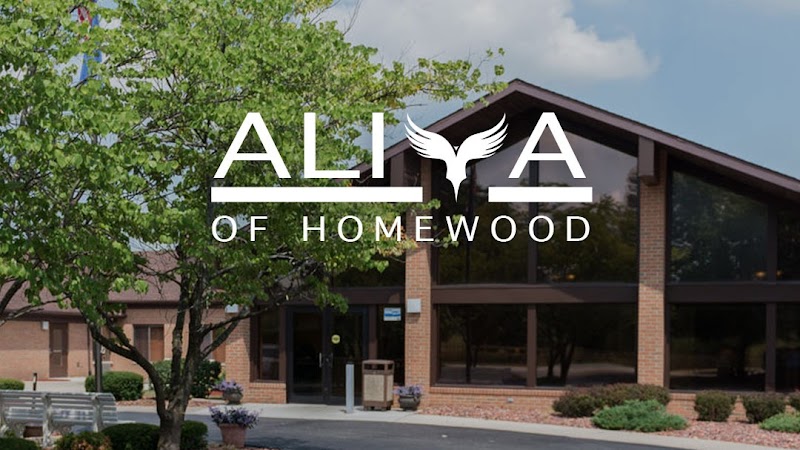
ALIYA OF HOMEWOOD

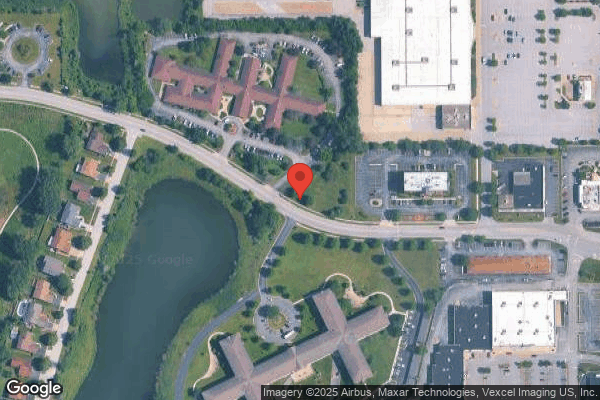
940 MAPLE AVENUE, HOMEWOOD, IL 60430 (708) 799-0244
For profit - Corporation 132 Beds ALIYA HEALTHCARE Data: November 2025
Trust Grade
20/100
#98 of 665 in IL
Last Inspection: November 2024

Within standard 12-15 month inspection cycle. Federal law requires annual inspections.

Overview

Aliya of Homewood currently holds a Trust Grade of F, indicating significant concerns about the quality of care provided. With a state rank of #98 out of 665 facilities in Illinois, they are in the top half, but that ranking does not mitigate the serious issues reported. The facility is improving, having reduced its number of issues from 8 in 2024 to just 2 in 2025, but it still has a long way to go. Staffing is a noted weakness with a rating of 2 out of 5 stars and a turnover rate of 38%, which is below the Illinois average but still concerning. Specific incidents highlight serious lapses in care, such as a resident suffering an undetermined injury and another falling off the bed during a transfer, resulting in hospitalization for a head injury. While the facility has some positive aspects, including good quality measures and a majority of non-critical issues, the overall picture remains troubling for prospective families.

Trust Score
F
20/100
In Illinois
#98/665
Top 14%
Safety Record
High Risk
Review needed
Inspections
Getting Better
8 → 2 violations
Staff Stability
○ Average
38% turnover. Near Illinois's 48% average. Typical for the industry.
Penalties
✓ Good
$64,180 in fines. Lower than most Illinois facilities. Relatively clean record.
Skilled Nurses
✓ Good
Each resident gets 50 minutes of Registered Nurse (RN) attention daily — more than average for Illinois. RNs are trained to catch health problems early.
Violations
⚠ Watch
31 deficiencies on record. Higher than average. Multiple issues found across inspections.
★★★★☆
4.0
Overall Rating
★★☆☆☆
2.0
Staff Levels
★★★★★
5.0
Care Quality
★★★☆☆
3.0
Inspection Score
Stable
2024: 8 issues
2025: 2 issues

The Good

  • 5-Star Quality Measures · Strong clinical quality outcomes
  • Full Sprinkler Coverage · Fire safety systems throughout facility
  • No fines on record
  • Staff turnover below average (38%)

    10 points below Illinois average of 48%

Facility shows strength in quality measures, fire safety.

The Bad

Staff Turnover: 38%

Near Illinois avg (46%)

Typical for the industry

Federal Fines: $64,180

Above median ($33,413)

Moderate penalties - review what triggered them

Chain: ALIYA HEALTHCARE

Part of a multi-facility chain

Ask about local staffing decisions and management

The Ugly 31 deficiencies on record

8 actual harm
Jul 2025 1 deficiency 1 Harm
SERIOUS (G) 📢 Someone Reported This

A family member, employee, or ombudsman was alarmed enough to file a formal complaint

Actual Harm - a resident was hurt due to facility failures

Accident Prevention (Tag F0689)

A resident was harmed · This affected 1 resident

Based on interviews and record review, the facility failed to prevent an injury of unknown origin which occurred for one resident. This affected one of three residents (R1) reviewed for injury of unkn...

Read full inspector narrative →
Based on interviews and record review, the facility failed to prevent an injury of unknown origin which occurred for one resident. This affected one of three residents (R1) reviewed for injury of unknown origin. This failure resulted in R1 sustaining an undetermined injury of an acute left humeral neck with displaced transverse fracture.Findings Include:R1's referral package dated 8/17/22 documents: past medical history of falls, osteoporosis and closed hip fracture. R1 was admitted with the diagnosis of Age-Related Osteoporosis without current pathological fracture. Minimal data set section C (Brief interview for mental status) dated 6/3/25 document a score of four (4) which indicates severe cognitive impairment. Section GG (functional abilities) documents: R1 required substantial/maximal assistance with upper body dressing, the ability to dress and undress above the waist: including fasteners, if applicable. Event report dated 6/29/25 documents: At approximately 4:00pm on 6/29/25, the assigned V6 (CNA) reported to V8 (nurse) that following taking R1's blood pressure with the vital machine there was a discoloration to her left arm. V8 and another nurse went to assess and noted a mild discoloration to R1 left arm where the cuff was applied. Action taken: range of motion within normal limits, R1 denied pain, MD notified of temporary discoloration that appears to have resolved. R1's X-ray requisition dated 7/1/25 documents reason: unable to move left arm. Radiology report dated 7/1/25 document: Impression: Left humerus (long bone in the upper arm neck extending from the shoulder to the elbow) with complete transverse fracture with displacement. V8's witness statement dated 7/2/25 documents: continues to monitor R1 with no worsening and it seemed to resolve.On 7/15/25 at 9:35am, V9 (nurse) said on Sunday June 29th at the end of her day shift, and the beginning of V8's (nurse) shift which was the evening shift (3pm-11pm), V8 asked V9 to look at R1. V9 said, R1 was observed with bruised area to the left upper arm. V6 reported taking R1's vitals, V9 said V8 was asking R1 questions about her left arm. V9 said, R1 was unable to report how she got the bruise or an incident. V9 denies knowledge of incident/abuse involving R1. On 7/15/25 at 10:07am, V6 (CNA) said, when he did his rounds and passed water to R1 around 2:30pm -3:00pm, R1 was relaxing perfectly fine in bed. V6 said, about an hour later he took R1's vitals. V6 said, R1 made a face when he took off the blood pressure cuff off her arm. V6 said, he informed the nurse who instructed V6 to update him if R1's bruise got worst. V6 said, R1's bruise was a little red. V6 said, R1's bruise did not get worst. V6 said, he asked R1 what happened, R1 denied fall or abuse. Vital report dated 6/28/25 and 6/29/25 taken by V6 (CNA) documents lying/r/arm. On 7/18/25 at 2:15pm, V2 said, r indicates Right arm.On 7/15/25 at 12:08pm, V1 (administrator) said R1's bruise was not an injury of unknown origin R1's left arm fracture was. V1 said, she does not know when R1's fracture occurred. V1 said, staff saw the discoloration to R1's arm after V6 (CNA) removed the blood pressure cuff. Then an x-ray was ordered which resulted in a fracture. V1 said, R1 did not have a traumatic event. V13 (nurse practitioner) said, R1's fracture was pathological. R1 had a diagnosis of osteoporosis and osteopenia. On 7/15/25 at 1:11pm, V16 (orthopedic specialist) said, R1's fracture was due to either a fall on the ground landing on her left arm or someone moved R1 attempting the wrong way, lifting by R1's arm instead of R1's core. Pathological fractures are due to underlying conditions associated with cancers/tumor. V16 said, a blood pressure cuff did not cause R1's fracture. R1 is not a healthy person but none of her current diagnosis would be associated with her fracture. V16 said, bruising/blood takes three to five days to come out of the bone, travel through the muscle and appear on the skin. On 7/15/25 at 1:29pm, V13 said, staff called him to report R1's bruise. Staff reported R1 had a routine blood pressure and when the cuff was removed, she had a bruised area where the cuff had been placed. V13 said he asked what happened, staff denied pain initially, fall or trauma. R1 had osteoporosis. R1's bruising increased. R1 complained of mild pain. R1 had swelling noted to her left upper arm. V13 said, he ordered an x-ray which resulted in a transverse fracture. V13 said, R1 was discharged to the hospital for further evaluation. No surgery was indicated. R1's fracture could be from osteoporosis or from normal activities of living (ADL) i.e. R1 could have been moving and the bone just snapped or with ADL care when staff was helping resident. R1 was on prednisone which can demineralized the bones. V13 said, he did not review the x-ray result, speak with any of the hospital doctors or the orthopedic doctor in order to determine the root cause of R1's fracture. V13 said, he cannot differentiate the cause of R1's fracture. V13 said, he relied on staff's information. V13's practitioner note dated 7/7/25 documents: Member (R1) with significant past medical history of osteoporosis, hypothyroidism, severe calories malnutrition and based on review of hospital note, her (R1) acute displaced fracture to left humerus is mostly due to pathological fracture. Per staff, on 6/30/25 evening, R1's blood pressure taken and they noted to have bruises to the left upper arm where blood pressure cuff was placed. In the morning, staff noted that the bruising worsened, with swelling, complaint of pain with limited movement of her left arm.On 7/15/25 at 3:52pm, V2 (Director of Nursing) said, R1's fracture was perceived to be from the blood pressure cuff compression. V2 said, she was not sure why R1's arm did not bruise with the other daily blood pressures that were taken prior to the bruised area being found. V2 said, R1's body was changing and at that time the blood pressure was taken, it could have been a change in R1's body resulting in a bruised arm after the blood pressure cuff was removed.Hospital paperwork dated 7/2/25 documents: R1 with past medical history of age-related osteoporosis and functional quadriplegia who presented from nursing facility for evaluation of left upper extremity bruising, Unknown if R1 had a fall or when R1 incurred injury to left arm. Per emergency room physician discussion with primary care provider, there were no documented fall at skill nursing facility but patient (R1) was being lifted from bed to wheelchair and back to bed with a mechanical lift during which injury may have been possible. X-ray note acute displaced fracture of left proximal humerus.
May 2025 1 deficiency 1 Harm
SERIOUS (G) 📢 Someone Reported This

A family member, employee, or ombudsman was alarmed enough to file a formal complaint

Actual Harm - a resident was hurt due to facility failures

Accident Prevention (Tag F0689)

A resident was harmed · This affected 1 resident

**NOTE- TERMS IN BRACKETS HAVE BEEN EDITED TO PROTECT CONFIDENTIALITY** Based on interview and record review, the facility failed to monitor a resident (R2) sitting on the side of the bed when prepari...

Read full inspector narrative →
**NOTE- TERMS IN BRACKETS HAVE BEEN EDITED TO PROTECT CONFIDENTIALITY** Based on interview and record review, the facility failed to monitor a resident (R2) sitting on the side of the bed when preparing R2 for a transfer when R2 reached for an item on the ground causing R2 to fall off the bed for one out of three residents reviewed for falls in a total sample of eight. The failure resulted in R2 needing to be hospitalized after suffering a laceration to the head and a subarachnoid hemorrhage. Findings Include: R2 is an [AGE] year old with the following diagnosis: traumatic subdural hemorrhage, aphasia, hemiplegia affecting the left side, glaucoma, and cognitive communication deficit. Nursing note dated 4/5/25 documents the CNA reported to the nurse that as the CNA was turning to grab R2's wheelchair, R2 fell forward from a sitting position on the side of the bed. R2 struck R2's head on the nightstand before landing on the floor on the left side. The nurse assessed R2 and noted a small laceration to the left side of the forehead with moderate bleeding. A pressure dressing was applied by the wound nurse. 911 was called and took R2 to the hospital for an evaluation. R2 was admitted to the hospital. Nursing note dated 4/5/25 at 11:50 PM documents R2 was transferred to a different hospital with a diagnosis of left subdural hematoma. The Hospital Transfer Form dated 4/5/25 documents the reason for transfer was fall. A laceration was noted to the left side of the head. R2 was documented as being a high fall risk. The Emergency Department Records dated 4/5/25 document R2 presented to the emergency room for a witnessed fall. R2 has no recollection of the fall and does not know why R2 was sent to the emergency department. Per the facility, R2 fell while being transferred from the bed to the wheelchair. R2 was not a reliable historian. Upon physical examination, there was a concern for a forehead laceration. A CT of the head was completed and showed a small subdural hematoma along the left cerebral convexity, and a small hemorrhagic contusion to the left frontal lobe. The x-ray of the pelvis showed an irregularity along the lesser trochanter of the femur, which could be concern for fracture. R2 had a laceration repair at 11:59 AM. The laceration was about 3 cm in length and repaired with steri-strips. R2 was then transferred to another hospital as a trauma patient. A follow up CT scan was completed at this hospital, which showed a decrease in size of the frontal lobe contusion since yesterday. There is small residual hyperdense focus. No new hemorrhage was identified. The subarachnoid hemorrhage has resolved. The MRI of the left hip did not show any evidence of a left hip or proximal femur fracture. There is mild subcutaneous edema within the left lateral hip. The Facility Incident Report dated 4/11/25 documents the CNA assisted R2 with ADL care. The CNA reached to position the wheelchair for transfer when R2 reached for eyeglasses on the floor and fell forward, landing on the left side before the CNA could assist R2. The CNA immediately alerted staff for assistance. A body assessment was completed and an open area to the left side of the forehead was noted. First aid was administered and a dry dressing was applied. When interviewed, R2 said, I was reaching. Prior to the incident, R2 was sitting comfortably with the bed in the lowest position. New orders were received to send R2 to the emergency room for further evaluation. R2 was transferred to a different hospital and admitted with a small left subdural hematoma. Repeat CT scan revealed this small hematoma resolved and did not require any surgical intervention. On 5/13/25 at 2:06PM, V2 (CNA) stated V2 was doing morning care and was getting R2 dressed and washed up. V2 sat R2 on the side of the bed and R2 was sitting up. V2 reported R2 reached down on the side of the floor and fell out of the bed. V2 stated V2 always has to coach R2 when V2 is with R2 because R2 has a habit of reaching. V2 reported R2 wasn't a high fall risk at the time of the fall and is a one assist with transfer and walking. V2 stated V2 was facing R2 when R2 was reaching but V2 was setting up the wheelchair so V2 didn't see R2 begin to fall. V2 reported V2 was maybe a foot or two away from R2 when the fall occurred. V2 stated V2 set the wheelchair down right in front of R2 so the wheelchair was in between V2 and R2. V2 reported V2 usually sets up the wheelchair in the way because R2 has never had a problem with falling forward before. V2 stated R2 had a cut to R2's head. V2 was unaware if R2 was in physical therapy at the time of the fall. On 5/14/25 at 11:50AM, R2 was sitting at the dining room table waiting for lunch. R2 stated R2 was comfortable speaking in the dining room. R2 reported having a fall about a month ago. R2 was not able to remember what caused the fall. R2 stated R2 couldn't remember anything until R2 was at the hospital and hospital staff told R2 that R2 fell. R2 pointed to R2's left side of the top of the head and told the surveyor that this is where R2 hit R2's head during the fall. There is a healed scar about 1.5 inches long. R2 was not able to remember if R2 had any other injuries. R2 could not remember who was in the room with R2 during the fall. R2 stated R2 now has a reacher to grab things so R2 won't bend down anymore. R2's mental status was assessed. R2 knew R2's name, birthday, and that R2 was in a nursing facility in Chicago. R2 was unable to state the date or the name of the town. On 5/14/25 at 11:59AM, V4 (Nurse) stated V2 informed V4 that R2 was on the floor so V4 went to assess R2. V4 reported R2 had bleeding coming from the left side of the top of the head and a dry dressing was put on it after the wound nurse looked at it. V4 stated R2 was sent out via 911 per the physician's orders. V4 knew R2 couldn't move one side of the body due to stroke but V4 couldn't remember what side. V4 reported R2 is not a high fall risk and is not confused. V4 stated V2 told V4 that R2 was leaning forward out of the bed and was trying to grab something and fell. V4 was not aware of R2 having that behavior. On 5/14/25 at 1:02PM, V6 (Therapy Director) stated when R2 was in therapy before the fall, R2 was moderate assist with transfers. V6 reported transfers were rough for R2 so R2 was referred to therapy for that reason. V6 stated R2 had fairly good trunk control. V6 reported R2 can follow directions and knows who you are but won't remember what day it is. On 5/14/25 at 1:45PM, V10 (Medical Director) stated a radiologist will report any kind of bleed even if the bleed is small in the brain. V10 reported if there is an area the radiologist sees that is hyperdense focus it means that area of the brain on the scan was brighter than it should have been, but it is usually a really tiny area only millimeters long. V10 stated the hyperdense focus could be from a bleed that has a large sized hematoma to accompany it which would be caused by trauma. V10 reported if a resident has a certain behavior that puts them at risk of being harmed then it is the responsibility of the facility to prevent any harm from that behavior as best as possible by putting in interventions that address the behavior. On 5/14/25 at 2:07PM, V9 (DON) stated V9 does all the reportable investigations for falls with injury. V9 reported R2 had a witnessed fall with a laceration to the head. V9 stated V2 told V9 that V2 turned to get the wheelchair for R2 when R2 leaned forward and fell before V2 could react. V9 denied R2 remembering the fall. V9 reported R2 was admitted to the hospital so they could rule out a subarachnoid bleed in the brain. V9 stated the subarachnoid bleed was ruled out but R2 needed to stay in the hospital about three to four days for monitoring. V9 was not able to answer if the brain bleed was ruled out then why was it added to R2's diagnoses on the face sheet? V9 said, That is a question for MDS. V9 reported R2 also had a laceration repair of the forehead while at the hospital which has now healed. V9 stated a reacher was put in place after the fall to prevent any additional falls from happening in this manner. V9 reported R2 is a fall risk but not a high fall risk because R2 is not confused. V9 stated R2 does have a history of a stroke with weakness or paralysis to one side. On 5/14/25 at 2:53PM. V13 (MDS Nurse) stated V13 reviews the most recent assessment and plan from the physician in the hospital records upon a resident's return to the facility. V13 reported V13 uses active diagnoses to update the resident's face sheet. V13 stated R2 had a follow up with neurosurgery to see if R2 was able to restart the anti-platelet medication after having the brain bleed. The Fall Report dated 4/5/25 documents the CNA was providing R2 morning ADL care. The CNA just changed R2's clothing and sat R2 on the side of the bed to get R2 into the wheelchair. The CNA reported turning to retrieve the wheelchair when R2 leaned forward from a sitting position at the side of the bed, causing R2 to destabilize and fall forward. R2 struck R2's head on the nightstand before landing on the left side. R2 said, I fell onto the floor. I am OK but my head hurts. R2 denied any other pain or discomfort. R2 is noted with a small laceration to the left forehead with moderate bleeding. 911 was called to take R2 to the hospital for further evaluation. The Hospital Records dated 4/7/25 document R2 has a history of cerebral vascular accident with residual left sided hemiparesis. R2 presented as a trauma transfer for mechanical fall R2 was being transferred from the wheelchair when R2 became lightheaded and fell forward, hitting R2's head but did not lose consciousness. The initial CT scan of the head showed a small subdural hematoma with serial CT scans showing the hematoma was stable. Per neurosurgery, no surgical interventions are recommended, but will continue to hold the anti-platelet medication until follow up. An MRI of the left femur revealed there was no evidence of acute fracture. Assessment and plan documents a mechanical fall with a subdural hematoma. This is the documentation that V13 referenced and showed the surveyor for the diagnosis of subdural hematoma that was entered on R2's face sheet upon return to the facility. The Physical Therapy progress report dated 3/7/25 through 4/2/25 documents R2 is a fall precaution with aphasia and left sided weakness. R2 needs partial/moderate assistance from going from a sitting to standing position and transfers. R2 needs supervision or touching assistance with walking. Picking objects up off the floor is documented as not applicable. Continue therapy is recommended to increase lower extremity range of motion and strength, minimize falls, and promote safety awareness. The note dated 4/2/25 documents skilled interventions focused on instruction in scooting techniques to facilitate upright posture and proper positioning in wheelchair and training and safe sit to stand/stand to sit mobility. The After Visit Summary dated 4/30/25 documents R2 had a follow up with neurosurgery and was cleared to resume the anti-platelet medication. This was a follow up due to the subdural hematoma and fall. The Fall Risk Evaluation dated 11/2/23 documents a score of 15 indicating R2 is at high risk for falls. This assessment was completed post fall. R2 has decreased mobility, is confused/has impaired memory or judgment, is incontinent, and above 75. No other fall risk evaluations were completed again until 4/5/25. This fall risk evaluation document a score of four indicating R2 is not at risk for high fall. A score of 10 or higher makes a resident high risk for falls. When looking at the assessment, it is incorrectly coded, giving R2 a lower score. If the assessment was properly charted, R2 would have a score higher than 10 making R2 a high fall risk. The Functional Abilities and Goals dated 2/7/25 document R2 needs substantial/maximal assistance with bed mobility, going from a sitting to standing position, and transfers. Picking up an object from the floor was not attempted due to medical condition or safety concerns. The Care Plan dated 11/3/23 documents R2 is at high risk for falls related to impaired mobility and strength, decline in cognition, potential medication side effects, unsteady gait, and diagnosis of cerebral infarct with left hemiplegia. Interventions put in place after the fall on 4/5/25 include educate R2 on the importance of complying with safety measures and document understanding of education and instances of noncompliance, encourage use of and provide a reacher as needed to assist R2 with getting items from hard reach areas, and encourage appropriate use of the walker and wheelchair. The Care Plan dated 11/8/23 documents R2 is memory, impaired, and has difficult with decision-making, insight, logic, planning, and organization of thoughts. The Care Plan dated 11/9/23 documents R2 is on antiplatelet therapy and is it risk for adverse side effects. The Minimum Data Set (MDS) dated [DATE] documents a Brief Interview for Mental status score at 11 (moderate cognitive impairment). Section GG of the MDS indicates R2 has an upper extremity impairment to one side. R2 needs substantial/maximal assistance with bed mobility and transfers. The policy titled, Fall Prevention and Management, dated 2/2025 documents, General: This facility is committed to maximizing each resident's physical, mental, and social well-being. While preventing falls is not possible, the facility will identify and evaluate those residents at risk or fall, plan preventative strategies, and facilitate as safe an environment as possible. All resident falls shall be reviewed, and the resident's existing plan of care shall be evaluated and modified as needed.
Nov 2024 2 deficiencies
CONCERN (D)

Potential for Harm - no one hurt, but risky conditions existed

Deficiency F0757 (Tag F0757)

Could have caused harm · This affected 1 resident

Based on observation, interview, and record review the facility failed to ensure the antibiotic prescribed include duration, care plan, and documentation of long term used. This deficiency has the pot...

Read full inspector narrative →
Based on observation, interview, and record review the facility failed to ensure the antibiotic prescribed include duration, care plan, and documentation of long term used. This deficiency has the potential to affect 1 of 2 residents (R103) reviewed for antibiotic use in a sample of 23. Findings Include: On 11/12/2024 at 12:31PM, R103 on Enhanced Barrier Precaution (EBP). R103 said he takes medication for infection. On 11/14/2024 at 01:02PM, R103 said he knows he is on antibiotic medication for infection but does not know the name and has been taking it since he came to facility in September 2024. On 11/14/2024 at 10:35AM, V4 (Infection Control Nurse) said R103 is prescribed antibiotic, Metronidazole, should include a start and stop date along with indication for use. V4 said as part of Antibiotic Stewardship program, V4 review all antibiotic prescribed within a day or two of admission and communicate to the doctor if the duration is not indicated and document on resident medical records. V4 said the antibiotic prescribed for R103 on September admission should have a stop date. On 11/14/2024 at 10:58AM, V2 (Director of Nursing/DON) said all antibiotic should have a start and stop date along with indication for use. Doctor should be informed if duration is not indicated. R103 Metronidazole antibiotic should have a stop date and not indicated for long term used. On 11/14/2024 at 01:05PM, V14 (Licensed Practical Nurse/LPN) said she is a regular on the unit where R103 resides but do not give antibiotic to R103 on her shift. V14 reviewed physician order with Surveyor which include the Metronidazole antibiotic. V14 said there should have been a stop date for the antibiotic. admission Record: Diagnosis Information: Sepsis, Unspecified Organism Order Summary Report: Metronidazole Oral Tablet 500 MG (Metronidazole) Give 1 tablet by mouth every 12 hours for Bacterial Infection, Order date - 9/25/2024, Start date - 9/26/2024, no End date. Care Plan (Created on 11/14/2024) Focus: R103 is on Antibiotic Therapy r/t bacterial infection. Policy: Guideline: Antibiotic Stewardship Review Date: 2/2024 Policy: It is the policy of . to maintain an Antibiotic Stewardship Program with the mission of promoting the appropriate use of antibiotics to treat infections and reduce possible adverse events associated with antibiotic use. Components of the policy were developed by using evidence-based practice guidelines and are aligned with the Core Elements of Antibiotic Stewardship for Nursing homes, published by Centers for Disease Control and Prevention (CDC)(1), and State Operations Manual (Appendix PP): Guidance to Surveyor of Long Term Care Facilities, published by CMS (2). Prescribing record keeping: Dose, duration, route, and indication of every antibiotic prescription MUST be documented in the medical record for every resident. Records will be reviewed monthly to assess compliance with this requirement, as well as prescription appropriateness for the individual resident.
CONCERN (D)

Potential for Harm - no one hurt, but risky conditions existed

Antibiotic Stewardship (Tag F0881)

Could have caused harm · This affected 1 resident

**NOTE- TERMS IN BRACKETS HAVE BEEN EDITED TO PROTECT CONFIDENTIALITY** Based on observation, interview, and record review the facility failed to implement ongoing monitoring of antibiotics. This defi...

Read full inspector narrative →
**NOTE- TERMS IN BRACKETS HAVE BEEN EDITED TO PROTECT CONFIDENTIALITY** Based on observation, interview, and record review the facility failed to implement ongoing monitoring of antibiotics. This deficiency affects one (R103) of three residents in the sample of 23 reviewed for Antibiotic Stewardship Program. Findings include: On 11/14/2024 at 10:36AM, V4 (Infection Preventionist) said that she reviews the antibiotic medications prescribed weekly and an infection assessment evaluation is done prior to the start of antibiotic use for the purpose of monitoring for the antibiotic stewardship program. V4 said that R103 is currently on Metronidazole 500mg every 12hours for bacterial infection with no stop date. V4 said she is unable to locate R103's infection assessment evaluation record upon start of antibiotic. On 11/14/24 at 1:58PM, V2 (Director of Nursing) said that her expectations for the antibiotic stewardship program should be an ongoing monitoring of antibiotics. R013 admitted on [DATE] with diagnosis listed in part but not limited to sepsis unspecified organism, periprosthetic fracture around internal prosthetic left knee joint, subsequent encounter. Active physician order sheet indicates: Metronidazole tablet 500 MG every 12 hours for bacterial infection started on 9/26/24. Facility's policy on Antibiotic Stewardship Program indicates: Reviewed 2/2024. It is the policy of . to maintain an Antibiotic Stewardship Program with the mission of promoting the appropriate use of antibiotics to treat infections and reduce possible adverse events associated with antibiotic use. Components of the policy were developed by using evidence-based practice guidelines and are aligned with the Core Elements of Antibiotic Stewardship for Nursing Homes, published by Centers for Disease Control and Prevention (CDC) (1), and the State Operations Manual (Appendix PP): Guidance to Surveyors of Long-Term Care Facilities, published by CMS (2). Actions Prescribing and record keeping. -Dose, duration, route, and indication of every antibiotic prescription MUST be documented in the medical record for every resident, regardless of prior prescriptions or documentation elsewhere (e.g., in medical record of a discharging facility). Notation of this information should be made on the day that an in-house prescription is written or on the day that a resident returns to the facility on an antibiotic prescribed elsewhere. -When a new antibiotic is prescribed, the receiving nurse will open a new case in the PCC Infection Control module and an Antibiotic therapy form in PCC. -Records will be reviewed monthly to assess compliance with this requirement, as well as prescription appropriateness for the individual resident, site, and type of infection. -Assessment of residents suspected of having an infection. Providers will utilize the McGeer's Criteria or the Loeb Criteria for initiating Antibiotic usage.
Aug 2024 4 deficiencies 2 Harm
SERIOUS (G) 📢 Someone Reported This

A family member, employee, or ombudsman was alarmed enough to file a formal complaint

Actual Harm - a resident was hurt due to facility failures

Quality of Care (Tag F0684)

A resident was harmed · This affected 1 resident

**NOTE- TERMS IN BRACKETS HAVE BEEN EDITED TO PROTECT CONFIDENTIALITY** B. On 7/25/24 at 3:13PM V10 (Nurse) said, R3 was wheelchair bound, very weak and could not articulate well. V10 said, V13 (CNA) ...

Read full inspector narrative →
**NOTE- TERMS IN BRACKETS HAVE BEEN EDITED TO PROTECT CONFIDENTIALITY** B. On 7/25/24 at 3:13PM V10 (Nurse) said, R3 was wheelchair bound, very weak and could not articulate well. V10 said, V13 (CNA) updated her that R3 was yelling when she touched his left leg. R3 had a history of left knee pain. V10 said, R3 allowed her to move his left leg. R3 was in pain. V10 said, R3 had a facial grimace when she attempted to reposition R3's leg while he was in the wheelchair. V10 said, she lifted R3's leg up and down while R3 sat in his wheelchair. V10 demonstrated lifting her leg by gathering both hands underneath her posterior thigh just behind her bent knee and lifted her leg up, with her foot coming off the floor a few inches while she sat in the chair. V10 did this motion once as an example of how she assessed R3 while he was sitting in his wheelchair. V10 said, she administered, R3's scheduled muscle rub to the knee and gave an acetaminophen. V10 said, she was not sure what happen after that because she ended her shift earlier than scheduled. V10 said, R3 was sent to the hospital the following day. R3 was diagnosis with a fracture. V10 said, she thought R3 was having knee pain. On 7/25/24 at 3:30PM, V13 (CNA) said, she was passing dinner trays, R3 was in his room sitting by the closet which was odd. Normally, R3 was in the hallway, self-propelling in his wheelchair using his feet and the handrail to go back and forth in the hallway. R3 normally ate in the dining room. V13 said, she placed R3's dinner tray on his bedside table. V13 said, she noticed R3's left leg was bent completely back up under his wheelchair. V13 demonstrated how R3 was sitting in his wheelchair by scooting towards the edge of her seat and placing her leg, with a bent knee behind her completely under her chair. V13 said, she tried to move R3's leg. R3 was in so much pain. R3 was unable to report what happen. V13 said, she informed V10. On 7/26/24 at 1:33PM, V18 (PAN Nurse) said, R3 was observed in the bed moaning and groaning in pain. The nurse should have assessed R3's pain by completing a comprehensive head to toe assessment which includes vitals, range of motion to limbs, extending and flexing extremities, asking the resident if something happen, notified MD/family and followed given orders. R3 required staff assistance for transfers. R3 was able to self- propel with feet once in wheelchair. On 7/30/24 at 3:55pm, V32 (Nurse) said, R3's words and actions contradicted each other. R3 will say he is not in pain while guarding or holding on to a body part. On 7/31/24 at 12:58pm, V33 (Medical Doctor) said, she was not notified of R3's change of condition on 6/13/24. Severe osteoporosis/osteopenia can contribute to a fracture but whatever trauma happen to R3's leg that caused his leg to be bent completely under his wheelchair was the cause of his hip fracture. V33 said, she was notified about R3's fracture after he returned from the hospital. V33 said, she would expect the nurse to lay R3 down on his bed and complete a full body exam to include range of motion of the extremities after R3 was groaning with facial grimacing and yelling out in pain. R3 would have had severe pain with a hip fracture. V33 said, she would have ordered a stat x-ray had she been informed of R3's change of condition. Most hip fractures are caused by a traumatic event. V33 said, she does not know exactly how R3 fractured his hip. R3 has a diagnosis of prostate cancer but there was no documentation that R3's cancer metastasized to his bones in R3's medical record therefore it cannot be considered as a factor. Nursing note dated 6/13/24 written by V10 at 18:36 (6:36pm) documents: Prior to dinner CNA (V13) attempted to reposition resident's (R3) left foot to bring side table towards him. Resident (R3) voiced vulgar language and told the V13 to get away from him and also grimaced. Nurse observed R3, R3 grimaced, when moving left leg but not right leg. R3 voiced he was not in pain but did mumble something incoherent. R3 was sitting in wheelchair at time of assessment and refused to go in bed. Resident was observed in room, ambulating in wheelchair but resident did not leave the room during the evening. PRN acetaminophen administered and pain ointment was administered. Left hip was touched, no abnormal reaction to touching site. Knee was assessed as resident refused care, no signs of dislocation fracture or bruising to site. Medication appeared effective. No signs of pain assessed prior to leaving. Witness stated written by V10 documents at approximately 18:15 (6:15pm) on 6/13/24: C.N.A (V13) requested she observe R3. While sitting in his wheelchair R3 was observed with resistance to moving his left lower extremity (LLE) and would not move his left foot. R3 exhibited grimacing and stated leave me alone when the C.N.A (V13) attempted to assist with mobility. V10 assessed R3's left ankle and LLE for any signs of injury. NO sign or symptoms of injury were observed. Witness stated written by V25 dated 6/14/24 documents: during the shift change, second shift CNA stated, she noticed something with his (R3) leg when [NAME] was putting him to bed the night before, V25 then squeezed his (R3) knee again, got no reaction but when I tried to move his leg, he reacted in pain. Telehealth evaluation dated 6/14/24 documents: R3 started to have left leg pain, therefore he had x-ray left hip, knee and left ankle. Left hip revealed impacted fracture of left femoral neck. R3 complained of pain with movement of hip and leg. This is an acute new problem. R3 condition is worsening pain. Transfer to emergency department. Diagnostic Order dated 6/14/24 at 15:29 (3:29pm) documents: left knee, three view, left hip, unilateral with pelvis. Facility radiology result report dated 6/14/24 at 20:55 (8:55pm) documents: impression pelvis: impacted transcervical fracture of the left lower neck with varus deformity. Hospital paperwork dated 6/14/24 documents: He (R3) has been complaining of severe left hip pain which prompted them (facility) to get an x-ray. R3 was able to answer yes and no to questions. Musculoskeletal: Left lower extremity is shortened. Cat scan (CT) pelvis without contrast dated 6/15/24 document: New acute transcervical left femoral neck fracture with marked impaction and varus angulation demonstrated. No dislocation. Diagnosis: Closed hip fracture. A. Based on interview and record review, the facility failed to follow physician orders by not obtaining a urinalysis and culture for one resident who was identified as being incontinent of urine with a new onset of lethargy. This affected one of three residents (R4) reviewed for physician orders. This failure resulted in R4 being sent to the hospital with a diagnosis of urinary tract infection and sepsis. B. Based on interview and record review, the facility conduct a comprehensive body assessment on a resident observed with his left leg/knee contorted under his wheelchair, facial grimacing and yelling out with movement. This affected one of three residents (R3) reviewed for quality of nursing and assessment. This failure resulted in R3 waiting twenty hours for an x-ray order which resulted in a diagnosis of a new acute transcervical left femoral neck fracture with marked impaction and varus angulation. Findings include: A. R4 was admitted to the facility on [DATE] with a diagnosis of hemiplegia, abnormalities of gait, weakness, depression, hypertension, functional quadriplegia, and compression of the brain. R4'as physician order dated 6/4/24 at 8:05PM documents: STAT chest x-ray, STAT CBC, CMP and Urinalysis with culture and sensitivity. On 7/26/24 at 12:26pm, V14(Lab Tech) said they did not receive any notification from the facility for any urine collection pick ups and did not receive any urine specimens from the facility for R4. On 7/31/24 at 11:32AM, V19(Nurse Consultant) said the facility practice on obtaining a urinalysis from an incontinent patient, would be to get an order for urine straight cath from the doctor and family consent. Staff should let the doctor know if unable to obtain urine specimen. The staff will usually get the sample during night shift or earlier because the lab will pick up specimens in the morning. V19 said the lab comes every morning to the facility. On 7/31/24 at 9:17AM, V36(NP) said if R4 had an order for urinalysis, she would expect staff to have collected specimen prior to hospitalization. Staff should have called to obtain order for straight cath if no urine was able to be obtained especially in an incontinent resident within first day. V36 denies receiving any calls related to R4 needing a straight cath order. V36 said she does not recall receiving any calls related to a change in mental status for R4 and said if she did, she would have sent R4 to the hospital immediately because she was a new admit and a change in her condition. R4's hospital record dated 6/6/24 documents: R4 presents from facility with altered mental status. R4 opens eyes to name but unable to answer questions or follow commands. R4's white blood count was 12.6 high (normal range 4.2-11.0). Clinical impression documents sepsis, tachycardia and acute urinary tract infection. R4s urinalysis dated 6/6/24 documents urine color orange; appearance turbid; occult blood large (normal is negative); leukocytes large (normal result negative), bacteria moderate (normal result none); Mucous present. Urine culture collected 6/6/24 and completed 6/9/24 documents greater than 100,000 Escherichia coli. Blood culture collected 6/6/24 and completed 6/9/24 documents Escherichia coli. R4's Minimum Data Set, dated [DATE] documents under section H bowel and bladder under urinary continence documents always incontinent.
SERIOUS (G) 📢 Someone Reported This

A family member, employee, or ombudsman was alarmed enough to file a formal complaint

Actual Harm - a resident was hurt due to facility failures

Accident Prevention (Tag F0689)

A resident was harmed · This affected 1 resident

**NOTE- TERMS IN BRACKETS HAVE BEEN EDITED TO PROTECT CONFIDENTIALITY** R8 admitted in the facility on [DATE] under hospice care and expired in the facility on [DATE]. R8 has diagnoses of Metabolic En...

Read full inspector narrative →
**NOTE- TERMS IN BRACKETS HAVE BEEN EDITED TO PROTECT CONFIDENTIALITY** R8 admitted in the facility on [DATE] under hospice care and expired in the facility on [DATE]. R8 has diagnoses of Metabolic Encephalopathy, Malignant Neoplasm, Anemia, Type 2 Diabetes, Pain in Right Hip, and Convulsion. R8 has a BIMS of 3 (Severe Cognitive Impairment). R8 had 2 fall incidents in the facility. Fall incidents dated [DATE] and [DATE]. R8 has care plan for high risk for fall with an initial date of [DATE]. R8 has care plan for high risk for falls related to impaired mobility and history of seizure with a created date of [DATE] and revised date of [DATE]. R8's [DATE] fall incident reads in part: R8 was observed on the floor, during final rounds laying on the right side, using right arm to support his head. When R8 was asked what happened. R8 was unable to explain what happened, but when asked if he was trying to turn, R8 said yes. R8 fall care plan updated after the first fall on [DATE] and intervention added was provide perimeter pillows dated [DATE]. R8's [DATE] fall incident reads in part: Nurse was called and notified by R8's family member who was visiting R8 that R8 was on the floor mat. Upon entering the room, writer observed R8 on the floor mat. R8 was rounded on 10 minutes before the incident. R8 was in bed sleeping and bed in low position. No injury. Assisted back to bed with 2 staff. R8 fall care plan updated after the second fall on [DATE] and interventions added were bed bolsters for perimeter awareness and rounding for prompt assist for change in position, toileting, offer fluids, and ensure resident is warm and dry dated [DATE]. On [DATE] at 2PM, V31 (Complainant) stated that another family member came in before her and saw R8 on the floor next to his bed. V31 stated that this family member recorded the time that the nurse was made aware of the fall. V31 stated her family member stopped recording when V31 arrived on the scene. V31 observed R8 on the floor, no staff with the resident just the other family member. V31 reported that 2 female staff members entered the room and assisted in placing back R8 into his bed. They waited 13 minutes with no staff watching R8 and R8 was left on the floor. Review of family's attached video with this complaint. Video shows V28 (Nurse) walking in the room. R8 on the floor, laying on floor mat with pillow on his head. Nurse left the room. Video ended. On [DATE] at 2:40PM, V7 (IP Nurse, covering DON) stated that for any fall incident, the team will meet and discuss the root cause analysis. Based on the fall, they will add interventions appropriate for the resident. For R8's fall incident on [DATE], the team doesn't know how R8 really fell, might be due to R8 was restless and maybe repositioning himself in bed. We added perimeter pillows after the first fall. Floor mats were in place the morning of [DATE], before his 2nd fall. Due to the fall of [DATE], pillows were used to tuck on his side that will give awareness to R8 that he is close to the edge of the bed. Somedays R8 was more alert than other days, the intervention added would be helpful on the days R8 was more alert. V7 stated that after R8's second fall the team added interventions of monitoring and bolster small foam, which is a little more solid than a pillow. During R8's health decline, that was when the falls happened. In general, CNAs or staff that found the patient on the floor, has to call or yell out for help or push the call light; but stay in the room because we don't want the resident to move until they are assessed by a nurse.They need to assess the resident before moving and placing the resident back to bed. The nurse has to give an okay in order for them to move the resident. Our expectation is for the staff to keep an eye on the patient to prevent anything else that could happen with the patient. Expectation to call for assistance immediately, we have plenty of people around to help. Fall Prevention and Management Policy with a revised date of 1/2024, reads in part: This facility is committed to maximizing each resident's physical, mental and psychosocial well-being. While preventing all falls is not possible, the facility will identify and evaluate those residents at risk for falls, plan for preventative strategies, and facilitate as safe an environment as [possible. All resident falls shall be reviewed, and the resident existing plan of care shall be evaluated and modified as needed. A fall risk evaluation will be completed on admission, readmission, and quarterly, significant change and after each fall. Care plan to be updated with new interventions based on the root cause analysis after each fall occurrence. Based on observation, interview and record review, the facility failed to implement effective individualized fall interventions to include supervision/monitoring and reduce the risk of multiple falls. This affected two of three residents (R2, R8) reviewed for falls prevention interventions. This failure resulted in R2, who had a diagnosis of Dementia and Alzheimer's disease and identified as high fall risk sustaining a second unwitnessed fall from bed requiring hospitalization for an acute comminuted displaced fracture of the bilateral nasal bones and one centimeter lip laceration. In addition, the facility left R8 unsupervised on the floor for 13 minutes following an unwitnessed. Findings include: R2 was admitted to the facility on [DATE] with a diagnosis of Alzheimer's Disease, weakness, and dementia. Resident's brief interview for mental status score dated [DATE] documents a score of 3/15 which indicates severe cognitive impairment. R2's fall risk assessment dated [DATE] documents a score of 21 which indicates a high fall risk. R2's incident report dated [DATE] documents: Certified nursing aide reported to nurse that R2 was on the floor. Observed patient lying on her back on the floor at the base of the bed. Resident stated that she fell. The patient was unable to say why she got up but did say that she hit her head when she fell. Under mental status documents oriented to person. Under predisposing physiological factors: confused, hypotensive, gait imbalance and impaired memory. R2's fall management meeting form documents under root cause observed in a prone position on the floor in her room apparent roll from bed. Intervention placed floor mats while in bed. R2's incident report dated [DATE] documents: Nurse informed by staff patient is on the floor. Nurse entered room and observed patient lying on the floor on the right side with blood noted on the left side of the face and on the floor. Bed observed in low position with floor mats on both sides of the bed. Resident said I was looking for friends. Under injury, skin tear to left knee and face. Under mental status documents oriented to person. Under predisposing physiological factors: confused, hypotensive, gait imbalance and impaired memory. Under predisposing situation factors ambulating without assist. R2's fall management meeting form documents under root cause observed on the floor mat in her room Resident said she was looking for friends; confusion contribute to attempt to self transfer and get up. Intervention placed room change closer to nursing station. R2's facility state report dated [DATE] documents: R2 fall resulted from confusion related to dementia leading to either roll from bed or R2 attempting to get up without assistance per staff resulting in mechanical fall. On [DATE] at 2:58PM V13 (Restorative Nurse) said R2 was admitted with standard fall precautions in place: Document signs and symptoms of adverse effects of medication on resident; Encourage resident to keep room free of obstacles/ clutter; Keep bed in lowest position; Keep frequently used items within reach; Monitor labs/ notify MD of abnormal findings; Notify MD and family of any new fall; Skilled therapy as ordered; Staff to assist as needed. After the fall on [DATE] the interventions added were Floor mats while in bed and rounding for prompt assist for change in position, toileting, offer fluids, and ensure resident is warm and dry. V13 was asked was there individualized preventive fall interventions implemented for R2 after the first fall and V13 said No. V13 said floor mats are not a preventive fall intervention. Floor mats are utilized to minimize injury to the resident. V13 was asked were floor mats an effective intervention if R2 sustained a nasal fracture for the fall on [DATE]. V13 said the floor mats do not prevent someone from falling. V13 was asked about the intervention (rounding for prompt assist for change in position, toileting, offer fluids, and ensure resident is warm and dry) and asked how often rounding would occur. V13 said rounding would be done every 2 hours unless otherwise specified. V13 said all residents are rounded on every two hours and that is in place for all residents. R2's care plan Date Initiated: [DATE] Created on: [DATE] documents the following interventions: Document signs and symptoms of adverse effects of medication on resident; Encourage resident to keep room free of obstacles/ clutter; Keep bed in lowest position; Keep frequently used items within reach; Monitor labs/ notify MD of abnormal findings; Notify MD and family of any new fall; Skilled therapy as ordered; Staff to assist as needed. Floor mats while in bed Date Initiated: [DATE] Created on: [DATE]. Rounding for prompt assist for change in position, toileting, offer fluids, and ensure resident is warm and dry Date Initiated: [DATE] Created on: [DATE]. Falling Star Program Date; Move resident to room with optimal visual access from the nurse's station; Orient resident to surroundings frequently, including location of bathroom, dining room, bedroom and activity locations; Provide proper, well maintained footwear; wing mattress Initiated: [DATE]. On [DATE] at 1:00pm, V16(Therapy Director) said R2 was seen by occupational therapy on [DATE]. At that time R2 required moderate assistance which means 50% help by one person to complete transfers and bed mobility. R2 required frequent cueing during therapy due to cognition. R2's therapy evaluation dated [DATE] documents under fall risk does patient feel unsteady when standing documents an answer of yes; does patient feel unsteady when walking documents an answer of yes; Under balance patient stands without upper extremity support with assistive device as needed x ten seconds? Documents no. Under reason for therapy: Patient presents with impairments in balance, dexterity, fine motor coordination, gross motor coordination, mobility, strength, attention, follow through, planning problem solving, self modification, self monitoring, interpersonal routines/behavior, and use of coping strategies resulting in limitations and /or participation restrictions in the areas of self care, mobility, and general tasks and demand which requires skilled OT services. R2'a hospital record dated [DATE] documents under physical exam: Small laceration to bridge of nose approximately one centimeter. Additional small laceration upper lip, approximately 1.5 cm in length and small interior upper lip laceration. Under laceration upper exterior lip 1 cm length and 0.5cm depth, repair method tissue adhesive. Under CT facial bones impression documents: mildly comminuted displaced acute fractures of the bilateral nasal bones. Facility fall prevention and management policy reviewed 1/2024 documents: The facility is committed to maximizing each resident's physical, mental and psychosocial well-being. While preventing all falls is not possible, the facility will identify and evaluate those residents at risk for falls, plan for preventative strategies and facilitate as safe an environment as possible. All resident falls shall be reviewed, and resident existing plan of care shall be evaluated and modified as needed. Resident at risk for falls will have fall risk identified on interim plan of care with interventions implemented to minimize fall risk. A fall risk evaluation Is completed by the nurse, a score of ten or greater indicates the resident is high risk for falls. Care plan to be updated with a new intervention based on root cause analysis after each fall occurrence.
CONCERN (D) 📢 Someone Reported This

A family member, employee, or ombudsman was alarmed enough to file a formal complaint

Potential for Harm - no one hurt, but risky conditions existed

Notification of Changes (Tag F0580)

Could have caused harm · This affected 1 resident

Based on interview and record review, the facility failed to notify their physician of an acute change in condition as noted in their change in condition policy. This failure affected one of three res...

Read full inspector narrative →
Based on interview and record review, the facility failed to notify their physician of an acute change in condition as noted in their change in condition policy. This failure affected one of three residents (R3) reviewed for change in condition. The failure contributed to a delay in treatment orders for R3 of over 24 hours. Findings Include: On 7/25/24 at 3:13PM, V10 (Nurse) said, V13 (CNA) updated her that R3 was yelling when V13 touched his left leg. R3 had a history of left knee pain. V10 said, R3 allowed her to move his left leg. R3 was in pain, and grimaced when she attempted to reposition R3 in the wheelchair. V10 said, she is not sure what happen after that because she ended her shift earlier than scheduled. V10 said, R3 was sent to the hospital the following day. V10 said, she thought R3 was having knee pain. On 7/25/24 at 3:30pm, V13 said, she was passing dinner trays. R3 was in his room sitting by the closet which was odd. R3 was normally in the hallway, self-propelling, using his feet and the handrail to go up and down the hallway. V13 said, she placed R3's dinner tray on his bedside table. V13 said, she noticed R3's left leg was bent completely back up under his wheelchair. V13 demonstrated how R3 was sitting in his wheelchair by scooting towards the edge of her seat and placing her leg, with a bent knee behind her completely under the chair. V13 said, she tried to move R3's leg but R3 was in so much pain. R3 was unable to report what happen. On 7/31/24 at 12:58pm, V33 (Medical Doctor) said, she was not notified of R3's injury until after his hospitalization. V33 said, had she been notified, she would have ordered a stat x-ray. On 7/31/24 at 10:30am, V37 (R3's emergency 1st contact) said, she was not notified about R3's leg until 7/14/24. On 7/31/24 at 3:27pm, V10 said, if the doctor was notified it would be charted in the resident's electronic record in a note or an assessment. V10 said, she did not call R3's doctor on 6/13/24. Nursing note dated 6/13/24 written by V10 at 18:36 (6:36pm) documents: Prior to dinner CNA (V13) attempted to reposition resident's (R3) left foot to bring side table towards him. Resident (R3) voiced vulgar language and told the CNA (V13) to get away from him and also grimaced. Nurse observed R3, R3 grimaced, when moving left leg but not right leg. R3 voiced he was not in pain but did mumble something incoherent. Witness statement written by V10 documents at approximately 18:15 (6:15pm) on 6/13/24: C.N.A (V13) requested she observe R3. While sitting in his wheelchair R3 was observed with resistance to moving his left lower extremity (LLE) and would not move his left foot. R3 exhibited grimacing and stated leave me alone when the C.N.A (V13) attempted to assist with mobility. R3's medical record did not document doctor or family/emergency contact notification on 6/13/24. Facility radiology result report dated 6/14/24 at 20:55 (8:55pm) documents: impression pelvis: impacted transcervical fracture of the left lower neck with varus deformity. Nursing note dated 6/14/24 at 22:18 (10:18pm) documents: writer has notified third eye(sic) doctor on call physician of x-ray results; he has given instruction to send R3 to emergency department for evaluation. Nursing note dated 6/14/24 at 22:25 (10:25pm) documents: V37 was made aware of x-ray results and doctor's recommendation to transfer R3 to emergency department for evaluation. Change in resident condition policy dated 1/2023 document: It is the policy of the facility, except in a medical emergency, to alert the resident, resident's physician and resident's responsible party of change in condition. Nurse will notify the resident's physician or nurse practitioner when: the resident is involved in an accident or incident. There is a significant change in the resident's physical, mental or emotional status.
CONCERN (D) 📢 Someone Reported This

A family member, employee, or ombudsman was alarmed enough to file a formal complaint

Potential for Harm - no one hurt, but risky conditions existed

Deficiency F0602 (Tag F0602)

Could have caused harm · This affected 1 resident

**NOTE- TERMS IN BRACKETS HAVE BEEN EDITED TO PROTECT CONFIDENTIALITY** Based on interview and record review, the facility failed to follow their internal refund process policy by not providing a refu...

Read full inspector narrative →
**NOTE- TERMS IN BRACKETS HAVE BEEN EDITED TO PROTECT CONFIDENTIALITY** Based on interview and record review, the facility failed to follow their internal refund process policy by not providing a refund of $19, 950.00 within 30 days from the death or discharge date . This affects one resident (R1) of three residents reviewed for misappropriation of resident's funds. Findings Include: R1 admitted in the facility on [DATE] under hospice private pay and expired in the facility on [DATE]. On [DATE] at 12:35PM V3 (Senior Business Manager) stated, private pay put one month and one month deposit, prior to admission or the day of admission. The rate is $21,000 down for private pay and for semiprivate room, this is for one month payment and one month deposit. V3 stated that they have 30 days to send the refund check to resident and family once the resident has been discharged or expired in the facility. On [DATE] at 1:15PM, V3 returned and informed surveyor that V3 called corporate and they were made aware that the person that handles the refund check in corporate is not available, the person was let go and so there was a delay with their processing of the refund. V3 stated that corporate will send the check today and that V3 will call the family of R1 to let them know that the check is ready for pick up today [DATE]. On [DATE] at around 2PM, V3 provided a copy of the refund check pay to the order of R1's family for $19.950.00. Check dated [DATE]. Facility Internal Refund Process Policy not dated, reads in part: Credit balances in private or personal portion due to the resident shall be refunded within 30 days from date and/or discharge. The facility processes refunds for expired resident accounts within 10 days of the date the resident expired. This allows us to meet the state compliance requirement of issuing the refund within 30 days from the death or discharge date . Abuse Policy and Prevention Program 2022, reads in part: The facility affirms the right of our residents to be free from abuse, neglect, exploitation, misappropriation of property, deprivation of goods and services by staff or mistreatment. This facility therefore prohibits abuse, neglect, and exploitation, misappropriation of property and mistreatment of residents. In order to do so, the facility has attempted to establish a resident sensitive and resident secure environment. The purpose of this policy is to assure that the facility is doing all that is within its control to prevent occurrences of abuse, neglect, exploitation, misappropriation of property, deprivation of goods and services by staff and mistreatment of residents. Misappropriation of Resident Property means the deliberate misplacement, exploitation or wrongful temporary, or permanent use of a residents belonging or money without the resident's consent.
Mar 2024 1 deficiency
CONCERN (E) 📢 Someone Reported This

A family member, employee, or ombudsman was alarmed enough to file a formal complaint

Potential for Harm - no one hurt, but risky conditions existed

Safe Environment (Tag F0584)

Could have caused harm · This affected multiple residents

Based on observation, interview, and record review, the facility failed to follow their policy to ensure housekeeping staff inspected the privacy curtains in resident rooms and removed visibly soiled ...

Read full inspector narrative →
Based on observation, interview, and record review, the facility failed to follow their policy to ensure housekeeping staff inspected the privacy curtains in resident rooms and removed visibly soiled privacy curtains. This failure has the potential to affect 5 (R2, R3, R4, R5, and R6) residents reviewed for a clean, comfortable, homelike environment. Findings include: On 03/19/24 at 12:40 PM, R2 was asked of her concern with housekeeping. R2 said, The housekeeper comes in everyday and cleans my room. Me and my daughter have told them about this curtain. See it has stains that look like stool on it. The staff said they could take it down and wash it, but they haven't done anything. We noticed the curtain was filthy when I came to this room. Surveyor observed the privacy curtain with multiple large brown and tan stains on both sides. On 3/19/24 at 1:00 PM, surveyor observed the privacy curtains in R5 and R6's room. The privacy curtains were visibly stained and dirty. V9 CNA (Certified Nurse Assistant) was in the room at this time assisting the residents with lunch. V9 was asked regarding the privacy curtain appearance. V9 said, The curtain is dirty, it has food or something on it. On 3/19/24 at 1:05 PM, V3 LPN (Licensed Practical Nurse) was asked of the privacy curtain appearance. V3 looked at the privacy curtain and said, It's dirty, I see stains on it. I'll ask the housekeeping director to look at this. I think housekeeping is supposed to check these. R5 and R6 were in bed. They were unable to answer questions related to the cleanliness of the privacy curtains at this time due to their cognition. On 3/19/24 at 1:09 PM, the privacy curtains in R4's room were noted to be visibly stained and dirty. R4 was asked of the cleanliness of the privacy curtains. R4 said, They're dirty. On 3/19/24 at 1:11 PM V8 Housekeeping Supervisor and surveyor reviewed the resident rooms privacy curtains for cleanliness. V8 reviewed R4's privacy curtain. V8 said, The privacy curtains and floor aren't clean in here. V8 reviewed R3's privacy curtain. V8 said, The privacy curtains are dirty in here. V8 reviewed R2's privacy curtain. V8 said, Oh it has stains and its dirty. V8 reviewed R5 and R6's privacy curtain. V8 said, I'll get these taken down and cleaned now. I'll take a look at this whole unit. On 3/19/24 at 1:13 PM, V8 Housekeeping Supervisor was inquired of the cleanliness of the privacy curtains in resident rooms. V8 said, I'm the housekeeping supervisor. The housekeepers should be noticing this every time they go into the rooms. The managers when they round should also be telling us if they see something. The housekeepers should be checking the curtains daily and letting me know so they can be taken down and washed. On 3/19/24 at 1:20 PM, V1 Administrator is speaking with R2 in her room regarding concerns with housekeeping. On 3/19/24 at 1:22 PM, R3 was inquired of the cleanliness of his room. Do you have any concerns with housekeeping? How long have these privacy curtains been dirty? R3 said, No, the housekeepers come in and clean every day. Different people come in and I may have told someone about the curtains, but they've been dirty for quite some time. It's got stains. On 3/19/24 at 1:26 PM, V8 returned to the unit with three other housekeeping staff to address the privacy curtain concerns. On 3/21/24 at 10:34 AM, housekeeping staff were on the unit replacing privacy curtains in resident rooms. On 3/21/24 at 10:35 AM, R2 was asked regarding the privacy curtains. R2 said, They changed this in 2 hours, they got it done. It looks so much better now. The revised 11/2019 Housekeeper job description states in part: Primary duty- Performs housekeeping and cleaning activities within well established guidelines and assigned areas and shift (s) to ensure that quality standards, safety guidelines and customer service expectations are met. The housekeeper is responsible for satisfactory and timely completion of assigned cleaning area according to schedule. The housekeeper is responsible for the daily cleaning and sanitizing of patient room furniture, as well as sitting room and dining room furniture. Removes and disposes of trash and relieves laundry staff as needed. The Daily Cleaning Procedures policy states in part: 6) Spot clean walls and inspect privacy curtains. Work your way clockwise around the room (starting at the door and finishing at the door) spot cleaning walls and vertical surfaces that are visibly soiled. Inspect all privacy curtains in room. If dirty, notify your supervisor which curtains need to be changed. The revised 11/2019 Environmental Services Director job description states in part: Manages and supervises the housekeeping, laundry, and floor care staff at a single site according to policies and procedures, and federal/state requirements. Provides leadership, support, coordination, and guidance to ensure that quality standards, inventory levels, safety guidelines and customer service expectations are met. Essential job functions include the following supervises, coordinates, and evaluates work of all housekeeping employees, delegating work equally among employees.
Mar 2024 1 deficiency 1 Harm
SERIOUS (G) 📢 Someone Reported This

A family member, employee, or ombudsman was alarmed enough to file a formal complaint

Actual Harm - a resident was hurt due to facility failures

Accident Prevention (Tag F0689)

A resident was harmed · This affected 1 resident

**NOTE- TERMS IN BRACKETS HAVE BEEN EDITED TO PROTECT CONFIDENTIALITY** Based on interview and record review, the facility failed to have effective fall interventions in place for a resident assessed ...

Read full inspector narrative →
**NOTE- TERMS IN BRACKETS HAVE BEEN EDITED TO PROTECT CONFIDENTIALITY** Based on interview and record review, the facility failed to have effective fall interventions in place for a resident assessed to be at risk for falls and failed to provide two staff assist when providing assistance with Activities of Daily Living (ADL) per the resident's plan of care. This failure applied to one (R3) of three residents reviewed for falls and resulted in R3 sustaining a fall while being provided with care from one staff and resulted in R3 being transferred to the hospital and diagnosed with a subdural hematoma measuring 2mm. R3 subsequently returned to the facility with a neck collar and gastrostomy feeding tube (G-Tube). Findings include: R3 is an [AGE] year-old female who has resided at the facility since 2022, with past medical history including, but not limited to Chronic obstructive pulmonary disease, dementia, heart failure, hypertension, hypothyroidism, etc. Fall risk assessment dated [DATE] and 4/22/2023 score R3 as a 13, indicating that resident is at risk for falls. Facility minimum data set (MDS) assessment dated [DATE] section C (Cognitive) documented a BIMS score of 7 for R3, section G (functional) of the same assessment coded R3 as requiring extensive assistance with two-person physical assist for all ADLs. Fall care plan initiated 1/29/2022 states the following: Resident is a high fall risk due to decreased mobility and strength, potential medication side effects, history of falls, etc. Interventions include: encourage to transfer and change positions slowly, provide assist to transfer and ambulate as needed, provide two persons assist during bed turning for hygiene, Bed in low position, etc. Progress note dated 1/3/2024, documented by V21 (LPN) states: Certified Nurse Assistant (CNA) informed writer that resident rolled out of bed while lying on right side during care. Resident was reaching toward dresser then stated I'm falling CNA could not catch her. Upon assessment writer noticed raised area to top of head on left side. Hospital record dated 1/3/2024 states in part, [AGE] year-old female with history of COPD, Dementia, history of heart failure . Presenting to hospital after falling out of bed in her nursing home. Patient was found to be more altered, and CT of the head was notable for a small traumatic subdural hematoma measuring 2mm. On 1/19/2024, V16 (RN) documented the following: readmitted [AGE] year-old . from hospital via ambulance and two paramedics, resident arrived wearing a cervical collar that must remain in place for 6 to 8 weeks, g-tube placed 01/17, resident is NPO. On 2/29/2024 at 2:45PM, V16 (RN) said that R3 was a very sweet lady, she was bedridden but makes her needs known to staff, she will always ask staff to open her candy and place them on her bedside table, R3 cannot reach further than her bedside table, she cannot reach her drawer, always ask staff to get the candy from her drawer and open them. Prior to the fall R3 does not move and was dependent on staff for ADLs, staff always need assistance to turn and hold her, will say that R3 requires 2-person assistance for ADLs to be on the safe side. R3 came back from the hospital with a G-Tube, a cervical collar and was not doing good, just went downhill. On 2/29/2023 at 1:43PM, V13 (LPN) said that she recalls R3, she was alert and oriented x2, incontinent of bowl & bladder, and non-ambulatory. Resident did not have a G-Tube before the fall, she cannot do much for herself, staff must feed her, resident cannot use her hands and cannot reach to her drawer to get anything. V13 said she would use 2-person assist with R3 for ADLs due to her weight, it depends on the CNA but most of them ask for help. On 2/29/2024 at 1:55PM, V14 (Restorative CNA) said that R3 requires mechanical lift for transfers, she does not get out of bed, she needed 2 people to help her turn, V14 came to work after the resident was sent out to the hospital after she fell. V14 has done range of motion exercises with resident, she came back from the hospital with a neck brace and a G-tube. V14 stated that R3 requires two people to turn her, and she has assisted other CNAs in providing ADL care to R3. R3 did not have any floor mat prior to her fall. On 3/4/2024 at 11:55AM, V19 (LPN/Restorative) said that she oversees fall care plans, the initial fall assessment is done upon admission, quarterly and when there is a fall. R3 requires extensive assistance with ADLs, she was a high fall risk and had interventions like low bed, resident does not have a floor mat before the fall, and there were no additional interventions after the fall. On 3/4/2024 at 4:13PM, V22 (LPN) said that R3 was alert x 1 to 2, she can tell you what she wants and can refuse some stuff sometimes. V22 was not present but was told that staff rolled resident away from her, resident started to reach to her drawer for candy and staff could not pull her back. V22 stated that she in-serviced the CNA about compliance to resident's care plan. R3 was a two-person assist at that time as indicated in her care plan. CNA stated that she was not aware, but resident's level of care is also listed in the [NAME] patient information sheet that is available to the CNAs and it is their responsibility to know the type of care a resident requires. On 3/4/2024 at 3:24PM, V21 (LPN) said that she recalls R3, she was a total care. V21 is not sure if R3 is a fall risk, resident returned from the hospital with a G-tube after the fall, R3 does not get out of bed and did not have any interventions before the fall, resident did not have a floor mat before the fall. On 3/4/2024 at 1:58PM, V20 (CNA) said that she recalls R3, she was a total care, incontinent of bowel and bladder and she has always taken care of her by herself, never called anyone to assist her with the resident. V20 said that she was taking care of R3 the day she fell, she was in the middle of changing resident when she started asking for a candy that the family brings for her. V20 said she had gloves on and told resident to wait for her to finish, resident started reaching to her drawer for the candy and V20 could not reach her to pull her back on the bed. V20 said that she was told that R3 was a two person assist and that it was in her care plan but at the time she was not aware of that. V20 stated that she was in-serviced after the fall on getting another staff for assistance and resident fall risk. On 3/5/2024 at 12:53PM, V26 (Attending Physician) said that R3 came back from the hospital with a G-tube and cervical collar, resident was alert to self prior to the fall and denies pain, compliant with medications and dependent on staff for ADLs. V26 was asked if R3 declined after the fall and he said, definitely, with a cervical collar and subdural hematoma, resident declined. Fall prevention and management policy revised 1/2024 states in general that the facility is committed to maximizing each resident's physical, mental and psychosocial well-being. While preventing all falls is not possible, the facility will identify and evaluate those residents at risk for falls, plan preventive strategies, and facilitate as safe an environment as possible. All resident falls shall be reviewed, and the resident's existing care plan shall be evaluated and modified as needed. Under guidelines, the policy states in part: 1. A fall risk evaluation will be completed on admission, readmission, and quarterly, significant change and after each fall. 2. Residents at risk for falls will have fall risks identified on the interim plan of care with interventions implemented to minimize fall risk.
Dec 2023 6 deficiencies
CONCERN (D)

Potential for Harm - no one hurt, but risky conditions existed

Deficiency F0679 (Tag F0679)

Could have caused harm · This affected 1 resident

**NOTE- TERMS IN BRACKETS HAVE BEEN EDITED TO PROTECT CONFIDENTIALITY** Based on observation, interview, and record review, the facility failed to ensure residents were able to engage in the Activity ...

Read full inspector narrative →
**NOTE- TERMS IN BRACKETS HAVE BEEN EDITED TO PROTECT CONFIDENTIALITY** Based on observation, interview, and record review, the facility failed to ensure residents were able to engage in the Activity Program upon request and failed to assess for recreation and activity needs upon admission. This failure affected two (R89 and R98) of 44 residents reviewed for activities. Findings include: During resident screening, R89 and R98 (roommates) were interviewed regarding care they were receiving in the facility. On 12/11/23 at 10:35AM, R89 and R98 were both observed alert and oriented lying in bed, dressed in medical gowns. R89 and R98 shared concerns of not being able to attend activities despite their desire to do so. R89 is [AGE] years old and was admitted to the facility 3/15/23 with diagnoses that included Multiple Sclerosis and hemiplegia of the left side. R98 is [AGE] year-old admitted to the facility 3/27/23 with diagnoses that included hemiplegia and hemiparesis following cerebral infarction. During resident observation and interview, R89 pointed to the wall and said, the staff comes in every month and places an activity calendar on the wall, but no one comes to take us. I would like to go to activities, but it seems like nobody cares enough to get us. I don't even know where activities are held. R98 expressed the same concerns, saying that all they do is sit in the room and watch television and talk to each other because there is nothing else they can do. During survey observations on 12/11/23 and 12/12/23, R89 and R98 did not attend any in house activities, nor were they provided with any activity materials. V28 Activity Director was interviewed on 12/12/23 at 11:02AM and said, as a staff member who was newer to the facility (since September 2023), they noticed some challenges in the Activity Department that were currently being addressed. For instance, V28 noticed that most residents were not fully engaged in the activity program and some of the activities offered were not specific to the Resident's needs. V28 said that needs would be determined with an activity assessment that would be completed after meeting and speaking with the Residents individually upon admission and quarterly. V28 also recognized that Residents such as R89 and R98 who were on the subacute rehabilitation unit did not participate in activities as often as those on the long term care unit, pointing out that it may be due to the placement of the activity room, and staff being encouraged to bring them to the room. Activity assessments were requested for R89 and R98 and the facility provided the only assessments available that were signed and dated 12/13/23. Facility Activities Policy revised 11/1/23 states in part: Policy: It is the policy of this facility to provide an activity program to the residents which is appropriate to their needs and interests and capacity to participate and benefit. Activities are designed to stimulate physical and mental capabilities in order to obtain the optimal social, physical and emotional state. Individual resident activities will be planned in accordance with any limitations set by the attending physician. Standards: 4. Activity programming will include daily activities including weekends and at least two evenings per week. Variations in the schedule may be made by the Resident Council, which may be reevaluated at least every six (6) months. 6. Activity programming shall include but not be limited to: a. Small and large group social activities b. Activities specifically suited for residents unable to leave their rooms c. Indoor and outdoor activities d. Activities await the facility (when feasible) e. Religious programs, including attendance at local churches f. Opportunities for resident and family involvement in planning and implementation of activities g. Creative activities, arts, crafts, music and other creative programs h. Educational programs 1. Physical exercise programs j. Individual programs provided on a one-to-one basis k. Activities which promote community/facility interaction I. Activities suited for residents with cognitive impairments 7. Programming will be designed to meet, in accordance with the comprehensive assessments, the interests and the physical, mental and psychosocial well-being of each resident. 9. Services shall be provided to assure both ambulatory and non-ambulatory residents have access to activities, both inside and outside the facility
CONCERN (E)

Potential for Harm - no one hurt, but risky conditions existed

ADL Care (Tag F0677)

Could have caused harm · This affected multiple residents

**NOTE- TERMS IN BRACKETS HAVE BEEN EDITED TO PROTECT CONFIDENTIALITY** On 12/11/23 at 10:55AM, R28 was observed to be in bed in their room. R28 said I have expressed concern to the staff that I am al...

Read full inspector narrative →
**NOTE- TERMS IN BRACKETS HAVE BEEN EDITED TO PROTECT CONFIDENTIALITY** On 12/11/23 at 10:55AM, R28 was observed to be in bed in their room. R28 said I have expressed concern to the staff that I am always in bed and would like to get out of bed more often. They told me they would get me out of bed on Tuesdays and Thursdays but last week I was only out of bed one day. On 12/12/23 at 12:10PM, R28 was observed to be in bed. R28 said they have not gotten me out of bed today and it is Tuesday. I was hoping to get out of bed today. On 12/11/23 at 10:35AM, R89 and R98 were both observed alert and oriented lying in bed, dressed in medical gowns. R89 and R98 shared concerns of not being able to attend activities despite their desire to do so. R89 is [AGE] years old and was admitted to the facility 3/15/23 with diagnoses that included Multiple Sclerosis and hemiplegia of the left side. R98 is [AGE] year-old admitted to the facility 3/27/23 with diagnoses that included hemiplegia and hemiparesis following cerebral infarction. According to the electronic health record, R89 and R98 are dependent on staff to carryout activities of daily living. During resident screening conducted on 12/11/23, R89 and R98 (roommates) shared concerns regarding Activities of Daily living in the facility. At 10:35AM, R89 said to Surveyor that they would like to get up out of the bed and couldn't remember when the last time they were up. R89 said that it would be nice if I could get dressed and sit up in the chair when receiving family and visitors. R89 said that they were dependent on staff to get up and dressed due to weakness of the left side and deformity of the left hand and wrist. R98 was also interviewed, and shared the same concerns, and added that when they first came to the facility, they were working with therapy to walk and exercise, but when therapy stopped, staff did not spend the time to dress and help them to the wheelchair. Surveyor noted two wheelchairs and a rolling walker inside the attached washroom. V16 Restorative Nurse was interviewed 12/12/23 at 2:00PM and said that one of the biggest concerns received from residents is not being able to get up to the wheelchair regularly for those who are not independent. V16 said, the restorative department was working on a schedule to get residents up at minimum two days out of the week but acknowledged that residents should be able to get up on request as well. Care plans were reviewed for Activities of Daily Living. R89's care plan initiated 3/15/23, revised 10/4/23 states R89 demonstrated a self-care deficit and should receive assistance by nursing staff, Assist with daily hygiene, grooming, dressing, oral care and eating as needed; Uses assistive/adaptive equipment: wheelchair. R98's care plan was initiated 4/5/23, revised 7/13/23 states, nursing staff should assist with necessary ADL needs and use of wheelchair and walker. During this survey, R89 and R98 were observed lying in bed for two days and concerns were relayed to V2 Director of Nursing and V16 Restorative Nurse. Based on observation, interview, and record review, the facility failed to ensure that dependent residents are assisted with getting out of bed and failed to provide assistive device for a resident (R86) who was assessed as being at risk for complications due to musculoskeletal problems. This failure affected four (R28, R86, R89 and R98) of nine residents reviewed for activities of daily living (ADLs). Findings include: R86 is a [AGE] year-old female who has resided at the facility since 2022, with past medical history including but not limited to encounter for surgical aftercare following surgery on the digestive system, difficulty walking, unspecified osteoarthritis, disorder of muscle, etc. 12/11/23 11:20AM, R86 was observed in her room, awake, alert and oriented and stated that she is doing okay, she would like to get up more often, she is tired of staying in bed, the last time she got up was last week, she used to have a wheelchair, but it was taken away now she does not have any. She added that her roommate has a wheelchair and gets up all the time. 12/12/23 11:30AM, R86 was noted in bed again and stated that she did not get up again today, resident stated that she does not have any wheelchair and cannot walk. Surveyor did not see any wheelchair in resident's room on both days. Care plan initiated 5/30/2023 states: Resident has ADL Self-care deficit related to decreased functional mobility and strength, Pain, OA, and Debility H. Goal: Will not develop any complications related to decreased mobility. Assist with daily hygiene, grooming, dressing, oral care and eating as needed, Encourage and/or assist to reposition frequently, Uses assistive/adaptive equipment: wheelchair. Care plan dated 9/4/2023 states: Resident is at risk for complications due to musculoskeletal problems r/t Osteoarthritis Bilateral knees. Goal: Will remain free of complications related to disease process. Interventions: Administer medication per physician order, assist with bed mobility, aid transfer, and reposition in bed, provide assistive device as needed: wheelchair. 12/12/23 1:44PM, V19 (Rehab Director) said that all new residents are assessed by both physical and occupational therapy for long term or short term upon admission, the assessment is used to determine if they can walk or if they will need a wheelchair. V19 added that R86 needs a wheelchair because she cannot walk, V19 was not aware that resident did not have a wheelchair and is going to investigate it. 12/12/23 at 1:50PM, V16 (Restorative Nurse) provided a list of residents who are receiving restorative treatments at the facility and R86 was not in the list. When presented with this observation, V16 said that the list comes from general nursing assessment and medical doctors' quarterly assessment, when therapy discharge a resident, they are usually placed on restorative care and the list is given to them. Residents are supposed to get up at least twice a week especially on Tuesdays and Thursdays when there is no dialysis.
CONCERN (F)

Potential for Harm - no one hurt, but risky conditions existed

Pharmacy Services (Tag F0755)

Could have caused harm · This affected most or all residents

Based on observation, interviews, and record reviews, the facility failed to follow manufacturer's guidelines for dating a multidose vial when opened. This deficiency has the potential to affect all 1...

Read full inspector narrative →
Based on observation, interviews, and record reviews, the facility failed to follow manufacturer's guidelines for dating a multidose vial when opened. This deficiency has the potential to affect all 109 residents currently residing in the facility. Findings include: Per resident census dated 12/11/23, there were 109 residents in the facility. On 12/11/23 at 11:35 AM during inspection of the three medication rooms in the facility, the following were observed: Rosewood East: three vials of opened of Tubersol Tuberculin Purified Protein Derivative (Mantoux) Multi dose vial 5TU/0.1ml (tuberculin units per 0.1 milliliter) Intradermal were opened but not dated. V10 (Registered Nurse, RN) was asked if there is a need to put a date on the vial when opened. V10 stated, I am not sure if we have to date it or not. Rosewood West: One multidose vial of Tubersol Tuberculin Purified Protein Derivative (Mantoux) was also opened but not dated. Per V11 (RN), It should have been dated when opened. Regency: One multidose vial of Tubersol Tuberculin Purified Protein Derivative (Mantoux) was opened but not dated. V4 (Licensed Practical Nurse, LPN) was asked if Tubersol vial need to be dated when opened. V4 verbalized, We are supposed to date it, it expires in 30 days. On 12/12/23 at 1:37 PM, V2 (Director of Nursing) was interviewed regarding dating of Tubersol Tuberculin multidose vial. V2 replied, Multidose vials like Tubersol should be dated when opened. Because it expires within 28 days when opened. Its potency will be compromised. Facility's policy titled; Medication Storage in the Facility dated 1/2023 stated in part but not limited to the following: General: Medications and biologicals are stored safely, securely, and properly following the manufacture or supplier recommendations. The medication supply is accessible only to licensed nursing personnel, pharmacy personnel, pr staff members lawfully authorized to administer medications. Tubersol Tuberculin package insert documented in part but not limited to the following: Storage: A vial of Tubersol which has been entered and in use for 30 days should be discarded Do not use after expiration date.
CONCERN (F)

Potential for Harm - no one hurt, but risky conditions existed

Menu Adequacy (Tag F0803)

Could have caused harm · This affected most or all residents

Based on observation, interview, and record review, the facility failed to follow their menu and failed to provide appropriate and approved menu changes and substitutions. This failure has the potenti...

Read full inspector narrative →
Based on observation, interview, and record review, the facility failed to follow their menu and failed to provide appropriate and approved menu changes and substitutions. This failure has the potential to affect 108 residents who are currently receiving meals and dietary services in the facility. Findings include: Per facility's Diet Type Report dated 12/12/23 shows that one resident on NPO (Nothing per Oral). Per facility census dated 12/11/23, shows 109 residents currently residing in the facility. Diet spreadsheet dated 12/11/23, shows dessert for lunch meal is fruit cobbler. Diet spreadsheet dated 12/12/23, shows lunch meal should include tossed salad and baked apples. On 12/11/23, observed gelatin with whipped cream being served for lunch meal. On 12/12/23, observed mixed fruit being served for lunch meal. On 12/12/23 at 11:54AM, observed fifteen residents to be eating in main dining room for lunch. Observed thirteen residents in main dining room to not be served. Lunch menu dated 12/12/23 posted in resident area shows dessert listed as 'delicious dessert'. On 12/12/23 at 11:20AM, V12 (Dietary Director) was interviewed regarding substitutions. V12 said it was my understanding that we were allowed to substitute out desserts as needed. V12 said she has not gotten approval for the substitutions she has been making but is aware that the dietitian needs to be signing off on them. Facility policy titled Making Menu Substitutions dated 2022 states in part but not limited to the following: Please be aware that making changes on your menu, whether just a one-time substitution or a permanent menu change, requires approval from your dietitian. A log of substitutions must be kept on file, including what food items were substituted, the date, reason for the substitutions and what new food items were served. This log must be reviewed and signed off by the dietitian.
CONCERN (F)

Potential for Harm - no one hurt, but risky conditions existed

Food Safety (Tag F0812)

Could have caused harm · This affected most or all residents

Based on observation, interview, and record review, the facility failed to follow their policies on food service sanitation and storage by not taking temperatures prior to the start of meal service; f...

Read full inspector narrative →
Based on observation, interview, and record review, the facility failed to follow their policies on food service sanitation and storage by not taking temperatures prior to the start of meal service; failed to ensure the freezer temperature is at 0 degrees or below; failed to place dirty dishes separate from clean dishes; and failed to confirm sanitizer bucket PPM was suitable for use. This failure has the potential to affect all 108 residents who are currently receiving meals and dietary services in the facility. Findings include: Per facility's Diet Type Report dated 12/12/23 shows that one resident on NPO (Nothing per Oral). Per facility census dated 12/11/23, shows 109 residents currently residing in the facility. On 12/11/23 at 9:40AM, observations in the kitchen were made with V12 (Dietary Director). Walk-in freezer was noted to be at 11 degrees Fahrenheit. V12 said this freezer has been a concern for a couple months and is not holding appropriate temperature. Administration is aware and they are saying we need to replace something within the freezer. However, nothing has been done yet. Observed one sanitizer bucket on the back sink in the kitchen. V12 said the sanitizer bucket is being shared by the two cooks who are currently preparing lunch. V12 tested the sanitizer bucket with two different strips which did not turn colors, indicating a 0 PPM. V13 (Cook) and V12 attempted to empty and refill the bucket with sanitizer two times and testing the bucket which still indicated a 0 PPM. At 11:40AM, observed V13 getting ready and then start to serve lunch trays. It is to be noted that this surveyor did not observe any staff member taking temperatures prior to the start of lunch service. At 1:00PM, V13 said I took temperatures of the items after they came out of the oven and before they were put on the steam table. I did not take temperatures prior to serving. Observed five dirty baking sheets to be sitting on a shelf with clean dishes. V13 said, the pans are dirty; but the rest of the dishes are clean. V13 said they should not be here if they are dirty. Facility policy titled Clean and Sanitary dated 9/1/21 states in part but not limited to the following: All food preparation areas, food service areas, and dining areas will be maintained in a clean and sanitary condition. All food contact surfaces will be cleaned and sanitized after each use. Facility policy titled Safe Storage of Food dated 9/1/21 states in part but not limited to the following: All time/temperature control for safety (TCS) foods, frozen and refrigerated, will be appropriately stored in accordance with guidelines of the FDA Food Code. Freezer temperatures will be maintained at a temperature of 0 degrees Fahrenheit or below.
CONCERN (F)

Potential for Harm - no one hurt, but risky conditions existed

Infection Control (Tag F0880)

Could have caused harm · This affected most or all residents

B. 12/11/23 12:35 PM, observed medication administration with V5 (LPN) who was administering insulin to R39. V5 finished administering insulin to resident, removed her gloves and disposed it in a garb...

Read full inspector narrative →
B. 12/11/23 12:35 PM, observed medication administration with V5 (LPN) who was administering insulin to R39. V5 finished administering insulin to resident, removed her gloves and disposed it in a garbage can, walked out of the room without performing any hand hygiene and returned the insulin pen in her medication cart. At 12:40PM, V5 walked into R79's room to check his blood glucose without knocking on the door, checked resident's blood glucose which read 239, removed her gloves and wrapped the used lancet in her gloves, discarded that in the resident's garbage can. V5 left the room and walked to her medication cart without performing any hand hygiene, drew 7 units of insulin in an insulin pen, went back and injected the insulin on the resident, removed her gloves again and walked out of the room without performing any hand hygiene. At 12:55PM, V5 was presented with these observations, and she stated that the used lancet can be disposed in a regular garbage can because it has been used and cannot harm anyone anymore. V5 also added that she did not knock before entering resident's room because she has been here all day and has been going in and out of resident's room, she did not wash her hands because she used gloves. 12/12/23 at 1:37PM, V2 (DON) said that lancets should be disposed in a sharp container not in a regular garbage can, staff are supposed to knock on resident's door no matter how often they entered the room, hand hygiene should be performed before and after administering medications. Medication administration policy presented by V2 (DON) dated 1/2023 states that all medications are administered safely and appropriately to aid residents to overcome illness, relieve and prevent symptoms and help in diagnosis. Under guideline, the policy states: #3. Hand hygiene must be performed before and after any invasive procedure (i.e., blood glucose monitoring, injections, etc.). #4. Hand hygiene must be performed after touching any inanimate object possibly infected with microorganisms (according to the CDC guidelines on hand washing.) A. Based on interviews and record reviews, the facility failed to follow its policy on water management program related to prevention of Legionella organism in the water system by not treating positive testing sites and not immediately obtaining treatment recommendations. This deficiency has the potential to affect the 109 residents currently residing in the facility. B. Based on observation, interview, and record review, the facility failed to ensure that staff practice appropriate hand hygiene as outlined in their medication administration policy and failed to ensure that staff appropriately dispose sharps in a sharp disposal container. This failure affected two (R39 and R79) of five residents reviewed for infection control. Findings include: A. Per resident census dated 12/11/23, there were 109 residents in the facility. Facility's Legionella test reports recorded the following: 08/18/23: Internet cafe sink - positive, 0.5 CFU/ml (colony forming unit per milliliter) Regency Shower room - positive, 5.0 CFU/ml Kitchen ice machine - positive, 0.5 CFU/ml Species found: Legionella feeleii 11/02/23: Internet cafe - positive, 0.5 CFU/ml, species found - Legionella feeleii There were no other documented test results before and after August 2023 and November 2023. On 12/13/23 at 11:12 AM, V9 (Maintenance Director) was asked regarding Legionella organism found in the facility's water system on 08/18/23 and 11/02/23. V9 stated, I told V22 (Outgoing Administrator) about the Legionella results. I did flush. The company did not give any recommendations. I just did what I need to do. When I first started, I don't have any directions on testing. I was told to make sure it is negative for Legionella and do flushing if it is positive. I don't know if I'm supposed to test other areas for Legionella. V9 was asked on how he perform water testing. V9 verbalized, I ordered test bottles, once I received those, I put water samples and mail it to laboratory for testing. I get the results and if it is positive, I flush the water daily. I pick one area randomly when I do the test. I don't know any procedures on how to deal with Legionella. On 12/13/23 at 1:50 PM, V22 (Outgoing Administrator) was also asked regarding positive results of Legionella in the facility water system. V22 replied, As Administrator, I oversee the water management with V9 and Regional Operations Manager. V9 is supposed to report with water issues. I believe I was notified of the water report last August 2023. The issue was referred to Regional Operations Manager. I don't specifically remember exactly, we did flush, monitoring and retesting. I don't recall if I was notified that a retesting was done. Facility was asked to present documentation for retesting after August 2023 and October 2023, but none was submitted. Facility's Work History Report dated 07/08/23 to 12/09/23 documented flushing at areas of concern. Flush log dated November to December, with no year indicated, documented daily flushing of the Internet café. On 12/13/23 at 10:23 AM, V2 (Director of Nursing) and V3 (Infection Control Preventionist) were asked regarding awareness of positive Legionella in the water system last August and October 2023. V3 stated, I have never been informed of any issues with water checks related to Legionella. We do monitor patients but not specific for Legionella. I have not received any training regarding Legionella. V2 also verbalized, This year, I was not notified of any issues with Legionella. I am not part of the water management team. On 12/13/23 at 2:25 PM, V23 (Director of Water Safety and Management, Laboratory) was interviewed regarding detection of Legionella organism in facility's water system. V23 stated, There was a final report last 08/18/23 that Regency Shower room had 5CFU/ml of Legionella felleii; ice machine in the kitchen had 0.5 CFU/ml and 0.5 CFU/ml, and in the Internet cafe. I was not contacted regarding recommendations for this 08/18/23 report. The October report had 0.5 CFU/ml. Laboratory did the report, I was not contacted. There were no recommendations last October 2023. I was not contacted at all but yesterday, V24 (Vice President of Operations, Facility) called, and I gave recommendations. I was told about October and November reports and advised her (V24) to clean and disinfect the fixtures. I was not notified about Internet cafe. I recommended flushing, disinfect in a 1:10 bleach solution for 2 hours, one time only; reinstall the fixture and flush for 5 minutes. If the outlets are not used on a weekly basis, hot water flush for 5 minutes weekly. To consider re-sampling after the reinstallation of the fixture. V24 (Vice President of Operations, Facility) was asked on 12/14/23 at 10:02 AM regarding facility's water issue on Legionella organism. V24 verbalized, Any water management issues are handled by facility Administrator and Maintenance Director. I was made aware recently, only this week about Legionella concern in the facility's water system. I just assisted them making sure all the information is updated, that V9 (Maintenance Director) has the same recommendation from the contractor. On 12/13/23 at 11:43 AM, V25 (Director of Water Management, State of Illinois) was asked regarding facility's issue on Legionella and water management. V25 stated, It is concerning because it was at multiple testing sites. If it was just one site that was positive, then it wouldn't be as concerning. They should be doing more investigating to find out the source. Typically speaking, environmental positives would require increased surveillance. Normal procedure is usually for the water management company to provide actions for response that the facility should take. It's very common for Legionella to grow back so you have to do active monitoring of the site even after treatment has been carried out. You would allow for at least two weeks after treatment to test the same fixture. If they are testing positive in the bathroom sink, then they should definitely be testing other sinks and especially showers in that site, if the plumbing is shared. We look at the areas where the Legionella bacteria can be aerosolized and those, especially with hot water, that contain Legionella makes the water aerosolized and makes it more susceptible to breathing in the Legionella. I would agree that the same site should be re-tested if they were positive and the other fixtures and showers with the same plumbing. They should also look at the access risk. They should be looking at high risk fixtures with showers and hot water - jetted tubs and showers are the highest risk fixtures. The water is being re-circulated, and water can sit in the jet lines and can aerosolize the bacteria. If it was just the one sink, then flushing might be okay but since there are three positives at the same time, then it's concerning because that would indicate a problem with their system. They need to further investigate the cause of the issue with their system. Some things that they can consider are: Has there been any plumbing work in the facility or with the city? Have they had any water quality issues? Did the public water supply change their practices? Water main breaks/construction? Hydro-flushing has been known to disrupt systems. Have their census levels changed? Because sometimes if there is a unit or rooms that were not being used for a period of time, they could be more susceptible for developing Legionella since the water is sitting there stagnant. If there were fixtures not being utilized for a period of time, that can also contribute to it. Facility's policy titled Water Management Program for Control of Legionella dated 11/30/2023 documented in part but not limited to the following: General: Facility will participate in the Water Management Program described below to prevent the introduction and growth of Legionella in the facility environment. All (name of healthcare company) facilities have been identified as increased risk due to: Patient/residents staying overnight at (name of healthcare company) facilities Treatment of chronic/acute medical problems or weakened immune systems Patient/residents 65 years and over Responsible party: Water Quality Management Team Administrator Maintenance Supervisor Housekeeping/Laundry Supervisor Regional Director of Operations Testing 2. The potable water system at each facility will receive testing for Legionella as required. Four potable water samples will be drawn for each site by the licensed contractor. 3. The Maintenance Supervisor will test the potable water system as required for residual chlorine at no less than four locations using test kit provided. Prescribed locations for monthly testing include: Source water tank (first opportunity downstream from water main) Hot water holding tank A random resident faucet (location to vary and be documented) - Hot water A random resident shower - hand held or fixed shower head (location to vary and be documented) - hot water. Routine Flushing Maintenance Supervisor will identify water outlets (showers/tubs/faucets) that are underutilized and flush those outlets as required by running the hot water and the cold water, separately, through those outlets for 5 minutes each to remove any stagnation. Program Monitoring and Documentation 1. The Maintenance Supervisor will fill out the water management log sheets and share to the licensed contractor and place copy in the water management binder. 2. The licensed contractor will view data. 3. Legionella testing of potable water will be done at each facility by the licensed contractor and results are logged and shared with the facility Water Quality Management Team. Positive Cultures and Remedial Action The licensed contractor will make recommendations to the Water Quality Management Team to remedy actions dependent on level of contamination to eliminate Legionella bacteria. Retesting will confirm effectiveness of the treatment.
Jul 2023 1 deficiency
CONCERN (D) 📢 Someone Reported This

A family member, employee, or ombudsman was alarmed enough to file a formal complaint

Potential for Harm - no one hurt, but risky conditions existed

Accident Prevention (Tag F0689)

Could have caused harm · This affected 1 resident

Based on interviews and record reviews, the facility failed to follow its fall prevention and management policy and accurately assess a resident's fall risk and implement high fall risk interventions ...

Read full inspector narrative →
Based on interviews and record reviews, the facility failed to follow its fall prevention and management policy and accurately assess a resident's fall risk and implement high fall risk interventions to reduce the risk of falling for a resident identified as impaired safety awareness. This affected 1 of 3 residents (R1) reviewed for fall prevention. Findings include: On 6/29/23 at 12:30pm, R1's family member stated that prior to R1's fall on 6/17/23, there were no fall precaution interventions in place for R1. R1's family member stated that staff were aware on 6/15/23 when R1 was admitted that R1 was at high risk for falls. R1's family member stated that R1 was wearing a fall risk identification band from the hospital on her right wrist. R1's family member stated that R1 sustained bruising to both eyes and right forehead due to fall. On 6/30/23 at 11:45am, V2 DON Director of Nursing) stated that V2 is responsible for this facility's falls program. V2 stated that three days ago V2 realized that the nursing staff were not considering the fall risk assessment score when implementing fall risk interventions. V2 stated that V2 has started re-educating staff on assessing a resident's fall risk and implementing appropriate interventions based on the assessment. V2 stated that a fall risk score of 0-9 indicates the resident is at risk for falls. V2 stated that a score of 10 or higher indicates the resident is high risk for falls. V2 acknowledged that high risk for fall interventions were implemented after R1's fall. Review of R1's medical record notes R1 was admitted to this facility on 6/15/23 with diagnoses including, but not limited to, unsteadiness on feet, abnormalities of gait and mobility, weakness, and Alzheimer's disease. Review of R1's physical therapy note while in hospital, dated 6/15/23, notes R1's attention span is impaired as evidenced by agitation, distractibility, and reduced memory. R1 follows one step commands inconsistently. R1's safety awareness/insight is impaired. Review of R1's physical therapy evaluation, dated 6/16/23, notes R1 requires moderate assistance of staff with bed mobility (roll left and right), sit to lying position, and lying to sitting on side of bed. R1 requires maximum assistance of staff for sit to stand. Ambulation not attempted due to medical condition/safety concerns. R1's mobility function score is 2 (range 0-12; 12 being the highest function). Bilateral lower extremity strength impaired. R1's decision making ability for routine activities is severely impaired. Review of R1's progress notes, dated 6/17/23 at 11:45am, V6 LPN (Licensed Practical Nurse) noted behavior charting: R1 was observed refusing morning incontinence care several times. V6 educated R1 on risks and benefits of peri care. R1 states I'm not a nasty woman, I don't need no changing, leave me alone I want to get out of here. Education unsuccessful. Review of R1's progress notes, dated 6/17/23 at 1:47pm, V6 LPN noted: CNA (Certified Nurse Aide) informed V6 R1 has fallen in the room. V6 observed R1 laying on right side near room door. V6 performed vital signs, skin assessment, and motor assessment. Assessment in normal range of baseline. On 6/18, V6 noted during care V6 observed R1's right upper eyelid has some discoloration. Review of R1's admission MDS (Minimum Data Set), dated 6/20/23, notes R1's BIMS (Brief Interview of MentalSstatus) score is 4 out of 15. R1 requires extensive assistance of 2+ persons for bed mobility, transfers, and toileting. Review of R1's admission assessment, dated 6/15/23, notes R1 with unsteady gait and/or use of assistive device, confused, impaired memory or judgment, history of falls in the past 6 months. Fall risk score 24. R1's fall assessment, post fall on 6/17/23, notes R1's fall risk score is 22. This assessment notes scoring a 10 or higher makes resident high risk for falls. Review of R1's baseline falls care plan, dated 6/15/23, notes R1 is at risk for falls due to generalized weakness. Interventions implemented on admission were keep bed in lowest position and keep frequently used items within reach. R1's post fall care plan notes interventions including promote placement of call light within reach and assess resident's ability to use; provide proper, well maintained footwear; rounding at a minimum of every two hours and prompt or assist for change in position, toileting, offer fluids, and ensure resident is warm and dry; and a perimeter scoop mattress. Review of this facility's fall prevention and management policy, dated 02/2023, notes, in part, a fall risk evaluation will be completed on admission and after each fall. Residents at risk for falls will have fall risk identified on the interim plan of care with interventions implemented to minimize fall risk. A fall risk evaluation is completed by the nurse. A score of 10 or greater indicates the resident is at high risk for falls.
Mar 2023 4 deficiencies 2 Harm
SERIOUS (G) 📢 Someone Reported This

A family member, employee, or ombudsman was alarmed enough to file a formal complaint

Actual Harm - a resident was hurt due to facility failures

Accident Prevention (Tag F0689)

A resident was harmed · This affected 1 resident

**NOTE- TERMS IN BRACKETS HAVE BEEN EDITED TO PROTECT CONFIDENTIALITY** R5 was admitted with Vascular Dementia, Metabolic Encephalopathy, Hypertension and a history of falls. Brief interview for menta...

Read full inspector narrative →
**NOTE- TERMS IN BRACKETS HAVE BEEN EDITED TO PROTECT CONFIDENTIALITY** R5 was admitted with Vascular Dementia, Metabolic Encephalopathy, Hypertension and a history of falls. Brief interview for mental status dated 10/6/22 documents a score of seven which indicates severely impaired. Section G (functional status) documents: R5 requires extensive assistance with one person physical assist with bed mobility and toilet use, extensive assistance with two person assist with transfers and walking in room/corridor did not occur. Balance during transition and walking documents: R5 was not steady, only able to stabilize with staff assistance moving from seated to standing position. R5 had lower extremity (hip, knee, ankle, foot) impairment on both sides. Care plan intervention dated 10/1/22 documents: Encourage to transfer and change position slowly, reinforce need to call for assistance, therapy evaluation and treatment per orders. On 3/1/23 at 4:45pm, V3 (ADON) said, R5 had a fall trying to ambulate to the bathroom. R5 had a history of being on the edge of the bed trying to get up. I would inform the staff to assist R5 with transfers. R5 was an extensive one person assist with transfers. The intervention to provide assist to transfer and ambulate as needed was not effective due to R5 being provided extensive assistance with two person assist with transfers upon admission. Progress note dated 10/3/2022 documents: Informed by CNA, patient (R5) was on the floor. Observed R5 sitting on the end of bed next to bathroom door. Brief saturated. Fall report dated 10/03/22, physical performance limitation documents: R5 had difficulty maintaining sitting balance and was incontinence. Care plan initiated 10/1/22 documents: R5 was at risk for fall due to impaired mobility. Interventions dated 10/3/22 and 10/4/22 documents: Bed in lowest position, staff to toilet before bed, provide assist to transfer and ambulate as needed. Investigation report dated 10/4/22 documents: towards end of shift, CNA rounding, seen R5 in the room on the floor. R5 displayed poor safety awareness, Witness statement dated 10/3/22 documents: R5 said, she was trying to use the bathroom. On 3/1/23 at 4:45pm, V3 (ADON) said, R5 had a fall on 10/8/22, there was not any interventions implemented for that fall. Progress Note 10/8/2022 documents: R5 noted sitting on her buttocks facing the wall next to the window, alert and oriented times 1-2. R5 was asked where she was trying to go, she stated she did not know. Physician note dated 10/8/22 documents: R5 was discovered between her bed and the wall mostly on her buttock. Fall report dated 10/8/22, physical performance limitation documents: R5 had difficulty maintain sitting/standing balance with gait and musculoskeletal problems. Care plan initiated 10/1/22 did not document any intervention for R5's fall dated 10/8/22. Investigation report dated 10/10/22 documents: R5 displayed poor safety awareness. On 3/1/23 at 4:45pm, V3 (ADON) said, R5 had a fall on 10/19/22, the intervention was a low bed. R5 had a low bed on 10/13/22. The intervention for 10/19/22 may have not been the most effective due to R5 already having a low bed. Maybe we should have given R5 scoop mattress to help prevent falls from the bed. Progress noted dated 10/13/22 and 10/19/22 documents: R5 in low bed. Notified by CNA that R5 was observed sitting on floor next to bed in the dark. R5 stated I don't know when asked how she got onto floor. Fall report dated 10/19 documents: R5 difficult maintaining sitting/standing, need to rock body or push off on arms chair when standing up from chair and impaired balance during transitions. Disease and conditions: loss of arm or leg movement, declines in function status, incontinence, chronic or acute condition resulting in instability, muscle weakness, impulsivity or poor safety. Care plan intervention dated 10/19/22 documents low bed. On 3/1/23 at 4:45pm, V3 (ADON) said, the scoop/perimeter mattress should have been given prior to this fall. Progress note dated 11/2/2022 documents: R5 observed lying on the floor pulling out clothes in her night stand next to her bed. Resident unable to tell staff how she got on floor. Care plan intervention dated 11/2/22 documents scoop/perimeter mattress. On 3/1/23 at 4:45pm, V3 (ADON) said, R5 had a fall on 11/6/23. It was determined that nothing was on the floor. R5 was not trying to pick up anything up from the floor. We implemented to keep common items within reach. V3 was asked, how keeping common items within reach was an effective intervention when R5 wasn't reaching for any items on the floor. V3 said, R5 didn't have any more falls after 11/6/22. Progress note dated 11/6/2022 documents: R5 was observed on the floor next to her bed. Roommate stated that patient was trying to get something off the floor. Resident unable to tell staff what happen. Care plan intervention dated 11/7/22 documents: have commonly used articles within easy reach. Based on interview and record review, the facility failed to supervise and implement effective interventions to prevent or reduce the risk of falling for cognitively impaired residents. This affected 2 of 3 residents (R2, R5) both reviewed for falls and fall prevention. This failure resulted in R2 being sent to the local hospital post fall. R2 was assessed with a subdural hematoma. R5 has been involved in at least 5 unwitnessed fall incidents. Findings include: R2 was admitted to the facility on [DATE] with a diagnosis of dysphagia, hypertension, venous insufficiency, pleural effusion, acute respiratory failure, and Alzheimer's. R2's brief interview for mental status dated 11/21/22 s score 1/15 which indicates severe cognitive impairment. R2 section G dated 11/21/22 documents one person assists for bed mobility, transfer, walk in room, dressing eating, toilet use and personal hygiene R2 progress note dated 11/16/22 documents: resident observed climbing out of bed, making unsafe transfer. Redirected but not successful, assisted to wheelchair brought to hallway for close monitoring. R2's progress note dated 11/17/22 at 1:30 documents: Resident observed climbing out of bed, making unsafe transfer. Redirected but not successful. Assisted to wheelchair and brought to hallway for monitoring. R2's progress note dated 11/17/22 at 5:29 documents: Resident requested to get back onto bed. Assisted back to bed by CNA. Bed in low position and locked, call light within reach. R2's progress note dated 11/17/22 at 5:40 documents: Resident observed sitting on the floor, next to her bed. Bed in low position. Resident brought to the hallway for close monitoring. Resident educated on the use of call light and waiting for help. R2's incident report dated 11/17/22 documents under investigation report: R2 is alert and oriented x1, requires staff assist with most activities and activities of daily. She has poor safety awareness. Resident noted sitting on the floor next to the bed after several attempts to stand due to dementia. R2 progress note dated 11/23/22 by V18 (Nurse) documents: resident had witnessed fall in bedroom without injury. MD notified with no new orders. R2 fall assessment dated [DATE] documents time of fall 11/23/22 at 17:20. Under physical limitations: impaired balance; musculoskeletal problem; gait problem. Under disease and conditions: impulsivity or poor safety awareness. On 3/1/23 at 420PM, V3 Assistant Director of Nursing (ADON) and V29 (Unit Manager) said R2's fall interventions were effective because R2 could use a call light. When asked if R2 was able to understand the need of when to push the call light and not just being physically able to push the call light, V29 said at times she knows and other times she does not know. When asked about the resident cognition, V29 said R2's brief interview score for mental status indicate severe impairment but that could vary on day and time. When asked how reenforce need to call for assistance is an effective intervention for a resident with cognitively impairment? V3 said she did not fall again. On 3/2/23 at 4:38PM, V2 Director of Nursing (DON) said R2 needed one to one supervision to prevent falls. Staff would take turns monitoring her, but we do not provide one to one and depends on staffing. R2's progress note dated 12/7/23 documents transfer to the hospital due to change in condition and lethargy. R2's plan of care dated 11/15/22 documents at risk for falls due to impaired balance. Interventions dated 11/15/22 document: provide assist to transfer and ambulate as needed; refer to therapy plan of treatment; therapy evaluation and treatment. Interventions dated 11/17/22 document: bed in low position; diagnostic labs; evaluate medications if patient demonstrates changes in mental status, Activities of daily living function, appetite, neurologic status; scoop mattress. Interventions dated 11/24/22 documents reenforce need to call for assistance. Local hospital record dated 12/7/22 documents: new right parietal convexity 8mm thickness subdural hematoma with layering hyperdensity posteriorly concerning for ongoing bleeding, no midline shift or herniation. R2 progress note dated 11/23/22 by V18 (Nurse) documents: resident had witnessed fall in bedroom without injury. MD notified with no new orders. R2 fall assessment dated [DATE] documents time of fall 11/23/22 at 17:20. Under physical limitations: impaired balance; musculoskeletal problem; gait problem. Under disease and conditions: impulsivity or poor safety awareness. On 3/1/23 at 5:49PM, V18 said she did not witness R2's fall and unable to recall who or any other details from R2's fall. R2 progress note dated 11/28/22 documents: patient with increased anxiety and restlessness. Seen by Nurse practitioner, new orders noted. On 3/2/23 at 4:38PM, V2 said the facility is unable to provide any incident or other documents related to R2's fall on 11/23/22. V2 said they are unable to determine who witnessed R2 fall, or any other information related to the fall except for what was written in the nursing note. There is no documentation if resident hit her head, just that there were no visible injuries. If it's a witnessed fall staff are expected to conduct a head-to-toe assessment, which is documented in the incident report. It is the policy of the facility if they hit their head they are sent to the hospital for evaluation. Facility post fall evaluation dated 11/21 documents: Falls are a common source of patient injury. Identifying fall risk factors is an important nursing evaluation process that occurs throughout a patients stay. In the event of that a patient does experience a fall, a comprehensive clinical evaluation by the nurse supervisor is important to determine the extent of the injury and need for additional intervention. The licensed nurse's evaluation of the patient condition after a fall, identification of changes in condition and recognition of emergent situations is critical to achieving positive outcomes. The licensed nurse is responsible for completing this evaluation and reporting changes in condition to the attending physician whenever any symptom, sign or apparent discomfort is sudden in onset, a marked change in relation to usual symptoms or unrelieved by initial interventions. Documentation of change in condition is completed using the SBAR process. R2's admission hospital record dated 10/29/22 documents under CT scan of head documents: No acute intra cranial hemorrhage, acute transcortical infarct or mass effect. On 3/2/23 at 3:01PM, V32 (MD) said a subdural hematoma is usually caused by a fall. V32 said the subdural hematoma could possibly be from the fall on 11/23/22. On 2/28/23 at 2:26pm, V14 (CNA)said R2 was a fall risk. R2 was confused and tried to get up all the time. We would redirect her. She had a scoop mattress but that did not stop her, and she could still get out of bed. R2 had a lot of falls on the second shift. R2 had more than 2 falls. Local hospital record dated 12/7/22 documents: new right parietal convexity 8mm thickness subdural hematoma with layering hyperdensity posteriorly concerning for ongoing bleeding, no midline shift or herniation. Local hospital record dated 12/19/22 documents: patient likely has multifactorial encephalopathy related to infectious and metabolic etiologies. Since she has risk factors, I will rule out acute neurologic event like stroke or subclinical seizures. According to Medline plus, a subdural hematoma is a collection of blood between the covering of the brain (dura) and the surface of the brain. Under causes: a subdural hematoma is most often the result of a severe head injury. This type of subdural hematoma is among the deadliest of all head injuries. This often results in brain injury and may lead to death. Subdural hematomas can also occur after a minor head injury. The amount of bleeding is smaller and occurs more slowly. This type of subdural hematoma is often seen in older adults. These may go unnoticed for many days to weeks and are called chronic subdural hematomas. Some subdural hematomas occur without cause.
SERIOUS (G) 📢 Someone Reported This

A family member, employee, or ombudsman was alarmed enough to file a formal complaint

Actual Harm - a resident was hurt due to facility failures

Deficiency F0692 (Tag F0692)

A resident was harmed · This affected 1 resident

Based on interview and record review, the facility failed to effectively monitor and ensure adequate hydration was provided to prevent dehydration. This affected 2 of 3 (R5 and R1) residents reviewed ...

Read full inspector narrative →
Based on interview and record review, the facility failed to effectively monitor and ensure adequate hydration was provided to prevent dehydration. This affected 2 of 3 (R5 and R1) residents reviewed for dehydration. This failure resulted in R5 being found tachypneic, tachycardic and with tongue hanging to the side of her face. R5 was sent to the local hospital and diagnosed with dehydration and hypernatremia. R1 was sent to the local hospital and diagnosed with hypernatremia. Findings Include: R5 had the diagnosis of Vascular Dementia, Chronic Kidney Disease, Metabolic Encephalopathy, Hypercalcemia and Hypertension. Brief interview for mental status dated 10/6/22 documents a score of seven which indicates severely impaired. Section G (functional status) documents: R5 requires extensive assistance with one person physical assist with eating. Physician order sheet dated 12/01/22 documents: Pureed diet and nutritional shake. On 3/2/23 at 12:34pm, V22 (Medical Doctor) said, R5's fluid volume was down. Dehydration can cause no urine based on low volume intake. On 3/2/23 at 3:10pm, V32 (Medical Doctor) said, R5 was on furosemide which usually keeps sodium levels down. Dehydration is caused by not enough fluids. R5 was not on dialysis. Nutrition note dated 10/5/22 documents: R5 averages only ~ 50% meal consumption since admission. Lab results dated 12/19/22 at (1621/4:21pm) documents: Sodium 149 High (H) - (normal range 138-147). Progress note dated 12/20/22 at (2106/9:06pm) documents: lab reviewed, new order intravenous (IV) fluid times one liter, contact pharmacy for fluid and (IV) pump. EMAR and skilled nursing note dated 12/21/22 at (0611/6:11am) awaiting arrival from pharmacy. R5 to start IV fluids when arrives from pharmacy (0618/6:18am). Medication Administration record dated 12/21/22 documents one liter of sodium chloride was given at (2050/8:50pm). Lab results dated 12/23/22 documents: Sodium 151 High (H) - (normal range 138-147). R5 electronic record dated 12/23/22 did not document any interventions. Physician order sheets dated 12/1/22 did not document any ordered related to the sodium level. Medication Administration record dated 12/23/22 did not documents any interventions related to the 12/23/22 sodium level. Physician note dated 12/30/2022 documents: Seen R5 after nurse stated she did not seem like herself. Assessed patient (R5) was lethargic, not responding. R5 was visibly tachypneic although saturating well, and tachycardic. R5 was in bed, tongue was hanging to the side of her face, and she was not opening eyes not responding to voice, or touch. Hospital paperwork dated 12/30/22 documents: Sodium 160 High (H) - (normal range 135-145). Intervention altered mental status since 12/28/22 subdual non-verbal (off baseline), hypernatremia, electrolyte abnormalities, dehydration, very dry mucous membranes treated with bolus of 0.9 normal saline. Hydration Management Guidelines dated 1/22 did not apply. R1 had the diagnosis of Dementia and failure to thrive. Section G functional status dated 1/24/23 documents: R1 requires extensive assistance with one person physical assist with eating. Physician order sheet dated 2/1/23 enhanced pureed diet with house shakes three times a day. On 3/1/23 at 2:22pm, V22 (Medical Doctor) said, staff should have to give R1 water to prevent the dehydration. On 3/1/23 at 5:30pm, V30 (Nurse) said, R1 was dehydrated from not drinking a lot. On 3/2/23 at 11:30am, V2 (DON) said, I am not able to provide reports from R1 speech session. On 3/2/23 at 12:34pm, V22 (Medical Doctor) said, dehydration can cause no urine based on low volume intake. Surveillance note date 1/26/23 document: Appetite poor, family states R1 did not urinate today. R5 states burning with urination. CNA reports, R5 did urinate. Bladder scan 23ml seen in bladder at this time. Service Log dated 2/6/23 documents: R1 was seen by speech on 1/20/23, 1/22/23, 1/27/23 and 1/28/23. Lab report dated 1/30/23, 1/31/23 document sodium 150 (normal range 138- 147) note dated 1/30/23 documents: Sodium 150, oral fluids encouraged. BMP will be repeated. Lab report dated 2/1/23 document sodium 152. Progress note dated 2/1/23 documents: D5 1 liter infusing. Lab report dated 2/3/23 document sodium 150. No intervention documented. Run sheet dated 2/4/22 documents: services were called for R1 for abnormal labs indication sodium level of 150. Nurse reports R1 has not been eating or drinking since admission date of 1/18/22. Sodium levels have stayed in 150 for the past four days, attempted saline bag with no change in condition. Hospital paperwork dated 2/4/23 documents: Chief complaint: abnormal lab. Hypernatremia. Hydration Management Guidelines dated 1/22 did not apply. Hydration policy dated 2/2023 documents: This policy allows for each resident to be provided with sufficient fluid intake to maintain proper hydration and health.
CONCERN (D) 📢 Someone Reported This

A family member, employee, or ombudsman was alarmed enough to file a formal complaint

Potential for Harm - no one hurt, but risky conditions existed

Quality of Care (Tag F0684)

Could have caused harm · This affected 1 resident

Based on observation, interview and record review, the facility failed to follow their skin assessment policy by not identifying and providing a treatment/dressing of a draining arterial wound to the ...

Read full inspector narrative →
Based on observation, interview and record review, the facility failed to follow their skin assessment policy by not identifying and providing a treatment/dressing of a draining arterial wound to the left lower leg. This affected 1 of 3 residents (R10) reviewed for assessments. Findings Include: On 3/1/22 at 1:43pm, R10 was observed with a large scattered black scabbed area with opened shiny spots and a scant amount drainage on the lower left leg. Two joined irregular shaped wet and dried areas with two small pieces of red tissue similar to flesh was observed on R10's bed sheet to the right lateral side and under the wound was observed. V21 (Nurse) said, I was not aware R10 had a wound on the left lower leg. R10's wound has scabbed eschar with drainage. I'm going to put a dressing on R10's leg. On 3/2/23 at 10:43am, V2 (DON) said, I would expect the certified nursing assistance to report any skin altercation that was noticed during care. R10 should have had a dressing in place. Electronic Treatment administration record dated 2/1/23 -2/28/23 documents: No site of administration. Progress Note dated 3/1/23 documents: R10's left lateral calf had dark crusted discharge with some light pink skin exposed. Semi-clear drainage noted. Physician order dated 3/2/23 documents: Left calf lateral: cleanse with normal saline, pat dry, apply xeroform and cover with dry dressing every Tuesday, Thursday, Saturday and as needed. Wound doctor note dated 3/2/23 documents Arterial wound left lateral leg, full thickness, duration >1 day. Measured 5.1 (length) x 5.5 width x depth not measurable cm, Exudate: Light Serous. Primary Dressing(s) Xeroform gauze apply every two days and as needed for 30 days. Secondary Dressing(s) Gauze Island w/ boarder apply every two days and as needed for 30 days Skin care prevention dated 2/23 documents: All resident will receive appropriated care to decrease the risk of skin breakdown. #2 dependent residents will be assessed during care for any changes in skin condition including redness (non-blanching erythema) and this will be reported to the nurse. The nurse is responsible for alerting the health care provider.
CONCERN (D) 📢 Someone Reported This

A family member, employee, or ombudsman was alarmed enough to file a formal complaint

Potential for Harm - no one hurt, but risky conditions existed

Pressure Ulcer Prevention (Tag F0686)

Could have caused harm · This affected 1 resident

Based on interview and record review, facility failed to provide a clean dressing after an episode of incontinence care for a stage 3 pressure ulcer. This affected 1 of 3 (R1) residents reviewed for w...

Read full inspector narrative →
Based on interview and record review, facility failed to provide a clean dressing after an episode of incontinence care for a stage 3 pressure ulcer. This affected 1 of 3 (R1) residents reviewed for wound care. Findings Include: On 2/24/23 at 4:31pm, V8 (R1's family) said, it took five hours for the nursing staff to apply a new dressing to R1's buttock. V9 Certified Nursing Assistant (CNA) removed the soiled bandage after incontinence care and informed V11 (Nurse). On 2/28/23 at 2:27pm, V15 (CNA) said, I also informed the nurse that R1 dressing was soiled and needed to be replaced. The nurse did not come in, so I put R1's adult brief on. On 2/28/23 at 2:14pm-, V13 (Wound Nurse) said, R1's wound, should be covered by a dressing at all times. Once the treatment is complete, then sign it out on the Electron Treatment Administration Record (EMAR). Not sure what a blank spot is on the EMAR. On 2/28/23 at 4:16pm, V11 if the EMAR has a blank spot in the treatment record, the wound care wasn't charted, then it wasn't done Skin and wound evaluation dated 1/30/23 documents: R1 had a stage 3 pressure wound measuring 1.2cm surface area: 1.8cm (length) x 0.9 cm (width) and (depth) not applicable. Electron Treatment Administration Record dated 1/1/23 -1/31/23 documents: sacrum: cleanse with normal saline, pat dry. Apply xeroform and cover with foam dressing every Monday, Wednesday and Friday and as needed. The box dated on 1/31/23 was not signed out.
Dec 2022 1 deficiency 1 Harm
SERIOUS (G) 📢 Someone Reported This

A family member, employee, or ombudsman was alarmed enough to file a formal complaint

Actual Harm - a resident was hurt due to facility failures

Accident Prevention (Tag F0689)

A resident was harmed · This affected 1 resident

**NOTE- TERMS IN BRACKETS HAVE BEEN EDITED TO PROTECT CONFIDENTIALITY** Based on interview and record review, the facility failed to develop a plan to prevent or reduce the risk of falling for a high ...

Read full inspector narrative →
**NOTE- TERMS IN BRACKETS HAVE BEEN EDITED TO PROTECT CONFIDENTIALITY** Based on interview and record review, the facility failed to develop a plan to prevent or reduce the risk of falling for a high risk fall resident also assessed to have bilateral lower extremity weakness. This affected 1 of 3 residents (R1) reviewed for fall prevention. This failure resulted in R1 having 2 falls in three days subsequently sustaining a left hip fracture. Findings Include: R1 is a [AGE] year old with the following diagnosis: vascular dementia, cognitive communication deficit, and reduced mobility. R1 admitted to the facility on [DATE] and discharged on 11/28/22. The Incident Report dated 11/25/22 documents R1 was observed sitting in the wheelchair near the nurse's station and the next time R1 was seen again, R1 was sitting on the floor in the hallway. R1 was admitted from the hospital for weakness after a UTI. R1 also has dementia and impaired safety awareness. R1 does not remember what R1 was trying to do prior to the fall. R1 kept on attempting to stand without an assist and fell to the ground. A Nursing note dated 11/28/22 documents R1 was placed in the wheelchair in position at the nurse's station for supervision while the assigned CNA passed out dinner trays to the rest of the residents. R1 is confused and has a diagnosis of vascular dementia. R1 has a history of being a wanderer and a history of falls. During that shift, R1 stated multiple times to the nurse that R1 wanted to leave the facility and wanted to be taken home. Several attempts were made by staff to redirect R1 and to keep R1 occupied while attempting to do other duties. After dinner, the CNA washed R1 and put R1 to bed. The bed was in the lowest position. The call light was put within reach. R1 was made comfortable, and the TV was turned on for entertainment. The nurse and the CNA took turns rounding on R1. Around 7:21 PM, the nurse was informed by another CNA that R1 was lying in the floor in the hallway. This was an unwitnessed fall. R1 reported pain to the left hip and refused to allow staff to move R1. Transportation was arranged to take R1 to the hospital. R1's family and the doctor were notified. A Physician note dated 11/28/22 documents R1 is a wanderer and has been getting out of bed. Unfortunately, staff doesn't have the coverage to watch R1, and R1 was found at the end of the hall on the floor. It was an unwitnessed fall. R1 is complaining of left hip pain and was transferred to the hospital for further evaluation. The Incident Report dated 11/28/22 documents the nurse was answering call lights on the 200 hall when a CNA came and informed the nurse that R1 was down in the hallway of the 100 hall. R1 reported having pain in the left hip. R1 had to be redirected multiple times by staff. R1 reported wanting to leave the facility that evening. R1 was washed and put to bed. R1 was checked on multiple times and appeared to be relaxing in bed without incident. The CNA and nurse were attending to other residents at the time of the unwitnessed fall. R1 was sent to the hospital for evaluation. R1 is alert and oriented to person only with periods of confusion. R1 has poor safety awareness, requiring frequent supervision. The Hospital Records dated 11/28/22 document R1 presented to the emergency room after having a fall and landing on a hard surface. R1 has a history of dementia and is not a reliable historian. R1's only complaint is left hip pain. R1 is able to wiggle toes and flex and extend the ankle on the left foot. There is no movement of the left hip secondary to pain. An X-ray of the left hip shows a left femoral neck fracture. R1 will be admitted to the hospital for medical clearance and then surgical procedure. On 12/15/22 at 3:47PM, V6 (Physical Therapist) stated, We were working on balance and strength with R1. We were also working on getting in and out of bed and walking. I would say R1 had moderate to severe cognitive deficits. Nursing does the interventions, but we will communicate with them things that we find during our therapy sessions. R1 was a high fall risk due to R1's cognition, and not having a steady gait without an assistive device. We educate the staff on our concerns with what R1 has during therapy and told them that R1 needed supervision because she was not steady. R1 also had an issue with R1's knees giving out when R1 would walk. That is why we were working on strengthening and balance with R1. On 12/15/22 at 4:02PM, V7 (CNA) stated, I had R1 for the first fall. R1 was sitting in the geri chair at the nurse's station before dinner. R1 got up and started walking alone and just fell. R1 fell a couple feet from the nurse's station. I saw R1 go down. R1 didn't trip over anything; R1 just couldn't walk anymore and fell down. I was coming out of another patient room, and I was about 20 feet from R1. I was providing patient care for about 15 to 20 minutes and no one else was at the nurse's station. R1 is very active and has a wiggly gate. We try to keep eyes on her as much as possible, but we do have other residents we need to care for. I don't know what intervention was put in place after that for R1. We will try to just keep an eye on R1 and trade off with the other nurses and CNAs on the floors with who is watching R1. I don't think R1 was a high fall risk because I don't remember R1 having a yellow band on. R1 was able to do everything on R1's own. R1 just was a little wobbly. On 12/16/22 at 11:38AM, V8 (CNA) stated, I was in another room doing patient care when R1 fell. I didn't see or hear the fall. I heard another staff member say R1 was on the ground in the hallway. R1 stays in the room [ROOM NUMBER]XX which is right next to the nurse's station, and R1 ended up walking all the way down to room [ROOM NUMBER]XX before R1 fell. That is in the middle of the hall. R1 got out of bed and walked down the hall after being put to bed around 7:30PM. I would say the fall was probably 30 or 45 minutes after that. Before that, R1 was sitting in a chair at the nurse's station. R1 is a busybody. We kind of just keep an eye out for R1 but we can't watch R1 and do patient care at the same time. R1 was just antsy. I'm not sure if R1 was a high fall risk. I don't remember it saying that in the chart. I was never told that R1 had any other falls. The nurse would tell us if R1 had other falls in report. R1 was only steady on R1's feet for a couple steps then it would seem like R1 wants to go down. I think R1 was just weak. The nurse will tell you about the new interventions that are put in. I don't know what was put in after this fall or if R1 had any others. On 12/16/22 at 12:46PM, V12 (Nurse) stated, I got report from the dayshift nurse, and she told me that the R1 normally has a sitter but that day the sitter did not show up. R1 was at the nurse's station when I got there, and I sat with R1 for a while the CNAs did their care and passed the dinner trays. After R1 was finished eating, the CNA went to lay R1 down in bed to put R1 to sleep for the night. We try to keep tabs on R1 and do the best we can. I had to start passing my medication on the other wing so I will check on R1 as I walked by. When I was on the other wing, passing my medication and another CNA came by and told me that they saw R1 on the floor. I immediately went to go assess R1 and she told me she was fine but when R1 tried to move, R1 had hip pain. R1 did have a history of falls and had a fall a couple days before. We were still doing neuro checks on R1 from the previous fall. I know R1 has dementia and goes in and out of confusion. I had to go finish passing my medication, and the CNAs had to go finish up with patient care for the other residents. R1's fall was not witnessed. I was not told how R1 walks. This was my first time with R1. I would say R1 was put down around 630 and probably just before 730, I was told R1 was on the ground. R1 made it all the way down to the middle of the hallway before falling down. We just look in the chart to see what (interventions) someone should have in place. I don't remember being told anything that R1 was weak, but I knew R1 was a high fall risk because R1 already had another fall. On 12/20/22 at 11:04AM, V14 (Primary Physician) stated, R1 is only alert and oriented times one. Physical therapy will eval the residents and help make suggestions on what is best for them. That is up to nursing and rehab to put in the interventions to help prevent the falls. On 12/20/22 at 11:18AM, V2 (DON) stated, For this fall, R1 was found down in the hallway. When I interviewed the CNA, she said she put the bed in the low position, gave R1 the call light, and put the TV on to give her a little bit of light and background noise in the room. The CNA left the room and went to go collect the other trays and take care of the other residents. The nurse went to pass medication to other residents. A different CNA found R1 on the floor. For her the interventions were a low bed, monitor for assist to transfer and ambulate, reinforced need to call for assistance, report, any pain or new bruises that would suggest a fall, and physical therapy to evaluate and treat. Some of the interventions are put in at the admission time, others are put in after the physical therapy evaluation, and then other interventions are put in after a fall. Yeah, R1 was a high fall risk from admission. We consider anyone with dementia, unsteady gait, and needing more attention a high fall risk. Interventions are put in based on what type of fall occurred to prevent it from happening again. On 12/20/22 at 12:33PM, V3 (Nurse Manager) stated, R1 has dementia, and is very impulsive. R1 has no regards to safety. The initial intervention for the fall is put in by the nurse. We make the interventions based off of what their diagnosis is along with the fall that occurred to make it appropriate to prevent further fall. The Physical Therapy Evaluation and Plan of Treatment dated 11/16/22 documents R1 needs partial to moderate assistance with walking secondary to knees giving out. R1 exhibits uneven, step length, decreased accuracy of movements, and in adequate knee extension any instability. R1 has impaired right and left lower extremity strength. The Physical Therapy note dated 11/25/22 documents the right lower extremity has tendency to buckle down during ambulation. The Minimum Data Set (MDS) dated [DATE] documents a Brief Interview for Mental Status score as a 7 (severe cognitive impairment). Section G of the MDS dated [DATE] documents R1 needs an extensive one person, physical assist with bed mobility and locomotion on unit. An extensive two person physical assist with transferring and walking in the room is needed for R1. When moving from a seated to a standing position and when walking R1 is not steady and is only able to stabilize with staff assistance. The Care Plan dated 11/15/22 documents R1 is at risk for falls due to unsteady gait. The following interventions are documented on 11/15/22: provide assist to transfer in ambulate as needed, reinforce need to call for assistance, therapy, evaluation and treatment for orders, report development of bruises/pain/change in mental status/ADL function/appetite/neurological status per facility guidelines post fall. The following interventions are documented on 11/18/22: bed in low position. The following interventions are documented on 11/28/22: monitor for unassisted transfers. There are no documented interventions regarding R1's weak lower extremities or R1's knees giving out while ambulating. The policy titled, Falls Practice Guide, dated 11/2020 documents, The purpose of the falls practice guide is to describe the process steps for identification of patient. Fall risk factors, and interventions and systems that may be used to manage falls . Upon admission, review hospital, discharge records, transfer sheets or other data regarding the patient's history of, or risk factors for, experiencing a fall. Interview the patient and family or responsible party about the patient's history of falls, possible causes of those falls in interventions that did, or did not work to prevent further falls. Complete the patient admission/re-admission screen, answering the specific questions regarding the patient's history of actual falls and ongoing risk for falls. Some risk factors or conditions that may predispose a patient to a fall may include, but are not limited to: musculoskeletal conditions, that impair strength, history of falls, orthostatic, hypotension, depression, urinary or fecal urgency, visual, or hearing impairments, peripheral neuropathy's, history of vestibular, disease, unsteady gait, muscle weakness, syncope, stroke, transient, ischemic, attack, age, greater than 80 years, cognitive impairment, dementia, use of assistive devices, physical restraints, medication's, and physical environment .Based on the findings of the MDS and the CAAs, following review of risk factors, environmental factors in other clinical conditions, the patient's initial care plan is updated or a comprehensive care plan is developed to include individualized patient interventions that focus on the patient's risk factors . Interventions are clear, specific, and individualized for the patient's needs . The care plan is revised as clinically indicated to meet the patient's current needs.
Nov 2022 2 deficiencies
CONCERN (D) 📢 Someone Reported This

A family member, employee, or ombudsman was alarmed enough to file a formal complaint

Potential for Harm - no one hurt, but risky conditions existed

Report Alleged Abuse (Tag F0609)

Could have caused harm · This affected 1 resident

**NOTE- TERMS IN BRACKETS HAVE BEEN EDITED TO PROTECT CONFIDENTIALITY** Based on interviews and records reviewed the facility failed to follow and implement their abuse policy to ensure that employees...

Read full inspector narrative →
**NOTE- TERMS IN BRACKETS HAVE BEEN EDITED TO PROTECT CONFIDENTIALITY** Based on interviews and records reviewed the facility failed to follow and implement their abuse policy to ensure that employees immediately reported an allegation of assigned care giver abuse towards a resident (R1) to the Abuse Coordinator. This failure affected 1 of 4 (R1) residents reviewed for reporting allegations of abuse. Findings include: R1 is [AGE] years old with diagnosis including, but not limited to Cerebrovascular Disease, Hypertension, Moderate Protein Calorie Malnutrition, Peripheral Vascular Disease, Bilateral Cataract, Anxiety, Major Depressive Disorder, and Weakness. R1 is receiving Hospice services from an outside agency. On 11/18/22 at 12:19PM V1, Certified Nursing Assistant (CNA), said I have been trained on Abuse and V5, Administrator, is the abuse coordinator. V1 said once the allegation is reported the staff is taken off the schedule until resolved. V1 said whoever sees abuse should report it, as soon as they see it. V1 said you're supposed to report as soon as they (residents) tell you. On 11/18/22 at 12:33PM V2, Registered Nurse (RN), said she worked the weekend of 11/12/22 and 11/13/22. V2 said I was called to R1's room by his daughter. V2 said the daughter said R1 reported that on the previous night (11/12/22) he got a shower, was hit across the back and cold water was put on him. V2 said I spoke with R1's daughter and told her we don't have anyone here that would do anything like that. V2 said I told her I would write a letter of concern for my supervisor who will be here in the morning. V2 said I told R1's daughter that what she reported was hard to believe. V2 said R1's daughter asked me to look at R1's back, so I looked. V2 said I called the on call supervisor and wrote the notice of concern to be investigated on Monday morning by the supervisor and Administrator. V2 said she placed the concern form under the supervisor's door on 11/13/22. V2 said on 11/13/22 R1 did not say anything to me about the allegation and he was speaking to the daughter the entire time V2 was in the room. V2 said R1's daughter reported around lunch time on Sunday 11/13/22. V2 said I did not ask any of the CNAs about the allegation, because R1's daughter said it happened the night before. V2 said R1 has dementia, is confused, forgetful, and he is not always reliable. The surveyor asked V2 if she investigated what R1's daughter reported to her, V2 said I did not investigate, I left it for the supervisor. On 11/18/22 at 12:56PM V3, CNA, said R1 is clear in communicating what he wants, and he speaks in English. V3 said on 11/13/22 she worked the second shift and the nurse informed her that there had been an abuse allegation made involving R1. V3 said she would communicate verbally if there was an abuse allegation made and then write a statement, if needed. V3 said no one spoke to her regarding R1. On 11/18/22 at 1:35PM V8, Director of Professional Services, said the hospice agency was notified of an allegation of abuse by V5, Administrator. V8 said V5 called on Tuesday 11/15/22 and spoke with a Hospice Administrator. V8 said V5 reported the incident was alleged to have happened on Saturday (11/12/22). V8 said V5 asked if a hospice aid was in the facility on 11/12/22 and V8 said V5 was notified that V9, Hospice CNA, was in the facility to see R1. V8 said on 11/12/22 V10, Hospice Nurse, was notified of the allegation and assessed R1. On 11/18/22 at 2:36PM V4, Unit Manager, said V5 is the facility Abuse Coordinator. V4 said when an allegation of resident abuse by staff is made, the staff is sent home pending the investigation. V4 said staff is to call V5, even on holidays, weekends, or evenings to report Abuse. V4 said she was made aware on Monday 11/14/22 of R1's allegation of abuse. V4 said she did not speak with V6, Evening Supervisor, but if V6 had been made aware of an abuse allegation, then V6 should have started the investigation protocol. V4 said she tried to speak with R1 about his allegation, but he was not able to tell her anything. On 11/18/22 at 3:00PM V6, said she received a call from V2 on the weekend (11/12-11/13/22) reporting something about [R1] being hit or pushed. V6 said V2 told her she spoke with R1's daughter and she was ok and sounded like R1's daughter was satisfied by what V2 had done. V6 said V2 made me feel like there is not a real complaint, I did not perceive it to be something that needed to go any further. V6 said in the event there is suspected abuse we are to call V5. V6 said being hit or pushed could be suspected abuse. V6 said I did not call V5 or V7, Director of Nursing, and V6 said she did not instruct V2 to call V5. V6 said to report abuse the staff should call the abuse coordinator right away, ASAP [as soon as possible]. V6 said V5 is the abuse coordinator. V6 said V5 and maybe V7 will investigate to determine if there is abuse. V6 said when allegation of abuse from a staff member is reported, then the accused staff is removed. V6 said as the on-call supervisor, I do not make the decisions if abuse occurred or not. On 11/22/22 at 9:27AM, via phone interview, V9, Hospice CNA, said she provided care to R1, R3, and R4 on Monday, 11/14/22. V9 said she provided the 3 residents with a bed bath and linen change. V9 said no one at the facility said anything to her about R1's abuse allegation. V9 said she was notified by phone on 11/15/22 by V8. On 11/22/22 at 1:01PM V5, Administrator, said I am the abuse coordinator, and the DON can be designated. V5 said when allegation of abuse is made, I would want staff to report to myself or DON. Staff should report abuse up to 24 hours unless there is immediate harm or injury. Staff has 24 hours to report to the abuse coordinator. V5 said with R1 I found out on Monday, 11/14/22, that there was an allegation. V5 said if an allegation of abuse by staff is reported the person should be removed from providing services. V5 said reporting to the State Agency (IDPH) is due within 24 hours. V5 said notification to IDPH of R1's allegation was late, it was sent on Tuesday, 11/15/22, morning. Review of R1's Progress Notes and Assessments have no record of R1's allegation. A facility Investigation Report, written by V4, Unit Manager, dated 11/16/22 regarding R1 documents On Monday, 11/14/22, a concern form was received regarding an allegation made toward a CNA from Hospice. Documentation further includes per resident's daughter during her visit with the resident on 11/13/22 resident expressed to her that he was struck on back and had cold water poured on him. A facility Witness Statement completed by V2, RN, documents date of incident 11/13/22 called to room by daughter, who reported to me her father (R1) said he had a shower yesterday evening and the CNA hit him across his back and poured cold water on him. The undated report for R1 sent to IDPH states ON TUESDAY, 11/15/2022, RECEIVED CALL FROM DAUGHTER OF RESIDENT WHO IS AN [AGE] year old MALE HOSPICE PATIENT. The State Agency was notified on 11/15/22, greater than 24 hours from when the allegation was reported to V2 on 11/13/22. The facility Patient Protection Abuse, neglect, Mistreatment and Misappropriation Prevention dated 10/2021 Center staff are required to notify the Abuse Prevention Coordinator and the center Administrator immediately for suspicion of physical abuse, sexual abuse, mental abuse, verbal abuse. Exploitation, Misappropriation, and reasonable suspicion of a crime. Any allegation requires an investigation. Patient protection actions include: immediately removing the patient from contact with the alleged abuser, reporting the actual or suspicious event to the Abuse Prevention Coordinator and Administrator. Respond: ensure that all alleged violations involving abuse are reported immediately, but no later than 2 hours after the allegation is made, if the evens that cause the allegation involve abuse or result in serious bodily injury, or no later than 24 hours if the events that cause the allegation do not involve abuse and do not result in serious bodily injury, to the Administrator of the facility and to other officials. Prevent further potential abuse while the investigation is in progress.
CONCERN (D) 📢 Someone Reported This

A family member, employee, or ombudsman was alarmed enough to file a formal complaint

Potential for Harm - no one hurt, but risky conditions existed

Investigate Abuse (Tag F0610)

Could have caused harm · This affected 1 resident

**NOTE- TERMS IN BRACKETS HAVE BEEN EDITED TO PROTECT CONFIDENTIALITY** Based on interviews and records reviewed the facility failed to follow their policy to by allowing the accused staff member to c...

Read full inspector narrative →
**NOTE- TERMS IN BRACKETS HAVE BEEN EDITED TO PROTECT CONFIDENTIALITY** Based on interviews and records reviewed the facility failed to follow their policy to by allowing the accused staff member to continue to work with residents after an allegation of abuse. This affected 2 of 3 residents (R1, R3 and R4) reviewed for abuse policy and procedure. Findings include: R1 is [AGE] years old with diagnosis including, but not limited to Cerebrovascular Disease, Hypertension, Moderate Protein Calorie Malnutrition, Peripheral Vascular Disease, Bilateral Cataract, Anxiety, Major Depressive Disorder, and Weakness. R1 is alert but did not answer any of surveyor questions. R3 is [AGE] years old with diagnosis including, but not limited to Anemia, Cognitive Communication Deficit, History of Falling, Adult Failure to Thrive, Chronic Kidney Disease, Tremors, and Parkinson's Disease. R3 conversation was limited, and he was not able to answer surveyors' questions. R4 is [AGE] years old with diagnosis including, but not limited to Parkinson's Disease, Fournier's Gangrene, Anxiety, Functional Quadriplegic, Alzheimer's, Dementia, and Psychotic Disorder with Delusions. R4 did not acknowledge or speak to the surveyor. On 11/18/22 at 12:19PM V1, Certified Nursing Assistant (CNA), was asked by the surveyor what the facility policy is when staff is accused of abuse towards a resident. V1 said once abuse is reported the staff is taken off the schedule until the issue is resolved. On 11/18/22 at 12:33PM V2, Registered Nurse (RN), said she worked the weekend of 11/12/22 and 11/13/22. V2 said I was called to R1's room by his daughter. V2 said the daughter said R1 reported that on the previous night (11/12/22) he got a shower, was hit across the back and cold water was put on him. V2 said R1's daughter reported the allegation around lunch time on Sunday 11/13/22. V2 said I did not ask any of the CNAs about the allegation, because R1's daughter said it happened the night before. V2 said R1 has dementia, is confused, forgetful, and he is not always reliable. The surveyor asked V2 if she investigated what R1's daughter reported to her, V2 said I did not investigate, I left it for the supervisor. On 11/18/22 at 1:35PM V8, Director of Professional Services, said the hospice agency was notified of an allegation of abuse by V5, Administrator. V8 said V5 called on Tuesday 11/15/22 and spoke with a Hospice Administrator. V8 said V5 reported the incident was alleged to have happened on Saturday (11/12/22). V8 said V5 asked if a hospice aid was in the facility on 11/12/22 and V8 said V5 was notified that V9, Hospice CNA, was in the facility to see R1. V5 said on Monday, 11/14/22, V9, Hospice CNA, saw R1, R3, and R4 in the facility. V5 said the hospice has an on call person available to call on weekends, holidays, at any time. On 11/18/22 at 2:36PM V4, Unit Manager, said when an allegation of resident abuse by staff is made, the staff is sent home pending the investigation. V4 said staff is to call V4, even on holidays, weekends, or evenings to report Abuse. V4 said she did not speak with V6, Evening Supervisor, but if V6 had been made aware of an abuse allegation, then V6 should have started the investigation protocol. V4 said V11, CNA, was taken off the schedule pending the results of the investigation. On 11/18/22 at 3:00PM V6, said she received a call from V2 on the weekend (11/12-11/13/22) reporting something about [R1] being hit or pushed. V6 said in the event there is suspected abuse we are to call V5. V6 said being hit or pushed could be suspected abuse. V6 said I did not call V5 or V7, Director of Nursing, and V6 said she did not instruct V2 to call V5. V6 said to report abuse the staff should call the abuse coordinator right away, ASAP [as soon as possible]. V6 said V5 is the abuse coordinator. V6 said V5 and maybe V7 will investigate to determine if there is abuse. V6 said when a staff member is accused of abuse to a resident, then the accused staff is removed from the facility. V6 said as the on-call supervisor, I do not make the decisions if abuse occurred or not. On 11/22/22 at 9:27AM, via phone interview, V9, Hospice CNA, said she provided care to R1, R3, and R4 on Monday, 11/14/22. V9 said she provided the 3 residents with a bed bath and linen change. V9 said no one at the facility said anything to her about R1's abuse allegation. V9 said she was notified of the allegation by phone on 11/15/22 by V8. On 11/22/22 at 1:01PM V5, Administrator, said I am the abuse coordinator, and the DON can be designated. V5 said with R1 I found out on Monday, 11/14/22, that there was an abuse allegation. V5 said if an allegation of abuse by staff is reported the person should be removed from providing services. A facility Investigation Report, written by V4, Unit Manager, dated 11/16/22 regarding R1 documents On Monday, 11/14/22, a concern form was received regarding an allegation made toward a CNA from Hospice. Documentation further includes per resident's daughter during her visit with the resident on 11/13/22 resident expressed to her that he was struck on back and had cold water poured on him. A facility Witness Statement completed by V2, RN, documents date of incident 11/13/22 called to room by daughter, who reported to me her father (R1) said he had a shower yesterday evening and the CNA hit him across his back and poured cold water on him. Hospice records for R1, R3, and R4 document that V9 provided care to the 3 residents on 11/14/22. The facility Patient Protection Abuse, neglect, Mistreatment and Misappropriation Prevention dated 10/2021 Center staff are required to notify the Abuse Prevention Coordinator and the center Administrator immediately for suspicion of physical abuse, sexual abuse, mental abuse, verbal abuse. Exploitation, Misappropriation, and reasonable suspicion of a crime. Any allegation requires an investigation. Patient protection actions include: immediately removing the patient from contact with the alleged abuser, reporting the actual or suspicious event to the Abuse Prevention Coordinator and Administrator.
Sept 2022 7 deficiencies
CONCERN (D)

Potential for Harm - no one hurt, but risky conditions existed

Quality of Care (Tag F0684)

Could have caused harm · This affected 1 resident

**NOTE- TERMS IN BRACKETS HAVE BEEN EDITED TO PROTECT CONFIDENTIALITY** Based on observations, interviews, and record reviews the facility failed to follow their policy and procedures for providing se...

Read full inspector narrative →
**NOTE- TERMS IN BRACKETS HAVE BEEN EDITED TO PROTECT CONFIDENTIALITY** Based on observations, interviews, and record reviews the facility failed to follow their policy and procedures for providing services and care to ensure a resident's relief from swelling of limbs by not providing ice as needed for a resident using a polar ice machine to relieve or reduce swelling. This failure applies to one resident (R140) in a total sample of 24 residents reviewed for improper nursing care. Findings include: R140's face sheet documents she is a [AGE] year old female with a diagnoses history of Primary Osteoarthritis Right Knee, who was originally admitted to the facility 09/09/2022. R140's Hospital Discharge Instructions dated 09/09/2022 document use polar ice machine to decrease swelling. On 09/19/22 at 10:59 AM R140 stated she has an ice machine for her right leg and the facility has been out of ice for six days. Observed R140's ice machine was not turned on. Observed R140's right leg appeared swollen. R140 stated staff tell her there is no ice available for her machine because the ice machines are not working. R140 stated that the facility offers an ice bag when they don't have ice available for her ice machine, but it is too heavy for her leg. On 09/19/22 at 04:04 PM R140 stated her polar ice machine takes swelling down. R140 stated the nursing aid refilled her ice machine with more like water rather than ice. R140 stated it barely feels as if the machine is on. On 09/19/22 at 04:17 PM, observed R140's ice machine was running with only water inside. V17 (Certified Nursing Assistant) stated it seemed like all the ice melted in R140's ice machine so it probably needs more ice. R140 stated the ice machine should be filled with more ice than water. V17 asked R140 if she wanted her to refill her machine now. R140 stated yes it would feel so much better with the ice in it. Observed the ice machine on R140's unit was not operating and making a beeping sound. V17 stated the ice machine is not dispensing ice at this time. V9 (Unit Manager) instructed V17 to get ice from the kitchen because the ice machine on the other side of the building doesn't have the appropriate filters and may not be operating. V9 stated maintenance has to address the issue and she is not sure if there has been a request put in. V17 stated she was not aware she could use ice from the kitchen, and she normally doesn't go to the kitchen to get ice for resident use. V17 stated normally one of the unit machines has some ice and staff from each end of the building get ice from whichever machine is operating. V17 stated sometimes one of the machines will have ice but the other may not. V17 stated R140's ice machine should be half filled with half with ice and half with water. On 09/20/22 at 03:58 PM V19 (Registered Nurse) stated she was told R140's polar ice machine was for her edema and believes it was part of her hospital discharge instructions. V19 stated there have been some issues with refilling ice due to the ice machine on the unit not dispensing ice. V19 stated staff will either get ice from the kitchen if the kitchen staff are there or will also offer an ice pack. V19 stated however R140 doesn't like to use the ice pack because it's too heavy for her. On 09/21/22 at 9:10 AM V2 (Director of Nursing) stated R140 did not have any information or orders for use of her polar ice machine. V2 stated an order was put in today for R140's ice machine to be used as needed for swelling. V2 stated when a resident comes in with a polar machine nursing should note it in their medical record and if there is no order the physician should be notified to have an order entered. V2 stated this was missed for R140 by nursing and she is not sure why. V2 stated the polar machine should be filled half with ice and half with water and if only filled with water it may not be as cool as it should or perform as effectively. V2 stated the polar machine should be used whenever R140 requests if there is any swelling observed by nursing staff. V2 stated if R140 requests ice for her polar machine and the ice machines on the unit are not operating, staff should acquire ice from the kitchen, and it is not acceptable for staff to not acquire ice due to the ice machines not operating. R140's bedside nursing report dated 09/21/2022 documents her special needs include applying a polar ice machine to right knee as needed for swelling. After surveyor inquired on R140's polar machine on 09/20/2022 R120's current care plan and physician order sheet was revised 09/21/2022 to include the intervention: apply polar ice machine to right knee as needed, for swelling for risk of complications due to musculoskeletal problems related to joint replacement surgery right for TKA (Total Knee Arthroplasty).
CONCERN (D)

Potential for Harm - no one hurt, but risky conditions existed

Deficiency F0697 (Tag F0697)

Could have caused harm · This affected 1 resident

**NOTE- TERMS IN BRACKETS HAVE BEEN EDITED TO PROTECT CONFIDENTIALITY** Based on observations, interviews, and record reviews the facility failed to follow their policy and procedures for providing se...

Read full inspector narrative →
**NOTE- TERMS IN BRACKETS HAVE BEEN EDITED TO PROTECT CONFIDENTIALITY** Based on observations, interviews, and record reviews the facility failed to follow their policy and procedures for providing services and care to ensure a resident is free from pain by not providing ice as needed for a resident using a polar ice machine to relieve pain. This failure applied to one resident (R140) in a total sample of 24 residents reviewed for pain management. Findings include: R140's face sheet documents she is a [AGE] year old female with a diagnoses history of Primary Osteoarthritis Right Knee, who was originally admitted to the facility 09/09/2022. R140's Hospital Discharge Instructions dated 09/09/2022 document use polar ice machine to decrease swelling. On 09/19/22 at 10:59 AM R140 stated she has an ice machine for her right leg and the facility has been out of ice for six days. Observed R140's ice machine was not turned on. Observed R140's right leg appeared swollen. R140 stated staff tell her there is no ice available for her machine because the ice machines are not working. R140 stated her right leg is at a pain level of six and the ice machine provides relief. R140 stated that the facility offers an ice bag when they don't have ice available for her ice machine, but it is too heavy for her leg. On 09/19/22 at 04:04 PM, R140 stated the nursing aid refilled her ice machine with more like water rather than ice. R140 stated it barely feels as if the machine is on. On 09/19/22 at 04:17 PM, observed R140's ice machine was running with only water inside. V17 (Certified Nursing Assistant) stated it seemed like all the ice melted in R140's ice machine so it probably needs more ice. R140 stated the ice machine should be filled with more ice than water. V17 asked R140 if she wanted her to refill her machine now. R140 stated yes it would feel so much better with the ice in it. Observed the ice machine on R140's unit was not operating and making a beeping sound. V17 stated the ice machine is not dispensing ice at this time. V9 (Unit Manager) instructed V17 to get ice from the kitchen because the ice machine on the other side of the building doesn't have the appropriate filters and may not be operating. V9 stated maintenance has to address the issue and she is not sure if there has been a request put in. V17 stated she was not aware she could use ice from the kitchen, and she normally doesn't go to the kitchen to get ice for resident use. V17 stated normally one of the unit machines has some ice and staff from each end of the building get ice from whichever machine is operating. V17 stated sometimes one of the machines will have ice but the other may not. V17 stated R140's ice machine should be half filled with half with ice and half with water. On 09/20/22 at 03:58 PM, V19 (Registered Nurse) stated she was told R140's polar ice machine was for her edema and believes it was part of her hospital discharge instructions. V19 stated R140 has pain at a level 7 or higher and requests pain medication for it. Observed R140's September 2022 Medication Administration Record documented zeros for all of R140's pain assessments. V19 stated she is not sure why R140's pain assessments are noted at a level zero. V19 stated R140 reports her ice machine provides some relief from her pain. V19 stated there have been some issues with refilling ice due to the ice machine on the unit not dispensing ice. V19 stated staff will either get ice from the kitchen if the kitchen staff are there or will also offer an ice pack. V19 stated however R140 doesn't like to use the ice pack because it's too heavy for her. On 09/20/22 at 05:00 PM, V2 (Director of Nursing) stated the residents MAR (Medication Administration Record) should include pain the level at time the pain medication was requested by the resident. On 09/21/22 at 9:10 AM V2 (Director of Nursing) stated R140 did not have any information or orders for use of her polar ice machine. V2 stated an order was put in today for R140's ice machine to be used as needed for pain and swelling. V2 stated when a resident comes in with a polar machine nursing should note it in their medical record and if there is no order the physician should be notified to have an order entered. V2 stated this was missed for R140 by nursing and she is not sure why. V2 stated the polar machine should be filled half with ice and half with water and if only filled with water it may not be as cool as it should or perform as effectively. V2 stated the polar machine should be used whenever R140 requests for pain relief or if there is any swelling observed by nursing staff. V2 stated if R140 requests ice for her polar machine and the ice machines on the unit are not operating, staff should acquire ice from the kitchen, and it is not acceptable for staff to not acquire ice due to the ice machines not operating. R140's [NAME] bedside nursing report dated 09/21/2022 documents her special needs include applying a polar ice machine to right knee as needed for pain or swelling. After surveyor inquired on R140's polar machine on 09/20/2022, R120's current care plan was revised 09/21/2022 to include the intervention: apply polar ice machine to right knee as needed, for pain, or swelling for risk of complications due to musculoskeletal problems related to joint replacement surgery right for TKA (Total Knee Arthroplasty).
CONCERN (E)

Potential for Harm - no one hurt, but risky conditions existed

ADL Care (Tag F0677)

Could have caused harm · This affected multiple residents

**NOTE- TERMS IN BRACKETS HAVE BEEN EDITED TO PROTECT CONFIDENTIALITY** Based on observation, interview, and record review, the facility failed to provide ADL (Activities of Daily Living) care by fail...

Read full inspector narrative →
**NOTE- TERMS IN BRACKETS HAVE BEEN EDITED TO PROTECT CONFIDENTIALITY** Based on observation, interview, and record review, the facility failed to provide ADL (Activities of Daily Living) care by failing to ensure residents are receiving showers and/or bed baths. This failure applied to four (R46, R26, R70, and R7) of five residents reviewed for ADL care. Findings include: R46 was originally admitted to the facility on [DATE] with multiple diagnoses of but not limited to the following: spinal stenosis, reduced mobility, muscle disorders, need for assistance with personal care, trigeminal neuralgia, muscle weakness, and paraplegia. R46 noted to have scheduled showers on Monday and Thursday evenings. On 09/19/2022 at 10:35 AM, R46 was observed lying in bed in gown. Room noted to smell like feces at this time. R46 said that he should be getting a bed bath tonight. On 09/20/2022 at 12:30 PM, R46 was observed in bed with gown slightly open revealing chest. R46 said he did not get his bed bath yesterday (09/19/2022) and he is pretty sure he did not receive one the Monday (09/12/2022) before either. R46 said no one asked him last night if he wanted to take a bed bath. Stated he has skin inflammation at times and receiving two bed baths a week helps his skin. Says one time a CNA (Certified Nursing Assistant) told him that there is a way to document in the medical record where they do not have to give the residents a shower, however, could not give the name of the CNA at this time. R7 was originally admitted to the facility on [DATE] with multiple diagnoses of but not limited to the following: reduced mobility, muscle disorder, and multiple fractures. R7 noted to have scheduled showers/bed baths on Tuesdays and Saturdays during the day. On 09/19/2022 at 10:15 AM, R7 was observed to be in pajamas, said she asked her CNA to help assist her out of bed after breakfast, but she was still in bed at this time. On 09/20/2022 at 10:43AM, R26 and R7 were both interviewed in regards to showers/bed baths. R7 said today was her first time receiving a shower since she admitted here. R7 says she has received bed baths in the past, but it is only really once a month or every other week if she is lucky. Says she would like to receive showers instead of a bed bath because she feels as if showers clean her up better. R7 says she requested to get out of bed two times yesterday, however no one got her dressed or assisted her out of bed all day. R26 was originally admitted to the facility on [DATE] with multiple diagnoses of but not limited to the following: type II diabetes, muscle disorder, reduced mobility, and assistance needed for personal care. R26 noted to have scheduled showers on Wednesday and Saturday evenings. At this time R26 also said he takes showers; however, he also only gets a shower every other week. Observed R26 to be sitting in chair in bedroom with gown on. R70 was originally admitted to the facility on [DATE] with multiple diagnoses of but not limited to the following: type II diabetes, reduced mobility, vertebra fracture, multiple fracture of the ribs, cognitive impairment, dementia, sarcopenia, urinary tract infection, and history of falling. R70 noted to have scheduled showers on Mondays and Thursdays during the day. On 09/19/2021 at 11:15am, R70 was noted to have some facial and head hair unkempt. R70 said he has to shave himself in his bathroom because he likes to be clean shaven, and he does not receive enough showers. On 09/21/2022 at 10:10am, V2 (Director of Nursing) was interviewed in regard to CNA's job description and showers. V2 says CNAs should never check 'Not Applicable' in the medical record. They should check 'Shower/Bed Bath given' or 'Resident Refused'. If a resident does refuse, the CNA should notify the nurse so the nurse can have a discussion with the resident before they check 'Resident Refused'. From there, the nurse should then document a progress note why the resident was refusing getting bathed. Says if 'Not Applicable' is checked that means the resident did not get a shower. At 4:09pm, V2 was interviewed again. At this time V2 said residents should be getting showers or bed baths two times a week unless requested for more. Per facility concern form, noted four separate concerns by four separate residents in regard to ADL care dated 01/18/2022, 02/01/2022, 03/22/2022, and 07/29/2022. Per facility POC (Plan of Care) Response History within the last thirty days states: R46 received a total of four out of nine scheduled bed baths. R26 received a total of three out of eight scheduled showers. R7 received a total of two out of nine scheduled showers/bed baths. R70 received a total of two out of nine scheduled showers/bed baths. Per facility's Job Description titled 'Nurse Aide' with last revision date of 02/08 states in part but not limited to the following: Personal Nursing Care Responsibilities: Assists residents with resident care including bathing, grooming, hygiene, and placement of adaptive equipment.
CONCERN (E)

Potential for Harm - no one hurt, but risky conditions existed

Pressure Ulcer Prevention (Tag F0686)

Could have caused harm · This affected multiple residents

**NOTE- TERMS IN BRACKETS HAVE BEEN EDITED TO PROTECT CONFIDENTIALITY** R54 is a [AGE] year-old woman who was originally admitted to the facility January 13, 2020, for primary concerns related to adva...

Read full inspector narrative →
**NOTE- TERMS IN BRACKETS HAVE BEEN EDITED TO PROTECT CONFIDENTIALITY** R54 is a [AGE] year-old woman who was originally admitted to the facility January 13, 2020, for primary concerns related to advanced wound care. R54 has remained in the facility to receive skilled nursing treatments for wound care and has other diagnoses that include, paraplegia and multiple pressure ulcers, some of which have been facility acquired. R54 is alert and oriented with fully intact cognition as assessed by a BIMS score of 15. R54 was hospitalized [DATE] and returned to the facility 9/10/22 after receiving treatment for osteomyelitis of the right thigh. On 9/19/22 at 11:49 am, R54 was observed sitting up in a bariatric low pressure air loss bed. While interviewing, R54 said, I'm only in this facility for wound care. I'm supposed to have dressing changes daily and they are not always changed every day. When the dressings are not changed every day, it leads to delayed healing to my wounds. I have several wounds that are currently being treated and when the wound nurse is not here or not working that day, the dressings are not changed. This usually happens on the weekend. About a month ago. I sent an email to the nursing home letting them know I was upset about not getting my dressings changed. They received it and the resolution was that the nurses were told to address my wounds. Well, that hasn't changed anything because I didn't get my dressings changed this weekend. On 09/22/22 at 1:26 PM V8 Wound Care Nurse said, for R54, we are actively treating three wounds. They are as follows: Left thigh rear facility acquired. On 8/29/22 prior to hospital admission, measurements are L 6.4cm x W 3.9cm. Assessment after admission 9/11/22, L 3.2cm x W 2.3cm. 9/20/22 L 5.2cm x W 2.4cm V8 said, I would consider the wound to be stable even though the measurements are greater now than when she was re-admitted from the hospital. Sacrum: 8/29/22 L 1.7cm x W 2.1cm; 9/11/22 L 12.7cm x W 7.8cm; 9/20/22 L 9.2cm x W 10.1cm V8 said, this wound was present on admission, healed and then reopened in December of last year. Because it reopened after healing out, it is considered facility acquired. It has been opened since and is stable. Right Ischium Stage IV: 8/29/22 L 5.4cm x W 2.9cm; 9/11/22 L 2.4cm x W 1.8cm; 9/20/22 L 2.6cm x W 2.2cm V8 said, this wound was present on admission and never healed. The Wound Care Nurse Practitioner and I have classified these three wounds as stable. This means that the measurements can either increase or decrease. It is possible that not getting dressing changes would cause the wound to decline. I date the dressings that I complete. I notice a couple times out of the month when I don't work that the dressings have not been changed based on the date. I inform the Director of Nursing and the Unit Managers when this occurs. On 09/22/22 at 9:31 AM V2 DON said, I recall when R54 sent the email regarding not receiving wound care on the weekend. We identified the nurse that did not complete it, and they should not be depending solely on the Wound Care Nurse to be completing dressing changes because we don't always have a designated nurse to provide Wound Care on the weekends. V8 even makes sure that she puts enough supplies at the bedside so that the nurses have easy access and to also prompt them to remember. R54 Physician order Sheets and weekly wound assessments reviewed. Treatment Administration record reviewed for July, August, and September 2022. In July, R54 did not receive dressing changes on Wednesday 6th, Saturday 9th, Saturday 23rd, Sunday 24th and Friday 29th. In August, R54 did not receive dressing changes on Wednesday 3rd and Friday 12th. In September, R54 did not receive dressing changes on Wednesday 14th, Saturday 17th and Sunday 18th. Facility Grievance log reviewed with concern form dated 7/25/22 which indicated that the facility received an email from R54 expressing concerns about the timing of her wound care/treatment. The email sent by R54 was also reviewed. Based on observation, interview, and record review, the facility failed to implement interventions to prevent pressure ulcer/pressure injury (PU/PI) development for four residents who were assessed as at risk for alteration in skin integrity upon admission, have multiple co-morbidities and are totally dependent on staff, placing them at increased risk for PU/PI development; and failed to provide ongoing skin assessments and wound care treatment as ordered for one resident. This failure affected five residents (R12, R54, R66, R67 and R86) of five residents reviewed for pressure ulcers. Findings include: 09/19/22 10:15AM, R86 was observed in her room awake but non-verbal, family member at bedside and stated that resident was in another facility before she came here, has been here for 2-3 weeks, things are going okay, still have issues with reminding staff to turn and reposition resident. Resident was lying on a regular mattress and did not have any heel protectors. 09/19/22 4:40PM, family member said that resident has been turned only once today around 12:00pm, just before lunch. 9/20/2022 at 10:00AM, R86 was noted again in her room, awake but could not answer any questions, was also lying on the right side towards the window, resident was on a regular mattress with no heel protectors. Care plan dated 9/3/2022 states: At increased risk for skin break down d/t urinary incontinence and multiple comorbidities. Continue low air loss mattress. May use barrier cream as needed for protection. Encourage turn/repositioning per facility protocol. 09/22/22 09:38 AM, R86 was observed in her room sleeping and lying on her right side, on a regular mattress. 09/22/22 at 1:00PM, V7 (C.N.A) was asked about the heel boot and resident's air loss mattress? She said that resident is supposed to have the heel boot all the time, she did put it on Monday but sometimes the family members will take it off. V7 said that she was off the previous day and was not sure if the resident had it on or not. Resident has never been on an air loss mattress, just a regular one. 09/20/22 at 9:50AM, observed wound care for R67 and noted 3 open areas on the resident's bottom, one area looked healed, but the others are new. V8 said that one was just identified last week during wound care. Review of wound care notes shows that resident has acquired three pressure ulcers while at the facility- stage 2 to right buttock, right ischium, and the coccyx. He was assessed as at risk for alteration in skin integrity upon admission with a Braden score of 16. R67's at risk for skin integrity care plan dated 9/07/2022 states, to observe skin conditions with ADL care daily and report abnormalities, skin checks daily, turn and reposition frequently and pressure redistributing devices on bed and wheelchair. R12 is a [AGE] year-old male who was admitted to the facility on [DATE] with a Braden score assessment of 16, placing him at risk for pressure sores. R12's care plan for alteration in skin integrity dated 7/08/2022 states to observe skin conditions with ADL care daily, report abnormalities, provide preventive skin care routinely and as needed. 09/20/22 at 9:20AM, observed wound care for R12 with V8 (wound care nurse) and noted a large area about a quarter size to the left heel, review of wound care note documented an unstageable pressure wound to the left heel in-house acquired measuring 1.3cm x 1.9 cm x 0.9cm. R12 has a Braden score assessment of 16 (at risk) dated 7/28/2022, interventions include pressure reducing cushion for chair and /or wheel- chair, pressure reducing mattress, turn and reposition frequently. Review of R12's care plan for at risk for alteration in skin integrity states, Observe skin conditions with ADL care daily, report abnormalities. 09/21/22 at 12:06PM, V8 (wound care nurse) stated that for residents at risk for skin breakdown who have an order for skin checks daily, the pressure injuries should not be identified as a stage 2. 9/22/2022 at 9:41AM, V2 (DON) said that for residents who have air loss mattrass in their care plan, the mattress is supposed to be on the bed before it is entered in the care plan. 9/22/2022 at 1:42PM, V8 (Wound care nurse) said that the facility uses air loss mattress for residents with stage 3 and 4 pressure ulcers, those who are fragile and old or post- surgical residents. She added that if interventions for prevention of pressure injury is not working, and resident continues to develop pressure ulcers, the care plan should be revised, and a different intervention should be implemented. R66 is a [AGE] year old male with a diagnoses history of Disorder of Muscle and Reduced Mobility who was originally admitted to the facility 08/31/2022. On 09/20/22 at 10:30 AM, observed R66 lying in his bed without pressure relieving heel boots, heel elevating items, a pressure redistributing mattress, or any other pressure relieving items. R66's progress note dated 8/31/2022 documents he was admitted , a routine body assessment was done, patient had an open skin area wound to tail bone. R66's current physician order sheet reviewed 09/20/2022 documents an active order effective 08/31/2022 for Wound care nurse practitioner to evaluate and treat wound to tail bone, and no orders for wound care treatment. Wound assessment dated [DATE] documents R66 has a stage II Pressure injury of his tail bone that is new and resolved; with no treatments in place; patient seen during rounds with wound care team; resolved. patient and sister updated on status; physician notified. R66's current care plan documents he is at risk for alteration in skin integrity related to: impaired mobility and bowel and bladder incontinence with interventions including: elevate heels as able, encourage to reposition as needed; use assistive devices as needed, and pressure redistributing device on bed or chair. R66's Wound Progress note dated 9/13/2022, 20:35, documents Chief Complaint - Subsequent Wound Care Consult; History of Present Illness - Acute tail bone stage II Pressure injury. Tail bone due to comorbidities: Anemia, Depression, Osteoarthritis, Disorders of Muscle, Benign Prostatic Hyperplasia with lower urinary tract symptoms, and COVID-19; Increase risk for further skin break down. Prevention planning in place. Off-loading of high-pressure area. Heel Boots, Low air loss mattress. Frequent turn and repositioning per facilities protocol. Nutritional guidance per registered dietitians. Skin Assessment Score 17.0 Diagnosis Stage 2 Tail Bone. Diagnosis 1 Plan - Wound Status: Healing Treatment: cream twice daily for pelvic region and as needed; at increased risk for skin break down due to urinary incontinence and multiple comorbidities; continue low air loss mattress. encourage turn/repositioning per facility protocol. On 09/20/22 at 04:12 PM V19 (Registered Nurse) stated she believes R66 has a wound on his tail bone. V19 stated R66 receives cream on his tail bone. V19 stated R66's admission Skin assessment dated [DATE] documents a tail bone wound and a score of 17 which is high risk with the highest score being 18. V19 stated R66 can turn and reposition himself. V19 stated R66's current care plan documents use pillows and assistive devices as needed and encourage to turn and reposition. On 09/20/22 at 03:47 PM, observed R66 lying in his bed without pressure relieving heel boots, heel elevating items, a pressure redistributing mattress, or any other pressure relieving items. On 09/21/22 12:40 PM, V8 (Wound Nurse/Registered Nurse) stated R66 is not currently being treated for any wounds and his tail bone wound was resolved 09/13/2022. V8 stated she took photo of R66's wound and noted it as resolved 09/13/2022. V8 stated R66 should still have a pressure redistributing mattress in place because he is still at risk for wound development. V8 stated if R66 had a pressure redistributing mattress they wouldn't remove just because of his wound being resolved. V8 stated if R66 does not currently have a pressure redistributing mattress they may have removed it for use by another resident. V8 stated she will confirm and follow up on the status of R66 having a pressure redistributing mattress. On 09/21/22 at 3:20 PM V8 (Wound Nurse/Registered Nurse) reported that R66 does not currently have a pressure redistributing mattress. After surveyor inquired about R66's wound history and current skin prevention interventions his Physician Order Sheet was revised to include an active order effective 09/21/2022 for Right inner buttock and scrotal area : Cleanse with saline, pat dry and apply Zinc Oxide 20% skin protectant every shift for moisture related dermatitis; Wound nurse to evaluate right inner buttock and scrotal areas one time only until 09/22/2022.
CONCERN (E)

Potential for Harm - no one hurt, but risky conditions existed

Unnecessary Medications (Tag F0759)

Could have caused harm · This affected multiple residents

Based on observation, interview, and record review, the facility failed to have a five percent (5%) or lower medication error rate. There were nine medication errors out of 30 observed opportunities, ...

Read full inspector narrative →
Based on observation, interview, and record review, the facility failed to have a five percent (5%) or lower medication error rate. There were nine medication errors out of 30 observed opportunities, resulting in a 30% medication error rate. Findings include: On 09/19/22 12:38 PM, V10 LPN while completing 8AM medication administration for R52; V10 was observed giving Baclofen 10mg. V10 did not give the following medications that were ordered: rivaroxaban 2.5mg, Oyster Shell Calcium with vitamin D 500-200mg/unit, Culturelle Probiotic, Refresh eye solution and Miralax. R52 Medication Administration Record and Physician Order Sheet reviewed for September 2022. R52 has orders for: 2/20/2021 Baclofen Tablet 5 MG give 1 tablet by mouth two times a day and 10mg at bed time; 1/21/2022 Rivaroxaban 2.5mg give 1 tablet by mouth one time a day for; 2/20/2021 Oyster Shell Calcium with vitamin D3 500-200mg/unit give 1 tablet by mouth one time a day; 2/23/2021 Culturelle Probiotic give 1 capsule by mouth one time a day; 5/8/2021 Refresh eye solution instill 3 drops in both eyes two times a day; and 11/28/2021 Miralax give 1 packet by mouth one time a day. On 9/20/22 10:12AM, V12 LPN was observed administering 8AM meds for R7 and did not give Icy Hot Patch 5% as ordered because it was not available. R7's Medication Administration Record and Physician Order Sheets reviewed for September 2022 which state in part: Order date 3/23/2022 Icy Hot Patch 5 % Apply to Right shoulder topically one time a day for pain. On 9/20/22 at 10:23AM, V12 LPN was observed administering 8AM meds for R14, and did not give Gabapentin 100mg and Lasix 20mg. R14's Medication Administration Record and Physician Order Sheets reviewed for September 2022 which state in part; Order date 5/28/2020: Gabapentin Capsule 100mg give 1 capsule by mouth three times a day; Order date 5/29/2020 Lasix Tablet 20mg give 20 mg by mouth one time a day. On 09/20/22 04:24 PM V2 Director of Nursing (DON) said, the nurses should be following the orders as written on the Medication Administration Record. If the medications are late the provider should be notified. Facility Medication Administration Policy revised 3/2018 reviewed which states in part; Medications are administered in accordance with standards of practice and state specific and federal guidelines. Medications are administered in accordance with the following rights of medication administration (including) right medication, right dose, right time.
CONCERN (E)

Potential for Harm - no one hurt, but risky conditions existed

Deficiency F0761 (Tag F0761)

Could have caused harm · This affected multiple residents

**NOTE- TERMS IN BRACKETS HAVE BEEN EDITED TO PROTECT CONFIDENTIALITY** Based on observation, interview, and record review, the facility failed to date opened insulin; failed to dispose of narcotic me...

Read full inspector narrative →
**NOTE- TERMS IN BRACKETS HAVE BEEN EDITED TO PROTECT CONFIDENTIALITY** Based on observation, interview, and record review, the facility failed to date opened insulin; failed to dispose of narcotic medications not in use; and failed to ensure expired medications were not accessible to staff. This failure applied to six (R17, R35, R39, R41, R61, R237) residents reviewed during the medication storage task. On 9/19/22 at 11:00AM 600-unit medication cart reviewed with V10 LPN with the following observations: R61 lispro insulin opened 8/17/22 expiration 9/14/22 R17 lispro insulin dispensed 8/7/22 with no open date R41 lispro insulin opened 8/8/22 expiration 9/9/22 R61 lispro insulin opened 8/21/22 expired 9/19/22 R35 lispro pen opened 8/7/22 expired 9/4/22 R35 unopened glargine pen dispensed 8/25/22 R17 glargine insulin opened 8/17/22 expired 9/14/22 R39 hydrocodone acetaminophen 59 tablets separated in packages and stapled, morphine 30ml, lorazepam suspension unopened, 3 fentanyl patches. Resident expired 9/08/22. V10 said, expired medications should not be on the cart because they may be given accidentally. All of the expired meds should be removed. R39 is no longer in the facility because they expired. All of the narcotics should have been removed from the medication cart. On 9/20/22 at 11:18AM Medication room reviewed with V13. R237 Morphine 26ml, Morphine 30ml Lorazepam 28.5ml. Resident admitted [DATE] and expired 7/10/22. 1 Liter IV solutions: Dextrose 5% expired 4/22 x 3 bags Dextrose 5% expired 3/22 x 2 bags Dextrose 5% expired 7/22 Dextrose 5%/ 0.45% Normal Saline expired 3/22 0.9% Normal Saline expired 9/22 V13 LPN said, the narcotics should have been placed in the narcotic safe to be destroyed. I don't know why they were in the cabinet. All of the IV solutions should have been sent back to the pharmacy once they were no longer needed. It looks like someone has taken the patient labels off of the solution bags which means that they were sent by the pharmacy and patient specific. On 09/20/22 at 4:24 PM V2 DON said, we have IV fluids such as Normal saline and Dextrose 5% which are given often. D5 and D5/0.45 should be dispensed by pharmacy. If it is on the floor, the patients name should be ono the bag because it is patient specific. Every nurse is responsible for making sure the medications are not expired prior to giving them. The nurses overnight are responsible for cleaning the med carts. I don't have a checklist for the cleaning of the med carts. The carts should be cleaned to prevent infections and provide organization and maintain the labels of the medications . Once the resident expires or discharges, narcotics should be put in the safe immediately. This is important to prevent the staff from giving the medications to other residents. When the meds run out, they can order them directly from the EMAR. Facility pharmacy policy titled LTC Facility's Pharmacy Services and Procedures Manual states in part; Facility should ensure that medications and biologicals that: 1 have an expired ate on the label; have been retained longer than recommended by manufacturer or supplier guidelines; Facility should follow manufacturer/supplier guidelines with respect to expiration dates for opened medications. Facility staff should record the date opened on the primary medication container (vial, bottle, inhaler) when the medication has a shortened expiration date once opened. Facility should ensure that infusion therapy products and supplies are stored separately from other medications and biologicals .according to the manufactures' s or supplier's recommendations.
CONCERN (F)

Potential for Harm - no one hurt, but risky conditions existed

Deficiency F0805 (Tag F0805)

Could have caused harm · This affected most or all residents

**NOTE- TERMS IN BRACKETS HAVE BEEN EDITED TO PROTECT CONFIDENTIALITY** R42 was originally admitted to the facility on [DATE] with multiple diagnoses including but not limited to the following: dyspha...

Read full inspector narrative →
**NOTE- TERMS IN BRACKETS HAVE BEEN EDITED TO PROTECT CONFIDENTIALITY** R42 was originally admitted to the facility on [DATE] with multiple diagnoses including but not limited to the following: dysphagia, mild protein calorie malnutrition, dementia, and chronic obstruction pulmonary disease. On 09/19/2022 at 10:15 AM, R42 was noted to be in bed with side table across his lap. Observed signs on wall behind bed stating in part but not limited to 'Swallowing Precautions, No Thin Liquids, No Straws'. Observed white disposable cup with water (thin liquid) with straw placed in cup. Also observed two unopened sodas (thin liquids) and a package of Cheez-Its on side table. At 12:15 PM, noted R42 to be eating lunch. Observed resident to be served chicken gumbo, green beans, biscuit, mandarin oranges, and cranberry juice (thin liquid). Resident noted to be coughing while eating biscuit. On 09/20/2022 at 11:20 AM, R42 was observed to have Styrofoam cup full of water (thin liquid) on side table. Resident received a video swallow on 08/04/2022. Video swallow report stated in part but not limited to the following: 'Recently had a choking episode while eating Chinese food brought in from family to facility'. Also states 'It should be of note that patient presented with wet vocal quality prior to the exam suspected due to decreased ability to manage secretions due to later findings of aspiration of thin liquids.' Noted silent aspiration of thin liquids during the swallow. Also noted recommendation of 'Nectar Thick Liquids by cup/easy to chew diet with 100% supervision, no straws, patient is silent aspirator of thin liquids'. Physician Order Summary states in part 'Diet - Enhanced diet, Mechanical Soft texture, 2 mildly thick consistency, NO STRAWS! NO THIN LIQUIDS for dysphagia' Facility's Care Plan for R42 with initial date of 10/27/2021 states in part but not limited to the following: Nutritional Status - Interventions: Provide Diet as ordered: Mechanical Soft w/ Enhanced Foods, 2 Mildly Thick Liquids; Thickened liquids as ordered: 2 Mildly Thick. NO Water at bedside, No straws. A. Based on observations, interviews, and record review the facility failed to follow their policy for preparing mechanical soft and pureed foods. This failure applies to 26 (R12, R188, R25, R27, R287, R43, R42, R41, R9, R190, R44, R50, R141, R288, R23, R31, R33, R20, R82, R67, R1, R81, R5, R6, R53, and R28) of 26 residents reviewed during kitchen task. B. Based on observations, interviews, and record reviews the facility failed to follow their policy and procedures for providing a therapeutic diet as ordered by not following physician orders for pureed diet and for mechanical soft, dysphagia diet. These failures applied to two residents (R42 and R139) in a total sample of 24 residents reviewed for dietary services. Findings include: A. On 09/19/22 at 11:04 AM, Surveyor observed V4 (cook) processing mechanical soft and puree diet food. No recipe noted upon observation. V4 blended unmeasured amount of cooked rice with unmeasured amount of tap water. [NAME] appeared lumpy. V4 blended unmeasured amount of cooked spinach with unmeasured amount of tap water. Spinach appeared fibrous and choppy. V4 blended unmeasured amount of cooked chicken with unmeasured amount of tap water. Chicken appeared lumpy. Pureed rice recipe dated 06/01/2022 reads in part, Process cooked rice until smooth adding 1.5 tablespoon of milk and 2.5 teaspoon of margarine per serving. Pureed buttered spinach recipe dated 06/01/2022 reads in part, Blend until smooth adding 1 teaspoon food thickener per serving. Pureed chicken recipe unavailable upon request. Provided recipe for heating premade pureed chicken. On 09/19/22 at 02:30 PM V4 stated, I puree food until the food is really smooth, has no lumps and right texture, there are no time parameters per say, I just check by looking. V4 indicated that she doesn't need a recipe book readily available as she memorized the recipe for today's meal. Per 09/19/2022 Diet Order Census, residents served blended chicken, rice and spinach meal were: R12 - Mechanical soft diet R188 - Mechanical soft diet R25 - Pureed diet R27 - Mechanical soft diet R287 - Pureed diet R43 - Mechanical soft diet R42 - Mechanical soft diet R41 - Mechanical soft diet R9 - Mechanical soft diet R190 - Mechanical soft diet R44 - Mechanical soft diet R50 - Pureed diet R141 - Mechanical soft diet R288 - Mechanical soft diet R23 - Mechanical soft diet R31 - Pureed diet R33 - Mechanical soft diet R20 - Dysphagia mechanically altered diet R82 - Mechanical soft diet R67 - Mechanical soft diet R1 - Mechanical soft diet R81 - Mechanical soft diet R5 - Mechanical soft diet R6 - Mechanical soft diet R53 - Ground meat diet R28 - Pureed diet On 09/20/22 at 10:42 AM V5 (cook) stated, Food should be prepared according to recipe for regular as well as special diets. All food preparations are differentiated by recipes. Mechanical diet should be ground meat consistency, it's processed with food processor. I know when it's the right consistency by the texture. Mechanical diet should be ground, and moist consistency and it needs gravy in order to be chewable. There are recipes for mechanical and pureed foods. Pureed food should have smooth consistency, similar to mashed potatoes. On 09/20/22 at 10:47 AM V3 (dietary manager) stated, My expectations for food preparation are that only cook can prepare the food. Additionally, before cook starts preparing food, they should wash hands, clean surfaces, take temperatures of all equipment to see that everything works properly, verify the menu and what to prepare, check census sheet for different diets and how many meals will be needed for the day. The recipe indicates how to make the dish and the amount of ingredients needed to make certain amount of food. The recipe book is arranged by the serving size. Cooks should follow the recipe every day for every meal. I don't encourage modifications; I don't want cooks switching any recipes. Preparation of mechanical and pureed food is distinguished in the recipe book. Mechanical diet is called ground and it should be processed in the food processor on low gear to prevent over blending, it should have chopped consistency. Pureed food should be smooth, like a pudding. Our pureed food is normally purchased pre-made, so it's unusual for cooks to puree food. Consistency of Modified Foods dated 09/2014 reads in part, The following diets may require meats to be ground: mechanical soft. For diets requiring ground meat, place required number of servings in food processor. Process meat to ground consistency. Add just enough gravy, sauce or other item such as mayonnaise to the ground meat to moisten and hold meat together. Generally, meats should be processed to a ground consistency with pieces no larger than one quarter inch, moist with some cohesion. Sauces, gravies or condiments such as mayonnaise, salad dressing, or barbecue sauce are mixed with the meat to make sure that the product is slightly moist and stays together. The following diets may require some or all foods to be pureed: pureed diet. Pureed foods are pudding-like or have a consistency similar to mashed potatoes with homogenous consistency, without course textures. For pureed meat, use shaped pureed product. If pureed product is not available, place desired number of portions in food processor and process. Add 1T (tablespoon) liquid and 1T (tablespoon) thickener per serving and process smooth. Fruits and vegetables: place required number of servings in food processor. Add 1-2T (tablespoons) liquid and 1 T (tablespoon) thickener per serving. Process until smooth. [NAME] and pastas: place required number of servings in food processor. Add 1-2T (tablespoons) liquid per serving. Process until smooth. Adjust liquid and add thickener as needed to give mashed potato consistency. B. R139's face sheet documents she is an [AGE] year old female with a diagnoses history of Dysphagia, and Tremors who was readmitted to the facility 09/16/2022. On 09/19/22 at 10:25 AM, R139 stated she is supposed to be on a pureed diet but was served scrambled eggs and a sausage patty for breakfast. R139 stated it was difficult to eat and she had to use her hands. R139 stated it is difficult to feed herself due to having tremors. R139 stated she is not sure if her diet has been formally changed to a regular diet but she should receive a pureed diet. On 09/19/22 at 12:57 PM, observed R139 was served a lunch meal tray that included regular cooked spinach, a regular biscuit, gumbo with rice, and large chunk fresh fruit. R139 stated I'm gonna have problems swallowing. V16 (Family Member) stated when R139 has tremors she needs help eating but most times feeds herself. Observed R139 feeding herself and coughing while eating. R139 stated she thought they would have changed her meal back to her pureed diet. Observed R139's lunch meal ticket dated 09/19/2022 did not list a pureed diet. On 09/21/22 12:10 PM V15 (Registered Dietitian) stated when residents are admitted a dietary order is received from the physician then the order is printed and sent to the dietary department. V15 stated the dietary department is then responsible for updating the resident's meal ticket to list a pureed or other specialized diet. V15 stated residents meal tickets should state puree if they are receiving that diet. V15 stated today was her first time meeting with R139 and per the speech therapist R139 should be receiving a pureed diet. V15 stated R139 was admitted some time over the weekend. R139's current physician orders documents an active order effective 09/16/2022 for a pureed texture diet. R139's Progress note dated 9/21/2022 11:28 documents she is an [AGE] year old female admitted from hospital for Speech Language Pathologist following for dysphagia management, recommending pureed foods at this time. R139's current care plan documents mechanically altered diet due to swallowing difficulty related to tremor with interventions including provide diet as ordered: Carbohydrate Controlled, Low Sodium Cardiac, and Pureed.
Understanding Severity Codes (click to expand)
Life-Threatening (Immediate Jeopardy)
J - Isolated K - Pattern L - Widespread
Actual Harm
G - Isolated H - Pattern I - Widespread
Potential for Harm
D - Isolated E - Pattern F - Widespread
No Harm (Minor)
A - Isolated B - Pattern C - Widespread

Questions to Ask on Your Visit

  • "Can I speak with families of current residents?"
  • "What's your RN coverage like on weekends and overnight?"

Our Honest Assessment

Strengths
  • • 38% turnover. Below Illinois's 48% average. Good staff retention means consistent care.
Concerns
  • • Multiple safety concerns identified: 8 harm violation(s), $64,180 in fines. Review inspection reports carefully.
  • • 31 deficiencies on record, including 8 serious (caused harm) violations. Ask about corrective actions taken.
  • • $64,180 in fines. Extremely high, among the most fined facilities in Illinois. Major compliance failures.
  • • Grade F (20/100). Below average facility with significant concerns.
Bottom line: Trust Score of 20/100 indicates significant concerns. Thoroughly evaluate alternatives.

About This Facility

What is Aliya Of Homewood's CMS Rating?

CMS assigns ALIYA OF HOMEWOOD an overall rating of 4 out of 5 stars, which is considered above average nationally. Within Illinois, this rating places the facility higher than 99% of the state's 100 nursing homes. This rating reflects solid performance across the metrics CMS uses to evaluate nursing home quality.

How is Aliya Of Homewood Staffed?

CMS rates ALIYA OF HOMEWOOD's staffing level at 2 out of 5 stars, which is below average compared to other nursing homes. Staff turnover is 38%, compared to the Illinois average of 46%. This relatively stable workforce can support continuity of care.

What Have Inspectors Found at Aliya Of Homewood?

State health inspectors documented 31 deficiencies at ALIYA OF HOMEWOOD during 2022 to 2025. These included: 8 that caused actual resident harm and 23 with potential for harm. Deficiencies causing actual harm indicate documented cases where residents experienced negative health consequences.

Who Owns and Operates Aliya Of Homewood?

ALIYA OF HOMEWOOD is owned by a for-profit company. For-profit facilities operate as businesses with obligations to shareholders or private owners. The facility is operated by ALIYA HEALTHCARE, a chain that manages multiple nursing homes. With 132 certified beds and approximately 103 residents (about 78% occupancy), it is a mid-sized facility located in HOMEWOOD, Illinois.

How Does Aliya Of Homewood Compare to Other Illinois Nursing Homes?

Compared to the 100 nursing homes in Illinois, ALIYA OF HOMEWOOD's overall rating (4 stars) is above the state average of 2.5, staff turnover (38%) is near the state average of 46%, and health inspection rating (3 stars) is at the national benchmark.

What Should Families Ask When Visiting Aliya Of Homewood?

Based on this facility's data, families visiting should ask: "Can you walk me through typical staffing levels on day, evening, and night shifts?" "Can I visit during a mealtime to observe dining assistance and food quality?" "How do you handle medical emergencies, and what is your hospital transfer rate?" "Can I speak with family members of current residents about their experience?" These questions are particularly relevant given the below-average staffing rating.

Is Aliya Of Homewood Safe?

Based on CMS inspection data, ALIYA OF HOMEWOOD has a clean safety record: no substantiated abuse findings (meaning no confirmed cases of resident harm), no Immediate Jeopardy citations (the most serious violation level indicating risk of serious injury or death), and is not on the Special Focus Facility watch list (a federal program monitoring the lowest-performing 1% of nursing homes). The facility has a 4-star overall rating and ranks #1 of 100 nursing homes in Illinois. While no facility is perfect, families should still ask about staff-to-resident ratios and recent inspection results during their visit.

Do Nurses at Aliya Of Homewood Stick Around?

ALIYA OF HOMEWOOD has a staff turnover rate of 38%, which is about average for Illinois nursing homes (state average: 46%). Moderate turnover is common in nursing homes, but families should still ask about staff tenure and how the facility maintains care continuity when employees leave.

Was Aliya Of Homewood Ever Fined?

ALIYA OF HOMEWOOD has been fined $64,180 across 2 penalty actions. This is above the Illinois average of $33,721. Fines in this range indicate compliance issues significant enough for CMS to impose meaningful financial consequences. Common causes include delayed correction of deficiencies, repeat violations, or care failures affecting resident safety. Families should ask facility leadership what changes have been made since these penalties.

Is Aliya Of Homewood on Any Federal Watch List?

ALIYA OF HOMEWOOD is not on any federal watch list. The most significant is the Special Focus Facility (SFF) program, which identifies the bottom 1% of nursing homes nationally based on persistent, serious quality problems. Not being on this list means the facility has avoided the pattern of deficiencies that triggers enhanced federal oversight. This is a positive indicator, though families should still review the facility's inspection history directly.