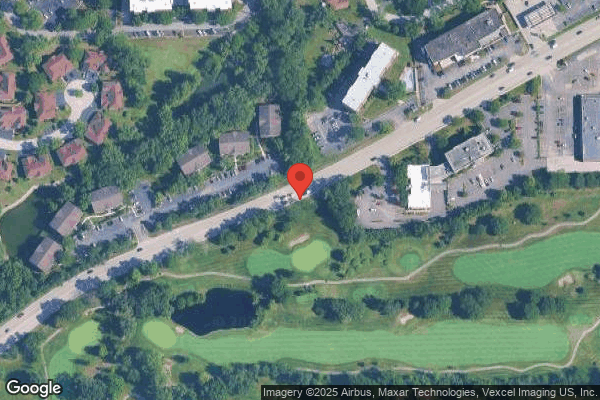
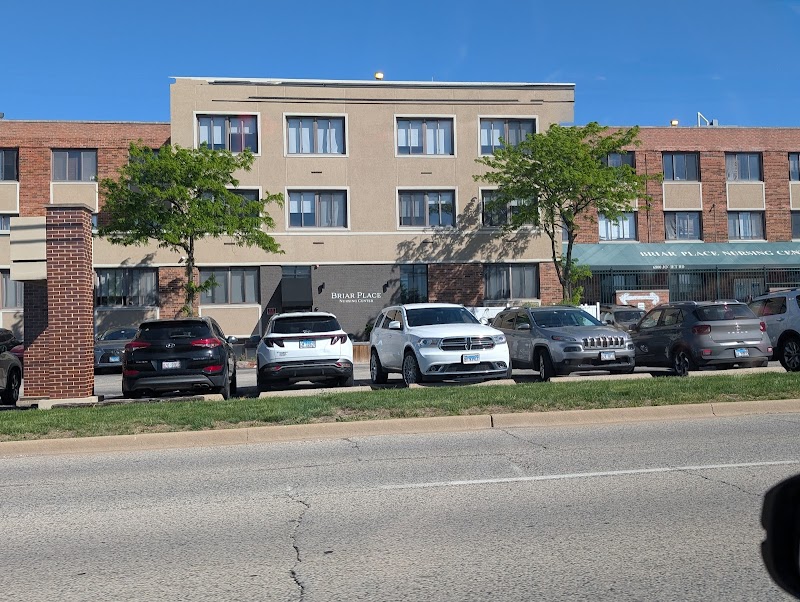
BRIAR PLACE NURSING

6800 WEST JOLIET, INDIAN HEAD PARK, IL 60525 (708) 246-8500
For profit - Limited Liability company 232 Beds SABA HEALTHCARE Data: November 2025 2 Immediate Jeopardy citations
Trust Grade
0/100
#477 of 665 in IL
Last Inspection: November 2024

Within standard 12-15 month inspection cycle. Federal law requires annual inspections.

Overview

Briar Place Nursing in Indian Head Park, Illinois, has received a Trust Grade of F, indicating significant concerns and a poor overall rating. It ranks #477 out of 665 facilities in Illinois, placing it in the bottom half, and #155 out of 201 in Cook County, meaning only a few local options are worse. Although the facility is showing signs of improvement, decreasing from 19 issues in 2024 to 8 in 2025, it still reports a high level of critical incidents, including a resident eloping through an unsecured window and another resident experiencing a fatal drug overdose due to inadequate supervision. Staffing is rated as average with a turnover of 56%, and while the facility has a high RN coverage, it still struggles with compliance, having faced $178,160 in fines. Overall, families should weigh these concerns against the facility’s improvements and average quality measures when making decisions.

Trust Score
F
0/100
In Illinois
#477/665
Bottom 29%
Safety Record
High Risk
Review needed
Inspections
Getting Better
19 → 8 violations
Staff Stability
⚠ Watch
56% turnover. Above average. Higher turnover means staff may not know residents' routines.
Penalties
○ Average
$178,160 in fines. Higher than 51% of Illinois facilities. Some compliance issues.
Skilled Nurses
⚠ Watch
Each resident gets only 21 minutes of Registered Nurse (RN) attention daily — below average for Illinois. Fewer RN minutes means fewer trained eyes watching for problems.
Violations
⚠ Watch
56 deficiencies on record. Higher than average. Multiple issues found across inspections.
★☆☆☆☆
1.0
Overall Rating
★☆☆☆☆
1.0
Staff Levels
★★★★☆
4.0
Care Quality
★☆☆☆☆
1.0
Inspection Score
Stable
2024: 19 issues
2025: 8 issues

The Good

  • 4-Star Quality Measures · Strong clinical quality outcomes
  • Full Sprinkler Coverage · Fire safety systems throughout facility
  • No fines on record

Facility shows strength in quality measures, fire safety.

The Bad

1-Star Overall Rating

Below Illinois average (2.5)

Significant quality concerns identified by CMS

Staff Turnover: 56%

10pts above Illinois avg (46%)

Frequent staff changes - ask about care continuity

Federal Fines: $178,160

Well above median ($33,413)

Significant penalties indicating serious issues

Chain: SABA HEALTHCARE

Part of a multi-facility chain

Ask about local staffing decisions and management

Staff turnover is elevated (56%)

8 points above Illinois average of 48%

The Ugly 56 deficiencies on record

2 life-threatening 8 actual harm
Sept 2025 1 deficiency
CONCERN (D) 📢 Someone Reported This

A family member, employee, or ombudsman was alarmed enough to file a formal complaint

Potential for Harm - no one hurt, but risky conditions existed

Resident Rights (Tag F0550)

Could have caused harm · This affected 1 resident

**NOTE- TERMS IN BRACKETS HAVE BEEN EDITED TO PROTECT CONFIDENTIALITY** Based on interview and record review, the facility failed to follow physician orders and failed to follow the facility community...

Read full inspector narrative →
**NOTE- TERMS IN BRACKETS HAVE BEEN EDITED TO PROTECT CONFIDENTIALITY** Based on interview and record review, the facility failed to follow physician orders and failed to follow the facility community pass policy after no credible evidence of contraband was found for one (R72) resident. This failure affected one resident (R72) in a sample of 72 residents. Findings include:R72 is [AGE] years of age with diagnoses include not limited to: Alcohol Abuse, Anxiety Disorder, Unspecified, Major Depressive Disorder, Recurrent, Unspecified, Post- Traumatic Stress Disorder, Chronic, Suicidal ideations, Anemia, Unspecified, Insomnia, Unspecified, Other Psychoactive Substance Abuse, Uncomplicated, Schizophrenia, UnspecifiedSection C - Cognitive Patterns (7/6/2025) documented BIMS 15 (cognitively intact)R72's physician orders document an active physician order for independent community pass.R72's Community Survival Skills Assessment documents (in part) Effective 9/9/2025 at 08:51 9. Documents 2. Cannot Determine B. Recommendations and Outcomes 1. Recommendations 2. The resident does not appear to be capable of unsupervised outside pass privileges at this time. (9/9/2025) Residents independent community access restricted for 30 daysR72's progress notes (9/10/25) authored by V33 (Psychosocial Rehabilitation Services Coordinator) documents in part that V33 had suspicion that R72 had contraband and staff searched R72's room. Nothing was found. Staff attempted to receive a urine sample and R72 refused and got agitated, ultimately requesting a transfer in nursing home. There is no documentation with R72's medical record that indicates that R72 had any symptoms of being under the influence of any illicit substance or other indications that R72 was in possession of any illicit substance.On 9/11/2025 at 11:12 AM, R72 was visibly upset and explained that R72's community pass was restricted a couple days ago after another resident made up a story about R72 bringing a marijuana pen into the facility. R72 stated, I didn't do anything wrong, I went out for a couple hours and came back. (R17) was jealous or something that I went out on pass and told them I had a weed pen to get back at me. I don't have a weed pen, I don't smoke. They (facility staff) came in and searched my room and didn't find anything but (V33) still took my pass away. It's not fair they have no reason to take away my pass!On 9/11/2025 at 1:29 PM, V33 (Psychosocial Rehabilitation Services Coordinator) affirmed that V33 is the social worker assigned to R72 and was the staff member that restricted R72's community pass. R72 explained that another resident had said R72 had a weed (marijuana) pen. R72 searched the room and there was no weed (marijuana) pen found. R72 was agitated after the staff searched R72's room and wouldn't give a urine sample so the V33 restricted R72's community pass. V33 affirmed that there were no other indications that R72 may have been under a controlled substance other than agitation. V33 was unsure if there was anything that R72 signed that consented for forced drug testing or if it was part of the community pass program.On 9/11/2025 at 2:58 PM, V34 (Psychiatrist) affirmed that V34 is a psychiatrist for the facility. V34 explained that residents under the effects of marijuana present differently, but marijuana typically produces a calming effect (not agitation). In some cases, marijuana can cause hallucinations and psychosis.Review of the community pass program policy that were signed by R72 documents in part that pass privileges will be taken away for a minimum of 30 days if R72 comes back from pass intoxicated or under the influence of drugs and that drug testing can be completed if the resident comes back from an overnight community pass and is suspected to be under the influence (R72 was not out of the facility overnight).
Aug 2025 2 deficiencies
CONCERN (D) 📢 Someone Reported This

A family member, employee, or ombudsman was alarmed enough to file a formal complaint

Potential for Harm - no one hurt, but risky conditions existed

Deficiency F0578 (Tag F0578)

Could have caused harm · This affected 1 resident

**NOTE- TERMS IN BRACKETS HAVE BEEN EDITED TO PROTECT CONFIDENTIALITY** Based upon record review and interview the facility failed to follow policy procedures and failed to ensure that the advance dir...

Read full inspector narrative →
**NOTE- TERMS IN BRACKETS HAVE BEEN EDITED TO PROTECT CONFIDENTIALITY** Based upon record review and interview the facility failed to follow policy procedures and failed to ensure that the advance directives care plan was correct for one of four residents (R4) reviewed for change in condition.Findings include:R4's ([DATE]) POLST (Practitioner Orders for Life-Sustaining Treatment) Form states No CPR (Cardiopulmonary): Do Not Attempt Resuscitation. R4's ([DATE]) POS (Physician Order Sheet) includes Do Not Resuscitate. R4's care plan (revised [DATE]) states Advance Directive - Full Code [which is incongruent with R4's POLST & POS]. On [DATE] at 2:33pm, surveyor inquired about R4's current code status V6 (Director of Nursing) stated He's a DNR (Do Not Resuscitate). Surveyor inquired if R4's ([DATE]) advance directive care plan states DNR V6 reviewed the care plan and responded He (R4) has full code, it was revised but it's not accurate. It looks like the information that we (facility) have on advance directive code status is not accurate, he's technically a DNR this needs revised. The (9/24) advance directives policy states for the purposes of this policy and procedure Advanced Directives means a written instrument, such as a living will or life prolonging procedure declaration, appointment of health care representative and power of attorney for health care purposes. Advanced Directives shall be addressed on the resident's plan of care.
CONCERN (D) 📢 Someone Reported This

A family member, employee, or ombudsman was alarmed enough to file a formal complaint

Potential for Harm - no one hurt, but risky conditions existed

Deficiency F0657 (Tag F0657)

Could have caused harm · This affected 1 resident

**NOTE- TERMS IN BRACKETS HAVE BEEN EDITED TO PROTECT CONFIDENTIALITY** Based upon record review and interview the facility failed to follow policy procedures, failed to ensure that comprehensive care...

Read full inspector narrative →
**NOTE- TERMS IN BRACKETS HAVE BEEN EDITED TO PROTECT CONFIDENTIALITY** Based upon record review and interview the facility failed to follow policy procedures, failed to ensure that comprehensive care plans are reviewed quarterly, failed to ensure that the goal target date is within 90 days, and failed to revise an advance directive care plan (as directed) for one of four residents (R4) reviewed for change in condition.Findings include:R4's ([DATE]) POLST (Practitioner Orders for Life-Sustaining Treatment) Form states No CPR (Cardiopulmonary Resuscitation): Do Not Attempt Resuscitation. R4's ([DATE]) POS (Physician Order Sheet) includes Do Not Resuscitate.R4's ([DATE]) care plan states Advance Directive - Full Code however R4's POLST and POS affirm DNR status. R4's Advance Directive care plan was revised on [DATE] (over 3 months ago) with Target Date: [DATE] (roughly 6 months later). On [DATE] at 2:33pm, surveyor inquired about required care plan review and/or revision V6 (Director of Nursing) stated They're quarterly and or if it's a significant change. Surveyor inquired if care plan goals should be 6 months past the review date V6 responded Oh no, we should be checking that more often. Surveyor inquired about R4's current code status V6 replied He's a DNR (Do Not Resuscitate). Surveyor inquired if R4's ([DATE]) advance directive care plan states DNR V6 reviewed the care plan and stated He (R4) has full code, it was revised but it's not accurate. It looks like the information that we (facility) have on advance directive code status is not accurate, he's technically a DNR this needs revised. The (6/14) care plan policy states care conferences for review and revision of resident's care plan are scheduled at a conducive time for residents and their families. Skilled and intermediate residents every 90 days and PRN (as needed). The interdisciplinary team is responsible for the implementation of resident care management.
Jul 2025 2 deficiencies 1 IJ
CRITICAL (J) 📢 Someone Reported This

A family member, employee, or ombudsman was alarmed enough to file a formal complaint

Immediate Jeopardy (IJ) - the most serious Medicare violation

Accident Prevention (Tag F0689)

Someone could have died · This affected 1 resident

**NOTE- TERMS IN BRACKETS HAVE BEEN EDITED TO PROTECT CONFIDENTIALITY** Based on interview and record review, the facility failed to secure the physical environment (window) in R1's room and implement...

Read full inspector narrative →
**NOTE- TERMS IN BRACKETS HAVE BEEN EDITED TO PROTECT CONFIDENTIALITY** Based on interview and record review, the facility failed to secure the physical environment (window) in R1's room and implement appropriate precautions for a resident with a history of elopement risk, high suicidal risk, high risk per criminal background/ behavioral history, and assessed as being unsafe in the community unsupervised for one resident (R1) of three residents reviewed for elopement. This failure resulted in R1 removing the stationary window brackets that prevent the window from opening in his room, jumping out of the window, and eloping through the open back gate of the facility undetected by staff.The immediate jeopardy began on 7/3/25 at 10:28 PM, when R1 removed the stationary window brackets that prevent the window from opening in his room, jumped out of the window, and eloped through the open back gate of the facility undetected by staff. V3 DON Director of Nursing and V27 Regional Director of Operations were notified of the immediate jeopardy on 7/17/25 at 2:42 PM. The surveyor confirmed by interview and record review that the immediate jeopardy was removed on 7/24/25, but noncompliance remains at Level Two because additional time is needed to evaluate the implementation and effectiveness of the in-service training.Findings include:R1 is a [AGE] year old resident with diagnoses that include Bipolar Disorder Severe with Psychotic Features, Delusional Disorder, Suicidal Ideation, Suicide Attempt, Major Depressive Disorder, Psychosis, Schizoaffective Disorder, Violent Behavior, and Attention Deficit Hyperactivity Disorder.On 7/9/25 at 9:49 AM, V5 Family Member was inquired of R1. V5 said, I was told R1 unscrewed the window screws with a fork and jumped out the window of his room on 7/3/25 during the night. I was notified later that night. R1 hasn't been found. R1 sent a text message to his father and I from different phones saying he wants to die. He won't go to the hospital or tell us his location. He wants to care for himself. He has Bipolar with Schizoaffective Disorder. He tried to commit suicide before in jail, he jumped headfirst from the balcony.On 7/9/25 at 10:45 AM, upon observation R1's room is locked when attempting to enter. V6 Maintenance Director arrived to open the room for this surveyor. V6 said, It's a one person room so since R1's things are here I just locked it. R1 has a private room three doors from the nurse's station. Upon entrance to the room, it appears to be organized, there are food items, R1's identification card, and phone charger are on the bed. There are 2-3 bags of clothing stacked up in the left corner in a laundry basket. There is one large window with 3 windowpanes facing the back of the facility. V6 moved the center windowpane into the open position it was in when he arrived in the room after R1's elopement. V6 said, I came in on the of July 4th day shift. His room was a wreck. His clothes and food were all over the floor. The middle window was open and slide to the right. This part of the window isn't supposed to open, it's stationary. R1 broke the stoppers off the window.Upon observation, the window screws at the top are bent and V6 opened the middle windowpane and slide it over to the right as it was when he found it. The middle windowpane appears to have been dislodged from the window frame from the top allowing it to become unsecured and opened. On 7/9/25 at 11:08 AM, V6 escorted this surveyor to the backyard area of the facility. Upon entrance to the backyard there is a wooden fence that is secured by a lock that was opened by V6. There are 2 cameras on the back of the building facing the yard area. Under R1's window are pieces of a broken fence on the ground. There is a basement level window beneath R1's first floor window. V6 measured the space from R1's window to the ground which measured a 9-10 foot drop from the 1st story window. The wooden fence was observed to be intact. There is another gate entrance on the east side that is not secured. V6 said, R1 must have jumped the fence.On 7/9/25 at 11:24 AM, V7 RN Registered Nurse was inquired of R1. V7 said, R1 always isolates himself. If I ask how he is, he can't answer correctly. He'll say something off the topic. R1 did get out the building before. I had an instance when a CNA (Certified Nurse Assistant) opened the ramp door for a family member, and he ran in front of them into the parking lot. We got him back in. He only had a day pass if the family requested, and they had to pick him up here. I came in on July 4th 7AM to 3PM shift. I was told in report R1 eloped on 3PM to 11PM shift, they looked for him and called the police.On 7/9/25 at 11:50 AM, V9 Restorative CNA said, I was here on July 3rd, on 3PM to 11PM shift. I came by to get the linen bin by his room and his door and window was open. I checked the bathroom, and he was gone. I ran to the nurse's station and called a code pink. Staff went outside and police were called. I didn't see anything on the windowsill. I saw him last around 10:15 PM just in his room.On 7/9/25 at 12:22 PM, V11 CNA was inquired of R1. V11 said, I worked 3PM to 11PM. R1 is quiet and stays to himself. I checked on him during rounds and mealtimes. He ate his own food in his room. Closer to the end of the shift V9 CNA and I peeked in his room, and he was gone. We checked his bathroom. The middle part of the window was open. I didn't notice anything else. We called a code pink. The nurse called 911, staff searched and drove around to see if he was in the area. It was close to 11PM when police came.On 7/9/25 at 12:45 PM, V3 DON Director of Nursing was inquired of R1's elopement being notified to Illinois Department of Public Health. V3 said, We didn't report it because he's been in contact with his family via phone and we don't have knowledge of him being injured or hurt.On 7/9/25 at 12:55 PM, V12 RN Registered Nurse said, I was the nurse on first floor on July 3rd 3PM to 11PM shift. R1 hangs out in his room. He's a smoker. That night I did my rounds. He took his medication. I saw him last around 10 PM. He was in his room sitting on the bed. V9 CNA came to me at the nurse's station around 10:30 PM. She said she was doing her rounds and didn't see R1 in his room. I got up, went to his room, looked, and called his name. I checked the bathroom and the room and saw the middle of the window was open. I called a code pink. Staff came down and went outside the building. I called 911, the administrator, director of nursing, and the family. I went back into the room; I didn't see anything on the windowsill. I looked out the window and saw a part of a fence on the ground. I didn't hear anything.On 7/9/2025 at 1:30 PM, V13 PRSC Psychiatric Rehab Services Coordinator was inquired of R1. V13 said, I was R1's social worker. I worked July 3rd till 4:30 PM. R1 is very anxious, and he paces. It's his baseline behavior. He was quieter that day, he didn't come into my office. He usually comes in every day. His diagnoses are Bipolar Schizoaffective Disorder, Schizophrenia, Delusional Disorder, Hallucinations, Anxiety, and Depression. He only has community access with family if he's compliant with medication. He's never had an independent pass. His last community survival assessment was on 5/1/25, it says he has behavioral concerns and elopement. I spoke with him on July 2nd, he came to my office with some books and talked about things that didn't make sense. His delusions were mixing with reality. But it was getting harder for me to understand what he was talking about. This week I was trying really hard to understand. He was someone we'd keep an eye on more and look through his things. We'd take things so he's safe. He's an identified offender because of his charge of aggravated battery and bodily harm. He was sent out on petition on June 10th to the hospital because of his behavior, but I wasn't aware he got out the building. I feel his behaviors built up.On 7/9/25 at 2:15 PM, R5 was inquired of R1. R5 said, R1 was very anxious. He was just talking to himself before he left and was pacing. It startled me. A couple of days before we were in the basement, and he took a fork and showed me how to pry open the door and escape. He asked me if I wanted to escape, and I said I wasn't going to do it. I saw him last at smoke break around 6PM. He must have got out before 11PM because he usually meets me by the vending machine at night to get snacks. He texted me the night after he escaped. I tried to call him back, but his phone was off.On 7/14/25 at 12:29 PM, V3 DON Director of Nursing was inquired of R1's elopement. V3 said, I got a call from the assistant director of nursing maybe 10:45 PM on July 3rd. Assistant Director of Nursing called me, and V12 RN notified me and said R1 was missing. V9 CNA checked his room and noticed the window was out. They initiated a code pink; they did a facility search and checked all exit door which were secured. Staff went out on the grounds to look for him. The police were called, they arrived at the facility before midnight. They took a report and gave the report number to the ADON. The doctor, family and administrator were notified. Change of shift was reported that R1 was missing, and I asked them to call local hospitals and be on standby if he comes back. He has gotten out before. He pushed out the front door and staff was behind him. He walked down the road, and we called the police to redirect him back to the facility. He was petitioned back to the hospital for a psychiatric evaluation. The psychiatrist did a medication adjustment for him. Elopement risk assessment done, he got out, but staff was behind him. He was placed on a one to one supervision until he was transferred to the hospital. We sent him out for another hospital psychiatric evaluation. He has a history of suicidal ideation. Prior to coming to this facility, he had a suicidal attempt in the hospital. When he initially came, he was identified as an extreme offender on his background check. It was recommended from his criminal background to be placed in a private room due to his history of suicidal attempt with jumping out of a third story window prior to his admission. Our administration decided it would be safer for him to be on the 1st floor opposed to the higher floor being more potentially dangerous. He is just supervised and encouraged about medication compliance. During the investigation, we didn't find any utensils, a room search was done, and nothing was found. R1 was found in a hospital in Wisconsin on yesterday and was checked medically and deemed safe with no medical issues. Due to their state regulations, they were unable to admit him to inpatient psychiatric care. R1 was transferred back to this facility via ambulance yesterday evening and staff notified his physician. He was transferred to the hospital for psychiatric evaluation.On 7/14/2025 at 1:05 PM, V1 Administrator was inquired of R1's elopement. V1 said, V28 ADON called me during the night around 10:30 PM. They said the window was out in his room. The staff called a code pink that went and searched the building and outside in the back and around the area. They went to 7-11 store but didn't see him. Police were called. Police did a missing person report for all the surrounding cities. We started calling local hospitals, but he didn't show up. We called the doctor and family. His mom or dad said he uploaded an Instagram picture, but we couldn't locate him. He got out before but didn't make it far. In June got out the front door behind a visitor, but staff went out behind him. He hasn't gotten aggressive since being here. His criminal history showed he has aggression and needed a private room. We did have to call the police and they brought him back and we petitioned him out the hospital for psych evaluation. He's not exit seeking usually, it just happened. His room is by the nurse's station. We didn't put him on 3rd floor, but due to his history we put him on 1st floor due to him jumping from windows. We didn't find anything. We have cameras and saw him tumble out the window, he got up and walked away fast. He walked toward the 7-11 store. The staff went over there but didn't find him. We checked the camera and it showed R1's legs and he rolled out the window, got up and walked fast to the other side of the yard and went out the gate.On 7/14/25 at 1:42 PM, V3 DON was inquired of security and cameras. V3 said, The last smoke break time is between 6-7PM. Residents with an independent pass have to be back in the building by 7:30 PM. They can go in and out of the back gate, it's not locked. We have staff monitor it. The security cameras are in V1's (Administrator) office and she's the only person with access. We don't have security.On 7/15/25 at 2:26 PM, V14 PRSC Psychiatric Rehab Services Coordinator was inquired of R1's 6/18/25 elopement risk review decision score. V14 said, The elopement risk is triggered within the first 24hrs when a resident comes in. Sometimes nurses will complete it. It's a part of the admission documents. Social Service staff should review the elopement risk and correct it if it's not right. It's especially important for R1 because he is high risk for elopement. We know he's not a low risk elopement taking account his history.On 7/16/25 at 10:40 AM, V6 Maintenance Director was inquired of R1's window in the room. This surveyor and two other survey staff reviewed R1's room window with V6 Maintenance Director. V6 said, I don't know how he would have gotten the window open with his hands. He must have used something to get it open because the brackets to keep the window from opening were broken. I added bolts to reinforce the window and L bracket to prevent it from being pulled back.On 7/14/25 at 9:50 AM, V3 DON was inquired of R1's status. V3 said, R1 was found in a hospital in Wisconsin diagnosed with altered mental status then transferred back to the facility. R1 was evaluated and ordered to be sent out for psychiatric evaluation at the local hospital.On 7/14/25 at 1:30 PM, V1 Administrator and this surveyor viewed the security camera footage from July 3, 2025, at 10:28 PM. The camera showed R1 jump from his window to the ground, rolled once and stood up. R1 walked quickly toward the east side of the back yard on the sidewalk through the open gate. V1 Administrator was inquired of the east gate being left open. V1 said, The gate is usually left open for the residents that have an independent pass. The residents come and go from that gate and sit in the yard area.On 7/24/25 at 9:53 AM, V3 DON Director of Nursing was inquired of R1's involuntary discharge. V3 said, Due to his high elopement risk he was deemed not fit for the facility. He may need a different environment. He was bored here. He's younger. The population wasn't conducive for him along with his diagnosis and extreme exiting desire. We provided all the services he needed, but he spoke with his mom and said he was bored here. He wants to be free and work. He just wanted to be outside. It was an interdisciplinary decision with his physician and R1. His family lives out of state and the facilities there are not up to their standards so R1 was accepted into a facility in Waukegan. He agreed to go. R1 could potentially lure or coax other residents to elope or help them elope. He wasn't appropriate for this facility; he was a safety risk. R1 was hand delivered a petition at the hospital with a stamped envelope. He was explained the appeal process, and his family was notified. We'll coordinate with the other facility to transfer his belongings. The facility will have to do a medical request for pertinent information, and it will be sent from medical records.R1's records were reviewed as follows.R1's progress notes from 6/10/25 at 11:30 AM document being discharged to the hospital. R1 is delusional, hallucinating and paranoid. Unable to take vital signs, patient is refusing. 911 called. R1's physician ordered him to be sent to the hospital for a psychiatric evaluation. On 6/10/25 V14 PSRAD Psychiatric Rehab Services Assistant Director completed a petition for R1 to be hospitalized . R1 eloped out of the front door of the facility pushing past visitors leaving the grounds. The facility required police intervention to transfer R1 to the hospital for psychiatric evaluation. R1 was hospitalized for six days. R1 returned to the facility 6/16/25.On 6/16/25 V20 NP Nurse Practitioner documented R1 was hospitalized for Psychosis. Hospital reports states patient presented to the hospital via EMS (Emergency Medical Services) after eloping from a nursing home and being found trespassing behind a dumpster smoking marijuana.On 6/18/25 at 20:53 (8:53 PM) R1 was evaluated by V21 Nurse Practitioner Psychiatrist following his hospitalization. Assessment- this patient has multiple psychiatric complexities and would benefit from continued management with monitoring of mood and behavior. Will titrate medications based on current symptom progression.The 6/18/25 elopement risk review documents: 2. elopement history/community risk- reported/documented episodes of elopement and/or attempts to elope: 2. no. Total score: 23 low risk.On 7/15/25 at 2:26 PM, V14 PRSAD Psychiatric Rehab Services Assistant Director was inquired of R1's 6/18/25 elopement risk review decision score. V14 said, The elopement risk is triggered within the first 24hrs when a resident comes in. Sometimes nurses will complete it. It's a part of the admission documents. Social Service staff should review the elopement risk and correct it if it's not right. It's especially important for R1 because he is high risk for elopement. We know he's not a low risk elopement taking account his history.R1's June 2025 and July 2025 behavior monitoring from his 6/16/25 readmission to 7/3/25 does not document any identified behaviors.R1's July 2025 MAR (Medication Administration Record) documents he received Depakote ER (extended release) oral tablet 250mg (milligrams) give 3 tablets by mouth at bedtime for Schizoaffective Disorder on 7/3/25 at 2100.R1's progress note states: 7/3/25 at 23:20 (11:20 PM), V12 RN Registered Nurse documented at 10:30PM, CNA Certified Nurse Assistant observed resident sitting in his room. At approximately 10:35 PM, CNA walked past resident's room and noted his window was open and he was no longer present. Upon further inspection, it was discovered that part of the window had been removed. A code pink was immediately called. All exit doors were secured, and staff completed a search of the facility and grounds The Administrator, DON, Social Services, MD, and resident's mother was notified. Monitoring and communication with local hospitals, police, and emergency services are ongoing.On 7/4/25 at 12:26 AM, the police department official report documents the police response to the facility for a missing person R1.R1's 5/1/25 community survival skills assessment recommendations indicate resident has supervised community access due to behavioral concerns as well as history of elopement. The care plan documents an updated 6/18/25 assessment but is not found in R1 records upon his readmission to the facility. R1's 2/20/24 criminal history record indicates aggravated battery and bodily harm.R1's care plan documents the following: Elopement Risk I, R1, am challenged by mental illness and poor insight. I have a history of leaving my former facility without notifying staff and having a responsible escort (elopement). I also have a history of wandering into restricted and/or dangerous places. I will respond to staff direction to redirect his attention away from a potentially problematic situation (i.e. trying to exit the facility without supervision) when this behavior occurs.Interventions: Elopement Risk assessment completed per policy. Implement preventive intervention strategies that include: Assess me for potential elopement/unauthorized departure risk. Make rounds/room checks per facility protocol to minimize chance of unauthorized leave. Implement Elopement Risk Protocol Redirect resident to room/unit Use distraction to try to distract resident away from the current situation.Suicidal Risk: I, R1, have a history of suicidal ideations and attempts related to mental illness. I deny current S/I or intent. My self-identified triggers include medication noncompliance and using illicit substances. Interventions: As warranted conduct/carry out: Daily monitoring & supervision of the resident.SMI Severe Mental Illness: The resident has a diagnosis & history of severe mental illness (SMI) of Bipolar, Schizoaffective & Depression. The resident will: take medication as prescribed. Interventions: Explain facility rules, resident behavioral expectations & resident rights. R1 requires psychotropic medication to help manage and alleviate: Bipolar, SA Schizoaffective Disorder, SI Suicidal Ideation, AH Auditory Hallucination, Psychosis, Delusions, Agitation and Aggressive Behavior, ADHD Attention Deficit Hyperactivity Disorder, Depression, Behavior with Depressive Features, Anxiety, Neurosis.Aggression Risk: I, R1, am challenged by mental illness, mania, and psychosis. I am noted to respond/react to internal stimuli. Symptoms are manifested by aggression when agitated. Behavior: The resident expresses maladaptive behavioral symptoms related to: A diagnosis of chronic mental illness, a substance abuse disorder.R1 has presented with using the utensils that are provided at mealtime, to barricade himself in his room. Due to R1's h/o suicidal ideation this behavior poses a risk to his safety. R1 is to be provided with plastic silverware only. R1 is given plastic silverware to prevent him from barricading himself in the room.Isolating: The resident expresses maladaptive behavioral symptoms related to isolating himself in his room. Intervention: Involve the resident to supportive incidental, group or 1:1 counseling, as appropriate. Indicate treatment modality.Community Access: I, R1, do not appear to be capable of unsupervised outside pass privileges at this time. I require support and supervision in order to safely access the community independently rt: mental health needs. Intervention: Conduct a community survival skills assessment or similar community safety evaluation to reasonably the person's ability to safely determine and respectfully negotiate within the outside community. Initiated 6/18/25. No assessment dated [DATE] found in R1's documents.R1's comprehensive assessment section C cognitive patterns dated 5/7/2025 documents a brief interview for mental status score of 14. R1 is cognitively intact.R1's comprehensive assessment section E behavior dated 5/7/25 does not document any behaviors despite V13 PRSC's concern of R1's delusions prior to his elopement during interview on 7/9/25. R1's comprehensive assessment section GG functional abilities dated 5/7/25 documents he required supervision or touching assistance (helper provides verbal cues and/or touching/steading and/or contact guard assistance as resident completes activity. Assistance may be provided throughout the activity or intermittently. The following activities are documented: toileting hygiene, shower/bathing, personal hygiene, sit to stand, chair/bed to chair transfer, toilet transfer, tub/shower transfer, walking 10 feet, 50 feet with two turns, and 150 feet.R1's 7/13/25 hospital records document a referring diagnosis of Schizoaffective disorder (a mental illness characterized by psychotic symptoms of hallucinations and delusions plus significant mood disturbances (mania or depression)). R1 presented to the emergency department for increased mania and eloping from a nursing facility to Wisconsin. R1 stated, I just wanted to leave for a while. He is internally preoccupied. Patient is in need of inpatient psychiatric hospitalization for mood stabilization and safety.Visit diagnoses include Compulsive behavior, Bipolar affective disorder, current episode manic (a period of abnormally elevated or irritable mood, increased energy, and activity levels, often associated with bipolar disorder. Schizoaffective disorder.R1's mental status exam documents: patient's grooming and hygiene is poor. Thought content: Auditory hallucinations are present. Delusions and paranoia are present. Insight/Judgment: poor.This patient is admitted to the hospital for stabilization of acute psychiatric issues. Will titrate medications and provide psychotherapeutic services on the unit and within the milieu in order to improve decompensated symptoms.R1 received prescribed medications for stabilization and remained hospitalized .On 7/15/25 at 3:59 PM, V21 NP Nurse Practitioner documented on R1 during his hospitalization: Late Entry: Facility cannot meet the resident's requirements due to extreme psychiatric needs. He is an elopement risk. Presently patient is a threat to himself and others and is not appropriate to remain at Briar Place. Involuntary discharge requested.On 7/17/25 at 11:35 AM, V14 Psychiatric Rehab Services Assistant Director documented on R1 during his hospitalization: Social Service Note: On this date, [NAME] was reserved with IVD due to error on previous form. Attached with IVD was bed hold policy and stamped and addressed envelope. Social worker [NAME] present at the time of drop off. [NAME] was told how to appeal and the process. [NAME] expressed his understanding had no concerns.The revised 1/25 Policy and Procedure Missing Resident states in part: It is the policy of this facility to report and investigate all reports of missing residents.Procedure: 1. All personnel are responsible for reporting a resident attempting to leave the premises, or suspected of missing, to the charge nurse as soon as practical. This includes any resident that did not sign out on pass and/or did not notify a staff member of his or her leaving.3. Should an employee discover that a resident is missing from the facility, he or she should: f. The Administrator and Director of Nursing will evaluate the situation and develop a plan of action based on the individual resident. The following steps should occur: 11. The decision to notify the Illinois Department of Public Health is made by the Administrator.a. The Illinois Department of Public Health is notified after the confused/disoriented resident is missing for 24 hours and all attempts to locate the resident have been exhausted.- This notification does not include the resident who is alert/oriented and has made a decision to leave the facility and not return. The Immediate Jeopardy that began on 7/3/2025 was removed on 7/24/2025 when the facility took the following actions to remove the immediacy. R1's window and facility exit doors were immediately secured to prevent further risk of elopement. A full facility search was initiated, including resident rooms, common areas, stairwells, and secured outdoor spaces. A search of the surrounding community, including the parking lot, adjacent properties, and nearby streets was conducted. The local police department was notified, and a formal missing person's report was filed. R1's family/ responsible party was notified of the incident and ongoing search efforts. Staff contacted area hospitals and local shelters to inquire whether R1 had been admitted or presented for care.The Administrator and Assistant Director of Social Services remained in contact with law enforcement, family members, local hospitals, and shelters every four hours until R1 was located and transported to a hospital on 7/13/25. R1 is not returning to the facility.The facility Maintenance Director replaced the stationary window bracket in R1's room. The repair was verified by the Administrator to ensure the window was no longer able to be manipulated.The facility has implemented a system to ensure that residents who require supervision due to elopement risk and/or recent elopement attempts receive adequate supervision and do not leave unsupervised. The Administrator educated all staff including the Activity Director, Activity Aides, admission Director, Assistant Director of Nursing, Business Office Manager, Certified Drug and Alcohol Counselor, Certified Nursing Assistants, Cooks, Dietary Manager, Dietary Aides, Director of Nursing, Housekeeping Director, Housekeepers, Human Resources Director, Infection Preventionist, Licensed Practical Nurses, Maintenance Director, Maintenance Tech, MDS Nurse, Medical Records Director, Receptionists, Registered Nurses, Restorative Aides, Social Workers, Social Service Aides, Staffing Coordinator, and Wound Care Nurse on the facility's elopement policy and how to identify and respond to elopement risk in residents with psychiatric disorders. The education reviewed the facility's policy for identifying residents at risk for elopement through completion of the Elopement Risk Review assessment in the resident's chart on admission/re-admission (completed by admitting nurse) and quarterly and with changes in condition (completed by the social worker). Staff were educated that the results of these assessments are used to develop an individualized care plan to reduce the risk of resident elopement and that residents identified as high-risk for elopement have their pictures at the nurse's stations and the front desk. The education reviewed that staff are required to provide supervision for elopement risk residents as outlined in the resident care plan. No new policies, procedures, or protocols have been implemented. The facility reinforced the existing elopement prevention policy and procedure through comprehensive staff education. This education ensures that all team members understand the facility's current elopement prevention system, including how residents are assessed for risk, how care plans are developed and updated, and how supervision expectations are communicated and maintained.Additionally, staff were educated how to identify and manage behaviors associated with increased elopement risk in residents with psychiatric disorders. The staff were educated that residents with psychiatric disorders may attempt to leave due to delusional beliefs, paranoia or hallucinations, manic impulsivity, agitation, suicidal ideations, history of trauma, substance cravings, and lack of insight into care needs. The warning signs of elopement risk were indicated including verbalizing distress, pacing, agitation, or trying to avoid staff, expressing paranoid thoughts, asking where exits are, loitering near doors/windows, packing bags or hiding items, refusing care, sudden isolation, or mood change. Situational triggers were also identified including new admission or recent hospitalization, medication changes, increased psychotic symptoms, conflict with peers or staff, and significant life events or trauma.Staff were educated to respond by not escalating the situation, remaining calm, validating the resident's feelings, not challenging hallucinations or delusions and instead validating feelings, ensuring safety by staying nearby and alerting the nurse immediately, not leaving the resident unsupervised, and reporting/documenting the behavior. Prevention strategies were discussed including knowing who is high-risk, reviewing care plans and supervision requirements, removing potentially harmful objects from the environment, securing rooms with compromised windows, and reporting any change in behavior immediately to the nurse. Evidence that education took place was documented by staff signing an in-service attendance sheet at the time education was provided in person. For staff who received education via phone, the Administrator documented educated via phone next to the staff member's name on the same in-service sheet, with a witness signature included. Staff who are on vacation or leave of absence will receive this education upon their return, prior to their next scheduled shift. This education will also be provided to all new hire staff during orientation. The facility does not employ agency staff. This education began on 7/9/25 and was completed on 7/17/25. The facility has implemented a comprehensive plan to ensure that all 3-piece windows in resident-accessible areas are secure and cannot be manipulated for elopement. A facility-wide inspection was completed by the Maintenance Director to verify that windows are secured and cannot be manipulated for elopement. Any windows identified as not secure or able to be manipulated for elopement
CONCERN (D) 📢 Someone Reported This

A family member, employee, or ombudsman was alarmed enough to file a formal complaint

Potential for Harm - no one hurt, but risky conditions existed

Investigate Abuse (Tag F0610)

Could have caused harm · This affected 1 resident

**NOTE- TERMS IN BRACKETS HAVE BEEN EDITED TO PROTECT CONFIDENTIALITY** Based on interview and record review, the facility failed to follow their abuse policy by failing to investigate an allegation o...

Read full inspector narrative →
**NOTE- TERMS IN BRACKETS HAVE BEEN EDITED TO PROTECT CONFIDENTIALITY** Based on interview and record review, the facility failed to follow their abuse policy by failing to investigate an allegation of misappropriation of resident's fund by another resident. This failure affected two of three (R4 and R6) residents reviewed for investigating residents' allegations of misappropriation of funds.Findings include:R4 is [AGE] years old admitted to the facility on [DATE], past medical history includes, but not limited to Osteomyelitis, other acute osteomyelitis left ankle and foot, acquired absence of other left toes, iron deficiency anemia, paranoid schizophrenia, moderate protein calorie malnutrition, unspecified open wound left lower leg, prediabetes, delusional disorders, chest pain, etc.On 7/14/2025 at 11:30AM, R4 was observed in her room, alert and oriented and said that she was sent to the hospital because she had an argument with another resident (R6), R4 stated that R6 stole from her, she used R6's phone to order food one time and R6 ended up making numerous charges to R4's credit card. R4 added that her POA has the bank statement that shows all the charges. The staff did not want to get her money from R6, but the nurse was trying to give her a shot. R4 said that she refused, but the staff was still coming to her with the needle, so she spat on his face, that's the only way she can get him off her, and they sent her to the hospital. R6 is [AGE] years old and have resided at the facility since 3/15/2025, past medical history includes Pathological fracture, hip, unspecified, encounter for fracture with routine healing unspecified fracture of right calcaneus, Benign prostatic hyperplasia without lower urinary tract symptoms, cocaine dependence with withdrawal, major depressive disorder, essential primary hypertension, paroxysmal atrial fibrillation, etc.On 7/14/2025 at 12:05PM, R6 said that he used to be on the third floor, he moved to the first floor a couple of days ago after he had an argument with a lady on the third floor (R4). R6 denied physically assaulting R4 but had a verbal altercation with her. One day, R4 asked to use R6's cell phone, R6 informed R4 that she can only send text, she cannot make a call because his phone bill has not been paid. R4 went out and later came back to his room and offered to pay his phone bill, R4 gave R6 her credit card and he paid $300.00 to the phone company. Later R4 told him that the phone company charged her $500.00, R6 is not sure maybe $300.00 was the amount due and $500.00 was the total bill. R6 stated that since R4 paid for his phone, she always takes the phone and keeps it with her most of the time and uses it to make calls. R6 admitted that R4 has used his phone to order food and he did not realize that her card information was saved on his phone. He added that there were 2 additional charges, one for $199.00 that R6 said he is not sure who made it, when he went home for the 4th of July, his family may have used his phone, he did not realize that R6's credit card number was saved on his phone. There was a $100.00 charge from the phone company but R4 cancelled that one. Surveyor asked R6 if he reported this to any staff and he said, everyone is aware, including the social worker.On 7/15/2025 at 1:40PM, R6 said that his cell phone was broken by R4 the day they were involved in an altercation, he filled a grievance for his phone, but the social worker said that his phone will not be replaced by the facility. R6 had the phone with him and showed his phone to the surveyor, and it was noted that the screen was all shattered. R6 added that he cannot make calls with the phone due to the damage.Review of medical record did not show any documentation of the incident in either resident's record, or the reason R6 was moved to the first floor. Facility did not initiate any investigation of the allegation of misappropriation of resident's fund until the complaint investigation was initiated, though both residents stated that everyone one was aware that R4 accused R6 of stealing her money.On 7/14/2025 at 1:31PM, V14 (PSRAD) said that R6 was moved to the first floor because him and his girlfriend were not seeing eye to eye, they had a back-and-forth argument, but V14 is not sure what it was all about. R14 said that she was on the floor to see another resident when she heard R4 and R6 arguing, she tried to find out what was going on but R4 told her to mind her business, that the argument is between her and her boyfriend. R4 got aggressive with all the staff, code yellow was called and R4 was sent out to the hospital on 7/7/2025 due to aggression towards staff. V14 was asked if she spoke to R6 to find out what the argument was about, and she said no.Care plan initiated on 7/9/2025 for R4 by V14 states the following: Resident has a history of problems with money management, related to: Compromised decision making., Compromised judgment., This money management problem is manifested by getting into altercations with peers concerning borrowing, lending money. R4 presents with poor money management as evident by her offering money and to pay for/ buy things for staff and peers and later accuse them of stealing her money.On 7/15/2025 at 11:59AM, V14 was presented with the above care plan that she initiated for R4 two days after the altercation between R4 and R6 and was asked who R4 accused of stealing her money and she said, I don't recall, I am not sure why I put that in the care plan.Grievance form dated 7/8/2025, filed by R6 stated that his phone was broken by R4 and R6 wanted the facility to replace his phone. V14 who completed the action taken by facility section of the documented in part that the facility will not replace the phone, staff did not intend to upset R4 but due to the nature of their conversation, staff had to intervene.On 7/15/2025 at 2:32PM, V14 was presented with the concern /grievance form for R6, and she said that her understanding is that the phone belonged to both R4 and R6, the facility will not replace the phone if R4 broke her own phone. V14 added the altercation between the two residents should have been documented and investigated even from the time R4 started becoming agitated to the time the code red was called.Abuse policy dated 01/2024 states in part: Residents have the right to be free from abuse, neglect, exploitation, misappropriation of property or mistreatment. Purpose states to describe the procedure of identification, assessment, and protection of residents from abuse, neglect, misappropriation of property and exploitation. This will be accomplished by orienting and training staff on how to deal with stress and difficult situations and how to recognize and report occurrences of abuse, neglect exploitation and misappropriation of property.Under investigation, the policy states in part that incidents will be reviewed, investigated, and documented whether abuse, neglect, mistreatment, or misappropriation of resident property occurred, was alleged or suspected. Incidents or allegations involving abuse, neglect, exploitation, mistreatment, or misappropriation of resident property will be reviewed by the administration and shall be investigated, as indicated and appropriate.
Jun 2025 2 deficiencies
CONCERN (F) 📢 Someone Reported This

A family member, employee, or ombudsman was alarmed enough to file a formal complaint

Potential for Harm - no one hurt, but risky conditions existed

Room Equipment (Tag F0908)

Could have caused harm · This affected most or all residents

**NOTE- TERMS IN BRACKETS HAVE BEEN EDITED TO PROTECT CONFIDENTIALITY** Based on observation, interview and record review, the facility failed to ensure the chillers (air conditioner units) were in op...

Read full inspector narrative →
**NOTE- TERMS IN BRACKETS HAVE BEEN EDITED TO PROTECT CONFIDENTIALITY** Based on observation, interview and record review, the facility failed to ensure the chillers (air conditioner units) were in operating condition and functioning properly. These failure have the potential to affect all 202 residents residing at the facility. Findings include: Facility census, dated 6/22/2025, documents 202 residents residing at the facility. On 6/22/2025, resident room temperature checks were performed with V3 (Assistant Administrator). On the first, second, and third floors, three rooms on each floor had adequate temperatures ranging from 76.2 degrees Fahrenheit to 80.0 degrees Fahrenheit. On 6/22/2025, facility halls/hallways temperature checks were performed with V3 (Assistant Administrator) for inadequate cooling and the following concerns were identified: First floor low side hall/hallway: 88 degrees Fahrenheit First floor high side hall/hallway: 85.6 degrees Fahrenheit Third floor low side hall/hallway: 87.2 degrees Fahrenheit Third floor high side hall/hallway: 89.1 degrees Fahrenheit Second floor low side hall/hallway: 84.1 degrees Fahrenheit Second floor high side hall/hallway: 87.1 degrees Fahrenheit Temperatures of the facility's halls/hallways are not withing adequate temperature between 71 degrees Fahrenheit and 81 degrees Fahrenheit. On 6/22/2025 at 10:12am, V3 (Assistant Administrator) said, The air went down on Friday (6/20/25). HVAC (heating, ventilation, and air conditioning) company was contacted. The air conditioning that supplies the resident rooms was repaired. There is a separate system for the halls which is still not working. Portable air conditioners were ordered on Friday (6/20/25) for the halls, but they seem to still not be giving keeping the halls cool enough. I (V3) don't think the halls are a bad temp (temperature). On 6/22/2025 at 10:15am, R3 said, It's (temperature) awful outside of my (R3) room. You can feel the hotness once you step out of your room. The air conditioning is working in my (R3) room. The moment you step out of your is not comfortable. The nurses be giving us (residents) water and ice. Supposedly, They're (facility staff) working on fixing it (air conditioning) in the halls. Hopefully these new things (pointed to portable air conditioning units) start to work right. They (portable air conditioning units) ain't doing sh** right now. [NAME], staff be telling us (residents) to stay in our rooms or wherever the temp (temperature) is comfortable for us (residents). R3's face sheet documents medical diagnoses that include but are not limited to type 2 Diabetes Mellitus, morbid obesity, and hemiplegia. R3's Minimum Data Set (MDS), dated [DATE], documents, in part, a Brief Interview of Mental Status (BIMS) score of 15 which indicates that R3 is cognitively intact. On 6/22/2025 at 10:25am, V6 (Certified Nursing Assistant/CNA) said, I (V6) usually work the first and third floors. All the halls on all the floors are too hot. Actually, the third floor is the worst. Yes, the air conditioning in the residents' rooms are working. We (staff) are giving the residents cold water, ice, and popsicles around the clock. On 6/22/2025 at 10:55am, V7 (Maintenance Director) said, There are 2 separate systems that operate the air for the hallways and the resident rooms. The resident rooms AC (air conditioning) uses multi-stack chillers with 6 compression stacks. The hallways use 2 (name of AC units/system) air blower units. The hallway AC went out 2 weeks ago and has been going off and on since. They continue to lock out and overheat. We've (facility staff) have been in contact with (name of AC units/system) technicians and they have come here 4 to 5 times to fix the issues, but they are currently still working on it. It's an old building. When one thing is fixed, up pop another problem. The technicians did fix one unit and then the other one (unit) went (broke). They (facility staff) ordered portable AC units, which is a temporary fix. The portable AC units came yesterday (6/22/25), but they (portable AC units) are not keeping up to provide cool temperatures. The tech (technician) is currently here, moving the units around to fix the issue. All the AC in the residents'' rooms are working now. We (facility staff) had to replace some motors. The facility halls are definitely too hot and not comfortable. Yes, the whole facility, all the floors are not receiving adequate cooling. On 6/24/25 at 9:53am, V1 (Administrator) provided a timeline for the air conditioning issues that documents, in part, 6/19/25 at 9:00am: maintenance identified that AC unit was malfunctioning. (Name of AC Company) tech contacted for assessment and repair. Ongoing extra fluids, ice water provided, popsicles distributed, fans operating. Cooling centers established in dining rooms with portable AC units. Fans placed throughout the facility. 6/19/25 at 10:00am: Contacted (Name of portable air conditioning company) for information regarding AC rental units. (Portable Airconditioning Company) has units on hand and is available 24/7. Delivery time estimated 2 hours if needed. 6/19/25 at 11:00am: (Company for air conditioning units for facility hallways) technician in facility for evaluation and repair of AC unit. Ongoing: Extra fluids, ice water provided, popsicles distributed, fans operating. 6/19/25 at 11:00am: (Company for air conditioning units for facility hallways) technician corrected issues with blower and referred facility to (Name of different HVAC company) HVAC to address potential issues with unit on the roof. Ongoing: Extra fluids, ice water provided, popsicles distributed, fans operating. 6/19/25 at 12:00pm: (Name of different HVAC company) HVAC to address potential issues with unit on the roof contacted to schedule service. On 6/19/25 at 4:00pm: Received return call from (Name of different HVAC company) HVAC to address potential issues with unit on the roof HVAC. Two technicians scheduled to be at the facility 6/20/25. On 6/20/25 at 7:00am: Technicians from (Name of different HVAC company) HVAC to address potential issues with unit on the roof HVAC in facility for servicing cooling units on roof. Maintenance initiated on units. On 6/20/25 at 5:00pm: Additional fans ordered to facility to have on hand and confirmed availability of rental units with (Name of portable air conditioning company) if needed in preparation for upcoming heat advisory forecast. On 6/20/25 at 5:00pm: (Name of different HVAC company) HVAC to address potential issues with unit on the roof HVAC technicians completed maintenance on rooftop AC units. Ongoing extra fluids, ice water provided, popsicles distributed, fans operating during this time. E-mails between V2 (Director of Nursing/DON) and V11 (employee from portable air conditioner company for the hallways of the facility), dated 6/22/2025, documents, in part, . Scheduled Date: 6/22/2025; Order Type: Pickup; Description: 2025-06-22 service call ac (air conditioners) need to move to a new location on site - circuit issues. E-mails show portable air conditioner units were not functioning properly. Facility policy titled, Preventative Maintenance Program, reviewed date 11/2023, documents, in part, Purpose: To conduct regular environmental tours/safety audits to identify areas of concern within the facility . The environmental temperature is pleasant . Facility policy titled, Resident Rights, undated, documents, in part, . Right to a Dignified Existence: . A homelike environment . Pamphlet titled, Illinois Long-Term Care Ombudsman Program Residents' Rights for People in Long-Term Care Facilities, revised date 11/18, documents, in part, Your facility must provide services to keep your physical and mental health, at their highest practical levels. Your facility must be safe, clean, comfortable, and homelike .
CONCERN (F) 📢 Someone Reported This

A family member, employee, or ombudsman was alarmed enough to file a formal complaint

Potential for Harm - no one hurt, but risky conditions existed

Safe Environment (Tag F0921)

Could have caused harm · This affected most or all residents

**NOTE- TERMS IN BRACKETS HAVE BEEN EDITED TO PROTECT CONFIDENTIALITY** Based on observation, interview and record review, the facility failed to keep the facility temperature below 81 degrees Fahrenh...

Read full inspector narrative →
**NOTE- TERMS IN BRACKETS HAVE BEEN EDITED TO PROTECT CONFIDENTIALITY** Based on observation, interview and record review, the facility failed to keep the facility temperature below 81 degrees Fahrenheit and failed to ensure the temperature was comfortable for one resident (R3) out of 6 residents reviewed for safe, comfortable environment. These failures have the potential to affect all 202 residents residing in the facility. Findings include: Facility census, dated 6/22/2025, documents 202 residents residing at the facility. On 6/22/2025, resident room temperature checks were performed with V3 (Assistant Administrator). On the first, second, and third floors, three rooms on each floor had adequate temperatures ranging from 76.2 degrees Fahrenheit to 80.0 degrees Fahrenheit. On 6/22/2025, facility halls/hallways temperature checks were performed with V3 (Assistant Administrator) for inadequate cooling and the following concerns were identified: First floor low side hall/hallway: 88 degrees Fahrenheit First floor high side hall/hallway: 85.6 degrees Fahrenheit Third floor low side hall/hallway: 87.2 degrees Fahrenheit Third floor high side hall/hallway: 89.1 degrees Fahrenheit Second floor low side hall/hallway: 84.1 degrees Fahrenheit Second floor high side hall/hallway: 87.1 degrees Fahrenheit Temperatures of the facility's halls/hallways are not withing adequate temperature between 71 degrees Fahrenheit and 81 degrees Fahrenheit. On 6/22/2025 at 10:12am, V3 (Assistant Administrator) said, The air went down on Friday (6/20/25). HVAC (heating, ventilation, and air conditioning) company was contacted. The air conditioning that supplies the resident rooms was repaired. There is a separate system for the halls which is still not working. Portable air conditioners were ordered on Friday (6/20/25) for the halls, but they seem to still not be giving keeping the halls cool enough. I (V3) don't think the halls are a bad temp (temperature). On 6/22/2025 at 10:15am, R3 said, It's (temperature) awful outside of my (R3) room. You can feel the hotness once you step out of your room. The air conditioning is working in my (R3) room. The moment you step out of your is not comfortable. The nurses be giving us (residents) water and ice. Supposedly, They're (facility staff) working on fixing it (air conditioning) in the halls. Hopefully these new things (pointed to portable air conditioning units) start to work right. They (portable air conditioning units) ain't doing sh** right now. [NAME], staff be telling us (residents) to stay in our rooms or wherever the temp (temperature) is comfortable for us (residents). R3's face sheet documents medical diagnoses that include but are not limited to type 2 Diabetes Mellitus, morbid obesity, and hemiplegia. R3's Minimum Data Set (MDS), dated [DATE], documents, in part, a Brief Interview of Mental Status (BIMS) score of 15 which indicates that R3 is cognitively intact. On 6/22/2025 at 10:25am, V6 (Certified Nursing Assistant/CNA) said, I (V6) usually work the first and third floors. All the halls on all the floors are too hot. Actually, the third floor is the worst. Yes, the air conditioning in the residents' rooms are working. We (staff) are giving the residents cold water, ice, and popsicles around the clock. On 6/22/2025 at 10:55am, V7 (Maintenance Director) said, There are 2 separate systems that operate the air for the hallways and the resident rooms. The resident rooms AC (air conditioning) uses multi-stack chillers with 6 compression stacks. The hallways use 2 (name of AC units/system) air blower units. The hallway AC went out 2 weeks ago and has been going off and on since. They continue to lock out and overheat. We've (facility staff) have been in contact with (name of AC units/system) technicians and they have come here 4 to 5 times to fix the issues, but they are currently still working on it. It's an old building. When one thing is fixed, up pop another problem. The technicians did fix one unit and then the other one (unit) went (broke). They (facility staff) ordered portable AC units, which is a temporary fix. The portable AC units came yesterday (6/22/25), but they (portable AC units) are not keeping up to provide cool temperatures. The tech (technician) is currently here, moving the units around to fix the issue. All the AC in the residents'' rooms are working now. We (facility staff) had to replace some motors. The facility halls are definitely too hot and not comfortable. Yes, the whole facility, all the floors are not receiving adequate cooling. On 6/24/25 at 9:53am, V1 (Administrator) provided a timeline for the air conditioning issues that documents, in part, 6/19/25 at 9:00am: maintenance identified that AC unit was malfunctioning. (Name of AC Company) tech contacted for assessment and repair. Ongoing extra fluids, ice water provided, popsicles distributed, fans operating. Cooling centers established in dining rooms with portable AC units. Fans placed throughout the facility. 6/19/25 at 10:00am: Contacted (Name of portable air conditioning company) for information regarding AC rental units. (Portable Airconditioning Company) has units on hand and is available 24/7. Delivery time estimated 2 hours if needed. 6/19/25 at 11:00am: (Company for air conditioning units for facility hallways) technician in facility for evaluation and repair of AC unit. Ongoing: Extra fluids, ice water provided, popsicles distributed, fans operating. 6/19/25 at 11:00am: (Company for air conditioning units for facility hallways) technician corrected issues with blower and referred facility to (Name of different HVAC company) HVAC to address potential issues with unit on the roof. Ongoing: Extra fluids, ice water provided, popsicles distributed, fans operating. 6/19/25 at 12:00pm: (Name of different HVAC company) HVAC to address potential issues with unit on the roof contacted to schedule service. On 6/19/25 at 4:00pm: Received return call from (Name of different HVAC company) HVAC to address potential issues with unit on the roof HVAC. Two technicians scheduled to be at the facility 6/20/25. On 6/20/25 at 7:00am: Technicians from (Name of different HVAC company) HVAC to address potential issues with unit on the roof HVAC in facility for servicing cooling units on roof. Maintenance initiated on units. On 6/20/25 at 5:00pm: Additional fans ordered to facility to have on hand and confirmed availability of rental units with (Name of portable air conditioning company) if needed in preparation for upcoming heat advisory forecast. On 6/20/25 at 5:00pm: (Name of different HVAC company) HVAC to address potential issues with unit on the roof HVAC technicians completed maintenance on rooftop AC units. Ongoing extra fluids, ice water provided, popsicles distributed, fans operating during this time. E-mails between V2 (Director of Nursing/DON) and V11 (employee from portable air conditioner company for the hallways of the facility), dated 6/22/2025, documents, in part, . Scheduled Date: 6/22/2025; Order Type: Pickup; Description: 2025-06-22 service call ac (air conditioners) need to move to a new location on site - circuit issues. E-mails show portable air conditioner units were not functioning properly. Facility policy titled, Preventative Maintenance Program, reviewed date 11/2023, documents, in part, Purpose: To conduct regular environmental tours/safety audits to identify areas of concern within the facility . The environmental temperature is pleasant . Facility policy titled, Resident Rights, undated, documents, in part, . Right to a Dignified Existence: . A homelike environment . Pamphlet titled, Illinois Long-Term Care Ombudsman Program Residents' Rights for People in Long-Term Care Facilities, revised date 11/18, documents, in part, Your facility must provide services to keep your physical and mental health, at their highest practical levels. Your facility must be safe, clean, comfortable, and homelike .
May 2025 1 deficiency
CONCERN (D) 📢 Someone Reported This

A family member, employee, or ombudsman was alarmed enough to file a formal complaint

Potential for Harm - no one hurt, but risky conditions existed

Deficiency F0628 (Tag F0628)

Could have caused harm · This affected 1 resident

**NOTE- TERMS IN BRACKETS HAVE BEEN EDITED TO PROTECT CONFIDENTIALITY** Based on interview and record review, the facility failed to document providing the bed hold policy to the resident or represent...

Read full inspector narrative →
**NOTE- TERMS IN BRACKETS HAVE BEEN EDITED TO PROTECT CONFIDENTIALITY** Based on interview and record review, the facility failed to document providing the bed hold policy to the resident or representative upon transfer to a local hospital, for one (R2) of three residents reviewed for bed hold policy. Findings include: R2 is a [AGE] year old male originally admitted on : 8-5-2024 with medical diagnosis that include ans are not limited to: Bipolar disorder and suicidal ideation. On 4-11-2025 R2 was transfer via 911 to a local emergency room with involuntary petition. On 5-18-2025 at 12:50pm V1 said, the bed hold policy should be given with explanation when a resident is sent out to the hospital, my expectation is that the staff will document it in the electronic medical record, we do not have any documentation that indicate that R2 received the bed hold notification. R1 is a [AGE] year old male originally admitted on [DATE] with medical diagnosis that include and are not limited to: Bipolar disorder, diabetes type 2, alcohol dependent and hypertension. R1 was transfer to a local hospital for emergency services on 4-18-2025 with involuntary petition. On 5-17-2025 at 9:40 am R1 said, I was a resident at the facility for 15 months. On April 18, 2025, I was transferred to the hospital. The involuntary discharge paperwork was given to the paramedics at that time. I did not receive a copy of the bed hold policy when I was sent to the hospital, and I was not informed about the 10-day bed hold policy. On 5-19-2025 at 1:00pm V2 (director of Nursing) said, we have a 10 days bed hold policy, we hold a bed for the resident, when any resident is sent out to the hospital receives a copy of the bed hold policy, and my expectation is for the nursing staff to document in the residents record. I think we forgot to put a note in R2's record, we missed to document that the bed hold policy was given. On 5-19-2025 at 1:30pm V14 (Assistant Director of Nursing) said, when we transfer a resident to hospital, we will give a copy of the 10 days bed hold policy. My expectation is for the nurse to document in the patients record some nurses forget to document and is not acceptable. On 5-18-2025 V1 (administrator) presented policy tiled: Bed hold policy dated: July-2024 reads: to ensure the residents are informed of the bed hold and reserve bed payment policy before and upon transfer to a hospital or when taking a therapeutic leave of absence from the facility. On 5-19-2025 at 3:30pm V1 presented undated resident handbook, reads: bed hold policy explains your rights under the Federal and state law and is provided to you at the time of transfer to the hospital.
Nov 2024 5 deficiencies 2 Harm
SERIOUS (G)

Actual Harm - a resident was hurt due to facility failures

Accident Prevention (Tag F0689)

A resident was harmed · This affected 1 resident

**NOTE- TERMS IN BRACKETS HAVE BEEN EDITED TO PROTECT CONFIDENTIALITY** Based on observation, interview, and record review the facility failed to provide one resident (R85) with adequate supervision d...

Read full inspector narrative →
**NOTE- TERMS IN BRACKETS HAVE BEEN EDITED TO PROTECT CONFIDENTIALITY** Based on observation, interview, and record review the facility failed to provide one resident (R85) with adequate supervision during a shower. This resulted in R85 experiencing a seizure which led to her arm getting stuck in the handrail causing her to fracture her humerus. Findings Include: R85 is a [AGE] year-old female who originally admitted to the facility on [DATE] and continues to reside in the facility. R85 has multiple diagnoses including but not limited to the following: Epilepsy, right humerus fracture, bipolar disorder, paranoid schizophrenia, mood disorder, anxiety, pain, and depression. Facility Reported Incident with date of 10/9/24 states in part but not limited to the following: R85 noted in shower room with right arm between shower rail and wall, R85 noted with pain, shortening, and abnormal rotation to right arm. R85 transferred to hospital for further evaluation and treatment. Hospital records dated 10/10/24 shows R85 arrived at the hospital from facility after an unwitnessed seizure in the shower. R85 complaining of pain after she fell to the right shoulder that showed deformity and fracture. On 11/18/2024 at 10:40AM, R85 was interviewed regarding incident on 10/9/24. It is to be noted that R85 was noted to be in bathroom by herself. R85 stated, On 10/9/24, I was taking a shower independently in the shower room when I had a seizure. R85 said I felt the seizure coming on but I could not get to the call light as it was across the shower. I could not sit down because the shower chair was broken and not safe to sit on. I always take showers independently with no supervision. My arm got caught in the handrail while I was seizing. I had to be there seizing for at least 20 minutes before V11 (Registered Nurse) came to check on me. My entire body was bruised and black and blue. V32 (Maintenance Director) had to come and take the handrail off the wall because my arm was so wedged into the rail. I had fractured my right upper arm and must wear an immobilizer. It is to be noted that R85 was alone in her room and dressed herself independently after this interview. At 10:55AM, V11 was interviewed regarding R85's incident on 10/9/24. V11 said the shower rooms are always locked. The staff must let the residents into the shower room to ensure they are aware of who is in there. V11 said I was at the nurses' station talking to a family member when I heard crying and whimpering coming from the shower room. R85 was in the shower room for about 20 minutes before I heard R85 crying. R85 always showers independently. When I entered the shower room, I saw R85 in the shower closest to the door on the left. Her arm was wedged in between the handrail. We had to call maintenance to take the side rail out to get her arm out. We immobilized her arm and sent her to the hospital. Progress notes written by V11 on 10/9/2024 were reviewed and correlates to what V11 said in interview. Per Minimum Data Set, dated [DATE] shows R85 required supervision/touching assistance while showering. R85 care plan states in part but not limited to the following: R85 has a self-care deficit in ADLs/mobility related to epilepsy, seizures, etc. Interventions include supervise in shower for safety, dated 3/20/2024. On 11/20/24 V35 (Medical Director/Attending Physician) was interviewed. V35 said a resident with a diagnosis of epilepsy and uncontrolled seizures, meaning the resident has had seizures within the last six months, should be supervised in the shower for safety. Prior to incident on 10/9/2024, it is to be noted that per progress notes, R85 has had seizures on 9/20/2024, 9/9/2024, 8/1/2024, 7/13/2024, 6/28/2024, 6/27/2024, 6/3/2024, and 5/2/2024. Facility Policy titled Resident Supervision dated 01/2024 states in part but not limited to the following: Supervision is followed per the plan of care in accordance with individualized resident focused approach.
SERIOUS (G) 📢 Someone Reported This

A family member, employee, or ombudsman was alarmed enough to file a formal complaint

Actual Harm - a resident was hurt due to facility failures

Deficiency F0697 (Tag F0697)

A resident was harmed · This affected 1 resident

**NOTE- TERMS IN BRACKETS HAVE BEEN EDITED TO PROTECT CONFIDENTIALITY** Based on observation, interviews, and record review the facility failed to follow their pain management program when they failed...

Read full inspector narrative →
**NOTE- TERMS IN BRACKETS HAVE BEEN EDITED TO PROTECT CONFIDENTIALITY** Based on observation, interviews, and record review the facility failed to follow their pain management program when they failed to accurately assess R182's pain level and to ensure R182's pain was managed in a timely manner, four days after neck surgery to repair herniated discs. This failure resulted in R182 not receiving effective pain medication while experiencing severe and unbearable pain for an extended period of time, 9/10 on a pain scale of 0-10, in addition to suffering through periods of uncontrolled anxiety as a result of the prolonged severe pain. Findings include: R182 is a [AGE] year-old resident of the facility with medical diagnosis listed in part, but not limited to idiopathic peripheral autonomic neuropathy, hypertension, type 2 diabetes, hyperglycemia, and bipolar disorder. Per a progress note dated 10/21/2024 at 7:36 PM by V25 (Nurse Practitioner), R182 was hospitalized from [DATE] to 10/19/2024 for a C3-C7 decompressive laminectomy and posterior cervical fusion to repair herniated discs. On 11/19/2024 at 12:57 PM, R182 said when he returned from the hospital on Saturday, 10/19/2024 at around 6:30 PM following neck surgery, he was in excruciating pain, 9/10 on a scale of 0-10. R182 said V23 (Licensed Practical Nurse) told him she could not find a prescription for his pain medicine, Oxycodone, in his paperwork from the hospital. R182 said V23 gave him acetaminophen at around 7:30 PM for his excessive pain and he tried his best to fall asleep but was not able to because the pain medication was not effective. R182 said the night shift nurse told him they could not do anything as far as a prescription for the stronger pain medication, Oxycodone, was concerned, and he would need to wait until Sunday morning when they would try to get a hold of a physician or practitioner to get his order. R182 said on Sunday, 10/20/2024, he was still getting only acetaminophen for pain relief. R182 said he asked the morning nurse for an update, and the nurse said they were still trying to get a hold of either the surgeon's team or the facility doctor. R182 said he felt like everything kept getting passed over to the next shift. R182 said by Monday, 10/21/2024, the facility nurses had still not contacted any physician that could fill out his Oxycodone prescription, so he asked a nurse for help in getting an ambulance to take him back to the hospital due to his unbearable pain, but his request was not given. R182 also said after three straight days without pain relief, he became very anxious and was worried his high blood pressure and high blood sugar would also be affected. R182 said his Oxycodone order finally arrived in the early hours of 10/22/2024. Lastly, R182 said after his original prescription of Oxycodone ran out on 10/28/2024, the facility did not re-fill his prescription until 10/31/2024, forcing him to suffer through three additional days of severe pain. On 11/18/2024 at 1:45 PM, V25 (Nurse Practitioner) said she filled a prescription on Monday, 10/21/2024 for Oxycodone 5 mg, 30 tablets, every four hours, as needed, for pain, which was enough medication to last five days. V25 said she gave him another 30 tablets of Oxycodone on 10/30/2024 for delivery on 10/31/2024, with the intent to begin weaning him off the medication. Per a progress note dated 10/22/2024 at 1:40 AM by V22 (Licensed Practical Nurse), R182's order for Oxycodone HCl Oral Tablet 5 MG for pain, arrived 10/22/2024, three days after R182 had returned to the facility from neck surgery. On 11/20/2024 at 10:20 AM, V21 (Licensed Practical Nurse) said when a resident returns to the facility with a narcotics order, they usually come back with a prescription, and if not, the facility nurses have to follow up with the facility primary care physician or nurse practitioner in order to get the medication. V21 said R182 shouldn't have waited that long for his Oxycodone pain medication because he was suffering, and the facility should not have waited more than eight hours before filling the prescription order. V21 said she was not aware R182 was in so much pain, but if she would have been, she probably would have sent him back to the hospital. On 11/20/2024 at 11:00 AM, V2 (Director of Nursing) said the facility protocol was for the nursing staff to exhaust all possibilities to reach the hospital physician in order to obtain a pain medication prescription for a resident. V2 said if the nurses were unable to reach the hospital physician, they were to call the facility physician and explain the situation, who would, then, decide what form of medication they would provide until they personally assessed the resident. V2 said she could not recall if she was made aware that R182 was in excessive pain, but the facility nurse should have sent R182 back to the hospital if he was in any excruciating pain because that is what she would have recommended. On 11/20/2024 at 1:47 PM, V35 (Medical Director) said if a resident would need medication for severe pain following cervical fusion surgery, and returned to the facility without a prescription for pain medication from the hospital, the facility would need to check for any medications in stock, and if there was nothing that would alleviate the pain, then the staff should call the attending facility physician or the pharmacy the next morning. On 11/19/2024 at 12:57 PM, R182 said the weekend of 10/19/2024, was the worst for him because his pain level was 9/10 when he returned from the hospital. However, R182's pain assessment in his October 2024 medication administration record (MAR) showed no pain scores recorded for the evening and night shifts of 10/19/2024. R182's MAR pain scores for the date of 10/20/2024 were 0/10 for the day shift, 0/10 for the evening shift, and 0/10 for the night shift. In a progress note dated 10/21/2024 at 7:36 PM, V25 stated R182 reported 10/10 pain. However, R182's MAR pain scores for the date of 10/21/2024 were 0/10 for the day shift, NA for the evening shift, and 0/10 for the night shift. R182 said he began taking Oxycodone on 10/22/2024, but after his Oxycodone ran out on 10/28/2024, he had to endure another three days of severe pain and anxiety until his next order arrived on 10/31/2024. Yet, R182's MAR pain scores for 10/29/2024 were 0/10 for the day shift, 0/10 for the evening shift, and 0/10 for the night shift, and for 10/30/2024 they were 0/10 for the day shift, 0/10 for the evening shift, and 0/10 for the night shift. Per the facility's Pain Management Program, dated November 2014, the program's purpose is to establish a program that can effectively manage pain in order to remove adverse physiologic and psychologic effects of unrelieved pain. The program also states, The resident's descriptive words regarding the quality, duration, and location of pain will be used to evaluate the pain and to identify changes in pain. The program lists as one of its components, Accurate and complete documentation of pain assessment and monitoring. Lastly, the program states, The resident's physician will be notified of the resident's complaints of pain which are not relieved by comfort measures, including pain medication.
CONCERN (D)

Potential for Harm - no one hurt, but risky conditions existed

Deficiency F0761 (Tag F0761)

Could have caused harm · This affected 1 resident

**NOTE- TERMS IN BRACKETS HAVE BEEN EDITED TO PROTECT CONFIDENTIALITY** Based on observation, interview, and record review, the facility failed to follow their own pharmacy's policy on expiration dati...

Read full inspector narrative →
**NOTE- TERMS IN BRACKETS HAVE BEEN EDITED TO PROTECT CONFIDENTIALITY** Based on observation, interview, and record review, the facility failed to follow their own pharmacy's policy on expiration dating for medications in vials by failing to date two opened vials of insulin found inside the facility's second floor storage room refrigerator, potentially affecting two residents (R51 and R130) reviewed for drug storage. Findings include: On [DATE] at 10:55 AM, accompanied by V16 (Agency Licensed Practical Nurse), one opened vial of insulin Glargine belonging to R51 and one opened vial of insulin Lispro belonging to R130 were found inside the facility's second floor storage room refrigerator, and neither vial was dated. On [DATE] at 10:56 AM, V16 said insulin had to be dated upon opening to know when it expired because insulin had a shortened expiration time and only stayed potent and worked for 28 days after opening the vial. On [DATE] at 11:06 AM, V2 (Director of Nursing) said medications were dated based on the recommendation of the medication. V2 also said if a medication had a recommended usage time of 28 days, they would need to know the open date to determine the proper expiration date in order to know when to discard the medication because the medication was only effective during that time, otherwise it would lose its effectiveness. Per R51's medication administration record, (MAR) for the month of [DATE], insulin Glargine solution, 100 unit/mL, had been administered one time per day, for diabetes, at 25 units, subcutaneously, from [DATE] to [DATE]. Per R130's medication administration record, (MAR) for the month of [DATE], insulin Lispro solution, 100 unit/mL, had been administered before meals at 11:00 AM, for diabetes, at 10 units, subcutaneously, and per sliding scale before meals and at bedtime, subcutaneously, from [DATE] to [DATE]. The facility's Pharmacy Policies and Procedures Manual, last revised [DATE], stated, When the original seal of a manufacturer's container or vial is initially broken, the container or vial will be dated. The same policy also read, The nurse shall place a 'date opened' sticker on the medication and enter the date opened and the new date of expiration, and, The expiration date of the vial or container will be 30 days. Lastly, the policy stated, Certain medications or package types, such as multiple dose injectable vials, once opened, require an expiration date shorter than the manufacturer's expiration date to insure medication purity and potency.
CONCERN (E)

Potential for Harm - no one hurt, but risky conditions existed

Safe Environment (Tag F0584)

Could have caused harm · This affected multiple residents

Based on observations, interview, and record review the facility failed to provide a clean and sanitary home-like environment for 143 residents currently residing on the facility's first and second fl...

Read full inspector narrative →
Based on observations, interview, and record review the facility failed to provide a clean and sanitary home-like environment for 143 residents currently residing on the facility's first and second floor units. Findings include: On 11/17/24 at 11:10 AM, Surveyors were provided the facility census that listed 216 residents currently residing in the facility, whereas 143 residing on the first and second floor units. On 11/17/24 at 09:15 AM, Surveyor sensed strong odor upon entrance to the first floor unit common area. On 11/17/24 at 11:11 AM, Surveyor observed an empty medicine cup and empty milk cartoon on the elevator's floor. Surveyor observed wet, yellow, puddle, smelling like urine in the common area upon exit from the elevator on the second floor. Surveyor sensed strong urine odor on the second floor. Low side of the second floor unit floors noticed to be sticky. On 11/17/24 at 02:38 PM, Surveyor interviewed V36 (Housekeeper) who said in the summary, I am assigned to the second floor. We always have two housekeepers on the second floor unit except today, the other housekeeper was off today. My assignment consists of removing the trash, moping nursing station, hallways, and then I move on to the common area bathroom, and then residents individual rooms. The stench is from the residents who don't shower, my assigned area is clean. Cleaning elevators falls under 1st floor housekeeper. As a rule of thumb, if it's urine, feces, or blood, I am not to clean it, it is certified nurse assistant's responsibility. I cleaned the urine puddle today with bleached towel, but I really don't know how to do it, nobody told me how to clean body fluids. On 11/18/24 at 11:26 AM, Surveyor interviewed V14 (Housekeeping Director) who said in the summary, the facility seems cleaner and smells better today because there are more housekeepers in the facility. Generally, there are more housekeepers scheduled to work from Monday through Friday. There are five housekeepers from Monday through Friday, from 7:00 AM to 3:00 PM: two housekeepers on the 3rd floor, two housekeepers on the 2nd floor, and one housekeeper on the 1st floor. Then there are two to three housekeepers from 3:00 PM to 8:00 PM. On Saturdays and Sundays there are three to four housekeepers from 7:00 AM to 3:00 PM and two housekeepers between 3:00 PM to 8:00 PM. As far as cleaning urine and feces, certified nurse assistants should pick up the bulk of it and then the housekeepers supposed to sanitize the floor. I know we have special kits to clean blood. But you know, urine puddles happen all the time in the facility, residents pee on the floor all the time, so we (housekeepers) just clean it up. On 11/20/2024 at 1:56 PM, Surveyor interviewed V1 (Administrator) who said in the summary, cleaning body fluids is mutual responsibility of housekeepers and nursing staff. Nursing staff should pick up the bulk of soil, for example urine or feces, and then call housekeeping to disinfect. The facility Blood and Body Fluid Spills Clean Up Procedure (no date) reads in part In the event of a spill of blood, body fluid or tissues occurring on any environmental surface (Bed, floor, table, etc.) the employee will secure a Blood and Body Fluid Clean Up Kit.
CONCERN (F)

Potential for Harm - no one hurt, but risky conditions existed

Infection Control (Tag F0880)

Could have caused harm · This affected most or all residents

Based on observations, interview, and record review the facility failed to follow the hand hygiene policy. This failure has a potential to affect all 216 residents currently residing in the facility. ...

Read full inspector narrative →
Based on observations, interview, and record review the facility failed to follow the hand hygiene policy. This failure has a potential to affect all 216 residents currently residing in the facility. Findings include: On 11/17/24 at 11:10 AM, Surveyors were provided the facility census that listed 216 residents currently residing in the facility. On 11/18/24 at 10:34 AM, Surveyor observed, third floor unit, V20 (Certified Nurse Assistant) walking out of a resident's room the third floor unit without performing hand hygiene. Surveyor interviewed V20 (CNA) who said in the summary, there are no hand sanitizers in the hallways or residents' rooms due to residents' cognitive condition, resident use to try to drink hand sanitizer. We are supposed to always have personalized hand sanitizers in our pockets. I don't have a hand sanitizer with me right now. Surveyor further inquired how did V20 (CNA) sanitize hands upon exiting resident's room, V20 (CNA) said, I have no way to sanitize my hands right now. On 11/18/24 at 11:13 AM, surveyor observed V5 (Wound Care Nurse) perform wound care for R270. V5 (Wound Care Nurse) removed large dressing with copious amount of foul smelling drainage. V5 did not remove soiled gloves after cleaning wound, applied treatment and then removed soiled gloves and donned a clean glove without performing hand hygiene. Further, V5 cleaned bowel movement from R270's buttocks, removed glove from the right hand and then donned a new glove without performing any hand hygiene. On 11/18/24 at 11:40 AM, surveyor inquired V5 (Wound Care Nurse) about hand hygiene related to the sacral wound dressing change. V5 said, I should have sanitized my hands. On 11/19/24 at 10:43 AM, Surveyor interviewed, second floor unit, V17 (Certified Nurse Assistant) who said in the summary, we usually carry personalized hand sanitizer in our scrub's pocket to maintain hand hygiene. I don't have personalized hand sanitizer with me right now. On 11/19/24 at 11:18 AM, Surveyor observed V17 (Certified Nurse Assistant) going in and out of two residents' rooms the second floor unit without performing hand hygiene. On 11/19/24 at 10:49 AM, Surveyor interviewed, first floor unit, V18 (Certified Nurse Assistant) who said in the summary, there are no sanitizers in the common unit areas and residents' rooms, we are supposed to have a bottle of personalized hand sanitizer. V18 (CNA) grabbed a bottle of a personalized hand sanitizer from the nursing station desk and slipped it into her scrub's pocket while talking to the surveyor. On 11/19/24 at 12:03 PM, Surveyor interviewed V6 (Infection Preventionist) who said in the summary, I talk to staff about hand hygiene, I tell them when the hand hygiene should be done and how long should it take to wash and/or sanitize hands. Last hand hygiene in-service was done in October 2024. We don't have hand sanitizers in the hallways and residents' rooms. There are residents who will attempt to drink it due to their cognitive limitations or mental diagnosis. Staff should always carry their own hand sanitizers. I stack personalized hand sanitizers in nursing station on each unit on all three floors to make sure hand sanitizers are readily available. Staff should sanitize their hands to prevent spread of infections. Staff should always sanitize their hands upon entering and exiting residents' rooms, unless their hands are visibly dirty, then staff should wash their hands with soap and water. Additionally, staff should perform hand hygiene before and after providing resident care, before and after passing, meal trays, etc. The facility Hand Hygiene policy dated 01/01/2020 reads in part, The use of gloves does not replace hand hygiene. Hand hygiene is always the final step after removing and disposing of personal protective equipment (PPE). Using alcohol-based hand gel; If hands are not visibly soiled, use an alcohol based hand rub for all the following situations: Before applying gloves and after removing gloves or other PPE; After providing direct patient care; before handling clean or soiled dressing, gauze pads, etc; After contact with inanimate objects (e.g., medical equipment) in the immediate vicinity of the resident.
Aug 2024 4 deficiencies 3 Harm
SERIOUS (G) 📢 Someone Reported This

A family member, employee, or ombudsman was alarmed enough to file a formal complaint

Actual Harm - a resident was hurt due to facility failures

Free from Abuse/Neglect (Tag F0600)

A resident was harmed · This affected 1 resident

**NOTE- TERMS IN BRACKETS HAVE BEEN EDITED TO PROTECT CONFIDENTIALITY** Based on observation, interview, and record review, the facility failed to ensure a vulnerable resident (R6) was free of physica...

Read full inspector narrative →
**NOTE- TERMS IN BRACKETS HAVE BEEN EDITED TO PROTECT CONFIDENTIALITY** Based on observation, interview, and record review, the facility failed to ensure a vulnerable resident (R6) was free of physical abuse inflicted by staff. This failure resulted in R6 sustaining multiple injuries including a closed head injury and contusions (bruising) of the right thumb and forearm. Findings include: R6 is [AGE] years old and admitted to the facility 1/19/24 with diagnoses that include schizoaffective disorder, bipolar disorder, and other mental health disorders. According to the minimum data set, R6 is alert, however, is assessed to have mild cognitive dysfunction. Facility reported incident of 8/21/24 described an altercation with R6 and V15 a Certified Nursing Assistant (CNA) during the evening (3pm-11pm) shift. According to nursing progress notes, V16 LPN witnessed V15 CNA hitting R6 while in bed. V16 immediately intervened by removing V15 from the room and assessed R6 for injuries. R6 was transferred to the hospital and returned in the early morning with diagnoses of a closed head injury, and contusions (bruising) of the right thumb and forearm. R6 was observed 8/29/24 at 11:16am alert and oriented to person and place. R6 was walking with a moderately steady gait and was appropriately dressed and groomed. During this interview, R6 was exhibiting some flight of ideas when conversing. Regarding the incident that occurred 8/21/24, R6 said 'someone came in and put the tray down on the bedside table. Somehow, I got hit in the head with the table. The nurses and everybody came in and I was bleeding he couldn't remember the details, but there was something about the table.' R6 didn't remember going to the hospital, but said, he was picked up in an ambulance, and they took some X-rays before bringing him back to the facility. R6 said again that he didn't remember exactly what happened, but said his head hurt and has been hurting a lot. R6 was noted to be grimacing and pointing to the front left side of his brow and forehead. The right hand was observed to be significantly swollen compared to the left hand and arm which appeared normal. R6 flexed the right hand and said it still hurts to close the hand. R6 said that he can't think of any time an incident has happened that anyone in the facility hurt him and said that he has not been hurt by anyone before. R6 said that he has not seen the person (CNA) since that evening. Progress note written by nurse on duty V16 LPN (Licensed Practical Nurse) states: While the writer was passing meds [medications], she observed a CNA leaning towards the resident and hitting him, the writer then observed the resident stand up and throw his bedside table at the CNA. The CNA begin to state that she was placing the resident's snacks on his nightstand and the resident begin to holler at her and throw a cup of water at her. The writer separated the CNA from the resident and told her to leave. A head to toe assessment was completed and the writer observed redness and swelling to the left side of the forehead and redness to the left jaw and an abrasion to the right hand (vitals) 129/87 74 18 97.4 98% on RA. The resident was sent out via 911 for further evaluation, the local police was made aware .the writer also spoke with the resident's father, the administrator and the DON, the writer also left a voicemail with the NP for a return call. The resident was transferred to hospital. V16 LPN was interviewed on 8/29/24 at 12pm. V16 said while getting ready to pass medication, V16 was outside of R6's room, and V15 CNA didn't realize V16 was standing there. V16 witnessed V15 hit R6 and R6 got up off the bed to defend themselves. V16 instructed V15 to clock out and leave the building, and then assessed R6. R6 was holding their head, and V16 called 911 for transport to the hospital and to make a police report and then called the administrator and Director of Nursing. On 8/29/24 at 12:26pm, V15 CNA said that they went to respond to an activated call light from R6 and found that it had been tangled. According to V15, R6 became suspicious that V15 was taking their belongings and began to yell and threw a cup of water at V15. V15 said that R6 kept attacking V15 by throwing cups, and the bedside table. V15 tried to block R6's attempts of attacking but would not specify in what manner. V15 said when R6 threw a cup of water V15 slipped, fell onto R6 and R6 kicked V15 in the abdomen while R6 was lying in the bed. V15 said they started yelling and when the nurse came, yelled at the nurse the resident attacked me- Do Something! V15 said that working with R6 before, R6 isn't known to be aggressive nor does R6 display agitation. V15 denied having any training regarding abuse or being provided with the abuse policy at the time of hire (July 2024). However, based on review of the personnel file, V15 completed a post-test for abuse and resident's rights and provided signatures indicating completion. During the interview, V15 shared that they haven't been back to the facility since the night of the incident and 10 minutes prior to this interview, said that the Administrator V1 terminated employment over the phone. V15 said that if they could have done anything differently, they would have stepped away from R6 when they became agitated and went to get the nurse. Police report dated 8/21/24 includes an interview with the responding officer and V15 CNA who said that R6 threw water and a cup at V15's face. V15 said that they got on top of R6 to stop R6 from throwing anything else and then R6 kicked V15 in the stomach. V15 goes on to say they 'pushed the side of R6's face while getting up.' On 8/29/24 at 2:36PM, V1 Administrator said, when V15 CNA was interviewed the night of the incident, V1 asked if V15 hit or striked R6 and V15 kept saying I defended myself however would not directly answer or offer any elaboration. R6 sustained injuries and V15 wasn't able to give a definitive answer regarding exactly what they did to defend themselves. V1 said as of today, V15 has been terminated for gross negligence and failure to follow protocol with regard to residents who display aggression. Care plan reviewed for R6 does not indicate any agitation, violent, or aggressive behaviors prior or current. Witness statements from staff members on duty at the time of the incident also denied R6 having any such behaviors. The facility Abuse Policy and Procedure revised 1/18 states in part; This facility desires to prevent abuse, neglect exploitation, mistreatment, and misappropriation of resident property by establishing a resident sensitive and resident secure environment.
SERIOUS (G) 📢 Someone Reported This

A family member, employee, or ombudsman was alarmed enough to file a formal complaint

Actual Harm - a resident was hurt due to facility failures

Transfer Notice (Tag F0623)

A resident was harmed · This affected 1 resident

**NOTE- TERMS IN BRACKETS HAVE BEEN EDITED TO PROTECT CONFIDENTIALITY** Based on interview and record review, the facility failed to provide detailed written notice 30 days prior to the discharge for ...

Read full inspector narrative →
**NOTE- TERMS IN BRACKETS HAVE BEEN EDITED TO PROTECT CONFIDENTIALITY** Based on interview and record review, the facility failed to provide detailed written notice 30 days prior to the discharge for one resident (R1) by failing to allow R1 to return to the facility while being accounted for on a facility issued community pass. This failure resulted in R1 not being properly discharged and being without medical care and medications for a month before getting a new primary care physician. Findings include: R1 is a [AGE] year old male and admitted to the facility 12/22/23 with diagnoses that included cerebral infarction, diabetes, asthma, hypertension, and substance abuse. On 8/20/24 at 4:09PM, R1 was interviewed over the phone and said that they were discharged from the facility on 7/27/24 without written notice. R1 explained that they were given a white pass which gives permission to leave the facility supervised overnight from 7/27/24 to 7/29/24. R1 said that his sister came to the facility to sign R1 out on 7/27/24, and R1 was allowed to leave. Shortly after leaving, the manager on duty (V13) called R1 over the phone and R1 was instructed to return to the facility, or he would be considered discharged against medical advice (AMA). V1 Administrator was added to the call and told R1 and R1's sister that R1 should not have been allowed to leave the building, was considered discharged AMA and could not return. R1 said when he returned to the facility on 7/29/24, R1 was not allowed access into his room and his belongings were brought to him via the side door. On 8/26/24 at 12:21PM, V1 Administrator said, R1 did not express wanting to leave AMA, but we told him that he would be considered AMA if he left because at the time he went on pass, he was supposed to be going to the hospital for a psych evaluation. V1 said on 7/26/24 in the evening, a staff member accused R1 of drinking alcohol outside, away from facility property. When R1 returned, we requested he go to the hospital for evaluation, and he refused. The paramedics came to take him to the emergency room, and when they spoke with the emergency room physician, the physician refused to receive him so they left and R1 remained in the facility. After he refused, staff filled out an involuntary petition for inpatient hospitalization due to belligerent and verbally aggressive behaviors that occurred 7/26/24 in the evening. V1 said they were told that R1 was presented with an AMA form, however R1 didn't sign it. V1 denied giving R1 any written notice of discharge. R1's progress notes were reviewed for 7/26/24 and details of R1 being verbally aggressive were not available to review. V3 Assistant Director of Nursing was also interviewed on 8/21/24 at 3:08pm. V3 said they called V4 Psychiatrist to get an order for involuntary psychiatric admission, however, was unable to define or elaborate how R1 displayed verbal aggression. V3 also said that R1 eventually calmed down after staff spoke with him and notified him about the petition. During his interview, R1 said that when he returned to the facility from being out on an independent pass 7/26/24, he participated in a blood alcohol test using a breathalyzer. According to R1 and R1's progress notes, when V7 Substance Abuse Program Coordinator tested R1, with a result of 0.02. R1 said that he refused going to the hospital because he was not intoxicated, he was cooperating with the staff, and he got angry because a staff member took a photo of him while off the facility premises. When R1 refused to go to the hospital, the staff suddenly accused R1 of being aggressive in order to force him to go to the hospital. According to listed medical diagnoses, and care plan, R1 was not being treated for any psychiatric diagnoses and did not have a history of aggression while residing in the facility. On 8/22/24 at approximately 3:00pm, V4 Psychiatrist said that he evaluated R1 while he was in the facility and said R1 did not have any psychiatric difficulties and did not require management of any psychiatric medications. V4 said typically a resident who requires emergent inpatient psych evaluation will be admitted within a few hours, and if there was an emergency where the resident was displaying violent behavior, the facility would call 911 to immediately remove the resident. V4 said that alcohol levels decrease 30 points per hour after the person stops drinking and the legal limit is 0.08. V4 said a level of 0.02 is really low and would not demonstrate an intoxicated person and after about an hour the level would likely be zero. The facility presented the white pass form for overnight visits dated 7/27/24 to 7/29/24. The form was signed by R1's social worker, the nurse on duty, the receptionist and R1's sister. When this survey began on 8/20/24, the lobby was observed to have double locked doors entering the lobby and entering the resident care area. Access to both doors is only permitted by the receptionist. On 8/27/24 at 12:26pm, V14 Receptionist said they were on duty at the time R1 left the building. V14 signed the white pass and copied R1's sisters' identification. V14 said that no person is able to enter or leave the facility without the receptionist giving access. On 8/21/24 at 1:28PM, V9 Receptionist explained that the white pass is provided to the resident by the nurse and requires a nurse's signature and permission to leave the facility. V9 said, the resident initially asks for the pass and then different departments have to fill it out before coming to the front desk. Once it has been filled out, the receptionist will have the family member or whoever is picking up the resident fill out the information on the sheet and we take their identification to upload in the system. V11 Social Worker said, that in order for residents to leave the facility overnight, they initiate a request from social services who will fill out the top portion of the form indicating when the resident is leaving and returning to the facility, the reason for the visit and with whom they will be visiting. Social Services is responsible for applying this information and then signing the form. After that, the nurse will review and sign the form indicating whether medications are required for the visit. Lastly, the resident takes the form to the front desk, the receptionist reviews it before allowing the resident to leave. On 8/27/24 at 10:35AM, R1 said when he returned to the facility from overnight pass on 7/29/24, R1 was restricted access into the building and not allowed to his room. R1 said his belongings were brought to him via the side door and he was refused medications. Physician order sheet active at the time of discharge included medications for asthma, high blood pressure and diabetes. R1 said it took approximately four weeks to get an appointment with a new primary physician out in the community. R1 reported having some medications left over at his family's home, but was completely out for about a week, while waiting for his appointment. During that time, R1 frequently experienced cramps and pain in his extremities, requiring him to limit activities which negatively impacted his ability to work. Additionally, R1 was working with an agency to find housing in the community, and R1 was planning to move out of the facility within a few weeks. However, when the facility discharged R1, the agency was unable to help him any longer. The facility presented the white Pass Request Form for R1 dated 7/27/24. The form was signed by V11 Social Worker, V10 Registered Nurse. Discharge report summary as of 8/20/24 listed R1 discharging from the facility against medical advice (AMA) on 7/27/24 at 9:33AM. The active discharge care plan for R1 was last revised 4/22/24 and stated Resident wishes to be long term and has no plans on discharging at this time. The facility's policy and procedure tilted Discharge Against Medical Advice revised 7/24 states: Policy: It is the policy of this organization to provide medical and psychosocial care to residents of the facility. In the majority of situations, it is not in the resident's best interest to leave Against Medical Advice (AMA). Staff are to: (1) utilize good public relations skills to try to talk the person who wants to leave AMA out of leaving and (2) contact the attending physician (and notify the psychiatrist) and an administrative representative prior to allowing the individual to leave the premises. Purpose: To define the facility's responsibility when a resident discharge him/herself from the facility without the consent of or an order from the attending physician. Procedure: 1. Staff shall provide appropriate attention and make a reasonable effort to prevent a resident from leaving AMA (Against Medical Advice). 3. Assess the resident's competence to make the AMA decision (vital signs, mental status-including the presence or absence of hallucinations and delusions, judgment, reasoning, awareness, and insight). If there are questions about the individual's ability to provide informed consent, there should be no consideration for an AMA discharge. If the person is insistent on leaving, his/her only option will be hospitalization, and this includes involuntary psychiatric hospitalization. 4. Explain and document a discussion of the reasons to remain in the facility and all of the potential serious risks associated with leaving. 5. Explain and document efforts to persuade the resident to remain in the facility. 6. Explain and document your ongoing concern for the resident and his/her well-being (and in some cases, the well-being of his/her family members). 7. Use all available resources to prevent a resident from leaving AMA. This may include the social worker, nurses, nursing assistants, activity staff, a family member, or even a friend. 8. If available, involve the resident's responsible party (e.g., family). They may be able to talk the resident out of leaving. Also, if the resident does leave and an untoward event occurs, the responsible party would have been appropriately informed about the AMA discharge. Use your best judgment as to what must remain confidential. Confidentiality should take second priority to your efforts to assure the resident's continued health and safety. 9. Negotiate and compromise with the resident. Assess what is bothering/upsetting the individual and attempt to find an equitable solution (e.g., if the person doesn't have independent outside privileges, perhaps he/she can enjoy a cigarette on the patio). Try to find a resident buddy to help the person adjust and offer support. 10. If the person is still insisting that he/she is going to leave, follow instructions from the attending physician (e.g., if the person is not competent, hospital transfer may need to occur).
SERIOUS (G) 📢 Someone Reported This

A family member, employee, or ombudsman was alarmed enough to file a formal complaint

Actual Harm - a resident was hurt due to facility failures

Accident Prevention (Tag F0689)

A resident was harmed · This affected 1 resident

**NOTE- TERMS IN BRACKETS HAVE BEEN EDITED TO PROTECT CONFIDENTIALITY** Based on interview and record review, the facility failed to restrict independent community access to a resident (R3) who was kn...

Read full inspector narrative →
**NOTE- TERMS IN BRACKETS HAVE BEEN EDITED TO PROTECT CONFIDENTIALITY** Based on interview and record review, the facility failed to restrict independent community access to a resident (R3) who was known to be refusing psychiatric/medically necessary medication and exhibiting active delusions and hallucinations. This failure resulted with R3 going out for a walk unsupervised and not returning to the facility. R3 was found three days later by local law enforcement, lying on the ground in the community, and taken to the emergency room where R3 was assessed with active psychosis. Findings include: R3 is a [AGE] year old female who originally admitted to the facility 4/30/2019 and has diagnoses that include schizoaffective disorder-bipolar type, generalized anxiety disorder, hypertension, and diabetes. The list of medical problems also includes a history of experiencing hallucinations and suicidal ideations. R3 is a ward of the state and has been appointed with having a state guardian since 9/26/1988. Progress notes were reviewed and indicated R3 has demonstrated a history of delusional behaviors and refusing medications. R3 has also left the faciity on 2/24/24 while using independent pass privileges and failed to return at the specified time. On 2/14/24 Social Services wrote [R3] has been presenting with increased delusions. On 2/22/24, Social Services notes Resident has been presenting with refusal of medications. On 2/24/24, Social Services and nursing wrote that R3 went out with a community pass in the morning, and called the facility to say she would not be returning. The facility filed a police report with the local department. Nursing note written 2/25/24 said that R3 returned to the facility in the morning and appeared to be having paranoid thoughts and delusions which prompted nursing staff to seek involuntary hospitalization for a psychiatric evaluation. R3 was hospitalized and returned to the facility 3/1/24. When R3 returned to the facility, the Social Service Director assessed R3 to be appropriate for independent community access and reinstated the green pass on 3/29/24 according to the Community Survival Skills Assessment. On 3/30/24, Social services notes in the monthly summary that R3 continues with experiencing hallucinations and delusional behaviors. On 7/26/24, R3 left the facility with a green pass and did not return. R3's Community Pass Program sheet for July 2024 showed that R3 signed out of the facility 7/26/24 at 2:50pm to go on a walk and was signed by the receptionist on duty. According to the Medication Administration Record of July 2024, R3 refused medications 23 times, including those prescribed for schizophrenia, hypertension, and diabetes prior to being granted access to leave the facility. No interventions were documented to address these concerns. When entering the facility at the start of the survey on 8/20/24, the facility was observed to have a double locked door system in place that prevents independent entry and exit in the lobby and then in the direct resident care areas. On 8/22/24 at 2:05PM, V6 LPN (Licensed Practical Nurse) said they worked the morning and evening shift (7am- 11pm) of 7/26/24 and recalled last seeing R3 in the early afternoon. V6 said that they had not administered medications in the morning to R3 because she had been refusing medications for days and weeks leading up to that day. V6 said R3's refusals were known to staff and providers. V6 said that they were not aware that R3 had not returned to the facility before ending their shift at 11pm and confirmed they did not administer medications to R3 in the evening, despite signing them as given, because R3 was not in the building. V6 said, according to facility policy, if the residents don't return to the facility while having a green pass, the resident is considered to be discharged against medical advice (AMA). The facility presented a Community Pass Agreement that states in part, Failure to adhere to any of the policies and procedures of the community pass agreement may result in notification of the physician and constitutes discharge against medical advice. On 8/26/24 at 11:46PM, V13 Business Office Manager said they were the manager on duty Saturday morning 7/27/26. V13 said while rounding, they received report from the morning nurse that R3 had gone out on pass the previous day and did not return to the facility during the evening. V13 called the local police department and when they arrived at the facility a missing person's report was filed. The police report of 7/27/24 noted that an officer reported to the facility for a complaint of missing person. The report indicates that the responding officer collected personal information from the medical record about R3 and reported that information to a statewide data system. The responding officer includes following-up on the entry submitted into the database and noted that R3 had been located on 7/30/24 by a police department in a town approximately 14 miles from the facility and subsequently taken to the hospital. The reporting officer called the hospital and learned that R3 was admitted as an inpatient. Hospital emergency room notes indicated that R3 was brought to the hospital 7/30/24 at approximately 11:00AM. R3 was thought to be homeless, and was reported lying outside in a residential area, when the police were contacted and brought R3 to the emergency department. R3 was complaining of low back pain, and intermittent difficulty with walking on assessment. R3 also appeared psychotic, and exhibited flight of ideas, and required frequent redirection. Psychiatry was consulted in the emergency room and R3 was admitted to the inpatient behavioral health unit. On 8/26/24 at 12:21PM, V1 Administrator said that R3 had a history of going out with a green pass and not returning to the facility earlier this year. V1 was unsure of when R3 was assessed to have independent pass privileges reinstated after the incident, but said, at some point social services assessed her to be appropriate for independent pass. V1 said, the front desk staff should have noticed that R3 didn't come back and was missing from the facility prior to leaving off duty at 8pm and notified the nurse on duty. V1 would have expected the nurse on duty to notice as well after 8pm. V1 was not made aware that R3 was missing from the facility until the following day on 7/28/24 when the nurse noted that R3 was missing. V1 said the police were called to the facility to file a missing persons report. V1 said a few days later, R3 was found in the community by law enforcement and taken to the hospital. V1 stated R3 lied to the police and said she was homeless. She is manipulative and voiced that she didn't want to return (to the facility). V1 said, that they were not aware that R3 was refusing medications at the time R3 was allowed to leave the facility independently because they were not notified by nursing staff. A Care Plan for Community Access was initiated 5/7/19. At the time of initiation, R3 was granted an independent community (green) pass with the permission of the Guardian. The last revision in the Goal section is dated 11/22/23 and states Resident will remain in the facility and request staff to accompany her when wanting to go outside. The care plan focus was updated on 2/24/24 to note that R3's green pass was restricted for 30 days due to failure to return at agreed upon time. Facility Policy titled: Community Pass Policy revised 7/1/24 states in part; Purpose- to define the facility's and the resident's responsibilities when a resident leaves the facility with community pass. Procedure: 1. A Community Survival Skills Assessment will be completed by Social Services upon resident admission, quarterly, and when there is a significant change in condition. 2. Decisions regarding pass privileges, including independent privileges or being accompanied by a responsible individual, are determined by physician's orders and social services assessments. Residents who demonstrate consistent maladaptive ad problematic behaviors may not be candidates for independent privileges. 4. The facility reserves the right to restrict/revoke the community pass privilege of a person assessed by the IDT (Interdisciplinary team) or physician or Social Services as a threat to him/herself or others to assure the safety of the individual resident and the neighboring community. V1 said the facility implements the policy that residents who have an independent pass are considered discharged AMA if they don't return from pass, as a way of the facility releasing liability because it is unknown what the resident is doing while outside of the facility.
CONCERN (E) 📢 Someone Reported This

A family member, employee, or ombudsman was alarmed enough to file a formal complaint

Potential for Harm - no one hurt, but risky conditions existed

Transfer Requirements (Tag F0622)

Could have caused harm · This affected multiple residents

**NOTE- TERMS IN BRACKETS HAVE BEEN EDITED TO PROTECT CONFIDENTIALITY** Based on interview and record review the facility failed to ensure that their policies related to independent community access w...

Read full inspector narrative →
**NOTE- TERMS IN BRACKETS HAVE BEEN EDITED TO PROTECT CONFIDENTIALITY** Based on interview and record review the facility failed to ensure that their policies related to independent community access were not in conflict with proper discharge procedures. This failure resulted in two residents (R1 and R3) being considered discharged against medical advice while on approved day and overnight passes signed by the facility and has the potential to affect 37 residents with current access to independent community pass. Findings include: On 8/26/24 at 12:21PM, V1 Administrator said the facility implements the policy that residents who have an independent pass are considered discharged AMA if they don't return from pass, as a way of the facility releasing liability, because it is unknown what the resident is doing while outside of the facility. The resident does not necessarily have to say they are leaving AMA in order for us to discharge them that way, because they agree to being AMA when they sign the contract. The facility provided a list of residents who were discharged [DATE] which included R1 and R3 as discharged DAMA- discharged Against Medical Advice on 7/27/24. V1 said, R1 did not express wanting to leave AMA, but we told him that he would be considered AMA if he left to go on [supervised community pass] because he was supposed to be going to the hospital. V1 said R3 did not express wanting to leave the facility AMA, but she didn't come back by curfew (8pm) and is automatically considered AMA per our policy. According to progress notes written 7/27/24 by V6 Licensed Practical Nurse, [R3] went out on independent community pass and did not return at agreed upon time. Per policy, resident is considered leaving the facility Against Medical Advice. Resident's belongings gathered and put into storage at this time. Community Pass Policy dated 7/24 states in part: A resident has the right to community overnight access with the consent of the facility and the resident's cooperation with the standards described within. If the resident refuses to adhere to the standards, he or she may be discharged from the facility in accordance with the Involuntary Discharge or Against Medical Advice Policy. Procedure: 5. Residents who elect not to return to the facility while out on a pass may be considered discharged against medical advice and their physician will be appropriately notified. Outside Pass Policy dated 10/14 states in part: Introduction and Background: This nursing facility emphasizes and expects respectful, mature conduct from each resident both within the facility and the outside community. Some individuals admitted to the facility have a history of psychiatric problem. Because of a combination of mental health, physical problems and irresponsible behavior certain residents may not be fully capable of negotiating safely in the community. Procedure: 5. Persons who elect not to return to the facility while out on a pass may be considered discharged against medical advice and their physician will be appropriately notified. The facility's policy and procedure tilted Discharge Against Medical Advice revised 7/24 states: Policy: It is the policy of this organization to provide medical and psychosocial care to residents of the facility. In the majority of situations, it is not in the resident's best interest to leave Against Medical Advice (AMA). Staff are to: (1) utilize good public relations skills to try to talk the person who wants to leave AMA out of leaving and (2) contact the attending physician (and notify the psychiatrist) and an administrative representative prior to allowing the individual to leave the premises. Purpose: To define the facility's responsibility when a resident discharge him/herself from the facility without the consent of or an order from the attending physician. Procedure: 1. Staff shall provide appropriate attention and make a reasonable effort to prevent a resident from leaving AMA (Against Medical Advice). 3. Assess the resident's competence to make the AMA decision (vital signs, mental status-including the presence or absence of hallucinations and delusions, judgment, reasoning, awareness, and insight). If there are questions about the individual's ability to provide informed consent, there should be no consideration for an AMA discharge. If the person is insistent on leaving, his/her only option will be hospitalization, and this includes involuntary psychiatric hospitalization. 4. Explain and document a discussion of the reasons to remain in the facility and all of the potential serious risks associated with leaving. 5. Explain and document efforts to persuade the resident to remain in the facility. 6. Explain and document your ongoing concern for the resident and his/her well-being (and in some cases, the well-being of his/her family members). 7. Use all available resources to prevent a resident from leaving AMA. This may include the social worker, nurses, nursing assistants, activity staff, a family member, or even a friend. 8. If available, involve the resident's responsible party (e.g., family). They may be able to talk the resident out of leaving. Also, if the resident does leave and an untoward event occurs, the responsible party would have been appropriately informed about the AMA discharge. Use your best judgment as to what must remain confidential. Confidentiality should take second priority to your efforts to assure the resident's continued health and safety. 9. Negotiate and compromise with the resident. Assess what is bothering/upsetting the individual and attempt to find an equitable solution (e.g., if the person doesn't have independent outside privileges, perhaps he/she can enjoy a cigarette on the patio). Try to find a resident buddy to help the person adjust and offer support. 10. If the person is still insisting that he/she is going to leave, follow instructions from the attending physician (e.g., if the person is not competent, hospital transfer may need to occur).
Apr 2024 9 deficiencies 1 IJ
CRITICAL (J) 📢 Someone Reported This

A family member, employee, or ombudsman was alarmed enough to file a formal complaint

Immediate Jeopardy (IJ) - the most serious Medicare violation

Accident Prevention (Tag F0689)

Someone could have died · This affected 1 resident

**NOTE- TERMS IN BRACKETS HAVE BEEN EDITED TO PROTECT CONFIDENTIALITY** Based on interview and record review, the facility failed to effectively supervise a resident with history of drug abuse. This d...

Read full inspector narrative →
**NOTE- TERMS IN BRACKETS HAVE BEEN EDITED TO PROTECT CONFIDENTIALITY** Based on interview and record review, the facility failed to effectively supervise a resident with history of drug abuse. This deficient practice affects one resident of three residents reviewed for change in condition. R28 had multiple incidents of noncompliance for bringing in contraband and R28 tested positive for cocaine once during R28's stay in the facility. R28 expired on 12/2/23 in the facility with cause of death as combined drug toxicity: Drug fentanyl Acetyl despropionyl fentanyl raised to the level of an Immediate Jeopardy. The Immediate Jeopardy began on 12/2/23 when R28 was found to be unresponsive at the bedside without breath. V1 (Administrator) and V2 (Director of Nursing) were notified of the Immediate Jeopardy on 4/12/24 at 10:18am. The surveyor confirmed by onsite observation, interview and record review that the immediacy was removed on 4/18/24, but remains at Level Two because additional time is needed to evaluate the implementation and effectiveness of the in-service training. Findings Include: R28 was admitted in the facility on 6/8/2023 and expired on 12/2/23. R28 is a [AGE] year old female resident. R28 has diagnoses but not limited to: post traumatic stress disorder, psychoactive substance abuse, anxiety disorder, major depressive disorder, attention-deficit hyperactivity disorder and suicidal ideation. R28's notes for Initial Meeting for [NAME]/Alcohol and Substance Abuse program/Introduction dated 6/9/23, reads in part: R28 noted using heroin and cocaine. R28 also reported that she was prescribed Vicodin (controlled substance pain medication) after car accident which caused R28 to start using again. R28 further reported using heroin for 5 or 6 years. Per medical records, R28 was noncompliant with her psychotropic medications. R28 was told that R28 will be referred to the [NAME] program for poly0substance abuse. R28 was made aware that this facility has zero tolerance for using alcohol, THC (Tetrahydrocannabinol-found in cannabis) or any mood-altering substances while in treatment inside and outside the facility and random UDS (Urine Drug Screening) and BAC (Blood Alcohol Concentration) will be administered and for suspicion of using. Social Service Note dated 6/15/23, reads in part: writer met with R28 due to R28 being on 72-hour smoking restriction as there was contraband found in her room. Writer re-educated R28 on the smoking policy and encouraged R28 to refrain from bringing contraband into the facility. Social Service Note dated 7/16/23, reads in part: Staff reported that R28 was seen with contraband in R28's room on 7/13/23. Writer approached R28 about the situation. R28 was calm when talking to the writer. Writer reminded R28 about the house rules. After releasing R28's frustration, R28 began to understand what writer explained to R28. Care plan will be updated as needed. Staff will continue to monitor accordingly. Social Service Note dated 7/19/23, reads in part: Writer spoke to R28 after witnessing R28 smoking in the hallway. Writer confiscated R28's vape and re-directed R28 to social service office. R28 stated to have gotten them when R28 went out and forgot to turn it over. Writer educated R28 on the house rules regarding smoking materials outside of designated area and encouraged R28 to turn in material at the front desk upon re-entry. Due to multiple violations, R28 smoking privileges will be taken for 30 days. Social Service Note dated 7/23/23 reads in part: Writer notified that on 7/20/23 R28 had contraband. Upon entering the room bathroom was not smoky as R28 exiting the bathroom. An unlit cigarette was located in R28's bedroom. R28 was educated about the hazards/safety risks of smoking inside the facility. R28 is restricted from smoking for 30 days. Social Service Note dated 9/18/23 at 12:30PM, reads in part: Conducted a random UDS (Urine Drug Screening) and results were positive for THC and opioids. It is apparent that R28 currently uses THC and R28 takes pain pill under doctor's and facility's supervision. R28 stated I smoked a joint at the reunion but did not do other drug or alcohol. CADC (Certified Alcohol and Drug Counselor) commended R28 not using other mood-altering substances. Furthermore, CADC told R28 that R28 cannot use marijuana while in treatment. Offered another level of treatment but R28 refused, stating it's only marijuana. Will continue [NAME] (mental illness and substance abuse) programming. Social Service Note dated 9/18/23 at 12:36PM, reads in part: Writer met with R28 due to having contraband. Upon entering room, bathroom was not smoky as R28 was exiting the bathroom. A vape was located in R28's bedroom. R28 is restricted from smoking for 60 days. Social Service Note dated 9/25/23, reads in part: R28 mother called and spoke to writer, when she was out of town, R28 was caught using cocaine with first cousin and lying about her drug use. Will follow up. Social Service Note dated 10/1/23, reads in part: CADC and R28's mom met briefly yesterday impromptu as she was coming to visit R28. R28's current drug use activity and last positive UDS (THC and Cocaine) were discussed in the meeting. Both agreed that inpatient or residential treatment for R28 is recommended, will continue to follow up. Contract for Refusing Inpatient Residential Treatment dated 10/2/23, reads in part: R28 has been observed on several occasions with positive UDS with THC and opiates which she is currently taking while under supervision of doctors and other IDT members. The latest UDS was positive for cocaine. Her Drug and Alcohol Therapist has offered R28 an opportunity to attend an inpatient or residential Treatment for her substance abuse issues but R28 adamantly refused to do so. On 3/22/24 at 11:15AM, V17 (Substance Abuse Coordinator) stated in regards to 10/2/23 contract positive result of cocaine: It was false positive, I should have documented false positive and not positive for cocaine. We asked R28 and R28 denied it, and there could be over the counter medication that can give false positive result. Based on my clinical observation and assessment that day, the result was false positive, but I did not document because I did not see it would be important to document my clinical observation and assessment at the time. Social Service Note dated 11/28/23, reads in part: Writer was informed that resident was caught in possession of contraband. Social service staff confiscated the items (Vape and THC pens) and performed consensual room search. R28 placed on 90-day smoking restriction. On 3/20/24 at 1PM, V4 (Social Service Director) regarding delivered items, reception will check and if the social services are available they will also check. Unfortunately we are not able to do search for visitors. We check the package once the package is left by the visitor to any residents. Regarding 11/28/23 we confiscated contraband, vape /THC pen was found. We checked and searched the whole room and nothing else was found. R28 was placed on smoking restriction. V4 cannot recall how R28 got the vape. R28 was already on red pass. R28 can go out to community with family members and friends but not unsupervised. Someone has to sign R28 out before R28 can go out on pass. On 3/21/24 at 1:15PM, V4 stated that for dropped off essential items and groceries, social service brings it to the residents. Reception will call the nurse to come and get the food delivered and the receptionist should have checked it prior to calling and giving it to the nurse. Unless the resident is waiting down in the unit by the reception area, the receptionist will check the bag before giving it to the resident. Also, front desk will inform the social service that a family member/ other visitors coming in with bag of items. If dropping it off, then social service will come down and search and if visitor is staying and coming in with bag of items then the reception will check the bag. On 3/21/24 at 10AM, V24 (Receptionist) stated that V4 will notify the nurse that a family member will bring a bag of snacks for the nurse to check in the nurses station. Because I do not know the residents diet. I will call the nurse and let them know that a family member is on their way with a bag of snacks. Outside deliveries, they come in they show us their phone and show us they are here to deliver something. Sometimes residents will come down and wait for the delivery person and wait for them on the other side of the door (receptionist area to facility floor unit). In regards to groceries, Social service will check. I will inform social service that a grocery is delivered or dropped off. Social service need to be present when handing the bag to the resident. Food delivery service, it has to be given unopened to the resident. We don't check if with the receipt and the bag is closed. On 3/28/24 at 3:30 PM, V17 (Substance Abuse Coordinator), stated that due to history of drug use while in the facility, R28 was counseled not to do drugs anymore. In general, a resident that tested positive for illegal drugs we will try to find out where they got the drugs from. We notify the MD. If they have a guardian we will notify the guardian. High level treatment which is inpatient was offered to R28. R28 refused. Our intervention was to continue with the current intervention in the care plan. No new specific intervention added at the time she tested positive for cocaine. Staff to encourage R28 to attend group meeting such as AA meeting. Increase one to one meeting. Nurses Notes dated 12/2/2023 05:45, reads in part: Upon rounds at this time, observed R28 in bed lying on Left side. Called her name, not easily aroused. Unresponsive verbally and tactile. Upon further assessment she appeared not to be breathing. Code blue immediately called, CPR Initiated. All staff Nurses responded. 911 Emergency was called and they arrived immediately. CPR (Cardio Pulmonary Resuscitation) continuous EMS (Emergency Medical Services) resumed CPR. Police present. Patient's mother already notified and in the facility as well as the Director of Nursing. EMS Continued CPR then called the Time of Death 6:18AM. Fire Department Runsheet dated 12/2/23, reads in part: Unit notified 12/2/23 at 5:56AM, Unit arrived at scene at 6:03AM, and patient contact at 6:04AM. Called for Cardiac Arrest. Found nursing home staff attempting CPR on [AGE] year old resident. Unknown PMH. Unknown last time patient was seen normal. Unknown what time patient was found not breathing. Exam, patient cyanotic from the neck up. Patient with full rigor throughout body. 4 lead applied confirmed asystole. Local ER call for medical control. Medical control confirmed DOA (Dead on Arrival) at 6:11AM. On 3/20/24 at 10AM, V60 (R28's complainant) Reported that after R28's death, they checked R28's text messages on her cellphone and R28 was in communication with somewhat an Uber driver stating that the drugs will be placed inside the hair coloring box. Was not specific what kind of drugs it was and was not able to give the date of this transaction conversation through text messages. V60 reported that R28 died of drug overdose. On 3/26/24 at 11:25AM, V61 (Coroner's office personnel) confirmed cause of death for R28 as written in R28's Death Certificate as combined drug toxicity: Drug fentanyl Acetyl despropionyl fentanyl. Physician Order sheet reviewed and there is no order for Fentanyl medication. Resident Handbook revision date 1/7/23, reads in part: Room, Personal and Body Searches. Staff members perform room checks every day. Staff will check each resident room to ensure a clean and safe environment. You may be present at the times of these room checks. Please be aware that staff will be checking all closets, dressers, suitcases and shelving. Certain items are not permitted in your room for your safety and safety of others. Some items not allowed in the facility, include but not limited to: Firecrackers or any kind of chemicals or flammable materials. Any poisonous materials. Guidelines for Community Access Determination dated 2/8/23, reads in part: Resident personal belongings will be searched upon entry and re-entry to the facility. June 2017 Alcohol/Substance Use/Abuse policy reads in part: Substance Use/Abuse Policy objective It is the policy of the nursing facility to provide a safe and healthy living environment. The facility recognizes that persons requiring long-term care present with significant physical and mental health problems. In some situations, the person may have a history of substance abuse. The facility recognizes that substance use/abuse disorders result in substantial physical and mental impairment disability and recognize the personal responsibility of the individual to seek and remain engaged in treatment. The facility shall work with the individual to provide appropriate treatment referrals to enable the individual to work on abstinence, sobriety, personal improvement and reducing chances of recidivism. Appropriate interventions are strongly recommended to persons with substance abuse problems. Each resident (and/or representative) is informed that facility policy prohibits the use of alcohol without a doctor's order. Facility policy prohibits use of illicit drugs. As a condition of residence, each person living in the facility acknowledges that he/she will not use alcohol or illicit drugs during residence in this building. Persons returning from the community who present with signs and symptoms of intoxication will be evaluated by the nurse on duty or charge nurse. The nurse is responsible for taking vital signs and assessing the person's present behavior. The nurse will be responsible for contacting the attending physician (A.P.) if the resident is determined to be in need of medical attention and/or a decision is required regarding withholding prescribed medications. Documentation will be placed in the chart regarding signs/symptoms of intoxication/inebriation. Documentation should include the resident's own admission of alcohol/drug use. The facility reserves the right to have the person submit to blood/urine testing at any time if policy violation is suspected. Follow-up interventions and treatment recommendations will be communicated to the resident/representative and documented in the medical record. Outside treatment sources will be utilized as appropriate. Residents with substance abuse disorders are expected to participate in acute/active treatment, sobriety counseling, or aftercare Persons who continually jeopardize their health and the health and safety of others will be evaluated for involuntary discharge. The Immediate Jeopardy that began on 12/2/23 was removed on 04/18/24 when the facility took the following actions to remove the immediacy. 1. A system to ensure contraband does not enter the facility and is removed from the resident will be achieved through staff education. Education will be provided by the Administrator, to registered nurses, licensed practical nurses, CNAs, social workers, activity staff, security guards, housekeeping staff, dietary staff, maintenance staff, reception staff, human resources director, and the business office manager. This education will review the facility's contraband policy updated on 4/18/2024 and will include that residents may be asked to voluntarily empty and show the contents of their pockets at any time if reasonable suspicion exists. Reasonable suspicion includes frequent leaves of absence with or without facility knowledge, odors, new needle marks, and changes in resident behavior such as unexplained drowsiness, slurred speech, lack of coordination, mood changes, particularly after interaction with visitors or absences from the facility. Residents may be asked to voluntarily reach into concealed clothing areas and remove any items and place these items on a horizontal surface. Staff are instructed to have the resident hand items to the staff members or place the items on the horizontal surface. It is the objective of this policy that the above steps occur in plain sight of multiple witnesses (if possible) to afford appropriate protection to both the resident and the involved staff member(s). These steps are necessary to assure that the resident is treated with respect and dignity throughout the procedure. It is appropriate to ask the resident to empty his/her pockets and display their contents or roll down his/her socks. It is not appropriate to bring a resident into a room for a more specific search unless there is strong suspicion that the individual is attempting to bring in objects/items that may cause serious harm. If a more specific search is required the staff are to follow guidelines as set forth by the administrator or the administrative representative. This may even involve requesting professional assistance from the local police. Only outerwear articles of clothing including, but not limited to, jackets, coats, scarves, hats, gloves, and vests, shall be removed in plain site of staff. This policy recognizes that residents have attempted to hide/conceal contraband articles in undergarments in the past. If this appears to be the case and staff assess and suspect that these items may cause harm, staff are directed to contact the administrator or the administrative representative for instructions on how to proceed. The facility emphasizes treatment with dignity at all times. The facility reserves the right to remove locks from drawers, cabinets, closets, lockers, or any other object if there is reason to suspect that the resident possesses any item or items that may potentially harm other persons. The facility may choose, at its discretion, to involve drug-sniffing dogs (e.g., from a K9 company) if residents are suspected to be trafficking drugs inside the facility. A root cause analysis will be completed upon identification of contraband. This education began on 4/19/24 and will be completed by 4/22/24. Upon completion of the training, staff will sign an will contact agency staff before their scheduled shift to review staff education regarding the prevention of contraband from entering the facility and the removal of contraband from resident possession. A binder with staff education will be kept at the front desk and agency staff will be required to read and sign to validate their understanding of the information presented in the binder. If agency nurses have any questions regarding the information presented in the staff education binder, they will be instructed to contact the Director of Nursing for clarification prior to signing the record of education. In the absence of the Director of Nursing, the Assistant Director of Nursing will review the education requirements and answer any questions for agency nurses. The facility has identified five staff members who are on a leave of absence/vacation. These staff members will be contacted by the Administrator to review staff education regarding the prevention of contraband from entering the facility and the removal of contraband from resident possession. The staff education will be placed in a binder at the front desk and must be reviewed and signed by the staff member before returning to work. The staff member will sign a record of education to validate their understanding of the information presented in the binder. If the staff have any questions regarding the education, they will be instructed to contact the Administrator before signing the record of education. In the Administrator's absence, the Director of Nursing will answer questions regarding the education. Additionally, this education will be provided to new staff upon hire during orientation training and will be repeated to all staff including registered nurses, licensed practical nurses, CNAs, social workers, activity staff, security guards, housekeeping staff, dietary staff, maintenance staff, reception staff, human resources director, and the business office manager annually. Record of continuing education sheet to confirm their knowledge and understanding of the topic presented. The Director of Nursing will contact agency staff before their scheduled shift to review staff education regarding the prevention of contraband from entering the facility and the removal of contraband from resident possession. A binder with staff education will be kept at the front desk and agency staff will be required to read and sign to validate their understanding of the information presented in the binder. If agency nurses have any questions regarding the information presented in the staff education biner, they will be instructed to contact the Director of Nursing for clarification prior to signing the record of education. In the absence of the Director of Nursing, the Assistant Director of Nursing will review the education requirements and answer any questions for agency nurses. The facility has identified five staff members who are on a leave of absence/vacation. These staff members will be contacted by the Administrator to review staff education regarding the prevention of contraband from entering the facility and the removal of contraband from resident possession. The staff education will be placed in a binder at the front desk and must be reviewed and signed by the staff member before returning to work. The staff member will sign a record of education to validate their understanding of the information presented in the binder. If the staff have any questions regarding the education, they will be instructed to contact the Administrator before signing the record of education. In the Administrator's absence, the Director of Nursing will answer questions regarding the education. Additionally, this education will be provided to new staff upon hire during orientation training and will be repeated to all staff including registered nurses, licensed practical nurses, CNAs, social workers, activity staff, security guards, housekeeping staff, dietary staff, maintenance staff, reception staff, human resources director, and the business office manager annually. 2. A system to prevent residents with a history of substance abuse from introducing contraband into the facility or obtaining contraband in the facility will be achieved through staff education. Education will be provided by the Administrator to registered nurses, licensed practical nurses, CNAs, social workers, activity staff, security guards, housekeeping staff, dietary staff, maintenance staff, reception staff, human resources director, and the business office manager. This education will review the facility's policy on Alcohol/Substance Use/Abuse updated on 4/18/2024. The education will review that Each resident (and/or representative) is informed that facility policy prohibits the use of alcohol without a doctor's order. Facility policy prohibits the use of illicit drugs. As a condition of residence, each person living in the facility acknowledges that he/she will not use alcohol or illicit drugs during residence in this building. Persons assessed with an active substance abuse problem are offered appropriate treatment and rehabilitative services. While this policy addresses illicit drugs and alcohol, the same standards and expectations are in place for persons with a prescription narcotic addiction. These individuals are also responsible for engaging in appropriate treatment to reduce/eliminate dependency on opioids. Persons returning from the community who present with signs and symptoms of intoxication will be evaluated by the nurse on duty or charge nurse. The nurse is responsible for assessing the person's physical condition and present behavior. The nurse will be responsible for contacting the attending physician (A.P.) if the resident is determined to be in need of medical attention and/or a decision is required regarding withholding prescribed medications. Documentation will be placed in the chart emphasizing signs/symptoms of intoxication/inebriation (such as smell of alcohol, behavior changes, balance/gait problems, appearance of the eyes, and change in speech pattern). Documentation should include the resident's own admission of alcohol/drug use. The facility reserves the right to have the person submit to blood/urine testing at any time if policy violation is suspected. Persons who are evaluated as medically unstable will be transferred for appropriate medical care. Follow-up interventions and treatment recommendations will be communicated to the resident/representative and documented in the medical record. Outside treatment sources will be utilized as appropriate. Residents with substance abuse disorders are expected to participate in acute/active treatment, sobriety counseling, or aftercare interventions, as appropriate to their personal situation. The facility has the right to implement money management interventions pursuant to federal law if substance abuse continues. Persons who continually jeopardize their health and the health and safety of others will be evaluated for involuntary discharge. Education will include instruction on how to identify which residents have a substance abuse disorder and how to locate resident-specific interventions to prevent them from obtaining contraband while in the facility. This information will be kept in binders at the nurse's stations. The binders will include a list of residents with substance abuse disorders and information on resident-centered interventions to prevent them from obtaining contraband while in the facility. These binders will be updated by social services weekly and with resident changes in condition. This education began on 4/18/24 and will be completed 4/22/24. Upon completion of this education, staff will sign a record of continuing education to confirm their knowledge and understanding of the information presented. This education will be provided to new staff upon hire during orientation training and will be repeated to all staff including registered nurses, licensed practical nurses, CNAs, social workers, activity staff, security guards, housekeeping staff, dietary staff, maintenance staff, reception staff, human resources director, and the business office manager annually. The Director of Nursing will contact agency staff before their scheduled shift to review staff education regarding the prevention of residents with substance abuse disorders from introducing contraband into the facility or obtaining contraband in the facility. A binder with staff education will be kept at the front desk and agency staff will be required to read and sign to validate their understanding of the information presented in the binder. If agency nurses have any questions regarding the information presented in the staff education biner, they will be instructed to contact the Director of Nursing for clarification prior to signing the record of education. In the absence of the Director of Nursing, the Assistant Director of Nursing will review the education requirements and answer any questions for agency nurses. The facility has identified five staff members who are on a leave of absence/vacation. These staff members will be contacted by the Administrator to review staff education regarding the prevention of residents with substance abuse disorders from introducing contraband into the facility or obtaining contraband in the facility. The staff education will be placed in a binder at the front desk and must be reviewed and signed by the staff member before returning to work. The staff member will sign a record of education to validate their understanding of the information presented in the binder. If the staff have any questions regarding the education, they will be instructed to contact the Administrator before signing the record of education. In the Administrator's absence, the Director of Nursing will answer questions regarding the education. The procedure for developing resident-centered care plans to provide guidance to staff to prevent residents with a history of substance abuse from introducing contraband into the facility or obtaining contraband in the facility will be achieved through education provided by the Administrator to the Social Services department staff on the importance of identifying residents with substance abuse disorders and assessing their risk of introducing drugs/contraband and obtaining drugs/contraband while in the facility. This risk assessment is documented in the resident chart in the Social Service Initial Interview for SMI/Substance Abuse Disorder (SS) assessment. This risk assessment must be used by the social services staff to develop a resident-centered care plan to address the potential risks of the resident introducing drugs/contraband into the facility and obtaining contraband/drugs while in the facility. Care plan interventions will be based on the resident's personal risk factors and coping mechanisms and may include but are not limited to efforts outlined in the facility policy for Alcohol/Substance Use/Abuse such as outside treatment services, acute/active treatment, sobriety counseling, or aftercare interventions. The effectiveness of the care plan must be reviewed quarterly and with changes in condition and updated as indicated. A binder will be placed at each nurse's station with a list of residents with substance abuse disorders as well as information on the resident-centered interventions for preventing them from obtaining contraband while in the facility. These binders will be updated by the social services department weekly and with resident changes in condition. This education will begin on 4/18/24 and will be completed 4/22/24. Upon completion of this education, social services staff will sign a record of continuing education to confirm their understanding and knowledge of the topics presented. This education will be presented to new hire social services staff upon hire and will be reviewed with all social services staff annually. Agency staff is not utilized in the social services department. There are currently no social services staff on leave of absence or vacation. There have been no updates to facility policies. 3. A system to supervise residents from obtaining contraband and from having or obtaining illicit drugs in the facility will be achieved through staff education. The Administrator will educate staff including registered nurses, licensed practical nurses, CNAs, social workers, activity staff, security guards, housekeeping staff, dietary staff, maintenance staff, reception staff, human resources director, and business office manager on the facility standard for providing adequate supervision for residents with substance abuse disorders to prevent them from obtaining contraband/ drugs. This education includes a review of the facility policy for safety and supervision which focuses on ensuring a facility-oriented approach to safety to address risks for groups of residents including residents with substance abuse disorders/history. Education will discuss the importance of identifying safety risks and environmental hazards on an ongoing basis. Staff will be educated that resident supervision is a core component of resident safety and that the type and frequency of supervision are determined by the individual resident's needs. Staff must intervene immediately whenever an unfavorable event between residents, staff, or visitors is noticed. Staff must decrease safety hazards as much as possible and provide redirection when neces
CONCERN (D) 📢 Someone Reported This

A family member, employee, or ombudsman was alarmed enough to file a formal complaint

Potential for Harm - no one hurt, but risky conditions existed

Deficiency F0554 (Tag F0554)

Could have caused harm · This affected 1 resident

Based on interviews and record reviews, the facility failed to follow its self-administration of medications policy and assess one resident (R17) to determine if this practice was safe prior to allowi...

Read full inspector narrative →
Based on interviews and record reviews, the facility failed to follow its self-administration of medications policy and assess one resident (R17) to determine if this practice was safe prior to allowing R17 to self-administer medications out of three residents reviewed for self-administration of medications in a sample of 35. Findings include: On 3/21/24 at 11:30 AM, V26 (Nurse) stated that residents that are alert and oriented x 3 are able to self-administer medications. V26 stated that V26 gave the prescribed hemorrhoid ointment to R17 and R17 would self-administer. V26 denied monitoring R17 while R17 self-administered this medication to ensure medication administered as prescribed. On 3/21/24 at 3:00 PM, V2 DON (Director of Nursing) stated that no resident at this facility can self-administer medications. V2 stated that residents have to be assessed and cleared from physician's standpoint before they could take medications on their own. V2 stated that R17 would not be appropriate to self-administer medications. On 3/22/24 at 2:30 PM, V10 LPN (Licensed Practical Nurse) stated that the resident can self-administer medications if he/she has a physician order. V10 identified her initials on R17's September MAR (medication administration record) and stated that she was assigned to provide care for R17 on 9/12, 9/13, and 9/14. V10 stated that she does not recall if she administered the medication to R17 or observed R17 inserting the hemorrhoidal medication into his rectum. R17's medical record does not note R17 was assessed by the interdisciplinary team and determined safe to self-administer hemorrhoid ointment. There is no documentation noting R17 had a care plan for self-administering medications. This facility's self-administration of medications policy, dated 09/2020, notes residents have the right to self-administer their medications if they have the cognitive, physical and visual ability and the interdisciplinary team has determined the practice is safe for the resident. Residents who request to self-administer drugs will be assessed at the time of admission or thereafter, to determine if the practice is safe. The assessments will be discussed with the attending physician and an order obtained to self-administer, if appropriate. Personnel authorized to administer medications are responsible for documenting resident's understanding of the use of routine drugs, signs, symptoms and response to use, and based on observation of resident self-administration.
CONCERN (D) 📢 Someone Reported This

A family member, employee, or ombudsman was alarmed enough to file a formal complaint

Potential for Harm - no one hurt, but risky conditions existed

Free from Abuse/Neglect (Tag F0600)

Could have caused harm · This affected 1 resident

Based on observations, interviews, and record reviews, the facility failed to determine how a resident sustained bruising to the left side. This affected one of three (R21) residents reviewed for inju...

Read full inspector narrative →
Based on observations, interviews, and record reviews, the facility failed to determine how a resident sustained bruising to the left side. This affected one of three (R21) residents reviewed for injury of unknown origin. Findings include: On 3/19/24 at 3:15 PM, V57 (Complainant) stated that V57 came to this facility last week and observed a yellow discoloration to R21's left cheek. On 3/20/24 at 3:00 PM, R21 was observed with a yellow discoloration to left cheek. R21 is unable to state how this happened. 3/26/24 at 4:00 PM, R21 was observed to have purple discoloration extending from below left hip to just above knee. R21 is unable to communicate due to aphasia, but is able to answer simple yes/no questions. R21 was able to let surveyor know this discoloration occurred the day before. R21 was unable to provide further details on how this happened. On 3/26/24 at 2:39 PM, V43 CNA (Certified Nurse Aide) stated that he reports any change in the resident's condition to the nurse right away. V43 stated that he does not know how R21 sustained bruising to left cheek. V43 stated that he did not report R21's bruise because it is old. V43 stated that he thought it was reported to V1 (Administrator) because it looked old. When questioned how would he know if R21's left cheek bruising was reported already if he didn't report because it was old, he did not respond. On 3/26/24 at 4:15 PM, V49 CNA was made aware by this surveyor of purple discoloration observed to R21's left lateral thigh extending from below R21's hip and above her knee. V49 stated that V49 was unaware of R21's purple discoloration to left thigh. V49 stated that this discoloration looks old. V49 was unsure how R21 sustained the yellow discoloration to left cheek. V49 stated that R21's skin is fragile. On 3/26/24 at 4:20 PM, V50 (Nurse) stated that V50 was unaware of R21's purple discoloration to left thigh. V50 stated that this discoloration looks old. V50 was unsure how R21 sustained the yellow discoloration to left cheek. On 3/27/24, when questioned if V1 (Administrator) was notified of R21's purple discoloration to her left thigh identified yesterday, V1 responded that the bruise on her thigh was due to a fall and already investigated. V1 stated that R21's family member and R21's insurance provider were concerned about R21's bruising and it was investigated. V1 stated that left thigh discoloration due to fall. When V1 was questioned regarding the yellow discoloration to R21's left cheek, V1 did not respond. R21's medical record notes R21 had a fall on 2/9/24 and sustained bruising to left buttocks and left hip. There is no documentation in R21's medical record regarding left facial bruising. On 3/28/24 at 12:20 PM, V54 (Attending Physician/Medical Director) stated that a purple discoloration indicates new bruise. V54 stated that the purple discoloration would fade to green yellow discoloration after one to two weeks. V54 denied R21's purple discoloration would be present after one month. R21's abuse care plan, initiated 3/23/22, notes R21 is at risk of abuse due to R21's unclear speech, physical and mental disabilities, residence at nursing facility. This facility's investigation into care related concerns for R21, dated 3/14/24, was reviewed. R21's family noted R21 with skin discoloration while visiting a few days prior. All staff interviews were undated and referred to an incident on 3/14/24. Of these 14 interviews, two staff denied R21 having a recent fall; ten staff denied being aware of any abuse/mistreatment; and two staff noted R21 slipped while in the shower a few weeks prior sustaining bruising to buttocks and thigh. None of the interviews addressed the scratches on R21's arms or the facial bruising. R21's fall incident referenced in this report is noted to have occurred on 2/9/24. The fall incident notes R21 was in the shower and became unsteady and slid to the floor. Bruising noted to left buttocks and thigh. R21's skin alteration review, dated 3/13/24, notes R21 with an abrasion to left elbow, measuring 1.5cm (centimeters) x 6cm. Multiple closed scabs all over left arm also identified. R21 stated that R21 scraped arm on dresser. R21's skin alteration review, dated 3/14/24, notes R21 with redness under right breast. There are no skin alteration review notes, dated 1/1/24 - 3/12/24 and 3/15/24-3/28/24, noting left cheek discoloration or left lateral thigh discoloration. This facility's abuse prevention policy, dated 01/04/2018, notes an injury should be classified as an injury of unknown source if the source of the injury was not observed by any person or the source of the injury could not be explained by the resident and the injury is suspicious because of the extent of the injury or the location of the injury. If the cause of an injury of unknown source, the person gathering the facts will document the injury, the location and time it was observed, any treatment given and whether the physician, responsible party and/or the Department of Public Health were notified. The procedures and time frames for reporting and investigating abuse will be followed.
CONCERN (D) 📢 Someone Reported This

A family member, employee, or ombudsman was alarmed enough to file a formal complaint

Potential for Harm - no one hurt, but risky conditions existed

Report Alleged Abuse (Tag F0609)

Could have caused harm · This affected 1 resident

Based on observations, interviews, and record reviews, the facility failed to follow its abuse policy and report an injury of unknown origin to the regulatory agency. This affected one of three reside...

Read full inspector narrative →
Based on observations, interviews, and record reviews, the facility failed to follow its abuse policy and report an injury of unknown origin to the regulatory agency. This affected one of three residents (R21) reviewed for abuse reporting. Findings include: On 3/19/24 at 3:15 PM, V57 (Complainant) stated that V57 came to this facility last week and observed a yellow discoloration to R21's left cheek. On 3/20/24 at 3:00 PM, R21 was observed with a yellow discoloration to left cheek. R21 is unable to state how this happened. 3/26/24 at 4:00 PM, R21 was observed to have purple discoloration extending from below left hip to just above knee. R21 is unable to communicate due to aphasia, but is able to answer simple yes/no questions. R21 was able to let surveyor know this discoloration occurred the day before. R21 was unable to provide further details on how this happened. On 3/26/24 at 2:39 PM, V43 CNA (Certified Nurse Aide) stated that he reports any change in the resident's condition to the nurse right away. V43 stated that he does not know how R21 sustained bruising to left cheek. V43 stated that he did not report R21's bruise because it is old. V43 stated that he thought it was reported to V1 (Administrator) because it looked old. When questioned how would he know if R21's left cheek bruising was reported already if he didn't report because it was old, he did not respond. On 3/26/24 at 4:15 PM, V49 CNA was made aware by this surveyor of purple discoloration observed to R21's left lateral thigh extending from below R21's hip and above her knee. V49 stated that V49 was unaware of R21's purple discoloration to left thigh. V49 stated that this discoloration looks old. V49 was unsure how R21 sustained the yellow discoloration to left cheek. V49 stated that R21's skin is fragile. On 3/26/24 at 4:20 PM, V50 (Nurse) stated that V50 was unaware of R21's purple discoloration to left thigh. V50 stated that this discoloration looks old. V50 was unsure how R21 sustained the yellow discoloration to left cheek. On 3/27/24, when questioned if V1 (Administrator) was notified of R21's purple discoloration to her left thigh identified yesterday, V1 responded that the bruise on her thigh was due to a fall and already investigated. V1 stated that R21's family member and R21's insurance provider were concerned about R21's bruising and it was investigated. V1 stated that left thigh discoloration due to fall. When V1 was questioned regarding the yellow discoloration to R21's left cheek, V1 did not respond. R21's medical record notes R21 had a fall on 2/9/24 and sustained bruising to left buttocks and left hip. There is no documentation in R21's medical record found regarding R21's left facial bruising. On 3/28/24 at 12:20 PM, V54 (Attending Physician/Medical Director) stated that a purple discoloration indicates new bruise. V54 stated that the purple discoloration would fade to green yellow discoloration after one to two weeks. V54 denied R21's purple discoloration would be present after one month. This facility has been unable to provide any documentation noting R21's left facial discoloration and left thigh discoloration were reported to the State Surveying Agency on 3/14/24 or 3/26/24. R21's abuse care plan, dated 3/14/24, notes R21 is at risk of abuse due to R21's unclear speech, physical and mental disabilities, residence at nursing facility. On 3/14/24, potential abuse has been investigated, no abuse substantiated. On 3/26/24, potential abuse has been investigated, no abuse substantiated. There is no documentation found in R21's medical record that R21's injuries of unknown origin were reported to the State Surveying Agency. This facility's investigation into care related concerns for R21, dated 3/14/24, was reviewed. R21's family noted R21 with skin discoloration while visiting a few days prior. All staff interviews were undated and referred to an incident on 3/14/24. Of these 14 interviews, two staff denied R21 having a recent fall; ten staff denied being aware of any abuse/mistreatment; and two staff noted R21 slipped while in the shower a few weeks prior sustaining bruising to buttocks and thigh. None of the interviews addressed the scratches on R21's arms or the facial bruising. R21's fall incident referenced in this report is noted to have occurred on 2/9/24. The fall incident notes R21 was in the shower and became unsteady and slid to the floor. Bruising noted to left buttocks and thigh. This facility's abuse prevention policy, dated 01/04/2018, notes an injury should be classified as an injury of unknown source if the source of the injury was not observed by any person or the source of the injury could not be explained by the resident and the injury is suspicious because of the extent of the injury or the location of the injury. If the cause of an injury of unknown source, the person gathering the facts will document the injury, the location and time it was observed, any treatment given and whether the physician, responsible party and/or the Department of Public Health were notified. The procedures and time frames for reporting and investigating abuse will be followed.
CONCERN (D) 📢 Someone Reported This

A family member, employee, or ombudsman was alarmed enough to file a formal complaint

Potential for Harm - no one hurt, but risky conditions existed

Investigate Abuse (Tag F0610)

Could have caused harm · This affected 1 resident

Based on observations, interviews, and record reviews, the facility failed to follow its abuse policy and investigate an injury of unknown origin. This affected one of three residents (R21) reviewed f...

Read full inspector narrative →
Based on observations, interviews, and record reviews, the facility failed to follow its abuse policy and investigate an injury of unknown origin. This affected one of three residents (R21) reviewed for abuse investigation. Findings include: On 3/19/24 at 3:15 PM, V57 (Complainant) stated that V57 came to this facility last week and observed a yellow discoloration to R21's left cheek. On 3/20/24 at 3:00 PM, R21 was observed with a yellow discoloration to left cheek. R21 is unable to state how this happened. On 3/26/24 at 4:00 PM, R21 was observed to have purple discoloration extending from below left hip to just above knee. R21 is unable to communicate due to aphasia, but is able to answer simple yes/no questions. R21 was able to let surveyor know this discoloration occurred the day before. R21 was unable to provide further details on how this happened. On 3/26/24 at 2:39 PM, V43 CNA (Certified Nurse Aide) stated that he reports any change in the resident's condition to the nurse right away. V43 stated that he does not know how R21 sustained bruising to left cheek. V43 stated that he did not report R21's bruise because it is old. V43 stated that he thought it was reported to V1 (Administrator) because it looked old. When questioned how would he know if R21's left cheek bruising was reported already if he didn't report because it was old, he did not respond. On 3/26/24 at 4:15 PM, V49 CNA was made aware by this surveyor of purple discoloration observed to R21's left lateral thigh extending from below R21's hip and above her knee. V49 stated that V49 was unaware of R21's purple discoloration to left thigh. V49 stated that this discoloration looks old. V49 was unsure how R21 sustained the yellow discoloration to left cheek. V49 stated that R21's skin is fragile. On 3/26/24 at 4:20 PM, V50 (Nurse) stated that V50 was unaware of R21's purple discoloration to left thigh. V50 stated that this discoloration looks old. V50 was unsure how R21 sustained the yellow discoloration to left cheek. On 3/27/24, when questioned if V1 (Administrator) was notified of R21's purple discoloration to her left thigh identified yesterday, V1 responded that the bruise on her thigh was due to a fall and already investigated. V1 stated that R21's family member and R21's insurance provider were concerned about R21's bruising and it was investigated. V1 stated that left thigh discoloration due to fall. When V1 was questioned regarding the yellow discoloration to R21's left cheek, V1 did not respond. R21's medical record notes R21 had a fall on 2/9/24 and sustained bruising to left buttocks and left hip. There is no documentation in R21's medical record found regarding R21's left facial bruising. On 3/28/24 at 12:20 PM, V54 (Attending Physician/Medical Director) stated that a purple discoloration indicates new bruise. V54 stated that the purple discoloration would fade to green yellow discoloration after one to two weeks. V54 denied R21's purple discoloration would be present after one month. This facility has been unable to provide any documentation noting R21's left facial discoloration and left thigh discoloration were investigated R21's abuse care plan, initiated 3/14/24, notes R21 is at risk of abuse due to R21's unclear speech, physical and mental disabilities, residence at nursing facility. On 3/14/24, potential abuse has been investigated, no abuse substantiated. On 3/26/24, potential abuse has been investigated, no abuse substantiated. There is no documentation found in R21's medical record that R21's injuries of unknown origin were investigated. This facility's investigation into care related concerns for R21, dated 3/14/24, was reviewed. R21's family noted R21 with skin discoloration while visiting a few days prior. All staff interviews were undated and referred to an incident on 3/14/24. Of these 14 interviews, two staff denied R21 having a recent fall; ten staff denied being aware of any abuse/mistreatment; and two staff noted R21 slipped while in the shower a few weeks prior sustaining bruising to buttocks and thigh. None of the interviews addressed the scratches on R21's arms or the facial bruising. R21's fall incident referenced in this report is noted to have occurred on 2/9/24. The fall incident notes R21 was in the shower and became unsteady and slid to the floor. Bruising noted to left buttocks and thigh. R21's skin alteration review, dated 3/13/24, notes R21 with an abrasion to left elbow, measuring 1.5cm (centimeters) x 6cm. Multiple closed scabs all over left arm also identified. R21 stated that R21 scraped arm on dresser. R21's skin alteration review, dated 3/14/24, notes R21 with redness under right breast. There are no skin alteration review notes, dated 1/1/24 - 3/12/24 and 3/15/24-3/28/24, noting left cheek discoloration or left lateral thigh discoloration. This facility's abuse prevention policy, dated 01/04/2018, notes an injury should be classified as an injury of unknown source if the source of the injury was not observed by any person or the source of the injury could not be explained by the resident and the injury is suspicious because of the extent of the injury or the location of the injury. If the cause of an injury of unknown source, the person gathering the facts will document the injury, the location and time it was observed, any treatment given and whether the physician, responsible party and/or the Department of Public Health were notified. The procedures and time frames for reporting and investigating abuse will be followed.
CONCERN (D) 📢 Someone Reported This

A family member, employee, or ombudsman was alarmed enough to file a formal complaint

Potential for Harm - no one hurt, but risky conditions existed

Deficiency F0678 (Tag F0678)

Could have caused harm · This affected 1 resident

**NOTE- TERMS IN BRACKETS HAVE BEEN EDITED TO PROTECT CONFIDENTIALITY** 2. R28 was admitted in the facility on [DATE] and expired on [DATE]. R28 is a [AGE] year old female resident. R28 has diagnoses ...

Read full inspector narrative →
**NOTE- TERMS IN BRACKETS HAVE BEEN EDITED TO PROTECT CONFIDENTIALITY** 2. R28 was admitted in the facility on [DATE] and expired on [DATE]. R28 is a [AGE] year old female resident. R28 has diagnoses but not limited to: post-traumatic stress disorder, psychoactive substance abuse, anxiety disorder, major depressive disorder, attention-deficit hyperactivity disorder and suicidal ideation. Nurses Notes dated [DATE] 05:45, reads in part: Upon rounds at this time, observed R28 in bed lying on Left side. Called her name, not easily aroused. Unresponsive verbally and tactile. Upon further assessment she appeared not to be breathing. Code blue immediately called, CPR Initiated. All staff Nurses responded. 911 Emergency was called and they arrived immediately. CPR (Cardio Pulmonary Resuscitation) continuous EMS (Emergency Medical Services) resumed CPR. Police present. Patient's mother already notified and in the facility as well as the Director of Nursing. EMS Continued CPR then called the Time of Death 6:18A.M. On [DATE] at 11:30AM, V39 (CNA) reported that 11pm was the beginning of V39 shift and R28 was in bed awake watching television. Around 12AM sleeping, in bed. Verified how he knows that resident was just sleeping and V39 stated R28's chest was rising and falling. Around 1AM R28 was observed coming out from the bathroom, walking, heading back to her bed. Around 2AM he saw R28 awake lying in bed, called R28 name and R28 answered by grunting. Sounded like R28 was just about to fall asleep. Around 3AM to 3:30AM stated that V39 saw R28 in bed, with her eyes open and noticed the chest is not moving. Touched R28 on her shoulder and tried to wake her up and did not answer. V39 stated R28 still slightly warm to touch when he touched R28 on her shoulder. V39 called the nurse, nurse called code blue and they started CPR. When asked how V39 can be sure that it was around the time of 3am to 3:30 and replied, it just feels like it was around that time. On [DATE] at 12:00PM, V38 (NURSE) stated that beginning of her shift V38 received report from outgoing nurse and V38 did her rounds. R28's door was closed. Knocked on R28's room and R28 responded one minute, came in and saw R28 coming out of the washroom, walking. Asked R28 if R28 needs anything and R28 said I'm okay and good night stated V38 does V38's rounding every hour or so. Around 1:45AM, R28 in bed, laying on her back, asleep with even and unlabored breathing. Around 3:45AM, still asleep in bed, unlabored breathing. Around 5:30AM, V38 was passing meds, she went to R28's room to see if anyone in the room is awake and ready for their medication. R28 was in bed, with the night light on, asleep, looking peaceful, noticed chest was not rising, and no pulse. Tried to do chest rub for response and R28 did not response. V38 cannot recall R28 color at the time but recalls R28 still slightly warm to touch. R28 eyes were closed. Called 911, 911 arrived right away. Denied that CNA called her and informed her that R28 was unresponsive in bed. V38 stated she was the one that found R28 unresponsive in bed. Fire Department Runsheet dated [DATE], reads in part: Unit notified [DATE] at 5:56AM, Unit arrived at scene at 6:03AM, and patient contact at 6:04AM. Called for Cardiac Arrest. Found nursing home staff attempting CPR on [AGE] year old resident. Unknown PMH. Unknown last time patient was seen normal. Unknown what time patient was found not breathing. Exam, patient cyanotic from the neck up. Patient with full rigor throughout body. 4 lead applied confirmed asystole. ER call for medical control. Medical control confirmed DOA (Dead on Arrival) at 6:11AM. On [DATE] at 9:30AM, V63 (Fire Chief) When it is document such Unknown last time patient was seen normal. Unknown what time patient was found not breathing, meaning none of the facility staff were able to report to EMS the last time they saw the resident breathing and normal. Full rigor throughout the body become visible at least 2 hours after death. Presumed Death Policy (no date), reads in part: In the absence of a Do Not Resuscitate order, Resuscitation will not be performed if the resident is presumed and confirmed dead by two license nurses (whether LPN and/or RN). Two nurses (LPN and or RN) must determine the presence of the following: pupils fixed and dilated as indicated by shining a bright light in both eyes. No spontaneous respiration. Molted discoloration of the body. No spontaneous movement and absence of vital signs (apical pulse and blood pressure). The A through E findings shall be documented in the nursing notes along with the name of both nurses (LPN and/or RN). Based on interviews and record reviews, the facility failed to follow its presumed death policy and initiated CPR (cardiopulmonary resuscitation) on a resident exhibiting obvious signs of irreversible death including: R17 with the presence of rigor mortis in jaw, lividity (blood pooling) in back and legs, and absence of vital signs, and R28 with full rigor mortis throughout the body and asystole. This failure affected two residents (R17 and R28) out of four residents reviewed for acute change in condition in a sample of 35. On [DATE], R17 expired in this facility at 11:36 PM due to cardiac/respiratory arrest. On [DATE] R28 expired in this facility at 6:11AM with cause of death as combined drug toxicity: Drug fentanyl Acetyl despropionyl fentanyl. Findings include: 1. On [DATE] at 10:41 PM, V53 RN (Registered Nurse) stated that V53 started her shift on [DATE] at 11:00 PM and made rounds on the residents. V53 stated that during rounds she observed R17 not responsive and without pulse and respirations. V53 stated that she called a code blue and other staff responded to R17's room. V53 stated that she brought the emergency cart to R17's room and was assembling equipment when EMS (emergency medical services) arrived. V53 stated that she does not recall which staff responded to the code blue. V53 stated that she does not recall if she provided chest compressions or assisted ventilations with the bag-valve-mask. V53 stated that the EMS crew arrived at R17's bedside and took over care of R17. V53 stated that EMS crew were not at facility for long and left without taking R17. R17's progress notes, dated [DATE] at 11:15 PM, V53 RN noted R17 lying in supine position on his bed, pale, not breathing, no carotid or radial pulse, skin warm to touch. Checked status. Code blue was announced. Co-nurse called EMS 911. CPR initiated. At 11:30 PM, V53 noted EMS paramedics worked on R17 then was seen outside R17's room standing around stretcher talking to each other then informed staff that they will not be taking R17. On [DATE] at 12:50 PM, V52 LPN (Licensed Practical Nurse) stated that she is unsure what time she actually left the faciity on [DATE]. V52 informed that the staffing sheet for [DATE] notes she was working until 8:00 PM. V52 stated that on that day she may have only worked until 8:00 PM. V52 stated that R17 was usual self throughout her shift. V52 stated that she parks her medication cart outside of R17's door and residents approach her for their medications. V52 stated that R17 came to her cart and received his medications. V52 stated that the last time she saw R17 was when he received his medications. R17's progress notes, dated [DATE], V52 LPN noted R17 alert and verbally responsive, due medications given and tolerated well. On [DATE] at 9:54 AM, V51 (EMS Paramedic) stated that EMS responded to a call at this facility. V51 stated that upon entering R17's room, he observed R17 exhibiting rigor mortis as evidenced by R17's jaw clenched shut. R17 was also exhibiting lividity of back and legs when paramedics rolled R17 on his side to assess R17's back. V51 stated that when a person has rigor in the jaw, he/she has been deceased for 1-2 hours already. V51 stated that the EKG (electrocardiogram) leads were applied to R17's chest and showed asystole (no movement within the heart). V51 stated that there is no coming back from asystole when there is rigor present. V51 stated that upon exiting R17's room, EMS observed staff speaking with a police officer. On [DATE] at 6:55 AM, V56 CNA (Certified Nurse Aide) stated that she worked night shift on [DATE]. V56 stated that a code blue was called and all available nurses in facility responded. V56 stated that her co-worker administered ventilations via bag valve mask and she performed chest compressions. V56 stated her co-worker stayed over to help them out because they were short staffed on night shift. On [DATE] at 7:00 AM, V62 LPN (Licensed Practical Nurse) stated that she was not assigned to provide care for R17 on [DATE]. V62 stated that V53 RN was rounding on her assigned residents when V53 found R17 unresponsive. V62 stated that she does not recall if she called EMS 911 or her role in providing CPR to R17. V62 stated that she printed R17's paperwork for hospital and EMS. R17's death certificate notes primary cause of death was cardiorespiratory failure. R17's EMS report, dated [DATE], notes EMS was called at 11:23 PM for a resident in cardiac arrest/death. EMS was at R17's bedside at 11:32 PM. R17 was found by facility staff unconscious and unresponsive. Staff could not confirm when the last time R17 was seen by staff. R17 found by oncoming staff unconscious and unresponsive. CPR initiated. Exam found rigor in the jaw and lower extremities. R17's body cold with lividity to back and legs. 4-lead electrocardiogram showed asystole (no movement in the heart). Medical control at hospital notified and arrest called at 11:36 PM. Scene and R17 turned over to police officer. R17's police report, dated [DATE], notes Police and Fire units arrived at approximately same time. CPR in progress by staff. Upon contact with R17, paramedics advised R17 was not workable, with rigor mortis being present in jaw area with jaw locked and postmortem lividity present in fingertips and back area, with onset of death estimate of +3 hours prior. V53 RN was doing checks and located R17 unresponsive at 11:15PM at which 911 was contacted and CPR begun. V53 further related that prior check was approximately 5:00 PM by V52 LPN.
CONCERN (D) 📢 Someone Reported This

A family member, employee, or ombudsman was alarmed enough to file a formal complaint

Potential for Harm - no one hurt, but risky conditions existed

Quality of Care (Tag F0684)

Could have caused harm · This affected 1 resident

Based on observations, interviews, and record reviews, the facility failed to ensure medication is taken when administered and accounted for. This affected one of three (R15) residents reviewed for me...

Read full inspector narrative →
Based on observations, interviews, and record reviews, the facility failed to ensure medication is taken when administered and accounted for. This affected one of three (R15) residents reviewed for medication. This failure resulted in medication being left at R15's bedside, and loose medication being found on the floor unaccouted for. Findings include: On 3/20/24 at 8:10 AM, a white oval tablet was observed in-between two medicine cups with resident's last name on each cup. R15 stated that she was unaware that medication was on her bedside table. On 3/20/24 at 8:15 AM, this white tablet was identified by V44 (Nurse) as Topirimate. V44 stated that Topiramate is given to R15 to prevent seizures. V44 stated that R15 receives this medication twice daily. V44 unaware when this medication was placed on R15's bedside table. On 3/21/24 at 2:00 PM, V2 DON (Director of Nursing) said that the nurse is expected to stay with resident to make sure resident takes medication and to make sure the resident does not have an adverse reaction to the medication. On 3/26/24 at 8:15 AM, this surveyor observed two pills on the floor in front of the nurses' station. On 3/26/24 at 9:00 AM, V2 DON came to the nursing unit to identify medications found on the floor. V2 stated that the white oval tablet is atorvastatin (treat high cholesterol) and the peach half tablet is taltz (medication to treat plaque psoriasis (skin condition)). V2 stated that the nurse should monitor residents while administering medications to ensure all medications are taken as prescribed. V2 stated that the nurses should check to ensure there are no medications on the floor so other residents cannot take medications not prescribed to them. On 3/28/24 at 12:20 PM, V54 (medical director) stated that medications should not be left at a resident's bedside especially if the resident has a diagnosis of dementia. V54 stated that it is a nursing standard of practice to remain with the resident while administering medications. V54 was informed that two medications were observed on the floor in front of the nurses' station, V54 responded that the nurses should be checking the area where the residents are taking medication to ensure that no medications are dropped. R15's medical record notes R15 with diagnosis of dementia. R15's POS (physician order sheet), dated 5/8/23, notes an order for topiramate 25mg (milligrams) tablets, give three tablets by mouth two times a day for anticonvulsant, three tablets for total of 75mg. R15's MAR (medication administration record), dated March 2024, notes topiramate is scheduled to be administered at 6:00 AM and 9:00 PM daily. This facility's administering medications policy, dated 1/1/2020, notes medications may only be administered to the individual in which the medication was prescribed. Medications shall be administered in physician's written orders upon verification of the right medication, dose, route, time, and positive verification of the resident's identity. Medications should be administered within one hour of the prescribed times.
CONCERN (E) 📢 Someone Reported This

A family member, employee, or ombudsman was alarmed enough to file a formal complaint

Potential for Harm - no one hurt, but risky conditions existed

ADL Care (Tag F0677)

Could have caused harm · This affected multiple residents

Based on interviews and record reviews, the facility failed to follow its wound policy and showering protocol and provide residents with a shower and perform a skin assessment once a week. This failur...

Read full inspector narrative →
Based on interviews and record reviews, the facility failed to follow its wound policy and showering protocol and provide residents with a shower and perform a skin assessment once a week. This failure affected 7 residents (R7, R10, R15-R19) out of 7 residents reviewed for showers and skin assessments. Findings include: On 3/26/24 at 9:05 AM, R35 was observed at the nurses' station asking to take a shower. V31 CNA (Certified Nurse Aide) was observed unlocking the shower room door for R35. On 3/26/24, continuous observation of shower room was done from 9:05 AM - 9:20 AM. No staff were observed entering into the shower room to monitor R35 or perform a skin assessment. On 3/26/24 at 9:20 AM, R35 exited shower room fully clothed, disposed of used towels in linen bin and went to his room. On 3/20/24 at 1:55pm, V2 DON (Director of Nursing) stated that the nurse performs skin assessments weekly on residents's shower days. V2 stated that there is a shower binder containing the shower schedule on each nursing unit. V2 stated that showers are performed weekly. V2 stated that the baseline is weekly, but residents can shower more often if they request. On 3/21/24 at 11:30 AM, V26 (Nurse) stated that if a resident refuses showers, the CNA would notify of V26 of refusal. V26 stated that V26 would speak with R17 if R17 refused a shower and V26 could get R17 to agree to take a shower. V26 stated that staff should be in shower room monitoring the resident during shower. V26 stated that skin assessments are performed on shower days by CNA; CNA would inform V26 if there was any skin issue identified. V26 stated that he would also perform a skin assessment to verify shower sheet documentation is accurate before signing it. On 3/21/24 at 2:00 PM, V2 reviewed all of the shower sheets for August and September 2023 that were presented. V2 stated that the nurse completes the top portion of the shower sheet and the CNA completes the bottom section. V2 stated that the back of shower sheet is completed by nurse and CNA if a resident refuses shower or receives bed bath. V2 stated that the skin assessment should be marked either skin intact or identifying any skin issues. V2 stated that the nurse is expected to perform skin assessment on shower days. V2 stated that the CNA is expected to mark the picture of a figure with any skin issues identified. V2 stated that the CNAs complete the shower sheet, but it should be part of their ADLs (activities of daily living) documentation. V2 stated that V2 is unable to locate shower sheet/skin assessments for R7, R16, R17, or R18 for August 2023 or September 2023. V2 was unable to locate shower sheets/skin assessments for R10, R15, or R19 for September 2023. V2 acknowledged that R10 received one shower in August on 8/3/23 and that the nurse noted skin assessments were performed on 8/3, 8/7, 8/10, and 8/21 but did not identify if R10's skin was intact or if any skin issues were present. V2 stated that R10's skin assessments are incomplete. V2 acknowledged that R15 received a shower on 8/3/23, 8/12/23, and 8/26/23, the nurse did not perform any skin assessments to identify if skin intact or skin issues present. V2 acknowledged that R21 received a shower on 8/3/23, 8/9/23, and 8/15/23, the nurse did not perform any skin assessments to identify if skin intact or skin issues present. On 3/21/24 at 2:40 PM, V28 CNA stated that she is familiar with R17. V28 stated that R17 was compliant with taking showers. V28 stated that she documents on shower sheet and identifies any skin issues and notifies nurse. On 3/21/24 at 3:30pm, V33 RN stated that skin assessments are done on the resident's shower day. V33 stated that she performs assessment herself to verify skin intact or if there are any new skin issues. Shower sheets for August and September 2023 were reviewed. There were no shower sheets found noting R7, R16, R17, and R18 received any showers/skin assessments in August 2023. There were no shower sheets found noting R7, R10, R15, R16, R17, R18, and R19 received any showers/skin assessments in September 2023. R10 received a shower on 8/3/23, no skin assessment completed by the nurse. R15 received a shower on 8/3/23, 8/12/23, and 8/26/23, but there is no documentation noting the nurse performed any skin assessments on those days. R19 received a shower and skin assessment on 8/1, 8/8, 8/14, 8/23, 8/30. This facility's wound policy, revised 07/2022, notes residents should be examined thoroughly at least weekly by a licensed nurse. Findings from the weekly skin assessment should be documented/signed off by the licensed nurse. Nurse aides should complete a shower sheet on all residents when they are bathed or showered and given to the nurse. Any skin impairments should be assessed and documented weekly.
CONCERN (E) 📢 Someone Reported This

A family member, employee, or ombudsman was alarmed enough to file a formal complaint

Potential for Harm - no one hurt, but risky conditions existed

Deficiency F0712 (Tag F0712)

Could have caused harm · This affected multiple residents

**NOTE- TERMS IN BRACKETS HAVE BEEN EDITED TO PROTECT CONFIDENTIALITY** Based on interviews and record reviews, the facility failed to follow their physician visit policy and ensure the attending phys...

Read full inspector narrative →
**NOTE- TERMS IN BRACKETS HAVE BEEN EDITED TO PROTECT CONFIDENTIALITY** Based on interviews and record reviews, the facility failed to follow their physician visit policy and ensure the attending physician conducted face-to-face visit within the first 30 days of admission and/or at least once every 60 days. This affected six of six residents (R7, R15, R16, R18, R19, and R21) reviewed for physician visit. Findings include: On [DATE] at 3:26 PM, V46 NP (Nurse Practitioner) stated that V46 has been seeing residents at this facility since 2016. V46 stated that V54 (Attending Physician) and V46 document visits in the resident's electronic medical record. V46 stated that sometimes V54 does paper charting and note is uploaded into the resident's medical record. V46 stated that V46 is unable to find any recent notes by V46 or V54 in R15's medical record. V46 stated that V46 believes R16 was seen last month by her and V54. V46 was unable to find visit note in R16's medical record. V46 stated that she doesn't think R16's chart has been updated with notes yet. V46 stated that it is important for physician/NP notes to be uploaded into the resident's medical record timely to manage the care of the resident. When questioned if one month would be considered timely for uploading documents, V46 responded 'no'. V46 was unable to find visit notes for R19 or R21. V46 stated that she is not familiar with R7 or R18. On [DATE] at 12:20 PM, V54 (Attending Physician) stated that V54 documents face-to-face visits in the resident's electronic medical record. V54 stated that V54 comes to the facility frequently to see his residents. V54 stated that sometimes V54 does paper charting after the visit and gives note to facility staff to upload into the resident's electronic medical record. V54 stated that sometimes he is unable to chart in the facility's computer system because of technical issues with their computer system. V54 stated that notes are important and should be uploaded into the resident's medical record immediately but definitely within one month of receiving the notes. 1. R7's medical record notes diagnoses including, but not limited to, deep tissue injury of left ankle, pressure ulcers, sepsis, protein-calorie malnutrition, pneumonia, colostomy, emphysema, dementia, respiratory failure, anxiety disorder, heart failure, major depressive disorder, chronic obstructive pulmonary disease, and atrial fibrillation. R7 was admitted to this facility on [DATE]. R7 was hospitalized [DATE]-[DATE]. R7 was admitted into hospice care on [DATE]. R7 expired on [DATE]. R7's medical record notes V54 conducted face-to-face visits with R7 on [DATE], [DATE], and [DATE]. There is no documentation found in R7's electronic medical record noting V54 conducted face-to-face visit with R7 within 30 days of R7's admission to this facility on [DATE] or within 30 days of re-admission to this facility on [DATE]. On [DATE] at 8:55 PM, V1 (Administrator) presented documentation via email of a face to face visit with R7 dated [DATE]. This document does not contain any identifying information for this facility or for V54. This document was not found in R7's medical record on [DATE] or at any time previously during this survey. 2. R15's medical record notes diagnoses including, but not limited to, anxiety disorder, dementia, moderate protein-calorie malnutrition, atrial fibrillation, insomnia, urinary retention, hypothyroidism, scoliosis, gastrointestinal bleed, bipolar disorder, and cardiac pacemaker insertion. R15 was admitted to this facility on [DATE]. R15 was hospitalized [DATE] - [DATE], 3/5 - 3/10, 3/13 - 3/20, and 3/26 - 4/11. R15 was admitted into hospice care on [DATE]. There is no documentation noting V54 conducted any face-to-face visits with R15 between [DATE] to [DATE]. There is no documentation found in R15's electronic medical record noting V54 conducted face-to-face visit with R15 within 30 days of R15's re-admission to this facility on [DATE] or [DATE]. On [DATE] at 9:24 AM, V1 (Administrator) presented documentation via email of a face to face visit with R15 dated [DATE] and [DATE]. These documents do not contain any identifying information for this facility or for V54. These documents were not found in R15's medical record on [DATE] or at any time previously during this survey. 3. R16's medical record notes diagnoses including, but not limited to, stroke with hemiplegia (paralysis) affecting left non-dominant side, diabetes, and insomnia. R16 was admitted to this facility on [DATE]. R16's medical record notes V54 conducted face-to-face visits with R16 on [DATE], [DATE], and [DATE]. There is no documentation found in R16's electronic medical record noting V54 conducted face-to-face visit with R7 within 30 days of R7's admission to this facility on [DATE]. On [DATE] at 8:55 PM, V1 (Administrator) presented documentation via email of face to face visits with R16 dated [DATE], [DATE], [DATE], [DATE], and [DATE]. These documents do not contain any identifying information for this facility or for V54. These documents were not found in R16's medical record on [DATE] or at any time previously during this survey. 4. R18's medical record notes diagnoses including, but not limited to, right femur fracture, protein-calorie malnutrition, dysphagia, chronic ulcer of left foot, history of falling, dementia, chronic obstructive pulmonary disease, schizophrenia, major depressive disorder, insomnia, and peripheral vascular disease. R18 was admitted to this facility on [DATE]. R18 was hospitalized [DATE]-[DATE] and 9/2-9/6. R18's medical record notes V54 conducted face-to-face visits with R18 on [DATE], [DATE], and [DATE]. There is no documentation noting any face-to-face visits took place between [DATE] and [DATE]. 5. R19's medical record notes diagnoses including, but not limited to, chronic venous ulcer of right lower leg, right below the knee amputation ([DATE]), major depressive disorder, schizoaffective disorder, iron deficiency anemia, chronic obstructive pulmonary disease, and heart failure. R19 was admitted to this facility on [DATE]. R19 was hospitalized [DATE]-[DATE], and 11/22-12/5. R19's medical record, dated [DATE] - [DATE], notes V54 conducted face-to-face visits with R19 on [DATE], [DATE], [DATE], and [DATE]. There is no documentation found noting V54 conducted a face-to-face visit with R19 between [DATE] and [DATE] and between [DATE] and [DATE]. 6. R21's medical record notes diagnoses including, but not limited to, diabetes, history of falling, lack of coordination, stroke, pacemaker insertion, atrial fibrillation, aphasia, insomnia, depression, anemia, anxiety disorder, and congestive heart failure. R21 was admitted to this facility on [DATE]. R21 was hospitalized [DATE] - [DATE]. R21's medical record, dated [DATE] - [DATE], notes V54 conducted face-to-face visits with R21 on [DATE], [DATE], [DATE], [DATE], and [DATE]. There is no documentation found noting V54 conducted a face-to-face visit with R21 between [DATE] and [DATE] and between [DATE] and [DATE]. This facility's physician visit policy, reviewed [DATE], notes each resident must be seen by a physician at least once every 30 days for the first 90 days after admission, and then at least every 60 days thereafter. Must be seen means that the physician must make face-to-face contact with the resident. If the physician dictates a progress note, a brief note should be entered into the record at the time of visit stating that dictation will follow. The dictated progress note should be received by the facility and filed in the medical record within 7 days.
Feb 2024 1 deficiency
CONCERN (D) 📢 Someone Reported This

A family member, employee, or ombudsman was alarmed enough to file a formal complaint

Potential for Harm - no one hurt, but risky conditions existed

Deficiency F0559 (Tag F0559)

Could have caused harm · This affected 1 resident

**NOTE- TERMS IN BRACKETS HAVE BEEN EDITED TO PROTECT CONFIDENTIALITY** Based on interview and record review, the facility failed to follow its room change policy by failing to notify resident's famil...

Read full inspector narrative →
**NOTE- TERMS IN BRACKETS HAVE BEEN EDITED TO PROTECT CONFIDENTIALITY** Based on interview and record review, the facility failed to follow its room change policy by failing to notify resident's family/POA of room changes. This failure affected one resident (R3) of one resident reviewed for room change. Findings include: R3 is [AGE] year-old female with history of Abnormal weight loss, other specified anemias, patient's noncompliant with other medical treatment and regimen due to unspecified reason, other psychotic disorder not due to a known substance or known physiological condition, maniac episode, Schizoaffective disorder, dementia in other diseases classified elsewhere, behavioral disturbance, etc. 2/07/2024 2:10PM, R3 was observed in her room, awake and alert with some confusion, three family members at the bedside, R3 said that she was doing okay. V13 (family member/POA) stated that R3 was just moved to this room and most of her personal items are not in the room, the facility did not inform them of the move, they never tell us anything, we found out when we got here. Review of medical record showed that R1's sister was listed as her power of attorney, further review of medical record showed the following documentation: 1/22/2024, res involved in verbal disagreement with roommate, res moves to a new room. 1/20/2024, res involved in verbal altercation with roommate. res moves to another room, where she will stay not, res cont. to return to room at will, res been monitor at this time. 1/18/2024, resident not getting along with both of her roommates. Becoming verbally aggressive to them. Transferred resident to RM (###-2) with all personal belongings and medications. There is no documentation of any family notification for the above room changes. 2/8/2024 at 12;14PM, V7 (Social Service Director) said that said that if there is a need for room change due to problem with roommate or resident request, social service will notify nursing who will find a room, then both nursing and social service will physically move the resident and their belonging to the new room. The move should be documented, and family will be notified. 2/8/2024 at 1:17PM, V1 (Administrator) said that R3 has been moved so many times because she always has an issue with her roommates having any company, what R3 needs is a private room but the facility doesn't have any. For room transfers, V1 said that family members should be notified of the change and it should be documented. Facility room change policy (undated) states that room changes will be assigned based on resident's needs and nursing care required. Under procedure, the policy states, 1. admission directors or social services notifies the resident and family of room change and document. If unable to reach family, a voice mail is left for family to contact social service director.
Oct 2023 9 deficiencies
CONCERN (D)

Potential for Harm - no one hurt, but risky conditions existed

Comprehensive Care Plan (Tag F0656)

Could have caused harm · This affected 1 resident

**NOTE- TERMS IN BRACKETS HAVE BEEN EDITED TO PROTECT CONFIDENTIALITY** Based on interview and record review, the facility failed to manage resident's pain in accordance with the plan of care for pain...

Read full inspector narrative →
**NOTE- TERMS IN BRACKETS HAVE BEEN EDITED TO PROTECT CONFIDENTIALITY** Based on interview and record review, the facility failed to manage resident's pain in accordance with the plan of care for pain management. This failure applied to one (R53) of 10 residents reviewed for nursing care. Findings include: R53 is a [AGE] year old with diagnosis listed in part with paraplegia, pain in the right leg, and lower back pain. R53's care plan reads in part, The resident has chronic pain related to COPD, osteoarthritis. Goal: The resident will voice a level of comfort using numbers from 1-10 through the review date. The resident will verbalize adequate relief of pain or ability to cope with incompletely relieved pain through the review date. The resident will not have an interruption in normal activities due to pain through the review date. Anticipate the resident's need for pain relief and respond immediately to any complaint of pain. Identify, record and treat the resident's, existing conditions which may increase pain and or discomfort. Interventions: Monitor/record pain characteristics (FREQ) and PRN: Quality (e.g. sharp, burning); Severity (1 to 10 scale); Anatomical location; Onset; Duration (e.g., continuous, intermittent); Aggravating factors; Relieving factors. Observe and report changes in usual routine, sleep patterns, decrease in functional abilities, decrease ROM, withdrawal or resistance to care. Provide the resident with reassurance that pain is time limited. Encourage the resident to try different pain relieving methods i.e. positioning, relaxation therapy, progressive relaxation, bathing, heat and cold application, muscle stimulation, ultra-sound. Report to Nurse any change in usual activity attendance patterns or refusal to attend activities related to s/sx or c/o pain or discomfort. On 10/3/23 11:10 AM, resident stated she did not receive her Oxycontin medication for the past two weeks and she'd been in pain. Asked from 1-10 her pain, resident stated it was a 10. Surveyor asked if she received anything else for pain, resident stated she got Tylenol but that it was not effective and she told the nurse that but they don't listen. On 10/4/23 at 10:25 AM, V21 (LPN) stated I know R53 ran out but she hasn't had that for several weeks. Asked if she can provide the narcotic sign out for the medication, V21 stated, I don't know where it is,. Asked if the resident is assessed for pain, V21 stated We are supposed to assess every day and every shift. I called the pharmacy to order the medication today by the way. On 10/4/23 at 10:40 AM, R53 stated I am in pain now and it's still a 10 and they gave me Tylenol again. Why can't they give me what my doctor ordered for me? Surveyor asked if anyone came to assess her pain, R53 stated No. They never ask how my pain is or if it's relieved. I'm lucky to even get my Tylenol. 10/4/23 at 11:15 AM, V3 DON was asked to provide narcotic sheets and when Oxycontin medication was going to arrive for the resident; not provided. 10/4/23 at 3:00 PM facility consultant was asked the status of the requested documents from V3, Consultant said she would find out but never returned.
CONCERN (D)

Potential for Harm - no one hurt, but risky conditions existed

Pressure Ulcer Prevention (Tag F0686)

Could have caused harm · This affected 1 resident

**NOTE- TERMS IN BRACKETS HAVE BEEN EDITED TO PROTECT CONFIDENTIALITY** Based on observation, interview, and record review, the facility failed to prevent a resident from developing pressure ulcer/pre...

Read full inspector narrative →
**NOTE- TERMS IN BRACKETS HAVE BEEN EDITED TO PROTECT CONFIDENTIALITY** Based on observation, interview, and record review, the facility failed to prevent a resident from developing pressure ulcer/pressure injury (PU/PI) for a resident who is totally dependent on staff for care. This failure affected one (R41) of three residents reviewed for pressure ulcers and resulted in R41 developing a facility-acquired Stage 4 pressure ulcer to his left ischium, a deep tissue injury to his left medial leg, and a new wound to his mid back. Findings include: R41 is a [AGE] year-old male who was admitted to the facility on [DATE], with past medical history including, but not limited to chronic obstructive pulmonary disease, emphysema, essential primary hypertension, major depressive disorder, pain in right hip, etc. On 10/3/2023 at 12:25 PM, resident was observed in his room in bed, awake and alert with some confusion. Resident was lying on his back with both legs intertwined, R41 stated that he is in pain, and when asked where he is hurting, he said, My leg. 10/4/2023 at 10:00 AM, resident was observed again in his wheelchair with both legs intertwined again, heel boots noted to both feet. At 10:15 AM, observed wound care for R41 with V20 (LPN/Wound Care) and noted resident with a big wound to his left ischium that appears to be tunneling, slight drainage was noted. Resident also has a large area of excoriation on his left medial leg. V20 said that both pressure ulcers are facility acquired, the one on his left ischium is being packed with calcium alginate. She added that resident has a new wound to his mid back, the rest of them are present upon admission/readmission. Surveyor asked V20 why resident's legs are intertwined and rubbing together, she said, that's how resident keeps his leg, we have a cushion that is supposed to go between his leg to prevent them from rubbing against each other, when I can't find the cushion, a pillow or blanket could be used, all the staff are aware and should be doing that but I guess they don't. Surveyor informed V20 that resident has not had anything between his legs for the past three days of observation and she said, Sometimes when he goes to the hospital, he does not return with the cushion, but staff can use a pillow or blanket as she mentioned earlier. Surveyor asked V20 why resident is developing all these pressure ulcers if they have interventions in place, she said, maybe the staff are not turning and repositioning him as often as they should. Braden score assessment dated [DATE] coded R41 as low risk for skin alteration, however, another Braden score assessment coded him with a score of 11, high risk for skin alteration. Care plan initiated 4/27/2023 states that resident is at increased risk for alteration in skin integrity related to comorbidities, colostomy status, staples to abdomen, open area to sacrum. Interventions include: Skin will be checked during routine care on a daily basis and during the weekly bath or shower schedule per resident preference, any skin integrity issues/concerns will be conveyed to the Charge Nurse for further evaluation and/or Treatment changes/new interventions and the MD will be called PRN, Reposition resident frequently when in bed/chair/Geri chair and/or W/C, Off load heels, shower/skin observations to be reported to the nurse for any unusual findings/changes in the residents skin integrity, etc. Minimum Data Set (MDS) assessment section G (functional) show that R41 requires extensive assistance with two-person physical assist for bed mobility, transfer, dressing, toilet use and personal hygiene. Wound care assessment dated [DATE] documented an unstageable pressure injury to left ischium facility acquired measuring 2.5 x 2.5 x3.5cm with undermining of 4.5cm at 1'oclock. It is 90% granulation tissue and 10% necrotic tissue, there is moderate serous exudate. Wound assessment dated [DATE] documented the following wounds: 1. Stage 4 pressure injury to left ischium measuring 3 x3 x5.5cm. Wound is 100% granulation tissue and 20% necrotic tissue, there is moderate serous exudate, deteriorated in depth.2. Traumatic injury to mid-back measuring 1.5 x 1.5 x 0cm, 100% granulation tissue, scant serous exudate. Wound nurse skin alteration review dated 10/2/2023 documented a pressure injury to left medial leg, facility acquired measuring 5.0 x 1.8 x NM. 10/5/2023 at 12:51 PM, V3 (DON) said that some of the interventions to prevent pressure ulcer development include frequent rounding, showering residents weekly or daily, turning and repositioning. Surveyor asked V3 if she think resident is being turned and repositioned frequently and he still developing all these facilities acquired pressure ulcers and she said that she cannot say if resident is being turned and repositioned as ordered. Wound care policy revised 7/2022 states its purpose as to identify factors that places the residents at risk for the development of pressure ulcers and to implement appropriate interventions to prevent the development of clinically avoidable wounds. To promote a systematic approach and monitoring process for the care of residents with existing wounds and for those who are at risk for skin breakdown. To promote healing of existing pressure and non-pressure ulcer.
CONCERN (D) 📢 Someone Reported This

A family member, employee, or ombudsman was alarmed enough to file a formal complaint

Potential for Harm - no one hurt, but risky conditions existed

Accident Prevention (Tag F0689)

Could have caused harm · This affected 1 resident

**NOTE- TERMS IN BRACKETS HAVE BEEN EDITED TO PROTECT CONFIDENTIALITY** Based on observations, interviews, and record reviews, the facility failed to follow their policy and procedures for fall preven...

Read full inspector narrative →
**NOTE- TERMS IN BRACKETS HAVE BEEN EDITED TO PROTECT CONFIDENTIALITY** Based on observations, interviews, and record reviews, the facility failed to follow their policy and procedures for fall prevention by not providing appropriate supervision and monitoring and/or implementing care plan interventions for residents assessed to be at risk for falls and with a history of falls. These failures applied to three (R2, R52, R507) of eleven residents reviewed for accidents and resulted in R2 sustaining a chin injury, R52 sustaining a leg fracture, and R507 sustaining an eye laceration that required sutures. Findings include: 1. R2 is a [AGE] year-old male with a diagnoses history of Dementia, Parkinson's, Tremors, Cognitive Communication Deficit, Extrapyramidal and Movement Disorder, Schizophrenia, and History of Falling who was admitted to the facility 05/12/2020. On 10/03/23 at 11:35 AM - 12:05 PM Observed R2 running with bent knees through hallway into dining area wearing regular socks until V39 (Certified Nursing Assistant) led him by the arm to a chair. V21 (Licensed Practical Nurse) reported R2 has a habit of running and just has to be supervised. R2's current care plan initiated 05/15/2020 documents he is at risk for falls related to Parkinson's disease, COPD, Hypertension, Hyperlipidemia, Hypothyroidism, UTI, Abnormal posture, unsteadiness on feet, Dementia, Schizophrenia, Gastroesophageal reflux disease, Use of Psychotropic, Anti-hypertensive, and Antidepressant Medication; He has hypotension and gets dizzy with interventions including Non-Skid Slipper Socks applied (effective 09/18/2023), Anticipate and meet individual needs of the resident (Effective 05/15/2020) R2's Incident Report dated 04/03/2023 documents he was observed by writer walking/running with legs bent down hallway, writer asked R2 to stop running and walk straight, R2 continued to run, entered his room and fell on the floor; R2 was observed with a laceration with some mild bleeding and was transferred to the hospital for evaluation. R2's progress note dated 04/03/2023 documents he has 4 dissolvable stitches under chin. R2's Incident Report dated 05/24/2023 documents while staff was conducting rounds he was observed sitting on the floor in his room and was then observed to have a laceration to the right eyebrow and some very mild bleeding. R2 was unable to recall how he fell on the floor. R2's Incident Report dated 06/27/2023 documents it was reported that while R2 was attempting to ambulate to the nurses station he lost his balance and fell on the ground in front of his room; A head to toe assessment was completed and first aid was provided. R2 will be encouraged to walk and not run when ambulation; Contributing factors include being independent with ambulation but at times has to be redirected with wearing proper footwear, Root cause analysis includes impulsiveness and unsteady balance at times. R2's Incident Report dated 07/03/2023 documents he was observed by a certified nursing assistant to be ambulating at a fast pace in the hallway, lost his balance and fell. He has impulsive tendencies that include frantically running down the hallway which caused him to lose his balance and fall. R2's Incident Report dated 07/12/2023 documents writer was sitting at the nurses station and heard a thud and when responding to the area observed R2 lying on the floor; R2 was observed with his right knee scraped and bleeding and was provided with first aid. R2 was noted with anxiousness and was running in the hallway when he lost his balance and fell. R2's Incident Report dated 09/16/2023 documents he had a slip and fall while ambulating down the hall, skin alteration was noted to the back of his head; Predisposing situation factors included improper footwear; Interventions include being redirected to walk and not run when ambulating and he will also be provided with proper footwear. On 10/04/23 at 03:16 PM, V21 Licensed Practical Nurse stated most of the time when R2 falls is when he is running with his knees bent and hands behind his back. V21 stated she monitors R2 from the nurses station and if he sees her looking down the hall he will go back to his room. V21 stated R2 requires constant redirection and monitoring due to this behavior which he engages in everyday and often. On 10/05/23 at 09:51 AM, V3 (Director of Nursing) stated R2 is impulsive and has poor safety awareness. V3 stated R2 needs increased supervision. V3 stated R2 should have on non-skid socks. V3 stated if R2 is not wearing socks he should be wearing proper fitting shoes. V3 stated sometimes R2 does not respond to verbal redirection. V3 stated if R2 does not respond to verbal redirection staff should offer him activities, follow him wherever he's attempting to go to eliminate a fall and keep an eye on him. V3 stated R2 is very active. V3 agreed R2 has fallen at least monthly, and this is not acceptable. V3 stated if R2 continues to fall regularly he may sustain an injury and need medical care. V3 stated it would be helpful to have someone near R2 when he is exhibiting impulsive behavior. V3 stated the reason some of R2's falls were unwitnessed is because sometimes when R2 is moving in that manner there may not be a staff member near him. V2 stated with R2's frequent falls we could use some different interventions. 2. R52 is an [AGE] year-old female with a diagnoses history of Alzheimer's Disease, Dementia, Major Depressive Disorder, Primary Insomnia, Anxiety Disorder, and History of Falling who was admitted to the facility 08/17/2022. R52's admission Minimum Data Set, dated [DATE], and quarterly Minimum Data Set, dated [DATE] documents she requires extensive one-person physical assistance with bed mobility and transfers. R52's current care plans initiated 08/18/2022 documents she is at risk for falls related to use of psychotropic med and history of falling with interventions including be sure call light is within reach and encourage the resident to use it for assistance as needed; staff to respond promptly to all requests for assistance; Anticipate and meet individual needs of the resident; complete the Fall Risk Review per the facility protocol. R52 has a self-care deficit (Activities of Daily Living/Mobility) related to comorbidities with interventions including Halo placed for mobility, positioning, and repositioning (effective 09/12/2022); Resident is non-ambulatory; assist with wheelchair locomotion as needed (effective 09/06/2022). R52's Current care plan initiated 09/12/2022 documents she would benefit from participation in the following restorative programs due to recent hospitalization with interventions including advanced range of motion exercises to all extremities as tolerated for 10 Reps; Encourage daily participation or as tolerated. On 10/03/23 at 11:10 AM R52 stated to surveyor she fell and broke her leg about 6 weeks ago and she was sent to the hospital. R52 stated she can't move around in bed and needs two-person assistance for bed mobility and transfers. Observed yellow bruising on R52's right upper arm. R52 stated she must have developed the bruising when she fell. There were was no halo assistive devices observed in R52's bed area. On 10/04/23 at 09:27 AM, R52 reported to surveyor when she fell a few weeks ago she slid out of bad while trying to sit down. R52 stated at the time she was able to move herself around and sat on the edge of the bed to eat. Observed R52's right leg with a long scar. R52's progress note dated 8/27/2023 12:40 PM, documents writer heard resident calling out for help; at 11:29 PM This writer received a report from the PM nurse stating, Resident fell out of bed earlier today, X ray of the right leg was done. This writer noted upon assessment R52's right thigh area is swollen, resident complained of pain to the right leg, also external rotation to the right foot is noted. R52's progress note dated 8/28/2023 03:37 AM documents This writer received a call from Medical Diagnostic, that R52 has an fracture of her right leg, pain medication was administered as ordered, physician was made aware and she will be transferred to the hospital. R52's Final Reportable Event Investigation Report dated 09/01/2023 documents on 08/28/2023 while lying in bed R52 attempted to reposition herself and fell from the bed onto the floor. The facility staff were alerted and immediately assessed R52. R52 denied any pain or discomfort and was assisted back to bed. Later that same day, R52 reported she had pain in her right hip. X-ray results revealed it was identified that R52 was positive for a right hip fracture. Witness Statement dated 08/28/2023 documents V21 (Licensed Practical Nurse) reported she heard a resident call out for help and when she arrived to the room observed R52 sitting on the floor at the foot of the bed. R52's Fall Risk Reviews included one dated 09/12/2022 that documents she had no falls within the last three months, takes 1-2 high risk medications, is chair bound, has intermittent confusion, uses assistive devices, and at moderate risks for falls with a score of 9 and one dated 08/27/2023 that documents she had 1-2 falls within the last three months, takes 1-2 high risk medications, is chair bound, uses assistive devices, and at moderate risks for falls with a score of 7. R52's medical records were missing quarterly fall risk reviews between admission and the date of her fall. R52's August 2023 point of care reports document several missed entries for bed mobility and repositioning and do not include restorative services. On 10/04/23 at 01:21 PM, V28 (Physical Therapist Assistant) stated a bed halo is a circular bedrail near head of bed to assist with pressure relief, bed mobility, and transfers. On 10/04/23 03:09 PM, V21 (Licensed Practical Nurse) stated R52 has never had a halo. V21 stated halos are installed by maintenance at the request of therapy. V21 stated on the day of R52's fall 08/28/2023 she saw R52 before her fall laying in the bed watching television. V21 stated she was later called down to R52's room and observed her sitting on the floor on her bottom beside her bed. V21 stated when she asked R52 what happened she reported to her that she sat up on the side of the bed and slid on the floor. On 10/05/23 at 10:13 AM, V3 (Director of Nursing) stated the halo in R52's care plan would have been helpful when she was attempting to reposition herself during her fall. V3 stated there has not been a restorative nurse since she started working at the facility in March. V3 stated restorative services has been lacking. On 10/05/23 at 11:15 AM, V3 (Director of Nursing) stated there is no documentation in R52's medical records to confirm whether or not she was being repositioned or receiving assistance with bed mobility regularly. 3. R507 is a [AGE] year-old resident with a medical diagnoses of Metabolic Encephalopathy, Difficulty in Walking, Weakness, History of Falling, Schizoaffective Disorders, Autistic Disorder, Seizures, and Anxiety Disorder who was admitted to the facility from 07/18/2023 to 08/09/2023. R507's most current care plan Initiated: 07/19/2023 documents he is at risk for falls related to a history of falls with interventions including be sure call light is within reach and encourage the resident to use it for assistance as needed; Staff to respond promptly to all requests for assistance; Anticipate and meet individual needs of the resident. R507's most current care plan initiated 07/30/2023 documents R507 resident displays behavioral symptoms related to impulsivity with interventions including conduct an evaluation of the behavioral symptom(s) to determine what strengths or abilities & needs are communicated via the behavior (e.g., verbal often communicates a need to feel in control & assertive.) Intervene when any inappropriate behavior is observed. Communicate that the resident is responsible for exercising control over impulses & behavior (social skills training). Use creative refocusing to alter behavioral patterns if person suffers from dementia (e.g., provide drawers, laundry basket for rummaging, tube sock with a knot to focus on resident's attention); If the resident becomes preoccupied by hallucinations and/or delusional thoughts, do not attempt to talk him/her out of the delusions. Remind him/her that he/she is a safe & secure in the facility environment; R507 has a history of disrobing related to: Severe mental illness with interventions including conduct an evaluation of the behavioral symptom(s) to determine what strengths or abilities & needs are communicated via the behavior (e.g., verbal abuse often communicates a need to feel in control & assertive.); Intervene when any inappropriate behavior is observed. Communicate that the resident is responsible for exercising control over impulses & behavior (social skills training). Use creative refocusing to alter behavioral patterns if person suffers from dementia (e.g., provide drawers, laundry basket for rummaging, tube sock with a knot to focus on resident's attention); Give psycho-active medication as ordered. Record behavioral symptoms (e.g., verbal/physical aggression, inappropriate behavior) side effects (e. g., tardive dyskinesia, anticholinergic effects. R507's admission Fall Risk assessment dated [DATE] documents a history of 1-2 falls within the last 3 months, takes 3-4 high risk medications, chair bound, uses an assistive device and was determined to be a moderate risk for falls with a score of 9. R507's progress note dated 7/18/2023 8:00 PM documents he was received from hospital via ambulance, per 2 attendances on stretcher, alert, bilateral weakness in lower extremities, incontinent of bowel and bladder, needs assistance with feeding. R507's progress notes dated 7/24/2023 03:48 AM documents Behavior Charting: R507 was up ambulating in his room, hovering over his roommates bed. R507 was exposing himself, yelling out non-sensical jibberish. R507 is a high fall risk, he has to be monitored closely. R507 was re directed from roommates bedside several times and assisted back to his bed. Will endorse to morning nurse to get an order for medication; R507's Physician progress note dated 07/24/2023 at 08:30 AM documents Chief Complaint Rehabilitation evaluation status post functional decline, R507 a [AGE] year-old male who was recently referred for skilled therapy related to a noted functional decline. R507 was recently admitted to hospital for behavioral health stay and concurrently diagnosed and treated for acute metabolic encephalopathy. R507 has a past medical history significant for schizoaffective disorder, anxiety, autism, and developmental delay. R507's is demonstrating new onset decrease in strength, balance, transfers, ambulation, and ability to perform self-care activities of daily living. R507 has been admitted to the facility for subacute rehab therapy related to a noted functional decline following hospitalization. Precautions include Falls and safety. R507's progress note dated 07/27/2023 03:06 AM Behavior Charting: R507 coming out into hallway naked, also hovering over his roommates bed. Prior to the behavior R507 was lying in bed. R507 was re directed several times before falling asleep. R507's progress note dated 7/28/2023 2:16 PM documents Late Entry: R507 presented with disrobing in the hallway and difficult to redirect. Writer redirected R507 back to his room. R507 was provided 1:1 until his behavior calms. Nurse was made aware. R507 was encouraged to share concerns, so staff are able to assist with needs. Staff will continue to monitor and follow up with resident as needed. R507's progress note dated 7/29/2023 06:57 AM documents physician called for R507's behavior, order for as needed psychotropic medication was received. R507's progress note dated 7/30/2023 03:08 AM documents: Staff alerted writer R507 had a fall, upon assessment, R507 noted attempting to ambulate. R507 was escorted safely to bed, noted with laceration to right upper eye lid region. R507's eye cleansed with solution and covered with dry dressing. Physician was made aware, new order made to send to nearest emergency room; at 06:16 AM R507 was transferred to (local) Hospital emergency room for evaluation related to fall; at 12:00 PM while at the nurses station talking to the Director of Nursing, writer heard a thump and R507 was observed lying on the floor on the side of doorway; at 1:18 PM ambulance on unit to transfer resident to hospital emergency room; at 5:02 PM R507 returned to the facility from the hospital with 6 sutures to right upper forehead and order to remove sutures in 1 week, R507 is fall risk and is on 1:1 aide at beside. R507's Incident Report Dated 07/30/2023 2:31 AM documents he was observed by the nurse lying on the floor, was immediately assessed by nurse and noted with a laceration to the right upper eye lid; R507 was transferred to the hospital and returned with sutures to the right eye lid. R507 was encouraged to use his call light when in need of staff's assistance. R507's Incident Report Dated 07/30/2023 12:00 PM documents he was observed by the nurse lying in the doorway of his room on the floor; The nurse immediately assessed him and he was noted with his sutured eye reopened due to his fall; he was transported to the local hospital and later returned with his right eyelid re-sutured. R507 encouraged to use his call light when in need of staff's assistance, and provided a walker at bedside to aid in safe ambulation. R507's progress note dated 8/3/2023 04:07 AM documents R507 maintained on 1:1, resident slept thru the night, no behavior results this shift. R507's progress note dated 8/9/2023 06:21 AM documents R507 maintained on 1:1 monitor for behavior. Resident slept most of this shift, no behavior issues at this time. On 10/04/23 at 02:12 PM V40 (Family Member) stated R507 was in the hospital for two months prior to his admission to the facility. V40 stated the behaviors R507 exhibited in the facility of disrobing and impulsiveness were not typical for him prior to being admitted to the facility when at home with her. V40 stated when R507 was admitted to the facility he was extremely weak and required more hands-on assistance. V40 stated when R507 fell initially at the facility he was standing between his bed and the wall, he went to the hospital and when he returned, he fell again. V40 stated this shouldn't have happened and it was negligent. V40 stated when R507 fell he was not being monitored. On 10/05/23 at 11:07 AM V3 (Director of Nursing) stated perhaps being in a new environment caused R507 to lash out. V3 stated when R507 was admitted he needed constant redirection and perhaps a new environment caused him to lash out. On 10/04/23 at 04:56 PM V3 (Director of Nursing) reported R507 had two falls in the same day. V3 reported R507's first fall was early in the morning in his room and during his second fall he was observed in the hallway on the floor after hearing a loud thud. V3 reported R507 was impulsive and required constant redirection. V3 reported R507 liked to watch cartoons so he was in his room watching television after returning back from the emergency room after his initial fall. V3 reported staff was not able to get to R507 before he fell the second time. The facility's Fall Prevention Policy reviewed 10/05/2023 states: It is the policy of this facility to have a Fall Prevention Program to assure the safety of all residents in the facility, when possible. The program will include measures which determine the individual needs of each resident by assessing the risk of falls and implementation of appropriate interventions to provide necessary supervision and assistive devices are utilized as necessary. Care plan incorporates: interventions changed with each fall as appropriate. Monthly risk management meeting agenda will include a discussion of: recommendations for changes in the plan of care to minimize reoccurrence. A Fall Risk Assessment will be performed at least quarterly. Residents will be observed approximately every two hours to ensure the resident is safely positioned in the bed or a chair and provide care as assigned in accordance with the plan of care. Footwear will be monitored to ensure the resident has proper fitting shoes or footwear is non-skid. Monitor gait, balance, and fatigue with ambulation. The resident will be checked approximately every two hours, or as according to the care plan to assure they are in a safe position. The frequency of safety monitoring will be determined by the resident's risk factors and the plan of care.
CONCERN (D)

Potential for Harm - no one hurt, but risky conditions existed

Deficiency F0742 (Tag F0742)

Could have caused harm · This affected 1 resident

**NOTE- TERMS IN BRACKETS HAVE BEEN EDITED TO PROTECT CONFIDENTIALITY** Based on interviews and record reviews the facility failed to follow their policy and procedures for psychotropic drug therapy b...

Read full inspector narrative →
**NOTE- TERMS IN BRACKETS HAVE BEEN EDITED TO PROTECT CONFIDENTIALITY** Based on interviews and record reviews the facility failed to follow their policy and procedures for psychotropic drug therapy by not ensuring psychotropic medication was administered as ordered. This failure applied to one (R90) of seven residents reviewed for behavior management. Findings include: R90 is a [AGE] year-old male with a diagnoses history of Major Depressive Disorder, Schizoaffective Disorder, Schizophrenia, Bipolar Disorder, and Generalized Anxiety Disorder who was admitted to the facility 10/10/2014. On 10/03/23 at 11:57 AM, R90 stated he feels down and depressed and is not receiving his psychotropic medications. R90 stated therapy helps some. R90's current physician orders documents an active order effective 02/23/2023 for one 10mg Haloperidol tablet by mouth three times a day related to schizophrenia and an active order effective 20mg Olanzapine to be given by mouth at bedtime related to bipolar disorder. R90's September 2023 medication administration record documents multiple missed entries for his scheduled dose of 20mg Olanzapine antipsychotic medication to be administered by mouth at bedtime for Bipolar Disorder, multiple missed entries for scheduled dose of 10mg Haloperidol Tablet antipsychotic medication to be given by mouth three times a day related to Schizophrenia, and multiple missed entries for monitoring of side effects of psychotropic medications. On 10/04/23 at 04:56 PM, V3 (Director of Nursing) reported R90's September medication administration record is missing documentation of his administration of antipsychotic medications because the nurses didn't sign out that the medications were given. On 10/06/2023 9:05 AM, V3 (Director of Nursing) stated if documentation is missing from medical records then it indicates it hasn't been done however R90 has not exhibited any adverse reactions or changes in his behaviors to indicate he did not receive his psychotropic medications although there are some missing administration entries in his September 2023 medication administration record. V3 agreed that a certain amount of doses of these medications would have to be missed before adverse reactions and changes in his behaviors would be observed. V3 agreed it could not be confirmed whether R90 received his psychotropic medications on the days there is missing information for their administration on his September 2023 medication administration record. The facility's Psychotropic Drug Therapy Policy reviewed 10/05/2023 states: Administer medication and document on medication administration record.
CONCERN (D)

Potential for Harm - no one hurt, but risky conditions existed

Deficiency F0757 (Tag F0757)

Could have caused harm · This affected 1 resident

Based on observation, interviews, and record reviews, the facility failed to adequately monitor a resident (R202) for adverse side effects from a prescribed psychotropic medication that resulted in th...

Read full inspector narrative →
Based on observation, interviews, and record reviews, the facility failed to adequately monitor a resident (R202) for adverse side effects from a prescribed psychotropic medication that resulted in the resident exhibiting frequent tremors and irregular movement to her body and hands. This failure affected one (R202) of two residents reviewed for medication side effects. Findings include: On 10/02/23 at 11:50 AM, this surveyor observed R202 ambulating near third floor dining room with noted irregular upper extremity movements and hand tremors. On 10/02/23 at 12:23 PM, a second surveyor observed R202 sitting at the table in the third floor dining room with visible tremors, her hands were shaking on and off every few seconds. R202's hands were still visibly shaking while she was attempting to eat her lunch (grilled cheese sandwich) at the dining room table. On 10/02/23 at 12:47 PM, this surveyor again observed R202 ambulating near third floor nurses' station then stood against wall next to station with noted irregular upper extremity movements along with hand tremors. Resident appeared frustrated then was observed crossing arms in what appeared to be an attempt to stop her upper extremity movements. On 10/03/23 at 11:37 AM, observed R202 exiting third floor elevator onto unit with noted irregular upper extremity movements and hand tremors. At 11:41 AM, R202 sitting on bed in room with continued irregular upper extremity movements and hand tremors. R2 then said her movements and tremors are a side effect from her medications and has had them for a long time. At 12:10 PM, observed R202 seated in third floor dining room at a table eating lunch with continued irregular upper extremity movements and hand tremors and observed food falling off her utensil on several occasions. Reviewed R202's progress notes for the last three months and noted no documentation regarding her irregular upper extremity movements and/or hand tremors. R202's face sheet, resident admitted to facility on 06/15/2023 with a past medical history of: major depressive disorder, anemia, schizoaffective disorder (bipolar type), bipolar disorder, and suicidal ideations. R202 with active physician orders for the following medications: divalproex sodium delayed release 500 milligrams (mg) one tablet by mouth two times a day related to schizoaffective disorder (bipolar type), aripiprazole 15 mg one tablet by mouth in the evening related to schizoaffective disorder (bipolar type), and haloperidol decanoate intramuscular solution 100 mg/ml (milliliters) inject 2 ml intramuscularly one time a day every 28th day of the month for schizophrenia. Reviewed R202's Abnormal Involuntary Movement Scale (AIMS) dated 07/15/2023 that indicated no irregular extremity movements or tremors. Reviewed Psychotropic Drug Review dated 07/25/2023 that was incomplete with no mood/behavioral symptoms documented, recommendations and contraindications were not documented either. R202's care plan with last completion date of 07/25/2023 reads in part: requires psychotropic medication to help manage and alleviate depression, resident has behaviors with depressive features, bipolar/schizoaffective disorder bipolar type, history of suicidal ideations (date initiated 06/16/2023). Interventions included: evaluate for gradual dose reduction of psych meds as indicated; report abnormalities to physician; complete psychotropic evaluation and assessment consistent with protocol; carry out the medication management regiment as prescribed and report changes/complications to the physician; assess the side effects and complications such as abnormal involuntary movements (i.e., tremors, shaking, pacing, lip/tongue movement, rigidity, stooped posture, etc.) all with date Initiated of 06/16/2023). R202's Social Service Note dated 9/28/2023 indicated resident is alert and oriented, able to adequately express her needs, has no cognitive impairment, and has been generally calm and cooperative with staff and peers. R202's Psych Physician Progress Note dated 9/26/2023 indicated that resident has not had any thoughts of hurting herself or others, continues going to group, medications were discussed with an increase made to her aripiprazole from 10 mg to15 mg during this session due to recent behaviors. Note also indicated no evidence of toxicity of medications. Reviewed R202's electronic medical record provided by facility with print date of 10/03/2023 time stamped 14:55:49 (2:55 PM) that showed no order to monitor for side effects of antipsychotics or antidepressants. Reviewed medication administration records from August 2023 to present with no previous side effect monitoring documented. On 10/04/23 at 11:50 AM, V4 (Assistant Director of Nursing) said either herself and/or nursing staff complete the AIMS assessment. When asked should there be documentation of hand tremors on the AIMS assessment, V4 said I will have to find out, I just follow the form. When asked where tremors should be documented for a resident if not indicated on the AIMS assessment, V4 (DON) said within a resident's physician's orders, there is an order set to monitor for side effects of antipsychotics or antidepressants that will generate on the medication administration record for nurses to chart in. On 10/04/23 12:31 PM, reviewed Resident 202's active electronic physician orders again that now showed an order to monitor for side effects of antipsychotics or antidepressants dated 10/03/2023 and time stamped 15:39 (3:39 PM). On 10/04/2023 at 2:48 PM, V36 (Regional Nurse Consultant) said tremors can be from any disorder, should be assessed and documented in the resident's medical record. At 3:45 PM, said she had personally assessed R202 and noted that she did not always have irregular movements. She added that today was the first time she met the resident and was unsure if her tremors had started on Monday (10/02/23) or not, she is not a doctor. V36 then said the nurse was instructed to contact psych and make him aware. When asked if V36 could document her assessment an provide surveyor a copy, V36 refused to do so. Reviewed R202's progress note dated 10/04/2023 documented by V17 (Licensed Practical Nurse) that indicated resident was observed with tremor, irregular movement of the body and hands. On 10/05/2023, V3 (Director of Nursing) presented physician note dated 08/15/2023 and said physician was previously aware of R202's tremors but voiced no concern for monitoring. Reviewed note with no indication of physician's statement noted. Requested policy for monitoring of side effects for antipsychotics or antidepressants medications. Facility provided behavior management policy issued 01/01/2021 with no indication of side effect monitoring noted.
CONCERN (D)

Potential for Harm - no one hurt, but risky conditions existed

Deficiency F0761 (Tag F0761)

Could have caused harm · This affected 1 resident

Based on observations, interviews, and record reviews, the facility failed to adequately label and dispose of insulin; failed to adequately dispose of expired medications from medication cart; and fai...

Read full inspector narrative →
Based on observations, interviews, and record reviews, the facility failed to adequately label and dispose of insulin; failed to adequately dispose of expired medications from medication cart; and failed to follow their facility policy by not properly labeling, storing and disposing of expired medications. These failures applied to three (R16, R39, and R120) of three residents reviewed during the medication storage task. Findings include: On 10/03/2023 at 11:51 AM, medication cart reviewed with V7 (Licensed Practical Nurse) with the following noted: vial of opened lispro insulin that was unlabeled, and open/discard dates were not legible. Per V7 (LPN), insulin should be clearly labeled with the resident's name, the date opened and the discard date also. She then said the insulin should have been discarded and not left in med cart. On 10/03/2023 at 12:02 PM medication cart reviewed with V17 (Licensed Practical Nurse) with the following noted: observed bottle of house stock omeprazole 20 milligrams (mg) tablets that was opened with no opened date indicated and expiration date on bottle indicated 06/2024. Per V17, should not use and should be discarded because does not indicate date opened. On 10/04/2023 at 10:42 AM, medication cart reviewed on first floor with V27 (Registered Nurse) with the following noted: observed an opened bottle of docusate sodium 100 mg house stock with date opened of 07/10/2022, expiration date on bottle read 06/2023; basaglar insulin pen for R16 that was opened on 08/20/23 with expiration date of 09/20/23; vial of levemir insulin for R39 that was opened on 08/12/23 with expiration date of 09/20/23. Per V27, expired medications should not be in the med carts, and don't want to administer expired medications due to the risk of causing an adverse reaction. On 10/04/2023 at 11:04 AM, V3 (Director of Nursing) said her expectations of nursing staff is to date when medications/insulins are opened and include discard date. She added that nursing should reorder a medication prior to the expiration date then discard the medication when expired. V3 then said the third shift supervisor completes med cart audits monthly to check for expired medications. Requested list of residents that take lispro insulin on third floor, R120 was the only resident listed. Requested documentation of med cart audits but none were received by the facility. Reviewed active physician orders for R16 with the following noted: Insulin Glargine Subcutaneous Solution 100 unit/milliliter (ml) Inject 26 units subcutaneously in the morning related to Type II Diabetes Mellitus and Insulin Glargine Subcutaneous Solution 100 unit/milliliter (ml) Inject 24 unit subcutaneously in the evening related to Type II Diabetes Mellitus. Reviewed R16's medication administration record from 09/2023 through 10/04/2023 and noted resident had received the above mentioned insulin daily. Reviewed active physician orders for R39 with the following noted: Insulin Detemir (Levemir) Solution 100 unit/milliliter (ml) Inject 12 unit subcutaneously every morning and at bedtime related to Type II Diabetes Mellitus. Reviewed R39's medication administration record from 09/2023 through 10/04/2023 and noted resident had received the above mentioned insulin daily. Reviewed active physician orders for R120 with the following noted: Insulin Lispro (Admelog) Solution 100 unit/milliliter (ml) Inject 12 unit subcutaneously three times a day related to Type II Diabetes Mellitus; Insulin Lispro (Admelog) Solution 100 unit/milliliter (ml) Inject as per sliding scale: if 250 - 300 = 2 Units; 301 - 350 = 4 Units; 351 - 400 = 6 units, subcutaneously three times a day related to Type II Diabetes Mellitus. Reviewed R120's medication administration record from 09/2023 through 10/04/2023 and noted resident had received the above mentioned insulin regularly. Reviewed Storage of Medications policy last revised 05/01/2018 that reads in part: Policy: Medications and biologicals are stored safely, securely and properly following the manufacturer's recommendations or those of the supplier. H: Outdated, contaminated, or deteriorated medications are immediately removed from inventory, disposed of according to procedures for medication disposal Expiration Dating: C: Certain medications not limited to multiple dose injectable vials (insulin) once opened, require an expiration date shorter than the manufacturer's expiration date to ensure medication purity and potency. E: When the original seal of the manufacturer's container or vial is initially broken, the container or vial will be dated. 1. The nurse will place a date opened sticker on the medication and enter the date opened and the new expiration date. The expiration date will be 30 days unless the manufacturer recommends another date or regulations/guidelines require different dating. F: The nurse will check the expiration date of each medication before administering. G: No expired medication will be given to a resident. H: All expired medications will be removed from active supply and destroyed in the facility, regardless of the amount remaining. The medication will be destroyed in the usual manner.
CONCERN (E)

Potential for Harm - no one hurt, but risky conditions existed

ADL Care (Tag F0677)

Could have caused harm · This affected multiple residents

**NOTE- TERMS IN BRACKETS HAVE BEEN EDITED TO PROTECT CONFIDENTIALITY** Based on observation, interview, and record review, the facility failed to ensure that staff provide care to dependent residents...

Read full inspector narrative →
**NOTE- TERMS IN BRACKETS HAVE BEEN EDITED TO PROTECT CONFIDENTIALITY** Based on observation, interview, and record review, the facility failed to ensure that staff provide care to dependent residents that need assistance with Activities of Daily Living (ADLs). This failure affected four (R1, R18, R99 and R160) of five residents reviewed for ADL care. Findings include: 1. R1 is a [AGE] year-old male who has resided at the facility since 2018, with past medical history of major depressive disorder, mixed hyperlipidemia, mild intellectual disabilities, anxiety disorder, essential primary hypertension, etc. 10/02/23 at 10:00 AM, observed medication administration for resident and noted resident with lots of facial hair, resident looked unkempt with dirty clothing. Surveyor asked resident if he has been showered or washed up today and he said no, resident could not recall the last time he received a shower or bed bath. Review of facility shower schedule for the second floor shows that resident is scheduled for shower on Friday on 7-3PM shift. Review of shower sheet for the resident for the month of September did not show any documentation that resident received a shower or bed bath for the whole month. Minimum Data Set (MDS) dated [DATE] coded R1 as requiring extensive assistance with one-person physical assist for eating and personal hygiene, and limited assistance with one-person physical assist for all other ADL care needs. Care plan revised 7/13/2023 states the following: resident has a self-care deficit (ADLs/Mobility) generalized weakness, impaired balance, impaired cognition, limited ROM, multiple comorbidities, schizoaffective disorder, polyosteoarthritis, unspecified osteoarthritis, mild hyperlipidemia, bipolar disorder, chronic pain, gastro-esophageal reflux disease, Use of psychotropic medication. Interventions include: Assist to toilet with 1 person assist, provide extensive assist with toileting and toilet hygiene, transfer with extensive assistance, encourage resident to participate as much as safely able with ADL hygiene tasks, etc. 2. R18 is a [AGE] year-old male who has resided at the facility since 2022, with past medical history including, but not limited to metabolic encephalopathy, Type 2 diabetes, other lack of coordination, paranoid schizophrenia, abnormal posture, etc. 10/02/23 at 12:15 PM, R18 was observed in his bed, awake and alert and stated that he is doing okay, ate lunch and it was good. Resident was noted with dry crusty toenails and some yellowish brownish long toenails, both feet appear swollen, resident stated that he could not wear his shoes, he has seen a podiatrist but not sure how long ago, and he has a cream that the nurses are supposed to apply to his feet. 10/03/23 at 1:05 PM, R18 was observed again in his room still with lots of facial hair, his feet remain dry and crusty, resident stated that he had a shower two weeks ago, not sure the last time he got a bed bath. R18 stated that he cannot perform personal hygiene on his own, staff will have to assist him. 10/2/2023 at 12:15 PM, V26 (LPN) said that she is not aware of any treatment for resident's dry skin, social services oversee making a list of residents to see the podiatrist when they come to the facility. Review of shower schedule showed that R18 is scheduled for shower on Wednesdays on 7am to 3pm shift, shower sheet for the month of September did not show any documentation that resident received a shower or bed bath. MDS assessment dated [DATE] section G (functional) coded resident as requiring extensive assistance/ total dependence with 2 staff assist for all ADL care. Care plan dated 8/24/2023 states, resident has a self-care deficit (ADLs/Mobility) r/t delusion of being unable to move left side. left sided weakness, polypharmacy, HTN, visual and auditory hallucinations, psychosis, delusions (believes he cannot move left side. Interventions include assist with dressing / hygiene tasks; encourage as much self-performance as safely able, assist to toilet with 1 person assist, provide extensive assist with toileting and toilet hygiene, etc. 3. R99 is [AGE] years old with past medical history of flaccid hemiplegia affecting left nondominant side, major depressive disorder, anemia, hypertensive heart disease, etc. 10/03/23 at 11:50 AM, during lunch observation on the second floor, R99 was observed in his wheelchair trying to eat lunch, resident was noted with his pant unzipped showing his incontinence brief, resident was pulling on the brief every five minutes and was noted with lots of facial hair and long mated hair on his head. Surveyor presented this observation to V39 (C.N.A) who said that resident requires staff assistance for ADLs, she is not sure who his assigned C.N.A is but she will find out. R99 is scheduled for showers on Wednesday on the 3pm to 11pm shift, shower sheet for the month of September documented lotion applied and resident shaved on 9/19/2023 and 9/26/2023. MDS dated [DATE] section G (functional) as requiring extensive assistance with two-person physical asset for toilet use, personal hygiene, and physical help for bathing. ADL care plan revised 10/27/2022 stated that resident has a self-care deficit (ADLs/Mobility) generalized weakness, left sided hemiplegia, impaired balance, impaired cognition, multiple comorbidities, pain, long term use of anticoagulants, vitamin deficiency, localized edema, etc. Interventions include Assist to toilet with 1 person assist, encourage resident to participate as much as safely able with ADL hygiene tasks, provide extensive assist with toileting and toilet hygiene, etc. 4. R160 is [AGE] years old and has resided at the facility since 2021, with past medical history of unspecified dementia without behavioral disturbance, spinal stenosis cervical region, unspecified urinary incontinence, essential primary hypertension, etc. 10/03/23 at 1:10 PM, R160 was observed in his bed, awake and alert and stated that he is doing okay. Resident was noted with lots of facial hair and clothes with some brownish stains. Resident could not remember the last time he had a shower and stated that he would like a shave. Resident was asked if he can shave himself, he said no, staff will have to help him. R160 is scheduled to receive showers on Wednesdays on the 3pm to 11pm shift. Review of shower sheet for the month of September did not show any documentation that resident received any shower or bed bath. MDS dated [DATE] section G (functional) coded resident as requiring limited assistance with one-person physical assist for all ADLs, care plan dated 8/29/2023 states that resident has a self-care deficit (ADLs/Mobility), interventions include 1 assist with dressing / hygiene tasks; encourage as much self-performance as safely able, always ambulate with assistive device, encourage resident to participate as much as safely able with ADL hygiene tasks, etc. 10/5/2023 at 1:05 PM, V3 (DON) said that residents who need assistance with ADLs should be checked on and changed as needed, showers are scheduled once a week and should also be given as needed. V3 was asked if the showers are documented anywhere, she said that she will have to check on that, V3 added that shaving of male residents should be part of ADL care if they want to be shaved, some of them prefer to keep their beards. For nail care, V3 said that the nurses and CNAs are supposed to let social services know if residents need to see a podiatrist, social services compile the list of residents that are seen when the podiatrist come to the facility. ADL policy presented by V3 (DON) undated states its purpose as to preserve ADL function, promote independence and increase self esteem and dignity. Another undated document titled bath/showed schedule policy also presented by V3 states that a bath or shower will be given to each resident by a certified nurse assistance one time per week as scheduled and prn per resident preference. Under procedure the document states in part that bath and shower schedule is posted on each unit, if a resident refuses bath or shower, the charge nurse is notified for intervention, follow up and documentation, bath/shower sheets are to be completed by the certified nurse assistant upon each bath/shower schedule whether accepted or declined.
CONCERN (E)

Potential for Harm - no one hurt, but risky conditions existed

Deficiency F0697 (Tag F0697)

Could have caused harm · This affected multiple residents

**NOTE- TERMS IN BRACKETS HAVE BEEN EDITED TO PROTECT CONFIDENTIALITY** Based on observation, interview, and record review, the facility failed to administer pain medication per physician orders. This...

Read full inspector narrative →
**NOTE- TERMS IN BRACKETS HAVE BEEN EDITED TO PROTECT CONFIDENTIALITY** Based on observation, interview, and record review, the facility failed to administer pain medication per physician orders. This failure applied to two (R123 and R53) of two residents reviewed for pain management. Findings include: 1. R123 is a [AGE] year old male with multiple diagnoses including but not limited to the following: low back pain, reduced mobility, cerebral infarction, hemiplegia, hemiparesis, and right BKA. Per Minimum Data Set, dated [DATE] shows a brief interview for mental status (BIMS) of 15 indicating R123 is cognitively intact. Per physician order sheet, R123 has an order with start date of 8/31/22 for Norco (Hydrocodone-Acetaminophen) 5-325mg to give one tablet by mouth every six hours as needed for pain. On 10/3/23 at 10:40 AM, R123 was interviewed regarding care in the facility. R123 said I am in constant chronic pain since I had an amputation and a stroke a few years ago. Resident was observed to be making facial grimaces when moving in bed. R123 stated he is in severe pain at the moment and rated his pain at a 6 out of 10. R123 told this surveyor that he typically gets Norco but they have been out of his prescription for a couple days. At 10:45 AM, V26 (Licensed Practical Nurse) was interviewed regarding R123. V26 said R123 does have an order for Norco every six hours as needed. This surveyor observed V26 look in narcotic book and V26 said he does not have an active narcotic sheet for it meaning he does not have any currently. V26 said per the medication administration report, it was last signed out on 9/15/23. On 10/4/23 at 10:15 AM, V3 (Director of Nursing) was interviewed regarding R123's order for Norco. V3 said we recently had a change in Nurse Practitioners in the facility and have had some trouble ordering narcotics. It looks as if R123 ran out of his medication on 9/30/23 and it was refilled on 10/3/23 at night. It is to be noted that R123 went three days without having his Norco prescription filled. V3 said it is my expectation that the nurse on duty should reorder medication a couple doses before they run out to ensure they always have enough available for the resident. V3 said if a resident does not have their pain medication available to them and they need it, this can cause an increase in their pain level. R123's care plan with initiation date of 9/1/2022 states in part but not limited to the following: Focus: R123 is at increased risk for alteration in pain/discomfort; Goal: R123 will express relief/decreased discomfort 20-30 minutes after analgesic use; Interventions: Administer analgesic medication as ordered per plan of care. Notify MD for any new resident complaints of pain and or signs and symptoms of pain to obtain new order for medication regimen or break-through pain. Facility policy titled Pain Management Program dated 10/23 states in part but not limited to the following: It is the policy of the facility to facilitate resident independence, promote resident comfort, preserve and enhance resident dignity and facilitate life involvement. Standards: Pharmalogical interventions will be addressed in direct and indirect care assignments. Nursing and other staff member assignments include information regarding resident's plan to control pain. Pain control will be assessed during routine medication passes daily. Around the clock pain management should be considered when the resident has pain 12 out of 24 hours. 2. On 10/3/23 11:10 AM, R53 stated she did not receive her Oxycontin medication for the past two weeks and she'd been in pain. Asked from 1-10 her pain, resident stated it was a 10. Surveyor asked if she received anything else for pain, resident stated she got Tylenol but that it was not effective and she told the nurse that but they don't listen. On 10/4/23 at 10:25 AM, V21 (LPN) stated I know R53 ran out but she hasn't had that for several weeks. Asked if she can provide the narcotic sign out for the medication, V21 stated, I don't know where it is,. Asked if the resident is assessed for pain, V21 stated We are supposed to assess every day and every shift. I called the pharmacy to order the medication today by the way. On 10/4/23 at 10:40 AM, R53 stated I am in pain now and it's still a 10 and they gave me Tylenol again. Why can't they give me what my doctor ordered for me? Surveyor asked if anyone came to assess her pain, R53 stated No. They never ask how my pain is or if it's relieved. I'm lucky to even get my Tylenol. Care plan review includes: 10/04/23 12:16 PM The resident has chronic pain r/t COPD, osteoarthritis. · The resident will voice a level of comfort using numbers from 1-10 through the review date. · The resident will verbalize adequate relief of pain or ability to cope with incompletely relieved pain through the review date. · The resident will not have an interruption in normal activities due to pain through the review date. Anticipate the resident's need for pain relief and respond immediately to any complaint of pain · Identify, record and treat the resident's, existing conditions which may increase pain and or discomfort (Specify: arthritis, neuropathies, cancer, osteoporosis, fractures, shingles, peripheral vascular disease, ulcers, contractures, paresthesia r/t stroke). · Monitor/record pain characteristics (FREQ) and PRN: Quality (e.g. sharp, burning); Severity (1 to 10 scale); Anatomical location; Onset; Duration (e.g., continuous, intermittent); Aggravating factors; Relieving factors · Observe and report changes in usual routine, sleep patterns, decrease in functional abilities, decrease ROM, withdrawal or resistance to care. Resident care card system documents: Provide the resident with reassurance that pain is time limited. Encourage the resident to try different pain relieving methods i.e. positioning, relaxation therapy, progressive relaxation, bathing, heat and cold application, muscle stimulation, ultra-sound. Report to Nurse any change in usual activity attendance patterns or refusal to attend activities related to s/sx or c/o pain or discomfort. The resident is able to: (Specify: call for assistance when in pain, reposition self, ask for medication, tell you how much pain is experienced, tell you what increase or alleviates pain) 10/4/23 at 11:15 AM, Director of Nursing (DON) was asked to provide narcotic sheets and when Oxycontin medication was going to arrive for the resident. At 3:00 PM facility consultant was asked the status of the requested documents from DON. Consultant said she would find out but did not return to provide information requested.
CONCERN (E) 📢 Someone Reported This

A family member, employee, or ombudsman was alarmed enough to file a formal complaint

Potential for Harm - no one hurt, but risky conditions existed

Safe Environment (Tag F0921)

Could have caused harm · This affected multiple residents

10/04/23 11:00AM during wound care observation, resident's foot board on his bed was noted to be broken and hanging off the bed, resident is on an air loss mattress, the machine for the mattress was p...

Read full inspector narrative →
10/04/23 11:00AM during wound care observation, resident's foot board on his bed was noted to be broken and hanging off the bed, resident is on an air loss mattress, the machine for the mattress was placed on the floor. V22 (C.N.A) who was assisting with putting resident in bed stated that there are lots of them like that, she can't remember off head right now, she added that no one knows how long it has been broken. 10/04/23 11:15AM, V24 (Maintenance) stated that the foot board is broken, he is just seeing it now and will fix it. V24 was asked how he finds out things that need to be repaired and he said that staff will notify the maintenance and sometimes he may notice something when he is walking by. V24 said that he does not know how many foot boards are broken right now but he will go around and check the floor. Based on observation, interview, and record review, the facility failed to provide a secure toilet seat cover for the resident's room for four (R11, R53, R107, R126) residents and failed to provide a bed foot board for one (R41) resident reviewed for environment. Findings include: On 10/2/23 at 11:00 AM, R11 stated, Can you look at the bathroom for us (referring to her roommates R53, R107 and R126). We've all been complaining about the loose toilet seat to the maintenance man (V9) and he told me that the toilet comes that way. He came and tightened it but it's the same and we asked to give us a new one because it's not safe to sit on. Observations of the toilet seat showed the seat to be loose and jiggled upon close inspection of the seat cover. On 10/2/23 at 11:15 AM, V9 (Maintenance) came up to the room upon request and was asked about the toilet seat. V9 confirmed the seat was loose and stated, I can either tighten it or replace the seat for them. Surveyor asked why the seat wasn't replaced to begin with, V9 stated, I don't know but I will get a new one right now and replace it within 10 minutes. R53 stated to surveyor, He (V9) is only replacing it now because you are here. Why can't they just do that in the first place for us? R11, F107, and R126 all agreed with what R53 had stated.
Aug 2023 1 deficiency
CONCERN (D) 📢 Someone Reported This

A family member, employee, or ombudsman was alarmed enough to file a formal complaint

Potential for Harm - no one hurt, but risky conditions existed

Free from Abuse/Neglect (Tag F0600)

Could have caused harm · This affected 1 resident

**NOTE- TERMS IN BRACKETS HAVE BEEN EDITED TO PROTECT CONFIDENTIALITY** Based on record review and interview the facility failed to follow their abuse policy for four residents (R4, R5, R7, R8) out of...

Read full inspector narrative →
**NOTE- TERMS IN BRACKETS HAVE BEEN EDITED TO PROTECT CONFIDENTIALITY** Based on record review and interview the facility failed to follow their abuse policy for four residents (R4, R5, R7, R8) out of six residents reviewed abuse. This failure resulted in staff members not immediately intervening in situations before residents became physically abusive towards their peers. Staff did not intervene in time thus allowing R4 and R5 get into an argument and R4 had time to slap R5. Staff did not intervene in time when R7 and R8 were arguing thus allowing R8 to cause small abrasion to R7 face. The Finding Include: 1. R4's care plan denotes Abuse/Neglect: My comprehensive assessment reveals factors that may increase my susceptibility to abuse/neglect related to chronic mental illness, h/o polysubstance abuse. I have h/o verbal aggressiveness towards others and refusal/rejection of care/hx. R4's 7/9/2023 11:30 am, Nursing Progress note reads: Resident had a physical altercation with peer at the nurse's station evidenced by hitting peer multiple times. Resident was immediately separated as code was simultaneously called. Resident stated that peer was telling everyone that she has slept with many female peers in the facility. The resident was put on 1/1 with the S/S staff. Administrator was notified with the ADON. Psychiatrist was called and msg was left for the Dr. to call back. Monitoring continues. R5's 7/9/2023 11:30 am, Nursing Progress note read: Resident at the Nurse's station observed to be agitated. Resident noted to be displaying verbal aggression while reporting to writer by shouting on top of her voice that female peer in her room has slept with multiple men(male peer in the facility).The above led to physical altercation resulting into the above peer being reported on slapping the resident. Writer separated the residents as code was simultaneously called. The resident was put on 1/1 with the S/S staff. Administrator was notified with the ADON. Psychiatrist was called and msg was left for him to call back. Monitoring continues. R5s 7/9/2023 at 2:26 pm, R5 Nursing Progress note read: Assessment done on resident, no injuries and resident denies pain or any discomfort. Ambulance was called to transport resident to Hospital for Psych evaluation. ETA: 90 mins/2 hrs. At this time, resident is still on 1/1 with s\s staff. Monitoring continues. V11 (Social Worker Director) stated on 8/9/23 at 6:10 pm, R4 is manic and anxious. V11 stated sometimes R4 will try to get physically aggressive with staff if she can't smoke. V11 stated they learned that giving her cigarette does help calm her down and at that point she is good. V11 stated R4 did not have history of slapping other residents or attacking other residents. V11 stated R4 did have history of being involved in other residents affairs. V11 stated R5 can be anxious and have poor boundary control. V11 stated they did educate R5 on appropriate boundaries and staying out of other residents affairs. V14 (Licensed Practical Nurse) stated on 8/3/23 at 5:45 pm, was sitting at the nurse station charting and R5 was standing by the nurses station. V14 stated, while charting heard a smack sound and looked up and saw R4 and R5 arguing. V14 stated immediately got up and separated them asked them what happened. V14 stated, R4 told him that R5 was telling people that she had a lot of boyfriends. V14 stated R5 did not deny that she told other residents that R4 had a lot of boyfriends. V14 stated, assessed R5 and she denied being in pain and had no visible bruises/injuries on her face V14 stated, contacted the physician and both residents were sent out for psyche evaluations. V14 stated, has seen R4 get upset in the past but normally able to redirect her. V2 (Administrator) stated, on 8/3/23 at 6:10 pm, R4 does have a couple of boyfriends and her roommate (R5) was jealous. V2 stated R4 and R5 got into an argument but were separated immediately. V2 stated neither was harmed nor injured but both had to go to the hospital for psyche evaluations. V2 stated, the facility is abuse free and staff do not let residents abuse each other. R4 stated on 8/3/23 at 5:15 pm, she does not remember hitting R5. R4 stated does not like to fight with anyone. 2. Facility abuse report dated 7/2/23 denotes while staff were completing rounds observed R8 standing over R7. Staff immediately separated the two residents. R8 was asked what happened. He responded by saying nothing happen and presented with paranoia thoughts pertaining to previous time served in the war. Nursing completed assessment for R8, and he was noted with no injuries. R8 was placed on 1:1 until transportation arrived for transport to hospital. Upon asking R7 what happened he stated does not know why R8 was upset. Nursing performed assessment on R7 and noted small abrasion to the side of his face, no other injuries and resident sent to hospital for further assessment upon family request. R7's 7/2/2023 6:38 pm, Social Service note reads: Writer was made aware that this resident alleged a peer made physical contact with him. Writer instructed staff to separate residents immediately and place this resident on 1:1 This resident received a room change for safety and investigation was initiated. Resident stated that he still feels safe in the facility. Resident will be referred to therapist for psychosocial programming and encouraged a follow up. Writer advised local authorities: report number is 23-5435. QAPI members, family , and physician were all notified of this event. Resident placed on 72 hour follow up, care plans and assessment will be updated accordingly. R7's 7/2/2023 11:04 pm, Nursing Progress note reads: Resident returned back from hospital. No new orders, family is made aware. R8's 7/2/2023 6:31 pm, Social Service note reads: Writer was made aware that a peer alleged this resident made physical contact with peer. Writer advised staff to separate immediately and place this resident on 1:1. PRSC stated this resident was having flashbacks from war and exhibiting PTSD symptoms discussing his time in the Army. Resident denied allegations but was still provided counseling for precautionary measures. This resident will be petitioned out for psych evaluation. Resident was given reality orientation to help decrease flashbacks and PTSD. Resident will be referred to individual services for talk therapy. Resident was encouraged to maintain safe and appropriate boundaries with peers. QAPI members, physician, Admin and police were notified; report number [PHONE NUMBER]. Residents care plan and assessment will be updated accordingly. V9 (Licensed Practical Nurse) stated on 8/9/23 at 5:15 pm, she has been working at the facility for few years. V9 has been taking care of R7 and R8 for couple of months. V9 stated, R7 is confused with Dementia and walks around the unit. V9 stated, R8 is alert times 2-3 and will tell you about his army experience. V9 stated, sometimes R8 acts like he is still in the military at times by the way he make his bed and talks. V9 stated, R7 and R8 were roommates and got along okay. V9 was working the evening shift when heard some arguing coming from R7 and R8's room. V9 stated, when she walked into their room and they were standing across from each other, about six feet apart. V9 stated, when she got into the room they were not arguing, yelling or physically fighting but observed that R7 had small abrasion over his right eyebrow. V9 asked both residents why they were arguing and neither could say why. V9 cleaned the abrasion with normal saline. V7 stated, both residents were placed on 1:1 monitoring. V7 stated the Physician/Nurse Practitioner, family and Administrator were notified. V7 stated both residents were sent to the hospital and both came back within a few hours from the hospital with no new orders. V7 stated when R7 and R8 came back from the hospital their rooms were changed. V7 stated prior to that incident R8 had never hit or attacked anyone. V10 (Certified Nurse Aide) stated on 8/9/23 at 5:40 pm, was in another room and heard loud raucous coming from R7 and R8 room. V10 went to their room and saw them being separated by the nurse. V10 stated has worked on the unit for a couple of months and never seen R7 and R8 fighting or abusing other residents. V11 (Social Worker Director) stated on 8/9/23 at 6:10 pm, R8 has PTSD (post-traumatic stress syndrome) and has verbal outburst. V11 stated R8 will talk about things he experienced in Vietnam but is easy to redirect. V11 stated because of R8's dementia he'll forget whatever he was upset about and gets 1:1 until he calms down. V11 stated, was told by nursing that it was alleged that R8 hit R7. V11 stated when that happened R8 could not even remember what had took placed which is definitely due to his dementia. Facility abuse prevention program policy and procedure denotes this facility desires to prevent abuse, neglect, exploitation, mistreatment and misappropriation of resident property by establishing a resident sensitive and resident secure environment. Abuse is defined as the willful infliction of injury, unreasonable confinement, intimidation or punishment with resulting physical harm, pain or mental anguish. What type of behavior might constitute abuse? Examples: hitting, slapping, kicking, squeezing, grabbing, pinching, punching, poking, twisting, handling roughly.
Jun 2023 2 deficiencies
CONCERN (D) 📢 Someone Reported This

A family member, employee, or ombudsman was alarmed enough to file a formal complaint

Potential for Harm - no one hurt, but risky conditions existed

Deficiency F0557 (Tag F0557)

Could have caused harm · This affected 1 resident

Based on observation, interview, and record review the facility failed to maintain dignity for one (R1) of five residents reviewed for dignity in the sample of six. Findings include: On 5/31/23 at 12:...

Read full inspector narrative →
Based on observation, interview, and record review the facility failed to maintain dignity for one (R1) of five residents reviewed for dignity in the sample of six. Findings include: On 5/31/23 at 12:20 PM, R1 is in the hall in a geriatric recliner across from the nursing station. V24 (CNA-Certified Nursing Assistant) is feeding resident while standing next to her. V25 is not facing the resident. When the resident loses food from her mouth V25 is scooping the food from the resident's chin to her mouth. Food has spilled on the resident's shirt as she was not provided a clothing protector. On 5/31/23 at 12:22 PM, V25 was asked if she should be feeding a resident while standing over them. V25 said, I'm still learning. Now that I know I will sit down. On 5/31/23 at 12:25 PM, V2 (Assistant Administrator) was asked if staff should be standing and scooping food from their chin back into their mouth. V2 replied, she should not be standing, we should be wiping the food off her chin. On 6/1/23 at 10:50 AM, V3-Director of Nursing said the staff should be seated while feeding residents. They should clean their mouth with a towel. R1's MDS (Minimum Data Set), dated 5/3/23, indicates that R1 is totally dependent on the assistance of one person for eating. R1's Care Plan indicates that R1 has a self care deficit and requires assistance. Provide assistance with ADLs (Activities of Daily Living) as required per the resident's need dependence: eating, transferring, bed mobility, bathing, dressing, personal and ambulation. Policy: Activities of Daily Living-undated Purpose To preserve ADL (Activities of Daily Living) function, promote independence, and increase self-esteem and dignity. General examples Speak face to face where the resident can see you.
CONCERN (D) 📢 Someone Reported This

A family member, employee, or ombudsman was alarmed enough to file a formal complaint

Potential for Harm - no one hurt, but risky conditions existed

Free from Abuse/Neglect (Tag F0600)

Could have caused harm · This affected 1 resident

Based on interview and record review, the facility failed to protect a resident from physical and mental abuse (using the reasonable person concept) by being tied up with a sheet to a geriatric chair....

Read full inspector narrative →
Based on interview and record review, the facility failed to protect a resident from physical and mental abuse (using the reasonable person concept) by being tied up with a sheet to a geriatric chair. This failure applied to one (R1) of three residents reviewed for abuse in the sample of six. Findings include: A complaint was reported to the Illinois Department of Public Health that on 5/23/23 that V8 (RN-Registered) tied a sheet around R1's neck. On 5/31/23 at 11:35 AM, V5 (Hospice CNA) said I came in around 7:00 on the morning of 5/23/23. I found (R1) in the geriatric chair (recliner) with a lot of blankets. There was a flat sheet tied around her neck, it was double knots. The knots were on the side by her shoulder. I could get one hand under the sheet. I went and told the nurse (V8-RN-Registered Nurse). She told me that she put it there to keep the patient from moving and trying to get out of the geriatric chair. I sent a (face-to-face call mobile application) to V6-Case Manager Hospice so somebody else could see it. I called the Hospice nurse (V7). She told me that I needed to report it. I asked (V8) for the Abuse Coordinator's phone number. She did not give it to me but somebody else gave it to me without the nurse knowing. I called and did not get an answer. I talked to the (V4-Assistant Director of Nursing) in an office on the second floor. I told the (V3-Director of Nursing), (V4-ADON) and the administrator (V1) about 10:35 that morning. On 5/31/23 at 12:20 and 2:00 PM, R1 was observed in the geriatric wheelchair across from the nursing station. R1 was alert but she did not respond verbally. On 5/31/23 at 4:25 PM, V6 (Case Manager Hospice) said I saw (R1) on a (face-to-face call mobile application) from V5 on 5/23/23. I saw the sheet tied around (R1's) neck. (R1) was lethargic and unresponsive. That was her baseline from my visit with her the day before. I'm (R1's) Case Manager and V5 reports to me. It was reported to (V7) our manager. On 6/1/23 at 9:28 AM, V8 (RN-Registered Nurse) said we moved (R1) by the nursing station because she was not sleeping and kept moving. We didn't want her to have another fall. We never put any ties on her. I heard (V5 Hospice CNA) talking to another nurse. I think it was (V17-Licensed Practical Nurse). (V5) said that there was a tie on (R1). I told her there was a sheet on her that was not tied. It was cold, (R1) kept moving and the sheet kept falling off of her. I tied the sheet so it wouldn't fall. I tied the corners of the sheet to the foot part of the geriatric chair. She moved and the sheet moved but it didn't fall to the floor. She moves a lot. She has no safety consciousness. She will fall from her bed. We put her in the hall so that we could watch her. On 6/7/23 at 12:00 PM, V3 (Director of Nursing) said it is not acceptable to tie anything to geriatric chair or chair that the resident is sitting in. (R1) probably couldn't untie anything, she could move around and possibly get something off of her. On 6/9/23 V1 (Administrator) said the CNA (Certified Nursing Assistant) from hospice (V5) reported that (R1) had a sheet tied around her neck. I asked her was the sheet tied like a noose, like a scarf. (V5) said that it was tied around her neck with a knot. She did say that it was loose. The nurse (V8-Registered Nurse) denied it. I reported it because tying a sheet around anyone would be abuse. R1's MDS (Minimum Data Set) dated 5/3/23 indicates that R1 needs extensive assistance of one person for bed mobility. R1's Care Plan indicates that R1 is at risk for abuse as evidenced by risk factors of poor impulse control, aggression, and history of making false allegations. Policy Abuse Prevention Program Facility Policy and Procedure reviewed 1/4/18 Willful, as used in this definition of abuse, means the individual must have acted deliberately, not that the individual must have intended to inflict injury or harm.
May 2023 2 deficiencies
CONCERN (D) 📢 Someone Reported This

A family member, employee, or ombudsman was alarmed enough to file a formal complaint

Potential for Harm - no one hurt, but risky conditions existed

Abuse Prevention Policies (Tag F0607)

Could have caused harm · This affected 1 resident

**NOTE- TERMS IN BRACKETS HAVE BEEN EDITED TO PROTECT CONFIDENTIALITY** Based on interview and record review the facility failed to implement its Abuse prevention policy by failure to perform resident...

Read full inspector narrative →
**NOTE- TERMS IN BRACKETS HAVE BEEN EDITED TO PROTECT CONFIDENTIALITY** Based on interview and record review the facility failed to implement its Abuse prevention policy by failure to perform resident abuse assessment and formulate abuse prevention care plan for residents who are at risk for abuse. This deficiency affects all three (R2, R6 and R7) residents reviewed for Abuse prevention program. Findings include: R2 is admitted on [DATE] with diagnosis listed in part but not limited to Vascular Dementia, [NAME] behavior, Suicidal Ideations, Restlessness and agitation, Impulsiveness. Care plan indicated: He demonstrates behavioral distress related to physically and verbally abusive behavior by being challenged by mental illness. Verbally abusive when agitated, use of profanity, demeaning statements, verbal treats & yelling at others. History of paranoia. History of aggressive, inappropriate, attention- seeking and or maladaptive behavior. History of conflicts/altercations with others. Altered in thought processes. R4's most recent abuse risk assessment done on 1/13/22 indicated that he is at risk for abuse. He has history of being physical aggressive towards staff and peer. He is mentally abusive to his wife. He has history of resident-to-resident altercation incident dated 1/19/22. Care plan was not updated. His most recent resident to resident altercation dated 4/14/23 involving R1 and R3. R2 is re-admitted on [DATE] from psychiatric admission after the resident altercation incident. R2 has paranoid ideation. R2's resident to resident altercation incident report completed by V1 and was submitted to IDPH indicated: On 4/14/23 at 10am, R2 asked both R3 and R1 if they could keep their sides of the room clean. When R3 and R1 disregarded R2's request, R2 went to R3 and R1's side of the room and confronted them. When R2 did not get an immediate response, he pushed R1 causing him to fall from his wheelchair then turned and hit R3 with a closed hand. R2 was transported to hospital for psychiatric evaluation. R1 was noted with a small open area to the left brow area and was transported to hospital for evaluation and returned the same day with Dermabond to the left brow. R3 was observed with redness to the lip and denied any discomfort. R2 remains in the hospital, upon return his care plan and assessment will be updated. On 5/17/23 at 9:54am, Review R2's medical record with V5 Social Service Director (SSD). R2's care plan and abuse assessment were not updated upon return from hospital. V5 said that she is not aware that care plan should be updated when R2 returned from hospital. The PRSC (Psychiatric Rehab Service Coordinator) should update the care plan as they completed the post follow up incident assessment when R2 returned from hospital. Informed V5 that R2's care plan was not updated after resident altercation incident on 1/19/22. V5 said that she was not working at the facility at that time. On 5/17/23 at 1:45pm, Informed V1 Administrator that R2's care plan and assessment was not updated as she indicated in her report to IDPH for resident-to-resident altercation involving R2 dated 4/14/23. V1 said that PRSC should update the abuse prevention care plan and abuse assessment upon return from hospital. V1 said that she will talk to V5 SSD and PRSC. R6 is admitted on [DATE] with diagnosis listed in part but not limited to Paranoid Schizophrenia, Major Depressive disorder, Primary insomnia. Most recent abuse risk review done 12/6/21 (quarterly assessment) indicated that she is at risk for abuse due to Severe Mental Illness (SMI) and dementia. No abuse assessment done for 2022 and 2023. No care plan formulated for abuse prevention. On 5/16/23 at 1:31pm V5 SSD said that resident's abuse assessment is done upon admission, quarterly, significant change and after abuse incident allegation. Abuse prevention care plan is formulated when resident is at risk. On 5/17/23 at 1:45pm, Informed V1 Administrator of concern on implementation of abuse prevention policy by failure to complete resident abuse assessment and formulate abuse prevention care plan for resident who are at risk. V1 said that she will talk to V5 SSD and PRSCs. R7 is admitted on [DATE] with diagnosis listed in part but not limited to Major depression, Flaccid hemiplegia affecting left non dominant side. Most recent abuse risk review (quarterly assessment) done on 9/23/21 indicated that he is at risk for physical abuse. He has abuse risk factors such as confusion/disorientation and impulse control issues. Abuse assessment was not done for 2021 and 2023. No care plan formulated for abuse prevention. On 5/16/23 at 1:31pm V5 SSD said that resident's abuse assessment is done upon admission, quarterly, significant change and after abuse incident allegation. Abuse prevention care plan is formulated when resident is at risk. On 5/17/23 at 2:06pm, V6 PRSC said that she did not do the quarterly assessment of R7 because she thought it was only done upon admission and as needed. V6 said that she is aware now after her supervisor V5 SSD talked to her that she has to do abuse assessment upon admission, quarterly assessment with MDS, significant change and occurrence of abuse incident. On 5/17/23 at 1:45pm, Informed V1 Administrator of concern on implementation of abuse prevention policy by failure to complete resident abuse assessment and formulate abuse prevention care plan for resident who are at risk. V1 said that she will talk to V5 SSD and PRSCs. Facility unable to provide policy and procedures for Resident abuse assessment. Facility's Policy and Procedure on Abuse prevention program indicates: IV. Establishing a resident sensitive environment *Resident Assessment: As part of the resident social history evaluation and MDS assessment, staff will identify residents with increased vulnerability for abuse, neglect, exploitation, mistreatment, or misappropriation of resident property or who have needs and behaviors that might lead to conflict. Through care planning process, staff will identify any problems, goals, and approaches, which would reduce the chances of abuse neglect, exploitation, mistreatment, or misappropriation of resident property for these residents. Staff will continue to monitor the goals and approaches on a regular basis. For residents who are identified offenders, the facility shall incorporate the identified offender report and recommendations report into the identified offender's plan of care including security measures listed.
CONCERN (D) 📢 Someone Reported This

A family member, employee, or ombudsman was alarmed enough to file a formal complaint

Potential for Harm - no one hurt, but risky conditions existed

Accident Prevention (Tag F0689)

Could have caused harm · This affected 1 resident

**NOTE- TERMS IN BRACKETS HAVE BEEN EDITED TO PROTECT CONFIDENTIALITY** Based on interview and record review the facility failed to provide adequate supervision to a resident who is at high risk for e...

Read full inspector narrative →
**NOTE- TERMS IN BRACKETS HAVE BEEN EDITED TO PROTECT CONFIDENTIALITY** Based on interview and record review the facility failed to provide adequate supervision to a resident who is at high risk for elopement. The facility also failed to follow its elopement/missing person policy by failure to notify the IDPH after resident with severe mental illness is missing for more than 24 hours and Adult protective services. This deficiency affects one (R4) of three residents reviewed for Elopement prevention and Resident safety. Findings include: On 5/17/23 at 10:53am V15 Case Manager said that when she visited R4 at the facility last month for 90 day follow up, she found out that R4 is no longer residing at the facility. R4 had eloped last 2/5/23 and facility did not report to them. R4 was found by the police on the same day and sent to the hospital. R4 is currently residing in another nursing home facility. V15 said that the last time he visited at the facility was last 1/31/23, she is alert but delusional. V15 said that R4 is at high risk for elopement due to her previous history and the facility is aware of it. R4 is re-admitted on [DATE] with diagnosis listed in part but not limited to Schizophrenia, Restlessness and Agitation, Anxiety disorder, Bipolar disorder, Major Depressive disorder, Avulsion of right eye. Care plan indicated that R4 is at risk for elopement. She has history of elopement from prior facilities. Last care plan revision dated 4/5/2022. She has diagnosis and history of severe mental illness- Schizophrenia, Anxiety disorder, Bipolar disorder, Major depressive disorder. She has hallucination and delusional thoughts. She has history of exit seeking behavior. R4's admission elopement risk assessment dated [DATE] and most recent elopement risk assessment done 1/25/23 indicated that she is at risk to elope and should place on the elopement risk protocol. A care plan for elopement is indicated. R4 has history of elopement. R4's Elopement incident report dated 2/25/23 documented by V17 LPN indicated: She heard alarm announce. Code pink called, staff immediately went to location to identify if a resident triggered the alarm. No resident observed. Staff checked the ground to see if any residents were in the area. Head count was conducted. Action taken: Ground searched. Head count on all residents. 911 was called and reported resident was missing. Guardian was called. Physician was called. Staff went to community to see if they could locate resident. On 5/17/23 at 9:45am, Review R4's medical record with V5 Social Service Director (SSD). V5 said that R4 is identified as at risk for elopement by assessment done on 3/23/21 and 1/25/23. R4 has history of elopement from prior facilities. R4 is care planned for elopement risk. R4 able to elope from the facility last 2/5/23 around 10pm. V5 said that they searched the entire facility and near surroundings but unable to locate R4. They notified R4's guardian, called police, called several hospitals, cook county medical examiners but unable to locate. Documentation of searching for R4 until 2/7/23, still unable to locate. However, there was late entry documentation for 2/27/23 for R4's monthly charting. No documentation that IDPH was notified of R4's elopement and missing since 2/25/23. V5 said that they only found out location of R4 when the facility them to inquire for R4's preadmission screening record. She cannot recall when they located R4. Review R4's progress notes [DATE] indicated that she was seen by Psychiatrist due to diagnosis of Disorganized Schizophrenia, Primary insomnia, and generalized anxiety disorder. She has disorganized thought processes. She was seen by physician documented that she has cognitive/psychiatric impairment. PRSC staff documented that she hallucinations and delusions. R4 is allowed to access the community when accompanied by staff and family. R4 desires to be discharged but her state guardian denied it. On 5/17/23 at 11:38am, V17 LPN said that R4 is at risk for elopement. She has behavior of wandering and seeking for exit. V17 said that staff is making frequent rounds to monitor R4, but they don't have documentation of her monitoring. V17 did verbal instruction to CNAs. V17 said that she is the nurse on duty when R4 eloped from the facility. On 2/5/23 around 10pm, V17 heard the alarm but she did not know where it is coming from, but it was from alarmed exit door. Head count done with CNAs on the 1st floor unit and found out that R4 is missing. Code pink was called. V17 notified supervisor and administrator. She called the police. She said she last saw R4 around 8pm after dinner and she was in her room. She said that R4 is delusional and confused. V17 said that R4 verbalized that she wanted to get out of the facility and her son is coming to pick her up. V17 said they search the building, but they cannot locate her. She does not know what happened to her. On 5/17/23 at 1:19pm, reviewed the list of residents at risk for elopement given by V5 SSD with the 1st floor binder and front desk binder list of residents with pictures with V4 DON. Noted discrepancy between the list given with the 1st floor binder and front desk. V4 said that V5 SSD is responsible for updating the list of residents at risk for elopement. V4 said that she will talk to V5. On 5/17/23 at 1:45pm, V1 Administrator said that they did not notify IDPH of R4's elopement incident but they did notify the police and R4's state guardian. V1 said that it took more than 2 months before they were able to locate R4 when the facility where R4 is currently staying called and inquired about her preadmission screening. Reviewed R4's progress notes from 2/5/23 to 2/27/23 with V1. There is no documentation of what happened to R4 after her elopement on 2/5/23. V1 said that R4's case is not closed, but her chart is closed because she is no longer in the building. V1 said that V6 PRSC should not document of R4's monthly charting on 2/27/23 because R4 is not in the building. On 5/17/23 at 2:20pm V5 SSD said that the 2nd floor is a locked unit. R4 is formerly a resident on the 1st floor unit. V5 said that residents at high risk for elopement are not necessarily placed in the locked unit, it is based on the acuity level. The facility has all secured, locked, and alarmed exit but when the door is push for more than 10 seconds it will unlock for safety fire reason. On 5/18/23 at 1:12pm, V2 Nurse Consultant said that they closed R4's chart after they received a call from another facility inquiring R4's preadmission screening last 3/15/23. V2 said that she has spoken to R4 but did not document it. V2 said that they could put a note in R4's chart. V2 said that R4 was found by the Police and brought to the hospital. R4 was not injured. They did not report the incident to IDPH. Informed V2 that there is no documentation of adult protective services or Ombudsman was notified of R4's elopement. The internal elopement incident report was not completed after they located R4. No documentation of R4's State Guardian that R4 was found. No documentation that search team was notified that the resident has been located (such as police, hospitals, staff, etc.) Facility's Policy on Missing Resident indicates: Policy: It is the policy of this facility to report and investigate all reports of missing residents. Procedure: 11. The decision to notify the IDPH is made by the Administrator. a. The IDPH is notified after the confused/disoriented resident is missing for 24 hours and all attempts to locate the resident have been exhausted. Facility's policy on Elopement and search (Code pink) indicates: Policy: To establish methods for protecting residents who are at risk for elopement and for conducting an organized search for a resident who cannot be located. Policy specifications: 1. C. Staff are responsible for keeping the nurse informed of a resident's whereabouts. D. Observations are made at no less than 2 hours intervals by the nursing staff during scheduled activity programs, at meals, bedtime and during medication and treatment administration. 5. Residents who have been identified as cognitively impaired and who have been assessed as an elopement risk will be provided with an elopement prevention device (arm or ankle bracelet) or be placed in an area of the facility that has a door alarm device with audible sound or on a secured/locked unit. 7. All personnel are responsible for promptly going to the location and determining the cause of the activated audible door alarm 11. The Administrator/designee is responsible for initiating detailed documentation of actions taken and efforts made to locate the resident immediately or at the time of the event. 12. The Administrator/designee is responsible to notifying the IDPH and any other appropriate local authorities (Adult protective services, Ombudsman) of occurrence when applicable according to State and Federal requirements. Facility's policy on Elopement risk assessment indicates: Purpose: To identify residents who may be potentially at risk for elopement at risk for harm. To use as a baseline to maintain a secure resident environment. Policy: An elopement risk assessment will be performed during the admission process, reviewed/updated quarterly and when there are documented changes in mood or behavior which indicate the potential for elopement. 3. Should an elopement risk be determined; interventions will be immediately initiated to protect the resident in a reasonable manner s approved by the physician.
Feb 2023 3 deficiencies
CONCERN (D) 📢 Someone Reported This

A family member, employee, or ombudsman was alarmed enough to file a formal complaint

Potential for Harm - no one hurt, but risky conditions existed

Notification of Changes (Tag F0580)

Could have caused harm · This affected 1 resident

**NOTE- TERMS IN BRACKETS HAVE BEEN EDITED TO PROTECT CONFIDENTIALITY** Based on interview and record review, the facility failed to follow their change in resident condition policy by failing to noti...

Read full inspector narrative →
**NOTE- TERMS IN BRACKETS HAVE BEEN EDITED TO PROTECT CONFIDENTIALITY** Based on interview and record review, the facility failed to follow their change in resident condition policy by failing to notify the responsible party for a change in condition resulting in a transfer to the hospital. This affected one of three (R1) residents reviewed for notification of change. Findings include: On 2/9/23 at 1:50PM, V7 (R1's family) said he was not notified of R1 going to the hospital while staying at the facility. V7 said the hospital called him on 12/26/22 to inform him that R1 was at the hospital. V7 was contacted with the same number that is listed on R1's face sheet. On 2/14/22 at 12:44pm, V18 (Social Service) said R1's son was always listed on the face sheet and she attempted to call him to discuss power of attorney information with no return call. R1's face sheet documents under contacts V7 (R1's son) with phone number listed. R1's progress note dated 12/26/22 at 17:07 documents: making rounds observed resident eyes open very glossy, not responding verbally. 911 called. Resident is own POA. R1's progress note dated 12/13/22 at 14:46 documents: Resident is own responsible party. No contact on face sheet. On 12/13/22 14:35: Resident place on re-breather mask, 911 called. Transfer to hospital due to status change. R1's progress note dated 11/30/22 at 16:03 documents: admission NOTE: Resident was admitted to Briar Place on 11/30/2022 from a hospital with a diagnosis of Unspecified Dementia. Residents' primary language is English and communicates with no speech but has a communication board at bedside. Resident has all assessments and care plans completed for social services. Resident is a full code and is his own responsible party. Resident has the support of family through his son. R1's referral packet dated 11/26/22 documents under patient information to contact V7 for any updates and phone number provided. R1's Minimum Data Set, dated [DATE] documents under Brief Interview for Mental Status a score of 0 which indicates resident is rarely/never understood. Facility Change in Resident's Condition policy, revised 11/22, documents: Once the physician/nurse practitioner has been notified and plan developed, the nursing or social service staff will alert the resident and family of the issue and any physician orders. The communication with the resident and their responsible party as well as the physician will be documented in the medical record or other appropriate documents.
CONCERN (D) 📢 Someone Reported This

A family member, employee, or ombudsman was alarmed enough to file a formal complaint

Potential for Harm - no one hurt, but risky conditions existed

Pressure Ulcer Prevention (Tag F0686)

Could have caused harm · This affected 1 resident

**NOTE- TERMS IN BRACKETS HAVE BEEN EDITED TO PROTECT CONFIDENTIALITY** Based on interview and record review the facility failed to follow physician orders and provide wound treatments. This affected ...

Read full inspector narrative →
**NOTE- TERMS IN BRACKETS HAVE BEEN EDITED TO PROTECT CONFIDENTIALITY** Based on interview and record review the facility failed to follow physician orders and provide wound treatments. This affected one of three residents (R1) reviewed for pressure ulcer treatment. Findings include: R1 was admitted to the facility on [DATE] with a diagnosis of anorexia, adult failure to thrive, aphasia, altered mental status, pressure injury stage 4, pneumonia, dementia, sepsis, anemia and metabolic encephalopathy. R1's Treatment Administration Record for December 2022 documents: Sacrum - cleanse with normal sterile saline, pat dry. Pack with calcium alginate and cover with dry dressing. Start date 12/2/22 and discontinue 12/13/22. There are no other orders or treatments documented on record. R1's Physician Order Sheet dated 12/20/22 documents: Cleanse open area to coccyx wound and apply dry dressing until evaluated by wound nurse re: treatment. There were no other no treatments on Physician Order Sheet for sacrum after 12/20/22. On 2/14/23 at 10:19AM, V17 (Consultant) said she did not see an order for calcium alginate to sacrum or treatment documented in R1's medical record after his readmission on [DATE]. V17 said orders should be on the Physician Order Sheet and treatments should be documented on the treatment record. On 2/10/23 at 12:50pm, V12 (Wound Nurse Practitioner) said she would expect wound orders to be followed. R1's wound doctor note dated 12/22/22 documents: stage 4 pressure injury to sacrum measures 3x1x1.7cm. No active wounds noted on buttocks, groin, right and left lower extremity. Under plan: calcium alginate and dry dressing daily. R1's Braden scale dated 11/30/22 document a score of 10 which indicates high risk. R1's Braden scale dated 12/20/22 document a score of 10 which indicates high risk Facility Wound policy, revised 11/22, documents: To promote healing of existing pressure ulcers; to promote a systematic approach and monitoring for the care of residents with existing wounds; Wounds will be treated based on the etiology of the wound. The goals of wound treatment are to: protect the ulcer from contamination and promote healing.
CONCERN (D) 📢 Someone Reported This

A family member, employee, or ombudsman was alarmed enough to file a formal complaint

Potential for Harm - no one hurt, but risky conditions existed

Unnecessary Medications (Tag F0759)

Could have caused harm · This affected 1 resident

Based on observation, interview and record review, the facility failed to follow their medication administration policy by not administering medication as prescribed. This affected 1 of 3 (R4) residen...

Read full inspector narrative →
Based on observation, interview and record review, the facility failed to follow their medication administration policy by not administering medication as prescribed. This affected 1 of 3 (R4) residents reviewed for medication administration. Findings include: R4 has diagnoses including dementia, embolism and thrombosis of superficial vein of right lower extremity, paranoid schizophrenia. Brief Interview for Mental Status dated 2/5/23 documents a score of seven, indicating severe cognitive impairment. On 2/9/23 at 12:58pm, R4 was observed with a medication cup with 4 ½ pills (2 small blue oval pills, 1 medium pink pill with 798 imprinted on the pill, ½ grey pill and one white round pill. The medication cup was observed on R4's bedside table with R4's last name written on the outside of the medication cup. V5 (Nurse) identified R4's pills in the cup as warfarin 4mg (2 tabs), metformin 500mg (1 tab), perphenazine (1/2 tab) and Depakote 500mg (1 tablet). On 2/9/23 at 1:09pm, R4 was assessed to be alert and oriented to name. R4 was not able to state R4's location, the current year, date or president. V4 (Nurse) said R4 is alert only to name, R4 is given medications at the nursing station, and R4 should not have any pills at the bedside. On 2/9/23 at 3:43pm, V11 (Nurse Practitioner) said R4 is alert to name, unable to report the name of the facility, the date, month or year. R4 did not have an order to self-administer medication. On 2/9/23 at 4:24pm, V8 (Nurse) said, I was R4's nurse on the evening shift of 2/8/23. I prepared R4's pills. I put R4's last name on the medication cup. I was going to administer R4's evening medications, but I got an admission, got distracted and forgot to give R4 her pills. Physician Order Sheet dated 2/1/23 documents: Coumadin Oral Tablet 4 MG (Warfarin Sodium) Give 2 tablets by mouth in the evening at 9pm, Metformin HCl Tablet 500 MG Give 1 tablet by mouth two times a day 9am/5pm, Perphenazine Tablet 16 MG Give 0.5 tablet by mouth in the evening at 5pm and Divalproex Sodium Tablet Delayed Release 500 MG, give 1 tablet by mouth two times a day at 9am/5pm. Administering Medication Policy dated 11/22 documents: To ensure safe and effective administration of medication in accordance with physician orders and state/federal regulation. #5 Medications that are removed from their original packaging and not immediately administered must be destroyed in accordance with facility policy. Medication should be administered with one (1) hour of prescribed times.
Jan 2023 2 deficiencies 2 Harm
SERIOUS (G) 📢 Someone Reported This

A family member, employee, or ombudsman was alarmed enough to file a formal complaint

Actual Harm - a resident was hurt due to facility failures

Free from Abuse/Neglect (Tag F0600)

A resident was harmed · This affected 1 resident

Based on interview and record review the facility neglected to follow their policy and procedure by not providing wound care for R6's unstageable pressure injuries to his sacrum and right lower back. ...

Read full inspector narrative →
Based on interview and record review the facility neglected to follow their policy and procedure by not providing wound care for R6's unstageable pressure injuries to his sacrum and right lower back. This resulted in R6 not receiving wound care for 14 days and subsequently developing 6 new pressure injuries and 2 existing unstageable pressure injuries with worsening and decline of the wounds. This applies to 1 of 3 residents (R6) reviewed for neglect in the sample of 14. The findings include The facility's Abuse Prevention Program Facility Policy and Procedure dated 11/28/17 shows Abuse also includes the deprivation by an individual, including a caretaker, of goods or services that are necessary to attain or maintain physical, mental, and psychosocial well-being. Instances of abuse of all residents cause physical harm, pain, or mental anguish. The facility's undated Pressure Ulcer Prevention Policy shows Purpose: to prevent and treat pressure sores. R6's Treatment Administration Record (TAR) for December of 2022 shows treatment orders to cleanse with normal saline and apply silvadene and cover with dry dressing daily and as needed for R6's sacrum and right lower back. The last treatment for R6's sacral and right lower back wounds was signed off as completed on 12/23/22 and no treatments have been signed off for January of 2023 (14 days no dressing changes). On 1/6/23 at 12:02 PM, V7 and V10 (Certified Nursing Assistants/CNA) lowered R6's brief and assisted R6 to roll to his left side in the bed. R6 had a gauze type dressing saturated with purulent drainage on his bottom which began to drain in a stream down R6's back, a blood saturated gauze type dressing to R6's right lower back, and a gauze type dressing on R6's lower left leg that was saturated with blood which had saturated the sheet on the bed and formed a pool of blood on the mattress. R6's right and left heel contained large dark purple areas and R6 had a round red open area over a vertebra on the middle of his back. V2 (Director of Nursing) stated These dressings have not been changed in a while; that looks like pus running out of the sacral wound. I only saw treatments for 3 wounds for R6. I'm not aware of any new wounds. V2 removed the dressings on R6's lower back and sacral area. The sacral area had 4 separate wounds, two larger areas and two smaller round areas. The wound on the top right of the sacral area was filled with yellow/brown colored slough and continued to drain purulent pus like fluid. The wound on the top left area and the two smaller round areas on the bottom left and bottom right side had exposed white areas (resembling tendon) in the wound beds. The wound on R6's right lower back was red, deep, and appeared to have undermining and tunneling. V2 stated Yes I see that white area. I'm not sure if that's tendon or bone. V2 said she had not measured wounds in a while and began to measure R6's wounds: right lower back 2 cm x 2.5 cm, deep, red, with undermining and possible tunneling right upper sacral wound 3.5 x 2.5 cm, filled with slough and draining purulent pus left upper sacral wound 5 x 2.5 cm, white tendon like area left lower sacral wound .5 x .75 cm, white tendon like area right lower sacral wound .5 x .5 cm, white tendon like area low middle back wound .8 x 5 cm, open pink area left heel 2.5 x 1.5 cm, dark purple, irregular edges right heel 4 x 6 cm, dark purple, irregular edges V2 did not measure depth of any of the wounds. V2 cleansed the wounds and applied a dressing to all the wounds. V2 stated I had no idea about these wounds. We don't have a wound nurse and we need one. I will have to call the doctor and get an antibiotic; the one wound looks infected. On 1/6/23 at 11:10 AM, V3 (Assistant Administrator) said there is no wound nurse since the last one left. V3 said V16 (Corporate RN) was handling treatments but she was not here (in the facility) now. On 1/6/23 at 1:24 PM, V16 (Corporate Nurse) said she had been assisting with wounds since the wound nurse left, but she has been gone for two weeks. V16 said she left on 12/22/22. V16 said treatments should be provided as ordered to keep the wound clean, prevent infection, and to promote a healing environment. V16 said if the wound nurse is not in the facility the floor nurses are supposed to do the treatments as ordered and weekly skin assessments. V16 said she told V18 (Wound Nurse Practitioner/NP) that she was going to be out of the facility but was not sure why she was not coming to the facility while she was gone. On 1/6/23 at 2:23 PM, V6 (Assistant Administrator) said she was not aware that no one was monitoring and assessing R6's wounds or providing treatment since V16 had been gone and she was not aware that the wound doctor was not coming to the facility. V6 said that Abuse Policy provided was the most current and there were no additional pages.
SERIOUS (G) 📢 Someone Reported This

A family member, employee, or ombudsman was alarmed enough to file a formal complaint

Actual Harm - a resident was hurt due to facility failures

Pressure Ulcer Prevention (Tag F0686)

A resident was harmed · This affected 1 resident

**NOTE- TERMS IN BRACKETS HAVE BEEN EDITED TO PROTECT CONFIDENTIALITY** Based on observation, interview, and record review the facility failed to identify pressure injuries prior to wounds becoming un...

Read full inspector narrative →
**NOTE- TERMS IN BRACKETS HAVE BEEN EDITED TO PROTECT CONFIDENTIALITY** Based on observation, interview, and record review the facility failed to identify pressure injuries prior to wounds becoming unstageable and failed to ensure residents with unstageable wounds received wound assessments, monitoring, and treatments for 2 of 3 residents (R6, R14) reviewed for pressure injuries in the sample of 14. These failures resulted in R6 developing 6 new pressure injuries, and two existing unstageable pressure injuries with worsening and decline of the wounds. These failures also resulted in R14 developing one new pressure injury. The findings include: 1. On 1/6/23 at 9:35 AM, R6 was in bed flat on his back with his heels resting on the mattress. R6 was alert and oriented and said he was admitted to the facility in October due to a car accident. R6 said he is unable to walk and is bedridden due the car accident and history of back surgeries. R6 said due to pain he is unable to turn himself in bed and requires assistance from staff to turn. R6 said he has bed sores on his bottom that he didn't come into the facility with. R6 said he has nerve like pain in his feet, and pain in his back/bottom area. R6 said he had a dressing on his bottom, but he was not sure how long ago it was changed. R6 said the wound doctor comes in but has not for a month or so. R6 said he has gone a week or so without a dressing change and thinks the last dressing change was around mid-December. R6 said he can't recall anyone measuring his wounds. R6's Initial Skin Alteration Review dated 10/18/22 shows R6 was admitted on [DATE] and has one partial thickness wound classified as a skin tear/abrasion on his right trochanter. R6's Wound and Skin Alteration Review dated 12/8/22 shows R6 has a new wound, right lower back, unstageable pressure injury measuring 3 x 3.5 x 0 cm, with 100% black eschar wound bed with no drainage. R6's Wound and Skin Alteration Review dated 12/8/22 shows R6 has a new wound, sacrum, unstageable pressure injury measuring 8 x 6 x 0 cm, 50 % black eschar wound bed with regular edges and scant drainage with no odor. R6's Wound Physician Notes dated 12/8/22 shows R6 has unstageable pressure wound to right lower back, measures 3 x 3.5 x 0 cm. Wound is 100% necrotic tissue with mild serous exudate; unstageable pressure wound to sacrum, measures 8 x 6 x 0 cm. Wound is 50% necrotic with mild serous exudate .recommend silvadene and dry dressing daily and as needed .Due to patient's multiple comorbidities he is at high risk for developing new and worsening wounds. R6's Wound and Skin Alteration Review dated 12/15/22 (one week later) shows R6's right lower back unstageable pressure wound measures 3 x 3.1 x 0 cm, with 100% black eschar wound bed and scant serosanguinous (clear bloody) drainage. R6's Wound and Skin Alteration Review dated 12/15/22 (one week later) shows R6's sacral unstageable pressure wound measures 8 x 6 x 0 cm, with 60% black eschar wound bed with irregular edges and moderate (25%-75%) serosanguinous (clear bloody) and sanguineous (bloody) drainage. R6's Wound Physician Notes dated 12/15/22 shows R6 has unstageable pressure wound to right lower back, measures 3 x 3.1 x 0 cm. Wound is 100% necrotic tissue with mild serous exudate; unstageable pressure wound to sacrum, measures 8 x 6 x 0 cm. Wound is 60% necrotic with mild serous exudate .recommend silvadene and dry dressing daily and as needed .Due to patient's multiple comorbidities he is at high risk for developing new and worsening wounds. R6's wound assessments showed there were no assessments performed after 12/15/22 (22 days ago). On 1/6/23 at 10:34 AM, V8 (Licensed Practical Nurse/LPN) said she was the nurse assigned for R6 and was not sure of who had wounds on the floor, who does dressings changes, or if the facility had a wound nurse. On 1/6/23 at 10:51 AM, V14 (Registered Nurse/RN) said there is no wound nurse currently, the wound nurse left about a month ago. V14 said the floor nurses should be doing the dressing changes and wound assessments. V14 said she hasn't seen the wound doctor since the wound nurse left. On 1/6/23 at 11:10 AM, V3 (Assistant Administrator) said there is no wound nurse since the last one left. V3 said V16 (Corporate RN) was handling treatments but she is not in the facility now. V3 said there were no other skin assessments for R6 after 12/15/22 (22 days ago). V3 said she was not sure when the wound doctor came to the facility and there were no other wound doctor notes. On 1/6/23 at 12:02 PM, V7 and V10 (Certified Nursing Assistants/CNA) lowered R6's brief and assisted R6 to roll to his left side in the bed. R6 had a gauze type dressing saturated with purulent drainage on his bottom which began to drain in a stream down R6's back, a blood saturated gauze type dressing to R6's right lower back, and a gauze type dressing on R6's lower left leg that was saturated with blood which had saturated the sheet on the bed and formed a pool of blood on the mattress. R6's right and left heel contained large dark purple areas, and R6 had a round red open area over a vertebra on the middle of his back. V2 (Director of Nursing/DON) stated These dressings have not been changed in a while; that looks like pus running out of the sacral wound. I only saw treatments for 3 wounds for R6. I'm not aware of any new wounds. V2 removed the dressings on R6's lower back and sacral area. The sacral area had 4 separate wounds, two larger areas and two smaller round areas. The wound on the top right of the sacral area was filled with yellow/brown colored slough and continued to drain purulent pus like fluid. The wound on the top left area and the two smaller round areas on the bottom left and bottom right side had exposed white areas (resembling tendon) in the wound beds. The wound on R6's right lower back was red, deep, and appeared to have undermining and tunneling. V2 stated Yes I see that white area. I'm not sure if that's tendon or bone. V2 said she had not measured wounds in a while and began to measure R6's wounds: right lower back 2 cm x 2.5 cm, deep, red, with undermining and possible tunneling right upper sacral wound 3.5 x 2.5 cm, filled with slough and draining purulent pus left upper sacral wound 5 x 2.5 cm, white tendon like area left lower sacral wound .5 x .75 cm, white tendon like area right lower sacral wound .5 x .5 cm, white tendon like area low middle back wound .8 x 5 cm, open pink area left heel 2.5 x 1.5 cm, dark purple, irregular edges right heel 4 x 6 cm, dark purple, irregular edges V2 did not measure depth of any of the wounds. V2 cleansed the wounds and applied a dressing to all the wounds. V2 stated I had no idea about these wounds. We don't have a wound nurse and we need one. I will have to call the doctor and get an antibiotic. The one wound looks infected. On 1/6/23 at 1:21 PM, V15 (Nurse Practitioner/NP) said she was aware that R6 had some wounds and was referred to the wound doctor. V15 said she had never spoke to the wound doctor and was not aware of any new wounds for R6. V15 stated I would expect them (facility staff) to contact the wound doctor for any new wounds. I don't get involved with wounds. R6's Treatment Administration Record (TAR) for December of 2022 shows treatment orders to cleanse with normal saline and apply silvadene and cover with dry dressing daily and as needed for R6's sacrum and right lower back. The last treatment for R6's sacral and right lower back wounds was signed off as completed on 12/23/22, and no treatments have been signed off for January of 2023 (14 days no dressing changes). On 1/6/23 at 1:24 PM, V16 (Corporate Nurse) said she had been assisting with wounds since the wound nurse left, but she has been gone for two weeks. V16 said she left on 12/22/22. V16 said she was assessing wounds weekly (Thursdays) including measuring and changing treatment orders as needed. V16 said she would round with the wound NP weekly. V16 said wounds should be assessed weekly in order to determine if the wound is healing or declining, and the assessments include measuring the wounds. V16 said residents' skin and wounds should be assessed daily and at any interaction with the resident during care. V16 said any skin alterations should be reported to the nurse. V16 said treatments should be provided as ordered to keep the wound clean, prevent infection, and to promote a healing environment. V16 said she was aware of R6's unstageable pressure to the sacrum and the right back. V16 said skin assessments are done by staff during bed baths or showers, and there is an assigned skin assessment task for the RN to do. V16 said if the wound nurse is not in the facility the floor nurses are supposed to do the treatments as ordered and weekly skin assessments. V16 said she told V18 (Wound NP) that she was going to be out of the facility but was not sure why V18 was not coming to the facility while she (V16) was gone. On 1/6/23 at 2:23 PM, V6 (Assistant Administrator) said she was not aware that no one was monitoring and assessing wounds since V16 has been gone, and she (V6) was not aware that the wound doctor was not coming to the facility. R6's Care Plan dated 10/17/22 shows R6 is at increased risk for alteration in skin integrity related to diagnosis of fracture of the left acetabulum, vertebrogenic low back pain, pain in left hip .R6 has shearing to the right hip, old surgical scar to the lower back .feet and heels are intact. Interventions: any new skin integrity issues/concerns will be conveyed to charge nurse, weekly measurements and documentation, administer wound care (treatments) per physician orders. The same care plan shows initiated on 12/8/22 resident with unstageable wound to right lower back and sacrum with interventions: consult wound physician, weekly wound measurements, skin will be checked during routine care, provide treatment as per physician order. The facility's undated Pressure Ulcer Prevention Policy shows Purpose: to prevent and treat pressure sores .inspect the skin several times daily during bathing, hygiene, and repositioning measures. New or worsened skin concerns should be reported immediately to the nurse for follow up treatment .NOTE: Daily skin checks will be done by CNAs during routine care. 2. On 1/6/23 at 11:15 AM, R14 was in bed with the left side of the bed against the wall. R14's left leg was slightly bent at the knee touching the wall. There were no pillows or padding between the wall and R14's knee. R14 stated I have a pressure sore of my left knee. I got it from my left knee being scrunched and against the wall. I'm paralyzed and don't realize it. They just changed the dressing now. It's supposed to be every night. Lately it's been more like every other night. The wound doctor came once, and the wound NP would come weekly but I haven't seen her in a while. I'm not sure if they measure it; I've just seen them look at it. R14's Treatment Nurse Initial Skin Alteration Review dated 11/18/22 shows R14 has a new facility acquired unstageable pressure injury to her left knee. The wound measures 1.5 x 1.8 x 0 cm and is 100% necrotic. On 1/6/23 at 1:32 PM, V16 (Corporate RN) said R14 was found to have a pressure to her left knee caused by her knee being against the wall. V16 said Treatment orders are in place, and we moved her bed slightly away from the wall so there is space between her knee and the wall. V16 said R14 should have weekly skin assessments for the wound. R14's most recent Wound and Skin Alteration Review of the left knee pressure injury is dated 12/15/22 (22 days ago). On 1/6/23 at 2:23 PM, V6 (Assistant Administrator) said there were no more skin assessments for R14's left knee; the 12/15/22 was the most recent assessment. R14's Care Plan dated 10/18/22 shows skin will be checked during routine care.
Sept 2022 10 deficiencies 1 Harm
SERIOUS (G)

Actual Harm - a resident was hurt due to facility failures

Accident Prevention (Tag F0689)

A resident was harmed · This affected 1 resident

**NOTE- TERMS IN BRACKETS HAVE BEEN EDITED TO PROTECT CONFIDENTIALITY** Based on interviews and record reviews, the facility failed to have adequate supervision and interventions in place to keep resi...

Read full inspector narrative →
**NOTE- TERMS IN BRACKETS HAVE BEEN EDITED TO PROTECT CONFIDENTIALITY** Based on interviews and record reviews, the facility failed to have adequate supervision and interventions in place to keep residents assessed to be at risk for falls, free from injury. These failures applied to two (R133 and R302) of two residents reviewed for accidents and supervision and resulted in (R133) having a fall with head injury that required three sutures and resulted in R302 having an accident which resulted in a mid collar bone fracture. Findings include: R133 is a [AGE] year old male who was admitted to the facility 1/27/22 with diagnoses that include Dementia, cognitive communication deficit, lack of coordination and anxiety disorder. According to Minimum Data Set assessment dated [DATE], R133 has a BIMS of 03 indicating significant cognitive dysfunction. R133 also has a functional status requiring supervision by staff for walking. Fall incident report dated 9/23/22 indicated that R133 lost his balance and fell on his left side while trying to walk the hallway. R133 sustained a bleeding injury to the back of the head, was in visible pain and was sent to the local hospital for evaluation. R133 returned to the facility with 3 staples to the back of the scalp. On 09/27/22 at 11:25 AM R133 was observed in a reclining chair in front of the nurses station. R133 moved legs over the arm of the chair and got out of the chair standing. Two staff rushed to put R133 back in the chair. At 12:15 PM V7 (LPN) said, R133 is a fall risk and he keeps getting up. He recently had a fall I believe Friday or Saturday. He had to go to the hospital and came back with three staples to the back of his head from a laceration. He is able to walk and he sometimes goes into other rooms to walk because he has bad dementia. 09/29/22 11:11 AM V3 DON (Director of Nursing) said, I'm not sure if R133 has fallen in the past. I would not have expected the nursing staff to leave him unsupervised. Usually on the second floor the CNAs are doing a lot, so sometimes they put residents at the nursing station for close supervision. I would expect for the staff to always watch the residents while sitting at the nurse's station. On 9/29/22 at 10:11 AM V1 Administrator said, I am still investigating the incident. What I understand is that he slept most of the day, woke up sometime in the evening went out into the hallway and ended up falling. He came out of his room and was walking with socks on and no shoes. On 09/29/22 at 10:52 AM V33 Assistant Director of Social Services said, at the time R133 fell, R133 was moved to a different room because we were rearranging for isolation. While the CNAs were preparing his room and bed, he was in a chair outside of the room. I was pushing a resident in the wheelchair in the hallway when I saw him fall. It was noticed that R133 was weaker than normal because he was having trouble walking and not at baseline. He also has dementia and doesn't know what's going on most of the time. I and saw him falling slow motion and was pushing another resident so I couldn't get to him fast enough to prevent him from falling. We were just walking by and staff were busy doing other things. There was no other staff in the immediate area to assist and prevent him from falling. He fell and hit the back of his head with some bleeding. The CNAs helped him back to the chair and called the nurse. Care plan for falls initiated 5/17/22 and updated 9/26/22 states in part that R133 is at risk for falls related to comorbidities including antianxiety, dementia and lack of coordination. Interventions reviewed. Facility Fall policy reviewed which states in part, Foot wear will be monitored to ensure the resident has proper fitting shoes or footwear is non-skid. R302 is a [AGE] year old female with a diagnoses history upon admission [DATE] of Dementia with Behavioral Disturbance, Multiple Fractures, History of Falling, and Vertigo. R302's admission fall assessment dated [DATE] documents she was at low risk for falls with a score of 1.0. R302's admission referral packet dated 05/12/2022 documents she had a history of falls and fractures, fell in the bathroom while at home, exhibited increased restlessness and agitation. R302's most current care plan for falls initiated 05/24/2022 documents she is at risk for falls related to Poly-pharmacy, History of Falls, Cognitive Impairments, Communication Impairment, Decreased Safety Awareness, Impulsiveness with attempts to stand or self-transfer without assistance from staff despite repeated direction/education, Use of Psychotropic Medications, Behavioral Problems, vertigo diagnosis with interventions including: Anticipate and meet individual needs of the resident, complete the Fall Risk Review per the facility protocol. R302's admission Minimum Data Set, dated [DATE] documents that she required supervision and one person physical assistance with transfers, movements inside and outside the room, toilet use and requires limited one person physical assistance with walking in room, walking on and off unit, dressing, personal hygiene, and walking in corridors; was always incontinent of bowel and bladder. R302's initial incident investigation report dated 09/12/2022 documents R302 experienced an injury as a result of stumbling while on her way to the washroom in her room and bumping her arm on the door. R302 and her roommate denied that she had fallen. R302 had reported to the nurse that she was having right shoulder pain, a body assessment was conducted and she was noted with bruising to her right collar bone. An x-ray was completed and revealed R302 with a fracture to the mid collar bone and noted she had a history of a fracture to the right collar bone with hardware in place. R302 was sent to the hospital and upon her return care plans and assessments will be updated. The root cause is an accident caused by stumbling into the door frame and there was no credible evidence of abuse; V40 (Licensed Practical Nurse) was interviewed and stated she went to R302's room after receiving a report from V41 (Certified Nursing Assistant) that R302 had a bruise on her shoulder and observed R302 with a bruise. V40 reported R302 told her she bumped her arm on the door when she got up from bed and transferred herself into the wheelchair and she rolled toward the door; once at the door she stood up and showed how R302 hit the door and the bruise matched up with the edge of the door. R302's progress note created by V40 (Licensed Practical Nurse) dated 9/11/2022 18:38 documents CNA reported to writer that resident has a bruise to right shoulder. Writer asked what happened and she stated that she bumped her shoulder on the bathroom door handle while ambulating. Writer measured resident up to the door handle. The door handle is the approximate height to resident shoulder. Resident complained of pain rating at a 5. Writer received a telephone order for a stat X-Ray of the right shoulder. On 09/29/22 at 9:51 AM V1 (Administrator/RN) stated the facility initiates a fall assessment during the admission process, a referral packet is reviewed for history of falls and care plan is updated with interventions. V1 stated R302's current care plan does not reflect a root cause analysis or personalized interventions based on past falls. V1 stated although R302's incident was not a fall it was an accident. V1 stated stumbling from one plane to the next such as what occurred during R302's incident is an example of a risk factor for falling. V1 stated staff reported R302 walked independently and would need some redirection but she was alert and could answer and voice her needs. V1 stated based on R302's current care plan she was at risk for the incident she experienced. V1 stated there should have been more interventions in place for R302. V1 stated care plans should be personalized. 09/29/22 at 4:15 PM V1 (Administrator) stated R302's fall risk interventions could have included 15-30 minute checks and being placed closer to the nurses station for closer supervision. The facility's Care Plan Policy reviewed 09/29/2022 states: All residents will have comprehensive assessments and an individualized plan of care developed to assist them in achieving and maintaining their optimal status. The interdisciplinary team develops a comprehensive, individualized care plan based on interdisciplinary team assessments and comprehensive assessment of the resident prior to the care conference within 21 days of admission. Concerns, problems, needs, and/or strengths are listed based on resident's individual needs. Physician's orders and personal care and nursing needs are also listed based upon comprehensive assessments. The facility's Fall Prevention Program Policy reviewed 09/29/2022 states: It is the policy of this facility to have a fall prevention program to assure the safety of all residents in the facility, when possible. The program will include measures which determine the individual needs of each resident by assessing the risk of falls and implementation of appropriate interventions to provide necessary supervision and assistive devices are utilized as necessary. The Fall Prevention Program includes the following components: Use and implementation of professional standards of practice Care plan incorporates: Preventative measures. All assigned nursing personnel are responsible for ensuring ongoing precautions are put in place and consistently maintained. Residents at risk of falling will be assisted with toileting needs in accordance with voiding patterns identified during the assessment process and as addressed on the plan of care.
CONCERN (D)

Potential for Harm - no one hurt, but risky conditions existed

Tube Feeding (Tag F0693)

Could have caused harm · This affected 1 resident

**NOTE- TERMS IN BRACKETS HAVE BEEN EDITED TO PROTECT CONFIDENTIALITY** Based on observations, interviews, and record reviews, the facility failed to immediately assess and monitor a resident for into...

Read full inspector narrative →
**NOTE- TERMS IN BRACKETS HAVE BEEN EDITED TO PROTECT CONFIDENTIALITY** Based on observations, interviews, and record reviews, the facility failed to immediately assess and monitor a resident for intolerance to tube feeding who was experiencing ongoing diarrhea. This failure applied to one of one (R163) resident reviewed for tube feedings. Findings include: R163 is a [AGE] year-old male with a diagnosis history of Partial Paralysis due to Stroke Affecting Left Dominant Side, Repeated Falls, Seizures (As of 10/04/2017); COPD, Sepsis, Hypoxemia, Acute Respiratory Distress and Pneumonia (As of 08/09/2022), Abnormal Weight Loss, and Unspecified Protein Calorie Malnutrition. R163's current physician orders documents an active order effective 08/09/2022 for tube feeding formula 1.5 474 ml (2 cartons) through feeding tube three times daily; an active order effective 08/26/2022 for nothing by mouth for aspiration precaution. On 09/26/22 at 3:06 PM V34 (Family Member) stated she spoke to V1 (Administrator) about R163's diarrhea and thought it may be the feeding tube solution he receives. V34 stated V1 was supposed to follow up with R163's physician about this issue. On 09/27/22 at 10:23 AM Observed R163 with a strong odor of bowel movement. R163 stated he had a bowel movement. On 09/27/22 at 10:30 AM V35 (Certified Nursing Assistant) stated R163 has had diarrhea since Sunday (09/25/22). V35 stated the diarrhea may be from R163's feeding tube solution. On 09/27/22 at 2:21 PM V1 (Administrator) stated she can't recall when V34 (Family Member) spoke with her about R163's diarrhea but she did speak with V34 about it. V1 stated V34 didn't want R163 to get up if he was having loose stools because she didn't want him to mess up his clothes. V1 stated she told V34 she would let the nurses know to contact the dietitian and for the nurses to have labs drawn regarding his diarrhea. V1 stated she informed the Director of Nursing at the time during morning meetings about this issue. V1 stated it should be noted in R163's medical chart if he has diarrhea. R163's physician progress note dated 08/15/2022 documents he endorses that he has diarrhea. R163's current care plan documents he is receiving a tube feeding and it has been determined to be medically necessary, resident is at risk for complications of leaking, abdominal wall abscess, erosion at the insertion site, perforation of the stomach or small intestine with resultant peritonitis, esophagitis, ulcerations, strictures, tracheoesophageal fistula of the esophagus, clogging of the tube, nausea, vomiting, inadequate calorie or protein intake, altered hydration, hypo/hyperglycemia, aspiration, and pneumonia with interventions including: feeding tube will be utilized in compliance with current clinical standards of practice and services provided to prevent complications to the extent possible for the resident, assess/check for gastric residual volume per facility policy and procedure, infuse feeding as ordered on the physician order sheet, assess for signs of feeding tube intolerances and notify the physician for early management, dietary evaluation monthly and as needed; report changes in medical condition; care plan initiated 08/11/2022 documents R163 requires tube feeding related to dysphagia with interventions including monitor/document/report diarrhea to physician as needed; Registered Dietitian to evaluate quarterly and as needed and make recommendations for changes to tube feeding as needed. R163's progress note dated 9/27/2022 15:04 (3:04PM) documents Note Text: Call placed to V38 (Registered Dietitian) to make aware of resident with diarrhea. V38 informed that Nurse Practitioner asked for formula change. V38 informed writer that she will have to switch resident over to a different formula (feeding tube solution). Writer informed V38 that she will update her if formula is in the facility. R163's progress note dated 9/28/2022 8:08AM documents: Call placed to V27 (Nurse Practitioner), informed of Dietary recommendations and new order received to change order per dietitian recommendation. R163's Dietary progress note dated 9/28/2022 10:09 documents registered dietitian informed of resident intolerance to tube feeding and complaints of being hungry. Plan to switch formula to another feeding tube solution formula 1.2 450 ml bolus every 6 hours to total volume of 1800 ml daily. To provide 2160 kcals (26 kcals/kg), 100 g protein (1.2 g/kg), 1476 ml free water from formula with flush change to 200 milliliter 4 times a day to 800 ml flushes daily. Registered Dietitian will continue to monitor and f/u with resident per protocol. R163's progress notes from 08/15/2022 - date annual survey was initiated on 09/26/2022 does not include documentation of R163 having diarrhea as reported by V34 (Family Member), V1 (Administrator), and staff working with R163. On 09/29/22 at 11:01 AM V27 (Nurse Practitioner) stated she was apparently mistaken about conducting a bacterial lab assessment for R163 and was basing her feedback on what someone else had told her about him having a the bacterial lab assessment completed. V27 stated she had not seen R163 because she was not changing anything related to his orders except for the amount and the time of his tube feeding and that the diarrhea was not a new presenting problem. V27 stated she had seen him for diarrhea but not recently. V27 stated someone could have intervened earlier for R163's diarrhea. V27 stated she would have done labs for bacterial infection and treated if necessary, but if it was negative she could have evaluated R163's tube feedings for necessary changes to address diarrhea. V27 stated she currently is not sure if R163 has a bacterial infection. V27 stated she does review hospital reports upon a resident's return from the hospital and is not sure if there were any orders during that time for a bacterial lab to be conducted. The facility's Gastrostomy or Jejunostomy Feedings Policy reviewed 09/29/2022 states: Purpose: To provide nutrients, fluids and medication for residents requiring feeding through an artificial opening into the stomach.
CONCERN (D)

Potential for Harm - no one hurt, but risky conditions existed

Medication Errors (Tag F0758)

Could have caused harm · This affected 1 resident

Based on interview and record review, the facility failed to ensure a psychotropic consent was completed prior to the administration of a psychotropic medication. This failure applied to one (R252) of...

Read full inspector narrative →
Based on interview and record review, the facility failed to ensure a psychotropic consent was completed prior to the administration of a psychotropic medication. This failure applied to one (R252) of one resident reviewed for receiving psychotropic medications. Findings include: On 09/26/22 at 4:40 PM, V24 (family member) was interviewed in regard to stay at facility. V24 said that neither she nor R252 wanted him to be on any psychotropic medication and that it was made perfectly clear (to the facility). The facility was giving R252 medication without any consent signed and at times he seemed to be sedated. On 09/27/22 at 4:10 PM, V1 (Administrator) was interviewed in regard to psychotropic medications. V1 stated we should never be giving a psychotropic medication without a consent signed. Per Psychotropic Consent sheet and Nursing Progress Note written by V7 (Licensed Practical Nurse) date 7/6/2022, resident (R252) refused to sign consent for Seroquel. Per Social Service Follow-up Progress Note written by V28 (Social Service Designee) states in part but not limited to the following: 'Resident (R252) expressed that he doesn't need any psych medication and does not plan to take the medication.' Per physician order sheet, (R252) had order for Seroquel 25 mg & Seroquel 50 mg - Give 1 tablet by mouth at bedtime for psychosis. Resident was receiving a total of 75 mg of Seroquel. Per Medication Administration Record (MAR), Seroquel was given on eight different occasions during the R252's stay in the facility. Per facility's policy titled 'Psychotropic Drug Therapy' dated 11/2017 states in part but not limited to the following: Policy: It is the policy of this facility to support a restraint (chemical) free environment. Procedure: 1. Obtain informed consent. a. PSYCHOTROPIC MEDICATION SHALL NOT BE PRESCRIBED OR ADMINISTERED WITHOUT THE INFORMED CONSENT OF THE RESIDENT, THE RESIDENT'S GUARDIAN, OR OTHER AUTHORIZED REPRESENTATIVE.
CONCERN (E)

Potential for Harm - no one hurt, but risky conditions existed

Safe Environment (Tag F0584)

Could have caused harm · This affected multiple residents

Based on observations, interviews, and record reviews, the facility failed to maintain an environment that was clean and homelike. This failure applied to five (R2, R5, R132, R182, R184) of five resid...

Read full inspector narrative →
Based on observations, interviews, and record reviews, the facility failed to maintain an environment that was clean and homelike. This failure applied to five (R2, R5, R132, R182, R184) of five residents reviewed during the annual survey for environment. Findings include: During the annual survey interviewed sample residents expressed concerns regarding housekeeping. During the annual survey observed multiple resident's room to be unclean and with inadequate housekeeping services. Resident council meeting reports from July and September 2022 documented concerns with housekeeping. On 09/26/22 at 10:18 AM observed R184's bathroom floors were sticky and with heavy build up around base of toilet. Observed R184's room privacy curtains were soiled and stained. On 09/26/22 at 10:37 AM observed R2's bathroom vent with heavy dust build up. R2 stated her bathroom vents are disgusting and covered in dust. R2 stated she would like her blinds dusted. Observed R2's blinds were heavy with dust build up. R2 stated they don't listen to her requests about cleaning her room. R2 stated housekeeping comes every other day. On 09/26/22 at 12:26 PM R2 stated housekeeping cleaned her room but left the sink the in the same condition. On 09/26/22 at 11:08AM R5 stated the housekeeping staff could disinfect more when they clean. R5 stated the building floors need mopping. Observed R5 and R182's room floor to be sticky. R182 stated the facility could be cleaner. 09/26/22 11:21 AM R132 stated her room floor was not clean enough. Observed R132's room floor to be sticky. Observed R132's bathroom soap dispenser cover was detached and sitting on the back of the toilet tank, bathroom vent with tissue stuck to the surface. Observed R132's bathroom floor to be sticky. Resident council meeting report dated 07/13/2022 documents: housekeepers should mop all rooms regularly. Resident council meeting report dated 09/14/2022 documents: residents would like privacy curtains to be taken to another facility to be cleaned as this is the perceived reason for washing machine damage. On 09/27/22 01:26 PM R59 stated some housekeepers don't clean thoroughly and will only change garbage. No information provided with resolution of resident concerns related to housekeeping.
CONCERN (E)

Potential for Harm - no one hurt, but risky conditions existed

Abuse Prevention Policies (Tag F0607)

Could have caused harm · This affected multiple residents

Based on interview and record review, the facility failed to follow their Abuse Prevention Program by not conducting a complete background check (finger printing) prior to the hire of a new employee (...

Read full inspector narrative →
Based on interview and record review, the facility failed to follow their Abuse Prevention Program by not conducting a complete background check (finger printing) prior to the hire of a new employee (V16 / Licensed Practical Nurse). This failure has the potential to affect the 25 residents that currently reside on the first floor high side where V16 (LPN) was assigned to work. Findings include: During an interview with V1 (Administrator) on 09/26/2022 at 9:15am said the census was 204. On 09/28/2022 at 1:30pm V2 (Assistant Administrator) said, we don't have V16's (LPN) file; I don't know what happened to it. We can't find it. With the construction going on, it must have gotten replaced. No one knows where everybody else' file is, we just don't know where his file is right now. On 09/28/2022 at 2:06pm, interview with V1 administrator said, I am the abuse coordinator for the facility. No, it's not appropriate for staff to buy residents things but some residents don't have family and are unable to get certain things. So the staff will donate things like clothes if the residents does not eat they might buy them something to eat, the CNAs will go to places like the dollar store and get the residents soap and hygiene products. Our staff will take care of those residents. Yes, we were supposed to have his file during the (abuse) investigation, and I did have his file but (now) we are looking for it. It was misplaced during construction. I did have it for the investigation, but I don't know where it is now. On 09/28/2022 the facility submitted an employee file for V16 (LPN) that had registries with request dated for 09/28/2022 and does not include the background check for V16 (LPN). On 09/28/2022 at 4:20pm, surveyor requested V16 (LPN) employee full background report to be presented, along with V16's complete employee file. On 09/29/2022 at 9:20am, facility submitted V16 (LPN) employee file that still did not include a background check for V16 (LPN). On 09/29/2022 at 10:35am, interview with V31 (admission Coordinator) said, we only run a background check if something has changed on any of the registries. We use the Illinois Department of Public Health's website to run the checks. If the registry shows that the applicant is ineligible, we will not hire them and if it shows undetermined, then we will send them to be fingerprinted. If I add a person to a registry, we only add our information, the date they were hired, and the date they was terminated and what was done here. Record review of a document titled Abuse Prevention program Facility Policy and procedure. With a review date of 28-Jun-17; 4-Jan-18 under Policy and Procedures reads: Number 1 Pre-employment screening of potential employees states: This facility will not knowingly employ and individual convicted of resident abuse, neglect, exploitation, mistreatment or misappropriation of residents property. This facility will not knowing employ any staff convicted of any of the crimes listed in the Illinois Healthcare Worker Background Check Act (Unless waivered under the provision of the act) or with findings of abuse, neglect, exploitation, mistreatment or misappropriation of resident property listed on the Illinois Health Care Worker registry. This facility will not knowingly hire any staff with disciplinary action in effect against their license by the state licensing body that results from a finding abuse, neglect, exploitation, Mistreatment or misappropriation of resident property. Prior to a new employee starting a work schedule, this facility will: Initiate a reference check from previous employer (s), In accordance with the facility policy; Obtain a copy of the state license of any individual being hired for a position requiring a professional license; Check the Illinois Health care Worker Registry on individual being hired for prior reports of abuse, neglect or misappropriation of resident property, previous fingerprint check results, and the sex offender Website links on the registry; and initiate an Illinois State Police Livescan fingerprint check for any unlicensed individual being hired without a previous fingerprint check.
CONCERN (E)

Potential for Harm - no one hurt, but risky conditions existed

Investigate Abuse (Tag F0610)

Could have caused harm · This affected multiple residents

Based on interview and record review, the facility failed to properly investigate an alleged abuse allegation by not having a complete employee file for the subject of the investigation (V16/LPN), per...

Read full inspector narrative →
Based on interview and record review, the facility failed to properly investigate an alleged abuse allegation by not having a complete employee file for the subject of the investigation (V16/LPN), per their abuse protocol. This failure has the potential to affect all 25 residents that resided on the first floor high side, where V16 (LPN) is assigned to work. Findings include: On 07/19/2022 the facility conducted an alleged sexual abuse allegation. The facility conducted this investigation without the full employee file including review of employee background check prior to the employee's hire date. On 09/28/2022 at 1:30pm V2 (Assistant Administrator) said, we don't have V16 (LPN) file. I don't know what happened to it. We can't find it; with the construction going on, it must have gotten replaced. We have everybody else's file; we just don't know where his file is right now. On 09/28/2022 at 2:06pm, interview with V1 (Administrator) said, I am the abuse coordinator for the facility. Yes, we are supposed to have his file during the investigation, and I did have his file, we are looking for it. It was misplaced during construction I did have it for the investigation, but I don't know where it is now. On 09/28/2022 the facility submitted an employee file for V16 (LPN) that had registries that had the request dated for 09/28/2022 and does not include the background check for V16 (LPN). On 09/28/2022 at 4:20pm surveyor requested V16 (LPN) employee full background report to be presented in the morning along with the employee full file. On 09/29/2022 at 9:20am facility submitted V16 (LPN) employee file that still had the registries with the request date of 09/28/2022 and still did not include the full background check for V16 (LPN). On 09/29/2022 at 10:35am, interview with V31 (admission Coordinator) said, we only run a background check if something has changed on any of the registries. We use the Illinois Department of Public Health's website to run the checks. If the registry shows the applicant is ineligible, we will not hire them and if it shows undetermined then we will send them to be finger printed. If I add a person to a registry, we only add our information the date they was hired, the date they was terminated and what was done here. During the course of the survey, there was no documentation provided to show that finger printing was done for V16, prior to V16's hire date. Record review of a document tilted Abuse Prevention program Facility Policy and procedure. With a review date of 28-Jun-17; 4-jan-18 under Policy and Procedures reads: Number 1 Pre-employment screening of potential employees states: This facility will not knowingly employ and individual convicted of resident abuse, neglect, exploitation, mistreatment or misappropriation of residents property. This facility will not knowing employ any staff convicted of any of the crimes listed in the Illinois Healthcare Worker Background Check Act (Unless waivered under the provision of the act) or with findings of abuse, neglect, exploitation, mistreatment or misappropriation of resident property listed on the Illinois Health Care Worker registry. This facility will not knowingly hire any staff with disciplinary action in effect against their license by the state licensing body that results from a finding abuse, neglect, exploitation, Mistreatment or misappropriation of resident property. Prior to a new employee starting a work schedule, this facility will: Initiate a reference check from previous employer (s), In accordance with the facility policy; Obtain a copy of the state license of any individual being hired for a position requiring a professional license; Check the Illinois Health care Worker Registry on individual being hired for prior reports of abuse, neglect or misappropriation of resident property, previous fingerprint check results, and the sex offender Website links on the registry; and initiate an Illinois State Police fingerprint check for any unlicensed individual being hired without a previous fingerprint check.
CONCERN (E)

Potential for Harm - no one hurt, but risky conditions existed

Deficiency F0658 (Tag F0658)

Could have caused harm · This affected multiple residents

Based on observation, interview, and record review, the facility failed to ensure that residents received prescribed medications on time, as ordered. This failure affected ten (R18, R35, R38, R43, R63...

Read full inspector narrative →
Based on observation, interview, and record review, the facility failed to ensure that residents received prescribed medications on time, as ordered. This failure affected ten (R18, R35, R38, R43, R63, R88, R89, R108, R152 and R200) of ten residents reviewed during the medication administration task. Findings include: 09/27/22 9:45AM, Observed medication administration with V22 (RN), she stated that she is the only nurse on the first floor and still has half of the hallway to give medications. V22 said that she has about 60 residents on the first floor and is trying her best to give everyone their medications. Per review of physician order summary, the following residents have the following medications scheduled to be received at 9:00AM; V22 was observed at 12PM, still passing morning medications. R38-OLANZapine Tablet 5 MG Give 1 tablet by mouth every 12 hours, 9AM /9PM related to Schizophrenia, lamotrigine Tablet 100 MG. Give 1 tablet by mouth two times (9AM/5PM) a day for Anxiety. R63-LORazepam Tablet 0.5 MG Give 1 tablet by mouth every 12 hours, (9AM/9M) related to GENE, Gabapentin Capsule 300 MG. Give 1 capsule by mouth three times a day for Pain Senna Tablet 8.6 MG (Sennosides) Give 1 tablet by mouth two times a day for Constipation, Colace Capsule 100 MG (Docusate Sodium) Give 1 capsule by mouth two times a day for Constipation. R89-Lacosamide Tablet 50 MG Give 1 tablet by mouth two times a day related to OTHER SEIZURES, Glycosamide Tablet 200 MG. Give 1 tablet by mouth two times a day related to OTH, Oxcarbazepine Tablet 300 MG Give 1 tablet by mouth two times a day for ANTICONVUlsant, levetiracetam Tablet 500 MG Give 3 tablet by mouth two times a day related to OT. R88-Senno Tablet (Sennosides) Give 1 tablet by mouth two times a day for Constipation, Docusate Sodium Tablet 100 MG Give 100 mg by mouth two times a day for Constipation. R18-Gabapentin Capsule 100 MG, Give 1 capsule by mouth three times a day for neuropathy Lorazepam Tablet 0.5 Give 1 tablet by mouth two times a day for anxiety. R35-Famotidine Tablet 20 MG Give 1 tablet by mouth two times a day related to GAS. R43-metFORMIN HCl Tablet 1000 MG Give 1 tablet by mouth two times a day related to TYPE 2 Diabetes, Metoprolol Tartrate Tablet 25 MG Give 12.5 tablet by mouth two times a day related, Risperdal Tablet 2 MG (risperidone) Give 1 tablet by mouth every 12 hours related to DISO, Apixaban Tablet 5 MG Give 1 tablet by mouth two times a day for blood thinner, Magnesium Tablet 200 MG Give 1 tablet by mouth two times a day for supplement, Gabapentin Capsule 300 MG Give 1 capsule by mouth three times a day for nerve pain. R200-Depakote Sprinkles Capsule Delayed Release Sprinkle 125 MG (Divalproex Sodium) Give 1 capsule by mouth two times a day related, Gabapentin Capsule 300 MG Give 1 capsule by mouth three times a day related, Amantadine HCl Capsule 100 MG Give 1 capsule by mouth two times a day related to EPILEPSY. R108- Divalproex Sodium Tablet Delayed Release 500 MG Give 1 tablet by mouth two times a day for Anticonvulsant, metformin HCl Tablet 500 MG Give 1 tablet by mouth two times a day related to TYPE 2 diabetes, Docusate Sodium Tablet 100 MG Give 1 tablet by mouth every 12 hours for constipation, Symbicort Aerosol 160-4.5 MCG/ACT (Budesonide-Formoterol Fumarate) 2 puffs inhale orally two times a day for Shortness of Breath. R152-COLCRYS TAB 0.6MG Give 1 tablet orally two times a day for GOUT AGENTS, OYST SHELL/D TAB 500MG Give 1 tablet orally two times a day for MINERALS, Pepcid Tablet 20 MG (Famotidine) Give 1 tablet by mouth two times a day for acid reflux. 9/27/2022 at 12:20PM, interviewed V3 (DON) who said that nurse's start their shift at 7:00AM, medication administration starts at 8AM and medications are supposed to be given one hour before and one hour after the ordered time. V3 was asked if she is aware that the nurse on the first floor is still passing medication, she said yes, the nurse complained that it is too much for her, it is not the standard and it is not safe, she usually tells them that they need two nurses on the first floor. Passing 9:00AM medication at 11:00AM or 12:00PM is considered late. V3 said that there are other nurses that she could have pulled to help but she didn't. 9/28/2022 at 4:09PM, V1 (Administrator) said that they always have one nurse on the first floor, there are about 62 residents on the first floor, they have not had any issues. V1 added that it is not okay to receive 9:00AM medication at 12:00PM. Based on nursing standards, medication should be passed one hour before and one hour after the scheduled time. 9/27/2022 at 11:45AM, V22 (RN) was also assigned to R163 on the first floor. R163 has a G-tube and gets nothing by mouth. Review of physician orders for R163 shows an order for JEVITY 1.5 474 mL (2 cartons) thru G-Tube three times a day at 6AM, 2PM and 10PM. Surveyor asked V22 when resident is scheduled to get his feeding and she said, I gave him the 2:00PM one already he said he was hungry, and I gave it to him. V22 was asked what resident is going to do for the rest of the day till 10:00PM and she said, I don't know, resident said that he was hungry, and I gave him his food. 09/27/22 2:06PM, interviewed V27 (Nurse Practitioner) regarding R163 regarding his tube feeding and constant diarrhea and vomiting. V27 added that she is familiar with the resident; the nurse told her that R163 was hungry, and she gave him his tube feeding early, around 11:00AM. She talked about the timing of the feeding with the nurse, and she made some changes. V27 said that resident was probably hungry because he is having diarrhea, she is not sure if he received his 6:00AM feeding. V27 was asked what the implication of getting the feeding too early and she said it could lead to him having too much at a time. Facility medication administration policy (undated) presented by V1 (Administrator) stated in policy that medication will be administered in accordance with a physician's order. Under procedure, the same document stated in part to administer medication in accordance with frequency prescribed by physician i.e., within 60 minutes before or after prescribed dose time or approved time per physician order.
CONCERN (E)

Potential for Harm - no one hurt, but risky conditions existed

Food Safety (Tag F0812)

Could have caused harm · This affected multiple residents

Based on observation, interview, and record review, the facility failed to follow their food safety policies related to ensuring that opened/left over foods were properly labeled and dated, that staff...

Read full inspector narrative →
Based on observation, interview, and record review, the facility failed to follow their food safety policies related to ensuring that opened/left over foods were properly labeled and dated, that staff performed adequate hand hygiene, and proper infection control processes during food preparation and serving and failed to ensure that sanitizer buckets were at an appropriate level. These failures have the potential to affect all 203 residents who receive meals and dietary services from the facility kitchen. Findings include: Per facility's list of residents' diet type, there was one resident identified on NPO (nothing per oral) diet. Per resident Census report, the facility currently has 204 residents. On 09/26/22 at 9:45 AM, initial tour of kitchen was completed with V4 (Dietary Manager). During observation of dry storage area, there was a package of long grain rice opened, unwrapped, and not labeled. V4 said this rice should be wrapped in plastic and labeled with a date. Dry beans about an inch full noted to be in container was mislabeled as breadcrumbs. V4 said this should be labeled and dated correctly. At 10:15 AM, V4 tested three sanitizer buckets. It was observed that Sanitizer Bucket #2 had a ppm of 10. V4 stated we use chlorine as our sanitizer and it should range between 50-100 ppm, this bucket is too weak. At 12:50 PM, V3 (Dietary Aide) and V15 (Assistant Dietary Manager/Cook) were serving residents within independent dining room. Observed two residents approach serving line, V3 grabbed their dirty plate with gloved hands, filled with a second serving of meal, and handed back to residents without performing hand hygiene. V4 said this is our normal practice however the dietary aides should be performing hand hygiene or using a new, clean plate. On 09/27/22 at 10:45 AM, observed V3 (Dietary Aide) to not be wearing a hair net properly. Hair net noted to be hanging from hair clip with top of hair exposed. Per facility's policy titled 'Food Safety & Sanitation - Dating & Labeling' dated 04/2017 states in part but not limited to the following: Procedure: All items not in their original containers will be labeled. Food labels should include the common name of the food. Per facility's policy titled 'Food Safety & Sanitation - Handwashing' dated 04/2017 states in part but not limited to the following: Policy: The facility will practice safe food handling and avoid cross contamination through proper and adequate handwashing techniques. Per facility's policy titled 'Food Safety & Sanitation - Sanitizing Buckets' dated 04/2017 states in part but not limited to the following: Procedure: Sanitizer concentration will be checked using a test kit. The following sanitizer concentrations are recommended and use of test strips to monitor accuracy of the sanitizer. Sanitizer concentration range: Chlorine - 50-100 ppm.
CONCERN (F)

Potential for Harm - no one hurt, but risky conditions existed

Deficiency F0725 (Tag F0725)

Could have caused harm · This affected most or all residents

Based on observation, interview, and record review, the facility failed to provide sufficient nursing staff to meet resident needs, including timely administration of scheduled medications. This failu...

Read full inspector narrative →
Based on observation, interview, and record review, the facility failed to provide sufficient nursing staff to meet resident needs, including timely administration of scheduled medications. This failure affected ten (R18, R35, R38, R43, R63, R88, R89, R108, R152 and R200) of ten residents reviewed for staffing and has the potential to affect all 204 residents currently in the facility. Findings include: 09/27/22 9:45AM, Observed medication administration with V22 (RN), she stated that she is the only nurse on the first floor and still has half of the hallway to give medications. V22 said that she has about 60 residents on the first floor and is trying her best to give everyone their medications. Per review of physician order summary, the following residents have the following medications scheduled to be received at 9:00AM; V22 was observed at 12PM, still passing morning medications. R38-OLANZapine Tablet 5 MG Give 1 tablet by mouth every 12 hours, 9AM /9PM related to Schizophrenia, lamotrigine Tablet 100 MG Give 1 tablet by mouth two times (9AM/5PM) a day for Anxiety. R63-LORazepam Tablet 0.5 MG Give 1 tablet by mouth every 12 hours, (9AM/9M) related to GENE, Gabapentin Capsule 300 MG Give 1 capsule by mouth three times a day for Pain Senna Tablet 8.6 MG (Sennosides) Give 1 tablet by mouth two times a day for Constipation, Colace Capsule 100 MG (Docusate Sodium) Give 1 capsule by mouth two times a day for Constipation. R89-Lacosamide Tablet 50 MG Give 1 tablet by mouth two times a day related to OTHER SEIZURES, Glycosamide Tablet 200 MG Give 1 tablet by mouth two times a day related to OTH, Oxcarbazepine Tablet 300 MG Give 1 tablet by mouth two times a day for ANTICONVUlsant, levetiracetam Tablet 500 MG Give 3 tablet by mouth two times a day related to OT. R88-Senno Tablet (Sennosides) Give 1 tablet by mouth two times a day for Constipation, Docusate Sodium Tablet 100 MG Give 100 mg by mouth two times a day for Constipation. R18-Gabapentin Capsule 100 MG Give 1 capsule by mouth three times a day for neuropathy Lorazepam Tablet 0.5 Give 1 tablet by mouth two times a day for anxiety. R35-Famotidine Tablet 20 MG Give 1 tablet by mouth two times a day related to GAS. R43-metFORMIN HCl Tablet 1000 MG Give 1 tablet by mouth two times a day related to TYPE 2 Diabetes, Metoprolol Tartrate Tablet 25 MG Give 12.5 tablet by mouth two times a day related, Risperdal Tablet 2 MG (risperidone) Give 1 tablet by mouth every 12 hours related to DISO, Apixaban Tablet 5 MG Give 1 tablet by mouth two times a day for blood thinner, Magnesium Tablet 200 MG Give 1 tablet by mouth two times a day for supplement, Gabapentin Capsule 300 MG Give 1 capsule by mouth three times a day for nerve pain. R200-Depakote Sprinkles Capsule Delayed Release Sprinkle 125 MG (Divalproex Sodium) Give 1 capsule by mouth two times a day related, Gabapentin Capsule 300 MG Give 1 capsule by mouth three times a day related, Amantadine HCl Capsule 100 MG Give 1 capsule by mouth two times a day related to EPILEPSY. R108- Divalproex Sodium Tablet Delayed Release 500 MG Give 1 tablet by mouth two times a day for Anticonvulsant, metformin HCl Tablet 500 MG Give 1 tablet by mouth two times a day related to TYPE 2 diabetes, Docusate Sodium Tablet 100 MG Give 1 tablet by mouth every 12 hours for constipation, Symbicort Aerosol 160-4.5 MCG/ACT (Budesonide-Formoterol Fumarate) 2 puffs inhale orally two times a day for Shortness of Breathing. R152-COLCRYS TAB 0.6MG Give 1 tablet orally two times a day for GOUT AGENTS, OYST SHELL/D TAB 500MG Give 1 tablet orally two times a day for MINERALS, Pepcid Tablet 20 MG (Famotidine) Give 1 tablet by mouth two times a day for acid reflux. 9/27/2022 at 12:20PM, interviewed V3 (DON) who said that nurse's start their shift at 7:00AM, medication administration starts at 8AM and medications are supposed to be given one hour before and one hour after the ordered time. V3 was asked if she is aware that the nurse on the first floor is still passing medication, she said yes, the nurse complained that it is too much for her, it is not the standard and it is not safe, she usually tells them that they need two nurses on the first floor. Passing 9:00AM medication at 11:00AM or 12:00PM is considered late. V3 said that there are other nurses that she could have pulled to help but she didn't. 9/28/2022 at 4:09PM, V1 (Administrator) said that they always have one nurse on the first floor, there are about 62 residents on the first floor, they have not had any issues. V1 added that it is not okay to receive 9:00AM medication at 12:00PM. Based on nursing standards, medication should be passed one hour before and one hour after the scheduled time. Facility medication administration policy (undated) presented by V1 (Administrator) stated in policy that medication will be administered in accordance with a physician's order. Under procedure, the same document stated in part to administer medication in accordance with frequency prescribed by physician i.e., within 60 minutes before or after prescribed dose time or approved time per physician order. During the survey process, another surveyor had other interactions with staff and residents regarding staffing as documented below: On 09/28/2022 at 10:35 AM Surveyor interviewed V20 (scheduler) regarding facility's staff scheduling, V20 verbalized, I do the staffing for RNs (Registered Nurses) and CNAs (Certified Nurse Aides). We have three floors; first floor should have one nurse during morning (AM), afternoon (PM), and night shifts; second floor have two nurses during morning (AM), afternoon (PM), and night shifts; third floor's schedule is the same as second floor. On 09/27/22 at 12:30 PM, V2 (Director of Nursing) was interviewed with regards to staffing. V2 said we try to have two CNAs on the first floor, however that is not always possible. The weekends we only schedule one CNA. However, one CNA is not appropriate currently for the first floor. We have recently moved more dependent residents to the first floor since we have active COVID in the building. We also only have one nurse on the first floor per shift. My colleagues have said they feel as if it is not enough, and it is hard work. Some nurses find it difficult to pass medication on time, but I think it depends on the individual nurse and how quick they are. A document presented by V1 (Administrator) titled Staffing (undated) states as its purpose, to have appropriate amount of nursing staff on duty on a daily basis to render quality nursing care. Under policy the document stated that it staffing is based on IDPH formula for determining numbers and levels of appropriate staff. On 09/26/22 at 10:12 AM V21 (Licensed Practical Nurse) stated there is only one certified nursing assistant on the floor at this time and the current census is 73 residents. On 09/26/22 at 3:01 PM V34 (Family Member) stated the facility is understaffed. On 09/26/22 at 10:44 AM V37 (Certified Nursing Assistant) stated she was pulled to 3rd floor to assist. V37 stated if there is enough staff there will be a certified nursing assistant and a resident assistant on the 3rd floor but 8 of 10 times there is only one certified nursing assistant on the 3rd floor. V37 stated there it is too challenging for one certified nursing assistant to be assigned to the 3rd floor. Observed the third floor with only V37 working on the floor. 09/27/22 at 10:34 AM V22 (Registered Nurse) stated she's the only nurse working on the 1st floor and that's tough. V22 stated there needs to be another nurse. Resident council meeting report dated 07/13/2022 documents: Would like two nurses on unit. Resident council meeting report dated 09/14/2022 documents: Would like two nurses and two CNA's on unit one at all times. On 09/27/22 at 1:26 PM R89 stated we need two nurses because medication administration takes longer on the 1st floor and we have only one nurse. R89 stated we also need two certified nursing assistants because if someone gets hurt it is not enough nurses to help.
CONCERN (F)

Potential for Harm - no one hurt, but risky conditions existed

Infection Control (Tag F0880)

Could have caused harm · This affected most or all residents

**NOTE- TERMS IN BRACKETS HAVE BEEN EDITED TO PROTECT CONFIDENTIALITY** Based on observation, interview, and record review, the facility failed to follow their policies and protocols related to univer...

Read full inspector narrative →
**NOTE- TERMS IN BRACKETS HAVE BEEN EDITED TO PROTECT CONFIDENTIALITY** Based on observation, interview, and record review, the facility failed to follow their policies and protocols related to universal precautions by failing to properly wear personal protection equipment, failing to label isolation rooms, not properly handling linens and refuse. These failures applied to nine (R31, R40, R45, R58, R60, R61, R133, R163, and R173) residents reviewed for infection control and have the potential to affect all 204 residents currently in the facility. Findings include: 9/26/22 at 9:15AM upon entry to the facility, surveyors were not screened for any COVID symptoms. No hand hygiene was available. 09/26/22 at 11:00 AM room [ROOM NUMBER] had a sign on door stating contact droplet precautions with no isolation bin outside door. 09/26/22 at 11:28 AM V8 CNA took R173 who was on isolation due to COVID exposure down the hall R173 was without a mask. 09/26/22 at 11:57 AM R173 left the unit unsupervised without a mask, holding a cup and walking to the nurse's station. R133 was sitting at the nurses station without a mask. 09/26/22 11:55 AM V8 CNA removed soiled linen from room [ROOM NUMBER] which indicated Contact and Droplet isolation and put linen on the floor in the hallway. 09/26/22 at 11:57 AM V10 CNA said, there are several residents on isolation for positive COVID results. I am the CNA that will provide care to them for my shift. There are 18 positive residents in these rooms. There should be red containers in all of the rooms to dispose of the gowns and garbage. 09/26/22 at 12:15 PM observed COVID positive rooms without any red isolation refuse containers. 09/27/22 at 11:15 AM V22 RN observed not wearing mask and face shield covering nose. 09/27/22 at 11:27 AM observed double doors to designated COVID unit fixed to stay open. 09/27/22 at 11:31 AM V11 CNA observed holding a biohazard bag of urine for R61 while in the hallway at the nurses station. 09/27/22 at 11:51 AM observed used linen on the floor outside of room [ROOM NUMBER]; R58 who is on isolation for positive COVID results observed walking outside of room in hallway without any staff supervision. R58 was not wearing a mask and placed an empty lunch tray on top of the linen cart. Surveyor notified V10 CNA of this. V10 showed surveyor that 100% of food was eaten, removed the tray and placed on the lunch cart with another lunch that had not yet been given to a resident. At 11:55AM it was observed that isolation bins were empty of gowns in three out of five bins on unit. At 12:15PM R40 was observed to not be in his bedroom. 09/27/22 at 12:33 PM V6 LPN said, R40 should not have left the unit because he is under investigation after his roommate contracted COVID. I don't know where he is, but the staff should have known that he was on isolation and shouldn't have let him leave the unit. At 12:35 PM R40 was observed in the basement private dining room with other residents lined up to receive lunch. R40 did not have face mask covering on nose or mouth. 09/27/22 at 12:39 PM V6 LPN came to remove R40 from private dining room. On 09/29/22 at 11:11 AM V3 DON said, (re: residents) even though you direct them they may leave their rooms but we have to supervise them. We delegate two CNAs to care for residents on the isolation unit. There should always be at least one person on that side to supervise and make sure that that the residents are able to be redirected and not leave the unit. 09/26/22 at 11:48 AM R31 observed waiting in line at nurses' station with mask underneath chin. Not redirected by staff. 09/27/22 at 10:34 AM V22 RN observed wearing N95 mask underneath nose; face shield was on forehead while in R163's room and in hallway. 09/28/22 at 10:37AM V42 PRSC observed eating food while standing at entrance door while residents are lined up and waiting for smoking break. 09/28/22 at 11:36 am surveyor noted a glucometer with a used lancet still attached sitting on the 1st floor medication cart unattended. 09/29/22 at 11:35 AM V1 Administrator said, it is not appropriate for staff to be eating at the entrance door in the presence of residents and other staff. It is not appropriate to have used blood glucose device strips unmonitored on the medication cart. We have designated the second floor to be the isolation unit, but because there are so many who are testing positive and under investigation, we have PUI's (Persons under investigation) on all floors. The outbreak began on 9/2/22 with a resident who went out to the community. The majority of our residents have mental health diagnoses, and it is hard to direct and re-direct them for the time that they require isolation. Some residents require more frequent monitoring than others because they want to leave the room and often do. It can be challenging at times. The front desk staff should be looking at the screening forms to check if they answered yes to having symptoms when visitors enter the building and should be given a mask. For COVID rooms and other isolation rooms, they should have red bins in them. It is not acceptable for the staff to leave the linen on the floor. The doors to the isolation unit should be closed to contain the virus. Facility policy titled Personal Protective Equipment- Gloves last revised June 2005 states in part gloves should be used when touching excretion of secretions, blood body fluids, mucus membranes or non intact skin. Facility policy and procedure titled Standard Precautions states in part staff should handle, transport and process linen soiled with blood or with body fluids and excretions in a manner that prevent skin and mucus membrane, exposures contamination of clothing, and transfer of micro organisms to other residents and environments. Infection Control Policy and Procedure Coronavirus Disease COVID-19 (last update of 6/22) states in part everyone entering the facility will be screened and wear appropriate personal protection equipment .Keep residents in room using facemasks as tolerated. 09/26/22 at 9:52 AM, R60 was observed in the hallway her wheelchair with no facial mask. Surveyor inquired from staff which room the resident stays in and she said room [ROOM NUMBER]. Further observation showed a contact isolation signage on the resident's door. Surveyor inquired about resident's isolation status and V21 (LPN) said that resident is a PUI due to new admission, she does not adhere to the isolation rule due to dementia and will not keep her mask on. 09/27/22 9:00AM, R45 was observed in her room, awake, alert and oriented and stated that she does not have any concerns with ADLs, she does not need any assistance from staff because she does for herself. R45 added that the only concern is that residents who are supposed to be on isolation are walking around in the hallway, and some of the staff do not wear mask when attending to residents.
Understanding Severity Codes (click to expand)
Life-Threatening (Immediate Jeopardy)
J - Isolated K - Pattern L - Widespread
Actual Harm
G - Isolated H - Pattern I - Widespread
Potential for Harm
D - Isolated E - Pattern F - Widespread
No Harm (Minor)
A - Isolated B - Pattern C - Widespread

Questions to Ask on Your Visit

  • "What changes have you made since the serious inspection findings?"
  • "Why is there high staff turnover? How do you retain staff?"
  • "Can I speak with families of current residents?"
  • "What's your RN coverage like on weekends and overnight?"

Our Honest Assessment

Strengths
  • • Licensed and certified facility. Meets minimum state requirements.
Concerns
  • • Multiple safety concerns identified: 2 life-threatening violation(s), 8 harm violation(s), $178,160 in fines, Payment denial on record. Review inspection reports carefully.
  • • 56 deficiencies on record, including 2 critical (life-threatening) violations. These warrant careful review before choosing this facility.
  • • $178,160 in fines. Extremely high, among the most fined facilities in Illinois. Major compliance failures.
  • • Grade F (0/100). Below average facility with significant concerns.
Bottom line: Trust Score of 0/100 indicates significant concerns. Thoroughly evaluate alternatives.

About This Facility

What is Briar Place Nursing's CMS Rating?

CMS assigns BRIAR PLACE NURSING an overall rating of 1 out of 5 stars, which is considered much below average nationally. Within Illinois, this rating places the facility higher than 0% of the state's 100 nursing homes. A rating at this level reflects concerns identified through health inspections, staffing assessments, or quality measures that families should carefully consider.

How is Briar Place Nursing Staffed?

CMS rates BRIAR PLACE NURSING's staffing level at 1 out of 5 stars, which is much below average compared to other nursing homes. Staff turnover is 56%, which is 10 percentage points above the Illinois average of 46%. High turnover can affect care consistency as new staff learn residents' individual needs.

What Have Inspectors Found at Briar Place Nursing?

State health inspectors documented 56 deficiencies at BRIAR PLACE NURSING during 2022 to 2025. These included: 2 Immediate Jeopardy (the most serious level, indicating potential for serious harm or death), 8 that caused actual resident harm, and 46 with potential for harm. Immediate Jeopardy findings are rare and represent the most serious regulatory concerns. They require immediate corrective action.

Who Owns and Operates Briar Place Nursing?

BRIAR PLACE NURSING is owned by a for-profit company. For-profit facilities operate as businesses with obligations to shareholders or private owners. The facility is operated by SABA HEALTHCARE, a chain that manages multiple nursing homes. With 232 certified beds and approximately 207 residents (about 89% occupancy), it is a large facility located in INDIAN HEAD PARK, Illinois.

How Does Briar Place Nursing Compare to Other Illinois Nursing Homes?

Compared to the 100 nursing homes in Illinois, BRIAR PLACE NURSING's overall rating (1 stars) is below the state average of 2.5, staff turnover (56%) is significantly higher than the state average of 46%, and health inspection rating (1 stars) is much below the national benchmark.

What Should Families Ask When Visiting Briar Place Nursing?

Based on this facility's data, families visiting should ask: "What changes have been made since the serious inspection findings, and how are you preventing similar issues?" "How do you ensure continuity of care given staff turnover, and what is your staff retention strategy?" "Can you walk me through typical staffing levels on day, evening, and night shifts?" "Can I visit during a mealtime to observe dining assistance and food quality?" These questions are particularly relevant given the facility's Immediate Jeopardy citations, the facility's high staff turnover rate, and the below-average staffing rating.

Is Briar Place Nursing Safe?

Based on CMS inspection data, BRIAR PLACE NURSING has documented safety concerns. Inspectors have issued 2 Immediate Jeopardy citations (the most serious violation level indicating risk of serious injury or death). The facility has a 1-star overall rating and ranks #100 of 100 nursing homes in Illinois. Families considering this facility should ask detailed questions about what corrective actions have been taken since these incidents.

Do Nurses at Briar Place Nursing Stick Around?

Staff turnover at BRIAR PLACE NURSING is high. At 56%, the facility is 10 percentage points above the Illinois average of 46%. High turnover means new staff may not know residents' individual needs, medications, or preferences. It can also be disorienting for residents, especially those with dementia who rely on familiar faces. Families should ask: What is causing the turnover? What retention programs are in place? How do you ensure care continuity during staff transitions?

Was Briar Place Nursing Ever Fined?

BRIAR PLACE NURSING has been fined $178,160 across 4 penalty actions. This is 5.1x the Illinois average of $34,860. Fines at this level are uncommon and typically indicate a pattern of serious deficiencies, repeated violations, or failure to correct problems promptly. CMS reserves penalties of this magnitude for facilities that pose significant, documented risk to resident health or safety. Families should request specific documentation of what issues led to these fines and what systemic changes have been implemented.

Is Briar Place Nursing on Any Federal Watch List?

BRIAR PLACE NURSING is not on any federal watch list. The most significant is the Special Focus Facility (SFF) program, which identifies the bottom 1% of nursing homes nationally based on persistent, serious quality problems. Not being on this list means the facility has avoided the pattern of deficiencies that triggers enhanced federal oversight. This is a positive indicator, though families should still review the facility's inspection history directly.