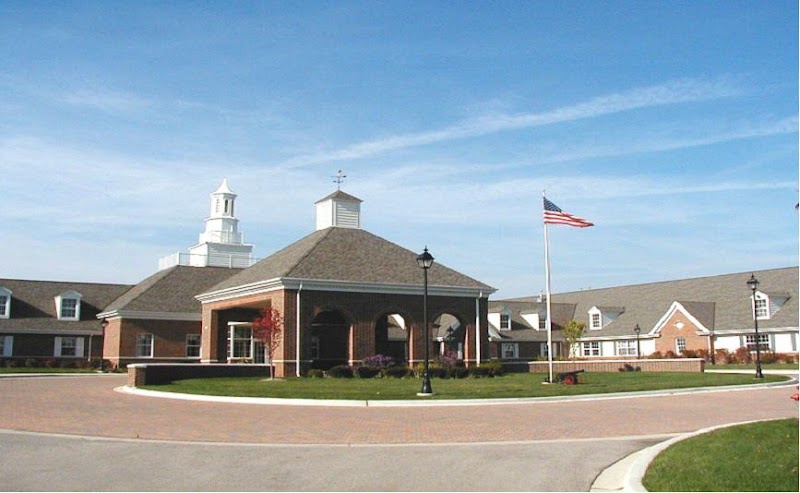
INVERNESS REHAB

1800 W COLONIAL PARKWAY, INVERNESS, IL 60067 (847) 776-4700
For profit - Individual 142 Beds Independent Data: November 2025
Trust Grade
10/100
#372 of 665 in IL
Last Inspection: July 2024

Within standard 12-15 month inspection cycle. Federal law requires annual inspections.

Overview

Inverness Rehab has received a Trust Grade of F, indicating significant concerns about the quality of care provided. It ranks #372 out of 665 nursing homes in Illinois, placing it in the bottom half of facilities statewide, and #120 out of 201 in Cook County, meaning only a few local options are worse. The facility's situation is improving, as the number of issues noted has decreased from eight in 2024 to five in 2025, but it still faces serious challenges. Staffing is a major concern, with a low rating of 1 out of 5 stars and a turnover rate of 57%, which is higher than the state average. There have been some troubling incidents, such as a resident experiencing multiple falls due to inadequate supervision and a delay in necessary medical care, resulting in a broken arm. While the health inspection score is average and there are some good quality measures, the overall picture shows both strengths and serious weaknesses that families should consider carefully.

Trust Score
F
10/100
In Illinois
#372/665
Bottom 45%
Safety Record
High Risk
Review needed
Inspections
Getting Better
8 → 5 violations
Staff Stability
⚠ Watch
57% turnover. Above average. Higher turnover means staff may not know residents' routines.
Penalties
○ Average
$76,161 in fines. Higher than 72% of Illinois facilities. Some compliance issues.
Skilled Nurses
⚠ Watch
Each resident gets only 26 minutes of Registered Nurse (RN) attention daily — below average for Illinois. Fewer RN minutes means fewer trained eyes watching for problems.
Violations
⚠ Watch
33 deficiencies on record. Higher than average. Multiple issues found across inspections.
★★☆☆☆
2.0
Overall Rating
★☆☆☆☆
1.0
Staff Levels
★★★★☆
4.0
Care Quality
★★★☆☆
3.0
Inspection Score
Stable
2024: 8 issues
2025: 5 issues

The Good

  • 4-Star Quality Measures · Strong clinical quality outcomes
  • Full Sprinkler Coverage · Fire safety systems throughout facility
  • No fines on record

Facility shows strength in quality measures, fire safety.

The Bad

2-Star Overall Rating

Below Illinois average (2.5)

Below average - review inspection findings carefully

Staff Turnover: 57%

11pts above Illinois avg (46%)

Frequent staff changes - ask about care continuity

Federal Fines: $76,161

Well above median ($33,413)

Moderate penalties - review what triggered them

Staff turnover is elevated (57%)

9 points above Illinois average of 48%

The Ugly 33 deficiencies on record

5 actual harm
Aug 2025 1 deficiency
CONCERN (D) 📢 Someone Reported This

A family member, employee, or ombudsman was alarmed enough to file a formal complaint

Potential for Harm - no one hurt, but risky conditions existed

Pharmacy Services (Tag F0755)

Could have caused harm · This affected 1 resident

Based on interview and record review the facility failed to provide medication as ordered by the prescriber to meet the needs of the resident, including acquiring medications. This failure affects one...

Read full inspector narrative →
Based on interview and record review the facility failed to provide medication as ordered by the prescriber to meet the needs of the resident, including acquiring medications. This failure affects one of three residents (R2), reviewed for medication administration.Findings include: On 8/7/2025 at 11:00am R2 said on Sunday 8/3/2025 and she think also Monday 8/4/2025 she did not have her 9am or her 1pm medication, it is for her anxiety and she was not informed until she counted her medication and it was short a pill, she then ask the nurses and they both said the medication had not been delivered, I then informed the social worker I wanted to file a grievance. On 8/7/2025 at 11:40am V3(Social Services Director-SSD) said that R2 ask to file a grievance because the nurse had not administered her medication, I did assist her with the grievance and then I informed the Assistant Director of Nursing-ADON. On 8/7/2025 at 12:00pm V4(Assistant Director of Nursing-ADON) said that V2 had already been informed about the medication not being administered, my expectation is that the nurses will retrieve the medication out of the emergency box as per policy and follow up with the pharmacy on the expected delivery. On 8/7/2025 at 12:45pm V5(Registered Nurse-RN) said on 8/3/2025, R2 did not have any Lorazepam (1.0 milligram-mg). I should have pulled the medication from the emergency box I informed my supervisor instead; I did not give the 9am or the 1 pm dosage. On 8/7/2025 at 1:30pm V6 (Licensed Practical Nurse-LPN) said on 8/4/2025, R2 did not have any Lorazepam (1.0 milligram-mg) dosage I called the pharmacy, and the delivery was due to come in, the protocol is to pull the medication from the emergency box she did not receive the 9am or 1pm dosage. On 8/7/2025 at 12:15pm V2 (Director of Nursing-DON) said, I expect the medication to been pulled from the emergency box, R2 did not receive medication the 9am and 1pm dose on 8/3/2025 and 8/4/2025. A resident information sheet dated 8/8/2025 indicates that R2 has a diagnosis of Bipolar, anxiety and schizophrenia. An order summary report dated August 2025 an order on7/23/2025 for Lorazepam 1.0 milligram three times a day for anxiety, and medication administration record dated August 2025 for Lorazepam 1.0 mg by mouth with at code of 10 for nurses note of medication not administered. A protocol for When medication is not available for residents Narcotics: pull from the emergency box. A care pan dated 3/6/2025 with a focus on psychotropic medication, an intervention to administer medications as ordered by the physician. Facility Policy:Medication Administration-1/1/2025 Medications are administered by licensed nurses or other staff who are legally authorized to do so in this state, as ordered by the physician and in accordance with professional standards of practice, in a manner to prevent contamination or infection. Policy Explanation and Compliance Guidelines:23.Administer medications according to physician orders.
Jun 2025 1 deficiency
CONCERN (D) 📢 Someone Reported This

A family member, employee, or ombudsman was alarmed enough to file a formal complaint

Potential for Harm - no one hurt, but risky conditions existed

Quality of Care (Tag F0684)

Could have caused harm · This affected 1 resident

**NOTE- TERMS IN BRACKETS HAVE BEEN EDITED TO PROTECT CONFIDENTIALITY** Based on interview and record review, the facility failed to follow their policy to ensure that blood glucose monitoring for thr...

Read full inspector narrative →
**NOTE- TERMS IN BRACKETS HAVE BEEN EDITED TO PROTECT CONFIDENTIALITY** Based on interview and record review, the facility failed to follow their policy to ensure that blood glucose monitoring for three (R1, R3, R4) of three residents reviewed for blood sugar monitoring were checked before meals per the physician order. Findings include: On 6/17/2025 at 3:12 PM, V3 (RN) said that today is V3 first day work with R1. V3 said he first entered R1's room after 11:00 AM. V3 said that he was supposed to check R1's blood pressure and blood sugar. V3 said that the blood pressure and blood sugar was supposed to be done in the morning. V3 said that he had 29 residents, V3 said that he lost tract because the CNA was asking him for help with different residents. V3 said that he also lost internet between 9:30 AM and 10:00 AM check. V3 said that blood sugar checks were supposed to be done before breakfast. V3 said that by the time V3 lost internet connection, the residents had already eaten breakfast. V3 said that R1 refused for her blood sugar and blood pressure to be checked because she already ate breakfast. V3 said that blood sugar should be checked before the residents eat breakfast. On 06/18/2025 at 12:23 PM, V7 (RN) said that V7 have residents that have diabetes. V7 said that the residents blood sugar level was supposed to be checked before meals per doctors' order. V7 reviewed R4 blood sugar administration record with surveyor and observed that some blood sugars for R4 were not done on time per doctor's order. On 6/18/2025 at 4:12 PM V9 (LPN/Weekend Supervisor), said that V9 obtained R1's blood pressure reading on 5/23. V9 said that the blood sugar was not done because R1 has already eaten breakfast V9 said that the blood sugar check was to be done before breakfast. R1 is a [AGE] year-old female admitted on [DATE] with a brief interview of mental status (BIMS) score of 15/15. R1 admission diagnosis include type 2 diabetes and primary hypertension. R1's physician order indicate that blood sugar was ordered to be checked in the morning. R1s' electronic medication administration record indicate that R1 blood sugar should be checked at 8:00 AM. R1s' blood sugar summary sheet has blood sugar check recorded later than 8:00 AM per physician order. R3 is a [AGE] year-old-male admitted to the facility on [DATE]. R3 is alert and oriented with BIMS score of 15/15 and able to make her needs known. R3 physician order indicates that R3's blood sugar is to be checked in the morning. R3 electronic medication sheet indicates that R3 blood sugar is to be checked at 08:00 am; 12:00 pm; and 17:00 pm. R3 blood sugar record sheet indicates some R3's blood sugar check were not done per the physician's order. R4 is a [AGE] year-old-female admitted to the facility on [DATE] with a brief interview of mental status (BIMS) of 13/15. R4 physician order sheet indicates that blood sugar check is ordered to be done before meals and at bedtime. R4's electronic medication sheet has blood sugar check scheduled for 06:30 am, 11:30am, and 16:30 pm. R4's blood sugar record sheet indicates that some of R4's blood sugars were not checked per the physician order. Physician Orders Policy: A physician must personally approve, in writing, a recommendation that an individual be admitted to a facility. A physician assistant, nurse practitioner or clinical nurse specialist must provide written and/or verbal orders for the residents' immediate care and needs. Policy Explanation and Compliance Guidelines: 4. All physician orders will be followed as prescribed and if not followed, the reason shall be recorded on resident's medical record during that shift. ACCUCHECK /BLOOD GLUCOSE MONITORING POLICY: It is the policy of this facility to perform accuchecks (BGM) as ordered by the resident's physician and to report alert levels to the attending physician as warranted. Standard parameters are as follows: Blood glucose level <60 or > 400 unless otherwise specified by the physician. PURPOSE: To assure that residents' blood sugar levels are appropriately monitored and to establish parameters for nursing interventions. PROCEDRE: 2. All accuceck orders will be implemented by nursing staff per physician order. All orders for insulin (sliding scale, etc,) will be implemented per physician order.
Apr 2025 1 deficiency
CONCERN (D) 📢 Someone Reported This

A family member, employee, or ombudsman was alarmed enough to file a formal complaint

Potential for Harm - no one hurt, but risky conditions existed

Investigate Abuse (Tag F0610)

Could have caused harm · This affected 1 resident

**NOTE- TERMS IN BRACKETS HAVE BEEN EDITED TO PROTECT CONFIDENTIALITY** Based on interview and record review, the facility failed to investigate the allegation of sexual abuse for one of three residen...

Read full inspector narrative →
**NOTE- TERMS IN BRACKETS HAVE BEEN EDITED TO PROTECT CONFIDENTIALITY** Based on interview and record review, the facility failed to investigate the allegation of sexual abuse for one of three residents (R1) reviewed for abuse. Findings include: On 04/11/2025 at 10:23AM, R1 was sitting quietly on her wheelchair by the nurse's station. R1 stated that an incident happened about a month ago around 7:00PM - 7:30PM when a male staff, unsure if he was a nurse or a CNA (Certified Nursing Assistant), tried to pick her up, took her clothes off, and touched her legs and arms inappropriately. R1 stated that she tried to pull away, but the male staff was grabbing R1's body. R1 stated that she has reported it to nurses and staff. On 04/11/2025 at 12:47PM during interview with V8 (Licensed Practical Nurse), V8 stated that he takes care of R1. V8 stated that on 03/06/2025, R1's sister visited R1 and mentioned to V8 that R1 could have been raped. V8 immediately reported the concern to V1 (Administrator). On 04/11/2025 at 12:50PM during interview with V1 (Administrator), V1 stated that on 03/06/2025, V8 told him that R1's sister has concerns with R1's comfortability of who's providing care to R1. V1 denied being told by V8 about R1's sister's concern that R1 could have been raped. V1 stated that together with R1's sister, he interviewed R1. V1 stated that R1 told him that while being transferred using a mechanical lift, R1 feels vulnerable & feels like the CNA has power over R1, and if the staff would want to, they could have raped R1. V1 stated that he asked R1 a couple of times if R1 was touched inappropriately before in which R1 answered no. V1 stated that no investigation was initiated at that time and no staff member were pulled out from schedule because there was no allegation of abuse made. V1 stated that no allegation of abuse has been made since then. On 04/11/2025 at 10:54AM during interview with V3 (Complainant/Hospice Social Worker), V3 stated that R1 reported to hospice staff that R1 was raped by male CNA/nurse on 03/07/2025. V3 said that since the allegation was made, R1 has been increasingly aggressive, and having crying spells. On 04/11/2025 at 11:00AM during interview with V4 (Hospice CNA), V4 stated that on 03/07/2025, she was having a conversation with R1 when R1 suddenly told her that R1 has something to tell her. V4 stated that she encouraged R1 to talk to her, then R1 told V4 that she was raped. V4 stated that she asked R1 to take a breath and asked R1 what happened. V4 stated that R1 told her that she was hanging on the mechanical lift, and was raped. V4 stated that R1 was able to describe to her the male nurse or CNA but unable to name him. V4 stated that she informed V9 (Registered Nurse/RN) of the allegation, and V5 (Hospice Nurse) per hospice protocol. V4 stated that she has been taking care of R1 for the past 6 months, and R1 has been quieter, sleeping more, and appears depressed ever since R1 reported she was raped. On 04/11/2025 at 1:56PM during interview with V9 (RN), V9 stated that she sees V4 when she comes in to take care of R1. V9 stated that V4 might have mentioned to her that R1 made a statement that R1 was raped but V9 did not report it to V1 because she already heard from a colleague that the same allegation was made. On 04/11/2025 at 2:00PM during interview with V1, V1 stated that if there were any allegation abuse, he would report it immediately to IDPH (Illinois Department of Public Health), and he would initiate an investigation. V1 stated that V9 should have informed him immediately when V4 told her about R1's rape allegation. On 04/16/2025 at 9:35AM, V1 stated that V13 (Psychiatric Nurse Practitioner) should have communicated with him about R1's statement to her when she visited R1 on 04/07/2025. V1 stated that if V13 communicated with him, he would have initiated an investigation and reported the allegation to IDPH. Review of R1's Order Summary Report dated 04/11/2025 indicated admission date of 04/25/2023 and diagnoses of not limited to Anxiety Disorder, Unspecified Dementia, and Major Depressive Disorder. Review of R1's Hospice Communication Log dated 03/07/2025 indicated CNA visited R1, R1 saying something happened, sat with R1, reported to the nurse and hospice. Review of R1's Hospice Communication Log dated 03/07/2025 indicated RN visited R1, R1 was being monitors for the alleged complaint. Review of R1's Psychiatric Nurse Practitioner Progress Notes dated 04/07/2025 indicated the following: R1 was seen today due to staff concerns about an incident that occurred approximately one month ago. R1 reported feeling that she was left undressed for too long and touched inappropriately during care, though she denied any penetration. R1 stated, I felt like I was placed in the [NAME] lifts for too long, possibly referring to feeling vulnerable or exposed. R1 experiences intrusive thoughts and sadness when seeing staff members who resemble the individual involved in the incident. Review of facility's policy entitled Abuse Prevention Policy revised 01/05/2024 indicated the following: This facility affirms the right of our residents to be free from abuse, neglect, exploitation, misappropriation of property or mistreatment. This facility therefore prohibits abuse, neglect, exploitation, misappropriation of property, deprivation of goods and services by staff, and mistreatment of residents. In order to do so, the facility has attempted to establish a resident sensitive and resident secure environment. The purpose of this policy is to assure that the facility is doing all that is within its control to prevent occurrences of abuse, neglect, exploitation, misappropriation of property, deprivation of goods and services by staff, and mistreatment of residents. This will be done by: - Orienting and training employees on how to deal with stress and difficult situations, and how to recognize and report occurrences of abuse neglect, exploitation, and misappropriation of property; V. Internal Reporting Requirements and Identification of Allegations Employees are required to report any incident or allegation of neglect, exploitation, mistreatment or appropriation of resident property they observe or suspect to the administrator immediately, to an immediate supervisor who must then report it to the administrator or to compliance hotline or compliance officer. In the absence of the administrator, reporting can be made to an individual who has been designated to act in the administrator's absence.
Jan 2025 1 deficiency
CONCERN (D) 📢 Someone Reported This

A family member, employee, or ombudsman was alarmed enough to file a formal complaint

Potential for Harm - no one hurt, but risky conditions existed

Pharmacy Services (Tag F0755)

Could have caused harm · This affected 1 resident

**NOTE- TERMS IN BRACKETS HAVE BEEN EDITED TO PROTECT CONFIDENTIALITY** Based on observation, interview, and record review, the facility failed to reorder scheduled medication to ensure availability f...

Read full inspector narrative →
**NOTE- TERMS IN BRACKETS HAVE BEEN EDITED TO PROTECT CONFIDENTIALITY** Based on observation, interview, and record review, the facility failed to reorder scheduled medication to ensure availability for a resident and failed to pass medication timely, per physician orders. These failures applied to two (R1, R2) of three residents reviewed for medication administration. Findings include: R2 is a [AGE] year old female who originally admitted to the facility on [DATE] and continues to reside in the facility. R2 has multiple diagnoses including but not limited to the following: type II DM, HTN, depression, and anxiety. Per R2's physician orders, R2 receives Insulin Lantus Subcutaneous Solution (100 unit/ml) 37 units two times a day scheduled at 8:00AM and 8:00PM. R2 also receives Insulin Lispro Solution (0.5 unit dial) of 17 units three times a day scheduled at 8:00AM, 12:00PM, and 5:00PM. On 1/29/2025 at 10:33AM, V3 (Licensed Practical Nurse) was observed administering medications. V3 said it is 10:33AM and I am still passing my 9:00AM medication. V3 said there are times when we struggle to pass medication in the allotted time which is one hour before and after the scheduled medication time. At 10:45AM, R2 had said there are times where I do not receive my medication till way after the scheduled time. R2 said I receive rapid and long-acting insulin and they are scheduled a certain way to ensure that my blood sugars remain controlled. On 1/18/25, 1/19/25, and 1/23/25, my diabetic medication was given extremely late. I am also concerned about my psych medication when my medication is given late. I can feel myself having increase agitation and becoming irritable when I do not take it timely. Facility Medication Admin Audit Report shows on 1/18/25, R2's Insulin Lispro was scheduled for 5PM and given at 6:41PM and Insulin Lantus was scheduled for 8:00PM and given at 9:45PM. On 1/23/24, R2's Insulin Lispro and Lantus were scheduled for 8:00AM and given at 9:16AM. R2's Insulin Lispro was also scheduled on 1/23/25 for 5:00PM and was given at 8:53PM. At 11:05AM, V4 (Registered Nurse) said it is protocol that we have an hour before and an hour after medication time to adequately pass medications. V4 said I currently have 29 residents and this is very difficult to do. We also use agency nursing staff and there is not way that they are passing medications in the allotted time. At 11:15AM, V2 (Director of Nursing) was interviewed. V2 said I would expect the nurses to pass the medications within an hour before and an hour after the scheduled time. Two residents, R1 and R2, expressed concern to me last week about their medications being late. V2 said if a resident that has a diagnosis of type II diabetes does not receive their insulin in a timely manner it may cause them to have uncontrolled blood glucose levels and become hyperglycemic. Facility policy titled Medication Administration states in part but not limited to the following: Medications are administered as ordered by the physician in accordance with professional standards of practice. R1 is a [AGE] year-old female admitted to facility on 11/22/2024 with medical diagnosis that includes and not limited to major depressive disorder, anxiety, insomnia, severe obesity, diabetes, hypertension, hyperlipidemia, and gastroesophageal reflux disease. On the (MDS) Minimal data Set assessment of 11/29/2024 section C the BIMS (Brief Interviewed mental status) score was 15/15. On 10/29/2025 at 10:45AM R1 said, I did not take my Pravastatin medication yesterday and I am not taking my medications as ordered per my physician. The PM shift nurse did not have my Pravastatin and had to order it from the pharmacy. On 01/29/2025 at 1:57PM V3 (Licensed Practical Nurse) said, R1 did not receive Pravastatin medication at bedtime. I reorder the Pravastatin medication that was missing. I entered code number 10 under the electronic medication administration record and I charted that medication was missing. On record review of the medication administration for the month of January 2025 the physician medication order reads: Pravastatin Sodium Oral Tablet 40 MG (Pravastatin Sodium) Give 1 tablet by mouth one time a day for hyperlipidemia. On 01/29/2025 at 2:05PM V2 (Director of Nursing) said, I spoke with V3 this morning and I am aware that R1 did not take Pravastatin medication yesterday and medication was reordered. Electronic medication administration record reviewed with V2. R1's medication records showed the Pravastatin medication for 01/27/2025 and 01/28/2025 had code 10. V2 said, R1 did not receive the medication as ordered per physician's orders for both days. V2 said, I expect the nurses to order medication when the stock is running low and when code 10 is used to chart the reason and notify the physician. V2 said, there are two ways that nurses know when to order medication, one is under the electronic medication administration record and the other is when the medication bingo card reaches the last doses. The Bingo medication card has blue or green marking on the last doses ranging from 5 or 8 doses before medication is completely used. There is an emergency box available to be used for emergencies but Pravastatin medication is not one of the medications in the box. On 01/29/2025 at 3:30 PM V2 presented Facility Policy undated, 1- Medication Administration. Which reads in part (but not limited to), 10. Ensure that the six rights of medication administration are followed: a. Right resident., b. Right drug, c. Right dosage, d. Right route, e. Right time f. Right documentation 2-Medication Reordering. Which reads in part (but not limited to), Policy: It is the policy of this facility to accurately and safely provide or obtain pharmaceutical services including the provision of routine and emergency medications and biologicals in a timely manner to meet the needs of each resident. 3. Each time a nurse is administering medications and observes medication doses are running low, that nurse will reorder the medication, time permitting.
Jan 2025 1 deficiency
CONCERN (D) 📢 Someone Reported This

A family member, employee, or ombudsman was alarmed enough to file a formal complaint

Potential for Harm - no one hurt, but risky conditions existed

Quality of Care (Tag F0684)

Could have caused harm · This affected 1 resident

Based on observation, interview and record review, the facility failed to follow physician order to check urine for presence of ketones for one (R1) of three residents reviewed for diabetic management...

Read full inspector narrative →
Based on observation, interview and record review, the facility failed to follow physician order to check urine for presence of ketones for one (R1) of three residents reviewed for diabetic management. Findings include: R1's diagnoses include but not limited to Type 1 diabetes mellitus with ketoacidosis without coma. On 01/10/2025 at 10:09 AM, R1 was observed resting in her room. R1 voiced concerns about the facility not informing her of her blood sugar levels and not checking her urine for ketones. R1's Physician Order Sheet document an order dated 12/24/2025 as follows: Ketone Test In Vitro Strip (Acetone (Urine) Test) 1 unspecified in vitro as needed for DM related to TYPE 1 DIABETES MELLITUS WITH KETOACIDOSIS WITHOUT COMA (E10.10) To check when Accucheck is over 300 - notify MD if moderate or high. R1's January 2025 Medication Administration Record (MAR) documents the following blood sugar test results: 1/1/2025 07:30 341 miligrams per deciliter (mg/dL) 1/2/2025 07:30 314 mg/dL 1/5/2025 07:30 348 mg/dL 1/7/2025 07:30 349 mg/dL 1/8/2025 07:30 304 mg/dL 1/10/2025 07:30 350 mg/dL The January 2025 MAR excludes documentation that Ketostix test was completed. KetoStix is a ketone test that can warn you of a serious diabetes complication called diabetic ketoacidosis, or DKA. On 01/10/2025 at 10:43 AM, V5, Licensed Practical Nurse (LPN) ,stated that R1 has an order for Ketostix test to be done when blood sugar levels are above 300 mg/dl. V5 showed R1's unopened box of Ketostix Ketone strips taken from the Medication cart with a dispensed date of 12/29/2024. V5 confirmed that the box is still unopened and looked like nobody has used it yet. V5 stated that R1's blood sugar level was 350 mg/dL this morning but V5 did not use the Ketostix strip to check R1's urine for Ketones because R1 didn't want to check it at that time because R1 wanted to sleep some more. V5 also stated that Ketone test results should be documented in the Medication Administration Record (MAR). V5 confirmed that the January 2025 MAR excludes any Ketostix results. 01/10/2025 at 1:47 PM V2, Director of Nursing (DON) stated The facility policy is to make sure we follow the physician orders. I expect the nurses to follow the doctor's order. If it's not marked, if it's not documented, it wasn't done. If blood sugar levels are running that high, there is a danger for diabetic keto acidosis. KetoStix is used to find out if there's ketones in the urine, if there's high levels of ketone in the urine, it can be life threatening. 01/10/2025 at 3:00 PM V2, Director of Nursing (DON) stated that she has informed the doctor that the physician order for the Ketostix was not being performed as ordered and that the order for the Ketostix has been discontinued. Facility did not present a policy on following doctors' orders.
Jul 2024 3 deficiencies 1 Harm
SERIOUS (G) 📢 Someone Reported This

A family member, employee, or ombudsman was alarmed enough to file a formal complaint

Actual Harm - a resident was hurt due to facility failures

Accident Prevention (Tag F0689)

A resident was harmed · This affected 1 resident

**NOTE- TERMS IN BRACKETS HAVE BEEN EDITED TO PROTECT CONFIDENTIALITY** Based on observation, interview and record review, the facility failed to implement effective fall interventions and adequate su...

Read full inspector narrative →
**NOTE- TERMS IN BRACKETS HAVE BEEN EDITED TO PROTECT CONFIDENTIALITY** Based on observation, interview and record review, the facility failed to implement effective fall interventions and adequate supervision for a dependent resident assessed as a high risk for falls with diagnoses of Parkinson's disease and Dementia. This failure affected one (R99) of three residents reviewed for falls in the sample of 44. This failure resulted in (R99) experiencing repeated falls that resulted in hospitalizations, sustaining lacerations on two occasions, with one laceration requiring three sutures. Findings include: R99 is a [AGE] year-old resident admitted to the facility on [DATE] with diagnoses including but not limited to: Parkinson's disease, dementia, depression, ataxic gait, cognitive communication deficit, urgency of urination and visual hallucinations. On 07/08/24 at 12:44 PM surveyor observed R99 dining in reclining chair with no concerns. R99 had an approximate quarter size yellowish purple bruise to right outer eye area. On 07/08/24 at 2:59 PM surveyor observed R99 sitting in TV (television) area with drink on table within reach. Surveyor requested to have staff bring resident to room for interview. Floor mat noted in room. Resident confused, does not want to talk with surveyor without staff present. When staff present resident stated, he is not the one I need to talk to. Surveyor observed an approximate quarter size yellowish purple bruise to right outer eye area. On 07/09/24 at 11:33 PM R99 is not in his room. R99 noted sleeping in reclining chair with seat cushion in place in front of nursing station by TV area. Surveyor observed an approximate quarter size yellowish purple bruise to right outer eye area. On 07/09/24 at 2:11 PM R99 is observed in reclining chair sleeping in TV area. R99 appeared comfortable. Surveyor observed an approximate quarter size yellowish purple bruise to right outer eye area. V16 (Registered Nurse - RN) stated, R99 has a laceration to back of the head, but due to resident sleeping surveyor unable to observe back of head. Surveyor observed large bruise to right hand area. V16 stated, he believes that was from a blood draw. MDS (Minimum Data Set) dated 05/07/2024 shows R99's BIMS (Brief Interview for Mental Status) score of 7 which means severe cognitive impairment. MDS dated [DATE] shows resident requires Substantial/maximal assistance for the following areas: toileting hygiene, shower/bathe self, lower body dressing, putting on/taking off footwear, sit to stand position, chair to bed transfer, toilet transfer and tub/shower transfer. Resident requires partial/moderate assistance with oral hygiene, upper body dressing, personal hygiene, rolling left and right, sit to lying, lying to sitting on the side of bed, and walking 10 feet. Fall risk assessments dated 2/26/24, 5/23/24, 5/29/24, 6/8/24, 6/28/24 and 07/06/2024, R99 is categorized high risk for fall. Incident report/root cause analysis dated 2/25/24, R99 sustained 1-2 cm (centimeters) x less than 0.0 cm skin tear with minimal bleeding noted to lateral left parietal region behind left ear from unwitnessed fall. Predisposing environmental factors - wheelchair unlocked. Incident report/root cause analysis dated 5/22/24 R99 was noted on the floor in his room leaning up against wall. Writer noted bleeding on right side of his head. First aid immediately rendered and cold compress applied. CNA (certified nursing assistant) stayed with resident. Writer called 911 and resident was transferred to ER for evaluation. Predisposing factors: footwear and none. Predisposing physiological factors: cognitive factors - confusion/disorientation, cognitive factors- impaired memory, neuromuscular factors - gait imbalance, cognitive factors - impaired decision. Predisposing situation factors: ambulating without assist. Skin assessment dated [DATE] documents: 3 sutures noted to right lateral forehead. Denied pain or discomfort. With orders to apply dry dressing every 3 days and to remove sutures in 7 days per MD (medical doctor) & hospice order Hospital discharge instructions dated 5/23/24 document that reason for visit was fall and diagnosis was subarachnoid hemorrhage. This form also documents items done on this visit were laceration repair and wound/incision care. Imaging done on this visit were CT (computed tomography) brain without contrast and CT spine cervical without contrast. Progress note dated 05/23/2024 at 02:43 AM documents: Writer noted copious amounts of blood on the floor next to R99 and there was blood dripping from the right side of his head. Progress note dated 5/23/24 at 2:31 PM documents: Resident arrived back from ER, noted w/(with)skin impairment to right lateral forehead. Sutures intact. No bleeding noted. Denied pain or discomfort. MD made aware, Tx (treatment) and orders in place. Dry dressing applied. V19 (family member/power of attorney) and hospice updated. Hospital discharge paperwork dated 05/24/24 documents: This is a [AGE] year-old male with past medical history as below, who was seen in this ED 24 hours ago for fall diagnosed with small subarachnoid hemorrhage, ultimately discharged back to hospice who presents to ED again for another reported witnessed fall. This report also documents, discussed that there needs to be an improved plan of care for this patient. They understood the plan. CT Brain without contrast impression 1. No acute intracranial abnormality. 2. Chronic findings as above. Narrative findings: There is no hemorrhage, mass effect, midline shift or hydrocephalus. Incident report/root cause analysis dated 6/28/24 writer was notified by visitors that resident was on the floor at nurse's station. Writer observed resident sitting on the floor next to (geriatric) chair. Predisposing physiological factors: behavioral factors - agitation/combative, behavioral factors - restless/anxious, bowel/bladder elimination - incontinence, cognitive factors - confusion/disorientation and behavioral factors - resistive. No apparent injury. Incident report/root cause analysis dated 07/06/24 writer's attention was called by staff that resident is on the floor and immediately proceeded to the room and observed resident sitting on the side of the bed that is on low position, alert conscious and verbally responsive with not visible injury noted initially. Resident sustained laceration to back of head. Predisposing physiological factors: cognitive factors - confusion/disorientation, neuromuscular factors - gait imbalance. Progress note dated 07/06/24 at 07:39 AM documents: Resident had a fall and had a laceration on the back of the head about ¾ of an inch with minimal bleeding. Placed a call to sister/POA unable to answer call left voicemail about the incident. Spoke to hospice and they stated they will have a nurse come to see the patient. MD notified. Care plan dated 08/01/23 documents: Focus: R99 is at risk for falls related to Parkinson's, dementia, impaired cognition, anxiety, depression, visual deficits, history of fall, impaired balance, and psychotropic medication use. Prefers his independence and does things on his own. With episodes of impulsivity, agitation, and restlessness. Will attempt to ambulate without an assistive device. Goal: Prevent serious fall related injury Interventions: Offer to assist R99 with getting snacks as he allows. Make frequent purposeful rounds when R99 is in room and offer toileting assistance as needed. Place R99 at nurse's station for closer supervision when unable to sleep during the night. Ensure proper positioning in reclining chair and adjust positioning as needed towards back of seat. High risk for falls - FALLING STAR ANTICIPATE and MEET R99's needs. Redirect him if he is agitated. Be sure his CALL LIGHT is within reach and encourage the resident to use it for assistance as needed. Check his ENVIRONMENT for clutter or trip hazards and area is well lit. Encourage NONSKID FOOTWEAR as needed. Fall RISK evaluation. Keep BED IN LOWEST POSITION acceptable by the resident when the resident is in bed. Remind to REQUEST ASSISTANCE when getting up if needed. REPORT to PHYSICIAN any untoward side effects associated with the resident's MEDICATION use. Refer to hospice for therapy evaluation. Remind R99 to lock his wheelchair brakes prior to attempting transfers out of his wheelchair and to request staff assistance as needed with ambulation from the dining room. Remind R99 to request staff assistance with toileting needs. On 07/09/24 at 2:07 PM Interview with V17 (Certified Nursing Assistant - CNA). V17 stated, I have worked with R99 before. He is a fall risk. We put the mattress when he is in bed but sometimes, he tries to jump it. I can't think of anything else we do to help prevent falls for R99. R99 can be aggressive and combative. I have not been here when he has fallen. Sometimes we have seen R99 on the mat. I think he falls because he is confused. He used to make is bed and walk around and now is confused. On 07/09/24 at 1:57 PM Interview with V18 (CNA). V18 stated, I have taken care of R99 before. He is a fall risk. We have a large floor mat to go on one side of the bed when he is in the bed. No other things I can think of. He has fallen when I was working. Dementia caused the fall that time. On 07/09/24 at 2:00 PM Interview with V16 (Registered Nurse - RN). V16 stated, R99 is a high fall risk. We change the bed to the lowest bed, frequent checks, bring to nurses' station/TV area. When he starts to get up, we try to bring him where we can see him. V19 (family member) doesn't want him in nurses' station. I think his cognitive issues are causing the falls. He wants to do the same things he used to be able to do like walking around. We discussed with V2, director of nursing 2 days ago to put him back to a 6am wake up depending on sleep the night before. He is combative at times and will hold the wrists of the staff and twist. He has a bruise on right eye and laceration to back of head. I was here for the laceration to back of head. I went in his room on July 6, 2024. He was sitting on the foot part of the bed. He fell and hit his head on the post. He was bleeding very minimal. This incident caused a laceration to back of head. The hospice nurse had wanted to change Seroquel dose, but sister did not want to agree to that. I believe the bruise was caused by him hitting himself accidentally as he was being combative with staff during care. On 07/09/24 at 3:03 PM Interview with V21 Licensed Practical Nurse (LPN). V21 stated, I have taken care of R99 before. On 6/28/24 day R99 was at nursing station in reclining chair. I had just went to 900 hall for a minute to pass medication. I was actually talking to another resident in the hallway when I was notified by visiting family member of another resident that R99 was on the floor next to his geriatric chair. He is not 1:1 We were keeping him at nursing station to keep a better eye on him. I had just checked on him probably 10-15 minutes prior and he was sitting calm in the chair. He is a high fall risk. We kept bed in low position and locked and fall mat in place. While in reclining chair we try to keep an eye on him as much as possible between myself and CNA's. If he is anxious, we try to see what is causing it. We offer snacks, fluids toileting. In my opinion I feel like he is sundowning more in evenings and that is causing him to have more falls. If we offer to take to bathroom, he will go but then gets aggressive, paranoid, combative very quickly. I try to encourage to have CNA check and change him 2x or more during the shift especially if he is getting restless. If we keep him clean and dry, he tends to be more calm but taking him for peri care is when we struggle. On 07/09/24 at 3:15 PM Interview with V22 (LPN). V22 stated, I have worked with R99 before. On 5/23/24 it was around the start of shift, so my CNA who I do not recall who it was, was doing rounds and immediately called me. R99 had floor mat in place but he crawls on that and is able to stand up. He has a reclining chair. He has a low bed and that was in place. He had his call light within reach. He has been instructed multiple times on call light use but appears unable to be able to use call light. He is always checked on frequently like every 15-20 minutes just to make sure he is safe. I think his increased confusion, restlessness, anxiousness, and incontinence is causing his falls. He is so unpredictable so it is very hard to put anything in place to decrease falls except to increase medications, but family will not agree to that. On 07/09/24 at 1:24 PM Interview with V2 Director of Nursing (DON). V2 stated, R99 he is under hospice care and very active. He really doesn't know his limitations. He attempts unsafe transfers, He has Parkinson's, history of hallucinations. This very last fall he rolled out of bed, and we decided to put in place to be put in his chair as soon as he is awake as he allows. And toileting and have his needs met. He is very active, and he bumps his hands and I think that is why he is having bruising. He is aggressive at times. He is also not aware of safety issues. Fall policy labeled: Fall Prevention Program AA Healthcare dated 2/12/2024 provided to surveyor by V2, DON on 07/09/2024 states: Policy: The facility must ensure that the resident environment remains as free of accident hazards as is possible; and each resident receives adequate supervision and assistive devices to prevent accidents. Procedure: 1. A Fall Prevention program will be implemented and maintained to assure the safety of all residents admitted to the facility. The program will be inclusive of measures which determine the individual needs of each resident by assessing the risk of falls, and implementation of appropriate staff interventions to assure adequate supervision is provided, and that assistive devices are utilized when necessary. Fall Incident Reports will be reviewed, and quality issues identified to assure the on-going effectiveness of the prevention program. 4. The DON or designee will be responsible for implementing and communicating resident-specific recommendations from the Fall Risk Committee to the nursing staff assigned to the resident. The nursing staff will be responsible for assuring the recommendations are followed through. 7. Fall prevention strategies will be utilized for all residents at risk for falls including individualized interventions in accordance with the assessed needs of each resident. Fall alarms may be utilized to alert staff to resident attempts to rise without assistance unless they prevent the resident from rising or pose an increased risk for falls.
CONCERN (D) 📢 Someone Reported This

A family member, employee, or ombudsman was alarmed enough to file a formal complaint

Potential for Harm - no one hurt, but risky conditions existed

Deficiency F0558 (Tag F0558)

Could have caused harm · This affected 1 resident

**NOTE- TERMS IN BRACKETS HAVE BEEN EDITED TO PROTECT CONFIDENTIALITY** On 07/8/24 at 11:00 AM to 11:30AM during observation in unit one of the facilities, observed several call lights going off in re...

Read full inspector narrative →
**NOTE- TERMS IN BRACKETS HAVE BEEN EDITED TO PROTECT CONFIDENTIALITY** On 07/8/24 at 11:00 AM to 11:30AM during observation in unit one of the facilities, observed several call lights going off in resident's rooms that were not answered promptly, some resident's beds were noted with no linens and stripped naked. On 07/9/24, between 9:46AM and 10:30AM, surveyor observed several call lights turned on in the 200 section of unit one with no staff observed answering responding to them. Surveyor responded to one of the lights and notified staff that resident needs to go to the bathroom. Several residents screened had concern with the call light not being answered in a timely manner, some residents said that it takes 30 mins to one hour for the call light to be answered. On 07/9/24 at 11:20 AM, V8 (Registered Nurse, RN) was presented with this observation, and she said that there are two CNA's that are assigned to the unit, one just went on break and the other one is probably in another room. Surveyor asked V8 why the call lights are not being answered in a timely manner and she said, The CNA's are usually pulled to help with lunch, right now one of them is on break and the other one is probably assisting another resident. On 07/9/24 at 1:15PM, V2 (DON), said call light response has been a concern and the expectation is that it should be answered in a timely manner, they provide in-service to staff and the department heads also do angel rounds during the day, the facility does not have managers in the evening so the floor nurses and CNA's will be responsible for monitoring the call light and ensuring that it is answered timely. V2 was asked to be a little more specific on what is considered timely, and she said within 5 minutes. The facility does not have any system in place to show how long a call light has been on before it was answered. She added that when a call light is on, any staff can answer it, even if they cannot provide the type of assistance that the resident needed, at least they can get the right person to assist the resident. Facility's policy titled, Call light Policy, dated 1-28-23 stated in part but not limited to the following: Purpose: To respond to the resident's requests and needs in a timely manner. Performed by: All Staff Procedure: 1. Answer call light promptly and turn the light off after entering the room. Knock on the door before entering. Based on observation, interviews and record reviews, the facility failed to ensure call lights were answered in a timely manner for two (R44 and R87) of two residents in a sample of 44 reviewed for accommodation of needs. Findings include: R44 is a [AGE] year old, female, initially admitted in the facility on 08/21/2017 with diagnosis of Hemiplegia and Hemiparesis following Cerebral Infarction Affecting Left Non-Dominant Side; and Cerebral Infarction, Unspecified. On 07/08/24 at 12:40 PM, R44 pushed the call light. At 12:50 PM, her call light was observed still on. R44 stated, I want my CNA (Certified Nursing Assistant). I want to get up now. At 12:55 PM, observed V14 (CNA) go to R44's room and respond to her call light. It took 15 minutes for V14 to respond to R44's call light. R87 is a [AGE] year old, female, initially admitted in the facility on 11/21/2023 with diagnosis of Nontraumatic Chronic Subdural Hemorrhage; Dementia in other Diseases Classified Elsewhere, Unspecified Severity, with Other Behavioral Disturbance; and Multiple Fracture Ribs, Left Side, Subsequent Encounter for Fracture with Routine Healing. On 07/08/24 at 12:25 PM, R87's call light was observed on. It was observed that there were no staff present in the hallway and by the nurses' station. At 12:40 PM, her call light was still on. Surveyor went to R87's room, observed lunch tray at bedside table. Bedside table was situated at the foot of the bed. R87 stated I tried to call to turn that table around so I can eat but I still have no assistance. V11 (Licensed Practical Nurse, LPN) was observed sitting at the nurses' station. At 12:59 PM, V15 (CNA) was collecting food trays in the hallway where R87's room can be found. Surveyor observed that V15 left and went to other unit. V15 did not go to R87's room. At 1:00 PM, R87's call light was still on. V13 (Housekeeping) was observed in R87's room. V13 was observed going to the nurses' station and talked to V11. V13 was asked if she told V11 about R87's call light. V13 stated, I told her (V11) and she said that one CNA is attending other residents. At 1:06 PM, R87's call light was still on, V11 was observed going to R87's room to provide assistance. It took 41 minutes for a staff to respond to R87's call light. R87's care plan documented: ADL (Activities of Daily Living) self-care performance deficit - Interventions - eating: one-person assist; encourage to use call light to call for assistance. On 07/09/24 at 1:19 PM, V2 (Director of Nursing, DON) was interviewed regarding call lights. V2 stated, We received complaints from residents regarding call lights. We do staff in-services regarding responding to call lights; department heads do rounds on a daily basis during morning shift ensuring call lights are responded. Staff on the floor do rounds at least every two hours and as frequent as needed. Reasonable time to respond to call light is not more than 5 minutes. Any staff in the facility should respond to call lights. I have talked to housekeeping and kitchen staff to not respond related to care but at least respond to call lights. If they responded to call lights and its related to care, they have to notify the nurse.
CONCERN (F)

Potential for Harm - no one hurt, but risky conditions existed

Abuse Prevention Policies (Tag F0607)

Could have caused harm · This affected most or all residents

**NOTE- TERMS IN BRACKETS HAVE BEEN EDITED TO PROTECT CONFIDENTIALITY** Based on interview and record review, the facility failed to follow its policy on conducting background checks for four (R52, R1...

Read full inspector narrative →
**NOTE- TERMS IN BRACKETS HAVE BEEN EDITED TO PROTECT CONFIDENTIALITY** Based on interview and record review, the facility failed to follow its policy on conducting background checks for four (R52, R103, R105 and R106, ) of 10 residents reviewed for admission screening. This failure has the potential to affect 117 residents currently residing in the facility. Findings include: Per census report, there are 117 residents currently residing in the facility. R52 is a [AGE] year old, female, admitted in the facility on 06/15/24 with diagnosis of Unspecified Fracture of Shaft of Humerus, left Arm, Subsequent Encounter for Fracture with Routine Healing. R52's Criminal History Information Response Process (CHIRP) was done on 06/17/2024, two days after admission. R103 is [AGE] year old, male, initially admitted in the facility on 01/05/24 with diagnosis of Unspecified Dementia, Unspecified Severity, without Behavioral Disturbance, Psychotic Disturbance, Mood Disturbance, and Anxiety. R103's name was checked in the National Sex offender website on 03/30/2024, which was more than two months after admission. There was no documentation that R103's CHIRP was checked, nor his name checked under State Sex offender website and Department of Corrections. R105 is a [AGE] year old, female, admitted in the facility on 06/24/24 with diagnosis of Sepsis, Unspecified Organism. There was no record that her name was checked under Illinois Department of Corrections upon admission. R106 is a [AGE] year old, female, admitted in the facility on 03/01/24 with diagnoses of Anorexia; Adult Failure to Thrive and Major Depressive Disorder, Recurrent, Unspecified. Her CHIRP was done on 03/05/24, which was four days after admission. R106's name was checked in the Illinois Department of Corrections, State and National Sex offender websites on 07/09/24, which was four months after she was admitted . R106 is an identified offender for criminal offenses and had history of incarceration. On 07/09/24 at 3:05 PM, V1 (Administrator) was asked regarding background checks on residents. V1 stated, For new admissions regarding background checks, the team is notified that we have to check with National and State sex offender websites and the department of corrections. We have to do those prior to admission. CHIRP is done within 24 hours of admission. We want to make sure if there is a hit for sex offenders so we could provide a private room. V20 (Medical Director) was also asked on 07/10/24 at 4:27 PM regarding background checks. V20 verbalized, Regarding screening of new residents, they should be screened prior to admission to facility for background checks and at sex offender websites. We want to make sure they are not a danger to other residents and other staff. Facility's policy titled, Abuse Prevention Policy, dated 9/28/23 documented in part but not limited to the following: Procedures: II. Pre-admission Screening of Potential Residents This facility shall check the criminal history background on any resident seeking admission to the facility in order to identify previous criminal convictions. This facility will: Request Criminal History Background Check within 24 hours after admission of a new resident Check for the resident's name on the Illinois Sex Offender Registration Website Check for the resident's name on the Illinois Department of Corrections sex registrant search page While the background or fingerprint checks, and/or Identified Offender Report and Recommendations are pending, the facility shall take all steps necessary to ensure the safety of residents. Facility's policy titled, admission of Identified Offender, dated 5/3/22, stated in part but not limited to the following: Guidelines: 1. Screened on Sex offender website. 2. Criminal History record information requested. 4. Facility must review screenings and all supporting documentation to determine if the placement is appropriate.
Feb 2024 5 deficiencies
CONCERN (D) 📢 Someone Reported This

A family member, employee, or ombudsman was alarmed enough to file a formal complaint

Potential for Harm - no one hurt, but risky conditions existed

Deficiency F0604 (Tag F0604)

Could have caused harm · This affected 1 resident

**NOTE- TERMS IN BRACKETS HAVE BEEN EDITED TO PROTECT CONFIDENTIALITY** Based on interview and record review, the facility failed to provide freedom from inappropriate physical restraint for 1 (R2) of...

Read full inspector narrative →
**NOTE- TERMS IN BRACKETS HAVE BEEN EDITED TO PROTECT CONFIDENTIALITY** Based on interview and record review, the facility failed to provide freedom from inappropriate physical restraint for 1 (R2) of 1 resident reviewed for restraints in the sample of 7. Findings include: According to face sheet, R2 is a [AGE] year-old female admitted to the facility on [DATE] with diagnosis including but not limited to anxiety disorder; Depression; Unspecified Dementia; Essential Hypertension; Hypothyroidism; and Unspecified Abnormalities of Gait and Mobility. According to R2's MDS (Minimum Data Set) assessment dated [DATE] under section C, R2 has BIMS (Brief Interview of Mental Status) score of 00 indicating severely impaired cognition. According to R2's MDS (Minimum Data Set) assessment dated [DATE] under section E, shows that R2 did not display wandering behaviors. Per record review, no elopement/wandering care plan developed related to R2 care needs. On 02/21/2024 at 2:18 PM V21 (Registered Nurse/RN) who related the following in summary: I was told that staff tucked in R2 with the sheets really tight to prevent her from getting out of bed. I think it was the V22 (Licensed Practical Nurse/LPN) because they were fired after that. On 02/21/2024 at 2:47 PM V1 (Administrator) who related the following in summary: It was reported to me, by R2's Power of Attorney, that R2 was secured to the bed with sheets on the morning of 12/11/2023. R2's Power of Attorney came in early in the morning, around 8:00 AM and, reported to me later that day, what she witnessed in the morning. R2's pain and skin assessment were completed. I immediately suspended two employees, V22 (Licensed Practical Nurse) and V23 (Certified Nursing Assistant/CNA), who worked that night and were assigned to R2, and I started the investigation. We interviewed staff directly involved in R2's care and other staff who worked on the same unit. We also interviewed other residents on that unit. Finally, I reported it to the state agency. R2 was a poor historian, she wasn't able to provide any details in regard to the incident due to her cognitive impairment and language barrier. Shortly after, we initiated audits in regard to restraints. As a result of the investigation, restraint allegation was not substantiated because there were no witnesses that R2 was restrained. V22 (LPN) was terminated around the end of January 2024 due to unrelated incident. V23 (CNA) is still works here. On 02/21/2024 at 3:43 PM V23 (CNA) who related the following in summary: I worked the night of 12/11/2023 with V22 (LPN). I was only CNA on the unit that night. I was monitoring residents assigned to me, but I was also asked by a supervisor, to help monitor V22's (LPN) residents as well. R2 was among residents assigned to V22 (LPN). When I checked on R2, upon the beginning on my shift (11:00 PM), she was sleeping. Later that night (between 00:30 AM and 3:00 AM), V22 (LPN) asked me to bring him an extra sheet. Then V22 (LPN) placed the sheet across R2's legs and tucked it underneath the mattress. V22 (LPN) then said, I hope she's going to stay in bed now. I didn't check on R2 after that. V1 (Administrator) called me and talked to me about the incident the following day, and then I was suspended for about a week and a half. Per record review, V22 (Licensed Practical Nurse) interview (no date and time included) reads in part, At 12:30 AM, Tucked (it) pretty tight. Why tucked it tight? Didn't want (R2) to get up and fall. At 1:30 AM, Sheets still secured. At 5:00 AM (R2) was still tucked in as left it. At 7:00 AM, The sheets were still tucked in as left. Facility Abuse Prevention Program policy dated 7/28/2022 reads in part, The facility affirms the right of our residents to be free from abuse, neglect, exploitation, misappropriation of property or mistreatment. Abuse is the willful infliction of injury, unreasonable confinement, intimidation, or punishment with resulting physical harm, pain, or mental anguish to a resident. The term willful in the definition of abuse means the individual must have acted deliberately, not that the individual must have intended to inflict injury or harm.
CONCERN (D) 📢 Someone Reported This

A family member, employee, or ombudsman was alarmed enough to file a formal complaint

Potential for Harm - no one hurt, but risky conditions existed

Deficiency F0658 (Tag F0658)

Could have caused harm · This affected 1 resident

**NOTE- TERMS IN BRACKETS HAVE BEEN EDITED TO PROTECT CONFIDENTIALITY** Based on observation, interview and record review, the facility failed to provide care in accordance with professional standards...

Read full inspector narrative →
**NOTE- TERMS IN BRACKETS HAVE BEEN EDITED TO PROTECT CONFIDENTIALITY** Based on observation, interview and record review, the facility failed to provide care in accordance with professional standards of quality by 1. Failing to provide adequate supervision and monitoring of residents at risk for falls and with a history of falls; 2. Failed to implement and follow the plan of care to prevent falls and future falls; 3. Failed to train all staff, including agency staff on fall prevention; 4. Failed to provide staff with necessary information and immediate access for this information of all residents at risk for falls in order to keep residents safe from harm. This failure affects for 4 (R1, R3, R4, R6) of 5 residents reviewed for accident hazards in the sample and has the potential to affect all 117 residents residing in the facility. Findings include: On [DATE] at 10:00 AM, V1 (administrator) presented the survey team with the facility census number showing 117 residents. On 2//20/24 at 10:30 AM, V2 (director of nursing) presented survey team with their fall incidents log in the past 60 days which showed 56 unwitnessed falls and 3 witnessed falls (averaging nearly 1 fall per day). V2 informed the survey team that she was in charge of managing falls in the facility along with her IDT (interdisciplinary team) which consisted of her assistant director of nursing and nurse managers. 1. R1 is a [AGE] year old with diagnoses of respiratory failure with hypoxia, type 2 diabetes, congestive heart failure, gait abnormality, and cardiomyopathy. Care plan dated [DATE] reads in part, R1 is at risk for falls. The resident has balance or walking impairments. The resident experiences weakness. The resident takes medications that may cause dizziness, loss of balance, or impair judgement. Be sure the resident's call light is within reach and encourage the resident to use it for assistance as needed. Interventions: Fall risk evaluation; Refer to therapy for screen/evaluation and treatment as indicated; Assist and encourage the resident in wearing non-skid footwear when out of bed; Keep bed in lowest position acceptable by the resident when the resident is in bed; Remind to request assistance when getting up if need; Remind resident to sit away from edge of mattress when sitting on the bed. Remind resident to request staff assistance with transfers out of bed. Facility records showed: On [DATE] at 03:06 AM V26 (agency RN) wrote in part, Health Status Note: called by the CNA to the room saying the patient is on the floor. Nurse immediately responded, found the patient sitting on the floor, close to the bed, back supporting the bed, with leg extended. patient is alert and oriented stated that she did not hit her head. Patient was assessed before moving, level of consciousness at baseline, no change, range of motion within normal limits. Vital signs stable, no new pain, no injury/ redness noted at this time, Neurological check initiated, Primary physician is notified. Will endorse to morning nurse to notify social service. On [DATE] at 02:41 AM, V27 (Agency nurse) wrote in part, [DATE] at 02:41 AM Event Note: Resident was observed on the floor in left side lying position & rubbing her right hip/leg area. Resident stated she fell & when writer asked how it happened, she said she can't remember. Also asked if she hit her head, she did pointing on her forehead. Resident unable to move her right leg, also said she has pain on the right hip/leg 10/10. Noted a bump with mild bruising to her forehead. Notified doctor and called 911. Applied ice pack to bump on forehead & stayed with resident till paramedics came. On [DATE] at 07:55 AM, V31 (LPN Nurse Manager) wrote in part, Health Status Note: Nurse spoke with hospital nurse. Resident is being transferred to alternate hospital for orthopedic surgery. Resident has a pelvic fracture. On [DATE] at 12:09 PM,V26 (agency RN) stated, Yes I remember R1, she was alert but forgetful and ambulates with some assistance and she spoke a little English. I would say her gait was very unsteady and she was tall skinny and weak and was supposed to use a cane. I think she was a fall risk but I don't remember anyone telling me this. I'm agency here if you didn't know that so I have to figure things out on our own here. Surveyors asked if she received any training or orientation from the facility about fall risk interventions or if the facility identified any residents who were at risk for falls before the start of her shifts, V6 stated, No. I've never received any training like that. I remember they just gave me this thick stack of papers (V6 describing the thickness with her hand) when I first started and I was supposed to read through it all and sign when I was done. Surveyor asked if she knew what she was signing, V6 stated, It was pretty much some directions on how to get in to PCC (electronic medical records) and where everything was. Surveyors asked if there were any topics related to the care of the residents, V6 stated, Not that I can remember. Surveyors asked if the facility conducted any regular inservice training during her time working at the facility, V6 stated, The only time was the inserviced today by and it was conducted by he wound nurse which was general inservice. Surveyor's asked what she meant by general inservice, V6 stated, It was the wound nurse so she mentions stuff about turning and repositioning I remember, but she just passed around a signature sheet and we all signed it. Surveyor asked if there was any inservice training specific to fall prevention, V6 stated, Not that I recall. Hospital records dated [DATE] at 10:02 AM written by V29 (emergency room Doctor) reads in part, Patient arrived via emergency medical services from facility following being found on floor. Unwitnessed fall. Does not recall how got to floor. Positive for hematoma to mid forehead. Positive for pain and deformity to right hip with decreased range of motion. reports increased pain. Problem list: Atrial fibrillation, Blunt head injury, right Hip fracture. 2. R3 is a [AGE] year old male admitted to the facility on [DATE] with diagnosis including but not limited to Type 2 Diabetes Mellitus; Chronic Diastolic Heart Failure; Chronic Kidney Disease; Hyperlipidemia; Spinal Stenosis; Essential Hypertension; Cognitive Communication Deficit; and Dizziness and Giddiness. Fall care plan dated [DATE] reads in part, Anticipate and meet (R3's); Be sure (R3's) call light is within reach and encourage (R3). No intervention pertaining to monitoring of the resident was absent from the care plan. On [DATE] at 11:31 AM Surveyor observed R3 sitting up in the bed. Surveyor noticed bilateral bruising around R3's eyes, R3 stated, I got up to the bathroom, tripped and fell down. I think it was last week. I went to the hospital, and they said I broke my hip. When I came back to the facility, they told me I can walk, but only with assistance, and put 20% of weight on my left leg. Surveyor noticed R3's demeanor to be quiet and sad, surveyor clarified how is R3 feeling, R3 stated, I'm depressed and looked away. Surveyor observed bed in the lowest position; no fall mats; reaching device laying on recliner, out of R3's reach; call light in the nightstand ' s drawer, out of R3's reach; room cluttered and dark. On [DATE] at 3:53 PM Surveyor observed R3 in his room, sitting in the wheelchair, in the bathroom. R3 said, I think I need to go to the bathroom; I'm going to poop myself. Surveyor observed call light in R3's nightstand ' s drawer. Call light not initiated upon surveyor entrance to R3's room. On 02/22 2024 between 9:00 AM and 4:00 PM, in 3 separate attempts, surveyor called V28 (Licensed Practical Nurse); however, V28 (LPN) did not answer, voicemail was left. On [DATE] at 12:21 PM Surveyor interviewed V2 (Director of Nursing/Fall coordinator) who related the following in summary: R3 is pretty impulsive, likes to get up on his own and do things for himself. R3 usually transfers with 1 person assistance. R3 is able to use a call light. At the time of the incident (on [DATE]), R3 got dizzy, lost his balance, and fell. R3 was transferred out to the hospital due to head and left side pain. Hospital records showed left femur fracture. Prior to the fall on [DATE], R3 was not a fall risk resident. Surveyor clarified if R3 has history of falls that would place him at risk for falls, V2 (DON/Falls coordinator) responded, R3 had another fall on [DATE] and on [DATE]. That would put him at a risk for falls. I think R3 ' s care plan interventions are appropriate to prevent him from falling. Progress note written by V28 (Licensed Practical Nurse) dated [DATE] at 00:51 AM reads in part, During shift report, heard loud noise from R3 ' s room and R3 screamed for help. Immediately, writer (V28 LPN) and certified nursing assistant in the room. R3 lying on the floor on his left side. R3 with raised area to left side of forehead. Left knee abrasion and right hand abrasion in between fingers. R3 stated, I started walking toward bathroom to take a dump, I felt dizzy and fell down. Upon full body assessment ROM (range of motion) WNL (within normal limits), R3 assisted back to level of comfort. First aid to areas of injury given. Ice pack placed on forehead r/t (related to) raised area. Left knee cleansed with NSS (normal saline solution) and (antibiotic ointment) applied. Right hand cleansed with NSS, (antibiotic ointment) applied. Neurological checks initiated. Peri care and toileting provided. 911 called, R3 taken to (local) hospital for further f/u (follow up). Final Facility Reported Incident report dated [DATE] at 12:33 PM reads in part, Investigation/Conclusion: R3 ' s experienced change in condition which resulted in sudden change in plane. R3 was admitted to the (local) hospital. Hospital record dated [DATE] authored by V32 (ER doctor) reads in part, (R3) was apparently trying to transfer from chair to the toilet and did not have any help. He felt dizzy and hit forehead on the ground; also, c/o (complaining of) right knee pain with a bruise to the right knee; some left knee abrasion; soreness to the left shoulder. He had severe pain in the left hip after the fall. X-ray Pelvis 1 or 2 views: Left femoral greater trochanter avulsion fracture. A general tour of the facility along with observations and staff interviews beginning on [DATE] at AM showed: 3. R4 is a [AGE] year old female admitted to the facility on [DATE] with diagnosis including but not limited to Unspecified Dementia; Essential Hypertension; Hyperlipidemia; Muscle Weakness; Cardiomegaly; Alzheimer's Disease; and Personal History of Transient Ischemic Attack. R4's Fall care plan dated [DATE] reads in part, Be sure (R4's) call light is within reach and encourage (R4) to use it for assistance as needed. Place floor mats on the floor beside the bed. R4's Fall risk assessment dated [DATE] reads in part, (R4) is at high risk for falls. On [DATE] at 11:20 AM R4 was not in the room at this time. Fall mats and wheelchair were stored in R4's bathroom. On [DATE] at 3:52 PM R4 was asleep in bed at this time. Bed was in the low position, but no fall mats were on the floor and fall mats remained stored in the bathroom. Call light was placed on the nightstand, out of R4's reach. 4. R6 is a [AGE] year old with diagnosis of Parkinson's disease, dementia, delusional disorder, and anxiety disorder. A facility reported fall incident on [DATE] by V2 (DON) reads in part, Upon making rounds when arrived at 11:00 PM, CNA informed that resident (R6) had blood on the floor of the room and was scooting around on the floor. I went to assess the resident's condition and noticed some specks of dried blood on the floor. Noticed dried blood on the back right side of resident's head. Resident was alert and oriented times 1. Resident is very confused and very fidgety. Resident mumbling incoherent words and moved all extremities without any signs of pain. Once stabilized, left the room and proceeded to call 911. V2's root cause analysis reads, (R6) has tendencies to attempt self-transfers and will at times attempt to transfer herself out of bed or from her wheelchair. Staff will place the resident in areas of high staff visibility for closer supervision when awake. Fall care plan dated [DATE] reads in part, (R6) is at risk for falls. The resident has Impaired cognition and impaired safety awareness due to dementia and Parkinson's. The resident has balance impairments. The resident has a history of falls. The resident experiences weakness. The resident takes medications that may cause dizziness, loss of balance, or impair judgement (psychotropic). The resident has vision impairments. She can be impulsive and does things on her own. Has tendency to reach for things on the floor, at nurses station, or at the table in the dining room. With periods of restlessness due to Parkinson's and dementia. Goal: Prevent a serious fall related injury. Interventions: Be sure the resident's call light is within reach and encourage the resident to use it for assistance as needed. Fall risk evaluation. Assist the resident in wearing non-skid footwear when out of bed. Keep bed in lowest position when the resident is in bed; Place floor mattress on the floor beside the bed while resident is in bed; Ensure proper positioning when seated in wheelchair, and remind resident not to lean forward when in wheelchair. Keep resident in areas of high staff visibility for closer supervision when awake; High back wheel chair for positioning. Offer group activities for resident to attend as she allows. On [DATE] at 10:15 AM, R6 was in her room with the door fully closed. R6 was observed laying in bed awake and flailing her arms and appeared agitated. The room was dark with no lights on and with drapes that were closed. A heater was blowing air directly toward the resident who was immediately adjacent to the heater. Per care plan, R6 should have been placed in a high visibility area when the resident was awake. V10 (agency nurse) was at the other wing of the unit and was asked about R6, V10 stated, This is only my second day here. I have 2 CNA's today I think. I don't know who they are. Surveyor asked if the residents she took care of today were considered at risk for falls, V10 stated, I don't know which residents are fall risk, sorry. Surveyor asked if she was told by anyone from the facility before she started her shift anything about her residents, V10 stated, No I wasn't told anything special, why? Surveyor asked if she received any inservice training before taking on a shift at the facility, V10 stated,No, I didn't get any inservices, it's only my second day here. Surveyor asked if she recalled anything in orientation or if she received orientation, V10 stated,We don't get orientation, I'm agency. I pick up a shift, the facility accepts and I work the floor. Surveyor asked how she would know anything about each resident V10 stated, I try to write it down on a sheet. Surveyor asked if would receive any endorsement from the outgoing nurse, V10 stated,No, I came late today so I didn't see the nurse before me. Surveyor asked specifically about R6, V10 looks at her resident roster and stated, Yes she's mine but I can't tell you much about her. I just know which room she's in and she's mine today. On [DATE] at 10:30 AM the doors to R6 were once again closed and resident was observed awake in a bed. V10 was again observed on the same wing and asked if she obtained any endorsement from the outgoing nurse, V10 stated, No the nurse didn't tell me anything this morning because she was gone when I got here. On [DATE] at. 11:18 am: V2 (DON) I am in charge of falls. when we have a fall I determine the root cause, update the plan of care with appropriate interventions. I type up the summary of any fall and meet with my IDT (interdisciplinary team) which consist of all the dept heads. Surveyor asked if there are any inservice training's conducted related to fall prevention, V2 stated, Yes we inservice on falls and the last time was right around first week of December and it was on a variety of topics. Surveyor asked what the specifics were regarding this fall inservice training, V2 stated, It points out where to locate fall intervention which located on the [NAME] (electronic medical note cards). It shows to our agency nurses know how to access the [NAME]. Surveyor asked if there are actual fall interventions provided to staff including agency nurses, V2 stated, No, it just directs them to the specific resident's [NAME] with that information. Surveyor asked if she maintained a list of residents at risk for falls, V2 stated, I maintain list of residents who fell, but I don't have a list of resident's at risk for falls that I provide staff to. Surveyor asked how agency nursing staff are provided the information necessary for them to identify residents at risk for falls, V2 stated, When agency nurses start here, we have a packet that they are supposed review and usually they sign off when they receive the packet that they've read the packet. Surveyor asked about agency CNA staff, V2 stated, CNA's are also given in a binder to review and it is in the employee lounge. Surveyor asked if the orientation packets provided to agency staff are reviewed by her or any of her nurse managers prior to agency staff coming on board, V2 stated, They are just given a packet but no one goes through it with them. We just trust they did it. Surveyor asked how she ensured agency nursing staff knew how to care for the residents in the facility they are unfamiliar with, V2 stated, I can't ensure that, they should know this. Surveyor asked if agency nurses are provided any information about the resident's fall risk status during shift to shift endorsements, V2 stated, We don't put this down on the 24 hour report because we got rid of it because its not reliable but only except if its a new admission. Surveyor clarified if the shift to shift reports were written anywhere or if it was a verbal endorsement, V2 stated, No the nurses do write down the endorsements from shift to shift, but these 24 hour reports don't get maintained and are shredded at the end of the day so I can't show you any past ones. On [DATE] at 10:30 AM, V9 (ADON) was observed walking the units and was asked about falls, V9 stated, I don't know which residents are fall risk residents, I'd have to check their [NAME] (electronic note card). Surveyor asked if she had to look up every resident's record every time a nurse cares for a resident to determine if they were at risk for falls, V3 stated, Yes. Surveyor asked how that would be considered preventative fall interventions if her nurses cannot identify which residents were at risk or high risk for falls, V3 stated, Well, all our residents our fall risk residents. Everyone of us is considered a fall risk including you (referring to the surveyor). Surveyor clarified her rationale to determine everyone including surveyors were at risk for falls, V3 stated, Yes, you (referring to the surveyor) can fall at any time, just like I can fall. Surveyor reminded V3 that the surveyor was not a resident in the facility, V3 stated, Yes but we are all still at risk to fall. Surveyor asked if this rationale was in their fall risk policy, V3 stated, No it is not. [DATE] 12:50 PM, follow up interview with V9 (ADON) stated, I was the fall nurse but (V2-DON) has kind of taken over so we are all involved in fall program. In our morning meeting we discuss our falls and discuss how the resident fell, how fall happened, and what can we do to prevent from happening again. Surveyor asked how this information gets conveyed to staff, V9 stated, It is conveyed to front line staff by a shift report. We transfer the fall intervention to the [NAME] (electronic note card). Surveyor asked how this information is given to agency staff, V9 stated, Every time we have agency they go through an orientation pack. It talks about the [NAME] and we talk about falls, change of condition and this packet is given to agency staff. Surveyor asked V9 to go through the orientation packet provided to agency staff to show where this information is, V9 It says Falls identification but no it doesn't have preventative fall measures, it just directs agency staff to go to the [NAME]. It instructs the staff when residents have already experienced a fall or found to have fallen. Surveyor asked how this would be considered fall prevention if it instructs on what to do after a fall and not before a fall happens, V9 stated, I see what you mean, fall prevention starts before a fail; so I would fix this or I would add to make sure you provide safety to make sense of this direction. Surveyor asked when the last time a fall inservice training was conducted. V9 stated, The first week of December I think but I can't be sure. Surveyor asked whether if any information was provided to nurses on the 24 hour report about residents, V9 stated, We got rid of that because it was inaccurate. We throw out the 24 report at the end of each shift and they shred it. On [DATE] at 2:30 PM in a follow-up interview, V2 (director of nursing) stated to the survey team during that all residents in the facility are considered fall-risk residents. V2 added that everyone is at risk for falls and stated, We are all at risk for falls. I can fall at anytime, you can fall at any time (referring to survey team) just like residents can fall. Surveyors reminded V2 that the surveyors were not residents in the facility and not cared for by her staff. A fall risk assessment for R1 dated [DATE] showed that the resident was at no risk for falls contradicting V2 (DON) and V9's (ADON) statements that everyone including surveyors are considered a fall risk. A fall risk assessment for R3 on [DATE], [DATE], and [DATE] all showed the resident to be at no risk for falls, and again contradicting V2 and V9's statement that everyone including surveyors are at risk for falls. On 2/21 at 11:50 AM, V19 (nurse manager/infection control) stated, My main focus is infection control. I help the nurses with relaying lab results and I generally help out on the floor. For fall related injuries our DON handles that but we talk about it in the clinical meeting every day. Surveyor asked if there was a fall prevention program the facility followed, V19 stated, (V2) can give you more information on that than me. Surveyor asked how the facility ensured the staff including agency staff are provided the information, V19 stated, When they get the endorsement sometimes they are told this information. I don't know if they get this information because I'm not there on shift change. Surveyor asked if she was part of the interdisciplinary team V2 was referring to, V19 stated, Yes I am. Surveyor asked if she should know more about the fall prevention program as she is part of the IDT, V19 stated, Yes. On 2/21/ 24 at 12:35 PM, V20 (staffing coordinator) stated,We usually give a packet for agency staff to check off on. The nurses are responsible for checking to see if the agency nurse signed off on the packet. There is no place to check off on the packet that the agency nurse signed off on it to verify. The agency nurse get the packet and they work the same day. Surveyor asked if agency staff get training when they first start at the facility, V20 stated, No I don't think they're given actual inservice except for what's in the orientation packet. I just know we give them the packet before they work here and they sign it, then work the floor. On [DATE] at 2:18 PM, V21 (RN) stated, I think V9 (ADON) did the last inservice training for falls. They also do this every week or every other week, I ' m not sure but they tell us this when we're on the floor as a one on one training. Surveyor asked who does this one to one training, V21 stated, (V9-ADON) does this. Surveyor asked when the last fall prevention inservice was conducted and by whom, V21 stated, January and monthly, I'm not really sure but it was with the ADON. Surveyor asked who the designated fall prevention nurse was, V21 stated, That would be (V9). (Based on interviews, V9 (ADON is not the designated Fall Prevention Nurse). Surveyor asked how he determines which residents are at risk for falls when he comes on his shift, V21 stated,When I do my rounds first and do the endorsement with incoming nurses. It is written down on the list of 24 hours report. Surveyor asked to provide the 24 hour record to surveyors, V21 stated, They took out the 24 hour report. We get endorsement from nights and then we shred it. ( There were no inservice training records provided to the survey team conducted by the ADON or other as stated by V21). Facility policy dated [DATE] titled Fall Prevention Program reads in part, Purpose: To assure the safety of all residents in thee facility, when possible. The program will include measures which determine the individual needs of each resident by assessing the risk of falls and implementation of appropriate interventions to provide necessary supervision and assistive devices are utilized as necessary. Quality assurance programs will monitor the program to assure ongoing effectiveness. Fall incident reports will be reviewed, and quality issues identified to assure the on-going effectiveness of prevention program. A care plan for fall prevention will be implemented and maintained to assure the safety of residents who are at risk. The IDT will meet to review all resident falls that have occurred. Fall incident reports will be studied to determine any significant factors that may have caused the fall and to identify additional fall prevention strategies. The DON and nurse mangers and/or designee will be responsible for implementing and communicating resident-specific recommendations from the IDT to the nursing staff assigned to the resident. The nursing staff will be responsible for assuring the recommendations are followed through. Fall prevention strategies will be utilized for all residents at risk for falls including individualized interventions in accordance with the assessed needs of each resident. Residents will be evaluated after a fall has occurred in an attempt to identify any causative factors that need correction.
CONCERN (D) 📢 Someone Reported This

A family member, employee, or ombudsman was alarmed enough to file a formal complaint

Potential for Harm - no one hurt, but risky conditions existed

Accident Prevention (Tag F0689)

Could have caused harm · This affected 1 resident

**NOTE- TERMS IN BRACKETS HAVE BEEN EDITED TO PROTECT CONFIDENTIALITY** Based on observation, interview and record review, the facility failed to provide adequate supervision and monitoring of residen...

Read full inspector narrative →
**NOTE- TERMS IN BRACKETS HAVE BEEN EDITED TO PROTECT CONFIDENTIALITY** Based on observation, interview and record review, the facility failed to provide adequate supervision and monitoring of residents at risk for falls and with a history of falls for 4 (R1, R3, R4, R6) of 5 residents reviewed for accident hazards in the sample. The facility also failed to follow the plan of care to prevent future falls and failed to train staff (including agency staff) on fall risk interventions. Findings include: On [DATE] at 10:30 AM, V2 (Director of Nursing/DON) presented survey team with their fall incidents log in the past 60 days which showed 56 unwitnessed falls and 3 witnessed falls (averaging nearly 1 fall per day). V2 informed the survey team that she was in charge of managing falls in the facility along with her IDT (interdisciplinary team) which consisted of her assistant director of nursing and nurse managers. 1. R1 is a [AGE] year-old with diagnoses of respiratory failure with hypoxia, type 2 diabetes, congestive heart failure, gait abnormality, and cardiomyopathy. Care plan dated [DATE] reads in part, R1 is at risk for falls. The resident has balance or walking impairments. The resident experiences weakness. The resident takes medications that may cause dizziness, loss of balance, or impair judgement. Be sure the resident's call light is within reach and encourage the resident to use it for assistance as needed. Interventions: Fall risk evaluation. Refer to therapy for screen/evaluation and treatment as indicated. Assist and encourage the resident in wearing non-skid footwear when out of bed. Keep bed in lowest position acceptable by the resident when the resident is in bed. Remind to request assistance when getting up if need. Remind resident to sit away from edge of mattress when sitting on the bed. Remind resident to request staff assistance with transfers out of bed. On [DATE] at 03:06 AM V26 (Agency Registered Nurse/RN) wrote in part, Health Status Note: called by the CNA (Certified Nursing Assistant) to the room saying the patient is on the floor. Nurse immediately responded, found the patient sitting on the floor, close to the bed, back supporting the bed, with leg extended. patient is alert and oriented stated that she did not hit her head. Patient was assessed before moving, level of consciousness at baseline, no change, range of motion within normal limits. Vital signs stable, no new pain, no injury/ redness noted at this time, Neurological check initiated, Primary physician is notified. Will endorse to morning nurse to notify social service. On [DATE] at 02:41 AM, V27 (Agency Nurse) wrote in part, [DATE] at 02:41 AM Event Note: Resident was observed on the floor in left side lying position & rubbing her right hip/leg area. Resident stated she fell & when writer asked how it happened, she said she can't remember. Also asked if she hit her head, she did (sic) pointing on her forehead. Resident unable to move her right leg, also said she has pain on the right hip/leg 10/10. Noted a bump with mild bruising to her forehead. Notified doctor and called 911. Applied ice pack to bump on forehead & stayed with resident till paramedics came. On [DATE] at 07:55 AM, V31 (Licensed Practical Nurse/LPN Nurse Manager) wrote in part, Health Status Note: Nurse spoke with hospital nurse. Resident is being transferred to alternate hospital for orthopedic surgery. Resident has a pelvic fracture. Efforts to reach V27 (Agency nurse) for interview were left with unreturned messages. On [DATE] at 12:09 PM, V26 (Agency RN) stated, Yes I remember R1, she was alert but forgetful and ambulates with some assistance and she spoke a little English. I would say her gait was very unsteady and she was tall skinny and weak and was supposed to use a cane. I think she was a fall risk, but I don't remember anyone telling me this. I'm agency here if you didn't know that so I have to figure things out on our own here. Surveyors asked if she received any training or orientation from the facility about fall risk interventions or if the facility identified any residents who were at risk for falls before the start of her shifts. V6 stated, No. I've never received any training like that. I remember they just gave me this thick stack of papers (V6 describing the thickness with her hand) when I first started, and I was supposed to read through it all and sign when I was done. Surveyor asked if she knew what she was signing. V6 stated, It was pretty much some directions on how to get into (electronic medical records) and where everything was. Surveyors asked if there were any topics related to the care of the residents. V6 stated, Not that I can remember. Surveyors asked if the facility conducted any regular in-service training during her time working at the facility. V6 stated, The only time was the in-service today it was conducted by the wound nurse which was general in-service. Surveyor asked what she meant by general in-service. V6 stated, It was the wound nurse, so she mentions stuff about turning and repositioning I remember, but she just passed around a signature sheet and we all signed it. Surveyor asked if there was any in-service training specific to fall prevention. V6 stated, Not that I recall. On [DATE] at 11:15 AM, V30 (Family Member) stated, My mom died on my birthday and it's because this facility does not know how to care for people. I was called that my mom was found on the floor, and they sent her to the hospital because she was in a lot of pain and the hospital told me she had a hip fracture. She was in a lot of pain. My mom was sent to one hospital and transferred to another one. She died unnecessarily on week later. The surgeon put in another pacemaker for her heart, but the trauma of the fall contributed to her death. Surveyor asked if this was the first time her mother fell. V30 stated, No, in fact she had just fallen several days prior to this one and no one told me until she fell the second time when she was sent to the hospital. Hospital records dated [DATE] at 10:02 AM written by V29 (emergency room Doctor) reads in part, Patient arrived via emergency medical services from facility following being found on floor. Unwitnessed fall. Does not recall how got to floor. Positive for hematoma to mid forehead. Positive for pain and deformity to right hip with decreased range of motion. reports increased pain. Problem list: Atrial fibrillation, Blunt head injury, right Hip fracture. 2. R3 is a [AGE] year-old male admitted to the facility on [DATE] with diagnosis including but not limited to Type 2 Diabetes Mellitus; Chronic Diastolic Heart Failure; Chronic Kidney Disease; Hyperlipidemia; Spinal Stenosis; Essential Hypertension; Cognitive Communication Deficit; and Dizziness and Giddiness. According to R3 ' s MDS (Minimum Data Set) assessment dated [DATE] under section C, R3 has BIMS (Brief Interview of Mental Status) score of 12 indicating impaired cognition. According to R3 ' s MDS (Minimum Data Set) assessment dated [DATE] under section GG, R3 required Partial/Moderate Assistance with sit-to-stand and toilet transfers. According to record review, R3's Fall care plan dated [DATE] reads in part, Anticipate and meet (R3's); Be sure (R3's) call light is within reach and encourage (R3). No intervention pertaining to monitoring noticed. According to record review, R3's Fall risk assessment dated [DATE] reads in part, (R3) at low risk for falls. On [DATE] at 11:31 AM observed R3 sitting up in the bed. Surveyor noticed bilateral bruising around R3's eyes. R3 stated, I got up to the bathroom, tripped and fell down. I think it was last week. I went to the hospital, and they said I broke my hip. When I came back to the facility, they told me I can walk, but only with assistance, and put 20% of weight on my left leg. Surveyor noticed R3's demeanor to be quiet and sad, surveyor clarified how is R3 feeling. R3 stated, I'm depressed and looked away. Surveyor observed bed in the lowest position, no fall mats, reaching device laying on recliner, out of R3's reach; call light in the nightstand ' s drawer, out of R3's reach; room cluttered and dark. On [DATE] at 3:53 PM Surveyor observed R3 in his room, sitting in the wheelchair, in the bathroom. R3 said, I think I need to go to the bathroom; I'm going to poop myself. Surveyor observed call light in R3's nightstand ' s drawer. Call light not initiated upon surveyor entrance to R3's room. On [DATE] between 9:00 AM and 4:00 PM, in 3 separate attempts, surveyor called V28 (Licensed Practical Nurse). V28 did not answer, voicemail was left. On [DATE] at 12:21 PM V2 (Director of Nursing/Fall coordinator) related the following in summary: R3 is pretty impulsive, likes to get up on his own and do things for himself. R3 usually transfers with 1 person assistance. R3 is able to use a call light. At the time of the incident (on [DATE]), R3 got dizzy, lost his balance, and fell. R3 was transferred out to the hospital due to head and left side pain. Hospital records showed left femur fracture. Prior to the fall on [DATE], R3 was not a fall risk resident. Surveyor clarified if R3 has history of falls that would place him at risk for falls. V2 responded, R3 had another fall on [DATE] and on [DATE]. That would put him at a risk for falls. I think R3 ' s care plan interventions are appropriate to prevent him from falling. Progress note written by V28 (Licensed Practical Nurse) dated [DATE] at 12:51 AM reads in part, During shift report, heard loud noise from R3's room and R3 screamed for help. Immediately, writer and certified nursing assistant in the room. R3 lying on the floor on his left side. R3 with raised area to left side of forehead. Left knee abrasion and right-hand abrasion in between fingers. R3 stated, I started walking toward bathroom to take a dump, I felt dizzy and fell down. Upon full body assessment ROM (range of motion) WNL (within normal limits), R3 assisted back to level of comfort. First aid to areas of injury given. Ice pack placed on forehead r/t (related to) raised area. Left knee cleansed with NSS (normal saline solution) and (antibiotic ointment) applied. Right hand cleansed with NSS, (antibiotic ointment) applied. Neurological checks initiated. Peri care and toileting provided. 911 called, R3 taken to (local) hospital for further f/u (follow up). Final Facility Reported Incident report dated [DATE] at 12:33 PM reads in part, Investigation/Conclusion: R3 ' s experienced change in condition which resulted in sudden change in plane. R3 was admitted to the (local) hospital. Hospital record dated [DATE] authored by V32 (ER Doctor) reads in part, (R3) was apparently trying to transfer from chair to the toilet and did not have any help. He felt dizzy and hit forehead on the ground; also, c/o (complaining of) right knee pain with a bruise to the right knee; some left knee abrasion; soreness to the left shoulder. He had severe pain in the left hip after the fall. X-ray Pelvis 1 or 2 views: Left femoral greater trochanter avulsion fracture. 3. R4 is a [AGE] year-old female admitted to the facility on [DATE] with diagnosis including but not limited to Unspecified Dementia; Essential Hypertension; Hyperlipidemia; Muscle Weakness; Cardiomegaly; Alzheimer's Disease; and Personal History of Transient Ischemic Attack. R4's MDS (Minimum Data Set) assessment dated [DATE] under section C, R4 has BIMS (Brief Interview of Mental Status) score of 12 indicating impaired cognition; Under section GG, R4 required Partial/Moderate Assistance with sit-to-stand transfers. R4's Fall care plan dated [DATE] reads in part, Be sure (R4's) call light is within reach and encourage (R4) to use it for assistance as needed. Place floor mats on the floor beside the bed. According to record review, R4 ' s Fall risk assessment dated [DATE] reads in part, (R4) is at high risk for falls. On [DATE] at 11:20 AM R4 was not in the room. Fall mats and wheelchair were stored in R4's bathroom. On [DATE] at 3:52 PM R4 was asleep. Bed in the lowest position, but no fall mats were on the floor and fall mats remained stored in the bathroom. Call light was placed on the nightstand, out of R4's reach. 4. R6 is an [AGE] year old with diagnosis of Parkinson's disease, dementia, delusional disorder, and anxiety disorder. A facility reported fall incident on [DATE] by V2 (DON) reads in part, Upon making rounds when arrived at 11:00 PM, CNA informed that resident (R6) had blood on the floor of the room and was scooting around on the floor. I went to assess the resident's condition and noticed some specks of dried blood on the floor. Noticed dried blood on the back right side of resident's head. Resident was alert and oriented times 1. Resident is very confused and very fidgety. Resident mumbling incoherent words and moved all extremities without any signs of pain. Once stabilized, left the room and proceeded to call 911. V2's root cause analysis reads, (R6) has tendencies to attempt self-transfers and will at times attempt to transfer herself out of bed or from her wheelchair. Staff will place the resident in areas of high staff visibility for closer supervision when awake. Fall care plan dated [DATE] reads in part, (R6) is at risk for falls. The resident has impaired cognition and impaired safety awareness due to dementia and Parkinson's. The resident has balance impairments. The resident has a history of falls. The resident experiences weakness. The resident takes medications that may cause dizziness, loss of balance, or impair judgement (psychotropic). The resident has vision impairments. She can be impulsive and does things on her own. Has tendency to reach for things on the floor, at nurse's station, or at the table in the dining room. With periods of restlessness due to Parkinson's and dementia. Goal: Prevent a serious fall related injury. Interventions: Be sure the resident's call light is within reach and encourage the resident to use it for assistance as needed. Fall risk evaluation. Assist the resident in wearing non-skid footwear when out of bed. Keep bed in lowest position when the resident is in bed; Place floor mattress on the floor beside the bed while resident is in bed; Ensure proper positioning when seated in wheelchair and remind resident not to lean forward when in wheelchair. Keep resident in areas of high staff visibility for closer supervision when awake, High back wheelchair for positioning. Offer group activities for resident to attend as she allows. On [DATE] at 10:15 AM, R6 was in her room with the door fully closed. R6 was observed lying in bed awake and flailing her arms and appeared agitated. The room was dark with no lights on and with drapes that were closed. A heater was blowing air directly toward the resident who was immediately adjacent to the heater. Per care plan, R6 should have been placed in a high visibility area when the resident was awake. V10 (Agency Nurse) was at the other wing of the unit and was asked about R6. V10 stated, This is only my second day here. I have 2 CNAs today, I think. I don't know who they are. Surveyor asked if the residents she took care of today were considered at risk for falls. V10 stated, I don't know which residents are fall risk, sorry. Surveyor asked if she was told by anyone from the facility before she started her shift anything about her residents. V10 stated, No I wasn't told anything special, why? Surveyor asked if she received any in-service training before taking on a shift at the facility. V10 stated, No, I didn't get any in-services. It's only my second day here. Surveyor asked if she recalled anything in orientation or if she received orientation. V10 stated, We don't get orientation, I'm agency. I pick up a shift, the facility accepts, and I work the floor. Surveyor asked how she would know anything about each resident. V10 stated, I try to write it down on a sheet. Surveyor asked if would receive any endorsement from the outgoing nurse. V10 stated, No, I came late today so I didn't see the nurse before me. Surveyor asked specifically about R6, V10 looks at her resident roster and stated, Yes she's mine but I can't tell you much about her. I just know which room she's in and she's mine today. On [DATE] at 10:30 AM the doors to R6 were once again closed and resident was observed awake in a bed. V10 was again observed on the same wing and asked if she obtained any endorsement from the outgoing nurse. V10 stated, No the nurse didn't tell me anything this morning because she was gone when I got here. On [DATE] at. 11:18 am V2 (DON) stated I am in charge of falls. When we have a fall I determine the root cause, update the plan of care with appropriate interventions. I type up the summary of any fall and meet with my IDT (interdisciplinary team) which consist of all the dept heads, but clinical team are my ADON and nurse managers. They know who fell and generally speaking, they know what the interventions are. Surveyor asked if there are any in-service training conducted related to fall prevention. V2 stated, Yes we in-service on falls and the last time was right around first week of December and it was on a variety of topics. Surveyor asked what the specifics were regarding this fall in-service training. V2 stated, It points out where to locate fall intervention which located on the (electronic medical note cards). It shows to our agency nurses know how to access the (electronic medical note cards). Surveyor asked if there are actual fall interventions provided to staff including agency nurses. V2 stated, No, it just directs them to the specific resident's (electronic medical note cards) with that information. Surveyor asked if she maintained a list of residents at risk for falls. V2 stated, I maintain list of residents who fell, but I don't have a list of residents at risk for falls that I provide staff to. Surveyor asked how agency nursing staff are provided the information necessary for them to identify residents at risk for falls. V2 stated, When agency nurses start here, we have a packet that they are supposed review and usually they sign off when they receive the packet that they've read the packet. Surveyor asked about agency CNA staff. V2 stated, CNAs are also given in a binder to review and it is in the employee lounge. Surveyor asked if the orientation packets provided to agency staff are reviewed by her or any of her nurse managers prior to agency staff coming on board. V2 stated, They are just given a packet, but no one goes through it with them. We just trust they did it. Surveyor asked how she ensured agency nursing staff knew how to care for the residents in the facility they are unfamiliar with. V2 stated, I can't ensure that, they should know this. Surveyor asked if agency nurses are provided any information about the resident's fall risk status during shift-to-shift endorsements. V2 stated, We don't put this down on the 24-hour report because we got rid of it because it's not reliable but only except if it's a new admission. Surveyor clarified if the shift-to-shift reports were written anywhere or if it was a verbal endorsement. V2 stated, No the nurses do write down the endorsements from shift to shift, but these 24-hour reports don't get maintained and are shredded at the end of the day so I can't show you any past ones. On [DATE] at 10:30 AM, V9 (ADON) was observed walking the units and was asked about falls. V9 stated, I don't know which residents are fall risk residents. I'd have to check their (electronic note card). Surveyor asked if she had to look up every resident's record every time a nurse cares for a resident to determine if they were at risk for falls. V9 stated, Yes. Surveyor asked how that would be considered preventative fall interventions if her nurses cannot identify which residents were at risk or high risk for falls. V9 stated, Well, all our residents our fall risk residents. Every one of us is considered a fall risk including you (referring to the surveyor). Surveyor clarified her rationale to determine everyone including surveyors were at risk for falls. V9 stated, Yes, you (referring to the surveyor) can fall at any time, just like I can fall. Surveyor reminded V9 that the surveyor was not a resident in the facility. V9 stated, Yes but we are all still at risk to fall. Surveyor asked if this rationale was in their fall risk policy. V9 stated, No it is not. [DATE] 12:50 PM, follow up interview with V9 (ADON) stated, I was the fall nurse but (V2 DON) has kind of taken over so we are all involved in fall program. In our morning meeting we discuss our falls and discuss how the resident fell, how fall happened, and what can we do to prevent from happening again. Surveyor asked how this information gets conveyed to staff. V9 stated, It is conveyed to front line staff by a shift report. We transfer the fall intervention to the (electronic note card). Surveyor asked how this information is given to agency staff. V9 stated, Every time we have agency, they go through an orientation pack. It talks about the (electronic medical note cards) and we talk about falls, change of condition and this packet is given to agency staff. Surveyor asked V9 to go through the orientation packet provided to agency staff to show where this information is. V9 stated It says Falls identification but no it doesn't have preventative fall measures, it just directs agency staff to go to the (electronic medical note cards). It instructs the staff when residents have already experienced a fall or found to have fallen. Surveyor asked how this would be considered fall prevention if it instructs on what to do after a fall and not before a fall happens. V9 stated, I see what you mean, fall prevention starts before a fall. So, I would fix this, or I would add to make sure you provide safety to make sense of this direction. Surveyor asked when the last time a fall in-service training was conducted. V9 stated, The first week of December I think but I can't be sure. Surveyor asked whether if any information was provided to nurses on the 24-hour report about residents. V9 stated, We got rid of that because it was inaccurate. We throw out the 24-hour report at the end of each shift and they shred it. On [DATE] at 2:30 PM in a follow-up interview, V2 (DON) stated to the survey team during that all residents in the facility are considered fall-risk residents. V2 added that everyone is at risk for falls and stated, We are all at risk for falls. I can fall at any time, you can fall at any time (referring to survey team) just like residents can fall. Surveyors reminded V2 that the surveyors were not residents in the facility and not cared for by her staff. A fall risk assessment for R1 dated [DATE] showed that the resident was at no risk for falls contradicting V2 (DON) and V9's (ADON) statements that everyone including surveyors are considered a fall risk. A fall risk assessment for R3 on [DATE], [DATE], and [DATE] all showed the resident to be at no risk for falls, and again contradicting V2 and V9's statement that everyone including surveyors are at risk for falls. On 2/21 at 11:50 AM, V19 (Nurse manager/Infection Control) stated, My main focus is infection control. I help the nurses with relaying lab results, and I generally help out on the floor. For fall related injuries our DON handles that but we talk about it in the clinical meeting every day. We normally have a morning meeting and then the clinical meeting starts. We discuss any admissions, diagnoses, what the residents are here for; and we discuss incidents. We discuss what the factors are, how it occurred, if call light was within reach and what interventions are in the plan. Surveyor asked if there was a fall prevention program the facility followed. V19 stated, (V2) can give you more information on that than me. We do interventions and update the program, but I do not know exactly about the fall program. (V2) makes sure all interventions are there, what the fall protocol, and if the patient fell, why that fall occurred, so we make a plan, so it doesn't happen. We then update the information in the (electronic medical note cards) for CNA to see. The agency nurses have access to it too in the (electronic medical note cards). Surveyor asked how the facility ensured the staff including agency staff are provided the information. V19 stated, When they get the endorsement sometimes, they are told this information. I don't know if they get this information because I'm not there on shift change. Surveyor asked if she was part of the interdisciplinary team V2 was referring to. V19 stated, Yes I am. On 2/21/ 24 at 12:35 PM, V20 (Staffing Coordinator) stated, We usually give a packet for agency staff to check off on. The nurses are responsible for checking to see if the agency nurse signed off on the packet. There is no place to check off on the packet that the agency nurse signed off on it to verify. The agency nurse get the packet and they work the same day. Surveyor asked if agency staff get training when they first start at the facility. V20 stated, No I don't think they're given actual in-service except for what's in the orientation packet. I just know we give them the packet before they work here and they sign it, then work the floor. On [DATE] at 2:18 PM, V21 (RN) stated, I think V9 (ADON) did the last in-service training for falls. They also do this every week or every other week, I'm not sure but they tell us this when we're on the floor as a one-on-one training. Surveyor asked who does this one-to-one training, V21 stated, (V9-ADON) does this. Surveyor asked when the last fall prevention in-service was conducted and by whom. V21 stated, January and monthly, I'm not really sure but it was with the ADON. Surveyor asked who the designated fall prevention nurse was. V21 stated, That would be (V9). (Based on interviews, V9 ADON is not the designated Fall Prevention Nurse). Surveyor asked how he determines which residents are at risk for falls when he comes on his shift. V21 stated, When I do my rounds first and do the endorsement with incoming nurses. It is written down on the list of 24 hours report. Surveyor asked to provide the 24-hour record to surveyors. V21 stated, They took out the 24-hour report. We get endorsement from nights and then we shred it. (There were no in-service training records provided to the survey team conducted by the ADON or other as stated by V21). Facility policy dated [DATE] titled Fall Prevention Program reads in part, Purpose: To assure the safety of all residents in the facility, when possible. The program will include measures which determine the individual needs of each resident by assessing the risk of falls and implementation of appropriate interventions to provide necessary supervision and assistive devices are utilized as necessary. Quality assurance programs will monitor the program to assure ongoing effectiveness. Fall incident reports will be reviewed, and quality issues identified to assure the on-going effectiveness of prevention program. A care plan for fall prevention will be implemented and maintained to assure the safety of residents who are at risk. The IDT will meet to review all resident falls that have occurred. Fall incident reports will be studied to determine any significant factors that may have caused the fall and to identify additional fall prevention strategies. The DON and nurse mangers and/or designee will be responsible for implementing and communicating resident-specific recommendations from the IDT to the nursing staff assigned to the resident. The nursing staff will be responsible for assuring the recommendations are followed through. Fall prevention strategies will be utilized for all residents at risk for falls including individualized interventions in accordance with the assessed needs of each resident. Residents will be evaluated after a fall has occurred in an attempt to identify any causative factors that need correction.
CONCERN (E) 📢 Someone Reported This

A family member, employee, or ombudsman was alarmed enough to file a formal complaint

Potential for Harm - no one hurt, but risky conditions existed

Comprehensive Care Plan (Tag F0656)

Could have caused harm · This affected multiple residents

**NOTE- TERMS IN BRACKETS HAVE BEEN EDITED TO PROTECT CONFIDENTIALITY** Based on observation, interview and record review, the facility failed to implement their fall prevention care plans and have an...

Read full inspector narrative →
**NOTE- TERMS IN BRACKETS HAVE BEEN EDITED TO PROTECT CONFIDENTIALITY** Based on observation, interview and record review, the facility failed to implement their fall prevention care plans and have an effective process in place to ensure direct care staff are aware of and educated about care plan interventions for 4 (R1, R3, R4, R6) of 5 residents reviewed for care plans in the sample. Findings include: Facility policy dated [DATE] titled Fall Prevention Program reads in part, Purpose: To assure the safety of all residents in the facility, when possible. The program will include measures which determine the individual needs of each resident by assessing the risk of falls and implementation of appropriate interventions to provide necessary supervision and assistive devices are utilized as necessary. A care plan for fall prevention will be implemented and maintained to assure the safety of residents who are at risk. The IDT will meet to review all resident falls that have occurred. Fall incident reports will be studied to determine any significant factors that may have caused the fall and to identify additional fall prevention strategies. The DON and nurse mangers and/or designee will be responsible for implementing and communicating resident-specific recommendations from the IDT to the nursing staff assigned to the resident. The nursing staff will be responsible for assuring the recommendations are followed through. Fall prevention strategies will be utilized for all residents at risk for falls including individualized interventions in accordance with the assessed needs of each resident. 1. R1 is a [AGE] year-old with diagnoses of respiratory failure with hypoxia, type 2 diabetes, congestive heart failure, gait abnormality, and cardiomyopathy. Care plan dated [DATE] reads in part, R1 is at risk for falls. The resident has balance or walking impairments. The resident experiences weakness. The resident takes medications that may cause dizziness, loss of balance, or impair judgement. Be sure the resident's call light is within reach and encourage the resident to use it for assistance as needed. Interventions: Fall risk evaluation; Refer to therapy for screen/evaluation and treatment as indicated. Assist and encourage the resident in wearing non-skid footwear when out of bed. Keep bed in lowest position acceptable by the resident when the resident is in bed. Remind to request assistance when getting up if need. Remind resident to sit away from edge of mattress when sitting on the bed. Remind resident to request staff assistance with transfers out of bed. On [DATE] at 02:41 AM, V27 (Agency nurse) wrote in part, [DATE] at 02:41 AM Event Note: Resident was observed on the floor in left side lying position & rubbing her right hip/leg area. Resident stated she fell & when writer asked how it happened, she said she can't remember. Also asked if she hit her head, she did, pointing on her forehead. Resident unable to move her right leg, also said she has pain on the right hip/leg 10/10. Noted a bump with mild bruising to her forehead. Notified doctor and called 911. Applied ice pack to bump on forehead & stayed with resident till paramedics came. On [DATE] at 07:55 AM, V31 (LPN Nurse Manager) wrote in part, Health Status Note: Nurse spoke with hospital nurse. Resident is being transferred to alternate hospital for orthopedic surgery. Resident has a pelvic fracture. On [DATE] at 12:09 PM, V26 (agency RN) stated, Yes I remember R1. She was alert but forgetful and ambulates with some assistance and she spoke a little English. I would say her gait was very unsteady and she was tall skinny and weak and was supposed to use a cane. I think she was a fall risk, but I don't remember anyone telling me this. I'm agency here if you didn't know that so I have to figure things out on our own here. Surveyors asked if she received any training or orientation from the facility about fall risk interventions in the care plan or if the facility identified any residents who were at risk for falls before the start of her shifts. V6 stated, No. I've never received any training like that. On [DATE] at 11:15 AM, V30 (family member) stated, I was called that my mom was found on the floor, and they sent her to the hospital because she was in a lot of pain and the hospital told me she had a hip fracture. Surveyor asked if this was the first time her mother fell. V30 stated, No, she had just fallen several days prior to this one and no one told me until she fell the second time when she was sent to the hospital. If they were doing what they said they were going to do for my mom, this would not have happened. Hospital records dated [DATE] at 10:02 AM written by V29 (emergency room Doctor) reads in part, Patient arrived via emergency medical services from facility following being found on floor. Unwitnessed fall. Does not recall how got to floor. Positive for hematoma to mid forehead. Positive for pain and deformity to right hip with decreased range of motion. reports increased pain. Problem list: Atrial fibrillation, Blunt head injury, right Hip fracture. 2. R3 is a [AGE] year-old male admitted to the facility on [DATE] with diagnosis including but not limited to Type 2 Diabetes Mellitus; Chronic Diastolic Heart Failure; Chronic Kidney Disease; Hyperlipidemia; Spinal Stenosis; Essential Hypertension; Cognitive Communication Deficit; and Dizziness and Giddiness. R3's Fall care plan dated [DATE] reads in part, Anticipate and meet (R3's); Be sure (R3's) call light is within reach and encourage (R3). No intervention pertaining to monitoring noticed. On [DATE] at 11:31 AM Surveyor observed R3 sitting up in the bed. Surveyor noticed bilateral bruising around R3's eyes, R3 stated, I got up to the bathroom, tripped and fell down. I think it was last week. I went to the hospital, and they said I broke my hip. When I came back to the facility, they told me I can walk, but only with assistance, and put 20% of weight on my left leg. Surveyor noticed R3's demeanor to be quiet and sad, surveyor clarified how is R3 feeling. R3 stated, I'm depressed and looked away. Surveyor observed bed in the lowest position; no fall mats; reaching device laying on recliner, out of R3's reach; call light in the nightstand's drawer, out of R3's reach; room cluttered and dark. On [DATE] at 3:53 PM Surveyor observed R3 in his room, sitting in the wheelchair, in the bathroom. R3 said, I think I need to go to the bathroom; I'm going to sh*t myself. Surveyor observed call light in R3's nightstand ' s drawer. Call light not initiated upon surveyor entrance to R3's room. On 02/22 2024 between 9:00 AM and 4:00 PM, in 3 separate attempts, surveyor called V28 (Licensed Practical Nurse/LPN); however, V28 did not answer, voicemail was left. On [DATE] at 12:21 PM V2 (Director of Nursing/Fall coordinator) who related the following in summary: R3 is pretty impulsive, likes to get up on his own and do things for himself. R3 usually transfers with 1 person assistance. R3 is able to use a call light. At the time of the incident (on [DATE]), R3 got dizzy, lost his balance, and fell. R3 was transferred out to the hospital due to head and left side pain. Hospital records showed left femur fracture. Prior to the fall on [DATE], R3 was not a fall risk resident. Surveyor clarified if R3 has history of falls that would place him at risk for falls, V2 (DON/Falls coordinator) responded, R3 had another fall on [DATE] and on [DATE]. That would put him at a risk for falls. I think R3 ' s care plan interventions are appropriate to prevent him from falling. According to record review, progress note written by V28 (Licensed Practical Nurse) dated [DATE] at 00:51 AM reads in part, During shift report, heard loud noise from R3's room and R3 screamed for help. Immediately, writer (V28 LPN) and certified nursing assistant in the room. R3 lying on the floor on his left side. R3 with raised area to left side of forehead. Left knee abrasion and right-hand abrasion in between fingers. R3 stated, I started walking toward bathroom to take a dump, I felt dizzy and fell down. Upon full body assessment ROM (range of motion) WNL (within normal limits), R3 assisted back to level of comfort. First aid to areas of injury given. Ice pack placed on forehead r/t (related to) raised area. Left knee cleansed with NSS (normal saline solution) and (antibiotic ointment) applied. Right hand cleansed with NSS, (antibiotic ointment) applied. Neurological checks initiated. Peri care and toileting provided. 911 called, R3 taken to (local) hospital for further f/u (follow up). Final Facility Reported Incident report dated [DATE] at 12:33 PM reads in part, Investigation/Conclusion: R3 experienced change in condition which resulted in sudden change in plane. R3 was admitted to the (local) hospital. Hospital record dated [DATE] authored by V32 (ER doctor) reads in part, (R3) was apparently trying to transfer from chair to the toilet and did not have any help. He felt dizzy and hit forehead on the ground; also, c/o (complaining of) right knee pain with a bruise to the right knee; some left knee abrasion; soreness to the left shoulder. He had severe pain in the left hip after the fall. X-ray Pelvis 1 or 2 views: Left femoral greater trochanter avulsion fracture. 3. R4 is a [AGE] year-old female admitted to the facility on [DATE] with diagnosis including but not limited to Unspecified Dementia; Essential Hypertension; Hyperlipidemia; Muscle Weakness; Cardiomegaly; Alzheimer's Disease; and Personal History of Transient Ischemic Attack. R4's Fall care plan dated [DATE] reads in part, Be sure (R4's) call light is within reach and encourage (R4) to use it for assistance as needed. Place floor mats on the floor beside the bed. R4's Fall risk assessment dated [DATE] reads in part, (R4) is at high risk for falls. On [DATE] at 11:20 AM R4 not in the room at this time. Fall mats and wheelchair stored in R4's bathroom. On [DATE] at 3:52 PM R4 was in bed asleep at this time. Bed in the lowest position, but no fall mats were on the floor and fall mats remained stored in the bathroom. Call light was placed on the nightstand, out of R4's reach. 4. R6 is an [AGE] year-old with diagnosis of Parkinson's disease, dementia, delusional disorder, and anxiety disorder. A facility reported fall incident on [DATE] by V2 (DON) reads in part, Upon making rounds when arrived at 11:00 PM, CNA informed that resident (R6) had blood on the floor of the room and was scooting around on the floor. I went to assess the resident's condition and noticed some specks of dried blood on the floor. Noticed dried blood on the back right side of resident's head. Resident was alert and oriented times 1. Resident is very confused and very fidgety. Resident mumbling incoherent words and moved all extremities without any signs of pain. Once stabilized, left the room and proceeded to call 911. V2's root cause analysis reads, (R6) has tendencies to attempt self-transfers and will at times attempt to transfer herself out of bed or from her wheelchair. Staff will place the resident in areas of high staff visibility for closer supervision when awake. Fall care plan dated [DATE] reads in part, (R6) is at risk for falls. The resident has Impaired cognition and impaired safety awareness due to dementia and Parkinson's. The resident has balance impairments. The resident has a history of falls. The resident experiences weakness. The resident takes medications that may cause dizziness, loss of balance, or impair judgement (psychotropic). The resident has vision impairments. She can be impulsive and does things on her own. Has tendency to reach for things on the floor, at nurses' station, or at the table in the dining room. With periods of restlessness due to Parkinson's and dementia. Goal: Prevent a serious fall related injury. Interventions: Be sure the resident's call light is within reach and encourage the resident to use it for assistance as needed. Fall risk evaluation. Assist the resident in wearing non-skid footwear when out of bed. Keep bed in lowest position when the resident is in bed. Place floor mattress on the floor beside the bed while resident is in bed. Ensure proper positioning when seated in wheelchair and remind resident not to lean forward when in wheelchair. Keep resident in areas of high staff visibility for closer supervision when awake. High back wheelchair for positioning. Offer group activities for resident to attend as she allows. On [DATE] at 10:15 AM, R6 was in her room with the door fully closed. R6 was observed lying in bed awake and flailing her arms and appeared agitated. The room was dark with no lights on and with drapes that were closed. A heater was blowing air directly toward the resident who was immediately adjacent to the heater. Per care plan, R6 should have been placed in a high visibility area when the resident was awake. V10 (agency nurse) was at the other wing of the unit and was asked about R6. V10 stated, This is only my second day here. I have 2 CNAs today, I think. I don't know who they are. Surveyor asked if the residents she took care of today were considered at risk for falls. V10 stated, I don't know which residents are fall risk, sorry. Surveyor asked if she was told by anyone from the facility before she started her shift anything about her residents. V10 stated, No I wasn't told anything special, why? Surveyor asked if she received any in-service training before taking on a shift at the facility. V10 stated, No, I didn't get any in-services, it's only my second day here. On [DATE] at 10:30 AM the doors to R6 were once again closed and resident was observed awake in a bed. V10 was again observed on the same wing and asked if she obtained any endorsement from the outgoing nurse, V10 stated, No the nurse didn't tell me anything this morning because she was gone when I got here. On [DATE] at. 11:18 am: V2 (DON) said I am in charge of falls. When we have a fall I determine the root cause, update the plan of care with appropriate interventions. I type up the summary of any fall and meet with my IDT (interdisciplinary team) which consist of all the dept heads, but clinical team are my ADON (Assistant Director of Nurses) and nurse managers. They know who fell and generally speaking, they know what the interventions are. Surveyor asked if she maintained a list of residents at risk for falls. V2 stated, I maintain list of residents who fell, but I don't have a list of residents at risk for falls that I provide to staff. Surveyor asked how agency nursing staff are provided the information necessary for them to identify residents at risk for falls. V2 stated, When agency nurses start here, we have a packet that they are supposed review and usually they sign off when they receive the packet that they've read the packet. Surveyor asked about agency CNA staff. V2 stated, CNAs are also given in a binder to review and it is in the employee lounge. Surveyor asked if the orientation packets provided to agency staff are reviewed by her or any of her nurse managers prior to agency staff coming on board. V2 stated, They are just given a packet, but no one goes through it with them. We just trust they did it. Surveyor asked how she ensured agency nursing staff knew how to care for the residents in the facility they are unfamiliar with. V2 stated, I can't ensure that, they should know this. On [DATE] at 10:30 AM, V9 (ADON) was observed walking the units and was asked about falls. V9 stated, I don't know which residents are fall risk residents. I'd have to check their (electronic note card). Surveyor asked if she had to look up every resident's record every time a nurse cares for a resident to determine if they were at risk for falls. V9 stated, Yes. Surveyor asked how that would be considered preventative fall interventions if her nurses cannot identify which residents were at risk or high risk for falls. V9 stated, Well, all our residents our fall risk residents. Every one of us is considered a fall risk including you (referring to the surveyor). Surveyor clarified her rationale to determine everyone including surveyors were at risk for falls. V9 stated, Yes, you (referring to the surveyor) can fall at any time, just like I can fall. Surveyor reminded V9 that the surveyor was not a resident in the facility. V9 stated, Yes but we are all still at risk to fall. Surveyor asked if this rationale was in their fall risk policy, V9 stated, No it is not. [DATE] 12:50 PM, follow up interview with V9 (ADON) stated, I was the fall nurse but (V2 DON) has kind of taken over so we are all involved in fall program. In our morning meeting we discuss our falls and discuss how the resident fell, how fall happened, and what can we do to prevent from happening again. Surveyor asked how this information gets conveyed to staff. V9 stated, It is conveyed to front line staff by a shift report. We transfer the fall intervention to the (electronic note card). Surveyor asked how this information is given to agency staff. V9 stated, Every time we have agency, they go through an orientation pack. It talks about the (electronic note card) and we talk about falls, change of condition and this packet is given to agency staff. Surveyor asked V9 to go through the orientation packet provided to agency staff to show where this information is. V9 stated, It says Falls identification but no it doesn't have preventative fall measures, it just directs agency staff to go to the (electronic note card).
CONCERN (F) 📢 Someone Reported This

A family member, employee, or ombudsman was alarmed enough to file a formal complaint

Potential for Harm - no one hurt, but risky conditions existed

Deficiency F0726 (Tag F0726)

Could have caused harm · This affected most or all residents

Based on observations, interviews, and record review, the facility failed to ensure that nursing staff (including agency staff) have the necessary competencies, skill sets, and training required to pr...

Read full inspector narrative →
Based on observations, interviews, and record review, the facility failed to ensure that nursing staff (including agency staff) have the necessary competencies, skill sets, and training required to prevent falls and assure resident safety. This failure applied to 3 (R1, R2, and R3) of 3 residents reviewed for staff competence and has the potential to affect all 117 residents currently in the facility. Findings include: On 2/20/24 at 9:45 AM, V2 (Director of Nursing/DON) presented the survey team with the total number of 117 residents currently residing in the facility. On 02/20/2024 at 10:48 AM V4 (Agency Registered Nurse) stated I work for an agency, and this is the first time I'm in this facility. The night shift nurse gave me verbal hand off report to familiarize me with the residents. I can also check resident specific needs in electronic medical record under (electronic note card). None of my residents have special needs. Surveyor clarified if V4 (agency RN) had any residents under fall risk. V4 responded: I have two residents who are at risk for falls, R4 and R5. On 02/20/2024 at 11:23 AM V5 (Certified Nursing Assistant/CNA) stated I've been working here for about three years. I'm pretty familiar with residents. For example, R3 is able to use a call light, uses urinal and needs assistance if needs to have a bowel movement or get dressed. R3 recently fell and hurt his hip. Before, we used gait belt to assist him, now he needs more assistance. R3 is not at risk for falls as far as I know. If we have a resident at risk for falls, we make sure bed is in the lowest position, there are fall mats at bed side, and we monitor those residents closer. We have fall risk resident list, we used to have a hard copy list in the binder, but now, we look it up in the electronic medical record under (electronic note card). V5 (CNA) unable to log in to electronic medical record. Unable to confirm fall risk resident list. On 02/20/2024 at 11:51 AM V7 (Registered Nurse/RN) stated there is no binder with residents' information, all information is available in electronic medical record under (electronic note card). V7 (RN) opened random electronic medical record, (electronic note card). (Electronic note card) was blank, no information available pertaining to resident's needs. On 2/21/24 at 11:18 AM V2 (Director of Nursing) stated we in-service on falls and the last time was right around first week of December 2023. Surveyor asked what the specifics were regarding this fall in-service training. V2 stated, It points out where to locate fall intervention which are located in the (electronic note card). It shows to our agency nurses how to access the (electronic note card). Surveyor asked if there are actual fall interventions provided to staff including agency nurses. V2 stated, No, it just directs them to the specific resident's (electronic note card) with that information. Surveyor asked if she maintained a list of residents at risk for falls. V2 stated, I maintain list of residents who fell, but I don't have a list of residents at risk for falls that I provide to staff. Surveyor asked how agency nursing staff are provided the information necessary for them to identify residents at risk for falls. V2 stated, When agency nurses start here, we have a new hire packet that they are supposed review and sign off when they receive the packet to confirm that they've read the packet. Surveyor asked about agency CNA staff. V2 stated, CNAs are also given binder to review, it is available in the employee lounge. Surveyor asked if the orientation packets provided to agency staff are reviewed by her or any of her nurse managers prior to agency staff coming on board. V2 stated, They are just given a packet, but no one goes through it with them. We just trust they read it. Surveyor asked how V2 ensured agency nursing staff knew how to care for the residents in the facility they are unfamiliar with. V2 stated, I can't ensure that, they should know this. Surveyor asked if agency nurses are provided any information about the resident's fall risk status during shift-to-shift endorsements. V2 stated, We don't put this down on the 24-hour report because we got rid of it because it was not reliable unless for new admission. Surveyor clarified if the shift-to-shift reports were written anywhere or if it was a verbal endorsement. V2 stated, No, the nurses do write down the endorsements from shift to shift, but these 24-hour reports don't get maintained and are shredded at the end of the day, so I can't show you any past ones. On 2/21/24 at 10:30 AM V9 (Assistant Director of Nursing/ADON) was observed walking the units and was asked about falls. V9 stated, I don't know which residents are fall risk residents. I'd have to check their (electronic note card). Surveyor asked if she had to look up every resident's record every time a nurse cares for a resident to determine if they were at risk for falls. V9 stated, Yes. Surveyor asked how that would be considered preventative fall interventions if her nurses cannot identify which residents were at risk or high risk for falls. V9 stated, Well, all our residents are fall risk residents. Every one of us is considered a fall risk, including you (referring to the surveyor). Surveyor clarified her rationale to determine everyone including surveyors were at risk for falls, V9 stated, Yes, you (referring to the surveyor) can fall at any time, just like I can fall. Surveyor reminded V9 that the surveyor was not a resident in the facility. V9 stated, Yes, but we are all still at risk to fall. Surveyor asked if this rationale was in their fall risk policy. V9 stated, No, it is not. On 2/21/24 at 12:35PM V20 (Staffing coordinator) stated we usually give a packet for agency staff to check off on it. The nurses are responsible for checking to see if the agency nurse signed off on the packet; however, there is no place on the packet to check off that the agency nurse went over it, and it is verified. The agency nurse gets the packet, and they work the same day. Surveyor asked if agency staff obtain any training. V20 stated, No, I don't think they're given actual in-service training, but what's in the packet. I just know we give them the packet before they work here, and they sign it. Surveyor clarified if there is a system to determine staffing needs. V20 stated, We use system that tells us how many staff members we need based on census; it does not include acuity though. We use about 50% of agency staff comparing to regular staff. We usually have more regular staff on the morning shift, evening is mostly agency, and night shift is mostly regular staff regarding CNAs. Regular nurses work mostly in the morning and afternoon, and two out of three nurses on night shift are form agency. New agency staff gets new hire packet that they need to review and sign off before the beginning of first shift. The nurse supposed to verify that agency staff went through the packet. On 2/21/24 at 12:50 PM Surveyor conducted a follow up interview with V9 (ADON) who stated, I was the fall nurse but V2 (DON) has kind of taken over, so we are all involved in fall program. We discuss our falls in our morning meeting. We discuss how residents' fell, how fall happened, what can we do to prevent it from happening again. Surveyor asked how this information gets conveyed to staff. V9 stated It is conveyed to front line staff by shift report. We transfer the intervention to (electronic note card) and to the nurse on the floor, to let them know there are new interventions. Every time we have agency staff, they go through orientation packet. We also talk about (electronic note card). The new hire packet is given to agency staff, but nobody verifies whether they read it and familiarize themselves with it. Surveyor asked V9 to go through packet with surveyor to show where fall prevention is discussed. V9 pointed out that the packet describes falls' identification but does not list preventative fall measures. It directs agency staff to go to (electronic note card). Surveyor asked about last fall in-services provided to staff. V9 (ADON) stated, Last time we had fall in-service was first week of December (2023), I think, but I can't be sure. Surveyor asked to see shift to shift report and/or 24-hour report. V9 (ADON) said, We got rid of 24-hour report because it was inaccurate. We maintain shift-to-shift report, but it gets shredded at the end of each shift. On 2/21/24 at 2:18 PM V21 (Registered Nurse) who related the following in summary: I think V9 (ADON) did the last in-service training for falls. They do this every week or every other week, I'm not sure, but they tell us this when we're on the floor as a one-on-one training. Surveyor asked who does this one-to-one training. V21 stated, V9 (ADON) does this. Surveyor asked when the last fall prevention in-service was conducted and by whom. V21 stated, January (2024) and monthly. I'm not sure but it was with V9. Surveyor asked who the designated fall prevention nurse was. V21 guessing, That would be V9? V21 (RN) does not appear to know. (V9 is not the fall nurse). Surveyor asked how V21 determines who is at risk for falls when he comes on his shift. I do my rounds first and endorsement with incoming nurses. It is written down on the list of 24 hours report. V21 asked to provide the record to surveyors, They took out the 24-hour report. We get endorsement from nights and then we shred it. On 2/22/24 at 2:30 PM in a follow-up interview, V2 (DON) stated to the survey team during interview that all residents in the facility are considered fall-risk residents. V2 added that everyone is at risk for falls. V2 stated, We are all at risk for falls. I can fall at any time, you can fall at any time just like residents can fall. According to record review, daily schedules from 12/01/2023 to 02/20/2024 show that facility uses about 50% of agency staff on daily basis. Education attendance record dated 12/05/2023 reads in part, Topic: Resident Care/(electronic note card). Summary of Education: Please check (electronic note card) before providing care to residents. Purpose: To have knowledge of resident needs and preferences. Goal: To provide the optimal safe care possible for residents. No mention of fall prevention interventions. Per record review, there is no in-service conducted by V9 (ADON) weekly or monthly as stated by V21 (RN). Facility Agency Orientation: Illinois Handbook (no date) reviewed. No fall prevention interventions listed; falls section pertains to post-fall interventions only.
Aug 2023 2 deficiencies
CONCERN (D) 📢 Someone Reported This

A family member, employee, or ombudsman was alarmed enough to file a formal complaint

Potential for Harm - no one hurt, but risky conditions existed

Report Alleged Abuse (Tag F0609)

Could have caused harm · This affected 1 resident

Based on interview and record review the facility failed to ensure an allegation of sexual abuse was reported to the state survey agency immediately for 1 of 8 residents (R9) reviewed for abuse in the...

Read full inspector narrative →
Based on interview and record review the facility failed to ensure an allegation of sexual abuse was reported to the state survey agency immediately for 1 of 8 residents (R9) reviewed for abuse in the sample of 20. The finding include: On 8/25/23 at 10:40 AM, R9 said that on 8/3/23 at 3:00 AM, a man walked into her room and had his pants unzipped and his penis exposed. R9 said that he stood at the head of her bed and said, Shhhh I am going to hurt you. R9 said that she started screaming and he started backing away. R9 said that he was taken out of her room by V24 (Certified Nursing Assistant/CNA) and a male CNA (V25). R9 said she told V27 (Central Supply) about the incident that morning. R9 said, I told her exactly what I just told you. On 8/25/23 at 1:30 PM, V27 said that she was doing morning rounds and went in to talk to R9. V27 said that R9 said that a man had been in her room, and he was naked. V27 said that R9 said that he was trying to get into her bed. V27 said that she immediately went and reported it to V1 (Administrator). R10's Social Service Progress Note dated 8/3/23 at 10:44 AM shows, Attempted to reach resident's daughter to inform of room changed r/t (related to) resident's recent behavior. The facility's Initial Federal Report Form shows that the incident occurred on 8/4/23. The facility schedule shows that V24 and V25 both worked the morning of 8/3/24 and not 8/4/24. Email correspondences from V1 (Administrator) to the Illinois Department of Public Health (IDPH) shows that the incident was reported to IDPH on 8/4/23 at 7:15 PM. On 8/25/23 at 2:30 PM, V1 (Administrator) that he is the abuse coordinator, and all allegations of abuse should be reported to him immediately. V1 said that if an allegation of abuse is reported to him, he sends an initial report to IDPH within 2 hours. V1 said that he did not report it to IDPH until the next day because it was not relayed to him as an allegation of abuse initially. V1 said that he started an investigation once the resident came to him and told him about what had happened. The facility's Abuse Policy revised on 9/8/22 shows, All allegations of abuse, neglect, mistreatment are to be immediately reported to the administrator and according to federal and state regulations The facility will file the Federal Immediate Report to State Agency.
CONCERN (D) 📢 Someone Reported This

A family member, employee, or ombudsman was alarmed enough to file a formal complaint

Potential for Harm - no one hurt, but risky conditions existed

Investigate Abuse (Tag F0610)

Could have caused harm · This affected 1 resident

Based on interview and record review the facility failed to ensure an allegation of sexual abuse was immediately investigated for 1 of 8 residents (R9) reviewed for abuse in the sample of 20. The fin...

Read full inspector narrative →
Based on interview and record review the facility failed to ensure an allegation of sexual abuse was immediately investigated for 1 of 8 residents (R9) reviewed for abuse in the sample of 20. The finding include: On 8/25/23 at 10:40 AM, R9 said that on 8/3/23 at 3:00 AM, a man walked into her room and had his pants unzipped and his penis exposed. R9 said that he stood at the head of her bed and said, Shhhh I am going to hurt you. R9 said that she started screaming and he started backing away. R9 said that he was taken out of her room by V24 (Certified Nursing Assistant/CNA) and a male CNA (V25). R9 said she told V27 (Central Supply) about the incident that morning. R9 said, I told her exactly what I just told you. R9 said that no one came to question her about the incident until the next day (8/4/23). R9 said that she was the victim and no one came to talk to her right away to see what happened. On 8/25/23 at 1:30 PM, V27 said that she was doing morning rounds and went in to talk to R9. V27 said that R9 said that a man had been in her room, and he was naked. V27 said that R9 said that he was trying to get into her bed. V27 said that she immediately went and reported it to V1 (Administrator). R10's Social Service Progress Note dated 8/3/23 at 10:44 AM shows, Attempted to reach resident's daughter to inform of room changed r/t (related to) resident's recent behavior. The facility's Abuse investigation file shows that R9 was not interviewed until 8/4/23 regarding the incident. On 8/25/23 at 2:30 PM, V1 (Administrator) said that he is the abuse coordinator, and all allegations of abuse should be reported to him immediately so an investigation can be initiated. V1 said that he started an investigation once the resident came to him and told him about what had happened. The facility's Abuse Policy revised on 9/8/22 shows, The facility will contact their own internal investigation including but not limited to staff (work history and background screening), resident, and family/resident representative interviews, medical records reviews, 24-hour reports reviews, full body skin exam, etc .
Apr 2023 10 deficiencies 4 Harm
SERIOUS (G)

Actual Harm - a resident was hurt due to facility failures

Free from Abuse/Neglect (Tag F0600)

A resident was harmed · This affected 1 resident

**NOTE- TERMS IN BRACKETS HAVE BEEN EDITED TO PROTECT CONFIDENTIALITY** Based on observation, interview, and record review the facility failed to prevent a resident from being verbally abused by a CNA...

Read full inspector narrative →
**NOTE- TERMS IN BRACKETS HAVE BEEN EDITED TO PROTECT CONFIDENTIALITY** Based on observation, interview, and record review the facility failed to prevent a resident from being verbally abused by a CNA (Certified Nursing Assistant) for one of two residents (R337) reviewed for abuse in the sample of 45. This failure resulted in R337's psychosocial harm as witnessed by R337's increased anxiety and agitation. Findings include: R337 was admitted to the facility on [DATE] with diagnosis including but not limited to Malignant Neoplasm of Endometrium, Polyneuropathy, Osteoarthritis of knee, Essential Hypertension, and Acquired Absence of both Cervix and Uterus. On 04/10/2023 at 01:42 PM Surveyor observed R337 laying the bed, with eyes closed. V16 (R337's husband) sitting at the bedside, indicated R337 is not able to be interviewed at this time. On 04/10/2023 at 1:45 PM V16 (R337's husband) stated, On Thursday, 04/06/2023, one of the staff said to R337, I'm not going to turn you. I don't want to hurt my back. You're going to die anyways. R337 could still talk at that time, and she thought it was a Certified Nursing Assistant but I'm not sure. Later in the day, the same staff came into the room and R337 pointed at her to confirm that this was a person who said that to her. The incident might have happened after lunch time. On 4/10/2023 at 3:38 PM V2 (Director of Nursing/Abuse Coordinator) stated, I am not aware of any issues pertaining to R337. No one has reported any abuse allegations to me. On 04/10/2023 at 3:56 PM V1 (Administrator) stated, We don't know anything about the incident involving R337. We will start the abuse investigation right away. On 04/10/2023 at 4:03 PM V3 (Assistant Director of Nursing) stated, I was in my office on Saturday (04/08/2023), and I saw V16 passing by. I spoke to him about R337. I asked if everything is ok, V16 said that when Certified Nursing Assistants turn and reposition R337, should be more careful, but he said, not to worry about it. I didn't ask if there was a particular Certified Nursing Assistant who is not being careful during patient care. V16 stopped me from questioning him further. I told the assigned Certified Nursing Assistant to be careful with repositioning R337. If abuse was reported to me, I would report it to Abuse Coordinator right away but V16 said there was an issue with R337's repositioning, but V16 told me not worry about it. Per record review, Abuse Education Attendance Record reads in part, Abuse Coordinator, When to Report Abuse, and Types of Abuse and confirms V3 (ADON) attendance. On 04/10/2023 at 4:18 PM Surveyor interviewed V16 in presence of another surveyor about the abuse incident that occurred on 4/6/2023. V16 confirmed the incident and R337 nodded her head and said, Yes. V16 is expressed concerns about staff retaliation and apprehensive about initiated abuse investigation. R377 showed signs of anxiety, agitation, and fear during V16's interview. R337 grabbed V16's hand and said expressed Take me home, I want to die at home. On 4/11/23 at 10:43 AM V1 (Administrator) stated, We were able to determine it is V23 (agency Certified Nursing Assistant) and we were trying to reach out to her, she is yet to respond. We talked to the V16, but he is not willing to talk about the incident anymore. We established that V16 reported to V3 (ADON) on Saturday 04/08/2023, V3 denied that there was an abuse allegation that was reported. We assessed R337 and interviewed residents who were assigned to the alleged abuser. On 4/11/2023 at 11:37 AM V24 (Registered Nurse) stated, R337 was assigned to me few times. R337 experienced big drop in cognition over the last few days. Even couple of days ago R337 was coherent and today R337 is incoherent and unable to speak. Last week R337 was able to answer some questions, trying to eat, even asked me for a can of ginger ale. I was also able to assess her pain. R337 was alert x1-2. Right now, R337 is not alert, gasping for air; hospice nurse assessed R337 yesterday and placed additional orders for end-of-life care. Surveyor further clarified if V24 was aware of abuse allegations that occurred on 04/06/2023. V24 stated, I worked last Thursday (04/06/2023), but I was not aware of any incidents involving R337. There is a lot of agency staff that cause problems. On 4/12/2023 at 9:41 AM and 4/12/2023 at 1:40 PM Surveyor called V23 (agency Certified Nursing Assistant), no answer, voicemail left. On 04/12/2023 at 12:07 PM Surveyor requested V23's employee file, not provided. Per record review, Agency Staff Orientation Checklist signed by V23 (agency CNA) on 03/25/2023, reads in part, V23 oriented to Preventing Abuse, Neglect, Exploitation; Reporting and Investigation. On 04/13/2023 at 2:26 PM Surveyor interviewed V10 (Attending Physician). V10 indicated that statement such as I'm not going to turn you. I don't want to hurt my back. You're going to die anyways expressed to a resident who is under hospice care could worsen depression or anxiety, furthermore V10 stated, I don't know how people who say things like that to residents could work in the healthcare industry. Per record review, SG ANE and Investigations policy dated 11/01/2004 reads in part, Abuse is the willful intimidation with resulting in pain or mental anguish. Abuse also includes the deprivation by an individual, including a caretaker, of goods or services that are necessary to attain or maintain physical, mental, and psychosocial wellbeing. IDENTIFICATION: When any allegation or confirmed abuse, neglect, mistreatment, or exploitation of a resident occurs including suspicion, the appropriate state agencies will be notified immediately including Federal Reporting using the Immediate and 5-day Federal reports and the local police or Ombudsman if indicated. The supervisor, Administrator and/or Director of Nursing will be notified immediately. Staff members involved will be removed from the schedule pending investigation.
SERIOUS (G) 📢 Someone Reported This

A family member, employee, or ombudsman was alarmed enough to file a formal complaint

Actual Harm - a resident was hurt due to facility failures

Quality of Care (Tag F0684)

A resident was harmed · This affected 1 resident

**NOTE- TERMS IN BRACKETS HAVE BEEN EDITED TO PROTECT CONFIDENTIALITY** Based on interview and record review, the facility failed to provide necessary care and radiological services in a timely manner...

Read full inspector narrative →
**NOTE- TERMS IN BRACKETS HAVE BEEN EDITED TO PROTECT CONFIDENTIALITY** Based on interview and record review, the facility failed to provide necessary care and radiological services in a timely manner, failed to follow the physician order for a STAT/immediate x-ray; failed to follow their diagnostic/labs notification policy and caused a delay in treatment for 1 (R187) of 3 residents reviewed for quality of care from the sample of 45 residents. This failure resulted in R187 waiting over 48 hours to obtain an x-ray that revealed a transverse fracture of the arm causing delayed treatment of the fracture. Findings include: R187 is blind and cognitively impaired resident admitted to the facility on [DATE] for a 5-day hospice/respite stay and with diagnoses of Alzheimer's Disease, atrial fibrillation, obstructive sleep apnea, seizures, anxiety disorder, and cardiac pacemaker. A facility federal report notification dated 2/27/23, authored by V6 (previous Director of Nursing) reads in part (but not limited to): Per staff interview, on 2/22/2023, (CNA/Certified Nurse Assistant) dressed resident and reports skin intact and no skin alterations during morning care. Then 2 staff reports assisting resident to transfer using mechanical lift without any issues. Resident was sitting at nurse's station when staff assisted resident with her meals and then transferred to bed for incontinent care by 2 CNAs during AM shift. Resident was assisted with dinner while at nurse's station. Resident noted flailing arms and legs around during meals. No pain indicators noted at that time. Resident redirected with verbal stimuli, and she completed her dinner. At approximately 7:30 PM, 2 CNAs using mechanical lift transferred resident to bed without any issues. As CNA was removing resident's clothing, she noted a skin tear on left forearm and immediately alerted the nurse. Based on staff interview no fall noted or reported as resident was being supervised at nurse's station from change of shift until after mealtime. Resident was then transferred to bed by 2 CNAs for the night. On 2/23/23, the hospice nurse came in to evaluate the resident and x-ray ordered with results as follows: There are transverse fractures involving the distal radius and ulna; with mild callus and minimal displacement. Left forearm fracture. Hospice and physician collaborated and determined to apply left arm splint, immobilize extremity, pain medication regimen revised, and referral made for orthopedic specialist. Resident admitted to our facility for 5-day respite stay and discharged to home on 2/24/23 with hospice care. Efforts to contact V6 (previous Director of Nursing) during the survey were left unanswered. V2 (current Director of Nursing) indicated V6's agency did not want to provide her contact information and was currently assigned to work in an alternate nursing rehabilitation facility. Interview with V2 on 4/10/23 at 11:00 AM stated, I've only been here a month and that incident report was just laying on my desk. I don't know anything about it. Surveyor asked if she reviewed the incident report in anticipation of any investigations from the public health department. V2 stated, No. I didn't get the chance to do that. Asked later which x-ray company the facility used, V2 indicated she was not certain but would obtain the information for the survey team. A review of R187's progress notes show the following the timeline of events in the delay of care: 1. On 2/22/2023 22:01, V8 (Registered Nurse/RN) wrote, CNA reported to nurse that she noted a skin tear on patient's left arm while changing her long-sleeved shirt in bed. Skin tear was noted to be 6 centimeters long ,1.25 centimeters wide on left arm. Scant amount of blood, no swelling, no bruising to surrounding area. Area was cleaned with normal saline, bacitracin applied, covered with dry dressing. Left message with doctor, husband was updated. 2. On 2/23/2023 21:15, V40 (agency RN) wrote, Note Text: (x-ray/imaging company), they have no one to take, to come and do x-ray tonight, a tech will be out in the morning to perform the x-ray. 3. On 2/24/2023 at 06:35, V37 (agency RN) wrote, Note Text: Results of x-ray came in this am, resident noted with a left forearm transverse fracture of the distal radius and ulna with mild callus and minimal displacement. MD on-call number was called and a message for MD was left. R187's radiology results report showed: Findings: There are transverse fractures involving the distal radius and ulna with mild callus and minimal displacement. Conclusion: Left forearm fractures as described. Addendum: Acute fractures. Electronically signed by M.D. 2/24/23, 3:32 PM. Efforts to reach V40 (agency RN) and V37 (agency RN) for interview could not be obtained and with no return calls. On 4/13/23 at 2:15 PM V3 (Assistant Director of Nursing) stated, I recall (R187), she was sitting by nurses' station a couple of days. She came in respite stay and wasn't here very long. I remember the V6 (previous DON) mentioned in our morning meeting about R187 getting a skin tear. The husband communicated with the staff that he wanted to know about the skin tear, so we followed up an x-ray for a skin tear. Surveyor asked if obtaining x-rays for a skin tear was regular practice. V3 stated, No, I found it odd that he requested an x-ray, but I think he wanted to rule out a fracture because he thought that maybe R187 may have fallen. Surveyor asked if R187 had a fall during her short time she was in the facility. V3 stated, Not that I am aware of. Surveyor asked if that was a possibility given the number of falls that had occurred within the facility. V3 stated, It could have but I nothing was reported to us. Surveyor asked what the x-ray results revealed. V3 stated, R187 had fracture transverse on the arm. Asked about x-ray company used at facility. V3 stated, The only concerns I have is that they (x-ray company) don't come in immediately. Surveyor asked if there was an issue with the x-ray company if she communicated this to administration. V3 stated, No but I should have and will do so now. Surveyor asked the procedures of her nurses when an x-ray cannot be taken when ordered by the physician. V3 stated, The nurses should call doctor again and inform the doctor that the x-ray company will not come until the next day. A stat order means right away and not tomorrow, so we should be following the doctor's order if he ordered it stat. Surveyor asked what the implications of not carrying out the doctor's order as given. V3 stated, A delay in treatment can be harmful to the resident I guess because we should find out what's going on with the resident. In this case we found out she got a fracture. Interview with V10 (Physician) at on 4/13/23 at 2:45 PM stated, I remember that resident was on hospice or respite care, and she was not in the facility very long. Surveyor asked if he was informed of the fracture. V10 stated, Yes, I recall the facility informing me. Surveyor asked about transverse fractures. V10 stated, Transverse fractures are painful. All fractures are painful. Surveyor asked if R187 should have been provided pain medications if she had a fracture. V10 stated, The resident should be treated for pain medications if she exhibits any pain symptoms and if she had a fracture which we now know she did, she would definitely be in some pain. Someone who is nonverbal would probably show signs of pain like agitation. Surveyor asked the meaning of STAT orders. V10 stated, A STAT x-ray means immediately. If the x-ray company cannot come immediately, I should have been called and I would have ordered that patient to be sent out to the hospital for evaluation, and x-ray, and treatment. I was not informed that the x-ray company could not do the x-ray, but I should have been because as I said, I would have sent that patient out. Surveyor asked if this delay would have caused R187 to endure any pain while waiting for an x-ray. V10 stated, Well in hindsight, we know she had a fracture so the sooner we knew that the sooner it would have been treated. On 4/13/23 at 2:06 PM, V24 (RN) stated, We've had a lot of problems with this x-ray company and management is well aware of it. They (x-ray company) will not come when we order x-rays. They will usually come when there are multiple orders or batches of x-rays they have to do, but if it's only one x-ray they won't come until several days sometimes. Surveyor asked the meaning of a STAT x-ray. V24 stated, STAT means within 4 hours, that's the usual guidelines for STAT. On 4/13/23 at 3:30 PM, V35 (Unit Manager/Licensed Practice Nurse/LPN) stated, From what I can remember the husband had brought up concern that (R187) expressing pain or wincing at the slightest touch and so normally he was wondering what could have happened. I can recall the husband asking if she (R187) had fallen or anything had happened. I didn't observe anything on my shift so the husband asked on the morning shift and asked the nurses if she fell and that would explain why she would be in pain. No one reported it to me, so I think they did an x-ray, and it showed a fracture. That is why the husband was prompted as to how did she get this fracture. So, I was in touch with hospice to see what we could do with her, and the doctor ordered an orthopedic consult. Hospice was to hold off the orthopedic consult to manage her pain first and we would send orders scheduled pain medication. She was discharged to home then. Surveyor asked what a STAT order meant to her. V35 stated, Stat is a 4-hour turnaround and we are supposed to reach out to the doctor if the x-ray company can't do that within that time. Surveyor asked if there were any concerns with the timeliness of the current x-ray company the facility used. V35 stated Yes, sometimes they do not come. Surveyor asked if this problem was communicated to administration. V35 stated, I don't know. Facility policy revised 3/27/21 titled Standards and Guidelines: Diagnostic Labs Radiology Notification reads in part, Standard: It will be the standard of this facility to provide or obtain timely laboratory, radiology and diagnostic services when ordered by a physician; physician assistant, nurse practitioner; or clinical nurse specialist in accordance with State law, including scope and practice laws. The facility shall promptly notify the ordering physician, physician assistant, nurse practitioner, or clinical nurse specialist of laboratory results that fall outside of clinical reference ranges in accordance with facility policies and procedures for notification of a practitioner or per the ordering physician's orders. The facility staff shall further ensure communication with the physician regarding other diagnostics such as vital sign measurements, readings, and EKG's. If the facility is unable to provide the necessary laboratory, radiological or diagnostic services in the facility, the facility shall assist the resident in making transportation arrangements to and from the source of service and file in the resident's clinical record signed and dated reports of laboratory, radiological and other diagnostic services.
SERIOUS (G)

Actual Harm - a resident was hurt due to facility failures

Pressure Ulcer Prevention (Tag F0686)

A resident was harmed · This affected 1 resident

**NOTE- TERMS IN BRACKETS HAVE BEEN EDITED TO PROTECT CONFIDENTIALITY** Based on observation, interview, and record review, the facility failed to follow the plan of care and procedures for wound care...

Read full inspector narrative →
**NOTE- TERMS IN BRACKETS HAVE BEEN EDITED TO PROTECT CONFIDENTIALITY** Based on observation, interview, and record review, the facility failed to follow the plan of care and procedures for wound care to prevent and heal avoidable facility-acquired pressure ulcers for 2 (R3, R64) of 3 residents reviewed for pressure ulcers in the sample of 45 residents. This failure resulted in R3 and R64 to sustain facility-acquired, clinical stage 4 pressure ulcers that required surgical removal of necrotic tissue. Findings include: On 4/10/23 at 10:00 AM the facility presented survey team with a list of the facility's pressure ulcer list which showed R3 and R64 with facility-acquired stage IV pressure wounds. 1. R3 is cognitively impaired with diagnoses listed in part with hypertension, anxiety state, congestive heart failure, atrial fibrillation, and diabetes. MDS (minimum data set) assessment dated [DATE] showed R3 with no pressure ulcers upon assessment but was considered at-risk for the development of pressure ulcers. This same assessment showed R3's listed skin and ulcer/injury treatments to have: Pressure reducing device for chair, pressure reducing device for bed, turning and repositioning program, and nutrition or hydration interventions to manage skin problems. A proceeding MDS assessment dated [DATE] showed R3 now with a stage 4 pressure ulcer and with listed skin and ulcer/injury treatments as: Pressure reducing device for chair, pressure reducing device for bed, turning and repositioning program, and nutrition or hydration interventions to manage skin problems, Pressure ulcer/injury care, and application of dressings to feet. This same MDS assessment showed R3 with no behavioral symptoms that interfered with her care. Lastly, this MDS showed R3 required extensive assistance in bed mobility (turning and repositioning) and required a minimum 1 staff person to perform this task. R3's Care plan dated 12/14/22 reads in part, (R3) is at risk for skin impairment/developing a pressure ulcer due to Braden Scale score, diabetes, incontinence, limited mobility, history of healed pressure ulcer, fragile thin skin. Goal: (R3) will have intact skin, free of redness, blisters, or discoloration over a bony prominence through next review. Interventions: Assist with turning and repositioning if resident is unable; Minimize pressure over bony prominences, Offload pressure to heals, Preventative skin care per house protocols, lotion to dry skin, barrier creams to areas affected by moisture as needed; Provide chair cushion; Provide incontinence care after incontinence episodes, apply barrier cream as needed; Provide pressure relieving mattress. A proceeding care plan dated 2/27/23 reads in part, (R3) has a pressure ulcer on her right lateral foot. Interventions: Assist PRN (as needed) to reposition/shift weight to relieve pressure; Right lateral foot-wound care as ordered by physician until resolved; Minimize pressure over bony prominences; off-load heels; Provide incontinence care after incontinence episodes, apply barrier cream as needed; Provide pressure relieving or reduction device, pressure reduction specialty mattress chair cushion, heel protectors. On 4/10/23 at 11:10 AM, R3 was observed awake in bed, with her back propped up and watching television. Her bed was made with several sheets and blankets under her body and her feet were exposed and not covered by the blankets. The resident's bed had an air mattress overlay and with the electronic pump laying on the left side of the bed on the floor. Surveyor asked how R3 was doing, R3 stated, I'm fine, are you a doctor? Surveyor identified self and asked how her stay was going. R3 stated, It's fine I just want to get a shower today and I can't seem to get anyone to even come in here. I know who my nurse is it's (V5 Licensed Practical Nurse/LPN). She was in here earlier, but she doesn't do much just gives me my pills and goes. She told me that my CNA (Certified Nurse Assistant) is V15, but they keep changing CNAs around here and you never get the same one. This one today (V15) came in when I used the call light, said he'd be back and never did. What time is it, almost noon and he still hasn't come back. He's one of those agency CNAs they keep using and they're just horrible. They come in and when I think they are going to help me or get me what I need, they just turn off my light and then say they'll be back, but they won't return. This nurse (V15) I have isn't any better, she always says she'll get the CNA, she'll get the CNA. I mean why can't she do anything for me? Surveyor asked if anyone comes in to turn her or to help her reposition in her bed. R3 smiled and said, You've got to be kidding. I can't get them to even answer my call light. On 4/11/23 at 11:46 AM, R3 was observed lying on her bed in the same position with her back upright and with similar number of bed linens layered under her body and with her feet atop the air mattress with no pillows or other devices to off-load her feet. The electronic air pump to keep the air mattress inflated remained on the floor and the bed had no foot board. Surveyor asked how she was doing today. R3 stated, Oh I'm just a bit tired today. Surveyor asked who her nurse and aide were today. R3 stated, Oh it's V5 (LPN) but it's a different CNA again so don't ask me who that is because it always changes. Surveyor asked when she last saw her aide. R3 stated, It was around 7 or 8 because he came around the same time I was watching my show but it definitely wasn't V15 (CNA). On 4/11/23 at 12:00 PM, V5 (LPN) was asked about R3. V3 stated, I don't normally work this unit, but I know her. She's always in bed and I give her medications on time in the morning, and she takes it all. Surveyor asked if there was anything special, she did for R3. V5 stated, No, not really. What do you mean? Surveyor asked since she had a specialty air mattress if staff did anything different for R3. V5 stated, Well, I know the wound nurses sees her, but I don't know what else you're asking. Surveyor asked whether R3's number of linens under her body were appropriate to maintain the functioning of the air mattress. V5 stated, No that shouldn't be that way. There shouldn't be that much under her. Surveyor asked what happened to the foot board on the bed and whether the air pump should be sitting on the floor. V5 stated, That's been like that awhile but I'm not sure about the pump. Surveyor asked how often R3 needed to be seen during the shift. V5 stated, Well we try to see everyone frequently. After several questions, V5 failed to mention any turning, repositioning, or offloading of R3's wounds. On 4/11/23 at 1:40 PM, surveyor observed wound care being conducted by V19 (LPN/Wound Nurse). Surveyor asked V19 to describe the procedure and wound to surveyor. V19 stated, R3 has a right lateral pressure ulcer, and it was discovered on 2/20/23 and is facility-acquired. She had boots to elevate the feet, but her family said it made her feet too hot, so we just prop the feet up with pillows. As you can see her legs are twisted outward, so the right lateral foot is always resting against the bed and creates pressure. We do frequent rounds to ensure that her feet are off loaded, and the staff do this when they do incontinence care and whenever they come in the room. Surveyor asked whether the wound was preventable. V19 paused and stated, Yes sir I think it was but sometimes R3 refuses to she won't ask for help to reposition. Surveyor asked R3 in V19's presence whether what the nurse said was true. R3 responded, When I call someone for help no one comes. They don't come in at all sometimes. The CNA today hasn't come in since this morning. No one checks on me that is not true. On 4/13/23 Surveyor asked about R3, V38 (Wound doctor) stated, R3 has had several foot wounds, one was on her dorsal foot which healed and the other was on her lateral foot which I staged at a stage 4. She lays in bed most of the time and does not like to reposition herself. I debrided the eschar (dead skin) to the foot bone. R3 is rigid and bed bound. She was placed on boots to off-load the foot, but I was told she tends to take those off and so the staff use pillows to off-load the pillows. Surveyor asked if R3 had these tendencies to remove the boot and pillows, whether staff should be responsible to ensure these were in place. V38 stated, Well yes they should but as I said, she is resistive to staff doing this, so I'm told by the nurses. Surveyor asked if he had any input on the way bed linens should be made atop a specialty air mattress. V38 stated, There should be minimal linens in order for the air mattress to operate properly. If there are too many linens, it creates pressure points and defeats the purpose of a specialty air mattress. There should be a flat sheet, a draw sheet and blanket and really no more than that. On 4/13/23 at 2:45 PM, V36 (Medical Director) stated, I am the medical director here. I attended the quality assurance meeting last month. We discussed mainly treatment of Covid patients and readmissions to hospital, statistics, and generally what's happening in the facility. We discuss fall risk who is fall risk and that has always been a concern, but the numbers were much better recently. We had specific supervisor that really helped for more staff to improve situation in the fall risk. We recommended to do hours visits to the patient to put fall risk to station. They have alarms in place on high fall risk people. There are other devices more frequent visits, padding on the floor, etc. Surveyor asked about R3's wounds and wounds in general. V36 stated, We do have a wound care team attending to the wounds and we screen the patients; we do air mattresses; we do wound care consult; we have infectious disease consults to make sure the wound is not infected; and we check all the wounds. Surveyor asked about R3's wound, V36 stated, I know that my patient is being seen by the wound doctor, but I would have to pull up her records to tell you more. Surveyor asked about R3's air mattress and other residents placed on air mattresses. V36 stated, Most of the time air mattress have feature that can have and rotation every two hours. Some of them have limited abilities but staff still need to physically come in and reposition the patient and not rely totally on the air mattress. We also have paddings on chair if the patient is transferred out of bed. When patients are in chair, it is harder to do, but it is the responsibility of staff to offload on chair. They should shift position and help them to rest in the bed unless patient family is resistant and even still, they should try. 2. R64 is a severely cognitive impaired resident with diagnoses listed in part with aphasia, dysphagia, vascular dementia, hemiplegia and hemiparesis, anxiety disorder and pressure ulcer stage 4. MDS (minimum data set) annual assessment dated [DATE], and quarterly MDS assessment dated [DATE] both showed R64 with no pressure ulcers but considered at-risk for the development of pressure ulcers. These same assessments showed R64's with listed skin and ulcer/injury treatments to have: Pressure reducing device for chair and pressure reducing device for bed however R64 did not require a turning and repositioning program, nutrition, or hydration intervention to manage skin problems although R64 was considered at-risk for the development of pressure ulcers. A proceeding MDS significant change assessment dated [DATE] could not be provided as the assessment was in the process of completion. Care plan dated 3/14/23 reads in part, (R64) is at risk for skin impairment/developing a pressure ulcer related to incontinence, impaired mobility due to history of CVA, fragile skin, decreased intake with recent weight loss, presence of right ischium wound. Interventions: Minimize pressure over bony prominences; Provide chair cushion; Provide incontinence care after incontinence episodes, apply barrier cream as needed; Provide pressure relieving mattress. A proceeding care plan dated 3/14/23 and revised 4/11/23 (the second day of the facility's survey) reads in part, (R64) has a pressure ulcer on her right ischium. Goal: Pressure ulcer will exhibit sign of healing. Intervention: Assist with turning and positioning if resident is unable. Turn & Reposition every 1-2 hours and as needed (date initiated: 7/15/2020 Revision on 4/11/2023). On 4/10/23 at 11:00 AM, R64 was observed sitting in her wheelchair asleep in the common area along with several other residents. There were no staff in the immediate area conducting activities or any observed prompting of R64 to off load her buttock while on the chair. On 4/11/23 at 11:20, R64 was again observed in the common area sitting in her wheelchair with her eyes open staring at the ceiling. R64 did not appear to be engaged in any form of activity or movement that off-loaded pressure from her buttocks area. Staff were observed walking past R64 and did not engage with R64 in any manner. On 4/11/23 after R3's wound care, V19 (Wound Nurse) went over to R64's room to initiate the wound care. Surveyor asked V19 to wait until the surveyor came to the room to start the wound care. Upon entering the room at 2:15 PM, R64 was already taken off her chair and transferred on to the bed where bedside care was already in progress. R64's incontinence pad had already been removed and was in the process of being provided incontinence care. Surveyor asked why the wound care started and did not wait as requested by surveyor. V19 stated, Oh, I'm sorry. I wanted V12 (CNA) to change her diaper first. Surveyor asked V12 to retrieve the incontinence brief out of the garbage bin to show the surveyor. The incontinence brief was soaked with urine that it was dripping wet when V12 was taking it out of the garbage can. V12 showed surveyor the sweatpants R64 was wearing while seated in her wheelchair. The sweatpants were also saturated with urine all through the buttock area of the pant. Surveyor asked V12 (CNA) if R63 was his resident to take care of today. V12 stated, No, she's not mine, I'm just here to help V19 (wound nurse) out for wound care. I usually help out during wounds. Surveyor asked V19 to proceed with the wound care. V19 stated, R64 has a pressure sore on her right ischium, and it is facility-acquired on 3/13/23. I was informed by the nurse and when I came in on Monday morning, the doctor rounded with me and staged it at a stage 4 pressure ulcer. Surveyor asked to describe the wound. V19 stated, It is a stage 4 and it's about 2.5 inches deep. It is the size of a golf ball. I can see bone and fascia, some redness, and there is no drainage, undermining or tunneling of the wound. Surveyor asked if the wound was preventable. V19 stated, I think so, it's avoidable. Surveyor asked what measures the facility had in place to prevent the wound, and now heal the wound. V19 stated, Well she is on an air mattress when she is in bed, and we upgraded her wheelchair cushion to a gel cushion. V12 (CNA) interjected without being asked, Staff still have to reposition her even if she is in the mattress because it can't do it for her. Surveyor turned to V19 (Wound Nurse) and stated, Yes that's true but she is resistant sometimes. Surveyor asked if the resident shows resistance to care, as she says, what staff should do. V19 stated, Well they should still keep trying. Surveyor asked how staff would reposition someone when they are in the chair. V19 stated, I don't know, that's more difficult. Surveyor asked if staff should be prompting the resident to shift her weight if she is unable to do this herself. V19 stated, Yes you're right. We should be doing that too. After the wound observation, V19 informed surveyor of the exact measurements of R64's wound. V19 stated, The wound measures 3.9 centimeters long by 2.1 centimeters wide by 3.4 centimeters deep. You were right, it appeared deeper than 2 inches. On 4/13/23 at 11:46 am, V38 (Wound doctor) stated upon interview, I was informed about R64's wound. It started out as an unstageable wound at the time, and I debrided the necrotic area and so it was staged to 4. Looking at the records, it appears that I was initially informed of the wound on 3/13/23. R64 tends to sit on her chair most of the day. Staff need to off-load the pressure and I know she has a chair cushion and we upgraded it to a gel cushion. It was a challenge to get her out of her chair all day and to get her back to bed but I then I was informed by the nurses that when she was in bed she tends to climb out of bed, so again R64 has presented challenges for staff. We provided her a special air mattress for that. Surveyor asked if staff should be repositioning R64 while in bed. V38 stated, Yes, we can't just rely on the special mattress or gel cushion, she needs to be off-loaded by staff. I can tell you she is very resistant however. Surveyor asked whether he considered the wound to be an avoidable wound. V38 paused a moment and stated, I believe it is unavoidable due to her behaviors from what staff has indicated to me. A review of R64's MDS (Minimum Data Set) annual assessment of 11/19/22, MDS quarterly assessment dated [DATE], and MDS significant change assessment on 4/12/23 show no behaviors exhibited by R64 that impacted her care, contradicting the information provided to V38 by facility staff. A review of R64's annual MDS assessment dated [DATE], showed no behaviors exhibited by R3 that impacted her care. R3's quarterly MDS assessment dated [DATE] showed no behaviors exhibited by R3 that interfered or impacted her care contradicting the information provided to V38 by facility staff. Facility policy issued 3/1/2008, revised 3/27/21 titled Wound Care reads in part, It will be the standard of this facility to provide assessment and identification of residents at risk of developing pressure injuries, other wounds and the treatment of skin impairment. A pressure injury risk/skin assessment evaluation will be completed upon admission, with each additional assessment, quarterly, annually and with significant changes in condition. Skin will be assessed evaluated for the presence of developing pressure injuries or other changes in skin condition on a weekly basis at least once each week or as needed by a licensed nurse. Wound care procedures and treatments should be performed according to physician orders. Preventative measure, such as barrier creams, can be employed to help maintain skin integrity as well as utilization of pressure relieving surfaces, floating heels, protective boots and use of positioning devices.
SERIOUS (G) 📢 Someone Reported This

A family member, employee, or ombudsman was alarmed enough to file a formal complaint

Actual Harm - a resident was hurt due to facility failures

Deficiency F0697 (Tag F0697)

A resident was harmed · This affected 1 resident

**NOTE- TERMS IN BRACKETS HAVE BEEN EDITED TO PROTECT CONFIDENTIALITY** Based on observation, interview and record review, the facility failed to provide effective pain management for a hospice reside...

Read full inspector narrative →
**NOTE- TERMS IN BRACKETS HAVE BEEN EDITED TO PROTECT CONFIDENTIALITY** Based on observation, interview and record review, the facility failed to provide effective pain management for a hospice resident with severe cognitive impairment, failed to identify signs and symptoms of pain for 1 (R187) of 5 residents reviewed for pain in the sample of 45 residents. It can be determined that the reasonable person in the resident's position would have experienced pain from the left forearm fracture. Findings include: R187 was admitted to the facility on [DATE] for a 5-day respite stay under hospice care with diagnoses of Alzheimer's Disease, atrial Fibrillation, obstructive sleep apnea, seizures, anxiety disorder, cardiac pacemaker. Per facility medical records, R187 is blind, cannot communicate her needs and totally dependent on staff. A facility federal report notification dated 2/27/23, authored by V6 (previous Director of Nursing) reads in part (but not limited to): Per staff interview, on 2/22/2023, (CNA/Certified Nurse Assistant) dressed resident and reports skin intact and no skin alterations during morning care. Then 2 staff reports assisting resident to transfer using mechanical lift without any issues. Resident was sitting at nurse's station when staff assisted resident with her meals and then transferred to bed for incontinent care by 2 CNAs during AM shift. Resident was assisted with dinner while at nurse's station. Resident noted flailing arms and legs around during meals. No pain indicators noted at that time. Resident redirected with verbal stimuli, and she completed her dinner. At approximately 7:30 PM. 2 CNAs using mechanical lift transferred resident to bed without any issues. As CNA was removing resident's clothing, she noted a skin tear on left forearm and immediately alerted the nurse. Based on staff interview no fall noted or reported as resident was being supervised at nurse's station from change of shift until after mealtime. Resident was then transferred to bed by 2 CNAs for the night. On 2/23/23, the hospice nurse came in to evaluate the resident and x-ray ordered with results as follows: There are transverse fractures involving the distal radius and ulna; with mild callus and minimal displacement. Left forearm fracture. Hospice and physician collaborated and determined to apply left arm splint, immobilize extremity, pain medication regimen revised, and referral made for orthopedic specialist. Resident admitted to our facility for 5-day respite stay and discharged to home on 2/24/23 with hospice care. Efforts to contact V6 (previous Director of Nursing) during the survey were left unanswered. V2 (current Director of Nursing) indicated V6's agency did not want to provide her contact information and was currently assigned to work in an alternate nursing rehabilitation facility. On 4/10/23 at 11:00 AM, V2 (current Director of Nursing) stated when asked about R187's incident report, I've only been here a month and that incident report was just laying on my desk. I don't know anything about it. Surveyor asked if she reviewed the incident report in anticipation of any investigations from the public health department. V2 stated, No. I didn't get the chance to do that. On 4/13/23 at 2:15 PM, V3 (ADON/Assistant Director of Nursing) stated, I recall her (R187). I was passing by the unit and (R187) was by nurses' station a couple of days. She came in respite care, so she wasn't here very long. I don't recall seeing family. I remember the previous DON (V6) that she mentioned in the meeting about a skin tear. The husband communicated to the staff that he wanted to know about the skin tear. I did not look at the skin tear itself but If I recall correctly the nurse working that day was V8 (Registered Nurse/RN) so she must have done the assessment. I know that we followed up an x-ray for a skin tear and I found it odd that the family requested an x-ray to rule out injury fracture because I think he suspected that there may have been a fall. The x-ray came back and there was a transverse fracture of her arm. Surveyor asked whether she a transverse fracture would be a painful fracture. V3 stated, I don't have much experience with fractures, but I would think they would be. Surveyor asked whether R187 would be able to communicate whether she had any pain or not. V3 stated, I think we talked about that in our meeting, and I think the DON assessed her for no pain, but I will check and see if she got anything for it. On 4/13/23 at 4:15 PM V3 (ADON) presented surveyor with the medication administration record and pain assessment. V3 stated, it was the previous DON (V6) who did this pain assessment, and she wrote that the resident wasn't in any pain, but I see that the resident was given Lorazepam for agitation which is a sign of pain. I see there was PRN (as needed) pain medication, which should have been given instead. Surveyor asked how the facility treats any resident in pain. V3 stated, Nurses should treat pain as whatever the resident is saying. If the resident is non-verbal, they should look for cues for pain like grimacing, moaning, increased agitation. Surveyor asked if, based on R187's medication record, whether her pain could have been caused by the fracture. V3 stated, That's what it looks like and we should have identified it and given her pain medication, or at least informed the doctor. On 4/13/23 at 3:15 PM, V7 (CNA) stated, I took care of (R187) for a little bit because she wasn't here long. I recall she was in a lot of pain, and she would want to be boosted up a lot and she'd complain when we'd boost her up in bed. Her husband came here too and would ask for us to help the resident. Surveyor asked how many staff it took to boost R187 up and/or transfer her from her bed to chair. V7 stated, It would take two persons, but I never saw her fall or anything like that. Surveyor asked why she mentioned falling as the question wasn't asked. V7 stated, Sorry, I just thought you were going to ask me if she fell or not, but I never did see her fall or anything like that. I do remember her always agitated when we tried to move her even a little bit. Surveyor asked when she first noticed R187 in pain and whether she mentioned it to the nurse. V7 stated, She was always in pain, and I did tell my nurse. I just assumed they gave her something for it. On 4/13/23 at 2:45 PM, V10 (Physician) stated, I remember that resident was on hospice or respite care, and she was not in the facility very long. Surveyor asked if he was informed of the fracture. V10 stated, Yes, I recall the facility informing me. Surveyor asked about transverse fractures. V10 stated, Transverse fractures are painful. All fractures are painful. Surveyor asked if R187 should have been provided pain medications if she had a fracture. V10 stated, The resident should be treated for pain medications if she exhibits any pain symptoms and if she had a fracture which we now know she did, she would definitely be in some pain. Someone who is nonverbal would probably show signs of pain like agitation. Surveyor asked the meaning of STAT orders. V10 stated, A STAT x-ray means immediately. If the x-ray company cannot come immediately, I should have been called and I would have ordered that patient to be sent out to the hospital for evaluation, and x-ray, and treatment. I was not informed that the x-ray company could not do the x-ray, but I should have been because as I said, I would have sent that patient out. Surveyor asked if this delay would have caused R187 to endure any pain while waiting for an x-ray. V10 stated, Well in hindsight, we know she had a fracture so the sooner we knew that the sooner it would have been treated. On 4/13/23 at 2:45 PM, V36 (Medical Director) stated, I am the medical director here. I attended the quality assurance meeting last month, 1 and half months ago. We discussed mainly treatment of Covid patients and readmission to hospital and statistics what's happening in general in the facility. Surveyor asked how the facility staff manage pain for their residents. V36 stated, Patients have to have their pain controlled. Having minimal pain is the best approach to pain management. Occasionally patients cannot be pain-free but scheduled pain medications should be administered as ordered. Chronic pain should be assessed every two to 3 hours. If the patient is not alert, or if patient has signs for tachycardia (rapid heart rate), that would warrant taking pulse, that will warrant looking further into possible pain. Patients with dementia or with dysphagia then we know the non-verbal signs of pain. Surveyor asked whether fractures were painful. V36 stated, Fractures are generally painful. Surveyor asked specifically about transverse fractures. V36 stated, Transverse fractures do not normally occur spontaneously. They could happen possibly during a transfer or fall. A review of R187's physician order sheet does not provide any pain medications ordered or administered during R187's respite stay until being discharged to home on 2/24/23. A review of R187's MAR (Medication Administration Record) showed that an order for Tramadol HCl Oral Tablet 50 MG (Tramadol HCl) was ordered on 2/24/23 and administered by V35 (Licensed Practical Nurse/LPN) only once upon discharge of the resident. There were no other pain medications prescribed or administered during R187's hospice/respite stay that began on 2/20/24. Facility policy issued 3/1/2008, revised 3/26/2021 titled Pain Screening and Management reads in part, It will be the standard of this facility to screen residents and attempt to provide effective pain and comfort management. Guidelines: Residents will be screened for potential pain on admission. This may be achieved by asking the resident if they have or are experiencing pain, observing for signs and symptoms of pain or by reviewing physician's orders and history and physical. Residents may additionally be screened for pain quarterly, annually, upon change of condition or upon resident report of new pain or newly observed non-verbal signs and symptoms of potential pain. Attempt to obtain physician's orders for pain management, if needed. Administer pain medications according to physician's orders and resident request for PRN medications. On-going monitoring of residents receiving interventions should be completed in the clinical record as indicated. Resident's goals and preferences should be considered when developing the pain management regime and administration of medication. Implement/update a person-centered plan of care related to pain manage, as is appropriate. Facility policy issued 2/1/2008, revised 3/27/2021 titled Hospice/Palliative/End of Life Care reads in part, It will be the standard of this facility to provide, participate in or collaborate with the provision of dignified palliative, Hospice or End of life care. The physician will order appropriate interventions to help relieve pain and make the resident as comfortable as possible. The facility staff will provide care and services per physician orders and the resident's person-centered plan of care related to palliative, hospice or end of life care. According to Cleveland Clinic medical journal article dated 5/5/2022 titled Transverse Fracture reads in part: Transverse fractures are almost always caused by traumas like falls or car accidents. Transverse fractures and transverse process fractures are different types of bone fractures. Even though they have similar names, they're very different injuries. Transverse fractures occur when your bone is broken perpendicular to its length. The fracture pattern is a straight line that runs in the opposite direction of your bone. They can happen to any bone in your body, but usually affect longer bones after a trauma like a fall or accident. Transverse fractures can affect anyone. This is especially true because they're caused by accidents and traumas. Symptoms of a transverse fracture include Pain. Swelling. Tenderness. Inability to move a part of your body like you usually can, Bruising or discoloration. A deformity or bump that's not usually on your body. Any impact on your bones can cause a transverse fracture. Some of the most common causes include Falls, car accidents or sports injuries.
CONCERN (D)

Potential for Harm - no one hurt, but risky conditions existed

Deficiency F0578 (Tag F0578)

Could have caused harm · This affected 1 resident

**NOTE- TERMS IN BRACKETS HAVE BEEN EDITED TO PROTECT CONFIDENTIALITY** Based on observation, interview, and record review the facility failed to follow and implement advanced directives by providing ...

Read full inspector narrative →
**NOTE- TERMS IN BRACKETS HAVE BEEN EDITED TO PROTECT CONFIDENTIALITY** Based on observation, interview, and record review the facility failed to follow and implement advanced directives by providing cardiopulmonary resuscitation to one of one resident (R127) reviewed for resident rights compliance. This failure dismissed R127's Do Not Resuscitate and Do Not Intubate wishes and it has a potential to affect 68 residents with current Do Not Resuscitate advanced directives. Findings include: On [DATE] at 11:16 AM Facility announced Code Blue via facility wide page. Surveyor observed staff providing basic life support procedures, such as chest compressions, bagging and suctioning to R127. Per record review, R127's code status: Do Not Resuscitate. Life-Sustaining Treatment (POLST) Form dated [DATE] signed by R127 reads in part, NO CPR: Do Not Attempt Resuscitation (DNAR). Selective treatment: Primary goal is to treat medical conditions with limited medical measures. Do Not Intubate or use invasive mechanical ventilation. R127's Advanced Directives care plan dated [DATE] reads in part, If the resident's heart stops, CPR will not be initiated in honor with their DNR wishes. Resident's Advanced Directives are in effect, and their wishes and directions will be carried out in accordance with their advanced directives. Per record review, R127's point of service dated [DATE] reads in part, Advanced Directive: DNR. 0n [DATE] at 11:32 AM V2 (Director of Nursing) stated, The resident who just coded was R127. I know what you are about to tell me, this is a possible immediate jeopardy situation. R127's code status is Do Not Resuscitate. I don't know who initiated cardiopulmonary resuscitation. R127's nurse is still in the resident's room. I didn't have a chance to find out the details of this incident. On [DATE] at 11:36 AM Surveyor and fellow surveyor observed Emergency Medical Services staff continue R127's cardiopulmonary resuscitation despite that V2 (DON) confirmed 127's NO CPR: Do Not Attempt Resuscitation (DNAR) status with surveyor and fellow surveyor. On [DATE] at 12:20 PM V2 (DON) stated, The nurse said that when she came into to the room, the other nurse on duty was already performing 127's cardiopulmonary resuscitation. Surveyor further clarified when did V2 (DON) discover R127's code status. V2 stated, I didn't know R127 had NO CPR: Do Not Attempt Resuscitation (DNAR) status. The MDS nurse notified me when I was in the room at the time of the incident. That's when Emergency Medical Services staff came into the room. Surveyor asked why V2 did not stop Emergency Medical Services staff from providing cardiopulmonary resuscitation to R127. V2 stated, I don't have a response to that. On [DATE] at 12:30 PM V1 (Administrator) stated, The 24-hour nurse-to-nurse report sheet, which the assigned nurse was going by when she checked R127's code status, was not updated. The report was created incorrectly and R127's code status was documented wrong. Per record review, R127's 24-hour Nurse-to-Nurse Report Sheet reads in part, R127 code: Full code. On [DATE] at 3:54 PM V25 (agency Registered Nurse) stated, R127 had critical labs earlier today, we were waiting for medical doctor to call back and around 10:20 AM we received an order to send R127 out to emergency room. Around 11:00 AM, I delegated V32 (agency Certified Nursing Assistant) to get R127 ready to go to the hospital. When V32 (CNA) went into the room, she noticed that R127 had irregular breathing. V32 notified me, and then I assessed R127 and noted she was not breathing, I also checked for pulse and there was no pulse. I notified V35 (Licensed Practical Nurse/LPN) to assist me. I checked 24-hour Nurse-to-Nurse Report Sheet which indicated that R127 was full code, I confirmed it with V3 (Assistant Director of Nursing), and she directed me to grab the crash cart. Another floor nurse came in and told us that R127 was had Do Not Resuscitate status after Emergency Medical Services arrived. On [DATE] at 03:59 PM V35 (LPN) stated, V32 (LPN) called me at the time of the incident, so I went into R127's room. On my way over, I ran into V3 (ADON) and notified her of the incident. Next, I checked for pulse and chest rise, nothing noted, R127 was unresponsive. Surveyor clarified how do nurses check residents' code status. V35 stated, Residents' code status is known from 24-hour Nurse-to-Nurse Report Sheet, Point Click Care (electronic health record) and POLST form binder. POLST form binder is available at the nursing station. Per record review, the Fire Department report dated [DATE] reads in part, Unit disposed [DATE] 11:21 AM, at patient [DATE] 11:29 AM, CPR discontinued due to POLST/DNR [DATE] 11:52 AM. E36 and BAT15 arrived prior to E84 and A23 and initiated patient care. Upon arrival of E84 and A23, patient was found not conscious and not breathing, GCS 3, lying supine on her bed with CPR in progress by E36 and BAT15. On scene EMS crews stated that they were told by facility staff that the patient had an unknown down time and was found in cardiac arrest by staff members. Manual compressions were [initiated and] maintained throughout patient care. E84 crew assisted with CPR. E84 established an IO in the patient's left proximal tibia and administered 2 doses of EPI 1/10 IO per cardiac arrest protocol. E84 also intubated the patient per protocol using a size 6 mm ET tube without incident. E84 crew proceeded to assist in resuscitation efforts until facility staff eventually presented EMS with a valid DNR, at which point, resuscitation efforts were terminated. SG Advanced Directives policy dated [DATE] reads in part, Advance Directives/Advance Care Planning designations will be respected in accordance with state law and facility policy. Facility staff will document and communicate resident's choices to the interdisciplinary team and to staff responsible for the resident's care. Code Blue and CPR policy dated [DATE] reads in part, A staff member other than the one who is evaluating the resident and preparing to provide emergency care must promptly check current code status by checking code status section of the EHR (electronic health record), eMAR or point of care kiosk. At that point provision or withholding of resuscitative efforts may begin. The facility will honor the resident /resident representative wishes regarding either the provision or withholding of cardiopulmonary resuscitation (CPR). To ensure that each facility is able to and does provide emergency basic life support immediately when needed, including cardiopulmonary resuscitation (CPR), to any resident requiring such care to the arrival of emergency medical personnel in accordance with related physician orders, such as DNRs, and the resident's advanced directives.
CONCERN (E)

Potential for Harm - no one hurt, but risky conditions existed

Comprehensive Care Plan (Tag F0656)

Could have caused harm · This affected multiple residents

Based on observation, interview, and record review, the facility failed to implement their comprehensive care plans for wound care and prevention, hospice care, and fall prevention for 4 (R3, R64, R91...

Read full inspector narrative →
Based on observation, interview, and record review, the facility failed to implement their comprehensive care plans for wound care and prevention, hospice care, and fall prevention for 4 (R3, R64, R91, R95) of 6 residents from the sample of 45 residents. Findings include: 1. R3 is cognitively impaired with diagnoses listed in part with hypertension, anxiety state, congestive heart failure, atrial fibrillation, and diabetes. R3's Care plan dated 12/14/22 reads in part, (R3) is at risk for skin impairment/developing a pressure ulcer due to Braden Scale score, diabetes, incontinence, limited mobility, history of healed pressure ulcer, fragile thin skin. Goal: (R3) will have intact skin, free of redness, blisters, or discoloration over a bony prominence through next review. Interventions: Assist with turning and repositioning if resident is unable. Minimize pressure over bony prominences. Offload pressure to heals. Preventative skin care per house protocols, lotion to dry skin, barrier creams to areas affected by moisture as needed. Provide chair cushion. Provide incontinence care after incontinence episodes, apply barrier cream as needed. Provide pressure relieving mattress. A proceeding care plan dated 2/27/23 reads in part, (R3) has a pressure ulcer on her right lateral foot. Interventions: Assist PRN (as needed) to reposition/shift weight to relieve pressure. Right lateral foot-wound care as ordered by physician until resolved. Minimize pressure over bony prominences. Off-load heels. Provide incontinence care after incontinence episodes, apply barrier cream as needed. Provide pressure relieving or reduction device, pressure reduction specialty mattress chair cushion, heel protectors. On 4/10/23 at 11:10 AM, R3 was observed awake in bed, with her back propped up and watching television. Her bed was made with several sheets and blankets under her body and her feet were exposed and not covered by the blankets. The resident's bed had an air mattress overlay and with the electronic pump laying on the left side of the bed on the floor. Surveyor asked how R3 was doing. R3 stated, I'm fine, are you a doctor? Surveyor identified self and asked how her stay was going. R3 stated, It's fine I just want to get a shower today and I can't seem to get anyone to even come in here. I know who my nurse is it's (V5 Licensed Practical Nurse/LPN). She was in here earlier, but she doesn't do much just gives me my pills and goes. She told me that my CNA (Certified Nurse Assistant) is V15, but they keep changing CNAs around here and you never get the same one. This one today (V15) came in when I used the call light, said he'd be back and never did. What time is it, almost noon and he still hasn't come back. He's one of those agency CNAs they keep using and they're just horrible. They come in and when I think they are going to help me or get me what I need, they just turn off my light and then say they'll be back, but they won't return. This nurse(V15) I have isn't any better, she always says she'll get the CNA, she'll get the CNA. I mean why can't she do anything for me? Surveyor asked if anyone comes in to turn her or to help her reposition in her bed. R3 smiled and said, You've got to be kidding. I can't get them to even answer my call light. On 4/11/23 at 11:46 AM, R3 was observed lying on her bed in the same position with her back upright and with similar number of bed linens layered under her body and with her feet atop the air mattress with no pillows or other devices to off-load her feet. The electronic air pump to keep the air mattress inflated remained on the floor and the bed had no foot board. Surveyor asked how she was doing today. R3 stated, Oh I'm just a bit tired today. Surveyor asked who her nurse and aide were today. R3 stated, Oh it's (V5 LPN) but it's a different CNA again so don't ask me who that is because it always changes. Surveyor asked when she last saw her aide. R3 stated, It was around 7 or 8 because he came around the same time, I was watching my show, but it definitely wasn't V15 (CNA). On 4/11/23 at 12:00 PM, V5 (LPN) was asked about R3. V3 stated, I don't normally work this unit, but I know her. She's always in bed and I give her medications on time in the morning, and she takes it all. Surveyor asked if there was anything special, she did for R3. V5 stated, No, not really. What do you mean? Surveyor asked since she had a specialty air mattress if staff did anything different for R3. V5 stated, Well, I know the wound nurses sees her, but I don't know what else you're asking. Surveyor asked whether R3's number of linens under her body were appropriate to maintain the functioning of the air mattress. V5 stated, No that shouldn't be that way. There shouldn't be that much under her. Surveyor asked what happened to the foot board on the bed and whether the air pump should be sitting on the floor. V5 stated, That's been like that awhile but I'm not sure about the pump. Surveyor asked how often R3 needed to be seen during the shift. V5 stated, Well we try to see everyone frequently. After several questions, V5 failed to mention any turning, repositioning, or offloading of R3's wounds. On 4/11/23 at 1:40 PM, surveyor observed wound care being conducted by V19 (LPN/Wound Nurse). Surveyor asked V19 to describe the procedure and wound to surveyor. V19 stated, R3 has a right lateral pressure ulcer, and it was discovered on 2/20/23 and is facility-acquired. She had boots to elevate the feet, but her family said it made her feet too hot, so we just prop the feet up with pillows. As you can see her legs are twisted outward, so the right lateral foot is always resting against the bed and creates pressure. We do frequent rounds to ensure that her feet are off loaded, and the staff do this when they do incontinence care and whenever they come in the room. Surveyor asked whether the wound was preventable. V19 paused and stated, Yes sir I think it was but sometimes R3 refuses too, she won't ask for help to reposition. Surveyor asked R3 in V19's presence whether what the nurse said was true. R3 responded, When I call someone for help no one comes. They don't come in at all sometimes. The CNA today hasn't come in since this morning. No one checks on me that is not true. 2. R64 is a severely cognitive impaired resident with diagnoses listed in part with aphasia, dysphagia, vascular dementia, hemiplegia and hemiparesis, anxiety disorder and pressure ulcer stage 4. Care plan dated 3/14/23 reads in part, (R64) is at risk for skin impairment/developing a pressure ulcer related to incontinence, impaired mobility due to history of CVA, fragile skin, decreased intake with recent weight loss, presence of right ischium wound. Interventions: Minimize pressure over bony prominences; Provide chair cushion; Provide incontinence care after incontinence episodes, apply barrier cream as needed; Provide pressure relieving mattress. A proceeding care plan dated 3/14/23 and revised 4/11/23 (the second day of the facility's survey) reads in part, (R64) has a pressure ulcer on her right ischium. Goal: Pressure ulcer will exhibit sign of healing. Intervention: Assist with turning and positioning if resident is unable. Turn & Reposition every 1-2 hours and as needed (date initiated: 7/15/2020 Revision on 4/11/2023). On 4/10/23 at 11:00 AM, R64 was observed sitting in her wheelchair asleep in the common area along with several other residents. There were no staff in the immediate area conducting activities or any observed prompting of R64 to off load her buttocks while on the chair. On 4/11/23 at 11:20, R64 was again observed in the common area sitting in her wheelchair with her eyes open staring at the ceiling. R64 did not appear to be engaged in any form of activity or movement that off-loaded pressure from her buttocks area. Staff were observed walking past R64 and did not engage with R64 in any manner. On 4/11/23 after R3's wound care, V19 (Wound Nurse) went over to R64's room to initiate the wound care. Surveyor asked V19 to wait until the surveyor came to the room to start the wound care. Upon entering the room at 2:15 PM, R64 was already taken off her chair and transferred on to the bed where bedside care was already in progress. R64's incontinence pad had already been removed and was in the process of being provided incontinence care. Surveyor asked why the wound care started and did not wait as requested by surveyor. V19 stated, Oh, I'm sorry. I wanted V12 (CNA) to change her diaper first. Surveyor asked V12 to retrieve the incontinence brief out of the garbage bin to show the surveyor. The incontinence brief was soaked with urine that it was dripping wet when V12 was taking it out of the garbage can. V12 showed surveyor the sweatpants R64 was wearing while seated in her wheelchair. The sweatpants were also saturated with urine all through the buttock area of the pant. Surveyor asked V12 (CNA) if R63 was his resident to take care of today. V12 stated, No, she's not mine, I'm just here to help V19 (Wound Nurse) out for wound care. I usually help out during wounds. Surveyor asked V19 to proceed with the wound care. V19 stated, R64 has a pressure sore on her right ischium, and it is facility-acquired on 3/13/23. I was informed by the nurse and when I came in on Monday morning, the doctor rounded with me and staged it at a stage 4 pressure ulcer. Surveyor asked to describe the wound. V19 stated, It is a stage 4 and it's about 2.5 inches deep. It is the size of a golf ball. I can see bone and fascia, some redness, and there is no drainage, undermining or tunneling of the wound. Surveyor asked if the wound was preventable. V19 stated, I think so, it's avoidable. Surveyor asked what measures the facility had in place to prevent the wound, and now heal the wound. V19 stated, Well she is on an air mattress when she is in bed, and we upgraded her wheelchair cushion to a gel cushion. V12 (CNA) interjected without being asked, Staff still have to reposition her even if she is in the mattress because it can't do it for her. Surveyor turned to V19 (wound nurse) and stated, Yes that's true but she is resistant sometimes. Surveyor asked if the resident shows resistance to care, as she says, what staff should do. V19 stated, Well they should still keep trying. Surveyor asked how staff would reposition someone when they are in the chair. V19 stated, I don't know, that's more difficult. Surveyor asked if staff should be prompting the resident to shift her weight if she is unable to do this herself. V19 stated, Yes you're right. We should be doing that too. After the wound observation, V19 informed surveyor of the exact measurements of R64's wound. V19 stated, The wound measures 3.9 centimeters long by 2.1 centimeters wide by 3.4 centimeters deep. You were right, it appeared deeper than 2 inches. 3. R91 is a hospice resident with diagnoses listed in part with Parkinson's Disease, dementia, psychotic disturbance, mood disturbance, anxiety, and history of falling. On 4/10/23, R91 was observed with the door closed and a call light turned on. Surveyor entered the room and R91 was asleep in bed with bed linens in disarray and R91 exposing legs and dangling from the bed. V5 (LPN) was asked if she was the nurse responsible for R91. V5 stated, Yes she's my patient, did you have any questions? Surveyor asked if she noticed the call light that was turned on outside of R91's room. V5 stated, Yes, I'm looking for a CNA now to see what she needs. Surveyor asked whether she herself went in to observe the resident and find out what the resident needed. V5 stated, Yes, I was going to do that. Surveyor asked if she indicated she was going to do that, why she was searching for a cna to answer the call light. V5 stated, Oh, I just want someone to go in there and find out what she needs. Surveyor asked about R91, V5 stated, She's a hospice resident. I don't know much about her because I don't usually work this unit. Surveyor asked to see the hospice binder or whatever communication logs were kept for R91. V5 walked over to the nursing station and tried to search for the binder among a stack of dozens of different binders all stacked in a shelf. After searching several minutes V5 presented the binder to the surveyor. Surveyor asked when hospice nurses come in to visit R91. V5 stated, I don't know when they come in. I'm never here when they do come. Surveyor asked if she knows the hospice schedule of the nurses and aides or any other hospice staff that come in for R91. V5 stated, I don't know the schedule. I don't even see anyone come in for her. Surveyor asked how the facility coordinated the care with the hospice agency. V5 stated, I never speak to any of the nurses because I don't see them when I am here. Review of R91's hospice communication binder showed the last visit conducted by the hospice nurse was 3/27/23, over two weeks ago. There were no schedules listed to indicate when CNAs came to render care for R91. The most recent nursing entry from a staff nurse was noted on 3/27/2023 from an unidentified agency nurse that read, Note Text: Continues with no S/S of Norovirus. No cues of pain or discomfort noted. Above information relayed to MD, new orders noted and carried out. A care plan dated 12/6/22 reads in part, (R91) is diagnosed with terminal condition and is at risk for loss of dignity during dying process and at risk for unavoidable significant declines. Hospice diagnosis: senile degeneration of brain. Interventions: Coordinate with hospice team to ensure the resident's spiritual, emotional, intellectual, physical, and social needs are met. 4. R95 is a cognitively impaired resident with diagnoses listed in part with heredity motor and sensory neuropathy, anxiety disorder, and major depressive disorder. R95's care plan dated reads in part, R95 s at risk for falls. The resident has impaired cognition and impaired safety awareness. The resident has balance or walking impairments. The resident experiences weakness. The resident takes medications that may cause dizziness, loss of balance, or impair judgement. Prefers her independence and over estimates her abilities. The resident has a history of falls. Interventions: Report to physician any untoward side effects associated with the resident's medication use; Place waste can in close proximity to resident during toileting so she can dispose of wipes as needed. Anticipate and meet Resident's needs. Be sure the resident's call light is within reach and encourage the resident to use it for assistance as needed; Offer to wear a helmet while out of bed; Educate resident call don't fall; Low bed with floor mats on bilateral sides of bed; Offer to assist to the bathroom after dinner as she allows; Remind to request staff assistance with toileting needs; Therapy to evaluate and offer bedside commode; Stay with resident during toileting; Provide non-skid socks. On 4/10/23 at 11:07 AM, R95's call light was on for several minutes along with 3 other call lights in the same hallway. Several staff were observed sitting at the nursing station and ignoring lights that were turned on including R95's light. V5 (LPN) was asked if she was the nurse responsible for R95. V5 stated, Yes, she's mine. She always has that light on, but I think someone's already helping her get ready. Surveyor asked, To get her ready for what? V5 stated, We try to get her up before lunch and take her to the dining room. Surveyor asked if R95 had any special needs that required attending to. V5 stated, I don't know what you mean. She's just a long-term care resident here and we try to attend to her often like everyone else here. Surveyor probed further to see if V5 would indicate R95 was a fall risk. V5 stated, Everyone here is pretty much a fall risk. Surveyor asked what facility did for R95 given that she mentioned she was considered a fall risk. V5 stated, No. I think she fell not too long ago but she hasn't fallen since. Surveyor asked if she knew the number of times R95 had fallen and what she did to prevent further falls from happening. V5 stated, We just try to watch her closely. Review of facility incident fall logs provided by V2 (Director of Nursing) showed R95 fell 12 times in a span of 3.5 months: 1/7/23, 1/15/23, 1/19/23, 1/30/23, 2/1/23, 2/18/23, 2/22/23, 3/5/23, 3/20/23, 3/22/23, 4/2/23, and 4/6/23.
CONCERN (E)

Potential for Harm - no one hurt, but risky conditions existed

Deficiency F0761 (Tag F0761)

Could have caused harm · This affected multiple residents

Based on observation, interview, and record review, the facility failed to follow pharmacy medication labeling policy by not noting and implementing open date labels. This applies to 11 of 50 (R16, R2...

Read full inspector narrative →
Based on observation, interview, and record review, the facility failed to follow pharmacy medication labeling policy by not noting and implementing open date labels. This applies to 11 of 50 (R16, R20, R21, R28, R31, R66, R73, R86, R92, R93, R122) residents' medications in three of seven medication carts during the medication storage and labeling task. Findings Include: On 04/11/2023 at 12:31 PM Surveyor conducted inspection of medication cart on unit 2. Surveyor observed opened and undated medication for: R66 - Incruse Ellipta Aerosol Powder Breath Activated 62.5 MCG/INH - three opened inhalers - no open date. R66 - Lactulose Oral Solution 10 GM/15ML (Lactulose) - no open date. R92 - Breo Ellipta 100-25 MCG/INH Aerosol Powder - no open date. R28 - Albuterol Sulfate HFA Aerosol Solution 108 (90 Base) MCG/ACT - no open date. R28 - Fluticasone Propionate Suspension 50 MCG/ACT - no open date. R73 - Azelastine HCl Solution 137 MCG/SPRAY - no open date. R122 - Latanoprost Solution 0.005 % - no open date. On 4/11/1023 at 12:40 PM V26 (Licensed Practical Nurse) stated, It is important to have open dates on medications to make sure they are effective. Different medications have different effectivity or time frame when they are good for. On 04/11/2023 at 02:10 PM Surveyor conducted inspection of medication cart on Unit 1. Surveyor observed opened and undated medication for: R16 - Levemir FlexTouch Solution Pen-injector 100 UNIT/ML (Insulin Detemir) - 2 open pens- no open dates. R16 - NovoLog FlexPen Solution Pen-injector 100 UNIT/ML (Insulin Aspart)- no open date. R21 - ALBUTEROL SULF 90MCG/ACT HFA - no open date. R31 - Breo Ellipta Aerosol Powder Breath Activated 100-25 MCG/INH (Fluticasone Furoate-Vilanterol) - no open date. On 04/11/2023 at 04:15 PM Surveyor conducted inspection of medication cart on Unit 2. Surveyor observed opened and undated medications for: R20 - Insulin Glargine Solution Pen-injector 100 UNIT/ML - no open dates R20 - Humalog KwikPen Subcutaneous Solution Pen-injector 100 UNIT/ML (Insulin Lispro) - no open date R93 - NovoLog Solution 100 UNIT/ML (Insulin Aspart) - no open date R93 - Humalog Subcutaneous Solution (Insulin Lispro) - no open date R86 - Humalog KwikPen Solution Pen-injector 100 UNIT/ML (Insulin Lispro (1 Unit Dial) - no open date 04/12/23 9:29 am V2 (Director of Nurses) stated, Multiuse medications should be dated upon opening. The nurse who opens it should be dating medications. It is important because there is a shelf life once medication is open, so it a be discarded timely. SG Medication Storage policy dated 08/01/2006 reads in part, Drug containers that have missing, incomplete, improper or incorrect labels should be returned to the pharmacy for proper labeling before storing. Medication Labels policy dated 08/2020 reads in part, Each prescription medication label includes: Beyond use or expiration date of medication. Improperly or inaccurately labeled medications should be rejected and returned to the dispensing pharmacy.
CONCERN (E)

Potential for Harm - no one hurt, but risky conditions existed

Deficiency F0849 (Tag F0849)

Could have caused harm · This affected multiple residents

4. R337's current medical diagnoses include but are not limited to: Malignant neoplasm of endometrium. 04/10/23 01:45 PM Resident under (Name of Hospice Organization.) On 04/11/23 at 11:49 AM Survey...

Read full inspector narrative →
4. R337's current medical diagnoses include but are not limited to: Malignant neoplasm of endometrium. 04/10/23 01:45 PM Resident under (Name of Hospice Organization.) On 04/11/23 at 11:49 AM Surveyor requested hospice communication binder. V24 (Registered Nurse) stated, I have a binder for (Name of Hospice Organization) but it's empty. Usually, they have assigned nurse who comes here 3 times a week. The hospice nurse verbally communicates with nurses and places orders on the Telephone order form if there are any changes. There is no hospice order in the resident's chart. I am not sure if there is a requirement for this resident to have an order, as she was already under hospice care before she came into the facility. 3. R92's current medical diagnoses include but are not limited to: Senile degeneration of the brain. On 04/12/2023 at 10:34 AM, V14 (Licensed Practical Nurse) said R92 said resident receives hospice services three times a week. She added that when the aide comes, they come in the morning and aid with bathing and activities of daily living. V14 then said R92's last hospice visit was on 04/10/2023. Reviewed R92's hospice binder that showed the last nurse to nurse communication was on 03/31/2023. Reviewed R92's electronic medical record and noted the last documentation of correspondence with hospice was a progress noted on 2/1/2023 18:48 where writer left detailed voicemail with Hospice RN at her contact number related to today's sleeping and refusing po meds, and breakfast and lunch. 2. R5's current medical diagnoses include but are not limited to: Alzheimer's Disease and Paroxysmal Atrial Fibrillation. On 04/10/23 at 11:41 AM, physician orders indicate on 03/16/23 R5 was admitted to Hospice, diagnosis Alzheimer's Disease, consent reviewed. On 4/10/23 at 11:15 AM, V22 (Social Service Director) was inquired of R5's hospice schedule and communication. V22 stated, R5's schedule is to have 2 nurse visits and 3 C N A (Certified Nurse Assistant) visits. They usually come 5 days a week. They touch base with the nurse on the unit before leaving. They tell me as well, it's all verbal communication. V22 reviewed the Hospice binder for R5 on the unit with this surveyor. V22 stated, This is blank. There's only one visit from the chaplain. Review of R5's hospice communication binder does not list the physician, nurse or certified nurse assistant who will provide care. There is a sign in sheet for hospice staff that has no documentation of a nurse or certified nurse assistant visits since R5 was admitted to hospice on 3/16/23. Based on observation, interview, and record review the facility failed to maintain consistent hospice communication for 4 of 4 (R5, R91, R92, R337) residents reviewed for hospice care in the sample of residents. Findings include: 1. R91 is a hospice resident with diagnoses listed in part with Parkinson's Disease, dementia, psychotic disturbance, mood disturbance, anxiety, and history of falling. On 4/10/23 at 11:05 AM, R91 was observed with the door closed and a call light turned on. Surveyor entered the room and R91 was asleep in bed with bed linens in disarray and R91 exposing legs and dangling from the bed. V5 (Licensed Practical Nurse/LPN) was asked if she was the nurse responsible for R91. V5 stated, Yes she's my patient, did you have any questions? Surveyor asked if she noticed the call light that was turned on outside of R91's room. V5 stated, Yes, I'm looking for a CNA (Certified Nurse Assistant) now to see what she needs. Surveyor asked whether she herself went in to observe the resident and find out what the resident needed, V5 stated, Yes, I was going to do that. Surveyor asked if she indicated she was going to do that, why she was searching for a CNA to answer the call light. V5 stated, Oh, I just want someone to go in there and find out what she needs. Surveyor asked about R91, V5 stated, She's a hospice resident. I don't know much about her because I don't usually work this unit. Surveyor asked to see the hospice binder or whatever communication logs were kept for R91. V5 walked over to the nursing station and tried to search for the binder among a stack of dozens of different binders all stacked in a shelf. After searching several minutes V5 presented the binder to the surveyor. Surveyor asked when hospice nurses come in to visit R91. V5 stated, I don't know when they come in. I'm never here when they do come. Surveyor asked if she knows the hospice schedule of the nurses and aides or any other hospice staff that come in for R91. V5 stated, I don't know the schedule. I don't even see anyone come in for her. Surveyor asked how the facility coordinated the care with the hospice agency. V5 stated, I never speak to any of the nurses because I don't see them when I am here. Review of R91's hospice communication binder showed the last visit conducted by the hospice nurse was 3/27/23, over two weeks ago. There were no schedules listed to indicate when CNAs came to render care for R91. The most recent nursing entry from a staff nurse was noted on 3/27/2023 from an unidentified agency nurse that read, Note Text: Continues with no S/S of Norovirus. No cues of pain or discomfort noted. Above information relayed to MD, new orders noted and carried out. A care plan dated 12/6/22 reads in part, (R91) is diagnosed with terminal condition and is at risk for loss of dignity during dying process and at risk for unavoidable significant declines. Hospice diagnosis: senile degeneration of brain. Interventions: Coordinate with hospice team to ensure the resident's spiritual, emotional, intellectual, physical and social needs are met.
CONCERN (F)

Potential for Harm - no one hurt, but risky conditions existed

Deficiency F0658 (Tag F0658)

Could have caused harm · This affected most or all residents

**NOTE- TERMS IN BRACKETS HAVE BEEN EDITED TO PROTECT CONFIDENTIALITY** Based on observation, interview, and record review, the facility failed to provide care in accordance with professional standard...

Read full inspector narrative →
**NOTE- TERMS IN BRACKETS HAVE BEEN EDITED TO PROTECT CONFIDENTIALITY** Based on observation, interview, and record review, the facility failed to provide care in accordance with professional standards of quality by 1.Failing to prevent the development facility-acquired pressure ulcers, failed to train facility nursing staff including contracted nurses on pressure ulcer prevention and care; 2. Failed to follow a resident's advance directives for DNR status; 3. Failed to coordinate care with contracted hospice agencies, 4. Failed follow physician orders for a stat radiological x-ray; and 5. Failed to identify and treat pain. These failures affect 2 (R3, R64) of 3 residents reviewed for pressure ulcers, 1(R127) of 68 residents reviewed for advance directives, 1 (R187) reviewed for pain and quality of care, 4 residents (R5, R91, R92, R337) reviewed for end-of-life hospice care in the sample of 45 residents; and has the potential to affect all 135 residents residing in the facility. Findings include: 1. On [DATE] at 10:00 AM the facility presented survey team with a list of the facility's pressure ulcer list which showed R3 and R64 with facility-acquired stage IV pressure wounds. R3 is cognitively impaired with diagnoses listed in part with hypertension, anxiety state, congestive heart failure, atrial fibrillation, and diabetes. R3's Care plan dated [DATE] reads in part, (R3) has a pressure ulcer on her right lateral foot. Interventions: Assist PRN (as needed) to reposition/shift weight to relieve pressure; Right lateral foot-wound care as ordered by physician until resolved; Minimize pressure over bony prominences; off-load heels; Provide incontinence care after incontinence episodes, apply barrier cream as needed; Provide pressure relieving or reduction device, pressure reduction specialty mattress chair cushion, heel protectors. On [DATE] at 11:10 AM, R3 was observed awake in bed, with her back propped up and watching television. Her bed was made with several sheets and blankets under her body and her feet were exposed and not covered by the blankets. The resident's bed had an air mattress overlay and with the electronic pump laying on the left side of the bed on the floor. Surveyor asked how R3 was doing. R3 stated, I'm fine, are you a doctor? Surveyor identified self and asked how her stay was going. R3 stated, It's fine I just want to get a shower today and I can't seem to get anyone to even come in here. I know who my nurse is it's (V5 Licensed Practical Nurse/LPN). She was in here earlier, but she doesn't do much just gives me my pills and goes. She told me that my CNA (Certified Nurse Assistant) is V15, but they keep changing CNAs around here and you never get the same one. This one today (V15) came in when I used the call light, said he'd be back and never did. What time is it, almost noon and he still hasn't come back. He's one of those agency CNAs they keep using and they're just horrible. They come in and when I think they are going to help me or get me what I need, they just turn off my light and then say they'll be back, but they won't return. This nurse(V15) I have isn't any better, she always says she'll get the CNA, she'll get the CNA. I mean why can't she do anything for me? Surveyor asked if anyone comes in to turn her or to help her reposition in her bed. R3 smiled and said, You've got to be kidding. I can't get them to even answer my call light. On [DATE] at 11:46 AM, R3 was observed lying on her bed in the same position with her back upright and with similar number of bed linens layered under her body and with her feet atop the air mattress with no pillows or other devices to off-load her feet. The electronic air pump to keep the air mattress inflated remained on the floor and the bed had no foot board. Surveyor asked how she was doing today. R3 stated, Oh I'm just a bit tired today. Surveyor asked who her nurse and aide were today. R3 stated, Oh it's V5 (LPN) but it's a different CNA again so don't ask me who that is because it always changes. Surveyor asked when she last saw her aide. R3 stated, It was around 7 or 8 because he came around the same time, I was watching my show, but it definitely wasn't V15 (CNA). On [DATE] at 12:00 PM, V5 (LPN) was asked about R3. V5 stated, I don't normally work this unit, but I know her. She's always in bed and I give her medications on time in the morning, and she takes it all. Surveyor asked if there was anything special, she did for R3. V5 stated, No, not really. What do you mean? Surveyor asked since she had a specialty air mattress if staff did anything different for R3. V5 stated, Well, I know the wound nurses sees her, but I don't know what else you're asking. Surveyor asked whether R3's number of linens under her body were appropriate to maintain the functioning of the air mattress. V5 stated, No that shouldn't be that way. There shouldn't be that much under her. Surveyor asked what happened to the foot board on the bed and whether the air pump should be sitting on the floor. V5 stated, That's been like that awhile but I'm not sure about the pump. Surveyor asked how often R3 needed to be seen during the shift. V5 stated, Well we try to see everyone frequently. After several questions, V5 failed to mention any turning, repositioning, or offloading of R3's wounds. R64 is a severely cognitive impaired resident with diagnoses listed in part with aphasia, dysphagia, vascular dementia, hemiplegia and hemiparesis, anxiety disorder and pressure ulcer stage 4. R64's care plan dated [DATE] and revised [DATE] (the second day of the facility's survey) reads in part, (R64) has a pressure ulcer on her right ischium. Goal: Pressure ulcer will exhibit sign of healing. Intervention: Assist with turning and positioning if resident is unable. Turn & Reposition every 1-2 hours and as needed (date initiated: [DATE] Revision on [DATE]). On [DATE] at 11:00 AM, R64 was observed sitting in her wheelchair asleep in the common area along with several other residents. There were no staff in the immediate area conducting activities or any observed prompting of R64 to off load her buttocks while on the chair. On [DATE] at 11:20, R64 was again observed in the common area sitting in her wheelchair with her eyes open staring at the ceiling. R64 did not appear to be engaged in any form of activity or movement that off-loaded pressure from her buttocks area. Staff were observed walking past R64 and did not engage with R64 in any manner. On [DATE] at 1:40 PM, surveyor observed wound care being conducted by V19 (LPN/Wound Nurse). Surveyor asked V19 to describe the procedure and wound to surveyor. V19 stated, R3 has a right lateral pressure ulcer, and it was discovered on [DATE] and is facility-acquired. She had boots to elevate the feet, but her family said it made her feet too hot, so we just prop the feet up with pillows. As you can see her legs are twisted outward, so the right lateral foot is always resting against the bed and creates pressure. We do frequent rounds to ensure that her feet are off loaded, and the staff do this when they do incontinence care and whenever they come in the room. Surveyor asked whether the wound was preventable. V19 paused and stated, Yes sir I think it was but sometimes R3 refuses to she won't ask for help to reposition. Surveyor asked R3 in V19's presence whether what the nurse said was true. R3 responded, When I call someone for help no one comes. They don't come in at all sometimes. The CNA today hasn't come in since this morning. No one checks on me that is not true. After R3's wound care, V19 (wound nurse) went over to R64's room to initiate the wound care. Surveyor asked V19 to wait until the surveyor came to the room to start the wound care. Upon entering the room at 2:15 PM, R64 was already taken off her chair and transferred on to the bed where bedside care was already in progress. R64's incontinence pad had already been removed and was in the process of being provided incontinence care. Surveyor asked why the wound care started and did not wait as requested by surveyor. V19 stated, Oh, I'm sorry. I wanted V12 (CNA) to change her diaper first. Surveyor asked V12 to retrieve the incontinence brief out of the garbage bin to show the surveyor. The incontinence brief was soaked with urine that it was dripping wet when V12 was taking it out of the garbage can. V12 showed surveyor the sweatpants R64 was wearing while seated in her wheelchair. The sweatpants were also saturated with urine all through the buttock area of the pant. Surveyor asked V12 (CNA) if R63 was his resident to take care of today. V12 stated, No, she's not mine, I'm just here to help V19 (Wound Nurse) out for wound care. I usually help out during wounds. Surveyor asked V19 to proceed with the wound care. V19 stated, R64 has a pressure sore on her right ischium, and it is facility-acquired on [DATE]. I was informed by the nurse and when I came in on Monday morning, the doctor rounded with me and staged it at a stage 4 pressure ulcer. Surveyor asked to describe the wound. V19 stated, It is a stage 4 and it's about 2.5 inches deep. It is the size of a golf ball. I can see bone and fascia, some redness, and there is no drainage, undermining or tunneling of the wound. Surveyor asked if the wound was preventable. V19 stated, I think so, it's avoidable. Surveyor asked what measures the facility had in place to prevent the wound, and now heal the wound. V19 stated, Well she is on an air mattress when she is in bed, and we upgraded her wheelchair cushion to a gel cushion. V12 (CNA) interjected without being asked, Staff still have to reposition her even if she is in the mattress because it can't do it for her. Surveyor turned to V19 (Wound Nurse) and stated, Yes that's true but she is resistant sometimes. Surveyor asked if the resident shows resistance to care, as she says, what staff should do. V19 stated, Well they should still keep trying. Surveyor asked how staff would reposition someone when they are in the chair. V19 stated, I don't know, that's more difficult. Surveyor asked if staff should be prompting the resident to shift her weight if she is unable to do this herself. V19 stated, Yes you're right. We should be doing that too. After the wound observation, V19 informed surveyor of the exact measurements of R64's wound. V19 stated, The wound measures 3.9 centimeters long by 2.1 centimeters wide by 3.4 centimeters deep. You were right, it appeared deeper than 2 inches. On [DATE] at 11:46 am, V38 (Wound Doctor) stated upon interview, I was informed about R64's wound. It started out as an unstageable wound at the time, and I debrided the necrotic area and so it was staged to 4. Looking at the records, it appears that I was initially informed of the wound on [DATE]. R64 tends to sit on her chair most of the day. Staff need to off-load the pressure and I know she has a chair cushion and we upgraded it to a gel cushion. It was a challenge to get her out of her chair all day and to get her back to bed but I then I was informed by the nurses that when she was in bed she tends to climb out of bed, so again R64 has presented challenges for staff. We provided her a special air mattress for that. Surveyor asked if staff should be repositioning R64 while in bed, V38 stated, Yes, we can't just rely on the special mattress or gel cushion, she needs to be off-loaded by staff. I can tell you she is very resistant however. Surveyor asked whether he considered the wound to be an avoidable wound. V38 paused a moment and stated, I believe it is unavoidable due to her behaviors from what staff has indicated to me. 2. R127 was admitted to the facility on [DATE] with diagnosis including but not limited to Other Malignant Neuroendocrine Tumor, Moderate Protein-Calorie Malnutrition, Chronic Vascular Disorders of Intestine, Anorectal Fistula, and Ileostomy Status. On [DATE] at 11:16 AM Facility announced Code Blue via facility wide page. Surveyor observed staff providing basic life support procedures, such as chest compressions, bagging and suctioning to R127. Per record review, R127's code status: Do Not Resuscitate. Life-Sustaining Treatment (POLST) Form dated [DATE] signed by R127 reads in part, NO CPR: Do Not Attempt Resuscitation (DNAR). Selective treatment: Primary goal is to treat medical conditions with limited medical measures. Do Not Intubate or use invasive mechanical ventilation. R127's Advanced Directives care plan dated [DATE] reads in part, If the resident's heart stops, CPR will not be initiated in honor with their DNR wishes. Resident's Advanced Directives are in effect, and their wishes and directions will be carried out in accordance with their advanced directives. Per record review, R127's point of service dated [DATE] reads in part, Advanced Directive: DNR. 0n [DATE] at 11:32 AM V2 (Director of Nursing) stated, The resident who just coded was R127. I know what you are about to tell me, this is a possible immediate jeopardy situation. R127's code status is Do Not Resuscitate. I don't know who initiated cardiopulmonary resuscitation. R127's nurse is still in the resident's room; I didn't have a chance to find out the details of this incident. On [DATE] at 11:36 AM Surveyor and fellow surveyor observed Emergency Medical Services staff continue R127's cardiopulmonary resuscitation despite that V2 (DON) confirmed R127's NO CPR: Do Not Attempt Resuscitation (DNAR) status with surveyor and fellow surveyor. On [DATE] at 12:20 PM V2 (DON) stated, The nurse said that when she came into to the room, the other nurse on duty was already performing 127's cardiopulmonary resuscitation. Surveyor further clarified when did V2 (DON) discover R127's code status, V2 stated, I didn't know R127 had NO CPR: Do Not Attempt Resuscitation (DNAR) status. The MDS nurse notified me when I was in the room at the time of the incident. That's when Emergency Medical Services staff came into the room. Surveyor asked why V2 did not stop Emergency Medical Services staff from providing cardiopulmonary resuscitation to R127. V2 stated, I don't have a response to that. 3. R91 is a hospice resident with diagnoses listed in part with Parkinson's Disease, dementia, psychotic disturbance, mood disturbance, anxiety, and history of falling. On [DATE], R91 was observed with the door closed and a call light turned on. Surveyor entered the room and R91 was asleep in bed with bed linens in disarray and R91 exposing legs and dangling from the bed. V5 (LPN) was asked if she was the nurse responsible for R91. V5 stated, Yes she's my patient, did you have any questions? Surveyor asked if she noticed the call light that was turned on outside of R91's room. V5 stated, Yes, I'm looking for a CNA now to see what she needs. Surveyor asked whether she herself went in to observe the resident and find out what the resident needed. V5 stated, Yes, I was going to do that. Surveyor asked if she indicated she was going to do that, why she was searching for a CNA to answer the call light. V5 stated, Oh, I just want someone to go in there and find out what she needs. Surveyor asked about R91, V5 stated, She's a hospice resident. I don't know much about her because I don't usually work this unit. Surveyor asked to see the hospice binder or whatever communication logs were kept for R91. V5 walked over to the nursing station and tried to search for the binder among a stack of dozens of different binders all stacked in a shelf. After searching several minutes V5 presented the binder to the surveyor. Surveyor asked when hospice nurses come in to visit R91. V5 stated, I don't know when they come in. I'm never here when they do come. Surveyor asked if she knows the hospice schedule of the nurses and aides or any other hospice staff that come in for R91. V5 stated, I don't know the schedule. I don't even see anyone come in for her. Surveyor asked how the facility coordinated the care with the hospice agency. V5 stated, I never speak to any of the nurses because I don't see them when I am here. Review of R91's hospice communication binder showed the last visit conducted by the hospice nurse was [DATE], over two weeks ago. There were no schedules listed to indicate when CNAs came to render care for R91. The most recent nursing entry from a staff nurse was noted on [DATE] from an unidentified agency nurse that read, Note Text: Continues with no S/S of Norovirus. No cues of pain or discomfort noted. Above information relayed to MD, new orders noted and carried out. A care plan dated [DATE] reads in part, (R91) is diagnosed with terminal condition and is at risk for loss of dignity during dying process and at risk for unavoidable significant declines. Hospice diagnosis: senile degeneration of brain. Interventions: Coordinate with hospice team to ensure the resident's spiritual, emotional, intellectual, physical, and social needs are met. 4. R187 is blind and cognitively impaired resident admitted to the facility on [DATE] for a 5-day hospice/respite stay and with diagnoses of Alzheimer's Disease, atrial fibrillation, obstructive sleep apnea, seizures, anxiety disorder, and cardiac pacemaker. A review of R187's progress notes show the following the timeline of events in the delay of care: 1. On [DATE] 22:01, V8 (RN) wrote, CNA reported to nurse that she noted a skin tear on patient's left arm while changing her long-sleeved shirt in bed. Skin tear was noted to be 6 centimeters long ,1.25 centimeters wide on left arm. Scant amount of blood, no swelling, no bruising to surrounding area. Area was cleaned with normal saline, bacitracin applied, covered with dry dressing. Left message with doctor, husband was updated. 2. On [DATE] 21:15, V40 (agency RN) wrote, Note Text: (x-ray/imaging company), they have no one to take, to come and do x-ray tonight, a tech will be out in the morning to perform the x-ray. 3. On [DATE] at 06:35, V37 (agency RN) wrote, Note Text: Results of x-ray came in this am, resident noted with a left forearm transverse fracture of the distal radius and ulna with mild callus and minimal displacement. MD on-call number was called and a message for MD was left. R187's radiology results report showed: Findings: There are transverse fractures involving the distal radius and ulna with mild callus and minimal displacement. Conclusion: Left forearm fractures as described. Addendum: Acute fractures. Electronically signed by M.D. [DATE], 3:32 PM. Interview with V10 (Physician) at on [DATE] at 2:45 PM, V10 stated, A STAT x-ray means immediately. If the x-ray company cannot come immediately, I should have been called and I would have ordered that patient to be sent out to the hospital for evaluation, and x-ray, and treatment. I was not informed that the x-ray company could not do the x-ray, but I should have been because as I said, I would have sent that patient out. Surveyor asked if this delay would have caused R187 to endure any pain while waiting for an x-ray. V10 stated, Well in hindsight, we know she had a fracture so the sooner we knew that the sooner it would have been treated. 5. R187 was admitted to the facility on [DATE] for a 5-day respite stay under hospice care with diagnoses of Alzheimer's Disease, atrial Fibrillation, obstructive sleep apnea, seizures, anxiety disorder, cardiac pacemaker. Per facility medical records, R187 is blind, cannot communicate her needs and totally dependent on staff. On [DATE] at 4:15 PM V3 (ADON) presented surveyor with the medication administration record and pain assessment. V3 stated, it was the previous DON (V6) who did this pain assessment, and she wrote that the resident wasn't in any pain, but I see that the resident was given Lorazepam for agitation which is a sign of pain. I see there was PRN (as needed) pain medication, that should have been given instead. Surveyor asked how the facility treats any resident in pain. V3 stated, Nurses should treat pain as whatever the resident is saying. If the resident is non-verbal, they should look for cues for pain like grimacing, moaning, increased agitation. Surveyor asked if, based on R187's medication record, whether her pain could have been caused by the fracture. V3 stated, That's what it looks like and we should have identified it and given her pain medication, or at least informed the doctor. On [DATE] at 3:15 PM, V7 (CNA/Certified Nursing Assistant) stated, I took care of (R187) for a little bit because she wasn't here long. I recall she was in a lot of pain, and she would want to be boosted up a lot and she'd complain when we'd boost her up in bed. Her husband came here too and would ask for us to help the resident. Surveyor asked how many staff it took to boost R187 up and or transfer her from her bed to chair. V7 stated, It would take two persons, but I never saw her fall or anything like that. Surveyor asked why she mentioned falling as the question wasn't asked. V7 stated, Sorry, I just thought you were going to ask me if she fell or not, but I never did see her fall or anything like that. I do remember her always agitated when we tried to move her even a little bit. Surveyor asked when she first noticed R187 in pain and whether she mentioned it to the nurse. V7 stated, She was always in pain, and I did tell my nurse. I just assumed they gave her something for it. On [DATE] at 2:45 PM, V10 (Physician) stated, I remember that resident was on hospice or respite care, and she was not in the facility very long. Surveyor asked if he was informed of the fracture. V10 stated, Yes, I recall the facility informing me. Surveyor asked about transverse fractures. V10 stated, Transverse fractures are painful. All fractures are painful. Surveyor asked if R187 should have been provided pain medications if she had a fracture. V10 stated, The resident should be treated for pain medications if she exhibits any pain symptoms and if she had a fracture which we now know she did, she would definitely be in some pain. Someone who is nonverbal would probably show signs of pain like agitation. Surveyor asked the meaning of STAT orders. V10 stated, A STAT x-ray means immediately. If the x-ray company cannot come immediately, I should have been called and I would have ordered that patient to be sent out to the hospital for evaluation, and x-ray, and treatment. I was not informed that the x-ray company could not do the x-ray, but I should have been because as I said, I would have sent that patient out. Surveyor asked if this delay would have caused R187 to endure any pain while waiting for an x-ray. V10 stated, Well in hindsight, we know she had a fracture so the sooner we knew that the sooner it would have been treated. On [DATE] at 2:45 PM, V36 (Medical Director) stated, I am the medical director here. I attended the last month 1 and half months ago. We discussed mainly treatment of Covid patients and readmission to hospital and statistics what's happening in general in the facility. Surveyor asked how the facility staff manage pain for their residents. V36 stated, Patients have to have their pain controlled. Having minimal pain is the best approach to pain management. Occasionally patients cannot be pain-free but scheduled pain medications should be administered as ordered. Chronic pain should be assessed every two to 3 hours. If the patient is not alert, or if patient has signs for tachycardia (rapid heart rate), that will warrant taking pulse, that will warrant looking further into possible pain. Patients with dementia or with dysphagia then we know the non-verbal signs of pain. Surveyor asked whether fractures were painful. V36 stated, fractures are generally painful. Surveyor asked specifically about transverse fractures. V36 stated, Transverse fractures do not normally occur spontaneously. They could happen possibly during a transfer or fall.
CONCERN (F)

Potential for Harm - no one hurt, but risky conditions existed

Deficiency F0726 (Tag F0726)

Could have caused harm · This affected most or all residents

Based on observation, interview, and record review, the facility failed to ensure all nursing staff possess the necessary skills to provide nursing services to meet the resident's needs that promote e...

Read full inspector narrative →
Based on observation, interview, and record review, the facility failed to ensure all nursing staff possess the necessary skills to provide nursing services to meet the resident's needs that promote each resident's rights, physical, mental, and psychosocial well-being. This failure has the potential to affect all 135 residents currently residing in the facility. Findings include: On 4/10/23, V1 (Administrator) presented the survey team with the facility matrix showing 135 current residents. On 4/10/23 at 10:50 AM, Surveyor entered the nursing units with 4 call lights that were going off. Two of the call lights triggered on one side of the unit were of R91 and R95 and with the other two lights in an adjacent hallway. Several nursing staff were observed at the nursing station ignoring the lights and continued either looking at the computer and/or conversing with one another. V5 (Licensed Practical Nurse/LPN) who was standing at the nursing station was asked if she was the nurse for the unit. V5 stated, Yes I take care of that side (pointing to her side), is there anything you need? Surveyor asked if she noticed the call lights going off. V5 stated, Yes, sorry, I will see where the Certified Nursing Assistants (CNAs) are. Surveyor asked how many aides were assigned to the unit. V5 stated, We should have about 4 but I think one of them is on break. Surveyor asked which aide was on break. V5 stated, I don't know. Two of them are agency. Surveyor asked whether the aides communicated to her whether they were going to be off the floor and who would take over. V5 stated, No. I just know they take their breaks around this time. At 11:00 AM, V4 (Staffing coordinator) was inquired of contract or agency staff. V4 stated, Yes, we use a few different agencies. We use (Name of agency), (Name of agency) and (Name of agency) the most. We also use (name of individual) PRN, and (Name of agency). The facility is using multiple contracted staff at this time; schedule reviewed. On 04/11/23 at 11:45 AM, there is only one V9 (CNA) observed on unit 1 wing 100 at this time. The facility is currently overhead paging the agency CNAs back to the floor. V11 (Registered Nurse/RN) observed with another surveyor actively looking for the agency CNAs on the unit. Review of the daily attendance report dated April 10, 2023, indicates unit 1 CNAs as V9, V2 and V13. There are multiple call lights activated during this time. 04/11/23 12:19 PM The facility is currently overhead paging the CNAs back to the 2nd floor. There are call lights currently activated on unit 1 200 wing and nursing staff are seen at the nurse's station not attempting to provide assistance. At 12:24 PM, The facility is currently overhead paging the CNA for unit 3. At 12:30 PM, The facility is again over head paging the agency CNAs back to the units and the dining room for lunch at this time. At 04/11/23 at 12:36 PM, R65 was inquired of staff providing his peritoneal dialysis in the facility. R65 stated, Usually someone from here runs the peritoneal dialysis for me. They had to find a nurse last night to help me with it, so it took a while. This happens a lot. R65 was inquired of concerns with being able to smoke. R65 stated, Occasionally whenever there is someone available. I'm having trouble going out during smoke times because of the staff. On 04/12/23 at 11:26 AM, interview with V34 (Agency LPN) regarding staffing for the unit. V34 stated, I just got report from the nurse this morning and she didn't tell me who I was working with. We usually have an assignment sheet, but I don't have one today. I don't know who the CNA is for my 300 wing. At 11:48 AM The facility is currently overhead paging staff V33 (CNA) to come to the dining room.
May 2022 8 deficiencies
CONCERN (D)

Potential for Harm - no one hurt, but risky conditions existed

Deficiency F0583 (Tag F0583)

Could have caused harm · This affected 1 resident

Based on observation, interview and record review the facility failed to provide privacy of overbed signs for two residents (R74, R112) of six residents reviewed for privacy and confidentiality in the...

Read full inspector narrative →
Based on observation, interview and record review the facility failed to provide privacy of overbed signs for two residents (R74, R112) of six residents reviewed for privacy and confidentiality in the sample of 24. Findings include: On 5/3/22 at 12:03 PM two signs were observed above R74's bed. Sign #1 indicates, cut up food. Check in with patient to assist with meal. Use picture boards to help patient tell you what she needs/wants. Sign #2 indicates, please put tray on left side of the bed. Patient cannot see or use right side. The signs are not covered and are visible to everyone entering the room. The Care Plan indicates, eating: setup (cut up food). The MDS (Minimum Data Set) indicates that R74 needs setup for eating. On 5/3/22 at 12:08 PM two signs were observed above R112's bed. Sign #1 indicates, please cut food and open containers. Sign #2 indicates, nurses and CNAs do not turn resident on her right side. The signs are not covered and are visible to everyone entering the room. The MDS indicates that R112 needs assistance with eating. On 5/5/22 at 12:30 PM V2 (Director of Nursing) said, if a care sign is posted it should be covered with a sheet of paper. A Policy titled Standards and Guidelines: Resident Rights, Dignity, and Visitation Rights indicates, 16. The unauthorized release, access or disclosure of resident information is prohibited. All release, access or disclosure of resident information must be in accordance with current laws governing privacy of information issues.
CONCERN (D)

Potential for Harm - no one hurt, but risky conditions existed

Deficiency F0657 (Tag F0657)

Could have caused harm · This affected 1 resident

Based on interview and record review the facility failed to update the care plan for cardiopulmonary resuscitation status for one resident (R112) of six residents reviewed for cardiopulmonary resuscit...

Read full inspector narrative →
Based on interview and record review the facility failed to update the care plan for cardiopulmonary resuscitation status for one resident (R112) of six residents reviewed for cardiopulmonary resuscitation status in the sample of 24. Findings include: The electronic medical record for R112 indicates, advance directive, full code. There is a POLST (Practitioners Order for Life Sustaining Treatment) indicating, do not attempt resuscitation/DNR (do not resuscitate). A physician's order dated 4/13/22 indicates, Advance Directive, Full Code. On 5/6/22 at 11:25 AM V13 (Social Services Director) said that a request was made to the Office of State Guardian due to R112 displaying increasing confusion and changing the name of Healthcare Surrogate each day. On 4/13/22 during a care conference V15 (Office of State Guardian) indicated that the POLST was suspended until it was reviewed by the Office of State Guardian attorney. V13 said that the status was changed to full code at that time. A progress note by V13 dated 4/13/22 indicates, Resident is listed as DNR code status, per Legal Guardian (V15) changes status to FULL code until documentation is completed by (R112's) PCP (Primary Care Physician). Staff made aware; system updated. On 5/4/22 the care plan indicates (R112) has chosen Do Not Resuscitate). On 5/4/22 (SSD) said, the care plan should have been updated. If nursing staff had looked at the care plan resuscitation could have been withheld. A Policy titled Comprehensive Assessments and Care Plans indicates, Guidelines 10. The plan of care reviewed and revised by the interdisciplinary team after each assessment, including both the comprehensive and quarterly review assessments.
CONCERN (D)

Potential for Harm - no one hurt, but risky conditions existed

Accident Prevention (Tag F0689)

Could have caused harm · This affected 1 resident

Based on observation, interview and record review the facility failed to ensure effective interventions were in place to reduce the risk of falls for 1 of 5 resident's (R95) reviewed for falls in a sa...

Read full inspector narrative →
Based on observation, interview and record review the facility failed to ensure effective interventions were in place to reduce the risk of falls for 1 of 5 resident's (R95) reviewed for falls in a sample of 24. Findings include: On 5/3/2022 at 10:30am R95 was observed in bed, with the fall mats propped between the wall and closet door. R95 said those are not mine, if so, they never put them down. R95 also said I fell and broke my knee before I came here and I've fallen once since I've been here, but those mats are not mine, I don't think so. On 5/3/2022 at 10:50am V4 (Registered Nurse-RN) said I don't' know if those are R95 fall mats, I have to check if she is a fall risk and if so then the mats should be down when the resident is in bed, if not then they are in the wrong place. V4 also said the star indicates that the resident is a fall risk. R95 has a star over her bed. On 5/5/2022 at 12:30pm V2 (Director of Nursing-DON) said' if they have fall mats they should be down when in bed. On 5/5/2022 A face sheet for R95 indicates that R95 has a diagnosis of Weakness, Difficulty walking, not elsewhere classified, cognitive communication deficit, pain in right hip, unspecified abnormities of gait and mobility, and a history of falling. A care-plan with a focus of, R95 is at risk for fall related to history gait, balance problems, medication use risk per fall screen. Weakness and prefers her independence and to do things on her own. A goal is that the resident will not sustain a fall related injury by utilizing fall precautions through the review date. An intervention on 3/4/2020 for fall mats revised on 12/8/2021. A fall log indication of R95 having a fall on 10/2/2021. Facility Policy: Revised on 3/27/2021 Standard and Guidelines: Falls Standard: I will be the standard of this facility to complete an initial assessment, on-going monitoring evaluation of resident condition and subsequent intervention development to prevent falls and injuries to falls. Guidelines: 1. As part of the initial assessment, the facility will help identify individuals with a history of falls or risk factors for subsequent falls. 2. In addition, on admission, the nurse should assess and document and report items such as vital sign s, mental status, gait, pain, medications, and active diagnosis. 3. The staff will discuss the resident's risk factors for falling and obtain orders from the physician for appropriate fall preventive devise's as is needed.
CONCERN (D)

Potential for Harm - no one hurt, but risky conditions existed

Pharmacy Services (Tag F0755)

Could have caused harm · This affected 1 resident

Based on observation, interview and record review the facility failed to follow its policy in documentation of narcotic /controlled substance drug reconciliation during shift change. This deficiency a...

Read full inspector narrative →
Based on observation, interview and record review the facility failed to follow its policy in documentation of narcotic /controlled substance drug reconciliation during shift change. This deficiency affects three medication carts of four reviewed for medication carts-controlled reconciliation. Findings include: On 5/3/22 at 11:19am, Checked narcotic/controlled substance medication in medication cart#1 on unit 2 with V4 (LPN). There was no May 2022 shift change controlled substance inventory count sheet. Reviewed April 2022 shift change controlled substance inventory count sheet and it was incomplete for incoming and outgoing Nurse's signatures for the following dates: 4/9/22, 4/12/22, 4/13/22, 4/15/22 - 4/20/22, 4/29/22 and 4/30/22. There were no signatures for the entire shift on the following dates: 4/10/22, 4/11/22, 4/14/22, and 4/26/22 - 4/28/22. V4 LPN said that she forgot to sign this morning after she counted the narcotic meds. V4 said that both incoming and outgoing nurses should sign the shift change narcotic/controlled substance inventory sheet after counting the medications. On 5/3/22 at 11:30am, Checked narcotic/controlled substance medication in medication cart#2 on unit 2 with V5 (RN Supervisor). Reviewed May 2022 shift change controlled substance inventory count sheet only documented for 5/1/22 night shift (10pm-6a) with an outgoing nurse signature. No nurse's signature for entire shift of 5/2/22 and 5/3/22. Reviewed 4/18/22 to 4/29/22 shift change inventory count sheet incomplete for incoming and outgoing nurse's signatures for the following dates: 4/21/22, 4/23/22 - 4/25/22, and 4/27/22 - 4/29/22. There were no signatures for the entire shift on the following dates: 4/19/22, 4/20/22, 4/26/22, and 4/30/22. V5 RN Supervisor said that she forgot to sign this morning. V5 said that both incoming and outgoing nurses should sign the controlled substance medication sheet after counting the narcotics/controlled substance. On 5/3/22 at 11:40am, Checked narcotic/controlled substance medication in medication cart#3 on unit 3 with V6 (LPN). Reviewed May 2022 shift change controlled substance inventory count sheet and it was incomplete for incoming and outgoing nurse's signatures for 5/1/22 - 5/3/22. Reviewed April 2022 shift change controlled substance inventory count sheet and it was incomplete for incoming and outgoing nurse's signatures on the following dates: 4/16/22, 4/17/22, 4/20/22 - 4/23/22, and 4/26/22 - 4/30/22. There were no signatures for the entire shift on the following dates: 4/18/22, 4/19/22, 4/24/22 and 4/25/22. V6 LPN said that she forgot to sign this morning. V5 said that both incoming and outgoing nurses should sign the controlled substance medication sheet after counting the medications. On 5/3/22 at 12:09pm, the surveyor informed V3 (ADON) of above observation and concerns. V3 said that both incoming and outgoing nurses should sign the shift-controlled substance medication sheet after counting the medications. She said she will address it and will provide in-services to all nurses. Facility's policy on Standards and Guidelines: Control Drug Count Standard: Control drugs will be counted during each shift change by 2 licensed nurses. The nursing supervisor on duty/on call and the Director of Nursing Services will be immediately notified of any discrepancies in the control drug count. Guidelines: 1. The nurse coming on the shift must verify count of all controlled substances with nurse going off shift or any time the med cart keys are exchanged. 7. Both nurses will date and sign the narcotic control sheet signifying the count is correct.
CONCERN (D)

Potential for Harm - no one hurt, but risky conditions existed

Drug Regimen Review (Tag F0756)

Could have caused harm · This affected 1 resident

**NOTE- TERMS IN BRACKETS HAVE BEEN EDITED TO PROTECT CONFIDENTIALITY** Based on observation, interview and record review the facility failed to follow its policy in communicating pharmacy recommendat...

Read full inspector narrative →
**NOTE- TERMS IN BRACKETS HAVE BEEN EDITED TO PROTECT CONFIDENTIALITY** Based on observation, interview and record review the facility failed to follow its policy in communicating pharmacy recommendations for resident who is on psychotropic medication. This deficiency affects one (R2) of three residents in a sample of 24 reviewed for Pharmacy Medication Review. Findings include: R33 is admitted on [DATE] with diagnosis to include Dementia without behavioral disturbance, Alzheimer's Disease. May 2022 Physician Order sheet (POS) indicated Celexa 20mg 1 tablet by mouth one time a day for crying, sadness related to Major Depression and Trazadone 50mg 1 tablet by mouth at bedtime for sleeplessness related to Major Depression, Insomnia. R33's pharmacy recommendation review dated 4/10/22 indicated: Note to attending physician: R33 receives the following medications: Citalopram 20mg Q D (daily) ( started 11/11/21) and Trazadone 50mg Q HS ( bedtime) (started on 3/31/20). Federal regulations require dose reductions for all medications given to affect mood/sleep. These reductions are intended to determine the lowest, most optimal dose for each medication given. To keep the facility compliant with these regulations please consider the following: Decrease trazadone to 25mg Q HS or Decrease Citalopram to 15mg Q D. There was no response from the attending physician. The recommendation dated 4/10/22 was not communicated to the physician and was not followed up on. On 5/4/22 at 10:58am V2 (DON) said that she usually follows up the pharmacy recommendation to the physician but for some reason it was missed and overlooked. V2 added that she just came back from medical leave. V2 said that the floor nurses should follow up the pharmacy recommendation to the resident's primary care physician. On 5/5/22 at 10:50am, V3 (ADON) said that the Pharmacist gave all of her recommendations to V2 (DON) then V2 distributed the pharmacy recommendations form to the nurses to follow up with resident's physician. When completed the form should be given back to V2. V3 said that there is no designated time frame to complete the recommendation. Facility's policy on Standards and Guidelines: Psychotropic Medications Standard: It will be the standard of the facility that psychotropic medication therapy shall be used only when it is necessary to treat a specific condition. Guidelines: 1. Resident will only receive psychotropic medications ( anti-psychotic, anti-anxiety, anti-depressant, hypnotic or other drugs that result in similar effects, not including opioids) when necessary to specific conditions for which they are indicated and effective. 8. The facility shall have a least a monthly pharmacist consultation to conduct residents' drug regime reviews and make recommendations. The recommendations shall be communicated to the facility where they can be coordinated with the attending or psychiatric physician for approval or declination. 15. The physician shall respond appropriately by changing or stopping problematic doses or medications or clearly documenting ( based on assessing the situation) why the benefits of the medication outweigh the risks or suspected or confirmed adverse consequences. Facility's policy on Pharmacist Recommendation Standard: It will be standard of this facility to provide pharmacist services to meet the needs of the residents through monthly regimen review (MRR) and properly addressing recommendations per federal and state guidelines. Guidelines: 1. The drug regimen of each resident must be reviewed at least once a month by a licensed pharmacist. This review must include a review of the resident's medical chart. An electronic medication regimen review will be performed within 72 hours of admission for newly admitted residents or as soon as reasonable possible. 2. The pharmacist must report any irregularities to the attending physician or licensed independent Practioner (LIP) and the facility's medical director and director of nursing and these reports must be acted upon as soon as reasonably able, but prior to the following month's MRR. (iii) The attending physician/LIP must document in the resident's medical record that the identified irregularity has been reviewed and what, it any, action has been taken to address it. If there is to be no change in the medication, the attending physician/LIP should document his/her rationale in the resident's medical record. 4. The facility, physician/LIP and or pharmacist shall ensure that: *Resident who use psychotropic drugs receive gradual dose reduction and behavioral interventions, unless clinically contraindicated, in an effort to discontinue these drugs. 5. If the pharmacist identifies an irregularity that requires urgent action to protect the resident, the pharmacist must immediately notify the nursing supervisor or DON services and contact the attending physician/LIP and or medical director immediately to ensure appropriate safety is maintained for the resident.
CONCERN (D)

Potential for Harm - no one hurt, but risky conditions existed

Deficiency F0761 (Tag F0761)

Could have caused harm · This affected 1 resident

Based on observation, interview and record review the facility failed to follow its policy in monitoring, documenting, and maintaining proper temperatures required for safe medication storage. This de...

Read full inspector narrative →
Based on observation, interview and record review the facility failed to follow its policy in monitoring, documenting, and maintaining proper temperatures required for safe medication storage. This deficiency affects the two medication rooms reviewed for medication storage. Findings include: On 5/3/22 at 11:30am, the surveyor checked unit 2 medication room with V5 (RN Supervisor). V5 said that refrigerator temperature log is monitored by night shift (10pm-6am). Observed Refrigerator temperature log was not done for 5/2 and 5/3/22. Temperature log sheet documented 5/1/22 1am 46 degrees Fahrenheit. V5 said that night shift nurse should document the refrigerator temperature on the sheet daily. Checked inside refrigerator, observed light was malfunctioning. V5 said that temperature reading inside the refrigerator is 47 degrees Fahrenheit. She said she does not know what the expected/normal temperature reading should be. Observed medications inside the refrigerator: (2) vials of Tubersol/Tuberculin, (4) insulin pen), (6) insulin vials, (3) nebulizer meds packages, suppositories, narcotic locked box. On 5/3/22 at 11:45am V3 (ADON) informed of above observation. She said the refrigerator temperature log is monitored by night shift and should document the temperature on the sheet daily. V3 said that the normal range for temperature readings of the medication refrigerator should be 37 to 41 degrees Fahrenheit . On 5/3/22 at 3:27pm, the surveyor checked unit 1 medication room with V9 (LPN). The surveyor observed that refrigerator temperature log was not done for 5/1 and 5/2/22. Temperature log documented 5/3/22 8:30am 37 degrees Fahrenheit. V9 said that refrigerator temperature is usually monitored and recorded by night shift daily. V9 said that temperature reading inside the refrigerator is 43 degrees Fahrenheit. She said normal range should be at 42 to 45F. Observed medications inside the refrigerator: (13) insulin vials, (23) insulin pens, suppositories, antibiotic solutions, calcitonin solutions, narcotic locked box and white wine. V9 said that the white wine is used by one of the residents on her unit. On 5/4/22 at 10:58am, V2 (DON) said that the pharmacy medication storage policy does not indicate specific temperature guidelines and they follow the guidelines of the food refrigerator which is 34 to 41F. Facility's policy on Standards and Guidelines: Medication Storage Standard: It will be the standard of this facility to store medications, drugs and biologicals in a safe, secure and orderly manner. Guidelines: 10. Medications requiring refrigeration must be stored in a refrigerator located in the drug room at the nurse's station or other secured location. Medications must be stored separately from the food and must be labelled accordingly. Routine temperature monitoring should take place to ensure proper maintenance of appliance and medication storage. Facility's Standard and Guidelines: Refrigerated Storage Standard: Interior refrigerator and freezer temperature are checked and recorded twice per day. Guidelines: 2. Interior refrigerator and freezer thermometer will be placed in an easily accessible spot close to the door of the unit. Refrigerator temperature should be 34 to 41 degrees Fahrenheit range.
CONCERN (D)

Potential for Harm - no one hurt, but risky conditions existed

Infection Control (Tag F0880)

Could have caused harm · This affected 1 resident

Based on observation, interview and record review the facility failed to follow its policy on infection control by failure to sanitize/disinfect medical equipment used (Blood Pressure Cuff) after each...

Read full inspector narrative →
Based on observation, interview and record review the facility failed to follow its policy on infection control by failure to sanitize/disinfect medical equipment used (Blood Pressure Cuff) after each resident. The facility also failed to disinfect a plastic tray used when giving medication to residents. This deficiency affects 3 residents (R59, R95 and R103) of 4 residents in a sample of 24 reviewed for Infection control. Findings include: On 5/3/22 at 10:27am, V4 (LPN) placed the small plastic tray with prepared medications on R95's bedside table without a liner. V4 took Blood Pressure (BP) on the right wrist of R95 and then administered medications orally. V4 did not disinfect the BP equipment and the plastic medication tray after use. V4 placed both back on the top of the medication cart. On 5/3/22 at 10:48am, V4 prepared medication for R103 and placed it on the plastic medication tray. At 11:00am, V4 placed the plastic medication tray with prepared medications on R103's bedside table. V4 took BP of R103 on right wrist using the same BP equipment that was not sanitized and administered medication orally. V4 placed both BP equipment and plastic medication tray back on the medication cart without disinfecting. On 5/3/22 at 11:05am, V4 (LPN) prepared medication for R59 and placed it on the same plastic medication tray that was not disinfected. At 11:15am, V4 placed the plastic medication tray with prepared medications on R59's bedside table. V4 took BP of R59 on the right wrist using the same BP equipment that was not sanitized and administered the medication orally. V4 placed both BP equipment and plastic medication tray back on the medication cart without disinfecting. Informed above observation to V4 LPN. She said she forgot to disinfect/sanitize with bleach wipes the BP equipment and medication plastic tray after each use. She said that both should be disinfected before and after each resident use. On 5/3/22 at 11:45am, V3 (ADON) informed of above concerns. V3 said both BP equipment and plastic medication tray should be disinfected/sanitized with bleach wipes before and after each use. Facility's policy on Standard and Guidelines: Environmental Services Cleaning Guidelines Standard: It is the policy of this facility that the workplace will be maintained in a clean and sanitary condition with a written scheduled of cleaning and decontamination based on the area of the facility, type of surface to be cleaned, type of soil present and task being performed in the area. Page 3 of 5 Cleaning of Medical Equipment 1. Manufacturers of medical equipment should provide care and maintenance instructions specific to their equipment. In the absence of manufacturers' instructions, non-critical medical equipment ( e.g, stethoscopes, blood pressure cuffs, dialysis machines and equipment knobs and controls) usually only requires cleaning followed by low to intermediate-level disinfection, depending on the nature and degree of contamination.
CONCERN (E)

Potential for Harm - no one hurt, but risky conditions existed

Deficiency F0802 (Tag F0802)

Could have caused harm · This affected multiple residents

Based on observation, interview and record review, the facility failed to follow its policy in serving food in a timely manner for five of six residents (R32, R48, R90, R318, and R319). The facility a...

Read full inspector narrative →
Based on observation, interview and record review, the facility failed to follow its policy in serving food in a timely manner for five of six residents (R32, R48, R90, R318, and R319). The facility also failed to serve lunch at the same time for residents seated at the same table for mealtime in a sample of 25 residents. Findings include: During dining observation on 5/2-5/3/22 between 12pm to 1:30 pm, R48 and R90 were seated at the same table and were observed waiting for their trays while R318 that sat with them was eating. At another table, R319 was done eating while R32 was still waiting for his tray. On 5/2/22 at 1:10pm V10 (Food Service Director) stated that, R318 should not be the only one eating at the table. On 5/2/22 at 1:20pm V2 (Director of Nursing) stated that residents should be served at the same time. On 5/2/22 at 1:30pm V11 (Regional Director) stated that meals should be served at the same time. Facility Policy titled: Dining Service revised 3/4/21 includes Standard: meal schedules establish meals times that are appropriate for residents Residents are served in an efficient manner that emphasizes customer service. Guidelines: 2. Meal schedules are posted .care areas and dining rooms, 4. a, have residents seated together received food at the same time, b. have roommate eat at the same time Dining Room Service: 3. Each table will be served separately so all sitting there will dine together . Meal Times includes: 8:00 AM-BREAKFAST, 12.00 PM-LUNCH, 5:30PM- DINNER and Snacks: 10am, 2pm, 7:45pm.
Understanding Severity Codes (click to expand)
Life-Threatening (Immediate Jeopardy)
J - Isolated K - Pattern L - Widespread
Actual Harm
G - Isolated H - Pattern I - Widespread
Potential for Harm
D - Isolated E - Pattern F - Widespread
No Harm (Minor)
A - Isolated B - Pattern C - Widespread

Questions to Ask on Your Visit

  • "Why is there high staff turnover? How do you retain staff?"
  • "Can I speak with families of current residents?"
  • "What's your RN coverage like on weekends and overnight?"

Our Honest Assessment

Strengths
  • • Licensed and certified facility. Meets minimum state requirements.
Concerns
  • • Multiple safety concerns identified: 5 harm violation(s), $76,161 in fines, Payment denial on record. Review inspection reports carefully.
  • • 33 deficiencies on record, including 5 serious (caused harm) violations. Ask about corrective actions taken.
  • • $76,161 in fines. Extremely high, among the most fined facilities in Illinois. Major compliance failures.
  • • Grade F (10/100). Below average facility with significant concerns.
Bottom line: Trust Score of 10/100 indicates significant concerns. Thoroughly evaluate alternatives.

About This Facility

What is Inverness Rehab's CMS Rating?

CMS assigns INVERNESS REHAB an overall rating of 2 out of 5 stars, which is considered below average nationally. Within Illinois, this rating places the facility higher than 0% of the state's 100 nursing homes. A rating at this level reflects concerns identified through health inspections, staffing assessments, or quality measures that families should carefully consider.

How is Inverness Rehab Staffed?

CMS rates INVERNESS REHAB's staffing level at 1 out of 5 stars, which is much below average compared to other nursing homes. Staff turnover is 57%, which is 11 percentage points above the Illinois average of 46%. High turnover can affect care consistency as new staff learn residents' individual needs. RN turnover specifically is 71%, which is notably high. RNs provide skilled clinical oversight, so turnover in this role can affect medical care quality.

What Have Inspectors Found at Inverness Rehab?

State health inspectors documented 33 deficiencies at INVERNESS REHAB during 2022 to 2025. These included: 5 that caused actual resident harm and 28 with potential for harm. Deficiencies causing actual harm indicate documented cases where residents experienced negative health consequences.

Who Owns and Operates Inverness Rehab?

INVERNESS REHAB is owned by a for-profit company. For-profit facilities operate as businesses with obligations to shareholders or private owners. The facility operates independently rather than as part of a larger chain. With 142 certified beds and approximately 111 residents (about 78% occupancy), it is a mid-sized facility located in INVERNESS, Illinois.

How Does Inverness Rehab Compare to Other Illinois Nursing Homes?

Compared to the 100 nursing homes in Illinois, INVERNESS REHAB's overall rating (2 stars) is below the state average of 2.5, staff turnover (57%) is significantly higher than the state average of 46%, and health inspection rating (3 stars) is at the national benchmark.

What Should Families Ask When Visiting Inverness Rehab?

Based on this facility's data, families visiting should ask: "How do you ensure continuity of care given staff turnover, and what is your staff retention strategy?" "Can you walk me through typical staffing levels on day, evening, and night shifts?" "Can I visit during a mealtime to observe dining assistance and food quality?" "How do you handle medical emergencies, and what is your hospital transfer rate?" These questions are particularly relevant given the facility's high staff turnover rate and the below-average staffing rating.

Is Inverness Rehab Safe?

Based on CMS inspection data, INVERNESS REHAB has a clean safety record: no substantiated abuse findings (meaning no confirmed cases of resident harm), no Immediate Jeopardy citations (the most serious violation level indicating risk of serious injury or death), and is not on the Special Focus Facility watch list (a federal program monitoring the lowest-performing 1% of nursing homes). The facility has a 2-star overall rating and ranks #100 of 100 nursing homes in Illinois. While no facility is perfect, families should still ask about staff-to-resident ratios and recent inspection results during their visit.

Do Nurses at Inverness Rehab Stick Around?

Staff turnover at INVERNESS REHAB is high. At 57%, the facility is 11 percentage points above the Illinois average of 46%. Registered Nurse turnover is particularly concerning at 71%. RNs handle complex medical decisions and coordinate care — frequent RN changes can directly impact care quality. High turnover means new staff may not know residents' individual needs, medications, or preferences. It can also be disorienting for residents, especially those with dementia who rely on familiar faces. Families should ask: What is causing the turnover? What retention programs are in place? How do you ensure care continuity during staff transitions?

Was Inverness Rehab Ever Fined?

INVERNESS REHAB has been fined $76,161 across 2 penalty actions. This is above the Illinois average of $33,840. Fines in this range indicate compliance issues significant enough for CMS to impose meaningful financial consequences. Common causes include delayed correction of deficiencies, repeat violations, or care failures affecting resident safety. Families should ask facility leadership what changes have been made since these penalties.

Is Inverness Rehab on Any Federal Watch List?

INVERNESS REHAB is not on any federal watch list. The most significant is the Special Focus Facility (SFF) program, which identifies the bottom 1% of nursing homes nationally based on persistent, serious quality problems. Not being on this list means the facility has avoided the pattern of deficiencies that triggers enhanced federal oversight. This is a positive indicator, though families should still review the facility's inspection history directly.