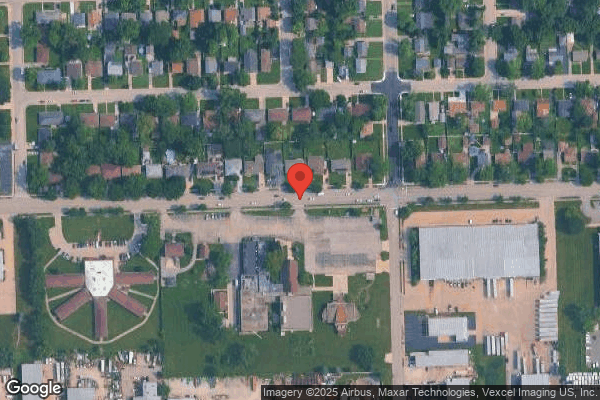
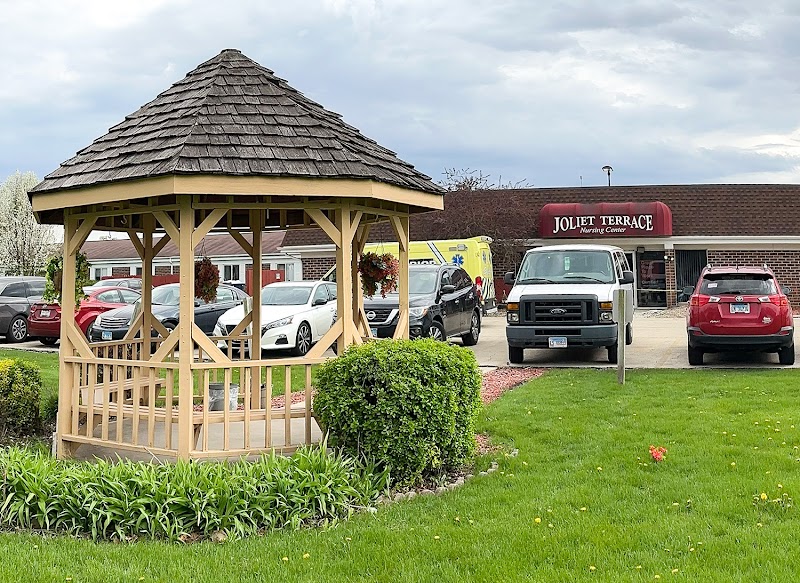
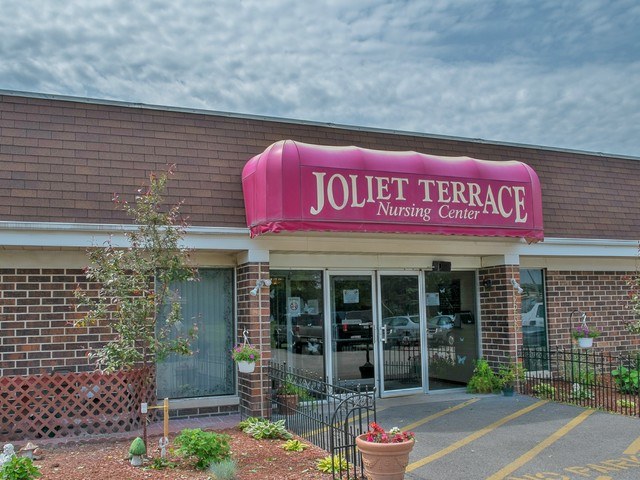
JOLIET TERRACE

2230 MCDONOUGH, JOLIET, IL 60436 (815) 729-3801
For profit - Limited Liability company 120 Beds Independent Data: November 2025
Trust Grade
40/100
#373 of 665 in IL
Last Inspection: May 2025

Inspected within the last 6 months. Data reflects current conditions.

Overview

Joliet Terrace has a Trust Grade of D, indicating below-average performance with some significant concerns. It ranks #373 out of 665 facilities in Illinois, placing it in the bottom half, and #8 out of 16 in Will County, suggesting limited better options nearby. The overall trend is worsening, with issues increasing from 9 in 2024 to 11 in 2025. Staffing is a relative strength, with a turnover rate of 19%, well below the state average of 46%, but the facility has received no fines, which is a positive sign. However, specific incidents raise concerns, including failures in water management that could affect all residents, poor cleanliness in food preparation areas, and improper temperature storage for milk, all of which point to potential risks for residents. Overall, while there are some strengths in staffing and compliance with fines, the increasing number of issues and specific health and safety concerns should be carefully considered by families.

Trust Score
D
40/100
In Illinois
#373/665
Bottom 44%
Safety Record
High Risk
Review needed
Inspections
Getting Worse
9 → 11 violations
Staff Stability
✓ Good
19% annual turnover. Excellent stability, 29 points below Illinois's 48% average. Staff who stay learn residents' needs.
Penalties
✓ Good
No fines on record. Clean compliance history, better than most Illinois facilities.
Skilled Nurses
⚠ Watch
Each resident gets only 29 minutes of Registered Nurse (RN) attention daily — below average for Illinois. Fewer RN minutes means fewer trained eyes watching for problems.
Violations
⚠ Watch
32 deficiencies on record. Higher than average. Multiple issues found across inspections.
★★☆☆☆
2.0
Overall Rating
★★☆☆☆
2.0
Staff Levels
★★☆☆☆
2.0
Care Quality
★★☆☆☆
2.0
Inspection Score
Stable
2024: 9 issues
2025: 11 issues

The Good

  • Low Staff Turnover (19%) · Staff stability means consistent care
  • Full Sprinkler Coverage · Fire safety systems throughout facility
  • No fines on record
  • Staff turnover is low (19%)

    29 points below Illinois average of 48%

Facility shows strength in staff retention, fire safety.

The Bad

2-Star Overall Rating

Below Illinois average (2.5)

Below average - review inspection findings carefully

The Ugly 32 deficiencies on record

May 2025 5 deficiencies
CONCERN (D)

Potential for Harm - no one hurt, but risky conditions existed

Free from Abuse/Neglect (Tag F0600)

Could have caused harm · This affected 1 resident

Based on interview and record review, the facility failed to prevent resident to resident abuse. This applies to 2 of 2 (R9 and R17) reviewed for abuse in the sample of 18. The findings include: R9's...

Read full inspector narrative →
Based on interview and record review, the facility failed to prevent resident to resident abuse. This applies to 2 of 2 (R9 and R17) reviewed for abuse in the sample of 18. The findings include: R9's face sheet shows R9 is 59 years-old, and has multiple diagnoses including paranoid schizophrenia. R9's most recent Minimum Data Sheet (MDS) assessment indicates R9 is cognitively intact. R17's face sheet shows he is 62 years-old, and has multiple medical diagnoses including unspecified schizophrenia, and generalized anxiety disorder, with a MDS assessment indicating moderately impaired cognition. R17's active care plan shows R17 has history of aggressive behavior and has exhibited verbally/physically abusive behavior related/manifested by being challenged by mental illness, ineffective coping mechanisms, poor verbal skills and inability to express self in more appropriate language. Incident report, dated May 1, 2025, at approximately 3:30 PM, documents while watching a movie in the dining/day room, V4 (Psychiatric Rehab Service Director/PRSD) witnessed R17 reaching out and touching R9's arm. V4 walked over to remind R17 not to touch anyone, however, R9 immediately reacted by grabbing R17's hand and kneeing R17 in his abdomen. V4 immediately responded, however, R17 lost his balance and fell to the floor. Nurses immediately assessed R9 and R17. R17 reported he hit his head, and his ribs hurt. R9 reported his left upper arm was hurting, as R17 hit him there. R9's and R17's primary physicians and psychiatrist were notified of the incident, and both residents were sent to the hospital for further evaluation. On May 12, 2025, at 10:58 AM, R9 said he was in the dining/day room watching a movie. R9 was sitting beside R17, and for no reason, R17 became agitated while he (R17) was talking to himself. R17 started punching him lightly on his left arm repeatedly. At first R9 tried to ignore R17, until he noticed the punches were becoming harder. R9 did not say anything because that was R17's behavior. When R17 stood up suddenly, R9 grabbed R17's hand, then he turned and kneed R17 in the abdomen. R9 did not get the chance to tell staff because R17 started punching him stronger. R9 retaliated so R17 would stop what he was doing. On May 14, 2025, at 12:45 PM, R17 stated he hit R9 a little bit, then R9 hit him in the abdomen and chest. On May 12, 2025, at 10:56 AM, V9 (Certified Nursing Assistant/CNA) said, (R9) was a nice person, usually he was calm and cooperative, but he doesn't like being touched. The resident whom he attacked kept touching him. R9 informed her that R17 grabbed him, so he (R9) pushed R17. On May 13, 2025, at 1:56 PM, V4 (Psychiatric Rehab Service Director/PRSD) stated the residents were watching a movie when the incident happened. V4 stated she saw R17 lean over R9, and R9 suddenly pushed R17. V4 stated during her interview of R9 and R17, R9 said R17 punched his arm, and then he grabbed R17 and kneed him in the abdomen. R17 fell on the floor. R17 admitted to punching R9. According to V4, R17 was socially inappropriate, (R17) likes touching people, and sometimes he would butt in to people's conversation without being invited, and is intrusive. While (R9) doesn't talk much, he keeps to himself, but he participates in all activities. During her (V4) interview of R17, the resident said he fell on his buttocks, but did not hit his head. 911 was called, both residents were sent to the hospital for further medical evaluation. On May 13, 2025, at 4:38 PM, V11 (Certified Nursing Assistant/CNA) and V12 (CNA) stated the incident happened beginning of the evening shift. V11 said she was coming out from the C-hallway, and did not witness the incident. V11 saw R17 was already on the floor, and she ran towards the day room; activity staff and V4 (PSRD) were already by R9 and R17. On May 14, 2025, at 10:46 AM, V13 (RN/Registered Nurse) stated she and the other nurses were at the nurses' station when the incident happened. V13 was charting/writing her documentation. According to V13, R17 punched R9 on the left shoulder/arm, and R9's reaction was to knee R17 in the abdominal area, which led to R17 falling on the floor. On May 14, 2025, at 3:03 PM, V17 (Psychiatric Rehab Service Assistant/PRSA) stated she was at the conference room getting ready for the smoke break, preparing the cigarettes and lighters of the residents. She did not see the incident, but heard the commotion. She went to the day area immediately, and she saw R9 being escorted to the nurses' station, while R17 was on the floor.
CONCERN (D)

Potential for Harm - no one hurt, but risky conditions existed

Deficiency F0740 (Tag F0740)

Could have caused harm · This affected 1 resident

**NOTE- TERMS IN BRACKETS HAVE BEEN EDITED TO PROTECT CONFIDENTIALITY** 2. R81 had multiple diagnoses including schizoaffective disorder depressive type (principal diagnosis), major depressive disorde...

Read full inspector narrative →
**NOTE- TERMS IN BRACKETS HAVE BEEN EDITED TO PROTECT CONFIDENTIALITY** 2. R81 had multiple diagnoses including schizoaffective disorder depressive type (principal diagnosis), major depressive disorder, generalized anxiety disorder and disorganized schizophrenia, based on the face sheet. R81 was under [AGE] years old. R81's quarterly MDS, dated [DATE], showed the resident is cognitively intact. The MDS showed R81 had no functional limitation in range of motion, and he required supervision to moderate assistance from the staff with his ADLs. Further review of the MDS showed R81's primary SMI diagnosis is schizoaffective disorder. R81's PASRR summary of findings, dated March 20, 2025, showed the resident has serious mental health condition. The PASRR findings showed in-part, A nursing home will be able to provide you with the care you need and make sure your mental health needs are being met. It also showed R81 met the nursing facility level of care. The PASRR summary of findings listed multiple services and/or supports needed to be provided to R81, under rehabilitative services including, Development, maintenance, and consistent implementation across settings of those programs designed to teach individuals daily living skills necessary to become more independent and self-determining including, but not limited to, grooming, personal hygiene, mobility, nutrition, vocational skill, health, drug therapy, mental health education, money management, and maintenance of the living environment. The screening documented the above service and/or support was selected because, In the nursing facility, you could benefit from strengthening your independent living skills so you can return to the community when able. The same PASRR summary of findings showed under rehabilitative services, Individual, group and family psychotherapy. R81's PASRR service matters summary report ,dated May 1, 2025, showed multiple rehabilitative supports recommended for the resident as a routine nursing facility services including, Development, maintenance, and consistent implementation across settings of those programs designed to teach individuals daily living skills necessary to become more independent and self-determining including, but not limited to, grooming, personal hygiene, mobility, nutrition, vocational skill, health, drug therapy, mental health education, money management, and maintenance of the living environment and Individual, group and family psychotherapy. On May 12, 2025 at 10:52 AM, R81 was inside his room; he was alert and oriented. R81 stated he attends only one in-house group called money management. R81 said group is held three times per week for about 20 minutes each group session. R81 stated he also talks 1:1 to the psychosocial person once a week. According to R81, he stays inside his room most of the time, and would only come out of his room to eat at the main dining room, and to smoke during the scheduled times. R81 added he also does not attend any activities at the facility. On May 13, 2025 at 9:30 AM, R81 was inside his room, playing with his computer. At 2:40 PM, R81 was sleeping in his bed inside his room. R81's quarterly substance use assessment, dated February 26, 2025, showed the resident had history of alcohol, marijuana, and heroin use. R81's quarterly treatment motivation assessment, dated February 26, 2025, showed the resident is Somewhat willing to work on treatment plan. R81's quarterly discharge potential assessment, dated February 26, 2025, showed the resident's overall goal established during the assessment process was, Expects to be discharged to the community. Review of the facility's list of groups/programs showed that R81 was scheduled to participate/attend the money management group every Tuesdays, Wednesdays and Thursdays from 6:00 PM through 6:30 PM. R81 was not listed on any other group/program scheduled by the facility. On May 13, 2025 at 9:30 AM, the facility was asked to provide all the group/program attendance sign-in sheet for R81 from March through May 2025. The facility presented R81's group attendance sign-in sheet for the months of April and May 2025 for the money management group. The group attendance sign-in sheet showed R81 attended the money management group only three times on April 30, May 1 and May 7, 2025. On May 13, 2025 at 2:23 PM, V4 (PRSD) stated based on R81's discharge potential assessment, the resident expects to be discharged to the community, and based on R81's latest level of functioning assessment, dated February 26, 2025, the resident would benefit from money management group, home and self-care group, and symptom management group to support his behavioral and mental health and be able to facilitate re-integration to the community. However, according to V4, R81 only attends the money management group, because he (R81) is interested in it, and refused to attend the home and self-care group and symptoms management group. V4 was asked why R81's name was not listed as a scheduled participant in the facility's list of groups/programs for home and self-care and symptom management. According to V4, R81's name was not listed because he does not attend the said groups/programs anyway. On May 13, 2025 at 2:46 PM, V7 stated she is the PRSC for R81. V7 stated for R81's mental health rehabilitative service, the main focus is to attend symptom management/coping skills group and home and self-care/life skills for ADLs (activities of daily living), but the resident refused to attend, and also had refused to have a one on one meeting to discuss his behavior and mental health. According to V7, R81 had attended money management group, but was not sure how often. V7 added R81 at times would attend activity, and the resident prefers to stay in his room and play with his computer. V7 stated she has a problem motivating R81 to attend his focus groups. V7 stated R81's goal is to eventually be discharged to the community, however, because of poor to no group attendance, it is hard to reintegrate the resident to the community. On May 13, 2025 at 3:12 PM, V4 (PRSD) stated after reviewing R81's electronic records from January through March 2025, there was no documentation to indicate the resident attended any group/program offered by the facility, except on February 20, 2025. V4 stated the February 20, 2025 group that R81 attended was the sexual health and hygiene, and the group lasted for only 30 minutes. V4 acknowledged that based on R81's attendance information from January through May 7, 2025, R81 had attended only two hours of the group/program that was provided at the facility, three times for the money management group (each lasting for 30 minutes) and once for the sexual health and hygiene group (lasting for 30 minutes). On May 14, 2025 at 9:47 AM, group exercises were going on inside the main dining room, and R81 was not present. At 9:51 AM, R81 was standing inside his room. The resident stated he does not want to attend the group exercises that were going on. R81 also stated he does not have any plans for the day, and would just be staying in his room to play with his computer. R81 was asked why he does not want to attend symptom management group and home and self-care group. R81 responded he does not like the groups, and it does not interest him. On May 14, 2025 at 10:16 AM, V4 (PRSD) stated there is no documentation from January through May 14, 2025 of any one on one meeting with the PRSD or the PRSC to discuss R81's mental health and refusals to attend the assessed groups/programs that could support his mental health service/care. Based on observation, interview, and record review, the facility failed to provide behavioral health services to residents with SMI (severe mental illness). This applies to 2 of 3 residents (R76 and R81) reviewed for behavioral health services in the sample of 18. The findings include: 1. R76 was admitted to the facility on [DATE], with multiple diagnoses including schizoaffective disorder and attention deficient hyperactivity disorder, based on the face sheet. R76 was under [AGE] years old. R76's annual MDS (Minimum Data Set), dated February 10, 2025, showed R76 is cognitively intact. The MDS showed the resident has no functional impairments in range of motion. Further review of the MDS showed R76 requires supervision with all his ADLs (activities of daily living). The same MDS showed R76's primary SMI (Serious Mental Illness) diagnosis is schizophrenia, and the resident is on antipsychotic medication. R76's PASRR (Pre-admission Screening and Resident Review) Level II, dated September 11, 2024, showed R76 needs programs that teach the resident daily living skills needed to be independent, such as grooming, personal hygiene, mobility, nutrition, vocational skill, health, drug therapy, mental health education, money management, and maintenance of living environment. R76's PASRR summary of findings showed R76 needs to have meetings with a psychiatrist or social worker. R76's PASRR Level II, dated December 27, 2024, recommended rehabilitation supports, such as pharmacotherapy, life skills programs, and psychotherapy. The PASRR also showed R76 should have programs that teach the resident daily living skills needed to be independent, such as grooming, personal hygiene, mobility, nutrition, vocational skill, health, drug therapy, mental health education, money management, and maintenance of living environment. It was mentioned in the PASRR summary report the PASRR should be incorporated in R76's plan of care, and the staff should be aware of the services required for R76. R76's active care plan, dated June 17, 2024, showed R76 has hallucinations related to mental illness. The same care plan showed several interventions including encouraging the resident to participate in activities, coping skills, and symptom management groups. On May 12, 2025, at 11:06 AM, R76 was lying in bed and had his covers on him. He said he does not attend any in house and/or outpatient programs because he does not want to. He stated his plan was to stay in the facility long-term. He said his plan for the day was to eat and take naps. On May 13, 2025, at 9:31 AM, R76 was sleeping in bed. At this time, there was an exercise activity going on in the dining/activity area. R76's quarterly risk of self-harm assessment, dated May 7, 2025, showed the resident has self-destructive behavior. R76's social service progress notes from December 2024 to May 14, 2025, showed the resident attended only two groups, which were money management and sexual health group. Each group lasted 30 minutes. R76 attended money management group on March 8, 2025, and attended the sexual health group on February 20, 2025. It was documented in the social service notes that R76 actively participated in the money management group and verbalized understanding of the topics discussed in the sexual health group. Based on the above information, R76 had received a total of one hour of mental health/behavioral health services from December 2024 to May 14, 2025. The facility presented a list of groups/programs with a list of participants, and R76's name was not on the list for the following groups: symptom management, home and self-care, and social skills/basic conversation. On May 13, 2025, at 11:04 AM, V4 (Psychiatric Rehabilitation Service Director/PRSD) stated R76 refused to go to one-on-one sessions, groups, or activities. On May 13, 2025, at 2:12 PM, V4 (PRSD) stated based on R76's level of functioning assessment dated [DATE], the resident can benefit from the following groups: symptom management, home and self-care, and social skills/basic conversation. V4 stated R76 refused to attend any of the above-mentioned groups. R76 also refused one-on-one sessions with the counselor, PRSD, and PRSC (Psychiatric Rehabilitation Service Coordinator). On May 14, 2025, at 10:17 AM, V4 stated there was no documentation in R76's records with regards to one-on-one sessions offered and the resident's refusal for one-on-one sessions to address his behavioral health needs.
CONCERN (E)

Potential for Harm - no one hurt, but risky conditions existed

Safe Environment (Tag F0584)

Could have caused harm · This affected multiple residents

**NOTE- TERMS IN BRACKETS HAVE BEEN EDITED TO PROTECT CONFIDENTIALITY** Based on observation and interview the facility failed to have window screens in resident's rooms. This applies to 5 of 5 resid...

Read full inspector narrative →
**NOTE- TERMS IN BRACKETS HAVE BEEN EDITED TO PROTECT CONFIDENTIALITY** Based on observation and interview the facility failed to have window screens in resident's rooms. This applies to 5 of 5 residents (R30, R66, R74, R77 and R80) in the sample 18. The findings include: 1.R80's quarterly MDS (Minimum Data Set), dated March 21, 2025, showed R80 was cognitively intact. On May 13, 2025 at 9:11 AM, R80 stated the window in her room does not have a screen. On checking R80's window in her room, it did not have a screen. The window was partially (about 4 inches) opened on the right side. R80 stated she had slid the inner panel sideways as far as it would go. A wooden block at the left side was inside the ledge of the window that prevented sliding the panel to open the window further. R80 stated V6 (Maintenance Director) applied the wooden block to prevent residents from opening the window completely and jumping out. R80 stated when V6 applied the wooden block on April 23, 2025, she had told him about the missing screen, and he did nothing about it. R80 remarked it is warm at the facility, and therefore she opens the window to let in some fresh air. R80 remarked without a screen on the window, anything can fly in through the open window. On May 13, 2025 at 11:53 AM, V6 stated he thought that none of the windows in the facility had any screens since he started working at the facility three years ago. V6 also verified he had applied a wooden block in R80's window panel to prevent the window being opened completely, as there has been concerns regarding the same. On May 14, 2025 starting at 2:23 PM, during tour of the resident rooms in all the wings of the facility, the absence of window screens was seen in multiple rooms, including some that were warped, and others with ripped mesh, and V6 was made aware of the same. 2. R77's Annual MDS, dated [DATE], showed R77 was cognitively intact. On May 14, 2025 at 2:51 PM, R77's room window did not have a window screen, and it was partially open. R77 stated he would like a screen, as he is concerned with flies coming in all the time. 3. R74's quarterly MDS, dated [DATE], showed R74 was cognitively intact. On May 14, 2025 at 2:53 PM, R74's room window was also partially open and did not have a window screen. R74 stated without the screen, moths fly in all the time, and he is worried a bird might fly in. R74 stated he likes to open the window to get some fresh air. 4. R66's quarterly MDS, dated [DATE], showed R66 was cognitively intact. On May 14, 2025 at 2:57 PM, R66's room window did not have a window screen, and the screen was seen lying on the grass outside the window, with broken edges and the mesh ripped up in shreds. R66 stated the screen fell over more than two weeks ago, and was already ripped up. 5. R30's quarterly MDS, dated [DATE], showed R30 was cognitively intact. On May 14, 2025 at 3:03 PM, R30's room window had no window screen, and R30 stated he would like to have a screen, as he sometimes opens the window for fresh air. On May 13, 2025 at 11:58 AM, V1 (Administrator) stated the facility does not have a policy that shows requirements for window screens. V1 stated she is of the impression the facility did have screens on all the windows in the (unknown) past, and the residents would take them off or punch holes in them, so the facility did not re-install them.
CONCERN (E)

Potential for Harm - no one hurt, but risky conditions existed

Deficiency F0628 (Tag F0628)

Could have caused harm · This affected multiple residents

**NOTE- TERMS IN BRACKETS HAVE BEEN EDITED TO PROTECT CONFIDENTIALITY** Based on record review and interview, the facility failed to provide residents or residents' representatives their written bed h...

Read full inspector narrative →
**NOTE- TERMS IN BRACKETS HAVE BEEN EDITED TO PROTECT CONFIDENTIALITY** Based on record review and interview, the facility failed to provide residents or residents' representatives their written bed hold and return policy prior to hospitalization. This applies to 4 of 4 residents (R23, R38, R72, R78) reviewed for hospitalizations in the sample of 18. The findings include: 1. R38 has multiple medical diagnoses including type 2 diabetes mellitus without complications, hypothyroidism, unspecified, constipation, unspecified, extrapyramidal and movement disorder, unspecified, hypertensive heart disease without heart failure, schizoaffective disorder, bipolar type, Ogilvie syndrome, based on the face sheet. Progress notes from November 2024 to present shows that R38 was sent to the hospital multiple times for different reasons. On November 17, 2024, he was sent to the hospital for acute left lateral fracture of the 4th, 5th, 6th, and 7th rib, with 5% pneumothorax. On December 20, 2024, he was sent for abnormal result of KUB (Kidney, Ureter, Bladder) test, and on January 2, 2025, he was admitted to the hospital for UTI (Urinary Tract Infection). Further review of R38's records showed that there was no documentation provided to R38 or R38's representatives about the bed-hold and return policy prior to hospital transfer. 2. R23's EMR (Electronic Medical Record) showed R23 was admitted to the facility on [DATE], with diagnoses that included schizoaffective disorder depressive type and primary insomnia. R23 was admitted to the hospital on [DATE]. R23's MDS (Minimum Data Set) dated April 15, 2025, showed R23 was cognitively intact. R23's progress note written on March 12, 2025, at 1:49 PM, showed R23 was agitated and throwing things in his room. He was refusing to shower and told the staff to drop dead. R23 was making derogatory statements to staff, he was resistant to redirection, and his agitation was increasing towards staff. Progress note dated March 13, 2025, at 12:09 PM, showed R23's aggressive behavior continued to escalate towards staff. R23 was informed that due to his non-compliance with taking his medications and aggressive behavior, the physician had given an order to have R23 sent to the hospital. R23 became upset and took a swing at the nurse, other staff members had to intervene and redirected R23. At 1:17 PM, the progress note showed the ambulance arrived at 12:45 PM and took R23 to the hospital. R23's records were reviewed and there was no documentation that R23 or his representative had received in writing the facility's bed-hold policy. 3. R72's EMR showed R72 was admitted to the facility on [DATE], with diagnoses that included schizoaffective disorder bipolar type, PTSD (Post Traumatic Stress Disorder), anxiety, moderate intellectual disabilities, and bipolar disorder current episode depressed severe with psychotic features. R72's MDS dated [DATE], showed R72 was cognitively intact. R72's progress note written on May 9, 2025, at 12:27 PM, showed R72 was being sent to the hospital for trying to harm herself and others. Staff attempted to get a pen away from R72, she was forcefully trying to stab staff. R72 was taken to another room, nurse called physician, and an order was given to send R72 to the local hospital for evaluation and treatment. R72's records were reviewed and there was no documentation to show that the facility had provided the resident or her representative with written notice of the bed-hold policy. 4. R78's EMR showed R78 was admitted to the facility on [DATE], with diagnoses that included anxiety, schizoaffective disorder bipolar type, and alcohol abuse uncomplicated. R78's MDS dated [DATE], showed R78 was cognitively intact. R78's progress note written on May 9, 2025, at 10:13 AM, showed R78 was making delusional statements about it being her birthday and asking residents to sing happy birthday to her. R78 was observed crying and telling stories At 8:37 PM, R78's progress note showed the nurse had asked R78 to come take her medications and R78 replied, don't tell me what to do, I'm a pharmacy tech. At 10:54 PM, R78 was being verbally aggressive towards another resident and staff intervened by separating the two residents .the nurse asked R78 if she wanted her PRN (as needed) medication and R78 said, why don't you take it? At 11:23 PM, physician was called, and an order was given to have R78 sent to the hospital. R78 was admitted to the hospital on [DATE]. R78's record was reviewed and there was no documentation to show R78 or her representative had been provided in writing the bed-hold policy. On May 13, 2025, at 10:17 AM, V1 (Administrator) was asked to provide the bed-hold written documentation for R23, R38, R72, and R78. At 10:58 AM, V1 brought the policy for bed hold but admitted the facility was not completing the bed-hold forms for residents being transferred to the hospital. Facility provided their Bed Hold policy that was dated effective as of April 2020. The policy showed, Guideline: Prior to transfers and therapeutic leaves, residents or resident representatives will be informed in writing of the bed-hold and return policy.
CONCERN (F)

Potential for Harm - no one hurt, but risky conditions existed

Infection Control (Tag F0880)

Could have caused harm · This affected most or all residents

Based on interview and record review, the facility failed to follow their water management program and identify areas where control measures are needed and assess how much of a risk those hazardous co...

Read full inspector narrative →
Based on interview and record review, the facility failed to follow their water management program and identify areas where control measures are needed and assess how much of a risk those hazardous conditions pose. This affects all 88 residents residing in the facility. Findings include: The CMS (Centers for Medicare and Medicaid Services)-671 Long Term Care Facility application for Medicare and Medicaid, dated May 12, 2025, showed the total census of 88 residents. The facility's Water Management program stated the facility will do the following: 1. identify building water systems for which Legionella control measures are needed. 2. Assess how much risk the hazardous conditions in those water systems pose. On May 14, 2025 at 1:25 PM, it was requested from V1 (Administrator),V6 (Maintenance Director), V15 (Regional Maintenance) all information regarding their water management plan, Legionella, and other waterborne pathogens plan, their water management assessment, and any evidence of measures used to prevent Legionella. On May 14, 2025 3:32 PM, V1, V6, and V15 acknowledged and clarified information given to the surveyor, and all stated they had no other information to give surveyor for their water management program. The information that was provided included a log for room water flushing in rooms that are unoccupied for 72 hours or more, a water management program policy, and two mobile phone screen shots of the logged water flushings of unoccupied rooms. V15 stated the water flushing they are doing are considered their assessment, and that is all we have to do. V1 and V15 stated they do not have any assessment in writing or otherwise to show what the facility's risks for Legionella are, or what their control measures are based on those identified risks. V15 stated other than the logs and the water management program policy, they do not have anything more to present to the surveyor. Nowhere in the facility's water management program policy and the flushing logs was there an identification of the building's water systems for which Legionella control measures, nor an assessment of how much risk the hazardous conditions in those water systems pose. The facility's water management program policy refers one to see diagram in Figure A (attach appropriate drawing). However, there was no such Figure A drawing attached.
Apr 2025 3 deficiencies
CONCERN (D) 📢 Someone Reported This

A family member, employee, or ombudsman was alarmed enough to file a formal complaint

Potential for Harm - no one hurt, but risky conditions existed

Safe Environment (Tag F0584)

Could have caused harm · This affected 1 resident

**NOTE- TERMS IN BRACKETS HAVE BEEN EDITED TO PROTECT CONFIDENTIALITY** Based on observation, interview, and record review, the facility failed to maintain a residents room in good repair. This applie...

Read full inspector narrative →
**NOTE- TERMS IN BRACKETS HAVE BEEN EDITED TO PROTECT CONFIDENTIALITY** Based on observation, interview, and record review, the facility failed to maintain a residents room in good repair. This applies to 1 of 3 residents (R1) reviewed for physical environment. The findings include: R1 was admitted to the facility on [DATE] with multiple diagnoses which included schizoaffective disorder, attention deficit hyperactivity disorder, obesity, and tinea unguium. R1's MDS (Minimum Data Set), dated 02/10/25, showed R1 was cognitively intact. R1's Progress Note, dated 02/13/24 at 9:52 AM, showed, It was brought to writers attention that there was a hole in the wall by the resident's bed. Writer approached resident about the said behavior and incident and was educated that vandalizing facility property is not acceptable and will be held accountable. On 04/23/25 at 2:00 PM, R1 was in his room, sitting on the side of the bed. R1 was alert and oriented x3. R1 had a large piece of plywood on the wall next his bed. R1 stated he accidentally kicked the wall a year ago while he was sleeping. R1 stated the plywood has been there for a year. R1 stated the facility told him that they were going to repair it, but not when. On 04/24/25 at 9:20 AM, V6 (Maintenance Director) stated the plywood on the wall in R1's room measured 3 feet x 2 inches. V6 stated the plywood has been on the wall in R1's room since 02/13/24. V6 stated the hole has not been repaired in 14 months, due to him overlooking it. V6 stated the hole should have been repaired over a year ago. On 04/24/25 at 12:03 PM, V1 (Administrator) stated, (R1) punched a hole in the wall in his room on 02/13/24. The hole should have been fixed. It should not have been left with plywood on the wall for over a year. (R1) could get an injury from the plywood that is on the wall. The facility's Maintenance policy, effective date 04/2020, showed, The Maintenance Department is responsible for maintaining the building, grounds, and equipment in a safe and operable manner at all times. Functions of maintenance personnel include but are not limited to: Maintaining the building in good repair and free from hazards. Establishing priorities in providing repair services.
CONCERN (D) 📢 Someone Reported This

A family member, employee, or ombudsman was alarmed enough to file a formal complaint

Potential for Harm - no one hurt, but risky conditions existed

Free from Abuse/Neglect (Tag F0600)

Could have caused harm · This affected 1 resident

**NOTE- TERMS IN BRACKETS HAVE BEEN EDITED TO PROTECT CONFIDENTIALITY** Based on interview and record review, the facility failed to protect a resident's rights to be free of sexual and physical abuse...

Read full inspector narrative →
**NOTE- TERMS IN BRACKETS HAVE BEEN EDITED TO PROTECT CONFIDENTIALITY** Based on interview and record review, the facility failed to protect a resident's rights to be free of sexual and physical abuse. This applies to 3 of 4 residents (R2, R3, and R4) reviewed for sexual and physical abuse. The findings include: R2 was admitted to the facility on [DATE] with multiple diagnoses which included post-traumatic stress disorder, schizoaffective disorder, anxiety, and borderline personality disorder. R2's MDS (Minimum Data Set), dated 02/13/25, showed R2 was cognitively intact. R3 was admitted to the facility on [DATE] with multiple diagnoses which included schizoaffective disorder, post-traumatic stress disorder, anxiety, insomnia, psychoactive substance use, depression, and seizures. R3 was discharged from the facility on 04/07/25. R4 was admitted to the facility on [DATE] with multiple diagnoses which included primary insomnia, schizoaffective disorder, bipolar disorder, cannabis use. R4's MDS, dated [DATE], showed R4 was cognitively intact. The facility's 04/05/25 Report to IDPH (Illinois Department of Public Health) showed R2 reported to the PRSC (Psych Rehab Services Counselor) that R3 touched her inappropriately by grabbing her left breast. R2 reported she kicked R3 after he touched her inappropriately, and he left the room. The police were called and arrived at the facility on 04/05/25 at 6:40 PM. The conclusion for final report: the facility believes that due to (R3's) diagnoses of severe mental illness, including schizoaffective disorder bipolar type, paranoia with accusatory statements, mixed with being intoxicated, the facility believes that (R3) was unable to control his impulses and proceeded to touch (R2) inappropriately. The facility's 04/07/25 Report to IDPH showed during an interview regarding a previous incident, R2 stated that she slapped her boyfriend, another resident (R4) on 04/05/25, because he didn't protect her from another peer who was inappropriate with her (R3). (R4) confirmed he was slapped, but stated that it didn't hurt. No injuries noted and (R4) denied pain. Resident declined police intervention. The MD (Medical Doctor) was notified with no new orders. The Final Report showed R4 declined police intervention. Conclusion for Final Report: the facility believes that due to (R2's) diagnoses of severe mental illness, including borderline personality disorder and bipolar disorder, mixed with being intoxicated, and angry and hurt from being violated, she reacted in an emotional manner and slapped her boyfriend. On 04/23/25 at 2:45 PM, R2 stated on 04/05/25, it was her birthday. She took a ride share to (retail store) and purchased an alcoholic beverage. R2 stated she wanted to turn up for her birthday with her boyfriend (R4) and her friend (R3). They all went outside and were drinking the alcoholic beverage. R2 and R4 went to R4's room. R2 stated they were lying in the bed. R2 stated she was tipsy, and they were not asleep. R2 stated R3 walked into the room and was talking with R4. R2 stated she was wearing headphones, so she did not hear what they were talking about. R2 stated R3 walked up to her and put his hand under shirt and grabbed her left breast. R2 stated she kicked R3 to move him away from her. R2 stated R3 walked towards her again, so she kicked him once again. R2 stated she thought R4 gave R3 permission to touch her, so she smacked R4. R2 stated she left the room and reported the incident to psych social staff. R2 stated the police were called and came to the facility. On 04/24/25 at 10:30 AM, R4 stated on 04/05/25, he and R2 were outside hanging out. R4 stated R3 came outside with them. R4 stated he and R2 went back inside to his room. R4 stated they were lying in the bed, and R3 came in the room. R4 stated he was rubbing on R2's stomach because she did not feel good. R4 stated R3 walked over and put his hands under R2's shirt and grabbed her breast. R4 stated R2 kicked R3 after he grabbed her breast. R4 stated R2 got mad at him and slapped him because R2 thought he let R3 grab her breast. R4 stated, I did not have a conversation with him and did not tell him he could do that. On 04/24/25 at 12:03 PM V1 (Administrator) stated all residents should be free from abuse and should feel safe in the facility. The facility's Abuse policy, effective date 12/2024, showed, The facility is committed to protecting our residents from abuse, neglect, exploitation, misappropriation of property and mistreatment by anyone including, but not limited to, facility staff, other residents, consultants, volunteers, staff from other agencies providing services to the individual, family members or legal guardians, friends, or any other individuals .
CONCERN (D) 📢 Someone Reported This

A family member, employee, or ombudsman was alarmed enough to file a formal complaint

Potential for Harm - no one hurt, but risky conditions existed

Deficiency F0687 (Tag F0687)

Could have caused harm · This affected 1 resident

**NOTE- TERMS IN BRACKETS HAVE BEEN EDITED TO PROTECT CONFIDENTIALITY** Based on observation, interview, and record review, the facility failed to have podiatry services provide foot care and treatmen...

Read full inspector narrative →
**NOTE- TERMS IN BRACKETS HAVE BEEN EDITED TO PROTECT CONFIDENTIALITY** Based on observation, interview, and record review, the facility failed to have podiatry services provide foot care and treatment. This applies to 1 of 3 residents (R1) reviewed for podiatry services. The findings include: R1 was admitted to the facility on [DATE] with multiple diagnoses which included schizoaffective disorder, attention deficit hyperactivity disorder, obesity, and tinea unguium. R1's MDS (Minimum Data Set), dated 02/10/25, showed R1 was cognitively intact. The same MDS showed R1 required supervision or touching assistance with ADL's (Activities of Daily Living). On 04/23/25 at 2:00 PM, R1 was wearing black slippers. R1's toenails on his left foot were long, black, and curled in a downward position. R1's toenails on his right foot were long. R1 stated the last time he had his toenails clipped by the podiatrist was six months ago. R1 stated he told the program manager that he needed his toenails clipped. R1 stated he was on the list to see the podiatrist in March. R1 stated the podiatrist came and did not see him. R1 stated he wants his toenails clipped. On 04/24/25 at 12:03 PM, V1 (Administrator) stated R1 should have been provided with podiatry care. R1's toenails should not be long, hard, and discolored, and without care. On 04/24/25 at 1:16 PM, V4 (Director of Nursing) stated the podiatrist came to the facility on [DATE]. V4 stated R1 did not see the podiatrist on that day. V4 stated they did not have documentation showing R1 refused to be seen. V4 stated the facility should have made sure R1's toenails were clipped, if that meant sending him to a podiatrist outside of the facility. The facility's podiatry list showed R1 was added to the podiatry list on 03/03/25 to have his toenails trimmed. The facility was unable to provide documentation of R1 being seen in 03/2025 by the podiatrist. The facility's Podiatry Services policy, effective date 03/2021, showed The facility will make available podiatry services to all residents. Comprehensive foot care by a podiatrist includes prevention of infections and trimming of mycotic/ingrown toenails .
Apr 2025 3 deficiencies
CONCERN (D) 📢 Someone Reported This

A family member, employee, or ombudsman was alarmed enough to file a formal complaint

Potential for Harm - no one hurt, but risky conditions existed

Resident Rights (Tag F0550)

Could have caused harm · This affected 1 resident

**NOTE- TERMS IN BRACKETS HAVE BEEN EDITED TO PROTECT CONFIDENTIALITY** Based on observation, interview, and record review, the facility failed to respect a resident's right to receive a second cup of...

Read full inspector narrative →
**NOTE- TERMS IN BRACKETS HAVE BEEN EDITED TO PROTECT CONFIDENTIALITY** Based on observation, interview, and record review, the facility failed to respect a resident's right to receive a second cup of coffee, as desired by the resident. This applies to 1 of 3 (R3) residents reviewed for resident rights in the sample of 8. The findings include: The EMR (Electronic Medical Record) shows R3 was admitted to the facility on [DATE]. R3 has multiple diagnoses including, cocaine dependence with cocaine-induced anxiety disorder, major depressive disorder, COPD (Chronic Obstructive Pulmonary Disease), cardiac arrhythmia, back pain, and suicidal ideations. R3's MDS (Minimum Data Set), dated March 5, 2025, shows R3 is cognitively intact, and requires supervision with all ADLs (Activities of Daily Living). R3 is always continent of bowel and bladder. On March 27, 2025 at 10:50 AM, R3 was sitting up in bed in his room. R3 said on March 25, 2025, he was in the dining room and wanted a second cup of coffee. R3 said, I went up to [V3] (CNA-Certified Nursing Assistant) and asked for a second cup of coffee. She refused to give me a second cup, and in a stern voice told me I had to go sit down and wait until everyone else had received their first cup of coffee. How on earth would I be able to tell all the other people living here had received their first cup of coffee? I tried to get creative and ask my roommate to go up and get me a cup of coffee because he doesn't drink coffee. I even saw another person go up and ask for a second cup of coffee, and she gave it to him. I was upset because I felt like she was playing favorites, and she was purposely doing it to upset me and show me she was the boss. I have only lived here a month, and no one told me there were rules about the coffee. On March 27, 2025 at 2:06 PM, V3 (CNA) said, I was serving coffee at lunchtime. [R3] asked if he could have extra coffee. Everyone has to get a cup first. I gave another resident coffee and [R3] became upset. I think the resident doesn't realize how it works. He had his roommate come up and ask for coffee, and I knew it was for [R3]. On March 27, 2025 at 3:56 PM, V4 (PRSC-Psychiatric Rehabilitation Services Coordinator) said R3 was having a very rough day on March 25, after receiving some bad news and he was very upset about V3 (CNA) not providing a second cup of coffee. V4 said, I would not have handled it the way [V3] did. V4 continued to say there are no rules regarding second helpings of coffee, and a second cup of coffee would have greatly helped R3 to feel better after the distressing day he was having. On March 31, 2025 at 2:40 PM, V1 (Administrator) said there are no rules at the facility regarding getting second helpings on coffee. V1 said, We have not had any issue of running out of coffee. There are no rules about getting seconds, or even thirds of coffee. On April 1, 2025 at 9:05 AM, multiple residents were observed drinking coffee in the main dining room and also getting second helpings of coffee. The facility did not have any rules posted regarding coffee service to residents. On April 1, 2025 at 9:24 AM, V1 said, This shouldn't have been an issue. [V3] (CNA) should have given the second cup of coffee.
CONCERN (D) 📢 Someone Reported This

A family member, employee, or ombudsman was alarmed enough to file a formal complaint

Potential for Harm - no one hurt, but risky conditions existed

Free from Abuse/Neglect (Tag F0600)

Could have caused harm · This affected 1 resident

**NOTE- TERMS IN BRACKETS HAVE BEEN EDITED TO PROTECT CONFIDENTIALITY** Based on interview and record review, the facility failed to protect the residents' right to be free from physical abuse. This a...

Read full inspector narrative →
**NOTE- TERMS IN BRACKETS HAVE BEEN EDITED TO PROTECT CONFIDENTIALITY** Based on interview and record review, the facility failed to protect the residents' right to be free from physical abuse. This applies to 3 of 6 residents (R3, R4, and R7) reviewed for physical assault in the sample of 8. The findings include: 1. The EMR (Electronic Medical Record) shows R3 was admitted to the facility on [DATE]. R3 has multiple diagnoses including, cocaine dependence with cocaine-induced anxiety disorder, major depressive disorder, COPD (Chronic Obstructive Pulmonary Disease), cardiac arrhythmia, back pain, and suicidal ideations. R3's MDS (Minimum Data Set), dated March 5, 2025, shows R3 is cognitively intact, and requires supervision with all ADLs (Activities of Daily Living). R3 is always continent of bowel and bladder. The EMR shows R4 was admitted to the facility on [DATE]. The EMR continues to show R4 was sent to the local hospital on March 26, 2025, and has not returned to the facility. R4 has multiple diagnoses including bipolar type schizoaffective disorder, heart disease, nicotine dependence, hearing loss, and cocaine and cannabis abuse. R4's MDS, dated [DATE], shows R4 is cognitively intact, requires setup with eating and showering, and supervision with all other ADLs. R4 is always continent of bowel and bladder. On March 25, 2025 at 7:45 PM, V10 (RN-Registered Nurse) documented, [R3] involved in physical/verbal altercation with a peer this afternoon around 3:30 PM. Resident states peers came down to his room and were threatening him which caused the situation to escalate. Staff intervened immediately and resident was escorted back to his room. Call placed to [V11] (Physician), and order received to send resident out to hospital per protocol. Resident calm and cooperative with staff/EMS (Emergency Medical Services) and was transported to [local hospital] via ambulance service around 5:30 PM. On March 25, 2025 at 6:07 PM, V12 (RN) documented, [R4] got involved in physical aggression with another peer in the facility. Resident reported been the aggressor. Resident reported went into other peer room with and made verbal altercation threatening another peer. Resident was difficult to be redirected and other peer called police department for intervention. The facility's Final Report of Abuse Investigation regarding R3 and R4, received by the state agency on March 31, 2025 shows the date of the incident as March 25, 2025 at approximately 3:00 PM. The report shows, At approximately 3:00 PM, [R3] head-butted [R4]. In retaliation, [R4] struck [R3] in the face with his fist . Staff members were interviewed. Per staff, [R3] was yelling and cursing at [V3] (CNA-Certified Nursing Assistant) over some coffee. [V3] was noted to be upset about this and was counseled by DON (Director of Nursing). It was then observed by several staff members that [V3] (CNA) was outside in the parking lot speaking with another staff member, while residents [R4], [R6] and [R5] were within earshot. Shortly thereafter, the three residents entered the building and went towards [R3's] room. [R3] was interviewed. [R3] stated that [R6], [R5], and [R4] came to his room saying that they heard what he did to a CNA, and that they would f**k him up if he did it again. [R3] stated that he got up and walked out of his room. He stated that [R6], [R5], and [R4] followed him. He then stated that [R4] walked in front of him and got in his face. He said they were nose-to-nose, with his back against the wall. [R3] stated that he pushed forward and [R4] punched him in the face. [R3] stated that as they were walking down the hall one of the residents stated that [V3] (CNA) told them to straighten him out and [R4] stated that he would knock his head off his block . [R4] was interviewed. [R4] stated that he, [R6], [R5], [V8] (Activity Director), and [V3] (CNA) were outside in the parking lot. He stated that [V3] (CNA) told them that [R3] had cursed her out during lunch. [R4] stated he and [R6] and [R5] went to [R3's] room to ask him if he got into it with a CNA. He said that [R3] said no. He stated that she wouldn't lie. [R4] stated that [R3] got up and left them in the room. The three other residents followed. He stated that he and [R3] began to argue and that when they got to the end of the hallway, [R3] head-butted him, and that he hit him back. On March 27, 2025 at 10:50 AM, R3 was sitting up in his bed in his room. R3 said on March 25, 2025, he wanted a second cup of coffee. He asked V3 (CNA) for a second cup of coffee and she was rude to him and refused to give him a second cup of coffee. R3 continued to say he walked back to his table and muttered b**ch under his breath. R3 said, A few hours later, [V3] (CNA) was leaving and stood outside talking to five other guys and they came to my door and said I called her a b**ch. It escalated to the point where [R4] had his face up against my face, nose-to-nose, and he head-butted me, and then swung at me. Each time I ducked out of the way, so he just ended up hitting my head on the side of my head with his fist. They sent me to the hospital, and they did a cat scan and stuff on me, but nothing was wrong with me, and they sent me back. On March 27, 2025 at 10:14 AM, V2 (DON) said, [R4] was sent out for a psychiatric evaluation and has not returned to the facility. It will be at least five days until he returns. The initial report was that [R3] head-butted [R4]. We found the situation was quite different. [R4], [R5], and [R6] went down to [R3's] room, and basically said he shouldn't talk to staff because [R3] called [V3] (CNA) a b**ch. [R3] got agitated and walked out of his room and they walked behind him. [R4] got in front of him and came to his face and punched [R3] in the face. By then we heard the commotion and stopped the fight and separated them. In that instance, they (R4, R5, and R6) ganged up on [R3]. All the residents admitted going down to [R3's] room. Those three (R4, R5, and R6) hang together. We counseled them on boundaries and going into his room. [R4] was the only one who was aggressive. During lunch, [R3] wanted an extra cup of coffee and [V3] said he had to wait until they were done serving coffee. His roommate went to get him a cup of coffee because [R3] wanted more and [V3] refused to give him the coffee. [V3] (CNA) was on her way home, and voiced her concerns to the residents (R4, R5, and R6) while they were outside smoking, and they came in and had an altercation with [R3]. On March 27, 2025 at 2:06 PM, V3 (CNA) said she was serving coffee at lunchtime on March 25, 2025. R3 asked if he could have extra coffee, and she told the resident everyone has to get a cup before seconds could be given out. V3 continued to say, When I left, [V8] (Activity Director) was sitting in the car, and he asked what was wrong. I told him about the resident (R3) calling me a b**ch because of the coffee. He even sent his roommate up to get him a cup of coffee, and I know his roommate doesn't even drink coffee. There were three residents sitting in [V8's] car. I'm not sure if they overheard my conversation. [R5] tries to act like the boss over the other residents. On March 27, 2025 at 2:25 PM, V8 (Activity Director) said, There is no limit on coffee. On that day (March 25, 2025) I took [R4], [R5], and [R6] out for a special smoke break because they helped me earlier and I wanted to reward them. We were all sitting in my car smoking. I lit their cigarettes, and [V3] (CNA) came up to my car and started venting some stuff to me about what happened in the dining room with [R3]. About four minutes into the conversation, I felt uncomfortable because I thought the residents could hear the conversation. On March 27, 2025 at 3:56 PM, V4 (PRSC-Psychiatric Rehabilitation Services Coordinator) said, [R3] said that three or four male residents came to his room and threatened him. [R3] was upset about [V3] (CNA) not giving him a second cup of coffee. Apparently, she left for the day and was outside talking about the incident with another staff member. [R4], [R5], and [R6] were present while she was talking about the situation and shortly after she walked away, the three of them came inside the building and went to [R3's] room to set the record straight about upsetting the staff. The situation escalated and [R4] threw a punch at [R3] and hit him in the face. Both residents were sent out to the hospital for a psychiatric evaluation. [R3] returned to the facility, but [R4] remains in the hospital for psychiatric reasons. On April 1, 2025 at 2:40 PM, V1 (Administrator) said, This shouldn't have been an issue. There is no limit on coffee here. If we run out, we can make more. [V3] (CNA) should have given the second cup of coffee to [R3]. Then she went outside and started telling the story to [V8] (Activity Director) within earshot of [R4], [R5], and [R6]. [V3] (CNA) said she was leaving, and started her car and as she went to her car and saw [V8] (Activity Director) she told him the story of how [R3] was cussing her out earlier in the day over a cup of coffee. [R5] was sitting in the front passenger seat of the car. She couldn't have missed seeing the resident sitting there and knew he couldn't have missed the conversation. The residents heard the conversation, and the residents ran with it. [R4] is not back from the psychiatric hospital yet. He can be someone who can get upset easily. On April 1, 2025 at 10:21 AM, V16 (ADON-Assistant Director of Nursing) said, [R3] was so upset that day. [V3's] conversation should not have happened in front of those other residents (R4, R5, R6) because of their past behavior of thinking they are staff. They told [R3], [V3] (CNA) sent us here to put you in your place. 2. The EMR shows R7 was admitted to the facility on [DATE], with multiple diagnoses including, schizophrenia, nicotine dependence, alcohol abuse, heart failure, and frontal lobe and executive function deficit. R7's MDS, dated [DATE], shows R7 is cognitively intact, requires supervision with all ADLs, and is always continent of bowel and bladder. The EMR (Electronic Medical Record) shows R8 was admitted to the facility on [DATE]. R8 has multiple diagnoses including, schizoaffective disorder, insomnia, COPD, diabetes, and blindness in one eye, and low vision in the other eye. R8's MDS, dated [DATE], shows R8 is cognitively intact, requires supervision with all ADLs, and is always continent of bowel and bladder. On March 31, 2025 at 12:22 PM, V13 (LPN-Licensed Practical Nurse) documented the following about R7, Writer told by staff member that resident was going outside for a smoke break and cut in front of another resident. The other resident got upset and started yelling. Resident and other resident went outside and got in each other's face. Resident was pushed by the other resident. Argument was able to be redirected. Both residents went their ways. No further involvement noted at this time. On March 30, 2025 at 8:32 PM, V5 (Registered Nurse/RN) documented the following about R8, Commotion heard in the smoking line. When this nurse approached, resident was outside yelling in the face of another resident, Do something. [R8] then proceeded to push the other resident in the chest. Another resident stepped in-between to attempt to break up fight. This resident was able to get [R8] to stop and go back inside. Resident is now calm, in his room and does not want PRN (as needed) medication. The facility's initial Incident Report Form submitted to the state agency on March 30, 2025 shows, At approximately 8:00 PM, staff witnessed residents [R7] and [R8] arguing by the door leading to the smoking patio about who would go outside first. Per staff, [R8] suddenly put his hands on [R7's] chest and pushed him. On March 31, 2025 at 10:45 AM, V8 (RN) said, I worked the other night when [R7] and [R8] got into an altercation. I saw [R8] physically push [R7]. [R7] stumbled backwards due to being pushed but did not fall to the ground. They were having an argument about the smoking patio. Thankfully, we have some residents who stepped in and stopped the altercation from escalating. On April 1, 2025 at 9:24 AM, V1 (Administrator) said, Psych/Social goes out with the residents for smoke breaks. The CNAs also go out if it is in the evening. The other night, [R7] cut in line during the smoking break, that's when the chaos ensued, and [R8] pushed [R7]. The facility's policy entitled Guideline Name: Abuse), effective 3/2022, shows, Policy: The facility affirms the right of our consumers to be free from verbal, physical, sexual, mental abuse, neglect, exploitation, misappropriation of property, involuntary seclusion, or mistreatment. This facility therefore prohibits abuse, neglect, exploitation, misappropriation of property, and mistreatment of consumers.
CONCERN (D) 📢 Someone Reported This

A family member, employee, or ombudsman was alarmed enough to file a formal complaint

Potential for Harm - no one hurt, but risky conditions existed

Laboratory Services (Tag F0770)

Could have caused harm · This affected 1 resident

**NOTE- TERMS IN BRACKETS HAVE BEEN EDITED TO PROTECT CONFIDENTIALITY** Based on interview and record review, the facility failed to follow Nurse Practitioner's orders to obtain a laboratory test. Thi...

Read full inspector narrative →
**NOTE- TERMS IN BRACKETS HAVE BEEN EDITED TO PROTECT CONFIDENTIALITY** Based on interview and record review, the facility failed to follow Nurse Practitioner's orders to obtain a laboratory test. This applies to 1 of 3 residents (R1) reviewed for delay of care in the sample of 8. The findings include: The EMR (Electronic Medical Record) shows R1 was admitted to the facility on [DATE]. The EMR continues to show R1 was sent to the local hospital on September 26, 2024 and diagnosed with an elevated bilirubin and low sodium level. R1 did not return to the facility. R1 had multiple diagnoses including bipolar type schizoaffective disorder, UTI (Urinary Tract Infection), abnormal gait, muscle weakness, left ulna fracture, insomnia, encephalopathy, COPD (Chronic Obstructive Pulmonary Disease), heart failure, pulmonary edema, heart disease, diabetes, myocardial infarction, and rheumatoid arthritis. R1's MDS (Minimum Data Set), dated September 6, 2024, shows R1 was cognitively intact, required setup assistance with eating, oral hygiene, showering, personal hygiene, and bed mobility, and supervision with all other ADLs (Activities of Daily Living). R1 was always continent of bowel and bladder. R1's laboratory results, dated August 27, 2024, showed R1's sodium level reading was low, with a reading of 128 mEq/L (Milliequivalents/Liter) and a normal reference range of 138 to 147 mEq/L. R1's laboratory results also showed R1's direct bilirubin level reading was high, with a reading of 0.60 mg/dL (Milligrams/deciliter) and a normal reference range of less than 0.10 to 0.31 mg/dL. On August 31, 2024, V14 (NP-Nurse Practitioner) ordered to, Check BMP (Basic Metabolic Panel) Tuesday (September 3, 2024). The order was confirmed by V15 (RN-Registered Nurse) on September 2, 2024 at 10:17 AM. The facility does not have documentation to show the laboratory order was completed by the facility. On April 1, 2025 at 9:56 AM, V16 (ADON-Assistant Director of Nursing) said, The BMP should have been done. [V15] (RN) confirmed the order and should have carried it out. Hospital documentation, dated September 26, 2024 at 10:35 AM, shows R1's sodium level was 121 mEq/L. On September 26, 2024 at 2:09 PM, V15 (RN) documented, Writer called hospital for status update, [R1] admitted to [room number], diagnosis: elevated bilirubin, hyponatremia (low sodium), AKI (Acute Kidney Injury). The facility's policy entitled, Laboratory and Diagnostic Testing, effective 3/2021, shows, Guideline: To accurately complete, report, and monitor laboratory and diagnostic testing. Standard: Laboratory and diagnostic testing are performed according to the order; testing is based upon the resident condition and/or to monitor therapeutic blood levels for medication management. Oversight and coordination are completed by the Director of Nursing or designee. The facility will coordinate transportation for diagnostic testing outside of the facility. Procedure: 1. The licensed nurse receives the order for laboratory or diagnostic testing and: .c. Completes requisitions according to the date the test is to be completed. Laboratory requisitions are filed in designated accordion folder. Diagnostic test requisitions are maintained at the nursing station in a designated location until the provider arrives to complete the testing. 2. Laboratory and diagnostic results are received and reviewed by the licensed nurse. 3. The nurse receiving the laboratory or diagnostic results documents in the medical record communication with the physician and or extender regarding results.
Oct 2024 1 deficiency
CONCERN (D) 📢 Someone Reported This

A family member, employee, or ombudsman was alarmed enough to file a formal complaint

Potential for Harm - no one hurt, but risky conditions existed

Free from Abuse/Neglect (Tag F0600)

Could have caused harm · This affected 1 resident

**NOTE- TERMS IN BRACKETS HAVE BEEN EDITED TO PROTECT CONFIDENTIALITY** Based on interview and record review, the facility failed to prevent a resident to resident physical abuse altercation. This app...

Read full inspector narrative →
**NOTE- TERMS IN BRACKETS HAVE BEEN EDITED TO PROTECT CONFIDENTIALITY** Based on interview and record review, the facility failed to prevent a resident to resident physical abuse altercation. This applies to 2 of 3 residents (R1 and R2) reviewed for physical abuse in the sample of 6. The findings include: Facility reported incident dated October 13, 2024 included as follows: R1 reported to V1 (Administrator) at 1:00 PM, that on October 13, 2024 at 9:30 AM, when R1 entered the bathroom while R2 was using it, R2 became upset and slapped R1. R1 and R2 are not roommates but share the same bathroom. R1 denied any pain or discomfort and stated that it does not hurt. Investigations initiated .Conclusions for this investigation included that facility believes that R2 had no intention to abuse R1 and was responding to internal stimuli and was surprised and upset by R1's reaction to his behaviors. R1 has diagnoses of Schizophrenia and does have delusional thoughts and ideations as well as maladaptive behaviors R1's face sheet included diagnoses of schizoaffective disorder, generalized anxiety disorder, Parkinson's disease without dyskinesia, without mention of fluctuations. R1's Annual MDS (Minimum Data Set), dated July 26, 2024, showed R1 was cognitively intact. On October 18, 2024 at 10:03 AM, R1 was asked about altercation incident with R2. R1 stated he had gone into R1's and R2's shared bathroom and R2 slapped him. R1 stated, I don't know why he slapped me. He has not slapped me before. I already got taken care of. I am becoming okay. I shook hands with him. PRSC (Psychosocial Rehabilitation Social Service Counselor) progress notes, dated October 13, 2024, included R1 reported he was slapped in his bathroom overnight. R1 stated he had a disagreement with another resident [R2] and kept saying, It was nasty. R2's face sheet included diagnoses of schizoaffective disorder, generalized anxiety disorder, other problems related to lifestyle. R2's Annual MDS, dated [DATE], showed R2 was cognitively intact. On October 18, 2024 at 10:11 AM, when asked about the incident of R2 with R1 , R2 acknowledged he slapped R1, but he doesn't know why. R2 spoke primarily in French, but could understand and speak some English. PRSC behavior progress notes, dated October 13, 2024, included that staff spoke with R2 about a report that he was physically aggressive (slap) towards another resident [R1). R2 responded yes and motioned with his hand in a slapping motion and said he was insulted. Staff asked what insulted him and R2 said he was urinating and washing his face with the urine. R2's care plan,-initiated August 13, 2024, included R2 has history of aggressive behavior and has exhibited verbally/physically abusive behavior related/manifested by being challenged by mental illness, Ineffective coping mechanisms, poor verbal skills and inability to express self in more appropriate language. Interventions for the same included Assist in identifying coping skills for anger control, avoid getting in power struggle with resident. On October 18, 2024 at 9:06 AM, V1 confirmed R2 to R1 abuse incident of October 13 , 2024. V1 stated R2 has not had any previous episodes of aggression or violence. V1 added R1 is hard of hearing and hears voices in his head and gets easily annoyed. Facility Abuse Policy (effective March, 2022) included as follows: This facility affirms the right of our consumers to be free from verbal, physical, sexual , mental abuse, neglect, exploitation, misappropriation of property, involuntary seclusion , or mistreatment. This facility therefore prohibits abuse, neglect, exploitation, misappropriation of property, and mistreatment of consumers Definitions: Abuse means any physical or mental injury or sexual assault inflicted upon a consumer other than by accidental means (210 ILCS 45/1-103). Abuse is the wilful infliction of injury, unreasonable confinement, intimidation, or punishment with resulting physical harm, pain, or mental anguish to a consumer (42 CFR 483.5) Physical Abuse is the infliction of injury on a consumer that occurs other than by accidental means and that requires medical attention (77 Ill. Adm. Code 300.330). Physical abuse includes hitting, slapping
Jun 2024 8 deficiencies
CONCERN (D)

Potential for Harm - no one hurt, but risky conditions existed

Resident Rights (Tag F0550)

Could have caused harm · This affected 1 resident

Based on observation, interview, and record review, the facility failed to maintain dignity and privacy for 2 residents (R17 & R71) in a sample of 26. Findings include: 1. On 06/12/24 at 10:13 AM, R...

Read full inspector narrative →
Based on observation, interview, and record review, the facility failed to maintain dignity and privacy for 2 residents (R17 & R71) in a sample of 26. Findings include: 1. On 06/12/24 at 10:13 AM, R17 was in her room. R17, who's cognition is intact, said she has anxiety and panic attacks, and staff will knock on her door and just walk in. R17 said the staff will not wait for her to give them permission to come in before they enter. R17 said this makes her feel like she is not respected, and she feels like she is being invaded. At 10:25 AM, V13, CNA (Certified Nurse's Assistant) knocked on the door while opening it, entered the room and said, room check. V13 entered the room without waiting for permission to enter. 2. On 06/12/24 at 09:33 AM, R71 was in her room and R71, who's cognition is intact said, Some staff will knock and come in without getting permission to come in, and some don't even knock, especially at night so you don't even have time to cover up. R71 said many of the staff have seen her naked. At 09:48 AM, V12 (Nurse) came in to R71's room to give her her medication and did not knock before entering. V12 was asked why she did not knock before entering and she said, I knocked earlier. R71 said staff give her her incontinence briefs in the dining hall in front of people and it makes her feel bad. R71 showed the surveyor the dresser she shares with her roommate. R71 pulled open the top drawer, and the drawer beside it opened. So when the roommate opens her drawer, she also opens R71's drawer. R71 said this makes her feel anxious because everyone is seeing her belongings. On 06/13/24 at 11:03 AM, V2, DON (Director of Nursing), opened R71's dresser and said this is a dignity concern, and R71 should have privacy to her personal items. V2 said the staff should not be giving incontinence brief to the residents in a public area for dignity issues, and staff should knock and wait to be invited in. The facility's Resident' Rights information in the admission packet (no date) from the Illinois Department of Aging showed under privacy, facility staff must knock before entering your room. The facility's Resident Rights policy, dated 3/2021, showed residents have a right to privacy. The facility's Resident Rights policy, dated 4/2020, showed residents have a right to a dignified existence, and be treated with respect, kindness, and dignity.
CONCERN (D)

Potential for Harm - no one hurt, but risky conditions existed

Deficiency F0578 (Tag F0578)

Could have caused harm · This affected 1 resident

**NOTE- TERMS IN BRACKETS HAVE BEEN EDITED TO PROTECT CONFIDENTIALITY** 2. R293 was [AGE] years old. R293 was admitted to the facility on [DATE], with multiple diagnoses which included schizophrenia, ...

Read full inspector narrative →
**NOTE- TERMS IN BRACKETS HAVE BEEN EDITED TO PROTECT CONFIDENTIALITY** 2. R293 was [AGE] years old. R293 was admitted to the facility on [DATE], with multiple diagnoses which included schizophrenia, combined systolic and diastolic congestive heart failure, hyperlipidemia, atherosclerotic heart disease, asthma, gastro-esophageal reflux disease, and hypertension, per the face sheet. R293's MDS (Minimum Data Set), dated [DATE], showed R293 was cognitively intact. R293 did not have an Advanced Directive care plan. On [DATE] at 11:09 AM, R293 did not have an order in the electronic medical record for a code status. R293 did not have a POLST (Physician Order for Life Sustaining Treatment) form uploaded into the electronic medical record. There were no sections in the electronic medical record containing any information regarding Advanced Directives or code status. On [DATE] at 11:43 AM, an order was put in the electronic medical record for POLST A: Attempt Resuscitation/CPR (Cardiopulmonary Resuscitation). The Illinois Department of Public Health Uniform Practitioner Order for Life-Sustaining treatment form was uploaded into the electronic medical record. The POLST form was signed and completed by R293 and the physician on [DATE]. On [DATE] at 11:43 AM, V11 (Registered Nurse) said resident's code status and Advanced Directives are found in the electronic medical record. V11 said she did not know where else to access a resident's code status/Advanced Directives if it was not in the electronic medical record. On [DATE] at 11:51 AM, V2 (Director of Nursing) said the Psych Social department has the paper copy of all Advanced Directives/code status that is kept in their office. The paper copy is uploaded into the electronic health record. All code statuses are uploaded into the resident's chart. There would be no need for the staff to access to the paper copy. The facility's Advance Directives Policy, effective date 03/2021, stated, Procedure: 2. The resident's/patient's physician should be informed of advance directives and copies should be placed in the medical record. Physician's orders to support the advance directive should be obtained by nursing personnel, as appropriate. 3. R243 was admitted to the facility on [DATE]. R243 did not have any code status orders entered until [DATE]. On [DATE], an order was entered attempt resuscitation / CPR (Cardiopulmonary Resuscitation). R243 did not have a POLST (Practitioner Order for Life Sustaining Treatment) in the facilities Advanced Directives binder. R243's current care plan, dated [DATE], states resident has chosen the DNR (Do Not Resuscitate) and completed a POLST Advanced Directive regarding treatment. On [DATE] at 4:44 PM, V3, PSRD (Psych Rehab Services Director) stated she is responsible for uploading the POLST in the EMR (Electronic Medical Record) and placing a copy in the Advanced Directives binder. V3 stated nursing is responsible for obtaining the physician order. On [DATE] at 12:06 PM, R243 stated he was a DNR, but signed a new POLST to be a full code on [DATE] after staff talked to him. On [DATE] at 12:08 PM, V2, DON (Director of Nursing), stated code status orders should be obtained on admission with admitting orders. The admitting nurse is responsible for getting the code status orders. The facility policy Advanced Directives, dated 3/2021, states all residents shall be presumed as having consented to CPR unless there is documentation in the medical record that the resident has specified that DNR order be written. upon admission nursing is to clarify the advanced directive order that have accompanied the resident. Based on interview and record review, the facility failed to maintain proper documentation for Advanced Directives for 3 residents (R76, R293, and R243) in a sample of 26. Findings include: 1. On [DATE] at 12:00 PM, R76's health records were reviewed. The facility's book titled Advanced Directives showed R76 was to receive CPR (cardiopulmonary resuscitation) full treatment. The document was signed on [DATE]. R76's electronic record showed his code status as DNR (do not resuscitate). R76's [DATE] physician's orders showed Do Not Attempt Resuscitation/DNR. On [DATE] at 11:25 AM, V2, DON (Director of Nursing), said the staff will use the resident's electronic health record to determine treatment when a resident goes into cardiac arrest or is found unconscious. V2 said if the electronic health record shows R76 is a DNR, and the Advanced Directives book shows R76 is a full code, the staff will not be giving him CPR. V2 said this would be against R76's wishes. The facility's Advance Directives policy, dated 3/2021, showed, all residents will have the right to establish advanced directives, advanced care planning, and the right to accept or refuse treatment and be educated on the rights. The policy showed under Procedure, The residents physicians should be informed of advanced directives and copies should be placed in the medical record. Physicians' orders to support the advanced directive should be obtained by the nursing personnel. Social services will review the residents' advance directives with the physician and or compare with the physician's documentation in order to ensure all documentation is congruent with the resident patient's wishes. The social service designee will conduct a periodic review when there is a change in condition and at least quarterly of DNR orders and advanced directives with the resident and representative to allow the opportunity for revocation or amendment.
CONCERN (D)

Potential for Harm - no one hurt, but risky conditions existed

Quality of Care (Tag F0684)

Could have caused harm · This affected 1 resident

**NOTE- TERMS IN BRACKETS HAVE BEEN EDITED TO PROTECT CONFIDENTIALITY** 2. R293 was [AGE] years old. R293 was admitted to the facility on [DATE], with multiple diagnoses which included schizophrenia, ...

Read full inspector narrative →
**NOTE- TERMS IN BRACKETS HAVE BEEN EDITED TO PROTECT CONFIDENTIALITY** 2. R293 was [AGE] years old. R293 was admitted to the facility on [DATE], with multiple diagnoses which included schizophrenia, combined systolic and diastolic congestive heart failure, hyperlipidemia, atherosclerotic heart disease, asthma, gastro-esophageal reflux disease, and hypertension, per the face sheet. R293's MDS (Minimum Data Set), dated 06/06/24, showed R293 was cognitively intact. R293's physician orders or face sheet did not show a diagnosis for diabetes. R293's discharge summary/transition record from her previous facility, dated 05/31/24, showed a diagnosis for NIDDM (Non-Insulin Dependent Diabetes Mellitus). On 06/11/24 at 10:27 AM, R293 said she is not getting her blood sugar checked daily. R293 said a nurse told her she does not have an order to get her blood sugar checked. On 06/13/24 at 12:09 PM, R293 said she has been in the facility for two weeks and has not had her blood sugar checked. R293 said she was a diabetic and she takes diabetic medications. R293 said she did not want to have any reactions related to diabetes. R293 said her previous facility was monitoring her blood sugar daily. R293 said she told the nurses she is supposed to get her blood sugar checked daily. R293 said a nurse told her she does not have an order to get her blood sugar checked. R293 said she asked the nurse if she could get an order to check it. On 06/13/24 at 10:37 AM, V14 (Registered Nurse) said R293 receives Glipizide 5 mg, Linagliptin 5 mg and Metformin 500 mg. V14 said R293 did not have any orders for blood glucose monitoring, or orders for an A1C (Glycosated Hemoglobin test). V14 said there was not a diabetes diagnoses in the electronic medical record. On 06/13/24 at 11:37 AM, V2 (Director of Nursing) said the admitting nurse puts in the diagnoses, and the MDS (Minimum Data Set) Coordinator reviews the diagnoses and makes changes if needed. V2 said R293's blood sugar or A1C should be checked. V2 said since R293 is receiving diabetic medications, she should have a diagnosis for diabetes. V2 said, If (R293's) blood sugar or A1C is not checked, she could go into diabetic ketoacidosis, hyper or hypoglycemia or even death, since we are not monitoring her levels. We would not know if her medications would need to be adjusted. The nurses are expected to put in the correct orders and diagnoses for medications. R293's current physician's order sheet showed R293 receives Glipizide 5 mg tablet by mouth two times per day, Linagliptin 5 mg tablet by mouth one time per day, and Metformin 500 mg one tablet three times per day. R293's MAR (Medication Administration Record) for 06/2024 showed she was administered the medications as ordered. R293's progress notes showed R293's primary physician and/or nurse practitioner had not been to the facility to assess her. The facility's Blood Glucose Testing Policy, effective date 03/2021, showed, Standard: Blood glucose resting is performed according to the order and as appropriate. Blood glucose levels for residents/patients with diabetes vary, depending on food intake, medication, and exercise. Target glucose levels should be determined by the attending physician. Based on observation, interview, and record review, the facility failed to follow physicians' orders for 1 resident (R71), and failed to monitor 1 diabetic resident's blood glucose levels (R293) in a sample of 26. Findings include: 1. R71's electronic health records showed diagnoses including spinal stenosis, muscle weakness, and perforation of intestines. R71's 5/17/24 physician orders showed Tylenol oral tablet (acetaminophen) 1000 milligrams every four hours as needed for pain. On 06/12/24 at 9:48 AM, R71 was in her room and V12 (Nurse) gave R71 her morning medications. R71 looked at all of the medications, and informed V12 she had given her two 325mg of Tylenol instead of two 500mg of Tylenol that was ordered. V12 said she only had the 325mg of Tylenol on her cart. V12 said, I just substituted the 325mg for the 500mg. I gave 650mg instead of the 1000mg. I did not have the 1000 in the cart and I am allowed to do that. V12 then said, I am going to get her the 1000 mg now because she asked for it. R71 said, This happens a lot. I have to go over my medications every time. On 6/13/24 at 10:58 AM, V2, DON (Director of Nursing), said the nurse should have given her 1000 milligrams of Tylenol as the doctor ordered, because that is what the doctor ordered. V2 said by giving only 650 milligrams of Tylenol, the facility is not managing her pain. The facility's Physician Orders Verbal or Faxed policy, dated 3/2021, showed, follow through with orders as required.
CONCERN (D)

Potential for Harm - no one hurt, but risky conditions existed

Medical Records (Tag F0842)

Could have caused harm · This affected 1 resident

**NOTE- TERMS IN BRACKETS HAVE BEEN EDITED TO PROTECT CONFIDENTIALITY** Based on interview and record review, the facility failed to update the EMR (Electronic Medical Record) to include R243's medica...

Read full inspector narrative →
**NOTE- TERMS IN BRACKETS HAVE BEEN EDITED TO PROTECT CONFIDENTIALITY** Based on interview and record review, the facility failed to update the EMR (Electronic Medical Record) to include R243's medical diagnoses. Findings include: R243 was admitted to the facility on [DATE]. During review of R243's medical record, no diagnoses were noted listed in the EMR. On 6/13/24 at 12:08 PM, V2, DON (Director of Nursing), reviewed R243's EMR and did not find his diagnoses. V2 stated the admitting nurse is responsible for entering the residents' diagnoses list and the MDS (Minimum Data Set) Coordinator should have reviewed them. The resident's diagnosis list is obtained from the discharge summary or admission packet received from the hospital. If the resident needed to be sent out, we would not have a diagnoses list to provide for the transfer. The facility did not provide a policy or procedure guide for resident record updating.
CONCERN (E)

Potential for Harm - no one hurt, but risky conditions existed

Safe Environment (Tag F0584)

Could have caused harm · This affected multiple residents

**NOTE- TERMS IN BRACKETS HAVE BEEN EDITED TO PROTECT CONFIDENTIALITY** Based on observation, interview, and record review, the facility failed to provide a safe, clean, and comfortable environment. T...

Read full inspector narrative →
**NOTE- TERMS IN BRACKETS HAVE BEEN EDITED TO PROTECT CONFIDENTIALITY** Based on observation, interview, and record review, the facility failed to provide a safe, clean, and comfortable environment. This applies to 8 residents (R34, R72, R53, R193, R75, R59, R71, and R42) reviewed for homelike environment in a sample of 26 residents. The findings include: 1. R34's MDS (Minimum Data Set), dated 3/4/24, shows his cognition is intact. On 6/11/24 at 10:48 AM, R34 said his bathroom door gets stuck when he is trying to open or close it, and he feels like he is going to throw his back out trying to open it. R34 said when he is in the bathroom it is even worse trying to open it; he has to kick the bottom of the door to get it to open. R34 then demonstrated opening the door, and he had to pull hard on the knob, rocking his body back and forth, 3-4 times to get the door to open, and when it finally did open, it scraped against the floor making a loud noise. R34 said he mentioned the door needing to be repaired to V9 (Maintenance Director) 3-4 months ago, and V9 told him he would have to take the door off and clean the bottom of it but he had not fixed it yet. 2. R72's MDS, dated [DATE], shows his cognition is intact. On 6/11/24 at 12:45 PM, R72 said we (R34 and himself) do have a problem with our bathroom door, and R72 has a hard time pulling the door open. R72 said he has to use both of his hands on the door knob to pull the bathroom door open, and he knows R34 has told V9 (Maintenance Director) that it needed to be fixed. R34 and R72 are roommates and share the same bathroom/enter through the same bathroom door. On 6/13/24 at 11:04 AM, R34 and R72's bathroom door was observed again. The doorknob was loose, no screws holding the knob were in place, and surveyor was unable to close the door all the way because of the resistance between the bottom of the door and the floor. 3. R53's MDS, dated [DATE], shows his cognition is intact. On 6/13/24 at 10:58 AM, R53 said he needs a more powerful shower head in his bathroom shower because the water pressure is too low coming through it, and it does not rinse the soap off his body. R53 said he previously had a more powerful shower head, but it broke about 6 months ago, and V9 (Maintenance Director) replaced it with the current one, but the pressure is too low and is not getting the soap off his body. R53 said he told V9 the shower head was not sufficient shortly after he replaced it, six months ago, and V9 has not fixed the problem. R53 said he was going to go buy a new shower head himself because he has seen the good shower heads for about 20 dollars at the store. R53 then turned on the shower and showed surveyor how lightly the water was coming out of the shower head. 4. R193's MDS, dated [DATE], shows her cognition is intact. On 6/11/24 at 10:23 AM, R193 said her room is a concern for her because there is a piece of brown gum stuck under her bedside table, the baseboard behind the door to her room is falling off, there is a missing drawer to her built in closet, and another one of the drawers is not on the track and doesn't come in and out without pulling hard on it. R193 said she did mention her concerns to the staff. R193 said the facility is falling apart, and many rooms have the same problems as hers, and it makes her feel scared to be in the facility when it looks the way it does. On 6/13/24 at 11:08 AM, R193's room was again observed in the same condition. R193 said she mentioned the gum to two different staff members in the past week, and they told her they were working on it. R193 said she is using both of the dressers in the room because of the broken and missing drawers in the closet, but if she got a roommate she would have to remove her things from one of the dressers. R193 said she doesn't feel at home in the facility because of all the concerns she has with her room. 5. R75's MDS, dated [DATE], shows his cognition is intact. On 6/11/24 at 10:34 AM, R75 said the drawers in his built in closet are broken and not on the track. R75 said because the top two drawers are not on the track, they slide out when he is trying to open the bottom drawers. On 6/13/24 at 11:15 AM, R75's concerns were again observed. R75's dresser was observed with peeling on top and built in cabinet with broken drawers. Surveyor was unable to open bottom drawers without the top drawers pulling out on top of the bottom drawers. The drawer on the right bottom side was missing a drawer pull/knob and there was just a screw sticking out where the knob should've been. On 6/13/24 at 9:32 AM, V9 (Maintenance Director) said he has worked at the facility for two years and he does rounds on resident rooms twice a week to look for concerns. V9 said he sometimes writes down what concerns he finds in addition to concerns that have been entered as work orders. On 6/13/24 at 12:52 PM, V9 was shown all of the concerns mentioned above for residents R34, R72, R53, R193, and R75. V9 said he did know the door knob was falling off on R34 and R72's bathroom door, and he was notified about two weeks ago by R34 the bathroom door was difficult to open and close. V9 said he told R34 he might have to shave the bottom of the door to get it to close. V9 said he was not aware the water pressure was too low with R53's new shower head. V9 said he was aware that a drawer was missing in R193's built in cabinet, but he did not know there was gum stuck under her bedside table or that the baseboard on the wall behind her door was falling off. V9 said he was not aware about broken drawers or peeling dresser in R75's room. V9 said all of these observations are concerning because they effect the residents' quality of life. V9 said the facility is not homelike for these residents when their rooms are in disrepair. V9 said the whole facility should be like his own home where things are in working order. On 6/13/24 at 2:15 PM, V9 was questioned regarding hand written notes he had provided from resident rounds. V9 said all of the hand written notes he provided were from March 2024. V9 said his note from March states rust stopper on bathroom door for R34 and R72's room is in regards to the bathroom door not opening and closing correctly. V9 said he thinks it is not opening and closing because of rust on the bottom of the door and the swelling of the floor underneath the door. V9 said he thinks he will have to get a new door and he has to speak to his boss about it. On 6/13/24 at 12:13 PM, V1 (Administrator) said fixes like the gum, loose door knob, and shower head, she would expect to be fixed same day as they are reported. V1 said the facility should be homelike for the residents and it is not homelike if the resident is unable to open and close their bathroom door without difficulty and the door knob is loose and missing screws. V1 said the facility is not homelike if the shower water pressure is so low that the resident reports not being able to rinse soap off their body. The facility provided list of work orders were reviewed from 6/2023 through 6/2024. No work orders have been entered for any of the resident reported concerns, including R34 and R72's bathroom door knob and door or R193's missing drawer, which V9 said he knew about. Resident Council Meeting notes as far back as 10/27/23 report residents needing new dressers. The facility's policy, dated 4/2020, titled, Maintenance states, Guideline: Maintenance service shall be provided to all areas of the building, grounds, and equipment. Process: 1. The Maintenance Department is responsible for maintaining the buildings, grounds, and equipment in a safe operable manner at all times. 2. Functions of maintenance personnel include, but are not limited to: Maintaining the building in compliance with current federal, state, and local laws, regulations, and guidelines. Maintaining the building in good repair and free from hazards .Maintaining the heat/cooling system, plumbing fixtures, wiring, etc., in good working order . Establishing priorities in providing repair service . Providing routinely scheduled maintenance service to all areas 8 .The Maintenance Director will respond to each work order and alert the Administrator if additional resources are necessary for completing the work order . 6 & 7. On 06/11/24 at 10:31 AM R42 and R59 were in their room with the surveyor and the room was observed with the walls dirty, paint missing and peeling, & a large square area behind the bedroom door about 2 ½ feet by 2 feet that was patched with spackle but not painted. R59 said that that all of the walls have been like that for 3 years since he moved into the room. R42, who's cognition is intact, said that it bothers him that the walls need to be painted and repaired and that it makes him feel down. R42 said that he pays a lot of money to live here and it should not look like this. R59, who's cogntion is intact said, it looks ghetto in here. Then R59 said that they can not use the bath or the shower in their room because the water leaks into the room if they do. R59 said that V9 (Maintenance Director) told him that the pipes are busted. R59 said that because of that they have to use the communal shower room to shower and that there is no bathtub in there if they wanted to bathe. R59 then showed that the soap dispenser was not on the wall in the bathroom. R59 said that V9 said that he does not want to put holes in the wall so that is how it has to stay. Then R59 showed the toilet. It was very unsteady and wobbly. R59 said that when the toilet is flushed water and urine leaks onto the floor. R59 said that the toilet has been this way for over 2 years, and he has reported it to V9. On the door to the bathroom the wood is peeling off of the door in 2 areas one is a six inch by 6 inch area and the second area is about 8 inches by 4 inches. R59 said, This all makes me feel discouraged and disappointed. R42 said It makes me feel sad, very sad. On 06/13/24 at 09:39 AM V9 went into R42 and R59's room and the light above R59's bed was not covered and there was a piece of bent metal on the light frame sticking out. Then V9 and the surveyor went into the bathroom and the knob to the cold water on the bathtub was observed missing. On 06/13/24 at 09:32 AM, V9 said that he has work at the facility for 2 years and he does rounds of the facility twice a week. V9 said the rooms he looks at is random when he does his rounds and sometimes he writes down the work that needs to be done. V9 said that he was not aware of the concerns in R42 and R59's room. At 9:58 AM, V9 said that while he was not aware of the work that needed to be done in R42 and R59's room, after looking at the room he agreed that the work needed to be done because of safety issues and for quality of life. On 06/13/24 at 10:58 AM, V2 DON (Director of Nursing) went into R42 & R59's room with the surveyor and said she was not aware that the room was in the condition it was in. V2 said that no one should be living like this for safety concerns, dignity, and for mental health. 8. On 06/12/24 09:33 at AM R71 was in her room with the surveyor and R71 showed the surveyor her dresser that she shares with her roommate. R71 pulled open the top drawer and the drawer beside it opened. So, when the roommate opens her drawer, she also opens R71's drawer. The same happened with the other 4 drawers on the dresser. R71 said that she hates that everyone can see her personal items and it makes her feel anxious. Then R71 showed the surveyor her toilet. R71's said, It is wobbly and leaning and I have OCD and it bothers me. The toilet was observed leaning and was wobbly. R71 said the drawer and toilet have been like that since she moved into the room a year ago. On 06/13/24 09:50 AM, V9 said that he thought R71's dresser was fine and that he was unaware that there was something wrong with it. On 06/13/24 at 02:26 PM, V9 looked at his maintenance log and it showed a work order for R71's toilet dated for 5/24/24 the document showed wobbly toilet, the log showed that the work was completed on 6/4/24 at 11:21am by V9. The facility's Maintenance policy dated 4/2020 showed, maintenance service shall be provided to all areas of the building, grounds, and equipment. Under Process: The maintenance department is responsible for maintaining the buildings, grounds, and equipment in a safe and operable manner at all times. Functions of maintenance personnel include but not limited to maintaining the building and compliance with current federal, state, and local laws, regulations, and guidelines. Maintaining the building in good repair and free from hazards. Providing routinely scheduled maintenance service to all areas. The maintenance director is responsible for maintaining the following records and reports inspecting building, & maintenance schedules, .
CONCERN (E)

Potential for Harm - no one hurt, but risky conditions existed

Deficiency F0657 (Tag F0657)

Could have caused harm · This affected multiple residents

**NOTE- TERMS IN BRACKETS HAVE BEEN EDITED TO PROTECT CONFIDENTIALITY** 4. R31 was admitted to the facility on [DATE]. R31 has diagnoses that includes paranoid schizophrenia, gout, major depressive di...

Read full inspector narrative →
**NOTE- TERMS IN BRACKETS HAVE BEEN EDITED TO PROTECT CONFIDENTIALITY** 4. R31 was admitted to the facility on [DATE]. R31 has diagnoses that includes paranoid schizophrenia, gout, major depressive disorder. Type 2 diabetes, hyperlipidemia, hypertensive heart disease, and chronic obstructive pulmonary disease. R31's MDS (Minimum Data Set), dated 3/22/24, shows he has moderate cognitive impairment with BIMS (Brief Interview for Mental Status) score of 12. On 6/11/24 at 1:01 PM, R31 stated he has not been invited to a care plan meeting in over a year. On 06/12/24 at 4:44 PM, V3, PSRD (Psych Rehab Services Director), stated her department is responsible for inviting residents and their families to care plan meeting 7 to 14 days in advance. V3 stated she did not have any documentation to show R31 participated in a care plan / IDT (Inter Disciplinary Team) meeting. V3 stated she did not have any documentation to show R31 was invited to care plan meeting. V3 stated she did not have any documentation to show who participated in any care plan / IDT meetings for R31. On 6/13/24 at 11:07 AM, V1, Administrator, stated residents are invited to care plan / IDT meeting verbally. V1 stated the facility only recently started documenting residents' acceptance or refusal to participate in the meetings. On 6/13/24 at 12:08 PM, V2, DON (Director of Nursing), stated psych social is responsible for inviting residents to their care plan / IDT meetings. V2 stated residents are required to be invited to their care plan / IDT meetings. The facility's Care Plan policy, dated 3/2021, showed, The facilities interdisciplinary team in consultation with the resident and his or her representative develops and implements a person centered care plan for each resident. The resident has the right to refuse to participate in the development of his or her care plan and medical and nursing treatment. When such refusals are made the appropriate documentation will be entered into the residence clinical record in accordance with established policies. The facility's Care Planning - Interdisciplinary Team (IDT) policy dated 3/2021 showed, a comprehensive care plan for each resident is developed within seven days of completion of the residence assessment. The resident, the residence family and or the residence legal representative or guardian surrogate or responsible party are encouraged to participate in the development of and revisions to the care plan. Based on observation, interview, and record review, the facility failed to invite 4 residents (R55, R65, R76 and R31) to their care plan meetings that were reviewed for care plans, in a sample of 26 Findings include: 1. On 06/11/24 at 2:31 PM, R55, who's cognition is intact, said he had never been invited or attended a care plan meeting. On 6/13/24 at 1:51 PM, R55's electronic health record showed no documentation for any care plan meeting or invitation to any care plan meetings. 2. On 06/11/24 at 11:23 AM, R65, who's cognition is intact, said he has never attended a care plan meeting. On 6/13/24 at 1:51 PM, R65's electronic health record showed no documentation for any care plan meeting or invitation to any care plan meetings. 3. On 06/11/24 12:43 PM, R76, who's cognition is intact, said he has never attended a care plan meeting. On 06/13/24 at 1:58 PM, R76' electronic health records did not show any documentation for any care plan meetings or invitations to any care plan meetings. On 06/13/24 at 3:01 PM, V1 (Administrator) said the facility has no documentation for any residents being invited to their care plan meetings, and the facility has no documentation for any residents' attendance sheets to their care plan meetings.
CONCERN (E)

Potential for Harm - no one hurt, but risky conditions existed

Accident Prevention (Tag F0689)

Could have caused harm · This affected multiple residents

**NOTE- TERMS IN BRACKETS HAVE BEEN EDITED TO PROTECT CONFIDENTIALITY** 4. R68 was [AGE] years old. R68 was admitted to the facility on [DATE], with multiple diagnoses which included paranoid schizoph...

Read full inspector narrative →
**NOTE- TERMS IN BRACKETS HAVE BEEN EDITED TO PROTECT CONFIDENTIALITY** 4. R68 was [AGE] years old. R68 was admitted to the facility on [DATE], with multiple diagnoses which included paranoid schizophrenia, pancytopenia, osteoarthritis, bipolar disorder, gastro-esophageal reflux disease, chronic pancreatitis, and alcohol abuse per the face sheet. R68's MDS (Minimum Data Set), dated 04/17/24, showed R68 cognition was moderately impaired. On 06/12/24 at 10:56 AM, residents were observed outside on the patio. The residents were on their assigned smoke break. There was a cigarette lighter on top of the air conditioning unit. The residents were seen lighting their own cigarettes. On 06/12/24 at 2:43 PM, R68 said she was a smoker. R68 said when she goes out to smoke, she lights her own cigarettes. The staff does not light the resident's cigarettes. R68 said there is not a staff member outside monitoring the smokers when they go out to smoke. R68 said there is always a lighter available outside for residents to use. On 06/12/24 at 10:56 AM, V10 (PRSA/Psychiatric Rehab Services Assistant) said there is normally one staff member inside and not outside watching the residents while they smoke. V10 said residents light their own cigarettes. V10 said the lighter comes up missing often. On 06/12/24 at 3:54 PM, V3 (PRSD/Psychiatric Rehab Services Director) said R68 is not a safe smoker. V3 said R68 smokes outside of scheduled smoke breaks. V3 said R68 has been caught in possession of a cigarette lighter. V3 said there should be a staff member outside while residents are smoking. V3 said the resident's should not light their own cigarettes outside, however, the lighter is placed in an area where the residents can light their own cigarettes. Based on observation, interview, and record review, the facility failed prevent a resident from accessing medications for which they were not prescribed, and failed to monitor smoking residents. This applies to 4 of 4 residents (R17, R59, R68, and R76) reviewed for accidents and hazards in a sample of 26 residents. Findings include: 1. R76 admitted to the facility on [DATE]. R76 has diagnoses that includes major depressive disorder, anxiety, insomnia, psychoactive substance abuse and suicidal ideations. R76's MDS (Minimum Data Set), dated 5/1/24, showes he is cognitively intact with a BIMS (Brief Interview for Mental Status) score of 15. R76's care plan, dated 5/9/24, states a history of self harmful ideations and behaviors. On 6/12/24 at 12:31 PM, R76 stated he sees things that are not right all the time. R76 stated he finds medications on the floor all the time. R76 took surveyor to his room and provided five pills from the top of his night stand. Two round white pills, one white oval pill, one round red pill, and one round orange. On 6/12/24 at 12:44 PM, V15, RN (Registered Nurse), stated nurses are supposed to stay with residents and until they swallow their medications and check their mouth to make sure it was swallowed. On 6/12/24 at 12:50 PM, V2, DON (Director of Nursing), stated she would have to look the medications up to determine who they belonged to. V2 stated, The concern is the nurses didn't watch the resident take their medications. A resident could have taken them medications not meant for them and had an allergic reaction or overdose if they had already taken that medication or a resident may have missed their medications and suffer a negative outcome. On 6/13/24 at 11:07 AM, V1, Administrator, stated, (R76) should not have been in possession of those medications. The nurses should have been more cognizant of their surroundings and when they are dropping medications or if a resident is pocketing them. Residents getting a hold of medications that are not theirs pose a risk for harm. The resident that missed their medications could also have a negative outcome. On 6/13/24 at 12:08 PM, V2, DON (Director of Nursing), stated, (R76) would not be in possession of the medication if nurses had been paying attention and picked them up to dispose of them. V2, DON, stated 4 of 5 of the medications were identified and included psychotropics; Risperidone 3mg (milligrams), famotidine 40mg, benztropine 1mg, and a multivitamin. The persons that missed their medications could have an increase in behaviors from missing the risperidone or an increase in tremors from missing the benztropine.2. 06/12/24 at 10:13 AM, R17, who's cognition is intact, said during smoking breaks the staff will sometimes come out, and sometimes the staff stays inside. R17 said the residents light their own cigarettes. R17 said the staff leaves the lighter outside, and sometimes the lighter will come up missing, because no one is watching. R17 said the staff hardly ever gets the lighter back. 3. On 06/11/24 10:31 AM, R59, who's cognition is intact, said during smoking breaks, the staff watch from the inside, and they don't come outside at all. R59 said sometimes it is one staff monitoring, and sometimes it is 2 staff, but nobody goes outside to monitor when the residents are smoking. On 06/12/24 3:29 PM, V3 (Psych Services Rehab Director) said, The facility is short staffed, and they don't have two staff to monitor during smoking breaks. The facility's lighter will come up missing when they don't have staff to monitor during smoking breaks outside. On 06/13/24 11:18 AM, V2 DON (Director of Nursing) said staff are to go outside to monitor during smoking breaks. V2 said staff should be holding the lighter and lighting the cigarettes for the residents. The facility's smoking policy, dated 4/2020, showed it is against facility policy to carry a lighter (and other smoking materials ie. cigarettes). Staff are available to light cigarettes for residents during designated smoking times. Being caught in possession of a lighter and or cigarettes smoking materials will be considered a violation of the policy and consequences will be reviewed on an individual case by case basis.
CONCERN (F)

Potential for Harm - no one hurt, but risky conditions existed

Food Safety (Tag F0812)

Could have caused harm · This affected most or all residents

Based on observation, interview, and record review, the facility failed to maintain cleanliness in the food preparation area and equipment storage. This applies to all residents in the facility for a...

Read full inspector narrative →
Based on observation, interview, and record review, the facility failed to maintain cleanliness in the food preparation area and equipment storage. This applies to all residents in the facility for a total 92 residents. The findings include: On 06/11/2024 9:54 AM, during initial kitchen tour with V4 (Dietary Manager), two staff were preparing food for the lunch meal and snack. V5 (Cook) was wearing a hair restraint, with hair dangling to their earlobe on both sides of the face. While wearing gloves, V5 was chopping red peppers and onions. Without removing gloves, V5 went to the cooler to retrieve additional vegetables and resumed chopping. V5 did not change gloves or perform hand hygiene before she resumed chopping vegetables. V6 (Dietary Aide) was wearing a hair restraint with hair dangling to their earlobe on both sides of the face while preparing peanut butter jelly sandwiches. An air vent on the ceiling in between the food preparation area was covered with black dust build up. The floor behind the shelving, which was holding the plates, bowls, plastic storage bins, stainless steel food pans and lids, had black substance. On 06/11/2024 at 12:08 PM, during lunch service V5 (Cook), was preparing resident lunch meal plates from a steam table. Five of the six pans used during meal service were stained with a black build up dry grease around the rims. Directly above the steam table, the ceiling spattering of fuzzy gray dust particles and food stains. Behind V5 were three metal and one black plastic storage racks. The black plastic storage rack held the food serving plates and bowls. All of the shelves were covered with a fuzzy buildup of dust. The other three chrome wire storage racks had three shelves, five shelves and four shelves. Those three racks stored clean steam table pans and plastic food storage and lids. A cobweb was noted near the floor and the wall next to steam table. On 06/11/2024 at 12:19 PM, V5 took one steam table pan from the dusty shelf, stating she needed it for the gravy, then returned it with gravy and placed in the steam table. On 06/11/2024 at 12:40 PM, V8 (Dishwasher) took one plastic storage container from the dust covered shelves. V8 stated she was going to put the grapes into it for storage. At 12:45 PM, V8 was placing grapes in the plastic storage. On 6/12/2024 at 12:19 PM, V7 (Cook), was serving food from the steam table. V7 had a full beard and mustache. Only the bottom part of the beard from the chin down was covered by the hairnet. Mustache, hair, and sideburns from the hairline to the jaw line were exposed. On 6/13/2024, V4 said the vents above the stove are cleaned every six months by an outside company. With V4 present, V7 said the beard covering doesn't go up enough, even though he tries to put it up. V4 agreed, but wasn't sure how to get it to cover all the beard. The facility's Nutrition Care System Safe Food Preparation and Handling policy, dated 2014, provided by V4 (Dietary Manager) shows food will be prepared to conserve maximum nutritive value in a safe and sanitary environment. It includes hands will be washed properly, frequently, and at appropriate times proper hand washing techniques will be used. Suitable and effective hair restraints will be worn while in the kitchen. The facility Nutrition Care System Cleaning Scheduled policy, dated 2014 provided by V4, included the Food Service Manager is responsible for developing a cleaning schedule for the department. She/He will also monitor compliance and overall cleanliness and sanitation of the department.
Sept 2023 1 deficiency
CONCERN (F) 📢 Someone Reported This

A family member, employee, or ombudsman was alarmed enough to file a formal complaint

Potential for Harm - no one hurt, but risky conditions existed

Food Safety (Tag F0812)

Could have caused harm · This affected most or all residents

Based on observation, interview, and record review, the facility failed to ensure milk and cottage cheese were stored and served at temperatures to prevent potential food- borne illnesses. This appli...

Read full inspector narrative →
Based on observation, interview, and record review, the facility failed to ensure milk and cottage cheese were stored and served at temperatures to prevent potential food- borne illnesses. This applies to 96 of 99 residents in the building. Findings include: On 9/6/23 at 3:05 PM, V3 (Dietary Manager) stated facility census is 99 residents, out of which three residents do not drink milk. 1. On 9/6/23 at 11:15 AM, V3 (Dietary Manager) stated, Milk should be stored at 41° F (degrees Fahrenheit) or less. On 9/6/23 at 11:30 AM, the thermometer inside the milk refrigerator showed a temperature of 52° F. On 9/6/23 at 11:31 AM, a carton of milk from the refrigerator was checked with a 'stick' thermometer, and it showed 50° F. On 9/6/23 at 12:45 PM, the thermometer inside the milk refrigerator showed a temperature of 54° F. On 9/6/23 at 12:46 PM, a carton of milk from the refrigerator was checked with a stick thermometer and it showed 56° F. On 9/6/23 at 2:50 PM, the thermometer inside the milk refrigerator showed a temperature of 60° F. On 9/6/23 at 2:55 PM, three cartons of milk from the refrigerator were checked with a stick thermometer and temperatures showed 50° F, 48° F and 48° F. On 9/6/23 at 3:00 PM, the temperature log for the milk refrigerator was reviewed, and staff had recorded 45° for both 9/3/23 and 9/5/23. 2. On 9/6/23 at 12:30 PM, lunch trays did not include any milk cartons from the milk refrigerator. Instead, fresh milk was purchased and poured into glasses and served for lunch. On 9/6/23 at 12:45 PM, a stick thermometer was used to check the temperature in a glass of milk kept on the serve-out table. The milk temperature was 60° F. The individual servings of cottage cheese on the serve-out table were checked for temperature and also showed 60°F. The cottage cheese and the milk in glasses were served to the residents from the serve-out table. On 9/6/23 at 1:00 PM, R2 stated he didn't know why milk was served in glasses for lunch, and stated residents get milk cartons at meals, and got milk in cartons for breakfast. On 9/6/23 at 2:20 PM, V4 (Dietician) stated, Milk should be stored at 41° F or lower. V4 stated, if milk is stored above 41° F, there is potential for spoiling and food borne illnesses. The facility's undated Storage of Food and Supplies policy showed . Acceptable storage area temperatures . Refrigerators- 41°F or below .
Jul 2023 10 deficiencies
CONCERN (D)

Potential for Harm - no one hurt, but risky conditions existed

Deficiency F0578 (Tag F0578)

Could have caused harm · This affected 1 resident

**NOTE- TERMS IN BRACKETS HAVE BEEN EDITED TO PROTECT CONFIDENTIALITY** Based on interview and record review, the facility failed to obtain a physician order for code status and failed to properly com...

Read full inspector narrative →
**NOTE- TERMS IN BRACKETS HAVE BEEN EDITED TO PROTECT CONFIDENTIALITY** Based on interview and record review, the facility failed to obtain a physician order for code status and failed to properly complete a State of Illinois POLST (Practitioner Order for Life-Sustaining Treatment) form and place a copy in the Electronic Medical Record (EMR). This applies to 2 of 18 residents (R78 and R80) reviewed for advance directives from the total sample of 18. Findings include: 1. R78's admission Record documented an original admission date of [DATE], and diagnoses including but not limited to: schizoaffective disorder, hepatic encephalopathy, generalized epilepsy, and hemiplegia and hemiparesis following cerebral infarction affecting left non-dominant side. R78's [DATE] BIMS (Brief Interview for Mental Status) determined a score of 15, indicating R78's cognition is intact. R78's POS (Physician's Order Summary) did not have a physician's order for R78's code status. In addition, the POLST form was not uploaded into the EMR, and the Advanced Directive portion of the face sheet was blank and not completed. 2. R80's admission Record documented an original admission date of [DATE], and diagnoses including but not limited to: schizophrenia, major depressive disorder, generalized anxiety disorder, muscle weakness and tension-type headache, intractable. R80's [DATE] BIMS determined a score of 15, indicating R80's cognition is intact. R80's POS (Physician's Order Summary) did not have a physician's order for R80's code status. In addition, the POLST form was not uploaded into the EMR, and the Advanced Directive portion of the face sheet was blank and not completed. At 10:41 AM, V12 (Director of Nursing/DON) confirmed neither R78 or R80 had a code status order or a scanned POLST form in the EMR. On [DATE] at 2:12 PM, V1 (Administrator) provided the surveyor with R80's POLST form that was noted to be missing documentation. R78's POLST form was also noted to be missing documentation. On [DATE] at 3:59 PM, V3 (PRSC/Psychiatric Rehabilitation Services Coordinator) confirmed he (V3) prepared R80's POLST form and acknowledged the form was not properly completed. V3 also stated the form was not signed by a physician, and therefore was not valid. V3 added, Once the form is completed by Social Services, it is handed off to nursing to obtain the authorized practitioner's signature. On [DATE] at 10:35 AM, V12 (DON/Director of Nursing) stated she (V12) expects each resident has a code status entered upon admission to the facility, which needs to be obtained as an order from the physician. V12 added, If the resident has no Advance Directives upon admission, then Social Services will see the resident to educate the resident about Advance Directives and get a POLST form signed. Until that is done, the resident will be considered a Full Code (CPR to be attempted) and will need to have a physician order for that. Once a code status order is entered into the POS, it populates on the resident's profile page in the electronic medical record and the face sheet. V12 emphasized the code status should be entered into the EMR because, They (staff) should be able to look up each patient in the event of a medical emergency. At 10:41 AM, V12 looked at R78 and R80's POS, and confirmed neither had a code status order or a scanned POLST form in the EMR. The [DATE] Signature Requirements for a Valid POLST Form by State online chart documents, in part, POLST forms are medical orders and must be signed by a health care professional to be valid.(https://polst.org/state-signature-requirements-pdf ) The 3/2021 Advance Directives facility guideline documented, in part, . Procedure: 1. Upon admission, nursing is to clarify the Advance Directive orders that have accompanied the resident/patient. 2. The resident's/patient's physician should be informed of advance directives and copies should be placed in the medical record. Physician's orders to support the advance directive should be obtained by nursing personnel, as appropriate .4. Social Services will review the resident/patient's advance directives with the physician and/or compare with the physicians documentation/orders to ensure all documentation is congruent with the resident/patient's wishes. 5. In coordination with the first care conference, the social service designee will review with the resident/patient and/or POA (Power of Attorney) the Practitioners Orders for Life-Sustaining Treatment (POLST) form for advance care planning. If the resident/patient or POA wishes to complete the form, the social services designee will assist with the form.
CONCERN (D)

Potential for Harm - no one hurt, but risky conditions existed

Deficiency F0645 (Tag F0645)

Could have caused harm · This affected 1 resident

**NOTE- TERMS IN BRACKETS HAVE BEEN EDITED TO PROTECT CONFIDENTIALITY** Based on interview and record review, the facility failed to ensure a resident with identified mental disorder had a level II PA...

Read full inspector narrative →
**NOTE- TERMS IN BRACKETS HAVE BEEN EDITED TO PROTECT CONFIDENTIALITY** Based on interview and record review, the facility failed to ensure a resident with identified mental disorder had a level II PASARR (Preadmission Screening and Resident Review) evaluation to determine appropriate setting and specialized services for the resident's needs. This applies to 1 of 4 residents (R17) reviewed for PASARR in the sample of 18. The findings include: R17 was [AGE] years old. R17 had multiple diagnoses which included: depressive type schizoaffective disorder and generalized anxiety disorder, based on the face sheet. R17's State Interagency Certification of Screening Results, dated 07/15/04, indicated nursing facility services were appropriate. R17's OBRA-1 (Omnibus Budget Reconciliation Act) initial screen, dated 07/15/04, indicated the resident had diagnosis of mental illness, had history of psychiatric hospitalization, and history of outpatient mental health services. R17's records showed no PASARR Level II notice of Determination to evaluate the appropriate setting for the resident and to identify the specialized services the resident needed to address his mental disorder. On 07/11/23 at 9:05 AM, V1 (Administrator) stated the facility attempted to locate R17's level II PASARR evaluation/determination papers but was unsuccessful. V1 does not believe R17 was referred for level II PASARR evaluation and completion.
CONCERN (D)

Potential for Harm - no one hurt, but risky conditions existed

Quality of Care (Tag F0684)

Could have caused harm · This affected 1 resident

**NOTE- TERMS IN BRACKETS HAVE BEEN EDITED TO PROTECT CONFIDENTIALITY** Based on interview and record review, the facility failed to implement hospital discharge physician orders for a neurology refer...

Read full inspector narrative →
**NOTE- TERMS IN BRACKETS HAVE BEEN EDITED TO PROTECT CONFIDENTIALITY** Based on interview and record review, the facility failed to implement hospital discharge physician orders for a neurology referral for R78. This applies to 1 resident (R78) out of 18 sampled residents. Findings include: R78's admission Record documented diagnoses including but not limited to: generalized epilepsy and epileptic syndromes, intractable, with status epilepticus and schizoaffective disorder, bipolar type. R78's 6/28/23 BIMS (Brief Interview for Mental Status) determined a score of 15, indicating R78's cognition is intact. R78 was noted with a hospital stay for Seizure Disorder 5/27/2023 to 5/29/2023. R78's Hospital Discharge Instructions from this hospital admission document to follow up with V18 (Neurologist) in 2 weeks. V15 (Physician/NP -Nurse Practitioner) progress note documents on 6/6/2023, This is a [AGE] year-old male with uncontrolled seizure activity, multiple hospitalizations .Please have patient f/u (follow-up) with Neurology .A/P (Assessment and Plan): Recurrent hospitalization, seizure disorder, follow-up with neuro (neurology) as ordered. R78's POS (Physician Order Summary) documented an order, dated 6/13/23, for a referral to neurology for evaluation and treatment. The facility Weekly Resident Appointment Schedule was reviewed from the week of 3/27/23 until the week of 7/12/23, with no appointment scheduled with neurology since 4/27/23. On 7/12/23 at 10:03 AM, V19 (Medical Records Director) confirmed she (V19) is responsible for scheduling appointments. V19 stated the nurses put any referrals or orders that needs to follow-up within a mailbox at the nurse's station that she checks daily. V19 stated she called to schedule R78's neurology appointment, but they told her they would call her back. V19 stated she has no documentation of this conversation, rather she made A mental note. On 7/12/23 at 9:41 AM, V17 (Medical Assistant for V18/Neurologist) stated, Looks like he (R78) hasn't followed up with us. V17 confirmed R78 was last seen in the office on 4/27/23, after R78's March hospitalization. On 07/12/23 at 2:29 PM, V15 (Advanced Practice Nurse) stated her expectation for the facility is to schedule the appointment for the consulting physician as ordered, and for the resident to see that consulting physician. V15 added R78 should always follow-up with neurology if he is being discharged from the hospital following a seizure episode to ensure that his care is being managed appropriately. On 7/13/23 at 11:56 AM, V12 (DON/Director of Nursing) stated, When a resident is returning from the hospital with a follow-up request, it is the responsibility of the nurse on duty to obtain an order from the primary care physician and enter it into the POS (Physician Order Summary) in the electronic medical record. That order is then printed and put in the mailbox for V19 (Medical Records Director), who will then schedule the follow-up appointment. Again on 7/11/2023, R78 was noted with seizure activity, and was sent out to the local Emergency Room. R78 was re-admitted to the facility on [DATE], and then discharged and admitted to the local hospital again on 7/12/2023 for seizure activity. R78's progress note, dated 7/12/23, documented, in part, Resident was admitted to (Hospital) early this morning with diagnosis of Seizure . The 3/2021 facility Physician Orders-Verbal and Fax Guideline documents, in part, .3. Outside Appointment Orders: a) When a resident return from an outpatient appointment, the nurse will check that a progress note was sent back from the appointment. If not, the nurse should call for a copy of the note. b) If the resident returns with orders from the consulting physician, the orders must be verified with the attending physician or extender before they can be carried out .d) The nurse is to document all communication regarding the orders in the medical record.
CONCERN (D)

Potential for Harm - no one hurt, but risky conditions existed

Unnecessary Medications (Tag F0759)

Could have caused harm · This affected 1 resident

Based on observation, interview, and record review, the facility failed to ensure that the medications were given as prescribed. There were 25 medication opportunities, with 2 errors resulting to 8% m...

Read full inspector narrative →
Based on observation, interview, and record review, the facility failed to ensure that the medications were given as prescribed. There were 25 medication opportunities, with 2 errors resulting to 8% medication error rate. This applies to 1 of 4 residents (R33) reviewed for medication administration. The finding include: On 07/11/23 at 9:23 AM, V2 (Nurse) administered multiple medications to R33, which included one tablet or capsule of each of the following medications: Escitalopram 10 milligrams (mg), Atorvastatin 20 mg, Lisinopril 5 mg Metformin 850 mg, Metoprolol 50 mg, Tradjenta 5 mg, Valacyclovir 1 gram, Loratadine 10 mg, Zinc Oxide 50 mg, and Fish oil 1000 mg. Medication Administration Record (MAR), dated July 2023, shows the medications above was signed as proof it was given as prescribed. However, the order for the Escitalopram was to give R33 one and a half tablets, which was equivalent to 15 mg. There was also an order for Aspirin 81 mg, which was not given but was signed by V2. On 07/11/23 at 3:23 PM, V2 stated she did not give additional medication to R33 after surveyor observed her. On 07/12/23 at 12:51 PM, V12 (Director of Nursing/DON) stated the nurses should utilize the 5 rights method when administering medications. The right person, medication, time, route, and dose. In addition, the nurse should check each medication closely to ensure that all scheduled medications are given to that specific time frame and as prescribed.
CONCERN (D)

Potential for Harm - no one hurt, but risky conditions existed

Deficiency F0808 (Tag F0808)

Could have caused harm · This affected 1 resident

Based on observation, interview, and record review, the facility failed to provide nourishment as ordered by a Physician and/or recommended by Dietitian. This apples to 2 of 2 residents (R7, R14) revi...

Read full inspector narrative →
Based on observation, interview, and record review, the facility failed to provide nourishment as ordered by a Physician and/or recommended by Dietitian. This apples to 2 of 2 residents (R7, R14) reviewed for dining in the sample of 18. The findings include: 1. R7's face sheet included diagnoses of paranoid schizophrenia, hyperlipidemia, chronic obstructive pulmonary disease, and type 2 diabetes mellitus with unspecified complications. Dietician Nutrition/Dietary Note, dated 7/7/2023, included R7's diet included magic cup two times daily, whole milk with all meals. The same note included R7 had fair to good appetite, and diet and supplements remain appropriate. The note also included weight stability or additional, gradual weight gain may be beneficial and to continue present management. On 07/10/23 12:42 PM, during the lunch meal service, R7's diet card showed magic cup [fortified ice cream] and whole milk. R7 received whole milk, but did not receive magic cup. V10 (Certified Nursing Assistant), who was at the tray service line passing out the meal trays, stated, They might not have it, but he got milk. On 07/10/23 at 12:52 PM, R7 stated, I didn't get one [magic cup] recently. A while back, they used to give it to me. On 07/11/23 at 12:55 PM, during the lunch meal, R7 was again noted not to have received magic cup as as shown on diet card. 2. R14's face sheet included diagnoses of malignant neoplasm of bladder, benign prostatic hyperplasia without lower urinary tract symptoms, and cerebral infarction due to unspecified occlusion or stenosis of unspecified cerebral artery. R14's diet order on POS (Physician Order Sheet) showed, Regular diet, Regular texture, Regular- thin liquids consistency, reinstating 2% milk with all meals. Adding magic cup two times daily to support weight stability related to gastritis, unspecified, without bleeding. (Order date 2/2/2023). Dietitian Nutrition/Dietary Note, dated 03/23/23, included R14 is on magic cup two times daily (added on 2/2). The same note included diet and supplement remain appropriate at this time, with weight stability desired, with weight history showing stable weight in two-three months and weight loss in six months. On 07/11/23 at 12:53 PM, during lunch meal service, R14's diet card showed magic cup at lunch, and R14 did not receive the same. When V10, who was passing out trays, was asked why R7 and R14 did not get magic cup as shown on diet card, V10 stated, If they have it, they give it to them. On 07/11/23 at 12:58 PM, V8 (Dietary Manager) stated the food vendor does not have magic cup on the order list, and when the Dietitian was at facility recently, she had enquired about it. V8 stated pudding or yogurt should have been given instead. On 07/11/23 at 1:27 PM, V9 (Dietitian) stated V8 had had some trouble with getting magic cup, as previously the Nursing department was placing order for the same. V9 stated a replacement item should have been served, and she left it to the discretion of V8. V9 stated both R7 and R14 had had some weight loss in the past, and had been recommended magic cup nourishment for weight stability.
CONCERN (D)

Potential for Harm - no one hurt, but risky conditions existed

Deficiency F0883 (Tag F0883)

Could have caused harm · This affected 1 resident

**NOTE- TERMS IN BRACKETS HAVE BEEN EDITED TO PROTECT CONFIDENTIALITY** Based on interview and record review, the facility failed to ensure residents who refused immunizations sign a declination recor...

Read full inspector narrative →
**NOTE- TERMS IN BRACKETS HAVE BEEN EDITED TO PROTECT CONFIDENTIALITY** Based on interview and record review, the facility failed to ensure residents who refused immunizations sign a declination record to show they were both educated and refused the vaccine, and then secure the signed document in the resident's medical record in digital or paper form. This affected 3 of 8 residents (R51, R69, R78) reviewed for immunizations. The findings include: 1. R51's most recent MDS (Minimum Data Set) assessmen,t dated 6/7/23, showed he was cognitively intact. The facility provided their log Immunization Report, dated July 10, 2023, which showed R51 refused the influenza vaccine. No other information was provided by the facility to confirm R51's refusal of the influenza vaccine on a signature page, or the date the vaccine was refused. 2. R69's most recent MDS assessment, dated 6/2/23, showed she was cognitively intact. The facility's log Immunization Report, dated July 10, 2023, showed R69 refused the pneumovax vaccine. No other information was provided by the facility to confirm R69's refusal of the vaccine on a signature page or the date the vaccine was refused. 3. R78's most recent MDS, dated [DATE], showed R78 was cognitively intact. The facility's log Immunization Report, dated 7/10/23, showed R78 refused the influenza vaccine. No other information was provided by the facility to confirm R78's refusal of the vaccine on a signature page or the date of refusal. On 7/12/23 at 1:30 PM, V12 (Director of Nursing) reported the facility was unable to provide confirmation of the above's residents refusal of the immunizations. V12 explained when a resident refuses an immunization, they sign a declination form, and V12 stated the facility was unable to provide the signed declination forms. V12 reported there is a separate sheet for the declinations from the vaccination consent form the residents agree to, and stated the documentation should be scanned in (electronic medical record) for each resident. On 7/12/23 at 3:20 PM, V1 (Administrator) stated, The (declination) forms are supposed to be scanned into the record, but many are not. The facility's policy Flu/Pneumovax Vaccine, dated 10/2020, stated in part, Procedure: 8. The resident's medical record will include the following documentation: (A) That the resident .was provided education regarding the benefits and potential side effects of influenza and pneumococcal immunization: and (B) That the resident either received the immunization or did not receive the immunization due to medical condition or refusal.
CONCERN (E)

Potential for Harm - no one hurt, but risky conditions existed

Safe Environment (Tag F0584)

Could have caused harm · This affected multiple residents

2. R47's 7/5/23 BIMS (Brief Interview for Mental Status) determined a score of 15, indicating R47's cognition is intact. On 7/10/23 at 11:37 AM, R47's room was observed with a closet with two pull-out...

Read full inspector narrative →
2. R47's 7/5/23 BIMS (Brief Interview for Mental Status) determined a score of 15, indicating R47's cognition is intact. On 7/10/23 at 11:37 AM, R47's room was observed with a closet with two pull-out drawers at the bottom. The second drawer, closest to the floor, was noted with the front (face) of the drawer broken off, exposing four, approximately inch-long, metal prongs. R47 stated the drawer has been broken for a while. On 7/10/23 at 12:00 PM, V5 (Maintenance Director) stated, I'm thinking those are staples, describing the metal prongs. V5 added the concern is that a person could puncture or cut themselves with it. The Maintenance log for June and July 2023 was reviewed with no documentation regarding R47's closet drawer needing repair. The 4/2020 facility guideline titled Maintenance documented, in part, Guideline: Maintenance service shall be provided to all areas of the building, grounds, and equipment. Process: the Maintenance Department is responsible for maintaining the buildings, grounds and equipment in a safe and operable manner at all times. 2. Functions of maintenance personnel include, but are not limited to: . Maintaining the building in good repair and free from hazards. Based on observation, interview, and record review, the facility failed to provide maintenance services to ensure resident's closet and toilet seats were in good repair. This applies to 5 of 5 residents (R10, R12, R47, R68, R56) reviewed for environment in the sample of 18. The findings include: 1. On 07/10/23 at 10:30 AM, R10 stated, My toilet seat slides off. I told the man in Maintenance about it. It has been about a month. The person from Corporate said that it needs to have a back. The toilet seat was noted to have no back rest, and the seat was loosely hinged at the back. R10 demonstrated how it moved from side to side. R10 shared the same bathroom and toilet with roommate R12, and with the adjacent room that housed R56 and R68. On 07/10/23 at 3:55 PM, V5 (Maintenance Director) stated, About 3 weeks ago, R10 told me that the toilet seat was loose, and a work order was made but I did not think that the back was 100% necessary, so it was not done. Facility Maintenance Worksheet showed a work order was made on 6/27/23 for loose toilet seat. On 07/12/23 at 1:47 PM, V1 (Administrator) stated her expectations are that work orders should be attended to as quickly as possible depending on the severity of whether it could potentially hurt someone.
CONCERN (E)

Potential for Harm - no one hurt, but risky conditions existed

Deficiency F0761 (Tag F0761)

Could have caused harm · This affected multiple residents

Based on observation, interview, and record review, the facility failed to label and date medications after opening, failed to monitor for expiration dates, and failed to remove expired medication fro...

Read full inspector narrative →
Based on observation, interview, and record review, the facility failed to label and date medications after opening, failed to monitor for expiration dates, and failed to remove expired medication from the medication carts. This applies to 7 of 7 residents (R3, R11, R22, R41, R57, R63 and R73) reviewed for labeling and storage of medications. The findings include: On 07/11/23 at 3:35 PM, the facility's two medication carts and one storage cart were inspected with V4, V12, and V16 (all Nurses). The following medications were in the medication carts and observed as follows: 1. R63's Insulin Lispro was open and not dated. Per the facility pharmacy, Insulin Lispro should be discarded 28 days after opening. 2. R11's Combivent Respimat 20-100mcg, open and not dated, and per pharmacy Combivent Respimat should be discard 3 months after first use. Humalog Insulin Lispro opened on 5/4/23 with instructions to discard 28 days after opening, which would have been 6/1/2023. 3. R57's Fluticasone Salmeterol Aer. 100/50, open and not dated. 4. R22's Novolin R insulin opened on 5/18/23, discard after 42 days after opening. This medication should have been discarded 6/28/2023. 5. R41's Lantus (Insulin Glargine) opened on 3/18/23, with instructions to discard 28 days after it was opened; this medicaiton should have been discarded 4/15/2023. Novolog (Insulin Aspart) opened on 3/6/23; instructions to discard 28 days after it was opened. This medication should have been discarded 4/3/2023 6. R3's Incruse Ellipta 62.5 mcg opened on 4/29/23 and Incruse Ellipta 62.5 should be discarded 6 weeks after opening foil. This medicaiton should have been discarded by by 6/11/2023. 7. R73 who was in the hospital, had his Levemir insulin in the medication cart, which was open and not dated, with a label that showed to discard 42 days after it was opened. On 07/12/23 at 12:47 PM, V12 (Director of Nursing/DON) stated, Nurses are responsible for labeling the medications such as insulin, inhalers, and eye drops when they open it, in order to determine their expiration dates and when to discard it. The staff are supposed to discard expired medications as soon as possible. Before they administer medications, they are supposed to check the expiration dates, and discard it if it is expired. Facility's Medication Administration Policy and Procedure, with effective date of 3/2021, shows: Guideline: To ensure that the administration of medications is performed in a safe manner to prevent medication errors. Procedure: 2. General - No discontinued or unlabeled drugs remain on the medication cart. - Multi-dose solutions/vials labeled with date opened.
CONCERN (E)

Potential for Harm - no one hurt, but risky conditions existed

Menu Adequacy (Tag F0803)

Could have caused harm · This affected multiple residents

Based on observation, interview, and record review, the facility failed to serve roast beef portion size as shown on menu spreadsheet. This applies to 5 of 5 residents (R3, R8, R49, R58, R75) observed...

Read full inspector narrative →
Based on observation, interview, and record review, the facility failed to serve roast beef portion size as shown on menu spreadsheet. This applies to 5 of 5 residents (R3, R8, R49, R58, R75) observed for dining in the sample of 18. The findings include: On 07/11/23 at 12:35 PM, during lunch meal service, most of the residents observed were noted to receive one small slice of roast beef with gravy, along with sides of vegetables and potatoes. A few residents received two slices of roast beef. All residents served were on regular diet consistency. V11 (Cook), who was serving the meal, stated residents on regular diet only receive one slice of roast beef, and he gives two pieces if the meat slice was too small. R3, R8, R49, R58 and R75 were noted to receive only one small slice of roast beef. V8 (Dietary Manager) who was in the vicinity, stated each slice should weigh 2 oz (ounces). On request, V8 weighed one slice of the roast beef that was taken from the tray line steam table, and the weight showed around 1.1 oz. Facility menu spreadsheet for Spring Summer (week 4) for Tuesday July 11[ 2023], showed Savory Roast Beef (2 oz protein). On 07/11/23 at 1:29 PM, V9 (Dietitian) stated if the menu shows 2 oz protein for the roast beef, then the residents should receive the same. Facility diet list showed that R3, R8, R49, R58 and R75 were on regular diet consistency.
CONCERN (E)

Potential for Harm - no one hurt, but risky conditions existed

Deficiency F0825 (Tag F0825)

Could have caused harm · This affected multiple residents

**NOTE- TERMS IN BRACKETS HAVE BEEN EDITED TO PROTECT CONFIDENTIALITY** 4. R62 is a [AGE] years old resident admitted to the facility on [DATE], with multiple diagnoses which included paranoid schizop...

Read full inspector narrative →
**NOTE- TERMS IN BRACKETS HAVE BEEN EDITED TO PROTECT CONFIDENTIALITY** 4. R62 is a [AGE] years old resident admitted to the facility on [DATE], with multiple diagnoses which included paranoid schizophrenia, unspecified bipolar disorder, and unspecified post-traumatic stress disorder, based on the face sheet. R62's annual MDS, dated [DATE], showed the resident is cognitively intact. The MDS showed R62 required supervision with dressing and hygiene and was independent with all other ADLs. The same MDS showed that R62's primary SMI diagnosis was Schizophrenia. ` R62's Substance Abuse Assessment, dated 04/30/23, showed the resident had nicotine and substance abuse. The same assessment showed the resident required substance abuse treatment, and the resident agreed with the substance abuse recovery services. R62's Strength, Deficit and Priority Needs Summary, dated 04/30/23, showed the resident's top five treatment priorities are: 1. substance abuse and 2. community re-entry. R62 had an active care plan, dated 04/19/23, showed he has a psychiatric diagnosis and may benefit from skills training. Resident needs skills development in the following areas: symptom management, social skills, community living skills, and medication management. Review of the facility's list of programs showed R62 is scheduled to attend community re-entry group every Monday and Wednesday from 10 AM - 10:30 AM, and 1:1 psychotherapy session every Tuesday and Thursday from 1 PM-3 PM. On 07/10/23 at 11:41 AM, R62 stated he has not attended groups. Resident stated he stays in his room playing video games, goes to smoke on scheduled smoke breaks, and eats meals at the facility. Resident stated he had not been to groups because none were offered at the time. He stated, They will give papers today to let us know when the groups will start back. On 07/11/23 at 11:30 AM, R62 was coming out of his room with peer. Resident was asked about plans to attend programs or psychosocial groups/activities for the day. R62 responded he will be staying in his room for the day to play his video games, and he will come out of room for smoke breaks and meals. On 7/11/23 at 3:12 PM, V6 (Psychosocial Consultant) was asked to present group attendance and 1:1 psychotherapy progress notes for R62 from 01/01 through 07/11/23 to determine the resident's participation with his mental health rehabilitation program. V6 was only able to produce individual sessions for R62, to total only about 40 minutes of 1:1 psychotheraphy from 1/1/2023 to 7/11/2023. V6 was unable to provide any documentation of group attendance for this time frame. On 07/12/23 at 10:20 AM, R62 was observed in the dining room with a peer. R62 was asked what his plans for that day were. He stated he was going to play his video games, smoke at breaks, and eat his meals. R62 stated he does not have any plans for the day. On 07/12/23 at 2:15 PM, V3 stated he was the assigned PRSC for R62. V3 stated R62 was scheduled for substance abuse group therapy from 01/01 through 03/31/23, for 30 minutes each session, and for symptom management from 04/01 through 6/30/23, for 30 minutes each session. He stated R62 did not attend any group therapy sessions for those months. V3 stated instead of attending group therapy sessions, R62 went out in the community, smoked cigarettes on scheduled smoke breaks, and ate meals at the facility. 5. Face Sheet shows R63 was 33 years-old, who was admitted to the facility on [DATE], and has multiple medical diagnoses which include paranoid schizophrenia, generalized anxiety disorder, and major depressive disorder. R63's quarterly MDS, dated [DATE], shows R63 is cognitively intact. The MDS shows R63 requires supervision with her ADL (activities of daily living). Further review of the MDS shows R63's primary diagnosis was Schizophrenia. R63's PAS/MH (Pre-assessment Screening/Mental Health) Level II Notice of Determination, dated 3/29/21, showed R63 is eligible for nursing facility placement. The same PAS/MH assessment shows R63 needs the following special services: professional observation for medication monitoring, adjustment and/or stabilization, instrumental activities of daily living training/reinforcement, mental health rehabilitation activities, illness self-management, incentive program to improve participation in treatments, community re-integration activities. In addition, the Assessment Summary Information indicates R63 has symptoms consistent with depression, anxiety, and suicidal ideation. R63's Strength, Deficit and Priority Needs Summary, dated 5/15/23, shows under top 5 treatment priorities, 1. skill groups, 2. activities, 3. open groups, 4. assist with any discharge plan. On 07/12/23 at 10:05 AM, V7 (PRSC) stated R63 does not attend any of the group programming, and R63 asked to be assigned to groups at a later time. V7 added R63 continues to refuse to attend. V7 stated since V7 started in the facility about a year ago, she has not seen R63 attending any of her assigned programming or activities. As of 07/11/23, the psychosocial department decided to place R63 on a one to one instead of a group programming to determine if she would respond to this type of programing. Based on observation, interview, and record review, the facility failed to provide mental health rehabilitation services to residents identified with SMI (Severe Mental Illness). This applies to 5 of 8 residents (R17, R29, R59, R62 and R63) reviewed for mental health rehabilitative services in the sample of 18. The findings include: 1. R17 was [AGE] years old. R17 had multiple diagnoses which included, depressive type schizoaffective disorder and generalized anxiety disorder, based on the face sheet. R17's quarterly MDS (Minimum Data Set), dated 05/15/23, showed the resident is cognitively intact. The MDS showed R17 required extensive assistance from the staff with dressing and bathing, limited assistance from the staff with toilet use and personal hygiene, while the rest of his ADLs (activities of daily living) were performed with staff supervision. The same MDS showed R17's primary SMI (severe mental illness) diagnosis was schizoaffective disorder. R17 had an active care plan, initiated on 01/10/23, showed the resident had psychiatric diagnosis and may benefit from skills training. The same care plan showed in-part, requires attention in the priority skills area social skills: symptom management, medication management, social skills and community living skills. The same care plan showed multiple interventions including provision of 1:1 weekly sessions targeting the maladaptive symptoms and teaching coping skills. On 07/10/23 at 11:37 AM, R17 was pacing along the hallways and dining area. R17 was alert and verbally responsive, but would walk away when talked to. R17's State Interagency Certification of Screening Results, dated 07/15/04,, indicated nursing facility services were appropriate. R17's OBRA-1 (Omnibus Budget Reconciliation Act) initial screen, dated 07/15/04, indicated the resident had diagnosis of mental illness, had history of psychiatric hospitalization, and history of outpatient mental health services. R17's Strength, Deficit and Priority Needs Summary, dated 05/11/23, showed under top 5 treatment priorities, 1. Symptom management, 2. Socialization and 3. Coping skills. Review of the facility's list of psychosocial programs showed R17 was scheduled for a 1:1 session with V3 (PRSC/Psychiatric Rehabilitation Service Coordinator) every Thursdays. R17 had no other scheduled programs. On 07/11/23 at 9:45 AM, 10:08 AM, 10:45 AM, 11:30 AM and 1:00 PM, R17 was pacing along the hallways and dining area. R17 was alert and verbally responsive, but would walk away when talked to. R17 was not engaged in any structured program/group and/or activities. On 07/11/23 at 3:12 PM, V6 (Psychosocial Consultant) was asked to present group attendance and 1:1 session progress notes for R17 from January through July 11, 2023 to determine the resident's participation with his mental health rehabilitation program. On 07/12/23 at 9:50 AM, V6 stated he reviewed all available group attendance and 1:1 session progress notes for R17 from 01/01 through 07/11/23. V6 presented three group notes, dated 06/09, 06/16 and 06/23/23, documenting the resident had refused to participate in the symptom management group. V6 also presented one group note, dated 06/01/23, for symptom management. The said group note documented under comments, Resident has been encouraged to attend and participate in groups. According to V6, there was no other documentation in R17's records to indicate the resident was attending any psychosocial group and/or 1:1 sessions with the PRSC. On 07/12/23 at 10:22 AM and 11:31 AM, R17 was pacing along the hallways and dining area. R17 was not engaged in any structured program/group and/or activities. On 07/12/23 at 2:04 PM, V3 stated he was the assigned PRSC for R17. V3 stated from 01/01 through 06/30/23, R17 was placed on the symptom management group, however, the resident never attended this group. From 07/01 through 09/30/23, R17 was placed on 1:1 session with PRSC (V3). V3 acknowledged from 07/01 through 07/12/23, no 1:1 session with R17 was held. V3 was asked why the 1:1 sessions with R17 was not held. V3 had no response. V3 stated the facility's goal for R17 was for the resident to attend his psychosocial group programs and/or his 1:1 sessions with the PRSC to help improve his mental illness. However, R17 does not want to attend the psychosocial group programs. V3 acknowledged R17 continuously paces along the hallways and dining area, and does not have any structured psychosocial program/activities in place to address his psychosocial needs and mental illness. 2. R29 was [AGE] years old. R29 had multiple diagnoses which included, schizoaffective disorder, generalized anxiety disorder and other psychoactive substance dependence, based on the face sheet. R29's nursing facility placement assessment summary information, dated 08/21/2008, documented the resident had diagnosis of paranoid type schizophrenia and with history of alcohol abuse. R29's quarterly MDS, dated [DATE], showed the resident is cognitively intact. The MDS showed R29 required supervision with no set up help from the staff during dressing and personal hygiene, while all the rest of his ADLs were performed independently. The same MDS showed R29's primary SMI diagnosis was schizoaffective disorder. R29 had an active care plan, initiated on 01/12/23, that showed the resident had psychiatric diagnosis and may benefit from skills training. The same care plan showed in-part, requires attention in the priority skills area social skills: symptom management, social skills, medication management and community living skills. The same care plan had multiple interventions which included offering appropriate behavioral incentives/rewards for participating in new skills. On 07/10/23 at 11:04 AM, R29 was in bed, and was awakened when he heard the knock on the door. R29 stated he does not attend any psychosocial groups/programs at the facility. R29's Substance Abuse Assessment, dated 01/12/23, showed the resident had substance abuse. R29's Strength, Deficit and Priority Needs Summary, dated 10/13/22, showed under top 5 treatment priorities, 1. Safe smoking group, 2. Coping skills, 3. Health and hygiene, 4. Symptom management and 5. Anxiety, stress, mood, depression. Review of the facility's list of programs showed R29 was scheduled to attend symptom management group every Tuesday from 10:00 AM through 10:30 AM, and every Wednesdays from 9:00 AM through 9:30 AM. Further review of the same facility list of programs showed R29 was scheduled for 1:1 psychotherapy sessions every Tuesday and Thursday from 1:00 PM through 3:00 PM. On 07/11/23 (Tuesday) at 9:50 AM, R29 was in bed, and was awakened when he heard the knock on the door. R29 stated he does not attend any psychosocial groups/programs at the facility, and had no plans for that day but to stay in his room to sleep. R29 added he will only go out of his room to smoke and eat his meals. On 07/11/23 at 10:09 AM, 10:15 AM, and 10:42 AM, the scheduled symptom management group was not held. On 07/11/23 at 2:10 PM, V3 (PRSC) stated the scheduled 1:1 therapy session with the Psychotherapist that day did not occur because the Psychotherapist did not come. V3 stated he does not know if the Psychotherapist will be coming that day, and he does not know when the Psychotherapist will be coming to provide the 1:1 therapy sessions. On 07/11/23 at 3:12 PM, V6 (Psychosocial Consultant) was asked to present group attendance and 1:1 psychotherapy progress notes for R29 from 01/01 through 07/11/23 to determine the resident's participation with his mental health rehabilitation program. On 07/11/23 at 4:08 PM, V6 stated he reviewed all available group attendance and 1:1 psychotherapy progress notes for R29 from 01/01 through 07/11/23. V6 stated there were no documented group attendance for R29 for the above mentioned time frame. On 07/12/23 (Wednesday) at 9:17 AM, the symptom management group was going on, but R29 was not in the room to participate. V3 (PRSC) stated R29 was sleeping and will not attend the symptom management group. According to V3, he had spoken to R29 about his poor group/program attendance, and the resident told him he (R29) does not see the point in attending. On 07/12/23 at 9:22 AM, R29 was in bed and was awakened when he heard the knock on the door. R29 stated he does not want to attend his scheduled symptom management group that day. When asked what was the reason, R29 stated, I just don't want to, I just want to sleep. On 07/12/23 at 9:30 AM, the facility presented 15 individual psychotherapy progress notes, dated 01/10, 01/24, 02/09, 02/23, 03/02, 03/09, 03/21, 04/04, 04/21, 05/02, 05/09, 05/25, 06/08, 06/15 and 06/29/23, for R29. The said Psychotherapy progress notes documented R29 received 20 minutes of individual sessions per day, which totaled to 300 minutes, equivalent to five hours of 1:1 psychotherapy from January through July 2023. On 07/12/23 at 1:55 PM, V3 stated he was the assigned PRSC for R29. V3 stated from January through March 2023, R29 was placed on the symptom management group for 30 minutes each session, and had attended only once. From April through June 2023, R29 was placed on stress and coping skills group for 30 minutes, and had attended only once. From July 1 through September 2023, R29 was placed on symptom management group. However, from 07/01 through 7/12/23, R29 had not attended the symptom management group, including that day (07/12/23). According to V3, R29 likes to sleep in his room most of the time, and would only come out of his room to smoke and to eat. V3 was asked if a 1:1 individualized session was attempted for R29 to discuss his poor attendance with his psychosocial program and to address ways to encourage the resident to participate. V3 responded, no. 3. R59 was [AGE] years old. R59 had multiple diagnoses which included paranoid schizophrenia and cannabis dependence, based on the face sheet. R59's annual MDS, dated [DATE], showed the resident is cognitively intact. The MDS showed R59 required supervision from the staff with all his ADLs. The same MDS showed R59's primary SMI diagnosis was schizophrenia. R59's PAS/MH (Pre-assessment Screening/Mental Health) Level II Notice of Determination, dated 03/04/21, showed the resident is eligible for nursing facility placement. The same PAS/MH assessment showed R59 needs the following special services: professional observation for medication monitoring, adjustment and/or stabilization, instrumental activities of daily living training/reinforcement, mental health rehabilitation activities, aggression/anger management, illness self-management, incentive program to improve participation in treatments, community re-integration activities and substance use/abuse management. Under R59's assessment summary information, dated 03/04/21, it was documented the resident had depressive type schizoaffective disorder with moderate antisocial behavior and with poor judgement placing self or others at risk. The same assessment summary shows R59 had substance abuse. R59's Substance Abuse Assessment, dated 04/16/23, showed the resident had history of alcohol and substance abuse. R59's Strength, Deficit and Priority Needs Summary, dated 04/16/23, showed under top 5 treatment priorities, 1. Substance Abuse, 2. Community re-entry, 3. Anger management and 4. Coping skills. R59's quarterly Discharge Potential Assessment, dated 04/16/23, showed the resident expects to be discharged to the community. R59 had an active care plan, initiated on 04/13/23, showed the resident had psychiatric diagnosis and may benefit from skills training. The same care plan showed in-part, requires attention in the priority skills areas: symptom management, medication management, social skills and community living skills. The same care plan showed multiple interventions including offering appropriate behavioral incentives/rewards for participating in new skills. On 07/10/23 at 11:15 AM, R59 was sitting in his bed playing video games. R59 was alert, oriented, and verbally responsive. R59 was asked what psychosocial program he attends inside and/or outside of the facility. R59 stated he currently does not attend any program, and further stated the anger management and symptom management programs had ended few months ago. According to R59, he mostly stays in his room to sleep, play video games, goes out to smoke during smoke hours, and at times goes out to talk with his peers or play bingo. Review of the facility's list of programs showed R59 is scheduled to attend community re-entry group every Monday and Wednesday from 10:00 AM through 10:30 AM, and 1:1 psychotherapy sessions every Tuesday and Thursday from 1:00 PM through 3:00 PM. On 07/11/23 at 9:47 AM, R59 was sitting in his bed playing video games. According to R59, he does not have any plans for that day, and stated he will be mostly staying in his room to play his video games, go out to smoke, and eat his meals in the dining area. R59 was asked if he attended the community re-entry group on 07/10/23 (Monday). R59 responded there was no community re-entry group held on 07/10/23. R59 was asked if he attends his individual psychotherapy sessions. R59 responded, I think it was about two weeks ago. On 07/11/23 at 2:10 PM, V3 (PRSC) stated the scheduled 1:1 therapy session with the Psychotherapist that day did not occur because the Psychotherapist did not come. V3 stated he does not know if the Psychotherapist will be coming that day, and he does not know when the Psychotherapist will be coming to provide the 1:1 therapy sessions. On 07/11/23 at 3:12 PM, V6 (Psychosocial Consultant) was asked to present group attendance and 1:1 psychotherapy progress notes for R59 from January through July 11, 2023 to determine the resident's participation with his mental health rehabilitation program. On 07/12/23 at 9:52 AM, V6 stated he reviewed all available group attendance and 1:1 psychotherapy progress notes for R59 from January through July 11, 2023. V6 presented 20 individual psychotherapy progress notes, dated 01/03, 01/11, 01/17, 01/24, 02/02, 02/15, 02/24, 03/01, 03/09, 03/14, 03/21, 04/07, 04/20, 05/02, 05/09, 05/16, 05/30, 06/06, 06/13, and 06/29/23, for R59. The psychotherapy progress notes documented R59 received 20 minutes of individual sessions per day, which totaled to 400 minutes, equivalent to six hours and 40 minutes of 1:1 psychotherapy from January through July 2023. V6 stated there was no documented group attendance for R59 for the above mentioned time frame. On 07/12/23 at 11:37 AM, V7 stated she was the assigned PRSC for R59. V7 stated based on R59's latest Strength, Deficit and Priority Needs Summary, R59's top treatment priorities are substance abuse, community re-entry and anger management with coping skills. V7 acknowledged R59 is scheduled to attend the community re-entry group, which started that day (07/12/23). V7 stated R59 would attend substance abuse, anger management with coping skills group. However, V7 cannot provide any documentation/evidence R59 had attended any of the psychosocial groups mentioned from January through July 2023. According to V7, V3 (PRSC) was the former PRSC assigned to R59, and should be the staff documenting the resident's participation in the psychosocial groups/programs. On 07/12/23 at 2:10 PM, V3 stated he used to be the assigned PRSC for R59. V3 stated from 01/01 through 06/30/23, R59 was placed on the symptom management group. According to V3, R59 would attend the symptom management group, however, V3 cannot present any evidence documenting R59's participation and plan related to the psychosocial group/program. V3 stated from 07/01 through 07/11/23, R59 had no scheduled psychosocial program/group, and no 1:1 sessions with the PRSC to discuss his mental illness and psychosocial well being. According to V3, the community re-entry group just started on 07/12/23.
Jun 2023 1 deficiency
CONCERN (D) 📢 Someone Reported This

A family member, employee, or ombudsman was alarmed enough to file a formal complaint

Potential for Harm - no one hurt, but risky conditions existed

Investigate Abuse (Tag F0610)

Could have caused harm · This affected 1 resident

**NOTE- TERMS IN BRACKETS HAVE BEEN EDITED TO PROTECT CONFIDENTIALITY** Based on interview and record review, the facility failed to thoroughly investigate, report, and record a resident to resident a...

Read full inspector narrative →
**NOTE- TERMS IN BRACKETS HAVE BEEN EDITED TO PROTECT CONFIDENTIALITY** Based on interview and record review, the facility failed to thoroughly investigate, report, and record a resident to resident allegation, as per facility policy. This applies to 1 of 3 residents (R1) reviewed for abuse in the sample of 3. The findings include: Facility resident-resident assault abuse investigations for six months (January-June 2023) were reviewed, and identified no record of R2 to R1 abuse incident. R1's face sheet included diagnoses of major depressive disorder, recurrent, moderate, generalized anxiety disorder, borderline personality disorder, panic disorder [episodic paroxysmal anxiety], PTSD/post-traumatic stress disorder, unspecified. R1's quarterly MDS (Minimum Data Set), dated 06/02/23, showed R1 was cognitively intact. On 06/26/23 at 10:36 AM, R1 stated, Some guy (R2) spit on me, and I called the Police, and they came and filed it as an incident report. The Police were not taking it seriously because of the environment. It happened a month ago. It was by the nurse's station. I was upset when people were cutting the line and I got loud, and he (R2) came to me and said he will hit me with a cane, and then spat on me. (R5) and one or two CNA's (Certified Nursing Assistant) saw it. Nobody else was paying attention. I have PTSD (post traumatic stress disorder) because of abusive relationships with men. So, when I have confrontations with them, I feel unsafe. I talked to (V1, Administrator) about it the next day, and she said she will talk to V2 (Director of Nursing) about it. I did not tell V1 that I was feeling unsafe. R1 identified R2 by pointing to him as he was in the same smoking area. R1 also stated she could only recall one of their first names of the CNA's that were present. On 06/26/23 at 1:00 PM, R5 stated (R1) was next to see the nurse to get her medications and two people (residents) went in front of her and she started complaining and this guy, (R2), had a cane, and he said Shut up b***h, I don't want to hear you complain. And she (R1) said that two people got in front and he got up and went right in her face and said, I don't want to see you complaining and I am going to hit you with my cane if you complain again. She (R1) said, 'I will complain', and then he spit on her. The nurse stopped it. I don't remember which nurse it was or which CNA was there as this happened 3-4 weeks ago. R5's Comprehensive MDS, dated [DATE], showed R5 was cognitively intact. On 06/26/23 at 9:46 AM, 11:27 AM and 2:23 PM, V1 (Administrator) stated R1 approached her a few days after the incident, and told her a resident (identified by first name) was yelling and pacing, and he spit on her. V1 stated there was a resident (R6) by that same first name who had the same behaviors, and she assumed it was him. V1 stated she asked R6 whether he spat on R1, and he denied it. V1 stated she then asked Social Services to look into it. V1 stated even V3, PRSD ((Psychosocial Rehab Service Director), thought R1 was referring to R6, that had behaviors with spitting and pacing. V1 stated R1 never mentioned anything about being threatened to be hit with a cane, or else she would have known it was R2 and not R6, as R2 had a cane. V1 stated R1 said it in a casual way, and did not seem angry or scared and therefore she did not consider it to be an abuse and did not report it to IDPH/Illinois Department of Public Health. V1 stated she was not notified by staff that the police were called and came to the facility. V1 stated usually Police are called by facility staff when there is a physical altercation or theft. V1 stated she is the Abuse Coordinator, and she primarily does most investigation, with the assistance of Social Service. V1 continued when there is a resident to resident altercation, the staff separate the resident and monitor them and contact family and notify the doctor and IDPH accordingly. V1 stated if there is no injury, the doctor is informed within a reasonable time. V1 stated the next step is to interview both parties, with the victim being interviewed first. V1 stated any resident witnesses and or staff will also be interviewed. On 06/26/2023 at 11:54 AM, V5, PRSD, stated , I was informed about an alleged altercation between (R1) and (R2) by (V1) on 6/05/23 so I had (V6, PRSC (Psychosocial Rehab Service Coordinator)) speak to both the residents. (R1) had reported it a day or two after the incident. Upon investigation that was done, (R2) said that he did not spit on (R1) as she mentioned. (R2) told (V6) that when they were at the medication line, (R1) was screaming at the nurse and (R2) told (R1) to be quiet. Due to (R2's) behavior, (V6) dropped him back to level 1. (R1) was also placed on restrictions. Whenever a resident has a behavior, they get dropped to level one. Then they have to go to groups and follow facility rules and regulations and follow treatment plans. There was only one CNA that was there at the incident, and she said that there was a back and forth but no (did not witness) spitting. On 06/26/2023 at 12:29 PM, V6, PRSC, stated during interviews, R2 stated R1was in line at the nurse's station and got loud. V6 stated he also spoke with R1 who said R2 yelled at her, but did not mention anything about a cane or being spat on. V6 stated he counseled R2, and put him on restrictions for 2 weeks. V6 stated he also spoke to one of the staff (CNA) who was present during the incident, and she said R1 and R2 had an argument and did not mention anything else or about a police report. Facility Policy and procedure tiled Abuse (effective 3/20/22) included as follows: Definitions: Verbal abuse is the use of oral, written, or gestured language that willfully includes disparaging and derogatory terms to consumers or families, or within their hearing distance, regardless of the individuals' age, ability to comprehend, or disability. Examples of verbal abuse include, but not limited to, threats of harm, saying things to frighten a consumer, such as telling a consumer that he/she will never be able to see his/her family again (42 CFR 483.12 Interpretive Guidelines). V11. Internal Investigation 2. Any incident or allegation involving abuse, neglect, exploitation, mistreatment or misappropriation of consumer property will result in an investigation. 4. Investigation Procedures: The appointed investigator will, at a minimum, attempt to interview the person who reported the incident, anyone likely to have direct knowledge of the incident and the consumer, if interviewable. Consumers to whom the accused has regularly provided care, and employees with whom the accused has regularly worked, will be interviewed. 7. Updates to the Administrator: The person in charge of the investigation will update the administrator or person designated in the Administrators absence during the process of investigation. The administrator or designee will keep the consumer or consumers representative informed of the progress of the investigation. 8. Final Investigation Report: The investigator will report the conclusions of the investigation in writing to the administrator or designee within five working days of the reported incident. V11, External Reporting 1. Initial Reporting of Allegation When an allegation of abuse, exploitation, neglect, mistreatment or misappropriation of consumer property has been made, the administrator, or designee, shall notify Department of Public Health's regional office immediately by telephone or fax. Public Health shall be informed that an occurrence of potential abuse, neglect, exploitation, mistreatment or misappropriation of property has been reported to the administrator and is being investigated. The consumer or consumer's representative will also be immediately informed of the report of an occurrence of potential abuse, neglect, exploitation, mistreatment or misappropriation of property and that an investigation is being conducted.
Understanding Severity Codes (click to expand)
Life-Threatening (Immediate Jeopardy)
J - Isolated K - Pattern L - Widespread
Actual Harm
G - Isolated H - Pattern I - Widespread
Potential for Harm
D - Isolated E - Pattern F - Widespread
No Harm (Minor)
A - Isolated B - Pattern C - Widespread

Questions to Ask on Your Visit

  • "What safeguards are in place to prevent abuse and neglect?"
  • "Can I speak with families of current residents?"
  • "What's your RN coverage like on weekends and overnight?"

Our Honest Assessment

Strengths
  • • No fines on record. Clean compliance history, better than most Illinois facilities.
  • • 19% annual turnover. Excellent stability, 29 points below Illinois's 48% average. Staff who stay learn residents' needs.
Concerns
  • • Multiple safety concerns identified: Federal abuse finding. Review inspection reports carefully.
  • • 32 deficiencies on record. Higher than average. Multiple issues found across inspections.
  • • Grade D (40/100). Below average facility with significant concerns.
Bottom line: This facility has a substantiated abuse finding. Extreme caution advised. Explore alternatives.

About This Facility

What is Joliet Terrace's CMS Rating?

CMS assigns JOLIET TERRACE an overall rating of 2 out of 5 stars, which is considered below average nationally. Within Illinois, this rating places the facility higher than 0% of the state's 100 nursing homes. A rating at this level reflects concerns identified through health inspections, staffing assessments, or quality measures that families should carefully consider.

How is Joliet Terrace Staffed?

CMS rates JOLIET TERRACE's staffing level at 2 out of 5 stars, which is below average compared to other nursing homes. Staff turnover is 19%, compared to the Illinois average of 46%. This relatively stable workforce can support continuity of care.

What Have Inspectors Found at Joliet Terrace?

State health inspectors documented 32 deficiencies at JOLIET TERRACE during 2023 to 2025. These included: 32 with potential for harm.

Who Owns and Operates Joliet Terrace?

JOLIET TERRACE is owned by a for-profit company. For-profit facilities operate as businesses with obligations to shareholders or private owners. The facility operates independently rather than as part of a larger chain. With 120 certified beds and approximately 87 residents (about 72% occupancy), it is a mid-sized facility located in JOLIET, Illinois.

How Does Joliet Terrace Compare to Other Illinois Nursing Homes?

Compared to the 100 nursing homes in Illinois, JOLIET TERRACE's overall rating (2 stars) is below the state average of 2.5, staff turnover (19%) is significantly lower than the state average of 46%, and health inspection rating (2 stars) is below the national benchmark.

What Should Families Ask When Visiting Joliet Terrace?

Based on this facility's data, families visiting should ask: "What safeguards and monitoring systems are in place to protect residents from abuse or neglect?" "Can you walk me through typical staffing levels on day, evening, and night shifts?" "Can I visit during a mealtime to observe dining assistance and food quality?" "How do you handle medical emergencies, and what is your hospital transfer rate?" These questions are particularly relevant given the substantiated abuse finding on record and the below-average staffing rating.

Is Joliet Terrace Safe?

Based on CMS inspection data, JOLIET TERRACE has documented safety concerns. The facility has 1 substantiated abuse finding (meaning confirmed case of resident harm by staff or other residents). The facility has a 2-star overall rating and ranks #100 of 100 nursing homes in Illinois. Families considering this facility should ask detailed questions about what corrective actions have been taken since these incidents.

Do Nurses at Joliet Terrace Stick Around?

Staff at JOLIET TERRACE tend to stick around. With a turnover rate of 19%, the facility is 27 percentage points below the Illinois average of 46%. Low turnover is a positive sign. It means caregivers have time to learn each resident's needs, medications, and personal preferences. Consistent staff also notice subtle changes in a resident's condition more quickly. Registered Nurse turnover is also low at 18%, meaning experienced RNs are available to handle complex medical needs.

Was Joliet Terrace Ever Fined?

JOLIET TERRACE has no federal fines on record. CMS issues fines when nursing homes fail to meet care standards or don't correct problems found during inspections. The absence of fines suggests the facility has either maintained compliance or corrected any issues before penalties were assessed. This is a positive indicator, though families should still review recent inspection reports for the full picture.

Is Joliet Terrace on Any Federal Watch List?

JOLIET TERRACE is not on any federal watch list. The most significant is the Special Focus Facility (SFF) program, which identifies the bottom 1% of nursing homes nationally based on persistent, serious quality problems. Not being on this list means the facility has avoided the pattern of deficiencies that triggers enhanced federal oversight. This is a positive indicator, though families should still review the facility's inspection history directly.