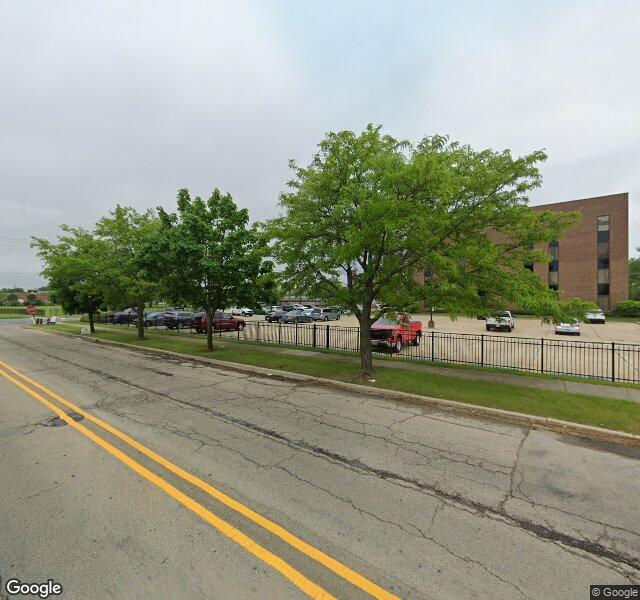
PARC JOLIET

222 NORTH HAMMES, JOLIET, IL 60435 (815) 725-0443
For profit - Limited Liability company 203 Beds SABA HEALTHCARE Data: November 2025
Trust Grade
23/100
#599 of 665 in IL
Last Inspection: September 2024

Within standard 12-15 month inspection cycle. Federal law requires annual inspections.

Overview

Parc Joliet has received a Trust Grade of F, indicating significant concerns about the quality of care provided, which places it among the worst facilities in Illinois. It ranks #599 out of 665 statewide and #14 out of 16 in Will County, putting it in the bottom half of nursing homes in both contexts. Although the facility is showing some improvement, reducing its issues from 14 in 2024 to 7 in 2025, it still reported 44 total deficiencies, with three serious incidents that resulted in harm, including a resident sustaining fractures from a mechanical lift tipping over and another suffering burns from a hot beverage due to lack of supervision. Staffing is a concern, with a low rating of 1 out of 5 stars and an annual turnover rate of 48%, which is average for the state but still indicates instability. While the nursing home has average RN coverage, it faces scrutiny due to compliance issues reflected in its fines and the ongoing challenges in ensuring resident safety.

Trust Score
F
23/100
In Illinois
#599/665
Bottom 10%
Safety Record
High Risk
Review needed
Inspections
Getting Better
14 → 7 violations
Staff Stability
⚠ Watch
48% turnover. Above average. Higher turnover means staff may not know residents' routines.
Penalties
✓ Good
$9,750 in fines. Lower than most Illinois facilities. Relatively clean record.
Skilled Nurses
⚠ Watch
Each resident gets only 27 minutes of Registered Nurse (RN) attention daily — below average for Illinois. Fewer RN minutes means fewer trained eyes watching for problems.
Violations
⚠ Watch
44 deficiencies on record. Higher than average. Multiple issues found across inspections.
★☆☆☆☆
1.0
Overall Rating
★☆☆☆☆
1.0
Staff Levels
★★★☆☆
3.0
Care Quality
★★☆☆☆
2.0
Inspection Score
Stable
2024: 14 issues
2025: 7 issues

The Good

  • Full Sprinkler Coverage · Fire safety systems throughout facility
  • No fines on record

Facility shows strength in fire safety.

The Bad

1-Star Overall Rating

Below Illinois average (2.5)

Significant quality concerns identified by CMS

Staff Turnover: 48%

Near Illinois avg (46%)

Higher turnover may affect care consistency

Federal Fines: $9,750

Below median ($33,413)

Minor penalties assessed

Chain: SABA HEALTHCARE

Part of a multi-facility chain

Ask about local staffing decisions and management

The Ugly 44 deficiencies on record

3 actual harm
Sept 2025 1 deficiency
CONCERN (D) 📢 Someone Reported This

A family member, employee, or ombudsman was alarmed enough to file a formal complaint

Potential for Harm - no one hurt, but risky conditions existed

Safe Environment (Tag F0584)

Could have caused harm · This affected 1 resident

Based on observation and interview the facility failed to ensure that couches inside resident rooms were clean and sanitary and in accordance with what a resident would expect in a clean homelike envi...

Read full inspector narrative →
Based on observation and interview the facility failed to ensure that couches inside resident rooms were clean and sanitary and in accordance with what a resident would expect in a clean homelike environment. This applies to 3 of 3 residents (R2, R5 and R6) reviewed for housekeeping issues in the sample of 11. The findings include:On September 12, 2025 at 1:59 PM, the couch inside R2's room had multiple dark stains on the seat cushion area. V2 (Director of Nursing) who was present stated that R2's couch had dark stains and that the said couch needed to be cleaned.On September 12, 2025 at 2:33 PM, the couch inside R6's room had multiple white stains on the seat cushion area. V2 who was present stated that R6's couch needed to be cleaned because of the white stains.On September 12, 2025 at 2:40 PM, the couch inside R5's room had multiple dark stains on the seat cushion area and on the arm rest. V2 who was present stated R5's couch had multiple dark stains and added that R5's couch needed to be cleaned.
Aug 2025 4 deficiencies 1 Harm
SERIOUS (G) 📢 Someone Reported This

A family member, employee, or ombudsman was alarmed enough to file a formal complaint

Actual Harm - a resident was hurt due to facility failures

Accident Prevention (Tag F0689)

A resident was harmed · This affected 1 resident

**NOTE- TERMS IN BRACKETS HAVE BEEN EDITED TO PROTECT CONFIDENTIALITY** Based on observation, interview, and record review, the facility failed to safely transfer a resident from the bed to the chair....

Read full inspector narrative →
**NOTE- TERMS IN BRACKETS HAVE BEEN EDITED TO PROTECT CONFIDENTIALITY** Based on observation, interview, and record review, the facility failed to safely transfer a resident from the bed to the chair. This failure resulted in R4 experiencing a right humeral neck fracture when the mechanical lift R4 was attached to tipped over and R4 struck the wall in her room. This applies to 1 of 3 residents (R4) reviewed for accidents in the sample of 33. The findings include:On August 25, 2025, at 10:25 AM, R4 was sitting in the chair with an ice pack over her right shoulder area. R4 said, The other day I was up in the sling of the mechanical lift. The staff were transferring me to the dialysis chair from my bed when the entire [mechanical lift] tipped over with me in it. I slammed into the wall in my room hard, then the chair, and then the floor. My whole body ended up on the floor, still attached to the [mechanical lift]. I had very bad pain in my right shoulder. The [mechanical lift] machine also fell on one of the staff and she was pinned under the lift and my whole body. I went to the hospital, and they said I broke my arm by my shoulder. The facility's incident report dated July 28, 2025 shows, Floor nurse entered the resident's room. Three CNAs (Certified Nursing Assistants) present. Resident was lowered to the floor by staff. Resident stated she hit her shoulder and head on the wall during transfer. The incident report continues to show R4 was alert and oriented to person, place, time, and situation. Predisposing environmental factors included clutter. Predisposing situation factors included incident occurred during staff assist with transfer to/from chair and the resident's weight. The EMR (Electronic Medical Record) shows R4 is a [AGE] year-old resident admitted to the facility on [DATE] with multiple diagnoses including, end-stage renal disease, hypoxemia, right shoulder fracture, chronic respiratory failure, generalized anxiety disorder, insomnia, panic disorder, dependence on renal dialysis, heart failure, Type 2 diabetes, major depressive disorder, neuropathy, and hypertension. R4's MDS (Minimum Data Set) dated August 8, 2025 shows R4 is cognitively intact, requires setup assistance with eating, partial/moderate assistance with oral and person hygiene, and is totally dependent on facility staff for all other ADLs (Activities of Daily Living). R4 is always incontinent of bowel and bladder. Dialysis documentation dated August 1, 2025 shows R4's weight as 385 pounds. On July 29, 2025, at 2:56 AM, V8 (LPN-Licensed Practical Nurse) documented the following progress note for R4 effective July 28, 2025, at 5:15 AM: The writer was in the hallway and heard CNAs (Certified Nursing Assistants) yelling. The writer witnessed the resident on the floor attached to the [mechanical lift]. There were three CNAs present which stated the [mechanical lift] tipped over in the process of transferring the resident. V8's progress note was struck out by V18 (Restorative Nurse) on August 4, 2025 at 3:41 PM and labeled incorrect documentation. On July 29, 2025, at 2:57 AM, V8 (LPN) documented the following progress note with an effective date of July 28, 2025, at 5:15 AM: [R4] stated she hit her head and had right shoulder pain. She also stated the [mechanical lift] tipped over in the process of the transfer and she did not want to go to the hospital. V8's progress note was struck out by V18 (Restorative Nurse) on August 4, 2025 at 3:41 PM and labeled incorrect documentation. On July 29, 2025, at 2:58 AM, V8 (LPN) documented the following progress note with an effective date of July 28, 2025, at 5:15 AM: The writer called for help and called 911 for help getting the resident up from the floor. [R4] did not want to go to hospital. Writer explained since she hit her head she had to. The fire department arrived in 10 minutes and resident was taken to [local hospital] . V8's progress note was struck out by V18 (Restorative Nurse) on August 4, 2025 at 3:41 PM and labeled incorrect documentation. On August 25, 2025 at 2:01 PM, V8 (LPN) said, I was notified by the CNAs that the [mechanical lift] tipped over and they lowered [R4] to the ground. The resident was still connected to the [mechanical lift] when I came to the room, and we had to disconnect her and lift the [mechanical lift] off of the CNA (V7). I assessed [R4], and she complained of right shoulder pain. On August 25, 2025, at 6:09 PM, V8 (LPN) said, I wrote very detailed notes of what I saw and what I assessed. My notes are accurate. I did not go into the EMR and strike out my notes and label them as incorrect documentation. My documentation is accurate as to what happened. On August 26, 2025 at 10:04 AM, V1 (Administrator) and V2 (DON-Director of Nursing) said V8's documentation was inadvertently struck out when changes were made to the risk management report attached to this incident. V1 (Administrator) said, [V8's] notes are her story, and we will have to go back in and figure out a way to rewrite them. On August 25, 2025 at 1:36 PM, V7 (CNA) said, I was getting [R4] up for dialysis on July 28, 2025. Another CNA was with me. We used the [mechanical lift] and raised [R4] up off the bed with the full-body sling attached to the [mechanical lift] to get her weight reading. We were pulling the legs of the [mechanical lift] out from under her bed and we turned the [mechanical lift] and [R4's] weight shifted, and the whole [mechanical lift] tipped over. It looked like the wheel had broken off and it pulled her and the lift over. As we were turning the [mechanical lift] the support legs of the lift were opening and closing. The support legs are supposed to stay in a locked position, but the shifter lever on the [mechanical lift] has been broken since I started working at the facility in January 2025, and we were not able to keep the legs in a locked position. [R4] was in the [mechanical lift] sling, attached to the [mechanical lift] when it tipped over. The [mechanical lift] tipped over and I was pinned between the wall, the resident, and the [mechanical lift]. [R4's] head hit the foot of the chair. Her right shoulder caught the corner of the wall in her room. [R4] never fell out of the [mechanical lift] sling. The bar that was holding all of [R4's] weight was completely in my rib cage. I still have bruises from the incident on my ribs. The support legs to the [mechanical lift] were completely pinned under the bed. There was too much clutter in the room, like cases of water, boxes of personal belongings, and bags of her stuff, to easily transfer her. There wasn't room for us to turn the [mechanical lift] because of the clutter. We had to stop and turn, stop and turn a little more, and when we went to turn the [mechanical lift] again, it seemed like the wheel broke and it just tipped over. On August 25, 2025 at 2:49 PM, V6 (CNA) said, They were getting [R4] up using the [mechanical lift], and the [mechanical lift] tipped over and the lift and [R4] hit the wall hard. The wall is what kept the whole [mechanical lift] and [R4] from falling all the way to the floor. [V7] (CNA) was pinned between the lift, the resident, and the wall. The [mechanical lift] with the resident still attached to the lift had to be lowered to the ground. The legs of the [mechanical lift] got stuck under the resident's bed. Even when the fire department came, it took six of them to get [R4] up off the floor. I have worked at the facility since May 2025, and that particular [mechanical lift] has been broken the whole time I have worked here. The support legs won't stay locked in a fixed position. They move in and out when you are trying to move the lift with the resident. They said it had been reported already that the [mechanical lift] needed to be fixed, so I never filled out a repair ticket. On August 25, 2025, at 6:16 PM, V5 (CNA) said, They were transferring [R4] to the dialysis chair using the [mechanical lift]. I was holding the dialysis chair, and [V6] and [V7] were using the lift to get [R4's] weight reading from the lift before they started moving the lift away from the bed, with [R4] in the sling attached to the lift. The whole [mechanical lift] started to lean, and I was yelling to them to guide the lift, and I was screaming, it's leaning, it's leaning, but the resident was already in motion. The entire [mechanical lift] fell over with the resident attached to the lift, and the resident hit the wall hard, and it pinned [V7] (CNA) up against the wall. [R4] hit the corner of the wall, right by the bathroom door. [R4] hit the wall hard with her arm. We had to lower the resident and the lift to the floor at the same time, and the nurses came and started helping us move the chair and then we were able to lift the [mechanical lift] off of [V7]. It took a lot of paramedics to lift [R4] up the ground. R4's hospital records dated July 28, 2025 show, This is a [AGE] year-old female who presents with trying to be transferred from bed to chair. They were trying to use the [mechanical lift] when the [mechanical lift] fell, and she fell and hit her back of the head on a chair and hit her right should on the chair. She is complaining of headache as well as right shoulder pain. R4's right shoulder X-ray dated July 28, 2025 shows, Findings are suggestive for a mildly impacted right humeral neck fracture. R4's right humerus X-ray, dated July 28, 2025 shows, Impression: Impacted right humeral neck fracture. On August 26, 2025, at 10:09 AM, V16 (NP-Nurse Practitioner) said, '[R4] was being transferred from the bed to the chair, and during the transfer, there was an arm injury, and she was sent to the hospital where she was found to have an arm fracture. She does not have fragile bones or any other medical condition that would have caused the fracture. It is safe to say the incident where the mechanical lift tipped over and she hit the wall caused the arm fracture. On August 25, 2025 at 10:53 AM, V13 (Maintenance Director) showed the mechanical lift device involved in R4's incident on July 28, 2025. The mechanical lift was sitting outside next to the facility's dumpster. V13 said the mechanical lift was taken out of service and placed in the trash. The mechanical lift device had a property identification sticker affixed to it identifying the lift as lift number 107. V13 demonstrated how the shifter lever on the mechanical lift is used to open and close the legs of the mechanical lift base for stability when lifting and transferring the resident. V13 said, The shifter lever is broken. The shifter lever comes right off in your hand, which it is not supposed to do. Also, the shifter lever does not stay in the locked position because it is broken, so facility staff are unable to lock the legs of the base in place before moving the resident. The lift is so old, we just decided to throw it away after the incident. V13 demonstrated how the support legs of the mechanical lift would not stay in a locked position and how unstable the mechanical lift became when being moved with the support legs unlocked. V13 said the mechanical lifts in the facility are supposed to be inspected monthly. V13 said he started working at the facility on July 1, 2025 and had not inspected the mechanical lifts until July 30, 2025. V13 provided documentation to show the lift involved in the incident with R4 on July 28, 2025, lift number 107, had not been inspected since March 5, 2025. On August 26, 2025 at 1:00 PM, V1 (Administrator) said facility staff should inspect the mechanical lift prior to using it and remove the mechanical lift from service if the mechanical lift is in need of repairs. The undated mechanical lift User Manual provided by V1 (Administrator) shows, the shifter handle must be locked when transferring the resident. Maintenance of the mechanical lifts should include an initial inspection, and monthly inspections and adjustments when used in an institutional setting. The facility's policy entitled Limited Lifting Resident Handling, revised on 1/25 shows: Policy: This facility will use mechanical lifting devices when lifting and moving the residents when indicated and as ordered by the physician. Purpose: To protect the safety and well-being of the staff and residents. Procedure: .4. Mechanical lift equipment shall undergo routine maintenance checks and be accessible to staff 24 hours a day.8. The policy will be followed at all times. Failure to comply will result in disciplinary action at management's discretion. The facility's undated Validation of Competency - Total (Full Body) Mechanical Lift Transfer shows the facility's expected performance criteria. The Validation of Competency shows facility staff are expected to know a mechanical lift pre-operations check should be completed including, checking the weight limit of the mechanical lift and the sling size/style to verify they are appropriate for the resident, confirm the battery is charged, inspect the lift condition and check the operation, inspect slings for frays, tears, or other signs of wear, and state the reason and process for removing lift equipment and slings from service. The staff competency also shows facility staff are expected to know to clear a pathway to allow the lift to pivot and move freely.
CONCERN (D) 📢 Someone Reported This

A family member, employee, or ombudsman was alarmed enough to file a formal complaint

Potential for Harm - no one hurt, but risky conditions existed

Free from Abuse/Neglect (Tag F0600)

Could have caused harm · This affected 1 resident

**NOTE- TERMS IN BRACKETS HAVE BEEN EDITED TO PROTECT CONFIDENTIALITY** Based on observation, interview, and record review, the facility failed to protect a resident's right to be free from physical a...

Read full inspector narrative →
**NOTE- TERMS IN BRACKETS HAVE BEEN EDITED TO PROTECT CONFIDENTIALITY** Based on observation, interview, and record review, the facility failed to protect a resident's right to be free from physical abuse by another resident. This applies to 1 of 3 residents (R3) reviewed for resident-to-resident assault in the sample of 33. The findings include:On August 21, 2025 at 1:05 PM, R3 was lying in bed in his room. R3's right eyelid was closed/drooping, and some redness was noted on his cheek below his right eye. R3 said, I was punched in the eye by another resident. I don't know why he hit me. I went to the hospital. It doesn't hurt anymore. The EMR (Electronic Medical Record) shows R3 was admitted to the facility on [DATE] with multiple diagnoses including, cerebral infarction, hemiplegia and hemiparesis of the left side following cerebral infarction, asthma, abnormal gait and mobility, dysphagia, chronic kidney disease, delusional disorders, anxiety disorder, major depressive disorder, and anemia. R3's MDS (Minimum Data Set) dated May 15, 2025 shows R3 has severe cognitive impairment, requires supervision with eating, and substantial/maximal assistance with all other ADLs (Activities of Daily Living), including wheelchair self-propelling. R3 is frequently incontinent of bowel and bladder. On July 29, 2025, at 5:27 PM, V14 (LPN-Licensed Practical Nurse) documented the following progress note for R3: Writer was in the nursing station when I heard a fight going on down the hall. Writer ran down the hall, saw [R2] hit [R3] on the face. Writer quickly separated and brought the resident (R3) to the nursing station. Resident observed to have a skin tear. Area cleaned and dried. Resident in bed at this time. On July 29, 2025, at 10:45 PM, V15 (LPN) documented, Around 2030 (8:30 PM) CNA (Certified Nursing Assistant) reported to writer that [R3] was experiencing increased right eye pain and could not see out of eye. Writer evaluated the right eye, and it was noted that the eye had two small cuts underneath bottom eyelid and resident stated it hurt to open eye, so writer was not able to fully assess the eyeball. NP (Nurse Practitioner) notified at 2045 (8:45 PM) and [ambulance] transportation was called to have patient sent to ER (Emergency Room) for further evaluation and treatment. Hospital discharge paperwork for R3 dated July 29, 2025 at 9:47 PM shows the resident was seen in the ER for assault. You were seen in the emergency room after being punched in the face. The CAT scans are normal. You have a very small cut on your eye that does not need stitches. If you have worsening symptoms, you may return here at any time. On July 30, 2025, at 2:30 PM, V15 (LPN) documented, [R3] arrived back to facility via [ambulance] stretcher at 0220 (2:20 AM) . Writer assessed right eye and cut under eye needed no stitches according to physician at the hospital. Resident reported to have less pain after coming back from hospital but still struggling to open right eye. No other concerns were noted at this time. On July 30, 2025, at 9:12 AM, V16 (NP-Nurse Practitioner) documented, Routine visit s/p (status post) hospitalization. Asked to see [R3] for routine visit s/p hospitalization. [R3] was punched by another resident. Bruising noted in the periorbital area. Continue to monitor. The EMR shows R2 was admitted to the facility on [DATE] with multiple diagnoses including, metabolic encephalopathy, major depressive disorder, anxiety disorder, morbid obesity, opioid abuse, chronic pain due to trauma, impulse disorder, history of traumatic brain injury, lymphedema, and tremor. R2's MDS dated [DATE] shows R2 has moderate cognitive impairment, requires setup assistance with eating, oral and personal hygiene, supervision with toilet hygiene and transfers between surfaces, and partial/moderate assistance with showering, dressing, and bed mobility. R2 is occasionally incontinent of bowel and bladder. Multiple attempts were made to interview R2, including on, August 21, 2025 and August 25, 2025. R2 refused to be interviewed. A Petition for Involuntary/Judicial admission dated July 29, 2025 at 7:50 PM, and completed by V17 (LPN) shows, [AGE] year-old male named [R2], who is intermittently confused, became agitated and struck another resident in eye, causing skin tear/injury at 1727 (5:27 PM). On July 29, 2025 at 8:13 PM, V17 (LPN) documented, [R2] discharged to [hospital]. Reason for transfer: increased confusion, aggression, physical altercation. R2's hospital discharge documentation, dated July 29, 2025 at 8:36 PM shows: You were seen today for: agitation. You were seen in the emergency room for an episode of agitation and a fight. There are no signs of serious injury from the fight. There are no signs of serious psychiatric illness that would require any sort of inpatient admission. Your labs are normal. You are being discharged . On August 21, 2025 at 2:38 PM, V14 (LPN) said she was sitting at the nurse's station when R2 and R3 had an altercation at the end of the hall, including arguing and physical hitting. V14 continued to say, [R2] has been having a lot of behaviors. I saw the two residents struggling. The police came to the facility as well. V14 continued to say the nurse assigned to R2 (V17) was on break at the time of the incident and was not present on the resident floor. On August 25 2025 at 9:50 AM, V2 (DON-Director of Nursing) and V1 (Administrator) said, they did not feel the allegation of abuse between R2 and R3 was substantiated despite V14's nursing documentation and the fact nursing staff petitioned R2 out of the facility due to his behaviors. V1 and V2 responded by saying their staff are very dramatic. The facility's final incident report to the State Agency, dated August 4, 2025 shows the original incident was an allegation of resident-to-resident altercation on July 29, 2025. Witness statements were obtained from R2, R3, V14 and V17. The facility does not have any documentation to show any other residents or facility staff were interviewed during the abuse investigation, or that facility surveillance cameras were used to determine the outcome of the facility's investigation. The facility's Abuse Prevention Program Facility Policy and Procedure, reviewed 4-Jan-19 shows, Abuse is defined as the willful infliction of injury, unreasonable confinement, intimidation or punishment with resulting physical harm, pain or mental anguish. Abuse also includes the deprivation by an individual, including a caretaker, of goods or services that are necessary to attain or maintain physical, mental, and psychosocial well-being. Instances of abuse of all residents, irrespective of any mental or physical condition, cause physical harm, pain, or mental anguish. It includes verbal abuse, sexual abuse, physical abuse, and mental abuse including abuse facilitated or enabled through the use of technology. Willful, as used in this definition of abuse, means the individual must have acted deliberately, not that the individual must have intended to inflict injury or harm.
CONCERN (D) 📢 Someone Reported This

A family member, employee, or ombudsman was alarmed enough to file a formal complaint

Potential for Harm - no one hurt, but risky conditions existed

Medical Records (Tag F0842)

Could have caused harm · This affected 1 resident

**NOTE- TERMS IN BRACKETS HAVE BEEN EDITED TO PROTECT CONFIDENTIALITY** Based on observation, interview and record review, the facility failed to maintain an accurate medical record regarding a reside...

Read full inspector narrative →
**NOTE- TERMS IN BRACKETS HAVE BEEN EDITED TO PROTECT CONFIDENTIALITY** Based on observation, interview and record review, the facility failed to maintain an accurate medical record regarding a resident's incident during a mechanical lift transfer. This applies to 1 of 3 residents (R4) reviewed for falls in the sample of 33. The findings include:On August 25, 2025, at 10:25 AM, R4 was sitting in the chair with an ice pack over her right shoulder area. R4 said, The other day I was up in the sling of the mechanical lift. The staff were transferring me to the dialysis chair from my bed when the entire [mechanical lift] tipped over with me in it. I slammed into the wall in my room hard, then the chair, and then the floor. My whole body ended up on the floor, still attached to the [mechanical lift]. I had very bad pain in my right shoulder. The [mechanical lift] machine also fell on one of the staff and she was pinned under the lift and my whole body. I went to the hospital, and they said I broke my arm by my shoulder. The facility's incident report dated July 28, 2025 shows, Floor nurse entered the resident's room. Three CNAs (Certified Nursing Assistants) present. Resident was lowered to the floor by staff. Resident stated she hit her shoulder and head on the wall during transfer. The incident report continues to show R4 was alert and oriented to person, place, time, and situation. Predisposing environmental factors included clutter. Predisposing situation factors included incident occurred during staff assist with transfer to/from chair and the resident's weight. The EMR (Electronic Medical Record) shows R4 is a [AGE] year-old resident admitted to the facility on [DATE] with multiple diagnoses including, end-stage renal disease, hypoxemia, right shoulder fracture, chronic respiratory failure, generalized anxiety disorder, insomnia, panic disorder, dependence on renal dialysis, heart failure, Type 2 diabetes, major depressive disorder, neuropathy, and hypertension. R4's MDS (Minimum Data Set) dated August 8, 2025 shows R4 is cognitively intact, requires setup assistance with eating, partial/moderate assistance with oral and person hygiene, and is totally dependent on facility staff for all other ADLs (Activities of Daily Living). R4 is always incontinent of bowel and bladder. On July 29, 2025, at 2:56 AM, V8 (LPN-Licensed Practical Nurse) documented the following progress note for R4 effective July 28, 2025, at 5:15 AM: The writer was in the hallway and heard CNAs (Certified Nursing Assistants) yelling. The writer witnessed the resident on the floor attached to the [mechanical lift]. There were three CNAs present which stated the [mechanical lift] tipped over in the process of transferring the resident. V8's progress note was struck out by V18 (Restorative Nurse) on August 4, 2025 at 3:41 PM and labeled incorrect documentation. On July 29, 2025, at 2:57 AM, V8 (LPN) documented the following progress note with an effective date of July 28, 2025, at 5:15 AM: [R4] stated she hit her head and had right shoulder pain. She also stated the [mechanical lift] tipped over in the process of the transfer and she did not want to go to the hospital. V8's progress note was struck out by V18 (Restorative Nurse) on August 4, 2025 at 3:41 PM and labeled incorrect documentation. On July 29, 2025, at 2:58 AM, V8 (LPN) documented the following progress note with an effective date of July 28, 2025, at 5:15 AM: The writer called for help and called 911 for help getting the resident up from the floor. [R4] did not want to go to hospital. Writer explained since she hit her head she had to. The fire department arrived in 10 minutes and resident was taken to [local hospital] . V8's progress note was struck out by V18 (Restorative Nurse) on August 4, 2025 at 3:41 PM and labeled incorrect documentation. On August 25, 2025 at 2:01 PM, V8 (LPN) said, I was notified by the CNAs that the [mechanical lift] tipped over and they lowered [R4] to the ground. The resident was still connected to the [mechanical lift] when I came to the room, and we had to disconnect her and lift the [mechanical lift] off of the CNA (V7). I assessed [R4], and she complained of right shoulder pain. On August 25, 2025, at 6:09 PM, V8's (LPN) struck out progress notes were reviewed with V8. Each entry was read out loud to V8 during the interview. V8 said, I wrote very detailed notes of what I saw and what I assessed. My notes are accurate. I did not go into the EMR and strike out my notes and label them as incorrect documentation. My documentation is accurate as to what happened. On August 26, 2025, at 10:04 AM, V1 (Administrator) and V2 (DON-Director of Nursing) said V8's documentation was inadvertently struck out when changes were made to the risk management report attached to the incident on July 28, 2025. V1 (Administrator) said, [V8's] notes are her story, and we will have to go back in and figure out a way to rewrite them. On August 27, 2025, at 12:25 PM, V18 (Restorative Nurse), The risk management report for [R4's] incident on July 28, 2025 was struck out by me. Initially, the nurse entered the information into risk management as a fall. I was told by the corporate consultant to strike out the incident and label it as inaccurate documentation because the incident was not considered to be a fall because the resident was intentionally lowered to the ground. I only struck out the risk management report for the fall in the EMR. I did not realize by striking out the risk management documentation, that the nurse's documentation would be struck out and marked as incorrect documentation as well. That seems like an issue when the nursing documentation gets struck out. I was not aware the progress notes were struck out. The facility's policy entitled Medical Record Policy, dated 6/2025 shows, Purpose: To ensure that a complete, accurate and legal record of the resident's care that's maintained contains justification of diagnoses, treatment results. The record is readily accessible systematically organized to provide a medium of communication among health care professionals involved in the resident's care and to facilitate retrieval of information. Policy: It is the policy of this facility that an organized, accurate, and complete written record will be maintained for each resident in accordance with applicable State and Federal guidelines and laws. Standards: .5. Progress notes shall be written/entered to ensure an ongoing resident record including progression toward and regression from established resident goals is maintained. Progress notes shall indicate significant changes in the resident's condition and be recorded upon occurrence by the staff person observing the change.
CONCERN (E) 📢 Someone Reported This

A family member, employee, or ombudsman was alarmed enough to file a formal complaint

Potential for Harm - no one hurt, but risky conditions existed

Room Equipment (Tag F0908)

Could have caused harm · This affected multiple residents

Based on observation, interview, and record review, the facility failed to ensure mechanical lift devices are maintained in safe, operating condition, are routinely inspected, and removed from service...

Read full inspector narrative →
Based on observation, interview, and record review, the facility failed to ensure mechanical lift devices are maintained in safe, operating condition, are routinely inspected, and removed from service when repairs are needed. This applies to 30 of 30 residents (R4-R33) reviewed for mechanical lift transfers in the sample of 33. The findings include:The facility provided a list of all residents residing in the facility who require the use of a mechanical lift device for transfers between surfaces. The undated list shows R4-R33 require the use of a full-body mechanical lift for transfers between surfaces. On August 25, 2025, at 9:50 AM, V2 (DON-Director of Nursing), and V1 (Administrator) said there was an incident at the facility on July 28, 2025 involving R4 and a mechanical lift. V2 said, The wheel on the [mechanical lift] buckled. It fell enough for [R4] to hit her shoulder on the wall and break a bone. On August 25, 2025 at 1:36 PM, V7 (CNA-Certified Nursing Assistant) said, I was getting [R4] up for dialysis on July 28, 2025. Another CNA was with me. We used the [mechanical lift] and raised [R4] up off the bed with the full-body sling attached to the [mechanical lift]. We were pulling the legs of the [mechanical lift] out from under her bed and we turned the [mechanical lift] and [R4's] weight shifted, and the whole [mechanical lift] tipped over. It looked like the wheel had broken off and it pulled her and the lift over. As we were turning the [mechanical lift] the support legs of the lift were opening and closing. The support legs are supposed to stay in a locked position, but the shifter lever on the [mechanical lift] has been broken since I started working at the facility in January 2025 and we were not able to keep the legs in a locked position. On August 25, 2025 at 2:49 PM, V6 (CNA) said, They were getting [R4] up using the [mechanical lift], and the [mechanical lift] tipped over and the lift with [R4] attached to it, hit the wall hard. I have worked at the facility since May 2025, and that particular [mechanical lift] has been broken the whole time I have worked here. The support legs won't stay locked in a fixed position. They move in and out when you are trying to move the lift with the resident. They said it had been reported already that the [mechanical lift] needed to be fixed, so I never filled out a repair ticket. On August 25, 2025 at 10:53 AM, V13 (Maintenance Director) showed the mechanical lift device involved in R4's incident on July 28, 2025. The mechanical lift was sitting outside the facility, next to the facility's dumpster. V13 said the mechanical lift was taken out of service and placed in the trash. The mechanical lift device had a property identification sticker affixed to it identifying the lift as lift number 107. V13 demonstrated how the shifter lever on the mechanical lift is used to open and close the legs of the mechanical lift base for stability when lifting and transferring the resident. V13 said, The shifter lever is broken. The shifter lever comes right off in your hand, which it is not supposed to do. Also, the shifter lever does not stay in the locked position because it is broken, so the staff are unable to lock the legs of the base in place before moving the resident. The lift is so old, we just decided to throw it away after the incident. V13 demonstrated how the support legs of the mechanical lift do not stay in a locked position and how unstable the mechanical lift became when being moved with the support legs unlocked, and opening and closing as the mechanical lift was moved from one place to another. V13 said the mechanical lifts in the facility are supposed to be inspected monthly. V13 said he started working at the facility on July 1, 2025 and had not inspected the mechanical lifts until July 30, 2025, after the incident involving R4. V13 provided documentation to show the lift involved in the incident with R4 on July 28, 2025, lift number 107, had not been inspected since March 5, 2025. V13 provided mechanical lift inspection/maintenance logs labeled 2025, with the mechanical lifts identified as 103, 105, 107, 108, 109, 110, 111, and 112. The inspection sheets show the last inspection date for the mechanical lifts was March 5, 2025. The months of April, May, June, July, and August were blank on each of the inspection sheets. An inspection of all mechanical lifts was completed with V13. Four mechanical lifts were identified, including one rental mechanical lift. V13 said he did not inspect the rental mechanical lift to ensure it was in good working order, and he was unable to say how long the facility had been using the rental mechanical lift. None of the mechanical lifts were labeled with identifiers that corresponded to the inspection logs provided by V13. An unlabeled mechanical lift was found in a common area of the second floor. V13 was unable to lock the mechanical lift shifter lever in place and said the mechanical lift was broken. V13 did not remove the mechanical lift from the resident floor or label the mechanical lift with a sign to indicate the mechanical lift should not be used. On August 25, 2025, at 11:53 AM, a general tour of the facility was completed with V2 (DON-Director of Nursing). Mechanical lifts were observed throughout the facility, in resident hallways and common areas, available for all facility staff to use. V2 said after the incident involving R4 and the mechanical lift, she asked V13 to inspect all mechanical lift devices and label each lift with an identifier to correspond to the inspection sheets. The inspection sheets provided by V13 were shown to V2. The inspection sheets did not correspond with identifier numbers on any of the mechanical lifts observed with V2. V2 was unable to identify if any of the mechanical lifts in use had been inspected. The mechanical lift with the broken shifter lever, observed with V13 at 10:53 AM, remained in the common area of the second floor and was not labeled with any resident name or a sign to show not to use the device. The undated mechanical lift User Manual provided by V1 (Administrator) shows, the shifter handle must be locked when transferring a resident. Maintenance of the mechanical lifts should include an initial inspection, and monthly inspections and adjustments when used in an institutional setting. The facility's policy entitled Limited Lifting Resident Handling, revised on 1/25 shows: Policy: This facility will use mechanical lifting devices when lifting and moving the residents when indicated and as ordered by the physician. Purpose: To protect the safety and well-being of the staff and residents. Procedure: .4. Mechanical lift equipment shall undergo routine maintenance checks and be accessible to staff 24 hours a day.8. The policy will be followed at all times. Failure to comply will result in disciplinary action at management's discretion.
Mar 2025 1 deficiency 1 Harm
SERIOUS (G) 📢 Someone Reported This

A family member, employee, or ombudsman was alarmed enough to file a formal complaint

Actual Harm - a resident was hurt due to facility failures

Accident Prevention (Tag F0689)

A resident was harmed · This affected 1 resident

**NOTE- TERMS IN BRACKETS HAVE BEEN EDITED TO PROTECT CONFIDENTIALITY** Based on interview and record review, the facility failed to supervise a resident with impaired cognition while drinking a hot b...

Read full inspector narrative →
**NOTE- TERMS IN BRACKETS HAVE BEEN EDITED TO PROTECT CONFIDENTIALITY** Based on interview and record review, the facility failed to supervise a resident with impaired cognition while drinking a hot beverage. This failure resulted in the resident spilling the hot beverage, sustaining burns to her bilateral thighs and was transferred to hospital for treatment of the same. This applies to 1 of 3 residents (R1) reviewed for accidents and supervision in the sample of 3. The findings include: R1's face sheet showed that R1 was admitted to the facility on [DATE] with multiple diagnoses including Multiple Sclerosis, Dysarthria and Anarthria, Hereditary Spastic Paraplegia, Muscle Wasting and Atrophy, Anxiety Disorder, Insomnia, Diseases of Spinal Cord. R1's quarterly MDS (minimum data set) dated February 28, 2025 showed that R1 was severely impaired in cognition and required supervision or touching assistance for eating. Facility Incident logs showed that R1 had a hot liquid burn on March 10, 2025. Facility discharge records and nurses progress notes showed that R1 was discharged to the hospital to the burn center on March 13, 2025. Hospital patient information records showed that R1 was admitted to Burn stepdown unit on March 13, 2025. Hospital Burn Attending Physician history and physical progress note dated March 14, 2025 included that R1 presents with 5% scald burns: full thickness wounds accounting for 1.5 TBSA [total body surface area] to bilateral thighs . Occupational Therapy Assessment at hospital dated March 14, 2025 included that R1 is a [AGE] year old female with diagnosis of Burn who presents impairments in range of motions, strength, gross motor coordination, fine motor coordination, bilateral coordination, activity intolerance, safety awareness, balance motor planning, manual dexterity and self help skills. Performance deficits include difficulty in ADLS [activities of daily living] including feeding. Facility Change of Condition progress note dated March 13, 2025 included as follows: Resident has a second degree wound and blister wound on both thigh that needs attention as resident has been refusing care . Assessment for the same showed to send to the hospital for further care. Facility nursing progress notes dated March 10, 2025 included as follows: Resident sitting in hallway across from nurses station after shower for monitoring at 1515 (3:15 PM) resident yelled out CNA (Certified Nursing Assistant) went to assist resident noted resident had spilled drinking cup over, CNA took resident to room to change wet clothing summons this writer to resident room, this writer noted both thighs were reddened with blistered area on bilateral thighs, wound care nurse informed area addressed per wound care protocol . On March 28, 2025 at 9:52 AM, V5 (Licensed Practical Nurse) stated that on March 10, 2025, she was R1's nurse and V6 (CNA) had brought R1 out to the nurses station after a shower and placed her in a geri (recliner with wheeled bases) chair and given her something warm to drink. V5 stated that it was around the change of shift in the afternoon. V5 stated that she believes that V6 had heated up some water with a tea bag and set it on a bed side table and R1 knocked it off. V5 stated that V6 took R1 to her room to change her wet clothes and that's when she noticed that the area around R1's upper thighs were reddened. V5 stated that she notified V3 (Wound Care Nurse) and since V3 was leaving for the day, she applied the treatment based on V3's suggestion and endorsed to the night nurse. On March 28, 2025 at 2:25 PM, V6 (CNA) stated that she works the afternoon shift on March 10, 2025 and the routine was that when she comes in she gets her assignments and gives residents their showers. V6 stated that she gave R1 a shower with the assistance of V13 (CNA) and after changing her, they transferred her to a geri chair and placed her by the nurses station. V6 stated that R1 was cold and asked for tea. V6 continued I made the tea by getting a tea bag from the kitchen and I got water from the faucet and heated to about 1 to 1 1/2 minutes and gave it to her on a bedside table [that was by the geri-chair]. I had to help other residents and I walked away to help V13 with the showers. When I was down the hallway in the 2400 unit, she said 'Ahh' and the nurse [V5] told me to check her. I bring her to the room and pulled out her pants and showed it [reddened area] to the nurse who applied some ointment. She [R1] is always a challenge and moves around. When asked, what cup she used to heat the water, V6 stated that it was a Styrofoam disposable cup. On March 28, 2025 at 10:12 AM, V3 stated that she was working as a floor nurse on March 11, 2025 and was asked to take a look at R1 while they were providing care. V3 stated Upon laying eyes on her, I can tell that it had blistered and the skin was pretty exposed. V3 clarified that there was a very large intact blister on one thigh/leg and on the other thigh/leg the blister was partially ruptured. V3 stated that the staff who were changing R1 told her that there was a dressing on the partial blistered area but R1 had ripped it off as she was very agitated which must have caused the blister to be ruptured. V3 also added that lately, the staff had to assist and cue R1 with eating, more so because of her mental than physical decline. On March 28,2025 at 12:45 PM, V7 (Restorative Aide) stated that R1 has good and bad days and that on some days she was able to feed herself and other days the staff provided assistance in eating. V7 added that R1 had a tendency to lean forward if she was tired or not feeling well. On March 28, 2025 at 12:47 PM, V8 (CNA) stated that she has taken care of R1 and that for most part, R1 usually ate in the dining room by herself. V8 stated that R1 would sometimes spill food and drinks. On March 28, 2025 at 2:11 PM, V14 (R1's Power of Attorney) stated You don't give a person hot tea without a lid knowing her condition. This particular CNA [V6] knows her behavior. R1's restorative care plan dated January 20, 2023 showed that R1 has a self-care deficit (ADLs/Mobility) secondary to her diagnosis of multiple sclerosis and paraplegia. Interventions included intermittent supervision with meals and encourage to finish food for adequate nutrition, assist as needed. R1's nursing care plan revised January 15, 2023 showed that R1 demonstrates physical & emotional impairment secondary to neurological disease/damage caused by: multiple sclerosis and paraplegia. Interventions for the same included to provide assistive/adaptive devices to help the resident do as much for himself as possible. R1's behavior care plan initiated April 18, 2024 showed that R1 has potential to demonstrate physical behaviors or aggressive behaviors towards staff including yelling, knocking stuff down and throwing objects related to multiple sclerosis. Interventions included to assess and anticipate resident's needs
Feb 2025 1 deficiency
CONCERN (D) 📢 Someone Reported This

A family member, employee, or ombudsman was alarmed enough to file a formal complaint

Potential for Harm - no one hurt, but risky conditions existed

Free from Abuse/Neglect (Tag F0600)

Could have caused harm · This affected 1 resident

Based on observation, interview, and record review, the facility failed to protect residents' right to be free from abuse. This applies to 2 of 3 residents (R4, R5) reviewed for abuse in the sample of...

Read full inspector narrative →
Based on observation, interview, and record review, the facility failed to protect residents' right to be free from abuse. This applies to 2 of 3 residents (R4, R5) reviewed for abuse in the sample of 14. The findings include: The facility's 2/12/2025 final Facility Incident Investigation Report for R4 and R5 showed .it was determined that on 2/5/25, [R4] was sitting outside .he saw [R5] come outside, and he called him a mooch. [R5] overheard [R4] and in reaction, he went towards the latter. As [R5] approached, he swung at [R4] and missed, lost his balance, and his momentum caused both residents to land on the ground [R5] had a scrape on his left forearm .[R4] had scratches on the right side of his face . The Report showed that both residents are alert and oriented and are responsible for themselves. On 2/25/25 at 10:40 AM, R4 in his room. R4 had just returned from an appointment and his gait and steps were a little bouncy and unsteady. R4 stated R5 always asked for cigarettes and money and R5 still owed him three dollars. R4 stated that on 2/12/2025 before their altercation, R4 said why don't you stop begging? and R5 got upset. R4 stated R5 swore and threw a punch at him and R4 deflected the punch by holding his arms out in front of his head. R4 stated R5's body made contact with his and R4 fell backward due to R5's weight. R4 stated he hit the outside air conditioner that is by the patio. R4 stated he hit the right side of his head, his face, his right earlobe, he scraped his elbow, and he started bleeding. R4 pointed to each area. There was a fading injury area next to his right eyebrow. R4 stated R5's actions were intentional. On 2/25/25 at 9:01AM, V9 (Activity Director) stated the altercation happened in the back patio in the smoking area outside of the 1st floor dining room. V9 stated she wasn't present but V9 watched the video. V9 stated R5 did not have a cigarette and wanted to borrow one and R4 told him to stop asking. V9 stated other residents overheard R5 asking and R5 went to walk away and changed his mind. V9 stated R5 charged at R4 and R4 did not move. R5 threw a punch at R4 but he didn't make contact but both residents lost their balance and fell and both got cuts and scrapes. V9 stated R4 tried to defend himself. R12 is interviewable. On 2/25/25 at 10:53 AM, R12 stated R5 was not allowed to go and beg for cigarettes, which was what he was doing. R12 stated R5 just got mad, took his coat off, and launched after R4. R12 stated when R5 got closer, he took a swing at R4. R12 stated [R5] was literally going to punch [R4]. R12 stated R4 was bumped backward due to the weight of R5 and they went down and R4 hit the outside air conditioner. R12 stated R4 was bleeding from his right side of forehead, and he scraped his right elbow. R12 stated staff were coming out as R5 was swinging and they separated them. R5's Face Sheet showed he discharged himself from the facility the same day. The facility's Abuse Prevention Program Policy Definitions template showed Abuse means any physical or mental injury inflicted upon a resident other than by accidental mans the willful infliction of injury intimidation, or punishment with resulting physical harm, pain, or mental anguish to a resident . The Policy further showed Residents have the right to be free from abuse or mistreatment .
Dec 2024 1 deficiency
CONCERN (D) 📢 Someone Reported This

A family member, employee, or ombudsman was alarmed enough to file a formal complaint

Potential for Harm - no one hurt, but risky conditions existed

Deficiency F0558 (Tag F0558)

Could have caused harm · This affected 1 resident

Based on observation, interview and record review, the facility failed to prepare and dress a resident appropriately for an outside appointment. This applies to 1 of 3 residents (R1) reviewed for acc...

Read full inspector narrative →
Based on observation, interview and record review, the facility failed to prepare and dress a resident appropriately for an outside appointment. This applies to 1 of 3 residents (R1) reviewed for accommodation of resident needs. The findings include: The facility's Clinical Communications-Facility Bulletin Board section of the Electronic Medical Record system showed R1 had an apponitment on 12/18/2024, and the notification included .10 AM pick up by [ambulance] going by AMB 9 AM pick up. On 12/24/24 at 7:30, AM V10 (R1's Guardian) stated that R1 was not properly dressed for the appointment. V10 stated R1 was dirty and only had a gown on, and was covered only with a sheet and no blanket. V10 also stated R1 was 40 minutes late to the appointment. On 12/24/24 at 8:45 AM, R1 was in a low bed with bolsters bilaterally and a floor mat was in place. R1 had contractures on both hands and he wore a hospital gown. R1 was unable to be interviewed due to his nonverbal status. R1's 10/3/24 Minimum Data Set (MDS) showed he is dependent on staff for his activities of daily living. On 12/24/24 at 9:26 AM, V3 (Activity Director) stated that R1's appointment was made on October 21st. V3 stated she put the appointment in facility's dashboard for nursing and the CNA (Certified Nursing Assistant) to see, and the appointment was loaded and updated on 12/16/24. On 12/18/24 at 10:00AM, V5 RN (Registered Nurse) stated that usually when residents go for appointment, staff have it on the dashboard and nurses and CNAs (Certified Nursing Assistants) can see it. V5 stated on the day of R1's appointment, both she and V6 (R1's assigned CNA) started late. V5 stated by the time she printed out R1's medication list and Face Sheet for the EMTs, R1 was already on the stretcher for transport. On 12/18/24 at 10:00AM, V6 (CNA) stated she doesn't usually work first shift, but she picked up this shift and came in late. V6 stated she was in another resident's room and when she came to R1's room, they already had R1 on the stretcher. V6 asked what was going on and she was told R1 had an appointment. On 12/24/24 at 11:41 AM, V7 (CNA) stated that when she first arrives for work, she looks in the computer to check what appointments her reisdents might have for the day. V7 stated staff have to make sure the resident has proper clothing, shoes, socks, pants, hat, gloves, jacket, or other clothing for the weather. On 12/24/24 at 11:58 AM, V4 ADON (Assistant Director of Nursing) stated that staff prepare the residents for appointments by making sure they are clean and dry, and dressed appropriately for weather conditions. R1's Face Sheet showed his diagnoses include spastic quadriplegic cerebral palsy, dystonia, scoliosis, personal history of traumatic brain injury, protein calorie malnutrition, mild cognitive impairment, dysphagia, oropharyngeal phase, and contractures. The facility did not provide a policy related to how they ensure a resident is made ready for outside appointments.
Nov 2024 1 deficiency
CONCERN (D) 📢 Someone Reported This

A family member, employee, or ombudsman was alarmed enough to file a formal complaint

Potential for Harm - no one hurt, but risky conditions existed

Accident Prevention (Tag F0689)

Could have caused harm · This affected 1 resident

Based on observation, interview, and record review, the facility failed to implement fall interventions for 2 residents (R3, R5) who are at risk for falls in a sample of 5. The findings include: 1. R3...

Read full inspector narrative →
Based on observation, interview, and record review, the facility failed to implement fall interventions for 2 residents (R3, R5) who are at risk for falls in a sample of 5. The findings include: 1. R3's electronic health records showed she has a history of falls, including on 10/5/24. R3's 9/6/24 care plan shows she is at risk for falls with interventions in place including provide resident a reacher for safety reaching items, and fall update of 5/25/24 showed apply the specialized mat to wheelchair for safety. R3's 10/21/24 MDS (Minimum Data Set) showed R3's decision making is impaired. On 10/30/24 at 3:15 pm, R3 was observed in the dining room, and she did not have her reacher with her. The staff, V4 and V5 (Certified Nurses Assistants), brought R3 to her room. V4 and V5 stood R3 up and showed R3 did not have a specialized seating mat on the seat of her wheelchair. V5 said she has worked with R3 a lot including last Monday (2 days prior), and has never seen R3 with a (specialized seating) mat on her wheelchair seat. On 10/30/24 at 3:40 pm, V8 (Activities Director) said she had removed the special mat from R3's wheelchair earlier that day because she replaced her wheelchair for repair, but did not replace the mat because it was dirty, wrinkled, and lost its grip. V8 said R3 needs the mat for fall prevention. On 11/6/24 at 2:05 pm, V1 (Administrator) said R3 is to have the specialized mat on her wheelchair to prevent her from falling, and she is to have a reacher so she does not bend over to reach for things and fall. On 11/6/24 at 11:10 am, V2 (Director of Nursing) said R3 needs the specialzed mat on her wheelchair, and she is to have a reacher to prevent her from falling. 2. R5's 10/9/24 MDS showed R5's cognition is moderately impaired. R5's 4/23/24 care plan showed R5 is at risk for falls with interventions in place, including bed in low position and floor mats on both sides of the bed. The facility's Device List updated 10/9/24 showed R5 is to have mats in place. On 10/30/24 at 12:32 pm, R5 was observed in his bed with his bed in a high position, and the bed control was out of his reach inside the drawer of the bedside table. Floor mats were not in place next to his bed. R5 said he does not like his bed in a high position. R5 said the staff left his bed in a high position, and he is unable to lower it because he cannot find the bed controller. On 11/6/24 at 2:05 pm, V1 (Administrator) said R5's bed should not be in a high position because it puts him at risk for falling, and he should have mats on the floor next to his bed for safety in case of a fall. On 11/6/24 at 11:10 am, V2 (Director of Nursing) said R5's bed should not be in a high position because he could fall out of it and hurt himself, and he should have mats on the floor next to his bed for safety.
Sept 2024 10 deficiencies
CONCERN (D)

Potential for Harm - no one hurt, but risky conditions existed

Deficiency F0578 (Tag F0578)

Could have caused harm · This affected 1 resident

**NOTE- TERMS IN BRACKETS HAVE BEEN EDITED TO PROTECT CONFIDENTIALITY** Based on interviews and record reviews, the facility failed to inform, provide written information, and formulate Advanced Direc...

Read full inspector narrative →
**NOTE- TERMS IN BRACKETS HAVE BEEN EDITED TO PROTECT CONFIDENTIALITY** Based on interviews and record reviews, the facility failed to inform, provide written information, and formulate Advanced Directives upon admission for 1 resident (R116) in a sample of 35. The findings include: R116 is a [AGE] year old male admitted to the facility on [DATE], with diagnoses including malignant neoplasm of the larynx, spinal stenosis, dysphagia oral pharyngeal phase, suicidal ideations, anemia, and major depressive disorder. On 09/04/24 at 11:02 AM, R116 had no POLST (Physicians Orders for Life Sustaining Treatment) or Advanced Directives in his electronic health record, and the facility's Advanced Directives book showed no records for R116. R116's face sheet showed R116 was a full code, and R116's 7/22/24's Physician's order showed full code. On 09/05/24 at 08:55 AM, R116 denied ever being asked from the facility what his wishes were for life sustaining treatments in case of an emergency. R116 also denied ever signing any Advanced Directives forms. R116 said he did not want to have any life sustaining treatment if it meant that he would be on life support or become handicapped. On 09/05/24 at 10:51 AM, V1 (Administrator) said upon admission, the facility is to find out the resident's wishes for life sustaining treatment in an emergency, so the staff can follow those wishes. The facility's Advance Directive Life Sustaining Treatment and End of Life Care Policy and Procedure, dated 6/6/18, showed, the facility is to provide residents information on Advanced Directives including the Power of Attorney for Healthcare and Living Will. The facility also educates residents and families about their rights concerning their rights to refuse or accept medical or surgical treatment and to formulate advanced directives including Do Not Resuscitate orders (DNR) . Staff will review this material with the resident and family and provide needed education at the time of admission. Staff are responsible for following this policy procedure and honoring the individuals advanced directives choices. The policy showed under Policy and Procedure 1. Upon admission: A. Designated staff will review advanced directive options and the statement of Illinois law addressing advanced directives and life sustaining treatment with the resident and or representative. Staff will provide the resident and or representative with the information regarding advanced care planning which will address types of advanced directives, treatment options and refusal of treatment. Information will be reviewed and the resident and or representative will be asked to sign and acknowledge that they have received the information on advanced care planning. An Advanced Directive form (as provided by the healthcare facility) will be completed with resident and or legal representative to verify treatment options as well as code status (full code vs. DNR using the POLST document). Appropriate information will be added to the physician order sheet (POS).
CONCERN (D)

Potential for Harm - no one hurt, but risky conditions existed

Deficiency F0688 (Tag F0688)

Could have caused harm · This affected 1 resident

**NOTE- TERMS IN BRACKETS HAVE BEEN EDITED TO PROTECT CONFIDENTIALITY** Based on observations, interview, and record review, the facility failed to apply splints to prevent contractures. This applies...

Read full inspector narrative →
**NOTE- TERMS IN BRACKETS HAVE BEEN EDITED TO PROTECT CONFIDENTIALITY** Based on observations, interview, and record review, the facility failed to apply splints to prevent contractures. This applies to 2 of 2 residents (R95 and R85) reviewed for contractures in a sample of 35. The findings include: 1. R85's electronic health record showed she is a [AGE] year old female with diagnoses including Alzheimer's disease, type 2 diabetes, seizures, and hereditary and idiopathic neuropathy. R85's 8/15/24 MDS (Minimum Data Set) section GG showed R85 is dependent in all care. R85's 5/14/24 care plan showed resident would benefit from participation in the following restorative programs: splint right palm protector, (8/20/24-waiting for left palm protector) due to impaired cognition, and impaired communication with interventions including assistance with left palm protector, apply every morning daily. On 09/03/24 at 11:27 AM, R85 was observed in bed asleep, with both her left and right hands contracted and no devices on her hands. On 09/05/24 at 09:14 AM, R85 was observed in her bed again, with no devices in her hands. On 09/05/24 at 09:15 AM, V12, CNA (Certified Nurse's Assistant), said R85 did not have on her palm protectors today because she did not know where they were. On 09/05/24 at 10:43 AM, V1 (Administrator) said R85 should have palm protectors on at all times to stop the hands from contracting further. 2. R95's 2/6/24 Physician Order showed, may participate in restorative programs. R95's 4/13/24 care plan showed resident would benefit from participation in the following restorative programs: Splint due to generalized weakness with interventions including splint: Will tolerate left hand splints daily. On 09/04/24 at 09:25 AM, R95 was observed in bed with his left hand contracted, and no device in his hand. On 09/05/24 at 09:20 AM, R95 again was observed in his bed with no device to his left hand, and a splint was observed on his bed side table. On 09/05/24 at 09:26 AM, V13 (Nurse) said, If restorative doesn't put (R95'sO splint on him, then the nursing staff can put it on. V13 said this should be done to keep R95's hand from contracting more. On 09/05/24 at 10:48 AM, V1 said R95's splint should be on to decrease his contractures and for his safety. The facility's ADL (assistance in daily living) policy, dated 9/2020, showed the purpose is to preserve ADL function, promote independence, and increase self-esteem and dignity. The policy showed under Contracture Prevention and Management Skills, observe for alterations and skin integrity and implement preventive measures as needed.
CONCERN (D)

Potential for Harm - no one hurt, but risky conditions existed

Accident Prevention (Tag F0689)

Could have caused harm · This affected 1 resident

**NOTE- TERMS IN BRACKETS HAVE BEEN EDITED TO PROTECT CONFIDENTIALITY** Based on observation, interview, and record review, the facility failed to utilize safety interventions and maintain an environm...

Read full inspector narrative →
**NOTE- TERMS IN BRACKETS HAVE BEEN EDITED TO PROTECT CONFIDENTIALITY** Based on observation, interview, and record review, the facility failed to utilize safety interventions and maintain an environment free of trip hazards. This applies to 2 of 5 residents (R14 and R135) reviewed for accidents and hazards in a sample of 35. Findings include: 1. R135 admitted to the facility on [DATE], with diagnoses that includes intervertebral disc displacement, hyperlipidemia, alcohol abuse, hypertension, insomnia, adult failure to thrive, history of transient ischemic attack, and cerebral infarction without residual deficits. R135's MDS (Minimum Data Set), dated 6/30/24, indicates he is cognitively intact and uses a walker for mobility. R135's MDS indicates he requires supervision or touching assistance from staff while walking. The care plan, dated 7/15/24, stated R135 is at risk for falls interventions include to anticipate and meet the individual needs of the resident. On 9/03/24 at 10:58 AM, a blower fan was in the middle of the hallway, with the electrical cord stretching past two resident rooms. R135 was walking independently down the hallway with his walker and maneuvered around the blower fan. On 9/05/24 at12:25 PM, V3, DON (Director of Nursing), stated she was responsible for putting the blower fan in the middle of the hallway to dry the floor from a toilet that leaked when she worked the previous night. 2. R14 admitted to the facility on [DATE], with diagnoses that include metabolic encephalopathy, dystonia, mild cognitive impairment, scoliosis of spine, cognitive communication deficit, history of traumatic brain injury, spastic quadriplegic cerebral palsy, apraxia, dysphagia, contracture, muscle spasm and depression, insomnia, generalized anxiety, and history of falling. R14's MDS (Minimum Data Set), dated 8/14/24, indicates he is cognitively impaired and completely dependent on staff for care needs. The care plan, dated 8/20/24, indicates R14 is at risk for falls with interventions that include floor mats on both sides of bed. On 9/03/24 at 10:59 AM, R14 was in bed, with his fall mats located against the wall underneath his television. On 9/03/24 at 12:10 PM, V31, CNA (Certified Nursing Assistant), provided incontinence care to R14, and did not place the fall mats on either side of R14's bed prior to exiting the room. On 9/04/24 on 3:50 PM, R14's fall mats were located up against the wall under his television. V26, CNA, stated fall interventions for R14 includes floor mats. V26 stated the mats for R14 should be on the floor on both sides of his bed and not against the wall under his television. On 9/05/24 at 12:25 PM, V3, DON (Director of Nursing), stated R14 is at risk for falls with interventions that include fall mats on both sides of his bed. V3 stated the mats should always be in place when he is in the bed, as he has fallen before and has the potential to hurt himself. The facility policy Safety and Supervision of Residents, dated 11/2023, states the facility strives to make the environment as free from accident hazards as possible. Resident safety and supervision and assistance to prevent accidents are facility wide priorities.
CONCERN (D)

Potential for Harm - no one hurt, but risky conditions existed

Respiratory Care (Tag F0695)

Could have caused harm · This affected 1 resident

**NOTE- TERMS IN BRACKETS HAVE BEEN EDITED TO PROTECT CONFIDENTIALITY** Based on observation, interview, and record review, the facility failed to provide humidification with oxygen therapy to avoid n...

Read full inspector narrative →
**NOTE- TERMS IN BRACKETS HAVE BEEN EDITED TO PROTECT CONFIDENTIALITY** Based on observation, interview, and record review, the facility failed to provide humidification with oxygen therapy to avoid nasal dryness. This applies to 1 of 1 resident (R59) reviewed for respiratory therapy in a sample of 35. The Findings Includes: R59 is a [AGE] year-old female, with very mild cognitive impairment, as per the Minimum Data Set (MDS), dated [DATE]. R59 was admitted with an admitting diagnosis, including asthma, congestive heart failure, sleep apnea, and dyspnea. On 09/03/24 at 02:22 PM, R59 was in her bed, with oxygen therapy with a nasal cannula (NC) at 2.5 liters per minute (L/M) without any humidification. On 9/5/24 at 9:45 AM, R59 was observed again in her bed, with NC at 2.5 L/M. R59 stated her nares are dry. On 09/05/24 at 11:30 AM, V3 (Director of Nursing / DON) stated, Our policy is to administer oxygen with humidification. We have couple of people refused to have humidification. I will check to see if (R59) was refusing the humidification. On 09/05/24 at 12:56 PM, R59 stated, They never gave me humidification with my oxygen therapy. I never refused humidification with my nasal cannula. On 09/05/24 at 01:15 PM, V3 stated, I couldn't find any documentation to prove (R59) was refusing humidification. The facility presented Oxygen Therapy, dated 8/14, documented the equipment needed for Oxygen therapy, including Humidifier bottles.
CONCERN (D)

Potential for Harm - no one hurt, but risky conditions existed

Deficiency F0813 (Tag F0813)

Could have caused harm · This affected 1 resident

Based on observation, interview, and record review, the facility failed to label, date, discard expired food/beverages, and complete daily temperature logs for resident's personal refrigerators. This...

Read full inspector narrative →
Based on observation, interview, and record review, the facility failed to label, date, discard expired food/beverages, and complete daily temperature logs for resident's personal refrigerators. This applies to 2 of 2 residents (R2 and R51) in the sample of 35. The findings include: 1. R2's Face Sheet showed diagnoses of asthma, chronic pain due to trauma, dysphagia, schizophrenia, major depressive disorder, anxiety, epilepsy, hypertension, heart failure, and hemiplegia/hemiparesis. R2's MDS (MDS/Minimum Data Set), dated 07/19/24, showed R2 was cognitively intact. The same MDS showed R2 had an impairment on one side of her upper extremities, and an impairment on side of her lower extremities. On 09/03/24 at 11:10 AM, R2 had a personal refrigerator in her room. The refrigerator contained two cartons of chocolate milk, with an expiration date of 06/08/24 and 07/28/24. The refrigerator had one carton of white milk, with expiration date 06/08/24. R2 had two bowls of shredded cheese in the refrigerator without a date and label. R2 said the staff comes and checks the temperature of the refrigerator every day, but does not clean it. R2 said she drinks the cartons of milk that are in the refrigerator. On 09/05/24 at 9:52 AM, the two cartons of expired chocolate milk and one carton of white milk remained in the refrigerator. On 09/05/24 10:40 AM, V17 (Housekeeping Manager) said the Housekeeping department is responsible for cleaning the refrigerators in all the residents rooms. V17 said they remove all old and expired foods and drinks. V17 said he did not know R2 had expired milk in the refrigerator. V17 said R2 could become sick if she drank the expired milk. V17 said all food that is in the refrigerators should be dated and labeled. On 09/05/24 at 11:12 AM, V16 (Dietary Manager) said all food stored in resident's refrigerators should be dated and labeled. V16 said he did not know R2 had two bowls of shredded cheese without a date in the refrigerator. V16 said residents can become sick if they eat old food. The facility did not provide a policy for personal refrigerators. 2. On 09/03/24 at 11:02 AM, R51 was observed in his room. On the inside of his personal refrigerator was an open bottle of salad dressing. On the outside of the refrigerator was the temperature logs for August 2024 and September 2024. On the August 2024 temperature log there were no record of temperatures being taken for 8/22/24, & 8/24/24 through 8/30/24. On 09/05/24 at 10:41 AM, V1 (Administrator) said the temperature should be checked and recorded everyday on the temperature log. V1 said this should be done to make sure the temperature is in proper range, so the food does not spoil.
CONCERN (D)

Potential for Harm - no one hurt, but risky conditions existed

Infection Control (Tag F0880)

Could have caused harm · This affected 1 resident

**NOTE- TERMS IN BRACKETS HAVE BEEN EDITED TO PROTECT CONFIDENTIALITY** 2. On 09/04/24 at 09:25 AM, R95 was receiving incontinence care from V10 and V14 CNAs (Certified Nurses' Assistants). V10 cleane...

Read full inspector narrative →
**NOTE- TERMS IN BRACKETS HAVE BEEN EDITED TO PROTECT CONFIDENTIALITY** 2. On 09/04/24 at 09:25 AM, R95 was receiving incontinence care from V10 and V14 CNAs (Certified Nurses' Assistants). V10 cleaned R95's perineal area and buttocks and then took off her gloves and put on new gloves. V10 then put a clean bed pad and a new brief under R95. This was done without cleaning her hands after providing incontinence care. V14 was then observed removing R95 soiled brief and bed pad and then pulling the new pad and new brief from under R95 with the same dirty gloved hands. V10 then was observed with the same uncleaned gloved hands using R95's bed control and readjusting R95 in his bed. Then both V10 and V14 with their dirty gloved hands adjusted R95's bedding before leaving the room. On 09/04/24 at 09:37 AM, V10 said she should have cleaned her hands before putting on the clean gloves to prevent cross contamination. On 09/04/24 at 09:40 AM, V14 said she should have removed the dirty gloves, cleaned her hands, and put on clean gloves before touching the clean items after she had touched the dirty items to prevent cross contamination. On 09/05/24 at 12:25 PM, V1 (Administrator) said when going from dirty to clean, staff should remove their gloves clean their hands, and then put on clean gloves before continuing to clean items. The facility's Perineal/Incontinence Care policy (11/23) showed, after cleansing residents' perineal area, remove gloves and perform hand hygiene and apply clean gloves. The facility's Hand Hygiene policy (11/23) showed, to provide proper and appropriate hand washing and hygiene techniques that will aid in the prevention of the transmission of infections. Wash hands before and after applying gloves, after handling potentially contaminated with blood, body fluids or secretions, before moving from a contaminated body site to a clean body site during resident care, example after providing peri-care. Based on observation, interview, and record review, the facility failed to follow its Enhance Barrier Precautions (EBP) Guidelines by staff not wearing gowns during wound care to EBP resident,s and not having a trash can inside the resident room and near the exit for discarding PPE after removal. The facility also failed to maintain effective hand hygiene during resident care. This applies to 2 of 4 residents (R95 and R124) reviewed for infection control practices in a sample of 35. The findings include: 1. R124 is a [AGE] year-old male with severe cognitive impairment as per the Minimum Data Set (MDS), dated [DATE]. R124 was admitted with an admitting diagnosis, including cerebral infarction, dysphagia, and gastrostomy tube (GT) feeding. On 9/4/24 at 9:58 AM, R124's entry door was observed with an EBP sign to wear gloves, gown, and mask to provide high-contact resident care activities. On 9/4/24 at 10:00 AM, V5 (Wound Care Nurse) and V8 (Certified Nursing Assistant / CNA) provided wound care to R124's sacral wound without wearing a gown. On 09/04/24 at 10:35 AM, V3 (Director of Nursing / DON) stated, For the hands-on care to EBP residents, the staff should wear gloves, gown, N95 mask. The wound care nurse (V5) and V8 should have wear gowns. The facility presented Enhanced Barrier Precaution Policy and Procedure re,vised on 8/15/24, documents: Procedure. 1. EBP requires the use of gowns and gloves during high-contact resident care activities. High-contact resident care activities include wound care. Any skin opening requiring dressing.
CONCERN (E) 📢 Someone Reported This

A family member, employee, or ombudsman was alarmed enough to file a formal complaint

Potential for Harm - no one hurt, but risky conditions existed

Deficiency F0558 (Tag F0558)

Could have caused harm · This affected multiple residents

**NOTE- TERMS IN BRACKETS HAVE BEEN EDITED TO PROTECT CONFIDENTIALITY** 4. R39 was admitted to the facility on [DATE], with diagnoses that includes hemiplegia, morbid obesity, diabetes mellitus, cereb...

Read full inspector narrative →
**NOTE- TERMS IN BRACKETS HAVE BEEN EDITED TO PROTECT CONFIDENTIALITY** 4. R39 was admitted to the facility on [DATE], with diagnoses that includes hemiplegia, morbid obesity, diabetes mellitus, cerebral infarction, dysphagia, bipolar disorder, neurogenic bowel, neuromuscular dysfunction of bladder, hypertension and hyperlipidemia. R39's MDS (Minimum Data Set), dated 7/28/24, indicates she is cognitively intact with a BIMS (Brief Interview for Mental Status) score of 15. Per the MDS, R39 is completely dependent on staff for assistance with toileting hygiene and bathing. R39's current care plan, dated 8/6/24, states resident has a self-care deficit and resident is dependent with ADL (Activities of Daily Living) care. Staff to provide total assistance in all aspects of hygiene and dressing. On 9/03/24 at 2:48 PM, R39 stated she has not showered in over a year. R39 stated she receives bed baths, but would rather shower. R39 stated the staff are afraid to shower her because the rails on the shower cart are not able to hold her. On 9/05/24 at 9:15 AM, R39 stated she is supposed to get out of bed on Saturday, Sunday, Monday, Wednesday and Thursday. R39 stated Tuesday and Friday they keep her in bed for a bed bath even though she wants to shower. R39 stated the shower chair is too small and rickety for her to use and would not allow her to turn. On 09/05/24 at 9:53 AM, V25, CNA (Certified Nursing Assistant), found one shower cart on the first floor too small for R39's girth. Both side rails on the cart were broken and would not lock in place. On 9/05/24 at 2:32 PM, V22 (Social Services) found two shower carts. One shower cart had both side rails broken. One shower cart did not indicate the weight limit. Both carts were too narrow for R39's girth. On 9/05/24 at 12:25 PM, V3, DON (Director of Nursing), stated the shower carts are dedicated to each unit but could be moved if needed. V3 stated R39 is afraid to shower because of a previous fall. If she refuses to shower the CNA should notify the nurse and the nurse should be following up and documenting the reason for the refusal. Review of R39 shower sheets July, August and September 2024 show documentation of bed baths. There was no documentation of showers noted. The facility policy Activities of Daily Living (ADLS), dated 9/2020, purpose is to preserve ADL function, promote independence, and increase self-esteem and dignity. 3. R35's Face sheet shows she was admitted to facility on 8/3/23. R35's MDS (Minimum Data Set), dated 7/3/24, shows her cognition is intact, and she is occasionally incontinent of both urine and stool. On 9/3/24 at 1:32 PM, R35 said the facility does not have her correct size incontinence briefs. R35 said she takes a size small, but they don't have many people that take a size small, so they put her in a size medium. R35 said the size medium incontinence briefs leak urine because they are too big around her legs. R35 said they have never had her correct size incontinence briefs, and she has been in the facility for a year. R35 said they told her today (9/3/24) they do not have any size medium incontinence briefs for her, but they are supposed to be receiving a delivery sometime today. On 9/5/24 at 12:23 PM, V24 (CNA/Certified Nurse Assistant) observed the facility's stock of incontinence briefs and there was only sizes large, extra-large, and bariatric in the CNA closet and diaper storage closet. V24 said those are the only two places in the facility that they keep incontinence briefs. V24 said the smallest size they had was large and the smallest incontinence brief size they carry is a medium, but they did not currently have any size mediums. V24 said V23 (Scheduler/Supplies) is the one who orders the supplies for the facility. On 9/5/24 at 12:33 PM, V23 said the medium incontinence briefs go fast when they are restocked and she has never seen any size small incontinence briefs in the facility. The facility's policy titled, Equipment and Supplies, dated 1/1/2024, states, Purpose: To ensure the facility provides and maintains routine to meet the needs of the residents. Procedure: 1. Formulary supplies and equipment must be available and in good working condition for use to meet the needs of the residents . Based on observation, interview, and record review, the facility failed to provide call light access to residents, a functioning and useable bariatric shower bed, and a proper-sized incontinent brief for residents. This applies to 4 of 4 residents (R7, R35, R39, and R78) reviewed for reasonable accommodation of needs in a sample of 35. The Findings Includes: 1. R7 is a [AGE] year-old male with severe cognitive impairment as per the Minimum Data Set (MDS) dated [DATE]. R7 was admitted with diagnoses including falls, anxiety, depression, alcohol abuse, restlessness, and agitation. On 9/3/24 at 12:17 PM, R7 was in his bed sitting at the bedside and tried to put the call light on. The call light string was not connected to the call system to trigger the call. R7's call light string was observed tied to his roommate's (R78) call light string. 2. R78 is a [AGE] year-old male with severe cognitive impairment as per the MDS dated [DATE]. R78 was admitted with diagnoses including dementia, Alzheimer's disease, need for assistance to personal care, depression, sciatica, and schizoaffective disorder. On 9/3/24 at 12:17 PM, R78 was in his bed with his call light string not connected to the call system to trigger the call. R78's call light string was observed tied to his roommate's (R7) call light string. On 9/3/24 at 12:25 PM, V6 (Maintenance Director) stated, Residents should be able to use call light. The call light string should be connected to the call light system. A review of the facility-provided call light policy dated 9/19 document: Standards: 1. All residents shall have the nurse call light system available and within easy accessibility to the resident at the bedside or other reasonably accessible location.
CONCERN (E)

Potential for Harm - no one hurt, but risky conditions existed

ADL Care (Tag F0677)

Could have caused harm · This affected multiple residents

**NOTE- TERMS IN BRACKETS HAVE BEEN EDITED TO PROTECT CONFIDENTIALITY** 4. R34's Faces Sheet showed diagnoses of cerebral infarction, hypertension, depression, anxiety disorder, chronic pain syndrome,...

Read full inspector narrative →
**NOTE- TERMS IN BRACKETS HAVE BEEN EDITED TO PROTECT CONFIDENTIALITY** 4. R34's Faces Sheet showed diagnoses of cerebral infarction, hypertension, depression, anxiety disorder, chronic pain syndrome, osteoarthritis, muscle wasting and atrophy, vascular dementia, and abnormalities of gait and mobility. R4's MDS, dated [DATE], showed R34 had moderate cognitive impairment. The same MDS showed R34 required substantial/maximal assistance from staff with personal hygiene. R34's Restorative Assessment, dated 08/29/24, showed R34 required assist with hygiene. R34's Self Care Deficit care plan, initiated 04/25/24, showed interventions: one assist with dressing/hygiene tasks. Encourage resident to participate as much as safely able with ADL hygiene tasks, and moderate to max assist with dressing/grooming tasks. On 09/03/24 at 11:01 AM, R34 was in bed. R34's hair was greasy and uncombed. R34 had an accumulation of facial hair. R34 said the staff shaves him, and he had not had a shave for a while. R34 had a dark colored substance underneath his fingernails on both hands. R34 said he wanted to be shaved and his fingernails cleaned. On 09/05/24 at 10:11 AM, R34 was in his room, sitting in a wheelchair. R34's hair remained greasy and uncombed. R34 continued to have an accumulation of facial hair, and his fingernails remained with a dark colored substance underneath them. On 09/05/24 at 10:14 AM, V13 (Licensed Practical Nurse) said, The resident should not have an accumulation of facial hair. (R34's) hair should not be uncombed and greasy. The hair should be washed twice a week on his shower day. R34's hair should be combed every day. Residents should not have dirty nails. If nails are dirty, bacteria can grow in there, and they could get an infection. On 09/05/24 at 10:17 AM, V20 (CNA) said, Residents should not have long facial hair, and their hair should be washed and combed. It can be a dignity issue, and the hair can get matted on the face and the head. The nails should be clean. All ADL's should be performed every day and on shower days. 5. R87's Face Sheet showed diagnoses of acquired absence of right leg above knee, malignant neoplasm of bronchus or lung, vascular dementia, hypertension, congestive heart failure, and senile degeneration of brain. R87's MDS, dated [DATE], showed R87 had moderate cognitive impairment. The same MDS showed R87 required substantial/maximal assistance from staff with personal hygiene. R87's Restorative Assessment, dated 08/22/24, showed R87 required assist with bathing and hygiene. R87's Self Care Deficit care plan, initiated 02/07/24, showed interventions: one assist with dressing/hygiene tasks. Encourage resident to participate as much as safely able with ADL hygiene tasks, provide moderate assist with dressing/hygiene tasks. On 09/03/24 at 2:09 PM, R87 was in his room, sitting in a wheelchair. R87's fingernails on both hands were long. R87 said the nurses in the facility clip his fingernails, and he had not had them clipped in a while. R87 said he wanted his fingernails clipped. On 09/05/24 at 10:27 AM ,R87's fingernails to both hands remained long. R87 said he had just received a shower. R87 said he wanted his nails cut so he would not scratch himself when he is itchy. On 09/05/24 at 10:28 AM, V21 (CNA) said, 'Residents fingernails should not be long. Residents can scratch themselves if their nails are long. We clip them whenever they are long. On 09/05/24 at 3:30 PM, V3 (DON) said, Residents fingernails should not be long. Residents can cut themselves, get skin tears, and infections if their fingernails are long. The staff is expected to perform nail care on shower days and as needed. 6. R92's Face Sheet showed diagnoses of demyelinating disease of central nervous system, need for assistance with personal care, diabetes, morbid obesity, myelopathy, hypertension, polyarthritis, fusion of spine, spinal stenosis, and low back pain. R92's MDS, dated [DATE], showed R92 had moderate cognitive impairment. The same MDS showed R92 required supervision or touching assistance from staff with personal hygiene. R92's Restorative Assessment, dated 08/24/24, showed R92 required supervision/cues with hygiene and is dependent with bathing. The same assessment showed R92 was in a restorative dressing and grooming program. R92's grooming care plan, initiated 05/31/22, showed grooming goal: R92 will perform shaving/wash face wit set-up assist and encouragement six to seven times days/week, as tolerated. Interventions: encourage resident to participate as much as able safely. R92's Self Care Deficit care plan, initiated 05/17/22, showed interventions: one assist with dressing/hygiene tasks. Encourage resident to participate as much as safely able with ADL hygiene tasks. On 09/03/24 at 2:16 PM, R92 was in bed. R92 had an accumulation of long facial hair. R92's hair was greasy and uncombed. R92 said he could not remember the last time he had a shower. He said he would love to be shaved. The facility's Activities of Daily Living Policy, dated 09/2020, showed: Purpose 1. To preserve ADL function, promote independence, and increase self-esteem and dignity. Based on observation, interview, and record review, the facility failed to provide incontinence care and grooming assistance to dependent residents. This applies to 6 of 8 residents (R20, R34, R39, R87, R92 and R128) reviewed for incontinence care and grooming assistance in a sample of 35. Findings include: 1. R39 admitted to the facility on [DATE] with diagnoses that includes hemiplegia, morbid obesity, diabetes mellitus, cerebral infarction, dysphagia, bipolar disorder, neurogenic bowel, neuromuscular dysfunction of bladder, hypertension and hyperlipidemia. R39's MDS (Minimum Data Set), dated 7/28/24, indicates she is cognitively intact with a BIMS (Brief Interview for Mental Status) score of 15. Per the MDS, R39 is completely dependent on staff for assistance with toileting hygiene and bathing. R39's current care plan, dated 8/6/24, states resident experiences bladder and bowel incontinence. Interventions include assist with toileting needs promptly. Provide incontinence care after each incontinence episode. Check resident at regular intervals every 2-3 hours and as needed. On 9/03/24 at 2:48 PM, R39 stated it takes the staff too long to get her cleaned. R39 stated the last time she received incontinence care was 8:15 AM. On 9/03/24 at 2:56 PM, V26 and V27 CNA (Certified Nursing Assistants) were observed providing incontinence care to R39. R39 stated she had two incontinences brief on by her choice. Both incontinence briefs were saturated with urine. The two mattress pads under R39 were also saturated with urine. R39 had a moderate amount of soft brown stool between her buttocks, and her perineum was pink but blanchable. On 9/03/24 at 4:05 PM, V26, CNA, stated she had just started her shift at 2 PM and had not provided care to R39 during the day. 2. R128 admitted to the facility on [DATE], with diagnoses that includes multiple sclerosis, insomnia, muscle wasting and atrophy, chronic kidney disease, difficulty walking and malaise. R128's MDS (Minimum Data Set), dated 6/10/24, indicates he is cognitively intact with a BIMS (Brief Interview for Mental Status) score of 14. R128's MDS indicates he requires partial staff assistance personal hygiene which includes shaving. The care plan, dated 6/10/24, states R128 has a self-care deficit related to multiple sclerosis and requires set up with dressing, grooming and hygiene. On 9/03/24 at 11:02 AM, R128 had beard and mustache. R128 stated he has asked staff to assist him to shave but they don't help because they think he can do it himself. R128 stated his multiple sclerosis makes it difficult to shave himself. R128 states he must ask V29, Visitor, for assistance when he is visiting another resident. On 9/03/24 at 11:19 AM, V29 stated he assists R128 with shaving and cutting his hair because he saw he had a need. V29 stated he comes to the facility to visit another resident, not R128. On 9/04/24 at 3:50 PM, V26, CNA (Certified Nursing Assistant), stated R128 can shave himself and has not asked her for assistance. On 9/05/24 at 9:43 AM, V25, CNA, stated R128 does not require any care assistance. On 9/05/24 at 12:25 PM, V3, DON (Director of Nursing), stated, (R128) is pretty much independent. The facility provides his medications and meals. He has multiple sclerosis and has spasticity flair ups. Staff should assist him with shaving if he asks. Visitors are not expected to assist residents with shaving. It is unacceptable for visitors to provide care assistance because the staff are not. The facility policy Activities of Daily Living (ADLS), dated 9/2020, purpose is to preserve ADL function, promote independence, and increase self-esteem and dignity.3. R20's 7/19/24 MDS (Minimum Data Set) showed her cognition is intact, and her MDS section GG showed she needs assistance for personal hygiene. R20's 8/8/23 care plan showed a self-care deficit (ADLs/Mobility) (assistance in daily living) related to diagnoses including type 2 Diabetes, insomnia, anemia, osteoarthritis, and hypertension with interventions including supervision or touching assistance with ADL tasks. On 09/03/24 at 11:26 AM, R20 was observed with long jagged fingernails. R20 said it has been months since she has had them cut and she would like for the staff to cut them. On 09/05/24 at 10:38 AM, V1 (Administrator) said R20's nails should not have been long and jagged. V1 said the nails should be trimmed and clean for safety, dignity, and for infection control.
CONCERN (E)

Potential for Harm - no one hurt, but risky conditions existed

Deficiency F0687 (Tag F0687)

Could have caused harm · This affected multiple residents

**NOTE- TERMS IN BRACKETS HAVE BEEN EDITED TO PROTECT CONFIDENTIALITY** 4. R13 admitted to the facility on [DATE], with diagnoses that includes multiple sclerosis, major depressive disorder, hyperlipi...

Read full inspector narrative →
**NOTE- TERMS IN BRACKETS HAVE BEEN EDITED TO PROTECT CONFIDENTIALITY** 4. R13 admitted to the facility on [DATE], with diagnoses that includes multiple sclerosis, major depressive disorder, hyperlipidemia, chronic obstructive pulmonary disease, convulsions, anxiety, hypertension, osteoarthritis of knee, and neuromuscular disorder of the bladder. R13's MDS (Minimum Data Set), dated 7/24/24, indicates R13 has moderate cognitive impairment. The MDS indicates R13 requires substantial staff assistance dressing her lower body, putting on and taking off footwear. On 9/03/24 at 12:34 PM, R13 stated she was still in her gown because she was waiting to see the podiatrist. R13's toenails were long and jagged. V30, Family Member, stated she informed facility staff the previous week R13 needed her toenails cut. V30 did not remember the name of the staff member she informed. On 9/05/24 at 9:37 AM, V28, CNA (Certified Nursing Assistant), removed R13's shoes. R13's toenails were still long and jagged. R13's physician order, dated 1/18/24, states she may see podiatrist. The facility did not provide this surveyor documentation of last podiatry visit to R13 or upcoming schedule. Based on observation, interview, and record review, the facility failed to provide timely foot care to meet the needs of all residents. This applies to 4 resident (R46, R35, R20, and R13) reviewed for podiatry services in a sample of 35 residents. The findings include: 1. R46's Face sheet shows she was admitted to the facility on [DATE], with primary diagnosis of quadriplegia. R46's MDS (Minimum Data Set), dated 7/1/24, shows her cognition is intact, she has impairments to both upper and lower extremities, and she requires maximal assistance for personal hygiene. R46's Care Plan, initiated on 10/11/2023, shows she has self-care deficit due to quadriplegia. Interventions include provide max assistance with grooming tasks. R46's last and only podiatry note was reviewed from visit date of 2/27/24. Podiatrist wrote R46 presented with thick, discolored, dystrophic nails. Podiatrist trimmed R46's nails and wrote for follow up visit in 9 weeks. A 9 week follow up visit would have occurred on or around 4/30/24, but resident has not yet had a follow up podiatry visit. On 9/3/24 at 2:41 PM, R46 said, I don't get to see the podiatrist a lot. I have been here almost a year and I have only seen the podiatrist once. R46 said she thought the last time she was seen by the podiatrist was in March 2024. R46 said she needed the podiatrist to come again, and she didn't understand why it took so long. R46's toenails were observed to be thick and dark in color, and about a half inch over the tip of her skin and curling over/under with dirt and debris under the nails. R46 said she had mentioned to V22 (Social Services) she needed to see the podiatrist and hadn't been seen since March. 2. R35's Face sheet shows she was admitted to the facility on [DATE]. R35's MDS, dated [DATE], shows her cognition is intact and she has an impairment on one side of both upper and lower extremities. R35's Care Plan, initiated on 8/4/23, shows she has a self-care deficit related to history of stroke. R35's POS (Physician Order Sheet) shows an order, dated 10/5/23, that resident may see podiatrist. R35's first podiatry note was reviewed from visit date of 5/14/24. Podiatrist wrote R35 presented with painful, thick, discolored, dystrophic nails. Podiatrist documented he trimmed R35's nails as short as possible to her tolerance and he wrote for follow up visit in 9 weeks. The time frame from R35's admission, to her first podiatry visit was approximately 41 weeks, or just over 9 months. On 9/3/24 at 1:32 PM, R35 said it took the facility staff 8 months to get in touch with a podiatrist to cut her toenails. R35 said she had been at the facility for about a year, and the podiatrist had only just seen her about 2 months ago to cut her toenails. R35 said because it took so long to see the podiatrist she is losing her big toenails on both feet; the toenails are falling off. R35 said the podiatrist told her he was going to come every 2 months from now on. R35 said V22 (Social Services) told her she had tried emailing and contacting the podiatrist multiple times during those 8 months. On 9/5/24 at 11:21 AM, V22 (Social Services) said the podiatrist comes once a month to the facility. V22 said the last time R46 was seen by podiatry was on 2/27/24, just over 6 months ago. V22 said the first time podiatry saw R35 was on 5/14/24, 9 months after she was first admitted . V22 said when R35 first was admitted it took a longer time for her to be seen by podiatry, but V22 was not R35's Social Worker at that time, so she did not know why. V22 said the podiatrist told her all residents in the facility can be seen every 2 months no matter what insurance they carry. The facility's policy titled, Foot Care Assessment, dated 11/2022, states, Policy: It is the policy of the nursing department to perform an assessments of the resident's feet at the time of admission, updated quarterly, and when significant changes occur. Purpose: To identify treatable conditions, prevent infections, provide treatment, and comfort . Procedure: .5. Examine the resident's feet .8 . Refer to podiatrist if needed .3. R20's electronic health record showed she is an [AGE] year old female with diagnoses including type 2 diabetes. R20's 8/2/23 physician's order showed, may see podiatrist. R20's 7/19/24 MDS (Minimum Data Set) showed her cognition is intact, and her MDS section GG showed she needs assistance for personal hygiene. On 09/03/24 at 11:26 AM, R20 was observed in her bed with her toenails long and jagged. R20 said she asked the podiatrist in June to cut her toenails, and he told her he could not, because she was not on the list. On 09/05/24 at 12:15 PM, V22 (Social Service Department) said on 9/5/24, she saw R20's toenails were long and on 8/27/24, R20 was not on the list of residents who received nail care from the facility's podiatrist. On 09/05/24 at 10:38 AM, V1 (Administrator) said R20's nails should not have been long and jagged, and she should have been seen by the podiatrist. V1 said the nails should be trimmed and clean for safety, dignity, and for infection control.
CONCERN (F)

Potential for Harm - no one hurt, but risky conditions existed

Food Safety (Tag F0812)

Could have caused harm · This affected most or all residents

Based on observation, interview, and record review, the facility failed to properly label/date/seal/store items, remove expired items, and clean and address standing water by drain to avoid flies in t...

Read full inspector narrative →
Based on observation, interview, and record review, the facility failed to properly label/date/seal/store items, remove expired items, and clean and address standing water by drain to avoid flies in the kitchen. This applies to all residents that receive oral nutrition and foods prepared in the facility kitchen. Findings include: The facility's Long-Term Care Facility Application for Medicare and Medicaid (Form CMS-Centers for Medicare and Medicaid Services-671), dated 9/3/24, documents the total census was 153 residents. On 9/5/24 at 11:31 AM, V22 (Social Services) verified the facility has 3 strict NPO (Nothing By Mouth) residents; all other residents eat from the facility kitchen. On 9/3/24, starting at 10:34 AM, the facility kitchen was toured in the presence of V16 (Dietary Manager) and the following was found: In the refrigerator: 1. 24 fresh whole eggs with no date. 2. A medium sized silver bin of unlabeled and undated ground meat. V16 said he thought it was ground turkey. In the dry storage: 3. Standing water by drain in the floor located next to the door/entrance to the dry storage. There was a blanket on the floor surrounding the drain that the staff put down to try to prevent the water from spreading, but there was water leaking out around the blanket and on the floor at the entrance to the room. 4. Small black flies flying around food on shelves near the cookies and canned items. V16 said he saw flies in the dry storage about a month prior, but had not noticed flies since then. 5. Two opened 25 ounce packages of assorted sandwich cremes not properly sealed. 6. Six 32 ounce bags of raisins located on bottom shelf with dust/crumbs/sticky debris on outside of packages. All bags of raisins had expiration date of 3/1/24. 7. One 4.7 ounce box of 10 taco shells with expiration date of 6/10/24. 8. One 7.3 ounce box of macaroni and cheese with expiration date of 3/17/24. 9. One 6 ounce box of chicken stuffing with consume by date of 4/17/24. 10. A 1 gallon jug of concord grape jelly with multiple visible splotches of peanut butter and jelly on the outside of the jug and on the handle. Surveyor was unable to pick up the jug without getting food debris on hands. 11. On the other side of the dry storage room more small black flies were noted flying around the powdered cake mixes. In the freezer: 12. A clear plastic water bottle was found on the shelf in the freezer half full of a pink liquid. V16 (Dietary Manager) said the bottle belonged to a dietary aide who likes his koolaid and he leaves it in here. V16 said the personal food item should not be stored in the freezer with the resident food. By the dishwasher: 13. The top of the dishwasher has visible layers of dirt and debris. There is a pair of used gloves on top of the dishwasher and an opened bottle of water. 14. On 9/4/24 at 12:13 PM, small black flies were again seen flying around in the dry storage room and shown to V16. On 9/4/24 at 2:56 PM, V16 (Dietary Manager) said he discourages staff from keeping their personal food in the facility kitchen, and it should be kept in the staff refrigerator located in the staff break room. V16 said all food items should be labeled and dated to make sure they are safe to serve to the residents and won't make them sick. V16 said all opened food items should be sealed tightly to make sure no bugs or flies get into the food and contaminate it. V16 said all expired foods should be thrown away so they are not served to the residents with the potential to cause illness. V16 said it is the responsibility of the staff member who receives/stocks the food items to throw away the expired items when they restock. V16 said the kitchen staff are supposed to clean the kitchen as part of their daily duties, and they are not cleaning thoroughly enough. V16 said the standing water in the dry storage is a concern because of staff safety and drain flies. V16 said the outside of the jelly container should be wiped clean so that it doesn't attract flies. V16 said he had never seen any fly traps set up in the kitchen. During this interview with V16, small black flies were seen in the resident hallway. The facility's policy titled, Dating & Labeling, dated 4/2023, states, Policy: The facility will follow safe handling and storage of PHF/TCS foods. Procedure: . All items not in their original containers will be labeled. Food labels should include the common name of the food or a statement that clearly and accurately identifies it. The facility's policy titled, Storage of Refrigerated/Frozen Foods dated 4/2023 states, Policy: The facility will follow safe handling and storage of refrigerated and frozen foods. Procedure: .Foods in the refrigerator will be covered, labeled and dated . The facility's policy titled, Guidelines for Labeling Unopened and Opened Food Items, dated 4/2023, states, Policy: Foods will be labeled upon delivery to the facility and then labeled with an opened and use by date according to the food storage guidelines or use-by-date on the container once the food has been opened. Purpose: To assure the staff are using food that has not expired and meets food safety criteria. Procedure: Staff will utilize the food storage guidelines for storing food upon delivery. Once opened the food will be store accordingly . Any items past the use by date will be discarded immediately. All foods that are opened are to be wrapped or put in a sealed container for storage to prevent contamination. The facility's policy titled, Storage of Dry Foods/Supplies, dated 4/2023, states, Policy: The facility will follow safe handling and storage of dry foods and supplies. Procedure: Facility shall have a room/area designated for storage of dry goods such as single serve items, canned goods and packaged foods that are not PHF/TCS. The area should be clean, well ventilated, dry and free from contaminants . Opened products will be labeled and stored in tightly covered containers or individually wrapped . Employees are not permitted to eat/drink in the dry food storage area . The facility's policy titled, Cleaning Schedule Policy, dated 10/2023, states, Purpose: To assure the kitchen is kept clean and meets state regulations monthly. Procedure . The cleaning schedule will be used by all staff to assure that the kitchen is maintained with cleanliness and sanitized as needed .
Apr 2024 2 deficiencies
CONCERN (D) 📢 Someone Reported This

A family member, employee, or ombudsman was alarmed enough to file a formal complaint

Potential for Harm - no one hurt, but risky conditions existed

Report Alleged Abuse (Tag F0609)

Could have caused harm · This affected 1 resident

**NOTE- TERMS IN BRACKETS HAVE BEEN EDITED TO PROTECT CONFIDENTIALITY** Based on interview and record review, the facility failed to implement their abuse policy and notify the State Agency of an alle...

Read full inspector narrative →
**NOTE- TERMS IN BRACKETS HAVE BEEN EDITED TO PROTECT CONFIDENTIALITY** Based on interview and record review, the facility failed to implement their abuse policy and notify the State Agency of an allegation of theft. This applies to 1 of 8 residents (R1) reviewed for misappropriation of property. The findings include: R1 is a [AGE] year-old female admitted on [DATE] with moderate cognitive impairment as per the Minimum Data Set (MDS) dated [DATE]. R1 was interviewed on 4/12/2024 at 10:45AM, and stated she reported to V8 (Registered Nurse/RN)a few weeks ago, that she lost $80.00 from her wallet. According to R1, V8 was the supervisor that day. On 4/12/24 at 11:25 AM, V8 stated \he charted the incident that R1 was missing her $80.00, and reported it to V13 (Social Service). On 4/12/24 at 12:55 PM, V13 stated V8 didn't notify her R1 was missing $80.00 from her wallet. V13 added when she checked with V8, he (V8) said he notified the Assistant Administrator (V2). On 4/12/24 at 3:30 PM, V2 stated V8 never notified her. On 4/12/24 at 3:30 PM, V1 (Administrator) stated, (V8( should have notified me to report it to Public Health on time. I just reported it today. The facility presented Abuse Prevention Program Facility Policy and Procedures, revised on 1/4/19, documents: VIII. External Reporting 1. Initial Reporting of Allegations - When an allegation of abuse, exploitation, neglect, mistreatment or misappropriation of resident property has occurred, the resident's representative and the Department of Public Health's regional office shall be informed by telephone or fax.
MINOR (C) 📢 Someone Reported This

A family member, employee, or ombudsman was alarmed enough to file a formal complaint

Minor Issue - procedural, no safety impact

Menu Adequacy (Tag F0803)

Minor procedural issue · This affected most or all residents

**NOTE- TERMS IN BRACKETS HAVE BEEN EDITED TO PROTECT CONFIDENTIALITY** Based on observation, interview, and record review, the facility failed to provide menu variety to meet resident's meal preferen...

Read full inspector narrative →
**NOTE- TERMS IN BRACKETS HAVE BEEN EDITED TO PROTECT CONFIDENTIALITY** Based on observation, interview, and record review, the facility failed to provide menu variety to meet resident's meal preferences. This failure could potentially affect all 144 residents who consume Food from the kitchen. The findings include: On 4/13/24 at 10:50 AM, V1 (Administrator) stated 144 residents are consuming food from the kitchen. R1 is a [AGE] year-old female, admitted on [DATE], with moderate cognitive impairment as per the Minimum Data Set (MDS) dated [DATE]. R1 was interviewed on 4/12/24 at 10:45AM, and stated, Food is horrible here, and sometimes we don't know what kind of food they are serving. We get too much pork, and I wouldn't say I like it. R3 is a [AGE] year-old female admitted on [DATE], having mild cognitive impairment as per MDS dated [DATE]. R3 was interviewed on 4/12/24 at 10:20AM, and stated, Food is not good here. Every day, we get yucky eggs for breakfast. They are serving too much ham. On 4/12/24 at 11:30 AM, the kitchen was observed with kitchen staff cooking for lunch. V10 (Cook) was observed cooking braised pork and hamburger patties on the stovetop. On 4/12/24 at 1:12 PM, R7 was in the dining room after Lunch and stated, We are eating too much pork. They serve different types of pork on most days. We want more hamburgers, tacos, and chili. Every day, we get eggs and toast. We want to have a variety of menus, including more cereal and fruit cups. On 4/12/24 at 1:17 PM, R8 was in the dining room after Lunch and stated, We don't want to see pork too often. On 4/12/24 at 2:45 PM, a review of the four-week dietary menu with V7 (Dietary Manager) reveals the residents are getting one pork meal in a week 1, three pork-based meals in a week 2, four pork-based meals in a week 3, and three pork-based meals in a week 4. The analysis also reveals the residents are getting egg-based breakfast (scrambled egg, egg of choice, western egg bake, hardboiled egg, garden egg bake, egg and sausage) for 27 days in 4 weeks. On 4/12/24 at 2:45 PM, V7 stated, Some weeks, the residents may have 2-3 pork meals. We serve different types of pork in various recipes, and the preparations are different. When I first meet residents to get their dietary preferences, if someone says they don't like pork, then we have hamburgers or chicken patties to accommodate as much as possible. I know residents should get a variety of foods, and we will look into the issue.
Oct 2023 10 deficiencies
CONCERN (D)

Potential for Harm - no one hurt, but risky conditions existed

Deficiency F0558 (Tag F0558)

Could have caused harm · This affected 1 resident

Based on observation, interview, and reord review, the facility failed to provide access to a call light for one resident. This applies to 1 of 25 residents (R1) reviewed for call light access in the ...

Read full inspector narrative →
Based on observation, interview, and reord review, the facility failed to provide access to a call light for one resident. This applies to 1 of 25 residents (R1) reviewed for call light access in the sample of 25. The findings include: The Face Sheet for R1 shows R1 has a diagnosis of hemiplegia and hemiparesis following a cerebrovascular accident (CVA or stroke) affecting the left non-dominant side. R1 has incomplete use of the right side, as well. The most recent MDS (minimum data set) for R1, dated 4/4/23, shows R1 requires substantial/maximal assistance to roll side to side in the bed substantial/maximal assistance for eating and is dependent for dressing and for all transfers. On 10/23/23 at 11:26 AM, the call light cord for R1 was on the floor, out of reach of R1. At this time, R1 was in bed and stated she did not know where her call light was located. On 10/24/23 at 9:14 AM, R1 was in bed. The call light cord was clipped to the left side of R1's gown. R1 attempted to reach the cord, but could not. On 10/24/23 at 9:16 AM, V14 (LPN - Licensed Practical Nurse) stated the call cord should be farther over, and moved it to within R1's reach.
CONCERN (D)

Potential for Harm - no one hurt, but risky conditions existed

ADL Care (Tag F0677)

Could have caused harm · This affected 1 resident

**NOTE- TERMS IN BRACKETS HAVE BEEN EDITED TO PROTECT CONFIDENTIALITY** Based on observation, interview, and record review, the facility failed to assist residents identified as needing assistance wit...

Read full inspector narrative →
**NOTE- TERMS IN BRACKETS HAVE BEEN EDITED TO PROTECT CONFIDENTIALITY** Based on observation, interview, and record review, the facility failed to assist residents identified as needing assistance with personal hygiene. This applies to 3 of 4 residents (R55, R59 and R173) reviewed for ADLs (activities of daily living) in the sample of 25. The findings include: 1. R173 had multiple diagnoses including unspecified injury at unspecified level of cervical cord and carpal tunnel syndrome, based on the face sheet. R173's progress notes, dated 10/17/23 created by the Social Service, showed the resident was cognitively intact. R173's point of care documentation showed from 10/20 through 10/24/23, the resident required moderate to maximum assistance from the staff to perform grooming task. On 10/23/23 at 10:48 AM, R173 was in bed, alert, oriented, and verbally responsive. R173 had bilateral wrist/hand splints in place. R173's fingernails were long, jagged and with black substances underneath. R173 stated, Oh yes, it definitely needs cut and cleaning. Whatever you can do for me, I will appreciate it. R173 stated he wanted the staff to trim and clean his fingernails. V7 (LPN/Licensed Practical Nurse) who was present during the observation, acknowledged R173's fingernails needed trimming and cleaning. On 10/24/23 at 1:05 PM, R173 was in bed, alert, oriented, and verbally responsive. R173 had bilateral wrist/hand splints in place. R173's fingernails were long, jagged and with black substances underneath. R173 stated, They did not trim and clean my fingernails. V7 was present during the observation, and was asked why R173's fingernails were not trimmed and cleaned since she (V7) was aware of it on 10/23/23. V7 stated she had informed the CNA (Certified Nursing Assistant) on 10/23/23 to trim and clean R173's fingernails after being prompted, but she does not know why it was not performed. R173's active care plan, initiated on 10/13/23, showed the resident had self-care deficit. The same care plan showed multiple interventions including, Moderate to max (maximum) assist with dressing/grooming tasks. 2. R55 had multiple diagnoses including cerebral infarction, and hemiplegia and hemiparesis following cerebral infarction affecting left non-dominant side, based on the face sheet. R55's quarterly MDS (Minimum Data Set), dated 10/2/23, showed the resident was severely impaired with cognition, and required maximum assistance from the staff during personal hygiene. On 10/23/23 at 11:36 AM, R55 was in bed, alert, and verbally responsive. R55's fingernails were long, some jagged, and some with black substances underneath. R55 stated he needed assistance with trimming and cleaning his fingernails. According to R55, If okay, they can trim and clean my fingernails. On 10/24/23 at 1:08 PM, R55 was in bed, alert, and verbally responsive. R55's fingernails were long, some jagged, and some with black substances underneath. V7 (LPN) was present during the observation, and acknowledged R55's fingernails needed trimming and cleaning. R55's active care plan, initiated on 1/16/20, showed the resident had self-care deficit with all ADL care daily. The same care plan showed multiple interventions including, Encourage resident to participate as much as safely able with ADL hygiene tasks and Provide moderate assist with dressing and hygiene tasks. 3. R59 had multiple diagnoses including malignant neoplasm of central portion of right female breast and dementia without behavioral disturbance, based on the face sheet. R59's quarterly MDS, dated [DATE], showed the resident was severely impaired with cognition and required maximum assistance from the staff during personal hygiene. On 10/23/23 at 11:47 AM, R59 was in bed, alert, and verbally responsive. R59 had very long fingernails, some were jagged and with accumulation of black substances underneath. V7 (LPN) was present during the observation. R59 had agreed her fingernails needed trimming and cleaning. V7 stated, that was bad, referring to R59's fingernails. R59's active care plan, initiated on 8/28/20, showed the resident had self-care deficit secondary to weakness, decreased endurance and impaired mobility. The care plan showed R59 required assistance for ADLs. The same care plan showed multiple interventions including, Moderate to max (maximum) assist with dressing/grooming tasks. On 10/25/23 at 8:51 AM, V2 (Director of Nursing) stated it is part of the facility's nursing care and service to provide assistance to all residents needing assistance with trimming and cleaning of fingernails to ensure and maintain good hygiene and grooming.
CONCERN (D)

Potential for Harm - no one hurt, but risky conditions existed

Quality of Care (Tag F0684)

Could have caused harm · This affected 1 resident

**NOTE- TERMS IN BRACKETS HAVE BEEN EDITED TO PROTECT CONFIDENTIALITY** Based on observation, interview, and record review, the facility failed to follow doctor's order to schedule for a resident a do...

Read full inspector narrative →
**NOTE- TERMS IN BRACKETS HAVE BEEN EDITED TO PROTECT CONFIDENTIALITY** Based on observation, interview, and record review, the facility failed to follow doctor's order to schedule for a resident a doctor's office visit for an out-patient procedure. This affected 1 of 1 resident (R100) reviewed for quality of care in the sample of 25. The findings include: Review of R100's face sheet documents a [AGE] year old male admitted to the facility on [DATE], with diagnoses that include Injury at C4 level of Cervical Spinal Cord, Neuromuscular Dysfunction of Bladder, Abnormalities of Gait, Type 2 Diabetes Mellitus, and Benign Prostatic Hyperplasia with lower Urinary Tract Symptoms. On 10/23/23 at 10:52 AM, R100 stated he does not know why he still has an indwelling urinary catheter. R100's Physician order, dated 3/16/23, showed the following: Please schedule [a] follow up appointment with Urology for out-patient cystoscopy. On 10/24/23 at 4:30 PM, V5 (Activities Director) stated the last appointment R100 had was a neurology appointment in January of 2023. V5 stated there are no other appointments for urology or any other doctor scheduled for R100. On 10/25/23 at 11:30 AM, V2 (DON-Director of Nursing) stated it is the responsibility of the nurse to inform V5 (Activities Director) to schedule an appointment and to arrange transportation. V2 stated the physician order should have been carried out, and she does not know why it wasn't done. V2 stated she expects the staff to follow physician orders.
CONCERN (D)

Potential for Harm - no one hurt, but risky conditions existed

Deficiency F0687 (Tag F0687)

Could have caused harm · This affected 1 resident

**NOTE- TERMS IN BRACKETS HAVE BEEN EDITED TO PROTECT CONFIDENTIALITY** Based on observation, interview, and record review, the facility failed to ensure that one resident's toenails that were extreme...

Read full inspector narrative →
**NOTE- TERMS IN BRACKETS HAVE BEEN EDITED TO PROTECT CONFIDENTIALITY** Based on observation, interview, and record review, the facility failed to ensure that one resident's toenails that were extremely overgrown were cut by the podiatrist. This applies to 1 of 1 resident (R67) reviewed for foot care in the sample of 25. The findings include: Review of R67's face sheet documents a [AGE] year old female admitted to the facility on [DATE] with diagnoses including Dementia, need for assistance with personal care, Type 2 Diabetes Mellitus, Seizures, Cerebral infarction without residual deficits. On 10/23/23 at 11:00 AM, R67 was noted to be in bed with bare uncovered feet. R67's toe nails were noted to be long and needing to be cut. R67 stated she needs her toenails cut. On 10/25/23 at 09:06 AM, V10 (Registered Nurse/RN) stated the podiatrist comes to the facility and cuts the toenails of residents. V10 stated there is a list of residents who need to see the podiatrist. According to the podiatrist list, R67 was last placed on the list to be seen on 2/14/2023. R67 was not on the current list until V10 added R62 on 10/25/2023. On 10/25/23at 11:30 AM, V2 (Director of Nursing/ DON stated if a resident is diabetic, then the podiatrist cuts the resident's toenails. On 10/25/23 at 2:23 PM V3 (Social Worker) stated the last time R67 saw the podiatrist was December of 2022, and presented a copy of an email from the podiatrist that states the same. R67's name does not appear on the list of the residents seen by the podiatrist in the last 3 months. The facility's foot care policy, dated 2/2014, showed the following: It is the policy of the nursing department to perform an assessment of the resident's feet at the time of admission, updated quarterly, and when significant changes occur. Procedure: 9. Refer all diabetics to podiatrist for follow up.
CONCERN (D)

Potential for Harm - no one hurt, but risky conditions existed

Incontinence Care (Tag F0690)

Could have caused harm · This affected 1 resident

Based on observation, interview, and record review, the facility failed to provide perineal and indwelling urinary catheter care and services in a manner that would prevent potential infection and mai...

Read full inspector narrative →
Based on observation, interview, and record review, the facility failed to provide perineal and indwelling urinary catheter care and services in a manner that would prevent potential infection and maintain hygiene. The facility also failed to ensure that the urinary catheter tubing and urinary privacy bag containing the drainage bag were not touching the floor. This applies to 1 of 3 residents (R82) reviewed for perineal and urinary catheter care in the sample of 25. The findings include: R82 had multiple diagnoses including malignant neoplasm of stomach, type 2 diabetes mellitus, and need for assistance with personal hygiene, based on the face sheet. R82's urine analysis result collected on 8/9/23 showed that the resident had history of Klebsiella pneumoniae ESBL (Extended Spectrum Beta-Lactamase). R82's quarterly MDS (Minimum Data Set), dated 10/1/23, showed the resident was cognitively intact. The MDS showed R82 required substantial/maximum assistance from the staff with regards to toileting hygiene. The same MDS showed R82 had an indwelling urinary catheter and was frequently incontinent of bowel function. R82's active order summary report showed multiple orders dated 6/14/23 including indwelling urinary catheter due to diagnosis of obstructive uropathy and catheter care every shift during routine CNA (Certified Nursing Assistant) care. On 10/23/23 at 11:25 AM, R82 was in bed, alert, oriented, and verbally responsive. R82's indwelling urinary catheter tubing had large amount of white sediments. R82's bed was on the lowest position. The portion of the urinary catheter tubing as well as the privacy bag containing the urinary catheter drainage bag were touching the floor. On 10/24/23 at 1:14 PM, R82 was in bed, alert, oriented, and verbally responsive. R82's indwelling urinary catheter tubing had large amount of white sediments. R82's bed was on the lowest position. The portion of the urinary catheter tubing as well as the privacy bag containing the urinary catheter drainage bag were touching the floor. V7 (LPN/Licensed Practical Nurse) was present during the observation. V7 was informed R82's urinary catheter tubing and drainage bag were found in the same condition on 10/23/23. V7 was asked if the physician was informed of the large amount of white sediment on R82's urinary tubing, since she (V7) was the nurse assigned to R82 on 10/23/23 during the morning shift (7:00 AM through 3:30 PM). V7 stated she was not aware of the large amount of sediments in the urinary catheter tubing. On 10/24/23 at 1:23 PM, V18 (CNA/Certified Nursing Assistant) provided perineal care to R82 after the resident had bowel incontinence. R82 had wet brown stool. V18 wiped R82's front perineal area from the pubic area down to the anus, three times using a wet hand towel (wet with water only/no soap), then proceeded to clean the resident's buttocks area. V18 did not separate R82's labial folds, and did not clean the resident's urinary catheter insertion site and catheter tubing. V18 then applied a clean disposable brief and was about to fasten R82's brief. V18 was asked if she had completed the perineal care, and if she was ready to secure R82's brief. V18 responded, yes. During this time, V7 (LPN), who was in the room, was asked to check R82's front perineal area. When V7 separated R82's labial folds, wet brown stool were present and wet brown stool were also present around the urinary catheter insertion site and part of the catheter tubing close to the insertion site. After seeing this, V7 cleaned and provided further perineal and catheter care to R82. R82's active care plan, initiated on 10/18/22, showed the resident was at risk for infection or complications related to indwelling urinary catheter use secondary to obstructive uropathy. The same care plan showed multiple interventions including, Monitor urine for increase sediment, cloudy urine, odor, [bloody output] - alert nurse with concerns - call MD (Physician) with concern and Good peri care - being careful not to pull tubing. R82's active care plan, initiated on 2/9/23, showed the resident was incontinent of bowel function. The same care plan showed multiple interventions including, Administer appropriate cleansing and peri-care after each incontinent episode. On 10/25/23 at 9:04 AM, V2 (Director of Nursing) stated it is part of female perineal care to separate the labial folds to clean the area appropriately, as well as to clean the urinary catheter insertion site to ensure proper hygiene and prevent infection. The facility's policy and procedure regarding perineal/incontinence care, last reviewed in 11/22, showed under purpose, To provide cleanliness and comfort to the resident, prevent infections and skin irritation, and observe the resident's skin condition. The same policy showed in-part under procedure, 10. Cleanse the resident's perineal area using an approved no-rinse incontinence cleansing product. a. For female residents, separate labia and cleanse on side, then the other side then the center of the labia toward the rectal area 12. Assure all areas affected by incontinence have been cleansed. The facility's policy and procedure regarding urinary catheter care, last reviewed in 11/22, showed under purpose, To establish guidelines to reduce the risk of or prevent infections in resident with an indwelling catheter. The same policy showed in-part under procedure, 7. Urinary catheter bags and tubing shall be positioned to prevent from touching the floor and 16. Each resident with an indwelling catheter will receive perineal and catheter care with soap and water during routine care.
CONCERN (D)

Potential for Harm - no one hurt, but risky conditions existed

Respiratory Care (Tag F0695)

Could have caused harm · This affected 1 resident

Based on observation, interview, and record review, the facility failed to follow physician's order with regards to use of the oxygen humidity bottles and administration of continuous oxygen. The faci...

Read full inspector narrative →
Based on observation, interview, and record review, the facility failed to follow physician's order with regards to use of the oxygen humidity bottles and administration of continuous oxygen. The facility also failed to label the oxygen tubing per policy and procedure. This applies to 3 of 3 residents (R31, R32 and R43) reviewed for oxygen therapy in the sample of 25. The findings include: 1. R43 had multiple diagnoses including type 2 diabetes mellitus, atherosclerotic heart disease of native coronary artery with unspecified angina pectoris, ischemic cardiomyopathy and hypoxia, based on the face sheet. On 10/24/23 at 8:29 AM, R43 was in bed alert, oriented, and verbally responsive. R43 had ongoing continuous oxygen via nasal cannula at 4.5 liters per minute using an oxygen concentrator. There was no oxygen humidity bottle being used. R43 stated the inside of his nose and mouth were dry. R43 also stated his oxygen tubing was not changed by the staff for almost a month. R43's oxygen tubing had a label dated 9/25/23. R43's order summary report showed an order, dated 9/29/3 for continuous oxygen at 4 liters per minute via nasal cannula related to hypoxemia. The same order summary report showed an order dated 9/29/23 to, Change oxygen tubing and humidity bottle every week and as needed, every night shift every [Sunday]. R43's October 2023 MAR (medication administration record) showed documentation the oxygen tubing and humidifier bottle was changed on 10/1/23, 10/8/23, 10/15/23, and 10/22/23. R43's active care plan initiated on September 6, 2023 showed the resident displayed complications with gas exchange due to CHF (congestive heart failure) and history of pneumonia. This care plan showed R43 receives oxygen. The same care plan showed multiple interventions including administration of oxygen as ordered by the physician and monitoring the oxygen concentrator for correct setting of the amount of liters to be administered. 2. R32 had multiple diagnoses including hypertensive heart and chronic kidney disease with heart failure and stage 1 through stage 4 chronic kidney disease, COPD (chronic obstructive pulmonary disease), chronic respiratory failure with hypoxia and dependence on supplemental oxygen, based on the face sheet. On 10/23/23 at 10:18 AM, R32 was in bed awake, alert, and verbally responsive. R32 had ongoing continuous oxygen at 2 liters per minute via nasal cannula using an oxygen concentrator. The oxygen humidity bottle had no fluid in it, and the oxygen humidity bottle was dated 10/9/23. R32 stated the inside of her nose was very dry. V7 (Liensed Practial Nurse/LPN) was present during the observation, and acknowledged the oxygen humidity bottle was empty. R32's order summary report showed an order, dated 9/29/23, for oxygen at 2 liters per minute via nasal cannula or mask as needed and may titrate to 4 liters per minute for comfort and for dyspnea. The same order summary report showed orders, dated 9/29/23 to, Change oxygen tubing weekly every night shift, every [Sunday] and Change oxygen humidifier bottle weekly and PRN (as needed) every night shift, every [Sunday]. R32's October 2023 MAR (medication administration record) showed documentation that the oxygen humidifier bottle was changed on 10/15/23 and 10/22/23. 3. R31 had multiple diagnoses including multiple myeloma not having achieved remission, morbid (severe) obesity due to excess calories and COPD, based on the face sheet. On 10/23/23 at 10:32 AM, R31 was in bed, alert, oriented, and verbally responsive. R31 had ongoing continuous oxygen via nasal cannula at 2 liters per minute using an oxygen concentrator. There was no oxygen humidity bottle being used. R31 stated the inside of her nose gets so dry, and at times painful, because of the oxygen. The oxygen tubing had no label to determine when the said tubing was changed. V7 (LPN) was asked why R31 does not have the oxygen humidity bottle. V7 responded there was no oxygen humidity bottle because there was no strap in the oxygen concentrator machine to hold the humidifier bottle in place. On 10/23/23 at 11:00 AM, V7 stated ever since R31 had used the continuous oxygen using the concentrator, the resident never had oxygen humidifier. R31's order summary report showed an order, dated 4/26/23, for oxygen at 2 liters per minute as needed for dyspnea related to COPD. The same order summary report showed an order, dated 2/21/23 to, Change oxygen tubing and humidity bottle every week on Sunday and as needed every night shift, every [Sunday]. R31's October 2023 MAR (medication administration record) showed documentation that the oxygen tubing and humidifier bottle was changed on 10/8/23, 10/15/23 and 10/22/23. On 10/25/23 at 8:46 AM, V2 (Director of Nursing) stated oxygen should be administered as ordered by the physician. V2 stated for resident's with order to change oxygen humidity bottle weekly, the staff should provide the humidity bottle and change it as ordered by the physician. According to V2, the nursing staff should always check the oxygen humidity bottle to ensure there was water in it, to provide humidity to the resident. During the same interview, V2 stated the resident's oxygen tubing and humidifier bottle should be labeled to determine the date it was changed to ensure that the physician's orders were followed. The facility's policy and procedure regarding oxygen administration and storage, last reviewed in 11/22, showed under purpose, To ensure staff follow safety guidelines and regulations for storage and use of oxygen. Under the general guidelines showed, tubing should be changed weekly and Nasal cannula tubing may need to be changed more frequently. The same policy showed in-part under procedure, 10. Date the tubing connected to the oxygen cylinder to assure that it is free of kinks and 13. Be sure there is water in the humidifying jar and that the water level is high enough that the water bubbles as oxygen flows through.
CONCERN (D)

Potential for Harm - no one hurt, but risky conditions existed

Pharmacy Services (Tag F0755)

Could have caused harm · This affected 1 resident

Based on observation, interview, and record review, the facility failed to refill prescribed pain medications for a resident. This applies to 1 of 25 residents (R88) reviewed for medication availabil...

Read full inspector narrative →
Based on observation, interview, and record review, the facility failed to refill prescribed pain medications for a resident. This applies to 1 of 25 residents (R88) reviewed for medication availability in the sample of 25. The findings include: R88's diagnoses on face sheet included other acute osteomyelitis, other site, pneumonia, unspecified organism, major depressive disorder, recurrent, unspecified, gastro-esophageal reflux disease without esophagitis, chronic viral hepatitis C, and type 2 diabetes mellitus with diabetic neuropathy, unspecified. R88's quarterly MDS (Minimum Data Set), dated 9/8/23, showed R88 was cognitively intact. R88's Physician Order Sheet included orders for the following pain medications: Lyrica Capsule 25 MG (Pregabalin), Give 1 capsule by mouth two times a day for Nerve pain (start date 5/11/23), reordered 10/20/23. Percocet Oral Tablet 10-325 MG (Oxycodone with Acetaminophen), Give 1 tablet by mouth every 6 hours as needed for Pain (start date 5/2/23) Ibuprofen Tablet 800 MG Give 1 tablet by mouth every 8 hours as needed for Pain (start date 6/14/23). On 10/23/23 at 1:45 PM, R88 stated, I am supposed to get Lyrica and another pain medicine, but they say they don't have it. They gave me Ibuprofen. On 10/24/23 at 1:38 PM, R88 stated, I still haven't got it yet. They ran out of the Lyrica and Percocet since last week. (R88 was not sure of exact date.) I ask for Ibuprofen instead for now. They don't give it (Ibuprofen) to me, I have to ask for it. I have a lot of pain in my right knee after a surgery. The Ibuprofen just takes the edge of the pain slightly. The pain is still at around 7. On 10/24/23 at 2:10 PM, the above information was relayed to V12 (Registered Nurse) who was R88's floor nurse. V12 stated, He [R88] needs a new script signed by provider for Percocet and Lyrica. I don't know when he ran out; I'm just following up for it. The process is to get a request for a controlled prescription signed by a practitioner. Once they are signed, they can fill the prescription. On 10/24/23 at 2:20 PM, V2 (Director of Nursing) stated she just came to know about R88 not receiving above medications a little while ago. Nurses progress notes, dated 10/22/23, included : Pain management in place with Ibuprofen while awaiting delivery of Percocet Oral Tablet 10-325 MG. Did make NP (Nurse Practitioner) with [Physician] aware that the medication has not arrived and if possible to re-attempt calling in a script. Review of R88's MAR (Medication Administration Record) for month of 10/23, showed R88 last received Lyrica Capsule 25 MG 1 capsule on 10/21/23. Controlled drug receipt/record/disposition form for Pregabalin showed 30 count quantity was dispensed by Pharmacy on 9/15/23. Start date of dispensing the same showed 10/6/23 at 11:00 AM, with last date given as 10/21/23 at 8:00 PM. Review of the same MAR showed R88 last received Percocet on 10/22/23 at 0528 given by V11(Registered Nurse) with unknown effect. The same MAR showed the Pain score on days Percocet was given ranged mostly from 6-8. Controlled drug receipt/record/disposition form for Oxycodone/APAP 10-325 MG showed 30 count quantity was dispensed by Pharmacy on 10/8/23. Start date of dispensing the same showed 10/10/23 at 5:05 PM, with last date given on 10/22/23 at 5:30 AM. On 10/24/23at 4:18 PM, V11 stated he gave the last Percocet on the Bingo card on 10/22/23 morning, and there was a note on the same Bingo card that a new script was needed. On 10/25/23 at 9:26 AM, and on 12:12 PM, V2 stated when a medication is not available, the facility calls the NP (Nurse Practitioner) or Doctor for an order for an in house alternative. V2 stated, Usually we can pull the Percocet from the [automated medication dispensing machine], but I did not have any in there. I called the Pharmacy for a stat delivery, and they told me to call the NP to give a verbal authorization for a number of doses to give from the [automated medication dispensing machine] until a physical script is available. The stat delivery is done within 4 hours. V2 added the Bingo card and the MAR should indicate when to reorder the medication, and it's the responsibility of the floor nurse to obtain a script and reorder the medications. Policy and procedure titled Ordering and Receiving Non-Controlled Medications from the dispensing Pharmacy included as follows: Policy: Medications and related products are received from the dispensing pharmacy on a timely basis. The facility maintains accurate records of medication order and receipt. Procedures: 4) Reordering of medications is done in accordance with the order and delivery schedule developed by the pharmacy provider(s). Reorder medications four (4) days in advance of need, as directed by the pharmacy order and delivery schedule, to assure an adequate supply is on hand. When reordering the medication that requires special processing, order at least (five days} in advance of need. a) The refill order is called in faxed, or otherwise transmitted to the pharmacy. When available and legible, the pharmacy label(including bar-code, is used) is pulled and transmitted to the pharmacy.
CONCERN (D)

Potential for Harm - no one hurt, but risky conditions existed

Deficiency F0790 (Tag F0790)

Could have caused harm · This affected 1 resident

**NOTE- TERMS IN BRACKETS HAVE BEEN EDITED TO PROTECT CONFIDENTIALITY** Based on observation, interview, and record review, the facility failed to follow their policy and assist one resident in obtain...

Read full inspector narrative →
**NOTE- TERMS IN BRACKETS HAVE BEEN EDITED TO PROTECT CONFIDENTIALITY** Based on observation, interview, and record review, the facility failed to follow their policy and assist one resident in obtaining routine oral care annually. The facility also failed to follow up to ensure one resident was seen by visiting dentist. This applies to 2 of 25 residents (R69, R72) reviewed for dental care in the sample of 25. The findings include: 1) Review of R69's face sheet documents a [AGE] year old male admitted to the facility on [DATE], with diagnoses including Cerebral Infraction affecting left non-Dominant side, Dysphagia following cerebral infarction, Dysarthria following cerebral infarction, and need for assistance with personal Care. R69's Minimum Data Set (MDS) Assessment, dated 9/25/23, documents R69 requires extensive assistance for personal hygiene. On 10/23/23 at 10:32, R69 was lying in bed. R69's teeth are extremely brown, crooked, and possibly broken. R69 stated he has issues with swallowing. 10/24/23 at 12:47 PM, R69 stated he doesn't know the last time he brushed his teeth, and no one has offered to brush his teeth. R69 stated he doesn't even have a toothbrush. V8 (Certified Nursing Assistant/CNA) looked around in the bathroom for R69's toothbrush; none were found. On October 24, 2023, V3 (Social Worker Assistant) stated R69 has never seen a dentist in the facility. V3 stated R69 stated does not meet income criteria to see in-house dentist. R69 stated today they scheduled R69 to see a dentist outside of facility that is scheduled for 11/3/2023. V3 stated R69 has not seen a dentist since he his has been living at the facility. 2) Review of R72's face sheet documents a [AGE] year old male admitted to the facility on [DATE], with diagnoses that include Cerebral Infarction affecting Left non-dominant side, Dysphagia, Protein-Calorie Malnutrition, and abnormalities of gait and mobility. On 10/24/23 at 12:35 PM, R72 was sitting in dining room and stated he is missing his dentures. R72 added he had told anyone that would listen that his dentures were missing. R72 became upset, and stated it was hard to eat his food without his dentures. 10/24/23 at 2:15 PM, R72 stated he still does not have his teeth, and started to cry again. V9 (CNA-Certified Nurse Aide) stated she thought he had regular teeth. V9 asked R72 why he didn't tell her he didn't have his teeth. R72 starts to tear up and stated, I told you the other day that my teeth were missing. R72 stated someone took his dentures. Review of R72 Care plan progress note, dated 8/1/23, showed R72 stated he needs new dentures and he will be placed on the list for the dentist. On 10/24/23 at 4:23 PM, V3 stated the Dentist has been at the facility 8/18/23, 9/15/23, and 10/20/2023. R72 was not seen when the dentist was in house. V3 stated each time the dentist comes, they only see about 8 people, then the other people get bumped to the next month. The dentist office stated they were sending emails to someone else that no longer works at the facility about R72 not getting seen. V3 stated it is her responsibility to follow up on who was seen and who wasn't seen by the dentist. V3 stated that discussed with management their concerns with the Dentist not seeing all people at once, and they are talking about their options. The facility's Dental Services Policy and Procedures, dated 11/2022, documents the following: Purpose to assist residents in obtaining routine and 24-hour emergency care annually. Procedure: Oral health services are available to meet the resident's needs.
CONCERN (D)

Potential for Harm - no one hurt, but risky conditions existed

Deficiency F0805 (Tag F0805)

Could have caused harm · This affected 1 resident

**NOTE- TERMS IN BRACKETS HAVE BEEN EDITED TO PROTECT CONFIDENTIALITY** 2. Review of R72's face sheet documents a [AGE] year old male admitted to the facility on [DATE] with diagnoses that include Cer...

Read full inspector narrative →
**NOTE- TERMS IN BRACKETS HAVE BEEN EDITED TO PROTECT CONFIDENTIALITY** 2. Review of R72's face sheet documents a [AGE] year old male admitted to the facility on [DATE] with diagnoses that include Cerebral Infarction affecting Left non-dominant side, Dysphagia, Protein-Calorie Malnutrition, abnormalities of gait and mobility. R72's Order Summary Report shows the following order, dated 6/1/23: General diet Mechanical soft texture, Nectar thick liquids consistency, no straws, no rice, no fruit cups, no ice cream for silent (no cough) aspiration. R72's Swallow evaluation, dated 6/1/23, stated silent (no cough) aspiration with thin [liquids]. R72's Swallow evaluation also stated that cued chin tuck dis assist with reducing aspiration events. Suspect patient will need 1:1 supervision in order to maintain strategy. On 10/24/23 at 12:15 PM, R72 is sitting in the second floor dining room. R72 has thin coffee and a carton of un-thickened 2% milk that is unopened. R72 drank the thin coffee that moves like water. 3. Review of R69's face sheet documents a [AGE] year old male admitted to the facility on [DATE] with diagnoses including Cerebral Infraction affecting left non-Dominant side, Dysphagia following cerebral infarction, Dysarthria following cerebral infarction, and need for assistance with personal Care. R69's MDS section G, dated 9/25/23, documents R69 requires extensive 2+ person physical assistance for personal hygiene. R69's Order Summary Report shows the following order dated 8/18/21: General diet Mechanical soft texture, Nectar thick liquids consistency, no straws, chin tuck with all liquids. On 10/24/23 at 12:20 PM, R69 was in his room with his food tray on his table with thin orange (drink), carton of un-thickened 2% milk unopened, and a carton un-thickened chocolate milk that is opened. There is a bright pink sign that states Swallow Precaution please read before giving patient something to eat or drink. The white paper behind shows R69 should have nectar thick liquids. On 10/24/23 at 12:27 PM, at the nurse's station across from the dining room where R72 is eating, V6 (Dietary Manager) stated after looking it up in his cell phone, R72 and R69 are both on mechanical soft, nectar thick liquids. V6 stated, (R72's) milk and coffee are not thickened; it is thin and not nectar thick consistency. V6 went to R69's room to look at his liquids that were served R69, and stated R69's 2% and Chocolate milk, and his (drink) all look thin and un-thickened. V6 stated, It is the responsibility of the CNA's (Certified Nursing Assistants) or nurses to thicken the liquids. On 10/24/23 at 12:30 PM, V8 (Certified Nursing Assistant/CNA assigned to R72) stated she didn't give R72 his meal, and R72 and R69 are both on nectar thick liquid diets. V8 stated the CNA or nurses will thicken the liquids for the residents before serving it. On 10/24/23 at 12:32 PM, V10 (Registered Nurse/RN) looked at R72's milk and coffee, and stated they both are thin liquids. V10 then went and looked at R69's juice, and milk. V10 poured the chocolate milk into a cup, and it poured out like water. V10 then took R69's orange (drink) and poured it back into the cup. The orange (drink)poured back into the cup like water would. V10 stated R69's milk and juice were thin. R69 stated the chocolate milk was good, and said he did not want the rest of the liquids or his meal. On 10/24/23 at 12:37 PM, V10 (RN) took R72's coffee and milk, and thickened it with thickener in the other dining room on the second floor. On 10/24/23 at 11:30 AM, V2 (Director of Nursing/DON) stated CNA's or nurses are responsible for thickening liquids before they are given to the resident. V2 stated she expects staff to follow doctor's orders. The facility's Food Safety and Sanitation policy, dated 10/2023, showed the following: Liquids need to be thickened to the correct consistency per resident's diet order. Based on observation, interview, and record review, the facility failed to serve thickened fluids to residents that have been identified having swallowing problems. This applies to 3 of 10 residents (R11, R69 and R72) reviewed for thickened liquids in the sample of 25. The findings include: 1. R11's face sheet included diagnoses of pneumonia, unspecified organism, dysphagia, oropharyngeal phase, gastro-esophageal reflux disease without esophagitis, rheumatoid arthritis, chronic obstructive pulmonary disease with (acute) exacerbation, and antiphospholipid syndrome. R11's quarterly MDS (minimum data set), dated 10/13/23, showed R11 was cognitively intact. R11's Physician Order Sheet included R11 is on General diet, Regular texture, Nectar Thick liquids consistency for cough ( order start date 9/6/23). On 10/25/23 at 9:08 AM, R11 was in her room eating her breakfast. R11 received thickened liquids with her breakfast tray. R11 was noted to have a disposable cup of clear water that was about 1/3 full. R11 stated a nurse woke her up around 5:00 AM and gave her one pill with water that was not thickened. R11 stated she was too sleepy to tell the nurse she is on thickened liquids, and just took whatever was given her. R11 stated this (getting regular water) happens often whenever she receives the pill early in the morning. R11 added the liquids she gets with her meal tray have varying levels of thickness sometimes too thick and other times like water. On 10/25/23 at 9:09 AM, V7 (Licensed Practical Nurse) was shown the clear water. V7 stated the night nurse may have given it. V7 added, She is on nectar thick liquids and it's on the computer. How could they miss it.
CONCERN (D)

Potential for Harm - no one hurt, but risky conditions existed

Infection Control (Tag F0880)

Could have caused harm · This affected 1 resident

Based on observation, interviews, and record review, the facility failed to maintain transmission based precautions for residents in isolation with infections, failed to perform hand hygiene, failed t...

Read full inspector narrative →
Based on observation, interviews, and record review, the facility failed to maintain transmission based precautions for residents in isolation with infections, failed to perform hand hygiene, failed to use personal protective equipment, and failed to maintain sanitary conditions during patient care. This applies to 2 of 2 residents (R77 and R82) reviewed for infection control in the sample of 25. The findings include: 1. According to the facility medical record, R77 was on contact isolation due to surgical wounds infected with an antibiotic-resistant bacterium (Carbapenem-Resistant Enterobacterales - CRE) and had been since admission to the facility 6/23/23. The isolation condition was indicated by a printed sign on the door to the room and by a cart next to the door containing PPE (personal protective equipment). The sign showed disposable gloves and disposable gown should be worn by any person entering the room. On 10/23/23 at 12:42 PM, V20 (CNA - Certified Nursing Assistant) entered the room carrying the lunch tray, without first donning PPE of any kind. R77 asked V20 to fill his water jug with ice and handed the water jug to V20. V20 left the room for a short time then returned to the room, entering again without using PPE, and returned the water jug, then left the room without sanitizing hands. On 10/24/23 at 12:48 PM, V22 (insurance company representative) was in R77's on the far side of the bed from the door, near the window, talking to R77. At 12:54 PM, the Nurse came to the doorway and called to V22, asking her to step out and don PPE. V22 stated R77 had told her of the infection in his surgery site, and said she did not notice the sign on the door or the cart by the door when entering the room. On 10/23/23 at 4:12 PM, V2 (Director of Nurseing), stated she didn't know staff or vendors were entering isolation rooms without PPE, and she will have to In-Service all of them again. 2. R82 had multiple diagnoses including malignant neoplasm of stomach, type 2 diabetes mellitus, and need for assistance with personal hygiene, based on the face sheet. R82's urine analysis result, collected on August 9, 2023, showed the resident had history of Klebsiella pneumoniae ESBL (Extended Spectrum Beta-Lactamase). R82's quarterly MDS (Minimum Data Set), dated 10/1/23, showed the resident was cognitively intact. The MDS showed R82 required substantial/maximum assistance from the staff with regards to toileting hygiene. The same MDS showed R82 had an indwelling urinary catheter and was frequently incontinent of bowel function. On 10/24/23 at 1:23 PM, V18 (Certified Nursing Assistant) provided perineal care to R82 after the resident had bowel incontinence. R82 had wet brown stool. After using the two wet hand towels to provide bowel incontinence care to R82, V18 placed the (soiled with stool) wet hand towels directly on the floor, uncontained. According to V18, she placed it on the floor because she does not have any plastic container to use. When V18 completed R82's bowel incontinence care, V18 reached into her pockets (two front scrub pockets) to retrieve a small packet of ointment, and applied the said ointment to R82's buttocks and coccyx area, then applied a clean disposable brief to the resident, while still using the same soiled gloves that she used to provide bowel incontinence care to R82. On 10/25/23 at 9:04 AM, V2 (Director of Nursing) stated the staff should always remove their gloves, perform hand hygiene, then re-gloved after performing dirty task and before proceeding to perform a clean task to ensure infection control and prevent cross contamination. During the same interview, V2 stated it is not the practice of the facility to place used/soiled items directly on the floor without any bag or container, especially used towels with stool. According to V2, the staff should always contain used/soiled items and not place it directly on the floor to maintain infection control and to prevent cross contamination. The facility's policy and procedure regarding perineal/incontinence care, last reviewed in 11/22, showed under purpose, To provide cleanliness and comfort to the resident, prevent infections and skin irritation, and observe the resident's skin condition. The same policy showed in-part under procedure, 12. Assure all areas affected by incontinence have been cleansed. 13. Remove gloves and perform hand hygiene. 14. Apply clean gloves. 15. Apply protective ointment as a part of incontinence care. 16. Remove gloves and perform hand hygiene, Apply clean gloves. 17. Apply clean brief and reapply clothing. 18. Discard contaminated items in approved containers.
May 2023 1 deficiency 1 Harm
SERIOUS (G) 📢 Someone Reported This

A family member, employee, or ombudsman was alarmed enough to file a formal complaint

Actual Harm - a resident was hurt due to facility failures

Accident Prevention (Tag F0689)

A resident was harmed · This affected 1 resident

Based on observation, interview, and record review, the facility failed to have a system in place to launder and maintain the mechanical lift slings per manufacturer guidelines to prevent material bre...

Read full inspector narrative →
Based on observation, interview, and record review, the facility failed to have a system in place to launder and maintain the mechanical lift slings per manufacturer guidelines to prevent material breakdown and maintain the integrity of the lift slings for safe use. The facility failed to serve hot water at a safe temperature to a resident with upper extremity impairments. This failure resulted in a sling breaking while R1 was being transferred with the mechanical lift, causing R1 to sustain a right humerus fracture. R1 also incurred a 3rd degree burn after spilling hot water on herself after being served hot water by facility staff. This applies to 1 of 7 residents (R1) reviewed for accidents and incidents in a sample of 10. The findings include: R1's admission Record dated 5/9/2023 documents R1 with diagnoses to include right sided Hemiparesis and Hemiplegia (weakness and paralysis) following a stroke affecting the dominant (right side), Bipolar Disorder, and morbid obesity. The Brief Interview of Mental Status dated 4/27/2023 documents R1 as cognitively intact. 1. On 5/5/2023 at 9:50 AM, R1 was in bed with a sling to her right arm. R1 stated last week, she fell from the mechanical lift while being transferred. R1 stated two nursing assistants took her from the bed to shower, brought her back to bed to get dressed, and as she was being transferred from her bed to her electric wheelchair, the strap snapped- causing her to fall onto the floor and breaking her right arm. R1 stated, They did everything right, but the sling busted. R1's 4/25/23 Radiology Report of Right Humerus, Shoulder and Elbow shows R1 with a fracture of her right humerus. On 5/5/2023 at 1:40, V6 (Nursing Assistant) stated on 4/25/2023, V6 and V7 (Nursing Assistants) got R1 up with the mechanical lift, showered her, and transferred her back to bed to get her dressed. V6 stated when she and V7 began to transfer R1 from the bed to her electric wheelchair, the sling loop on the upper left side broke, causing her to fall to the floor. V6 stated R1 always had her own sling, and it is laundered by the Laundry Department when soiled, then returned to her once it is cleaned. A facility Investigative Report dated 4/25/2023 documents during a transfer, the left loop on the mechanical lift sling broke, causing R1 to fall to the floor and incur a right humerus fracture. R1 was sent to the hospital and returned with a right arm sling. On 5/8/2023 10:18 AM, V15 (Restorative Nurse) stated prior to R1's falls, soiled slings were sent to laundry for washing. After the fall it was identified improper laundering can cause deterioration of the sling material if not washed properly. V15 stated manufacturer's guidelines showed the slings are supposed to be dried without heat or air dried and washed without using bleach. On 5/5/2023 1:20 PM, V14 (Laundry Director) stated prior to the fall, there was no specific process to launder lift slings. V14 stated lift slings were sent to the laundry to be washed and dried on the regular (hot) cycle in the dryer. V14 stated three are two cycles on the washing machines and depending on which cycle was chosen by the staff washing the laundry, bleach would be automatically added to one of the two cycles. V14 stated now the facility is washing the slings in cold water and air drying them per the manufacturer's guidelines. On 5/9/2023 at 11:45 AM V4 (Medical Director) stated he expects the facility to follow manufacturer's guidelines for the care of slings to maintain the integrity of the equipment for the safe provision of care. R1's Care Plan for fall risk dated 12/30/2016 documents R1 as a mechanical lift for transfers. On 5/8/2023 at 10:55 AM, V15 (Restorative Nurse) provided the manufacturer's guidelines for the care and use of the slings being utilized by the facility on 4/25/2023, the date of the occurrence. The undated manufacturer's Full Body Sling Instruction Manual documents washing instructions as wash in warm or cold water, air dry or tumble dry at cool. Do not tumble dry at high temperatures, and do not use bleach. Bleached, torn, cut, frayed or broken slings are unsafe and could result in injury and should be discarded immediately. The undated manufacturer's Guideline for Identifying Deteriorated Slings documents slings, especially loop straps that have been damaged from being laundered in unsuitable conditions (bleach, high heat wash or dry) may appear to be in good condition, but the actual tensile strength of the material may be compromised and poses a safety risk and should not be used for lifting a resident. 2. On 5/10/2023 at 9:30 AM, R1 stated she spilled hot water on herself on 4/24/2023 at an unknown time and did not realize she burned herself. R1 stated V6 and V7 (Nursing Assistants) identified the burns while she was being showered on 4/25/2023. R1 stated she requests staff to provide hot water from the kitchen because the hot water from the plastic thermal dispensers sometimes has a coffee taste. R1 stated on this day, she had an unknown Nursing Assistant bring her water in her personal thermal cup, which was bedside during this interaction, placed in a larger silver thermal container. She said the water was so hot she let it sit for 2-3 hours before she went to drink it. She then realized she had not put the tea bag in the cup before giving it to staff to fill as she usually does. R1 pointed to the smaller thermal cup that was bedside, stating she opened it up to put the tea bag in and spilled some of the hot water on her right side. On 5/10/2023 at 10:05 AM, V18 (Nurse) pulled back R1's gown, and a few small tan pea-sized spots on her right upper thigh which were superficial and almost healed. V18 peeled back a small dressing to R1's lower right abdominal area to reveal one small irregular quarter-sized red open area. On 5/10/2023 at 11:36 AM, V6 (Nursing Assistant) stated on 4/25/2023, she noticed a red spot on R1's abdomen and leg while showering her and the areas looked fresh. R1 reported to V6 she had spilled tea on herself the day before. V6 stated R1 always uses her own personal thermos for water but staff always put the lid on it for her. V6 further stated, I would not trust her to be able to take a cup/thermos of hot water and put the lid on by herself safely. I would be afraid she would burn herself. On 5/10/2023 at 12:22 PM, V27 (Therapy Director) stated R1 has decreased sensation on her right side and no fine motor skills to her right hand. R1 has received therapy to learn how to compensate with her right hand and can function fairly independently with her right arm and hand after her stroke years ago. V27 stated R1 would be able to drink hot water safely after she is set up but would require assistance to safely open and manipulate the screw top of the thermal cup. The facility incident report titled Hot Liquid Burn for the incident discovered 4/25/2023, documents R1 reporting she was pulling the lid off of the coffee cup to put a tea bag inside when she lost balance of the cup and spilled some liquid. R1 was identified with redness and 2 quarter-sized blisters. R1's Care Plan for skin alterations dated 12/30/2016 documents R1 with a history of spilling hot water on herself with an intervention dated 6/24/2021 to not give her boiling hot liquids. On 5/10/2023 at 9:50 AM, V30 (Dietary Manager) checked the temperature of the hot water dispensing from the coffee/hot water machine in the kitchen. The hot water temperature coming from the dispenser was at 170 degrees and steam could be seen rising from the cup of hot water after it was dispensed. On 5/11/2023 at 10:12 AM, V28 (Nurse Practitioner) stated R1 incurred 3rd degree burns to her right thigh and abdomen from a hot liquid spill. V28 stated he ordered Silvadene after the incident. V28 further stated he expects the facility to serve her hot water at a temperature safe enough for her to handle it. The website ameriburn.org, for the American Burn Association, documents a third-degree burn can occur in one second with liquids at 155 degrees.
Apr 2023 1 deficiency
CONCERN (E) 📢 Someone Reported This

A family member, employee, or ombudsman was alarmed enough to file a formal complaint

Potential for Harm - no one hurt, but risky conditions existed

ADL Care (Tag F0677)

Could have caused harm · This affected multiple residents

**NOTE- TERMS IN BRACKETS HAVE BEEN EDITED TO PROTECT CONFIDENTIALITY** Based on observation, interview, and record review, the facility failed to assist residents identified as needing assistance wi...

Read full inspector narrative →
**NOTE- TERMS IN BRACKETS HAVE BEEN EDITED TO PROTECT CONFIDENTIALITY** Based on observation, interview, and record review, the facility failed to assist residents identified as needing assistance with incontinence care and personal hygiene. This applies to 4 of 4 residents (R1, R5, R6 and R8) reviewed for ADL (Activities of Daily Living) in the sample of 8. The findings include: 1. R1 has multiple diagnoses which includes chronic obstructive pulmonary disease, age related osteoporosis, cardiomegaly, type 2 diabetes mellitus and need for assistance with personal care, based on the face sheet. R1's quarterly MDS (Minimum Data Set) dated April 21, 2023, shows that the resident is moderately impaired with cognition. The MDS shows that R1 requires extensive assistance from the staff with most of his ADLs (Activities of Daily Living) including dressing, toilet use and personal hygiene. The same MDS shows that R1 is always incontinent of bladder function. On April 28, 2023, at 12:44 PM, R1 was sitting in his wheelchair inside his room, while V5 (sister) was observed applying a clean disposable incontinent brief to R1. V5 stated that she arrived at R1's room around 12:30 PM and found R1 soaking wet with urine. V5 pointed the floor under R1's wheelchair, which was observed wet, and V5 showed R1's black pants that she just removed which was wet and smelled of urine. V5 stated that when she removed R1's black pants, the resident was not wearing any incontinent brief. According to V5, she told a staff (does not know the name) about R1 being wet, but no staff came to change R1, so she decided to change the resident herself. V5 stated, every time I come to visit him, his diaper is always soaking wet. Today, he does not have any diaper and he is soaking wet. I cannot let him sit in his wet pants. While conversing with V5 inside R1's room, a trash container was observed inside the room, but no disposable incontinent brief was observed and there was no trash container observed inside R1's bathroom. On April 28, 2023, at 12:53 PM, V6 (CNA/Certified Nursing Assistant) stated that she is the assigned staff for R1 that day, from 6:00 AM through 2:00 PM. V6 stated that she last checked and changed R1's incontinent brief that morning at around 9:00 AM. According to V6, she applied a disposable incontinent brief and put on a black pants to R1 at around 9:00 AM, before she assisted the resident to his wheelchair. At 12:55 AM, V6 and V3 (Assistant Director of Nursing/ADON) was asked to go inside R1's room. V5 (R1's sister) told V3 and V6 about how she found R1 soaking wet with urine and that when she asked for staff assistance, no one came so, she decided to change R1 by herself. V5 also told V3 and V6 that R1 was not wearing an incontinent brief when she found the resident and showed to them (V3 and V6) R1's urine-soaked black pants and the wet floor under R1's wheelchair. R1 has an active care plan in place, which shows that the resident is incontinent of bladder. The same care plan has multiple interventions which includes toileting R1 at a regular interval and to Remind the resident to use the toilet at regular intervals, e.g. (example) every two (2) hours. R1 also has an active care plan in place, which shows that the resident has a self-care deficit and requires assistance with ADLs to maintain the highest possible level of functioning. This care plan has multiple interventions which include Resident requires extensive assist x 1 staff participation for toilet needs. 2. R5 has multiple diagnoses which includes intestinal obstruction, dementia without behavioral disturbance, type 2 diabetes mellitus with diabetic polyneuropathy and overactive bladder, based on the face sheet. R5's quarterly MDS dated [DATE], shows that the resident is severely impaired with cognitive skills for daily decision making. The MDS shows that R5 requires extensive assistance from the staff with personal hygiene and requires total assistance from the staff with toilet use. The same MDS shows that R5 is always incontinent of both bowel and bladder functions. On April 28, 2023, at 1:14 PM, R5 was sitting in her reclining wheelchair inside the unit dining room. R5 was awake but non-verbal. V7 (CNA/Certified Nursing Assistant) stated that she is the assigned staff for R5 that day, from 6:00 AM through 2:00 PM. V7 stated that the last time she checked and changed R5's incontinent brief that day was at 8:00 AM, before she assisted the resident to sit on her reclining wheelchair for breakfast. V7 was prompted to take R5 to her room to check if the resident needed to be changed. With the assistance of V3 (ADON), V7 transferred R5 to the bed. When V7 unfastened R5's incontinent brief, the brief was observed to be saturated with dark yellow urine and with very strong urine odor. R5's thigh area was slightly reddened, blanchable and without skin breakdown. During the same observation, R5 had long fingernails with black substances underneath few of her nails. R5 has an active care plan in place which shows that the resident is incontinent of both bowel and bladder functions. The same care plan showed multiple interventions including providing assistance with toileting needs promptly, and to provide incontinence care after each incontinent episode. R5 also has an active care plan in place, which shows that the resident has self-care deficit and requires assistance with ADLs to maintain highest possible level of functioning. 3. R6 has multiple diagnoses which includes type 2 diabetes mellitus with diabetic neuropathy and COPD (chronic obstructive pulmonary disease), based on the face sheet. R6's quarterly MDS dated [DATE], shows that the resident is moderately impaired with cognition and requires assistance from the staff with personal hygiene. On April 28, 2023, at 1:40 PM, R6 was in bed, alert, oriented, and verbally responsive. R6 had patches of long curly chin hair and her fingernails were very long with brown substances underneath few of her nails. R6 stated that she wants the staff to shave her facial hair, and to trim and clean her fingernails. V3 (ADON) was present during the observation. R6 has an active care plan in place which shows that the resident has ADL self-care deficit. 4. R8 has multiple diagnoses which includes metabolic encephalopathy, type 2 diabetes mellitus, ESRD (end stage renal disease) and dependence on renal dialysis, based on the face sheet. R8's admission MDS dated [DATE], shows that the resident is cognitively intact and requires assistance from the staff with personal hygiene. On April 29, 2023, at 10:10 AM, R8 was in bed, alert and verbally responsive. R8's fingernails were very long and jagged. R8 stated that she wants the staff to trim her fingernails. V9 (MDS Coordinator) was present during the observation. R8's active care plan, initiated on March 6, 2023, shows that the resident has ADL self-care deficit. The same care plan shows multiple interventions which includes assistance with grooming/hygiene. On April 29, 2023, at 9:05 AM, V2 (Director of Nursing) stated that it is part of the nursing care to remove female resident's unwanted facial hair, provide trimming and cleaning of residents' fingernails and provide incontinence care to those residents needing assistance to maintain cleanliness and good hygiene.
Mar 2023 1 deficiency
CONCERN (E) 📢 Someone Reported This

A family member, employee, or ombudsman was alarmed enough to file a formal complaint

Potential for Harm - no one hurt, but risky conditions existed

Safe Environment (Tag F0584)

Could have caused harm · This affected multiple residents

**NOTE- TERMS IN BRACKETS HAVE BEEN EDITED TO PROTECT CONFIDENTIALITY** Based on observation, interview, and record review, the facility failed to provide a sanitary and comfortable environment by fa...

Read full inspector narrative →
**NOTE- TERMS IN BRACKETS HAVE BEEN EDITED TO PROTECT CONFIDENTIALITY** Based on observation, interview, and record review, the facility failed to provide a sanitary and comfortable environment by failing to provide adequate numbers of washcloths. The facility also provided discolored and yellow-stained washcloths to residents for resident personal care. This applies to 5 of 6 residents (R1, R2, R3, R4, and R6) reviewed for a comfortable sanitary environment in a sample of 6. Findings include: R1 is a [AGE] year-old female with mild cognitive impairment per the Minimum Data Set (MDS) dated [DATE]. On 3/25/23 at 10:20 AM, R1 was observed on her bed and stated, They don't have any wipes or enough washcloths to clean residents. On 3/25/23 at 11:55 AM, R2 and R3 were observed in the hallway and stated, The housekeeping is doing wonderful jobs, but the facility needs more supplies, including linen, wash towels, and washcloths. On 3/25/23 at 10:05 AM, R4 stated, The facility doesn't have enough washcloths. They use the same washcloths after cleaning residents to give a bath. On 3/25/23 at 10:10 AM, R6 was observed in her room and stated, They don't have supplies like wipes, washcloths, wash towels, and linens. On 3/25/23 at 11:15 AM, observed the second-floor linen carts with 15 washcloths available for 66 residents (14 washcloths on the 2200 hallway linen cart, no washcloths available on 2500 linen cart, and one washcloth available with 2400 hallway). No washcloth was available in the second-floor linen closet. On 3/25/23 at 11:30 AM, observed the first-floor linen carts with 23 washcloths available for 58 residents (three washcloths with 200 hallway carts, four washcloths with 300 hallway carts, no washcloths available with 400 hallway carts, and 11 washcloths with 500 hallway cart). The washcloths were observed yellow stained/discolored due to overuse. On 3/25/23 at 11:25 AM, V9 (Certified Nursing Assistant/CNA) stated, Sometimes we don't have any washcloths available. We are sparingly using it. On 3/25/23 at 1:45 PM, V12 (Certified Nursing Assistant/CNA) stated, We don't have enough linen supplies. Some of the fitted sheets are torn with holes. On 3/25/23 at 2:06 PM, V2 (Director of Nursing/DON) stated, We should have enough washcloths available for resident care as we don't use wipes in the building. The staff shouldn't reuse washcloths for a bath after cleaning patients. Record review on invoice report documents that the facility ordered 20 washcloths, three fitted sheets, and three pillowcases in January, and 30 washcloths, three fitted sheets, two flat sheets, and three pillow covers in February 2023 for an average census of 120 residents. On 3/25/23 at 1:20 PM, V1 (Administrator) stated, We are not ordering any wipes as we are limited to $500 monthly to order linen supplies. We are making monthly orders, and the quantities are limited due to fund allotment.
Mar 2023 1 deficiency
CONCERN (D) 📢 Someone Reported This

A family member, employee, or ombudsman was alarmed enough to file a formal complaint

Potential for Harm - no one hurt, but risky conditions existed

Pressure Ulcer Prevention (Tag F0686)

Could have caused harm · This affected 1 resident

Based on observation, interview, and record review, the facility failed to ensure a Stage 4 pressure ulcer was covered and protected per Physician's Orders. This applies to 1 resident (R2) out of 3 r...

Read full inspector narrative →
Based on observation, interview, and record review, the facility failed to ensure a Stage 4 pressure ulcer was covered and protected per Physician's Orders. This applies to 1 resident (R2) out of 3 residents reviewed for wound care. Findings include: On 3/9/23 at 3:03PM, R2 was in bed waiting for her soiled incontinence brief to be changed. A pole with an IV (intravenous) infusion pump was at R2's bedside. V7 and V8 (Certified Nursing Assistants/CNAs) came to the room and positioned R2 towards her right side. V7 removed R2's incontinence brief that was soiled with urine and feces. There was no dressing on R2's sacral wound. V7 stated to V8 No dressing. When asked, V7 and V8 were unable to identify who changed R2 prior to this incontinent episode. On 3/9/23 at 3:18 PM, V6 (Registered Nurse/RN) stated she was just told that R2 had no dressing to her sacral wound, adding that staff had not mentioned it to her earlier. R2's February 27, 2023, MDS Minimum Data Set showed R2 has a stage 4 Pressure ulcer. R2's 3/8/23 Wound Physician's assessment on R2's wound showed her right sacrum wound measured 6.9 centimeters (cm) long, 6.0 cm wide, and 2.0 cm deep, with 1.5 cm of undermining and moderate amounts of serous exudate. The same assessment showed thick adherent devitalized necrotic tissue was present on 10% of R2's wound. R2's 2/8/23 Infectious Disease Physician progress note showed .recently at [local hospital] for fever was found to have sepsis .infected sacral pressure ulcers stage IV osteomyelitis of the sacrum, status post debridement by surgery cultures with [methicillin-susceptible staph aureus] and [extended-spectrum beta lactamase] she is on IV meropenem .continue total 6 weeks stop date estimated March 6 .continue wound care . On 3/10/23 at 9:07AM, V10 (Certified Nursing Assistant/CNA) stated that she helped V9 (Certified Nursing Assistant/CNA) change R2 on 3/9/23, and she knew she helped V9 prior to 1:00 PM because she left at 1:00 PM. V10 stated that when she and V9 changed R2's incontinence brief, V9 told her there was no dressing on R2's pressure ulcer. V10 stated she did not inform R2's nurse because R2 was not part of her own resident assignment. The facility's schedule for 3/9/23 showed V9 (CNA) was assigned to R2. R2's March 2023 Physician Order Sheet showed her 3/1/23 sacral pressure ulcer treatment order as cleanse the wound and pat it dry, followed by an application of skin prep, Santyl, and calcium alginate, to be done daily and as needed. R2's updated sacral pressure ulcer treatment order from 3/9/23 showed the same order, with an addition to cover the wound with a gauze island bordered dressing, done daily and as needed. R2's March 2023 Treatment Administration Record showed R2's sacral ulcer treatment was not signed off on 3/1/23, 3/4/23, 3/5/23, and 3/9/23. R2's skin integrity care plan (initiated 12/23/22 and revised during the survey on 3/9/23) included interventions to administer wound care treatments per Physician Orders, and to convey any skin integrity issues or concerns to the charge nurse. The Prevention and Treatment Guidelines section of the facility's Wound Policy (reviewed 11/2022) showed 1. Any risk factors identified .should be addressed risk factors include a. Exposure of skin to urinary or fecal incontinence The policy further showed 5. The goals of wound treatment are to: a. Keep the ulcer bed moist and the surrounding skin dry, b. Protect the ulcer from contamination, c. Promote healing .
Jan 2023 2 deficiencies
CONCERN (D) 📢 Someone Reported This

A family member, employee, or ombudsman was alarmed enough to file a formal complaint

Potential for Harm - no one hurt, but risky conditions existed

Pressure Ulcer Prevention (Tag F0686)

Could have caused harm · This affected 1 resident

**NOTE- TERMS IN BRACKETS HAVE BEEN EDITED TO PROTECT CONFIDENTIALITY** Based on observation, interview and record review, the facility failed to provide proper wound care to 1 of 3 residents (R3) rev...

Read full inspector narrative →
**NOTE- TERMS IN BRACKETS HAVE BEEN EDITED TO PROTECT CONFIDENTIALITY** Based on observation, interview and record review, the facility failed to provide proper wound care to 1 of 3 residents (R3) reviewed for wound care in a sample of 16. Findings include: R3 is a [AGE] year old female who was admitted to the facility on [DATE], with diagnoses including systemic lupus, chronic obstructive pulmonary disease, morbid (severe) obesity, type 2 diabetes, essential hypertension, and a stage four pressure wound to her sacrum. On 1/25/23 at 2:11pm, V6 (Wound Nurse/Licensed Practical Nurse) and V7 (Wound Nurse/Registered Nurse) began providing wound care to R3's sacral pressure wound. R3's adult brief and sheets on her bed were observed saturated with urine. R3's rectal area was observed with a moderate amount of soft feces around the rectum. R3's adhesive dressing to her sacral wound was observed saturated with an unknown substance and the edges of the dressing were not adhered securely to R3's skin. V7 was observed cleaning stool from around R3's rectal area, and then she removed her gloves and put on new gloves, but V7 did not clean her hands. V7 was observed removing R3's soiled dressing, and then V6 put a new dressing on R3's wound without cleaning the wound. On 1/25/23 at 2:52pm, V7 (Wound Nurse/RN) said she knows she's supposed to clean her hands when she's going from a dirty area to clean area, but said she forgot. V7 said R3's dressing, brief, and sheets were soiled with urine, and R3's wound should have been cleaned before the new dressing was applied. On 1/25/23 at 3:09pm, V6 (wound nurse) said looking back she should have cleaned R3's wound before applying a clean dressing. On 1/26/23 at 12:30pm, V1 (Administrator) said that all wounds should be changed as ordered, and staff are to remove dirty gloves, clean hands, and then put on new gloves, when going from a dirty area to a clean area. V1 said that the wound nurses should have cleaned R3's wound before applying a clean dressing. V1 said all this should be done to prevent cross-contamination and infection control. R3's electronic medical record showed that she has a stage 4 pressure wound to her sacrum for a duration of greater than 713 days. R3's 1/6/23 physician's order showed, Sacrum: apply Medi honey, calcium alginate, and cover with silicone sacral dressing. Skin prep peri wound as needed for stage 4 pressure injury. The facility's Wound Policy dated 3/2021 showed under Purpose: To promote healing of existing pressure wounds and non-pressure ulcers. The policy showed under Prevention and Treatment Guidelines: 5. Goals of wound treatment are to b. Protect the ulcer from contamination and c. Promote healing.
CONCERN (E) 📢 Someone Reported This

A family member, employee, or ombudsman was alarmed enough to file a formal complaint

Potential for Harm - no one hurt, but risky conditions existed

Infection Control (Tag F0880)

Could have caused harm · This affected multiple residents

Based on observation, interview and record review, the facility failed to follow isolation precautions and proper hand hygiene for 14 residents (R3, R4, R5-R16) in a sample of 16. 12 residents were re...

Read full inspector narrative →
Based on observation, interview and record review, the facility failed to follow isolation precautions and proper hand hygiene for 14 residents (R3, R4, R5-R16) in a sample of 16. 12 residents were reviewed for COVID positive precautions (R5 -R16) in a sample of 16. Findings include: 1. On 1/25/23 at 12:02pm, R5's door did not have a droplet isolation precaution sign posted on it. R5's physician order dated 1/19/23 showed strict droplet contact isolation for COVID-19. 2. On 1/25/23 at 12:04pm, R6's door did not have a droplet isolation precaution sign posted on it. R6's physician order dated 1/19/23 showed strict droplet contact isolation for COVID-19. 3. On 1/25/23 at 12:04pm, R7's door did not have a droplet isolation precaution sign posted on it. R7's physician order dated 1/23/23 showed strict droplet contact isolation for COVID-19. 4. On 1/25/23 at 12:05pm, R8's door did not have a droplet isolation precaution sign posted on it. R8's physician order dated 1/19/23 showed strict droplet contact isolation for COVID-19. 5. On 1/25/23 at 12:12pm, R9's door did not have a droplet isolation precaution sign posted on it. R9's physician order dated 1/19/23 showed strict droplet contact isolation for COVID-19. 6. On 1/25/23 at 12:18pm, R10 and R11's door did not have a droplet isolation precaution sign posted on it. R10 and R11's physician orders dated 1/19/23 showed strict droplet contact isolation for COVID-19. 7. On 1/25/23 at 12:19pm, R12 and R13's door did not have a droplet isolation precaution sign posted on it. R12 and R13's physician orders dated 1/19/23 showed strict droplet contact isolation for COVID-19. 8. On 1/25/23 at 12:29pm, R15's door did not have a droplet isolation precaution sign posted on it. R15's physician order dated 1/23/23 showed strict droplet contact isolation for COVID-19. 9. On 1/25/23 at 12:31pm, R14's door did not have a droplet isolation precaution sign posted on it. R14's physician order dated 1/23/23 showed strict droplet contact isolation for COVID-19. 10. On 1/25/23 at 12:51pm, R16's door did not have a droplet isolation precaution sign posted on it. R16's physician order dated 1/19/23 showed strict droplet contact isolation for COVID-19. 11. On 1/25/23 at 12:20pm, V18 (Certified Nursing Assistant/CNA) brought a lunch tray into R12 and R13's room. R12 and R13 were under droplet precautions for COVID19. V18 was already wearing a mask and face shield before she entered their room. V18 did not don a gown or put on gloves prior to entering, and she did not doff her mask or clean her face shield before leaving their room and returning to pass more trays. 12. On 1/25/23 at 1:54pm, V6 and V7 (Wound Nurses) went into R5's room. R5 was diagnosed with COVID 19 on 1/19/23. V6 and V7 were already wearing N95 masks and face shields, and they donned gowns and gloves. Before leaving R5's room they doffed their gowns and gloves but not their masks and they did not clean their face shields. 13. On 1/25/23 at 2:11pm, V6 and V7 (Wound Nurses) entered into R3's room with the same unclean mask and face shield. Then, V6 and V7 helped V8 (Certified Nursing Assistant/CNA) perform incontinent care for R5. V6 and V7 also changed R3's soiled dressing to her coccyx wound. V7 was observed touching R3's soiled brief and cleaning R3's rectal area. After V7 cleaned R3's rectal area, she doffed her dirty gloves and then donned new gloves but did not clean her hands in between. Then V8 was observed removing R3's soiled brief, adjusted R3's curtains and then drop R3's soiled brief on the floor, V8 then picked up clean sheets with her dirty gloved hands and put them on the residence bed. V7 was then observed repositioning R3's and adjusting her linen, still with the dirty gloved and uncleaned hands. After V7 removed R3's soiled dressing, V7 adjusted R3's clean sheets and new brief with her same dirty gloved and unclean hands. V8 (CNA) then pulled the soiled sheets and soiled brief along with the clean sheet and clean brief out from under R3, never changing gloves and cleaning hands before touching the clean items. Then V8, still with dirty hands, repositioned R3 and put a pillow under her feet and placed her call light within reach. 14. At 2:32pm, V6 and V7 (Wound Nurses) entered R4's room still wearing the same dirty N95 mask and uncleaned face shields that they had on while in R5's room. While in R4's room, V6 and V7 provided incontinent care, changed R4's soiled linen, and provided wound care to R4's left foot. V7 was observed cleaning R4's perineal area with a towel and V7 threw the soiled towel on the floor next to a pile of dirty linen. V7 then repositioned R4 with dirty gloved hands. After V7 doffed dirty gloves and donned new gloves, but without cleaning her hands, repositioned R4, removed her soiled gown, and then dropped the soiled gown on the floor. On 1/25/23 at 1:54pm, R5, who is under droplet isolation precaution for COVID 19, said that sometimes staff will come into her room wearing a mask and gloves but no gown when they are bringing her meal tray. On 1/25/23 at 2:52pm, V7 (Wound Nurse) said she didn't know that she was to change her mask after leaving a room that is under droplet precautions. V7 said that she had been wearing her N95 mask in all areas, all day. V7 said that she did know that she was to clean her face shield, but she had not realized she hadn't done it. V7 said she knows she's supposed to clean her hands when she's going from a dirty area to a clean area, but she forgot. On 1/25/23 at 3:09pm, V6 (Wound Nurse) said that she did not know that she had to change her mask and clean her face shield after coming out of a room that is under droplet precautions. On 1/25/23 at 12:02pm, V2 (Infection Preventionist/Director of Nursing) said he did not know why the residents that were positive for COVID 19 did not have droplet precautions posted on their door, but they should have. On 1/25/23 at 12:20pm, V8 (CNA) said she didn't don the necessary PPE because she didn't see the sign before going into R12 and R13's room. V8 said when coming out of a droplet precaution room, she should doff gown and gloves, but didn't think she should have to doff her mask or clean her face shield. On 1/26/23 at 12:30pm, V1 (Administrator) said that on January 19th, 2022, the facility had 13 residents and 3 staff that were positive with COVID-19. V1 said that residence should have droplet precaution signs posted on their door outside of their room when they are positive for COVID 19, and in isolation. V1 said that staff should doff gloves and clean hands before donning clean gloves when going from dirty contact to clean contact. V1 said staff should have full PPE donned before entering any residence room that is on droplet precautions. V1 said this all should be done for infection control. A review of the facility's Infection Control Policy dated 11/2022 showed Purpose: To establish methods and criteria necessary within the facility and its operation, to prevent and control infections and communicable diseases. Policy: It is the policy of this facility to maintain an infection control program designed to provide a safe sanitary and comfortable environment and to prevent or eliminate, when possible, the development and transmission of disease and infection. 14. All facility personnel are required to routinely wash hands and use appropriate barrier precautions to prevent transmission of infections. A review of the facility's Hand Hygiene policy dated 11/2022 showed under Purpose: to provide guidelines on proper and appropriate hand washing and hygiene techniques that will aid in the prevention of transmission of infections. It showed that staff are to wash/clean hands when visibly dirty or soiled, before entering and leaving an isolation room, before applying and after removing gloves, after contact with blood, body fluids, or secretion, mucous membranes, or non-intact skin, after handling items potentially contaminated with blood, bodily fluids, or secretions, before moving from contaminated body site to a clean body site during resident care, after handing items potentially contaminated with blood, body fluids, or secretions, after providing direct resident care, before handling clean or soiled dressings, gauzes, pads etc., and after contact with inanimate objects in immediate vicinity of the resident. A review of the facility's Isolation Precautions dated 11/2022 showed 2. Appropriate communication/notices will identify the resident/room with isolation precaution implemented. Contact Precautions, prior to entering isolation room, a. Perform hand hygiene and applied gloves and gowns prior to entering room. b. while providing direct resident care, remove gloves and wash hands after coming in contact with infectious material. c. remove gloves and perform hand hygiene before leaving room. Droplet Precautions 3. Prior to entering isolation room, a. perform hand hygiene and apply gloves and mask prior to entering room. b. while providing direct resident care remove gloves and wash hands after coming in contact with infectious material. c. Remove gloves and perform hand hygiene before leaving room.
Nov 2022 7 deficiencies
CONCERN (D)

Potential for Harm - no one hurt, but risky conditions existed

Deficiency F0583 (Tag F0583)

Could have caused harm · This affected 1 resident

3. R412's face sheet showed that R412's diagnoses include personal history of urinary tract infection, and benign prostatic hyperplasia with lower urinary tract symptoms. R412 was oriented to person a...

Read full inspector narrative →
3. R412's face sheet showed that R412's diagnoses include personal history of urinary tract infection, and benign prostatic hyperplasia with lower urinary tract symptoms. R412 was oriented to person and place. On November 1, 2022, at 11:35 AM, R412 was in his room with his roommate, and the room door was open. R412's indwelling catheter bag was not in a privacy bag, making his indwelling catheter bag visible to his roommate, and anyone passing by his room. On November 1, 2022, at 1:05 PM, R412 and his roommate were in their room with the door open. R412's indwelling catheter bag was not in a privacy bag and was visible to R412's roommate, R411, and to anyone walking past their room. On November 1, 2022, at 1:07 PM, V13 (RN/Registered Nurse) reported the indwelling catheter bag needed to be in a privacy bag. The undated facility policy titled Dignity, included urinary catheter bags shall be covered. . Based on observation, interview, and record review, the facility failed to provide privacy for residents during administration of medications and failed to place indwelling catheter bag in a privacy bag. This applies to 3 of 3 residents (R53, R73 and R412) reviewed for privacy in a sample of 36. Findings include: 1. On 11/2/22 at 11:36 AM, during medication pass V11 (Registered Nurse/RN) administered eye drops to R73. R73 was sitting up in wheelchair in her room by the doorway. V11 did not close R73's door; R73 could be seen from the hallway. 2. On 11/2/22 at 11:44 AM, V11 (RN) administered eye drops to R53. R53 was sitting up in his wheelchair in his room; the door was open, the privacy curtain was open, and the window curtains were open. R53's room is on the first floor, and the windows are at ground level and visible to passersby. R53's roommate was also present in the room. At 12:04 PM, V11 (RN) checked R53's blood glucose level in his room. R53 was sitting up in his wheelchair in his room; the door was open, the privacy curtain was open, and the window curtains were open. R53's room is on the floor, and the windows are at ground level and visible to passersby. R53's roommate was also present in the room. At 12:13 PM, V11 administered subcutaneous insulin to R53. R53 lifted his shirt, and V11 administered the insulin on his left lower abdomen. R53 was still sitting up in his wheelchair in his room; the door was open, the privacy curtain was open, and the window curtains were open. R53's room is on the first floor, and the windows are at ground level and visible to passersby. R53's roommate was also present in the room. On 11/2/22 at 12:15 PM, V11 said she should have closed the doors and closed the privacy and window curtains during medication administration. On 11/3/22 at 9:58 AM, V2 (Director of Nursing/DON) said for privacy reason, the nurse should have closed the doors and privacy curtains during medication administration. The facility's policy titled Policy and Procedure Privacy and Dignity (December 2020) under Guidelines documents, 1. G. pull privacy curtain between the resident, even if the roommate is not present. Close window blinds. 1 I. Position the resident in a manner to maintain dignity and privacy. 2 C. Maintain the resident's privacy and dignity during the procedure.
CONCERN (D)

Potential for Harm - no one hurt, but risky conditions existed

Deficiency F0679 (Tag F0679)

Could have caused harm · This affected 1 resident

Based on observation, interview and record review, the facility failed to provide activities designed to meet the interests of and support the physical, mental, and psychosocial well-being of each res...

Read full inspector narrative →
Based on observation, interview and record review, the facility failed to provide activities designed to meet the interests of and support the physical, mental, and psychosocial well-being of each resident while on isolation. This applies to 2 out of 2 residents (R94 and R105) reviewed for activities in a sample of 36. Findings include: On 11/01/22 at 12:08 PM, R105 stated she had no activities since she was placed on isolation for COVID- 19 on October 22, 2022. R105 stated she was bored. R105 stated she felt sad and lonely because she only watched one channel on the TV and had no other things to do. R105 stated that no staff from activity department had come to see her. On 11/01/22 at 12:16 PM, R94 stated no activity staff has come to see her and has been sitting bored in her room. R94 stated she likes to read. R94 stated it is hard to sit in the room for the entire day without doing anything. On 11/01/22 at 12:28 PM, interview with V8 (Activity Aide) stated that during isolation, Activities provide magazines, coloring sheets and word puzzles if resident is interested. V8 stated she has been pulled to the floor to function as Resident Assistant, so there have been no activities since October 24, 2022. V8 stated she has not asked R105 and R94 if they wanted any activity to do. On 11/01/22 at 12:59 PM, interview with V9 (Activity Director) stated that if a resident is on isolation, Activities put together an activity packet which includes coloring pages and word puzzles. V9 stated she has not done any assessment on any patient who goes into isolation because she does not have time. V9 stated she does appointment scheduling for the residents of the facility. On 11/3/2022 at 1:05 PM, review of Activities Policy and Procedure stated the following . It is the policy of this facility to provide individual activities to residents in their rooms when Transmission Based Precautions have been instituted.
CONCERN (D)

Potential for Harm - no one hurt, but risky conditions existed

Quality of Care (Tag F0684)

Could have caused harm · This affected 1 resident

**NOTE- TERMS IN BRACKETS HAVE BEEN EDITED TO PROTECT CONFIDENTIALITY** Based on observation, interview, and record review, the facility failed to obtain vital information regarding a resident's pacem...

Read full inspector narrative →
**NOTE- TERMS IN BRACKETS HAVE BEEN EDITED TO PROTECT CONFIDENTIALITY** Based on observation, interview, and record review, the facility failed to obtain vital information regarding a resident's pacemaker and failed to ensure that the information was readily available in the resident's medical record. This applies to 1 of 5 residents (R13) reviewed for pacemakers in a sample of 36. Findings include: On 11/1/22 at 11:48 AM, during the initial tour on 2nd floor, there was heart monitor on R13's bedside table. R13 said she has a pacemaker; when asked if anyone checks her monitor or pacemaker, the resident stated that no one checks it. On 11/2/22 at 10:45 AM, V1 (Administrator) provided list of residents with pacemakers at the facility. R13's name was not on the list provided. At 10:55 AM, V1 said she reviewed R13's admission record/paperwork, V1 said there was no mention of R13 having a pacemaker in her previous records and V1 would follow up with the resident. On 11/3/22 at 10:06 AM, V2 DON (Director of Nursing/DON) said they were not aware that R13 had a pacemaker. V2 said she reviewed R13's admission record; R13 was admitted from another facility, and the records did not show that R13 had a pacemaker. V2 said she checked R13's room and saw the heart monitor. V2 said she asked R13 about her pacemaker, R13 was unable to tell her when or where she got the pacemaker. V2 said since R13 was admitted , R13's pacemaker has not been checked. V2 said that she reached out to the facility's diagnostic company, and they will check R13's heart monitor remotely. V2 said pacemakers are to be checked every 3 months and more frequently towards the end of the battery life. V2 said all heart monitors, including pacemakers, need to be checked to ensure their effectiveness and functionality. R13's current face sheets shows that she was admitted on [DATE]. R13's face sheet documents the following diagnoses: Atrial Fibrillation, Heart Failure, and Peripheral Vascular Disease. R13's electric medical record was reviewed, there were no physician orders documenting the pacemaker or how often it should be checked; there was no documentation in R13's progress notes, admission assessment and care plan that documents the manufacturer, model, and serial number of the pacemaker. The facility's policy titled Pacemaker Policy (12/2020) under Procedure documents, 5. To work properly, the pacemaker should be checked periodically per physician recommendations to ensure leads and battery are functioning. 6. Results of testing should be documented in the resident's medical records.
CONCERN (D)

Potential for Harm - no one hurt, but risky conditions existed

Incontinence Care (Tag F0690)

Could have caused harm · This affected 1 resident

Based on observation, interview, and record review, the facility failed to position the urinary catheter bag below the level of the bladder and failed to prevent the urinary catheter bag from touching...

Read full inspector narrative →
Based on observation, interview, and record review, the facility failed to position the urinary catheter bag below the level of the bladder and failed to prevent the urinary catheter bag from touching the floor. This applies to 1 of 1 resident (R412) reviewed for urinary catheter care in a sample of 36. R412's face sheet showed R412's diagnoses include personal history of urinary tract infection, and benign prostatic hyperplasia with lower urinary tract symptoms. On November 1, 2022, at 11:35 AM, R412's urinary catheter drainage bag was hooked on the top of the footboard of the bed, above the level of the bladder. At 1:05 PM, R412's urinary catheter bag remained on the top of the footboard and above the level of the bladder. On November 2, 2022, at 10:23 AM, R412 was in his wheelchair and the urinary catheter bag was touching the ground. On November 1, 2022, at 1:07 PM, V13 (Registered Nurse/RN) said the urinary catheter bag needed to be positioned below the level of the bladder. On November 4, 2022, at 11:10 AM, V1 (Administrator) said the urinary catheter bag should be below the bladder as it increases the risk of infection if it is above the bladder. V1 also said the urinary catheter bag should not touch the ground as it is an infection control issue. The facility's October 31, 2018 Urinary Catheter Care, policy showed .6. Catheters shall be positioned to maintain a downhill flow of urine to prevent a back flow of urine into the bladder or tubing, during transfer, ambulation, and body positioning. 7. Urinary drainage bags and tubing shall be positioned to prevent either from touching the floor.
CONCERN (D)

Potential for Harm - no one hurt, but risky conditions existed

Deficiency F0694 (Tag F0694)

Could have caused harm · This affected 1 resident

Based on observation, interview, and record review, the facility failed to provide Peripherally Inserted Central Catheter (PICC) line care by having a dirty, loose dressing (peeling off) from the PICC...

Read full inspector narrative →
Based on observation, interview, and record review, the facility failed to provide Peripherally Inserted Central Catheter (PICC) line care by having a dirty, loose dressing (peeling off) from the PICC line insertion site. This applies to 1 of 1 resident (R211) reviewed for central line catheter care. Findings include: On 11/01/22 at 11:55 AM, R211 was observed on her bed with a left upper arm PICC (Peripherally Inserted Central Catheter) line with a black stained transparent dressing peeling off the medial side. On 11/01/22 at 11:57 AM, V13 (Nurse) stated, I am not the nurse assigned to R211. The PICC line dressing should be changed weekly, depending on the day the resident was admitted . If the PICC line dressing is dirty or peeling off, it should be changed to prevent infection. I will inform the assigned nurse to change the PICC line dressing for R211. On 11/01/22 at 12:47 PM, V2 (Director of Nursing) stated, PICC line dressing should be changed weekly and as needed. The PICC line should have been removed earlier, and the resident is not on any antibiotics now. When the dressing peels off, it should have been changed immediately. The facility presented the PICC line care and maintenance policy dated 8/3/2020 document: The dressing changes at 24 hours if gauze is under a transparent membrane and then every seven days. If no gauze is under dressing after insertion, then change every seven days or as needed (PRN) and document.
CONCERN (D)

Potential for Harm - no one hurt, but risky conditions existed

Deficiency F0761 (Tag F0761)

Could have caused harm · This affected 1 resident

**NOTE- TERMS IN BRACKETS HAVE BEEN EDITED TO PROTECT CONFIDENTIALITY** Based on observation, interview, and record review, the facility failed to properly secure resident medications, remove over-the...

Read full inspector narrative →
**NOTE- TERMS IN BRACKETS HAVE BEEN EDITED TO PROTECT CONFIDENTIALITY** Based on observation, interview, and record review, the facility failed to properly secure resident medications, remove over-the-counter medication and remove expired medications. This applies to 2 of 2 residents (R18 and R50) reviewed for medications in a sample of 36. Findings include: 1. On 11/1/22 at 11:19 AM, during the initial tour of the AA floor, R50 had a tube of generic topical analgesic anti-itch skin protection cream, one bottle of Ayr (generic saline nasal spray) and two bottles of [NAME] (generic nasal decongestant) on his bedside table. R50 said he uses the cream because his legs get itchy, and he uses the nasals sprays for his dry nose. R50's current electronic POS (Physician Order Sheet) was reviewed; there was no order for those medications and did not have an order for any medications to be at the bedside. 2. On 11/1/22 at 11:30 AM, R18 had a bottle of Zinc with Vitamin C lozenges, expiration date was 6/2021. R18 said they were his and he uses them. On 11/2/22 at 12:30 PM, during medication pass with V12 LPN (Licensed Practical Nurse/LPN), R18 still had the bottle of Zinc with Vitamin C lozenges on his bedside table. R18 said his sister brought it in for him. V12 (LPN) said R18 does not have an order to have the medication at the bedside. R18's current electronic POS was reviewed; there was no order for the over-the-counter medication and did not have an order for any medications to be at the bedside. On 11/3/22 at 10:12 AM, V2 (Director of Nursing/DON) said medications should not be at the bedside if there's no order for it. The facility's policy tilted Self-Administration of Medications Procedure (9/20) states, 3. Bedside storage of legend (prescription) or non-legend drugs maybe permitted when the assessment demonstrates the practice is safe. 7. Drugs in the room should be written on the medication record as may keep at beside and the expiration date. 8. Residents who self-administer shall be monitored at least semi-annually by licensed nursing personnel. Evaluation may include drug availability, expiration dates.
CONCERN (D)

Potential for Harm - no one hurt, but risky conditions existed

Infection Control (Tag F0880)

Could have caused harm · This affected 1 resident

On 11/02/2022 at 11:443 AM, during incontinent care, V10 (CNA-Certified Nursing Assistant) was observed not changing gloves after cleaning R57's perineal and rectal area. V10 did not remove her dirty ...

Read full inspector narrative →
On 11/02/2022 at 11:443 AM, during incontinent care, V10 (CNA-Certified Nursing Assistant) was observed not changing gloves after cleaning R57's perineal and rectal area. V10 did not remove her dirty gloves and washed her hands. V10 used the same soiled glove to apply new incontinent briefs. On 11/02/22 at 11:50 AM, V10 stated that after cleaning the perineum and rectal area, she should have taken her dirty gloves off, washed her hands and put on new gloves before applying new incontinent briefs. On 11/03/22 at 10:45 AM, interview with V2 (DON-Director of Nursing) stated staff is expected to remove gloves and perform hand hygiene after taking off soiled incontinence briefs, apply clean gloves then apply clean briefs. On 11/03/22 at 10:04 AM, The Policy and Procedure Perineal/Incontinence Care stated the following . 12. Assure all areas affected by incontinence have been cleansed; 13. Remove gloves and perform hand hygiene; 14. Apply clean gloves; 17. Apply clean brief and reapply clothing. Based on observation, interview, and record review, the facility failed to follow current standards of infection control by not wearing the required PPE (Personal Protective Equipment) in resident isolation rooms. The facility also failed to provide proper incontinence care according to infection control guidelines. This applies to 3 out 11 residents (R57, R164, R166) reviewed for infection control. Findings include: R164's face sheet documents an admission date of 10/27/22. R164's POS (Physician Order Sheet) documents an order of Contact/droplet precautions x 10 days PUI (Person Under Investigation). R164's Covid-19 Vaccination Record documents she had the first doses of the Pfizer vaccine, but only received one booster. R164's care plan documents the following: Focus: (R164) is on contact isolation precaution related to new admission/PUI, vaccinated for Covid19, and boosted x1. Goal: Current isolation precautions will be maintained during PUI period. Intervention: Maintain resident on contact isolation precautions per CDC (Centers for Disease Control and Prevention) guidelines and facility protocol. Set up contact isolation precaution per facility protocol. On 11/1/22 at 11:35am, R164's door had signs posted that says Contact and Droplet Precautions. Everyone must wear face protection (masks and face shield/goggles) and gowns and gloves. On 11/1/22 at 11:36am, V4 (Maintenance Director) and V5 (Maintenance Worker) were observed to be inside R164's room and inspecting his TV (Television). V4 and V5 were just wearing an N95 mask. They were not wearing a face shield/goggles, gloves, or gowns. At 11:37am, V4 left the room. V5 was still in the room. V5 stated, We're checking (R164's) channels. Some of them are not working. We are going to take this one out and install another TV in here. On 11/1/22 at 11:52am, V5 went back into R164's room without wearing full PPE (Personal Protective Equipment) and started installing a new tv. R166's face sheet documents an admission date of 10/27/22. R166's POS documents an order of: Contact/Droplet Precautions x 10 days PUI. R166's electronic medical record documents that he received 2 doses of a Covid vaccine and only one booster. R166's care plan documents: Focus: (R166) is on contact isolation precaution related to PUI/ new admission. Goal: Current isolation precautions will be maintained as long as infection is active through next review. Intervention: Set up isolation per facility protocol. On 11/2/22 at 11:10am, V6 (CNA-Certified Nursing Assistant) and V7 (CNA- Certified Nursing Assistant)) were inside R166's room without appropriate PPE. V6 and V7 were only wearing an N95 mask. They did not don gowns, gloves, face shield and/or goggles. On 11/2/22 at 11:17am, V6 and V7 stated they were checking on R166 and doing his vitals. Both V6 and V7 confirmed with surveyor that they should be wearing full PPE when entering a resident's room who is on isolation due to contact and droplet precautions. On 11/1/22 at 12:49pm, V2 (Director of Nursing/DON) stated, Yes, those residents in the CC unit that have contact and droplet isolations signs on their door are PUIs. They are newly admitted , and they don't have all the doses or boosters of the Covid vaccine. That's why we have to keep them in isolation. Anyone who enters those rooms need to wear full PPE. That means a gown, gloves, N95 face mask, goggles and/or face shield. Facility's policy titled Covid19 Universal PPE for Health Care Professionals (6/18/22) documents the following: If a resident is suspected or confirmed to have Covid-19 or is an unvaccinated or not up to date, resident identified to be a close contact, health care professionals must wear an N95 respirator, eye protection, gown, and gloves. Facility's policy titled Policy and Procedure Isolation Precautions (1/1/2020) documents the following: Contact and Droplet Precautions: Prior to entering isolation room, the following steps are required: a. Perform hand hygiene and apply gloves and gown prior to entering room.
Understanding Severity Codes (click to expand)
Life-Threatening (Immediate Jeopardy)
J - Isolated K - Pattern L - Widespread
Actual Harm
G - Isolated H - Pattern I - Widespread
Potential for Harm
D - Isolated E - Pattern F - Widespread
No Harm (Minor)
A - Isolated B - Pattern C - Widespread

Questions to Ask on Your Visit

  • "Can I speak with families of current residents?"
  • "What's your RN coverage like on weekends and overnight?"

Our Honest Assessment

Strengths
  • • Licensed and certified facility. Meets minimum state requirements.
Concerns
  • • Multiple safety concerns identified: 3 harm violation(s). Review inspection reports carefully.
  • • 44 deficiencies on record, including 3 serious (caused harm) violations. Ask about corrective actions taken.
  • • Grade F (23/100). Below average facility with significant concerns.
Bottom line: Trust Score of 23/100 indicates significant concerns. Thoroughly evaluate alternatives.

About This Facility

What is Parc Joliet's CMS Rating?

CMS assigns PARC JOLIET an overall rating of 1 out of 5 stars, which is considered much below average nationally. Within Illinois, this rating places the facility higher than 0% of the state's 100 nursing homes. A rating at this level reflects concerns identified through health inspections, staffing assessments, or quality measures that families should carefully consider.

How is Parc Joliet Staffed?

CMS rates PARC JOLIET's staffing level at 1 out of 5 stars, which is much below average compared to other nursing homes. Staff turnover is 48%, compared to the Illinois average of 46%.

What Have Inspectors Found at Parc Joliet?

State health inspectors documented 44 deficiencies at PARC JOLIET during 2022 to 2025. These included: 3 that caused actual resident harm, 40 with potential for harm, and 1 minor or isolated issues. Deficiencies causing actual harm indicate documented cases where residents experienced negative health consequences.

Who Owns and Operates Parc Joliet?

PARC JOLIET is owned by a for-profit company. For-profit facilities operate as businesses with obligations to shareholders or private owners. The facility is operated by SABA HEALTHCARE, a chain that manages multiple nursing homes. With 203 certified beds and approximately 161 residents (about 79% occupancy), it is a large facility located in JOLIET, Illinois.

How Does Parc Joliet Compare to Other Illinois Nursing Homes?

Compared to the 100 nursing homes in Illinois, PARC JOLIET's overall rating (1 stars) is below the state average of 2.5, staff turnover (48%) is near the state average of 46%, and health inspection rating (2 stars) is below the national benchmark.

What Should Families Ask When Visiting Parc Joliet?

Based on this facility's data, families visiting should ask: "Can you walk me through typical staffing levels on day, evening, and night shifts?" "Can I visit during a mealtime to observe dining assistance and food quality?" "How do you handle medical emergencies, and what is your hospital transfer rate?" "Can I speak with family members of current residents about their experience?" These questions are particularly relevant given the below-average staffing rating.

Is Parc Joliet Safe?

Based on CMS inspection data, PARC JOLIET has a clean safety record: no substantiated abuse findings (meaning no confirmed cases of resident harm), no Immediate Jeopardy citations (the most serious violation level indicating risk of serious injury or death), and is not on the Special Focus Facility watch list (a federal program monitoring the lowest-performing 1% of nursing homes). The facility has a 1-star overall rating and ranks #100 of 100 nursing homes in Illinois. While no facility is perfect, families should still ask about staff-to-resident ratios and recent inspection results during their visit.

Do Nurses at Parc Joliet Stick Around?

PARC JOLIET has a staff turnover rate of 48%, which is about average for Illinois nursing homes (state average: 46%). Moderate turnover is common in nursing homes, but families should still ask about staff tenure and how the facility maintains care continuity when employees leave.

Was Parc Joliet Ever Fined?

PARC JOLIET has been fined $9,750 across 1 penalty action. This is below the Illinois average of $33,176. While any fine indicates a compliance issue, fines under $50,000 are relatively common and typically reflect isolated problems that were subsequently corrected. Families should ask what specific issues led to these fines and confirm they've been resolved.

Is Parc Joliet on Any Federal Watch List?

PARC JOLIET is not on any federal watch list. The most significant is the Special Focus Facility (SFF) program, which identifies the bottom 1% of nursing homes nationally based on persistent, serious quality problems. Not being on this list means the facility has avoided the pattern of deficiencies that triggers enhanced federal oversight. This is a positive indicator, though families should still review the facility's inspection history directly.