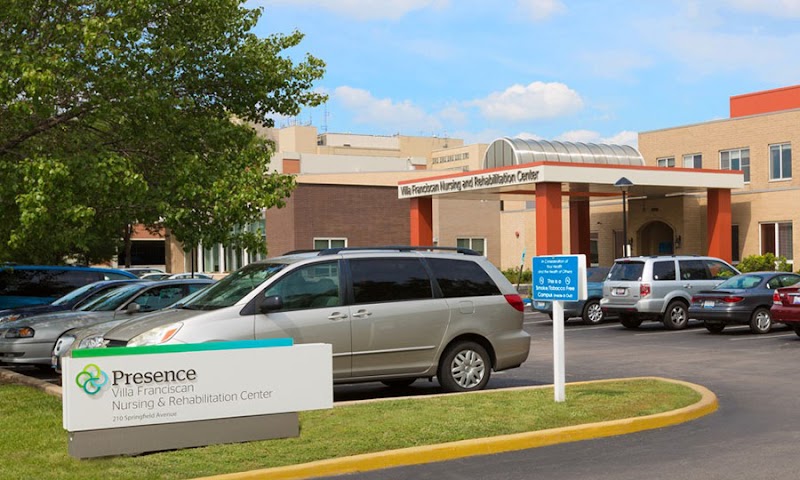
VILLA FRANCISCAN

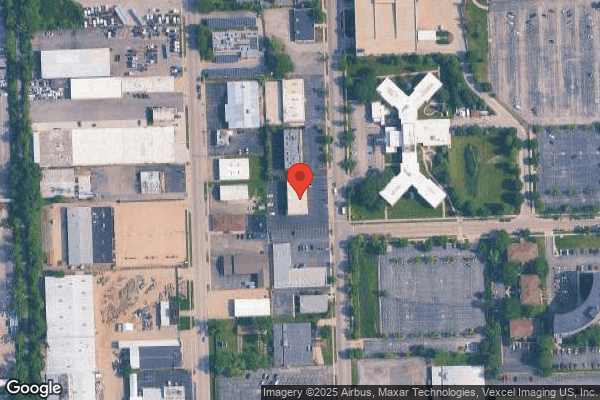
210 NORTH SPRINGFIELD AVENUE, JOLIET, IL 60435 (815) 725-3400
Non profit - Corporation 154 Beds ASCENSION LIVING Data: November 2025
Trust Grade
5/100
#415 of 665 in IL
Last Inspection: August 2024

Within standard 12-15 month inspection cycle. Federal law requires annual inspections.

Overview

Villa Franciscan in Joliet, Illinois, has received a Trust Grade of F, indicating significant concerns about its quality of care. Ranked #415 out of 665 facilities in Illinois and #11 out of 16 in Will County, it falls in the bottom half of nursing homes in the area. While the facility is improving, having reduced the number of issues from 14 in 2024 to 7 in 2025, it still has a concerning staffing turnover rate of 100%, which is much higher than the state average of 46%. Additionally, the facility faced $31,065 in fines, which is average, but the staffing rating of only 2 out of 5 stars raises questions about the quality of care. Specific incidents include a resident sustaining a serious leg laceration during a transfer, failure to address significant weight loss leading to hospitalization, and inadequate medication management for constipation, which caused a fecal impaction. While the facility has good RN coverage, it needs significant improvements in safety and care practices.

Trust Score
F
5/100
In Illinois
#415/665
Bottom 38%
Safety Record
High Risk
Review needed
Inspections
Getting Better
14 → 7 violations
Staff Stability
⚠ Watch
100% turnover. Very high, 52 points above average. Constant new faces learning your loved one's needs.
Penalties
✓ Good
$31,065 in fines. Lower than most Illinois facilities. Relatively clean record.
Skilled Nurses
✓ Good
Each resident gets 73 minutes of Registered Nurse (RN) attention daily — more than 97% of Illinois nursing homes. RNs are the most trained staff who catch health problems before they become serious.
Violations
⚠ Watch
43 deficiencies on record. Higher than average. Multiple issues found across inspections.
★★☆☆☆
2.0
Overall Rating
★★☆☆☆
2.0
Staff Levels
★★☆☆☆
2.0
Care Quality
★★☆☆☆
2.0
Inspection Score
Stable
2024: 14 issues
2025: 7 issues

The Good

  • Full Sprinkler Coverage · Fire safety systems throughout facility
  • No fines on record

Facility shows strength in fire safety.

The Bad

2-Star Overall Rating

Below Illinois average (2.5)

Below average - review inspection findings carefully

Staff Turnover: 100%

53pts above Illinois avg (47%)

Frequent staff changes - ask about care continuity

Federal Fines: $31,065

Below median ($33,413)

Moderate penalties - review what triggered them

Chain: ASCENSION LIVING

Part of a multi-facility chain

Ask about local staffing decisions and management

Staff turnover is very high (100%)

52 points above Illinois average of 48%

The Ugly 43 deficiencies on record

6 actual harm
Jul 2025 2 deficiencies 2 Harm
SERIOUS (G) 📢 Someone Reported This

A family member, employee, or ombudsman was alarmed enough to file a formal complaint

Actual Harm - a resident was hurt due to facility failures

Accident Prevention (Tag F0689)

A resident was harmed · This affected 1 resident

Based on interview and record review, the facility failed to ensure a resident was transferred safely. This failure resulted in R1 sustaining a 10-12-centimeter laceration to left lower leg which requ...

Read full inspector narrative →
Based on interview and record review, the facility failed to ensure a resident was transferred safely. This failure resulted in R1 sustaining a 10-12-centimeter laceration to left lower leg which required 18 sutures. This applies to one resident (R1) reviewed for injuries in a sample of four.The findings include: Resident Incident Report by V13 (LPN/Licensed Practical Nurse) dated 3/24/25 states R1 sustained a laceration to her left lower leg during transfer from wheelchair to bed. V13's Departmental Note dated 3/24/25 shows R1's laceration was reported by V12 (CNA/Certified Nursing Assistant) who performed R1's transfer. On 7/8/25, at 10:43 AM, V13 said she is unsure of R1's wheelchair footrests were on or off her wheelchair at the time of the incident. On 7/8/25 at 10:32 AM, V12 said that during her shift on 3/24/25, she was transferring R1 from her wheelchair to her bed and R1 sustained a laceration to her left leg. V12 said R1's left leg was closest to her bed and when she pivoted R1 towards the bed, she said ouch. V12 said she then looked down and saw a C or V-shaped cut and more blood than V12 has ever seen. V12 said she didn't know if R1 scraped her leg on the bed or the wheelchair during transfer. V2's (Director of Nursing) Detailed Incident Summary dated 3/29/25 states R1's bedframe was noted with blood on it after the incident. On 7/3/25 at 4:43 PM, V2 said that R1's leg might have rubbed against the bed upon transfer. R1's Emergency Department Physician Report dated 3/24/25 states while facility staff were attempting to transfer R1 from wheelchair into her bed, R1 sustained a large 10 to 12 cm U-shaped skin tear to her left lower leg that required [skin adhesive] and 18 sutures to bolster the wound edges and approximate skin edges. The report also states that it is unknown if she fell or bumped or injured her leg on an object while being moved or transferred. The patient did suffer a large skin tear to her left lower leg. V21's (Wound Doctor) progress note dated 4/30/25 shows that R1 has 1 wound on her left lateral leg measuring 11.5 cm x 5 cm with etiology noted as due to trauma/injury.On 7/9/2025 at 11:45 AM, V1 stated that they do not have specific policies for resident transfers and falls, but they may have policies from the previous facility ownership. The facility only provided a Gait Belt policy (revised 7/26/2024) that showed 2. 1-2 staff might also assist a resident while using a gait belt during transfers and ambulation. The provided policy does not include any other guidance for resident transfers, resident mobility, safety measures, staff body mechanics to support the resident during the transfer, or fall/injury prevention.
SERIOUS (G) 📢 Someone Reported This

A family member, employee, or ombudsman was alarmed enough to file a formal complaint

Actual Harm - a resident was hurt due to facility failures

Deficiency F0692 (Tag F0692)

A resident was harmed · This affected 1 resident

**NOTE- TERMS IN BRACKETS HAVE BEEN EDITED TO PROTECT CONFIDENTIALITY** Based on interview and record review, the facility failed to recognize a resident's significant weight loss of 17.8% in one mont...

Read full inspector narrative →
**NOTE- TERMS IN BRACKETS HAVE BEEN EDITED TO PROTECT CONFIDENTIALITY** Based on interview and record review, the facility failed to recognize a resident's significant weight loss of 17.8% in one month and implement timely interventions. This failure resulted in R1's continual weight loss of 24% in three months and eventual hospitalization. This applies to one resident (R1) reviewed for decreased oral intake.The findings include:R1's Weights and Vitals Summary show the following weights:1/6/25 165.2 lbs2/6/25 167.2 lbs3/7/25 169.3 lbs4/9/25 139.2 lbs (17.8% loss in 1 month)5/13/25 135.9 lbs6/13/25 128.6 lbs (24% loss in 3 months)7/7/25 113.2 lbsR1's Nutritional Status Notification written by V19 (Registered Dietician) dated 4/14/25 states, please obtain a new weight. April weight indicated a 30 pound weight loss 17.8% suspect may be in error. V19's Dietary Note written 4/14/25 states: Recommendations: Please re-weigh and continue to follow weight trends. Monitor weight, intake, and skin integrity. Goals: Weight maintenance with no significant changes and no signs or symptoms of dehydration. R1's Dietician requested re-weigh was not documented until over 1 month later on 5/13/25 at 135.9 lbs, showing another 3.3 lb loss.After the noted 30 pound one month weight loss on 4/9/25, the facility's next Nutrition Risk Assessment was not documented until 5/7/25 by V20 (Registered Dietician). V20 writes, Reviewed weight history in detail. Weight changes are noted due to errors in scale/recording not nutritional intake.Varied PO intake 25-75% per RN.Nutrition Diagnosis: Inadequate oral intake related to varied PO intake as evidenced by dementia, specific food preferences, 1:1 feeding assistance and encouragement required.Nutrition Interventions:.2. Add Ensure BID.R1's POS (Physician Order Sheet) shows order dated 5/9/25 for Ensure 240mLs twice a day. R1's MAR (Medication Administration Record) shows Ensure was not given to R1 until 5/12/25.On 7/8/25 at 12:47 PM, V16 (RN/Registered Nurse) said she is very familiar with R1 and noticed her decline around March/April 2025 and her 30 pound weight loss in April. On 7/9/25 at 12:37 PM, V16 said if a resident's weight is taken and shows a significant loss, the resident is supposed to be re-weighed right away to make sure the loss is accurate. V16 said after verifying the loss is accurate, the doctor should be called and the dietician notified to see if they want to add any other interventions and those interventions should be put into place immediately. V16 said a delay in adding weight loss interventions is a big harm because the elderly are a fragile population at greater risk for lowered immunity, illness, skin dryness/tears and dehydration due to weight loss. On 7/8/25 at 12:24 PM V15 (Registered Dietician) said if she is suspecting an inaccurate weight, she requests the resident to be re-weighed on the same day, because if the weight loss is accurate, she wants to know immediately so she can add more nutrition interventions for the resident. V15 said based on the weights documented in the system, R1's weights show an accurate significant weight loss. On 7/8/25 at 2:41 PM V15 said after re-weigh was requested on 4/14/25, the next weight was not documented until 5/13/25. V15 said when a re-weigh is requested it should be done that same day to verify. On 7/9/25 at 11:01 AM, V18 (NP/Nurse Practitioner) said if he was notified about R1's significant weight loss he would have ordered supplements for her and he expects the supplements to be started right away. V18 said supplements should have been started for R1 in April when the 30 pound significant weight loss was noted. On 7/9/25 at 2:37 PM, V2 (DON/Director of Nursing) said a delay in implementing weight loss interventions can lead to further weight loss and a decline in the resident's health overall. On 7/9/25 at 2:20 PM V3 (ADON/Assistant Director of Nursing) said a delay in implementing weight loss interventions is harmful because it can lead to more weight loss, muscle wasting, depleted protein stores, electrolyte deficiency, and dehydration. R1's General Progress Note written on 6/16/25 by V16 (RN) states NP was notified of R1's elevated BUN (Blood Urea Nitrogen) along with other recent lab values and resident's poor intake of food. Orders received to send resident to hospital for evaluation and IV fluids.On 7/3/25 at 5:04 PM, V9 (R1's POA/Power of Attorney) said R1 was admitted to the hospital on [DATE] severely dehydrated and with significant weight loss. V9 said she was not made aware of R1's weight loss and was under the impression R1 still weighed in the 160s. V9 said on 5/29/25 at Care Plan meeting, the facility staff told her R1 weighed 170 lbs (pounds), but she since found out that was a wrong weight. V9 said she should have been called when R1's weight went from 169 lbs to 139 lbs in 1 month. V9 said, I should not have been blind sighted by the 113.6 lbs when she was in the hospital.R1's Care Plan did not include nutrition concerns until initiated on 6/20/25 (after she returned from 6/17/25 hospitalization). This Care Plan states resident is at risk for alteration in nutritional status related to.significant weight loss.On 7/8/25 at 4:17 Pm, V1 (Administrator) said the facility does not have a Weight Loss policy, only a policy titled, Weights. The facility's policy titled Weights last revised 8/19/24 states, Policy Statement: It is the facility's policy to obtain resident's monthly weight unless ordered differently.Procedures:.3. The significant weight changes (monthly (5%), quarterly (7.5%), and every 6 months (10%)) will be assessed and addressed by the IDT which includes but not limited to the Dietician, Physician, Medical Specialist, Speech Therapist, Nutritionist, and Nurses.
Feb 2025 1 deficiency 1 Harm
SERIOUS (G) 📢 Someone Reported This

A family member, employee, or ombudsman was alarmed enough to file a formal complaint

Actual Harm - a resident was hurt due to facility failures

Quality of Care (Tag F0684)

A resident was harmed · This affected 1 resident

**NOTE- TERMS IN BRACKETS HAVE BEEN EDITED TO PROTECT CONFIDENTIALITY** Based on interview and record review the facility failed to adequately assess, administer medications, and notify the physician ...

Read full inspector narrative →
**NOTE- TERMS IN BRACKETS HAVE BEEN EDITED TO PROTECT CONFIDENTIALITY** Based on interview and record review the facility failed to adequately assess, administer medications, and notify the physician for a resident who had not had a bowel movement in over 3 days on several occasions. This failure contributed to (R1) developing a fecal impaction, pain and inflammation in her colon. This applies to 1 of 3 residents (R1) reviewed for quality of care in the sample of 7. The findings include: R1's face sheet shows she was admitted to the facility on [DATE] with diagnoses including: Unspecified Dementia, Parkinsonism and Constipation. R1's active Care Plan shows she has a cognitive impairment due to dementia, is incontinent of bowel and bladder, and is at risk for constipation due to impaired mobility. R1's constipation Care Plan initiated on 10/5/22 and revised on 1/5/25 shows that R1 will have one soft formed stool every 2-3 days. Interventions listed in the care plan include assess residents past bowel elimination pattern and document every shift, report negative findings to the physician, assess abdomen for distention, guarding, and bowel sounds at least every shift and administer laxatives/stool softeners and enemas as ordered by the physician. R1's Electronic Treatment Administration Record (ETAR) Electronic Medication Administration Record (EMAR), and Physician Order Summary (POS) show an active order from 6/9/23 that states, Monitor bowel movements (BM's) every shift if no BM in 3 days notify MD. On 2/26/25 at 10:25 AM, R1's bowel elimination tracking for January 2025 was reviewed with V7 (Licensed Practical Nurse). R1 had documented BM's on 1/3/25 and not again until 1/8/25 (5 days in between), 1/13/25 and not again until 1/18/25 (5 days again in between) and next on 1/22/25 (4 days in between). R1's EMAR shows she had PRN (as needed) medication orders for Milk of Magnesia (laxative) to be given daily as needed for constipation, and Miralax Powder (laxative) 17 grams every 12 hours as needed. The EMAR and paper copies of the Medication Administration Summary shows neither of these medications were administered in January 2025 to R1. R1's January 2025 Nursing Progress notes and assessment have no documented abdominal assessment or phone calls to R1's physician to notify and obtain orders for lack of bowel movements longer than 3 days. A change in condition note for R1 dated 1/24/25 shows that R1 was sent to a local community hospital for an unrelated medical issue. R1's hospital records show R1 was assessed in the emergency room (ER) on 1/24/25 and admitted to the hospital for an unrelated medical issue. R1's hospital records show a Gastroenterologist consulted for R1 on 1/24/25 and his consultation report shows that a CT scan was performed of R1's abdomen due to abdominal pain and R1 was found to have a distended rectum and an 8-9 cm. (centimeter) area of fecal impaction and Stercoral Proctitis (inflammation of the colon). Hospital records show R1 was started on stool softeners including rectal suppositories and oral laxative medications. On 2/25/25 at 11:22 AM, V7 (LPN) stated if a resident does not have a bowel movement in 3 days, they should assess the resident, administer any PRN medications, and call the doctor. On 2/26/25 at 9:10 AM, V8 (LPN) stated 3 days is the maximum a resident should go without a bowel movement and is she has a resident who has not gone she would document and assess the resident, give PRN medication, and call the doctor. V8 stated the CNAs at the facility are the ones who generally document the bowel movements and if they do not report anyone not having one they have to check the computer and hard copies of BM tracking forms. On 2/26/25 at 1:08 PM, V3 (R1's Physician) stated he does not recall being notified of the gap in R1's bowel movements. V3 stated he cannot do anything about or order medication if no one tells him about it. V3 additionally stated he would expect nurses to utilize PRN medications and do assessments if a resident has not had a bowel movement in 3 days. V3 described Stercoral Proctitis as an inflammation of the colon from a fecal impaction and said signs of an impaction would be pain, abdominal tenderness, or distention. V3 stated if the nursing staff had administered medications or called for orders it is possible R1's fecal impaction could have been avoided. A policy for bowel elimination was requested from the facility on 2/26/25. The policy provided by V2 was titled Urinary Incontinence and did not address bowel movement monitoring.
Feb 2025 2 deficiencies
CONCERN (D) 📢 Someone Reported This

A family member, employee, or ombudsman was alarmed enough to file a formal complaint

Potential for Harm - no one hurt, but risky conditions existed

Deficiency F0660 (Tag F0660)

Could have caused harm · This affected 1 resident

**NOTE- TERMS IN BRACKETS HAVE BEEN EDITED TO PROTECT CONFIDENTIALITY** Based on observation, interview, and record review the facility failed to identify and develop a discharge plan for resident (R1...

Read full inspector narrative →
**NOTE- TERMS IN BRACKETS HAVE BEEN EDITED TO PROTECT CONFIDENTIALITY** Based on observation, interview, and record review the facility failed to identify and develop a discharge plan for resident (R1) with a discharge goal to return to the community. This applies to 1 out of 3 residents (R1) reviewed for discharge services. R1's Medical Record showed R1 was admitted to the facility on [DATE] with multiple diagnoses including chronic obstructive pulmonary disease, asthma, congestive heart failure, generalized muscle weakness, and syncope. On 2/07/2025 at 11:40 AM, R1 was sitting in her wheelchair receiving 2 L (liters) of continuous oxygen via a nasal cannula. R1 stated she was frustrated because there had been delays with her discharge the prior week and now her discharge date was changed to 2/11/2025. On 2/07/2025 at 3:30 PM, V10 (R1's daughter) was interviewed via telephone. V10 stated she contacted the facility on 1/27/2025 to initiate a discussion regarding R1's discharge planning to return to her supportive living facility in the community. V10 stated during the meeting it was identified R1 required DME (Durable Medical Equipment) for her new oxygen and nebulizer therapies. V10 stated R1's original discharge date was scheduled for 2/04/2025 but then was cancelled when it was identified R1 needed additional training on how to use her wheelchair with her oxygen safely. On 2/13/2025 at 9:00 AM, V11 (R1's Supportive Living Facility Director of Nursing/DON) stated she had made multiple attempts prior to contact the facility to ensure R1 was ready for a safe return but was unsuccessful. V11 stated V10 then contacted her to inform her of R1's scheduled return date of 2/04/2025. V11 stated she was concerned because on 1/30/2025 she identified the facility had not made proper arrangements for home health services and DME ordering. V11 stated the facility thought R1's family would be obtaining R1's respiratory DME on their own, which was incorrect. V11 continued to say she then became more concerned when informed R1 now required the use of a wheelchair. V11 stated the facility was unable to show her documentation that R1 was trained on the use of her new wheelchair and oxygen equipment. V11 stated she informed V10 and V4 (Social Services) that R1 was not ready to safely return to her supportive living facility. V11 stated R1's delayed discharge could have been avoided if her goals had been identified and addressed appropriately by the facility at the time of admission and during her discharge planning. On 2 /11/2025 at 11:10 AM, V4 (Social Service) stated she was contacted by R1's family to discuss R1's discharge planning on 1/27/2025. V4 stated R1's original discharge date was scheduled for 2/04/2025. V4 stated R1's discharge date was then changed to 2/11/2025 after V11 assessed R1 at the facility. V4 stated discharge planning should be initiated by the facility's staff within 24-48 hours of a resident's admission to identify the resident's discharge goals and needs. V4 stated appropriate discharge planning should be reviewed to ensure the resident is safely discharged . R1's care plan showed a R1 required discharge planning and teaching for a safe discharge initiated on 1/13/2025. The care plan had multiple discharge interventions including Assess needs of resident/family beginning on day of admission and continuing throughout stay. Anticipate needs/services .Involve the resident/family in the discharge process .Assess of community resources should be utilized and contact appropriate personnel . V4's Social Service note dated 1/27/2025 (20 days after R1's admission) stated Writer spoke with patient's daughter [V10] via telephone to discuss patient's discharge .A Care conference was scheduled for Tuesday 1/28/2025 at 10 am via phone to discuss transfer back to [R1's Supportive Living Facility]. R1's Discharge Communication Sheet updated showed R1's original discharge date was scheduled on 2/04/2025. The facility's policy titled Transfer or Discharge, Preparing a Resident for dated 01/2025, stated Policy Statement Residents will be prepared in advance for discharge. Policy Interpretation and Implementation A. When a resident is scheduled for transfer or discharge, the social worker, or designee, will notify nursing services of the transfer of discharge so that appropriate procedures can be implemented.
CONCERN (D) 📢 Someone Reported This

A family member, employee, or ombudsman was alarmed enough to file a formal complaint

Potential for Harm - no one hurt, but risky conditions existed

Respiratory Care (Tag F0695)

Could have caused harm · This affected 1 resident

**NOTE- TERMS IN BRACKETS HAVE BEEN EDITED TO PROTECT CONFIDENTIALITY** Based on observation, interview, and record review the facility failed to obtain an oxygen therapy order for a resident (R1) who...

Read full inspector narrative →
**NOTE- TERMS IN BRACKETS HAVE BEEN EDITED TO PROTECT CONFIDENTIALITY** Based on observation, interview, and record review the facility failed to obtain an oxygen therapy order for a resident (R1) who required the use of continuous oxygen. This applies to 1 out of 3 residents (R1) reviewed for oxygen therapy. R1's Medical Record showed R1 was admitted to the facility on [DATE] with multiple diagnoses including chronic obstructive pulmonary disease, asthma, congestive heart failure, and syncope. R1's MDS (Minimum Data Set) dated 1/13/2025 showed R1 was admitted with continuous oxygen therapy. On 2/07/2025 at 9:25 AM, R1 was sitting in her wheelchair receiving 2 L (liters) of continuous oxygen via a nasal cannula. R1 stated she had recently been admitted to the facility with oxygen. R1 continued to say her oxygen therapy was new and was explained by the facility's staff that she now required the use of continuous oxygen. On 2/07/2025 at 2:20 PM, V8 (Agency Registered Nurse/RN) stated she was told on report that R1 required the use of 2-3 L continuous oxygen. V8 was asked to review R1's orders and stated she was unable to find an order for R1's oxygen therapy. V8 stated that residents receiving oxygen required a physician's order to indicate how much oxygen should be administered. On 2/11/2025 at 10:15 AM V3 (Assistant Director of Nursing/ADON) stated R1 was admitted with 2 L of oxygen therapy. V3 stated she also reviewed R1's orders and was unable to find an order for oxygen. V3 stated the facility expects nurses to review, obtain, and transcribe admission orders, accordingly, including oxygen orders. V3 stated residents receiving oxygen should be monitored to ensure they are safely receiving oxygen therapy as ordered. R1's care plan showed a nursing problem of impaired gas exchange initiated on 1/20/2025. The care plan had multiple interventions including R1's need for oxygen use and to maintain her oxygen administration as ordered. R1's Physician Orders report dated February 2025, showed R1's oxygen order was obtained on 2/07/2025 (during the survey). R1's oxygen order O2 2 LITERS PER NASAL CANNULA CONTINOUS TO KEEP O2 SAS >90%. MONITOR O2 SATS QSHIFT. The facility's policy titled Procedure: Oxygen Administration dated 12/2024, indicates The purpose of this procedure is to provide guidelines for safe oxygen administration. Preparation A. Verify that there is a physician's order for this procedure. Review the physician's orders or community protocol for oxygen administration. B. Review the resident's care plan to assess for any special needs of the resident.
Jan 2025 1 deficiency
CONCERN (D) 📢 Someone Reported This

A family member, employee, or ombudsman was alarmed enough to file a formal complaint

Potential for Harm - no one hurt, but risky conditions existed

Accident Prevention (Tag F0689)

Could have caused harm · This affected 1 resident

Based on interview and record review the facility failed to send an escort with a resident for an outside imaging appointment. This applies to 1 of 3 residents (R1) reviewed for transportation and esc...

Read full inspector narrative →
Based on interview and record review the facility failed to send an escort with a resident for an outside imaging appointment. This applies to 1 of 3 residents (R1) reviewed for transportation and escort to medical appointments, in the sample of 3. The findings include: R1 admitted to the facility with diagnoses including but not limited to chronic combined systolic and diastolic heart failure, atherosclerotic heart disease of native coronary artery without angina pectoris, ischemic cardiomyopathy, hypertensive heart disease with heart failure, nonrheumatic mitral (valve) insufficiency, COPD (chronic obstructive pulmonary disease, type 2 diabetes mellitus with foot ulcer, abnormalities of gait and mobility, unsteadiness on feet, and mild cognitive impairment of uncertain or unknown etiology, based on the diagnosis/history report. R1's elopement risk screening and evaluation dated December 13, 2024, showed a score of 8. The same elopement risk screening showed that if the score was 10 or more the resident is at risk. R1's progress notes dated January 16, 2025, at 2:05 PM, created by V4 (RN/Registered Nurse) showed, Patient out to appointment via [ride-sharing service car]. Patient to obtain X-rays with Disc and return to facility. On January 22, 2025, at 1:05 PM, V8 (Ward clerk/transportation scheduler) stated that when a resident has a scheduled outside appointment, their respective insurance company are called in advance to schedule for the transportation. According to V8, it is the insurance company who determines what type of transportation is needed by the resident based on the information regarding their mobility. V8 stated for Medicaid residents, the insurance company would ask if the resident is ambulatory and can transfer, if so, the insurance company would use a ride-sharing service car and if the resident used a wheelchair, the insurance company would use either medical-vans or regular ambulance company to transport a resident. V8 further stated that the insurance company would also ask if the resident will be traveling alone or with companion. According to V8, for R1 she called the insurance company for the resident's transportation to and from the appointment for January 16, 2025. Since R1 was ambulatory and could transfer independently, the insurance company had a ride-sharing service car used to transport R1 to his appointment on January 16, 2025. According to V8, she was asked by the insurance company if R1 was traveling alone or with companion and she said, alone. V8 stated that R1,had been sent out to his other appointments before using the ride-sharing service car without an escort and had come back without concerns. No one from nursing told me that he needed someone to go with him to his appointment. On January 22, 2025, at 3:28 PM, V1 (Administrator) stated that on January 16, 2025, R1 went to his imaging appointment using a ride-sharing service car without an escort. V1 stated that even though the imaging office was just around the corner, close to the facility, the facility should have sent a staff with R1. V1 also stated that when she learned that R1 did not come back to the facility in a reasonable time after his appointment on January 16, 2025. All facility staff made sure that residents are accounted on each floor and some staff went out of the facility to look for R1, including at the imaging office and the hospital ER (Emergency Room) which was next door to the facility. V1 stated that the police, R1's family and physician were notified. V1 stated R1 was found by V2 (Director of Nursing) and V3 (Assistant Director of Nursing) sitting in the hospital ER (next door to the facility). On January 22, 2025, at 4:16 PM, V2 (Director of Nursing) stated that R1 should have been sent out to his appointment on January 16, 2025, with a staff escort due to his changing mental status. According to V2, most of the time, R1 is with it and able to answer questions appropriately, but there are times that he gets confused. V2 stated that she was off on January 16, 2025, when R1 went to his appointment using a ride-sharing service car and she was not aware that the facility did not schedule a staff to accompany the resident. V2 stated that on January 16, 2025, at around 4:50 PM, she received a text message from the facility that R1 did not return to the facility after his imaging appointment. When she (V2) arrived at the facility, the facility staff had already started looking for R1 in the building and surrounding areas and the police had already been notified that R1 was missing. V2 also stated she (V2) and V3 (Assistant Director of Nursing) took their respective cars and went to the hospital ER next to the facility and upon entering the ER, she saw R1 sitting at the waiting area with his cane on his lap. V2 stated that R1 had no visible injury. V2 stated that she asked, R1 where he had been and the resident responded, I do not know why the ambulance brought me here.
Jan 2025 1 deficiency 1 Harm
SERIOUS (G) 📢 Someone Reported This

A family member, employee, or ombudsman was alarmed enough to file a formal complaint

Actual Harm - a resident was hurt due to facility failures

Notification of Changes (Tag F0580)

A resident was harmed · This affected 1 resident

Based on interview and record review, the facility failed to ensure a resident's Physician/Nurse Practitioner was immediately notified of a fall where the resident had hit his head. This failure resul...

Read full inspector narrative →
Based on interview and record review, the facility failed to ensure a resident's Physician/Nurse Practitioner was immediately notified of a fall where the resident had hit his head. This failure resulted in an over six-hour delay in hospitalization and treatment. This applies to 1 of 3 residents (R3) reviewed for notification of changes. Findings include: The facility's 1/6/25 reportable Serious Injury Incident form for R3 showed Resident noted on his right side next to his bed. Resident was transferred to hospital. admitted with 4 [millimeter] hyper density left frontoparietal lobe suspicious for a small focus of intraparenchymal hemorrhage . R3's 1/4/25 progress note showed 9:30 PM, resident observed, laying on the floor on his right side, next to his bed, bruise noted, on right side of face with swelling .call out to [Nurse Practitioner (V16)] .neuro-check in progress . This progress note was timed at 11:48 PM, two hours after R3's fall. R3's 1/5/25 progress note showed [Nurse on Duty] called Dr. on call, NP [V16], to get orders. Waiting on call back. Resident will continue to be monitored for safety . This progress note was timed at 4:10 AM, over six hours after R3's fall. R3's 1/5/25 progress note from 4:22 AM showed Received a call back from [V16] at 4:13 AM, orders to send resident to ER (Emergency Room) for further assessment. R3's nursing progress note does not show the time R3 went to the hospital or how he was transported. On 1/9/25 at 2:00 PM, V1 (Administrator) stated when the night nurse had come on duty, she called the Nurse Practitioner on call to get orders. V1 stated R3's fall was unwitnessed. On 1/10/25 at 3:10 PM, V16 (Nurse Practitioner) stated he does not recall every detail and he was not alarmed by the initial call he received- there was no obvious injury. V16 stated when they called him again though he thought there was something wrong. V16 stated he has to make decisions based on the information that is given to him. V16 stated if the resident hits their head and the resident is on Coumadin (anti-coagulant medication), you send them to the hospital. R3's Face Sheet showed diagnoses that include long term use of anticoagulant and personal history of venous thrombosis and embolism. R3's January 2025 Physician Order Sheet showed a 1/2/25 order for 3mg of Coumadin daily, and a standing order for Resident on Anticoagulant monitor for signs of bleeding.,, The facility's Change in a Resident's Condition or Status policy (revised 2/2022) showed A. The nurse will notify the resident's Health care provider or physician on call when there has been a (an) 1. Accident or incident involving the resident 5. Need to alter the resident's medical treatment significantly; 6. Need to transfer the resident to a hospital/treatment center .
Aug 2024 9 deficiencies
CONCERN (D)

Potential for Harm - no one hurt, but risky conditions existed

Deficiency F0578 (Tag F0578)

Could have caused harm · This affected 1 resident

**NOTE- TERMS IN BRACKETS HAVE BEEN EDITED TO PROTECT CONFIDENTIALITY** Based on interview and record review the facility failed to ensure that a resident's signed POLST (Practitioner Order for Life-S...

Read full inspector narrative →
**NOTE- TERMS IN BRACKETS HAVE BEEN EDITED TO PROTECT CONFIDENTIALITY** Based on interview and record review the facility failed to ensure that a resident's signed POLST (Practitioner Order for Life-Sustaining Treatment) form and physician's order are consistent to reflect the resident's treatment wishes in an event of a medical emergency. This applies to 1 of 1 resident (R47) reviewed for advance directives in the sample of 21. The findings include: R47 had multiple diagnoses including dementia with other behavioral disturbance, based on the diagnosis/history records. R47's face sheet showed that the resident's code status was, Full Code. R47's quarterly MDS (minimum data set) dated [DATE], showed that the resident was moderately impaired with cognitive skills for daily decision making. R47's active physician's order showed an order dated [DATE], for full code. The same active physician's order showed an order dated [DATE], for hospice care with admitting diagnosis of dementia. R47's medical chart (physical records) showed a signed POLST form dated [DATE], with instructions that if the resident is in cardiac arrest and has no pulse, No CPR (cardiopulmonary resuscitation): Do Not Attempt Resuscitation (DNAR) was selected. The said POLST form was signed by R47's State guardian (legal representative) and the Physician. R47's active advance directive care plan initiated on [DATE], showed under goal and target date, Resident will have their preferences followed and reviewed through next review period, [[DATE]]. The same care plan showed approaches including, Obtain Advance Directive, as indicated by resident/resident representative. On [DATE], at 11:32 AM, V4 (Licensed Practical Nurse) stated that she was the assigned nurse for R47 that morning. V4 stated that in case of a medical emergency while R47 is inside her room, the first thing she would check is the color of the name tag on R47's wall by the door. According to V4, the facility uses a green name tag on the resident's wall by the door to indicate a full code status and the facility uses a white name tag on the resident's wall by the door to indicate DNR (Do Not Resuscitate) status. With V4, R47's name tag on the wall by the door was observed to be green in color which according to V4, R47 was a full code. V4 stated that in case of a medical emergency while R47 is away from her assigned room, R47's medical chart (physical records) which is accessible at the nursing station should be checked for availability of signed POLST form and copy of the active physician order to determine the resident's code status. Upon review of R47's medical chart, V4 stated that the resident had a signed POLST form showing that no CPR should be performed and that R47 had a DNR status. V4 reviewed the active physician order for R47 and stated that the resident was a full code which meant that CPR should be performed. According to V4, R47 had inconsistent and conflicting code status based on the physician order for full code and the signed POLST form for DNR. V4 stated that there is confusion as to what code status to follow for R47 in case of a medical emergency. V4 added that based on the conflicting code status for R47, she will follow the physician's order to perform CPR in case of R47's medical emergency. On [DATE], at 12:09 PM, V3 (Assistant Director of Nursing) confirmed during the interview that if a medical emergency happened inside a resident's room, the nursing staff were instructed to check the color of the name tag on the resident's wall by the door. V3 stated that a green name tag meant that the resident has a full code status, therefore CPR should be performed, and the white name tag meant that the resident has a DNR status, therefore no CPR should be performed. According to V3, the color of the name tag on each resident's wall by the door are constantly updated based on the physician's order and the available signed POLST form, and that the two documents should always be consistent. V3 further stated that if a medical emergency happened away from the resident's room, the nurses should check the resident's medical chart located at the nursing station to confirm the availability of the signed POLST form and the active physician's order for code status. With V3, the color of the name tag on R47's wall by the door was observed and the signed POLST form and active physician's order were reviewed from R47's medical chart. V3 acknowledged that R47's code status was inconsistent, conflicting and confusing because the physician's order does not reflect the wishes on the available signed POLST form. The facility's policy and procedure regarding Advance Directives and Code Status dated [DATE] showed in-part under procedure statement, Advance directives will be respected in accordance with state law and community policy. The policy under interpretation and implementation showed in-part, 2. Initiating a new Advance Directive or Changing an Advance Directive. A. Social Service . 2. Advanced Directive signed, a. Notify nursing to obtain corresponding physician's order, as needed, b. Scan into electronic chart, or place into paper chart, c. Update Resident Code Status Identifiers, d. Care plan per resident wishes as identified on the Advanced Directive. B. Nursing 1. Check that the Resident Code Status Identifiers are correct, 2. For DNR or other choices identified on an Advanced Directive a. Obtain and enter a physician order after confirmation that the community required form is signed, b. Care plan per resident wishes as Identified on the Advanced Directive, 3. Choice reviewed routinely, at the quarterly care conference, when there is a significant change and per resident/resident representative request.
CONCERN (D)

Potential for Harm - no one hurt, but risky conditions existed

Accident Prevention (Tag F0689)

Could have caused harm · This affected 1 resident

Based on interview and record review the facility failed to have two staff assist during a full body mechanical lift transfer. This applies to 1 of 3 residents (R49) reviewed for accidents and supervi...

Read full inspector narrative →
Based on interview and record review the facility failed to have two staff assist during a full body mechanical lift transfer. This applies to 1 of 3 residents (R49) reviewed for accidents and supervision in the sample of 21. The findings include: R49's face sheet showed diagnoses of hemiplegia following cerebral infarct affecting left non dominate side, unspecified osteoarthritis, unspecified dementia, unspecified severity. R49's MDS (Minimum Data Set) dated July 19, 2024, showed that R49 was moderately impaired in cognition and dependent on staff with the assistance of two or more helpers for bed to chair transfers. On August 26, 2024, at 11:39 AM, R49 was lying in bed in her room with a striped shirt on and R49's hair looked disheveled. There was a high back chair at foot of R49's bed. When asked if she prefers to stay in bed. R49 stated I want to get up. They don't get me up. They only get me once in a while. I don't know when they last got me up. They don't want to use the lift to get me up. V9 (Certified Nursing Assistant) was notified that R49 stated that she would like to get up. On August 27, 2024, at 10:44 AM, R49 was lying in bed fully clothed with shirt and jeans. V9 (Certified Nursing Assistant) came in with a full mechanical lift and stated that she is about to get her up. On August 27, 2024, at 11:02 AM, R49 was seated in a high back chair in front of wash basin in bathroom brushing her teeth with right hand. R49 stated that only V9 assisted her during the transfer that morning and that usually she is assisted by one staff by the lift when she gets up. V9 came in shortly afterwards into the bathroom. When asked, V9 stated that she got R49 up by herself with the mechanical lift. On August 27, 2024, at 11:32 AM, V10 (Registered Nurse) stated Usually, it should be two persons assistance by mechanical lift. On August 28, 2024, at 2:41 PM, V2 (Director of Nursing) stated that there should be two staff during mechanical lift transfer for safety of the resident as one staff is involved with the operation of the equipment and the other staff ensures that the resident is secure. Facility policy and procedure titled Lifting Machine, Using a Portable (revised 12/2017) included as follows: Purpose: The purpose of this procedure is to help lift residents using a manual lifting device. General guidelines: Two (2) nursing associates are required to perform this procedure. Procedure for total lift transfer: A) Explain procedure to resident, to ensure their comfort and understanding of situation. Always have 2 persons provide transfer.
CONCERN (D)

Potential for Harm - no one hurt, but risky conditions existed

Tube Feeding (Tag F0693)

Could have caused harm · This affected 1 resident

**NOTE- TERMS IN BRACKETS HAVE BEEN EDITED TO PROTECT CONFIDENTIALITY** Based on observation, interview, and record review, the facility failed to assess and provide gastrostomy tube (g-tube) care as ...

Read full inspector narrative →
**NOTE- TERMS IN BRACKETS HAVE BEEN EDITED TO PROTECT CONFIDENTIALITY** Based on observation, interview, and record review, the facility failed to assess and provide gastrostomy tube (g-tube) care as ordered by the physician. This applies to 1 of 3 residents (R15) reviewed for Tube Feeding in the sample of 21. The findings include: The electronic medical records (EMR) shows that R15 has multiple medical diagnoses which include epileptic seizure, unspecified encephalopathy, gastrostomy status, muscle weakness and dementia. Minimum Data Sheet (MDS) dated [DATE], shows that R15 moderately impaired with his cognition. On August 28, 2024, at 1:49 PM, R15 was in his bedroom. Upon assessment of his g-tube, with V18 (Certified Nursing Assistant/CNA), it was noted that his g-tube dressing was dated August 24, 2024. The dressing was soiled with dry brown discharge which filled the lower half of the 4 x 4 gauze dressing and had odor emanating from it. Surveyor called the attention of V20 (Nursing Supervisor). V20 came in and assessed R15's g-tube site. V20 removed the soiled dressing which revealed redness and small open area to the surrounding skin of the g-tube insertion site. The skin was wet, it appeared raw, and had an odor coming from the site. V20 described it as maceration. V20 stated that the g-tube dressing is supposed to be changed daily and as needed, and skin should be assessed every shift. R15's Wound Assessment Report dated May 20, 2024, shows, admission skin assessment noted with g-tube stoma to the left lower quadrant, resident g-tube is water flush only at this time. Stoma site free from any signs and symptoms of infection at this time, bumper noted in place. Resident noted no other skin alterations at this time. Resident is incontinent of bowel and bladder. Education regarding pressure relief to bony areas such as heels, shoulder blades, buttocks, and elbows provided to nurse on duty. Education also provided to nurse on duty regarding monitoring of g-stoma site for any signs/symptoms of infection. Staff to continue to monitor and assess as needed. R15's Wound assessment dated [DATE], shows, G-tube stoma site assessed and noted with redness and maceration, slight odor and a small open area to left side of the stoma. Resident denies pain/discomfort at stoma site, area cleansed with warm soap and water, pat dried thoroughly, triad and drain sponge applied, treatment orders initiated. Education provided to nurse on duty regarding monitoring of the stoma site for signs and symptoms of infection at site, resident's complaints of pain/discomfort at site. No other skin alterations noted at this time. Staff to continue to monitor and assess. The same wound assessment shows that it has scant drainage surrounding skin is macerated, and measured as Length (L) 0.2 centimeter (cm) x Width (W) 0.2 cm. Physician Order Summary (POS) shows: G-tube stoma monitor for signs and symptoms of redness, warmth, edema, and drainage (or dehiscence), dressing placement, keep clean and dry every shift. Notify physician and wound care with any changes. Gastrostomy Status Care Plan with revised date of July 3, 2024, shows R15 has risk for impaired skin integrity related to impaired mobility and nutrition through feeding tube. The same care plan shows multiple interventions that includes daily skin inspection, report any changes in skin or signs of possible skin breakdown or redness. On August 29, 2024, at 12:47 PM, V21 (Nurse Practitioner/NP) stated that she was not aware of R15 having a skin breakdown in the surrounding area of the g-tube site. However, V21 was notified today about the maceration in R15's g-tube area. V21 expected the nurses to follow the physician order regarding g-tube care. V21 added that not following the physician's order can cause potential skin breakdown.
CONCERN (D)

Potential for Harm - no one hurt, but risky conditions existed

Unnecessary Medications (Tag F0759)

Could have caused harm · This affected 1 resident

Based on observation, interview, and record review, the facility failed to administer medications according to physician's order. There were 26 medication opportunities with 2 medication errors result...

Read full inspector narrative →
Based on observation, interview, and record review, the facility failed to administer medications according to physician's order. There were 26 medication opportunities with 2 medication errors resulting to 7.69 % error rate. This applies to 1 of 6 residents (R12) reviewed for medication administration in the sample of 21. The findings include: On August 27, 2024, at 8:44 AM, V4 (Nurse) administered medications to R12 which include Loratadine, Sitagliptin, Vitamin B12, Docusate Sodium, Escitalopram, Carvedilol, Amiodarone, Metformin, Magnesium, and Artificial Tears. After the medication administration, V4 stated that these were all the medications scheduled for this morning. R12's Medication Administration Record (MAR) dated August 2024 showed the above medications, however, there were other medications that were supposed to be given at that time which includes Polyethylene Glycol 17 grams, Medi-Pads 50% topical for hemorrhoids. On August 28, 2024, at 4:14 PM, V2 (Director of Nursing/DON) stated nurses should give the medications as ordered by the physician and to follow the 5 rights of medication administration such as the right patient, dose, medication, time, and route.
CONCERN (E)

Potential for Harm - no one hurt, but risky conditions existed

ADL Care (Tag F0677)

Could have caused harm · This affected multiple residents

**NOTE- TERMS IN BRACKETS HAVE BEEN EDITED TO PROTECT CONFIDENTIALITY** 5. R49's face sheet showed diagnoses of hemiplegia following cerebral infarct affecting left non dominate side, unspecified oste...

Read full inspector narrative →
**NOTE- TERMS IN BRACKETS HAVE BEEN EDITED TO PROTECT CONFIDENTIALITY** 5. R49's face sheet showed diagnoses of hemiplegia following cerebral infarct affecting left non dominate side, unspecified osteoarthritis, unspecified dementia, unspecified severity. R49's MDS (Minimum Data Set) dated July 19, 2024, showed that R49 was moderately impaired in cognition and dependent on staff for personal hygiene. On August 26, 2024, at 11:39 AM, R49 lying in bed in her room with a striped shirt on and R49's hair looked disheveled. R49 stated I only have this stripped shirt on. I only have a diaper underneath. They don't even comb my hair. R49's nails appeared long with blackish substance underneath. R49's left hand appeared contracted. R49 stated that she would like her nails trimmed and cleaned. On August 27, 2024, at 10:53 AM, R49 was lying in her bed and fingernails remained long and uncut on both hands with blackish substance underneath most of the nail beds that were visible from contracted hand. The nails in her contracted hand also appeared to be pressing into her palm. R49 remarked They need to be trimmed. This information was relayed to V14 (Registered Nurse) who stated that the Hospice nurse usually comes in and takes care of this task. On August 27, 2024, at 11:02 AM, R49 was seated in a high back chair in front of the wash basin in the bathroom brushing her teeth with her right hand and stated that she needs assistance to wash off toothbrush and her hands. R49's fingernails remained long with blackish substance underneath the nails. The visible nails in her contracted hand also appeared long with blackish substance underneath and were pressing into her palm. This was relayed to V9 (Certified Nursing Assistant) who stated that since R49's left hand is contracted, that she is unable to open R49's fingers. On August 27, 2024, at 1:19 PM, V11 (Rehab Director) stated that R49 refuses therapy to her contracted hands however staff should ensure that R49's fingernails are trimmed so that it will not dig into her palms. R49's care plan revised April 22, 2024, included that R49 has impaired mobility, requires assistance from staff for her ADLs (activities of daily living). Goal for the same included that staff will provide ADL assistance as needed with target date October 19, 2024. 6. R44's face sheet included diagnoses of unspecified Dementia, unspecified severity, Alzheimer's disease, unspecified psychosis. R44's quarterly MDS dated [DATE], showed that R44 was moderately impaired in cognition and is dependent on staff for personal hygiene. On August 26, 2024, at 10:59 AM, R44 was seated in a high back chair in front of nurses station. R44's left arm appeared contracted, and her fingers were curled into a fist and the visible fingernails were noted to be long and pressing into palms. R44's right hand also had long fingernails with blackish substance underneath the nail beds. R44 did not respond to queries and V12 (Activity Aide) stated that R44 is primarily Spanish speaking. On August 27, 2024, at 12:10 PM, R44 was seated in a high back chair and her fingernails remained long and with some of them jagged and with blackish substance underneath the nail beds. This information was relayed to V14 (Registered Nurse) who stated that R44's family comes in and usually takes care of it. R44's care plan revised July 28, 2024, showed that R44 requires staff assistance for all ADLs with goal for this problem for staff will provide the needed assistance for ADLs. Based on observation, interview and record review, the facility failed to assist residents identified as needing assistance with personal hygiene and grooming. This applies to 6 of 6 residents (R13, R44, R49, R91, R106 and R125) reviewed for ADLs (activities of daily living) in the sample of 21. The findings include: 1. R13 face sheet shows multiple diagnoses including vascular dementia, generalized muscle weakness and hemiplegia following cerebral infarction affecting left nondominant side, based on the diagnosis/history report. R13's quarterly MDS (minimum data set) dated July 4, 2024, showed that the resident was moderately impaired with cognitive skills for daily decision making. The same MDS showed that R13 required maximum assistance from the staff with personal hygiene. On August 26, 2024, at 10:48 AM, R13 was in bed, alert and verbally responsive with confusion. R13's fingernails were long and jagged with brown substances underneath the nails. R13 stated that she wants the staff to trim and clean her fingernails. On August 27, 2024, at 11:51 AM, R13 was in bed, alert and verbally responsive. R13's fingernails were long and jagged with black substances underneath the nail beds. V3 (Assistant Director of Nursing) was present during the observation and confirmed that R13's fingernails needed trimming and cleaning. R13's active care plan initiated on January 11, 2024, showed that the resident requires staff assistance with all her ADLs. 2. R91 had multiple diagnoses including cerebral infarction due to thrombus of left anterior cerebral artery, hemiplegia following cerebral infarction affecting right dominant side and weakness, based on the diagnosis/history report. R91's quarterly MDS dated [DATE], showed that the resident was severely impaired with cognition. The same MDS showed that R91 required maximum assistance from the staff with personal hygiene. On August 26, 2024, at 11:36 AM, R91 was in bed, alert and verbally responsive. R91 had accumulation of long facial hair and his fingernails were long and jagged with black substances underneath the nails. V5 (CNA/ Certified Nursing Assistant) was present during the observation. R91 stated that he needed help from the staff with trimming and cleaning of his fingernails and he needed staff assistance with shaving. On August 27, 2024, at 12:01 PM, R91 was in bed, alert and verbally responsive. R91 had accumulation of long facial hair and his fingernails were long and jagged with black substances underneath the nail beds. V3 (ADON, Assistant Director of Nursing) was present during the observation and confirmed that R91's fingernails needed trimming and cleaning, and that the resident needs staff assistance with shaving. R91's active care plan initiated on June 25, 2021, showed that the resident requires staff assistance with all his ADLs. 3. R106 had multiple diagnoses including Parkinsonism, dementia, and generalized muscle weakness, based on the diagnosis/history report. R106's quarterly MDS dated [DATE], showed that the resident was severely impaired with cognitive skills for daily decision making. The same MDS showed that R106 required total assistance from the staff with personal hygiene. On August 26, 2024, at 11:09 AM, R106 was in bed, alert but non-verbal. R106's fingernails were long and jagged. V5 was present during the observation. On August 27, 2024, at 11:56 AM, R106 was in bed, alert but non-verbal. R106's fingernails were long and jagged. V3 was present during the observation and confirmed that R106's fingernails needed trimming and filing to prevent the resident from scratching and/or injuring herself. R106's active care plan initiated on March 13, 2024, showed that the resident had self-care deficit requiring total assistance with ADL care. The same care plan showed multiple approaches including, provision of care as needed and provision of assistance with personal care. 4. R125 had multiple diagnoses including dementia, need for assistance with personal care and generalized muscle weakness, based on the diagnosis/history report. R125's quarterly MDS dated [DATE], showed that the resident was moderately impaired with cognitive skills for daily decision making. The same MDS showed that R125 required maximum assistance from the staff with personal hygiene. On August 26, 2024, at 11:26 AM, R125 was sitting in bed, alert and verbally responsive. R125 had accumulation of long and curling facial hair on her chin, on both sides of her face and above her lips. R125's fingernails were long and jagged with black substances underneath the nails. According to R125 she needed help from the staff to trim and clean her fingernails and to shave her facial hair. On August 27, 2024, at 12:06 PM, R125 was sitting in her wheelchair inside the unit television area (in front of the nursing station). R125 was alert and verbally responsive. R125 had accumulation of long and curling facial hair on her chin, on both sides of her face and above her lips. R125's fingernails were long and jagged with black substances underneath the nail beds. V3 was present during the observation and confirmed that R125's facial hair needs to be removed/shaved by the staff and the resident's fingernails needs trimming and cleaning. R125's active care plan initiated on December 4, 2023, showed that the resident requires staff assistance with all her ADLs. The same care plan showed multiple approaches including provision of assistance to R125 with ADLs. On August 27, 2024, at 12:15 PM, V3 (Assistant Director of Nursing) stated that it is part of the facility's nursing care and service to assist any resident requiring assistance with ADLs, including shaving/ removing facial hair and to assist the resident with trimming and cleaning of fingernails to ensure that the president's personal hygiene and grooming are maintained.
CONCERN (E)

Potential for Harm - no one hurt, but risky conditions existed

Incontinence Care (Tag F0690)

Could have caused harm · This affected multiple residents

Based on observation, interview, and record review, the facility failed to provide incontinence care in a manner that would prevent urinary tract infection (UTI). This applies to 4 of 5 residents (R26...

Read full inspector narrative →
Based on observation, interview, and record review, the facility failed to provide incontinence care in a manner that would prevent urinary tract infection (UTI). This applies to 4 of 5 residents (R26, R117, R126, and R9) reviewed for bowel and bladder care in the sample of 21. The findings include: 1. On August 27, 2024, at 1:16 PM, V18 (Certified Nursing Assistant/CNA) rendered incontinence care to R26 who was wet with urine and had a bowel movement. V18 wiped R26's frontal perineum up and down with wet washcloth, the washcloth got soiled with fecal matter as it went down to the mid perineum. V18 only wiped the outer area of the labial fold and the surface of the groins without wiping deeper into the groins, then V18 proceeded to clean the back perineum. R26's face sheet shows that R26 has a history of UTI. 2. On August 28, 2024, at 10:24 AM, V17 and V18 (Both CNAs) rendered incontinence care to R9 who was wet with urine. V17 cleaned R9's perineum from front to back. However, V17 did not separate the labia to clean the inner folds. 3. On August 28, 2024, at 10:48 AM, V17 and V18 stated they rendered incontinence care to R126 who was wet with urine and had a bowel movement. V17 cleaned R126 from the front to back, V17 cleaned the surface of the groin but did not go deeper into the folds, and she did not clean R126's scrotal area. R126's face sheet shows that R126 has diagnoses of obstructive and reflux uropathy, hydronephrosis with ureteral stricture, calculus of ureter, and benign prostatic hyperplasia with lower urinary tract symptoms. 4. On August 28, 2024, at 10:57 AM, V17 and V18 they rendered incontinence care to R117 who was wet with urine. V17 cleaned R117 from front to back of the perineum. However, V17 did not separate labia to clean the inner folds and cleaned only the surface of the groins without going in deeper into the folds. On August 28, 2024, at 4:11 PM, V2 (Director of Nursing/DON) stated that when staff provides incontinence care the staff must completely clean the resident from front to back. The staff must clean the abdominal folds, the vaginal area, separate the labial folds to clean the inner area, and the whole groins. The staff must wipe in one direction and not up and down. This is to prevent infection. The Facility's Policy and Procedure for Peri-Care dated January 2024 shows: Purpose: The purposes of this procedure are to provide cleanliness and comfort to the resident. to prevent infections, and skin irritation, and to observe the resident's skin condition. Steps in the Procedure: I. For Female Resident: Wash the perineal area, wiping from front to back. a. Separate labia and wash area downward from front to back. b. Continue to wash the perineum including thighs, alternating from side to side, and using downward strokes. J. For Male Resident: Wash the perineal area starting from the urethra and working outward. c. Continue to wipe the perineal area including the penis, scrotum, and inner thighs.
CONCERN (E)

Potential for Harm - no one hurt, but risky conditions existed

Deficiency F0805 (Tag F0805)

Could have caused harm · This affected multiple residents

**NOTE- TERMS IN BRACKETS HAVE BEEN EDITED TO PROTECT CONFIDENTIALITY** Based on observation, interview and record review, the facility failed to serve ground chicken for residents on mechanical soft ...

Read full inspector narrative →
**NOTE- TERMS IN BRACKETS HAVE BEEN EDITED TO PROTECT CONFIDENTIALITY** Based on observation, interview and record review, the facility failed to serve ground chicken for residents on mechanical soft diets. This applies to 4 of 4 residents (R67, R105, R109, R296) reviewed for dining in the sample of 21. The findings include: Facility menu spreadsheet for Monday lunch (week 1) showed to serve ground same as base for mechanical soft diet. The base was documented as garlic herb-based chicken breast for mechanical soft diet. On August 26, 2024 at 12:02 PM during meal service in the secure unit dining room on the 1st floor, V8 (Dietary Aide) was plating the food from the steam table. The mechanical soft chicken breast, which was pre-plated in bowls, appeared chopped into varying lengths. V8 stated that it was pre-plated in the facility kitchen. V6 (Dietary Manager), who had come into the vicinity, was showed the same and V6 stated that she will have to ask V7 (Cook) how he prepared it. R67, R105, R109 and R296 were observed to receive the chopped chicken and their diet ticket showed give ground meat. R65 and R109 received meals in the secure unit dining room and R105 and R296 received room trays on the 2nd floor. R105 had poor dentition and R296 was edentulous and did not eat all the chicken. On August 26 at 12:19 PM, V7 (Cook) stated that he chopped up the chicken on a cutting board as the blender was in use by another dietary staff member. On August 28 at 12:35 PM, V15 (Registered Dietitian) stated that for ground consistency a [NAME] should be used as the texture of the product will not be even when chopped. Facility policy and procedure titled Modified Texture Foods (revised January 2024) included as follows: Policy: Provide a standardized process for modified texture foods to meet community-approved diet guidelines and to assure palatability, flavor, texture, and nutritious value. Procedure: -The regular diet menu item will be used to prepare all modified-textured menu items unless otherwise indicated by menu spreads. -Foods requiring modification to other levels (e.g., ground meat, minced and moist, soft and bite sized) will be provided per guidelines established by the community and approved in the diet manual. Facility diet order listing of residents printed on August 26, 2024, showed that R67, R105, R109 and R296 were on mechanical soft diets.
CONCERN (E)

Potential for Harm - no one hurt, but risky conditions existed

Infection Control (Tag F0880)

Could have caused harm · This affected multiple residents

Based on observation, interview, and record review, the facility failed to follow infection control process related to hand hygiene and gloving during provisions of incontinence care. This applies to...

Read full inspector narrative →
Based on observation, interview, and record review, the facility failed to follow infection control process related to hand hygiene and gloving during provisions of incontinence care. This applies to 5 of 21 residents (R9, R26, R116, R117, R126) reviewed for infection prevention in the sample of 21. The findings include: 1. On August 27, 2024, 1:01 PM, V19 (Certified Nursing Assistant/CNA), rendered peri-care to R116 after he had a bowel movement in the bed pan. V19 cleaned R116 from front to back, she then touched clean bed linen, applied clean incontinence brief, and applied barrier cream, V19 also placed a pillow underneath R116's left lower extremity, placed linen sheet and blanket over R116, adjusted bed height by using bed control and opened the privacy curtain, while wearing the soiled gloves all throughout these procedures. 2. On August 27, 2024, at 1:16 PM, V18 (CNA) rendered incontinence care to R26 who was wet with urine and had a bowel movement. V18 cleaned R26 from front to back perineum, applied barrier cream, applied a clean disposable brief, repositioned R26, and placed linen, and blanket over R26, while wearing the same soiled gloves all throughout the care. 3. On August 28, 2024, at 10:24 AM, V17 and V18 (Both CNAs) rendered incontinence care to R9 who was wet with urine. V17 cleaned R9's perineum from front to back, applied clean disposable brief, repositioned R9, assisted R9 to put the pants on, opened R9's closet to get a sweatshirt, and transferred R9 via mechanical lift while wearing the same gloves all throughout the care procedure. 4. On August 28, 2024, at 10:48 AM, V17 and V18 rendered incontinence care to R126 who was wet with urine and had a bowel movement. V17 cleaned R126's perineum from front to back, applied new disposable brief, and repositioned R126 while wearing the same set of gloves all throughout the care. 5. On August 28, 2024, at 10:57 AM, V17 and V18 rendered incontinence care to R117 who was wet with urine, V17 cleaned R117's perineum from front to back, applied incontinence brief and repositioned R117, and adjusted bed height using the bed remote control while wearing the same gloves. On August 28, 2024, at 3:57 PM, V2 (Director of Nursing/DON) stated that staff should follow protocol for when providing incontinence care. The staff must perform hand hygiene before and after care, they should change gloves and perform hand hygiene in between glove changes and in between tasks to prevent the spread of infection. Facility's Policy and Procedure for Hand Hygiene dated August 2024 shows: This community considers hand hygiene the single most important practice to prevent infections and promote resident safety. Evidence based hand hygiene guidance is practiced to reduce the risk of transmission pathogenic microorganisms to residents, associates, and visitors. Policy Interpretation and Implementations: F. Hand Hygiene is practiced: 3. Before moving from work on a soiled body site to a clean body site on the same resident. 4. After touching a resident or the resident's immediate environment. 5. After contact with blood, body fluids, or contaminated surfaces. H. The use of gloves does not replace hand hygiene. Integration of glove use along with routine hand hygiene is recognized as the best practice for preventing healthcare-associated infections.
MINOR (B)

Minor Issue - procedural, no safety impact

MDS Data Transmission (Tag F0640)

Minor procedural issue · This affected multiple residents

**NOTE- TERMS IN BRACKETS HAVE BEEN EDITED TO PROTECT CONFIDENTIALITY** Based on interview and record review, the facility failed to transmit discharge Minimum Data Sheet (MDS) records within 14 days ...

Read full inspector narrative →
**NOTE- TERMS IN BRACKETS HAVE BEEN EDITED TO PROTECT CONFIDENTIALITY** Based on interview and record review, the facility failed to transmit discharge Minimum Data Sheet (MDS) records within 14 days as required by state and federal regulations. This applies to 5 of 5 residents (R76, R129, R66, R40, and R127) reviewed for Minimum Data Set (MDS) transmission in the sample of 21. The findings include: On August 27, 2024, at 10:21 AM, V16 (MDS Coordinator/Registered Nurse) stated that completed discharged records for R76, R129, R66, R40, and R127 were not transmitted as required within 14 days. On August 27, 2024, at 11:00 AM, V16 stated that R127 was discharged on June 7, 2024, and his completed discharge MDS record has not been transmitted yet. The following information was supplied by the facility on a spreadsheet document and was also confirmed by V16: R76 was discharged [DATE], and her discharge MDS was transmitted on August 26, 2024. R129 was discharged on May 21, 2024, and her discharge MDS was transmitted on August 26, 2024. R66 was discharged on May 23, 2024, and his discharged MDS was transmitted on August 26, 2024. R40 was discharged [DATE], per MDS Coordinator and the MDS was not transmitted August 26, 2024. The facility's Electronic Transmission of the MDS policy dated January 2024 showed the following: All MDS assessments (e.g., admission, annual, significant change, quarterly review, etc.) and discharge and reentry records will be completed and electronically encoded into our community's MDS information system and transmitted to CMS' [Centers for Medicare and Medicaid] QIES [Quality Improvement & Evaluation System] Assessment Submission and Processing (ASAP) system in accordance with current state and federal regulations governing the transmission of MDS data.
Jul 2024 3 deficiencies 1 Harm
SERIOUS (G) 📢 Someone Reported This

A family member, employee, or ombudsman was alarmed enough to file a formal complaint

Actual Harm - a resident was hurt due to facility failures

Accident Prevention (Tag F0689)

A resident was harmed · This affected 1 resident

**NOTE- TERMS IN BRACKETS HAVE BEEN EDITED TO PROTECT CONFIDENTIALITY** Based on interview and record review, the facility failed to provide a safe transfer with a mechanical lift for 1 resident (R1)....

Read full inspector narrative →
**NOTE- TERMS IN BRACKETS HAVE BEEN EDITED TO PROTECT CONFIDENTIALITY** Based on interview and record review, the facility failed to provide a safe transfer with a mechanical lift for 1 resident (R1). This failure resulted in R1 falling off the side of her bed and obtaining an 8cm (centimeter) laceration to her head requiring 15 staples. This past noncompliance occurred from June 23, 2024, to July 13, 2024. This failure applies to 1 of 3 residents (R1) reviewed for safety and supervision in the sample of 13. The findings include: R1's electronic face sheet printed on 7/31/24 showed R1 has diagnoses including but not limited to lymphedema, repeated falls, hypertension, cognitive impairment, and morbid obesity. R1's facility assessment dated [DATE] showed R1 has severe cognitive impairment and requires substantial/maximum assistance with transfers. R1's care plan dated 12/29/21 showed, Risk for falls and/or fall related injury related to decreased mobility, recent acute medical condition .keep within visibility of staff when up in chair, high risk for falls identifier in place. R1's fall risk assessment dated [DATE] showed R1 is a significant fall risk. R1's local hospital record dated 6/23/24 showed, Patient presents to the emergency department after sustaining a witnessed fall at her nursing home. She is unable to answer questions appropriately due to baseline cognitive deficit. Fall was witnessed and observed to have no loss of consciousness however did sustain a wound to her head which is bleeding .there is an approximate 8cm laceration to the superior portion of the scalp running in a sagittal plane on the right side of the head. Procedure: laceration repair .location: scalp length: 8cm, staples: 15. On 7/30/24 at 10:17AM, R7 (R1's roommate) stated, I heard (R1) fall. The CNA (certified nursing assistant) was putting her in bed, and I think when the CNA backed the lift away, (R1) fell and it sounded like (R1) hit the dresser and then the floor. She was in the corner crying and reached out her hand to me when I came around the curtain to see if she was ok. Her hand was all bloody and she was holding her head, so I knew something bad happened. There was no other CNA in the room except for the one girl. On 7/30/24 at 12:31PM, V4 and V6 (CNAs) stated, When we transfer residents using the sit to stand machine, it is always a 2-person transfer. It has always been that way here as far as we know. (R1) is not safe at all to be sitting on her own on the edge of the bed. That's why you have to have 2 people with the transfer, while 1 person is removing the lift, 1 person can stay with the resident to be sure they don't fall. On 7/31/24 at 9:23AM, V5 (CNA) stated, I took (R1) to her room to lay down and when I got her up in the machine and over to the bed, I set her down on the bed and when I was removing the lift, she fell forward. She hit her head on the table by her bed and then hit her head on the floor. I immediately went and got the nurse to assess her. I removed the lift in a manner where the lift was in front of me, and I was behind it and too far from (R1) to even be able to try to save her from falling because the lift was between us. On 7/31/24 at 1:31PM, V10 (R1's nurse practitioner) stated, (R1) is generally weak and not good at following directions due to her severe cognitive impairment. I guess this would have been an avoidable incident and 2 staff members probably should have been with her. On 7/31/24 at 1:50PM, V2 (Director of Nursing) stated, Prior to this incident, my expectation was for 2 staff to perform a sit to stand transfer as this is our policy. (V5) hasn't worked here that long, less than 3 months but she still should know the expectations. This incident could have been avoided if (V5) had another staff person with her who could have ensured (R1) was safe on the bed while (V5) backed the lift away from (R1). The facility's policy titled, Procedure: Lifting Machine, Using a Portable dated 12/2017 showed, The purpose of this procedure is to help lift residents using a manual lifting device. General guidelines: Two nursing associates are required to perform this procedure. Procedure for sit to stand: I. Crank (or raise) the resident up with the lift. Your helper guides the resident by holding the sling. J. Swing the frame of the lift over the bed and slowly lower the resident down onto the bed. K. remove the sling and waist belt from under/behind the resident. L. Reposition the bed covers. Position the resident in a comfortable position that promotes good body alignment .N. Remain with the resident until he or she is comfortable and free from any adverse effects from the transfer .P. Remove the equipment and supplies from the room. Prior to the survey date of 7/30/24, the facility took the following actions to correct the noncompliance on 6/23/24: 1. Resident (R1) was sent to the emergency for evaluation and treatment and has returned to the community. Resident was reassessed by (V7-Licensed Practical Nurse) with no further adverse effects noted at this time. 2. Other residents requiring a sit to stand [lift] have the potential to be affected-these residents were assessed for any falls that occurred in the last 30 days and no further residents were identified. Care plans will be reviewed and updated as needed. 3. QAPI [Quality Assurance and Performance Improvement] meeting held 6/25/24 by the interdisciplinary team and this plan of correction was developed and implemented. 4. Medical director was notified on 6/26/24 and is in agreement with this plan of correction. 5. All direct care licensed nurses and CNA's will be re-educated by the Director of Nursing or designee on or before 7/3/24 on ensuring resident is safe/secure before leaving the room or stepping away from the patient for any reason/not to be left sitting at edge of bed when preparing to use the sit-to-stand. 6. The policy and procedure: Lifting Machine, Using a Portable has been reviewed by the IDT [Interdisciplinary Team] on 6/25/24 and is deemed appropriate. 7. Under the direction of the QAPI committee, the Director of Nursing or Designee will audit 3 resident transfers with a sit-to-stand each week to ensure resident safety is maintained when preparing to use the lift. Audits will be submitted and reviewed by the QAPI committee for management of ongoing compliance and will continue until otherwise deemed by QAPI. Completion date: 7/3/24 Based on the facility's Staff Education Sign off Sheet, in-services were not completed for all staff until 7/13/24.
CONCERN (D) 📢 Someone Reported This

A family member, employee, or ombudsman was alarmed enough to file a formal complaint

Potential for Harm - no one hurt, but risky conditions existed

Quality of Care (Tag F0684)

Could have caused harm · This affected 1 resident

Based on interview and record review, the facility failed to perform wound treatments, and failed to perform weekly skin assessments as ordered by a physician for a resident (R2) with an arterial heel...

Read full inspector narrative →
Based on interview and record review, the facility failed to perform wound treatments, and failed to perform weekly skin assessments as ordered by a physician for a resident (R2) with an arterial heel ulcer. This applies to 1 of 3 residents reviewed for wounds in the sample of 13. The findings include: R2's electronic face sheet printed on 7/31/24 showed R2 had diagnoses including but not limited to non-pressure chronic ulcer of left heel & midfoot, heart failure, local infection of the skin, gout, age-related osteoporosis, and atrial fibrillation. R2's wound physician note dated 10/17/23 showed, Wound has been labeled as a pressure ulcer, however after Doppler study ulcer is more consistent with arterial. R2's physician's orders dated 9/20/23 showed, Weekly skin assessment as per Medicare guidelines-document skin color, turgor, temperature, moisture in nursing note . R2's treatment administration record for November 2023 showed R2 only received 1 out of 4 weekly skin assessment for the entire month. R2's physician's orders dated 10/24/23 showed, Left heel cleanse with wound cleanser, pat dry, apply skin prep to periwound, apply silver alginate, apply gauze, secure with tap daily and as needed. R2's treatment administration record for November 2023 showed R2 did not receive wound care for her left heel on 8 days during the entire month. R2's physician's orders for December 2023 showed, Left heel cleanse with wound cleanser, pat dry, apply hydrogel absorbent sheet, cover with gauze daily and as needed. R2's treatment administration record for December 2023 showed R2 did not receive wound care for her left heel on 7 days during the entire month. On 7/31/24 at 1:10PM, V8 (wound care nurse) stated, All treatments that have been ordered by a resident's physician should be carried out as ordered. I do not do the wound care every day so the floor nurses should be completing it per the treatment record. If there is no documentation that the treatment was completed, then we can only assume it was never done. If we fail to provide treatment, then we can't expect the wounds to get better. On 7/31/24 at 1:50PM, V2 (Director of Nursing) stated, If a treatment record shows a blank area, then I can only assume the treatment was never done. This is a problem because we can't expect to heal a wound if we aren't providing the ordered treatment. The wound care nurse should be following up to ensure that treatments are being completed as ordered but in reality, our nurses know that the treatments need to be completed and they are professionals. The facility was unable to provide a policy regarding treatment of non-pressure wounds.
CONCERN (D) 📢 Someone Reported This

A family member, employee, or ombudsman was alarmed enough to file a formal complaint

Potential for Harm - no one hurt, but risky conditions existed

Pressure Ulcer Prevention (Tag F0686)

Could have caused harm · This affected 1 resident

**NOTE- TERMS IN BRACKETS HAVE BEEN EDITED TO PROTECT CONFIDENTIALITY** Based on interview and record review, the facility failed to assess and obtain physician's orders upon identification of an unst...

Read full inspector narrative →
**NOTE- TERMS IN BRACKETS HAVE BEEN EDITED TO PROTECT CONFIDENTIALITY** Based on interview and record review, the facility failed to assess and obtain physician's orders upon identification of an unstageable pressure ulcer for a resident (R4). This applies to 1 of 3 residents reviewed for wounds in the sample of 13. The findings include: R4's electronic face sheet printed on 7/31/24 showed R4 was admitted to the facility on [DATE] with diagnoses including but not limited to left fibula fracture, right calcaneus fracture, generalized anxiety disorder, and insomnia. R4's facility assessment dated [DATE] showed R4 has severe cognitive impairment and no pressure injuries. R4's care plan dated 5/13/24 showed, Risk for impaired skin integrity related to decrease in mobility .daily skin inspection; report any changes in skin or signs of possible skin breakdown or redness. R4's bath and shower documentation form dated 7/19/24 showed, redness and a circle around the buttocks area of the body. No assessment or physician's orders were present for the assessment of R4's redness by a nurse. R4's nursing progress notes dated 7/28/24 showed, Resident voiced to writer that she has a bandage on her backside, and it needs to be changed. Writer looked at treatment orders & noted no order for bandage to sacrum at this time. Writer assessed area, removed old bandage, and noted area to be pink and redness in color, no noted drainage or bleeding, with noted peeling skin around area. Site cleansed with normal saline at this time and wet to dry dressing applied. R4's wound assessment report dated 7/28/24 showed, Unstageable due to suspected deep tissue pressure injury 3x2cm (centimeters). Pending treatment orders. R4's physician's orders dated 7/29/24 showed, Right buttock-cleanse with wound cleanser, pat dry, apply thick layer of zinc once per shift and as needed. On 7/31/24 at 1:50PM, V2 (Director of Nursing) stated, When an aide gives a resident a shower, they report any abnormalities to the nurse so the nurse can assess the area. In (R4's) case, the wound should have been assessed and treatment orders obtained when the wound was identified. The nurses know this process and that they are to notify the wound care team so we can have the wound physician assess the resident and follow them closely to ensure we are doing our best to heal the wound. This wound was obviously identified prior to 7/28/24 as there was a bandage on there but there are no assessments or treatment orders prior to that date. On 7/31/24 at 2:44PM, V9 (wound care physician) stated, (R4) does have a pressure ulcer to her sacral area that was assessed on 7/28/24. From what I understand, a bandage was found on her which prompted a wound assessment and that is when the wound was identified and properly assessed. Whoever found this wound should have performed an assessment, notified the physician for orders, and referred her to the wound care team. It appears that they just put a bandage on and left it which could have potentially caused worsening of the wound due to staff not being aware of the wound and knowing to perform any treatments on it. (R4) could have easily developed this wound overnight due to her immobility and refusal to get out of bed; however, every wound that is identified needs to be properly assessed and treated so we can track it and get it healed quicker. The facility's policy titled, Prevention of Pressure Injuries Protocol dated 1/2018 showed, E. If a new skin alteration is noted, initiate a new skin evaluation record related to the type of alteration in skin .The following information should be recorded in the resident's medical record utilizing community forms: A. The type of assessment conducted B. the date and time and type of skin care provided C. The name and title of the individual who conducted the assessment .E. The condition of the resident's skin .K. Initiation of a (pressure or non-pressure) form related to the type of alteration in skin if new skin alteration noted L. Documentation in medical record addressing physician notification if new skin alteration noted with change of plan of care .
Apr 2024 2 deficiencies 1 Harm
SERIOUS (G) 📢 Someone Reported This

A family member, employee, or ombudsman was alarmed enough to file a formal complaint

Actual Harm - a resident was hurt due to facility failures

Incontinence Care (Tag F0690)

A resident was harmed · This affected 1 resident

**NOTE- TERMS IN BRACKETS HAVE BEEN EDITED TO PROTECT CONFIDENTIALITY** Based on observation, interview, and record review, the facility failed to ensure a resident who was retaining urine had his bla...

Read full inspector narrative →
**NOTE- TERMS IN BRACKETS HAVE BEEN EDITED TO PROTECT CONFIDENTIALITY** Based on observation, interview, and record review, the facility failed to ensure a resident who was retaining urine had his bladder scanned and was catheterized. These failures resulted in the resident being hospitalized with urosepsis for eight days. This applies to 1 of 3 residents (R1) reviewed for urinary catheters. The findings include: On 04/17/24 at 1:45 PM R1 was in his room sitting in a high back wheelchair. R1 was alert and oriented x 3. R1 had an indwelling urinary catheter draining yellow urine and a right arm PICC (Peripherally Inserted Central Catheter for intravenous [IV] medication). R1 said on 04/05/24, he had a fever and chills, and prior to the fever and chills, he was having bladder spasms that he reported to the nurses. R1 said he saw the physician and received orders for a bladder scan and to be intermittently catheterized every four hours because he has a history of urinary retention. R1 said the nurses did not do the bladder scans to see if I needed to be catheterized. I would need to be catheterized if I had more than 400 ml of urine in my bladder. R1 said that did not happen every four hours. R1 said when he was admitted to the hospital on [DATE], he was diagnosed with urosepsis, and now must be on IV antibiotics daily at 4:00 AM for a month and was not happy about it. R1 Physician Order Sheet (POS) showed a March 10, 2024, order as May straight cath. (If more than 400 cc foley needed.) R1's March 10, 2024, progress note from 10:22 AM showed Writer paged [MD regarding] results received from renal ultrasound done yesterday .was informed NP [Nurse Practitioner name] was covering. Writer spoke with NP asked if urine was collected for UA & C/S [urinalysis and culture/sensitivity], writer informed her that an order was in place for urine to be collected but has not at this time, writer stated to NP that she will attempt to collect urine this shift. NP gave orders to straight cath as needed, if retaining more than 400 cc of urine, foley catheter will be needed. R1's progress notes from March 12, 2024, showed a temperature of 99 degrees Fahrenheit and complaints of nausea. R1's March 17, 2024, note from 10:28 PM showed Bladder scanned at [8:30 PM] 786 ml residual, straight cathed .200 ml from straight cath. Paged MD for clarification on bladder scan orders no return call. [Power of Attorney] called with concerns about [patient] not emptying his bladder . No progress note was included that showed an indwelling urinary catheter was placed per order. R1's March 18, 2024, progress note from 4:50 PM showed Message left for urologist [name] office regarding resident's order for [post-void residual (PVR)] every 4 hours. According to staff resident has been urinating ok and having multiple wet briefs. Bladder scans performed with small PVR amounts A 5:14 PM addendum showed Resident bladder scanned at 5pm 554 was amount. Wants to be straight cathed after he eats. Will notify [MD name] office with residual amount and get clarification on how long he should have PVR/bladder scans done. R1's 5:59 PM progress note showed straight cath resident able to get over 700 cc urine. Upon changing resident, he had a full brief of urine as well. R1's 9:52 PM note showed Bladder scan performed stating 550. Straight cath resident able to retrieve 500cc urine. No progress notes showed an indwelling urinary catheter was placed per order. A handwritten nursing note from March 19, 2024, in R1's EMR (Electronic Medical Record) showed R1 was catheterized, and 575 ml of urine was drained. No other progress notes were included again until March 31, 2024 (twelve days), when a 9:26 PM note showed Writer went to do bladder scan on patient, noted covers to be soiled with urine, bladder scan showed no retaining of urine. Writer voiced to resident that bladder scan showed nothing and resident stated to writer that I am not concerned with the retention, I am concerned with possible infection, writer then asked resident was he having any burning when urinating and he stated yes, writer asked resident how long he has been having this symptom and he stated for about two days now. Writer spoke with [MD] . orders given to collect urine for UA & C/S . No note showed an indwelling urinary catheter was placed per order. R1's POS/physician order contained the March 31, 2024 order to Collect urine for [urinalysis] and [culture and sensitivity]. The next progress note in R1's EMR on April 4, 2024 (four days after the order) that showed Clean catch done to collect UA C/S. Collected dark amber colored urine . R1's April 5, 2024, nursing note from 6:55 PM showed an ambulance company was at the facility to transport R1 to the hospital. R1's note at 10:36 PM showed R1 was diagnosed with urosepsis. On 04/18/24 at 11:50 AM V6 (Nurse Practitioner) said he was notified of R1 having dysuria prior to his last admission to the hospital. V6 said R1 was hospitalized on [DATE] with urosepsis. V6 said the Nurse Practitioner that was on call on 03/10/24 gave orders for the bladder scans every four hours and to straight catheterize R1. V6 said he was not aware of the nursing staff not performing the bladder scans and straight catheterizing R1 as ordered. V6 said it is his expectation that the nurses follow all orders. V6 said the nurses should have done the bladder scans and straight catheterized R1 as ordered because urinary retention and not emptying the urine from the bladder could have caused an infection and R1 becoming septic. Under R1's Assessment and Plan in the April 12, 2024, hospital Infectious Disease Physician Report, it showed Sent in due to altered mentation, confusion, refusing meds, and had fever of 102.4. 1. Sepsis present on admission with bacteremia lactic acidosis R1 was admitted back to the facility on [DATE] at 9:12 PM with diagnoses of UTI/sepsis. On 04/17/24 at 1:00 PM V5 (Licensed Practical Nurse) said on 04/05/24 she was the nurse taking care of R1 and she straight catheterized R1 that morning and got 200 ml of urine. V5 said R1 told her he was not feeling good that morning and he had a urinalysis pending. V5 said in the evening, R1 had chills and was shaking and R1 had a low-grade temperature and wanted to go to the hospital. V5 said R1 was transferred to the hospital and admitted with urosepsis. V5 said she was aware of R1 orders for bladder scans every 4 hours and straight catheterization every shift. V5 said on 04/05/24, she had only straight catheterized R1 but in the past, she would do bladder scans. V5 said she was aware of R1 having urinary retention. V5 said if a resident with urinary retention does not receive bladder scans or straight catheterization, they could develop a UTI/urinary tract infection. V5 said all nurses should follow the bladder scan and straight catheterization orders as written. V5 said the bladder scan should have been done every four hours as ordered. On 04/17/24 at 11:19 AM V2 (Director of Nursing) said on 04/05/24 the nurse on the floor texted the on-call phone and said R1 was having chills and had a temp of 99.3. V2 said she had no knowledge of R1 having a history of urinary retention. V2 said she was made aware after R1 was admitted to the hospital of R1's order for bladder scans and to be straight catheterized when needed. V2 said since R1 had orders for bladder scans every four hours, the bladder scans and straight catheterization should have been done as ordered. V2 said if orders are not followed for bladder scans and straight catheterization, the outcome could be urinary retention, a rupture, and an infection. V2 said her expectation is for the nurses to follow physician orders. V2 said she knows that the bladder scans and straight catheterizations were not done as ordered and the resident had to be hospitalized . R1's Face Sheet included diagnoses of urinary tract infection, abnormalities of gait and mobility, Parkinson's, dysarthria and anarthria, adult failure to thrive, and low back pain. The facility's January 2024 Catheterization, Residual Use policy showed Documentation: the following information should be recorded in the resident's medical record; the date and time the procedure was performed, all assessment data obtained during the procedure, how the resident tolerated the procedure, the amount of residual urine obtained, the character of the residual urine obtained Reporting: notify the physician of the amount of the residual urine, if any, and if there are any abnormalities in the character of the urine
CONCERN (D) 📢 Someone Reported This

A family member, employee, or ombudsman was alarmed enough to file a formal complaint

Potential for Harm - no one hurt, but risky conditions existed

Notification of Changes (Tag F0580)

Could have caused harm · This affected 1 resident

**NOTE- TERMS IN BRACKETS HAVE BEEN EDITED TO PROTECT CONFIDENTIALITY** Based on observation, interview, and record review the facility failed to update the POA (Power of Attorney) on status changes o...

Read full inspector narrative →
**NOTE- TERMS IN BRACKETS HAVE BEEN EDITED TO PROTECT CONFIDENTIALITY** Based on observation, interview, and record review the facility failed to update the POA (Power of Attorney) on status changes of a resident. This applies to 1 of 3 residents (R1) reviewed for notification of changes. The findings include: On 04/17/24 at 1:45 PM, R1 was in his room sitting in a high back wheelchair. R1 was alert and oriented x/times 3. R1 had an indwelling urinary catheter draining yellow urine and a right arm PICC (Peripherally Inserted Central Catheter) line. R1 said on 04/05/24 he had a fever and chills. R1 said prior to the fever and chills, he was having bladder spasms that he reported to the nurses. R1 said he saw the physician and received orders for a bladder scan and straight catheterization every four hours. R1 said the nurses did not do the bladder scans to see if I needed to be straight catheterized. I would need to be straight catheterized if I had more than 400 ml of urine in my bladder. R1 said that did not happen every four hours. R1 said he had a history of urinary retention. R1 said when he was admitted to the hospital on [DATE], he was diagnosed with urosepsis, and now must be on IV (IV/Intravenous) antibiotics for a month. R1 said he receives the IV daily at 4:00 AM. R1 said he was not happy about having to be on IV antibiotics for a month. R1's MDS (Minimum Data Set) dated 03/20/24 showed R1 was cognitively intact. Per the departmental notes on 03/10/24 at 10:22 AM the Nurse Practitioner gave orders for R1 to be straight catheterized as needed and if retaining more than 400 cc of urine, an indwelling catheter would be needed. There was no documentation showing the POA was notified of the new orders. On 03/12/24 9:40 PM R1 had a temperature of 99.0 and complained of nausea. There was no documentation showing the POA was notified. On 03/31/24, R1 complained of burning when urinating and said he may have an infection. The NOD/nurse of duty received orders for a urinalysis/culture and sensitivity. There was no documentation showing the POA was notified of the change in condition or new orders. On 04/17/24 at 11:19 AM V2 (Director of Nursing) said she was not aware of the POA not being notified of status changes. V2 said if residents have POA's, all changes in residents' condition should be communicated to the POA's. All medication changes, change in condition, abnormal vital signs, lab results, etc. V2 said if the POA is not notified residents care can be delayed. The facility's Change in a Resident's Condition or Status policy last approved 01/2024 Policy Statement stated: Our community shall promptly notify the resident, his or her health care provider, and representative of changes in the resident's medical/mental condition and/or status. Policy interpretation and Implementation: D. Unless otherwise instructed by the resident, a nurse will notify the resident's representative, consistent with his or her authority when: a need to alter treatment significantly (stop a form of treatment because of adverse consequences or commence a new form of treatment to deal with a problem).
Dec 2023 1 deficiency
CONCERN (E) 📢 Someone Reported This

A family member, employee, or ombudsman was alarmed enough to file a formal complaint

Potential for Harm - no one hurt, but risky conditions existed

Deficiency F0687 (Tag F0687)

Could have caused harm · This affected multiple residents

**NOTE- TERMS IN BRACKETS HAVE BEEN EDITED TO PROTECT CONFIDENTIALITY** Based on observation, interview and record review the facility failed to ensure residents were assessed and treated for nail car...

Read full inspector narrative →
**NOTE- TERMS IN BRACKETS HAVE BEEN EDITED TO PROTECT CONFIDENTIALITY** Based on observation, interview and record review the facility failed to ensure residents were assessed and treated for nail care by the podiatrist. This applies to 6 of 6 residents (R1, R2, R3, R4, R5 and R6) reviewed for podiatry care appointments in the sample of 6. The findings include: 1.) R1 was admitted to the facility on [DATE] per the admission face sheet. The current physician order dated 12/1/23 showed that R1 had diagnoses of emphysema, heart failure, chronic pain and dementia. On 12/21/23 at 11:35am R1 stated, I got my toenails cut a few weeks ago. They were hurting. The MDS (Minimum Data Set) showed that R1 requires partial or moderate assistance with bathing, dressing and applying footwear. The clinical record showed that R1 was seen by the podiatrist on 6/8/23, 8/10/23 and 11/28/23. The podiatrist notes showed that R1 has pain to the toenails when they are too long. The notes on 8/10/23 showed that R1's nails were long and painful. The nails looked as if someone had tried to trim them prior to visit. The current care plan showed that R1 is to receive one person assistance with all activities of daily living including bathing and dressing. The care plan showed that staff are to do daily skin inspections and report any abnormalities. 2.) R2 was admitted to the facility on [DATE] per the admission face sheet. The current physician order sheet dated 12/1/23 showed that R2 has diagnoses of prostate cancer, blood clots, hemiplegia, emphysema, epilepsy and dementia. On 12/21/23 at 10:50am R2 was lying in bed. R2 had long jagged nails. There was a dark substance under the nails. R2 stated, No podiatrist has cut my nails. They hurt. When I tell the staff they don't do anything . R2's MDS dated [DATE] showed that R2 is not cognitively impaired and requires moderate assistance with bathing, dressing and applying footwear. R2's current care plan showed that R2 requires assistance of one to two staff for bathing. The care plan showed that R2 is to have daily skin checks. There were no notes from a podiatrist prior to 12/21/23. Podiatry notes dated 12/22/23 showed that R2 had seen the podiatrist and that the toenails were extremely long and curling over the top of the toes. The note showed that the nails were painful to touch. The podiatrist note showed that staff were instructed on lotions to the lower extremities and antifungals to the feet and toes. 3.) R3 was admitted to the facility on [DATE] per the admission face sheet. The podiatry consent for R3 was signed by R3 on 10/11/23. The current physician order dated 12/1/23 showed that R3 had diagnoses of atrial fibrillation, chronic obstructive pulmonary disease, heart failure, depression, chronic pain and anemia. On 12/21/23 at 11:19am R3 was sitting in a reclining chair. R3 said that her toenails hurt. R3's toenails were very long. R3 stated, I don't know when the foot doctor comes. I don't remember seeing one. R3's MDS dated [DATE] showed that R3 is not cognitively impaired. R3 requires moderate assistance of one staff for bathing, dressing and applying footwear. The current care plan does not address nail checks or skin care. The podiatry notes dated 12/22/23 showed that R3 had been seen by the podiatry group before but no date was given and there were no other reports at the facility available. The notes showed that R3's nails were extremely long, painful and with debris. Nursing staff was instructed by the podiatrist on the use of antifungal creams to the toes. 4.) R4 was admitted to the facility on [DATE] per the admission face sheet. The podiatry consent was signed, but not dated by the resident. The current physician orders showed that R4 had diagnoses of heart disease, diabetes, morbid obesity, chronic respiratory disease, diabetes, dementia, peripheral vascular disease and chronic ulcer of the left lower limb. On 12/21/23 at 11:28 R4 was sitting on the side of the bed. R4 stated, No I did not see the foot doctor. I cut my toenails myself. They hurt. It's hard to get my feet up high enough. The current physician orders dated 12/1/23 showed that R4 is on anticoagulants, on medications that can cause dizziness. The physician ordered podiatry consult if needed on 10/4/23. R4's MDS dated [DATE] showed that R4 has moderate impairment of cognition. The MDS showed that R4 has impairment of the lower extremities. The MDS showed that R4 has staff assistance for bathing and needs some assistance with staff for dressing and applying footwear. 5.) R5 was admitted to the facility on [DATE] per the admission face sheet. Physician orders dated 12/1/23 showed that R5 was admitted with gout, morbid obesity, anemia, atrial fibrillation, cellulitis of left lower limb and heart failure. The physician orders showed that R5 could see the podiatrist effective 2/9/23. The physician orders showed that effective 2/16/23 R5 was to have weekly skin checks done. The orders showed that R5 is on anticoagulants. On 12/21/23 at 11:10am R5 stated, My toenails hurt. I don't remember when I got them cut last. I do need a lot of help. The MDS dated [DATE] showed that R5 is not cognitively impaired and requires substantial assistance with bathing, dressing and applying footwear. The current care plan showed that R5 is to see the podiatrist every 3 months and as needed. Podiatry notes dated 12/22/23 showed that R5's nail were extremely long and painful. The note showed that R5 should be seen every 2 to 3 months or sooner if needed. The facility provided no other podiatry reports. 6.) R6 was admitted to the facility 9/29/23 per the admission face sheet. The current physician orders showed that R6 had diagnoses of epileptic seizures, encephalopathy, chronic lung disease, disease and gastrostomy tube. The orders showed that R6 is to have weekly skin checks. Podiatry orders were written on 12/20/23. On 12/21/23 R6 was lying in bed. R6 did follow some commands like raising his hands. R6 shook his head no, when asked if he had seen the foot doctor. R6's nails on the toes could be seen pushing the loose sheet up beyond his foot. The MDS dated [DATE] showed that R6 is cognitively impaired. The MDS showed that R6 is dependent on staff for bathing, dressing and all other activities of daily living. The podiatry consent was signed on 9/29/23 by R6's responsible party. The podiatry note dated 12/22/23 showed that R6's nails were long, thick and painful. The report showed that the podiatrists went over antifungal treatment with the staff. On 12/21/23 at 11:30am V4 ADON (Assistant Director of Nursing) stated, The podiatry reports should be in the resident charts after their visit from the Doctor. The staff needs to tell Social Service when a resident needs to see the podiatrist. The podiatry orders are written on admission and if the resident needs to see one and the consent has been signed by the resident or Power of Attorney then the doctor is notified. On 12/21/23 at 12:15pm V2 DON (Director of Nursing) stated, Staff do cut the fingernails. The toenails need to be cut by the podiatrist. The CNAs should be checking during the showers or baths and then put it on the bath sheet and tell the nurse. The nurse needs to notify Social Service so the resident can be put on the list to be seen by the podiatrist. On 12/21/23 at 12:41pm SSD (Social Service Director) stated, The consent form for the podiatrist is signed on admission or whenever the family brings it back. Once I get the consent back, I send it to the podiatrist so she can put it in her binder. If the staff thinks the resident needs to see the podiatrist, they notify me and I put them on the list. R2 was missed. The podiatrist comes at least once a month. On 12/22/23 at 9:30am V5 Podiatrist stated, I receive the consents from the facility, and I put them in a binder. Once I come to the facility, I get the list of those residents that need to be seen. The staff fill out the list. Sometimes there are extra residents that really need to be seen so I might come back another day or the next week. I do not know if R1 refused to leave activities for her appointment or if the aids refused to go get her. I did see her a few weeks later. The facility policy for fingernail and toenail care dated 12/16 showed that nail care includes cleaning and trimming. The policy showed that nail care can aid in the prevention of skin problems around the nail bed. Trimmed nails prevent scratching the skin and causing infection. The policy instructs the staff to report to nurse supervisor if nails are painful or too thick to cut. The policy directs staff not to cut the nails of residents who are diabetic or have circulatory problems. The policy directs the staff to document after each bath. The bath sheets for all six residents were inconsistently completed with many of the sheets left blank under condition of the nails.
Oct 2023 9 deficiencies
CONCERN (D)

Potential for Harm - no one hurt, but risky conditions existed

Quality of Care (Tag F0684)

Could have caused harm · This affected 1 resident

Based on interview and record review, the facility failed to carry out wound/skin care per physician orders. This applies to 1 resident (R488) reviewed for wound/skin care in a sample of 30. Findings...

Read full inspector narrative →
Based on interview and record review, the facility failed to carry out wound/skin care per physician orders. This applies to 1 resident (R488) reviewed for wound/skin care in a sample of 30. Findings include: R488's Face Sheet shows she was admitted to facility on 9/22/23 with diagnosis of cutaneous abscess of back. R488's POS (Physician Order Sheet) shows orders: 1. Bilateral lower cellulitis treatment: wash legs with soap and water, pat dry, apply ammonia lactate 1% lotion, cover with tubigrip and fold over to create two layers once a day. 2. Upper back abscess status post I&D (Incision and Drainage) dressing instruction: remove packing, irrigate with betadine and saline, pat dry, pack with 1-inch iodoform, cover with 4x4 gauze and ABD pad, windowpane tape twice a day. 3. Amox-Clav 875-125 (antibiotic) one tablet by mouth every twelve hour for 30 days. On 10/3/23 at 1:17 PM R488 said she is supposed to be getting wound care to her back twice a day and the facility has not been doing it twice a day as ordered, and they are not providing treatment to her bilateral leg cellulitis daily as ordered. R488 said she had surgery on her back wound, and she was sent to the facility for wound care, and she is concerned because the wound and infection was bad, and she wants it taken care of. R488 said she is getting oral antibiotics for the infection. R488's eTAR (Electronic Treatment Administration Record) for September and October 2023 shows she did not get wound care for upper back abscess twice a day as ordered on 9/24/23, 9/27/23, 9/28/23, and 9/30/23 and she did not get her lower leg cellulitis treatments to both of her legs as ordered on 9/26/23, 9/27/23, 9/28/23, and 10/1/23. On 10/5/23 at 2:24 PM, V2 (DON/Director of Nursing) said she did not know if the wound care was being done for R488 because V21 (Wound Care Nurse) quit unexpectedly, and her last day worked was Friday September 29th. V2 said if V21 does not carry out wound care treatments, it is the responsibility of the bedside nurse to provide wound care. V2 said the facility uses an electronic chart and a paper chart, and if the treatment has not been documented in either the electronic or the paper chart, then the treatment has not been done. V2 said the original wound care orders on the POS and eTAR show for wound care to back abscess to be completed twice a day and cellulitis treatment to bilateral legs to be done once a day. V2 said per the eTAR, the wound care and cellulitis care were not completed per the ordered frequency. On 10/5/23 at 2:41 PM, V3 (ADON/Assistant Director of Nursing) said the wound treatments might have been documented on the paper TAR (Treatment Administration Record), but V3 searched and was unable to find and provide a paper TAR for R488. R488's Care Plan dated 9/22/23 shows she has cellulitis and a surgical wound to mid-upper back with an intervention of daily observation of skin with routine care. The facility's policy titled, Procedure: Wound Care/Dressing Change last revised 05/2023 states, Purpose: The purpose of this procedure is to provide guidelines for dressing changes .to promote healing. Preparation: A. Review and verify physician order for procedure Steps in the Procedure: .U. Apply wound dressing per physician orders .
CONCERN (D)

Potential for Harm - no one hurt, but risky conditions existed

Deficiency F0694 (Tag F0694)

Could have caused harm · This affected 1 resident

**NOTE- TERMS IN BRACKETS HAVE BEEN EDITED TO PROTECT CONFIDENTIALITY** Based on observation, interview, and record review, the facility failed to provide IV (intravenous) site care for insertion site...

Read full inspector narrative →
**NOTE- TERMS IN BRACKETS HAVE BEEN EDITED TO PROTECT CONFIDENTIALITY** Based on observation, interview, and record review, the facility failed to provide IV (intravenous) site care for insertion site dressings. This applies to 2 of 3 residents (R63 and R90) reviewed for IV treatment and care in a sample of 30. The findings include: 1. On 10/03/23 at 11:16 AM, R90 was observed in his contact isolation room with a right upper arm PICC (Peripherally Inserted Central Catheter) line. The dressing covering the IV insertion site was dirty and peeling off. The dressing was dated 9/21/23 (twelve days earlier). Record review on the Physician Order Sheet (POS) documented that R90 is on Daptomycin 500 mg (milligram) IV every 48 hours and Teflaro 600 mg IV every 8 hours for MRSA (Methicillin-resistant Staphylococcus aureus) in the blood. 2. On 10/03/23 at 11:38 AM, R63 was observed in her bed with a left upper arm PICC line. The dressing was peeling away from the insertion site and was dated 09/21/23 (twelve days earlier). R63 is a [AGE] year-old female with cognition intact as per MDS dated [DATE]. On 10/03/23 at 11:40 AM, R63 stated she is getting intravenous (IV) antibiotics for her left leg cellulitis. On 10/03/23 at 12:05 PM, V2 (Director of Nursing / DON) stated that PICC line dressings should be changed on a weekly basis and as needed. The nurses should have applied new dressings when they began to peel off. The facility's 1/2022 Central Venous Catheter Dressing procedure and purpose statement showed the purpose of this procedure is to prevent catheter-related infections that are associated with contaminated, loosened, soiled, or wet dressing. The General Guidelines showed A. Apply and maintain sterile dressing on the intravenous access device. Dressing must stay clean, dry, and intact . E. Change transparent semi-permeable membrane dressing at least every 5-7 days and [as needed] (When wet, soiled, or not intact) .
CONCERN (D)

Potential for Harm - no one hurt, but risky conditions existed

Deficiency F0698 (Tag F0698)

Could have caused harm · This affected 1 resident

Based on interview and record review, the facility failed to facilitate transportation services for dialysis as ordered by physician. This applies to 1 resident (R14) reviewed for dialysis in a sampl...

Read full inspector narrative →
Based on interview and record review, the facility failed to facilitate transportation services for dialysis as ordered by physician. This applies to 1 resident (R14) reviewed for dialysis in a sample of 30. Findings include: R14's October 2023 POS (Physician Order Sheet) shows diagnoses of end stage renal disease and acute on chronic congestive heart failure. R14's POS shows hemodialysis Monday, Wednesday, and Friday. R14's Care Plan dated 7/19/23 shows she has end stage renal disease and requires hemodialysis. Care Plan Interventions include arrange transportation to and from dialysis center. On Tuesday 10/3/23 at 12:31, R14 said she missed dialysis on Monday 10/2/23 because the facility did not have transportation to take her to dialysis. At 12:34 PM, V10 (Registered Nurse/RN) said R14's scheduled dialysis days are Monday, Wednesday, and Friday, and that V12 (Unit Secretary) sets up dialysis transportation. On Wednesday 10/4/23 at 10:27 AM, V10 (RN) said R14 did not have dialysis rescheduled for Tuesday 10/3/23 after missing it on Monday 10/2/23. On Wednesday 10/4/23 at 12:31 PM, R14 said her regularly scheduled dialysis days are Monday, Wednesday, and Friday and facility staff told her they could not get dialysis transportation for her on Monday or rescheduled for Tuesday. R14 said V12 (Unit Secretary) sets up dialysis transportation and V12 had not followed up with her since missing dialysis on Monday. On 10/5/23 at 10:00 AM, V12 (Unit Secretary) said she schedules transportation for dialysis. V12 said R14 missed dialysis on Monday 10/2/23 due to the transport company stopping services for R14's insurance. V12 said she found out last Thursday (9/28/23, four days earlier) about the dialysis transportation services being stopped for R14. On 10/5/23 at 10:47 AM V13 (Associate at R14's Dialysis Center) said R14 missed dialysis on Monday 10/2/23 due to a transportation issue. On 10/5/23 at 11:04 AM, V14 (Social Worker at R14's Dialysis Center) said no other facilities have had problems setting up transportation. V14 stated she was told on Friday 9/29/23 that there was a transportation issue for R14, and the facility was looking for alternate transportation for Monday 10/2/23. On 10/5/23 at 11:47 AM, V1 (Administrator) provided an email notification from R14's dialysis transport company (dated Tuesday 9/26/23) that showed the last day services would be provided would be 9/30/23 (Saturday). V1 (Administrator) said when she received the email, she did not realize it was going to affect residents until dialysis was missed on Monday 10/2/23. V1 said she did not try to set up transportation for R14 to receive dialysis on Tuesday after she missed Monday. On 10/5/23 at 11:29 AM, V15 (NP/Nurse Practitioner) said there is possible harm that can come from R14 missing a day of dialysis. V15 said missing dialysis can cause R14 to become more lethargic, sleepy, or weak and R14 has CHF (Congestive Heart Failure) so they need to get the fluid off her. V15 said R14 has end stage renal disease so the facility could have tried to schedule her for an extra dialysis session to make up for the missed day. The facility's Dialysis Profession Services Agreement effective February 1st 2014 states, Article 2- Obligations of facility .The facility shall have the sole and exclusive obligation to provide or arrange, or cause to be provided or arranged, transportation for patients to and from the provider's facility and to ensure that the patients arrive at provider's facility at their scheduled times on their scheduled dates of treatment. The facility's Nursing Home Dialysis Transfer Agreement executed on May 13th, 2020 states, Recitals: .4. Transportation of Designated Resident: Facility shall have the responsibility for arranging suitable transportation of the Designated Resident to and from Center, including the selection of the mode of transportation .Facility .shall be responsible for all costs of transportation associated with the transfer of the Designated Resident to and from Center and Facility. The facility's policy titled, Dialysis (revised 12/2019) states, Policy Statement: It is the policy of this community to provide coordination of care with the resident's dialysis provider. Policy Interpretation and Implementation: .The community will co-ordinate care with the dialysis provider in developing an appropriate plan of care to include, but not limited to: .e. Emergency backup in event of inclement weather or other emergency that may arise that prevents resident from dialyzing .
CONCERN (E)

Potential for Harm - no one hurt, but risky conditions existed

Deficiency F0638 (Tag F0638)

Could have caused harm · This affected multiple residents

Based on interview and record review, the facility failed to complete and transmit MDS (Minimum Data Set) assessments within the required 92-day timeframe. This applies to 4 residents (R4, R59, R87 an...

Read full inspector narrative →
Based on interview and record review, the facility failed to complete and transmit MDS (Minimum Data Set) assessments within the required 92-day timeframe. This applies to 4 residents (R4, R59, R87 and R92) reviewed for MDS in a sample of 30 residents. Findings include: On 10/5/23 at 10:02 AM, V18 (MDS Coordinator) stated she is the MDS Coordinator for the facility's short-term rehab residents. V18 stated the MDS Coordinator covering LTC (Long Term Care) residents quit on 04/14/23 and the facility had obtained an interim coordinator on 04/15/23, but that person left on 06/14/23. V18 stated she informed V1 (Administrator) that she could not complete the assessments for residents that were not there for short-term rehab. MDS assessment dates were reviewed with V18, and she verified MDS due dates for R4, R59, R87 and R92 were greater than 120 days overdue. R87 and R92's MDS assessments were last completed on 04/13/23 and their MDS assessments that were due on 07/09/23 were not completed. R4's last completed MDS assessment was done on 05/02/23 and was due again on 07/30/23. R59's MDS last assessment was completed on 05/11/23 and was due again on 08/08/23. On 10/5/23 at 11:11 AM, V1 Administrator stated their previous MDS coordinator resigned in April 2023 and the interim MDS coordinator was dismissed June 2023. V1 stated there had not been any one in the role since. V1 stated the LTC MDS assessments are due every 90 days that have not been completed in over 120 days.
CONCERN (E)

Potential for Harm - no one hurt, but risky conditions existed

ADL Care (Tag F0677)

Could have caused harm · This affected multiple residents

**NOTE- TERMS IN BRACKETS HAVE BEEN EDITED TO PROTECT CONFIDENTIALITY** Based on observations, interviews, and record review, the facility failed to provide ADL (Activities of Daily Living) care to re...

Read full inspector narrative →
**NOTE- TERMS IN BRACKETS HAVE BEEN EDITED TO PROTECT CONFIDENTIALITY** Based on observations, interviews, and record review, the facility failed to provide ADL (Activities of Daily Living) care to residents who are dependent on staff for personal hygiene and grooming. This applies to 4 of 4 residents (R42, R71, R78, R383) reviewed for ADLs in the sample of 30. The findings include: 1. On 10/3/23 at 11:26 AM, R42 was sitting on the side of the bed, half dressed, and she was not wearing pants. R42's hair was greasy, matted, and uncombed. R42's fingernails on her right and left hands were over two inches past her fingertips in length and beginning to curl toward her palms. The facial hair above R42's lip was half an inch long. The next day at 2:37 PM, R42's hair remained greasy, matted, and uncombed. R42's fingernails on her right and left hands remained long and curling. R42's facial hair above her lip was still half an inch long. On 10/5/23 at 09:49 AM, R42 was in bed with a yellow/brown colored substance covering a third of the bed sheets. R42's room had a strong foul odor. R42's hair continued to be greasy, matted, and uncombed. R42's fingernails on her right and left hands were still long and curling under. R42's facial hair above her lip was still half an inch long. On 10/5/23 at 10:09 AM, V8 (CNA/Certified Nursing Assistant) said R42 refused care at 08:30 AM and she had notified V7 (LPN/Licensed Practical Nurse) at that time. V8 (CNA) said it was not ok for residents to have nails longer than a quarter inch long because the residents could hurt themselves. V8 said the staff should initiate asking residents if they require assistance with personal hygiene. On 10/5/23 at 10:19 AM V7 said V8 told her R42 had refused care. V7 said she was going to see if another CNA could assist with care but had not gotten to it. On 10/5/23 at 10:21 AM, V7 observed R42's fingernails on her right and left hands. V7 said it is not ok for her nails to be this long. V7 said R42 last received a shower on 9/24/23. V7 said residents were supposed to have two showers per week. R42's face sheet showed R42 was admitted to the facility with diagnoses including unspecified psychosis, restlessness/agitation, delirium, hypertension, depression, personal history of alcohol abuse, dementia. R42's last MDS (Minimum Data Set) dated 4/10/23 showed R42 was unable to be interviewed, and she required limited assistance for dressing, eating, and personal hygiene, and extensive assistance for bed mobility, transfers, and toileting. R42's care plan dated 4/26/21 showed R42 required staff assistance for all ADLs. 2. On 10/3/23 at 11:59 AM, R71 was observed with greasy, matted, and uncombed hair. R71's right and left-hand fingernails were over an inch past her fingertips and were beginning to curl under toward her palms. A dark brown substance was under her nails. R71 had facial hair above her upper lip and on her chin, which was half an inch long. The next day at 2:54 PM, R71's hair remained greasy, matted, and uncombed. R71 continued to have half an inch long facial hair on her upper lip and chin. R71's right and left-hand fingernails had not been cut and a dark brown substance remained under them. On 10/5/23 at 10:42 AM, V9 (CNA) said she knew R71's right and left-hand fingernails were long. V9 said fingernails should not be three inches long and should be trimmed and cleaned. V9 said facial hair should be shaved. On 10/5/23 at 10:49 AM, V6 (LPN) said they are supposed to clean the residents' fingernails and the podiatrist cares for resident toenails. V6 said it was not acceptable for residents to have long nails. V6 said they should shave men and women, and women should not have facial hair. R71's face sheet showed R71 was admitted to the facility with diagnoses including dementia, paraplegia, hypertension, hyperlipidemia, hypothyroidism, dysphagia, seizures, aphasia. R71's MDS dated [DATE] showed R71 was unable to be interviewed, and required total dependence with dressing, eating, and personal hygiene, and total dependence for bed mobility, and toileting. R71's care plan dated 8/29/20 showed R71 required staff assistance for all ADLs. 3. On 10/3/23 at 11:36 AM, R78 was observed with long facial hair. R78 said he did not like having facial hair and was unable to recall how long it had been since he was shaved. R78 said he liked to be clean shaven. On 10/4/23 at 3:07 PM, R78 still had facial hair and said he was not used to having facial hair. Two days later 10/5/23 at 10:06 AM, R78 still had facial hair. On 10/5/23 at 10:41 AM, V9 (CNA) said R78 had a choice whether he wanted to be shaved but the staff should still offer to shave him. R78's face sheet showed R78 was admitted to the facility with diagnoses including cerebral infarction, hemiplegia, polyarthritis, and pain. R78's MDS dated [DATE] showed R78 had severe cognitive impairment and required limited assistance for dressing, eating, and personal hygiene, and extensive assistance for bed mobility, transfers, and toileting. R78's care plan dated 6/25/21 showed R78 required staff assistance for all ADLs. 4. On 10/3/23 at 11:48 AM, R383 was observed with quarter inch long facial hair. R383 said she knew she had facial hair, did not like having facial hair, and needed the staff to shave her. On 10/4/23 at 02:56 PM, R383 was observed with facial hair again, and V24 (Family Member) said she told the nurse last week that R383 needed to be shaved and it was not done. On 10/5/23 at 10 AM, R383 still had facial hair. On 10/5/23 at 10:36 AM, V9 (CNA) said residents' nails should be trimmed and cleaned. V9 also said hair should be brushed and neatly tied, not matted. V9 said facial hair should be shaved, and if a resident refuses, the nurse should be notified, and the refusal should be documented on the shower sheets and in the EMR (Electronic Medical Record). V9 said R383 should not have facial hair and was last shaved by her a few weeks ago. On 10/5/23 at 10:49 AM, V6 (LPN) said the staff should shave both male and female residents. V6 said the staff are supposed to clean their fingernails, wash their hair, and shave both the male and female residents. R383 was not care planned for frequently refusing to have her facial hair removed. R383's face sheet showed R383 was admitted to the facility with diagnoses including dementia, Alzheimer's disease, hemiplegia, and anxiety disorder. R383's MDS dated [DATE] showed R383 had severe cognitive impairment and required extensive assistance for bed mobility, transfers, dressing, toileting, and personal hygiene. R383's care plan dated 12/28/22 showed R383 required staff assistance for all ADLs. On 10/5/23 at 12:24 PM, V2 (DON/Director of Nursing) said residents should receive showers twice a week and the staff should document when a shower is given or refused. V2 said the nurses should offer residents if they want their nails trimmed or their facial hair shaved. V2 also said if a resident is known to refuse care, it should be care planned. The facility's Assisting the Nurse in Examining and Assessing the Resident policy reviewed on 12/2021 showed A resident who is unable to carry out activities of daily living receives the necessary services to maintain good nutrition, grooming, and personal hygiene.
CONCERN (E)

Potential for Harm - no one hurt, but risky conditions existed

Accident Prevention (Tag F0689)

Could have caused harm · This affected multiple residents

**NOTE- TERMS IN BRACKETS HAVE BEEN EDITED TO PROTECT CONFIDENTIALITY** Based on observation, interview, and record review, the facility failed to secure hazardous chemicals on a memory care unit. Th...

Read full inspector narrative →
**NOTE- TERMS IN BRACKETS HAVE BEEN EDITED TO PROTECT CONFIDENTIALITY** Based on observation, interview, and record review, the facility failed to secure hazardous chemicals on a memory care unit. This applies to five residents (R4, R59, R124, R336 and R337) reviewed for safety in a sample of 30. Finding include: On 10/03/23 at 10:40 AM, a bottle of clinging toilet bowl, tile, and porcelain cleaner was on the toiletry shelf in the bathroom of R4 and R337, who reside in the facility's memory unit. R59, R124 and R336 were observed ambulating on the unit independently. On 10/03/23 at 10:45 AM, V23 (Housekeeper) stated she left the bowl cleaner when she was cleaning R4 and R337's bathroom. V23 returned to her cleaning cart, which was on the opposite hall. V23 opened her cart without using the keys that were attached to her uniform. On V23's cart cleaning items were toilet bowl cleaner, window cleaner, air freshener, and bleach wipes. V23 stated that the cart is supposed to be kept locked. On 10/04/23 at 08:45 AM, V3 ADON (Assistant Director of Nursing) stated staff should be taking carts with them and assuring they are locked. Residents on the memory care unit will remove items from the cart and fiddle with them. Housekeeping should take their carts everywhere with them and keep the carts locked, especially on the memory care unit. Chemicals kept on the cart, and even the mop water, can be a hazard because you never know what the residents will do. On 10/05/23 at 10:49 AM, V19 (Director of Facilities Management) stated there is no facility policy on the storage of cleaning supplies. V19 stated new employees are taught to keep their carts with them at all times. Cleaning supplies are not to be left in resident's rooms. Typically, housekeepers will block the room door with their carts and keep the cart locked. The procedure is the same throughout the facility. The toilet bowl cleaner contains acid. On 10/05/23 at 11:11 AM, V1 (Administrator) stated she would expect staff to take cleaning supplies from residents' rooms when they leave the room. A confused resident could be injured if they ingested cleaning supplies. Residents could also be injured if cleaning products came in contact with their skin. There is a greater concern that an injury would occur on a memory care unit because they wander and touch things they should not. Housekeepers should keep their carts with them in the doorway of the room they are cleaning not down the hallway. R4 has diagnosis includes Alzheimer's and dementia. R4's MDS (Minimum Data Set) dated 5/2/23 shows she is cognitively impaired. R59's diagnosis includes dementia and depression. R59's MDS dated [DATE] shows he is cognitively impaired and has a wandering behavior. R124 diagnosis includes dementia and depression. R124's MDS dated [DATE] shows he is cognitively impaired. R124's Care Plan dated 8/23/23 shows he has a wandering behavior. R336's diagnosis includes dementia, Alzheimer's, and psychosis. R336's Care Plan dated 5/23/23 show she is cognitively impaired and has a history of wandering behavior. The SDS (Safety Data Sheet) for Hold Fast Clinging Restroom Cleaner lists product as a corrosive mixture that contains phosphoric acid. Product can cause eye damage, irritation, redness, and watering. Skin irritation, pain, redness or blistering. Respiratory tract irritation, coughing and difficulty breathing. Ingestion can cause pain in mouth, throat, and stomach. Follow up should be done with poison control and physician after exposure to the product.
CONCERN (E)

Potential for Harm - no one hurt, but risky conditions existed

Respiratory Care (Tag F0695)

Could have caused harm · This affected multiple residents

**NOTE- TERMS IN BRACKETS HAVE BEEN EDITED TO PROTECT CONFIDENTIALITY** 3. On 10/3/23 at 12:27 PM, R89's nebulizer tubing was dated 9/8/23 (25 days earlier). On 10/4/23 at 02:42 PM, R89's nebulizer tu...

Read full inspector narrative →
**NOTE- TERMS IN BRACKETS HAVE BEEN EDITED TO PROTECT CONFIDENTIALITY** 3. On 10/3/23 at 12:27 PM, R89's nebulizer tubing was dated 9/8/23 (25 days earlier). On 10/4/23 at 02:42 PM, R89's nebulizer tubing was still dated 9/8/23, and it still showed 9/8/23 on 10/5/23 at 09:53 AM. 4. On 10/3/23 at 12:05 PM, R33's nasal cannula tubing was dated 9/21/23 (twelve days earlier). The next day at 2:53 PM, R33's oxygen tubing still had a 9/21/23 date. On 10/6/23 at 11:03 AM, V6 (LPN/Licensed Practical Nurse) said oxygen tubing should be changed weekly, dated, and should be in a bag if not in use. V7 the oxygen tubing should be changed every Tuesday. R33's POS (Physician Order Sheet) showed an order dated 8/18/23 to change oxygen tubing and humidifier bottle weekly and PRN (as needed). Based on observation, interview, and record review, the facility failed to replace respiratory equipment and store it in a sanitary manner. This applies to 4 of 4 residents (R33, R85, R89, and R112) reviewed for respiratory care in a sample of 30. The findings include: 1. On 10/03/23 at 11:07 AM R85 was in his isolation room with a used nebulizer mask stored in a basin with a comb, a bottle of lotion, and some cotton swabs. R85's oxygen nasal cannula was not contained, and the curved nasal prongs were touching the wheelchair seat. On 10/03/23 at 11:10 AM, V6 (Licensed Practical Nurse / LPN) stated, We are supposed to store the nebulizer mask in a plastic bag with date. On 10/04/23 at 2:11 PM, R85 was in his isolation room with a nasal cannula on his wheelchair, not contained. 2. R112 is a [AGE] year-old female with cognition intact as per MDS dated [DATE]. On 10/3/23 at 10:54 AM, R112 stated that she is getting nebulizer treatment twice daily (morning and evening). R112 was on her bed and her used nebulizer mask had been placed inside the bedside drawer. On 10/03/23 at 12:05 PM, V2 (Director of Nursing /DON) stated that nebulizer masks and nasal cannula, when not in use, should be stored in plastic bags. The facility's Administering Medications policy (revised 12/2023) regarding nebulizers showed .J. When equipment is completely dry, store it in a plastic bag with the resident's name and the date on it. K. Change equipment and tubing every seven days or according to the community protocol .
CONCERN (E)

Potential for Harm - no one hurt, but risky conditions existed

Deficiency F0761 (Tag F0761)

Could have caused harm · This affected multiple residents

**NOTE- TERMS IN BRACKETS HAVE BEEN EDITED TO PROTECT CONFIDENTIALITY** 4. On [DATE] at 12:05 PM, medications were present on R33's bedside table, including a combivent inhaler, Flonase nasal spray, a...

Read full inspector narrative →
**NOTE- TERMS IN BRACKETS HAVE BEEN EDITED TO PROTECT CONFIDENTIALITY** 4. On [DATE] at 12:05 PM, medications were present on R33's bedside table, including a combivent inhaler, Flonase nasal spray, and an albuterol inhaler. The next day at 2:53 PM, the two inhalers and nasal spray remained on R33's bedside table. On [DATE] at 3:10 PM, R33 said she self-administers the combivent inhaler, the Flonase nasal spray, and the albuterol inhaler without supervision. R33 said she self-administers combivent inhaler four times per day and Flonase once a day. R33 said her medications used to be kept on the nurse's medication cart, but it would take too long for her to receive the medications when she requested them. On [DATE] at 09:57 AM, the two inhalers and the nasal spray were still on her bedside table. On [DATE] 11:03 AM, V6 (LPN/Licensed Practical Nurse) said R33 doesn't have any medications at the bedside. I believe R33 can have her inhalers and nasal spray. V6 then checked R33's EMR (Electronic Medical Record) and paper chart and said, I don't see an order for medications at the bedside, no care plans, assessments, or charting about R33 being able to self- administer medications. On [DATE] at 12:24 PM, V2 (DON/Director of Nursing) said if a resident was allowed to self -medicate and keep medications at the bedside, residents should have a medication assessment completed, medications should be stored properly and securely, and expiration dates should be checked. V2 said the physician should be notified and there should be an order for the resident to self-administer medications and to keep medications at the bedside. V2 also said there should be a care plan for self-administration of medications. R33's [DATE] POS (Physician Order Sheet) provided on [DATE] showed no orders to self-administer medications or to keep any medications at the bedside. R33's care plan provided on [DATE] showed no care plans for self-administering of medications. The facility was unable to provide documentation regarding an assessment to self-administer medications or to store medications at the bedside. The facility's Self-Administration of Medications policy revised on 02/2022 showed as part of their overall evaluation, the nursing associates will assess each resident's mental and physical abilities, to determine whether self-administering medications is clinically appropriate for the resident. The nurse will complete the self-administration of medication assessment. Self-administered medications must be stored in a safe and secure place, which is not accessible by other residents. If safe storage is not possible in the resident's room, the medications of residents permitted to self-administer will be stored on a central medication care or in the medication room. Nursing will transfer the unopened medication to the resident when the resident requests them. Based on observation, interview and record review the facility failed to securely store and dispose of medications. This failure applies to 4 residents (R33, R45, R92 and R334) in a sample of 30. Findings include. 1.On [DATE] at 09:20 AM, the medication cart assigned to V17 LPN (Licensed Practical Nurse) on the memory care unit was checked. Eight medications from a community pharmacy were found on the cart that belonged to R92 (memantine filled [DATE], metoprolol ER succinate filled [DATE], hydrochlorothiazide filled [DATE], donzepril filled [DATE], amlodipine besylate filled [DATE], escitalopram filled [DATE], benazepril filled [DATE], and atorvastin filled [DATE]). Review of R92 current physician orders list medications found in the medication cart. On [DATE] at 12:35 PM, V20 (Pharmacist) stated the medications dispensed to R92 expired a year after they were filled and are no longer effective. On [DATE] at 12:35 PM, V2 DON (Director of Nursing) stated outside medications should be sent back with resident's Power of Attorney. There is a concern of improper disposal or distribution. We need to make sure they are not dispensed to the resident or to another resident. 2. Two multi dose medication cards for lorazepam 500 MCG (micrograms) prescribed for R45 were found in the cart's-controlled medication box. One medication card had five of seven doses that were taped over after the seal was broken. The second medication card had thirteen of thirteen doses taped over a broken seal. R45's current physician orders do not list lorazepam as an active medication. On [DATE] at 12:35 PM, V2 DON (Director of Nursing) stated the controlled substances should have been wasted by two nurses. There is a concern of contamination, issuance, or diversion of the medication. Nurses should not be walking away from their unlocked medication carts because anyone can come and remove medications form the cart. 3. The multi-dose medication card for Phenobarbital 32.4 MG (milligrams) prescribed for R334 had one dose that was retaped. R334 current physician orders lists phenobarbital. The facility policy Storage of Mediations dated 12/2017 states the community shall store all drugs and biologicals n a safe, secure, and orderly manner. Drugs and biologicals shall be stored in the packaging, containers, or other dispensing systems in which they are received. The facility policy Controlled Substances dated 06/2020 states unless otherwise instructed by the director of nursing when a resident refuses a medication or receives a partial tablet the medication shall be destroyed and may not be returned to the same container. Destruction of the controlled substances must be witnessed by two associates and documented on the individual resident control count.
CONCERN (F)

Potential for Harm - no one hurt, but risky conditions existed

Food Safety (Tag F0812)

Could have caused harm · This affected most or all residents

Based on observation, interview, and record review, the facility failed to properly label, date, seal food items in the kitchen, and practice proper hand hygiene and food sanitation procedures during ...

Read full inspector narrative →
Based on observation, interview, and record review, the facility failed to properly label, date, seal food items in the kitchen, and practice proper hand hygiene and food sanitation procedures during meal service. This applies to all residents that receive oral nutrition and foods prepares in the facility kitchen. Findings include: The Facility Resident Census and Condition of Residents (Form CMS-Centers for Medicare and Medicaid Services-672) dated 10/3/23 documents the total census was 103 residents. On 10/3/23 at 11:15 AM, V11 (Director of Dining Services) said there were five residents who do not eat from the facility kitchen. On 10/3/23 starting at 10:30AM, the facility kitchen was toured in the presence of V11 (Director of Dining Services). At 10:32 in the dry storage room the following items were found: an expired five-pound bucket of baking powder with a best if used by September 2022 label; an opened, unsealed, expired bag of yellow cornmeal with a good thru date of 9/24/23; an opened, not completely sealed bag of corn flakes; and a five-liter plastic bucket labeled dried legumes with a lid that was not properly sealed/closed which left the contents open to contamination. At 10:39 AM in the walk-in cooler, the following food items were found: a medium-sized silver container labeled ham not properly sealed, leaving the contents open to contamination; an opened 50-pound bag of onions not labeled or dated; an opened 12-count bag of brat/sausage rolls that were hard and not properly sealed, leaving the contents open to contamination; an opened two-pound bag of shredded parmesan cheese not properly sealed, leaving the contents open to contamination; and two opened packages of sticks of butter without a label or date. On 10/4/23 from 11:53 AM through 12:21 PM lunch service was observed in the second-floor dining room. V16 (Dietary Supervisor) was observed behind the steam table, plating food for residents. V16 was observed touching a plated slice of turkey with her gloved hands, and then touching the bratwurst rolls, the bratwurst rolls bag, the handle to the hot box used to keep food warm, the plates, the dinner rolls, and then her face with the same gloved hands. V16 was wearing a hair restraint, but it was only covering from the top half of her head down to the nape of her neck, leaving her bangs not contained during meal service. V16's uncontained hair was visualized blowing in the breeze from the open window behind the steam table during meal service. V16 then leaned over the steam table to hand a plate of food to a CNA (Certified Nurse Assistant) serving meals and V16's apron by her waist touched plated food that was about to be served. V16 did not change her gloves or perform hand hygiene once throughout meal service. On 10/4/23 at 12:21 PM after lunch service was finished, V16 (Dietary Supervisor) said her hair restraint should be covering all of the hair on her head and she proceeded to pull it forward to contain her bangs. V16 showed Surveyor her gloved hands and there was visible brown food debris on her gloves from meal the service. V16 said it is cross-contamination when she uses the same gloved hands to touch the food, the hot box handle, the bratwurst roll bag, her face, etc. V16 said she should have used tongs when plating the rolls instead of touching them with gloved hands, or she should have changed her gloves and performed hand hygiene throughout meal service after touching food. On 10/4/23 at 2:35 PM, V11 (Director of Dining Services) said hair restraints need to be worn to contain all hair to prevent hair from falling and contaminating the food. V11 said V16 should have used tongs to plate the dinner rolls and changed gloves between plating to prevent contamination of food. V11 said all food in the kitchen needs to be labeled, dated, and sealed to prevent contamination and make sure expired foods are not being used/served. The facility's policy titled, Food and Supply Storage (revised 1/2023) states, Policies: All food, non-food items, and supplies used in food preparation shall be stored in such a manner as to prevent contamination to maintain the safety and wholesomeness of the food for human consumption . Procedures: . Cover, label and date unused portions and open packages .Discard food past the use-by or expiration date .Dry Storage: .Foods that must be opened must be stored in NSF (National Sanitation Foundation) approved containers that have tight fitting lids. The facility's policy titled, Meal Service (revised 01/2023) states, Policy Statement: It is the policy .that food should be .transported in a sanitary manner. Policy Interpretation and Implementation: .D. Associates directly involved in the dishing or preparation of food during meal service should wear hairnets or hats as outlined in the Associate Hygiene and Sanitary Practices Policy E. Gloves should be worn when touching ready-to-eat foods. Utensils should be used in the place of gloves at all possible times. The facility's policy titled, Preventing Foodborne Illness-Associate Hygiene and Sanitary Practices (revised 01/2019) states, Policy Statement: It is the policy .that Nutrition and Dining Services associates shall follow appropriate hygiene and sanitary procedures to prevent the spread of foodborne illness. Policy Interpretation and Implementation: A. All associates who handle, prepare or serve food shall be trained in the practices of safe food handling and preventing foodborne illness .F. Associates shall wash their hands: .4. Before coming in contact with any food surfaces; .6. After handling soiled equipment or utensils; 7. During food preparation, as often as necessary to remove soil and contamination and to prevent cross contamination when changing tasks; and/or 8. After engaging in other activities that contaminate the hands H. Food service associates shall be trained in the proper use of utensils such as tongs, gloves, deli paper, and spatulas as tools to prevent foodborne illness. I. Gloves are considered single-use items and shall be discarded after completing the task for which they are used. The use of disposable gloves does not substitute for proper handwashing . K. Hair nets or caps .shall be worn to keep hair from contacting exposed food, clean equipment, utensils, and linens .
Sept 2023 1 deficiency
CONCERN (D) 📢 Someone Reported This

A family member, employee, or ombudsman was alarmed enough to file a formal complaint

Potential for Harm - no one hurt, but risky conditions existed

Quality of Care (Tag F0684)

Could have caused harm · This affected 1 resident

**NOTE- TERMS IN BRACKETS HAVE BEEN EDITED TO PROTECT CONFIDENTIALITY** Based on observation, interview, and record review the facility failed to implement physician orders to monitor right T-Tube (dr...

Read full inspector narrative →
**NOTE- TERMS IN BRACKETS HAVE BEEN EDITED TO PROTECT CONFIDENTIALITY** Based on observation, interview, and record review the facility failed to implement physician orders to monitor right T-Tube (drainage tube) site every shift and have a treatment plan for dressing changes to a surgical wound that was draining. This applies to 1 of 1 resident (R1) in the sample of 3 reviewed for physician orders. The findings include. R1's EMR (Electronic Medical Record) showed R1 was admitted to the facility on [DATE], with diagnoses that included malignant neoplasm of the pancreatic head, acute embolism and thrombus of superficial veins of right upper extremity, obstruction of bile duct, ascites, anemia, and hypothyroidism. R1's MDS (Minimum Data Set) dated August 24, 2023, showed R1 was cognitively intact and required one staff limited assistance for ADLs (activities of daily living). R1's admission assessments and baseline care plan on August 18, 2023, showed R1's skin was intact. Wound assessment done the same day showed R1 was admitted with a T-tube in place there was drainage coming around the site that was visible on the dressing, dressing was not removed. R1's care plan showed on August 24, 2023, the facility added risk for impaired skin integrity secondary to decreased mobility and incontinence. There was no mention that R1 has a T-tube drain with a dressing that would require observation of the skin integrity under the dressing. R1's POS (Physician Order Set) showed an order dated August 18, 2023. The order was to monitor right T-tube site and empty drainage bag every shift. The facility had not documented any descriptive assessment of the dressing, drain insertion site, or if they did any dressing changes. R1's Daily Skilled Notes were reviewed from August 18, 2023, to September 10, 2023. Documentation was inconsistent and only five of the 14 notes identified R1 had a T-tube drain. August 19, 2023- no new skin issue. August 20, 2023-no new skin issue. August 21, 2023-no new skin issue. Did identify R1 had a surgical wound. August 22, 2023- no new skin issue. August 26, 2023 - showed T-tube to right side. August 27, 2023- no new skin condition, T-tube to right side draining a thick yellow drainage. R1 has a surgical wound. August 28, 2023 - no new skin issue. August 30, 2023 - existing issue, no change. August 31, 2023- no new skin issue, existing issue no concerns, surgical wound. September 1, 2023- T-tube to right side, existing issues, no change, surgical wound. September 4, 2023, - no new skin issue at this time, surgical wound September 5, 2023- T-tube to right chest. Existing issues, no changes, surgical wound. September 9, 2023- no new skin issue, surgical wound, September 10, 2023-right T-tube, existing issue, no changes. R1's progress notes were reviewed: R1's Physician progress note showed on August 18, 2023, at an unknown time, V4 (Physician) signed a History and Physical progress note handwritten by V6 (NP/Nurse Practitioner). V4 said he added a comment, reviewed the chart .notes and meds (medication). Agree with plan, continue care, check labs, and PT (Physical Therapy)/OT (Occupational Therapy). There was no mention of R1 having a drain that would require dressing changes. V4 said this was his comprehensive assessment. On August 18, 2023 (Admission) nurse progress note showed right side T-tube draining per gravity to drainage bag . On August 28, 2023 (10 days after admission) was the next nurse note showing the T-tube was draining to gravity. On September 5, 2023 (8 days later) nurse progress note documented At present T-tube remains intact and draining a foul odor, yellow fluid. R1's NP (Nurse Practitioner) progress note dated September 6, 2023, showed he saw R1 and his assessment of [R1's] abdomen showed, Abdomen: soft and non-tender, positive bowel sounds, and no masses. There was no mention of R1's T-tube drain, dressing, or the foul odor noted the day before. On September 12, 2023, at 10:00 AM, V14 (Wound Care Nurse Practitioner's) progress note showed [R1's] surgical wound is located on the right upper abdomen. There is a small amount of purulent drainage note but no foul odor. New odor given for daily dressing changes. On September 12, 2023, the nurse progress note documented that the T-tube site is clean and dry, foam dressing was applied. On September 12, 2023, V6 (NP) progress note showed he saw R1 for Drain Management. V6 wrote he was asked to see [R1] to evaluate the drain site and concerns of drain site infection. Dressing was clean, dry, and intact, labs pending, [R1] is afebrile. Will culture site if foul odor, drainage, increase in white blood cell count. [R1] to follow up with GI (Gastrointestinal) for drain removal/follow-up. On September 11, 2023, at 10:49 AM, R1 was ambulating back to her room, she was returning from physical therapy. R1 said she still has not seen or talked to a physician here at the facility. She said she has only seen nurses. When she has asked the nurses (on three occasions), if they knew when the physician would be in the building, R1 said she was told V4 (Physician) had already come and gone. R1 is very concerned and upset because she has a pancreatic drain (T-tube) that has an insertion site under her right breast, and no one has looked at. R1 said the dressing has been coming loose and she is worried she may end up with a blood infection, R1 said the dressing has not even been changed. The drain has a log tube that is attached to her leg to keep the tube from being pulled. R1 said that dressing was last changed almost two weeks ago. She was told she would have this tube for 4-6 weeks and this is week 5. R1 said she has been tracking her output from the drain, she said on Friday there was a scant amount, after therapy on Saturday her drainage picked up and there was 100 ml (milliliters) in the drainage bag. R1 said that has been normal for the drainage to increase after activity, but on Sunday she was just resting, and the drainage was 200 ml. She is not sure if the nurses are keeping track of the output. R1 said the CNAs (certified nursing assistant) will empty the drain and, on a few occasions, they have not tightened the cap on the end of the drainage tube, and it has leaked. R1 said she must remind them to close it tightly. On September 12, 2023, at 12:42 PM, V11 (RN/Registered Nurse) said she rounds with V14 (Wound Care Nurse Practitioner) who comes one a week to see the residents. V11 said she saw [R1] when she was admitted and helped do her skin assessment. V11 said [R1] had a special dressing covering the T-tube insertion site. V11 said the T-tube dressing cannot be removed by an LPN (Licensed Practical Nurse). V11 said she did change the T-tube dressing once, on the day before [R1] went to see the Gastroenterologist because she was told by the nurse that [R1's] dressing was wet. V11 said the dressing was changed on September 4, 2023, but admitted she did not document the dressing change. V11 said yesterday (9/11/23) [R1] went to see V10 (Oncologist) and they received a call from the oncology nurse about [R1's] dressing. V11 said she talked to the oncology nurse said [R1's] drain was leaking at the insertion site of the drain. The drainage was brown and there was a foul odor. The oncology nurse said they changed [R1's] dressing. V11 was unaware when V4 (Physician) had been in the facility last but said she sees V6 (Nurse Practitioner) once or twice a week and if needs anything will call V6. On September 13, 2023, at 11:14 AM, V11 said when a resident gets admitted to the facility, they follow the discharge instructions from the hospital. [R1's] discharge instructions did not mention any dressing changes. They didn't even show [R1] had a T-tube. The physician order written on August 18, 2023, showed monitor right T-tube site and empty drainage bag every shift. V11 said the insertion site could not be seen because of the dressing. There was no order written for the nurses to change or not change [R1's] dressing to her T-tube. The nurses should have clarified this with the physician. Yesterday (9/12) the wound care nurse practitioner saw [R1] and said she will see [R1] weekly. V14 gave an order to change the dressing daily and to monitor for leakage. On September 13, 2023, at 12:55 PM, V4 (Physician) was at the facility. V4 said all calls including new admissions go to V6 (NP/Nurse Practitioner). V4 said that is because he is covering the clinic. V6 takes all calls, but V4 said the facility has his number and will call him if they to. V6 will also write orders and address resident concerns. V4 said he may have to change coming to the facility to weekly. V6 is in the facility one to two times a week. V4 was shown the progress note dated August 18, 2023, written by V6 (NP) with a signature at the bottom. V4 confirmed progress note was transcribed by V6 and that it was his (V4's) signature at the bottom. V4 said that he was not in the building at the same time as V6. V4 was unable to say what time of day he saw R1 since there was no time on the progress note. The progress note did not appear to be a comprehensive assessment since it did not address or mention the T-tube to her right upper abdomen. V4 was made aware that the nurse assessment on admission showed [R1] had a T-tube in place, it is taped together, there is drainage coming around the site that is visible in the dressing, dressing not removed. V4 said he was not made aware that [R1's] drain site was leaking. If he would have been made aware, V4 said he would have sent [R1] to the emergency room to be evaluated since this was a surgical wound. V4 said there are issues with communication and documentation at the facility. V4 said the facility sent [R1] to see a GI physician who wouldn't see her because he was not the physician who put in the drain. V4 said it's a family practice where it is a father and two sons who are all GI physicians, and they are in the same practice. V4 said [R1] will be going to see V13 (GI/Gastrointestinal Physician) today at 4:00 PM. V4 said he will follow-up with GI personally. On September 12, 2023, at 4:50 PM, V15 (Interventionalist Radiologist Nurse) said the dressing covering the insertion site needs to be changed daily. The dressing needs to be kept clean, dry, and intact to prevent infection. On September 12, 2023, at 11:29 AM, V6 (NP/Nurse Practitioner) said he is here two times a week and is unsure of V4's schedule. V6 said he knew that [R1] had this drain in the past and was to follow up with whoever inserted it. V6 did not know if [R1] had followed- up with that physician. [R1] was to see V13 (Gastroenterologist) but appointment scheduled was with the wrong physician with the same last name and it didn't really make any sense because they are all in the same practice. V6 said he was not aware if the appointment was rescheduled. V6 said he saw [R1], once last week and then today (9/12/2023). [R1] mentioned she was concerned with the drainage and drain dressing not being changed. V6 said the guidance comes from the physician who inserted the drain. V6 said when he saw [R1], she had mentioned she was concerned about an infection and wanted blood work done. V6 said he told [R1] that they would start with blood work and if she had an elevated white blood count or spiked a fever then they could do further testing (culture). V6 said [R1's] drain was placed by IR (Intervention Radiologist) at the hospital and he does not know what the guidance from IR and/or surgeon was. V6 said when a surgical dressing has not been changed for a long period of time, it does not automatically raise a concern, it depends in the resident. V6 also said having a surgical dressing and not changing it for several weeks could put the resident at risk for infection but V6 said he could not speak about what guidance they were to follow for [R1's] T-tube dressing. V6 said they get discharge instructions from the hospital they will follow. V6 said he was not sure why there was no guidance for the T-tube dressing change or why there was a mix up with what GI [R1] was to follow-up with. On September 12, 2023, at 3:55 PM, V6 said he did not see the insertion site or drainage and was made aware that the oncologist office changed the dressing. V6 said he did not notice any odor when talking to [R1] and they ordered for [R1] to have blood work drawn today and we should have the results back later today or tomorrow. V6 said if there are any concerns with odor or drainage, site will be cultured regardless of white blood cell count. Facility provided policy titled Physician Services) and dated February 2022 showed A. The resident's physician participates in the resident's assessment and care planning, monitoring changes in the resident's medical status, and providing consultation and treatment when called by the facility, and overseeing a relevant plan of care for the resident.
Jun 2023 2 deficiencies
CONCERN (D) 📢 Someone Reported This

A family member, employee, or ombudsman was alarmed enough to file a formal complaint

Potential for Harm - no one hurt, but risky conditions existed

Notification of Changes (Tag F0580)

Could have caused harm · This affected 1 resident

Based on observation, interview and record review the facility failed to make timely notifications of resident falls to a physician, hospice and family. This applies to 2 of 9 (R2, R3) residents revie...

Read full inspector narrative →
Based on observation, interview and record review the facility failed to make timely notifications of resident falls to a physician, hospice and family. This applies to 2 of 9 (R2, R3) residents reviewed for falls in a sample of 9. Findings include: 1. On 6/13/2023 at 1:10 PM R3 stated while performing a slide board transfer with one staff member he fell when the board slipped. R1 lifted his shirt to show resolving bruising to his right upper back. R3's Resident Incident Report dated 6/4/2023 documents R3 was lowered to the floor during a sliding board transfer. This report is blank in the section for family and physician notifications. R3's Resident Face Sheet dated 6/16/2023 documents V22 (R3's Daughter) as power of attorney. A Complement, Suggestion and Concern forms dated 6/7/2023 documents V22 as reporting to the facility she was not notified of R3's fall on 6/4/2023. This form also documents staff were educated on proper notifications to families after a fall. R3's Brief Interview of Mental Status dated 5/10/2023 documents R3 as cognitively intact. 2. On 6/14/2023 at 9:25 AM R2 had resolving yellow discoloration to the back of her right upper arm. R2's Resident Incident Report dated 5/25/2023 documents R2 with a fall from bed. The notification section does not document hospice was notified. R2's Hospice Skilled Visit Nursing Note dated 5/30/2023 documents R2 had a fall on 5/25/2023 which was not reported to hospice until 5/28/2023. On 6/15/2023 at 11:35 AM V1 (Administrator) confirmed hospice was not notified of the R2's fall timely, but should have been. On 6/14/2023 at 11:55 AM V3 (Quality/Risk Manager) confirmed timely notifications were not made to the physician or family after R3's fall from the sliding board. The facility policy, Change in Resident's Status dated 2/2022 documents the facility shall promptly notify the residents health care provider and representative of changes in the residents medical status. This policy further documents these notifications include accidents or need for interdisciplinary care plan revisions.
CONCERN (D) 📢 Someone Reported This

A family member, employee, or ombudsman was alarmed enough to file a formal complaint

Potential for Harm - no one hurt, but risky conditions existed

Quality of Care (Tag F0684)

Could have caused harm · This affected 1 resident

Based on observation, interview and record review the facility failed to provide post fall monitoring. This applies to 2 of 9 (R2, R3) residents reviewed for falls in a sample of 9. Findings include: ...

Read full inspector narrative →
Based on observation, interview and record review the facility failed to provide post fall monitoring. This applies to 2 of 9 (R2, R3) residents reviewed for falls in a sample of 9. Findings include: 1. On 6/14/2023 at 9:25 AM R2 had resolving yellow discoloration to the back of her right upper arm. R2's Resident Incident Report dated 5/25/2023 documents R2 with a fall from bed. R2's computerized Departmental Notes and handwritten Progress Notes between 5/25-28/2023 do not document R2 being assessed and monitored post fall once per shift for 72 hours after her fall. 2. On 6/13/2023 at 1:10 PM R3 stated while performing a slide board transfer he fell when the board slipped. R1 lifted his shirt to show resolving bruising to his right upper back. R3's Resident Incident Report dated 6/4/2023 documents R3 was lowered to the floor during a sliding board transfer. R3's computerized Departmental Notes between 6/4-7/2023 do not document R3 being assessed and monitored post fall once per shift for 72 hours after his fall. R3's Brief Interview of Mental Status dated 5/10/2023 documents R3 as cognitively intact. On 6/15/2023 at 11:35 AM V1 (Administrator) stated the facility policy is to monitor and a assess residents every shift for 72 hour after a fall. The Fall policy, dated 1/2022, documents a licensed nurse is to clinically monitor a resident for 72 hours after a observed or suspected fall.
Mar 2023 1 deficiency
CONCERN (D) 📢 Someone Reported This

A family member, employee, or ombudsman was alarmed enough to file a formal complaint

Potential for Harm - no one hurt, but risky conditions existed

Deficiency F0697 (Tag F0697)

Could have caused harm · This affected 1 resident

Based on interview and record review the facility failed to administer pain medication as ordered by the physician. This applies to 1 of 5 residents (R1) reviewed for pain medications in a sample of 1...

Read full inspector narrative →
Based on interview and record review the facility failed to administer pain medication as ordered by the physician. This applies to 1 of 5 residents (R1) reviewed for pain medications in a sample of 11. Findings include: On 3/17/2023 at 11:30 AM, R1 stated she does not always receive her pain medication, Oxycodone, as ordered every 4 hours which she takes for back pain. R1 could not provide any further specific information, including if she had an exacerbation of pain during these delays or gaps. R1's March 2023 Physician Orders show an order dated 12/30/2022 for Oxycodone 10 mg every 4 hours for moderate to severe pain. A review of R1's February and March 2023 Individual Controlled Substance Count Sheet for Oxycodone 10 milligrams (mg) and R1's 12/20/2022-3/19/2023 automated emergency medication system report documents R1 did not receive 4 doses of Oxycodone on 2/6/2023 and 2 doses on 3/13/2023 as ordered. On 3/21/2023 at 8:14 AM V1 (Administrator) confirmed R1's Individual Controlled Substance Count Sheet and automated emergency medication system report is a comprehensive list of all the doses of Oxycodone given to R1 since 12/29/2023 and no other doses could be accounted for. On 3/21/2023 at 1:47 PM V17 (Nurse Practitioner) stated R1 should be given the medication as ordered. V17 further stated the facility provided alternate pain medications during the short gaps to control her pain and she did not experience any harm, negative outcomes or documented changes in her reported pain during these gaps. R1's Care Plan dated 1/4/2023 documents R1 with Chronic Pain with diagnoses to include Dorsalgia (Back Pain) and an intervention to include around the clock pain medications. R1's Brief Interview of Mental Status dated 1/4/2023 documents R1 as cognitively intact.
Mar 2023 1 deficiency
CONCERN (D) 📢 Someone Reported This

A family member, employee, or ombudsman was alarmed enough to file a formal complaint

Potential for Harm - no one hurt, but risky conditions existed

Pressure Ulcer Prevention (Tag F0686)

Could have caused harm · This affected 1 resident

**NOTE- TERMS IN BRACKETS HAVE BEEN EDITED TO PROTECT CONFIDENTIALITY** Based on observation, interview and record review the facility failed to make timely identification of a new pressure injury. T...

Read full inspector narrative →
**NOTE- TERMS IN BRACKETS HAVE BEEN EDITED TO PROTECT CONFIDENTIALITY** Based on observation, interview and record review the facility failed to make timely identification of a new pressure injury. This applies to 1 of 4 residents (R1) reviewed for pressure injuries in a sample of 12. Findings include: R1's Face Sheet dated 12/3/2022 documents R1 as a [AGE] year old with diagnoses to include Dementia, Chronic Kidney Disease (stage 4), Hypertension, Anemia, Hypothyroidism, and Severe Calorie Protein Malnutrition. On 3/7/2023 at 11:10 AM V19 (Quality Director/Nurse) and and V3 (Assistant Director of Nursing) provided care to R1. R1 had a dressing dated 3/7/2023 to the left buttock area and when removed R1 had a nickel sized pressure injury nickel with slough and eschar (dead tissue) covering the wound bed. R1's Wound Assessment Report dated 3/8/2023 documents R1 with a new pressure injury identified on 3/7/2023 to her left buttock measuring 2.5 X 2.5 X unknown centimeters. This wound is classified as unstageable due to the wound being covered in slough and eschar tissue and was identified during a weekly assessment. On 3/8/2023 at 10:26 AM V3 stated on 3/7/2023 V3 conducted her routine weekly assessment and found the new unstageable pressure injury to her left buttock area which was not present during V3's last assessment the week prior. V3 confirmed R1 is incontinent and the left buttock pressure injury found on 3/7/2023 did not appear new when it was identified by V3 on 3/7/2023 and should have been reported to V3 sooner. V3 was unable to indicate exactly when the pressure injury developed.
Dec 2022 7 deficiencies
CONCERN (D)

Potential for Harm - no one hurt, but risky conditions existed

Quality of Care (Tag F0684)

Could have caused harm · This affected 1 resident

**NOTE- TERMS IN BRACKETS HAVE BEEN EDITED TO PROTECT CONFIDENTIALITY** Based on observation, interview, and record review, the facility failed to render wound care ordered by the physician. This app...

Read full inspector narrative →
**NOTE- TERMS IN BRACKETS HAVE BEEN EDITED TO PROTECT CONFIDENTIALITY** Based on observation, interview, and record review, the facility failed to render wound care ordered by the physician. This applies to 1 of 3 residents (R191) reviewed for non-pressure wounds in the sample of 21. The findings include: Face sheet shows that R191 was admitted to the facility on [DATE] from the hospital with multiple diagnoses including Necrotizing Fasciitis. Record shows that R191 is alert and oriented. The Occupational Therapy Plan of Care shows that R191 is alert and oriented based on their assessment. On 12/12/22 at 11:12 AM, R191 was resting in bed, alert and oriented. The dressing to his right groin was heavily saturated with wound discharge. The discharge was noted to overflow to the mesh brief, disposable pad and down to his fitted sheet. The fitted sheet was noted with dried drainage and a yellow and brown stain. R191 stated that the last time that he received wound care was last Friday (12/9/22). On 12/12/22 at 1:01 PM, R191 stated that the wound started as a boil, he popped the boil and pus and blood started oozing. Shortly after R191 had Covid. He felt something in his right groin that didn't feel right. R191 said that he decided to go to the hospital, and he was told that he needed his wound to be debrided and that he contracted flesh eating bacteria in the right groin. R191 was referred to the facility for wound care. On 12/12/22 at 1:15 PM, V3 (Assistant Director of Nursing/ADON) and V4 (Infection Preventionist Nurse) provided wound care to R191. The dressing/wound packing was heavily saturated, with evidence of drainage drying up and getting wet again, some portions of the dressing was stuck at the wound bed. The wound discharge overflowed to the mesh brief, pad, and fitted sheet which formed a yellow and brown ring stain. R191 again stated that the last time it was changed or had a wound care was last Friday. R191 also said that he had a cover in his wound and when he went to the bathroom the wound cover fell off. On 12/12/22 at 1:27 PM, V3 (ADON) stated that R191's dressing changed is twice a day and as needed. The peri-area was crusty from dry discharges. On 12/14/22 at 1:41 PM, V1 (Director of Nursing/DON) stated that staff must provide wound care according to physician's order. On 12/15/22 at 11:55 AM V3 (ADON) stated that she measured the wound today and it was measured as Length (L) 9.5 centimeter (cm) x Width (W) 6.0 cm x Depth (D) 1.5 cm. The discharge during wound care on 12/12/22 was heavy.
CONCERN (D)

Potential for Harm - no one hurt, but risky conditions existed

Deficiency F0687 (Tag F0687)

Could have caused harm · This affected 1 resident

**NOTE- TERMS IN BRACKETS HAVE BEEN EDITED TO PROTECT CONFIDENTIALITY** Based on observation, interview, and record review, the facility failed to ensure that a resident received foot care and treatme...

Read full inspector narrative →
**NOTE- TERMS IN BRACKETS HAVE BEEN EDITED TO PROTECT CONFIDENTIALITY** Based on observation, interview, and record review, the facility failed to ensure that a resident received foot care and treatment for overgrown, thick toenails. This applies to 1 of 1 resident (R29) reviewed for foot care in the sample of 21. The findings include: R29 was admitted to the facility on [DATE]. R29 has multiple diagnoses which includes type 2 diabetes mellitus, generalized muscle weakness and age related osteoporosis, based on the diagnosis/history list. R29's quarterly MDS (minimum data set) dated October 3, 2022 showed that the resident is cognitively intact. The same MDS showed that the resident requires extensive assistance from the staff with most of her ADLs (activities of daily living), including bed mobility, transfer, dressing, toilet use and personal hygiene. On December 13, 2022 at 11:32 AM, R29 was in bed, alert oriented and verbally responsive. V5 (daughter) was at the bedside. V5 stated that R29 had not been seen by the podiatrist since admission. According to V5 every time she would ask the staff about trimming R29's toe nails, the staff would always respond, I will put her on the list to be seen by the podiatrist, but it never happened. V5 stated that R29 has been residing at the facility for about a year but her toenails were never trimmed. V2 (Director of Nursing) and V3 (Assistant Director of Nursing) who were in the room during this interview, removed R29's socks to check the condition of the resident's foot. R29's toenails were long and curling. The resident's bilateral great toenails were thick and yellowish in color. V2 stated that she will check R29's records with regards to when the podiatrist last provided service for the resident. Review of R29's clinical records showed a verbal authorization made by V5 on April 4, 2022 for Podiatry service. On December 14, 2022 at 12:01 PM, V2 stated that she spoke to the podiatry office manager and was informed that there is no record of R29 receiving podiatry service at the podiatry office or at the facility. V2 added that there is no evidence based on R29's clinical records to indicate that the resident was evaluated, treated and/or received podiatry services at the facility since admission. On December 14, 2022 at 12:40 PM, V16 (Physician) stated that he expects the nursing staff to check R29's toes and if there is a need for podiatry service, the nursing staff should schedule for the resident to be evaluated and treated by the Podiatrist to ensure that necessary foot care will be provided.
CONCERN (D)

Potential for Harm - no one hurt, but risky conditions existed

Accident Prevention (Tag F0689)

Could have caused harm · This affected 1 resident

**NOTE- TERMS IN BRACKETS HAVE BEEN EDITED TO PROTECT CONFIDENTIALITY** Based on observation, interview, and record review, the facility failed to implement interventions per plan of care to reduce th...

Read full inspector narrative →
**NOTE- TERMS IN BRACKETS HAVE BEEN EDITED TO PROTECT CONFIDENTIALITY** Based on observation, interview, and record review, the facility failed to implement interventions per plan of care to reduce the risk of fall accidents. This applies to 1 of 5 residents (R28) reviewed for fall accidents in the sample of 21. The findings include: R28 has multiple diagnoses which includes seizures, mild intellectual disability, and repeated falls, based on the face sheet. R28's MDS (minimum data set) dated October 22, 2022 showed that the resident is severely impaired with regards to cognitive skills for daily decision making. The MDS showed that R28 required extensive assistance from the staff with regards to bed mobility, locomotion on unit, dressing, eating, toilet use and personal hygiene. The same MDS showed that R28 required total assistance from the staff with regards to transfer. On December 12, 2022 at 10:45 AM, R28 was sitting in his slightly reclined reclining wheelchair in the Venetian TV (television) room, in front of the nursing station. Resident appeared restless by moving in his chair and attempting to sit upright. R28 did not have a non-slip chair pad but was instead sitting on top of a full body mechanical lift sling. R28 had no object in front of him for tactile stimulation. R28's incident report showed multiple unwitnessed falls from his wheelchair in the Venetian unit TV room. Those unwitnessed falls occurred on May 16, 2022, June 19, 2022, July 4, 2022, and September 14, 2022. Further review of the incident report showed that R28 had a fall accident in the Venetian unit TV room on September 15, 2022. The September 15, 2022 fall accident report showed in-part, 11:20 am patient tried to stand up, staff tried to get him but unable to reach him before he got to the floor. Patient hit his head and manifested a superficial laceration to right eyebrow at 1 cm x 0.1 cm. R28's departmental notes dated September 15,2022 (12:50 PM) showed that the resident was sent to the emergency room for evaluation and treatment of the right eyebrow laceration. R28's emergency department report showed that the resident had laceration of right eyebrow (first impression) and head injury (second impression). The same emergency department report showed that four stitches were placed on R28's right eyebrow laceration and the resident was sent back to the facility. R28's fall risk assessment dated [DATE] showed that the resident is high risk for fall. R28's active fall care plan, initiated on October 27, 2021, showed that the resident is at risk for falls and/or fall related injuries related to decreased mobility, seizure disorder, mild intellectual disability with impaired cognition and impaired safety awareness. The same fall care plan has multiple approaches which includes the use of a non-slip chair pad and provision of objects for tactile stimulation. On December 13, 2022 at 10:40 AM, R28 was sitting in his slightly reclined reclining wheelchair in the Venetian TV room, in front of the nursing station. R28 was awake, verbally responsive but confused. R28 was observed with restless behavior, moving in his chair, attempting to sit upright, and attempting to twist his upper body to the right side while his lower extremities were moving out of the reclining wheelchair leg rest. R28 does not have a non-slip chair pad but was instead sitting on top of a full body mechanical lift sling. R28 had no object in front of him for tactile stimulation. On December 13, 2022 at 10:51 AM, R28 was sitting in his slightly reclined reclining wheelchair in the Venetian TV room, in front of the nursing station. R28 was restless moving in his chair, attempting to sit upright and attempting to twist his upper body to the right side while his lower extremities were moving out of the reclining wheelchair leg rest. R28 remained without a non-slip pad and without an object in front of him for tactile stimulation. No staff were present at the nursing station or in the vicinity of the resident. On December 14, 2022 at 9:08 AM, V2 (Director of Nursing) stated that for every documented fall accidents, the resident is evaluated and intervention and/or interventions are put in place. These interventions are implemented to prevent potential fall accidents and for resident safety, especially for resident like R28 who has history of multiple unwitnessed fall. According to V2, the non-slip pad is an intervention for R28 to prevent the resident from sliding out of his chair. V2 stated that R28's full body mechanical lift sling should be removed after transferring the resident to his reclining wheelchair and the non-slip pad should be placed under the resident to prevent him from sliding out. V2 added that the intervention of having an object for tactile stimulation meant that a table will be place in front of R28 while he is sitting in his chair and objects should be placed in front of him for stimulation and to divert his attention from attempting to get out of his chair unattended. According to V2, the staff are not always present to visibly monitor and supervise R28 while in the Venetian TV room which is why the non-slip pad and objects for stimulation were included in the fall accident prevention plan. The facility's policy regarding fall prevention last reviewed by the facility in January 2022 showed, the intent of this policy is to provide an environment that is free from accident hazards, over which there is control, and provide supervision and intervention to residents to prevent avoidable accidents. The same policy showed in-part, the interdisciplinary team shall identify individualized interventions to reduce the risk of falls.
CONCERN (D)

Potential for Harm - no one hurt, but risky conditions existed

Incontinence Care (Tag F0690)

Could have caused harm · This affected 1 resident

**NOTE- TERMS IN BRACKETS HAVE BEEN EDITED TO PROTECT CONFIDENTIALITY** Based on observation, interview, and record review, the facility failed to provide peri-care and catheter care in a manner that ...

Read full inspector narrative →
**NOTE- TERMS IN BRACKETS HAVE BEEN EDITED TO PROTECT CONFIDENTIALITY** Based on observation, interview, and record review, the facility failed to provide peri-care and catheter care in a manner that would prevent urinary tract infection (UTI). This applies to 1 of 6 residents (R6) reviewed for bowel/bladder and urinary catheter care in the sample of 21 The findings include: R6 is [AGE] years old who has multiple medical diagnoses which include UTI and Chronic Kidney Disease. On 12/14/22 at 9:47 AM, V20 and V21 (Both Certified Nursing Assistants/CNA), rendered bedside care to R6. R6 was awake but confuse. V20 and V21 cleaned R6 with a wet washcloth from her (R6) face down to her toes. R6 has suprapubic catheter with the port entry at the center of her abdominal fold. R6 also had a bowel movement. V21 wiped R6's rectal and buttocks area, and while doing so, she repositioned the catheter tube on the side to clean the buttocks area, touching the catheter tube with her soiled gloves. V20 and V21 completed the care. However, they did not clean the frontal perineum and the urinary catheter tube. R6 was noted with fecal matter in the rectal area. V20 cleaned R6's perineum by wiping the area up and down with same wet wash cloth. On 12/14/22 at 1:25 PM, V2 (Director of Nursing/DON) stated that when staff provided peri-care and urinary catheter care, the expectation is for staff to clean from front to back. The staff must provide catheter care, clean around surrounding site of the catheter and clean the tube away from the port of entry for cleanliness and infection prevention. Facility's Policy and Procedure for Peri-Care: The purpose of this of this procedure are to provide cleanliness and comfort to the resident, to prevent infections and skin irritation, and to observe the resident's skin condition. Procedure: For Female Resident: 1. Wash peri-area, wiping from front to back. a. Separate labia and wash area downward from front to back. (Note: If the resident has an indwelling catheter, gently wash the juncture of the tubing from the urethra down the catheter about 3 inches. Gently rinse and dry the area). b. Continue to wash the perineum moving from inside outward to an including the thighs, alternating from side to side, and using downward stroke. 3. Wipe the rectal area thoroughly, wiping from the base of the labia towards and extending over the buttocks.
CONCERN (D)

Potential for Harm - no one hurt, but risky conditions existed

Deficiency F0694 (Tag F0694)

Could have caused harm · This affected 1 resident

**NOTE- TERMS IN BRACKETS HAVE BEEN EDITED TO PROTECT CONFIDENTIALITY** Based on observation, interview, and record review, the facility failed to ensure that peripherally inserted central catheter (P...

Read full inspector narrative →
**NOTE- TERMS IN BRACKETS HAVE BEEN EDITED TO PROTECT CONFIDENTIALITY** Based on observation, interview, and record review, the facility failed to ensure that peripherally inserted central catheter (PICC) or central venous access device (CAVD) catheter line dressing are kept clean and intact to prevent potential infection. This applies to 2 of 4 residents (R190, R191) reviewed for catheter lines from a total sample of 21. Findings include: 1. Face sheet shows that R191 was admitted to the facility on [DATE] from the hospital with multiple diagnoses including Necrotizing Fasciitis. Record shows that R191 is alert and oriented. The occupational therapy plan of care shows that R191 is alert and oriented based on their assessment. R191's Care Plan shows that R191 is receiving three antibiotic medications (Cefepime, Clindamycin, and Vancomycin) via intravenous route (PICC line) due to necrotizing fasciitis and that he has potential for infection related to IV access device. On 12/12/22 at 11:12 AM, R191 resting in bed, alert and oriented. R191's PICC line port in the left arm was not visible for assessment and the dressing was soiled with black/brown discolorations/substance showing from beneath the transparent dressing. R191 stated that PICC line dressing has not been changed since it was inserted. On 12/12/22 around 3:00 PM, V3 (Assistant Director of Nursing/ADON) stated that she changed the PICC line dressing around 1:30 PM because it was soiled, and it was due for changing. On 12/14/22 at 1:46 PM, V2 (Director of Nursing/DON) stated that she and V3 assessed the PICC line dressing when R1 was admitted to the facility on [DATE]. It was intact with date of 12/5/22. Policy says to change every 5-7 days and as needed if it's soiled and dressing loose. R191's Treatment Administration Record (TAR) shows to change PICC dressing weekly every Monday at 5:00 AM and as needed. 2. Face sheet shows that R190 is 73 years-old who has multiple medical diagnoses which include metabolic encephalopathy and bacteremia. Physician order sheet shows that R190 has CAVD in the right upper arm, and to change dressing weekly and as needed. Minimum Data Set (MDS) dated [DATE] shows that R190 is alert and oriented. On 12/13/22 at 9:00 AM, R190 was resting in bed, alert and oriented. She has midline dressing to right upper arm dated 12/8/22. R190 stated it has not been changed since she arrived at the facility. The dressing was from the hospital. The edges of the transparent dressing were curling up on all sides, it was loose and about to expose the port of entry area of the CVAD. The surrounding area of the port of entry was cake with old blood. On 12/13/22 at 4:33 PM, surveyor notified V3 (Assistant Director of Nursing/ADON) that R190's CVAD dressing was loose. V24 (Nurse) changed the CVAD dressing, however, she did not measure the arm circumference and the length of the external catheter. R190's care plan shows: R190 has potential for infection related to IV access device. R190 has a midline to right upper arm. Nursing Practice Guidelines Prevent Catheter-Related Infection Surveillance: F. Anytime that dressing is not intact, or end caps are missing, the catheter has potential for contamination. Catheter Site Dressing Regimen A. Change initial dressing after catheter placement within 24 hours (For PICC line). D. Change TSM dressing on CVAD's every 5-7 days or as needed if damp, loosen, or visibly soiled.
CONCERN (D)

Potential for Harm - no one hurt, but risky conditions existed

Deficiency F0806 (Tag F0806)

Could have caused harm · This affected 1 resident

**NOTE- TERMS IN BRACKETS HAVE BEEN EDITED TO PROTECT CONFIDENTIALITY** Based on observation, interview and record review, the facility failed to serve a resident double portions of meal based on resi...

Read full inspector narrative →
**NOTE- TERMS IN BRACKETS HAVE BEEN EDITED TO PROTECT CONFIDENTIALITY** Based on observation, interview and record review, the facility failed to serve a resident double portions of meal based on resident preference. This applies to 1 of 1 residents (R44) observed for dining in the sample of 21. The findings include: On 12/12/22 at 12:15 PM, R44's tray card showed Pureed, nectar thick liquids, double portions. R44's divided scoop plate appeared to have a single portion each of pureed lasagna, pureed carrot, pureed rice based on reference point of the residents who received single portion of pureed meals. R44 also received a serving of pureed bread in a separate bowl. V15 (Dietary Aide) with the assistance of V9 (Food Service Manager) were seen at the steam table plating the food and both agreed that R44's plate appears to contain a single portion of all items of the pureed food. V9 stated that she will have to ask V10 (Cook) about which scoop size he used as he pre-plated the pureed foods in the kitchen. On 12/12/22 at 02:28 PM, R44 was visited in his room and noted that he had received a lunch room tray with 100% of food and dessert consumed. R44 stated I just finished eating. R44 stated that he would like more food. This information was relayed to V11 (Registered Nurse) who stated that R44 is always hungry and usually tends to ask for food just after he has eaten. On 12/13/22 at 3:43 PM, V14 (Registered Dietitian) stated that R44 is a new resident and she added double portions of all items as the staff told her that he is asking for more food. V14's Initial Nutrition Risk assessment dated [DATE] included as follows: Appetite is very good per nurse. He eats and asks for seconds. Recommending to add double portion and noted on his meal ticket. On 12/12/22 at around 12:30 PM and also clarified on 12/14/22 at 12:51 PM, V10 (Cook) stated that he served double portions of protein foods to R44 for the lunch meal on 12/12/22. V10 stated that he used the #8 scoop (4 ounce) to serve lasagna, carrots and rice respectively for pureed meals. V10 also added that he served 2 scoops of the #8 scoop for the lasagna for double portions and that he used #10 scoop for pureed bread. Menu spread sheet for week 4 Monday lunch meal included the following for one serving for pureed foods : Vegetarian Lasagna 8 oz/ounce (spoodle 8 oz), pureed parmesan roasted carrots 1/2 cup (spoodle 4 oz), pureed bread 1 slice. The same menu spread sheet also included an alternate choice of starch item for [NAME] rice 1/2 cup (spoodle 4 oz). Facility scoop Portion control menu planner chart posted in kitchen included that #8 gray color scoop =4 oz, #10 white color scoop =3 oz. Facility Resident Listing Report with diet orders printed on 12/12/22 showed that R44 was on Pureed Diet, nectar thick liquids, double portions.
CONCERN (E)

Potential for Harm - no one hurt, but risky conditions existed

Deficiency F0883 (Tag F0883)

Could have caused harm · This affected multiple residents

**NOTE- TERMS IN BRACKETS HAVE BEEN EDITED TO PROTECT CONFIDENTIALITY** Based on interview and record review, the facility failed to offer the PPSV23 (PPSV or Pneumococcal Polysaccharide Vaccine) inje...

Read full inspector narrative →
**NOTE- TERMS IN BRACKETS HAVE BEEN EDITED TO PROTECT CONFIDENTIALITY** Based on interview and record review, the facility failed to offer the PPSV23 (PPSV or Pneumococcal Polysaccharide Vaccine) injection to residents who previously received the PCV13 (PCV or Pneumococcal Conjugate Vaccine) injection. This applies to 5 of 5 residents (R34, R36, R45, R55 and R60) reviewed for pneumococcal vaccines. The findings include: Resident face sheets showed the following residents were greater than [AGE] years old and originally admitted to the facility on the respective dates: R34 on 2/27/2021 R36 on 1/9/2020 R45 on 3/21/2020 R55 on 8/17/2022 R60 on 2/26/21 Facility Preventive Healthcare Records showed R34, R36, R45, R55 and R60 all received the PVC13 injection greater than one year prior to 12/14/2022. The electronic medical record failed to show R34, R36, R45, R55, and R60 were offered the PPSV23 injection at the facility. On 12/14/2022 at 02:24 PM, V4 (Infection Prevention and Control Nurse) reported the facility had not offered the PPSV23 vaccination to residents. Facility policy Vaccinations of Residents (Example Pneumococcal, Influenza, and Covid-19) dated 6/2021 shows, Residents will be offered vaccines that aid in preventing infectious diseases unless the vaccine is medically contraindicated, or the resident has already been vaccinated. (A) Residents will be offered vaccines in accordance with CDC (Centers for Disease Control) and attending physician recommendations that aid in preventing infectious diseases unless the vaccine is medically contraindicated, or the resident has already been vaccinated. The CDC document Pneumococcal Vaccine Timing for Adults Who Previously Received PCV13, dated 4/1/2022 showed on page 3, CDC recommends one dose of PPSV23 at age [AGE] years or older. Administer a single dose of PPSV32 at least one year after the PVC13 was received. Their pneumococcal vaccines are complete.
Understanding Severity Codes (click to expand)
Life-Threatening (Immediate Jeopardy)
J - Isolated K - Pattern L - Widespread
Actual Harm
G - Isolated H - Pattern I - Widespread
Potential for Harm
D - Isolated E - Pattern F - Widespread
No Harm (Minor)
A - Isolated B - Pattern C - Widespread

Questions to Ask on Your Visit

  • "Why is there high staff turnover? How do you retain staff?"
  • "Can I speak with families of current residents?"
  • "What's your RN coverage like on weekends and overnight?"

Our Honest Assessment

Strengths
  • • Licensed and certified facility. Meets minimum state requirements.
Concerns
  • • Multiple safety concerns identified: 6 harm violation(s), $31,065 in fines. Review inspection reports carefully.
  • • 43 deficiencies on record, including 6 serious (caused harm) violations. Ask about corrective actions taken.
  • • $31,065 in fines. Higher than 94% of Illinois facilities, suggesting repeated compliance issues.
  • • Grade F (5/100). Below average facility with significant concerns.
Bottom line: Trust Score of 5/100 indicates significant concerns. Thoroughly evaluate alternatives.

About This Facility

What is Villa Franciscan's CMS Rating?

CMS assigns VILLA FRANCISCAN an overall rating of 2 out of 5 stars, which is considered below average nationally. Within Illinois, this rating places the facility higher than 0% of the state's 100 nursing homes. A rating at this level reflects concerns identified through health inspections, staffing assessments, or quality measures that families should carefully consider.

How is Villa Franciscan Staffed?

CMS rates VILLA FRANCISCAN's staffing level at 2 out of 5 stars, which is below average compared to other nursing homes. Staff turnover is 100%, which is 53 percentage points above the Illinois average of 47%. High turnover can affect care consistency as new staff learn residents' individual needs. RN turnover specifically is 100%, which is notably high. RNs provide skilled clinical oversight, so turnover in this role can affect medical care quality.

What Have Inspectors Found at Villa Franciscan?

State health inspectors documented 43 deficiencies at VILLA FRANCISCAN during 2022 to 2025. These included: 6 that caused actual resident harm, 36 with potential for harm, and 1 minor or isolated issues. Deficiencies causing actual harm indicate documented cases where residents experienced negative health consequences.

Who Owns and Operates Villa Franciscan?

VILLA FRANCISCAN is owned by a non-profit organization. Non-profit facilities reinvest revenue into operations rather than distributing to shareholders. The facility is operated by ASCENSION LIVING, a chain that manages multiple nursing homes. With 154 certified beds and approximately 108 residents (about 70% occupancy), it is a mid-sized facility located in JOLIET, Illinois.

How Does Villa Franciscan Compare to Other Illinois Nursing Homes?

Compared to the 100 nursing homes in Illinois, VILLA FRANCISCAN's overall rating (2 stars) is below the state average of 2.5, staff turnover (100%) is significantly higher than the state average of 47%, and health inspection rating (2 stars) is below the national benchmark.

What Should Families Ask When Visiting Villa Franciscan?

Based on this facility's data, families visiting should ask: "How do you ensure continuity of care given staff turnover, and what is your staff retention strategy?" "Can you walk me through typical staffing levels on day, evening, and night shifts?" "Can I visit during a mealtime to observe dining assistance and food quality?" "How do you handle medical emergencies, and what is your hospital transfer rate?" These questions are particularly relevant given the facility's high staff turnover rate and the below-average staffing rating.

Is Villa Franciscan Safe?

Based on CMS inspection data, VILLA FRANCISCAN has a clean safety record: no substantiated abuse findings (meaning no confirmed cases of resident harm), no Immediate Jeopardy citations (the most serious violation level indicating risk of serious injury or death), and is not on the Special Focus Facility watch list (a federal program monitoring the lowest-performing 1% of nursing homes). The facility has a 2-star overall rating and ranks #100 of 100 nursing homes in Illinois. While no facility is perfect, families should still ask about staff-to-resident ratios and recent inspection results during their visit.

Do Nurses at Villa Franciscan Stick Around?

Staff turnover at VILLA FRANCISCAN is high. At 100%, the facility is 53 percentage points above the Illinois average of 47%. Registered Nurse turnover is particularly concerning at 100%. RNs handle complex medical decisions and coordinate care — frequent RN changes can directly impact care quality. High turnover means new staff may not know residents' individual needs, medications, or preferences. It can also be disorienting for residents, especially those with dementia who rely on familiar faces. Families should ask: What is causing the turnover? What retention programs are in place? How do you ensure care continuity during staff transitions?

Was Villa Franciscan Ever Fined?

VILLA FRANCISCAN has been fined $31,065 across 2 penalty actions. This is below the Illinois average of $33,390. While any fine indicates a compliance issue, fines under $50,000 are relatively common and typically reflect isolated problems that were subsequently corrected. Families should ask what specific issues led to these fines and confirm they've been resolved.

Is Villa Franciscan on Any Federal Watch List?

VILLA FRANCISCAN is not on any federal watch list. The most significant is the Special Focus Facility (SFF) program, which identifies the bottom 1% of nursing homes nationally based on persistent, serious quality problems. Not being on this list means the facility has avoided the pattern of deficiencies that triggers enhanced federal oversight. This is a positive indicator, though families should still review the facility's inspection history directly.