MILLER HEALTH CARE CENTER
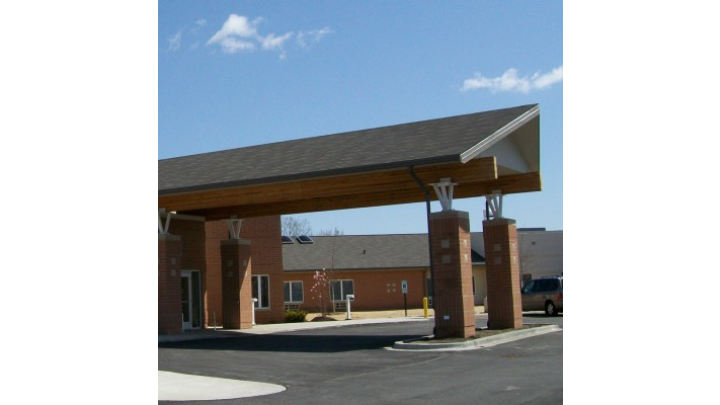
1601 BUTTERFIELD TRAIL, KANKAKEE, IL 60901 (815) 936-6500
Non profit - Corporation 160 Beds Independent Data: November 2025
Trust Grade
45/100
#384 of 665 in IL
Last Inspection: July 2024

Within standard 12-15 month inspection cycle. Federal law requires annual inspections.

Overview

Miller Health Care Center in Kankakee, Illinois, has a Trust Grade of D, indicating below-average performance with some significant concerns. It ranks #384 out of 665 facilities in Illinois, placing it in the bottom half, and #3 out of 6 in Kankakee County, meaning only two local options are worse. The facility's trend is improving, having reduced issues from 11 in 2024 to just 1 in 2025, which is encouraging. Staffing appears to be a strength, with a rating of 3 out of 5 stars and a turnover rate of 45%, which is slightly below the state average. However, there have been serious incidents, such as a resident experiencing severe pain during care, and concerns over food safety and proper staff communication about daily staffing levels. Overall, while there are some strengths, families should weigh these against the reported issues when considering this facility.

Trust Score
D
45/100
In Illinois
#384/665
Bottom 43%
Safety Record
Moderate
Needs review
Inspections
Getting Better
11 → 1 violations
Staff Stability
○ Average
45% turnover. Near Illinois's 48% average. Typical for the industry.
Penalties
✓ Good
No fines on record. Clean compliance history, better than most Illinois facilities.
Skilled Nurses
✓ Good
Each resident gets 63 minutes of Registered Nurse (RN) attention daily — more than 97% of Illinois nursing homes. RNs are the most trained staff who catch health problems before they become serious.
Violations
⚠ Watch
29 deficiencies on record. Higher than average. Multiple issues found across inspections.
★★☆☆☆
2.0
Overall Rating
★★★☆☆
3.0
Staff Levels
★☆☆☆☆
1.0
Care Quality
★★★☆☆
3.0
Inspection Score
Stable
2024: 11 issues
2025: 1 issues

The Good

  • Full Sprinkler Coverage · Fire safety systems throughout facility
  • No fines on record
  • Staff turnover below average (45%)

    3 points below Illinois average of 48%

Facility shows strength in fire safety.

The Bad

2-Star Overall Rating

Below Illinois average (2.5)

Below average - review inspection findings carefully

Staff Turnover: 45%

Near Illinois avg (46%)

Typical for the industry

The Ugly 29 deficiencies on record

1 actual harm
Aug 2025 1 deficiency
CONCERN (D) 📢 Someone Reported This

A family member, employee, or ombudsman was alarmed enough to file a formal complaint

Potential for Harm - no one hurt, but risky conditions existed

Resident Rights (Tag F0550)

Could have caused harm · This affected 1 resident

**NOTE- TERMS IN BRACKETS HAVE BEEN EDITED TO PROTECT CONFIDENTIALITY** Based on interview and record review, the facility failed to obtain consent prior to a wound procedure of a cognitively impaired...

Read full inspector narrative →
**NOTE- TERMS IN BRACKETS HAVE BEEN EDITED TO PROTECT CONFIDENTIALITY** Based on interview and record review, the facility failed to obtain consent prior to a wound procedure of a cognitively impaired resident. This failure resulted in the facility obtaining a wound biopsy without consent from R2's family.This applies to 1 of 1 (R2) resident reviewed for resident's rights.The findings include:R2 was [AGE] years old. R2 had multiple diagnoses which included hemiplegia and hemiparesis, aphasia, dysphagia, acute and chronic respiratory failure, and lobar pneumonia per the Face Sheet. R2's MDS (Minimum Data Set) dated 06/06/25 showed R2 had severe cognitive impairment.R2's Specialty Physician Wound Evaluation & Management Summary dated 07/10/25 showed, Skin tear wound of the left shoulder, full thickness. Wound size 1.7 x 1.5 x 0.1 cm. Moderate serous exudate. 100% granulation tissue. Wound progress not at goal due to suspicious non healing lesion. Procedure: Biopsy of a skin tear wound of the left shoulder. Consent for procedure: The rationale for biopsy, alternative options, and procedure risks were explained on 07/10/2025 to the patient who indicated agreement to proceed with the procedure.On 08/22/25 at 12:40 PM, V2 (Registered Nurse/Wound Care) stated R2 was admitted to the facility with a left shoulder skin tear. V2 stated on 07/10/25 the left shoulder skin tear was biopsied by the wound care doctor. V2 stated R2 shook his head and gave verbal consent for the procedure. V2 stated I don't recall if the biopsy was discussed with the family before it was done.On 08/22/25 at 1:55 PM, V3 (Social Worker) stated R2 was not able to make decisions or give consents for care or procedures. V3 stated R2's family also did not want decisions made without them being present. On 08/22/25 at 3:26 PM, V7 (family member) stated R2 cognitively was unable to give verbal consent for biopsy. V7 stated verbal consent was not obtained from R2's wife or daughter before the biopsy. R2's EMR (Electronic Medical Record) was reviewed. There was no documentation of verbal consent for the biopsy of the left shoulder given by R2's wife or daughter.
Sept 2024 1 deficiency
CONCERN (E) 📢 Someone Reported This

A family member, employee, or ombudsman was alarmed enough to file a formal complaint

Potential for Harm - no one hurt, but risky conditions existed

ADL Care (Tag F0677)

Could have caused harm · This affected multiple residents

**NOTE- TERMS IN BRACKETS HAVE BEEN EDITED TO PROTECT CONFIDENTIALITY** Based on observation, interview, and record review, the facility failed to provide timely incontinent care to dependent resident...

Read full inspector narrative →
**NOTE- TERMS IN BRACKETS HAVE BEEN EDITED TO PROTECT CONFIDENTIALITY** Based on observation, interview, and record review, the facility failed to provide timely incontinent care to dependent residents. This applies to 5 of 5 residents (R1-R5) reviewed for activities of daily (ADL) care in a sample of 5. The Findings Include: 1. R1 was a [AGE] year-old male admitted on [DATE] and having severe cognitive impairment as per the MDS dated [DATE]. On 8/31/24 at 11:00 AM, V1 (Administrator) stated that she heard about the incident and that the ambulance people were complaining that R1 was not clean when they picked him up on 8/24/24 to the hospital. On 8/31/24 at 12:20 PM, V8 (R1's certified nursing assistant / CNA) stated, I heard that EMS (Emergency Medical Service) was complaining that R1 was not super clean at the time of pick up at around 1:45 PM on 8/24/24. I didn't see any bowel movement when EMS picked him up, and I was with another resident. He didn't have a bowel movement for the last 3-4 days. On 8/31/24 at 11:00 AM, V2 (Assistant Director of Nursing / ADON) stated, I was not here when EMS picked up R1 on 8/24/24. When they picked him up, I heard that R1 was a big mess with bowel movements. He ended up having a gastrointestinal (GI) bleed. 2. R2 is an [AGE] year-old female with mild cognitive impairment as per the MDS dated [DATE]. MDS also documented that R2 is dependent on toileting hygiene and showering/bathing. On 8/31/24 at 9:55 AM, R2 stated, They didn't change me today. They changed me last night; the girls might be too busy. On 8/31/24 at 9:55 AM, as per the writer's request, V3 (Registered Nurse / RN) checked on R2, who was observed with a urine-soaked brief and an intense urine smell. On 8/31/24 at 10:00 AM, V4 (Certified Nursing Assistant / CNA) stated, I started my shift at 5:00 AM. I changed R2 early morning, and I am going to change her now. A review of the care plan documents that R2 was care planned for functional bladder incontinence, with interventions including checking every two hours for incontinence. 3. R3 is a [AGE] year-old female with mild cognitive impairment as per the MDS dated [DATE]. MDS also documents that R3 is dependent on toileting hygiene. On 8/31/24 at 10:20 AM, R3 was observed with a urine-soaked brief with mild discoloration (light black). On 8/31/24 at 10:20 AM, V6, CNA stated that she didn't get a chance to change her. 4. R4 is a [AGE] year-old male with cognition intact as per the MDS dated [DATE]. MDS also documented that R4 is dependent on toileting hygiene. On 8/31/24 at 10:05 AM, V10 (R4's wife) stated, R4 was not changed yet. I was giving him a urinal, but still, he is wet. On 8/31/24 at 10:05 AM, as per the writer's request, V5, CNA checked on R4 and observed with a urine-soaked brief. On 8/31/24 at 10:05 AM, V5 stated, I have two halls, and I haven't changed him yet. A review of the care plan documented that R4 was care planned for the risk of impaired skin integrity, with interventions including providing skin care per facility guidelines and as needed (PRN). 5. R5 is a [AGE] year-old male who was readmitted on [DATE]. On 8/31/24 at 10:35 AM, he stated that he had been changed in the early morning and was wet then. On 8/31/24 at 10:40 AM, as per the writer's request, V7 (CNA) checked on R5, and R5 was observed with a soaked brief. On 8/31/24 at 10:40 AM, V7 stated, I changed him around 8:00 AM. He has a colostomy. I am going to change him again. On 8/31/24 at 11:00 AM, V2 added, Residents are supposed to be checked on every two hours for incontinent care. The facility presented an incontinence policy approved on 07/2024 document: Policy: Residents who are incontinent of urine, feces, or both are kept clean, dry, and comfortable while maintaining their dignity. Residents with an incontinence problem are checked for toileting and changing per bladder monitoring pattern.
Jul 2024 7 deficiencies 1 Harm
SERIOUS (G)

Actual Harm - a resident was hurt due to facility failures

Deficiency F0697 (Tag F0697)

A resident was harmed · This affected 1 resident

**NOTE- TERMS IN BRACKETS HAVE BEEN EDITED TO PROTECT CONFIDENTIALITY** Based on observation, interview, and record review the facility failed to manage a resident's pain during bathing and wound care...

Read full inspector narrative →
**NOTE- TERMS IN BRACKETS HAVE BEEN EDITED TO PROTECT CONFIDENTIALITY** Based on observation, interview, and record review the facility failed to manage a resident's pain during bathing and wound care. This applies to 1 of 2 residents (R36) reviewed for pain management in the sample of 19. This failure resulted in R36 crying in pain during bed bath, wound treatment, and repositioning. Findings include: According to the face sheet R36 was admitted to facility on April 2, 2024, with multiple diagnoses including diabetes mellitus with neuropathic arthropathy, pressure ulcers, morbid obesity and end stage renal disease with dependence on renal dialysis. R36's MDS dated [DATE], shows resident has moderately impaired cognition, and is totally dependent on staff to complete most ADLs (Activities of Daily Living). On July 16, 2024, at 1:08 PM, V7 and V8 (Certified Nursing Assistants, CNAs) gave R36 a bed bath. R36 complained of pain, flinched, and grimaced throughout process. During perineal care R36 cried out multiple times during cleaning of abdominal folds. These areas were visibly reddened and tender. While cleaning R36's right foot, V8 noticed right toes were reddened and extremely tender, R36 flinched and cried as V8 attempted to clean between toes. An object was removed from between toes during process. R36 was not offered pain medications at any time during bathing process nor was the bathing process stopped. V8 was then prompted to stop manipulating R36's toes. On July 16, 2024, at 2:09 PM, V9 (wound care nurse) entered R36's room and started wound dressing preparation. V9 began the treatment process for multiple pressure ulcers. V8 notified V9 that R36 had issues with pain throughout bed bath and that there was a wound or injury to right foot. V9 continued with treatment. V9 applied dressings to pressure wounds, during which R36 continued to complain of pain during treatment and repositioning. V9 began to inspect R36's right foot, R36 complained and cried in pain during V9's initial examination. V9 then moved to obtain saline and gauze pads. V9 then stated she was going clean and examine R36's right foot and toes, at that point V9 was prompted to discontinue procedure until the assigned nurse was notified and R36 was assessed for pain and pain medication was administered. R36's Medication Administration Record (MAR) dated July 2024 shows the following physician's orders for pain medications: 1. Two tablets of acetaminophen 325 mg available every 6 hours and, 2. One tablet of Tramadol HCL 25 mg available every 12 hours for right leg pain. The most recently recorded administration of Tramadol was May 18, 2024 (prior to the incident mentioned above). On July 17, 2024, at 10:51 AM, V2 (Director of Nursing) stated that if staff becomes aware of resident being in pain, then staff should immediately notify the assigned nurse to have resident evaluated or have pain medication administered. Also, that if a procedure is causing resident pain, then that procedure should be paused until pain is relieved either by non-pharmacological methods or available pain medication because resident should not be in unnecessary pain. On July 17, 2024, at 12:59 PM, V21 (Nurse Practitioner) stated he was not aware of R36 having any pain during ADLs and wound treatment. Facility pain management policy dated July 2024 shows A. Each individual with pain, whether it be acute or chronic, has the right to obtain optimal pain relief .
CONCERN (D)

Potential for Harm - no one hurt, but risky conditions existed

ADL Care (Tag F0677)

Could have caused harm · This affected 1 resident

Based on observation, interview, and record review, the facility failed to assist a resident that was assessed to require assistance with ADLs (Activities of Daily Living). This applies to 1 of 1 res...

Read full inspector narrative →
Based on observation, interview, and record review, the facility failed to assist a resident that was assessed to require assistance with ADLs (Activities of Daily Living). This applies to 1 of 1 resident (R436) in the sample of 19. The findings include: R436's EMR (Electronic Medical Record) showed R436's most recent admission to the facility was on July 10, 2024. R436's diagnoses included generalized muscle weakness, Alzheimer's with late onset, dementia, polyneuropathy, and ESBL (Extended Spectrum Beta Lactamase) in his urine requiring him to be in contact isolation. R436's MDS (Minimum Data Set) dated July 16, 2024, showed R436 had severe cognitive impairment. R436 was recently discharged from this facility on February 2, 2024. His MDS was incomplete at the time of the survey due to recent admission. On July 15, 2024, at 11:02 AM, R436 was in bed asleep. He was unshaven and his nails were noted to be reaching out past the end of his fingers and were uneven and jagged. On July 16, 2024, at 11:45 AM, R436 was sitting up in his room, he said he would like to be shaved and have his fingernails cut. He was wearing facility sweatshirt and sweatpants. On July 16, 2024, at 11:55 AM, V11 (CNA/Certified Nurse Assistant) showed surveyor the shower book at the nurses' station and V11 said R436 should be showered today. V11 said residents in isolation are done at the end of the day and showers are disinfected once done to prevent the spreading of infection. On July 17, 2024, at 10:02 AM, R436 was sitting in his wheelchair wearing the same clothes as yesterday. There was a white substance down the front of his facility sweatshirt and a musty foul odor was noted. His hair was uncombed. R436 said he really wants a shave and wants to have his nails cut. On July 17, 2024, at 11:09 AM, V2 (DON/Director of Nursing) said residents should be offered hygiene care daily regardless of isolation status. Hygiene care would include oral care, shower if preferred or bed bath/wash up at sink, shaving, nail care, and clean clothes. Facility provided their policy titled, General Requirements for Nursing and Personal Care- Miller with revision date of February 2011. The policy showed .5. Personal care shall be provided on a 24-hour, seven day a week basis. This shall include but not be limited to the following a .daily personal attention including skin, nails, hair, and oral hygiene . b. each resident shall have at least one complete bath and hair wash weekly .c each resident shall have clean suitable clothing in order to be comfortable, sanitary, free of odors, and decent appearance .
CONCERN (D)

Potential for Harm - no one hurt, but risky conditions existed

Deficiency F0883 (Tag F0883)

Could have caused harm · This affected 1 resident

**NOTE- TERMS IN BRACKETS HAVE BEEN EDITED TO PROTECT CONFIDENTIALITY** Based on interview and record review, the facility failed to offer and administer the pneumonia vaccines to new and current resi...

Read full inspector narrative →
**NOTE- TERMS IN BRACKETS HAVE BEEN EDITED TO PROTECT CONFIDENTIALITY** Based on interview and record review, the facility failed to offer and administer the pneumonia vaccines to new and current residents residing in the facility. This applies to 3 of 6 residents (R29, R53, R286) reviewed for immunizations in the sample of 19. The findings include: 1. R29's Electronic Medical record (EMR) showed R29 was admitted to the facility on [DATE]. The medical record failed to show R29 had received any pneumonia vaccines. The medical record failed to show that the facility had offered any type of pneumonia vaccine to the resident. 2. R53's EMR showed R53 was admitted to the facility on [DATE]. R53 received the pneumococcal conjugate 13-valent vaccine prior to his admission on [DATE]. R53 would have been eligible for the PPSV-23 (Pneumococcal polysaccharide vaccine) one year later. R53's medical record failed to show the facility offered the PPSV 23 vaccine to the resident. 3. R286's EMR showed R286 was admitted to the facility on [DATE]. There wasn't any documentation to show R286 had received any pneumonia vaccines. The medical record failed to show the facility had offered R286 any pneumonia vaccines. On July 17, 2024, at 2:26 PM, V12 (Vice President of Post-Acute Care) said she was unable to locate any pneumonia vaccine record for R29 and R286. On July 16, 2024, at 2:19 PM, V4 (Infection Prevention Nurse) said pneumonia vaccines should be offered to all new admission, and those that need the vaccine. The staff will document in the progress notes what vaccine was given, and it will also be documented under the immunization tab in the electronic medical record. Consents get scanned into the medical record and if the resident refuses, then there should be a progress note documenting the refusal and any education provided to the resident and/or their family members about the risks and benefits of receiving the vaccine. On July 17, 2024, at 10:53 AM, V3 (Assistant Director of Nursing) said she was not sure who is offering the vaccine to the residents, she said she believes it is to be offered on admission, and one staff member gets the consent, while someone else is responsible for looking up historical records. V3 was not sure what pneumonia vaccine was available to be given to the residents. On July 17, 2024, at 10:15 AM, V2 (Director of Nursing) said it is her understanding that all nurses are to offer the pneumonia vaccines to all new admission (Influenza offered during October to March). This is being discussed each morning in the morning meeting. If the resident has not had the vaccines, it is the expectation that the vaccines are offered. If it is offered, there should be a progress note showing it was offered, consented, or refused. If consented, it would be documented under the immunization tab. The facility policy titled, Pneumococcal Immunization, with revision date December 2019 showed, The purpose is to reduce the overall incident of pneumococcal by providing the pneumococcal vaccine to the residents [AGE] years of age and older and to others at high risk.
CONCERN (D)

Potential for Harm - no one hurt, but risky conditions existed

Deficiency F0887 (Tag F0887)

Could have caused harm · This affected 1 resident

**NOTE- TERMS IN BRACKETS HAVE BEEN EDITED TO PROTECT CONFIDENTIALITY** Based on interview and record review, the facility failed to offer the Covid-19 vaccine to new and current residents residing in...

Read full inspector narrative →
**NOTE- TERMS IN BRACKETS HAVE BEEN EDITED TO PROTECT CONFIDENTIALITY** Based on interview and record review, the facility failed to offer the Covid-19 vaccine to new and current residents residing in the facility. This applies to 2 of 6 residents (R286 and R437) reviewed for Covid-19 immunizations in the sample of 19. The findings include: 1. R286 was admitted to the facility on [DATE]. There wasn't any documentation to show R286 had been offered the Covid-19 vaccines. The medical record showed R286 had received one dose of the Covid-19 vaccine on September 20, 2021 and the medical record failed to show the facility had offered R286 the Covid vaccine on or after his admission to this facility. 2. R437 was admitted to the facility on [DATE]. The medical record showed she had not received any Covid-19 vaccines. The medical record failed to show that the facility offered the Covid-19 vaccine to R437. On July 17, 2024, at 2:26 PM, V12 (Vice President of Post-Acute Care) said she was unable to locate any other vaccine record for R286. On July 16, 2024, at 2:19 PM, V4 (Infection Prevention Nurse) said Covid-19 vaccines should be offered to all new admission, and those that need the vaccine. The staff should document in the progress notes of the resident what vaccine was given, and it should also be documented under the immunization tab in the electronic medical record. Consents get scanned into the medical record and if the resident refuses, then there should be a progress note documenting the refusal and any education provided to the resident and/or their family members about the risks and benefits of receiving the vaccine. On July 17, 2024, at 10:53 AM V3 (Assistant Director of Nursing) said she not sure who is offering the vaccine to the residents, she said she believes it is to be offered on admission, and one staff member gets the consent, while someone else is responsible for looking up historical records. V3 said the facility should offer the Covid-19 vaccine, but if the resident wants to have it, they will need to go to the local pharmacy because you have to order the vaccine in bulk, and it would be too costly. On July 17, 2024, at 10:15 AM, V2 (Director of Nursing) said it is her understanding that all nurses are to offer the Covid-19 vaccines to all new admission. This is being discussed each morning in the morning meeting. If the resident has not had the vaccines, it is the expectation that the vaccines are offered. If it is offered, there should be a progress note showing it was offered, consented, or refused. If consented, it would be documented under the immunization tab. Facility policy titled Covid Immunization with revision date of July 2024 showed the facility will encourage residents, staff, and families to remain up to date with Covid-19 vaccinations, including all eligible boosters. Nursing staff is responsible for the administration and assessment of the vaccine per the order of the physician, if not contraindicated or refused. Resident concerns will be obtained prior to the administration and then scanned into the resident's medical record.
CONCERN (E)

Potential for Harm - no one hurt, but risky conditions existed

Deficiency F0805 (Tag F0805)

Could have caused harm · This affected multiple residents

Based on observation, interview, and record review, the facility failed to ensure carrots had smooth consistency for residents who required a pureed diet. This applies to 4 of 4 residents (R16, R20, ...

Read full inspector narrative →
Based on observation, interview, and record review, the facility failed to ensure carrots had smooth consistency for residents who required a pureed diet. This applies to 4 of 4 residents (R16, R20, R38, and R47) reviewed for dietary needs in the sample of 19. The findings include: R16's EMR (Electronic Medical records) showed R16 had multiple diagnoses including vascular dementia, and dysphagia. R16's active order summary report showed an order dated November 16, 2023 for regular diet, pureed texture. R20's EMR showed R20 had multiple diagnoses including Alzheimer's disease, dementia, and traumatic brain injury. R20's active order summary report showed an order dated August 21, 2023 for regular diet, pureed texture. R38's EMR showed R38 had multiple diagnoses including Alzheimer's disease, dementia and feeding difficulties. R38's active order summary report showed an order dated March 22, 2024 for regular diet, pureed texture. R47's EMR showed R47 had multiple diagnoses including cerebral atherosclerosis and metabolic encephalopathy. R47's active order summary report showed an order dated March 22, 2024 for regular diet, pureed texture. On July 15, 2024 at 10:39 AM, V18 (Cook) was observed preparing pureed meals. V18 did not follow any recipes for pureed food. V18 blended a full #6 container (about 8 cups) of carrots and a half cup of thickener. After blending the carrots, V18 put it in a container for serving. The blended carrots looked chunky and not smooth. The blended carrots was tasted and it had hard chunks throughout. V18 took the temperature of the blended carrots, and it was not hot enough, so he placed it inside the steamer until it was time for it to be served. On July 15, 2024 at 11:31 AM, V18 took the container of blended carrots out of the steamer and placed it in the steam table for serving. V18 and V23 (Dietary Manager) were asked if the blended carrots were ready to be served and both V18 and V23 responded, yes. The blended carrots were again tasted. There were still hard chunks of carrots throughout, and the consistency was not smooth. V18 and V23 were asked to try the blended carrots and were asked, what they thought of the texture. V23 stated that the carrots needed to be cooked some more. V18 stated the carrots were chunky and that it needed to be blended some more. The facilities modified texture foods policy dated January 2024 showed that the foods requiring a modification to a puree texture will have a smooth texture.
CONCERN (E)

Potential for Harm - no one hurt, but risky conditions existed

Infection Control (Tag F0880)

Could have caused harm · This affected multiple residents

**NOTE- TERMS IN BRACKETS HAVE BEEN EDITED TO PROTECT CONFIDENTIALITY** 3. R36 was admitted to facility on April 2, 2024, according to resident face sheet, with multiple diagnoses including diabetes m...

Read full inspector narrative →
**NOTE- TERMS IN BRACKETS HAVE BEEN EDITED TO PROTECT CONFIDENTIALITY** 3. R36 was admitted to facility on April 2, 2024, according to resident face sheet, with multiple diagnoses including diabetes mellitus with neuropathic arthropathy, pressure ulcers, morbid obesity, and end stage renal disease with dependence on renal dialysis. R36's MDS (Minimum Data Set) dated July 9, 2024, shows that resident has moderate cognitive impairment, and is totally dependent on staff to complete most ALDs (Activities of Daily Living). R36's care plan dated July 16, 2024, requires EBP (Enhanced Barrier Precautions) due to hemo dialysis access port and multiple pressure ulcers. An enhanced barrier precautions sign was posted on R36's door. On July 16, 2024, at 1:30 PM, V7 and V8 (CNAs) prepared R36 for bed bath by transferring R36 to bed using the mechanical lift. Both V7 and V8 were only wearing gloves. Then R36 was undressed, V7 and V8 were in the process to start giving R36 a bed bath, at this point V7 and V8 were prompted to put the gown on. Once bed bath was completed V9 (wound care nurse) was notified. On July 16, 2024, at 2:09 PM, V9 entered R36's room put on gloves and began preparing materials for wound care. V9 performed hand hygiene and put on clean gloves and stated she was going to start the dressing change, at this point she was prompted to put on the gown. On July 17, 2024, at 10:51 AM, V2 (DON) stated that if staff are preparing to conduct any high contact resident care on a resident with EBP, gown and gloves are to be worn by all staff. V2 further stated the high contact resident care activities included dressing, bathing, transferring, device, and wound care. Facility EBP policy dated July 2024 shows . 2. EBPs employ targeted gown and glove use during high contact resident care activities .a. gloves and gown are applied prior to performing the high contact resident care activity .3. Examples of high contact resident care activities include .b. bathing and showering .c. transferring .g. device care and .h. wound care . 5. EBPs are indicated . for residents with wounds and/or indwelling medical devices. 4. R39's Face sheet shows diagnoses including neuromuscular dysfunction of bladder. R39's care plan dated March 24, 2024, shows R39 has indwelling supra pubic catheter. On July 16, 2024, at 12:55 PM, R39 was sitting in a chair in a reclined position, at 1:10 PM, V5 (CNA) unhooked the urinary collection bag and placed the bag on the floor during repositioning R39 for his meal. The urinary bag remained on the floor V6 (Nurse) was notified about the issue, then V5 with her bare hands (without wearing gloves) hung the urinary collection bag on the side of chair but it remained in contact with floor. On July 17, 2024, at 11:03 AM, V2 stated that no staff member should handle resident devices (catheters) without first putting on gloves, and that drainage bags should never be on the floor for any reason. Facilities Urinary Catheter Insertion and Removal policy dated July 2024 shows .L. To achieve free flow of urine .4. Collecting bags are always off the floor . 5. R53's EMR (Electronic Medical Record) showed R53 was admitted to the facility on [DATE]. R53's diagnoses included pressure ulcer stage 4 of sacral region, pressure ulcer stage 3 of other region, paraplegia, major depressive order, peripheral vascular disease, and diabetes type 2. R53's MDS dated [DATE], showed R53 had moderately impaired cognition. On July 17, 2024, at 9:29 AM, V10 (LPN/Licensed Practical Nurse) was preparing to provide wound care to R53. After supplies were gathered, hand sanitizer was used, gown and gloves were donned. V10 said R53's coccyx dressing had already been removed because he had just had a bowel movement. V10 picked up gauze she had soaked with normal saline and cleaned the wound in a circular motion. V10 removed gloves, used hand sanitizer, and put on new gloves. V10 picked up rolled gauze and wet it with a wound solution and packed the wound using a sterile cotton tipped applicator. V10 used her fingers to put zinc around the wound. V10 removed the glove from the hand that had the zinc on it and put on a new glove without using hand sanitizer. V10 covered the area with a bordered silicone super absorbent dressing. V10 moved to the left lower leg wounds. She removed her gloves, used hand sanitizer, and put on new gloves. V10 removed the soiled dressing from the left lower leg proximal wound and then the left lower distal leg wound. With the same gloves, V10 put some gauze over each wound and said she just puts it there because he usually bleeds. V10 picked up new gauze that was wet with normal saline and cleaned the proximal wound and then covered with a bordered silicone super absorbent dressing. With same gloves, V10 picked up another gauze wet with saline and cleaned the distal wound and covered the wound with a bordered silicone super absorbent dressing. V10 removed her gloves, used hand sanitizer, and put on new gloves. R53 was repositioned to expose the right lower leg wound. V10 removed gloves, sanitized her hands, and put on new gloves. V10 then removed dressing from the wound and with the same gloves picked up gauzes soaked with normal saline and cleaned the entire wound. V10 removed gloves, sanitized her hands, and put on new gloves. V10 soaked gauze with wound solution and placed on wound, covered with bordered dressing. On July 17, 2024, 10:07 AM, V10 said she changes her gloves after she cleans the wound because the dressing, she removes is dirty and until she cleans the wound, the wound is also dirty and that is why she removed her gloves and used hand sanitizer after cleaning the wound and putting on new gloves to do the cleaning, treatment, and dressing. On July 17, 2024, at 10:15 AM, V2 (Director of Nursing) said before starting the procedure, the staff will hand hygiene and don gown and/or gloves. The old wound dressing should be removed, and then the gloves should be discarded, hand must be sanitized, and new pair of gloves must be donned. With the new gloves on, the treatment can be applied if ordered. If the nurse did not use a tool (cotton tipped applicator, tongue depressor) and instead used a gloved hand to apply the treatment, then the gloves get removed, hands must be sanitized, and new gloves should be donned before applying the outer dressing. Facility provided policy titled, Standard Precautions with revision date of May 2017 showed B. Handwashing. 1. Wash hands after touching blood, body fluids, secretions, excretions, and contaminated items, whether gloves are worn or not 3. Also wash hands between tasks and procedures on the same resident to prevent cross-contamination of different body sites .C. Gloves . 3. Change gloves between tasks and procedures on the same resident after contact with material that may contain a high concentration of microorganisms. 4. Removed gloves promptly after use, before touching non-contaminated items and environmental surfaces, and before going to another resident. Facility provided policy titled, Dressing- Clean Technique with revision date of February 2021 showed Procedure .I. remove soiled dressing J. Remove gloves, perform hand hygiene, apply new gloves L. Clean wound P. Remove gloves, perform hand hygiene, apply new gloves R. Apply prescribed topical agent to wound. S. Apply wound dressing. Based on observation, interview, and record review, the facility failed to follow standard infection control practices related to hand hygiene and gloving during provisions of ADL (activities of daily living) care and wound care. In addition, the facility failed to ensure that a urinary catheter bag was not placed on the floor. This applies 5 of the 19 residents (R26, R36, R39, R40, R53) reviewed for infection control in the sample of 19. The findings include: 1. R26 was on Enhance Barrier Precaution (EBP) due to gastrostomy tube according V11 and V17 (both Certified Nursing Assistants, CNA). On July 16, 2024, at 12:15 PM, V11 and V17 (Both CNA/Certified Nursing Assistants) provided grooming care to R26. After V11 completed the care, she removed her gloves and sanitized her hands, then she carried R26's soiled gown with her bare hands without a plastic linen bag and carried it through the hallway into the soiled linen room. 2. On July 16, 2024, at 2:19 PM, V17 and V20 (Both CNAs) assisted R40 to the toilet. After R40 used the toilet, V20 wiped R40's perineum. V20 removed her gloves and without hand hygiene, put the incontinence brief and pulled the pants back on to R40. Then V17 and V20 transferred R40 back to the wheelchair via the sit to stand mechanical lift without V20 performing hand hygiene. On July 17, 2024, at 11:48 AM, V2 (Director of Nursing) stated staff must wash their hands before and after care and perform hand hygiene and change gloves in between task. Soiled linen or items are to be placed in a plastic bag when bringing it from the resident's room to the soiled utility room, to prevent infection or spread of infection.
MINOR (C)

Minor Issue - procedural, no safety impact

Deficiency F0565 (Tag F0565)

Minor procedural issue · This affected most or all residents

Based on interview and record review, the facility failed to make residents aware of their right to organize and participate in residents' group/council meeting. This applies to all the 92 residents ...

Read full inspector narrative →
Based on interview and record review, the facility failed to make residents aware of their right to organize and participate in residents' group/council meeting. This applies to all the 92 residents in the facility. The findings include: On July 16, 2024, at 12:58 PM, a resident group meeting was conducted with R1, R9, R14, R26, R57, R59, R70, R76, and R81. These residents were all alert and oriented based on their most recent Minimum Data Set (MDS). These residents were asked if they ever attended a monthly resident council meeting or if the facility provide a place to conduct a resident council meeting. The above residents all responded that they were not aware of their right to organize and participate in resident group/council meeting. R59, who was the newly elected president of the Resident Council stated that she was not aware of it, and this was the first resident group meeting that she ever attended since she came to the facility. R70 on the other hand, said that someone came to asked him in passing how he was doing or if he ever had concern, but the staff did not sit down with him for a one-on-one. Majority of them in the meeting verbalized that they don't recall having a one-on-one meeting with staff regarding concerns or a monthly one-on-one meeting. R1, R9, R14, R26, R57, R59, R70, R76, and R81 all verbalized they would like to have a resident council meeting for a chance to openly verbalize their suggestions, needs and concerns. On July 17, 2024, at 10:37 AM, V15 (Activity Director) stated that they tried to have a group in October 2023, many residents refused to come for the meeting, some stated they would speak to her one on one when needed. They tried again in November 2023, many residents refused again because they did not want to speak up in front of others. However, many of these residents had moved out and there were new residents in the facility. V15 added, they don't have a policy with regards to resident council meeting. V15 stated she talks about resident's rights during 1:1 meeting. There was no documentation of a resident council being held for the past 6 months. Facility only presented a copy of 1:1 meeting with the residents, some of whom were already discharged . CMS-671 form titled Long-Term Care Facility Application for Medicare and Medicaid dated July 15, 2024 shows the facility currently does not have a organized residents' group.
Jul 2024 1 deficiency
CONCERN (D) 📢 Someone Reported This

A family member, employee, or ombudsman was alarmed enough to file a formal complaint

Potential for Harm - no one hurt, but risky conditions existed

Grievances (Tag F0585)

Could have caused harm · This affected 1 resident

**NOTE- TERMS IN BRACKETS HAVE BEEN EDITED TO PROTECT CONFIDENTIALITY** Based on interview and record review the facility failed to resolve residents' concerns. This applies to 3 of 6 residents (R2, ...

Read full inspector narrative →
**NOTE- TERMS IN BRACKETS HAVE BEEN EDITED TO PROTECT CONFIDENTIALITY** Based on interview and record review the facility failed to resolve residents' concerns. This applies to 3 of 6 residents (R2, R4 and R5) reviewed for call light concerns in the sample of 8. The findings include: 1. On July 2, 2024 at 3:33 PM, R5 was in bed, alert, oriented and verbally responsive. R5 stated that the staff takes too long to answer his call light and that there are times that it takes more than 30 minutes for the staff to respond. According to R5 he would activate his call light when he needed assistance from the staff. R5's MDS (minimum dated set) dated June 28, 2024 showed that the resident was admitted to the facility on [DATE]. R5 was cognitively intact and would require maximum assistance from the staff with most of his ADLs (activities of daily living), including lower body dressing and transfer. The same MDS showed that R5 was frequently incontinent of both bowel and bladder functions and required total assistance from the staff with regards to toileting hygiene. Review of the facility's alarm response report for R5's bed call light system from June 21, 2024 through July 1, 2024 showed the following: on June 22 at 9:37 AM, it took 59 minutes to respond to R5's call light; on June 22 at 6:39 PM, it took 51 minutes to respond to R5's call light; on June 22 at 10:15 PM, it took 33 minutes to respond to R5's call light; on June 23 at 1:17 PM, it took 48 minutes to respond to R5's call light; on June 23 at 3:29 PM, it took 43 minutes to respond to R5's call light; on June 24 at 2:28 AM, it took 29 minutes to respond to R5's call light; on June 24 at 6:39 PM, it took 51 minutes to respond to R5's call light; on June 25 at 2:36 PM, it took 30 minutes to respond to R5's call light; on June 25 at 5:56 PM, it took 21 minutes to respond to R5's call light; on June 25 at 7:04 PM, it took 29 minutes to respond to R5's call light; on June 25 at 8:25 PM, it took 38 minutes to respond to R5's call light; on June 26 at 7:29 AM, it took 35 minutes to respond to R5's call light; on June 27 at 8:26 PM, it took 25 minutes to respond to R5's call light; on June 28 at 1:34 AM, it took 27 minutes to respond to R5's call light; on June 28 at 6:56 AM, it took 1 hour and 13 minutes to respond to R5's call light; on June 29 at 3:55 PM, it took 27 minutes to respond to R5's call light; on June 30 at 6:35 AM, it took 39 minutes to respond to R5's call light; on June 30 at 8:33 AM, it took 31 minutes to respond to R5's call light; on July 1 at 7:15 AM, it took 55 minutes to respond to R5's call light and on July 1 at 8:24 AM, it took 32 minutes to respond to R5's call light. Further review of the same alarm response report for R5's bathroom call light system showed that on June 22, 2024 at 10:03 AM, it took 34 minutes for the staff to respond to R5's call light. 2. On July 2, 2024 at 3:37 PM, R4 was sitting in her wheelchair inside her room. R4 was, alert, verbally responsive and was able to answer questions appropriately. R4 stated that the staff takes too long to answer her call light. According to R4 she would use her call light when she needed help from the staff. R4's admission MDS (minimum dated set) dated June 21, 2024 showed that the resident was admitted to the facility on [DATE]. The MDS showed that R4 was moderately impaired with cognition and required maximum assistance from the staff with regards to upper body dressing, bed mobility and transfer. The same MDS showed that R4 was incontinent of both bowel and bladder functions and required total assistance from the staff with regards to lower body dressing and toileting hygiene. Review of the facility's alarm response report for R4's bed call light system from June 15, 2024 through July 2, 2024 showed the following: on June 17 at 6:59 AM, it took 20 minutes to respond to R4's call light; on June 21 at 7:46 AM, it took 29 minutes to respond to R4's call light; on June 21 at 8:33 AM, it took 21 minutes to respond to R4's call light; on June 21 at 1:25 PM, it took 19 minutes to respond to R4's call light; on June 22 at 9:17 AM, it took 53 minutes to respond to R4's call light; on June 22 at 11:51 AM, it took 24 minutes to respond to R4's call light; on June 22 at 2:49 PM, it took 20 minutes to respond to R4's call light; on June 22 at 6:33 PM, it took 39 minutes to respond to R4's call light; on June 27 at 8:36 AM, it took 23 minutes to respond to R4's call light; on June 27 at 12:29 PM, it took 41 minutes to respond to R4's call light; on June 28 at 5:47 PM, it took 25 minutes to respond to R4's call light; on June 29 at 9:20 AM, it took 25 minutes to respond to R4's call light; on July 1 at 6:21 AM, it took 22 minutes to respond to R4's call light and on July 2 at 5:35 AM, it took 26 minutes to respond to R4's call light. Further review of the same alarm response report for R4's bathroom call light system showed that on June 28, 2024 at 6:06 PM, it took 25 minutes for the staff to respond to R4's call light. 3. On July 2, 2024 at 2:55 PM, R2 was in bed, alert, verbally responsive and was able to answer questions appropriately. V7 (sister) was at the bedside. R2 stated that the staff takes too long to answer his call light and there are times that it took the staff at least 15 minutes or more to respond to his call light. According to R2 he would use his call light when he needed help from the staff. R2's quarterly MDS dated [DATE] showed that the resident was moderately impaired with cognition and required total assistance from the staff with most of his ADLs including bed mobility, transfer, toileting hygiene and personal hygiene. The same MDS showed that R2 was totally incontinent of both bowel and bladder functions. Review of the facility's alarm response report for R2's bed call light system from June 15, 2024 through July 2, 2024 showed the following: on June 15 at 2:20 PM, it took 15 minutes to respond to R2's call light; on June 16 at 1:21 PM, it took 22 minutes to respond to R2's call light; on June 17 at 8:19 AM, it took 31 minutes to respond to R2's call light; on June 17 at 10:27 AM, it took 18 minutes to respond to R2's call light; on June 18 at 11:10 AM, it took 22 minutes to respond to R2's call light; on June 18 at 7:21 PM, it took 15 minutes to respond to R2's call light; on June 21 at 2:19 PM, it took 28 minutes to respond to R2's call light; on June 22 at 2:43 PM, it took 17 minutes to respond to R2's call light; on June 23 at 6:26 PM, it took 17 minutes to respond to R2's call light; on June 24 at 10:36 PM, it took 16 minutes to respond to R2's call light; on June 27 at 8:45 AM, it took 31 minutes to respond to R2's call light; on June 29 at 9:21 AM, it took 21 minutes to respond to R2's call light; on June 30 at 12:52 PM, it took 15 minutes to respond to R2's call light; on June 30 at 4:00 PM, it took 16 minutes to respond to R2's call light; on June 30 at 9:30 PM, it took 17 minutes to respond to R2's call light and on July 1 at 7:33 AM, it took 38 minutes to respond to R2's call light. On July 5, 2024 at 11:00 AM, V2 (Director of Nursing) stated that she expected all staff including nursing, social service, activity and housekeeping staff to answer the resident's call light to find out what the resident needed and then inform the appropriate staff about the resident's need. V2 further stated that she expects the resident's call light to be answered within 15 minutes or sooner to check the resident and ensure that their needs are attended timely. Review of the resident council report from April through June 2024 showed that individual questions were posed to residents during a 1:1 meeting as part of the resident council. The same resident council report showed multiple individual concerns from residents with regards to having to wait too long for their call lights to be answered by the staff. Further review of the resident council report showed no documentation that the individual concerns of the residents with regards to the call lights were investigated. There was no documentation available regarding the conclusion of their investigation. There was also no documentation of any action and/or resolution taken by the facility to resolve the concerns. On July 6, 2024 at 1:00 PM, V1 (Administrator) stated that the residents prefers a no-group setting and wanted a 1:1 meeting with the activity director during the resident council, to voice their concerns/grievances for privacy. V1 acknowledged that there are no documentation that the call light concerns/grievances made during the resident council were investigated and what actions were taken to resolve the concerns. According to V1, after she received the concerns/grievances from the resident council regarding the delayed call light response, she delegated the said concerns to the nursing department, to investigate and resolve the issues but admitted that she does not know if the call light concerns were investigated and that necessary actions were taken to resolve the problem. According to V1, they will say, I took care of that. During the same interview, V1 stated that any staff including nursing, activity, social service or housekeeping can answer a resident's call light and that she expects the staff to answer the call light within 15 minutes or sooner to attend to the resident's needs in a timely manner. According to V1, the facility does not have any policy and procedure with regards to call light response time, however, the facility staff is expected to attend and provide the needs of the residents timely.
May 2024 2 deficiencies
CONCERN (D) 📢 Someone Reported This

A family member, employee, or ombudsman was alarmed enough to file a formal complaint

Potential for Harm - no one hurt, but risky conditions existed

ADL Care (Tag F0677)

Could have caused harm · This affected 1 resident

**NOTE- TERMS IN BRACKETS HAVE BEEN EDITED TO PROTECT CONFIDENTIALITY** Based on observation, interview and record review the facility failed to provide timely incontinence care. This applies to 1 of ...

Read full inspector narrative →
**NOTE- TERMS IN BRACKETS HAVE BEEN EDITED TO PROTECT CONFIDENTIALITY** Based on observation, interview and record review the facility failed to provide timely incontinence care. This applies to 1 of 4 residents (R2) reviewed for incontinence. Findings include: R2 was admitted to the facility on [DATE]. R2 has primary diagnoses that includes spondylosis with myelopathy, functional quadriplegia, type 2 diabetes, hypertension, major depressive disorder and tremor. R2's care plan dated 4/5/24 includes ADL (Activities of Daily Living) self-care performance deficit related to limited mobility, musculoskeletal impairment and functional quadriplegia. Functional bladder incontinence related to impaired mobility, and physical limitations. Interventions include to clean peri area with each incontinent episode. On 4/30/24 at 11:25 AM R2 stated the staff had not checked in on him and he needed to be washed. R2 stated the staff do not always check and turn him every two hours. On 4/30/24 at 11:33 AM V4 CNA (Certified Nursing Assistant) was asked by surveyor to provide incontinence care to R2. R2's top sheet was covered in brownish gray stool. His blanket was saturated with urine R2 had a copious amount of stool sitting between his legs down to his knees. When V4 opened R2's disposable brief there was stool entirely covering his penis, pubis and up to his lower abdomen. When R2 was turned over he had stool to just below his shoulder blades. R2's scrotum appeared reddened. The waterproof pad was covered with stool and the bottom sheet was soaked with urine. On 4/30/24 at 11:58 AM V5 CNA assigned to R2 stated he is a heavy wetter and has heavy stools. V5 stated she checks residents every 2 to 3 hours. V5 stated she should probably check him every 1 to 2 hours because he voids heavily and frequently. On 4/30/24 at 4:31 PM, V3 (Wound Nurse) stated V3 stated if someone is left in urine and stool for extended periods time or not turned every two hours, they can develop skin break down. Peri care should be provided every two hours or sooner if necessary. On 5/1/24 at 3:16 PM, V1 (Administrator) stated staff should be turning and checking residents every two hours. V1 stated there have been a lot of complaints from residents stating they aren't being assisted every two hours the longest was four hours. The facility policy Incontinence dated 6/2023 states residents who are incontinent of urine and feces, or both are kept clean dry and comfortable while maintaining their dignity.
CONCERN (D) 📢 Someone Reported This

A family member, employee, or ombudsman was alarmed enough to file a formal complaint

Potential for Harm - no one hurt, but risky conditions existed

Quality of Care (Tag F0684)

Could have caused harm · This affected 1 resident

**NOTE- TERMS IN BRACKETS HAVE BEEN EDITED TO PROTECT CONFIDENTIALITY** Based on observation, interview and record review the facility failed to provide skin assessments for skin injuries. This applie...

Read full inspector narrative →
**NOTE- TERMS IN BRACKETS HAVE BEEN EDITED TO PROTECT CONFIDENTIALITY** Based on observation, interview and record review the facility failed to provide skin assessments for skin injuries. This applies to 3 of 4 residents (R1, R3 and R4) reviewed for skin conditions. Findings include: 1. R1 admitted to the facility on [DATE] and discharged from the facility on 4/22/24. R1 has diagnoses that includes cellulitis, chronic obstructive pulmonary disease, chronic gout, malignant neoplasm of prostate, type 2 diabetes, obstructive sleep apnea, chronic kidney disease, hypertension and atherosclerotic heart disease of native coronary artery. Care plan dated 4/17/24 has Risk for impaired skin integrity. Interventions includes evaluate skin for blanching, redness, excoriation and skin integrity. Provide skin care per facility guidelines and as needed. The MDS (Minimum Data Set) dated 4/22/24 shows R1 is cognitively intact. R1 required partial staff assistance with toilet transfers. R1 was assessed to be always continent of bowel and bladder. R1's hospital discharge paperwork includes an infectious disease progress note dated 4/16/24. Note states bilateral feet with diffuse skin scaling, bilateral feet with edema left greater than right but no longer TTP (Thrombotic Thrombocytopenic Purpura) in the feet or ankles. No rash skin is dry. Right calf wound dressed clean dry and intact. No nursing skin observation of wounds were documented until 4/19/24 by V3 Wound Nurse. The chronic traumatic right medial calf wound measured area of 6.57 cm2, length 4.19cm, width 2.32 cm, depth 0.1cm. The left dorsum foot measured area of 0.17cm2, length 0.45 cm, width 0.47cm and depth of 0.1 cm. Facility CNA (Certified Nursing Assistant) documentation of skin observations from 4/18/24 thru 4/21/24 documents no scratches, red area, discoloration, tear or open area. On 4/26/24 at 2:54 PM V11 (Family Member) stated every time she came to the facility V11 stated wounds on R1's feet developed in the facility and was soiled with urine. On 5/1/24 at 11:39 AM, V3 (Wound Nurse) stated she saw R1 and assessed his wounds on 4/19/24. V3 stated the admitting nurse should have done a skin and wound assessment on admission 4/17/24. 2. R3 was admitted to the facility on [DATE]. R3 has diagnoses that includes type 2 diabetes, chronic obstructive pulmonary disease, chronic kidney disease, functional quadriplegia, cerebral atherosclerosis and history of transient ischemic attack. R3's physician orders include a head-to-toe evaluation every day shift on the 27th. None was provided by the facility. The care plan dated 3/39/24 includes an ADL self-care performance deficit related to functional quadriplegia, dementia and cerebral atherosclerosis. C.N.A documentation not skin redness. No nursing skin assessment documentation was available for review for R3. On 4/30/24 at 11:54 R3 stated she had a sore on her buttocks. R3 stated staff do not check her every two hours. On 4/30/24 at 12:06 PM V4 CNA was observed performing incontinence care for R3. Surveyor noted a pea sized open area on the skin to R3's left inner buttock. On 4/30/24 at 4:15 PM, V4 CNA stated she had cleaned R3 up but had not seen the open area before it was pointed out by surveyor. 3. R4 was admitted to the facility on [DATE]. R4's diagnoses include cerebral atherosclerosis, Alzheimer's disease, congestive heart failure age related osteoporosis, and osteoarthritis. R4's physician orders include admit to hospice care, head to toe assessment monthly on the 19th, turn and reposition every 1.5 to 2 hours. R4's care plan dated 3/1/24 states R4 has a self-care performance deficit related to Alzheimer's and cerebral atherosclerosis. Resident requires extensive assistance by staff to turn and reposition in bed. R4's MDS dated [DATE] show cognitive impairment with a BIMS (Brief Interview for Mental Status) score of 6. On 4/30/24 at 12:35 PM, V6 (Family Member) stated she comes to visit R4 3 to 4 times per week and stays 3 to 4 hours. V6 stated there have been visits she has had to ask staff to turn and clean R4 because they had not done it after 3 hours. V6 stated she and the hospice nurse are the ones who have notified facility staff of skin issues. On 4/30/24 at 12:59 PM V7 RN (Hospice Registered Nurse) stated R4 is [AGE] years old and very thin, but she could not say her skin wounds and irritation were [NAME] wounds. V7 stated not being moved for 3 to 4 hours will cause skin break down. V7 provided incontinence care to R4. R4 had a border foam dressing in place on coccyx dated 4/26. V7 removed the dressing. R4's buttocks and sacrum were reddened. R4 had blanchable redness to her right hip. On 4/30/24 at 5:27 PM, V9 LPN (Licensed Practical Nurse) stated V7 Hospice RN informed her R4 had skin redness. V9 stated she has seen border foam dressings in place for as long a 5 to 7 days when used for protection. V9 stated skin assessments are done weekly by the nurse on shower days. CNAs / shower aids do skin assessment twice per week during the shower or bed bath. On 4/30/24 at 4:31 PM, V3 (Wound Nurse) stated the coccyx wound for R4 had healed and she signed off on 4/24/24. If something new develops she depends on staff to alert her. CNAs and Nursing staff should be doing skin checks during cares, bed baths and showers. V3 stated R4 should have had a skin assessment since she saw her on 4/24/24. V3 stated if someone is left in urine and stool for extended periods time or not turned every two hours, they can develop skin break down. Peri care should be provided every two hours or sooner if necessary. On 5/1/24 at 10:35 AM, V10 LPN (Licensed Practical Nurse) stated Nurses don't do skin checks, on shower days the CNA's do the skin checks. If there is a skin concern the CNA's let the nurse know. Nurses do the quarterly skin assessments. On 5/1/24 at 2:43 PM, V2 ADON (Assistant Director of Nursing). V2 stated nurses should do a skin assessment on admission and shower days. The CNA should document on the shower sheet and notify the nurse of any new issues. The nurse is responsible to notify the Nurse Practitioner or Physician of any issues. V2 stated the facility nursing staff is still doing skin assessments for resident receiving hospice services. On 5/1/24 at 3:16 PM, V1 (Administrator) stated staff should be turning and checking residents every two hours. V1 stated there have been a lot of complaints from residents stating they aren't being assisted every two hours the longest was four hours. V1 stated the admissions nurse do a head-to-toe assessment and document any wounds on admission. If there is a wound the wound nurse should be notified. The facility policy General Requirements for Nursing and Personal Care [NAME] date 6/2023 states .an evaluation of each resident shall be conducted upon admittance and as necessary to determine the susceptibility of the resident to skin breakdown. Preventative measures and treatment shall be carried out by the facility staff .
Aug 2023 10 deficiencies
CONCERN (D)

Potential for Harm - no one hurt, but risky conditions existed

Deficiency F0558 (Tag F0558)

Could have caused harm · This affected 1 resident

Based on observations, interviews, and record reviews the facility failed to keep residents' call lights within reach. This applies to 2 residents R13 and R18 in a sample of 29. The findings include:...

Read full inspector narrative →
Based on observations, interviews, and record reviews the facility failed to keep residents' call lights within reach. This applies to 2 residents R13 and R18 in a sample of 29. The findings include: 1. On 8/2/23 at 9:00 am R13 was observed in bed and her call pad was observed hanging off the bed out of R13's reach. V10 LPN (Licensed Practical Nurse) was present in R13's room at the time giving R13 her medications and repositioned R13 in her bed but failed to place R13's call pad within R13 reach. R13's care plan dated 5/12/23 showed that she is a risk for falls with interventions to keep call light and personal belongings within reach. 2. On 8/2/23 at 9:35am R18 was observed in bed and her call light was observed on the floor. V10 was present in R18's room at the time giving R18 her medication and failed to place R18's call light back within her reach. R18's care plan dated 6/30/23 shows that she has a risk for falls with interventions including to keep resident's call light within reach. On 8/4/23 at 12:58pm V2 DON (Director of Nursing) said all call lights should be within reach. The facility's Fall Risk Prevention/Reduction policy dated 01/2021 under 3.C showed, Place the call light within reach of the resident at all times. The facility's Professional Standards of Behavior dated 4/2023 showed that employees are expected to assure the resident can reach the call light.
CONCERN (D)

Potential for Harm - no one hurt, but risky conditions existed

ADL Care (Tag F0677)

Could have caused harm · This affected 1 resident

**NOTE- TERMS IN BRACKETS HAVE BEEN EDITED TO PROTECT CONFIDENTIALITY** Based on observation, interview and record review the facility failed to provide incontinent care in a timely manner. This appli...

Read full inspector narrative →
**NOTE- TERMS IN BRACKETS HAVE BEEN EDITED TO PROTECT CONFIDENTIALITY** Based on observation, interview and record review the facility failed to provide incontinent care in a timely manner. This applies to 1 resident (R53) reviewed for incontinent care in the sample of 29. R53 was admitted to the facility on [DATE], per the admission face sheet. The current physician orders dated August 1, 2023, showed that R53 had diagnoses of fractured right and left femur, heart disease with failure, kidney disease, diabetes, morbid obesity, chronic lung disease, sleep apnea, depression, anxiety, myocardial infarction, constipation, overactive bladder, myocardial infarction, previous pressure on thoracic spine and neoplasm of colon and prostate. On August 1, 2023, at 9:15am foul odors were present just outside the conference room by the reception area. At 9:45am just a few doors down from the conference hall the foul odor was very strong. R8 was receiving personal care but no one was in providing care to R53 who also had a very strong odor. R53 was sleeping. On August 1, 2023, at 10:00am R53 was sleeping. At 10:50am R53 was still in the same position, no change in body position. R53 was still sleeping but wakened easily at 10:50am. R53 still had a very strong foul odor. R53 stated, They have not changed me for at least 2 hours. I've been laying here like this for a while. Yesterday they put me in a chair and did not come back for over 4 hours. I have had back surgery and it hurts my back to be in the same position that long. They don't have enough good help. It's hard for me to move myself. They have to help me. My right leg does not work to well and it hurts. On August 1, 2023, at 11:00am, V9 LPN (Licensed Practical Nurse) stated, Breakfast starts between 7:30am and 7:45am. Residents should be given incontinent care before and after breakfast. I will get R53's CNA. At 11:37am V20 CNA (Certified Nursing Assistant) stated, I take care of R53 sometimes. His CNA is busy right now. I am just helping. The disposable brief on R53 was full of dark stool. The stool was stuck to the skin on the entire buttocks, scrotum and perineal area. V20 used many disposable wipes to clean the area. The skin under the stool was pink. There were visible signs of skin opening or blistering. During turning R53 it was noted that R53 required extensive assist from 2 staff members. V20 did have help but even with another staff the bed barely could contain R53 in a side lying position because of his weakness and size. R53's current care plan only addresses urinary incontinence. There is no care plan for bowel incontinence or skin care. The current MDS (Minimum Data Set) dated, July 23, 2023, showed that R53 is not cognitively impaired. The MDS showed that R53 requires 2 staff assist with bed mobility, transfer and toileting. The MDS showed that R53 is incontinent of bowel and bladder. The MDS showed that R53 is still on the toileting program. Physician orders dated April 2, 2023, show that R53 is to be toileted every 2 hours. This order has not changed. The facility policy for incontinence care last approved and dated June 2023 does not guide the staff to frequency of checking for incontinence or skin care. The policy does not guide staff to the cleaning of the area. On August 1, 2023, at 1:00pm V2 DON (Director of Nursing) stated, Staff are to toilet residents after meals. The staff should be checking and or repositioning residents every 2 hours if they are incontinent. I will investigate for a new bed for R53. R53 should not be left in his chair for 4 hours unless he wants to. The staff would still have to provide incontinence care every 2 hours and reposition the resident.
CONCERN (D)

Potential for Harm - no one hurt, but risky conditions existed

Quality of Care (Tag F0684)

Could have caused harm · This affected 1 resident

**NOTE- TERMS IN BRACKETS HAVE BEEN EDITED TO PROTECT CONFIDENTIALITY** Based on observation, interview, and record review, the facility failed to provide, administer, or notify the nurse practitioner...

Read full inspector narrative →
**NOTE- TERMS IN BRACKETS HAVE BEEN EDITED TO PROTECT CONFIDENTIALITY** Based on observation, interview, and record review, the facility failed to provide, administer, or notify the nurse practitioner of an unavailable weekly medication. The facility also failed to properly obtain a blood sample for a blood glucose monitor. This applies to 3 of 3 residents (R20, R24, R435) reviewed for quality of care in a sample of 27. The findings include: 1. On 8/1/23 at 12:57 PM, R435 called her daughter to bring her Trulicity (diabetes injection medication) from her home supply. R435 said she took a weekly dose of Trulicity on Mondays and it had not been administered on 7/31/23 when it was due at the facility. R435 said her blood glucose levels had not been under control since being in the facility. On 8/3/23 at 10:40 AM, R435 said her blood glucose levels were normally better controlled at home and did not exceed above 200 mg (Milligram) per dL (Deciliter). R435 said her levels had been in the 200's to 300's since being in the facility and she was very upset about it. R435 said when she was admitted to the facility on [DATE], she told the facility staff she needed her Trulicity. R435 said on 7/31/23, she asked V19 (RN/Registered Nurse) if she was going to receive the Trulicity, and V19 said no, they did not have it. R435 said on 8/1/23, she asked V19 if they had received her Trulicity and was told they still did not have it. R435 said she told V19 she would ask her daughter to bring her home supply of Trulicity. On 8/3/23 at 12:08 PM, R435 said she self-administered her home dose of Trulicity on 8/1/23 at 1:30 PM and notified V19 she had taken her Trulicity. The face sheet shows R435 was admitted to the facility on [DATE] with diagnoses including type 2 diabetes mellitus, chronic kidney disease, and long term use of insulin. R435's MDS (Minimum Data Set) dated 7/31/23 shows R435 was cognitively intact. R435 was independent with eating, and walking and required supervision for bed mobility, transfers, and toileting. R435 required extensive assistance for personal hygiene and dressing. On 8/3/23 at 1:28 PM, surveyor called V19 and left a voicemail requesting a call back. As of 8/4/23 at 12 PM, V19 did not return call. On 8/3/23 at 12:33 PM, V17 (NP/Nurse Practitioner) said she had seen R435 on 7/31/23. V17 said as of 8/3/23 at 12:33 PM, she had not received a phone call from any nurse regarding R435's Trulicity not being available and not being administered. V17 said she was under the impression R435 had received her weekly dose of Trulicity. R435 said Trulicity can affect the daily blood sugars. V17 said the blood glucose levels could be elevated because R435 did not receive her Trulicity. V17 said R435 was alert, oriented, and reliable. V17 said if R435 said she did not get her Trulicity, she would believe that happened. On 8/3/23 at 12:21 PM, V4 (ADON/Assistant Director of Nursing) showed surveyor the medication fridge in the J-Hall, as well as R435's medication drawer and Trulicity was not found. On 8/3/23 at 2:53 PM, V2 (DON/Director of Nursing) said if R435 was admitted on [DATE], the Trulicity should have been available by 7/31/23 to administer. V2 said the nurse should have told the physician and the family, as well as notified V2 that the medication was unavailable for administration. V2 also said the nurse should have called the physician to notify the resident had self-administered the Trulicity. On 8/4/23 at 9:27 AM, V1 (Administrator) said the facility does not have a policy regarding what the nurse should do if a medication is unavailable. R435's progress notes were reviewed from 7/26/23 to 8/3/23, and no progress notes were written regarding R435 not receiving her Trulicity on 7/31/23, or notification of unavailability of the medication to the physician or nurse practitioner, or that R435 had self-administered Trulicity on 8/1/23. R435's July and August MAR (Medication Administration Record) were reviewed for administration of Trulicity. On 7/31/23, V19 coded in the MAR that Trulicity as unavailable for administration. R435's August MAR did not reflect R435 had self-administered Trulicity on 8/1/23. 2. On 08/02/23 at 11:20 AM V10 (Nurse) was testing R20's blood sugar levels when V10 wiped R20's 1st finger with an alcohol wipe and then collected a sample of blood. V10 did not wipe R20's finger dry or wait for the alcohol to dry before collecting the sample of blood. 3. On 08/02/23 at 11:09 AM V10 (Nurse) was testing R24's blood sugar levels when V10 wiped R24's 2nd right finger with an alcohol wipe and then collected a sample of blood. V10 did not wipe R24's finger dry or wait for the alcohol to dry before collecting the sample of blood. On 8/4/23 at 11:41am V2 (Director of Nursing) said that the finger should be wiped again after wiping it with alcohol before collecting the blood sample because it can give an inaccurate reading of the blood sugar if you don't. The facility's Accu-Chek Inform ll Glucose System policy dated 6/2022 showed under patient testing 8.B. Wipe away the first drop when testing capillary samples. This is advantageous because it ensures that the cleansing agent is dry, it stimulates blood flow and clears interstitial fluid from the sample.
CONCERN (D)

Potential for Harm - no one hurt, but risky conditions existed

Deficiency F0760 (Tag F0760)

Could have caused harm · This affected 1 resident

**NOTE- TERMS IN BRACKETS HAVE BEEN EDITED TO PROTECT CONFIDENTIALITY** Based on interview and record review, the facility failed to administer insulin as ordered and failed to notify the nurse practi...

Read full inspector narrative →
**NOTE- TERMS IN BRACKETS HAVE BEEN EDITED TO PROTECT CONFIDENTIALITY** Based on interview and record review, the facility failed to administer insulin as ordered and failed to notify the nurse practitioner of missed medication. This applies to 1 of 1 resident (R435) reviewed for significant medication errors in a sample of 27. The findings include: On 8/1/23 at 12:57 PM, R435 said her blood glucose levels were not under control as they had been at home. R435 said the facility staff had not given her dose of morning insulin until an hour ago. R435 said her blood glucose level was 348 mg/dL (Milligram per Deciliter) this morning and she was not getting the correct amount of insulin to cover her carbohydrate consumption and her correction dose for elevated blood glucose levels. On 8/3/23 at 10:40 AM, R435 said she was upset about the insulin administration as it was inconsistent, and her levels were not within her normal range. The admission face sheet shows R435 was admitted to the facility on [DATE] with diagnoses including type 2 diabetes mellitus, chronic kidney disease, and long-term use of insulin. R435's MDS (Minimum Data Set) dated 7/31/23 shows R435 was cognitively intact. R435 was independent with eating, and walking and required supervision for bed mobility, transfers, and toileting. R435 required extensive assistance for personal hygiene and dressing. On 8/3/23 at 2:53 PM, V2 DON (Director of Nursing) said he was the nurse taking care of R435 on 7/29/23 because they were short staffed. V2 said he came in late for the shift and gave R435's 8 AM medications at 11 AM. V2 said he did not give R435 her morning dose of insulin because it was too late to administer her morning dose. On 8/3/23 at 12:33 PM, V17 NP (Nurse Practitioner) said she was not made aware R435 had missed any medications on 7/29/23. V17 said the staff should tell her if medication doses are missed. On 8/4/23 at 9:27 AM, V1 Administrator said the facility does not have a policy regarding what the nurse should do if a medication is unavailable. R435's July 2023 MAR (Medication Administration Review) documents the following: On 7/28/23 at 8 PM, the blood glucose level was 174 mg/dL. On 7/29/23 at 6 AM, no blood glucose level was documented. On 7/29/23 at 11 AM, no blood glucose level was documented. On 7/29/23 at 4 PM, no blood glucose level was documented. On 7/29/23 at 8 PM, the blood glucose level was 281 mg/dL. On 7/30/23 at 6 AM, the blood glucose level was 272 mg/dL. On 7/30/23 at 11 AM, the blood glucose level was 326 mg/dL. All of these values are higher than the levels listed in the physicians order. R435's progress notes were reviewed from 7/26/23 to 8/3/23. There was no documentation regarding R435 not receiving her insulin on 7/29/23 or notification to the nurse practitioner of the missed dose of insulin.
CONCERN (E)

Potential for Harm - no one hurt, but risky conditions existed

Accident Prevention (Tag F0689)

Could have caused harm · This affected multiple residents

6. On 8/1/23 at 11:17AM a power strip was observed in use in R29's room, next to her bed with three devices plugged into it. On 8/1/23 at 11:23AM, in hallway outside R29's room, an approximately 8 foo...

Read full inspector narrative →
6. On 8/1/23 at 11:17AM a power strip was observed in use in R29's room, next to her bed with three devices plugged into it. On 8/1/23 at 11:23AM, in hallway outside R29's room, an approximately 8 foot cord was plugged in to red outlet with the end of the cord draped over the handrail. On 8/1/23 at 11:25AM, V15 CNA (Certified Nurse Assistant) said cord in the hallway is for R29's power wheelchair. 7. On 8/1/23 at 11:17AM, R176, roommate to R29 was observed in her room where the power strip is in use. 8. On 8/1/23 at 11:19AM, R21 was observed wheeling himself down hallway past power chair cord plugged into wall and draped over handrail. 9. On 8/1/23 at 11:25AM, R11 was observed being wheeled by V15 (CNA) past power chair. The cord was plugged into wall and draped over handrail. On 8/1/23 at 1:12PM, V2 DON (Director of Nursing) said maintenance has to approve all power strips and they need to be medical grade. V2 said the power cord for R29's power wheelchair needs to be unplugged and stored in her room. V2 said leaving the cord plugged in and draped over the handrail is a fire and electrocution risk. On 8/1/23 at 1:27PM, V16 (Maintenance Technician), said the facility supplies two different types of power strips-one for medical supplies, and one for personal use. V16 said all power strips need to be approved by maintenance for resident safety. On 8/1/23 at 1:31PM, V16 observed the power strip in R29 and R176's room and said it was not an approved power strip. V16 said the power chair cord plugged in the hallway and draped over the handrail was unacceptable. V16 said the cord should be kept in the room because it is a trip hazard and it should not be plugged in when it is not in use, as somebody could get electrocuted. On 8/2/23 at 10:35AM, unapproved power strip was observed still in use in the room of R29 and R176. The facility's policy last revised 10/2022 titled Power Strip Usage states, Policy: .Power strips for non PCREE (Patient Care Related Electrical Equipment) in the patient care rooms .shall meet UL 1363 If power strips are used in any manner, precautions as required by the Life Safety Code and reference documents are required Procedure: .4. Patients and visitors are prohibited from using personally owned power strips. Based on observations, interviews, and record reviews, the facility failed to provide a safe environment for 9 residents (R2, R11, R18, R21, R20 R24, R29, R58, R18, and R176) in a sample of 29. The findings include: 1. On 08/01/23 at 11:09 AM, R2 was in his bed and his bed was in a high position. V10 LPN (Licensed Practical Nurse) said that R2's care plan showed that he was a risk for falls, but it doesn't say that his bed needs to be in a low position. R2's 7/5/23 care plan shows R2 has paralysis and has interventions that include to educate caregivers about safety and follow facility fall protocol. On 08/01/23 at 11:45 AM, V2 DON (Director of Nursing) came to R2's room and said that R2's bed should be lower because he is a fall risk and then V2 lowered R2's bed. 2. On 08/01/23 at 12:05 PM a plastic bag with 3 4X5 inch antimicrobial dressings and a pair of scissors were found in R24's bedside table. On 8/3/23 at 12:58pm, V2 said that scissors should not be left in the resident's room. They should be left with the nurse for safety reasons. 3. On 08/01/23 at 12:50 PM a curling iron and blow dryer was found plugged into an electrical outlet in R58's bathroom. On 8/3/23 at 12:58pm V2 said that the curling iron and blow dryer should not be left plugged in because it is a safety issue. 4. On 08/02/23 at 9:15 AM, R20's was observed in her bed and her bed was in a high position when V10 LPN or came into R20's room. R20's 7/5/23 care plan showed R20 has a risk for falls with interventions including call light within reach and follow fall protocol 5. On 08/02/23 at 9:35 AM, the state surveyor and V10 entered R18's room. R18 was observed in bed with her bed in a high position. R18's care plan dated 6/30/23 shows that she has a risk for falls with interventions including to keep resident's call light within reach and follow facility fall protocol. The facility's fall risk prevent/Reduction policy dated 01/2021 showed that residents beds should be placed in the lowest positions.
CONCERN (E)

Potential for Harm - no one hurt, but risky conditions existed

Respiratory Care (Tag F0695)

Could have caused harm · This affected multiple residents

Based on observations and interviews, the facility failed to contain reusable nebulizer treatment, oxygen masks, oxygen nasal cannula's, and CPAP (Continuous Positive Airway Pressure) masks in a prote...

Read full inspector narrative →
Based on observations and interviews, the facility failed to contain reusable nebulizer treatment, oxygen masks, oxygen nasal cannula's, and CPAP (Continuous Positive Airway Pressure) masks in a protective bag This applies to 5 residents (R7, R20, R24, R58, and R226) reviewed for respiratory care in a sample of 29. Findings include: 1. On 08/01/23 at 11:51 AM, R20's oxygen mask was observed uncovered on the chair next to her bed, her CPAP mask was observed uncovered on her bedside table, R20's respiratory flutter device was observed uncovered on her bedside table, and spirometer was observed uncovered on the bedside table. 2. On 08/01/23 at 12:05 PM R24's Oxygen tubing including nasal canula was observed on the floor uncovered. 3. On 08/01/23 at 12:50 PM R58 a nasal cannula was observed uncovered. R58 said The last time I used my oxygen was yesterday. They don't put my nasal cannula in a plastic bag like they put my CPAP mask in a plastic bag. R58's respiratory flutter device was observed uncovered on her bedside table. R58 said, The last time I used it was about a week ago. 4. 08/01/23 12:21 PM R226's oxygen tubing with nasal canula was observed uncovered and on the floor. On 8/3/23 at 12:58pm V2 DON (Director of Nursing) said all respiratory equipment including CPAP masks, oxygen masks and cannulas should be in a bag or covered when not in use. 5. On 8/1/23 at 12:00 PM, R7 was observed in her room with CPAP and nebulizer mask on top of CPAP machine without contained in a plastic bag. On 08/01/23 at 12:03 PM, R7 stated that she needed oxygen and used the CPAP machine at nighttime and nebulizer treatment three times daily. On 08/01/23 at 12:05 PM, V12 RN (Registered Nurse) stated, The respiratory therapist said those masks should be bagged in a plastic container. 08/01/23 01:08 PM V2 DON (Director of Nursing) stated, Oxygen masks are should be contained in a plastic bag. We don't have any specific policy on oxygen equipment storage.
CONCERN (E)

Potential for Harm - no one hurt, but risky conditions existed

Deficiency F0761 (Tag F0761)

Could have caused harm · This affected multiple residents

**NOTE- TERMS IN BRACKETS HAVE BEEN EDITED TO PROTECT CONFIDENTIALITY** Based on observations, interviews, and record reviews, the facility failed to appropriately store medications and biologicals sa...

Read full inspector narrative →
**NOTE- TERMS IN BRACKETS HAVE BEEN EDITED TO PROTECT CONFIDENTIALITY** Based on observations, interviews, and record reviews, the facility failed to appropriately store medications and biologicals safely for 8 residents (R2, R13, R20, R24, R50, R55, R61, and R226) in a sample of 29. 1. On [DATE] at 11:09 AM during a tour of R50's room, R50's Nizoral medicated shampoo was observed on his bedside table, 2 tubes of Cortisone cream 2oz , 1 tube of INZO anti-fungal cream, 2 syringes with 0.9 % sodium were observed in his bedside table. R50's electronic medical record showed that his mental cognition is severely impaired. 2. On [DATE] at 11:09 AM during a tour of R2's room showed 1 tube of Zinc paste at the bedside table. R2's electronic record showed that his cognition is moderately impaired. 3. On [DATE] at 11:51 AM during a tour of R20's room showed a jar of prescription Mineral cream (was observed without a lid), 1 open bottle of 1000ml sterile water for irrigation without an open date marked on the bedside table, 1 sterile clean catch urine specimen container was observed in the bathroom, 1 8oz bottle of wound cleanser observed on a table, .5 oz tube of Therahoney, tube of antifungal ointment, 1 bottle of expired Maalox Advanced (date [DATE]) 90 count in bedside table. 4. On [DATE] at 12:00 PM during a tour of R61's room, 1 tube of Triamcinolone Acetonide Cream 0.1% 80 gram was on the bedside table, 1 16 oz. bottle Orajel antiseptic rinse for mouth sores was in thebathroom. R61's electronic medical records showed that her cognition is severely impaired. 5. On [DATE] at 12:05 PM R2's room [ROOM NUMBER] tube of Zinc Oxide paste 4oz, 1 8oz of bottle of Skintegrity wound cleaner, 3 4oz tubes of Hydragaurd silicone cream, 1 Nystatin powder 1000,000nIU /MG 60 gram bottle, 1 plastic bag with 3 opened 4X5 antimicrobial dressings, and 1 2.5 oz tube of antifungal ointment was observed in the bedside table. 6. On [DATE] at 12:21 PM, R226's room had 3 opened 10cc syringes with 0.9% sodium chloride injection and 2 unopened 10 cc syringes of 0.9% sodium chloride injection was on the bedside table. R226's electronic medical record showed that she has short-term and long-term memory problems. 7.On [DATE] at 12:34 PM R55's room had 1 1oz tube of Bacitracin Zinc ointment and 2 unopened tubes of 15cc sodium chloride tubes observed in the bedside table, 1 4oz bottle of povidone iodine 10% solution was observed in his bathroom. 8. On [DATE] at 1:07 PM, in R13's room there was a 1 8oz bottle of Skintergrity wound cleaner was observed in her bedside table. On [DATE] at 12:58pm, V2 DON (Director of Nursing) said that mineral cream RX should be kept in the nurses cart, medicated shampoo should be in nurse's cart and only admin by a nurse, antifungal, zinc, and calendula creams, wound cleaner, Therahoney, Triamcinolone Acetonide 0.1 % cream, Orajel antiseptic rinse, Nystatin powder, antimicrobial sodium chloride filled syringes, povidone iodine 10%, should not be left in the resident's rooms because it is a safety risk and the items should only be used when supervised or used by a nurse. V2 said harm could come to a resident if it is used improperly. There was no physcian order in any of these residents charts to keep medications at the bedside. The electronic record showed no assessment to keep medications at the bedside.
CONCERN (F)

Potential for Harm - no one hurt, but risky conditions existed

Staffing Information (Tag F0732)

Could have caused harm · This affected most or all residents

Based on observations and interviews, the facility failed to post the daily staffing. This effects all 87 residents in the facility. Findings include: On 08/01/23 at 9:27am there was no posting of t...

Read full inspector narrative →
Based on observations and interviews, the facility failed to post the daily staffing. This effects all 87 residents in the facility. Findings include: On 08/01/23 at 9:27am there was no posting of the facility's Daily Staffing at the reception desk. V11 (Receptionist) said that she has never seen the Daily Staffing posted since she has been working at the facility and she has never been taught how to post the staffing for the day. On 08/01/23 at 10:05am V1 Administrator said, I have been here for nine months, and we have never posted it. I know we are supposed to, but it just slipped through the cracks. On 8/3/23 at 12:58pm V2 Director of Nursing said that the facility's Daily Staffing should be posted at the front desk, and he has not seen it posted in the last nine months.
CONCERN (F)

Potential for Harm - no one hurt, but risky conditions existed

Food Safety (Tag F0812)

Could have caused harm · This affected most or all residents

**NOTE- TERMS IN BRACKETS HAVE BEEN EDITED TO PROTECT CONFIDENTIALITY** Based on observation, interview, and record review, the facility failed to store, label, and discard food to prevent risk of foo...

Read full inspector narrative →
**NOTE- TERMS IN BRACKETS HAVE BEEN EDITED TO PROTECT CONFIDENTIALITY** Based on observation, interview, and record review, the facility failed to store, label, and discard food to prevent risk of foodborne illnesses. The facility failed to meet the cooked food temperature requirements to prevent the risk of foodborne illnesses. The facility also failed to fill out the temperature logs completely. This applies to 85 out 87 residents eating from the kitchen supply of food. The findings include: On 8/1/23 at 10:30 AM, freezer one had six pies left uncovered, unlabeled, and undated, a bag of chicken tenders left open to air, and an undated bag of fries left open to air. The dry good storage area had the following cans without received on dates: 3 cans of diced tomatoes, 2 cans of vanilla pudding, 5 cans of baked beans, 4 cans of banana pudding, 2 cans of pumpkin, 1 can of great northern beans, 6 cans of tapioca pudding, 6 cans of lemon pudding, 4 cans of diced pears, 7 cans of mandarin oranges, 7 cans of clam juice, 5 cans of chunk light tuna in water, and 4 cans of corn beef hashed. On 8/1/23 at 10:30 AM, the freezer in the secondary kitchen had five loaves of rye bread received on 4/27/23 with a best by date of 5/4/23. There were also five bags of hoagie sandwich rolls, each with six rolls, undated and in the freezer. On 8/1/23 at 10:30 AM, the walk-in cooler had two tubs of banana nut muffin batter. The first tub of batter was undated and when opened, had a circular, green and fuzzy matter along the top of the batter and sides of the tub. The second tub of batter showed an 'opened on' date of 6/27/23 and a 'good through' date of 7/27/23. On 8/2/23 at 11:32 AM, V21 (Cook) began taking the temperatures prior to beginning the meal service. The temperature of the baked chicken was 135 degrees. On 8/2/23 at 1 PM, the meal trays for the F-Hall were the last to be delivered. V5 (FSD/Food Service Director) brought the open baking tray cart to the F-Hall, and after all the room trays were delivered, a test tray was requested and temperatures were taken. The tapioca pudding was at 46 degrees and the potatoes were at 117 degrees. On 8/1/23 at 10:30 AM, V5 said the food items should not be open or exposed to air, and the bags should be tied closed, covered, and dated. V5 also said the cans should have received on dates so that they know when it expires. On 8/2/23 at 1:10 PM, V5 said the tapioca pudding should be below 41 degrees and the potatoes should be above 145 degrees. V5 said if the food is not within the safe range of temperatures, it can potentially cause residents to get sick. V5 said the temperatures should be checked when the food is cooked, at food service time, and then post service. On 8/3/23 at 11:04 AM, V18 (General Manager for Dietary Services) said the pies should have been covered, and had a label showing a production date, a disposed on date, and identification of what the food item was. V18 also said if the temperature logs were blank, it means they missed taking the temperatures. V18 said chicken should be cooked to an internal temperature of 165 degrees, turkey and any sort of poultry item should be cooked to 165 degrees, eggs should be cooked to 145 degrees and above, fish should be cooked to 155 degrees, and vegetables should be cooked to 150 degrees. V18 said the temperature danger zone is from 40 to 140 degrees, and if it falls in between the hazardous zone, it can grow bacteria and get people sick. The facility's MenuWorks Daily Service Patient/Resident Taste and Temperature Logs were reviewed. The daily logs document the following: On 7/14/23 for lunch, the Dijon herb crusted fish was cooked to a temperature of 146 degrees. On 7/15/23 for breakfast, the turkey sausage was cooked to a temperature of 138 degrees. On 7/17/23 for lunch, the chicken breast was cooked to a temperature of 142 degrees. On 7/18/23 for breakfast, the temperature log was not filled out. On 7/24/23 for lunch, the temperature log was not filled out. On 7/24/23 for dinner, the sloppy joe meat was cooked to a temperature of 162 degrees. On 7/26/23 for lunch, the baked fish was cooked to a temperature of 143 degrees. On 7/27/23 for breakfast, the turkey sausage patty was cooked to a temperature of 134 degrees. On 7/27/23 for lunch, the cooked temperature was not filled out. On 7/28/23 for breakfast, the food service and post service temperatures were not filled out. On 7/31/23 for breakfast, the food service and post service temperatures were not filled out. On 8/1/23 for breakfast, the corned beef hash was cooked to a temperature of 156 degrees. On 8/1/23 for lunch, the cooked temperatures, food service temperatures, and post service temperatures were not filled out completely. The facility's Receiving policy revised 1/2023 shows Date foods prior to placing in storage areas. The facility's Food and Supply Storage policy revised 1/2023 shows Foods past the use by, sell-by, or enjoy by date should be discarded. Cover, label and date unused portions and open packages. Complete all sections on a [NAME] orange label. Use food grade plastic bags for food storage. The facility's Meal Temperature Record policy dated 1/2020 shows All food items are evaluated for proper food temperature. Take an accurate temperature of all menu items with a calibrated thermometer and recorded accordingly. If hot or cold food temperatures do not meet standards, corrective actions are implemented.
CONCERN (F)

Potential for Harm - no one hurt, but risky conditions existed

Infection Control (Tag F0880)

Could have caused harm · This affected most or all residents

**NOTE- TERMS IN BRACKETS HAVE BEEN EDITED TO PROTECT CONFIDENTIALITY** Based on observation, interview, and record review, the facility failed to follow contact isolation precautions and perform hand...

Read full inspector narrative →
**NOTE- TERMS IN BRACKETS HAVE BEEN EDITED TO PROTECT CONFIDENTIALITY** Based on observation, interview, and record review, the facility failed to follow contact isolation precautions and perform hand hygiene during incontinent care and wound care. This applies to all 87 residents in the facility. Findings include: 1. R176's POS (Physician Order Sheet) shows order entered on 8/1/23 stating contact isolation until 24 hours post Natroba treatment for suspected scabies. R176's MAR (Medication Administration Record) shows Natroba was given on 8/1/23 at 4:27AM. On 8/1/23 at 11:25AM, V15 CNA (Certified Nurse Assistant) was observed entering the shared room of R176 and R29. V15 put on isolation gown and gloves before entering the room from supply bin located outside R176 and R29's room. Sign observed on R176 and R29's door showing contact precautions. V15 said R176 was diagnosed with scabies on 7/31/23 but R29, her roommate, did not have scabies. At this time, R29 was not in her room. On 8/1/23 at 11:38AM, R29 was observed propelling herself down the hallway in her power wheelchair and entered her room, shared with R176. R29 did not take any contact precautions. On 8/1/23 at 12:43PM, R29 was again, not in her room. V14 (CNA) said R29 was eating lunch on the other side of the facility with her friends from that side. Activity Note from 8/1/23 at 11:19AM shows R29 participated in nail care opportunity. Activity note says R29 was social with other residents and had her nails filed and polished. Activity Note from 8/1/23 at 4:09PM says R29 participated in Bingo activity, a social opportunity. On 8/1/23 at 1:12PM, V2 DON (Director of Nursing) said it is a problem that R29 is mobile all around the facility because she can pass scabies to other residents. On 8/3/23 at 10:32AM, V3 ADON (Assistant Director of Nursing) and Infection Preventionist said R29 was not treated for scabies. V3 said the facility has a problem with scabies and has had many cases of scabies since February 2023. V3 said R29 being mobile throughout the facility is a concern because she could expose others. V3 said both R29 and R176 should have been on isolation and all of the linens in the room should have been taken out of the room and cleaned. The facility's policy last revised 02/2021 titled, Scabies (Sarcoptes Scabiei) states, Policy: 1. Transmission: The disease is caused by Sarcoptes scabiei (a mite) which is highly contagious and spreads by close contact. Likely candidates for spread or an infestation are family members, roommates . 2. Incubation: Two to six weeks .Procedure: .3. Special Considerations: . 3. Resident should be placed on Contact isolation for 24 hours after the first treatment. 4. On 08/03/23 at 09:16 AM V7 (Wound Nurse) and V6 (Certified Nurse's Assistant) was observed providing incontinence care for R20. V6 removed her dirty gloves after cleaning R20's rectal area and removing her soiled brief, then V6 applied clean gloves but did not clean her hands. V6 then put a clean brief under R20. V7 then cleaned R20's wound to her coccyx area, and then V7 clean a reddened area on R20's left leg near the buttock fold without changing her gloves and cleaning her hands. After V7 cleaned the second area, she removed her gloves and applied new gloves but did not clean her hands. V7 then opened R20's bedside table drawer and removed Zinc oxide cream from the drawer and applied the Zinc oxide cream to the coccyx area. V7 then removed her gloves and applied new gloves but again she did not clean her hands and she then repositioned R20 and attached R20's brief. Then V7 used R20's bed controller to lower R20's bed while wearing the dirty gloves. V7 then put the Zinc oxide cream back into R20's drawer with her dirty gloved hand. On 08/03/23 at 9:30 AM, V7 said she should have removed her gloves and cleaned her hands before applying clean gloves in-between cleaning wound areas and before applying Zinc oxide to the wound. V7 said she should have cleaned her hands between each glove change and before attaching the brief and repositioning R20. V7 said this should be done for infection control. On 08/03/23 at 9:40 AM, V6 said she should have cleaned her hands before putting on new gloves after cleaning a soiled area. V6 said this should be done to avoid cross contamination. On 8/4/23 at 12:58pm, V2 (Director of Nursing) said hands should be cleaned after removing gloves and before applying clean gloves, and during wound care gloves should be removed, hands should be cleaned, and new gloves applied before cleaning a new area. V2 said this should be done to prevent cross contamination and infection control. The facility's Dressing-Clean Technique policy dated 02/2021 showed, aseptic technique should be used. In the event of multiple wounds, each wound is considered a separate treatment. Remove gloves, perform hand hygiene, apply new gloves. The facility's Guidelines For Handwashing/Hand Hygiene policy dated 06/2022 showed, hand hygiene should be done before and after touching wounds, after touching inanimate sources that are likely to be contaminated with virulent or epidemiologically important microorganisms . and after removing gloves. 2. R281 is a [AGE] year-old male admitted on [DATE] and is under contact isolation for MRSA (Methicillin Resistant Staphylococcus Aureus) positive with Gastrostomy Tube (GT) site and buttocks wounds. On 08/01/23 at 11:50 AM, V13 (Occupational Therapist/OT) went inside R281's contact isolation room without wearing gloves and gown. V13 was inside the room for 11 minutes. V12 (Registered Nurse/RN) stated that all visitors are supposed to wear gloves and gowns to go inside the room. 08/01/23 12:01 PM V13 stated that she saw the isolation and PPE posting on the door, and she probably should have put on gloves and gown. 08/02/23 12:19 PM, two family members were in R281's room without wearing gown. On 08/01/23 at 01:08 PM, V2 (Director of Nursing/DON) stated that whoever enters the contact isolation room should wear gloves and gowns. V2 added that he would recommend his staff wear PPE even if they are talking to family for a long time (11 minutes) inside a contact isolation room. 3. R69 is a [AGE] year-old male under contact isolation due to Diarrhea and Clostridium difficile (C-Diff) positive. On 08/02/23 at 12:00 PM, in preparation for wound care, V7 (Wound Care Nurse/RN) went inside the contact isolation room (F111) and organized the bedside table by touching R69's cell phone and TV remote without wearing gloves and gown. On 08/02/23 at 12:08 PM, V7 stated, I didn't touch a patient without having gloves. But I should have worn gloves before touching his cell phone and TV remote. The facility presented the contact isolation policy revised on 06/2023 document: D. Gloves 1. Wear gloves (clean, non-sterile gloves are adequate) when entering the room, even if the patient is not in the room. E. Gown 1. In addition to wearing gloves, wear a gown (a clean, non-sterile gown is adequate) when entering the room.
Apr 2023 2 deficiencies
CONCERN (E) 📢 Someone Reported This

A family member, employee, or ombudsman was alarmed enough to file a formal complaint

Potential for Harm - no one hurt, but risky conditions existed

Infection Control (Tag F0880)

Could have caused harm · This affected multiple residents

**NOTE- TERMS IN BRACKETS HAVE BEEN EDITED TO PROTECT CONFIDENTIALITY** Based on observation, interview and Record review the facility failed to follow practices to prevent the spread of infection. Th...

Read full inspector narrative →
**NOTE- TERMS IN BRACKETS HAVE BEEN EDITED TO PROTECT CONFIDENTIALITY** Based on observation, interview and Record review the facility failed to follow practices to prevent the spread of infection. This applies to 3 of 3 residents (R1, R2, R3) reviewed for (Infection Control) in the sample of (3) and 35 residents (R#4, R5,R7,R8, R9, R10, R11, R12, R13, R14, R15, R16, R17, R18, R19, R20, R21, R22, R23, R24, R25, R26, R27, R28, R29, R30, R31, R32, R33, R34, R35, R36, R37 and R38) in the supplemental sample. On April 6, 2023, at 9:35am staff at nursing station for D,E, F, and G hall, observed wearing mask below chin. Some of the residents in the hall and dining/activity area were also either not wearing masks, or not wearing the mask to cover the mouth and nose. On April 6, 2023, at 9:40am V2 Charge Nurse stated, We have covid in J,D, E, H, G and intermediate care A-C halls. We don't have the rooms in one unit to isolate them to a particular hall Call lights can be monitored but I don't know how long they can be tracked. We only track them if we have a concern in lights not being answered. The rooms for R1, R2 and R3 are all on E hall. R1 was admitted to the facility November 17, 2021, per the admission face sheet. R1 has CRE (Carbapenem-resistant Enterobacterales) of the urine since November 29, 2023, per the physician order sheet and R1 has been on contact isolation since then. R2 was admitted to the facility October 21, 2022, per the admission face sheet. The physician order sheet for March showed that R2 was placed on droplet isolation for Covid-19 March 29, 2023. The physician order sheet showed that R2 has other diagnoses of Alzheimer's disease, depression, aspiration of food, cerebral infarction, kidney disease, epilepsy and seizures. R2's door has signage to direct staff to where mask, gown, gloves and eye shields. The signage showed that R2 is on droplet precautions. R3 was admitted to the facility December 9, 2020, per the admission face sheet. The current physician orders showed that R3 has diagnoses of Covid (3/31/23), pulmonary disease, thrombosis, embolism, dementia and diabetes. The signage on R3's door showed Droplet precautions. The instructions on the sign tell the staff to wear gown, gloves, mask and eyewear. On April 6, 2023, at 10:50am V4 LPN (Licensed Practical Nurse) went into R1's room with only a mask and glasses. V4 did not don a gown. The sign on R1's door was for contact isolation and instructed visitors and staff to wear mask, gloves and gowns when entering the room. V4 was in the room for over 15 minutes. At 11:10am V4 stated, I was changing R1's dressing. V4 denied having a gown on. On April 6, 2023, at 12:20pm V5 CNA (Certified Nursing Assistant) was walking down the hall with a large bunch of soiled linen located across from the nursing station for the D, E, F, and G hall. The linen was not in a bag and at times was against her uniform. V5 put the linen in a hamper marked soiled linen. V5 walked to the nursing station and touched papers on the desk and put her hands in her pockets and then touched the computer and started back to walk down the G hall. V5 did not perform handwashing or sanitizing. V5 said that she did not wash her hands after disposing of dirty linen to soiled linen hamper. The Infection Control Precautions for Covid-19 dated December 2022 showed that staff should wash or sanitize hands after touching soiled materials including soiled gloves. On April 6, 2023, at 12:50pm V6 Infection Preventionist stated, Staff should wear gowns when giving care in a contact isolation room. Hand washing should be performed whenever handling soiled linen before doing anything else. V5 said that currently the facility has 27 residents with Covid. V5 said that the residents were on all of the units of the facility. V6 said that the facility is doing contact tracing. The current census on the facility data sheet showed that there are 87 residents. The [NAME] Healthcare Resident Log titled Covid Outbreak dated April 6, 2023, showed that since March 7, 2023, 36 residents have become positive for Covid infection. All 36 were facility acquired per the Resident log. 27 residents remain positive for Covid on April 6, 2023.
CONCERN (F) 📢 Someone Reported This

A family member, employee, or ombudsman was alarmed enough to file a formal complaint

Potential for Harm - no one hurt, but risky conditions existed

Deficiency F0804 (Tag F0804)

Could have caused harm · This affected most or all residents

Based on observation, interview and record review the facility failed to serve foods at a palliative temperature. This applies to 81 of 87 residents reviewed for temperatures of food in the sample of...

Read full inspector narrative →
Based on observation, interview and record review the facility failed to serve foods at a palliative temperature. This applies to 81 of 87 residents reviewed for temperatures of food in the sample of 87. On April 6, 2023, at 9:50am V3 Food Service Manager for the facility stated, Lunch service begins at 11:30am. The Temperature of the food is checked before putting it on the steam table. It is not checked again when on the steam table. The food is rarely on the table for more than 2 hours. We don ' t have any heating elements that we use on the plate to keep it warm. We just use China plates with a cover . On April 6, 2023, at 11:34am all food items were on the steam table ready for lunch service. Temperatures were taken with a stick thermometer that was calibrated by the cook. The temperatures for the hot food were 150 to 199 degrees Fahrenheit. The temperatures of the milk was 43.8 degrees Fahrenheit. Food Service staff and cook were ready to start the line for lunch service. The tray line did not begin until 11:45pm per V7. Food temperatures were taken from a test tray at the end of the E hall service next to the last hall being served at 1:13pm. The temperatures of the food were checked by V7 Food Service Director and were as follows: (Per calibrated stick thermometer) Regular diet food tray Roast pork 106 degrees Fahrenheit. Parslied potatoes 111 degrees Fahrenheit. Beets 128 degrees Fahrenheit. Soup 162 degrees Fahrenheit. Pineapple fruit salad 50 degrees. Tossed salad with tomato and lettuce 56.5 degrees Fahrenheit. On April 6, 2023 at 1:25pm V7 stated, The hot food should be warmer than what we got. The soup is okay because it is in Styrofoam. The cold food should be colder than it is The Food Preparation Policy approved on January 2023 showed that Pork temperatures should be held to 155 degrees Fahrenheit, Chicken at 165 degrees Fahrenheit and all reheated foods should be held to 165 degrees Fahrenheit. The policy showed that all cold food items should be kept at 40 degrees Fahrenheit or colder. The Food Storage Policy dated January 2023 showed that all hot perishable foods should be kept above 141 degrees Fahrenheit. The resident Council Minutes Dated March 27, 2023, showed that residents complained of cold food or cold food being warm. During the meeting R4 complained that there are always problems with the food and food is late. R5 complained that meals are late and cold, R6 said that the food is cold and the juice is warmer than the food. There were 2 complaints of food temperature being cold in February 28, 2023 minutes. The facility grievance log showed a grievance from the resident council dated February 28, 2023 showed that the resident council complained of cold and late food.
May 2022 5 deficiencies
CONCERN (D)

Potential for Harm - no one hurt, but risky conditions existed

Accident Prevention (Tag F0689)

Could have caused harm · This affected 1 resident

**NOTE- TERMS IN BRACKETS HAVE BEEN EDITED TO PROTECT CONFIDENTIALITY** Based on observation, interview, and record review, the facility failed to ensure that safety measure is followed during activit...

Read full inspector narrative →
**NOTE- TERMS IN BRACKETS HAVE BEEN EDITED TO PROTECT CONFIDENTIALITY** Based on observation, interview, and record review, the facility failed to ensure that safety measure is followed during activities of daily living (ADL) care assistance for residents who are identified as a risk for fall. This applies to 2 of 2 resident (R36, R55) reviewed for fall risk in the sample of 17. The findings include: 1. R36's medical record indicates that R36 is 99 years-old with multiple medical diagnoses which includes arthritis and osteoporosis. Minimum Data Set (MDS) dated [DATE] indicates that R36 requires extensive assistance by 2 staffs for transfer during ADL care. Fall assessment dated [DATE] showed a score of 25 which indicates that R36 is at risk for fall. On 5/10/22 at 11:03 AM, R36 was sitting on her wheelchair in her room. R36 is alert and oriented and she gave the following statement: R36 had a fall incident while she was being transferred by V12 (Certified Nursing Assistant/CNA) from her wheelchair to the bed via sit to stand machine. R36 was placed to the bed on a sitting position. However, R36's buttocks were only 2-3 inches on the bed when V12 pulled the sit to stand away. R36 slipped down and landed on the floor. V12 was not able to catch R36 because she was on the other side of the sit to stand lift. There was no other staff in the room aside from V12. R36 could not re-call exact date of the incident. V12 called V11 (Nurse) for help to assist her. R36 was really scared when it happened, and it should have been done properly. Incident Report dated 2/17/22 documents that R36 was being transferred via stand lift transfer from wheelchair to her bed for the evening. R36 reported that when the staff placed her on the bed, she was only on it about 2 inches and that she is a large person and her weight caused her to start sliding off the edge of the bed. While doing so, she let go of the stand lift as it was hurting her arm. R36 stated that she wouldn't call it a fall but a slide off the side of the bed. R36 reported that she landed in a heap on the floor laying on her left side. The next morning R36 complaint of pain to left foot. X-ray of the left foot was conducted. The x-ray result showed findings of suspicious fractures involving the 4th and 5th metatarsal head. There a soft tissue swelling noted anterior to the ankle and involving the mid to forefoot region with no radiopaque foreign bodies. The nursing staff notified R36's family for further testing, however, the family refused to pursue it. V11 (Nurse) and V12 (CNA) were not available for interview. On 5/11/22 at 9:43 AM, V1 (Administration) stated that V11 and V12 are no longer employed in the facility. 2. R55's incident report dated 2/18/22 documents that R55 had been placed in the bathroom using a stand lift to use the toilet. R55 was attempting to have a bowel movement which can take 30-60 minutes for her to complete. When the nursing staff checked on R55, the staff saw R55 on the floor with her buttocks up in the air and on her knees. R55 had fallen face forward in the sit to stand lift base. R55 reported that she had taken her one arm out of the stand lift harness in order to bend farther forward to assist her in having a bowel movement. R55 said that she needed to position herself like this for her bowels to move. While bending forward her balance was shifted and she fell forward, off the toilet seat. R55 has history of poor trunk control positioning due to injuries from car accident years ago and has poor strength to her right side which makes her lean to the right. Minimum Data Set (MDS) dated [DATE] indicates that R55 requires extensive assistance for transfer and toileting. The fall assessment dated [DATE] indicates that R55 scored 60 based on the Morse Fall Scale which indicate that R55 is a high risk for fall. R55's Fall Care Plan dated 9/2/2020 showed multiple interventions to include: Nursing staff to stay with R55 when up to bathroom either inside the bathroom or just outside the door for privacy. On 5/10/22 at 11:12 AM, V4 was observed lowering R55 to the wheelchair via sit to stand. V4 stated that she just finished providing incontinence care to R55 while she was on the sit to stand lift. R55 was noted leaning heavily on her right side. V4 stated was alone with R55 when she provided the care to R55 because everyone (staff in the unit) was on break and V4 could not find anyone to help her. V4 also said that R55 was leaning on her right side because she has poor trunk control. R55's MDS dated [DATE] indicates that R55 requires extensive assistance with 2 staffs for toileting and transfer. On 5/11/22 at 1:09 PM, V2 (Director of Nursing/DON) stated that staff must follow recommended transfer requirement order for each resident that is in place when providing transfer care. This is for safety purposes and prevent harm for both staff and resident. On 5/11/22 at 2:45 PM, V16 (Restorative Nurse) stated that R55 has very poor trunk control. She is a high risk for fall. When R55 had a fall incident in the toilet, she took her arm out of the stand lift sling to so she can bend further forward to help move her bowel. The staff shouldn't have left her alone or the staff should have been standing outside the bathroom door.
CONCERN (D)

Potential for Harm - no one hurt, but risky conditions existed

Incontinence Care (Tag F0690)

Could have caused harm · This affected 1 resident

Based on observation, interview and record review, the facility failed to provide peri-care in a manner that would prevent urinary tract infection (UTI). This applies to 3 of 4 residents (R36, R46, R5...

Read full inspector narrative →
Based on observation, interview and record review, the facility failed to provide peri-care in a manner that would prevent urinary tract infection (UTI). This applies to 3 of 4 residents (R36, R46, R55) reviewed for bowel and bladder care in the sample of 17. The findings include: 1. On 5/10/22 at 10:43 AM, V4 (Certified Nursing Assistant/CNA) assisted R46 to the toilet where she voided and had a bowel movement. After R46 completed her voiding and bowel movement, V4 assisted R46 to stand up and wiped from behind R46. V4 proceeded to pull up the incontinence brief and pants, however, V4 did not wipe or clean R46's frontal peri-area. 2. On 5/10/22 at 2:07 PM, V4 and V7 (Both CNA) assisted R55 to the toilet where she voided and had a bowel movement. On 5/10/22 at 2:16 PM, after R55 completed her voiding and bowel movement, V4 assisted R55 to stand up on the sit to stand lift and wiped R55 from behind. V4 proceeded to pull up the incontinence brief and pants, however, V4 did not wipe or clean R55's frontal peri-area. 3. On 5/10/22 at 11:27 AM, V4 assisted R36 to the toilet where she voided. After R36 completed voiding, V4 assisted R36 to stand up on the sit to stand lift and wiped R36 from behind. V4 proceeded to pull up the incontinence brief and pants, however, V4 did not wipe or clean R36's frontal peri-area. R36's, R46's, and R55's most recent Minimum Data Set (MDS) showed that these residents require extensive assistance for toileting. On 5/11/22 at 1:00 PM, V2 (Director of Nursing/DON) stated that when staff provides peri-care, the staff must clean the resident from front to back, clean the groins, inner and outer labia, abdominal folds, pubic area, then proceed to the back rectal and buttocks area to prevent skin breakdown, promote healthy skin and prevent UTI.
CONCERN (D)

Potential for Harm - no one hurt, but risky conditions existed

Medication Errors (Tag F0758)

Could have caused harm · This affected 1 resident

2. R37's EMR (electronic medical report) included diagnoses of major depressive disorder, anxiety disorder, pulmonary fibrosis, type 2 diabetes with diabetic chronic kidney disease, personal history o...

Read full inspector narrative →
2. R37's EMR (electronic medical report) included diagnoses of major depressive disorder, anxiety disorder, pulmonary fibrosis, type 2 diabetes with diabetic chronic kidney disease, personal history of Covid-19, chronic diastolic heart failure, retention of urine, pressure ulcer of sacral region, stage 3. R37's POS (Physician Order Sheet) included Lorazepam (Ativan) tablet 0.5 mg 3 (three) times daily PRN (as needed) start date 04/01/22. R37's MAR (medication administration records) showed that the same medication was administered between 1-3 times daily since 04/02/22 to 5/10/22 except for none given on 05/07/22. On 05/10/22 at 2:35PM, V2 (Director of Nursing) stated that the facility has a 14-day report of the as needed medication and that this report is to be reviewed to see if the resident is taking the medication or not. V2 stated that if the resident is noted not taking the medication, then it is discontinued and if she is taking the medication, it is changed to a scheduled order. Facility policy titled Antipsychotic Medication Policy and Procedure(revised 07/2016) included the following: Policy: Physicians and mid-level providers will use psychotropic medications appropriately working with the interdisciplinary team to ensure appropriate use, evaluation, and monitoring. Standards: A. The facility will make every effort to comply with State and Federal regulations related to the use of psychopharmacological medications in the long-term care facility to include regular review for continued need, appropriate dosage, side effects, risks and/or benefits. C. The facility supports the goal of determining the underlying cause of behavioral systems so the appropriate treatment of environmental, medical, and/or behavioral interventions, as well as psychopharmacological medications can be utilized to meet the needs of the individual resident. E. Efforts to reduce dosage or discontinue of psychopharmacological medications will be ongoing, as appropriate, for the clinical situation. G. Obtains psychiatric consultation as resident's clinical condition requires. Patients on antipsychotic medications will have referral to Psychiatrist. Nursing: B. Will monitor for the presence of target behaviors and chart by exception (i.e. charting only when the behaviors are present) Based on observation, interview and record review, the facility failed to establish specific diagnosis and targeted behavior for the use of anti-psychotic medication for a resident who has Dementia. In addition, the facility also failed to re-assess a resident's order for the continued use of anti-anxiety medication which was ordered prn (as needed). This applies 2 of 5 residents (R9 and R37) reviewed for psychotropic medications in the sample of 17. The findings include: R9's medical record showed that R9 is 83 years-old with multiple medical diagnoses which include, unspecified Alzheimer's disease, Dementia in other diseases classified elsewhere with behavioral disturbance. R9's physician order sheet (POS) indicated that at present R9 is receiving Risperidone 2 mg po two times a day. The previous POS dated 8/20/21 showed that R9 was started on Risperidone 4 mg twice daily. On 5/10/22 at 1:36 PM, V4 (Certified Nursing Assistant/CNA) provided care for R9 who was resting in bed incontinence care provided. R9 has flat affect, no acting out behavior displayed. V4 stated that R9 is the nicest guy she met, he is calm and docile. On 5/11/22 at 1:12 PM, V2 (Director of Nursing/DON) stated that R9 will be seeing the psychiatrist tomorrow for evaluation. On 5/12/22 at 1:26 PM, V15 Nurse Practitioner/NP) stated that from her understanding, R9 has had behavior previously. However, V15 was not sure what type of behavior R9 displayed. V15 usually defer all psychiatric concerns of the residents to the psychiatrist. V15 has had one GDR (Gradual Dose Reduction) on 3/17/22. Risperidone was started on 8/20/21. There was no psychiatric evaluation, no specific diagnosis, and no targeted behavior in the care plan for the use of anti-psychotic medication. R9 was only seen today by the psychiatrist for the first time since 8/20/21.
CONCERN (E)

Potential for Harm - no one hurt, but risky conditions existed

ADL Care (Tag F0677)

Could have caused harm · This affected multiple residents

**NOTE- TERMS IN BRACKETS HAVE BEEN EDITED TO PROTECT CONFIDENTIALITY** 3. R53's face sheet included diagnoses of congestive heart failure, encephalopathy, chronic bronchitis, acute kidney injury, eso...

Read full inspector narrative →
**NOTE- TERMS IN BRACKETS HAVE BEEN EDITED TO PROTECT CONFIDENTIALITY** 3. R53's face sheet included diagnoses of congestive heart failure, encephalopathy, chronic bronchitis, acute kidney injury, esophageal reflux, gout. R53's Quarterly MDS (Minimum Data Set) dated 1/20/22 showed that she was moderately intact in cognition and needs extensive one person assistance for personal hygiene. On 05/09/22 at 01:34 PM, R53 was in her room and had fingers nails with blackish substance underneath. R53 stated I had to file my own nails down as there was no one here to do it for me. Its kind of hard for me to do it as I have heart failure. R53 also had facial upper lip hair and stated that she would like it removed. R53's care plan for personal hygiene (start date 12/29/21, end date 7/20/22) included Resident will have oral hygiene, hair combed, and other personal needs met daily. 4. R54's EMR included diagnoses of acute respiratory failure with hypoxia, congestive heart failure and severe aortic stenosis, urinary retention, hypothyroidism. R54's Admit MDS dated [DATE] showed that R54 was moderately intact in cognition and requires assistance for personal hygiene. R54's care plan start date 4/24/22, expected end date 07/27/22 included Resident will have oral hygiene, hair combed, and other personal needs met daily. On 05/09/22 at 01:23 PM, R54's finger nails were noted to be long with some of them jagged. R54 was hard of hearing and V8 (R54's Power of Attorney) who was in the room stated Her nails need to be cut. She has told me about it before. To which R54 remarked They really do. On 05/10/22 at 02:38 PM V2 (Director of Nursing) stated that the Certified Nursing Assistants or shower aides are supposed to take care of the resident's grooming needs as needed. Based on observation, interview, and record review, the facility failed to provide grooming/hygiene care for residents who requires extensive assistance for activities of daily living (ADL) care. This applies to 4 of 6 residents (R8, R20, R53, R54) reviewed for activities of daily living care in the sample of 17. The finding include: 1. R20's medical record indicates that R20 is 91 years-old with multiple medical diagnoses to include functional quadriplegia and low back pain. Minimum Data Set (MDS) dated [DATE] showed that R20 is alert and oriented and requires extensive assistance for personal hygiene/grooming. On 5/10/22 at 10:07 AM, R20 was resting in bed displaying overgrown facial hair in the chin and under the chin which was already curled up. When state representative asked R20 how she felt about her facial hair and if she wanted it shaven, R20 touched her chin and responded, I didn't know it was long, nobody had bugged me about it. I would like it taken out. 2. R8's medical record indicates that R8 is 76 years-old with multiple medical diagnoses to include unspecified fracture of left acetabulum, subsequent encounter for fracture with routine healing, osteogenesis imperfecta, peripheral vascular disease (PVD), age related osteoporosis without current pathological fracture. On 5/10/22 at 10:11 AM, R8 was in her bedroom sitting on her wheelchair. She was alert and oriented. R8 displayed overgrown facial hair in the chin and under the chin and noted with chipped nail polish on her fingernails. R8 stated she would like her facial hair to be shaved, and wants her nails done. R8 stated that nobody (staff) offered to shave her facial hair and to remove chipped nail polish. R8's MDS dated [DATE], showed that R8 is alert and oriented, and requires extensive assistance for personal hygiene/grooming.
CONCERN (E)

Potential for Harm - no one hurt, but risky conditions existed

Quality of Care (Tag F0684)

Could have caused harm · This affected multiple residents

Based on observation, interview, and record review, the facility failed follow standard infection control practices related to hand hygiene and gloving during provisions of care. This applies to 4 of ...

Read full inspector narrative →
Based on observation, interview, and record review, the facility failed follow standard infection control practices related to hand hygiene and gloving during provisions of care. This applies to 4 of 4 residents (R9, R36, R46, R55) reviewed for infection control in the sample of 17. The findings include: 1. On 5/10/22 at 10:43 AM, V4 (Certified Nursing Assistant/CNA) assisted R46 to the toilet where she (R46) voided and did a bowel movement. After R46 completed voiding and bowel movement, V4 cleaned R46's mid and back peri-area. V4 proceeded to pull up R46's incontinence brief and pants, assisted R46 to transfer back to wheelchair, touched wheelchair handle and attached the clip of the body alarm to R46 while wearing same gloves. 2. On 5/10/22 at 2:07 PM, V4 and V7 (Both CNA) assisted R55 to the toilet where she voided and had a bowel movement. On 5/10/22 at 2:16 PM, after R55 completed her voiding and bowel movement, V4 assisted R55 to stand up on the sit to stand lift and wiped R55 from behind. V4 proceeded to pull up the incontinence brief and pants, straightened Carol's clothes and transferred her back to wheelchair via sit to stand while wearing same soiled gloves. 3. On 5/10/22 at 11:27 AM, V4 provided peri-care to R36 after using the toilet. V4 wiped R36 mid and back peri-area, then she (V4) proceeded to pull up the incontinence brief and pants, straightened R36's clothes, and transferred R36 back to the wheelchair, while wearing same soiled gloves. 4. On 5/10/22 at 1:28 PM, V4 rendered incontinence care to R9 who was wet with urine and had a bowel movement. V4 cleaned R9 from front to back of her peri-area, applied barrier cream, place new incontinence brief, repositioned R9, straightened R9's bedding while wearing same gloves. After completing these tasks, V4 changed her gloves and without hand hygiene she proceeded to apply R9's foam boots. On 5/11/22 at 12:57 PM, V2 (Director of Nursing/DON) stated that staff must perform hand hygiene before and after care, after they clean the resident, they must remove the gloves and perform hand hygiene and put on a pair of gloves again before proceeding to another task for infection control purposes. Facility's Handwashing/Hand Hygiene Policy and Procedure with revision date of May 2021 indicates: Policy: To remove transient microbial contamination that has been acquired by recent contact with infected or colonized resident or environmental surfaces, or hand hygiene is indicated.
Understanding Severity Codes (click to expand)
Life-Threatening (Immediate Jeopardy)
J - Isolated K - Pattern L - Widespread
Actual Harm
G - Isolated H - Pattern I - Widespread
Potential for Harm
D - Isolated E - Pattern F - Widespread
No Harm (Minor)
A - Isolated B - Pattern C - Widespread

Questions to Ask on Your Visit

  • "Can I speak with families of current residents?"
  • "What's your RN coverage like on weekends and overnight?"

Our Honest Assessment

Strengths
  • • No fines on record. Clean compliance history, better than most Illinois facilities.
  • • 45% turnover. Below Illinois's 48% average. Good staff retention means consistent care.
Concerns
  • • 29 deficiencies on record, including 1 serious (caused harm) violation. Ask about corrective actions taken.
  • • Grade D (45/100). Below average facility with significant concerns.
Bottom line: Trust Score of 45/100 indicates significant concerns. Thoroughly evaluate alternatives.

About This Facility

What is Miller Health's CMS Rating?

CMS assigns MILLER HEALTH CARE CENTER an overall rating of 2 out of 5 stars, which is considered below average nationally. Within Illinois, this rating places the facility higher than 0% of the state's 100 nursing homes. A rating at this level reflects concerns identified through health inspections, staffing assessments, or quality measures that families should carefully consider.

How is Miller Health Staffed?

CMS rates MILLER HEALTH CARE CENTER's staffing level at 3 out of 5 stars, which is average compared to other nursing homes. Staff turnover is 45%, compared to the Illinois average of 46%. This relatively stable workforce can support continuity of care. RN turnover specifically is 62%, which is notably high. RNs provide skilled clinical oversight, so turnover in this role can affect medical care quality.

What Have Inspectors Found at Miller Health?

State health inspectors documented 29 deficiencies at MILLER HEALTH CARE CENTER during 2022 to 2025. These included: 1 that caused actual resident harm, 27 with potential for harm, and 1 minor or isolated issues. Deficiencies causing actual harm indicate documented cases where residents experienced negative health consequences.
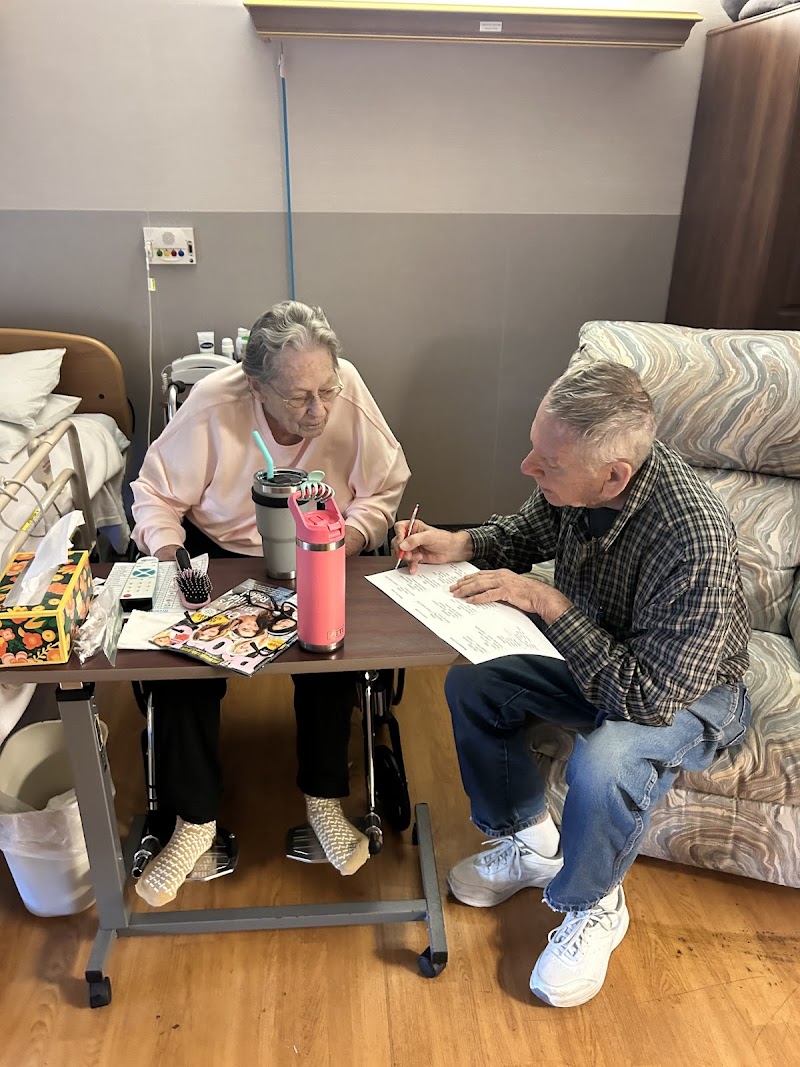
Who Owns and Operates Miller Health?

MILLER HEALTH CARE CENTER is owned by a non-profit organization. Non-profit facilities reinvest revenue into operations rather than distributing to shareholders. The facility operates independently rather than as part of a larger chain. With 160 certified beds and approximately 93 residents (about 58% occupancy), it is a mid-sized facility located in KANKAKEE, Illinois.

How Does Miller Health Compare to Other Illinois Nursing Homes?

Compared to the 100 nursing homes in Illinois, MILLER HEALTH CARE CENTER's overall rating (2 stars) is below the state average of 2.5, staff turnover (45%) is near the state average of 46%, and health inspection rating (3 stars) is at the national benchmark.

What Should Families Ask When Visiting Miller Health?

Based on this facility's data, families visiting should ask: "Can I visit during a mealtime to observe dining assistance and food quality?" "How do you handle medical emergencies, and what is your hospital transfer rate?" "Can I speak with family members of current residents about their experience?"

Is Miller Health Safe?

Based on CMS inspection data, MILLER HEALTH CARE CENTER has a clean safety record: no substantiated abuse findings (meaning no confirmed cases of resident harm), no Immediate Jeopardy citations (the most serious violation level indicating risk of serious injury or death), and is not on the Special Focus Facility watch list (a federal program monitoring the lowest-performing 1% of nursing homes). The facility has a 2-star overall rating and ranks #100 of 100 nursing homes in Illinois. While no facility is perfect, families should still ask about staff-to-resident ratios and recent inspection results during their visit.

Do Nurses at Miller Health Stick Around?

MILLER HEALTH CARE CENTER has a staff turnover rate of 45%, which is about average for Illinois nursing homes (state average: 46%). Moderate turnover is common in nursing homes, but families should still ask about staff tenure and how the facility maintains care continuity when employees leave.

Was Miller Health Ever Fined?

MILLER HEALTH CARE CENTER has no federal fines on record. CMS issues fines when nursing homes fail to meet care standards or don't correct problems found during inspections. The absence of fines suggests the facility has either maintained compliance or corrected any issues before penalties were assessed. This is a positive indicator, though families should still review recent inspection reports for the full picture.

Is Miller Health on Any Federal Watch List?

MILLER HEALTH CARE CENTER is not on any federal watch list. The most significant is the Special Focus Facility (SFF) program, which identifies the bottom 1% of nursing homes nationally based on persistent, serious quality problems. Not being on this list means the facility has avoided the pattern of deficiencies that triggers enhanced federal oversight. This is a positive indicator, though families should still review the facility's inspection history directly.