KNOX COUNTY NURSING HOME
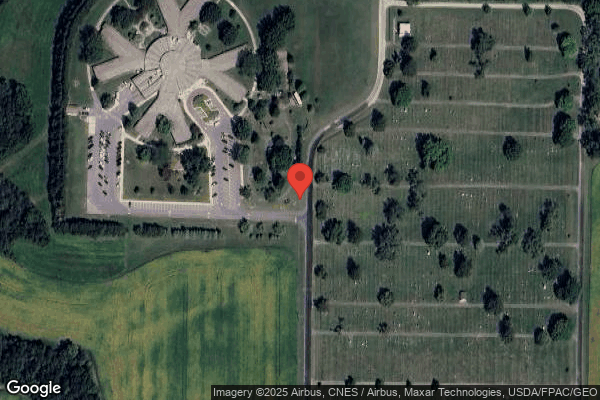
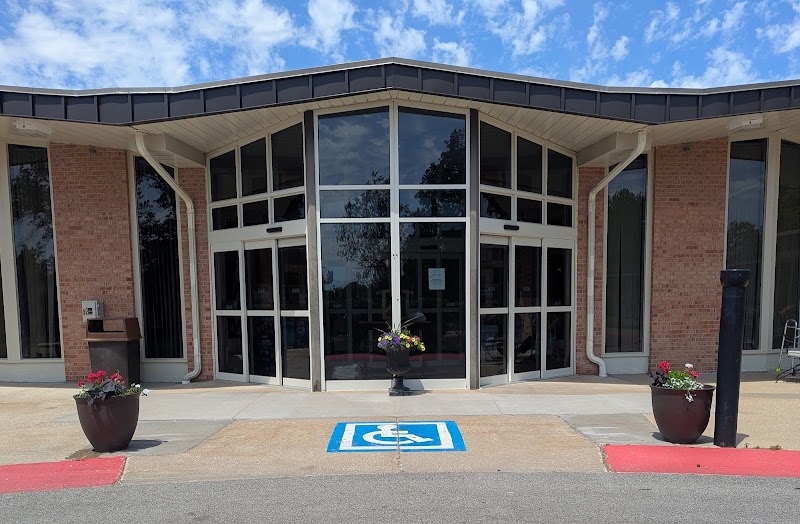
800 NORTH MARKET STREET, KNOXVILLE, IL 61448 (309) 289-2338
Government - County 169 Beds Independent Data: November 2025
Trust Grade
90/100
#52 of 665 in IL
Last Inspection: August 2024

Within standard 12-15 month inspection cycle. Federal law requires annual inspections.

Overview

Knox County Nursing Home has received an excellent Trust Grade of A, which indicates it is highly recommended for care. Ranked #52 out of 665 facilities in Illinois, it is in the top half of nursing homes in the state, and #2 of 6 in Knox County, meaning only one local option is better. The facility shows an improving trend, with issues decreasing from 2 in 2024 to 1 in 2025. Staffing is generally a strength, rated 4 out of 5 stars, with a turnover rate of 34%, which is lower than the state average. However, there are concerns about RN coverage, which is less than 79% of other Illinois facilities, meaning residents may not receive sufficient oversight from registered nurses. While there have been no fines, which is a positive sign, there are specific incidents of concern. For example, one resident was left in a pool of urine due to insufficient staffing during the night shift, and there were issues with food safety practices, such as failing to date opened food and maintain kitchen cleanliness. Additionally, there was a lack of timely meal service, causing one resident to receive their meal after others had finished eating, which can affect their dignity and satisfaction. Overall, the home has strengths in its rating and improvements but also has notable weaknesses that families should consider.

Trust Score
A
90/100
In Illinois
#52/665
Top 7%
Safety Record
Low Risk
No red flags
Inspections
Getting Better
2 → 1 violations
Staff Stability
○ Average
34% turnover. Near Illinois's 48% average. Typical for the industry.
Penalties
✓ Good
No fines on record. Clean compliance history, better than most Illinois facilities.
Skilled Nurses
⚠ Watch
Each resident gets only 29 minutes of Registered Nurse (RN) attention daily — below average for Illinois. Fewer RN minutes means fewer trained eyes watching for problems.
Violations
○ Average
7 deficiencies on record. Average for a facility this size. Mostly minor or procedural issues.
★★★★★
5.0
Overall Rating
★★★★☆
4.0
Staff Levels
★★★☆☆
3.0
Care Quality
★★★★★
5.0
Inspection Score
Stable
2024: 2 issues
2025: 1 issues

The Good

  • 4-Star Staffing Rating · Above-average nurse staffing levels
  • Full Sprinkler Coverage · Fire safety systems throughout facility
  • No fines on record
  • Staff turnover below average (34%)

    14 points below Illinois average of 48%

Facility shows strength in staffing levels, fire safety.

The Bad

Staff Turnover: 34%

12pts below Illinois avg (46%)

Typical for the industry

The Ugly 7 deficiencies on record

Aug 2025 1 deficiency
CONCERN (D) 📢 Someone Reported This

A family member, employee, or ombudsman was alarmed enough to file a formal complaint

Potential for Harm - no one hurt, but risky conditions existed

Incontinence Care (Tag F0690)

Could have caused harm · This affected 1 resident

**NOTE- TERMS IN BRACKETS HAVE BEEN EDITED TO PROTECT CONFIDENTIALITY** Based on observation, interview and record review, the facility failed to monitor nephrostomy output for one of one resident (R1...

Read full inspector narrative →
**NOTE- TERMS IN BRACKETS HAVE BEEN EDITED TO PROTECT CONFIDENTIALITY** Based on observation, interview and record review, the facility failed to monitor nephrostomy output for one of one resident (R18) reviewed for nephrostomy tubes, failed to wear appropriate Personal Protective Equipment and cleanse the urinary catheter during urinary catheter cares for one of six residents (R40), reviewed for urinary catheter care in a sample of 96. Findings include: 1. The facility policy, Care of Nephrostomy Tube, dated October 2010 directs staff, The purpose of this procedure is to provide guidelines for the care of the resident with a percutaneous nephrostomy tube. Empty drainage bag once per shift and as needed. Measure output as follows: every 8 hours. Measure output from the right and left kidneys separately. Record urinary and nephrostomy output separately. The following information should be recorded in the resident's medical record: Color, quantity and amount of drainage. R18's facility admission Record documents that R18 was admitted to the facility on [DATE] with the following diagnoses: Chronic Kidney Disease, Crossing Vessel and Stricture of Ureter, Acute Kidney Failure, HX: Urinary Tract Infection, Retention of Urine, History of Malignant Neoplasm of Bladder, Artificial Openings of Urinary Tract (Nephrostomy). R18's July 2025 Physician Order Sheet includes the following physician orders: Left Nephrostomy Tube Output Every Shift and Right Nephrostomy Tube Output Every Shift. R18's Care Plan, dated 5/13/25 includes the following Focus areas: (R18) has bilateral nephrostomy tubes related to obstructive and reflux uropathy due to crossing vessel and stricture of ureter. Also included are the following Interventions: Monitor and Document Output. R18's Medication Administration Records, dated September 2024 through January 2025, where facility nursing staff document nephrostomy tube output every 8 hours, contain numerous gaps in documentation to ensure staff were monitoring and recording output. On 7/30/25 at 9:30 A.M., V2/Director of Nurses (DON) confirmed the missing nurse documentation to verify staff were monitoring R18's nephrostomy output. At that time, V2/DON stated it was her expectation that facility staff monitor, and document nephrostomy output every 8 hours. 2.The facilities policy titled Enhanced Barrier Precautions, dated December 2024, documents, Enhanced barrier precautions (EBPs) are utilized to prevent the spread of multi-drug-resistant organisms (MDROs) to residents. 1. Enhanced barrier precautions (EBPs) refer to infection prevention and control interventions designed to reduce the transmission of multi-drug-resistant organisms (MDROs) during high contact resident care activities. 2. Enhanced barrier precautions apply when: a. A resident is infected or colonized with a CDC-targeted MDRO, but does not have a wound or indwelling medical device, and does not have secretions or excretions that cannot be covered or contained, b. A resident is NOT known to be infected or colonized with any MDRO, has a wound or indwelling medical devices, and does not have secretions or excretions that are unable to be covered or contained, and c. Contact precautions do not otherwise apply. 3. Contact precautions apply when: a. A resident is infected or colonized with any MDRO and has secretions or excretions that cannot be covered or contained, and b. A resident is NOT known to be infected or colonized with any MDRO, has a wound or indwelling medical device, and has secretions or excretions that cannot be covered or contained, or c. A resident is infected or colonized with any MDRO and there is a current investigation of a suspected or confirmed MDRO outbreak. 4. Standard precautions apply to the care of all residents regardless of suspected or confirmed infection or colonization status. 5. Indwelling medical devices include central lines, urinary catheters, feeding tubes, and tracheotomies. Peripheral IV catheters are not considered an indwelling medical device for purposes of EBPs. 6. Examples of secretions or excretions include wound drainage, fecal incontinence or diarrhea, or other discharges from the body that cannot be contained and pose an increased potential for extensive environmental contamination and risk of transmission of a pathogen. 7. EBPs employ targeted gown and glove use in addition to standard precautions during high contact resident care activities when contact precautions do not otherwise apply. a. Gloves and gown are applied prior to performing the high contact resident care activity (as opposed to before entering the room). b. Personal protective equipment (PPE) is changed before caring for another resident. c. Face protection may be used if there is also a risk of splash or spray. 8. Examples of high-contact resident care activities requiring the use of gown and gloves for EBPs include dressing; b. bathing/showering; c. providing hygiene or grooming; d. changing briefs or assisting with toileting; e. transferring; f. providing bed mobility; g. changing linens; h. prolonged, high-contact with items in the resident's room, with resident's equipment, or with resident's clothing or skin (e.g., in the shower room, therapy gym, or during restorative care); i. device care or use (central line, urinary catheter, feeding tube, tracheostomy/ventilator, etc.); and j. wound care (any skin opening requiring a dressing). The facilities Performance Skill #5.2 Providing Catheter Care, not dated, documents, Cleans tubing of catheter nearest meatus. Moves in only one direction, away from meatus. Uses a clean area of cloth for each stroke. R40's admission Record documents R40's date of admission to the facility was 4/4/11 and his diagnoses include Hemiplegia and Hemiparesis following unspecified Cerebrovascular Disease affecting right non-dominant side, Vascular Dementia Moderate with other Behavioral Disturbance, Urinary Tract Infection, Retention of Urine. R40's Minimum Data Set (MDS) assessment dated [DATE], documents that R40 has an indwelling urinary catheter. R40's Physician orders dated 6/14/24, documents that R40 has an order for 18 FR (French) with 10 cc (cubic centimeter) indwelling urinary catheter for Neuromuscular Dysfunction of Bladder related to Hemiplegia and Hemiparesis following Cerebrovascular Disease. R40's current care plan documents R40 is on Enhanced Barrier Precautions for Indwelling catheter and documents R40 has an Indwelling Catheter for Neuromuscular Dysfunction of Bladder, Hemiplegia following CVA (Cerebrovascular Accident). On 7/30/25 at 8:41 AM, R40 stated he has had a catheter for a while because he cannot urinate. On 7/30/2025 at 9:03 AM, V5 (Certified Nursing Assistant/CNA) observed providing indwelling urinary catheter care on R40. V5 (CNA) did not wear a gown during cares and did not cleanse down the urinary catheter. V5 (CNA) stated, I know what I did wrong, I should have worn a gown during his (R40) catheter care and you are right I did not wash down the catheter tubing. On 7/30/2025 at 12:00 PM V2 (Director of Nursing/DON) stated, I expect my staff to follow policy on catheter care by knocking on the door, telling the resident what they are going to do and put the appropriate PPE (Personal Protective Equipment) on prior to doing the care. V2 (DON) also stated, I have never seen a catheter care policy that states to cleanse the catheter tubing. On 7/31/2025 at 8:20 AM, V22 (Infection Preventionist) stated, If a resident has an indwelling urinary catheter, they should be wearing a gown and gloves with all cares except feeding.
Aug 2024 2 deficiencies
CONCERN (E)

Potential for Harm - no one hurt, but risky conditions existed

Resident Rights (Tag F0550)

Could have caused harm · This affected multiple residents

Based on observation, interview, and record review the facility failed to serve all residents at a table at the same time for five (R9, R27, R32, R36 and R45) of 26 residents reviewed for residents' r...

Read full inspector narrative →
Based on observation, interview, and record review the facility failed to serve all residents at a table at the same time for five (R9, R27, R32, R36 and R45) of 26 residents reviewed for residents' rights in a sample of 28. Findings include: Resident's Rights for People in Long-Term Care Facilities dated 3/2017 documents You have the right to safety and good care; your facility must provide services to keep your physical and mental health, and sense of satisfaction. Facility Routine Mealtimes Report, dated 04/01/2023, documents mealtimes of 7:30 am, 11:30 am and 4:30 pm. On 08/13/24 at 11:45 am to 12:40 pm, during the lunch hours in the Main Dining Room, meal trays and drinks were being passed. 1. On 08/13/24 at 11:45 am, three residents were eating their meal tray at the same table that R36 was sitting at. R36 did not have a meal tray. At 12:25 pm, R36 was served R36's meal tray and the resident's sitting at R36's table had already consumed their lunch meal. R36 stated that R36 was upset to have to wait as R36 feels they forgot her and R36's table mate's meals, and said that this happens all of the time. They have one staff member passing trays in no particular order with several tables that have residents eating, and others at the table waiting for their food. 2. On 8/13/24 at 12:45 pm, R27's table mate was served the lunch meal tray. R27 was seated at the same table with his table mate, but R27 did not receive a meal tray. R27 sat by R27's self, for about ten minutes, before R27 was served the lunch meal tray. R27's table mate had already left the table. R27 stated, They don't have enough staff in the dining room. They always serve us late and it happens a lot. It was two hours one time to get a meal because people walked out, and they never called anyone in to replace them. It bothers me that they don't serve our whole table together, and I sit and watch them eat when I don't have my food. 3. On 8/13/24 at 12:47 pm, R9 was seated at a table with one table mate. R9's table mate received the lunch meal tray. Fifteen minutes later, R9 was served the lunch meal tray. 4. On 8/13/24 at 12:50 pm, R45 was seated at a table with a table mate. R45's table mate received the lunch meal tray, consumed the food, and walked out of the dining room before R45 got served R45's lunch meal tray. R45 stated They need more help in the dining room, and they always seem to serve the meals separate and not one table at a time. 5. On 8/14/24 at 9 am, R32 stated, We do not get served our meals at the same time if we are sitting at the same table. On 8/16/24 at 11:00 am, V1 (Administrator/ADM) stated that the residents don't have assigned seating, but some residents like to sit with the same people daily. Their dining room times are 7:30am, 11:30 am and 4:30 pm. At that same time, V1 stated We need to come up with something to get them served at the time they arrive, and especially if the table mate already has their food.
CONCERN (E)

Potential for Harm - no one hurt, but risky conditions existed

Infection Control (Tag F0880)

Could have caused harm · This affected multiple residents

3. On 8/14/24 at 08:30 am, R6 stated that R6 has an area to the left heel that had originally started as a blister that opened and got infected. R6 is noted to have a bandage showing above the left so...

Read full inspector narrative →
3. On 8/14/24 at 08:30 am, R6 stated that R6 has an area to the left heel that had originally started as a blister that opened and got infected. R6 is noted to have a bandage showing above the left sock and pressure boot to the left foot. On 08/15/24 at 10:40 am, V3 (Licensed Practical Nurse/LPN) provided wound care to R6 who is in Enhanced Barrier Precautions. V3 (LPN) removed V3's gloves and disposed of them in R6's room. V3 (LPN) then rolled up R6's soiled gown and carried it down the hallway to place it in a linen barrel in the shower room. 4. On 08/15/24 at 10:15 am, V3 (Licensed Practical Nurse/LPN) provided wound care to R51 who is in Enhanced Barrier Precautions for a coccyx wound. V3 walked out of R51's room with V3's gown and gloves on, walked up the hallway to the shower room, and then back to R51's room. V3 then removed and disposed of V3's contaminated gloves, rolled up the contaminated gown, and walked back up the hallway carrying the gown to a barrel in the shower room. On 8/15/24 at 10:30 am, V3 (LPN) stated that V3 should have removed and disposed of V3's gown and gloves in R51's room before exiting. On 08/15/24 11:14 am, V4 (Registered Nurse/ Infection Preventionist) stated that, Staff should have a linen barrel inside of the room to place contaminated gowns in after caring for residents on Enhanced Barriers, and if not available they should place the gown in a plastic trash bag and walk it down to linen barrel. Based on observation, interview, and record review, the facility failed to ensure Enhanced Barrier Precautions were implemented and failed to ensure proper disposal of Personal Protective Equipment for four residents (R6, R11, R51, R150) of 28 residents reviewed for Infection Control in a sample of 28. Findings include: Enhanced Barrier Precautions Policy documents, Policy Interpretation and Implementation 1. Enhanced barrier precautions (EBP's) are used as an infection prevention and control intervention to reduce the spread of multi-drug resistant organisms (MDRO's) to residents. 2. EBP's employ targeted gown and glove use during high contact resident care activities when precautions do not otherwise apply. A. Gloves and gown are applied prior to performing the high contact resident care activity (as opposed to before entering the room). B. Personal protective equipment (PPE) is changed before caring for another resident. 3. Examples of high-contact resident care activities requiring the use of gown and gloves for the EBP's include: a. dressing; b. bathing/showering; c. transferring; d. providing hygiene; e. changing linens; f. changing briefs or assisting with toileting; g. device care or use (central line, urinary catheter, feeding tube, tracheostomy/ventilator, etc.); and h. wound care (any skin opening requiring a dressing. 5. EBP's are indicated (when contact precautions do not otherwise apply) for residents with wounds and/or indwelling medical devices regardless of MDRO colonization. Personal Protective Equipment Policy documents, Gowns, Aprons, Lab Coats Policy Interpretation, and Implementation, dated 2001, documents, 7. Soiled gowns, aprons, and lab coats must be removed prior to leaving the work area and discarded into the appropriate receptacle located in the work area. 1. R11's Wound Consultation Note, dated 08/14/24, documents R11 has a Stage Four Pressure Wound of the Right Ear full thickness which measures 0.4 x 0.7 x not measurable (centimeters). R11's July 2024 Physician Order Sheet documents an order, dated 08/23/24, to administer J-Tube (Jejunostomy) enteral feedings six times a day for supplement and flush the J-Tube with 210 milliliters of water. On 08/13/24 2:16 pm, V5/Charge Nurse and V6/CNA/Certified Nursing Assistant were observed providing incontinence care to R11. V5 and V6 were not wearing gowns. V5 stated during an interview on 08/13/24 at 2:23 pm, We were in a hurry, we should have worn gowns. On 08/14/24 at 2:48 pm, V7/LPN entered R11's room and donned gloves, but no gown. Medication (Tylenol 325 milligram two tablets) were crushed prior to entering R11's room. V7 then gathered water and spoke with R11 before checking placement and residual of R11's J-Tube. V7 then flushed and administered the medication through R11's J-Tube. V7 did not wear a gown during the administration of R11's J-Tube medications. 2. R150's August 2024 Physician Order Sheet documents a diagnosis of Non-Pressure Chronic Ulcer of unspecified part of Lower Leg. R150's Wound Consultation Sheet, dated 8/14/24, documents R150 has a Non-Pressure Wound of the Right Lower Lateral Leg which is full thickness and measures 2.0 x 0.7 x 0.3 centimeters. On 08/13/24 at 12:13 pm, V8/LPN entered R150's room and performed glucose monitoring. V8 did not wear a gown. R150 was on a bedpan. V9/CNA and V10/CNA entered R150's room, removed R150's bedpan and used the mechanical lift to assist R150 to R150's electric wheelchair. V9 and V10 did not wear gowns while providing direct care and transferring R150. V8 returned on 8/13/24 at 12:21 pm and administered medication (insulin) to the left lower quadrant of R150's abdomen without wearing a gown. During interview on 08/13/24 at 12:25 pm, V8 does not know why R150 is on Enhanced Barrier Precautions but states that V8, V9 and V10 should have worn gowns.
Jun 2023 3 deficiencies
CONCERN (D) 📢 Someone Reported This

A family member, employee, or ombudsman was alarmed enough to file a formal complaint

Potential for Harm - no one hurt, but risky conditions existed

Incontinence Care (Tag F0690)

Could have caused harm · This affected 1 resident

Based on interview and record review, the facility failed to provide incontinent care for one of three residents (R16) reviewed for bowel and bladder incontinence in the sample of 30. Findings include...

Read full inspector narrative →
Based on interview and record review, the facility failed to provide incontinent care for one of three residents (R16) reviewed for bowel and bladder incontinence in the sample of 30. Findings include: The facility's Urinary Continence and Incontinence-Assessment and Management policy, dated 8/22, documents, Ensure that all residents, where possible, are toileted e.g., toilet incontinent residents (check/change per plan of care and as resident allows). R16's Care plan, dated 5/15/23, documents, R16 has alteration with elimination related to being frequently incontinent of bladder, frequently incontinent of bowels, requires staff assistance with ADLs (Activities of Daily Living). Intervention: Assist with toileting upon arising in AM, before/after meals, before going to bed and PRN (as needed). Bedside commode for toileting. Every two hours toileting; Clean peri-area with each incontinence episode. R16's ADL care plan, dated 1/19/23, documents, R16 has potential for changes with her ADL self care needs related to requires supervision to total assistance with her ADLs secondary to diagnoses: Alzheimer's disease, restlessness and agitation, Osteoarthritis, Delusional disorder. Interventions: Bed Mobility-Extensive assist with repositioning and turning in bed. On 06/12/23 at 10:45 AM, V12 (R16's family) stated, (R16) was left in pool of urine, the bed, the mattress and the sheets. This happened on 3rd shift 6/3/23 into 1st shift 6/4/23. (R16) is on a memory care unit. There are residents who wander all night long. They have one CNA (Certified Nursing Assistant) and one nurse, but the nurse covers multiple halls on third shift. They set off the alarm to exit, so that one CNA runs after them and leaves the floor unattended. So how is that CNA supposed to take care of residents turning and changing them as well as supervising the wandering resident on this locked hallway all by herself. (R16) is bedbound. She's not able to use her call light. The facility's Staffing Assignment Daily sheet dated 6/3-6/4/23, documents that one CNA and one nurse were assigned to work the 200 hall on 3rd shift. On 6/14/23 at 10:40 a.m., V6 CNA stated, On 6/4/23, I came in at 2:00 a.m. and the other CNA left at 2:00 a.m. The nurse was stuck on 100 wing for a long time. So, I was by myself. (R16) is a two assist to change her. I didn't have any help, so I wasn't able to change her that night. I knew she was incontinent, but I couldn't safely change her by myself.
CONCERN (D)

Potential for Harm - no one hurt, but risky conditions existed

Medication Errors (Tag F0758)

Could have caused harm · This affected 1 resident

Based on observation, interview, and record review, the facility failed to document behaviors to warrant the initiation of an antipsychotic medication for one of one resident (R16) reviewed for antips...

Read full inspector narrative →
Based on observation, interview, and record review, the facility failed to document behaviors to warrant the initiation of an antipsychotic medication for one of one resident (R16) reviewed for antipsychotics in the sample of 30. Findings include: The facility's Antipsychotic Medication Use policy, dated 7/22, documents, Residents will only receive antipsychotic medications when necessary to treat specific conditions for which they are indicated and effective. Diagnoses alone do not warrant the use of antipsychotic medication. In addition to the above criteria, antipsychotic medications will generally only be considered if the following conditions are also met: The behavioral symptoms present a danger to the resident or others; AND: the symptoms are identified as being due to mania or psychosis (such as auditory, visual, or other hallucinations; delusions, paranoia or grandiosity; or behavioral interventions have been attempted and included in the plan of care, except in an emergency. Antipsychotic medications will not be used if the only symptoms are one or more of the following: Wandering; poor self-care; restlessness; impaired memory; mild anxiety; insomnia; inattention or indifference to surroundings; sadness or crying alone that is not related to depression or other psychiatric disorders; fidgeting; nervousness; or uncooperativeness. On 06/12/23 at 12:44 PM, R16 was alert sitting up in her high back reclining wheelchair. R16 was nonverbal and was not displaying any behaviors. R16's Physician's orders, dated 6/13/23, documents that R16 was started on Seroquel (antipsychotic) 25 mg (milligrams) by mouth twice a day for Anxiety (5/02/23). The orders also document that R16 is currently receiving Seroquel 25 mg by mouth daily. R16's Behavior note, dated 3/14/23 at 12:27 p.m., documents, R16 continues to yell and swear at staff when they attempt to speak with her or offer her food. Sits quietly when left alone at her table. R16's Behavior note, dated 3/14/23 at 2:33 p.m., documents, R16 observed crawling out of bed, attempted to place feet back into bed, R16 begins screaming/crying. R16 gotten up and toileted. Continues screaming/crying. Sitting at table at this time, when staff attempt to converse/calm her offering food/fluids R16 becomes upset and yelling at staff. R16's Behavior note, dated 3/15/23 at 2:48 a.m., documents, During repositioning R16, R16 called this nurse a n****r. R16 redirected with no effect. R16's Behavior note, dated 3/23/23 at 7:24 p.m., documents, R16 became agitated when nurse attempted to give eye drops, R16 grabbing at bottle and trying to put in her mouth. When nurse attempts to re-explain what is happening R16 gets even more agitated, cursing and threatening to kill nurse. Grabbing at nurses clothing. Repeatedly kicking feet off the side of footrests. R16's Behavior note, dated 4/3/23 at 1:18 p.m., documents, Staff attempted to lay R16 down after lunch. R16 became agitated, refused. Yelling/screaming/cursing/grabbing at staff. R16's Behavior note, dated 4/15/23 at 1:42 p.m., documents, R16 brought to dayroom at this time. Repeatedly crawling out of her bed. Toileted and repositioned without effect. Sitting at table fidgeting with clothing/blanket at this time. R16's Behavior note, dated 4/15/23 at 11:38 p.m., documents, R16 crawling out of bed at this time, when staff attempt to assist her to get repositioned, she begins screaming and grabbing. Swearing at staff/name calling. R16's Behavior note, dated 4/16/23 at 1:19 a.m., documents, R16 crawled out of her bed onto her floor mats. Incontinent of small amount of urine. Assisted back to bed with two staff and gait belt. Toileted and brought to dayroom for closer monitoring. R16's Communication with physician note, dated 5/2/23 at 10:21 a.m., documents, Situation: Physician faxed back stating that Ativan, Ambien, and valium are all benzodiazepines and would not help. He gave orders for Seroquel 25 mg BID (twice a day). R16's Communication with family note, dated 5/3/23 at 11:59 p.m., documents, Spoke with (V12 R16's family) per phone asking how R16 is sleeping. I assured her that she has been sleeping soundly since I got here at 10:00 PM. She is concerned that physician started R16 on Seroquel today and that it is causing her to be too sleepy as she slept through her supper. R16's Nurses' notes, dated 5/10/23 at 4:33 a.m., document, Behaviors: yelling out; resisting cares; restlessness. 1:1 ineffective. R16's Psychiatric Evaluation note, dated 5/11/23, documents, Type of Visit: Initial Psychiatric Evaluation. Chief Complaint: Establish care, initial evaluation of dementia with behaviors and insomnia. R16's Order Administration note, dated 5/14/23 at 7:27 a.m., documents, V12 didn't want R16 to have it (Seroquel) this AM due to family coming she didn't want her sleepy. R16's Nurses' notes, dated 5/17/23 at 12:43 p.m., documents, R16 was yelling out very loudly while CNA's (Certified Nursing Assistants) were getting R16 out of bed this morning. R16's Care plan, dated 6/5/23, documents, R16 has episodes of verbal and physical agitation towards staff. She will yell, curse, call them names and will become combative by hitting/grabbing when staff is trying to assist her related to Alzheimer's/dementia. R16's Care plan, dated 6/5/23, documents, R16 will resist care-will become combative, yell/cry out when staff, caregiver and family try to assist her related to anxiety, Alzheimer's Disease/Dementia. R16's Order Administration note, dated 5/28/23 at 10:32 a.m., documents, V12 wanted med (Seroquel) held this AM due to the med making her so sleepy. R16's Nurses' notes, dated 6/10/23 at 2:59 p.m., document, Note Text: Behaviors-Crawling out of bed and yelling out during cares. On 6/12/23 at 10:45 a.m., V12 (R16's family) stated, (R16) is now getting a sleeping pill, Seroquel, that knocks her out for the night. She sleeps through the night. The only behavior she has is attempting to get out of bed. That's why she is on the Seroquel so she will sleep through the night and not try to get out of bed. With only one staff member they get her up when she's trying to get out of bed. (R16) needs to sleep at night. She dangles her feet over the side of the bed, but when staff see her like that, they think she's trying to get up. On 6/14/23 at 2:45 p.m., V10 (Director of Nursing) stated, I've had the policy to have staff let me know if they are considering an antipsychotic. I was pretty irritated when I found out about (R16) getting started on Seroquel without consulting with me. In early May, I tried to explain to (V12) that (R16) shouldn't be on this type of medication. I felt like (R16) needed to be on a mood stabilizer and explained the risks. We agreed to (V12) contacting the physician about changing the antipsychotic. I never did hear anything back about it. Later in May, (V12) was unhappy with how lethargic (R16) was with the Seroquel twice a day so she had the morning dose discontinued. If she would just let us deal with her dementia and behaviors things would be fine, but she won't. I've tried to explain that (R16) should not be on the Seroquel. Antipsychotics should be the last resort. (V12) didn't even let us try anything non-pharmacological interventions before starting the Seroquel. (V12) demanded the physician start (R16) on the Seroquel. (R16) is the sweetest resident. She is so easy to take care of. The behaviors are aggression, hitting/pinching/biting staff, yelling at staff, and restless. (V12) was worried about her not getting any sleep at night. I didn't feel like the behaviors needed treated with an antipsychotic.
CONCERN (F) 📢 Someone Reported This

A family member, employee, or ombudsman was alarmed enough to file a formal complaint

Potential for Harm - no one hurt, but risky conditions existed

Deficiency F0725 (Tag F0725)

Could have caused harm · This affected most or all residents

Based on observation, interview, and record review, the facility failed to provide sufficient staff to care for dependent residents. This failure has the potential to affect all 79 residents residing ...

Read full inspector narrative →
Based on observation, interview, and record review, the facility failed to provide sufficient staff to care for dependent residents. This failure has the potential to affect all 79 residents residing in the facility. Findings include: The facility Assessment, no date available, documents, Nursing, nutrition services, and housekeeping staffing is evaluated at the beginning of each shift and adjusted as needed to meet the care needs and acuity of the resident population. The facility's Resident Council Minutes/Report, dated 5/18/23, documents, The CNAs (Certified Nursing Assistants) should not be giving showers on Wing 1 when there is only one CNA. On 06/12/23 at 10:45 AM, V12 (R16's family) stated, (R16) was left in pool of urine, the bed, the mattress, and the sheets. This happened on 3rd shift 6/3/23 into 1st shift 6/4/23. (R16) is on a memory care unit. There are residents who wander all night long. They have one CNA and one nurse, but the nurse covers multiple halls on third shift. They set off the alarm to exit so that one CNA runs after them and leaves the floor unattended. So how is that CNA supposed to take care of residents turning and changing them as well as supervising the wandering resident on this locked hallway all by herself. On 06/13/23 at 10:00 AM, As a group when asked if there were staffing issues, R183, R43, R29, and R18 all stated yes. Then, when asked about call light response times they all laughed. R183 stated, There are times that we wait a quite a bit longer for our call lights to be answered, especially when they work short staffed. R43 stated, The call light wait times can be pretty long at times, but I try to tell myself over and over again to be patient. On 6/14/23 at 10:40 a.m., V6 CNA stated, We are supposed to have one CNA on 100 wing, two CNAs scheduled on 200 wing, and two CNAs on 300 wing. The nurse that works 200 wing also works 100 wing. So, we go with no nurse on our floor for a while at times. I've only worked with myself being the only CNA on the floor. If it's just one, I feel like it hurts the residents, and they don't get the care they should. There are residents that take two staff to turn and change. If the nurse isn't on the floor. Those residents can't be turned or changed. Luckily, with it being the dementia unit we really don't have to worry about call lights. If there was an emergency and no nurse was on the floor, I don't know what I would do if I couldn't leave the resident. We also have (R99) who wanders all through the night and attempts to go out the door. So, on top of everything else I have to make sure and supervise (R99) as well. On 6/04/23, I came in at 2:00 a.m. and the other CNA left at 2:00 a.m. The nurse was stuck on 100 wing for a long time. So, I was by myself. (R16) is a two assist to change her. I didn't have any help, so I wasn't able to change her that night. I know she was incontinent, but I couldn't safely change her by myself. On 06/14/23 at 11:55 AM, V7 (CNA) stated, There are times that we work short. I've came in and there's only been one CNA working on the hall. Depending on who is working will determine how much the CNA was or wasn't able to do on their own. A more inexperienced CNA may not be able to check and change everyone with it being just that one person. If there was an emergency on our hallway on third shift, the nurse was on the 100 hall, and I was all by myself I don't know what I would do if there was an emergency and I couldn't leave the resident. There are residents on this hall that require two people to change them. If it's just one CNA, you hope that the nurse is on the hall to help. On 06/14/23 at 11: 56 AM, V8 (CNA) stated, Staffing can be an issue at times. There's been one CNA on third shift when I've came in. With only one person there's times that there are more people wet and needing changed. It just depends on how much experience the CNA has. There are residents on our hall who require two of us to change them. On 06/14/23 at 12:06 PM, V9 (Licensed Practical Nurse), stated, We are short staffed here, both nurses and CNAs. When we are short all of the staff are stressed out and anxious trying to get double the work done. With working short things get missed and not done which affects the residents. A resident may not get changed timely or gotten up on time things like that. It's hard on us and the residents. I've worked third shift and covered both 100 and 200 hall. It's hard going back and forth and making sure everything is taken care of. If there's an emergency on one hall that means I'm going to be pulled from the other hall for a while. Then, if you throw in that there is only one CNA on this hallway that's even worse. With only one that means the nurse is the 2nd person for all of the two assist, but what about the time I'm on the other hall. Also, with doing more CNA work that's pulling me from the regular nurse duties. (R99) is a wanderer. It's scary when we are short and knowing you've got to keep an eye on her. She is exit seeking. We are so relieved the nights she may sleep through the night that's one less stressor on the nights we are short. On 6/15/23 at 9:30 a.m., V14 (CNA) stated, In the morning, if I'm alone I can't get the mechanical lifts up for their get up. I dress them and wait for day shift to get to the facility. There are a lot of two assist residents for get up. I just don't get them up when I'm alone. There is a few residents that I have difficulty with turning at time. When I'm doing rounds some of the resident end up being wet longer than they should. I have at least 21 residents that I have to change on rounds plus answer call lights, So, I'll change all of them on one side then head to the other side. When I'm done with the second side, the first side is wet, and I start all over again while I'm still trying to answer call lights as well. It's hard to get it done. The facility Staffing Assignment Daily, dated 6/03/23, documents that on 3rd shift one CNA is assigned to each hallway, one nurse is assigned to 100 and 200 hall, and one nurse on 400 hall. The facility Staffing Assignment Daily, dated 6/04/23, documents that on 3rd shift one CNA each is assigned to 100 and 200 hall, two CNAs are assigned to 400 hall, one nurse is assigned to 100 and 200 hall, and one nurse on 400 hall. The facility Staffing Assignment Daily, dated 6/07/23, documents that on 3rd shift one CNA each is assigned to 100 and 200 hall, two CNAs are assigned to 400 hall until 2:00 a.m. when one CNA leaves, one nurse is assigned to 100 and 200 hall, and one nurse on 400 hall. The facility Staffing Assignment Daily, dated 6/08/23, documents that on 3rd shift one CNA is assigned to each hallway until 2:00 a.m. when one of those CNAs is moved to 400 hall and another CNA comes in to work alone on 200 hall, one nurse is assigned to 100 and 200 hall, and one nurse on 400 hall. The facility Staffing Assignment Daily, dated 6/09/23, documents that on 3rd shift one CNA is assigned to each hallway until 2:00 a.m. when another CNA comes in to work 400 hall, one nurse is assigned to 100 and 200 hall, and one nurse on 400 hall. The facility Staffing Assignment Daily, dated 6/10/23, documents that on 3rd shift one CNA is assigned to each hallway, one nurse is assigned to 100 and 200 hall, and one nurse on 400 hall. On 6/15/23 at 10:30 a.m., V17 (Social Services Director) stated, The resident complained about only one CNA on the floor during the resident council meeting because she felt like it wasn't safe since no other CNA was available if they were in the shower room. On 6/15/23 at 10:15 a.m. V11 (Human Resources) stated, I use the State calculator for the minimum staffing. However, I try to schedule two nurses, one works 100 and 200 hall and the other works 400 hall, and five CNAs, one on 100 hall, two on 200 hall, and two on 400 hall. With our staffing issues lately though sometimes it's only one CNA on 200 hall and one CNA on 400 hall. V11 confirmed the required minimum hours the facility was following for 3rd shift on 6/03, 6/04, 6/07, 6/08, 6/09, and 6/10/23 was two nurses and four CNAs. V11 also confirmed: 6/03 three CNAs were working, one for each hallway; 6/04 one CNA was working on 200 hall; 6/07 one CNA was working on 200 hall; 6/08 3.5 CNAs working with one on 200 hall; 6/09/23 3.5 CNAs working with one on 200 hall; three CNAs were working, one for each hallway. The Centers for Medicare and Medicaid (CMS) Resident's Census and Condition of Residents form 672, dated and signed by V13 (Minimum Data Set Coordinator) on 6/13/23, documents the following assistance required for residents: Dressing: 72 require one to two staff assist, 7 are dependent; Transferring: 61 require one to two staff assist, 12 are dependent; Toilet use: 72 require one to two staff assist, 7 are dependent. The 672 also documents that at the time of the survey 79 residents resided in the facility.
Apr 2022 1 deficiency
CONCERN (F)

Potential for Harm - no one hurt, but risky conditions existed

Food Safety (Tag F0812)

Could have caused harm · This affected most or all residents

Based on observation, interview, and record review, the facility failed to date opened food, date food received or thawed, date thawed health shakes, clean the convection oven, ensure a covering for a...

Read full inspector narrative →
Based on observation, interview, and record review, the facility failed to date opened food, date food received or thawed, date thawed health shakes, clean the convection oven, ensure a covering for a food cart to keep food warm, and failed to wear a hair net in the kitchen. These failures have the potential to affect all 61 residents except R32 who is NPO (nothing by mouth). Findings include: Facility Food Receiving and Storage policy, revised 2017, documents, All foods stored in the refrigerator or freezer will be covered, labeled, and dated ('use by' date). Facility Sanitization policy, revised 2008, documents, The food service area shall be maintained in a clean and sanitary manner. All kitchens, kitchen areas and dining areas shall be kept clean. The Food Services Manager will be responsible for scheduling staff for regular cleaning of kitchen and dining areas. Food service staff will be trained to maintain cleanliness throughout their work areas during all tasks, and to clean after each task before proceeding to the next assignment. Facility Resident Council minutes, dated January 20, 2022, September 16, 2021, August 19, 2021, July 15, 2021, June 24, 2021, May 20, 2021, and April 22, 2021, document Resident Council complaints on cold food. On 4/26/22 at 10:15am, R25 verified there were complaints on cold food at the resident council meetings. On 4/26/22 between the hours of 10:00am and 11:00am, a tour of the kitchen was conducted with V5 Dietary Manager/DM. In the drink cooler there were four 64 fluid ounce apple juice containers opened and undated; 59 four fluid ounce containers of Ready care vanilla shakes no sugar added that had no expiration dates, no received dates, and no pull dates from the freezer. The outside of the Ready care vanilla shakes documents, Storage and handling- Store frozen. Thaw under refrigeration 40 degrees or below. After thawing, keep refrigerated. Use within 14 days after thawing. There was a note posted in the cooler hanging on a shelf that documents Put date on all liquids when opened. At that same time, V5 DM stated I posted the paper in the cooler because we have had a problem with staff dating things that are opened. It is a work in progress. V5 verified the apple juices had no open dates, and the vanilla shakes had no dates on them. The cooks' cooler had a five-pound sour cream container opened (half empty) and undated; a whole roast beef (no weight) in plastic packaging had no expiration date or pull date noted on the package. At that same time, V5 stated, I don't know when we had roast beef last, but I see no dates on the beef and the sour cream needs an open date. I will have to talk to staff. I have had a lot of things I have been working on getting fixed here. Facility single convection oven had a large amount of brown sticky substance on the sides and bottom of the oven. V5 stated, We use this oven every day and I have this on the list to be cleaned. I am working on getting staff to wipe up spills as they happen so cleaning is easier. Facility tall refrigerator had a four-pound butter tub that was half gone, undated, and had no expiration date; and a two- pound turkey breast package had no expiration date and no received date. A large metal tray storage cart was in the kitchen and was missing the door. At that same time, V5 stated, We need to do better with dating our product. The meal tray cart is used to serve meals to residents down the hallways that don't eat in the dining room. I fixed the cart once but the door fell off again and I haven't gotten it put back on the cart but it needs to be. The dry storage room had a room full of multiple canned goods, and multiple dry storage bags/containers of food that had no expiration dates or received dates. V5 verified that the dry storage canned goods and dry storage bags/containers of food had no expiration dates or received dates and should have. During the tour of the kitchen on 4/26/22 between the hours of 10:00am and 11:00am, V5 did not have V5's hair secured in a hair net. V5 had no hair on top of his head but V5 had hair on the sides and facial hair. V5 stated, I do not wear a hair net. Am I supposed to? I usually shave my head bald including the sides. Facility was unable to provide any daily cleaning sheets to document the kitchen appliances/areas were being cleaned. On 4/26/22 at 11:15am, V5 stated, I do not have the staff fill out daily cleaning sheets, they are to wipe down surfaces after and during meals, but the deep cleaning of the stove and ovens are done about once a month. I do not have anything to show you that was done. Resident Census and Conditions of Residents (Centers for Medicare and Medicaid/CMS 672) form dated 4/26/22, documents 61 residents reside in the facility.
Understanding Severity Codes (click to expand)
Life-Threatening (Immediate Jeopardy)
J - Isolated K - Pattern L - Widespread
Actual Harm
G - Isolated H - Pattern I - Widespread
Potential for Harm
D - Isolated E - Pattern F - Widespread
No Harm (Minor)
A - Isolated B - Pattern C - Widespread

Questions to Ask on Your Visit

  • "Can I speak with families of current residents?"
  • "What's your RN coverage like on weekends and overnight?"

Our Honest Assessment

Strengths
  • • Grade A (90/100). Above average facility, better than most options in Illinois.
  • • No major safety red flags. No abuse findings, life-threatening violations, or SFF status.
  • • No fines on record. Clean compliance history, better than most Illinois facilities.
  • • 34% turnover. Below Illinois's 48% average. Good staff retention means consistent care.
Concerns
  • • No significant concerns identified. This facility shows no red flags across CMS ratings, staff turnover, or federal penalties.
Bottom line: Generally positive indicators. Standard due diligence and a personal visit recommended.

About This Facility

What is Knox County's CMS Rating?

CMS assigns KNOX COUNTY NURSING HOME an overall rating of 5 out of 5 stars, which is considered much above average nationally. Within Illinois, this rating places the facility higher than 99% of the state's 100 nursing homes. This rating reflects solid performance across the metrics CMS uses to evaluate nursing home quality.
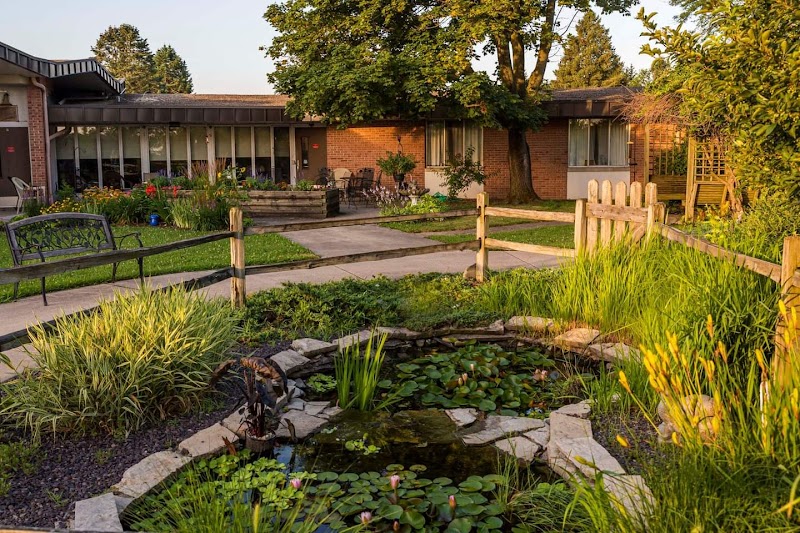
How is Knox County Staffed?

CMS rates KNOX COUNTY NURSING HOME's staffing level at 4 out of 5 stars, which is above average compared to other nursing homes. Staff turnover is 34%, compared to the Illinois average of 46%. This relatively stable workforce can support continuity of care.

What Have Inspectors Found at Knox County?

State health inspectors documented 7 deficiencies at KNOX COUNTY NURSING HOME during 2022 to 2025. These included: 7 with potential for harm.

Who Owns and Operates Knox County?

KNOX COUNTY NURSING HOME is owned by a government entity. Government-operated facilities are typically run by state, county, or municipal agencies. The facility operates independently rather than as part of a larger chain. With 169 certified beds and approximately 109 residents (about 64% occupancy), it is a mid-sized facility located in KNOXVILLE, Illinois.
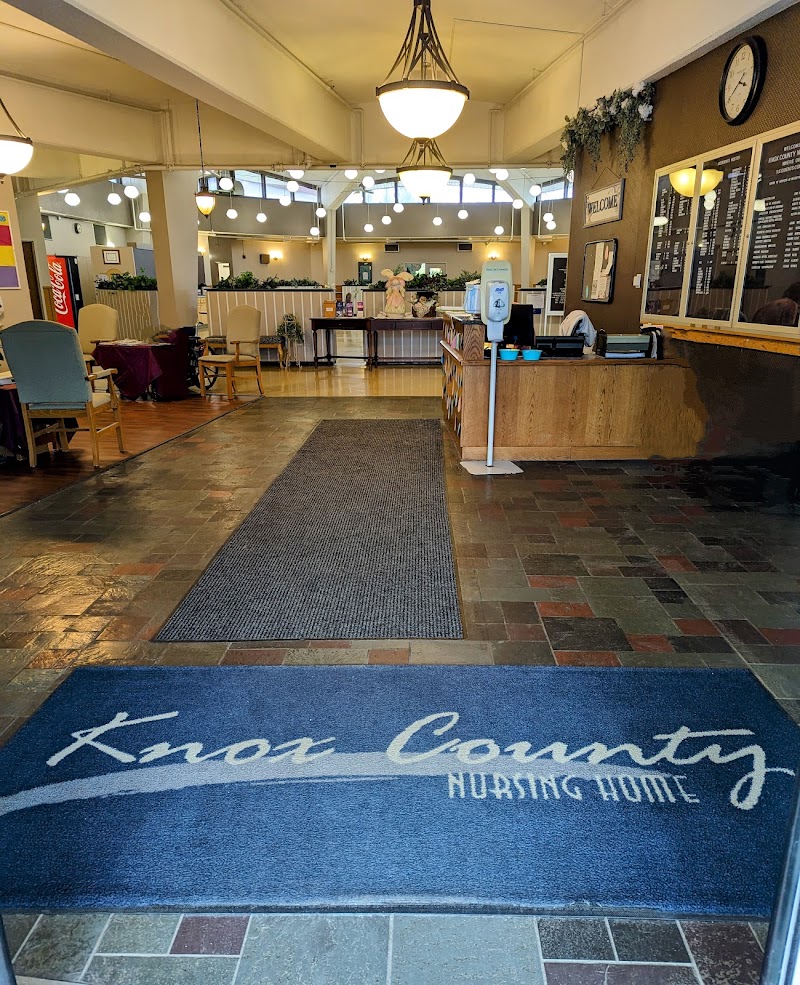
How Does Knox County Compare to Other Illinois Nursing Homes?

Compared to the 100 nursing homes in Illinois, KNOX COUNTY NURSING HOME's overall rating (5 stars) is above the state average of 2.5, staff turnover (34%) is significantly lower than the state average of 46%, and health inspection rating (5 stars) is much above the national benchmark.

What Should Families Ask When Visiting Knox County?

Based on this facility's data, families visiting should ask: "Can I visit during a mealtime to observe dining assistance and food quality?" "How do you handle medical emergencies, and what is your hospital transfer rate?" "Can I speak with family members of current residents about their experience?"

Is Knox County Safe?

Based on CMS inspection data, KNOX COUNTY NURSING HOME has a clean safety record: no substantiated abuse findings (meaning no confirmed cases of resident harm), no Immediate Jeopardy citations (the most serious violation level indicating risk of serious injury or death), and is not on the Special Focus Facility watch list (a federal program monitoring the lowest-performing 1% of nursing homes). The facility has a 5-star overall rating and ranks #1 of 100 nursing homes in Illinois. While no facility is perfect, families should still ask about staff-to-resident ratios and recent inspection results during their visit.

Do Nurses at Knox County Stick Around?

KNOX COUNTY NURSING HOME has a staff turnover rate of 34%, which is about average for Illinois nursing homes (state average: 46%). Moderate turnover is common in nursing homes, but families should still ask about staff tenure and how the facility maintains care continuity when employees leave.

Was Knox County Ever Fined?

KNOX COUNTY NURSING HOME has no federal fines on record. CMS issues fines when nursing homes fail to meet care standards or don't correct problems found during inspections. The absence of fines suggests the facility has either maintained compliance or corrected any issues before penalties were assessed. This is a positive indicator, though families should still review recent inspection reports for the full picture.

Is Knox County on Any Federal Watch List?

KNOX COUNTY NURSING HOME is not on any federal watch list. The most significant is the Special Focus Facility (SFF) program, which identifies the bottom 1% of nursing homes nationally based on persistent, serious quality problems. Not being on this list means the facility has avoided the pattern of deficiencies that triggers enhanced federal oversight. This is a positive indicator, though families should still review the facility's inspection history directly.