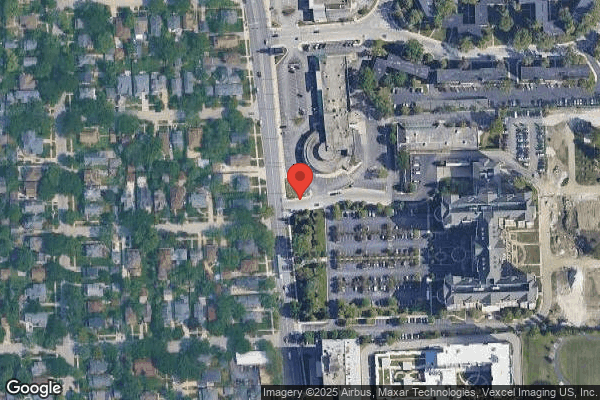




PLYMOUTH PLACE

315 NORTH LA GRANGE ROAD, LA GRANGE PARK, IL 60526 (708) 482-6668
For profit - Corporation 86 Beds Independent Data: November 2025
Trust Grade
10/100
#395 of 665 in IL
Last Inspection: January 2025

Within standard 12-15 month inspection cycle. Federal law requires annual inspections.

Overview

Plymouth Place in La Grange Park, Illinois, has a Trust Grade of F, indicating significant concerns and a poor overall reputation. It ranks #395 out of 665 nursing homes in Illinois, placing it in the bottom half of facilities in the state, and #128 out of 201 in Cook County, which suggests limited local options for better care. The facility's performance is worsening, with issues rising from 1 in 2024 to 8 in 2025, highlighting an increasing trend of problems. While staffing is a strength with a 4 out of 5 rating and 0% turnover, indicating that staff stay long-term and likely know the residents well, the facility has received $76,620 in fines, which is concerning and suggests ongoing compliance issues. Serious incidents include a resident suffering from neglect related to chronic wounds that led to a hospital admission for gangrene and an amputation, as well as another resident who fell due to improper wheelchair transport, resulting in an emergency room visit. Overall, while there are strengths in staffing, the serious safety and health issues present significant weaknesses that families should carefully consider.

Trust Score
F
10/100
In Illinois
#395/665
Bottom 41%
Safety Record
High Risk
Review needed
Inspections
Getting Worse
1 → 8 violations
Staff Stability
○ Average
Turnover data not reported for this facility.
Penalties
⚠ Watch
$76,620 in fines. Higher than 88% of Illinois facilities, suggesting repeated compliance issues.
Skilled Nurses
✓ Good
Each resident gets 102 minutes of Registered Nurse (RN) attention daily — more than 97% of Illinois nursing homes. RNs are the most trained staff who catch health problems before they become serious.
Violations
⚠ Watch
21 deficiencies on record. Higher than average. Multiple issues found across inspections.
★★☆☆☆
2.0
Overall Rating
★★★★☆
4.0
Staff Levels
★★★★☆
4.0
Care Quality
★★☆☆☆
2.0
Inspection Score
Stable
2024: 1 issues
2025: 8 issues

The Good

  • 4-Star Staffing Rating · Above-average nurse staffing levels
  • 4-Star Quality Measures · Strong clinical quality outcomes
  • Full Sprinkler Coverage · Fire safety systems throughout facility
  • No fines on record

Facility shows strength in staffing levels, quality measures, fire safety.

The Bad

2-Star Overall Rating

Below Illinois average (2.5)

Below average - review inspection findings carefully

Federal Fines: $76,620

Well above median ($33,413)

Moderate penalties - review what triggered them

The Ugly 21 deficiencies on record

3 actual harm
Jan 2025 6 deficiencies
CONCERN (D)

Potential for Harm - no one hurt, but risky conditions existed

Safe Environment (Tag F0584)

Could have caused harm · This affected 1 resident

Based on observation, interview, and record review, the facility failed to ensure residents were provided with a warm, comfortable room. This applies to 2 out of 3 residents (R77 and R67) reviewed for...

Read full inspector narrative →
Based on observation, interview, and record review, the facility failed to ensure residents were provided with a warm, comfortable room. This applies to 2 out of 3 residents (R77 and R67) reviewed for homelike environment in a sample of 23. The findings include: On 1/21/2025 at 1:50 PM, R77 and R67 (roommates) were in their room. R77 said he gets extra cold because the room's heater unit has not been working for weeks. On 1/21/2025 at 2:00 PM, V1 (Administrator) was asked to assess the room and said the heating unit in the room had been broken for more than a week and was still waiting to be repaired. V1 said urgent maintenance work orders should be addressed within 24 hours and non-urgent should be completed within 3-7 days. On 1/23/2025 at 8:55 AM, V4 (Director of Facilities and Safety) said he received a Maintenance Work Order request for the room's heating unit on 1/5/2025. V4 said the temperature outside the room in the hallway was checked and noted at 72 F (Fahrenheit) degrees, but the temperature inside the room was not checked on 1/6/2025. V4 said resident rooms were equipped with individualized heating units to allow residents to adjust the temperature inside their rooms to their desired comfortable level. V4 said that on 1/6/2025, the maintenance department attempted to fix the heating unit but was unable to because R77 was in the room. V4 said the room's heating unit repair required for the room to be vacant for approximately 3 hours. A facility Maintenance Work Order had been completed on 1/5/2025 for the affected heating unit temperature controls. The facility's policy titled HVAC System Malfunction Reporting Process undated, said Objective: To ensure that HVAC system issues are promptly reported, addressed, and resolved to maintain a safe and comfortable environment for residents and staff .Resident-Centered Care: Always prioritize the comfort and safety of residents by taking immediate actions .
CONCERN (D)

Potential for Harm - no one hurt, but risky conditions existed

Deficiency F0909 (Tag F0909)

Could have caused harm · This affected 1 resident

Based on observation, interview, and record review, the facility failed to ensure resident beds were safely maintained. This applies to 2 out of 3 residents (R55 and R14) reviewed for resident equipm...

Read full inspector narrative →
Based on observation, interview, and record review, the facility failed to ensure resident beds were safely maintained. This applies to 2 out of 3 residents (R55 and R14) reviewed for resident equipment in a sample of 23 1. R14 MDS (Minimum Data Set) dated 1/3/25, shows he is cognitively intact. R14 requires substantial staff assistance with repositioning in bed and is dependent on staff transfers between the bed and chair. R14's current care plan includes an ADL (Activities of Daily Living) self-care deficit related to mobility deficits and weakness. On 01/21/25 at 11:33 AM, R14 was on an airloss mattress with approximately four inches of his bed frame exposed on each side of his bed. On 01/23/25 at 11:59 AM, R14 was still on an air mattress with approximately four inches of his bed frame exposed on each side of his bed. On 01/23/25 at 01:30 PM, V2 DON (Director of Nursing) stated staff that provide direct care are responsible for making sure the bed is safe for the resident. If there is any issue the direct care staff should place a work order to maintenance to have the equipment changed out immediately. The mattress should fit the frame. There is a potential for entrapment or potential for injury to the resident and staff. 2. On 1/22/2025 at 3:00 PM, V5 (Certified Nurse Assistant/CNA) and V10 (Licensed Practical Nurse/LPN) were assisting R55 in bed. V5 said R55 had recently fallen out of bed. R55's boundary mattress was not secured to the bed frame. On 1/23/2025 at 1:00 PM, V7 (CNA) said that on 1/19/2025 she was providing care to R55 in bed when he fell out of bed. V7 said she noticed R55's mattress was not secured properly because it shifted and slid off the bed frame when he fell. On 1/23/2025 at 11:00 AM, V2 (Director of Nursing/DON) was asked to assess R55's bed. V2 said R55's bed frame was missing the mattress security latch to ensure the mattress was secured to the bed. On 1/23/2025 at 2:40 PM, V1 (Administrator) said maintenance performs weekly environmental rounds and an outside vendor also performs monthly resident equipment safety checks, including beds. V1 said he expects environmental and nursing staff to inspect residents' beds daily and report broken or unsafe beds immediately to ensure resident safety. The facility's policy titled Bed Safety and Bed Rails dated 8/2022, said Policy Statement Resident beds meet the safety specifications established by the Hospital Bed Safety Workgroup .6. Maintenance staff routinely inspects all beds and related equipment to identify risks .8. Any worn or malfunctioning bed system components are repaired and replaced using components that meet manufacturer specifications .10. Additional safety measures are implemented for residents who have been identified as having a higher than usual risk for injury .
CONCERN (E)

Potential for Harm - no one hurt, but risky conditions existed

Deficiency F0554 (Tag F0554)

Could have caused harm · This affected multiple residents

Based on observation, interview, and record review, the facility failed to ensure residents were assessed to self-administer medications and keep them at their bedsides. This applies to 4 of 4 reside...

Read full inspector narrative →
Based on observation, interview, and record review, the facility failed to ensure residents were assessed to self-administer medications and keep them at their bedsides. This applies to 4 of 4 residents (R9, R34, R235, R237) reviewed for medication storage in a sample of 23. The findings include: 1. On 01/21/25 at 11:15 AM a generic pain-relieving cream with unlabeled Lidocaine (Lidocaine Hydrochloride 4%) and unlabeled hemorrhoidal relief cream maximum strength bought from a local pharmacy was observed on R34's nightstand. R34 said family member bought medication for her. She said she rubs the pain-relieving ointment with Lidocaine on her thighs. She said she uses both creams as needed. A review of R34's POS (Physician Order Sheet) showed an order for Preparation H External Cream 1% (Hydrocortisone Rectal), apply to hemorrhoids every six hours as needed after bowel movement. There was no order for pain-relieving cream with Lidocaine, no order for the medications to stay at bedside, and no order for self-administration of medications. 2. On 01/21/25 at 10:24 AM a tube of Ketoprofen 15% gel was observed on R237's bedside table. R237 said she uses the pain cream on her knees. She said it is a compound medication made by a local pharmacy for her knees. She said she knows she needs to apply it on both her knees three times a day but only uses it when she remembers to. A review of R237's POS showed there is no order for Ketoprofen 15% gel, no order for the medication to stay at bedside and no order for self-administration of medication. 3. On 01/21/25 at 11:30 AM, a tube of Clobetasol Propionate tube was observed in R235's bathroom. R235 denied any swelling, redness, itching or rashes on skin. She said maybe the cream is just there for when she needs it. She said the medication has been in her bathroom for a long time. A review of R235's POS showed there is no order for Clobetasol Propionate, and no order for the medication to stay at bedside, and no order for self-administration of medication. 4. On 01/21/25 at 11:31 AM, Mobisyl 10% pain-relieving cream was observed on R9's cube shelving in her room. R9 unable to say where it came from or what she uses it for. R9's MDS (Minimum Data Sheet) dated 1/2/25 documents a BIMS (Brief Interview for Mental Status) score of 4 which means she has severe cognitive impairment. A review of R9's POS (Physician Order Sheet) showed there is no order for Mobisyl 10% pain-relieving cream, no order for self-administration of medication, and no order for the medication to stay at bedside. On 1/23/25 at 09:30 AM, V2 (DON- Director of Nursing) said if a resident requests for medication to be at bedside, nurses would ask for an order from resident's PCP (Primary Care Physician). She said the facility has no assessment tool to assess if it is appropriate for resident to have the medication at bedside. She said there is no assigned storage for medication that stays by bedside. She said unlabeled medications should be discarded or family should take it home. Facility's Policy and Procedure titled Medication Storage in the Facility dated March 2021 documents the following: . ID3: Bedside Medication Storage . Policy- Bedside medication storage is permitted for residents who wish to self-administer medications, upon written order of the prescriber and once self-administration skills have been assessed and deemed appropriate in the judgement of the facility's interdisciplinary resident assessment team.Procedures: A. A written order for the bedside storage of medications is present in the resident's medical record. B. Bedside storage of medications is indicated on the resident medication administration record (MAR) and in the care plan for the appropriate medications. C. For residents who self-administer medications . 1) The manner of storage prevents access by other residents.
CONCERN (E)

Potential for Harm - no one hurt, but risky conditions existed

Accident Prevention (Tag F0689)

Could have caused harm · This affected multiple residents

**NOTE- TERMS IN BRACKETS HAVE BEEN EDITED TO PROTECT CONFIDENTIALITY** 4. R12's MDS (Minimum Data Set) dated 12/16/24, shows she is cognitively intact and uses a walker and wheelchair for mobility. R...

Read full inspector narrative →
**NOTE- TERMS IN BRACKETS HAVE BEEN EDITED TO PROTECT CONFIDENTIALITY** 4. R12's MDS (Minimum Data Set) dated 12/16/24, shows she is cognitively intact and uses a walker and wheelchair for mobility. R12's current care plan includes at risk for falls related to weakness. On 01/21/25 at 01:29 PM, R12 was in bed with her bed and overbed table in a high position. R12 stated she needed to raise her bed so she could comfortably reach the items on her overbed table. V13 (CNA) entered the room and demonstrated that both the bed and overbed table could be lowered to a safer height. On 01/22/25 at 01:16 PM, R12's bed and overbed table were again elevated in a high position. At 01:18 PM, V14 CNA stated R12 raised the bed to eat her meal, but she should have let the over bed table down so R12 didn't have to raise the bed. On 01/23/25 at 01:30 PM, V2 DON (Director of Nursing) stated staff should making sure the overbed table and bed are lowered to a safe height for the resident. If the overbed table was lowered, the resident shouldn't have to raise her bed. Staff are responsible for making sure the resident's environment is safe. 3. On 1/21/25 at 10:58 AM, yellow stars were observed on R49's door. R49 said she has fallen before but could not remember when. On 1/23/25 at 10:30 AM, V11 (R49's caregiver) said she stays with R49 in the facility from 9 AM to 8 PM. She said R49 fell once in November 2024. She said when R49 was being transferred from wheelchair to bed using a mechanical lift, R49 started sliding from the wheelchair. She said R49 was in a squatting position with her buttocks on the floor. She said R49 complained of right hip pain right after the incident and left knee pain the day after the incident. She said only one staff was using the mechanical lift to transfer R49 when she fell. On 1/23/25 at 09:30 AM, V2 (DON-Director of Nursing) said when using mechanical lift for transfers, she expects assist from two staff. She said one staff should be guiding and one staff maneuvering the mechanical lift machine. On 1/23/25 at 09:45 AM, V10 (LPN- Licensed Practical Nurse) said he was R49's nurse when she fell on [DATE]. He said R49 was sliding while she was being transferred and was in a squatting position while in the mechanical lift. He said the transfer was done by an agency CNA and stated that the transfer was done improperly and caused R49's fall. R49's Progress Notes 11/20/24 from 3:22 PM (written by V10) showed that V11 reported that staff dropped R49 on the floor while transferring R49 using the mechanical lift. It is documented that V11 claimed R49 fell to the floor. R49 complained of right hip pain after incident. Facility's Policy and Procedure titled Lifting Machine, Using Mechanical stated the following: . General Guidelines: 1. At least two (2) nursing assistants are needed to safely move a resident with a mechanical lift.3. Types of lifts. A. Floor based full body sling lifts; b. Sit-to-stand lifts.Based on observation, interview, and record review, the facility failed to safely transfer, position, and implement fall prevention interventions for residents at risk for falls. This applies to 4 out of 6 residents (R55, R285, R49, R12) reviewed for safety and accidents in a sample of 23. The findings include: 1. On 1/22/2025 at 3:00 PM, V5 (Certified Nurse Assistant/CNA) and V10 (Licensed Practical Nurse/LPN) were assisting R55 in bed. R55 had a bruise on his right wrist and a skin tear on his right knee. V5 said R55 had recently fallen out of bed and possibly sustained those injuries then. The left side of R55's bed was parallel to the wall with approximately 12 inches of space in between. R55's boundary mattress was not secured to the bed's frame. V2 (DON/Director of Nursing) said R55 was dependent on his care and required 2-staff assistance with his bed mobility. On 1/23/2025 at 1:00 PM, V7 (CNA) said that on 1/19/2025, she was providing incontinence care to R55 in bed when he fell out of bed. V7 said she knew R55 was at risk for falls because he was confused and at times resistant to his care. V7 said the left side of R55's bed was against the wall. V7 said she raised R55's bed and was unsure if the bed wheels were locked. V7 said she turned R55 onto his left side (away from her) and then she turned away from him (to the side) to get barrier cream from his nightstand table. V7 said she then noticed R55 started to slide and slip off the bed, with his mattress, and onto the floor. V7 said it did not appear that R55's mattress was safely secured to the bed frame. V7 said R55 fell on the floor in between his bed and the wall. V7 said she then called for help and two male CNAs came to assist R55 off the floor. V7 said they used R55's bed linen to lift him off the floor and place him back in bed. R55's Progress Note dated 11/19/2025 said [Nurse on Duty] was called by CNA because the resident fell while she was doing his cares. He turned to his left side but the bed mattress flipped, hence the resident went down on the floor with legs stretched covered by sheets and holding a pillow with his hands that supported his head. Bed was low. Assessment revealed bruise in front of both knees, denies pain, no lumps and no open areas noted. He was put back to bed because he claimed he still wanted to sleep. On 1/23/2025 at 10:45 AM, V2 (DON) said R55 was at risk for falls because he had a history of multiple falls and dementia-related behaviors. V2 said the facility staff implements standard fall interventions after fall incidents. V2 said R55 had fallen on 1/19/2025 from his bed. V2 said the facility was still investigating the incident and trying to re-interview V7 (CNA). V2 continued to say that the facility investigates falls to identify the root cause and implement appropriate fall interventions related to the root cause. V2 said the facility did not have a set time goal of when to complete root-cause fall investigations. On 1/23/2025 at 11:00 AM, V2 was asked to assess R55's room and bed. V2 said they had just decided to move R55's bed away from the wall for his safety and would be providing him with double floor mats. V2 also said R55's bed frame was missing the mattress security latch to ensure the mattress was secured to the bed. V2 said she now sees how these environmental factors could have also contributed to R55's fall incident but they were still investigating the incident. R55's MDS (Minimum Data Set) dated 12/30/2024 said R55 was severely cognitively impaired. The MDS also showed R55 was dependent on staff with bed mobility and ADL (Activities of Daily Living). R55's Fall Risk Evaluation dated 12/24/2024 said he was at At Risk for falls. R55's Care Plan had a at risk for falls focus problem initiated on 11/05/2023. R55's Care Plan had multiple fall interventions including, Ensure proper positioning while in bed .Staff to monitor resident for signs and symptoms of agitation/impulsivity- if behavior noted a minimum of two staff members are recommended for care .Follow facility fall protocol. The facility's Falls Prevention and Management policy dated 12/8/2022, said Policy Statement- It is the policy of Plymouth Place to ensure a safe environment by preventing falls with the least restrictive measures, while promoting the highest possible level of independence and quality of life. All residents shall benefit from a safe environment and an individualized resident centered plan of care. Interventions will be implemented to prevent and reduce the risk of injury based on each individual's assessment of risk factors .Cause Identification 1. For an individual who has fallen, staff will attempt to define possible causes post fall. Causes refer to factors that are associated with or that directly result in a fall . 2. On 1/21/2025 at 10:25 AM, R285 was in bed. R285 had a thick black floor mat folded up and not in place on the floor. R285's call light was not in reach, and instead was on the floor between his bed and the wall. R285's room had multiple safety reminders posted to call for help to prevent him from falling. At 1:50 PM, R285 was still in bed with the floor mat not on the floor. On 1/23/2025 at 11:00 AM, V2 (DON) said R285 was at risk for falls because he had fallen on 1/20/2025 after he attempted to self-transfer. V2 said R285 had multiple fall interventions, including the use of a fall floor mat when in bed. V2 said she expects nursing staff to ensure residents' fall interventions are implemented accordingly to ensure residents are provided with a safe environment. R285's Care Plan had a an at risk for falls focus problem initiated on 1/14/2025. R285's Care Plan had multiple fall interventions, including, Ensure call light is available to Resident and If resident is a fall risk, initiate fall risk precautions.
CONCERN (E)

Potential for Harm - no one hurt, but risky conditions existed

Safe Environment (Tag F0921)

Could have caused harm · This affected multiple residents

Based on observation, interview, and record review, the facility failed to ensure residents' rooms with sharps disposal containers were safely maintained. This applies to 5 residents (R3, R73, R287, ...

Read full inspector narrative →
Based on observation, interview, and record review, the facility failed to ensure residents' rooms with sharps disposal containers were safely maintained. This applies to 5 residents (R3, R73, R287, R79, and R39) reviewed for facility environment in a sample of 23. The findings include: On 1/21/2025 at 10:15 AM during the initial tour of the facility, five residents' rooms (R3, R73, R287, R79, and R39) were observed with overflowing sharps disposal containers: 1. R3's sharps disposal container located in her room was overfilled above the indicated full line and contained sharp items on top of the security flip lid. 2. R73's sharps disposal container located in her room was overfilled above the indicated full line and contained sharp items on top of the security flip lid. 3. R287's sharps disposal container located in her room was overfilled above the indicated full line and contained sharp items on top of the security flip lid. 4. R79's sharps disposal container located in her room was overfilled above the indicated full line and contained sharp items on top of the security flip lid. 5. R39's sharps disposal container located in her room was overfilled above the indicated full line and contained sharp items on top of the security flip lid. On 1/22/2025 at 12:35 PM, V2 (Director of Nursing/DON) said nurses were expected to check and dispose of sharps disposal containers once filled to the indicated full line. V2 continued to say that staff should not continue to dispose of sharp items once containers are filled to ensure safe handling and disposal of sharp items, including needles and syringes. The facility's policy titled Sharps Disposal dated 01/2012, said Policy Interpretation and Implementation .3. During use, containers for contaminated sharps will be handled as follows: c. Designated individuals will be responsible for sealing and replacing containers when they are 75% to 80% full to protect employees from punctures and/or needlesticks when attempting to push sharps into the container.
CONCERN (F)

Potential for Harm - no one hurt, but risky conditions existed

Food Safety (Tag F0812)

Could have caused harm · This affected most or all residents

Based on observation, interview and record review, the facility failed to maintain the kitchen in a manner to prevent foodborne illness. This applies to 77 residents in the facility receiving dietary ...

Read full inspector narrative →
Based on observation, interview and record review, the facility failed to maintain the kitchen in a manner to prevent foodborne illness. This applies to 77 residents in the facility receiving dietary services. Findings include: On 01/21/25 at 03:53 PM, V1 (Administrator) confirmed 77 residents were being served from dietary services on entry to the facility 01/21/25. On 01/21/25 at 09:57 AM, the kitchen tour began in the lower-level kitchen with V3 (Culinary Director) and V12 (Chef). V3 stated the kitchen serves the entire facility. 1. The dry storage contained: A dented 4lb (pound) 4oz (ounce) can of mushrooms. A dented 6lb 12 0z can of buttered beans. Two dented 6lb 12oz cans of sweet potatoes. A dented 6lb 9 oz can of sliced carrots. The facility policy Receiving Goods and Storage of Goods dated 10/19 states if questionable cans are identified after receival, remove form their storage place and place in the Dented Cans area identified in the Dry Storage. 2. On 01/21/25 at 10:15 AM, the walk-in freezer contained: Items identified by V12 as chicken tenders that had fallen out of the unsealed bag; green peas in a clear plastic bag that had been accessed that did not have a label or any dates; four brown chunks in an accessed clear plastic bag identified by V12 as pumpernickel bread that did not have any label or dates. The facility policy Labeling and Dating dated 10/19 states all food products will be appropriately wrapped, dated with opened-date or labeled based on the guidelines posted outside each walk-in cooler, walk-in freezer, and inside dry storage. 3. On 01/21/25 at 10:19 AM, the dairy cooler contained a tray identified by V12 as whole turkey breast with a single date of 1/18/25; and a pan with three items identified by V12 as flank steak, which was stored over five 10lb boxes of tilapia and four 10lb boxes of white shrimp. The facility provided food storage chart order in which food should be refrigerated: ready to eat food stored on the top shelf, followed by seafood on the second shelf, whole cuts meats on the third shelf, ground meat and fish on the fourth shelf, and whole and ground poultry on the fifth shelf. 4. On 01/21/25 at 10:29 AM, the reach-in freezer contained a large clear plastic bag without a label or any dates which 5.contained a brown substance identified by V12 as French onion soup. The cooks line cooler contained a small metal pan labeled tuna salad with single date of 1/20/25. 5. On 01/21/25 at 10:35 AM, a reach-in refrigerator contained: An accessed one-gallon container of Asian sesame ginger dressing with a single date of 12/11/24; three small cups identified by V3 as sour cream with no labels or dates; an accessed one-gallon container of poppy seed dressing dated 8/16/24; a bottle of raspberry vinaigrette dated 11/4; a facility container of yellow peaches with a single date of 1/17; a facility container of apricots with a single date of 1/11; a facility container of mandarins with a single date of 1/10; a facility container of prunes with a single date of 1/9; a facility container of strawberry topping with a single date of 1/10; a facility container of prunes with a single date of 1/15. The facility-provided chart shows sour cream is good for five days after opening; canned fruits are good for five days after opening; and salad dressings are good for thirty days after opening. 6. On 01/21/25 at 12:51 PM, the third-floor kitchen was toured with V15 (Kitchen Special Projects). V15 tested the red sanitization bucket in use that tested at 0 ppm (parts per million). The reach in refrigerator contained 14 small factory sealed containers labeled pureed strawberry cheesecake with a manufactured dated of 4/12/23. The facility use by date of 1/20 was written on the facility container in which it was stored. The facility Sink & Surface Cleaner Sanitizer test strips how to guide states the approved active range of sanitizer is 272 - 700 ppm. The facility-provided Frozen Storage Life of Foods states to use the manufacture's expiration date for products, but do not exceed one year, if there is no expiration date on the package, add the date the food is received. If a case of food of partially used, and the remaining food is exposed to the air, re-label when the product is opened to use within 3 months. On 01/22/25 at 02:06 PM, V3 (Culinary Director) stated there are no logs for the red sanitizing buckets because the sanitizer is taken from the same dispenser that fills the three-compartment sink. The three-compartment sink sanitizer level is tested, the red sanitizing buckets are not. On 01/22/25 at 02:57 PM, V3 stated she would like to retract her earlier statement. The red sanitizing buckets sanitization level is tested but it is not logged. V3 stated she did not believe there is a requirement to log the sanitizer level for the red buckets, only the three-compartment sink, three times per day. V3 stated we are required to change the red sanitizing buckets and three-compartment sink before meals and if they become dirty. On 01/23/25 at 01:11 PM, V3 stated items in storage areas should be properly sealed and labeled. Items in the freezer should be sealed to prevent freezer burn and labeled because foods can become unidentifiable when they are frozen. Items should be properly dated to assure they are not being served past the expiration date and so we know when to dispose of it. There are a few residents that have food allergies. If the food isn't labeled properly, it could inadvertently be served to someone with a food allergy. When storing food items, raw chicken and poultry should be on the lowest shelf, ground meat above that followed by red meat beef and pork and fish and seafood above that. The purpose is to prevent cross contamination. Foods should not be utilized past the expiration date or use by date. The food quality diminishes, and the risks of contamination and bacterial growth puts the residents at risk for illness. V3 stated there are no specific facility policies for the dry storage, coolers, or freezers, and only the storage chart that staff are to follow. V3 stated the facility policy does not have a specific direction for the sanitizer level since 2019 when the product they utilized changed. The policy states the sanitizer is to be checked before each meal service. The risk is staff may think the surface has been sanitized and it really hasn't which could cause the food to become contaminated.
Jan 2025 2 deficiencies 2 Harm
SERIOUS (G) 📢 Someone Reported This

A family member, employee, or ombudsman was alarmed enough to file a formal complaint

Actual Harm - a resident was hurt due to facility failures

Free from Abuse/Neglect (Tag F0600)

A resident was harmed · This affected 1 resident

**NOTE- TERMS IN BRACKETS HAVE BEEN EDITED TO PROTECT CONFIDENTIALITY** Based on interview and record review, the facility failed to protect the resident's right to be free from neglect when the facil...

Read full inspector narrative →
**NOTE- TERMS IN BRACKETS HAVE BEEN EDITED TO PROTECT CONFIDENTIALITY** Based on interview and record review, the facility failed to protect the resident's right to be free from neglect when the facility failed to have R1's non-healing, chronic wounds assessed by a physician. This failure resulted in R1 being admitted to the hospital within 25 hours of discharge from the facility with a diagnosis of gangrene of the left first, second, and third toes, and requiring a left, above the knee leg amputation. This applies to 1 of 1 resident (R1) reviewed for wound care in the sample of 8. The findings include: 1. The EMR (Electronic Medical Record) shows R1 was admitted to the facility on [DATE]. The EMR continues to show R1 transferred to a different nursing facility on December 10, 2024. R1 had multiple diagnoses including, acute on chronic diastolic congestive heart failure, UTI (Urinary Tract Infection, COPD (Chronic Obstructive Pulmonary Disease), acute respiratory failure, Klebsiella pneumoniae, difficulty walking, cognitive communication deficit, lack of coordination, anemia, major depressive disorder, and generalized anxiety disorder. R1's MDS (Minimum Data Set) dated September 10, 2024 shows R1 was cognitively intact, required setup assistance with eating, partial/moderate assistance with oral hygiene, substantial/maximal assistance with toilet hygiene, showering, lower body dressing, personal hygiene, and bed mobility, and was dependent on facility staff for transfers between surfaces. R1 had an indwelling urinary catheter and was always incontinent of stool. R1's care plan for actual impairment to skin integrity, initiated on September 5, 2024 shows: Site: LT (Left) great toe scab. LT 2nd toe scab. R1 had multiple care plan interventions, initiated September 5, 2024, including, Monitor/document location, size and treatment of skin injury. Report abnormalities, failure to heal, s/sx (signs/symptoms) of infection, maceration etc. to MD. R1's skin assessment, completed by V3 (WCN/LPN-Wound Care Nurse/Licensed Practical Nurse) on September 4, 2024 shows R1 had an open lesion on his left toes. V3's skin assessment does not differentiate which left toes were affected by the wounds. V3 documented the left toes wound measurement as 1 cm. (centimeter) by 1 cm. V3's documentation does not show measurements for each of R1's wounds on his left great toe and R1's left second toe. V3's documentation does not show she notified R1's physician. On September 5, 2024 at 10:56 AM, V3 (WCN/LPN) documented R1 had intact scabbing to LT (Left) great and 2nd toe. On September 5, 2024 at 12:32 PM, V3 (WCN/LPN) documented a Skin Only Assessment. The assessment showed #005 New. Issue type: Open lesion (other than ulcers, rashes and cuts). Location: Left toe(s). Length (cm) 1, Width 1. R1's skin assessment, completed by V3 on September 10, 2024 shows R1 had an open lesion on his left toes. V3's skin assessment does not differentiate which left toes were affected by the wounds. V3 documented the left toes wound measurement as 1 cm. by 1 cm. V3's documentation does not show she notified R1's physician. R1's skin assessment, completed by V3 on September 17, 2024 shows R1 had an open lesion on his left toes. V3's skin assessment does not differentiate which left toes were affected by the wounds. V3 documented the left toes measurement as 1 cm. by 1 cm. V3's documentation does not show she notified R1's physician. R1's skin assessment, completed by V3 on September 28, 2024 shows R1 had an open lesion on his left toes. V3's skin assessment does not differentiate which left toes were affected by the wounds, despite her ability to do so using the updated form available to her on September 28, 2024. V3 documented the left toes wound measurement as 1 cm. by 1 cm. The skin assessment form also shows: Skin issue notification: Dietitian, Family, Guardian, Manager, Other legally authorized representative, Provider, and Wound Nurse. V3 did not check the box to document any of the parties were notified of the wound, including R1's physician. R1's skin assessment, completed by V3 on October 1, 2024 shows R1 had a scab on his left toes. V3's skin assessment does not differentiate which left toes were affected by the wounds. V3 documented the left toes wound measurement as 1 cm. by 1 cm. V3 did not document any parties were notified of R1's wounds, including R1's physician. R1's skin assessment, completed by V3 on October 8, 2024 shows R1 had a scab on his left toes. V3's skin assessment does not differentiate which left toes were affected by the wounds. V3 documented the left toes wound measurement as 1 cm. by 1 cm. V3's documentation also shows: Stable, previously deteriorating wound characteristics plateaued. V3 did not document any parties were notified of R1's wounds, including R1's physician. V3 continued to document the same skin assessment for R1 on October 15, 22, 30, 2024 and November 11, 2024. R1's skin assessment, completed by V3 on November 13, 2024 shows R1 had a scab on his left toes. V3's skin assessment does not differentiate which left toes were affected by the wounds. V3 documented the left toes wound measurement as 1 cm. by 1 cm. V3's documentation also shows: Stalled: previously improved wound characteristics plateaued. V3 continued to document the same assessment on November 20, 26, 2024 and December 4, 2024. V3 did not document any parties were notified R1's left toes wound healing had stalled, including R1's physician. On December 30, 2024 at 2:12 PM, V1 (Administrator) said, [V3] (WCN/LPN) should have documented separate wound measurements for each toe, as well as the appearance of each wound separately. There is no documentation to show [V3] spoke to [V8] (Attending Physician), or that [V8] was aware of the wounds. R1's Discharge summary, dated [DATE] shows: Clinical Summary: 1. Skin Intact: No (If no, a wound assessment must be completed). The facility does not have documentation to show a wound assessment was completed as shown on the facility's Discharge Summary form. The facility does not have documentation to show V3 (WCN/LPN) or any other facility staff assessed R1's left toe wounds from December 5, 2024 to December 10, 2024, the date of R1's discharge from the facility. V8 (Primary Care Physician) documented the following regarding R1: September 5, 2024: Wound care follow for superficial wounds. V8's documentation does not show any skin assessment was completed or documentation regarding R1's left toe wounds. September 10, 2024: Wound care follow for superficial wounds. V8's documentation does not show any documentation regarding R1's left toe wounds. September 17, 19, 24, 26, 2024 and October 3, 8, 2024: Wound care as needed. V8's documentation does not show any documentation regarding R1's left toe wounds. October 10, 15, 17, 22, 24, and 29, 2024: V8's documentation does not show any documentation regarding R1's left toe wounds. The facility does not have documentation to show any provider (Physician/NP-Nurse Practitioner/Podiatrist) examined R1 from October 29, 2024 to December 10, 2024, the date of his discharge. On December 19, 2024 at 2:25 PM, V7 (LPN) said she was the nurse who discharged R1 from the facility on December 10, 2024. V7 said, I did not see [R1's] feet the day of his discharge from the facility. He wore shoes. He always wanted them on. On December 19, 2024 at 3:12 PM, V5 (CNA-Certified Nursing Assistant) said, I had [R1] the day he discharged from the facility. He was already dressed when I started work that day, so I did not remove his shoes. A couple of days before, his toe looked black on his big toe. The last couple of days it was dark. I reported it to the nurse, but she said it was already reported. He liked to keep his socks on because he said his feet were always cold, so we left his socks on. On December 23, 2024 at 10:20 AM, V3 (WCN/LPN) said, I did not actually see [R1's] toes on the day of his discharge (December 10, 2024). I did not do wound care on him the day he left even though I signed that I did it. I documented that I did his wound treatments, but I actually did not do the wound care treatments that day. He was gone from the facility by the time I got to him. On December 30, 2024 at 1:01 PM, V9 (RN-Registered Nurse) said he signed the TAR (Treatment Administration Record) on December 7, 2024 to show he completed a skin assessment on R1. V9 said, He (R1) always had a toe that was discolored. The second toe on the left foot was discolored, from betadine, I thought. I am assuming that I looked at his toes that day (December 7, 2024). We don't take off his socks all the time. We are required to look at the skin, so I guess I looked at it. They (CNAs) give us the shower sheet paper, and we sign it. I know the wounds have been there. We all know they have been there. Wound care takes care of it. I do not remember if more than one toe was involved. He usually liked a bed bath. If the CNA reports it to me, then I look at him. I am assuming I saw it, but I cannot remember every single patient. The discoloration was the color of betadine. Later I was told his toe had gangrene. I couldn't tell you if the discoloration I saw was gangrene or from betadine. V9 said he did not notify the physician of R1's toe discoloration. Hospital documentation for R1 shows R1 was admitted to the local hospital on December 11, 2024 at 1:28 PM. On December 11, 2024 at 5:44 PM, V10 (Vascular Surgery NP-Nurse Practitioner) documented, Subjective: [AGE] year-old male with history of CHF (Congestive Heart Failure) and COPD (Chronic Obstructive Pulmonary Disease) presents with ischemic left toes. Patient recently transferred from [the facility] to a different facility where they did their evaluation and noticed his gangrene left toes (1st through 3rd, starting to spread to 4th/5th). Unsure of how long have been like that. Family noted foul smell for over a week. Has not taken off socks in a while. Patient's foot is warm and can feel outside of gangrene toes. Cannot move left toes but can move at ankle. Plan: ischemic toes unsure of timeline (likely over a week), can feel foot and move at ankle . On December 12, 2024 at 9:45 AM, V11 (Hospital Podiatrist) documented, Given the amount of tissue loss and necrosis, a midfoot or proximal foot amputation is unlikely to heal and to be functional. [R1] and family did not want to have multiple procedures. I cannot guarantee that [R1] would ultimately heal or heal despite revascularization. As such, patient and family agreed a proximal amputation and vascular surgery is the best course of action. Hospital documentation dated December 13, 2024 continues to show R1 underwent a left above the knee amputation of the left leg, became hypotensive postoperatively and was admitted to the ICU. On December 23, 2024 at 11:32 AM, V8 (Attending Physician) said, It is unlikely that someone would go from a one centimeter wound to full gangrene in a day. It is unlikely that gangrene would come in one day, especially with an odor. I depend on wound nurses and facility staff to do their job. [R1] had chronic peripheral arterial disease, we know that. His leg was not a concern when I last saw him in October. If that changed, they should have notified me. The wound nurse and the wound care doctor work together at the facility. They should have automatically involved the wound care physician in [R1's] wound care. I was not aware [R1] was not being seen by the wound care doctor. These failures resulted in the poor outcome for [R1], requiring a leg amputation. That is not appropriate support or care for someone who comes to a facility. The facility's Abuse and Abuse Prevention Policy and Procedure reviewed, 1/16/24 shows: Each resident has the right to be free from abuse, neglect, exploitation, corporal punishment, and involuntary seclusion. Residents must not be subjected to abuse by anyone, including, but not limited to, team members, other residents, consultants or volunteers, employees of other agencies serving the resident, family members or legal guardians, friends, or other individuals. This includes abuse and privacy violations that results from unauthorized and inappropriate use of social media. For purposes of our abuse policy, abuse includes verbal abuse, sexual abuse, sexual misconduct, physical abuse, and mental abuse including abuse facilitated or enabled through the use of technology. Definitions: Neglect is the failure of the facility, its employees or service providers to provide goods and services to a resident that are necessary to avoid physical harm, pain, mental anguish, or emotional distress. This includes but is not limited to failure to assist in personal hygiene or the provision of clothing for an elder, failure to provide medical care for the physical and medical health needs for an elder, and failure to protect an elder from health and safety hazards. It is the failure to monitor and/or supervise the delivery of resident care and a service to assure that care is provided as needed by the residents. In a community, neglect occurs when a community fails to provide necessary care for residents, such as situations in which residents are not being cleaned when necessary and appropriate.
SERIOUS (G) 📢 Someone Reported This

A family member, employee, or ombudsman was alarmed enough to file a formal complaint

Actual Harm - a resident was hurt due to facility failures

Quality of Care (Tag F0684)

A resident was harmed · This affected 1 resident

**NOTE- TERMS IN BRACKETS HAVE BEEN EDITED TO PROTECT CONFIDENTIALITY** Based on observation, interview, and record review, the facility failed to ensure a resident's non-healing, chronic wounds were ...

Read full inspector narrative →
**NOTE- TERMS IN BRACKETS HAVE BEEN EDITED TO PROTECT CONFIDENTIALITY** Based on observation, interview, and record review, the facility failed to ensure a resident's non-healing, chronic wounds were assessed by a physician, failed to do a wound assessment prior to a resident's discharge from the facility, and failed to provide wound treatments as ordered by the physician. This failure resulted in R1 being admitted to the hospital within 25 hours of discharge from the facility with a diagnosis of gangrene of the left first, second, and third toes, and requiring a left, above the knee leg amputation. This applies to 8 of 8 residents (R1, R2, R3, R4, R5, R6, R7, and R8) reviewed for wound care in the sample of 8. The findings include: 1. The EMR (Electronic Medical Record) shows R1 was admitted to the facility on [DATE]. The EMR continues to show R1 transferred to a different nursing facility on December 10, 2024. R1 had multiple diagnoses including, acute on chronic diastolic congestive heart failure, UTI (Urinary Tract Infection, COPD (Chronic Obstructive Pulmonary Disease), acute respiratory failure, Klebsiella pneumoniae, difficulty walking, cognitive communication deficit, lack of coordination, anemia, major depressive disorder, and generalized anxiety disorder. R1's MDS (Minimum Data Set) dated September 10, 2024 shows R1 was cognitively intact, required setup assistance with eating, partial/moderate assistance with oral hygiene, substantial/maximal assistance with toilet hygiene, showering, lower body dressing, personal hygiene, and bed mobility, and was dependent on facility staff for transfers between surfaces. R1 had an indwelling urinary catheter and was always incontinent of stool. R1's care plan for actual impairment to skin integrity, initiated on September 5, 2024 shows: Site: LT (Left) great toe scab. Lt 2nd toe scab. R1 had multiple care plan interventions, initiated September 5, 2024, including, Monitor/document location, size and treatment of skin injury. Report abnormalities, failure to heal, s/sx (signs/symptoms) of infection, maceration etc. to MD. R1's skin assessment, completed by V3 (WCN/LPN-Wound Care Nurse/Licensed Practical Nurse) on September 4, 2024 shows R1 had an open lesion on his left toes. V3's skin assessment does not differentiate which left toes were affected by the wounds. V3 documented the left toes wound measurement as 1 cm. (centimeter) by 1 cm. V3's documentation does not show measurements for each of R1's wounds on his left great toe and R1's left second toe. V3's documentation does not show she notified R1's physician. On September 5, 2024 at 10:56 AM, V3 (WCN/LPN) documented R1 had intact scabbing to LT (Left) great and 2nd toe. On September 5, 2024 at 12:32 PM, V3 (WCN/LPN) documented a Skin Only Assessment. The assessment showed #005 New. Issue type: Open lesion (other than ulcers, rashes and cuts). Location: Left toe(s). Length (cm) 1, Width 1. R1's skin assessment, completed by V3 on September 10, 2024 shows R1 had an open lesion on his left toes. V3's skin assessment does not differentiate which left toes were affected by the wounds. V3 documented the left toes wound measurement as 1 cm. by 1 cm. V3's documentation does not show she notified R1's physician. R1's skin assessment, completed by V3 on September 17, 2024 shows R1 had an open lesion on his left toes. V3's skin assessment does not differentiate which left toes were affected by the wounds. V3 documented the left toes measurement as 1 cm. by 1 cm. V3's documentation does not show she notified R1's physician. R1's skin assessment, completed by V3 on September 28, 2024 shows R1 had an open lesion on his left toes. V3's skin assessment does not differentiate which left toes were affected by the wounds, despite her ability to do so using the updated form available to her on September 28, 2024. V3 documented the left toes wound measurement as 1 cm. by 1 cm. The skin assessment form also shows: Skin issue notification: Dietitian, Family, Guardian, Manager, Other legally authorized representative, Provider, and Wound Nurse. V3 did not check the box to document any of the parties were notified of the wound, including R1's physician. R1's skin assessment, completed by V3 on October 1, 2024 shows R1 had a scab on his left toes. V3's skin assessment does not differentiate which left toes were affected by the wounds. V3 documented the left toes wound measurement as 1 cm. by 1 cm. V3 did not document any parties were notified of R1's wounds, including R1's physician. R1's skin assessment, completed by V3 on October 8, 2024 shows R1 had a scab on his left toes. V3's skin assessment does not differentiate which left toes were affected by the wounds. V3 documented the left toes wound measurement as 1 cm. by 1 cm. V3's documentation also shows: Stable, previously deteriorating wound characteristics plateaued. V3 did not document any parties were notified of R1's wounds, including R1's physician. V3 continued to document the same skin assessment for R1 on October 15, 22, 30, 2024 and November 11, 2024. R1's skin assessment, completed by V3 on November 13, 2024 shows R1 had a scab on his left toes. V3's skin assessment does not differentiate which left toes were affected by the wounds. V3 documented the left toes wound measurement as 1 cm. by 1 cm. V3's documentation also shows: Stalled: previously improved wound characteristics plateaued. V3 continued to document the same assessment on November 20, 26, 2024 and December 4, 2024. V3 did not document any parties were notified R1's left toes wound healing had stalled, including R1's physician. On December 30, 2024 at 2:12 PM, V1 (Administrator) said, [V3] (WCN/LPN) should have documented separate wound measurements for each toe, as well as the appearance of each wound separately. There is no documentation to show [V3] spoke to [V8] (Attending Physician), or that [V8] was aware of the wounds. R1's Discharge summary, dated [DATE] shows: Clinical Summary: 1. Skin Intact: No (If no, a wound assessment must be completed). The facility does not have documentation to show a wound assessment was completed as shown on the facility's Discharge Summary form. The facility does not have documentation to show V3 (WCN/LPN) or any other facility staff assessed R1's left toe wounds from December 5, 2024 to December 10, 2024, the date of R1's discharge from the facility. V8 (Primary Care Physician) documented the following regarding R1: September 5, 2024: Wound care follow for superficial wounds. V8's documentation does not show any skin assessment was completed or documentation regarding R1's left toe wounds. September 10, 2024: Wound care follow for superficial wounds. V8's documentation does not show any documentation regarding R1's left toe wounds. September 17, 19, 24, 26, 2024 and October 3, 8, 2024: Wound care as needed. V8's documentation does not show any documentation regarding R1's left toe wounds. October 10, 15, 17, 22, 24, and 29, 2024: V8's documentation does not show any documentation regarding R1's left toe wounds. The facility does not have documentation to show any provider (Physician/NP-Nurse Practitioner) examined R1 from October 29, 2024 to December 10, 2024, the date of his discharge. On December 19, 2024 at 2:25 PM, V7 (LPN) said she was the nurse who discharged R1 from the facility on December 10, 2024. V7 said, I do not do head-to-toe skin assessments on residents. We have a wound care nurse for that. I did not see [R1's] feet the day of his discharge from the facility. He wore shoes. He always wanted them on. On December 19, 2024 at 3:12 PM, V5 (CNA-Certified Nursing Assistant) said, I had [R1] the day he discharged from the facility. He was already dressed when I started work that day, so I did not remove his shoes. A couple of days before, his toe looked black on his big toe. The last couple of days it was dark. I reported it to the nurse, but she said it was already reported. He liked to keep his socks on because he said his feet were always cold, so we left his socks on. The EMR shows the following order for R1 dated September 6, 2024: LT great toe, cleanse with NSS (Normal Saline Solution), pat dry and paint with betadine every day shift for wound care. The EMR shows the following order for R1 dated September 9, 2024: LT 2nd toe, cleanse with NSS, pat dry, and paint with betadine every day shift for wound care. The EMR continues to show V3 (WCN/LPN) documented R1 was provided with his wound treatments on his left toes on December 10, 2024. On December 23, 2024 at 10:20 AM, V3 (WCN/LPN) said, I did not actually see [R1's] toes on the day of his discharge (December 10, 2024). I did not do wound care on him the day he left even though I signed that I did it. I documented that I did his wound treatments, but I actually did not do the wound care treatments that day. He was gone from the facility by the time I got to him. On December 23, 2024 at 10:33 AM, V1 (Administrator) said, The nurse should never document she did the dressing change if she did not do it. On December 30, 2024 at 1:01 PM, V9 (RN-Registered Nurse) said he signed the TAR (Treatment Administration Record) on December 7, 2024 to show he completed a skin assessment on R1. V9 said, He (R1) always had a toe that was discolored. The second toe on the left foot was discolored, from betadine, I thought. I am assuming that I looked at his toes that day (December 7, 2024). We don't take off his socks all the time. We are required to look at the skin, so I guess I looked at it. They (CNAs) give us the shower sheet paper, and we sign it. I know the wounds have been there. We all know they have been there. Wound care takes care of it. I do not remember if more than one toe was involved. He usually liked a bed bath. If the CNA reports it to me, then I look at him. I am assuming I saw it, but I cannot remember every single patient. The discoloration was the color of betadine. Later I was told his toe had gangrene. I couldn't tell you if the discoloration I saw was gangrene or from betadine. V9 said he did not notify the physician regarding R1's toe discoloration. Hospital documentation for R1 shows R1 was admitted to the local hospital on December 11, 2024 at 1:28 PM. On December 11, 2024 at 5:44 PM, V10 (Vascular Surgery NP-Nurse Practitioner) documented, Subjective: [AGE] year-old male with history of CHF (Congestive Heart Failure) and COPD (Chronic Obstructive Pulmonary Disease) presents with ischemic left toes. Patient recently transferred from [the facility] to a different facility where they did their evaluation and noticed his gangrene left toes (1st through 3rd, starting to spread to 4th/5th). Unsure of how long have been like that. Family noted foul smell for over a week. Has not taken off socks in a while. Patient's foot is warm and can feel outside of gangrene toes. Cannot move left toes but can move at ankle. Plan: ischemic toes unsure of timeline (likely over a week), can feel foot and move at ankle . On December 12, 2024 at 9:45 AM, V11 (Hospital Podiatrist) documented, Given the amount of tissue loss and necrosis, a midfoot or proximal foot amputation is unlikely to heal and to be functional. [R1] and family did not want to have multiple procedures. I cannot guarantee that [R1] would ultimately heal or heal despite revascularization. As such, patient and family agreed a proximal amputation and vascular surgery is the best course of action. Hospital documentation dated December 13, 2024 continues to show R1 underwent a left above the knee amputation of the left leg, became hypotensive postoperatively and was admitted to the ICU. On December 23, 2024 at 11:32 AM, V8 (Attending Physician) said, It is unlikely that someone would go from a one centimeter wound to full gangrene in a day. It is unlikely that gangrene would come in one day, especially with an odor. I depend on wound nurses and facility staff to do their job. [R1] had chronic peripheral arterial disease, we know that. His leg was not a concern when I last saw him in October. If that changed, they should have notified me. The wound nurse and the wound care doctor work together at the facility. They should have automatically involved the wound care physician in [R1's] wound care. I was not aware [R1] was not being seen by the wound care doctor. These failures resulted in the poor outcome for [R1], requiring a leg amputation. That is not appropriate support or care for someone who comes to a facility. 2. The EMR shows R4 was admitted to the facility on [DATE]. R4 has multiple diagnoses including, displaced fracture of left femur, aftercare following joint replacement, heart failure, hypoxia, dementia, history of falling, insomnia, and heart failure. R4's MDS dated [DATE] shows R4 has moderate cognitive impairment, requires setup assistance with eating, supervision with oral and personal hygiene, partial/moderate assistance with transfers between surfaces, and substantial/maximal assistance with toilet hygiene, showering, lower body dressing, and bed mobility. R4 is frequently incontinent of urine and always incontinent of stool. The EMR shows the following order for R4 dated December 16, 2024: Left hip, cleanse with NSS (Normal Saline Solution), pat dry, and cover with dry dressing every Monday, Wednesday, Friday. The EMR shows wound treatment documentation by facility staff, including V3 (WCN/LPN) was completed as ordered on December 16, 18, and 20, 2024. On December 23, 2024 at 9:42 AM, R4 was lying in bed. V3 (WCN/LPN) was providing wound care treatments to R4. V3 turned R4 to his right side. A dressing was covering R4's left hip. The dressing was dated 12/16. V3 said, I was gone on December 18 and 20. No one did his wound treatment since I did it on December 16. V3 removed the dressing. Dark, red drainage was noted on the dressing. R4's left hip incision was approximately six inches long and had multiple staples in place. The skin at the top of the incision was bright red and appeared inflamed for approximately one inch in length, from the top of the incision towards the middle of the incision. The skin at the bottom of the incision was bright red and appeared inflamed for approximately one inch from the bottom of the incision towards the middle of the incision. V3 said there was drainage coming from the incision when she pressed on the incision. The dressing change was completed without incident. Following R4's dressing change, R4's December 2024 TAR was reviewed with V3. R4's TAR showed V3 documented she completed R4's dressing change on December 18, 2024, and V12 (LPN) completed the dressing change on December 20, 2024. V3 said, I documented that I did the dressing change, but I never did it because I did not come to work that day. My husband was in a car accident. 3. Wound care administration documentation was reviewed for R2, R3, R4, R5, R6, R7, and R8 with V3 (WCN/LPN) and V1 (Administrator) on December 23, 2024 at approximately 10:15 AM. The EMR shows the following order for R2's right heel arterial wound dated December 5, 2024: Right heel cleanse with NSS, pat dry, apply betadine saturated gauze, cover with [surgical pad], wrap with [stretch gauze] and secure with tape every Monday, Tuesday, Wednesday, Thursday, and Friday. The EMR shows the following order for R3's left medial foot arterial wound dated December 4, 2024: Left medial foot cleanse with NSS, pad dry, apply calcium alginate and cover with foam dressing every Monday, Wednesday, Friday for wound care. The EMR shows the following order for R5's right medial heel diabetic ulcer dated November 6, 2024: Right heel cleanse with NSS, pat dry, paint with betadine and cover with dry dressing every day shift every Monday, Wednesday, Friday for wound care. The EMR shows the following order for R6's Right hip surgical site dated December 11, 2024: Right hip cleanse with NSS, pat dry, and cover with foam dressing every day shift every Monday, Wednesday, Friday for wound care. The EMR shows the following order for R7's head laceration dated December 23, 2024: Top of head, cleanse with NSS, pat dry then cover with foam dressing every day shift every Monday, Wednesday, Friday. The EMR shows the following order for R8's right hip surgical wound dated December 9, 2024: Right hip cleanse with NSS, pat dry, apply xeroform and over with foam dressing every day shift every Monday, Wednesday, Friday for wound care. The TARs for R2, R3, R4, R5, R6, R7, and R8 all showed V3 (WCN/LPN) documented she administered wound care treatments to R2-R8 on December 18, 2024, despite V3 not working at the facility that day. With V1 (Administrator) present, V3 said she came to work for 30 minutes on December 18, 2024. V3 said she received a telephone call that her husband was in a car accident, and she had to leave the building. V3 continued to say she documented she completed the wound care treatments for R2, R3, R4, R5, R6, R7, and R8 on December 18, 2024. V3 said she documented she completed the wound care treatments but did not actually perform the wound care treatments as ordered. V3 also said she did not instruct any nursing staff to complete the wound care treatments in her absence, nor did she report this information to V1 (Administrator) or V2 (DON-Director of Nursing). V1 (Administrator) responded by saying, [V3] was not supposed to document she did the dressing changes when she did not do the dressing changes. The facility's time card printout for V3 (WCN/LPN), printed on December 23, 2024 shows V3 worked 0.5 hours on December 18, 2024, and was on vacation on December 20, 2024. The facility's policy entitled Wound Care, reviewed on 01/26/2024 shows: Purpose: The purpose of this procedure is to provide guidelines for the care of wounds to promote healing. Procedures: Preparation: 1. Verify that there is a physician's order for this procedure . Documentation: The following information should be recorded in the resident's medical record: 1. The type of wound care given. 2. The date and time the wound care was given. 3. The name and title of the individual performing the wound care. 4. If resident refused dressing change document reason why.
Feb 2024 1 deficiency
CONCERN (F)

Potential for Harm - no one hurt, but risky conditions existed

Food Safety (Tag F0812)

Could have caused harm · This affected most or all residents

Based on observation, interview, and record review, the facility failed to properly label, date, seal, and store food items in the kitchen. This applies to all residents that receive oral nutrition an...

Read full inspector narrative →
Based on observation, interview, and record review, the facility failed to properly label, date, seal, and store food items in the kitchen. This applies to all residents that receive oral nutrition and foods prepared in the facility kitchen. Findings include: The facility's Long-Term Care Facility Application for Medicare and Medicaid (Form CMS-Centers for Medicare and Medicaid Services-671) dated 2/13/24 documents that the total census was 68 residents. On 2/14/24 at 11:41 AM, V4 (Dietician) said all 68 residents eat from the facility kitchen. On 2/13/24 from 10:41 AM through 11:40 AM, the facility kitchen was toured in the presence of V5 (Director of Food and Nutrition) and V6 (Executive Chef) and the following was found: In the Dairy Cooler: 1. A large sized opened bag of sliced pepperoni, no label or date. 2. A medium sized opened bag of sliced salami, no label or date. 3. An opened 3.5 pound pre-cooked buffalo chicken breast, not sealed and placed back in cardboard box, with the chicken touching the cardboard box packaging. Dry Storage: 4. Two 6 pound 15 ounce cans of tomato paste with large dents on the circulation rack 5. Three 6 pound 9 ounce cans of fancy concentrated crushed tomatoes, without a received date on circulation rack 6. Two 6 pound 8 ounce cans of mandarin oranges with large dents found on the circulation rack. 7. Two 6 pound 9 ounce cans of small whole beets without a received date on circulation rack 8. One 6 pound 11 ounce can of pineapple chunks without a received date on the circulation rack. 9. A 22 Quart container of semolina with prepare date of 5/28 and a use by date of 11/28. V6 said the semolina was expired on 11/28/23 and should have been discarded. 10. Four 1 gallon containers of honey mustard dressing with received date of 6/16/23. V6 and V5 said these dressings have a six month shelf life and were expired on 12/16/23 and should have been discarded. In the produce refrigerator: 11. A medium sized silver bin of mashed potatoes, not labeled or dated. 12. A medium sized silver bin of green beans, not labeled or dated. 13. A small silver bin of watermelon, not labeled or dated. 14. A small silver bin of mashed potatoes, not labeled or dated. 15. An opened large bag of mixed greens- not sealed, not dated, and not labeled and browning/wilted. 16. A bag of pureed bacon mix not sealed with ingredients open to air, and outside of bag is sticky. In the freezer: 17. A large opened plastic bag of 20+ frozen hot dogs dated 1/12/24, not sealed with a large build-up of freezer burn on meat. 18. A large resealable bag of 15+ sausages dated 1/27/24 with a large amount of freezer burn build-up on meat. V6 (Executive Chef) said the freezer burn could have happened from the staff putting the meat in the freezer when they were still warm. For the duration of the kitchen tour, V5's (Director of Food and Nutrition) hair net was not worn appropriately to restrain her hair. V5's bangs were exposed, and the hair net was only restraining the hair on her head from the top middle of her head and back down to the top of her neck. The top front of V5's hair was not restrained. On 2/14/24 at 11:41 AM, V4 (Dietician) said all food items in the kitchen should be labeled and dated so foods can be rotated and outdated foods discarded. V4 said expired foods should be discarded to prevent foodborne illness of residents, especially because the age group that the facility serves is vulnerable. V4 said all opened items need to be sealed/wrapped well and dated with an opened date and expiration date. V4 said sealing opened food items is important to conserve freshness/quality and prevent contamination from pests. V4 said all canned items should be inspected upon delivery and dented cans should be removed from circulation. V4 said dented cans should be put in designated dented can area and returned to supplier. V4 said the risk with serving food from a dented can is bacteria growth, spoiled food, and contamination. V4 said all freezer burned food items should be discarded right away because that food item has been damaged by the freezer and would be a risk to serve. V4 said while wearing a hairnet, all hair needs to be restrained, including bangs, because that hair can fall out and into food causing contamination. V4 said hair is a contaminate and we try in food service to prevent contamination. The facility's policy titled Labeling and Dating dated 10/19 states, Purpose: All foods will be appropriately wrapped, labeled and dated based on food storage guidelines . Procedure: 1. All foods will be labeled, dated, and securely wrapped or covered. 2. Labels with use-by dates will be clearly displayed on each item, and the dates will follow shelf-life guidelines. All products past the use by date will be discarded . The facility's policy titled, Receiving Goods and Storage of Goods dated 10/19 states, Purpose: Proper storage procedures will be utilized for all dry and refrigerated food storage. Procedure: .2. Food is inspected upon arrival, especially perishables .6. Products must be checked to detect unacceptable items, i.e. dented, swollen, or rusted cans, thawed or refrozen items, crushed cases, etc . The facility's policy titled, Food Safety/HACCP dated 10/19 states, Purpose: The Dining Services Department will adhere to food safety standards and education. Procedure: .4. Employees must wear clean uniforms, approved hair restraints .10. All foods prepared in the facility must be covered, labeled and dated indicating the contents, date of preparation, use-by date .
Mar 2023 12 deficiencies 1 Harm
SERIOUS (G)

Actual Harm - a resident was hurt due to facility failures

Accident Prevention (Tag F0689)

A resident was harmed · This affected 1 resident

**NOTE- TERMS IN BRACKETS HAVE BEEN EDITED TO PROTECT CONFIDENTIALITY** Based on observation, interview and record review, the facility failed to ensure safety while transporting a resident in a wheel...

Read full inspector narrative →
**NOTE- TERMS IN BRACKETS HAVE BEEN EDITED TO PROTECT CONFIDENTIALITY** Based on observation, interview and record review, the facility failed to ensure safety while transporting a resident in a wheelchair. R18 was transported by staff without legs rests attached to the wheelchair and fell forward when R18 placed her feet down. This resulted in R18 requiring sutures and an emergency room visit. The facility also failed to ensure proper techniques were utilized for R15 and R49 during transfers. This applies to 3 of 4 residents (R15, R18, R49) reviewed for falls and supervision in the sample of 20. The findings include: 1. R18's EMR (Electronic Medical Record) included that R18 is a [AGE] year old female with diagnoses of Alzheimer's disease with late onset, unsteadiness on feet, difficulty in walking, not elsewhere classified, unspecified abnormalities of gait and mobility, muscle weakness (generalized), bilateral primary osteoarthritis of knee, paranoid personality disorder, other specified anxiety disorders, atherosclerotic heart disease of native coronary artery without angina pectoris. R18's MDS (Minimum Data Set) dated 3/15/2023 showed that R18 was moderately impaired in cognition and required extensive assistance of one person physical assist for locomotion on and off unit. R18's nursing care plan revised 2/3/2023 included that R18 has been observed wandering in wheelchair when confused and/or disoriented but is easily redirected. Interventions included to distract R18 from wandering by offering pleasant diversions, structured activities, food, conversation, television, books, identify pattern of wandering and intervene as appropriate, provide structured activities, inquire if R18 needs to be toileted or in pain. Incident Note dated 3/26/22 18:52 included as follows: [R18] was being wheeled in wheelchair by staff and tipped forward falling to the floor. [R18] bumped to right side of forehead causing a laceration above the right eye. Area covered. Medical Doctor notified orders to send 911 ER/emergency room for evaluation. Facility nurses' notes 'Transfer to Hospital Summary' dated 3/26/2023 19:12 included as follows: 911 in facility and R18 transferred to ER. R18 remains alert and verbal at the time of transfer. Bleeding controlled. Report given to RN/Registered Nurse at hospital. POA (Power of Attorney) and supervisors aware. On 03/27/23 at 10:33 AM, R18 was lying in bed with a bandage wrapped around her head above her eye and R18 was noted to have bruising and swelling under her right eye. R18 remarked They had to sew my head up at the hospital last night. I fell here. Everybody was with me. I don't know how many people. I want to rest now and don't want to talk anymore. On 03/28/23 at 08:59 AM, R18 was propped up in bed eating breakfast and had a dressing on the right side of forehead. Regarding the fall incident of 3/26/23, R18 stated I was in my wheelchair outside the room, and they started pushing me. There were 3-4 people around. I think it was outside in the hallway. When I fell it was very hard on the floor and there was nothing soft about it. On 03/28/23 at 10:26 AM, V13 (Certified Nursing Assistant) stated that she saw R18 ambulating by wheelchair down the opposite hallway of where R18's room was. V13 added that R18 has periods of confusion from time to time and tends to wander the hallway. V13 stated that she noted that R18 was more confused than usual that evening. V13 continued she said she doesn't want to go to the bathroom. She doesn't have a footrest on wheelchair as she can propel herself with her feet. I told her that I was going to take her back to her room and to lift her feet up. As I started to wheel her down the hallway to her room, she suddenly put her feet down that caused her to fall forward. She fell on the carpet and hit her forehead and there was some bleeding. There was a housekeeper close by and I told her to go get the nurse. It was the change of shift around 7:00 PM and V12 RN (Registered Nurse) was with the night nurse who was taking over. On 03/28/23 at 1:35 PM, V12 stated I was standing down the hallway and V13 was attempting to wheel R18 to her room. R18 is independent and able to propel to move her wheelchair. R18 put her feet down and when she fell, she had a laceration above her right eye. I evaluated her and there was bleeding to her forehead and wrapped it and put an ice pack. She was sent out by calling 911. Hospital discharge papers dated 3/27/23 included for resident to follow up with the primary care doctor for further evaluation of head injury and removal of two sutures in 5-7 days for laceration to forehead. On 03/29/23 at 09:24 AM, V2 (Director of Nursing) stated that he did not report R18's injury to IDPH (Illinois Department of Public Health). V2 added that if there are sutures, it is reportable. V2 stated that R18 did not have sutures as the report he got from nursing is to apply antibiotic and keep open to air. V2 stated that R18 was sent to the ER as she was on anticoagulants and had a risk for blood clots. When V2 was notified by surveyor that the ER report showed that R18 received two sutures, V2 stated that he was not aware of the same and will have to verify the same. On 03/29/23 at 10:57 AM and 11:07 AM, V2 stated that after further investigation it was verified that R18 had received sutures to the forehead. V2 stated that if there was an injury, he should have received a call from nursing after the incident and that he did not receive the same. V2 stated that he is going to submit a late reportable. V2 added that R18 has cognitive impairment, and this indicates that R18 is not capable to comply with direction to put feet up. V2 stated that based on root cause analysis for best intent for R18's safety, is to use a leg rest during transfer. Initial and Final Notification of Incident of 3/26/23 included that assessment was completed on 3/29/23 and revealed that R18 right eyebrow was swollen and red and had two sutures for the laceration to forehead with steri strips applied. Assessment for fall included that R18 will benefit from leg rest during wheelchair transport due to inability to elevate feet during transfer or notify staff of rest periods needed. 2. The electronic medical record (EMR) shows that R15 is 90 years-old who has multiple medical diagnoses to include dementia, muscle weakness and abnormality of gait and mobility, and unspecified fracture of the upper end of the right humerus, subsequent encounter for fracture with routine healing. Minimum Data Sheet (MDS) dated [DATE] shows that R15 is cognitively impaired and requires extensive assistance when being transferred. On 3/28/23 at 11:17 AM, V22 and V23 (Both Certified Nursing Assistants/CNA) transferred R15 from wheelchair to toilet via sit to stand. While being transferred, R15's knees were bent 45 degrees, like in a squat position, his hands were holding on to the bar handle of the sit to stand while his upper torso and armpits were hanging in the sling. R15's feet did not bear weight during transfer. R15's fall risk assessment dated [DATE] shows that R15 is moderately at risk for fall. 3. The electronic medical record (EMR) shows that R49 is 75 years-old who has multiple medical diagnoses which include dementia, cognitive communication deficit, and need for assistance with personal care. MDS dated [DATE] shows that R49 requires extensive assistance for transfer. On 3/29/23 at 10:44 AM, V18 (CNA) brought R49 to the bathroom with a wheelchair for toileting. V18 did not use a gait belt to assist R49, instead, she (V18) assisted R49 to stand by pulling up his waistband. R49 stood up unsteadily, then V18 proceeded to clean his back peri-area for incontinence care. On 3/29/23 at 2:49 PM, V2 (Director of Nursing/DON) stated that a resident on a sit to stand can have flexion in the knees but needs to be able to maintain standing balance and must be able to bear weight. V2 added, when transferring a resident who can stand and pivot, the staff must use a gait belt. This is for safety and proper body mechanics. R49's fall risk assessment dated [DATE] shows that R49 is a high risk for fall.
CONCERN (D)

Potential for Harm - no one hurt, but risky conditions existed

Resident Rights (Tag F0550)

Could have caused harm · This affected 1 resident

Based on observation, interview, and record review, the facility failed treat a resident in a dignified manner during provisions of care. This applies to 2 of 5 residents (R49, R67) reviewed for digni...

Read full inspector narrative →
Based on observation, interview, and record review, the facility failed treat a resident in a dignified manner during provisions of care. This applies to 2 of 5 residents (R49, R67) reviewed for dignity in the sample of 20. The findings include: 1. On 3/28/23 at 1:12 PM, V24 (Wound Care Nurse) provided wound care to R67. During wound care, it was observed that R67 had a bowel movement. After the completing the wound care, V24 notified a staff that R67 needed peri-care. R67 was left naked from the waist below while waiting for V20 (Certified Nursing Assistant/CNA) to arrive. V24, a state surveyor, and a federal surveyor were inside the bedroom while R67 was resting in bed uncovered/naked. On 3/28/23 at 1:21 PM, V20 (CNA) rendered incontinence care to R67. V2 called R67 Sweetie multiple times instead of R67's given name during provisions of care. On 3/28/23 at 1:37 PM, R67 stated that it doesn't bother her about being left naked while waiting for staff because she got used to it. A lot of people already saw her naked. During observations of care, V20 and V24 did not engaged R67 in a conversation. They did not introduce themselves and did not explain the procedures to R67. 2. On 3/29/23 at 10:44 AM, V18 (CNA) assisted R49 to the toilet and provided peri-care. V18 did not introduce herself to R49 and did not explain what was going to happen prior to provisions of care. On 3/29/23 at 2:26 PM, V2 (Director of Nursing/DON) stated that prior to provisions of care, the staff must introduce themselves, notify the resident the reason or purpose of why they were there. The staff must walk them through with what they are going to do with the resident to build trust. This is to provide reassurance and dignity. Facility's Policy and Procedure for Resident Rights for all Nursing Care Procedures shows: Guidelines: d. Introduce yourself to the resident if he or she is unfamiliar with you, or if he or she may not recognize you due to memory loss. g. Explain the procedure to the resident. The State Regulation's Interpretive Guidelines regarding Dignity shows: Staff should address residents with the name or pronoun of the resident's choice, avoiding the use of labels for residents such as feeders or walkers.
CONCERN (D)

Potential for Harm - no one hurt, but risky conditions existed

Deficiency F0583 (Tag F0583)

Could have caused harm · This affected 1 resident

Based on observation, interview, and record review the facility failed to ensure privacy during provisions nursing care. This applies to 2 of the 5 residents (R9, R67) reviewed for privacy during pers...

Read full inspector narrative →
Based on observation, interview, and record review the facility failed to ensure privacy during provisions nursing care. This applies to 2 of the 5 residents (R9, R67) reviewed for privacy during personal care of 20 sampled residents. The findings include: 1. On 3/28/23 at 1:12 PM, V24 (Wound Care Nurse) provided wound care to R67. During wound care, it was observed that R67 had a bowel movement. After the completing the wound care, V24 notified a staff that R67 needed peri-care. R67 was left naked from the waist below while waiting for V20 (Certified Nursing Assistant/CNA) to arrive. V24 and two state representatives were inside the bedroom while R67 was resting in bed uncovered/naked. 2. On 3/28/23 at 2:25 PM, V22 (CNA) and V24 (Wound Care Nurse) rendered peri-care to R9. After completing the care, V22 and V24 applied a new incontinence brief and was about to close the brief when prompted by state representative to check suprapubic catheter dressing. The dressing was wet. V22 left the room to call V25 (Nurse). While waiting for V25, R9 was left with his lower area uncovered and naked, leaving no privacy. V24 and state representative was inside the room at the time that R9 was lying in bed naked from the waist down, waiting for V25. 03/29/23 02:26 PM, V2 (Director of Nursing/DON) stated that staff must provide privacy and dignity during provision of care, like limiting amount of exposed body. Facility's Policy and Procedure for Perineal Care indicates: Steps in Procedure: 6. Raise the gown or lower the pajamas. Avoid unnecessary exposure of the resident's body.
CONCERN (D)

Potential for Harm - no one hurt, but risky conditions existed

ADL Care (Tag F0677)

Could have caused harm · This affected 1 resident

**NOTE- TERMS IN BRACKETS HAVE BEEN EDITED TO PROTECT CONFIDENTIALITY** Based on observation, interview and record review, the facility failed to assist residents identified as needing assistance with...

Read full inspector narrative →
**NOTE- TERMS IN BRACKETS HAVE BEEN EDITED TO PROTECT CONFIDENTIALITY** Based on observation, interview and record review, the facility failed to assist residents identified as needing assistance with personal hygiene. This applies to 3 of 6 residents (R31, R54, R67) reviewed for activities of daily living in the sample of 20. The findings include: 1. R31's diagnoses on EMR (Electronic Medical Records) included need for assistance with personal care, fracture of right shoulder girdle, part unspecified, subsequent encounter for fracture with routine healing, unspecified macular degeneration, cognitive communication deficit, history of falling. R31's admission MDS (Minimum Data Set) dated 1/6/23 showed that R31 is intact in cognition and requires extensive assistance in personal hygiene. R31's care plan initiated 3/21/23 included that R31 has chronic ADL/activities of daily living decline due to advanced aged, declining visual status. Intervention included that as per facility protocol to check nail length and trim and clean on bath day and as necessary. On 03/28/23 at 11:26 AM, R31 was seated in the dining room and noted to have tuffs of facial hair on her chin and long nails (1-2 inches) with some of them jagged and with blackish substance underneath the nail beds. R31 stated that she would like her facial hair removed and nails cut and cleaned. This was relayed to V14 (Registered Nurse). 2. R54's EMR included diagnoses of Parkinson's disease, history of falling, unsteadiness on feet, presence of right artificial hip joint, encounter for surgical aftercare following surgery on the digestive system. R54's quarterly MDS dated [DATE] showed that R54 is moderately impaired in cognition and requires limited one-person physical assistance with personal hygiene. R54's care plan initiated 3/3/23 included that R54 has chronic decline in ADL self-care performance deficit related to Parkinson's diagnosis. On 03/27/23 at 12:54 PM, R54 was in her room and had multiple facial hair across her chin. R54 stated needs help from staff. On 03/28/23 at 11:26 AM, R54 was in her room and still had multiple facial hair on her chin. R54 stated that she would like it removed and this was relayed to V14. On 03/29/23 at 3:12 PM, V2 (Director of Nursing) stated that it is the responsibly of staff to offer grooming and if the resident wants it, to find a way to meet their need. 3. Face sheet shows that R67 is 80 years-old who has multiple medical diagnoses which include unsteadiness in the feet, difficulty walking, urinary tract infection, acute kidney failure and severe sepsis with septic shock. Minimum Data Sheet (MDS) dated [DATE] shows that R67 is alert and oriented. She requires extensive assistance for grooming and hygiene. On 3/27/23 at 5:13 PM, R67 was resting in bed and was noted with long jagged fingernails with black/brown substances underneath the nails, and long facial hair on the chin about half inch in length. R67 stated that she wants her nails to be clipped and her facial hair/whiskers needs to be cut or flocked. On 3/28/23 at 1:37 PM, R67 was resting in bed and was noted with with long jagged fingernails and facial whiskers. R67 stated that she is waiting for someone to provide her with nail and facial care. R67 added that a staff member came in 2 days ago to ask if she wanted her nails clipped. However, the staff did not come back for follow up. On 3/29/23 at 2:58 PM, V2 (Director of Nursing/DON) stated that the staff must ensure that the residents nails are clean and clipped and with regards to facial hair, staff must offer shaving.
CONCERN (D)

Potential for Harm - no one hurt, but risky conditions existed

Pressure Ulcer Prevention (Tag F0686)

Could have caused harm · This affected 1 resident

Based on observation, interview and record review, the facility failed to reposition a resident per plan of care to offload pressure for a resident who has pressure ulcer injury. This applies to 1 of ...

Read full inspector narrative →
Based on observation, interview and record review, the facility failed to reposition a resident per plan of care to offload pressure for a resident who has pressure ulcer injury. This applies to 1 of 6 residents (R63) reviewed for pressure sores in the sample of 20. The findings include: R63's EMR (Electronic Medical Records) included diagnoses of paraplegia, unspecified, pressure ulcer of sacral region, stage 4, type 2 diabetes mellitus without complications, acute infarction of spinal cord (embolic)(non-embolic), spinal stenosis, lumbar region without neurogenic claudication. R63's Quarterly MDS (Minimum Data Set) dated 1/17/23 showed that R63 was cognitively intact and required extensive assistance of 2 person physical assist for transfers. Wound care Physician Wound Evaluation and management summary dated 03/28/23 documents that R63 has a healing Stage 4 pressure injury. R63's nursing care plan revised 2/16/23 included that R63 has a slow-healing stage 4 pressure ulcer on her sacrum. Interventions included to limit sitting to wheelchair for 1-2 hours (initiated 2/16/22). Please turn and position me frequently (initiated 2/01/22). On 03/27/23 at 10:47 AM, R63 was seated on motorized wheelchair in her room. R63 remarked My bottom hurts me. I have a [pressure] sore and did not get it here. Its a long story. There is some kind of pad I am sitting on. I am only supposed to sit up in the wheelchair for only 2 hours a day. Some days it goes longer. Today they got me up at 10:15 AM which is earlier than usual. They use the lift to get me up. During intermittent checks between 10:47 AM and 12:43 PM, R63 was noted to be seated in the same position on her wheelchair in her room. On 03/27/23 at 12:43 PM, R63 was seen seated on her motorized wheelchair in her room and stated I'm still up. On 03/27/23 at 03:01 PM, R63 was lying in bed and stated They just put me in bed at 2:20 PM. I wrote it down. I have been up in my chair from 10:20-2:20 PM for 4 hours. I buzzed [Put call light on] 40 minutes ago before that and nobody came. On 03/29/23 at 3:09 PM, V2 (Director of Nursing) stated that if a resident has a pressure sore injury, it is appropriate to offload the pressure by repositioning or propping the resident up. V2 stated that some of the resident's have a chair time for certain amounts of time and the staff are encouraged to follow the plan of care.
CONCERN (D)

Potential for Harm - no one hurt, but risky conditions existed

Deficiency F0688 (Tag F0688)

Could have caused harm · This affected 1 resident

Based on interview and record review, the facility failed to provide PROM/Passive Range of Motion for a resident who has limited range of motion. This applies to 1 of 4 residents (R63) reviewed for ra...

Read full inspector narrative →
Based on interview and record review, the facility failed to provide PROM/Passive Range of Motion for a resident who has limited range of motion. This applies to 1 of 4 residents (R63) reviewed for range of motion in the sample of 20. The findings include: R63's EMR (Electronic Medical Record) included diagnoses of paraplegia, unspecified, pressure ulcer of sacral region, stage 4, type 2 diabetes mellitus without complications, acute infarction of spinal cord (embolic)(non-embolic), spinal stenosis, lumbar region without neurogenic claudication. R63's quarterly MDS (Minimum Data Set) dated 1/17/23 showed that R63 was cognitively intact and that restorative programs was performed for at least 15 minutes a day in the last 7 calendar days. R63's nursing care plan revised 1/13/2022 included that R63 needs assistance with ADL/activities of daily living self-care performance deficit related to stage 4 wound to sacrum secondary to paraplegia. Intervention for the the same included to provide gentle ROM/range of motion exercises to R63's bilateral lower legs two times a day. On 03/27/23 at 10:51 AM, R63 was seated on motorized wheelchair with blue colored protective boots on bilateral feet. R63 stated They are supposed to exercise my legs everyday but they don't always do it. They haven't done it in a long time. My 100 days of therapy are up a while ago. On 03/29/23 at 2:16 PM and 2:33 PM, V17 (Minimum Data Set Co-Ordinator) stated that the facility does not have a restorative program and although the State mandates a 15 minute or more ROM/PROM per day, the facility just does maintenance program once the residents are discharged from Medicare. On 03/29/23 at 12:04 PM, V15 CNA (Certified Nursing Assistant) stated that when he is assigned as a CNA to R63, he usually does the ROM exercises on R63's legs for 15 minutes per day. V15 added that this is done prior to getting R63 up out of bed into her wheelchair. V15 stated that he has not worked with R63 for 6 weeks and that the CNA that is assigned to R63 should do the ROM. V15 also stated that he does not document the same once ROM is done. On 03/29/23 at 12:07 PM, V16 (Physical Therapist) stated that R63 was discharged from Physical Therapy on 10/31/22. V16 stated that the CNA's should document electronically when ROM is given on the POC (Plan of Care) Response History. Review of PROM (Passive Range of Motion) documentation on POC Response History from 3/16/23-3/27/23 showed that 15 minutes of PROM twice a day was done only on 3/27/23. The following days also showed that PROM was done for less than 15 minutes daily: 3/17/23 at 18:17 for 3 minutes 3/20/23 at 19:51 for 5 minutes 3/24/23 at 23:11 for 5 minutes 3/25/23 at 20:05 for 5 minutes 3/26/23 at 09:17 for 3 minutes, and at 19:37 for 5 minutes On 03/29/23 at 03:19 PM, V2 (Director of Nursing) stated that PROM is an individualized program designed for resident care. V2 stated that PROM exercise is offered to R63 and staff are required to follow plan of care. V2 added that R63 has been known to prefer V15 (CNA) doing the PROM treatment. On 03/29/23 03:42 PM, V12 (Registered Nurse) stated that she is familiar with R63 and has not been known to refuse PROM therapies.
CONCERN (D)

Potential for Harm - no one hurt, but risky conditions existed

Menu Adequacy (Tag F0803)

Could have caused harm · This affected 1 resident

Based on observation interview and record review, the facility failed to follow recipe guidance to prepare pureed quiche and failed to follow the menu spreadsheet to serve portion sizes for pureed die...

Read full inspector narrative →
Based on observation interview and record review, the facility failed to follow recipe guidance to prepare pureed quiche and failed to follow the menu spreadsheet to serve portion sizes for pureed diets at the lunch meal. This applies to 2 of 2 residents (R103 and R254) reviewed for pureed diets in the sample of 20. The findings include: 1. On 03/27/23 at 10:09 AM, the pureed meal prep was observed in the facility kitchen done by V9 (Cook). V9 had a recipe in front of her and V9 stated that she is preparing for 3-4 residents. On clarification, V9 stated that she is preparing for 2 residents on the skilled unit first. V9 wore gloves and put 2 slices of quiche on weighing scale, showing the total weight of the contents as 10 oz/ounce. Each slice of quiche was 1/6 of a 9 inch quiche. V9 then transferred the 2 quiche slices into a blender. V9 added 8 oz of hot water to the blender and pureed it to a smooth watery consistency. V9 added 2 tablespoons of thickener and pureed mixture again to form a pudding consistency. V9 transferred contents into a dish and stated that the item is ready for service after reheating in the steamer. Production Recipe (undated) for Pureed Broccoli and Cheese Quiche included as follows: Obtain 6 servings (Portion per serving =1/8 pie) of above food and place into a blender. Add liquid/water/broth in 1 oz/ounce increments and blenderize until product is smooth, no bits or chunks. The same recipe did not include thickener as an ingredient. On 03/28/23 at 8:31 AM, V6 (Registered Dietitian) was asked to clarify the recipe procedure and serving portions. V6 stated that one serving is 1/6th of a pie as shown on the menu spread sheet. V6 stated that the facility just changed their vendor the previous month and are in the process of getting recipes for food items prepared. V6 stated that the recipe used was from the previous vendor and is not the accurate portion serving size. On 03/29/23 at 10:19 AM, V6 brought the new recipe for pureed quiche from the current vendor and stated that the cook should have used only 1 oz of water per serving of quiche (1/6th of a pie) and added no thickener. The new recipe V6 referred to also did not include thickener as an ingredient to be added when pureeing the quiche. 2. On 03/27/23 at 11:53 AM, the lunch meal service was observed in the 3rd floor dining room. All pureed items were noted to have #12 scoop sizes which was verified with V5 (Senior Director of Support Services) who was in the vicinity. Menu spread sheet for week 5 Cycle menu showed that pureed diets to receive 6 oz of pureed quiche and 4 oz of pureed Italian Greens and Tater tots. Facility Utensil Guideline showed that #12=3 oz portion, #8 =4 oz portion On 03/27/23 at around 12:20 PM, R254 received two #12 scoops of pureed quiche, one #8 scoop of mashed potatoes and one #12 scoop of tater tots served by V10 (Health Care Server) from the tray line steam table in the dining room. V10 stated that R254 does not like vegetables. On 03/27/23 at 12:35 PM, R103 received two #12 scoops of pureed quiche, one #12 scoop each of pureed tater tots and Italian green beans served by V11(Lead server). On 03/28/23 at 8:31AM, V6 stated that the servers have a scoop guidance posted in the serving area and it should be followed. On review of the same, it was noted that the facility scoop guidance was not guidance from the manufacturer of scoops and V6 was asked to provide the same. On 03/28/23 at 10:40 AM, V6 came back with a color coded scoop guidance from the manufacturer of the scoops which showed that #12=2 2/3 oz or 1/3 cup. [1/3rd cup is approximately=2.5 oz], and #10=3 oz serving/scoop. V6 agreed that the servers should have used two #10 scoops to serve the pureed quiche in order to serve 6 oz of the same. V6 also stated that a #8 scoop should have been used to serve the pureed tater tots and pureed green beans in order to receive 4 oz of the same as shown on the menu spreadsheet. Facility diet type report showed that R103 and R254 were on pureed diet consistency.
CONCERN (E)

Potential for Harm - no one hurt, but risky conditions existed

Grievances (Tag F0585)

Could have caused harm · This affected multiple residents

Based on interview and record review, the facility failed to ensure that grievances from residents were addressed. This applies to 7 residents (R1, R24, R28, R61, R65, R66 and R154) reviewed for grie...

Read full inspector narrative →
Based on interview and record review, the facility failed to ensure that grievances from residents were addressed. This applies to 7 residents (R1, R24, R28, R61, R65, R66 and R154) reviewed for grievances in the sample of 20. The findings include: On 3/28/2023 at 10:00 A.M., residents' group meeting was held. R1, R24, R28, R61, R65, R66 and R154 attended the meeting. They all said that they need more staff because it takes time for their call lights to be answered and accommodate their needs. They said they use their call lights when they need fresh water, change incontinence briefs and need to be assisted back to bed. They further said nothing was done about their concerns. Review of the Residents Council Minutes that was held monthly from March 2022 to March 2023 was reviewed. The following were concerns that were discussed during the Residents' Council Meeting: -03/08/2022: not enough staff and it takes a long time for the call lights to be answered. -04/06/2022: nursing department is always short-staffed. It takes a long time for the call lights to be answered. -05/10/2022: (V1, Administrator) joined the meeting and discussed staffing issues. -06/07/2022: Residents mentioned that whenever they pressed their call lights, it takes someone a while to come and help them. -07/05/2022: Residents mentioned that when they press their call lights no one comes. -08/02/2022: Residents asked the protocol for answering call lights. V2 (Director of Nursing) said 10-15 minutes is reasonable, if 2 people required, up to 20 minutes. -09/06/2022: Residents asked if there will be more CNAs (Certified Nurse Assistant) hired. -10/4/2022: Occasionally call lights take long to be answered. -11/01/2022: Not enough nurses. -12/06/2022: Call light times response times exceed 20 minutes. -01/03/2023: No one on the floor answer call lights as CNAs takes their lunch break at the same time. -02/07/2023: It seems that only one CNA for both North and South side of the unit. Call lights should be answered sooner and checked frequently. -03/16/2023: Residents inquired about staffing ratio of nurses and CNAs. On 3/28/2023 at 4:30 P.M., it was discussed with V1 (Administrator) and V4 (Senior Director of Clinical Services) regarding resolutions of the residents' concern that kept unresolved for the past year for timely call light response and staffing needs. There was no documentation presented that these grievances were addressed.
CONCERN (E)

Potential for Harm - no one hurt, but risky conditions existed

Incontinence Care (Tag F0690)

Could have caused harm · This affected multiple residents

Based on observation, interview, and record review, the facility failed to provide incontinence care in a manner that would prevent urinary tract infection (UTI). The facility also failed to provide u...

Read full inspector narrative →
Based on observation, interview, and record review, the facility failed to provide incontinence care in a manner that would prevent urinary tract infection (UTI). The facility also failed to provide urinary indwelling catheter care for residents who have this urinary device. This applies to 4 of 5 residents (R9, R15, R49, R67) reviewed for incontinence and indwelling urinary catheter care in the sample of 20. The findings include: 1. The electronic medical record (EMR) shows that R67 is 80 years-old who has multiple medical diagnoses to include urinary tract infection, acute kidney failure and severe sepsis with septic shock. On 3/28/23 at 1:21 PM, V20 (Certified Nursing Assistant/CNA) provided incontinence care to R67 who was wet with urine and had a bowel movement. V20 cleaned R67's frontal perineum, such as the groins and pubic area. However, V20 failed to clean the outer and the inner labia. 2. The electronic medical record (EMR) shows that R15 is 90 years-old who has multiple medical diagnoses to include dementia, urinary retention, muscle weakness and abnormality of gait and mobility. R15 has a suprapubic catheter. On 3/28/23 at 11:17 AM, V22 and V23 (Both CNA) R15 to the toilet. R15 had a bowel movement. The drainage bag of the catheter was placed on the floor. The suprapubic dressing of R15 was detached, hanging on the tubing, and soaked with urine. V23 cleaned R15's back peri-area. After cleaning the back perineum, V22 and V23 proceeded to apply the incontinence brief and pulled the pants back in place without cleaning the suprapubic catheter. They did not clean the area and the catheter tube. They did not call the nurse to clean him up. R15's physician order sheet (POS) dated 3/2/22 has an instruction to keep the indwelling (Foley) catheter drainage bag off the floor. 3. The electronic medical record (EMR) shows that R9 is 88 years-old who has multiple medical diagnoses which include UTI, urinary retention, Benign Prostatic Hyperplasia, Diabetes Mellitus, muscle weakness, and functional quadriplegia. R88 has a suprapubic catheter. On 3/28/23 at 2:25 PM, V22 (CNA) and V24 (Wound Care Nurse) rendered peri-care to R9. V22 wiped R9's groins and scrotal area, but failed to clean the shaft, while V24 cleaned the surrounding area of the suprapubic dressing. V22 and V24 applied a new incontinence brief and was about to close the brief when prompted by state representative to check suprapubic catheter dressing. The dressing was wet. V22 left the room to call a nurse. On 3/28/23 at 2:35 PM, V25 (Nurse) came into the room and cleaned the surrounding area of the insertion site of the suprapubic catheter. V25 proceeded to apply gauze dressing. However, V25 failed to clean the tubing of the suprapubic catheter. 4. The electronic medical record (EMR) shows that R49 is 75 years-old who has multiple medical diagnoses which include Dementia and urinary tract infection (UTI). R49 has urinary indwelling catheter. On 3/29/23 at 10:44 AM, V18 (CNA) assisted R49 to the toilet and provided peri-care. R49 had a bowel movement. Prior to providing peri-care, V18 placed R49's urinary bag on the bathroom floor and proceeded to wipe R49's back perineum (rectal and buttocks area). After the back peri-care, she applied a new incontinence brief, pulled up R49's pants back in place, and propelled him back to the bedroom. V18 did not clean R49's frontal perineum and did not provide urinary catheter care. On 3/29/23 10:47 AM, V19 (R49's Caregiver) stated that R49 is more confused now because he has UTI. On 3/29/23 02:32 PM, V2 (Director of Nursing/DON) stated that when provide incontinence care, the staff must ensure that every portion of the peri-area is being cleaned. The staff should clean whatever is contaminated by feces and urine which include the labia, labial folds for female. For the male they should clean the groins, pubic area, and the complete shaft. If the resident has a catheter the staff must clean the insertion site and surrounding area down to the catheter away from the body. This is to prevent infection and promote healthy living. Facility's Policy and Procedure for Perineal Care indicates: Purpose: The purpose of this procedure is to provide cleanliness and comfort to the resident, to prevent infections, and skin irritation, and to observe the resident's skin condition. Procedure: For a female resident: b. Wash perineal area, wiping from front to back. (1) Separate labia and wash area downward from front to back. For a male resident: b. Wash perineal area, starting with urethra and working outward. c. If the resident has an indwelling catheter, gently wash the juncture of the tubing from the urethra down the catheter about 3 inches. e. Wash and rinse urethral area using a circular motion. f. Continue to wash the perineal area including the penis, scrotum, and the inner thighs. Facility's Policy and Procedure for Indwelling Urinary Catheter Care indicates: Purpose: The purpose of this procedure is to prevent catheter-associated urinary tract infections. Procedure: b. Be sure that catheter tubing and drainage bag are kept off the floor. Facility's Policy and Procedure for Suprapubic Catheter Care indicates: Purpose: The purpose of this procedure is to prevent skin irritation around the stoma site and to prevent infection of the resident's urinary tract. Procedure: 6. Wash around the catheter site with soap and water. Wash the outer part of the catheter tube with soap and water.
CONCERN (E)

Potential for Harm - no one hurt, but risky conditions existed

Infection Control (Tag F0880)

Could have caused harm · This affected multiple residents

**NOTE- TERMS IN BRACKETS HAVE BEEN EDITED TO PROTECT CONFIDENTIALITY** Based on observation, interview, and record review, the facility failed to follow standard infection control practices related t...

Read full inspector narrative →
**NOTE- TERMS IN BRACKETS HAVE BEEN EDITED TO PROTECT CONFIDENTIALITY** Based on observation, interview, and record review, the facility failed to follow standard infection control practices related to hand hygiene and glove changing during the provisions of care. The facility also failed to ensure that a patient who is on contact isolation stays in her room to prevent potential spread of infection. This applies to 5 of the 20 residents (R9, R15, R49, R67, R204) reviewed for infection control. The findings include: 1. The electronic medical record (EMR) shows that R204 is 90 years-old who has multiple medical diagnoses which include Alzheimer's Disease, Cognitive Communication Deficit, and Extended Spectrum Beta Lactamase (ESBL) in the urine. Minimum Data Set (MDS) dated [DATE] shows that R204's Brief Interview for Mental Status (BIMS) score was 3 which means she that she is cognitively impaired and is incontinent of urine. On 3/27/23 at 10:05 AM, during unit observation with V20 (Certified/CNA), R204 was observed roaming in the hallway on her wheelchair. V20 stated that R9 likes to roam around the unit. Later that same day at 12:34 PM, R204 was observed in the dining room eating with another resident at the same table. V21 (Nurse) stated that R204 is on contact precaution for ESBL and should be eating in her room. On 3/28/23 at 6:06 PM, V22 (CNA) assisted R204 to the toilet. After R204 voided, V22 provided peri-care R204's peri-area. V22 changed gloves, however, she did not perform hand hygiene in between glove changing. On 3/29/23 at 3:03 PM, V2 (Director of Nursing/DON) stated that R204 has behavior of coming out of her room. R204 needed to be redirected. She has moments of forgetfulness. V2 confirmed that R204 is on isolation and should be in her room to prevent spread of infection. 2. The electronic medical record (EMR) shows that R15 is 90 years-old who has multiple medical diagnoses to include Dementia, muscle weakness and abnormality of gait and mobility. On 3/28/23 at 11:17 AM, V22 and V23 (Both CNA) assisted R15 to the toilet. who had a bowel movement. V23 cleaned R15 using a wet wipe, V23 changed gloves but did not perform hand hygiene from dirty to clean task. 3. The electronic medical record (EMR) shows that R67 is 80 years-old who has multiple medical diagnoses to include urinary tract infection and severe sepsis with septic shock. On 3/28/23 at 1:21 PM, V20 rendered incontinence care to R67 who was wet with urine and had a bowel movement. V20 change gloves multiple times during the care, however, she did not perform hand hygiene in between changing of gloves. 4. The electronic medical record (EMR) shows that R9 is 88 years-old who has multiple medical diagnoses which include urinary tract infection (UTI). R9 has a suprapubic catheter. On 3/28/23 at 2:35 PM, V25 (Nurse) cleaned R9's suprapubic area, changed gloves and applied dressing to the catheter without hand hygiene. 5. R49 is 75 years-old who has multiple medical diagnoses which include Dementia and urinary tract infection (UTI). R49 has urinary indwelling catheter. On 3/29/23 at 10:44 AM, V18 (CNA) assisted R49 to the toilet and provided peri-care. R49 had a bowel movement. Prior to providing peri-care, V18 placed R49's urinary bag on the bathroom floor and proceeded to wipe R49's back perineum (rectal and buttocks area). After the back peri-care, she applied a new incontinence brief, pulled up R49's pants back in place, assisted R49 to sit on the wheelchair, V18 then placed the catheter bag to the wheelchair and propelled R49 back to the bedroom while wearing same soiled gloves. On 3/29/23 02:40 PM, V2 (Director of Nursing/DON) stated that staff must perform hand hygiene prior to care, anytime a staff move to another portion of the body and upon completion of care. Change glove if it becomes visibly soiled or touches something dirty prior to moving to another portion of the body or surface. This is to prevent contamination and to prevent infection. Facility's Infection Prevention and Control Manual Transmission-Based Precaution indicates: Contact Precautions: When standard precautions alone are not able to prevent the transmissions of infections or communicable diseases, transmission-based precautions are indicated. Contact Precautions are intended to prevent transmission of infectious agents, including epidemiologically important microorganisms, spread by direct or indirect contact with the resident or resident's environment. Contact precautions also apply where the presence of excessive wound drainage, fecal incontinence, or other discharges from the body suggest an increased potential for extensive environmental contamination and risk transmission. It is the policy of this facility that in addition to Standard Precautions, Contact Precautions will be used to prevent the healthcare acquired spread of organisms that can be transmitted by direct resident contact (hand or skin-to-skin contact that occurs when performing resident-care) or by indirect contact (touching) with environmental surfaces or contaminated residents care equipment. Facility's Policy and Procedure for Hand Hygiene shows: Policy Statement: This facility considers hand hygiene the primary means to prevent the spread of infections. Procedure: 7. Use an alcohol-based hand rub containing at least 62% alcohol; or, alternatively, soap and water for the following situations: h. Before moving from a contaminated body site to a clean body site during resident care. j. After contact with blood or bodily fluids. m. After removing gloves.
CONCERN (F)

Potential for Harm - no one hurt, but risky conditions existed

Food Safety (Tag F0812)

Could have caused harm · This affected most or all residents

Based on observation, interview and record review, the facility failed to wash pots and pans in a sanitary manner and failed to maintain ingredient containers in sanitary condition. This applies to a...

Read full inspector narrative →
Based on observation, interview and record review, the facility failed to wash pots and pans in a sanitary manner and failed to maintain ingredient containers in sanitary condition. This applies to all 62 residents that receive foods prepared in the facility kitchen. The findings include: Facility Resident Census and Conditions of Residents form (CMS Form 672) dated 03/27/23 showed that the census of the facility was 62. Facility provided information that there was no residents on NPO (Nothing by mouth) status on 03/27/23. On 03/27/23 starting at 9:40 AM, the initial tour of the facility kitchen was done in the presence of V7 (Executive Chef). At the 3-compartment sink, V8 (Utility Employee) was seen washing dirty pots and pans. V8 was wearing gloves and went from washing the dirty pans and then dipping the pans into the sanitizer and putting away cleaned pans without changing gloves or washing hands. V8 was also seen cleaning the dirty side with the same gloves and then go back to tackle a fresh batch of dirty pans and repeat the process from dirty to clean side. V7, who was present, was made aware that the pans were not cleaned in a sanitary manner. The area under the pureed prep area, had multiple large containers stored on a shelf that had particles of food debris and whitish substance on the shelf. The following containers were covered with dust and blackish substance over the covers and/or bottles: [NAME] vinegar with Balsamic (1 gallon), Demiglace Sauce Mix, Canola oil 128 fluid oz/ounce, Pure Sesame oil 56.1 fluid oz. There was also an opened container with no lid of 25% Extra Virgin Olive oil. There were also two weighing scales that was covered with dust and white powdery substance. V7 stated that these weighing scales are used for service as needed. On 03/28/23 at 10:11AM, V5 (Senior Director of Support Services) stated that when going from dirty to clean side, V8 should have removed his soiled gloves, used soap and water to wash hands, and put on new gloves. V5 also added that the white powdery substance seen on the shelf was food thickener used in food preparation and that the area of food prep should be maintained in a clean condition. Facility Policy titled Handwashing and Disposable Glove Use (Original date 10/19) included as follows: Policy: Handwashing and disposable Glove Use Purpose: Handwashing is the single most effective means to prevent the spread of infection. Procedure: 5. Gloves shall be discarded after each use, and also if they become soiled, if they become torn, or if they become contaminated
MINOR (C)

Minor Issue - procedural, no safety impact

Deficiency F0577 (Tag F0577)

Minor procedural issue · This affected most or all residents

Based on observation and interview, the facility failed to ensure that survey results conducted by Federal or State surveyors were place in a conspicuous area accessible for anyone to see without aski...

Read full inspector narrative →
Based on observation and interview, the facility failed to ensure that survey results conducted by Federal or State surveyors were place in a conspicuous area accessible for anyone to see without asking for them. This has the potential to affect all 62 residents in the facility. The findings include: The Facility Census Report dated 3/27/2023 shows that there were 62 residents at the skilled unit of the facility. On 3/28/2023 at 10:00 A.M., residents' group meeting was held. R1, R24, R28, R61, R65, R66 and R154 have attended the meeting. They all said that they do not know where the survey results were kept. Multiple attempts were tried by the surveyor and explained regarding survey report. Again, these residents that attended the meeting have given a consensus answer that they do not know where the survey report was kept. During the first day of the survey on 3/27/2023, the survey result was not seen anywhere by the facility's entrance lobby nor was it noted on the lobby of the third floor of the facility's building where it is the designated floor for the skilled unit. On 3/28/2023 at 1:55 P.M., surveyor asked V4 (Senior Director of Clinical Services) where the survey results were kept. V4 showed the survey results binder that was placed on top of the desk at the lobby of the third floor. There was no posting to indicate where to find the survey result binder. The survey result binder was mixed with other information such as the activity calendar and offender notification. This makes it difficult to determine without asking where the survey results were.
Understanding Severity Codes (click to expand)
Life-Threatening (Immediate Jeopardy)
J - Isolated K - Pattern L - Widespread
Actual Harm
G - Isolated H - Pattern I - Widespread
Potential for Harm
D - Isolated E - Pattern F - Widespread
No Harm (Minor)
A - Isolated B - Pattern C - Widespread

Questions to Ask on Your Visit

  • "What safeguards are in place to prevent abuse and neglect?"
  • "Can I speak with families of current residents?"
  • "What's your RN coverage like on weekends and overnight?"

Our Honest Assessment

Strengths
  • • Licensed and certified facility. Meets minimum state requirements.
Concerns
  • • Multiple safety concerns identified: Federal abuse finding, 3 harm violation(s), $76,620 in fines, Payment denial on record. Review inspection reports carefully.
  • • 21 deficiencies on record, including 3 serious (caused harm) violations. Ask about corrective actions taken.
  • • $76,620 in fines. Extremely high, among the most fined facilities in Illinois. Major compliance failures.
  • • Grade F (10/100). Below average facility with significant concerns.
Bottom line: This facility has a substantiated abuse finding. Extreme caution advised. Explore alternatives.

About This Facility

What is Plymouth Place's CMS Rating?

CMS assigns PLYMOUTH PLACE an overall rating of 2 out of 5 stars, which is considered below average nationally. Within Illinois, this rating places the facility higher than 0% of the state's 100 nursing homes. A rating at this level reflects concerns identified through health inspections, staffing assessments, or quality measures that families should carefully consider.

How is Plymouth Place Staffed?

CMS rates PLYMOUTH PLACE's staffing level at 4 out of 5 stars, which is above average compared to other nursing homes.

What Have Inspectors Found at Plymouth Place?

State health inspectors documented 21 deficiencies at PLYMOUTH PLACE during 2023 to 2025. These included: 3 that caused actual resident harm, 17 with potential for harm, and 1 minor or isolated issues. Deficiencies causing actual harm indicate documented cases where residents experienced negative health consequences.

Who Owns and Operates Plymouth Place?

PLYMOUTH PLACE is owned by a for-profit company. For-profit facilities operate as businesses with obligations to shareholders or private owners. The facility operates independently rather than as part of a larger chain. With 86 certified beds and approximately 73 residents (about 85% occupancy), it is a smaller facility located in LA GRANGE PARK, Illinois.

How Does Plymouth Place Compare to Other Illinois Nursing Homes?

Compared to the 100 nursing homes in Illinois, PLYMOUTH PLACE's overall rating (2 stars) is below the state average of 2.5 and health inspection rating (2 stars) is below the national benchmark.

What Should Families Ask When Visiting Plymouth Place?

Based on this facility's data, families visiting should ask: "What safeguards and monitoring systems are in place to protect residents from abuse or neglect?" "Can I visit during a mealtime to observe dining assistance and food quality?" "How do you handle medical emergencies, and what is your hospital transfer rate?" "Can I speak with family members of current residents about their experience?" These questions are particularly relevant given the substantiated abuse finding on record.

Is Plymouth Place Safe?

Based on CMS inspection data, PLYMOUTH PLACE has documented safety concerns. The facility has 1 substantiated abuse finding (meaning confirmed case of resident harm by staff or other residents). The facility has a 2-star overall rating and ranks #100 of 100 nursing homes in Illinois. Families considering this facility should ask detailed questions about what corrective actions have been taken since these incidents.

Do Nurses at Plymouth Place Stick Around?

PLYMOUTH PLACE has not reported staff turnover data to CMS. Staff turnover matters because consistent caregivers learn residents' individual needs, medications, and preferences. When staff frequently change, this institutional knowledge is lost. Families should ask the facility directly about their staff retention rates and average employee tenure.

Was Plymouth Place Ever Fined?

PLYMOUTH PLACE has been fined $76,620 across 2 penalty actions. This is above the Illinois average of $33,845. Fines in this range indicate compliance issues significant enough for CMS to impose meaningful financial consequences. Common causes include delayed correction of deficiencies, repeat violations, or care failures affecting resident safety. Families should ask facility leadership what changes have been made since these penalties.

Is Plymouth Place on Any Federal Watch List?

PLYMOUTH PLACE is not on any federal watch list. The most significant is the Special Focus Facility (SFF) program, which identifies the bottom 1% of nursing homes nationally based on persistent, serious quality problems. Not being on this list means the facility has avoided the pattern of deficiencies that triggers enhanced federal oversight. This is a positive indicator, though families should still review the facility's inspection history directly.