MEADOWBROOK MANOR - LAGRANGE
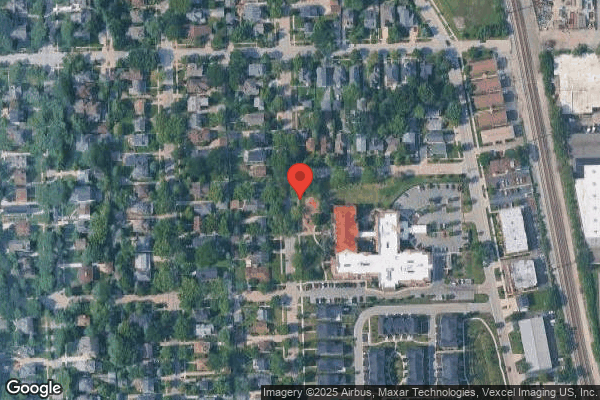
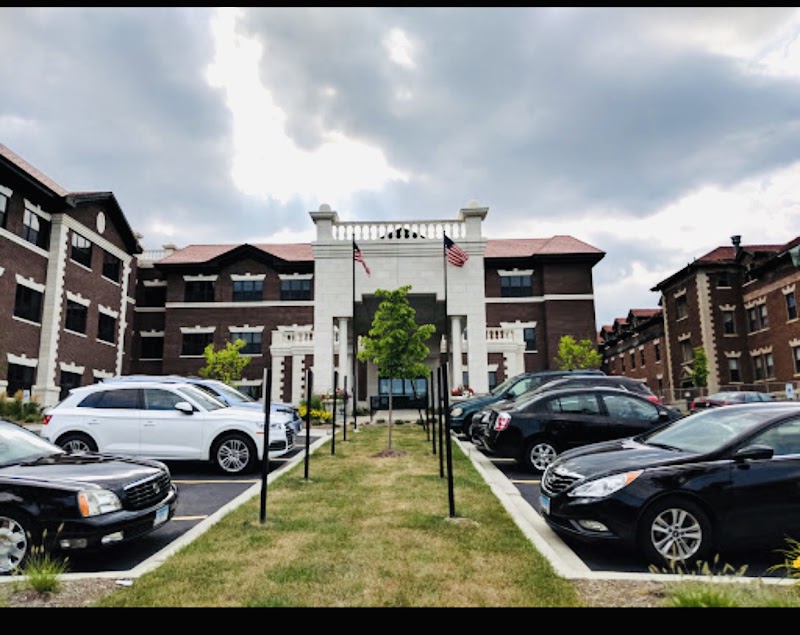
339 9TH AVENUE, LA GRANGE, IL 60525 (708) 354-4660
For profit - Limited Liability company 197 Beds Independent Data: November 2025 1 Immediate Jeopardy citation
Trust Grade
8/100
#382 of 665 in IL
Last Inspection: July 2025

Inspected within the last 6 months. Data reflects current conditions.

Overview

Meadowbrook Manor in La Grange, Illinois, has received a Trust Grade of F, indicating significant concerns and a poor reputation among facilities. Ranked #382 out of 665 in Illinois and #124 out of 201 in Cook County, it falls in the bottom half for both state and county rankings, suggesting there are better options available nearby. However, the facility is showing signs of improvement, reducing its issues from 17 in 2024 to 15 in 2025. Staffing is a mixed bag with a rating of 2 out of 5 stars and a turnover rate of 47%, which is around the state average, meaning staff may not be as familiar with residents as in higher-rated facilities. Unfortunately, the facility has faced $87,430 in fines, indicating ongoing compliance problems. Recent inspections found serious issues, including a failure to monitor a confused resident who attempted to leave the facility unsupervised, putting them at risk. Additionally, there were failures in caring for residents with pressure ulcers, resulting in the worsening of their conditions. Another concerning incident involved a resident who was injured during a mechanical lift transfer, highlighting potential safety risks in their care procedures. While there are some areas for improvement, families should weigh these serious deficiencies against the facility's strengths when considering Meadowbrook Manor for their loved ones.

Trust Score
F
8/100
In Illinois
#382/665
Bottom 43%
Safety Record
High Risk
Review needed
Inspections
Getting Better
17 → 15 violations
Staff Stability
⚠ Watch
47% turnover. Above average. Higher turnover means staff may not know residents' routines.
Penalties
⚠ Watch
$87,430 in fines. Higher than 84% of Illinois facilities, suggesting repeated compliance issues.
Skilled Nurses
✓ Good
Each resident gets 48 minutes of Registered Nurse (RN) attention daily — more than average for Illinois. RNs are trained to catch health problems early.
Violations
⚠ Watch
45 deficiencies on record. Higher than average. Multiple issues found across inspections.
★★☆☆☆
2.0
Overall Rating
★★☆☆☆
2.0
Staff Levels
★★☆☆☆
2.0
Care Quality
★★☆☆☆
2.0
Inspection Score
Stable
2024: 17 issues
2025: 15 issues

The Good

  • Full Sprinkler Coverage · Fire safety systems throughout facility
  • No fines on record

Facility shows strength in fire safety.

The Bad

2-Star Overall Rating

Below Illinois average (2.5)

Below average - review inspection findings carefully

Staff Turnover: 47%

Near Illinois avg (46%)

Higher turnover may affect care consistency

Federal Fines: $87,430

Well above median ($33,413)

Moderate penalties - review what triggered them

The Ugly 45 deficiencies on record

1 life-threatening 4 actual harm
Jul 2025 11 deficiencies
CONCERN (D)

Potential for Harm - no one hurt, but risky conditions existed

Safe Environment (Tag F0584)

Could have caused harm · This affected 1 resident

Based on observation, interview and record review the facility failed to provide maintenance services for a safe, comfortable and homelike environment. This applies to 1 of 1 (R48) resident reviewed f...

Read full inspector narrative →
Based on observation, interview and record review the facility failed to provide maintenance services for a safe, comfortable and homelike environment. This applies to 1 of 1 (R48) resident reviewed for safe home like environment, in a sample of 30Findings include:On 07/22/2025 at 10:37 AM the molding of R48's cardiac table, stationed next to R48's bed, was broken and hanging downwards. R48 stated it had been broken for more than two weeks, that he had asked them to repair it and it was not done yet. On 7/23/25 at 2:15 PM the molding of R48's over bed table was still broken and hanging to the floor. R48 stated he had told multiple nursing staff about it.On 7/24/25 at 1:10 PM the molding around R48's cardiac table next to R48's bed was still broken and hanging downwards. On 7/24/25 at 1:10 PM, V5 (RN-Registered Nurse) stated, resident could scrape his skin due to the broken over-bed table.On 7/24/25 at 1:30 PM V29 (Maintenance Director) stated, he did not know about the broken table and that nobody had informed him about it. V29 stated, it could be a cause for potential injury to R48. V29 stated, he doesn't have a log of the work orders. Usually, the staff either call him or text him when an item need to be repaired and he fixes it. Facility policy on maintenance services dated 5/25/25 showed maintenance department is responsible for maintaining the equipment in a safe and operable manner.
CONCERN (D)

Potential for Harm - no one hurt, but risky conditions existed

Deficiency F0627 (Tag F0627)

Could have caused harm · This affected 1 resident

Based on interview and record review, the facility failed to facilitate non-discriminatory discharge planning that meets the resident's preferences by allowing the resident to remain in the facility a...

Read full inspector narrative →
Based on interview and record review, the facility failed to facilitate non-discriminatory discharge planning that meets the resident's preferences by allowing the resident to remain in the facility and paying privately for a bed.This applies to 1 resident (R5) reviewed for discharge planning in a sample of 30 residents.Findings include:On 7/22/25 at 11:53 AM, R5 and V31 (R5's Son-in Law) said they are concerned because they want R5 to be able to remain in the facility, but they were told R5 is going to be transferred to another facility on 7/29/25 when her Medicare days run out. V31 said they had a meeting with the facility staff and told the staff they want to remain in the facility after the 29th as private pay, but the staff said they will not have a room for R5 after 7/29/25.V1's (Administrator) progress note dated 7/10/25 at 9:12AM states V2 (DON/Director of Nursing) and V1 met with R5's POA (Power of Attorney) and son to discuss discharge planning. Progress note states R5's 100th day is on 7/29/25 and V1 explained to POA that at this time the facility does not have long term care bed availability. V28's (Social Service Director's) Progress Note dated 7/7/25 at 1:49 PM states a Care Plan meeting was held with R5, R5's son, and R5's daughter and Social Services went over a discharge plan. V28's progress note states R5's discharge date is 7/29/25, her 100th Medicare day and this note also states R5 would like to pay for a little bit.On 7/24/25 at 12:34 PM V28 (Social Service Director) said R5's discharge plan is to be discharged on 7/30/25 to an undetermined facility. V28 said she knows R5 wants to stay in the facility as private pay, but it has been explained to R5 and her family that the facility does not have a long term bed right now. V28 said she knows they do not have a long term bed because V1 (Administrator) told V28 there is no long term bed available for a private pay resident. V28 said she does not know how bed availability is determined, but V1 has the final say. V28 said R5 was accepted at another facility, but R5's daughter said she is uncertain if she wants her mom to go to that facility because R5 might need dialysis and she doesn't know if R5's primary physician goes to that facility like he does this facility.On 7/24/25 at 1:54 PM, V1 (Administrator) said the facility has 140 certified beds for Medicaid/Private Pay residents. V1 said based on that 140 certified bed allowance and the facility census of 130 residents, they do have a bed available for R5. V1 said R5 and her family were told there was no bed available because V1 was told by the facility's CFO (Chief Financial Officer) to only accept 82 long term care residents. V1 said the only long term care residents that she has accepted since she started at the facility in May 2025 have been Hospice or Respite. V1 was asked if the facility is licensed and certified for 140 Medicaid/Private Pay beds, why would the CFO tell her to only accept 82 residents and V1 replied, It is for profit. V1 said the facility does have the bed available for R5 to stay in the facility after 7/29/25 based on their certification status, but they told R5 and her family they did not have a bed for her. V1 said when the facility is accepting residents into their beds, V1 and V30 (Admissions Director) reference an email dated 3/13/2020 sent by the Bureau of Long Term Care Chief. This email states, Dear Administrator, The Department of Public Health notified my office of an increase in the Medicaid distinct part unit effective October 1, 2019. Of the 197 licensed beds, 140 of these beds are certified in the Medicaid program. On 7/24/25 at 2:57 PM, V30 (Admissions Director) said she does not know how many beds the facility has for Private Pay or Medicaid residents. V30 said all Long-Term Care admissions need to be approved by V1. V30 then provided surveyor a document showing all beds that were available on 7/22/25 and are still available to accept a Medicaid or Private Pay resident. V30 said there are 29 available Medicaid/Private Pay beds.R5's Care Plan initiated on 6/19/25 states the resident has a psychosocial well-being problem related to recent admission. Interventions include increase communication between resident/family/caregivers about care and living environment: Explain all. changes, rules, options and provide opportunities for the resident and family to participate in care.The facility provided brochure titled, Residents' Rights for People in Long-term Care Facilities dated 4/24 states, You have the right to keep living in your facility.
CONCERN (D)

Potential for Harm - no one hurt, but risky conditions existed

Deficiency F0657 (Tag F0657)

Could have caused harm · This affected 1 resident

Based on observation, interview, and record review, the facility failed to review and revise resident care plans to reflect significant incidents/changes in condition. This applies to 2 of 2 residents...

Read full inspector narrative →
Based on observation, interview, and record review, the facility failed to review and revise resident care plans to reflect significant incidents/changes in condition. This applies to 2 of 2 residents (R25 and R36) reviewed for care plans in a sample of 30. The findings include: 1. R25’s face sheet showed he was admitted to the facility with diagnoses including chronic kidney disease, diabetes mellitus, morbid obesity, chronic obstructive pulmonary disease, gout, dependence of renal dialysis, lymphedema, osteoarthritis, and hypertension. R25 had a fall incident on June 13, 2025 at 4:15 AM per V45’s (LPN/Licensed Practical Nurse) “Post Fall Observation” assessment form. V45’s progress noted dated June 13,2025, states she saw R25 “tipped back against the wall with her legs in the air and her head tilted to the right against the wall.” Per V45, “leaving her (R25) on the floor was not an option due to the Hoyer lift being stuck under the geri-chair.” V45’s “Post-Fall Observation” assessment form dated June 13, 2025, states that resident sustained a fall in her room and was sent to the ER for evaluation. R25’s fall care plan accessed on July 23,2025 still states resident is “at risk” for falls due to weakness and impaired mobility and does not reflect resident’s actual fall incident on June 13, 2025. On June 24, 2025, 5:20 PM, V2 (Director of Nursing) stated that R25’s incident is not considered a fall, so it was not investigated or reported as such. 2. R36’s face sheet showed she was admitted to the facility with diagnoses including dementia and a history of falling. R36’s MDS (Minimum Data Set) dated July 2, 2025 showed R36 had severe cognitive impairment and used a wheelchair for mobility. R36’s care plan dated January 17, 2025 showed the resident is an elopement risk [due to] [diagnosis] dementia, cognitive deficit and wandering behavior with interventions including Disguise exits: cover door knobs and handles, tape floor. Distract resident from wandering by offering pleasant diversion, structured activities, food, conversation, television, book. Identify patterns of wandering: Is wandering purposeful, aimless, or escapist? Is resident looking for something? R36’s care plan dated July 24, 2025 (during the survey) showed R36 had the potential for injury [marked by] wandering and exit seeking behavior dementia [with] decreased focus and safety awareness with interventions including hourly visual checks and record, monitor for [signs and symptoms] elopement: increased agitation, hanging around exits, increased pacing and stated desire to leave, redirect [resident] as needed- utilize activities as therapeutic distraction, and respond promptly to all door alarms. The care plan dated December 30, 2021 also showed [R36] is at risk for falls due to decreased mobility, weakness. R36’s care plan did not show any updates regarding R36’s fall on July 21, 2025 and interventions to prevent falls. Facility’s policy titled, “Fall Prevention and Management” dated June 2025, states the facility’s fall response includes updating residents’ care plans including the development of fall interventions plan based on results of the fall assessment as well as investigation of all circumstances and related resident outcomes. Multi-disciplinary discussion regarding such interventions is expected to adjust the care plan as needed.
CONCERN (D)

Potential for Harm - no one hurt, but risky conditions existed

ADL Care (Tag F0677)

Could have caused harm · This affected 1 resident

Based on observation interview and record review the facility failed to provide incontinence care for a dependent resident.This applies to 1 of 9 residents (R11) reviewed for ADL (Activities of Daily ...

Read full inspector narrative →
Based on observation interview and record review the facility failed to provide incontinence care for a dependent resident.This applies to 1 of 9 residents (R11) reviewed for ADL (Activities of Daily Living) in a sample of 30 .Findings include:On 07/24/2025 at 12:29 PM, a head-to-toe skin check for R11 was conducted with V40 RN (Registered Nurse). V40 RN stated R11 sacral area was a little red due to frequent stooling related a chronic infection. V40 stated to minimize the irritation R11 is cleaned frequently, and barrier cream is applied. Before V40 started the skin assessment R11 requested butt cream be applied. When V40 RN pulled R11 blanket and top sheet back, her undergarment was saturated and soaked through to her bottom sheet. R11 had stool up through her vagina and her buttocks were reddened. No barrier cream was noted on R11.On 07/24/2025 at 12:44 PM, V41 CNA (Certified Nursing Assistant) assigned to R11 stated her work shift started at 06:00 AM. V41 stated the last time she provided incontinence care to R11 was between 08:00 and 08:30 AM. V41 stated she saw R11 at 10:00 AM to pick up her meal tray but did not provide incontinence care.On 07/24/2025 at 2:45 PM, V2 (Director of Nursing) stated R11 is incontinent and should be visually checked for incontinence every two hours and R11 is not a reliable historian. On 07/24/2025 at 3:24 PM, V32 (Wound Nurse) stated she had just left R11. R11 told her not to mess with her cream. V32 stated she had to show R11 she had a bowel movement because she did not know she had gone.R11 was admitted to the facility with diagnoses that includes cerebral infarction, aphasia, dysphagia, pressure ulcer, hypertension, and anxiety disorder. R11's MDS (Minimum Date Set) dated 6/9/25 shows she is cognitively impaired and completely dependent on staff for incontinent care and at risk for developing pressure ulcers / injuries. R11 physician orders includes house stock moisture barrier, and the CNA may apply it and leave it at bedside. R11's care plan includes an impairment to skin integrity and potential for further impairment to skin integrity. Interventions includes use of house stock barrier cream. R11 has bladder incontinence due to impaired mobility. Interventions include change disposable brief upon rising, after meals, before bed and as needed. Check as required for incontinence. Wash, rinse and dry perineum. Change clothing as needed after incontinence episode.The facility policy Activities of Daily Living dated April 2025 states, appropriate care and services will be provided for residents who are unable to carry out ADLs independently, with the consent of the resident and in accordance with the plan of care. If a resident with cognitive impairment or dementia resist care, staff will attempt to identify the underlying cause of the problem and not just assume the resident is refusing or declining care.
CONCERN (D) 📢 Someone Reported This

A family member, employee, or ombudsman was alarmed enough to file a formal complaint

Potential for Harm - no one hurt, but risky conditions existed

Accident Prevention (Tag F0689)

Could have caused harm · This affected 1 resident

**NOTE- TERMS IN BRACKETS HAVE BEEN EDITED TO PROTECT CONFIDENTIALITY** Based on observation, interview, and record review, the facility failed to ensure a resident's equipment and environment were fr...

Read full inspector narrative →
**NOTE- TERMS IN BRACKETS HAVE BEEN EDITED TO PROTECT CONFIDENTIALITY** Based on observation, interview, and record review, the facility failed to ensure a resident's equipment and environment were free from accident hazards, and failed to ensure a resident with known wandering habits was supervised to prevent a fall. This failure resulted in the emergent transfer to the hospital for 2 residents due to fall incidents. This applies to 2 of 2 residents (R25 and R36) reviewed for accidents and supervision in a sample of 30. The findings include: 1. R25’s face sheet showed he was admitted to the facility with diagnoses including chronic kidney disease, diabetes mellitus, morbid obesity, chronic obstructive pulmonary disease, gout, dependence of renal dialysis, lymphedema, osteoarthritis, and hypertension. R25’s MDS (Minimum Data Set) dated May 5, 2025, shows R25 is cognitively intact, non-ambulatory, and requires total assist with transfers with 2 staff members via Hoyer lift. R25’s latest fall risk assessment (prior to fall on June 13,2025) dated January 25, 2024, states R25 has a history of multiple falls and is in the high-risk category for falls. On July 22, 2025, at 10:02 AM, R25 said on June 13, 2025, she was in her room at around 4:00 AM, about to be wheeled downstairs to dialysis. After being transferred to her dialysis chair/ “geri-chair” (geriatric chair), staff stepped away from her to get something when R25 felt the backrest of her chair falling backwards and then felt the chair “give out” from underneath her. R25 said she hit her right temporal area and right shoulder on the wall. Per R25, she was in pain from being “wedged between the dialysis chair and the wall.” R25 stated nursing staff used the Hoyer lift to get her up from the floor and she felt intense neck pain during the transfer since her head was not supported by the mechanical lift sling. R25 said 911 paramedics arrived after she staff assisted her up to transfer her to the ER (Emergency Room) for evaluation. V45 LPN (Licensed Practical Nurse) completed R25's Post Fall Observation assessment form at 4:15 AM on June 13, 2025. V45’s progress noted dated June 13,2025, states she saw R25 “tipped back against the wall with her legs in the air and her head tilted to the right against the wall.” Per V45, “leaving her (R25) on the floor was not an option due to the [full-body mechanical life] lift being stuck under the geri-chair.” R25’s June 13, 2025 “Post-Fall Observation” assessment form showed that resident sustained a fall in her room and was sent to the ER for evaluation. R25’s “After Visit Summary” from states that resident had a fall resulting in closed head injury, strain of neck muscle, and contusion of right shoulder. On June 24, 2025, 5:20 PM, V2 (Director of Nursing) stated that she did not investigate or report R25's fall. A Grievance/Concern Form written by V2, dated 6/13/25, showed that R25's “dialysis chair malfunctioned while R25 was being transferred from bed to dialysis chair. Facility’s policy titled, “Fall Prevention and Management” dated June 2025, states it is the duty of the facility to ensure and maintain a safe environment for residents to reduce the risk of falls, including those resulting in harm. 2. On July 23, 2025 at 2:27 PM, V43 (Firefighter) said the fire department was dispatched for a call regarding a person who had fallen. V43 said when they arrived at the facility, there was a staff member waiting at the elevator to lead the team to the emergency egress stairwell on the second floor. V43 said the emergency egress stairwell was behind an alarmed emergency door that would need to be pushed and held for 10 to 15 seconds to open the door. V43 said the resident was lying on the floor on the top of the stairs and her wheelchair was at the base of a flight of stairs below. V43 said when they had arrived, the emergency door was propped open, and the alarm was sounding. V43 said the facility staff had reported to him they had last seen her 15 to 20 minutes prior. On July 23, 2025 at 12:52 PM, V5 (RN/Registered Nurse) said she was R36’s nurse when R36 had a fall on July 21, 2025. V5 was working on the second floor, which was the floor R36 resided on for long term care. V5 said she was working the 2 to 10 PM shift and was in another patient’s room when she heard the door alarm sounding off. V5 said she told V4 (CNA/Certified Nurse Assistant) to make sure the resident she was working with was ok and went to the alarming door and saw R36 outside the emergency exit door on the floor. V5 said it was around 7:10 PM. V5 said R36’s body was facing the wall, and her feet were facing the door. V5 said she could not remember where the wheelchair was. V5 said R36 complained of pain to her hips and her head was on the floor. V5 said R36 was not oriented and was confused. V5 said R36 was able to get around in the wheelchair. V5 said she had last seen R36 was in the TV room speaking to V4. V5 said residents that wander were placed at the nurse’s station and in the TV room and a CNA was always watching them as they could not be left unattended. V5 said the wandering residents need to be redirected. On July 23, 2025 at 1:26 PM, V4 (CNA) said he worked on July 21, 2025 until 10 PM. V4 said he had just finished his shift supervising the TV room when he saw the flashing light above the nurse’s station. V4 said he was not sure if the light was from the door or a resident pulling the call light out of the wall. V4 said V5 came to him at the nurse’s station and told him to check on the resident she had been working with and V5 went to address the flashing light. V4 said after he checked on the resident, he went to the stairwell where V4 was attending to R36, who had fallen. V4 said he had last seen R36 before 7 PM when she had come to the TV room asking for the exit. V4 said R36 told him she was looking for the police and asking about her dad. V4 said R36 wandered a lot and went into other residents’ rooms. V4 said R36 was by the nurse’s station, asking the other nurses if she could get out. V4 said they keep the residents in the TV room to keep an eye on them. V4 said if residents were out of their room, they should be in the TV room. V4 said if a wandering resident leaves the TV room, they should be redirected and put back in the TV room. R36’s face sheet showed she was admitted to the facility with diagnoses including dementia and a history of falling. R36’s MDS (Minimum Data Set) dated July 2, 2025 showed R36 had severe cognitive impairment and used a wheelchair for mobility. R36’s care plan dated January 17, 2025 showed the resident is an elopement risk [due to] [diagnosis] dementia, cognitive deficit and wandering behavior with interventions including Disguise exits: cover door knobs and handles, tape floor. Distract resident from wandering by offering pleasant diversion, structured activities, food, conversation, television, book. Identify patterns of wandering: Is wandering purposeful, aimless, or escapist? Is resident looking for something? The care plan dated December 30, 2021 also showed [R36] is at risk for falls due to decreased mobility, weakness. R36’s Progress Note showed the following: A late entry progress note written by V5 (RN) dated July 21, 2025 showed “Staff responded to the door alarm; resident was observed by staff on her left side on the floor next to the exit door. Resident is alert, on her baseline stating, 'get me up.' Able to move extremities but complain of a little pain to her left hip, otherwise no pain to the rest of her body. No visible injury noted. Resident was observed by staff wheelchair her wheelchair by the nurses’ station about 10 mins ago. Head to toe assessment without visible injury. ROM (Range of Motion) within baseline, no internal external rotation, no shortening. 911 was called to transfer resident to the ER (Emergency Room). MD (Medical Doctor) and family made aware of incident and transfer.” R36’s Elopement Risk assessment dated [DATE] showed R36 was At Risk for Elopement. The facility’s Wandering and Elopements Policy dated April 2025 showed the facility will identify residents who are at risk of unsafe wandering and strive to prevent harm while maintaining the least restrictive environment for residents. If an employee observes a resident leaving the premises, he/she should 1. Attempt to prevent the resident from leaving in a courteous manner; 2. Get help from other staff members in the immediate vicinity, if necessary; and 3. Instruct another staff member to inform the Charge Nurse or Director of Nursing Services that a resident is attempting to leave or has left the premises.
CONCERN (D)

Potential for Harm - no one hurt, but risky conditions existed

Pharmacy Services (Tag F0755)

Could have caused harm · This affected 1 resident

Based on observation, interview, and record review, the facility failed to safely maintain and reconcile controlled medication counting logs for residents receiving narcotics.This applies to 2 out of ...

Read full inspector narrative →
Based on observation, interview, and record review, the facility failed to safely maintain and reconcile controlled medication counting logs for residents receiving narcotics.This applies to 2 out of 3 residents (R11 and R34) reviewed for narcotics in a sample of 30.Findings include:1. On 7/23/2025 at 10:40 AM, R11's Tramadol 50 mg (milligrams) medication punch card was observed with no tablets available. R11's Controlled Substances Proof of Use sheet for Tramadol showed R11 had 1 tablet remaining for use. R11's Pregabalin 75 mg medication punch cards were observed with 30 capsules available. R11's Controlled Substance Proof of Use sheet for Pregabalin showed R11 had 31 capsules remaining for use. The Pregabalin punch cards showed #5, #8, #14, and #16 medication punch slots were torn with loose capsules inside, not secured. V3 (Assistant Director of Nursing/ADON) was present during the observations and said she was not sure why the medication logs were inaccurate. V3 said controlled medications had to be logged when removed and if not properly secured they had to be reconciled and discarded appropriately. R11's Order Summary Report dated 7/23/2025 showed active orders for Tramadol HCI Oral Tablet 50 MG and Pregabalin Oral Capsule 75 MG.2. On 7/23/2025 at 10:50 AM, R34's Tramadol 50 mg medication punch card was observed with 1 tablet available. R34's Controlled Substance Proof of Use sheet for Tramadol showed R34 had 2 tablets remaining for use. V3 remained present for R34's observation. On 7/23/2025 at 10:45 AM, V12 (Registered Nurse/RN) said she had administered R11 and R34's scheduled controlled medications as ordered at 8 AM on 7/23/2025. V12 said she did not log R11 and R34's removed narcotics. R34's Order Summary Report dated 7/23/2025 showed an active order for Tramadol HCI Oral Tablet 50 MG.On 7/24/2025 at 1:30 PM, V2 (Director of Nursing/DON) said nurses were expected to ensure proper storage, disposition, and logging of controlled medications to prevent discrepancies and maintain accurate counts.The facility's policy titled Controlled Substances dated 04/2025 said 8. Controlled substances are reconciled upon receipt, administration, disposition, and at the end of each shift.14. Policies and procedures for monitoring controlled medications to prevent loss, diversion, or accidental exposure.
CONCERN (E)

Potential for Harm - no one hurt, but risky conditions existed

Deficiency F0554 (Tag F0554)

Could have caused harm · This affected multiple residents

**NOTE- TERMS IN BRACKETS HAVE BEEN EDITED TO PROTECT CONFIDENTIALITY** Based on observation, interview, and record review, the facility failed to assess residents to self-medicate. This applies to 4...

Read full inspector narrative →
**NOTE- TERMS IN BRACKETS HAVE BEEN EDITED TO PROTECT CONFIDENTIALITY** Based on observation, interview, and record review, the facility failed to assess residents to self-medicate. This applies to 4 of 4 residents (R96, R16, R2, R25) reviewed for self-administration in a sample of 30. The findings include: 1. On July 22, 2025 at 11:32 AM, R96 was sleeping in bed. R96’s bedside table had a medication cup with five medications within it. The medication cup had two round, chewable tablets, one orange and one red. The medication cup also had three abnormally shaped medications, two of which were red and one purple. On July 24, 2025 at 12:50 PM, R96 said the medications in his cup were all Tums. R96 said the nurses did not stop to watch him take the Tums. R96 said he had his own bottle of Tums in the drawer next to his bed, which he said the CNAs (Certified Nurse Assistant) would grab for him when he asked for it. R96 said on July 22, 2025, of the five Tums in the medication cup, he ate two of the Tums from the facility nurse and two of his own supply of Tums. R96’s drawer had a bottle of Tums antacid calcium carbonate extra strength 750 MG (Milligrams) chewy bites assorted berries. R96’s face sheet showed he was admitted to the facility with diagnoses including hemiplegia and hemiparesis affecting left non-dominant side, cerebral infarction, vascular dementia, anxiety disorder, major depressive disorder, gastro-esophageal reflux disease, lack of coordination, dysphagia, and irritable bowel syndrome with constipation. R96’s MDS (Minimum Data Set) dated June 11, 2025 showed R96 had moderate cognitive impairment. R96’s POS (Physician Order Sheet) dated July 24, 2025 showed an order for Tums Tablet Chewable 500 MG (Calcium Carbonate Antacid) Give 2 tablets by mouth every 8 hours as needed for heartburn and Tums Tablet Chewable 500 MG (Calcium Carbonate Antacid) Give 2 tablet by mouth in the evening for indigestion, both dated April 22, 2024. R96’s care plan dated December 18, 2023 showed [R96] has alteration in thought process and cognitive- communication status [related to] dementia. R96 did not have any care plans which showed he was safe to self-administer medications. R96’s EMR (Electronic Medical Record) was reviewed, which did not show R96 was assessed to safely self-administer medications. 2. On July 22, 2025 at 10:36 AM, R16 was lying in bed, sleeping. R16’s bedside table had a medication cup with 30 ML (Milliliters) of red liquid. At 11:44 AM, R16’s bedside table still had the red liquid in the cup on the bedside table. At 12:32 PM, the red liquid in the cup was still present on R16's bedside table. On July 24, 2025 at 12:46 PM, R16 said she had sores on her feet, and staff bring her the red liquid, which she does normally take. R16 said she did not remember whether she took the medication two days ago and might have forgotten to. R16’s face sheet showed she was admitted to the facility with diagnoses including osteomyelitis of the right ankle and foot, erosive osteoarthritis, and sepsis. R16’s POS dated July 24, 2025 did not show any orders for R16 to self-administer medications. R16’s MDS dated [DATE] showed R16 had modified independence with cognitive skills for daily decision making. R16’s care plan showed [R16] has actual impairment to skin integrity and potential for further impairment to skin integrity…with interventions including [Registered Dietitian] evaluate and recommend nutritional supplement to promote wound healing. Proheal (nutritional supplement) and Nepro. The care plan dated June 11, 2025 also showed she displayed compromised mental status…R16’s care plan did not show R16 was able to self-administer medications. R16’s EMR was reviewed, and no assessments were found to self-administer medications. On July 24, 2025 at 1:01 PM, V42 (LPN/Licensed Practical Nurse) said for residents to self-administer medications, they need an order to self-medicate from the doctor. V42 said the doctor would be notified and an assessment needed to be completed. On July 25, 2025 at 1:16 PM, V13 (LPN) said she did not have any residents who were allowed to self-administer medications. V13 said when passing medications, they should stand and wait for the resident to take their medications before leaving the room. V13 said if a resident wanted to self-medicate, they would need to notify the doctor and do a self-administration consent. 3. On July 22, 2025, at 10:02 AM, R2 was lying in bed, sleeping. R2’s nightstand had 1 bottle of Nystatin (Antifungal) powder and 1 medicine cup with white cream swirled with clear ointment. At 11:30 AM, R2’s nightstand still had both the powder and cream mixture on it. R2’s face sheet showed she was admitted to the facility with diagnoses including diabetes mellitus, cirrhosis of liver, bipolar disorder, major depressive disorder, hypertension, and hemiplegia and hemiparesis following cerebral infarction affecting left non-dominant side. R2’s MDS dated [DATE], showed R2 has severe cognitive impairment. POS dated July 24, 2025, showed orders for Clotrimazole Cream 1% (Antifungal cram) Apply to affected area/s topically as need for skin condition, dated July 17, 2025, and Antifungal powder to breast/abdominal folds twice daily as needed for moisture/fungal rash, dated May 14, 2024. R2’s care plan dated May 24, 2024, showed R2 has impaired thought process secondary to bipolar disorder as well as signs and symptoms of depression and mood distress. R2’s did not have any care plans which demonstrated safe self-medication administration. R2’s EMR (Electronic Medical Record) was reviewed, which did not show R96 was assessed to safely self-administer medications. 4. On July 22, 2025, at 10:37 AM, R25 was lying in bed, watching television. R25’s bedside table had 2 bottles of Nystatin powder, 2 tubes of Recti Care (hemorrhoidal ointment), and 1 tube of Lidocaine ointment 5%. Per R25, she applies the Lidocaine ointment over her left arm AV (arteriovenous) fistula before dialysis and whenever she feels pain on that site. Per R25, she applies it whenever she needs pain relief and is not sure if there is a maximum daily dose. R25’s face sheet showed she was admitted to the facility with diagnoses including chronic kidney disease, dependence on renal dialysis, diabetes mellitus, pleural effusion, gout, lymphedema, osteoarthritis, and insomnia. R25’s MDS dated [DATE], showed R25 is cognitively intact. R25’s POS also showed orders for Antifungal powder to breast/abdominal folds twice daily as needed for moisture/fungal rash (dated July 17, 2025); Lidocaine External Cream 4% Apply to AV fistula topically one time a day for pain (dated July 9, 2025); and Preparation H External Cream 1% (Hydrocortisone Rectal) Apply to rectum topically at bedtime (dated July 23, 2025) and every 6 hours as needed (dated August 6, 2024) for hemorrhoids. R27’s POS did not show any orders for R25 to self-administer medications or to keep the medications at bedside. R25’s current care plan with completion date of June 6, 2025, does not show that R25 was assessed as safe to self-administer medication. R25s EMR was reviewed, and no assessments were found to self-administer medications. On July 23, 2025, at 2:00 PM V24 (LPN/Wound Care Coordinator) said that the only type of topical medication or cream that may be kept at the bedside is a moisture barrier. All other topical agents should be stored a locked treatment cart. The facility’s Self Administration of Medication Program dated April 2025 showed the facility will allow the resident to self-administer drugs if the interdisciplinary team (IDT) has determined that this practice is safe. Nurse will complete a Self-administration of Medication Assessment. Once the resident has been deemed safe by the IDT an order will be obtained from the resident’s physician or physician extender listing the medication(s) that may be self-administered, where the medication will be stored, who will be responsible for documentation, and the location of administration. Appropriate documentation of the above determinations will be documented in the resident’s care plan.
CONCERN (E)

Potential for Harm - no one hurt, but risky conditions existed

Deficiency F0761 (Tag F0761)

Could have caused harm · This affected multiple residents

Based on observation, interview, and record review, the facility failed to safely store medications.This applies to 10 out of 10 residents (R136, R153, R154, R155, R156, R126, R127, R138, R66, and R52...

Read full inspector narrative →
Based on observation, interview, and record review, the facility failed to safely store medications.This applies to 10 out of 10 residents (R136, R153, R154, R155, R156, R126, R127, R138, R66, and R52) reviewed for medication storage in a sample of 30.Findings include:1. On 7/23/2025 at 10:20 AM, the facility's first floor medication room fridge and a medication cart that housed R136's and R152's medications was checked for medication storage with V3 (Assistant Director of Nursing/ADON). R136 and R153's opened Ozempic pens were stored in the fridge. The pens were not labeled with opened-on dates, and the weekly pre-scheduled dates for dosage administrations had been left blank. R154's opened Lispro pen was also stored in the fridge without an opened-on date. R136 and R154's opened Albuterol inhalers were stored in the medication cart and did not include their opened-on dates. R136's Order Summary Report dated 7/23/2025 showed orders for Ozempic subcutaneous solution pen-Injector and Albuterol inhaler.2. R153's Order Summary Report dated 7/23/2025 showed an order for Ozempic subcutaneous solution pen-Injector.3. R154's Order Summary Report dated 7/23/2025 showed orders for Lispro Insulin solution pen-injector and Albuterol inhaler.4. On 7/23/2025 at 10:50 AM, the facility's second floor medication room was checked for medication storage with V13 (Licensed Practical Nurse/LPN). R155 and R156's Naloxone Nasal Liquid sprays were stored directly underneath the sink. V13 said R155 and R156 were discharged and was unsure why the medications were not disposed of appropriately. R155's admission Record sheet dated 7/24/2025 showed a discharge date of 5/29/2025.5. R156's admission Record sheet dated 7/24/2025 showed a discharge date of 5/22/2025.6. On 7/23/2025 at 11:00 AM, the medication cart that housed R52's and R126's medications was checked with V14 (RN). R52's Fluticasone nasal spray and R126's Albuterol inhaler medications were opened and undated. V14 said multi-use medications including nasal sprays, inhalers, and eyedrops should be labeled when open for medication administration safety. R52's Order Summary Report dated 7/23/2025 showed an order for Fluticasone nasal spray.7. R126's Order Summary Report dated 7/23/2025 showed an order for Albuterol inhaler.8. On 7/23/2025 at 11:10 AM, the medication cart that housed R66's medications was checked with V15 (LPN). R66's opened Fluticasone nasal spray was undated. R66's Order Summary Report dated 7/23/2025 showed an order for Fluticasone nasal spray. 9. On 7/23/2025 at 11:20 AM, the medication cart that housed R138's and R127's medications was checked with V16 (LPN). R138's Systane eyedrop bottle and Fluticasone nasal spray were opened and undated. R127's opened Latanoprost eyedrop bottle was also undated. R138's Order Summary Report dated 7/23/2025 showed orders for Systane eyedrops and Fluticasone nasal spray.10. R127's Order Summary Report dated 7/23/2025 showed an order for Latanoprost eye drops.On 7/24/2025 at 1:30 PM, V2 (Director of Nursing/DON) said multi-use medications had to be labeled when opened and stored appropriately to ensure safe medication administration. The facility's policy titled Storage of Medications dated 04/2025 said The facility stores all drugs and biologicals in safe, secure, and orderly manner.
CONCERN (E)

Potential for Harm - no one hurt, but risky conditions existed

Infection Control (Tag F0880)

Could have caused harm · This affected multiple residents

**NOTE- TERMS IN BRACKETS HAVE BEEN EDITED TO PROTECT CONFIDENTIALITY** Based on observation, interview, and record review, the facility failed to implement transmission-based precautions for a reside...

Read full inspector narrative →
**NOTE- TERMS IN BRACKETS HAVE BEEN EDITED TO PROTECT CONFIDENTIALITY** Based on observation, interview, and record review, the facility failed to implement transmission-based precautions for a resident with an acute GI (gastrointestinal infection). The facility also failed to follow contact and enhanced-barrier precautions and hand-hygiene when providing resident care.This applies to 5 out of 5 residents (R152, R117, R41, R104, and R8) reviewed for infection control in a sample of 30. The findings include: 1. On [DATE] at 1:30 PM, V36 (Physician) was assessing R152 in her room. R152’s room did not have any posted transmission-based precautions sign. V36 was not wearing any PPE (Personal Protective Equipment). At 1:35 PM, R152 said she had ongoing diarrhea that started on [DATE]. R152 said her stool was collected to check for C. diff (Clostridium difficile is an acute contagious GI infection) and the results were pending. R152 said she was not placed on transmission-based precautions for her suspected GI infection and staff was continuing to provide her care. On [DATE] at 1:15 PM, R152 was in her room. R152’s room had a contact precautions sign instructing everyone to don PPE, including gloves and gown, prior to entering. The sign said for everyone to clean their hands before entering and when leaving the room with ABHR (alcohol-base hand rub). On [DATE] at 2:15 PM, V2 (Director of Nursing/DON) said R152 should have been immediately placed on contact precautions on [DATE] when her GI symptoms were identified for the safety of everyone. V2 said R152’s stool sample resulted positive for C. diff on [DATE]. V2 continued to say anyone entering a resident’s room with a C. diff infection were required to perform strict hand-hygiene with soap and water not ABHR to ensure the infection could not be spread to others. V2 said she would change R152’s posted transmission-base contact sign to the correct sign of “Contact Enteric Precautions.” V2 said she expected all staff and visitors to adhere to the indicated transmission-based precautions when entering residents’ rooms. R152's stool result dated [DATE] showed positive results for “C difficile GDH Ag and Toxin A.” R152’s care plan dated [DATE] said she required “strict contact isolation rt (+) C diff” initiated on [DATE]. 2. [DATE] at 1:00 PM, R117 was in his room. V39 CNA (Certified Nurse Assistant) entered the room to remove his meal tray. V39 did not don any PPE. R117’s door had a contact precautions sign instructing everyone to wear a gown and gloves prior to entering the room. V39 said she did not believe she had to adhere to the indicated contact precautions instructions when entering a resident’s room. R117’s Order Summary Report dated [DATE] showed an order for “Contact isolation for VRE of wound” initiated on [DATE]. 3. On [DATE] at 2:40 PM, V6 (CNA) and V10 LPN (Licensed Practical Nurse) provided perineal care to R41. R41 was on EBP (Enhanced Barrier Precautions) for having a gastrostomy tube and a urinary catheter. V6 and V10 wore gloves but did not wear gowns. V6 removed the soiled disposable brief while V10 held R41 onto her right side. Neither V6 nor V10 cleansed the perineal area of R41. Neither staff member performed hand hygiene or changed gloves. Together they applied a new disposable brief on R41, repositioned her, and tidied up her bed linen while wearing the same soiled gloves. V6 removed his gloves, did not perform hand hygiene, and left the room carrying soiled linen that was not contained. On [DATE] at 1:30 PM V7 (LPN) checked the placement of the GT (gastrostomy tube) for R41. V7 wore gloves but did not wear a gown. On [DATE] at 1:40 PM, V7 and V9 (CNA) turned R41 to observe the back of the resident. Both wore gloves but did not wear a gown for the procedure. Record review for R41 showed R41 was admitted on [DATE] with diagnoses to include neuromuscular dysfunction of bladder, dysphagia, right side hemiplegia and protein-calorie malnutrition. R41’s treatment orders included Enhanced Barrier Precautions related to gastrostomy tube and indwelling urinary catheter; All must clean their hands before entering and leaving the room; Staff must wear PPE (Personal Protective Equipment) during High Contact Resident Care Activities. 4. On [DATE] at 1:10 PM V8 (CNA) pulled R104 up in bed with resident’s cooperation. R104 was on EBP for having a urinary catheter and a perma-cath. V8 wore gloves, but no gown. V8 helped R104 to sit up in Fowler’s position. V8 set up the lunch tray in front of him on the over-bed table. V8 removed her gloves, did not perform hand hygiene and left the room to handle lunch trays from other rooms. Record review for R104 showed he was admitted to facility on [DATE] with diagnoses of neuromuscular bladder, cerebral palsy, renal dialysis and gastroenteropathy. R104’s treatment orders included EBP related to urinary catheter and Perma catheter. Care-plan dated [DATE] documented EBP related to urinary catheter and Perma catheter. On [DATE] at 2:55 PM V6 (CNA) stated he should have washed his hands before leaving the room and should have worn a gown as R41 was on EBP. V6 also stated he should have taken the linen out of R41's room in a plastic bag as per facility policy. On [DATE] at 1:30 PM, V5 RN (Registered Nurse) stated a gown and gloves need to be worn when caring for a resident on EBP. 5. R8 was admitted to the facility with diagnoses including hemiplegia and hemiparesis, dementia, and thyrotoxicosis. R8’s POS (Physician Order Sheet) dated [DATE] showed an order for EBP: related to history of VRE (Vancomycin-Resistant enterococci) in the urine. Everyone must clean their hands before entering and leaving the room. Providers and staff must wear PPE during High Contact Resident Care Activities with a start date of [DATE]. On [DATE] at 11:10 AM during initial tour, R8’s room did not have any isolation signage or PPE bin outside her room or near the vicinity of her room. On [DATE] at 4:08 PM, V4 (CNA) was in R8’s room providing incontinence care. V4 did not have a gown on while providing incontinence care for R8. V4 applied the new incontinence brief onto R8 and then rearranged her blankets to cover her back up. On [DATE] at 2:09 PM, V25 (LPN) said R8 was supposed to be on EBP for the wounds. The facility’s policy titled Transmission-Based Precautions dated 06/2025 said “Transmission-Based Precautions are the second tier of basic infection control and are to be used in addition to Standard Precautions for patients who may be infected or colonized with certain infectious agents for which additional precautions are needed to prevent infection transmission.” Facility policy on Enhanced Barrier Precautions dated [DATE] showed EBP involves the use of gowns and gloves during high contact resident care activities for residents with indwelling medical devices to prevent spread of MDROs (Multi Drug Resistant Organisms) in the facility. Facility policy on Hand Washing/Hand Hygiene dated [DATE] showed hand hygiene must be performed before and after handling an invasive device, before moving from a contaminated body site to a clean body site during resident care, after removing gloves, and before and after entering isolation precaution settings.
CONCERN (E)

Potential for Harm - no one hurt, but risky conditions existed

Antibiotic Stewardship (Tag F0881)

Could have caused harm · This affected multiple residents

Based on interview and record review, the facility failed to implement its antibiotic stewardship program to monitor residents receiving antibiotics.This applies to 4 out of 4 residents (R152, R75, R1...

Read full inspector narrative →
Based on interview and record review, the facility failed to implement its antibiotic stewardship program to monitor residents receiving antibiotics.This applies to 4 out of 4 residents (R152, R75, R117, and R136) reviewed for antibiotic use in a sample of 30. The findings include:1. On 7/23/2025 at 1:00 PM, V13 (Infection Preventionist/IP Nurse) said the facility's antibiotic stewardship program was to ensure safe antibiotic use. V13 said inappropriate use could result in antibiotic overuse and resistance. V13 said she was responsible for completing antibiotic review forms in the residents' EMRs (Electronical Medical Records) when admitted with or prescribed antibiotics. V13 said the facility determined appropriate antibiotic use based on the McGeer Criteria and if determined inappropriate the prescribing provider was notified to ensure safe use.V13 reviewed R152, R75, R117, and R136's EMRs and said they received antibiotics as prescribed. V13 said their antibiotic review forms were not completed to determine if they met the McGeer Criteria for appropriate use. On 7/23/2025 at 3:45 PM, V2 (Director of Nursing/DON) said she expected antibiotic surveillance to be completed for all residents receiving antibiotics per facility policy to ensure safe antibiotic use. V2 said she also reviewed R152, R75, R117, and R136's EMRs and they did not have their antibiotic review forms initiated.R152's Order Summary Report dated 7/24/2025 showed an order for Vancomycin oral suspension for Clostridium difficile infection (gastrointestinal infection) started on 7/23/2025.2. R75's Order Summary Report dated 7/24/2025 showed an order for Cefepime intravenous solution for a urinary tract infection started on 7/16/2025.3. R117's Order Summary Report dated 7/24/2025 showed an order for Cefepime intravenous solution for osteomyelitis started on 7/09/2025.4. R136's Order Summary Report dated 7/24/2025 showed and order for Cefdinir oral capsule for a urinary tract infection started on 7/11/2025. The facility's policy titled Antibiotic Stewardship Review and Surveillance of Antibiotic Use and Outcome dated 11/23/2021 said Antibiotic usage and outcome data will be collected and documented using a facility-approved antibiotic surveillance tracking form. The data will be used to guide decisions for improvement of individual resident antibiotic prescribing practices and facility-wide antibiotic stewardship.
CONCERN (F)

Potential for Harm - no one hurt, but risky conditions existed

Food Safety (Tag F0812)

Could have caused harm · This affected most or all residents

**NOTE- TERMS IN BRACKETS HAVE BEEN EDITED TO PROTECT CONFIDENTIALITY** Based on observation, interview and record review the facility failed to maintain the kitchen in a manner that prevent foodborne...

Read full inspector narrative →
**NOTE- TERMS IN BRACKETS HAVE BEEN EDITED TO PROTECT CONFIDENTIALITY** Based on observation, interview and record review the facility failed to maintain the kitchen in a manner that prevent foodborne illness.This applies to 128 residents receiving dietary services.Findings include:On 07/22/2025 at 3:01 PM, V1 Administrator confirmed 128 residents were receiving food services from the dietary department.On 07/22/2025 at 09:02 AM, the kitchen tour began with V32 (Dietary Manager).V32 stated the dishwasher disinfects by temperature. The goal is 180 degrees F (Fahrenheit). The staff are to look at the gauge and the test strip to assure the temperature reach 180 degrees F.V35 (Dishwasher) ran a load of dishes to test the dishwasher temperature. V35 stated the wash temperature should reach 180 degrees to disinfect the dishes. V35 placed a temperature sensitive test strip that read 160-degree F / 71 degree C (Celsius) on a plate. The wash cycle gauge maximum temperature reached 148 degrees F. The rinse tank gauge maximum temperature was 156 degrees F. The temperature sensitive test strip did not change black which would indicate the 160-degree temperature had been reached. Two stacks of dishes that had yellow and brown specks and particles on them. V35 Dishwasher stated the dishes were just taken of the dishwasher and were ready for use. The dry storage contained a 102 oz (Ounce) can of diced tomatoes that was dented. A 106 oz can of apple sauce was dented.The walk-in cooler contained a one-gallon container of mustard with on opened on or use by date and a manufacture date of 10/7/24. A large bin labeled employee food was present. The bin contained a watermelon cut in half without a label, two bags of corn tortillas with no visible date, and a personal food container with unidentifiable food had no label or dates.V33 (Kitchen Supervisor) provided test strips to test the red sanitization bucket and the three compartment sink. The test strip was pulled from a zipper bag that was affixed to the wall with other various strips that were not in their original packaging. One test strip that did have packaging taped to the wall was dated 12/1/2022. V33 stated the label taped to the wall was for the test strips that were used for testing the sanitizer level. V33 was requested to provide the original product packaging. V33 brought out a small plastic container that would have held the strips and it had no informational packaging insert. V33 stated the label affixed to the wall went with the test strips they were using to test the red sanitization buckets and the three compartment sink. V34 (Dietary Aid) stated he used the test strips from the zippered bag affixed to the wall to test the three-compartment sanitization sink.A deep freezer identified by V32 as activities freezer contained two unlabeled bags of shredded yellow cheese, a box containing of 3 pastries with no dates, and a small package of [NAME] cheese with a manufacturer's date of 4/24/24 that was open to air. A 32 oz (ounce) package of pepper jack cheese without an opened on or use by date was also present. A small package of pepper jack cheese was open to air and had no opened on or use by date. A whole pie with the plastic wrap falling off without a label to identify contents or dates was also present.A silver kitchen cabinet contained a pink purse, a green purse, a bottle of water, an umbrella, a book, two black jackets, and a 24-count box of turmeric tea bags that expired on 03/2024.On 07/24/2025 at 1:27 PM, V32 (Dietary Manager) stated no separate logs were maintained for the red sanitizing buckets because the buckets are filled from the same dispenser that fills the three-compartment sink. V32 stated dented cans should be separated from stock so they are not used. The food could become contaminated and cause the residents to become sick. All foods should have an opened on and use by date so they can assure it is safe for residents to eat. If outdated food is served to residents, they could become sick. Employee's personal items should not be stored in the kitchen prep area because there could be a cross contamination of the food. Employee food items should not be stored in the kitchen because of the risk of cross contamination. The test strips for sanitization should be stored in the original container to verify the strips and the expiration date. The dishwasher disinfects by temperature and the wash temperature should reach 160 degrees and the final rinse should reach 180 degrees F to properly disinfect the dishes. Our policy says it is ok for us to use the 160 degrees F test strip. V32 stated she did not know why the test strip did not turn black to indicate the desired temperature was reached. Staff should look at the gauge and test strip to assure the desired disinfecting temperature was reached. V32 stated she was not familiar with the test strips that were used and should have known those test strips were being used.The facility policy Machine Washing and Sanitizing dated 2021 states dishwashing machines using hot water for sanitizing may be used if the temperature of the wash waster is no less than that specified by the manufacturer, which may vary from 150 degrees F to 165 degrees F, depending on the type of machine, and the final rinse temperature is no less than 180 degrees F. The final rinse temperature is tested with a paper thermometer. The paper thermometer turns color when it registers 160-degree F which sanitizes the plates, tableware, utensils etc. (160 degrees F on the dish or utensil surface reflects 180 degrees F at the manifold where the temperature of the dishwashing machine final rinse is measure.)The facility policy Sanitation Buckets / wiping Cloths Food Contact Surfaces and Equipment Too Large To Immerse In The Sink dated 2021 states using the appropriate test strips, the strength of the sanitizing solution will be tested each time the sanitization buckets are changed.The facility policy Labeling and Dating Foods dated 2021 states to decrease the risk of food borne illness and to provide the highest quality, food is labeled with the date received, the date opened and the date by which the item should be discarded.The facility policy Storage of Frozen Foods dated 2021 states if food is taken out of its original container the food is tightly wrapped and labeled with the item name and the use by date. Frozen foods can deteriorate in quality the longer they are stored. Therefore, frozen foods are best if used within three months. Frozen food is discarded after three months. Opened products that have not been properly sealed and dated are discarded.The facility policy Personal Hygiene dated 2021 states keep spare clothes and other personal item away from food preparation and food storage areas.The facility policy Storage of Dry Goods / Foods dated 2021 states dented cans are stored in a designated area and returned to vendors.
Jun 2025 2 deficiencies
CONCERN (D) 📢 Someone Reported This

A family member, employee, or ombudsman was alarmed enough to file a formal complaint

Potential for Harm - no one hurt, but risky conditions existed

Pharmacy Services (Tag F0755)

Could have caused harm · This affected 1 resident

Based on observation, interview and record review the facility failed to have physician-ordered medications available. This applies to 3 of 7 residents (R1, R2 and R3) reviewed for medication availabi...

Read full inspector narrative →
Based on observation, interview and record review the facility failed to have physician-ordered medications available. This applies to 3 of 7 residents (R1, R2 and R3) reviewed for medication availability in a sample of 6. Findings include: 1.On 6/6/25 at 7:55 AM, V3 (Family Member) stated she refills R1's medications from an outside pharmacy. V3 stated most of the medications are on auto-refill, but there are times the facility runs out of medication and don't notify her that a refill is needed. On 6/6/25 at 12:24 PM, the medication cart was reviewed with V5 LPN Licensed Practical Nurse assigned to R1 and R2. R1's regularly scheduled medications Ammonium Lactate 12% cream that are to be applied to the bottom of both feet every evening, and propylene glycol-glycerin 1-0.3% that are scheduled one drop to both eyes two times per day were not available. R1 had orders for Albuterol Sulfate inhalation aerosol solution 108 (90 base) MCG (Micrograms) that is taken every four hours as needed for wheezing related to chronic obstructive pulmonary disease that was also unavailable. V5 LPN stated for R1 refill prescriptions are printed out signed by the physician and given to V3 Family Member to have medications filled. V5 stated when nursing sees the medications are running low, they should inform the V3. 2. On 6/6/25 at 11:25 AM, R3 stated the facility has run out of her pain medication in the past. On 6/6/25 at 1:03 PM, the medication cart was reviewed with V6 LPN assigned to R3. R3's unavailable medications that were scheduled were lidocaine 5% cream the is applied once per day to the AV (arteriovenous) fistula Monday thru Friday, and fluticasone- umeclidinium vilanterol 100-62.5-25 MCG inhalation aerosol powder administered daily. R3's unavailable as-needed medications were guaifenesin extended release 600 mg (Milligrams) given every 12 as needed for cough, and hydrocortisone 1% cream applied twice per day and every 6 hours as needed for hemorrhoid. V6 LPN stated medication refill request can be reordered in the electronic medical record or faxed to the pharmacy. V6 stated she hadn't reordered any medications that day. 3.On 6/6/25 at 10:25 AM, R2 stated the facility has previously run out of her hydrocodone/ acetaminophen in the past. On 6/6/25 at 12:24 PM when the cart was reviewed with V5, R2's unavailable medications were Menthol topical analgesic 2.5% that is applied every four hours as needed for pain, guaifenesin extended release 600 mg (Milligrams) given every 12 hours as needed for cough, lidocaine 4% external patch applied every 24 hours as needed for pain, Miconazole Nitrate 2% cream applied twice daily and as needed, sodium chloride nasal solution 0.65% that is given every eight hours as needed for congestion and polyethylene glycol 0.4-0.3% that is given every six hours as needed. V5 stated R2's medications are ordered through the electronic medical record by clicking a button. On 6/6/25 at 4:41 PM, V2 DON (Director of Nursing) stated residents should have a three-day supply of medications available. The nurses should reorder medications. As needed medications should always be available to administer when needed. Nursing should inform family members if a refill is needed on prescriptions three days to a week in advance of them running out. On 6/6/25 at 5:50 PM, V1 (Administrator) stated nurses should order medications before they run out. Her expectation was that outside medications are provided only when the resident is there for a respite stay, but she would need to review the policy. The facility policy Reordering, Changing and Discontinuing Orders dated 10/31/16 states facilities are encouraged to reorder medications electronically. Reorders can be written and submitted on the refill order form, submitted verbally or faxed if permitted by applicable law.
CONCERN (E) 📢 Someone Reported This

A family member, employee, or ombudsman was alarmed enough to file a formal complaint

Potential for Harm - no one hurt, but risky conditions existed

Deficiency F0657 (Tag F0657)

Could have caused harm · This affected multiple residents

Based on interview and record review the facility failed to conduct quarterly Interdisciplinary Team meetings and invite residents and / or their POA (Power of Attorney) to participate in their care p...

Read full inspector narrative →
Based on interview and record review the facility failed to conduct quarterly Interdisciplinary Team meetings and invite residents and / or their POA (Power of Attorney) to participate in their care planning process. This applies to 6 of 6 residents (R1, R2, R3, R4, R5, and R6) reviewed for care plan meetings in a sample of 6. Findings include: On 6/6/25 at 7:55 AM, V3 (Family Member) stated she and R1 had not attended a care plan meeting in over a year. On 6/6/25 at 1:34 PM, R1 stated V3 is her POA would be the one to attend her care plan meetings. On 6/6/25 at 10:25 AM, R2 stated she had no knowledge of what a care plan meeting was. On 6/6/25 at 10:40 AM, R6 stated she has never had a care plan meeting. On 6/6/25 at 10:53 AM, R5 stated she has never had a care plan meeting. On 6/6/25 at 11:07 AM, R4 and V4 (Family Member) stated they had not been invited to a care plan meeting. On 6/6/25 at 11:25 AM, R3 stated she did not know the facility conducted care plan meetings. R3 stated she did not think her brother had been invited to a care plan meeting for her. On 6/6/25 at 12:24 PM, V5 LPN (Licensed Practical Nurse) stated she did not participate in care plan meetings. On 6/6/25 at 4:21 PM, V9 (Social Services Director) stated care plan meetings should be done for residents in long term care quarterly. Residents and their family member are invited by phone. The invitation and their acceptance or decline to attend is documented in a progress note. The care plan meeting including the attendees is documented in a progress note. V9 stated care plan meetings are attended by social services, nursing, dietary and therapy if they are available. If they are not available, then care plan meetings will consist of social services and therapy services. If the resident is not receiving therapy and the other disciplines cannot attend the care plan meeting will consist of social services. The social worker will call nursing and dietary after the meeting for input. On 6/6/25 at 5:22 PM, V9 (Social Services Director) stated she was unable to find any documentation for R1-R6's care plan meeting for the past year. V9 stated care plan meetings had not been held. On 6/6/25 at 4:41 PM, V2 DON (Director of Nursing) stated social services is responsible for arranging residents care plan meetings. Care plan meetings are attended by the residents if they are alert, their family member, social services, wound care infection preventionist, unit manager, dietary, nurse practitioner or physician. V2 stated if nursing is unable to attend the meeting the Social Worker will call nursing after the meeting for clinical input. On 6/6/25 at 5:50 PM, V1 (Administrator) stated care plan meeting should be held on admission, quarterly and as needed for long term care residents. V1 stated care plan meeting are done in real time and includes the resident and family member. Families can participate by phone if they choose. Care plan meetings are to include the Interdisciplinary team. V1 stated she was unaware care plan meetings were not being held. The facility policy Care Planning - Interdisciplinary Team dated September 2013 states the care plan is based on the resident's comprehensive assessment and is developed by a care planning / interdisciplinary team which includes, but is not limited to the resident's attending physician, the registered nurse who has responsibility for the resident, the dietary manager, dietician, social worker, activity director, therapist, charge nurse, nursing assistants and others as appropriate or necessary to meet the needs of the resident. The resident, resident's family and / or legal representative, guardian or surrogate are encouraged to participate in the development and revision of the resident's care plan.
May 2025 1 deficiency
CONCERN (D) 📢 Someone Reported This

A family member, employee, or ombudsman was alarmed enough to file a formal complaint

Potential for Harm - no one hurt, but risky conditions existed

Deficiency F0760 (Tag F0760)

Could have caused harm · This affected 1 resident

**NOTE- TERMS IN BRACKETS HAVE BEEN EDITED TO PROTECT CONFIDENTIALITY** Based on interview and record review, the facility failed to follow safe medication administration practice to avoid a significa...

Read full inspector narrative →
**NOTE- TERMS IN BRACKETS HAVE BEEN EDITED TO PROTECT CONFIDENTIALITY** Based on interview and record review, the facility failed to follow safe medication administration practice to avoid a significant medication error. This applies to 1 of 3 residents (R1) reviewed for significant medication error in a sample of 3. The findings include: On May 6, 2025 at 12:03 PM, R1 said a few weeks earlier, he was given three white pills which he was not supposed to take and were supposed to be for another resident. R1 said he went to the hospital to be evaluated for the reaction to the pills. On May 6, 2025 at 1:33 PM, V3 (RN/Registered Nurse) said she had floated onto a different unit than her normal and had received a phone call from the cardiologist. V3 said she had worked with R1 before but had misheard the cardiologist and did not realize there was another resident who had the same first name and same letter for the last name. V3 said she pulled the medication and went to R1's room and said the labs showed he needed his potassium replaced. V3 administered the potassium to R1 and after taking the medication, R1 said he had not had his labs drawn. V3 said she realized she had administered the medication to the wrong patient and called the cardiologist back. V3 said R1 was sent out to the hospital, where his potassium level showed a normal level of 4.1. On May 6, 2025 at 1:57 PM, V6 (LPN) said when she received an order from the doctor, she would verify the resident's name as well as their date of birth . V6 said when the doctor gives an order, she would read back the orders to the doctor to make sure it was the correct resident. V6 said if a resident had too much potassium, the resident could have cardiac arrhythmias. V6 said if she had administered potassium to a resident who was not supposed to, she would call the doctor, do vital signs, keep monitoring the residents' blood pressure, call 911, notify the family and director of nursing, and fill out an incident report. V6 said she was told R1 was given the wrong medication and was sent to the hospital. On May 6, 2025 at 2:03 PM, V7 (RN) said when she received orders from the doctor, she would say the residents' first and last name. V7 said she would also repeat the orders back to the doctor to ensure she had the correct information. V7 said receiving potassium could cause heart arrhythmias. V7 said R1 had labs collected after returning from the hospital. V7 said R1 did not require kayexalate and he was monitored for a few days after returning, and the highest his potassium levels went were 5. V7 said if she had administered too much potassium, she would call the doctor right away, who would either say to monitor in the facility or send the resident to the hospital. V7 said she would have to fill out a medication error report and call the family. On May 6, 2025 at 3:35 PM, V5 (Director of Restorative/LPN) said she was working as the restorative nurse when V3 came to her and said she gave potassium to the wrong patient. V5 said she instructed V3 to call the doctor. V5 said residents who receive too much potassium can cause a heart attack or die. V5 said too much potassium was life threatening. On May 6, 2025 at 2:37 PM, V2 (DON/Director of Nursing) said residents who receive too much potassium can cause irregular heartbeats, muscle cramping, and could cause a heart attack. V2 said if a nurse gave the potassium erroneously, low or high dose, the nurse should notify the physician, patient, and family. V2 said they should monitor the resident's heart rate and muscle cramping and send the resident to the hospital per the doctor's orders. V2 said the resident's labs should be monitored upon return from the hospital. V2 said when a doctor gives a telephone order, the nurse should read back the order to make sure it was the right resident, dose, medication, route, time, frequency, and form. R1's progress notes showed the following: On March 17, 2025 at 5:13 PM, V3 wrote, Received resident during initial rounds in room no pain or distress noted. At about 4:30 received call from resident cardiologist [Name] stating another resident [Name] potassium is low and to give 60 meq (Milliequivalents) STAT. Writer heard last name [R1] and proceeded to start giving the STAT dose. After resident took medication resident stated he did not receive a blood draw. At that time, it was noted that he was not the correct [Name]. Resident assessed. V/S (Vital Signs) all WNL (Within Normal Limits) limits. Per resident he stated he felt fine. Call was then made to Dr (Doctor) [Name]. He gave order to send resident out to [Name] hospital for blood draw for a STAT potassium level and he stated that when resident returns to do a BMP (Basic Metabolic Panel) on 3-18. Call placed to 911. Resident left facility via stretcher in stable condition. On March 17, 2025 at 10:48 PM, V3 wrote, Resident returned to facility in stable condition from [Name] hospital. Resident potassium was 4.1 at that time. BMP was ordered for resident. R1's face sheet showed diagnoses including congestive heart failure, hypertensive heart disease with heart failure, syncope and collapse, and atrial fibrillation. R1's care plan showed R1 has altered cardiovascular status CHF (Congestive Heart Failure), Afib (Atrial Fibrillation), hypertension and HLD (Hyperlipidemia) with a goal that R1 will be free from s/sx (Signs and symptoms) of complications of cardiac problems through the review date. R1's Lab Results Report dated March 18, 2025 at 7 PM showed R1's potassium was 5. R1's Lab Results Report dated March 21, 2025 at 4:40 AM showed R1's potassium was 4.5. R1's ER (Emergency Room) Hospital paperwork dated March 17, 2025 showed HPI (History of Present Illness) c/o (Complaint Of) possible hyperkalemia. Patient reportedly was mistakenly administered another patient's potassium supplement pills. Reportedly received 50 mEq of potassium approximately 4 hours ago. The facility's Medication Administration policy revised September 2023 said Medications will be administered in accordance with the established policies and procedures. The facility's Physician's Orders policy dated September 2023 showed Verbal telephone orders will include the following elements of the medication order: a. Date, b. Time, c. Drug/Treatment, d. Route, e. Frequency, f. Duration, g. Diagnosis h. MD (Medical Doctor) full name (first, last), i. Nurse's full name (first, last).
Jan 2025 1 deficiency 1 IJ
CRITICAL (J) 📢 Someone Reported This

A family member, employee, or ombudsman was alarmed enough to file a formal complaint

Immediate Jeopardy (IJ) - the most serious Medicare violation

Accident Prevention (Tag F0689)

Someone could have died · This affected 1 resident

**NOTE- TERMS IN BRACKETS HAVE BEEN EDITED TO PROTECT CONFIDENTIALITY** Based on observation, interview and record review, the facility failed to ensure a resident identified with confusion, poor safe...

Read full inspector narrative →
**NOTE- TERMS IN BRACKETS HAVE BEEN EDITED TO PROTECT CONFIDENTIALITY** Based on observation, interview and record review, the facility failed to ensure a resident identified with confusion, poor safety awareness, ambulatory, and had verbalization of wanting to exit the facility, was provided supervision to prevent elopement from the facility. The facility also failed to ensure the door on the ground floor leads to courtyard and main street was in good repair and had a working alarm system to alert facility staff of a resident attempting to exit the facility. This failure resulted in R1 eloping from the facility without being witnessed by facility staff during the early hours on December 29, 2024. This applies to 1 of 7 residents (R1) reviewed for risk of elopement in the sample of 7. R1 was found standing on the sidewalk of a local street near an intersection with 4 traffic lanes, which was approximately 183 feet from the entrance of the facility by a bystander, who alerted the police on December 29, 2024, at 5:14AM. The local police and fire department found R1 wet, with no shoes and wearing only a pair of socks and pajamas. R1 had skin injury due to a fall occurred during the elopement. The weather showed at time of occurrence was 46 degrees Fahrenheit and raining. R1 was taken to the nearby hospital by paramedics. The hospital record dated December 29, 2024, showed R1 was diagnosed with cold exposure, small bump to left side of head with dried blood and laceration. The hospital's ED (Emergency Department) report dated December 29,2024 showed (R1) arrives to ED via EMS (Emergency Medical Serves) after being found outside by police across street from the facility. This failure resulted in Immediate Jeopardy. The Immediate Jeopardy began on December 29, 2024 at 5:14 A.M. when R1 was found by a bystander who then alerted the police. V1 (Administrator) was notified of the Immediate Jeopardy on January 3, 2025 at 1:02 P.M. The Immediate Jeopardy was removed on January 04, 2025, at 11:00 A.M. Noncompliance remains at level two because additional time is needed to evaluate the implementation and effectiveness of the removal plan. The findings include: The EMR (Electronic Medical Record) shows R1 was originally admitted to the facility on [DATE]. R1, an [AGE] year old with multiple diagnoses including adrenal insufficiency, type 2 diabetes mellitus, laryngeal cancer with status post laryngectomy and tracheostomy, coronary artery disease with status post x4 (coronary artery bypass graft on 2020), hypertension, gangrenous cholecystitis with status post insertion of irrigation drain, and insertion of gastrostomy tube (on October 2024), clostridium difficile infection, hard of hearing, unsteadiness on feet, lack of coordination, major depressive disorder, adult failure to thrive and spinal stenosis. R1's MDS (Minimum Data Set) dated November 25, 2024 shows R1 had moderate cognitive impairment with BIMS (Brief Interview Mental Status) score of 9/15. On December 31, 2024 at 11:00 A.M., together with V3 (Assistant Director of Nursing), the facility's nine exit doors were checked. Two doors on the ground floor which lead to courtyard and main street were not in good repair. The first door by TV lounge/ground floor was observed with a non-functioning alarm. This door leads towards the courtyard and main street. This door would not close shut, and door remained a few inches ajar. There was a panel alarm next to this door. The alarm did not sound off when opening and closing this door. The door and the alarm were not in working condition. V3 said the door should always be closed, and alarm should sound when opening or closing the door for the staff to be alerted and checked to ensure no resident/s was outside unsupervised. V3 said the alarm should continue sounding off without staff reactivating the code of the alarm. V3 added, both the door and alarm were not in working condition and no alarm had sound off when the door was open. V4 (Director of Maintenance) came to the TV lounge door with surveyor and V3 present. V4 said the door and alarm were non-working condition, and the alarm panel was not sensing the alarm by the mother board above the door. V4 said the alarm should sound off when the door opens and closes for the staff to be alerted. V4 said since the door was not latching and not totally closing, the alarm will not sound off. V4 said, This door (TV lounge) was not locked for quiet sometime now, and anyone can come and go, especially those who smoke. V4 said he cannot remember when the TV lounge door/alarm was last checked to ensure its functionality. V4 said he was informed on December 31, 2024 sometime in the morning that R1 eloped from the TV lounge door. V4 said he will call V18 (Regional Head for the Maintenance) to help fix the non-functioning alarm and door. V4 said he checks the doors and alarms randomly but does not document what doors were last checked since it was done in random. Observation continued by touring the facility with V3. The defective TV lounge door leads to an open courtyard and to a main street. There was a pathway in the courtyard that went steep down and then inclined. Upon walking this walkway, caution and foot brakes were needed to avoid stumbling or falling. From the pathway, there was the access to the main street. There was an intersection between main street with four lanes of traffic from north and south direction of the facility. The second door by the library room on the ground floor also leads to the courtyard and to the main street. The alarm was not sounding and was not in good repair. V1 (Administrator) came and explained the alarm by the door in the library room was not functional and said the library door was locked at nighttime around 8:00 P.M. There was no documentation/log the library door was locked every 8:00 P.M. On December 31,2024 at 12:00 Noon, R1 was sitting in a regular chair in his room. R1 had a tracheotomy that was capped. R1 speaks with slow raspy voice. R1 was noted to be hard of hearing. During this time, V16 (R1's spouse) was at bedside. V16 said, I was called by the staff here (R1) had left the facility without them knowing it. They said he exited by the door from the TV lounge. They told me he was found by the police and their staff across the facility's main street. I know it, that TV lounge door was always unlocked, people go in and out to smoke. That door/TV lounge was close to my husband's room. I went to the hospital at once when the staff called me around 5:20 A.M. on December 29,2024. When I went to the hospital with my daughter, and saw him (R1), he was only wearing cotton pajama, socks no shoes, no jacket and the weather was cold, was raining and was still dark. I asked him what happened, and he said, I want to go home; then when I asked him again what he was doing outside the facility he said, I do not know. I was told he fell while he left the facility. Look at this, (V16, pointing skin injuries) he got a cut on the right eyebrow, left side of forehead, and bruises on knees and ankles. He was so impulsive, weak and does not know where to go especially when he needs to go to bathroom. Since that TV lounge door was always unlock and no alarm, he left without staff knowing it. (R1) had been saying he wanted to go home. I told him to get stronger, there was a nurse who heard this conversation, and this was like a month ago. I don't remember the name of the nurse. R1 said I don't know and responded he does not remember being out of the facility and was alone during the early morning of December 29, 2024. V16 assisted R1 to the bathroom with a walker device. R1's gait was observed to be unsteady. V16 said R1 was weak, and at facility for therapy. V16 said R1 is confused at times and had said his desire to go home but does not know how to get home. On January 2, 2024 at 10:30 A.M., together with V2 (Director of Nursing), the facility's video surveillance was reviewed for the date of December 28,2024 at 11:00 P.M. going to 5:12 A.M. of December 29, 2024. The video surveillance showed R1 came out of his room at 4:05 A.M. V7 (LPN/Licensed Practical nurse) started to look for R1 at 4:53 A.M. Several staff: V8 (CNA-Certified Nurse Assistant), V10 (RN/Registered Nurse), V5 (CNA) went out the main entrance at 5:12 A.M. and all came back to the facility. V2 said, They must have found (R1) was why they all were back to the facility and R1 was taken to the hospital by paramedics. The video surveillance showed no staff went inside R1's room to check from 11:00 P.M. of December 28, 2024 through 4:53 A.M. of December 29, 2024. On December 31,2024, multiple interviews were held with the staff worked on December 28-29, 2024, from 11:00 P.M. though 7:00 A.M and assigned to R1. On December 31, 2024, at 2:08 P.M., V6 (CNA) said she took care of R1 the evening shift (3-11 P.M.) on December 28, 2024. V6 said R1 was restless, confused, impulsive and was not aware of his safety. V6 said during the evening shift on December 28, 2024, the shift prior to R1's elopement, R1 had exhibited and repeatedly verbalized wanting to go home. V6 said R1 was cued, reoriented and was assisted to go back to bed. V6 said few moments later, R1 was verbalizing again he wanted to go home. V6 said she continued to work for the next shift which was the night shift. V6 said she was on the same unit where R1 resides, but it was V5 (CNA) who was assigned to R1. V6 said R1's room was next to the TV Lounge Room that had the defective door, and the alarm was not sounding off. V6 said, The door by the TV lounge has been like that, not locking, no alarm sounding off and people including residents go in and out to smoke. We sit by the lounge area whenever we get a chance, but taking care of residents especially early morning was busiest time. Nobody was supervising or monitoring that unlocked, no alarm door and we do not know if any residents go out without us knowing. (R1) must have exited that door. There was no other door he can leave the facility being undetected. V5 (CNA) said at 2:17PM on December 31, 2024, the TV lounge door was unlocked, without an alarm and no supervision from staff. V5 stated the TV lounge lacks supervision when staff is providing care to residents. V5 said R1 must have exited the malfunctioning door/alarm since no one had heard any alarm sounding off. V5 said R1kept saying he wanted to go home. V5 said she saw R1 at 3:30 A.M. prior to elopement. Review of the facility's video surveillance indicated staff was not seen checking R1 from 11:00PM December 28, 2024, until he was noted missing on December 29, 2024, by V7 (LPN-Nurse) at 4:53AM. V7 said when she went out of the facility to look for R1 at around 5:12 A.M., she saw R1 standing by the sidewalk across the street from the facility. V7 stated R1 had passed by the main street. V7 said a bystander had called the police. V7 said R1 was wet, was wearing pajamas and socks, weather was cold, and it was still dark at the time R1 was found. On December 31, 2024, at 4:20 P.M., V10 (RN/night supervisor) said she was called by V7 when R1 had eloped from the facility on December 29, 2024, early morning. V10 said R1 was found across the street from the facility. V10 said R1 was taken by the paramedics when found. On December 31, 2024, at 1:50 P.M., V8 (CNA) said the TV lounge was not latching, and no alarm was sounding off. V8 said she did not hear alarm when R1 had eloped from facility. On December 31, 2024 at 2:37 P.M., V11 (PT/Physical Therapist/Director of Rehabilitation) said R1 was receiving skilled therapy for deconditioning since R1 was weak. V11 said R1 needed his walker device with staff supervision for safe ambulation. V11 said R1 is with bouts of confusion with poor safety awareness. On January 2,2025 at 1:00 P.M., V13 (CNA), V15 (CNA) and V14 (LPN) said doors have access to outside to the facility going to street should be locked and always alarmed. They said there was no recent training to monitor the doors/alarms. V19 (CNA) said the TV lounge door has always been unlatched, was not closing properly and alarm was not sounding when the door was fully open nor when the door was closed. V19 said residents go in and out to unlock/unalarmed door to smoke. On January 2,2025 at 12:30 P.M., V17 (R1's family member) said they thought R1 left the building through the door by the ground floor and TV room. V17 added they never heard an alarm. V17 said R1 wanted to return home but he needed to recover and was weak. V17 was upset R1 was able to exit the building and was found outside wearing only socks and pajamas. V17 stated R1 can be confused and does not know his own safety. On January 2,2025 at 2:06 P.M., V18 (Regional head of Maintenance department) said the TV lounge door exit to the courtyard and to the main street was not in working order. V18 said the sensor board above the door was short circuited, and it does not give signal to the alarm panel. V18 said he was only informed by the V1 regarding the malfunction doors and alarms on December 31, 2024 at around 1:30 P.M. V18 explained the pathway route where R1 exited had a steep pathway sloped down to at least 20-degree angle and inclined after to another 20-degree angle. The care plan dated December 29,2024 showed non-specific interventions regarding supervision and monitoring of R1's elopement risk. Review of the facility's policy dated December 2007 for Elopement showed there were no preventative measures to prevent elopement, no process for monitoring alarm doors to prevent elopement there was no procedure identify and address assessment of residents for elopement risk. The facility presented an Immediate Jeopardy removal plan on January 3, 2025; however it was returned. The second version of the plan was approved at 7:30PM, January 3, 2024. Through observation, interview and record review conducted on January 4, 2025, the surveyor confirmed the facility took the following actions to remove the immediacy of the situation: -R1 was re-assessed for Elopement risk as of January 3, 2025 to complete accurate assessment. -R1's care plan was reviewed and updated as of January 3, 2025 to include: R1 placed on monitoring while out of resident's room; R1 placed on hourly monitoring. There will be a sign off sheet to reflect his behavior, what he is doing, how is acting if he is verbalizing wanting to leave while his family is not in the facility. Wife is in the facility daily from 8 am - 2 pm. R1's wife was educated to share with the staff to alert the staff when leaving. -Facility initiated in-service on R1's direct care staff on plan of care to address elopement risk and precautions. This will continue until all direct care staff for R1 have been provided with in-service. The staff will not be allowed to work the shift without being In-serviced prior. Facility Scheduler, Nurse Supervisor, Administrator, and/or Designee will check if in-services are all completed prior to beginning of the shift. -All residents in the facility who have cognitive impairments have scored moderate BIMS and are at risk high risk for elopement have the potential to be affected by the same deficient practice, initiated January 3,2025. -All residents are being reassessed for elopement. The facility will monitor any resident that is at moderate and high risk and will make sure proper care plan is in place and will monitor resident for any significant changes. -The measures the facility will take or systems the facility will alter to ensure the problem will be corrected and not recur: · Facility initiated a binder with photos of residents who are at risk of elopement and will be checked weekly and as needed by Social Service and/or Designee. This will be on an ongoing basis. · Facility DON and/or Designee will conduct a daily audit of all admissions and readmissions to ensure the elopement assessment has been completed. If a resident is at high risk for elopement, DON and/or Designee will ensure elopement precautions are in place and implemented. This will be conducted daily and will be ongoing. · Facility initiated the audit of resident elopement assessments of residents who are at risk of wandering and elopement and residents with cognitive impairments to ensure proper care plan is in place. · Facility removed door lever as well from the problem doors, to ensure doors are locked until alarm company will provide the sensor board. The sensor company will be at the facility Monday (January 6, 2025) to assess the problem in the motherboard. · Door alarms will be checked daily to be completed by Maintenance, or the Designee or the MOD and audited by Administrator or designee. · Latch to the door was lubricated and noted functional day of the survey. · Facility having door alarms modified to continuously alarm so staff would physically have to go to the location to reset the alarm in the event the alarm triggers. · Facility initiated in-service on direct staff on Monitoring the Exit Doors, Assessing for Resident Departure, and Reporting to Maintenance Malfunctioning Equipment. -Any staff member who has not received in-service education by the completion date will be in-serviced before the start of their next shift. Continuing education will be provided on these policies and procedures as needed. · Facility has contacted low voltage repairer to come to the facility to repair the motherboard on the courtyard doors. · Facility initiated in-service on direct care staff on residents identified at risk for Elopement along with Elopement Policy. Any staff member who has not received in-service education by the completion date will be in-serviced before the start of their next shift. Continuing education will be provided on these policies and procedures as needed. -Facility may utilize verbal and in-person methods for in-services. -The facility has an Elopement Binder with policy and list of residents' high risk for elopement/wandering to ensure appropriate training and in-service is provided. -Facility will schedule a Resident Council Meeting on January 6, 2025, at 2:00 PM to discuss facility's policy on going out on pass, utilization of back patio (i.e., smoking, including signing in and out when exiting the building through the front door) and when courtyard patio would be utilized by residents. -Facility held an emergency QAPI meeting. Medical Director informed of the plan. Done January 3,2025. -Receptionist received in-service education to ensure all residents who go in and out of the facility follow the sign-in and out protocol. -Staff to conduct head count on assigned residents during rounds. -Staff will be assigned to monitor and supervise residents when out in the front of the facility and/or courtyards. -Quality Assurance plans to monitor facility performance to make sure the corrective actions are achieved and permanent: ·Administrator will review audits weekly to ensure compliance with the measures put in place to address the safety of residents at high risk for Elopement. ·Administrator will ensure the Abatement Plan will be implemented and completed until compliance date and as indicated. ·QAPI was initiated on January 3,2025 to discuss with QA Committee the Abatement Plan and ensure all corrective actions and safety measures are consistently implemented. Medical Director notified via phone of the plan.
Dec 2024 1 deficiency 1 Harm
SERIOUS (G) 📢 Someone Reported This

A family member, employee, or ombudsman was alarmed enough to file a formal complaint

Actual Harm - a resident was hurt due to facility failures

Pressure Ulcer Prevention (Tag F0686)

A resident was harmed · This affected 1 resident

**NOTE- TERMS IN BRACKETS HAVE BEEN EDITED TO PROTECT CONFIDENTIALITY** Based on observation, interview, and record review, the facility failed to ensure residents who developed facility-acquired pres...

Read full inspector narrative →
**NOTE- TERMS IN BRACKETS HAVE BEEN EDITED TO PROTECT CONFIDENTIALITY** Based on observation, interview, and record review, the facility failed to ensure residents who developed facility-acquired pressure ulcers were assessed by the wound care physician/NP-Nurse Practitioner; failed to ensure the residents received nutritional interventions to promote wound healing; failed to put interventions in place to prevent pressure ulcers from deteriorating; failed to provide wound care treatments as ordered by the physician; and failed to follow their policy to do a root cause analysis for residents with facility-acquired pressure ulcers. This failures resulted in R1's facility-acquired pressure ulcer increasing in size, and R1's DTI (Deep Tissue Injury) progressing to an unstageable pressure ulcer. This applies to 3 of 3 residents (R1, R2, R3) reviewed for facility-acquired pressure ulcers in the sample of 3. The findings include: 1. The EMR (Electronic Medical Record) shows R1 was admitted to the facility on [DATE] with multiple diagnoses including nondisplaced fracture of the right great toe, COPD (Chronic Obstructive Pulmonary Disease), OSA (Obstructive Sleep Apnea), Type 2 diabetes, cataract, hypertension, lymphedema, history of breast cancer, heart failure, morbid obesity, altered mental status, major depressive disorder, insomnia, muscle weakness, difficulty walking, lack of coordination, need for assistance with personal care, shortness of breath, and dementia. R1's MDS (Minimum Data Set) dated October 17, 2024 shows R1 has moderate cognitive impairment, requires setup assistance with eating, supervision with oral and personal hygiene, bed mobility, and transfers between surfaces, and substantial/maximal assistance with toilet hygiene, showering, and lower body dressing. R1 is occasionally incontinent of urine, and frequently incontinent of stool. The MDS continues to show R1 was at risk of developing pressure ulcers and did not have pressure ulcers at the time of her admission to the facility. On November 25, 2024 at 10:26 PM, V11 (Nurse) documented, Writer made aware of open area to heel left foot. Upon further assessment, writer observed open area on left heel. Writer cleaned area with normal saline, dried with sterile gauze and applied 4x4 to area. Provider and family is aware. Wound care is aware. New orders for protein and to keep foot elevated and Podiatry consult. Staff to continue to follow up. On November 26, 2024 at 9:40 AM, V3 (WCN/RN) documented, Was notified that a wound was found on [R1's] left heel. Upon assessment, she has a Stage 3 pressure ulcer there. She was also found to have a small DTI (Deep Tissue Injury) on her right heel. She spends little time in bed, but she may have pressure from the back of her shoes. Her daughter and MD were notified. On November 25, 2024 at 1:40 PM, V1 (Administrator) documented, I saw [R1] at lunch time propelling herself to the dining room using her heels. I asked [R1] if she wanted help, she stated no she was fine. On December 4, 2024 at 9:15 AM, R1 was lying in bed in her room, sleeping. R1 was not covered by a sheet or blanket and her legs were visible. R1's heels were resting on the mattress. R1 was not wearing foam heel boots. No pillows were present in R1's bed to offload her heels from the mattress. R1 did not have a low air loss mattress. On December 4, 2024 at 9:28 AM, V10 (CNA-Certified Nursing Assistant) entered R1's room and said, I had to wake her up this morning. She likes to sleep late. R1 attempted to make position changes in her bed but found it difficult to change positions in bed without the assistance of V10. V10 was unable to find foam heel boots or other pillows in R1's room to elevate R1's heels off the bed. R1 was wearing a nightgown and short socks in bed. V10 removed R1's socks. R1 had a dressing over the back of her left heel. The dressing had peeled away from R1's skin and was bunched up over the back of her ankle. The wound on R1's heel was exposed. The wound on R1's heel appeared approximately 1 inch in diameter. The wound appeared crater-like, dry, and with some redness in the center of the wound. R1 also had a dressing over her right heel, and the wound was not visible. V10 assisted R1 with dressing herself and placed R1's shoes on her feet. On December 4, 2024 at 9:40 AM, V3 (WCN-Wound Care Nurse/RN-Registered Nurse) said she believes R1's pressure ulcers were caused by R1's shoes. V3 said, [R1] uses her feet to propel herself around in her wheelchair. She has a Stage 3 pressure ulcer on her left heel and a DTI (Deep Tissue Injury) on her right heel. Both wounds were found on November 26, 2024. We have two wound NPs (Nurse Practitioners) who come to the facility weekly. [R1] has not been seen by either wound care NP. I don't think we have a protocol for when the residents should be seen by the wound care NP. I don't think we have a protocol for when residents should be put on a low air loss mattress. Usually, we only use a low air loss mattress when the resident is immobile and has a Stage 2 or higher pressure ulcer. V3 entered R1's room at 9:45 AM. R1 was sitting up in her wheelchair fully dressed, including wearing her shoes. V3 told R1 she was surprised to see R1 wearing her shoes. V3 removed the dressing on R1's left heel. V3 noted the dressing was not covering R1's pressure ulcer. V3 said the dressing should be covering R1's pressure ulcer. V3 said, On November 26, 2024, R1's left heel wound measurements were 1.2 cm. (centimeters) long by 0.8 cm. wide, by 0.3 cm. deep. Today the measurements are 1.5 cm. long by 1.8 cm. wide, by 0.2 cm. deep. The wound is getting wider/bigger. V3 removed the dressing on R1's right heel and said, The DTI area has now turned to a scab. I am going to discontinue putting any dressing on this and leave it open to air. During the wound care treatment, R1 stated she has very little feeling in her feet due to her diabetes. R1 said she can feel something is there but could not say exactly what she was feeling. On December 4, 2024 at 11:26 AM, V8 (WCN/LPN-Licensed Practical Nurse) said, I am responsible for arranging all wound care visits between our wound care providers and the residents. The other wound care nurses notify me who needs to be seen and I arrange it. The wound care physician and NPs come to the facility on Mondays and Tuesdays, and I round with them. We were never notified [R1] needed to be seen by the wound care physician or NP, so we did not see that resident. It could have happened right away if [V3] (WCN/RN) would have made the referral and added [R1] to the list. V8 continued to say when a resident has a DTI and the DTI develops a scab over the area, the pressure ulcer would be considered an unstageable pressure ulcer. As of December 5, 2024 at 4:00 PM, the facility did not have documentation to show R1 was assessed by the wound care physician or NP since the development of her pressure ulcer on November 25, 2024. The facility does not have documentation to show R1 was encouraged not to wear her shoes or to stop using her heels to self-propel her wheelchair. The facility does not have documentation to show R1 was educated regarding her pressure ulcers. The facility does not have documentation to show R1 was assessed by the dietitian following the development of her pressure ulcers until December 4, 2024. V5 (Dietitian) documented R1 has Increased protein needs related to increased demand for healing as evidenced by skin impairments. The facility does not have documentation to show orders for protein supplements were ordered until December 4, 2024. R1's care plan for potential for pressure ulcer development/impaired skin integrity was created on September 24, 2024 by V12 (MDS Nurse). R1's care plan does not show R1's care plan interventions were updated after the development of her left heel Stage 3 pressure ulcer, or her right heel DTI. On December 4, 2024 at 3:24 PM, V12 (MDS Nurse) said, I was aware [R1] developed pressure ulcers. I did not update the care plan interventions. [R1's] care plan interventions were not updated after she developed pressure ulcers. The facility does not have documentation to show a root cause analysis was completed after R1 developed pressure ulcers at the facility, as shown in the facility's policy for facility-acquired pressure ulcers. On December 4, 2024 at 3:24 PM, V9 (NP) said, I was aware [R1] developed pressure ulcers. I believe they automatically have the wound NP look at the resident. I usually just have the wound care nurse address it unless it gets worse. Then we must take more invasive steps. I was not notified that [R1's] wound was larger as of today. The wound nurse told me the shoes were rubbing on her heel. It would be my expectation that they put interventions in place to prevent the wound from getting worse. On December 4, 2024 at 4:17 PM, V13 (Primary Care Physician) said, The last time I saw [R1] was October 22, 2024. I was called and told [R1] had a pressure ulcer last week. They told me it was because of the shoes she was wearing. Of course, I would expect them to stop putting those shoes on her if that is what caused the pressure ulcers. I would have expected them to have her seen by the wound care doctor or nurse practitioner, and make sure she was evaluated by the dietitian. If she had a DTI and it now has a scab on it, that wound is considered an unstageable pressure ulcer, so that wound is worse. If the Stage 3 pressure ulcer measurements are bigger, then that wound got worse also. Of course, they should put new interventions in place once they find someone has a pressure ulcer. I would say her pressure ulcers got worse because they did not do anything to prevent that from happening. 2. The EMR shows R2 was admitted to the facility on [DATE]. R2 has multiple diagnoses including, right lower limb cellulitis, chronic lymphocytic leukemia, dementia, muscle weakness, difficulty walking, falls, idiopathic neuropathy, atrial fibrillation, acquired absence of right toe, and major depressive disorder. R2's MDS dated [DATE] shows R2 is cognitively intact, requires supervision with eating, partial/moderate assistance with oral hygiene, bed mobility, and transfers between surfaces, substantial/maximal assistance with personal hygiene, and is dependent on facility staff for toilet hygiene, showering, and dressing. R2 is frequently incontinent of bowel and bladder. R2's MDS continues to show R2 was at risk for developing pressure ulcers and did not have any pressure ulcers at the time of the MDS assessment. The facility's wound report dated December 4, 2024 at 10:22 AM shows R2 developed a facility acquired deep tissue pressure injury to his anterior left malleolus on November 20, 2024, and a facility-acquired unstageable pressure ulcer to his right heel. The facility does not have documentation to show a care plan was initiated after R2 developed a facility-acquired pressure ulcer. On December 4, 2024 at 3:40 PM, R2 was sitting up in his wheelchair in his room. R2 had a dressing on his right foot. R2 had difficulty answering questions about his wound due to his cognitive status at the time. On December 5, 2024 at 12:33 PM, R2 was sitting up in his wheelchair in his room. R2 was wearing non-skid socks. Two visitors were present in the room and R2 did not want to be disturbed at that time. On December 4, 2024 at 2:29 PM, V12 (MDS Nurse) said R2 does not have a care plan or interventions in place for his facility-acquired pressure ulcers. The facility does not have documentation to show a root cause analysis was completed to determine the cause of R2's facility-acquired pressure ulcers as shown in the facility's policy. The EMR shows the following order for R2 dated November 22, 2024: Right heel cleanse with house stock wound cleanser. Paint/swab with betadine and cover with dry dressing three times per week and as needed. The facility does not have documentation to show R2's wound treatments were administered as ordered on November 25, 27, and 29, 2024. The EMR shows the following order for R2 dated November 22, 2024: Left malleolus anterior, cleanse with house stock wound cleanser. Paint/swab with betadine and cover with dry dressing three times per week and as needed, every Monday, Wednesday, Friday. The facility does not have documentation to show R2's wound treatments were administered as ordered on November 25, 27, 29, 2024. On December 5, 2024 at 12:33 PM, V15 (Physician) said, [R2's] debility puts him at an increased risk for the pressure ulcers. It is standard protocol to initiate interventions to prevent pressure ulcers. It is my expectation that wound care treatments be administered as ordered. 3. The EMR shows R3 was admitted to the facility on [DATE] with multiple diagnoses including, idiopathic progressive neuropathy, Alzheimer's disease, major depressive disorder, personal history of cerebral infarction, history of breast cancer, and hypertension. R3's MDS dated [DATE] shows R3 has moderate cognitive impairment, requires supervision with eating and oral hygiene, substantial/maximal assistance with showering, personal hygiene, and bed mobility, and is dependent on facility staff for toilet hygiene, lower body dressing and transferring to and from the bed to the chair. R3 is always incontinent of bowel and bladder. R3's MDS continues to show R3 is at risk for developing pressure ulcers and did not have any pressure ulcers at the time of the MDS assessment. On October 9, 2024 at 1:54 PM, V3 (WCN/RN) documented R3 had a facility-acquired Stage 2 pressure ulcer of the sacrum. The pressure ulcer measurements were 1.70 cm. long by 1.20 cm. wide by 0.10 cm. deep. Wound status: active. On October 16, 2024 at 9:10 AM, V3 (WCN/RN) documented R3 had a Stage 2 pressure ulcer of the sacrum. The pressure ulcer measurements were 0.00 cm. long by 0.00 cm. wide by 0.00 cm. deep. Wound status: closed. V3's documentation continues to show, The wound to [R3's] sacrum has closed. She reports intermittent pain in the area relieved with position changes. Wound care provided, tolerated well. On October 24, 2024 at 10:07 AM, V3 (WCN/RN) documented R3 had a Stage 2 pressure ulcer of the sacrum. The pressure ulcer measurements were 0.00 cm. long by 0.00 cm. wide by 0.00 cm. deep. Wound status: closed. V3's documentation continues to show, [R3] continues with small open area noted to her sacrum. She reports intermittent pain in the area relieved with position changes. Wound care performed, tolerated well. V3's documentation does not show the measurements for R3's open wound. On November 4, 2024 at 9:59 AM, V3 (WCN/RN) documented R3 had a Stage 2 pressure ulcer of the sacrum. The pressure ulcer measurements were 0.00 cm. long by 0.00 cm. wide by 0.00 cm. deep. Wound status: closed. V3's documentation continues to show, [R3] continues with wound area noted to her sacrum. She reports intermittent pain in the area relieved with position changes. Wound care performed, tolerated well. V3's documentation does not show the measurements for R3's wound area. On November 13, 2024 at 10:54 AM, V3 (WCN/RN) documented R3 had a Stage 2 pressure ulcer of the sacrum. The pressure ulcer measurements were 0.00 cm. long by 0.00 cm. wide by 0.00 cm. deep. Wound status: closed. V3's documentation continues to show, [R3] continues with some redness to her sacrum . V3's documentation does not show the measurements for R3's reddened area. On November 21, 2024 at 9:22 AM, V3 (WCN/RN) documented R3 had a Stage 2 pressure ulcer of the sacrum. The pressure ulcer measurements were 1.80 cm. long by 1.00 cm. wide by 0.00 cm. deep. Wound status: active. V3's documentation continues to show, [R3] continues with open area noted to her sacrum. She reports intermittent pain in the area relieved with position changes. She is resistant to being on her side and spends much of her time on her back, not allowing this wound to improve much. She was left on her side after this visit. Wound care performed, tolerated well. R3's care plans were reviewed. As of December 4, 2024, the facility did not have documentation to show a care plan was initiated following the development of the facility-acquired pressure ulcer on October 9, 2024. The facility does not have documentation to show a root cause analysis was completed to determine the cause of R3's facility-acquired pressure ulcers as shown in the facility's policy. The EMR shows the following order for R3 dated October 18, 2024 and discontinued on November 13, 2024: Wound care to sacrum. Cleanse with normal saline, pat dry, apply triad to wound area and cover with dry dressing three times weekly and as needed if dressing becomes soiled, every Monday, Wednesday, Friday. The facility does not have documentation to show the wound treatment was administered as ordered on, October 18, 21, 23, 25, 28, 30, 2024, and November 1, 6, 8, 11, 13, 2024. The EMR shows the following order for R3 dated November 14, 2024: Wound care to sacrum. Cleanse with normal saline, pat dry and apply hydrocolloid dressing two times weekly and as needed if dressing becomes soiled or dislodged every Monday, Thursday. The facility does not have documentation to show the wound treatment was administered as ordered on November 28, 2024 or December 2, 2024. On December 4, 2024 at 9:15 AM, R3 was lying in bed. R3 refused to get out of bed and stated she had a sore butt. On December 5, 2024 at 2:13 PM, V2 (DON-Director of Nursing) said she was confused by V3's (WCN/RN) documentation of R3's wounds. V2 confirmed V3's documentation showed the wound was closed on October 24, 2024 but later in her documentation V3 documented the wound was open and no measurements were documented. V2 also confirmed on November 4, 2024, V3 documented R3's wound was closed but then documented a wound area was noted to R3's sacrum and no measurements were documented. V2 (DON) said, [V3's] (WCN/RN) documentation is inconsistent and does not make sense. [R3] had active orders for wound care treatments. Those treatments were not documented as being administered as ordered. Every resident who has a pressure ulcer should be referred to the wound care doctor/NP. That did not happen for [R1] and [R3]. Every resident who develops a pressure ulcer in the facility should have a root cause analysis completed so we can individualize their care. That is our policy. That did not happen for [R1], [R2], and [R3]. All residents with pressure ulcers should have their nutrition assessed by the dietitian to see if they need protein supplements for wound healing. That did not happen either. We have three wound care nurses who work here and are exclusively assigned to wound care, seven days a week. Plus, we have two wound care doctors who visit this facility, twice a week. None of this should have happened. The facility's policy entitled Skin Management: Dressing Application, revised on 10/16 shows: General: Dressings are changed as ordered by the physician or NP. Guideline: .8. Dress wound as directed in the physician orders.11. Document on treatment sheet that dressing was completed, measure and describe wound weekly, and document any pertinent findings or communication with physician/nurse practitioner in the medical record. The facility's policy entitled Skin Management: Pressure ulcer, lower extremity ulcer evaluation and documentation, revised 7/14 shows: General: To report and gather data for the purpose of planning and implementing wound care treatment procedures. To evaluate outcomes in terms of wound management. Responsible Party: Wound Care Team. Guideline: .4. Pressure ulcers will be evaluated, a picture taken, and the following areas documented weekly: Location, Stage, Size: perpendicular measurement of the greatest extent of length and width of the ulcer using a disposable measuring device. Depth, presence and location.10. Wounds will be measured on a weekly basis The facility's policy entitled, Unavoidable Evaluation, reviewed 10/16 shows: Guideline: To provide a process for reviewing a pressure ulcer to determine the root cause. Responsible Party: Wound Care Team. Guideline: 1. When a resident develops an in house acquired pressure ulcer or the pressure ulcer deteriorates, the facility will do a root cause analysis to determine the reason.7. Once the evaluation is completed, the facility will consult with the physician and determine if the wound was unavoidable. If the resident's wound was unavoidable the physician will be asked to document such in the medical record.
Oct 2024 1 deficiency 1 Harm
SERIOUS (G) 📢 Someone Reported This

A family member, employee, or ombudsman was alarmed enough to file a formal complaint

Actual Harm - a resident was hurt due to facility failures

Accident Prevention (Tag F0689)

A resident was harmed · This affected 1 resident

Based on observation, interview, and record review, the facility failed to safely transfer a resident while using a mechanical lift. As a result of this failure, R1 sustained a laceration to the head ...

Read full inspector narrative →
Based on observation, interview, and record review, the facility failed to safely transfer a resident while using a mechanical lift. As a result of this failure, R1 sustained a laceration to the head and fracture of the thoracic 8 and 12 vertebral bodies after falling. R1 was transferred to the local hospital and received 2 staples to the back of R1's head. This applies to 2 of 6 residents (R1 and R7) reviewed for falls and accidents. The findings include: On 10/22/24 at 11:15 AM, R1 was observed in bed in her room. R1 said fall incident happened on a Thursday, which was her shower day. R1 said 2 Certified Nurse Aides (CNAs) transferred her using the mechanical lift from the bed to the shower chair and gave her a shower. R1 has a shower in her room. R1 said after the shower, the same CNAs were transferring her back to the bed using the mechanical lift. R1 said while they were attempting to put her back in bed, she fell to the floor on the bathroom side of her bed. R1 said she hit her head and there was some bleeding, and the staff called the ambulance, and she was sent to the hospital. R1 said had staples on her head and was at the hospital for 7 days. R1 said she is still experiencing pain on her middle and lower back from the fall. On 10/23/24 at 11:20 AM, R1 said she has not been out of bed since she returned from the hospital. R1 said she now requires a back brace when she is out of bed. R1 said she is not sure when she will get out of bed, adding being in the mechanical lift sling would cause her more pain and her body would be limp since there is no support with the sling. On 10/22/24 at 12:58 PM, V8 (CNA) said on the day of the incident, she assisted V11 (CNA) with giving R1 a shower. V8 said they transferred R1 using the mechanical lift and a shower sling. V8 said after R1's shower while transferring her to the bed, R1 slipped out of the shower sling and fell. V8 said the incident happened so quick, there was no time to catch R1. V8 said R1 landed on top of the legs of the mechanical lift. V8 stated R1 has a tendency of leaning towards her left side. V8 said she was guiding R1 during the transfer while V11 was maneuvering the mechanical lift. V8 said after the fall they notified the nurse, and the nurse assessed R1. V8 stated they called the ambulance and R1 was sent to the hospital. On 10/22/24 at 3:26 PM, V11 (CNA) said they used a mechanical lift to transfer R1. V11 said on the day of the incident after she and V8 had given R1 a shower, they were transferring her back to bed, and right before they got to R1's bed, R1 slipped out of the sling and fell. V11 said she was the one maneuvering the mechanical lift while V8 was guiding R1. V11 said the incident happened fast. V11 stated R1's body shifted left out of the sling and R1 landed on top of the legs of the mechanical lift. V11 said after the fall she called the nurse to assess R1 while V8 stayed with R1. V11 said R1 was taken to the hospital. On 10/23/24 at 10:02 AM, V12 (Licensed Practical Nurse/LPN) said she was informed by the CNA that R1 had a fall. V12 said when she got to R1's room, R1 was on the floor and had a laceration to her head. V12 stated she said she assessed R1 and R1 complained of pain in her back. On 10/22/24 at 2:50 PM, V3 (Director of Nursing/DON) said she was informed R1 slipped from the mechanical lift shower sling during a transfer after her shower. V3 said R1 was sent to the hospital after the fall, where she had 2 staples to her head, and the X-ray report showed there was a fracture to T8 and T12. V3 said when she investigated the incident, she found that the shower sling strap was giving way. V3 stated there was a small tear at the top blue part by the loops that is hooked onto the mechanical lift. On 10/23/24 at 2:14 PM, V1 (Administrator) said they do not have a time frame for replacing resident's mechanical lift slings; if it does not look good, they replace it. V1 said she purchased R1's shower sling and full body sling a year ago because R1 was complaining that her sling was missing. V1 said that it was R1's personal sling. R1's Fall Incident Report of 10/3/24 stated, On 10/3/24 during the morning care, the resident slipped with the presence of the staff inside the resident room. Analysis is maybe the blue strap starting to give away and the resident body shifted, slipped and fell. The sling used for R1's transfer had already been thrown away. R1's Face Sheet shows that the following diagnoses of wedge compression fracture of unspecified thoracic vertebra initial encounter for closed fracture, quadriplegia, disorder of bone and multiple sclerosis. R1's Restorative Evaluation of 10/14/24 shows that R1 is dependent on staff for transfers. R1's hospital records of 10/4/24 stated R1 was sent to the hospital following a fall; R1 was being bathed earlier in the morning, when resident was being placed back into the bed, the transfer device sling broke and she slipped to the ground. R1 hit back of head and dropped on her back. R1 had laceration repair to the scalp and was noted with thoracic vertebral fractures/closed fracture of thoracic vertebra. R1's CT (Computed Tomography) scan of 10/3/24 shows there are fractures of the T8 and T12 vertebral bodies which appear acute and subacute and there is minimal compression of the T9 vertebral body. The facility's Safe Lifting and Movement of Residents policy (revised July 2017) states that resident safety, dignity, comfort, and medical condition will be incorporated into goals and decisions regarding the safe lifting and moving of residents.
Jul 2024 5 deficiencies
CONCERN (D) 📢 Someone Reported This

A family member, employee, or ombudsman was alarmed enough to file a formal complaint

Potential for Harm - no one hurt, but risky conditions existed

Quality of Care (Tag F0684)

Could have caused harm · This affected 1 resident

**NOTE- TERMS IN BRACKETS HAVE BEEN EDITED TO PROTECT CONFIDENTIALITY** Based on interview and record review, the facility failed to assess a resident's wound, failed to initiate treatment as ordered ...

Read full inspector narrative →
**NOTE- TERMS IN BRACKETS HAVE BEEN EDITED TO PROTECT CONFIDENTIALITY** Based on interview and record review, the facility failed to assess a resident's wound, failed to initiate treatment as ordered by a physician for a resident (R1) that obtained a skin tear. This applies to 1 of 3 residents reviewed for wounds in the sample of 19. The findings include: R1's electronic face sheet printed on 7/28/24 showed R1 has diagnoses including but not limited to heart failure, pressure ulcer of sacral region stage 4, anxiety disorder, major depressive disorder, and dementia with behaviors. R1's facility assessment dated [DATE] showed R1 has mild cognitive impairment and does not have non-pressure wounds. R1's nursing progress notes dated 7/1/24 showed, 7/1/24 Writer alerted by CNA (certified nursing assistant) that resident was being transferred into bed and now has a skin tear. Writer entered resident room and observed a long laceration noted to right leg. Writer assessed area of laceration .resident right leg dressed with pressure dressing physician ordered to send to hospital for evaluation . R1's Wound Assessment Details Report dated 7/5/24 showed, 9x0.1x0.1cm (centimeter) laceration. (This assessment was completed 4 days after R1 sustained a laceration to her right leg). R'1 local hospital records dated 7/2/24 showed, Cleanse wound with wound cleanser, dry, and cover with dry dressing daily .suture removal in 7-10 days. R1's Treatment Administration Record showed R1's treatment was initiated on 7/18/24 (16 days after R1 returned from the hospital). R1's Wound Assessment Details Report dated 7/17/24 showed, Stiches removed. (15 days after R1 returned from the hospital with orders for suture removal to be completed in 7-10 days). On 7/28/24 at 3:12PM, V5 (wound care nurse) stated, I just reviewed (R1's) chart and saw that we completely missed the hospital orders for the care of her skin tear as well as the suture removal. I don't know how it got missed because the receiving nurse should be reviewing the discharge orders and entering them into the chart. This is a problem because (R1's) wound could have become infected from lack of care and we could have potentially had difficulty removing her sutures due to the increased length of time they were left in. On 7/28/24 at 3:29PM, V2 (Director of Nursing) stated, I was notified that orders were missed for (R1's) wound care for her skin tear. This is a problem because we increased her risk for infection by leaving the dressing on and not cleaning the area as ordered. This was a large skin tear that should have been treated appropriately. When a resident is admitted or returns from the hospital, the receiving nurse should be reviewing the discharge orders to ensure we are providing the correct care for the residents. There is no reason why this would have been missed. (R1) has a wound and we clearly should have orders for the care of that wound. The facility was unable to provide a policy related to non-pressure wounds as requested.
CONCERN (D) 📢 Someone Reported This

A family member, employee, or ombudsman was alarmed enough to file a formal complaint

Potential for Harm - no one hurt, but risky conditions existed

Pressure Ulcer Prevention (Tag F0686)

Could have caused harm · This affected 1 resident

**NOTE- TERMS IN BRACKETS HAVE BEEN EDITED TO PROTECT CONFIDENTIALITY** Based on interview and record review, the facility failed to provide treatment as ordered by a physician for a resident (R1) wit...

Read full inspector narrative →
**NOTE- TERMS IN BRACKETS HAVE BEEN EDITED TO PROTECT CONFIDENTIALITY** Based on interview and record review, the facility failed to provide treatment as ordered by a physician for a resident (R1) with a stage 4 pressure ulcer. This applies to 1 of 3 residents reviewed for wounds in the sample of 19. The findings include: R1's electronic face sheet printed on 7/28/24 showed R1 has diagnoses including but not limited to heart failure, pressure ulcer of sacral region stage 4, anxiety disorder, major depressive disorder, and dementia with behaviors. R1's facility assessment dated [DATE] showed R1 has mild cognitive impairment and has 1 stage 4 pressure wound. R1's care plan dated 4/10/24 showed, (R1) has potential for further pressure ulcer development/impaired skin integrity related to decreased mobility and comorbidities. Currently has a stage 4 pressure injury on sacrum. Administer treatments as ordered and monitor for effectiveness. R1's wound physician note dated 4/25/24 showed, Stage 4 pressure injury to sacrum .recommend calcium alginate with dry dressing daily and as needed. R1's treatment administration record for April 2024 showed, Compress Island Dressing 6x6 pads, apply 1 pad, change dressing 3 times weekly. Wash with wound cleanser, betadine pain to open area, apply island dressing. Nurse to reinforce as needed one time a day on Monday, Wednesday, Friday for sacral wound. (This treatment for R1 was initiated on 4/12/24 but was not implemented until 4/26/24 and is not the wound care ordered by R1's wound physician on 4/25/24) R1's wound physician note dated 5/6/24 showed, Stage 4 pressure injury to sacrum .recommend changing to collagen with calcium alginate with dry dressing daily and as needed. R1's treatment administration record for May 2024 showed R1's wound physician order from 5/6/24 was not implemented until 5/28/24 (26 days after it was ordered). R1's treatment administration record for June 2024 showed R1's wound treatments were not completed 6 days out of the entire month with no supporting documentation as to why the treatment was not completed. R1's treatment administration record for July 2024 showed R1's wound treatments were not completed for 8 days out of the entire month with no supporting documentation as to why the treatment was not completed. On 7/28/24 at 3:12PM, V5 (wound care nurse) stated, I can see where the wound physician gave orders for (R1's) sacral wound and they are definitely not the same order that is in her chart. When the wound physician does rounds, one of the members of the wound care team go with him or her and any recommendations are entered into the resident's chart as an order from the wound physician. This is typically a smooth process and there isn't a whole lot of room for error as we are typically with the wound physician as they are giving the recommendations. We can also refer to their note at any time and see the recommendations. If we are not providing the care as ordered by the wound physician, we could potentially delay the wound healing. On 7/28/24 at 3:29PM, V2 (Director of Nursing) stated, All wound care should be provided as ordered by the resident's wound physician or primary physician if they are not followed by the wound physician. I'm not sure how the orders for (R1) got so confusing and messed up. This is definitely a problem that we need to work on, and the managers should be identifying these errors before a surveyor does. The facility's policy titled, Medication Orders dated November 2014 showed, The purpose of this procedure is to establish uniform guidelines in the receiving and recording of medication orders .6. Treatment orders- when recording treatment orders, specify the treatment, frequency and duration of the treatment. Example: apply 4x4 dressing with border to stage 1 ulcer on coccyx; change every 3 days and as needed per wound care protocol .
CONCERN (D) 📢 Someone Reported This

A family member, employee, or ombudsman was alarmed enough to file a formal complaint

Potential for Harm - no one hurt, but risky conditions existed

Deficiency F0760 (Tag F0760)

Could have caused harm · This affected 1 resident

Based on observation, interview, and record review, the facility failed to ensure a resident (R13) was free from a significant medication error. This applies to 1 of 6 residents observed in the medica...

Read full inspector narrative →
Based on observation, interview, and record review, the facility failed to ensure a resident (R13) was free from a significant medication error. This applies to 1 of 6 residents observed in the medication pass. The findings include: R13's electronic face sheet printed on 7/28/24 showed R13 has diagnoses including but not limited to pulmonary hypertension, anemia, chronic atrial fibrillation, anxiety disorder, and major depressive disorder. R13's medication administration record for July 2024 showed R12 receives apixaban 2.5mg at 8:00AM and 8:00PM. On 7/28/24 at 11:25AM, V3 was passing medications for R13 and stated she was unable to find any apixaban 2.5mg to administer to R13. V3 stated this would be considered a medication error due to R13 being unable to receive her ordered medication. V3 stated R13's apixaban was ordered on 7/27/24 and it must have been after the last dose was given. On 7/28/24 at 3:29PM, V2 (Director of Nursing) stated, We do not keep apixaban in our extra supply of medications. This would be considered a significant medication error to it being an anticoagulant medication. The medication should have been ordered before the last dose was used yesterday so the pharmacy had enough time to get the medication delivered and V13 wouldn't have missed a dose.
CONCERN (D) 📢 Someone Reported This

A family member, employee, or ombudsman was alarmed enough to file a formal complaint

Potential for Harm - no one hurt, but risky conditions existed

Menu Adequacy (Tag F0803)

Could have caused harm · This affected 1 resident

**NOTE- TERMS IN BRACKETS HAVE BEEN EDITED TO PROTECT CONFIDENTIALITY** Based on observation, interview, and record review the facility failed to ensure menus were followed. This applies to 1 of 3 res...

Read full inspector narrative →
**NOTE- TERMS IN BRACKETS HAVE BEEN EDITED TO PROTECT CONFIDENTIALITY** Based on observation, interview, and record review the facility failed to ensure menus were followed. This applies to 1 of 3 residents (R4) reviewed for menus in the sample of 19. The findings include: R4's face sheet showed he was admitted to the facility on [DATE] with diagnoses to include hemiplegia, vascular dementia with anxiety, vision loss, and protein calorie malnutrition. R4's care plan initiated 7/6/2023 showed, Nutrition: On Therapeutic diet . Obtain food preferences/dislikes . Provide some encouragement to increase oral intake as needed. Offer substitute on food dislikes . R4's Dietary Profile dated 7/12/24 showed, . Likes to eat/drink . coffee, juice, bacon, eggs, oatmeal with brown sugar . R4's Dietary Ticket for Sunday, July 28 showed, . choice of vitamin C juice, fresh fruit; choice of hot or cold cereal, Entree: Scrambled Egg; Sides: Crispy bacon strip . Likes/serve: Oatmeal (2 bowls), coffee, juice, Double Protein. Dislikes: Sausage . On 7/28/24 at 10:05 AM, V10 RN (Registered Nurse) went into R4's room to assist him up out of bed. V10 brought R4 out of his room to the nurses station and told him they would be bringing his breakfast tray up to the nurses station for him. At 10:27 AM, V10 was at the nurses station and called down to the kitchen and asked for oatmeal to be sent up for R4. V10 told R4 they will be sending up oatmeal and bacon, but they do not have bacon. V10 said to R4, You have sausage though. Is sausage okay? R4 replied, I guess I don't have a choice. I like bacon, oatmeal with 2 brown sugars, coffee, and orange juice every day. On 7/28/24 at 10:55 AM, R4 was still at the nurses station asking for oatmeal with 2 brown sugars. On 7/28/24 at 12:00 PM, V14 (Dietary Aide) was assisting serving lunch. V14 stated the soup on the steam table was chicken noodle. The facility's menu showed the soup of the day for Sunday, July 28 was Creamy Vegetable Soup. On 7/28/24 at 4:15 PM, R10 said he really likes the tomato soup, and he orders it when it's on the menu. R10 said he does not always get the tomato soup as he orders, they will just send him a different soup or no soup at all. On 7/28/24 at 2:30 PM, V7 Dietary Manager said they follow the menus for each meal. V7 said the soup today was a creamed chicken base and that is what made the soup creamy vegetable soup. (The soup had clear yellow broth.) V7 then said there was a call off for the cook position today, so she made regular chicken noodle soup because she needed to make something quick and easy. V7 said they made bacon this morning, but it was all gone by the time the staff had called downstairs and requested it for [R4] but bacon could have been made and sent up. V7 said they make oatmeal every morning and that they knew someone had called from the second floor and requested the oatmeal today, but they didn't know who it was for. V7 said it does not matter that R4 was eating his breakfast later, he still would have been able to have oatmeal and bacon. On 7/28/24 at 4:15 PM, V1 Administrator said she spoke with V7 Dietary Manager and V7 told her she made the creamy vegetable soup recipe but forgot to put the cornstarch mixture into the broth to make it creamy. At 4:30 PM, V1 said V7 made the chicken noodle soup recipe and added extra vegetables because they were out of mixed vegetables to make the creamy vegetable soup. V7 said the time that the staff had called down and requested the bacon for R4 the bacon was already gone because it was after the normal breakfast time. The facility's policy and procedure titled Menu Changes showed, Menu items will be served as planned whenever possible. Due to unavoidable circumstances, temporary changes may be made on the menu . The facility's policy and procedure titled The Dining Experience showed, Policy: Meals served will respect the client's dignity as an individual . The food offered takes into account the client's food preferences . Clients requests are responded to in a timely manner .
CONCERN (E) 📢 Someone Reported This

A family member, employee, or ombudsman was alarmed enough to file a formal complaint

Potential for Harm - no one hurt, but risky conditions existed

Unnecessary Medications (Tag F0759)

Could have caused harm · This affected multiple residents

**NOTE- TERMS IN BRACKETS HAVE BEEN EDITED TO PROTECT CONFIDENTIALITY** Based on observation, interview, and record review, the facility failed to administer medications at ordered times. There were 3...

Read full inspector narrative →
**NOTE- TERMS IN BRACKETS HAVE BEEN EDITED TO PROTECT CONFIDENTIALITY** Based on observation, interview, and record review, the facility failed to administer medications at ordered times. There were 31 opportunities with 8 errors resulting in a 25.8% medication error rate. This applies to 5 of 6 residents (R12, R13, R17, R18, R19) observed in the medication pass. 1) R12's electronic face sheet printed on 7/28/24 showed R12 has diagnoses including but not limited to dementia without behaviors, type 2 diabetes, diverticulitis, gastroesophageal reflux disease, major depressive disorder. R12's medication administration record for July 2024 showed R12 receives famotidine 10mg at 8:00AM and memantine 10mg at 8:00AM and 4:00PM. On 7/28/24 at 10:30AM, V3 (Licensed Practical Nurse) administered R12's memantine 10mg. (2 hours and 30 minutes past the scheduled administration time). V3 was unable to locate R12's famotidine 10mg that was due to be administered at 8:00AM and stated it was reordered from the pharmacy on 7/27/24. On 7/28/24 at 11:25AM, V3 stated she normally comes in at 7AM but today she didn't get to the facility to start work until about 10AM due to an emergency. V3 stated there was another nurse who started her med pass but did not get many medications administered because they were not a regular nurse on the unit that V3 was working on. On 7/28/24 at 3:29PM, V2 (Director of Nursing) stated, Medications are to be given within 1 hour before or 1 hour after the scheduled administration time or else it is considered a medication error. Medications should be ordered about 5 days before they run out to be sure the pharmacy can deliver them on time. I'm not sure why the medications aren't here. (V3) was late coming into work today and didn't arrive until 10:00AM. There were other nurses in the building that could have helped her pass her medications if she would have asked. The facility's policy titled, Administering Medications dated April 2019 showed, Medications are to be administered in a safe and timely manner, and as prescribed .4. Medications are administered in accordance with prescriber orders, including any required time frame .7. Medications are administered within one (1) hour of their prescribed time, unless otherwise specified (for example, before and after meal orders). 2) R13's electronic face sheet printed on 7/28/24 showed R13 has diagnoses including but not limited to pulmonary hypertension, anemia, chronic atrial fibrillation, anxiety disorder, and major depressive disorder. R13's medication administration record for July 2024 showed R12 receives apixaban 2.5mg at 8:00AM and 8:00PM. On 7/28/24 at 11:25AM, V3 was passing medications for R13 and stated she was unable to find any apixaban 2.5mg to administer to R13. V3 stated this would be considered a medication error due to R13 being unable to receive her ordered medication. 3. R17's face sheet showed he was admitted to the facility on [DATE] with diagnoses to include hepatic encephalopathy, alcoholic cirrhosis of liver with ascites, chronic obstructive pulmonary disease, severe protein calorie malnutrition, Stage 4 chronic kidney disease, and cognitive communication deficit. R17's current physician order sheet showed an order for rifaximin 550 mg to be given twice daily at 8:00 AM and 4:00 PM. R17's eMAR (electronic medication administration record) showed on 7/28/24 R17's rifaximin was documented as not given. On 7/28/24 at 9:45 AM, V9 RN (Registered Nurse) was administered R17's medications. V9 said R17's rifaximin was on order and had been for a couple of days. V9 said the rifaximin was not in the medication cart because she thinks there was something going on with the pharmacy because the family had been previously providing the medication. 4. R18's face sheet showed she was admitted to the facility on [DATE] with diagnoses to include chronic obstructive pulmonary disease, hyperkalemia, and paroxysmal atrial fibrillation. R18's July 2024 eMAR showed an order for Apixaban 5 mg to be given at 8:00 AM and 8:00 PM, gabapentin 100 mg to be given at 8:00 AM, 12:00 PM, and 8:00 PM, and metoprolol tartrate 25 mg to give 1/2 tablet twice daily at 8:00 AM and 1/2 tab at 8:00 PM. On 7/28/24 at 9:59 AM, V10 RN was administering R18's 8:00 AM scheduled doses of Apixaban, gabapentin, and metoprolol tartrate (nearly 1 hour after the allowable timeframe for administration). 5. R19's face sheet showed she was admitted to the facility on [DATE] with diagnoses to include chronic diastolic congestive heart failure, permanent atrial fibrillation, Alzheimer's disease, hypertensive heart disease with heart failure, sick sinus syndrome, ventricular tachycardia, and bradycardia. R19's July 2024 eMAR showed an order for Metoprolol Tartrate 25 mg and Losartan Potassium 100 mg to be given at 8:00 AM. R19's eMAR showed neither of medications as being given. R19's order did not include parameters for R19's blood pressure to review at time of administration. On 7/28/24 at 10:35 AM, V11 LPN (Licensed Practical Nurse) was checking R19's vital signs and administering R19's 8:00 AM medications. V11 said R19's blood pressure reading was 109/62 with a pulse of 99. V11 said she was holding R19's blood pressure medications because R19's blood pressure was a little on the low side. R19's July 2024 MAR showed a new order entered 7/28/24 for Metoprolol Tartrate and Losartan Potassium that included the following parameters, Hold if SBP (systolic blood pressure) is less than 100, DBP (diastolic blood pressure) is less than 50, Heart Rate less than 40 or greater than 90 (call MD prior to holding). R19's blood pressure reading on 7/28/24 was not outside of the new parameters entered for holding the medications. On 7/28/24 at 3:45 PM, V2 DON (Director of Nursing) said she expects medications to be administered within one hour before and one hour after the scheduled administration time. V2 said the nurse should not hold medication without contacting the physician. V2 said blood pressure medications should have parameters to follow for holding medications.
Jun 2024 1 deficiency
CONCERN (D) 📢 Someone Reported This

A family member, employee, or ombudsman was alarmed enough to file a formal complaint

Potential for Harm - no one hurt, but risky conditions existed

Pharmacy Services (Tag F0755)

Could have caused harm · This affected 1 resident

Based on interview and record review the facility failed to ensure resident medications were available for administration for 2 of 3 residents (R3, R4) reviewed for medications in the sample of 4. Th...

Read full inspector narrative →
Based on interview and record review the facility failed to ensure resident medications were available for administration for 2 of 3 residents (R3, R4) reviewed for medications in the sample of 4. The findings include: 1. R3's face sheet printed on 6/27/24 showed an admission date of 6/18/24. The same face sheet showed diagnoses including but not limited to surgical after care following respiratory system surgery, larynx and glottis cancer, tracheostomy, major depression, and anxiety disorder. R3's admission assessment showed no cognitive impairment. On 6/27/24 at 9:44 AM, R3 communicated via handwritten notes, she did not receive her anti-anxiety medication when she arrived at the facility. R3 said she has severe anxiety and missed several doses before anyone finally gave her the medication. R3's progress notes showed a facility arrival day of 6/18/24 at 5:00 PM. R3's June 2024 MAR (Medication Administration Record) showed an order start dated 6/18/24 at 5 PM for bupropion 75 milligrams two times a day for depression and 15 milligrams two times a day for anxiety. The MAR showed an order start dated 6/18/24 at 5 PM for clonazepam 2 milligrams every eight hours as needed for anxiety. The MAR documentation showed the first doses of the medications were not given until 6/19/24. R3's pharmacy proof of delivery receipt showed the clonazepam was delivered on 6/18/24 at 9:56 PM. The receipt showed the bupropion was delivered 6/19/24 at 3:38 AM. On 6/27/24 at 12:33 PM, V2 (Director of Nurses) stated the pharmacy delivers medications two to three times daily. Medication orders can also be verbally called in if they are needed STAT (immediately). Those are delivered within four hours or less. V2 said there can be a lag time between the admission time and getting a prescription from the physician. V2 said there is a convenience box of medications available if something is needed before the four hour delivery time. Nurses should call the physician and then the pharmacy to get a special code to access the convenience box. V2 said it is important to administer medications as ordered to ensure their diagnoses are treated. Medications are important to reduce the problem the resident is having. The facility's Administering Medication policy date 4/2019 states: 4. Medications are administered in accordance with prescriber orders, including any required time frame. 2. R4's face sheet printed on 6/27/24 showed diagnoses including but not limited to multiple sclerosis and history of femur fracture. R4's facility assessment showed no severe cognitive impairment. On 6/27/24 at 10:50 AM, R4 stated she has been missing her eye medication for the last several days. R4 said the nurse told her yesterday she would look for them. The pharmacy was called and said they had been delivered to the facility, but no one can find them. R4's MAR showed an order start dated 6/22/24 at 9 AM for erythromycin ointment instill 0.5 ribbon in right eye two times a day for infection for 10 days. The MAR showed the ointment was not given on 6/25 and 6/26 at the 5 PM administration. The ointment was not given on 6/27 at the 9 AM administration. A corresponding nurse note dated 6/27/24 at 11:14 AM stated the medication was not available.
Jun 2024 9 deficiencies
CONCERN (D)

Potential for Harm - no one hurt, but risky conditions existed

ADL Care (Tag F0677)

Could have caused harm · This affected 1 resident

**NOTE- TERMS IN BRACKETS HAVE BEEN EDITED TO PROTECT CONFIDENTIALITY** Based on observation, interview, and record review, the facility failed to ensure that residents who requires assistance for act...

Read full inspector narrative →
**NOTE- TERMS IN BRACKETS HAVE BEEN EDITED TO PROTECT CONFIDENTIALITY** Based on observation, interview, and record review, the facility failed to ensure that residents who requires assistance for activities of daily living (ADL) care were assisted for shaving and nail clipping. This applies to 2 of 3 residents (R84, R85) reviewed for ADL care in the sample of 31. The findings include: 1. According from face sheet, R85 is 80 years-old who has multiple medical diagnose which include dependence on hemodialysis. The Significant Change Minimum Data Set (MDS) dated [DATE], shows R85 is alert and oriented, and requires substantial to maximum assistance with hygiene and grooming. On June 4, 2024, at 1:54 PM, R85 was in bed resting. R85 displayed long dirty fingernails with black/brown substances underneath his fingernails. He had unkept, overgrown facial hair. R85 said that he would like his facial hair shaven, and his nails clipped, this would be more comfortable for him. On June 4, 2024, at 2:11 PM, V19 (Nurse) was prompted to assess R85's nails and said that she would clip it and clean it. On June 5, 2024, at 1:38 PM, V2 (Director of Nursing/DON) stated that staff should provide hygiene and grooming to residents which include shaving and nail clipping, during shower days and as needed to promote comfort, and good grooming. R85's active care plan shows that R85 has an ADL self-care performance deficit due to limited mobility. The same care plan shows R85 requires substantial assist of 1 staff participation with personal hygiene and oral care. 2. R84 had multiple diagnoses including dementia without behavioral disturbance, based on the face sheet. R84's quarterly MDS (minimum data set) dated May 14, 2024 showed that the resident was severely impaired with cognition and required maximum assistance from the staff with regards to personal hygiene. On June 3, 2024 at 12:13 PM, R84 was propelling her wheelchair along the hallway. R84 was alert and verbally responsive. R84 had accumulation of long and curling facial hair on her chin, above the lips and on the sides of her face. R84 stated that she needed the staff to shave her and requested to be shaven that day. V6 (LPN/Licensed Practical Nurse) was notified of R84's long and curling facial hair and the resident's request to be shaven that day. On June 4, 2024 at 10:49 AM, R84 was propelling her wheelchair along the hallway near the unit nursing station. R84 was alert and verbally responsive. R84 had accumulation of long and curling facial hair on her chin, above the lips and on the sides of her face. V5 (Registered Nurse/QA (Quality Assurance) Nurse) who was present, acknowledged that R84's facial hair were long and curling. According to V5, R84 needed the assistance of the staff to shave her facial hair. V5 was informed that V6 was informed on June 3, 2024 about R84's facial hair. V5 stated, shaving should have been done. R84's active care plan initiated on November 11, 2023 showed that the resident had an ADL (activities of daily living) self-care performance deficit. The same care plan showed multiple interventions including provision of substantial staff assistance with personal hygiene. On June 5, 2024 at 8:59 AM, V2 (Director of Nursing) stated that it is part of the nursing care and service to assist the resident with shaving/removing facial hair, especially with the female residents to ensure that the resident's personal hygiene and grooming are maintained. The facility's policy and procedure regarding activities of daily living support dated November 24, 2021 showed in-part, Residents who are unable to carry out activities of daily living independently will receive the services necessary to maintain good nutrition, grooming and personal and oral hygiene.
CONCERN (D)

Potential for Harm - no one hurt, but risky conditions existed

Quality of Care (Tag F0684)

Could have caused harm · This affected 1 resident

Based on observation, interview and record review, the facility failed to ensure that a resident's medications were administered by the nurse and not left at the bedside for the resident to take on hi...

Read full inspector narrative →
Based on observation, interview and record review, the facility failed to ensure that a resident's medications were administered by the nurse and not left at the bedside for the resident to take on his own. This applies to 1 of 31 residents (R41) reviewed for medications at the bedside in the sample of 31. The findings include: R41 had multiple diagnoses including metabolic encephalopathy, altered mental status, alcohol dependence with alcohol-induced persisting dementia, cognitive communication deficit, bipolar disorder and hypocalcemia, based on the face sheet. R41's admission MDS (minimum data set) dated March 30, 2024 showed R41 was moderately impaired with cognition. The MDS showed R41 had functional limitation/impairment on both sides of his upper extremities. The same MDS showed R41 required maximum to total assistance from the staff with regards to most of his ADLs (activities of daily living). On June 3,2024 at 11:32 AM, R41 was in bed, alert and verbally responsive. R41 was observed attempting to take his medications from a medication cup and had spilled his pills on the bed. There was no nurse inside R41's room to monitor and ensure that the resident took his medications. V10 (Registered Nurse) was immediately called to R41's room. V10 stated that she had given the cup of medications that morning to R41 during the medication pass. V10 admitted that she left the cup of medications at the bedside for R41 to take. V10 with her gloved hands picked up the medications that were spilled on the bed. V10 retrieved between four to five unidentified pills, consisting of different colors and sizes, and placed the said medications back inside the medication cup. V10 then started administering the medications (same spilled medications) to R41. At 11:35 AM, V10 came out of R41's room with a two and a half pills remaining inside the medication cup. V10 claimed that out of the five medications, R41 took the one (1) tablet of Tramadol, one (1) tablet of Depakote and half (1/2) tablet of Potassium, and refused to take the one (1) tablet of Folic Acid and one (1) tablet of Vitamin D. V9 (Registered Nurse/unit manager) was notified about the medications being left at the beside by V10 and R41 being observed attempting to take his own medications without a nurse present. V9 stated that R41's medications should never be left at the bedside and that the nurse should make sure that the medications are taken by the resident to ensure that the resident receives all the ordered medications. Review of R41's active order summary report showed multiple orders including, Depakote delayed release 250 mg (milligram), 1 tablet by mouth two times a day; Folic acid 1 mg, 1 tablet by mouth one time a day; Calcium 600+D 600-20 mg-mcg (microgram), 1 tablet by mouth three times a day; Potassium sodium delayed release 10 meq (milliequivalent), 1 tablet by mouth one time a day with Potassium sodium extended release 20 meq, 1 tablet by mouth one time a day and Tramadol 50 mg, 1 tablet by mouth every 8 hours as needed for pain. The same active order summary report showed no order for R41 to self-administer his medications. Review of R41's medication administration audit report dated June 3, 2024 showed documentation by V10 that she administered the Calcium 600+D 600-20 mg-mcg to R41 at 8:05 AM, and the Depakote delayed release 250 mg, Folic acid 1 mg and the Potassium sodium delayed release 10 meq (milliequivalent) with Potassium sodium extended release 20 meq at 8:06 AM. Review of R41's controlled substance proof of use for Tramadol 50 mg, showed documentation by V10 that she removed one tablet of the said medication from the blister pack to administer to R41 on June 3, 2024 at 9:00 AM. On June 5, 2024 at 9:19 AM, V2 (Director of Nursing) stated that all nurses at the facility are expected to follow the professional standards of administering the residents medications as ordered by the physician, including making sure that all medications are taken by the resident in the presence of the nurse and that no medications are left at the bedside for the resident to take on their own without the supervision of the nurse. V2 further stated that making sure that the residents take their ordered medications from the nurse and not leaving the medications at the bedside is important to ensure that the ordered medications were administered as ordered by the physician and to ensure resident's safety. V2 added that R41 does not have an assessment and does not have an order to self-administer his medications. The facility's policy regarding medication administration dated April 2019 showed, Medications are administered in a safe and timely manner, and as prescribed. The same policy under interpretation and implementation showed in-part, 27. Residents may self-administer their own medications only if the Attending Physician, in conjunction with the Interdisciplinary Care Planning Team, has determined that they have the decision-making capacity to do so safely.
CONCERN (D)

Potential for Harm - no one hurt, but risky conditions existed

Pressure Ulcer Prevention (Tag F0686)

Could have caused harm · This affected 1 resident

Based on observation, interview, and record review, the facility failed to follow physician's order and treatment plan for a resident who has pressure ulcers. This applies to 1 of 6 residents (R503) r...

Read full inspector narrative →
Based on observation, interview, and record review, the facility failed to follow physician's order and treatment plan for a resident who has pressure ulcers. This applies to 1 of 6 residents (R503) reviewed for pressure ulcers in the sample of 31. The findings include: On June 4, 2024, at 3:00 PM, R503 was sitting at the edge of the bed. R503 was alert but forgetful. When R503 was asked if received wound treatment that day, R503 replied that she could not remember if wound care was done. R503 laid down in bed and showed her wounds. R503 had pressure ulcers to her left and right inner buttocks which extends down to the gluteal folds and posterior left and right thighs. The wounds were uncovered. There was no trace of any ointment or cream to her wounds. The wound bed looks tender and raw. The spot at the edge of the bed where R503 was sitting was heavily saturated with urine which shows brown ring formation at the edges of the wetness on the fitted sheet. R503 was unable to recall of when she was last changed or cleaned for incontinence care. On June 4, 2024, at 3:30 PM, V20 (Wound Care Nurse) rendered wound care to R503. V20 cleaned the wound with normal saline solution. V20 applied Triad Ointment after she cleaned the wound. V20 said it's a thick white ointment. It stays on even when it gets wet. There will be traces of the ointment even when the site gets wet because it acts as the barrier. The staff are supposed to apply the Triad ointment to R503 three times a day and as needed for every incontinence care. Physician Order Summary (POS) to apply Triad Hydrophilic Wound Dress External Paste (Wound Dressings). Apply to peri-anal area, and buttocks topically two times a day for wound care. Apply to right posterior thigh topically two times a day for wound care and as needed. The same POS shows to apply to affected areas topically as needed for wound care. FYI: R503 has pressure injuries to per-anal extending to bilateral buttocks and right posterior thigh. On June 5,2024, at 11:04 AM, V16 rendered wound care to R503. V16 described and measured the wounds as follows: Stage 3 pressure Ulcers. Wound to left gluteal fold extending to posterior left thigh was measured as Length (L) 1.0-centimeter (cm) x Width (W) 13 cm. It was 70% slough and 30% granulation. The right gluteal fold which extended down to right posterior thigh was measured as (L) 0.9 cm x (W) 12.0 cm. Both wound beds had 80% slough and 20% granulation. V16 also measured the inner buttocks by the peri-anal and it measured as (L) 9.0 cm x (W) 15 cm combined. The wound bed in the inner buttocks has 70% granulation and 30 % slough with scant discharge. R503's active Care Plan shows R503 has potential for pressure ulcer development/impaired skin integrity related to decreased mobility and comorbidities. Currently has stage 3 pressure injury on left buttock, stage 3 pressure ulcer on R posterior thigh, and stage 3 pressure injury on sacrococcygeal/perianal/bilateral buttocks. The same care plan shows to administer medications as ordered. On June 5, 2024, at 1:21 PM, V2 (Director of Nursing/DON) stated staff should follow wound treatment as ordered. The pressure wound shouldn't be exposed to urine for a long period of time to prevent deterioration, promote healing, and prevent infection.
CONCERN (D)

Potential for Harm - no one hurt, but risky conditions existed

Deficiency F0688 (Tag F0688)

Could have caused harm · This affected 1 resident

**NOTE- TERMS IN BRACKETS HAVE BEEN EDITED TO PROTECT CONFIDENTIALITY** Based on observation, interview, and record review the facility failed to assess and provide splints and therapy services to res...

Read full inspector narrative →
**NOTE- TERMS IN BRACKETS HAVE BEEN EDITED TO PROTECT CONFIDENTIALITY** Based on observation, interview, and record review the facility failed to assess and provide splints and therapy services to residents, to prevent further reduction in ROM (range of motion). This applies to 2 of 4 residents (R34 and R40) reviewed for range of motion in the sample of 31. The findings include: 1. R34 had multiple diagnoses including hemiplegia and hemiparesis following cerebral infarction affecting left non-dominant side, based on the face sheet. R34's annual MDS (minimum data set) dated April 19, 2024 showed R34 was moderately impaired with cognition. The MDS showed R34 had impairment in range of motion on one side of both upper and lower extremities. The same MDS showed that R34 required maximum to total assistance from the staff with her ADL's (activities of daily living). On June 3, 2024 at 10:56 AM, R34 was sitting in her wheelchair inside her room. R34 was alert, verbally responsive and was able to respond appropriately to questions. R34 had left arm and left hand weakness. R34 had difficulty opening her left hand and extending her left fingers and was not able to move and/or lift her left arm, even with the assistance of her right hand. R34 had no positioning device and/or splint of her left arm and left hand. According to R34 she does not use any device or splint on her left arm and left hand. On June 4, 2024 at 10:25 AM, R34 was sitting in her wheelchair inside her room, eating crackers using her right hand, while her left arm and hand were hanging on the side of her wheelchair with her left hand in a fisted position. V5 (Registered Nurse/Quality Assurance Nurse) who was present, asked R34 to lift her left arm and open her left hand, but the resident was not able to perform as requested. V5 stated that R34 appeared uncomfortable because her left arm and hand were hanging on the side of the wheelchair. V5 acknowledged that R34 cannot open her left hand and extend her left fingers without assistance. V5 was prompted to request the therapy department to screen and/or evaluate R34 to determine the need for a positioning device or a hand splint and any therapy services. R34's OT (occupational therapy) treatment encounter notes dated June 4, 2024 showed, [Patient] with [left upper extremity] weakness, rigidity with limited AROM (active range of motion) in all joints. [Left] hand not noted for spasticity or contracture but is noted with significant decrease in strength. ROM of fingers WFL (within functional limits). [Patient stated she uses [left] hand for stability during some ADLs and did not show interest in wearing a resting hand splint during the day. However, might consider one for night time to prevent contracture development. On June 5, 2024 at 10:30 AM, V8 (Occupational Therapist) stated she had evaluated R34 on June 4, 2024 at around 1:00 PM, per Therapy Director and nursing request. V8 stated that based on her evaluation of R34, the resident had no active ROM on her left shoulder, with limited ROM on her left elbow and with weakness on her left wrist and hand. V8 stated she had recommended for R34 to use a resting hand splint on the left hand to be applied at night and remove before breakfast to maintain the functional position of the left hand and would also consider recommending for R34 to use a left arm trough to prevent subluxation (separation of the joint and clavicle) due to abnormal shoulder tone and for positioning of the left arm to maintain joint alignment. During the same interview, V8 stated she also had recommended for the resident to receive OT services three times per week to increase activity endurance and maintain right arm/hand function to perform self-care. 2. R40 had multiple diagnoses including end stage renal disease, dependence on renal dialysis, severe morbid obesity due to excess calories, type 2 diabetes mellitus with diabetic neuropathy, and history of transient ischemic attack and cerebral infarction without residual deficits, based on the face sheet. R40's quarterly MDS dated [DATE] showed R40 was moderately impaired with cognition. The MDS showed that R40 had no functional limitations or impairments on both her upper and lower extremities. The same MDS showed R40 required maximum to total assistance from the staff with most of her ADLs. On June 3, 2024 at 12:51 PM, R40 was sitting in her wheelchair inside her room. R40 was alert, oriented and verbally responsive. R40 was eating her lunch independently using her right hand. R40 was asked to move her left hand and extend her left fingers. R40 was not able to move her left hand without the assistance of her right hand and the resident was not able to open her left fingers, even with the assistance of her right hand. R40's left hand was contracted in a fisted position. R40 stated she was not receiving any therapy services and no splint or device was being applied to her left hand. According to R40 she wanted the therapy department to assess her left hand because she wanted a splint or device to help her to open and extend her fingers. On June 4, 2024 at 10:45 AM, R40 was sitting in her wheelchair inside the unit dining room. R40 was alert, oriented and verbally responsive. V5 (Registered Nurse/Quality Assurance Nurse) who was present asked R40 to move and open her left hand, and to extend her left fingers. R40 was not able to perform as requested. R40 stated, I cannot open my hand (referring to her left hand). According to V5, R40 had left hand contracture. V5 asked R40 if she uses any splint on her left hand. R40 responded, no. V5 was prompted to request the therapy department to screen and/or evaluated R40 to determine the need for a device or a hand splint and any therapy services. R40's OT (occupational therapy) evaluation and plan of treatment dated June 5, 2024 showed that the resident had flexion contracture of the left upper extremity more severe on the distal joints and with pain during stretching. The same evaluation showed that R40 would benefit from therapeutic activities/exercises to increase flexibility/ROM (range of motion), and consequent daily use of left upper extremity resting hand splint. On June 5, 2024 at 11:05 AM, V7 (Occupational Therapist) stated she evaluated R40 that morning at around 9:45 AM per Therapy Director and nursing request. V7 stated that based on her evaluation, R40 had contractures on her left wrist and all her left fingers. According to V7, she had recommended for R40 to use a resting hand splint on the left hand during the day and remove at bedtime because it could help prevent further contracture of the left hand, and for prevention of skin breakdown and to promote hygiene of the left hand/palm area. V7 stated that R40 was agreeable to the recommendation. On June 5, 2024 at 9:13 AM, V2 (Director of Nursing) stated that she expects the nursing staff to report to her (V2), to the unit nursing managers or therapy department any changes and/or concerns regarding residents' range of motion, for immediate therapy (physical or occupation) evaluation/assessment and implementation of devices or therapy services to maintain, improve or prevent further decline.
CONCERN (D)

Potential for Harm - no one hurt, but risky conditions existed

Incontinence Care (Tag F0690)

Could have caused harm · This affected 1 resident

**NOTE- TERMS IN BRACKETS HAVE BEEN EDITED TO PROTECT CONFIDENTIALITY** Based on observation, interview, and record review, the facility failed to provide timely incontinence care and peri-care in a m...

Read full inspector narrative →
**NOTE- TERMS IN BRACKETS HAVE BEEN EDITED TO PROTECT CONFIDENTIALITY** Based on observation, interview, and record review, the facility failed to provide timely incontinence care and peri-care in a manner that would prevent urinary tract infection (UTI). This applies to 2 of 6 residents (R94, R503) reviewed for bowel and bladder care in the sample of 31. The findings include: 1. Face sheet shows that R503 is 70 years-old who has multiple medical diagnoses which include Extended Spectrum Beta Lactamase (ESBL) Resistance in the urine, and urinary tract infection. On June 4, 2024, at 03:00 PM, R503 was sitting at the edge of her bed. R503 was alert but forgetful. R503's incontinence brief was heavily saturated with urine which overflowed to the incontinence pad and fitted bedsheet. The urine flowed down the side of the mattress and was observed with brown ring formation at the edge of the wetness. R503 was unable to say the exact time of when she was last checked and change for incontinence. On June 4, 2024, at 3:21 PM, V14 (Certified Nursing Assistant/CNA) and V15 (Wound Care CNA) rendered incontinence care to R503 who was heavily wet with urine and had a bowel movement. When V15 removed the soiled incontinence brief, it showed brown urine and feces. V14 wiped R503's buttocks but did not thoroughly clean it. V14 was prompted to wipe the back perineum again. As V14 did so, there were fecal matter and urine residue stain that was wiped off from the rectum and inner buttocks. Surveyor also prompted V14 to wipe the outer buttocks again and thoroughly dry before the wound care. R503's Minimum Data Set (MDS) dated [DATE], shows R503 requires total assistance for toileting. 2. Face sheet shows that R94 is 64 years-old who has multiple medical diagnoses which include Hallux Rigidus, Right Foot, Hallux Rigidus, Left Foot, Depression, Unspecified Osteoarthritis, Unspecified Site, Other Specified Anxiety Disorders, Dysphagia, Unspecified, Unspecified Severe Protein-Calorie Malnutrition, Encounter for Attention to Gastrostomy, Malignant Neoplasm of Larynx, Unspecified, Tracheostomy Status. On June 5, 2024, at 10:35 AM, V17 and V18 (Both CNA) rendered incontinence care to R94 who was heavily saturated with urine which overflowed to the incontinence pad down to the fitted sheet. V17 stated that she changed R94 prior to breakfast. V18 cleaned R94 from front to back of the perineum. R94 was uncircumcised. V18 did not retract the foreskin to clean the inner area. MDS dated [DATE], shows R94 requires total assistance for toileting. On June 5, 2024, at 1:08 PM, V2 (Director of Nursing/DON) stated when providing incontinence care they should clean from front to back ensure that the peri-area is completely cleaned and if a resident is not circumcised the staff should retract the foreskin. Check and change every two hours and as needed. This should be done to prevent infection or UTI. Facility's Perineal Care with revision date of February 2018 shows: The purposes of this procedure are to provide cleanliness and comfort to the resident, to prevent infection and skin irritation, and to observe the resident's skin condition. Steps in the Procedure: For a female resident: e. Wash the rectal area thoroughly, wiping from the base of the labia towards and extending over the buttocks. f. Rinse and dry thoroughly. For a male resident: d. Retract foreskin of the uncircumcised male.
CONCERN (D)

Potential for Harm - no one hurt, but risky conditions existed

Deficiency F0694 (Tag F0694)

Could have caused harm · This affected 1 resident

Based on observation, interview and record review the facility failed to change a resident's Midline line dressing per facility policy and procedure. This applies to 1 of 3 resident's (R19) reviewed f...

Read full inspector narrative →
Based on observation, interview and record review the facility failed to change a resident's Midline line dressing per facility policy and procedure. This applies to 1 of 3 resident's (R19) reviewed for IV (intravenous) catheter care in the sample of 31. The findings include: R19 had multiple diagnoses including hemiplegia and hemiparesis following cerebral infarction affecting left non-dominant side, based on the face sheet. R19's quarterly MDS (minimum data set) dated April 23, 2024 showed R19 was moderately impaired with cognition. On June 3, 2024 at 10:45 AM, R19 was in bed, alert, verbally responsive but with confusion. R19 had a single lumen Midline catheter (inserted into a vein) on her right inner upper arm. R19's Midline catheter site had a gauze dressing covered with a transparent tape and the dressing was dated 5/31/24. The transparent tape covering the gauze dressing was not intact. The tape was rolling and loose towards the antecubital fossa (depression located between the forearm and front of the arm). The transparent tape was not fully sealing the Midline catheter site. R19's active order summary report showed an order dated May 31, 2024 for, ok (okay) to have a midline due to use of [antibiotic] Zosyn [three times a day] x 7 days. The same active order summary report showed no order to indicate when and how often the Midline catheter dressing should be changed. On June 4, 2024 at 10:40 AM, R19 was in bed, alert, verbally responsive but with confusion. R19 had a Midline catheter on her right inner upper arm. R19's Midline catheter site had a gauze dressing covered with a transparent tape and the dressing was dated 5/31/24. V5 (Registered Nurse/Quality Assurance Nurse) who was present, acknowledged that the transparent tape used to cover the gauze dressing on R19's Midline catheter was not intact and was rolling and loose towards the antecubital area. V5 stated the transparent tape was not sealing the Midline catheter site to prevent contamination and infection. According to V5, R19's Midline was recently inserted and should be changed 24 hours after insertion, then every 7 days and as needed which included the rolling of the tape and/or the tape not secured or intact. R19's care plan initiated on June 4, 2024 showed the resident's right arm Midline catheter was inserted on May 31, 2024 for the administration of R19's IV (intravenous) antibiotic medication. The same care plan showed multiple interventions including changing of the Midline dressing and recording of the observations of the site. On June 5, 2024 at 9:02 AM, V2 (Director of Nursing) stated that for Midline catheter dressing changes, the nurses should follow the facility's policy and procedure to change the dressing after 24 hours of insertion, then weekly and as needed if the dressing was not intact, rolling or soiled. According to V2, the Midline catheter dressing changes are performed to ensure that the Midline catheter site was assessed for bleeding, assessed for signs of infection and to prevent contamination or infection of the IV site. The facility's intravenous therapy policy and procedure regarding Midline dressing changes dated April 2016 showed, The purpose of this procedure is to prevent catheter-related infections associated with contaminated, loosened or soiled catheter-site dressings. Under the general guidelines of the same policy and procedure showed in-part, 1. Change midline catheter dressing 24 hours after catheter insertion, every 5-7 days, or if it is wet, dirty, not intact, or compromised in any way.
CONCERN (D)

Potential for Harm - no one hurt, but risky conditions existed

Unnecessary Medications (Tag F0759)

Could have caused harm · This affected 1 resident

Based on observation, interview, and record review, the facility failed to administer medication as prescribed by the physician and failed to ensure the medications being administered via gastrostomy ...

Read full inspector narrative →
Based on observation, interview, and record review, the facility failed to administer medication as prescribed by the physician and failed to ensure the medications being administered via gastrostomy tube were completely given to the resident. There were 6 errors observed out of the 25-medication opportunities resulting in a 24% medication error rate. This applies to 2 of 5 residents (R112, R129) reviewed during medication pass in the sample of 31. The findings include: 1. On June 4, 2024, at 4:45 PM, V11 (Nurse) checked R112's blood sugar level. R112's blood sugar showed 213 milligram (mg)/deciliter (dl). V11 administered Insulin Fiasp 5 units to R112. V11 confirmed to surveyor that it was the only dose prescribed by the physician for that hour. R112's Medication Administration Record (MAR) showed to give Insulin Fiasp (Insulin Aspart with Niacinamide)1000 units/ml. Inject 5 units subcutaneously three times a day for diabetes hold for blood sugar less than 140 mg/dl. The same MAR showed to give Fiasp Injection Solution 100 UNIT/ML (Insulin Aspart (with Niacinamide). Inject as per sliding scale: if 150 - 200 = 1 units; 201 - 250 = 2 units; 251 - 300 = 3 units; 301 - 350 = 4 units. 351+ = 5 units and call MD, subcutaneously three times a day for DM. V11 did not give the sliding scale to R112. Per blood sugar level of 213 mg/dl, R112 should have been given additional 2 units of the Insulin Fiasp. 2. On June 4, 2024, at 5:39 PM, V12 (Nurse) administered medications to R129 which includes acetaminophen 325 mg tablet (gave 2 tablets), atorvastatin 10 mg tablet, carvedilol 25 mg tablet, escitalopram 10 mg tablet, haloperidol 0.5 mg tablet, and senna laxative 8.6 mg tablet. Prior to administration, V12 individually crushed each medication and placed it separately to a medication cup. Upon administration, V12 poured water in each cup and swirled the cup to mix the medication to the water. V12 did not mix it by stirring. As she individually poured the medications to the gastrostomy tube, majority of the medications were left on the side and at the bottom of the cups. There were lots of sediments or residues for the acetaminophen, atorvastatin, carvedilol, escitalopram, and senna laxative. V12 was about to throw the medication cups away as an indication that she was done with the administration when surveyor prompted V12 to administer the rest of all the left-over medication sediments or residues to R129. On June 5, 2024, at 1:35 PM, V2 (Director of Nursing/DON) stated that when passing medications, the staff must ensure all medications are given as ordered. If the staff administer medication via g-tube, ensure that all crushed medications are properly stirred/melted with water. There should be no sediments and residue left in the cup to ensure that the full dosage of medications is given.
CONCERN (D)

Potential for Harm - no one hurt, but risky conditions existed

Deficiency F0806 (Tag F0806)

Could have caused harm · This affected 1 resident

**NOTE- TERMS IN BRACKETS HAVE BEEN EDITED TO PROTECT CONFIDENTIALITY** Based on observation, interview and record review, the facility dietary staff failed to follow a resident's tray card and served...

Read full inspector narrative →
**NOTE- TERMS IN BRACKETS HAVE BEEN EDITED TO PROTECT CONFIDENTIALITY** Based on observation, interview and record review, the facility dietary staff failed to follow a resident's tray card and served the resident a food item she was known to be allergic to. This applies to 1 of 1 resident (R18) reviewed for food allergies in the sample of 31. The findings include: R18's EMR (Electronic Medical Record) showed R18 was admitted to the facility on [DATE], with multiple diagnoses including congestive heart failure, other sequelae following unspecified cerebral vascular disease, peripheral vascular disease, polyneuropathy, and unspecified dementia. R18's MDS (Minimum Data Set) dated May 21, 2024, showed R18 had moderate cognitive impairment, and required staff assistance with ADL's (Activities of daily Living) including dependent on staff for lower body dressing, and transfer and required substantial assistance with eating, bed mobility, bathing, toileting, and personal hygiene. R18's EMR physician order summary, showed R18's diet order, initiated on May 29, 2024, was regular texture, low concentrated sweets, no added salt diet, liquids thin consistency. The allergy to eggs and all egg products was listed under allergy on the order sheet. On June 3, 2024, at 11:50 AM, R18 was lying in bed, alert, and stated, Look what they served me, if I had eaten this, I would be in the hospital right now and pointed to a plate with scrambled eggs that was on her bedside table. R18 stated she is allergic to eggs and egg products and complained staff serving the food don't read the tray cards because she has been served eggs before despite the allergy. On June 4, 2024, at 10:44 AM, R18's tray card was reviewed with V1 (Administrator) and V3 (Food Service Supervisor) in the kitchen and informed that scrambled eggs were served to R18 for breakfast on June 3rd, 2024. V1 stated, she has an allergy to eggs that should not have been served to R18. The menu for June 3rd showed scrambled eggs was served as a breakfast entrée. R18's tray card showed an allergy to eggs and all egg products was listed on the tray card for breakfast, lunch and dinner.
CONCERN (E)

Potential for Harm - no one hurt, but risky conditions existed

Infection Control (Tag F0880)

Could have caused harm · This affected multiple residents

Based on observation, interview, and record review, the facility failed to follow standard infection control practices with regards to hand hygiene and gloving during provisions of incontinence carer ...

Read full inspector narrative →
Based on observation, interview, and record review, the facility failed to follow standard infection control practices with regards to hand hygiene and gloving during provisions of incontinence carer and administration of medications. This applies to 4 of 31 residents (R79, R85, R94, R503) reviewed for infection control in the sample of 31. The findings include: 1. Face sheet shows that R503 is 70 years-old who has multiple medical diagnoses which include Extended Spectrum Beta Lactamase (ESBL) Resistance in the urine, and urinary tract infection. R503 was observed on isolation. On June 3, 2024, at 10:50 AM, V21 (Nurse) stated R503 was on isolation for ESBL in urine. On June 4, 2024, at 3:21 PM, V14 (Certified Nursing Assistant/CNA) and V15 (Wound Care CNA) rendered incontinence care to R503. V15 removed the soiled diaper which was heavily saturated with urine. V15 changed her gloves without hand hygiene. V15 wiped R503's buttocks then she took the clean incontinence pad and diaper and placed it underneath R503 while wearing same gloves. V14 continued to changed gloves multiple times all throughout the provisions of incontinence care without hand hygiene in between tasks. 2. On June 4, 2024, at 4:56 PM, V11 administered medication to R79. Prior to administration, V11 who was wearing gloves, opened medication drawers, took the bingo blister pack, touched the mouse of the computer, and popped the medications (rivaroxaban and carvedilol) from the Bingo blister pack to her gloved hands before putting it to the medication cup. While wearing same gloves, V11 checked R79's vital signs, and gave the oral medications to R79. After R79 took all her oral medications, V11 proceeded to apply the diphenhydramine topical cream to R79's scalp while wearing same gloves. 3. On June 5, 2024, at 10:35 AM, V17 and V18 (Both CNA) rendered incontinence care to R94 who was heavily saturated with urine which overflowed to the incontinence pad to the fitted sheet. V17 stated that she changed R94 prior to breakfast. V18 cleaned R94 from front to back, changed incontinence brief, applied barrier cream, changed bed linens, and help repositioned R94. V18 changed her gloves all throughout the care, however, she did not perform hand hygiene in between tasks. 4. On June 5, 2024, at 1:52 PM, V13 (CNA) rendered incontinence care to R85. V13 cleaned R85 from front to back, and applied barrier cream with the same gloves. Afterwards, V13 changed his gloves without hand hygiene and applied cleaned brief and repositioned R85. V12 gathered all the soiled items in a bag, he removed his soiled gloves, and carried the soiled items out of the bedroom without hand hygiene. On June 5, 2024, at 12:54 PM, V2 (Director of Nursing/DON) stated staff must perform hand hygiene before and after passing medications and in between residents. If the nurse wears gloves while preparing medications, they shouldn't touch the medication directly and touch different things with same gloves. V2 said with regards to incontinence care, the staff must perform hand hygiene from beginning, in between tasks, and after care. They should also change gloves in between tasks. This is to be done to prevent infection or cross contamination. Facility's Policy and Procedure for Handwashing/Hand Hygiene dated 2001 shows: This facility considers hand hygiene the primary means to prevent the spread of infections. 7. Use alcohol-based hand rub containing at least 62% alcohol; or, alternatively, soap (anti-microbial or non-anti-microbial) and water for the following situations: h. Before moving from one contaminated body site to a clean body site during resident care. j. After contact with blood or body fluids. m. After removing gloves. 8. Hand hygiene is the final step after removing and disposing of personal protective equipment. 9. The use of gloves does not replace hand washing/hand hygiene. Integration of glove use along with routine hand hygiene is recognized as the best practice for preventing healthcare-associated infections.
Nov 2023 1 deficiency 1 Harm
SERIOUS (G) 📢 Someone Reported This

A family member, employee, or ombudsman was alarmed enough to file a formal complaint

Actual Harm - a resident was hurt due to facility failures

Accident Prevention (Tag F0689)

A resident was harmed · This affected 1 resident

**NOTE- TERMS IN BRACKETS HAVE BEEN EDITED TO PROTECT CONFIDENTIALITY** Based on interview and record review, the facility failed to follow the plan of care regarding the required number of staff assi...

Read full inspector narrative →
**NOTE- TERMS IN BRACKETS HAVE BEEN EDITED TO PROTECT CONFIDENTIALITY** Based on interview and record review, the facility failed to follow the plan of care regarding the required number of staff assistance during bed mobility of a resident. This failure resulted in R1 sustaining an acute closed displaced supracondylar fracture of the distal end of the right femur after R1 fell off the bed during care on 11/4/2023. This applies to 1 of 3 residents (R1) reviewed for falls in the sample of 3. The findings include: The EMR (Electronic Medical Record) shows R1 as an [AGE] year-old resident, with diagnoses included multiple sclerosis, idiopathic gout, quadriplegia, atherosclerotic heart disease, chronic obstructive pulmonary disease, periprosthetic fracture around internal prosthetic right knee, vitamin D deficiency, vitamin B12 deficiency, anemia, polyneuropathy, anxiety disorder, major depression, insomnia, hyperlipidemia, osteoporosis, and osteoarthritis. The EMR also showed R1 had a history of right knee arthroplasty. The MDS (Minimum Data Set) 7/21/2023 showed R1 as cognitively intact. The functional status regarding bed mobility showed R1 required extensive assistance of 2 plus staff members. The care plan dated 10/19/2023 showed two-person assistance was required for R1's bed mobility. The care plan also showed R1 requires the use of mechanical transfer lift device and two-person assistance for transfer. The progress notes dated 11/4/2023 showed, NOD (Nurse on Duty) called writer attention that (R1) fell on floor this morning during care by CNA (Certified Nurse Assistant) on duty and (R1) complain on right knee pain. Writer went immediately and noted (R1) in bed, alert and oriented, noted to complain of right knee pain also mentioned to writer she hit her head during the fall. Writer assessed head, no skin discoloration noted, very small bump noted. (R1) denies any pain or discomfort. R1 stated only her knee right is painful. On scale 0-10, R1 stated 8, offered pain medication. R1 stated NOD already give her pain medication before a few minutes. Informed MD .and updated. MD stated to send (R1) via 911 for evaluation. The progress notes also showed a follow up call was made to the hospital later the evening of 11/4/2023 and that R1 was admitted for right femur fracture. Hospital note dated 11/4/2023 showed, R1's x-ray result was closed displaced supracondylar fracture of distal end of right femur without intercondylar extension. Ortho on consult. Continue conservative management, pain control, DVT (deep vein thrombosis) prophylaxis, PT/OT (Physical/Occupational Therapy eval . will be back to skilled facility . R1 returned to the facility on [DATE]. The admission assessment dated [DATE] showed R1's diagnoses of right femur fracture. On 11/15/2023 at 11:00 A.M., R1 was lying in bed. R1's bed mattress was an air loss pressure reducing device. R1 said on 11/4/2023 around 9:00 A.M., V4 had given her a shower. R1 said there was no problem with shower, however, when she (R1) was put back to bed, V4 had turned her (R1) to the right side to dry her (R1's) back. R1 said during the turn, she (R1) landed on the floor. R1 said V4 was by herself when she (R1) was turned while in bed. R1 was observed with an ace wrapped around from right mid-thigh to mid-calf area. On 11/15/2023 at 1:52 P.M., V4 (CNA) said she had provided R1 a shower morning of 11/4/2023. V4 said R1 was put back to bed after the shower. V4 also said, (R1) was upset because she wanted a longer shower that last more than an hour and her shower lasted around 30 minutes. (R1) was very particular with care, demands a lot of things at the same time, and I try to please her by following her demands immediately. That morning, (R1) said to dry her back, so I turned her to her right side, then she rolled out of bed. I immediately called the nurse and she was sent out to the hospital. I felt bad what happened. All I want is to give her care at once so she would not get upset. On 11/15/2023 at 1:32 P.M., V9 (LPN/Licensed Practical Nurse) said sometime in the morning of 11/4/2023, she was called because R1 was on the floor. V9 said she immediately assessed R1. V9 said immediate care was provided to R1 and R1 was sent to the hospital via 911.
Sept 2023 1 deficiency
CONCERN (F) 📢 Someone Reported This

A family member, employee, or ombudsman was alarmed enough to file a formal complaint

Potential for Harm - no one hurt, but risky conditions existed

Deficiency F0804 (Tag F0804)

Could have caused harm · This affected most or all residents

**NOTE- TERMS IN BRACKETS HAVE BEEN EDITED TO PROTECT CONFIDENTIALITY** Based on observation, interview, and record review, the facility failed to serve food to residents at a palatable temperature. T...

Read full inspector narrative →
**NOTE- TERMS IN BRACKETS HAVE BEEN EDITED TO PROTECT CONFIDENTIALITY** Based on observation, interview, and record review, the facility failed to serve food to residents at a palatable temperature. This has the potential to affect all 155 residents consuming food from the kitchen. The Findings include: On 9/21/23 at 10:29 AM, V4 (Dietary Director) stated, We have 155 residents eating from the kitchen. R2 is a [AGE] year-old female with moderate cognitive impairment as per the Minimum Data Set (MDS) dated [DATE]. On 9/20/23 at 9:05 AM, R2 stated, Eggs were cold for today's breakfast. The coffee was lukewarm. R3 is an [AGE] year-old female with moderate cognitive impairment as per the Minimum Data Set (MDS) dated [DATE]. On 9/20/23 at 9:10 AM, R3 stated, Food is always cold; It's terrible that the egg was cold in the morning, and I sent it back. I didn't eat it. Bacon was also cold. R4 is an [AGE] year-old male with mild cognitive impairment per Minimum Data Set (MDS) dated [DATE]. On 9/20/23 at 9:25 AM, R4 stated, Lots of time, food is cold. You are getting something not as warm as you go to a restaurant. It's cold. R5 is a [AGE] year-old male with mild cognitive impairment per the Minimum Data Set (MDS) dated [DATE]. On 9/20/23 at 10:45 AM, R5 stated, Food is cold most of the time. We have to tell them to reheat it. R6 is an [AGE] year-old male with mild cognitive impairment per MDS dated [DATE]. On 9/20/23 at 10:55 AM, R6 stated, Honestly speaking, the food is cold. On 9/20/23 at 1:05 PM, observed V4 (Food Director) checking the food temp on the food tray cart going to 200 wings. Observed temps of 135 F with soup, 122 F with macaroni and cheese, and 119 F with barbecue chicken. On 9/20/23 at 1:05 PM, V4 stated, The temperature was above 135F when we served from the steam table. I am going to in-service my staff to deliver food trays as quickly as possible to maintain the palatability of the food. The facility presented a policy on Food Palatability - Hot Food Temperatures (undated) policy statement document: The healthcare community prepares and serves food and beverages that are palatable, attractive, and at safe and appetizing temperatures.
May 2023 8 deficiencies
CONCERN (D)

Potential for Harm - no one hurt, but risky conditions existed

Resident Rights (Tag F0550)

Could have caused harm · This affected 1 resident

Based on observation, interview and record review the facility failed to ensure residents were assisted with eating in a dignified manner for 2 of 26 residents (R91 and R105) reviewed for dignity in t...

Read full inspector narrative →
Based on observation, interview and record review the facility failed to ensure residents were assisted with eating in a dignified manner for 2 of 26 residents (R91 and R105) reviewed for dignity in the sample of 26. The findings include: 1. On 5/22/23 during the noon meal, V10 (Social Service Designee) was standing up feeding R105 in the dining room. 2. On 5/22/23 during the noon meal, V11, Certified Nursing Assistant (CNA) was standing up feeding R91 in the dining room. On 5/23/23 1:40 PM, V18 (CNA) said that staff should always be sitting down and eye to eye with a resident when feeding them. V18 stated, They will eat better that way. The facility Assistance with Meals Policy revised July 2017 shows, Residents who cannot feed themselves will be fed with attention to safety, comfort and dignity, for example: Not standing over residents while assisting them with meals
CONCERN (D)

Potential for Harm - no one hurt, but risky conditions existed

Deficiency F0558 (Tag F0558)

Could have caused harm · This affected 1 resident

Based on observation, interview and record review the facility failed to ensure the call light was within reach for a resident who is dependent on staff for assistance for 1 of 1 resident (R57) review...

Read full inspector narrative →
Based on observation, interview and record review the facility failed to ensure the call light was within reach for a resident who is dependent on staff for assistance for 1 of 1 resident (R57) reviewed for call lights in the sample of 26. The findings include: R57's Face sheet printed 5/23/23 showed diagnoses to include, but not limited to chronic congestive heart failure, type 2 diabetes mellitus, end stage renal disease, osteoporosis, adult failure to thrive, major depressive disorder, difficulty in walking, muscle weakness, pressure ulcer of sacral region stage 2. On 5/23/23 at 10:42 AM, R57 was sitting in his recliner chair in the middle of the room. The call light was lying on the bed out of R57's reach. At 10:43 AM, V17 License Practical Nurse (LPN) came into R57's room and said, Where is your call light. Let me find it? On 5/24/23 at 8:43 AM, V15 LPN said it (call light) is important for his safety and for him to get help when he needs it. They (residents) may fall because of trying to reach the call light if it is not where they can reach it. V15 said if in an emergency, they will need help right away. So, if the light is not within reach, they will not get their needs attended to. On 5/24/23 at 8:48 AM, V16 Certified Nursing Assistant (CNA) said it is important for (R57) to have the call light within reach to let us know that he needs assistance. On 5/24/23 at 10:09 AM, R57 was lying in his bed in his room yelling out help me. The call light was located on the night stand away from R57. At 10:10 AM, V15 LPN came into R57's room and said, The call light is on the night stand out of his reach. It should be on his abdomen where he can call for assistance. R57's MDS (Minimum Data Set) dated 4/27/23 showed R57 as moderately impaired cognitively. He requires extensive assist of two persons for bed mobility and totally dependent for transfers and toileting with two-person physical assist. R57's Care Plan printed on 5/24/23 showed to keep call light within easy reach of resident. Respond promptly to call light request for assist. For a safe environment .a reachable call light. The facility's call system policy updated 9/2012 showed the purpose of this procedure is to respond to the resident's request and needs. 5. When the resident is in bed or confined to a chair be sure the call light is within easy reach of the resident.
CONCERN (D)

Potential for Harm - no one hurt, but risky conditions existed

Accident Prevention (Tag F0689)

Could have caused harm · This affected 1 resident

**NOTE- TERMS IN BRACKETS HAVE BEEN EDITED TO PROTECT CONFIDENTIALITY** Based on observation, interview and record review the facility failed to ensure a resident with dysphagia was fed safely and fai...

Read full inspector narrative →
**NOTE- TERMS IN BRACKETS HAVE BEEN EDITED TO PROTECT CONFIDENTIALITY** Based on observation, interview and record review the facility failed to ensure a resident with dysphagia was fed safely and failed to ensure a gait belt was used to safely transfer a resident for 2 of 26 residents (R14 and R27) reviewed for safety in the sample of 26. The findings include: 1. R14's Speech Therapy Discharge summary dated [DATE] shows that she has a diagnosis of dementia, Parkinson's disease and dysphagia. R14's discharge recommendations shows, To facilitate safety and efficiency, it is recommended the patient use the following strategies during oral intake: general swallow techniques/precautions, bolus size modifications and alternation of liquid/solids along with the following maneuvers: head turn to unaffected side. On 5/22/23 during the noon meal, V8 (Resident Aide) was in the dining room feeding R14 a mechanically altered diet. On 5/24/23 at 9:50 AM, V2 (Director of Nursing) said that Resident Aides are not allowed to feed residents. The facility's Hospitality Aide Job Description does not show that Resident Aides are allowed to feed residents. 2. R27's Minimum Data Set assessment dated [DATE] shows that she requires extensive assistance of two staff members for transfers and is not steady when moving from seated to standing position and surface to surface transfers. On 5/22/23 at 10:08 AM, V9, Certified Nursing Assistant (CNA) transferred R27 from her bed to a wheelchair. V9 assisted R27 up from the bed by holding under her right arm and pulling up on the back of her pants. On 5/22/23 at 9:57 AM, R27 said that yesterday her legs were so weak that they had to use a machine to get her back to bed. On 5/23/23 at 1:40 PM, V18 (CNA) said that gait belts are used to transfer anyone that is a one to two-person assist for the safety of the resident. R27's Care Plan shows, Transfer: Requires extensive assist of 1 for transfers. The intervention was initiated on 2/20/23 and revised on 3/30/23. The facility's Safe Lifting and Movement of Residents Policy revised on July, 2017 shows, Staff responsible for direct resident care will be trained in the use of manual (gait/transfer belt, lateral boards)
CONCERN (D)

Potential for Harm - no one hurt, but risky conditions existed

Incontinence Care (Tag F0690)

Could have caused harm · This affected 1 resident

**NOTE- TERMS IN BRACKETS HAVE BEEN EDITED TO PROTECT CONFIDENTIALITY** Based on observation, interview, and record review the facility failed to ensure a urinary drainage bag was secure and off the f...

Read full inspector narrative →
**NOTE- TERMS IN BRACKETS HAVE BEEN EDITED TO PROTECT CONFIDENTIALITY** Based on observation, interview, and record review the facility failed to ensure a urinary drainage bag was secure and off the floor for a resident and failed to ensure incontinence care was thoroughly completed for a resident. This applies to 2 of 4 residents (R22 & R19) reviewed for catheters and urinary tract infections in the sample of 23. The findings include: 1. R22's face sheet shows he has diagnoses including: calculus of the kidney, presence of urogenital implants, chronic kidney disease, and encounter for artificial openings of urinary tract. R22's Order Summary Report shows he is on contact isolation for ESBL and VRE (bacterial infections) in the urine. R22's active care plan shows he has a nephrostomy tube (catheter inserted in the kidney to drain urine). R22's 5/20/23 2:01 PM, Progress Notes shows R22 is on an antibiotic for a Urinary Tract Infection (UTI). On 5/22/23 at 10:24 AM, R22 was sitting in the dining area doing an activity. A urinary drainage bag was seen under R22's wheelchair resting on the floor. There was nothing under his wheelchair for R22's drainage bag to be placed inside of. On 5/22/23 at 12:04 PM, R22 was in the small family area of the facility visiting with his wife. R22's drainage bag was again sitting on the floor. On 5/22/23 at 10:27 AM, V5 (Registered Nurse/RN) said R22 has a nephrostomy tube which drains urine into a urinary collection bag. R22 said that drainage bag should not be on the floor it should be secured to R22 and inside another bag to keep the nephrostomy tube from pulling and to keep the bag off of the floor. The facility provided indwelling catheter policy created 10/09/2021 states, The catheter should be secured for the stability . 2. R19's Minimum Data Set assessment dated [DATE] shows that she requires extensive assistance with personal hygiene and is always incontinent of urine and stool. On 5/22/23 at 1:10 PM, V12, Certified Nursing Assistant (CNA) put R19 into bed and provided incontinence care. R19's brief contained stool. V12 cleaned R19's front perineal area with a disposable wipe. V12 clean R19's left and right groin area. V12 did not separate the labia and clean the area. On 5/23/23 at 1:40 PM, V18 (CNA) said that when providing female incontinence care, the staff should clean the entire front perineal area including the vulva area because if it not cleaned well, bacteria would grow and cause an infection. The facility's Perineal Care Policy revised February, 2018 shows, The purpose of this procedure is to provide cleanliness and comfort to resident, to prevent infections and skin irritation Wsh perineal area, wiping from front to back. Separate labia and wash area downward from front to back Continue to wash the perineum moving from inside outward to the thighs
CONCERN (D)

Potential for Harm - no one hurt, but risky conditions existed

Pharmacy Services (Tag F0755)

Could have caused harm · This affected 1 resident

Based on observation, interview and record review the facility failed to ensure a resident was observed during medication administration for 1 of 26 residents (R39) reviewed for pharmacy services in t...

Read full inspector narrative →
Based on observation, interview and record review the facility failed to ensure a resident was observed during medication administration for 1 of 26 residents (R39) reviewed for pharmacy services in the sample of 26. The findings include: On 5/22/23 at 10:11 AM, R39 was in her room with her breakfast tray in front of her. On the tray was a plastic medicine cup with 2 yellow pills and 2 white pills. R39 said she was not sure when the pills were left, she must have fallen asleep. R39 was unable to indicate what pills were in the cup. On 5/22/23 at 10:17 AM, V5 (Registered Nurse/RN) said she was the nurse who left the medication in the room for R39 and it was 2 Tylenol and 2 baby aspirin. V5 said she was sorry and she should have stayed in the room and watched R39 take her medication. R39's Physician Order Summary Report shows she has orders for Acetaminophen 325 milligrams (mg.) give 2 tablets by mouth four times a day and an order for Aspirin 81 mg. give 2 tablets by mouth one time a day. R39's Physician Order Summary does not show an order for R39 to self-administer her medications. 5/24/23 10:57 AM, V2 (Director of Nursing) said it requires a physician's order for a resident to be able to self-administer their own medication. The facility provided Administering Medications policy revised April 2019 states, Residents may self-administer their own medications only if the Attending Physician, in conjunction with the Interdisciplinary Care Planning Team, has determined that they have the decision-making capacity to do so safely.
CONCERN (D)

Potential for Harm - no one hurt, but risky conditions existed

Medication Errors (Tag F0758)

Could have caused harm · This affected 1 resident

Based on interview and record review the facility failed to ensure PRN (as needed) anti-anxiety (psychotropic) medications had a duration/end date. This applies to 2 of 5 residents (R429, R48) reviewe...

Read full inspector narrative →
Based on interview and record review the facility failed to ensure PRN (as needed) anti-anxiety (psychotropic) medications had a duration/end date. This applies to 2 of 5 residents (R429, R48) reviewed for unnecessary medications in the sample of 26. The findings include: 1. On 5/23/2023, R429's Order Summary Report, dated 5/23/2023, shows an order for Lorazepam Oral Concentrate 2MG/ML - Give 0.5mg every 4 hours as needed for Anxiety/Agitation with a start date of 5/3/2023 and no specified end date. 2. On 5/23/2023, R48's Order Summary Report, dated 5/23/2023, shows an order for Lorazepam Concentrate 2MG/ML - Give 0.25 ml every 6 hours as needed for agitation and restlessness with a start date of 6/17/2022 and no specified end date. On 5/23/2023 at 1:22PM, V3 Assistant Director of Nursing (ADON) said PRN (as needed) psychotropic medications must indicate a stop date of 14 days. The facility's Antipsychotic Medication Use policy, revised December 2016, states the need to continue PRN orders for psychotropic medications beyond 14 days requires that the practitioner document the rationale for the extended order. The duration of the PRN order will be indicated in the order.
CONCERN (D)

Potential for Harm - no one hurt, but risky conditions existed

Deficiency F0760 (Tag F0760)

Could have caused harm · This affected 1 resident

Based on observation, interview and record review the facility staff failed to ensure the ordered dose of insulin was administered to a resident for 1 of 4 residents (R88) reviewed for significant med...

Read full inspector narrative →
Based on observation, interview and record review the facility staff failed to ensure the ordered dose of insulin was administered to a resident for 1 of 4 residents (R88) reviewed for significant medication errors in the sample of 26. The findings include: On 5/23/22 at 9:29 AM, V13 (Registered Nurse) brought a glucometer and R88's insulin pen into R88's room. V13 checked R88's blood sugar. R88's blood sugar was 165. Without exiting the room to verify the insulin dose needed, V13 attached the needle to the pen and primed the pen. V13 then turned the dial to 2 units and said that she would be giving 2 units. This surveyor verified that the pen was set to 2 units. V13 administered 2 units of insulin to R88 in his left upper arm. R88's Physician's Order Sheet printed on 5/24/23 shows an order for, Humalog Kwik Pen-Inject as per sliding scale: if 150-199 = give 1 unit: 200-249 = give 2 units . On 5/24/23 at 10:58 AM, V2 (Director of Nursing) said that if a resident gets sliding scale insulin, the blood sugar should be check and then the nurse should refer to the order to see how much insulin the resident should receive based on the blood sugar. V2 said that if a resident gets too much insulin, they could become hypoglycemic. The facility's Insulin Administration Policy revised September 2014 shows, The type of insulin, dosage requirements, strength, and method of administration must be verified before administration, to assure that it corresponds with the order on the medication sheet and the physician's order Steps in the procedure: Check blood glucose .check and re-check that the type of insulin on the vial matches the type of insulin ordered. Check the order for the amount of insulin Double check the order for the amount of insulin Recheck that the amount of insulin drawn into the syringe matches the amount of insulin ordered.
CONCERN (D)

Potential for Harm - no one hurt, but risky conditions existed

Menu Adequacy (Tag F0803)

Could have caused harm · This affected 1 resident

Based on observation, interview and record review the facility failed to ensure residents on a pureed diet were served protein at the noon meal. This applies to 2 of 15 residents (R6 & R14) reviewed f...

Read full inspector narrative →
Based on observation, interview and record review the facility failed to ensure residents on a pureed diet were served protein at the noon meal. This applies to 2 of 15 residents (R6 & R14) reviewed for pureed diets in the sample of 26. The findings include: The facility menu for the noon meal on May 22, 2023 showed, Entrée: golden oven fried chicken, baked beans, chuckwagon corn, dinner roll or shrimp fettuccine alfredo, mixed green salad, choice of dressing, broccoli florets . On May 22, 2023 at 12:03 PM, V7 Dietary Aide was serving the noon meal to residents on the third floor. Residents receiving a puree diet were to get pureed chicken, pureed baked beans and pureed creamed corn. Mashed potatoes were also available. V7 Dietary Aide served R14 and R6 pureed baked beans, pureed creamed corn and mashed potatoes with gravy. R14 and R6 did not get any pureed chicken (protein) at the noon meal. On May 23, 2023 at 1:34 PM, V14 Dietary Manager stated, residents should get a meat, starch and veggie at every meal. The facility did not provide a policy on pureed diets.
Mar 2023 1 deficiency 1 Harm
SERIOUS (G) 📢 Someone Reported This

A family member, employee, or ombudsman was alarmed enough to file a formal complaint

Actual Harm - a resident was hurt due to facility failures

Accident Prevention (Tag F0689)

A resident was harmed · This affected 1 resident

**NOTE- TERMS IN BRACKETS HAVE BEEN EDITED TO PROTECT CONFIDENTIALITY** Based on observation, interview and record review, the facility failed to follow plan of care regarding needed assistance for a ...

Read full inspector narrative →
**NOTE- TERMS IN BRACKETS HAVE BEEN EDITED TO PROTECT CONFIDENTIALITY** Based on observation, interview and record review, the facility failed to follow plan of care regarding needed assistance for a resident requiring 2 plus person physical assist. The facility also failed to ensure that a bed rail was in functioning order when used as an enabler to ensure resident's safety. This applies to 1 of 3 residents (R2) reviewed for falls. These failures resulted in R2 sustaining a laceration to his head and left eyebrow requiring sutures and staples at the hospital. The findings include: The EMR (Electronic Medical Record) shows that R2, a [AGE] year-old with diagnoses that includes hemiplegia and hemiparesis due to effect of cerebral infarction, right above knee amputee, malignant neoplasm of left lung, tonsil, larynx, diabetes mellitus, peripheral autonomic neuropathy, PVD (peripheral vascular disease), COPD (coronary obstructive pulmonary disease), AHSD (atherosclerotic heart disease), atrial fibrillation, weakness and major depression. R2's original admission to the facility was on 8/1/2016 with most current reentry on 2/27/2023. On 3/13/2023 at 10:30 A.M., R2 was observed lying in bed. R2's bed mattress was an air loss pressure reducing device. R2's upper bed rails were on upward position. R2 was wearing a left-hand splint due to a hand contracture. R2 did not verbally response when conversation was initiated. R2 was connected to a gastrostomy feeding. R2 was also connected to an oxygen tubing. R2 was positioned in the middle of the bed. It was observed that there was approximately 4-6 inches width distance from R2's body to the edge of the bed. R2 was observed with multiple staples to the scalp between the middle and right side of the head. R2 also was noted with several small sutures to the left upper eyelid. V2, DON (Director of Nursing) was present during this time. V2 said that the staples and sutures were the lacerated wounds acquired by R2 from the fall of 2/22/2023. V2 said that R2 fell to the floor on 2/22/2023 during the provision of care by V5 (CNA). The incident report dated 2/22/2023 shows R2 fell to the floor from bed, during provision of care by V5. R2 was noted with bleeding on the face, head and was sent to the hospital. R2 was admitted with diagnoses of fall and hypoxia. R2 returned to facility on 2/27/2023 with staples on the middle of the head and sutures to left upper eyelid. On 3/13/2023 at 3:23 P.M., both V4 (Nurse) and V5 (CNA) were interviewed in the facility's conference room. V5 said R2 fell from bed to the floor on 2/22/2023 when he was providing care to R2. V5 said that it was only him and no other staff assistance when he turned R2 to the left side of the bed and R2 was holding unto the left side bedrail that was on upward position. V5 said he turned his back to get a bed sheet from R2's drawer, which was just next to R2's bed. V5 said the upper left bed rail went to the downward position, because the screws that attached to the bed were loose, and (R2) fell to the floor. V5 said V54 changed R2's incontinence brief and noted the bed sheet was soiled. V4 said she immediately went to R2's room when V5 called for help. V4 said she saw R2 lying on the floor, with bleeding from the head and left lower eyebrow. V4 said the left side of the upper bed rail was on downward position. V4 said, I assumed the screws that attached to the bed were loose because it did not hold to the intended and secured position, which was supposed to be upward. This was why maintenance had replaced the bed. (R2) is a big guy. When turning (R2) to the side while in bed and there was not enough bed space and (R2) lying on an air loss mattress, which can be slippery, it would be like a water wave. Gravity will pull him 9R2) down. This is what caused (R2) to end up on the floor. On 3/13/2023 at 3:45 P.M., V6 (Maintenance Director) said he inspected R2's bed the next day after the fall. V6 said that due to (R2) being a big guy. The screws from the bed rail that attached to the bed frame came loose and did not hold secured position. The bed rail went to downward position. R2's most recent MDS (Minimum Data Set) was 1/3/2023 which was the most recent assessment prior to R2's fall on 2/22/2023. The MDS indicated R2's functional assessment as follows: R2 with extensive assistance with 2 plus person physical assistance for bed mobility. The MDS described bed mobility as how resident moves to and from lying position, turns side to side, and positions while in bed. R2 was assessed as extensive assistance with 2 person plus physical assistance for toilet use. The MDS described toilet use as when a resident uses toilet, commode, bed pan, urinal, cleanses self after toilet use or elimination, including changing incontinence pad. Review further of R2's MDS assessment shows that R2 has mood disorder exhibited by low interest in activity, feeling empty, has trouble concentrating, feeling tired and low energy level. R2 also has limited range in motion on one side of upper extremity (left hand contracture) and one side of the lower extremity (right above knee amputee.). Review of R2's most recent care plan dated 1/3/2023, shows that there were no revised interventions to prevent further falls. The history of care plan shows that it was on 7/23/2020 that R2 was assessed for risk for fall; with intervention for education to staff for safety; 8/9/2020; staff education for safety; 3/26/2023 for dycem (non-skid seat cushion). R2 had histories of falls. R2 was sent out for CT (Computerized Tomography) of the head on 7/23/2020. The hospital admission record dated 2/23/2023 shows R1 was seen and treated for fall and hypoxia. The record also shows that due to the fall incident, R2 sustained a laceration to the left side of his scalp and a laceration below left eyebrow that were stapled and sutured.
Jan 2023 1 deficiency
CONCERN (D) 📢 Someone Reported This

A family member, employee, or ombudsman was alarmed enough to file a formal complaint

Potential for Harm - no one hurt, but risky conditions existed

Pressure Ulcer Prevention (Tag F0686)

Could have caused harm · This affected 1 resident

**NOTE- TERMS IN BRACKETS HAVE BEEN EDITED TO PROTECT CONFIDENTIALITY** Based on interview and record review the facility failed to ensure that a resident received consistent treatments to assist with...

Read full inspector narrative →
**NOTE- TERMS IN BRACKETS HAVE BEEN EDITED TO PROTECT CONFIDENTIALITY** Based on interview and record review the facility failed to ensure that a resident received consistent treatments to assist with healing and avoid potential infection of pressure injury. This applies to 1 of 3 residents (R1) reviewed for pressure injury in the sample of 7. The findings include: R1 was admitted to the facility on [DATE] with multiple diagnoses including, displaced intertrochanteric fracture of the right femur, fracture of the upper end of the right humerus, fracture of the phalanx of the right little and ring finger, acute post hemorrhagic anemia, rhabdomyolysis, type 2 diabetes mellitus, osteoporosis, reduced mobility, generalized muscle weakness, abnormality of albumin, neuromuscular dysfunction of the bladder, pain in the right hip, stage 3 pressure ulcer of the sacral region, dementia without behavioral disturbance and protein-calorie malnutrition, based on the face sheet. R1's admission MDS (minimum data set) dated September 21, 2022 showed the resident was cognitively intact. The MDS showed that R1 required mostly extensive assistance from the staff with most of her ADL (activities of daily living) including bed mobility, transfer, locomotion on and off the unit, dressing, toilet use and personal hygiene. R1's wound assessment report showed the resident had a stage 3 pressure injury on her sacrococcygeal area on September 15, 2022, which was present on admission. R1's sacrococcygeal stage 3 pressure injury was described to have 100% bright pink or red tissue, with light serosanguineous exudate, measuring 8.60 cm (centimeter) in length x 10.10 cm in width x 0.20 cm in depth. No infection was documented. R1's wound assessment report dated September 20, 2022 showed that the resident's stage 3 pressure injury on her sacrococcygeal area was described to have 100% bright pink or red tissue, with light serosanguineous exudate, measuring 6.00 cm in length x 11.00 cm in width x 0.20 cm in depth. No infection was documented. R1's wound assessment report dated September 25, 2022 showed that the resident's stage 3 pressure injury on the sacrococcygeal area was described to have 70% bright pink or red tissue and 30% slough/white fibrinous tissue with light serosanguineous exudate, measuring 5.90 cm in length x 11.00 cm in width x unknown in depth. No infection was documented. Based on this assessment, there was a change in the wound bed/tissue condition, compared to the previous report on September 20, 2022. R1's wound assessment report dated September 28, 2022 showed that the resident's stage 3 pressure injury on the sacrococcygeal area was reclassified to unstageable in the sacral area. R1's unstageable sacral pressure injury was described to have 45% bright pink or red tissue and 55% slough/white fibrinous tissue with light serosanguineous exudate, measuring 7.00 cm in length x 14.00 cm in width x unknown in depth. No infection was documented. The same wound assessment report documented, Probable decline. R1's progress notes dated September 28, 2022 showed that V6 (Nurse Practitioner) was made aware of the decline in the resident's sacral pressure injury and gave a new wound care order. R1's wound assessment report dated October 4, 2022 showed that the resident's sacral pressure injury remained unstageable. The sacral pressure injury was described to have 45% bright pink or red tissue and 55% slough/white fibrinous tissue with moderate serosanguineous exudate, measuring 7.00 cm in length x 14.00 cm in width x unknown in depth. No infection was documented. The same wound assessment report documented, Probable decline. Based on this assessment, there was an increase amount of exudate from light to moderate, compared to the previous report on September 28, 2022. R1's wound assessment report dated October 9, 2022 showed that the resident's sacral pressure injury remained unstageable. The sacral pressure injury was described to have 45% bright pink or red tissue and 55% slough/white fibrinous tissue with moderate serosanguineous exudate, measuring 8.00 cm in length x 11.20 cm in width x 0.70 cm in depth. No infection was documented. The same wound assessment report documented, Probable decline. Based on this assessment, there was a change in the depth of the pressure injury compared to the previous report on October 4, 2022. R1's wound assessment report dated October 14, 2022 showed that the resident's sacral pressure injury remained unstageable. The sacral pressure injury was described to have 45% bright pink or red tissue and 55% slough/white fibrinous tissue with moderate serosanguineous exudate, measuring 8.00 cm in length x 11.20 cm in width x 0.70 cm in depth. No infection was documented. Based on this assessment, there was no change in the status of R1's wound from the previous report on October 9, 2022. R1's order summary report showed an order dated September 28, 2022 for, Sacrum: Cleanse with NSS (normal saline solution) and pat dry. Apply zinc oxide cream topically to peri wound. Apply Dakin's (1/4 strength) soaked gauze to wound bed and cover with dry dressing every day shift and as needed. R1's MAR (medication administration record), TAR (treatment administration record) which includes the daily and PRN (as needed) treatments, as well as review of R1's progress notes showed no documentation that the above orders for zinc oxide and Dakin's to the sacrum were applied on September 29 and 30, 2022, October 1, 2, 3, 6, 7 and 13, 2022. Progress notes dated October 14, 2022 (1:28 PM) showed in-part, [Physician] notified of wound status and orders to transfer [patient] out to hospital for surgical debridement of sacral wound. Progress notes dated October 14, 2022 (3:45 PM) showed, Resident sent to [hospital] ER (emergency room) for surgical debridement of her sacral area. R1's progress notes dated October 14, 2022 (9:48 PM) showed, Call placed to [hospital] spoke with ER then transferred to admitting with [admitting diagnosis] of wound. R1's care plan initiated on September 14, 2022 regarding pressure injury showed multiple interventions which includes, Administer treatments as ordered and monitor for effectiveness. On January 21, 2023 at 5:39 PM, V8 (Treatment Nurse) stated that he was the assigned regular treatment nurse for R1. V8 stated that on September 28, 2023, there was a decline in the status of R1's sacral pressure injury. The Nurse Practitioner was notified of the sacral pressure injury decline with new order to apply zinc oxide cream topically to peri wound and Dakin's (1/4 strength) soaked gauze to wound bed, then to cover with dry dressing every day and as needed. According to V8, with the above mentioned new order, the previous order for Triad Hydrophilic wound dressing paste was discontinued. V8 stated that the Dakin's solution was ordered on September 28, 2023 to help soften and/or debride the slough on the sacral pressure injury, as well as to prevent infection because of its antiseptic properties. According to V8, when he is off duty, the nurse on the unit or the scheduled treatment nurse should administer the resident's pressure injury treatments. V8 stated that he does not know what happened, why there were multiple days that R1 did not received the ordered treatment to her sacral pressure injury. On January 21, 2023 at 6:07 PM in the presence of V1 (administrator), V2 (Director of Nursing) stated that if the treatment administration record for R1 was not signed, the treatment on those days were not performed. On January 22, 2023 at 10:33 AM, V9 (Physician) stated that the Triad Hydrophilic wound dressing paste was appropriate for the wound treatment of R1's stage 3 sacral pressure injury because it promotes autolytic debridement. V9 acknowledged that when R1's sacral pressure injury had declined on September 28, 2022, it was appropriate to change the order from the Triad Hydrophilic to zinc oxide cream topically to peri wound and Dakin's (1/4 strength) soaked gauze to wound bed daily and as needed because of the autolytic debridement and antiseptic properties of the Dakin's solution. V9 stated that for the pressure injury treatment to be effective it should be applied to the resident. V9 added that she expects the nurses to apply the treatment to R1's sacral pressure injury as ordered. V9 stated that she ordered for R1 to be sent out for debridement on October 14, 2022 because of the further decline of the sacral pressure injury and for further evaluation and treatment.
Nov 2022 1 deficiency
CONCERN (E) 📢 Someone Reported This

A family member, employee, or ombudsman was alarmed enough to file a formal complaint

Potential for Harm - no one hurt, but risky conditions existed

Infection Control (Tag F0880)

Could have caused harm · This affected multiple residents

Based on observation, interview, and record review, the facility failed to ensure that staff followed facility infection control practices and use appropriate Personal Protective Equipment (PPE) while...

Read full inspector narrative →
Based on observation, interview, and record review, the facility failed to ensure that staff followed facility infection control practices and use appropriate Personal Protective Equipment (PPE) while working on the unit. This applies to all 12 residents (R2-R13) in unit 3B and all 17 residents (R14-R29) in unit 2A reviewed for staff usage of PPE and infection control practices. Findings include: On 11/9/22 at 10:45 AM, the surveyor observed V5 (Housekeeping Aide) sitting on a hallway sofa in unit 3B (R2-R13) without wearing an N95 face mask and a face shield. V5 confirmed during interview on 11/9/2022 at 10:47AM that V5 was instructed to wear N95 and face shield. On 11/9/22 at 9:30 AM, V6 (Laundry Aide) was observed bringing a clean linen cart to the second floor/unit 2A without wearing an N95 mask (only a surgical mask). On 11/9/22 at 11:45 AM, V3 (Assistant Director of Nursing/Infection Preventionist) stated, All staff/visitors are supposed to wear N95, especially with the current outbreak. We will in-service V5 and V6 to comply with our PPE guidelines. The facility presented Interim infection Prevention and Control Recommendations for Healthcare Personnel During the Coronavirus Disease 2019 (COVID-19) during Pandemic (Reviewed on 10/24/22) document: Principles of COVID-19 Infection Prevention Face covering or mask in accordance with CDC guidelines Appropriate staff use of Personal Protective Equipment (PPE).
Understanding Severity Codes (click to expand)
Life-Threatening (Immediate Jeopardy)
J - Isolated K - Pattern L - Widespread
Actual Harm
G - Isolated H - Pattern I - Widespread
Potential for Harm
D - Isolated E - Pattern F - Widespread
No Harm (Minor)
A - Isolated B - Pattern C - Widespread

Questions to Ask on Your Visit

  • "What changes have you made since the serious inspection findings?"
  • "Can I speak with families of current residents?"
  • "What's your RN coverage like on weekends and overnight?"

Our Honest Assessment

Strengths
  • • Licensed and certified facility. Meets minimum state requirements.
Concerns
  • • Multiple safety concerns identified: 1 life-threatening violation(s), 4 harm violation(s), $87,430 in fines. Review inspection reports carefully.
  • • 45 deficiencies on record, including 1 critical (life-threatening) violation. These warrant careful review before choosing this facility.
  • • $87,430 in fines. Extremely high, among the most fined facilities in Illinois. Major compliance failures.
  • • Grade F (8/100). Below average facility with significant concerns.
Bottom line: Trust Score of 8/100 indicates significant concerns. Thoroughly evaluate alternatives.

About This Facility

What is Meadowbrook Manor - Lagrange's CMS Rating?

CMS assigns MEADOWBROOK MANOR - LAGRANGE an overall rating of 2 out of 5 stars, which is considered below average nationally. Within Illinois, this rating places the facility higher than 0% of the state's 100 nursing homes. A rating at this level reflects concerns identified through health inspections, staffing assessments, or quality measures that families should carefully consider.
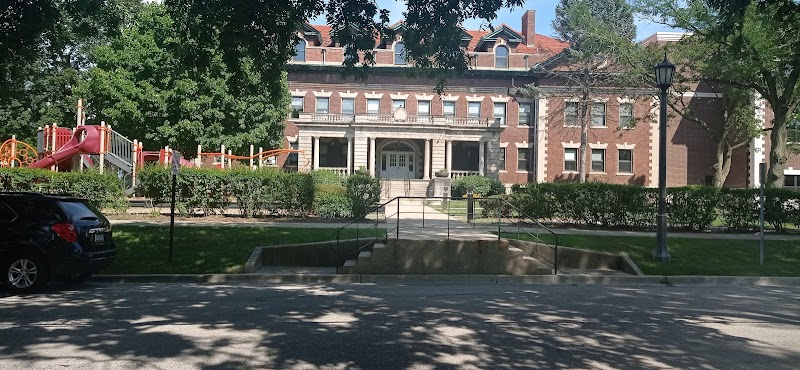
How is Meadowbrook Manor - Lagrange Staffed?

CMS rates MEADOWBROOK MANOR - LAGRANGE's staffing level at 2 out of 5 stars, which is below average compared to other nursing homes. Staff turnover is 47%, compared to the Illinois average of 46%.

What Have Inspectors Found at Meadowbrook Manor - Lagrange?

State health inspectors documented 45 deficiencies at MEADOWBROOK MANOR - LAGRANGE during 2022 to 2025. These included: 1 Immediate Jeopardy (the most serious level, indicating potential for serious harm or death), 4 that caused actual resident harm, and 40 with potential for harm. Immediate Jeopardy findings are rare and represent the most serious regulatory concerns. They require immediate corrective action.
Who Owns and Operates Meadowbrook Manor - Lagrange?

MEADOWBROOK MANOR - LAGRANGE is owned by a for-profit company. For-profit facilities operate as businesses with obligations to shareholders or private owners. The facility operates independently rather than as part of a larger chain. With 197 certified beds and approximately 137 residents (about 70% occupancy), it is a mid-sized facility located in LA GRANGE, Illinois.

How Does Meadowbrook Manor - Lagrange Compare to Other Illinois Nursing Homes?

Compared to the 100 nursing homes in Illinois, MEADOWBROOK MANOR - LAGRANGE's overall rating (2 stars) is below the state average of 2.5, staff turnover (47%) is near the state average of 46%, and health inspection rating (2 stars) is below the national benchmark.

What Should Families Ask When Visiting Meadowbrook Manor - Lagrange?

Based on this facility's data, families visiting should ask: "What changes have been made since the serious inspection findings, and how are you preventing similar issues?" "Can you walk me through typical staffing levels on day, evening, and night shifts?" "Can I visit during a mealtime to observe dining assistance and food quality?" "How do you handle medical emergencies, and what is your hospital transfer rate?" These questions are particularly relevant given the facility's Immediate Jeopardy citations and the below-average staffing rating.

Is Meadowbrook Manor - Lagrange Safe?

Based on CMS inspection data, MEADOWBROOK MANOR - LAGRANGE has documented safety concerns. Inspectors have issued 1 Immediate Jeopardy citation (the most serious violation level indicating risk of serious injury or death). The facility has a 2-star overall rating and ranks #100 of 100 nursing homes in Illinois. Families considering this facility should ask detailed questions about what corrective actions have been taken since these incidents.

Do Nurses at Meadowbrook Manor - Lagrange Stick Around?

MEADOWBROOK MANOR - LAGRANGE has a staff turnover rate of 47%, which is about average for Illinois nursing homes (state average: 46%). Moderate turnover is common in nursing homes, but families should still ask about staff tenure and how the facility maintains care continuity when employees leave.

Was Meadowbrook Manor - Lagrange Ever Fined?

MEADOWBROOK MANOR - LAGRANGE has been fined $87,430 across 2 penalty actions. This is above the Illinois average of $33,953. Fines in this range indicate compliance issues significant enough for CMS to impose meaningful financial consequences. Common causes include delayed correction of deficiencies, repeat violations, or care failures affecting resident safety. Families should ask facility leadership what changes have been made since these penalties.

Is Meadowbrook Manor - Lagrange on Any Federal Watch List?

MEADOWBROOK MANOR - LAGRANGE is not on any federal watch list. The most significant is the Special Focus Facility (SFF) program, which identifies the bottom 1% of nursing homes nationally based on persistent, serious quality problems. Not being on this list means the facility has avoided the pattern of deficiencies that triggers enhanced federal oversight. This is a positive indicator, though families should still review the facility's inspection history directly.