CEDAR RIDGE HEALTH & REHAB CTR
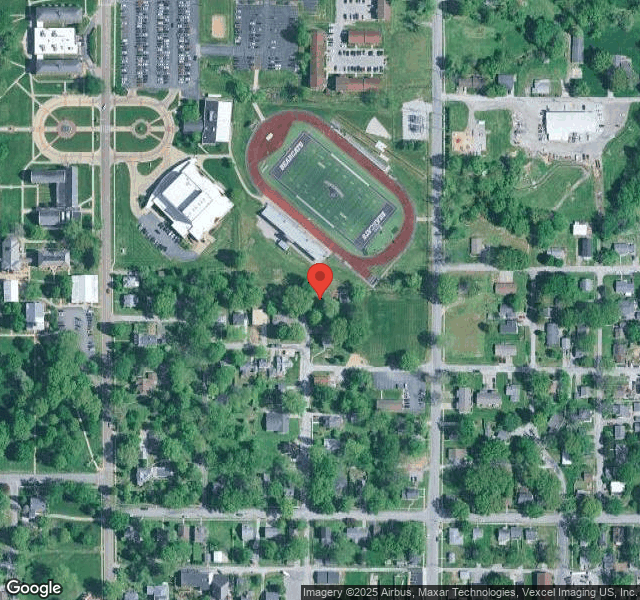

ONE PERRYMAN STREET, LEBANON, IL 62254 (618) 537-6165
For profit - Individual 116 Beds CREST HEALTHCARE CONSULTING Data: November 2025 1 Immediate Jeopardy citation
Trust Grade
0/100
#485 of 665 in IL
Last Inspection: January 2025

Within standard 12-15 month inspection cycle. Federal law requires annual inspections.

Overview

Cedar Ridge Health & Rehab Center has received a Trust Grade of F, indicating significant concerns about the quality of care provided. It ranks #485 out of 665 facilities in Illinois, placing it in the bottom half, and #8 out of 15 in St. Clair County, meaning only seven local options are perceived as worse. The facility is worsening overall, with issues increasing from 3 in 2024 to 11 in 2025, highlighting a troubling trend. Staffing is rated poorly at 1 out of 5 stars, with a turnover rate of 52%, which is around the state average, suggesting challenges in staff retention. Additionally, the center has incurred $180,739 in fines, which is concerning and higher than 80% of Illinois facilities, indicating possible repeated compliance issues. Specific incidents include a critical finding where the facility failed to implement fall prevention measures for multiple residents, resulting in one resident suffering a hip fracture. Another serious incident involved inadequate pain management for a resident during care, causing them ongoing discomfort. Lastly, there was a failure to ensure dialysis for a resident, leading to an emergency room visit due to fluid overload. While the facility has average RN coverage, the overall performance raises significant concerns for families considering this option for their loved ones.

Trust Score
F
0/100
In Illinois
#485/665
Bottom 28%
Safety Record
High Risk
Review needed
Inspections
Getting Worse
3 → 11 violations
Staff Stability
⚠ Watch
52% turnover. Above average. Higher turnover means staff may not know residents' routines.
Penalties
✓ Good
$180,739 in fines. Lower than most Illinois facilities. Relatively clean record.
Skilled Nurses
○ Average
Each resident gets 35 minutes of Registered Nurse (RN) attention daily — about average for Illinois. RNs are the most trained staff who monitor for health changes.
Violations
⚠ Watch
34 deficiencies on record. Higher than average. Multiple issues found across inspections.
★☆☆☆☆
1.0
Overall Rating
★☆☆☆☆
1.0
Staff Levels
★★☆☆☆
2.0
Care Quality
★★☆☆☆
2.0
Inspection Score
Stable
2024: 3 issues
2025: 11 issues

The Good

  • Full Sprinkler Coverage · Fire safety systems throughout facility
  • No fines on record

Facility shows strength in fire safety.

The Bad

1-Star Overall Rating

Below Illinois average (2.5)

Significant quality concerns identified by CMS

Staff Turnover: 52%

Near Illinois avg (46%)

Higher turnover may affect care consistency

Federal Fines: $180,739

Well above median ($33,413)

Significant penalties indicating serious issues

Chain: CREST HEALTHCARE CONSULTING

Part of a multi-facility chain

Ask about local staffing decisions and management

The Ugly 34 deficiencies on record

1 life-threatening 6 actual harm
Jan 2025 11 deficiencies 1 Harm
SERIOUS (G)

Actual Harm - a resident was hurt due to facility failures

Deficiency F0697 (Tag F0697)

A resident was harmed · This affected 1 resident

**NOTE- TERMS IN BRACKETS HAVE BEEN EDITED TO PROTECT CONFIDENTIALITY** Based on interview, observation, and record review the facility failed to provide effective pain management for 1 (R10) out of 1...

Read full inspector narrative →
**NOTE- TERMS IN BRACKETS HAVE BEEN EDITED TO PROTECT CONFIDENTIALITY** Based on interview, observation, and record review the facility failed to provide effective pain management for 1 (R10) out of 1 resident reviewed for pain in the sample of 44. This failure resulted in R10 experiencing ongoing pain during peri-care as evidence by visual and audible reports of pain expressed. Findings include: R10 was readmitted to the facility on [DATE] from the hospital with diagnosis of, in part, surgical aftercare on the digestive system, calculus of bile duct with cholecystitis, biliary acute pancreatitis, acute and chronic respiratory failure, and transient cerebral ischemic attack. R10's Minimum Data Set (MDS) dated [DATE], documented she is moderately cognitively impaired, is depended on staff for toileting hygiene, lower body dressing, rolling left and right, siting to standing and all types of transfers. R10's MDS further documented she required partial/moderate assistance from staff for personal hygiene and required substantial/maximal assistance from staff with showering/bathing. R10's Care Plan dated 11/19/24 documented R10 has a self-care deficit as evidenced by needing assistance with activities of daily living (ADLs), including bathing requiring two-person physical assistance. R10's Care Plan further document she is at risk for pain and for staff to utilize the following interventions: in part, notify physician if interventions are unsuccessful or if current complaint is a significant change from residents past experience of pain, observe/document for probable cause of each pain episode, remove/limit causes where possible, observe/record/report to nurse resident complaints of pain or requests for pain treatment. R10's Care Plan continued to document she is incontinent of Bowel/Bladder and for nursing staff to report to MD abnormal symptoms or conditions; skin break-down, excoriation, rash, bladder pain, dysuria, urinary pain, retro-peritoneal pain, excessive or inadequate urinary output, or abnormal urine characteristics; color, odor, clarity, hematuria, Et cetera (etc.). On 1/27/25 at 4:01 PM, V21 (Licensed Practical Nurse/LPN) stated she was not aware of any reddened skin marks on R10's peri-region and was not told in report of any by the previous nurse. V21 stated a nurse will have to look at them but she had not seen them today yet. No pain score was documented for R10 on 1/27/25. On 1/27/25 at 1:25 PM V19 (Certified Nursing Assistant/CNA) and V20 (CNA) entered R10's room to perform peri-care. R10's old brief was saturated with urine and stool upon removal. While performing peri-care, reddened areas with open wounds resembling skin tears/macerations were present on R10's right inner thigh, left butt cheek, and posterior left thigh as well as bright red skin to R10's labia. Any time one of those reddened areas was wiped R10 would cry owe while grimacing. V20 stated these marks have been there since she came back from the hospital and the nurses have been applying barrier cream to it, while the CNA's apply petroleum-based ointment. V20 stated V21 was aware of the red marks on R10. V20 applied petroleum-based ointment to all the reddened skin marks before completing care. No barrier cream was applied or in R10's active orders at this time. V19 and V20 completed peri-care at 2:10 PM on R10 on 1/27/25. R10's Pain Scores did not have a score completed on 1/27/25. R10 had stated during peri-care on 1/27/25 while V19 and V20 were present, it was hurting her, and she yelled owe with each wipe while grimacing. On 1/28/25 at 10:09 AM, V19 and V20 entered R10's room to provide peri-care after an incontinence episode. R10 stated my butt hurts, people don't care and don't do anything about it. R10 told V20 not to wipe so rough. R10 stated her pain was as 22 out of 10 on a pain scale. V19 and V20 proceeded to provide peri-care. V20 wiped R10's buttock and posterior thighs using up an entire package of wipes while R10 repeatedly yelled in pain with each wipe. V20 told V19 we will need another thing of wipes. V19 left to go get more wipes. V13 (CNA) returned with more wipes and V25 (Registered Nurse) with barrier cream. V20 completed peri-care on R10's front region using three wipes per section, each wipe having R10 yell out in pain. R10 stated it hurts, it hurts so much. V20 told R10 she was sorry but needed to get her cleaned up. V13 and V20 stated if a resident needs more time to finished completing a bowel movement, like R10 had been doing while V20 proceeded to wipe, they can offer a bedpan or put a brief on them and give them more time to finish. V19, V20, and V13 did not offer R10 more time to finish or a break from wiping nor any other pain-relieving alternative throughout peri-care. On 1/28/25 at 10:04 AM, R10 stated she was not doing so good today after them wiping my butt so many times; it was very painful, I'm sore. On 1/28/25 at 1:55 PM, R10 stated she is still in pain from being wiped, she is doing horrible. R10 stated the staff never offer her breaks if it is too painful for her while receiving peri-care. R10 stated she tells the aides she is in pain from them wiping her, but they tell her they need to get her cleaned. R10 stated they just started putting on that white barrier cream yesterday, before that it was the petroleum-based ointment the aides can apply but I've been complaining of pain down there for at least two weeks now. On 1/29/25 at 10:28 AM, V1 (Administrator) stated she expects the Certified Nursing Assistants to report pain to other staff. The facility's Activities of Daily Living (ADL) Support Policy dated 5/2/23 documented care and services to prevent and/or minimize functional decline will include appropriate pain management. The resident's response to interventions will be documented, monitored, evaluated, and revised as appropriate. The facility's Management of Pain Policy dated 5/16/22 documented our mission is to facilitate resident independence, promote resident comfort and preserve resident dignity. The purpose of this policy is to accomplish that mission through an effective pain management program, providing our residents the means to receive necessary comfort, exercise greater independence, and enhance dignity and life involvement. The policy further documented they will achieve these goals through providing, in part, promptly and accurately assessing and diagnosing pain, encouraging residents to self-report pain, monitoring treatment efficacy and side effects, preventing and minimizing anticipated pain when possible, using non-pharmacological and complementary and alternative medicine when appropriate, and using pain medication judiciously to balance the resident's desired level of pain relief with the avoidance of unacceptable adverse consequences.
CONCERN (D)

Potential for Harm - no one hurt, but risky conditions existed

Quality of Care (Tag F0684)

Could have caused harm · This affected 1 resident

**NOTE- TERMS IN BRACKETS HAVE BEEN EDITED TO PROTECT CONFIDENTIALITY** Based on interviews, observations, and record reviews the facility failed to follow wound care orders for 1 out of 1, (R87), rev...

Read full inspector narrative →
**NOTE- TERMS IN BRACKETS HAVE BEEN EDITED TO PROTECT CONFIDENTIALITY** Based on interviews, observations, and record reviews the facility failed to follow wound care orders for 1 out of 1, (R87), reviewed for quality of care in a sample of 44. Findings include: R87 was admitted to the facility on [DATE] with diagnosis of, in part, chronic multifocal osteomyelitis of left ankle/foot, cellulitis, type two diabetes mellitus with foot ulcer and neuropathy, peripheral vascular disease and acquired absence of right leg above knee. R87's Minimum Data Set (MDS) dated [DATE], documented he is cognitively intact, requires substantial/maximal assistance from staff for lower body dressing, and is dependent on staff assistance for putting on/taking off footwear. R87's care plan dated 12/30/25 documented R87 has diabetic ulcers to the left heel and left dorsal mid foot relate to diabetes and lack of sensation to affected area. R87's interventions for the ulcers are documented as follows: Enhanced Barrier Precautions (EBP), Observe/document wound: Size, Depth, Margins: peri-wound skin, sinuses, undermining, exudates, edema, granulation, infection, necrosis, eschar, gangrene at least weekly, document progress in wound healing on an ongoing basis, notify medical doctor (MD) as indicated, observe/document/report as needed any signs/symptoms of infection: green drainage, foul odor, redness and swelling, red lines coming from the wound, excessive pain, fever, observe/document/report as needed changes in wound color, temp, sensation, pain, or presence of drainage and odor, and treatment as ordered. On 1/27/25 at 9:41 AM, R87's left foot dressing was not intact, the rolled gauze was dangling on the floor as he sat in his chair. The gauze is saturated with a moderate amount of yellow/serous fluid and does not have a date on it. R87 stated he is on intravenous antibiotics for his left foot wound infection currently. On 1/27/25 at 12:56 PM, V14 (Wound Care Nurse) went into R87's room to provide wound care. The old dressing continued to be not intact, the rolled gauze was dangling off R87's left foot and his heel wound saturated through all the layers of the gauze with a moderate to large amount of yellow drainage. V14 removed the entire old dressing which did not include bordered gauze or an abdominal pad. V14 stated the dressing should have include an elastic wrap which was also not in place. On 1/27/25 at 12:59 PM, V14 stated the nurses know the current wound care orders and know to apply an elastic wrap. R87's orders dated 1/24/2025 at 7:19 PM and 7:21 PM documented the following, Cleanse left trans metatarsal amputation site with wound cleanser, normal saline or soap and water, pat dry. Apply skin barrier to peri-wound, allow to dry prior to application of primary or secondary dressing. Apply silver sulfadiazine, Collagen Hydrogel, Collagen Particles to wound bed, cover with calcium alginate sheet (cut to fit) and Bordered Gauze dressing. Secure with Rolled Gauze dressing and 4 elastic bandage. Change daily and as needed. Cleanse Left Heel with wound cleanser, normal saline or soap and water, pat dry. Apply skin barrier to peri-wound allow to dry prior to application of primary or secondary dressing. Apply silver sulfadiazine, Collagen Hydrogel, and Collagen Particles to wound bed, cover with Calcium Alginate sheet (cut to fit area), abdominal pad, and rolled gauze dressing. Wrap foot in 4 elastic bandage, transitioning to 6 elastic bandage as you wrap the remainder of the lower extremity. Daily and as needed. On 1/29/25 at 10:28 AM, V14 stated she expects staff to follow out wound care orders as written by the provider. On 1/29/25 at 3:00 PM, V1 stated the facility does not have a policy on treatment and care for diabetic ulcers.
CONCERN (D)

Potential for Harm - no one hurt, but risky conditions existed

Pressure Ulcer Prevention (Tag F0686)

Could have caused harm · This affected 1 resident

**NOTE- TERMS IN BRACKETS HAVE BEEN EDITED TO PROTECT CONFIDENTIALITY** Based on observations, interviews, and record reviews the facility failed to provide treatment and services to prevent and/or he...

Read full inspector narrative →
**NOTE- TERMS IN BRACKETS HAVE BEEN EDITED TO PROTECT CONFIDENTIALITY** Based on observations, interviews, and record reviews the facility failed to provide treatment and services to prevent and/or heal pressure ulcers for 1 out of 1 resident (R10) reviewed for treatment/services to prevent/heal pressure ulcers in a sample of 44. Findings include: R10 was readmitted to the facility on [DATE] from the hospital with diagnosis of, in part, surgical aftercare on the digestive system, calculus of bile duct with cholecystitis, biliary acute pancreatitis, acute and chronic respiratory failure, and transient cerebral ischemic attack. R10's Minimum Data Set (MDS) dated [DATE], documented she is moderately cognitively impaired, is depended on staff for toileting hygiene, lower body dressing, rolling left and right, siting to standing and all types of transfers. R10's MDS further documented she required partial/moderate assistance from staff for personal hygiene and required substantial/maximal assistance from staff with showering/bathing. R10's Care Plan dated 11/19/24 documented R10 has a self-care deficit as evidenced by needing assistance with activities of daily living (ADLs), including bathing requiring two-person physical assistance. R10's Care Plan further document she is at risk for pain and for staff to utilize the following interventions: in part, notify physician if interventions are unsuccessful or if current complaint is a significant change from residents past experience of pain, observe/document for probable cause of each pain episode, remove/limit causes where possible, observe/record/report to nurse resident complaints of pain or requests for pain treatment. R10's Care Plan also documented she is at risk for impaired skin integrity (resident refuses turning and repositioning at times), observe skin integrity during AM/PM care, notify medical doctor (MD) of skin breakdown, provide peri-care. R10's Care Plan continued to document she is incontinent of Bowel/Bladder and for nursing staff to report to MD abnormal symptoms or conditions; skin break-down, excoriation, rash, bladder pain, dysuria, urinary pain, retro-peritoneal pain, excessive or inadequate urinary output, or abnormal urine characteristics; color, odor, clarity, hematuria, Et cetera (etc.). On 1/29/25 a copy of R10's Care Plan dated 11/6/24 was requested and the facility provided a copy with the care plan for risk of impaired skin integrity revised 1/29/25 adding that the resident refuses any other treatment for redness other than petroleum based ointment and resident prefers to use wipes for peri-care, there was also a new section added for R10 having actual impairment to skin integrity of her buttocks and bilateral gluteal folds related to Moisture Associated Skin Damage (MASD). R10's re-admission assessment dated [DATE] at 6:20 PM, completed by V13 (Nurse Manager) documented R10 had pressure sores to her right and left buttock. R10's orders dated 1/12/25 at 12:52 PM, documented R10 to have a skin inspection/nursing weekly assessment completed on Sundays in the evening shift. No skin and wound assessment, measurements, or an initial treatment plan for pressure ulcers was completed on 1/13/25 after V13 (Nurse Manager) documented finding two areas of pressure sores. On 1/26/25 at 10:05 AM R10 stated the staff could change me more often. I'll put my call light on to be cleaned, they'll come quickly to shut it off then tell me they will be back soon to clean me up but not return for hours. R10 stated she feels like an inconvenience to staff when they miss my bed baths. Some staff will be rude and ask what I need now. On 1/27/25 at 4:01 PM, V21 (Licensed Practical Nurse/LPN) stated she was not aware of any reddened skin marks on R10's peri-region and was not told in report of any by the previous nurse. V21 stated a nurse will have to look at them but she had not seen them today yet. On 1/27/25 at 10:30 PM, R10's Orders documented the following: barrier cream to bilateral buttock every shift; as needed every shift for prophylactic and barrier cream to groin every shift every shift for prophylactic and every 8 hours as needed for prophylactic. On 1/27/25 at 1:25 PM V19 (Certified Nursing Assistant/CNA) and V20 (CNA) entered R10's room to perform peri-care. R10's old brief was saturated with urine and stool upon removal. While performing peri-care, reddened areas with open wounds resembling skin tears/macerations were present on R10's right inner thigh, left butt cheek, and posterior left thigh as well as bright red skin to R10's labia. Any time one of those reddened areas was wiped R10 would state owe while grimacing. V20 stated these marks have been there since she came back from the hospital and the nurses have been applying barrier cream to it, while the CNA's apply A&D ointment. V20 stated V20 was aware of the red marks on R10. V20 applied A&D ointment to all the reddened skin marks before completing care. No barrier cream was applied or in R10's active orders at this time. On 1/28/25 at 10:04 AM, R10 stated she was not doing so good today after them wiping my butt so many times; it was very painful, I'm sore. On 1/28/25 at 10:09 AM, V19 and V20 entered R10's room to provide peri-care after an incontinence episode of urine and stool. R10 stated my butt hurts, people don't care and don't do anything about it. R10 told V20 not to wipe so rough. R10 stated her pain was as 22 out of 10 on a pain scale. V19 and V20 proceeded to provide peri-care. V20 wiped R10's buttock and posterior thighs using up an entire package of wipes while R10 repeatedly yelled in pain with each wipe. V20 told V19 we will need another thing of wipes. V19 left to go get more wipes. V13 (CNA) returned with more wipes and V25 (Registered Nurse/RN) with barrier cream. V20 completed peri-care on R10's front region using three wipes per section, each wipe having R10 yell out in pain. V20 told R10 she was sorry but needed to get her cleaned up. V13 and V20 stated if a resident needs more time to finished completing a bowel movement, like R10 had been doing while V20 proceeded to wipe, they can offer a bedpan or put a brief on them and give them more time to finish. V19, V20, and V13 did not offer R10 more time to finish or a break from wiping. On 1/28/25 at 1:55 PM, R10 stated she is still in pain from being wiped, she is doing horrible. R10 stated the staff never offer her breaks if it is too painful for her while receiving peri-care. R10 stated she tells the aides she is in pain from them wiping her, but they tell her they need to get her cleaned. R10 stated they just started putting on that white barrier cream yesterday, before that it was the petroleum-based ointment the aides can apply but I've been complaining of pain down there for at least two weeks now. On 1/28/25 at 10:42 AM, V25 (RN) stated the orders for barrier cream started yesterday. On 1/29/25 at 8:09 AM, V26 (Nurse Manager) stated she remembered R10 came back from the hospital with the pressure sores on 1/12/25 for the left and right buttock. V26 stated when we find sores on a resident after returning from the hospital, the next steps we take are to put in place a treatment plan, notify the wound nurse to go make an assessment and then the wound nurse tells the nurse practitioner for orders. On 1/29/25 at 9:15 AM, V14 (Wound Nurse) stated she was not aware of any wounds on R10 after her return from the hospital. V14 stated she was notified of skin concerns on R10 yesterday and R10 has Moisture Associated Skin Damage (MASD). On 1/29/25 at 11:44 AM, V14 (Wound Care Nurse) documented R10's Braden Scale for Predicting Pressure Sore Risk was High Risk. On 1/29/25 at 2:10 PM, R10 had Skin Inspection Assessments completed on the following dates 1/14/25 and 1/19/25 after her return from the hospital and being scored a High Risk by V14 (Wound Care Nurse). On 1/29/25 at 10:28 AM, V1 (Administrator) stated she expects the Certified Nursing Assistants (CNAs) to report pain to other staff. The facility's Incontinence Care Policy dated 5/16/22 documented all incontinent residents will receive incontinence care in order to keep skin clean, dry and free of irritation and/or order. The policy continued to document procedure included inspection of the skin and report all irritated areas to charge nurse. The facility's Activities of Daily Living (ADL) Support Policy dated 5/2/23 documented residents who are unable to carry out activities of daily living independently will receive the services necessary to maintain good nutrition, grooming, and personal and oral hygiene. The policy continued to document that appropriate care and services will be provided for residents who are unable to carry out ADLs independently, with the consent of the resident and in accordance with the plan of care, including appropriate support and assistance with hygiene (bathing, dressing, grooming, and oral care) and elimination (toileting). The policy further documented care and services to prevent and/or minimize functional decline will include appropriate pain management. The resident's response to interventions will be documented, monitored, evaluated, and revised as appropriate. The facility's Pressure Ulcer Policy dated 8/31/23 documented nurses are to complete skin assessments daily on residents deemed High Risk for skin breakdown. The policy further documented when a pressure ulcer is identified, whether in house or upon a resident's admission, the area will be assessed using the skins and wound assessment, a skin inspection assessment shall be completed, and initial treatment started per physician's orders. Daily skin checks shall be initiated on residents with a pressure wound to provide increased monitoring from nursing staff. The policy also documented it is the responsibility of the charge nurse/designee to measure and document on the pressure areas weekly. The facility's Non-pressure Skin Impairment Policy dated 1/3/23 documented it is the responsibility of the nursing department to ensure non-pressure skin impairments are identified and progress is tracked as required.
CONCERN (D)

Potential for Harm - no one hurt, but risky conditions existed

Deficiency F0760 (Tag F0760)

Could have caused harm · This affected 1 resident

**NOTE- TERMS IN BRACKETS HAVE BEEN EDITED TO PROTECT CONFIDENTIALITY** Based on interview and record review the facility failed to ensure a resident is free from significant medication errors for 1 o...

Read full inspector narrative →
**NOTE- TERMS IN BRACKETS HAVE BEEN EDITED TO PROTECT CONFIDENTIALITY** Based on interview and record review the facility failed to ensure a resident is free from significant medication errors for 1 or 5 residents (R89) reviewed for medications in a sample of 44. Findings Include: R89's Face Sheet, original admission date of 10/04/24, documented R89 has diagnoses of but not limited to infection following a procedure, deep incisional surgical site, subsequent encounter, and local infection to the skin and subcutaneous tissue. R89's Minimum Data Set (MDS), dated [DATE], documented R89 is cognitively intact with a Brief Interview for Mental Status (BIMS) of 14 out of 15 and is dependent on staff for transferring from bed to chair, chair to bed, and toileting transfer. R89's Care Plan, admission date of 12/26/24, documented R89 is at risk for complications related to (r/t) a wound infection and requires antibiotics. Interventions include but not limited to Administer antibiotic as per medical doctor (MD) orders. Follow facility policy and procedures for line listing, summarizing, and reporting infections. R89's Wound culture, dated 12/17/2024 from the hospital documented R89's wound had the following organisms 1. Esherichia Coli, 2. Enterococcus Faecalis, 3. Proteus Mirabilis. R89's Physician's Orders, dated 12/26/24, documented R89 was ordered Ceftriaxone Sodium injection reconstituted 2 grams (GM), use 2000 milligrams (mg) intravenously one time a day for wound infection. R89's Physician's Orders, dated 12//27/24, documented Vancomycin HCl Intravenous Solution 1000 milligrams (MG)/200 milliliters (M)L (Vancomycin HCl) Use 1000 mg intravenously every 12 hours for infection, and a weekly vancomycin trough on Tuesday. R89's Medication Administration Record (MAR) for the month of December 2024 was reviewed and had no documentation on 12/29/24 that R89 had her Ceftriaxone IV antibiotic. There was no documentation on 12/28/24 and 12/29/24 that R89 received her Vancomycin IV antibiotic. R89's MAR for the month of January 2025 was reviewed and had no documentation R89 received her Ceftriaxone IV antibiotic on 01/09/25, 01/11, 01/12, 01/17, 01/18, 01/19, 01/21, 01/25, and 01/26/25. There was also no documentation R89 received her Vancomycin IV antibiotic on day shift on 01/09/25, 01/11, 01/12, 01/17, 01/18, 01/19, and 01/26/25. On 01/29/25 at 09:02 AM, V2 (Director of Nursing) brought in documents for this surveyor to review regarding R89's missed doses of IV antibiotics. She said she did education with nurses, and they are filling them now. The documents were reviewed and documented R89 received the evening dose of her IV antibiotics but there was no documentation R89 received the morning doses. On 01/29/25 at 01:25 PM, V29 (Pharmacist) said she would consider seven missed does of 9 doses of Ceftriaxone and 7 doses of Vancomycin is a significant medication error. She said that is a lot of missed doses. V29 said it could affect R89 by causing the infection to take longer to get rid of and it could cause the infection to even get worse depending how bad the infection was. The Facility's Medication Administration Policy/Procedure, revised date of 09/27/22, documented Policy Medications will be administered safely to residents within the facility by licensed nurses at the specified time/time frame, following the recommended administration method and will be documented as required. It further documented 12. Chart the medication administered on the electronic medication administration record.
CONCERN (E)

Potential for Harm - no one hurt, but risky conditions existed

Resident Rights (Tag F0550)

Could have caused harm · This affected multiple residents

**NOTE- TERMS IN BRACKETS HAVE BEEN EDITED TO PROTECT CONFIDENTIALITY** 3. R8's Face Sheet, original admission date of 07/14/22, documented R8 has diagnoses of but not limited to hemiplegia and hemipa...

Read full inspector narrative →
**NOTE- TERMS IN BRACKETS HAVE BEEN EDITED TO PROTECT CONFIDENTIALITY** 3. R8's Face Sheet, original admission date of 07/14/22, documented R8 has diagnoses of but not limited to hemiplegia and hemiparesis following cerebral infarction affecting left non-dominant side, Type II diabetes mellitus with diabetic chronic kidney disease and diabetic polyneuropathy, adult failure to thrive, and pressure ulcer of sacral region, stage 4. R8's MDS, dated [DATE], documented R8 is cognitively intact with a Brief Interview for Mental Status (BIMS) of 13 out of 15 and is dependent on staff for most of her activities of daily living (ADLs). R8's Care Plan, admission date of 07/03/24, documented R8 has Self-Care Deficit As Evidenced by: Needs assistance with ADLs Related to Hemiplegia & Hemiparesis Left Non-Dominant Side, Alzheimer's, Dementia, Morbid Obesity, Neuromuscular Dysfunction of Bladder, and bowel incontinence. Interventions include but not limited to Encourage R8 to use bell to call for assistance. On 01/27/25 at 09:41 AM, R8 is lying in bed with the head elevated. R8 did not have a call light within easy reach for her to call for assistance when needed. One call light was lying on the floor and the other was hooked to the privacy curtain between the beds. 4. R94's Face Sheet, admission date of 10/01/24, documented R94 had diagnoses of but not limited to malignant neoplasm of brain, chronic obstructive pulmonary disease (COPD), and symptomatic epilepsy and epileptic syndromes with complex partial seizures, not intractable, without status epilepticus. R94's MDS, dated [DATE], documented R94 is severely cognitively impaired with a BIMS of 06 out of 15 and requires substantial/maximal assistance with toileting hygiene, practical/minimal assistance with dressing, personal hygiene, supervision/touching assistance with walking 10 and 50 feet, and independent with bed mobility. He is occasionally incontinent of bladder and always continent of bowel. R94's Care Plan, admission date of 10/01/24, documented R94 is at risk for falls and injuries related to (r/t) Medical Factors: Brain Cancer, Epilepsy, COPD, Emphysema, Interstitial Pulmonary Disease, Prediabetes, Chronic Kidney Disease Stage 3A, Hypertension, Hyperlipidemia, Low Back Pain, gastroesophageal reflux disease (GERD), and incontinence. Interventions include but are not limited to Keep call light within reach. On 01/26/25 at 10:24 AM, R94 was lying in his bed resting. His call light was not within easy reach for him to be able to call and ask for assistance if needed it was lying on the fall mat that was on the floor next to his bed. On 01/29/25 at 09:15 AM, V26 (Licensed Practical Nurse/Nurse Manager) stated most everyone on this hall can use their call light. She said R94 can use his light and R8 is blind so they hook her call light on her chest so she can find it, but she can use it. On 01/29/25 02:20 PM, V1 (Administrator) was asked what her expectations of the staff when it comes to residents having their call lights within easy reach? V1 said We follow our policy. The Facility's Meal Assistance policy, revised date of 02/17/20, documented Purpose: To provide guidance to facility staff on meal assistance and expectation. Policy: Residents shall receive assistance with meals in a manner that meets the individual needs of each resident. Policy Interpretation and Implementation Dining Room Residents: 1. All residents will be encouraged to eat in the dining room. 2. Facility staff will serve resident trays and will help residents who require assistance with eating. 3. Resident who cannot feed themselves will be fed with attention to safety, comfort, and dignity, for example: a. Not standing over residents while assisting them with meals. The Facility's call light guidance policy, revised date of 08/20/22, documented Purpose: To provide guidance to all facility staff on the use, response and placement of call lights. It further documents Procedure: 2. A call light activation device shall be kept within resident reach while in resident rooms and bathrooms. The Facility's Resident Rights policy, revision date of 07/11/22, documented Purpose: To provide guidance to facility staff on resident rights. Policy: Employees shall treat all residents with kindness, respect, and dignity. Policy Interpretation and Implementation 1. Federal and state laws guarantee certain basic rights to all residents of this facility. These rights include the resident's right to: a. a dignified existence, b. be treated with respect, kindness, and dignity. Based on Interview, Observation, and Record Review, the facility failed to provide dignity during feeding assistance and ensure resident call lights are within reach of the resident for 4 of 20 residents (R8, R65, R93, R94) reviewed for resident dignity in the sample of 44. The Findings Include: 1. On 1/26/25 11:45 AM, V6 (Restorative Certified Nursing Assistant/CNA) was seen standing between R65 and R93 at a dining room table. V6 stood and used her right hand to feed R93, then used her left hand to feed R65. R65's Care Plan, dated 1/23/25, documents R65 has a Self-Care Deficit with Interventions: Take to dining room for meals, Eating - Setup help / Cueing required. R65's Minimum Data Set (MDS), dated [DATE], documents R65 is cognitively intact and is dependent on staff for eating. 2. R93's Care Plan, dated 11/4/24, documents R93 has Self-Care Deficit with Interventions: Eating - Independent required. R93's MDS, dated [DATE], documents R93 has a severe cognitive impairment and required partial/moderate staff assistance for eating. On 1/26/25 at 12:15 PM, V2 (Director of Nursing/DON) was seen handing a chair to V6 and told her she was supposed to be sitting down in a chair while assisting the residents.
CONCERN (E)

Potential for Harm - no one hurt, but risky conditions existed

ADL Care (Tag F0677)

Could have caused harm · This affected multiple residents

**NOTE- TERMS IN BRACKETS HAVE BEEN EDITED TO PROTECT CONFIDENTIALITY** 3. R11's Care Plan, dated 1/29/2025, (R11) has Self-Care Deficit As Evidenced by: Needs assistance with ADLs Related to Dementia...

Read full inspector narrative →
**NOTE- TERMS IN BRACKETS HAVE BEEN EDITED TO PROTECT CONFIDENTIALITY** 3. R11's Care Plan, dated 1/29/2025, (R11) has Self-Care Deficit As Evidenced by: Needs assistance with ADLs Related to Dementia, Chronic Kidney Disease Stage 3A, Peripheral Vascular Disease, Atherosclerotic Heart Disease, Hypertension (HTN), Hypothyroidism, Hyperlipidemia, Anemia, History of Pulmonary Embolism, Anxiety, Depression, Insomnia, Low Back Pain, Cervical Spondylosis, Lumbar Spondylosis, Essential Tremor, Osteoarthritis, Neuromuscular Dysfunction of Bladder, Irritable Bowel Syndrome, GERD, and incontinence. Resident refuses medication at times. Resident refuses care at times. Resident prefers bed in high position. Resident refuses shower at times. Eating - Supervision required. [NAME] is at risk for altered nutrition and hydration related to diagnosis of Alzheimer's Disease, moderate protein-calorie malnutrition, CKD, Anemia, vitamin deficiency. R11's MDS, dated [DATE], documents that R11 is cognitively impaired and requires supervision or touching assistance for eating. On 1/27/2025 from approximately at 8:30 AM observed R11 lying in bed. R11's breakfast tray was in front of R11 on the overbed table. A bowl of hot cereal with the lid on top, a ball of meat with gravy was on the tray untouched. The eggs were untouched and there was partially eaten toast. There was no staff present. On 1/27/2025 at approximately 8:40 AM when asked how the food was, R11 responded she guess it was fine. When asked about why the food was not eaten. R11 stated that she would like to eat more but she needed help. R11 stated that they come in and out but never stay. On 1/27/2025 at approximately 8:55 AM R11 lying in bed, eyes closed sleeping in the bed with the tray in front of her. No change in the food on the tray. V18 (CNA) entered the room and asked R11 if she was done. R11 opened her eyes and said yes. V18 removed the tray from room. On 1/29/2025 at 9:02 AM V2 (Director of Nursing) stated that she would address this with the staff and make sure that R11 is getting assistance with her meals. 4. R37's Care Plan, dated 11/19/2024, (R37) As Evidenced by: Needs assistance with ADLs Related to Morbid Obesity, Dementia, Chronic Kidney Disease Stage 3, Atherosclerotic Heart Disease, Hypertension, Atrial Fibrillation, Heart Failure, Presence of Cardiac Pacemaker, Peripheral Vascular Disease, Hyperlipidemia, Anemia, Major Depressive Disorder, Lymphedema, BPH, Flaccid Neuropathic Bladder, Obstructive Reflex Uropathy, and bowel incontinence. 2/25/2022 Eating - Independent required. R37's MDS, dated [DATE], documents that R37 is mildly cognitively impaired and requires set up or clean up assistance with meals. On 1/26/2025 at approximately 8:40 AM R37 was sitting in a chair in R37's room. R37's breakfast tray was in front of R37. R37's drink is covered. R37 was eating cereal with his hands. On 1/26/2025 at R37 stated that he doesn't get enough to eat. When asked why he is was eating with his hands R37, R37 stated that it is easier. On 1/29/2025 at 1:04 PM R37 was sitting in his room with the meal tray in front of him, in R37's reach. R37's bowls remained covered. R37 was not eating. On 1/29/2025 at 1:04 PM R37 stated that his hands are sore, and he can't close them enough to grasp the silverware. R37 stated that the plastic is hard for him to grasp, and he doesn't always eat his meal because he can't open everything. R37 stated that he has pain in his hands and the staff don't always help. The facility's ADL Support policy, dated 5/2/23, documents Policy: Resident will be provided with care, treatment, and services as appropriate to maintain or improve their ability to carry out activities of daily living (ADLs). Residents who are unable to carry out activities of daily living independently will receive the services necessary to maintain good nutrition, grooming and personal and oral hygiene. Based on Interview, Observation, and Record Review, the Facility failed to provide feeding assistance to Activities of Daily Living (ADL) Dependent residents requiring feeding assistance for 4 of 8 residents (R11, R24, R37, R59) reviewed for feeding assistance in the sample of 44. The Findings Include: 1. On 1/26/25 at 11:45 AM, R24 was seen sitting at the dining room table with his lunch tray and was not touching his food. When asked about being the only staff member assisting residents, V6 (Certified Nursing Assistant/CNA) stated I usually have someone helping me but not sure where she is. R24 was just staring at his plate and did not pick up his fork to eat. V6 would see this and yell to R24, sitting at another table, to take a bite. R24's Care Plan, dated 11/8/24, documents R24 has Self-Care Deficit with Interventions: Eating - Setup help/Cueing required. R24's Minimum Data Set (MDS), dated [DATE], documents R24 has a moderate cognitive impairment and requires Supervision/Touching Assistance for eating. 2. On 1/26/25 at 11:45 AM, R59 was seen sitting at a dining room table with his lunch tray and was not touching his food. When asked about being the only staff member assisting residents, V6 (CNA) stated I usually have someone helping me but not sure where she is. At 12:00 PM, V5, CNA, came into the dining room and sat with R59 who immediately began eating once assisted. R59's Care Plan, dated 12/29/24, documents R59 has Self-Care Deficit with Interventions: Eating - One-person physical assist required. R59's MDS, dated [DATE], documents R59 has a severe cognitive impairment and requires substantial/maximal assistance from staff for eating. On 1/29/25 at 8:52 AM, V13 (CNA) stated that R24, R59, R65, and R93 all eat in the small dining room because they require feeding assistance and staff is supposed to be in there assisting them.
CONCERN (E)

Potential for Harm - no one hurt, but risky conditions existed

Accident Prevention (Tag F0689)

Could have caused harm · This affected multiple residents

**NOTE- TERMS IN BRACKETS HAVE BEEN EDITED TO PROTECT CONFIDENTIALITY** Based on observation, interview, and record review the facility failed to supervise a resident with cigarettes, safely transfer ...

Read full inspector narrative →
**NOTE- TERMS IN BRACKETS HAVE BEEN EDITED TO PROTECT CONFIDENTIALITY** Based on observation, interview, and record review the facility failed to supervise a resident with cigarettes, safely transfer residents using a mechanical lift, and implement fall interventions for 4 of 5 (R3, R41, R68, R94) residents reviewed for supervision. Findings include: 1. R41's Care Plan, dated 12/17/2024, documents that (R41) has Self-Care Deficit As Evidenced by: Needs assistance with ADLs Related to Parkinson's, chronic obstructive pulmonary disease (COPD), Chronic Respiratory Failure, Asthma, Interstitial Pulmonary Disease, Pulmonary Hypertension, Obstructive Sleep Apnea, Diabetes, end stage renal disease (ESRD), Hypertension, Congestive Heart Failure, Peripheral Vascular Disease, Hyperlipidemia, Anemia, Hypothyroidism, gastroesophageal reflux disease (GERD), Constipation, Convulsions, Morbid Obesity, Neuropathy, Gout, Arthritis, Left Above Knee Amputation, Right Below Knee Amputation, Low Back Pain, and incontinence. Transfer: Two-person physical assistance required Transfer: Mechanical Lift required, Transfer - uses adaptive devices mechanical Lift. R41's Minimum Data Set (MDS), dated [DATE], documents that R41 is cognitively intact and dependent on staff for transfers. On 1/27/2025 at approximately 10:20 AM observed V17 (Certified Nursing Assistant/CNA) and V18 (CNA) transfer R41 from the bed to the chair using a mechanical lift. V17 and V18 applied the lift pad and applied the hooks to the lift. V18 then started manually pumping the lift using the handle. V18 attempted to pull the lift from the bed and met resistance. V18 was not able to clear R41 from the bed. V17 then lowered the bed and wheels became stuck under the bed. V18 then pulled the lift with force from the bed causing R41 to swing freely in the lift. V18 at the control and V17 standing behind the wheelchair. V18 then attempted to move R41 in the lift and met resistance allowing R41 to swing freely in the lift. V17 then brought wheelchair to the lift and leaned it back with front wheels off the floor. V18 then lowered R41 into the wheelchair. On 1/29/2025 at approximately 9:30 AM R41 stated that she does not like being transferred with the lift that was used on her. R41 stated that she doesn't feel safe. R41 stated that she feels like she is going to fall. 2. R68's Care Plan, dated 11/25/2024, (R68) has Self-Care Deficit As Evidenced by: Needs assistance with Activities of Daily Living (ADLs) Related to Dementia, COPD, Peripheral Vascular Disease, Atherosclerotic Heart Disease, Bradycardia, Hypertension (HTN), Paroxysmal Atrial Fibrillation, Presence of Cardiac Pacemaker, Major Depressive Disorder, Anxiety, Hyperlipidemia, GERD, Anemia, Insomnia, Hypothyroidism, Constipation, R68's MDS, dated [DATE], documents that R41 is mildly cognitively impaired and requires substantial/maximal assistance with transfers. On 1/27/2025 at 9:50 AM observed V17 (CNA) and V18 (CNA) perform incontinent care. Upon completion of incontinent care V17 and V18 transferred R68 from the bed to the chair using a mechanical lift. V17 and V18 applied the lift pad and applied the hooks to the lift. V18 then started manually pumping the lift using the handle. V18 standing at front of lift next to controls and V17 standing behind the chair. V18 pulled the lift from over the bed and to the middle of room. V18 then placed the wheelchair beneath the lift and V18 lowered R68 into the chair. During transfer staff was not in contact with R68 allowing her to swing freely in the sling. 3. R94's Face Sheet, admission date of 10/01/24, documented R94 had diagnoses of but not limited to malignant neoplasm of brain, COPD, and symptomatic epilepsy and epileptic syndromes with complex partial seizures, not intractable, without status epilepticus. R94's MDS, dated [DATE], documented R94 is severely cognitively impaired with a Brief Interview for Mental Status (BIMS) of 06 out of 15 and requires substantial/maximal assistance with toileting hygiene, practical/minimal assistance with dressing, personal hygiene, supervision/touching assistance with walking 10 and 50 feet, and independent with bed mobility. He is occasionally incontinent of bladder and always continent of bowel. R94's Care Plan, admission date of 10/01/24, documented R94 is at risk for falls and injuries related to (r/t) Medical Factors: Brain Cancer, Epilepsy, COPD, Emphysema, Interstitial Pulmonary Disease, Prediabetes, Chronic Kidney Disease Stage 3A, Hypertension, Hyperlipidemia, Low Back Pain, GERD, and incontinence. Interventions include but are not limited to Keep call light within reach. R94's Fall Risk Assessment, dated 01/07/25, documented R94 was a high fall risk. On 01/26/25 at 10:24 AM, R94 was lying in his bed resting. His call light was not within easy reach for him to be able to call and ask for assistance if needed. The call light was lying on the fall mat that was on the floor next to his bed. On 01/29/25 at 09:15 AM, V26 (Licensed Practical Nurse/LPN/Nurse Manager) stated most everyone on this hall can use their call light. She said R94 can use his light. On 01/29/25 02:20 PM, V1 (Administrator) was asked what her expectations of the staff when it comes to care plan interventions being in place? V1 stated We follow our policy. 4. R3's admission Record, dated 1/27/25, documents R3 was originally admitted to the facility on [DATE] with diagnosis of Cerebral Infarction with Hemiplegia/Hemiparesis affecting right dominant side, Aphasia, HTN, Heart Failure, Epilepsy, Anemia, Occlusion and Stenosis of left carotid artery, Osteoarthritis of knees, Intervertebral disc displacement lumbar, Contracture of right upper arm, Major Depressive disorder, and Right Above Knee Amputation (AKA). R3's Care Plan, dated 1/16/24: documents R3 has a history of smoking in his room. Interventions: R3 will be reminded of smoking times, R3 will be reminded appropriate smoking areas per smoking policy. 1/15/24: R3 is a smoker. At times is non-compliant with smoking policy. Resident refuses at times to wear coat when going outside to smoke on cold days. Interventions: Instruct resident about smoking risks and hazards and about smoking cessation aids that are available, instruct resident about the facility policy on smoking: locations, times, safety concerns, monitor oral hygiene, notify charge nurse immediately if it is suspected resident has violated facility smoking policy, observe clothing and skin for signs of cigarette burns, the resident can smoke unsupervised. R3's MDS, dated [DATE], documents R3 has a moderate cognitive impairment and requires substantial/maximal assistance for chair to bed transfer, and is independent on transporting himself with his wheelchair. On 1/26/25 at 10:48 AM, R3 was seen sitting in his electric wheelchair with a cigarette package in his shirt pocket along with a lighter. R3 stated he goes out to smoke on the patio when it's time, and he carries his own cigarettes and lighter with him. R3 stated normally, there is not a staff member outside with him. On 1/26/25 at 1:05 PM, R3 seen going outside to smoke with cigarettes and lighter in his shirt pocket and obtained a cigarette from his shirt and lighted his own cigarette. On 1/27/25 at 9:20 AM, R3 went from the dining room to his room to obtain his cigarettes and lighter. R3 was then seen wheeling himself out to smoke and then lit his own cigarette. There were two staff members outside smoking by the door and was not near R3. On 1/27/25 at 9:25 AM, the other two staff members seen outside smoking came inside and left R3 outside by himself smoking. On 1/27/25 at 9:45 AM, R3 came back inside and to his room. On 1/29/25 at 10:35 AM, V27 (CNA) stated No resident should have their cigarettes or lighter with them. When they go out to smoke, the staff outside with them will give them one. On 1/29/25 at 10:40 AM, V28 (Activity Director) stated The residents are not allowed to have their own cigarettes or lighters. The staff member that goes outside with the residents will give them a cigarette and light it for them. We are constantly taking cigarettes and lighters from (R3) and I just took his away yesterday. His sister visits him and will bring him more. The Facility's Smoking Policy, dated 11/2019, documents This facility will comply with all state and local smoking regulations. Compliance will include recognition of a person's right to use nicotine materials and the facility taking responsibility to provide an area for smoking and providing everyone's safety. All residents who smoke will be assessed to determine safety risk. The facility has the right to establish smoking times and to control the distribution of all smoking materials. The Facility's Using a Mechanical Level II Policy, dated 11/1/23, documents in part The purpose of this procedure is to establish the general principles of safe lifting using a mechanical lifting device. 1. At least two nursing assistants are needed to safely move a resident with a mechanical lift. Steps in the Procedure: 7. Make sure the lift is stable and locked. 9. Double check the sling and machine's weight limits against the resident's weight. 12.c. Before resident is lifted, double check the security of the sling attachment. e. Check the stability of the straps. 13. Lift the resident two inches from the surface to check the stability of the attachments, the fit of the sling and the weight distribution. 16. Gently support the resident as he or she is moved, but do not support any weight. The Facility's Transfer Policy, dated 5/19/22, documents To promote safe transfer for the residents, as well as the staff. Gait belts, Mechanical lifts, and/or sit to stand lifts will be used, unless otherwise specified. Procedure: 3. A minimum of two staff members is recommended when transferring with a Mechanical lift. 4. When using a Mechanical lift, pay close attention to be sure that the Mechanical lift sling is properly positioned and that the straps are securely in the strap holders. The Facility's Fall Prevention Program/Protocol, revised date of 09/06/23, Purpose: To provide guidance to facility staff regarding the prevention/limitation of falls within the facility. Responsibility: It is the responsibility of the Director of Nursing and /or designee to ensure all staff are aware of the elements of the program. It further documents Early Prevention and Fall Risk detection. 4. Guardian Angel Rounds shall be completed at least daily to ensure fall interventions remain in place.
CONCERN (E)

Potential for Harm - no one hurt, but risky conditions existed

Incontinence Care (Tag F0690)

Could have caused harm · This affected multiple residents

**NOTE- TERMS IN BRACKETS HAVE BEEN EDITED TO PROTECT CONFIDENTIALITY** 3. R41's Care Plan, dated 6/5/24, (R41) is incontinent of Bowel/Bladder. Clean peri-area with each incontinence episode. R41's M...

Read full inspector narrative →
**NOTE- TERMS IN BRACKETS HAVE BEEN EDITED TO PROTECT CONFIDENTIALITY** 3. R41's Care Plan, dated 6/5/24, (R41) is incontinent of Bowel/Bladder. Clean peri-area with each incontinence episode. R41's MDS, dated [DATE], documents that R41 is frequently incontinent of bowel. On 1/27/2025 at approximately 10:20 AM V17 (CNA) and V18 (CNA) performed incontinent care. R41 was incontinent of urine. V17 wet wash cloth with soap and washed beneath R41's arm and breast. V18 then opened R41's brief revealing soft stool. V18 then wiped R41's vaginal area with up and down motion V18 then cleansed buttocks using back and forth motion and then applied clean brief. V18 did not clean all soiled areas and apply skin protective skin lubricant. 4. R68's Care Plan, dated 08/08/2024, documents that (R68) is incontinent of Bowel/Bladder. It continues, clean peri-area with each incontinence episode. R68's MDS, dated [DATE], documents that R68 is always mildly cognitively impaired, always incontinent of urine and frequently incontinent of bowel, and dependent on staff for toileting. On 1/27/2025 at 9:50 AM observed V18 (CNA) perform incontinent care. R68 was incontinent of urine and bowel. V18 applied soap to a wet towel. V18 then opened R68's incontinent brief that was soiled with urine and stool. V18 then washed R68's neck and breast. With same towel washed R68's vaginal area with one wipe. V18 then turned R68 on her side. Using the same towel V18 wiped R68's buttocks with a back-and-forth motion. V18 did not cleanse R68's inner or back thighs. V18 then applied R68's clean brief. V18 did not clean all soiled areas and apply skin protective skin lubricant. The facility's Incontinence Care Policy, dated 5/16/2022, documents All incontinent residents will receive incontinence care in order to keep skin clean, dry, and free of irritation and/or odor. Incontinence care will be provide as required. Procedure: Wash all soiled skin areas and dry very well, especially between skin folds. Apply skin protective skin lubricant and rub well into skin. Based on observation, interview, and record review the facility failed to do timely and complete incontinent care for 4 of 5 residents (R39, R41, R68, R79) reviewed for incontinent care in a sample size of 44. The Findings Include: 1. R79's admission Record, dated 1/27/25, documents R79 was originally admitted to the facility on [DATE] with diagnosis of Bipolar disorder, Depression, Hallucinations, Traumatic Brain Injury, Pancytopenia, Type 2 Diabetic Mellitus (DM), Thrombocytopenia, Urinary incontinence, Hydrocephalus, COVID, and Urinary Tract Infections (UTIs). R79's Care Plan, dated 1/30/24, documents R79 is incontinent of Bowel/Bladder. Interventions: Observe and record bowel and bladder pattern each shift, clean peri-area with each incontinence episode. It continues R79 has Self-Care Deficit as evidenced by: Needs assistance with Activities of Daily Living (ADLs) related to TBI, Obstructive Sleep Apnea, Diabetes, Tachycardia, Hallucinations, Bipolar Disorder, Depression, Pancytopenia, Thrombocytopenia, and Incontinence. Interventions: Care in pairs at all times, toilet Use - one-person physical assist required, transfer: One-person physical assistance required. R79's Minimum Data Set (MDS), dated [DATE], documents R79 has a moderate cognitive impairment and requires partial/moderate assistance from staff for Activities of Daily Living (ADLs). R79 is frequently incontinent of both bowel and bladder. On 1/26/25 at 8:55 AM, R79 was seen being assisted out of the restroom by V5 (Certified Nursing Assistant/CNA). R79's front of his pants were saturated in urine. V5 left R79 is his wet pants and pulled the bedside table over in front of his wheelchair and prepared his breakfast tray for him. V5 had a clean pair of pants she pulled out and laid on his bed but did not change R79's pants prior to breakfast. 2. R39's admission Record, dated 1/27/25, documents R39 was originally admitted to the facility on [DATE] with diagnosis of Dementia, Cirrhosis of Liver, Type 2 DM, Spondylopathies, Chronic Kidney Disease, Hypertension (HTN), Polyneuropathy, Obstructive and reflux uropathy, Calculus of Ureter, Neuralgia/Neuritis, Polyosteoarthritis, Spinal stenosis lumbar, Major Depressive Disorder, COVID, and anxiety disorder. R39's Care Plan, dated 1/20/25, documents R39 has Self-Care Deficit. Interventions: Toilet Use: Two-person physical assistance required, Transfer: Two-person physical assistance required with Mechanical Lift required. It continues R39 is incontinent of Bowel. Interventions: Observe/document/report PRN (as needed) any possible causes of incontinence: bladder infection, constipation, loss of bladder tone, weakening of control muscles, decreased bladder capacity, diabetes, stroke, medication side effects, clean peri-area with each incontinence episode. R39's MDS, dated [DATE], documents R39 has a severe cognitive impairment and is dependent on staff for toileting, dressing, and transfers. R39 is always incontinent of urine and occasionally incontinent of bowel. On 1/27/25 at 10:04 AM, V12 (CNA) and V13 (CNA) was seen in R39's room to provide peri-care. R39's brief was unfastened and tucked between her legs. V13 wiped R39's left groin once, her right groin once, and once down the middle of R39's vagina. R39 was rolled to her left side and the brief was tucked under her. V13 wiped R39's anal area. V13 put barrier cream on R39's buttock and anal area. R39 was rolled to her right and a clean brief was pulled up and between her legs. R39 was rolled to her back and the brief fastened. There was no wiping of R39's buttocks, esp. her left buttock and hip while R39 was turned on her right side. There was no wiping of R39's abdominal fold just above the pubic area, and no drying of R39. On 1/29/25 at 9:10 AM, V2 (Director of Nursing/DON), stated I would expect the staff to perform complete and timely incontinent care including cleaning all areas of the resident.
CONCERN (E)

Potential for Harm - no one hurt, but risky conditions existed

Deficiency F0804 (Tag F0804)

Could have caused harm · This affected multiple residents

**NOTE- TERMS IN BRACKETS HAVE BEEN EDITED TO PROTECT CONFIDENTIALITY** 6. R53's MDS, dated [DATE], documents that R53 is cognitively intact. On 1/27/2025 at 9:05 AM observed R53 lying in bed with pl...

Read full inspector narrative →
**NOTE- TERMS IN BRACKETS HAVE BEEN EDITED TO PROTECT CONFIDENTIALITY** 6. R53's MDS, dated [DATE], documents that R53 is cognitively intact. On 1/27/2025 at 9:05 AM observed R53 lying in bed with plate in front of R53. A partially eaten black circular meat observed on plate. R53 hit sausage against plate an audible taping was heard. On 1/27/2025 at 9:05 AM R53 stated that the breakfast does not taste well. R53 stated that the meat is tough and hard to chew. R53 stated that he could not eat it because of how hard it was. R53 stated see and held sausage in the air. R53 stated Watch this and hit sausage on plate. Based on interviews, observations, and record reviews the facility failed to serve food with an appetizing appearance and taste for 7 out of 7 residents, (R61, R10, R15, R2, R87, R53), reviewed for Nutritive Value/Appearance, Palatable/Preferred Temperature in a sample of 44. Findings include: 1.R61's Minimum Data Set (MDS) dated [DATE] documented she is cognitively intact. 1/26/25 at 9:35 AM R61 stated the food here is nasty, so I buy my own food to eat and have a refrigerator to keep it in. 2.R10's MDS dated [DATE] documented she is moderately cognitively impaired. 1/26/25 at 10:05 AM R10 stated the food is not good. 3.R15's MDS dated [DATE] documented she is cognitively intact. 1/26/25 at 10:11 AM R15 stated the food is not good and doesn't taste good, so I buy my own food and keep it in my personal refrigerator. 4.R2's MDS dated [DATE] documented he is cognitively intact. 1/26/25 at 9:30 AM R2 stated the food is grubby and doesn't look appetizing. 5.R87's MDS dated [DATE] documented he is cognitively intact. 1/26/25 at 9:32 AM R87 stated the food is bad and not appealing. Resident Council Meeting Minutes dated 10/16/24 documented under dietary that the meat cooked the other day was tough. Resident Council Meeting Minutes for the month of September 2024 documented under dietary that the dinner was not fresh. On 1/28/25 at 11:30 AM, the menu for lunch 1/28/25 was Stuffed bell pepper, buttered corn, sherbet, and beverage. On 1/28/25 at 12:22, a sample tray was tested by this surveyor with the following concerns, the stuffed pepper was broken up (not intact) with the meat separated from the pepper and the sauce spread over both, the buttered corn was bland. On 1/29/25 at 10:28 AM, V1 (Administrator) stated she expects her dietary department to follow recipes according to the menu. The facility's Food and Nutrition Services Manual dated 9/1/21 documented food will be prepared by methods that conserve nutritive value, flavor, and appearance; food will be palatable, attractive, and served at a safe and appetizing temperature; food and liquids are prepared and served in a manner, form, and texture to meet resident's needs.
CONCERN (E)

Potential for Harm - no one hurt, but risky conditions existed

Infection Control (Tag F0880)

Could have caused harm · This affected multiple residents

**NOTE- TERMS IN BRACKETS HAVE BEEN EDITED TO PROTECT CONFIDENTIALITY** 5. R68's Care Plan, dated 08/08/2024, documents that (R68) is incontinent of Bowel/Bladder. It continues, clean peri-area with e...

Read full inspector narrative →
**NOTE- TERMS IN BRACKETS HAVE BEEN EDITED TO PROTECT CONFIDENTIALITY** 5. R68's Care Plan, dated 08/08/2024, documents that (R68) is incontinent of Bowel/Bladder. It continues, clean peri-area with each incontinence episode. R68's MDS, dated [DATE], documents that R68 is always mildly cognitively impaired, incontinent of urine and frequently incontinent of bowel, dependent on staff for toileting. On 1/27/2025 at 9:50 AM observed V17(Certified Nursing Assistant/CNA) and V18 (CNA) perform incontinent care. R68 was incontinent of urine and bowel. V18 applied gloves and applied soap to a wet towel. V18 then opened R68's incontinent brief that was soiled with urine and stool. V18 then washed R68's neck and breast. With same towel washed R68's vaginal area with one wipe. V18 then turned R68 on her side. Using the same towel. Using the same soiled gloves V18 applied R68's then applied R68's clean brief, pants, bra, and shirt. V18 then removed the soiled gloves. The facility's Incontinent Care Policy, dated 5/16/2022, documents Procedure 5. perform hand hygiene, apply gloves. 8. Wash all soiled skin areas and dry very well, especially between skin folds; changing gloves and performing hand hygiene as required to prevent cross-contamination. 12 perform hand hygiene. 15. hand hygiene. The facility's Medication Administration Policy/Procedure, dated 9/27/2022, documents Oral Medications: 7. Do not touch the medication with your hands. Based on observation, interview, and record review, the facility failed to perform hand hygiene and glove changes for 6 of 7 residents (R9, R27, R41, R65, R68, R93) reviewed for hand hygiene in the sample of 44. The Findings Include: 1. On 1/26/25 11:45 AM, V6 (Restorative Certified Nursing Assistant/CNA) was seen standing between R65 and R93 at a dining room table. V6 stood and used her right hand to feed R93, then used her left hand to feed R65. There was no hand hygiene seen done prior to or between assisting the residents. R65's Care Plan, dated 1/23/25, documents R65 has a Self-Care Deficit with Interventions: Take to dining room for meals, Eating - Setup help/Cueing required. R65's Minimum Data Set (MDS), dated [DATE], documents R65 is cognitively intact and is dependent on staff for eating. 2. R93's Care Plan, dated 11/4/24, documents R93 has Self-Care Deficit with Interventions: Eating - Independent required. R93's MDS, dated [DATE], documents R93 has a severe cognitive impairment and required partial/moderate staff assistance for eating. 3. On 1/26/25 at 9:15 AM, V7 (Registered Nurse/RN) was seen passing meds to residents on C-hall. Hand Hygiene was not seen performed between residents. V7 was seen popping out pills from a medication card for R27, with a pill falling onto the medication cart, V7 picked up the pill with her bare hands, put it in a medicine cup, then gave them to R27. There was no hand hygiene seen done. 4. On 1/26/25 at 9:25 AM, V7 was also seen putting medications into a medicine cup, and while picking up the medicine cup to take to R9, there was a random pill lying on the medication cart next to the medicine cup. V7 went through the cup to find out which pill was missing, noted it was a Multivitamin (MVI), and got another MVI pill from the bottle and put into the medication cup with her bare hands, then walked the medications into R9's room to administer them. There was no hand hygiene seen done.
CONCERN (E)

Potential for Harm - no one hurt, but risky conditions existed

Antibiotic Stewardship (Tag F0881)

Could have caused harm · This affected multiple residents

**NOTE- TERMS IN BRACKETS HAVE BEEN EDITED TO PROTECT CONFIDENTIALITY** Based on interview and record review the facility failed to confirm the need for an antibiotic and failed to ensure a resident r...

Read full inspector narrative →
**NOTE- TERMS IN BRACKETS HAVE BEEN EDITED TO PROTECT CONFIDENTIALITY** Based on interview and record review the facility failed to confirm the need for an antibiotic and failed to ensure a resident received all doses of the antibiotic(s) as ordered for 5 of 5 (R34, R39, R85, R89, R95) residents reviewed for the antibiotic stewardship program in the sample of 44. Findings include: 1. On 1/26/2025 the facility provided a document, not labeled, and not dated, listing Resident Name, DOB (date of birth ), Onset Date, Infection, and organism. On 1/28/2025 at approximately 2:00 PM V24 (Infection Preventionist) stated that this was the tracking tool used for infections and antibiotic usage. V24 stated that she was not sure what infection R39 had. The Facility's Infection Control Log, not dated, documents that R39 had an unknown infection starting 12/13/2024. The infection control log does not document if R39 received antibiotics, the residents medical record number, unit and room number, adverse effects, and outcomes. A review of R39's medical record was performed. No documentation of culture results in medical record. R39's Physician Order Sheet POS, dated December 2024, documents 12/13/2024 Linezolid Tablet 600 MG Give 1 tablet by mouth every 12 hours for Infection for 8 Administrations. R39's Medication Administration Record (MAR) dated December 2024 documents R39 received this antibiotic. 2. On 1/26/2025 the facility provided a document listing Resident Name, DOB, Onset Date, Infection, and organism. On 1/28/2025 at approximately 2:00 PM V24 (Infection Preventionist) stated that this was the tracking tool used for infections and antibiotic usage. V24 stated that she was not sure what infection R85 had and why she was on antibiotics. V24 stated that she thinks it was COVID. The Unlabeled, not dated, list provided by the facility, documents that R85 had an unknown infection starting 12/17/2024. No organism listed. The infection control log does not document if R85 received antibiotics. A review of R85's medical record was performed. No documentation of culture results in medical record. R85's POS, dated December 2024, documents 12/17/2024 Cefdinir Capsule 300 MG Give 1 capsule by mouth two times a day for infection. R85's Medication Administration Record (MAR) dated December 2024 documents R85 received this antibiotic. 3. On 1/26/2025 the facility provided a document listing Resident Name, DOB, Onset Date, Infection, and organism. The document is untitled and not dated. On 1/28/2025 at approximately 2:00 PM V24 (Infection Preventionist) stated that this was the tracking tool used for infections and antibiotic usage. The Unlabeled, not dated, list provided by the facility, documents that R95 had a Urinary Tract Infection starting 12/10/2024. No organism listed. The infection control log does not document R95's antibiotics. A review of R95's medical record was performed. No documentation of culture results in medical record. R95's POS, dated December 2024, documents 12/10/2024 Amoxicillin Oral Tablet 500 MG (Amoxicillin) Give 1 tablet by mouth two times a day for UTI for 2 Days R95's Medication Administration Record (MAR), dated December 2024, documents R95 received this antibiotic. 4. On 1/26/2025 the facility provided an unlabeled and not dated, document listing Resident Name, DOB, Onset Date, Infection, and organism. On 1/28/2025 at approximately 2:00 PM V24 (Infection Preventionist) stated that this was the tracking tool used for infections and antibiotic usage. The Unlabeled, not dated, list provided by the facility, documents that R34 had an unknown infection starting 12/25/2024. No organism listed. The infection control log does not document if R34 received antibiotics. R34's Physician's Order Sheet (POS), dated December 2024, documents 12/25/2024 Azithromycin Tablet 250 MG Give 500 mg by mouth in the morning for INFECTION for 1 Day. 12/27/2024 Azithromycin Tablet 250 MG Give 1 tablet by mouth one time a day for bacterial infection for 4 Days. R34's Medication Administration Record (MAR) dated December 2024 documents R34 received this antibiotic. 5. R89's Face Sheet, original admission date of 10/04/24, documented R89 has diagnoses of but not limited to infection following a procedure, deep incisional surgical site, subsequent encounter, and local infection to the skin and subcutaneous tissue. R89's MDS, dated [DATE], documented R89 is cognitively intact with a Brief Interview for Mental Status (BIMS) of 14 out of 15 and is dependent on staff for transferring from bed to chair, chair to bed, and toileting transfer. R89's Care Plan, admission date of 12/26/24, documented R89 is at risk for complications related to (r/t) a wound infection and requires antibiotics. Interventions include but not limited to Administer antibiotic as per medical doctor (MD) orders. Follow facility policy and procedures for line listing, summarizing, and reporting infections. R89's Wound culture, dated 12/17/2024 from the hospital documented R89's wound had the following organisms 1. Esherichia Coli, 2. Enterococcus Faecalis, 3. Proteus Mirabilis. R89's Physician's Orders, dated 12/26/24, documented R89 was ordered Ceftriaxone Sodium injection reconstituted 2 grams (GM), use 2000 milligrams (mg) intravenously one time a day for wound infection. R89's Physician's Orders, dated 12//27/24, documented Vancomycin HCl Intravenous Solution 1000 milligrams (MG)/200 milliliters (M)L (Vancomycin HCl) Use 1000 mg intravenously every 12 hours for infection, and a weekly vancomycin trough on Tuesday. R89's MAR for the month of December 2024 was reviewed and had no documentation on 12/29/24 that R89 had her Ceftriaxone IV antibiotic. There was no documentation on 12/28/24 and 12/29/24 that R89 received her Vancomycin IV antibiotic. R89's MAR for the month of January 2025 was reviewed and had no documentation R89 received her Ceftriaxone IV antibiotic on 01/09/25, 01/11, 01/12, 01/17, 01/18, 01/19, 01/21, 01/25, and 01/26/25. There was also no documentation R89 received her Vancomycin IV antibiotic on day shift on 01/09/25, 01/11, 01/12, 01/17, 01/18, 01/19, and 01/26/25. On 1/26/2025 the facility provided an unlabeled and not dated, document listing Resident Name, DOB, Onset Date, Infection, and organism. R89's name, DOB, Onset Date, Infection, or organism was on this list. On 01/29/25 at 09:02 AM, V2 (Director of Nursing) brought in documents for this surveyor to review regarding R89's missed doses of IV antibiotics. She said she did education with nurses, and they are filling them now. The documents were reviewed and documented R89 received the evening dose of her IV antibiotics but there was no documentation R89 received the morning doses. On 01/29/25 at 01:25 PM, V29 (Pharmacist) said she would consider seven missed does of 9 doses of Ceftriaxone and 7 doses of Vancomycin is a significant medication error. She said that is a lot of missed doses. V29 said it could affect R89 by causing the infection to take longer to get rid of and it could cause the infection to even get worse depending how bad the infection was. The facility's Antibiotic Stewardship Policy/Procedure, dated 12/13/23, documents Policy: It is the policy to maintain an Antibiotic Stewardship Program (ASP) with the mission of promoting the appropriate use of antibiotics to treat infections and reduce possible adverse events associated with antibiotic use.
Feb 2024 1 deficiency
CONCERN (F) 📢 Someone Reported This

A family member, employee, or ombudsman was alarmed enough to file a formal complaint

Potential for Harm - no one hurt, but risky conditions existed

Infection Control (Tag F0880)

Could have caused harm · This affected most or all residents

Based on interview, observation, and record review, the Facility failed to ensure staff were wearing the appropriate Personal Protective Equipment (PPE) and following the required infection control pr...

Read full inspector narrative →
Based on interview, observation, and record review, the Facility failed to ensure staff were wearing the appropriate Personal Protective Equipment (PPE) and following the required infection control practices. This has the potential to affect all 101 residents living in the Facility. Findings include: On 2/13/24 at 7:35 AM, the front door of the Facility had a sign documenting a current COVID-19 outbreak status. The Facility's Undated Covid Dates Report documented there were 12 residents being isolated for COVID-19 on 2/13/24. The Facility's Undated Covid Dates Report documented R7 and R8 were being isolated for COVID-19 on 2/13/24. On 2/13/24 at 7:43, the door to R7's and R8's room was standing wide open, and there was no isolation supply cart outside the room. On 2/13/24 at 7:50 AM, V5 (Certified Nursing Assistant/CNA) was walking through dining room during breakfast service with her N-95 mask worn below her nose. She pulled the mask up over her nose and stated the Facility does require staff to wear masks during the outbreak, and she was going to get her eye shield right then. On 2/13/24 at 8:10 AM, there was a sign on R4's door documenting Enhanced Barrier Precautions which stated the requirement for gown, gloves, and mask. V8 (Housekeeper) donned gown and gloves and knocked on R4's door, then sprayed a rag for cleaning and entered the room with her face mask worn below her nose. V8 came out of R4's room with an empty meal tray and opened the meal cart in the hallway with the same gloves that had been worn in R4's room for cleaning. V8 deposited R4's dirty meal tray in the cart and returned to R4's room to resume cleaning with her mask remaining below her nose. On 2/13/24 at 8:14 AM, V9 (CNA) opened the meal cart with the handle V8 (Housekeeper) had just used, removed a tray, and delivered the tray to R6. On 2/13/24 at 8:15 AM, V7 (Licensed Practical Nurse), stated R4 has a wound infection. On 2/13/24 at 8:20 AM, V10 (CNA) was walking down the B Hallway wearing a mask that did not cover her nose. On 2/13/24 at 11:25 AM, R3 stated staff does not wear masks all the time during an outbreak, and some staff did not wear a mask in his room when he was being isolated for COVID-19. On 2/13/24 at 11:38 AM, R4's door was standing wide open, and R4 was lying in bed. V11 (Admissions Director) was at R4's bedside placing a meal tray on the bedside table directly next to R4's bed. V11 was not wearing gloves or a gown. After leaving R4's room, V11 stated, I don't provide any patient care to her. On 2/14/24 at 9:25 AM, V8 (Housekeeper) stated she cleans all the different halls in the Facility. On 2/14/24 at 2:56 PM, V2 (Director of Nursing), stated she would expect staff to follow their infection control policies and ensure face masks cover the nose. The Facility's Transmission Based Precautions Policy revised 3/22/23 documents it is the responsibility of all staff and agents of the facility to adhere to the transmission-based precaution guidelines, and gloves will be worn when entering the room of residents with Enhanced Barrier Precautions. It documents gloves will be removed and hand hygiene performed before leaving the room. The Facility Census signed and dated 2/13/24 documents there are 101 residents living in the Facility.
Jan 2024 2 deficiencies
CONCERN (D)

Potential for Harm - no one hurt, but risky conditions existed

Antibiotic Stewardship (Tag F0881)

Could have caused harm · This affected 1 resident

**NOTE- TERMS IN BRACKETS HAVE BEEN EDITED TO PROTECT CONFIDENTIALITY** Based on interview and record review, the facility failed to obtain laboratory results documenting the organisms being treated p...

Read full inspector narrative →
**NOTE- TERMS IN BRACKETS HAVE BEEN EDITED TO PROTECT CONFIDENTIALITY** Based on interview and record review, the facility failed to obtain laboratory results documenting the organisms being treated prior to initiating and/or continuing antibiotic therapy for 3 of 23 residents (R69, R91, R94) reviewed for antibiotic stewardship in a sample of 41. Findings include: 1. R69's Face Sheet, undated, documented that she was admitted to the facility on [DATE] from an area hospital. R69's Nurse Progress notes, dated 11/28/23, documented that the hospice nurse placed R69 on an antibiotic, due to her urine had changed in character and resident had some pain related to having a catheter. No laboratory work was ordered. R69's Physician Order Summary, undated, documented an order Sulfamethoxazole-Trimethoprim 800-160 milligrams (mg) for 10 days with a Start Date 11/28/23. R69's Hospital Lab results, dated 12/8/23, documented, R69's urine specimen was setup for culture but there were no results documenting that the culture and sensitivity were received. R69's Physician Order Summary, undated, documented an order for Amoxicillin-Potassium Clavulanate 875-125 mg for 7 days with a Start Date 12/13/23 and End date of 12/20/23. 2. R91s Face Sheet, undated, documented that R91 was admitted to the facility 11/27/23 from an area hospital. R91's Hospital Lab results, dated 12/9/23, documented that a urine specimen was setup for culture but there were no results documenting that culture and sensitivity were received. R91's Physician Order Summary, undated, documented an order for Sulfamethoxazole-Trimethoprim 800-160 mg for 7 days with a Start Date 12/11/23 and End date of 12/18/23. 3. R94's Face Sheet, undated, documented R94 was admitted to the facility on [DATE] from an area hospital. R94's Lab results, dated 12/9/23, documented that a urine specimen was setup for culture but there were no results documenting culture and sensitivity were received. R94's Physician Order Summary, undated, documented an order for Amoxicillin-Potassium Clavulanate 875-125 mg for 5 days with a Start Date 12/16/23 and End date of 12/23/23. R94's Electronic Medication Administration (eMARS), dated 12/2023, documented that R94 received 1 out of 1 dose of Amoxicillin-Potassium Clavulanate 875-125 mg for 7 days with an Order Date 12/14/23. R94's Electronic Medication Administration (eMARS), dated 12/2023, documented that R94 received 16 out of 16 doses of Amoxicillin-Potassium Clavulanate 875-125 mg for 7 days with an Order Date 12/15/23. R94's Electronic Medication Administration (eMARS), dated 12/2023, documented that R94 received 5 out of 5 doses of Amoxicillin-Potassium Clavulanate 875-125 mg for 7 days with a Start Date 12/23/23. On 1/5/24 at 8:21 AM, V19 (Registered Nurse) stated that when a new admit or re-admission from the hospital arrives with an order for an antibiotic, the medical provider is contacted to determine if the antibiotics will be continued. V19 was unaware of the policy regarding antibiotic stewardship. On 1/5/24 at 8:27 AM, V20 (Licensed Practical Nurse) stated that oftentimes the resident will not have any paperwork from the hospital upon arrival, other the medication list, at that point the medical provider is contacted, and he orders what medication is to be continued or stopped. She continued to state that oftentimes when the staff receives a report from the sending nurse, they will provide the name of the organism that is being treated. On 1/5/24 at 8:35 AM, V3 (Assistant Director of Nursing/ADON), stated that the process of receiving an admission or new admit on antibiotics start with identifying the organism and reviewing if the organism is sensitive to the antibiotic prescribed. She continued to state that the Infection Preventionist is responsible for obtaining the lab results from the hospital if the resident does not arrive with that paperwork and that more often than not the paperwork does not contain the lab work. On 1/5/24 at 1:45 PM, V4 (Infection Control Preventionist/ICP), stated that she was new in the job and has been going through the Infection Control Log to ensure that lab results are available for the medical provider before initiating any antibiotics. She continued to state that for the most part, the medical providers have been receptive but they are some that are old school and are unwilling to change their way of prescribing antibiotics and that education is ongoing for the medical providers and staff. The Facility policy /procedure, Antibiotic Stewardship, revised 3/9/23, documented, The IP, or designee, will review antibiotic utilization as part of the antibiotic stewardship program and identify specific situations that are not consistent with the appropriate use of antibiotics. a. Therapy may require further review and possible changes if: (1) The organism is not susceptible to antibiotic chosen; (2) The organism is susceptible to narrower spectrum antibiotic; (3) Therapy was ordered for prolonged surgical prophylaxis; or (4) Therapy was started awaiting culture, but culture results and clinical findings do indicate continued need for antibiotics.
CONCERN (F)

Potential for Harm - no one hurt, but risky conditions existed

Food Safety (Tag F0812)

Could have caused harm · This affected most or all residents

Based on observation, interview and record review, the Facility failed to prepare, and serve food in a manner which prevents potential contamination. This has the potential to affect all 100 residents...

Read full inspector narrative →
Based on observation, interview and record review, the Facility failed to prepare, and serve food in a manner which prevents potential contamination. This has the potential to affect all 100 residents living in the Facility. Findings Include: On 1/2/23 at 9:00 AM, during the initial tour of the kitchen, the ice machine did not have an air gap. On 1/2/23 at 9:05 AM, V23 (Dietary Manager) stated, It's a new ice machine. I will call maintenance to look at it. We fill all the drinks from that machine and put food on ice. On 1/2/23 at 11:00 AM, the tray line was observed. The meal was taco salad, and the lettuce was on the steam table. Temperatures were taken of the last tray to come off the tray line. The hamburger was 135 degrees Fahrenheit, the refried beans were 135 degrees Fahrenheit, and the lettuce was 70 degrees Fahrenheit. On 1/5/23 at 1:19 PM, V23 (Dietary Manager) stated that he had it (the lettuce) on the steam table to build the taco salad quicker and that he had it (the lettuce) on ice. The Facility policy Quick Resource Tool: Safe Food Handling documented, The Dining Service Director/Cooks will be responsible for food preparation techniques which minimizes the amount of time that food items are exposed to temperatures greater than 41 degrees Fahrenheit and or less than 135 degrees Fahrenheit or per state regulation. Dining service staff will be responsible for food preparation procedures that avoid contamination by potentially harmful physical biological, and chemical contamination. The Resident Census and Conditions of Residents CMS (Central Management Service) form 672 dated 1/2/23 documents that the facility had 100 residents living in the facility.
Aug 2023 1 deficiency 1 Harm
SERIOUS (G) 📢 Someone Reported This

A family member, employee, or ombudsman was alarmed enough to file a formal complaint

Actual Harm - a resident was hurt due to facility failures

Deficiency F0698 (Tag F0698)

A resident was harmed · This affected 1 resident

**NOTE- TERMS IN BRACKETS HAVE BEEN EDITED TO PROTECT CONFIDENTIALITY** Based on interview, observation, and record review the facility failed to ensure that residents who require Dialysis received su...

Read full inspector narrative →
**NOTE- TERMS IN BRACKETS HAVE BEEN EDITED TO PROTECT CONFIDENTIALITY** Based on interview, observation, and record review the facility failed to ensure that residents who require Dialysis received such services, consistent with professional standards of practice for 2 out of 3 residents (R1, R2) in a sample of 3. This failure resulted in R2 having to be sent to the emergency room and admitted with fluid overload. Findings include: 1.) R2's Physician Order (PO) dated 07/13/23 documents Chronic combined systolic (congestive) and diastolic (congestive) heart failure, type 2 Diabetes Mellitus with diabetic chronic kidney disease, End stage renal disease, and dependence on renal dialysis. R2's PO dated 08/09/23 documents Dialysis - FYI - Dialysis Treatments 3 X Week at 2:45 PM At: (local dialysis center) Every M-W-F. R2's Care Plan dated 08/08/23 documents, Hemodialysis r/t End Stage renal failure. R2's MDS (Minimum Data Set) dated 07/20/23 documents that resident has no cognitive impairment. The MDS documents that R2 requires extensive assistance of one person for dressing, toilet use, and personal hygiene. The MDS documents that R2 is not steady, only able to stabilize with staff assistance. The MDS documents that R2 requires dialysis. R2's Nursing Note dated 08/07/23 at 10:22 AM documents Due to transportation issue, resident missed dialysis treatment on this shift, resident is her own POA and is aware, (V5) NP (Nurse Practitioner), is made aware, this nurse contacted (local dialysis center) and made aware. R2's Nursing Note dated 08/09/23 at 12:05 AM documents 11:17 pm: seen resident sitting on her bed, coughing nonstop, complained of shortness of breath and chest tightness. Legs were also swollen and painful as stated. R2's Nursing Note dated 08/09/23 at 12:16 AM documents 11:30 pm hooked on oxygen inhalation at 2 lpm (liters per minute) called POA (V6) but unable to reached her, instead this nurse left a voicemail. NP (V5) was notified thru (name of app). DON (Director of Nursing), Notified. 12 MN sent resident out to (local hospital), assisted by 2 EMTs (Emergency Medical Technician) via gurney. R2's Hospital Record dated 08/09/23 documents, Pt from (facility) via EMS (Emergency Medical System), for c/o (complaint of) shortness of breath and leg and abdominal swelling. Pt states the driver at the facility called in on Monday so none of the patients were able to go to dialysis. Breathing labored, 96% RA (room air), dry cough. Pt hypotensive 89/78. Pt vomiting. Dialysis cath. (catheter) to right chest. End-stage renal failure on hemodialysis with volume overload. Hyponatremia (low sodium). Hyperkalemia (high potassium). Anion Gap metabolic acidosis: patient has about electrolyte abnormalities with anion gap metabolic acidosis likely due to infection as well as missing hemodialysis. Patient to be dialyzed today. On 08/11/23 at 12:05 PM, R2 was observed lying in bed in the local hospital on the fifth floor. 2.) R1's Physician Order dated 02/24/23 documents Type 2 Diabetes Mellitus with Diabetic Nephropathy, End Stage Renal Disease, and Dependence on renal dialysis. R1's Physician order dated 08/09/23 documents, New Dialysis days Mondays & Fridays (local dialysis center). Chair time 2:00pm. R1's Care Plan dated 08/08/23 documents Hemodialysis r/t End Stage renal failure. R1's MDS dated [DATE] documents that resident has no cognitive impairment. The MDS documents that R1 requires limited assistance of one person for bed mobility, transfer, locomotion on unit, locomotion off unit, dressing, and personal hygiene. The MDS documents that R1 requires extensive assistance of one person for toilet use. The MDS documents that R1 is not steady, only able to stabilize with staff assistance. The MDS documents that R1 receives dialysis. R1's Nursing Note dated 08/07/23 at 10:17 am documents Due to transportation issue, resident missed dialysis treatment on this shift, NP (V5) is made aware, resident is his own POA and is aware. On 08/11/23 at 8:15 AM, R1 stated that he missed his Dialysis appointment Monday 8/07/23 because they did not have a driver. He has missed 2 or 3 appointments because of no driver. On 08/11/23 at 9:51 AM, V4 (Medical Director) stated that in his professional opinion it's a serious health concerns that residents are missing dialysis. On 08/11/23 at 10:20 AM, V3 (Driver) stated that on Monday when she called off, she was the only driver for the facility. The facility has hired 3 more driver on Tuesday or Wednesday. She stated that it does not require a special license. The only special training is using the wheelchair lift and how to strap in residents. She stated that the driver must be on the facility's insurance to drive. She stated that she is unsure if the facility uses public transportation or not. On 08/11/23 at 11:16 AM, V1 (Administrator) stated on Monday the driver called and some of the residents were unable to go to their dialysis appointments. She stated that the facility was unable to get any their sister facilities to assist. At that time, the facility did not have outside transportation, but they do now. She stated that now the facility has 4 drivers and outside transportation. On 08/11/23 at 12:05 PM, R2 stated, I would never ever refuse dialysis. R2 stated that she has had to be dialyzed three since being in the hospital. Facility's policy Care of Resident with End-Stage Renal/Dialysis dated 07/22/22 documents Residents with end-stage renal disease (ESRD) will be cared for according to currently recognized standards of care.
Jun 2023 4 deficiencies 1 Harm
SERIOUS (G) 📢 Someone Reported This

A family member, employee, or ombudsman was alarmed enough to file a formal complaint

Actual Harm - a resident was hurt due to facility failures

Quality of Care (Tag F0684)

A resident was harmed · This affected 1 resident

**NOTE- TERMS IN BRACKETS HAVE BEEN EDITED TO PROTECT CONFIDENTIALITY** Based on interview and record review, the facility failed to have staff to monitor resident after returning from the hospital fo...

Read full inspector narrative →
**NOTE- TERMS IN BRACKETS HAVE BEEN EDITED TO PROTECT CONFIDENTIALITY** Based on interview and record review, the facility failed to have staff to monitor resident after returning from the hospital for one of three residents (R2), reviewed for monitoring in the sample of 17. This failure resulted in R2 being sent back out to the hospital after being found unresponsive with no heartbeat, spontaneous respirations, and blood pressure. Findings Include: R2's Nurse's Transfer Note dated [DATE] documents Sent To: a (local hospital) Date: [DATE] 14:45 (2:45 PM) the reason(s) for Transfer: Abnormal Pulse Oximetry (low oxygen saturation), MD notified of transfer. R2's Nurses Note dated [DATE] documents 3:53 AM resident (R2) came back to the facility. R2 was AO, (alert and oriented) x1-2; VS (Vital Signs), BP (blood pressure) 107/62, PR (pulse) 65, R (respirations) 22, O2 sat (Oxygen saturation), 83% on RA (room air). R2 was on 2L (liters), O2 via nasal cannula, but R2 keeps removing the nasal cannula, until such time that he refused it, and recent O2 81% on RA. HOB (head of bed) elevated, resident kept comfortable, bed on its lowest position. R2's Nurses Note, dated [DATE] at 10:05 PM documents, sent this resident (R2) to the hospital. 02 saturation at 64% on room air. Resident (R2) refused to put on nasal cannula. Contacted MD (Medical Doctor), advised to send out to the hospital. Contacted resident POA (Power of Attorney), informed of resident being sent out to ER (Emergency Room). R2's Nurses Note dated [DATE] at 4:30 AM documents, received R2 back from the ER. 02 saturation at 89% on room air. R2's Electronic Health Record, Vitals Section dated [DATE] documents, O2 sats were only taken twice on [DATE] at 8:29 AM and 12:09 PM. On [DATE] at 12:09 PM oxygen saturation was 94%. On [DATE] at 8:29 AM oxygen saturation was 95%. R2's vital signs at 12:09 PM were temp (temperature) 97, pulse 70, and B/P, 110/56 and respirations were 18. R2's vital signs at 08:29 AM were temp 97, 72 pulse, B/P was 101/67, and 18 respirations. R2's Nurses Note dated [DATE] at 9:31 PM documents at approximate 6:30 PM found this resident (R2) unresponsive. HR 0, BP 0, not without spontaneous breathing, CPR initiated, called 911 and relatives were informed. Around 6:45 PM EMTs arrives, attached R2 to the cardiac monitor, with a rhythm, so he was transferred to a gurney, and left the facility around 6:50 PM with EMTs. On [DATE] at 11:20 AM V4 (CNA) stated on [DATE] unknow time, he (R2) was found on the bed with no shirt, socks, and no shoes. He didn't have on any oxygen. His daughter came to nurses' station. She asked me to go to her father's room and check on him. I went into his room to help her get him situated, although I was assigned to C hall. He was laying horizontal on his bed. His roommate R4 was screaming for Norco, but the nurse for that hall didn't show up. So, I told the Corporate Staff in the facility. V6 (former Director of Nursing), sent V7 (RN) over to give R4 his medications. V8 was the CNA on that hall. The rest of the patients on that hall did not get their medications either. V7 (RN) was over there around 3pm or 4pm because R4 had been putting on his call light since 2:30 PM for Norco. On [DATE] I went into R2's room he didn't have on oxygen, and the oxygen level was 74, and he had to be sent out to the hospital. On [DATE] at 11:15 AM V2 (Director of Nurses/DON) stated it depends on the resident and clinical condition. If the oxygen saturation is in the 80's, they should call the doctor, and if they are symptomatic, they should send them out right away. On [DATE] at 1:35 PM, V7 (RN) stated, I am familiar with (R2), but I do not normally work with him. On [DATE] I was working the C Hall, it was before 6:30 PM. Some of the nurse aids told me they found (R2) unconscious. We started CPR (cardiopulmonary resuscitation) and called all for initial support. We did not know that no nurse was working the A hall until this happened. There was no nurse working the A hall when (R2) coded. On [DATE] at 10:02 AM, staffing schedules for [DATE] was requested. There were two nurses on the A Hall and B hall that were crossed off and V14 was documented, as a call off. The only nurse not crossed off on the schedules was documented as V7 (Registered Nurse/RN). V13, V15, V7 were the nurses documented as working after the cross outs on the form. On [DATE] at 1:30 PM V8 (Human Resources/CNA) stated, there were three nurses in the building, and they were to split A-hall. I don't know what rooms they were assigned. Around dinner time which is between 5:45 to 6 PM R2 ate a little because V9 (CNA) fed him. Around 6:30 PM I was collecting trays, I looked into R2's room and say he was unresponsive. I went into R2's room and rubbed his chest twice and then called his name out twice. I went out and I called V7 that was the first nurse I saw. V7 walked up to R2 and started CPR. It was noted that there were no meds passed on this A-hall and the nurses did not divide the hall and care for the 23 residents, there was CNAs that were caring for residents. On [DATE] at 9:00 AM V11 (Medical Director) stated, he (R2) had just returned from the hospital, and he should have been checked on frequently. The vital signs are important, but checking on him was most important, and it could have contributed to him coding. On [DATE] at 1:54 PM the facility, only provided a notification of change of condition policy. Not a change of condition policy. The Facility Policy entitled notification of change of condition dated [DATE] documents, it is the responsibility of the charge nurse to notify the family, DON (Director of Nursing), and Physician of any change in resident condition.
CONCERN (D) 📢 Someone Reported This

A family member, employee, or ombudsman was alarmed enough to file a formal complaint

Potential for Harm - no one hurt, but risky conditions existed

Pharmacy Services (Tag F0755)

Could have caused harm · This affected 1 resident

Based on interview and record review the facility failed to provide medications in a timely manner for 3 of 3 residents (R1, R2, R3) reviewed for medication administration in the sample of 16. Finding...

Read full inspector narrative →
Based on interview and record review the facility failed to provide medications in a timely manner for 3 of 3 residents (R1, R2, R3) reviewed for medication administration in the sample of 16. Finding Include: R1's Medication Administration Record (MAR) for the month of June documents that on 6/4/23 R1 did not receive Ferrous Sulfate 325mg (milligrams) Three Times a Day (TID) in the evening, Omeprazole 20mg twice daily (BID), and Gabapentin 100mg every evening at 5:00PM. R2's MAR for the month of June documents that R2 did not receive his Doxycycline 100mg at 5:00 PM on 6/4/23. R3's MAR for the month of June documents, R3 did not receive Duloxetine 30mg at 5:00 PM and Gabapentin 100mg at 5:00PM. On 6/16/23 at 1:00 PM R1 stated on 6/4/23 she did not receive her medications until 10:30 PM. On 6/15/23 at 2:15 PM R3 stated, on 6/4/23 they were very late getting their evening medications, and there was only one CNA on their hallway. The facility policy entitled Medication Administration Policy/Procedure dated 9/27/22 documents medications will be administered safely to residents within the facility by licensed nurses at the specified time/time frame. Following the recommended administration method and will be documented as required.
CONCERN (D) 📢 Someone Reported This

A family member, employee, or ombudsman was alarmed enough to file a formal complaint

Potential for Harm - no one hurt, but risky conditions existed

Deficiency F0760 (Tag F0760)

Could have caused harm · This affected 1 resident

Based on interview and record review the facility failed to administer significant medications in a timely manner for 2 of 3 (R1, R3) residents reviewed for significant medications in the sample 16. F...

Read full inspector narrative →
Based on interview and record review the facility failed to administer significant medications in a timely manner for 2 of 3 (R1, R3) residents reviewed for significant medications in the sample 16. Findings Include: R1's Medication Administration Record (MAR) for the month of June documents, that R1 didn't receive her 5:00 PM and her evening medications on 6/4/23. R1's 5:00 PM and evening medications were Carvedilol 6.25mg twice daily (BID) and Metformin 500mg at 5:00 PM. R3's MAR documents R3 receives Carvedilol 12.5mg at 5:00 PM, Klor-Con 10 Milliequivalents every evening, and Furosemide 20 MG BID in the evening. On 6/16/23 at 1:00 PM R1 stated, on 6/4/23 she did not receive her medications until 10:30 PM. On 6/15/23 at 2:15 PM R3 stated, on 6/4/23 they were very late getting their evening medications, and there was only one CNA on their hallway. On 6/20/23 at 1:00 PM (V19) Consulting Pharmacist stated the Metformin, Carvedilol, Klor-Con and Furosemide would all be significant. They should be given as ordered so the blood levels of the medication would not drop. The facility policy entitled Medication Administration Policy/Procedure dated 9/27/22 documents medications will be administered safely to residents within the facility by licensed nurses at the specified time/time frame. Following the recommended administration method and will be documented as required.
CONCERN (E) 📢 Someone Reported This

A family member, employee, or ombudsman was alarmed enough to file a formal complaint

Potential for Harm - no one hurt, but risky conditions existed

Deficiency F0725 (Tag F0725)

Could have caused harm · This affected multiple residents

**NOTE- TERMS IN BRACKETS HAVE BEEN EDITED TO PROTECT CONFIDENTIALITY** Based on interview and record review the facility failed to ensure there were sufficient nursing staff for monitoring residents ...

Read full inspector narrative →
**NOTE- TERMS IN BRACKETS HAVE BEEN EDITED TO PROTECT CONFIDENTIALITY** Based on interview and record review the facility failed to ensure there were sufficient nursing staff for monitoring residents for one of three residents (R2) reviewed for monitoring in the sample of 17. This failure resulted in R2 being sent back to the hospital after being found unresponsive with no heartbeat, spontaneous respirations, and blood pressure. Findings include: On [DATE] at 10:02 AM, staffing schedules for [DATE] was requested. There were two nurses on the A Hall and B hall that were crossed off and V14 was documented, as a call off. The only nurse not crossed off on the schedules was documented as V7 (Registered Nurse/RN). V13, V15, V7 were the nurses documented, as working after the cross outs on the form. On [DATE] at 11:20 AM V4 (Certified Nursing Assistant/CNA) stated, On [DATE] (R2) was found on the bed with no shirt, socks and no shoes. He also didn't have on any oxygen on. His daughter came to nurses' station I was there charting. She asked me to go to her father's room. I went in to help her get him situated although I was assigned to C hall. He was also laying horizontal on his bed. His roommate (R4) was screaming for Norco, but the nurse for that hall (A Hall) didn't come, show up. So, I told the corporate person and V6 (former Director of Nursing) sent V7 (Registered Nurse/RN), over to give his medications. V8 was the CNA on the hall. The rest (of the patients) did not get medications. V7 was over there around 3 or 4 because (R4) had been putting on his call light since 2:30 PM for Norco. (R2) is not on a low air mattress so he should have had linen on his bed. On [DATE] I went into (R2's) room (R2) didn't have on oxygen, and the oxygen level was 74, and he had to be sent out to the hospital. (R2) has a history of taking off his oxygen. On [DATE] at 1:30 PM V8 (Human Resources/CNA) stated, there were three nurses in the building, and they were to split A-hall. I don't know what rooms they were assigned. Around dinner time which is between 5:45 to 6 PM R2 ate a little because V9 (CNA) fed him. Around 6:30 PM I, V8, was collecting trays, I looked into R2's room and say he was unresponsive. I went into R2's room and rubbed his chest twice and then called his name out twice. I went out and I called V7 that was the first nurse I saw. V7 walked up to R2 and started CPR. On [DATE] at 1:35 PM, V7 (RN) stated, I am familiar with (R2), but I do not normally work with him. On [DATE] I was working the C Hall, it was before 6:30 PM. Some of the nurse aids told me they found (R2) unconscious. We started CPR (cardiopulmonary resuscitation) and called all for initial support. We did not know that no nurse was working the A hall until this happened. There was no nurse working the A hall when (R2) coded. On [DATE] at 2:49 PM, V2 (Director of Nursing) stated, (R2's) family was upset because, they felt he was not being taken care. I believe there was an issue with staffing that day when (R2) passed away, On [DATE] at 2:04 PM, V15 (Licensed Practical Nurse/LPN) stated, They called me in to work that day Sunday, [DATE], because they were short staffed. I worked the B hall that night. I am not sure how many other nurses were working that day we try and have four nurses. I cannot say for sure how many nurses were there that day. I did not work the A hall; I only worked the B hall. I do not go by the name (V16) that is a different person. V15 was written in as working the B hall. R2's Nurses Note dated [DATE] at 4:30 AM, documents received this resident back from the ER (emergency room). Accompanied by 2 EMTs transferred from wheelchair to bed with 2 assists. Resident A&O (alert and oriented) x1. 02 saturation at 89% on room air. R2's Nurse's notes does not document that Director of Nursing manager was alerted that R2's oxygen was only at 89%. The Facility Assessment with a revision date of [DATE] documents, it is the facility practice to provide sufficient staff with the appropriate competencies and skill sets to provide care and service to attain or maintain the highest, practical physical, mental, and psychosocial well-being of each resident, as determined by resident assessments and individual plans of care and considering the number, acuity, and diagnosis of the facility population. Daily staffing is determined by Nursing Administration and Administrative leadership utilizing various reports to analyze the number of patients, velocity of expected of expected admissions and discharges, diagnosis, the types of tasks and serviced required of nursing, nursing assistants, and other ancillary personnel. On [DATE] at 1:10 PM, V1 (Administrator) stated, We do not have a policy on staffing. The Facility's Resident Census and Conditions of Residents form, CMS 672, dated [DATE] documented the facility had a census of 98 residents. Facility Matrix shows 23 residents residing on A-hall.
May 2023 2 deficiencies 1 Harm
SERIOUS (G) 📢 Someone Reported This

A family member, employee, or ombudsman was alarmed enough to file a formal complaint

Actual Harm - a resident was hurt due to facility failures

Incontinence Care (Tag F0690)

A resident was harmed · This affected 1 resident

**NOTE- TERMS IN BRACKETS HAVE BEEN EDITED TO PROTECT CONFIDENTIALITY** Based on observation, interview and record review, the facility failed to provide timely and complete incontinent care to preven...

Read full inspector narrative →
**NOTE- TERMS IN BRACKETS HAVE BEEN EDITED TO PROTECT CONFIDENTIALITY** Based on observation, interview and record review, the facility failed to provide timely and complete incontinent care to prevent urinary tract infections (UTI) and provide timely treatment for residents with UTIs for 3 of 4 residents (R1, R3, and R4) reviewed for incontinent care and UTIs in the sample of 10. This failure resulted in R1 developing a UTI which was not treated for 14 days causing pain. Findings include: 1. On 5/5/23 at 9:40 AM R1 stated, I am wet, and she is going to change me. My diaper doesn't hold all the pee because they don't change me often enough. R1 stated V4 (Certified Nursing Assistant/CNA) was working last night and was the one who changed her diaper last. R1 stated the last time she was changed was around 9:30 PM or 10:00 PM last night, just before V4 went home. R1 stated she was not changed again until now, at 9:40 AM. V4 confirmed she did change R1 last night just before she went home, which she said was around 10:00 PM. V4 removed R1's diaper and it was saturated with brown colored urine and R1 had also had a bowel movement. R1's perineal area and inner thighs were red with deep wrinkles over her buttocks, and R1 stated, It itches down there. My gown is wet because the diaper was too wet, and it leaked through. V4 put a bath towel under the faucet in R1's sink to wet it and put a small amount of soap on the towel. V4 assisted R1 to turn onto her left side and cleansed the fecal material from her buttocks and rectum, using a back and forth wiping motion, not turning to clean areas on the towel when she moved to different areas. V4 threw that soiled towel directly onto the floor. V4 then rolled R1 onto her back and used one wet wash cloth to wipe her lower abdomen, right and left groin, and over her pubic region, using a back-and-forth motion to cleanse areas, but not folding wash cloth to use clean areas as she moved from one area to the next. V4 did not spread R1's labia to cleanse her inner folds. V4 then threw the washcloth on the floor. V4, wearing the same soiled gloves, applied barrier cream to R1's groin and inner thighs, and turned her to her side and applied barrier cream to her buttocks. V4 then removed her gloves for the first time since starting incontinent care and donned new gloves without performing hand hygiene. V4 then put a new diaper on R1, put R1's socks and pants on, and left the room, still wearing her gloves, to get another towel. V4 came back into room and wet that towel in the sink but did not use it. V4 removed R1's wet gown and put an undershirt and sweatshirt on R1 without cleansing her abdomen or lower back that was wet with urine. V4 lowered R1's bed, removed a pillow from R1's wheelchair, and then removed her gloves and left the room to get someone to come and help her transfer R1 from the bed into her chair. When V4 left room, R1 stated it's usually about once a week that she must lay wet in bed for the whole night. R1 stated she thought her incontinent care from V4 was ok today. R1 stated On nights they usually only wipe her one time over her front and call it done. R1 stated, I get bladder infections all the time. I was just in the hospital with one not too long ago. R1's Minimum Data Set (MDS) dated [DATE] documents she is alert and oriented and is dependent on staff for bed mobility. The MDS documents R1 requires extensive assist with transfers, dressing, and toileting. It documents she is always incontinent of bowel and bladder. R1's Care Plan, undated, documents Care Plan Problem as Self-Care Deficit as Evidenced by: Needs assistance with ADLs (Activities of Daily Living) related to pain, weakness, DM (Diabetes Mellitus), HTN (hypertension), ASHD (atherosclerotic heart disease), osteoarthritis, macular degeneration, and obstructive uropathy. R1's Care Pan interventions document Toilet Use - One-person physical assist required. Personal Hygiene - One-person physical assist required. Bed Mobility - One-person physical assist required. Another of R1's Care Plans, undated, documents (R1) is incontinent of Bowel / Bladder related to stress, urge, mixed, Diabetes, history of frequent UTI with history of ESBL (Extended spectrum beta-lactamase infection), diuretics, and anti-depressant. Interventions for this care plan include Clean peri-area with each incontinence episode. R1's Hospital Records were reviewed and document R1 was hospitalized with the diagnosis of Urinary Tract Infections on the following dates: 9/8/22-9/15/22: Diagnosis: Sepsis and ESBL UTI 10/17/22-10/25/22: Diagnosis: Acute Cystitis and Acute Lower UTI, which was treated with antibiotics for 7 days while in hospital. Urine culture was positive for Klebsiella pneumoniae and E-coli. 11/11/22-11/17/22: Diagnosis: Sepsis/UTI caused by Klebsiella pneumoniae and Providencia stuartii. R1 was treated with intravenous antibiotics to treat the UTI while in hospital. 12/30/22-1/11/23: Diagnosis: Acute complicated UTI/acute cystitis with hematuria due to ESBL. R1 received 10 days of intravenous antibiotics to treat UTI during this hospitalization. 3/6/23-3/11/23: Diagnosis: Sepsis/UTI caused by Klebsiella Pneumonaie. R1's Progress Notes dated 2/8/23 at 8:57 AM documents, Resident complaining of burning sensation when urinating. Notified MD (medical doctor). Orders to do a UA (Urinalysis) on resident. Resident approves. Review of progress notes do not document any attempts to obtain UA on 2/8/23. R1's Progress Note dated 2/9/23 at 3:16 PM documents, UA to be done for lab pick up one time only for 1 day. Attempted to collect UA today but urine was contaminated with resident's feces. Endorsed to next shift. There was no documentation of R1's urine being obtained until her Progress Note dated 2/17/23 at 1:45 PM which documented, Resident's urine collected today via straight cath (catheter) to check for UTI, sample sent to the lab. R1's Progress Note dated 2/21/23 at 3:38 PM documents, Received call from (staff) at (MD) office regarding the resident's complaint of burning while urinating and is requesting a urinalysis. This nurse informed caller that her urine has been collected today and has been sent to the lab. The MD office requested for a copy once result is available. (MD) office Fax # ***-***-****. R1's Progress Note dated 2/21/23 at 5:43 PM documents, Bactrim DS Oral Tablet 800-160 mg Give 1 tablet by mouth two times a day for UTI for 10 days. Not available. R1's Medication Administration Record (MAR) documents R1 received her first dose of Bactrim DS for her UTI on 2/21/23, 14 days after she first complained of signs and symptoms of a UTI. On 5/12/23 at 2:35 PM R1 stated she had a urinary tract infection in February. She stated she had pain and burning when she urinated and told the nurse about it, and they said they were going to check her urine to see if she had an infection. R1 stated the only way they can get her urine sample is by straight cathing her. R1 stated she did not know why they didn't get her sample right away, but she continued to have the pain and burning until they finally got her some medicine for it. R1 stated she does not want to get the facility in trouble, but they need to shape up. On 5/12/23 at 9:00 AM V1 (Administrator) presented a statement for V17 (R1's Nephrologist) that V1 stated showed R1's UTIs are unavoidable. The statement documented, This is a patient with a history of frequent urinary tract infections as a result of a long-term history of diabetes and incomplete bladder emptying. She has had multiple infections and unfortunately has developed more resistant bacterial infections given the frequent need for antibiotic exposure including ESBL strains which is an unavoidable potential outcome in this setting. On 5/12/23 at 8:52 AM V17 (Nephrologist) stated R1's medical conditions do increase her risk of UTIs, but not receiving timely and thorough incontinent care is going to increase the risk of her having more frequent UTIs. He stated R1 is at risk for UTIs no matter what, but he would expect her to have thorough incontinent care whenever she is incontinent to decrease the frequency of infections. He stated not getting appropriate care definitely would contribute to her UTIs. 2. On 5/12/2023 at 9:51 AM R3 turned her call light on. R3 stated she was needing changed as she was wet and had a bowel movement in her diaper. On 5/12/2023 at 9:52 AM V18 (CNA) stated she did not change R3 yet since she's been here. V18 stated the midnight shift probably changed her before they left. On 5/12/2023 at 9:56 AM V20 (Licensed Practical Nurse/LPN) answered R3's call light. R3 told her she needed changed she had peed three or four times in her diaper and had a bowel movement. V20 told R3 she would let her CNA know. R3 kept saying to V20 (LPN), I know it's not 11:00 to get changed yet but I need changed. V20 stated again, I'll let the CNA know you need changed. On 5/12/2023 at 10:10 AM, V9 (CNA) unfastened tape on R3's adult incontinent brief and opened it. R3's diaper was saturated with strong smelling urine and there was a large amount of bowel movement in adult incontinent brief. R3 stated she wants washed good and wants her petroleum jelly to put on her bottom, legs, and above her waist because she's been sitting in urine all morning. V9 used the no rinse perineal cleanser. R3 stated Nobody has ever used that stuff before. V18 (CNA) sprayed perineal cleanser from the bottle to R3's right side and left side of her groin, and middle of groin area. R3 yelled Don't spray that stuff like that, it's cold! V18 swiped in a front to back motion with one swipe to right, left, and middle groin area with a dry washcloth. V18 never used a wet washcloth to the left, right, or middle of the groin area. V18 did not separate R3's labia to cleanse the urine and feces from R3's inner folds, and stool was observed to the middle part of R3's groin area after cleansing was completed. V18 did not cleanse R3's left or right inner thighs. V18 and V9 rolled R3 over to her right side and there was a large amount of bowel movement/stool on R3's buttocks and inner thighs. V9 sprayed cleanser on a wet washcloth and swiped front to back over R3's buttock area, then V9 swiped nine times cleansing the stool from R3's anal area. [NAME] stool was noted on R3's soaker pad underneath the diaper. V9 did not cleanse R3's left side of buttocks or hip area. V9 then put petroleum jelly on R3's left hip and buttocks area without cleansing those areas. V9 did not cleanse R3's left or right backside of the inner thighs. V9 placed the clean incontinent brief and clean soaker pad underneath R3, then V9 and V18 rolled R3 over on her left side. [NAME] stool was still noted on R3's left upper inner thigh with Vaseline spread over the stool. R3's right hip area noted to be red, with no open areas. V9 did not cleanse R3's right buttocks or hip area when she had rolled her over to her left side. No petroleum jelly was applied to right buttocks area. R3's MDS dated [DATE] documents R3 is alert and oriented. It further documents R3 is dependent on staff for bed mobility, transfers, and toileting, and she is occasionally incontinent of bladder and always incontinent of bowel. R3's Care Plan, undated, documents Self-Care Deficit as Evidenced by: Needs assistance with ADLs Related to generalized weakness, difficulty walking, DM, COPD (Chronic Obstructive Pulmonary Disease), CHF (Congestive Heart Failure), Osteoarthritis, hypothyroidism, HTN, HLD (Hyperlipidemia), ASHD. Interventions for this care plan document Bed Mobility - One-person physical assist required, Transfer: One-person physical assistance required, Personal Hygiene - One-person physical assist required, and Toilet Use - One-person physical assist required. 3. On 5/10/23 at 9:55 AM R4 was sitting up in her wheelchair in her room. R4 said she could not hear good, so surveyor communicated with paper and pen. Surveyor questioned R4 on paper if she was getting changed/incontinent care timely. R4 stated, No. They change me when they put me to bed at night and then don't change me again until I get up in the morning. They get me up at 4:15 AM and I am always soaked, and my bed is wet, but I have to lay there until they are ready to get me up. They never change me through the night. I'm wet right now but I won't get changed until 1:00 PM, right after lunch. They are busy during breakfast and then they have stuff to do. It doesn't matter if I put on my call light, that's when I get changed. At 10:00 AM R4 put her call light on to let staff know she is wet. R4 stated, It doesn't matter. They won't come. I'll get changed after lunch like I always do. R4 did go ahead and put on call light, and it was promptly answered by V9 (CNA). R4 stated, I need my diaper changed. V9 stated, Ok, I'll be right back. Within a few minutes V9 returned with another CNA (V8) who stated she is R4's CNA. V8 used a bath towel and wet it in R4's sink. V8 stated the facility is short on washcloths. R4 stood up from R4's wheelchair and V8 removed R4's wet incontinent brief. V8 then used the wet towel to wipe in a back-and-forth motion, never switching to a clean part of the towel, to clean R4's buttocks and rectum, then put a new incontinent brief on her and assisted R4 to sit back down in her wheelchair. V8 did not attempt to cleanse R4's vagina or lower abdomen or groin. V8 stated this is the only way R4 will let us do care, with her standing. V8 stated R4 doesn't want to lay down. Another CNA walked into R4's room and R4 started getting agitated, stating, How many people want to see my a**? The CNA remained in the room as V8 was just putting R4's incontinent brief back on. V8 stated the last time R4 had been checked and changed was probably around 6:30 AM because she (V8) arrived to work at 6:40 AM and R4 was already up and dressed in her chair and her bed was made. V8 stated this was normally the time they changed R4, before lunch. After V8 and other CNA left the room, R4 asked what had been said because she was unable to hear. Informed her V8 said this was normally the time they changed R4, before lunch, and R4 stated, No this is not. It's always around 1:00 PM. During her care, R4 apologized to V8, stating, I know this is not my time to get changed. While care observed R4's buttocks noted to be red. V8 stated, Her skin is just red, but she doesn't have any open areas. R4's Electronic Medical Record (EMR) documents R4 was hospitalized from [DATE] to 2/13/23 with diagnosis of UTI. Urine culture done on 2/12/23 documented the causative bacteria for UTI was Raouitella planticola >100,000 and Proteus Mirabillus >10,000-49,000. R4's Physician Order dated 2/24/23 documents: Bactrim DS 800/160 mg Q12H (every 12 hours) x7 days to treat her UTI. R4's Physician Order dated 2/13/23 documents: Cephalexin 250 mg Q12H for UTI for 5 administrations. On 5/12/23 at 11:45 AM V2 (Director of Nursing/DON), stated she is not sure what happened with R1's urinalysis not being done in a timely manner. She stated sometimes R1 can be a little difficult with care. V2 stated she would expect any residents who are incontinent to be toileted before and after meals and at a minimum at least every two hours. V2 stated when incontinent care is performed, she expects staff to thoroughly cleanse any areas on the resident that is soiled with urine or feces. She stated on female residents she would expect staff to spread the labia and thoroughly cleanse the vaginal folds and urethra. V2 stated she would expect staff to change gloves and perform hand hygiene any time they are soiled, when going from clean to dirty area and when coming into and leaving a resident's room. The facility's ADL Support Policy, revised 5/2/23, documents, Purpose: to provide staff with guidance on providing support with ADLs to residents. Policy: Residents will be provided with care, treatment, and services as appropriate to maintain or improve their ability to carry out activities of daily living (ADLs). Residents who are unable to carry out activities of daily living independently will receive the services necessary to maintain good nutrition, grooming, and personal and oral hygiene. The facility's Incontinence Care Policy revised 5/16/22 documents, Purpose: To provide guidelines to all nursing staff for providing proper incontinence care in order to clean skin clean, dry, free of irritation and odor. Policy: All incontinent residents will receive incontinence care in order to keep skin clean, dry, and free of irritation and/or odor. Incontinence care will be provided as required It is the responsibility of the CNA to provide incontinence care. It is the responsibility of the charge nurse to ensure that all incontinent residents receive appropriate incontinence care. It is the responsibility of the Director of Nursing that all nursing staff have received adequate training on the provision of proper incontinent care.
CONCERN (D) 📢 Someone Reported This

A family member, employee, or ombudsman was alarmed enough to file a formal complaint

Potential for Harm - no one hurt, but risky conditions existed

Infection Control (Tag F0880)

Could have caused harm · This affected 1 resident

Based on observation, interview, and record review the facility failed to complete hand hygiene, glove changes and handle linens in a manner which prevents the spread of infection for 1 of 3 residents...

Read full inspector narrative →
Based on observation, interview, and record review the facility failed to complete hand hygiene, glove changes and handle linens in a manner which prevents the spread of infection for 1 of 3 residents (R1) reviewed for infection control in the sample of 10. Findings include: 1. On 5/5/23 at 9:40 AM V4 (Certified Nursing Assistant/CNA) removed R1's adult incontinent brief and it was saturated with brown colored urine. R1 had also had a bowel movement. R1 stated, It itches down there. My gown is wet because the diaper was too wet, and it leaked through. V4 put a bath towel under the faucet in R1's sink to wet it and put a small amount of soap on the towel. V4 assisted R1 to turn onto her left side and cleansed the fecal material from her buttocks and rectum, using a back and forth wiping motion, not turning to clean areas on the towel when she moved to different areas. V4 threw that towel directly onto the floor. V4 then rolled R1 onto her back and used one wet wash cloth to wipe her lower abdomen, right and left groin, and over her pubic region, but did not spread R1's labia to cleanse her inner folds. V4 then threw the washcloth on the floor. V4, wearing the same soiled gloves, applied barrier cream to R1's groin and inner thighs, and turned her to her side and applied barrier cream to her buttocks. V4 then removed her gloves for the first time since starting incontinent care and donned new gloves without performing hand hygiene. V4 then put a new incontinent brief on R1, put her socks and pants on, then removed her wet gown, and left the room, still wearing her gloves, to get another towel. V4 came back into room and wet that towel in the sink but did not use it. V4 removed R1's wet gown and put an undershirt and sweatshirt on R1 without cleansing her abdomen or lower back that was wet with urine. V4 lowered R1's bed, removed a pillow from R1's wheelchair, and removed her gloves and left the room without performing hand hygiene, to get someone to come and help her transfer R1 from the bed into her chair. R1 stated, I get bladder infections all the time. I was just in the hospital with one not too long ago. On 5/12/23 at 11:45 AM V2 (Director of Nursing), stated she would expect any residents who are incontinent to be toileted before and after meals and at a minimum at least every two hours. V2 stated when incontinent care is performed, she expects staff to thoroughly cleanse any areas on the resident that is soiled with urine or feces. She stated on female residents she would expect staff to spread the labia and thoroughly cleanse the vaginal folds and urethra. V2 stated she would expect staff to change gloves and perform hand hygiene any time they are soiled, when going from clean to dirty area and when coming into and leaving a resident's room. V2 stated staff should put dirty linens in a plastic bag until they can take it to the soiled utility room or put it in the hampers. On 5/12/23 at 2:35 PM R1 stated one of the staff came and asked her about the clothes on the floor when writer was observing her care, and she asked what that was about. Surveyor explained to her that while her incontinent care was observed, the CNA threw the dirty towels on the floor instead of putting them in a plastic bag. R1 stated that's the way they always do it; they throw them on the floor. R1 stated she never sees them use a plastic bag. The facility's undated policy, Handwashing/Hand Hygiene, documents, Policy Statement: This facility considers hand hygiene the primary means to prevent the spread of infections. Policy Interpretation and Implementation: 1. All personnel shall be trained and regularly in serviced on the importance of hand hygiene in preventing the transmission of healthcare-associated infections. 2. All personnel will follow the handwashing/hand hygiene procedure to help prevent the spread of infections to other personnel, residents, and visitors. 7. Use alcohol-based hand rub containing at least 62% alcohol; or, alternatively, soap (antimicrobial or non-antimicrobial) and water for the following situations: b. Before and after direct contact with residents; h. before moving from a contaminated body site to a clean body site during resident care; and i. after contact with blood or bodily fluids; 1. After removing gloves; 8. Hand hygiene is the final step after removing and disposing of personal protective equipment. The use of gloves does not replace hand washing/ hand hygiene. Integration of glove use along with routine hand hygiene is recognized as the best practice for preventing healthcare-associated infections.
Mar 2023 2 deficiencies
CONCERN (E) 📢 Someone Reported This

A family member, employee, or ombudsman was alarmed enough to file a formal complaint

Potential for Harm - no one hurt, but risky conditions existed

ADL Care (Tag F0677)

Could have caused harm · This affected multiple residents

**NOTE- TERMS IN BRACKETS HAVE BEEN EDITED TO PROTECT CONFIDENTIALITY** Based on observation, interview, and record review, the facility failed to provide assistance with Activities of Daily Living (A...

Read full inspector narrative →
**NOTE- TERMS IN BRACKETS HAVE BEEN EDITED TO PROTECT CONFIDENTIALITY** Based on observation, interview, and record review, the facility failed to provide assistance with Activities of Daily Living (ADLs) as required for 4 of 5 residents (R1, R3, R4, R5) reviewed for ADLs in the sample of 9. Findings include: 1. On 2/23/23 at 12:10 PM, R1 stated one-night last week there was no one working on his hall, and he put his call light on because he needed to be scooted up in bed. R1 stated he can move himself side to side, but he cannot scoot himself up in bed without help from staff. R1 stated he had slid down so much in his bed that his bilateral stumps (bilateral below knee amputations) were resting against the foot board on his bed. He stated he put his call light on, and nobody came for over 11 hours. He stated there was no staff on the middle shift after supper, and he did not see anyone until early the next morning. R1's Face Sheet documents he was admitted to the facility on [DATE] with the diagnoses of Infection of Amputation Stump, Left Lower Extremity; Methicillin Resistant Staphylococcus Aureus; Atherosclerosis of Native Arteries of Extremities with Intermittent Claudication, Left Leg, type 2 Diabetes Mellitus (DM); Acquired Absence of Left Leg, Below the Knee; and Acquired Absence of Right Leg, Below the Knee. R1's Physician Order Summary Report dated 3/23/23 documents he has a wound vac to his left lower stump with continuous suction. R1's Minimum Data Set (MDS) dated [DATE] documents he is alert and oriented and he requires extensive assist for bed mobility, transfers, toileting, and dressing. R1's undated Care Plan documents, (R1) has Peripheral Vascular Disease (PVD) related to (r/t) Diabetes. Interventions for this care plan include, Encourage resident to change position frequently, not sitting in one position for long periods of time. and Monitor the extremities for s/sx (signs and symptoms) of injury, infection or ulcers. Another of R1's Care Plans documents, Potential for impaired skin integrity related to: PVD, incontinence, decreased mobility, obesity, DM and includes the intervention, Encourage to reposition as able. 2. On 3/23/23 at 2:05 PM, R3 stated he is supposed to get a shower every couple of days, and he has been asking for a shower, but the staff tell him they don't have enough help and don't have time to give him a shower. R3 stated he keeps asking and they keep telling him they will check when his shower day is, but they never come back, or they just walk right past him. R3 stated it has been over 2 weeks since he has received a shower. R3's Face Sheet documents he was admitted to the facility on [DATE] with the diagnoses to include Hemiplegia and Hemiparesis Following Cerebral Infarction Affecting Right Dominant Side; History of Falling; Other Seizures; and Colostomy Status. R3's MDS dated [DATE] documents R3 is alert and oriented and cognitively intact, he requires extensive assist with bed mobility, transfers, dressing, and toileting; he uses a wheelchair for mobility; he has an ostomy and is always incontinent of urine. R3's Care Plan, undated, documents, Self-Care Deficit as Evidenced by: Needs assistance with ADLs Related to CVA (Cerebral Vascular Accident) with right sided hemiplegia. Interventions for this care plan include, Bathing - One-person physical assist required. Another of R3's care plans documents, Potential for impaired skin integrity related to: CVA with right side hemiplegia, generalized weakness. Interventions for this care plan include, Bath/shower per schedule. 3. On 3/23/23 at 2:10 PM, R4 stated on most nights there is only one Certified Nursing Assistant (CNA) on her hall, and she gets cleaned up and changed around midnight and then they don't come back to check her again until around 5:00 AM. R4 stated she lays in pee all night. R4 stated she wears a nightgown to bed, but she pulls it up around her abdomen while in bed otherwise it will be soaked by morning because her adult diaper gets soaked, and it leaks on her gown. R4 stated her skin started getting raw and burned from laying in wetness, but her daughter brought her some wipes and she tries to clean herself up after she's incontinent, but she is unable to do a good enough job because she doesn't have full use of her right hand, and she can't move her right leg because of her stroke. R4 stated on Sunday before last, she heard everyone on the hall yelling that they were wet and needed changed because there was no one on the hall to take care of them. R4 stated she has gone as long as 8 or 9 hours without getting changed when she was wet. R4 stated there is usually 2 or 3 CNAs on days but in the evenings and on nights they are lucky if they have one CNA, and one CNA can't take care of everybody. R4 stated she puts her call light on, but no one answers it. R4 stated it can be on for longer than two hours and still no one comes and sees what she needs. R4 stated she has fallen asleep waiting for her call light to be answered and her roommate will wake her up to ask if anyone ever came to help her. R4 stated for a while they would put a CNA on her hall who told her she was on light duty. R4 stated that CNA would answer her call light and when she told her she was wet, the CNA would tell her she could not help her because of being on light duty, and the CNA would say she would go to another hall to get help, but nobody ever came back to change her, so she would stay wet. R4 stated staff don't come in and turn and reposition her and she would get very uncomfortable laying on her back in bed, so she had her daughter buy her a foam eggcrate type mattress. R4 stated this helps but she still gets sore from lying in one position all night when she is in bed. R4 stated she tries to stay up in her chair during the day just to keep from getting sore. R4's Face Sheet documents she was admitted to the facility on [DATE] with diagnosis to include Cerebral Infarction with Hemiplegia and Hemiparesis Affecting the Right Dominant Side. R4's MDS dated [DATE] documents R4 is alert and oriented; she requires extensive assist of 2 for bed mobility, dependent for transfers; and requires extensive assist with mobility, dressing, toileting, and personal hygiene; and she is always incontinent of bowel and bladder. R4's Care Plan, undated, documents, Self-Care Deficit as Evidenced by: Needs (SPECIFY) assistance with ADLs Related to (SPECIFY) CVA, Hemiparesis - Right. Interventions for this care plan include, Bed Mobility - Two person assist for pulling resident up in bed; may require one or two person assist for repositioning in bed depending on resident condition. Toilet Use: Two-person physical assistance required. Bathing - One-person physical assist required. Another of R4's Care Plans documents, (R4) has right sided hemiplegia/hemiparesis r/t stroke. Interventions for this care plan include, Reposition/Ambulate as tolerated and at least every 2 hours. Another care plan documents, (R4) is incontinent of Bowel / Bladder and requires assistance with toileting. Interventions for this care plan include, Clean peri-area with each incontinence episode. 4. On 3/23/23 at 3:00 PM, R5 stated he has not had a shower in a week and a half even though he has been asking everyday if he can get one. R5 stated the CNAs let him know there is only one of them on the hall and he understands that they cannot be tied up in the shower helping him and leaving no one else on the hall to take care of the other people, but he really needs a shower. R5 stated when he went to the hospital recently (1/17/23 to 2/11/23), it had been over a month since he had been given a shower and that was embarrassing. R5 stated he tries to keep himself clean and washed up down there and has asked them to clean his butt for him, but he still doesn't feel clean. R5 stated when he goes to the dining room and other residents talk about having gotten a shower, he gets angry because he cannot get one. R5 stated the staff have to use a sit to stand to transfer him from his Wheelchair (w/c) to the shower bench and that takes time, so he just doesn't get a shower because they don't have time. R5's balding scalp had flakey skin and his facial hair appeared greasy and he stated he just didn't feel clean. R5 stated sometimes it is hard to get someone to help him get on toilet and he has had accidents waiting for them to come. R5 stated, Of course, it doesn't feel good when you pee your pants. It's embarrassing. R5 stated he did complain to V2 (Director of Nursing/DON), when it had been over a month without a shower and she had someone give him a shower that day, but then it just went right back to not getting another one. R5 stated it's been a week and a half again and he still hasn't gotten another shower. R5's Face Sheet documents he was admitted to the facility on [DATE] with the diagnoses to include CVA with Hemiplegia and Hemiparesis Affecting the Right Dominant Side; Epilepsy; Morbid Obesity; Acute Respiratory Failure; Chronic Obstructive Pulmonary Disease (COPD); Left Below Knee Amputation and Type 2 DM. R5's MDS dated [DATE] documents R5 is alert and oriented and requires extensive assist with bed mobility, dependent for transfers, toileting, bathing, and he is occasionally incontinent of urine and frequently incontinent of bowel. On 3/24/23 at 11:30 AM, V2 (DON) stated residents should receive a bath or shower 1 to 2 times a week, and staff should honor the residents' preference as to whether they want a bed bath or shower. V2 stated there were some call offs on Sunday, 3/12/23, but she could not remember just what happened that night. The facility's policy, Bathing Policy dated 9/18/19 documents, Purpose: To provide guidance to facility nursing staff regarding the expectation of resident bathing. Policy: It is the expectation of this facility that residents will be offered a means of bathing at a time/day of their preference and by means of their choosing (shower, tub bath, bed bath, etc.) at least two times a week. This facility recognizes that residents have the right to refuse cares as a personal choice.
CONCERN (F) 📢 Someone Reported This

A family member, employee, or ombudsman was alarmed enough to file a formal complaint

Potential for Harm - no one hurt, but risky conditions existed

Deficiency F0725 (Tag F0725)

Could have caused harm · This affected most or all residents

Based on interview and record review, the facility failed to provide adequate staffing to meet the needs of the residents in the facility including bathing, incontinent care, and repositioning. This f...

Read full inspector narrative →
Based on interview and record review, the facility failed to provide adequate staffing to meet the needs of the residents in the facility including bathing, incontinent care, and repositioning. This failure has the potential to affect all 97 residents living in the facility. Findings include: The facility's document, Resident Census and Conditions of Residents, dated 3/23/23 documents a census of 97. This document identifies that 64 of these residents are occasionally or frequently incontinent of bladder, and 54 of them are occasionally or frequently incontinent of bowel. Of the 97 residents currently residing in the facility, 64 require assist with bathing, 84 require assist with dressing, and 70 require assist with toileting. 1. On 2/23/23 at 12:10 PM, R1 stated one-night last week there was no one working on his hall, and he put his call light on because he needed to be scooted up in bed. R1 stated he can move himself side to side, but he cannot scoot himself up in bed without help from staff. R1 stated he had slid down so much in his bed that his bilateral stumps (bilateral below knee amputations) were resting against the foot board on his bed. R1 stated he put his call light on, and nobody came for over 11 hours. R1 stated there was no staff on the middle shift after supper, and he did not see anyone until early the next morning. 2. On 3/23/23 at 2:05 PM, R3 stated he is supposed to get a shower every couple of days, and he has been asking for a shower, but the staff tell him they don't have enough help and don't have time to give him a shower. R3 stated he keeps asking and they keep telling him they will check when his shower day is, but they never come back, or they just walk right past him. R3 stated it has been over 2 weeks since he has received a shower. 3. On 3/23/23 at 2:10 PM, R4 stated on most nights there is only one Certified Nursing Assistant (CNA) on her hall, and she gets cleaned up and changed around midnight and then they don't come back to check her again until around 5:00 AM. R4 stated she lays in pee all night. R4 stated she wears a nightgown to bed, but she pulls it up around her abdomen while in bed otherwise it will be soaked by morning because her adult diaper gets soaked, and it leaks on her gown. R4 stated her skin started getting raw and burned from laying in wetness, but her daughter brought her some wipes and she tries to clean herself up after she's incontinent, but she is unable to do a good enough job because she doesn't have full use of her right hand, and she can't move her right leg because of her stroke. R4 stated on Sunday before last, she heard everyone on the hall yelling that they were wet and needed changed because there was no one on the hall to take care of them. R4 stated she has gone as long as 8 or 9 hours without getting changed when she was wet. She stated there is usually 2 or 3 CNAs on days but in the evenings and on nights they are lucky if they have one CNA, and one CNA can't take care of everybody. R4 stated she puts her call light on, but no one answers it. R4 stated it can be on for longer than two hours and still no one comes and sees what she needs. She stated she has fallen asleep waiting for her call light to be answered and her roommate will wake her up to ask if anyone ever came to help her. R4 stated for a while they would put a CNA on her hall who told her she was on light duty. R4 stated that CNA would answer her call light and when she told her she was wet, the CNA would tell her she could not help her because of being on light duty, and she would say she would go to another hall to get help, but nobody ever came back to change her, so she would stay wet. R4 stated staff don't come in and turn and reposition her and she would get very uncomfortable laying on her back in bed, so she had her daughter buy her a foam eggcrate type mattress. R4 stated this helps but she still gets sore from lying in one position all night when she is in bed. R4 stated she tries to stay up in her chair during the day just to keep from getting sore. 4. On 3/23/23 at 3:00 PM, R5 stated he has not had a shower in a week and a half even though he has been asking everyday if he can get one. R5 stated the CNAs let him know there is only one of them on the hall and he understands that they cannot be tied up in the shower helping him and leaving no one else on the hall to take care of the other people, but he really needs a shower. R5 stated when he went to the hospital recently (1/17/23 to 2/11/23) it had been over a month since he had been given a shower and that was embarrassing. R5 stated he tries to keep himself clean and washed up down there and has asked them to clean his butt for him, but he still doesn't feel clean. R5 stated when he goes to the dining room and other residents talk about having gotten a shower, he gets angry because he cannot get one. R5 stated the staff have to use a sit to stand to transfer him from his Wheelchair (w/c) to the shower bench and that takes time, so he just doesn't get a shower because they don't have time. R5's balding scalp had flaky skin and his facial hair appeared greasy and he stated he just didn't feel clean. R5 stated sometimes it is hard to get someone to help him get on toilet and he has had accidents waiting for them to come. R5 stated, Of course, it doesn't feel good when you pee your pants. It's embarrassing. R5 stated he did complain to V2 (Director of Nursing/DON) when it had been over a month without a shower and she had someone give him a shower that day, but then it just went right back to not getting another one. R5 stated it's been a week and a half again and he still hasn't gotten another shower. On 3/23/23 at 9:37 AM, V2 (DON) stated staffing is like it is in every other facility, always a struggle with the biggest challenge being on the weekends. V2 stated she has hired more CNAs and nurses. She stated she tries to keep 4-5 nurses on days with 10-12 CNAs; 3-4 nurses on evenings with 8-9 CNAs; and 4-6 nurses on nights with 4-6 CNAs. She stated you will never find a CNA who does not state they think the facility is understaffed. On 3/23/23 at 12:35 PM, V8 (CNA) stated there are usually only 2 CNAs on E-Hall to take care of 26 residents. She stated, No we cannot get everything done like we should. If we are working short staffed, like we usually do, we cannot get showers done. She stated sometimes there is only one CNA on the hall and then they usually try to make sure everyone gets changed like they need, but not able to do much else. V8 stated the schedule says one thing, but there is never as many staff here as what it says on that paper. On 3/23/23 at 12:40 PM, V11 (CNA) stated some nights there are 2 CNAs on the halls and some nights there is only one CNA in the hall. V11 stated it takes a lot longer to get everyone to bed but no one is left up all night in their chair. V11 stated there are some nights, like last Sunday, when there are only 2 CNAs in the facility, but they did call for help and a few people came in. V11 stated on the nights when they are short staffed, they try to do the best they can with patient care, but showers don't get done and charting doesn't get done. On 3/23/23 at 12:55 PM, V17 (CNA) stated they usually have 2-3 CNAs on B-Hall. V17 stated B and E halls are the heaviest halls for resident care and stated on days they may not get the charting done but resident care is done. V17 stated more often than not there is only 1 CNA to a Hall on evenings and nights and then they just do the best they can, but showers don't always get done. On 3/23/23 at 1:00 PM, V13 (CNA) stated she is usually on nights but was asked to come in today. V13 stated sometimes there is only 1 CNA on the hall and there are 6 or 7 residents who require a full body mechanical lift for transfers and if she can't find someone to help her transfer residents, some have to stay in their chairs longer than they like. V13 stated the Sunday before last there was only 1 CNA in the facility, and she doesn't even know if patient care got done. On 1/24/23 at 3:25 AM, V27 (CNA) stated there are two other CNAs working tonight (V12 and V28) but they left for lunch over 30 minutes ago and had not returned. V27 stated they should have had 6 CNAs tonight, but one was a no-call/no-show. V27 stated she doesn't have any problems getting her work done as long as she is only on one hall, but it is busy. V27 stated sometimes when she comes in on nights there are still residents waiting to go to bed, but it is not always due to being short staffed; sometimes it is due to staff laziness. V27 stated when they are short staffed with only 2 or 3 CNAs on nights there is no way residents get the care, they should but they do the best they can. On 3/24/23 at 3:37 AM, V5 (CNA) stated she would estimate 2-3 days each week there are only 3 CNAs in the facility on nights due to being short staffed or because of call offs. V5 stated on those nights she has her hall and half of another hall and there is no way to get everything done the way it should be. V5 stated with that many residents per CNA, residents cannot be checked and changed every two hours. On 3/24/23 at 8:30 AM, V15 (CNA) and V16 (CNA) confirmed they had worked yesterday on C-Hall and working this same hall again today. Both V15 and V16 stated it is very busy all day trying to get everything done, including showers, and stated there are usually two CNAs on this hall on day shift but only one CNA on the hall on evening and night shifts, and sometimes those CNAs have to split another hall in addition to having C-Hall. V16 stated one CNA cannot take care of all the residents on the hall by herself and meet all their needs. Both V15 and V16 stated they have had multiple residents complain of their call lights taking a long time to be answered and not getting their showers. On 3/24/23 at 2:30 PM, V1 (Administrator) provided an undated document titled, Facility Assessment which documents, A. Staff Recruiting, Hiring, Orientation and Training: It is facility practice to provide sufficient staff with appropriate competencies and skill sets to provide care and services to attain or maintain the highest practical physical, mental, and psychosocial well-being of each resident, as determined by resident assessments and individual plans of care and considering the number, acuity and diagnosis of the facility population. On 3/24/23 at 1:55 PM, V1 stated the facility does not have a specific policy for staffing. She stated the facility follows the guidelines for daily requirements for staffing per CMS regulations.
Mar 2023 1 deficiency 1 Harm
SERIOUS (G) 📢 Someone Reported This

A family member, employee, or ombudsman was alarmed enough to file a formal complaint

Actual Harm - a resident was hurt due to facility failures

Quality of Care (Tag F0684)

A resident was harmed · This affected 1 resident

Based on interview and record review the facility failed to identify a change of condition for 1 of 8 residents (R2), reviewed for change of condition in the sample of 8. The facility failed to adequa...

Read full inspector narrative →
Based on interview and record review the facility failed to identify a change of condition for 1 of 8 residents (R2), reviewed for change of condition in the sample of 8. The facility failed to adequately monitor a resident (R2) taking diabetic medication. The facility failed to notify the physician of a blood glucose level of 49. These failures resulted in R2 being hospitalized with a diagnosis of hypoglycemia (low blood glucose level) for multiple days. Findings include: R2's Nurse's Notes dated 3/4/2023 at 1:45 PM, Arrived at facility via daughter personal car. Resident propelled into facility via w/c (wheelchair), by staff and admitted continues post hospitalization for generalized weakness and UTI, (urinary tract infections). Skin assessment completed with noted left great toe removed from past amputation. R2's discharge papers from hospital document, Miscellaneous RX (prescription), Supply (Test Strips), Use to check blood sugar QID, (four times a day). R2's Nurse's Notes dated 3/4/2023 at 7:55 PM, document a blood glucose level of 359. (This was not documented on the Medication Administration Record (MAR). R2'S Physician Order Sheet (POS), dated March 2023 document, a diagnosis of Unspecified adrenocortical insufficiency, hyperkalemia, type 2 diabetes mellitus with diabetic chronic kidney disease, hypertensive chronic disease with stage 1 through stage 4 chronic kidney, and bacteriuria. R2's Patient Medical Records document R2 had an adrenalectomy on 1/13/2023. R2's Care Plan dated 3/4/2023 document, This nurse will administer the medication(s) per MD order and monitor for adverse reactions. Insulin. R2's Nurse's Notes dated 3/5/20 at 6:33 PM, (V4) ordered via phone call for resident to have blood sugars checked before meals and at bedtime. Also, ordered to have Regular Insulin Humalog on the mentioned schedule with a sliding scale. 151-200 = 5 units, 201-250- 6 units, 251-300= 7 units; 301-350= 8 units. R2's Nurse's Notes dated 3/5/23 at 6:36 PM, given order by (V4) to have her glargine 15 units twice a day, (in the morning and at bedtime). R2's Medication Administration Records (MAR), dated March 2023 documents, R2's blood sugar glucose orders were not being documented until 3/5/23 and she missed, 4 blood glucose readings and no sliding scale insulin was administrated. R2's POS dated March 2023 does not document Monitor blood sugar before meals and HS (bedtime), related to type 2 diabetes mellitus with diabetic chronic kidney disease until 3/7/2023 (60 hours later). R2's Nurse's Notes dated 3/7/2023 at 5:21 PM, Resident had a blood sugar of 49 at 5:15 PM. Mild slurring of speech and sweating noted. No insulin given. Other due medication given with grape juice. Offered vanilla pudding, but resident refused. Resident stated that she will go to the dining hall to eat. For rechecking of sugar after she eats. R2's Nurse's Notes dated 3/7/2023 at 8:24 PM, Found resident on bed with dinner slightly untouched at approximately 5:45 PM. She was staring blankly and with slurring of speech, incomprehensible. Immediately rechecked blood sugar 41 mg/dl. Offered milk and juice but unable to swallow. Contacted DON, (Director of Nursing), for report. Glucagon 1mg/ml given intramuscularly for immediate treatment of hypoglycemia. Rechecked blood sugar after approximately 10 minutes. 45 mg/dl. Called ambulance for transportation to ER, (emergency room). Contacted POA (Power of Attorney), resident's daughter for an update. On 3/17/2023 at 8:15 AM, V4, (Medical Director), stated, I never saw (R2) as a patient she was not here long enough. I would expect all orders from the hospital to be followed. I am not sure what happened with her, but I did put in an order on for the Accu-checks on 3/7/2023. I would expect staff to notify me if the blood sugar levels are over 350 and 60. I was never notified that her levels were off and/or high or low. If they would have notified me, I would have sent her out sooner and it probably would have helped her if her levels were adjusted sooner. On 3/17/2023 at 10:49 AM, V2 (DON) stated, (R2) was admitted over the weekend and I think when they were transferring the notes they did not carried over. When I came in on Monday, I saw the notes were not carried over and we contacted the doctor and got an order. R2's Hospital Notes dated 3/8/2023 at 10:47 AM, document, The patient is a very pleasant **-year-old female examined in the emergency department. According to long term care facility staff, they measure blood glucose level at 41. They administered 1 mg of glucagon intramuscularly and at the time of EMS (emergency medical services), were unable to establish a line, but on arrival the patient's blood sugar was 51. On 3/17/2023 at 11:00 AM V11 (Registered Nurse/RN), stated, I was taking care of (R2) when she was sent out to the hospital. I found (R2) in her room slurring her speech and staring into space. (R2)'s blood sugar was low. I just panicked. I did not know what to do. I found some glucagon on my cart and called (V2) to ask her if it was ok to give. (V2) said yes to give (R2) the glucagon and sent her to the ER. Then I was to call (V4) (Medical Director) and let him know. I know I was supposed to call (V4) first, but I panicked. I am not sure of the parameters of low or high blood sugar. I know I am supposed to call the doctor if the blood sugar is low or high. I would check the computer to see what it says about the parameters. I am not sure why I did not contact the physician and only contacted the DON, and I am not sure why I did not give her the glucagon when she first started running low at 49. I did not watch her or supervise her while she was trying to eat but did come back to check on her later. She only took a couple sips of her juice, and I never told any staff to watch her or monitor when she said, she wanted to go and eat. I told her I would check her blood sugar after she eats. But when I came back later, she was worse. I am not sure why I did not contact the Physician or give her the glucagon then and follow protocol. On 3/16/2023 at 2:36 PM, V10 (RN) at Hospital stated, (R2) was admitted (hospital) to the emergency room, on 3/7/2023 and was then admitted to the 5th floor for 11 days. Per Hospital Records R2 was seen in the emergency room and admitted at 9:30 PM on 3/7/23. The Change of Condition Notification Policy updated 10/7/2022 documents To provide guidelines for facility staff to follow to ensure that there is appropriate physician and responsible party notification of any change in a resident's condition. Acute Condition Changes-Clinical Protocol updated 1/1/2023 documents Direct care staff, including nursing assistants will be trained in recognizing subtle but significant changes in the resident and how to communicate these changes to the Nurse. The physician and nursing staff will review the details of any recent hospitalization and will identify complications and problems that occurred during the hospital stay that may indicate instability of the risk of having additional complications. The physician will help identify medications and medication combinations that are associated with adverse consequences that could cause significant changes in condition. The nursing staff will contact the physician based on the urgency of the situation. For emergencies, they will call or page the physician and request a prompt response.
Mar 2023 2 deficiencies
CONCERN (D) 📢 Someone Reported This

A family member, employee, or ombudsman was alarmed enough to file a formal complaint

Potential for Harm - no one hurt, but risky conditions existed

Pharmacy Services (Tag F0755)

Could have caused harm · This affected 1 resident

**NOTE- TERMS IN BRACKETS HAVE BEEN EDITED TO PROTECT CONFIDENTIALITY** Based on observation, interview, and record review the facility failed to administer medications per physician's orders for 2 of...

Read full inspector narrative →
**NOTE- TERMS IN BRACKETS HAVE BEEN EDITED TO PROTECT CONFIDENTIALITY** Based on observation, interview, and record review the facility failed to administer medications per physician's orders for 2 of 3 residents (R2, R5) in a sample of 9. The findings include: 1. R5's Face Sheet documents, he was admitted to the facility on [DATE]. R5's Undated Care Plan, documents resident has a terminal prognosis and on hospice care related to end of life. Goal: Comfort will be maintained through review date. Intervention includes observe resident closely for signs of pain and administer pain medications as ordered. R5's Physician's Order Sheet, (POS), dated 12/08/2022 documents he was admitted to hospice with diagnosis senile degeneration of brain. R5's Quarterly Minimum Data Set, (MDS), dated [DATE] documents moderately cognitively impaired, extensive assistance with activities of daily living, (ADLs). Received scheduled pain medication regimen. No pain or hurting in the last 5 days. R5's Pain Assessment, dated 02/02/2023 documents zero pain, no sites on the body listed for pain. No documentation of what makes the pain better or what makes the pain worse. Medications/treatments/modalities describe all methods of alleviating pain and their effectiveness denied pain during interview. R5's POS, dated 02/13/2023 documents morphine sulfate 0.25 ml., (milliliters), by mouth, three times a day, for pain. R5's Medication Administration Record, (MAR), dated 02/13/2023 through 03/02/2023 staff documented the 6:00AM dose was documented, #7, (meaning resident sleeping), 4 times out of 17 doses and one blank box dated 02/15/2023. 2:00PM documented, #7, (meaning resident sleeping), 4 times out of 16 doses and one blank box on 02/24/2023. 10:00PM documented, #7, (meaning resident sleeping), 9 out of 16 doses and 2 blank boxes on 02/26/2023 and 03/01/2023. On 03/02/2023 at 4:00PM, V16 (R5's hospice nurse) stated, R5's Morphine was a physician's order, 0.25 ml three times a day for pain and the facility staff should have administered it. If R5 was asleep at the time of the scheduled dose, staff should have woken him, and if he refused, document he refused it. If the facility had issues or concerns with the scheduled Morphine dose, the staff should have notified Hospice. V16 stated, she wasn't aware staff weren't administering the medication 3 times daily because R5 was asleep. 2. R2's Undated Face Sheet, documents she was admitted to the facility on [DATE] and diagnosis included cerebral infarction, (stroke). R2's Undated Care Plan, documents high risk for abnormal bleeding or bleeding related to anticoagulant therapy as evidenced by medication regimen containing the use of Eliquis. Goal: will have no signs or symptoms of abnormal bruising or bleeding for the next 90 days. Interventions: administer medications as prescribed by MD, (physician). R2's POS, dated 01/07/2023, documents Eliquis 5 mg two times a day for DVT, (deep vein thrombosis - blood clot), prophylactic. R2's MAR dated 01/08/2023 at 9:00 AM documents MR, (medication not received). R2's admission MDS, dated [DATE] documents resident was alert and anticoagulant received last 7 days. Total dependance of staff for bed mobility, transfers, and toilet use. Extensive assistance of staff for dressing and personal hygiene. R2's MAR dated 01/17/2023 at 9:00 AM documents MR. On 03/01/2023 at 11:20AM, V15 (R2's family member) stated, R2 had a stroke on 11/23/2022; to prevent further strokes her physician prescribed an anticoagulant. There were several days in January 2023 that R2 didn't receive Eliquis, and staff told V15, it was because the medication wasn't available from the pharmacy. V15 was concerned R2 could have another stroke if her blood isn't thinned properly. The facility's Backup Medication System Inventory documents, Eliquis 5 milligrams, (mg), was available in the facility backup system. On 03/01/2023 at 2:50PM V2 (Director of Nurses), stated, R2's family member reported R2 hadn't received her Eliquis sometime in January 2023. V2 educated new nurses that if the medication isn't available from pharmacy that the backup medication system has medications, including Eliquis in it, so they should retrieve the medication from the backup medication system, so the resident doesn't miss a dose and contact the pharmacy, to follow up on the medication being delivered to the facility. V2 doesn't know if R2 received the medication Eliquis on the days it was documented MN, (medication not received), but R2 should have received the medication, because she educated the new nurses on how to access the medication backup system. The Facility's Medication Administration Policy/Procedure revised 09/27/2022 document's purpose: to ensure proper administration of oral medications. Policy: medications will be administered safely to residents within the facility by licensed nurses at the specified time/timeframe, following the recommended administration method and will be documented as required. Responsibility: it is the responsibility of the licensed nursing staff to safely administer medications to residents.
CONCERN (E) 📢 Someone Reported This

A family member, employee, or ombudsman was alarmed enough to file a formal complaint

Potential for Harm - no one hurt, but risky conditions existed

Infection Control (Tag F0880)

Could have caused harm · This affected multiple residents

Based on observation, interview, and record review the facility failed to install appropriate shower filters to prevent the spread of legionella's disease, after being notified that a resident tested ...

Read full inspector narrative →
Based on observation, interview, and record review the facility failed to install appropriate shower filters to prevent the spread of legionella's disease, after being notified that a resident tested positive for legionella at the hospital. This has the potential to affect 43 residents that shower in the facility. The findings include: On 3/1/2023 at 4:13 PM, V1 (Administrator) stated R10 was discharged to the hospital. On 2/16/2023, the hospital called the facility and reported R10 tested positive for legionella antigen via urine through a UA (urinalysis.) V1 notified the health department and spoke to the IDPH (Illinois Department of Public Health) Plumber (V27) the same day. 8 areas of the facility water were tested which was both showers, facet in dietary the prep area, housekeeping closets, both ice machines, and the therapy sink. The facility stopped using tap water and supplied bagged ice and bottled water. They stopped giving showers to residents. All residents were assessed for signs and symptoms of pneumonia and only one resident, R4 had pneumonia at that time. He tested positive for pneumonia on or around 2/10/2023. She put R4 and R10's roommate and a joining bathroom R7, R11 and R12 on droplet precautions and they all got chest x rays and UAs to test for the legionella's antigen all came back negative. IDPH Plumbers and the health department came to the facility on 2/23/2023 and instructed the facility to install micron shower head filters and they could resume shower immediately after they were installed. The Plumbers took water samples as well, but they don't have the results back yet. The facility got the micron shower head filters installed the same day, 2/23/2023 and showers resumed. On 3/1/2023 at 4:35 PM V17 (Maintenance Director) stated he went to the store on 2/23/2023 and purchased and installed 8-micron water filters to all showers. He stated there are 2 shower rooms at the facility on D hall and E hall. V17 showed the IDPH surveyor the top of the shower head and stated the big circular silver thing that was connected to where the shower head and water hose was the micron filter and there's one on all shower heads. The State of Illinois Department of Public Health, (IDPH), Legionella Investigation Multiple Sample Report Form dated 3/3/2023 documents 14 out of 16 water samples documents legionella species was detected in the water samples. V27 (IDPH Plumber) documented the shower filters do not appear to be designed or tested for protection against legionella. Based on the information available IDPH would not consider these devices to be an appropriate protective barrier against Legionella. The facility's Legionella Water Management Program, revised 7/2017, documents our facility is committed to prevention, detection and control of water-borne contaminants including legionella. Policy interpretation and implantation: specific measurements to control the introduction and or spread of legionella. The control limits or parameters that are acceptable and that are monitored. A system to monitor control limits and the effectiveness of control measures. A plan for when control limits are not met and/or control measures are not effective.
Jan 2023 2 deficiencies
CONCERN (D) 📢 Someone Reported This

A family member, employee, or ombudsman was alarmed enough to file a formal complaint

Potential for Harm - no one hurt, but risky conditions existed

Resident Rights (Tag F0550)

Could have caused harm · This affected 1 resident

**NOTE- TERMS IN BRACKETS HAVE BEEN EDITED TO PROTECT CONFIDENTIALITY** Based on interview and record review, the Facility failed to respect the resident's dignity by answering call lights timely to a...

Read full inspector narrative →
**NOTE- TERMS IN BRACKETS HAVE BEEN EDITED TO PROTECT CONFIDENTIALITY** Based on interview and record review, the Facility failed to respect the resident's dignity by answering call lights timely to address residents' needs for 2 of 4 residents (R4, R9) reviewed for dignity in the sample of 9. Findings include: R4's Minimum Data Set, dated [DATE] documents R4 is cognitively intact and requires extensive assistance of one for toileting. R4's Care Plan dated 8/10/2022 documents R4 is at risk for falls/injuries due to diuretic use. It further documents to encourage the use of the call light. R4's Care Plan dated 8/30/2022 documents R4 has alteration in her muscular/skeletal status. It further documents to anticipate needs and be sure the call light is within reach and respond promptly to all requests for assistance. On 1/24/2023 at 10:00 AM, R4 stated, When I call (for) them, they don't come around, especially on night shift. I punch the button (call light) and they take 4 hours. By that time, I've peed all over myself. At this same time R9 (R4's roommate) who was alert and oriented, stated, They come in, turn it off and walk away. Sometimes they say, 'wait until the next shift'. If you need something on night shift, you just better forget it. It takes them a long time to answer the call light, sometimes over an hour. It definitely doesn't make me feel good, I'll tell you that. On 1/25/2023 at 11:45 AM, V2 (Director of Nursing) stated, Call lights are a tough one. It depends on what the staff have going on and how many lights are on, but I wouldn't expect one to be on for hours (without being answered). The Call Light Guidance Policy dated 8/20/2022 documents, Policy: Resident call light shall be responded to within a reasonable amount of time.
CONCERN (F) 📢 Someone Reported This

A family member, employee, or ombudsman was alarmed enough to file a formal complaint

Potential for Harm - no one hurt, but risky conditions existed

Deficiency F0725 (Tag F0725)

Could have caused harm · This affected most or all residents

Based on interview and record review the Facility failed to provide enough staff to care and provide services for residents. This failure has the potential to affect all 96 residents living in the fac...

Read full inspector narrative →
Based on interview and record review the Facility failed to provide enough staff to care and provide services for residents. This failure has the potential to affect all 96 residents living in the facility. Findings include: On 1/17/2023 at 3:41 PM, V5 (R1's daughter) stated, One day I walked in (the Facility) and her (R1's) entire hand was covered in poop because she reached in her diaper. On 12/31 (2022) her (R1's) husband went there (the Facility) about 4:30 PM. He texted me and said there were 4 call lights on for 20 minutes, and my mom was wet. He went up to front desk and couldn't find anyone. The halls were empty except the food on the cart. It's so smelly-they just throw the dirty linens. The food was right by the dirty linens. When I got there, I got my mom's (R1) and (R1's roommate, R6) food. (V4 Dietary Aide) is a dish washer- he wheels the cart to the hallway. He couldn't find anyone to pass they trays. They hide, and I looked in all their hiding spots. I finally found a nurse. She showed me a piece of paper and people (staff) were crossed off and erased. First called (V17 Regional Director) because (V1 Administrator) avoids me. Then I text (V6 Chief Executive Officer). His answer was to find her (R1) somewhere else. On 1/24/2023 at 10:00 AM, R4 stated, When I call (for) them, they don't come around, especially on night shift. I punch the button (call light) and they take 4 hours. By that time, I've peed all over myself. At this same time, R9 (R4's roommate), who was alert and oriented, stated, They come in, turn it off and walk away. Sometimes they say, 'wait until the next shift'. If you need something on night shift, you just better forget it. It takes them a long time to answer the call light, sometimes over an hour. It definitely doesn't make me feel good, I'll tell you that. On 1/23/2023 at 10:50 AM, V2 (Director of Nursing/DON) stated, There should be 4 nurses and 9, 10 or 11 CNAs (Certified Nursing Assistants) on day shift. There should be 3 nurses and 8 or 9 CNAs on evenings. There should be 2-3 nurses and 4-5 CNAs on nights. On 1/23/2023 at approximately 11:30 AM, V10 (CNA) stated, Call lights get answered according to how many CNAs we have that day. When the ratio is right, it shouldn't take any longer than 5 minutes. When we are short staffed, with only one person (CNA) to a hall, we just do the best we can. It is not doable with one person per hall. If their name is circled (On the Daily Staffing Sheet) it means they called off. We always have call offs on the weekends, so those papers are not accurate. I have worked by myself and had 28 residents. On 1/23/2023 V16 (CNA) stated, One CNA a hall is not acceptable on day or evening shift. That's when people aren't taken care of. When I worked by myself, I only touched half the hall. 'B hall' is 16 rooms, two (residents) per room. 'E' hall has six (mechanical lifts). We just have to do it. When they have one CNA per hall, we don't have anyone to serve trays timely. The Facility's Daily Staffing Assignment Sheets dated 12/31/2022, documents on Evening Shift there was one CNA originally assigned to A hall. It further documents there were two call ins for the shift, leaving 5 CNAs, with one of those CNAs arriving later in the shift. It continues to document there were 4 CNAs scheduled for night shift, with one call in, that was not replaced. The Facility's Daily Staffing Assignment Sheet dated 1/6/2023 documents there were only 7 CNAs on Day shift. The Facility's Daily Staffing Assignment Sheet dated 1/7/2023 documents there were only 7 CNAs on Evening shift. The Facility's Daily Staffing Assignment Sheet dated 1/8/2023 documents there were only 7 CNAs on Day shift, 6 CNAs on Evening shift, and 2 CNAs on Night shift. The Facility's Daily Staffing Assignment Sheet dated 1/13/2023 documents there were only 7 CNAs on Evening shift. The Facility's Resident and Census and Condition of Residents Form, CMS 672 dated 1/25/2023, documents there are 96 residents residing in the Facility.
Dec 2022 5 deficiencies 1 IJ
CRITICAL (J) 📢 Someone Reported This

A family member, employee, or ombudsman was alarmed enough to file a formal complaint

Immediate Jeopardy (IJ) - the most serious Medicare violation

Accident Prevention (Tag F0689)

Someone could have died · This affected 1 resident

**NOTE- TERMS IN BRACKETS HAVE BEEN EDITED TO PROTECT CONFIDENTIALITY** B. Based on observation, interview, and record review, the facility failed to develop and implement interventions to prevent fal...

Read full inspector narrative →
**NOTE- TERMS IN BRACKETS HAVE BEEN EDITED TO PROTECT CONFIDENTIALITY** B. Based on observation, interview, and record review, the facility failed to develop and implement interventions to prevent falls for 4 of 4 residents (R1, R22, R31 and R51) reviewed for falls in the sample of 55. Findings include: 1. R1's Face Sheet, undated, documents R1 has a diagnosis of a Left Femur Fracture. R1's Progress Note, dated [DATE] at 3:21 PM, documents R1 was sitting on the floor in between his bed and the heater. The Progress Note documents R1 was not able to move his left leg properly and was complaining of left leg/hip pain and R1 was sent to the emergency room. R1's Hospital History & Physical, dated [DATE], documents R1 was admitted with a left hip fracture. R1's Minimum Data Set (MDS), dated [DATE], documents R1 has severe cognitive impairment, requires assistance with activities of daily living (ADLs) and R1's balance is unsteady during transitions and walking. R1's Care Plan, dated [DATE], documents R1 is at risk for falls with interventions for a bed alarm and to move the bed against the wall to provide more room for resident. R1's Care Plan goes on to document R1 has a fracture of the left hip related to a fall with an intervention to have the bed in the lowest position. On [DATE] at 2:03 PM, R1 was observed in bed. R1's bed was not in its lowest position. R1's bed alarm was not in place and the bed was not against the wall. 2. R31's Progress Note, dated [DATE] at 1:10 PM, documents R31 fell in the hallway while trying to walk out of his room. R31's Progress Note documented R31 sustained a skin tear to R1's left hand. The Progress Note documented R31 is confused and agitated. R31's Progress Note, dated [DATE] at 5:08 AM, documents R31 fell in the hallway while trying to walk out of his room. The Progress Note documented no injuries were note and, R31 is confused and agitated. R31's Progress Note, dated [DATE] at 7:07 PM, documents R31 was found sitting on the floor in his room. The Progress Note documented no injuries were noted. R31's Progress Note, dated [DATE] at 1:28 PM, documents R31 was found lying on the bathroom floor. The Progress Note documented R31 had no injuries and low bed in place. R31's Progress Note, dated [DATE] at 11:06 AM, documents R31 was on the floor in the bathroom. The Progress Note documented the nurse found R31 sitting on his buttocks in front of the wheelchair and toilet with feces smeared on the floor beside him. No injuries were noted. R31's Progress Note, dated [DATE] at 5:23 AM, documents R31 was lying on the floor. The Progress Note documented the Aide stated R31 is on the floor again. R31's MDS, dated [DATE], documents R31 has severe cognitive impairment, requires assistance with ADL care and has an unsteady balance during transitions and walking. R31's Care Plan, dated [DATE], documents R31 it at risk for falls with interventions with interventions for non-skid strips next to the bed and in the bathroom and a pressure pad alarm while in bed. On [DATE] at 2:05 PM, R31 was observed in his room, the non-skid strips were not in place next to the bed or in the bathroom and there was no pressure pad alarm present. 3. R22's Face Sheet documents that resident was admitted on [DATE]. R22's Physician Order dated [DATE] documents diagnose of repeated falls and syncope and collapse. R22's Minimum Data Set (MDS) dated [DATE] documents R22 is cognitively intact. R22's MDS documents R22 requires extensive assistance of two plus persons for bed mobility and transfer. R22's MDS documents R22 requires extensive assistance of one-person for corridor walk in room, walk in, dressing, toilet use, and personal hygiene. R22's MDS documents R22 is not steady, only able to stabilize with staff assistance and uses walker and wheelchair for mobility. R22's Nursing Note dated [DATE] at 6:56 AM documents The nurse was called to the room and informed that the resident fell when trying to get off the toilet by herself. Staff assisted her to her wheelchair and brought her out of the restroom and the nurse assessed her and no open areas or new bruises were noted. The nurse asked her what happened, and she said she fell when she was trying to get up and hit her head. VS (Vital Signs) obtained 98.0 (temperature)-90 (pulse)-20 (respirations)-134/79 (blood pressure) -98% (oxygen saturation level) RA (room air). Nurse called (V18) and orders were received to send resident to (local hospital). The nurse called DON (Director of Nursing) and informed her of the incident. The nurse called residents husband and no answer received and nurse called (R22's daughter) and informed her about the incident, and she said she will call (R22's Husband) to inform him about incident. Resident is sitting up in her wheelchair in awaiting transport. (Local ambulance service) called and report called to (local hospital). R22's Fall Investigation dated [DATE] at 7:15 AM documents Nurse called to resident room upon entering observed resident of floor in bathroom. When asked what happened resident reported she fell trying to get up and hit her head. Assessed for pain and injury, MD and family notified. Staff assisted resident up to w/c after nurse assessed her. VS 98.0-90-20-134/79-98%. IDT Meeting: Root Cause: Attempting self-transfer. Intervention: Resident educated on using call light and waiting for assistance. R22's Care Plan, was reviewed on [DATE]. There was no Care Plan related to R22's risk of falling and her falling on [DATE]. The facility initiated a Care Plan related to falls on [DATE] and provided it to surveyor. On [DATE] at 8:25 AM, V2 (DON) stated that she would expect that if a resident had a history of falls and a diagnosis of repeated falls that the resident would have a care plan for falls. 4. R51's Face Sheet, undated, documents R51 has diagnoses of Cerebral Infarction and Alzheimer's Disease. R51's Progress Note, dated [DATE] at 9:00 AM, documents staff notified the nurse that R51 had scooted herself out of her room for the second time and no injuries were noted. R51's Progress Note, dated [DATE] at 5:55 AM, documents the fire alarms went off at approximately 3:30 AM and R51 attempted to get herself out of bed and fell onto the floor. The Note documented R51 sustained no injuries. R51's Progress Note, dated [DATE] at 11:11 PM, document at approximately 9:37 PM, R51's bed alarm was sounding and R51 was lying on the floor pad. A scratch was noted to the right big toe. R51's Progress Note, dated [DATE] at 12:21 AM, documents R51 was lying on her right side on the floor next to her bed. The Note documented R51 had redness and bruising was noted to the right upper forehead/temporal area and an ice pack was applied. R51's Progress Note, dated [DATE] at 5:52 AM, document R51 rolled out of bed. The Note documented an abrasion was noted to R51's left knee. R51's MDS, dated [DATE], documents R31 has modified independence with cognitive skills for daily decision making, requires assistance with ADL care and has an unsteady balance during transitions and walking. R51's Care Plan, dated [DATE], documents R1 is at risk for falls with interventions for non-skid strips to both sides of the bed, non-skid material to the chair and a pressure pad alarm in bed. On [DATE] at 2:00 PM, R51 was observed in bed. The non-skid strips to both sides of the bed were not in place, the non-skid material was not in place and the pressure pad alarm was not present. On [DATE] at 9:00 AM, V2 (DON) stated she would expect fall interventions to be in place. The Accidents & Incidents policy, with a revision date of [DATE], document The Nursing team will complete an investigation with the root cause and new interventions. The Charge Nurse must conduct an immediate investigation of the accident/incident and implement immediate appropriate interventions to affected parties. There are two deficient practice statements. A. Based on observation, interview and record review the Facility failed to assess, monitor, implement interventions and provide supervision to prevent elopement for one of 22 residents (R65) reviewed for wandering/elopement risks in the sample of 55. This resulted in R65 eloping from the facility, being found by the local police department, and sent to hospital and diagnosed with acute hypothermia. The Immediate Jeopardy began on [DATE], when R65 eloped from the facility in his wheelchair. R65 was found 200 feet from the facility, out of his wheelchair, down a hill. The facility was unaware R65 was missing until they were notified by the police. R65 was taken to hospital where he was diagnosed with acute hypothermia. On [DATE] at 3:28 PM, V1 (Administrator), V2 (Director of Nursing), V29 (Regional Director of Nursing), V27 (Vice President of Regulatory Compliance) and V30 (Assistant Director of Nursing) were notified of the Immediate Jeopardy. The surveyors confirmed by observations, record review and interview that the Immediate Jeopardy was removed on [DATE] but non-compliance remains at Level Two because additional time is needed to evaluate the implementation and effectiveness of in-service training. Findings include: R65's Face Sheet documents he was admitted to the facility on [DATE]. R65's [DATE] Physician's Order Sheet (POS) document R65 has diagnoses of encephalopathy, type 2 diabetes, altered mental status, and a history of alcohol abuse. R65's Minimum Data Set (MDS) dated [DATE] documents R65 had severely impaired cognition. The MDS documents, Has the resident wandered? And the response was Behavior not exhibited. R65's MDS documents he requires extensive assist of two plus staff members for transfers. R65's MDS documents his balance is not steady and he is only able to stabilize with staff assistance. R65's Care Plan, dated [DATE] document R65 is at risk for falls due poor balance, unsteady gait and cognitively impaired. The Care Plan documented that R65 had diagnoses of encephalopathy and alcohol abuse. R65's Care Plan also documents R65 has a self-care deficit as evidenced by R65 requires assistance with activities of daily living (ADLS). R65's Care Plan does not document R65 had any wandering and or elopement behaviors before [DATE]. R65's Offense/Incident Report Police Report dated [DATE], documents, On [DATE] at approximately 7:40 PM, (V8 Police Officer) received a call from dispatch pertaining to an elderly man lying on the ground behind (Facility). Upon arrival I met with (ambulance) individual who were on scene and behind the residence was talking with an individual on the ground. (R65) was talking to the paramedics and explained to them that he escaped the nearby nursing home (Facility). While standing there with the paramedics I could hear an audio sounding alarm coming from the nursing home which was 75 feet away. As I traveled towards the nursing home on foot, I located the wheelchair with an alarm sounding about 25 from the southern exit doors of the nursing home. I brought the wheelchair back where (R65) was located, assisted in getting him up in the wheelchair, and was able to safely get (R65) in the ambulance. Once (R65) was loaded and transported to (Hospital) I loaded the wheelchair into my squad car and transported it to the nursing home. (Central Command) advised me that they made several attempts to contact the nursing home but did not reach anyone. (V12 Officer) and I arrived at the front door with the wheelchair (Central Command) advised that they did reach the staff members and they would meet us at the door. (V13 Licensed Practical Nurse/LPN) was able to provide me with (R65's) information. I informed her of the situation and that (R65) was transported to the hospital. I provided the wheelchair with alarm to the staff member and cleared the area around 8:07 PM. On [DATE] at 9:00 AM, V8 stated that R65 was coherent when he arrived on the scene on [DATE]. V8 stated that he (V8) was cold so R65 had to be cold. V8 stated it was about 35 degrees outside. V8 stated he did not notice any scratches or bruises on R65 but stated that it was dark. V8 stated R65 had soiled himself. V8 stated R65 was wearing sweatpants, socks, and a hoodie. V8 stated R65 was not wearing any shoes or slippers. R65's Emergency Medical Service (EMS) Report dated [DATE] at 7:58 PM, document EMS arrived on scene with Police Departments. EMS crew arrived at patient side to find the patient laying in the backyard of a residence. Patient is alert and orientated to person. Patient stated he is a resident at a medical facility. Police found the patient's wheelchair about 10 yards from the patient. Patient is found approximately 200 feet from the nursing home. Patient is unable to tell EMS how long he has been outside. Patient has urinated his pants and is cold to the touch. Patient was unable to tell EMS if he had any injuries. On [DATE] at 8:43 AM, an observation was made of the location R65 was found on [DATE]. There is a concrete sidewalk that runs south of the facility that follows along a sloped hill. The sloped hill is south of the sidewalk. There is a large ditch to the southwest of the facility. The ditch is approximately 30 feet from the facility. The ditch is sloped on both sides. The ditch is approximately 10 feet deep. There is row of residential houses that run south of the facility. The house that R65 was found nearby, according to the police report is approximately 60 feet from the facility and 30 feet from the ditch. R65's emergency room visit dated [DATE] to [DATE] document, Patient presents emergency room having been found at the bottom of the hill next to (Facility) nursing home. Patient was out of his wheelchair on the ground. Someone noticed him at the base of the hill and the Emergency Medical Service (EMS) was called. (R65) was diagnosed with mild hypothermia. The Report documented Hypothermia due to cold environment. The Report documented R65's blood pressure was 89/58. The weather conditions website documents on [DATE] at 7:34 PM, the temperature was 30 degrees Fahrenheit (F). R65's Nurse's Notes dated [DATE] documented Resident return to facility from (Hospital) emergency department, transferred by EMS, (Emergency Medical Services.) Resident diagnosis for Acute Hypothermia, Resident is lying in bed with no complaints of pain, resident was singing and talking with me, he responds to verbal command, no complaints of pain or discomfort at this time. On [DATE] at 9:15 AM, V3 (Certified Nursing Assistant/CNA), stated, I was off the day (R65) got away. (R65) he is in a wheelchair and wanders around all over the place. He can't sit still. I believe he had a (name of alarm system) before the incident. On [DATE] at 9:23 AM, V4 (CNA) stated, I was working that night (R65) got away. We got a call from the police that they had found (R65) in a ditch. They said he did not have any shoes on, or coat and he almost froze to death. I never heard any alarm going off letting us know anybody had gone out a door. The police said (R65) was pretty cold and they were not sure if he was going to make it. I heard he went out the C hall door. They said that night that (V1 Administrator) watched the cameras and saw him go out the C hall door. Maintenance came in later and checked it and the alarm was not going off. (R65) was always all over the facility. He did not like to stay in one place and was antsy. He likes to move around a lot. I am not sure if he had a wander guard before or after he got out. On [DATE] at 9:32 AM, V5 (LPN) stated, I heard (R65) got out of the facility because the alarm was not working. I was not working that day. (R65) liked to wander and was going around the facility in his wheelchair all of the times. He was a wanderer. On [DATE] at 4:16 PM, V7 (Registered Nurse/RN), stated, I worked the B hall the night (R65) got out. I do not know how he got out and I did not hear any alarms alerting me that any resident had left the building. I was doing medication pass and one of my coworkers told me the police had notified them that (R65) was missing. (R65) liked to go around in circles with his wheelchair. He was always moving, constantly moving he could not stay still. I am not aware of how he got out of the building. On [DATE] at 4:23 PM, V11 (RN) stated, I was not working the night (R65) got out of the building, but I heard the doors were not working and no alarm sounded, and nobody saw (R65) leave and he got out of the building unnoticed. (R65) was constantly propelling himself around the facility and was wandering around the facility. On [DATE] at 4:28 PM, V31 (CNA) stated, (R65) likes to wander around the facility and is very confused. He is constantly propelling himself with his feet in his wheelchair and is all over the place. I was not working the night (R65) got out of the building, but I heard he got out on the C hall because the door was not locked. Nobody knew he was missing until the police showed up. We are not sure why the door was not locked. I could not tell you. On [DATE] at 8:43 AM V9 (Maintenance Director) states all exit door alarms are checked every morning and evening. V9 stated they just started documenting the daily checks, prior to that they were only documenting the weekly checks but were checking them daily. V9 stated maintenance is who does the daily and weekly checks of the door alarms and wander guards at the exits. V9 stated the activity department checks the (name of alarm system) on the residents. V9 stated all exit doors have a (name of alarm system). V9 stated he takes a (name of alarm system) and checks in and then the Activity Department has a wand that they use to check the individual resident's (name of alarm system). V9 stated if the (name of alarm system) is yellow, it is working properly, when it goes off, it will go back and flash red and yellow and make a chirping noise, the alarm itself will not go off until the (name of alarm system) crosses the threshold, usually when the door is opened and then the door alarm sounds, and the intercom comes on and states where that the alarm is going off and the location. V9 stated the exit doors have 2 alarms on them, one must be reset by a key and maintenance and the nurses have a key and then the reset button must be held down for 10 seconds before the alarm will stop sounding and it will then be reset. V9 stated the only door that does not have a key access is the employee door and that one just has a keypad that a code must be entered in. V9 stated on [DATE] at around 8:30PM, and was told that R65 had escaped, slipped out of the building and he was being told that he had to come in and check all the door alarms. V9 stated all the door alarms and (name of alarm system) were functioning except the C-Hall exit door and it had been turned off. V9 stated he was unable to confirm with staff when the alarm was turned off if it was before or after R65 eloped. V9 state the door alarms had been checked about 12 hours prior on [DATE] and the alarm was on and functioning. On [DATE] at 09:10 AM, V10 (Activity Director) states they (Activity Department) check the resident's (name of alarm system) on the actual residents every Sunday and document it. V10 stated social services does the elopement assessment and they let activities know who needs a (name of alarm system). V10 stated if a nurse or social services lets them know, they will get one for the resident. V10 stated activities are here 7 days a week but if they are not, the nurses have access to a (name of alarm system) in the e-hall nurses' cart. V10 stated there are elopement binders at the front desk and each nurse's station of all residents at risk for elopement. On [DATE] at 10:10 AM V19 (Social Services) states once a resident is determined to be at risk for elopement, they discuss it in the clinical meeting, and it is sent out via communication line which goes out to all managers to let them know there is a new resident at risk for elopement. V19 stated they (social services) verbally let the staff know that a new resident is at risk for elopement and the nurses check the elopement book. V19 stated they do not have staff sign an in-service sheet or communication sheet verifying that they were notified of a new resident at risk for elopement. V19 stated R65 had an elopement assessment completed upon admission and was not at risk for elopement on [DATE]. V19 stated R65 did not have a (name of alarm system) prior to his elopement on [DATE]. V19 stated they completed a new elopement assessment after his elopement on [DATE] and now he is at risk. On [DATE] at 2:24 PM, V13 (LPN stated) When the police came, I went to the door and talked with them. They told me they thought (R65) had gotten out of the back doors because they had found him in a large ditch at the back of the building. It was very cold that night and they said, (R65) was really cold, and they had found him because his chair alarm was going off and someone in the neighborhood had heard the alarm and called the police. Thank God, we found him in time. The police then took him to the hospital. I called (V2 the Director of Nursing). I am not sure what exactly happened but his nurse on the B hall was passing out medications when they brought him back. No alarms went off and those are loud alarms. I think somebody must have shut off the alarm and forgot to turn it back on. We don't usually even use those doors. Those alarms are so loud, and no alarm was going off. (V1 Administrator) came up later on and the maintenance man and tested the door and the C hall door and the alarm was not working so we think that is how he got out. (R65) wanders a lot and is very confused. We know he was out there for about an hour, because (V1) looked at the cameras and said he went out the door at 7:03 PM so they thought he had been outside without the proper clothing for over an hour in the cold weather. On [DATE] at 10:05 AM, V18 (Medical Director) stated, I would expect residents who have wandering tendencies and confusion to be monitored and supervised. For hypothermia I would expect the body to slow down, their physical ability slows down to the point of death if they were not treated and removed from the cold. Again, hypothermia, and blood pressure of 89/58 would be linked with hypothermia and that would make sense that his body was starting to shut down with his blood pressure dropping. If (R65) would not be found and removed from the cold, it would have been bad, and he could have died. On [DATE] at 10:32 AM, V1 (Administrator) stated, The facility (V17 LPN), contacted me that (R65) had left the building. I do not know how he got out. I have not reviewed any cameras. Staff were contacted by the police that is how we knew (R65) was missing. We are still in the process of investigating. The Missing Policy with and revision dated of [DATE] document, To provide the facility staff with guidelines for ensuring the health, safety and welfare of all residents, and protocol to be followed when a resident is noted to be missing. The Monitoring Wandering Resident Policy with a revision date of [DATE] document, Purpose to provide a system for monitoring wandering residents. Every effort will be made to prevent wandering episodes while maintaining the least restrictive environment for residents who are at risk for elopement. A Wandering or incident prone residents may be monitored frequently to confirm location. It is the responsibility of the Charge Nurse to determine what changes have occurred that would trigger elopement episodes. Interventions into the elopement episodes will be entered onto the residents' care plan and medical record. Should an elopement episode occur the contributing factors, as well as the interventions tried, will be documented on the nurse's notes. If a resident repeatedly attempts to exit seek, the charge nurse will start a monitoring schedule as appropriate and add to the communication or 24-hour nursing report. Staff will be aware of what residents are at risk for elopement and have a binder at each nursing station. The Immediate Jeopardy which began on [DATE] was removed on [DATE] when the facility took the following actions to remove the immediacy: Immediate actions taken for residents identified: - All door alarms were immediately checked on [DATE] by V9 and V9 is responsible for door alarm checks ongoing. - Resident R65 was sent to hospital E.R for Evaluation on [DATE]. - Upon return from Hospital E.R (name of alarm system) was placed on resident R65 on [DATE]. - V1 (Administrator) notified R65's primary care physician (V18 )on [DATE] regarding R65's transfer to the hospital. - Elopement books reviewed and updated [DATE] by V10 (Activity Director.) - New Elopement assessments completed on all residents [DATE] by V2 (Director of Nursing) and V1. - Care plan reviewed and updated on residents at risk for elopement [DATE] by V27 (Regional Nurse Consultant) and V29 (Vice President of Regulatory Compliance). - Upon return from the hospital ER on [DATE] resident R65 was put on 1 on 1 monitoring for 24 hours and then dropped down to frequent checks (15 minutes) on [DATE] on and discontinued on [DATE]. - Staff education on [DATE] on all staff regarding elopement procedure and policy and wandering policy and procedure by V1 and V9. - New employees including agency will be educated on the elopement policies prior to being placed on the orientation schedule by Department Managers. Initiated [DATE] and ongoing. Measures put into place/Systems changes: - Maintenance educated to verify functionality of door alarms daily [DATE] by V1. - Staff educated on Elopements, wandering policies [DATE] by V37, MDS Coordinator. - Staff educated on procedure of if a resident is missing [DATE] by V37. - Staff educated on responding to door alarms and not turning door alarms off by V9 on [DATE]. - Stop Signs placed on all outside exit doors [DATE] by V37. - The wandering and missing resident policies regarding elopement have been reviewed on [DATE] by V29. How the corrective actions will be monitored: - V1, V2 and/or designee will conduct 3 random observations weekly of door alarms functionality times 3 months to assure all door alarms are functioning. - Any identified issues will be brought to QA and discussed with IDT and education will be provided as needed x 3 months. - Random audits of interventions in place to ensure resident at risk have interventions in place will occur weekly times 3 months, and then ongoing thereafter.
CONCERN (D)

Potential for Harm - no one hurt, but risky conditions existed

Comprehensive Care Plan (Tag F0656)

Could have caused harm · This affected 1 resident

**NOTE- TERMS IN BRACKETS HAVE BEEN EDITED TO PROTECT CONFIDENTIALITY** Based on interview and record review the facility failed to develop and implement a comprehensive person-centered care plan to a...

Read full inspector narrative →
**NOTE- TERMS IN BRACKETS HAVE BEEN EDITED TO PROTECT CONFIDENTIALITY** Based on interview and record review the facility failed to develop and implement a comprehensive person-centered care plan to address resident current needs for 1 of 8 residents (R22) reviewed for care plans in a sample of 55. Findings include: R22's Face Sheet documents that resident was admitted on [DATE]. R22's Physician Order dated 11/23/22 documents diagnose of repeated falls and syncope and collapse. R22's Minimum Data Set (MDS) dated [DATE] documents R22 is cognitively intact. R22's MDS documents R22 requires extensive assistance of two plus persons for bed mobility and transfer. R22's MDS documents R22 requires extensive assistance of one-person for corridor walk in room, walk in, dressing, toilet use, and personal hygiene. R22's MDS documents R22 is not steady, only able to stabilize with staff assistance and uses walker and wheelchair for mobility. R22's Nursing Note dated 12/07/22 at 6:56 AM documents The nurse was called to the room and informed that the resident fell when trying to get off the toilet by herself. Staff assisted her to her wheelchair and brought her out of the restroom and the nurse assessed her and no open areas or new bruises were noted. The nurse asked her what happened, and she said she fell when she was trying to get up and hit her head. VS (Vital Signs) obtained 98.0 (temperature)-90 (pulse)-20 (respirations)-134/79 (blood pressure) -98% (oxygen saturation level) RA (room air). Nurse called (V18) and orders were received to send resident to (local hospital). The nurse called DON (Director of Nursing) and informed her of the incident. The nurse called residents husband and no answer received and nurse called (R22's daughter) and informed her about the incident, and she said she will call (R22's Husband) to inform him about incident. Resident is sitting up in her wheelchair in awaiting transport. (Local ambulance service) called and report called to (local hospital). R22's Fall Investigation dated 12/07/22 at 7:15 AM documents Nurse called to resident room upon entering observed resident of floor in bathroom. When asked what happened resident reported she fell trying to get up and hit her head. Assessed for pain and injury, MD and family notified. Staff assisted resident up to w/c after nurse assessed her. VS 98.0-90-20-134/79-98%. IDT Meeting: Root Cause: Attempting self-transfer. Intervention: Resident educated on using call light and waiting for assistance. R22's Care Plan, was reviewed on 12/21/22. There was no Care Plan related to R22's risk of falling and her falling on 12/7/22. The facility initiated a Care Plan related to falls on 12/21/22 and provided it to surveyor. On 12/22/2022 at 4:34 PM, V1 (Administrator) stated there was no policy on Care Plans. On 12/28/2022 at 8:25 AM, V2 (Director of Nurses) stated that she would expect that if a resident had a history of falls and a diagnosis of repeated falls that the resident would have a care plan for falls.
CONCERN (D)

Potential for Harm - no one hurt, but risky conditions existed

Deficiency F0657 (Tag F0657)

Could have caused harm · This affected 1 resident

**NOTE- TERMS IN BRACKETS HAVE BEEN EDITED TO PROTECT CONFIDENTIALITY** Based on interview, record review, the facility failed to revise care plans to address care needs for 2 of 8 residents (R18, R65...

Read full inspector narrative →
**NOTE- TERMS IN BRACKETS HAVE BEEN EDITED TO PROTECT CONFIDENTIALITY** Based on interview, record review, the facility failed to revise care plans to address care needs for 2 of 8 residents (R18, R65) reviewed for revision of care plans in the sample of 55. Findings include: 1.R65's Physician Order Sheet for December 2022 document diagnoses of encephalopathy, type 2 diabetes, altered mental status, and a history of alcohol abuse. R65's Face Sheet document he was admitted to the facility on [DATE]. R65's Minimum Data Set (MDS) dated MDS 12/12/2022 document R65 was severely impaired for cognition. The MDS also documents, Has the resident wandered? And the response was Behavior not exhibited. R65's MDS documents he is an extensive assist of two plus staff members for transfer, balance is not steady and only able to stabilize with staff assistance. On 12/20/2022 at 9:23 AM, V4 (Certified Nursing Assistant/CNA) stated, (R65) He likes to move around a lot. I am not sure if he had a (name of alarm system) before or after he got out. On 12/22/2022 at 2:24 PM, V13 (Licensed Practical Nurse/LPN) stated, (R65) wanders a lot and is very confused. On 12/20/2022 at 9:32 AM, V5 (LPN) stated, (R65) liked to wander and was going around the facility in his wheelchair all of the times. He was a wanderer. R65's EMS (Emergency Medical Service) Report dated 12/17/2022 at 7:58 PM, document EMS arrived on scene with Police Departments. EMS crew arrived at patient side to find the patient laying in the backyard of a residence. Patient is alert and orientated to person. Patient stated he is a resident at a medical facility. Police found the patient's wheelchair about 10 yards from the patient. Patient is found approximately 200 feet from the nursing home. Patient is unable to tell EMS how long he has been outside. Patient has urinated his pants and is cold to the touch. Patient was unable to tell EMS if he had any injuries. On 12/20/2022 at 4:16 PM, V7 (Registered Nurse/RN), stated, (R65) was constantly moving and wandering all over the facility. On 12/20/2022 at 4:23 PM, V11 (RN) stated, (R65) was constantly propelling himself around the facility and was wandering around the facility. On 12/20/2022 at 4:28 PM, V31 (CNA) stated, (R65) likes to wander around the facility and is very confused. He is constantly propelling himself with his feet in his wheelchair and is all over the place. R65's Care Plan dated 10/3/2022 document (R65) is at risk for falls due Poor Balance, Unsteady gait, cognitively impaired. Diagnosis of Encephalopathy and alcohol abuse. R65's Care Plan also documents R65 has a self-care deficit as evidenced by Needs assistance with ADL's (Activities of daily living). R65's Care Plan does not document any wandering and or elopement risk before 12/17/2022 the day R65 eloped. On 12/21/2022 at 4:01 PM, V1 (Administrator) stated that all Care Plans had been reviewed and updated on all residents at risk for elopement/wandering after R65 eloped on 12/17/22. 2. On 12/21/2022 at 1:30 PM, the facility had identified residents, including R18 and R65 who were at risk for elopement/wandering and documented this on the facility's Wandering/Elopement Risk Resident Identification Forms. R18's Care Plan was reviewed and does not document she is at risk for elopement/wandering. It was not on the Care Plan. On 12/22/2022 at 9:02 AM, V29 (Vice President of Regulatory Compliance) stated, I have now fixed all of the Care Plans. On 12/22/2022 at 4:34 PM, V1 (Administrator) stated there was no policy on Care Plans. The Monitoring Wandering Resident Policy with a revision date of 10/15/2022 document, Purpose to provide a system for monitoring wandering residents. Every effort will be made to prevent wandering episodes while maintaining the least restrictive environment for residents who are at risk for elopement. A Wandering or incident prone residents may be monitored frequently to confirm location. It is the responsibility of the Charge Nurse to determine what changes have occurred that would trigger elopement episodes. Interventions into the elopement episodes will be entered onto the residents' care plan and medical record.
CONCERN (D)

Potential for Harm - no one hurt, but risky conditions existed

Deficiency F0692 (Tag F0692)

Could have caused harm · This affected 1 resident

**NOTE- TERMS IN BRACKETS HAVE BEEN EDITED TO PROTECT CONFIDENTIALITY** Based on observation, interview, and record review, the Facility failed to follow physician's orders for residents who are risk ...

Read full inspector narrative →
**NOTE- TERMS IN BRACKETS HAVE BEEN EDITED TO PROTECT CONFIDENTIALITY** Based on observation, interview, and record review, the Facility failed to follow physician's orders for residents who are risk for weight loss in 1 of 4 residents (R69) reviewed for nutrition in the sample of 55. Findings include: R69's Face Sheet documents R69 has diagnoses including moderate protein-calorie malnutrition, aphasia, cognitive communication deficit, gastroesophageal reflux disease without esophagitis, constipation, unspecified, dysphagia, oropharyngeal phase, and hemiplegia and hemiparesis following cerebral infarction affecting left non-dominant side. R69's Minimum Data Set (MDS) dated [DATE] documents R69 is cognitively intact, requires extensive 2+ person assistance for bed mobility and transfer, and the activity of walking did not occur over previous 7-day period. R69's MDS documents she required limited assistance of one staff person for eating. F69's Weight and Vitals Summary printed 12/27/22 at 10:06 AM documents R69 weighed 107.6 pounds (lbs.) on 9/3/22. The Summary documented on 10/13/22, R69 weighed 93.8 lbs., a 13.8 lbs. weight loss. The Summary documented R69 weighed 97.6 lbs. on 11/7/22; however, weighed 89.2 lbs. on 12/8/22. The Summary documented on 12/22/22, R69 weighed 88.6 lbs. which is a 19 lb. weight loss from September 2022 through December 2022. R69's Order Summary Report printed 12/21/22 at 3:45 PM documents order for regular diet, mechanical soft texture, mildly thick nectar consistency (start date 12/16/22), orders for 60cc (cubic centimeters) (brand name nutritional supplement) three times a day (start date 10/14/22), order to substitute (brand name nutritional supplement) for (brand name nutritional supplement) until (brand name nutritional supplement) is available (start date 10/14/22), an order to provide snacks mid-morning and mid-afternoon (start date 10/14/22), and an order for weekly weight every day shift every Thu (Thursday). R69's Care Plan dated 10/18/22 documents, Altered nutrition and hydration risk R/T (related to) Dysphagia (difficulty swallowing), Difficulty swallowing, coughing while eating, holding food in mouth and malnutrition. Interventions: Diet as ordered. Snacks/supplements as ordered. Offer HS (bedtime) snacks. Honor food/fluid preferences. Liberalize diet. Monitor weight: Weekly or Monthly. Notify MD of significant Weight Change. R69's Progress Note dated 11/30/22 at 10:30 PM documents, Dietary Note Text: RD Note: 11/7 97.6# Sig (significant) wt. (weight) loss x3 mo. (month) but wt. gain 4# x1 month. Usual wt. range 102-107# BMI (Body Mass Index) 16.2 remains low. Intakes 50-75% on Mech (Mechanical) Soft diet; 11/7 ST (Speech Therapy) d/c' d (discontinued). Cont. (continue) (brand name nutritional supplement) 60ml (milliliters) TID (three times daily). No open areas. cont. (continue) to monitor. R69's Progress Note dated 12/9/22 at 5:05 PM documents, Weight discussed with MD (Medical Doctor). -5% change since 11/7/22. Current supplements (brand name nutritional supplement) 60cc TID (three times daily). Weekly weights. Covid + 12/5/22. Will have RD (Registered Dietitian) review. On 12/21/22 at 2:10 PM, V22 (Licensed Practical Nurse/LPN), stated all weights are documented in the computer. On 12/21/22, the XXX-hallway beverage cart did not contain any snacks at 12:30 PM, 1:00 PM, 1:30 PM, 2:10 PM, 2:40 PM, or 3:30 PM. On 12/21/22 at 4:03 PM, V24 (Certified Nursing Assistant/CNA) Supervisor, stated, There are snacks in the main area and residents can request them or go get them if they want. (R69) has not had any snacks today. All she had were her meals. I was not aware she had a doctor's order for snacks between meals. On 12/27/22 at 10:47 AM, V32 (Registered Dietitian) stated, Weights are a very important part of our nutrition assessment. If weights are not being done as ordered, we are not able to monitor as closely. If residents are not getting their snacks that could result in weight loss. On 12/27/22 at 8:57 AM, V33 (Nurse Practitioner) stated, I would expect weights to be done as ordered. I would like to get weekly reports on residents, but I am not given that. There is not enough staff to weigh the residents. I expect this to be a team effort. Residents should be monitored, and intake should be encouraged. Orders should be followed. On 12/27/22 at 10:34 AM, V29 (Vice President of Regulatory Compliance) stated, I would expect the staff to follow policies and physician orders. The Facility's Weight Assessment and Intervention Policy revised 11/2/21 documents, The multidisciplinary team will strive to prevent, monitor, and intervene for undesirable weight loss for our residents. Weights will be recorded in (Electronic Medical Record) under the resident's Weight/Vitals tab.
CONCERN (F)

Potential for Harm - no one hurt, but risky conditions existed

Food Safety (Tag F0812)

Could have caused harm · This affected most or all residents

Based on observation, interview, and record review, the Facility failed to ensure food was stored in a manner which prevents potential contamination. This has the potential to affect all 94 residents ...

Read full inspector narrative →
Based on observation, interview, and record review, the Facility failed to ensure food was stored in a manner which prevents potential contamination. This has the potential to affect all 94 residents living in the Facility. Findings include: On 12/20/22 at 7:58 AM in the dry storage room there was a tub containing grain that was not labeled or dated. V25 (Dietary Manager) stated, That's rice. I just put that in there and haven't put a label on it yet. On 12/20/22 at 8:06 AM on a shelf next to the steam table there was a container of white powder. The top of this container had faded writing in black marker that could not be read. There was no date visible. V25 stated, That is thickener. The label got rubbed off. On 12/20/22 at 8:06 AM in the walk-in cooler there was a plastic container with American cheese inside that was sealed, but not labeled or dated. On 12/20/22 at 8:08 AM in the walk-in freezer there was a plastic bag of cinnamon rolls, a plastic bag of chocolate chip cookies, and a plastic bag of breadsticks. All three of these bags had been opened and were tied up with knots but had not been labeled or dated. On 12/27/22 at 10:34 AM, V29 (Vice President of Regulatory Compliance) stated, I would expect the staff to follow policies. The Facility's Safe Storage of Food Policy Issued 9/1/21 documents, All Time/Temperature Control for Safety (TCS) foods, frozen and refrigerated, will be appropriately stored in accordance with guidelines of the FDA Food Code. All foods will be stored wrapped or in a covered container, labeled and dated, and arranged in a manner to prevent cross contamination. The Facility's Resident Census and Conditions of Residents Form (CMS 672) dated 12/22/22 documents there are 94 residents living in the Facility.
Dec 2022 1 deficiency 1 Harm
SERIOUS (G) 📢 Someone Reported This

A family member, employee, or ombudsman was alarmed enough to file a formal complaint

Actual Harm - a resident was hurt due to facility failures

Pressure Ulcer Prevention (Tag F0686)

A resident was harmed · This affected 1 resident

**NOTE- TERMS IN BRACKETS HAVE BEEN EDITED TO PROTECT CONFIDENTIALITY** Based on observation, interview, and record review the facility failed to provide turning and repositioning for pressure relief,...

Read full inspector narrative →
**NOTE- TERMS IN BRACKETS HAVE BEEN EDITED TO PROTECT CONFIDENTIALITY** Based on observation, interview, and record review the facility failed to provide turning and repositioning for pressure relief, failed to ensure no pressure causing items were positioned under resident, and failed to provide treatment for pressure ulcer prevention and treatment for 2 of 3 residents (R1, R3) reviewed for pressure ulcers in the sample of 5. This failure resulted in R3's development of a facility acquired Stage 3 pressure ulcer from oxygen tubing. Findings Include: 1. R3's Face sheet documents admission to facility on 9/1/2022 with diagnosis of Cerebral Infarction due to Occlusion of Right Middle Cerebral Artery, Type 2 Diabetes, Acute Pulmonary Edema, Benign Prostatic, Hyperplasia, Hemiplegia and Hemiparesis. R3's order sheet dated 9/9/2022 documents Skin inspection/ Nursing weekly assessment on Thursday. R3's admission nursing assessment dated [DATE] documents R3 is unable to move left arm and left leg. Skin assessment is clear with no skin issues. R3's Minimum Data Set (MDS), dated [DATE] documents R3 has no pressure ulcer/injury or dressings on admission. R3 is at risk for developing pressure ulcers, has no unhealed pressures or injuries. R3 has no cognitive deficits. R3 is totally dependent and requires 2-person physical assist for bed mobility. R3's progress notes dated 10/5/2022 at 4:49PM document Skin/Wound Note: Nurse notified of new area to R3's left scapula by therapy and DON (Director of Nursing). R3 appeared to have an open blister measuring 8.5cm (centimeters) X 1.4cm. R3 states he is unsure of how wound had gotten there but stated it has been there for a few days and he has noticed a slight pain in the area while moving. R3 stated that his daughter had come in to visit on 10/3/22 and saw it and took a picture, but it was not reported to staff. Daughter was called and she states that she noticed it 10/3/22 while giving her dad a back massage. Daughter states she did not see wound when she came 9/28/22 to give back massage. V12 (R3's Physician) called and notified. New orders in place, wound consultant referral is being initiated. Staff will continue to monitor. R3's care plan with a revision date of 10/6/2022 documents actual pressure ulcer to left scapula. R3 requires assist with turning and positioning. Interventions include: (wound consultant) referral, assessment of ulcer, monitor for signs and symptoms of infection, drainage, foul odor, swelling, redness, notify MD (medical doctor) of signs of infection, treatments as ordered, monitor for pain indicators, assess pressure weekly by licensed nurse, notify MD as needed if ulcer fails to show progress in healing R3's Braden assessment dated [DATE] documents score of 15.0. R3 has potential for impaired skin integrity related to immobility, hemiparesis, CKD (chronic kidney disease), incontinence. Interventions include observe skin integrity, baths/showers per schedule, skin evaluation, turn and reposition. R3's skin care assessment dated [DATE] documents open area to upper mid vertebrae, open. R3's initial wound consultant note dated 10/12/2022 documents initial consult of R3 was noted on 10/5/22 to have an ulcer of his left back, which nursing reports is secondary to his oxygen tubing. Currently treating with Bactroban and collagen. Albumin 3.6, protein 6.4. R3 has history of Type 2 Diabetes and HgA1c 5.1. Wound Ulcer#1: location left back. Pressure ulcer injury stage 3. Size 5cm X 0.5cm X 0.3cm. Treatment: Cleanse with NS (normal saline) or wound cleanser, apply Bactroban and collagen cover with silicone bordered foam change daily and prn. Nursing is repositioning every 2 hours and prn (as needed). R3's Skin and Wound evaluation dated 10/12/2022 documents: Location left scapula, in house acquired, exact date of 10/3/2022. Wound measurements 6.5cm X 7.0cm X 1.4cm. 100% of wound granulated. Wound pink/red ruptured serum filled blister. Moderate exudate, serosanguineous drainage. No odor, no edema. On 12/1/2022 at 11:00AM, V2 (DON), stated From what I recall, (R3) had developed a blister to back left shoulder blade area. We determined it was from lying on his oxygen tubing. On 12/2/2022 at 10:25AM, V8 (Nurse Practitioner) stated I think I only saw (R3) a couple of times. He went out to the hospital. (R3) wouldn't have gotten the wound if he hadn't been lying on his oxygen tubing. It was a stage 3 pressure ulcer because of the scaring. On 12/2/2022 at 10:45AM, V9 (Licensed Practical Nurse /LPN), stated I don't remember (R3). If a resident is on oxygen the CNAs (Certified Nurse Assistants) will move the tubing out of the way when they turn the resident. 2. R1's Face sheet documents an admission date of 7/14/2022 with diagnosis of Hemiplegia and Hemiparesis following a Cerebral Infarction Affecting Left Dominant Side, Acute Embolism of Deep Veins of Lower Right Extremity, Type 2 Diabetes, Chronic Kidney Disease, Morbid Obesity. R1's care plan updated 7/14/2022 documents actual pressure ulcer to coccyx: Interventions include: ordered treatments, pain meds, turn and reposition every 2 hours, pressure reducing mattress, catheter leg strap, check dressing placement every shift, monitor for signs and symptoms of infection, assess pressure ulcers weekly by licensed nurse, notify MD if ulcers fail to show progress healing, provide offload of pressure site, monitor for incontinence and provide peri care after each incontinent episode, labs as ordered, encourage fluids, diet as ordered, encouraged to reposition as able. R1's care plan updated 7/14/2022 documents R1 has a self-care deficit related to weakness, hemiparesis, obesity, diabetes, CKD. Interventions include, Bed mobility, 2 persons assist, mechanical lift transfer, assistance with ADLs (activities of daily living), turn and reposition every 2 hours. R1's progress notes dated 7/14/2022 documents: new admission skin assessment: R1 admitted with coccyx wound from hospital. Area assessed. New order received for (wound consultant) to evaluate and treat and (name brand liquid protein supplement) for healing. R1 on LAL (low air loss) mattress. R1 has peg (percutaneous endoscopic gastrostomy) tube, no other skin issues noted. R1's Braden scale assessments dated 7/14/2022 documents on admission R1 has a score of 13.0 moderate risk of pressure ulcer development. R1's Braden scale assessments dated 10/13/2022 documents R1 has score of 12.0 high risk for pressure ulcer development. R1's MDS dated [DATE] documents R1 has no cognitive deficits. R1 requires extensive assist with bed mobility. R1 was admitted to facility with 1 stage 4 pressure ulcer to coccyx. R1's skin inspection assessment dated [DATE] to 11/17/2022 documents new concerns identified. Sacrum stage 4 pressure ulcer left gluteal fold pressure, right lower leg lesion, right antecubital dryness and left antecubital dryness. R1's initial wound consultant notes in facility dated 7/18/2022 document: Initial consult. Wound/Ulcer #1 Coccyx stage 4 pressure ulcer, measurements 9cm X 14.4cm X 4.5cm. Undermining. Treatments cleanse with NS, apply Santyl then pack with calcium alginate, cover with silicone bordered foam dressing. Change daily and prn. R1's wound consultant notes dated 8/1/2022 documents: Wound/Ulcer #1 measurements 9cm X 14.4cm X 4.1 cm. Undermining. Treatments cleanse with NS, apply Santyl then pack with calcium alginate, cover with silicone bordered foam dressing. Change daily and prn. Wound/Ulcer #2 Left Buttock noted on 8/1/2022. Pressure injury stage 2. Measurements 3cm X 3cm X 0.2cm. Cleanse with NS and apply foam dressing. Change every 3 days and prn. R1's wound consultant notes dated 8/8/2022 documents: R1 readmitted from inpatient hospital stay. Diagnosis sepsis. readmitted [DATE]. Noted to have several new pressure ulcers including mid back, left posterior thigh/gluteal fold. #1 Wound/ulcer Coccyx stage 4 measurements 11cm X 15cm X 6.5cm. Treatment's cleanse with NS, apply Santyl then pack with calcium alginate, cover with silicone bordered foam dressing. Change daily and prn. #2 Wound/ulcer left buttock pressure ulcer stage 2 measurements 2.5cm X 2.5cm X 0.2cm. Cleanse with NS and apply foam dressing. Change every 3 days and prn. #3 Wound/ulcer midback stage 2 measurements 2cm X 0.8cm X 0.2cm. Cleanse with NS and apply foam dressing. Change every 3 days and prn. #4 Wound/ulcer pressure stage 3 Left posterior thigh/gluteal fold. Measurements 5cm X 5cm X 0.3cm. 2 ulcers measured as one. Cleanse with NS and apply foam dressing. Change every 3 days and prn. R1's wound consultant notes 9/28/2022. R1 readmitted to facility on 9/27/2022. Wound/Ulcer #1 Coccyx measurement 9cm X 12cm X 3.5cm. No change in treatment. Wound/ulcer #2 left buttock measurements 0.2cm X 0.2cm X 0.2cm. No change in treatment. Wound/ulcer #3 left abdomen found on 9/27/2022. Measurements 0.5cm X 2cm X 0.2cm. Cleanse with NS, apply silicone bordered foam change every 3 days and prn. Wound/ulcer #4 left posterior thigh/gluteal fold. 1.5cm X 2cm X 0.3cm. Debridement completed. Treatment cleanse with NS apply Santyl, cover with foam, change daily. R1's wound consultant notes dated 11/30/2022 document Wound #1 Coccyx measurements 7cm X 8cm X 1.8cm with undermining. No change in treatment. Improving. Wound #2 Right lower leg measurements 2cm X 1.6cm X 0.3cm. No change in treatment, stable. Wound #4 left posterior thigh/gluteal fold measurements 0.3cm X 0.5cm X 0.3cm. No change in treatments. Improved. R1's 10/2022 Treatment Administration Record does not document treatments being completed on 10/21, 10/22, 10/25, and 10/28. R1's 11/2022 Treatment Administration Record does not document treatments completed on 11/12, 11/16, 11/17, 11/19, 11/20, 11/21, 11/22, 11/23, 11/24, 11/25, 11/27, and 11/30/22. On 12/2/2022 at 9:50AM, V1 (Administrator) stated (R1) refuses to eat and refuses to be repositioned. I was just in there this morning and tried to get her to eat and she would not. We try to educate her on needing to stay off her back, but she is noncompliant. On 12/2/2022 at 10:45AM, V9 (LPN) stated (R1) usually just wants left alone. She likes best to be on her back. On 12/1/2022 at 12:40PM, V5 (CNA) stated, We reposition (R1) every 30-45 minutes. She doesn't like to be on her back. She tells us what she wants. On 12/1/2022, R1 remained lying in bed on her back without benefit of repositioning from 12:40 PM until 3:49 PM based on 15 minutes or less observation intervals. The positioning wedge remained on floor and no heel floats were in room. R1's heels remaining directly on bed. On 12/1/2022 at 12:40 PM, V4 (LPN) completed wound care to R1. Wound care completed per orders.V5 and V6 (CNAs) assisted V4 with R1's wound care. R1 was not turned and repositioned following wound care. Facility policy with a revision date of 1/10/2022 states Prevention of Pressure Injuries. The objective is to establish a protocol for identifying and managing risks and prevention of the resident's skin integrity as well as healing any existing injuries to skin integrity or other skin conditions. Reposition all residents with or at risk of pressure injures on an individualized schedule, as determined by the interdisciplinary team. Choose a frequency for repositioning that is based on the resident's risk factors, other interventions in place, and current practice guidelines. Provide support devices an assistance as needed to provide safety and facilitate independent function.
Understanding Severity Codes (click to expand)
Life-Threatening (Immediate Jeopardy)
J - Isolated K - Pattern L - Widespread
Actual Harm
G - Isolated H - Pattern I - Widespread
Potential for Harm
D - Isolated E - Pattern F - Widespread
No Harm (Minor)
A - Isolated B - Pattern C - Widespread

Questions to Ask on Your Visit

  • "What changes have you made since the serious inspection findings?"
  • "Can I speak with families of current residents?"
  • "What's your RN coverage like on weekends and overnight?"

Our Honest Assessment

Strengths
  • • Licensed and certified facility. Meets minimum state requirements.
Concerns
  • • Multiple safety concerns identified: 1 life-threatening violation(s), 6 harm violation(s), $180,739 in fines, Payment denial on record. Review inspection reports carefully.
  • • 34 deficiencies on record, including 1 critical (life-threatening) violation. These warrant careful review before choosing this facility.
  • • $180,739 in fines. Extremely high, among the most fined facilities in Illinois. Major compliance failures.
  • • Grade F (0/100). Below average facility with significant concerns.
Bottom line: Trust Score of 0/100 indicates significant concerns. Thoroughly evaluate alternatives.

About This Facility

What is Cedar Ridge Health & Rehab Ctr's CMS Rating?

CMS assigns CEDAR RIDGE HEALTH & REHAB CTR an overall rating of 1 out of 5 stars, which is considered much below average nationally. Within Illinois, this rating places the facility higher than 0% of the state's 100 nursing homes. A rating at this level reflects concerns identified through health inspections, staffing assessments, or quality measures that families should carefully consider.
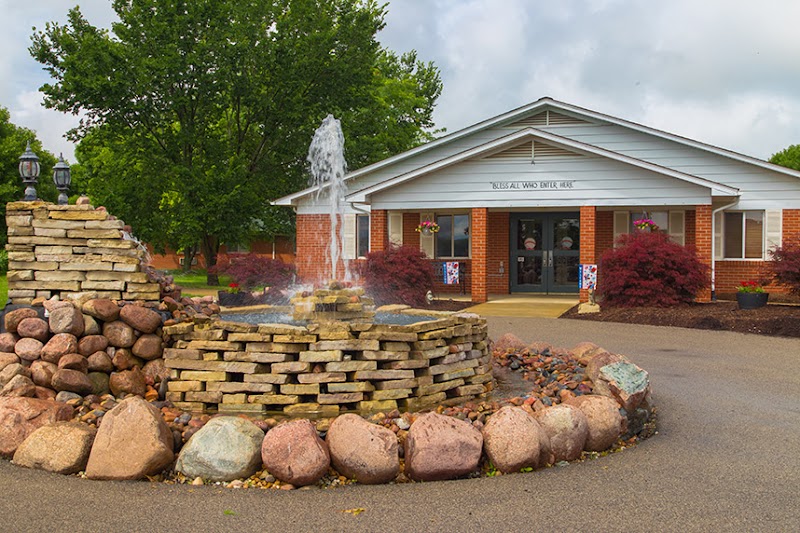
How is Cedar Ridge Health & Rehab Ctr Staffed?

CMS rates CEDAR RIDGE HEALTH & REHAB CTR's staffing level at 1 out of 5 stars, which is much below average compared to other nursing homes. Staff turnover is 52%, compared to the Illinois average of 46%.

What Have Inspectors Found at Cedar Ridge Health & Rehab Ctr?

State health inspectors documented 34 deficiencies at CEDAR RIDGE HEALTH & REHAB CTR during 2022 to 2025. These included: 1 Immediate Jeopardy (the most serious level, indicating potential for serious harm or death), 6 that caused actual resident harm, and 27 with potential for harm. Immediate Jeopardy findings are rare and represent the most serious regulatory concerns. They require immediate corrective action.

Who Owns and Operates Cedar Ridge Health & Rehab Ctr?

CEDAR RIDGE HEALTH & REHAB CTR is owned by a for-profit company. For-profit facilities operate as businesses with obligations to shareholders or private owners. The facility is operated by CREST HEALTHCARE CONSULTING, a chain that manages multiple nursing homes. With 116 certified beds and approximately 98 residents (about 84% occupancy), it is a mid-sized facility located in LEBANON, Illinois.
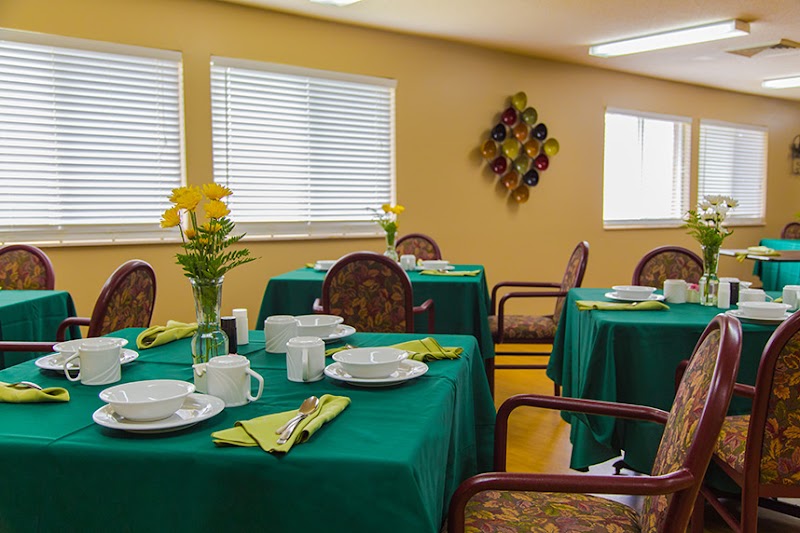
How Does Cedar Ridge Health & Rehab Ctr Compare to Other Illinois Nursing Homes?

Compared to the 100 nursing homes in Illinois, CEDAR RIDGE HEALTH & REHAB CTR's overall rating (1 stars) is below the state average of 2.5, staff turnover (52%) is near the state average of 46%, and health inspection rating (2 stars) is below the national benchmark.

What Should Families Ask When Visiting Cedar Ridge Health & Rehab Ctr?

Based on this facility's data, families visiting should ask: "What changes have been made since the serious inspection findings, and how are you preventing similar issues?" "Can you walk me through typical staffing levels on day, evening, and night shifts?" "Can I visit during a mealtime to observe dining assistance and food quality?" "How do you handle medical emergencies, and what is your hospital transfer rate?" These questions are particularly relevant given the facility's Immediate Jeopardy citations and the below-average staffing rating.

Is Cedar Ridge Health & Rehab Ctr Safe?

Based on CMS inspection data, CEDAR RIDGE HEALTH & REHAB CTR has documented safety concerns. Inspectors have issued 1 Immediate Jeopardy citation (the most serious violation level indicating risk of serious injury or death). The facility has a 1-star overall rating and ranks #100 of 100 nursing homes in Illinois. Families considering this facility should ask detailed questions about what corrective actions have been taken since these incidents.

Do Nurses at Cedar Ridge Health & Rehab Ctr Stick Around?

CEDAR RIDGE HEALTH & REHAB CTR has a staff turnover rate of 52%, which is 6 percentage points above the Illinois average of 46%. Moderate turnover is common in nursing homes, but families should still ask about staff tenure and how the facility maintains care continuity when employees leave.

Was Cedar Ridge Health & Rehab Ctr Ever Fined?

CEDAR RIDGE HEALTH & REHAB CTR has been fined $180,739 across 4 penalty actions. This is 5.2x the Illinois average of $34,886. Fines at this level are uncommon and typically indicate a pattern of serious deficiencies, repeated violations, or failure to correct problems promptly. CMS reserves penalties of this magnitude for facilities that pose significant, documented risk to resident health or safety. Families should request specific documentation of what issues led to these fines and what systemic changes have been implemented.

Is Cedar Ridge Health & Rehab Ctr on Any Federal Watch List?

CEDAR RIDGE HEALTH & REHAB CTR is not on any federal watch list. The most significant is the Special Focus Facility (SFF) program, which identifies the bottom 1% of nursing homes nationally based on persistent, serious quality problems. Not being on this list means the facility has avoided the pattern of deficiencies that triggers enhanced federal oversight. This is a positive indicator, though families should still review the facility's inspection history directly.