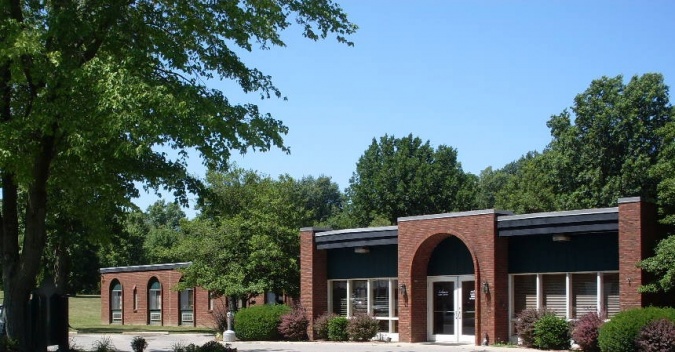
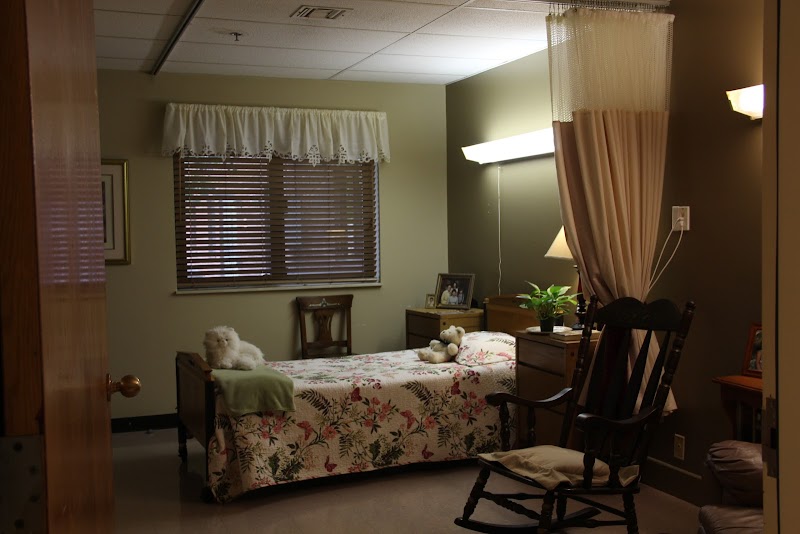

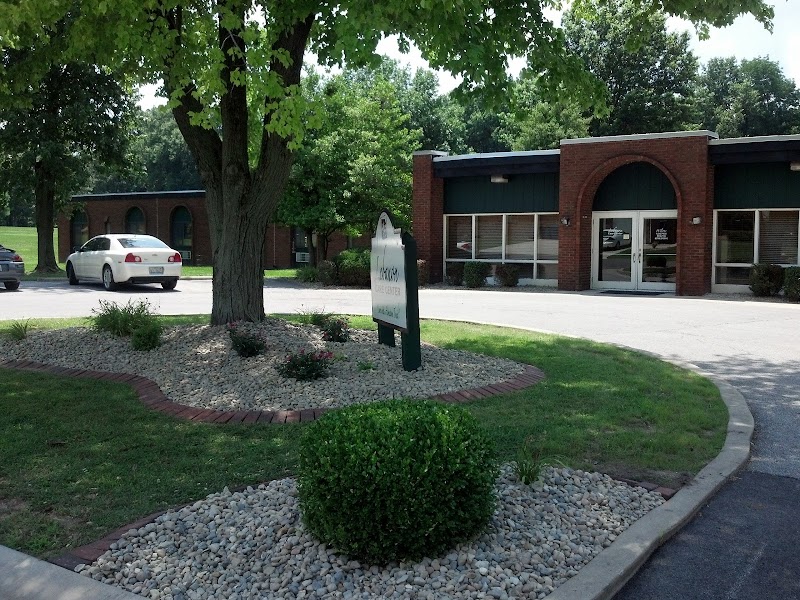
EVERCARE OF LEBANON

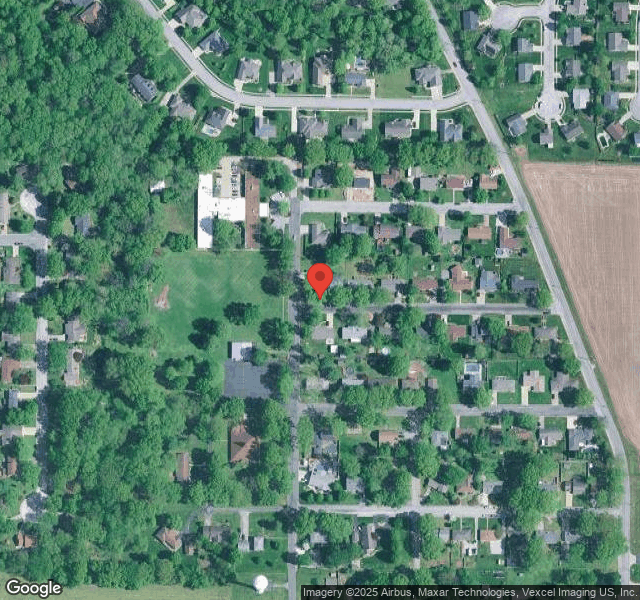
1201 NORTH ALTON, LEBANON, IL 62254 (618) 537-4401
For profit - Limited Liability company 90 Beds EVERCARE SKILLED NURSING Data: November 2025 1 Immediate Jeopardy citation
Trust Grade
0/100
#517 of 665 in IL
Last Inspection: December 2024

Within standard 12-15 month inspection cycle. Federal law requires annual inspections.

Overview

Evercare of Lebanon has received a Trust Grade of F, indicating significant concerns and a poor reputation in the nursing home sector. Ranking #517 out of 665 facilities in Illinois places it in the bottom half of the state's nursing homes, while it ranks #9 out of 15 in St. Clair County, showing that only one local option is better. The facility has a concerning trend of improving, with issues decreasing from 17 in 2024 to just 2 in 2025, but it still faces serious problems. Staffing is rated poorly with a 1/5 star rating, and the turnover rate of 53% is average, which means staff may not be as familiar with residents. The facility has also accumulated $214,952 in fines, which is higher than 91% of Illinois facilities, indicating ongoing compliance issues. Moreover, RN coverage is notably low, less than 98% of state facilities, which is critical because registered nurses can catch problems that CNAs might miss. Specific incidents include a resident eloping from a secured memory unit at 3 AM, wandering into the street before being found by a civilian, and failures to prevent resident-to-resident abuse, which resulted in harm. While the facility has made some strides in decreasing issues, the serious nature of these incidents raises significant concerns for families considering care options for their loved ones.

Trust Score
F
0/100
In Illinois
#517/665
Bottom 23%
Safety Record
High Risk
Review needed
Inspections
Getting Better
17 → 2 violations
Staff Stability
⚠ Watch
53% turnover. Above average. Higher turnover means staff may not know residents' routines.
Penalties
○ Average
$214,952 in fines. Higher than 62% of Illinois facilities. Some compliance issues.
Skilled Nurses
⚠ Watch
Each resident gets only 10 minutes of Registered Nurse (RN) attention daily — below average for Illinois. Fewer RN minutes means fewer trained eyes watching for problems.
Violations
⚠ Watch
38 deficiencies on record. Higher than average. Multiple issues found across inspections.
★☆☆☆☆
1.0
Overall Rating
★☆☆☆☆
1.0
Staff Levels
★★☆☆☆
2.0
Care Quality
★☆☆☆☆
1.0
Inspection Score
Stable
2024: 17 issues
2025: 2 issues

The Good

  • Full Sprinkler Coverage · Fire safety systems throughout facility
  • No fines on record

Facility shows strength in fire safety.

The Bad

1-Star Overall Rating

Below Illinois average (2.5)

Significant quality concerns identified by CMS

Staff Turnover: 53%

Near Illinois avg (46%)

Higher turnover may affect care consistency

Federal Fines: $214,952

Well above median ($33,413)

Significant penalties indicating serious issues

Chain: EVERCARE SKILLED NURSING

Part of a multi-facility chain

Ask about local staffing decisions and management

The Ugly 38 deficiencies on record

1 life-threatening 3 actual harm
Jul 2025 2 deficiencies 1 IJ
CRITICAL (J) 📢 Someone Reported This

A family member, employee, or ombudsman was alarmed enough to file a formal complaint

Immediate Jeopardy (IJ) - the most serious Medicare violation

Accident Prevention (Tag F0689)

Someone could have died · This affected 1 resident

**NOTE- TERMS IN BRACKETS HAVE BEEN EDITED TO PROTECT CONFIDENTIALITY** Based on observation, interview and record review the facility failed to ensure residents did not exit through an exit door and ...

Read full inspector narrative →
**NOTE- TERMS IN BRACKETS HAVE BEEN EDITED TO PROTECT CONFIDENTIALITY** Based on observation, interview and record review the facility failed to ensure residents did not exit through an exit door and were being supervised to prevent any potential elopements for 1 of 6 residents reviewed for elopement in the sample of 15. This failure resulted in R2 pushing the exit alarm and exiting the facility around 3AM on 6/19/2025 from a secured memory unit into pitch darkness and was found wandering around by a civilian driving in his car two subdivisions over (one block east and one block north) from the facility. This past non-compliance occurred on 6/19/2025.Findings include: The Immediate Jeopardy began on 6/19/2025 when R2 eloped from the facility at around 3AM in the morning in the pitch darkness and R2 was found on the side of the road by a civilian. The civilian was driving their car and contacted the police department because R2 was confused and wandering around in the street. V1 (Administrator) was notified of the Immediate Jeopardy on 7/3/25 at 2:30PM. The surveyor confirmed by observation, interview, and record review, that the immediacy was removed, and the deficient practice was corrected, on 6/19/24. R2's Physician Order Sheet (POS) for June 2025 document a diagnosis of Encephalopathy, HTN (Hypertension), neurocognitive disorder with Lewy bodies, and cerebral atherosclerosis (Dementia). R2's Minimum Data Set (MDS) dated [DATE] document R2 was severely impaired, and she requires specialized unit Alzheimer/dementia. R2's Care Plan does not address elopement behaviors before 6/19/2025. R2'S Care Plan documents (R2) has an ADL (activities of daily living) self-care deficit related to decreased physical functioning and severe cognitive impairment. Date initiated 2/10/2025. (R2) is High risk for falls related impulsive unaware of safety needs, poor judgment, decreased physical function, medication that can predispose to falls. R2's Elopement Evaluation dated 1/24/2025 documents, Risk for wandering/Elopement Identified. R2's Progress Notes dated 5/3/2025 at 1:10 PM, Late Entry: Elopement Evaluation: History of elopement while at home: No. Wandering behavior a pattern or goal-directed: No. Wanders aimlessly or non-goal-directed: Yes. Wandering behavior likely to affect the safety or well-being of self/others: No. Wandering behavior likely to affect the privacy of others: No. Recently admitted or re-admitted (within past 30 days) and has not accepted the situation: No. Elopement Score: 2.0. R2's Progress Notes dated 6/19/2025 at 4:06 PM, Note Text: Writer notified (R2) (eloped from the) facility around 3:45 am. Stated that Alarm sounded, staff check door and surrounding did not see anyone. Did a head count and realized that (R2) was not available. Staff notified Admin and 100 Nurse of situation. Staff got in vehicle and located (R2). (Son) was contacted and made aware of elopement. (R2) is doing fine, stated that she was just trying to go home. One to One has been put in place. Room move further away from exit door and 15 min. checks started. Care plan updated and education to be given to staff by DON (Director of Nursing). R2's Initial Report to the state surveying agency for incident date 6/19/2025 documents, at 3:35 AM, (R2) is an [AGE] year-old female that residents at (Facility). (R2) has the diagnosis of but not limited to encephalopathy, HTN, neurocognitive disorder with Lewy bodies and cerebral atherosclerosis. Alleged elopement from secured memory unit without injury. Final report to follow. R2's Final Report documents, On 6/19/2025 at 3:35 AM staff responded to the 300 North door alarm. CNA on the unit went to the door, did a visual parameter check from the doorway, no findings. Staff then followed out elopement procedure and proceeded with a head count, simultaneously (V6 Licensed Practical Nurse/LPN) was outside checking the perimeter of the facility. Staff contacted (V6) that (R2) was not accounted for. (V1) and DON (Director of Nursing) were notified. (V6) after completion of parameter check got into her vehicle to widen the search. At approximately 3:42AM, (V6) on the street parallel to the facility (R2) was noted to be sitting in a front yard with a local resident. (R2) was out of the facility for approximately 7 minutes. She stated Honey, I am so sorry, I just wanted to go home. (R2) was dressed appropriately for the weather, she was wearing proper foot ware. Police did come out to the facility at approximately 4 AM to ensure that resident was well, since local resident had called them. No concerns were noted by the police. Conclusion: the root cause of (R2) exiting the Facility is due to her confusion related neurocognitive disorder with Lewy bodes, Staff followed procedures and located (R2) in a timely manner. On 6/30/2025 at 1:08 PM, V6 (LPN) stated, I was working the night (R2) got out of the facility. It happened around 3 AM in the morning because it was still dark outside. (R2's) room is on the locked women's dementia unit. (R2's) room was down the hall close to the exit door. When (R2) exited through the exit door, I did not see her leave, but the alarm went off. We looked outside the door but could not see anything because it was pitch black. (R2) went out the door and me and (V4), Certified Nursing Assistant (CNA), ran out the door looking for her. We did a sweep, but it was so dark outside, and we could not find her. After looking for her, I got in my car, and I finally found her in the second subdivision in someone's yard. There was a man with her at that time. I am not sure how long she was gone for. When I found her, we did an assessment after I brought her back here and she did have bruises on her legs but seemed to be okay. I am not sure what she was wearing at that time, but I think it was appropriate. I did a skin assessment on her and she did have bruising on both of her shins, and I believe her forearm. A Statement provided by V6 dated 6/19/2025 documents, I was on the 200 hall nurses' station and heard 200 North door alarm sound. I headed towards the door and another staff member was already there looking outside. (V1) and other nurse alerted, and I went outside and got in my vehicle and started searching. Came upon bystander assisting resident. He stated she was sitting the grass in a front yard. Resident got right into my vehicle. On 6/30/2025 at 4:50 PM, V10 (Local Police) stated, We got a call after 3:10 AM from a male citizen who said they were driving in the early hours of the morning and found a confused woman wandering in the road. The woman was one block east, and one block north of the (Facility). We found out that the confused woman was a resident at the nursing home and all the staff had lost sight of her. (R2) had eloped from the (Facility). We did not get a call from the (Facility) but from a male citizen because they were concerned for her safety. I did not do a report and staff arrived and took (R2) back to the (Facility) and I went later and checked on her at the facility. On 7/1/2025 at 1:03 PM, V4 (CNA) stated she had only been working in the facility for about two months. I remember that night (R2) got out because I was working the floor. I was giving care to another resident that night and was in the resident's room when I heard the door alarm go off and I went running. The nurse (V6) and I were both looking but we did not see anything, but it was dark outside. I almost fell in a hole, there is a door drop pad and I almost fell. V6 went one way, and I went the other and we could not find her so we both got in our cars and went opposite directions looking for (R2). I did not find (R2) but (V6) did find her and brought her back to the facility. I think she was gone for about a half an hour. (R2) said she wanted to go home. The Police came by later and was checking on her. I am not sure what she was wearing. A Statement Provided by V4 (CNA) dated 6/19/2025, documents, I was on the 100-hall nurse station when I was notified by another staff member that there was possible elopement. I went to the 200-hall while staff was outside searching. Searched hall and completed head count. On 7/2/2025 at 1:14 PM, V17 (CNA) stated she was working the 100-hall, and a staff member came up to her to tell her a resident went out the door. I went to the back hall, and we did a head count. It was around 3 AM in the morning. Things got hectic. They were able to find the resident and return them back to the facility. I am not sure how long they were actually gone. A statement provided by V17 dated 6/19/2025 documents, I was on the 100-hall nurse station when I was notified by another staff member that there was possible elopement. I went to the 200-hall while staff was outside searching. Searched hall and completed head count. On 7/2/2025 at 1:23 PM, V19 (LPN) stated, I was the nurse working the 100-hall. A staff member came up to me and told me that someone had gotten out. I made sure someone was watching my hall as I went to the dementia locked unit and did a head count. (R2) was missing. The nurse on that hall (V6) and a CNA were looking for her outside. Things got hectic and I am not sure how long they were gone and/or when (R2) returned but I know (R2) was brought back to the facility. I am not sure what she was wearing but I believe it was appropriate. A statement provided by V19 dated 6/19/2025 documents, I was the 100-hall when staff notified me of possible elopement on 200-hall. I went to the 200-hall and searched all the rooms for possible missing resident and then back to the 100-hall and completed head count. On 7/2/2025 at 1:26 PM, V18 (CNA), stated, I was working the night (R2) got out of the facility. I was working the 100-hall. All I know is a CNA came from the locked dementia unit and asked us if we had seen anyone leave the building. I told her no, and I hadn't seen anyone. I went down to the dementia unit, and we did a head count on both sides male and female sides. I then walked out of the back, and I went one way, and the other CNA went the other way and we walked the entire perimeter of the building. I almost fell because it was pitch black and bumpy and I was so worried (R2) could have fallen too and maybe she was near me, but I could not see her. I did two walk arounds. Then I went back into the facility and got my cell phone because I wanted a light. I walked the perimeter again but could not find her. I then went back to my hall (100 hall). Later (V6) returned and she had found (R2). I would say (R2) was gone maybe 20-30 minutes give or take. A Statement provided by V18 (CNA) documents, I was on the 100-hall when I was notified of possible elopement. I immediately went outside and checked building perimeter then came inside and completed head count on Looking glass. On 7/2/2025 at 9:02 AM, R2 stated she had never tried to leave the facility. R2's skin assessment dated [DATE] document she had new issues of bruising on her front left knee, left shin, right shin and right inner forearm. On 7/2/2025 at 10:02 AM, upon exiting the emergency door there is a drop off from the cement slab to the ground of about three inches. There are large amounts of vegetation, in front including bushes, weeds and fences separating the facility from a subdivision. There are several breaks in the fence to the subdivision after each house, but the vegetation is thick. Upon finding an opening and crossing over one would be in a residential yard. This street is lined with houses and crossing the street is another line of houses, and behind these houses are steep inclines and more vegetation. R2 was found in the second subdivision. The Facility Missing Elopement Policy Guidelines policy with a revision date of 6/19/2025 documents, The facility strives to promote residents' safety and protect the rights and dignity of the residents. The facility maintains a process to assess all residents for risk for elopement, implement risk reduction strategies for those identified as an elopement risk, and institute measure for resident identification at the time of admission Elopement is the ability of a cognitively impaired resident who is not capable of protecting himself or herself from harm, to successfully leave the facility unsupervised and unnoticed who may enter into harm's way. * Wandering refers to a cognitively impaired resident's ability to move about insive (sic) the facility aimlessly, but often without clear purpose and without regard to one's personal safety. The Immediate Jeopardy that began on 6/19/2025 was corrected/removed on 6/19/25 after the facility took the following actions to correct the noncompliance prior to the start of current survey:R2's room was moved closer to the nurse's station. R2 was placed on 1:1 for 72 hours. R2's elopement risk was re-evaluated. R2 was placed on enhanced monitoring.All staff were in-serviced on elopement policies and procedures and verified on 6/19/2025.Daily audits were being conducted and reviewed by V1 and V2. The first daily audit was dated 6/19/25.Elopement evaluations were completed on all residents.Completion date 6/19/25
CONCERN (F) 📢 Someone Reported This

A family member, employee, or ombudsman was alarmed enough to file a formal complaint

Potential for Harm - no one hurt, but risky conditions existed

Deficiency F0727 (Tag F0727)

Could have caused harm · This affected most or all residents

Based on observation, interview and record review the facility failed to provide the required Registered Nurse (RN) coverage services for eight consecutive hours a day for seven days a week. This has ...

Read full inspector narrative →
Based on observation, interview and record review the facility failed to provide the required Registered Nurse (RN) coverage services for eight consecutive hours a day for seven days a week. This has the potential to affect all 75 residents living in the facility.Findings include: On 7/8/2019 at 10:33 AM, V1 (Administrator) stated, No, we do not have a RN working every day for 8 consecutive hours except for (V2) who is the Director of Nursing (DON). We have a Census of 78 residents. The DON is the only RN we have working in the building. We are in the process of recruiting. The only RN we had working was the DON. On 7/8/2025 at 10:39 AM, V2 stated, I am the only RN working in the building. I know I only count as half, but we do not have any other RN that worked on the days you requested. The Facility's Nursing Schedule dated 6/25/2025 -7/28/2025 documents there was no RN working in the facility except for the RN House Supervisor/DON. During this survey from 6/30/2025 to 7/3/2025 no RN was observed working in the Facility. V2 was not present in the building during the survey. The Facility undated Facility Assessment documents the Facility will employee Registered Nurses and Director of Nursing. The CMS 671 Form Long Term Care Facility Application form dated 7/8/2025 documented the facility had a census of 75 residents.
Dec 2024 8 deficiencies
CONCERN (D)

Potential for Harm - no one hurt, but risky conditions existed

Incontinence Care (Tag F0690)

Could have caused harm · This affected 1 resident

**NOTE- TERMS IN BRACKETS HAVE BEEN EDITED TO PROTECT CONFIDENTIALITY** 3. R5's admission Record, dated 12/17/24, documents R5 was admitted to the facility on [DATE] with diagnosis of Chronic Obstruct...

Read full inspector narrative →
**NOTE- TERMS IN BRACKETS HAVE BEEN EDITED TO PROTECT CONFIDENTIALITY** 3. R5's admission Record, dated 12/17/24, documents R5 was admitted to the facility on [DATE] with diagnosis of Chronic Obstructive Pulmonary Disease (COPD), Atrial Fibrillation, Hypertension, Arthritis, Major Depressive disorder, Generalized Anxiety disorder, Bipolar Disorder, Right and Left above knee amputations (AKA), and Dependence on supplemental oxygen. R5's Care Plan, updated 8/27/24, documents R5 is rarely able to perform Activities of Daily Living (ADLs) without weight bearing/hands on assist of 1-2 caregivers related to Amputation Bilateral AKA. Interventions: Bed Mobility: R5 requires max assist of one staff to turn and reposition in bed, Side Rails: Bilateral half rails up as per doctor order for increased independence with bed mobility, Toilet Use: R5 requires partial to max assist by one staff for toileting, utilizes urinal and bed pan for toileting, not a candidate for toilet use due to sitting balance. Transfer: Assist to transfer R5 using full body mechanical lift device and two staff members, keep hand on R5 to reassure of safety. R5's Minimum Data Set (MDS), dated [DATE], documents R5 has a Moderate Cognitive Impairment and is Dependent on staff for toileting, bathing, bed mobility, chair/bed-to-chair transfer, sit to lying and lying to sit on side of bed. R5 is frequently incontinent of urine and occasionally incontinent of bowel. On 12/16/24 at 9:55 AM, R5 stated that he just voids in his incontinence brief and will let staff know to get cleaned up. On 12/16/24 at 12:05 PM, V9 (CNA) was seen performing incontinent care on R5 prior to getting him up for lunch. V9 came into room with gloves on and a clean brief in her hands. V9 started the water running in the sink, then left the room and returned to the room with one towel. V9 wet approximately a quarter of the towel in the sink and walked over to R5 and wiped R5's bilateral groins, and abdominal fold with the wet part of towel, then used the dry part of towel to dry the same areas. There was no wiping of R5's penis or scrotum. V9 had R5 roll to his left side by holding onto the bed rail, then used the same wet towel as previously used to wipe R5's buttocks and anal area. The soiled linen and brief were tucked under R5 as he rolled over to his right side for V9 to pull them out, then onto his back. V9 had R5 roll over to his left again while she reached inside his brief and wiped moisture barrier cream on his buttocks and then secured the brief. On 12/18/24 at 11:00 AM, V9 stated I always do hand hygiene when I start in the morning and then after I do something with the residents. On 12/18/24 at 12:10 PM, V1 (Administrator) stated I would expect the staff to perform timely and complete incontinent care, including proper equipment needed, proper hand hygiene and glove changes before care, during glove changes, and after care. All staff should be doing hand hygiene before and after resident contact and before leaving the resident's room. The Facility's Hand Hygiene Policy, dated 12/2018, documents in part: All staff will wash hands, as washing hands as promptly and thoroughly as possible after resident contact and after contact with blood, body fluids, secretions, excretions, and equipment or articles contaminated by them is an important component of the infection control and isolation precautions. The Facility's Perineal Cleansing Policy, dated 9/21/10, documents in part: To eliminate odor; to prevent irritation or infection and to enhance resident's self-esteem. Equipment: 1. Washcloth and towel. 2. Soap, other cleansing agent or (brand name cleaning agent). 3. Gloves. 4. Wash basin. 5. Plastic bag. Male without catheter: 4. Wet washcloth and apply cleansing agent chosen. 5. Wash pubic area, including upper inner aspect of both thighs as well as the penis and scrotum. b. Wash area under scrotum. 6. Rinse area in same sequence, if applicable. 7. Place soiled items in plastic bag. 8. Dry carefully and proceed with cleansing of the anal area. 10. Rinse cloth and proceed with the cleansing of the anal area. 11. Washing should alternate side to side, ending with the center anal area. 12. Rinse cloth and entire area in the same sequence, if applicable. 13. Place soiled items in plastic bag. 14. Dry area thoroughly. 15. Remove gloves and wash hands with soap and water, cleansing gel, or (brand name cleaning agent). 16. Apply clean incontinent product, clothes, or position resident comfortably. 17. Wash hands with soap and water, cleansing gel or (brand name cleaning agent). Note: The basic infection control concept for peri-care is to wash from the cleanest to the dirtiest area and remember to change or remove gloves and wash hands when going from working with contaminated items to clean items. Based on observation, interview, and record review the facility failed to provide incontinent care per standards of practice for 3 of 5 residents (R5, R11, R26) reviewed for incontinent care in a sample of 39. Findings include: 1. R11's Face Sheet, original admission date of 06/25/2020, documented she has diagnoses of but not limited to of Brain aneurysm, hypertension (HTN), Seizures, Cerebrovascular accident (CVA), Gastroesophageal reflux disease (GERD), Osteoarthritis, and Acute metabolic encephalopathy. R11's Minimum Data Set (MDS), dated [DATE], documented R11 is severely cognitively impaired with a brief interview for mental status (BIMS) of 07 out of 15 and is dependent on staff for her activities of daily living (ADLs). R11's Care Plan, admission date of 04/07/2024, documented R11 may be predisposed to develop skin impairment caused by pressure. Related to (R/T) Right hemiplegia, neuropathy, decreased mobility, incontinent bowel, and bladder (B&B). High risk per Braden. Goal: R11 will have intact skin, free of redness, blisters, or discoloration through review date. Interventions: Apply house stock incontinent barrier cream to peri area with every after incontinent episode and as needed. Toilet/change brief when wet and upon rising, at bedtime (HS) and after meals. R11 is at risk for skin impairment R/T incontinent of urine. Goal: Breakdown due to incontinence and brief use through the review date. Interventions: Incontinent: Check every 2 hrs (hours) and as required for incontinence. Wash, rinse, and dry perineum. Change clothing PRN after incontinence episodes. Clean peri-area with each incontinence episode. On 12/17/24 at 09:30 AM, V14 (Certified Nursing Assistant/CNA) and V15 (CNA Coordinator) were observed doing incontinent care on R11. R11's wet incontinent brief was removed by V14 and V15. V14 then assisted R11 onto her back and separated R11's legs. V14 took a disposable wipe and cleansed the left crease between R11's thigh and pubic area then disposed of the wipe. She got another disposable wipe and wiped down the right crease between R11's thigh and pubic area then threw the wipe away. V14 then took another disposable wipe, opened the labia, and cleansed the inner area and failed to wash the outer labia. She disposed of the wipe in the trash then took a towel and dried all the areas. R11 was assisted onto her left side and V14 cleansed the right buttock and gluteal cleft. A new brief was placed and R11 was rolled onto her back, the new brief was fastened. CNAs failed to apply barrier cream per R11's care plan. V14 and V15 failed to cleanse R11's left buttock. V14 and V15 also failed to use a washcloth, wash basin, and soap per facility policy. 2. R26's Face Sheet, dated 08/22/2023, documented R26 has diagnoses of but not limited to dementia, chronic kidney disease, diabetes mellitus II, hypertension (HTN), and hepatitis C. R26's MDS, dated [DATE], documented R26 is severely cognitively impaired with a BIMS of 04 out of 15 and requires substantial assistance from staff with all her ADLs and transferring. R26's Care Plan, dated 08/22/2024, documented R26 may be predisposed to develop skin impairment caused by pressure. R/T high risk per Braden scale- Risk factors noted as: decreased mobility and spends all of time in chair or bed, incontinent of B&B, diabetes, unaware of need to change position and unable to do so without staff assist, terminal care r/t heart failure. Intervention include but not limited to Apply house stock incontinent barrier cream to peri area after incontinent episode and as needed. Toilet/change brief when wet and upon rising, at HS and after meals. R26 is at risk for skin impairment r/t incontinent of urine and unable to retrain due to cognitive losses. R26 will remain free from skin breakdown due to incontinence and brief use through the review date. Interventions include but not limited to clean peri-area with each incontinence episode, check every two hours and as needed for incontinence. Wash, rinse, and dry perineum. On 12/17/24 at 10:40 AM, V14 (CNA) and V10 (CNA) assisted R26 onto her back and the old incontinent brief was removed by V14. V14 took a disposable wipe and cleansed the crease on the right and left side between the pubic area and inner thigh of R26. V14 then disposed of the wipe and got a new wipe. She separated the labia and cleansed the inner labia but failed to cleanse the outer labia. V14 took a clean towel and dried all areas. R26 was assisted onto her right side and left buttocks cleansed and dried she was then assisted onto her left side and right buttocks cleaned and dried. V14 and V15 failed to apply lotion or barrier cream per R26's care plan and failed to use a washcloth, soap, and wash basin per facility policy. On 12/18/24 at 12:47 PM, V1 (Administrator) stated if the resident's care plan documented barrier cream was to be applied after each incontinent episode, she would expect them to be using barrier cream on the resident.
CONCERN (D)

Potential for Harm - no one hurt, but risky conditions existed

Respiratory Care (Tag F0695)

Could have caused harm · This affected 1 resident

**NOTE- TERMS IN BRACKETS HAVE BEEN EDITED TO PROTECT CONFIDENTIALITY** 2. R5's admission Record, dated 12/17/24, documents R5 was admitted to the facility on [DATE] with diagnosis of Chronic Obstruct...

Read full inspector narrative →
**NOTE- TERMS IN BRACKETS HAVE BEEN EDITED TO PROTECT CONFIDENTIALITY** 2. R5's admission Record, dated 12/17/24, documents R5 was admitted to the facility on [DATE] with diagnosis of Chronic Obstructive Pulmonary Disease (COPD), Atrial Fibrillation, Hypertension, Arthritis, Major Depressive disorder, Generalized Anxiety disorder, Bipolar Disorder, Right and Left above knee amputations (AKA), Obstructive Sleep Apnea (OSA), and is Dependent on supplemental Oxygen (O2). R5's Care Plan, updated 8/27/24, documents R5 has oxygen therapy related to heart failure, COPD, chronic respiratory failure with hypoxia. Interventions: Give medications as ordered by physician, monitor for signs/symptoms of respiratory distress, Oxygen Settings: O2 at 3 Liters (L)/Nasal Cannula (NC) continuously, position R5 to facilitate ventilation/perfusion matching: Head of Bed (HOB) elevated or extra pillows behind back when in bed due to unable to lay flat. It continues R5 is at risk for complications from COPD, OSA, Chronic Respiratory Failure with Hypoxia. Interventions: Head of bed elevated and/or extra pillows behind his back when in bed due to unable to lay flat or out of bed upright in a chair during episodes of difficulty breathing. R5's Minimum Data Set (MDS), dated [DATE], documents R5 has a Moderate Cognitive Impairment and is Dependent on staff for toileting, bathing, bed mobility, chair/bed-to-chair transfer, sit to lying and lying to sit on side of bed. R5 is frequently incontinent of urine and occasionally incontinent of bowel. R5's Physician Order, dated 11/30/24, documents Change O2 tubing and humidifier weekly on Sunday 10P-6A. R5's Treatment Administration Record (TAR), dated December 2024, documents Change O2 tubing and humidifier weekly on Sunday 10P-6A. On 12/16/24 at 9:55 AM, R5 was seen lying flat in bed on one pillow, and on O2 at 3 L/NC, no humidified bottle seen attached to concentrator. On 12/17/24 at 9:45 AM, R5 seen lying in bed flat with one small pillow under his head. R5 had both nasal cannulas on him, one from his portable oxygen tank on the back of his wheelchair, and the one attached to the concentrator next to his bed with both running at 3 L/NC with no humidified bottle of water attached. On 12/17/24 at 11:45 AM, R5's Oxygen concentrator was running at 3 L/NC to a nasal cannula lying on the bed and not on R5. There was no water bottle (humidified) attached to the concentrator. 3. R31's admission Record, dated 12/18/24 documents R31 was admitted to the facility on [DATE] with diagnosis of Obesity, Osteoporosis, Anxiety Disorder, Chronic Obstructive Pulmonary Disease (COPD), Pulmonary Embolism, Venous Thrombosis/Embolism, and Gout. R31's Care Plan, dated 12/6/24, documents R31 is at risk for complications from COPD. Interventions: Give aerosol or bronchodilators as ordered, head of bed elevated. R31's MDS, dated [DATE], documents R31 is cognitively intact and is dependent on staff for all Activities of Daily Living (ADLs). R31's Physician Order, dated 3/1/23, documents Oxygen at 2 L (liters)/NC (nasal cannula) to keep sats >90% as needed. R31's Physician Order, dated 3/1/23, documents Change O2 tubing on Sundays 10-6. On 12/16/24 at 10:00 AM, R31 was seen lying in bed on O2 at 3 L/NC with a humidified water bottle not dated and empty while attached to the oxygen concentrator. On 12/17/24 at 11:42 AM, R31's Oxygen concentrator was running at 3 L/NC with cannula lying on the floor and a water bottle attached to the concentrator that was empty and not dated. On 12/18/24 at 11:40 AM, V8 (LPN), stated All of the nurses are responsible for setting up Oxygen for the residents who have orders for it. There should be a humidified water bottle attached to the concentrator and both the water bottle and the nasal cannula get replaced once a week. On 12/18/24 at 12:15 PM, V1 (Administrator) stated The nurses should be putting a new humidified water bottle on each Oxygen concentrator with a date of attachment, along with a clean nasal cannula for the resident once a week. The Facility's Liquid Oxygen Policy, dated 8/2003, documents in part: A method of supplying supplemental oxygen to a resident. A. Liter flow should be checked and documented every shift. Equipment Needed: D. Humidifier. Procedure: Attach humidification. The policy does not address dating of oxygen supplies. Based on observation, interview and record review, the facility failed to ensure oxygen tubing was dated as well as provide humidified water per their policy for 3 of 3 residents (R5, R12, R31) reviewed for oxygen administration, in the sample 39. Findings include: 1. On 12/16/2024 at 10:46 AM, R12 was wearing an oxygen cannula connected to a humidifier bottle attached to an oxygen concentrator. There was no date observed on the bottle or the tubing. On 12/17/2024 at 1:05 PM, V7 (Licensed Practical Nurse/LPN) stated oxygen tubing and humidifier bottles are changed on night shift by the nurse and it should be dated. R12's Medication Administration Record (MAR) dated 12/1/2024-12/31/2024 documents R12 has a Physician's Order for oxygen at 2-5 Liters/minute as needed for shortness of breath. R12's Physician's Orders do not include an order to change the oxygen tubing. On 12/17/2024 at 1:50 PM, V1 (Administrator) and V2 (Director of Nursing) stated the oxygen tubing should be dated to ensure it is changed weekly. On 12/18/2024 at 2:10 PM, V3 (Assistant Director of Nursing/ADON) stated oxygen tubing should be dated and changed weekly. As of 12/19/2024 at 10:30 AM, R12's oxygen tubing remained undated and was in use.
CONCERN (E)

Potential for Harm - no one hurt, but risky conditions existed

Resident Rights (Tag F0550)

Could have caused harm · This affected multiple residents

**NOTE- TERMS IN BRACKETS HAVE BEEN EDITED TO PROTECT CONFIDENTIALITY** Based on interviews, observations, and record reviews the facility failed to feed residents in a dignified manner for 4 out of 4...

Read full inspector narrative →
**NOTE- TERMS IN BRACKETS HAVE BEEN EDITED TO PROTECT CONFIDENTIALITY** Based on interviews, observations, and record reviews the facility failed to feed residents in a dignified manner for 4 out of 4 residents (R11, R14, R17, R34) reviewed for dignity in a sample of 39. Findings include: 1.R34 was admitted to the facility on [DATE] with diagnoses of, in part, dementia with behavioral disturbances, major depressive disorder, and chronic post-traumatic stress disorder. R34's Minimum Data Set (MDS) dated [DATE] documented he has severely impaired cognitive skills for daily decision making. R34's MDS further documented he is dependent on staff for eating assistance. R34's Care Plan last revised on 09/4/2024 documented R34 is dependent for Activities of Daily Living (ADLs) with interventions for staff to feed him his meals. On 12/16/2024 at 12:25 PM, V11 (Certified Nursing Assistant/CNA) fed R34 while standing over him. 2. On 12/16/24, at 12:14 PM, R11, R14, and R17 were seated at a table together in the dining room. When questioned regarding needed level of assistance, V14 (CNA) and V15 (CNA) stated they are feeders. This was done within earshot of the R11, R14 and R17. R11's Minimum Data Set (MDS) documented that R11 is severely cognitively impaired and is dependent on staff for eating. R17's MDS documented that R17 is severely cognitively impaired. It documented that she requires partial/moderate assistance with eating. R14's MDS dated [DATE] documented R14 is severely cognitively impaired. It documented that she is dependent for eating. On 12/18/24 at 1:30 PM V19 (CNA) stated that when addressing residents who need assistance with their meals being fed to them, she would address the resident by their name and inform them that she would be feeding their lunch. V19 would then proceed to tell them what is on their plate and ask which food they would like to start with. On 12/18/24 at 3:15 PM V20 (CNA) stated that when addressing residents who need feeding assistance with their meals, she would address the resident by his name as Mr. or Mrs. and then inform them that it is time to eat and then she would tell them what is on the menu for that meal. The facility's Assistance with Meals Policy, with a revision date of 07/2017, documented residents who cannot feed themselves will be fed with attention to safety, comfort, and dignity, for example: not standing over residents while assisting them with meals and avoiding use of labels when referring to residents such as feeders.
CONCERN (E)

Potential for Harm - no one hurt, but risky conditions existed

Accident Prevention (Tag F0689)

Could have caused harm · This affected multiple residents

**NOTE- TERMS IN BRACKETS HAVE BEEN EDITED TO PROTECT CONFIDENTIALITY** 2. R5's admission Record, dated 12/17/24, documents R5 was admitted to the facility on [DATE] with diagnosis of Chronic Obstruct...

Read full inspector narrative →
**NOTE- TERMS IN BRACKETS HAVE BEEN EDITED TO PROTECT CONFIDENTIALITY** 2. R5's admission Record, dated 12/17/24, documents R5 was admitted to the facility on [DATE] with diagnosis of Chronic Obstructive Pulmonary Disease (COPD), Atrial Fibrillation, Hypertension, Arthritis, Major Depressive disorder, Generalized Anxiety disorder, Bipolar Disorder, Right and Left above knee amputations (AKA), and Dependence on supplemental oxygen. R5's Care Plan, updated 12/16/24, documents R5 is a High Risk for falls. Interventions: Use Mechanical Lift with two assist and gait belt for all transfers. Use additional assist as needed when R5 is not feeling well, felling weak or dizzy device used for transfer Mechanical Lift, Observe for and educate on proper technique and use of device. It continues R5 has had an actual fall with on apparent injury. Root cause may be related to A&O (alert and oriented) R5 chooses self-mobility despite known/understood risks. 8/30/24: fall from bed during self-mobility-mattress slick vinyl. Interventions (9/3/24): For no apparent acute injury, determine and address causative factors of the fall, OT (Occupational Therapy) consult for safety in executing ADL (Activities of Daily Living) tasks, PT (Physical Therapy) consult for strength and mobility, continue interventions on the at-risk plan, new mattress that covering is not slick vinyl, 11/28/24: fall during car transfer per family when returning from LOA (Leave of Absence). Interventions (11/29/24): Educate family on R5's safety with transfers and requesting staff assistance when returning from LOA. R5's Care Plan, continued, documents R5 is alert and oriented and usually makes decisions regarding cares, decision made to self-transfer despite consequences, has physical limitations that may place R5 at risk for falls during transfer. R5 understands risks of self-transfer and believes benefit of independence outweigh risks/consequences of fall. 10/17/24: Fall with self-transfer - Root cause: hypotension. 10/15/24: Fall with self-transfer - not receptive to education on the ill effects of self-transfer. 11/19/24: Fall wheelchair to floor due poor sitting balance, and another fall bed to floor due to self-transfer. Interventions (10/15/24): 15-minute checks, (8/27/24): Assist R5 to clean and place prescribed eyewear when awake, assure R5 that staff is plentiful and available for assist at any time, encourage to verbalize feeling regarding bothering staff. Encourage R5 to use call light and ask for help when feeling weak or lightheaded, fall risk assessment quarterly and as needed with change in condition or fall status, review quarterly and PRN (as needed) R5's ADL, mobility, cognitive, behavior, and overall medical status, Interdisciplinary team (IDT) review of changes and needs with R5 and/or responsible party during care plan. R5's MDS, dated [DATE], documents R5 has a Moderate Cognitive Impairment and is Dependent on staff for toileting, bathing, bed mobility, chair/bed-to-chair transfer, sit to lying and lying to sit on side of bed. R5 is frequently incontinent of urine and occasionally incontinent of bowel. The Facility's Fall Log, for the past six months, documents R5 has had falls on 8/29/24, 10/15/24, 10/17/24, 11/19/24 X 2, 11/28/24, and 12/13/24. R5's Fall Risk Assessment, dated 10/28/24 documents R5 is a high fall risk. R5's AIM (Assessment Intervention Management) for Wellness Assessment, dated 11/19/24, documents R5 had a fall: Resident found on floor lying by wheelchair in room. Resident states he slipped from his chair. Fall Risk Assessment, dated 11/19/24, documents R5 is a High Fall Risk. R5's AIM for Wellness Assessment, dated 11/19/24 (second fall), documents R5 had a fall: Resident found lying on floor on back. Resident fell from bed unwitnessed, no injury noted. Placed on neuro checks and ROM (range of motion) WNL (within normal limit). R5's AIM for Wellness Assessment, dated 11/28/24, documents R5 had a fall: Notified by daughter in front parking lot as they had resident on slide board attempting to get him into wheelchair out of car. They had to lower him to the ground. By the time this nurse got down there they were wheeling him into the building. Assessed resident in room. VS WNL. Appeared somewhat out of sorts. Daughter said that he was high and had been smoking, did not say what he was smoking. Fall Risk Assessment, dated 11/29/24, documents R5 is a High Fall Risk. R5's AIM for Wellness Assessment, dated 12.13/24, documents R5 had a fall: Resident was in his room when attempting to transfer himself to his bed. Wheelchair rolled back and resident fell to floor on his buttock. ROM and Vitals WNL, Resident placed on neuro checks and fall precaution. Fall Risk Assessment, dated 12/13/24, documents R5 is a High Fall Risk. On 12/16/24 at 9:55 AM, R5 was seen lying in bed with bilateral AKAs. R5 stated that he has fallen several times while trying to get himself out of bed to his wheelchair, and usually lands on his butt. There are no fall precautions seen in the room. On 12/16/24 at 12:05 PM, V9 (Certified Nursing Assistant/CNA) was performing incontinence care on R5. After incontinence care, V9 told R5 that he can get himself up now and after three attempts just to sit up in bed, R5 got himself to sit up by using the wobbly side rail while pulling himself upright on the edge of the bed, then R5 scooted himself to the locked wheelchair next to his bed. R5 appeared to have difficulty getting himself up and over to the wheelchair with V9 not helping or standing by the bedside. V9 was picking up around the sink while R5 transferred himself. On 12/16/24 at 1:30 PM, R5 stated Some people will help me get in or out of my wheelchair, and others just walk away and leave me to do it myself. They don't do s*** around here, I have to do it myself. When asked if he refuses staff assistance, R5 stated No I don't refuse, but when they don't offer to help me, I just do it myself. On 12/17/24 at 9:45 AM, V9 (CNA) stated We try to stand by for (R5) but by the time we get there, he has already transferred on his own. We should be standing by him when he transfers to keep him safe. 3. R30's admission Record, undated, documents R30 was admitted to the facility on [DATE] with diagnosis of Generalized Anxiety Disorder, Major Depressive Disorder, Osteoporosis, Chronic Kidney Disease, Heart Failure, Atrial Fibrillation, and Hypertension. R30's Care Plan, dated 4/16/24, documents R30 has risk factors that require monitoring and intervention to reduce potential for falls. Interventions: Assess cognitive deficits and accommodate forgetfulness regarding safety devices and environmental risks, Encourage and assist placement of proper non-skid footwear, encourage rest periods during ambulation, place chair in hall for rest periods as needed. Encourage to use call light and ask for help when feeling weak or lightheaded. Encourage to wear brief during daytime hours to minimize risk of slipping on wet floor during toileting. Fall risk assessment quarterly and as needed with change in condition or fall status. IDT review of ADL status and fall potential with changes in condition or fall status. Ensure that adaptive devices-walker is within reach and in good repair, Keep call light within reach at all times. Answer promptly and notify R30 that help is coming. Keep environment well-lit and clutter free. Remind of safety precautions and limitations as necessary. Set up bathing supplies as needed and assist PRN to prevent spilling/slipping. It continues (11/7/24): R30 has had an actual fall with serious injury - fracture right foot. Root cause may be related to poor balance, loss of balance, unsteady gait. Interventions: Neuro-checks per facility protocol, OT consult for safety in executing ADL tasks, PT consult for strength and mobility, ST consult for cognitive evaluation. Continue interventions on the at-risk plan, New Intervention: (11/7/24) PT to eval and treat as indicated. It continues (4/16/24): R30 has increased risk for fractures/spontaneous fractures related to osteoporosis. it continues (11/7/24): R30 has a bone fracture related to ground level fall. Intervention: Support injured area with pillows and immobilize part as appropriate. R30's MDS, dated [DATE], documents R30 is cognitively intact and is dependent on staff for bathing and dressing, requires partial/moderate assistance for toileting and dressing, and requires substantial/maximal assistance from staff for all transfers. R30 is frequently incontinent of both bowel and bladder. R30's Nursing Summary Assessment, dated 8/9/24, documents R30 has not had any falls in last 30-days and is a Low Fall Risk. The Facility's Fall Log for the past six months, documents R30 has had one fall on 11/6/24. R30's AIM for Wellness Assessment, dated 11/6/24, documents R30 had a fall: Was notified by staff that resident fell upon entering TV Room. Resident is in sitting position, skin assessment done, has abrasion to side of right foot and unable to bear weight. C/O (complaint of) pain PRN (as needed) was given. Notified Dr., received NO (new order) for STAT X-Ray to right foot, ankle, tibia, and fibula 3 views. Notified DON (Director of Nurses), POA (Power of Attorney), of unwitnessed fall with injury. (x-ray company) called and on the way. R30's Fall Risk Assessment, dated 11/6/24, documents R30 was a Low Fall Risk. R30's Radiology Report, dated 11/6/24, documents R30 has an Acute Comminuted fracture of the distal right fibular shaft and medial malleolus with soft tissue swelling. On 12/16/24 at 9:28 AM, R30 was seen sitting on side of her bed with her right ankle ace wrapped. R30 stated she fell at the facility and fractured her ankle. There were no fall precautions seen in the room. R30's Call Light was seen hanging down the wall and between the wall and her bed and was not in reach of R30. On 12/17/24 at 11:50 AM, R30 was seen in her wheelchair with a large boot covering her left foot and ankle. R30 stated her physician's appointment went well, however, there is still an infection in her ankle. R30's Call Light is still hanging down the wall between her bed and the wall and not in reach. On 12/18/24 at 10:58 AM, R30 was seen asleep in her bed with her wheelchair next to side of her bed, with one wheel was locked and the other unlocked. R30's call light was still hanging down the wall and between her bed and the wall with the button on the floor. On 12/18/24 at 12:14 PM, V1 (Administrator) stated All residents who are on fall precautions should have fall interventions in place and their call lights within reach. The Facility's Fall Evaluation and Prevention Policy, undated, documents in part: To ensure that the resident's environment remains as free of accident hazards as is possible, and that each resident receives adequate supervision and assistance to prevent accidents. The goal is to prevent falls if possible and avoid any injury related to falls. The Care Plan should only specify a few interventions at a time so that the staff can determine what intervention is not successful and needs to be changed. Residents should be evaluated for their fall risk: On admission/re-admission to the home, following any change of status that may affect balance, mobility, or safety, Following a fall, and Quarterly. 4. R31's admission Record, dated 12/18/24 documents R31 was admitted to the facility on [DATE] with diagnosis of Obesity, Osteoporosis, Anxiety Disorder, Chronic Obstructive Pulmonary Disease, Pulmonary Embolism, Venous Thrombosis/Embolism, and Gout. R31's Care Plan, dated 12/6/24, documents R31's review shows low risk for falls. 9/6/24: High Fall Risk, 12/6/24: Fall Score 13 = High Risk. Interventions: 6/17/24: Be sure call light is within reach and encourage R31 to use it for assistance as needed. R31 needs prompt response to all requests for assistance. Follow facility fall protocol. It continues (6/19/24): R31 has had an actual fall with no apparent injury. Root cause may be related to attempted side to side bed mobility using mattress edge and rolled out of bed. Interventions: Restorative nursing bed mobility program review/initiation, continue interventions on the at-risk plan, New Intervention: half bilateral side rails to enable increased independence/safety with side-to-side bed mobility. It Continues (6/17/24): R31 is dependent for ADLs - unable to assist/assists only minimally. Interventions: Transfer R31 using mechanical device of (full body mechanical) lift and two staff members. Keep hand on R31 to reassure of safety if needed. R31's MDS, dated [DATE], documents R31 is cognitively intact and is dependent on staff for all ADLs. R31 is always incontinent of both bowel and bladder. The Facility's Fall Log for the past six months, documents R31 has only had one fall on 6/19/24. R31's Fall Risk Assessment, dated 6/19/24, documents R31 is not a High Fall Risk. R31's AIM for Wellness Assessment, dated 6/19/24, documents: Was notified by staff that resident was on the floor. Upon entering the room, resident was lying next to the bed. Skin assessment done; no injuries noted. Placed a call to doctor with no new orders received. Notified POA of unwitnessed fall with no injury. On 12/16/24 at 10:00 AM, R31 was seen lying in bed. R31 stated she fell out of bed once, but now she is bedridden and unable to walk, and doesn't get up on her own. On 12/16/24 at 11:50 AM, V9 (Certified Nursing Assistant/CNA), was about to get R31 out of bed and to her wheelchair using a full body mechanical lift device. Upon entrance, V9 already had the device sling under R31 and attached to the device, which was unlocked. V9 stated I have to go get some help. and waited for V10 (CNA) to come in and assist. V10 entered and both lifted R31 off the bed, having R31 hold onto the crossbar on the device, and pulled R31 to her wheelchair with neither CNA holding onto R31. V9 held the unlocked wheelchair and tilted it backwards, while V10 moved R31, swinging in the air, from her bed to her wheelchair, and then R31 was lowered and disconnected from the lift. On 12/18/24 at 11:02 AM, V9 (CNA) stated I have to use two people with the (full body mechanical lift) because I can't do it by myself. On 12/18/24 at 12:14 PM, V1 (Administrator) stated All residents who are on fall precautions should have fall interventions in place. I would expect any staff using the (full body mechanical lift device) to use two people and to hold onto the resident during the entire transfer. The Facility's Mechanical Lift Policy, dated 10/30/08, documents The mechanical lift may be used to lift and move a resident with limited ability during transfer while providing safety and security for residents and nursing personnel. Procedure: 8. Position lift at side of bed. Lock wheels on lift. 10. Have resident cross arms over chest. 11. Instruct the resident that they will be raised off the bed and start to raise the resident using a slow, steady movement. It may be necessary to support the resident's head. 12. Move resident to chair or wheelchair and lower resident. The guidance strap may be used to guide the resident into a proper position while resident is being lowered. Based on observation, interview, and record review, the facility failed to implement progressive care plan interventions and ensure interventions were followed to prevent falls for 4 of 6 residents (R5, R10, R30, and R31) reviewed for falls in a sample of 39. Findings include: 1. R10's Face Sheet, admission date of 04/12/24 documented R10 has diagnoses of but not limited to Dementia, malignant neoplasm of prostate, Chronic obstructive pulmonary disease (COPD), and hypertension (HTN). R10's Minimum Data Set (MDS) dated [DATE], documented R10 is moderately cognitively impaired with a brief interview for mental status (BIMS) of eight out of 15 and he requires supervision or touching assistance with transfers and walking. R10's Care Plan, with admission date of 04/14/24, documented R10 has risk factors that require monitoring and intervention to reduce potential for self-injury. High risk for fall per risk assessment. Had a fall in previous six months when residing at home with son. Date initiated: 04/22/24. Interventions include but not limited to keep environment well-lit and clutter free. Observe for unsteady/unsafe transfer or ambulation and provide stand by or balance support as needed. Remind of safety precautions and limitations as necessary. It also documented R10 has had an actual fall with no apparent injury, minor injury, Root cause may be related to (r/t) assistive device not within reach, cognitive impairment- unaware of safety needs. 09/05/24 fall without injury, root cause: cognitive deficits-forgets to utilize walker even with signs to remind him to use the walker on walker in room. 10/03/24 fall without injury, root cause: cognitive deficits-poor judgement & and unaware of safety needs. Interventions include but not limited to new interventions for prevention of this type includes staff to ensure cane or walker is within R10's reach when in bed. emergency room (ER) for eval for change in condition. 09/06/24 15-minute checks. 10/03/2024 Physical Therapy (PT)/Occupational Therapy (OT)/Speech Therapy (ST) to eval & treat as indicated. R10's Assess/Intercommunicate/Manage (A.I.M.) for Wellness form, dated 09/05/24, was reviewed and documented R10 had a fall. R10 was in his room walking without his walker, fell backwards into door sliding to the floor. The nurse did his assessment while on the floor and seen he didn't have any injuries and he did not voice any complaints. R10 was assisted up out of the floor with a gait belt and walked to his bed with his walker. R10's Fall Risk Assessment, dated 09/05/24, documented he was a high risk for falls with a score of 17. R10's Interdisciplinary Team (IDT) progress notes, dated 09/06/24 at 9:00 AM, was reviewed and documented the root cause of R10's fall on 09/05/24 was due to deficits- forgets to use his walker for ambulation and the new intervention was to start R10 on 15-minute checks. R10's A.I.M for Wellness form, dated 10/03/24, documented R10 had an unwitnessed fall in his room. Nurse was notified by staff R10 had fallen. Upon entering the room resident was in a sitting position and had his shoe in his hand and the comforter was under his feet. The nurse completed a skin assessment, and no redness, bruising, or other injury was noted. R10 complained of leg pain range of motion (ROM) was done and it was with in normal limits (WNL). The doctor was notified and said to monitor R10 and if he continues to complain to get an x-ray of his legs. R10's A.I.M for Wellness form, dated 10/15/24 documented R10 had an unwitnessed fall. R10 was lying face down. R10 was assessed while in the floor and was noted to have a skin tear to his left hand/fingers and steri-strips were applied. There were no other visible injuries noted. R10 complained of pain to his lower left abdomen when pressure applied with no rebound tenderness. He was assisted back to his wheelchair with gait belt and two assist. ROM WNL. Alert and able to make needs known. The Nurse Practitioner (NP) was notified, and new orders were given. R10's Fall Risk Assessment, dated 10/15/24, documented he was a high risk for falls with a score of 19. R10's 15-minute checks for the months of September 2024, October 2024, and November 2024, were reviewed and had multiple sections with no documentation R10 was checked every 15 minutes per his care plan intervention. On 12/18/24 at 12:47 PM V1 (Administrator) stated if someone was on 15-minute checks she would expect the 15-minute checks to be completed. V1 was given the October 2024 15-minute checks for R10 and informed they all appeared to be done in the same handwriting. V1 just shook her head.
CONCERN (E)

Potential for Harm - no one hurt, but risky conditions existed

Deficiency F0761 (Tag F0761)

Could have caused harm · This affected multiple residents

Based on observation, interview, and record review, the facility failed to date medications containers that had been opened, and to ensure proper medication storage was maintained during medication ad...

Read full inspector narrative →
Based on observation, interview, and record review, the facility failed to date medications containers that had been opened, and to ensure proper medication storage was maintained during medication administration for 4 of 4 residents (R6, R32, R49, R105) reviewed for medication labeling and storage in the sample of 39. Findings include: 1. On 12/16/24 at 9:48 AM, R49 was seen walking around her room. There was a cup of medications with eight pills in it sitting on the nightstand table. V8 (Licensed Practical Nurse/LPN) had already passed medications on R49's hall. R49's Medication Administration Record (MAR) dated 12/1/24 through 12/31/24, documents the following eight medications were given at 8:00 AM: Allopurinol 100 MG (milligram) Once Daily, Amlodipine 10 MG Once Daily, B Complex/C Folic Acid 1 MG Once Daily, Metoprolol 100 MG Once Daily, Sevelamer Carbonate 800 MG (2 tabs) TID (three times daily), Hydralazine 100 MG TID, and Vitamin D 4000units Once Daily. 2. On 12/16/24 at 10:07 AM, R32 was seen sitting on the side of her bed with Ellipta and Flonase Inhalers seen sitting on her nightstand table. V8 had already passed medications on R32's hall. R32's MAR, dated 12/1/24 through 12/31/24, documents the following medications was given at 8:00 AM: Anoro Ellipta Inhale one puff by mouth Once Daily. Fluticasone 50 MCG (microgram) one spray in each nostril Once Daily PRN (as needed) is listed on the MAR but was not documented as given. On 12/19/24 at 9:10 AM, V8 stated I never leave a cup of medications sitting in the resident room for them to take on their own. I make sure they take them when I give it to them. Inhalers are kept in the med cart. 3. On 12/16/2024 at 10:03 AM, the 100-hall medication cart was inspected with V7 (Licensed Practical Nurse/LPN). At this time, there was a bottle labeled (R6) escitalopram 5 milligrams/milliliters. At this time, V7 confirmed the bottle was opened and there was no date to indicate when the bottle was opened. V7 stated he writes the date on the bottle if he breaks the seal of the bottle. R6's Physician's Orders dated 12/1/2024-12/31/2024 documents, escitalopram 10 ml per G-tube (Gastroenterol tube). 4. On 12/16/2024 at 10:17 AM, R105 was in her room. There were two medication cups on the nightstand. One cup had two colored circular tablets and the other cup had a circular white pill in it. At this time, R105 stated one of the cups contained Tums tablets (2) and the other cup contained one Tylenol tablet. R105 stated she did not bring the medications from home. R105's Physician's Orders undated documents R105 can have two tablets of Tylenol 500 milligrams every 6 hours as needed for pain, as well as one Calcium Carbonate (tums) 500 mg daily at 8 AM. On 12/17/2024 at 11:14 AM, V7 (LPN) stated medications should not be kept at beside and he does not know of any residents who does keep them in their room. V7 stated he watches the residents to ensure they consume all their medications. On 12/17/2024 at 1:51 PM, V1 (Administrator) and V2 (Director of Nursing) stated medications at the bedside are not allowed. V1 added it is a big no. V1 and V2 stated liquid medications kept in bottles should be dated with the date the container was opened. On 12/18/2024 at 2:10 PM, V3 (Assistant Director of Nursing) stated medication bottles should be dated to reflect when the bottle was opened and medications should not be left at the bedside, unless there is a doctor's order, which R105 does not have. The Facility's Procurement and Storage of Medications Policy dated 11/6/2018 documents, All mediation containers shall be labeled with the date opened by the person breaking the container seal. The Facility's Medication Administration Policy dated 11/18/2017 documents, Drugs and biologicals are administered only by physicians and licensed nursing personnel. Definition: Drug administration shall be defined as an act in which a single dose of a prescribed drug or biologicals is given to a resident by an authorized person in accordance with all laws and regulations governing such acts. The complete act of administration entails removing an individual dose from a previously dispensed, properly labeled container (including a unit dose container), verifying it with physician's orders, giving the individual dose to the proper resident and promptly recording the time and dose given. It further documents, Observe the resident consume the medication to ensure resident swallows medication. Never leave prepared medications unattended. No medications should be left at bedside unless specifically ordered by the physicians and then only in limited amount as described by the physician.
CONCERN (F)

Potential for Harm - no one hurt, but risky conditions existed

Deficiency F0727 (Tag F0727)

Could have caused harm · This affected most or all residents

Based on interviews and record reviews the facility failed to provide Register Nurse (RN) coverage for at least eight consecutive hours a day, seven days a week. This has the potential to affect all 5...

Read full inspector narrative →
Based on interviews and record reviews the facility failed to provide Register Nurse (RN) coverage for at least eight consecutive hours a day, seven days a week. This has the potential to affect all 54 residents residing in the facility reviewed for RN coverage in a sample of 39. Findings include: The facility's Nursing Master Schedule documented the following dates did not have an RN working: 11/10/24, 11/23/24, 11/24/24, 11/30/24, 12/1/24, 12/7/24, 12/8/24, 12/14/24 and 12/15/24. On 12/17/24 at 11:38 AM, V14 (Certified Nursing Assistant), stated during the weekends the facility will frequently not have an RN on duty. On 12/17/24 at 10:54 AM, V1 (Administrator) stated she is aware the facility is short on RN coverage over the weekends. V1 stated there are job postings for RNs on three different websites and one RN is having health concerns so has she not been able to pick up shifts lately. The facility's Nurse Staffing Policy, undated, documented it is the policy of the facility to provide sufficient licensed and unlicensed nursing staff on each shift of the day to attain or maintain the highest practical physical, mental, and psychosocial well-being of each resident.
CONCERN (F)

Potential for Harm - no one hurt, but risky conditions existed

Infection Control (Tag F0880)

Could have caused harm · This affected most or all residents

**NOTE- TERMS IN BRACKETS HAVE BEEN EDITED TO PROTECT CONFIDENTIALITY** Based on observation, interview, and record review, the facility failed to operationalize the facility's Legionella Policy and P...

Read full inspector narrative →
**NOTE- TERMS IN BRACKETS HAVE BEEN EDITED TO PROTECT CONFIDENTIALITY** Based on observation, interview, and record review, the facility failed to operationalize the facility's Legionella Policy and Procedure and perform hand hygiene to prevent the spread of infections (R5). This has the potential to affect all 54 residents. Findings include: 1. On 12/17/24 at 9:20 AM, V17 (Maintenance Director) stated that he runs the water and flushes toilets monthly in the empty rooms. V17 stated he also checks the temperatures of the hot water in each room and flushes the boilers monthly. A log was provided with documented these checks occurring monthly. V17 stated that the city performs the water sampling. On 12/17/24 at 3:15 PM the Legionella Policy and Procedure was reviewed with V17. The policy documented to run water through taps and showers no longer in use or used infrequently for a minimum of one minute weekly. In addition, to check hot and cold-water temperatures after water has been running for one minute randomly weekly. V17 stated that he only runs the taps and showers in infrequently used rooms monthly and checks water temperatures in all rooms monthly. V17 provided a logbook which documented each room checked monthly. The policy and procedure direct maintenance director to take shower heads apart every three months to clean and disinfect. V17 stated that he has never taken the shower heads apart. On 12/18/2024 at 8:05 AM, V17 stated that he does not have a water flow diagram in the facility. When asked what areas of the facility have been identified to have opportunistic waterborne pathogen growth, he stated that he knows the places where there may be stagnant water such as the unused rooms. On 12/18/24 at 1:05 PM, V17 stated that he has not been trained on legionella policies and procedures. On 12/18/2024 at 11:00 AM, V1 (Administrator) stated that there has been no training of any facility staff on legionella procedures or policies. Legionella Policy and Procedure dated 8/10/18, documented the two main reasons to monitor water temperatures and conditions is to prevent the risk of scalding and Legionnaires Disease. All premises where there are hot and cold-water outlets and air conditioning systems including portable humidifiers. This policy applies to all staff, residents, volunteers, and members of the community. Legionella Bacteria thrive and multiply in hot or cold-water systems and storage tanks and then spread through spray from showers and taps. The following measures may be initiated to minimize and control the risk by having the water system inspected maintained and cleaned annually, ensure water cannot stagnate anywhere in the system by removing redundant pipe work as needed, run through taps and showers no longer in use or infrequently used for a minimum of one minute once a week, check hot and cold water temperature after water has been running for 1 minute, take shower heads apart every 3 months to clean and disinfect quarterly, and annual servicing of boiler and thermostatic mixing valves annually. Legionella Risk assessment dated [DATE] updated with the question answered yes that this is a healthcare facility with residents who have chronic and acute medical problems or weakened immune systems. 2. R5's admission Record, dated 12/17/24, documents R5 was admitted to the facility on [DATE] with diagnosis of Chronic Obstructive Pulmonary Disease (COPD), Atrial Fibrillation, Hypertension, Arthritis, Major Depressive disorder, Generalized Anxiety disorder, Bipolar Disorder, Right and Left above knee amputations (AKA), and Dependence on supplemental oxygen. R5's Care Plan, updated 8/27/24, documents R5 is rarely able to perform Activities of Daily Living (ADLs) without weight bearing/hands on assist of 1-2 caregivers related to Amputation Bilateral AKA. Toilet Use: R5 requires partial to max assist by one staff for toileting, utilizes urinal and bed pan for toileting, not a candidate for toilet use due to sitting balance. R5's Minimum Data Set (MDS), dated [DATE], documents R5 has a Moderate Cognitive Impairment and is Dependent on staff for toileting, R5 is frequently incontinent of urine and occasionally incontinent of bowel. On 12/16/24 at 12:05 PM, V9 (Certified Nursing Assistant/CNA), was seen performing incontinent care on R5 prior to getting him up for lunch. V9 came into room with gloves on and a clean brief in her hands. V9 started the water running in the sink, then left the room and returned to the room with one towel. V9 wet approximately a quarter of the towel in the sink and walked over to R5 and performed incontinent care on him. After incontinent care, V9 then used the same soiled gloves to put R5's shorts on him. There were no glove changes done during this care and no hand hygiene seen done before, during glove changes, or after care and before leaving the room. On 12/18/24 at 11:00 AM, V9 stated I always do hand hygiene when I start in the morning and then after I do something with the residents. On 12/18/24 at 12:10 PM, V1 (Administrator) stated I would expect the staff to perform timely and complete incontinent care, including proper equipment needed, proper hand hygiene and glove changes before care, during glove changes, and after care. All staff should be doing hand hygiene before and after resident contact and before leaving the resident's room. The Facility's Hand Hygiene Policy, dated 12/2018, documents in part: All staff will wash hands, as washing hands as promptly and thoroughly as possible after resident contact and after contact with blood, body fluids, secretions, excretions, and equipment or articles contaminated by them is an important component of the infection control and isolation precautions. The Facility's Perineal Cleansing Policy, dated 9/21/10, documents in part: To eliminate odor; to prevent irritation or infection and to enhance resident's self-esteem. Equipment: 1. Washcloth and towel. 2. Soap, other cleansing agent or (brand name cleansing agent). 3. Gloves. 4. Wash basin. 5. Plastic bag. Male without catheter: 4. Wet washcloth and apply cleansing agent chosen. 5. Wash pubic area, including upper inner aspect of both thighs as well as the penis and scrotum. b. Wash area under scrotum. 6. Rinse area in same sequence, if applicable. 7. Place soiled items in plastic bag. 8. Dry carefully and proceed with cleansing of the anal area. 10. Rinse cloth and proceed with the cleansing of the anal area. 11. Washing should alternate side to side, ending with the center anal area. 12. Rinse cloth and entire area in the same sequence, if applicable. 13. Place soiled items in plastic bag. 14. Dry area thoroughly. 15. Remove gloves and wash hands with soap and water, cleansing gel, or (brand name cleansing agent). 16. Apply clean incontinent product, clothes, or position resident comfortably. 17. Wash hands with soap and water, cleansing gel or (brand name cleansing agent). Note: The basic infection control concept for peri-care is to wash from the cleanest to the dirtiest area and remember to change or remove gloves and wash hands when going from working with contaminated items to clean items. The Facility's Centers for Medicare and Medicaid Services Form 671 dated 12/16/2024 documents there are 54 residents residing at the Facility.
MINOR (C)

Minor Issue - procedural, no safety impact

Room Equipment (Tag F0908)

Minor procedural issue · This affected most or all residents

Based observation, interview, and record review, the facility failed to maintain equipment in safe condition regarding lint buildup and failed to follow the Facility Policy. This has the potential to ...

Read full inspector narrative →
Based observation, interview, and record review, the facility failed to maintain equipment in safe condition regarding lint buildup and failed to follow the Facility Policy. This has the potential to affect all 54 residents in the facility. Findings include: On 12/27/24 at 9:15 AM, V16 (Laundry/ Housekeeping) stated that she has never cleaned the lint traps and doesn't know when they were last cleaned. The two lint traps each measuring 36 inches x 23 inches located at the bottom of each dryer showed an accumulation of a moderate amount of lint. A horizontal red sign on the door handles states Urgent: Lint compartment must be cleaned daily. On 12/17/24 at 9:20 AM, V17 (Maintenance Director) stated that he cleans the lint traps monthly and provided a checklist that showed the monthly cleaning log that documented when the lint traps were cleaned V17 stated that he thinks that it would be better if this was done at the end of each shift. V17 checked with V18 (Regional Maintenance Director) who stated that the lint traps should be changed after every dryer cycle. On 12/17/24 at 1:15 PM V17 stated that lint traps not being cleaned poses a fire hazard. On 12/18/24 at 9:40 AM, V1 (Administrator) stated that her expectation is that the dryer lint trap should be cleaned daily. The Facility Policy titled, Servicing the Dryer/Preventive Maintenance Instructions. (Lint related) documents, Daily- 1) Clean lint screen. Use soft brush if necessary. 2. Check lint screen for tears. Replace if necessary. 3) Clean lint from lint screen compartment. Monthly- 1) Remove lint accumulation from end bells of motor. 2) Remove lint from front control compartment. 3) Remove lint and dirt accumulation from top of the dryer and all around the burners and burner housing. Failure to keep this port leads to build-up of lint creating a fire hazard. Quarterly- 1) Remove lint accumulation from primary airports in burners. Semi-Annually - 1) Remove and clean main burners. 2. Remove all lint accumulation. Remove from panel, lint screen and check for accumulation. Annually Check and remove any lint accumulation from exhaust system. The Facility policy titled Dryer Lint Cleaning Policy and Log, documents, All dryer lint traps must be cleaned by laundry staff every (dryer) cycle. Staff must ensure this gets completed to ensure proper and safe functioning of the dryer. Be aware of the sensors and wiring when cleaning out lint areas so as to not damage the equipment. Dryer lint trap, burner box and all other areas of the dryer must be thoroughly cleaned/vacuumed and inspected monthly by maintenance staff. Track date of each dryer cleaning/inspection under each dryer unit. Include any issues or repairs made in notes. An article written by retired fire chief titled McKnight's Long-Term Care dated 4/2/22 state that the laundry room is an area of your healthcare facility requires vigilance and a strong operational commitment to prevent fires. Policies, procedures, and safety protocols should be developed in accordance with manufacturer's guidelines to help ensure proper operation of laundry equipment. Staff should be continuously trained on these procedures to help reduce the potential for fires. Lint traps should be regularly emptied, and all interior and exterior surfaces should be maintained in a condition that is free of combustible materials like lint. Again, follow the information contained in the equipment's' operating manuals and safety guidelines to help ensure proper operations and a reduced risk of fire. Some nursing homes have developed a log to document the frequency of lint trap cleaning daily. Maintenance and cleaning of other elements of commercial laundry equipment, including the clothes dryers, should be on your facility's preventative maintenance schedule. This type of equipment is typically inspected and comprehensively cleaned at least monthly or more frequently depending on use. The more active the equipment is, the more frequently it should be cleaned. The Long-Term Care Facility Application for Medicare and Medicaid, CMS 672, dated 12/16/2024 documents there are 54 residents residing at the Facility.
Apr 2024 3 deficiencies
CONCERN (D) 📢 Someone Reported This

A family member, employee, or ombudsman was alarmed enough to file a formal complaint

Potential for Harm - no one hurt, but risky conditions existed

Transfer Requirements (Tag F0622)

Could have caused harm · This affected 1 resident

**NOTE- TERMS IN BRACKETS HAVE BEEN EDITED TO PROTECT CONFIDENTIALITY** Based on interview and record review, the Facility failed to document the discharge in the medical record and communicate necess...

Read full inspector narrative →
**NOTE- TERMS IN BRACKETS HAVE BEEN EDITED TO PROTECT CONFIDENTIALITY** Based on interview and record review, the Facility failed to document the discharge in the medical record and communicate necessary information for receiving facility for 1 of 3 residents (R2) reviewed for discharge in the sample of 5. Findings include: R2's Face Sheet documents, R2 was admitted to the facility on [DATE] with diagnoses including hypertension, diabetes, chronic liver disease, anxiety, and chronic depression. R2's Minimum Data Set, (MDS), dated [DATE] documented, R2 was severely cognitively impaired with inattention and disorganized thinking. The MDS documented, R2 had delusions, verbal behavioral symptoms directed toward others, other behavioral symptoms not directed toward others, and was independent with mobility. R2's Care Plan starting [DATE] documents, R2 has behavioral disturbances including stripping clothes in public areas, verbal aggression, and throwing items at staff. R2's Nurse's Note dated, [DATE] at 8:00 PM documents, R2 was sent to the emergency room after exhibiting physically aggressive and sexually inappropriate behaviors. R2's Medical Record does not contain any documentation, after the above incident on [DATE] at 8:00 PM. R2's Medical Record does not contain documentation regarding discharge, basis for discharge, physician documentation, physician contact information, resident representative contact information, advanced directives, care plan or any other important information that would be necessary for R2's care at the receiving facility. On [DATE] at 9:15 AM, V1 (Administrator) stated there is no documentation in R2's Medical Record, because the Facility did not initiate an involuntary discharge. She stated, R2's bed hold expired, and they did not accept her back after that. On [DATE] at 11:50 AM, V7 (Social Services Director), stated, the Facility did not initiate an involuntary discharge for R2, but she was not allowed to return after her bed hold expired. On [DATE] at 1:48 PM, V2 (Director of Nursing), stated R2 did not have an involuntary discharge, but her bed hold expired, and she did not come back. The Facility's Undated Transfer and Discharge Policy and Procedure documents, .documentation, in the residents clinical record shall be required. The residents attending physician must document in the residents clinical record that the facility cannot provide for the residents welfare, or that the resident no longer requires the facilities services.
CONCERN (D) 📢 Someone Reported This

A family member, employee, or ombudsman was alarmed enough to file a formal complaint

Potential for Harm - no one hurt, but risky conditions existed

Transfer Notice (Tag F0623)

Could have caused harm · This affected 1 resident

**NOTE- TERMS IN BRACKETS HAVE BEEN EDITED TO PROTECT CONFIDENTIALITY** Based on interview and record review, the Facility failed to follow discharge requirements for 1 of 3 residents (R2) reviewed fo...

Read full inspector narrative →
**NOTE- TERMS IN BRACKETS HAVE BEEN EDITED TO PROTECT CONFIDENTIALITY** Based on interview and record review, the Facility failed to follow discharge requirements for 1 of 3 residents (R2) reviewed for discharge in the sample of 5. Findings include: R2's Face Sheet documents, R2 was admitted to the facility on [DATE] with diagnoses including hypertension, diabetes, chronic liver disease, anxiety, and chronic depression. R2's Minimum Data Set, (MDS), dated [DATE] documented, R2 was severely cognitively impaired with inattention and disorganized thinking. The MDS documented, R2 had delusions, verbal behavioral symptoms directed toward others, other behavioral symptoms not directed toward others, and was independent with mobility. R2's Care Plan starting [DATE] documents, R2 has behavioral disturbances which include stripping clothes in public areas, verbal aggression, and throwing things at staff. R2's Nurse's Note dated [DATE] at 8:00 PM documents, R2 was sent to the emergency room after exhibiting physical aggression and sexually inappropriate behaviors. R2's Medical Record does not contain any documentation after the above incident on [DATE] at 8:00 PM. R2's Medical Record does not document a plan for discharge, basis for discharge, or advanced notification of discharge to R2 and her representative. On [DATE] at 9:15 AM, V1 (Administrator) stated, R2 was not given an involuntary discharge notice, but her bed hold expired while she was in the hospital, and they chose not to readmit her. On [DATE] at 11:50 AM, V7 (Social Services Director), stated, R2 did not return to the Facility after hospitalization, because her bed hold expired. She stated, R2 was not given an involuntary discharge. On [DATE] at 12:30 PM, V2 (Director of Nursing), stated, R2's bed hold expired, and the Facility did not take her back. She was unaware whether R2's responsible party was notified. The Facility's Bed Hold Guarantee Policy revised [DATE] documents, A Medicaid resident, whose hospitalization or therapeutic leave exceeds the 10-day bed-hold period, may return to their previous room if available or immediately upon the first availability of a bed in a semi-private room. If the facility determines that a resident who was transferred with an expectation of returning to the facility cannot return to the facility, the facility must comply with 42 CFR, Sec 483.15 (c). The Facility's Undated Transfer and Discharge Policy and Procedure documents, Except for the case of late payment or nonpayment, the facility shall notify the resident and the residents family member, surrogate or representative of the transfer and the reasons for the transfer as stated in the clinical record. The planned involuntary transfer or discharge shall be discussed with the resident, guardian, residents' representative and/or the person or agency responsible for the resident's placement, maintenance and care in the facility. The discussion shall be carried out by the administrator or his/her designee. The content of the discussion and explanation shall be summarized in writing, including the names of those in attendance. The summary shall be made a part of the residents clinical record. A physicians discharge order shall be obtained in the residents record prior to discharge. Prior to transfer or discharge the Social Services Director shall counsel the resident and summarize the counseling session in the residents record.
CONCERN (D) 📢 Someone Reported This

A family member, employee, or ombudsman was alarmed enough to file a formal complaint

Potential for Harm - no one hurt, but risky conditions existed

Safe Transfer (Tag F0626)

Could have caused harm · This affected 1 resident

**NOTE- TERMS IN BRACKETS HAVE BEEN EDITED TO PROTECT CONFIDENTIALITY** Based on interview and record review, the Facility failed to allow a resident to return to the Facility following hospitalizatio...

Read full inspector narrative →
**NOTE- TERMS IN BRACKETS HAVE BEEN EDITED TO PROTECT CONFIDENTIALITY** Based on interview and record review, the Facility failed to allow a resident to return to the Facility following hospitalization in 1 of 3 residents (R2) reviewed for transfer/discharge in the sample of 5. Findings include: R2's Face Sheet documents, R2 was admitted to the facility on [DATE] with diagnoses including hypertension, diabetes, chronic liver disease, anxiety, and chronic depression. R2's Minimum Data Set, (MDS), dated [DATE] documented, R2 was severely cognitively impaired with inattention and disorganized thinking. The MDS documented, R2 had delusions, verbal behavioral symptoms directed toward others, other behavioral symptoms not directed toward others, and was independent with mobility. R2's Baseline Care Plan dated [DATE] documents, plan to initiate behavior monitoring and psychiatric medication use. R2's Care Plan starting [DATE] documents, R2 has behavioral disturbances which include stripping clothes in public areas, verbal aggression, and throwing things at staff. R2's related diagnoses included chronic schizophrenia, chronic depression, and anxiety. The interventions added were medication review and order for psychiatric consult. R2's Progress Note dated [DATE] by V5 (Nurse Practitioner/NP), documents R2 has a diagnosis of paranoid schizophrenia and was placed at this Facility after going to the hospital, due to having an altercation with a resident at another facility. R2's Progress Note dated [DATE] at 8:45 PM documents, R2 was yelling out nonsensical sentences, then dropped her pants to the floor, grabbed her vagina, and made several statements about her vagina. R2's Nurse's Note dated [DATE] at 4:30 AM documents, R2 was being inappropriate to staff, attempting to pull staff pants down, and making inappropriate gestures. R2's Nurse's Note dated [DATE] at 12:00 AM documents, R2 went to the nurse's station and started singing as loud as she could, then placed both fists in the air and threatened staff member, then went down the hall, removed clothes, and engaged in sexually inappropriate behavior. R2's Nurse's Note dated [DATE] at 10:00 PM documents, R2 attempted to leave through the exit door at the end of the hallway. R2's Nurse's Note dated [DATE] at 5:45 PM documents, R2 was being inappropriate and speaking inappropriately to other residents, then removed her clothing and threw juice at another resident. R2's Nurse's Note dated [DATE] at 8:00 PM documents R2 was in another resident's room threatening to kill her, then went down the hall and slapped another resident on the shoulder. R2 then grabbed a pill crusher and attempted to hit a nurse in the head. Staff were able to obtain the pill crusher, but R2 then hit another staff member in the head with her fist. R2's Psychiatrist was notified and gave orders to send R2 to the Emergency Room. On [DATE] at 7:55 AM, V4 (Business Office Manager) stated, R2 was sent to the hospital, because she was having a lot of sexual behaviors. She stated other residents were afraid of her, and she tried to hit a nurse. On [DATE] at 9:15 AM, V1 (Administrator) stated, R2's bed hold expired while she was in the hospital, and they chose not to accept her again. She was not involuntarily discharged , but they just did not readmit her after her bed hold expired. She stated, R2 was not appropriate for this setting and had episodes of physical aggression and sexually inappropriate behavior. She stated, they were unaware of R2's behaviors when they accepted her, but they would not have accepted her if they had known about them. On [DATE] at 11:50 AM, V7 (Social Services Director), stated, R2 did not come back to the Facility, because her bed hold expired. On [DATE] at 12:30 PM, V2 (Director of Nursing), stated R2 had a bad behavioral episode and had to be sent to the hospital. She stated the hospital called for R2 to return, and the Facility stated her bed hold had expired. On [DATE] at 1:48 PM, V6 (Licensed Practical Nurse), stated he remembers R2 blurting out inappropriate things to him sometimes when he walked past the dining room, but did not have much interaction with her until the night she was hospitalized . He stated, She was acting very inappropriately and was out of control. It was nuts. The Facility's Bed Census dated [DATE] documents Room XXX was not occupied. On [DATE] at 1:15 PM V1 (Administrator) stated, there was a bed available for R2 (Room XXX), but they did not allow her to return. The Facility's Bed Hold Guarantee Policy revised [DATE] documents, This facility strives to insure {sic} that each Medicaid resident, who is discharged to an acute care setting or takes a therapeutic leave, has a bed reserved for his/her return. Beds shall be held for 10 days for hospitalization and therapeutic leave for Medicaid recipients and indefinitely for Private Pay residents who elect to pay the charges. A Medicaid resident, whose hospitalization or therapeutic leave exceeds the 10-day bed-hold period, may return to their previous room if available or immediately upon the first availability of a bed in a semi-private room. If the facility determines that a resident who was transferred with an expectation of returning to the facility cannot return to the facility, the facility must comply with 42 CFR, Sec 483.15 (c).
Feb 2024 6 deficiencies 1 Harm
SERIOUS (G)

Actual Harm - a resident was hurt due to facility failures

Free from Abuse/Neglect (Tag F0600)

A resident was harmed · This affected 1 resident

**NOTE- TERMS IN BRACKETS HAVE BEEN EDITED TO PROTECT CONFIDENTIALITY** 5. R49's Face Sheet documents R49 was admitted to the facility on [DATE] with diagnoses including Alzheimer's disease and dement...

Read full inspector narrative →
**NOTE- TERMS IN BRACKETS HAVE BEEN EDITED TO PROTECT CONFIDENTIALITY** 5. R49's Face Sheet documents R49 was admitted to the facility on [DATE] with diagnoses including Alzheimer's disease and dementia. R49's MDS dated [DATE] documented R49 was severely cognitively impaired and required supervision with ambulation. R49's Care Plan starting 7/26/23 documents, Impaired cognition as related to Alzheimer's/Dementia. R49's Care Plan does not address abuse. R37's Face Sheet documents R37 was admitted to the facility on [DATE] with diagnoses including unspecified dementia, unsteadiness on feet, and other lack of coordination. R37's MDS dated [DATE] documented R37 walked with supervision. R37's cognition was not evaluated. R37's Care Plan starting 10/19/22 documents, Resident may display ineffective coping or overt behaviors due to PTSD (Post-Traumatic Stress Disorder) diagnosis. R37's Care Plan does not address abuse. The Facility's Initial Report sent to the state agency on 9/22/23 at 7:10 PM documents R37 and R49 were involved in a resident-to-resident altercation. The Report documented there were no injuries, the residents' physicians and families were notified, and an investigation was initiated. V13's (Activities Director) Witness Statement dated 9/22/23 at 7:30 PM documents, In the doorway of nurses station on (Memory) unit, at 7:00 PM, (R37) was walking down the hallway from his room without his walker, so I walked to his room and got it for him. He was agitated and yelled this is your fault. (R37) then started walking with walker, and aggressively jerking his walker around. (R37) was screaming about his wife. (R49) then walked from the dining room and put his hand on (R37)'s shoulder and said, Hey bud calm down. (R37) yelled I [sic] not going to f******* calm down. (R49) then put both of his hands on (R37)'s chest pushing him down. (R37) landed on his buttocks. On 2/21/24 at 12:23 PM, V13 (Activities Director) stated she witnessed the incident between R49 and R37. V13 stated, Basically, (R37) was agitated and yelling and cussing at me, trying to leave (the locked unit). I was trying to calm him down. We had called his wife and tried other things to calm him down. He was standing by the nursing station when (R49) came up and said, 'Hey, [NAME] .Calm down, Bud. It's not that serious.' (R37) reacted by yelling and screaming and continuing to cuss. (R49) pushed him, trying to be protective of me, I think. I think (R37) was blaming me for his wife not coming down here. (R37)'s butt hit the ground, but he did not hit his head. He didn't express pain but was still irate. I stood in between them blocking them (from each other) until another staff member came to help me separate them. (R49) went to the TV room, and (R37) refused to get up. The Facility's Final Report sent to the state agency on 10/31/23 substantiated the abuse, documenting, Investigation revealed (R49) did push (R37) down onto his buttocks. On 2/23/24 at 10:40 AM, V1 (Administrator) stated she expects the Facility to follow its abuse policy. The Facility's Abuse Prevention Program Policy revised 11/28/2016 documents, This facility affirms the right of our residents to be free from abuse, neglect, misappropriation of resident property, and exploitation as defined below. This facility therefore prohibits mistreatment, exploitation, neglect or abuse of its residents, and has attempted to establish a resident sensitive and resident secure environment. This facility is committed to protecting our residents from abuse by anyone including but not limited to, facility staff, other residents, consultants, volunteers, and staff from other agencies providing services to the individual, family members or legal guardians, friends, or any other individual. Abuse is the willful injection of injury, unreasonable confinement, intimidation, or punishment with resulting physical harm, pain or mental anguish. An adverse event is an untoward, undesirable, and usually unanticipated event that causes death or serious injury, or the risk thereof. Based on observation, interview and record review, the facility failed to prevent resident to resident abuse for 7 of 8 residents (R23, R37, R41, R42, R44, R45, R49) reviewed for abuse in the sample of 38. This failure resulted in harm based upon the reasonable person concept, as R23, R41, R42, R44, R45, and R49 would have experienced psychosocial harm including fear, anger, and humiliation as a result of physical abuse, since a reasonable person would not want to be physically abused in their home. Findings includes: 1. During the survey from 2/20 through 2/27/24, R44 was residing on the memory care unit. R44's Minimum Data Set (MDS) dated [DATE] documents that R44 is severely cognitively impaired. R44's Resident to Resident Investigation entitled Investigation of possible Neglect/Abuse form, dated 3/4/23, documents R44 was convinced that R42 is his wife. The Investigation documented that both reside on the dementia unit. The Investigation documented R44 became agitated at R42 grabbed her wrist and then slapped her. The Untitled Follow up to the initial report documents R44 and R42 reside on our memory care unit. The Follow-up report documented R44 was convinced that R42 was his wife, and he wanted her to leave with him. The report documented R44 grabbed her wrist, and when she refused to go, R44 slapped her in the face. The report documented the nurse assessed R42, and she had no bruising or injuries to face or wrist. The report documented In conclusion the QA (Quality Assurance) team implemented a new intervention that the residents are to remain apart. R42's MDS dated [DATE] documents R42 is moderately cognitively impaired. R42's Behavioral Care Plan dated 1/1/24 documents Resident will have a stable, safe environment with routine scheduling of activities. The Care Plan document to Monitor for signs and symptoms of fatigue or agitation. R44's Incident investigation form dated 4/19/23 documents a resident-to-resident altercation occurred on 4/18/23. The form documented CNA (Certified Nursing Assistant) heard a slap. (R44) states (R42) slapped him, R44 slapped back. Must keep residents apart. Must have staff in the common area. Immediately separated. V23's (CNA) written statement dated 4/18/23 documented I heard (R44) and (R42) arguing. She was calling him names because he bumped into her walker. I went to break them up and before I got in there, I heard a slap and seen (R44) standing over (R42). (R44) stated that she hit him, so he hit her back. The follow up to the initial report, dated 4/19/23 documented In conclusion, the QA team implemented a new intervention that the residents are to remain apart from each other and staff must be present in common areas at all times. 2. R44's follow-up report, dated 5/8/23, regarding the incident on 5/3/23, documents I was reported by the nurse and staff that (R44) wandered into (R45) room. She (R45) then yelled at him (R44) to get out. Staff heard altercation and ran to the room. Upon entrance both residents were hitting each other and yelling. Staff immediately separated them. Upon assessment the nurse noted scratches on both resident's arms. After redirection no further incidents occurred. R44's Nurse's Note, dated 5/3/23 documented Was notified by staff that he heard resident yelling. (R44) wanted resident out of her room. CNA separated residents (and) notified me. Skin assessment done. The Note documented 3 x 1.5 purple bruise L (left) forearm, 1.5 x 1 purple bruise to L forearm, 4.5x3.5 purple bruise L forearm, 2 x .5 purple bruise top left hand, 1.5 x 1 purple bruise to left hand and 2 x 1 purple bruise top of left hand. R45's Nurse's Note, dated 5/3/23, documented Was notified by staff that he heard yelling for (R44) to get out of her room. CNA separated residents and notified the nurse skin assessment done. Resident has 1.x .2 scratch to top of left hand, 1.5 x .5 bruise to left hand (and) 2 x 2 bruise to top of left hand. R45's MDS dated [DATE] documents R45 is severely cognitively impaired. R45 Behavioral Care Plan dated 2/17/24 documents R45 has behavioral disturbances and cognitive deficits. R45's Care Plan Intervention documents Remove resident from situations that are causing anxiety and observe for cues of agitation. 3. R44's Initial Report, dated 7/7/23, regarding incident date 7/6/23 documents There was a resident-to-resident altercation between (R44) and (R41). The report documented Both residents showing aggressive behaviors. (R44) had his hands around (R41) neck, and (R41) scratched (R44). R44's Quality Care Reporting Form, dated 7/6/24, documents scratches to hand, arm, face. R41's A.I.M for Wellness form, dated 7/6/23, documented Was called to TV room when heard screaming. When I got in, I witnessed the other resident hovering over resident with hand on neck. Residents were separated calmed down. The report documented there was redness on R41's neck. R41's MDS dated [DATE] documents R41 is severely impaired for daily decision making. R41's Behavior Care Plan dated 12/2/23 documents residents have behavioral disturbances and cognitive deficits. R41's Goal is resident will have stable, safe environment with routine scheduling of activities to decrease. The Care Plan goal documents Interventions: remove resident from situations that are causing anxiety and observe for cues of agitation. 4. R44's Incident Investigation Form dated 1/28/24 at 3:00 PM documents V25's (CNA) Interview as I was standing in the doorway of the sitting room on the Dementia Unit. (R44) walked by and was heading to the couch to sit by (R23). (R23) then moved the walker next to her in (R44's) way so he couldn't sit down. (R23) stated b**** f*** you. He tried to move the walker out of the way, but she moved it back in front of him. (R44) then threw the walker and placed his left hand on (R23) throat. I immediately stepped in between them and pulled his hand off her throat. He then tried to slap her, while I was pulling him away stated I'm gonna get ya I took (R44) to the dining room to redirect him and immediately notified the nurse. R44's Psychiatry Note dated 1/29/24 documents Chief Complaint: Patient stated I'm fine. Per staff the patient attempted to strangle another resident. He has a documented history of Major Depressive Disorder, General Anxiety Disorder, and Dementia with behaviors. He denies feeling depressed or hopeless. Physicals and verbal aggression. R44's medications are Depakote 500mg (milligrams) QD (every day), Escitalopram 15mg QD Ativan 1 mg at 6:00 PM. R23's MDS dated [DATE] documents R23 is severely cognitively impaired. R23's Behavioral Care Plan dated 2/15/24 documents Resident will have a stable, safe environment with routine scheduling of activities to decrease behaviors. On 2/22/24 at 3:05 PM V23 (CNA), stated, Sometimes he (R44) is sweet and helpful with other resident's other days he is easily agitated. We try to redirect and get him away from other residents. We sometimes get him a new staff and that helps get him away from other residents. He has 15-minute monitoring and also behavior charting. On 2/23/24 at 9:35 AM V14 (CNA) stated, He (R44) has behaviors, but his behaviors are more spread out now. He can be a handful.
CONCERN (D)

Potential for Harm - no one hurt, but risky conditions existed

Deficiency F0808 (Tag F0808)

Could have caused harm · This affected 1 resident

**NOTE- TERMS IN BRACKETS HAVE BEEN EDITED TO PROTECT CONFIDENTIALITY** Based on observation, interview and record review, the facility failed to follow physician prescribed therapeutic diet orders fo...

Read full inspector narrative →
**NOTE- TERMS IN BRACKETS HAVE BEEN EDITED TO PROTECT CONFIDENTIALITY** Based on observation, interview and record review, the facility failed to follow physician prescribed therapeutic diet orders for 1 of 1 resident (R5) reviewed for therapeutic diets in the sample of 38. Findings include: R5's Face Sheet documents R5 was admitted to the facility on [DATE] with diagnoses including dementia, chronic systolic (congestive) heart failure, and end stage renal disease. The Face Sheet documents R5 goes to dialysis three days per week. R5's Minimum Data Set (MDS) dated [DATE] documented R5 was severely cognitively impaired. R5's Care Plan reviewed 11/9/22 documents, Potential risk for altered nutritional status and/or weight loss related diagnosis renal failure, goes to dialysis 3x/week. The Care Plan intervention documents Provide diet as ordered. See POS (Physician Order Summary) for current diet order. R5's Physician Orders for 2/1/24 through 2/29/24 documents diet as, cottage cheese at breakfast and lunch, no OJ (orange juice)/bananas/baked potato/tomato products, mechanical soft/pureed meats, double protein port (portions). R5's Diet Card for lunch documents Renal, Mechanical (Soft) Diet with no potatoes, orange juice, banana, or tomato. On 2/20/24 at 12:35 PM, V3 (Dietary Manager) took a baked potato out of the oven, removed the skin, chopped the potato, and placed it on R5's plate. On 2/20/24 at 12:43 PM, V3 pointed to a binder and stated, We follow the menu. Oh, it does say corn (instead of potatoes). Well, she can't have corn because she is a mechanical, but we usually never give her potatoes. I think my thought process was it would be more acceptable and softer without the skin. On 2/23/24 at 10:40 AM, V1 (Administrator) stated she expects staff to follow therapeutic diet orders. The Facility's Therapeutic & Mechanically Altered Diets Policy revised 10/20 documents, It is the policy of (Facility Company) that therapeutic and mechanically altered diets are ordered by the physician and planned by the dietitian. A physician's order is written for all diets including therapeutic and mechanically altered diets. The facility prepares and serves all therapeutic and mechanically altered diets as planned.
CONCERN (E)

Potential for Harm - no one hurt, but risky conditions existed

Accident Prevention (Tag F0689)

Could have caused harm · This affected multiple residents

**NOTE- TERMS IN BRACKETS HAVE BEEN EDITED TO PROTECT CONFIDENTIALITY** Based on observation, interview and record review, the facility failed to ensure progressive fall interventions were in place fo...

Read full inspector narrative →
**NOTE- TERMS IN BRACKETS HAVE BEEN EDITED TO PROTECT CONFIDENTIALITY** Based on observation, interview and record review, the facility failed to ensure progressive fall interventions were in place for 2 of 11 residents (R26, R35) reviewed for falls in the sample of 38. Findings include: 1.R35's Face Sheet documents R35 was admitted to the facility on [DATE] with diagnoses including cerebral infarction and traumatic brain injury. R35's Minimum Data Set (MDS) dated [DATE] documented R35 was severely cognitively impaired, ambulated with wheelchair, and was dependent with oral hygiene, toileting, bathing, dressing, personal hygiene, and transfer. R35's Care Plan starting 3/14/23 documents, Resident has risk factors that require monitoring and intervention to reduce potential for self-injury r/t (related to) fall. R35's Fall Risk Assessments dated 9/11/23 and 1/12/24 both documented R35 was at high risk for falls. The Facility's Fall Log dated 2/22/24 documents R35 had falls on 3/15/23, 3/19/23, 4/3/23, 4/20/23, 8/30/23, 9/1/23, 9/11/23, and 1/12/24. R35's Care Plan intervention for her 1/12/24 fall documents, Keep in staff visual when out of bed. On 2/21/24 at 8:40 AM, R35 was sleeping in her specialty chair inside her room. The door was open, but no staff were on the hallway within sight of R35. On 2/22/24 at 8:15 AM, R35 was sitting in her specialty chair in the TV (Television) Room with other residents. There were no other staff in the room or within sight of R35. 2.R26's Face Sheet documents R26 was admitted to the facility on [DATE] with diagnoses including unspecified dementia with behavioral disturbance, unsteadiness on feet, and need for assistance with personal care. R26's MDS dated [DATE] documented R26 was severely cognitively impaired, ambulated with wheelchair, and was dependent in toileting, bathing, lower body dressing, personal hygiene and transfer. R26's Care Plan starting 1/30/20 documents, Resident has risk factors that require monitoring and intervention to reduce potential for self-injury r/t fall. R26's Fall Risk Assessments dated 2/27/23 and 9/11/23 both documented R26 was at high risk for falls. The Facility's Fall Log dated 2/22/24 documents R26 had falls on 2/27/23 and 9/11/23. R26's Care Plan Intervention for the 9/11/23 fall documents, Resident to lay down after meals. On 2/21/24 at 8:35 AM, R26 was sitting in her specialty chair in the TV Room watching television. V8 (Certified Nursing Assistant/CNA), stated sometimes R26 goes to bed after meals, and sometimes she watches television. V8 stated they watch R26's body language, and if she does not appear to be tired after lunch, they bring her in the TV Room to watch television. On 2/21/24 at 12:43 PM, R26 was sitting in her specialty chair inside her room after lunch service. R26 was awake and rubbing her hands together. On 2/22/24 at 8:15 AM, R26 was sitting in the TV Room with other residents after breakfast service. On 2/21/24 at 12:05 PM, V1 (Administrator) stated all fall interventions should be documented in the resident care plan. On 2/23/24 at 10:40 AM, V1 (Administrator) stated she expects staff to follow the Facility fall policy and ensure progressive interventions are in place. The Facility's Fall Prevention Policy revised 11/10/18 documents, Policy: To provide for resident safety and to minimize injuries related to falls; decrease falls and still honor each resident's wishes/desires for maximum independence and mobility. All staff must observe residents for safety. Immediately after any resident fall the unit nurse will assess the resident and provide any care or treatment needed for the resident. A fall huddle will be conducted with staff on duty to help identify circumstances of the event and appropriate interventions. The unit nurse will place documentation of the circumstances of a fall in the nurse's notes or on an AIM for Wellness form along with any new intervention deemed to be appropriate at the time. The unit nurse will also place any new intervention on the CNA assignment worksheet. All falls will be discussed in the Morning Quality Assurance meeting and any new interventions will be written on the care plan.
CONCERN (E)

Potential for Harm - no one hurt, but risky conditions existed

Deficiency F0825 (Tag F0825)

Could have caused harm · This affected multiple residents

**NOTE- TERMS IN BRACKETS HAVE BEEN EDITED TO PROTECT CONFIDENTIALITY** Based on observation, interview and record review, the facility failed to provide ordered specialized rehabilitative services fo...

Read full inspector narrative →
**NOTE- TERMS IN BRACKETS HAVE BEEN EDITED TO PROTECT CONFIDENTIALITY** Based on observation, interview and record review, the facility failed to provide ordered specialized rehabilitative services for 4 of 4 residents (R29, R52, R111, R161) reviewed for specialized rehabilitative services in the sample of 38. Findings include: 1. On 2/20/24 at 10:34 AM, R111 stated she was unhappy because she came to this facility from the hospital for physical therapy and has yet to have any therapy or even meet with a therapist. R111's Face Sheet documents R111 was admitted to the facility on [DATE]. R111's Social Service admission Assessment documents R111 had a fall at home and was being admitted for therapy rehab. R111's Physician Order dated 2/19/24 documents, PT/OT/ST (Physical Therapy/Occupational Therapy/Speech Therapy) eval (evaluation) when available. R111's Baseline Care Plan dated 2/14/24 documented R111 was alert to time, self, and place, and made her own decisions. It documents R111 used wheelchair and walker for ambulation and was dependent with one person assistance for bed mobility, locomotion, bathing, hygiene, toileting, transfer, and dressing. On 2/22/2024 at 10:35 AM, V1 (Administrator) stated We do not have a therapy program at this time. We have a new program beginning next week. On 2/22/2024 at 10:50 AM V21 (Contracted Physical Therapist) stated The therapy company I work for has severed its contract with the Facility due to nonpayment. The last day of the contract was 2/17/2024, and the last time I was in Facility was 2/16/2024. On 2/22/24 at 2:49 PM, V1 (Administrator) stated, I can't get it (new therapy contract), because they are in the middle of doing it. When asked if the contract was still being settled, V1 stated, I would say that. Yes. 2.R29's Face Sheet documents R29 was admitted to the facility on [DATE] with diagnoses including acute kidney failure, depression, anxiety, hypokalemia (low potassium), and tachycardia (rapid heartbeat). R29's undated Physician Order documents Yes to PT and OT. On 2/23/24 at 10:40 AM, V1 (Administrator) stated sometimes orders are written out in detail, but other times the prescriber just circles Yes or No to the therapies. R29's MDS dated [DATE] documented R29 was moderately cognitively impaired, ambulated with wheelchair and/or scooter, and required substantial assistance with transfer. 3.R52's Face Sheet documents R52 was admitted to the facility on [DATE] with diagnoses including hypertension, chronic obstructive pulmonary disease, hyperlipidemia, type 2 diabetes mellitus, neuropathy, aphasia, obstructive sleep apnea, and arthritis. R52's Physician Order dated 1/29/24 documents, PT and OT to evaluate and tx (treat). R52's MDS dated [DATE] documented R52 was severely cognitively impaired, ambulated with wheelchair, and was dependent with toileting, bathing, and transfer. 4.R161's Face Sheet documents R161 was admitted to the facility on [DATE] with diagnoses including schizophrenia and gangrene to finger on right hand. R161's undated physician order documents Yes to PT and OT. R161's MDS dated [DATE] documented R161 was moderately cognitively impaired and required substantial assistance with eating, oral hygiene, toileting, bathing, dressing, and personal hygiene. The Facility's List of residents who had been receiving therapy in the Facility was provided and included R29, R52, and R161. During the survey from 2/20/24 through 2/23/24, no residents were observed participating in Physical Therapy, Occupational Therapy, or Speech Therapy. On 2/23/24 at 10:40 AM, V1 (Administrator) stated they were given a five-day notice that the therapy company would no longer be providing services to the Facility. She stated the Facility does not have a policy regarding specialized therapy services.
CONCERN (F)

Potential for Harm - no one hurt, but risky conditions existed

Deficiency F0727 (Tag F0727)

Could have caused harm · This affected most or all residents

**NOTE- TERMS IN BRACKETS HAVE BEEN EDITED TO PROTECT CONFIDENTIALITY** Based on observations, interview, and record review, the facility failed to provide a Registered Nurse (RN) for a least 8 consec...

Read full inspector narrative →
**NOTE- TERMS IN BRACKETS HAVE BEEN EDITED TO PROTECT CONFIDENTIALITY** Based on observations, interview, and record review, the facility failed to provide a Registered Nurse (RN) for a least 8 consecutive hours a day 7 days a week. This failure has the potential to affect all 64 residents residing at the facility. Findings include: The facility working schedule for February 2024 shows V2 (Director of Nursing/DON) was the only RN scheduled on 2/1/2024, 2/2/2024, 2/5/2024, 2/6/2024, 2/7/2024, 2/8/2024, 2/9/2024, 2/12/2024, 2/13/2024, 2/14/2024, 2/15/2024, 2/16/2024, 2/19/2024, 2/20/2024, 2/21/2024, and 2/22/2024. On 2/21/2024 V2 (DON) was observed working in the facility as a floor nurse. On 2/22/2024 at 3:10PM V12 (Licensed Practical Nurse/LPN) stated During the week we have the Director of Nursing as our RN coverage. On the weekends we have an RN that comes in. On 2/23/2024 at 8:40AM V2 stated I work the floor whenever there is a call off. We also use agency to fill in. On 2/23/2024 at 9:00AM V8 (Certified Nursing Assistant/CNA) stated There is an RN that usually works the weekends and (V2) is here during the week. Facility undated staffing policy states It is the policy of [NAME] Healthcare to provide sufficient licensed and unlicensed nursing staff on each shift of the day to attain or maintain the highest practical physical, mental, and psychosocial wellbeing of each resident. Nurse staffing shall be based upon resident evaluation by the Administration and Director of Nursing as specified by the (state agency). The facility's Long-Term Care Facility Application for Medicare and Medicaid, CMS 671, dated 2/22/24, documented that 64 residents reside in the facility.
CONCERN (F)

Potential for Harm - no one hurt, but risky conditions existed

Food Safety (Tag F0812)

Could have caused harm · This affected most or all residents

Based on observation, interview, and record review, the facility failed to ensure the dish machine sanitizes dishes, and failed to store, prepare, and distribute food in a manner that prevents potenti...

Read full inspector narrative →
Based on observation, interview, and record review, the facility failed to ensure the dish machine sanitizes dishes, and failed to store, prepare, and distribute food in a manner that prevents potential contamination. This has the potential to affect all 64 residents living in the facility. Findings include: 1. On 2/20/24 at 8:00 AM, there was a flexible hose attached to the back of the ice machine that was covered in a black, patchy substance. The hose was resting directly on floor where any drainage would run directly onto the kitchen floor. 2. On 2/20/24 at 8:03 AM, V4 (Cook) stated she tested the dish machine before breakfast but could not remember where she placed the test strips. On 2/20/24 at 8:05 AM, V4 located the dish machine test strips and placed one strip into the machine mid-cycle. The chemical sanitizing dish machine utilized quaternary sanitizer. V4 stated I'm trying to get it (to change colors). V4 tested three different strips which all resulted in a yellow color. V4 stated the test strip should result in a green color to indicate correct level of sanitizer. V3 (Dietary Manager) stated she would change out the sanitizing solution. 3. On 2/20/24 at 8:07 AM, in the walk-in refrigerator there was a 48-ounce container of commercially manufactured potato salad with a brown liquid inside. The container was not dated, and the label did not reflect the substance inside. There was a 32-ounce container of commercially manufactured chicken salad that was partly consumed but had not been dated upon opening. There was a box of 10 individual yogurts with a Best By date of 2/2/24. There was a box of 11 individual yogurts with a Best By date of 2/11/24. The yogurt boxes were soft, and there were ice crystals on the fans overhead. There was a tub containing a white substance that was covered with plastic wrap and was not labeled or dated. There was a box of bacon that had been opened, but was not resealed, leaving the contents inside open to air. The box of bacon had not been dated upon opening. There were 5 pitchers of brown liquid that were not labeled or dated. On 2/20/24 at 8:13 AM, in the walk-in freezer there was a plastic bag of frozen omelets that was not labeled or dated. There were three plastic bags of frozen potato cakes that were removed from the original box but were not dated or labeled. On 2/20/24 at 8:17 AM, V3 stated the container with the white substance in the walk-in refrigerator was fettucine alfredo, and the label on the container had just rubbed off. She stated the dish was from three days ago and will throw it out. On 2/20/24 at 8:20 AM, V3 stated the chicken salad and potato salad are not for resident consumption, and one of the staff members likely put it in there. On 2/21/24 at 12:26 PM, V1(Administrator) stated she expects staff to follow the Facility's food service policies. The Facility's Storage Policy revised 10/20 documents, It is the policy of (Facility Company) that food shall be stored on shelves in areas that provide the best preservation. Food shall be stored at the proper temperature and for appropriate lengths of time to protect quality of food and food cost. The Policy documents All items will be dated upon receipt. Individual cans or bags shall each be dated to ensure that stock is rotated properly. The Policy documents Store leftovers in covered, labeled and dated containers under refrigeration or frozen. The Policy documents When using only part of a product, the remaining product should be in the original package or airtight contained [sic] and labeled and dated. The Facility's Long-Term Care Facility Application for Medicare and Medicaid form, CMS-671 dated 2/20/24, documents there are 64 residents living in the Facility.
Dec 2023 2 deficiencies
CONCERN (F) 📢 Someone Reported This

A family member, employee, or ombudsman was alarmed enough to file a formal complaint

Potential for Harm - no one hurt, but risky conditions existed

Deficiency F0727 (Tag F0727)

Could have caused harm · This affected most or all residents

**NOTE- TERMS IN BRACKETS HAVE BEEN EDITED TO PROTECT CONFIDENTIALITY** Based on observation, interview and record review, the facility failed to use the services of a Registered Nurse for at least 8 ...

Read full inspector narrative →
**NOTE- TERMS IN BRACKETS HAVE BEEN EDITED TO PROTECT CONFIDENTIALITY** Based on observation, interview and record review, the facility failed to use the services of a Registered Nurse for at least 8 consecutive hours a day, 7 days a week. This failure has the potential to affect all 49 residents living in the facility. Findings include: On 12/13/2023 at 1:10 PM, Staffing schedules were requested from the facility for the past 14 days. On 12/14/2023 at 1:25 PM, V1 (Administrator) stated she was not aware of any issues with RN coverage and the facility had a RN working every day in the facility. On 12/14/2023 at 2:13 PM, the staffing scheduled provided by the facility document RN coverage every day, for 8 consecutive hours for the past 14 days. V10 (RN) was documented as working on Saturday 12/2/2023 and Sunday 12/3/2023. On 12/14/2023 at 3:39 PM, no timecards or documentation was provided documenting V10 was providing services on 12/3/2023. On 12/14/2023 at 4:04 PM, V1 stated, I do not have a timecard for (V10) for 12/3/2023. I thought she worked but I was mistaken. The Facility assessment dated [DATE], documents, (Facility) is licensed for 90 bed Skilled Nursing Facility with the average daily census of 50 residents. RN of LPN Charge Nurse: 1 for each shift. 1-59 residents DON may be Charge Nurse. Licensed Nurses: RN, LPN providing direct care. The undated Staffing Policy documents, it is the policy of (Facility) to provide sufficient licensed and unlicensed nursing staff on each shift of the day to attain or maintain the highest practical physical, mental and psychosocial wellbeing of each resident. Nurse staffing shall be based upon resident evaluation by the Administrator and Director of Nursing as specified by the Illinois Department of Public Health. The Resident Rooster dated 12/13/2023 documented the facility had a census of 49 residents.
CONCERN (F) 📢 Someone Reported This

A family member, employee, or ombudsman was alarmed enough to file a formal complaint

Potential for Harm - no one hurt, but risky conditions existed

Food Safety (Tag F0812)

Could have caused harm · This affected most or all residents

Based on observation, interview and record review the facility failed to ensure food was stored, labeled, and prepared in a manner which prevents potential contamination. This has the potential to aff...

Read full inspector narrative →
Based on observation, interview and record review the facility failed to ensure food was stored, labeled, and prepared in a manner which prevents potential contamination. This has the potential to affect all 49 residents living in the facility. Findings include: On 12/13/2023 at 3:05 PM, a tour of the kitchen was conducted. A large clear container containing a soggy salad with dressing on it with a date of 12/9/2023 was in the walk-in refrigerator. On 12/13/2023 at 3:07 PM, in the walk-in refrigerator there was a large clear 8-quart container labeled nuggets and it was dated 12/5/2023. On 12/13/2023 at 3:09 PM, in the walk-in refrigerator there was a clear 8-quart container of some type of noodle with a red sauce on top of it and what looked like some ground meat. There was no date and/or label on it to identify it. On 12/13/2023 at 3:11 PM, in the freezer upon opening the door, one had to push very hard, when the door opened there was large amount of white colored ice approximately 1 foot in length and 2 feet in width. All the boxes on the shelf were covered with white crystals, there was a large industrial box of 4.5 pounds of mini cake donuts, 6 cream pies, a box of 48 ice cream cups of vanilla and a box of 48 ice cream cups wild berry flavored that were all covered in ice crystals. There was a 5 -pound box of tater tots, and a box of 6 banana cream pies covered in white ice crystals, an industrial box of puff pastry, cheese garlic biscuits, case of 210 biscuits, a box of hamburger patties that was open and the meat was exposed to the air, a 14-pound box of garlic toast. On 12/13/2023 at 3:15 PM, in the freezer there was a box of 2.5 pounds of asparagus tips covered in ice. The two fans in the back of the freezer were both covered in ice and the ice condensation was dripping and covering all the boxes in the freezer. On 12/13/2023 at 3:33 PM, in the dry storage area was a large industrial 20-liter container with a white substance that was not dated or labeled. On 12/13/2023 at 3:48 PM, V6 (Dietary Cook) stated, the ice in the freezer has been a problem for a while now. The boxes are always covered in ice crystals. I am not sure how long it has been doing that, but it has been like that for a while. On 12/13/2023 at 3:52 PM, V7 (Dietary Aid) stated, The freezer has been acting up for some time. The dietary Manager is aware of it, and they are supposed to be getting it fixed. It has been like that for a while, but I cannot tell you the exact date. I am not sure how long. On 12/19/2023 at 8:13 AM, V8 (Dietary Manager) stated, I expect all food to be dated and labeled. If the food is not labeled, then I throw it out. We have been having some ice and snow build up in the freezer. I let maintenance know about it and they looked at it and notified corporate so they could order a part. The Food Storage Policy undated provided by the Facility documents, It is the policy of the (Facility) that any item placed in the refrigerator and freezers must be covered, dated and labeled with a date marking system that tracks when to discard perishable food. [NAME] container with name on it. [NAME] the date the original container is opened or date of preparation. The Resident Rooster dated 12/13/2023 documented the facility had a census of 49 residents.
Dec 2023 3 deficiencies
CONCERN (D) 📢 Someone Reported This

A family member, employee, or ombudsman was alarmed enough to file a formal complaint

Potential for Harm - no one hurt, but risky conditions existed

Deficiency F0657 (Tag F0657)

Could have caused harm · This affected 1 resident

Based on interview and record review, the Facility failed to revise care plans as needed for 3 of 5 residents (R1, R8, R10) reviewed for Care Plans in the sample of 14. Findings include: 1.On 12/11/2...

Read full inspector narrative →
Based on interview and record review, the Facility failed to revise care plans as needed for 3 of 5 residents (R1, R8, R10) reviewed for Care Plans in the sample of 14. Findings include: 1.On 12/11/2023 at 11:59 AM, V1 (Administrator) stated, I got a little behind in coding when I took over as administrator. MDSs (Minimum Data Sets) should be done within 14 days of the ARD (Assessment Reference Date) date. (R1's) was late. (R1's) Care Plan was last revised 5/1/2023. R1's MDS documents R1's Assessment Reference Date (ARD) for the quarterly assessment was 9/17/2023. 2. R8's Care plan was last revised on 4/3/2023. R8's MDS documents R8's ARD was 8/12/2023. 3. R10's Care Plan was last revised on 7/9/2023. On 12/11/2023 at 12:10 PM, V1 stated R1's, R8's, and R10's Care Plan had not been updated/revised in a timely fashion. The Facility's Policy dated 7/20/2022 documents, It if the policy of (Facility) to comprehensively assess and periodically reassess each resident admitted to this facility. The results of this Resident Assessment shall serve as the basis for determining each resident's strengths, needs, goals, life history and preferences to develop a person-centered comprehensive plan of care for each resident that will describe the services that are to be furnished to attain or maintaining the resident's highest practicable physical, mental, and psychosocial well-being. The Resident Assessment Instrument (RAI) shall be the guide utilized for all comprehensive assessments, care area assessments and care planning. It continues to document, The following procedures shall be utilized in the development and maintenance of care plans: 1. The Comprehensive Care Plan (CCP) shall be developed within 7 days of the completion of the RAI. The CCP shall be reviewed after each annual, significant change and quarterly MDS and revised as necessary to reflect the resident's current medical, nursing, mental and psychosocial needs as identified by the IDT (Interdisciplinary Team).
CONCERN (E) 📢 Someone Reported This

A family member, employee, or ombudsman was alarmed enough to file a formal complaint

Potential for Harm - no one hurt, but risky conditions existed

Resident Rights (Tag F0550)

Could have caused harm · This affected multiple residents

**NOTE- TERMS IN BRACKETS HAVE BEEN EDITED TO PROTECT CONFIDENTIALITY** Based on interview and record review, the facility failed to provide residents with incontinence briefs, pads, and diapers that ...

Read full inspector narrative →
**NOTE- TERMS IN BRACKETS HAVE BEEN EDITED TO PROTECT CONFIDENTIALITY** Based on interview and record review, the facility failed to provide residents with incontinence briefs, pads, and diapers that promote residents' dignity for 4 of 4 residents (R1, R2, R13, R14) reviewed for resident needed supplies, in the sample of 15. The findings include: 1. R2's Face Sheet, dated 7/24/23, documents R2 was admitted to the facility on [DATE]. R2's Medical Record, documents R2's Diagnosis include chronic kidney disease (CKD), Hypertension (HTN), Hypothyroidism, Obesity, Osteoporosis, and Pulmonary Embolism. R2's Care Plan, dated 7/24/23, documents R2 has alteration in bladder elimination related to incontinence, wears adult briefs. It continues R2 has risk factors that require monitoring and intervention to reduce potential for self-injury related to falls. Risk factors include use of assistive device, need for assistance with ADL (activities of daily living) completion. Interventions: Review quarterly and PRN (as needed) resident's ADL, mobility, cognitive, behavior and overall medical status. IDT (Interdisciplinary team) review of changes and needs with resident and/or responsible party (when choose to attend) during care plan. Review quarterly and as needed during daily care and services of resident's plan for safety. It continues R2 has impaired physical mobility. Interventions: 9/29/23 (after fall) Continue to educate resident on proper use of assistive device (wheeled walker), 10/10/23 (after fall) restorative walking program. R2's Minimum Data Set (MDS), dated [DATE], documents R2 is cognitively intact and requires substantial/maximum assistance for most of her ADLs. R2 is occasionally incontinent of urine and always continent of bowels. On 12/5/23 at 12:55 PM, R2 stated The biggest problem here is the lack of supplies. Usually, the last two weeks of the month, they run out of (Incontinence Briefs) and diapers. I wear a pad inside my (Incontinence Brief) because I'm on Lasix and have accidents, and I must buy my own because they don't supply them for me. When they run out of (Incontinence Briefs), they want to put me in diapers which I refuse to do, so they will use a smaller size (Incontinence Brief), and it is uncomfortable to wear, and cuts into my legs. I am the Resident Council Vice-President and during the meetings, we always talk about our issues. I think what happens is when a new resident moves in, the staff use other residents supplies for the new resident, and that is why we are always short of supplies. V5 (R2's Niece) documented via letter to Illinois Department of Public Health (IDPH), dated 12/1/23, Twice a month they run out of diapers and or pull ups. Saturday November 25, 2023, they were out. [sic] Residence was told they would be delivered on Monday, November 27th. I was there Sunday and Monday November 26th and 27th. Monday November 27th, I spoke to the Administrator, and she told me they should be there today? I left after 4:00 PM and still no shipment. On 12/5/23 at 12:20 PM, V1 (Administrator) stated We were short some supplies, including (Incontinence Briefs) and Diapers, for about a week around Thanksgiving. Apparently, a computer system was hacked and the order we had placed to our supply company was not processed. This caused a problem for about a week. I now keep a case of each size of (Incontinence Briefs) in my office as a backup. 2. R1's Face Sheet, dated 7/24/23, documents R1 was admitted to the facility on [DATE], with diagnosis of COVID, Chronic Obstructive Pulmonary Disease (COPD), CKD, Chronic Opioid Use, Congested Heart Failure (CHF), HTN, Obesity, Osteoarthrosis, and Rheumatoid arthritis. R1's Care Plan, last reviewed 5/1/23, documents R1 has a self-care deficit - needs supervision and/or assist to complete quality care and/or poorly motivated to complete ADLs. Interventions: place resident on toilet upon rising and HS and after all meals as tolerated. Place brief on when up, pad on bed, change Q (every) 2 hours and PRN, assist resident with cleansing peri-area after each incontinent episode. R1's MDS, dated [DATE], documents R1 is cognitively intact and is occasionally incontinent of both bowel and bladder. On 12/5/23 at 10:30 AM, R1 stated I am the President of the Resident Council, and at meetings, the general complaint is usually about food and supplies. The residents here went for 17 days in October or November without Depends/Diapers. I am not sure what they were using on residents during that time. 3. R13's Face Sheet, dated 9/11/23, documents R13 was admitted to the facility on [DATE], and has diagnosis of Hypertension, Diabetes Mellitus, Chronic Obstructive Lung Disease, Hypercholesterolemia, and bipolar disorder. R13's Baseline Care Plan, dated 9/11/23, documents R13 requires assistance from one staff member for transfers, ambulation, dressing, toileting, and bathing. R13 is identified as skin risks due to diabetes and incontinence. R13's Care Plan, is not in the resident's medical record. R13's MDS, dated [DATE], documents R13 is cognitively intact and is occasionally incontinent of urine and always continent of bowel. On 12/7/23 at 1:55 PM, R13 stated I remember when they ran out of (Incontinence Briefs). They used what they had left on us. I normally wear a size 2XL (extra-large) and they put me in a L (large) or XL (extra-large) which was too small and very uncomfortable. 4. R14's Face Sheet, dated 11/9/23, documents R14 was admitted to the facility on [DATE], and has diagnosis of Diabetes Mellitus (DM), Urinary Tract Infections (UTI), Arthritis, Suicidal thoughts, Depression, Schizophrenia, and Thrombocytosis. R14's Baseline Care Plan, dated 11/10/23, documents R14 is at risk for skin impairment related to diabetes. Interventions: assist with toileting. R14 requires assistance from one staff member for bathing, toileting, and dressing. R14's MDS has not been completed yet. On 12/7/23 at 2:00 PM, R14 stated I was here when they ran out of (Incontinence Briefs). They had to use a smaller size on me because that was all they had. I normally wear a Large and they were using much smaller on me. It was uncomfortable to wear. On 12/5/23 at 10:18 AM, V4 (Certified Nursing Assistant/CNA), stated We do seem to be short of supplies, and I remember one time we were short for at least a week or so. Most of the time it is (Incontinence Briefs) and diapers, and when that happens, we use whatever we have. I don't think we have any pads that go inside an incontinence brief. I know (R2) always has her own that we use. On 12/7/23 at 8:40 AM, V1 (Administrator) stated (V10 Regional Director of Operations), is the one who places supply orders for us. She orders on the 1st and 15th of every month. What happened when we ran out of supplies was, there was an issue with (Facility's Corporation) and (Supply Company) contract and all orders were stopped until that contract issue was resolved. My plan was to borrow from other sister facilities; however, our sister facilities were in the same shape we were and were struggling to get supplies as well. I went to (local department store) but had to order the (Incontinence Briefs) from there, so I then went to (local department store) and got what I can from there using petty cash. The Facility's Resident Council Resolution Form, dated 11/1/23, documents Issue: Always short on (Incontinent Briefs). Plan of Action: Extra Stock of (Incontinence Briefs) have been ordered. On 12/7/23 at 1:10 PM, V1 (Administrator) stated I'm not sure what happened. It looks like we got orders twice a month, so I don't know how we ran out of supplies. The only thing I can think of that happened was during the contract issue, they delivered small amounts of what was ordered, making us short. On 12/7/23 at 1:30 PM, V1 stated We don't have a policy on ordering supplies, or providing supplies to the residents. It might be in Resident Rights Policy. The facility's Resident Rights Policy, dated 11/2018, documents Your facility must treat you with dignity and respect and must care for you in a manner that promotes your quality of life. Your facility must provide services to keep your physical and mental health at their highest practical levels. You should receive the services and/or items included in the plan of care.
CONCERN (E) 📢 Someone Reported This

A family member, employee, or ombudsman was alarmed enough to file a formal complaint

Potential for Harm - no one hurt, but risky conditions existed

Deficiency F0638 (Tag F0638)

Could have caused harm · This affected multiple residents

Based on interview and record review, the Facility failed to complete quarterly Resident Assessments/Minimum Data Sets (MDS) in a timely fashion for 4 of 5 residents (R1, R2, R8, R10) reviewed for qua...

Read full inspector narrative →
Based on interview and record review, the Facility failed to complete quarterly Resident Assessments/Minimum Data Sets (MDS) in a timely fashion for 4 of 5 residents (R1, R2, R8, R10) reviewed for quarterly MDS in the sample of 14. Findings include: 1. On 12/11/2023 at 11:59 AM, V1 (Administrator) stated, I got a little behind in coding when I took over as administrator. MDSs (Minimum Data Sets) should be done within 14 days of the ARD (Assessment Reference Date) date. (R1's) was late. R1's MDS documents R1's Assessment Reference Date (ARD) for the quarterly assessment was 9/17/2023. It further documents it was not submitted until 11/15/2023. On 12/7/2023 at 2:45 PM V12 (Licensed Practical Nurse/MDS) verified the above information, and stated the ARD date is the due date. V12 stated MDSs are submitted quarterly. 2. R2's quarterly MDS documents R2's ARD was 9/8/2023. It further documents R2's quarterly MDS was not submitted until 11/17/2023. 3. R8's quarterly MDS documents R8's ARD was 8/12/2023. R8's quarterly MDS documents it as submitted 11/15/2023. 4. R10's quarterly MDS documents R10's ARD was 10/7/2023. R10's quarterly MDS documents it was submitted 11/24/2023. The Facility's Policy dated 7/20/2022 documents, It if the policy of (Facility) to comprehensively assess and periodically reassess each resident admitted to this facility. The results of this Resident Assessment shall serve as the basis for determining each resident's strengths, needs, goals, life history and preferences to develop a person-centered comprehensive plan of care for each resident that will describe the services that are to be furnished to attain or maintaining the resident's highest practicable physical, mental, and psychosocial well-being. The Resident Assessment Instrument (RAI) shall be the guide utilized for all comprehensive assessments, care area assessments and care planning. It continues to document, The following procedures shall be utilized in the development and maintenance of care plans: 1. The Comprehensive Care Plan (CCP) shall be developed within 7 days of the completion of the RAI. The CCP shall be reviewed after each annual, significant change and quarterly MDS and revised as necessary to reflect the resident's current medical, nursing, mental and psychosocial needs as identified by the IDT (Interdisciplinary Team).
Nov 2023 2 deficiencies 1 Harm
SERIOUS (G) 📢 Someone Reported This

A family member, employee, or ombudsman was alarmed enough to file a formal complaint

Actual Harm - a resident was hurt due to facility failures

Free from Abuse/Neglect (Tag F0600)

A resident was harmed · This affected 1 resident

**NOTE- TERMS IN BRACKETS HAVE BEEN EDITED TO PROTECT CONFIDENTIALITY** Based on interview, and record review, the facility failed to prevent resident to resident sexual abuse for 2 of 3 residents (R2...

Read full inspector narrative →
**NOTE- TERMS IN BRACKETS HAVE BEEN EDITED TO PROTECT CONFIDENTIALITY** Based on interview, and record review, the facility failed to prevent resident to resident sexual abuse for 2 of 3 residents (R2 and R3) reviewed for abuse in a sample of 7. This failure resulted in harm as a reasonable person would not engage in sexual encounters without the decisional capacity to do so. Findings include: 1.) R2's Physician Order Sheet, (POS), dated October 2023 document, a diagnosis of cerebral atherosclerosis, vascular dementia with other behavioral disturbances, hypertension, Alzheimer late onset, major depression, and severe with psychotic symptoms. R2 was also taking Quetiapine fumarate 25 mg once daily in the afternoon and two 50 mg tablets by mouth of Quetiapine at bedtime. Quetiapine is an Antipsychotic medication. R2's baseline Care Plan dated, 8/28/2023 document, R2 is alert to self, for bed mobility she is dependent, with locomotion walks with walker, toileting she is an assist of one and uses pull up briefs. For ambulation, she is independent, she has poor safety awareness, wanders, and uses psych medication. R2's Care Plan with a goal of 2/2/2023, documents R2 has impaired cognition as related to Alzheimer disease/Dementia. R2's Care Plan does not address abuse. R2's Minimum data Set, (MDS) was not available to review, due to the facility's electronic system being hacked. R2's Elopement assessment dated [DATE], document, R3 is at risk for elopement, has poor decision-making skills, inability to identify safety needs and has severe mental illness. The form also documents visual checks every 15 minutes. R2 was admitted to the facility on [DATE] and was admitted on Hospice Care. R2 was admitted to the Dementia Lock down unit. On 10/31/2023 at 2:44 PM, V1 (Administrator) stated, (R2) and (R3) are both on the Dementia Unit, it is a locked unit. They are both severely impaired for decision making. A staff room found (R2) in (R3's) room and she did not have any pants on, (R3) had his genitals in his hand. We put both residents on one on ones and we are monitoring. This is the first time I am aware of any sexual nature between them. They had held hands in the past but that is it. R2's Incident Report with the date of incident of 10/20/2023, at 5:29 PM, documents, Alleged inappropriate physical contact between residents reported. No injuries reported. Investigation initiated. Final report to follow. R2's Nurse's Notes dated, 10/20/2023 at 5:30 PM, On 5 PM, this nurse was alerted by aide that resident was in male resident ('s) room with (adult briefs) off and pants off. Resident lying in male resident('s) bed undressed with fully dressed male resident sitting next to her. Both residents immediate separated. Skin assessment performed also, no signs or symptoms of injury, nor redness, no swelling. Resident alert to self with confusion per usual and unable to state incident. Administrator immediately contacted. Also reported to facility management in which incident was further addressed. Resident is currently on one on ones and monitoring. No signs or symptoms of distress or discomfort observed. Care ongoing. R2's Progress Notes dated, 10/20/2023 at 5:45 PM, Call placed to family to report incident of resident in another resident's room (male resident) with (adult brief) and pants down. Head to toe assessment completed by this writer and another nurse. No trauma noted. Administration is aware. On 11/2/2023, at 11:27 AM, V10 (Family of R2) stated, I was notified on Friday from a Nurse, I think it was (V8 Licensed Practical Nurse/LPN). She told me they had found my mom naked from the waist down with a man, but they could not tell me his name, because of HIPPA. My mom is very confused, when I come to visit her, she thinks I am her mom. She thinks every man she meets is her husband. The Nurse said my mom was beside herself when they found her. When I asked more details and what she meant by 'beside herself' and if she was 'beside herself', because she got caught or because she is upset. The Nurse would only say that she did not feel my mom initiated it. When I called the Administrator the next day, I got an entirely different story. This frustrates me because the Dementia Unit is not that big. This should have never happened. I do not put the blame on the man or my mom, but when you put your mom in a locked Dementia Unit, you don't expect to get a call telling them your mom is 'beside herself' and staff found her naked from the waist down with another man. The Administrator was trying to tell me they were being supervised and were only left alone for 10 minutes, but that cannot be true, because it takes my mom 20 minutes to get her clothes off. I just felt like (V1) was trying to cover herself and the facility and was not taking any responsibility. V1 told me I could take my mom someplace else. There are not a lot of locked Dementia Units in this area. It was very upsetting to me to say the least. I just am not sure if my mom was taken advantage of and feel like things should have been put in place to protect her so nothing like this could happen to her or any other female resident living in the facility. I came to visit my mom the next day and her dementia is so bad she could not tell me anything and had forgotten all about it. Statement by V9 (Certified Nursing Assistant/CNA), dated 10/23/2023 documents, I walked into (R3's) room and (R2) was laying on her back on the bed her pants pulled down. (R3) was standing at the end of the end of the bed fully clothed but, had genitals in his hand. I stated, 'What are you doing here' (R3) replied 'I am not doing anything. I was readjusting myself.' (R2) stated, 'We are just finishing up here.' I immediately notified the Nurse of the situation. On 11/2/2023 at 4:31 PM, V9 (CNA), stated, I was getting everyone up and ready in the dining room. That's when I noticed (R2) and (R3) were not there. (R3's) door was closed and I knocked and when I opened the door (R2) was in his bed without any pants on and (R3) had his genitals in his hands. I asked what is going on here and (R2) stated they hadn't finished yet. This is the first time I have ever seen (R3) do something like this. They normally like to sit together, but I have never seen them hold hands, kiss, or anything like that. (R3) seemed flustered. I immediate went and got the Nurse. 2.) R3's Physician Order Sheet document, he is a [AGE] year-old male. R3's POS also documents, a diagnosis of Early onset dementia with moderate severity. No other diagnosis was documented for R3. R3's Nursing Summary dated, 10/12/2023 document, he has aggression and agitation. He is alert and oriented x 3, with moderate impaired decisions. He is verbally and physically abusive and he is on the dementia care unit. He is independent on his activities of daily living, continent of bladder and bowel and walks independently. R3's Elopement assessment dated , 8/29/2023 document, R3 was low risk for elopement. The form also document the IDT (Intradisciplinary Team) has reviewed the resident's capabilities, needs and preferences and has determined resident is not at risk of leaving home unattended. R3's Nurse's Notes dated, 10/20/2023 at 5:35 PM, At 5 PM this nurse was alerted by aide that resident had female resident in his room with her brief/pants off. When this nurse arrived to his room, he was sitting upright fully dressed with female undressed and lying in his bed. Both resident immediately separated and assessed. Both currently being closely monitored. Incident reported to administrator and management in facility. R3's Nurse's Notes dated 10/20/2023 at 5:45 PM, Called Power of Attorney about resident having a female resident in room with pants down. Both residents found with their pants down by Certified nursing assistants. On 11/2/2023 at 1:48 PM, V11 (Medical Director) stated, I am not familiar with the residents at the facility the NP (Nurse Practitioner) might have more insight, because she sees them more than me. As far as a Locked Dementia Unit it is tricky, because sometimes if you take a resident off the unit, then they become an elopement risk, normally I would expect residents on the Locked Dementia Unit to have been an elopement risk and have a dementia diagnosis. The two biggest groups of sexually transmitted diseases are teenagers and the demented elderly patients. I could understand how a family could be upset when there are sexual relationships going on in the nursing home. The key is there any psychological damage from the encounter? It is not always easy to determine this because of the memory issues. We can't always make a generic judgement. The questions we must ask ourselves is how we prevent this and how do we keep this from occurring. On 11/2/2023 at 2:32 PM, V12 (NP) stated, If a resident is on the locked dementia unit I would not expect them to be able to make appropriate choices and possess reasonable decision-making abilities for life decision. That is usually why they are on the unit because of their inability to make good decisions. On 11/2/2023 at 4:40 PM, V8 (LPN) stated, I was passing medications and the aid (V9) came and got me and told me (R2) was in (R3's) room and they were both undressed and (R3) was on top of (R2). I immediate came to the room and when I entered (R2) was laying in the bed and did not have any pants on. (R2) is very confused and sometimes she can't not verbally tell you what is going on. When I entered the room, I asked what happened and (R2) said we were just finishing and then would not say anything else. I separated them and did an assessment on (R2). After the incident she appeared anxious and upset. I remember seeing them earlier in the room with the couch and (R2), (R3) and (R7) were all sitting together on the couch and (R3) was kissing both on the forehead but (R7) got up and walked away. After (R7) left I think (R3) started fixating on (R2). I never saw them together in a sexual nature before that day. The Abuse Prevention Policy with a revision date of 11/28/2016 documents, This facility affirms the right of our residents to be free from abuse, neglect, misappropriations of resident property, and exploitation as defined below. This includes, but is not limited to, freedom from corporal punishment, involuntary seclusion and any physical or chemical restraint not required to required, to treat the resident's medical symptoms. This facility therefore prohibits mistreatment, exploitation, neglect, or abuse of its residents, and has attempted to establish a resident sensitive and resident secure environment.
CONCERN (F) 📢 Someone Reported This

A family member, employee, or ombudsman was alarmed enough to file a formal complaint

Potential for Harm - no one hurt, but risky conditions existed

Deficiency F0727 (Tag F0727)

Could have caused harm · This affected most or all residents

**NOTE- TERMS IN BRACKETS HAVE BEEN EDITED TO PROTECT CONFIDENTIALITY** Based on observation, interview and record review, the facility failed to use the services of a Registered Nurse for at least 8 ...

Read full inspector narrative →
**NOTE- TERMS IN BRACKETS HAVE BEEN EDITED TO PROTECT CONFIDENTIALITY** Based on observation, interview and record review, the facility failed to use the services of a Registered Nurse for at least 8 consecutive hours a day, 7 days a week. This failure has the potential to affect all 50 residents living in the facility. Findings include: On 10/31/2023 at 1:20 PM, Staffing schedules were requested from the facility for the past 14 days. On 10/31/2023 at 1:25 PM, V1 (Administrator) stated she was not aware of any issues with Registered Nurse/RN coverage and the facility had a RN working every day in the facility. On 10/31/2023 at 2:13 PM, the staffing scheduled provided by the facility document RN coverage every day, for 8 consecutive hours for the past 14 days. V6 (Registered Nurse) was documented as working on Saturday 10/21/2023 and Sunday 10/22/2023. On 10/31/2023 at 2:29 PM, there were no timecards or documentation provided that V6 was providing services on the weekend of 10/21/2023 and 10/22/2023. On 10/31/2023 at 4:02 PM, V1 stated (V6) had called off those two days (10/21/2023 and 10/22/2023) and there were no timecards, and no other RN worked the floor those two nights. There was no RN coverage for those two days. The Facility assessment dated [DATE], documents, (Facility) is licensed for 90 bed Skilled Nursing Facility with the average daily census of 50 residents. RN or LPN Charge Nurse: 1 for each shift. 1-59 residents DON may be Charge Nurse. Licensed Nurses: RN, LPN providing direct care. On 10/31/2023 at 4:44 PM, V1 stated, We do not have a policy on staffing. The Resident Rooster dated 10/31/2023 documented the facility had a census of 50 residents.
Jul 2023 2 deficiencies
CONCERN (E) 📢 Someone Reported This

A family member, employee, or ombudsman was alarmed enough to file a formal complaint

Potential for Harm - no one hurt, but risky conditions existed

Resident Rights (Tag F0550)

Could have caused harm · This affected multiple residents

Based on observation, interview, and record review, the facility failed to provide adult diapers on a consistent basis to incontinent residents in the facility (R2, R3, R4, R5, R6, R7, R8, R9) reviewe...

Read full inspector narrative →
Based on observation, interview, and record review, the facility failed to provide adult diapers on a consistent basis to incontinent residents in the facility (R2, R3, R4, R5, R6, R7, R8, R9) reviewed for incontinent care, in sample of 12. Findings Include: On 6/30/2023 at 2:00PM V2 (Minimum Data Set/MDS Coordinator) stated, facility ran out of diapers the previous day but, we still had pull ups. We sent staff to get diapers from our sister facility. I also spoke to corporate, and they are increasing the number of diapers ordered for our facility. On 6/30/2023 at 1:55PM V4 (Certified Nursing Assistant/CNA) stated, the facility has been short on diapers the last 2 months, when we run out of diapers it's been for 5 or 6 days. We have pull ups to use, instead and pull ups aren't easy to use for the resident that are bed bound. On 6/30/2023 at 3:10PM Facility's 2 storage closets had 10 packages of adult diapers and pulls ups in various sizes. Many single pull ups in storage closet out of package. On 7/5/2023 at 8:00AM R2 stated, the facility is still out of diapers. They put a pull up on me and the pull ups are not absorbent enough. I take a water pill and I go a lot. On 7/5/2023 at 8:30AM V8 (CNA) stated, we change the residents every 2 hours like clockwork. We are out of diapers right now. On 7/5/2023 at 9AM facility's two storage rooms, had no diapers. Facility policy updated 11/2018 states, Your facility must treat you with dignity and respect and must care for you in a manner that promotes your quality of life. Your facility must provide services to keep your physical and mental health at the highest practical levels.
CONCERN (F) 📢 Someone Reported This

A family member, employee, or ombudsman was alarmed enough to file a formal complaint

Potential for Harm - no one hurt, but risky conditions existed

Deficiency F0727 (Tag F0727)

Could have caused harm · This affected most or all residents

**NOTE- TERMS IN BRACKETS HAVE BEEN EDITED TO PROTECT CONFIDENTIALITY** Based on observation, interview, and record review the facility failed to provide a Registered Nurse (RN) for a least 8 consecut...

Read full inspector narrative →
**NOTE- TERMS IN BRACKETS HAVE BEEN EDITED TO PROTECT CONFIDENTIALITY** Based on observation, interview, and record review the facility failed to provide a Registered Nurse (RN) for a least 8 consecutive hours a day 7 days a week. This failure has the potential to affect all 54 residents residing at the facility. Findings Include: On 6/30/2023 the facility had no Registered Nurse in the facility. Facility schedule shows V7 (Director of Nursing/DON) as the only RN in the facility on 6/30/2023. Surveyor was in facility on 6/30/2023. V7 (DON) was not in facility on this day. On 7/5/2023 at 2:00PM V2 (Minimum Data Set/MDS Coordinator) stated, facility does not have many nurses. Typically, there is an RN that will cover for us if the V7 is off. On 7/5/2023 at 2:30PM V7 stated, she is the RN coverage for weekdays and there is another RN for weekends. Facility policy dated 12/7/2017 documents It is the policy of [NAME] Health Care to provide sufficient licensed and unlicensed nursing staff on each shift of the day to attain or maintain the highest practical physician, mental, and psychosocial wellbeing of each resident. Nurse staffing shall be based upon resident evaluation by the Administrator and Director of Nursing as specified by the Illinois Department of Public Health.
Jun 2023 1 deficiency
CONCERN (E) 📢 Someone Reported This

A family member, employee, or ombudsman was alarmed enough to file a formal complaint

Potential for Harm - no one hurt, but risky conditions existed

Safe Environment (Tag F0921)

Could have caused harm · This affected multiple residents

**NOTE- TERMS IN BRACKETS HAVE BEEN EDITED TO PROTECT CONFIDENTIALITY** Based on observation, interview, and record review, the facility failed to maintain showers, shower fixtures and toilets in good...

Read full inspector narrative →
**NOTE- TERMS IN BRACKETS HAVE BEEN EDITED TO PROTECT CONFIDENTIALITY** Based on observation, interview, and record review, the facility failed to maintain showers, shower fixtures and toilets in good repair for 5 of 5 (R1, R2, R3, R4, R5) residents reviewed for physical environment in a sample of 5. Findings include: On 05/30/23 at 9:06 AM, in the shower room located on the 200-hallway, the toilet seat and toilet seat lid were observed to be off the toilet and lying on the floor beside the toilet. When the sink faucet was turned on, no water came out. The bathtub in the shower room was filled with miscellaneous items such as wheelchair leg rest, wheelchair cushions, and an Intravenous (IV) pole. The shower was observed and was noted to have a hot and cold knob and under the knobs was a hole where a piece of hardware was missing. When the hot water knob was turned to the on position, no water came out of the shower head, but water came out of the hole where the hardware was missing. On 05/30/23 at 1:15 PM, the maintenance log was reviewed and documents Date: 4/2/23, Shower room [ROOM NUMBER]-hall does not work (sink, shower). This is an existing problem, but I didn't know if it has been documented/addressed. On 05/30/23 at 9:26 AM, R5 said the shower on her hallway (200-hallway) has been out of order for months and she has been having to take a shower on the other hallway. She said she doesn't like to take a shower on the unit because it scares her back there, so she will go over to the other hallway on the other side of the building to take a shower, because they have 2 good showers over there. On 05/30/23 at 9:45 AM, R2 stated the shower on his hallway has been broke for several months, and when he gets a shower, he must go down to the other hallway to take it. He stated the toilet seat in the shower room has also been broke for a while and that he thinks there is a leak in the sink and that is why they have the water to the sink in the shower room shut off. On 05/30/23 at 10:13 AM, R3 stated when she gets a shower, they must take her down to the locked unit or they must take her over to the other hallway due to the shower not working on her hallway. R3 stated she uses the bathroom in her room and not the one at the end of the hallway. On 05/30/23 at 10:25 AM, R4 stated the toilet in the shower room is the only toilet she can use and it's broke. She stated she must sit on the porcelain part of the toilet when she uses it. R4 stated she must come back to her room to wash her hand after using the bathroom due to the water being shut off to the sink in the shower room. R4 stated the shower hasn't worked since she was moved to her current room and that has been about 4 or 5 months ago. She said she must go down to the unit to get a shower. R4 stated the maintenance man must use money out of his own pocket to fix things. On 05/30/23 at 10:42 AM, R1 stated she is supposed to take a shower a couple of rooms down but that shower it isn't working so she must either take a shower back on the unit or she must go over to the other hallway and take a shower. She said that this has been going on for a month or more. On 05/30/23 at 1:21 PM, V3 (Maintenance) stated he was unaware of the toilet seat in the 200-hallway shower room being broken. He stated there is a maintenance logbook located at the nurse's station on the 100-hallway that if something needs his attention the staff will fill out a form and leave it in the book. He will check the book and see what needs to be fixed. V3 stated someone probably failed to put it in the book. V3 stated the 200-hallway shower is out of order due to there is a leak in the wall. He stated he must have the district maintenance guy come out and look at it to see if they will need a plumber to come out and fix it and they are just waiting on him to come and look at it. V3 stated he doesn't have the proper tools to cut the dry wall or the proper tools to work on the pipe. He stated the shower has been out of order for almost a month. V3 stated the residents are having to use the shower down on the other hallway. On 06/05/23 at 8:17 AM, V6 (Housekeeping) stated the shower on the 200-hallway is in and out. Sometimes it works and sometimes it doesn't. On 06/05/23 at 9:45 AM, V7 (Licensed Practical Nurse/LPN) stated the shower room on the 200-hallway has been broken for a while and that corporate has known about it and has not fixed it. On 06/05/23 at 9:50 AM, V1 (Administrator) stated the shower has been broken for a while. She said she has told corporate about it being out of order multiple times and they haven't done anything to fix it. She stated she has called V9 (Regional Maintenance) to come out and look at the shower and as far as she knows he has never been to the facility to look at it. V1 stated she isn't allowed to just call a plumber to come out and fix it she must call V9, and he must come out first to look at the problem and he will decide if a plumber should come out or not. V1 stated as soon as she was informed that the toilet seat was broken in the shower room, she ordered a new toilet and toilet seat for it. She said she will send the order to the [NAME] President of ordering, and he will approve the order and then everything is sent here to the facility. The facility's Maintenance Services Policy, undated, documents Policy Statement: It is the policy of the facility that maintenance services shall be provided to all areas of the building, grounds, and equipment. Policy Interpretation and Implementation: 1. The maintenance department is responsible for maintaining the building, grounds, and equipment in a safe and operable manner at all times. 2. The following functions are performed by maintenance but are not limited to; a. Maintaining the building in compliance with current federal, state, and local laws. b. Maintaining the building in good repair and free from hazards. It further documents c. Maintaining the heat/cooling system, plumbing fixtures, wiring etc., in good working order. It also documents f. Establishing priorities in providing repair services.
Apr 2023 3 deficiencies
CONCERN (D) 📢 Someone Reported This

A family member, employee, or ombudsman was alarmed enough to file a formal complaint

Potential for Harm - no one hurt, but risky conditions existed

Deficiency F0745 (Tag F0745)

Could have caused harm · This affected 1 resident

**NOTE- TERMS IN BRACKETS HAVE BEEN EDITED TO PROTECT CONFIDENTIALITY** Based on interview and record review the facility failed to assist with the scheduling for transfers/schedule appropriate transp...

Read full inspector narrative →
**NOTE- TERMS IN BRACKETS HAVE BEEN EDITED TO PROTECT CONFIDENTIALITY** Based on interview and record review the facility failed to assist with the scheduling for transfers/schedule appropriate transportation for 1 of three residents (R2) reviewed for medically related social services in the sample of 6. Findings include: R2's Care Plan dated 11/21/22 documents self-care deficit-needs and or assist to complete quality care and or poorly motivated to complete activities of daily living. Assist with activities of daily living limited to no weight bearing or extensive weight bearing. R2's Minimum Data Set (MDS) dated [DATE] documents R2 is cognitively intact. R2's MDS also documents she is an extensive assist of one person for transfers and requires extensive assist of one person for walking in her room. The MDS documents R2 is not steady and only to stabilize with staff assistance for moving from a seated to standing position and walking is not steady. R2's the facility April 2023 Transportation Calendar documents that R2 had appointments scheduled on 4/11/23 and 4/12/23. On 4/13/2023 at 11:28 AM, R3 stated, I know the facility is having issues with transportation with residents who use wheelchairs. (R2) came to me yesterday because she was really upset because she missed an appointment yesterday. I believe is when she missed the appointment or the day before. They sent a car, and she needs something to transport her with her wheelchair so the car would not work. They have a van so I do not know why they could not transport her in their van. On 4/13/23 at 11:40 AM V1 (Administrator) stated I have a calendar book that I get medical appointments in. So, Medicaid no longer reimburses us for mileage. We try to only take private pay and Medicare part A in our van. There is a number on the back of the Medicaid card, and we call it, and they make the appointments for the resident. (R2) had an appointment on for the cardiologist on April 12, and she canceled the transportation and the appointment. On 4/11/23 R2 went to her nephrology appointment. She also canceled her appointment for March 30 to the hematologist. On 4/13/23 at 2:20 PM, V1 stated, If she can cancel her own appointment transportation, she (R2) can make her own appointment transportation. (R2) She is capable of doing it. I spoke with the ombudsman, and she said she can make her own appointments. (V9 Nursing Homeowner) stated we cannot use our van for Medicaid appointments. On 4/13/23 at 12:00 PM R2 propelled herself out of the dining room. R2 stated, I'm wheelchair bound. I'm not able to stand. They are supposed to get me a wheelchair accessible van, but every time the transportation comes it is a car. I cannot go to the appointment in a car. I have missed two cardiology appointments, because I had to cancel due to them being a car. (V2) also forced me to sign a paper stating that I would make my own appointments. R2 had appointment sheets for 4/27/23, 4/28/23, 5/15/23, and she was told she must make her own appointments. R2 also stated I have anxiety and panic attacks, and I can't make my own appointments. On 4/13/23 at 12:30 PM V7 (Customer Service Agent with Medical Transportation Management) stated, Yes, Medicaid had set up appointments for (R2), but we have been sending cars. V7 also stated to get a wheelchair accessible van the facility must provide them with the doctor's name, telephone number and fax number. V7 stated We must talk with the doctor to make sure they need a van. On 4/13/23 at 2:35 PM V11 (Dispatcher for transportation Company) stated She called on March 16 to cancel her appointment and the next time her insurance canceled. I think it should have been a van, but we also have (Brand of vehicle) cars. I can't see from this whether it was a car or a van. It does say wheelchair on her paperwork here. (R2) canceled the appointment. On 4/13/23 at 2:45 PM V10 (Certified Nursing Assistant Supervisor) stated, I use to ride with transportation, and every appointment I know she has canceled it saying she didn't feel well, or she had diarrhea. I was told that it was a (Brand of vehicle) car out their waiting for her. On 4/13/23 at 2:20 PM a transportation policy was requested, and not provided.
CONCERN (E) 📢 Someone Reported This

A family member, employee, or ombudsman was alarmed enough to file a formal complaint

Potential for Harm - no one hurt, but risky conditions existed

Food Safety (Tag F0812)

Could have caused harm · This affected multiple residents

Based on observation, interview, and record review the facility failed to ensure food is held at temperatures to prevent food borne illness for 5 of 5 residents (R1, R2, R3, R4, R5) reviewed for food ...

Read full inspector narrative →
Based on observation, interview, and record review the facility failed to ensure food is held at temperatures to prevent food borne illness for 5 of 5 residents (R1, R2, R3, R4, R5) reviewed for food sanitation in the sample of 6. Findings include: On 4/13/2023 from 11:30 PM to 12:20 PM, the chicken breast was sitting out on a tray and was not in the steam table or near any source of heat. The chicken was not being monitored in food temperatures during the entire lunch service. The chicken was then being placed between two slices of bread with no sauce or condiments and the bread consumed more space than the meat. On 4/13/2023 at 12:20 PM, after the last tray had been served, the chicken breast sitting on the tray temperature was taken with a calibrated metal thermometer and registered 84.7 degrees Fahrenheit (F) and the chicken was in the danger temperature food zone (Food falling between 41-135 degrees). The mechanical chicken was sitting at the steam table, and it registered 124.0 F. All the chicken served this day was not within the Food Safety Guidelines. V5 (Cook) was serving the lunch service. On 4/13/2023 at 12:26 PM, V4 (Dietary Manager) stated, I have gotten complaints about the food and the food being cold. I know a lot of staff at night due to always turn on the steam table and then the food is cold. I saw (V5 Cook) with the chicken breast sitting on the tray today. The chicken should have been on the steam table and not on the tray to hold its temperature. I would expect all food to be on the steam table and held at 135 degrees or higher. I usually have the staff put the chicken on the steam table with chicken broth, so it also stays moist. I saw the chicken just sitting on the tray and my heart broke. It did not look appealing and did look dry and leathery and was too small for the bread. It should always be on the steam table to prevent bacteria from growing. On 4/13/2023 at 11:22 AM, R1 stated, The food is pretty good at breakfast and lunch, but dinner is not so good. Food is terrible at night, cold and just does not taste good. Please look into the food. On 4/13/2023 at 11:28 PM, R3 stated the food here is horrible. I don't understand it. Dinner is almost always cold. The Easter Meal was horrible. A lot of us residents really look forward to the food it is an important part of the day, and they really need to make some changes and make sure the food is hot and taste good. On 4/13/2023 at 11:42 AM, R2 stated, The food here is horrible. During the day we have different staff, and the food is okay but at night it is not edible. On 4/13/2023 at 11: 52 AM, R4 stated, The Food here is like slop. The day shift is usually pretty good a lot of it depends on the staff. Night staff don't care and feed us slop. On 4/13/2023 at 12:02 PM, R5 stated, The food is not good, and they really don't care that the food is not good. If they give us condiments staff will only give us one package. Trust me you need a condiment with this garbage food. On 4/13/2023 at 12:35 PM, V1 (Administrator) stated (V4) told me the temperatures were not within range at lunch service. I would expect all food coming from the kitchen to be at the correct food temperature. I did see the chicken today and it was small, and we did have a lot of complaints. Resident Council Meeting Minutes dated 3/28/2023 documents, Night [NAME] food is not the best, Old Business that remains outstanding, Food Complaints. Resident Council Agenda dated 1/24/2023 documents, Lunch and breakfast okay, but dinner isn't good. Coffee isn't very hot. On 4/13/2023 at 12:32 PM, R3 stated, I can't eat this chicken, look at it would you eat it? On 4/13/2023 at 12:43 PM, R1 stated, This is like shoe leather, who could eat this? On 4/13/2023 at 12:48 R2 stated, Feel this mystery meat. This is ridiculous! Who would want to eat this? The food Policy with a revision date of 4/17 documents, It is the policy of the (Facility) to ensure that food is served at a temperature that is proper to prevent the growth of harmful bacteria and other food borne illness. Hot food must read at a minimum of 135 degrees before resident can be served. Inform the Food Service Manager or designees of any temperature not within acceptable range. Appropriate action should be taken to ensure food safety.
CONCERN (F) 📢 Someone Reported This

A family member, employee, or ombudsman was alarmed enough to file a formal complaint

Potential for Harm - no one hurt, but risky conditions existed

Deficiency F0727 (Tag F0727)

Could have caused harm · This affected most or all residents

Based on interview and record review, the facility failed to ensure a Registered Nurse (RN) work a consecutive 8 hours 7 days weekly. This failure has the potential to affect all 54 residents living i...

Read full inspector narrative →
Based on interview and record review, the facility failed to ensure a Registered Nurse (RN) work a consecutive 8 hours 7 days weekly. This failure has the potential to affect all 54 residents living in the facility. Findings include: On 4/13/2023 at 11:40 AM, Staffing schedules were requested from the facility. On 4/13/2023 at 11:45 AM, V6's (Registered Nurse/RN) timecards were requested for Registered Nurse (RN) coverage. On 4/13/2023 at 12:35 PM, V1 (Administrator) stated I am not aware of any issues with staffing we only have a census of 59, so V2 (Director of Nursing/DON) counts as our DON and Charge Nurse. We have agency that comes, and they work 8 consecutive hours for the RN coverage. I am not aware of any issues. On 4/13/2023 at 1:14 PM, V2 (Director of Nursing), stated, I am not aware of any issues with RN coverage. We only have 54 residents, so I know I count as the Charge Nurse. I would expect the facility to always have a RN working in the facility for at least 8 consecutive hours, seven days a week. I usually work during the week, and we have agency the covers the weekends. On 4/13/2023 at 12:49 AM, the Working Schedule provided by the facility documents V6 (RN) worked Saturday 4/1/202, Sunday 4/2/2023, 4/8/2023 and 4/9/2023. On 4/14/2023 at 9:03 AM, the facility provided a calendar for V6 documenting V6 was working in the facility for RN coverage. On 4/14/2023 at 10:04 AM, the Facility provided V6's timecards and the timecards document on 4/1/2023, 4/8/2023, and 4/9/2023 V6 did not work for 8 consecutive hours. No timecard was provided for 4/2/2023 documenting V6 worked at the facility. The Facility Assessment, date of assessment 1/1/2023 documents, Facility Resource Needed to Provide Competent Support Aid and Care for our resident population every day and during emergencies. Nursing services (e.g., DON, RN, LPN (Licensed Practical Nurse), LVN (Licensed Vocation Nurse, CNA (Certified Nurse's Aide) or NAR (Nursing Assistant-Registered), medication aide or technician, MD (Physician's) Nurse). The Facility's Resident Census and Conditions of Residents form, CMS 672, dated 4/13/2023 documented the facility had a census of 54 residents.
Jan 2023 3 deficiencies 1 Harm
SERIOUS (G)

Actual Harm - a resident was hurt due to facility failures

Accident Prevention (Tag F0689)

A resident was harmed · This affected 1 resident

**NOTE- TERMS IN BRACKETS HAVE BEEN EDITED TO PROTECT CONFIDENTIALITY** Based on interview and record review, the facility failed to provide supervision to prevent falls for 1 of 7 residents (R22) rev...

Read full inspector narrative →
**NOTE- TERMS IN BRACKETS HAVE BEEN EDITED TO PROTECT CONFIDENTIALITY** Based on interview and record review, the facility failed to provide supervision to prevent falls for 1 of 7 residents (R22) reviewed for falls in the sample of 24. This failure resulted in R22's multiple falls sustaining fractures of left radius and pelvic fractures on 2 separate occasions. Findings include: R22's Face sheet documents admission date of 8/14/2015. R22's Cumulative Diagnosis Log dated 10/1/2015 documents diagnosis of Dementia with Behavioral Disturbances, Unspecified Psychosis, Parkinson's, Fahr's Syndrome, Osteoarthritis, Seizures. R22's Minimum Data Set (MDS) dated [DATE] documents R22 is severely cognitively impaired, requires extensive assist with walking in room, walking in corridor, transfers, and toilet use. R22's MDS also documents balance is not steady, only able to stabilize with staff assistance for walking and all transitions. R22's fall risk assessments dated 7/7/2022 documents R22 has a fall risk score of 17. R22 is at high risk for falls. The facility fall log documents R22 sustained falls on 8/3/2022, 11/4/2022, 12/3/2022, 12/4/2022, 12/20/2022, and 1/7/2023. R22's A.I.M (Assess, Intercommunicate, Manage) for Wellness note, dated 8/3/2022 at 11:15 AM, documents R22 was found in her bathroom on the floor. R22 complained of pain to left elbow. R22's hospital x-ray results, dated 8/3/22, document a non-displaced fracture of the left radius. R22's QA (Quality Assurance) Progress Notes, dated 8/4/22, documents root cause of R22's fall related to poor footwear and cluttered room. R22's fall risk assessments dated 11/4/2022 documents R22 has a fall risk score of 19. R22 is at high risk for falls. R22's MDS dated [DATE] documents R22 is severely cognitively impaired, requires extensive assist with walking in room, walking in corridor, transfers, and toilet use. R22's MDS also documents balance is not steady, only able to stabilize with staff assistance for walking and all transitions. R22's A.I.M for Wellness note, dated 12/3/22, documents a fall with R22 found on her hands and knees. R22 stated she was eating and slid out of bed. No injury noted. R22's A.I.M for Wellness note, dated 12/4/22, documents housekeeper found R22 on floor in bedroom. R22 had no concerns. R22's QA Progress Note, dated 12/5/22, documents QA team review of recent fall 12/3/22 when R22 slid out of bed while eating at the side of the bed. Intervention: in-service staff that R22 is to eat meals in chair. R22's A.I.M for Wellness note, dated 12/20/2022 at 6:30PM, documents the nurse heard R22 fall in room, unwitnessed. R22 was sent to the local hospital for evaluation. R22's hospital records, dated 12/20/22 document diagnosis of posterior pelvic fractures. R22's care plan updated 1/7/2023 documents R22 has risk factors that require monitoring and interventions to reduce potential for self-injury related to fall. Risk factors include Diagnosis of Fahr's Syndrome, Osteoporosis, seizures, adverse side effects to medications, uses of assistive devices, incontinent episodes of bowel and bladder. Interventions include: review quarterly and as needed, insure that adaptive devices-walker/cane/wheel chair within reach and in good repair, encouraged assist placement of proper nonskid footwear, observe for unsteady/unsafe transfer or ambulation and provide stand by or balance support as needed, monitor for signs of fatigue during ambulation, notify MD (Medical Doctor) of any injuries, right half rail up, in-service staff that (R22) is to eat in chair, therapy evaluation, medication review, dining room encouraged for meals. On 1/26/2023 at 9:00AM, V4 (Social Services Director) stated, The reason (R22) fell was usually due to her self-transferring and not using the call light. Now we are checking her more frequently. (R22) is being brought to the dining room for meals and not eating in her room. On 1/26/2023 at 9:10AM, V3 (MDS Coordinator) stated, (R22) seems so much better now that she is going to the dining room. It has really helped her cognition. On 1/26/2023 at 9:30AM, V9 (Certified Nursing Assistant/CNA), stated, (R22) goes to the dining room now for meals. She doesn't take a room tray anymore. She wasn't using the call light to get up. I also try to get her to activities or the television room after she eats. Sometimes she will agree to that and sometimes not. We really watch her close. On 1/26/2023 at 10:20AM, V10 (Nurse Practitioner) stated (R22)'s falls seemed to be around breakfast times. She would get up and lose her balance. The staff has been good to check her frequently and take her to eat in the dining room. The Facility's undated Fall Prevention policy and procedure documents, Policy: To provide for resident safety and to minimize injuries related to falls; decrease falls and still honor each resident's wishes/desires for maximum independence and mobility. (Facility corporate) has established a visual alert system to check those at risk.
CONCERN (D)

Potential for Harm - no one hurt, but risky conditions existed

Deficiency F0602 (Tag F0602)

Could have caused harm · This affected 1 resident

**NOTE- TERMS IN BRACKETS HAVE BEEN EDITED TO PROTECT CONFIDENTIALITY** Based on interview and record review, the facility failed to prevent misappropriation of resident property in 1 of 1 resident (R...

Read full inspector narrative →
**NOTE- TERMS IN BRACKETS HAVE BEEN EDITED TO PROTECT CONFIDENTIALITY** Based on interview and record review, the facility failed to prevent misappropriation of resident property in 1 of 1 resident (R5), reviewed for misappropriation/abuse in the sample of 24. Findings include: On 1/25/23 at 8:49 AM, R5 stated around July/August 2022, he had requested a pain pill (Norco) from the nurse (unsure of the nurse's name), the nurse told him that she couldn't give it because it had already been signed out as given by the prior nurse (V7 Licensed Practical Nurse/LPN). R5 stated he told the nurse he did not receive it and she must have told someone because they questioned me, and the police came. R5 stated he was never notified of the outcome of the investigation, but that nurse (V7) no longer works at the facility, and he hasn't had any more problems since then. The facility investigation final report, dated 8/2/22, documents on 7/16/22 at approximately 9:00 AM, R5 approached the Administrator (V1) and stated that he was unable to get his midnight pain medication because the evening nurse had signed it out as given. V7 (LPN) had worked 4:45 AM to 10:15 PM that specific day, however, V7 signed the medication out for 12:00 AM, and she (V7) was not in the building at that time. In conclusion, the nurse (V7) was found to have forged times on multiple resident's pain medications. She (V7) stated that she gave them early. She (V7) was also noted to have wasted medication without another nurse to verify. I (V1) feel that we have significant evidence to suggest that this is a diversion. R5's cumulative diagnosis log, dated 7/21/22, documents R5 has a diagnosis of Chronic Pain Syndrome. R5's Minimum Data Set (MDS), dated [DATE], documents R5 is cognitively intact. On 1/25/23 at 12:35 PM, V1 (Administrator) stated V7 (LPN) was an agency nurse, and it was discovered through the investigation that she (V7) had signed out narcotics on days she wasn't working and was giving as needed pain medications, when the other nurses weren't. V1 stated they were able to substantiate the diversion. The Abuse Prevention Program policy, dated 1/2022, documents This facility affirms the right of our residents to be free from abuse, neglect, misappropriation and exploitation as described below. Misappropriation means the deliberate misplacement, exploitation or wrongful, temporary or permanent use of a resident's belongings or money without the resident's consent.
CONCERN (F)

Potential for Harm - no one hurt, but risky conditions existed

Food Safety (Tag F0812)

Could have caused harm · This affected most or all residents

**NOTE- TERMS IN BRACKETS HAVE BEEN EDITED TO PROTECT CONFIDENTIALITY** Based on observation, interview, and record review, the facility failed to ensure food was stored, prepared, and served in a man...

Read full inspector narrative →
**NOTE- TERMS IN BRACKETS HAVE BEEN EDITED TO PROTECT CONFIDENTIALITY** Based on observation, interview, and record review, the facility failed to ensure food was stored, prepared, and served in a manner which prevents potential contamination. This has the potential to affect all 54 residents living in the facility. Findings include: On 1/24/23 at 8:55 AM in the dry storage room, there was a plastic bag of dry cereal that was sealed but was not labeled or dated. There was a box of cocoa powder with the label 4/28 in black marker. The plastic bag inside the box that contained the cocoa was not sealed up with the contents open to air. On 1/24/23 at 9:01 AM in the walk-in refrigerator, there was a cardboard box of yogurt labeled 11/28 in black marker. There was a black, mold-like substance at the bottom of the box. Inside the box there were 11 individual containers of blueberry yogurt labeled Best by 18 [DATE]. V8 (Dietary Manager) stated, Yeah, that's got to go. I noticed that box this morning and was going to check the expiration date. On 1/24/23 at 9:04 AM inside the bottom of the wall mounted container holding the ice scoop, there was a loose metal screw. On 1/24/23 at 9:06 AM, the top drawer on the prep table holding the coffee machines was missing a handle. There were no doors on the cabinet above that held the spices. The stainless-steel cabinets and shelves were lined with wax paper due to corrosion. There were thin blankets on the shelf below the prep area holding pots and pans. V8 (Dietary Manager) stated, You have to line everything because there's just no doors. On 1/24/23 at 9:10 AM, V8 held a dish washer test strip and stated, This one, I think, is for the temperatures. V11 (Facility's Dish Machine Service Company Representative) services the machine once a month and lets me know if there are any problems with it. The test strip documented, If center turns black correct temperature has been achieved. V8 placed the test strip in the stationary rack dish machine and ran the cycle. The thermometer on dish machine measured a peak temperature of 97 degrees Fahrenheit (F) during the cycle. After the cycle was complete, V8 removed the test strip which remained white. V8 stated, It didn't turn any color. When (V11) comes I'll have him give me something better to test it with. It gets hot, but sometimes we have to run it 4 or 5 times before it gets up to 120 degrees F. On 1/27/22 at 8:53 AM, V8 stated, I spoke with (V11) and he said those test strips were not the right ones. He is bringing me the right ones when he comes in which is probably later today. On 1/25/23 at 9:20 AM, V1 (Administrator) provided the name of the Facility dish machine and model. The Service Installation Instructions for that model revised 6/7/13 documents, Water heaters or boilers must provide the minimum temperature of 120 degrees Fahrenheit (F) for this model of machine which demands a minimum of 35 GPH (gallons per hour) for AF-ES series. Operating temperature of 120 degrees F is the minimum, 130-150 degrees F is recommended. The Facility's Refrigerator and Freezer Storage Policy, undated, documents, It is the policy of (Facility) that any item to be placed in the refrigerator and freezers must be covered, labeled and dated with a date-marking system that tracks when to discard perishable foods. [NAME] container with name of item. [NAME] the date that the original container is opened or date of preparation. Use or discard food according to the manufacturer's use-by-date. On 1/25/23 at 9:34 AM V1 (Administrator) stated she would expect food service staff to follow the Facility's food storage policy and use dish machine in accordance with manufacturer's instructions. The Resident Census and Condition of Residents Form (CMS 672) dated 1/24/23 documents there are 54 residents living in the Facility.
Jan 2023 1 deficiency
CONCERN (F) 📢 Someone Reported This

A family member, employee, or ombudsman was alarmed enough to file a formal complaint

Potential for Harm - no one hurt, but risky conditions existed

Deficiency F0727 (Tag F0727)

Could have caused harm · This affected most or all residents

Based on observation, interview and record review, the facility failed to ensure a Registered Nurse (RN) was working in the facility from 12/24/2022 to 12/28/202 and that there was a full time Directo...

Read full inspector narrative →
Based on observation, interview and record review, the facility failed to ensure a Registered Nurse (RN) was working in the facility from 12/24/2022 to 12/28/202 and that there was a full time Director of Nursing (DON). This failure has the potential to affect all 49 residents living in the facility. Findings include: On 1/3/2022 at 11:57 AM, V1, Administrator, stated, My Director of Nursing (DON) quit on 12/23/2022. She gave me no notice and never came back. I did not have any Registered Nurse (RN) coverage for the week of 12/24/2022 to 12/28/2022. I know we are supposed to have a RN working 8 consecutive hours at least eight hours a day, seven days a week. We did not have any RN coverage on 12/24/2022 to 12/28/2022. Staffing schedules were reviewed for the past 14 days and document there was no RN was working every day from 12/24/2022 to 12/28/202. The Facility Assessment, dated 1/1/2023, documents, The facility plans to ensure sufficient staff to meet the needs of the residents at any given time is based on staffing calculator which takes into consideration the facility census and acuity levels impacting staff needs. DON one full time days. 1-59 residents DON may be Charge Nurse. RN hours per resident per day. The DON and the facility Infection Preventionist will keep an infection binder to track all outbreaks in the facility. The Facility's Resident Census and Conditions of Residents form, CMS 672, dated 1/3/2023 documented 5 residents are on urinary toileting program, 33 residents are occasionally incontinent of bladder, and 20 occasionally or frequently incontinent of bowel. 24 residents are in a chair all or most of the time, and 27 residents needs assistance with ambulation or assistive devices. The form also documents there are 34 residents on psychoactive medication, 20 antipsychotic medication, 10 residents on antianxiety medication, 2 on pain medication, 8 residents needing injections, 1 resident on chemotherapy, 2 residents on ostomy care and 2 residents needing respiratory treatments. The Facility's Resident Census and Conditions of Residents form, CMS 672, dated 1/3/2022 documented the facility had a census of 49 residents.
Nov 2022 2 deficiencies
CONCERN (D) 📢 Someone Reported This

A family member, employee, or ombudsman was alarmed enough to file a formal complaint

Potential for Harm - no one hurt, but risky conditions existed

Pressure Ulcer Prevention (Tag F0686)

Could have caused harm · This affected 1 resident

**NOTE- TERMS IN BRACKETS HAVE BEEN EDITED TO PROTECT CONFIDENTIALITY** Based on observation, interview, and record review, the facility failed to provide pressure ulcer treatment. The facility also f...

Read full inspector narrative →
**NOTE- TERMS IN BRACKETS HAVE BEEN EDITED TO PROTECT CONFIDENTIALITY** Based on observation, interview, and record review, the facility failed to provide pressure ulcer treatment. The facility also failed to turn and reposition R5 per facility policy for a resident identified as being high risk for potential skin breakdown for 1 of 3 residents (R5) reviewed for pressure ulcers in the sample of 9. Findings include: On 10/26/22 at 3:50 PM V6 (Certified Nursing Assistant/CNA) and V8 (CNA) turned R5 onto his left side for a skin check. R5 had a dressing on his right buttock and his right leg had multiple dressings post hip surgery. Besides his surgical incisions, the skin on R5's buttocks was not able to be observed due to dressings covering his right buttock and inner left buttock. On 10/28/22 at 4:45 AM V12 (CNA) and V13 (CNA) rolled R5 from his back to his left side to check for bowel incontinence (he had an indwelling urinary catheter). R5 was clean and dry but there was no dressing on his Stage 2 pressure ulcers on his right buttock or inner left buttock. R5 was lying directly on his pressure ulcer with no protective dressing and no offloading of pressure. V12 and V13 stated this was the first time they moved R5 during their shift because it hurts him to move. V12 stated they started taking care of R5 at 10:00 PM the night before. They informed V11 (Licensed Practical Nurse/LPN) that R5 did not have a dressing on his pressure ulcer on his buttocks and V11 performed his pressure ulcer treatment to his right buttock and inner left buttock, cleansing the areas with normal saline, spraying zinc oxide to cover the pressure ulcer, and then covered them with a foam dressing. V13 stated she knows the CNA on the last shift, on evenings, had provided R5 with care and had changed his bed. V13 stated R5's dressing must have come off his pressure ulcers at that time. V13 stated she thought that CNA went home at 10:00 PM, almost 7 hours ago. After V11 finished R5's treatment to his pressure ulcer, she left the room, and V12 and V13 were preparing to leave R5's room also, with R5 still lying on his back. When asked how they off load the pressure to R5's wound, V13 looked around his room and found a wedge cushion and used it to wedge under his right back, leaving him slightly up on his left side.V11 stated she does not know how long R5's dressing was off his pressure ulcer. She stated it had to have come off on the previous shift if V12 and V13 had not turned and repositioned him on this shift. R5's Minimum Data Set (MDS) dated [DATE], documents he is alert and oriented and requires extensive assist with turning and positioning and toileting. R5's Care Plan dated 6/14/22, documents R5 is at high risk of pressure ulcers with risk factors including Parkinson's Disease, use of wheelchair, incontinence, poor safety awareness, poor cognition, and need for assistance with ADL (Activities of Daily Living) completion. This care plan had not yet been updated with new pressure ulcers to right and left buttocks when R5 readmitted from the hospital on [DATE]. R5's Nursing admission assessment dated [DATE] documents he was readmitted with Stage 2 pressure ulcers on his coccyx and right and left buttocks. R5's Wound Specialist progress report dated 10/26/22 documents R5 has a stage 2 pressure ulcer on his right buttock that measures 6x5x0.2 centimeters (cm). Per this progress note, the treatment plan is to have zinc ointment applied once daily with a gauze island with border dressing applied daily. The wound physician's recommendations include: Off-load wound. Reposition per facility protocol. Turn side to side and front to back in bed every 1-2 hours. The progress note also documents R5 has a stage 2 pressure ulcer to his left buttock but does not include any measurements. On 10/28/22 at 7:38 AM, V2, Director of Nursing (DON), stated R5 should be turned and repositioned every two hours. She stated the CNAs can use pillows and wedges to off-load his pressure, but he has to be turned or his pressure ulcers on his bottom will get worse. The facility's policy, Preventative Skin Care, revised 1/2018, documents, It is the facility's policy to provide preventative skin care through repositioning and careful washing, rinsing, drying and observation of the resident's skin condition to keep them clean, comfortable, well-groomed and free from pressure ulcers. Under procedure the policy documents, 2. Staff on every shift and as necessary will provide skin care. 5. Any resident identified as being high risk for potential skin breakdown shall be turned and repositioned at a minimum of every two (2) hours.
CONCERN (D) 📢 Someone Reported This

A family member, employee, or ombudsman was alarmed enough to file a formal complaint

Potential for Harm - no one hurt, but risky conditions existed

Incontinence Care (Tag F0690)

Could have caused harm · This affected 1 resident

**NOTE- TERMS IN BRACKETS HAVE BEEN EDITED TO PROTECT CONFIDENTIALITY** Based on observation, interview and record review, the facility failed to provide timely incontinent care for 1 of 3 (R3) reside...

Read full inspector narrative →
**NOTE- TERMS IN BRACKETS HAVE BEEN EDITED TO PROTECT CONFIDENTIALITY** Based on observation, interview and record review, the facility failed to provide timely incontinent care for 1 of 3 (R3) residents reviewed for incontinence in the sample of 9. Findings include: On 10/28/22 at 4:15 AM V12 (Certified Nursing Assistant /CNA) and V13 (CNA) offered R3 toileting. R3 stated, I'm really wet. V12 and V13 assisted R3 to transfer from her bed to her wheelchair. R3 was very unsteady and both V12 and V13 helped her to transfer into her chair. R3 stated the neuropathy in her feet is really bad and it makes it hard to walk. V12 then wheeled R3 into the bathroom and removed her incontinent brief and her pants which were both soaked in urine. V12 cleansed R3's skin which had been touched by urine and helped her get a new incontinent brief and clean pants on. R3's room smelled strongly of urine. V13 removed the folded bath blanket from R3's bed that was being used in place of a pad. The bath blanket was wet with urine. V13 stated That doesn't bother me because it's fresh, but this bothers me. V13 indicated the brown ring of urine on R3's bottom sheet. V13 stated, when you see that you know it's been there a while. V13 stripped the bed and put clean sheets on it. V13 stated, When we were orientated, they told us (R3) was independent and could take herself to the bathroom. This is the first time we've checked (R3). I just thought she could do it on her own. I touched her shoulder when we did 2:00 AM rounds and she stated she didn't need to go to the bathroom, but I didn't even check her. I should have checked her to see if she had been incontinent. R3 stated, I know they are busy. I am fine. R3's room still smelled strongly of urine after linens were changed. R3's Minimum Data Set (MDS) dated [DATE] documents R3 is alert and oriented and she requires extensive assist with bed mobility, transfers, dressing, toileting, and bathing and requires supervision with eating. It documents she is frequently incontinent of bowel and bladder and had no pressure ulcers at time of assessment. R3's Care Plan dated 7/28/22 documents, Self-Care Deficit: needs supervision and/or assist to complete quality care and/or poorly motivated to complete ADLs (Activities of Daily Living) related to Cerebral Infarction, Congestive Heart Failure, Diabetes Mellitus Type 2, and Polyneuropathy. Resident specific information/preferences: Requires extensive assist of one staff member for bed mobility, transfers, toileting, personal hygiene, dressing/grooming. Resident does not walk. Able to propel self in wheelchair throughout facility. Interventions include Assist of staff for bearing assist and /or mechanical device to place resident on toilet upon rising and hs (hour of sleep) and after all meals as tolerated. Place brief on when up. Pad on bed. Change every 2 hours and as needed when repositioning. Assist resident with cleansing after each incontinent episode. Barrier cream as needed upon cleansing. On 10/28/22 at 10:30 AM, V1 (Administrator) stated there is a Care Sheet for each resident that tells the CNAs how much assist that resident requires for transfers, bed mobility and toileting. V1 stated there was not excuse for V12 and V13 to not know that R3 required extensive assist with toileting and should have been checked and changed every two hours throughout the night. V1 stated both CNAs taking care of R3 have been working in the facility for about a month and should have known R3 required assist with toileting and incontinent care. The facility's policy, Perineal Cleansing revised 9/21/10, documents, Policy: To eliminate odor, to prevent irritation or infection, and to enhance resident's self-esteem. The policy documents, Responsibility: All nursing personnel.
Understanding Severity Codes (click to expand)
Life-Threatening (Immediate Jeopardy)
J - Isolated K - Pattern L - Widespread
Actual Harm
G - Isolated H - Pattern I - Widespread
Potential for Harm
D - Isolated E - Pattern F - Widespread
No Harm (Minor)
A - Isolated B - Pattern C - Widespread

Questions to Ask on Your Visit

  • "What changes have you made since the serious inspection findings?"
  • "Can I speak with families of current residents?"
  • "What's your RN coverage like on weekends and overnight?"

Our Honest Assessment

Strengths
  • • Licensed and certified facility. Meets minimum state requirements.
Concerns
  • • Multiple safety concerns identified: 1 life-threatening violation(s), 3 harm violation(s), $214,952 in fines, Payment denial on record. Review inspection reports carefully.
  • • 38 deficiencies on record, including 1 critical (life-threatening) violation. These warrant careful review before choosing this facility.
  • • $214,952 in fines. Extremely high, among the most fined facilities in Illinois. Major compliance failures.
  • • Grade F (0/100). Below average facility with significant concerns.
Bottom line: Trust Score of 0/100 indicates significant concerns. Thoroughly evaluate alternatives.

About This Facility

What is Evercare Of Lebanon's CMS Rating?

CMS assigns EVERCARE OF LEBANON an overall rating of 1 out of 5 stars, which is considered much below average nationally. Within Illinois, this rating places the facility higher than 0% of the state's 100 nursing homes. A rating at this level reflects concerns identified through health inspections, staffing assessments, or quality measures that families should carefully consider.

How is Evercare Of Lebanon Staffed?

CMS rates EVERCARE OF LEBANON's staffing level at 1 out of 5 stars, which is much below average compared to other nursing homes. Staff turnover is 53%, compared to the Illinois average of 46%.

What Have Inspectors Found at Evercare Of Lebanon?

State health inspectors documented 38 deficiencies at EVERCARE OF LEBANON during 2022 to 2025. These included: 1 Immediate Jeopardy (the most serious level, indicating potential for serious harm or death), 3 that caused actual resident harm, 33 with potential for harm, and 1 minor or isolated issues. Immediate Jeopardy findings are rare and represent the most serious regulatory concerns. They require immediate corrective action.

Who Owns and Operates Evercare Of Lebanon?

EVERCARE OF LEBANON is owned by a for-profit company. For-profit facilities operate as businesses with obligations to shareholders or private owners. The facility is operated by EVERCARE SKILLED NURSING, a chain that manages multiple nursing homes. With 90 certified beds and approximately 67 residents (about 74% occupancy), it is a smaller facility located in LEBANON, Illinois.

How Does Evercare Of Lebanon Compare to Other Illinois Nursing Homes?

Compared to the 100 nursing homes in Illinois, EVERCARE OF LEBANON's overall rating (1 stars) is below the state average of 2.5, staff turnover (53%) is near the state average of 46%, and health inspection rating (1 stars) is much below the national benchmark.

What Should Families Ask When Visiting Evercare Of Lebanon?

Based on this facility's data, families visiting should ask: "What changes have been made since the serious inspection findings, and how are you preventing similar issues?" "Can you walk me through typical staffing levels on day, evening, and night shifts?" "Can I visit during a mealtime to observe dining assistance and food quality?" "How do you handle medical emergencies, and what is your hospital transfer rate?" These questions are particularly relevant given the facility's Immediate Jeopardy citations and the below-average staffing rating.

Is Evercare Of Lebanon Safe?

Based on CMS inspection data, EVERCARE OF LEBANON has documented safety concerns. Inspectors have issued 1 Immediate Jeopardy citation (the most serious violation level indicating risk of serious injury or death). The facility has a 1-star overall rating and ranks #100 of 100 nursing homes in Illinois. Families considering this facility should ask detailed questions about what corrective actions have been taken since these incidents.

Do Nurses at Evercare Of Lebanon Stick Around?

EVERCARE OF LEBANON has a staff turnover rate of 53%, which is 7 percentage points above the Illinois average of 46%. Moderate turnover is common in nursing homes, but families should still ask about staff tenure and how the facility maintains care continuity when employees leave.

Was Evercare Of Lebanon Ever Fined?

EVERCARE OF LEBANON has been fined $214,952 across 4 penalty actions. This is 6.1x the Illinois average of $35,228. Fines at this level are uncommon and typically indicate a pattern of serious deficiencies, repeated violations, or failure to correct problems promptly. CMS reserves penalties of this magnitude for facilities that pose significant, documented risk to resident health or safety. Families should request specific documentation of what issues led to these fines and what systemic changes have been implemented.

Is Evercare Of Lebanon on Any Federal Watch List?

EVERCARE OF LEBANON is not on any federal watch list. The most significant is the Special Focus Facility (SFF) program, which identifies the bottom 1% of nursing homes nationally based on persistent, serious quality problems. Not being on this list means the facility has avoided the pattern of deficiencies that triggers enhanced federal oversight. This is a positive indicator, though families should still review the facility's inspection history directly.