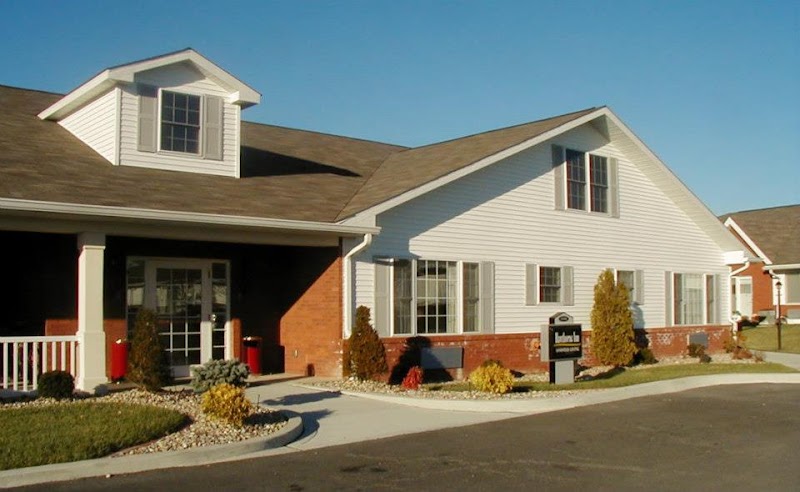
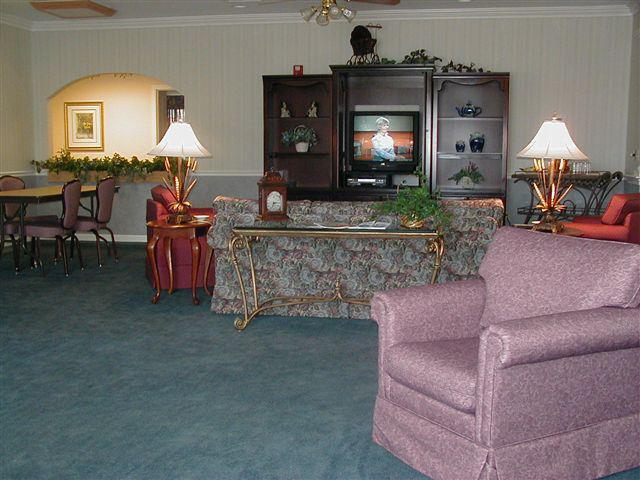
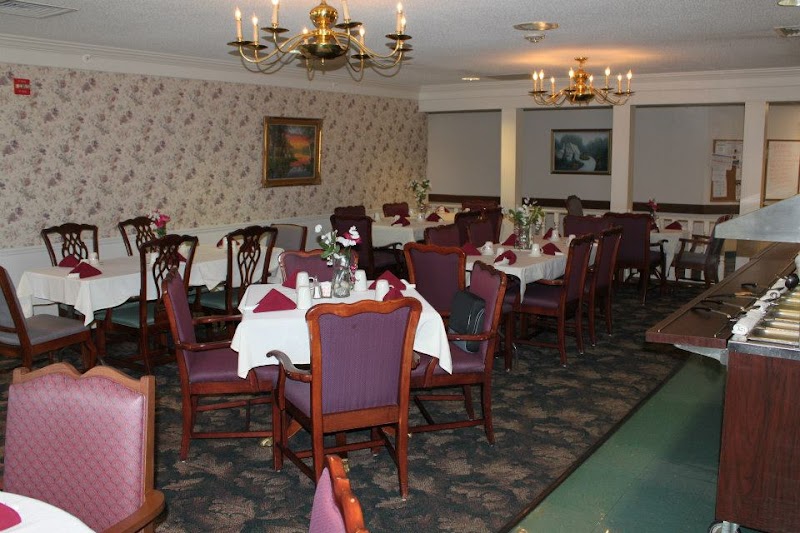
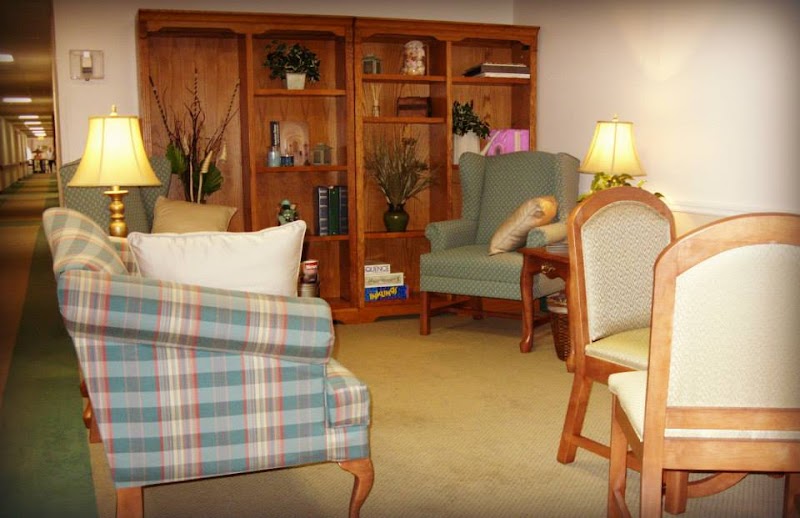
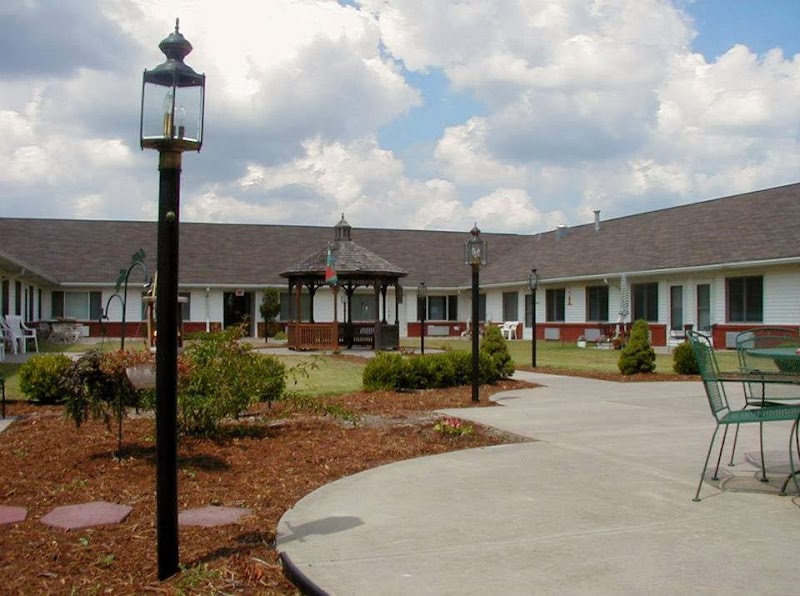
PARKWAY MANOR

3116 WILLIAMSON COUNTY PARKWAY, MARION, IL 62959 (618) 993-8600
Non profit - Corporation 131 Beds UNLIMITED DEVELOPMENT, INC. Data: November 2025
Trust Grade
75/100
#175 of 665 in IL
Last Inspection: April 2025

Within standard 12-15 month inspection cycle. Federal law requires annual inspections.

Overview

Parkway Manor in Marion, Illinois, has received a Trust Grade of B, indicating it is a solid choice for care, but there are areas that need improvement. Ranking #175 out of 665 facilities in Illinois places it in the top half, and it is the best option among five local facilities in Williamson County. However, the trend is worsening, with the number of issues noted increasing from four in 2024 to five in 2025. Staffing is average with a 3-star rating and a turnover rate of 51%, which is similar to the state average, but the facility has concerning RN coverage, ranking lower than 77% of Illinois facilities. While there have been no fines, which is positive, there are some significant issues to consider. For instance, one resident did not receive their pain medication as prescribed, leading to increased discomfort. Additionally, there were concerns about medication handling, with pre-poured pills for different patients being left exposed, posing a risk of errors. Lastly, call lights were not accessible for several residents, which could delay assistance in emergencies. Overall, Parkway Manor has strengths in its ranking and no fines, but families should weigh these against the identified deficiencies and the worsening trend.

Trust Score
B
75/100
In Illinois
#175/665
Top 26%
Safety Record
Moderate
Needs review
Inspections
Getting Worse
4 → 5 violations
Staff Stability
⚠ Watch
51% turnover. Above average. Higher turnover means staff may not know residents' routines.
Penalties
✓ Good
No fines on record. Clean compliance history, better than most Illinois facilities.
Skilled Nurses
○ Average
Each resident gets 38 minutes of Registered Nurse (RN) attention daily — about average for Illinois. RNs are the most trained staff who monitor for health changes.
Violations
○ Average
10 deficiencies on record. Average for a facility this size. Mostly minor or procedural issues.
★★★★☆
4.0
Overall Rating
★★★☆☆
3.0
Staff Levels
★★★★☆
4.0
Care Quality
★★★★☆
4.0
Inspection Score
Stable
2024: 4 issues
2025: 5 issues

The Good

  • 4-Star Quality Measures · Strong clinical quality outcomes
  • Full Sprinkler Coverage · Fire safety systems throughout facility
  • No fines on record

Facility shows strength in quality measures, fire safety.

The Bad

Staff Turnover: 51%

Near Illinois avg (46%)

Higher turnover may affect care consistency

Chain: UNLIMITED DEVELOPMENT, INC.

Part of a multi-facility chain

Ask about local staffing decisions and management

The Ugly 10 deficiencies on record

1 actual harm
Apr 2025 2 deficiencies
CONCERN (E) 📢 Someone Reported This

A family member, employee, or ombudsman was alarmed enough to file a formal complaint

Potential for Harm - no one hurt, but risky conditions existed

Deficiency F0558 (Tag F0558)

Could have caused harm · This affected multiple residents

**NOTE- TERMS IN BRACKETS HAVE BEEN EDITED TO PROTECT CONFIDENTIALITY** Based on observation, interview, and record review the facility failed to ensure call lights were within reach for 8 of 12 (R1-R...

Read full inspector narrative →
**NOTE- TERMS IN BRACKETS HAVE BEEN EDITED TO PROTECT CONFIDENTIALITY** Based on observation, interview, and record review the facility failed to ensure call lights were within reach for 8 of 12 (R1-R5, R8, R10, and R11) residents reviewed for call lights in the sample of 12. Findings Include: 1. R1's Resident Face Sheet with a print date of 4/22/25 documents R1 was admitted to the facility on [DATE] and discharged on 4/14/25 with diagnoses that include aftercare following a joint replacement of left total knee, heart failure, diarrhea, depression, and weakness. R1's Care Plan documents a Problem area with a start date of 4/9/25 of, Ambulation Program- x (times) 1 assist using walker. This same Care Plan documents a Problem area with a start date of 4/8/25 of (R1) is at risk for falls r/t (related to) reduced independent mobility, recent L (left) total knee done, use of psychotropic medication, use of diuretic medication, DX (diagnosis) of osteoarthritis . This Problem area includes the intervention dated 4/8/25 of, Instruct (R1) to call for assist before getting out of bed or transferring. Encourage her to stand slowly. On 4/21/25 at 12:34 PM, V22 (Family Member) stated when she (V22) went to visit R1 at the facility her call light and personal cell phone were out of her reach. V22 stated she moved them where R1 could reach them and after leaving the facility attempted to call R1 on her personal cell phone. V22 stated R1 didn't answer but called back later that evening and told her when she called R1's phone was where she couldn't reach it. 2. R2's Resident Face Sheet with a print date of 4/22/25 documents R2 was admitted to the facility on [DATE] with diagnoses that include chronic obstructive pulmonary disease, diabetes, acute kidney failure, anxiety, reduced mobility, muscle weakness, insomnia, and pain. R2's Minimum Data Set (MDS) dated [DATE] documents R2 has a memory problem and has modified independence in cognitive skills. R2's current Care Plan documents a Problem area with a start date of 7/12/19, Transfer Program- Assist of two utilizing a stand aide. This same Care Plan documents a Problem area with a start date of 7/12/19 of, (R2) is at risk for falls r/t reduced independent mobility, Dx of weakness, dementia .incontinence, non-ambulatory. This Problem Area includes the intervention with a start date of 7/2/19 of, Encourage (R2) to call for assistance with transfers. On 4/21/25 at 9:06 AM, R2 was observed sitting in a wheelchair in her room, facing the foot of her bed. R2's call light was looped on the headboard of the bed, out of R2's reach. On 4/21/25 at 9:16 AM, this surveyor entered R2's room with V1 (Administrator) present. R2 remained in her wheelchair at her bedside. R2's call light remained on the headboard of R2's bed. When asked if R2 could reach her call light, V1 (Administrator) stated, Maybe. R2 did not respond to this surveyors questions regarding her call light. 3. R3's Resident Face Sheet with a print date of 4/22/25 documents R3 was admitted to the facility on [DATE] with diagnoses that include displaced fracture of right femur, Alzheimer's disease, and muscle weakness. R3's MDS dated [DATE] documents a BIMS (Brief Interview for Mental Status) score of 10, which indicates a moderate cognitive deficit. R3's current Care Plan documents a Problem area with a start date of 2/24/25 of, (R3) is at risk for falls r/t reduced independent mobility, DX of Alzheimer's disease, osteoporosis .incontinence .fall prior to admission . This Problem area documents an intervention with a start date of 2/24/25 of, Instruct (R3) to call for assist before getting out of bed or transferring. Encourage her to stand slowly. On 4/21/25 at 9:13 AM, R3 was sitting in a wheelchair in her room with her feet resting on her bed. She was sitting approximately mid way down the bed with the bedside table between her and the nightstand that was sitting at the head of the bed. R3's call light was wrapped around the head board of the bed out of R3's reach. R3 was able to move her legs off the bed but would have had to move the night stand to be able to reach the call light. On 4/21/25 at 9:23 AM, this surveyor entered R3's room with V1 (Administrator) present. R3 remained in the same position with her call light still wrapped around the head board of her bed. V1 (Administrator) stated R3 may be able to reach her call light. 4. R4's Resident Face Sheet with a print date of 4/22/25 documents R4 was admitted to the facility on [DATE] with diagnoses that include diabetes, pain, difficulty walking, and muscle weakness. R4's MDS dated [DATE] documents a BIMS of 12, indicating R4 has a moderate cognitive impairment. R4's current Care Plan documents a Problem area with a start date of 11/11/2020 of, (R4) is at risk for falls r/t reduced independent mobility .She is hard of hearing and has a communication board. (R4) transfers self at times putting her at risk for a fall .This Problem area includes an intervention with a start date of 11/16/21 of, Encourage (R4) to use a call light for supervision with transfers and needed assistance. On 4/21/25 at 9:11 AM, R4 was laying in bed with her call light looped around the head of her bed. R4 does not appear to be able to reach her call light. On 4/21/25 at 9:17 AM, this surveyor entered R4's room with V1 (Administrator) present. R4 remained in bed sleeping with call light still looped around the head of her bed. V1 (Administrator) stated R4 could probably reach her call light. On 4/21/25 at 4:30 PM, R4 was laying in bed with call light hanging down from the wall on the opposite side of the night stand and draped from the opposite side of the night stand to the top with the button laying facing the bed. At 4:34 PM, V8 (CNA/Certified Nursing Assistant in training) entered R4's room. V8 stated maybe R4 threw her call light onto the table. When asked if R4 would be able to reach her headboard, V8 assisted R4's arm above her head and R4's arm did not reach the head board. 5. R5's Resident Face Sheet with a print date of 4/22/25 documents R5 was admitted to the facility on [DATE] with diagnoses that include pain, unsteadiness on feet, muscle weakness, and hypertension. R5's MDS dated [DATE] documents a BIMS score of 06, indicating R5 has a severe cognitive deficit. R5's current Care Plan documents a Problem area with a start date of 8/23/23 of, (R5) is at risk for falls r/t reduced independent mobility . This Problem area includes an intervention of Instruct (R5) to call for assist before getting out of bed or transferring . On 4/21/25 at 9:20 AM, R5 was sitting in a wheelchair with a table between her and the bed. R5's call light was looped around the head of the bed. When asked how she got assistance if she needed it, R5 stated the little red button. R5 started looking for the call light and was not able to locate it. R5 was not able to locate it without this surveyors assistance. R5 attempted to reach her call light and was unable to. V1 (Administrator) was present during this observation and asked R5 if she could go get assistance if she needed it. R5 stated yes she could go find someone if she needed assistance. 6. R8's Resident Face Sheet with a print date of 4/22/25 documents R8 was admitted to the facility on [DATE] with diagnoses that include cerebral infarction, weakness, lack of coordination, anxiety, dementia, and polyneuropathy. R8's MDS dated [DATE] documents a BIMS score of 02, indicating R8 has a severe cognitive deficit. R8's current Care Plan documents a Problem area dated 10/17/22 of, (R8) is at risk for falls r/t reduced independent mobility This Problem area includes the intervention dated 10/17/22 of, Instruct (R8) to call for assist before getting out of bed or transferring . On 4/21/25 at 9:11 AM, R8 was sitting in a wheelchair near her bed. R8's call light appeared to be running from the wall under the blankets on R8's bed. This surveyor was not able to locate the call light. On 4/21/25 at 9:18 AM, this surveyor entered R8's room with V1 (Administrator) present and asked where R8's call light was. V1 pulled R8's call light out from under the blankets on her bed near the head of R8's bed. R8 was sitting in a wheelchair with a table between her and the bed. When asked if R8 would have been able to reach the call light, V1 (Administrator) stated, Maybe. On 4/22/25 at 9:05 AM, V17 (RN/Registered Nurse) stated R2 doesn't use her call light. V17 stated R2 doesn't provide her own care she just prefers to call out for assistance. V17 stated R3 uses her call light. V17 stated R4 is able to use her call light but usually provides her own care with little assistance. V17 stated R5 does everything on her own and doesn't use her call light for anything. When asked if the call light was only to be used to get assistance for care or if it was also there in case of an emergency, V17 stated yes it can be used if there is an emergency. V17 stated R8 could use her call light but likes to stay in bed until staff get her for meals or care. When asked if she would have expected all of the residents call lights to be within their reach, V17 stated, Yes, they should have been. 7. R10's Resident Face Sheet with a print date of 4/22/25 documents R10 was admitted to the facility on [DATE] with diagnoses that include lack of coordination, asthma, diabetes, repeated falls, incontinence, and heart failure. R10's current Care Plan documents a Problem area with a start date of 4/21/25 of, (R10) is at risk for falls r/t reduced independent mobility . This Problem area includes an intervention dated 4/21/25 of, Instruct (R10) to call for assist before getting out of bed or transferring On 4/21/25 at 3:54 PM, R10 was sitting in a wheelchair next to her bed. R10's call light was in the bed under [NAME] the bed pad on the opposite side of the bed. V5 (LPN/Licensed Practical Nurse) got the call light, moved the bedside table that was between R10 and the bed, and pushed R10 closer to the bed so she could reach the call light. R10 stated she could self propel her wheelchair but she was not able to reach the call light where it had been. 8. R11's Resident Face Sheet with a print date of 4/22/25 documents R11 was admitted to the facility on [DATE] with diagnoses that include heart disease, chronic kidney disease, depression, and malignant neoplasm of breast. R11's current Care Plan documents a Problem area dated 4/16/25 of, (R11) is at risk for falls r/t reduced independent mobility . This Problem area includes an intervention dated 4/16/24 of, Instruct (R11) to call for assist before getting out of bed or transferring . On 4/21/25 at 3:59 PM, R11 was sitting in her room in a wheelchair near the window. R11's call light was on the opposite side of the bed. V5 (LPN) got R11's call light and place it near R11. On 4/22/25 at 10:14 AM, V11 (CNA/Certified Nursing Assistant) stated both R10 and R11 are physically able to use their call lights. V11 stated as a CNA she would expect the call lights to be within reach of residents. The facility Call Light policy dated 01/04 documents, Objectives: 1. To respond to resident's request and needs 6. Offer further services before leaving resident's room. Can I do anything for you? Be sure call light is within reach before leaving room.
CONCERN (F) 📢 Someone Reported This

A family member, employee, or ombudsman was alarmed enough to file a formal complaint

Potential for Harm - no one hurt, but risky conditions existed

Deficiency F0761 (Tag F0761)

Could have caused harm · This affected most or all residents

Based on interview and record review the facility failed to properly store medications by pre-pouring medications and administering more than one residents medications at a time. This has the potentia...

Read full inspector narrative →
Based on interview and record review the facility failed to properly store medications by pre-pouring medications and administering more than one residents medications at a time. This has the potential to affect all 103 residents currently residing at the facility. Findings Include: The facility Daily Census Report dated 4/21/2025 documents 103 residents currently reside at the facility. The untitled letter from V22 (Family Member) to V1 (Administrator) dated 4/13/25 documents in part, Improper Medication Handling and Storage: Medication cups containing loose, pre-poured pills labeled for different patients were repeatedly observed stacked on top of medication carts by multiple nurses (V9/Licensed Practical Nurse, V6 (LPN), and others), most recently on 04/13/2025. This practice violates CMS (Central Management Services) medication safety regulations (F760 and F761), which require that medications be administered to one patient at a time and securely stored until use. Leaving multiple patients' medications exposed and unattended creates a high risk for cross-contamination, medication errors, and misadministration, and reflects a systemic failure in clinical oversight. On 4/21/25 at 12:34 PM, V22 (Family Member) stated she was at the facility visiting R1 and saw V6 (LPN/Licensed Practical Nurse) and another unknown nurse preparing medications for multiple residents at one time by placing the medications in small clear medication cups, labeling the cup with the resident name, and leaving the cups sitting unattended on top of the medication carts. On 4/22/25 at 10:14 AM, V11 (Certified Nursing Assistant) stated she had seen unknown nurse's prepare medications in advance using little medication cups. V11 stated they sometimes set them up in cups, wrote the residents name on them, and then dispensed a couple at a time. On 4/22/25 at 10:35 AM, when asked if he prepared medications in advance of administration, V6 (LPN/Licensed Practical Nurse) stated if he had multiple residents sitting at a table he would prepare all of their medications in medication cups and write their names on them. V6 stated then he would take all of the medication cups to the residents sitting at the table at the same time. On 4/22/25 at 11:50 PM, V2 (Director of Nurses) stated nursing staff are not supposed to pop the medications out of the pharmacy cards prior to administration. V2 stated they should take each resident their medication prior to preparing the next resident's medications. V2 stated they should prepare a resident's medications, administer the medication, sign the medication administration record indicating it was administered, then move to the next resident. The facility policy Medication Administration using eMAR (electronic medication administration record) dated 11/11 documents, Objective: 1. To provide the resident with those medications deemed necessary by the physician 11. Documentation of meds (medications) given will be done in a consistent manner by the nurse documenting preparation and administration of the medicine on the eMAR .Documentation on the eMAR will be done at the time of administration of the medication. The National Coordinating Council for Medication Error Reporting and Prevention website found at https://www.nccmerp.org/recommendations-health-care-organizations-reduce-medication-errors-associated-related-devices documents under, Recommendations for Healthcare Organizations to Reduce Medication Errors Associated with the Label, Labeling, and Packaging of Pharmaceutical (Drug) Products and Related Devices documents These recommendations apply to healthcare systems, hospital systems, individual hospitals, long-term care facilities, and other organized health care settings. The Council recommends the following: Healthcare organizations should develop processes to ensure that all medications are labeled prior to administration to a patient per USP (United States Pharmacopeial Convention) General Chapter 7 Labeling, the term 'labeling' includes all labels and other written, printed, or graphic matter on a medication ' s immediate container or on, or in, any package or wrapper in which it is enclosed, except any outer shipping container.The term 'label' is that part of the labeling on the immediate container. All clinician-prepared medications or solutions should be labeled, unless the medication or solution is prepared at the patient ' s bedside and is immediately administered to the patient without any break in the process. In accordance with State/Federal Laws and Regulations, healthcare organizations should employ machine-readable systems (e.g., bar coding) in the management of the medication use process. Healthcare organizations should utilize industry standards to ensure machine-readable validity meets industry quality standards. Healthcare organizations should have procedures in place to address gaps and failure modes in the use of machine-readable systems. Healthcare organizations should have policies and procedures developed for repackaging of medications that will clarify labeling and include a bar code to help prevent errors. Systematic approaches, including Healthcare Failure Mode and Effects Analysis (HFMEA) and root cause analysis (RCA), should be implemented within the healthcare organization to identify and evaluate actual and potential causes of errors related to labeling and packaging (e.g., failure to use bar code scanning, barcodes that don ' t scan, and situations where patient armbands cannot be applied). These systematic approaches should be accompanied with guidance related to monitoring, auditing, and quality improvement initiatives (e.g., PDSA-Plan-Do-Study-Act) to ensure changes improve the labeling of medications to reduce medication errors. Healthcare organizations should develop and implement (or provide access to) education and training programs for healthcare professionals, technical support personnel, patients, and families/caregivers that address methods for reducing and preventing medication errors associated with the information provided on an organization ' s medication labeling . .
Apr 2025 3 deficiencies 1 Harm
SERIOUS (G)

Actual Harm - a resident was hurt due to facility failures

Deficiency F0697 (Tag F0697)

A resident was harmed · This affected 1 resident

Based on observation, interview, and record review, the facility failed to provide pain medications per physician's orders for 1 (R251) of 2 residents reviewed for pain management in the sample of 40....

Read full inspector narrative →
Based on observation, interview, and record review, the facility failed to provide pain medications per physician's orders for 1 (R251) of 2 residents reviewed for pain management in the sample of 40. This failure resulted in R251 becoming tearful and experiencing increased pain. Findings Included: R251's Resident Face Sheet documented an admission date of 3/24/25. This same document listed diagnoses including other specified disorders of bone density and structure, other site, osteopenia of spine, rheumatoid arthritis, unspecified, unilateral primary osteoarthritis, right knee, bilateral primary osteoarthritis of hip, and primary osteoarthritis, right shoulder. R251's Care Plan documented a focus area of Problem: Dx (diagnoses) of Rheumatoid arthritis, osteoarthritis/right knee, and osteoarthritis/right shoulder puts her at risk for pain with a start date of 03/25/2025. Interventions documented included administer pain medications as ordered. Monitor for side effects with start date of 3/25/2025. R251's April 2025 Physicians Order Report documented orders for hydrocodone-acetaminophen 7.5-325 mg (milligrams). One tablet by mouth every 4 hours for pain-prn (as needed) with a start date of 3/24/2025. R251's Medication Administration History report dated 3/24/25 to 4/3/2025 documented hydrocodone-acetaminophen 7.5-325 mg. One tablet by mouth given on 4/3/25 at 1:42 AM. The same report documents R251's pain was rated at an 8 out of 10 on the pain scale before the pain medication and 0 out of 10 on the pain scale after the pain medication. On 04/03/25 08:28 AM, V2 (Infection Preventionist) and V3 (Registered Nurse/RN) were observed entering R251's room to administer AM medications. R251 was observed notifying V2 that she had asked for her hydrocodone-acetaminophen 2.5 hours ago. V2 and V3 both stated to R251 that she is scheduled for this medicine every 12 hours at 7:00 AM, she does not have an order for every 4 hours and apologized that her medication was late. R251 stated that she does have an order that she can take this pain medication every 4 hours for pain, and she last took it at 2:00 AM this morning. R251 stated to V2 and V3 that she hurts all over and rated her pain at a 7 on a 1 to 10 pain scale. R251 was observed crying when talking to V2 and V3 and while taking her medications. R251 was observed to be alert and oriented to person, place, and time. On 4/3/2025 at 8:35 AM, V3 (RN) stated R251 does not have an order for hydrocodone-acetaminophen 7.5-325MG for every 4 hours as needed. On 4/3/2025 at 9:06 AM, V2 stated R251 did have an order for hydrocodone-acetaminophen 7.5-325MG every 4 hours as needed and there was a communication breakdown between staff. On 4/3/2025 at 9:17 AM, R251 is alert and oriented to person, place, and time. R251 stated she did notify staff members at 6:00 AM this morning that she had been in pain and wanted her pain medication. R251 stated, upon waking up she is a 5 out of 10 on the pain scale is her normal and she tries to stay ahead of hurting more. R251 stated she does get her hydrocodone-acetaminophen 7.5-325MG for every 4 hours as needed and the last time she had it was around 2:00 AM this morning. On 4/3/2025 at 9:52 AM, V4 (Certified Nurse Assistant/CNA) stated R251 did report to her at 6:00 AM that she wanted her pain medication. V4 stated she notified V3 (RN) while she was in report that R251 was requesting her pain medication. V4 stated that V3 did respond back to her by saying ok'. On 4/4/2025 at 8:33 AM, V7 (Nurse Practitioner) stated her expectations are for the nursing staff to administer medications based on physician's order. V7 stated that R251 did have a physician's order for hydrocodone-acetaminophen 7.5-325MG for every 4 hours as needed and scheduled every 12 hours. V7 stated that 2.5 hours after R251 requested her pain medication was not an appropriate time frame to administer the medication. The facility policy titled Pain Management (revised 3/03/22) documented under Policy: The facility is dedicated to the philosophy that all residents should be as free of pain as possible, through a combination of medical intervention and functional therapy. Purpose: To identify residents experiencing pain to establish control of pain to the resident's satisfaction and to relieve related symptoms.
CONCERN (D)

Potential for Harm - no one hurt, but risky conditions existed

MDS Data Transmission (Tag F0640)

Could have caused harm · This affected 1 resident

Based on interview and record review the facility failed to timely transmit a Minimum Data Set assessment (MDS) for 1 of 19 residents (R78) reviewed for MDS assessments in a sample of 40. The findings...

Read full inspector narrative →
Based on interview and record review the facility failed to timely transmit a Minimum Data Set assessment (MDS) for 1 of 19 residents (R78) reviewed for MDS assessments in a sample of 40. The findings include: R78's face sheet documents an admission date as 10/14/2024 and includes the following diagnoses: Parkinson's Disease, dementia, Diabetes Mellitus type two, and anxiety. This face sheet documents the last qualifying hospital stay was 10/8/2024-10/14/2024. On 4/2/25 at 2:00 PM, V5 (MDS Coordinator) and surveyor reviewed most recent MDS (Minimum Data Set) and V5 confirmed that it was showing it was open and started on 10/14/24 but not closed and transmitted. V5 stated that she would look into why R78's MDS was showing an overdue status. On 4/3/25 at 9:30 AM, V5 (MDS Coordinator) stated that she found that when R78 left for the hospital she got the MDS started as a discharge with return anticipated but never transmitted it. V5 stated that she transmitted the discharge assessment on 4/2/25, but that is was considered late. Review of the final validation report on 4/3/25, documents that R78's discharge assessment target date was 10/30/2024, but was not transmitted as complete until 4/2/25.
CONCERN (D)

Potential for Harm - no one hurt, but risky conditions existed

Deficiency F0692 (Tag F0692)

Could have caused harm · This affected 1 resident

**NOTE- TERMS IN BRACKETS HAVE BEEN EDITED TO PROTECT CONFIDENTIALITY** Based on observation, interview, and record review the facility failed to develop and implement interventions for a resident at ...

Read full inspector narrative →
**NOTE- TERMS IN BRACKETS HAVE BEEN EDITED TO PROTECT CONFIDENTIALITY** Based on observation, interview, and record review the facility failed to develop and implement interventions for a resident at risk for altered nutritional status for 1 (R83) of 3 residents reviewed for nutrition in a sample of 40. Findings include: R83's Resident Face Sheet documented an admission date of 2/26/25 with diagnoses including: Primary osteoarthritis, unspecified hand, unspecified dementia, moderate protein calorie malnutrition, multiple fractures of ribs bilateral, pain, and tremor, unspecified-hx (history). R83's 3/5/25 Minimum Data Set (MDS) documented a Brief Interview for Mental Status (BIMS) score of 15, indicating R83 was cognitively intact. R83's 3/5/25 MDS Section GG documented R83 required Partial/ Moderate assistance with eating, indicating helper does less than half the effort. Section S- Care Area Assessment Summary, under Care Area 12. Nutritional Status, the boxes for Column A, Care Area Triggered, and Column B, Care Planning Decision, are both marked. R83's Care Plan documented under Problem Resident Care Information with a problem start date of 2/27/25. Documented approach includes Regular diet. Set up. Plate guard and weighted utensils with an approach start date of 3/19/25. R83's Care Plan did not document R83 was at risk for weight loss or nutrition concerns. R83's 2/27/25 Occupational Therapy (OT) Evaluation and Plan of Treatment documented in part .New Goal . (R83) will improve ability to safely and efficiently perform eating tasks with Setup and Clean-up Assistance including but not limited to use of built-up utensils . and plate guard to facilitate ability to live in environment with least amount supervision and assistance and to ensure adequate nutrition and hydration . Patient Referral and History . Medical Factors . hand deformity from arthritic changes . Hand Dominance = patient is right-handed . Functional Skills Assessment . Eating . increasing arthritic changes in R (right) hand . R83's Dietitian/Admit Assessment note dated 2/27/2025 at 10:08 AM documents [AGE] year old female admitted (2/26) per progress note on a Regular Diet. Assisted at meals due to fracture. Intakes 50-75%. Weight: (2/27): 114.6 . On Vitamin C Supplement. Estimated Needs: 1560 calories (30 kilo-calories per kg (killigram)), 1560 cc fluids (1 cc (cubic centimeter) per kilo-calories), and 52-62 gram protein (1.0-1.2 injury factor). Plan: Add Diet to orders. R83's Weight Variance Report documented the following weights: 2/27/25 114.6 lbs. (pounds) 3/2/25 112 lbs., indicating a 2.6 lb. weight loss or 2.3% weight loss in 3 days 3/8/25 110 lbs., indicating a 4.6 lb. weight loss or 4% weight loss in 9 days 3/15/25 108 lbs., indicating a 6.6 lb. weight loss or 5.75% weight loss in 16 days 3/22/25 104 lbs., indicating a 10.6 lb weight loss or 9.25% weight loss in 23 days 4/3/25 107 lbs., indicating a 7.6 lb. weight loss or 6.63% weight loss in 35 days An unsigned weekly weight note with a date documented of 3/19 documents that R83 has a current weight of 108 lbs on 3/15 and documents that R83 has a 5.8% or 6.6 lb weight loss in 16 days. This document further states not a significant change yet, but trending with an approach of Added adapted equipment a few days ago. Monitor. Another unsigned weekly weight note dated 3/26 documents a current weight of 104 lbs and documents last weeks approach of New adaptive equipment, monitor and documents an approach of ask for HCHPS (high calorie high protein supplement). R83's Physician Order Report dated 3/2/25 to 4/2/25 documents an order dated 3/28/25 for High Calorie/ High Protein Supplement ordered by V7 (Nurse Practitioner). On 4/1/25 the following observations were made: 12:39 PM: R83's noontime meal tray was delivered to R83's room. R83's weighted silverware was wrapped in a paper napkin and placed on the far side of her plate. R83 had regular silverware placed beside her plate. R83's plate did not have a plate guard. R83 picked up the regular fork and started eating with difficulty holding the fork. 12:44 PM: R83 was observed feeding herself with difficulty holding the regular fork between her index and middle finger. R83's thumb joint was noted to be deformed. While trying to get food onto the fork, R83's hand would slide down the fork to the area where the fork widened, and the tines began. R83 was observed dropping a lot of the food from the fork onto her clothing protector. 12:50 PM:R83 sat her regular fork on her plate to take a bite of bread. R83 attempted 7 times at picking the regular fork back up. 12:52 PM: R83 attempted to cut a piece of brownie with regular fork and the fork kept slipping out of R83's hand. R83 picked up the regular spoon and was able to cut a piece of the brownie but dropped the piece before getting it to her mouth. R83 then piled up the plates in front of her and started licking food from her hands and the food dropped on the table. On 4/2/25 the following observations were made: 11:43 AM: R83's noontime meal was delivered with a weighted spoon and no weighted fork, a plate guard, and regular silverware. 12:00 PM: R83 was eating with a regular fork with difficulty dropping food on the table and on herself. On 4/4/25 at 9:42 AM, R83's breakfast was sitting in front of her in her room on the bedside table. R83's breakfast plate did not have a plate guard and no weighted utensils were present. R83 said sometimes staff would bring her the weighted utensils and plate guard sometimes they didn't, it just depended on the meal. On 4/3/25 at 10:58 AM, V8 (Occupational Therapist) said she would order weighted utensil for a resident if they had tremors or difficulty grasping a regular utensil and would order a plate guard to have more control with the plate to get food onto the utensil and to increase independence. V8 said R83 had trialed the weighted utensils at a facility prior to being admitted due to some tremors and hand weakness. V8 said she expected staff to provide all ordered assistive devices. R83's Progress Notes documents an entry on 4/4/25 at 8:20 AM for a late entry for 4/3/25 at 12:10 PM documenting During the lunch meal, (R83) was served weighted utensils and a plate guard. CNA (Certified Nursing Assistant) returned shortly afterwards saying that (R83) requested a regular set of silverware. (R83) had weighted utensils, plate guard, and regular silverware per her request. On 4/4/25 at 9:47 AM, V7 (Nurse Practitioner) said if a resident is not eating with adaptive equipment they could have weight loss. V7 said if therapy ordered adaptive equipment for a resident, it should be provided. V7 said that she was not aware of R83's weight loss. On 4/4/25 at 12:23 PM, V1 (Administrator) said the facility did not have a policy pertaining to assistive devices. The facility's Weight Monitoring policy with a revision date of 9/6/24 documented in part . 2. Residents are weighted weekly for the first 4 weeks following admission .5. Licensed staff will notify the physician of the following: A. 5% or more gain or loss in a 30-day period .7. Notification to the physician must be documented, and also whether or not new orders were received for either significant weight losses or gains .9. The weight committee will review all residents with significant weight gains or losses and other residents of concern and refer to RD (Registered Dietitian) as needed .
Jan 2024 4 deficiencies
CONCERN (D)

Potential for Harm - no one hurt, but risky conditions existed

Report Alleged Abuse (Tag F0609)

Could have caused harm · This affected 1 resident

**NOTE- TERMS IN BRACKETS HAVE BEEN EDITED TO PROTECT CONFIDENTIALITY** Based on interview and record review, the facility failed to implement abuse policies by not reporting abuse and theft allegatio...

Read full inspector narrative →
**NOTE- TERMS IN BRACKETS HAVE BEEN EDITED TO PROTECT CONFIDENTIALITY** Based on interview and record review, the facility failed to implement abuse policies by not reporting abuse and theft allegations within the designated time frame for 2 (R4,and R30) of 3 residents reviewed for abuse in a sample of 41. Findings include: 1. R4's face sheet documented an admission date of 2/9/23 with diagnoses including: hypertension, pulmonary hypertension, chronic kidney disease stage 3, difficulty in walking. R4's Minimum Data Set (MDS) documented a Brief Interview for Mental Status (BIMS) score of 12, indicating moderate cognitive impairment. On 1/9/24 at 9:39 AM, R4 said she had $100 dollars taken out of her purse. R4 said she thought another resident had taken it. R4 said she had reported it to the facility and the facility had replaced it. R4's 12/4/23 progress note documented in part .Resident reported another resident had removed her money from her room. Said the other resident was confused and went thru her things and didn't mean harm but she was aggravated that the money was lost because it was Christmas money to give to her grandkids when they came in. Search conducted in room and belongings of resident accused. Resident accused stated she didn't take it, it was her friend. She then stated she put it up for her so she wouldn't lose it but couldn't find it. Staff will continue to search . R4's 12/12/23 progress note documented Facility replaced money resident reported missing, possibly taken by resident. On 1/12/23 at 11:08 AM, V1 (Administrator) said R4 had reported the missing money. V1 said she had not reported the missing money to Illinois Department of Public Health (IDPH) because she did not think R4's money had been stolen and was going to be found. The facility's revised 11/28/19 Abuse Prohibition and Reporting policy documents the following under the section titled Misappropriation of Resident Property: 1. No person shall misappropriate or steal any resident property. Any person who becomes aware of any alleged misappropriation or theft of resident property shall report the incident to the Administrator immediately. 2. The Administrator or designee shall investigate the alleged misappropriation or theft of resident property. 3. The Administrator or designee shall be responsible for supervising the investigation and reporting the results of the investigations to IDPH. 2. R30's face sheet documents she was admitted to the facility on [DATE]. The same document lists some of R30's diagnoses as dementia in other diseases classified elsewhere, unspecified severity, without behavioral disturbance, psychotic disturbance, mood disturbance and anxiety, Type 2 diabetes mellitus without complications, paranoid personality disorder, and hallucinations, unspecified. R30's MDS (Minimum Data Set) dated 12/5/23 document that R30 has a BIMS (Brief Interview of Mental Status) of 15 which indicates R30 is cognitively intact. A document titled Occurrence Report, (Facility Name), Initial/ Final Report, with no date or time, documents R30's name at the top of the report and states Police were onsite looking for resident, stated she had called the department and a nurse had been mean to her and not given her correct blood thinning medication. The report also said that the resident reported while at the (medication) cart the nurse told her that the resident was distracting her and she needed to step back from cart and allow her to review the medication correctly. Resident stated then that the nurse took her arm and pushed her away from the cart to the wall. Resident stated that she called the police because the administrator would not do anything about it. A Progress Note in R30's Electronic Medical Record (EMR) dated 12/11/23 at 1:30pm by V1 (Administrator) documents two police officers onsite looking for a resident in suite A, stating she claimed to have been abused by nurse. After some research, they identified that it was (R30). Officers interviewed resident in room, came out and stated that she had said the night nurse had shoved her up against a wall. She did not report the incident to the facility staff because the facility staff wouldn't address it . A Fax Confirmation Sheet documents that a fax was sent to IDPH (Illinois Department of Public Health) on 12/11/23 at 16:13 (4:13 PM). On 1/12/23 at 10:00am, V1 (Administrator) said she was not aware of any abuse allegations until the police arrived. V1 also said she believed she had 24 hours to report it since was unfounded. The facility's revised 11/28/19 Abuse Prohibition and Reporting policy documents the following under the section titled Initial steps and reports of alleged abuse or neglect - documents the following in step 2: If the matter involves alleged abuse or results in serious bodily injury, the Administrator, or designee shall provide the Illinois Department of Public Health with initial notice of the alleged abuse or serious bodily injury as soon as possible, but not more than 2 hours after the matter becomes known or no later than 24 hours if the allegation does not involve abuse and does not result in serious bodily injury.
CONCERN (D)

Potential for Harm - no one hurt, but risky conditions existed

Investigate Abuse (Tag F0610)

Could have caused harm · This affected 1 resident

Based on interview and record review, the facility failed to investigate an abuse allegation of misappropriation of property for 1 (R4) of 3 residents reviewed for abuse in a sample of 41. Findings in...

Read full inspector narrative →
Based on interview and record review, the facility failed to investigate an abuse allegation of misappropriation of property for 1 (R4) of 3 residents reviewed for abuse in a sample of 41. Findings include: 1. R4's face sheet documented an admission date of 2/9/23 with diagnoses including: hypertension, pulmonary hypertension, chronic kidney disease stage 3, and difficulty in walking. R4's Minimum Data Set (MDS) documented a Brief Interview for Mental Status (BIMS) score of 12, indicating moderate cognitive impairment. On 1/9/24 at 9:39 AM, R4 said she had $100 dollars taken out of her purse. R4 said she thought another resident had taken it. R4 said she had reported it to the facility and the facility had replaced it. R4's progress note dated 12/4/23 at 10:19 am by V1 (Administrator) documents in part .Resident reported another resident had removed her money from her room. Said the other resident was confused and went thru her things and didn't mean harm but she was aggravated that the money was lost because it was Christmas money to give her grandkids when they came in, Search conducted in room and belongings of resident accused. Resident accused stated she didn't take it, it was her friend. She then stated she put it up for her so she wouldn't lose it but couldn't find it. Staff will continue to search . R4's progress note dated 12/12/23 at 10:24 am by V1 documented Facility replaced money resident reported missing, possibly taken by resident. On 1/12/24 at 11:08 AM, V1 said when R4 had reported she had money missing and thought another resident had taken it, V1 had went to search the alleged resident's room. V1 said the alleged resident did not recall taking any money or where she had placed any money. V1 said R4's money was not found in the facility. V1 said a day or two later she spoke with R4's daughter to verify R4 had $100. V1 said R4's daughter verified R4 did have $100 and was planning on giving money to R4's grandchildren for Christmas. V1 said R4's money had been reimbursed to R4 from the facility. V1 said she had not completed a formal investigation because she thought R4's money would be found and returned to R4. The facility's revised 11/28/19 Abuse Prohibition and Reporting policy documents the following under the section titled Policy: The facility actively prohibits resident abuse including neglect, corporal punishment, involuntary seclusion, misappropriation of property, injuries of unknown source, exploitation and use of any physical or chemical restraint not required to treat resident's symptoms. The same policy documents the following under the section titled Investigation: 1. Interviews with all involved parties or potential witnesses will be completed. If possible, at least two interviewers shall be present for each witness interview. At least one interviewer shall take notes. 2. Signed statements from those persons who saw or heard information pertinent to the incident shall be obtained. Statements shall be taken from the suspect, the person making the accusations, the resident abused or neglected (if cognitive level permits), other staff or residents who may have witnessed the incident, and any other person who may have information related to the incident. 3. The Administrator shall keep copies of all notes from the interviews conducted by the Administrator or other facility interviewer in the course of the investigation. 4. The Administrator shall be responsible for supervising the investigation and reporting the results of the investigation to the Illinois Department of Public Health. 5. The Administrator shall be responsible for resident's protection from retaliation during and after the investigation.
CONCERN (D)

Potential for Harm - no one hurt, but risky conditions existed

Accident Prevention (Tag F0689)

Could have caused harm · This affected 1 resident

Based on observation, interview, and record review, the facility failed to implement interventions to mitigate falls for 1 (R71) of 7 residents reviewed for accidents in a sample of 41. Findings inclu...

Read full inspector narrative →
Based on observation, interview, and record review, the facility failed to implement interventions to mitigate falls for 1 (R71) of 7 residents reviewed for accidents in a sample of 41. Findings include: 1. R71's face sheet documented an admission date of 12/27/21 and diagnoses including: dementia, hypertension, weakness, dysphagia, cognitive communication deficit. R71's 10/10/23 Minimum Data Set (MDS) documented a Brief interview of Mental Status (BIMS) score of 9, indicating moderate cognitive impairment. R71's 10/10/23 Fall Risk Assessment Tool documented a score of 23, indicating R71 is a high fall risk. The facility's 8/10/23 through 1/10/23 Fall Log documented R71 had an unwitnessed fall in his room on 11/5/23 while trying to self-transfer from his wheelchair to his bed. R71's care plan (review date 11/4/23) documented in part . is at risk for falls r/t (related to) reduced independent mobility . and documents an intervention dated 5/16/23 of dysom (sic) (non slip padding) in wheelchair and an intervention dated 1/31/21 of anti-rollbacks to wheelchair. On 1/9/24 at 10:43 AM, R71 was observed sitting in his wheelchair in the dining room completing an activity. R71's wheelchair had an anti-rollback attached to the back of his wheelchair with one arm missing and the other arm bent at an angle unable to make contact with the wheelchair wheel. On 1/10/24 at 11:34 AM R71, was observed sitting in his wheelchair in the dining room. R71's wheelchair did not have a dycem cushion in the seat of his wheelchair. On 1/12/24 at 12:20 PM, V6 (Director of Memory Care) said on 1/11/24 R71 did not have a dycem cushion in his wheelchair when the facility checked. V6 said R71 would sometimes take the dycem cushion (non slip pad) out of his wheelchair when R71 went to use the bathroom. V6 said R71 was known to throw the dycem cushion away. On 1/11/24 at 11:01 AM, V2 (Director of Nursing/ DON) said she expected R71 to have anti-rollbacks on his wheelchair and the dycem cushion in his wheelchair as care planned. V2 said she expected any staff to complete a work order if they see any wheelchair parts not in working order. On 1/11/24 at 1:00 PM, V1 said the facility did not have a fall policy. V1 provided a revised 4/3/18 Emergencies policy documenting the procedure to care for a resident after a fall.
CONCERN (D)

Potential for Harm - no one hurt, but risky conditions existed

Deficiency F0883 (Tag F0883)

Could have caused harm · This affected 1 resident

**NOTE- TERMS IN BRACKETS HAVE BEEN EDITED TO PROTECT CONFIDENTIALITY** Based on interview and record review, the facility failed to implement the facility policy and procedure for Pneumococcal Vaccin...

Read full inspector narrative →
**NOTE- TERMS IN BRACKETS HAVE BEEN EDITED TO PROTECT CONFIDENTIALITY** Based on interview and record review, the facility failed to implement the facility policy and procedure for Pneumococcal Vaccinations for 1 out of 5 residents (R69) reviewed for immunizations in a sample of 41. Findings include: R69's face sheet documents that R69 was admitted to the facility on [DATE] with diagnoses including encephalopathy, heart failure, peripheral vascular disease, and cardiomegaly. R69's Face Sheet documents a date of birth indicating that R69 is [AGE] years old. R69's Minimum Data Set (MDS) dated for 10/31/2023 documents a Brief Interview for Mental Status (BIMS) score of 12, indicating R69 has moderate cognitive impairment. RF69's Vaccination Records in the Electronic Medical Records (EMR) documents that R69 declined Pneumococcal vaccination on 8/16/2023, 8/23/2022 and 2/17/2022. This documentation was noted on Pneumococcal Vaccine Immunization Assessment/Consent forms. The Risk Assessment and Assessment for Contraindications to the Pneumococcal Vaccination sections of R69's Pneumococcal Vaccine Immunization Assessment/ Consent forms dated 8/16/2023, 8/23/2022 and 2/17/2022 are left blank including the assessment question of Is the resident currently up to date on pneumonia vaccination per CDC (Centers for Disease Control) guidelines? R69's Pneumococcal Vaccine Immunization Assessment/Consent form dated at time of admission on [DATE], had written at the bottom that resident received P23 @ (at) primary with no date of administration documented on the form. The same consent for documents: I have been educated as to the risk and benefits of pneumococcal vaccination and DO NOT want to be vaccinated. This statement is marked with an x along with R69's signature on the signature line. The Pneumococcal vaccine assessment/consent form does not distinguish if the declination was for the Pneumococcal polysaccharide vaccine (PPSV23), Pneumococcal Conjugate Vaccine (PCV) 13, PCV15, or PCV20. On 1/12/2024 at 11:30am, R69 was asked if he remembered when he had his Pneumonia vaccine before admission to the facility and R69 stated No, I don't remember. R69 stated that he takes the flu shot and would be willing to take the needed pneumonia shots. R69 was asked if he had been educated on the different types of pneumonia vaccines and R69 stated, No, I was not aware. R69 was alert to person, place, and time at the time of the interview. On 1/11/2024 at 2:20pm, V2 (Director of Nursing) stated that she does not have a vaccination log or binder, and that all the vaccination records are in the resident's Electronic Medical Record (EMR). On 1/12/2024 at 8:10am, V2 said she could not produce the dates of the pneumonia vaccination for R69 for the vaccines received prior to his admission on [DATE]. V2 said that the consents do not specify which pneumococcal vaccine was consented to or declined. V2 again said that they do not have a log documenting resident's vaccines administered and dates. The facility policy and procedure titled Pneumococcal Vaccination (Revision date 8/11/22), policy # 3.34B documents It is the policy of the facility to provide immunizations in accordance with CDC (Centers for Disease Control) recommendations. The facility policy documents under Procedure that All residents aged 65 years or more and those residents that are determined to be at high risk (those with chronic illness such as lung, heart, or kidney disease, sickle cell anemia, diabetes, recovering from illness, those in congregate living environments, with a weakened immune system, etc.) will be offered the pneumococcal vaccine as recommended by the CDC. Procedure step 1 documents: All residents will have their immunization status assessed at the time of admission and annually thereafter. Any vaccinations that have been received prior to admission will be recorded in the electronic health record. Procedure step 2 documents: Each resident and/or resident representative will receive education regarding the pneumococcal vaccine appropriate for them via the vaccine information sheet provided by the CDC, regarding the benefits and potential side effects of the vaccine. The CDC Immunization Schedule (https://www.cdc.gov/vaccines/schedules/hcp/imz/adult.html#note-pneumo) documents for adults age 65 or older who have: Previously received only PPSV23: 1 dose PVC15 or 1 dose PVC20. Administer either PCV15 or PVC 20 at least 1 year after PPSV23 dose.
Nov 2022 1 deficiency
CONCERN (D)

Potential for Harm - no one hurt, but risky conditions existed

Deficiency F0806 (Tag F0806)

Could have caused harm · This affected 1 resident

Based on observation, interview and record review, the facility failed to assess the individual food preferences for 2 (R13 and R74) of two residents reviewed for food preferences in the sample of 42....

Read full inspector narrative →
Based on observation, interview and record review, the facility failed to assess the individual food preferences for 2 (R13 and R74) of two residents reviewed for food preferences in the sample of 42. Findings include: 1. R13's Face Sheet documented an admission date of 09/27/22. R13's November 2022 Physician Order Sheet documented an order for regular diet with regular consistency and thin liquids. R13's Dietician Progress Notes for 09/29/22, 11/03/22, and 11/10/22 documented weight loss with interventions to address weight loss, however contained no documentation as to R13's food preferences. There was no documentation in any of R13's dietary notes about R13's food preferences. On 11/14/22 at 12:16pm, R13 was alert and oriented to person and place. R13 got the month and year right but the date wrong. R13 stated R13 hates the food the facility serves R13. R13 stated R13 eats the same thing, a grilled cheese sandwich and/or chicken noodle soup, every day for lunch and dinner. R13 stated R13 always eats in R13's room. There was an untouched dish of beets on R13's tray. R13 stated, I don't know why they keep sending me this crap I don't like. R13 stated staff have never asked R13 what kinds of foods R13 likes. R13 stated staff has not explained to R13 what foods are always available. On 11/14/22 at 12:45pm, V4 (Certified Nursing Assistant/CNA) stated R13 is a picky eater who will only eat grilled cheese and chicken noodle soup. On 11/15/22 at 9:30am, V3 (Dietary Manager) stated it is her responsibility to interview residents about their food preferences and to document them within the Dietary Progress Notes. V3 stated she has not yet had an opportunity to assess or discuss food preferences with R13. V3 stated she does know R13 requests chicken noodle soup and grilled cheese daily. On 11/15/22 at 12:08pm, R13 was eating lunch in R13's room. R13 was eating two bowls of chicken noodle soup, without a grilled cheese. R13 stated R13 was not in the mood for grilled cheese today. R13 stated R13 always orders biscuits and gravy for breakfast. R13 stated R13 likes bacon and would eat it if served to R13, but it is not served very often and R13 is not sure if R13 can request it. R13 stated R13 likes fried eggs but the facility only serves poached or scrambled eggs. R13 stated nobody has ever asked R13 how R13 prefers R13's eggs. 2. R74's Face Sheet documented an admission date of 09/18/22. R74's November 2022 Physicians Order Sheet documented an order for regular diet, regular consistency, and thin liquids. R74's Dietician Assessments dated 09/22/22, 10/13/22 and 11/10/22 documented weight loss with interventions to address weight loss, however contained no documentation as to R74's food preferences. There was no documentation in any of R74's dietary notes about R74's food preferences. On 11/14/22 at 11:57am, R74 was observed in her room with V5 (Family Member). R74 was alert and oriented to person and place but not time. R74 was eating a restaurant catfish meal brought in for her by V5. R74 stated she does not really like foods the facility serves her. R74 stated today she asked staff to not bring in a tray as she did not like any of the foods offered today. On 11/15/22 at 9:38am, V3 stated she has not had an opportunity to speak with R74 about her food preferences, but that V5 had called V3, concerned about R74's intakes and her weight. V3 stated she recalls V5 stated R74 likes fish and pasta. On 11/15/22 at 11:50am, R74 was in her room with V5, eating a restaurant fried chicken meal V5 brought her. V5 stated R74 did not like the foods the facility served her so V5 decided to start bringing food in for R74. V5 stated he called V3 to tell V3 about R74's food preferences, for example, R74 absolutely will not eat cheese. V5 stated he has noted R74 is frequently served foods containing cheese even after this conversation. R74 stated for breakfast this morning, she was served a cheese omelet. R74 stated she did not eat it and did not request a substitute, but would have eaten plain scrambled eggs had they been offered to her. R74 stated the lunch meal today was Some kind of casserole-I told them not to bother to bring it in here. R74 stated she did not recall hearing anything about some foods always being available. An undated Always Available Menu Policy documented, The Food Service Supervisor (Dietary Manager) is to work with the residents family/friends/DPOA (Designated Power of Attorney) as well as (to) utilize direct meal observations and meal intakes to discern usual beverage, bread, and other specific meal preferences. The Always Available Menu items on this document included: Hamburger on Bun, Cheeseburger on Bun, Meat Salad Sandwich, Deli Meat and Cheese Sandwich, Fried Egg Sandwich, Grilled Cheese Sandwich, Peanut Butter and Jelly Sandwich, and Chef Salad with 2 ounces of Meat and Cheese and 1 Hard Boiled Egg.
Understanding Severity Codes (click to expand)
Life-Threatening (Immediate Jeopardy)
J - Isolated K - Pattern L - Widespread
Actual Harm
G - Isolated H - Pattern I - Widespread
Potential for Harm
D - Isolated E - Pattern F - Widespread
No Harm (Minor)
A - Isolated B - Pattern C - Widespread

Questions to Ask on Your Visit

  • "Can I speak with families of current residents?"
  • "What's your RN coverage like on weekends and overnight?"

Our Honest Assessment

Strengths
  • • No fines on record. Clean compliance history, better than most Illinois facilities.
Concerns
  • • 10 deficiencies on record, including 1 serious (caused harm) violation. Ask about corrective actions taken.
Bottom line: Generally positive indicators. Standard due diligence and a personal visit recommended.

About This Facility

What is Parkway Manor's CMS Rating?

CMS assigns PARKWAY MANOR an overall rating of 4 out of 5 stars, which is considered above average nationally. Within Illinois, this rating places the facility higher than 99% of the state's 100 nursing homes. This rating reflects solid performance across the metrics CMS uses to evaluate nursing home quality.

How is Parkway Manor Staffed?

CMS rates PARKWAY MANOR's staffing level at 3 out of 5 stars, which is average compared to other nursing homes. Staff turnover is 51%, compared to the Illinois average of 46%.

What Have Inspectors Found at Parkway Manor?

State health inspectors documented 10 deficiencies at PARKWAY MANOR during 2022 to 2025. These included: 1 that caused actual resident harm and 9 with potential for harm. Deficiencies causing actual harm indicate documented cases where residents experienced negative health consequences.

Who Owns and Operates Parkway Manor?

PARKWAY MANOR is owned by a non-profit organization. Non-profit facilities reinvest revenue into operations rather than distributing to shareholders. The facility is operated by UNLIMITED DEVELOPMENT, INC., a chain that manages multiple nursing homes. With 131 certified beds and approximately 98 residents (about 75% occupancy), it is a mid-sized facility located in MARION, Illinois.

How Does Parkway Manor Compare to Other Illinois Nursing Homes?

Compared to the 100 nursing homes in Illinois, PARKWAY MANOR's overall rating (4 stars) is above the state average of 2.5, staff turnover (51%) is near the state average of 46%, and health inspection rating (4 stars) is above the national benchmark.

What Should Families Ask When Visiting Parkway Manor?

Based on this facility's data, families visiting should ask: "Can I visit during a mealtime to observe dining assistance and food quality?" "How do you handle medical emergencies, and what is your hospital transfer rate?" "Can I speak with family members of current residents about their experience?"

Is Parkway Manor Safe?

Based on CMS inspection data, PARKWAY MANOR has a clean safety record: no substantiated abuse findings (meaning no confirmed cases of resident harm), no Immediate Jeopardy citations (the most serious violation level indicating risk of serious injury or death), and is not on the Special Focus Facility watch list (a federal program monitoring the lowest-performing 1% of nursing homes). The facility has a 4-star overall rating and ranks #1 of 100 nursing homes in Illinois. While no facility is perfect, families should still ask about staff-to-resident ratios and recent inspection results during their visit.

Do Nurses at Parkway Manor Stick Around?

PARKWAY MANOR has a staff turnover rate of 51%, which is about average for Illinois nursing homes (state average: 46%). Moderate turnover is common in nursing homes, but families should still ask about staff tenure and how the facility maintains care continuity when employees leave.

Was Parkway Manor Ever Fined?

PARKWAY MANOR has no federal fines on record. CMS issues fines when nursing homes fail to meet care standards or don't correct problems found during inspections. The absence of fines suggests the facility has either maintained compliance or corrected any issues before penalties were assessed. This is a positive indicator, though families should still review recent inspection reports for the full picture.

Is Parkway Manor on Any Federal Watch List?

PARKWAY MANOR is not on any federal watch list. The most significant is the Special Focus Facility (SFF) program, which identifies the bottom 1% of nursing homes nationally based on persistent, serious quality problems. Not being on this list means the facility has avoided the pattern of deficiencies that triggers enhanced federal oversight. This is a positive indicator, though families should still review the facility's inspection history directly.