Generations at Applewood
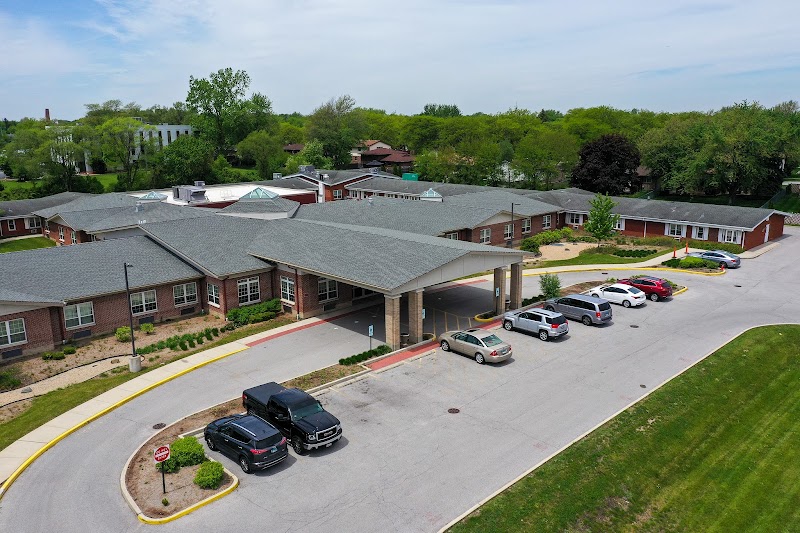
21020 KOSTNER AVENUE, MATTESON, IL 60443 (708) 747-1300
For profit - Limited Liability company 154 Beds GENERATIONS HEALTHCARE Data: November 2025 1 Immediate Jeopardy citation
Trust Grade
0/100
#246 of 665 in IL
Last Inspection: May 2025

Inspected within the last 6 months. Data reflects current conditions.

Overview

Generations at Applewood has received a Trust Grade of F, indicating poor performance with significant concerns regarding resident care. Ranking #246 out of 665 facilities in Illinois places it in the top half of the state, but this is overshadowed by its troubling issues. The facility is worsening, with the number of identified problems increasing from 12 in 2024 to 17 in 2025. Staffing is rated as average, with a turnover rate of 46%, which matches the state average. However, the facility has $325,101 in fines, which is concerning and suggests ongoing compliance issues. Recent inspector findings reveal serious incidents, including a failure to provide emergency life-sustaining measures for a resident who was unresponsive due to being placed in the wrong bed and not being identified correctly, creating a life-threatening situation. Additionally, there were failures to monitor and address significant weight loss in another resident with HIV, resulting in serious health consequences. While there are strengths, such as good RN coverage, these serious deficiencies highlight the urgent need for families to carefully consider the quality of care at this facility.
Trust Score
F
0/100
In Illinois
#246/665
Top 36%
Safety Record
High Risk
Review needed
Inspections
Getting Worse
12 → 17 violations
Staff Stability
⚠ Watch
46% turnover. Above average. Higher turnover means staff may not know residents' routines.
Penalties
○ Average
$325,101 in fines. Higher than 51% of Illinois facilities. Some compliance issues.
Skilled Nurses
✓ Good
Each resident gets 58 minutes of Registered Nurse (RN) attention daily — more than average for Illinois. RNs are trained to catch health problems early.
Violations
⚠ Watch
56 deficiencies on record. Higher than average. Multiple issues found across inspections.
★★★☆☆
3.0
Overall Rating
★★★☆☆
3.0
Staff Levels
★★★★★
5.0
Care Quality
★★☆☆☆
2.0
Inspection Score
Stable
2024: 12 issues
2025: 17 issues

The Good

  • 5-Star Quality Measures · Strong clinical quality outcomes
  • Full Sprinkler Coverage · Fire safety systems throughout facility
  • No fines on record

Facility shows strength in quality measures, fire safety.

The Bad

3-Star Overall Rating

Near Illinois average (2.5)

Meets federal standards, typical of most facilities

Staff Turnover: 46%

Near Illinois avg (46%)

Higher turnover may affect care consistency

Federal Fines: $325,101

Well above median ($33,413)

Significant penalties indicating serious issues

Chain: GENERATIONS HEALTHCARE

Part of a multi-facility chain

Ask about local staffing decisions and management

The Ugly 56 deficiencies on record

1 life-threatening 12 actual harm
Jul 2025 1 deficiency 1 Harm
SERIOUS (G) 📢 Someone Reported This

A family member, employee, or ombudsman was alarmed enough to file a formal complaint

Actual Harm - a resident was hurt due to facility failures

Quality of Care (Tag F0684)

A resident was harmed · This affected 1 resident

**NOTE- TERMS IN BRACKETS HAVE BEEN EDITED TO PROTECT CONFIDENTIALITY** Based on observation, interview and record review, the facility failed to identify causes of resident weight loss; failed to ide...

Read full inspector narrative →
**NOTE- TERMS IN BRACKETS HAVE BEEN EDITED TO PROTECT CONFIDENTIALITY** Based on observation, interview and record review, the facility failed to identify causes of resident weight loss; failed to identify that a resident had AIDS (acquired immunodeficiency syndrome); failed to monitor R3's HIV diagnosis according to professional standards; failed to develop a plan of care to address known weight loss and refusals of care; failed to notify providers of abnormal lab results; failed to notify providers of severe weight loss; failed to follow physician orders for lab work; failed to notify the provider/implement dietician recommendations timely. These failures affect 1 resident (R3) reviewed for quality of care. These failures caused harm to R3 as evidenced by a 5.5% weight loss in 6 days, an 8.2% weight loss within a month and a 16% weight loss within 3 months.Findings include:R3's face sheet documents in part a diagnosis of HIV (Human Immunodeficiency Virus) hemiplegia and hemiparesis of the right side, memory deficit following unspecified cerebrovascular disease, and schizoaffective disorder. R3's significant change MDS (minimum data set) (6/6/2025) documents R3 has a brief interview of mental status (BIMS) summary score of 10, indicating that R3 has moderate cognitive impairment and R3 has had weight loss that was not prescribed by the physician. On 6/30/2025, an additional BIMS assessment was completed for R3 with a summary score of 6, indicating new cognitive decline and severe cognitive impairment. R3's laboratory testing indicates on 5/17/25, R3 had abnormally low CD4 (Cluster of Differentiation 4) levels of 151 uL (microliter.) No laboratory values for R3's HIV viral load were noted within the medical record and were not provided by the facility prior to the end of the survey. R3's medication administration record (MAR) dated June 2025 documents R3 refused medications for HIV treatment 14 times in 1 month. R3's documentation of R3's weights is as follows:-12/5/2024 106 lbs (pounds) -1/3/2025 105 lbs-3/3/2025 105.6 lbs-4/4/2025 106.4 lbs-5/7/2025 101.8 lbs (-4.3% weight change from comparison weight 4/4/2025) -5/26/25 97.6 lbs (-4.1% change from 5/7/2025; -7.6% change from 3/3/2025) -6/5/2025 97.8 lbs (-8.1% change from 4/4/2025) -6/11/2025 95.2 lbs (-10.6% change from 4/4/2025, -10.4% change from 12/5/2024)-6/17/2025 90 lbs (-5.5% change 6/11/2025, -8.2% from 5/26/2025, -15.4% from 4/4/2025)-6/24/2025 89.4 lbs ( -16% from 4/4/2025, -9.2% from 5/26/2025, -15.2% from 1/3/2025)R3's progress notes document V9 (Infectious Disease (ID) Nurse Practitioner (NP)) visited R3 on 5/13/2025 for R3's diagnosis of HIV and gave the following orders: .-Order CD4 and viral load, -Monitor CBC (Complete Blood Count), CD4 and viral load, -Staff to continue to monitor, -Inform PCP (Primary Care Physician)/PCNP (Primary Care Nurse Practitioner) or ID if acute change in condition or fever . There is no evidence the viral load order was carried out by the nursing staff. On 5/16/2025, V14 (Registered Nurse) reached out to V7 (Physician) and notified V7 of a change in condition described as functional decline including refusals of medications, decreased appetite, refusing food/drink. V7 responded to V14 and stated that V7 would come visit the R3 and to follow up with Infectious Disease MD (medical doctor). On 5/20/2025, V7 was notified by V14 of R3's change in condition described as decrease in appetite, refusing meds, not wanting to get out of bed and a general change in mental status. V7 reviewed the abnormal CD4 lab values and assessed the resident and ordered the resident to be sent to the hospital for further assessment for altered mental status. The abnormal CD4 laboratory results or diagnosis of acquired immune deficiency syndrome (AIDS) was not identified by V7. R3 was hospitalized from [DATE] until 5/23/2025 for a urinary tract infection. On 5/27/2025, V9 (Infectious Disease Nurse Practitioner) visited R3 and did not review the abnormal CD4 lab. On 6/6/2025, a significant change was identified by the facility and a significant change MDS was completed by the facility's interdisciplinary team. On 6/6/2025, V8 (Physician) assumed care from V7 and completed a visit with R3. During this visit, V8 did not identify the abnormal CD4 values resulted on 5/17/2025 and did not identify that R3 had AIDS. On 6/10/2025, V6 (Registered Dietician) identified that R3 had weight decline, was concerned with adequate by mouth intake and recommended an appetite stimulant if not contraindicated. There is no documentation that this recommendation was communicated to a provider. On 6/20/2025 (documented on 6/25/25), V8 examined R3 and identified significant weight loss, failure to thrive, HIV and ordered in response: (unknown medication) Consider starting dose: 7.5 mg at bedtime Can be titrated based on response and tolerability, usually in 7.5?15 mg/day range for appetite. There is no documentation in the progress notes that indicates that the significant weight loss warnings from 5/7/2025, 5/26/2025, 6/5/2025, 6/11/2025, 6/17/2025, and 6/24/2025 were communicated to a provider. On 6/25/2025 at 1:15 PM, R3 was observed lying in bed and appeared cachexic. R3 had unintelligible speech at this time while trying to conversate.On 6/25/2025 at 1:49 PM, V5 (Restorative Nurse, Licensed Practical Nurse) affirmed that V5 is responsible for monitoring weights within the facility and addressing weight loss. V5 explained that R3 has had significant weight loss since May of 2025 and that the dietician was aware. R3 has been refusing meals and the facility does not know the cause of R3's decreased appetite. V5 stated, nothing seems to be working. We don't really know why. V5 affirmed that R3 has had significant decline. On 6/26/2025 at 10:15 AM, V2 (Director of Nursing) stated that V2 was aware that R3 had weight loss but was unsure of the cause of the weight loss. Surveyor reviewed the abnormal CD4 result (5/17/2025) with V2 (Director of Nursing) and V2 affirmed that V7 (Physician) reviewed the laboratory result. V2 denied knowledge of the result, affirmed that the resident could have AIDS, and was unsure if V7 had identified the abnormal CD4 level. V2 denied any knowledge that R3 was ever diagnosed with AIDS or if AIDS had ever been identified for R3. V2 affirmed that AIDS is life-threatening, can cause weight loss, and patients with AIDS have unique care needs in comparison with a resident with HIV. V2 stated that notifications of changes in a resident's health status made to the provider and family should be noted within a resident's progress notes. V2 was unsure of how often the facility was monitoring R3's CD4/HIV viral load. V2 affirmed that the last time R3 had lab work related to R3's HIV diagnosis was 1/28/2024. The facility was unable to provide additional documentation for lab monitoring prior to the exit. R3's physician orders do not document any active standing orders for regular monitoring of R3's CD4 and HIV viral load. On 6/26/2025 at 11:38 AM, V10 (Infection Preventionist, Licensed Practical Nurse) affirmed that V10 was aware of R3's HIV diagnosis. V10 reviewed R3's medical record and affirmed there was no active orders to monitor CD4 counts or Viral Load and that the 5/17/25 lab was abnormal for CD4. V10 reviewed R3's progress notes and providers documentation including but not limited to, V7 (Physician), V8 (Physician), V9 (Infectious Disease Nurse Practitioner) and V17 (Nurse Practitioner) and affirmed that the lab value was not addressed and that AIDS was not identified by any of R3's practitioners. V10 stated that AIDS can cause weight loss, increases their risk of opportunistic infections and places them at risk for death. On 6/26/2025 at 11:25 AM, R3 was observed lying in bed and V11 (MDS Nurse, Registered Nurse) affirmed that R3 had sunken in cheek bones, visible ribs, and sunken in areas around R3's collarbones (symptoms of cachexia, muscle wasting). When R3 was asked if R3 had lost any weight, R3 shook R3's head indicating yes. V11 affirmed that the facility is aware of R3's significant weight loss but was not sure the cause of the weight loss. On 6/26/2025 at 12:01 PM, V6 (Registered Dietician) affirmed that V6 is the dietician contracted to the facility. V6 stated that V6 was familiar with R3 and has a history of weight loss. V6 explained that R3 continues to lose weight despite having as many supplements as we (the facility) can provide. V6 had been told from staff that R3's appetite was poor so V6 recommended an appetite stimulant on 6/10/2025 to address the weight loss if the medication was not contraindicated. V6 stated that the facility needed to review that recommendation with a medical provider and that V6 expects when recommendations are made that they are communicated timely. V6 believed that R3 could have greatly benefited from an appetite stimulant to address R3's weight loss. Surveyor reviewed R3's lab work with V6 and V6 stated I (V6) had no idea that R3 had AIDS. I don't look at labs like that (CD4), I only look at labs like electrolytes. I rely on nursing or the providers to communicate information to me like that. AIDS can cause significant weight loss and cause decreased appetite. (R3) having AIDS would make perfect sense as the cause of his weight loss and lack of appetite! Now that I know (R3) has AIDS, I would say the root cause of (R3's) weight loss is the AIDS. R3's weights were reviewed with V6 and V6 affirmed that R3 has had severe, unintended weight loss.On 6/26/2025 at 12:54 PM, V8 (Physician) affirmed that V8 is the primary care provider for R3 and assumed care after V7 (Physician) on 6/1/2025. V8 stated that a CD4 <200 units/liter indicates that a patient has AIDS. V8 affirmed that treatment for AIDS vs. HIV differs, that AIDS can cause weight loss, and that AIDS is a life-threatening condition. V8 affirmed that V8 was aware that R3 had a diagnosis of HIV but was unsure of who was following/treating R3's HIV. V8 explained that V8 defers to an infectious disease consult to manage HIV. R3's CD4 laboratory testing was reviewed with V8 and V8 affirmed that the CD4 level indicated that R3 had AIDS. V8 denied any knowledge of R3's CD4 levels prior to the interview and was never told that R3 had AIDS. V8 stated R3's weight loss certainly could be caused by AIDS and that AIDS would cause the lack of appetite and changes in condition that R3 had been experiencing. V8 stated that V8 was not notified of the dietician recommendation of an appetite stimulant until V8's visit with R3 on 6/20/2025 (the medication was not administered until 6/30/2025). V8 stated that the facility should be notifying V8 with weight loss and dietician recommendations. V8 explained that R3 frequently refuses medications/care and that this can place R3 at risk for AIDS and HIV-resistant infections. V8 affirmed that a plan of care should have been developed in response to R3's weight loss and refusals of HIV medication. V8 explained that the standard of care for monitoring a patient with HIV is a CD4/HIV viral load no longer than every 6 months. When the surveyor notified the physician that the last time the facility had documentation the CD4 was tested was 1/2024, V8 replied (R3) is lucky to be alive if (R3) had had AIDS this whole time. V8 explained that V8 has reviewed hospice care with R3 and stated, I (V8) think (R3) is even more appropriate for hospice care now that I know (R3's) failure to thrive is caused by AIDS. Review of R3's care plan does not document any identification, goals or interventions related to R3's identified weight loss and does not document any interventions of weight monitoring in R3's HIV care plan. A refusal of care and weight loss care plan was added on 6/27/2025 (after the start of the survey). On 6/26/2025 at 1:08 PM, V12 (MDS Nurse, Registered Nurse) reviewed R3's medical record, affirmed that there was not a weight loss care plan in place for R3, no monitoring of weight related to R3's HIV diagnosis, and that R3's care plan should have addressed R3's significant weight loss. V12 stated that the purpose of the care plan and the resident assessment process is to identify resident needs and have a plan in place to address their problems. V12 reviewed R3's weights and affirmed that R3 has had significant weight loss. V12 stated when weight loss is identified, the provider should be immediately notified to address the weight loss and a plan should be put in place. On 6/26/2025 at 3:01 PM, V1 (Administrator) stated that V7 no longer has a relationship at the facility due to care concerns. V7 was attempted to be reached via phone on 6/25/2025 and 6/26/2025 and was unable to be reached. On 6/30/2025, R3's MAR documents an appetite stimulant (Mirtazapine 7.5 mg (milligrams)) was started (20 days after V6 gave the recommendation). On 6/30/2025 at 9:31 AM, V9 (Infectious Disease Nurse Practitioner) affirmed that V9 is the rounding infectious disease provider at the facility and that V9 sometimes rounds on HIV positive patients or they go to the specialized center. V9 recalled seeing R3 during rounds in May and asked V10 (Infection Preventionist, Licensed Practical Nurse) which provider was managing R3's HIV diagnosis. V10 told V9 that V10 was unsure and that V9 could follow so V10 put in labs. V10 stated that the standard of care for HIV positive patient lab work is a CD4 and viral load is drawn every 3 months but may need more lab work if they are unstable, maybe monthly. V9 denied that any staff member of the facility has communicated any concerns with R3's HIV diagnosis or results of the ordered lab work V9 had ordered. V9 stated, If the labs were abnormal or not collected, I would have expected the facility to call me. V9 explained that when a patient has a CD4 of less than 200 units/liter, the patient is considered to have AIDS. V9 stated that AIDS can cause weight loss, loss of appetite, opportunistic infections and is life threatening. Surveyor reviewed the lab work provided with V9 and V9 affirmed that R3 had AIDS. V9 stated, I had no idea of these lab results. The facility never told me that (R3's) CD4 was that low. I did not review the CD4 lab results when I visited (R3) on (5/27/25), I am not sure if the results were even available for me to view. I haven't had any calls or concerns about (R3's) HIV diagnosis or refusal of medications from the facility. They (the facility) should have told me, I could have changed his orders, like I would have also made sure psych was on board to manage the refusals of care. Refusing HIV meds can also put the resident at risk of developing AIDS. I wasn't made aware and didn't know the facility didn't follow my order for a viral load either. (V7) did not make me aware of the results either.On 6/30/2025 at 10:00 AM, V14 (Registered Nurse) stated that V14 is regularly assigned to care for R3 and was assigned to care for R3 today. V14 described that R3 has had a change in condition in June and explained that R3 has had very poor appetite, non-compliant with medications at times, and doesn't like to get up out of bed. V14 recalled reporting these symptoms to R3's physician (V7) and recalled that R3 was admitted for a UTI at the end of May (2025). V14 stated, (R3) is really declining. I have noticed that R3 has lost a little weight but restorative handles that. (R3) seems appropriate for hospice now due to the decline, (R3's) providers have been discussing it with (R3) lately. V14 stated that when a resident refuses care the provider needs to be notified immediately, especially if education doesn't work. V14 affirmed that restorative notifies the provider of weight changes but the nurses are responsible for communicating lab results to the providers immediately if they are abnormal. V14 stated that V14 was unaware of R3 having AIDS until the end of last week. V14 stated that AIDS can cause weight loss and is life threatening. V14 affirmed that if the facility was addressing the refusals of care or weight loss a plan would be developed in the care plan.On 6/30/2025 at 10:32 AM, V3 (Assistant Director of Nursing) affirmed that V2 (Director of Nursing) was not in the facility and that V3 is the acting director of nursing in V2's absence. V3 stated that the standard of care is that if weight loss identifies or triggers that the physician and dietician are notified, and that the documentation of this notification is made in the resident's progress notes. V3 reviewed R3's progress notes and affirmed that there is no documentation that any provider was notified about R3's weight loss. V3 stated that the facility should be notifying and documenting to the provider about R3's weight loss. V3 stated that the standard of care is that when weight loss is identified that a care plan is put into place to prevent further weight loss. V3 reviewed R3's care plan and affirmed that a care plan was created on 6/27/25 to address R3's weight loss and should have been created earlier when the weight loss was first identified. V3 stated that the standard of care for lab work is that the provider should be reviewing their lab work and abnormal lab values should be communicated to the provider for follow up. After, the notification should be documented within the resident's progress notes. V3 reviewed R3's progress notes and affirmed that V9 (Infectious Disease Nurse Practitioner) did not review R3's CD4 and the expectation is that V9 should be monitoring and following up on labs that V9 orders. V3 reviewed R3's records and V3 affirmed that there was no documentation that a provider was notified about R3's abnormal CD4 level that indicated AIDS and that the provider, should have been notified right away. V3 reviewed R3's progress notes and orders and affirmed that the dietician's recommendations for an appetite stimulant were not carried out until 6/30/2025. V3 stated that the recommendation should have been communicated to the provider right away and affirmed that R3 experienced a delay in care. V3 reviewed R3's orders and affirmed that V9's viral load lab order for R3 was not completed and that when providers give orders, they should be carried out. V3 stated, we should have known (related to the AIDS). R3's lab work documents on 7/1/2025 that R3's CD4 count was 75 uL (further decline from 5/17/2025). Facility policy titled, Weight Management (3/2022) documents in part, . It is the policy of this facility to monitor the nutritional status of all residents including all significant trending patterns of weight change to maintain acceptable standards of nutritional status . All significant, unplanned or trending weight changes must be investigated by the facility . In the case of significant or trending weight change, the following steps will be taken: A. Determine Possible Cause B. Determine Plan of Action C. Notify the Physician and responsible party . The Registered Dietician will assess each resident with a significant weight change and make appropriate recommendations to the physician . The Director of Nursing will refer all concerns and recommendations to the appropriate department for action. The Director of Nursing or designee will ensure physicians and resident representatives are informed of significant or trending weight fluctuations or concerns regarding a change in resident's nutritional status . Facility policy titled, Change in a Resident's Condition or Status (2/2025) documents in part, The Nurse will notify the resident's attending physician or physician extender when: .b. There is a significant change in the resident's physical, mental or psychosocial status c. There is a need to alter treatment significantly d. The resident repeatedly refuses treatment or medications .On 7/8/2025 at 12:00 PM, V2 (Director of Nursing) affirmed there is no facility policy for following physician orders.
May 2025 1 deficiency 1 Harm
SERIOUS (G) 📢 Someone Reported This

A family member, employee, or ombudsman was alarmed enough to file a formal complaint

Actual Harm - a resident was hurt due to facility failures

Deficiency F0711 (Tag F0711)

A resident was harmed · This affected 1 resident

Deficiency Text Not Available

Read full inspector narrative →
Deficiency Text Not Available
May 2025 10 deficiencies 1 Harm
SERIOUS (G)

Actual Harm - a resident was hurt due to facility failures

Pressure Ulcer Prevention (Tag F0686)

A resident was harmed · This affected 1 resident

Based on interview, observation and record review, the facility failed to develop and implement pressure ulcer prevention intervenctions for three of 12 residents (R49, R24, R120) reviewed for pressur...

Read full inspector narrative →
Based on interview, observation and record review, the facility failed to develop and implement pressure ulcer prevention intervenctions for three of 12 residents (R49, R24, R120) reviewed for pressure ulcers. Findings include: 1. On 05/07/25 at 9:53 AM V4, LPN, said R49 has pressure wounds on her sacrum and legs. R49 said I can't move my legs, they stay like this. R49's legs contracted and knees touching with dressing on left and right knee. Pillow between legs, but knees still touching. On 5/8/25 at 1:41PM V2, Director of Nursing (DON) and V9, Wound Nurse, were interviewed together. R49 has a stage 4 pressure ulcer to her left knee that developed in house on 4/3/25. V9 stated all of R49's skin impairment locations. V2 said R49 is at high risk for skin breakdown they put a pillow between her knees and use wedges for positioning. Repositioning is done every 2 hours, we do that for everyone. V9 said R49 is not able to reposition herself. The surveyor asked for documentation of the skin prevention interventions used to prevent pressure on R49's knees. V2 said I will check the Treatment Administration Record (TAR) for documentation. The surveyor asked if the facility has avoidable/unavoidable risk assessment for pressure ulcers. V2 said I am not aware that we have those. V2 said the purpose of the avoidable/unavoidable risk assessment would be to ensure the facility has implemented all interventions possible to prevent further breakdown. On 5/8/25 when the TAR for R49 was presented the surveyor notified V2 that there is no treatment for the left knee until 4/11/25. On 5/9/25 at 9:30am V2 said the purpose of MAR/TAR is to make sure meds are passed and doing treatments. V2 said if not signed off then it was not done. On 5/9/25 at 11:16 AM V7, Nurse Practitioner, said R49 is generally declining, she had blood work, we have a consult going on for her workup to rule out cancer. V7 said they have measures such as using pillows and repositioning every 2 hours. V7 said 2 hours is the standard for repositioning for the facility. R49's diagnosis include but are not limited to Alzheimer's Disease, Chronic Kidney Disease, Venous Insufficiency, Convulsions, Diabetes, and Peripheral Vascular Disease. On 3/4/25 a wound evaluation completed states Blister front left knee, lateral, in house acquired. 6.28 x 2.96 Centimeters (cm). treatment identifies heel suspension/protective devices and mattress with pump. (Nothing written to treat the knee.) On 4/29/25 Focused Wound Exam for R49 states stage 4 pressure wound of the left knee full thickness, 5.2 x 3.6 cm. Treatment Administration Record for April 2025 does not have a treatment for the left knee impairment until 4/11/25. (Per interview and documentation, the impairment was found on 3/4/25.) Care plan does not address left knee pressure ulcer. There are no interventions included to address her knees. The physician pressure ulcer treatment policy dated 5/17 states residents with pressure ulcers will have a physician's order for treatment. The nurse will documents the treatment as given on the TAR. 2. R24 had the diagnosis of pressure ulcer of sacral region stage three (3), pressure ulcer of right elbow stage four (4) and functional quadriplegia. Physician order sheet dated 1/24/25 documents: low air loss mattress. Vital report dated 5/8/25 documents: weight 125.8 pounds. On 5/8/25 at 11:59am, R24 was observed in bed, on an air loss mattress with the setting on four hundred (400) pounds. V4 (nurse) said, R24's air mattress was set on four hundred pounds. V4 said, R24 is not four hundred pounds. A white plastic medical bracelet was observed wrapped around the air loss mattress control panel. On 5/8/25 at 1:16pm, V16 Assistant Director of Nursing (ADON) said, the air loss mattress should be set based on the resident's weight to prevent and treat pressure ulcers from getting worst. If the air mattress is set to high above or too low below the resident actual weight it will not help prevent pressure ulcers/wound from getting worst. On 5/8/25 at 1:37pm, V9 (treatment nurse) said, a medical band with the resident weight is place on the air mattress control panel. The facility's in-service dated 5/5/25 documents: Air bed settings are based on the resident's weight which can be found in the system. There are also wristbands located on the base of the board with weights. 3. On 5/7/25 at 1:15pm, R120 was observed on a regular pressure reducing mattress. V8 (nurse) said, R120 is on a regular mattress. R120 was not on an air mattress. On 5/8/25 at 2:36pm, V2, Director of Nursing (DON) said, if the wound doctor's make a recommendation for a low air loss mattress, it must be followed. On 5/9/25 at 12:39pm, V2 said, an air loss mattress is a pressure relieving mattress. Progress note dated 4/5/25 documents: spoke to R120's family who requested that patient have a consultation to be placed on an air mattress for bed sore prevention. She stated that R120 was on an air mattress in the previous facility she stayed in as well as in the hospital. Wound doctor note dated 4/8/2025 documents: Recommendation: Low Air Loss Mattress Pressure Ulcer Prevention Protocol dated 5/18/25 documents: All bed in the facility will have pressure reducing mattresses unless pressure relieving mattresses are required according to the resident's needs.
CONCERN (D)

Potential for Harm - no one hurt, but risky conditions existed

Deficiency F0605 (Tag F0605)

Could have caused harm · This affected 1 resident

Based on interview and record review, the facility failed to ensure residents receiving psychotropic medications have a gradual dose reduction attempt or documented clinical contraindication for not a...

Read full inspector narrative →
Based on interview and record review, the facility failed to ensure residents receiving psychotropic medications have a gradual dose reduction attempt or documented clinical contraindication for not attempting. This failure affects one resident (R77) of three reviewed for psychotropic medications. Findings include: R77's POS (physician order sheet), notes an order for Escitalopram (Antidepressant) 10mg (milligrams) oral daily for major depressive disorder, recurrent, moderate. R77 was admitted to this facility on 8/23/24. R77 transferred from another long term care facility. Those medical records note R77 was receiving escitalopram 10mg daily for major depressive disorder. On 5/8/25 at 5:10 PM, V2 DON (Director of Nursing) stated that V2 is unable to find any documentation in R77's medical record noting a GDR (gradual dose reduction) was done for Escitalopram medication. V2 stated that the purpose of GDR is to find optimal dose and to determine if the medication is helping resident. This facility's psychotropic and anti-psychotic medication policy, revised 04/2025, notes anti-psychotic medication is to be administered at the lowest possible dosage for the shortest period of time and will be subject to GDR (gradual dose reduction) requirements. This facility's gradual dose reduction policy, reviewed 08/2023, notes residents who use psychotropic drugs shall receive gradual dose reductions and behavioral interventions. The facility will attempt a GDR on a resident in two separate quarters (with at least one month in between) within the first year in which a resident is admitted on a psychotropic medication.
CONCERN (D)

Potential for Harm - no one hurt, but risky conditions existed

Comprehensive Care Plan (Tag F0656)

Could have caused harm · This affected 1 resident

**NOTE- TERMS IN BRACKETS HAVE BEEN EDITED TO PROTECT CONFIDENTIALITY** Based on observation, interview and record review, the facility failed to develop and implement a plan of care for one resident ...

Read full inspector narrative →
**NOTE- TERMS IN BRACKETS HAVE BEEN EDITED TO PROTECT CONFIDENTIALITY** Based on observation, interview and record review, the facility failed to develop and implement a plan of care for one resident who was diagnosed with urinary retention requiring a urinary catheter. This failure affects one of two residents (R118) reviewed for urinary catheter care. Findings include: R118 was admitted to the facility on [DATE] with a diagnosis of retention of urine. On 5/6/25 and 5/8/25, during the survey R118 was observed with urinary catheter in place. R118's plan of care did not document any information related to R118's urinary catheter. On 5/8/25 at 4:18PM, V16 (Assistant director of nursing, ADON) said any resident with an indwelling urinary catheter should have a plan of care in place. V16 said she was unable to find any documentation in R118's care plan related to the urinary catheter. V16 said V16 is unsure why she does not. Facility policy titled Comprehensive Care Plans undated documents: to develop a comprehensive person-centered care plan, consistent with the resident's rights, that includes measurable objectives and timeframes to meet the resident's medical, nursing and mental and psychosocial needs. The comprehensive care plan will include areas of potential risk to the resident with interventions to eliminate or reduce risk.
CONCERN (D)

Potential for Harm - no one hurt, but risky conditions existed

ADL Care (Tag F0677)

Could have caused harm · This affected 1 resident

Based on observation, interview and record review, the facility failed to provide timely incontinence care for a resident. This failure affects one of three residents (R90) reviewed for incontinence c...

Read full inspector narrative →
Based on observation, interview and record review, the facility failed to provide timely incontinence care for a resident. This failure affects one of three residents (R90) reviewed for incontinence care. Findings Include: R90 had the diagnosis of Obesity, hemiplegia and hemiparesis following cerebral infraction affecting the left non- dominant side. Brief interview for mental status dated 2/26/25 documents R90's cognition as intact. Minimal data set section GG dated 5/7/25 documents: dependent with toileting. Section HH (Bowel and Bladder) urinary continence-always incontinent. On 5/7/25 at 1:41pm, R90 was observed with the call light on. R90 who was assessed to be alert to person, place and time, said she was wet. R90 said, the last time she was provide incontinence care was at 4:00am. R90 said, V6, Certified Nursing Assistant (CNA) informed her she wound provide care after lunch. V10 (Restorative Nurse) said, R90 is soiled with urine. R90's bed sheets are also soiled with urine. R90 was observed with a large wet irregular stain underneath her buttock on her fitted bed sheet. R90 also had a strong smell of urine. V10 said, R90 is able to make her needs known and that residents should be checked every two hours and changed every two to four hours. V10 said, she smells urine. R90 said, not being provide care made her feel bad. On 5/7/25 at 2:04pm, V6, CNA said, she was assigned to R90. V6 said, she started her shift at 7:00am. V6 said, this is the first time she was able to provide incontinence care to R90. V6 said, she needs help when providing care for R90 and staff were busy each time she needed staff to assist with providing incontinence care. V6 said, she usually waits until the end of the day shift to provide R90 with incontinence care. V6 and V11 (CNA) both provided incontinence care to R90. Both said, R90 was soiled with urine. R90's adult brief was saturated with urine and R90's bed sheet was wet urine. On 5/8/25 at 1:16pm, V2, Director of Nursing (DON) said, the facility did not have an incontinence policy. V2 said, residents should be provided incontinence care when they are soiled and checked/changed every two hours or as needed.
CONCERN (D)

Potential for Harm - no one hurt, but risky conditions existed

Quality of Care (Tag F0684)

Could have caused harm · This affected 1 resident

**NOTE- TERMS IN BRACKETS HAVE BEEN EDITED TO PROTECT CONFIDENTIALITY** Based on interview and record review the facility failed to prevent one dependent resident (R30) from developing a large stool b...

Read full inspector narrative →
**NOTE- TERMS IN BRACKETS HAVE BEEN EDITED TO PROTECT CONFIDENTIALITY** Based on interview and record review the facility failed to prevent one dependent resident (R30) from developing a large stool ball. This failure affects one of one residents (R30) reviewed for quality of nursing care. This failure resulted in R30 being hospitilized with a diagnosis of fecal impaction. Findings include: R30 has diagnosis including but not limited to Respiratory Failure, Tracheostomy Status, Anemia, Seizures, Hemiplegia, Metabolic Encephalopathy, and Aphasia. R30's Minimum Data Set (MDS) assessment dated [DATE] identifies he is severely cognitively impaired, dependent on staff for all cares, and frequently incontinent of bowels. Hospital records for R30 dated 4/26/25 state there is a large stool ball in the rectum with mass effect on the bladder. Patient will require enema, enema ordered. Diagnoses include fecal impaction in rectum. On 5/8/25 at 2:47PM V16, Assistant Director of Nursing, said R30 was sent to the hospital. V16 said he had copius drainage, dark in color, and an odor was present, all from the sacral wound. V16 said R30 also had increased pitting edema in his left upper and a little in his right arm, he was not as alert as usual, and not responding like normal. V16 said R30 normally will look at you. On 5/9/25 at 9:34AM V2, Director of Nursing, said symptoms of an impaction include decreased bowel movement, discomfort, pressure, or bloating. V2 was asked how does the nurse assess in someone who can't communicate and V2 replied they check to see if having bowel movements or check abdomen. Surveyor asked if this was done and documented for R30 and V2 replied I will have to look. On 5/9/25 at 11:16am V7, Nurse Practitioner, said I reviewed R30's hospital records and saw the note about the stool. V7 said that is asignificant size. V7 said facility would not have known about it unless they were keeping tract of his stools every day. V7 said R30 can't express anything. R30's care plan identified intervention related to his tube feeding status dated 1/18/25 to monitor/document/report abdominal pain, distension, tenderness, constipation or fecal impaction. R30's progress notes written by V16 dated 4/27/25 at 10:42AM state he was admitted to the hospital with altered mental status and ultrasound of abdomen revealed stool, miralax and stool softeners administered with results. At 1:03PM V7, Nurse Practitioner, documented large stool ball in the rectum measuring 11.3 x 9.2 x 18.4 cm (centimeters) which exerts mass effect on the adjacent urinary bladder.
CONCERN (D)

Potential for Harm - no one hurt, but risky conditions existed

Incontinence Care (Tag F0690)

Could have caused harm · This affected 1 resident

**NOTE- TERMS IN BRACKETS HAVE BEEN EDITED TO PROTECT CONFIDENTIALITY** Based on interview and record review, the facility failed to follow physician orders for providing urinary catheter care every s...

Read full inspector narrative →
**NOTE- TERMS IN BRACKETS HAVE BEEN EDITED TO PROTECT CONFIDENTIALITY** Based on interview and record review, the facility failed to follow physician orders for providing urinary catheter care every shift for residents with indwelling catheters. The facility also failed to obtain and document a diagnosis in the physician's orders for an indwelling catheter. These failures affect two of two residents (R80, R118) reviewed for suprapubic and indwelling urinary catheters. Findings include: On 5/8/25 at 12:05 PM, V2 DON (director of nursing) stated that the CNAs (certified nurse aides) and nurses are responsible for providing catheter care every shift. V2 stated that R80 had two urinalysis/cultures completed since 12/2024, one in December and one in April. On 5/8/25 at 4:00 PM, V5 (infection prevention nurse) stated that performing catheter care is important to prevent urinary tract infections. V5 stated that catheter care should be done per physician orders. V5 stated that the nurse should be assessing the catheter's insertion site for signs of infection when providing catheter care. R80's POS (physician order sheet), dated 10/31/24, notes an order for catheter care every shift. On 12/23 and 12/26 are orders for urinalysis, reflex to culture. There are no results found in R80's medical record noting urinalysis/cultures were completed on 12/23 or 12/26. R80's urinalysis/urine culture, dated 12/9/24, noted 50,000 - 100,000 mixed flora, multiple bacterial species present. R80 was started on Ciprofloxacin (antibiotic) 500mg (milligrams) oral twice daily for 7 days. 4/8 urine culture noted ESBL (extended-spectrum beta-lactamase) and pseudomonas aeruginosa (MDRO - multidrug resistant organism). On 4/14/25, V21 (attending physician) noted Polymicrobial UTI with ESBL Klebsiella and MDRO Pseudomonas. Likely source: chronic indwelling catheter. No systemic symptoms (fever, hypotension), but pyuria/bacteriuria indicate active infection. Meropenem (antibiotic) 1 Gram via intravenous catheter three times daily for treatment. R80's TAR (treatment administration record), dated January - May 2025, notes the following: January: There is no documentation noting R80 received catheter care on day shift: 1/1, 1/6, 1/7, 1/8, 1/10, 1/11, 1/13, 1/16, 1/17, 1/19, 1/22, 1/23, 1/24, 1/26, 1/27, 1/28, 1/29, or 1/31; evening shift: 1/1, 1/2, 1/4, 1/5, 1/8, 1/9, 1/10, 1/13, 1/16, 1/18, 1/19, 1/25, or 1/26; night shift: 1/1, 1/2, 1/4, 1/5, 1/6, 1/8, 1/9, 1/12, 1/13, 1/15, 1/16, 1/19, 1/20, 1/22, 1/23, 1/25, 1/27, 1/29, or 1/30. February: There is no documentation noting R80 received catheter care on day shift: 2/3, 2/4, 2/7, 2/8, 2/10, 2/16, 2/18, 2/19, 2/21, 2/24, or 2/27; evening shift: 2/1, 2/2, 2/7 -2/10, 2/19, 2/21, or 2/23; night shift: 2/1, 2/2, 2/3, 2/5, 2/6, 2/8, 2/10, 2/14, 2/15, /16, 2/19, 2/23, 2/24, or 2/26. March: There is no documentation noting R80 received catheter care on day shift: 3/1, 3/4, 3/5, 3/6, 3/8, or 3/10; evening shift: 3/1, 3/13, 3/16, 3/29, or 3/30; night shift: 3/2, 3/3, 3/5, 3/6, 3/8, 3/9, 3/10, 3/12, 3/15, 3/16, 3/17, 3/19, 3/22, 3/24, 3/26, 3/27, 3/29, or 3/30. April: There is no documentation noting R80 received catheter care on day shift: 4/3, 4/7, 4/8, 4/9, 4/13,4/19, 4/23, 4/27, 4/28, or 4/30; evening shift: 4/3, 4/12, 4/13, 4/19, 4/24, or 4/27; night shift: 4/3, 4/5, 4/7, 4/8, 4/9, 4/10, 4/13, 4/14, 4/17, 4/19, 4/23, 4/26, 4/27, or 4/28. May: no documentation noting catheter care was provided on 5/3 day shift or night shift, 5/6 day shift, 5/7 day shift or night shift, or 5/8 day shift. The facility's physician orders policy, reviewed 12/2023, notes physician orders will be implemented by facility staff. R118 was admitted to the facility on [DATE] with a diagnosis of retention of urine. R118's admission note dated 2/25/25 documents: R118 has a foley, urine is yellow. On 5/6/25 and 5/8/25, R118 was observed with foley catheter in place. On 5/8/25 at 4:18PM, V16 (Assistant director of nursing, ADON) said any resident with a foley catheter should have an order in place for care. V16 said she was unable to find R118's physician orders related to her catheter. V16 said R118 should have had orders in place and is unsure why she does not. R118's physician orders do not document any orders or information related to catheter care, catheter size or catheter changes. Facility's physician orders policy revised 12/2023 documents: all resident medications and treatments must be ordered by a licensed physician or physician extender. Physician orders will be implemented by facility staff. Facility policy Urinary catheter insertion and maintenance policy revised 07/26 documents: to maintain constant urinary drainage based on physician order. Change catheter as ordered by physician.
CONCERN (D)

Potential for Harm - no one hurt, but risky conditions existed

Deficiency F0745 (Tag F0745)

Could have caused harm · This affected 1 resident

Based on interview and record review, this facility failed to provide services to assist residents with scheduling outside physician appointments and arranging transportation to and from appointments....

Read full inspector narrative →
Based on interview and record review, this facility failed to provide services to assist residents with scheduling outside physician appointments and arranging transportation to and from appointments. This failure affects one resident (R84) out of three residents reviewed for follow-up appointments after a hospital emergency visit for a fractured left femur. Findings include: On 5/6/25 at 11:00 AM, R84 stated that she fell when the staff member was transferring her from bed to wheelchair last November. R84 stated that she fractured her left femur. R84 stated that she has been wearing a left knee immobilizer since the fall. R84 stated that she was to follow up with an orthopedic surgeon but no appointment was made. On 5/8/25 at 12:05 PM, V2 DON (director of nursing) stated that V16 ADON (assistant director of nursing) was working on scheduling R84's orthopedic follow up appointments after fall with fracture. V2 stated that this facility was having difficulty getting R84 an appointment due to R84's insurance. V2 stated that orthopedic physician offices nearby were called but do not take R84's insurance. V2 stated that we had to wait until R84 could change her insurance provider on May 1, 2025 to one that would allow R84 to see an orthopedic surgeon. When questioned if the insurance provider was contacted for orthopedic physicians that accept R84's insurance, V2 stated that R84 was able to get seen one time by an orthopedic surgeon but that this physician refused to see R84 again due to her insurance. This surveyor requested all documentation regarding attempts to schedule appointment with orthopedic surgeon(s) and the office visit note from the orthopedic physician that saw R84. V2 was unable to provide any documentation of communication with R84's insurance, attempts to schedule appointment(s), or the office visit note to confirm R84 was seen by an orthopedic surgeon. R84's hospital record, dated 11/7/2024, notes R84 presented to the emergency room after a fall. X-ray results showed a comminuted, oblique fracture of the left distal femur with 1.4cm (centimeters) medial displacement. R84's POS (physician order sheet) dated 11/13/24, notes an order for a knee immobilizer to left knee at all times. On 11/25/24 there is an order to refer R84 to orthopedic department at a hospital for diagnosis: distal femur fracture. R84's progress note, dated 11/25/24, V22 RN (registered nurse) noted attempted to make follow up appointment for orthopedic surgeon but insurance not accepted at any area orthopedic offices. V22 called the local county Health Systems to make appointment. Instructed to fax referral and then follow up with a call to the orthopedic referral department. On 12/23/24, notes R84 needs appointment with primary care provider to get orthopedic surgeon referral. Appointment scheduled on 1/2/2025 at 2:00 PM. On 1/21/25, V16 ADON (assistant director of nursing) noted R84 has an appointment with orthopedic surgeon on 01/24/25 at 10:40 AM. There is no documentation found in R84's medical record noting R84 was transported to appointments on 1/2 or 1/24 or that a referral was sent to local county Health Systems.
CONCERN (D)

Potential for Harm - no one hurt, but risky conditions existed

Deficiency F0808 (Tag F0808)

Could have caused harm · This affected 1 resident

Based on observation, interview and record review, the facility failed to follow the physician prescribed diet order for double portions of meat at lunch for one of three residents (R126) reviewed for...

Read full inspector narrative →
Based on observation, interview and record review, the facility failed to follow the physician prescribed diet order for double portions of meat at lunch for one of three residents (R126) reviewed for therapeutic diet. Findings Include: R126's physician order sheet dated 4/7/25 documents: Regular texture thin, for diet. Give double meat with lunch. R126's diet card documents: double meat with lunch. On 5/6/25 at 12:27PM, R126 was observed eating lunch with one piece of meat on his tray. On 5/6/25 at 1:57PM, R126 said, who was assessed to be alert and oriented to person, place and time said, he had one piece of meat for lunch. On 5/8/25 at 3:00PM, V17 (dietary manager) said, R126 was served beef fritters on 5/6/25. Double portion for meat would be two piece of meat on the tray. Therapeutic diets are orders that need to be followed. Facility lunch menu documents: Tuesday (day three), lunch beef fritter. Therapeutic diet policy dated 1/16 documents: Therapeutic diet shall be prescribed by the attending physician.
CONCERN (D)

Potential for Harm - no one hurt, but risky conditions existed

Deficiency F0825 (Tag F0825)

Could have caused harm · This affected 1 resident

Based on interview and record review, this facility failed to provide skilled therapy services to one resident (R84) who sustained a left femur fracture after a fall at the facility, while being trans...

Read full inspector narrative →
Based on interview and record review, this facility failed to provide skilled therapy services to one resident (R84) who sustained a left femur fracture after a fall at the facility, while being transferred from bed to chair. This affected one of three residents R84 reviewed for skilled therapy. Findings include: R84's hospital record, dated 11/7/2024, notes R84 presented to the emergency room after a fall. X-ray results showed a comminuted, oblique fracture of the left distal femur with 1.4cm (centimeters) medial displacement. On 5/6/25 at 11:00 AM, R84 stated that she fell when the staff member was transferring her from bed to wheelchair last November. R84 stated that she sustained a fracture of her left femur. R84 stated that she has been wearing a left knee immobilizer since the fall. R84 stated that she has not received any skilled therapy post fall. R84's POS (physician order sheet), dated 12/11/24, notes occupational therapy (OT) clarification order: OT to evaluate and treat R84 five times a week for six weeks to address self cares, therapeutic exercises, therapeutic activities, and neuromuscular re-education. On 12/13/24, notes physical therapy (PT) clarification order: PT four times a week for 4 weeks to include: gait training; therapeutic exercises; therapeutic activities; neuromuscular re-education; wound care management; modalities as appropriate; R84/caregiver education; and discharge planning. R84's OT evaluation and plan of care, dated 12/11/24, notes clinical impression: R84 has extreme pain in left knee that limits her performance in ADLs (activities of daily living) and mobility. Reason for skilled therapy: R84 requires skilled OT services to increase independence with ADLs, develop and instruct on compensatory strategies, provision of pain management techniques, facilitate sitting tolerance and postural control and provision of modalities and strengthening in order to enhance R84's quality of life by improving ability to facilitate increased participation with functional daily activities and decrease risk for falls. Potential for achieving goals: good with OT five times a week for six weeks. There is no documentation found in R84's medical record noting R84 was seen by OT after 12/11/24. On 5/8/25 at 12:35 PM, V14 (rehabilitation director) stated that skilled therapy has attempted to evaluate R84 but has been having difficulty obtaining authorization from R84's insurance provider. V14 stated that R84's insurance changed effective 5/1/25. V14 stated that she has not requested authorization from R84's new insurance. R84's PT evaluation and plan of care, dated 12/13/24, notes clinical impressions: R84 will benefit from PT to strengthen lower extremity muscles to improve her participation in doing different ADLs for ease of nursing care as well as to ensure safety to R84 and caregiver. Reason for skilled therapy: R84 requires skilled PT services to assess functional abilities, promote safety awareness, enhance rehabilitation potential, analyze/instruct in home exercise program, establish and instruct in compensatory strategies, facilitate independence with all functional mobility, improve tone in lower extremities, increase lower extremity range of motion and strength, minimize falls and teach compensatory/adaptation techniques in order to enhance R84's quality of life by improving ability to increase performance skills with functional tasks, decrease level of care required from caregivers and decrease level of assistance from caregivers. There is no documentation found in R84's medical record noting R84 was seen by PT after 12/13/24.
CONCERN (D)

Potential for Harm - no one hurt, but risky conditions existed

Infection Control (Tag F0880)

Could have caused harm · This affected 1 resident

Based on observation, interview, and record review, the facility failed to follow their policy and change a central venous catheter dressing for one resident within at least 5-7 days. This affects one...

Read full inspector narrative →
Based on observation, interview, and record review, the facility failed to follow their policy and change a central venous catheter dressing for one resident within at least 5-7 days. This affects one of eight residents R49 reviewed for infection control practices. Findings include: On 05/07/25 at 9:51 AM surveyor observed R49's left upper arm intravenous (IV) access, dressing with silk tape, soiled, light brown color and lifting up. R49 said she was not sure how long that was there or what the brown discoloration is. On 05/07/25 at 9:53AM V4, Licensed Practical Nurse (LPN), said R49 has a midline IV site. V4 said the Infection Preventionist (IP) nurse does the IV dressings. On 05/07/25 at 01:25 PM V5, IP, looked at R49's IV site and said that looks like tape (the silk tape) it looks like it needs a change, it is not dated. V5 said I have to check policy for dressing change frequencies when asked when the dressing should be changed. V5 said the midline was inserted on 4/26/25. On 05/07/25 at 1:48 PM V2, Director of Nursing, said we change IV dressings weekly. V2 said the Registered Nurse (RN) on duty is responsible to change the dressing. V2 said dressings should be changed if they are soiled or coming off. V2 said I don't know why R49's midline dressing was not changed. R49's Medication Administration Record (MAR) for April 2025 documents midline inserted on 4/26/26 (12 days since insertion). The facility Central Venous Catheter Dressing Changes policy dated 10/25/14 states central venous catheter dressing will be changed at specific intervals, or when needed, to prevent catheter related infections that are associated with contaminated, loosed, soiled or wet dressings. Dressings must stay clean, dry, and intact. Change dressing every 5 to 7 days and as needed (when wet, soiled, or not intact).
Mar 2025 1 deficiency
CONCERN (D) 📢 Someone Reported This

A family member, employee, or ombudsman was alarmed enough to file a formal complaint

Potential for Harm - no one hurt, but risky conditions existed

Pressure Ulcer Prevention (Tag F0686)

Could have caused harm · This affected 1 resident

**NOTE- TERMS IN BRACKETS HAVE BEEN EDITED TO PROTECT CONFIDENTIALITY** Based on interview and record review, the facility failed to implement pressure sore prevention interventions, including the use...

Read full inspector narrative →
**NOTE- TERMS IN BRACKETS HAVE BEEN EDITED TO PROTECT CONFIDENTIALITY** Based on interview and record review, the facility failed to implement pressure sore prevention interventions, including the use of a low air loss mattress, and failed to perform dressing changes to the sacral wound and conduct daily skin assessments as ordered. The facility failed to document when and under what condition the sacral wound was initially identified. This failure affects one of the three residents (R3) reviewed for wound care and prevention interventions. Findings include: R3 is a [AGE] year old with the following diagnosis: stage 3 pressure ulcer of the right hip, dysphagia, adult failure to thrive, heart failure, and chronic obstructive pulmonary disease. An Initial Wound Evaluation and Management Summary dated 2/18/25 documents R3 presented with wounds to the right hip (stage 3) and right distal medial foot (deep tissue injury). Plan is to offload wound and reposition per facility protocol. There is no documentation R3 had a sacral wound upon initial evaluation. A Nurse Practitioner note dated 2/20/25 documents R3's family member requested R3 be sent out to the hospital for G tube placement. R3 has been on hospice since 12/5. A phone call was made with staff, the hospice company and R3's family, and it was decided to revoke hospice. R3 was sent out to the hospital per families request for Gastrostomy tube placement. R3 has failure to thrive in adult. A Nursing note dated 2/27/25 documents R3 returned to the facility with a diagnosis of failure to thrive. R3 had a dressing to the right hip and a Deep Tissue Injury (DTI) to the left heel. A Skin/Wound note dated 2/28/25 documents R3 returned to the facility yesterday on hospice. Upon skin observation, R3 was noted to have a right hip wound and a distal medial foot wound. No redness or swelling was noted to the sacrum, heels, or elbows. A Wound Care note dated 3/4/25 documents R3 was supposed to be seen by wound care during wound care rounds. R3 kept yelling to be left alone. R3 was educated on risk and benefits of refusing wound care treatments R3 verbalized understanding and stated R3 was too tired to continue. On 3/26/25 at 1:09PM, V1 (Wound Care Coordinator) stated R3 originally had a low air loss mattress that was provided by hospice. V1 reported R3's family member revoked hospice the day R3 was sent out to the hospital but V1 was not made aware of this. V1 stated when R3 returned form the hospital R3 had a right hip wound and a deep tissue injury to the right heel. V1 was not able to answer when the sacral wound was first identified or in what condition the wound was in when it was first identified. V1 denied there was any documentation when the wound was first identified. V1 stated since R3 was removed from hospice, the hospice company took their air mattress back. V1 reported V1 was unaware for about a week that R1 returned to the facility off hospice. V1 stated an order was put in to treat the sacral wound on 3/4/25 but V1 was unable to remember how the wound was identified. V1 reported skin assessments need to be completed daily on residents with wounds and documented in the Treatment Administration Record (TAR). V1 stated dressing changes should also be performed as ordered or the wound could get worse. V1 reported R3 is at high risk for developing pressure ulcers due to lack of nutrition, incontinence, having wounds in the past, and immobility. V1 stated if there is no documentation in the TAR then it is assumed it was no done. On 3/27/25 at 1:45PM, V14 (Wound Care Technician) stated R3 currently has a sacral wound. V14 denied seeing R3's sacral area on 3/4/25 during wound rounds because R3 refused to be cleaned or have the dressing changed at the time. V14 reported R3 was on hospice but when R3 returned from the hospital, R3 was no longer on hospice. V14 stated V14 does not know when or who found the sacral wound. V14 reported when a new skin alteration is noted then staff should tell the wound care team the same day. V14 was unable to remember if R3 was on a low air loss mattress on 3/4/25 but stated R3 is on an air loss mattress now. V14 stated the CNAs are responsible for doing skin checks once a week. When V14 was asked if skin assessment should be performed daily, V14 replied, No. On 3/28/25 at 1:41PM, V15 (Wound Care Physician) stated R3 was on hospice but was taken off. V15 was unable to provide the date R3 was removed from hospice. V15 reported V15 was unable to remember and unable to look up when V15 was first notified of the sacral wound and what stage the wound was in when it was first identified. V15 stated based on the first order placed of xeroform the wound to the sacrum was not advanced and could have only been some kind of opening to the skin. V15 reported R3 would be considered high risk for developing wounds due to age, refusing treatments, being incontinent, and poor oral intake. V15 stated V15 should be notified immediately of a new skin alteration so orders can be entered and treatments can begin. V15 said, If you don't do treatments or assess the skin thoroughly, then wounds can deteriorate very quickly. V15 reported it is very likely for a sacral wound to deteriorate from a small opening to a stage three within a week. V15 stated R3 is a resident that would benefit from a low air loss mattress because R3 cannot move around as much and these mattresses help prevent further wounds by relieving pressure. V15 was not able to answer when the air mattress was ordered but confirmed the nurse is responsible for getting the interventions in place that are discussed during rounds. V15 reported the interventions to prevent further wounds/wounds from deteriorating should be put in place within the same day if possible. On 3/28/25 at 3:22PM, V16 (DON) stated R3 was on hospice before going to the hospital and hospice provided the air mattress at that time. V16 reported R3 was removed from hospice care upon returning to the facility. V16 stated the wound care team assessed R3 during rounds and determined R3 needed an air mattress at that time. V16 reported the air mattress was ordered and delivered to the facility within one day. V16 was unaware of how many days R3 was in the facility before the air mattress was ordered. V16 stated once a new skin alteration is noticed then wound care and a physician must be notified, a progress note must document the wound, and treatment orders should be put in place to care for the wound. V16 reported a new skin alteration should always be documented because that way staff can tell when it was developed and who was notified. V16 stated V16 was unaware if skin assessment should be completed daily or twice weekly for residents with wounds and V16 would need to reference the policy for a correct response. V16 reported skin assessment should always be documented even when no new skin alterations are found. V16 stated wound interventions should be put in place as soon as possible once the resident is determined to be at risk to prevent wounds. There is no documentation that a wound physician saw R3 again until 3/11/25 after the visit on 2/28/25. The Wound Care Physician note dated 3/11/25 documents there is new documentation of a stage three pressure wound to the sacrum that measures 2.1 cm x 1.6 cm x 0.1 cm. It is documented that the duration of the wound is greater than five days. There's no documentation on when the wound was first noted or what stage the wound was when it was first identified. Continued recommendations for offloading and repositioning per facility protocol. The Wound Physician note dated 3/21/25 documents the sacral wound has now advanced to a stage four pressure ulcer and measures 4.8 cm x 3.0 cm x 1.7 cm. This wound is documented as exacerbated due to infection. The wound has a large black wet necrotic area with a foul odor. The Physician Order Sheet documents an order for the sacral wound was originally placed on 3/5/25 by V1 that received a verbal ordered from V15. The Treatment Administration Record (TAR) dated 02/2025 documents R3 was receiving treatment for a right distal medial foot wound and a right hip wound. There is no order for a sacral wound dressing. There is also an order that R3 should receive daily skin checks. Skin checks were not completed for five days as there is no documentation on the TAR that the skin checks were completed. The TAR from 03/2025 documents an order for a sacral wound to be cleansed with normal saline and xeroform with a dry dressing to be changed daily was placed on 3/4/25. Per the TAR, there was no documentation of this dressing change was completed on 3/5/25, 3/10/25, and 3/14/25 as ordered. A new order was placed on 3/15/25 to cleanse the sacral wound with normal saline, pat dry and apply thera honey then apply calcium alginate and cover with a dry dressing daily. There is no documentation of this dressing change being completed on 3/18/25, 3/22/25, 3/23/25, 3/24/25, and 3/25/25 as ordered. There's also an order for skin checks to be completed daily. There are only three skin assessments completed from 3/4/25 through 3/25/25. Skin assessments were not completed on R3 a total of 18 times per documentation. An email dated 3/3/25 documents central supply ordered a low air loss mattress for R3 from the purchasing agent at the facility. The low air loss mattress documents the delivery slip as the mattress was delivered on 3/4/25. The Braden Scale for Predicting Pressure Ulcer Sore Risk documents a score of 11 indicating R3 is at high risk for developing pressure ulcers due to being very moist, chairfast, very limited mobility, very limited sensory perception, has inadequate nutrition, and has a problem with friction and shearing. The Care plan dated 2/14/25 documents R3 has a potential for impaired skin integrity as evidenced by Braden scale indicating or is high risk for pressure ulcers. An intervention documented on 2/14/25 indicates a pressure reducing mattress should be used on the bed and to monitor skin conditions and report any skin alterations. The Care Plan revised 3/14/25 on documents R3 has an actual skin impairment of the right distal medial foot that is a deep tissue injury, a pressure wound to the right hip, and a pressure ulcer to the sacrum. An intervention documented on 2/28/25 documents R3 needs a pressure relieving/reducing mattress and heel boots to protect the skin while in bed. The Minimum Data Set (MDS) dated [DATE] documents a Brief Interview for Mental Status score as a six (severe cognitive impairment). Section GG of the MDS documents R3 needs substantial/maximal assist with bed mobility. Section M of the MDS documents R3 is at risk for developing pressure ulcers. At the time of the assessment, it is documented R3 did not have any unhealed pressure ulcers or any other injuries present. A policy that was sent via email by the facility that is untitled and undated documents, Objective: 1. Residents will be assessed to determine their risk factor(s) for pressure ulcer development Procedure: 1. Residents will be assessed to determine their risk factor(s) for pressure ulcer development, upon admission and at least quarterly thereafter. 2. All beds in the facility will have pressure reducing mattresses unless pressure relieving mattresses are required according to the resident's needs . 4. Interventions necessary to maintain skin integrity or to promote healing will be incorporated into the plan of care based on each resident's individual needs and risks, which may include: A. Daily skin checks conducted by either the CNA or Licensed Nurse to ensure early identification of potential problem areas. B. Plan of Care to address mobility status and ability to reposition self. C. Use of Pressure Reducing Devices, such as pressure reducing mattresses, mattress overlays, w/c cushioning devices, if needed . 6. Residents will have their skin checked and documented. This skin check will be performed at a minimum of weekly.
Mar 2025 1 deficiency
CONCERN (D) 📢 Someone Reported This

A family member, employee, or ombudsman was alarmed enough to file a formal complaint

Potential for Harm - no one hurt, but risky conditions existed

Pharmacy Services (Tag F0755)

Could have caused harm · This affected 1 resident

Based on interview and record review the facility failed to follow their control substance policy and ensure the medication hydrocodone 5-325 milligrams are documented and accounted for, for two of tw...

Read full inspector narrative →
Based on interview and record review the facility failed to follow their control substance policy and ensure the medication hydrocodone 5-325 milligrams are documented and accounted for, for two of two residents (R4 and R5) reviewed for controlled medications. Findings include: 1. On 3/12/25 at 3:20pm during survey tour with assist from V4 (Director of Nursing) to observe the practice of counting control substance/narcotics, R4's control drug receipt/record/disposition form was observed to have documented discrepancy below date of 2/18/25. R4's control drug receipt record denotes Hydrocodone 5-325mg was signed out on 2/4/25 at 9a.m., 1p.m., and 9p.m. On 2/5/25 at 10a.m. On 2/6/25 at 2pm, 10pm. On 2/7/25 at 8a.m. and 4p.m. On 2/11/25 at 9a.m, 4p.m. On 2/12/25 at 9a.m, 10p.m. On 2/13/25 at 9a.m, 10p.m, 9p.m. On 2/18/25 at 9a.m, 2p.m. R4's Medication Administration Record dated February 2025 was reviewed, there is no documentation denoting that hydrocodone 5-325mg was administered to R4 on 2/4/25 at 9a.m., 1p.m., and 9p.m. On 2/5/25 at 10a.m. On 2/6/25 at 2pm, 10pm. On 2/7/25 at 8a.m. and 4p.m. On 2/11/25 at 9a.m, 4p.m. On 2/12/25 at 9a.m, 10p.m. On 2/13/25 at 9a.m, 10p.m, 9p.m. On 2/18/25 at 9a.m, 2p.m. R4's physician order sheet shows orders for hydrocodone/APAP tab, 5-325MG (milligrams) give 1 tablet orally every six hours as needed for pain related to chronic pulmonary disease, order start date 11/1/2024. On 3/14/25 at 10:39am V4 said control substance should be signed out on the medication administration record after administration of the medication. Facility policy dated 10/2014 denotes in-part accurate accountability of the inventory of all controlled drugs is maintained at all times. When a controlled substance is administrated, the licensed nurse administering the medication immediately enters the following information on the accountability record and medication administration record (MAR): date and time of administration. (MAR and accountability record). Amount administered. (accountability record). Remaining quantity. (accountability record). Initials of the nurse administering the dose, completed after the medication is actually administered. (MAR, accountability record). 2. On 3/12/25 at 3:20pm during survey tour with assist from V4 (Director of Nursing) to observe the practice of counting control substance/narcotics, R5's control drug receipt/record/disposition form was observed to have documented discrepancy below date of 2/18/25. R5's control drug receipt record denotes Hydrocodone 5-325mg was signed out on 2/4/25 at 9a.m., 2/5/25 at 10p.m., 2/6/25 9a.m., and 10pm, 2/7/25 at 9am, 2/12/25 at 10p.m., 2/13/25 at 9p.m., 2/14/25 at 7p.m, 2/18/25 at 10a.m., 2/19/25 at 10a.m., 2/20/25 at 9am, 2/21/at 10p.m., 2/22/25 at 9a.m., 2/22/25 at 6 (cannot determine if pm or am), 2/23/25 at 9a.m., 2/24/25 at 10a.m. R5's Medication Administration Record dated February 2025 was reviewed, there is no documentation denoting that hydrocodone was administered to R5 on 2/4/25 at 9am, 2/5/25 at 10p.m, 2/6/25 at 9am, and 10pm, 2/7/25 at 9am, 2/12/25 at 10pm, 2/13/25 at 9pm, 2/14/25 at 7pm, 2/18/25 at 10a.m., 2/19/25 at 10a.m., 2/20/25 at 9a.m., 2/21/25 at 10p.m., 2/22/25 at 9a.m., 2/22/25 at 6 (cannot determine if pm or am), 2/23/25 at 9a.m., 2/24/25 at 10a.m. R5's physician order sheet shows and order for Norco oral tablet 5-325 mg (hydrocodone-acetaminophen) give 2 tablets by mouth 6 hours as needed for mod to severe pain, order date 1/27/25. R5's physician order sheet shows and order for Norco oral tablet 5-325 mg (hydrocodone-acetaminophen) give 1 tablet by mouth 6 hours as needed for mild pain, order date 1/27/2025. On 3/14/25 at 9:44am R5 observed sitting in her wheelchair in her room, R5 observed alert to person, place and situation. R5 said her pain medication is scheduled as needed. R5 said she did not request or ask to take Norco multiple times in February. On 3/14/25 at 10:39am V4 said control substance should be signed out on the medication administration record after administration of the medication.
Feb 2025 1 deficiency
CONCERN (D) 📢 Someone Reported This

A family member, employee, or ombudsman was alarmed enough to file a formal complaint

Potential for Harm - no one hurt, but risky conditions existed

Accident Prevention (Tag F0689)

Could have caused harm · This affected 1 resident

**NOTE- TERMS IN BRACKETS HAVE BEEN EDITED TO PROTECT CONFIDENTIALITY** Based on interview and record review, the facility failed to safely position a resident in the bed while providing incontinence ...

Read full inspector narrative →
**NOTE- TERMS IN BRACKETS HAVE BEEN EDITED TO PROTECT CONFIDENTIALITY** Based on interview and record review, the facility failed to safely position a resident in the bed while providing incontinence care and prevent a resident from rolling out of the bed onto the floor. This affected one of three residents (R6) reviewed for safety during care. Findings include: R6 is an [AGE] year old with the following diagnosis: heart failure, end stage renal disease with dependence on dialysis, weakness, lack of coordination, and muscle wasting and atrophy at multiple sites. A Nursing note dated 12/2/24 documents R6 fell from bed while the CNA (Certified Nurses Assistant) was attending to R6's needs. Vitals signs were stable but 911 was called due to neck pain. The Fall Report dated 12/2/24 documents the CNA (V13) reported R6 rolled out of bed while V13 was providing care. V13 stated V13 turned to grab a new pad and R6 yelled R6 lost R6's grip and fell. R6 stated R6 overestimated the turn and lost R6's grip and balance. No injuries were noted. A conclusion or root cause of the fall is not documented. The Hospital Records dated 12/2/24 documents R6 presented to the emergency department post fall at the nursing home. R6 fell from the bed. A CT scan of the head and neck were negative and x-rays of the chest and pelvis were also negative. On 2/18/25 at 1:26PM, V9 (R6's Family Member) stated R6 fell out of bed while V13 (CNA) was changing R6. V9 reported R6 was weak and unable to maintain the side lying position while being changed causing R6 to fall out of bed. On 2/18/25 at 3:00PM, V10 (Nurse) stated V13 called V10 into the room because R6 rolled out of bed onto the floor. V10 reported V13 told V10 that R6 lost R6's balance and fell out of the bed. V10 stated there was only one CNA changing R6 and R6 was very weak. V10 reported R6 was a larger person and could not move around the bed without assistance from staff. On 2/18/25 at 3:12PM, V11 (Restorative Nurse) stated R6 needed partial/moderate assistance with turning and repositioning. V11 reported R6 was in the restorative bed mobility program to help R6 become stronger at rolling side to side in bed and also received physical therapy. V11 stated a CNA should log roll a resident to the side then reposition them to the middle of the bed when providing incontinence care. V11 reported moving the resident to the middle of the bed is important because if they are left too close to the side after turning then a resident can fall out of the bed easier. On 2/18/25 at 3:30PM, V12 (Director of Therapy) stated R6 was weak and very deconditioned in both bilateral upper and lower extremities. V12 reported R6 was weak in the core which causes balancing issues. V12 stated R6 needed partial/moderate assistance with turning in bed indicating R6 needed a staff member to perform 25-50% of the task. V12 said, She couldn't even hold the utensil to eat some days because she was so weak. V12 reported R6 was at risk for falls due to how weak R6 was. V12 stated if R6 was not properly positioned in bed then R6 had a greater chance of rolling out of bed due to being weak. On 2/18/25 at 4:11PM, V8 (DON-Director of Nursing) stated R6 rolled out of bed while V13 turned around to grab something. V8 reported R6 was working with physical therapy but V8 was unaware of what R6 could and couldn't do without assistance. On 2/19/25 at 11:34AM, V13 (CNA) stated V13 was providing incontinence care to R6 when R6 fell out of bed. V13 reported V13 assisted R6 with rolling to the left side and cleaned R6. V13 stated V13 turned around to grab a clean pad and took eyes off R6 and when V13 was turning back around, R6 was falling off the bed. V13 stated the bed was in a higher position due to incontinence care being provided. V13 reported due to R6's size, V13 was unable to stop the fall from happening. V13 stated R6 needed assistance with turning over in bed due to being weak. V13 reported R6 was turned over onto the left side near the edge of the bed because V13 could not pull R6 back to the middle of the bed. V13 stated V13 could not pull R6 to the middle of the bed because R6 was too large to pull alone. V13 said, I shouldn't have turned around, but I didn't think she was going to roll out of the bed. V13 reported R6 is very weak to hold R6's self up on the side. The Lift/Transfer Evaluation dated 11/12/24 documents R6 needs partial assistance with repositioning in bed. The Fall Risk Evaluation dated 11/12/24 documents R6 is at risk for falls. The assessment is not completed with a score indicating why R6 would be a fall risk. The Physical Therapy Evaluation dated 11/13/24 documents R6 was referred to therapy services due to declining balance, strength, bed mobility, transfer activities, and ambulation. R6 is a fall risk. Clinical Impressions: R6 presents with balance deficits, decreased functional capacity, decreased safety awareness, and strength impairments. The Restorative Nursing Screener dated 11/26/24 documents R6 needs partial/moderate assistance with rolling left and right. A Physical Therapy Encounter note dated 11/30/24 documents R6 worked on balance exercises by sitting on the edge of the bed, postural support/control, range of motion, safety awareness, and strength to bilateral lower extremities. R6 required 25% verbal instructions due to compromised balance, functional activity tolerance, safety awareness, range of motion, postural support/control, and strength. The Care Plan dated 11/12/24 documents R6 is at risk for falls. The Care Plan dated 12/2/24 documents R6 had an actual fall with no injury due to poor balance. The Minimum Data Set (MDS) dated [DATE] documents a Brief Interview for Mental Status score as 14 (no cognitive impairment). Section GG of the MDS documents R6 needs partial/moderate assistance with rolling left and right. Partial/moderate assistance mean helper does less than half the effort.
Jan 2025 2 deficiencies 1 Harm
SERIOUS (G) 📢 Someone Reported This

A family member, employee, or ombudsman was alarmed enough to file a formal complaint

Actual Harm - a resident was hurt due to facility failures

Pressure Ulcer Prevention (Tag F0686)

A resident was harmed · This affected 1 resident

**NOTE- TERMS IN BRACKETS HAVE BEEN EDITED TO PROTECT CONFIDENTIALITY** Based on observation, interview, and record review, the facility failed to provide treatment and services to prevent development...

Read full inspector narrative →
**NOTE- TERMS IN BRACKETS HAVE BEEN EDITED TO PROTECT CONFIDENTIALITY** Based on observation, interview, and record review, the facility failed to provide treatment and services to prevent development of a pressure ulcer; failed to promote wound healing and prevent infection for a dependent resident who was assessed as being at risk for pressure ulcer; and failed to perform weekly skin assessments as ordered. These failures applied to one (R1) of three residents reviewed for pressure ulcers and resulted in R1 developing a stage 4 facility acquired pressure ulcer to her sacrum, which required hospitalization for treatment of infection and surgical wound debridement. Findings include: R1 is a [AGE] year-old female who was admitted to the facility on [DATE]. Her past medical history includes, but not limited to Local infection of the skin and subcutaneous tissue, dysphagia, peripheral vascular disease, pressure ulcer of sacral region stage 3, pressure ulcer of right elbow stage 4, venous insufficiency, hypothyroidism, hyperlipidemia, gastro esophageal reflux disease without esophagitis, chronic kidney disease stage 3, etc. Pressure ulcer list provided by the facility documented that R1 has 3 facility acquired pressure ulcers, stage 3 to the right elbow, stage 4 to the left leg and stage 4 to the sacrum. Wound note dated 11/5/2024 documented the following: stage 4 pressure wound sacrum full thickness, duration >2 days, wound size 8.0 x 15.5 x not measurable c. Depth is unmeasurable due to presence of nonviable tissue and necrosis. Hospital record dated 11/11/2024 documented in part, [AGE] year-old female presented from nursing home with pressure ulcer on the right elbow and worsening of sacral decubitus ulcer with foul smell draining pus. Same hospital records documented empiric treatment with IV (intravenous) Vancomycin and IV Zosyn, general surgery consulted, planning for surgical debridement. The record also documented that based on clinical assessment at admission, patient will require more than 2 medically necessary midnights of in-hospital care because of sacral decubitus ulcer infection. Infectious disease section of the hospital record documented that R1 will be de-escalated to Unasyn 3 grams every 8 hours to be continued at the nursing home for a total of 6 weeks. Minimum data set (MDS) assessment dated [DATE] section C (cognitive patterns) scored R1 as a 7 for brief interview for mental status (BIMS). Section GG (functional status) of the same assessment documented that R1 is dependent on staff for all activities of daily living (ADLS). Section H (bowel and bladder) documented that R1 is always incontinent of bowel and bladder. R1 has an order for weekly skin checks dated 8/30/2024, and there is no documentation of any skin checks in her medical record. 1/13/2025 at 9:40AM, R1 was observed in her bed, awake and alert and stated that she is doing okay. R1 said that she has not been changed today, she was last changed yesterday and feels like she is wet. R1 also said that no one has changed her wound dressing yet, she does not know who is her assigned certified nurse assistant (C.N.A) for today. At 9:46AM, V4 (C.N.A) was observed in the hallway and stated that she is assigned to R1, she has not changed R1 or her roommate yet, she was going to get them next after she finished with the resident she is helping right now. 1/13/2025 at 10:10AM, V4 (C.N.A) and V5 (restorative) were observed coming out of R1's room, holding a bag of dirty linen, V4 said that they just changed resident, her roommate is okay and does not need to be changed. Surveyor asked to see resident's dirty incontinence brief and noted a large area of reddish stain that saturated the brief. V4 stated that R1 was not wet, the stain is from her wounds. Surveyor asked to see resident's wounds and noted a large area of deep wound on resident's sacrum that looks red, with lots of drainage. V4 and V5 applied a clean incontinence brief on R1 with no dressing covering the wound and said that they will inform wound care nurse that resident's wound does not have any cover. 1/13/2025 at 1:05PM, R1 was observed still lying on her back and stated that no one has come to turn her or put a dressing on her wound. 1/13/2025 at 2:00PM, Observed wound care for R1 with V3 (DON) and V11 (Wound Tech). When V3 removed resident's incontinence brief, it was soaked with wound drainage and there was no dressing covering resident's wounds. Surveyor presented this observation to V3 and she said that she was not aware that R1 did not have any dressing to her wounds, no one informed her. She added that the wound should not be left without dressing because it will be losing hemostasis. 1/15/2025 at 11:58AM, V13 (LPN-Licensed Practical Nurse/Wound Care) said that she is familiar with R1 and has been treating her wounds since she was admitted to the facility. V13 said that she first became aware of resident's sacral wound on 11/4/2024, the wound team was just treating residents leg wound that was present on admission and were not aware of anything going on in resident's sacrum. V13 added that the wound care team did not do another skin assessment apart from the one done upon admission. As for the resident's order for weekly skin assessment, the floor nurses are supposed to do that in conjunction with the C.N.A's during ADL care and notify wound care of any skin alterations. V13 added that the facility dropped the ball this time, there was a gap in communication, resident's wound could have been identified earlier. Facility pressure injury prevention protocol (undated) stated in part: 1. Residents will be assessed to determine their risk factor(s) for pressure injury development, upon admission; weekly x 4 weeks following admission/readmission and at least quarterly thereafter. 4. Residents will have their skin checked and documented utilizing the Treatment Administration Record. This skin check will be performed at a minimum of weekly. Skin Assessment Policy and Procedure (undated) documented the following: Intact, healthy skin is the body's first line of defense. It is the policy of this facility to monitor the skin integrity for signs of injury and irritation. In addition to ongoing assessment of the skin, the facility will implement measures to protect the resident's skin integrity and to prevent skin breakdown. Upon admission to the facility the following will be assessed: (1) Risk for developing pressure injuries using valid assessment of pressure injury risk; (2) General skin condition; (3) Current injuries. Under procedures, the policy documented in part: All resident's, regardless of risk, will have a documented weekly review of skin condition.
CONCERN (D) 📢 Someone Reported This

A family member, employee, or ombudsman was alarmed enough to file a formal complaint

Potential for Harm - no one hurt, but risky conditions existed

Infection Control (Tag F0880)

Could have caused harm · This affected 1 resident

**NOTE- TERMS IN BRACKETS HAVE BEEN EDITED TO PROTECT CONFIDENTIALITY** Based on observation, interview, and record review, the facility failed to ensure that staff use proper personal protective equi...

Read full inspector narrative →
**NOTE- TERMS IN BRACKETS HAVE BEEN EDITED TO PROTECT CONFIDENTIALITY** Based on observation, interview, and record review, the facility failed to ensure that staff use proper personal protective equipment (PPE) when caring for residents on enhanced barrier precaution, failed to ensure that respiratory equipment mask was properly contained, and failed to ensure that staff follow proper hand hygiene practices during wound care for a resident. These failures affected two (R1, R2) of two residents reviewed for infection control. Findings include: 1. R1 is a [AGE] year-old female who was admitted to the facility on [DATE] past medical history includes, but not limited to Local infection of the skin and subcutaneous tissue, dysphagia, peripheral vascular disease, pressure ulcer of sacral region stage 3, pressure ulcer of right elbow stage 4, venous insufficiency, hypothyroidism, hyperlipidemia, gastroesophageal reflux disease without esophagitis, chronic kidney disease stage 3, etc. 1/13/2025 at 10:10AM, V4 (CNA-Certified Nurses Assistant) and V5 (Restorative Aide) were observed coming out of R1's room, holding a bag of dirty linen. V4 said that they just changed resident (R1). V4 and V5 were not wearing any personal protective equipment while changing R1, resident has an enhanced barrier precaution sign on her door. 1/13/2025 at 2:00PM, observed wound care for R1 with V3 (LPN-Licensed Practical Nurse) and V11 (Wound Tech). V3 donned gloves and removed the dressing on R1's right ankle, observed a large area of open wound that appeared to have exposed the bone. V3 cleaned the wound, changed her gloves, and applied treatment and dressing, she did the same for resident's left ankle, continues to change gloves without performing any type of hand hygiene in between. V3 completed the whole wound care without washing her hands or using a hand sanitizer. When she was done, she left the room and returned to her cart without washing her hands. Neither V3 nor V11 wore any gown during the wound care. 1/13/2025 at 3:27PM, surveyor presented her observations to V3 (LPN), and she said, I did not even see the enhanced barrier precaution sign on the door, we would normally wear a gown when providing wound care for residents on this type of isolation. Regarding hand hygiene, V3 said that she changed her gloves when going from dirty to clean, she did not know that she must wash her hands or use an alcohol hand rub according to the training she got from her previous job. V3 added that hand hygiene should be performed before providing care and after. 1/13/2024 at 3:27PM, V2 (DON-Director of Nursing) said that the expectation for hand hygiene is that staff wash their hands before providing care, during care and after the care. Hand hygiene should be performed after removing gloves, staff can either wash their hands or use an alcohol-based hand sanitizer. For residents on enhanced barrier precaution, V2 said that staff are supposed to wear an isolation gown when providing care, she noticed that V3 and V11 were not wearing any gown during the wound dressing change, she wanted to say something, but not sure if she should in the presence of the surveyor. 2. R2 is a [AGE] year-old-male who has resided at the facility since 5/28/2024, past medical history includes Acute and chronic respiratory failure with hypoxia, anemia, other seizures, hemiplegia unspecified affecting SLP right dominant side, metabolic encephalopathy, essential primary hypertension, unspecified arterial fibrillation, dysphasia, aphasia, etc. 1/13/2025 at 9:55AM, R2 was observed in his room in bed, awake and alert but could not respond to questions. G-tube (Gastrostomy Tube) noted at bedside and infusing via gravity, resident with trach and connected to a vent via trach collar, ambu bag and suctioning equipment also at bedside. 1/13/2025 at 10:10AM, observed incontinence care for R2 with V4 (CNA) and V5 (Restorative Aide), noted resident's incontinence brief saturated with urine and bowel movement and brownish in color. Surveyor asked staff the last time resident was changed, and they did not know, V5 said that she is not sure, she is just over here to help. V4 and V5 donned gloves before the procedure but were not wearing any gown. R1 and R2 noted to have enhanced barrier precaution sign on their doors, that read in part, employees clean their hands, including before entering and when leaving the room. Providers and staff must also wear gloves and gown for the following high contact-resident care activities: dressing, bathing/showering, transferring, providing hygiene, wound care-any skin opening requiring dressing, etc. Hand hygiene policy (undated) states in part, hand hygiene (hand washing or the use of an alcohol based and rub) is regarded by this organization as is the single most important means of preventing the spread of infection. Hand hygiene must be under the following conditions: a. before and after assisting residents with personal care. J. before and after changing dressing. T. after removing gloves or aprons. 3. The use of gloves does not replace hand washing/hand hygiene. Enhanced barrier precaution policy undated starts in part: Objective: To prevent transmission of novel or targeted multidrug resistant organisms through 1. Enhanced Barrier Precautions (EBP) refers to an infection control intervention designed to reduce transmission of multidrug-resistant organisms that employs targeted gown and glove use during high contact resident care activities. 2. EBP are used in conjunction with standard precautions and expand the use of PPE to donning of gown and gloves during high-contact resident care activities that provide opportunities for transfer of MDROs to staff hands and clothing. implementation of enhanced barrier precautions. 3. EBP are applied (when Contact Precautions do not otherwise apply) to residents with any of the following: b. Wounds and/or indwelling medical devices even if the resident is not known to be infected or colonized with a MDRO.
Dec 2024 3 deficiencies
CONCERN (D) 📢 Someone Reported This

A family member, employee, or ombudsman was alarmed enough to file a formal complaint

Potential for Harm - no one hurt, but risky conditions existed

ADL Care (Tag F0677)

Could have caused harm · This affected 1 resident

**NOTE- TERMS IN BRACKETS HAVE BEEN EDITED TO PROTECT CONFIDENTIALITY** Based on observation, interview, and record review the facility failed to ensure a dependent resident received hygiene care to k...

Read full inspector narrative →
**NOTE- TERMS IN BRACKETS HAVE BEEN EDITED TO PROTECT CONFIDENTIALITY** Based on observation, interview, and record review the facility failed to ensure a dependent resident received hygiene care to keep nails clean and short for 1 of 3 residents (R2) reviewed for activities of daily living in the sample of 5. The findings include: R2's face sheet showed she was admitted to the facility on [DATE] with diagnoses to include dysphagia, thrombocytopenia, cerebral infarction due to embolism, encephalopathy, atrial fibrillation, gastrostomy status, chronic kidney disease, and muscle weakness. R2's facility assessment dated [DATE] showed R2 has severe cognitive impairment and is dependent upon staff for all cares. On 12/28/24 at 10:21 AM, R2 was lying in her bed and receiving cares from staff. R2's sheet was removed and was wet and bloody. During R2's cares there were several areas noted on her hips, buttocks, and thighs to be actively bleeding surrounding scratch marks. R2's fingernails were long, some jagged, with debris noted under them. On 12/28/24 at 10:21 AM, V11 CNA (Certified Nursing Assistant) said nails are cut with showers and showers are done according to the schedule in the shower book. V11 said R2 scratches herself and bleeds which causes them to have to change R2's sheets with every incontinence care. The facility's policy with review date of 3/3/23 showed, Activities of Daily Living . Policy: Residents will be provided with care, treatment, and services as appropriate to maintain or improve their ability to carry out activities of daily living . Residents who are unable to carry out activities of daily living independently will receive the services necessary to maintain good nutrition, grooming, and personal and oral hygiene including appropriate support and assistance with: a. Hygiene (bathing, dressing, grooming, and oral care) .
CONCERN (D) 📢 Someone Reported This

A family member, employee, or ombudsman was alarmed enough to file a formal complaint

Potential for Harm - no one hurt, but risky conditions existed

Pharmacy Services (Tag F0755)

Could have caused harm · This affected 1 resident

**NOTE- TERMS IN BRACKETS HAVE BEEN EDITED TO PROTECT CONFIDENTIALITY** Based on observation, interview, and record review the failed to ensure a resident received an oral medication and topical cream...

Read full inspector narrative →
**NOTE- TERMS IN BRACKETS HAVE BEEN EDITED TO PROTECT CONFIDENTIALITY** Based on observation, interview, and record review the failed to ensure a resident received an oral medication and topical creams as prescribed for 2 of 3 residents (R1, R2) reviewed for medications in the sample of 5. The findings include: 1. R2's face sheet showed she was admitted to the facility on [DATE] with diagnoses to include dysphagia, thrombocytopenia, cerebral infarction due to embolism, encephalopathy, atrial fibrillation, gastrostomy status, chronic kidney disease, and muscle weakness. R2's facility assessment dated [DATE] showed R2 has severe cognitive impairment and is dependent upon staff for all cares. On 12/28/24 at 10:21 AM, R2 was lying in her bed and receiving cares from staff. R2's sheet was removed and was wet and bloody. During R2's cares there were several areas noted on her hips, buttocks, and thighs to be actively bleeding surrounding scratch marks. R2 had extremely dry skin that was flaking and peeling off. R2's bed had pieces of skin throughout that had fallen off and was caught in R2's sheets. Large pieces of skin were hanging off all sides of R2's bilateral feet and legs. R2 had areas of skin to her bilateral upper extremities that was peeling away. R2's pillowcase was noted to have small areas of blood on it. R2's 12/27/24 progress note showed, During wound care rounds resident was observed scratching hips and buttock creating skin tears. Resident also was noted to have a skin tear to left chest On 12/28/24 at 10:21 AM, V11 CNA (Certified Nursing Assistant) said whenever they provide cares for R2 they have to change her sheets because they have blood on them. V11 said R2 scratches her skin a lot because R2 has very dry skin. R2's December 2024 Physician Order Sheet showed, Ammonium Lactate External Cream 12% . Apply to skin topically two times a day for psoriasis, dry skin, eczema. Patient will need her own bottle bedside to cover large area of skin . Cetaphil Moisturizing External Cream Apply to chest, arms, legs, topically two times a day for eczema and psoriasis . Triamcinolone Acetonide External Cream 0.1% . Apply to arms, legs, and chest topically two times a day for eczema and psoriasis . R2's December 2024 eMAR (Electronic Medication Administration Record) showed R2's Ammonium Lactate External Cream was not applied on the evenings of 12/3/24, 12/6/24, 12/18/24, 12/20/24, 12/24/24, and 12/26/24. The same eMAR showed R2's Ammonium Lactate External Cream was not applied on the mornings of 12/7/24, 12/10/24, 12/15/24, 12/19/24, 12/25/24, and 12/27/24. The same eMAR showed R2 received neither the morning or the evening application of her Ammonium Lactate External Cream on 12/21/24, 12/22/24, and 12/23/24. R2 missed 19 of 55 scheduled applications of her Ammonium Lactate External Cream to treat her psoriasis, eczema, and dry skin. The same eMAR showed R2's Cetaphil Moisturizing Cream was not applied the mornings of 12/4/24, 12/1/24, and 12/25/24. The same eMAR showed R2's evening application of Cetaphil was not documented as completed 12/3/24, 12/6/24, 12/18/24, 12/21/24, 12/22/24, 12/23/24, 12/24/24, 12/26/24, and 12/27/24. R2's progress notes entered 12/4/24, 12/10/24, 12/15/24, 12/18/24, 12/19/24, 12/21/24, 12/22/24, 12/23/24, 12/24/24, and 12/25/24 all showed R2's Ammonium Lactate was either unavailable, on order, or awaiting delivery. R2's progress notes entered regarding her Cetaphil cream on 12/4/24, 12/18/24, 12/22/24, 12/23/24, 12/24/24, and 12/25/24 all showed the cream was either unavailable or need more cream. R2's progress notes entered regarding her Triamcinolone Cream on 12/9/24 and 12/22/24 showed the medication was unavailable. On 12/30/24 at 3:09 PM, V13 Nurse Practitioner said R2's creams are for treatment of psoriasis and eczema which cause dry and itchy skin. These creams are hydrating and help with the itching. On 12/28/24 at 1:15 PM, V2 DON (Director of Nursing) was asked to locate R2's Ammonium Lactate, Triamcinolone, and Cetaphil creams. V2 was able to locate a bottle of Ammonium Lactate after checking several areas. V2 said they were unable to find Triamcinolone or Cetaphil for R2 at the facility. V2 said they would be ordering both of these creams. On 12/28/24 at 1:20 PM, V9 (Wound Care Coordinator) said she had just used the last of the Triamcinolone cream the day before and did not reorder the cream. On 12/28/24 at 2:22 PM, V2 DON said she expects the nurses to reorder medications timely. V2 said if a medication is not available in the facility she expects the nurses to check the convenience box and call the pharmacy to check on the order. V2 said if the pharmacy does not send the medication or the creams she would expect to be notified so she can check into why the product was not sent. 2. R1's face sheet showed he was admitted to the facility on [DATE] with diagnoses to include hemiplegia and hemiparesis following cerebral infarction, Type 2 Diabetes, hypothyroidism, hyperlipidemia, major depressive disorder, hypertension, muscle weakness, dysphagia, and muscle wasting and atrophy. R1's facility assessment dated [DATE] showed he has no cognitive impairment and requires substantial to maximum assist from staff for most cares. R1's December 2024 Physician Order Sheet showed an order started 11/11/24 for Lotrimin AF External Cream . Apply to affected area topically two times a day for infection Venlafaxine 37.5 MG (Milligram) . give 1 tablet orally at bedtime for major depressive disorder . Metformin 500 MG . Give 1 tablet orally one time a day for DM (Diabetes Mellitus) and Nystatin Powder . Apply to left ear, groin, chest topically two times a day for rash . R1's November 2024 eMAR showed R1's Venlafaxine was documented as not given 11/12/24, 11/24/24, and 11/30/24 and to see other notes. R1's 11/12/24 progress note showed medication not available. R1's December 2024 eMAR showed R1's Venlafaxine was documented as not given 12/1/24, 12/2/24, 12/6/24, and 12/15/24 and to see other notes. The same eMAR showed R1's Lotrimin AF External Cream was documented as not given 12/23/24 (the evening application), 12/24/24 (the evening application), and 12/28/24 (the morning application). The same eMAR showed R1's Nystatin powder documented as not given on 12/28/24. The same eMAR showed R1's Metformin documented as administered but R1's progress note showed the medication was not available. R1's 12/1/24, 12/3/24, and 12/15/24 progress note showed Venlafaxine was unavailable for administration. R1's 12/23/24, 12/24/24, and 12/28/24 progress notes showed Lotrimin was not on cart. R1's 12/28/24 progress note showed Nystatin Powder was not on cart. R1's 12/27/24 progress note showed Metformin 500 mg tablet was unavailable. The facility's with revision date of 5/17 showed, Administration of Drugs . Objective: 1. Medications shall be administered as prescribed by the attending physician . Topical medications used in treatments should be recorded on the resident's treatment record or MAR (medication administration record) if elected by the facility .
CONCERN (D) 📢 Someone Reported This

A family member, employee, or ombudsman was alarmed enough to file a formal complaint

Potential for Harm - no one hurt, but risky conditions existed

Infection Control (Tag F0880)

Could have caused harm · This affected 1 resident

**NOTE- TERMS IN BRACKETS HAVE BEEN EDITED TO PROTECT CONFIDENTIALITY** Based on observation, interview, and record review the facility failed to ensure incontinence care was provided in a manner to p...

Read full inspector narrative →
**NOTE- TERMS IN BRACKETS HAVE BEEN EDITED TO PROTECT CONFIDENTIALITY** Based on observation, interview, and record review the facility failed to ensure incontinence care was provided in a manner to prevent cross contamination for 1 of 3 residents (R2) reviewed for incontinence care in the sample of 5. The findings include: R2's face sheet showed she was admitted to the facility on [DATE] with diagnoses to include dysphagia, thrombocytopenia, cerebral infarction due to embolism, encephalopathy, atrial fibrillation, gastrostomy status, chronic kidney disease, and muscle weakness. R2's facility assessment dated [DATE] showed R2 has severe cognitive impairment and is dependent upon staff for all cares. On 12/28/24 at 10:21 AM, R2 was lying in her bed and receiving cares from staff. R2's sheet was removed and was wet and bloody. V11 CNA (Certified Nursing Assistant) and V12 CNA were providing incontinence care. V11 had a basin with soapy water. V11 wet a wash cloth and squeezed the soapy water out of the washcloth over R2's perineal area. R2's legs were not spread. V11 took the wash cloth and pushed it between R2's legs and pulled it back out, she folded it and pushed it back between R2's legs and pulled it out. V11 and V12 still had not spread R2's legs to be able to see what was being washed. V11 folded the wash cloth again and stuck it between R2's legs into her perineal area and left the wash cloth there. V12 rolled R2 over and V11 used her last wash cloth to clean R2's buttocks. V11 made one swipe down R2's buttocks and revealed stool on the wash cloth. V11 placed that wash cloth in the with the dirty linen and began preparing a clean incontinence brief. V11's gloves were not changed at any time during the incontinence care and no hand hygiene was completed. The fresh incontinence brief was placed on R2 and a clean night gown. On 12/28/24 at 10:33 AM, V11 said there was stool on the wash cloth when she wiped R2's buttocks because R2 was probably having a bowel movement during their care. V11 said she left the wash cloth in between R2's legs because she often will urinate during care and this would soak up the urine. On 12/28/24 at 2:22 PM, V2 DON (Director of Nursing) said she would expect the staff providing incontinence care to have all the necessary supplies to complete the care. V2 said she would expect them to first clean, then rinse, and dry the resident. V2 said she would have expected them to provide complete pericare ensuring the bowel movement was completed and cleaned. V2 said proper incontinence care should be completed to reduce infection, reduce skin conditions, and keep the resident clean. The facility's policy with revision date of 5/17 showed, Perineal Care . Objective: 1. To cleanse the perineum. 2. To prevent infection and odors 2. Expose perineal area. 3. Wash hands and put on disposable gloves. 4. Wash perineal area with soap and water or perineal cleanser. Begin cleansing are in the front to the most soiled area in back. Be sure that a clean surface of the washcloth is used for each wipe . 5. After cleansing is complete, rinse if necessary, and then dry the resident by patting skin gently with a clean bath towel. 6. Remove gloves and wash your hands .
Dec 2024 1 deficiency 1 Harm
SERIOUS (G) 📢 Someone Reported This

A family member, employee, or ombudsman was alarmed enough to file a formal complaint

Actual Harm - a resident was hurt due to facility failures

Accident Prevention (Tag F0689)

A resident was harmed · This affected 1 resident

**NOTE- TERMS IN BRACKETS HAVE BEEN EDITED TO PROTECT CONFIDENTIALITY** Based on interview and record review the facility failed to perform a safe transfer by not using the mechanical lift for 1 resid...

Read full inspector narrative →
**NOTE- TERMS IN BRACKETS HAVE BEEN EDITED TO PROTECT CONFIDENTIALITY** Based on interview and record review the facility failed to perform a safe transfer by not using the mechanical lift for 1 resident (R2) dependent on staff for transfers. This failure affected one of three residents reviewed for injury. This failure resulted in R2 sustaining an acute mildly displaced fracture of the distal femoral diaphysis on the left leg. This past non-compliance occurred from 11/7/24 to 12/4/24. The findings include: The facility reported to IDPH (Illinois Department of Public Health) that on 11/7/24 while R2 was being transferred to dialysis chair by CNA (Certified Nurses Assistant), R2 slid down and had an assisted fall. Shortly after, R2 complained of pain to left knee. Small bump noted to left knee. R2 sent to the hospital for evaluation. Imaging received from the hospital identified distal femur fracture. R2's diagnosis include but are not limited to Hypertensive Heart and Chronic Kidney Disease with Heart Failure and Stage 5 Chronic Kidney Disease, Atherosclerosis of Native Arteries of Left Leg with Ulceration of Other Part of Foot, Peripheral Vascular Disease, Anxiety Disorder, Depression, Polyneuropathy, Fracture of Lower End of Left Femur, Dependence on Renal Dialysis, and Weakness. Physical Therapy record includes diagnosis of Right Above the Knee Amputation. General Order dated 8/8/24 for R2 notes transfers: mechanical lift x 2 assist. On 12/12/24 at 12:00PM R2 said the day I fell I asked V9, Certified Nursing Assistant (CNA), for the mechanical lift and the dialysis chair. R2 said V9 said there was no time for that. R2 said V9 said I am not walking all the way down the hall to dialysis to get the chair. R2 said I fell as V9 and some other aid were transferring me into the chair in the dialysis room. R2 said I fell onto my knee, and it hurt. R2 said I told them I needed to go to the hospital. R2 said I went to the hospital, and I have a fracture. R2 said I did not get dialysis on that day. R2 said before the fall staff were not always using 2 people to transfer me. The surveyor observed R2 has left leg and old/healed right leg amputation. A lift pad was observed hanging on the back of R2's door. On 12/13/24 at 9:52AM V9 said I had taken care of R2 before. V9 said I got R2 ready, meaning I got her dressed for dialysis and gave patient care. V9 said I put a clean gown on her. V9 said I didn't have the proper stuff to work with R2 on that day. V9 said I got help from another CNA and put R2 in a wheelchair by lifting her in. V9 said we have done mechanical lift and manual lift transfers with R2. V9 said R2 don't stand at all, we have to completely lift R2. V9 said R2 didn't say anything about the transfer. V9 said this was not the first time R2 didn't have a lift pad in the room. V9 said if there is not a lift pad, then we are supposed to look for one. V9 said we couldn't find one. V9 said pads are hanging on the mechanical lift or they have they their own in the room. V9 said they (the facility) don't have a stock of pads. V9 said we took R2 to dialysis around 6:15-6:40AM. V9 said in the dialysis room as we were taking R2 out of the wheelchair she got twitching and wiggly. V9 said R2 was lowered to the floor. V9 said another aid helped me, I don't know her name. On 12/13/24 at 10:27AM V10, CNA, said a CNA was passing me by and asked me to help her. V10 said I didn't know R2. V10 said when we got to dialysis, I saw R2 had 1 leg. V10 said we tried to lift R2 into the chair and R2 could not hold herself up and we lowered R2 to the ground. V10 said in lowering her, R2 bent her leg. V10 said I never worked with R2 and didn't know she required a mechanical lift. On 12/12/24 at 1:14PM V2, Licensed Practical Nurse/LPN, said I wasn't there for R2's fall. V2 said I heard they needed help and came on the dialysis unit. V2 said I saw R2 was on the floor, she was crying out noises, sort of pain. V2 said we got her up and into a dialysis chair. V2 said R2 said she wanted to go to the hospital. V2 said R2's knee was visible. V2 said R2 expressed pain and according to the statement I looked and she may have had a bump. (The surveyor provided V2 with her witness statement during the interview.) On 12/13/24 V12, Restorative Nurse, said the staff have a sheet that tells them what level of assistance a resident requires. V12 said on admission I see the patient and identify the transfer status for them. V12 said on the care plan and resident profile sheet I include level of transfer assist needed for the resident. V12 said on hire I tell staff about the transfer status. V12 said R2 has been a mechanical lift since July 2024. V12 said on assessment R2 was weak and not able to use 2 person lift due to pain and shortness of breath. V12 said on 11/7/24 R2 was identified to require a full body mechanical lift. V12 said R2 usually has a lift pad hanging behind the door. V12 said when I spoke to R2 she said she asked the CNA to use the lift. V12 said the cause of the fall was that the staff did not use the lift to transfer R2. V12 said I have not received reports of lift pads or lifts not available for resident transfer. V12 said the lift pads are kept in the room behind the door, in the laundry room, and in my office. V12 said if I am not here the unit 3 nurse has the key to my office, so they can get a lift pad. V12 said R2 is alert. V12 said the practice to get a patient up for dialysis is to obtain the weight before getting out of mechanical lift. V12 said we have 3 full body mechanical lifts. V12 said the practice is to get the wheeled dialysis chair to the resident room, use the lift pad to transfer with the mechanical lift and place the residents into the dialysis chair and then bring the resident in the chair to the dialysis room. V12 said we usually don't place the resident into a regular wheelchair when preparing for dialysis. V12 said the staff needs to get the chair from dialysis. V12 said R2 did not have her prosthesis on the day of the fall, it is not even in the room. On 12/13/24 at 11:51AM V6, Assistant Director of Nursing, said I called the hospital to follow up on R2 and I was notified she had a fracture. V6 said R2 returned and she had the immobilizer on to her left leg. V6 said I started my investigation by asking R2 and the CNA what happened. R2 said while being transferred she slid and her left leg was unable to hold her body weight and she slid forward. V6 said the staff performed an improper transfer, R2 was supposed to be transferred with a mechanical lift. V6 said V9 transferred R2 with assistance from V15, CNA, from her bed into a wheelchair in her room. V9 then took R2 to dialysis room. V6 said then V9 attempted a second transfer to get R2 into the dialysis chair with assistance from V10. V6 said R2 was new to both V10 and V15. V6 said V9 performed two improper transfers with R2. V6 said the transfer procedure for R2 should have been to bring the dialysis chair to the room and then wheel R2 to dialysis in the chair. V6 said at dialysis the mechanical lift can be brought into the room and used to assist the resident into the chair. V6 said V9 said that R2 did not tell her that there was a lift pad in the room. V6 said V9 said she has gotten R2 up in the past without the use of the mechanical lift. V6 said R2 was working with therapy, but we had not gotten the ok from therapy to discontinue the mechanical lift. V6 said for the improper transfer I gave V9 disciplinary actions. V6 said V9 claimed there were no lift pads. V6 said each resident has 2 lift pads in the room, 1 for use and an extra one if soiled. V9 said if there is no lift pad, then the staff should look for another lift pad, if not found then they should notify the on call person that no lift pad can be found. V6 said I was not notified that they could not find a lift pad before the incident. V6 said R2 said she told V9 the pad was there. V6 was asked asked if the CNA should make the decision to not use a lift for transfers. V6 replied no. V6 said R2 has not had previous falls. V6 said R2 had an order in the old computer system (facility began a new electronic charting system in November 2024) stating she was a two person transfer with mechanical lift. V6 said the order was not discontinued. R2's MDS (Minimum Data Set) assessment for Cognitive Patterns assessment dated [DATE] notes a score of 15, intact. MDS Functional Ability assessment for R2 dated 10/21/24 documents impairments to range of motion to both sides of lower extremity. R2 is documented dependent on staff for toileting hygiene, chair/bed to chair transfer, toilet transfer, and tub/shower transfer. Dependent- helper does all of the effort. Resident does none of the effort to complete the activity. Functional Abilities assessment dated [DATE] identifies R2 is dependent for transfers. Restorative assessment dated [DATE] identifies R2 is dependent for transfers. R2 is non-weight bearing. R2 uses no splint, braces, or prostheses. R2's Fall Risk Assessment identifies R2 is at high risk for falls. Order Summary Report notes R2 has dialysis ordered Tuesday, Thursday, and Saturday. Incident occurred on 11/7/24, Thursday. Order Summary Report includes an order dated 11/13/24 for immobilizer to left knee at all times. R2's hospital record dated 11/7/24 CT of left knee findings states comminuted, mildly displaced fracture of the distal femoral diaphysis. Small knee joint effusion and mild surrounding soft tissue edema. X-ray of the left knee dated 11/7/24 states acute mildly displaced fracture of the distal femoral diaphysis. R2's hospital orthopedic consult dated 11/7/24 states she was being transferred to her dialysis chair and was accidentally dropped by a staff member, she reports her leg was bent back and was very painful. She complains of pain in the left knee, left ankle and has spasms going down her left leg. States she does not walk and has not walked in two years. She uses a mechanical lift for transfers and does not put weight through her left leg. Plan includes R2 is a poor surgical candidate due to bone quality and medical history. The facility did not provide a seperate incident/accident report than the facility IDPH reportable. The facility Limited Lift / Resident Handling policy dated 5/17 states It is the intention of this facility to provide safest environment as possible for our residents. Residents are assessed periodically for safety in transferring. Staff will use safety devices to assist in the transferring of our residents that have been assessed that the resident is no longer safe to be independent in this area. These devices may include gait belts and mechanical lifts. The facility Mechanical Lift policy dated 2/17 states A mechanical lift assist staff to lift and move a resident as safely and as easily as possible. Prior to the survey date of 12/18/24, the facility had taken the following action to correct the noncompliance: 1. Inservices for safer transfers began at the facility on 11/7/24-11/9/24. More inservices done 11/21/24 and 12/4/24. 2. Competency by return demonstration of safe transfer training. 3. Safe transfer audits are being completed, started 11/15/24; 11/16/24; 11/19; 11/25; 11/26; 12/3; 12/5 .and is ongoing during my survey. 4. QA meeting held 11/19 with administrator, DON, and medical director to discuss improvement plan. 5. Interviews with staff regarding transfer status knowledge. I have no concerns. 6. DON said there was 90% staff training completed on initial inservicing. As of Friday 12/13/24, there were 4 CNAs left to train. They are PRN (as needed) staff. 7. The CNA who performed the improper transfer had not returned to work because she refused to come to the facility for training. Observation of transfers during the survey completed, no concerns. Observation of mechanical lift pad equipment available to staff.
Nov 2024 1 deficiency
CONCERN (D) 📢 Someone Reported This

A family member, employee, or ombudsman was alarmed enough to file a formal complaint

Potential for Harm - no one hurt, but risky conditions existed

Deficiency F0572 (Tag F0572)

Could have caused harm · This affected 1 resident

**NOTE- TERMS IN BRACKETS HAVE BEEN EDITED TO PROTECT CONFIDENTIALITY** Based on interview and record review the facility failed to ensure residents received admissions paperwork including notice of r...

Read full inspector narrative →
**NOTE- TERMS IN BRACKETS HAVE BEEN EDITED TO PROTECT CONFIDENTIALITY** Based on interview and record review the facility failed to ensure residents received admissions paperwork including notice of rights, rules, and responsibilities during their stay, prior to, or upon admission. This failure applied to three of four residents (R3, R4, and R5) reviewed for residents rights. Findings include: R3 is a [AGE] year-old male with a diagnoses history of Quadriplegia, Neuromuscular Dysfunction of Bladder, Pseudomonas aeruginosa (Bacterial Infection), Acute Kidney Failure, Candidiasis (Fungal Infection), Urinary Tract Infection, and Sepsis who was admitted to the facility 07/10/2023. R4 is a [AGE] year-old female who was admitted to the facility 09/15/2024 with a diagnoses history of Multiple Sclerosis, Dementia without Behavioral Disturbance, Neurogenic Bowel, Neuromuscular Dysfunction of Bladder, Urinary Incontinence, and Urinary Tract Infections. R5 is a [AGE] year-old male with a diagnoses history of Down syndrome, Epilepsy, Vascular Dementia, Anxiety Disorder, Abnormal Weight Loss, and Encounter for Palliative Care who was admitted to the facility 10/24/2023. On 11/04/2024 at 12:54 PM V10 (Family Member) stated she did not receive any admission paperwork for R3 when he was admitted a year ago from the hospital. R3, R4, and R5's admissions packets reviewed 11/06/2024 are missing signatures and dates verifying when and if they or their designated representative received and agreed to the information contained in the packet. On 11/07/2024 at 11:17 AM V5 (Admissions Director) stated she had not documented all of the attempts made to have admissions packets completed and uploaded to the electronic health record. V5 stated R4 wanted to have V11 (Family Member) to complete the admission packet and he handed it off to V12 (Family Member) and it has not been completed and the facility has not received the signed document. V5 stated R5's admission packet had been initiated but it was not given to the family member to actually have her sign it. V5 stated she does have a notation from a previous employee documenting that an admissions packet was provided to V10 (Family Member) and she wasn't comfortable with completing it through a computer so a hard copy was provided and the facility never received it back from her. V5 stated she would have to confirm with the administrator when it is necessary to have admissions packets completed during the admission's process and prior to the resident becoming settled at the facility. The facility's admission Agreement Policy received 11/06/2024 states: At the time of admission, the resident (or his/her representative) will receive an admission agreement (contract) that outlines the services covered by the basic per diem rate, as well as any additional services requested by the resident that are not covered by the basic per diem rate. The admission agreement (contract) will reflect all changes for covered and non-covered items. As well as identify the parties that are responsible for the payment of such services.
Jun 2024 3 deficiencies 1 Harm
SERIOUS (G) 📢 Someone Reported This

A family member, employee, or ombudsman was alarmed enough to file a formal complaint

Actual Harm - a resident was hurt due to facility failures

Accident Prevention (Tag F0689)

A resident was harmed · This affected 1 resident

**NOTE- TERMS IN BRACKETS HAVE BEEN EDITED TO PROTECT CONFIDENTIALITY** Based on observation, interview, and record review the facility failed to implement and ensure effective interventions were in p...

Read full inspector narrative →
**NOTE- TERMS IN BRACKETS HAVE BEEN EDITED TO PROTECT CONFIDENTIALITY** Based on observation, interview, and record review the facility failed to implement and ensure effective interventions were in place to reduce the risk of falls/falls with injury for three of three residents (R58, R69 and R80) in the sample of 22 reviewed for fall prevention program. This failure resulted in R80 being sent to the local hospital sustaining a left femoral fracture. Findings include: On 6/26/2024 at 9:40am R80 was observed in bed with one floor mat on the right side of the bed only. On 6/26/2024 9:45am V13 (Licensed Practical Nurse-LPN) observed with surveyor R80 with one floor mat and said R80 is a high fall risk and should have two floor mats, one each side of the bed. On 6/26/2024 at 10:10am V2 (Director of Nursing-DON) said R80 is a high fall risk and should always have bilateral floor mats down while in bed. A face sheet indicated R80 was admitted to the facility on [DATE] and has a diagnosis of repeated falls, syncope and collapse. An initial fall risk assessment dated , 3/12/2024 had a score of 7 that indicated R80 was low risk. admission care-plan dated 3/13/2024 problem: History of falls. On 3/13/2024 a BIMS (Brief interview of Mental status) score was documented of 99-no resident was unable to complete interview. On 3/13/2024 a fall intervention was put in place, bed in a low position while in bed. On 3/17/2024 R80 had a fall, complained of hitting the back of his head and right wrist pain. An intervention of bilateral floor mats while in bed was put in place. On 3/23/2024 R80 had an unwitnessed fall and complained of left shoulder pain, an intervention of bed bolsters was put in place. On 4/5/2024 R80 was found on the floor with wheelchair turned over. No fall intervention was in place. On 4/14/2024 R80 had an unwitnessed fall, found lying on the floor next to his bed on his left side. R80 was unable to verbalize what happened. No fall intervention was put in place. On 4/14/2024 an x-ray of left humerus anatomic neck and multiple left ribs were observed. A portable x-ray dated on 4/26/2024 for pain and guarding, indicates R80 sustained a faint lucent line across the neck of the left femur, a subtle shortening of the femoral neck noted. Impression acute nondisplaced left intertrochanteric femur fracture. On 5/20/2024, most recent, R80 had a BIMS-score 99-no resident unable to complete interview. A physician order sheet dated 5/27/2024, no fall orders. On 5/29/2024 R80 had a fall, was observed on the floor in front of his wheelchair. R80 said he slid out of his wheelchair and was observed guarding his left lower extremity near his hip. No fall intervention was put in place. On 6/12/2024 R80 was observed on the floor in a laying position next to bed, could not verbalize what happened. A fall intervention was put in place for a safety appliance to elevate heel while in bed with a cushion. 2. On 6/26/24 at 10:48AM, With V14 Registered Nurse (Registered Nurse-RN) R69 was observed in bed in semi-Fowler's position leaning to the right side of the bed with her head hanging from the bed. V14 repositioned R69. R69 is alert and responsive but confused. No floor mat on the right side of the bed, only on the left side. R69's bed is not in the lowest position. V14 took the bed control on top of bedside drawer and placed R69's bed in the lowest position. V14 said that R69 is at high risk for falls. R69 should have a floor mat on both sides of the bed and the bed should be in the lowest position when in bed. V17 (Certified Nurse Assistant-CNA) said that she is the assigned CNA for R69. V17 said that she received R69 with only one floor mat on the left side of the bed when she came to work this morning. V17 said that R69 should have a floor mat on both sides of the bed and R69's bed should be in the lowest position. On 6/26/24 at 10:55AM, Informed V4 (Assistant Director of Nursing-ADON) of above observation. V4 said that R69 should have bilateral floor mats on each side of the bed and the bed should be in the lowest position while in bed. On 6/26/24 at 12:30PM, Informed V2 (DON) of above observation. V2 said that R69 is at risk for falls. She should have a floor mat on both sides of the bed and the bed should be in the lowest position while in bed. V2 added that they should implement fall preventive interventions in place. R69 is re-admitted on [DATE] with a diagnosis listed in part but not limited to repeated falls, history of falling, abnormalities of gait and mobility, unsteadiness of feet, muscle wasting and atrophy, osteoarthritis. Fall assessment done on 4/20/24 indicated she is at high risk for falls. Fall care plan indicated that she is at risk for falls related to impaired cognitive status, impaired functional status, weakness/deconditioning cellulitis of left lower limb. Intervention: Keep bed in lowest position with brakes locked. 3. On 6/26/24 at 11:56AM, R58 was observed with V10 (Concierge/CNA unit manager) lying in bed not in lowest position with only 1 floor mat on right side of the bed. V10 took the bed control located on top of his bedside drawer and placed R58's bed in the lowest position. V10 said that R58's should have bilateral floor mats on each side of the bed and bed should be in the lowest position when resident is in bed. On 6/26/24 at 12:30PM, Informed V2 (DON) of above observation. V2 said that R58 is at risk for falls and on a fall prevention program. He should have floor mats on both sides of the bed and the bed should be in the lowest position while in bed. V2 added that they should implement fall preventive interventions in place. R58 is re-admitted on [DATE] with diagnosis listed in part but not limited to history of falling, cognitive communication deficit, muscle weakness, osteoarthritis. Fall assessment done on 4/16/24 indicated he is at high risk for falls. R58's fall care plan indicates that he is at risk for falls related to difficulty with balance and gait, dependent on assistive device for locomotion, requires assist for toileting, use of medications that can cause weakness or lethargy, history of falls, and diagnosis including cardiac, vision impairment, incontinence, acute and chronic medication conditions. Interventions: Provide resident with safety device/appliance: Bilateral floor mats when in bed. Fall prevention program protocol. Keep bed in low position with brakes locked. Facility Policy: Fall Prevention and Management revised 2/2023 Purpose: The purpose of this policy is to support the prevention of falls by implementation of a preventive program that promotes the safety of residents based on care processes that represent the best ways we currently know of preventing falls. The falls prevention and management program are designed to assist staff in providing individualized, person-centered care. The falls prevention and management program provide a framework and tools to identify and communicate about a resident's risk for fall. Additionally, the program addresses a safe process to follow for supporting a resident who has experienced a fall event. Fall prevention Practices: Fall prevention and management practices include separate activities. . universal fall precautions Universal fall precaution: . universal fall precautions are safety measures that are taken to reduce the chance of falls for all residents regardless of individual fall risks.
CONCERN (D)

Potential for Harm - no one hurt, but risky conditions existed

Quality of Care (Tag F0684)

Could have caused harm · This affected 1 resident

**NOTE- TERMS IN BRACKETS HAVE BEEN EDITED TO PROTECT CONFIDENTIALITY** Based on observation, interview, and record review the facility failed to apply anti-embolism (TED) elastic stockings to prevent...

Read full inspector narrative →
**NOTE- TERMS IN BRACKETS HAVE BEEN EDITED TO PROTECT CONFIDENTIALITY** Based on observation, interview, and record review the facility failed to apply anti-embolism (TED) elastic stockings to prevent swelling of bilateral lower extremities as ordered by physician. This deficiency affects one (R73) of three residents in the sample of 22 reviewed for providing treatment as ordered by physician. Findings include: On 6/26/24 at 11:01AM, R73 is observed sitting in wheelchair. She is alert and oriented, and can verbalize needs to staff. She said that staff elevate both legs when she is lying in bed to reduce her swollen leg. Observed bilateral ankle swollen. She said that the staff is not applying anti-embolic (TED) stocking. She is not aware that she has to use anti-embolic stockings during the day and remove at bedtime. On 6/26/24 at 11:18AM, V14 RN (Registered Nurse) said that R73 has an order for anti-embolic stockings to be applied every morning and off at bedtime, but he has not been able to apply it because R73 is up and about, and he cannot catch her when she is in bed to apply it. On 6/26/24 at 12:30PM, Informed V2 DON (Director of Nursing) of above observation. V2 said that they should implement treatment as ordered by physician. R73 is re-admitted on [DATE] with diagnosis listed in part but not limited to Chronic diastolic congestive heart failure, Hypertensive heart and chronic kidney disease with heart failure and stage 1 to 4 chronic kidney disease, Morbid obesity. Active physician order sheet indicates Anti-embolism stockings to both legs. Special instructions: have stockings put on every morning and taken off at bedtime. Care plan does not indicate that R73 is refusing anti-embolic stockings as ordered. Facility's policy on Elastic Stockings-Anti-Embolism (TED) revised May 2017 indicates: Objective: 1. To provide support for lower extremities 2. To aid return circulation from lower extremities Procedure: 1. In accordance with physician's order, obtain elastic stockings, thigh, or knee length, according to circumference at the top of thigh. Check guide for standard sizes. 3. Explain purpose of elastic stockings to resident. Screen resident. Apply in morning before swelling occurs. Facility's policy on Physician's orders revised May 2017 indicates: Objectives: 1. All residents' medications and treatments must be ordered by licensed physician or Nurse Practitoner.
CONCERN (D)

Potential for Harm - no one hurt, but risky conditions existed

Deficiency F0688 (Tag F0688)

Could have caused harm · This affected 1 resident

**NOTE- TERMS IN BRACKETS HAVE BEEN EDITED TO PROTECT CONFIDENTIALITY** Based on observation, interview, and record review the facility failed to follow physician orders and implement care plan interv...

Read full inspector narrative →
**NOTE- TERMS IN BRACKETS HAVE BEEN EDITED TO PROTECT CONFIDENTIALITY** Based on observation, interview, and record review the facility failed to follow physician orders and implement care plan interventions to apply splint to prevent contracture to resident who has limited range of motion. This deficiency affects one (R86) of three residents in the sample of 22 reviewed for Restorative Nursing Program. Findings include: On 6/25/24 at 12:40PM, Observed R86 up in wheelchair by the nursing station. Observed flexion contraction of left elbow, left wrist and fingers. Called V14 RN (Registered Nurse) and showed observation. V14 said that R86 has contractures and flaccid to her left arm because of her history of CVA (Cerebrovascular accident), and has left sided weakness. V14 said that R86 does not have a hand splint. R86 is on a ROM (Range of motion) exercise program. R86 is re-admitted on [DATE] with diagnosis listed in part but not limited to hemiplegia and hemiparesis following cerebral infarction affecting the left non-dominant side, and dysarthria following cerebral infarction. Active physician order sheet indicates: Restorative splint/sling- use of left-hand splint and sling to left arm when up in chair. Splint to be on in am and off in pm. Care plan indicates is at risk for developing/has actual contractures related to hemiplegia/hemiparesis, cognitive impairment. Left resting hand splint and left arm sling. Application schedule: Left hand splint on in am /off in pm/left arm sling on when up in chair. MDS (Minimum date set) assessment dated [DATE] indicated Section 00500 Restorative program marked 0 for Splint or brace assistance. On 6/25/24 at 2:30PM, V2 DON (Director of Nursing) said that they are expected to follow physician orders and implement care plan interventions. On 6/26/24 at 12:31PM R86's medical records were reviewed with V21 (Restorative Nurse). R86 does not have a restorative assessment documented when she was re-admitted on [DATE]. Most recent Restorative assessment that was done on 4/1/24 indicated: Functional limitation in ROM (Range of motion): R86 has impairment on one side of upper extremity (shoulder, elbow, wrist, and hand). No risk for development/worsening of contractures. Not using splint. Restorative nursing program- Active ROM (Range of motion) and transfer. V21 said that she has not assessed R86 yet because she just recently started. V21 said that she is not aware that R86 has order for left hand splint and sling. V21 said that R86 is not on the splint program. V21 said that she will assess R86 today. On 6/26/24 at 2:30PM, V21 (Restorative Nurse) presented a copy of R86's restorative assessment dated [DATE] indicating functional limitation in ROM (Range of motion): R86 has impairment on one side of upper extremity (shoulder, elbow, wrist, and hand). Risk for development/worsening of contractures- impaired cognition/lethargy and existing contractures/joint limitations (complete joint mobility assessment). Restorative Nursing Program- Splint or brace assistance and bed mobility. Notes: R86 unable to follow simple directions while assessing her. V21 assessed BLE (bilateral lower extremity)/BUE (bilateral upper extremity) and did a joint mobility assessment. R86 was unable to do AROM (active ROM) on LUE (left upper extremity)/LLE (left lower extremity). R86 has severe joint mobility to left elbow, wrist, and hand. R86 has moderate/severe to left knee. V21 assessed R86 for left hand splint and will benefit from the splint. R86's Occupational Therapy evaluation and plan of care for certification period of 2/17/24 to 3/31/24 indicated: Musculoskeletal system assessment: LUE (left upper extremity) ROM (Range of motion)- Shoulder-impaired; Elbow/forearm-impaired; Wrist-impaired due to CVA (Cerebrovascular accident) Facility's policy on Restorative Programming indicates: Objectives: 1. All residents will be assessed upon admission, quarterly and with any significant change of condition to determine their Activity of Daily Living (ADL) level of functioning. Residents will be placed in restorative programming based upon their abilities in order to provide the necessary treatment and services to maintain or improve their individual level of functioning. Facility's policy on Splint/Brace Assistance Revised 8/2022 indicates: Objectives: Resident's who use a splint or brace will be provided with care and services to maintain function, alignment, skin, and circulation. Procedure: 1. Splint or brace can be one of two types. These include the following: b. Staff have a scheduled program of applying and removing a splint or brace, assess the resident's skin and circulation under the device and reposition the limb in correct alignment. 2. When splint and other contracture devices are part of the plan, therapy will instruct nursing staff on their use and recommend a schedule for applying and removing the device.
May 2024 4 deficiencies 2 Harm
SERIOUS (G) 📢 Someone Reported This

A family member, employee, or ombudsman was alarmed enough to file a formal complaint

Actual Harm - a resident was hurt due to facility failures

Accident Prevention (Tag F0689)

A resident was harmed · This affected 1 resident

**NOTE- TERMS IN BRACKETS HAVE BEEN EDITED TO PROTECT CONFIDENTIALITY** 2) R3 was diagnosed with generalized muscle weakness and osteoarthritis. Brief interview for mental status dated 05/09/24 docume...

Read full inspector narrative →
**NOTE- TERMS IN BRACKETS HAVE BEEN EDITED TO PROTECT CONFIDENTIALITY** 2) R3 was diagnosed with generalized muscle weakness and osteoarthritis. Brief interview for mental status dated 05/09/24 documents a score of fourteen which indicated cognitively intact. Section GG (functional abilities) dated 10/28/23 documents: R3 needed partial/moderated assistance (helper does less than half the effort. Helper lifts, hold or support trunk or limb but provides less than half the effort) to roll left and right. On 5/21/24 at 2:33PM, V4 (Certified Nurses Assistant/CNA) said he was changing R3's linen (bed sheet/cover). R3's sheets were wet. R3's linen was half on the bed. V4 said, R3 was on his side but does not recall which side. R3 was not close to the edge. R3 was alert. R3 was able to help turn and reposition. V4 said, before he could walk around to the other side of R3's bed to complete making the bed. R3 fell face down on the floor. R3 sustained a cut above eyebrow which was bleeding. V4 said, he called V6 (Nurse). V6 assessed R3. V4 said, him and V6 got R3 off the floor using a bed sheet. 911 was called. R3 said he was not okay. On 5/21/24 at 2:49PM, V3 (Assistant Director of Nurses/ADON) said, R3 was alert and oriented times person, place and time. V4 was providing care for R3. R3 required one person physical assist for bed mobility. R3 had a bed support safety rail located on the right side of his bed. R3's right side was his strong side. R3 didn't grab the bed support safety rail when being turned. V4 pulled the draw sheet to assist with turning R3. R3 usually grabs the bed support safety rail to help with turning onto his side when requested. R3 rolled out of the bed onto the floor. R3 sustained a laceration to the left eye and knee. R3 was diagnosed with a subdural hematoma and left knee fracture. On 5/21/24 at 3:04PM, V3 said, the bed support safety rail is used to aide with bed mobility. Verbal cues were given to R3 to remind R3 to grab the bed support safety rail. R3 only needs prompting. V4 informed R3, that they were going to turn. R3 was awake but could have still been a little sleepy. V4 should have made sure R3 grabbed the bed support safety rail before proceeding to the next step of turning. On 5/21/24 at 3:10PM, V6 (Nurse) said, R3 was being changed by V4. R3 has a habit of not cooperating and being stiff. It might take a minute for R3 to relax his body. R3 may cooperate but on occasions additional staff is needed. V4 told R3 to turn on his side, which R3 can do with help. R3 was seen on the floor. R3 was on his left side facing his bed. R3 hit his forehead on the wheel of the bed. R3 complained of knee and back pain. R3 said he fell, he couldn't believe it and he was dazed. On 5/21/24 at 3:52PM, surveyor observed a bed support safety rail on the left upper side of R3's bed. R3 was assessed to be alert and oriented to person, place, and time. R3 said he was half asleep while being changed by V4. It was a routine activities of daily living (ADL) care. R3 said he was too close to the edge of the bed. R3 said, V4 pushed him to the right side resulting in a fall onto the floor. R3 said, at the time of the incident, he did not have a bed support safety rail on the right side. R3 said, he was holding the mattress. There was nothing else to hold on to. There were no floor mats on the floor. R3 said, his left side/left upper extremity was weaker than the right. R3 said, he did not have anything to assist him when he was turning on his right side. R3 said, V4 pushed him and he ended up on the floor. On 5/23/24 at 12:40PM, V17 (Physical Therapy Assistant) said R3 has a bed support safety rail on the left side of his bed. R3 did not have a bed support safety rail on the right. R3 has bilateral weakness to the upper extremities. A bed support safety rail is used for poor trunk control. It aides with turning right or left. R3's bed support safety rail on the left side can only assist with turning towards the left side. Nursing note dated 01/24/2024 documents: Writer called to resident room by CNA (V4) status post (s/p) witnessed fall, resident (R3) observed on floor, vitals performed, and neuro check performed. Resident assisted by two staff back to bed. Noted left brow bleeding, bruising and lacerations to left knee. 911 called. Facility fall occurrence dated 01/24/24 documents: General Information: Fall, Cognition prior to occurrence: oriented times two, Injuries: Laceration to left brow. Laceration and bruising to left knee. Notes: CNA was performing AM care and was rolling the resident to the side in order to change the bed sheets. When the CNA pulled the sheet to make the bed while resident was on his side, the resident rolled off the bed. Fall type: Falling to ground. Laying on right side, mattress on the floor: no. Facility final reportable incident dated 01/29/24 documents: V4 stated that he was providing ADL care to the resident (R3), during which he instructed the resident to turn to his right side. V4 states, that the resident has a bed support safety rail on the right side of his bed for mobility but did not grab it. V4 states that the resident turned with more force that normal and fell out of the bed at approximately 5:30AM. Hospital paperwork dated 1/24/24 document: Patient (R3) presented to the emergency department for evaluation of head injury after mechanical fall. Per emergency medical service (EMS), patient was turning in bed when he fell out of bed. Patient fell with head strike hitting the left portion of his forehead on the ground. Patient complained of left-sided knee pain (multiple abrasions noted to the left knee), left shoulder pain and pain associated with facial laceration to the left eyebrow (with bleeding) measuring four centimeters in length and depth requiring five sutures. CT (computed tomography scan) of the head demonstrated subarachnoid hemorrhage near the right frontal lobe. Left knee x-ray: Nondisplaced patella fracture. Patient placed in left-sided knee immobilizer. 3) R2 was diagnosed with Dementia with behavior disturbance, restlessness, agitation, weakness and generalized anxiety. Hospice referral package dated 2/19/24 documents: Family was looking for respite care 2/28/24 - 3/8/24. R2 has a history of falls. R2 has had three falls since admission. R2 needs standby assist with transfers. R2 continues to have progressive weakness. R2 does not ambulate at most times and the seat of the roller walker is used to move her about the home. On 5/22/24 at 12:34PM, V12 (Nurse) said, R2 had behavior issues. R2 attempted to get out of the chair and bed. Medications and distractions were not working. R2 would scoot to the end of her chair or sit sideways, putting legs over the chair arm and get out of the chair on her knees. R2 was able to move body and climb. On 5/22/24 at 1:50PM, V3 (ADON) said, R2 kept trying to get out bed on to the floor. R2 had a fall upon admission. The second incident was not a fall, R2 was on the floor in a praying position. R2 got herself out of the bed to pray. On 5/22/24 at 2:40PM, V45 (CNA) said, R2 was in a room away from the nursing station then she was moved across from the nursing station. Nursing note dated 2/28/24 documents: writer observed resident sitting on floor near bed. Nursing note dated 3/5/25 documents: resident (R2) climbed out of chair and sat on floor in a praying position. Fall report dated 2/28/24 documents: R2 was alert to self. BIMS (Brief Interview for Mental Status) 4 (severe cognitive impairment). Visually observed on the floor near bed, sitting on buttock. R2 demonstrated poor safety awareness and was unable to be redirected. R2 also had wandering behaviors with an unsteady gait. R2's fall care plan dated 2/28/24 documents: Resident has history of falling related to weakness, unsteady gait, and cognition. Interventions dated 2/28/24: Place resident in a fall prevention program; Provide resident an environment free of clutter; Keep call light in reach at all times. Intervention dated 3/29/24: Observe frequently and place in supervised area when out of bed. Falls prevention and management policy revised 2/2023 documents: The purpose of this policy is to suppose the prevention of fall by implementation of a preventive program that promotes the safety of residents based on care processed that represent the best way we currently know of preventing falls. The fall prevention and management program is designed to assist staff in providing individualized person-centered care. Fall refers to unintentionally coming to rest on the found, (sic) floor or other lower level. A fall without injury is still a fall. When a resident is found on the floor, a fall is considered to have occurred. Based on observation, interview, and record review the facility failed to ensure that coffee was served at a safe temperature below 140-degrees Fahrenheit (F), failed to ensure a resident was positioned safely while providing direct resident care, and failed to develop fall prevention interventions to include monitoring for a resident with a history of falls, severe cognitive deficits, dementia, and restless agitation. This failure affected 3 of 3 residents (R1, R3, R2) and resulted in R1 spilling coffee sustaining full thickness burns to the right posterior thigh measuring 13.9x6.3x0.1cm (centimeters) and to the left thigh measuring 4.8x18.5x0.1cm. This failure also resulted in R3 rolling out of the bed sustaining a laceration to left eyebrow, subarachnoid hemorrhage, and a nondisplaced patella (knee) fracture. Findings include: 1) R's latest admit date to the facility is 4/18/24 with a diagnosis of multiple sclerosis. Alzheimer's disease with late onset, major depressive disorder and anxiety. R1's Minimum Data Set (MDS) dated [DATE] documents a brief interview for mental status score of 5/15 which indicates severe impairment. Under section GG functional abilities and goals under eating documents a score of five. Five indicates setup or clean-up assistance- Helper sets up or cleans up. Resident completes activity. Helper assists only prior to or following the activity. R1's physician progress note dated 1/18/24 documents: R1 is alert with periods of forgetfulness. She is able to follow simple commands but with frequent redirection and reorientation. Under psych exam: attention/concentration: attends to tasks with staff assistance, easily distracted; Judgement: impaired; insight: impaired; impulse control: impaired. Facility reportable dated 2/24/24 documents: R1 was in the dining room for breakfast and activities. After breakfast, R1 attended the activity taking place in the dining room. R1 requested for a cup of coffee from V5 (Activity aide). V5 said she placed a plastic coffee mug with coffee in front of R1 before returning to her tasks. R1 immediately grabbed the mug. Before staff could respond, she spilled the coffee on her lap. Under conclusion: Upon investigation the facility determined that the resident accidentally spilled coffee on herself. Staff responded immediately and provided first aide. Facility has reviewed and ensured all coffee machines are properly calibrated regarding temperatures. Staff was re-educated on assisting residents with hot items. On 5/22/24 at 10:48AM, V5 said she was preparing an activity in the common dining room when R1 requested coffee. V5 said she got coffee from the machine in the dining room and placed it in front of R1. V5 said she informed R1 the coffee was hot when she placed it on the table. V5 said she went on to continue the activity and heard R1 screaming out, It burns. V5 said she observed R1 with spilled coffee on R1 and the floor. V5 said R1 threw the coffee cup on the floor. V5 said R1 can be confused at times. V5 said after the incident she was told to let the coffee cool down before giving it to R1 or any residents. On 5/23/24 at 1:35PM, V9 (Nurse) was the assigned nurse to R1 on day of the incident. V9 said she did not witness incident but performed a skin assessment after the incident. V9 said R1's skin was red and blistering on both thighs. V9 said R1 is alert to self and has behaviors of throwing items when upset. V9 said she would not give R1 any hot liquids because of her behaviors of being impulsive and the possibility of injury occurring to R1 or other residents or staff. On 5/23/24 at 2:49PM, V20 (Nurse) said R1 is alert to self. R1 has behaviors of throwing things when upset and it is not a new behavior. V20 said she would not give R1 hot liquids due to this behavior. R1's progress notes dated 2/24/24 documents: Resident was observed in bed with redness and blistering to bilateral inner thighs. Writer was informed that resident was drinking coffee and spilled it on herself. PCP made aware, orders received and carried out. R1's wound doctor evaluation dated 2/27/24 documents: Patient spilled hot liquid on inner thighs. Under wound site one documents burn to the right posterior thigh full thickness measuring 13.9x6.3x0.1cm. Thirty percent of skin is fluid filled blister. Under wound site two documents: burn wound of the left thigh full thickness measuring 4.8x18.5x0.1cm On 5/22/24 at 9:56AM, V7 (Dietary Manager) said coffee should have a temperature of 130-140 degrees F when served. 140 degrees F would be the highest temperature because it may cause a burn. V7 said they check coffee temperatures weekly but do not have a log of the temperatures. On 5/28/24 at 1:31PM, V2 (Director of Nurses/DON) said R1 has a history of behaviors of throwing food and yelling out. V2 was asked how do staff determine who is safe to consume hot beverages. V2 said she was not able to answer that question. V2 said staff should wait a few minutes before serving any residents coffee. V2 was asked if the incident with R1 could have been avoided and V2 said probably not based on R1's impulsive behaviors, R1 would of spilled the coffee either way. Facility hot beverage policy dated 1/16 documents: Facility will ensure that residents are served hot beverages at a temperature that allows palatability while decreasing the risk of inadvertent burns. Hot beverages will include coffee. Dietary staff will take temperature of all hot beverages prior to each meal and record the results on the temperature log for coffee prior to service to resident. The logs will be maintained for one year by the food service supervisor. Those residents determined to be unsafe with hot beverages by the interdisciplinary team will be offered assistance when consuming hot beverages.
SERIOUS (G) 📢 Someone Reported This

A family member, employee, or ombudsman was alarmed enough to file a formal complaint

Actual Harm - a resident was hurt due to facility failures

Deficiency F0692 (Tag F0692)

A resident was harmed · This affected 1 resident

Based on observation, interview and record review, the facility failed to provide feeding assistance for residents with visual deficits that were identified as needing assistance which resulted in an ...

Read full inspector narrative →
Based on observation, interview and record review, the facility failed to provide feeding assistance for residents with visual deficits that were identified as needing assistance which resulted in an unplanned serve weight loss. This affected two of three residents (R8, R9) reviewed for unplanned weight loss. This failure resulted in R8 having a weight loss of 8.99% in one month and R9 having a weight loss of 10.6% in four months. Findings Include: 1) R8 has a diagnosis with Dementia. On 05/24/24 at 12:21PM and 12:33PM, R8 was observed with her head tilted to the ceiling with a non-focusing blank stare while eating in the dining room with no feeding assistance. R8 was observed scooping pureed food off her plate onto the tray, putting the spoon in her mouth with no food on it. R8 dropped the spoon on the tray. R8 was observed tapping around on the tray with her hand, putting her fingers in food then licking food off her fingers for twelve minutes until she touched the spoon and preceded to feed self with small amounts of food. On 05/24/24 at 12:51PM, V3 (Assistant Director of Nurses) said, R8 required set up assistance only. R8 refuses help with feeding assistance. R8 has vision impairment. R8 was asked by the surveyor, if she would like some help with eating. R8 nodded head up and down in a yes motion. V3 said, R8 nodded head in a yes motion. V3 assisted feeding R8. R8 took two small portions of food from the tip of the spoon. On 5/24/24 at 2:30PM, V2 (Director of Nurses) said, R8 has had weight loss in last six months. V2 said, she expects staff to assist with feeding for R8 as recommended by the dietitian. Care plan dated 9/26/23 documents: R8 is alert with confusion and exhibits impaired cognitive functioning status. R8 is unable to visually track objects or people. Receive mechanically altered diet with puree meat and vegetables related to edentulous (no teeth): approach 1:1 feeding assist. R8's dietary note dated 05/08/2024 documents: weight: 79 pounds, down 9% and 10.9% x 1 and 6 months respectively. This is the lowest weight recorded over the past six months of reviewed data. Diet order dated 05/08/2024 documents: Patient (R8) must be fed by staff. Will need to continue to encourage by mouth intake at all meals. Recommendation: give much encouragement to eat. R8's vital report documents: May: 79 lbs (pounds), April: 86.8 lbs, March: 87.8 lbs, February: 84.6 lbs and January: 91 lbs. Facility weight maintenance policy revised 03/22 documents: It is the policy of this facility to monitor the nutritional status of all residents, including all the significant or trending patterns of weight change to maintain acceptable parameters of nutritional status. All significant, unplanned, or trending weight changes must be investigated by the facility. Suggested parameters for evaluating significance of unplanned and weight loss are: interval one month, significant loss of 5% or severe loss of greater than 5%; interval three months significant loss of 7.5% percent or severe loss of greater than 7.5%; interval six months significant loss of 10% percent or severe loss of greater than 10%. In the case of a significant weight or trending weight change the following steps will be taken; determine the possible cause; determine plan of action; notify the physician and responsible party. 2) R9 has a diagnosis of Dementia, Glaucoma, Intraocular Lens (tiny artificial lens for eye) and Multiple sclerosis. Brief interview for mental status dated 4/4/24 documents a score of fourteen which indicates cognitively intact. On 5/24/24 at 12:56PM, R9 was observed with a lunch tray on the bed side table directly in front of R9. R9 was trying to feed herself string beans with a spoon that she held backwards in her hand. R9 who was assessed to be alerted and oriented to person, place and time, said I can't feed myself. On 5/24/24 at 1:06PM and 1:15PM, While surveyors were observing R9's room, V34 (Guest Services-Certified Nurses Assistant/CNA) went into R9's room to assist with feeding R9. V34 said, she had never fed R9 before and she was just helping out. R9 said, V34 has never fed her before and she does not receive feeding assistance from any staff. V34 stop feeding R9. V34 said, R9 didn't eat much. On 5/24/24 at 1:50PM, V26 (Occupational Therapist/OT) said, R9 needs assistance with meals due to visual impairment and impaired coordination related to multiple sclerosis. V28 (OT) said, R9 was having difficulty getting food in her mouth. R9's coordination has gotten worst. On 5/24/24 at 2:30PM, V2 (DON) said, R9 is not on a weight loss program. Care plan edited 04/05/2024 documents: R9 requires assist with ADL's (activities of daily living) related to weakness, lack coordination and impaired mobility in regards to multiple sclerosis. Approach dated (7/7/2020) documents: R9 can eat in room and be monitored from hallway during rounds, (edited 1/11/24) documents: eating: supervision and set up help. R9's vital report dated 01/2024 - 05/2024 documents: May 179.8 pounds (lbs), April 186 lbs, March 187 lbs and January 198 lbs. Physician note dated 4/25/24 documents: R9 reports good appetite. Dietary note dated 5/8/24 documents: weight (WT): 180 pounds, down 11.2% x 6 months. Weight decline each month noted since 3/4. By mouth (po) intake does not appear to be meeting needs for weight maintenance. Some slow/steady weight decline may be beneficial as patient has a high body mass index (bmi) 29.9, however rapid loss is not desired. Facility weight maintenance policy revised 03/22 documents: It is the policy of this facility to monitor the nutritional status of all residents, including all the significant or trending patterns of weight change to maintain acceptable parameters of nutritional status. All significant, unplanned, or trending weight changes must be investigated by the facility. Suggested parameters for evaluating significance of unplanned and weight loss are: interval one month, significant loss of 5% or severe loss of greater than 5%; interval three months significant loss of 7.5% percent or severe loss of greater than 7.5%; interval six months significant loss of 10% percent or severe loss of greater than 10%. In the case of a significant weight or trending weight change the following steps will be taken; determine the possible cause; determine plan of action; notify the physician and responsible party.
CONCERN (D) 📢 Someone Reported This

A family member, employee, or ombudsman was alarmed enough to file a formal complaint

Potential for Harm - no one hurt, but risky conditions existed

Notification of Changes (Tag F0580)

Could have caused harm · This affected 1 resident

Based on interview and record review, the facility failed to follow their change in condition policy by not notifying the family (responsible party) and hospice in a timely manner of a fall incident. ...

Read full inspector narrative →
Based on interview and record review, the facility failed to follow their change in condition policy by not notifying the family (responsible party) and hospice in a timely manner of a fall incident. This affected one of three residents (R2) reviewed for notification of a change. Findings Include: R2 was diagnosed with Dementia with behavior disturbance, general anxiety disorder, restlessness and agitation. Hospice referral paperwork dated 2/19/24 documents: notify hospice of falls or injuries. Nursing note dated 2/29/24 document: Received detailed report from hospice, resident (R2) is alert to self only. At home resident is never left alone because she has a tendency to attempt to walk unassisted or sit on the floor. On 05/22/24 at 12:34pm, V3 (Assistant Director of Nurses/ADON) said, if R2's family was notified it would be documented. On 05/22/24 at 1:50pm, V3 said, R2 kept trying to get out bed on to the floor. R2 was on the floor in a praying position on 3/5/24. R2 got herself out of bed to pray. We tried to notify R2's family but they were out of town. On 05/24/24 at 11:20am, V23 (Hospice Director) said, we were not notified of R2 being on the floor on 3/5/24. Nursing note dated 3/5/24 documents: Resident (R2) climbs out of chair and sat on floor in a praying position. Changing in resident condition or status policy dated 1/2022 document: our facility shall notify the resident, his or her attending physician and representative of change in the resident's condition and/or status.
CONCERN (E) 📢 Someone Reported This

A family member, employee, or ombudsman was alarmed enough to file a formal complaint

Potential for Harm - no one hurt, but risky conditions existed

Deficiency F0804 (Tag F0804)

Could have caused harm · This affected multiple residents

**NOTE- TERMS IN BRACKETS HAVE BEEN EDITED TO PROTECT CONFIDENTIALITY** Based on observation, interview, and record review the facility failed to follow their hot beverage policy by not ensuring coffe...

Read full inspector narrative →
**NOTE- TERMS IN BRACKETS HAVE BEEN EDITED TO PROTECT CONFIDENTIALITY** Based on observation, interview, and record review the facility failed to follow their hot beverage policy by not ensuring coffee was below 140 degrees Fahrenheit and not logging coffee temperatures prior to each service. This affected one of three residents (R1) reviewed for temperature of coffee served to residents. Findings include: On 5/21/24 at 3:09PM, coffee temperatures were obtained from common dining area coffee machine with V35(Dietary Cook). V35 (Dietary Cook) confirmed thermometer used was calibrated and working properly. Coffee temperature in common resident dining room was 145 degrees Fahrenheit. On 5/22/24 at 9:56AM, V7 (Dietary Manager) said coffee should have temperature of 130-140 degrees when served. 140 degrees Fahrenheit would be the highest temperature because it may cause a burn. V7 said they check coffee temperatures weekly but do not have a log of the temperatures. R1 was admitted to the facility on [DATE] with a diagnosis of multiple sclerosis. Alzheimer's disease with late onset, major depressive disorder and anxiety. R1's Minimum Data Set, dated [DATE] documents a brief interview for mental status score of 5/15 which indicates severe impairment. Under section GG functional abilities and goals under eating documents a score of five. Five indicates setup or clean-up assistance- Helper sets up or cleans up. Resident completes activity. Helper assists only prior to or following the activity. Facility reportable dated 2/24/24 documents: R1 was in the dining room for breakfast and activities. After breakfast, R1 attended the activity taking place in the dining room. R1 requested for a cup of coffee from V5 (Activity aide). V5 said she placed a plastic coffee mug with coffee in front of R1 before returning to her tasks. R1 immediately grabbed the mug. Before staff could respond, she spilled the coffee on her lap. Under conclusion: Upon investigation the facility determined that resident accidentally spilled coffee on herself. Staff responded immediately and provided first aide. Facility has reviewed and ensured all coffee machines are properly calibrated regarding temperatures. Staff re-educated on assisting residents with hot items. On 5/22/24 at 10:48AM, V5 (Activity aide) said she was preparing an activity in common dining room when R1 requested coffee. V5 said she got coffee from the machine in the dining room and placed it in front of R1. V5 said she informed R1 the coffee was hot when she placed it on the table. V5 said she went on to continue the activity and heard R1 screaming out, It burns. V5 said she observed R1 with spilled coffee on R1 and the floor. V5 said R1 threw the coffee cup on the floor. V5 said R1 can be confused at times. V5 said after the incident she was told to let the coffee cool down before giving it to R1 or any residents. R1's wound doctor evaluation dated 2/27/24 documents: Patient spilled hot liquid on inner thighs. Under wound site one documents burn to the right posterior thigh full thickness measuring 13.9x6.3x0.1cm (centimeters). Thirty percent of skin is fluid filled blister. Under wound site two documents: burn wound of the left thigh full thickness measuring 4.8x18.5x0.1cm Facility hot beverage policy dated 1/16 documents: Facility will ensure that residents are served hot beverages at a temperature that allows palatability while decreasing the risk of inadvertent burns. Hot beverages will include coffee. Dietary staff will ensure that all hot beverages leaving the kitchen will be at 140 degrees Fahrenheit. Dietary staff will take temperature of all hot beverages prior to each meal and record the results on the temperature log for coffee prior to service to resident. The logs will be maintained for one year by the food service supervisor. Those residents determined to be unsafe with hot beverages by the interdisciplinary team will be offered assistance when consuming hot beverages. Facility census on 5/21/24 documents: 98 residents. Facility Nothing by mouth list dated 5/21/24 documents: eight residents.
Dec 2023 8 deficiencies 1 IJ
CRITICAL (J) 📢 Someone Reported This

A family member, employee, or ombudsman was alarmed enough to file a formal complaint

Immediate Jeopardy (IJ) - the most serious Medicare violation

Deficiency F0678 (Tag F0678)

Someone could have died · This affected 1 resident

**NOTE- TERMS IN BRACKETS HAVE BEEN EDITED TO PROTECT CONFIDENTIALITY** Based on interview and record review, the facility failed to follow their change in condition policy, and to provide emergency l...

Read full inspector narrative →
**NOTE- TERMS IN BRACKETS HAVE BEEN EDITED TO PROTECT CONFIDENTIALITY** Based on interview and record review, the facility failed to follow their change in condition policy, and to provide emergency life sustaining measures for one (R8) of five residents reviewed for change in condition and emergency life sustaining measures in a sample of 17. This failure resulted in an Immediate Jeopardy when R8 was found to be unresponsive and did not receive life sustaining measures due to the resident being in the wrong bed and not identified as a full code. The Immediate Jeopardy began on [DATE] when R8 was found to be unresponsive and did not receive life sustaining measures due to the resident being in the wrong bed and not identified as a full code. V1 (Administrator) was notified on [DATE] at 11:46 am. The surveyor confirmed by observation, interview, and record review that the Immediate Jeopardy was removed on [DATE], but the non-compliance remains at level Two because time is needed to evaluate the implementation and effectiveness of the in-service training. Findings include: Resident face sheet indicates that R8 was a [AGE] year old female, admitted on [DATE] with diagnosis not limited to Hemiplegia and hemiparesis following cerebral infarction affecting right dominant side (Primary, Admission), Dysphagia following cerebral infarction. Peripheral vascular disease, unspecified combined systolic (congestive) and diastolic (congestive) heart failure, aphasia following cerebral infarction, and hypertension. On [DATE] at 3:15 PM, V8 (Registered Nurse) said that when she was doing her rounds between 5:30 AM and 6:00 AM she noticed that R8 was having labored breathing. V8 said that R8 was in bed #2. V8 left the room and went to the computer to check R8's code status. V8 said that the resident in bed #2 was listed as Do Not Resuscitate (DNR) which was supposed to be R9, but it was not R9 in bed #2, it was R8 in the bed. V8 said that originally, she called 911 because R8 was still breathing. V8 told the paramedics that R8 is a DNR upon the paramedics' arrival and the paramedics told V8 that they will work on R8 until R8's DNR paperwork is provided to them. When V8 provided the DNR form, the paramedics verified the name and then stopped the resuscitation. V8 said that she realized that the DNR was for R9 and not for R8. V8 said there was a mix up of beds between R8 and R9. V8 said that R8 did not have a wrist band and she had no other way to identify the resident other than what was in the computer. V8 was asked, how do you identify the residents? V8 response was Name, date of birth , Pictures, and social security number. V8 said that she called V2 (Director of Nursing/DON) and told V2 that R9 expired, but called back later and informed V2 that R8 was the person that expired and not R9. V8 said that V2 told her to call 911 and initiate cardiopulmonary resuscitation (CPR). V8 said that V8 did not provide any emergency care to R8 prior to calling V2. V8 said she did not notify the physician of the change in R8's condition. On [DATE] at 3:59 PM, V12 (Certified Nurses Assistance/CNA) said that R8 told her that R9 was having difficulty breathing. V12 said that V8 (Nurse) told her to go and clean R8 up when she has time. V12 said that by the time she could make it to R8's room, the paramedics were already in the room. V12 said that she observed thick yellow mucus coming out of R8's mouth. V12 said that R8's tongue was sticking out, and the resident's mouth was swollen. V12 said that V8 thought that R8 was R9. V12 said that everyone knows who R9 is. V12 said that when V8 realized the mix up 30 minutes after the paramedics had left, V8 rushed to R8's room with the resuscitation cart and initiated cardiopulmonary resuscitation (CPR). V12 said that R8 didn't appear to be breathing at this time because 30 minutes had passed since the paramedics left. On [DATE] at 09:45 AM, V2 (Director of Nursing/DON) said that the advance directives are in the computer. V2 said that there is a resident profile sheet that hangs at the back of the door which contains the resident code status. V2 said that if the resident has a Do Not Resuscitate (DNR), the DNR form (orange copy) is kept behind the profile sheet that is hanging behind the door. V2 said that this will be the place staff will refer to for residents' code status in an emergency. V2 also said that the facility also tries to keep the same staff on the same unit. On [DATE] at 1:30 PM, V2 (DON) said that V8 (Nurse) called and notified her that R9 (R8's roommate) had expired and family was notified. V2 said shortly after, V8 called V2 again and informed V2 that it was R8 and not R9 that passed. V2 said that she instructed V8 to call 911 and start CPR. V2 said that V8 originally thought that it was R9 who is a DNR that expired. V2 said everyone knows who R9 is. On [DATE] at 4:15 PM, V2 said that as a nurse, if a resident is having difficulty breathing, V2 would attend to that resident regardless of code status. V2 also said that residents' photos are uploaded in the matrix computer system for identification purposes. On [DATE] at 10:40 AM, V14 (R8's Physician) said that R8 was a full code. V14 said that he was not on call on the day R8 expired. V14 said that V15 was covering for him. V14 said that if he was notified of the change in R8's condition, most likely he would have sent R8 out to the hospital for further evaluation. On [DATE] at 11:25 AM, V15 (Nurse Practitioner) said that she was on call on the day that R8 expired. V15 said that V8 did not notify V15 about R8's change in condition. V15 said that she would have absolutely sent R8 out to the hospital for evaluation depending on her condition. [NAME] Fire Department Run Report dated [DATE] at 6:01:00 AM, had R9's name on this run report and documented that I/S was dispatched to a location for the 78 y/o female with difficulty breathing. U/A NH staff at door advised crew the pt. was breathing. Upon making pt. contact in pts. Room pts. Was found sitting up in the bed unresponsive and apneic with a faint carotid pulse. Pt. was placed supine in bed and airway was suctioned by NH staff and cleared of mucus. Pt. was ventilated with BVM. Patient became pulseless and CPR was initiated. Crew asked NH staff if the pt. had a valid DNR. NH staff advised that the pt., has a valid DNR and provided the crew with a paperwork which did not include pts. Valid DNR. Crew requested that NH staff locate and provide DNR for crew. CPR was continued by crew. Pt. placed on cardiac monitor with multi-use pads and rhythm check was performed. Pt. was asystole on cardiac monitor and CPR and ventilations were performed. NH staff came back to pt. room and handed crew a copy of the pts. DNR. Crew confirmed that the name on the provided paperwork from the NH staff and the DNR were for the same pt. and the DNR was valid. CPR was stopped by the crew for a rhythm check. Pt. was asystole on the monitor. (Local Hospital) was contacted via cell and pts. death was confirmed by (Doctor) at 0616 hrs. MPD officers were on Scene. Scene was turned over to MPD w/o incident. All times approx. EOR [NAME] Fire Department Run Report R8 dated [DATE] documents: In summary, [NAME] dispatched to above location for CPR in progress. Upon arrival, crew found 76 y/o/f unconscious not breathing with no pulse. Crew notes staff is not performing CPR on patient. Crew member that was directly involved with this patient on previous call states this patient was confirmed deceased by (Local Hospital) ER by alternate EMS crew. Per staff, this patient was pronounced dead with a valid DNR form by previous EMS crew earlier this morning. Staff states that paperwork and identification of patient was mixed up with alternate patient residing in the same room. Nursing home admitted the identification error. Crew took over CPR momentary and when information was gathered, crew discontinued CPR. Contacted (Local Hospital) ER for confirmation of crew's decision to not render deceased patient confirmed by (Doctor). Scene was turned over to [NAME] Police. Medical Emergencies Facility Policy: It is the policy of the facility to provide emergency care to a resident in need of it. Basic life support, including CPR will be provided until the arrival of Emergency Medical personnel in accordance with physician's order and a resident's Advance Directives. Emergency Care Procedure: Nurse in charge of resident will evaluate resident's condition. If help is needed and there is more than one nurse available, the nurse assigned to the resident will stay with the resident and will send a nurse's aide to go call the other nurse. The nurse's aide will also bring emergency equipment if needed. Second nurse will notify DON, resident's physician, and follow his/her orders. Call ambulance, notify family, and fill out transfer form. Call emergency room and let them know resident is on the way. During extreme emergency, call rescue squad, and call physician and follow above procedures. If only one nurse available, he/she will instruct one nurse's aide to stay with the resident after the emergency measures have been taken, and the nurse will call physician, or ambulance. Notify family and fill out transfer form. Documentation of treatment and resident's response during emergency must be done in the clinical record. Respiratory Distress, Treatment: 3. Check oxygen saturation. Administer oxygen when signs of air hunger are present. Medical Emergency Response Policy, Objective: 1. It is the policy of the facility to provide each resident with necessary emergency treatment. This includes the facility providing basic life support including CPR, to a resident requiring emergency care until the arrival of Emergency Medical personnel in accordance with physician's orders and resident's Advance Directives. Licensed personnel will assess the resident, determine interventions, notified the resident's physician, and document the event in the medical record. Procedure: 3. Nursing interventions will include following CPR guidelines, establishing an airway, support breathing and circulation until paramedic assistance arrives, at which time paramedics will direct the care of the resident. Facility Guidance on Advance Directives, Objective: A resident has a right to make decisions about the health care they receive now and in the future. An advance directive is a written statement prepared by the resident about how these medical decisions are made in the future, if the resident is no longer able to make them for themselves. The residents' choice about advance directives will be respected. The Immediate Jeopardy that began on [DATE] was removed on [DATE] when the facility took the following steps to remove the immediacy verified by the survey team during an onsite review. The DON and Nursing Supervisor initiated an in-service for all Licensed Nursing staff on Medical Emergency Response and Change in a Resident's Condition. Licensed staff who were unable to attend face-to face training due to scheduling will receive in-service education before working their next shift. In-servicing was completed for licensed nurses on [DATE]. No licensed nurses are on vacation. Licensed nurses on LOA were sent communication that they must complete in-service education before starting their next shift. Completed [DATE]. Education related to emergency medical response and change in resident condition will be incorporated into new hire orientation effective [DATE]. Ongoing education for medical emergency response and change in resident's condition will be conducted quarterly for 6 months then incorporated into annual staff education and training. The DON and Nursing Supervisor initiated an in-service for all Licensed nurses on management of respiratory distress. This training included review of facility procedure for management of respiratory distress. Staff knowledge was evaluated using a knowledge test. Staff who were unable to come to the building for face-to-face in-services due to scheduling will complete in-service education prior to working their next shift. In-servicing for licensed nurses was completed [DATE]. No licensed nurses are on vacation. Licensed nurses on LOA were sent communication that they must complete in-service education before starting their next shift completed [DATE]. Education related to management of respiratory distress will be incorporated into new hire orientation effective [DATE]. Ongoing education for management of respiratory distress will be conducted quarterly for 6 months then incorporated into annual staff education and training. DON and Nursing Supervisor initiated an in-service for nursing staff to review emergency medical response policy and staff response. Understanding of the in-service content was evaluated at the time of in-service through question and answer. Staff who were unable to come to the building for face-to-face in-services due to scheduling will complete in-service education prior to working their next shift. Nursing staff on off-duty, on vacation or LOA will receive communication that they must complete in-service education before starting their next shift Completed [DATE]. Education related to emergency medical response and staff response will be incorporated into new hire orientation effective [DATE]. Ongoing education for management of respiratory distress will be conducted quarterly for 6 months then incorporated into annual staff education and training. On [DATE] the Social Service Director initiated a facility wide audit of records for all residents to assure POLST form, EHR banner and profile matched resident code status. The Social Service Director is responsible for updating the POLST form, EHR banner and resident profile. The DON initiated an in-service for all nursing staff regarding the location of code status information. Understanding of the in-service content was evaluated at the time of in-service through question and answer. Staff who were unable to come to the building for face-to-face in-services due to scheduling will complete in-service education prior to working their next shift. Nursing staff on off-duty, on vacation or LOA will receive communication that they must complete in-service education before starting their next shift. completed [DATE]. Education related to the location of code status information will be incorporated into the new hire orientation effective [DATE]. Ongoing education for location of code status will be conducted quarterly for 6 months then incorporated into annual staff education and training. The Facility conducted an audit of all in-house residents to assure the resident bed and placement match with computer entry. Any discrepancies were immediately corrected in the computer. Completed [DATE]. The facility implemented a system to identify bed or window placement immediately upon entry to the resident room. Completed [DATE]. The facility has reviewed and revised the resident identification policy. Completed [DATE]. The Administrator completed an audit to ensure all residents in house have a photo uploaded to the EHR for resident identification. Completed [DATE]. The Administrator and Nursing Supervisor initiated an in-service for licensed nurses on the revised policy for resident identification. Understanding of the in-service content was evaluated at the time of in-service through question and answer. Staff who were unable to come to the building for face-to-face in-services due to scheduling will complete in-service education prior to working their next shift. Nursing staff on off-duty, on vacation or LOA will receive communication that they must complete in-service education before starting their next shift Completed [DATE]. Education related to the resident identification policy will be incorporated into new hire orientation effective [DATE]. Ongoing education related to the resident identification policy will be conducted quarterly for 6 months then incorporated into annual staff education and training. An emergency ad-hoc meeting of the facility QAA committee which included the Medical Director, was convened and the interventions and response was reviewed and approved. Completed [DATE]. Ongoing Quality Auditing: The DON or designee will conduct a weekly random audit starting on [DATE] x 8 weeks using a QA tool to assure all nursing staff are aware of medical emergency response and change in condition and can describe the steps to take in a medical emergency and where code status information is located. The Social Service Director will conduct an audit weekly using a QA tool to verify code status matches on banner, profile and POLST form weekly for residents with code status changes and new admissions. The Admissions Director will conduct an audit using a QA tool 2x/week for 8 weeks to verify resident bed assignment is consistent with computer census documentation. The DON or designee will conduct a random audit using a QA tool 2x/week for 8 weeks to verify staff knowledge of resident identification policy and procedures.
SERIOUS (G) 📢 Someone Reported This

A family member, employee, or ombudsman was alarmed enough to file a formal complaint

Actual Harm - a resident was hurt due to facility failures

Notification of Changes (Tag F0580)

A resident was harmed · This affected 1 resident

**NOTE- TERMS IN BRACKETS HAVE BEEN EDITED TO PROTECT CONFIDENTIALITY** Based on interview, and record review, the facility failed to follow their policy in notifying a physician of a change in condit...

Read full inspector narrative →
**NOTE- TERMS IN BRACKETS HAVE BEEN EDITED TO PROTECT CONFIDENTIALITY** Based on interview, and record review, the facility failed to follow their policy in notifying a physician of a change in condition for one (R8) of five residents reviewed for change in condition notification in a sample of 17. This failure resulted in R8 being unresponsive, apneic with a faint pulse and expiring. Findings Include: On [DATE] at 3:15 PM, V8 (Registered Nurse) said that when she was doing her rounds between 5:30 AM and 6:00 AM she noticed that R8 was having labored breathing. V8 said that R8 was in bed #2. V8 left the room and went to the computer to check R8's code status. V8 said that the resident in bed #2 was listed as Do Not Resuscitate (DNR) which was supposed to be R9, but it was not R9 in bed #2, it was R8 in the bed. V8 said that originally, she called 911 because R8 was still breathing. V8 told the paramedics that R8 is a DNR upon the paramedics' arrival and the paramedics told V8 that they will work on R8 until R8's DNR paperwork is provided to them. When V8 provided the DNR form, the paramedics verified the name and then stopped the resuscitation. V8 said that she realized that the DNR was for R9 and not for R8. V8 said there was a mix up of beds between R8 and R9. V8 said that R8 did not have a wrist band and she had no other way to identify the resident other than what was in the computer. V8 was asked, how do you identify the residents? V8 response was Name, date of birth , Pictures, and social security number. V8 said that she called V2 (Director of Nursing/DON) and told V2 that R9 expired, but called back later and informed V2 that R8 was the person that expired and not R9. V8 said that V2 told her to call 911 and initiate cardiopulmonary resuscitation (CPR). V8 said that V8 did not provide any emergency care to R8 prior to calling V2. V8 said she did not notify the physician of the change in R8's condition. On [DATE] at 4:15 PM, V2 said that as a nurse, if a resident is having difficulty breathing, V2 would attend to that resident regardless of code status. On [DATE] at 2:00 PM, V2 said that staff are expected to administer any amount of oxygen to a resident in an emergency if the resident is showing signs of air hunger and notify the physician. On [DATE] at 10:40 AM, V14 (R8 Physician) said that R8 was a full code. V14 said that he was not on call on the day R8 expired. V14 said that V15 was covering for him. V14 said that if he was notified of the change in R8's condition, he most likely would have sent R8 out to the hospital for further evaluation. On [DATE] at 11:25 AM, V15 (Nurse Practitioner) said that V15 was on call on the day that R8 expired. V15 said that V8 did not notify V15 about R8's change in condition. V15 said that she would have absolutely sent R8 out to the hospital for evaluation depending on her condition. Facility Policy: Change in a Resident's Condition Status. Objective: Our facility shall promptly notify the resident, his or her attending physician, and representative of changes in the resident's condition and/or status.
SERIOUS (G) 📢 Someone Reported This

A family member, employee, or ombudsman was alarmed enough to file a formal complaint

Actual Harm - a resident was hurt due to facility failures

Quality of Care (Tag F0684)

A resident was harmed · This affected 1 resident

**NOTE- TERMS IN BRACKETS HAVE BEEN EDITED TO PROTECT CONFIDENTIALITY** Based on interview and record review the facility failed to ensure that oxygen was administered to a resident with labored breat...

Read full inspector narrative →
**NOTE- TERMS IN BRACKETS HAVE BEEN EDITED TO PROTECT CONFIDENTIALITY** Based on interview and record review the facility failed to ensure that oxygen was administered to a resident with labored breathing and failed to notify the physician of the change in condition for one of five residents (R8) reviewed for accommodation of needs in a total sample of 17. This failure resulted in R8 becoming unresponsive and apneic with a faint carotid pulse and expiring in the facility. Findings include: On [DATE] at 3:15 PM, V8 (Registered Nurse) said that when she was doing her rounds between 5:30 AM and 6:00 AM she noticed that R8 was having labored breathing. V8 said that R8 was in bed #2. V8 left the room and went to the computer to check R8's code status. V8 said that the resident in bed #2 was listed as Do Not Resuscitate (DNR) which was supposed to be R9, but it was not R9 in bed #2, it was R8 in the bed. V8 said that originally, she called 911 because R8 was still breathing. V8 told the paramedics that R8 is a DNR upon the paramedics' arrival and the paramedics told V8 that they will work on R8 until R8's DNR paperwork is provided to them. When V8 provided the DNR form, the paramedics verified the name and then stopped the resuscitation. V8 said that she realized that the DNR was for R9 and not for R8. V8 said there was a mix up of beds between R8 and R9. V8 said that R8 did not have a wrist band and she had no other way to identify the resident other than what was in the computer. V8 was asked, how do you identify the residents? V8 response was Name, date of birth , Pictures, and social security number. V8 said that she called V2 (Director of Nursing/DON) and told V2 that R9 expired, but called back later and informed V2 that R8 was the person that expired and not R9. V8 said that V2 told her to call 911 and initiate cardiopulmonary resuscitation (CPR). V8 said that V8 did not provide any emergency care to R8 prior to calling V2. V8 said she did not notify the physician of the change in R8's condition. On [DATE] at 4:15 PM, V2 said that as a nurse, if a resident is having difficulty breathing, V2 would attend to that resident regardless of code status. On [DATE] at 2:00 PM, V2 said that staff are expected to administer any amount of oxygen to a resident in an emergency if the resident is showing signs of air hunger and notify the physician. On [DATE] at 10:40 AM, V14 (R8's Physician) said that R8 was a full code. V14 said that he was not on call on the day R8 expired. V14 said that V15 was covering for him. V14 said that if he was notified of the change in R8's condition, most likely he would have sent R8 out to the hospital for further evaluation. On [DATE] at 11:25 AM, V15 (Nurse Practitioner) said that V15 was on call on the day that R8 expired. V15 said that V8 did not notify V15 about R8's change in condition. V15 said that she would have absolutely sent R8 out to the hospital for evaluation depending on her condition. Resident face sheet indicates that R8 was a [AGE] year old female, admitted on [DATE] with diagnosis not limited to Hemiplegia and hemiparesis following cerebral infarction affecting right dominant side (Primary, Admission), Dysphagia following cerebral infarction. Peripheral vascular disease, unspecified combined systolic (congestive) and diastolic (congestive) heart failure, aphasia following cerebral infarction, and hypertension. [NAME] Fire Department Run Report dated [DATE] at 6:01:00 AM, had R9 name on this run report and documented that I/S was dispatched to a location for the 78 y/o female with difficulty breathing. U/A NH staff at door advised crew the pt. was breathing. Upon making pt. contact in pts. Room pts. Was found sitting up in the bed unresponsive and apneic with a faint carotid pulse. Pt. was placed supine in bed and airway was suctioned by NH staff and cleared of mucus. Pt. was ventilated with BVM. Patient became pulseless and CPR was initiated. Crew asked NH staff if the pt. had a valid DNR. NH staff advised that the pt., have a valid DNR and provided the crew with a paperwork which did not include pts. Valid DNR. Crew requested that NH staff locate and provide DNR for crew. CPR was continued by crew. Pt. placed on cardiac monitor with multi-use pads and rhythm check was performed. Pt. was asystole on cardiac monitor and CPR and ventilations were performed. NH staff came back to pt. room and handed crew a copy of the pts. DNR. Crew confirmed that the name on the provided paperwork from the NH staff and the DNR were for the same pt. and the DNR was valid. CPR was stopped by the crew for a rhythm check. Pt. was asystole on the monitor. (Local Hospital) was contacted via cell and pts. death was confirmed by (Doctor) at 0616 hrs. MPD officers were on Scene. Scene was turned over to MPD w/o incident. Medical Emergencies, Facility Policy: It is the policy of the facility to provide emergency care to a resident in need of it. Basic life support, including CPR will be provided until the arrival of Emergency Medical personnel in accordance with physician's order and a resident's Advance Directives. Emergency Care Procedure: M. Respiratory Distress, Treatment: 2. Check oxygen saturation. Administer oxygen when signs of air hunger are present. Medical Emergency Response Policy, Objective: 1. It is the policy of the facility to provide each resident with necessary emergency treatment. This includes the providing basic life support including CPR, to a resident requiring emergency care until the arrival of Emergency Medical personnel in accordance with physician's orders and resident's Advance Directives. Licensed personnel will assess the resident, determine interventions, notified the resident's physician, and document the event in the medical record. Change in a Resident's Condition or Status Policy, Objective: Our facility shall promptly notify the resident, his or her attending physician, and representative of change in the resident's condition and/or status. Procedures: 1. The nurse will notify the resident's attending physician or physician extender when: b) There is a significant change in the resident's physical, mental or psychosocial status.
SERIOUS (G) 📢 Someone Reported This

A family member, employee, or ombudsman was alarmed enough to file a formal complaint

Actual Harm - a resident was hurt due to facility failures

Accident Prevention (Tag F0689)

A resident was harmed · This affected 1 resident

Based on interview and record review the facility failed to ensure effective interventions were in place to reduce the risk of falls for 1 of 3 residents (R13) reviewed for safety, this deficiency res...

Read full inspector narrative →
Based on interview and record review the facility failed to ensure effective interventions were in place to reduce the risk of falls for 1 of 3 residents (R13) reviewed for safety, this deficiency resulted in R13 falling out of bed on 11/26/2023 and being sent to the local emergency hospital, sustaining an acute intraparenchymal hemorrhage. Findings include: On 12/8/2023 at 2:31pm V22 (Certified Nursing Assistant-CNA) said on 11/26/2023 between 4:00pm and 4:30pm she rounded and observed R13's head on the metal bar underneath the bedside table on the floor. V22 said that it looked like R13 hit her head on the metal bars of the wheels of the bedside table. V22 said that R13 did not have any floor mats at the bedside, and she is a high risk for falls. On 12/13/2023 at 3:45pm, V21(Registered Nurse-RN) said on 11/26/2023 at about 4:30pm, V22 notified her that R13 was on the floor and her head was lying on the metal part of the bedside table. V21 said R13 is a high risk for falls and assessed her and sent her to the hospital. On 12/14/2023 at 10:35am V2 (Director of Nursing-DON) said that as the fall coordinator if a resident is a high fall risk, she expects all fall interventions to be in place, there should have been fall mats at R13's bedside. R13's resident face sheet indicated that R13 has a diagnosis of Functional quadriplegia, hemiplegia and hemiparesis and cognitive functions. A care plan dated 11/24/2023 with a problem of history of falls and intervention approach to provide resident safety device, floor mats to bilateral sides of the bed. A fall incident report dated 11/26/2023 and a final report dated 11/27/2023 of R13 fall interventions, did not include bilateral fall mats being in place and the report also documents that R13 sustained an acute intraparenchymal hemorrhage. Facility Policy: Reviewed 2/2023 Falls Prevention and Management, Purpose: The purpose of this policy is to support the prevention of falls by implementation of preventive program that promotes the safety of residents based on care processes that represent the best ways we currently know of preventing falls. The falls prevention and management program are designed to assist staff in providing individualized, person-centered care. Fall prevention practices: Care planning and interventions to address fall risk factors: A fall risk care plan will be implemented as part of the baseline care plan to address universal fall precautions and as part of the comprehensive care plan utilizing information from the fall risk assessment. The care plan will be reviewed and revised as least quarterly and with any fall event the resident might experience.
CONCERN (D) 📢 Someone Reported This

A family member, employee, or ombudsman was alarmed enough to file a formal complaint

Potential for Harm - no one hurt, but risky conditions existed

ADL Care (Tag F0677)

Could have caused harm · This affected 1 resident

Based on observation, interview and record review the facility failed to provide ADL (Activities of Daily Living) care to 2 of 7 dependent residents (R2, R6) reviewed for grooming in a sample of 12. F...

Read full inspector narrative →
Based on observation, interview and record review the facility failed to provide ADL (Activities of Daily Living) care to 2 of 7 dependent residents (R2, R6) reviewed for grooming in a sample of 12. Findings Include: On 11/28/2023 at 3:08pm R2 was observed in bed unshaved and nails long. R2 shook his head yes to wanting a shave and nails trimmed. On 11/28/2023 at 3:10pm V4 (Nurse) observed with the writer R2 nails. On 11/28/2023 at 3:11pm V4 said the morning certified nursing assistants -CNA should have shaved and trimmed R2's nails, I'll get him some assistance. On 11/28/2023 at 3:15pm V2 (Director of Nursing-DON) said I expect all morning care to be given daily, this is not okay. R2's resident face sheet indicates that R2 has a diagnosis of hemiplegia and hemiparesis. A care plan dated 10/24/2023, has an approach to provide assistance with ADL'S as needed. On 11/28/2023 at 2:58pm R6 was observed in the bed with unkept facial hair. On 11/28/2023 at 3:01pm V5 observed with writer R6's unkept facial hair. On 11/28/2023 at 3:04pm V5 said R6 should be groomed I'll have a CNA assist R6 now. On 11/28/2023 at 3:07pm V2 said I will make sure that all residents are groomed as soon as possible. R6's resident face sheet indicates that R6 has a diagnosis of Acute respiratory disease, transient cerebral ischemic attack, hypertensive chronic kidney disease. A care plan dated 11/13/2023 has an approach of assist with AM/PM care shaving, combing hair washing face. Facility Policy: Activities of Daily Living (ADLs) 3/3/2023 Policy: Residents will be provided with care, treatment, and services as appropriate to maintain or improve their ability to carry out activities of daily living (ADLS). To ensure that their activities of daily living (ADLs) does not diminish unless the circumstances of their clinical condition(s) demonstrate that diminishing. Residents who are unable to carry out activities of daily living independently will receive the services necessary to maintain nutrition, grooming and personal and oral hygiene. Appropriate care and services will be provided for residents who are unable to carry out ADLs. Independently, with the consent of the resident and in accordance with the plan of care, including appropriate support and assistance with: a. Hygiene (bathing, dressing, grooming, and oral care)
CONCERN (E) 📢 Someone Reported This

A family member, employee, or ombudsman was alarmed enough to file a formal complaint

Potential for Harm - no one hurt, but risky conditions existed

Deficiency F0557 (Tag F0557)

Could have caused harm · This affected multiple residents

**NOTE- TERMS IN BRACKETS HAVE BEEN EDITED TO PROTECT CONFIDENTIALITY** Based on observation, interview and record review the facility failed to ensure residents had their own clean clothes to wear an...

Read full inspector narrative →
**NOTE- TERMS IN BRACKETS HAVE BEEN EDITED TO PROTECT CONFIDENTIALITY** Based on observation, interview and record review the facility failed to ensure residents had their own clean clothes to wear and failed to ensure that laundry was replaced after being lost or damaged for 4 of 8 residents (R6, R7, R15, R16) that were reviewed for laundry in a sample of 16. Findings include: On 12/7/2023 at 9:30am, with V6 (Housekeeping Supervisor) observed R16 complain of damaged personal items. The facility never reimbursed R16 for the items which is why R16 informed V6 to wash his laundry in house, and that his clothes are mixed with the roommates if he does not keep them in a plastic bag. On 12/7/2023 at 9:55am V6 said R16 did inform her to have laundry washed in the facility because of damaged items. The facility does not replace items that are outsourced laundry damages. On 12/7/2023 at 10:00am V1 (Administrator) said the facility does reimburse for a resident's laundry being damaged and she was not aware that R16 had damaged personal items that went out to the laundry service. On 12/7/2023 at 10:21am R15's (family member) said that R15's clothing has been lost and the facility did not replace anything and that V6 was made aware every time her items came up missing. In addition, there are clothing in R15's closet that are not R15's . On 12/7/2023 at 1:30pm V6 said the facility does not replace missing clothing items and that the clothes could have been sent to the outsourced laundry, I did find some missing items but not all of them. On 12/8/2023 at 9:52am R6's linen was observed in the closet of R7, the soiled laundry bags were on top of R7's clean linen bags. On 12/8/2023 at 9:55am R7 said that the laundry does not belong to him and that his clean laundry is under the dirty laundry bags. On 12/8/2023 at 9:56am V18 (Certified Nursing Assistant-CNA) said this linen is dirty and in the wrong room, it should have been picked up by the laundry aid. This is R6's personal laundry and took the laundry to the correct room. The blue bag has R7's clean clothes in them. On 12/8/2023 at 10:15am V20 (Housekeeping/Laundry Aide) said I pick up the laundry when I am not cleaning the units, that linen must have been forgotten and it should have been cleaned. On 12/8/2023 at 11:00am V6 said all laundry should be picked up and sent out on Tuesday, Thursday, and Saturday, the soiled laundry should not be mixed with clean laundry. On 12/8/2023 at 10:00am V1 said the facility does reimburse for a resident laundry being damaged and clean linen and soiled linen should not be mixed. Facility Policy: Linen Policy (Outsourced) Procedure: 1. Once linen is delivered (including personal items), they shall be delivered to clean linen rooms and resident rooms and hung in their closet. 2. If report belongings are reported missing, an investigation into the reported missing items shall be conducted. This include calling Eco-[NAME] to have them search their plant (See EcoBrite Policy). If the facility is deemed to be at fault for losing item(s), they shall be replaced. 3. Inventory of personal items shall be conducted. Clothing Policy: 05/17 Objective: 1. To encourage interest and pride in personal appearance Procedure: 1. Encourage all residents to wear clean, comfortable, attractive clothing. 9. Encourage independence resident to leave soiled clothing out of drawers and closets so they can be laundered immediately. 10. All personal clothing is to be marked upon admission.
CONCERN (E) 📢 Someone Reported This

A family member, employee, or ombudsman was alarmed enough to file a formal complaint

Potential for Harm - no one hurt, but risky conditions existed

Deficiency F0558 (Tag F0558)

Could have caused harm · This affected multiple residents

Based on observation, interview and record review the facility failed to ensure call lights were within reach and easily accessible for 4 of 7 residents (R3, R4, R5, R6) reviewed for accommodation of ...

Read full inspector narrative →
Based on observation, interview and record review the facility failed to ensure call lights were within reach and easily accessible for 4 of 7 residents (R3, R4, R5, R6) reviewed for accommodation of needs in a sample of 12. Findings include: On 11/28/2023 at 2:30pm R3 was observed in bed with his call light on the floor. On 11/28/2023 at 2:35pm V5(Nurse) observed with writer R3's call light on the floor and said his call light should be so he can reach it. On 11/28/2023 at 2:40pm V2(Director of Nursing-DON) said she expects all call lights to be within reach of every resident and if they are unable to use the call light the nurses and certified nurse's assistants-CNAs should monitor those residents frequently. R3's resident face sheet indicates that R3 has a diagnosis of hemiplegia and hemiparesis following cerebral infarction affecting right dominant side. A care plan dated 3/30/2023 indicates to ensure call light is within reach. On 11/28/2023 at 2:33pm R4 was observed in bed with his call light on the floor. On 11/28/2023 at 2:37pm V5 observed with writer R4's call light on the floor and said his call light should be so he can reach it. On 11/28/2023 at 2:43pm V2 said she expects all call light's to be within reach of every resident. R4's resident face sheet indicates that R4 has a diagnosis of hemiplegia and hemiparesis following cerebral infarction affecting left non-dominant side. A care plan dated 7/28/2021 indicates an approach to always keep call light in reach. On 11/28/2023 at 2:45pm R5 was observed in bed with her call light at the end of the bed out of reach. On 11/28/2023 at 2:50pm V4 (Nurse) observed with the writer R5's call light at the end of the bed and said her call light should be so she can reach it. On 11/28/2023 at 2:55pm V2 said she expects all call light's to be within reach of every resident. R5's resident face sheet indicates that R5 has a diagnosis of Huntington's Disease and dysphasia. A care plan dated 10/2/2023 indicates an approach to ensure that the call light is within reach. On 11/28/2023 at 2:58pm R6 was observed in bed with his call light under his body out of reach. On 11/28/2023 at 3:00pm V4 observed with writer R6 laying on his call light, V4 said R6 should not be laying on his call light. On 11/28/2023 at 3:05pm V2 said she expects all call lights to be within reach of every resident or the resident frequently monitored if they are unable to use the call light. R6's resident face sheet indicates that R6 has a diagnosis of acute respiratory disease, transient cerebral ischemic attack, hypertensive chronic kidney disease, primary glaucoma right eye severe stage. The current care plan indicates an approach to ensure call lights are within reach. Facility Policy: Revised on 06/21 Call light. Objective: 1. To respond to resident's request and needs. Equipment: 1. Functioning call light placed where it is accessible to the resident. Procedure: 9. For resident's who cannot utilize the call light, the staff must monitor the resident more frequently and attempt to anticipate needs.
CONCERN (E) 📢 Someone Reported This

A family member, employee, or ombudsman was alarmed enough to file a formal complaint

Potential for Harm - no one hurt, but risky conditions existed

Safe Environment (Tag F0584)

Could have caused harm · This affected multiple residents

Based on observation, interview and record review the facility failed to ensure all resident rooms were adequately cleaned and free of clutter for 4 of 7 residents (R2, R3, R4, R5) reviewed for cleanl...

Read full inspector narrative →
Based on observation, interview and record review the facility failed to ensure all resident rooms were adequately cleaned and free of clutter for 4 of 7 residents (R2, R3, R4, R5) reviewed for cleanliness and home-like environment in a sample of 12. Findings include: On 11/28/2023 at 2:30pm R2's room was observed with trash on the floor and R2's bathroom garbage can had no trash bag, debris was noted on the floor, and the washroom sink had a dark ring around it with soiled wet towels in it. On 11/28/2023 at 2:40pm V6 (Housekeeping Supervisor) observed with the writer R2's room and said I know the room should be cleaned by this time; I'm also working the floors I will clean it as soon as possible. On 11/28/2023 at 2:45pm V5(Nurse) observed with the writer R2's room and said this is unacceptable. Housekeeping should be cleaning the room better. On 11/28/2023 at 3:00pm V2(Director of Nursing-DON) observed R2's room with the writer and said the nursing staff and housekeeping should have this room cleaned better than this. R2's resident face sheet indicated that R2 has a history of hemiplegia and hemiparesis following cerebral infarction affecting right dominant side. A care plan dated 9/27/2023 that indicates R2 has a communication problem and intervention to ask simple questions requiring yes or no and to provide resident an environment free of clutter. On 11/28/2023 at 2:35pm R3's room was observed without a trash bag in the garbage can and trash in it, debris on the floor and the bathroom sink had a dark ring in the inside with soiled wet towels. On 11/28/2023 at 2:40pm V6 observed with the writer R3's room and said I know the room should be cleaned by this time. I'm also working the floors I will clean it as soon as possible. The certified nursing assistants are responsible for the towels and linen, not the housekeeping staff. On 11/28/2023 at 2:45pm V5 observed R3's room with the writer and said this is unacceptable. Housekeeping should be cleaning the room better and the certified nursing assistant should be removing the linen and wet towels out of the room. On 11/28/2023 at 3:00pm V2 observed R3's room with the writer and said the nursing staff and the housekeeping should have this room cleaned better than this. The certified nursing assistants should be removing the towels and wet linen from the room. R3's resident face sheet indicates R3 has a diagnosis of hemiplegia and hemiparesis following cerebral infarction affecting right dominant side. A care plan dated 3/30/2023 intervention to provide resident an environment free of clutter. On 11/28/2023 at 3:10pm R4's room was observed without a trash bag in the garbage can and trash in it, debris on the floor and the bathroom sink had a dark ring around the inside with soiled wet towels in the sink. On 11/28/2023 at 2:40pm V6 observed R4's room with the writer and said I know the room should be cleaned by this time. I'm also working the floors. I will clean it as soon as possible. The certified nursing assistants are responsible for the towels and linen not the housekeeping staff. On 11/28/2023 at 2:45pm V5 observed R4's room with the writer and said this is unacceptable. Housekeeping should be cleaning the room better and the certified nursing assistants should be removing the linen and wet towels out the room. On 11/28/2023 at 3:00pm V2 observed R4's room with the writer and said the nursing staff and the housekeeping should have this room cleaned better than this. The certified nursing assistants should be removing the towels and wet linen from the room. R4's resident face sheet indicates R4 has a diagnosis of hemiplegia and hemiparesis following cerebral infarction affecting the left non-dominant side, a care plan dated 7/28/2021 for an approach intervention of provide resident with an environment free of clutter. One 11/28/2023 at 3:15pm R5 was observed in bed with a garbage can filled with trash and no trash bag and the bathroom sink had a dark ring around it. On 11/28/2023 at 3:20pm V4(Nurse) observed R5's room with writer and said I see the garbage can is filled with trash and does not have a trash bag in it, the sink is dirty and has wet towels in it, housekeeping is responsible for the garbage can and the cleaning of the sink, the certified nursing assistants are responsible for the rest of the linen and clutter. On 11/28/2023 at 3:25pm V6 observed R5's room and said yes, I know the rooms need cleaning I am working the unit also, so I'll get to it as soon as possible. On 11/28/2023 at 3:00pm V2 observed R5's room with the writer and said the nursing staff and the housekeeping should have this room cleaned better than this. The certified nursing assistants should be removing the towels and wet linen from the room. R5's resident face sheet indicates that R5 has a diagnosis of Huntington's disease, age related osteoporosis without current pathological fracture. A care plan intervention is to provide a clutter free environment. Facility Policy: Revised 05/17 Housekeeping Objective: 1.Nursing service personnel are required to perform routine housekeeping functions related to nursing care. Procedure: 1. Nursing service personnel are required to perform minor housekeeping services as a matter of routine. 2. The housekeeping department will perform routine and daily cleaning services. Procedures: 1. The nurse will notify the resident's attending physician or physician extender when: b) There is a significant change in the resident's physical, mental, or psychosocial status.
Sept 2023 12 deficiencies
CONCERN (D)

Potential for Harm - no one hurt, but risky conditions existed

Deficiency F0578 (Tag F0578)

Could have caused harm · This affected 1 resident

**NOTE- TERMS IN BRACKETS HAVE BEEN EDITED TO PROTECT CONFIDENTIALITY** Based on observation, interview and record review, the facility failed to update the advance directive for one of six residents ...

Read full inspector narrative →
**NOTE- TERMS IN BRACKETS HAVE BEEN EDITED TO PROTECT CONFIDENTIALITY** Based on observation, interview and record review, the facility failed to update the advance directive for one of six residents (R76) reviewed for advance directive in a sample of 25 residents. Findings include: On 8/30/23 at 12:30pm during record review, R76's face sheet was noted with Do not Resuscitate (DNR) while the order reads Full Code. On 8/30/23 at 12:30pm, V2 (Director of Nursing) stated that the ADON (Assistant Director of Nursing) is responsible for updating the code status once a patient's code status changes. On 8/30/23 at 12:45pm, V3 (ADON) stated that the code status is either entered by the nurse who received the order from the physician or herself. V3 stated that R76 became a DNR on 8/23/23 when R76 became hospice. R76 was admitted on [DATE] with diagnosis of hemiplegia/hemiparesis, Type 2 Diabetes, UTI and chronic heart failure. R76 has a full code order from 4/4/23 which was updated on 8/30/23 after reviewing with V2. Facility policy dated 7/23 titled Facility Guidance on Advanced Directives. Objective: A resident has a right to make decision about the health care they receive now and in the future. An advance directive is a written statement prepared by the resident about how these medical decisions are to be made in the future . Procedure: 4. The facility will provide information an advance directive. 5. The facility has defined advance directives as noted below. d. Practitioner Orders for Life Sustaining Treatment (POLST) and a Do-Not-Resuscitate (DNR) .
CONCERN (D)

Potential for Harm - no one hurt, but risky conditions existed

Comprehensive Care Plan (Tag F0656)

Could have caused harm · This affected 1 resident

**NOTE- TERMS IN BRACKETS HAVE BEEN EDITED TO PROTECT CONFIDENTIALITY** Based on observation, interview and record review, the facility failed to develop a person-centered plan of care for a resident ...

Read full inspector narrative →
**NOTE- TERMS IN BRACKETS HAVE BEEN EDITED TO PROTECT CONFIDENTIALITY** Based on observation, interview and record review, the facility failed to develop a person-centered plan of care for a resident who receives oxygen. This deficiency affects one (R151) of three residents in the sample of 25 reviewed for Comprehensive care plan. Findings include: On 8/29/23 at 10:30AM, Observed R151 lying in bed with Oxygen via nasal cannula at 3 LPM (Liters Per Minute). On 8/30/23 at 12:34PM, V6 Care Plan Coordinator said that the Care plan is developed when resident is admitted to the facility, reviewed and revised when re-admitted , quarterly assessment and significant change of condition. Reviewed R151's medical record with V6. R151 was admitted on [DATE] with diagnosis listed in part but not limited to Acute respiratory failure with hypercapnia, Obstructive Apnea, Left ventricular failure. Physician order sheet indicates: Oxygen at 3LPM related to COPD (Chronic Obstructive Pulmonary Disease). Care plan does not indicate his usage of oxygen as ordered. V6 said that R151's usage of oxygen should be included in his plan of care. Facility's policy on Comprehensive care Plans April 2017 indicates: Objectives: To develop a comprehensive, person-centered plan of care, consistent with the resident's rights, that includes measurable objectives and time frames to meet the resident's medical, nursing, andmental and psychosocial needs. Procedure: 3. The comprehensive care plan will include: a. Services that are to be furnished to attain or maintain the resident's highest practicable physical, mental, psychosocial wellbeing while preventing decline when possible. 4. To achieve desired outcome and fulfill the person-centered care approach, the facility will, d. Provide the services and or items included in the plan of care. 5. Care plans are revised as changes in the resident's condition dictates, but no less than on a quarterly basis.
CONCERN (D)

Potential for Harm - no one hurt, but risky conditions existed

Deficiency F0658 (Tag F0658)

Could have caused harm · This affected 1 resident

**NOTE- TERMS IN BRACKETS HAVE BEEN EDITED TO PROTECT CONFIDENTIALITY** Based on observation, interview and record review, the facility failed to carry out a physician order for fluid restriction by f...

Read full inspector narrative →
**NOTE- TERMS IN BRACKETS HAVE BEEN EDITED TO PROTECT CONFIDENTIALITY** Based on observation, interview and record review, the facility failed to carry out a physician order for fluid restriction by failure to monitor and record fluid intake of resident on strict fluid restriction due to Congestive heart failure. This deficiency affects one (R83) of three residents in the sample of 25 reviewed for Professional Standard of Care. Findings include: On 8/29/23 at 11:36AM, R83 observed in the dining room for lunch. Review of R83's medical record indicates: She is re-admitted on [DATE] with diagnosis listed in part but not limited to Hypertensive heart with heart failure, Obesity. Physician order sheet indicates: 1.5 liter of fluid restriction. Care plan indicates that she is at risk for decreased cardiac output related to changes in myocardial contractility due to heart failure. Care plan (Nursing and Nutritional) does not indicate that she is on fluid restriction. Medical records do not indicate that facility is monitoring and recording her fluid restriction of 1.5 liter per day. Progress note dated recorded late entry on 8/27/23 by V32 Nurse Practitioner Cardiologist indicated that R83 was seen for follow up cardiac consult and ordered 1.5 liter per day fluid restriction due to heart failure. R83's weight from [DATE] is 224 lbs., current weight is 234 lbs. On 8/30/23 at 10:30AM, R83 said that she is not on fluid restrictions. On 8/30/23 at 2:20PM, V2 Director of Nursing said that they monitor and record a resident on fluid restriction. Informed V2 that R83 has an order for 1.5 liters (L) fluid restriction. There is no specific instructions concerning fluid restrictions. Requested for documentation of R83's fluid intake for her strict fluid restriction of 1.5 L per day and policy for Fluid restriction. On 8/31/23 at 12:36PM, V2 said that they don't have documentation of R83's monitoring for her fluid restrictions. Facility's policy on Fluid Restriction May 2021 indicates: Policy: To provide the resident with the amount of fluids necessary to maintain optimum health. Procedure: 1. Verify that there is a physician's order. 2. Review the resident's care plan and or profile to assess for any special needs of the resident. 3. Follow specific instructions concerning fluid intake restrictions.
CONCERN (D)

Potential for Harm - no one hurt, but risky conditions existed

ADL Care (Tag F0677)

Could have caused harm · This affected 1 resident

**NOTE- TERMS IN BRACKETS HAVE BEEN EDITED TO PROTECT CONFIDENTIALITY** Based on observation, interview and record review, the facility failed to provide oral hygiene to a totally dependent resident. ...

Read full inspector narrative →
**NOTE- TERMS IN BRACKETS HAVE BEEN EDITED TO PROTECT CONFIDENTIALITY** Based on observation, interview and record review, the facility failed to provide oral hygiene to a totally dependent resident. This deficiency affects one (R48) of three residents reviewed for providing Activity of Daily Livings (ADLs). Findings include: On 8/29/23 at 12:15PM, Observed R48 lying in bed with V8 RN. Noted foul smell of feces and urine when entering the room. R48's lips are dried with a dried chunk of mucous secretion coming from her mouth. V8 said that Certified Nursing Assistants (CNAs) should have provided oral hygiene to R48 this morning. V8 RN assessed R48 and noted her gown is wet from perspiration. V8 said that she removed R48's gastrostomy tube (GT) site dressing earlier because it's wet from perspiration not from GT leaking. V8 did not apply a dressing yet and will apply it after the CNAs provide incontinence care to R48. She called V10 CNA and V9 CNA to provide incontinence care. V10 CNA said that she provided incontinence care earlier around 11:30AM. On 8/29/23 at 12:30PM, Observed V10 CNA and V9 CNA provided incontinence care to R48. R48's disposable brief is soiled with feces and urine. V10 CNA said that she is the assigned CNA for R48. Showed V10 R48's dried lips with dried chunk of mucous secretions coming out from her mouth. V10 said that she did not provide oral hygiene to R48 this morning. V10 said that she usually provides oral hygiene when providing morning care, but she forgot to do it this morning. On 8/29/23 at 12:56PM, V8 Registered Nurse (RN) said that V10 CNA should provide oral hygiene when providing morning care and as needed. R48 was admitted on [DATE] with diagnosis listed in part but not limited to Hemiplegia and hemiparesis following other Cerebrovascular disease (CVA) affecting right dominant side, Dysphagia, Gastrostomy. Physician order sheet indicates: Nothing by mouth. Enteral Feeding related to Dysphagia. Care plan indicates that she requires assistance with ADLs (Activity of daily livings) related to Hemiplegia/hemiparesis, Dementia, CVA. Care plan interventions includes Provide frequent oral care daily and as needed. Lubricate lips. On 8/29/23 at 2:20PM, Informed V2 Director of Nursing of above concerns and requested for policy. Facility's policy on Activity of Daily Living (ADLS) May 2021 indicates: Policy: Residents will be provided with care, treatment, and services as appropriate to maintain or improve their ability to carry out activity of daily living (ADLs). To ensure that their activities of daily living (ADLs) does not diminish unless the circumstances of their clinical condition (s) demonstrate that diminishing is anticipated and unavoidable. Resident who are unable to carry out activities of daily living independently will receive the services necessary to maintain good nutrition, grooming and personal and oral hygiene. Appropriate care and services will be provided for residents who are unable to carry ADLs independently, with the consent of the resident and in accordance with the plan of care. Including appropriate support and assistance with: a. Hygiene (bathing, dressing, grooming and oral care). Facility's policy on Oral Hygiene May 2017 indicates: Objectives: 1. To cleanse the mouth for personal hygiene. 2. To lessen the occurrence of mouth infections. 3. Oral care should be provided daily.
CONCERN (D)

Potential for Harm - no one hurt, but risky conditions existed

Quality of Care (Tag F0684)

Could have caused harm · This affected 1 resident

**NOTE- TERMS IN BRACKETS HAVE BEEN EDITED TO PROTECT CONFIDENTIALITY** Based on observation interview and record review, the facility failed to prevent and identify skin breakdown and provide appropr...

Read full inspector narrative →
**NOTE- TERMS IN BRACKETS HAVE BEEN EDITED TO PROTECT CONFIDENTIALITY** Based on observation interview and record review, the facility failed to prevent and identify skin breakdown and provide appropriate treatment in a timely manner. This deficiency affects one (R83) of three residents reviewed for Skin Assessment/Skin Management Protocol. Findings include: On 8/29/23 at 10:23AM V8 Registered Nurse (RN) said that R83 is alert and oriented x 3, able to verbalize needs to staff. R83 is the President of the Resident Council. V8 said that R83 has skin intact. On 8/29/23 at 10:30AM, V9 Certified Nursing Assistant (CNA) said that R83 has an open wound on her buttocks. Observed R83 up in wheelchair, in the dining room participating with activity. On 8/29/23 at 11:33AM, V9 CNA said that she forgot to inform V8 RN earlier this morning about R83's open wound on her buttocks. V9 said that V8 asked her about R83's wound when she heard her talking to surveyor. On 8/29/23 at 11:36AM, V8 RN and surveyor went to R83. R83 said that she has a wound on her buttocks for more than a week. The nurse applied treatment dressing on her buttocks. Surveyor asked if she knew the nurse who applied dressing to her sacral area. R83 pointed to V8 RN and said, she's one of the nurses who applied treatment to my buttocks. V8 RN denied and said No, it was not me, may be the other nurse. V8 said that R83 has on and off skin impairment. On 8/29/23 at 11:35am V5 Wound Care Nurse said that she is not aware that R83 has skin impairment on her sacral area. R83 does not receive any wound care treatment. V5 said that V8 RN just informed her that R83 has skin impairment on her sacral area per V9 CNA. V5 said that she will assess R83 after lunch. Review of R83's medical record with V8 RN. R83 was re-admitted on [DATE] with diagnosis listed in part but not limited to Hemiplegia and hemiparesis following Cerebral infarction affecting non dominant side, Obesity. Physician order sheet indicates- May apply house stock barrier cream as needed. May apply wound dressing as needed. Both ordered on 3/25/22 and still an active order. Care plan indicated she is at risk for Pressure ulcer due to moisture related to incontinent episodes of bowel and bladder, impaired mobility. Interventions: Check incontinence pads frequently (every 2-3 hours) and changed as needed. Skin assessment and inspection every shift. Use moisture barrier ointments (protective skin barriers). V8 said that R83 does not have a treatment order for her sacral wound. V8 said that she is not aware that R83 has an open wound on her sacral, not until she overheard V9 reported it to surveyor. V8 said that CNA should report immediately to the nurse if they see any skin impairment when providing care to the resident. V8 said that R83 has on and off skin impairment but they are able to heal it. Review of R83's TAR (treatment administration record) for August 2023, no documentation of as needed barrier cream and wound dressing were applied. On 8/29/23 at 1:03PM, V9 CNA and V14 Wound Tech/CNA assisted R83 to stand up from her wheelchair in her room and pulled down her disposable adult brief. Observed incontinent pad inside the disposable brief. Observed 2 open wounds in between folds of right and left buttocks. Both open wounds are pinkish red in color with 100% tissue granulation. V5 Wound Care Nurse (WCN) said that the wound is caused by the skin tear from the inner pads she requested to be put inside her disposable brief. R83 confirmed that she requested to have pads placed inside her disposable brief. V5 measured 2 open wounds. Right buttocks 2.5cm x 0.6cm and Left buttocks 2.2cm x 03cm. On 8/31/23 at 12:01PM Review of R83's Wound management detailed report with V5 WCN. R83 was initially admitted on [DATE] and re-admitted on [DATE]. V5 said that admission skin/Braden assessment was done on 4/1/23 indicated that she is at moderate risk for skin impairment. History of skin impairment: 1)7/17/23 Skin tear - Right thigh, 0.5x 6cm, pink in color, entire wound bed is exposed, healed 8/2/23. 2) 5/3/23- Blister-Left top of foot, 2.5cm x 3.9cm observed with rupture blister, healed 5/10/23. Review Wound/Skin care plan with V5. Informed V5 that R83's preference of additional pad inside her incontinent brief is not indicated in her care plan. V5 said that she does not develop or updated wound care plan, V6 Care plan Coordinator is the one developing and updating it. Asked V5 regarding order to Apply wound dressing as needed dated 3/25/22 that is still active; that there is no specific site, type of dressing, cleansing procedure. V5 said that the order is a standing order upon admission. On 8/31/23 at 12:26PM, V6 Care plan Coordinator said that she is not responsible for developing and updating wound care plan. V6 said that she is not aware that R83 prefers to have additional pads inside her disposable brief. She said that this is a risk factor for developing skin impairment and should be in the care plan. Facility's policy on Skin Assessment Policy and Procedure August 2022 indicates: Objectives: 1. Intact, healthy skin is the body's first line of defense. It is the policy of this facility to monitor the skin integrity for signs of injury and irritation. In addition to ongoing assessment of the skin, the facility will implement measures to protect the resident's skin integrity and to prevent skin breakdown. Upon admission to the facility the following will be assessed: 1. Risk for developing pressure ulcers using valid assessment of pressure ulcer risk. 2 General skin condition. 3 Current ulcers. 2. To continually inspect the resident's skin for early signs of pressure ulcer development and other abnormalities. Procedure: 1. On admission, a head-to-toe assessment of the resident's skin will be completed by a licensed nurse along with the admission nursing history. 2. All resident's regardless of risk will have documented weekly review of skin condition. Facility's policy on Wound Assessment Policy and Procedure August 2022 indicates: Objectives: 1. It is the policy of this facility to do a systemic, ongoing wound assessment on all wounds to determine the response to nursing care and treatment modalities. 2. To promote a systemic, comprehensive approach to the assessment of wounds. 3. To document an accurate, ongoing assessment of wounds in the medical record. Procedure: 2. A complete wound assessment will be done weekly by a licensed nurse for all wounds, ulcers, and impairments in the skin integrity. Facility's policy on Management of Wounds August 2022 indicates: Objectives: Our mission is to facilitate resident independence, promote resident comfort and preserved resident dignity. The purpose of this policy is to accomplish that mission through an effective wound management program, allowing our residents a means to receive necessary comfort, exercise greater independence, and enhance dignity and life involvement. We will achieve this goal through utilization of the following pertinent aspects: *Assessing the resident, which include ongoing skin assessment and assessment of risk factors for pressure ulcer development. 1. Assessing the resident: The assessment will begin at the time of admission and will continue throughout the resident stay. A resident may increase due to an acute illness or condition change. The frequency of assessment should be based upon each resident specific needs. Facility's policy on Wound Care May 2017 indicates: E. Wound care/Documentation: 4. Documentation of wound care must be completed each time the treatment is done. This documentation will be done on the Treatment Administration Record (TAR). 8. The presence of the wound and interventions being done must be addressed in the care plan. The physician's order sheet will reflect the treatment plan for wound care.
CONCERN (D)

Potential for Harm - no one hurt, but risky conditions existed

Deficiency F0688 (Tag F0688)

Could have caused harm · This affected 1 resident

**NOTE- TERMS IN BRACKETS HAVE BEEN EDITED TO PROTECT CONFIDENTIALITY** Based on observation, interview, and record review, the facility failed to apply a hand split on one resident (R67) out of 12 re...

Read full inspector narrative →
**NOTE- TERMS IN BRACKETS HAVE BEEN EDITED TO PROTECT CONFIDENTIALITY** Based on observation, interview, and record review, the facility failed to apply a hand split on one resident (R67) out of 12 residents observed for hand splints in the sample of 25. Finding includes: On 08/29/2023 at 10:10 AM, observed R67 with V21 (Licensed Practical Nurse/LPN) and V22 (Restorative Aide) in his room. R67's right hand splint was not applied. R67 said no one put his splint on. On 08/29/2023 at 10:10 AM, V22 said that the splint should be on. On 08/29/2023, V21 said that the splint should be on. On 08/30/2023 at 10:45 AM, V2 (Director of Nursing/DON) observed R67 without his right splint on. R67 said that no one applies his right splint on. V2 said that the splint should have been on. On 08/30/2023 at 12:34 PM, V7 (Restorative Nurse) said that R67 right hand splint should have been applied. R67 is a [AGE] year old male admitted on [DATE] with diagnosis not limited to hemiplegia and hemiparesis following cerebral infarction affecting right dominant side, and aphasia. Physician order dated 8/13/2021 documents that R67 will tolerate use of splint, and that splint should be on during the day and be off at night. Care Plan dated on 8/10/2023 documents that R67 is at risk for developing/has actual contractures related to Hemiplegia and Hemiparesis following cerebral infarction affecting right dominant hand, and a set goal to tolerate use of splint to right hand. Facility Policy: Restorative Nursing: Splint/Brace Assistance. Objective- To promote resident independence and quality of life by maintaining or improving a resident's correct alignment through application of a splint and/or brace.
CONCERN (D)

Potential for Harm - no one hurt, but risky conditions existed

Respiratory Care (Tag F0695)

Could have caused harm · This affected 1 resident

Based on observation, interview and record review, the facility failed to provide oxygen as ordered by the physician for one of four residents (R78) observed for oxygen therapy in a sample of 25. Fin...

Read full inspector narrative →
Based on observation, interview and record review, the facility failed to provide oxygen as ordered by the physician for one of four residents (R78) observed for oxygen therapy in a sample of 25. Findings include: On 08/29/2023 at 10:43AM during observation, R78 was observed lying flat on bed without oxygen on. On 08/30/2023 at 10:15AM during observation, R78 was again observed lying flat on bed without any oxygen on. At 11:30AM during record review with V24 (Licensed Practical Nurse), orders indicated order for oxygen at 2 liters via nasal cannula (2L/NC) every shift with order date of 06/27/2023. At 11:32AM during observation with V24 (Licensed Practical Nurse), R78 was again observed on bed with head of bed elevated at approximately 60 degrees, with no oxygen on, and oxygen saturation was ranging from 86% to 90%. On 08/30/2023 at 11:32AM, V24 said that R78 should have the oxygen on continuously since the order says every shift. R78's Physician Order Report dated 08/31/2023 indicated admit date of 06/13/2023, diagnoses including obstructive sleep apnea, and order for oxygen at 2L/NC every shift with order date of 06/27/2023. Care plan edited on 07/12/2023 indicated R78 is at risk for respiratory distress related to Dx (diagnosis) of Obstructive Sleep Apnea and is currently on oxygen, and approaches including to administer oxygen at 2L/NC. Facility Policy: Title: Oxygen Therapy, Rev (Reviewed/Revised) 05/17. Objective: 1. To provide a supplemental source of oxygen. Procedure: 1. M.D. (Physician) order will provide: when to use, how often, liter flow, and whether to use cannula or mask.
CONCERN (D)

Potential for Harm - no one hurt, but risky conditions existed

Deficiency F0698 (Tag F0698)

Could have caused harm · This affected 1 resident

**NOTE- TERMS IN BRACKETS HAVE BEEN EDITED TO PROTECT CONFIDENTIALITY** On 08/31/2023 at 11:30AM during record review of R7's Dialysis Hand Off Communication Report from 08/10/2023 to 8/30/2023 with V...

Read full inspector narrative →
**NOTE- TERMS IN BRACKETS HAVE BEEN EDITED TO PROTECT CONFIDENTIALITY** On 08/31/2023 at 11:30AM during record review of R7's Dialysis Hand Off Communication Report from 08/10/2023 to 8/30/2023 with V24 (Licensed Practical Nurse), it was noted that the bottom part which indicates Nursing Home Use Only - Upon Return to Facility following Dialysis were blank for dates 08/10/2023, 08/15/2023, 08/17/2023, 08/19/2023, 08/24/2023, and 08/26/2023. Progress notes and Observations from 08/01/2023 to 08/30/2023 were reviewed and no documentation was noted indicating after dialysis observations. Physician Order Report dated 08/31/2023 did not indicate any order for dialysis access monitoring. On 08/31/2023 at 11:35AM, V24 said that the bottom part which indicates Nursing Home Use Only - Upon Return to Facility following Dialysis should be filled out by the nurse receiving the resident after dialysis. R7's Physician Order Report dated 08/31/2023 indicated admit date of 08/01/2023 and diagnoses including end stage renal disease and dependence on renal dialysis. Care plan edited 08/30/2023 indicated R7 requires hemodialysis secondary to renal failure and is at risk for complications, goal of maintaining the patency of the AV (arteriovenous) shunt by next review, and approach including hemodialysis 3 times weekly as ordered by physician. Based on observation, interview and record review, the facility failed to provide ongoing assessment and oversight of the residents after dialysis treatment. This deficiency affects two (R7 and R14) of four residents in the sample of 25 residents reviewed for Dialysis Management. Findings include: On 8/29/23 at 10:23AM, V8 Registered Nurse (RN) said that R14 goes to dialysis every Monday, Wednesday and Friday. They have an in-house dialysis in the facility. They have a communication form that they send to the dialysis staff to be completed before and after the scheduled dialysis. R14 was admitted on [DATE] with diagnosis listed in part but not limited to Chronic Kidney Disease Stage (CKD) 5, Dependence on renal dialysis. Care plan indicated that she requires hemodialysis secondary to CKD and is at risk for complications. On 8/30/23 at 9:40AM, V2 Director of Nursing said that Dialysis hand off communication report is initiated by the floor nurse pre dialysis then the dialysis staff will complete the dialysis section after completion of dialysis and returned resident to the unit. The floor nurse will complete the bottom part of the form for assessment/ monitoring and signed it. Review R14's dialysis communication with V2. Showed incomplete communication form dated 8/23/23 and 8/25/23. No Assessment/ monitoring documented and nurse signature when nurse returned to unit after dialysis. No documentation of assessment and monitoring in R14's progress notes after dialysis. V2 said that the floor nurse should complete the communication form after dialysis assessing for bruit, thrill present, signs and symptoms of infections and sign it as indicated in the form. Facility's policy on Dialysis Hand off Communication report 12/1/21 indicates: Purpose: To provide to the dialysis direct patient care staff to ensure collaboration with the skilled nursing or long-term care facility in coordinating the patient's dialysis care. Policy: 1. Communication between the skilled nursing or long-term care facility caregivers and the dialysis patient care staff is required each day the patient is scheduled to receive a dialysis treatment. Procedure: 1. Pre and post treatment communications between the dialysis patient care staff and the skilled nursing or long-term facility staff will be documented on a communication report that may be furnished by either the dialysis facility or the skilled nursing facility. Documentation: 1. Dialysis Hand Off Communication Report or document furnished by the skilled nursing facility. Facility's policy on Nursing Facility Dialysis Agreement indicates: Duties and responsibilities of the parties. C. Communication: Center will also provide Nursing facility with a patient plan and progress report for each resident served. D. Care of access site: Nursing facility will cooperate in monitoring and caring for each resident's access site including: 2. Evaluation of patency of dialysis access including but not limited to shunts and fistulas. Facility's policy on Care of Dialysis Resident. Purpose: 1. To prevent complications pre and post dialysis treatment and to provide a safe environment. Post- Dialysis: 1. Monitor access site, identity any problems with condition of site. If any oozing noted or sign of hematoma or swelling, notify the physician.
CONCERN (D)

Potential for Harm - no one hurt, but risky conditions existed

Unnecessary Medications (Tag F0759)

Could have caused harm · This affected 1 resident

Based on observation, interview and record review, the facility failed to ensure that Residents are free of any medication errors of 5% or greater for two residents R12 and R77 of twenty-five opportun...

Read full inspector narrative →
Based on observation, interview and record review, the facility failed to ensure that Residents are free of any medication errors of 5% or greater for two residents R12 and R77 of twenty-five opportunities observed for medication administration in a sample of 25 residents. Finding include: On 8/29/23 at 10:40AM, R12 had a blood sugar of 161mg/dl (Milligram/Deciliter) and was due to recieve 1 unit of insulin per sliding scale. During medication administration observation, V19 (License Practice Nurse) was observed preparing to administer insulin aspart pen to R12 without priming it. V19 attached the needle and immediately administer the insulin. R12's Order Summary Report dated 08/30/2023 indicated admission date 01/07/2022, diagnoses including type 2 Diabetes Mellitus with diabetic chronic kidney disease, and order for Insulin Aspart 100 unit/milliliters (ml) Per sliding Scale, subcutaneously (under the skin) with order date of 06/08/2023. R12 Care plan dated 01/10/2022 reads; R12 has potential for complication related to diabetes mellitus . Administer medication and report and adverse side effects to MD (Medical Doctor). R77's Order Summary Report dated 08/30/2023 indicated admission date 09/07/2022, diagnoses including type 2 Diabetes Mellitus without complications, and order for Insulin Aspart Flex Pen Subcutaneous Solution Pen-Injector 100 units/ml (3ml); amt: Per Sliding Scale subcutaneously four time a day before meals; 09:00AM, 12:00PM, 5:00PM, AND 9:00PM with order date 07/24/2023. On 8/29/23 at 10:45AM, R77 had a blood sugar of 260mg/dl (Milligram/Deciliter) and was due to recieve 4 units insulin per sliding scale. On 8/29/23 at 11:00 AM, V19 was observed preparing to administer insulin aspart pen to R77 without priming it. V19 attached the needle and immediately administer the insulin. V19 stated I am not sure. I don't want to lie when asked if the insulin pen needed to be prime. On 08/30/2023 at 12:40 PM, V2 (Director of Nursing) stated that during injection of insulin, pen needles should be prime with 2 cc before injecting into the skin. R77's Care plan dated 6/13/2022 reads; R77 has potential for complication related to diabetes mellitus. Administer medication and report and adverse side effects to MD (Medical Doctor). Facility unable to provide insulin Flex Pen policy. Manufacturer's Instruction for Use of Insulin Aspart Injection FlexPen, Giving Airshot before each injection, Before each injection small amounts of air may collect in the cartridge during normal use. To avoid injecting air and to ensure proper dosing: E. Turn the dose selector to select 2 units. F. Hold your FlexPen with the needle pointing up. Tap the cartridge gently with your finger a few times to make any air bubbles collect at the top of the cartridge. G. Keep the needle pointing upwards, press the push-button all the way in. The dose selector returns to 0.
CONCERN (D)

Potential for Harm - no one hurt, but risky conditions existed

Deficiency F0760 (Tag F0760)

Could have caused harm · This affected 1 resident

Based on observation, interview and record review, the facility failed to ensure that Residents are free of medication errors of 5% or greater for two residents R12 and R77 of twenty-five opportunitie...

Read full inspector narrative →
Based on observation, interview and record review, the facility failed to ensure that Residents are free of medication errors of 5% or greater for two residents R12 and R77 of twenty-five opportunities observed for medication administration in a sample of 25 residents. Findings include: On 8/29/23 at 10:40 AM R12 had a blood sugar of 161mg/dl (Milligram/Deciliter) and was due to receive 1 unit of insulin per sliding scale. During medication administration observation, V19 (License Practice Nurse) was observed preparing to administer insulin aspart pen to R12 without priming it. V19 attached the needle and immediately administer the insulin. R12's Order Summary Report dated 08/30/2023 indicated admission date 01/07/2022, diagnoses including type 2 Diabetes Mellitus with diabetic chronic kidney disease, and order for Insulin Aspart 100 unit/milliliters (ml) Per sliding Scale. subcutaneously (under the skin) with order date of 06/08/2023. R12 Care plan dated 01/10/2022 reads; R12 has potential for complication related to diabetes mellitus . Administer medication and report and adverse side effects to MD (Medical Doctor). R77's Order Summary Report dated 08/30/2023 indicated admission date 09/07/2022, diagnoses including type 2 Diabetes Mellitus without complications, and order for Insulin Aspart Flex Pen Subcutaneous Solution Pen-Injector 100 units/ml (3ml); amt: Per Sliding Scale subcutaneously four time a day before meals; 09:00AM, 12:00PM, 5:00PM, AND 9:00PM with order date 07/24/2023. On 8/29/23 at 10:45 AM, R77 had a blood sugar of 260mg/dl (Milligram/Deciliter) and was due to receive 4 units insulin per sliding scale. On 8/29/23 at 11:00 AM, V19 was observed preparing to administer insulin aspart pen to R77 without priming it. V19 attached the needle and immediately administer the insulin. V19 stated I am not sure. I don't want to lie when asked if the insulin pen needed to be prime. On 08/30/2023 at 12:40 PM, V2 (Director of Nursing) stated that during injection of insulin, pen needles should be prime with 2 cc before injecting into the skin. R77's Care plan dated 6/13/2022 reads; R77 has potential for complication related to diabetes mellitus. Administer medication and report and adverse side effects to MD (Medical Doctor). Facility unable to provide insulin Flex Pen policy. Manufacturer's Instruction for Use of Insulin Aspart Injection FlexPen, Giving Airshot before each injection, Before each injection small amounts of air may collect in the cartridge during normal use. To avoid injecting air and to ensure proper dosing: E. Turn the dose selector to select 2 units. F. Hold your FlexPen with the needle pointing up. Tap the cartridge gently with your finger a few times to make any air bubbles collect at the top of the cartridge. G. Keep the needle pointing upwards, press the push-button all the way in. The dose selector returns to 0.
CONCERN (E)

Potential for Harm - no one hurt, but risky conditions existed

Deficiency F0558 (Tag F0558)

Could have caused harm · This affected multiple residents

**NOTE- TERMS IN BRACKETS HAVE BEEN EDITED TO PROTECT CONFIDENTIALITY** Based on observation, interview, and record review, the facility failed to keep call lights within reach for four (R9, R43, R85,...

Read full inspector narrative →
**NOTE- TERMS IN BRACKETS HAVE BEEN EDITED TO PROTECT CONFIDENTIALITY** Based on observation, interview, and record review, the facility failed to keep call lights within reach for four (R9, R43, R85, and R251) out of 12 residents reviewed for call lights in a sample of 25. Findings include: On 08/29/2023 at 10:45 AM, R85 was observed with V21 (Licensed Practical Nurse/LPN) sleeping in his bed and the call light was not within his reach. V21 said that the call light should be within R85's reach. On 08/29/2023 at 11:00AM, V3 (Assistance Director of Nursing/ADON) said that call light should be within the reach of the residents. R85 is a [AGE] year old male admitted on [DATE] with diagnosis not limited to Hemiplegia and hemiparesis following cerebral infarction affecting left non-dominant side, chronic obstructive pulmonary disease, Alzheimer's disease, and bipolar disorder. Physicians' order dated 6/27/2023 documents that R85 needs gait belt and supervision from sit to stand transfer. R85 care plan dated 8/3/2022 documents Keep call light in reach at all times. R85 Functional status assessment dated [DATE] documents that R85 needs extensive assistance. On 8/29/2023 at 11:05 AM, R251 was observed with V2 (ADON) sleeping in her room. R251's call light was not within her reach. V2 said that call lights should be within the residents reach. R251 is a 90 old female admitted on [DATE] with a diagnosis of history of falling, muscle weakness, and unsteadiness on feet. Care Plan dated 08/08/2023 documents R251 is at risk for falling, goal was set to decrease risk for falls by keeping call light in reach at all times. Facility Policy on Call Light Objective: 1. To respond to resident's request and needs. Equipment: 1. Functioning call light placed where it is accessible to the residents. On 8/29/23 at 10:40am during a tour of the facility, R9 and R43 were observed in their rooms in bed with the call light away from the residents. On 8/29/23 at 10:45 am, V19 (LPN) stated that the call light should be with the resident's reach. On 8/30/23 at 12:30pm, V2 (DON) stated that, the call light should be with in resident's reach. R9's Order Summary Report dated 08/30/2023 indicated admission date 08/15/2023, diagnoses including Hemiplegia and hemiparesis following other non-traumatic hemorrhage affecting dominant side. R9's care plan dated 5/28/2020 reads; ADLs (Activity of Daily Leaving) Function Status/Rehabilitation Potential: R9 is limited in physical mobility . Keep call light within reach:. R43's Order Summary Report dated 08/30/2023 indicated admission date 06/06/2023, diagnoses including unspecified retinal detachment with retinal break, right eye. R43's care plan dated 5/25/2022 reads; Visual Function; R43 reports being blind on her right eye and able to read normal print with her eyeglasses on her left eye. Keep call light in reach at all times.
CONCERN (E)

Potential for Harm - no one hurt, but risky conditions existed

Infection Control (Tag F0880)

Could have caused harm · This affected multiple residents

On 8/29/23 at 10:40am during a tour of the facility, R43 and R81 were observed in their rooms in bed with the Nebulizer unit (Medication container, Nebulizer T-piece, and Mouthpiece/Mask) laying on th...

Read full inspector narrative →
On 8/29/23 at 10:40am during a tour of the facility, R43 and R81 were observed in their rooms in bed with the Nebulizer unit (Medication container, Nebulizer T-piece, and Mouthpiece/Mask) laying on the resident's side tables while still hooked onto the treatment machine. The Nebulizer unit was not in a storage bag. On 8/29/23 at 11:00AM, V2 (Director of Nursing) and V19 ((License Practice Nurse) stated that the unit should be in a clean bag to avoid cross contamination. R43's Order Summary Report dated 08/30/2023 indicated admission date 06/06/2023, diagnoses including Chronic Obstructive Pulmonary Disease (COPD) and order for ipratropium-albuterol solution for nebulization; 0.5mg-3mg (2.5 mg base) 3ML: 1 vial inhalation; take every 6 hours PRN (as needed) four times a day. 9:00AM, 10:00PM, 5:00PM 9:00PM. R43's Physician order dated 1/08/2021 reads; change nebulizer tubing. R81's Order Summary Report dated 08/30/2023 indicated admission date 05/09/2023, diagnoses including Chronic Obstructive Pulmonary Disease (COPD) and order for ipratropium-albuterol solution for nebulization; 0.5mg-3mg (2.5 mg base) 3ML: 1 vial inhalation; ever 4 hours for the next five days PRN (as needed). Facility policy dated 05/17 titled Nebulizer Treatment Administration. Purpose: For delivery of liquid aerosol medication, as prescribed by a physician. Equipment: Nebulizer unit. (Consist of (1) Medication container, (2) Nebulizer T-piece and (3) Mouthpiece/Mask). Procedure: Using a clean nebulizer. Based on observation, interview and record review the facility failed to perform hand hygiene after contact with feces and urine and placed the soiled linens on the floor during incontinence care. The facility also failed to store the nebulizer unit in a clean plastic bag. This affects four residents (R41, R43, R68 and R61) in the sample of 25 reviewed for infection control protocol. Findings include: On 8/29/23 at 10:40AM Observed V10 Certified Nursing Assistant (CNA) and V9 CNA pull up R68 in bed. Observed soiled linens on the floor. V10 said that she just finished providing morning care to R68. Called attention to both CNAs to the soiled linens on the floor. V10 said that the soiled linen should be in the plastic bag not on the floor. V10 got the plastic bag and placed all the soiled linen in it. On 8/29/23 at 11:22AM, Informed V3 Assistant Director of Nursing (ADON) of above observation. V3 said that all soiled linens should be placed in a green plastic bag. No soiled linen should be placed on the floor for infection control. On 8/29/23 at 12:30PM, Observed V10 CNA and V9 CNA prepare for incontinence care to R48. V10 CNA opened R48's adult disposable brief and cleaned the suprapubic area, frontal genital and groin area. Observed wet wash cloth used when wiping/cleaning with smears of brown feces . After cleansing, V10 CNA did not change gloves. They repositioned R48 right side lying towards V10 CNA. V10 held R48 while V9 CNA removed the soiled adult disposable brief soiled with urine and feces. V9 CNA wiped R48 and the feces with wet wash cloth. After cleansing, V9 did not remove her soiled gloves. V9 took a clean flat sheet and disposable brief; V9 and V10 changed R48's linen and applied a disposable brief to R48. After gathering all soiled linens in a plastic bag, they removed gloves. Informed both CNAs of observation made that they did not remove gloves and perform hand hygiene after contact with urine and feces during incontinence care. Both said that they should remove their gloves and perform hand washing. Both said that they just forgot to do it. On 8/29/23 at 2:26PM, Informed V2 Director of Nursing of above concerns. V2 said that soiled linens should not be on the floor. The soiled linens should be in green plastic bag by the bed during incontinence care and not on the floor. V2 said that CNAs should remove their gloves and perform hand washing/hygiene after in contact with feces or urine during incontinence care and before touching clean linens and a disposable brief. On 8/30/23 at 11:39AM, Informed V17 Infection Preventionist of above concerns. V17 said that no soiled linens should be on the floor. The soiled linens should be placed in the green plastic bag and not on the floor. V17 said that CNAs should remove the gloves and performed hand washing/hygiene after in contact with feces or urine during incontinence care and before touching clean linens and disposable brief. Facility's policy on Hand Hygiene revised May 2017 indicates: Objective: Hand hygiene (hand washing or the use of Alcohol Based Hand Rub) is regarded by this organization as the single most important means of preventing the spread of infections. Recommendations: 2. Hand hygiene must be performed under the following conditions: Q. After contact with resident's blood, mucous membrane, body fluids, excretions, or non-intact skin.
Jun 2023 3 deficiencies 1 Harm
SERIOUS (G) 📢 Someone Reported This

A family member, employee, or ombudsman was alarmed enough to file a formal complaint

Actual Harm - a resident was hurt due to facility failures

Accident Prevention (Tag F0689)

A resident was harmed · This affected 1 resident

**NOTE- TERMS IN BRACKETS HAVE BEEN EDITED TO PROTECT CONFIDENTIALITY** Based on interview and record review the facility failed to ensure the safety of a resident during a wheelchair transport for 1 ...

Read full inspector narrative →
**NOTE- TERMS IN BRACKETS HAVE BEEN EDITED TO PROTECT CONFIDENTIALITY** Based on interview and record review the facility failed to ensure the safety of a resident during a wheelchair transport for 1 of 3 residents (R2) reviewed for safety in the sample of 9. This failure resulted in R2's foot getting stuck under her wheelchair and causing a right tibial fracture (near her right knee) and experiencing subsequent leg pain. The findings include: R2's face sheet showed she was a [AGE] year old female who was admitted to the facility on [DATE] with diagnoses to include osteoarthritis of knee, osteoarthritis of hip, chronic pain, polyneuropathy, dementia, psychotic disturbance, anxiety disorder, chronic kidney disease, muscle wasting and atrophy, muscle weakness, and abnormal gait and mobility. R2's facility assessment dated [DATE] showed she had no cognitive deficits and required extensive assistance of staff for most cares. R2's 4/27/23 nursing note entered at 3:26 PM showed, Resident complained to POA (Power of Attorney) that she has pain in her vaginal area. POA made aware of resident's complaint. Writer assessed resident's complaint and made NP (nurse practitioner) aware, and NP ordered an x-ray of resident's right side from hip to foot . R2's 4/27/23 nursing note entered at 6:40 PM showed, X-ray completed and awaiting result. R2's 4/28/23 nursing note entered at 1:36 AM showed, Received x rays results acute non disclose fracture to right tibial . At 3:23 AM another nursing note was entered showing . order to send resident to [acute care hospital] . R2's 4/29/23 nursing note entered at 7:00 PM showed, Resident readmitted . Resident diagnoses: Right Fracture of Tibia Shaft (closed non surgery). Wearing immobilizer to leg. Patient will be non weight bearing . R2's eMAR (electronic Medication Administration Record) showed on 4/29/23 (readmission date to facility) R2 reported pain at a 10 out of 10 on the pain scale. R2's 5/19/23 nurse practitioner note showed, Patient is a [AGE] year old female with past medical history of dementia and hypertension is seen for follow up on her fracture . Patient has complaints noted to her right leg, but no numbness is noted. Continue present management with all medications continue Norco (narcotic pain medication) for pain management . Continue hinge brace to RLE (right lower extremity), circulation checks every shift . R2's 5/24/23 nurse practitioner visit note showed, . She is reporting right leg pain today, which has been present since her recent fracture . R2's acute care hospital paperwork showed she was admitted to the hospital on [DATE] for a fracture of her right tibial shaft and discharged back to the skilled nursing facility on 4/29/23. This same paperwork showed she was to be non weight bearing to the right lower extremity and was to wear a hinged knee brace . On 6/25/23 at 9:35 AM, R2 was lying in bed covered with a blanket. R2 said she was having pain to her feet and her right leg. R2 said she had injured her leg a little while back when someone was pushing her wheelchair in the hallway. R2 said, The girl told me to hold her papers. I had her papers on my legs and she was pushing my chair. The papers started to slide off my lap and when I tried to catch them because I told her I wouldn't let them fall. Part of my knee broke. I pulled my left foot up but didn't get my right one up, so it went up under the wheelchair . I had footrests before this happened, but they stayed in here (her room) all the time. Now they aren't allowed to take me out of the room without them. On 6/25/23 at 11:46 AM, V11 (Activity Aide) said, About a month ago R2 was at the nursing station when I asked her if she wanted to go to the activity. She did not have footrests on her wheelchair. I didn't really pay attention that she didn't have footrests. Her feet were up, and everything was good. It looked like she lost her balance, and she dropped her foot down. Her foot got caught up under her chair. I reported it to the nurse. [R2] said 'ouch my foot' so I had the nurse take a look at her. They tell us that if you see a patient that is pushing themselves, we should let them do it and if we push the resident in the wheelchair, we should have foot pedals. On 6/25/23 at 1:28 PM, V8 LPN (Licensed Practical Nurse) said R2 complains of pain to her right leg. V8 said usually therapy does an assessment and they determine if the resident needs foot pedals on their wheelchair. On 6/25/23 at 1:55 PM, V9 CNA (Certified Nursing Assistant) said the Restorative Aides determine if a resident needs foot pedals. V9 said the way the staff know what the residents needs are is by looking at the falling star that is posted on their door or they could ask the nurse. V9 said R2 can propel her wheelchair around her room with her arms now. V9 said if residents are being assisted in their wheelchair, they need to have foot pedals on. V9 said some residents propel themselves at times so they don't have foot pedals. V9 said if a resident propels their own wheelchair at times they would not have foot pedals on. On 6/25/23 at 2:30 PM, V2 DON (Director of Nursing) said R2 had worked with therapy on the day the incident occurred. V2 said when R2 was done in therapy they put her next to the nursing station in her wheelchair. V2 said R2 could propel her own wheelchair but she needed enough time to do it and it was difficult for her to maneuver the corners. V2 said V11 was going down the hall asking residents if they wanted to attend the activity. V2 said V11 got R2 straightened out in the hall so she could propel herself and then continued down the hall asking other residents if they wanted to go. V2 said when V11 came back down the hall she started pushing R2 around the corner. When she was pushing R2 her foot fell down and went up under the wheelchair. They had wheelchair pedals in the room but since therapy was working with her, they didn't have them on her chair. V2 said R2 does not necessarily need the foot pedals and she can tell you if she wants them. On 6/25/23 at 3:11 PM, V19 CNA said, Usually if the patient is in the wheelchair, they sometimes have footrests. We sometimes know what the resident needs from checking the care plan or asking the nurse. We are told we are supposed to have foot pedals on the chairs. We had an inservice about that. They said we can look on the back of the door or ask the nurse if the resident needs foot pedals. A policy addressing the use of foot pedals when transporting residents in wheelchairs was requested and not received.
CONCERN (D) 📢 Someone Reported This

A family member, employee, or ombudsman was alarmed enough to file a formal complaint

Potential for Harm - no one hurt, but risky conditions existed

Infection Control (Tag F0880)

Could have caused harm · This affected 1 resident

**NOTE- TERMS IN BRACKETS HAVE BEEN EDITED TO PROTECT CONFIDENTIALITY** Based on observation, interview, and record review the facility failed to provide perineal care in a manner to prevent cross-con...

Read full inspector narrative →
**NOTE- TERMS IN BRACKETS HAVE BEEN EDITED TO PROTECT CONFIDENTIALITY** Based on observation, interview, and record review the facility failed to provide perineal care in a manner to prevent cross-contamination for 1 of 3 residents (R4) reviewed for infection control in the sample of 9. The findings include: On 6/25/23 at 10:27 AM, R4 was in a low bed. V12 (CNA - Certified Nursing Assistant) entered the room to provide care. V12 gathered the supplies, entered R4's room, and raised the bed to waist level. V12 donned gloves to prepare the clean sheet and incontinent brief. V12 pulled R4's blankets from R4's waist down, exposing an incontinence brief and legs. V12 loosened R4's brief and pulled the brief down slightly. V12 used soap and water to clean R4's arms, torso, waist and legs. R4's back was resting on the bed, but her lower legs were bent and leaning to the left side. V12 did not wash R4's vaginal area. V12 turned R4 onto R4's left side to remove the incontinence brief. There was a small amount of urine and smear of stool in the brief. V12 used the soap and water to wash R4's back, buttock, and legs. There were brown stool smears on the washcloth after V12 cleansed R4's butt. V12 kept the same (soiled) gloves on to wipe the soap off R4 and to place the clean sheet and incontinent brief under R4. V12 touched R4's call light, bed, sheet, bra, and dress with the soiled gloves. R4's Face Sheet dated 6/25/23 showed diagnoses to include, but not limited to: Parkinson's disease; dementia; surgical aftercare for bowel obstructions; CHF (congestive heart failure); PVD (peripheral vascular disease); osteoarthritis; spinal stenosis; and protein-calorie malnutrition. R4's facility assessment dated [DATE] showed R4 was cognitively intact; required extensive assistance of staff members for bed mobility, toilet use; and personal hygiene; and was always incontinent of bowel and bladder. On 6/25/23 at 2:13 PM, V2 (DON - Director of Nursing) said the CNA should wash their hands and put on clean gloves before starting incontinence care. Once the CNA has finished cleaning the resident, then the CNA should change their gloves before touching anything else. The CNAs should not use soiled gloves to continue positioning and dressing the resident. There is a risk of cross contamination that can occur without proper glove changes and hand hygiene. The surveyor described the observations of V12. V2 stated, That should not have happened. The facility's Perineal Care Policy (rev. 5/17) showed, Objective: 1. To cleanse the perineum. 2. To prevent infection and odors . Procedure: 1. Explain the procedure to the resident and bring equipment to the bedside. Screen resident for privacy. 2. Expose perineal area. 3. Wash hands and put on disposable gloves. 4. Wash perineal area with soap and water or perineal cleanser . 5. After cleansing is complete, rinse if necessary, and then dry the resident by patting skin gently with a clean bath towel. 6. Remove gloves and wash your hands. 7. Assist resident to a comfortable position .
CONCERN (D) 📢 Someone Reported This

A family member, employee, or ombudsman was alarmed enough to file a formal complaint

Potential for Harm - no one hurt, but risky conditions existed

Safe Environment (Tag F0921)

Could have caused harm · This affected 1 resident

**NOTE- TERMS IN BRACKETS HAVE BEEN EDITED TO PROTECT CONFIDENTIALITY** Based on observation, interview, and record review the facility failed to prevent lingering urine odors and failed to maintain a...

Read full inspector narrative →
**NOTE- TERMS IN BRACKETS HAVE BEEN EDITED TO PROTECT CONFIDENTIALITY** Based on observation, interview, and record review the facility failed to prevent lingering urine odors and failed to maintain a wall mounted power source in a safe, functional manner for 1 of 3 residents (R4) reviewed for safe, functional, sanitary and comfortable environment in the sample of 9. The findings include: On 6/25/23 at 10:17 AM, R4 was lying in a low bed. There was a thin, rectangular-shaped piece hanging down 1-2 feet from the wall, just above the head of R4's bed. The strip had 3 items plugged into it (R4's phone charger, the power cord to the bed, and the power to the air mattress) and there were wires coming from the wall and attached to the center of a piece of the wall. There was a strong urine odor noted in the hallways of R4's wing, as well as in R4's room. R4 was provided incontinence care at 10:27 AM, but there was only a small amount of urine. R4 said it always smells like that and R9 (R4's roommate) agreed. R9 stated, They started doing deep cleaning, but apparently then had some more work. I'm not sure how long that things been hanging down, but it's been a while (pointing to the piece hanging from the wall). During care, R4's daughter arrived and stated, It smells awful in this place and boy is it hot. See that (pointing to the electrical strip hanging about R4's bed), that has been like that since she came in. R4 pays far too much money to be in a place like this. I tried to address these issues with [V17 - Previous ADON}, but she didn't really seem to care. She's just apologized over and over and finally I'd had enough. Something needs to be done about the smell and the general upkeep of this room. R4's Face Sheet dated 6/25/23 showed diagnoses to include, but not limited to: Parkinson's disease; dementia; surgical aftercare for bowel obstructions; CHF (congestive heart failure); PVD (peripheral vascular disease); osteoarthritis; spinal stenosis; and protein-calorie malnutrition. R4's facility assessment dated [DATE] showed R4 was cognitively intact; required extensive assistance of staff members for bed mobility, toilet use; and personal hygiene; and was always incontinent of bowel and bladder. On 6/25/23 at 1:28 PM, V1 (Administrator) said V14 is the Director of Maintenance. If staff notice an issue that needs fixed, then there are 2 options to notify V14. The management team uses an app to enter all the pertinent info, then V14 can fix the issue and mark it complete. The floor staff will call V14, if he is in-house or complete a work ticket. V14 rounds every morning to check for any needs. I'm not aware of any mechanical issues. On 6/25/23 at 1:48 PM, V14 (Maintenance Director) stated, I already fixed that issue, right after you were in the room. It was hanging down. If they put the bed up and the bed is too close to the wall, then it will knock that strip loose. On 6/25/23 at 2:13 PM, V2 (DON - Director of Nursing) said she knew which power bar, I described in R4's room. V2 stated, The staff should have notified [V14] right away because that is a potential safety concern. I'm not sure why it hadn't been fixed. V2 said she was aware of the strong urine odor on Side 1 and 2. V2 stated, I have implemented a deep cleaning check with housekeeping. We noticed that the urine oder was an issue in some areas of the building. In the deep cleaning process, we replaced some mattresses, but that is still a work in progress. The odors are something we are aware of, and I think the deep cleaning will eventually help. It wouldn't be pleasant to have to smell urine all day. The facility's undated Maintenance Service Policy showed, Maintenance service shall be provided to all areas of the building, grounds and equipment. 1. The maintenance department is responsive for maintaining the buildings, grounds, and equipment in a safe operable manner at all times.
Jan 2023 1 deficiency
CONCERN (D) 📢 Someone Reported This

A family member, employee, or ombudsman was alarmed enough to file a formal complaint

Potential for Harm - no one hurt, but risky conditions existed

Pressure Ulcer Prevention (Tag F0686)

Could have caused harm · This affected 1 resident

**NOTE- TERMS IN BRACKETS HAVE BEEN EDITED TO PROTECT CONFIDENTIALITY** Based on interview and record review, the facility failed to follow their Pressure Ulcer Prevention policy by not completing a c...

Read full inspector narrative →
**NOTE- TERMS IN BRACKETS HAVE BEEN EDITED TO PROTECT CONFIDENTIALITY** Based on interview and record review, the facility failed to follow their Pressure Ulcer Prevention policy by not completing a comprehensive skin assessment on admission and failing to prevent the development of a facility acquired wound. This failure applied to one of one (R2) resident reviewed for pressure ulcers. Findings include: R2 was admitted to the facility 5/27/2020 with diagnoses that included Dementia, Metabolic Encephalopathy, and Adult Failure to Thrive. On admission, MDS (Minimum Data Set) assessment dated [DATE] documented R2 to have severe cognitive impairment, was incontinent of bowel and bladder function and was totally dependent on staff for activities of daily living such as toileting, transfers, and hygiene. According to Section M of the MDS, R2 admitted to the facility without pressure ulcers. According to Physician Order Sheets R2 developed several pressure related ulcers while in the facility, one of which was a facility acquired Pressure ulcer to the Coccyx assessed by nursing on 7/22/20. On 1/6/23 at 2:00PM, V3 Wound Care Nurse said, turning and repositioning is important for prevention and management of wounds because continual pressure may cause impeding blood flow to the area. Keeping the resident clean and dry helps to prevent skin break down that can occur from moisture such as sweat, urine, and fecal incontinence, which can also cause infection. On 1/6/23 at 4:15PM V2 Director of Nursing said factors that can cause a wound to decline are based on the resident's ability to function and other comorbidities that may be present. Interventions include turning and repositioning and providing incontinence care as needed. The facility was asked to provide initial skin care assessment and/or Skin Breakdown Risk Assessment and/or baseline care plan for R2; documents were not provided. Review of admission progress notes do not indicate skin care assessment upon admission. According to wound notes and assessments, R2 developed a pressure ulcer to the coccyx which was captured in a note written by the Nurse Practitioner on 7/20/20. Wound assessment and treatment orders were placed on 7/22/20 and R2 was seen by the wound care physician 7/28/20, who assessed the wound as a Stage III pressure ulcer. According to progress notes written on 9/8/20, R2 was assessed by the wound MD and a culture was obtained. Lab report dated 9/12/20 indicated wound culture positive for Proteus mirabilis which was acknowledged by nursing staff on 9/15/20. On 9/15/20 orders were placed for Cefdinir (antibiotic) 300mg PO q12 hours x 10 days and lab orders were placed. On 1/6/23 at 4:14PM V12 R2's Physician said, the wound care team should complete an initial comprehensive assessment at the time of admission, re-admission and when new skin issues are discovered. All assessments should be documented in the resident chart. Wounds are affected by the ability of the resident to move and nutrition status. Activity plays a role in the healing process. If the resident is unable to reposition themselves, we work as a team to make sure nursing assists with movement. The wound care provider sees the resident regularly and manages treatments and will determine if the wounds are unavoidable based on their assessment. On 1/7/23 at 4:50PM, V1 Administrator said, there is no form associated or completed for a comprehensive skin assessment on admission and there are no Unavoidable Assessments completed for R2. V16 was the Wound Care Nurse at the time and no longer works for the company or facility. Facility Policy titled Pressure Ulcer Prevention Protocol revised 8/22 states in part; Newly admitted or re admitted residents will have a Pressure Ulcer Risk assessment completed upon admission weekly thereafter for the next 4 weeks after admission then quarterly. The resident's care plan will indicate the resident's risk factor(s) and include individualized interventions as needed for a comprehensive pressure ulcer prevention program. Policy titled Pressure Ulcer Treatment and Management revised 8/22 states in part; A Skin Risk Assessment will be completed upon admission, weekly for the first four weeks after admission then quarterly or whenever there is a change in the residents' condition.
Dec 2022 1 deficiency
CONCERN (D) 📢 Someone Reported This

A family member, employee, or ombudsman was alarmed enough to file a formal complaint

Potential for Harm - no one hurt, but risky conditions existed

Free from Abuse/Neglect (Tag F0600)

Could have caused harm · This affected 1 resident

**NOTE- TERMS IN BRACKETS HAVE BEEN EDITED TO PROTECT CONFIDENTIALITY** Based on interview and record review, the facility failed to follow their policy and prevent an outside visitor from verbally ab...

Read full inspector narrative →
**NOTE- TERMS IN BRACKETS HAVE BEEN EDITED TO PROTECT CONFIDENTIALITY** Based on interview and record review, the facility failed to follow their policy and prevent an outside visitor from verbally abusing a resident. This failure affected 1 of 3 (R2) residents reviewed for verbal abuse. Findings Include: R2 is a [AGE] year old with the following diagnosis: hemiplegia of the right side following a cerebral infarction and type 2 diabetes. R2 admitted to the facility on [DATE]. R5 and R6 are the residents that lived together in the same room. R2 and R5 are friends that visit each other. The Police Report dated 11/16/22 documents R2 went into a room to visit with R5. R2 was then approached by R6's visitor who called R2 a son of a bitch and asked R2 what is R2 doing inside the room. A CNA then escorted R2 out of the room to prevent further interaction. R6's visitor was asked to leave at which this time the visitor complied and left without further incident. On 11/30/22 at 1:58PM, R2 stated, I was going into the room to visit with R5. My wheelchair was about halfway in the door. I saw R5 wasn't in there, so I started back out. R6's visitor started coming down the hall and was screaming at me. The visitor called me a son of a bitch and asked me what I was doing in the room. The visitor also told me I had to get out of the room. Then the visitor asked me again 'What are you doing in here mother f*cker?' I didn't say anything a I just backed out of the room and left. On 11/30/22 at 2:07PM, V1 (Administrator) stated, R2 went into check on R5 to see if R2 could spend time with R2's friend and R5 was not in the room. Only the roommate (R6) was. At the time R6's visitor was coming down the hall and told R2 not to go in the room and started yelling and cussing at R2. I was told the visitor said something along the lines of calling R2 a son of a bitch. I immediately escorted the visitor out of the facility and told her that she would not be allowed back in until the investigation was complete. On 12/1/22 at 10:30AM, V4 (Central Supply) stated, I was in the storage room with the door cracked stocking. I heard some commotion going on, so I came out of the storage room, and I saw R2 in the doorway of a room. R2 was looking for R2's friend R2 said. The visitor was coming down the hall to that room because that was who R2 was going to visit. She said something like get out of the room you son of a bitch. The only thing R2 said back was I know R5's not in there. R2 was going to visit someone else, and she wasn't in the room and the visitor was going to visit the roommate. That's the only thing that I heard. I missed the initial part of it because all I could hear was loud yelling through the doorway. The CNA went to get R2 right away, and the nurse went to report it to the Administrator while I stood by the door watching her. The visitor had calmed down as soon as R2 was gone. This would be considered verbal abuse. R2 was never fully in the other resident's room. R2 was just in the doorway. R2 never even made it over to the other residents bed because she's on the other side of the room. On 12/1/22 at 10:41AM, V5 (Nurse) stated, I was at the nurses station printing out papers. I saw the visitor come down the hall, and R2 must have been in the doorway. She started yelling you can't go in there you son of a bitch. She was yelling it super loud in the hallway. The only thing R2 said was, I know R5's not in there. R2 was talking about the other resident R2 was going to visit. I started walking down the hall then and that's when the CNA came to get him. R2 was already backing up coming out of the room. I don't think R2 was ever fully in the room. R2 was just peeking in the room to see if R2's friend was in there so they could visit. This would be considered verbal abuse. On 12/5/22 at 6:16PM, V8 (CNA) stated, I was in another resident room that was just next-door, and I heard yelling going on. When I finally came out of the room, I was coming down the hall and I heard her telling R2 you can't come in here and to stay out of the room. R2 wasn't really responding to much R2 just kind of left and rolled down the hallway. She continued to yell at R2 and said something like 'You dumb, fat, son of a bitch. Keep your mother f*cking ass out of this room.' I immediately went to R2 to help R2 down the hall to get away from the visitor. He was fine. He didn't seem like he was upset or scared, or anything like that. Even after it happened, he still was his normal self. This would be verbal abuse. R2 has the right to go in and visit R2's friends if R2 wants to. The Final Report dated 11/23/22 documents there was a verbal abuse allegation towards R2 by a visitor. The visitor was asked to leave the facility. R2 was counseled and reported feeling safe in the facility. A police report was made. Family, physician, and the DON were notified. R2 reported going to the room of R5 and R6 to visit with R5. R2 reported that upon entering the doorway, R2 noticed that R5 was not in the room. R2 endorsed that R6's visitor called R2 a name, told R2 to leave, and R2 was not welcome there. R2 endorsed being confused because R2 regularly visits R5 and did not know why R6's visitor was making R2 leave. R6's visitor endorsed, cursing at R2, and firmly telling R2 that R2 cannot come into the room. R6's visitor endorsed, not liking when R2 comes to the room to visit R5. The visitor reported knowing that R2 is a resident of the facility but does not want R2 to visit R5. The visitor reported being concerned about the health of R6 and does not want anyone bringing germs into the room unnecessarily. The family members of R6 were notified and it was mutually agreed to have R6 moved to a different unit so that R6 is no longer near the area. R5 reported R2 does regularly come to visit R5 in R5's room. R5 stated that R2 never bothers anyone and that R2 is R5's friend. Staff were interviewed and reported overhearing R2 and R6's visitor talk loudly with each other. R6's visitor was telling R2 that R2 is not allowed in the room and to get away from there. Staff immediately informed administration of the interaction and removed R2 from the situation. Staff heard R6's visitor cuss at R2 and told R2 to get out of the room. The policy titled, Facility Abuse Prevention Guidance revised 10/2022 documents, Policy Statement: This facility affirmed the right of a resident to be free from abuse, neglect, exploitation, misappropriation of property, deprivation of goods and services by staff or mistreatment. This facility therefore prohibits abuse, neglect, exploitation, misappropriation of property and miss treatment of residents . This facility is committed to protecting our residents from abuse, neglect, exploitation, misappropriation of property and mistreatment by anyone including, but not limited to, facility staff, the residents, consultants, volunteers, staff from other agencies providing services to the individual, family members, or legal guardian, friends, or any other individuals .Definitions . verbal abuse is the use of oral, written, gestures or language that willfully includes disparaging and derogatory terms to a resident or families, or within their hearing distance, regardless of an individual's age, ability to comprehend, or disability. Examples of verbal abuse include, but are not limited to, threats of harm, saying things to frighten a resident, such as telling a resident that he/she said she will never be able to see his/her family again.
Nov 2022 2 deficiencies
CONCERN (D) 📢 Someone Reported This

A family member, employee, or ombudsman was alarmed enough to file a formal complaint

Potential for Harm - no one hurt, but risky conditions existed

Transfer Notice (Tag F0623)

Could have caused harm · This affected 1 resident

Based on interview and record review the facility failed to notify the family of a hospital transfer and bed hold notice for one resident (R71) of three residents reviewed for hospital transfer in the...

Read full inspector narrative →
Based on interview and record review the facility failed to notify the family of a hospital transfer and bed hold notice for one resident (R71) of three residents reviewed for hospital transfer in the sample of 25. Findings include: On 11/15/22 at 10:30 AM V11 (Family member) said that R71 was transferred to the hospital in October or November, and no one told me. V11 said that she did not receive notice of a bed hold. On 11/16/22 at 4:00 PM V1 (Administrator) said (R71) was sent to the hospital in October. There was an agency nurse that was here. She called the family and was not able to leave a message. A progress note dated 10/20/22 2:11 PM by V21 (LPN-Licensed Practical Nurse) indicates that R71 was transported to the (hospital) emergency room by EMT (Emergency Medical Technician). There is no entry that there was an attempt to notify the family or that the bed hold notice was sent. A policy titled Making an Emergency Transfer or Discharge indicates; notify the representative (sponsor) or other family member.
CONCERN (D) 📢 Someone Reported This

A family member, employee, or ombudsman was alarmed enough to file a formal complaint

Potential for Harm - no one hurt, but risky conditions existed

Deficiency F0657 (Tag F0657)

Could have caused harm · This affected 1 resident

Based on observation, interview and record review, the facility failed to develop, implement, review, and revise the comprehensive care plan to meet the residents' needs for two (R71, R305) of seven r...

Read full inspector narrative →
Based on observation, interview and record review, the facility failed to develop, implement, review, and revise the comprehensive care plan to meet the residents' needs for two (R71, R305) of seven residents reviewed for comprehensive care plan in a sample of 25. Findings include: 1. On 11/15/2022 at 11:07AM, R305 was observed lying on bed with indwelling foley catheter connected to urine bag covered with privacy bag. On 11/16/2022 at 3:15PM, V2 (Director of Nursing) stated that comprehensive care plan should be developed within seven (7) days upon admission. She also added that residents on indwelling foley catheter should have a care plan addressing the indwelling foley catheter. On 11/17/2022 at 11:30AM, V12 (MDS/Care Plan Coordinator) stated that upon admission, if a resident has a foley catheter, an interim care plan, which is completed upon admission, should address it. She also added that the foley catheter should be carried over to the comprehensive care plan which is developed within 14 days upon admission. R305's Physician Order Report dated 10/17/2022 - 11/17/2022 indicated admit date of 10/30/2022, diagnosis of chronic respiratory failure with hypoxia, and order for foley catheter with start date 11/01/2022. R305's Resident Progress Note dated 10/30/2022 indicated that R305 has foley catheter size French 16, is patent, and gravitating to yellow urine. R305's care plan did not indicate that R305 is on urinary catheter. Facility Policy: Title: Comprehensive Care Plan. Revised 4/2017. Objective: To develop a comprehensive, person-centered plan of care, consistent with the resident's rights, that includes measurable objectives and timeframes to meet the resident's medical, nursing, and mental and psychosocial needs. Procedure: 1. The comprehensive care plan is to be completed within 7 days after completion of the comprehensive assessment. 2. e. To the extent practicable, the participation of the resident and the resident's representative(s). 4. g. Resident and/or representative will be afforded the opportunity to sign acknowledgement of participation and approval of plan of care. 5. Care plans are revised as changes in the resident's condition dictates, but no less than on a quarterly basis. 2. On 11/15/22 at 10:30 AM V11 (Family Member) said that she had not had a care plan review for R71 this year. She said that she only remembered one care plan meeting since his admission in 2020. On 11/16/22 at 3:55 PM V10 (Care Plan Coordinator) said the initial care plan is done within 72 hours. The care plans are reviewed and revised quarterly and as needed. Care Plan meetings were suspended during the Covid lockdown. We did some care plan meetings and included the family by phone. We fill out the care plan summary to document the care plan meeting. On 11/17/22 V10 presented a care plan summary for 1/7/22. She said that she did not have any documentation that any other care plan updates were done for R71.
Understanding Severity Codes (click to expand)
Life-Threatening (Immediate Jeopardy)
J - Isolated K - Pattern L - Widespread
Actual Harm
G - Isolated H - Pattern I - Widespread
Potential for Harm
D - Isolated E - Pattern F - Widespread
No Harm (Minor)
A - Isolated B - Pattern C - Widespread

Questions to Ask on Your Visit

  • "What changes have you made since the serious inspection findings?"
  • "Can I speak with families of current residents?"
  • "What's your RN coverage like on weekends and overnight?"

Our Honest Assessment

Strengths
  • • Licensed and certified facility. Meets minimum state requirements.
Concerns
  • • Multiple safety concerns identified: 1 life-threatening violation(s), 12 harm violation(s), $325,101 in fines, Payment denial on record. Review inspection reports carefully.
  • • 56 deficiencies on record, including 1 critical (life-threatening) violation. These warrant careful review before choosing this facility.
  • • $325,101 in fines. Extremely high, among the most fined facilities in Illinois. Major compliance failures.
  • • Grade F (0/100). Below average facility with significant concerns.
Bottom line: Trust Score of 0/100 indicates significant concerns. Thoroughly evaluate alternatives.

About This Facility

What is Generations At Applewood's CMS Rating?

CMS assigns Generations at Applewood an overall rating of 3 out of 5 stars, which is considered average nationally. Within Illinois, this rating places the facility higher than 99% of the state's 100 nursing homes. This mid-range rating indicates the facility meets federal standards but may have areas for improvement.
How is Generations At Applewood Staffed?

CMS rates Generations at Applewood's staffing level at 3 out of 5 stars, which is average compared to other nursing homes. Staff turnover is 46%, compared to the Illinois average of 46%.

What Have Inspectors Found at Generations At Applewood?

State health inspectors documented 56 deficiencies at Generations at Applewood during 2022 to 2025. These included: 1 Immediate Jeopardy (the most serious level, indicating potential for serious harm or death), 12 that caused actual resident harm, and 43 with potential for harm. Immediate Jeopardy findings are rare and represent the most serious regulatory concerns. They require immediate corrective action.

Who Owns and Operates Generations At Applewood?

Generations at Applewood is owned by a for-profit company. For-profit facilities operate as businesses with obligations to shareholders or private owners. The facility is operated by GENERATIONS HEALTHCARE, a chain that manages multiple nursing homes. With 154 certified beds and approximately 121 residents (about 79% occupancy), it is a mid-sized facility located in MATTESON, Illinois.

How Does Generations At Applewood Compare to Other Illinois Nursing Homes?

Compared to the 100 nursing homes in Illinois, Generations at Applewood's overall rating (3 stars) is above the state average of 2.5, staff turnover (46%) is near the state average of 46%, and health inspection rating (2 stars) is below the national benchmark.

What Should Families Ask When Visiting Generations At Applewood?

Based on this facility's data, families visiting should ask: "What changes have been made since the serious inspection findings, and how are you preventing similar issues?" "Can I visit during a mealtime to observe dining assistance and food quality?" "How do you handle medical emergencies, and what is your hospital transfer rate?" "Can I speak with family members of current residents about their experience?" These questions are particularly relevant given the facility's Immediate Jeopardy citations.

Is Generations At Applewood Safe?

Based on CMS inspection data, Generations at Applewood has documented safety concerns. Inspectors have issued 1 Immediate Jeopardy citation (the most serious violation level indicating risk of serious injury or death). The facility has a 3-star overall rating and ranks #1 of 100 nursing homes in Illinois. Families considering this facility should ask detailed questions about what corrective actions have been taken since these incidents.

Do Nurses at Generations At Applewood Stick Around?

Generations at Applewood has a staff turnover rate of 46%, which is about average for Illinois nursing homes (state average: 46%). Moderate turnover is common in nursing homes, but families should still ask about staff tenure and how the facility maintains care continuity when employees leave.

Was Generations At Applewood Ever Fined?

Generations at Applewood has been fined $325,101 across 4 penalty actions. This is 8.9x the Illinois average of $36,330. Fines at this level are uncommon and typically indicate a pattern of serious deficiencies, repeated violations, or failure to correct problems promptly. CMS reserves penalties of this magnitude for facilities that pose significant, documented risk to resident health or safety. Families should request specific documentation of what issues led to these fines and what systemic changes have been implemented.

Is Generations At Applewood on Any Federal Watch List?

Generations at Applewood is not on any federal watch list. The most significant is the Special Focus Facility (SFF) program, which identifies the bottom 1% of nursing homes nationally based on persistent, serious quality problems. Not being on this list means the facility has avoided the pattern of deficiencies that triggers enhanced federal oversight. This is a positive indicator, though families should still review the facility's inspection history directly.