SOUTHGATE HEALTH CARE CENTER
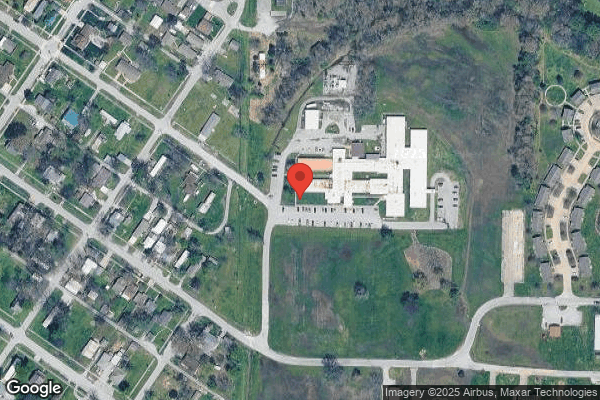
900 EAST NINTH STREET, METROPOLIS, IL 62960 (618) 524-2683
For profit - Corporation 140 Beds Independent Data: November 2025 1 Immediate Jeopardy citation
Trust Grade
18/100
#185 of 665 in IL
Last Inspection: April 2025

Within standard 12-15 month inspection cycle. Federal law requires annual inspections.

Overview

Southgate Health Care Center has received a Trust Grade of F, which indicates significant concerns regarding the quality of care provided. It ranks #185 out of 665 facilities in Illinois, placing it in the top half, and #1 out of 2 in Massac County, meaning it is the best option locally, despite its poor overall grade. The facility is improving, as the number of issues reported decreased from 12 in 2024 to 6 in 2025. However, staffing is a concern with a rating of 2 out of 5 stars and a 59% turnover rate, which is higher than the state average. The facility has also faced substantial fines totaling $192,614, which is more than 77% of other Illinois facilities, suggesting recurring compliance issues. While the nursing home provides more registered nurse coverage than most facilities, specific incidents raise alarms, including a critical failure to address a resident's worsening wound that led to serious complications and a hospitalization due to unsafe transfer practices resulting in injury. Additionally, there was a serious issue of inadequate monitoring of residents' weight, leading to significant weight loss for one individual. Overall, while there are strengths in certain areas like RN coverage and a good star rating for health inspections, the serious deficiencies and high fines indicate that families should carefully consider these factors when researching this facility.

Trust Score
F
18/100
In Illinois
#185/665
Top 27%
Safety Record
High Risk
Review needed
Inspections
Getting Better
12 → 6 violations
Staff Stability
⚠ Watch
59% turnover. Above average. Higher turnover means staff may not know residents' routines.
Penalties
✓ Good
$192,614 in fines. Lower than most Illinois facilities. Relatively clean record.
Skilled Nurses
⚠ Watch
Each resident gets only 19 minutes of Registered Nurse (RN) attention daily — below average for Illinois. Fewer RN minutes means fewer trained eyes watching for problems.
Violations
⚠ Watch
29 deficiencies on record. Higher than average. Multiple issues found across inspections.
★★★★☆
4.0
Overall Rating
★★☆☆☆
2.0
Staff Levels
★★★☆☆
3.0
Care Quality
★★★★☆
4.0
Inspection Score
Stable
2024: 12 issues
2025: 6 issues

The Good

  • Full Sprinkler Coverage · Fire safety systems throughout facility
  • No fines on record

Facility shows strength in fire safety.

The Bad

Staff Turnover: 59%

13pts above Illinois avg (46%)

Frequent staff changes - ask about care continuity

Federal Fines: $192,614

Well above median ($33,413)

Significant penalties indicating serious issues

Staff turnover is elevated (59%)

11 points above Illinois average of 48%

The Ugly 29 deficiencies on record

1 life-threatening 4 actual harm
May 2025 1 deficiency
CONCERN (D) 📢 Someone Reported This

A family member, employee, or ombudsman was alarmed enough to file a formal complaint

Potential for Harm - no one hurt, but risky conditions existed

Deficiency F0678 (Tag F0678)

Could have caused harm · This affected 1 resident

**NOTE- TERMS IN BRACKETS HAVE BEEN EDITED TO PROTECT CONFIDENTIALITY** Based on observation, interview, and record review, the facility failed to ensure life sustaining measures were initiated to 1 (...

Read full inspector narrative →
**NOTE- TERMS IN BRACKETS HAVE BEEN EDITED TO PROTECT CONFIDENTIALITY** Based on observation, interview, and record review, the facility failed to ensure life sustaining measures were initiated to 1 (R1) of 3 residents reviewed for Cardio-Pulmonary Resuscitation (CPR) in a sample of 6. The findings include: R1's admission Record documents an admission date of [DATE] with diagnoses including Encounter for Palliative Care, Chronic Pain Syndrome, Amyotrophic Lateral Sclerosis (ALS), Anxiety, Major Depressive Disorder. Special instruction document Residential Hospice of Southern Illinois. R1's Hospice Initial Plan of Care dated [DATE] documents a start of care date of [DATE] with a Terminal Diagnosis of Amyotrophic Lateral Sclerosis (ALS). This same document is marked yes under the category of DNR (Do Not Resuscitate). R1's facility Care Plan documents a Focus area of R1's wish is to be resuscitated and CPR to be initiated if his heart stops with an initiation date of [DATE]. Interventions documented include: all staff should perform Heimlich maneuver if choking and proceed with CPR, all staff should provide CPR if R1 goes into cardiac arrest, if R1 should be hospitalized for routine tests/treatments/procedures please send copy of written CPR orders/signed POLST (Practitioner Order for Life Sustaining Treatment) with other orders, and nursing please ensure R1's chart is marked with a blue dot to indicate CPR status and obtain POLST from physician. R1's Practitioner Order for Life Sustaining Treatment (POLST) form dated [DATE] documents yes under Section A. Orders for Patient in Cardiac Arrest next to CPR. Under Section B. Orders for Patient Not in Cardiac Arrest is marked Selective Treatment: Primary goal is treating medical conditions with limited medical measures. This form is signed by V9 (Power of Attorney) and dated [DATE]. R1's Progress Note dated [DATE] at 8:42PM by V4 (Licensed Practical Nurse/LPN) documents, this nurse entered resident room at approximately 8:20PM to administer bedtime meds to resident and his roommate this nurse noted that resident was pale in color and skin was cold to the touch and resident did not appear to be breathing. No pulse detected. This nurse had CNA (Certified Nursing Assistant) to get 2nd nurse to verify. Both nurses confirmed at 8:25PM by auscultation of apical pulse for one minute. That resident had expired at 8:25PM. This nurse notified family at 8:35PM, administrator at 8:40PM, hospice at 8:38PM, and VA at 8:47. On [DATE] at 11:06AM, V4 stated she worked on [DATE] and her shift started at 6:00PM. V4 stated as she was passing her evening medications, she entered R1's room around 8:15PM-8:20PM and just glanced at R1 in bed 1, and noted he appeared to be sleeping on his back with his arms on top of the blankets, and head of bed elevated 45 degrees. V4 stated she went over to Bed 2 and administered his medications and spoke with the family for a couple of minutes. V4 stated as she was leaving the room she looked at R1 and his skin was very ashen in color. V4 stated she then went to the bed side and noted R1's hands were ice cold, and she felt to see if R1's chest was rising at all. V4 stated she next checked for a pulse in R1's wrist and neck and could not feel a pulse. V4 stated she then stepped at the doorway and seen a CNA and asked them to get the other nurse and have her bring in the stethoscope. V4 stated V6 (LPN) arrived, and they both checked pulses and for 1 full minute and no pulse was detected. V4 stated she then left the room to make the phone calls to family, MD and Administrator. V4 stated I assumed (R1) was a DNR because he was under Hospice care. On [DATE] at 10:12AM, V9 (Power of Attorney) stated R1 was once a DNR but then changed to a Full Code with CPR only and no tubes (intubation). V9 stated she talked to R1 about this, and this is what they decided to do. V9 stated I feel like (R1) only had a few weeks left, but God knew that was the day for him to go home and he took him. V9 stated she was not so upset over the CPR not being done and if he was extremely cold it would not have helped anyway. V9 stated ALS has 5 stages and the last time R1 was evaluated he was stage 4, but he progressed quickly to the last stage. On [DATE] at 9:56AM, V12 (Medical Doctor/MD) stated he was R1's physician. V12 stated R1 had ALS that was progressing quickly as of recently. V12 stated he had seen R1 just 2 days before he expired and he noted increased weakness, and condition progressing quickly. V12 stated he suspects R1 passed from a Pulmonary Embolism, Cardiac Arrest, or a mucous plug due to his diagnosis. V12 stated he was aware that R1 was a Full Code status without intubation. V12 stated from what was reported to him, R1 was found extremely cold to touch. V12 stated he was not present but if he was here, he could not have done CPR on R1 with that observation of resident being extremely cold and without vital signs, as it would be ethically immoral. V12 stated he is 95% sure R1 would not have survived even with CPR and is 100% sure R1 would not have survived without intubation. V12 stated CPR would have only damaged R1's chest cavity for no reason. R1's Certificate of Death documents a date of death of [DATE] and documents the causes of death as a. Cardiopulmonary Arrest b. Respiratory Failure c. Amyotrophic Lateral Sclerosis. A facility Final Report dated [DATE] documents On the afternoon of Tuesday 5/13 about 2:30pm this writer was made aware of concerns about if CPR was performed on a Full code Hospice resident that had expired on the evening of 5/12 at 8:20pm. Full investigation began. After multiple interviews, witness statements, camera review and interview with Nurse in question, it was noted that (R1) was discovered dusky and cold at about 8:20pm on the evening of [DATE] and CPR was not performed. The facility policy titled Code Blue/DNR Procedures with an effective date of [DATE] and a revision date of [DATE], documents Responsibilities: It is the responsibility of the current nurse on staff to verify and adhere to each resident's code/DNR status.
Apr 2025 1 deficiency
CONCERN (D)

Potential for Harm - no one hurt, but risky conditions existed

Infection Control (Tag F0880)

Could have caused harm · This affected 1 resident

**NOTE- TERMS IN BRACKETS HAVE BEEN EDITED TO PROTECT CONFIDENTIALITY** Based on observation, interview, and record review, the facility failed to ensure proper infection control practices while provi...

Read full inspector narrative →
**NOTE- TERMS IN BRACKETS HAVE BEEN EDITED TO PROTECT CONFIDENTIALITY** Based on observation, interview, and record review, the facility failed to ensure proper infection control practices while providing incontinence care and handling contaminated linens for 2 (R19 and R23) of 8 residents reviewed for incontinence and contact precautions. Findings include: 1. R19's admission Record documented an admission date of 6/3/2021 and included diagnoses of methicillin staphylococcus aureus infections as the cause of the diseases classified elsewhere, osteomyelitis unspecified, vasculitis limited to the skin unspecified, and major depressive disorder, single episode, unspecified. R19's Quarterly Minimum Data Set (MDS) dated [DATE] documented R19 has a Brief Interview for Mental Status (BIMS) score of 15, indicating R19 is cognitively intact. R19's MDS Section for Functional Abilities and Goals documented impairment under range of motion in her lower extremities on both sides. R19's MDS Section for Active Diagnoses documented R19 having an Infection of a Multidrug-Resistant Organism (MDRO). R19's Care Plan documented a focus area of R19 is at risk for a urinary tract infection related to history of urinary tract infection, indwelling catheter. On 4/15/2025 at 11:15 AM, R19's door was noted to have a red contact isolation sign that alerts staff and visitors of precautions and what personal protective equipment (PPE) to wear prior to entering the room, which included gloves, gown, mask, and shoe protectors. In the hallway outside of R19's door was a plastic bin with PPE supplies. On 04/15/25 at 11:40 AM, V3 (Resident Assistant/RA) entered R19's room to complete a bed linen change. V3 was changing R19's bed linen while wearing gloves, mask, and shoe covers. V3 did not wear a gown during bed linen change. On 04/17/25 at 10:57 AM, V3 (RA) stated, R19 does have contact isolation precautions in place. V3 stated she did enter R19's room to complete a bed linen change. V3 stated she entered R19's room with gloves, mask, and shoe covers on. V3 said there was no gown in the PPE bin outside the room for her to put on, but she should have worn a gown during contact with the bed linen change. On 04/17/25 at 10:30 AM, V4 (Infections Preventionist/IP) stated R19 currently has an active urinary tract infection with a culture result documenting a carbapenem-resistant enterobacterales (CRE). V4 stated R19 will maintain on contact precautions until she gets 3 negative UA's (urinalysis) each a week apart starting 48 hours after the last dose of antibiotic. V4 stated, R19 is under contact precautions with appropriate signage and supplies available. V4 stated, any staff member that encounters R19's bed linen should wear personal protective equipment that included gloves and a gown. R19's Urine Culture results dated 4/08/2025 documented a heavy growth of Providencia Stuart with a colony count >100,00 colony-forming units (CFU)/milliliters. The facility Infection Control Policy/Procedure for CRE (undated) documented under Policy, It is the policy of (name of facility) to use standard precautions/contact isolation precautions for residents who are known to be infected with an antibiotic resistive infection or staph infection. Under Procedure, Gown For Contact Isolation Precautions, gown for all direct contact with the patient or the environmental surfaces, including the patient sink which is potentially contaminated. 2. R23's admission Record documented an admission date of 1/2/2023 and included diagnoses of nontraumatic intracerebral hemorrhage unspecified, chronic viral hepatitis c, limitation of activities due to disability, and need for assistance with personal care. R23's Significant Change MDS dated [DATE] documented R23 has a BIMS score of 3, indicating R23 has severe cognitive impairment. R23's MDS Section for Functional Abilities and Goals also documented impairment under range of motion in her upper and lower extremities on both sides. Under Self-Care, R23's MDS documented dependent on staff care for toileting hygiene. R23's Care Plan documented a focus area of having a potential risk for urinary tract infection related to history of a urinary tract infection. On 04/17/25 at 09:23 AM, V2 (Certified Nurse Assistant/CNA) provided incontinence care to R23. V2 removed R23's soiled incontinence brief and had R23 turn on her right side. V2 then removed 4 wet wipes from R23's bedside table and laid them directly on R23's left bedside rail with no barrier. V2 then started to clean R23 with the wipes. On 04/17/25 at 10:30 AM, V4 (IP) stated, incontinence care items should have a barrier placed for supplies, including wipes. V4 stated the staff should not be directly lying incontinence wipes on a resident's bedside rail. On 04/17/25 at 10:34 AM, V2 (CNA) stated she did not follow the facility policy and procedure for providing incontinence care to R23 and should not have directly laid the wipes on R23's bedside rail. On 04/17/25 at 11:10 AM, V1 (Administrator) stated her expectations are for all facility staff to follow the infection prevention policy and procedures. The facility Perineal Care Policy and Procedure (reviewed 5/10/2024) documented under Purpose Staff at (name of facility) will ensure proper cleaning of the perineum to prevent infection and odor.
Mar 2025 4 deficiencies
CONCERN (D) 📢 Someone Reported This

A family member, employee, or ombudsman was alarmed enough to file a formal complaint

Potential for Harm - no one hurt, but risky conditions existed

Report Alleged Abuse (Tag F0609)

Could have caused harm · This affected 1 resident

**NOTE- TERMS IN BRACKETS HAVE BEEN EDITED TO PROTECT CONFIDENTIALITY** Based on interview and record review the facility failed to ensure allegations of abuse were reported timely to the Administrato...

Read full inspector narrative →
**NOTE- TERMS IN BRACKETS HAVE BEEN EDITED TO PROTECT CONFIDENTIALITY** Based on interview and record review the facility failed to ensure allegations of abuse were reported timely to the Administrator and to the State Survey Agency for 2 of 3 (R1 and R13) residents reviewed for abuse in the sample of 14. Findings Include. 1. R1's admission Record with a print date of 3/6/25 documents R1 was admitted to the facility on [DATE] with diagnoses that include multiple fractures, osteoarthritis, and hypertension. R1's MDS (Minimum Data Set) dated 3/5/25 documents R1 has a BIMS (Brief Interview for Mental Status) score of 13, which indicates R1 is cognitively intact. On 3/5/25 at 11:45 AM, R1 stated V13 (LPN/Licensed Practical Nurse) came in his room talking louder than normal and handed him about 16 pills in one cup. R1 stated he sat the pills down and asked for a list of his medications and V13 stated she didn't have time to get him the list and walked around to the other side of his bed. R1 stated V13 picked up his left hand and started to do an accu check. R1 stated he gave V13 his right hand and told her he wanted it done on the right hand not the left. R1 stated V13 called him hateful and left the room immediately. R1 stated he called the police and reported elder abuse after V13 left his room. R1 stated she came back to his room and grabbed a hold of the door and stated she wasn't able to come in his room by herself, they had to have two staff members provide care to him now. R1 stated he asked the police to come to the facility and write a report, but they didn't, and they alerted the staff about his call. R1 stated he later saw V13 and V3 (Quality Assurance Nurse/QA) come into his room. R1 stated V3 was a little easier to talk with. R1 stated V13 has worked since the incident occurred and he believed it occurred on Saturday, March 1. R1 stated V13 has been in his room one time since the incident to give him the list of medications he requested. When asked if he felt safe at the facility, R1 stated he contacted Veteran's Affairs regarding the incident, and they asked him if he wanted to move to a different facility. R1 stated he told them he did. R1 did not directly answer the question about feeling safe at the facility. On 3/5/25 at 12:53 PM, V5 (Police Dispatch) stated she took a call from the facility on 3/1/25 at 10:41 AM. V5 stated R1 called and stated he resided at the facility and advised he was being abused by a nurse (V13). V5 stated R1 reported the nurse (V13) grabbed his arm and told him she didn't have time for him. V5 stated R1 reported after the nurse (V13) grabbed his arm she grabbed his hand to do a blood sugar and he told her they use the other hand. V5 stated R1 reported the nurse threw his hand down on the bed and told him she didn't have time for him. R1's Progress Notes document the following. 3/1/25 10:51 AM, Note Text: (V13), floor nurse called this nurse manager (V3) and stated that the police department had called her stating this resident called 911 stating he had been assaulted. (V13) explained she went to give his meds (medications) and he wanted a list of all medications, and she told him she would get him a list when she was finished passing (sic) her medications. He (R1) then became very agitated and would not let her do his accu check. This nurse (V3) notified (V1), Administrator. Orders for 2 people at all times when providing care or administering medications. On 3/5/25 at 1:25 PM, V1 (Administrator) stated she was notified on Sunday night R1 had called the police. V1 stated V3 (QA Nurse) called her and reported it. V1 stated when she came in on Monday she thought since the police had been called, they probably should have reported the allegation but because of who the resident was she didn't think she needed to. V1 stated she didn't start an investigation and didn't interview any other staff or residents. V1 stated no one had a conversation with R1 about what had occurred other than V3 (QA Nurse) and V13 (LPN) was present when V3 spoke with R1. The facility Initial Report sent to the Illinois Department of Public Health dated 3/5/25 documents, On 3/1/25 at approx (approximately) 10:51 am on call nurse (V3) was notified by floor nurse that resident had called police and stated that he had been assaulted, when nurse had attempted to check his blood sugar. (V3) notified (V1) administrator received (sic) instructions to ensure 2 staff were in room at all times when providing care including nursing. Investigation initiated, final to follow. 2. R13's admission Record with a print date of 3/6/25 documents R13 was admitted to the facility on [DATE] with diagnoses that include diabetes, major depressive disorder, repeated falls, and hypertension. R13's MDS dated [DATE] documents a BIMS score of 02, which indicates R13 has a severe cognitive deficit. On 3/5/25 at 3:56 PM, R13 was sitting in a wheelchair in the facility common area. R13 denied any concerns with care and didn't exhibit signs or symptoms of distress. On 3/5/25 at 2:57 PM, when asked about abuse, V14 (Resident Assistant) stated she had witnessed staff to resident mental abuse. V14 stated V17 (CAN/Certified Nursing Assistant) and V16 (CNA) were the staff members and she reported it to V26 (Business Office Manager) because V1 (Administrator) and V2 (Director of Nurses) were not in the facility. V14 stated she witnessed V17 being rude to R13. V14 stated V17 told R13 to shut up and no one was going to get him out of bed. V14 stated it happened on 3/2/25 between 6 am and 2 pm. V14 stated she didn't have a specific incident that occurred with V16 (CNA) but she was just rude at times. On 3/6/25 9:41 AM, V26 (Business Office Manager/BOM) stated she was the manager on duty, and she spoke with V14 (Resident Assistant) and she reported V17 (CNA) was standing in the hallway at R13's door yelling at R13 and being rude and hateful or having an attitude. V26 stated she assured V14 they would discuss it on Monday in morning meeting and she would let V1 (Administrator) know about the allegation. V26 stated she wrote it on a piece of paper and gave it to V1 on Monday morning. V26 stated she didn't know if R13 was interviewable. V26 stated she did not check on R13 after V14 reported the incident to her. On 3/5/25 at 3:17 PM, V1 (Administrator) stated on Monday 3/3/25 she was told, V17 (CNA) had an attitude. V1 stated it was reported V17 was in the hallway outside R13's room, raised her voice to R13 and was rude. V1 stated she hadn't talked to V14 (RA) who reported the allegation and she wished they would report these things to her before the survey agency enters the facility. V1 stated V14 had worked the past two days and hadn't approached V1 about the incident. V1 stated she hadn't attempted to speak with V14 regarding the incident and didn't begin an investigation. The facility Initial Report sent to the Illinois Department of Public Health dated 3/5/25 documents, On 3/5/25 at approximately 305 pm was notified by surveyor that an employee had reported a complaint of alleged verbal abuse on 3/2/25 to manager on call. Investigation initiated, Final to follow. The facility Abuse Policy dated 3/5/25 documents, Purpose: Each resident has the right to be free from mistreatment, neglect, and misappropriation of property 4. Identification a. If any employee suspects that a resident has been a victim of abuse, they should report this information to their immediate supervisor and directly to the facility administrator as soon as possible .d. When suspected abuse is reported, the administrator and DON (Director of Nurses) should be notified immediately, and the administrator or DON should make a report to (State Survey Agency) within 24 hours
CONCERN (D) 📢 Someone Reported This

A family member, employee, or ombudsman was alarmed enough to file a formal complaint

Potential for Harm - no one hurt, but risky conditions existed

Investigate Abuse (Tag F0610)

Could have caused harm · This affected 1 resident

**NOTE- TERMS IN BRACKETS HAVE BEEN EDITED TO PROTECT CONFIDENTIALITY** Based on interview and record review the facility failed to ensure allegations of abuse were thoroughly investigated and residen...

Read full inspector narrative →
**NOTE- TERMS IN BRACKETS HAVE BEEN EDITED TO PROTECT CONFIDENTIALITY** Based on interview and record review the facility failed to ensure allegations of abuse were thoroughly investigated and residents were protected from possible further abuse for 2 of 3 (R1 and R13) residents reviewed for abuse in the sample of 14. Findings Include. 1. R1's admission Record with a print date of 3/6/25 documents R1 was admitted to the facility on [DATE] with diagnoses that include multiple fractures, osteoarthritis, and hypertension. R1's MDS (Minimum Data Set) dated 3/5/25 documents R1 has a BIMS (Brief Interview for Mental Status) score of 13, which indicates R1 is cognitively intact. R1's current Care Plan documents a Focus area of (R1) has potential for a behavior problem R/T (related to) making false allegations toward staff of assault during routine cares, or bullying, yelling, being belligerent, not cooperative with care at times. Date Initiated: 03/05/2025. The interventions included for this Focus area include, Administer medications as ordered. Monitor/document for side effects and effectiveness. Date Initiated: 03/05/2025, Caregivers to provide opportunity for positive interaction, attention. Stop and talk with him/her as passing by. Date Initiated: 03/05/20205, If reasonable discuss the resident's behavior. Explain/reinforce why behavior is inappropriate and/or unacceptable to the resident. Date Initiated: 03/05/2025, Staff to enter resident's room with 2 staff members at all times including nurses' aides, therapy to do anything at all. Document any behaviors. Date Initiated: 03/05/2025. On 3/5/25 at 11:45 AM, R1 stated V13 (LPN/Licensed Practical Nurse) came in his room talking louder than normal and handed him about 16 pills in one cup. R1 stated he sat the pills down and asked for a list of his medications and V13 stated she didn't have time to get him the list and walked around to the other side of his bed. R1 stated V13 picked up his left hand and started to do an accucheck. R1 stated he gave V13 his right hand and told her he wanted it done on the right hand not the left. R1 stated she called him hateful and left the room immediately. R1 stated he called the police and reported elder abuse after V13 left his room. R1 stated she came back to his room and grabbed a hold of the door and stated she wasn't able to come in his room by herself, they had to have two staff members provide care to him now. R1 stated he asked the police to come to the facility and write a report, but they didn't, and they alerted the staff about his call. R1 stated he later saw V13 and V3 (Quality Assurance Nurse/QA) V3 was a little easier to talk with. R1 stated V13 has worked since the incident occurred and he believed it occurred on Saturday, March 1. R1 stated V13 has been in his room one time since the incident to give him the list of medications he requested. When asked if he felt safe at the facility, R1 stated he contacted Veteran's Affairs regarding the incident, and they asked him if he wanted to move to a different facility. R1 stated he told them he did. R1 did not directly answer the question about feeling safe at the facility. On 3/5/25 at 12:53 PM, V5 (Police Dispatch) stated she took the call from the facility on 3/1/25 at 10:41 AM. V5 stated R1 called and stated he resided at the facility and advised he was being abused by a nurse (V13). V5 stated R1 reported the nurse (V13) grabbed his arm and told him she didn't have time for him. V5 stated R1 reported after the nurse (V13) grabbed his arm she grabbed his hand to do a blood sugar and he told her they use the other hand. V5 stated R1 reported the nurse threw his hand down on the bed and told him she didn't have time for him. On 3/5/25 at 2:45 PM, V13 (LPN/Licensed Practical Nurse) stated she went into R1's room on Saturday 3/1/25 in the morning with medications and to do his accu check. V13 stated R1 asked what was in the medication cup and she told him the same thing he had been taking. V13 stated R1 asked for a copy of his medications, and she told him she would get it for him when she was done with the medication pass. V13 stated she picked up R1's left hand to do an accu check and R1 jerked it back and screamed at the top of his lungs and it scared her. V13 stated she left and finished the medication pass and was at the nurse's station when the police called. V13 stated she called V3 (QA Nurse) and told her what happened and then took an unknown CNA/Certified Nursing Assistant with her when she went in his room. V13 stated R1 seemed fine after that. V13 stated the next morning, R1 put his call light on, and she went to his room. V13 stated he needed his urinal emptied. V13 stated she told him she would have a CNA come with her since she couldn't be in his room alone. V13 stated R1 was angry and wanted to know why they had to have two staff. V13 stated she got V3 (QA Nurse) and they went in and talked to R1. V13 stated R1 was better in the afternoon. V13 stated he didn't seem aggressive. V13 denied any other physical contact with R1. V13 stated she didn't throw down his hand or jerk his arm or call him hateful. V13 stated she did tell R1 she wouldn't be spoken to that way. V13 stated she charted the incident in R1's progress notes. V13 stated no one in administration asked her any questions related to the incident after she told V3 what happened. V13 stated V3 was working at the time of the incident. V13 stated V3 told her she would notify V1 (Administrator). On 3/5/25 at 1:12 PM, V3 (QA Nurse) stated she was working when V13 (LPN) told her the police had called. V3 stated R1 had called the police with an abuse allegation. V3 stated the police told them they weren't coming to the facility, and she called V1 (Administrator) and reported it. V3 stated they decided two people needed to go in R1's room for care since he had made the allegation. V3 stated V13 told her she had in no way abused R1. V3 stated V13 reported, R1 wanted a list of medications, she started to do his accu check and told R1 she would get a list of his medications for him. V3 stated V13 reported R1 became hostile and started yelling and screaming. V3 stated V13 reported she started to do R1's accu check and he jerked his hand back and wouldn't let her do the accu check. V3 stated V13 reported she walked out and shortly after she left R1's room the local police called her. V3 stated V13 explained to the police what had happened, and they didn't believe abuse occurred. V3 stated after the incident and the local police called the facility, R1 put his call light on to have his urinal emptied. V3 stated she went with V13 and told R1 two people had to be in his room. V3 stated R1 wanted to know why, and she explained to him due to the allegation there would be two people in his room. V3 stated R1 told her V13 yelled at him from the door and told him he was hateful. V3 stated she explained to R1 administration would be at the facility on Monday and he could ask them questions. V3 stated she documented the incident in the progress notes. V3 stated she didn't ask any other residents and/or staff if they witnessed anything. V3 stated R1's roommate was not in his room and wouldn't be able to answer questions if he had been. R1's Progress Notes document the following. 3/1/25 10:51 AM, Note Text: (V13), floor nurse called this nurse manager (V3) and stated that the police department had called her stating this resident called 911 stating he had been assaulted. (V13) explained she went to give his meds (medications) and he wanted a list of all medications, and she told him she would get him a list when she was finished passing (sic) her medications. He (R1) then became very agitated and would not let her do his accu check. This nurse (V3) notified (V1), Administrator. Orders for 2 people at all times when providing care or administering medications. On 3/1/25 1327, Note Text: This writer (V13) entered resident's (R1) room at 0915 to administer morning medications. Resident requested a list of medications he was taking. Resident was told he would get a copy once the morning medications were passed. This writer picked up resident's right (hand) for his accu check, resident immediately and aggressively jerked his hand away, and started screaming angerly and incoherently at this writer. Resident was instructed his accu check would be completed a different time when he was compliant. This writer received a call from (name of local police department) regarding to resident calling the police. On call nurse (V3) was notified of resident's action. Anyone entering resident's room from this point forward is to enter room [ROOM NUMBER] at a time, this includes all staff. On 3/2/25 4:18 PM, Note Text: Resident's call light was on, this writer went down to this room, and from the doorway resident stated he needed his urine emptied, resident was informed that when a CNA (Certified Nursing Assistant) was available we would enter the room together to take care of his bedside urinal. Resident became verbally aggressive. CNA (V15) entered room with this writer, resident requested to know why we was not allowed to enter his room alone. I told this resident I would get my nursing supervisor to speak with him. Resident again became verbally aggressive. (V3 LPN) was notified of resident's actions and enter room with this nurse. Resident continued to be verbally aggressive while LPN (V3) was explaining to him why needed to enter his room two at time. On 3/5/25 at 1:02 PM, V2 (Director of Nurses) stated she hadn't had any abuse investigations since January 2025. V2 stated R1 yelled assault, to the local police. V2 stated V3 (QA Nurse) was in the facility at the time and her and V13 (LPN) talked to R1. V2 stated R1 called the police but she didn't consider it an allegation. V2 stated then on Monday she got a call from Veterans Affairs that R1 had called them and wanted moved out of the facility. V2 stated on Monday she got R1 the medication list he had requested and when she took it to him the only thing, he was concerned about was his cardiac medications and his cardiac appointment. V2 stated she discussed those concerns with him and his trip to his home that was scheduled for Friday. V2 stated she didn't discuss the allegation with R1. On 3/5/25 at 1:25 PM, V1 (Administrator) stated she was notified on Sunday night R1 had called the police. V1 stated V3 (QA Nurse) called her and reported it. V1 stated when she came in on Monday she thought since the police had been called, they probably should have reported the allegation but because of who the resident was she didn't think she needed to. V1 stated she didn't start an investigation and didn't interview any other staff or residents. V1 stated no one had a conversation with R1 about what had occurred other than V3 (QA Nurse) and V13 (LPN) was present when V3 spoke with R1. The facility Initial Report dated 3/5/25 documents, On 3/1/25 at approx (approximately) 10:51 am on call nurse (V3) was notified by floor nurse that resident had called police and stated that he had been assaulted, when nurse had attempted to check his blood sugar. (V3) notified (V1) administrator received (sic) instructions to ensure 2 staff were in room at all times when providing care including nursing. Investigation initiated, final to follow. 2. R13's admission Record with a print date of 3/6/25 documents R13 was admitted to the facility on [DATE] with diagnoses that include diabetes, major depressive disorder, repeated falls, and hypertension. R13's MDS dated [DATE] documents a BIMS score of 02, which indicates R13 has a severe cognitive deficit. On 3/5/25 at 3:56 PM, R13 was observed sitting in a wheelchair in the facility common area. R13 denied any concerns with care and didn't exhibit signs or symptoms of distress. On 3/5/25 at 2:57 PM, when asked about abuse, V14 (Resident Assistant) stated she had witnessed staff to resident mental abuse. V14 stated V17 (CNA) and V16 (CNA) were the staff members and she reported it to V26 (Business Office Manager) because V1 (Administrator) and V2 (Director of Nurses) were not in the facility. V14 stated she witnessed V17 being rude to R13. V14 stated V17 told R13 to shut up and no one was going to get him out of bed. V14 stated it happened on 3/2/25 between 6 am and 2 pm. V14 stated she didn't have a specific incident that occurred with V16 (CNA) but she was just rude at times. On 3/6/25 9:41 AM, V26 (Business Office Manager/BOM) stated she was the manager on duty, and she spoke with V14 (Resident Assistant) and she reported V17 (CNA) was standing in the hallway at R13's door yelling at R13 and being rude and hateful or having an attitude. V26 stated she assured V14 they would discuss it on Monday in morning meeting and she would let V1 (Administrator) know about the allegation. V26 stated she wrote it on a piece of paper and gave it to V1 on Monday morning. V26 stated she didn't know if R13 was interviewable. V26 stated she did not check on R13 after V14 reported the incident to her. On 3/6/24 at 12:42 PM, V17 (CNA) stated she had never witnessed and/or she herself had never told R13 to shut up and/or they weren't going to provide care. On 3/5/25 at 3:17 PM, V1 (Administrator) stated on Monday 3/3/25 she was told, V17 (CNA) had an attitude. V1 stated it was reported V17 was in the hallway outside R13's room, raised her voice to R13 and was rude. V1 stated she hadn't talked to V14 (RA) who reported the allegation and she wished they would report these things to her before the survey agency enters the facility. V1 stated V14 had worked the past two days and hadn't approached V1 about the incident. V1 stated she hadn't attempted to speak with V14 regarding the incident and didn't begin an investigation. The facility Initial Report dated 3/5/25 documents, On 3/5/25 at approximately 3:05 pm was notified by surveyor that an employee had reported a complaint of alleged verbal abuse on 3/2/25 to manager on call. Investigation initiated, Final to follow. The facility Abuse Policy dated 3/5/25 documents, 5. Investigation .b. When an incident or suspected incident of resident abuse, neglect, misappropriation of resident's property, or injury of unknown origin is reported, the administrator will appoint a staff member to investigate the incident Protection: a. Any employee suspected of abuse or that has been alleged in a potentially abusive situation will be put on leave without pay until the investigation has been completed.
CONCERN (E) 📢 Someone Reported This

A family member, employee, or ombudsman was alarmed enough to file a formal complaint

Potential for Harm - no one hurt, but risky conditions existed

ADL Care (Tag F0677)

Could have caused harm · This affected multiple residents

**NOTE- TERMS IN BRACKETS HAVE BEEN EDITED TO PROTECT CONFIDENTIALITY** Based on interview and record review the facility failed to ensure showers were provided and residents received timely toileting...

Read full inspector narrative →
**NOTE- TERMS IN BRACKETS HAVE BEEN EDITED TO PROTECT CONFIDENTIALITY** Based on interview and record review the facility failed to ensure showers were provided and residents received timely toileting assistance 4 of 6 residents (R2, R3, R12, and R14) reviewed for showers in the sample of 14. Findings Include: 1. R2's admission Record with a print date of 3/6/25 documents R2 was admitted to the facility on [DATE] with diagnoses that include diabetes, heart disease, and muscle weakness. R2's MDS (Minimum Data Set) dated 2/22/25 documents a BIMS (Brief Interview for Mental Status) score of 14, which indicates R2 is cognitively intact. This same MDS documents R2 requires partial to moderate assistance of staff for toilet transfers. R2's current Care Plan with a Focus area of, (R2) has an ADL (Activities of Daily Living) self-care performance deficit r/t (related to) Activity Intolerance, Impaired balance, Limited ROM (Range of Motion) Date Initiated: 10/28/2024. This Focus area include interventions of, Bathing/Showering: (R2) requires extensive assistance by x1 (times 1) staff with bathing/showering twice a week and as necessary. CNA's (Certified Nursing Assistants) to ensure that (R2) receives at least one shower per week, if the two are unable to be given. R2's Shower Skin Assessment forms document R2 did not receive a shower/bath on 2/28/25 and went from 2/25/25 to 3/4/25 (six days) without a shower. On 3/5/25 at 11:31 AM, R2 stated they don't have enough staff to meet her needs timely. R2 stated she sometimes doesn't get her showers because they are short staffed. R2 stated she didn't get one Friday 2/28/25 because they didn't have enough staff to do it. R2 stated last night (3/4/25) her and her roommate (R3) had to wait two hours to get assistance to the bathroom. R2 stated she woke up to R3 calling out for help to go to the bathroom. R2 stated R3 had her call light on. R2 stated R3 started hitting her call light on the bedside table to get the attention of staff. R2 stated she called the facility and spoke with V19 (RN/Registered Nurse) who transferred her call to her nurse's station, and no one answered. R2 stated no one answered the phone so she called again and V19 transferred her call again. R2 stated she started calling around 12:00 AM and it was 1:30 AM before they got assistance. R2 stated they only had one CNA working on her hall. 2. R3's admission Record with a print date of 3/6/25 documents R3 was admitted to the facility on [DATE] with diagnoses that include heart failure, cognitive communication defect, diabetes, and adult failure to thrive. R3's MDS dated [DATE] documents a BIMS score of 15, which indicates she is cognitively intact. This same MDS documents R3 requires partial to moderate assist for toilet hygiene, toilet transfer, showers, and is occasionally incontinent of bowel and bladder. R3's current Care Plan documents a Focus area of (R3) has an ADL self-care performance deficit r/t (related to) Impaired balance, Limited Mobility. Date Intimated: 10/17/2024. This Focus area includes an intervention of, Bathing/Showering: (R1) requires extensive assistance by x (times) 1 staff with showering twice a week and as necessary. CNAs to ensure that (R1) receives at least one shower per week, if two are unable to be given. R3's Shower Skin Assessment forms document R3 did not receive a shower on 2/28/25 and went from 2/25/25 to 3/4/25 (six days) without a shower. On 3/6/25 at 1:00 PM R3 stated she doesn't always get showers when she is supposed to. When asked if she had issues getting her call light answered on 3/4/25, R3 stated she did. R3 stated she put her call light on, and no one answered for a long time. R3 stated she yelled out and still no one answered, and her roommate (R2) was trying to get help also. R3 stated she had to go to the bathroom but did not have an incontinence episode due to the delay. On 3/5/25 at 3:44 PM, V19 (RN) stated she got a phone call from R2 on the night shift that began on 3/4/25 who asked her to get a hold of her nurse. V19 stated R2 called her twice. On 3/5/25 at 11:08 PM, V22 (CNA) stated he worked on R2 and R3's hall on the night of 3/4/25. V22 stated he answered their call light, but he was working by himself on the unit with no nurse. V22 stated his nurse was responsible for two units that night and was on the other unit from 12 AM to 2 AM. V22 stated he was trying to answer R2 and R3's call light but in the process, he had other alarms going off and knew those residents were at risk of falling and had to prioritize fall risks over toileting/incontinence care. V22 stated it may have taken 45 minutes to answer R2 and R3's call. V22 stated he felt bad for the resident. V22 stated they don't get a discount if they have to wait. On 3/6/25 at 9:58 AM, V2 (Director of Nurses) stated V1 watched the camera to determine how long it took for a staff member to answer R2 and R3's call light. V2 stated V22 was in the room from 1:33 AM to 1:56 AM. When asked if any staff entered R2 and R3's room from 12:00 AM to 1:24 AM when V2 stated V13 (LPN) entered the room, V2 stated, No. 3. R12's admission Record with a print date of 3/6/25 documents R12 was admitted to the facility on [DATE] with diagnoses that include atrial fibrillation, dementia, and hypertension. R12's MDS dated [DATE] documents R12 has a severe cognitive impairment. This same MDS documents R12 is dependent on staff for bathing. R12's current Care Plan does not document a Focus area and/or interventions for bathing. R12's Shower Skin Assessment forms document R12 did not receive assistance with bathing from 1/25/25 to 2/5/25 (10 days) and from 2/12/22 to 2/22/25 (9 days) or from 2/26/25 to 3/6/25 (7 days). On 3/5/25 at 9:23 AM, R12 was sitting in a wheelchair in the hallway. R12 did not respond verbally when asked questions. On 3/5/25 at 2:39 PM, V12 (CNA/Certified Nursing Assistant) stated lately they have been short staffed. V12 stated they were not able to get R12's shower done on 3/5/25. On 3/5/25 at 3:04 PM, V15 (CNA) stated they were able to get one shower done today 3/5/25 but weren't able to get R12's done. 4. R14's admission Record with a print date of 3/6/25 documents R14 was admitted to the facility on [DATE] with diagnoses that include diabetes, legal blindness, diabetes, and hypertension. R14's MDS dated [DATE] documents a BIMS score of 15, which indicates R14 is cognitively intact. This same MDS documents R14 requires supervision/touching assistance for bathing. R14's Shower Skin Assessment forms document R14 did not receive assistance with bathing from 1/28/25 to 2/13/25 (16 days) and from 2/23/25 to 3/6/25 (11 days). On 3/5/25 at 1:30 PM, V4 (CNA) stated it depended on the day if they had enough staff to meet the needs of the residents timely. V4 stated they weren't able to get the showers done on 3/5/25. V4 stated they didn't do R14's shower. When asked why they didn't get the showers done V4 stated it was too busy with only two CNA's. On 3/5/25 at 1:39 PM, V6 (CNA) stated they didn't have enough staff to meet the needs of the residents timely. V6 stated they weren't able to the four showers done today including R14's because of staffing. On 3/5/25 at 9:15 AM, R14 was lying in bed and stated he gets showers on Wednesday and Saturdays and he got one yesterday. On 3/5/25 at 1:49 PM, V7 (Resident Assistant) stated she didn't think they had enough staff to meet the needs of the residents timely. V7 stated she didn't think showers were done as they should be. On 3/5/25 at 2:02 PM, V8 (CNA) stated sometimes they had enough staff to meet the needs of the residents timely. V8 stated when they don't have enough staff showers don't always get done. On 3/5/25 at 2:05 PM, V9 (LPN/Licensed Practical Nurse) stated they didn't have enough staff to meet the needs of the residents timely. V9 stated showers didn't always get done as they should. V9 stated they didn't have enough staff to do the showers on her unit on 3/5/25. On 3/5/25 at 3:13 PM, V18 (CNA) stated they didn't have enough staff to assist residents with bathing as they should. On 3/6/25 at 9:58 AM, V2 (Director of Nurses) stated they did have some staffing issues and she had recently hired new staff, but they hadn't started yet. V2 stated when they are short, staffed administration will work the floor. V2 stated staff can always get the basic needs met but sometimes things like showers were delayed. On 3/6/24 at 1:33 PM, V1 (Administrator) stated she hadn't had any complaints/concerns related to showers. V1 stated they had plenty of staff working on 3/5/25 to meet the needs of the residents timely and to assist with showers. V1 stated residents should be assisted with bathing twice a week but they always absolutely get showers weekly. V1 stated they have seen where someone missed a shower or where the CNAs didn't have time to give a shower because someone called in. Reviewed with V1 the R2, R3, R12, and R14's Shower Skin Assessment forms that document R2 and R3 didn't get showers from 2/7 to 2/18 and on 2/28/25, R12 didn't get a shower from 1/25 to 2/5/25, 2/12 to 2/22/25, 2/26/to 3/6/25, and R14 didn't get a shower from 1/28/25 to 2/13/25 and from 2/23/25 to 3/6/25. V1 stated she would check to see if there were any more forms. After searching for more Shower Skin Assessment forms V1 stated she was not able to locate any other reproducible evidence of more showers for R2, R3, R12, and R14. The facility Bath and Shower policy dated 1/3/24 documents, Purpose: Staff at (name of facility) will ensure all staff (sic) are offered baths/showers twice a week or as often as requested to cleanse and refresh the resident, skin assessments, and promote increased circulation
CONCERN (F) 📢 Someone Reported This

A family member, employee, or ombudsman was alarmed enough to file a formal complaint

Potential for Harm - no one hurt, but risky conditions existed

Deficiency F0725 (Tag F0725)

Could have caused harm · This affected most or all residents

**NOTE- TERMS IN BRACKETS HAVE BEEN EDITED TO PROTECT CONFIDENTIALITY** Based on interview and record review the facility failed to ensure there were sufficient staff to provide timely care and assist...

Read full inspector narrative →
**NOTE- TERMS IN BRACKETS HAVE BEEN EDITED TO PROTECT CONFIDENTIALITY** Based on interview and record review the facility failed to ensure there were sufficient staff to provide timely care and assistance to its residents. This has the potential to affect all 91 residents who currently reside at the facility. Findings Include: The facility Daily Census Report dated 3/6/25 documents 91 residents reside at the facility. 1. R2's admission Record with a print date of 3/6/25 documents R2 was admitted to the facility on [DATE] with diagnoses that include diabetes, heart disease, and muscle weakness. R2's MDS (Minimum Data Set) dated 2/22/25 documents a BIMS (Brief Interview for Mental Status) score of 14, which indicates R2 is cognitively intact. R2's current Care Plan with a Focus area of, (R2) has an ADL (Activities of Daily Living) self-care performance deficit r/t (related to) Activity Intolerance, Impaired balance, Limited ROM (Range of Motion) Date Initiated: 10/28/2024. This Focus area include interventions of, Bathing/Showering: (R2) requires extensive assistance by x1 (times 1) staff with bathing/showering twice a week and as necessary. CNA's (Certified Nursing Assistants) to ensure that (R2) receives at least one shower per week, if the two are unable to be given. R2's Shower Skin Assessment forms document R2 did not receive a shower/bath on 2/28/25 and went from 2/25/25 to 3/4/25 (six days) without a shower. On 3/5/25 at 11:31 AM, R2 stated they don't have enough staff to meet her needs timely. R2 stated she sometimes doesn't get her showers because they are short staffed. R2 stated she didn't get on Friday 2/28/25 because they didn't have enough staff to do it. R2 stated last night (3/4/25) her and her roommate (R3) had to wait two hours to get assistance to the bathroom. R2 stated she woke up to R3 calling out for help to go to the bathroom. R2 stated R3 had her call light on. R2 stated R3 started hitting her call light on the bedside table to get the attention of staff. R2 stated she called the facility and spoke with V19 (RN/Registered Nurse) who transferred her call to her nurse's station, and no one answered. R2 stated no one answered the phone so she called again and V19 transferred her call again. R2 stated she started calling around 12:00 AM and it was 1:30 AM before they got assistance. R2 stated they only had one CNA working on her hall. 2. R3's admission Record with a print date of 3/6/25 documents R3 was admitted to the facility on [DATE] with diagnoses that include heart failure, cognitive communication defect, diabetes, and adult failure to thrive. R3's MDS dated [DATE] documents a BIMS score of 15, which indicates she is cognitively intact. This same MDS documents R3 requires partial to moderate assist for toilet hygiene, toilet transfer, showers, and is occasionally incontinent of bowel and bladder. R3's current Care Plan documents a Focus area of (R3) has an ADL self-care performance deficit r/t (related to) Impaired balance, Limited Mobility. Date Intimated: 10/17/2024. This Focus area includes an intervention of, Bathing/Showering: (R1) requires extensive assistance by x (times) 1 staff with showering twice a week and as necessary. CNAs to ensure that (R1) receives at least one shower per week, if two are unable to be given. R3's Shower Skin Assessment forms document R3 did not receive a shower on 2/28/25 and went from 2/25/25 to 3/4/25 (six days) without a shower. On 3/6/25 at 1:00 PM R3 stated she doesn't always get showers when she is supposed to. When asked if she had issues getting her call light answered on 3/4/25, R3 stated she did. R3 stated she put her call light on, and no one answered for a long time. R3 stated she yelled out and still no one answered, and her roommate (R2) was trying to get help also. R3 stated she had to go to the bathroom but did not have an incontinence episode due to the delay. On 3/5/25 at 3:44 PM, V19 (RN) stated she got a phone call from R2 on the night shift that began on 3/4/25 who asked her to get a hold of her nurse. V19 stated R2 called her twice. On 3/5/25 at 11:08 PM, V22 (CNA) stated he worked on R2 and R3's hall on the night of 3/4/25. V22 stated he answered their call light, but he was working by himself on the unit with no nurse. V22 stated his nurse was responsible for two units that night and was on the other unit from 12 AM to 2 AM. V22 stated he was trying to answer R2 and R3's call light but in the process, he had other alarms going off and knew those residents were at risk of falling and had to prioritize fall risks over toileting/incontinence care. V22 stated it may have taken 45 minutes to answer R2 and R3's call. V22 stated he felt bad for the resident. V22 stated they don't get a discount if they have to wait. On 3/6/25 at 9:58 AM, V2 (Director of Nurses) stated V1 watched the camera to determine how long it took for a staff member to answer R2 and R3's call light. V2 stated V22 was in the room from 1:33 AM to 1:56 AM. When asked if any staff entered R2 and R3's room from 12:00 AM to 1:24 AM when V2 stated V13 (LPN) entered the room, V2 stated, No. 3. R12's admission Record with a print date of 3/6/25 documents R12 was admitted to the facility on [DATE] with diagnoses that include atrial fibrillation, dementia, and hypertension. R12's MDS dated [DATE] documents R12 has a severe cognitive impairment. This same MDS documents R12 is dependent on staff for bathing. R12's current Care Plan does not document a Focus area and/or interventions for bathing. R12's Shower Skin Assessment forms document R12 did not receive assistance with bathing from 1/25/25 to 2/5/25 (10 days) and from 2/12/22 to 2/22/25 (9 days) or from 2/26/25 to 3/6/25 (7 days). On 3/5/25 at 9:23 AM, R12 was sitting in a wheelchair in the hallway. R12 did not respond verbally when asked questions. On 3/5/25 at 2:39 PM, V12 (CNA/Certified Nursing Assistant) stated lately they have been short staffed. V12 stated they were not able to get R12's shower done on 3/5/25. On 3/5/25 at 3:04 PM, V15 (CNA) stated they were able to get one shower done today 3/5/25 but weren't able to get R12's done. 4. R14's admission Record with a print date of 3/6/25 documents R14 was admitted to the facility on [DATE] with diagnoses that include diabetes, legal blindness, diabetes, and hypertension. R14's MDS dated [DATE] documents a BIMS score of 15, which indicates R14 is cognitively intact. This same MDS documents R14 requires supervision/touching assistance for bathing. R14's Shower Skin Assessment forms document R14 did not receive assistance with bathing from 1/28/25 to 2/13/25 (16 days) and from 2/23/25 to 3/6/25 (11 days). On 3/5/25 at 1:30 PM, V4 (CNA) stated it depended on the day if they had enough staff to meet the needs of the residents timely. V4 stated they weren't able to get the showers done on 3/5/25. V4 stated they didn't do R14's shower. When asked why they didn't get the showers done V4 stated it was too busy with only two CNA's. On 3/5/25 at 1:39 PM, V6 (CNA) stated they didn't have enough staff to meet the needs of the residents timely. V6 stated they weren't able to the four showers done today including R14's because of staffing. On 3/5/25 at 9:15 AM, R14 was lying in bed and stated he gets showers on Wednesday and Saturdays, and he got one yesterday. On 3/5/25 at 1:49 PM, V7 (Resident Assistant) stated she didn't think they had enough staff to meet the needs of the residents timely. V7 stated she didn't think showers were done as they should be. On 3/5/25 at 2:02 PM, V8 (CNA) stated sometimes they had enough staff to meet the needs of the residents timely. V8 stated when they don't have enough staff showers don't always get done. On 3/5/25 at 2:05 PM, V9 (LPN/Licensed Practical Nurse) stated they didn't have enough staff to meet the needs of the residents timely. V9 stated showers didn't always get done as they should. V9 stated they didn't have enough staff to do the showers on her unit on 3/5/25. On 3/5/25 at 3:13 PM, V18 (CNA) stated they didn't have enough staff to assist residents with bathing as they should. On 3/6/25 at 9:58 AM, V2 (Director of Nurses) stated they did have some staffing issues and she had recently hired new staff, but they hadn't started yet. V2 stated when they are short, staffed administration will work the floor. V2 stated staff can always get the basic needs met but sometimes things like showers were delayed. On 3/6/24 at 1:33 PM, V1 (Administrator) stated she hadn't had any complaints/concerns related to showers. V1 stated they had plenty of staff working on 3/5/25 to meet the needs of the residents timely and to assist with showers. V1 stated residents should be assisted with bathing twice a week but they always absolutely get showers weekly. V1 stated they have seen where someone missed a shower or where the CNAs didn't have time to give a shower because someone called in. Reviewed with V1 the R2, R3, R12, and R14's Shower Skin Assessment forms that document R2 and R3 didn't get showers from 2/7 to 2/18 and on 2/28/25, R12 didn't get a shower from 1/25 to 2/5/25, 2/12 to 2/22/25, 2/26/to 3/6/25, and R14 didn't get a shower from 1/28/25 to 2/13/25 and from 2/23/25 to 3/6/25. V1 stated she would check to see if there were any more forms. After searching for more Shower Skin Assessment forms V1 stated she was not able to locate any other reproducible evidence of more showers for R2, R3, R12, and R14. The undated Facility Assessment documents, .A staffing plan will be developed for each nurse's station to provide adequate staffing based on the number and acuity level of the resident's served by each nurse's station .The specific needs of the residents will determine how to calculate and staff by each nurse's station
Oct 2024 2 deficiencies 1 Harm
SERIOUS (G) 📢 Someone Reported This

A family member, employee, or ombudsman was alarmed enough to file a formal complaint

Actual Harm - a resident was hurt due to facility failures

Accident Prevention (Tag F0689)

A resident was harmed · This affected 1 resident

**NOTE- TERMS IN BRACKETS HAVE BEEN EDITED TO PROTECT CONFIDENTIALITY** Based on observation, interview, and record review the facility failed to safely transfer 4 (R1, R2, R3, R11) of 5 residents rev...

Read full inspector narrative →
**NOTE- TERMS IN BRACKETS HAVE BEEN EDITED TO PROTECT CONFIDENTIALITY** Based on observation, interview, and record review the facility failed to safely transfer 4 (R1, R2, R3, R11) of 5 residents reviewed for transfers in a sample of 11. This failure resulted in R1 sustaining a large hematoma to the chest wall and requiring a 5-day hospitalization in the Special Care Unit for monitoring and pain management. Findings include: 1. R1's document titled admission Record documents an admission date of 2/28/2024 and includes diagnoses of fracture of femur, Atherosclerotic Heart Disease, Hyperlipidemia, Abnormal Posture. R1's MDS (Minimum Data Set) dated 9/9/2024 includes a BIMS (Brief Interview for Mental Status) score is 5 indicating sever cognitive impairment. Section GG of MDS documents Functional Limitation in Range of Motion R1 has impairment to both sides of upper extremities, and impairment on one side of Lower extremity. Mobility devices used is a wheelchair. Documentation includes R1 is Dependent for Bed mobility, sit to lying, lying to siting on side of bed, sit to stand, chair to bed transfer, toilet transfer, and tub/shower transfer. R1 is dependent on staff for wheelchair mobility. R1's Care plan documents Focus R1 requires restorative nursing for dressing and /or grooming related to decreased ability to perform ADLs (Activities of Daily Living) with revision date of 2/29/2024, Intervention encourage and assist R1 in performing upper and lower body dressing and or grooming with set up and verbal cues as often the opportunity present itself. R1's Order Summary Report dated 10/11/24 documents in part, Eliquis Oral Table 5 MG (milligram) .give 1 tablet by mouth two times a day for suspected DVT (Deep Vein Thrombosis) in right popliteal vein . Start date: 5/23/24. Incident report for R1, on an untitled document dated 10/3/2024 at 7:30 PM document's Location: Shower, Person reporting incident was V26 (Registered Nurse/RN), Incident description: Bruise to left chest/breast noted upon shower. Resident denied any complaints of pain to area with palpitation. Resident denies knowing how bruise occurred. Immediate action taken description: MD (Medical Doctor), POA (Power of Attorney), and administration on call notified. Predisposing factors include Environmental, Psychological, and Situation, all areas document None. Under notes on this same document dated 10/5/2024, documents, After review of incident statements and knowledge of resident's overall condition, it was reported that resident had large bruise to left breast, originally night nurse felt it was from gait belt. Later that morning day shift nurse came and got DON (Director of Nursing) to eval (evaluate) area. Assessment showed large bruise discoloration to entire left breast, appeared to be very enlarged/swollen, as well with an area protruding around clavicle area. Was also some bruising/discoloration to right breast and side. This discoloration and swelling were a concern, floor nurse instructed to notify MD and send her (R1) to hospital for eval. On 10/9/2024 at 8:50 AM, V1 (Administrator) stated R1's family member transferred her from the wheelchair to the bed then bruising occurred. R1 was sent out to the hospital due to bruising. V1 stated now the family is taking R1 to a different facility. V1 stated the bruising is also from R1 being on a blood thinner. On 10/9/2024 at 10:25AM, V8 (RN) stated she worked on 10/4/2024 the morning that R1 was sent to the hospital for bruising on her chest. The CNA's called me to the room. The areas to R1's chest were dark purple in color and the left breast had what appeared to be a hematoma. V8 stated the incident report was already done by the night nurse. V8 stated there were no reports of falls. V8 stated that R1 was confused. V8 stated we reported to the DON (Director of Nursing), and we sent R1 out to the hospital. V8 stated that R1 was in a lot of pain when she saw her. R1's EMS (Emergency Medical Service) Report dated 10/4/2024 documents at 7:33AM. Responded to (Facility Name) (resident room #) for a [AGE] year-old female with bruising and pain. Upon arrival the patient was in bed, in her room laying on her right side. Nursing staff reported in her rib cage bilaterally and under her breasts and arms bilaterally. Nursing staff did admit to using an under the arm lifting method to transition the patient from the bed to wheelchair. Patient was going to local hospital for evaluation and possible pain control. The patient was responsive to pain, but otherwise did not communicate due to being very hard of hearing. Patient had bruising to above mentioned areas. No vital signs were assessed on the patient during transport due to her pain and lack of communication. The patient did not have any other traumatic injuries noted during the assessment. On 10/9/2024 at 11:44 AM, V10 (emergency room /RN) stated she was the nurse in charge of care for R1 on 10/4/2024. V10 stated R1 was in severe pain to the point it hurt her to even remove the covers to assess her. V10 stated the bruising was really bad and the left breast was swollen at least double the size of the right breast. V10 stated the paramedics that brought R1 in stated the staff informed them that the resident is transferred by way of a bear hug or arm to arm transfer. V10 stated the only way the pain could be controlled was with Fentanyl and stated actually the resident probably needed more pain relief but with her age it would have been too dangerous to give her more. V10 stated R1 was finally able to rest if nobody touched her. V10 stated R1 was admitted to SCU (Special Care Unit) in the hospital for monitoring. V10 stated R1 was on Eliquis which made the bruising probably spread more but it did not cause the actual bruising and swelling. V10 stated R1 was admitted to SCU for close monitoring and pain control. On 10/10/2024 at 8:15 AM, V19 (Primary Care Physician) stated he was the Primary Physician for R1, but R1 was seen by hospitalist V20 (Nurse Practitioner/NP) V20 and V29 (NP) during her hospitalization but he was consulted about the bruising. V19 stated that Eliquis does not cause spontaneous bruising and the bruising had to start with some type of trauma. V19 stated R1's hemoglobin also dropped during the hospital stay and the Eliquis was stopped. V19 stated R1 was in a lot of pain with the areas to the chest wall. V1 stated he was not sure what caused the trauma, but he knows something happened. V19 stated the hematoma even extended into the pectoris muscle. On 10/10/2024 8:20AM, V20 (NP) stated she took care of R1 during her last few days of hospitalization. V20 stated Eliquis does not develop spontaneously bleeding like this. V20 stated, I have not been told what happened to R1 but something trauma related happened, maybe not intentional though. V20 stated it could be someone handled her wrong or transferred her wrong. V20 stated R1's hemoglobin dropped from 8.1 to 7.2 during hospitalization. V20 stated R1 will be discharging to a different facility and on Hospice. V20 stated R1 was in pain that we were controlling with Fentanyl in the ER (Emergency Room) and Morphine and Vicodin while in SCU (Special Care Unit). On 10/14/2024 at 12:05 PM, V18 (NP) stated she saw R1 in the emergency room on [DATE]. V18 stated R1 was in pain and was noted to laying in the fetal position with her hands over her face. V18 stated R1 appeared sleepy due to the IV (Intravenous) medication of Fentanyl that was given for pain. V18 stated the bruising was all over the chest but more significant in the left breast with a hematoma noted. V18 stated the family was very upset and was concerned that by the bruising, someone had held down the resident. V18 stated the resident was admitted to the hospital due to the bruising / hematoma, to monitor pain control and to arrange for a safe discharge as family did not want R1 returning to the Long-Term Care facility where she was living. V18 stated R1 is on Eliquis, and this may have made it worse, but some type of injury happened to the left chest/breast for sure. V18 stated some kind of injury occurred to the chest especially the left chest/breast. V18 stated the injury is unknown at this time as the facility denied any type of fall, they had no explanation of how the injury occurred, and this is not bruising from any type of gait belt due to the markings. V18 stated pictures were taken in the emergency room on [DATE], but on 10/5/2024 the bruising was worse and even up into the left shoulder. V18 stated R1's kidney function was good for her age and stayed at R1's baseline during hospitalization and platelets were within normal range. V18 stated if this would have been from a blood thinner than the bruising would not have been to this extent and would have been noted over the whole body but this is not from spontaneous bleeding, plus R1's clotting factors were within normal range. V18 stated when R1 was turned she would have discomfort. V18 stated R1 received pain medications during hospitalization. V18 reported R1 received Morphine 1mg per IV (intravenous) push 2 times on the 5th, 1 time on the 6th, 2 times on the 7th, and had doses on the 8th and the 9th for pain. V18 stated R1 also received Norco 5mg a total of 3 doses throughout hospitalization for pain. V18 stated R1 needed pain medications because when she had to be checked or turned, she would have discomfort. V18 stated R1 had low fluid and food intake during hospitalization and discussion was held with the family about the low intake and pain and family agreed to Hospice Care. V18 stated resident had a decline and with her age Hospice was the best choice and they could control her pain. V18 stated R1 was discharged to a different Long Term Care Facility under Hospice care for Pain control. R1's Imaging Report Cat (computed tomography) Scan of Chest with contrast dated 10/4/2024 for Hematoma of the chest. Findings: There is extensive ground -glass in the subcutaneous fat with collection in the left subcutaneous soft tissues with appears to extend to or potentially involve the left pectus measuring 8.2x4.2x8.9 centimeters. Impression: Large left chest subcutaneous hematoma which may involve the left pectoralis muscle. There is no acute osseous abnormality or fracture identified. R1's emergency room Emergency Progress Notes dated 10/4/2024 documents, Physical Exam, Pain Distress: Moderate, Skin: Reports warm, dry, and other (Extensive bruising on anterior chest wall, more on left breast with tense hematoma. Some bruising noted on the left lateral chest wall and extending to the right side and some of the upper abdomen. Medications given in the emergency room were Fentanyl Citrate 50 mcg (Micrograms) IVP (Intravenous Push) 10/4/2024 at 8:14 AM, Zofran 4mg (Milligrams) IVP 10/4/2024 at 8:14AM, last dose of Fentanyl 50 mcg IVP documented 10/4/2024 at 8:29AM and last dose of Zofran 4mg IVP 10/4/2024 at 8:28AM. R1's Physician Progress note dated 10/6/2024 documents Chief Complaint: Acute Dehydration, Hydronephrosis, and Hematoma of breast. Documents patient is uncomfortable when turning or getting cleaned up. Moans often. Doesn't converse. Significant bruising noted across chest. Hematoma/tense area of left breast. Provider documented as V18. R1's Discharge summary dated [DATE] include admission diagnoses of Chest Wall Hematoma, Severe right sided Hydronephrosis, history of Deep Vein Thrombosis, Hypertension, Hyperlipidemia. Discharge diagnoses include, Chest wall hematoma (unknown etiology), Severe right sided hydronephrosis, hypoglycemia, low bicarb, history of deep vein thrombosis, hypertension, hyperlipidemia, right foot wound, and Alzheimer's disease. Document includes Primary Care Physician as V19. R1's Progress notes dated 10/7/2024 documents Sodium remains low despite fluids; Hemoglobin continues to trend down. Continue to hold Eliquis. Pain Control. Referral to a different Long Term Care facility. Patient not eating or drinking and recommended hospice at this time. R1's Discharge Summary dated 10/9/2024 documents R1 discharged to a different Long Term Care facility under hospice care. Prescriptions sent for Morphine and Ativan. Documented Acute Posthemorrhagic Anemia. Document signed by V20. On 10/9/2024 reviewed photos taken in the emergency room on [DATE], R1's left lateral chest area with noted bruising with non-bruised line in between bruising. Bruising to this area was noted to be red in color. Photo of Chest show dark red/purple bruising to the left breast, the left breast has edema noted, under the left breast and discoloration up to the anterior axilla area and down left inner aspect of left arm. Bruising noted to the middle of the chest as well. Bruising dark red / purple bruising noted right side of Chest area involving the right breast, under the right breast into the abdominal area and up to the anterior part of the chest above the breast up to the top of the shoulder to the right chest. On 10/10/2024 at 11:00 AM, V23 (Certified Nurse Assistant/CNA) stated she was working the morning of 10/4/2024 and saw the bruising on R1's breast. V23 stated she left her in bed and went to get the nurse because R1 was in so much pain we could not even touch her. V23 stated the nurse got the DON and then the resident was sent out to the hospital. V23 was asked how she normally transferred her, and she stated, we always use 2 people and we each get under her arm and under her knee and move her that way. V23 stated this is the safest way to transfer the resident. V23 stated she doesn't use a gait belt very often while transferring residents. On 10/9/2024 at 11:16 AM, V12 (CNA) was asked if he cared for R1 on 10/3/2024 or 10/4/2024. V12 stated he did not care for R1 on 10/3/2024 but came in on 10/4/2024 and saw all the bruising and reported to the nurse. V12 stated he was told the bruising was found on 10/3/2024 on the evening shift. V12 stated R1 was in severe pain and couldn't hardly tolerate being touched. V12 stated he did not know how the bruising happened. V12 was asked how he transferred R1 to the bed or wheelchair. V12 stated, I always do the arm and arm transfer with her by myself. V12 stated like a bear hug, he places his arms under R1's arms and they are facing each other, and he lifts and turns to place her in the bed or in the wheelchair. V12 stated it really depends on how busy we are too. V12 was asked if he has a gait belt available and he stated , Not on me. I have one probably in my car. V12 was asked why he does not use a gait belt to transfer R1 and V12 stated, I usually don't have time, nor do we have the staff to take the time and do that. V12 was asked if he had gait belt training and he stated, The last time was in CNA class, and I have not had any training here. V12 stated on the morning of 10/4/2024, I know R1 was crying in pain, and it did look really bad. On 10/10/2024 at 10:30 AM, V12 stated he was working the morning R1 was transferred out and R1 was in horrible pain and could not stand to be touched. V12 stated he helped transfer R1 to the stretcher with EMS (Emergency Medical Services) and they had to use a draw sheet to move her because of the pain. V12 stated he explained to the medics how the resident is normally transferred, and he explained that he uses the bear hug technique when he puts his arms under her arms and lifts, and she puts her arms around him like a hug and then he lifts and turns. On 10/10/2024 at 10:50 AM, V25 (CNA) stated she laid R1 down on 1/3/3034 after lunch and she used a gait belt. V25 stated, I usually get someone to help but I can safely transfer her by myself. V25 stated she didn't remove R1's sweater and she did not notice any type of bruising and R1 did not complain of any pain. On 10/10/2024 at 5:27 PM, V26 (Registered Nurse/RN) stated he was working on 10/3/2024 when he was summoned to the shower room to look at R1's left breast. V26 stated R1's left breast was swollen and had some bruising and slight bruising under the left arm. V26 stated he palpated the left breast and R1 didn't show signs of pain. V26 stated he felt the bruising was all superficial and it wasn't a big concern because the resident was on Eliquis. V26 stated he checked on R1 throughout the night by peeking in her room and R1 was resting in bed with no signs of pain or discomfort. V26 stated he last checked on R1 around 4;30AM and she was resting. V26 stated he notified the MD and DON early morning on the 4th and could not reach the family. On 10/10/2024 at 5:41 PM, V27 (CNA) stated, I went to get R1 up for a shower after supper and she was sitting in her room in her wheelchair, so I took the shower chair back to the shower room and went back and pushed R1 in her wheelchair to the shower room. I asked V24 to help with the transfer as the shower chair is higher than the wheelchair. V27 stated the transfer went fine but no gait belt was used. V27 stated, I then started undressing R1 and that is when I saw the bruising. V27 stated, I had gotten R1 up for supper, but she still had on a sweater, and I did not see her chest or any upper body parts. V27 stated, I transfer R1 usually by myself and I have her to hug me, and I wrap my arms around R1 under her arms and pull the back of her pants and turn. V27 stated it is a smooth transfer. V27 stated, I asked someone to get the nurse when I saw the bruises and I got clearance from the nurse to complete the shower and so I completed the shower and put the resident to bed. V27 stated there were no complaints of pain at that time. V27 stated the grand daughter had been there during supper meal and pushed R1 back to her room but did not put her to bed. On 10/10/2024 at 6:10 PM, V28 (CNA) stated she worked on 10/3/2024 but she did not get R1 out of bed for supper. V28 stated she was in the shower giving another resident a shower when she heard another CNA state come her and look at this bruise on R1. V28 stated she went over and looked at the bruise on R1's left breast. V28 stated it was bad and it was swollen. V28 stated her breast were lop sided. V28 stated the nurse came into the shower room and looked at the breast and said to continue shower and then they took her to bed. V28 stated when she does transfer R1 she always has someone help her and they lift under the arms. V28 stated, We never use a gait belt. On 10/10/2024 11:40 AM, V24 (CNA) stated she was working the night of 10/3/2024 when the bruise to R1's left breast was noted. V24 stated she was summoned to the shower room to help with transfer to shower chair. As R1 was being undressed she and the other CNA noticed the bruise to the left breast and called for the nurse. V24 stated she never uses a gait belt when transferring residents. V24 stated when she transfers R1 she always gets help because she is fragile. On 10/15/2024 at 9:54 AM, V29 (ER/Physician) stated he took care of R1 while she was in the ER. V29 stated there was much bleeding noted with the bruising and the hematoma to the left breast. V29 stated R1 was in bad pain, and it was controlled with IV (Intravenous) medications. V29 stated R1 mostly laid in the fetal position on her right side with her hands over her face. V29 stated he is not sure what happened, and he could not say if the bruising was from a traumatic or non-traumatic injury. V29 stated with R1 being on Eliquis, the bleeding and bruising was probably worsened due to the blood thinner. 2. R2's admission Record includes admission date of 9/11/2024 and diagnoses of ST Elevation Stemi (ST-segment Elevation Myocardial Infarction), Pneumonitis, Atherosclerotic Heart Disease, Aortocoronary Bypass Graft, Dependence of Supplemental Oxygen. R2's MDS (Minimum Data Set) dated 9/18/2024 includes a BIMS (Brief Interview of Mental Status) score of 3 indicating severe cognitive impairment. Section GG Functional Abilities and Goals document R2 requires partial/moderate assistance with toileting, shower, upper body dressing and lower body dressing. R2 requires supervision/or touching assistance with car transfer, walking 10 feet, 50 feet, and 150 feet, transferring to toilet, sit to stand. R2's Care plan documents R2 is a potential risk for falls and injury due to shortness of breath, weakness, pain, hypertension, hard of hearing, confusion, diabetes, oxygen dependence. Care plan documents on 10/3/2024 at 1630 (4:30pm) with Fall transport van (minor injury) revision date 10/8/2024. R2's Witnessed Fall Report dated 10/3/2024 at 4:30 PM documents, Incident location: out of facility/during transport and person preparing report is V8 (DON). Incident description: On 10/4/2024 at approximately 9:30 AM it was reported to DON that resident was stating that while she was being transported back to facility via transport van that her wheelchair tipped all the way over backwards. This was not reported to nursing staff that she had a fall in van. R2 stated My chair tipped over backwards; girl lifted me back up. Immediate action taken: After speaking to CNA/transport driver (V5) she stated that yes, her wheelchair tipped all way over backwards when she hit her breaks. Floor nurse was notified of resident's statement that she had fallen in wheelchair yesterday. She was assessed by nurse immediately after being informed, noted bruise to back of shoulder, no swelling, did complain pain at site. MD (Medical Doctor) notified for x-ray, obtained. Documents MD notified on 10/4/2024 at 10:00AM and Family member notified on 10/4/2024 at 2:00PM. Written statement signed by V5 documents incident occurred on 10/3/2024 at approximately 3:30PM. Incident described in written document including R2 did complain that her shoulder hurt, and she checked her shoulder to see if anything was wrong with it, there was nothing wrong. Document also includes documentation of Did not report incident to the nurse. On 10/9/2024 at 10:20 AM, R2 was being transferred into bed with assistance of V3 (Certified Occupational Therapy Assistant/ COTA) using a gait belt. R2 was asked if she had any pain anywhere and R2 stated my shoulder is a little sore and a little bruised. R2 stated she fell back and sideways in her wheelchair while in the van coming back from a doctor's appointment. R2 stated, 'they didn't strap me down very good. R2 stated, I told my daughter when she came to visit, and she didn't know anything about it. R2 stated then the nurses came and checked her out and then she had an x-ray of her shoulder. R2 stated V3 came in the room when her daughter was there visiting, and my daughter told her about it. On 10/9/2024 at 10:24AM, V3 COTA stated she came in the room on 10/4/2024 and the daughter was in the room and R2 had told her about the incident in the van. V3 then stated she reported it as well. V3 stated the shoulder has not affected R2's therapy at all. V3 stated R2 doesn't complain of pain to her during therapy. On 10/9/2024 at 10:00AM observed R2 in room with light colored old bruising noted to back of right shoulder. On 10/10/2024 at 1:00PM, V1 stated she had never been told there was an issue with the van or with the red light not functioning properly. V1 stated V5 did not report to any staff upon return with R2, that an incident occurred. V1 stated V5 was terminated because of not reporting the incident. On 10/9/2024 at 1:38PM, V5 (Transportation/CNA) stated she had strapped R2 in the back with the straps in place. V5 stated as she was pulling out from a stop light the wheelchair flipped back and the resident stayed in the wheelchair and fell backwards. V5 stated she was on the interstate, so she had to pull off and help the resident back into the wheelchair. V5 stated R2 denied any pain or injuries. V5 stated when she returned to the facility, she took R2 to her room and helped her into bed. V5 stated she forgot to tell anyone about the incident. V5 stated the next day she told the Administrator, Director of Nursing and Maintenance that the red light on the white van was not working properly to let you know if the wheelchair is secure. V5 stated she was terminated for not reporting the incident when she returned to the facility. R2's Progress Notes dated 10/4/2024 at 9:07 AM documents R2 complained of right shoulder pain, Oxycodone HCL 5mg (milligram) tablet given. Note dated 10/4/2024 at 11:16 AM documents R2 complained of right shoulder pain, MD (Medical Doctor) notified, orders for mobile x-ray. Family at bedside and notified. Note dated 10/6/2024 at 12:18PM documents X-ray results received noting no fracture or dislocation. Family notified. 3. R3's admission Record includes an admission date of 9/21/2023 and includes diagnoses of Acute Kidney Failure, Repeated Falls, Anemia, Major Depressive Disorder, Muscle weakness Type 2 Diabetes Mellitus, Hypertension. R3's MDS (Minimum Data Set) dated 10/1/2024 includes a BIMS (Brief Interview for Mental Status) score of 10 indicating moderate cognitive impairment. Section GG documents R3 uses a manual wheelchair, R3 requires supervision with toileting hygiene, partial to moderate assist with shower/bathing, lower body dressing, and putting on/taking off footwear. R3 requires set up assistance with eating, oral hygiene, and upper body dressing. Partial/moderate assistance with sit to stand, chair/bed-to chair transfer, shower transfer, and walking. R3 is independent with wheelchair mobility. R3's Care plan documents Focus R3 is at risk for falls and injury, Interventions supervise resident and assist appropriately with transfers with revision date of 9/21/2023. On 10/9/2024 at 1:15PM, R3 stated when the staff help her to and from bed, they do not use any type of belt for transfers. R3 stated they just get my arms and help me. R3 stated she has not had any injuries from transfers. On 10/10/2024 at 1:00PM observed V7 (CNA) and V25 (CNA) transfer R3 from wheelchair to bed with assist of 2 and the proper use of a gait belt. No concerns noted. At that time R3 stated What is that thing you are putting around me, are you going to hang me or something. 4. R11's admission Information documents admission date of 9/30/2024 with diagnoses of Nondisplaced fracture of right Femur, Severe Protein-Calorie Malnutrition, Heart Failure, Anxiety Disorder, Chronic Kidney Disease stage 3. R11's MDS (Minimum Data Set) dated 10/9/2024 includes a BIMS (Brief Interview for Mental Status) score of 10 indicating moderate cognitive impairment. Section GG documents R11 requires Partial/moderate assistance with Shower/bathing, toileting hygiene, upper body dressing, lower body dressing, putting on/off footwear, and personal hygiene. R11 also requires Partial/moderate assistance with sit to stand position, chair/bed transfer. On 10/9/2024 at 1:50PM observed V6 (Licensed Practical Nurse) transfer R11 from wheelchair to bed with no gait belt. Facility's Policy and Procedure for Gait Belt Use undated, documents in part, Always use a Gait Belt unless it is contraindicated: A) Bone cancer involving the spine. B) Fractured ribs. C) Over an ostomy. D) Over an open healing incision. E) If it causes pain or fear.
CONCERN (D) 📢 Someone Reported This

A family member, employee, or ombudsman was alarmed enough to file a formal complaint

Potential for Harm - no one hurt, but risky conditions existed

Notification of Changes (Tag F0580)

Could have caused harm · This affected 1 resident

**NOTE- TERMS IN BRACKETS HAVE BEEN EDITED TO PROTECT CONFIDENTIALITY** Based on interviews and record review the facility failed to notify a family member and physician of a change in condition due t...

Read full inspector narrative →
**NOTE- TERMS IN BRACKETS HAVE BEEN EDITED TO PROTECT CONFIDENTIALITY** Based on interviews and record review the facility failed to notify a family member and physician of a change in condition due to injuries of 2 of 4 resident (R1 and R2) in the sample of 11. Findings include: R2's admission Record includes admission date of 9/11/2024 and diagnoses of ST Elevation (Stemi) Myocardial Infarction, Pneumonitis, Atherosclerotic Heart Disease, Aortocoronary Bypass Graft, Dependence of Supplemental Oxygen. R2's Responsible party was listed as V30 (family member). R2's MDS (Minimum Data Set) dated 9/18/2024 includes a BIMS (Brief Interview of Mental Status) score of 3 indicating severe cognitive impairment. Section GG Functional Abilities and Goals document R2 requires partial/moderate assistance with toileting, shower, upper body dressing and lower body dressing. R2 requires supervision/or touching assistance with car transfer, walking 10 feet, 50 feet, and 150 feet, transferring to toilet, sit to stand. R2's current Care plan documents R2 is a potential risk for falls and injury. The care plan documented on 10/3/2024 at 4:30PM, fall transport van (minor injury) revision date 10/8/2024. On 10/9/2024 at 7:20AM, V30 (family member) stated she came out to visit R2 on 10/4/2024 and R2 told her about an incident that occurred on 10/3/2024 during transporting back to the facility via the facility van. V30 stated R2 said while she was sitting in the back of the facility van, suddenly, her wheelchair tipped all the way backwards and she fell with the chair. V30 stated R2 complained of pain to her right shoulder and there was some bruising noted to the right shoulder. On 10/9/2024 at 8:50 AM, V1 (Administrator) stated transportation aid did not report an incident that occurred on the transportation van with a R2 on 10/3/2024. V1 stated R2 reported the incident to V30 and that is how we found out about it and started an investigation. On 10/9/2024 at 10:20 AM, R2 was asked if she had any pain anywhere and R2 stated my shoulder is a little sore and a little bruised. R2 stated she fell back and sideways in her wheelchair while in the van coming back from a doctor's appointment. R2 stated, They didn't strap me down very good. R2 stated, I told my daughter when she came to visit, and she didn't know anything about it. R2 stated then the nurses came and checked on her she had an X-ray of her shoulder. R2 stated V3 (Certified Occupational Therapy Assistant/COTA) came in the room when her daughter was there visiting, and my daughter told her about it. On 10/9/2024 at 10:24AM, V3 stated she came in the room on 10/4/2024 and the daughter was in the room and R2 told her about the incident and V3 reported it as well. V3 stated the shoulder has not affected R2's therapy at all. V3 stated R2 doesn't complain of pain to her during therapy. On 10/9/2024 at 1:38PM, V5 CNA/Transportation (Certified Nurse Assistant) stated she had strapped R2 in the back of the van with the straps in place. V5 stated as she was pulling out from a stop light the wheelchair flipped back and the resident stayed in the wheelchair and fell backwards. V5 stated she was on the interstate, so she had to pull off and help the resident back into the wheelchair. V5 stated R2 denied any pain or injuries. V5 stated when she returned to the facility, she took R2 to her room and helped her into bed. V5 stated she forgot to tell anyone about the incident. Document titled Witnessed Fall dated 10/3/2024 at 4:30 PM documents, Incident location: out of facility/during transport and person preparing report is V8 DON (Director of Nursing). Incident description: On 10/4/2024 at approximately 9:30 AM it was reported to DON that resident was stating that while she was being transported back to facility via transport van that her wheelchair tipped all the way over backwards. This was not reported to nursing staff that she had a fall in van. R2 stated My chair tipped over backwards; the girl lifted me back up. Immediate action taken: After speaking to CNA/transport driver she stated that yes, her wheelchair tipped over backwards when she hit her breaks. Floor nurse was notified of resident's statement that she had fallen in wheelchair yesterday. She was assessed by nurse immediately after being informed, noted bruise to back of shoulder, no swelling, did complain pain at site. MD (Medical Doctor) notified for x ray, obtained. Documents MD notified on 10/4/2024 at 10:00AM and Family member notified on 10/4/2024 at 2:00PM. Written statement signed by V5 documents incident occurred on 10/3/2024 at approximately 3:30PM. Incident described in written document including R2 did complain that her shoulder hurt, and she checked her shoulder to see if anything was wrong with it, there was nothing wrong. Document also includes documentation of Did not report incident to the nurse. 2. R1's admission Record documents an admission date of 2/28/2024. Document titled Medical Diagnoses include fracture of femur, Atherosclerotic Heart Disease, Hyperlipidemia, Abnormal Posture, R1's MDS (Minimum Data Set) dated 9/9/2024 includes a BIMS (Brief Interview for Mental Status) score is 5 indicating severe cognitive impairment. Section GG of MDS documents Functional Limitation in Range of Motion R1 has impairment to both sides of upper extremities, and impairment on one side of Lower extremity. Mobility devices used is a wheelchair. Documentation includes R1 is Dependent for Bed mobility, sit to lying, lying to siting on side of bed, sit to stand, chair to bed transfer, toilet transfer, and tub/shower transfer. R1 is dependent on staff for wheelchair mobility. R1's Care plan documents Focus R1 requires restorative nursing for dressing and /or grooming related to decreased ability to perform ADLs (Activities of Daily Living) with revision date of 2/29/2024, Intervention encourage and assist R1 in performing upper and lower body dressing and or grooming with set up and verbal cues as often the opportunity present itself. Incident report for R1, on an untitled document dated 10/3/2024 at 7:30 PM document's location: Shower, person reporting incident was V26 (Registered Nurse/RN). Incident description: Bruise to left chest/breast noted upon shower. Resident denied any complaints of pain to area with palpitation. Immediate action taken description: MD (Medical Doctor), POA (Power of Attorney), and administration on call notified. The same document documents the actual times and dates the notifications were made, on 10/4/2024 at 5:58 AM, V8 DON and Physician notified, and POA notified at on 10/4/2024 at 5:59AM. R1's Progress Notes dated 10/4/2024 at 5:45 AM documents, Large purple bruise noted to the left chest/breast area with shower. Resident denies pain to area with palpation. Resident denies any knowledge of cause when asked. MD notified. POA called and left message to return call. Admin on call notified. Author V26 RN. On 10/9/2024 at 8:50 AM, V1 (Administrator) stated she wasn't notified of R1's bruising until the morning of 10/4/2024 when the resident was getting sent to the hospital. V1 stated she wasn't aware there was an issue until the family came to the facility on [DATE]. V1 stated she did not get to see the bruising herself. On 10/10/2024 at 5:27PM, V26 (Registered Nurse) stated he was working on 10/3/2024 when he was summons to the shower room to look at R1's left breast. V26 stated R1's left breast was swollen and had some bruising and slight bruising under the left arm. V26 stated he palpated the left breast and R1 didn't show signs of pain. V26 stated he felt the bruising was all superficial and it wasn't a big concern because the resident was on Eliquis. V26 stated he checked on R1 throughout the night by peeking in her room and R1 was resting in bed with no signs of pain or discomfort. V26 stated he last checked on R1 around 4:30AM and she was resting. V26 stated he notified the MD and DON early morning on the 4th and could not reach the family. Facility Policy and Procedure named Accident/Injury/ Change in Condition review date 4/20/2024 reviewed. Documentation for Purpose: It is the policy of the facility to notify the resident's physician of any accident, injury, or significant change in condition. If unable to notify the resident personal physician, the staff will notify the Medical Director. Documentation for Responsibility: It is the responsibility of the staff nurse on shift to notify the family and physician of any accident, injury, or significant change in condition. Documentation of Procedure: 1. The resident's nurse will notify the personal physician of any accident, injury, or change in condition. 2. The resident's nurse will notify the family member and /or guardian of any accident, injury, or change in condition.
Sept 2024 1 deficiency 1 Harm
SERIOUS (G) 📢 Someone Reported This

A family member, employee, or ombudsman was alarmed enough to file a formal complaint

Actual Harm - a resident was hurt due to facility failures

Deficiency F0692 (Tag F0692)

A resident was harmed · This affected 1 resident

**NOTE- TERMS IN BRACKETS HAVE BEEN EDITED TO PROTECT CONFIDENTIALITY** Based on observation, interview, and record review, the facility failed to monitor weights and implement interventions to preven...

Read full inspector narrative →
**NOTE- TERMS IN BRACKETS HAVE BEEN EDITED TO PROTECT CONFIDENTIALITY** Based on observation, interview, and record review, the facility failed to monitor weights and implement interventions to prevent weight loss for 1 of 3 (R3) residents reviewed for nutrition in a sample of 8. This failure resulted in R3 sustaining 9.5% weight loss in less than 1 month and. a 14% weight loss in less than 3 months. Findings include: R3's admission Record documents an admission date of 9/6/2024 with diagnoses including Chronic Obstructive Pulmonary Disease (COPD), Mild protein-calorie malnutrition, Pulmonary Hypertension, Parkinson's Disease, and Repeated Falls. R3's Minimum Data Set (MDS) dated [DATE] documents a Brief Interview for Mental Status (BIMS) score of 13 indicating R3's cognition is intact. Section GG, Functional Abilities, indicates R3 requires set up or clean up assistance with eating. Section K, Swallowing/Nutritional Status, documents that R3 weighs 180 lbs, R3 has had a gain of 5% or more in the last month or a gain of 10% or more in the last 6 months, and R3 is not on a physician-prescribed weight-gain regimen. R3's Monthly Weight Report documents a weight for August 2024 of 181.2 lbs September 2024 of 174 lbs. R3's Weights and Vitals Summary in the Electronic Health Record documents R3's weight on 7/1/24 was 189.2 lbs, 7/8/24 was 187 lbs, 7/15/24 of 183 lbs, 7/22/24 of 180 lbs, 8/5/24 of 181.2 lbs, 8/26/24 was 179 lbs (pounds), on 9/6/24 was 174 lbs, on 9/10/24 was 170.4 lbs, and on 9/23/24 was 166 lbs. A handwritten note on this same report documents a corrected weight of 162 lbs on 9/24/24. The documented weights from 8/26/2024 to 9/24/2024 indicate that R3 had a 9.5% weight loss in less than 1 month. The documented weights from 7/1/24 to 9/24/24 indicate that R3 had a 14% weight loss in less than 3 months. R3's Care plan includes a focus area (with a revision date of 4/27/2024) of R3 was admitted with history of weight loss with frequent poor intakes and diagnosis of malnutrition. IBW (Idea Body Weight) is 151 pounds-163 pounds. The documented Goal (with revision date of 8/14/2024) of R3 will maintain weight of 154 pounds or more through next review with target date of 11/15/2024. R3's Order Summary Report with active orders as of 9/24/24, documents diet of Mechanical Soft Texture, honey consistency liquids and ground meat with an order date of 9/23/2024 and an order dated 9/24/24 for Arginaid 2 times a day for wound healing. There were no other orders documented on the Order Summary Report for nutritional supplements. R3's Most recent Nutritional assessment dated [DATE], documents assessment as Annual Assessment. R3's weight documented on assessment is 186.2 lbs, height 70 inches with BMI of 26.7. Ideal Body Weight 149 pounds-183 pounds. Diet is documented as Regular, mechanical soft with honey thick liquids. The same assessment documents there have been significant weight changes, marked as weight gain of 1.5% in one month. R3's feeding ability is marked as self-fed after tray set up and documents a goal of weight maintenance by monitoring weekly weights. This Nutritional Assessment is signed by V 15 (Registered Dietitian). On 9/24/2024 at 12:50PM, R3 was observed resting in bed, refused interview. R3's bedside table was observed with a snack within reach. R3 had tray on the bedside table with approximately 25% of food consumed. There were no dietary supplements noted on R3's tray. On 9/24/2024 at 2:50PM, V15 (Registered Dietitian) was asked for notes for R3 in relation to his weight loss over the last 3 months from 187.6 to 162.0 as of today 9/24/2024. V15 was asked if she has seen R3 over the last 3 months due to his weight loss, V15 stated I am seeing him today. V15 was asked how she determines who she sees. V15 stated she gets a list from the dietary manager. V15 was asked if she was aware of the weight loss over the last 3 months, V15 stated I guess I don't, but you should know to expect a weight loss on a resident with Parkinson's. On 9/24/2024 at 2:55 PM, V16 (Dietary Manager) stated she makes the list of residents for V15 to see with her visits to the facility. The list provided was reviewed with V15 and V16 and R3 was not on the list to be seen for the last 3 months. V16 stated R3 does get ice cream at times and puddings but was aware there is no order to show this is being offered on a routine basis to promote weight gain. On 9/24/2024 at 3:00PM, V2 (Director of Nursing) provided a folder that contained monthly list of residents to be seen by V15 upon visits and verified R3 had not been placed on the visit list for V15 for the last 3 months. R3's nutritional assessment dated [DATE] was reviewed with V2. V2 stated R3 should have those assessments done quarterly. V2 stated she will make sure the weights are managed better and the list will reflect any weight losses. V2 verified R3 has ice cream under the task of the EHR (Electronic Health Record) but is not ordered to receive on a regular basis for weight promotion. V2 stated the weights were managed by V19 (Assistant Director of Nursing) who recently quit her job and V2 had to get weights caught up and reviewed appropriately. V2 stated R3 is on daily weights but was unsure when this was put into place and if so when this was used as an intervention. V2 was asked if R3's weight loss would be considered a significant weight loss and V2 stated yes, it is. V2 stated R3 has had frequent readmissions, and the ice cream and pudding did not get reinstated on one of the readmissions, we just missed it. On 9/24/2024 at 4:50 PM, this surveyor met with V2 and V4 (President/Owner) V4 stated V1 (Administrator) would be taking over the weight monitoring meetings and work with V2 to make sure the issues are addressed properly. V2 stated she was getting an order for ice cream and pudding for R3. The facility policy titled Weight Loss dated 3/31/2024, documents under Purpose that the facility will ensure that each resident maintains acceptable parameters of body weight, unless the resident's clinical condition demonstrates that this is not possible. Responsibilities documents, it is the DON, Quality Assurance, and Dietary manager to monitor the weight loss of residents. Under the section titled Procedure, #2. e) Calculate weight losses and notify the resident's physician and dietitian if there has been a 1.) 5% weight loss in one month, 2) 7.5% weight loss in 3 months, 3) 10% weight loss in 6 months.
Sept 2024 1 deficiency
CONCERN (D) 📢 Someone Reported This

A family member, employee, or ombudsman was alarmed enough to file a formal complaint

Potential for Harm - no one hurt, but risky conditions existed

Deficiency F0726 (Tag F0726)

Could have caused harm · This affected 1 resident

Based on observation, interview, and record review, the facility failed to ensure completely trained, qualified Certified Nurse Aide staff were present to provide routine care and meet residents' need...

Read full inspector narrative →
Based on observation, interview, and record review, the facility failed to ensure completely trained, qualified Certified Nurse Aide staff were present to provide routine care and meet residents' needs, including safe transfer/ambulation assistance for 1 of 3 (R2) residents reviewed for falls in the sample of 7. Findings include: R2's admission Record documents admission date of 8/2/2023 including diagnoses of Muscle weakness, lack of coordination, abnormal posture, Cerebral Infarct followed by aphasia, dysphagia, abnormalities of gait and mobility, and Alzheimer. R2's MDS (Minimum Data Set) dated July 24th, 2024, includes BIMS (Basic Interview for Mental Status) score of 4 indicating severe cognitive impairment. Section GG indicates R2 is a set up for eating, partial/moderate assistance is needed for toileting, bathing, dressing and personal hygiene. R2 requires supervision or touching assistance with ambulation. R2's Care plan includes a focus date 3/14/2024, that documents R2 requires restorative nursing for ambulation to maintain or increase current level of function related to limited ability to ambulate. Interventions include ambulate R2 with a wheeled walker as often as opportunity presents itself daily dated 3/14/2024. Care plans focus for falls documents; R2 is at potential risk for falls and injury due to right tibia fracture, unsteady gait/mobility, generalized weakness, Alzheimer's, history of stroke, pain, use of medications with interventions that include R2 to ambulate to dine and to bathroom with supervision, stand by assist with front wheeled walker and to ambulate using front wheeled walker to bathroom with CNA (Certified Nurse Assistant). R2's MORSE Fall Scale reports dated 9/7/2024, 7/25/2024, 4/24/2024, and 1/15/2024 assessment scores indicating R2 has been a high fall risk on all assessments. R2's Fall During Staff Assist dated 9/7/2024, documents nursing description: resident being walked by staff with a gait belt back to her room following dinner. Resident got to her doorway and legs gave out and resident was lowered to the floor. Resident description: resident stated that she was not hurt, and she didn't know why her legs gave out, resident stated her shoes were not slick. Document states no injuries observed at time of incident. Document titled Incident Witnessed Statement dated 9/7/2024 at 7:30 PM documents I was walking her to her room with her walker, gait belt on her and she started getting weak as we went into her doorway, so I slowly lowered her to the ground and waited for a CNA (Certified Nurse Assistant) to come help and then she got the nurse, and we helped her back into bed. This document is signed by V9 RA (Resident Assistant). On 9/11/2024 at 3:15 PM R2 was observed lying in bed with O2 on at 2 liters per minute via Nasal Cannula. R2 was noted to be in Isolation due to COVID positive test. Noted walker in room as assistive device. Observed bed in lowest position and non-skid socks on resident. At that time an attempt was made to interview R2, but R2 was non interviewable. On 9/11/2024 3:45 PM, V2 DON (Director of Nursing) stated R2 uses a rolling walker and has someone to walk her to and from the bathroom and to and from the dining room for safety. On 9/10/2024 at 4:05 PM, V1 (Administrator) was asked if RA's (Resident Assistants) are qualified to assist residents with ambulation that uses assistive devices and requires assistance at times, On V1 stated No they are not qualified to do that. On 9/11/2024 at 1:34 PM, V21 RA (Resident Assistant) states she knows R2 requires a CNA to walk with her, with a walker to and from the dining room for safety, so she don't fall. On 9/11/2024 at 12 :51 PM, V19 (CNA/ Certified Nurse Assistant Instructor) stated the RA's (CNA students) have only had one class so far. V19 was asked if the students have been checked off on feeding residents, transferring residents, incontinence care, assisting residents with ambulation, dressing resident. V19 stated no they have not, and they should not be performing those duties, and they all know this. V19 stated the only skills they have been checked off on so far is Pulse/respirations, hand washing, nail care and PPE (personal protective equipment) donning and doffing. V19 stated the students cannot perform any duties without being trained, return demonstration/observation, and checked off if they pass the skills. On 9/11/2024 at 12:48PM, V1 and V2 were asked if there was a checklist of skills for the CNA (Certified Nursing Assistant) students from their instructor. V2 stated no we do not have a check list, but we have talked to her, and she informed us the students have only been checked off on nail care, PPE (personal protective equipment), handwashing and taking pulse and respirations. V2 stated the instructor stated this is all the skills the students should be allowed to do. V2 described RA's assisting residents to and from dining area as pushing wheelchairs and redirecting when residents are confused as to where their room is. On 9/11/2024 at 8:55 AM, V16 CNA (Certified Nursing Assistant) stated RAs (Resident Assistants) help change people and help them get dressed. V16 stated, I see the RAs transfer residents on their own and with a CNA. On 9/12/2024 at 3:35 PM, V9 RA (Resident Assistant) stated she was assisting R2 while ambulating. V9 stated R2 had on a gait belt and was using a walker. V9 was asked if she performs duties such as assisting resident with eating, incontinence care, turning and repositioning residents, transferring residents, and dressing, V9 stated Yes. V9 stated she was told she can't do those duties since she hasn't been checked off by her instructor in class, so she won't be doing those anymore. An undated document titled RA duties documented, 1. Make beds as CNA's are getting residents up for meals. 2. Ice should be passed twice a shift and as requested. 3. Assist residents to and from dining area. 4. Answer call lights and inform appropriate staff of resident needs. 5. Straighten resident rooms. Remove excess linens, briefs, and wipes. 6. Document meal intakes. 7. Pass trays in dining room or hall trays. 8. Stock linen cares during your shift and prior to the oncoming shift. 9. Empty barrels at the end of shifts. 10. Vitals (if you are checked off on them).
May 2024 8 deficiencies
CONCERN (D)

Potential for Harm - no one hurt, but risky conditions existed

Pressure Ulcer Prevention (Tag F0686)

Could have caused harm · This affected 1 resident

Based on observation, interview, and record review the facility failed to assess a resident's skin on admission for 1 of 5 residents (R4) reviewed for pressure ulcers out of a sample of 39 residents. ...

Read full inspector narrative →
Based on observation, interview, and record review the facility failed to assess a resident's skin on admission for 1 of 5 residents (R4) reviewed for pressure ulcers out of a sample of 39 residents. Findings include: 1. R4's face sheet documented an admission of 4/1/24 with diagnoses including: osteomyelitis, pressure ulcer of sacral region, obesity, heart failure, multiple sclerosis, urinary incontinence. R4's 4/1/24 Nursing admission Screening/History documented no pressure ulcers on R4's right lower extremity. R4's 4/1/24 Wound - Weekly Observation Tool documented no pressure ulcers on R4's right lower extremity. R4's 4/3/24 Treatment Nurse Weekly Note documented no pressure ulcers on R4's right lower extremity. R4's 4/2/24 Braden Scale for Predicting Pressure Sore Risk documented a score of 9, indicating R4 was at very high risk of developing pressure ulcers. R4's Medication Review Report on or After Date: 4/2/24 documented a 4/2/24 order .Walking boot to Left ankle (at) all times for stabilization/ protection. (Nondisplaced impacted commuted left distal (tibia fibula) fracture prior to admission) . On 5/30/24 at 1:40 PM, V24 (Registered Nurse/ RN) stated she was working on the evening of 4/1/24 when R4 was admitted to the facility. V24 stated she assisted V19 (RN) with R4's admission. V24 stated R4 was admitted with a sacral pressure ulcer but V24 was not aware of R4 having any other wounds. V24 stated when R4 was admitted to the facility R4 had a walking boot on to the Left Lower Extremity (LLE) due to R4 having an LLE fracture. V24 stated she thought staff were not allowed to remove R4's walking boot and when doing the skin assessment R4's walking boot was not removed. On 5/30/24 at 3:41 PM, V19 (RN) stated she completed R4's 4/1/24 admission. V19 stated on 4/1/24 R4 came to the facility status post left tibia and left fibula fracture. V19 stated R4's documentation from the previous hospital had an orthopedic recommendation for a walking boot. V19 stated she obtained an order from the facility medical director for R4 to wear the walking boot until R4's follow up with the orthopedic center. V19 stated she did not remove R4's walking boot at the time of R4's admission to the facility. V19 stated she was unaware of any staff removing R4's walking boot until R4 was transferred to the hospital on 4/4/24. On 5/31/24 at 11:41 AM, V3 (Licensed Practical Nurse/ LPN) stated she had completed R4's weekly treatment note on 4/3/24. V3 stated she did not remove R4's walking boot during her assessment. V3 stated they were not supposed to remove R4's walking boot prior to R4's 4/4/24 hospital transfer. On 5/31/24 at 11:58 AM, V2 (Director of Nursing/DON) stated she expected a full head to toe skin assessment would be completed for every resident upon admission. R4's R4's hospital record documented an admission date of 4/4/24 through 4/9/24. During this hospitalization pressure wounds were found on R4's LLE under the CAM (Controlled Ankle Movement) walking boot. The facility's revised 4/13/23 Skin Care Management Policy/ Procedure documented in part . It shall be the policy . to provide good skin care that will prevent or improve existing pressure ulcers and skin problems . Procedure for General Skin Care . 1. All residents will be assessed for presence of and potential for pressure ulcer using the Braden Skin Assessment Scale . Procedures for Pressure Ulcers/ Wounds . 1. If a resident is admitted with or develops a pressure ulcer/ concern, an assessment shall be done by a nurse as to the stage, depth, size by measurement, drainage, odor, presence of necrotic tissue, and location. This shall be documented along with the date discovered and where the pressure ulcer developed on the pressure ulcer treatment record and a brief note entered in the nurse's notes documenting the pressure ulcer .
CONCERN (D)

Potential for Harm - no one hurt, but risky conditions existed

Accident Prevention (Tag F0689)

Could have caused harm · This affected 1 resident

**NOTE- TERMS IN BRACKETS HAVE BEEN EDITED TO PROTECT CONFIDENTIALITY** Based on interview, observation, and record review the facility failed to assess residents for smoking safety to ensure each res...

Read full inspector narrative →
**NOTE- TERMS IN BRACKETS HAVE BEEN EDITED TO PROTECT CONFIDENTIALITY** Based on interview, observation, and record review the facility failed to assess residents for smoking safety to ensure each resident receives adequate supervision to prevent accidents for 2 of 3 residents (R44, R27) reviewed for smoking in the sample of 39. The findings include: 1. R44's admission Record notes that R44 was admitted to the facility on [DATE]. R44's admission record documents R44's diagnoses in part as Parkinson's disease without dyskinesia, epilepsy, bipolar disorder, and encounter for palliative care. R44's MDS (Minimum Data Set) dated 4/15/24 document that R44 has a BIMS (Brief Interview of mental status) of 14 which indicates R44 is cognitively intact. R44's current care plan notes R44 is a smoker. R44's interventions listed: resident can smoke unsupervised, initiated on 10/11/21. Resident is able to smoke unsupervised and hold onto own smoking materials, initiated 10/11/21. Observe clothing and skin for signs of cigarette burns. There were no smoking assessments located in R44's Clinical Record. On 5/29/24 at 1:30am, R44 stated he does not wear an apron when he smokes and does not have supervision. 2. R27's admission record documents that R27 was admitted to the facility on [DATE]. The same admission record documents diagnoses to include chronic obstructive pulmonary disease, chronic viral hepatitis C, Fibromyalgia, polyneuropathy. R27'2 MDS dated [DATE] note that R27 has a BIMS of 15 which indicates R27 is cognitively intact. R27's current care plan notes a problem area that R27 is a smoker. R27's interventions listed are notify charge nurse if it is suspected resident has violated facility smoking policy, initiated 12/14/22. Observe clothing and skin for signs of cigarette burns, initiated 12/14/22. Resident can smoke unsupervised initiated 12/14/22. Resident smoking supplies are stored at nurses desk in medication cart initiated 12/14/22. There were no smoking assessments located in R27's Clinical Record. On 5/29/24 at 11:30am, R27 stated she has to get her cigarettes from the nurse and does not wear any kind of apron when she smokes and smokes without supervision. On 5/31/24 at 10:39am, V7 (Social Services) stated she does the smoking assessments on residents on admission and if there is a significant change, but she has not been doing them. V7 stated she is also going to start doing them quarterly. On 5/29/24 at 2:00pm, V3 (DON/Director of Nurses) state she cannot find any smoking assessments on either R27 or R44 upon admission or quarterly. Facility document labeled Smoking Policy/Procedure document under smoking assessments that staff will complete an initial smoking assessment on any resident who chooses to smoke, and these will be reviewed quarterly and as needed. Based upon this assessment, the facility reserves the right to determine whether a resident is safe to smoke independently or requires supervision.
CONCERN (D)

Potential for Harm - no one hurt, but risky conditions existed

Incontinence Care (Tag F0690)

Could have caused harm · This affected 1 resident

Based on observation, interview, and record review the facility failed to provide urinary catheter care per current standards of practice for 1 of 4 residents (R18) reviewed for urinary catheters in a...

Read full inspector narrative →
Based on observation, interview, and record review the facility failed to provide urinary catheter care per current standards of practice for 1 of 4 residents (R18) reviewed for urinary catheters in a sample of 39. Findings include: 1. R18's face sheet documented an admission date of 6/27/16 with diagnoses including: hypothyroidism, aphasia, dementia, retention of urine, need for assistance with personal care, dysphagia. R18's Order Summary Report documented a 5/10/24 order for catheter care every shift and as needed. On 5/30/24 at 9:29 AM, V33 (Certified Nursing Assistant/ CNA) preformed urinary catheter care for R18. V33 removed R18's incontinence brief which was soiled with feces. V33 cleaned feces from R18's scrotum and groin folds from front to back with wipes. V33 assisted R18 to turn in the bed and cleaned the feces from R18's gluteal cleft from front to back with wipes and removed R18's soiled incontinence brief. Without changing gloves or performing hand hygiene, V33 used a wipe to clean R18's penis with strokes away from R18's body. V33 pinched R18's urinary catheter tubing at R18's urinary meatus and used a wipe to clean the catheter tubing away from R18's body. V33 changed gloves but did not perform hand hygiene and assisted R18 to position in bed. V33 then picked up R18's package of wipes and placed them in R18's bedside table. V33 doffed her gloves and exited the room without performing hand hygiene. On 5/31/24 at 11:58 AM, V2 (Director of Nursing/ DON) stated she expected staff to perform catheter care with aseptic techniques and practice good hand hygiene per the facility policy to prevent infections. The facility's revised 1/3/24 Catheter Care policy documented in part . Staff . will follow proper procedures for urinary catheter care once per shift to reduce or prevent urinary tract infections related to indwelling urinary catheters . Procedures: Note: Handwashing remains the single most important step in preventing the spread of infection . 2. Position resident . 3. Put on gloves. 4. Wash perineum will with soap and warm water or wipes, making sure to was (sic) from front to back. a. Note: Do not contaminate area with feces. If a resident has had an involuntary bowel movement, clean this area first. Wash your hands and obtain clean equipment for catheter care. 5. Cleanse area well at catheter insertion . 6. All debris must be removed from the catheter at the insertion site . 7. If using soap and water, rinse the area will with warm water and pat dry gently with clean towel .
CONCERN (D)

Potential for Harm - no one hurt, but risky conditions existed

Pharmacy Services (Tag F0755)

Could have caused harm · This affected 1 resident

Based on observation, interview, and record review the facility failed to administer medication in the form recommended by the pharmacy for 1 of 12 residents (R20) reviewed for medication administrati...

Read full inspector narrative →
Based on observation, interview, and record review the facility failed to administer medication in the form recommended by the pharmacy for 1 of 12 residents (R20) reviewed for medication administration in a sample of 39. Findings include: 1. R20's face sheet documented an admission date of 6/12/23 with diagnoses including: unspecified dementia, hypothyroidism, major depressive disorder, essential (primary) hypertension. R20's 5/31/24 Order Summary Report documented a 6/12/23 order for nifedipine ER (Extended Release) oral tablet extended release 24-hour 30 mg (milligram) give 1 tablet by mouth one time a day related to essential (primary) hypertension. On 5/28/24 at 12:11 PM, V21 (Licensed Practical Nurse/ LPN) was administering R20's medications. V21 placed R20's nifedipine ER tablet in a medication crushing bag and crushed R20 nifedipine ER tablet. V21 placed R20's crushed nifedipine ER in applesauce and administered R20's nifedipine. On 5/31/24 at 3:12 PM, V2 (Director of Nursing/ DON) stated she expected staff would not crush an extended release medication per the pharmacy's recommendations. The facility's revised 3/19/24 General Medication Administration policy documented in part . 10. Only crush medications as ordered . Consult a pharmacist before crushing medications if unsure. Some medications that are never to be crushed include: b. Sustained or extended-release tablets . https://www.mayoclinic.org/drugs-supplements/nifedipine-oral-route/proper-use/drg-20071680 documented in part .Nifedipine (Oral Route) .Swallow the extended-release tablet whole. Do not break, crush, or chew it .
CONCERN (D)

Potential for Harm - no one hurt, but risky conditions existed

Infection Control (Tag F0880)

Could have caused harm · This affected 1 resident

**NOTE- TERMS IN BRACKETS HAVE BEEN EDITED TO PROTECT CONFIDENTIALITY** 2. R55's admission Record documents an admission date of 2/26/2024. The document contains diagnoses list which include Age relat...

Read full inspector narrative →
**NOTE- TERMS IN BRACKETS HAVE BEEN EDITED TO PROTECT CONFIDENTIALITY** 2. R55's admission Record documents an admission date of 2/26/2024. The document contains diagnoses list which include Age related osteoporosis, pathological fractures of the right clavicle (shoulder), right radius, and thoracic vertebra, complete rotator cuff tear, vascular dementia, dysphagia, hypothyroidism, major depressive disorder, hyperlipidemia, emphysema. R55's MDS (Minimum Data Set) dated 5/26/2024 section GG documents R55 is dependent on staff for total care for all Activities of Daily Living and R55 is incontinent of bowel and bladder. Document titled Non-Pressure Wound Data Tracking Log dated 5/27/2024 documents R55 site #1 right hip, Status: New 5/27/2024, Acquired: NF (In Facility), Measurements: 1.0cm Length, 1.0cm Width, 0.2cm Depth, Drainage: scant amount of blood, Wound Type: [NAME] Ulcer. Site #2 Coccyx, Status: New 5/27/2024, Acquired: NF (In Facility) Measurements: 3.0cm Length, 2.0cm Width, 0 Depth, no drainage noted, Wound Type: [NAME] Ulcer. POS (Physician Order Sheet) contains orders for wound care for sites #1 and #2 as: Cleanse with Normal Saline, pat dry and apply Polymem dressing, check daily and change every 7 days and PRN (as needed). On 5/30/2024 at 2:20pm observation of dressing change for R55 was performed by V3 (LPN). Dressing supplies were set up on bedside table with appropriate barrier placed, hand hygiene was completed before set up of supplies, gloves were applied and used to remove dressing from right hip, dirty dressing and gloves were disposed , no hand hygiene was done before applying a new pair of gloves, area to right hip was cleaned with normal saline, patted dry, and applied Polymem dressing and secured with medical tape. Gloves were disposed and new gloves applied without hand hygiene before starting the removal of Site #2 dressing. R55 was noted to be incontinent of bowel, pericare was performed. V3 washed hands with soap and water and began dressing change to Site #2. Gloves were applied and removal of old dressing was done, dressing and gloves were disposed. New gloves were applied without hand hygiene. Site #2 was cleaned with Normal Saline, patted dry and applied Polymem dressing securing with medical tape. Based on observation, interview, and record review the facility failed to provide wound care per current standards of practice for 3 of 5 residents (R4, R6, and R55) reviewed for pressure ulcers out of a sample of 39 residents. Findings include: 1. R4's face sheet documented an admission of 4/1/24 with diagnoses including: osteomyelitis, pressure ulcer of sacral region, obesity, heart failure, multiple sclerosis, urinary incontinence. R4's Order Summary Report documented the following orders: 5/22/24 Pressure area to Left Medial Ankle with n/s, apply Santyl Ointment to wound bed cover with Adaptic and cover with dry gauze and cover loosely with roll gauze drsg (dressing). Change daily and as needed. 5/22/24 Pressure to Left Medial Calcaneus (Heel), cleanse with n/s, apply Santyl Ointment to wound bed, apply Adaptic and then apply dry gauze and cover loosely with roll gauze drsg. Change daily and as needed. 5/22/24 Pressure to Left Medial Foot, cleanse with n/s apply Santyl to wound bed, apply Adaptic and cover dry gauze and cover loosely with roll gauze. Change daily and as needed. 5/30/24 Pressure wound to Left Lateral, Inferior Ankle, cleanse with n/s, apply Betadine to wound, cover with dry gauze/Roll gauze drsg. Change daily and as needed. 5/30/24 Pressure area to Left Lateral Ankle, cleanse with n/s (normal saline), apply Santyl Ointment to wound bed apply Adaptic then cover with dry gauze and cover loosely with roll gauze. Change twice a day and as needed. On 5/30/24 at 1:40 PM, V3 (Licensed Practical Nurse/ LPN) preformed wound care for R4. V3 donned gloves and removed R4's pressure relieving boot and used a pair of bandage scissors to cut off R4's left foot bandage. V3 removed R4's gauze and adaptic from R4's left foot and ankle wounds. V3 changed gloves without performing hand hygiene. V3 cleaned R4's left medial foot wound with normal saline and gauze, then cleaned R4's left medial inferior ankle wound with normal saline and gauze, then cleaned R4's left lateral ankle wound with normal saline and gauze, then cleaned R4's left medial calcaneus with normal saline and gauze. V3 changed her gloves but failed to perform hand hygiene. V3 applied betadine to R4's left lateral inferior ankle wound. V3 used an applicator to apply santyl ointment for R4's left lateral ankle wound, then used a new applicator to apply santyl ointment to R4's left medial ankle wound, then used a new applicator to apply santyl to R4's left medial calcaneus wound, then used a new applicator to apply santyl ointment to R4's left medial foot wound. V3 changed her gloves without performing hand hygiene. V3 used the bandage scissors (previously used to cut off R4's left foot bandage) without sanitizing them to cut adaptic into smaller pieces to fit over R4's wounds. V3 placed adaptic and gauze over all of R4's left foot and ankle wounds. V3 changed her gloves without performing hand hygiene. V3 wrapped R4's left ankle and foot with kerlix gauze and used the bandage scissors again without sanitizing them to cut the extra kerlix and secured the dressing with tape. V3 changed her gloves without performing hand hygiene. V3 assisted R4 with positioning in bed and then placed the bandage scissors without sanitizing them into her pocket. V3 doffed for gloves without performing hand hygiene and exited R4's room. On 5/31/24 at 11:58 AM, V2 (Director of Nursing/ DON) stated she expected staff to perform wound care with clean aseptic techniques and practice good hand hygiene per the facility policy to prevent infections. 3. R6's admission record documents that R6 was admitted to the facility on [DATE]. The same admission record notes some of R6's diagnoses as Multiple Sclerosis, Essential (primary) hypertension, Type 2 diabetes mellitus, major depressive disorder. R6's facility document labeled order summary report active orders as of 5/31/24 note the following orders for wound care: Contact isolation r/t (related to) MRSA (Methicillin-resistant Staphylococcus aureus)/Proteus Mirabillis on buttock wounds, cleanse stage 4 left gluteal fold wound with normal saline, apply medi-honey to wound bed and cover with dry gauze dressing and change daily and prn(as needed), cleanse stage 4 ulcer to right gluteal fold with normal saline, apply medi-honey to wound bed and cover with dry gauze dressing change daily and prn, cleanse US(unstageable)/Kennedy ulcer area to right heel with normal saline, apply medi-honey to wound bed and cover with gauze dressing and change daily and prn, cleanse DTI (Deep tissue injury)/Kennedy ulcer to left calf with normal saline, apply medi-honey to wound bed and cover with dry gauze dressing, change daily and prn, DTI/Kennedy ulcer to right heel apply skin prep every shift for wound healing/protection. On 5/30/24 at 11:15am, Observations were made of V3 (LPN/Licensed Practical Nurse) performing R6's wound care. V3 had R6's dressing supplies in a paper tray when brought to the bedside. V3 did not have a barrier to put under the supplies. V3 donned her gloves and proceeded to cleanse the wounds on R6's buttocks. V3 cleansed the area on R6's right buttock and applied the medihoney to the wound using a cotton swab. V3 then threw cotton swab in the trash and applied adhesive dressing without changing her gloves. After applying the occlusive dressing, V3 did not change her gloves, pushed trash in the bag down, then proceeded to the dressing on R6's left lower extremity. V3 did not change her gloves, proceeded to use the same scissors to cut the gauze dressing off. V3 did not change her gloves to perform the dressing change and then using the same scissors, cut the gauze dressing off of the left lower extremity. V3 then performed the dressing change to the left lower extremity. V3 put the scissors on top of the box of supplies in R6's room. V3 did not use hand sanitizer between any of the glove changes. On 5/30/24 at 11:50am, V3 stated she was so nervous, she knew she didn't change her gloves like she should have. On 5/31/24 at 12:30pm, V2 (DON/Director of Nurses) stated that V3 knew better than that and that V3 was very nervous with surveyor watching. Document titled Skin Care Management Policy/Procedure dated reviewed/revised 4/13/2022 reviewed. Policy statement states It shall be the policy of (Facility Name) to provide good skin care that will prevent or improve existing pressure ulcers and skin problems. Section titled Procedures For Pressure Ulcer/Wounds , #7 documents Clean technique using good hand washing, or hand sanitizer (when appropriate), and wearing clean exam gloves shall be utilized when giving pressure ulcer/wound care unless physician specifically orders sterile technique. Staff should use barrier/trays for all dressing supplies when taking them into resident rooms.
CONCERN (D)

Potential for Harm - no one hurt, but risky conditions existed

Deficiency F0883 (Tag F0883)

Could have caused harm · This affected 1 resident

**NOTE- TERMS IN BRACKETS HAVE BEEN EDITED TO PROTECT CONFIDENTIALITY** Based on interview and record review, the facility failed to: 1.) offer pneumococcal vaccinations for 2 of 5 residents (R18 and ...

Read full inspector narrative →
**NOTE- TERMS IN BRACKETS HAVE BEEN EDITED TO PROTECT CONFIDENTIALITY** Based on interview and record review, the facility failed to: 1.) offer pneumococcal vaccinations for 2 of 5 residents (R18 and R12) reviewed for immunization in a sample of 39; and 2.) update the facility's Pneumonia Vaccine policy and to include Vaccination Timing for Adults following the most recent recommendations from the Centers for Disease Control and Prevention (CDC). This has the potential to affect any residents eligible to receive the Pneumococcal vaccines. Findings include: 1. R18's Face Sheet documents a birthdate indicating that R18 is [AGE] years of age and documents an admission date of 06/27/16. R18's Face Sheet documents diagnoses including major depressive disorder, hypothyroidism, essential hypertension, dementia, pancytopenia, and alcoholic cirrhosis of liver without ascites. R18's Immunization Report with a date range of 05/01/15 - 05/31/24 documents that R18 received Prevnar 13 vaccination (Pneumococcal 13-Valent Conjugate/PCV13) on 08/08/17. R18's Immunization Report does not document any other pneumococcal vaccinations being administered or refused including Prevnar 20 (Pneumococcal 20-Valent Conjugate/ PCV20). 2. R12's Face sheet documents a birthdate indicating that R12 is [AGE] years of age with an admission date of 08/10/22. R12's Face Sheet documents diagnoses including hypothyroidism, major depressive disorder, hemiplegia, and hemiparesis, Meniere's disease, essential hypertension, and chronic embolism and thrombosis. R12's Immunization Report with a date range of 05/01/2020 - 05/31/24 documents, Not eligible for Pneumovax dose 1 and Prevnar. R12's Immunization Report does not document any administration or refusal for Prevnar 20. R12's untitled previous health record documents a Prevnar 13 (PCV 13) vaccination was administered on 9/24/18. R12's Immunization Report does not document any pneumococcal vaccinations being administered or refused. The Centers for Disease Control website (https://www.cdc.gov/vaccines/vpd/pneumo/hcp/who-when-to-vaccinate.html) documents that adults age [AGE] years or older and do not have an immunocompromising condition, cochlear implant, or cerebrospinal fluid leak, and have only received PCV13 to give 1 dose of PCV20 or PPSV23 (Pneumococcal Polysaccharide Vaccine) at least 1 year after PCV13. Regardless of vaccine used, their vaccines are then complete. On 05/30/24 at 11:17 AM, V20 (Infection Preventionist/Licensed Practical Nurse) stated, they have not offered the Prevnar 15 or the Prevnar 20 for pneumococcal vaccines to her knowledge. On 05/31/24 at 2:45 PM, V2 (Director of Nursing) stated, the facility has not offered the Prevnar 15 or 20 to the residents yet. The facility policy dated, 10/01/21 titled, Pneumonia Vaccine - Pneumococcal Immunization - PPV (Pneumococcal Polysaccharide Vaccine) documents in part: 1. PPV should be administered to all residents in the facility unless it is contraindicated or refused. Step 10b. documents The Infection Control Nurse will: Stay current with information from the CDC on immunizations. The Pneumonia Vaccination policy did not include the most recent CDC recommendations for administering the series of Pneumococcal vaccines. On 5/30/24. According to https://www.cdc.gov/vaccines/vpd/pneumo/index.html, the following recommendations are documented for adults is recommended: CDC recommends PCV15 or PCV20 for adults who never received a PCV and are: Ages 65 years or older Ages 19 through [AGE] years old with certain risk conditions If PCV15 is used, it should be followed by a dose of PPSV23. Adults who received an earlier PCV (PCV7 or PCV13) should talk with a vaccine provider. The provider can explain available options to complete the pneumococcal vaccine series. Adults 65 years or older have the option to get PCV20 if they have already received: PCV13 (but not PCV15 or PCV20) at any age AND PPSV23 at or after the age of [AGE] years old These adults can talk with a vaccine provider and decide, together, whether to get PCV20. PPSV23 at or after the age of [AGE] years old These adults can talk with a vaccine provider and decide, together, whether to get PCV20.
CONCERN (D)

Potential for Harm - no one hurt, but risky conditions existed

Deficiency F0887 (Tag F0887)

Could have caused harm · This affected 1 resident

**NOTE- TERMS IN BRACKETS HAVE BEEN EDITED TO PROTECT CONFIDENTIALITY** Based on interview and record review, the facility failed to administer the updated (2023-2024 Formula) COVID-19 vaccine to 3 of...

Read full inspector narrative →
**NOTE- TERMS IN BRACKETS HAVE BEEN EDITED TO PROTECT CONFIDENTIALITY** Based on interview and record review, the facility failed to administer the updated (2023-2024 Formula) COVID-19 vaccine to 3 of 5 residents (R18, R67 and R36) reviewed for immunizations in a sample of 39. Findings include: 1. R18's Face Sheet documents a birthdate indicating that R18 is [AGE] years of age and documents an admission date of 06/27/16. R18's Face Sheet documents diagnoses including: Major Depressive Disorder, Hypothyroidism, Essential Hypertension, Dementia, Pancytopenia, and Alcoholic Cirrhosis of Liver without Ascites. R18's Immunization Report with a date range of 05/01/15 - 05/31/24 documents: R18 was administered the COVID-19 vaccine on the following dates: 01/12/21, 02/02/21, 11/02/21 and 06/08/22. There is no order in R18's medical record for the updated (2023-2024 Formula) COVID-19 vaccine or documentation that it was administered. 2. R36's Face Sheet documents and admission date of 04/04/24 and a date of birth indicating R36 is [AGE] years of age. R36's Face Sheet documents diagnoses including: emphysema, atherosclerotic heart disease, chronic obstructive pulmonary disease, and essential hypertension. R36's Immunization Report has no documentation for Covid-19 vaccinations. There is no order in R36's medical record for the updated (2023-2024 Formula) COVID-19 vaccine or documentation that it was administered. 3. R67's Face Sheet documents an admission date of 11/02/23 and a date of birth indicating that R67 is [AGE] years of age. R67's Face Sheet documents diagnoses including: major depressive disorder, atrial fibrillation, benign prostatic hyperplasia, atherosclerotic heart disease, hyperlipidemia, and dementia. R67's Immunization Report has no documentation for Covid-19 vaccinations. There is no order in R67's medical record for the updated (2023-2024 Formula) COVID-19 vaccine or documentation that it was administered. On 05/29/24 at 2:45 PM, V20 (Infection Preventionist/Licensed Practical Nurse) stated, she does not have any consent or refusal documentation for the updated 2023-2024 Formula of the Covid-19 vaccination for R18, R67 or R36. On 05/30/24 at 1:15 PM, V2 (Director of Nursing) said they had a delay with getting the COVID-19 vaccines scheduled for administration because they had been waiting on the Health Department to get the vaccinations. V2 stated, they have not given any Covid-19 vaccinations since the initiation of the use of Covid-19 vaccines. V2 stated, they do not have a policy for Covid-19 vaccinations, they utilize the CDC recommendations. The (CDC) Immunization Schedule (https://www.cdc.gov/vaccines/schedules/hcp/imz/adult.html#note-covid-19) documents adults age [AGE] years or older: Previously vaccinated with 1 or more doses of any COVID-19 vaccine: 1 dose of any updated (2023-2024 Formula) COVID-19 vaccine administered at least 8 weeks after the most recent COVID-19 vaccine dose. The CDC Use of Updated COVID-19 Vaccines 2023-2024 Formula for Persons Aged (Greater than or equal to) 6 Months (https://www.cdc.gov/mmwr/volumes/72/wr/mm7242e1.htm#suggestedcitation) documents On September 11, 2023, the Food and Drug Administration (FDA) authorized the updated (2023-2024 Formula) COVID-19 mRNA vaccines by Moderna and Pfizer-BioNTech for use in persons aged 6 months-11 years under Emergency Use Authorization (EUA) and approved the updated Moderna and Pfizer-BioNTech COVID-19 vaccines for persons aged (Greater than or equal to) 12 years.
CONCERN (E)

Potential for Harm - no one hurt, but risky conditions existed

Deficiency F0761 (Tag F0761)

Could have caused harm · This affected multiple residents

**NOTE- TERMS IN BRACKETS HAVE BEEN EDITED TO PROTECT CONFIDENTIALITY** Based on observation, interview, and record review the facility failed to accurately label resident's insulin and eye drops with...

Read full inspector narrative →
**NOTE- TERMS IN BRACKETS HAVE BEEN EDITED TO PROTECT CONFIDENTIALITY** Based on observation, interview, and record review the facility failed to accurately label resident's insulin and eye drops with date of opening and failed to maintain security of controlled medications for 4 of 12 residents (R16, R24, R62, and R64) reviewed for medication labeling and storage in a sample of 39. Findings including: 1. R16's face sheet documented an admission date of [DATE] with diagnoses including: aphasia, muscle weakness, other symbolic dysfunctions, history of falling. R16's Order Summary Report documented a [DATE] order for basaglar kwikpen subcutaneous solution inject 7 units subcutaneously one time a day. On [DATE] at 12:22 PM, R16's basaglar kwikpen was in the medication cart with the seal broken and was not dated with an open date. V21 (Licensed Practical Nurse/ LPN) verified R16's basaglar kwikpen did not have an open date was not sure when it was opened. V21 stated R16's undated basaglar kwikpen would be disposed of and a new one would be obtained per the facility policy. 2. R24's face sheet documented an admission date of [DATE] with diagnoses including: osteomyelitis, intestinal malabsorption, difficulty in walking, hypertension. R24's Order Summary Report documented an [DATE] order for olopatadine hydrochloride (HCL) ophthalmic solution 0.1% install one drop to both eyes two times a day. On [DATE] at 12:22 PM, R24's patanol (olopatadine) 5 ml (milliliter) 0.1 % solution eye drops were in the medication cart with the seal broken and did not have an open date. V21 (LPN) verified R24's patanol eye drops were open and did not have an open date. V21 stated she would dispose of R24's patanol eye drops and a new bottle would be obtained per the facility policy. 3. R62's face sheet documented an admission date of [DATE] with diagnoses including: cerebral infarction, peripheral vascular disease, hyperlipidemia, hypertension. R62's Order Summary Sheet documented a [DATE] order for basaglar kiwikpen subcutaneous solution inject 30 unit subcutaneously at bedtime. On [DATE] at 12:22 PM, R62's basaglar kwikpen was in the medication cart with the seal broken and was not dated with an open date. V21 (LPN) verified R62's basaglar kwikpen did not have an open date was not sure when it was opened. V21 stated R62's undated basaglar kwikpen would be disposed of and a new one would be obtained per the facility policy. 4. R64's face sheet documented an admission date of [DATE] with diagnoses including: type 2 diabetes, atherosclerotic heart disease, anxiety disorder, aphasia, hypertension. R64's Order Summary Report documented a [DATE] order for Humulin R injectable solution inject per sliding scale subcutaneously before meals. On [DATE] at 12:22 PM, R64's Humulin R insulin was in the medication cart with an open date of [DATE]. V21 (LPN) verified R64's Humulin R insulin vial had an open date of [DATE]. V21 stated R64's Humulin R insulin vial should have been disposed of 30 days after opening. V21 verified R64 did not have another open vial of Humulin R in the medication cart. V21 stated she would dispose of R64's outdated Humulin R insulin vial and a new one would be obtained per the facility policy. On [DATE] at 12:41 PM, V2 (Director of Nursing/ DON) verified R64's Humulin R insulin vial was dated [DATE]. On [DATE] at 11:58 AM, V2 stated she expected staff to date any medication when it is opened due to the time frames of expiration after opening. V2 stated insulin pens expire in 28 days after opening, Humulin R expires 30 days after opening, and any eye drop should be dated but was unsure when they would expire. V2 stated she expected staff to dispose of any open medication without an open date and obtain new medications from the pharmacy. V2 stated all of the doses of Humulin R R64 received after [DATE] would have been given from the expired Humulin R vial because no other Humulin R vial was in the medication cart. R64's [DATE] - [DATE] Medication Administration Record documented R64 received Humulin R insulin subcutaneously on [DATE], 11, 12, 14, 15, 16, 17, 18, 19, 20, 21, 22, 23, 24, 25, 26, and 27 of 2024. 5. On [DATE] at 1:05 PM, a medication storage room was toured, and an unlocked refrigerator was found to have an unlocked emergency medication box containing 2 vials of injectable Ativan and 2 bottles of Ativan oral suspension. V4 (LPN) stated she was not aware there was any Ativan stored in the refrigerator. V4 took the emergency medication box containing the injectable Ativan and Ativan oral suspension to V2 (Director of Nursing/ DON) for direction on what to do. On [DATE] at 1:13 PM, V2 (DON) stated she was not aware there was Ativan in the medication storage room refrigerator. V2 stated she was not sure why the pharmacy had sent the facility Ativan oral suspension because the facility was not able to measure it and the facility did not accept it. V2 stated all narcotic medications were to be kept in the narcotic emergency medication kit in a specific medication cart behind two locks. The facility's revised [DATE] General Medication Administration policy documented in part . 22. Record date a bottle of container is opened on the label . 25. 2 nurses must sign the accounting for all narcotics at each change of shift . The facility's [DATE] Medication Storage policy documented in part . 2. Controlled medications must be stored in a manner to limit access and to facilitate reconciliation in accordance with the facility policies. a. Narcotics must always be stored under a double locking system; They must be kept in the locked box in the unit's locked medication room or in the locked drawer in the locked medication cart. b. Only the Unit Nurse, Charge Nurse, and the Shift Supervisor may have keys to the narcotic drawers . ii. Medications will be monitored by the Unit Nurse, Charge Nurse, and consultant pharmacist to assure that they are not expired, contaminated, or unusable .
Apr 2023 1 deficiency 1 Harm
SERIOUS (G) 📢 Someone Reported This

A family member, employee, or ombudsman was alarmed enough to file a formal complaint

Actual Harm - a resident was hurt due to facility failures

Quality of Care (Tag F0684)

A resident was harmed · This affected 1 resident

**NOTE- TERMS IN BRACKETS HAVE BEEN EDITED TO PROTECT CONFIDENTIALITY** Based on interview and record review the facility failed to ensure a resident received continuous oxygen therapy during a shower...

Read full inspector narrative →
**NOTE- TERMS IN BRACKETS HAVE BEEN EDITED TO PROTECT CONFIDENTIALITY** Based on interview and record review the facility failed to ensure a resident received continuous oxygen therapy during a shower for 1 (R3) of 3 residents reviewed for physician's orders in the sample of 3. This failure resulted in R3 becoming unresponsive requiring emergent care with subsequent hospitalization and admission during which time R3 expired. The Findings Include: R3's hospital Discharge Summary record documents in part - admission: [DATE]; discharge: [DATE]. Discharge Diagnoses: micturition syncope, syncope and collapse, elevated troponin level not due to acute coronary syndrome, weakness, pulmonary fibrosis, and chronic respiratory failure with hypoxia . Hospital Course: He has a history of pulmonary fibrosis and is on chronic oxygen at 2-2.5 L (liters) at all times . he worked with physical therapy who recommends disposition to skilled nursing facility. The patient was agreeable to placement . R3's Face Sheet documents R3 was admitted to this facility on [DATE] with admission diagnoses to include - Pulmonary fibrosis, chronic respiratory failure, COPD (chronic obstructive pulmonary disease), and dependence on supplemental oxygen. R3's admission MDS (Minimum Data Set) dated [DATE] section C (cognitive patterns) documents a BIMS (brief interview for mental status) of 15, indicating R3 was cognitive. Section G (function status) documents R3 required limited physical assistance of one person for all ADLs (activities of daily living) and supervision/set-up only for meals. R3 is also assessed to require the physical assistance of one person in part for bathing activity. R3's Care plan dated [DATE] includes - Focus: (R3) has an ADL self-care performance deficit r/t (related to) impaired balance, limited mobility, supplemental oxygen dependency. Goal: (R3) will improve current level of function through the review date. Interventions/Tasks: BATHING/SHOWERING: Avoid scrubbing & pat dry sensitive skin; Check nail length and trim and clean on bath day and as necessary. Report any changes to the nurse; (R3) is able to wash his face; (R3) requires extensive assistance by one staff with showering twice a week and as necessary. CNAs (Certified Nursing Assistant) to ensure that (R3) receives at least one shower per week, if two are unable to be given; provide sponge bath when a full bath or shower cannot be tolerated . Date Initiated: [DATE]. Revision on: [DATE]. Canceled Date: [DATE] . Focus: (R3) has COPD, pulmonary fibrosis, chronic resp (respiratory) failure - guaifenesin 1200mg (milligram) 1 tab every 12 hours congestion/COPD; pro-air inhalation 90 base 2 puffs every 4 hours as needed for COPD/Pulmonary fibrosis; albuterol inhalation 2 puffs every 4 hours as needed for COPD/pulmonary fibrosis/shortness breath . Goal: . will display optimal breathing patterns daily through review date. Interventions/Tasks: . OXYGEN SETTINGS: O2 (oxygen) via concentrator at (@) 2L NC (liters nasal cannula) with all activity. Date Initiated: [DATE]. Revision on: [DATE]. Target Date: [DATE]. Canceled Date: [DATE]. R3's [DATE] Physician's Order Sheet included an order for O2 via concentrator @ 2L NC with all activity every shift (Use Code: C-Continuous, I-at Intervals, N - Not in Use) with a start date of [DATE] and discontinued on [DATE]. R3's progress note dated [DATE] at 5:51 PM documents - Therapy notified this nurse resident O2 was dropping in the 80's when they were trying to work with him and while he was sitting. This nurse checked resident tubing for kinks and checked O2 stat, it was 98% (percent) on 2L NC. Resident was anxious and kept holding breath O2 started dropping in the high 80's. Therapy asked if resident had anything for anxiety this nurse could give and then resident requested anxiety medication. This nurse had resident answer questions and O2 went to 93%. Checked MAR (Medication Administration Record) and resident has Buspirone 10 mg TID (three times daily) for anxiety but no PRN (as needed) medication. Notified V14's (Primary Care Physician- PCP) office. (V14's) office called back and said new order for O2 on 3L NC. Order entered and O2 put on 3L. No new order for anxiety medication. Will continue to monitor. R3's new order for O2 via concentrator @ 3L NC with all activity every shift (Use Code: C-Continuous, I-at Intervals, N - Not in Use) was started [DATE], discontinued on [DATE]. R3 is prescribed ProAir HFA (hydrofluoroalkane) Inhalation Aerosol Solution 108 (90 Base) MCG/ACT (microgram per actuation solution for inhalation) (Albuterol Sulfate) 2 puff inhale orally every 4 hours as needed for bronchospasms, start date [DATE]. R3's [DATE] MAR confirms R3 was receiving oxygen therapy per physician's orders documented predominantly as continual use with intermittent interval use of oxygen recorded mainly in the morning hours. R3's progress note dated [DATE] at 5:56 PM documents, This nurse was on hall passing medicines when a CNA (Certified Nursing Assistant) came to get me telling me need a nurse. I went into (hall) shower room and found resident non-responsive. I immediately called 911. The CNA told this nurse he had wanted a shower. I had another CNA go get his Oxygen concentrator this nurse put 3L O2 nasal cannula on resident. Had another nurse check code status and determined he was a DNR (do not resuscitate). This nurse waited with resident to monitor him till EMS (emergency medical services) could arrive. EMS arrived approximately (8:20 PM) then left with resident approximately ten minutes later. Notified (V14) via on call service. Notified family via telephone. Author: (V6) Licensed Practical Nurse/LPN. R3's local hospital Ambulance Report dated [DATE] contains the following information - Dispatched AS: Unconscious/Fainting . Date: [DATE], . Onset: 8:08 PM (approximate); At Patient: 8:14 PM; Leave Ref: 8:27 PM; . Transfer Care Destination: 8:46 PM; Available: 9:03 PM; Call Completed: 9:03 PM . Narrative: 911 Dispatch to (nursing home) . for a [AGE] year-old male unresponsive agonal breathing. Upon arrival to nursing home staff brought EMS (emergency medical service) to bathing room where EMS found patient sitting in shower chair with CNA holding patient up with nasal cannula with oxygen going at 2 LPM (liters per minute). Staff state patient was taking a shower and talking with no problem. CNA stated she turned around to grab a towel and turned back and patient head was slumping down and not responding to stimuli. Patient loaded on stretcher and secured with straps, times 5, and loaded and secured in ambulance. Unit 14 with (V20 - Medic) responding and (V21 - Medic) along with (local) first responders. V20 got in ambulance to assist with care of patient. V20 started IV (intravenous) normal saline 18 gauge in left AC (antecubital). Accu check was 151. Patient placed on cardiac monitor showing sinus tachycardia. Initial oxygen saturation was 80%. Patient placed in non-rebreather 15 LPM (liters per minute) with a SP02 (saturation of peripheral oxygen) increase to 97%. Patient blood pressure is elevated, and a repeat was done to confirm BP (blood pressure). Patient pupils are 3 with no response to light. Sternum rub done with no response to painful stimuli. Nursing staff was able to get paperwork together with medical history and a state issued DNR (do not resuscitate) for patient. EMS continued to monitor patient with oxygen decreased to 10 LPM and SP02 continuing at 97%. Patient transported to (hospital) ER (emergency room) due to possible signs of stroke. Continue to monitor patient with no other changes noted. Patient care and report given to (hospital) ER nursing staff (RN) without incidence. Patient placed in ER room [ROOM NUMBER] at (hospital). All times are approximate . Impression/Diagnosis: Altered level of Consciousness. Initial Patient Acuity: Emergent (yellow) . On [DATE] at 2:06 PM, V3 (CNA) stated on [DATE] she went to R3's room and told him it was his shower day. V3 stated, I asked if he wanted a bed bath or shower. R3 looked at me and stated, you know I haven't had a shower since I've been here, I'm sticky. I want a shower. V3 stated he had bed baths but there's nothing like a shower and today he felt like getting one. V3 stated she took R3 from him room without his oxygen to the shower room. V3 stated from his room to the shower room, to the time he became unresponsive, it was about 10 minutes. I did a quick one for him because I know the oxygen situation. He wanted his head washed really good. He was greasy. I know oxygen patients can't be off of oxygen long. I'm terrified to take the oxygen machine into the shower because of electrical concerns. I monitored his 02 stats the whole time and they were high (mid to high 90's). I don't do that kind of paperwork, but I used the 02 sat monitor on his finger. He was talking with me the whole time and he said, Baby, are we about done? I told him yes and we were drying off and getting dressed. I had him out of the shower, he was in the shower chair. I turned to my left to grab his shirt and went to put his shirt on, and he had his arms up to put the sleeve holes, I got his arms in and then his arms fell into his lap. I called for help immediately. I stuck my head in the hall and V10 (CNA) was right there in the hall (we were using that shower room because they were working on skilled back shower room water). I told him to get the nurse STAT - unresponsive. I never left him alone in the shower. Not even a minute later V6 came in. I'm pretty sure someone took his vital signs, but I don't remember. I think that someone could stay off oxygen for 10 minutes, but in my experience, I didn't think 10 minutes would be that long. What scared me was that he had been talking to me. When asked what electrical concerns one might have with portable oxygen, V3 stated was thinking of the concentrator machines in the room. V3 stated she was not aware she could take a portable with her. V3 stated, I did not know that that R3 was required to be on continuous oxygen . We have residents who take their oxygen off to go to the dining room, but I was assuming he was the same way. This was the second time I had ever worked with R3, and it was never conveyed to me he was continuous oxygen. When asked if R3 had ever sustained a fall while a resident, V3 stated not that she knew of. On [DATE] at 11:50 AM, V6 (LPN) stated she was assigned to the skilled back hall on [DATE] when she was called to the 300-hall shower room by V3 (Certified Nursing Assistant - CNA) stating they needed her assistance with a resident in distress. V6 stated when she entered the shower room R3 was sitting in the shower chair just outside the shower itself. His dentures were protruding from his mouth. V6 stated V3 relayed to her that she was drying R3 off and he started not breathing very well. V6 noted R3's oxygen was not with him in the shower room and stated she immediately told the male staff to go and get his oxygen, then V6 called 911. When asked if R3 had experienced a fall at any time, V6 stated he had not, he remained in the shower chair until EMS (emergency medical services) got there. V6 confirmed R3 had not moved from that spot. V6 was also not aware R3 had ever experienced a fall while a resident. V6 continued to state she asked V3 what R3's code status was, but V3 did not know how to read the board. V6 explained each resident hall had a status board color coded to reflect DNR (Do Not Resuscitate) or Full Code status. V6 stated, at this time the nurse working the 300-hall was able to confirm R3's code status was DNR. The male staff returned with R3's 02 concentrator (it seemed to be approximately 2-3 minutes from the time I walked in the shower room until it was placed back on him). When R3's 02NC (oxygen per nasal cannula) concentrator was placed back on, his color returned. V6 stated she kept calling R3's name and he would gasp but did not speak. V6 stated, He was still in distress, and I was praying the ambulance would get there quick. V6 stated this was her account of the incident from the time she became involved until the time EMS arrived to transport R3 to the hospital. V6 added that prior to this incident, R3 was a cognitive resident with confusion, but could hold a conversation with her and could tell her exactly how he liked his pills. V6 confirmed R3's shirt was on when she entered the shower room, but no pants at that time. When asked if any vitals were taken during the incident, V6 stated no, she had been on the phone with 911. EMS did take R3's vitals and V6 thought 02 was 100% on NC. R3 was not a dirty man, and you could tell he took care of himself. It's routine for CNAs to give showers while nurses give medications. V6 stated, Had I realized he was being taken down to the shower room, I would have suggested he have his 02 with him. I would have rather he stayed in bed and had a bed bath because he gets out of breath with movement, but he has that right to a shower, and wanted one. R3's hospital ED (emergency department) to hosp (hospital) admission dated [DATE] at 9:13 PM includes - . History of Present Illness: Patient is unable to provide any history. History is obtained from . over the phone, and by EMS, as well as nursing home staff. Nursing home staff states that the patient went to go take a shower and they found him unresponsive on the shower floor. They state they sat him up and then noticed that he was still unresponsive and was not doing anything so call EMS. EMS states that his blood sugar was okay however he has just been moaning . On [DATE] at 2:40 PM, V2 (Director of Nursing - DON) was asked about R3's hospital records documenting on HPI (history of present illness) that R3 was found on the floor unresponsive, as reported in part by nursing home staff. V2 reiterated R3 never sustained a fall, especially on [DATE] and the information obtained was either misunderstood or recorded incorrectly in the report. R3's hospital ED (emergency department) record dated [DATE] at 9:13 PM documents in part that upon re-assessment at approximately 11:49 PM, R3 began to become more awake and started pulling at his tube. told him that we would try him on the ventilator for a bit longer until we can blow off more C02. Patient nodded yes to this and (family) was agreeable with this plan in the ER. Soon after this the patient was extubated to Vapotherm (non-invasive high-flow respiratory support system) and is in no acute distress. He stated that he thought he was still in the nursing home. He is alert and oriented to person and time. He appears comfortable. He has no respiratory distress. He is given antibiotics for possible aspiration pneumonia. Patient was admitted stable to the floor under comfort care/palliative measures . R3's admission H & P (history and physical) dated [DATE] includes - . patient was found unresponsive but had a pulse. There was no report of vomiting or diarrhea, seizure-like activity, fever or chills, chest pain or palpitations. Patient was in acute respiratory failure requiring intubation on ED presentation. (Blood gas) showed hypercapnic respiratory failure, chest x-ray showed interstitial versus chronic fibrotic lung changes. After discussion with . according to ER report, patient was extubated and made a DNR/DNI (do not resuscitate/do not intubate). Patient placed on high flow oxygen instead and recommended to be admitted for non-aggressive medical management . Disposition: Patient can be discharged back to nursing home with oxygen supplementation if needed, if he shows clinical signs of improvement . R3's progress note dated [DATE] at 8:30 AM documents V2 was updated on R3's condition and plans by family . resident would be going home on hospice and not returning to facility. R3's Discharge/Death Summary from (hospital) dated [DATE] to [DATE] includes - Presenting Problem/History of Present Illness: acute respiratory failure, unspecified whether with hypoxia or hypercapnia. Final Death Diagnosis: Acute on chronic respiratory failure with hypoxia and hypercapnia; community acquired pneumonia; C02 (carbon dioxide) narcosis; severe malnutrition; generalized weakness; pulmonary fibrosis; usual interstitial pneumonitis . Hospital Course: The patient is a [AGE] year-old male who presented to (hospital) with acute on chronic respiratory failure with hypoxemia and hypercapnia, underlying pulmonary fibrosis and new infiltrates consistent with overlapping pneumonia. Presented distressed and was initially intubated until code status clarified with family in ER. Decision to extubate and provide comfort measures. He remained in the company of family and passed away in comfort on [DATE]. R3's Death Certificate records - . 2. date of death : [DATE], . Cause of Death: a. Acute on Chronic Respiratory Failure (2 days). b. Community Acquired Pneumonia (4 days). 29. Manner of Death: Natural . On [DATE] at 1:23 PM, V8 (CNA) stated if a resident required continuous oxygen, you would make sure to take the portable 02 with the resident in the shower and only remove while washing the face to ensure the oxygen was off as short a time as possible because some residents have COPD (chronic obstructive pulmonary disease) and things like that. On [DATE] at 1:30 PM, V9 (CNA) confirmed if a resident required continuous 02 you would take the portable to the shower and work around it. You would never not take the 02 with them to the shower, stating, they could meet Jesus on the way. On [DATE] at 3:05 PM, V16 and V17 (CNAs) were preparing shower sheets for their upcoming shift. When asked how a CNA would determine whether a resident required oxygen and whether it would be intermittent, as needed, or continuous, both stated the easiest thing would be to ask the nurse and that's what they would do. When asked how they would handle a situation in which a resident who was ordered continuous 02 for all activities asked for a shower, V16 and V17 both stated they would take the portable oxygen tank. The portable tanks do not need to be plugged in and residents use those all the time on the back of their wheelchairs, if necessary. On [DATE] at 03:20 PM, V18 (CNA) stated CNAs access resident information on the kiosk or tablet [NAME] where they do their charting. V18 was not sure if their information would define whether or not a resident required 02, but most CNAs would ask the nurse. V18 confirmed if a resident required continuous 02 for all activities, he would take a portable tank to the shower room. V18 stated he would be afraid to take them out of their room for the fear they may become short of breath, but if they requested a shower, he definitely would not take them without some form of 02. On [DATE] at 8:19 AM, V11 (LPN) was in the back dining room at this time talking with two CNAs. V11 stated no residents in the dining room are currently ordered continuous 02. V11 showed this surveyor the room where portable 02 tanks are kept. V11 stated all staff are aware of this room and it's accessible to all who need it. On [DATE] at 8:22 AM, V12 (CNA) was assisting a resident with mealtime. V12 stated if she had any questions regarding a resident's orders, she would ask the nurse. She stated if orders were for continuous 02 and that resident was up for a shower, she would take the portable 02 tank. On [DATE] at 8:25 AM, V13 (CNA) was at the hall kiosk charting on a resident. She stated currently there were no resident on continuous 02 on her hall. V13 stated she asks the nurse regarding resident orders because they can't always see them. V13 confirmed she would not take a resident ordered continuous 02 for all activities to the shower room without a portable 02 tank. V13 confirmed all staff are aware of where the tanks are if there is not one in the resident's room. On [DATE] at 2:45 PM, V14 (Primary Care Physician) was provided information received through interviews with V3 and V6 who were involved in R3's incident on [DATE]. This surveyor relayed V3 estimated R3 was without his oxygen about 10 minutes from the time R3 left his room for the shower until the time he became unresponsive and 02 was placed back on R3 in the shower room. When asked if V14 felt being off oxygen during this time would have contributed to an acute respiratory distress event, V14 stated, In my mind the main thing with (R3) was he had end stage lung disease/pulmonary fibrosis. V14 stated that if R3 was without oxygen longer than 10 minutes, he would definitely think that could trigger an event. V14 stated anything less than 10 minutes would not contribute to acute respiratory distress. When asked if he thought this could have contributed to R3's death on [DATE] while in the hospital, V14 did not think the incident on [DATE] would directly relate to R3's death. V14 reiterated the time frame he was concerned R3 would have been without oxygen, stating R3 was oxygen dependent, and he had a terminal illness.
Apr 2023 7 deficiencies 1 IJ
CRITICAL (J)

Immediate Jeopardy (IJ) - the most serious Medicare violation

Quality of Care (Tag F0684)

Someone could have died · This affected 1 resident

**NOTE- TERMS IN BRACKETS HAVE BEEN EDITED TO PROTECT CONFIDENTIALITY** Based on observation, interview, and record review, the facility failed to recognize the urgency of a worsening wound and seek i...

Read full inspector narrative →
**NOTE- TERMS IN BRACKETS HAVE BEEN EDITED TO PROTECT CONFIDENTIALITY** Based on observation, interview, and record review, the facility failed to recognize the urgency of a worsening wound and seek immediate evaluation and treatment after noting a significant change in the condition of the wound for 1 (R38) of 7 residents reviewed for wound care in a sample of 77. This failure resulted in R38 developing gas gangrene with underlying osteomyelitis requiring emergent trans-metatarsal amputation and subsequent Chopart's (forefoot and midfoot) amputation and R38 has been placed on hospice care. The Immediate Jeopardy began on [DATE] when R38 was observed to have a significant change to an existing necrotic wound of the left 2nd toe. The new, necrotic area was observed starting between the previous necrotic left 2nd toe, migrating over between the left great toe and down to the bottom of the left foot. V1 (Administrator) and V2 (Director of Nursing/DON) were notified of the Immediate Jeopardy on [DATE] at 1:55pm. The surveyor confirmed by interview and record review that the Immediate Jeopardy was removed on [DATE], but non-compliance remains at Level Two because additional time is needed to evaluate the implementation and effectiveness of the inservice training. Findings include: R38's Face Sheet documents admission to this facility on [DATE] with diagnoses to include type 2 diabetes without complications and blindness in right eye. Additional diagnoses incurred on [DATE] include type 2 diabetes with foot ulcer, type 2 diabetes with other specified complications, acute osteomyelitis, left ankle and foot, and partial traumatic amputation of left foot. R3's annual Minimum Data Set (MDS) dated [DATE] documents R38 to be totally dependent for activities of daily living requiring 2 plus staff for transfer via mechanical lift. R38 is severely cognitively impaired, incontinent of bowel, and has an indwelling foley catheter. R38's Quarterly MDS dated [DATE] and Significant Change MDS dated [DATE] indicate R38's cognition and required assistance needs had not changed from the previous MDS. R38's Braden Assessments include: On [DATE], R38 is assessed to be at very high risk with a score of 9 (at risk 15-18, moderate risk 13-14, high risk 10-12, very high risk 9 or below); On [DATE], R38 is assessed to be at moderate risk with a score of 13. On [DATE], R38 is re-assessed to be at very high risk for skin breakdown, scoring a 9. R3's care plan dated [DATE] includes the following: Focus: (R38) has potential for altered skin integrity, decreased mobility r/t (related to) CVA (cerebrovascular accident), unable to make needs known, communication deficit, foley to DD (down drain), diabetes brittle. Goal: (R38) will maintain or develop clean and intact skin by the review date. Date Initiated: [DATE], Revision on: [DATE], Target Date: [DATE]. Intervention/Tasks: (R38) has a pressure reducing mattress on bed to protect and prevent skin breakdown while in bed. Keep skin clean and dry. Use lotion on dry skin. Monitor for side effects of the antibiotics and over-the-counter pain medications: gastric distress, rash, or allergic reactions which could exacerbate skin injury. Monitor/document location, size and treatment of skin injury. Report abnormalities, failure to heal, s/sx (signs/symptoms) of infection, maceration etcetera to MD (Medical Doctor). Obtain blood work such as CBC (complete blood count) with Diff (differential), Blood Cultures and C&S (culture and sensitivity) of any open wounds as ordered by Physician. (Pressure relief cushion) in chair at all times to protect and prevent skin break down while in chair. Use caution during transfers and bed mobility to prevent striking arms, legs, and hands against any sharp or hard surface. Weekly treatment documentation to include measurement of each area of skin breakdown width, length, depth, type of tissue and exudate and any other notable changes or observations. Focus: The resident has infection of gangrene of the left foot; Ceftriaxone sodium injection solution reconstituted 2 GM (gram) use 2 gram intravenously one time a day for infection left foot, gangrene for 32 days, date initiated [DATE]; [DATE] Levaquin 500 mg (milligrams) daily x (times) 10 days. Date Initiated: [DATE]. Revision on: [DATE]. Goal: The resident will be free from complications related to infection through the review date. Date Initiated: [DATE]. Target Date: [DATE]. Intervention/Tasks: Administer antibiotic as per MD orders. Monitor temperature/pulse as per facility protocol. Monitor/document/report to MD s/sx of delirium: Changes in behavior, Altered mental status, Wide variation in cognitive function throughout the day, Communication decline, Disorientation, Periods of lethargy, Restlessness and agitation, Altered sleep cycle. Date Initiated: [DATE], Revision on: [DATE]. Focus: (R38) is on IV (intravenous) Medications R/T infection to left foot, S/P (status post) Chopart's amputation, osteomyelitis left foot. Date Initiated: [DATE]. Revision on: [DATE]. Goal: (R38) will have not have any complications related to IV therapy through the review date. Date Initiated: [DATE]. Revision on: [DATE]. Target Date: [DATE]. Intervention/Tasks: IV Dressing: Nursing change PICC (Peripherally Inserted Central Catheter) dressing to left arm weekly and PRN (as needed) as indicated. Monitor site daily for S/S infection. Monitor/document/report PRN s/sx of infection at the site: Drainage, Inflammation, Swelling, Redness, Warmth. Monitor/document/report PRN s/sx of leaking at the IV site: Edema at the insertion site, Taut, shiny or stretched skin, whitening/blanching or coolness of the skin, slowing or stopping of the infusion, leaking of IV fluid out of the insertion site. Nursing administer IV meds via PICC as ordered by MD. Date Initiated: [DATE]; Focus: (R38) has an ADL (activities of daily living) self-care performance deficit r/t hx (history) Stroke and impaired vision. Goal: (R38) will maintain current level of function through the review date. Intervention/Tasks: .Bathing/Showering: Check nail length and trim and clean on bath day and as necessary. Report any changes to the nurse. Date Initiated: [DATE]. R38's Wound - Weekly Observation Tool worksheet and Treatment Nurse Weekly Note assessments include: [DATE]: A. Communication. 1a. Date MD/Alternate Notified/Last Updated: [DATE]; 1b. Details (Who, how, what, and by whom?) V12 (Primary Care Physician/PCP/Medical Director) .; 2a. Date Family/NOK(next of kin)/POA Notified/Last updated: [DATE]; .3. Special Equipment/Preventative measures (i.e., gel mattress/pad, special bed/mattress, side rails, etc.) Bil (bilateral) heel lift boots, resident is on turning and repositioning routine; B. Observations/Data. 1. Location: Left 2nd toe. 2a. Indicate whether this site was acquired during the resident's stay or whether it was present on admission: Acquired. Date Acquired: [DATE]. 3a. Diabetic/Ischemic . 5. Visible Tissue: 5a. First observation, no reference . 5e. Necrotic tissue present (brown, black, leather, scab-like) . 5g. Dry. 5h. [DATE] sent to ER (emergency room) with orders for Bactroban ointment twice daily. 5i. Describe the extent (% - percentage) of necrosis and/or slough in the wound bed. [DATE] whole length/circumference left 2nd toe; 6. Drainage: Type. 6a. None . 7. Odor: 7a. No . 8. Wound Measurements: 8a. Length (mm) 40. 8b. Width (mm) 30. 8c. Depth (mm) 0. 8d. Describe the extent of tunneling and/or undermining: 0 . 10. Infection: 10a. Infection suspected? (bright red surface, swelling, induration, erythema, fever, increased size, undermining, probing to the bone, increased drainage, foul odor, etc.) Blank. [DATE]: R38's Weekly Wound Observation Tool assessment is unchanged from [DATE], other than the following - 5. Visible Tissue: 5a. Overall Impression is marked as c. Unchanged; 11. Inflammation: 11a. Inflammation/Induration present? No . 11c. Treatment: Describe any changes to treatment plan in the last week: [DATE] Bactroban ointment discontinued per V12 (PCP). 2. Current treatment plan: [DATE] skin prep to left 2nd toe every shift; and D. Evaluation: Wound Progress: [DATE] No change, [DATE] new-whole length/circumference of the left 2nd toe. [DATE]: R38's Weekly Wound Observation Tool assessment remains unchanged, other than the following - D. Evaluation: Wound Progress. [DATE] no change - Remains dry/necrotic appearing. [DATE]: R38's Treatment Nurse Weekly Note assessment includes - C. Preventative Treatments Used - 1. (Pressure relief cushion) . 6. Pressure relieving mattress . (Foam boots to both feet for protection, float heels off bed on pillow) . E. Plan of Care. 1. Changes to treatment order? . 1.2. No . 2. Skin condition improving? . 2.3. Not applicable. [DATE]: R38's Treatment Nurse Weekly Note assessment documents no change. Toe remains dry/necrotic appearing. [DATE]: R38's Weekly Wound Observation Tool assessment documents no change. Whole toe remains dry/necrotic appearing. [DATE] - R38's Treatment Nurse Weekly Note assessment at 2:29 AM documents no new skin issues at this time. [DATE]: R38's Weekly Wound Observation Tool assessment at 11:24 AM documents . A. Communication. 1a. Date MD/Alternate Notified/Last Updated: [DATE]; 1b. Details (Who, how, what, and by whom?) V12 .; 2a. Date Family/NOK(next of kin)/POA Notified/Last updated: [DATE]; .3. Special Equipment/Preventative measures (i.e. gel mattress/pad, special bed/mattress, side rails, etc.) Bil (bilateral) heel lift boots, resident is on turning and repositioning routine; B. Observations/Data. 1. Location: Between left great and left 2nd toe down to bottom of foot. 2a. Indicate whether this site was acquired during the resident's stay or whether it was present on admission: Acquired. Date Acquired: [DATE]. 3a. Diabetic/Ischemic . 5. Visible Tissue: 5a. First observation, no reference . 5e. Necrotic tissue present (brown, black, leather, scab-like) . 5g. Dry. 5h. [DATE] new necrotic area between left great toe/left 2nd toe down bottom foot. 5i. [DATE] 100% dry/necrotic area. 6. Drainage: Type. 6a. None . 7. Odor: 7a. No . 8. Wound Measurements: 8a. Length (mm - millimeter) 45. 8b. Width (mm) 12. 8c. Depth (mm) 0. (Included in this assessment is a separate measurement specifically to bottom of left foot as - Length (mm) 12. Width (mm). Depth (mm) 0.) 8d. Describe the extent of tunneling and/or undermining: 0 . 10. Infection: 10a. Infection suspected? (bright red surface, swelling, induration, erythema, fever, increased size, undermining, probing to the bone, increased drainage, foul odor, etc.) Blank. 11. Inflammation. 11a. Inflammation/Induration present? No. C. Treatment . 2. Current treatment plan: [DATE] MD aware has not given specific treatment orders for area - does want resident seen by wound care. D. Evaluation. Wound progress: [DATE] New. [DATE]: R38's Weekly Wound Observation Tool assessment includes 8. Wound Measurements: 8a. Length (mm) 40. 8b. Width (mm) 30. 8c. Depth (mm) 0. (Included in this assessment is a separate measurement specifically to bottom of left foot as - Length (mm) 12. Width (mm) 12. Depth (mm) 0.) 8d. Describe the extent of tunneling and/or undermining: 0 . 10. Infection: 10a. Infection suspected? (bright red surface, swelling, induration, erythema, fever, increased size, undermining, probing to the bone, increased drainage, foul odor, etc.) Blank. 11. Inflammation. 11a. Inflammation/Induration present? No. C. Treatment. 1. Describe any changes to treatment plan in the last week: [DATE] Bactroban ointment discontinued per MD. 2. Current treatment plan: [DATE] skin prep to left 2nd toe every shift. D. Evaluation. Wound progress: [DATE] resident remains in the hospital at this time. [DATE] resident in hospital at this time. [DATE] no change. [DATE] no change - whole toe remains dry/necrotic appearing. E. Comments: [DATE] resident has wound care appointment at Veteran's hospital wound clinic on [DATE]. Prior to and during the period of time when R38's wound was first discovered on [DATE] and worsened on [DATE], R3's record under Vital Signs indicate he did experience intermittent fluctuations/elevation in temperature as follows: [DATE] 9:57 AM - 99.4; [DATE] 5:49 AM - 99.8 (tympanic); [DATE] 5:31 PM - 100.0 (tympanic); [DATE] 10:53 AM - 99.6; [DATE] 12:04 AM - 100.3 (tympanic); [DATE] 5:01 PM - 99.4; [DATE] 11:57 PM - 99.1 (tympanic); [DATE] 12:29 AM - 100.8 (tympanic); [DATE] 1:49 AM - 99.5; [DATE] 4:27 AM - 101.7; and [DATE] 12:27 AM - 100.0 (rectally). On [DATE] at 10:34 AM, V2 (Director of Nursing/DON) stated, R38 did have a urinary tract infection during this time and receiving antibiotic treatment, but we attributed the elevation in temperature to this. Other than the change in R38's wound on [DATE], there really was no other change, no odor, no drainage, and no inflammation. V2 continued that while R38 was out for his appointment with the veteran's hospital on [DATE] they sent him over to the emergency room due to the condition of his toe. The veteran's emergency room transferred R38 to another hospital, where R38 was a direct admit the same day. V2 stated V2 does not think there is anything more the facility could have done to prevent this from happening. R38's progress notes include: On [DATE] at 11:16 AM, V3 (Licensed Practical Nurse/LPN/Wound Care Nurse) writes, Res (resident) left 2nd toe is noted to be black, dry and what appears to be necrotic from tip of the left 2nd toe to base of the left 2nd toe. (V12/Primary Care Physician/PCP) to be in facility this evening and to evaluate. [DATE] at 5:49 PM - MD here on rounds. Necrotic left digit noted new orders to send to ER for eval and treat (evaluation and treatment). Spoke with V23 (Family Member/Representative) request (hospital). EMS (emergency medical services) called for transport at approx (approximately) 545p (5:45 PM). (Hospital) ER called with update spoke with (nurse). R38's ER record dated [DATE] to [DATE] included: History of Present Illness: .peripheral vascular disease with gangrene of the (right) second toe, which is chronic . Physical Exam: .distal pedal pulses are palpable .chronic appearing (right) second toe gangrene. With the tissue sloughing off, no evidence of cellulitis .On examination of the skin there is no is no evidence of any skin breakdown, there is no evidence of cellulitis .he is not in very good hygienic condition from the nursing home .patient's toe will auto amputate. It cannot be revascularized. We will place him on topical antibiotics and discharge him home and have him follow-up with his primary MD . Final Diagnoses: Gangrenous toe . Of note, documentation through this ER record references the right toe. V2 (DON) and V3 confirmed it is R38's left toe and the ER record contains a misprint when documenting the right toe. R38's progress notes dated [DATE] and [DATE] document he returned to the facility on [DATE] with new orders to apply a topical antibiotic ointment three times a day for 7 days. On [DATE], V12 discontinued the topical antibiotic ointment this day and gave a new order to apply skin prep topically every shift, as noted on R38's progress note and POS (Physician's Order Sheet). R38's progress note dated [DATE] at 8:00 AM documents: There is a new 4.5 cm (centimeter) x 1.2 cm x 0 necrotic appearing area noted now starting between the previous necrotic left 2nd toe and the left great toe and a 1.2 cm x 1.2 cm necrotic appearing area to bottom of left foot just below this area . V12 (PCP) notified by V3 (LPN/Wound Nurse). On [DATE] at 8:15 AM, R38's progress notes continue to document, (V24/LPN) along with treatment nurse to evaluate resident's necrotic left 2nd toe. Upon evaluation, this nurse contacted MD regarding the worsening of necrotic toe and possibility of diabetic ulcer forming on bottom of left foot. MD gave new order to refer to (out of state wound care clinic) .contacted Veteran's hospital .regarding this matter and proper paperwork will be sent to Veteran's hospital to attempt prior authorization for treatment at (out of state wound care clinic) waiting on authorization from the veteran's association to wound care. R38's progress note dated [DATE] indicates V12 was in the facility doing rounds. R38's progress note dated [DATE] at 12:15 PM contain, (R38) to veteran's association for wound care appointment .; [DATE] at 2:30 PM, Transport aide called and reported that while resident was at wound care, office decided he needed to go to the ER for eval of his toe. Resident is currently at ER at (hospital). R38 was a direct admit from the ER to the hospital on [DATE]. R38's facility progress notes continue to document: [DATE] at 2:30 PM - Resident is currently at (name of hospital) .Resident is currently in the ICU (Intensive Care Unit) for DKA (diabetic ketoacidosis) and on an insulin drip. ICU nurse stated once he comes out of DKA he will be able to be admitted to a step-down unit XXX[DATE] at 10:57 AM, resident continues to be inpatient at (hospital) Resident is on the third floor, came out of ICU on[DATE]. Update from his nurse today was, patient is eating very little, his left foot still has an infection, and gangrenous. His nurse today told me, there is no plans for discharge anytime soon XXX[DATE] at 4:25 PM - update from (out of state hospital) Resident is in inpatient care after partial amputation of left foot. Nurse that called to give update stated, the infection was not clearing up and the next step was amputation of the entire left foot. R38's Veteran's Hospital Consultation Results at wound clinic dated [DATE] authorized by V22 (Podiatrist) include: Physical Exam: To clinic per (tilt back) chair. Follows simple commands. Limited vocabulary. Entire second toe of the left foot with dry necrosis and strong, foul odor. Copious drainage on old dressing. 2nd metatarsal head also necrotic. 2 cm of peri-wound erythema that is tender to touch. DP (dorsalis pedis) pulse cannot be palpated nor auscultated. R38's hospital record dated [DATE] by V15 (Podiatry) included: Reason for Consultation: Gas gangrene left 2nd toe .Chief Complaint/History of Present Illness: R38 is a [AGE] year old male with past medical history of diabetic retinopathy, epilepsy, bilateral cataracts, traction detachment of retinal left eye, hyperlipidemia, deep vein thrombosis bilateral lower extremities .pressure ulcerations to heel and buttock, diabetes mellitus I, ileus, hemiplegia from cerebral vascular accident, neurogenic bowel, megacolon who presented to local veteran's hospital from outlying nursing home to evaluate the left 2nd toe. Patient was direct admitted to (hospital) for further evaluation . Exam: .Skin: left 2nd toe ulceration with malodorous drainage extending up the foot . Extremities: left 2nd toe ulceration with malodorous drainage noted . Vascular: Dorsalis pedis and posterior tibial pulses diminished bilaterally . Assessment/Plan: Patient presents to (hospital) from the local veteran's hospital with ulceration to the left 2nd toe. Patient is unable to give medical history due to vascular dementia. Upon exam, the patient has diminished pedal pulses, bilaterally. Ulceration to the left 2nd toe with malodorous drainage. Gas gangrene noted. Therefore, we will proceed with left trans metatarsal amputation . Diagnosis: Necrotic toes left foot. Chopart's Amputation for Osteomyelitis of the Midfoot - Staged Surgical Approach - Midfoot amputation secondary to acute infection is often performed in a staged manner. The first stage is an incision and drainage procedure or partial foot amputation which is left open for initial management of the infection. Care is taken to completely excise the ulceration while draining any abscess collection, as well as copious irrigation of the wound. A bone biopsy is procured if osteomyelitis is suspected. The second stage is typically performed 3-5 days later allowing the remaining tissues to demarcate and vascular intervention if needed. During the stage 2 operation, Chopart's amputation is performed and closed as outlined below. Source: https://musculoskeletalkey.com/choparts-amputation-for-osteomyelitis-of-the-midfoot/. What Is Gas Gangrene? Gangrene is the death of body tissue. Clostridial myonecrosis, a type of gas gangrene, is a fast-spreading and potentially life-threatening form of gangrene caused by abacterial infection from Clostridium bacteria. The infection causes toxins to form in the tissues, cells, and blood vessels of the body. These bacteria will release toxins that cause tissue death and release a gas. Most gangrene infections occur in situations where open wounds from an injury or surgery are exposed to bacteria. Non-traumatic gas gangrene, a more rare form of gas gangrene, can develop when blood flow to body tissues is compromised and bacteria gets inside. There is a greater risk in people who have a peripheral vascular disease, atherosclerosis, or diabetes mellitus. Gas gangrene can occur anywhere on the body, but it most commonly affects the arms or legs. Common symptoms include increased heart rate, fever, and air under the skin. Skin in the affected area also becomes pale and then later changes to dark red or purple. These symptoms usually develop six to 48 hours after the initial infection and progress very quickly. Treatment may include antibiotics and surgery to remove the dead tissue. Occasionally a hyperbaric oxygen chamber may be used. Surgery consists of debridement (removal of dead tissue) and sometimes amputation. Gas gangrene is a rare condition. However, it can quickly become a life-threatening infection when it goes untreated. You should call 911 or go to the nearest emergency room right away if you are experiencing symptoms of gas gangrene. Source: https://www.healthline.com/health/gas-gangrene#symptoms. Overview - Osteomyelitis is an infection in a bone. Infections can reach a bone by traveling through the bloodstream or spreading from nearby tissue. Infections can also begin in the bone itself if an injury exposes the bone to germs. Smokers and people with chronic health conditions, such as diabetes or kidney failure, are more at risk of developing osteomyelitis. People who have diabetes may develop osteomyelitis in their feet if they have foot ulcers. Although once considered incurable, osteomyelitis can now be successfully treated. Most people need surgery to remove areas of the bone that have died. After surgery, strong intravenous antibiotics are typically needed. Source: Osteomyelitis - Symptoms and causes - Mayo Clinic. On [DATE] at 9:30 AM, R38's wound care was observed with V3 (LPN/Wound Nurse) and V21 (LPN) providing care. R38's left foot appeared consistent with recently having undergone surgical amputation as documented in his hospital records above. During observation, V3 commented R38 did have a soft spot at the suture line where the staples previously were removed. V3 also stated that during R38's hospital follow-up appointment with V13 (Infectious Disease Physician) earlier this month, V3 relayed that the documentation indicated this wound would most likely not heal. R38's post-surgical left foot amputation documentation from V13 (Infectious Disease Physician) dated [DATE] includes: History of Present Illness: .I saw him in (hospital) in January for left diabetic foot infection, presented with gas gangrene and osteomyelitis .Wound culture grew MSSA (methicillin-susceptible staph). Patient was discharged to nursing home on Ceftriaxone and oral Flagyl. He received almost 6 weeks of intravenous antibiotics . He still has wound at the amputation site, with some purulent drainage .Patient has severe peripheral artery disease and prognosis is poor. Unlikely the wound will heal. He needs below-knee amputation, but the family continue to refuse . MSSA infections are usually treatable with antibiotics .MSSA Bacteremia occurs when the MSSA bacteria enter your bloodstream. This is a serious infection that has a high risk of complications and death. Once it's in the bloodstream, the infection often spreads to other organs and tissues within the body such as the heart, lungs, or brain. Source: https://www.webmd.com/skin-problems-and-treatments/what-is-mssa-bacteremia. On [DATE] at 9:40 AM, V5 (Certified Nursing Assistant/CNA) and V6 (CNA) stated they did not recall anything significant regarding R38's left foot. Both stated they were aware that he had surgery on his left foot earlier this year and have been involved in (his) care since that time. V5 and V6 stated R38 can be combative and resistant to care but do not recall anything emergent. On [DATE] at 1:00 PM, V3 (LPN/Wound Care Nurse) confirmed she became involved with and has performed R38's wound care to the left 2nd toe since [DATE]. V3 stated that to her knowledge, R38's left toe/foot had never had any odor, drainage, or bleeding as she documented in her wound care assessments. On [DATE] at 2:22 PM, V13 (Infectious Disease Physician) stated he consulted with R38 during his hospital stay on [DATE] after undergoing a partial left foot amputation on [DATE]. When told R38's weekly skin inspection report documents no skin issues on [DATE], then on [DATE] indicated that his left 2nd toe was observed by the facility wound nurse to be necrotic from tip to base, he stated a digit can become necrotic in a fairly short amount of time, sometimes even hours, but it is a case-by-case situation. When asked what the timeframe would be for R38 to have developed osteomyelitis of the left 2nd toe and left ankle, he stated osteomyelitis typically develops over a period of several weeks but recommended speaking to the actual surgeon regarding further comments on gas gangrene and osteomyelitis. On [DATE] at 3:15 PM, V23 (Family Member/Representative) stated she feels like the facility had just let him go .(R38's) feet were already dark when he admitted to the nursing home but not like that. I don't feel like there was enough movement to keep the blood flow going and it just got worse. When he was in the hospital, they explained to me that nothing could be done for his foot except to amputate below the knee. I suggested to just take his foot above the ankle but was told they could not do that. They wanted to go further up. I told them if the infection was not that far up his leg don't amputate. I was basically told that this would not get any better and they would just have to keep cutting, and I didn't see the sense in that. He (R38) went on hospice on [DATE] . On [DATE] at 4:31 PM, V15 (Podiatrist/Surgeon) stated he does remember R38 presenting to the hospital on [DATE], recalling he performed surgery late that same night. V15 stated the doctor called him from the veteran's hospital and said he was transferring a patient that needs emergent surgery. V15 accepted the transfer. R38's x-ray showed gas on the x-ray positive for gas gangrene. V15 stated, R38 is really frail and we had a lot of trouble getting labs on him. R38 was not able to give history, and it was very difficult to get labs because he was very sick. We did emergent surgery. V15 stated, I met him at 8:00 PM and was done with surgery at 9:30 PM. We drained 75 ml (milliliters) of pus from the foot. V15 continued, Basically when I met him (R38), he was in pretty rough shape. When you're not a good historian and have a lot of comorbidities, these things can happen really quick,, but this would not have developed overnight. From my standpoint, he was indeed needing surgical intervention to get rid of the infection. For that much pus, it would definitely have been beneficial to have been seen when the changed occurred on [DATE]. For something like this it would have been best to be referred at the first sign of change. He had a fluid collection abscess of pus. Had he been verbal, he might have said it hurt or been able to communicate. Since he is not, you would need a high index of inspection to catch that. I generally do not perform surgery. Hindsight is 20/20, however there is a possibility we might have been able to save his foot had he been seen right away. On [DATE] at 1:01 PM, V12 (PCP/Medical Director) stated R38's necrosis to the left 2nd toe was initially observed on [DATE]. V12 was notified and gave orders to refer to the emergency room for evaluation and treatment. V12 stated R38 was diagnosed with necrosis and chronic gangrene and sent back to the facility with a prescription for topical antibiotic. V12 stated he changed that order to skin prep on [DATE]. When asked about R38 experiencing an elevation in temperature intermittently between [DATE] and [DATE], V12 stated (R38) had a couple of urinary tract infections and was on antibiotics, which could account for the elevation in temperature. V12 also stated that one particular antibiotic R38 was prescribed has also been historically used to treat osteomyelitis. V12 stated he was again notified on [DATE] of the change in R38's wound and condition, at which time he referred R38 to be seen by wound care. V12 stated he was in the facility making rounds on [DATE] and was notified of R38's worsening wound. When asked if V12 would have expected R38 to be seen by wound care sooner than [DATE], 9 days after the initial change, V12 stated he believed R38 was seen in a timely manner. V12 continued that R38 had multiple medical problems including uncontrolled diabetes, and a combination of vascular and diabetic issues. V12 stated R38 would have benefited from being on hospice a long time ago. V12 confirmed there would have been no way to know the depth or underlying presentation of the wound until it was opened up. When asked if he thought it might have been beneficial for R38 to be evaluated at the emergency room prior to his appointment made at the veteran's hospital on [DATE] in light of his wound worsening, V12 stated he does not believe it would have done any good since he was already evaluated at the emergency room on [DATE] and nothing was done. V12 stated he believed the emergency room would not have done anything and just sent R38 back to the facility like they did in December. On [DATE] at 2:00 PM, V2 (DON) stated, R38's referral to a wound specialist began on [DATE] in an attempt to get him to a nearby wound care facility, who we normally send our residents to. Normally, the VA (veteran's affairs hospital) will approve right away, but this time we were having trouble getting prior authorization approval. If it would have been deemed necessary, he could have gone back out to the ER, but we did not receive an order to do that. We would still have to notify the VA, but we don't need prior approval to send to the ER. They prefer we not send residents to the ER unless it is an emergent situation, and then we would send R38 to the local ER. V12 was updated and involved in R38's condition up until the time he went to the Podiatry appointment at the VA on [DATE]. When asked if there was a wound doctor at the veteran's hospital R38 would have seen, V2 stated, No, he only saw the Podiatrist there. On [DATE] at 2:35 PM, this surveyor contacted the veteran's hospital to speak with the Podiatrist who saw R38 on [DATE]. The receptionist stated R38 was actually seen at the wound clinic, who sent him to their emergency room, then transferred to another hospital for treatment. This surveyor requested any documentation for that date of service. The receptionist commented that they always do a write-up and would speak with the nurse to fax that to this surveyor via the facility at the end of clinic today. This surveyor spoke with V2 (DON) again at this time, who stated she thought R38 saw the Podiatrist but learned that he was seen in wound clinic instead. On [DATE] at 10:52 AM, V25 (Surgical Services Nurse Practitioner) stated she has known R38 for many years. V25 stated, Outside of his left toe, he has remained relatively the [TRUNCATED]
CONCERN (D)

Potential for Harm - no one hurt, but risky conditions existed

PASARR Coordination (Tag F0644)

Could have caused harm · This affected 1 resident

**NOTE- TERMS IN BRACKETS HAVE BEEN EDITED TO PROTECT CONFIDENTIALITY** Based on interview and record review the facility failed to refer 1 of 1 resident (R26) for a PASARR (Preadmission Screening and...

Read full inspector narrative →
**NOTE- TERMS IN BRACKETS HAVE BEEN EDITED TO PROTECT CONFIDENTIALITY** Based on interview and record review the facility failed to refer 1 of 1 resident (R26) for a PASARR (Preadmission Screening and Resident Review) level II screening after receiving a new mental health diagnosis review in a sample of 77. Findings include: R26 admitted to the facility on [DATE] with primary diagnoses of Parkinson's Disease, Anxiety, and Major Depressive Disorder according to her facility diagnoses sheet. R26's OBRA I (Omnibus Budget Reconciliation Act) dated 10/26/17 indicates she is appropriate for nursing services at this time. On 02/05/20, R26 was subsequently diagnosed with hallucinations and a psychotic disorder with delusions due to known physiological condition. On 04/05/23 at 2:00 PM, when asked for R26's referral for a PASARR II (Pre-admission Screening and Resident Review), V2 (Director of Nursing/DON) stated social services usually does those and she is out of the facility this week but was able to confirm R26 did not have a referral for a PASARR II screening. On 04/11/23 at 10:55 AM, R10 (Social Services) confirmed she did not refer R26 for a PASARR II screening.
CONCERN (D)

Potential for Harm - no one hurt, but risky conditions existed

Accident Prevention (Tag F0689)

Could have caused harm · This affected 1 resident

**NOTE- TERMS IN BRACKETS HAVE BEEN EDITED TO PROTECT CONFIDENTIALITY** Based on observation, interview, and record review the facility failed to complete serial neurologic checks after an unwitnessed...

Read full inspector narrative →
**NOTE- TERMS IN BRACKETS HAVE BEEN EDITED TO PROTECT CONFIDENTIALITY** Based on observation, interview, and record review the facility failed to complete serial neurologic checks after an unwitnessed fall and have fall interventions in place for 2 of 9 residents (R22 and R40) reviewed for falls out of a sample of 77. Findings include: 1. R40's face sheet documented an admission date of 1/14/20 with diagnoses including chronic kidney disease, major depressive disorder, hyperlipidemia, dementia, and repeated falls. R40's Minimum Data Set (MDS) documented a Brief Interview for Mental Status (BIMS) score of 99, indicating unable to complete. R40's Morse Fall Scale assessment dated [DATE] documented R40 was a high risk for falls. R40's Fall Investigation dated 3/6/23 documented R40 had an unwitnessed fall and was found on the floor in her room at 12:55 AM. R40's Electronic Medical Record (EMR) documented neurological checks were performed on 3/6/23 at 2:40 AM, 3:41 AM, 4:40 AM, 5:40 AM, 9:47 AM, 1:42 PM, 5:40 PM, and 9:40 PM. The facility's undated Neuro (Neurological) Check Protocol documented neurological checks are to be completed every 15 minutes times 4, then every hour times 4, then every 4 hours times 4. On 4/13/23 at 1:29 PM, V29 (Licensed Practical Nurse/LPN) said she was the nurse caring for R40 on the night shift of 3/5/23- 3/6/23. V29 said she was unsure why R40's neuro checks were not documented. R29 said she was unsure of the time frames of serial neurological exams in the facility, but there was a paper hanging at the nurse's station with the time intervals on it. V29 said neurological checks would be charted in the resident's EMR at the times they were completed, and vital signs would be included. On 4/7/23 at 10:42 AM, V8 (LPN) said anytime a resident has an unwitnessed fall, serial neurological checks should be completed every 15 minutes times 4, then every hour times 4, then every 4 hours times four. On 4/7/23 at 11:57 AM, V2 (Director of Nursing/DON) said when a resident has an unwitnessed fall staff will make an incident report in the resident's EMR and if the fall was unwitnessed, it will prompt the staff to complete serial neurological checks per the protocol times. V2 said she was unsure why R40 did not have serial neurological checks completed at the times indicated per the facility's protocol. 2. R22's face sheet documented an admission date of 7/13/21 with diagnoses including Alzheimer's disease, repeated falls, hyperlipidemia, and major depressive disorder. R22's 1/25/23 MDS documented a BIMS score of 3, indicating severe cognitive impairment. R22's Physician Order Sheet (POS) documented an 11/15/22 order for pad alarm at all times to bed to alert staff to her movement and remind her to wait for assist. R22's 1/30/23 Morse Fall Scale documented R22 was at high risk for falls. On 4/4/23 at 9:54 AM and 10:22 AM R22 was lying in bed with a pad alarm box hanging from the handrail outside her room with a light blinking by pad signal lost. On 4/7/23 at 10:42 AM, V8 (LPN) said if the pad alarm box has a light blinking by pad signal lost the alarm is not armed and will not alert staff if weight is removed from the pad, indicating the resident is no longer in bed. On 4/7/23 at 2:42 PM, V2 (DON) said she expected staff to ensure pad alarms were present and functioning if a resident had a pad alarm for a fall intervention.
CONCERN (E)

Potential for Harm - no one hurt, but risky conditions existed

Safe Environment (Tag F0584)

Could have caused harm · This affected multiple residents

Based on observation, interview, and record review the facility failed to provide hot/comfortable water temperatures in resident rooms and shower rooms and failed to empty bedside commodes of feces in...

Read full inspector narrative →
Based on observation, interview, and record review the facility failed to provide hot/comfortable water temperatures in resident rooms and shower rooms and failed to empty bedside commodes of feces in a timely manner for 67 of 77 residents (R1, R3, R4, R7, R8, R9, R10, R11, R12, R14, R16, R17, R18, R19, R20, R21, R22, R23, R24, R25, R26, R27, R28, R30, R31, R32, R33, R34, R35, R36, R37, R38, R39, R41, R42, R44, R45, R46, R48, R49, R50, R51, R52, R53, R54, R55, R56, R57, R58, R59, R61, R62, R63, R64, R65, R66, R67, R68, R69, R70, R71, R72, R73, R128, R278, R279, and R280) reviewed for environment in the sample of 77. Findings include: 1. R23's face sheet documented an admission date of 4/1/15 and documented diagnoses including pancytopenia, major depressive disorder, gout, and constipation. R23's 1/29/23 Minimum Data Set (MDS) documented a Brief Interview for Mental Status (BIMS) score of 14, indicating R23 was cognitively intact. On 4/4/23 at 10:05 AM, R23 was lying in bed with two areas of dried feces on his blanket and a bedside commode sitting next to bed with feces in it. R23's room had an incontinence pad with feces on it lying on the floor between his tv stand and the side wall of the closet. R23's room had a very strong feces odor. R23 said he had some diarrhea that morning since around 1:00 AM. R23 said the room did smell like feces. On 4/4/23 at 11:28 AM, V18 (Licensed Practical Nurse/LPN) was observed going into R23's room to administer medications. R23's blanket had two areas of dried feces on it, the incontinence pad with feces on it was lying in the floor between the tv stand and the side wall of the closet, and R23's bedside commode had feces in it. R23's room smelled strongly of feces. After V18 administered R23's medication, V18 exited R23's room. On 4/4/23 at 1:48 PM R23's blanket had been changed, the incontinence pad with feces on it was lying on the floor between the tv stand and the side wall of the closet, and R23's bedside commode had feces in it. R23's room smelled strongly of feces. On 4/4/23 at 2:46 PM R23's room had the incontinence pad with feces on it lying between the tv stand and the side wall of the closet and R23's bedside commode had feces in it. R23's room smelled strongly of feces. On 4/4/23 at 2:53 PM, V19 (Certified Nursing Assistant/CNA) said she had just arrived to the facility. V19 said she had picked up the incontinence pad with feces on it and emptied R23's bedside commode when she arrived at the facility to begin her shift. V19 said staff should be making rounds every two hours to assist any resident with incontinence care, pick up any soiled linens, and emptying bedside commodes. On 4/5/23 at 1:02 PM, V20 (CNA) said she was the CNA caring for R23 on 4/4/23 from 6:00 AM to 2:00 PM. V20 said she did rounds 3 to 4 times per shift. V20 said staff should empty bedside commodes after residents use them if the resident requires assistance to transfer. V20 said if a resident is independent to transfer, the resident will usually use the call light to alert staff of their bedside commode needing emptied. V20 said she saw R23 had dried feces on his blanket when she picked up his breakfast tray and had planned to change it. V20 said she changed R23's blanket when she delivered R23's noontime meal tray. V20 said she thought the feces smell was coming from R23's blanket and was not aware there was feces in the bedside commode. When V20 was asked if she thought the feces smell was coming from the blanket why did R23's room still have a strong feces smell after R23's blanket was changed, V20 said she did not know. V20 said during shift change she did do walking rounds with V19 and was unsure if they went into R23's room. On 4/12/23 at 12:24 PM V2 (Director of Nursing/DON) said she expected staff to complete rounds on all residents at least every two hours. V2 said she expected if staff find a bedside commode with feces or urine in it, she expected staff to empty it immediately. 2. R11's face sheet documented an admission date of 10/1/21 with diagnoses including type 2 diabetes, atherosclerotic heart disease, anemia, Alzheimer's disease, and hyperlipidemia. R11's 3/6/23 MDS documented a BIMS score of 14, indicating R11 was cognitively intact. R27's face sheet documented an admission date of 6/3/21 with diagnoses including osteomyelitis, chronic pain syndrome, major depressive disorder, and osteoporosis. R27's 3/7/23 MDS documented a BIMS score of 15, indicating R27 was cognitively intact. On 04/04/23 at 10:37 AM, R27 stated she has not had hot water in her room for quite a while. R27 said she prefers to wash up at her sink and stated it was not very comfortable when the water doesn't even get warm. At this time, R27's hot water in her bathroom was turned on and left running from 10:40 AM to 10:45 AM, and the water was not even lukewarm to the touch at this time. R27 shares this room with R11. On 04/04/23 at 10:42 AM, R11 returned to her room from activities and confirmed she and R27 had no hot water in their bathroom, adding there was no hot water in their shower room either. R53's face sheet documented an admission date of 9/29/21 with diagnoses including Parkinson's disease, epilepsy, insomnia, chronic obstructive pulmonary disease, and hypothyroidism. R53's 4/13/23 MDS documented a BIMS score of 14, indicating R53 was cognitively intact. On 04/04/23 at 11:05 AM, R53 stated the only complaint he had was not having hot water in the shower room for at least the past 2 weeks. R53 stated he did let management know, but it had not been resolved at this time. On 4/6/23 at 1:53 PM, V7 (Maintenance Director) went to each shower room and measured water temperatures with a laser thermometer. The A Hall shower room water temperature was 91 degrees Fahrenheit (F), the C Hall shower room water temperature was 79.2 degrees F, the D Hall shower room water temperature was 89.1 degrees F, the 200 Hall shower water temperature was 78.8 degrees F, and the 300 Hall shower water temperature was 94.5 degrees F. V7 said the water temperatures should be warmer than they were measured to be. V7 said the facility did have some problems with the facility water heaters in December 2022. V7 said he had changed the cartridges in the water heaters in December 2022 but was not able to receive all the parts to fix the water heaters. On 4/6/23 at 2:12 PM, V6 (CNA) said the 200 Hall had not had hot water for at least two weeks. On 4/6/23 at 2:15 PM, V5 (CNA) said C Hall had not had hot water for at least a week. V5 said he had reported C Hall not having hot water to management about a week ago. On 4/7/23 at 2:56 PM, V1 (Administrator) said he expected hot water temperatures to be between 100 - 110 degrees F. The facility's 12/22/22 Maintenance Request Form documented hot water checks with A Hall water temperature of 86 degrees F and C Hall water temperature of 92.5 degrees F. A resident census sheet dated 4/3/23 documents that R1, R3, R4, R7, R8, R9, R10, R11, R12, R14, R16, R17, R18, R19, R20, R21, R22, R23, R24, R25, R26, R27, R28, R30, R31, R32, R33, R34, R35, R36, R37, R38, R39, R41, R42, R44, R45, R46, R48, R49, R50, R51, R52, R53, R54, R55, R56, R57, R58, R59, R61, R62, R63, R64, R65, R66, R67, R68, R69, R70, R71, R72, R73, R128, R278, R279, and R280 all live in resident rooms on A Hall, C Hall, 100 Hall, 200 Hall and 300 Hall.
CONCERN (F)

Potential for Harm - no one hurt, but risky conditions existed

Deficiency F0620 (Tag F0620)

Could have caused harm · This affected most or all residents

Based on interview and record review the facility failed to implement resident admission contracts free of requiring residents to waive their right to hold the facility responsible for losses of perso...

Read full inspector narrative →
Based on interview and record review the facility failed to implement resident admission contracts free of requiring residents to waive their right to hold the facility responsible for losses of personal property. This has the potential to affects all 74 residents residing in the facility. Findings include: The facility's Contract Between Resident and (facility) documented in part .XII. Facility Rights and Obligations: .Facility and/or its employees shall not be held responsible for damages or loss of the Resident's personal property . On 4/7/23 at 10:49 AM, V4 (Marketing Director) said all residents or the resident's Power of Attorney (POA) must sign the Contract Between Resident and (facility) to be admitted to the facility. V4 said she or the Social Services Director will go through the contract with the resident or resident's POA. V4 said the part XII. Facility Rights and Obligations of the contract meant the facility was not responsible for keeping track of resident's personal property at all times and the facility was not responsible for reimbursing residents for any lost items. On 4/7/23 at 12:50 PM, V1 (Administrator) said the facility will tell resident's families not to bring anything valuable to the facility because the facility could not guarantee if personal property was lost or stolen it would be replaced or reimbursed. V1 said what items were replaced or reimbursed for was completed on a case-by-case basis. V1 said if the facility could prove a staff member stole a resident's personal property the facility would consider reimbursing the resident but was not obligated to do so. The Resident Census and Conditions Form (CMS-672) dated 4/4/23 documents there are 74 residents living in the facility.
CONCERN (F)

Potential for Harm - no one hurt, but risky conditions existed

Deficiency F0727 (Tag F0727)

Could have caused harm · This affected most or all residents

Based on interview, and record review the facility failed to provide 8 hours of daily Registered Nurse coverage. This failure has the potential to affect all 77 residents residing in the facility. Fin...

Read full inspector narrative →
Based on interview, and record review the facility failed to provide 8 hours of daily Registered Nurse coverage. This failure has the potential to affect all 77 residents residing in the facility. Findings include: On 04/7/23 at 10:20 AM, V2 (Director of Nursing) acknowledged there are days that the facility does not have Registered Nurse (RN) coverage, and on those days, she is on call. V2 stated that the facility has two Registered Nurses employed at the facility, herself and V16 (RN). V2 verified the accuracy of nursing schedules provided and stated the facility does not have any nursing waivers. Review of the Nursing Schedules from 1/1/23 - current documents no RN coverage was provided at the facility on the following dates: 1/1/23, 1/7/23, 1/8/23, 1/14/23, 1/15/23, 1/21/23, 1/22/23, 1/28/23, 1/29/23, 2/4/23, 2/5/23, 2/12/23, 2/13/23, 2/19/23, 2/25/23, 2/26/23, 3/4/23, 3/5/23, 3/11/23, 3/12/23, 3/18/23, 3/19/23, 3/25/23, 3/26/23, 4/1/23, 4/2/23, 4/8/23, and 4/9/23. The resident census and conditions list provided by the facility on 4/4/74 documents 74 residents reside at the facility.
CONCERN (F)

Potential for Harm - no one hurt, but risky conditions existed

Staffing Data (Tag F0851)

Could have caused harm · This affected most or all residents

Based on interview and record review the facility failed to accurately report Registered Nurse hours to the payroll-based journal. This has the potential to affect all 77 residents residing in the fac...

Read full inspector narrative →
Based on interview and record review the facility failed to accurately report Registered Nurse hours to the payroll-based journal. This has the potential to affect all 77 residents residing in the facility. Findings include: The Fiscal Year Quarter 1 2023 (October 1-December 31) payroll-based journal report documents that the facility reported adequate Registered Nurse hours. On 4/7/23 at 10:00 AM, V2 (Director of Nursing) stated that she does not have an RN that works weekends and hasn't had one for the last year. V2 stated they are actively looking for more to hire but have not had any applicants. V2 stated she is available by phone, as is V16 (RN) who is a PRN (as needed) facility nurse. On 04/7/23 at 11:43 AM, V1 (Administrator) stated that he adds in the hours of the Hospice Nurse and Certified Nurse Instructor (CNA) instructor as Registered Nurse (RN) hours and that V2 (Registered Nurse) is always available by phone. The nursing schedules during this time reflect that no RN was scheduled to work in the facility on the following days: 10/1/22, 10/2/22, 10/8/22, 10/9/22, 10/15/22, 10/16/22, 10/22/22, 10/23/22, 10/29/22, 10/30/22, 11/5/22, 11/6/22, 11/12/22, 11/13/22, 11/19/22, 11/20/22, 11/26/22, 11/27/22, 12/3/22, 12/4/22, 12/10/22, 12/11/22, 12/16/22, 12/17/22, 12/24/22, 12/25/22, 12/31/22,1/1/23, 1/7/23, 1/8/23, 1/14/23, 1/15/23, 1/21/23, 1/22/23, 1/28/23, 1/29/23, 2/4/23, 2/5/23, 2/12/23, 2/13/23, 2/19/23, 2/25/23, 2/26/23, 3/4/23, 3/5/23, 3/11/23, 3/12/23, 3/18/23, 3/19/23, 3/25/23, 3/26/23, 4/1/23, 4/2/23, 4/8/23, and 4/9/23. The resident census and conditions list provided by the facility on 4/4/74 documents 74 residents reside at the facility.
Nov 2022 3 deficiencies 1 Harm
SERIOUS (G) 📢 Someone Reported This

A family member, employee, or ombudsman was alarmed enough to file a formal complaint

Actual Harm - a resident was hurt due to facility failures

Accident Prevention (Tag F0689)

A resident was harmed · This affected 1 resident

**NOTE- TERMS IN BRACKETS HAVE BEEN EDITED TO PROTECT CONFIDENTIALITY** Based on observation, interview, and record review the facility failed to ensure resident's fall interventions were in place to ...

Read full inspector narrative →
**NOTE- TERMS IN BRACKETS HAVE BEEN EDITED TO PROTECT CONFIDENTIALITY** Based on observation, interview, and record review the facility failed to ensure resident's fall interventions were in place to prevent falls for 3 of 5 residents (R3, R5, and R8) reviewed for falls and fall interventions in a sample of 8. This failure resulted in R3 sustaining a traumatic closed minimally displaced fracture to the right distal ulna (long bone between wrist and elbow), R3 sustaining a scalp laceration requiring staples, and R5 sustaining a scalp laceration requiring staples. Findings include: 1. R3's face sheet documented an admission date of 12/25/19 with diagnoses including: anxiety disorder, difficulty in walking, abnormal posture, muscle weakness, reduced mobility, age- related osteoporosis. R3's 8/29/22 Minimum Data Set documented a Brief Interview for Mental Status (BIMS) score of 7, indicating severe cognitive impairment. R3's 11/19/21 through 10/9/22 Morse fall scale documented R3 was a high risk for falling. R3's current care plan documented in part . has potential for falls and injury, has hx (history) of falls prior to admission, recent hospitalization r/t (related to) falls . Interventions: 6/6/19 [R3] requires pad alarms in bed at bedtime, alarm box on tamper resistant mode at all times, & monitor for placement, r/t [R3]will remove and hide them . and . has had an actual fall with continue to have falls, unaware of safety . removes and shuts off alarms, often closes door to room so can't hear alarms to see [R3's] movement. Currently will unfasten seatbelt alarm and set listen to it ring, waiting for staff, and as soon as they fasten it she removes it again and again when [R3] is in one of [R3's] moods. 1/2/22 U/Fall (unwitnessed fall) room (major injury), 2/1/22 U/Fall room (no injury), 2/26/22 U/Fall room (major injury), 6/3/22 U/Fall room (no injury), 8/10/22 U/Fall room (no injury), 8/24/22 U/Fall (no injury), 10/9/22 U/Fall room (minor injury), 10/28/22 U/Fall room (major injury) 11/10/22 U/Fall room (no injury) . On 11/17/22 at 9:40 AM, V13 (R3's Power of Attorney (POA)) stated R3 has been in the facility for several years and is progressively getting worse. Back in February of 2022 [R3] had a wrist fracture from a fall and recently has had a laceration to [R3's] head that required staples. I think the only thing they are doing is putting alarms on her and not actually checking on [R3]. I'm afraid [R3] is going to get seriously injured from one of these falls. R3's 12/30/21 unwitnessed fall investigation documented in part . CNA (Certified Nurse's Assistant) came to this nurse . stated this nurse was needed in resident's room as [R3] was in the floor. CNA stated alarms were not sounding . After review of incident . the safety committee has ensured that pad alarms have new batteries in them and sound to alert staff when resident is attempting to ambulate or transfer without assist . R3's 2/26/22 unwitnessed fall investigation documented in part . This nurse was alerted to resident's room. Resident on floor by [R3's] couch in [R3's] room . resident c/o (complained of) R (right) hand/ wrist pain upon palpation Slight bruising noted. ROM (Range of Motion) limited d/t (do to) pain . [R3's] alarms were located in [R3's] closet, where [R3] had placed them . R3's 2/27/22 right forearm X-ray report documented in part .Oblique fracture distal ulna is noted . R3's 10/29/22 unwitnessed fall investigation documented in part . Found resident sitting in the floor, bleeding from top right of head area . complains of headache . physician notified for orders to send to ED (Emergency Department) . R3's 10/29/22 progress note documented in part . [hospital nurse] stated . resident had to get staples on right side of head due to laceration from fall . and . Resident has four staples on right side of head . The facility's 10/31/22 Interdisciplinary Fall Committee Meeting Minutes documented in part . [R3] 10/29/22 0400 u/fall (unwitnessed fall) . Major injury . Res (resident) stated fell out of bed . alarm not sounding . will look for tamper proof alarms . On 11/15/22 at 10:05 AM, V4 Licensed Practical Nurse (LPN) said the Certified Nurse's Assistants (CNA) were responsible for ensuring resident's alarms were intact and functioning appropriately. V4 said R3 will take her alarm off frequently and hide it around the facility. V4 said R3 was not alert and oriented. On 11/15/22 at 10:35 AM, V5 (CNA) said staff can find if a resident has an order for an alarm on the resident's [NAME] in the resident's Electronic Medical Record (EMR). V5 said any resident with an alarm ordered should have the alarm on and functioning. On 11/17/22 at 1:09 PM, V16 (CNA) said CNAs were responsible for ensuring resident's alarms are intact and functioning. V16 said R3 would pull the alarm pad out of R3's bed while up in the wheelchair and hide it around the facility. V16 said when assisting R3 to bed staff should check R3's bed to be sure the alarm pad is present because it does go missing sometimes. On 11/18/22 at 10:20 AM, V1 Director of Nursing (DON) said R3 had behaviors of shutting off her alarms, hiding the alarms in her room, and hiding her alarms around the facility. V1 said R3 did not have alarms functioning at the time of the 2/26/22 and 10/29/22 falls with major injuries. V1 said she expected staff to follow all safety interventions on a resident's care plan including making sure alarms were functioning and present. On 11/17/22 at 11:37 AM, V2 (R3's Medical Provider/ Family Nurse Practitioner) said he expected the facility to have interventions in place to keep R3 from falling. V2 said if R3 had a fall intervention of having alarms in place he expected the alarms to be in place and functioning. V2 said he expected staff to have all safety interventions in place if listed in the care plan. 2. R5's face sheet documented an admission date of 4/29/13 and diagnoses including: Alzheimer's disease, osteoporosis, repeated falls, and hypertensive heart disease. R5's 10/9/22 MDS section C documented a BIMS score of 2, indicating severe cognitive impairment. R5's care plan documented in part . potential for injury: Resident is at risk for falls . 3/15/22 u/fall (unwitnessed fall) room (major injury) . Interventions: . 12/21/20 [R5] requires chair and bed pad alarms at all times . ensure the device is in place as needed . R5's 3/15/22 unwitnessed fall investigation documented in part . found lying on back on floor with head against wall . has laceration to back of head approximately 1 inch in length . EMS (Emergency Medical Services) called . After review of incident . agency aide had put resident to bed, alarm pad was on bed, she did not make sure was functioning prior to leaving room. CNA educated on use of alarms and being sure that they are functioning prior to leaving resident unattended. Box was not synced to pad on bed . R5's 3/15/22 progress note documented in part . returned to facility per transport from ER (Emergency Room) has 6 visible staples to back of head . 3. R8's face sheet documented an admission date of 7/28/16 and diagnoses including: major depressive disorder, syncope, heart failure, history of falling, unspecified dementia, dysphasia, unsteadiness on feet, cognitive communication deficit, osteoarthritis, muscle weakness, difficulty in walking. R8's 9/2/22 MDS section C documented a BIMS score of 5, indicating severe cognitive impairment. R8's Physician Order Sheet (POS) documented a 8/14/20 order for pad alarm at all times while in chair or wheelchair. On 11/17/22 at 2:24 PM, R8 was observed to be sitting in a recliner in R8's room. R8's pad alarm box was hanging on the handrail outside of R8's room and the light not in use was on. V10 (CNA) said R8's pad alarm was in R8's wheelchair and not under R8 in the recliner. V10 said R8 was supposed to have a pad alarm on when R8 was out of bed. V10 said she was not sure why R8 did not have a pad alarm on because V10 had just arrived at the facility. The facility's 12/20/21 Falls- Prevention and Risk Reduction policy documented in part .1. The MDS Coordinator will: A. Complete a comprehensive care plan for all residents who are identified at risk for falls. B. Communicate the falls care plan to the health care team . D. Update interventions on the falls care plan with any new occurrences of falls . The facility's 12/20/21 Falls, Post- Fall Protocol policy documented in part . 7. The health care team will discuss the resident's fall . and agree on at least one new intervention for the resident's fall risk care plan .
CONCERN (D) 📢 Someone Reported This

A family member, employee, or ombudsman was alarmed enough to file a formal complaint

Potential for Harm - no one hurt, but risky conditions existed

Free from Abuse/Neglect (Tag F0600)

Could have caused harm · This affected 1 resident

Based on interview and record review the facility failed to prevent resident verbal/mental abuse by staff for 1 of 4 residents (R2) reviewed for abuse in a sample of 8. Findings include: R2's face sh...

Read full inspector narrative →
Based on interview and record review the facility failed to prevent resident verbal/mental abuse by staff for 1 of 4 residents (R2) reviewed for abuse in a sample of 8. Findings include: R2's face sheet documented an admission date of 5/4/18 and diagnoses including: polyneuropathy, atherosclerotic heart disease, difficulty in walking, stress incontinence, and repeated falls. R2's 6/20/22 Minimum Data Set (MDS) section C documented a Brief Interview for Mental Status (BIMS) score of 14, indicating R2 was cognitively intact. On 11/17/22 at 12:14 PM, R2 said she was unsure what night the incident with V11 Certified Nurse's Assistant (CNA) took place on, but around 4:00 AM on that day R2 had used her call light to alert staff R2 needed to void. R2 said during the night she used a bedpan due to her fear of falling. R2 said V11 came into her room and asked her what the hell do you want? R2 said V11 then started screaming at R2 asking R2 why she could not get out to bed to go to the bathroom. R2 stated I told her she was not going to talk to me like that. I had been told by my doctor to use the bedpan at night to keep me from falling. [V11] said I could get up to go to the bathroom and I asked her where she got her doctors license from. R2 said V11 did assist her on to a bedpan. R2 said when V11 removed the bedpan V11 spilled urine on to R2. R2 said V11 assisted her in removing her soiled clothing and did change R2's soiled bedding. R2 said she asked V11 to assist R2 into new pajamas and V11 told her dayshift would be arriving soon and would be getting her up and dressed for the day. R2 said V11 did assist her with putting a new incontinent brief on. R2 stated I like to wear pajamas when I'm in bed because they make me feel secure. I'm self-conscious about my body and I don't want anyone seeing me naked. I just had to lay in bed in my diaper until dayshift got here. R2 said when dayshift arrived and assisted her to dress, she went to speak with V6 (Social Services Director) about the interaction with V11. R2's 10/26/22 incident investigation documented in part .After review of incident, statements, and with knowledge of the residents, facility felt the claims of verbal abuse were credible enough to be substantiated. During interviews with alert residents, there were 2 other residents who complained about [V11's] attitude. [R7] described [V11] as degrading . [R2] said that [V11] said What the hell do you want? [R2] told [V11] [R2] needed the bedpan. [R2] said [V11] remarked, Why can't you go to the bathroom like anyone else? [R2] said, I try to be nice to everybody but I don't appreciate it when people are mean to me . [V11] was terminated on 10/26/22 . V11 was terminated from the facility prior to this investigation and was not able to be contacted by telephone. On 11/17/22 at 12:00 PM, V6 (Social Services Director) said on 10/26/22 V16 (R2's Family Member) reported R2 had some complaints about staff. V6 said she was told by R2 the interaction between R2 and V11 the previous night. V6 said V11 was suspended pending investigation at that time. V6 said other residents complained about V11 having a bad attitude and V11 was terminated from the facility. V6 said she expected staff to treat residents with respect. On 11/17/22 at 12:45 PM, R7 said she had spoken with V6 about V11. R7 said V11 was not nice in the way V11 spoke to people. R7's 11/15/22 MDS section C documented a BIMS score of 14, indicating R7 was cognitively intact. The facility's 4/8/22 Abuse Policy/ Procedure documented in part .Each resident has the right to be free from mistreatment . Verbal abuse is defined as any use of oral . language that willfully includes disparaging or derogatory terms to resident . Mental Abuse is defined as, but not limited to, humiliation, harassment, threats of punishment or withholding of treatment or services.
CONCERN (D) 📢 Someone Reported This

A family member, employee, or ombudsman was alarmed enough to file a formal complaint

Potential for Harm - no one hurt, but risky conditions existed

Deficiency F0602 (Tag F0602)

Could have caused harm · This affected 1 resident

Based on interview and record review the facility failed to prevent misappropriation of a resident's property for 1 of 4 residents (R1) reviewed for misappropriation of property in a sample of 8. Fin...

Read full inspector narrative →
Based on interview and record review the facility failed to prevent misappropriation of a resident's property for 1 of 4 residents (R1) reviewed for misappropriation of property in a sample of 8. Findings include: R1's face sheet documented an admission date of 4/5/21 and diagnoses including: chronic obstructive pulmonary disease, anxiety disorder, hyperlipidemia, major depressive disorder. R1's 10/12/22 Minimum Data Set (MDS) section C documented a Brief Interview for Mental Status (BIMS) score of 14, indicating R1 was cognitively intact. On 11/17/22 at 12:41 PM, R1 said he had $140 cash from his wallet between 10/25/22 through 10/27/22 and his cellular telephone stolen on 10/28/22. R1 said he knew he had the cash in his wallet on 10/25/22 because he had ordered food to be delivered to the facility. R1 said on 10/27/22 R1 was going to order food to be delivered to the facility and found there was no cash in R1's wallet. R1 said he had reported it to the facility and V6 (Social Services Director) had spoken to him about it. R1 said then his cell phone went missing and he had reported it to V6. R1 said he was told by V6 the police had been notified. R1 said he did not know who took his items. V6 said R1's cellular telephone was not replaced by the facility. V6 said it was the facility policy lost or stolen items will not be replaced. V6 said when residents are admitted to the facility the contract they sign says the facility is not responsible for lost or stolen items. On 11/16/22 at 1:38 PM, V6 (Social Services Director) said R1 is alert and oriented. V6 said after R1 had reported money and his cellular telephone missing the facility had watched video footage of V12 (Housekeeper) entering R1's room. V6 stated V12 had no need to be going in R1's room and did not have a housekeeping cart. V6 said the video footage was given to the police. V6 said when we tried to question V12, V12 quit and did not answer any questions. V6 said R1's cellular telephone had been traced to try to locate it and was unsuccessful. V6 said because there was such a long period of time R1's money could have went missing the facility was unable to pinpoint the time or any suspects. V12 (Housekeeper) was no longer employed at the facility was not unable to be contacted by telephone. R1's 10/27/22 reportable incident investigation documented in part . 10/28/22 1:16 PM [V12] left the housekeeping office, 1:17PM [V12] went into [R1's] room, 1:17:26PM [V12] went into [another resident's room], 1:17:48PM [V12] went back into [R1's] room, 1:17:56PM [V12] left [R1's] room . and .on 10/28/22 . a housekeeper, [V12] went in and out of [R1's] room. [V12] did not have a housekeeping cart and was just randomly going in and out of resident rooms . [V12] was scheduled to come in for a meeting on Tuesday November 1, 2022. [V12] did not show up and text the following day stating she was quitting . When we attempted to question [V12], [V12] quit . facility feels [V12] is the only one who could be responsible for the missing phone due to camera footage and time frame. We could not narrow down the time frame and footage to determine anything conclusively about the missing money . The facility's 4/8/22 Abuse Policy/ Procedure documented in part .Each resident has the right to be free from . misappropriation of property . Misappropriation of property is defined as the deliberate . exploitation, or wrongful temporary or permanent use of resident's personal belongings or money without the resident's consent . The facility's resident admission contract documented in part .E. Not responsible for loss: Facility is not responsible for any loss or damage to personal property belongings to the Resident, but will promptly investigate and complaints of this nature in accordance with existing policies and procedures .
Understanding Severity Codes (click to expand)
Life-Threatening (Immediate Jeopardy)
J - Isolated K - Pattern L - Widespread
Actual Harm
G - Isolated H - Pattern I - Widespread
Potential for Harm
D - Isolated E - Pattern F - Widespread
No Harm (Minor)
A - Isolated B - Pattern C - Widespread

Questions to Ask on Your Visit

  • "What changes have you made since the serious inspection findings?"
  • "Why is there high staff turnover? How do you retain staff?"
  • "Can I speak with families of current residents?"
  • "What's your RN coverage like on weekends and overnight?"

Our Honest Assessment

Strengths
  • • Licensed and certified facility. Meets minimum state requirements.
Concerns
  • • Multiple safety concerns identified: 1 life-threatening violation(s), 4 harm violation(s), $192,614 in fines, Payment denial on record. Review inspection reports carefully.
  • • 29 deficiencies on record, including 1 critical (life-threatening) violation. These warrant careful review before choosing this facility.
  • • $192,614 in fines. Extremely high, among the most fined facilities in Illinois. Major compliance failures.
  • • Grade F (18/100). Below average facility with significant concerns.
Bottom line: Trust Score of 18/100 indicates significant concerns. Thoroughly evaluate alternatives.

About This Facility

What is Southgate Health's CMS Rating?

CMS assigns SOUTHGATE HEALTH CARE CENTER an overall rating of 4 out of 5 stars, which is considered above average nationally. Within Illinois, this rating places the facility higher than 99% of the state's 100 nursing homes. This rating reflects solid performance across the metrics CMS uses to evaluate nursing home quality.

How is Southgate Health Staffed?

CMS rates SOUTHGATE HEALTH CARE CENTER's staffing level at 2 out of 5 stars, which is below average compared to other nursing homes. Staff turnover is 59%, which is 13 percentage points above the Illinois average of 46%. High turnover can affect care consistency as new staff learn residents' individual needs.

What Have Inspectors Found at Southgate Health?

State health inspectors documented 29 deficiencies at SOUTHGATE HEALTH CARE CENTER during 2022 to 2025. These included: 1 Immediate Jeopardy (the most serious level, indicating potential for serious harm or death), 4 that caused actual resident harm, and 24 with potential for harm. Immediate Jeopardy findings are rare and represent the most serious regulatory concerns. They require immediate corrective action.

Who Owns and Operates Southgate Health?

SOUTHGATE HEALTH CARE CENTER is owned by a for-profit company. For-profit facilities operate as businesses with obligations to shareholders or private owners. The facility operates independently rather than as part of a larger chain. With 140 certified beds and approximately 84 residents (about 60% occupancy), it is a mid-sized facility located in METROPOLIS, Illinois.

How Does Southgate Health Compare to Other Illinois Nursing Homes?

Compared to the 100 nursing homes in Illinois, SOUTHGATE HEALTH CARE CENTER's overall rating (4 stars) is above the state average of 2.5, staff turnover (59%) is significantly higher than the state average of 46%, and health inspection rating (4 stars) is above the national benchmark.

What Should Families Ask When Visiting Southgate Health?

Based on this facility's data, families visiting should ask: "What changes have been made since the serious inspection findings, and how are you preventing similar issues?" "How do you ensure continuity of care given staff turnover, and what is your staff retention strategy?" "Can you walk me through typical staffing levels on day, evening, and night shifts?" "Can I visit during a mealtime to observe dining assistance and food quality?" These questions are particularly relevant given the facility's Immediate Jeopardy citations, the facility's high staff turnover rate, and the below-average staffing rating.

Is Southgate Health Safe?

Based on CMS inspection data, SOUTHGATE HEALTH CARE CENTER has documented safety concerns. Inspectors have issued 1 Immediate Jeopardy citation (the most serious violation level indicating risk of serious injury or death). The facility has a 4-star overall rating and ranks #1 of 100 nursing homes in Illinois. Families considering this facility should ask detailed questions about what corrective actions have been taken since these incidents.

Do Nurses at Southgate Health Stick Around?

Staff turnover at SOUTHGATE HEALTH CARE CENTER is high. At 59%, the facility is 13 percentage points above the Illinois average of 46%. High turnover means new staff may not know residents' individual needs, medications, or preferences. It can also be disorienting for residents, especially those with dementia who rely on familiar faces. Families should ask: What is causing the turnover? What retention programs are in place? How do you ensure care continuity during staff transitions?

Was Southgate Health Ever Fined?

SOUTHGATE HEALTH CARE CENTER has been fined $192,614 across 4 penalty actions. This is 5.5x the Illinois average of $35,005. Fines at this level are uncommon and typically indicate a pattern of serious deficiencies, repeated violations, or failure to correct problems promptly. CMS reserves penalties of this magnitude for facilities that pose significant, documented risk to resident health or safety. Families should request specific documentation of what issues led to these fines and what systemic changes have been implemented.

Is Southgate Health on Any Federal Watch List?

SOUTHGATE HEALTH CARE CENTER is not on any federal watch list. The most significant is the Special Focus Facility (SFF) program, which identifies the bottom 1% of nursing homes nationally based on persistent, serious quality problems. Not being on this list means the facility has avoided the pattern of deficiencies that triggers enhanced federal oversight. This is a positive indicator, though families should still review the facility's inspection history directly.