BELLA TERRA MORTON GROVE
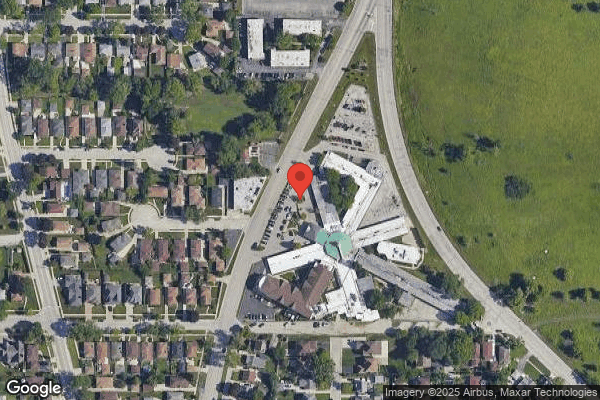
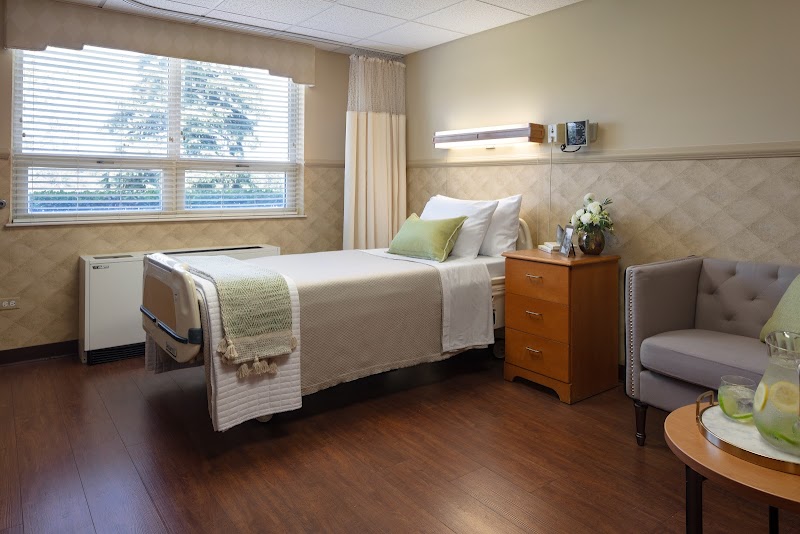
8425 WAUKEGAN ROAD, MORTON GROVE, IL 60053 (847) 965-8100
For profit - Corporation 211 Beds Independent Data: November 2025
Trust Grade
15/100
#226 of 665 in IL
Last Inspection: April 2025

Within standard 12-15 month inspection cycle. Federal law requires annual inspections.

Overview

Bella Terra Morton Grove has received a Trust Grade of F, indicating significant concerns about the quality of care provided. Ranking #226 out of 665 facilities in Illinois places them in the top half, but the grade suggests they are struggling with serious issues. The facility is improving slightly, with the number of problems decreasing from 10 to 9 over the past year, but they still have 38 total issues, including 6 serious incidents that have caused harm to residents. Staffing is below average at 2 out of 5 stars, with a turnover rate of 45%, which is slightly better than the state average. Recent findings revealed concerning incidents, such as a resident suffering a laceration requiring stitches due to inadequate transfer assistance, and another resident experienced a subdural hematoma after a fall because fall prevention measures were not followed. Additionally, a resident’s wound became infected while under care, highlighting deficiencies in monitoring and treatment. Overall, while there are some improvements in trends, families should carefully weigh these significant weaknesses against the facility's strengths.

Trust Score
F
15/100
In Illinois
#226/665
Top 33%
Safety Record
High Risk
Review needed
Inspections
Getting Better
10 → 9 violations
Staff Stability
⚠ Watch
45% turnover. Above average. Higher turnover means staff may not know residents' routines.
Penalties
✓ Good
$141,853 in fines. Lower than most Illinois facilities. Relatively clean record.
Skilled Nurses
○ Average
Each resident gets 39 minutes of Registered Nurse (RN) attention daily — about average for Illinois. RNs are the most trained staff who monitor for health changes.
Violations
⚠ Watch
38 deficiencies on record. Higher than average. Multiple issues found across inspections.
★★★☆☆
3.0
Overall Rating
★★☆☆☆
2.0
Staff Levels
★★★☆☆
3.0
Care Quality
★★★☆☆
3.0
Inspection Score
Stable
2024: 10 issues
2025: 9 issues

The Good

  • Full Sprinkler Coverage · Fire safety systems throughout facility
  • No fines on record

Facility shows strength in fire safety.

The Bad

3-Star Overall Rating

Near Illinois average (2.5)

Meets federal standards, typical of most facilities

Staff Turnover: 45%

Near Illinois avg (46%)

Higher turnover may affect care consistency

Federal Fines: $141,853

Well above median ($33,413)

Significant penalties indicating serious issues

The Ugly 38 deficiencies on record

6 actual harm
Apr 2025 6 deficiencies
CONCERN (D)

Potential for Harm - no one hurt, but risky conditions existed

Free from Abuse/Neglect (Tag F0600)

Could have caused harm · This affected 1 resident

**NOTE- TERMS IN BRACKETS HAVE BEEN EDITED TO PROTECT CONFIDENTIALITY** Based on observation, interview, and record review, the facility failed to ensure a resident was free from threats and mental ab...

Read full inspector narrative →
**NOTE- TERMS IN BRACKETS HAVE BEEN EDITED TO PROTECT CONFIDENTIALITY** Based on observation, interview, and record review, the facility failed to ensure a resident was free from threats and mental abuse. This failure applied to one of one (R113) residents reviewed for abuse and resulted in psychosocial and emotional harm to R113 as evidenced by emotional distress and physical anxiety. Findings include: R113 is a [AGE] year-old female who originally admitted to the facility on [DATE] and continues to reside in the facility. R113 has multiple diagnoses including but not limited to the following: Moyamoya disease, dysphagia, altered mental status, conversion disorder with seizures, transient cerebral ischemic attack, and cerebral aneurysm. On 4/14/2025 at 12:45PM, V25 (family member/POA) said we have a camera in R113's room to ensure R113 is being cared for properly. On 3/13/2025 at around 5AM, V20 (Certified Nursing Assistant) was changing R113's incontinence brief and had her completely naked. She had had a bowel movement. V20 rolled R113 on her left side which caused her to be in pain. R113 started kicking and swinging her arms which is her way of communicating that she is in pain. V20 then told R113 No, no, you better stop, or I am going to leave you here like this. Which to me means V20 is threatening R113 that she is going to leave her in a vulnerable condition, naked and lying in poop. It is to be noted that at this time R113 starting hysterically crying and observed heightened distress. R121 and V25 attempted to console and calm down R113. V25 said See, anytime we talk about this she gets extremely upset. On 4/15/2025 at 10:45AM, R121 said I was present when V20 was changing R113 on 3/13/2025. I was laying in bed when I heard R113 pounding on the side of the bed. She does this to communicate that she is in pain. I asked V20 to stop because she is in pain. I told her that R113's left shoulder hurts her and you have R113 laying on her left shoulder. V20 told me Let me do my job. R113 then started kicking her legs and kicked V20. V20 then told R113 If you do not stop, I will leave you here like this. R113 was naked and uncovered when V20 said this. I felt as if this was a threatening statement. Per MDS (Minimum Data Set) dated 4/5/2025 shows R121 has a BIMS (Briefs Interview of Mental Status) of 15, meaning resident is cognitively intact and alert and oriented. At 1:50PM, V25 showed this surveyor the video of R113 and V20. It is to be noted that the video was dated 3/13/2025. The video showed V20 changing R113's incontinence brief. R113 was observed to be in bed, in her room, naked and laying on her left side. R113 started banging on the bed and kicking her legs. V20 then said No, no, don't do that or I will leave you here like this in poo. Observed R121 laying in the bed across the room from R113. V25 said I showed this video to V1 (Administrator) where he watched and heard the audio. I do not feel like anything was done about this. She is still working in the facility where she can treat another resident like this. On 4/16/2025 at 9:45AM, V1 said V25 told me that she had a video that she wanted me to see. When I watched the video, I observed V24 changing the resident and R113 swinging her arms and kicking during care. R113 has a behavior of doing this. Asked V1 if she feels as if V1 is vulnerable to abuse because of these behaviors in which he said 'I guess so, yeah'. Asked V1 if the staff receive any sort of training on how to take care of residents with behaviors such as R113 in which he could not answer. Facility Abuse Policy with last revision date of 7/1/2024 states in part but not limited to the following: It is the policy of the facility to provide professional care and services in an environment that is free from any type of abuse, corporal punishment, misappropriation of property, exploitation, neglect, or mistreatment. Mental abuse includes but is not limited to humiliation, harassment, threat of bodily harm, punishment, isolation (involuntary, imposed seclusion) or deprivation to provoke fear of shame.
CONCERN (D)

Potential for Harm - no one hurt, but risky conditions existed

Investigate Abuse (Tag F0610)

Could have caused harm · This affected 1 resident

**NOTE- TERMS IN BRACKETS HAVE BEEN EDITED TO PROTECT CONFIDENTIALITY** Based on interview and record review, the facility failed to properly investigate an allegation of abuse. This failure applied t...

Read full inspector narrative →
**NOTE- TERMS IN BRACKETS HAVE BEEN EDITED TO PROTECT CONFIDENTIALITY** Based on interview and record review, the facility failed to properly investigate an allegation of abuse. This failure applied to one of one (R113) resident reviewed for abuse. Findings include: R113 is a [AGE] year-old female who originally admitted to the facility on [DATE] and continues to reside in the facility. R113 has multiple diagnoses including but not limited to the following: Moyamoya disease, dysphagia, altered mental status, conversion disorder with seizures, transient cerebral ischemic attack, and cerebral aneurysm. On 4/14/2025 at 12:45PM, V25 (family member/POA) said we have a camera in R113's room to ensure R113 is being cared for properly. On 3/13/2025 at around 5AM, V20 (Certified Nursing Assistant) was changing R113's incontinence brief and had her completely naked. She had had a bowel movement. V20 rolled R113 on her left side which caused her to be in pain. R113 started kicking and swinging her arms which is her way of communicating that she is in pain. V20 then told R113 No, no, you better stop, or I am going to leave you here like this. Which to me means V20 is threatening R113 that she is going to leave her in a vulnerable condition, naked and lying in poop. On 4/15/2025 at 10:45AM, R121 said I was present when V20 was changing R113 on 3/13/2025. I was laying in bed when I heard R113 pounding on the side of her bed. She does this to communicate that she is in pain. I asked V20 to stop because she is in pain. I told her that R113's left shoulder hurts her and you have R113 laying on her left shoulder. V20 told me Let me do my job. R113 then started kicking her legs and kicked V20. V20 then told R113 If you do not stop, I will leave you here like this. R113 was naked and uncovered when V20 said this. I felt as if this was a threatening statement. R121 said at no time did anyone interview me about this incident. I thought this was strange and not right because I was an eyewitness. I feel as if the facility is not doing anything about this incident. Per MDS (Minimum Data Set) dated 4/5/2025 shows R121 has a BIMS (Briefs Interview of Mental Status) of 15, meaning resident is cognitively intact and alert and oriented. At 1:50PM, V25 showed this surveyor the video of R113 and V20. It is to be noted that the video was dated 3/13/2025. The video showed V20 changing R113's incontinence brief. R113 was observed to be in bed, in her room, naked and laying on her left side. R113 started banging on the bed and kicking her legs. V20 then said No, no, don't do that or I will leave you here like this in poo. Observed R121 laying in the bed across the room from R113. V25 said I showed this video to V1 (Administrator) where he watched and heard the audio. I expressed my concern with what she verbally said to [NAME] and the aggressiveness she used to change her. I do not feel like anything was done about this. She is still working in the facility where she can treat another resident like this. On 4/16/2025 at 9:45AM, V1 said V25 told me that she had a video that she wanted me to see and she was unhappy with the care. When I watched the video, I observed V24 changing the resident and R113 swinging her arms and kicking during care. R113 has a behavior of doing this. Asked V1 if she feels as if V1 is vulnerable to abuse because of these behaviors in which he said 'I guess so, yeah'. V1 said V20 was doing regular care and I did not see any sort of abuse in the video. This surveyor asked V1 if he listened to the audio of the video and he said 'I may have, yes, but I can't remember.' Then said V20 told R113 that if she does not stop this behavior, she will have to step out and get the nurse. I remember V25 being concerned about what V20 said to R113. Facility Reported Incident dated 3/25/2024 states in part but not limited to the following: Date and time alleged incident occurred: During 11-7 shift on 3/19/2025. On 3/25/2025 at 1:50PM, V25 (family member/POA) told V1 (Administrator) that she felt as if V24 (Certified Nursing Assistant) last week did not treat R113 appropriately during care. V25 showed V1 a video of V24 changing R113 and R113 was laying on her left side. V25 felt this was abuse as she felt she should on be changed on her right side. It is to be noted that at no point does the facility reported incident discuss the verbal statement V24 made towards R113. It also does not show any interview from R121, R113's roommate that was present at the time of alleged incident. The report also shows a date of an alleged event of 3/18/2025 when the video observed is clearly dated 3/13/2025. It is also to be noted that on 4/14/2025, this surveyor requested complete investigation for alleged incident of abuse with V20 and R113. Per witness statements received, no interview was noted with R121. On 4/16/2025 after interview with V1, this surveyor was provided with new, updated witness statements that were not originally presented on 4/14/2025. Facility Abuse Policy with last revision date of 7/1/2024 states in part but not limited to the following: It is the policy of the facility to provide professional care and services in an environment that is free from any type of abuse, corporal punishment, misappropriation of property, exploitation, neglect, or mistreatment. The facility follows the federal guidelines dedicated to prevention of abuse and timely and thorough investigations of allegations. Investigations: Interview all involved person including victim, perpetrator, witnesses, and other who might have knowledge of the allegation. Thorough documentation of the investigation.
CONCERN (D)

Potential for Harm - no one hurt, but risky conditions existed

Deficiency F0688 (Tag F0688)

Could have caused harm · This affected 1 resident

**NOTE- TERMS IN BRACKETS HAVE BEEN EDITED TO PROTECT CONFIDENTIALITY** Based on observation, interview, and record review, the facility failed to ensure that staff provide ordered service to a reside...

Read full inspector narrative →
**NOTE- TERMS IN BRACKETS HAVE BEEN EDITED TO PROTECT CONFIDENTIALITY** Based on observation, interview, and record review, the facility failed to ensure that staff provide ordered service to a resident with decreased range of motion by failing to apply ordered splints to resident's hands. This failure affected one (R129) of one resident reviewed for rehabilitation services. Findings include: R129 is [AGE] years old and have resided at the facility since 2024, face sheet listed the following past medical history: metabolic encephalopathy, chronic obstructive pulmonary disease, pain in left shoulder, chronic kidney disease stage 4, bilateral primary osteoarthritis of left hip, obstructive sleep apnea, type 2 diabetes, etc. 04/14/25 12:40PM, R129 was observed in her room sleeping and unable to answer any questions, noted with contracture to both hands, heel boots noted on a chair at the side of the room, no splint noted on both hands. Resident's hair was observed to be thick and matted, dry skin noted all over resident's body. 04/15/25 11:50AM, R129 was observed again in bed, awake and alert, stated that she is doing okay. R129's hair was still matted, dry and flaky skin all over her face and body, both legs look dark with flaky skin, her face was very dirty, and she had long fingernails on both hands with brownish substances underneath. Resident had contracture on both hands and her nails on the left hand were digging into her palm and she was unable to open her hands. Physician order dated 3/11/2025 reads as follows: Nursing /Rehab: Assistance with Splint or brace: Resident will be assisted in left- and right-hand palm protector for at least 2-4 hours or as tolerated, may take off for showers, ADLs, check the skin for any redness and/or any skin concerns and report to NOD/MD. Care plan initiated 8/27/2024 states the following: resident requires assistance with ADL's (bed mobility, transfers, dressing, walking, personal hygiene, eating and toileting) Musculoskeletal impairment. Intervention include assist with application of appliances if needed (hearing aid, eyeglasses, dentures). Minimum Data Set (MDS) assessment dated [DATE], section C (cognition) scored R129 with a BIMs score of 5, section GG (functional status) of the same assessment coded R129 as being dependent to needing substantial/maximal assistance from staff for all activities of daily living. 04/15/25 at 12:03PM V13 (LPN) who is the assigned nurse for R129 said that she is not aware of any splints for the contracture on resident's hands, the only thing resident have is the neck pillow that she is aware of. 04/15/25 at 2:20PM V18 (Restorative Aide) said that he provides restorative care to resident every time he works Monday through Friday, V18 was asked if he provided any restorative care to resident yesterday (4/14/2025) and he said no, the last time was on Sunday. Resident verbalized that no one provided any restorative care to her on Sunday. Surveyor asked V18 about resident's contracture on both hands and if he noticed the fingernails that is digging into her palm, and he said yes, her nails need to be trimmed and the resident was supposed to have a splint on both hands to prevent further contracture. V18 looked around and found one splint on resident's side table and stated that she was supposed to have 2, he does not know what happened to the other one. V18 also said that all the staff are aware that resident is supposed to use the splints and they are supposed to assist resident with putting them on. Restorative nursing policy revised 8/19/2024 stated in policy statement: It is the policy of this facility to assess for comprehensive nursing and restorative needs upon admission. Under procedure, the policy states in part: #3 nursing and restorative services may include the following: C contracture prevention and management:(i)PROM/AROM exercises.(i) splint/orthotic management.
CONCERN (E)

Potential for Harm - no one hurt, but risky conditions existed

Deficiency F0564 (Tag F0564)

Could have caused harm · This affected multiple residents

Based on interview and record review, the facility failed to follow their visitation policy allowing residents to receive 24-hour visitation privileges. This failure has the potential to affect all 15...

Read full inspector narrative →
Based on interview and record review, the facility failed to follow their visitation policy allowing residents to receive 24-hour visitation privileges. This failure has the potential to affect all 154 residents currently residing in the facility. Findings include: Per daily census dated 4/14/2025 shows there were 154 residents residing in the facility. On 4/14/2025 at 12:45PM, V25 (Family Member/POA) said the facility is restricting my visiting hours and making me leave by 8:00PM. V19 (Nursing Supervisor) comes around at 7:50PM and waits for me to leave. She will tap her phone showing me the time and will not leave R113's room until I leave the facility. I feel as if I am being punished because I make sure the staff is caring for R113 and they want me gone. On 4/15/2025 at 1:00PM the resident council meeting was held which included: R60, R1, R20, R89, R121, R54, R24, R28, R59, R84, and R90. The residents agreed that at 8:00PM, the facility makes any visitors leave. At 1:30PM, V19 said our visitation policy states that all visitors need to leave once the receptionist is gone for the day, which is 8:00PM. At 7:50PM, the receptionist will check the sign-in sheet to let me know what visitors are still in the building. At this time, I will go around and remind the visitors that visiting hours are over and it is time to leave. At 3:15PM, V24 (Receptionist) said I was told that our visitation policy states that visitation ends at 8:00PM every day. At 7:50PM, I check who is still in the building and let the manager on duty or V19 aware of who is still here. They will then make rounds and let the remaining visitors know that visitation is ending and politely ask them to leave. Visitation Policy with last revision date of 8/19/2024 states in part but not limited to the following: It is the policy of this facility to allow authorized visitation of the resident in the facility at any given time. Visiting hours if from 8:00AM daily but 24-hour access is available to immediate family, other relatives, and other authorized persons visiting with the consent of the resident.
CONCERN (E)

Potential for Harm - no one hurt, but risky conditions existed

ADL Care (Tag F0677)

Could have caused harm · This affected multiple residents

**NOTE- TERMS IN BRACKETS HAVE BEEN EDITED TO PROTECT CONFIDENTIALITY** On 04/14/25 at 10:23 AM R41 was observed in bed and appeared uncomfortable. R41's face was wet with perspiration and in need of ...

Read full inspector narrative →
**NOTE- TERMS IN BRACKETS HAVE BEEN EDITED TO PROTECT CONFIDENTIALITY** On 04/14/25 at 10:23 AM R41 was observed in bed and appeared uncomfortable. R41's face was wet with perspiration and in need of washing. The resident's thinning hair appeared greasy and matted on the side of his head where he slept. R1 stated, I can do some things myself but I need help to shower or to wash my face and comb my hair but it's not easy getting that help here. Care plan dated 7/8/24 reads in part, (R41) requires assistance with ADL's (bed mobility, transfers, dressing, personal hygiene, eating and toileting). On 04/15/25 09:22 AM R108 was in a bed that was on the ground, with his feet outside of his sheets. His feet did not have any socks and revealed toe nails that were long and in need of trimming. Resident had matted hair and there was a noticeable body and urine odors present in the room. Per V6 (LPN) R108 only receives bed baths. R108's care plan reads in part, Functionally Incontinent of both Bowel and Bladder related to Physical Limitations and Cognition. R108 will remain free from skin breakdown due to incontinence and brief use, I would like the Activity staff notify nursing if I had an incontinent episode during activities. I prefer to use disposable briefs. I would like the staff to check me for incontinence episode every 2 hours and as needed. I would also need assistance to wash, rinse and dry my perineum. I would also need assistance to change clothing after incontinence episodes. There were no care plans to address bathing and grooming found in R108's medical record when requested. Based on observation, interview, and record review, the facility failed to ensure that staff provide scheduled shower and grooming for residents who are dependent on staff for Activities of Daily Living (ADL). This failure affected four (R41, R70, R108 and R129) of eight residents reviewed for ADL care. Findings include: R129 is [AGE] years old and have resided at the facility since 2024, face sheet listed the following past medical history: metabolic encephalopathy, chronic obstructive pulmonary disease, pain in left shoulder, chronic kidney disease stage 4, bilateral primary osteoarthritis of left hip, obstructive sleep apnea, type 2 diabetes, etc. 04/14/25 12:40PM, R129 was observed in her room sleeping and unable to answer any questions, noted with contracture to both hands, heel boots noted on a chair at the side of the room, no splint noted on both hands. Resident's hair was observed to be thick and matted, dry skin noted all over resident's body. 04/15/25 11:50AM, R129 was observed again in bed, awake and alert, stated that she is doing okay. R129's hair was still matted, dry and flaky skin all over her face and body, both legs look dark with flaky skin, her face was very dirty, and she had long fingernails on both hands with brownish substances underneath. Surveyor asked resident if she get her showers or bed bath and she said that sometimes staff will wash her up in bed, she does not receive any showers and cannot remember the last time her hair was washed. R129 asked surveyor if she can help her with her grooming because it is poor. Minimum Data Set (MDS) assessment dated [DATE], section C (cognition) scored R129 with a BIMs score of 5, section GG (functional status) of the same assessment coded R129 as being dependent to needing substantial/maximal assistance from staff for all activities of daily living. Resident have the following order dated 12/24/2024, Skin assessment weekly on shower day every day shift every Mon, Thu. Care plan initiated 8/27/2024 states the following: resident requires assistance with ADL's (bed mobility, transfers, dressing, walking, personal hygiene, eating and toileting) related to Musculoskeletal impairment. Goal: Resident will be assisted with ADLs as needed. Interventions include assist resident with shower/bathing per schedule, Encourage participation in ADL's, etc. 04/15/25 at 12:03PM V13 (LPN) said that R129 hair is all crumpled up and needed to be washed and combed, she will get the C.N.A to trim her nails. V13 was asked if she ever saw resident get a shower and she said that she have seen them bring her to the shower room but have not actually witnessed her being showered. V13 added that the certified nurse assistants (C.N. As) are supposed to document the showers in the computer under task. 04/16/25 at 12:33PM, V2 (DON) said that residents are scheduled for showers two times a week and as needed, part of Activities of Daily Living (ADL) care is washing their hair and trimming the fingernails when needed. If a resident prefers a bed bath, then it will be documented as their preference and refusal of ADL care should also be documented. Facility does not have any documentation that resident refuses showers or preferred bed baths. Surveyor requested documentation of resident's showers and skin assessments and received 2 skin assessments dated 12/92/2024 and 3.24/2025. ADL shower and monitoring document presented by facility showed that for the question, did resident take a shower, bath or bed bath, the response was no, for the months of January, February, March, and April 2025. Except on 1/23/2025, 2/13/2025 and 2/20/2025 when the response was yes. Shower and hygiene policy revised 8/19/2024 states in policy statement: it is the policy of this facility to ensure that resident shower/hygienic care is provided by the nursing staff to promote cleanliness, provide comfort to the resident, and observe the condition of resident's skin. Under procedures. The policy states in part, 1. Administer resident shower once weekly and/or as necessary. Any resident who needs hygienic care will be provided care to promote hygiene (facial, body, perineal care, etc.) 3. Shower refusal by the resident shall be relayed by the assigned C.N.A to the charge nurse. 11. Documentation (Shower log/CNA assignment sheet) a. Date and shift the shower /bath was performed. D. If the resident refused the shower and /or if shower was not administered and interventions taken e.g. bed bath/re-scheduling the shower schedule consistent to facility protocol. On 4/14/2025 at 11:10AM, R70 was observed to be laying in bed. This surveyor noted resident to be unkempt with long beard. R70 said I have not gotten a shower or been groomed in over a month. Said sometimes the staff will wipe my armpits with wipes but I have not gotten a shower or bed bath in over a month. R70 showed this surveyor his nails which were observed to be very long. Said I want my beard shaved and my nails cut. Facility Report titled ADLs (Activities of Daily Living) Shower/Bathing shows the last time R70 received a shower was on 2/21/2025. There is no documentation of shower/bathing after 3/7/2025.
CONCERN (F)

Potential for Harm - no one hurt, but risky conditions existed

Deficiency F0725 (Tag F0725)

Could have caused harm · This affected most or all residents

**NOTE- TERMS IN BRACKETS HAVE BEEN EDITED TO PROTECT CONFIDENTIALITY** Based on interviews and record review, the facility failed to provide a sufficient number of nursing staff to ensure call lights...

Read full inspector narrative →
**NOTE- TERMS IN BRACKETS HAVE BEEN EDITED TO PROTECT CONFIDENTIALITY** Based on interviews and record review, the facility failed to provide a sufficient number of nursing staff to ensure call lights were answered in a timely manner to assist with activities of daily living care, toileting, and overall care. This failure has the potential to affect all 154 residents currently residing at the facility. Findings include: On 04/14/2025 at 10:00 AM, V2, the Director of Nursing, presented the survey team with a facility matrix report, showing 154 current residents. R153 is an alert and oriented [AGE] year-old resident of the facility, with a BIMS score of 15 with diagnosis including heart failure; paroxysmal atrial fibrillation; need for assistance with personal care; and other abnormalities of gait and mobility. On 04/14/2025 at 12:50 PM, R153 told the surveyor that on the weekends, her unit only had one nurse and one CNA, and that was not enough. R153 said that about two weekends ago, it took five hours for her to get a dry diaper. When asked by the Surveyor how she determined the wait time, R153 responded she timed it, starting at 4:00 PM until 9:00 PM, and pointed at the clock on her wall, directly in front of her bed. R153 said when the CNA finally arrived, she was told the previous CNA on shift had left without providing a report. Lastly, R153 said that if a nurse had simply entered her room that day and told her they were having trouble with staff, she would not have been speaking to the Surveyor. R16 is an alert and oriented [AGE] year-old resident of the facility, with a BIMS score of 15 with diagnosis including spinal stenosis, lumbar region with neurogenic claudication; morbid (severe) obesity due to excess calories; type 2 diabetes mellitus with diabetic polyneuropathy; and post-laminectomy syndrome. On 04/14/2025 at 1:15 PM, R16 told the surveyor that the facility was understaffed on weekends and had addressed the issue with the facility director when he first arrived. R16 said he has had to wait for staff to respond to his call light, anywhere from forty to sixty minutes, about five different times, so far, during his stay at the facility, mostly during the 3:00 PM to 11:00 PM shift. R16 said that if the facility staff would communicate and tell him there was a delay, he would be fine, but they haven't. Lastly, R16 said he has been greatly concerned that if something serious were to happen to him, staff may take forty to sixty minutes to respond to his call light. On 04/16/2025 at 1:00 PM, the surveyor spoke with V23, a family member of R100 and R48. V23 told the Surveyor that R48 told her that at around 7:00 PM on a Saturday, about one month ago, she found R100's diaper soiled. V23 said that R48 called her on her mobile phone so V23 could call the facility's front desk in order to notify the staff that R100 had a wet diaper because R48 had had no success locating any staff to help. V23 said she, then, called the front desk and the receptionist transferred the call to the nurse's station, but no one would answer. V23 said she called the front desk about three or four times, and each time, the receptionist would apologize for no one answering the phone at the nurse's station, even saying, they may not be doing their job. V23 also said that R48 told her that on weekends, she has looked out of her room in search of staff, and the hallway has appeared empty. R48 is an alert and oriented [AGE] year-old resident of the facility, with a BIMS score of 6. Her pertinent medical diagnosis include, but are not limited to, type 2 diabetes mellitus with diabetic neuropathy, unspecified; age-related osteoporosis without current pathological fracture; anemia; and hypertension. On 04/16/2025 at 1:22 PM, R48 told the surveyor that she called V23 on the phone about a month ago, at about 8:00 PM, to let her know R100 had a wet diaper and no staff was available to help. R48 said she pushed the call light button two times but no staff answered the call. V48 said about one and a half hours later, at around 9:30 PM, she confirmed that a male CNA was changing R100's brief. R48 also shared that on a different occasion, she walked to the bathroom, unassisted, because no staff answered her call light for help to use the bathroom. On 04/15/2025 at 2:00 PM V8, an RN, told the surveyor that she has been receiving complaints from residents regarding overnight lights staying on. V8 added that, in some cases, she has even seen, herself, a delay in CNA response time to resident call lights. V8 said she has shared the complaints with V10, the CNA supervisor. On 04/16/2025 at 1:40 PM, V9, an RN, told the surveyor that agency staff on weekends bring a different vibe; so, she feels like she has to watch them a little more. V9 also said she has had to reinforce to staff the importance of answering call lights in a timely manner, in the past. On 04/16/2025 at 12:30 PM, V2 told the surveyor that sometimes she has received complaints, from both residents and their families, regarding prolonged call light response. V2 said the majority of the complaints come from phone messages left over the weekend by family members of residents. On 04/16/25 at 10:14 AM, V1 Administrator, told the surveyor he has not received any notification from staff regarding residents complaining to them of prolonged call light response time on the weekends. During resident council held on 4/15/25 at 1:06 PM, R60, R1, R20, R89, 121 , R54, R24, R121, R54, R28, R59, R90, and the resident council president R84 and family member were present during the resident council meeting task. Surveyor asked the group about call light responses and the unanimous concern was the long wait times for staff to attend to their call lights. Surveyor asked what was considered long, resident group indicated that there were wait times between 30 to over 3 hours with weekends being the worst wait times. The facility's call light policy, revised 07/26/2024, states, in part, It is the policy of this facility to ensure that there is prompt response to the resident's call for assistance, and the facility shall answer call lights in a timely manner.
Mar 2025 3 deficiencies
CONCERN (D) 📢 Someone Reported This

A family member, employee, or ombudsman was alarmed enough to file a formal complaint

Potential for Harm - no one hurt, but risky conditions existed

Notification of Changes (Tag F0580)

Could have caused harm · This affected 1 resident

**NOTE- TERMS IN BRACKETS HAVE BEEN EDITED TO PROTECT CONFIDENTIALITY** Based on interview and record review the facility failed to notify resident's family member of discontinuation of medication aft...

Read full inspector narrative →
**NOTE- TERMS IN BRACKETS HAVE BEEN EDITED TO PROTECT CONFIDENTIALITY** Based on interview and record review the facility failed to notify resident's family member of discontinuation of medication after holding the hypertensive medication. The facility also failed to notify the physician of increase in resident's blood pressure. This deficiency affects one (R1) of three residents reviewed for Notification for change in condition. Findings include: On 3/11/25 at 2:39PM, V6 Family members said that R2's amlodipine (antihypertensive medication) was completely stopped when she only gave permission to old it for 4 days as discussed with V23 Nurse Practitioner. On 3/11/25 at 2:50PM, Reviewed R2's medical records with V3 Director of Nursing (DON). R2 is admitted on [DATE] with diagnosis listed in part but not limited to Hypertension, Cardiomyopathies, Sick sinus syndrome, Heart failure, Chronic kidney disease, Cardiac pacemaker, Dementia, severe with mood disturbance, Type 2 Diabetes mellitus, Abnormalities of gait and mobility. Physician order sheet indicated Amlodipine Besylate give 1 tablet by mouth one time daily for Essential hypertension. Progress notes dated 2/2/24 documented by V24 RN indicated that he notified V23 Nurse Practitioner (NP) of change in condition because of BP (Blood Pressure) taken at 9:20am was 124/64 and at 10:00am at 118/mmHg. V24 documented V23 ordered to stop amlodipine. V6 Family member notified, did not consent to stop. Request to put amlodipine on hold for 4 days, V6 to call cardiologist and update facility. V24 RN notified V23 NP. February Medication administration record (MAR) for 2/1 and 2/2/25 indicated no blood pressure parameters for administration of Amlodipine. Amlodipine was not given after 2/2/25. Daily blood pressure obtained from 2/1/25 to 2/27/25 indicated ranges of blood pressure from 118/65 to 168/mmHg. Informed V3 DON of R2's Increased episodes of blood pressure after Amlodipine were discontinued on 2/2/25 on the following dates without notification of physician or Nurse Practitioner: 2/3/25- 143/99; 2/4/25- 161/79; 2/5/25- 146/84; 2/6/25- 149/67; 2/8/25- 168/81; 2/9/25- 156/82; 2/14/25- 147/80. V3 said that the nurse should notify the primary care physician or NP of increased BP. V3 DON said that V24 RN was following order of V23 NP of discontinuing amlodipine on 2/2/25. On 3/11/25 at 3:31PM, V23 Nurse Practitioner said that she was covering NP for R2's primary care physician. She was called by the nurse on 2/2/25, and she spoke with V6 Family member. She said that she ordered on hold the amlodipine for 4 days as she discussed with V6 Family member. She denied ordering to discontinue the amlodipine. She said that she will not discontinue a cardiac medication of resident who has hypertensive with cardiac medical issues whom she has not seen R2. She was not notified of R2's discontinued amlodipine and episode of increased in BP after discontinued. Facility's policy on Notification of change of condition revised 8/16/24 indicated: Policy statement: The facility will provide care to resident and provide notification of resident change in status. Procedures: 1. The facility must immediately inform the resident; consult with the resident's physician and if known, notify the resident's legal representative or an interested family member when there is: b. A significant change in the resident's physical, mental or psychosocial status. c. A need to alter treatment significantly (need to discontinue an existing form of treatment due to adverse consequences or to commence a new form of treatment.
CONCERN (D) 📢 Someone Reported This

A family member, employee, or ombudsman was alarmed enough to file a formal complaint

Potential for Harm - no one hurt, but risky conditions existed

Quality of Care (Tag F0684)

Could have caused harm · This affected 1 resident

**NOTE- TERMS IN BRACKETS HAVE BEEN EDITED TO PROTECT CONFIDENTIALITY** Based on observation, interview, and record review the facility failed to provide necessary treatment and care in a timely manne...

Read full inspector narrative →
**NOTE- TERMS IN BRACKETS HAVE BEEN EDITED TO PROTECT CONFIDENTIALITY** Based on observation, interview, and record review the facility failed to provide necessary treatment and care in a timely manner to resident with language barrier who has been refusing to get up for Restorative walking program, scheduled shower, and complaint of severe pain (during therapy evaluation) after a fall incident to identify fracture of sacrum. This deficiency affects one (R1) of three residents reviewed for Quality of care. Findings include: On 3/11/25 at 12:17PM, Rounds made to R1 with V4 Fall coordinator. Observed R1 sleeping in bed. R1 opened her eyes when called but will go back to sleep. She is lethargic but arousable. V16 Receptionist at bedside said that she was directed to do 1:1 supervision/monitoring to R1 at 10:00AM. V16 said that she does not document monitoring dome to R1, she just informed the floor nurse every hour. V4 said that R1 was placed on 1:1 every hour monitoring. She pointed the monitoring form for today started at 3/11/25 at 12AM placed by the window. V4 handed the hourly monitoring form to surveyor. Reviewed monitoring form and informed V4 that no monitoring form was done from 12AM. Surveyor asked V18 Receptionist, why she did not document her 1:1 hourly monitoring started at 10:00AM. V18 said that she did not know about the monitoring form, no one told her how to document. V16 said that since she started at 10:00AM, R1 has been sleeping. On 3/11/25 at 11:54AM, Reviewed R1 medical records with V3 DON (Director of Nursing). R1 is re-admitted /27/24 with diagnosis listed in part but not limited to Fracture of Sacrum, subsequent encounter for fracture with routine healing, Fall subsequent encounter, Acute pain due to trauma, Anemia in chronic kidney disease, Type 2 Diabetes mellitus with diabetic neuropathy arthropathy, Heart failure, chronic kidney disease stage 4, Cardiac pacemaker Supravalvular aortic stenosis. Physician order sheet for January and February 2025 indicated that R1 has hydrocodone-acetaminophen oral tablet 5-325mg give 1 tablet by mouth every 6 hours as needed for pain (PRN) up to 7 doses. Lidocaine external patch 4% apply to affected area (lower back) topically in AM, on for 12 hours and off at bedtime (HS). admission pain assessment indicated no pain complaint. MDS/resident assessment dated [DATE] indicated Section J-no pain and Section N- no administration of prn pain medication. Fall assessment indicated that she is at high risk for fall. Comprehensive care plan indicated that she is at risk for acute and chronic pain due to current medical conditions. She has some difficulty in expressing self and understanding others due to language communication barrier. She has impaired thought processes related to impaired decision making. She has impaired self-care deficit and impaired mobility. She is at high risk for falls related to decline in functional status, impulsivity to poor safety awareness, muscle weakness from recent hospitalization. R1 has history of unwitnessed falls:1) 1/16/25 at 8:00PM indicated that nurse heard a scream from room. Nurse and CNA (Certified Nurse Assistant) went to the room and observed R1 on the floor, lying on the floor next to her bed. R1 claimed that she was trying to get her phone because someone was calling her, and her phone was charging in the wall by the fridge. 2) 2/8/25 at 8:10PM, Nurse was alerted to R1's room due to a loud noise and call for help. R1 was observed sitting on the floor near the door. R1 was asked what happened, but due to language barrier was not understood. Daughter was called to assist with translation. Daughter translated that R1 would like to sit. Daughter came to see R1. R1 complained of left hip pain. She cannot ambulate with walker due to pain. Nurse offered pain medication. Nurse Practitioner recommended to transfer R1 to hospital for evaluation, but Daughter refused and preferred X-ray to be done at the facility. Care planned was updated. Therapy to evaluate and treat R1 to increased strength and mobility and prevent further falls. Xray was done on 2/9/25 indicated no fracture. R1's post fall comprehensive pain assessment dated [DATE] but signed 2/15/25 indicated no pain. R1's post fall comprehensive pain assessment dated [DATE] but signed 2/16/25 indicated no pain. R1's post fall incident 72 follow up (2/9/25 to 2/11/25) for fall incident 2/8/25 indicated no pain but signed and locked date 2/17/25. Informed V3 DON that all pain assessment was completed after the resident was discharged to the hospital on 2/13/25. R1's Pain assessment every shift documented in MAR (Medication administration Record) indicated no complaint of pain in all shifts from 3/9/25 to 3/13/25. MAR indicated that R1 was only given twice of as needed pain medication (Hydrocodone-Acetaminophen orally) from 3/8/25 to 3/13/25. R1's Restorative program log from 2/9/25 to 2/13/25 indicated refusal of walking program after the fall incident on 2/8/25. R1's shower and bathing documentation indicated that she refused shower scheduled on 2/10/25 after the fall on 2/8/25. Informed V3 DON that there is no documentation in the progress notes of reason of R1 refusal of treatment and care. V3 said that R1 has the right to refuse treatment and care. R1's Physical therapy (PT) evaluation and plan of treatment dated 2/12/25 indicated: Evaluation only. Reason for referral: Patient is [AGE] years old female resident of this facility status fall referred to PT for eval only and treatment x1 to establish functional baseline and appropriate restorative program for functional maintenance. Other system/condition assessment: Patient has pain that interferes/limits functional activity? YES (Patient complaint of severe pain both lower extremities. Nurse on duty informed and aware. Pain assessment method-Patient verbalized pain level. Is skilled therapy needed to address pain? Nursing to address. R1's Facility reported incident dated 2/13/25 reported to IDPH on 2/14/25 indicated that R1 is observed with facial grimacing and guarding of her lower back. R1 was sent out to the hospital due to intractable pain on lower back. R1 was admitted at orthro unit with diagnosis of closed fracture of the sacrum. CT of thoracic spine was done with impression of acute left sacral ala fracture 182 series 2 with adjacent presacral soft tissue. R1 returned to facility on 3/7/25. R1's comprehensive care plan indicated that she has some difficulty in expressing and understanding others. Her primary language is (URDU- an Indo-[NAME] language spoken in Pakistan and parts of [NAME]). She primarily speaks a different language than many of the caregivers, becoming frustrated when unable to understand a message or convey her message. Interventions: Involve a translator to ais in communication. In some situation a family member may serve as a translator. As Necessary, have the translator assist in developing a personalized communication board or book. Utilize appropriate augmentative devices, i.e., communication board/flash cards, pads, etc. Help acquire and learn to us appropriate devices. On 3/11/25 at 1:10PM, V5 Restorative Nurse said that she is not aware that R1 has been refusing to get up for the restorative walking program after she fell on 3/8/25 not until 2/13/25. V5 said that if resident refused restorative treatment program, she expects the restorative aide who provides the treatment to report to her so that she could document reason for refusal, assess the resident and inform family member of refusal of program. On 3/11/25 at 1:25PM, V17 Restorative Aide (RA) said that R1 refused to get up for the restorative daily walking program. She was not able to participate due to pain and wanted to stay in bed to sleep. She did not inform V5 Restorative Nurse and R1's family of R1 refusal of walking program. V17 said that R1 has language barrier. She used hand gestures to communicate to R1. She did not use translator or communication board. She said that she only notified V5 of R1's refusal on 2/13/25. On 3/11/25 at 1:30PM, Rounds made to R1's room with V17 RA. Observed R1 sleeping in bed. Remains lethargic but arousable. Observed V18 CNA at bedside. V18 said that she was asked by her supervisor to be a sitter to R1 while the receptionist is on break. V18 said that she does not know why she has to monitor R1 because R1 has been sleeping since she arrived. She said that there is no monitoring documentation endorsed to her. On 3/11/25 at 1:46PM, V19 Restorative Aide said that R1 refused to get up for the restorative daily walking program after she fell on 2/8/25. She was not able to participate due to pain and wanted to stay in bed to sleep. She did not inform V5 Restorative Nurse and R1's family of R1 refusal of walking program. V17 said that R1 has language barrier. She used hand gestures to communicate to R1. She did not use translator or communication board. On 3/12/25 at 11:18AM, V21 Family member denied that they refused R1 to be sent out to the hospital for evaluation due to lower back pain after the fall incident on 2/8/25. V21 said that she is the responsible party for R1. She said her other sister probably the one they spoke to. She said that R1 was in so much pain after the fall and the medication was not effective. R1 was crying in pain. She said that they requested R1 to be sent to the hospital on 3/13/25 due to severe pain. She said that she was not notified of R1 refusal of shower and restorative program due to pain. On 3/12/25 at 12:08PM, V20 CNA said that she is regular CNA for R1, she said that after she fell on 2/8/25 she complained of pain on her lower back. She cannot get up and stand up. She reported her pain to the floor nurse. She cannot remember the name of the nurse. On 3/12/24 at 12:13PM, V9 RN said that she took care of R1 on 2/11/25 (she was off from 2/8 to 2/10/25. She said that she was not endorsed to her during nursing report that R1 fell on 2/8/25. She learned it from R1's family member. R1 complained of severe pain of 10/10 to her lower back and gave prn pain medication. She did not call her doctor because everyone knows that she complaint of pain. On 3/12/25 at 2:30PM, Informed V1 Administrator and V2 DON of above concerns identified in Pain management. The inconsistency of pain assessment. Documentation of pain assessment after the R1 was discharged . Communication among IDT (Interdisciplinary team) of resident refusal of treatment due to pain. Implementation of care plan and policy on communication barrier. Because of these they failed to provide necessary treatment and care in a timely manner to resident with language barrier who has been refusing to get up for Restorative walking program, scheduled shower, and complaint of severe pain (during therapy evaluation) after a fall incident to identify fracture of sacrum. Facility unable to provide policy on Reporting and documentation of reason of resident refusal to treatment and care. Facility's policy on Pain revised 1/30/25 indicated: Policy statement: It is the policy of the facility to ensure that all residents are assessed for pain in every situation where there is a potential for pain. For pain complaints and for situations/incidents that might result to pain (ex: fall incident, altercation, cuts, bruises, wound care, etc.) the nursing staff may document in any part of the resident's medical record that may include nurses' notes, incident report, medication administration record, etc.) Procedures: 1. Upon admission and readmission, the nurse will assess resident for pain. For those identified with pain upon admission/readmission assessment, an order for pain medication will be obtained from the physician. A paper-based assessment or UDA is available for use. The pain medication ordered will be administered to the resident as soon as possible. After administration of prn pain medication. If the resident is still unrelieved of pain despite pharmacologic and nursing measures, the resident's physician will be called to refer the lack of relief. Facility's policy on Quick reference guide for language line solutions/How to access an interpreter. *When receiving a call 1. Use your phone's conference feature to place the limited English proficient (LEP) speaker on conference/hold 2. Dial [PHONE NUMBER] 3. Provide your client ID# 4. Select the language you need b. Press 2 for all other language and state the name of the language you need. Press 0 for agent assistance if you do not know the language. 5. Provide your facility name: 6. Brief the interpreter. Summarize what you wish to accomplish and provide any special instructions. 8. Say End of call to the interpreter when your call is completed.
CONCERN (D) 📢 Someone Reported This

A family member, employee, or ombudsman was alarmed enough to file a formal complaint

Potential for Harm - no one hurt, but risky conditions existed

Infection Control (Tag F0880)

Could have caused harm · This affected 1 resident

**NOTE- TERMS IN BRACKETS HAVE BEEN EDITED TO PROTECT CONFIDENTIALITY** Based on observation, interview, and record review the facility failed to ensure appropriate infection control practices after p...

Read full inspector narrative →
**NOTE- TERMS IN BRACKETS HAVE BEEN EDITED TO PROTECT CONFIDENTIALITY** Based on observation, interview, and record review the facility failed to ensure appropriate infection control practices after providing shower to a resident in the shower room. This deficiency affects one of three common shower rooms in resident's unit reviewed for resident clean environment. Findings include: On 3/11/25 at 2:39PM, V6 Family member said that the common shower room shared by residents is dirty and not cleaned. Resident's soiled clothes, towels and wash cloths are left in the shower room. On 3/11/25 at 10:58am Observed shower room by [NAME] Unit with soiled resident clothing on the floor, towels, and wash clothes. Showed observation to V7 Housekeeping supervisor. V7 said that the CNA (Certified Nurse Assistant) should place all soiled clothes, towels, and wash clothes in plastic bag not on the floor after shower. Informed observation to V11 LPN (Licensed Practical Nurse). V11 said that V12 CNA should place all soiled clothes, towels, and wash clothes in plastic bag not on the floor after shower for infection control. On 3/11/25 at 11:26AM, V1 administrator said that V6 Family member already presented the concerns last month and they addressed it already. Presented copy of grievance/concern form completed by V22 Social Service Director dated 2/21/25. Informed V1 of above observation made and concern of shower room in [NAME] unit is dirty with soiled resident clothing, towels, and wash clothes on the floor. On 3/11/25 at 11:54AM, Informed V3 DON (Director of Nursing) of above concern. Requested for policy. On 3/11/25 at 12:09PM, V12 CNA said that he gave shower to R6. He forgot to place the soiled resident's clothing, used towels and wash cloths in the plastic bag after giving shower to R6 instead of leaving it on the floor. He said that he should not leave the soiled clothing, towels, and wash cloths on the floor in the shower room. It should be place in plastic bag then put it in soiled utility room. On 3/11/25 at 2:30PM, V3 DON that aftercare after providing shower to the resident is to gather all soiled clothing, towels and wash cloths used and placed it in plastic bag not on the shower floor. V3 said that they don't have policy. Facility unable to provide policy on Aftercare after providing resident shower and maintaining resident clean environment.
Nov 2024 1 deficiency
CONCERN (E) 📢 Someone Reported This

A family member, employee, or ombudsman was alarmed enough to file a formal complaint

Potential for Harm - no one hurt, but risky conditions existed

Deficiency F0725 (Tag F0725)

Could have caused harm · This affected multiple residents

**NOTE- TERMS IN BRACKETS HAVE BEEN EDITED TO PROTECT CONFIDENTIALITY** Based on observation, interview, and record review, the facility failed to provide appropriate staffing for Certified Nursing As...

Read full inspector narrative →
**NOTE- TERMS IN BRACKETS HAVE BEEN EDITED TO PROTECT CONFIDENTIALITY** Based on observation, interview, and record review, the facility failed to provide appropriate staffing for Certified Nursing Assistants in two units within the facility. This failure applied to three of three (R1, R2, R3) residents reviewed for staffing and has the potential to affect 29 residents currently residing in the two units (Suites North and Suites South). Findings include: Per Facility Census dated 11/4/2024 shows there are currently 29 residents residing in two units, [NAME] Suites North and Suites South-total Census of 152 residents residing in the facility. On 11/4/2024, during the course of this survey, R1, R2, and R3 all resided in the Suites North unit. Facility Assessment Tool 2024 with last review date of 7/10/2024 states in part but not limited to the following: The tool is used to inform staffing decisions to ensure that there is enough staff with appropriate competencies and skill sets necessary to care for its residents needs. Describe your general staffing plan to ensure that you have sufficient staff to meet the needs of residents at any given time. Direct care staff: CNAs (Certified Nursing Assistants): 1 CNA per 11 Residents for the day shift, 1 CNA per 11 Residents for the evening shift, and 1 CNA for 13 residents for the night shift. The Daily Schedule dated 10/6/2024-11/3/2024 shows that one CNA worked on Suites South and one CNA worked on Suites North for all shifts, including the day shift, evening shift, and night shift. It is to be noted that on 11/4/2024, Suites North had 14 residents, and Suites South had 15 residents. On 11/4/2024 at 10:05 AM, R1 was interviewed regarding care within the facility. R1 said she feels that the CNAs have too much to do and that they are assigned too many residents for one CNA to take care of. She says sometimes she has to wait for her call light to be answered for an extensive period of time. R1 says the facility staff has never given her a shower, but the hospice staff is the only staff member who has ever provided her with a bed bath. Hospice provides this to residents, however, only once a week. At 10:45 AM, R2 was observed to be lying in bed in a gown sleeping. It is to be noted that R2 had facial hair on the upper lip and chin. At 10:55AM, R3 was observed in her room lying in bed in a gown with V9 (a Family Member) at her bedside. V9 said there is not enough staffing of CNAs on this unit, and there seems to be a shortage. She says there are times when she will come visit her, and she is not yet dressed or ready for the day. At 11:15 AM, V5 (Licensed Practical Nurse) was interviewed regarding staffing on the North Suite unit. V5 said I am the regular nurse assigned to this unit. Says we do use a lot of agency staffing over here and the current CNA that is working is an agency CNA. V5 said having agency CNAs on this unit can be difficult because they do not know the resident and their needs. V5 also said that R2 requires a mechanical lift and requires two-person assistance with transferring. Says this slows me down on medication pass because I am the one that is required to help assist the CNA. At 12:35PM, V5 said that when both units, Suites North and Suites South, are full, we are supposed to have another CNA who splits rooms from both units. However, we are currently full and only have one CNA working. V5 said I had a discharge today and am getting a new admission already. V5 also said that I had worked in this unit for two years and had never had more than one CNA work on it. At 3:05 PM, V11 (Registered Nurse) was interviewed regarding the staffing of Suites South. V11 said there is only one CNA assigned to the South unit today, which is typical staffing. V11 said it can get difficult when all the beds are full and we only have one CNA working. When there is an agency CNA assigned, it can be extra difficult to provide adequate care to the residents. V11 said we have two residents on this unit who require two-person assistance, which means I am expected to help assist the CNAs with this, as well as residents who need assistance with feeding at meals. At 1:45 PM, V3 (Nursing Scheduler/CAN Supervisor) was interviewed regarding the staffing needs of CNAs. V3 said, I was told by administration that I am to staff one CNA on Suites North and one CNA on Suites South for each of the three shifts. However, everything is based on the Census, so when that section is full, and we have over 150 residents, we staff another CAN on this unit to split residents between Suites North and Suites South. A review of the Payroll-Based Journal Staffing Data Report for FY Quarter 3 2024 (April 1 - June 30) indicates that the facility was triggered for an area of concern related to the One Star Staffing Rating.
Oct 2024 1 deficiency 1 Harm
SERIOUS (G) 📢 Someone Reported This

A family member, employee, or ombudsman was alarmed enough to file a formal complaint

Actual Harm - a resident was hurt due to facility failures

Accident Prevention (Tag F0689)

A resident was harmed · This affected 1 resident

**NOTE- TERMS IN BRACKETS HAVE BEEN EDITED TO PROTECT CONFIDENTIALITY** - Based on interviews and records reviewed, the facility failed to ensure fall prevention interventions were utilized to include...

Read full inspector narrative →
**NOTE- TERMS IN BRACKETS HAVE BEEN EDITED TO PROTECT CONFIDENTIALITY** - Based on interviews and records reviewed, the facility failed to ensure fall prevention interventions were utilized to include nonskid footwear and other appropriate interventions for 1 resident (R3) and provide assistance to one resident (R2) during transfer from wheelchair to bed. R3 has a cognitive communication disorder, poor safety awareness, and impaired cognition. R2 has a history of alcohol abuse, gait disorder, and neuropathy. These failures affected two of three (R2, R3) residents reviewed for falls. These failures resulted in harm, with R2 sustaining a laceration requiring two sutures to the left eyebrow region, and R3 was admitted to the hospital for Subdural Hematoma and received 7 staples to the left occipital region. The findings include: 1. IDPH facility reported an incident for R3 states on [DATE]. The nurse on duty observed the resident standing by the bed and attempting to walk. Nurse attempted to get to the resident to prevent him from falling. Resident fell on the floor between the bed and night stand. The nurse noted a laceration of approximately half an inch on the left posterior head and minimal bleeding on the lower mouth. The resident was taken to the emergency room, and the facility notified that the resident was admitted with a diagnosis of Subdural Hematoma. On [DATE] at 1:37 PM, V6, Certified Nursing Assistant (CNA), said around 11:00 AM, I saw Physical Therapy bringing R3 to his room, and therapy put R3 back to bed; the nurse and I checked him. V6 said I did not see R3 fall but saw him on the floor. R3 was between the bed and the nightstand. V6 said R3 kept asking us to get him up, but we left him in the position on the floor, and he kept trying to get up. V6 said it was out of his behavior for him to get up unassisted. V6 said R3 did not use a walker with her. V6 said R3 had a regular wheelchair. V6 said I don't remember what kind of shoes R3 had. V6 said R3 fell between 11:00 AM and 12:00 PM. V6 said I don't remember getting R3 up that day. V6 said the night shift usually takes R3 to dialysis in the morning before she gets on the unit. V6 said I didn't put shoes or socks on R3. V6 said R3 did make some urine but had not used the urinal or been incontinent at the time of the fall. V6 said that generally, R3 was alert and oriented, but that day, R3 was out of his behavior. On [DATE] at 2:20 PM, V3, Licensed Practical Nurse, said [DATE] R3 went to dialysis that morning; he was already off the unit when V3 came in; dialysis starts at 6:00 AM. V3 said around 10:00 or 10:30 AM, R3 was in bed with the CNA, making him comfortable. V3 said I checked R3 and he said he was just tired. V3 said at 11:00 AM, when I passed R3's room, he was in bed sleeping. Then he called me and wanted to be changed about 11:00-11:30 AM, and the CNA went to change him. V3 said while V6 was changing R3, I was at the desk, then V6 went to take the next patient to dialysis, and I remained at the desk. V3 said at 12:00 PM, I went to do blood sugar checks. V3 said I saw R3 was standing out of the bed, already losing his balance. V3 said, I was too late. He fell. V3 said R3 was trying to reach for the chair in the room, but he still fell. V3 said R3 had blood in his left hand and bottom lip. I called 911 and left him on the floor with V6. V3 said there was blood on the pillowcase V6 had placed under R3's head. V3 said R3 was bleeding from the back of his head. V3 said I had not seen R3 get up on his own before. V3 said sometimes R3 will shoot us away if we help him. V3 said R3 had fallen Friday before [DATE]. V3 said when I came in for my shift, the night nurse said they found him on the foot of the bed on [DATE]. V3 said on [DATE], R3 had a gown on, and he was barefoot. V3 said R3 came to us because he had fallen in the past. V3 said R3 may have had a bowel movement and still makes urine. V3 said R3 was in a regular bed, and it did not go to the floor. V3 said R3 had no walker or cane, just a wheelchair. V3 said we did not have floor mats in place for R3. V3 said it was not like R3 to get up on his own. On [DATE] at 12:48 PM V2, Fall Coordinator, said R3's behavior he was non complaint with cares, he was new to dialysis, had depression, and he had multiple falls at home. V2 said on [DATE], R3 stood up to try to go to the bathroom; he is weak from hospitalization and dialysis. V2 said R3 did not call for help, he fell and intervention was to continue therapy. V2 said on 9/2 24, R3 was seen at 11:30 AM in bed resting; the nurse did not wake him. V2 said R3 had already had dialysis on [DATE]. V2 said the nurse went in to check R3's blood sugar at 12:10PM. V2 said R3 had taken a step from the bed and fell and hit his head. V2 said V3 witnessed the fall. V2 said R3 fell between the bed and nightstand and he hit his head on the nightstand. V2 said R3 said I was going to go sit in my wheelchair and he thought he could do it. V2 said R3 was noted bleeding and R3 remained on the floor until ambulance came for him. V2 said the hospital notified us that R3 had a Subdural Hematoma and was in the intensive care unit for care. V2 said R3 died in the hospital of cardiac arrest and aspiration pneumonia. On [DATE] at 2:36 PM, V4, Director of Rehab, said R3 was on caseload from [DATE] through [DATE]. V4 said R3 required moderate assistance for transfers. V4 said R3 was ambulating with minimal therapist assistance with a rolling walker. V4 said the CNA would need to use a gait belt, give cues, and some assist to get him to stand. V4 said barriers for therapy for R3 were poor motivation, behavior, and he was refusing to participate in therapy. V4 said R3's balance fluctuated and is not the best, especially after dialysis, and poor after treatment related to fatigue. V4 said for residents on case load we will tell the nurse the level of support the resident needs and if they are a high fall risk we encourage them to have their walker. V4 said for R3 staff should not be using the walker with him. On [DATE] at 3:00 PM, V5 Restorative Nurse said R3's orientation fluctuated; he was incontinent, but he was not producing urine. R3's diagnosis include but are not limited to End Stage Renal Disease, Dependency on Renal Dialysis, Adjustment disorder with Mixed Anxiety and Depressed Mood, Abnormalities of Gait and Mobility, Lack of Coordination, Abnormal Posture, Cognitive Communication Deficit, Anemia, Type 2 Diabetes Mellitus, Hypertension, Congestive Heart Failure, and Presence of Cardiac Pacemaker. R3 was admitted to the facility on [DATE] and discharged to an acute care hospital on [DATE]. Incident report dated [DATE] for R3 states around 4:45AM patient observed lying on his back on the floor next to bed. Patient stated he was trying to go to the washroom when he lost his balance. Blood pressure 91 / 50 pulse 105. Mental status oriented to person and place, lack of safety awareness. Post-fall investigation states activity at the time of incident: attempting to stand or transfer to get out of bed. Mental status at the time of the incident: poor safety awareness. The factors that contributed to the incident: attempting to stand transfer without assistance. Resident at risk for falls: fall risk score 16, resident has a history of falls, multiple files prior to admission. Interventions used to bed in the lowest position, call light within reach, and education to use call light for assistance. Root cause analysis states that the resident recently started dialysis and was hospitalized due to multiple falls and episodes of dizziness. The resident is currently here for therapy for strengthening. Per resident he got up from his bed to go to the washroom and lost his balance. Per staff, the call light was next to the resident but was not activated. Resident fell because resident unsafely transferred himself without assist despite unsteady gait and balance. Resident has a BIMS (cognition assessment) score of 10, which indicates moderate cognitive impairment, so he forgets to use the call light at times. Interventions: continue with skilled therapy for strengthening. The incident report dated [DATE] states that the nurse went to the patient's room. Observed R3 standing by the bed and attempting to walk but began to lose balance. The nurse attempted to get to the resident to prevent him from falling, but the resident fell between the bed and the nightstand. The resident stated I was trying to go sit in the chair. I thought I could do it myself. R3 noted with a laceration approximately half inch on the left posterior head and mild bleeding of the lower mouth. Blood pressure 108/62 pulse 74. R3 remained on the floor until paramedics arrived. Injury observed: laceration back of the head. Mental status: alert with periods of forgetfulness. Post-fall investigation states resident injury: Subdural Hematoma. Activity at the time of incident: attempting to stand or transfer to get out of bed. Mental status: poor safety awareness. Environmental factors: attempting to stand transfer without assistance. Date of last fall: [DATE]. Interventions: bed in the lowest position, call light within reach, skilled therapy. R3 was sent to the hospital post-fall with injury via 911. R3 was admitted with a diagnosis of Subdural Hematoma. Root cause analysis: R3 has poor decision-making skills. He overestimated himself to perform tasks independently and unsafely transferred himself without assistance despite unsteady gait and balance, causing him to lose balance and fall. R3 has poor safety awareness and impulsive behavior. On [DATE] at 6:00 AM R3 went for dialysis. Increased weakness, fatigue, and dizziness are mild symptoms after dialysis treatment, which may have contributed further to his fall. R3's Cognitive assessment dated [DATE] notes a score of 10. R3's behavior assessment dated [DATE] notes he has verbal behavioral symptoms directed towards others (threatening, screaming, cursing). Behaviors put the resident at significant risk for physical illness or injury. Significantly interfere with care. No rejection of care was exhibited. Functional abilities notes toileting and personal hygiene R3 requires substantial/maximal assistance with helper doing more than half the effort. Standing, transfer from chair to bed, bed to chair, and toilet R3 was dependent on staff. R3's bowel and bladder assessment noted R3 was always incontinent of bowel and bladder. R3's appliances assessment notes he has an indwelling catheter, external catheter, ostomy, and intermittent catheterization. R3's admission assessment, dated [DATE], notes a fall risk evaluation of 4, low risk. The assessment notes that R3 is continent of bowel and bladder. The resident has a short-or long-term memory problem. The resident is able to walk with assistance or an assistive device. Gait is not applicable. The history of falls states no, and it is unknown if the resident has fallen in the past three months. R3's care plan dated [DATE] states at high risk for falls related to decline in functional status, impaired balance during transitions, impulsivity or poor safety awareness, multiple falls prior to admission and muscle weakness from recent hospitalizations. Goal states R3 will be free of falls through next review date. Interventions dated 8/16 include call light and reach and encourage to use for assistance. Staff to provide a safe environment. Therapy to evaluate and treat as ordered to increase strength and mobility and prevent further falls. Keep needed items within reach, such as urinal. Intervention dated [DATE] states continue with skilled therapy. The speech therapy evaluation and plan of treatment dated [DATE] state that memory and safety awareness have been declining recently. The patient is memory impaired. The reason for therapy is that the patient presents with moderate problem-solving and safety awareness skills. Barriers likely to impact discharge to the next level of exasperation of cognitive impairment include lack of insight into the condition and risk factors. The physical therapy evaluation and plan of treatment dated [DATE] states, Has the patient fallen in the past year? Yes, six times per patient. The patient feels unsteady when standing and worries about falling. R3's hospital record dated [DATE] notes he received 7 staples to the left occipital side. R3 was admitted to the intensive care unit (ICU) for the management of Subdural hematoma. R3 did not return to the facility. 2. IDPH facility reported incident for R2 states on [DATE] nurse heard resident calling for help. Nurse observed resident sitting on the floor in his room. Resident stated I was trying to transfer myself but missed the bed, I hit my face on the side of the wheelchair and landed on the floor. R2 sent to hospital for evaluation of laceration on the left eyebrow measuring 1.0 X 0.3 centimeter with bleeding. R2 returned after few hours with diagnosis of laceration of forehead. Observed with sutures on left eyebrow. On [DATE] at 12:03 PM V8, RN, said on [DATE] I was passing medications, I heard someone calling for help. V8 said when I saw R2 he was kneeling at the side of the bed. V8 said I saw blood on the left eyebrow. V8 said R2 said I want to transfer myself. V8 said R2 thinks he can do things by himself, but he refuses to use the call lights. V8 said R2's roommate said R2 transferred himself. V8 said R2 hit his eyebrow on the bedside table. V8 said R2's call light is always in his reach and we have to remind him to use it. V8 said supervision is what we do for R2. V8 said R2 said he wanted to get into the bed. V8 said R2's mental status is causing him to fall. V8 said sometimes he understands direction. V8 said R2's current roommate wants the door closed, so it gets closed. V8 said R2 will transfer himself on and off the toilet. On [DATE] at 12:37 AM V9, CNA, said R2 refuses when you help him. V9 said R2 will stand up, closes the door and he just keeps doing what he was doing. V9 said R2 transfers himself, he wants to be independent. V9 said R2 gets up to walk into the bathroom. V9 said I will try to open the door for R2, and he sometimes wants the door open. V9 said I don't know if R2 would use the urinal or commode. V9 said if R2 falls he will try to stand up by himself. On [DATE] at 2:02PM R2 interviewed in tv room, no staff observing the area, only as they walk past. R2 said I don't know why I keep falling. R2 said my knee, (points at left knee) hurts or gives out. R2 Speaks in low soft tone. On [DATE] at 12:28 PM V1, LPN said R2 was trying to go to the bathroom by himself on [DATE]. V1 said I had just talked to R2 in the hall. V1 said R2 did not ask for assistance, he never told me he had to use the washroom. V1 said I was doing medication pass when he went past me. V1 said then I heard something and I saw R2 on the floor in the room. V1 said I don't recall what he said. On [DATE] at 12:48 PM V2 Fall Coordinator, said R2 is very alert he knows when to call. V2 said R2 gets mad if you try to help him. V2 said I called the daughter to ask what we can do. V2 said I speak with R2 often to call for assistance, but he won't call. V2 said R2's leg is unstable and we have him working with physical therapy to work with safety. V2 said the plan for R2 is he needs frequent checking on even if he refuses. V2 said R2 is alert, he can press the call light, and we continue to remind him. V2 said R2's room is close to the nurses' station, to keep checking on him. V2 said R2 has fallen in the common areas and in his room. On [DATE] at 1:05 PM, V2 said that on the fall risk assessment, a score of 8 or more is high risk, 7 or below is low risk, and everyone is at risk. V2 said 10 is a high risk. V2 said a history of alcohol abuse places someone at risk for cognition or balance problems. V2 said I can use the BIMS to determine the resident's cognition. V2 said a new BIMS (cognition assessment) is not usually done with a fall, only for changes in behavior. On [DATE] at 2:36PM V4, Director of Rehab, said R2 has been seen with therapy. V4 said R2 was last seen [DATE] thru [DATE] and prior to that [DATE] to [DATE]. V4 said for [DATE] R2 had another fall and we recommend to see him again to educate on safety and body mechanics. V4 said R2 participates with interventions but he demonstrates poor safety awareness and poor insight to deficits. V4 said R2 required assist with ambulation for safety. V4 said R2's deficits include he is impulsive. V4 said at the time of discharge in [DATE] R2 has the ability to transfer with moderate assist and ambulate with moderate assist. V4 said R2 assistive devices include a wheelchair and rolling walker. V4 said R2 has poor carryover and is very challenging. V4 said the responsibility of activating the call light for help should not be on him. V4 said we anticipate him resisting and declining assistance. V4 said we have done extensive education and reminders for R2 to use the call light. V4 said when ambulating R2 leans back and we prefer staff just wheel him up to the toilet. On [DATE] at 3:00 PM V5, Restorative Nurse, said R2 can propel in the wheelchair by himself. V5 said R2 can stand by himself, but he needs supervision because of poor bilateral lower extremity strength. V5 said R2 is able to stand but not safe alone. V5 said R2 does not use a walker or a cane to ambulate, he can't walk. V5 said I can't remember if R2 is using a walker. V5 said the urinal could be helpful for R2. V5 said R2 was not offered a urinal. On [DATE] at 2:21 PM, V5 said R2 restorative programs include active range of motion, dressing, and grooming. V5 said R2 was not walking with nursing before last week. V5 said the the MDS is incorrect for [DATE], R2 was not walking with a walker at that time. V5 said his endurance was poor when R2 was walked last week; he has a crisscross gait pattern, and he needs cueing, hands-on assistance, and a wheelchair to follow. V5 said R2's posture is poor he looks down when walking. On [DATE] at 1:51 PM, V10, the Physician said R2's neuropathy could affect his ability to know where he is putting his feet to walk. R2's history of alcohol abuse may cause him to have some cognitive issues. Proprioception (perceiving location of movement) and cognition can be affected. R2 can be more impulsive due to the alcohol affects on his frontal lobes and cerebral effects. V10 said R2 can be alert and oriented and have less ability to compensate for balance. V10 said we can do a neuropsyche consult to see if there could be subtle issues affecting impulsivity and following instructions. R2 diagnosis include, but not limited to history of Maxillary Fracture ([DATE]), Zygomatic Fracture ([DATE]), Fall ([DATE]), Laceration ([DATE]), Alcohol Abuse, Hypertension, and Vitamin D Deficiency. R2 admitted to the facility on [DATE]. Progress notes dated [DATE] written by V10, Physician, documents R2 with history of gait disorder likely from alcohol abuse and neuropathy seen earlier today due to fall few days ago. R2's fall risk evaluation dated [DATE] indicates score of 10, high risk. Mobility the residents gate described as unsteady. On [DATE], R2's incident report states that the nurse was informed that the resident slid out of his chair and was on his bottom in the dining room. Mental status forgetful. On [DATE], R2's incident report states that at approximately 11:45 AM, the nurse heard a little commotion. The nurse went to the resident's room. The resident was sitting on their buttocks and fell unwitnessed. The resident stated I was trying to go to the bathroom. Mental status lack of safety awareness and forgetful. Post fall investigation states activity at the time of incident: attempting to stand or transfer. Mental status: poor safety awareness. Environmental factors: attempting to stand transfer without assistance. Fall risk: resident at risk for falls evaluation score 10. Resident has history of falls last fall [DATE]. Interventions bed in lowest position, call light within reach, education to use of call light. Root cause analysis: states resident with history of hypertension alcoholism was brought by family for continued weakness and falls at home. Patient has become increasingly difficult to care for self. Was a functional alcoholic. A cognition score of 15 indicates intact cognition. Resident fell on [DATE] because resident unsafely transferred himself to the bathroom without any assisted device and staff assistance call light was not utilized. Resident is non-compliant and overestimated self to perform task independently causing him to fall. Intervention resident will be provided with visual prompts to ask for help to help him communicate his needs. On [DATE] R2's incident report states nurse heard resident calling for help. Nurse observed resident sitting on the floor. Resident said that he transferred himself from wheelchair but unable to reach the bed and, hit his left eyebrow at the edge of the bedside table and sustained a small laceration with bleeding. Residents said I transferred from my wheelchair but missed the bed. Laceration on the left eyebrow measuring 1.0 by 0.3 centimeters with bleeding. Set to emergency room for evaluation and treatment via 911 Mental status alert with periods of forgetfulness lack of safety awareness. Post fall investigation states resident was last seen on his wheelchair he propelled himself to his room. Resident verbalized he is OK and does not need any further assistance. Nurse reminded resident to press call light when needed. Activity at the time of incident: attempting to stand or transfer. Mental status: poor safety awareness. Environmental factors attempting to stand transfer without assistance. Resident at risk for falls evaluation score 13. Fall interventions in place bed in lowest position, call light within reach, visual prompts provided. Resident was sent to hospital post fall and returned to the facility with stitches to left eyebrow. Root cause analysis: according to the resident, he was unable to reach the bed and hit his left eyebrow at the edge of the bedside table and sustained a laceration with bleeding. Resident was last seen sitting on his wheelchair. Resident is aware about the call light use but prefers to do task independently. He is assessed at high risk for falls and noted to be overestimating his capability at this time to perform task independently resulting in fall. R2's care plan dated [DATE] states he is at high risk for falls related to impaired balance during transitions, impulsivity or poor safety awareness, history of multiple falls and recent falls. Goal R2 will be free of falls through next review date. Interventions include I have periods of forgetfulness-staff to provide me a safe environment. Re-educate to use call light and remind to ask for assistance. R2's care plan, dated [DATE], states that the resident is noncompliant with the call light and transferring. I may not necessarily understand my physical limitations. I am noted to be non-compliant, omitting to use my call light or asking for assistance prior to transferring. I display poor decision-making and poor judgment. Interventions include anticipating resident needs. R2's cognitive assessment score on [DATE] is 15. No behaviors were exhibited on the behavior assessment dated [DATE]. The functional abilities assessment on [DATE] notes that R2 requires substantial to maximal assistance with hygiene and is dependent on staff for toileting. Our two mobility devices include a [NAME] and a wheelchair. The assessment on 10424 indicates that R2 ambulates with assistance. R2's quarterly restorative assessment dated 93024 indicates he requires assistance with ambulation and transfer and has a fear of falling. R2's resident education, dated [DATE], educated the resident regarding orientation to the call light. This is the last resident education documentation provided for R2. A list of R2's incidents include fall on [DATE]; [DATE]; [DATE]; [DATE]; [DATE]; and [DATE]. R2's physical therapy Discharge summary dated [DATE] notes restorative program range of motion program active range of motion on both lower extremities as tolerated. R2's physical therapy Discharge summary dated [DATE] states a restorative program for ambulation and passive range of motion. Ambulation 150 feet using a rolling [NAME] with minimal assistance and close wheelchair follow for safety. R2's hospital record dated [DATE]: Laceration Repair on the left eyebrow with 2 sutures. The facility Fall Occurrence policy dated [DATE] states it is the policy of the facility to ensure that residents are assessed for risk for falls, that interventions are put in place, and interventions are reevaluated and revised as necessary. Those identified as high risk for falls will be provided fall interventions. The interventions will be reevaluated and revised as necessary.
Apr 2024 7 deficiencies
CONCERN (D)

Potential for Harm - no one hurt, but risky conditions existed

Pressure Ulcer Prevention (Tag F0686)

Could have caused harm · This affected 1 resident

**NOTE- TERMS IN BRACKETS HAVE BEEN EDITED TO PROTECT CONFIDENTIALITY** Based on observation, interview and record review the facility failed to implement intervention to prevent skin impairment to re...

Read full inspector narrative →
**NOTE- TERMS IN BRACKETS HAVE BEEN EDITED TO PROTECT CONFIDENTIALITY** Based on observation, interview and record review the facility failed to implement intervention to prevent skin impairment to residents who is at high risk for developing pressure ulcer. This deficiency affects two (R64 and R107) of three residents in the sample of 30 reviewed for Pressure Ulcer Prevention Program. Findings include: 1. On 4/16/24 at 10:59AM, Observed R107 lying in bed. Bilateral heel protectors are place on top of the bedside dresser. Called V5 Registered Nurse (RN) and showed observation made. V5 said that bilateral heel protectors should be placed while he is on bed to prevent pressure ulcer. V5 said that the CNA (Certified Nurse Assistant) is responsible for applying the heel protector. On 4/17/24 at 9:47AM, V31 CNA said that he is assigned CNA for R107 yesterday and today during 7-3 shift. V31 said that R107 should have bilateral heel protector at all times. Informed V31 on above observation made. V31 said that he probably just forgot to place the bilateral heel protectors. On 4/18/24 at 9:13AM, Observed R107's bilateral heel with V11 CNA and V32 CNA. Noted blanchable redness on right heel. On 4/19/24 at 10:00AM, V23 Wound care nurse said that one of the measures they implement to prevent pressure ulcer development is application of bilateral heel protector. V23 said that R107 is at risk for developing pressure ulcer. Informed above observation made. R107 is admitted on [DATE] with diagnosis listed in part but not limited to Multiple Sclerosis, Altered mental status, Demyelinating disease of the central nervous system, Gastrostomy status. Care plan indicates that he is at risk for skin breakdown related to Multiple Sclerosis, Demyelinating disease of central nervous system, history of fracture navicular bone of right wrist, Immune mechanism, Anorexia, Restlessness and agitation, Anemia, and other complication of surgical and medical care. Intervention: Off load heel as ordered. He has ADL (Activity of daily living) self-care performance deficit and impaired functional mobility. R64 2. On 4/16/24 at 11:15AM, Observed R64 lying in bed. Bilateral heel protector was placed on top of the refrigerator. Called V5 RN (registered nurse) and showed observation made. V5 said that bilateral heel protector should be applied on while she is on bed to prevent pressure ulcer. On 4/17/24 at 9:27AM, Observed R64 lying in bed. Bilateral heel protector was placed on top of the refrigerator. On 4/17/24 at 9:47AM, V11 CNA said that she is the assigned CNA for R64 yesterday and today for 7-3 shift. V11 said that bilateral heel protector is applied while the resident on bed. Informed V11 that R107 was observed for 2 days that she did not have bilateral heel protectors while on bed. On 4/19/24 at 10:00AM, V23 Wound care nurse said that one of the measures they implement to prevent pressure ulcer development is application of bilateral heel protector. V23 said that R64 is at risk for developing pressure ulcer. Informed above observation made. V23 said that R64 refuses heel protector during mealtime. R64 is admitted on [DATE] with diagnosis listed in part but not limited to Polyosteoarthritis, Rhabdomylolysis, Moderate protein-calorie malnutrition, anxiety disorder. Skin evaluation/Braden scale assessment dated [DATE] indicates that's core of 11 indicates at high risk for skin impairment. Care plan indicates she is skin breakdown related to history of pressure ulcers, fragile skin, immobility, multiple comorbidities, moderate protein-calorie malnutrition, acute kidney failure, Osteoarthritis, asthma, cognitive communication deficit, anxiety, pulmonary fibrosis. Intervention: Off load heels s ordered. Review R64's medical records there is no documentation that she refuses application of heel protectors. Facility's policy on Skin Care Regimen and Treatment Formulary revised 1/24/24 indicates: Policy statement: It is the policy of this facility to ensure prompt identification, documentation and to obtain appropriate treatment for residents with skin breakdown. Procedure: b. Pressure injuries: Stage 1: Relieve are from pressure
CONCERN (D)

Potential for Harm - no one hurt, but risky conditions existed

Deficiency F0688 (Tag F0688)

Could have caused harm · This affected 1 resident

**NOTE- TERMS IN BRACKETS HAVE BEEN EDITED TO PROTECT CONFIDENTIALITY** Based in observation, interview and record review the facility failed to follow physician order and implement care plan interven...

Read full inspector narrative →
**NOTE- TERMS IN BRACKETS HAVE BEEN EDITED TO PROTECT CONFIDENTIALITY** Based in observation, interview and record review the facility failed to follow physician order and implement care plan intervention to apply hand splint and palm protector to a totally dependent resident who has contractures on affected hands. The facility also failed to accurately complete resident restorative assessment reflecting resident's condition. This deficiency affects two (R10 and R107) of three residents in the sample of 30 reviewed for Restorative program. Findings include: 1. On 4/16/24 at 11:21AM, Observed R10 lying in bed. Noted hand splint placed over the florescent light cover above the bed. Observed left hand inversion flexion contraction while the right hand /elbow in flexion position. Called V5 Registered Nurse (RN) and showed observation made. V5 said that V24 Restorative Aide (RA) is responsible for applying the resident splint in this unit. On 4/17/16 at 9:34AM, Observed R10 lying in bed with V25 Family member at bedside Still noted hand splint placed over the florescent light cover above the bed. V25 said that R10's left hand splint is filthy, worn out, the 2 straps attachment does not adhere to the Velcro. R10 said that R10's left hand splint is severely contracted, and they need to evaluate for new hand splint. V25 said that R10's right hand starting to get contracted, and the facility is not doing anything about it. Review R10's medical records. R10 is admitted on [DATE] with diagnosis listed in part but not limited to Contracture left hand, Dementia/Alzheimer's disease. Active physician order sheet indicates Left hand splint should be worn: May wear during the day. Remove for careful hand washing and skin care. Check for skin irritation. Wear sleeve under the splint. Restorative assessment dated [DATE] completed by V19 Restorative Nurse indicates: II Range of Motion ( ROM) marked no to question Does the resident display limitation in ROM in any of the following areas?- head and trunk, right shoulder, left shoulder ( in flexion, extension and abduction), right elbow, left elbow ( flexion and or extension), right wrist and hand, left wrist and hand ( flexion and or extension), right hip, left hip, right knee and left knee, right ankle/foot and left ankle/foot. III Range of motion program. Marked yes for question Is the resident on Active ROM program? Location being ranged? Bilateral upper and lower extremities (BUE (bilateral upper extremities)/BLE (bilateral lower extremities)). Marked No for Passive ROM. Narrative summary: Annual restorative assessment: R10 is an [AGE] year-old female long-term resident, with diagnosis of Diabetes Mellitus type 2, left hand contracture, Acute kidney failure dementia, incontinent of Bladder and Bowel, 2 persons in transfer via mechanical lift, using (high back reclining wheelchair) chair, on Restorative program of AROM of BUE/BLE at least 15 minutes 5-6 minutes a week, dressing/grooming daily. No care plan formulated regarding Restorative program. Restorative program log from 4/10/24 to 4/16/24 indicates no application of left-hand splint. R10's Occupational Therapy (OT) Discharge Summary date of service 1/10/23 to 2/6/23 indicated discharged reason: highest practical level achieved. Left wrist flexed at 70-90 degrees. R10 able to tolerate left upper extremity (LUE) cock up splint to tolerate neutral position. discharged recommendation to Restorative program for restorative splint and brace program. R10's OT functional maintenance program recommendation dated 2/6/23. Splints: Recommended LUE wrist brace/support to encourage finger movements. [NAME] brace/support for 4 hours as tolerated. Check hand hygiene skin integrity. On 4/17/24 at 9:53AM, V19 Restorative Nurse said that R10 left hand splint was discontinued. Informed V19 that R10 has active order for left hand splint. On 4/17/24 at 12:35PM, V24 Restorative Aide said that he did not apply R10's left hand splint because it was discontinued since [DATE] or [DATE]. On 4/17/24 at 1:38PM, V3 DON ( Director of Nursing) presented R10's medical record from orthopedic visit dated 12/14/22 that R10 needed to wear left hand splint. On 4/18/24 at 12:13PM, Discussed above concerns with V3 DON and V19 Restorative Nurse of not following physician order to left apply hand splint to contracted left hand, V19 inaccurately completed R10's restorative assessment reflecting her condition and no care plan formulated regarding Restorative program for left hand contractures. Review R10 medical records with V3. Informed both V3 and V19 of V25 Family member concerns regarding R10's left hand contractures and right-hand impairment leading contractures. V3 said that she will refer R10 to occupational therapist. On 4/18/24 at 2:2PM, V3 DON presented copy of R10 care plan restorative care plan that V19 Restorative Nurse discontinued when she completed R10's Restorative assessment inaccurately dated 4/3/24. On 4/19/24 at 9:40AM, V3 DON presented R10's OT evaluation dated 4/1/8/24 indicates: Right upper Extremity ( RUE) ROM- impaired ( Noted increase in RUE muscle tone on right hand and may lead to contractures and deformity). Left upper extremity (LUE) ROM- impaired ( noted significant flexion contractures on LUE with more that 75% elbow flexion contractures, 80-90% wrist and fingers flexion contractures.) 2. On 4/16/24 at 10:59AM, Observed R107 lying in bed without the bilateral palm splint on. Called V5 RN and showed observation made. She said that V24 Restorative Aide (RA) is responsible for applying the resident splint in this unit. On 4/17/24 at 9:47AM, V11 CNA ( Certified Nurse Assistant) and V31 CNA said that V24 RA is the one responsible for applying left hand splint for R10 and bilateral palm splint/protector for R107. On 4/17/24 at 12:35PM, V24 Restorative Aide (RA) said that he is responsible for applying the bilateral palm splint/protector for R107. Informed V24 of above observation made to R107 that he was not wearing his bilateral palm splint /protector yesterday (4/16/24). V24 denied observation made by 2 surveyors and V5 RN. R107 is admitted on [DATE] with diagnosis listed in part but not limited to Multiple Sclerosis, Altered mental status, Demyelinating disease of the central nervous system, history of fracture navicular bone of right wrist, Gastrostomy status. Restorative assessment dated [DATE] completed by V19 Restorative Nurse indicates: II Range of Motion (ROM). Marked yes for limitation in ROM of the following areas: right shoulder, right elbow, right wrist, and hand, left shoulder, left elbow, and left wrist and hand. III ROM program. Marked yes for Passive ROM. VIII Restorative Programs: C. Splint or brace assistance. Narrative summary: R107 is at his functional baseline, long term care (LTC) resident, a [AGE] year-old male: Alert, nonverbal, responds only to painful stimuli. Weakness with functional limitations in ROM noted to all extremities. Bilateral hand splints/hand protectors, requiring extensive assistance to total x 102 assist staff support for all ADL (Activity of Daily Living) needs secondary to physical limitations and cognitive impairments. Care plan indicates he has ADL self-care performance deficit and impaired functional mobility. On a splint and or brace assistance program ( bilateral hand/palm protector to both hands) to prevent digging of palm. He may require bilateral palm protector to prevent digging of hands. Intervention: Nursing Rehab assistance with palm protector to both hands, may apply after morning care for at least 4 hours as tolerated, may remove for ADL care, exercise, skin checks every 2 hours as needed. He has ADL self-care performance deficit related Multiple Sclerosis, Weakness with functional limitations in ROM noted to all extremities, bilateral hand splints in place. Intervention: Restorative assistance with splint or brace: bilateral hand splints to be applied by staff at all times, may remove for ADL care, ROM and skin checks every 2 hours and as needed. Restorative program log from 4/10/24 to 4/16/24 indicates no application of bilateral hand splint/palm protector to both hands. Facility's policy on Restorative Nursing Program Revised 7/28/23 indicates: Policy statement: to assess for comprehensive nursing and restorative needs upon admission. Procedures: 3. Nursing and Restorative Services may include the following: c. Contracture Prevention and Management ii Splint/orthotic management 4. Nursing and Restorative services shall be reflected in the resident's individualized care plan consistent to the completion of the resident comprehensive assessment. 6. Restorative Programs shall be reflected and indicated in the resident's electronic restorative log in order to document the provision of services and the frequency by the nurses, CNAs and or restorative aides. Facility's policy on Physician orders revised date 7/28/23 indicates: Policy statement: to ensure that all residents/patient medications, treatment and plan of care must be in accordance to the licensed physician's orders. The facility shall ensure to follow physician orders as it is written in the POS ( physician order sheet). Procedures: 9. Provision of care, treatment and services administered by the facility to the patient must be approved by the attending physician unless these treatment and services are governed by the facility's clinical policy and procedures as approved by the medical director.
CONCERN (D)

Potential for Harm - no one hurt, but risky conditions existed

Accident Prevention (Tag F0689)

Could have caused harm · This affected 1 resident

**NOTE- TERMS IN BRACKETS HAVE BEEN EDITED TO PROTECT CONFIDENTIALITY** Based on observation, interview and record review the facility failed to ensure safe keeping of resident's smoking materials whe...

Read full inspector narrative →
**NOTE- TERMS IN BRACKETS HAVE BEEN EDITED TO PROTECT CONFIDENTIALITY** Based on observation, interview and record review the facility failed to ensure safe keeping of resident's smoking materials when not being used. This deficiency affects one (R84) of two residents in the sample of 30 reviewed for Safe Smoking policy. Findings include: On 4/17/24 at 9:37AM, Observed R84 lying on bed. He is alert, oriented and can verbalized needs to staff. R84 said that he smokes outside the building 2-3 times a day. He goes out to smoke without assistant from the staff. He said that he keeps his cigarette and lighter with him as he shows to the surveyors. Observed resident took his pack of cigarette and lighter from his jacket. On 4/17/24 at 12:29PM, Informed V3 Director of Nursing (DON) of above observation. V3 said that the floor nurse keeps the resident's cigarette and lighter for safe keeping in medication cart. The nurse gives to the resident when they go for smoke. The resident should not keep the cigarette and lighter for safety. On 4/17/24 at 3:17PM, V18 Agency RN said that they keep R84's cigarette and lighter in the medication room and give to the him when he goes to smoke. Informed V18 of above observation. V18 realized that R84 did not ask for his cigarette and lighter. V18 said that R84 is smoker and usually ask his cigarette and lighter during the shift. V18 went to medication room to look for R84's cigarette and lighter and found that the plastic pouch is empty. V18 said that she did not provide R84's cigarette and lighter and the night shift did not endorse to her that R84 has his cigarette and lighter with him. V18 said that he probably had his cigarette and lighter since yesterday. R84 is admitted on [DATE] with diagnosis listed in part but not limited to Nicotine dependence cigarettes, Acute pulmonary edema, Chronic Obstructive Pulmonary disease, Dependence on Renal dialysis. Facility's policy on Smoking Revised 7/28/23 indicates: Policy statement: to monitor and assess residents that smoke to promote smoking in a safe manner. Procedures: 2. Facility staff may keep the resident's smoking materials when not being used by the resident.
CONCERN (D)

Potential for Harm - no one hurt, but risky conditions existed

Tube Feeding (Tag F0693)

Could have caused harm · This affected 1 resident

**NOTE- TERMS IN BRACKETS HAVE BEEN EDITED TO PROTECT CONFIDENTIALITY** Based on observation, interview and record review the facility failed to position resident in fowler's position at all times whi...

Read full inspector narrative →
**NOTE- TERMS IN BRACKETS HAVE BEEN EDITED TO PROTECT CONFIDENTIALITY** Based on observation, interview and record review the facility failed to position resident in fowler's position at all times while infusing enteral feeding and failed to hold enteral feeding administration during incontinence care. This deficiency affects one (R107) of three residents in the sample of 30 reviewed for Enteral Tube Feeding Care. Findings include: On 4/18/24 at 9:13AM, Observed V11 CNA (Certified Nurse Assistant) and V32 CNA performing incontinence care with R107. Observed R107 on flat right side lying position. R107 has gastrostomy tube connected to Jevity 1.5 tube feeding in progress at 65ml/hr (milliliters/hour). On 4/18/24 at 9:30AM, Informed both V11 CNA and V32 CNA of above observation made. V32 said that she thought the nurse turn off the feeding tube. V32 said that she usually does not touch the resident feeding machine. V11 said that R107's tube feeding should be off before they positioned the resident flat on bed for incontinence care. She thought V11 turned off the tube feeding. On 4/18/24 at 9:36AM, Informed V5 Registered Nurse (RN) of above observation made. V5 said that the tube feeding should be off when CNAs are performing incontinence care. R107 should not be on flat position when the enteral feeding is on. V5 said that the CNAs did not inform her that they will provide incontinence care to R107 so she can turn off the tube feeding machine. V5 went to R107's room to turn off the tube feeding. On 4/18/23 at 10:22AM, Informed V3 DON (Director of Nursing) of above observation made. V3 said that the CNA should informed the nurse before performing incontinence care so the nurse can turn it off. R107 should not be in flat position while the tube feeding is running. Feeding tube should be held during incontinence care. R107 is admitted on [DATE] with diagnosis listed in part but not limited to Multiple Sclerosis, Altered mental status, Demyelinating disease of the central nervous system, Gastrostomy status. Active physician order sheet indicates Enteral feeding tube type: G-tube, Jevity 1.5 65ml/hr x 16 hours start at 8pm and infuse until 1040 is reached per day. Turn off during ADLs (Activity of Daily Living) and PRN ( as needed). Aspiration precautions: Elevate head of bed while on feeding. Turn enteral tube feeding off for ADLs. Policy statement: Enteral tube is an avenue of feeding and hydration nutritional support via gastrostomy route. Procedure: 9. Resident on enteral feeding must be positioned in fowler's position at all times while the feeding is running. Feeding administration must be held during routine nursing care and repositioning.
CONCERN (D)

Potential for Harm - no one hurt, but risky conditions existed

Medication Errors (Tag F0758)

Could have caused harm · This affected 1 resident

Based on interviews and records reviewed the facility failed to document the reason why the dose reduction is contraindicated for one resident (R126) of an antidepressant medication. This failure affe...

Read full inspector narrative →
Based on interviews and records reviewed the facility failed to document the reason why the dose reduction is contraindicated for one resident (R126) of an antidepressant medication. This failure affected one resident of two reviewed for psychotropic medications on the sample of 30. The findings include: R126 diagnosis include but are not limited to Toxic Encephelopathy, Cerbrovascular Disease, Major Depressive Disorder, and Complications of Heart Transplant. R126's admission dated is 6/13/23. On 4/18/24 at 1:17PM The surveyor asked V14, Psychotropic Nurse, the reason R126 has not had a Gradual Dose Reduction (GDR) attempted. V14 presented R126 notes and said she (V28 Nurse Practitioner) forgot to click a reason on the note. V14 said R126 will get a dose reduction today, after V28 sees him. V14 said GDRs are reviewed quarterly and if they are contraindicated, then they should have a note to specify the reason the reduction is contraindicated. V14 said the purpose of GDRs are to try to decrease medications. The surveyor asked V14 if a GDR can help determine if a medication is needed, V14 said yes. Review of R126 physician orders for April 2024 note Sertraline HCl Oral Tablet 100 MG once per day. Review of R126's progress notes dated 6/28/23, 9/11/23, and 1/30/24 document a dose reduction is not indicated and is contraindicated. However, the reason for contraindication is not documented or indicated by V28. Review of R126's April 2024 Medication Administration Record notes R126 is being administered daily. The facility policy dated 7/24/23 in part states, if no gradual dose reduction (GDR) was done, there should be a psychiatric note why gradual dose reduction is contraindicated specifically saying that the GDR is contraindicated because it increased the target behavior or that the psychiatrist had documented the rationale that GDR is likely to impair resident's function and increase the distress behavior. Make sure there is an annual GDR after the 1st year.
CONCERN (D)

Potential for Harm - no one hurt, but risky conditions existed

Deficiency F0813 (Tag F0813)

Could have caused harm · This affected 1 resident

Based on observation, interview and record review the facility failed to ensure daily refrigerator temperature checks were completed. This deficiency affects two (R10 and R64) of three residents in th...

Read full inspector narrative →
Based on observation, interview and record review the facility failed to ensure daily refrigerator temperature checks were completed. This deficiency affects two (R10 and R64) of three residents in the sample of 30 reviewed for Resident safe food storage. Findings include: On 4/16/24 at 11:14AM, Observed R64's refrigerator monitoring temperature log was not done this morning. Observed 4 bottles of supplemental drink (Boost), 2 cartons of supplemental milk and condiments. Called V5 Registered Nurse (RN) and showed observation made. V5 said that housekeeping aide is the one monitoring and recording the resident's refrigerator temperature daily. V5 read the actual refrigerator thermometer reading at 40F (Fahrenheit). On 4/16/24 at 11:21AM, Observed R10's refrigerator monitoring temperature log was not done on 4/15/24 and this morning. Observed 4 carton of juice, slices of bread in plastic, 1 container of yogurt, 1 bottle of maple syrup and 2 containers of food. Called V5 Registered Nurse (RN) and showed observation made. V5 said that housekeeping aide is the one monitoring and recording the resident's refrigerator temperature daily. V5 read the actual refrigerator thermometer reading at 40F. On 4/16/24 at 12:35PM, Informed V3 Director of Nursing (DON) of above observation made. V3 said that the house keeping aide or maintenance is the one responsible for monitoring and recording the resident refrigerator daily. On 4/18/24 at 9:45AM, V20 Housekeeping Aide said that she is assigned to the unit where R10 and R64 resides. She said that she is responsible for monitoring and recording daily resident refrigerator inside their room. Informed above observation made on 4/17/24. V20 said that she probably forgot to document resident's refrigerator temperature inside their room. Facility's policy on Food from the outside revised 7/28/23 indicates: Policy: The facility will comply with sanitary food practices in storing, handling and consumption of food brought by family and visitors from the outside of the facility. Procedure: 2. If refrigeration is required, the food items will be placed inside the refrigerator.
CONCERN (D)

Potential for Harm - no one hurt, but risky conditions existed

Infection Control (Tag F0880)

Could have caused harm · This affected 1 resident

Based on observation, interview and record review the facility failed to perform hand hygiene during incontinence care. This deficiency affects one (R107) of three residents in the sample of 30 review...

Read full inspector narrative →
Based on observation, interview and record review the facility failed to perform hand hygiene during incontinence care. This deficiency affects one (R107) of three residents in the sample of 30 reviewed for Infection control protocol. Findings include: On 4/18/24 at 9:13AM, Observed V11 CNA (Certified Nurse Assistant) and V32 CNA performing incontinence care with R107. V32 cleansed fecal matter off of R107's sacral area while V11 was holding R107 on left siding position. After cleaning the fecal matter, V32 took clean disposable adult brief and applied to R107. V32 removed the soiled linens and gave it to V11. V11 placed the soiled linens to plastic bag. V11 removed her gloves and donned new pair of gloves without hand hygiene. After applying clean linen to R107's mattress, V32 removed gloves and donned new pair of gloves without hand hygiene. On 4/18/24 at 9:30AM, Informed both V11 CNA and V32 CNA of above observation. V32 said that it is not necessary to change gloves after cleaning fecal matters from the rectal area. She can change gloves after the incontinence care procedure. V11 said that they need to change gloves after handling fecal or contaminated matters before handling clean object. V11 said that they have to perform hand hygiene after removing gloves or before donning new pair of gloves. On 4/18/23 at 10:22AM, Informed V3 DON (Director of Nursing) of above observation made. V2 said that the CNA should remove gloves and perform hand hygiene after removing fecal matter from rectal areas and cleaning before handling disposable adult brief and linens. The CNA should perform hand hygiene after removing soiled gloves or before donning clean pair of gloves. Facility's policy on Hand hygiene revised 7/28/23 indicates: Policy statement: Hand hygiene is important in controlling infections. Hand hygiene consists of either hand washing or the use of alcohol gel. The facility will comply with the CDC guidelines in regard to hand hygiene. Procedures: 1. Hand hygiene using alcohol-based hand rub is recommended during the following situations: g. Before moving from work on soiled site to a clean body site on the same resident. h. After contact with blood, body fluids or surfaces contaminated with blood and body fluids. 2. Hand washing with soap and water for at least 20 seconds is recommended during the following situations: a. When hands are visibly soiled. Facility's policy on Incontinence and Perineal care revised 7/28/23 indicates: Policy statement: to provide perineal care to ensure cleanliness and comfort to the resident, to prevent infection and skin irritation and to observe the resident's skin condition. Procedures: 9. Put on new set of clean gloves to put on clean briefs/incontinent pads, to make resident comfortable, groom and change clothing.
Mar 2024 1 deficiency 1 Harm
SERIOUS (G) 📢 Someone Reported This

A family member, employee, or ombudsman was alarmed enough to file a formal complaint

Actual Harm - a resident was hurt due to facility failures

Accident Prevention (Tag F0689)

A resident was harmed · This affected 1 resident

**NOTE- TERMS IN BRACKETS HAVE BEEN EDITED TO PROTECT CONFIDENTIALITY** Based on observation, interviews and record reviews, the facility failed to follow a resident care plan related to use of helmet...

Read full inspector narrative →
**NOTE- TERMS IN BRACKETS HAVE BEEN EDITED TO PROTECT CONFIDENTIALITY** Based on observation, interviews and record reviews, the facility failed to follow a resident care plan related to use of helmet for one (R3) of five residents reviewed for falls and injuries. This failure resulted in R3 sustaining a right subdural hematoma after a fall incident. Findings include: R3 is a [AGE] year-old female, admitted in the facility on 02/16/23 with diagnoses of Traumatic Subdural Hemorrhage without Loss of Consciousness, Subsequent Encounter; Unspecified Dementia, Unspecified Severity, without Behavioral Disturbance, Psychotic Disturbance, Mood Disturbance and Anxiety; Unspecified Fall Subsequent Encounter and Epidural Hemorrhage with Loss of Consciousness Status Unknown, Subsequent Encounter. According to MDS (Minimum Data Set) dated 11/10/23 under Section C, R3 has BIMS (Brief Interview of Mental Status) score of 3, which means severe cognitive impairment. R3's Fall risk evaluation notes dated 07/05/23, 07/27/23 and 01/30/24 recorded a score of 17 - 18 which means high risk for falls. According to incident report dated 01/30/24, at around 6:30 AM, V14 (Certified Nurse Assistant, CNA) came into R3's room with all the materials needed for her (R3) to be changed and observed her (R3) on the floor next to her bed lying on her back. V14 immediately called V13 (Licensed Practical Nurse, LPN) and responded immediately. R3 verbalized I don't know how it happened. I didn't hit the back of my head only my forehead. She (R3) complained of pain on forehead with a 3.0 cm (centimeters) laceration with bump, was given Tylenol for pain. Moderate bleeding was noted on the forehead. Pressure dressing and ice pack were administered to control the bleeding and was sent to the emergency room for further evaluation and management. On 03/05/24 at 3:35 PM, V14 was interviewed regarding R3's fall on 01/30/24. V14 replied, Around 5:45 AM to 6 AM, I went to her (R3's) room to change her (R3). She (R3) was still lying in bed. I told her (R3) that it is time to get changed. I went to grab some supplies in the cart. The cart was in front of her (R3's) room. While I was walking to grab the supplies, I heard her (R3) falling on the floor. I immediately came to her (R3) and saw her (R3) on the floor. It happened so fast. When I saw her (R3) on the floor, I noticed a laceration on her (R3's) forehead. She (R3) was not wearing the helmet. I put a pillow on her (R3's) head and left to go get V13. He (V13) came and did an assessment. V13 was also interviewed regarding R3. V13 stated, On 01/30/24, she (R3) had a fall. It happened early morning. V14 was to change R3. She (R3) was still in bed. She (V14) went out of the room and when she (V14) came back, she (R3) was already on the floor. She (V14) called me and I came into the room. She (R3) was on the floor. Her (R3's) forehead was bleeding. I put pressure on the forehead to stop the bleeding. When the bleeding stopped, I put a band aid, I applied cold pack. I asked if she (R3) has any pain, she (R3) said yes and I gave Tylenol. She (R3) was not wearing the helmet. I called paramedics as ordered and she (R3) was sent out. R3's Hospital Records dated 01/30/24 recorded: CT (Computerized Tomography) Head without contrast final result - Right Convexity Acute Subdural Hematoma measuring up to 6 mm (millimeters) in thickness. On 03/04/24 at 12:00 PM, R3 was observed in the small dining room attending activities, in her wheelchair. R3 was alert, and able to respond yes when called by name and stated she was doing fine. She was observed wearing a soft helmet. She (R3) is able to verbalize needs and wants. Per V11 (CNA), R3 always wear the helmet even when in bed and sleeping. R3 is also able to tell staff if she wanted to go to the bathroom. R3 was asked regarding fall incident on 01/30/24, stated she don't remember anything about the fall and refused to answer further questions. On 03/05/24 at 10:54 AM, she (R3) was again observed in the small dining room attending activities, sitting in her wheelchair with her soft helmet on. She (R3) stated she wants to go to the bathroom. V11 provided assistance. On 03/05/24 at 4:23 PM, V12 (Fall Coordinator) was asked regarding R3. V12 verbalized, She (R3) is alert, has impulsive behavior and has history of falls prior to coming to facility. That is why she (R3) wears the helmet 24 hours a day, even while sleeping. She (R3) has a behavior of removing the helmet. We have to always redirect her (R3) not to remove it. Staff has to make sure that the helmet is on. She (R3) has to be educated and reminded that she (R3) needs the helmet on at all times. On 01/30/24, she (R3) had a fall, early in the morning. I talked to V14, she (V14) said that she (V14) was doing rounds room to room and looked at R3. She (R3) was awake, and bed was at the lowest position, she (R3) was not in any distress. Her (R3) helmet was not on and was removed. Since she (R3) was in bed, she (V14) went outside to grab the supplies from the cart. The cart was outside the hallway by the door. When she (V14) went to grab the supplies, she (V14) turned and saw her (R3) on the floor. The cause of her (R3's) fall was she (R3) has this impulsive behavior. All staff were aware of her (R3) impulsiveness. Staff to make sure helmet is on at all times. On 03/06/24 at 3:08 PM, V10 (LPN) and V11 stated during interviews that R3 is alert, oriented to self and place but confused. V10 stated, She (R3) forgets things. She (R3) has a behavior of standing and walking to the bathroom without assistance. When she (R3) is in bed, she (R3) will yell for help, won't use the call light. Staff has to go there right away. If not, she (R3) is going to go by herself, right away. She (R3) is wearing the soft helmet. She (R3) came with the helmet, because she (R3) has previous history of head injuries. The helmet protects the head. V11 also added, She (R3) wears the helmet during my shift. Both also verbalized, If it happened that (R3) was not wearing the helmet, (R3) will look for it and ask for it. Even when (R3) sleeps, (R3) still must wear the helmet. During our shift, we have never seen (R3) removing the helmet. R3's care plans documented the following: (Date initiated 03/01/23) General behavior symptoms: Frequently removes helmet Interventions: Conduct a review of the behavioral symptoms to determine what strengths or abilities and needs are communicated via the behavior (example verbal behavior or verbal aggression often communicates a need to feel in control and assertive) Give psychoactive medication as ordered. Record behavioral symptoms (example, verbal/physical aggression, inappropriate behavior) and side effects (example, tardive dyskinesia, anticholinergic effects) Refer R3 to the consulting psychiatrist for a psychiatric evaluation, as warranted. (Date initiated 02/21/23) R3 admitted with soft helmet, on at all times for medical necessity. R3 can take it off upon command and put it back on Interventions: Staff to monitor any negative or adverse effects noted, including skin breakdown, signs and symptoms of delirium, fall/accidents/injuries, agitation, weakness. (Date initiated 06/13/23) At risk for falls related to cognitive impairment, decline in functional status, depression, impaired balance during transitions, impulsivity or poor safety awareness and recent fall Interventions: I have periods of forgetfulness, I would like staff to frequently reorient me to my surroundings. R3's hospital records dated 01/31/24 under History and Physical Note also documented that she has a history of left-sided stroke with craniotomy and subsequent cranioplasty back in 2010. On 03/06/24 at 3:26 PM, V15 (Nurse Practitioner) was asked regarding R3 and use of helmet during fall incidents. V15 replied, (R3) had a fall and had history of craniotomy, has neurocognitive issue. The soft helmet protects the head for injuries during falls. (R3) does not have normal protection of the head due to craniotomy. During fall incidents, the soft helmet can possibly protect (R3) from developing the subdural hematoma. The soft helmet reduces the risk of head injuries to happen during fall. Staff has to do a lot of redirections since (R3) has a behavior of removing it from time to time. (R3) must be redirected and monitored that she wears the helmet at all times. V2 (Director of Nursing) also verbalized during interview on 03/06/24 at 3:40 PM, (R3) has Dementia, and has behavior of impulsiveness. (R3) must wear the soft helmet at all times, even when sleeping. (R3) has a behavior of removing her helmet, so staff has to do redirection and monitor if she wears the helmet at all times. Back in 2010, she had a history of traumatic brain injury. admitted back to us in 2022 and had the helmet on. We continued the helmet. Wearing the helmet is part of the fall intervention due to history of brain injury which was caused by a previous fall. Her fall incident last 01/30/24, (R3) sustained laceration on the forehead and was diagnosed with right sided subdural hematoma. The CNA (V14) mentioned that she saw her (R3) that morning that (R3) was not wearing the helmet while in bed. She (V14) should redirect the resident to put the helmet back on at that time before she gets the supplies. Staff has to follow what is being care planned on R3. If the care plan states (R3) should be wearing the helmet, (R3) should be wearing the helmet at all times. If (R3) removes the helmet, staff has to redirect and asked her (R3) to put the helmet back on. Staff has to monitor her (R3) for any untoward behaviors. Facility's policy titled Fall Occurrence dated 07/17/23 stated in part but not limited to the following: Policy Statement: It is the policy of the facility to ensure that residents are assessed for risk for falls, that interventions are put in place, and interventions are reevaluated and revised as necessary.
Oct 2023 2 deficiencies 1 Harm
SERIOUS (G) 📢 Someone Reported This

A family member, employee, or ombudsman was alarmed enough to file a formal complaint

Actual Harm - a resident was hurt due to facility failures

Quality of Care (Tag F0684)

A resident was harmed · This affected 1 resident

Based on interview and record review the facility failed to notify the physician of an opened surgical wound for treatment orders. This affected one of three residents (R1) reviewed for quality of car...

Read full inspector narrative →
Based on interview and record review the facility failed to notify the physician of an opened surgical wound for treatment orders. This affected one of three residents (R1) reviewed for quality of care of a surgical site. This failure resulted in R1's wound becoming infected with live insect larva and being sent to the local hospital for evaluation and treatment. Findings include: R1 face sheet show diagnosis of encounter for orthopedic aftercare following surgical amputation. Acquired absence of other left toe. On 10.29.23 at 3:07PM V4 (wound care coordinator) said she was the wound care coordinator, V4 she does initial wound assesses with measurements for new admission and readmitted residents Monday through Friday. V4 said she does the rounds with the wound doctor, input initial orders and order changes, she develops initial care plans for wounds and update the wound care plan, she completes MDS assessment for wounds. V4 said R1 had a left 5th toe amputation surgical wound upon admission. V4 said R1 was followed by the ortho (orthopedic) surgeon for orders and recommendations for wound care treatments. R1 was receiving betadine to the 4th and 5th toe, and the wound was open to air (no treatment dressing applied). V4 said the facility did not notice R1 wound to be infected. V4 said she was made aware that R1 was being sent to hospital for infection by the ortho clinic on 9.22.23. V4 said she conducted a weekly wound assessment on R1 on 9.19.23 and R1 wound was clean and did not have signs of infection, which is drainage, swelling, redness, odor, and R1 did not complain of pain. V4 said R1 did not voice any concerns about his wounds that would indicate there was an infection. V4 said R1's daughter in-law informed her that the maggots were inside the scabs of the surgical wound, and they were not visible and that they would not have seen it. V4 said the clinic sent R1 to hospital evaluation. V4 said R1 did not return to facility after hospital stay. V4 said they provided wound care treatments as ordered by the ortho physician. V4 said she did not see the maggots in the wound she cannot speak to how that happened. Review of R1 weekly wound assessments documentation dated 9.19.23 with V4 in comparison to prior week wound assessment, V4 said on 9.19.23 the scab came off R1 wound and the proximal local (closet to the head). V4 said there was a small opening. V4 said she did not notify the ortho surgeon V11, she did not notify the medical doctor V6. V4 said she did not have any concerns to notify the providers about. V4 was asked did R1 have a surgical wound, and if that surgical wound needed a covering since it had opened. V4 restated that V11 wanted the wound to be open to air. V4 said the wound opened a little. Review of the wound assessment picture, there is an area where there is no dark scab, and the wound is open. On 10.30.23 at 10:17am V10 (Assistant working with ortho physician V11) said they were in clinic, but she can assist surveyor. V10 said the doctor wanted to be notified of all wound changes, V10 said the doctor should have been notified of all wound changes. V10 said the nursing home did not notify the ortho doctor when R1 surgical wound opened on 9.19.23. V10 said the doctor would have recommended to cover the surgical site with a dressing. On 10.30.23 at 10:43am V6 (Medical Doctor) said R1 was followed by the ortho physician, and she would have referred the nurse to the ortho for any changes in condition. R1 progress note dated 9.22.23 denotes in-part resident was scheduled today am for follow up appointment with V11 orthopedic Surgery. Resident left facility via wheelchair with assist and transportation in stable condition around 7:00 am. Around 10:00 am received call from V11 office and spoke with Registered Nurse V10. Received information that resident was sent to Hospital ER (Emergency Room) for evaluation and treatment due to wound infection on left foot. Around 10:10 am spoke with ER regarding resident status and received information that resident is admitted with (diagnosis): wound infection on left foot. V6 was informed. Wound nurse informed. Resident POA (power of attorney) notified. DON (director of nursing), ADON (assistant director of nursing) aware. R1 orthopedic post operative visit dated 9.22.23 denotes in-part focused examination of the left lower extremity, there are two open wounds along the prior incision line quarter size near the distal aspect of the toe, there are visible maggots within the distal wound, numerous , live, protruding, there is surrounding erythema, there is malodor in the base of the wound there is devitalized necrotic tissue, proximal incision wound dime size 2 maggots seen within the wound bed. R1 care plan dated 8.3.2023 denotes in-part apply R1 is at risk for additional skin breakdown, R/T (related/to) chronic A-fib (atrial fibrillation), gangrene, PVD (peripheral vascular disease) , HTN (hypertension), acute kidney failure, thrombocytopenia, R1 was admitted with left 5th toe amputee, left 4th toe necrotic diabetic wound, R1 will not develop signs and symptoms of infection on the wound site. wound treatment as ordered by the physician, check skin every shift, report abnormalities to the nurse. Keep skin clean and dry, use lotion on dry skin. Monitor document location, size, and treatment of skin injury. Report abnormalities, failure to heal, signs and symptoms of infection, maceration etc. to MD (medical doctor). Facility's change in condition policy titled change in condition/ physician notification with last revised date 7.28.23, denotes in-part the facility will provide care to residents and provide notification of resident change in status. The facility must immediately inform the resident; consult with the resident's physician; and if known, notify the resident's legal representative or an interested family member when there is: an accident involving the resident which results in injury and has the potential for requiring physician intervention; a significant change in the resident's physical, mental, or psychosocial status (i.e., a deterioration in health, mental, or psychosocial status in either life-threatening conditions or clinical complications); a need to alter treatment significantly (i.e., a need to discontinue an existing form of treatment due to adverse consequences, or to commence a new form of treatment); or a decision to transfer or discharge the resident from the facility as specified in §483.12(a).
CONCERN (D) 📢 Someone Reported This

A family member, employee, or ombudsman was alarmed enough to file a formal complaint

Potential for Harm - no one hurt, but risky conditions existed

Notification of Changes (Tag F0580)

Could have caused harm · This affected 1 resident

Based on interview and record review the facility failed to follow their change in condition policy and notify the physician for a change in condition of a surgical wound that opened. This affected on...

Read full inspector narrative →
Based on interview and record review the facility failed to follow their change in condition policy and notify the physician for a change in condition of a surgical wound that opened. This affected one of three (R1) residents reviewed for physician notification of an acute change in condition. Findings include: R1 face sheet show diagnosis of encounter for orthopedic aftercare following surgical amputation. Acquired absence of other left toe. On 10.29.23 at 3:07PM V4 (wound care coordinator) said R1 had a left 5th toe amputation surgical wound upon admission. V4 said R1 was followed by the ortho surgeon for orders and recommendations for wound care treatments. R1 was receiving betadine to the 4th and 5th toe, and the wound was open to air (no treatment dressing applied). V4 said they provided wound care treatments as ordered by the ortho physician. V4 said she did not see the maggots in the wound she cannot speak to how that happened. Review of R1 weekly wound assessments documentation dated 9.19.23 with V4 in comparison to prior week wound assessment, V4 said on 9.19.23 the scab came off R1 wound and the proximal local (closet to the head). V4 said there was a small opening. V4 said she did not notify the ortho (orthopedic) surgeon V11, she did not notify the medical doctor V6. V4 said she did not have any concerns to notify the providers about. V4 was asked did R1 have a surgical wound, and if that surgical wound needed a covering since it had opened. V4 restated that V11 wanted the wound to be open to air. V4 said the wound opened a little. Review of the wound assessment picture, there is an area where there is no dark scab, and the wound is open. On 10.30.23 at 10:17am V10 (Assistant working with ortho physician V11) said they were in clinic, but she can assist surveyor. V10 said the doctor wanted to be notified of all wound changes, V10 said the doctor should have been notified of all wound changes. V10 said the nursing home did not notify the ortho doctor when R1 surgical wound opened on 9.19.23. V10 said the doctor would have recommended to cover the surgical site with a dressing. On 10.30.23 at 10:43am V6 (Medical Doctor) said R1 was followed by the ortho physician, and she would have referred the nurse to the ortho for any changes in condition of the surgical wound site. R1 orthopedic post operative visit dated 9.22.23 denotes in-part focused examination of the left lower extremity, there are two open wounds along the prior incision line quarter size near the distal aspect of the toe, there are visible maggots within the distal wound, numerous , live, protruding, there is surrounding erythema, there is malodor in the base of the wound there is devitalized necrotic tissue, proximal incision wound dime size 2 maggots seen within the wound bed. R1 care plan dated 8.3.2023 denotes in-part apply R1 is at risk for additional skin breakdown, R/T (related/to) chronic A-fib( atrial fibrillation), gangrene, PVD (peripheral vascular disease) , HTN (hypertension), acute kidney failure, thrombocytopenia, R1 was admitted with left 5th toe amputee, left 4th toe necrotic diabetic wound, R1 will not develop signs and symptoms of infection on the wound site. wound treatment as ordered by the physician, check skin every shift, report abnormalities to the nurse. Keep skin clean and dry, Use lotion on dry skin. Monitor document location, size, and treatment of skin injury. Report abnormalities, failure to heal, signs and symptoms of infection, maceration etc. to MD (medical doctor). Facility's change in condition policy titled change in condition/ physician notification with last revised date 7.28.23, denotes in-part the facility will provide care to residents and provide notification of resident change in status. The facility must immediately inform the resident; consult with the resident's physician; and if known, notify the resident's legal representative or an interested family member when there is: an accident involving the resident which results in injury and has the potential for requiring physician intervention; a significant change in the resident's physical, mental, or psychosocial status (i.e., a deterioration in health, mental, or psychosocial status in either life-threatening conditions or clinical complications); a need to alter treatment significantly (i.e., a need to discontinue an existing form of treatment due to adverse consequences, or to commence a new form of treatment); or a decision to transfer or discharge the resident from the facility as specified in §483.12(a).
Sept 2023 1 deficiency
CONCERN (D) 📢 Someone Reported This

A family member, employee, or ombudsman was alarmed enough to file a formal complaint

Potential for Harm - no one hurt, but risky conditions existed

Free from Abuse/Neglect (Tag F0600)

Could have caused harm · This affected 1 resident

**NOTE- TERMS IN BRACKETS HAVE BEEN EDITED TO PROTECT CONFIDENTIALITY** Based on observation, interview, and record review, the facility failed to ensure 2 of 3 residents (R1 and R2) were free of resi...

Read full inspector narrative →
**NOTE- TERMS IN BRACKETS HAVE BEEN EDITED TO PROTECT CONFIDENTIALITY** Based on observation, interview, and record review, the facility failed to ensure 2 of 3 residents (R1 and R2) were free of resident to resident physical and verbal abuse in the sample of 3 reviewed for abuse. The findings include: On 9/22/23 at 10:27 AM, R1 was lying in bed in her room. R1 said R2 called her a miserable thing and hit her with a lunch lid on her leg bone. R1 exposed her right leg and a very faded, greenish colored area approximately one and a half inches long by one half inch wide was noted to R1's right outer knee. On 9/22/23 at 1:18 PM, R1 said they got upset about the air-conditioning (AC) and she told R2 to put something on if she is cold. R1 said, Yeah, I was arguing because I was hot. R1 said R2 would tell her to shut up and would call her names. R1 said she told the supervisors that they could not get along. R1 said they always give her roommates with a problem. On 9/22/23 at 11:02 AM, V4, Certified Nursing Assistant (CNA), said he answered R1's call light and was told she wanted the AC turned on. He told R2 he was putting the AC on and offered R2 some blankets. V4 said R2 told him it's not going to work. V4 said he left the room answered a call light and was heading towards the linen closet when he heard commotion and found R2 near R1's bed arguing and calling each other names. V4 said he was trying to deescalate the argument, and he was telling R2 he would get blankets. V4 said he saw a housekeeper and asked her to get help. V4 said R2 suddenly grabbed the plate cover and he told her to put it down. V4 said R1 and R2 continued to argue and R2 hit R1's leg with the lid. V4 said R1 screamed. V4 said R1 likes to have things her own way and will lash out verbally toward roommates. V4 said R1 and R2 had arguments pretty much every day about the AC and they [staff] would continue to deescalate and appease them. V4 said he notified the nurses about the arguments between R1 and R2. V4 said the clear solution, to him, would have been to separate R1 and R2 sooner, as it would have prevented the incident. On 9/22/23 at 12:19 PM, V6, Social Services Director (SSD), said R1 has a care plan for some type of aggression, but R2 was not aggressive and would have needed to be provoked to act out. V6 said R1 was the type of person to provoke someone as R1 is very manipulative and pushes buttons. V6 said R1 has argued, provoked, and has been verbally aggressive with every roommate she has had. On 9/22/23 at 11:43 AM, V5, Registered Nurse (RN), said she remembers being in a room two doors down when she heard noises and stepped out to the hall to see V4 in the hall outside R1 and R2's room. V5 said R1 and R2 were arguing about the AC. V5 said V4 told her R2 had a food cover in her hand and tapped R1 on the right leg with it. R1 also said she was hit. On 9/22/23 at 9:22 AM, V1, Administrator, said R1 and R2 were arguing about the room temperature and R2 picked up the plate cover and hit R1's leg with it. On 9/22/23 1:50 PM, V2 Director of Nursing (DON) said she went to R1 and R2's room after being told they had an argument. V2 said R2 told her she was able to get the plate lid and hit R1 on the leg. V2 said R1 confirmed she was hit by R2 with the plate cover. V2 said R1 and R2 had been arguing about the AC and the CNAs would solve it by getting blankets for R2 to keep her warm so the AC could stay on.V2 said verbal name calling and arguments are considered abuse. V2 said if R1 and R2 had been previously separated, then an altercation could not have happened. On 9/22/23 at 2:16 PM, V8, CNA, said R1 and R2 argued all the time about the AC. R1 wanted it on and R2 wanted it off. V8 said he would try to talk to the nurse and everyone about finding a solution. V8 said they talked about finding another room, but they never did. V8 said they would talk to R1 and R2 and calm them down, but the next day it was the same thing again; arguing about the AC. V8 said he reported the arguments between R1 and R2. V8 said it is considered abuse when people are verbally yelling at each other. On 9/22/23 at 1:33 PM, V7, R2's Nephew, said R1 and R2 argued all the time and it was mainly R1 complaining to close the curtain and adjust the AC. V7 said R1 was using foul language toward R2 and R2 tapped R1 on the leg. V7 said he tried to have R2 moved to another room. V7 said things just progressed over the three week course R1 and R2 were roommates. V7 said even the CNAs said they put the nicest person (R2) in with the worse person (R1). V7 said he tried several times to get R2 moved to another room and even spoke directly to someone in SS (Social Services) and asked for a room change. V7 said R2 was a [AGE] year old retired nun and R1 was just a terror and would say the most vulgar words, yell at staff, and is very unpleasant. V7 said R2 was very unhappy being in that room with R1. V7 said R1 would have staff turn the AC on and it would blow on R2. V7 said it was not a healthy environment for his R2. V7 said he feels like all the staff knew about the situation and did nothing about it. V7 said he heard that R1 called R2 the B word. V7 said he feels like the physical altercation could have been avoided if they had separated R1 and R2 sooner. On 9/22/23 at 3:00 PM, V12, R1's Daughter-in-law, said R1 and R2 would verbally argue because R1 wanted the AC on and R2 did not. V12 said she heard R1 and R2 arguing. V12 said she told the facility they were arguing every day and there was going to be problems. V12 said everyone knew R1 and R2 needed to be separated. R1's Care Plan (Last review completed 7/17/23) shows R1's diagnoses include, but are not limited to, anxiety disorder, major depressive disorder, cognitive communication deficit, and nonspecific skin eruption. R1 has difficulty controlling anger and depression. Feelings of paranoia, fear, powerlessness, helplessness and loss of control. R1 has manipulative behavior which is disruptive, insensitive and/or disrespectful to staff and peers. R1 has verbally aggressive behavior and demonstrates behavioral distress as evidenced by screaming at staff and residents when agitated. R1 will remain safe and free of mistreatment. R1's MDS (minimum data set) dated 7/7/23 shows R1 is cognitively intact. R1's Physician Order Sheet shows an order dated 8/30/23 for an immediate X-ray of her right knee due to pain. R1's Psychiatry Progress Note of 8/29/23 shows the nurse reports patient has chronic anxiety and does not get along with roommates. The note describes R1's mood as anxious with an irritable affect and paranoid thought content. The note quotes R1 as reporting, My problem is from my roommate, but she's moving out. R2's Care Plan (Last review completed 6/29/23) shows R2 will be treated with respect, dignity and reside in the facility free of mistreatment (i.e. abuse/neglect). R2's MDS dated [DATE] shows R2 has severe cognitive impairment. The facility's Abuse Report Final Form (undated) shows V4 stated on 8/30/23, he witnessed R1 and R2 arguing about the AC. V4 saw R2 pick up the plate cover and use it to hit R1 on the right leg. The facility's Abuse and Neglect Policy (effective 7/14/23) shows Verbal abuse includes communication which expresses disparaging and derogatory terms to residents within their hearing distance. Examples include name calling and yelling.
Jul 2023 1 deficiency 1 Harm
SERIOUS (G) 📢 Someone Reported This

A family member, employee, or ombudsman was alarmed enough to file a formal complaint

Actual Harm - a resident was hurt due to facility failures

Accident Prevention (Tag F0689)

A resident was harmed · This affected 1 resident

**NOTE- TERMS IN BRACKETS HAVE BEEN EDITED TO PROTECT CONFIDENTIALITY** Based on observation, interview, and record review the facility failed to provide supervision to prevent a dependent resident fr...

Read full inspector narrative →
**NOTE- TERMS IN BRACKETS HAVE BEEN EDITED TO PROTECT CONFIDENTIALITY** Based on observation, interview, and record review the facility failed to provide supervision to prevent a dependent resident from falling for 1 of 3 residents (R3) reviewed for safety and supervision in the sample of seven. This failure resulted in R3 falling on 7/9/23 in her bathroom and sustaining a displaced intertrochanteric fracture of her right femur which required surgical intervention. The findings include: R3's face sheet showed she was admitted to the facility on [DATE] with diagnoses to include bipolar disorder, nontraumatic chronic subdural hemorrhage, anxiety disorder, unsteadiness on feet, abnormalities of gait and mobility, lack of coordination, anemia, end stage renal disease and unspecified falls. R3's facility assessment 6/18/23 documents R3 has severe cognitive impairment, requires extensive assistance of 1-2 staff members for all cares, and has a history of falls. R3's care plan initiated 6/14/23 showed, [R3] has impaired cognitive function related to traumatic subdural hemorrhage . Interventions . Break tasks into one step at a time. Cue, orient, and supervise her as needed. R3's care plan initiated 6/13/23 documents, [R3] requires assistance with ADL's (activities of daily living) (bed mobility, transfers, dressing, walking, personal hygiene, eating, and toileting). admitted [R3] to this facility on 6/13/23 from [acute care hospital] status post fall with left frontal lobe subdural hematoma, had hematoma drained and presents with incision on left frontal lobe . period of forgetfulness, able to follow commands, pleasant and cooperative with care, needs cueing, demonstrations, and encouragement from staff for task . Resident needs extensive assist of 1 staff for ADLs . Interventions . Resident on trial for sensor pad alarm in bed to notify staff when there's an attempt to get out of bed without calling for staff assistance . R3's care plan initiated 6/14/23 documents, [R3] is high risk for falls related to anxiety disorder, decline in functional status, impaired balance during transitions, impulsivity, poor safety awareness, fall in the last month and recent fall . Interventions . I have period of forgetfulness. I would like staff to frequently reorient me to my surroundings . R3's fall investigation dated 7/9/23 documents, Around 8:20 AM, CNA went to the resident to serve resident breakfast tray. Resident asked CNA to take her to the bathroom to use the toilet. CNA assisted resident on the toilet and gave residents privacy by closing the door partially and placing call light within reach. While CNA was waiting on resident, CNA heard a noise and responded immediately. When the CNA opened the washroom door, CNA observed the resident laying on the floor on the right side facing the door. Nurse on duty was near resident room and also heard the noise and immediately responded . resident displays signs of pain when moving right left . R3's acute care hospital documentation operative notes showed R3 was admitted to the acute care hospital on 7/9/23 after she sustained a right hip fracture and underwent a surgical repair of her right hip on 7/10/23. R3's July 2023 Physician Order Sheet documents a 7/17/23 order for Right Hip- Cleanse with NSS (normal saline solution), pat dry, apply Betadine paint and cover with bordered gauze dressing daily and as needed. On 7/29/23 at 9:56 AM, R3 was lying in bed. R3 was agitated and tearful asking for her husband. On 7/29/23 at 12:59 PM, V10 CNA (Certified Nursing Assistant) said, If a resident with dementia and confusion needs to go to the bathroom we have to stay with them for their safety. On 7/29/23 at 1:11 PM, V9 CNA said, It was breakfast time, I took her tray into the room and she was trying to get up and go to the bathroom. She was assisted to the bathroom . she said she wanted privacy. I was in the bedroom, she started screaming like something was wrong. It happened so quick. She was on the toilet saying something in her language and the next she was on the floor. The nurse heard it too and came in. On 7/29/23 at 2:16 PM, V3 (Fall Coordinator) said, [R3] was admitted to use with a chronic subdural hemorrhage. I looked at the referral and she had lots of falls . very confused and impulsive. If she wants to get up she gets up. She is unsteady. She has poor safety awareness . The CNA took her to the toilet and she insisted on closing the door to the bathroom for privacy. The CNA didn't close the door all the way because she knew she was impulsive. She gave her the call light. [R3] can sometimes use the call light. The facility's policy and procedure revised 5/17/23 titled Fall Occurrence showed, . Policy Statement, It is the policy of the facility to ensure that residents are assessed for risk for falls, that interventions are put in place, and interventions are reevaluated and revised as necessary .
Mar 2023 14 deficiencies 2 Harm
SERIOUS (G)

Actual Harm - a resident was hurt due to facility failures

Deficiency F0604 (Tag F0604)

A resident was harmed · This affected 1 resident

Based on observation, interview and record review the facility failed to follow its policy in using restraints and failed to prevent a physical restraint from being used for staff convenience for one ...

Read full inspector narrative →
Based on observation, interview and record review the facility failed to follow its policy in using restraints and failed to prevent a physical restraint from being used for staff convenience for one resident (R140) in the sample of 31 residents reviewed for restraints. These failures resulted in psychosocial harm in that, a reasonable person would react to such physical restraint with feelings of agitation, anxiety, frustration, fearfulness, humiliation, and punishment. Findings include: On 3/28/23 at 4:43pm, Observed R140 sitting on chair with walker in front of her. The frame of the walker is tied together with the arm rest of the chair extending around the back of the chair with plastic rope. Call light is not within reach. Called V17 Agency CNA assigned to her. V17 said that she tied R140 to her walker and chair to prevent her from getting out of chair and to prevent falling. She cannot watch her because she has to give a shower to another resident. V17 added that R140's family requested it and has been doing it to prevent her from falling if no one can watch her. On 3/28/23 at 4:48pm, Called V18 Agency Nurse and showed observation made. V18 said that she is not aware of restraining R140 to her chair and walker with rope. She said, this is a restraint, this is not right and not acceptable. V18 called V3 DON and V5 Fall coordinator. On 3/28/23 at 4:52pm, Showed observation made to R140 to V3 DON and V5 Fall Coordinator. V3 and V5 said that they are not aware that R140 is being restrained to chair and walker. Both said that they don't allow restraints in the facility. Both said that V15 Family member did not to talk to them about wanting R140 to be restrained. On 3/29/23 at 12:40pm, V15 Family member said that no one called her to explain what new fall prevention interventions were implemented for R140 to prevent her from falling again. Review of R140's medical records did not indicate that V15 requested R140 to be restrained. Facility's policy on Restraints indicates: It is the facility's policy to ensure that each resident is not restrained for the purposes of discipline or convenience. The facility will utilize non-restraining interventions first before trying to restrain -type devices which will be considered as last resort. Physical restraint is defined as any manual method, physical or mechanical device equipment or material that meets all the following criteria: a. attached or adjacent to the resident's body b. that the individual cannot intentionally remove easily and c. restricts freedom of movement or normal access to one's body.
SERIOUS (G) 📢 Someone Reported This

A family member, employee, or ombudsman was alarmed enough to file a formal complaint

Actual Harm - a resident was hurt due to facility failures

Accident Prevention (Tag F0689)

A resident was harmed · This affected 1 resident

**NOTE- TERMS IN BRACKETS HAVE BEEN EDITED TO PROTECT CONFIDENTIALITY** Based on observation, interview and record review the facility failed to provide adequate supervision to residents who are at hi...

Read full inspector narrative →
**NOTE- TERMS IN BRACKETS HAVE BEEN EDITED TO PROTECT CONFIDENTIALITY** Based on observation, interview and record review the facility failed to provide adequate supervision to residents who are at high risk for fall and has history of falls. This failure caused one resident ( R117) to be hospitalized for surgery due to a fracture. The facility also failed to implement fall preventive intervention care plan. This deficiency affects 2 (R48, R117) residents in a sample of 31 reviewed for Fall prevent management. Findings include: 1. On 3/28/23 at 4:59pm, R117 was lying in bed moaning and restless. R117 is admitted on [DATE] with diagnosis list in part but not limited to Aftercare following joint replacement surgery, Displaced fracture of base of neck of right femur, Alzheimer's disease, Epilepsy and epileptic syndromes with complex partial seizures, Parkinson's disease, Neurocognitive disorder with [NAME] bodies, old myocardial infarction. The Fall assessment dated [DATE] indicated he is at high risk for fall. Care plan indicated he is at high risk for falls related to Alzheimer's disease, cognitive impairment, fatigue, weakness, seizures disorder, use of hypnotics, non-compliant with using his walker when ambulating, history of falls and recent falls. He has impaired cognitive function due to dementia. He has ADL self-care performance deficit. Intervention: Transfer- requires staff supervision to limited x 1 staff. There were no interventions in place for ambulation/locomotion in care plan. R117's MDS quarterly assessment dated [DATE] indicated that he needs limited assistance in transfers, supervision in walking in the room and locomotion on the unit. R117's Incident Report documents that the resident had an unwitnessed fall on 9/13/22 where the resident was found lying on the floor in the hallway, and a witnessed fall on 3/3/23 where the resident tripped in the dining room and hit his head on the door. R117 was sent to the hospital and admitted with minimally displaced and angulated right femoral neck fracture. A post fall investigation was done and indicated R117 needs supervision from staff when ambulating due to an unsteady gait and muscle weakness. The care plan updated but it was not indicated in care plan that he needs supervision when ambulating and assistance in transfers. R117's hospital records dated 3/3/23 indicated: X-ray of the right femur reveal minimally displaced and angulated right femoral neck fracture, with angulation of the right hip. A right hip replacement was done on 3/6/23. On 3/29/23 at 2:31pm, Review R117's medical records with V5 Fall Coordinator. Informed concerns of inadequate supervision for both falls. R117's MDS quarterly assessment dated [DATE] indicated that he needs limited assistance in transfers, supervision in walking in room and locomotion in unit. No intervention in place for ambulation/locomotion on care plan. Both post fall investigations indicated that R117 needs supervision from staff in ambulation due to unsteady gait, muscle weakness, and poor safety awareness. 2. On 3/28/23 at 4:29pm, R48 was sleeping in bed and there was afolded floor mat on the side of the dresser. The bed was not in the lowest position. The bed was pushed against the wall. V26 Agency nurse was shown the observation of R48. V26 said that R48 does not use the floor mat, it was brought to the facility by the hospice staff. V26 said that R26 is a fall risk due to her morphine medication and she is on hospice care. Asked V26 if the bed is in the lowest position, she said no. V26 said that she has to check R48's chart to see if her bed needs to be in the lowest position. On 3/29/23 at 3:00pm, R48 was sitting in the wheelchair. V5 Fall Coordinator assisted R48 to stand up to check the placement of the non-skid mat on the seat of her wheelchair. There was no mat found. V5 said that she should have a non-skid mat in place as part of the fall prevention interventions. On 3/29/23 at 4:10pm, R48 was observed sleeping in bed with a folded floor mat on the side of the dresser. The bed is not in the lowest position. The bed is pushed against the wall. Called V7 Restorative Nurse and V23 RN was standing outside R48's room and was shown the observations made. Both staff members said that R48's bed should be in the lowest position and the floor mat should be on the floor when the resident is in bed. V7 adjusted the bed to the lowest position and placed the floor mat on the right side of the bed. R48 is admitted on [DATE] with diagnosis listed in part but not limited to Parkinson's disease, Restlessness and agitation, Dementia, Depression, Anxiety, Wedge compression fracture of the second lumbar vertebrae. Fall assessment dated [DATE] indicated that she is at high risk for fall. Care plan indicated: She is at high risk for fall related to anxiety disorder, depression, Parkinson's disease and recent falls. A non-skid mat is to be added to her wheelchair to minimize her risk for sliding. She demonstrates cognitive impairment related to dementia and Parkinson's. R48's Incident Report documents unwitnessed falls where the resident slid from the wheelchair on 5/12/22 and 7/29/22, and a witnessed fall from the wheelchair on 3/23/23. On 3/29/23 at 10:30am, V30 CNA and V24 RN were interviewed and V30 said she was fixing the new low air loss (LAL) mattress that was placed on R48's bed when she slid from the wheelchair when trying to pick up something. V30 said that she landed on the folded mattress. Both V30 and V24 said that R48 is not using a floor mat brought by hospice care. On 3/29/23 at 2:31pm, R48's medical records were reviewed with V5 Fall Coordinator. V5 was informed of concerns of inadequate supervision related to falls. On fall incident dated 5/12/22, the care plan was updated but not based on the root cause analysis of the fall. R48 slid from the wheelchair and forgot to unlock her wheelchair. V5 said that she was not the fall coordinator at the time of the incident. V5 said that she has not done the post fall investigation yet. V5 provided updated fall care plans for R48 pending completion of post fall investigation. New fall intervention implemented: Place the bed in the lowest position and floor mats. Facility's policy on Fall occurrence indicated: It is the policy of the facility to ensure that the resident are assessed for risk for falls, that interventions are put in place and interventions are re-evaluated and revised ad necessary. Procedure: 2. Those identified as high risk for falls will be provided fall interventions. 5. The Fall coordinator will review the incident report and may conduct her own fall investigation to determine the reasonable cause of fall. 6. The nurse may immediately start interventions to address falls in the unit, even prior to fall coordinator's investigation. 8. The fall coordinator will add the intervention in the resident's care plan. 10. The interventions will be re-evaluated and revised as necessary.
CONCERN (D)

Potential for Harm - no one hurt, but risky conditions existed

Deficiency F0558 (Tag F0558)

Could have caused harm · This affected 1 resident

**NOTE- TERMS IN BRACKETS HAVE BEEN EDITED TO PROTECT CONFIDENTIALITY** Based on observation, interview, and record review, the facility failed to ensure that the call light was within reach for one r...

Read full inspector narrative →
**NOTE- TERMS IN BRACKETS HAVE BEEN EDITED TO PROTECT CONFIDENTIALITY** Based on observation, interview, and record review, the facility failed to ensure that the call light was within reach for one resident (R110) out of eight residents reviewed for accommodation of needs in the sample of 31. Findings Include: On 03/28/2023 at 11:20 am, surveyor observed R110 lying in bed with her call light on the floor. Surveyor asked R110 if she is able to use her call light and she said yes if she can reach the call light. On 03/28/2023 at 11:25 am, V2 (Assistant Administrator) confirmed that R110's call light was on the floor and not within easy reach of R110. V2 picked up the call light and gave it to R110. V2 said that the call light should be within easy reach to R110. On 03/27/2023 at 2:00 pm, V3 (DON) said that her expectation is for staff to place residents call light within easy reach of the residents. R110 is a [AGE] year old female admitted on [DATE] with a diagnosis of neuromuscular dysfunction of bladder, other abnormalities of gait and mobility, and abnormal posture. Minimum Data Set (MDS) Section C (Cognitive Patterns) dated 2/23/2023 indicated R110 BIMS Summary Score of 10. MDS Section GG (Functional Abilities and Goals) dated 3/8/2023 indicated that R110 was coded for 1 (Dependent) in the following: - Toileting hygiene - Shower/bathe self - Lower body dressing - Putting on/taking off footwear - Sit to lying - Lying to sitting on side of bed - Chair/bed-to-chair transfer R110 Care plan intervention indicates that R110 wants her call light cord within easy reach. Legacy HealthCare Policy Name: Call Light Revised 7/27/22 Policy Statement: It is the policy of this facility to ensure that there is prompt response to the resident's call for assistance. The facility also ensures that the call system is in proper working order. Procedures: 5. Be sure call lights are placed within reach of residents who are able to use it at all times.
CONCERN (D)

Potential for Harm - no one hurt, but risky conditions existed

Free from Abuse/Neglect (Tag F0600)

Could have caused harm · This affected 1 resident

**NOTE- TERMS IN BRACKETS HAVE BEEN EDITED TO PROTECT CONFIDENTIALITY** Based on interview and record review the facility failed to keep residents free from being physically abused by another resident...

Read full inspector narrative →
**NOTE- TERMS IN BRACKETS HAVE BEEN EDITED TO PROTECT CONFIDENTIALITY** Based on interview and record review the facility failed to keep residents free from being physically abused by another resident. This failure applied to two of two (R18 and R20) residents reviewed for abuse. Findings include: Facility provided report to state agency that on 5/7/23 at approximately 1:30PM, V11 (LPN) was sitting in the nurse station and heard a loud voice. (V11) immediately got up and went towards the noise. (V11) noted that it was coming from resident (R20's) room, (room number). Once in the room, (R20) stated that (R18), resident, allegedly entered his room and slapped him on the face causing him to allegedly hit (R18) on his back Both residents were immediately separated and provided with 1:1 supervision. R18 is a [AGE] year-old male admitted to the facility on [DATE] with diagnoses that include: metabolic encephalopathy, COVID-19, Bipolar disorder, dementia, depression, aphasia. R18's MDS (Minimum Data Assessment) dated 3/15/23 documents that R18 has a BIMS (Brief Interview for Mental Status) of 99 (indicates resident unable to complete); Section G (Functional Status) documents that R18 requires extensive assistance with one person physical assist for transfers; requires limited assistance of one person physical assist for walking in room and in corridor; and is not steady, but able to stabilize without human assistance during transitions and walking - for surface-to-surface transitions R18 is not steady, only able to stabilize with human assistance. R18's current care plans include the following areas: Focus o LOW FUNCTIONING/COGNITIVE IMPAIRMENT (R18) is functioning at a cognitively impaired level related to: A diagnosis of dementia or other severe neurological impairment Date Initiated: 03/15/2023 Interventions o Emphasize increased social interaction and reminiscing to utilize my strengths. [sic] Provide frequent introductions and reminders to help me get involved. Use programs that emphasize reminiscing themes, as appropriate Date Initiated: 03/15/2023 Guide me to my to preferred setting as requested. Date Initiated: 03/15/2023 Invite and encourage me to engage in activities that I like Date Initiated: 03/15/2023 Offer independent materials as desired. Date Initiated: 03/15/2023 Praise all efforts being made. Date Initiated: 03/15/2023 o NO PRESENCE OF ABUSE AND NEGLECT FACTORS: o (R18) denies any history of abuse, neglect, or mistreatment, and there are no indications that he's been a recipient or a perpetrator of mistreatment. 5/3/23: (R18) sustained an injury when he fell, received 6 stitches by his eyebrows. 5/7/23: (R18) was part of an investigation for physical altercation with another resident. Date Initiated: 12/12/2022 Interventions: o Conduct appropriate assessments to promote knowledge and understanding of the resident's past. Date Initiated: 12/12/2022 o Establish a counseling schedule with the resident. Encourage the resident to verbalize/share thoughts, anxieties, fears, concerns and general feelings. Date Initiated: 12/12/2022 o Establish guidelines regarding visiting if person interested in visiting have a history of inappropriate and/or maladaptive behavior towards the resident. Provide supervision during visits, as necessary. Date Initiated: 12/12/2022. o WANDERING/ELOPEMENT RISK: o (R18) demonstrate(s) movement behavior that may be interpreted as WANDERING, PACING OR ROAMING. Becoming agitated, oppositional, and combative when redirected, demonstrating signs and symptoms of mood distress (big appetite, insomnia (often up at night, wandering and pacing), anxious, Pacing, roaming or wandering in and out of peers' rooms. Date Initiated: 12/09/22 Interventions o Engage (R18) in small groups by explaining that it is time for a business meeting or club session. Avoid questions such as, Do you want to come to group? Date Initiated: 12/09/2022 o Implement preventive intervention strategies, such as: Assess for potential elopement/unauthorized departure risk. Post a picture of (R18) at/near the front desk and/or nursing station in a discrete place identifying him as possible elopement risk. Notify staff of risk potential. Make rounds/room checks per facility protocol to minimize chance of unauthorized leave. Use/apply ELECTRONIC MONITORING DEVICE. Notify responsible party, as appropriate. Date Initiated: 12/09/2022 o Limiting the number of staff who redirect (R18). If another person is needed for safety, the second person should remain out of sight, in the background or behind CNA the primary caregiver. Do not overwhelm the person. Date Initiated: 12/09/2022 oHISTORY OF AGGRESSIVE/INAPPROPRIATE BEHAVIOR: (R18) has a history of aggressive, inappropriate, attention-seeking and/or maladaptive behavior, but has demonstrated stability during the admission screening process and is therefore considered appropriate for admission. Verbal or physical aggression., Acting impulsively, erratically., Disrespectful, insulting, demeaning behavior Date Initiated: 12/19/2022 Interventions o Conduct a review of past behavior and evaluate the likelihood for aggressive/inappropriate behavior during the initial assessment process. Date Initiated: 12/19/2022 o Give psychoactive medication as ordered. Record behavioral symptoms (e.g., verbal/physical aggression, inappropriate behavior) and side effects (e.g., tardive dyskinesia, anticholinergic effects) Date Initiated: 12/19/2022 o Provide supportive intervention Date Initiated: 12/19/2022 During the course of this survey noted that R18 was walking throughout the unit and wandering in and out of his room and dining room. Staff were noted to re-direct R18; resident continued to wander throughout the unit during this survey. On 5/12/23 at 1:33pm, R18 was observed coming out of his room and walked to the dining room requesting milk. R18 came out of the dining room while drinking milk and spilling milk on the hallway floor. R18 was noted to have small petechial bruises under left and right eye; bruise around left eye appeared to be in healing stages (yellow in color). R20 is a [AGE] year-old male admitted to the facility on [DATE] with diagnoses that include: dysphagia, abnormal posture, cognitive communication deficit, and dementia w/out behavioral disturbance. R20's MDS (Minimum Data Assessment) dated 3/14/23 documents that R20 has a BIMS (Brief Interview for Mental Status) of 3 (indicates severe cognitive impairment); Section G (Functional Status) documents that R20 requires extensive assistance with 2+ persons physical assist for transfers and is not steady, only able to stabilize with human assistance during transitions and walking. R20 uses a wheelchair. On 5/12/23 at 1:36pm, R20 was noted to be in his room, sitting in wheelchair watching television. Resident refused to engage with surveyor and only said, I'm okay and did not respond to any questions. Interview with V11 (LPN) on 5/12/23 at 1:24PM, V11 stated that she was at the nursing station and heard the commotion. She found the residents (R18 and R20) in front of room [ROOM NUMBER] and R20 was hitting R18, R20 said that R18 hit him first. No one witnessed it but there were two CNA's in the dining room (across from room [ROOM NUMBER]). R20 does not have a history of this type of behavior but R18 has hit before. They started (R18) on Depakote after these behaviors. He was being re-directed to address the behavior. He wanders but is not exit seeking. He recently fell but his gait is steady. We monitor him all the time. Interview with V14 (CNA) on 5/12/23 at 1:36PM, V14 stated that on the day of the incident between R18 and R20, she witnessed R20 come out of his room with the belt in his hand very upset. He was touching his cheek that was a little red and said that he was looking for R18. He wouldn't give me the belt, but I at least got him to go back into his room, but he still refused to give me the belt. There was some small amount of redness to his lower right cheek, so I guess that R18 hit him, and he was going to look for him. I had to go to another room to get a resident from the bathroom and when I came out the nurse was separating R18 and R20. On 5/13/23 at 11:13AM with V12 (LPN / Psychotropic Falls Coordinator) and V15 (Social Services) were interviewed regarding incident between R18 and R20, staff stated that the video was reviewed and R18 was seen going into R20's room and came out quickly, then R20 came out after him. It was all very brief. Interview with V13 (LPN) regarding R18's wandering, V13 stated, I'm not really regular there but he is always in the room sleeping. Sometimes he has a behavior of walking around into each rooms. I heard he has a behaviors of hitting people, but I have not witnessed it. You have to keep an eye on him because he has bouts of sudden agitation. Keep him busy. Interview with V2 (Director of Nursing) on 5/13/23 at 2:51PM, regarding R18, V2 stated, staff re-directs him, especially if he is pacing back and forth. They present him with the reality of which is his room. There are a lot of activities go on in the dining room. We staff five CNA's, a restorative aide, an activity aide, and two nurses plus the Social Services for dementia unit specifically is on that unit. Going into other resident rooms is not new - he paces - so our main intervention there is re-direction. I spoke to the family as well and they were grateful that we are re-directing him. Nursing Progress Notes for R18 include the following documentation: 5/4/202314:49 - Note Text: Spoke to patients daughter in regard to patients fall this afternoon. Daughter was notified that patient was found sitting on the floor in another patients room. Notified daughter that patient was seen by NP who ordered x-ray of bilateral hips. Daughter stated she was declining the x-ray and did not think it was necessary. NP notified of refusal. Will continue to monitor patient. 5/1/202314:30 - Behavior: Physically appropriate to staff by hitting her in the head Non-Pharmacological Interventions: redirect 4/10/202312:01 - Note Text: Resident was recently re-admitted from (behavioral health hospital unit) for Involuntary Petition d/t behaviors on04/01/23. Resident is a [AGE] year-old Romanian male with a formal diagnosis of METABOLIC ENCEPHALOPATHY,BIPOLAR DISORDER. Resident remains on elopement precautions at this time. Resident sometimes able to verbalize wants and needs but most of the time staff needs to anticipate resident needs. Resident continues to maintain strong family supports via daughter/SDM. Social Services will continue to follow up. Staff will continue to closely monitor. Facility provided Behavior Management policy (dated 7/27/22), which reads: Policy Statement It is the facility's policy to ensure that resident's behavior is addressed properly. Procedures 1. When a resident manifests a certain behavior, the facility will try to determine and address cause of behavior. 2. The type of behavioral interventions depends on the type of resident's behavior being exhibited. For example, if the resident is agitated, the interventions could be towards redirecting a resident, providing a calm and quiet environment, providing a soothing music, etc. 3. If the behavior is aggressive and abusive towards another resident, the interventions should be towards decreasing the behavior and ensuring safety of the resident, of other residents, and of staff, which may include provision of medication or sending the resident out to the hospital to ensure that the resident is evaluated and assessed to be safe prior to being allowed contact with other residents. 4. If the behavior puts the resident at risk of harming himself or herself, then the management is towards ensuring safety of the resident until properly assessed in a hospital setting. 5. The IDT which consist of the nurses, CNAs, activity staff, and social service staff will be involved in reporting and intervening when the behavior occurs. 6. The social service department will be involved in monitoring these residents with behavior and will address and intervene when the behavior occurs.
CONCERN (D)

Potential for Harm - no one hurt, but risky conditions existed

Deficiency F0658 (Tag F0658)

Could have caused harm · This affected 1 resident

**NOTE- TERMS IN BRACKETS HAVE BEEN EDITED TO PROTECT CONFIDENTIALITY** Based on observation, interview and record review the facility failed to follow its pacemaker policy to ensure necessary follow ...

Read full inspector narrative →
**NOTE- TERMS IN BRACKETS HAVE BEEN EDITED TO PROTECT CONFIDENTIALITY** Based on observation, interview and record review the facility failed to follow its pacemaker policy to ensure necessary follow up is done to ensure that resident pacemaker is in good working condition. The facility failed to implement care plan interventions. This deficiency affects one (R27) of one resident in the sample of 31 reviewed for Pacemaker management. Findings include: R27 is initially admitted on [DATE] with diagnosis listed in part but not limited to Atherosclerosis heart disease of native coronary artery, Presence of left artificial hip joint, Fracture of unspecified part of neck of right femur, displaced intertrochanteric fracture of right femur, Acquired absence of left leg above knee (AKA), Vascular dementia, Nontraumatic intracerebral hemorrhage, End stage renal disease. Active Physician order sheet does not indicate that R27 has pacemaker. Care plan indicated: He has pacemaker. Interventions: Pacemaker checks every 3 months and document in chart: heart rate, rhythm, battery check. On 3/30/23 at 10:10am, Observed pacemaker on left chest of R27. On 3/30/23 at 10:15am, Review R27 medical records with V20 LPN. No records in physician record sheet of pacemaker and its information. No records of pacemaker follow up monitoring every 3 months as indicated in his care plan. V20 said that they have an outside company who comes to check on resident with pacemakers, but she cannot find any documentation. V20 said it is not done. V18 called V3 DON. On 3/30/23 at 10:20am, V3 DON reviewed R27's medical record and cannot find any record of pacemaker follow up monitoring. V3 said that they should follow their policy on pacemaker monitoring. Facility's policy on Pacemakers indicates: it is the policy of the facility to ensure that the care for residents with pacemakers is provided in each facility according to current standards of practice. The facility shall also ensure that the necessary follow up is done to ensure that the pacemakers are in good working condition. Pacemaker check and interrogation can be done at the cardiologist office or it can be done remotely at the facility. Procedures: 1. Residents who have pacemakers must have the following documented in their medical record: a) The date of insertion, physical who inserted it and the place where it was inserted. b) Make, model and serial number of the pacemaker c) Orders in the POS (Physician order sheet) for how often the pacemaker is to be checked and by whom (physician office, cardiology clinic, by telephone) 2. The pacemaker remote follow up/check should be done every 3-12 months or depending on the physician's orders.
CONCERN (D) 📢 Someone Reported This

A family member, employee, or ombudsman was alarmed enough to file a formal complaint

Potential for Harm - no one hurt, but risky conditions existed

Quality of Care (Tag F0684)

Could have caused harm · This affected 1 resident

**NOTE- TERMS IN BRACKETS HAVE BEEN EDITED TO PROTECT CONFIDENTIALITY** Based on observation, interview and record review the facility failed to change the Gastrostomy tube dressing daily as ordered. ...

Read full inspector narrative →
**NOTE- TERMS IN BRACKETS HAVE BEEN EDITED TO PROTECT CONFIDENTIALITY** Based on observation, interview and record review the facility failed to change the Gastrostomy tube dressing daily as ordered. This deficiency affects one (R126) of four residents in the sample of 31 reviewed for Enteral tube feeding management. Findings include: R126 is admitted on [DATE] with diagnosis listed in part but not limited to Multiple Sclerosis, Gastrostomy status, Anorexia, Altered mental status, Seizures. Physician order sheet indicated cleanse enteral tube feeding site with normal saline and apply dry dressing every night shift. Care plan indicated: He is receiving gastric (G) tube feeding due to inability to eat. Intervention: Change G-Tube dressing as ordered. On 3/29/23 at 12:32pm, Observed R126's Gastrostomy (GT) dressing dated 3/25/23 with V6 Wound care nurse. The dressing was not changed for 4 days. V6 said that the GT dressing is changed daily by night shift. On 3/29/23 at 1:00pm, Informed V3 DON of above observation made. V3 said that GT dressing should be changed daily or as ordered by physician. Facility's policy on enteral tube feeding care indicates: Procedure: 8. Enteral tube stoma care: site must be cleansed and covered with a dry gauze daily. Dry gauze should be placed on top of the G-tube bumper, otherwise, a slim layer of light breathable gauze can be inserted under the disc.
CONCERN (D) 📢 Someone Reported This

A family member, employee, or ombudsman was alarmed enough to file a formal complaint

Potential for Harm - no one hurt, but risky conditions existed

Pressure Ulcer Prevention (Tag F0686)

Could have caused harm · This affected 1 resident

**NOTE- TERMS IN BRACKETS HAVE BEEN EDITED TO PROTECT CONFIDENTIALITY** Based on observation, interview and record review the facility failed to follow its policy in skin care treatment regimen by fai...

Read full inspector narrative →
**NOTE- TERMS IN BRACKETS HAVE BEEN EDITED TO PROTECT CONFIDENTIALITY** Based on observation, interview and record review the facility failed to follow its policy in skin care treatment regimen by failure to obtain appropriate topical treatment for identified skin impairment and updating care plan. The facility also failed to follow manufacturing recommendation for usage of low air loss mattress. This deficiency affects two (R48 and R140) of three residents in the sample of 31 reviewed for Pressure Ulcer/Wound care management. Findings include: R140 is admitted on [DATE] with diagnosis listed in part but not limited to Fracture of unspecified part of neck of right femur, Abnormalities of gait and mobility, Abnormal posture, need for assistance with personal care, Dementia, Anxiety disorder, Major depression, Crushing injury of left foot. Braden scale/skin assessment indicated she is at high risk for skin impairment. Active physician orders sheet (POS) dated 3/28/23 given by V3 DON indicated: Apply house stock incontinence care barrier cream to buttock and perineal area after each incontinence episode. CNA may apply. May keep at bedside. No documentation of new treatment order for new skin impairment identified on 3/20/23. Active care plan given by V3 DON on 3/28/23 indicated: R140 is at risk for skin breakdown due to Incontinent of bowel and bladder, Dementia, Chronic Afib, Dysphagia, Hypertension, Anxiety and Major depression. Care plan is not updated of new skin impairment identified on 3/20/23. R140 wound assessment report completed by V6 Wound Care Nurse dated 3/20/23 indicated Facility acquired MASD (moisture associated skin disorder) to buttocks, 100% blanchable erythema, measures 15cm x 20cm x 0 cm. Comments: Noted patient with MASD, will continue to monitor. On 3/29/23 at 12:40pm, V6 Wound Care nurse (WCN), V27 CNA/Wound tech and V28 Resident Assistant assisted R140 to transfer from wheelchair to bed for wound care. R140 is confused and speaks polish language. R140 is soiled with feces. Incontinent care provided by V6 and V27. V6 said she applied nystatin cream to the MASD. On 3/29/23 at 1:00pm, Informed V6 WCN that R140's POS did not indicate order of nystatin cream, care plan is not updated of new skin impairment identified on 3/20/23 per wound report she completed. She does not have documentation in her wound report that physician was notified of new skin impairment and no treatment obtained. Informed V6 that POS indicated date order of Nystatin cream for 3/20/23 created on 3/29/23. R48 is admitted on [DATE] with diagnosis listed in part but not limited to Parkinson's disease, Restlessness and agitation, Dementia, Depression, Anxiety, Wedge compression fracture of the second lumbar vertebrae. Braden scale.skin assessment indicated that she is at risk for skin impairment. Physician order sheet (POS) indicated: Apply house stock barrier cream to perineal area every shift and as needed, CNA may apply. Foam dressing to coccyx area every day after cleanse with normal saline. Care plan indicated: She is at risk for skin breakdown. Care plan is not updated. R48 wound assessment report completed by V6 WCN dated 11/21/22 indicated facility acquired MASD to sacrum, 100% erythema, measures 1.5cm x 2cmx 0. Comments: Noted patient with blanchable redness and superficial excoriation on sacrum, patient noted trying to slide herself up resulting to sacrum rubbing on the bed. Educated patient not to try slide herself up anymore and just call for help if wants to be boost up. Patient verbalized understanding. Family member notified and made aware of treatment. On 3/28/23 at 4:29pm, Observed R48 lying in bed, one heel protector boot is on top of the bedside dresser and 1 is on floor. She is on regular mattress. Showed observation to V6 Wound care nurse (WCN). V6 said that she should have her bilateral heel protector while on bed. Asked V6 if surveyor can observe wound care to R48? V6 said that they did her wound treatment after lunch. R48 has MASD on her sacral area. She has chronic on and off MASD. Scheduled for wound care at 10am tomorrow. On 3/29/23 at 10:30am, V30 CNA said that they changed R48's bed this morning from regular bed to low air loss (LAL) mattress. Asked V30 CNA to call surveyor when he is going to provide incontinence care to R48. On 3/29/23 at 4:16pm, Observed R48 with V7 Restorative nurse and V23 RN lying in bed with folded linen in quarter, cloth pad, and flat sheet over the LAL mattress. R48 wear disposable incontinent brief. Both said that R48 should only be on flat sheet and cloth pad. No multilayer linen on LAL mattress. Showed observation to V6 WCN. On 3/30/23 at 10:06am, Informed V6 WCN of above concerns identified. Informed V6 that care plan is not updated. V6 said that physician is notified to obtain treatment order for any new skin impairment identified. On 3/30/23 at 10:30am, V8 Care plan Coordinator presented updated skin care plan of R48 with new interventions dated 3/31/23. Informed V8 that LAL mattress provided to R48 is not included in the updated care plan. Facility's policy on Skin care treatment regimen indicates: It is the policy of this facility to ensure prompt identification, documentation and to obtain appropriate topical treatment for residents with skin breakdown. Procedures: 1. Charge nurse must document in nurse's notes and or wound report form any skin breakdown upon assessment and identification. Furthermore, topical skin treatment must be obtained from the patient's physician. 5. Refer any skin breakdown to the skin care coordinator for further review and management as indicated. Facility's policy on Specialized mattress and appropriate layers of padding indicates: Procedures: For low air loss mattresses, consider 1 fitted or flat sheet on top of the bed for dignity ( it is common unfounded misconception that a fitted sheet interferes with the function of a LAL mattress and therefore a flat sheet is more appropriate on top of a LAL mattress), 1 cloth incontinence pad and 1 absorbent brief to absorb fecal and or urinary incontinence and help with repositioning and prevent fecal and urinary soiling of the entire bed and resident's skin, if the resident is incontinent.
CONCERN (D)

Potential for Harm - no one hurt, but risky conditions existed

Deficiency F0688 (Tag F0688)

Could have caused harm · This affected 1 resident

**NOTE- TERMS IN BRACKETS HAVE BEEN EDITED TO PROTECT CONFIDENTIALITY** Based on observation, interview and record review, the facility failed to apply hand splint to prevent further contractures for ...

Read full inspector narrative →
**NOTE- TERMS IN BRACKETS HAVE BEEN EDITED TO PROTECT CONFIDENTIALITY** Based on observation, interview and record review, the facility failed to apply hand splint to prevent further contractures for 1 resident (R115) reviewed for splint application in a sample of 31 residents. Findings include: During observation on 3/28/23 at 9:54 am R115 was observed with contractures to the right hand with no splints applied. On 3/28/23 at 9:45 am, V20 (LPN) stated that R115 should have a hand splint and it is applied by the restorative aid. On 3/28/23 at 10:45 am, V22 (Restorative Aid) stated that R115 should have a hand splint to prevent further contractures. On 3/30/23 at 10:00 am, V3 (DON) stated that the restorative aid applies splints on the residents. V3 stated that all residents with contractures should have a splint to prevent further contractures. R115 was admitted on [DATE] with hemiplegia and Hemiparesis following cerebral infraction affecting right dominant side, and aphasia. Facility Policy Titled Restorative Programming revised 7/28/22 reads: Policy Statement. It is the policy of the facility to assess for comprehensive nursing and restorative needs upon admission. Procedure. 1. Comprehensive nursing and restorative and functional assessment shall be completed on admission. 3. Nursing and Restorative Services may include the following: C. Contracture Prevention and Management. Ii. Splint/ Orthotic Management
CONCERN (D)

Potential for Harm - no one hurt, but risky conditions existed

Deficiency F0761 (Tag F0761)

Could have caused harm · This affected 1 resident

Based on interview and record review, the facility failed to ensure that expired medications for (R6, and R62) were removed from one cart out of four carts reviewed for expired medications. Also, the ...

Read full inspector narrative →
Based on interview and record review, the facility failed to ensure that expired medications for (R6, and R62) were removed from one cart out of four carts reviewed for expired medications. Also, the facility failed to date when an inhaler was opened for (R6). Findings include: On 3/29/2023 at 9:15 am, during medication cart review for expired medications, expired medications were found for R6, and R62 in one of the Rehab Unit 1 medication carts. Also, budesonide 160 mcg for R6 was found with no open date. Manufacturer instruction indicate that the inhaler should be discarded when the labeled number of inhalations have been used or within 3 months of opening the foil pouch. On 3/29/2023 at 9:20 am, V16 (RN) said that the expired medications should have been removed from the cart. V16 also said that the inhaler should be dated the moment the pouch was opened. On 3/29/2023 at 9:59 am, V3 (Assistant Administrator) said that the nurses should discard expired medications, and also date inhalers when the foil pouch is opened. PHARMSCRIPT: Storage of Medications Effective Date: 09-2018 Revision: 08-2020 Procedures: III. Expiration Dating (Beyond-Use Dating) 4b. Drugs dispensed in the manufacturer's original container will carry the manufacturer's original expiration date. Once opened, these products will be acceptable to use until the manufacturer's expiration date is reached and unless the medication is: iii. An item for which the manufacturer has specified a usable duration after opening. 8. All expired medications will be removed from the active supply and destroyed in accordance with the facility policy, regardless of amount remaining.
CONCERN (D)

Potential for Harm - no one hurt, but risky conditions existed

Deficiency F0849 (Tag F0849)

Could have caused harm · This affected 1 resident

Based on observation, interview and record review the facility failed to provide, collaborate and coordinate hospice care services. This deficiency affects one (R48) of three residents in the sample o...

Read full inspector narrative →
Based on observation, interview and record review the facility failed to provide, collaborate and coordinate hospice care services. This deficiency affects one (R48) of three residents in the sample of 31 reviewed for hospice services. Findings include: On 3/28/23 at 4:29pm, Observed R48 sleeping in bed, folded floor mat on the side of the bedside dresser. The bed is not in lowest position. The bed is pushed against the wall. Called V26 Agency nurse and showed observation of R48. V26 said that R48 does not use the floor mat, it was brought by hospice staff. On 3/28/23 at 5:00pm, V5 Fall Coordinator said that R48 is not using floor mat. The hospice staff brought the floor mat. On 3/28/23 at 10:30am, V30 CNA said that they are not using the floor mat to R48, it's from hospice care. On 3/29/23 at 1:50pm, Reviewed R48's hospice records in binder with V31 Hospice Social worker and V32 Hospice Nurse. V32 said that there is no admission packet including the admission consent, interim care plan in the chart. V32 called her supervisor to fax documents needed in chart. Reviewed R48's hospice care plan with both V31 and V32. Informed them per nursing staff, R48 is not using floor mat and the hospice staff just brought the floormat for her. V32 said that the facility is the one that requested a floor mat for R48. On 3/29/23 at 4:02pm, Informed V3 DON of above concerns identified of not coordinated and collaborated care provided to R48. V3 said that they should have coordinated care. Facility's policy on hospice care indicates: The facility will assist the resident or representative in having hospice services through a hospice agency to a resident who is terminally ill and has elected the service. Procedure: 3). The hospice retains primary responsibility for the provision of hospice care and services, based upon the resident's assessments including but not limited to the following: providing medical direction and management of the resident; nursing ( including assigning a hospice aide s needed to support the resident's ongoing care); counseling ( including spiritual, dietary and bereavement); social work; providing medical supplies, durable medical equipment and drugs necessary for the palliation of pain and symptoms associated with the terminal illness and related conditions and all other hospice services that are necessary for the care of the resident's terminal illness related conditions. 4). In order to provide continuity of care, the hospice, nursing home and resident/representative must collaborate in the development of a coordinated care plan.
CONCERN (D)

Potential for Harm - no one hurt, but risky conditions existed

Infection Control (Tag F0880)

Could have caused harm · This affected 1 resident

Based on observation, interview and record review, the facility failed to perform hand hygiene during wound care for one of two residents (R69) observed for wound care in a sample of 31. Findings incl...

Read full inspector narrative →
Based on observation, interview and record review, the facility failed to perform hand hygiene during wound care for one of two residents (R69) observed for wound care in a sample of 31. Findings include: On 03/29/2023 at 11:40AM during wound care observation, V6 (Wound Care Nurse) was observed removing a dirty dressing and V6 cleansed the wound without removing the dirty gloves and performing hand hygiene. On 03/29/2023 at 11:45AM, V6 said that she should have removed her gloves, performed hand hygiene and put on new pair of gloves. On 03/31/2023 at 9:29AM, V4 (Infection Preventionist) said that hand hygiene should be performed after removing the soiled dressing and in between changing gloves during wound care. R69's Physician Order Sheet indicated admit date of 1/4/2020 and diagnoses of but not limited to Type 2 Diabetes Mellitus and Moderate Protein-Calorie Malnutrition. Facility Policy: Title: Hand Hygiene Revised: 7/28/22 Policy Statement: Hand Hygiene is important in controlling infections. Hand Hygiene consists of either hand washing or the use of alcohol gel. Procedures: 1. Hand Hygiene using alcohol-based hand rub is recommended during the following situations: e. Before and after changing a wound dressing. h. After contact with blood, body fluids or surfaces contaminated with blood or body fluids. i. After removing gloves including during wound dressing change.
CONCERN (D)

Potential for Harm - no one hurt, but risky conditions existed

Deficiency F0883 (Tag F0883)

Could have caused harm · This affected 1 resident

**NOTE- TERMS IN BRACKETS HAVE BEEN EDITED TO PROTECT CONFIDENTIALITY** Based on interview and record review the facility failed to offer required pneumococcal immunizations to one resident (R60) of f...

Read full inspector narrative →
**NOTE- TERMS IN BRACKETS HAVE BEEN EDITED TO PROTECT CONFIDENTIALITY** Based on interview and record review the facility failed to offer required pneumococcal immunizations to one resident (R60) of five residents reviewed for immunizations in the sample of 31. Findings include: On 3/30/23 the review of R60's immunization record indicated that R60 had received pneumococcal 13-valent conjugate vaccine on 8/3/2016 prior to admission. R60 was admitted on [DATE] at 74-years-old. The diagnoses included end stage renal disease and dependence on renal dialysis. The diagnosis of pneumonia, unspecified organism was added 12/22/22. There is no indication in the record that R60 had been offered a pneumococcal immunization after admission. On 3/30/23 at 11:10 AM V3 (Assistant Director of Nursing/Infection Preventionist) said she was not offered the (pneumococcal 20-valent conjugate vaccine). She should have been offered the (pneumococcal 20-valent conjugate vaccine) when she was admitted . Policy: Pneumococcal Vaccination Revised 10/31/22 4. Pneumococcal vaccination will be offered upon admission. All current residents shall receive vaccination unless otherwise medically contraindicated or refused.
CONCERN (E)

Potential for Harm - no one hurt, but risky conditions existed

Pharmacy Services (Tag F0755)

Could have caused harm · This affected multiple residents

Based on interview and record review, the facility failed to ensure that the controlled medication sheet was reconciled for four residents (R51, R54, R97, and R133) out of 36 residents reviewed for co...

Read full inspector narrative →
Based on interview and record review, the facility failed to ensure that the controlled medication sheet was reconciled for four residents (R51, R54, R97, and R133) out of 36 residents reviewed for controlled medication reconciliation in the sample of 36. Findings include: On 3/29/2023 at 9:30 am, during the review of the reconciliation of control substances, the accompanying controlled medication sheet was not reconciled to indicate that medications were taken for (R51, R97, and R133). Also, R54's controlled medication sheet indicates six Hydrocodone-APAP 5-325 mg remaining, but the bingo cards indicates seven tablets remaining. On 3/29/2023 at 9:30 am, V16 (RN) said that she should have signed off on the control medication sheet the moment she took the medications from the bingo cards. On 3/29/2023 at 9:59 am, V3 (Assistant Administrator) said that she expects the controlled medication sheets to be signed off by the nurses immediately after taking the medications from the bingo cards. Legacy Health Care Policy Name: Controlled Medication Revised: 7/27/22 Policy Statement It is the policy of the facility to maintain an accurate count of Scheduled II controlled medications. Procedure 1. After removing the controlled medication from the bingo card or individual packet, the nurse will sign off the accompanying controlled medication sheet indicating medication is taken.
CONCERN (F) 📢 Someone Reported This

A family member, employee, or ombudsman was alarmed enough to file a formal complaint

Potential for Harm - no one hurt, but risky conditions existed

Food Safety (Tag F0812)

Could have caused harm · This affected most or all residents

Based on observation, interview and resident review, the facility failed to label and date food items in the refrigerators, maintain freezer temperature in the kitchen, maintain refrigerator temperatu...

Read full inspector narrative →
Based on observation, interview and resident review, the facility failed to label and date food items in the refrigerators, maintain freezer temperature in the kitchen, maintain refrigerator temperature in resident's refrigerator on the units and also failed to provide a clean scoop holder for the ice bucket located on the south unit. This failure has the potential to affect all 145 residents receiving food from the facilities' kitchen and all 27 residents from the north and south units receiving ice. Finding include On 3/27/23 between 9:30 am to 10:00 am during a tour of the kitchen, cooler #1 was observed with 4 beef polish, puree sausage, scramble eggs and sausage patties with no label or date. The temperature (temp) log for cooler #2 had no temperature for 3/27/23 and 3/28/23. Walk-in freezer was observed with approximately 250cc of tomatoes juice with no label or date and no temperature for 3/27 and 3/28/23 and cooler #1 had no temperature for 3/28/23. A dented can of Refritoc Frijoles (Beans) was found on the shelve in the dry storage room amongst other cans. On 3/27/23 between 9:30 am to 10:00 am during a tour of the 900 unit, Temperature logs for R27 was observed with no temp on 3/27 and 3/28/23 and R115 log had no temp for 3/28/23. On 3/28/23 at 9:30 am, V10 (Dietician) stated that all foods should be label and dated, dented cans should be return to supplier and coolers and freezers should be checked daily. On 3/28/23 at 10:45 am, V20 (LPN) and V34 (CNA) both stated that housekeeping monitors the resident's refrigerators in their rooms. On 3/28/23 at 10:45 am, V21 (Director of housekeeping) stated that housekeeping checks the refrigerators after cleaning the resident's rooms. On 3/29/23 at 10:30 am, V9 (Director of Culinary Service) stated that foods in the refrigerators should be labeled and dated. Facility policy revised 1/23/23 reads: Policy Statement, the facility will comply with states and federal regulations in operating facility's kitchen. Procedures: (e) Refrigerated food should be covered, dated, labeled, and shelved to allow air circulation. (i) Dry storage ii. Cans with compromised seal (example: leaking, punctured) and with dents you can lay fingers to, returned, and not used, h. Dented cans will be returned to the food company and will not be utilized and served to the residents. 11) Miscellaneous Arese. a. if the resident rooms have refrigerator, the facility will ensure that the daily temperature is checked to ensure proper temperature. On 3/28/23 at 5:12pm, Observed ice cooler with attached scoop holder with dark brownish matter at the bottom of the scoop holder in contact with the scoop in the South suite unit. Showed observation to V6 Wound care nurse. V6 said that the ice cooler is shared between South and North suite unit. There are total of 27 residents residing at North and South suite unit. On 3/29/23 at 2:37pm, V9 Dietary Director said that the CNA brings the ice cooler container to the kitchen for ice refills. He said that the nursing staff is responsible for cleaning it. On 3/30/23 at 10:52am, V20 LPN said that the CNAs returned the ice cooler to the kitchen after dinner for cleaning. V20 said that the kitchen staff is responsible for cleaning it. On 3/30/23 at 1:38pm, Informed V9 Dietary Director of observation made on 3/28/23 of ice cooler container with dirty scoop holder at South suite unit. Informed V9, that per nursing staff that the kitchen staff is responsible for cleaning it. V9 said that they are responsible for cleaning it and will take care of it.
Dec 2022 1 deficiency
CONCERN (F) 📢 Someone Reported This

A family member, employee, or ombudsman was alarmed enough to file a formal complaint

Potential for Harm - no one hurt, but risky conditions existed

Infection Control (Tag F0880)

Could have caused harm · This affected most or all residents

Based on observations, interviews, and record reviews, the facility failed to properly prevent and/or contain the spread of Covid-19 by not following its infection control policies and prcodures to in...

Read full inspector narrative →
Based on observations, interviews, and record reviews, the facility failed to properly prevent and/or contain the spread of Covid-19 by not following its infection control policies and prcodures to include appropriate cleaning/disinfecting faceshields prior to exiting resident isolation rooms. The facility also failed to clean/disinfect medical equipment after resident use to prevent the transmission of infection. This failure affected 1 of 3 resident (R4) reviewed for infection controlm however these failures has the potential to affect all 150 residents residing in this facility. Findings include: A review of the current resident roster dated 11.30.22 there are 150 residents residing in the facility. On 11/30/22 at 10:10am, this surveyor observed Covid-19 isolation rooms located on each nursing unit. On 11/30/22 at 10:35am, V4 CNA (certified nurse aide) was observed exiting an Covid-19 isolation room with the resident's meal tray. V4 was observed carrying this tray into the kitchen and then return to the nursing unit. V4 was not observed cleaning/disifecting faceshield. On 11/30/22 at 10:45am, V4 CNA was questioned regarding this facility's protocol for cleaning V4's faceshield. V4 stated that V4 cleans faceshield with an alcohol wipe. When questioned when V4 last cleaned his faceshield, V4 responded that V4 is going to clean it now. On 11/30 at 10:50am, V5 PT (physical therapist) was observed exiting R5's Covid-19 isolation room with a walker and gait belt. V5 was observed taking the walker and gait belt to R4's room. V5 placed equipment outside of R4's room. At 10:55am, V5 entered R4's room with walker and gait belt for a therapy session. At 11:00am, R4 was observed ambulating in hallway with walker and with the gait belt around waist with V5. V5 did not clean/disinfect the walker and gait belt after each resident use. On 11/30/22 at 11:02am, staff was observed exiting a Covid-19 isolation room without cleaning/disinfecting faceshield prior to exiting room. On 11/30/22 at 10:35am, V3 ADON (assistant director of nursing) stated that this facility's protocol is for staff to wash faceshield/goggles with soap and water in the resident's room before exiting room. On 12/1/22 at 11:25am, V8 (rehabilitation director) stated that the skilled therapists are doing in-room treatments, the therapy gym is closed due to current Covid-19 outbreak. V8 stated that staff are expected to clean/sanitize equipment after each resident use. V8 stated that equipment will be re-cleaned with a bleach wipe, if available. This facility's list of residents currently receiving physical therapy was reviewed. Of the 22 residents receiving physical therapy, 6 are in Covid-19 isolation rooms. Review of this facility's infection monitoring record notes there are 53 residents currently in Covid-19 isolation rooms. Review of this facility's basic PPE (personal protective equipment) and Covid guidance, undated, notes N95 mask and face shield are required while working in an area/unit with Covid-19 transmission. Review of this facility's policy for disinfecting eye protection, undated, notes this facility follows the CDC (Centers for Disease Control and Prevention) directions for disinfecting eye protection. While wearing a clean pair of gloves, mix soap and water in a container. Wipe the inside followed by the outside of the face shield using a clean cloth saturated with the solution. Carefully wipe the outside of the face shield using a clean cloth saturated with disinfecting solution or disinfectant wipe.
Understanding Severity Codes (click to expand)
Life-Threatening (Immediate Jeopardy)
J - Isolated K - Pattern L - Widespread
Actual Harm
G - Isolated H - Pattern I - Widespread
Potential for Harm
D - Isolated E - Pattern F - Widespread
No Harm (Minor)
A - Isolated B - Pattern C - Widespread

Questions to Ask on Your Visit

  • "Can I speak with families of current residents?"
  • "What's your RN coverage like on weekends and overnight?"

Our Honest Assessment

Strengths
  • • Licensed and certified facility. Meets minimum state requirements.
Concerns
  • • Multiple safety concerns identified: 6 harm violation(s), $141,853 in fines, Payment denial on record. Review inspection reports carefully.
  • • 38 deficiencies on record, including 6 serious (caused harm) violations. Ask about corrective actions taken.
  • • $141,853 in fines. Extremely high, among the most fined facilities in Illinois. Major compliance failures.
  • • Grade F (15/100). Below average facility with significant concerns.
Bottom line: Trust Score of 15/100 indicates significant concerns. Thoroughly evaluate alternatives.

About This Facility

What is Bella Terra Morton Grove's CMS Rating?

CMS assigns BELLA TERRA MORTON GROVE an overall rating of 3 out of 5 stars, which is considered average nationally. Within Illinois, this rating places the facility higher than 99% of the state's 100 nursing homes. This mid-range rating indicates the facility meets federal standards but may have areas for improvement.

How is Bella Terra Morton Grove Staffed?

CMS rates BELLA TERRA MORTON GROVE's staffing level at 2 out of 5 stars, which is below average compared to other nursing homes. Staff turnover is 45%, compared to the Illinois average of 46%. This relatively stable workforce can support continuity of care.

What Have Inspectors Found at Bella Terra Morton Grove?

State health inspectors documented 38 deficiencies at BELLA TERRA MORTON GROVE during 2022 to 2025. These included: 6 that caused actual resident harm and 32 with potential for harm. Deficiencies causing actual harm indicate documented cases where residents experienced negative health consequences.
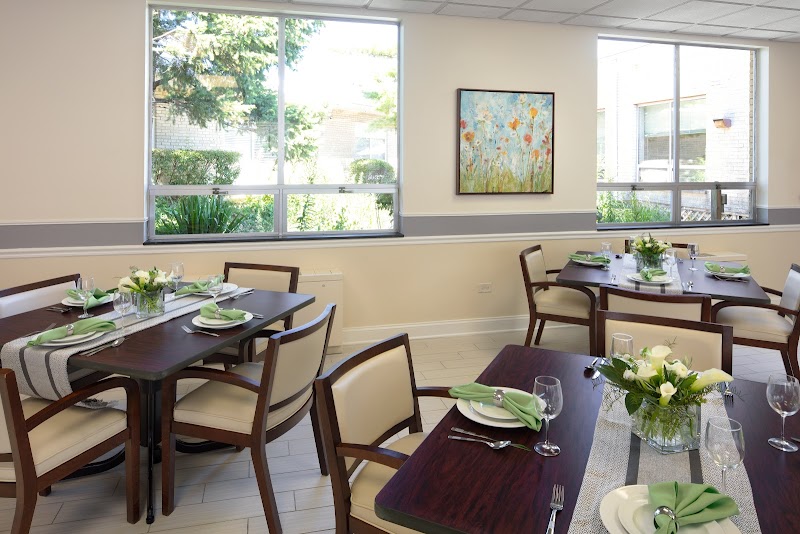
Who Owns and Operates Bella Terra Morton Grove?

BELLA TERRA MORTON GROVE is owned by a for-profit company. For-profit facilities operate as businesses with obligations to shareholders or private owners. The facility operates independently rather than as part of a larger chain. With 211 certified beds and approximately 155 residents (about 73% occupancy), it is a large facility located in MORTON GROVE, Illinois.
How Does Bella Terra Morton Grove Compare to Other Illinois Nursing Homes?

Compared to the 100 nursing homes in Illinois, BELLA TERRA MORTON GROVE's overall rating (3 stars) is above the state average of 2.5, staff turnover (45%) is near the state average of 46%, and health inspection rating (3 stars) is at the national benchmark.

What Should Families Ask When Visiting Bella Terra Morton Grove?

Based on this facility's data, families visiting should ask: "Can you walk me through typical staffing levels on day, evening, and night shifts?" "Can I visit during a mealtime to observe dining assistance and food quality?" "How do you handle medical emergencies, and what is your hospital transfer rate?" "Can I speak with family members of current residents about their experience?" These questions are particularly relevant given the below-average staffing rating.

Is Bella Terra Morton Grove Safe?

Based on CMS inspection data, BELLA TERRA MORTON GROVE has a clean safety record: no substantiated abuse findings (meaning no confirmed cases of resident harm), no Immediate Jeopardy citations (the most serious violation level indicating risk of serious injury or death), and is not on the Special Focus Facility watch list (a federal program monitoring the lowest-performing 1% of nursing homes). The facility has a 3-star overall rating and ranks #1 of 100 nursing homes in Illinois. While no facility is perfect, families should still ask about staff-to-resident ratios and recent inspection results during their visit.

Do Nurses at Bella Terra Morton Grove Stick Around?

BELLA TERRA MORTON GROVE has a staff turnover rate of 45%, which is about average for Illinois nursing homes (state average: 46%). Moderate turnover is common in nursing homes, but families should still ask about staff tenure and how the facility maintains care continuity when employees leave.

Was Bella Terra Morton Grove Ever Fined?

BELLA TERRA MORTON GROVE has been fined $141,853 across 4 penalty actions. This is 4.1x the Illinois average of $34,497. Fines at this level are uncommon and typically indicate a pattern of serious deficiencies, repeated violations, or failure to correct problems promptly. CMS reserves penalties of this magnitude for facilities that pose significant, documented risk to resident health or safety. Families should request specific documentation of what issues led to these fines and what systemic changes have been implemented.

Is Bella Terra Morton Grove on Any Federal Watch List?

BELLA TERRA MORTON GROVE is not on any federal watch list. The most significant is the Special Focus Facility (SFF) program, which identifies the bottom 1% of nursing homes nationally based on persistent, serious quality problems. Not being on this list means the facility has avoided the pattern of deficiencies that triggers enhanced federal oversight. This is a positive indicator, though families should still review the facility's inspection history directly.