H & J VONDERLIETH LVG CTR, THE
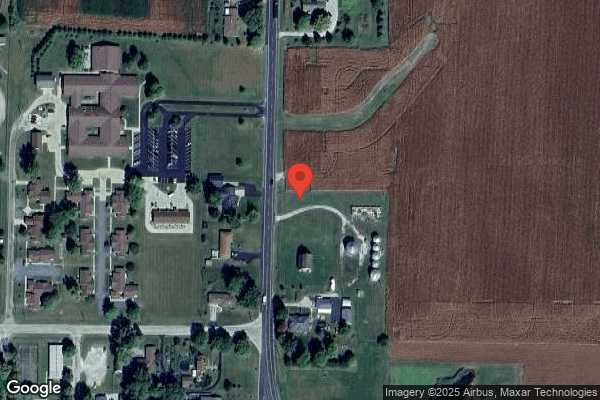
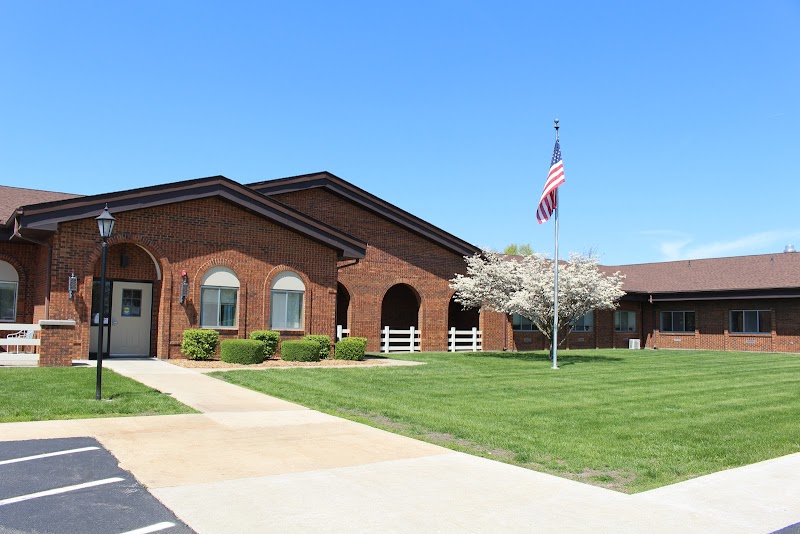
1120 NORTH TOPPER DRIVE, MOUNT PULASKI, IL 62548 (217) 792-3218
Non profit - Corporation 90 Beds HERITAGE OPERATIONS GROUP Data: November 2025
Trust Grade
80/100
#151 of 665 in IL
Last Inspection: September 2024

Within standard 12-15 month inspection cycle. Federal law requires annual inspections.

Overview

H & J Vonderlieth Living Center in Mount Pulaski, Illinois, has a Trust Grade of B+, indicating it is above average and recommended for families considering care options. It ranks #151 out of 665 facilities in Illinois, placing it in the top half of the state, and it is the best option among three local facilities in Logan County. The facility is improving, with reported issues decreasing from two in 2023 to none in 2024. Staffing is a relative strength, with a turnover rate of 36%, which is below the Illinois average of 46%, although it has an average rating of 3 out of 5 stars. While there are no fines recorded, which is a positive sign, there have been concerns noted in inspections. For example, the facility failed to document the reasons for using antipsychotic medications for some residents and did not always ensure proper assistance during transfers, which poses a risk of injury. Overall, while the facility shows promise with good staffing and no fines, families should be aware of these specific incidents and the need for improvement in medication management practices.

Trust Score
B+
80/100
In Illinois
#151/665
Top 22%
Safety Record
Low Risk
No red flags
Inspections
Getting Better
2 → 0 violations
Staff Stability
○ Average
36% turnover. Near Illinois's 48% average. Typical for the industry.
Penalties
✓ Good
No fines on record. Clean compliance history, better than most Illinois facilities.
Skilled Nurses
○ Average
Each resident gets 32 minutes of Registered Nurse (RN) attention daily — about average for Illinois. RNs are the most trained staff who monitor for health changes.
Violations
✓ Good
Only 4 deficiencies on record. Cleaner than most facilities. Minor issues only.
★★★★☆
4.0
Overall Rating
★★★☆☆
3.0
Staff Levels
★☆☆☆☆
1.0
Care Quality
★★★★★
5.0
Inspection Score
Stable
2023: 2 issues
2024: 0 issues

The Good

  • Full Sprinkler Coverage · Fire safety systems throughout facility
  • No fines on record
  • Staff turnover below average (36%)

    12 points below Illinois average of 48%

Facility shows strength in fire safety.

The Bad

Staff Turnover: 36%

Near Illinois avg (46%)

Typical for the industry

Chain: HERITAGE OPERATIONS GROUP

Part of a multi-facility chain

Ask about local staffing decisions and management

The Ugly 4 deficiencies on record

Aug 2023 1 deficiency
CONCERN (D)

Potential for Harm - no one hurt, but risky conditions existed

Medication Errors (Tag F0758)

Could have caused harm · This affected 1 resident

**NOTE- TERMS IN BRACKETS HAVE BEEN EDITED TO PROTECT CONFIDENTIALITY** Based on observation, interview and record review the facility failed to document appropriate indications to warrant the use of ...

Read full inspector narrative →
**NOTE- TERMS IN BRACKETS HAVE BEEN EDITED TO PROTECT CONFIDENTIALITY** Based on observation, interview and record review the facility failed to document appropriate indications to warrant the use of an antipsychotic medication (R46) and attempt a gradual dose reduction (R19) for 2 of 5 residents reviewed for unnecessary medication in a sample of 23. Findings include: A Psychotropic Medication policy dated 11/28/17 gives as its intent, Residents are free from unnecessary psychotropic medication use. This policy states that antipsychotic medication may be indicated for use if behavioral symptoms present a danger to the resident or others; expressions or indications of distress that are significant distress to the resident; if not clinically indicated, multiple non-pharmacological approaches have been attempted but did not relieve the symptoms which are presenting a danger or significant distress; and /or a gradual dose reduction (GDR) was attempted, but clinical symptoms returned. In addition, this policy states that a GDR must be attempted annually, unless contraindicated. 1. R46's list of current diagnoses includes Unspecified Dementia, Unspecified Severity, with other behavioral disturbance, Depression, and Anxiety disorder. R46's physician's order (POS) dated 6/20/23 documents R46 was prescribed the antipsychotic medication Seroquel 25 mg (milligrams) two times daily for the diagnosis of Unspecified Dementia, Unspecified Severity, with other behavioral disturbance. R46's physician's visit notes dated 6/2/23 instructs staff to use the diagnosis, Dementia (with) behaviors for her Seroquel. R46's Physical Device/Psychoactive Medication Initial and Quarterly Evaluation dated 6/20/23 documents R46 has the mental status of being alert, disoriented, with a short attention span. This same evaluation documents that R46 has the emotional, environmental, and social considerations of toileting difficulties, dependence on staff for turning and repositioning, and feelings of anger, loneliness, and abandonment. This same evaluation includes an area for defined recommendations/alternatives and individualized alternatives to administering psychoactive medications to R46, however, the only recommendation made was for family visits which, this evaluation documents, have been effective as an alternative to medications. In addition, R46's psychoactive medication evaluation documents the indication to warrant R46's use of an antipsychotic medication as dementia with behavior disorder. R46's Antipsychotic Medication Consent dated 6/20/23 documents R46 has the diagnosis or medical symptom of dementia with behaviors as an indication for the use of Seroquel. R46's care plan dated 2/28/23 documents that R46 was prescribed an antipsychotic medication. This same care plan instructs for staff to monitor R46 for the target behaviors of pacing, disrobing, inappropriate response to verbal communication, violence/aggression towards others. R46's care plan dated 3/29/23 documents R46 has the behaviors of hitting and slapping at staff during cares and using abusive language, screaming, crying out, and hollering. R46's Behavior Monitoring and Interventions Report dated 4/1/23 to 8/2/23 documents R46 had behaviors on four dates which included physical and verbal behaviors directed towards others, sad, tearful, agitated, refusing care, R46's Minimum Data Set (MDS) assessment dated [DATE] documents R46 is severely cognitively impaired and had no behaviors during the look-back period of this assessment. This same assessment documents R46's behavior was unchanged from the previous assessment. On 7/31/23 at 1:35 p.m. R46 was seated in a wheelchair in the activities room drinking a cup of coffee surrounded by other residents. R46 was confused but calm and relaxed with a pleasant demeanor. R46 was able to answer some simple questions and stated she was tired that morning. On 8/2/23 at 9:25 a.m. R46 was seated in a wheelchair in the activities room waiting for the activity of 50's music to begin. R46 was surrounded by other residents but remained calm and relaxed with a pleasant demeanor. At 9:26 a.m. V6 (Certified Nurse Aide/ CNA) stated that R46 sometimes has behaviors which usually occur while staff are providing R46 with care. V6 stated R46's behaviors during care are usually yelling and crying. V6 stated that one way to prevent R46 from having behaviors is for staff to wait until R46 decides she is ready to get up in the morning by watching for R46 to sit up at the side of the bed. V6 stated another way to help prevent R46 from having behaviors is to give R46 a cup of coffee stating, She loves coffee. V6 stated that R46's behaviors are unchanged since R46's admission 2/28/23. On 8/2/23 at 9:35 a.m. V5 (Licensed Practical Nurse/LPN) stated that he is R46's nurse and also serves as the MDS Coordinator. V5 verified that R46's diagnosis for the use of Seroquel is behavioral disturbances with Dementia. V5 stated that R46's behaviors include physical and verbal behaviors towards staff during cares. V5 stated when R46 has behaviors, staff will try to reapproach R46 at another time, try using soothing speech to talk with R46, provide snacks or leave R46 in a safe area to relax. 2. R19's list of current diagnoses includes Alzheimer's disease, Major Depressive disorder, single episode; Delusional disorder, Dementia with behavioral disturbances. R19's physician's order (POS) dated 8/2/22 documents R19 was prescribed the antipsychotic medication Seroquel 25 mg (milligrams) 1/2 tablet every Monday, Tuesday, Thursday, Friday, Saturday in the evening for the diagnosis of Delusional Disorder. A pharmacy comprehensive list of R19's psychotropic orders dated 7/1/23 to 7/24/23 documents R19's original physician's order for Seroquel 25 mg ½ tablet every evening five times per week was written 1/26/18 with the most recent gradual dose reduction attempted 8/2/22. R19's Minimum Data Set (MDS) assessment dated [DATE] documents that R19 is rarely or never understood and rarely or never understands. This same MDS documents R19 is moderately cognitively impaired and displayed no behaviors during the MDS look-back period. R19's Physical Device/Psychoactive Medication Initial and Quarterly Evaluation dated 7/17/23 documents R19's most recent gradual dose reduction of Seroquel occurred 8/2/22. R19's Behavior Monitoring and Interventions Report dated 4/3/23 to 8/2/23 document that during those dates, R19 did not have any behaviors. On 8/02/23 at 9:20 a.m. V6 (Certified Nurse Aide) stated that R19 does not usually have behaviors and is cooperative with cares. On 8/02/23 at 9:38 a.m. V5 (Licensed Practical Nurse/ MDS Coordinator) and V4 (Social Services Director) were standing next to the nurses' station. V5 stated R19 has behaviors towards staff during cares and is prescribed the antipsychotic medication Seroquel. V4 stated R19 has delusions, hallucinations, and has conversations with an invisible person. V4 stated that R19's delusions and hallucinations are not distressing to R19. On 8/3/23 V2 (Director of Nurses) stated she manages psychoactive medications for the facility. V2 stated the facility does not have a specific protocol for performing GDRs for antipsychotic medications but, instead, they rely on their pharmacy to recommend when GDRs should be attempted. V2 stated that residents who have been taking an antipsychotic one year or more do not necessarily require an annual GDR. V2 stated that the R46's indications of Dementia with behaviors used to warrant the use of the antipsychotic Seroquel were appropriate.
Jul 2023 1 deficiency
CONCERN (D) 📢 Someone Reported This

A family member, employee, or ombudsman was alarmed enough to file a formal complaint

Potential for Harm - no one hurt, but risky conditions existed

Medical Records (Tag F0842)

Could have caused harm · This affected 1 resident

**NOTE- TERMS IN BRACKETS HAVE BEEN EDITED TO PROTECT CONFIDENTIALITY** Based on interview and record review the facility failed to accurately document (breathing machine) refusals for one resident (R...

Read full inspector narrative →
**NOTE- TERMS IN BRACKETS HAVE BEEN EDITED TO PROTECT CONFIDENTIALITY** Based on interview and record review the facility failed to accurately document (breathing machine) refusals for one resident (R1) out of three residents reviewed for oxygen therapy in the sample of four. Findings include: The Resident Care Policy and Procedure dated 5/2022, documents It is the policy of this facility to maintain current physician orders to provide treatment according to the attending physician for each resident of the facility. a) All medications and treatments shall be given only upon the written order of the physician. All such orders shall be written in the medical record and shall be given as prescribed by the physician at the designated times. g) If for any reason, a physician's medication or treatment order cannot be followed, the physician shall be notified as soon as is reasonable, depending upon the situation, a notation of this will be made into the medical record. The Job Description for Licensed Practical Nurses dated 11/10/17, documents Essential Job Function: Responsible for nursing care of assigned residence in accordance with new nursing facility and nursing service policies and procedures. Chart medications and treatments according to procedure. R1's current Medical Record, documents R1 was admitted to the facility on [DATE] with diagnoses which included Primary Central Sleep Apnea and Chronic Obstructive Pulmonary Disease. R1's Physicians Order dated 2/10/23, at 11:08 AM, documents (Breathing machine) per home settings on at all times when sleeping or napping. R1's Care Plan dated 1/24/23, documents that R1 has chronic obstructive pulmonary disease and OSA (Obstructive Sleep Apnea). The intervention is that R1 will use a (breathing machine) as ordered when napping and in bed at night. On 6/30/23 at 9:55 AM, V2 (Director of Nursing) stated that V12 (R1's Family Member #1) complained that the (breathing machine) was not being used as ordered for R1, however the nursing documentation showed that the (breathing machine) was being used as ordered. V12 brought in a Sleep Therapy Report that showed the use of the (breathing machine). There were days that the report showed the (breathing machine) was not used and it did not match the facility Treatment Administration Records (TAR) documentation. There were also a couple of nursing notes written by V8 (Licensed Practical Nurse) that documented the (breathing machine) was used on her shift that did not match the Sleep Therapy Report. V8 was asked about the documentation and stated that she would check off the breathing machine task before she applied the machine to R1. When V8 went to R1's room to apply the (breathing machine) mask R1 would refuse the treatment sometimes, and V8 would forget to go back and change the documentation to show that R1 refused the treatment. V2 stated that an In-Service was done with all nurses about the (breathing machine) and correct documentation. On 6/30/23 at 12:30 PM, V2 (Director of Nursing) and V1 (Administrator) reviewed R1's Sleep Therapy Report previously provided by V12 (R1's Family Member #1) and compared it to the Treatment Administration Record (TAR) and agreed that the report indicated the (breathing machine) was not used by R1 on 6/05, 6/06, 6/20, and 6/21/23 On 6/30/23 at 1:35 PM, V1 (Administrator) stated that she is aware that the Therapy Report for R1's (breathing machine) that V12 (R1's Family Member #1) presented to the facility had days that there was no usage documented for R1. V1 was also aware that the Treatment Administration Record (TAR) and the Nursing Notes had documentation that R1 received the (breathing machine) treatment on days the Therapy Report showed the machine was not used. R1's Nursing Note dated 6/5/23 at 11:33 PM, documents (R1) Resting quietly Arouses easily voices no C/O (Complaints of) keeping (breathing machine) mask on this night. (R1's Sleep Therapy Report documents No usage for the (breathing machine) on 6/5/23.) R1's Nursing Note dated 6/6/23 at 22:07 PM, documents (R1) Resting quietly Arouses easily voices no C/O keeping (breathing machine) mask on this night. (R1's Sleep Therapy Report documents No usage for the (breathing machine) on 6/6/23.) On 6/30/23 at 7:50 PM, V8 (License Practical Nurse) stated that she usually works the night shift from 6:00 PM to 6:00 AM, and she knows it is important for R1 to use her (breathing machine) when sleeping. V8 would mark off the task on the Treatment Administration Record (TAR) for the (breathing machine) before going in to apply the mask to R1. There were times that R1 refused to have the mask applied. V8 did not go back and correct the TAR to show that R1 refused the treatment. I am guilty about not thinking to change the documentation when R1 refused. V8 was asked about the nursing notes dated 6/5/23 and 6/6/23 that she wrote documenting that R1 had used the (breathing machine) during the night when she didn't. V8 stated I got in a hurry and copied and pasted the notes not paying attention to the details. I was wrong for doing that. Now I realize the information in the Nursing Notes are not correct. I know that's not a good excuse. There is no good excuses. R1's Sleep Therapy Report dated 5/31/23 - 6/29/23, documents that there were 16 days there was no usage recorded. This report was compared to R1's Treatment Administration Record (TAR) dated 6/1/23- 6/30/23. There are four days (6/5, 6/6, 6/20, and 6/21/23) that there is no documentation charted that R1 was refusing the (breathing machine). V8 (Licensed Practical Nurse) worked on all four days from 6:00 PM - 6:00 AM. On 7/1/23 at 9:20 AM, V1 (Administrator) stated that the information documented in the nursing notes should be accurate. V1 also stated that there is no policy on accurate documentation.
Jun 2022 2 deficiencies
CONCERN (D)

Potential for Harm - no one hurt, but risky conditions existed

Accident Prevention (Tag F0689)

Could have caused harm · This affected 1 resident

**NOTE- TERMS IN BRACKETS HAVE BEEN EDITED TO PROTECT CONFIDENTIALITY** Based on observation, interview, and record review the facility failed to apply foot pedals to a wheelchair (R22) or ensure two ...

Read full inspector narrative →
**NOTE- TERMS IN BRACKETS HAVE BEEN EDITED TO PROTECT CONFIDENTIALITY** Based on observation, interview, and record review the facility failed to apply foot pedals to a wheelchair (R22) or ensure two staff assisted during bed mobility and transfers (R24) to reduce injury risk for two of two residents (R22, R24) reviewed for accidents in a sample of 30. Findings include: A Fall Assessment and Management policy dated as revised 4/2019 states, It is the policy of this facility to assess each resident's fall risk on admission, quarterly, and with each fall. This will help facilitate an interdisciplinary approach for care planning to appropriately monitor, assess and ultimately reduce injury risk. Factors related to the risk will be addressed and care planned. In addition, this policy states, Each resident will be assessed using the Minimum Data Set (MDS) upon admission, quarterly and with any significant change assessment. 1. R24's list of current diagnoses includes Hemiplegia and Hemiparesis following Cerebral Infarction affecting left non-dominant side. R24's MDS dated [DATE] documents R24 requires the extensive assistance of two people for bed mobility, dressing, and toilet use; and is totally dependent on two staff for transfers. On 6/28/22 at 1:50p.m. R24 was lying in bed. R24 stated she has difficulty using her arms and legs because of weakness. R24 stated that she requires staff assistance to reposition in bed. On 6/29/22 at 8:10a.m. R24 was seated in a wheelchair in the dining room being fed by facility staff. At 8:26a.m. V4(Certified Nurse Aide/CNA) pushed R24 back to her room and used a mechanical lift to transfer R24 from the wheelchair to the toilet. R24's fall risk assessment dated [DATE] documents that R24 is at high risk for falls because R24 overestimates or forgets limits, has fallen before, and has multiple diagnoses which could contribute to the risk of falls. R24's current care plan documents that R24 has or is at risk for an activities of daily living (ADL) self-care performance deficit related to R24's activity intolerance, confusion and impaired balance. This care plan documents that R24 requires the assistance of two people for transfers using a mechanical lift and that R24 is, slightly able to reposition, herself once R24 is in bed. In addition, R24's care plan documents that R24 needs extensive assistance from two people with ADL care because of R24's decreased cognition and weakness. R24's Occurrence Report dated 5/1/22 documents that while one CNA (V5) was providing ADL care to R24, R24 rolled too far to the side of the bed and slid off. This report documents that V5 was able to ease R24 to the ground during which time R24 received a three-inch-long scratch/bruise. This report documents that when R24 was asked what happened she stated, I just rolled out of bed. In addition, this report documents that V5 stated that while V5 was providing R24 care, V5 rolled R24 to the right side at which time R24 began sliding off the bed. The Occurrence Report documents the root cause to R24's fall was that V5 should have rolled R24 towards V5 instead of away from her while providing cares. This report's recommendation to prevent future falls was to instruct staff to, Always roll resident towards you when you are changing (R24). On 6/28/22 at 1:28p.m. V2 (Director of Nurses) stated that she investigated R24's fall on 5/1/22. V2 stated that when R24 fell, she was being cared for by only one staff member, (V5), who rolled R24 in the bed away from V5 which led to R24 sliding off the side of the bed. V2 stated that the facility does not necessarily follow residents' MDS assessments to determine how many staff provide ADL care. V2 stated that CNA staff decide whether one or two staff are needed to provide R24's ADL care. 2. R22's electronic medical record documents he has the current diagnoses of Dementia with Behavioral Disturbance, Diabetes Mellitus and Fatigue. R22's Minimum Data Set assessments, dated 2/04/22 and 5/04/22, document R22 has functional limitation in range of motion in both lower extremities and is dependent on staff for wheelchair mobility. R22's current Plan of Care documents R22 uses a wheelchair for mobility and will safely use assistive devices for mobility through the next review date. A Nursing Progress note, dated 4/29/2022, documents CNA (Certified Nursing Assistant) reported new skin tear to (R22's) right third toe. Writer assessed. Skin tear measures 1 cm (centimeter) x 1.5 cm, skin peri wound (clean, dry and intact). Moderate amount of blood noted to area. No (signs)/symptoms of pain noted at this time. (Vital Signs Stable). Area cleansed, (triple antibiotic) and bordered gauze dressing applied. Resident placed on incident status. (Physician and Power of Attorney) updated. An Incident Report, dated 4/29/22 at 1:30 pm, documents CNA stated that (R22) scraped his toe on the floor while she was propelling him in his (wheelchair) to his room. The Incident Report also documents, Other action taken, educated CNAs on use of leg pedals when propelling (R22) as an immediate intervention and Root Cause: CNA pushing (R22) in (wheelchair) and resident had only slipper socks on at the time and (R22) scraped toe on floor causing a skin tear. Staff educated that resident is to have shoes on at all times when in wheelchair. On 6/27/22 at 11:45 am and 6/30/22 at 11:40 am, R22 was sitting in the dining room in his wheelchair with his feet resting on foot pedals wearing slipper socks. On 6/30/22 at 9:32 am, V6 (Certified Nursing Assistant) stated R22 always uses foot pedals when he is propelled in the wheelchair, because he can't hold his feet up. On 6/30/22 at 9:25 am, V2 (Director of Nursing) stated R22 impulsively lifts his legs and feet, but R22 is unable to do so on command. V2 stated, at the time R22 sustained the injury to his right third toe, the facility was replacing the flooring throughout the building and there was some texture to the exposed concrete, which caught R22's foot causing the skin tear. V2 stated proper footwear and wheelchair foot pedals were not utilized by the CNA at that time, resulting in R22's injury.
CONCERN (D)

Potential for Harm - no one hurt, but risky conditions existed

Medication Errors (Tag F0758)

Could have caused harm · This affected 1 resident

Based on observation, interview and record review, the facility failed to document behaviors to justify the use of antipsychotic medications, document target behaviors, document non-pharmacological ap...

Read full inspector narrative →
Based on observation, interview and record review, the facility failed to document behaviors to justify the use of antipsychotic medications, document target behaviors, document non-pharmacological approaches, accurately complete quarterly psychotropic evaluations, and failed to attempt a gradual dose reduction (R36) for two of four residents (R19, R36) reviewed for antipsychotic medications in the sample of 30. Findings include: The facility's Psychotropic Medication policy dated 11/28/17, states Intent: Residents are free from unnecessary psychotropic medication use. Psychotropic medication is any drug that affects brain activity associated with mental processes and behavior. These medications include but not limited to: 1. Antianxiety 2. Antidepressant 3. Antipsychotic 4. Hypnotic. Specific condition/medical symptoms alone are not enough to justify pharmacological use. An evaluation must be done to determine other possible physical, mental, behavioral, psychosocial needs. 1) Indications for use of psychotropic medication may include but not limited to 1) Expressions or indications of distress 2) Symptoms are clinically significant that is causing a functional decline 3) non-pharmacological approaches were implemented and not effective or were clinically contraindicated. Additionally, Antipsychotic medication may be indicated for use if 1) behavioral symptoms present a danger to the resident or others; 2) Expressions or indications of distress that are significant distress to the resident; 3) If not clinically indicated, multiple non-pharmacological approaches have been attempted but did not relieve the symptoms which are presenting a danger or significant distress; and/or 4) GDR (Gradual Dose Reduction) was attempted, but symptoms returned. B) Dose, Duration, Monitoring 1) Evaluation of pharmacological ongoing effectiveness towards therapeutic goal; 2) Evaluation of the effectiveness of the non-pharmacological approaches prior to medication administration; 3) Quarterly evaluation or more frequent if needed to determine if a reduction is warranted. C) Gradual Dose Reduction 1) Resident's should receive the lowest effective dose of psychotropic medication for the resident's physical, mental, and psychosocial well-being; 2) GDR is to be attempted within the first year in two separate quarters, unless contraindicated. 3) If treating expressions or indications of distress related to dementia, the GDR may be contraindicated for the following reasons a) Target symptoms returned or worsened after a recent attempt of GDR, AND b) Physician has documented rationale why a reduction would impair residents function or increase distressed behavior. 1. On 6/27/22 at 12:10 p.m. and 6/28/22 at 9:33 a.m., R19 had no observed mood or behavior issues. R19's current Physician Orders document R19 receives Seroquel (antipsychotic medication) 12.5 mg (milligrams) daily. R19's Behavior Tracking and Progress Notes dated 10/29/21 through 6/28/22, do not document any behaviors to justify the use of an antipsychotic medication. R19's Care Plan dated 5/27/22, does not document R19's use of Seroquel, R19's target behaviors for the use of Seroquel or non-pharmacological approaches to be used. R19's Physical Device/Psychoactive Medication Initial and Quarterly Evaluation dated 1/28/22 and 5/2/22, document R19's behavioral factors present are Toileting difficulties and (R19) has a diagnosis of Alzheimer's/Dementia. This same evaluation does not document Recommendations/Alternative to Psychoactive Medications, Effectiveness of alternatives tried or Medical Diagnosis or Indication for use. 2. On 6/27/22 at 12:00 p.m. and 6/28/22 at 10:00 a.m., R36 had no observed mood or behavior issues. R36's current Physician Orders document R36 receives Seroquel 12.5 mg twice a day for Delusional Disorder with expressions or indications of significant distress to R36. R36's Behavior Tracking and Progress Notes dated 6/1/21 through 6/28/22, do not document R36 has behaviors to justify the use of Seroquel. These same Behavior Tracking and Progress Notes do not document R36 has delusions and/or indications of significant distress. R36's current Antipsychotic medication Care Plan initiated on 8/28/20, does not document R36's target behaviors or non-pharmacological approaches to be utilized. R36's Physical Device/Psychoactive Medication Initial and Quarterly Evaluations dated 8/3/21, 11/29/21, and 2/24/22, document R36's behavioral factors present are Hearing difficulties, toileting difficulties, and (R36) has a diagnosis of Alzheimer's/Dementia. This same evaluation does not document Recommendations/Alternative to Psychoactive Medications or Effectiveness of alternatives tried. R36's Note to Attending Physician/Prescriber form dated 1/27/22, documents the Pharmacist requested a dose reduction on R36's Seroquel. This same form is blank and does not document any response from R36's physician. R36's Medical Record does not document a GDR has been attempted or physician documented clinical contraindication for a GDR from 6/1/21 through 6/28/22. On 6/30/22 at 9:20 a.m., V2 (Director of Nursing) stated R36's dose reduction request for Seroquel dated 1/27/22, has not been addressed by R36's physician. V2 stated V2 was not aware if R36's physician received the request or not. V2 stated R36's Seroquel should have been reduced or have a physician documented rationale for not reducing the Seroquel in the past 12 months. V2 stated there was no additional documentation of R19 or R36's behaviors to justify their use of Seroquel. V2 stated R19 and R36's care plans do not document their target behaviors or non-pharmacological approaches that staff are to utilize. V2 stated R19 and R36 are not a danger to themselves or other residents.
Understanding Severity Codes (click to expand)
Life-Threatening (Immediate Jeopardy)
J - Isolated K - Pattern L - Widespread
Actual Harm
G - Isolated H - Pattern I - Widespread
Potential for Harm
D - Isolated E - Pattern F - Widespread
No Harm (Minor)
A - Isolated B - Pattern C - Widespread

Questions to Ask on Your Visit

  • "Can I speak with families of current residents?"
  • "What's your RN coverage like on weekends and overnight?"

Our Honest Assessment

Strengths
  • • Grade B+ (80/100). Above average facility, better than most options in Illinois.
  • • No major safety red flags. No abuse findings, life-threatening violations, or SFF status.
  • • No fines on record. Clean compliance history, better than most Illinois facilities.
  • • Only 4 deficiencies on record. Cleaner than most facilities. Minor issues only.
Concerns
  • • No significant concerns identified. This facility shows no red flags across CMS ratings, staff turnover, or federal penalties.
Bottom line: Generally positive indicators. Standard due diligence and a personal visit recommended.

About This Facility

What is H & J Vonderlieth Lvg Ctr, The's CMS Rating?

CMS assigns H & J VONDERLIETH LVG CTR, THE an overall rating of 4 out of 5 stars, which is considered above average nationally. Within Illinois, this rating places the facility higher than 99% of the state's 100 nursing homes. This rating reflects solid performance across the metrics CMS uses to evaluate nursing home quality.
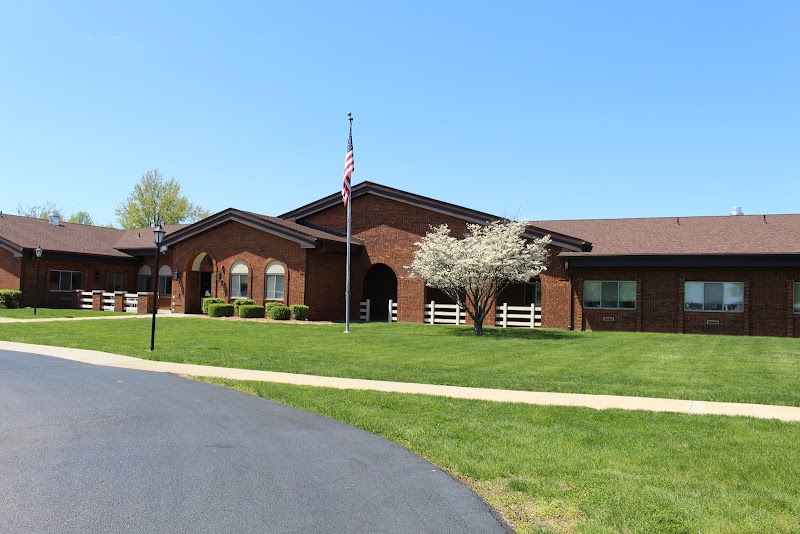
How is H & J Vonderlieth Lvg Ctr, The Staffed?

CMS rates H & J VONDERLIETH LVG CTR, THE's staffing level at 3 out of 5 stars, which is average compared to other nursing homes. Staff turnover is 36%, compared to the Illinois average of 46%. This relatively stable workforce can support continuity of care.

What Have Inspectors Found at H & J Vonderlieth Lvg Ctr, The?

State health inspectors documented 4 deficiencies at H & J VONDERLIETH LVG CTR, THE during 2022 to 2023. These included: 4 with potential for harm.
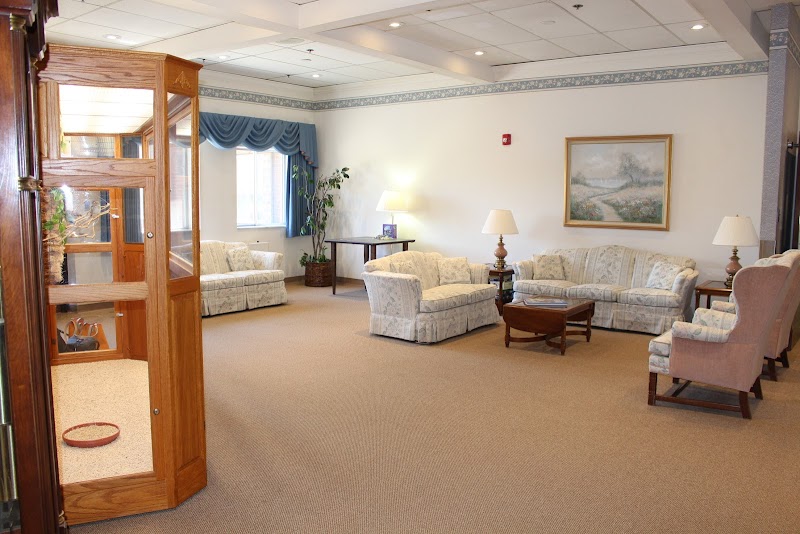
Who Owns and Operates H & J Vonderlieth Lvg Ctr, The?

H & J VONDERLIETH LVG CTR, THE is owned by a non-profit organization. Non-profit facilities reinvest revenue into operations rather than distributing to shareholders. The facility is operated by HERITAGE OPERATIONS GROUP, a chain that manages multiple nursing homes. With 90 certified beds and approximately 57 residents (about 63% occupancy), it is a smaller facility located in MOUNT PULASKI, Illinois.
How Does H & J Vonderlieth Lvg Ctr, The Compare to Other Illinois Nursing Homes?

Compared to the 100 nursing homes in Illinois, H & J VONDERLIETH LVG CTR, THE's overall rating (4 stars) is above the state average of 2.5, staff turnover (36%) is near the state average of 46%, and health inspection rating (5 stars) is much above the national benchmark.

What Should Families Ask When Visiting H & J Vonderlieth Lvg Ctr, The?

Based on this facility's data, families visiting should ask: "Can I visit during a mealtime to observe dining assistance and food quality?" "How do you handle medical emergencies, and what is your hospital transfer rate?" "Can I speak with family members of current residents about their experience?"

Is H & J Vonderlieth Lvg Ctr, The Safe?

Based on CMS inspection data, H & J VONDERLIETH LVG CTR, THE has a clean safety record: no substantiated abuse findings (meaning no confirmed cases of resident harm), no Immediate Jeopardy citations (the most serious violation level indicating risk of serious injury or death), and is not on the Special Focus Facility watch list (a federal program monitoring the lowest-performing 1% of nursing homes). The facility has a 4-star overall rating and ranks #1 of 100 nursing homes in Illinois. While no facility is perfect, families should still ask about staff-to-resident ratios and recent inspection results during their visit.

Do Nurses at H & J Vonderlieth Lvg Ctr, The Stick Around?

H & J VONDERLIETH LVG CTR, THE has a staff turnover rate of 36%, which is about average for Illinois nursing homes (state average: 46%). Moderate turnover is common in nursing homes, but families should still ask about staff tenure and how the facility maintains care continuity when employees leave.

Was H & J Vonderlieth Lvg Ctr, The Ever Fined?

H & J VONDERLIETH LVG CTR, THE has no federal fines on record. CMS issues fines when nursing homes fail to meet care standards or don't correct problems found during inspections. The absence of fines suggests the facility has either maintained compliance or corrected any issues before penalties were assessed. This is a positive indicator, though families should still review recent inspection reports for the full picture.

Is H & J Vonderlieth Lvg Ctr, The on Any Federal Watch List?

H & J VONDERLIETH LVG CTR, THE is not on any federal watch list. The most significant is the Special Focus Facility (SFF) program, which identifies the bottom 1% of nursing homes nationally based on persistent, serious quality problems. Not being on this list means the facility has avoided the pattern of deficiencies that triggers enhanced federal oversight. This is a positive indicator, though families should still review the facility's inspection history directly.