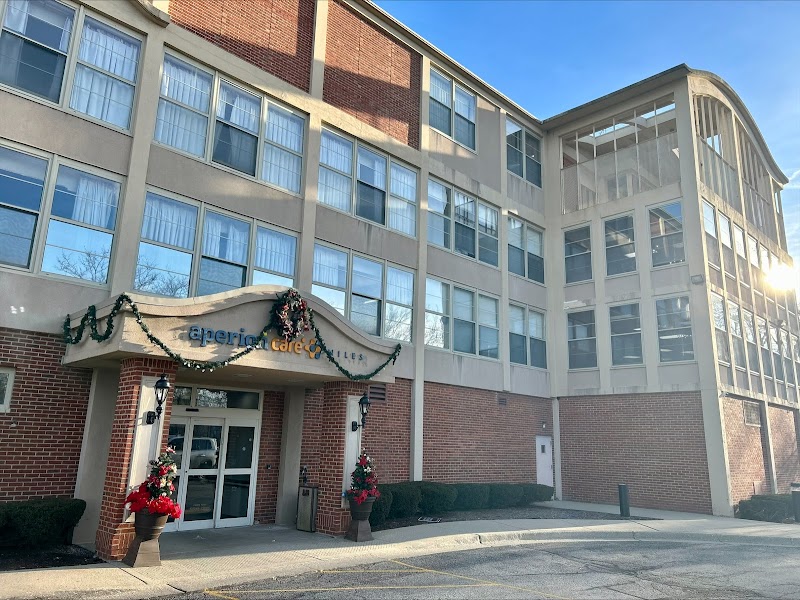
APERION CARE NILES

6601 WEST TOUHY AVENUE, NILES, IL 60714 (847) 647-9875
For profit - Corporation 99 Beds APERION CARE Data: November 2025 1 Immediate Jeopardy citation
Trust Grade
28/100
#104 of 665 in IL
Last Inspection: March 2025

Within standard 12-15 month inspection cycle. Federal law requires annual inspections.

Overview

Aperion Care Niles has received a Trust Grade of F, indicating significant concerns about the quality of care provided. Although the facility ranks #104 out of 665 in Illinois, placing it in the top half of all facilities in the state, its overall trust score reflects serious issues that families should consider. The trend shows some improvement, with the number of reported issues decreasing from 7 in 2024 to 5 in 2025, but there are still serious deficiencies to address. Staffing is below average with a rating of 2 out of 5 stars, but the turnover rate of 31% is better than the state average, suggesting that staff retention is relatively stable. However, the facility has accumulated $67,949 in fines, which is concerning and indicates ongoing compliance issues. Specific incidents of concern include a critical failure to supervise a cognitively impaired resident who left the facility unsupervised, resulting in a fall and facial injury. Another incident involved a resident who fell while unsupervised during meals, leading to a serious head injury. Additionally, a resident who was at risk for falls did not receive adequate preventative measures, resulting in another fall that required staples for a head injury. While the facility has some strengths, such as good quality measures, these serious incidents highlight the need for families to carefully evaluate the level of care and supervision provided at Aperion Care Niles.

Trust Score
F
28/100
In Illinois
#104/665
Top 15%
Safety Record
High Risk
Review needed
Inspections
Getting Better
7 → 5 violations
Staff Stability
○ Average
31% turnover. Near Illinois's 48% average. Typical for the industry.
Penalties
○ Average
$67,949 in fines. Higher than 73% of Illinois facilities. Some compliance issues.
Skilled Nurses
○ Average
Each resident gets 32 minutes of Registered Nurse (RN) attention daily — about average for Illinois. RNs are the most trained staff who monitor for health changes.
Violations
⚠ Watch
23 deficiencies on record. Higher than average. Multiple issues found across inspections.
★★★★☆
4.0
Overall Rating
★★☆☆☆
2.0
Staff Levels
★★★★★
5.0
Care Quality
★★★☆☆
3.0
Inspection Score
Stable
2024: 7 issues
2025: 5 issues

The Good

  • 5-Star Quality Measures · Strong clinical quality outcomes
  • Full Sprinkler Coverage · Fire safety systems throughout facility
  • No fines on record
  • Staff turnover below average (31%)

    17 points below Illinois average of 48%

Facility shows strength in quality measures, fire safety.

The Bad

Staff Turnover: 31%

15pts below Illinois avg (46%)

Typical for the industry

Federal Fines: $67,949

Well above median ($33,413)

Moderate penalties - review what triggered them

Chain: APERION CARE

Part of a multi-facility chain

Ask about local staffing decisions and management

The Ugly 23 deficiencies on record

1 life-threatening 4 actual harm
Mar 2025 4 deficiencies
CONCERN (D)

Potential for Harm - no one hurt, but risky conditions existed

Pressure Ulcer Prevention (Tag F0686)

Could have caused harm · This affected 1 resident

**NOTE- TERMS IN BRACKETS HAVE BEEN EDITED TO PROTECT CONFIDENTIALITY** Based on observation, interview, and record review, the facility failed to use a low air loss mattress in accordance with manufa...

Read full inspector narrative →
**NOTE- TERMS IN BRACKETS HAVE BEEN EDITED TO PROTECT CONFIDENTIALITY** Based on observation, interview, and record review, the facility failed to use a low air loss mattress in accordance with manufacturer guidelines, for a resident with a facility acquired, Stage 4 pressure ulcer. This failure applied to one (R3) of three residents reviewed for pressure ulcers in a sample of 33 residents. Findings include: R3 is an alert and oriented [AGE] year-old with diagnoses including but not limited to chronic obstructive pulmonary disease, asthma, heart failure, anxiety disorder and presence of a cardiac pacemaker. On 3/2/25 at approximately 9:50 AM, R3 was observed asleep in bed atop an air mattress and in a supine position (laying on his back) with his upper torso raised. On 3/4/25 at approximately 9:50 AM, R3 was observed on his backside but was awake. Surveyor asked how he was doing and R3 responded that he was fine but that his back hurt and mentioned that the bed was very uncomfortable. Surveyor asked if he made the nurse aware and if he obtained medications for his pain and R3 responded that he did. Observations of the bed showed a bed pump with 8 green lights but with no markings to designate their significance, however the bed mattress appeared to be raised up in a concave (hump) manner. On 3/4/25 at approximately 10:05 AM, R3 was observed during wound care by V10 (Wound Nurse) and V18 (Certified Nursing Assistant/CNA) who assisted. V18 turned the resident to his right side to reveal the wound to show to the surveyor. V10 removed the wound dressing which revealed a very large and deep hole on R3's left buttock. V10 described the pressure ulcer and stated, (R3) first developed this last year around November 2024 as a DTI (deep tissue injury) because the resident was noncompliant with incontinence care. I don't have the exact measurements, but I'd say it's about 4.9 centimeters (length) by 2.8 (width) by 3.2 centimeters deep. Undermining is about 3.1 centimeters and there is no tunneling. Surveyor asked R3 during the treatment if what V10 said was true and that he was not compliant with incontinence care, R3 stated, No that is not true. They always come in when it's convenient for them like when I'm trying to rest or sleep or when I'm not even wet and I would know if I was wet. Surveyor asked when he asks for staff to come back at a later time, if they do, R3 stated, Sometimes but mostly they don't. They've talked to me about this, and I've explained to them that what I want is some flexibility, but they seem to keep doing what is convenient for them and not honor my requests. Surveyor asked if he was ever explained or shown his care plan to heal his wound, R3 stated, No. Surveyor asked if he was made aware of his care plan showing his resistance to care, R3 stated, I have never seen that or been told that. I don't resist care. I just want to be changed when I asked to be changed or when I'm actually wet and not when it's convenient for the nurses. When I call for someone to change me, it takes so long for someone to come, but when they do come, it's whenever its convenient for them like I said. There were times, when I asked to be changed and I'm told the CNA is on their break. Why can't some other CNA come, you tell me? (R3 getting upset). Surveyor later asked V10 if R3's requests for CNAs to return when the resident was actually in need of changing were reasonable requests. V10 affirmed it was and indicated that R3's behavior improved and was better complying. MDS (Minimum Data Set) assessments dated 5/12/23, 8/12/23, 11/12/23, 2/12/24, and 5/12/24 all show no behaviors of resistance to care. Only until after the formation of R3's deep tissue injury on 7/8/24 does the MDS assessment dated [DATE] and consecutive MDS assessments thereafter show R3 with behavior of rejection of care occurring 1-3 days. V3 (Assistant Director of Nursing/ADON) and V10 (Wound Nurse) was asked to comment on these assessments, and both indicated they did not do the MDS assessments. After the wound treatment observation, V10 was shown the air mattress pump and was asked how the pump functioned, V10 indicated she was not aware of how the mattress pump functioned and that V12 (Maintenance Director) was solely responsible for applying the mattress when ordered and adjusting the mattress pump settings. Surveyor clarified if she was the wound nurse in charge of all wounds. V10 stated, Yes I am in charge of wounds, but I always just call V12 for the mattress and he puts the mattress on the bed. Surveyor asked what the green lights meant, and which green light was turned on. V10 said, It looks like the 5th light is on, but it's supposed to designate the weight of the resident and that's how it should be set with the resident's weight but there's no numbers on these lights to show what it's for, but I will ask V12. On 3/4/25 at 10:20 am surveyor questioned the maintenance director about his role with the air mattress application. V12 stated, We get them from storage we bought from company. I install the mattress on the bed, and I connect the pump. Surveyor asked how much pressure he sets the mattress to. V12 said, around 200 pounds to 250 pounds, maybe 300 for a heavy patient. Sometimes the nurse put on setting, sometimes the CNA. Surveyor asked if he was trained on how to apply the appropriate settings for the specialty air mattress. V12 said, No, but sometimes it's just a little button to adjust it and I adjust it to see how it looks. Surveyor clarified if he adjusted the mattress by sight only. V12 said, Yes, I look at it and I touch it too. It's like kicking a tire and if it's hard enough it's ok. Surveyor clarified again so the other surveyors heard what he stated. V12 stated, It's like kicking a tire but I don't know if it's exactly right, so I just do it too by touching the mattress to see if it's hard enough. Surveyor requested to obtain copy of the air mattress pump/mattress manual. Manual titled Alternating pressure and low air loss mattress replacement system with defined Perimeter reads in part, Weight setting buttons (=) and (-). The weight setting buttons can be used to adjust the pressure of the inflated cells based on the patient's weight. As the weight setting increases, the pressure level indicator lights up (green) with each added level of pressure. Eight pressure lights are available and indicated by increasing green light indicator. On 3/4/25 at 12:21 PM, surveyor returned to observe R3 with V3 (ADON). R3 was laying on his backside and with no appearance of any positional changes except for earlier wound observation. Surveyor asked V3 about the air mattress pump to ensure its accurate functioning. V3 stated, Yes it's fine, it looks like it's on. Surveyor asked what the lights on the pump meant and how she knew the pump was fine. V3 stated, I don't know, there's nothing on the pump but lights. I don't do anything with these beds or pumps. It's just V10 and V12's responsibility not mine. Surveyor asked if she was the assistant director of nursing and if V10 was under her supervision, V3 responded, No. I am not responsible for her. On 3/4/25 at 12:45 PM, V2 (Director of Nursing/DON) said (in the presence of survey team), I recommend residents who need to be on the air mattresses along with V3 (ADON) and V10 wound nurse. We own our own mattresses and don't rent them so (V12) puts them in position on the bed. He sets the pump and makes sure the motor works and inflates. He services them if there is an issue. Surveyor asked if V12 knows how to apply the appropriate inflation settings. V2 stated, I believe he should know how to inflate them to coincide with the resident's weight or he'll ask the nurse. Surveyor asked if there was any in-service training on how to operate the air mattresses and pumps. V2 stated, There was no in-service done. On 3/4/25 at 1:15 PM, V10 (Wound Nurse) clarified with surveyor that the light turned on R3's pump was designated to be for a 280-pound resident. Surveyor asked R3's weight. V10 stated, He's around 165 to 170 but he's never been that heavy. Surveyor asked if R3 was always on the same weight setting since he obtained the mattress over a year ago. V10 said, I think so. Surveyor asked what impact a wrong setting of too much inflated mattress could do. V10 stated, It can cause pressure on the wound. The wound can get worse with an inaccurate setting because the weight matters and the mattress is not going to sink. The mattress will be a little more pressure will increase pressure on the wound. Records showed R3 to be at 167 lbs. on 10/1/24; 169 lbs. on 11/1/24; 170.6 lbs. on 12/2/24; 173 lbs. on 1/3/25; 169 lbs. on 2/1/25 and 165 lbs. on 3/4/25. On 3/4/25 at 1:34 PM V19 (Wound Doctor) said, I've been seeing him (R3) awhile for probably several months and when I was gone there was a wound NP (Nurse Practitioner) that took over, but I just saw the resident last week. R3's wound to his buttock and I diagnosed it about 250 days ago. At the time he was having debridement (surgical removal of necrotic dead skin). I gave all the orders on how to resolve the wound and yes I ordered the offloading air mattress. Surveyor asked the importance of a properly inflated mattress. V19 said, Well it is one component in the treatment of this wound, which is multi-modal including turning and repositioning, nutrition, but it can impact other factors include albumin of 2.9 and anemia. R3's albumin ranged from about 3.8 range, and he had some behavior and anxiety issues which also affected it and reluctance of care, fear of falling out of bed. As for the albumin levels during this time, it ranged from around 3.9 at the highest down to 3.7. He had some weight loss from around 206 to 169 pounds and fecal incontinence. Surveyor asked if the pressure setting on the mattress should be adjusted to the weight loss. V19 said that it should but repeated that it is only part of a multi modal treatment and other factors he mentioned that impacted healing. On 3/4/25 at 3:00 PM, V2 (DON) later returned to the conference room to inform the survey team that R3's mattress was removed and replaced with a properly functioning mattress. R3's pressure ulcer care plan revised 10/3/24 reads in part (but not limited to), I have a potential for impairment to skin integrity related to immobility, incontinence, and refusal of care. I have pressure ulcer on left buttock. Goal: I will not develop alteration in skin integrity. Interventions: Assess/record changes in skin status. Avoid positioning in affected wound area. Educate resident/family/caregivers of causative factors and measures to prevent skin injury. Keep skin clean and dry. Use lotion on dry skin. Low air loss mattress. Minimize pressure over bony prominences. Protective skin barrier cream as ordered. Turn and repositioning q 2 hrs. and as needed. Facility wound prevention policy revised 1/15/2018 titled Pressure Ulcer Prevention reads in part, To prevent and treat pressure ulcers/pressure injury. Maintain clean/dry skin during hygiene measures. Inspect the skin several times daily during bathing, hygiene, and repositioning measures. Change bed linen per schedule and whenever soiled with urine, feces, or other material. Turn dependent resident approximately every two hours or as needed and position resident with pillow or pads protecting bony prominences as indicated. Pressure reducing mattresses are used for all residents. Specialty mattresses such as low air loss, alternating pressure, etc. may be used as determined clinically appropriate. Specialty mattresses are typically used for residents who have multiple stage 2 wounds or more Stage 3 or Stage 4 wounds.
CONCERN (D)

Potential for Harm - no one hurt, but risky conditions existed

Medication Errors (Tag F0758)

Could have caused harm · This affected 1 resident

**NOTE- TERMS IN BRACKETS HAVE BEEN EDITED TO PROTECT CONFIDENTIALITY** Based on interviews and record reviews, the facility failed to follow their policy and procedures for psychotropic medication ad...

Read full inspector narrative →
**NOTE- TERMS IN BRACKETS HAVE BEEN EDITED TO PROTECT CONFIDENTIALITY** Based on interviews and record reviews, the facility failed to follow their policy and procedures for psychotropic medication administration by not ensuring a gradual dose reduction evaluation was performed quarterly for a resident receiving psychotropic medications. This failure applied to one (R82) of five residents reviewed for unnecessary medications. Findings include: R82 is a [AGE] year-old male with a diagnosis history of Cognitive Communication Deficit, Generalized Anxiety Disorder, Insomnia, and Partial Paralysis due to Stroke who was admitted to the facility 05/17/2024. R82's current physician orders include active orders effective 05/17/2024 for half of 150mg tablet of Trazodone (antidepressant/sedative and SSRI inhibitor) to be given by mouth at bedtime for sleep and three 125mg for Depakote/Divalproex (Anticonvulsant) capsules by mouth three times a day for anxiety. R82's current care plan initiated 05/18/2024 includes interventions for cognitive loss/dementia. R82's care plan initiated 05/20/2024 documents he is receiving sedative/hypnotic therapy including trazadone (sedative) for insomnia. R82's care plan initiated 05/18/2024 documents he has a mood problem related to anxiety, & dementia with interventions including administer medications as ordered, monitor/document for side effects and effectiveness, and Behavioral Health consults as needed (psycho-geriatric team, psychiatrist etc.). R82's February and March 2025 Medication Administration Records documents he received Depakote and Trazadone as ordered daily. R82's Physician Progress Note dated 03/04/2025 documents he was evaluated by the psychiatrist on 05-25-2024 and does not include a GDR (Gradual Dose Reduction) assessment or determination. R82's medical records and psychiatric progress notes from admission to current do not include an assessment for a gradual dose reduction. On 03/05/25 at 02:02 PM V2 (Director of Nursing) stated Gradual Dose Reductions are supposed to be performed with resident's quarterly reviews and they are either deemed not in the best interest of the resident or they are attempted. V2 stated or we try to perform a gradual dose reduction if by a resident's behavior it's determined psychotropic medications are no longer needed and we attempt to reduce the dosage. V2 stated there is only one psychiatric progress note available for R82. The facility's Psychotropic Medication/Gradual Dose Reduction Policy received 03/05/2025 states: The purpose of the policy is To ensure that residents are not given psychotropic drugs unless psychotropic drug therapy is necessary to treat a specific or suspected condition as per current standards of practice and are prescribed at the lowest therapeutic dose to treat such conditions. Residents who use psychotropic drugs shall receive gradual dose reductions and behavior interventions unless clinically contraindicated, in an effort to discontinue or reduce the medication. A gradual dose reduction shall be encouraged at least twice yearly unless previous attempts at reduction have been unsuccessful, or reduction is clinically contraindicated.
CONCERN (E)

Potential for Harm - no one hurt, but risky conditions existed

Safe Environment (Tag F0584)

Could have caused harm · This affected multiple residents

Based on observation, interview, and record review, the facility failed to ensure that proper hot water temperatures were maintained in one shower room (Second Floor East Wing). This failure has the p...

Read full inspector narrative →
Based on observation, interview, and record review, the facility failed to ensure that proper hot water temperatures were maintained in one shower room (Second Floor East Wing). This failure has the potential to affect 22 residents that currently reside on the Second Floor East Wing. Findings include: Per facility census report received during this survey, there are currently 22 residents residing on the second-floor east wing and have access to the shower room. On 3/2/2025 at 11:15AM, R46 said the water in the shower room does not get hot enough even when it is turned as far as it goes. Sometimes I do not want to take a shower because it is too cold. On 3/2/25 at 11:30AM, V6 (Certified Nursing Assistant) said the one shower room does not get very hot. I know maintenance has tried to fix the temperature in the past, but it remains the same temperature. Second Floor East Shower room was observed with V6. V6 ran the water for around five minutes. This surveyor and V6 felt the water to not get very warm. V6 said it will not get any warmer than this. On 3/3/2025 at 11:45AM, V12 (Maintenance Director) said the water temperatures should be between 100-110 degrees Fahrenheit. V12 checked the water temperature in the second-floor shower room with a thermometer which ranged between 90-95 degrees Fahrenheit. Facility policy titled Bathing - Shower and Tub Bath with revision date of 1/31/2018 states in part but not limited to the following: The purpose is to ensure resident's cleanliness to maintain proper hygiene and dignity. Turn on water and ensure that water is at a comfortable and safe temperature. Temperature should be 100-110 degrees Fahrenheit.
CONCERN (E)

Potential for Harm - no one hurt, but risky conditions existed

Deficiency F0813 (Tag F0813)

Could have caused harm · This affected multiple residents

**NOTE- TERMS IN BRACKETS HAVE BEEN EDITED TO PROTECT CONFIDENTIALITY** Based on observation, interview, and record review, the facility failed to follow their policy and procedures for safe and sanit...

Read full inspector narrative →
**NOTE- TERMS IN BRACKETS HAVE BEEN EDITED TO PROTECT CONFIDENTIALITY** Based on observation, interview, and record review, the facility failed to follow their policy and procedures for safe and sanitary food by not ensuring resident's personal refrigerator temperatures were consistently monitored and accurately documented, failed to ensure that food stored in resident's personal refrigerators were stored and labeled properly, and failed to ensure that staff remove old and expired food items from resident's refrigerators. These failures affected four (R23, R40, R56 ad R80) of four residents reviewed for food safety. Findings include: 03/03/25 at 11:39 AM V2 (Director of Nursing) said that the Assistant Director of Nursing checks the temperature in the refrigerators in residents' rooms and they are documented in the temperature log attached to the refrigerator. Staff is supposed to document the temperature in the log when it is checked and that is the standard procedure. Regarding the items inside the refrigerator, there are assigned staff for different rooms who are supposed to check and make sure there are no expired items in the refrigerator. 03/03/25 02:00 PM V3 (Licensed Practical Nurse) said that she is the one that documented the temperature in the refrigerator logs in resident's rooms. V3 said she made a mistake and documented a temperature before it was checked and that was not the right thing to do. 03/04/25 10:13AM V13 (Dietary Manager) said that she oversees checking the refrigerator in six rooms on the second floor, she usually checks them whenever she is here on Mondays to Friday and on Sunday once every six weeks. The refrigerator is supposed to be checked every day to make sure that there is no expired food, that the temperature is okay, and that the food is appropriate for the resident's diet. V13 said that she checked one of the rooms on Friday and did not see any expired food. V13 stated that she is not sure what happens when she is not here or if anyone checks the refrigerators. V13 also said that all food items in resident's refrigerator should be labeled, as well as food brought from outside. Fresh fruits like banana or orange can be put in a container or plastic bag and labeled. Any food item not labeled can be thrown out after some days. Facility policy for food brought from outside revised 6/3/2019 states in part: food brought to a resident by a family/visitor will be permitted with authorization. 4. Any food brought in is checked by nursing or food service. Food must be in a plastic container with a tight-fitting lid. 5. Food stored are labeled with resident's name and dated. 1.) On 03/02/25 11:10AM, while conducting random observation on the second floor, noted the refrigerator in R56's room with the documentation of a temperature reading from 3/01/2025 to 3/3/2025 at 6:00AM. R56 stated that staff do not check the refrigerator every day, sometimes the temperature log will not be filled for days and one day someone will come and fill the whole spot with some numbers. Surveyor found the same documentation in four other rooms on the second floor, including in R23 and R80's rooms. On 03/03/25 at 9:34 AM surveyor observed R56's refrigerator contained multiple foods in containers with no labels or date and an orange outside of a container and without any labeling. On 3/03/2025 at 10:40AM, R56 was observed being walked in the hallway by the restorative aide, he stated that he is doing okay today. Surveyor checked resident's refrigerator and noted several food items with no label or date on them. The temperature log was also noted with the temperature documented the previous day, 38.6, actual reading on 3/3/2025 was 40 degrees. 2.) 03/03/25 at 9:45AM, the documented temperature on the log from the previous day remained the same in all the rooms. Surveyor checked the refrigerator in R23's room and noted the following items: 3 cartons of 2% milk with the following dates: 2/28/2025. 2/24/2025 and 3/01/2025. 1 carton of 2% milk with no date on it,1 glass of juice with no date and 2 cups of pudding that were open with no cover. The puddings were all caked up with some brownish fluid at the bottom. Surveyor presented this observation to V7 (Certified Nursing Assistant/CNA) who was assigned to the room. V7 said that staff are supposed to check the refrigerators, it is not okay for residents to have expired food items in the room and the items are supposed to be labeled with resident's name and dated. 3.) 03/03/25 at 9:55AM, surveyor also found 1 carton of 2% milk in R80's refrigerator that was dated 2/18/2025 and some slices of pizza wrapped in a [NAME] wrap with no name or date on the pizza. Resident's temperature log remained the same from the previous day, 38.1, actual temperature reading was 40. 4.) On 03/02/25 at 12:35 PM surveyor observed R40's refrigerator temperature log documented temperatures for 03/01/2025 through 03/03/2025. On 03/03/25 at 9:34 AM surveyor observed R40's refrigerator temperature log unchanged from the previous day.
Jan 2025 1 deficiency 1 Harm
SERIOUS (G) 📢 Someone Reported This

A family member, employee, or ombudsman was alarmed enough to file a formal complaint

Actual Harm - a resident was hurt due to facility failures

Accident Prevention (Tag F0689)

A resident was harmed · This affected 1 resident

**NOTE- TERMS IN BRACKETS HAVE BEEN EDITED TO PROTECT CONFIDENTIALITY** Based on interview and record review, the facility failed to follow R1's plan of care to provide supervision with meals (eating)...

Read full inspector narrative →
**NOTE- TERMS IN BRACKETS HAVE BEEN EDITED TO PROTECT CONFIDENTIALITY** Based on interview and record review, the facility failed to follow R1's plan of care to provide supervision with meals (eating), ensure R1's assistive mobility device was within reach and ensure R1 was wearing appropriate footwear. R1 who is high risk for falls, was left in the room unsupervised. R1 had a fall incident on 11/13/24 that resulted in subdural hematoma. This past noncompliance occurred from 11/13/24 to 11/15/24. The findings include: R1's admission record documented initial admission date on 7/12/22 with diagnoses not limited to Other osteomyelitis upper arm, Type 2 diabetes mellitus, Atherosclerosis of coronary artery bypass graft(s), Cognitive communication deficit, Difficulty in walking, Unspecified protein-calorie malnutrition, Metabolic encephalopathy, History of falling, Nontraumatic acute subdural hemorrhage, Essential (primary) hypertension, Solitary pulmonary nodule, Contusion of right front wall of thorax, Other dysphagia, Latent tuberculosis, Hyperlipidemia, Unspecified glaucoma. MDS (minimum data set) dated 11/13/2024 showed R1's cognition was moderately impaired. R1 needs supervision or touching assistance with eating; Substantial / maximal assistance with chair / bed and toilet transfer. On 1/12/25 At 11:40am V9 (REGIONAL NURSE CONSULTANT) informed surveyor that facility created a past noncompliance for R1's fall incident on 11/13/24 and binder was presented to the surveyor. V9 said R1 was identified as high risk for fall, the RCA (root cause analysis) has been identified, and the action plan and plan of correction were in place. On 1/12/25 At 11:45am V2 (DIRECTOR OF NURSING / DON) stated she investigated the fall incident of R1 on 11/13/24 and reported to state agency due to diagnosis of subdural hematoma. V2 said R1 came back from an appointment with son and was served her meal in her room. V2 said fall might have been prevented if R1 was placed by nurse's station or dining room for close supervision. V2 stated R1 was identified as high risk for falls. No surgery was done in the hospital and R1 was readmitted to the facility on [DATE]. On 1/12/25 at 12:48pm V13 (Licensed Practical Nurse / LPN) said he has been working R1 and was the nurse during the fall incident on 11/13/24. He said R1 went out for appointment with son and went back to the facility. V3 said she was served dinner in her room because it was late already. V13 said he was informed by V15 (Certified Nursing Assistant / CNA) that R1 was on the floor. V3 stated he was on the 2nd floor at the time of R1's fall incident. When he was informed, he immediately went to the 3rd floor and saw resident laying on the floor. V13 said there was food sitting on the table. He said walker was farther away from the bed and close to the closet. He said R1 got up from the wheelchair, lost her balance and fell. V13 said there was indication that R1 hit her head against the floor because of the bruise and skin tear on forehead. He Informed the doctor and R1 was transferred to the hospital. V13 stated R1 was admitted in the hospital with diagnoses of subdural hematoma. He stated he can't remember if R1 was toileted, did not check if R1 was wearing a proper footwear. V13 said R1 was high for fall, if R1 was placed near the nurse's station and if walker was accessible or within reach to R1 then fall might have been prevented. On 1/12/25 at 1:11pm V14 (Certified Nursing Assistant / CNA) stated has been working with R1 who can speak minimal English. He said he was working with R1 on 11/13/24. R1 came back from out on pass and was served dinner in her room. V14 said R1 was sitting up in wheelchair, call light was within reach and instructed to call for help. V14 stated he went for his break and was informed that R1 fell and was about to be transferred to the hospital. V14 stated R1 would usually eat in the dining room, and she is high risk for fall. V14 said if resident was placed in the dining room, by the nurse's station, or if R1 had called for help, the fall might have been prevented. On 1/12/25 at 1:59pm V15 (Certified Nursing Assistant / CNA) stated she had worked with R1 but was not the assigned CNA during the fall incident on 11/13/24. V15 said she heard R1 was moaning or something, saw R1 laying on the floor on her stomach , face down with a bruise and some blood on the floor. She said nurse was informed immediately. V15 stated I don't believe R1 had any shoes on because I saw her shoes on the floor. R1 was wearing socks and might have slid. V15 stated R1's walker was by the radiator/ closet and not accessible to the R1. V15 said R1 is high risk for falls. V15 said she is always eating in the dining room. If the resident was in the dining room ,closer to the nurse's station, or maybe if R1 was using a proper footwear, the fall might have been prevented. On 1/12/25 at 2:37pm V3 (ADON / Assistant Director of Nursing) stated has been working in the facility since 2015. V3 stated she was informed by the nurse that R1 fell and had Bruise and skin tear on forehead. V3 said R1 was transferred to the hospital with a diagnosis of a subdural hematoma. She said the initial report was sent to state agency. V3 stated R1 is high risk for falls. The fall could have prevented, if R1 was place in common area like dining room or nurse' station for close supervision. Care plan date initiated on 2/24/23 documented in part: R1 at High risk for falls related to weakness. History of falls on: 5/17/2023, 12/19/2023, 7/15/2024, 11/13/2024. Care plan interventions included but not limited to: R1 to use walker. Ensure R1 is wearing appropriate footwear when ambulating. Care plan date initiated 1/18/24 documented in part: R1 have an ADL self-care/ mobility performance (functional abilities) deficit. Eating: R1's usual performance is supervision. Fall-initial occurrence note dated 11/13/24 documented in part: R1 had an un-witnessed fall in resident room on 11/13/2024 8:00 PM. Forehead bruised. Nurses Note dated 11/14/2024 showed in part: confirmed R1's hospital admission with Admitting Diagnosis: SUBDURAL HEMORRHAGE. R1's CT (computer tomography) head wo contrast result dated 11/13/24 documented in part: Impression: Stable narrow caliber interhemispheric acute subdural hematoma. R1's hospital records by V5 (HOSPITAL PHYSICIAN) history and physical notes dated 11/14/24 documented in part: R1 with mechanical fall in the nursing home. Was found on the floor, fall was unwitnessed. Frontal head contusion and bruising along the left hand and wrist. CT head with slim interhemispheric acute subdural hematoma. R1 is somnolent and complaining of neck pain. Waking up on and off on sternal rub and going back to sleep. Could not answer any of the subjective answer. V4 (Nurse Practitioner / NP) progress note dated 11/20/24 documented in part: R1 was readmitted to the hospital 11/13-11/17 due to a fall, unwitnessed. R1 was found to have interhemispheric SDH (Subdural hematoma). Facility's incident report dated 11/19/24 documented in part: R1 was last observed sitting in wheelchair eating her dinner, stood up, lost her balance, and fell to the floor. R1 had bruise and skin tear on the front / middle of the forehead and was sent to hospital with diagnosis of Subdural Hematoma. Facility's fall prevention policy dated 11/21/17 documented in part: To assure the safety of all residents in the facility, when possible. The program will include measures which determine the Individual needs of each resident by assessing the risk of falls and implementation of appropriate interventions to provide necessary supervision and assistive devices are utilized as necessary. Assistive devices such as walkers and canes will be placed within reach of those residents. The resident will be reminded as needed to call for assistance before attempting to ambulate. Residents who require staff assistance will not be left alone after being Footwear will be monitored to ensure the resident has proper fitting shoes and / or footwear is non-skid. Prior to the survey date of 1/12/25 the facility took the following actions to correct the deficient practice. Surveyor did observation, interview and record review and found the following action plans in place: 1. R1 was supervised by staff every 15 minutes and placed by the common area for close monitoring. R1's log monitoring every 15 minutes from 11/17/24 to 1/11/25. 2. R1 was evaluated by therapy upon readmission on [DATE]. 3. V2 (DON) and V3 (ADON) in-serviced all staff on the facility's fall policy and individualized interventions. 4. Care plans updated with new interventions. 5. Fall assessment was completed upon readmission on [DATE]. 6. R1 had no further fall after incident on 11/13/24. 7. V2 (DON) and V3 (Assistant Director of Nursing) stated that they discuss fall and interventions at morning meeting with IDT (interdisciplinary team). 8. Facility did a wide audit to ensure high risk residents care plans and interventions are up to date. 9. The facility's Quality Assurance Committee has monitored compliance through the daily and weekly internal Quality Assurance process. QA tool from 11/18/24 to 1/10/25 reviewed.
Apr 2024 5 deficiencies
CONCERN (D)

Potential for Harm - no one hurt, but risky conditions existed

Respiratory Care (Tag F0695)

Could have caused harm · This affected 1 resident

**NOTE- TERMS IN BRACKETS HAVE BEEN EDITED TO PROTECT CONFIDENTIALITY** Based on observation, interview and record review, the facility failed to properly administer physician ordered continuous oxyge...

Read full inspector narrative →
**NOTE- TERMS IN BRACKETS HAVE BEEN EDITED TO PROTECT CONFIDENTIALITY** Based on observation, interview and record review, the facility failed to properly administer physician ordered continuous oxygen to an immunocompromised resident dependent on supplemental oxygen and monitor oxygen saturation level for 1 (R290) of 1 resident reviewed for oxygen therapy in sample of 41. Findings include: R290 is a [AGE] year-old female admitted to the facility on [DATE] with diagnosis including but not limited to Hemiplegia and Hemiparesis, Progressive Leukoencephalopathy, HIV, Cytomegaloviral Disease, Acute Flaccid Myelitis, and Dependence on Supplemental Oxygen. R290's care plan dated 03/28/2024 reads in part, Monitor for s/sx (signs and symptoms) of respiratory distress and report to MD PRN: Respirations, Pulse oximetry, Increased heart rate (Tachycardia), Restlessness, Diaphoresis, Headaches, Lethargy, Confusion, Atelectasis, Hemoptysis, Cough, Pleuritic pain, Accessory muscle usage, Skin color. R290's Physician orders dated 03/28/2024 reads in part, Oxygen at 3LPM via N/C continuous every shift for Pneumocystosis. On 04/01/2024 at 01:28 PM observed R290 laying supine in the bed. Nasal Cannula observed to be laying around R290's neck, not inserted into R290's nostrils, not delivering oxygen. R290 noticed to be diaphoretic breathing at an increased rate. On 04/01/24 at 01:31 PM V25 (Registered Nurse/RN) entered R290's room. Surveyor pointed to R290's nasal cannula and asked if this is an accurate nasal cannula placement, wrapped around R290's neck, V25 denied and placed nasal cannula's prongs in R290's nostrils. Surveyor proceeded to interview V25 who stated in summary: R290's nasal cannula is off but when I came in earlier, around 10:00 AM, the nasal cannula was on. Surveyor asked how is R290's oxygen saturation monitored and whether it is important to monitor it for residents depending on continuous oxygen therapy. V25 stated: R290's oxygen saturation level is checked once per shift with vital signs. R290 is a critical care resident, so we have to monitor her oxygen saturation. R290 also has some abnormal breathing, so chest x-ray was done yesterday, and we are currently waiting for the x-ray results. Surveyor clarified if a resident has acute respiratory issue, should oxygen saturation level be monitored even closer, V25 agreed. On 04/01/2024 at 1:40 PM V25 (RN) left R290's room, obtained oxygen saturation measuring device, measure R290's oxygen saturation at 94%. Per 290's electronic medical record, last oxygen saturation level checked on 03/29/2024 noted to be at 96%. No documented oxygen saturation level found between 03/29/2024 and 04/01/2024. On 04/01/24 at 01:45 PM V25 (RN) stated: I will notify R290's nurse practitioner about the decreased oxygen saturation level. On 04/01/2024 at 2:00 PM interviewed V4 (Assistant Director of Nursing/ADON) who stated in summary: I think we should have order set for oxygen level monitoring for residents on continuous oxygen therapy. Residents like R290, would require vital signs, including oxygen saturation, check at least once every shift. I worked with R290 yesterday, and heard some wheezing when I assessed her, so chest x-ray was ordered. R290 definitely needs oxygen monitoring. On 04/03/24 at 10:55 AM interviewed V26 (Physician Assistant) who stated in summary: Resident requiring continuous oxygen therapy mostly require at least once a shift oxygen saturation level check. On 04/03/24 at 03:23 PM interviewed V4 (ADON) who stated in summary: Nurses and CNAs are expected to follow physician's order. It's important because it is quality of care of the resident. Physician place orders based on assessment, testing, and expertise, to come up with way to care for a resident. Nurses and CNA may have suggestions that they can communicate to a medical doctor; however, it is the doctor who makes sure all appropriate orders are carried out. R290's chest x-ray report dated 04/01/2024 reads in part, Findings: The lungs demonstrate patchy right-sided pneumonia. Oxygen Therapy policy not provided by V1 (Administrator) upon surveyor's request.
CONCERN (D)

Potential for Harm - no one hurt, but risky conditions existed

Menu Adequacy (Tag F0803)

Could have caused harm · This affected 1 resident

**NOTE- TERMS IN BRACKETS HAVE BEEN EDITED TO PROTECT CONFIDENTIALITY** Based on observation, interview and record review, the facility failed to provide adequate nutrition, and follow dietary order f...

Read full inspector narrative →
**NOTE- TERMS IN BRACKETS HAVE BEEN EDITED TO PROTECT CONFIDENTIALITY** Based on observation, interview and record review, the facility failed to provide adequate nutrition, and follow dietary order for 2 (R18, R44) of 5 reviewed for nutrition in the sample of 41. Findings include: 1. R18 is a [AGE] year-old male admitted to the facility on [DATE] with diagnosis including but not limited to Hemiplegia and Hemiparesis, Major Depressive Disorder, Malignant Neoplasm of Brain Aphasia, and Dysphasia. R18's physician order dated 02/29/2024 reads in part, General Diet. Mechanical Soft texture, Regular/Thin Consistency. R18's care plan dated 11/14/2023 reads in part, Encourage The resident's family members to bring in favorite food items from home or favorite restaurant items: [NAME] John's sandwich, sausage w/ onion pizza, pork sandwich. Give to dietary to ensure correct texture. R18's Nutrition Progress Note dated 03/04/2024 shows R18's current body weight at 92.2 lbs, BMI 15.8 (underweight) and 20.7% weight loss in 5 months. On 04/02/24 at 10:30 AM observed R18 observed, laying in the bed, appears emaciated. On 04/02/24 at 10:30 AM interviewed V27 (Licensed Practical Nurse/Wound Care Nurse) who stated in summary: The family brings R18 sandwiches. R18 is on mechanical diet, so we educated them, but they disregard our recommendations. R18 also needs assistance with feeding. On 04/02/24 at 12:38 PM observed R18's lunch tray placed and can of soda on the bedside table, in front of the R18, R18 asleep in the bed. R18' meal ticket reads in part, Mechanical Soft Diet, Thin Liquids. On 04/02/24 at 12:40 PM Surveyor V28 (Certified Nursing Assistant/CNA) come into R18's room. V28 offered lunch tray but R18 refused. V28 reached to R18's personal refrigerator and placed sandwich on the bedside table. R18 proceeded to eat the sandwich while V28 assisted with drinking soda and intermittently feeding supplemental frozen dessert. R18 able to feed self, eating sandwich and coughing periodically, observed having difficulty swallowing. Surveyor interviewed V28 who stated in summary: R18' family lives out of state, they order sandwiches from there and sandwiches get delivered to the facility. On 04/02/2024 at 01:15 PM Surveyor interviewed V29 (Registered Nurse) who stated in summary: R18's family says it's better for him to eat sandwich rather than nothing. But they don't see R18, so maybe it's hard for them to understand. R18 calls the family, tells them what he wants to eat, they order it, and it gets delivered to the facility. I educated the family that sandwiches are dangerous for him, and we have to assist him throughout the feeding, and we don't have enough staff to do that, but they don't understand that. On 04/03/24 at 11:15 AM Surveyor interviewed V30 (Dietitian) who stated in summary: R18 is on mechanical diet. Sandwiches provided by the family would not be appropriate as part of mechanical diet. Mechanical soft diet consists of sandwiches with soft lunch meat, no raw vegetables, and soft bread but and I don't know what's on the sandwiches that he eats on daily basis. On 04/03/24 at 11:50 AM Surveyor interviewed V7 (Dietary Manager) who stated in summary: R18 is on pureed food. Sandwiches provided by the family are not mechanically altered, so R18 can choke. If the sandwiches were delivered to me, and I could mechanically alter them, and make it safe for R18 to eat, but I wasn't aware that R18 eats sandwiches. 2. R44 is an [AGE] year-old female admitted to the facility on [DATE] with diagnosis including but not limited to Neurocognitive Disorder with Lewy Body, Psychosis, Depression, Barrett's Esophagus with Dysplasia, and Alzheimer's Disease. R44's physician order dated 06/23/2023 reads in part, Low Potassium Diet. Regular Texture, Regular thin liquids, consistency. Provide 1 plate in front of resident at a time during meals for improved PO intake. R44's care plan dated 10/20/2023 reads in part, I will eat enough nutrients during mealtimes. R44's Nutrition Progress Note dated 04/03/2024 shows R44's current body weight at 142.4 lbs, trending downward. On 04/01/24 at 12:55 PM observed V31 (CNA) feeding R44 with supplemental frozen dessert, no lunch tray offered to R44. Surveyor interviewed V31 (CNA) who stated in summary: R44 only eats ice cream or sweet stuff, she spits out regular meals, so we don't even try to offer it to her. R44 has been doing that for at least 2 months that I have been here. Nurses are aware. R44's meal ticket reads in part, Low Potassium/Thin Liquids/No Yogurt Pureed Diet; Pureed Turkey Tetrazzini, Pureed Parslide Bowtie Noodles, Pureed Buttered Corn, Pureed [NAME] Bread, Margarine, Pureed Apple Pie. On 04/01/24 at 01:09 PM interviewed V25 (Registered Nurse/RN) who stated in summary: R44 only eats ice cream because if we try to feed her other food, she spits it out. R44 only eats sweet treats like apple sauce, ice cream, or oatmeal w/sugar in the morning. When we see she has good apatite, we pour sugar over her plate, so she eats it. R44 has dietary supplements such as house nutrition supplement. R44 only likes to drink supplements but not water. On 04/03/24 at 11:04 AM interviewed V30 (Dietitian) who stated in summary: As of today, R44 does not display significant change in weight but there was gradual weight loss over the last 6 months. R44's diet is low potassium with house supplement three times a day and no yogurt. No yogurt is due to R44's preference. I was not aware that R44 doesn't eat her meals. Staff should document that R44 doesn't consume regular meals. If staff only gives supplemental frozen dessert, that what should be documented. Staff should be offering meal, even if R44 refuses to eat it. Nutritionally speaking, R44 won't be meeting her nutritional needs from consuming supplemental frozen dessert only. No progress note noticed in R44's electronic medical chart showing that R44 eats sweet treats only and not eating regular melas. On 04/03/24 at 11:43 AM interviewed V7 (Dietary Manager) who stated in summary: I have never heard that R44 refuses all meals. Staff should offer a meal; R44 must be offered a tray. R44 can eat what they prefer but sugary treats would not be a wholesome diet. Staff should not sprinkle sugar over R44's plate to encourage eating. There is no nutritional value in sugar. On 04/03/24 at 12:30 PM R25 (RN) observed feeding R44 during lunch time. R25 standing up, feeding quickly, rushing R44 to swallow. R44 covered mouth periodically; however, after multiple attempts of persistent cuing, R44 consumed supplemental frozen dessert, vanilla shake house supplement, and yogurt, despite no yogurt shown on R44's meal ticket. On 04/03/24 at 03:23 PM interviewed V4 (Assistant Director of Nursing) who stated in summary: Nurses and CNAs are expected to follow physician's order. It's important because it is quality of care of the resident. Physician place orders based on assessment, testing, and expertise, to come up with way to care for a resident. Nurses and CNA may have suggestions that they can communicate to a medical doctor; however, it is the doctor who makes sure all appropriate orders are carried out. The facility Diet Order policy (no date) reads in part, Each resident will have a diet order prescribed by the physician (or Registered Dietitian were allowed by State and Federal Guidelines) and documented in the health record. Diet orders are clearly communicated, using the designated diet order communication form, to Dining Services.
CONCERN (E)

Potential for Harm - no one hurt, but risky conditions existed

Resident Rights (Tag F0550)

Could have caused harm · This affected multiple residents

**NOTE- TERMS IN BRACKETS HAVE BEEN EDITED TO PROTECT CONFIDENTIALITY** Based on observations, interviews, and record review, the facility failed to provide feeding assistance in a dignified manner fo...

Read full inspector narrative →
**NOTE- TERMS IN BRACKETS HAVE BEEN EDITED TO PROTECT CONFIDENTIALITY** Based on observations, interviews, and record review, the facility failed to provide feeding assistance in a dignified manner for 5 (R18, R33, R37, R44, R71) out of 5 residents reviewed for dignity in the sample of 41. Findings include: 1. R18 is a [AGE] year-old male admitted to the facility on [DATE] with diagnosis including but not limited to Hemiplegia and Hemiparesis, Major Depressive Disorder, Malignant Neoplasm of Brain Aphasia, and Dysphasia. R18's care plan dated 11/14/2023 reads in part, The resident needs encouragement/support to be independent with eating. Allow the resident to feed self if desired, regardless of skill. On 04/02/24 at 12:40 PM observed V28 (Certified Nursing Assistant/CNA) assisting with lunch meal. V28 was standing while assisting R18 with feeding. 2. R33 is a [AGE] year-old female admitted to the facility on [DATE] with diagnosis including but not limited to Parkinson's Disease, Dementia, Dysphagia, Anemia, and Major Depressive Disorder. R33's care plan dated 08/05/2021 reads in part, Feed slowly, stop for signs of choking and notify nurse ASAP. On 04/01/24 at 12:55 PM observed V32 (CNA) assisting with lunch meal. V32 was standing while assisting R33 with feeding. 3. R37 is an [AGE] year-old female admitted to the facility on [DATE] with diagnosis including but not limited to Hemiplegia, Abnormal Weight Loss, Major Depressive Disorder, Dysphasia, and anxiety disorder. R37's care plan dated 09/07/2022 reads in part, Provide assistance with food/liquid consumption as needed. On 04/01/24 at 01:00 PM observed V33 (CNA) assisting with lunch meal. V33 was standing while assisting R37 and R71 with feeding, feeding both residents simultaneously. 4. R44 is an [AGE] year-old female admitted to the facility on [DATE] with diagnosis including but not limited to Neurocognitive Disorder with Lewy Body, Psychosis, Depression, Barrett's Esophagus with Dysplasia, and Alzheimer's Disease. R44's care plan dated 10/20/2023 reads in part, Eating/Swallowing Program: Put resident in an upright position while sitting in (geriatric) chair during meals. Assist with opening condiments, monitor intake, and encourage resident to bring his head slightly forward and feed self, using verbal cueing during meal. Provide assistance with extensive assist of 1 staff. On 04/01/24 at 12:55 PM observed V31 (CNA) during lunch time. V31 was standing while assisting R44 with feeding. On 04/03/24 at 12:30 PM observed V25 (Registered Nurse) observed during lunch time. V25 was feeding R44 while standing up, feeding quickly, rushing R44 to swallow food. 5. R71 is a [AGE] year-old male admitted to the facility on [DATE] with diagnosis including but not limited to Dementia, Anemia, Dysphagia, Anorexia, and History of Falling. R71's care plan dated 05/15/2023 reads in part, Provide necessary assistance with PO intake. On 04/01/24 at 01:00 PM observed V33 (CNA) assisting with lunch meal. V33 was standing while assisting R37 and R71 with feeding, feeding both residents simultaneously. On 04/03/24 at 12:40 PM interviewed V34 (Certified Nursing Assistant) who stated in summary: It's important to sit down and feed resident in sitting position to have face to face interaction. Also, sitting down allows you to ask if they like the food or not. I think it's also a rule to sit down while providing feeding assistance. On 04/03/24 at 03:23 PM interviewed V4 (Assistant Director of Nursing) who stated in summary: Staff providing feeding assistance to residents should be sitting down during entire mealtime. One of the reasons for providing feeding assistance while sitting down is to maintain eye contact, interaction, and safety, to make sure resident can swallow. It also makes residents feel more comfortable. The facility Contract between Resident and Facility. Attachment E: Statement of Residents Right (no date) reads in part, The right to live in an environment that promotes and supports each resident's dignity, individuality, independence, self-determination, privacy, and choice and to be treated with consideration and respect.
CONCERN (E)

Potential for Harm - no one hurt, but risky conditions existed

Infection Control (Tag F0880)

Could have caused harm · This affected multiple residents

**NOTE- TERMS IN BRACKETS HAVE BEEN EDITED TO PROTECT CONFIDENTIALITY** Based on observations, interviews, and record review, the facility failed to follow standard infection control practices by not ...

Read full inspector narrative →
**NOTE- TERMS IN BRACKETS HAVE BEEN EDITED TO PROTECT CONFIDENTIALITY** Based on observations, interviews, and record review, the facility failed to follow standard infection control practices by not washing hands and not changing gloves while performing dressing change for 1 (R41) of 1 resident reviewed for pressure injury in the sample of 41. This failure may affect 10 resident who currently require dressing changes. Findings include: On 04/04/2024 at 11:30 AM V1 (Administrator) provided list of residents who require dressing changes, the list contains of 10 residents. R41 is an [AGE] year-old male admitted to the facility on [DATE] with diagnosis including but not limited to Paraplegia, Osteoporosis, Vascular Dementia, Hypothyroidism, Hypotension, and hypertension. According to R41's MDS (Minimum Data Set) section M dated 02/29/2024, R41 has one or more unhealed pressure ulcers/injuries. R41's care plan dated 10/19/2020 reads in part, Follow facility protocols for treatment of injury. R41's physician order dated 03/28/2024 reads in part, Left Lateral Leg: Cleanse wound with NSS (normal saline solution), Apply calcium alginate with silver topical, cover with layers of gauze, wrap with (brand name of gauze wrap) and secure with tape 3x per week. On 04/02/24 at 10:31 AM interviewed V27 (Licensed Practical Nurse/Wound Care Nurse) who stated in summary: R41 has left outer ankle pressure ulcer that's Stage 4 now, he acquired it on 12/24/2023. Recently, R41 developed infection in that wound that required antibiotic therapy. Order for wound care includes calcium alginate with silver, gauze, and (brand name of gauze wrap). The dressing is changed 3 times a week. We utilized an offloading device, but they were ineffective, so now we just use a pillow to elevate his legs. The wound has been stable. R41 also has an unstageable left calf pressure ulcer that was acquired in the facility as well. One of the offloading devices that was supposed to help with ankle wound, caused calf wound. On 04/03/24 at 12:44 PM observed R41 sitting up in the bed, set up to eat lunch. Pillow placed underneath his knees, heals resting directly on the bed mattress. Surveyor approached V35 (Licensed Practical Nurse/LPN) to inquire about R41 pillow placement, R35 stated in summary: I am the float nurse today, so I go between both facility units. The pillow should prevent R41's legs from crossing and his heels resting on the mattress. R41 moves a lot, so the pillow is not the best for him. We tried offloading device but R41 removes it too. On 04/03/2024 at 1:00 PM Surveyor asked V35 (LPN) to see R41's pressure injuries. V35 brought wound care cart into the room and prepared wound care supplies. V35 proceeded then to undressing R41's wound without performing hand hygiene, only donning gloves. V35 measured both wounds, applied treatment consisting of cleaning both wounds with wound cleanser, applying dressing containing calcium alginate with silver, putting gauze over it, taping gauze to the skin, and wrapping both wounds with (brand name of gauze wrap). V35 did not change gloves nor performed any sort of hand hygiene throughout dressing change procedure for both wounds. On 04/03/24 at 03:23 PM interviewed V4 (Assistant Director of Nursing) who stated in summary: Wound care, including dressing changes, are usually scheduled three a week. V27 (Wound care nurse/LPN) does it or me if V27 is not available. Floor nurses can help but it's V27's and my primary responsibility. Floor nurses are allowed to do wound care on acutely acquired wounds or when dressing gets soiled. Nurses are expected to follow physician orders, infection prevention, and resident rights while performing wound care. Infection prevention includes washing hands and wearing and changing gloves. Wound care cart should always stay outside of the residents' room. Before initiating dressing change, nurse should perform hand hygiene and put on gloves. They can then remove old dressing followed by removing gloves, performing hand hygiene, and placing new gloves on. Next, nurse should clean the wound, perform hand hygiene, and put new gloves on. Finally, nurse and can finish with a dressing change, and when done, they should perform hand hygiene. If at any point during wound care or dressing change, nurse touches contaminated area, they should perform additional hand hygiene and glove change. The facility Infection Prevention and Control Program policy dated 11/28/2017 reads in part, To comply with a system for preventing, identifying, reporting, investigating, and controlling infections and communicable diseases for all residents, staff, volunteers, visitors, and other individuals providing services under a contractual arrangement. All facility personnel shall adhere to the Infection Control Program in the performance of their daily assignments.
CONCERN (F)

Potential for Harm - no one hurt, but risky conditions existed

Food Safety (Tag F0812)

Could have caused harm · This affected most or all residents

Based on observations, interviews, and record reviews, the facility failed to: 1. wear a hair restraint to cover a beard while in the kitchen, 2. ensure hand soap was available at the hand washing sin...

Read full inspector narrative →
Based on observations, interviews, and record reviews, the facility failed to: 1. wear a hair restraint to cover a beard while in the kitchen, 2. ensure hand soap was available at the hand washing sink in the kitchen, 3. maintain sanitizing solution buckets at 200 ppm (parts per million) of Quaternary Ammonium solution for sanitizing kitchen surfaces and dishes in the three compartment sink, 4. maintain sanitizing solution in the low temperature chemical sanitizing dishwasher at 50-100 ppm (parts per million) of Chlorine solution for sanitizing kitchen dishware and utensils, 5. cover, date, and label prepared desserts in the refrigerator, and a bag of fish while stored in the freezer, 6. ensure staff are properly trained how to clean the kitchen, 7. perform hand hygiene prior to putting on gloves to prepare food and maintain infection control, 8. follow the recipe with exact measurements during food preparation, and 9. ensure food handler certificates were renewed for staff in a timely manner. This failure has the potential to affect 87 residents who received oral meals from the facility's kitchen and 23 of the residents who consume the Korean meals. Findings include: On 4/1/24 at 11:06 AM, upon entrance to the kitchen, V8 (Dishwasher) was observed with a full beard standing near the food prep line stacking clean food trays. V8 was not wearing a beard protector. V8 was inquired of not wearing a beard protector. V7 (Dietary Manager) entered the kitchen. V7 was inquired of V8 not wearing a beard protector while handling clean food trays. V7 said, V8 is a dishwasher, but he should have a beard cover on. V7 told V8 to put on a beard protector in English and handed one to him. V7 said, V8 doesn't speak much English. I don't remember his language. I use Google translate to talk to him. On 4/1/24 at 11:10 AM, surveyor approached the hand washing sink to perform hand hygiene. There was no soap in the soap dispenser at the sink. V18 (Cook) said, I used the last bit of soap. V7 (Dietary Manager) was inquired of the person responsible for checking the soap levels for the hand washing sink. V7 said, Everyone should be checking the soap. V7 was inquired of the importance of the soap at the hand washing sink. V7 said, They need the soap for cleanliness, infection control, and proper hygiene. On 4/1/24 at 11:19 AM This surveyor asked V7 (Dietary Manager) to test the sanitation buckets in the food preparation area. V7 was inquired of the sanitation solution used. V7 said, We use Quat (Quaternary) in the buckets. On 4/1/24 at 11:21 AM, V7 dipped the sanitation test strip into the sanitation bucket #1 across from the stove area. The test strip color read at the 100 ppm (parts per million). V7 was inquired of the test strip reading. V7 said, It should be at least 200 (ppm). On 4/1/24 at 11:22 AM, V7 dipped the sanitation test strip into the sanitation bucket #2. The test strip color read at the 0 ppm. V7 was inquired of the test strip reading. V7 said, It should be at least 200 (ppm). I'll have them change these buckets. On 4/1/24 at 11:23 AM, V9 (Dishwasher) was observed washing the cooking pans at the 3-compartment sink. V7 was asked to test the sanitation of the 3-compartment sink. V7 dipped the sanitation test strip into the sink area labeled sanitize. The test strip color read at the 0 ppm. V7 was inquired of the test strip reading. V7 said, It should be at least 200 (ppm). V7 began adding more sanitizing solution to the sink area. On 4/1/24 at 11:25 AM, V9 (Dishwasher) was inquired of checking the sanitizing solution in the 3-compartment sink. V9 said, I push the button by the sink 3 times. V9 was not able to explain how to check the sanitizing solution in the 3-compartment sink. On 4/1/24 at 11:30 AM, V7 was inquired of testing the sanitation of the single rack dish washing machine and the type of washer it was. V7 said, It uses chlorine. V7 put a sanitation strip on the dish rack and ran it through the dish washing cycle. The sanitation strip read at 25 ppm. V7 was inquired of the strip reading. V7 said, It should probably be around 100. I'll tell maintenance to check it or have them call the supplier. On 4/1/24 at 11:36 AM, review of the refrigerator identified a full cart of desserts uncovered. V7 was inquired of the desserts. V7 said, Those are cups of apple pie for lunch today, they should be covered. On 4/1/24 at 11:40 AM, review of the freezer identified an open bag of Tilapia fish with no open date. V7 was inquired of the bag of fish. V7 said, It's a bag of fish, it should be closed, dated, and labeled. The Korean meal had fish for dinner last night. On 04/01/24 at 12:14 PM, during lunch observation on the second-floor residents are being served lunch on kitchen dishware plates, coffee cups, juice cups, and utensils. The kitchen did not provide disposable dishware due to the dishwashing machine found to be out of acceptable range for the chemical sanitizing concentration. On 4/3/24 at 10:13 AM, V8 (Dishwasher) took the mop over to the dish washing sink sprayer and sprayed water on the mop. V8 wrung out the mop and began mopping the floor. V7 (Dietary Manager) observed V8's action. V7 was inquired of the correct procedure to mop the floor. V7 said, V8's supposed to use the bucket and the cleaning solution to mop the floor. V8 does not to appear to know the mopping procedure. V7 attempted to demonstrate how to use the mop and bucket to V8. On 4/3/24 at 10:39 AM, V17 (Cook) is preparing the Omu rice and cucumber salad for the Korean lunch. V17 cleaned the food preparation table with a red kitchen towel she wet with water at the food preparation sink. She threw her gloves into the garbage. She went over to the food preparation sink and rinsed her hands with water. V17 then picked up another red kitchen towel and dried her hands off with the towel and placed it onto the food preparation table. V17 did not perform hand hygiene at the handwashing sink and put the used kitchen towel she dried her hands on onto the food preparation table while preparing a meal failing to maintain infection control. On 4/3/24 at 10:43 AM V17 (Cook) is using a disposable plastic spoon to measure spices. V17 left the spoon in one spice container and continued preparing the dish. Then removed the spoon and used it to dispense a different spice from another container. V17 is not using appropriate measuring spoons to measure spices for the recipe. V17 is using the same spoon to dispense spices from two different containers. On 4/3/24 at 10:47 AM, V17 removed gloves from her hands, then picked up the red kitchen towel on the food preparation table and wiped her hands with it. V17 set the towel back on the food preparation table and put on a new pair of gloves. On 4/3/24 at 10:50 AM, V17 removed gloves from her hands, went over to the food preparation sink, and rinsed her hands with water. V17 picked up the red kitchen towel on the food preparation table and wiped her hands with it. V17 set the towel back on the food preparation table and put on a new pair of gloves. V17 began touching multiple surfaces then went to the food preparation sink and picked up cucumbers from a colander rinsing them with water. V17 did not perform hand hygiene at the handwashing sink and put the used kitchen towel she dried her hands on onto the food preparation table while preparing a meal failing to maintain infection control. On 4/3/24 at 11:14 AM, V23 (Social Services) assisted V17 (Cook) with Korean translation during interview with surveyor regarding food preparation concerns. What is the food preparation sink should be used for? V17 responded and V23 translated and said, Preparing and washing food. Is it appropriate to rinse or wash your hands in the food preparation sink? V17 responded and V23 translated and said, When I came in to work, I used the hand wash sink and washed my hands. When I rinsed the vegetables, I took off my gloves and rinsed my hands. No, I shouldn't wash them here, I should use the hand wash sink. Is it appropriate to use the kitchen towel to dry your hands and put the towel back on the food preparation table? V17 responded and V23 translated and said, I tried to dry my hands. I know I shouldn't use the towel, No. How should spices be measured appropriately? V17 responded and V23 translated and said, I used a spoon. V17 picked up a plastic spoon from under the food preparation table storage area to show this surveyor. V17 did not know she was to use measuring spoons to measure the spices for the recipe. Is it appropriate to leave a spoon inside a spice container? V17 responded and V23 translated and said, I was making two dishes, but I needed the same spices, so I put it in their temporarily. When gloves are removed from your hands what should be done? V17 responded and V23 translated and said, If something contaminates the gloves, I should wash my hands in the hand wash sink. V7 (Dietary Manager) is present during V17's interview and was inquired of V17's food preparation concerns. V7 said, V17 knows to use the hand washing sink and not to use the towels for her hands. She shouldn't put the towel on the table, it's for infection control. She knows to put it in the bin. V17 is supposed to use measuring spoons to measure the spices. On 04/03/24 at 11:45 AM, review of the food service certificates found 5 staff with expired certificates. V19 Cook, V20 Cook, V21 Cook, V22 Dietary Aide, and V18 Cook. V7 (Dietary Manager) was inquired. V7 said, Yes, I know some of them are expired. On 04/03/24 at 12:58 PM, V7 (Dietary Manager) was inquired why disposable dishware wasn't provided for the lunch meal on 4/1/24 when the dishwasher chemical sanitizing solution read 25 ppm. V7 said, No reason. We did use it for dinner. When was the dishwasher serviced? V7 said, It was done Tuesday (4/2/24) by an outside company. The Dining RD Guideline & Procedure Manual 2020 Hair Restraints Policy states in part: Guideline: Hair restraints shall be worn by all dining services staff when in food production, dishwashing, and serving areas. Procedure: 1. Staff shall wear hair restraints in all food production, dishwashing, and serving areas. 2. Hair restraints, hats, and/or beard guards shall be used to prevent hair from contacting exposed food. Facial hair is discouraged. Any facial hair that is longer than the eyebrow shall require coverage with a beard guard in the production and dishwashing areas. The Dining RD Guideline & Procedure Manual 2020 Sanitizing and Disinfectant Solutions Policy states in part: Guideline: Employees shall refer to the manufacturer guidelines for the proper use of sanitizer and disinfectant solutions. Procedure: 1. The employee will prepare sanitizer solution or disinfectant solution in accordance with manufacture guidelines. 2. If a dispensing system is used, appropriate concentration level will be tested at least daily. 3. If a solution must be prepared, guidelines for preparation will be posted or available to staff. The staff member will prepare the solution in accordance with posted or available instructions and test with a test tape/strip before use. 5. Bleach solution should be at a concentration of greater than or equal to 50 to 100 ppm or in accordance with label instructions for other types of sanitizers. 6. This solution can be used for sanitizing equipment and food contact surfaces. All rags used for sanitizing must be kept submerged in sanitizing solution when not in use. The Dining RD Guideline & Procedure Manual 2020 Cleaning Instructions: Floors states in part: Guideline: Floors will be kept clean and sanitary, washed daily or as needed. Procedure 2. Floors will be washed daily, using hot water and detergent: a. Fill designated mop bucket with hot water and detergent. b. Place wet floor signs around the selected area to be mopped. c. Dip mop into detergent solution, and mop one section of the floor at a time. d. If the floor is exceedingly dirty, allow solution to sit prior to mopping. e. Mop in a figure eight motion, apply pressure on the top of the mop. f. Allow the floor to air dry. The Dining RD Guideline & Procedure Manual 2020 Food Storage (Dry, Refrigerated, and Frozen) Policy states in part: Guidelines: Food shall be stored on shelves in a clean, dry area free from contaminants. Food shall be stored at appropriate temperatures and using appropriate methods to ensure the highest level of food safety. Procedure: 1. General storage guidelines to be followed: a. All food items will be labeled. The label must include the name of the food and the date by which it should be sold, consumed, or discarded. See dated marking guidelines in this section for exceptions to dating individual dry storage food items. The Dining RD Guideline & Procedure Manual 2020 Labeling and Dating Foods (Date Marking) Policy states in part: Guidelines: All foods stored will be properly labeled according to the following guidelines. Procedure: 3. Date marking for freezer storage food items. Once a package is opened, it will be re-dated with the date the item was opened and shall be used by the safe food storage guidelines or by the manufacturer's expiration date. The Dining RD Guideline & Procedure Manual 2020 Proper Hand Washing and Glove Use Policy states in part: Guidelines: All employees will use proper hand washing procedures and glove usage in accordance with State and Federal sanitation guidelines. Procedure: 6. Hands are washed before donning gloves and after removing gloves. 7. Gloves are changed any time hand washing would be required. This includes when leaving the kitchen for a break, or to go to another location in the building; after handling potentially hazardous raw food; or if the gloves become contaminated by touching the face, hair, uniform, or other non-food contact surface, such as door handles and equipment. 9. When gloves must be changed, they are removed, hand washing procedure is followed, and a new pair of gloves is applied. Gloves are never placed on dirty hands; the procedure is always wash, glove, remove, rewash, and re-glove. The Dining RD Guideline & Procedure Manual 2020 Dishwashing: Machine Operation Policy states in part: Guideline: The dining services staff shall maintain the operation of the dishwashing machine according to established procedure and manufacturer guidelines posted or contained in this guideline to ensure effective cleaning and sanitizing of all tableware and equipment used in the preparation and service of food. Procedure: 1. All dishwashing machine should be operated according to manufacturer recommendations. Tableware, utensils, pots, and pans should be cleaned and sanitized in either a high temperature dish washing machine that uses hot water, or a chemical sanitizing dish washing machine that uses a chemical sanitizing solution. 4. If the machine is found to be out of the acceptable range for either final rinse temperature or proper chemical sanitizing concentration, do not proceed to wash dishes. Empty dish washing machine, check nozzles and empty bottom screen and restart the dish washing machine. 5. After trouble shooting, if the dish washing machine is not functioning, the employee should contact the dining services manager or maintenance or outside vendor per facility guidelines to coordinate repair. The dish washing machine should be labeled out of service and not utilized until the dish washing machine is repaired. The Dining RD Guideline & Procedure Manual 2020 Standardized Recipes Policy states in part: Guidelines: Standardized Recipes will be used for all menu items, including pureed and therapeutic diets. Procedure: 1. Each standardized recipe will include the following: d. measurement and/or weight of ingredients.
Jan 2024 2 deficiencies
CONCERN (D) 📢 Someone Reported This

A family member, employee, or ombudsman was alarmed enough to file a formal complaint

Potential for Harm - no one hurt, but risky conditions existed

Abuse Prevention Policies (Tag F0607)

Could have caused harm · This affected 1 resident

Based on interview and record review, the facility failed to follow their abuse policy and immediately remove the alleged staff from resident care. This affected one of three (R1) residents reviewed f...

Read full inspector narrative →
Based on interview and record review, the facility failed to follow their abuse policy and immediately remove the alleged staff from resident care. This affected one of three (R1) residents reviewed for abuse policy. Findings Include: On 1/23/24 at 11:45AM, R1 stated that R1 went to the third floor looking for someone who can assist him to look for his nurse. R1 went to the back by the med room and knocked, a male voice from the inside answer saying he is not the nurse but will look for my nurse. I just want to make sure, so I know who I was talking to, so I opened the med room door and found V7 (Registered Nurse/RN) inside. V7 stood up from a chair, kneed me with his right knee to my left knee and put his hands on my shoulder and pushed me away from the med room. I told him, take your hands off me. Stated that there were no other staff or residents witnessed the incident. V7 then went back inside the med room and R1 went back to his floor. I checked the 2nd floor med room. R1 reported the incident to V1 (Administrator) via phone around 4 or 5am, and same morning V1 came and talked to R1 in person, they also called the Police Department to report the incident. On 1/24/24 at 8:30AM, interview with V7 (RN) reported that V7 was made aware of the abuse allegation when V7 was already home on 1/3/24, after V7 completed his shift. V7 stated that he received a call from V1 (Administrator) informing him of the abuse allegation and that V7 will be suspended pending the investigation. V7 was scheduled to work on 1/2/24 (11-7 shift, night nurse). Timecard reviewed and showed that V7 clocked in to work that shift at 10:57PM and clocked out at 7:28AM. V7 was not on the schedule 1/3/24 and 1/4/24 due to the investigation. On 1/24/24 at 10:30AM, V1 stated that he was made aware by R1 about the abuse allegation probably around 5am on 1/3/24 via phone. The nurse called V1 and gave the phone to R1. V1 spoke to R1 and R1 reported an alleged abuse from V7. When asked if V7 was escorted out of the facility once the allegation was reported to V1, and V1 stated that V7 was not escorted out of the facility, that the third floor would not have had a nurse. It would have been maybe only an hour or so that V7 stayed in the facility. V1 stated that V1 is not in the facility 24/7 and did the best that V1 could with the situation. V1 stated that V1 was not in the facility to escort V7 out at that time. V1 wanted to make sure that other residents are being taking care of, and to have a nurse on the 3rd floor. V1 stated if there is a crime made, we have 24 hours to report it to the regulatory agency. I don't know what else to tell you. We have abuse policy, but I cannot tell you at this time what was exactly said in our abuse policy. Abuse Prevention and Reporting policy with a revision date of 10/24/22, reads in part: The facility affirms the right of our residents to be free from abuse, neglect, exploitation, misappropriation of property, deprivation of goods and services by staff or mistreatment. In order to do so, the facility has attempted to establish a resident sensitive and resident secure environment. The purpose of this policy is to assure that the facility is doing all that is within its control to prevent occurrences of abuse, neglect, exploitation, misappropriation of property, deprivation of goods and services by staff or mistreatment of residents. Employees of this facility who have been accused of abuse, neglect, exploitation, mistreatment, or misappropriation of property will be removed from resident contact immediately. The employee shall not be permitted to return to work until the result of the investigation have been reviewed by the administrator and it is determined that any allegation of abuse, neglect, exploitation, mistreatment, or misappropriation of property is unsubstantiated.
CONCERN (D) 📢 Someone Reported This

A family member, employee, or ombudsman was alarmed enough to file a formal complaint

Potential for Harm - no one hurt, but risky conditions existed

Report Alleged Abuse (Tag F0609)

Could have caused harm · This affected 1 resident

Based on interview and record reviews, the facility failed to follow its abuse policy and immediately report an allegation of physical abuse to the regulatory agency within two hours. This affected on...

Read full inspector narrative →
Based on interview and record reviews, the facility failed to follow its abuse policy and immediately report an allegation of physical abuse to the regulatory agency within two hours. This affected one of three (R1) residents reviewed for reporting allegation of abuse. Findings Include: On 1/23/24 at11:45AM, R1 stated that R1 reported to V1 (Administrator) the allegation of physical abuse by V7 (Registered Nurse/RN) to R1 via phone around 4 or 5am on 1/3/24. On the same morning, V1 came and talked to R1 in person. They also called the Police Department to report the incident. Facility reported incident report confirmation, reads that the incident was reported to regulatory agency on 1/3/24 at 11:39 AM. On 1/24/24 at 10:30AM, V1 stated that he was made aware by R1 about the abuse allegation probably around 5am on 1/3/24 via phone. The nurse called V1 and gave the phone to R1. V1 spoke to R1 and R1 reported an alleged abuse from V7. When asked if V7 was escorted out of the facility once the allegation was reported to V1, and V1 stated that V7 was not escorted out of the facility. V1 said that the third floor would not have had a nurse. It would have been maybe only an hour or so that V7 stayed in the facility. V1 stated that V1 is not in the facility 24/7 and did the best that V1 could with the situation. V1 stated that V1 was not in the facility to escort V7 out at that time and V1 wanted to make sure that other residents are being taking care of, and to have a nurse on the 3rd floor. V1 stated if there is a crime made, we have 24 hours to report it to the regulatory agency. I don't know what else to tell you. We have abuse policy, but I cannot tell you at this time what was exactly said in our abuse policy. Abuse Prevention and Reporting policy with a revision date of 10/24/22, reads in part: The facility affirms the right of our residents to be free from abuse, neglect, exploitation, misappropriation of property, deprivation of goods and services by staff or mistreatment. In order to do so, the facility has attempted to establish a resident sensitive and resident secure environment. The purpose of this policy is to assure that the facility is doing all that is within its control to prevent occurrences of abuse, neglect, exploitation, misappropriation of property, deprivation of goods and services by staff or mistreatment of residents. Any allegation of abuse or any incident that results in serious bodily injury will be reported to (regulatory agency) immediately but not more than two hours after the allegation of abuse. Any incident that does not involve abuse and does not result in serious bodily injury shall be reported within 24 hours.
Jun 2023 6 deficiencies 1 Harm
SERIOUS (G) 📢 Someone Reported This

A family member, employee, or ombudsman was alarmed enough to file a formal complaint

Actual Harm - a resident was hurt due to facility failures

Accident Prevention (Tag F0689)

A resident was harmed · This affected 1 resident

**NOTE- TERMS IN BRACKETS HAVE BEEN EDITED TO PROTECT CONFIDENTIALITY** Based on interview and record review, the facility failed to follow their policy and ensure that effective interventions were id...

Read full inspector narrative →
**NOTE- TERMS IN BRACKETS HAVE BEEN EDITED TO PROTECT CONFIDENTIALITY** Based on interview and record review, the facility failed to follow their policy and ensure that effective interventions were identified and implemented to prevent one resident (R49) of three residents reviewed in a sample of 19 from falling. The facility also failed to ensure that all staff are aware of fall risk status and interventions. This failure resulted R49 falling and suffering an injury to her head that required three staples. Findings include: Review of R49's final incident report dated 6/7/2023 documents resident was found sitting on the floor by her bathroom door. Resident did not know the cause of the fall. Laceration found to the back of the head and resident was sent to the emergency room. R49 was diagnosed with a head laceration and received 3 staples. Review of R49's hospital discharge instructions dated 6/4/2023 document the following: diagnosis: Fall, Injury of head, and Laceration of scalp. Follow up in 10 days to have staples removed. On 6/14/23 at 9:40 AM with V19 (Director of Korean Service) interpreting, R49 states she doesn't remember the circumstances of the fall. Observed 3 staples in the back right side of R49's head. On 06/15/23 03:31 PM V27 (Registered Nurse/RN) states V27 doesn't think she (R49) can comprehend if you tell her something. V27 states that sometimes in the evening R49 gets up once or twice and comes to the nurse's station. V27 states that last week was the last time she saw R49 come from her room to the nurse's station without assistance. V27 states R49's gait is not stable. V27 states, R49 doesn't need to have assistance with ambulation. V27 states R49 does not speak English. V27 states she has not received communication from therapy about their recommendation for R49 assistance while ambulating. V27 states someone should communicate with evening shift the therapy recommendations. On 06/15/23 03:40 PM V21 (Certified Nurse Assistant/CNA) states on 6/4/2023 he was in another resident's room and heard a thump. V21 states, he came out and found R49 on the floor by her bathroom. V21 states R49 is very confused at times. V21 states the more confused R49 is the more she tries to move around. V21 states that R49 walks with supervision, no hand-on assistance. V21 states he is not sure if R49 understands them when they tell her things. V21 states he can redirect R49 and then later she will come out of her room again after redirection. V21 states he only redirects her when she comes out of the room. On 06/15/23 03:52 PM V6 (CNA) states R49 hates to sit. V6 states R49 likes to be out and moving. V6 states R49 was an elopement risk before the 6/4/2023 fall. V6 states she was not aware R49 was a fall risk before the 6/4/2023 fall. V6 states no one ever told her that R49 was a fall risk just an elopement risk and she was not giving R49 any assistance for ambulating before the 6/4/23 fall. V6 states R49 tries to get up to go to restroom or get up when she is hot. V6 states I don't think she really understands us, so they use gestures. V6 states she would gesture for her to use light; however, she never has seen the resident use the call light. V6 states, she doesn't believe R49 understands how to use the call light and is forgetful. V6 states that no one has ever directed her to frequently remind R49 to use her call light or call for help. On 06/15/23 10:56 AM V18 (Physical Therapy Director of Rehab) states they started seeing R49 on 5/15/23 after R49's elopement and they are working on balance, strengthening, and cognition for speech, ADL training and toilet transfer. V18 states, R49 was having balance issues. When she stood, she would fall back or sideways. V18 states, the week before the 6/4/23 fall R49 required one person touch assist with ambulation. V18 states they inform nurses what we recommend verbally. V18 states R49 is forgetful. V18 states, R49 would Definitely, forget to do the things we asked her to do. V18 states R49 is not safe ambulating alone as of 5/15/2023 until now. Review of facility's falls log documents five falls since October 2022 for R49. R49 fell on [DATE] (documented left arm fracture per progress notes), 11/25/22, 1/2/23, 4/1/23, and 6/4/2023. Review of fall assessments dated 1/6/23 and 4/1/23 documents resident was at risk for falls. Fall occurrence form dated 1/2/23 documents CNA saw resident falling backwards. Fall occurrence form dated 4/1/23 documents resident trying to transfer herself from chair and slid to the floor. R49's fall risk care plan documents the 1/2/23 fall intervention as follows: Remind patient on asking for assistance, frequent monitoring, and redirection. R49's fall risk care plan documents the 4/1/23 fall intervention as follows: Continue frequent monitoring and frequently reminding resident to ask for help. On 6/15/23 01:19 PM V2 (Director of Nurses) states R49 tries to get up on her own. V2 states that the interdisciplinary team including herself determine interventions after each fall. The facility's Fall Prevention Program policy dated 11/21/17 documents the following: To assure the safety of all residents in the facility, when possible. The program will include measures which determine the individual needs of each resident by assessing the risk of falls and implementation of appropriate interventions to provide necessary supervision and assistive devices are utilized, as necessary. Care plan incorporates: Identification of all risk/issue, addresses each fall, interventions are changed with each fall, as appropriate, preventative measures.
CONCERN (D) 📢 Someone Reported This

A family member, employee, or ombudsman was alarmed enough to file a formal complaint

Potential for Harm - no one hurt, but risky conditions existed

Free from Abuse/Neglect (Tag F0600)

Could have caused harm · This affected 1 resident

Based on observation and interview the facility failed to prevent abuse to one resident (R33) of nine residents reviewed for abuse in the sample of 19. Findings include: The progress notes for R33 da...

Read full inspector narrative →
Based on observation and interview the facility failed to prevent abuse to one resident (R33) of nine residents reviewed for abuse in the sample of 19. Findings include: The progress notes for R33 dated 5/22/23 at 11:45 PM entered by V27 (Registered Nurse/RN) indicates: Resident (R33) alleged that (R135) entered the room and just slapped her on the right side of the face. Physical assessment was done; no redness, no swelling, no physical marks noted. Pain on right face claimed by resident thus pain medication was given as ordered. DON (Director of Nursing) and ADON (Assistant Director of Nursing) notified. The progress notes for R135 dated 5/23/23 at 12:54 AM entered by V27 indicates staff informed me that resident went to another resident's room and slapped her on the face. When I checked on them, one (Certified Nursing Assistant/CNA) V21 was trying to redirect resident back to his room. I called the DON and ADON to report the matter. I also called Administrator (V1) and reported the incident. On 6/15/23 at 3:09 PM V27 (RN) said I heard voices from the medication room. V21 (CNA) told me that (R135) went into (R33's) room. V21 was bringing (R135) out of the room. (R33) was holding her hand to her face saying, pain, pain. I checked her head to toe. V21 stayed with (R135). I called V2 (DON) and was directed to call 911 to send (R135) to the hospital for a psychiatric evaluation. On 6/15/23 at 3:25 PM V21 (CNA) said I saw him (R135) he was in the doorway of (R33's) room. When I got to the room, he had gone in. (R33) was screaming and holding her face. I escorted (R135) back to his room. On 6/15/23 at 3:40 PM R33 said I don't remember the date. He slapped my face. She put her hand on the right side of her face. V19 (Korean Services Coordinator) translated. On 6/15/23 at 1:53 PM V2 (DON) said I called the abuse allegation to V1 (Administrator) immediately. Policy: Abuse Prevention and Reporting-Illinois revised 10/24/22 A resident-to-resident altercation should be reviewed as a potential situation of abuse. Resident-to-resident altercations that include any willful action that results in physical injury, mental anguish or pain must be reported in accordance with regulations.
CONCERN (D)

Potential for Harm - no one hurt, but risky conditions existed

Deficiency F0660 (Tag F0660)

Could have caused harm · This affected 1 resident

**NOTE- TERMS IN BRACKETS HAVE BEEN EDITED TO PROTECT CONFIDENTIALITY** Based on interview and record review, the facility failed to facilitate their guidelines for residents' leaving the facility aga...

Read full inspector narrative →
**NOTE- TERMS IN BRACKETS HAVE BEEN EDITED TO PROTECT CONFIDENTIALITY** Based on interview and record review, the facility failed to facilitate their guidelines for residents' leaving the facility against medical advice for one of three residents (R285) reviewed for discharge in a sample 19. Findings include: On 06/14/2023 at 9:30AM during record review of Beneficiary Notification, R285 was noted with last covered day of Medicare Part A services on 1/16/2023. Progress note dated 1/17/2023 reads R285 is discharged home with daughter at 9:20AM. Progress notes and assessments from 12/26/2022 to 1/17/2023 reviewed and no documentation of any discharge planning, education about the risks of going against medical advice or R285 going against medical advice (AMA) noted. Care Conference dated 1/6/2023 indicated R285 asked about assisted living for the future and that she will stay in the facility for short term care. Order Summary Report dated 06/14/2023 reviewed and no discharge order was noted. Physical Therapy Discharge summary dated [DATE] indicated discharge reason is unexpected transfer to home and discharge, recommendations are discharge to home and continue home health. On 06/14/2023 at 10:44AM, V19 (Director of Korean Services) stated that on the day R285 was discharged she was surprised because R285 never mentioned anything about discharge to her. She also said that other staff never mentioned anything about R285's desire to be discharged . She also mentioned that R285 asked during the care conference about future residence in assisted living but never inquired about it again. She also added that she is not aware if R285 signed AMA. She also mentioned that no home health was set up for R285. On 06/14/2023 at 10:46AM, V7 (Registered Nurse) said that during R285's stay in the facility, she had been hearing R285 mentioning to her daughter that she wants to go home but not sure what was going on with her discharge planning. On 06/14/2023 at 10:48 AM, V18 (Director of Rehab) stated that R285 was observed packing her things with her daughter like getting ready to leave. She said that the daughter said R285 is going home. She said that therapy did not recommend for R285 to go home for safety concerns, so it is like she went home AMA. On 06/14/2023 at 02:44 PM, V2 (Director of Nursing) stated that R285 was discharged home with daughter on 01/17/2023 and it was not recommended by the therapy, so it is considered AMA. She said she is not aware of any AMA form signed. She reviewed the orders and unable to locate any discharge order. On 06/14/2023 at 3:12PM, V3 (Assistant Director of Nursing) stated that she notified V26 (Attending Physician) that R285 was going home with family and V26 acknowledged but did not give an order to discharge R285. Facility Policies: Title: Discharge Planning Guidelines Effective Date: 10/27/22 Discharge Planning begins at admission and is based on the resident's assessment and goals of care, desire to be discharged , and the resident's capacity for discharge. Title: AMA Discharge Guidelines - (Against Medical Advice) Revisions: 5/8/23 Policy: It is the policy of the Facility to acknowledge the right of the resident to sign him/herself out of the facility without consent of or an order from the attending physician providing that the resident has the decisional capacity to do so. If it has been determined that the resident is able to make his/her own decisions and chooses to exercise this right, he/she will be discharged from the Facility Against Medical Advice (AMA) Procedure: 1. If the resident has made their desire to discharge against medical advice known, the following should be attempted prior to the resident leaving the facility: a. Discharge planning must identify the discharge destination, and ensure it meets the resident's health and safety needs, as well as preferences. If the resident wishes to be discharged to a setting that does not appear to meet his or her post-discharge needs, or appears unsafe, the facility will treat this situation similarly to refusal of care, and must: i. Discuss with the resident, (and/or his or her representative, if applicable) and document implications and/or risks of being discharged to a location that is not equipped to meet his/her needs and attempt to ascertain why the resident is choosing that location. ii. Document that other, more suitable options of locations that are equipped to meet the needs of the resident were presented and discussed. iii. Document that despite being offered other options that could meet the resident's needs, the resident refused those other more appropriate settings. 7. Any resident or legal representative choosing to discharge or be discharge without the consent of or an order from the attending physician is expected to sign the AMA form.
CONCERN (D)

Potential for Harm - no one hurt, but risky conditions existed

Medication Errors (Tag F0758)

Could have caused harm · This affected 1 resident

Based on interview and record review the facility failed to avoid prescribing unnecessary psychotropic medications for one resident (R135) of five residents reviewed for unnecessary medications in the...

Read full inspector narrative →
Based on interview and record review the facility failed to avoid prescribing unnecessary psychotropic medications for one resident (R135) of five residents reviewed for unnecessary medications in the sample of 19. Findings include: A Physician's Order by V36 (Psychiatrist) dated 6/9/23 indicates Haloperidol 2 MG (milligrams) Give 2mg by mouth every 8 hours as needed for unspecified psychosis not due to a substance or known physiological condition for 30 days. The order for the antipsychotic is not limited to 14 days. There is no documentation that V36 examined the resident. On 6/15/23 at 3:50 PM V33 (Medical Director) said when an antipsychotic is ordered the physician should document the diagnosis and indication. The risks and benefits should be discussed with the resident if able and the family.
CONCERN (F)

Potential for Harm - no one hurt, but risky conditions existed

Food Safety (Tag F0812)

Could have caused harm · This affected most or all residents

Based on observation, interview and record review, the facility failed to follow their policy and ensure that kitchen staff wore beard hair covers while preparing food. This failure has the potential ...

Read full inspector narrative →
Based on observation, interview and record review, the facility failed to follow their policy and ensure that kitchen staff wore beard hair covers while preparing food. This failure has the potential to affect all residents that receive food from the kitchen. Findings include: On 06/13/23 09:50 AM during initial tour of the kitchen, observed V24 (Cook) busy in food prep area with full reddish mustache and beard about ½ inch long. Observed V25 (Dishwasher) going in and out of kitchen with no hair net or mustache cover on. On 06/13/23 11:01 AM observed V24 (Cook) in kitchen cooking and not wearing a beard or mustache cover. V24 observed stirring 2 big pots that are cooking on the stove. V24 states the contents of the pots are ground meat and broth for chicken. Then observed V24 stirring and putting carrots in a different dish. On 06/13/23 11:10 AM V23 (Dietary Manager) states the cook and dietary aids should be wearing mustache and beard covers while in the kitchen. On 6/25/2023 at 3:10 PM V3 (Infection Preventionist/Assistant Director of Nurses) states in the kitchen staff should were covering over their beard to prevent hair from going into the food. This is a sanitation issue. The facility's Hair restraint policy documents: Guideline: hair restraints shall be worn by all Dining Services staff when in food production areas, dishwashing areas, or when serving food. Procedure: 1. Staff shall wear hair restraints in all food production, dishwashing, and serving areas. 2. Hair restraints, hats, and/or beard guards shall be used to prevent hair from contacting exposed food. Facial hair is discouraged. Any facial hair that is longer than the eyebrow shall require coverage with a beard guard in the production and dishwashing areas.
CONCERN (F)

Potential for Harm - no one hurt, but risky conditions existed

Infection Control (Tag F0880)

Could have caused harm · This affected most or all residents

Based on interview and record review, the facility failed to perform preventative maintenance to decrease risk for Legionella growth as outlined in their policy and procedure. This deficiency has the ...

Read full inspector narrative →
Based on interview and record review, the facility failed to perform preventative maintenance to decrease risk for Legionella growth as outlined in their policy and procedure. This deficiency has the potential to affect all 81 residents in the facility. Findings include: On 06/13/2023 at 2:30PM during record review, Boilers Environment Temperature Logs from January to May 2023 were noted with two-week monitoring for January, February, April and May 2023 and one-week monitoring for March 2023. On 06/13/23 at 3:24 PM, V16 (Maintenance), while with V1 (Administrator), stated that they only check the domestic hot water boiler temperature for 5 days a week for two weeks per month. On 06/14/23 at 2:45PM, V1 (Administrator) reviewed Boilers Environment Temperature Logs from January to May 2023 were noted with two-week monitoring for January, February, April and May 2023 and one-week monitoring for March 2023 and said that it should have been checked five times per week. Facility Policy: Title: Water Management Program for Prevention of Legionella Growth Revisions: 7-19-19 Purpose: To identify and reduce the risk of Legionella growth and spread. Guidelines: Preventative maintenance will be performed as applicable: - Hot water temperatures will be obtained at the domestic hot water boiler and at the mixing valve at least 5 times per week.
May 2023 1 deficiency 1 IJ
CRITICAL (J) 📢 Someone Reported This

A family member, employee, or ombudsman was alarmed enough to file a formal complaint

Immediate Jeopardy (IJ) - the most serious Medicare violation

Accident Prevention (Tag F0689)

Someone could have died · This affected 1 resident

**NOTE- TERMS IN BRACKETS HAVE BEEN EDITED TO PROTECT CONFIDENTIALITY** Based on interviews and record reviews, the facility failed to provide adequate supervision for a cognitively impaired resident ...

Read full inspector narrative →
**NOTE- TERMS IN BRACKETS HAVE BEEN EDITED TO PROTECT CONFIDENTIALITY** Based on interviews and record reviews, the facility failed to provide adequate supervision for a cognitively impaired resident assessed to be at high risk for elopement and failed to ensure the resident did not leave the facility without staff knowledge or supervision. This failure affected one (R3) of four residents reviewed for elopement risk and supervision. This failure resulted in R3 leaving the facility unsupervised. R3 was found by a bystander. R3 had fallen on the ground and sustained a right facial contusion which required hospital evaluation. The Immediate Jeopardy began on 5/14/23 when the facility failed to monitor R3, who was assessed to be at high risk for elopement, which resulted in the resident leaving the building unsupervised. V1 (Administrator) was notified of the Immediate Jeopardy on 5/25/23 at 10:43AM. The survey team verified by observations, interviews, and record review, that the Immediate Jeopardy was removed, and the deficient practice corrected on 5/24/23. Findings include: R3 is an [AGE] year-old, female, initially admitted in the facility on 11/03/2018 with diagnoses of Mild Cognitive Impairment of Uncertain or Unknown Etiology; Anxiety Disorder, Unspecified; and Unspecified Dementia, Unspecified Severity, Without Behavioral Disturbance, Psychotic Disturbance, Mood Disturbance, and Anxiety. R3's Wandering Risk Scale dated 03/16/23 scored 18.0 which means high risk to wander. MDS (Minimum Data Set) dated 04/05/23 documented that R3's BIMS (Brief Interview for Mental Status) score was 4, which means severe cognitive impairment. R3's Elopement Risk and Community Survival Skills assessment dated [DATE] recorded the following: 7.) Recommendations: Elopement risk decision. The resident presently appears to be: d.) At risk to elope and should be placed on the elopement risk protocol. A care plan for elopement is indicated. e.) Comments - high risk According to progress notes dated 05/14/23, R3 left the facility around 8:12 PM, unattended. Facility's Incident report dated 05/15/23 documented that R3 was last seen in her room at 7:45 PM resting comfortably with no signs and symptoms of distress or behaviors noted. The incident also indicated that when she was found missing, code pink was called immediately in the facility and search was made. R3 was seen outside on sidewalk; and was sent to the hospital for evaluation. Ambulance report dated 05/14/23, time stamped 7:55 PM, documented that R3 was found on the ground near a nursing home facility. She was seen a block away from the facility. A bystander stated R3 was crawling on the ground thus paramedics were called and R3 was then transported to the hospital. Per hospital records dated 05/14/23, it was recorded that R3 was brought in by paramedics after she was found outside facility, on the ground on all fours. R3 was disoriented, believed she was in her home country. Physical examination findings revealed that R3 sustained right facial contusion. Her hospital diagnoses were fall, initial encounter and facial contusion. She was discharged to the facility on [DATE]. V3 (Registered Nurse/RN) was asked on 05/22/23 at 12:30 PM regarding R3. V3 verbalized, she is alert, ambulatory, speaks her native language but confused. She walks back and forth in the hallway, goes to other residents' rooms. We always redirect her. She wanders a lot. During the day, I didn't see her use or touch the elevator. Exit doors are all working, one on the end of each hallway. V4 (RN) also mentioned during interview, she wanders, we do monitor her. She is usually in the dining room and walks back and forth in the hallways. I don't think she knows how to use the elevator. I did not see her use the elevator, open exit doors, or use the stairs during my shift. I am not aware the exit doors are not working. On 05/22/23 at 12:41 PM, R3 was observed in the dining room. R3 is ambulatory, able to verbalize needs but speaks foreign language. An interpreter is needed to communicate with R3. V20 (Activity Aide) acted as interpreter. R3 was asked what happened when she was found outside the facility and was brought to the hospital. R3 stated she does not know and doesn't remember any incident. Per V20, R3 has an impaired memory. R3 stated she goes from room to room to check up on something and arrange chairs and tables; picks up litter and puts aside television remotes. R3 said she does not know how to use the elevator. She also stated that exit doors have stop signs so no one can touch it and should not be used. R3 was also observed making several attempts to follow surveyor around but she (R3) was redirected by V20 to stay in the dining room. During interview with V7 (Certified Nursing Assistant/CNA) on 05/22/23 at 2:57 PM, he stated that R3 does wander on the unit but normally stays in the hallway. V7 added, from my experience with her (R3), she did not try to elope, she stays in the dining room. But when the dining room empties out with residents, she starts pacing back and forth in the hallway. I have not seen her attempting to use the elevators or exit doors. Exit door alarms were working at the time. On 05/14/23, I saw her around 7:15 PM to 7:30 PM and she was in the dining room. I was the one supervising residents at the time. I took my residents to their rooms and V19 (Agency CNA) came to supervise them. Later, V2 (Director of Nursing/DON) told me that she was missing. And she (V2) called the code for missing person. On 05/23/23 at 10:14 AM, V10 (RN) was also asked regarding incident on 05/14/23 regarding R3's elopement. V10 stated, on 05/14/23, I was working on the floor, but I didn't notice her that much because I was the floater that time. On 05/23/23 at 11:24 AM, V2 (DON) was asked about R3's incident on 05/14/23. V2 stated, on 05/14/23, I worked on the third floor, 3-11 shift. I was the nurse assigned to R3 that time. From 3 PM to 7 PM, she was in the dining room, she had her dinner. At 7 PM, she went to her room and went to sleep early. Around 7:45 PM, she came to the nurses' station, I asked and figured out what she wants. I gave her water, and she took it then went back to her room. Around 8 PM, I was starting to do my medication pass. I passed by in her room and noticed she was not there. I called CNAs (V7 and V19). She (V19) was on the East Wing and V7 was at the nurses' station. We all started looking for her (R3), room to room and we couldn't find her on the unit, so I went to go outside the facility. When I came outside, by the parking lot, a police car was parked in front. So, I came back inside and asked police why they were here. The police showed me R3's picture to confirm if she was a resident in the facility and was told that she (R3) was on her way to the hospital. I don't know who called paramedics. I called the hospital emergency room to give reports and asked police to submit her (R3) paperwork to the hospital. She came back later to the facility during the 11 PM to 7 AM shift. I couldn't figure out how she got out of the building, it happened so fast. She ambulates very well. That time, it was me, V7 (CNA) and V19 (CNA) on the floor. I was not sure if V10 (RN) was on the floor or on the second floor. It was a busy day, there were a lot of visitors before dinner time due to Mothers' Day. It kind of slows down after dinner. There were other family members still visiting other residents on that [NAME] wing where she (R3) resides. V2 was also asked about what interventions are implemented on R3 for supervision. V2 replied, prior to this incident, she was not monitored every 15 minutes. During the day, we keep her in the dining room, and she sits there the whole time. In the evening, she goes to bed around 7-7:30 PM. We do frequent rounding - could be every 30 minutes or every hour. We do it by opening doors and check on residents or answer call lights. She (R3) never tried to open exit doors. But she can open exit doors. I have never had any episode of elopement on her (R3), but she is an elopement risk. She is redirected all the time since she goes to other residents' rooms. We keep her (R3) in the dining room for activities. She was assessed as high risk for elopement and was placed on the elopement risk protocol. According to the protocol, her risk factors are cognitive impaired individual who is a follower. She is very nice to strangers, and she follows them around. Sometimes, when other residents' family members come around, she follows them and talks to them. Another risk factor is inability to differentiate safe from unsafe situations due to her Dementia diagnosis. We don't provide personal alarm or ankle bracelet; we did not do the 15 minutes to one-hour observations; and one on one observation on her (R3) prior to incident. That incident on 05/14/23 happened so fast and I have no idea how it happened. I kept asking myself. She walks very fast. On 05/23/23 at 10:35 AM, V13 (Social Services) was interviewed regarding R3 and elopement risk assessment protocol. V13 replied, we do the elopement assessment during admission and quarterly and anytime it happened. Assessing residents for risk factors for elopement and wandering. Once we identified a resident as high risk, we talk to IDT (interdisciplinary team) and let them know about the risk. Social Services do the care plan for elopement and wandering. Part of care plan interventions is to follow facility protocol. Facility protocol interventions includes faces of residents at risk posted by the staircase. Their faces are covered with paper, so staff must flip it to identify the residents. Other interventions include every 15-minute monitoring and a sheet for CNAs to sign; redirection; medications; activities; in services on staff about elopement. Everything on the elopement risk assessment protocol interventions should be implemented on each residents identified as wanderer including R3. R3 does not have an alarm on the arm but she should be provided with one on one. Usually, the one on one is implemented in the dining room that is why all residents high risk for elopement are placed in the dining area. After dinner time, residents are redirected to go into their own rooms. When they are in their rooms, one on one is still implemented by CNA or nurses who go to their rooms and make sure these residents stay in their rooms the whole time. CNA or nurses stay in residents' rooms also. R3 is alert most of the time but she does not remember things. She has a Dementia and confuse at times. She can go to her room by herself; use the bathroom by herself. She wanders around the unit, go to other residents' rooms and clean everything. She is ambulatory but unable to use the elevator or use exit doors and stairs. I have no idea how she got out of the facility. I was not working at the time it happened and off the following day too. I asked her on the day when I came back, and she does not remember. She was physically strong enough to push doors. Sometimes I went to her room, and I saw her pushing chairs and nightstands. I was assuming she was able to push exit doors and got out or that time it was Sunday and Mothers' Day, a lot of visitors came in the facility to visit other residents. She probably was able to join family in the elevator and got out. Door's alarm and at times, staff don't pay attention that much. She (R3) never eloped before. This was the first time. She wanders and talks to strangers/visitors. She is very nice to people, and she talks to strangers, always smiling, helping others. R3's care plan documented the following: Date initiated 02/07/23: Attempting to leave the facility without responsible escort (elopement) was identified: Interventions - Make room checks per facility protocol to minimize chance of unauthorized leave. Date initiated 10/26/20: I am an elopement risk. I sometimes attempt to leave the facility without a responsible escort. I have a diagnosis of mild cognitive impairment and sometimes realize what I am attempting and sometimes not. Interventions - Elopement risk; Staff will make rounds/room checks per facility protocol. 05/25/23 at 9:07AM V21 (Medical Director) was asked regarding R3 and prevention of elopement. V21 stated, I was told she was missing and how it happened was because the alarm system was not working. You know, you can't easily leave the floor because it alarms. You can't easily use elevators because you need to do some forms of tricks to use it. You can't easily leave the first floor because door will alarm. We spoke to other staff to make sure all alarms are working. My expectations on staff in preventing elopement to occur from happening is if they hear any alarm, check where the alarm is coming from right away, faster. Notify supervisor and alert front desk. I was not sure if there was somebody at the front desk that time. When we discussed about R3 missing, I was told the alarm did not work that time. If it's not technical alarm issue, then once staff heard any noise, they need to listen and ask each other, and find out where alarm is coming from. Inspect and see, take time out to check where noise was coming from. Staff must also follow the interventions in the facility protocol regarding risk assessment in preventing elopement. On 05/22/23 at 1:32 PM, V6 (Maintenance Director) was asked if there were issues regarding exit door alarms. V6 stated, in the months of February, March, April and May, there were no repairs pending for the exit door alarms on all floors in the facility. All exit doors alarm when opened. Daily maintenance records dated 05/11/23 to current showed that all exit door alarms are functioning properly. Interview with V1 (Administrator) on 5/24/23 at 1:17PM, V1 confirmed that he is the person responsible for monitoring the facility camera surveillance videos. Surveyor asked to view footage of 5/14/23 - when R3 eloped from the facility and V12 (Regional Nurse Consultant/Registered Nurse) stated that they are not allowed to show video footage. V1 was then asked if he watched the video to determine how R3 left the building and he confirmed that he did. V1 was then asked to please walk surveyor along the path that R3 was seen leaving the building. At this time, V1 led surveyor up to the third floor and both surveyor and V1 walked out of the exit door on the 3west side of the unit. The door had a stop sign banner hanging across the door. V1 was asked when that was added to the door, and he did not remember. The alarm sounded off when the exit door was opened, as V1 and surveyor exited the door. It was noted that when the door closed behind, it did not shut all the way. It required to be pushed to catch the lock and close properly. Upon exiting the 3west door, it leads to a stairway that goes down to the first floor (ground level). V1 and surveyor walked out of the ground level door and ended up outside the facility, towards the back of the building. There were no exit alarms noted to go off when the door was opened, and it did not require any security codes to open. V1 was asked if anyone can just walk out this door and V1 said that life safety doesn't require that door to be alarmed. Upon walking out of the door, it was noted that there is a surveillance camera around the corner in the direction of the parking lot. V1 confirmed that he saw (via the camera footage) that R3 came around the back - meaning from the west exit door - so on the camera he saw her walking past the front entrance on over to the sidewalk and that was as far as he could see from the camera. On 5/25/23 at 10:45AM, V1 (Administrator) informed survey team that on yesterday afternoon maintenance installed an alarm doorbell on the ground level exit door on the west side of the building - which is the door that R3 exited the facility from. Surveyor confirmed that the door was alarmed at that time. Facility's policy titled, Elopement Risk Assessment, undated, documented in part but not limited to the following: Purpose: to identify residents who may be potentially at risk for elopement and at risk for harm. To use as a baseline to maintain a secure resident environment. Procedure: 6. The Social Service Department will notify Facility Staff and initiate interventions necessary to protect the resident. Interventions include, however, are not limited to the following: e. Personal Alarm Arm or Ankle Bracelet f. 15 minute to 1-hour observations g. One on one observation The Immediate Jeopardy that began on 5/14/23 was removed on 5/24/23 when the facility took the following actions to remove the immediacy and correct the noncompliance. 1. All staff were in-serviced including agency staff on elopement precautions and how to know residents who are at risk for elopement along with their elopement interventions. Initiated on 5/14/23 and ongoing. 2. All residents were assessed for elopement risk, residents that have a high risk of elopement were care planned with resident centered interventions. Care plans will be reviewed for effectiveness on each resident during scheduled care plan reviews and as needed. Initiated on 5/14/23 and ongoing. 3. Door alarms being checked q shift for 90 days and then weekly. Initiated on 5/14/23 and ongoing. 4. Code pink drill to be done on each shift and weekly times 6 months than according to policy. Initiated on 5/15/23 and ongoing. 5. Elopement binders at the nursing stations and front desk were updated. Initiated on 5/14/23 and ongoing. 6. Audit will be conducted daily to ensure doors are alarmed and discussed in IDT, and during QAPI meetings for at least 6 months. Initiated on 5/14/23 and ongoing. 7. All door secured with alarm system were checked for functionality and are in working order. Initiated on 5/14/23 and ongoing. 8. Nursing management assessed current residents for elopement precautions. Initiated on 5/14/23 and ongoing. 9. New safety alarm placed on door. Completed on 5/15/23. 10. Affected resident will be assessed for any injuries. Completed on 5/14/23. 11. Emergency QAPI plan has implemented. Any IDT member unavailable will be call via phone. Completed on 5/15/23. 12. All staff has had comprehensive elopement Quiz, staff not at facility were called over the phone and quiz given before start of next shift. Initiated on 5/15/23 and ongoing. 13. Resident to be evaluated by speech for change of condition for cognition. Completed on 5/15/23. 14. Sign placed at all elevators making visitors aware the need to be aware of residents entering elevator. Completed on 5/20/23. 15. Alarm placed on lower-level exterior door motion sensor placed by alarm on door which alarms at the nurse's station. Completed on 5/24/23.
Mar 2023 1 deficiency 1 Harm
SERIOUS (G) 📢 Someone Reported This

A family member, employee, or ombudsman was alarmed enough to file a formal complaint

Actual Harm - a resident was hurt due to facility failures

Free from Abuse/Neglect (Tag F0600)

A resident was harmed · This affected 1 resident

Deficiency Text Not Available

Read full inspector narrative →
Deficiency Text Not Available
Feb 2023 1 deficiency 1 Harm
SERIOUS (G) 📢 Someone Reported This

A family member, employee, or ombudsman was alarmed enough to file a formal complaint

Actual Harm - a resident was hurt due to facility failures

Accident Prevention (Tag F0689)

A resident was harmed · This affected 1 resident

**NOTE- TERMS IN BRACKETS HAVE BEEN EDITED TO PROTECT CONFIDENTIALITY** Based on interviews and record reviews, the facility failed to prevent an injury for one (R1) of five residents reviewed for acc...

Read full inspector narrative →
**NOTE- TERMS IN BRACKETS HAVE BEEN EDITED TO PROTECT CONFIDENTIALITY** Based on interviews and record reviews, the facility failed to prevent an injury for one (R1) of five residents reviewed for accidents and supervision. The facility failed to follow the resident's care plan for bed mobility. This deficiency resulted in R1 being found to have a bump and swelling on the left thigh that required R1 to be transferred to local hospital, then diagnosed with fracture of the left femur. Findings include: R1 was admitted in the facility on 03/01/21 with diagnoses of Dementia in other Diseases Classified Elsewhere, Unspecified Severity, without Behavioral Disturbance, Psychotic Disturbance, Mood Disturbance and Anxiety; Vascular Dementia, Severe, Without Behavioral Disturbance, Mood Disturbance, and Anxiety. Per face sheet also, she was diagnosed with Age Related Osteoporosis without Current Pathological Fracture on 02/04/23 and Unspecified Fracture of Left Femur, Subsequent Encounter for Closed Fracture with Routine Healing on 02/06/23. R1's MDS (Minimum Data Set) dated 01/03/23 documented: Sec G: Total dependence on two persons physical assist during bed mobility; transfer; toileting; total dependence from one physical assist during dressing; personal hygiene; bathing. Bed mobility - how resident moves to and from lying position, turns side to side, and positions body while in bed or alternate sleep furniture R1's Care plan documented: I require assistance with bed mobility related to decreased mobility, dementia - initiated 10/17/22, revision on 01/06/23 - Interventions: Providing assist of 2 persons assist (initiated 10/17/22; revision 01/16/23). According to incident report dated 02/04/23, R1 was noted with left hip swelling and redness. R1 was unable to explain how it occurred. R1 was sent to the emergency room for X-ray. Hospital notified facility that there is a left hip fracture. On 02/07/23 at 3:21 PM, V5 (Registered Nurse/RN) was interviewed regarding R1. V5 replied, On 02/04/23 around 4:15 PM, V6 (Certified Nurse Assistant/CNA) asked me to check on R1 because he had seen the swelling on the left leg became bigger. He (V6) was the CNA last Friday and he already noticed the swelling which he notified V8 (RN). When he notified her (V8), X-ray was ordered. It was not done, I don't know. When V6 (CNA) told me to check on R1, I noticed swelling on the left thigh and lump on the mid lateral thigh. V6 told me that it got bigger since yesterday. I followed up with X-ray, was told they might be coming late in the evening or early morning. I informed V3 (Assistant Director of Nursing) and V9 (Nurse Practitioner/NP) and ordered for her (R1) to be sent out to the hospital. On 02/07/23 at 3:46 PM V6 (CNA) was interviewed regarding R1. V6 verbalized, I worked on 02/03/23, afternoon shift - I came at 3 PM, we are checking the residents around. I set up the dinner for her (R1), she was awake and alert. I repositioned her from the right side to supine and I used the sheet and put a pillow on the back. I did not touch the leg. Did not notice anything. Around 8:30 PM, she (R1) was in supine position. I prepared to change her when I noticed that her left leg was loose and not contracted, no swelling, no bruises or anything. She was not in pain. I called V7 (Licensed Practical Nurse/LPN) and have her (R1) checked. He assessed her (R1) and was told that he had not seen anything relevant. But still, I suggested him to call V8 (RN), the other nurse who is in house. When she (V8) came to the floor, I asked her to assess R1. She (V8 RN) did the assessment, contacted V2 (Director of Nursing) or whoever and ordered a stat X-ray. But no X-ray done. The next day when I came back, afternoon shift, I told V5 that she (R1) was still in the facility, and X-ray was never done. I showed her (V5 RN) that her swelling got bigger. She (V5) called somebody, and she (R1) was sent to the hospital. On 02/08/23 at 10:30 AM, V8 (RN) was asked regarding R1's left leg. V8 stated, On 02/03/23 around 7 PM, I got called by V6 (CNA), said that they needed a second opinion for R1. He (V6) said that he found a bump on her left thigh. He and V7 checked it but unsure what had happened. I went to her room, I assessed her and saw a bump on her left thigh, upper part, like the size of about three to four centimeters. The site was not warm, no discoloration. He (V6) said she (R1) does not have the bump the day before. Now that he was changing her, he noticed it. Also, when he (V6) tried to lift her legs up to check for movements, she (R1) made a sound like she was guarding the leg. I notified V3 (Asst Director of Nursing) via text. She called, said that she talked to V9 (Nurse Practitioner) and a stat X-ray need to be done. R1's progress notes documented the following: 02/04/23: V6 (CNA) asked me (V5 RN) to check on patient's (R1) left leg as he had noticed yesterday that the leg was hypermobile and a lump was found on the thigh, which was reported to V3 (Assistant Director of Nursing/ADON) and V9 (Nurse Practitioner) yesterday, and they had ordered a left thigh X-ray stat (immediately) that was not still done today. Upon assessment of the area, left leg was swollen and bump was still present, and had gotten larger as observed by V6. X-ray company was contacted for an update and status, still unknown if today or tomorrow so as per advice of V3 and V9, R1 was sent out to the hospital. Hospital Records Emergency Department dated 02/04/23 documented: Chief Complaint: Leg swelling. Imaging: CT (Computerized Tomography) lower extremity without contrast left. Impression: Oblique fracture of the mid femoral diaphysis with displacement and angulation. Imaging: XR (X-Ray) Femur Left. Impression: Oblique fracture of the left femur with angulation and displacement. On 02/08/23 at 12:02 PM, V3 (ADON) was interviewed regarding R1 and left left leg swelling. V3 replied, When she was in the facility, she never had fall incidents. She is alert, oriented to person, bed bound, total care. She went to the hospital last weekend due to fracture. They texted me Friday evening, 02/03/23 about her (R1) having a bump on the left thigh. I asked V8 (RN) if she had fallen, or if bruise was noted. I notified V9 (NP) right away and ordered a stat X-ray. I was home, then Saturday, 02/04/23, I received a text that X-ray was not done so me and V9 decided to send her (R1) to the hospital for further evaluation. The cause of her (R1) fracture - she has a wound, and we reposition her every two hours. She has contractures on both legs. Because of her poor nutrition and Osteoporosis, when staff reposition her, maybe it could cause a break in the bones, like a spontaneous fracture. Staff should be gentle when repositioning her. Two staff is needed, pull the draw sheet gently and put a wedge pillow on her back. As much as possible, avoid pushing R1 while turning. I expect staff to provide two person assists during repositioning for bedbound residents and use minimum force/pushing on residents while turning. R1's POS (Physician Order Sheet) dated 11/08/22 recorded: Turn and reposition while in bed (refer to clock schedule). Offload heels at all times, every two hours for wound treatment. R1's progress notes documented the following: 11/25/22: Weekly Skin observations: R1 has a wound in the sacrum area. R1'S progress notes dated 02/06/23 documented: After discussing and investigating resident has protein calorie malnutrition. Anemia, osteoporosis labs: RBC (red blood cells) 3, 32, Hgb (hemoglobin) 9; calcium 8.6; sacrum pressure ulcer, resident (R1) is turned and repositioned often that increases her risk for fracture even with minimal impact. Resident (R1) does not have any known fall incident. On 02/08/23 at 12:27 PM, V9 (NP) was interviewed regarding R1 and incident on 02/04/23 causing a fracture. V9 verbalized, I have been taking care of her (R1) since admission. She is alert to herself, she has Dementia. She has a different language, never talk to me, unable to follow commands. She is bed bound, total care, dependent on staff. She was found to have femoral fracture on the left hip. Cause: we need to turn her every two hours because of the sacral wound, she has Osteoporosis. Looks like she has spontaneous fracture, maybe during turning and repositioning it happened. Because there was no fall incident at all. Her legs have contractures, immobile and does not move at all. I am sure staff are in-serviced on how to turn residents properly. I expect staff that they received proper training and education related to turning repositioning. On 02/08/23 at 12:49 PM, V10 (Admissions Director/Administrator in Training) mentioned during interview, I am finishing up interviewing everyone involved in her (R1) care and also looking into the results with her (R1) diagnosis of Osteoporosis, Anemia, lower levels of Calcium. Last 02/03/23, around 1 PM, wound care did a full assessment on her, no bruises, no redness, no bump. They also did wound treatment. V6 observed the bump in the evening. He reported it to the nurse. The nurse reported it to V9, and stat X-ray was to be taken. Cause of her (R1) fracture - it came back like an oblique fracture, could be caused by Osteoporosis. And with her being turned and repositioned every two hours, likely could have break her bones. 02/08/23 at 1:00 PM, V1 (Administrator) was also asked regarding R1 and the cause of her fracture. V1 stated, She has fracture on the femur, left. She is bedbound. She is elderly, [AGE] years old, has Osteoporosis, a lot of comorbidities. She was not in pain. She is being repositioned frequently, for wound, which is every two hours or during peri care. Possibly during movement of resident (R1) from side to side, which should be done in a proper way, and should be performed by two persons for assist. We actually did annual competency last Thursday 02/03/23, turning and repositioning is part of the skills they need to be trained well. I expect my staff to be cautious during provision of care, if they need proper training on certain skills, let facility know and we can provide the needed training. V5 (RN) also mentioned during interview, R1 is alert, oriented, non-verbal; bed bound. Since she is bed bound, we have to do the turning schedule while in bed. When we do turn her, we do log rolling, one assist but if there are available staff, we have two assists. But since she is small, one person can do the turning. V8 (RN) was also asked regarding R1's turning and repositioning. V8 stated, She (R1) is bedbound, we do turn and repositioning on her every two hours. I have done the turning before with CNA. She never had incidents of fall during my shift. Very difficult to move her legs because it is flexed, bent but it can be moved by staff. When we do the turning and repositioning: she does have a flat sheet under her lower back. Me and the CNA are on both sides, rolled her to the side where she is going to be moved. The CNA will pull the sheet towards her, I am on the other side holding her back and legs and move her back towards me. V6 (CNA) also verbalized, Her (R1) legs are contracted. When turning, I pull the sheet towards me, unfortunately since we are short of staff, I always do the turning by myself, and she is turned to the other side. Same thing during changing of briefs. She has contracted legs and arms. On 02/07/23 at 3:03 PM, V4 (CNA) was also asked regarding R1's turning and repositioning. V4 replied, I am her usual CNA. Most of the time, she is in bed. During changing of incontinent brief, she can hold the halo attached to bed while I change the brief and reposition her. She helps me in turning. Most of the time, I am the only one turning and changing her. When I changed her, I give her a little push on the back, and she holds the halo. When repositioning, I grab the draw sheet and pull it towards me and turn her to the other side and put the pillow under the back. V11 (CNA) also verbalized, We turn and reposition her (R1) every two hours. I call other CNA to help me in turning. We pull that sheet under her bottom. We pull together the flat sheet towards us, she is a heavy set. We turn her to the other side. We roll her body together to the other direction. We hold the shoulders and the hip and push it together so she could go to the direction we want to. On 02/08/23 at 1:49 PM, V2 (Director of Nursing) was asked regarding R1 and prevention of injury on bed bound residents. V2 stated, She (R1) is being turned and reposition every two hours and as needed because of the pressure ulcer on the sacral area. Very high risk for fractures when turned. She is bedbound. There should be two persons assist, one on each side of the bed, use a draw sheet to turn to the other side while the other person putting the pillow on the back and between the knees to maintain comfort. We have to offload the heels with a pillow. My expectations on staff in preventing fractures or injuries on bedbound residents are to expect them to work as a team, help each other and report to the nurse, to us, if there are changes in functional level. There should be proper endorsements between nurses and CNAs. Report to me ASAP (as soon as possible) on any changes observed on a resident. Staff has to follow the facility procedures when turning a resident. Facility's procedure titled Turning Patients Over In Bed, undated, documented in part but not limited to the following: Turning A Patient The following steps should be followed when turning a patient: Get as close to the person as you can. You may need to put a knee on the bed to get close enough to the patient Place one of your hands on the patient's shoulder and your other hand on the hip. Standing with one foot ahead of the other, shift your weight to your front foot (or knee if you put your knee on the bed) as you gently pull the patient's shoulder toward you. Then shift your weight to your back foot as you gently pull the person's hip toward you. You may need to repeat steps 4 and 5 until the patient is in the right position. Facility's checklist titled Bed Mobility and Positioning Competency dated 08/2012, documented in part but not limited to the following: Performance Criteria: 1. Turning in bed a. Assess resident's ability to turn b. Lower head of bed as appropriate c. Turning a resident toward you i. Cross the resident's arms over his/her chest ii. Cross the leg near you over the far leg iii. Raise side rail on opposite side of bed as appropriate iv. Lower the rail on the side of the bed towards where the resident will be turning v. Place one hand on the resident's far shoulder and the other on the resident's far hip vi. Gently roll the resident toward you d. Turning a resident away from you i. Cross the resident's arms over his/her chest ii. Cross the leg near you over the far leg iii. Place one hand on the resident's near shoulder and the other on the resident's near hip iv. Gently roll the resident away from you v. If the side rail is up, ensure that the side rail is padded to prevent injury 3. Logrolling a. Ensure assistance of 2 to 3 persons b. Move the person as a unit to keep the spine straight
Nov 2022 2 deficiencies
CONCERN (D) 📢 Someone Reported This

A family member, employee, or ombudsman was alarmed enough to file a formal complaint

Potential for Harm - no one hurt, but risky conditions existed

Notification of Changes (Tag F0580)

Could have caused harm · This affected 1 resident

**NOTE- TERMS IN BRACKETS HAVE BEEN EDITED TO PROTECT CONFIDENTIALITY** Based on record review and interview the facility failed to notify a resident's Power of Attorney of a change of condition for 1...

Read full inspector narrative →
**NOTE- TERMS IN BRACKETS HAVE BEEN EDITED TO PROTECT CONFIDENTIALITY** Based on record review and interview the facility failed to notify a resident's Power of Attorney of a change of condition for 1 of 1 (R3) resident in a sample of 15. The Findings Include: R3 was admitted to the facility on [DATE]. V6 (Family Member) is listed as the Power of Attorney (POA) and emergency contact. R3's diagnosis list includes the following: dementia and schizoaffective disorder. R3's nurse's note dated 10/22/22 states CNA (Certified Nurse Assistant) discovered R3 has minimal swelling on her left hand. Nurse practitioner is in the building today and referred R3 for left hand and wrist swelling for an x-ray on the affected area. Order for x-ray on the affected area noted and carried out. Call placed to have portable x-ray done in house by V21 (Licensed Practical Nurse). R3's nurse's note dated 10/29/22 entered by V23 (Registered Nurse) states POA was at the facility and upset that nobody notified that the resident left hand red and touching and making noise. It further documents that V6 then called 911 for R3 to be taken to the hospital. On 11/6/22 at 1:00 PM, V2 (Administrator) stated that he could not find anywhere in the medical record that V6 was notified. V2 stated that it is his expectation that POA's or Emergency contacts are notified of changes in resident conditions like this. On 11/6/22 at 1:30 PM, V11 (Director of Nursing) stated that she could not find any documentation that the family was notified and would expect her staff to alert the POA when changes like this occur. On 11/6/22 at 3:30 PM, V22 (Nurse Practitioner) stated that she was in the facility when R3's hand was discovered to be red and upon assessments she felt that it was likely arthritis but ordered the scan to make sure there was no injury. V22 stated that the scan came back as arthritis with no broken or fractured areas noted. V22 stated that she did not call the family the day that the swelling was discovered. A policy titled Physician-Family Notification-Change in Condition with an effective date of 10/1/15 ' .The purpose: To ensure that medical care problems are communicated to the attending physician or authorized designee and family/responsible party in a timely, efficient, and effective manner. The Facility will inform the resident; consult with the physician or authorized designee such as Nurse Practitioner ; and if known, notify the resident's legal representative or an interested family member when there is: a need to alter treatment 'significantly' means to stop a form of treatment because of adverse consequences , or commence a new treatment to deal with a problem (e.g. the use of any medical procedure, or therapy that has not been used on the resident before).'
CONCERN (D) 📢 Someone Reported This

A family member, employee, or ombudsman was alarmed enough to file a formal complaint

Potential for Harm - no one hurt, but risky conditions existed

Deficiency F0806 (Tag F0806)

Could have caused harm · This affected 1 resident

Based on record review and interview the facility failed to follow diet orders for 1 of 1 (R2) resident in a sample of 15 reviewed for special diets. The Findings Include: R2 was admitted to facilit...

Read full inspector narrative →
Based on record review and interview the facility failed to follow diet orders for 1 of 1 (R2) resident in a sample of 15 reviewed for special diets. The Findings Include: R2 was admitted to facility on 07/18/22. Current diet orders are no added salt, no concentrated sweet, regular texture, regular thin liquids, and an allergy listed as pork. On 11/5/22 at 12:30 PM, R2 stated that she has gotten pork served to her on her meal trays and it upsets her due to her religious beliefs and is worried that they will serve it in foods again. On 11/5/22 at 1:30 PM V1 (Administrator in Training/Admissions Director) stated that the V8 (Dietary Manager) has been working hard on fixing the issues for ensuring that resident with food allergies and preferences do not get the wrong foods. V1 stated that they have had some issues with R2 receiving pork on her tray and the kitchen is trying to ensure this does not happen again. V1 stated that V8 is prepackaging and labeling all the foods for R2 for the dietary aides to package her tray correctly. On 11/6/22 at 9:30 AM, V2 (Administrator) stated that he is aware of R2 receiving bacon in her soup one time and since then the kitchen staff have made changes to ensure this does not happen again. On 11/6/22 at 9:43 AM, V8 stated that the kitchen makes up R2's plate ahead of time and plastic wraps it so it is ready for delivery when mealtime occurs. This has been the process now almost as long as she has lived here. V8 stated that she is only aware of once with soup that the cooks added bacon to it because it was left from breakfast. Once the kitchen was made aware of this mistake occurred, they gave R2 a different soup and made sure to educate the staff on following recipes.
Understanding Severity Codes (click to expand)
Life-Threatening (Immediate Jeopardy)
J - Isolated K - Pattern L - Widespread
Actual Harm
G - Isolated H - Pattern I - Widespread
Potential for Harm
D - Isolated E - Pattern F - Widespread
No Harm (Minor)
A - Isolated B - Pattern C - Widespread

Questions to Ask on Your Visit

  • "What changes have you made since the serious inspection findings?"
  • "Can I speak with families of current residents?"
  • "What's your RN coverage like on weekends and overnight?"

Our Honest Assessment

Strengths
  • • 31% turnover. Below Illinois's 48% average. Good staff retention means consistent care.
Concerns
  • • Multiple safety concerns identified: 1 life-threatening violation(s), 4 harm violation(s), $67,949 in fines, Payment denial on record. Review inspection reports carefully.
  • • 23 deficiencies on record, including 1 critical (life-threatening) violation. These warrant careful review before choosing this facility.
  • • $67,949 in fines. Extremely high, among the most fined facilities in Illinois. Major compliance failures.
  • • Grade F (28/100). Below average facility with significant concerns.
Bottom line: Trust Score of 28/100 indicates significant concerns. Thoroughly evaluate alternatives.

About This Facility

What is Aperion Care Niles's CMS Rating?

CMS assigns APERION CARE NILES an overall rating of 4 out of 5 stars, which is considered above average nationally. Within Illinois, this rating places the facility higher than 99% of the state's 100 nursing homes. This rating reflects solid performance across the metrics CMS uses to evaluate nursing home quality.

How is Aperion Care Niles Staffed?

CMS rates APERION CARE NILES's staffing level at 2 out of 5 stars, which is below average compared to other nursing homes. Staff turnover is 31%, compared to the Illinois average of 46%. This relatively stable workforce can support continuity of care.

What Have Inspectors Found at Aperion Care Niles?

State health inspectors documented 23 deficiencies at APERION CARE NILES during 2022 to 2025. These included: 1 Immediate Jeopardy (the most serious level, indicating potential for serious harm or death), 4 that caused actual resident harm, and 18 with potential for harm. Immediate Jeopardy findings are rare and represent the most serious regulatory concerns. They require immediate corrective action.

Who Owns and Operates Aperion Care Niles?

APERION CARE NILES is owned by a for-profit company. For-profit facilities operate as businesses with obligations to shareholders or private owners. The facility is operated by APERION CARE, a chain that manages multiple nursing homes. With 99 certified beds and approximately 85 residents (about 86% occupancy), it is a smaller facility located in NILES, Illinois.

How Does Aperion Care Niles Compare to Other Illinois Nursing Homes?

Compared to the 100 nursing homes in Illinois, APERION CARE NILES's overall rating (4 stars) is above the state average of 2.5, staff turnover (31%) is significantly lower than the state average of 46%, and health inspection rating (3 stars) is at the national benchmark.

What Should Families Ask When Visiting Aperion Care Niles?

Based on this facility's data, families visiting should ask: "What changes have been made since the serious inspection findings, and how are you preventing similar issues?" "Can you walk me through typical staffing levels on day, evening, and night shifts?" "Can I visit during a mealtime to observe dining assistance and food quality?" "How do you handle medical emergencies, and what is your hospital transfer rate?" These questions are particularly relevant given the facility's Immediate Jeopardy citations and the below-average staffing rating.

Is Aperion Care Niles Safe?

Based on CMS inspection data, APERION CARE NILES has documented safety concerns. Inspectors have issued 1 Immediate Jeopardy citation (the most serious violation level indicating risk of serious injury or death). The facility has a 4-star overall rating and ranks #1 of 100 nursing homes in Illinois. Families considering this facility should ask detailed questions about what corrective actions have been taken since these incidents.

Do Nurses at Aperion Care Niles Stick Around?

APERION CARE NILES has a staff turnover rate of 31%, which is about average for Illinois nursing homes (state average: 46%). Moderate turnover is common in nursing homes, but families should still ask about staff tenure and how the facility maintains care continuity when employees leave.

Was Aperion Care Niles Ever Fined?

APERION CARE NILES has been fined $67,949 across 5 penalty actions. This is above the Illinois average of $33,758. Fines in this range indicate compliance issues significant enough for CMS to impose meaningful financial consequences. Common causes include delayed correction of deficiencies, repeat violations, or care failures affecting resident safety. Families should ask facility leadership what changes have been made since these penalties.

Is Aperion Care Niles on Any Federal Watch List?

APERION CARE NILES is not on any federal watch list. The most significant is the Special Focus Facility (SFF) program, which identifies the bottom 1% of nursing homes nationally based on persistent, serious quality problems. Not being on this list means the facility has avoided the pattern of deficiencies that triggers enhanced federal oversight. This is a positive indicator, though families should still review the facility's inspection history directly.