CITADEL AT SAINT BENEDICT
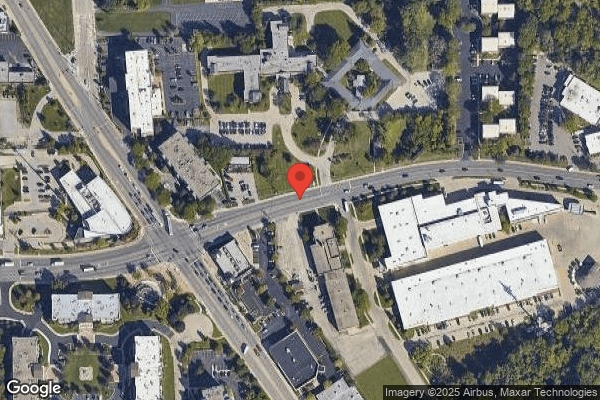
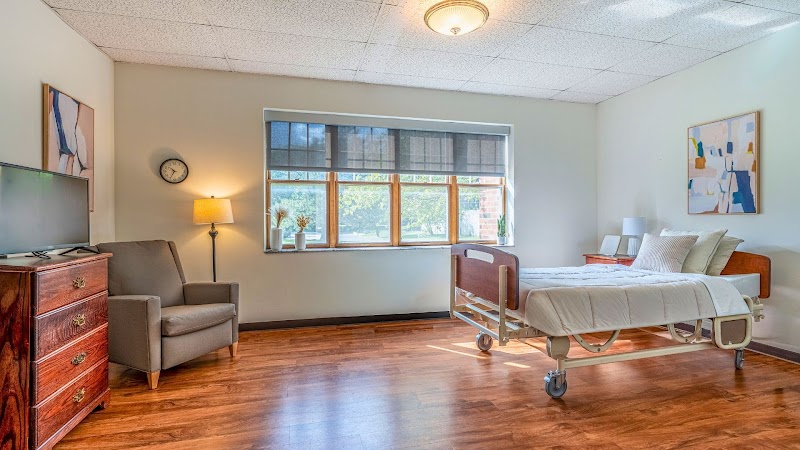
6930 WEST TOUHY AVENUE, NILES, IL 60714 (847) 647-0003
For profit - Corporation 99 Beds CITADEL HEALTHCARE Data: November 2025
Trust Grade
65/100
#128 of 665 in IL
Last Inspection: May 2025

Inspected within the last 6 months. Data reflects current conditions.

Overview

The Citadel at Saint Benedict has a Trust Grade of C+, indicating it is slightly above average among nursing homes. It ranks #128 out of 665 facilities in Illinois, placing it in the top half, and #45 out of 201 in Cook County, meaning only a few local options are better. The facility's trend is stable, with the same number of issues reported in both 2024 and 2025. Staffing is a weakness, with a rating of 2 out of 5 stars and a turnover rate of 55%, which is near the state average, indicating some inconsistency in care. However, it does have more registered nurse coverage than 82% of Illinois facilities, which helps monitor residents more effectively. On the downside, the facility has been fined $80,501, which is concerning and suggests some compliance issues. Specific incidents include a serious medication error rate of over 83%, which is significantly higher than the acceptable threshold, revealing potential risks for residents. Additionally, there were concerns about improper food labeling and sanitation practices in the kitchen, which could affect resident safety. Overall, while there are strengths in RN coverage, the facility does have notable weaknesses that families should consider.

Trust Score
C+
65/100
In Illinois
#128/665
Top 19%
Safety Record
Moderate
Needs review
Inspections
Holding Steady
4 → 4 violations
Staff Stability
⚠ Watch
55% turnover. Above average. Higher turnover means staff may not know residents' routines.
Penalties
✓ Good
$80,501 in fines. Lower than most Illinois facilities. Relatively clean record.
Skilled Nurses
✓ Good
Each resident gets 59 minutes of Registered Nurse (RN) attention daily — more than average for Illinois. RNs are trained to catch health problems early.
Violations
○ Average
10 deficiencies on record. Average for a facility this size. Mostly minor or procedural issues.
★★★★☆
4.0
Overall Rating
★★☆☆☆
2.0
Staff Levels
★★★☆☆
3.0
Care Quality
★★★★☆
4.0
Inspection Score
Stable
2024: 4 issues
2025: 4 issues

The Good

  • Full Sprinkler Coverage · Fire safety systems throughout facility
  • No fines on record

Facility shows strength in fire safety.

The Bad

Staff Turnover: 55%

Near Illinois avg (46%)

Higher turnover may affect care consistency

Federal Fines: $80,501

Well above median ($33,413)

Moderate penalties - review what triggered them

Chain: CITADEL HEALTHCARE

Part of a multi-facility chain

Ask about local staffing decisions and management

The Ugly 10 deficiencies on record

1 actual harm
May 2025 3 deficiencies
CONCERN (D)

Potential for Harm - no one hurt, but risky conditions existed

Accident Prevention (Tag F0689)

Could have caused harm · This affected 1 resident

**NOTE- TERMS IN BRACKETS HAVE BEEN EDITED TO PROTECT CONFIDENTIALITY** Based on observation, interview and record review, the facility failed to provide appropriate and sufficient supervision for a c...

Read full inspector narrative →
**NOTE- TERMS IN BRACKETS HAVE BEEN EDITED TO PROTECT CONFIDENTIALITY** Based on observation, interview and record review, the facility failed to provide appropriate and sufficient supervision for a cognitively impaired resident (R45) with a history of falls, reviewed out of a sample of 39 residents. This failure resulted in R45 falling from her wheelchair and hitting her face against the floor, resulting in an injury of abrasions to her forehead. The facility also failed to properly assess R45 for injury and failed to send her to the hospital for evaluation after the incident. Findings include: R45 is a [AGE] year-old cognitively impaired female resident, with medical diagnosis including but not limited to dementia; cognitive communication deficit; unsteadiness on feet; abnormal posture; pain in left hip; and spinal stenosis, cervical region. R45's high risk for falls care plan, dated 05/06/2025, does not address constant close supervision, based oh her history of falls. R45's Fall Risk Assessment, dated 05/26/2055 indicates no falls in the past three months. Per R45's electronic health record, she had a fall on 04/29/2025. R45's MDS, dated [DATE], Section C, Cognitive Patterns, indicates R45 is severely impaired in cognitive skills for daily decision making. R45's MDS, dated [DATE], Section GG, Functional Abilities, indicates R45 is only capable of providing less than half the effort to stand from a sitting position in a wheelchair. On 05/27/2025 at 12:44 PM, this Surveyor observed R45 sitting in a wheelchair, about ten feet from the nurse's station; with what appeared to be a reddish, moist, bloody abrasion on her forehead, about two inches in diameter. On 05/27/2025 at 1:59 PM, R45 told this Surveyor that she fell and her head still hurt. On 05/29/2025 at 10:36 AM, during interview of V18 (CNA) this Surveyor was informed that on 05/26/2025, at about 7:30 PM, V18 was working in another room, about three rooms from the end of the hall, caring for a resident, and was about to leave the room holding linens and trash, when she heard a loud thud, which sounded like something hitting something else, hard. V18 said she, then, looked outside the room and saw R45 by the nurse's station, lying face down on the ground. V18 said she immediately dropped the linens and trash, looked for V20 (Agency Nurse), saw him with his med cart right, and ran towards R45, with V20 running just behind her. V18 said that once she got to R45, she saw R45's wheelchair by the wall, in front of the nurse's station, and R45 lying face down, about four steps from her wheelchair. V18 said it was standard procedure for staff to be with residents that were fall risks by the nurse's station, but noticed the nurse's station empty. V18 said she believed R45 was the only resident stationed at the nurse's station at that time. V18 said R45's assigned CNA, V14, was at another hall caring for another resident when R45 fell. V18 said that, at the count of three, she and V20 slowly log rolled R45 over in order to assess her. V18 said V20 stayed with R45, while she went to get a facility nurse on the first floor for help. V18 said she, then, spoke to V2 (Director of Nursing) over the phone, then passed V20 the phone, so he could speak to her. V18 said there was blood on R45's forehead, so she got a towel, soaked it in water, placed it on her forehead, then placed an ice pack, and let the nurses handle the matter, while she returned to her residents. V18 said R45 required constant monitoring. On 05/27/2025 at 1:52 PM, during interview of V14 on 05/26/2025 at about 7:30 PM, V14 stated that she was in a room at another hall caring for a resident when R45 fell. V14 said no one was at the nurse's station at that time because everyone was doing things. V14 said V18 told her she heard the fall from down the other hall, and that two nurses assessed R45 after she fell. On 05/29/25 at 1:13 PM, during interview of V20 on 05/26/2025 at about 7:30 PM, V20 stated that he was at the nurse's station charting while observing R45, when he noticed R45 standing up. V20 said he asked R45 to please sit down, but could not get to her in time before she fell because she was too far. V20 said he assessed R45, noticed a little redness on the forehead, iced her forehead, and, per V19 (Medical Director), initiated neuro checks, and continued to monitor her. V20 said R45 fell kind of face down and rolled over, and had a little bit of blood on her forehead, which he cleaned with saline water and a gauze cloth, and placed icing on her forehead. V20 said he told V19 that R45 had hit her head on the floor, she had no loss of consciousness, her vitals were stable, and was bleeding, but was not on blood thinners. On 05/28/2025 at 11:35 AM, during interview V2 said R45's care plan called for close observation and physical and occupational therapy for strengthening and balance, since R45 liked to just get up. V2 said that on 05/26/2025 at about 7:30 PM, R45 was in direct view of one of the staff. V2 said she was told that when R45 fell, V20 was at the nurse's station standing with his cart preparing his medications. V2 said staff called her after R45 fell. V2 said she asked V20 if he was able to visualize R45, and he replied that he was at the nurse's station and that she fell. V2 said she did not ask V20 how he was able to see R45 fall while preparing his meds. V2 said V18 heard R45 fall. On 05/29/2025 at 12:39 PM, V2 said she believed R45's fall may have been caused by either R45 trying to self-transfer or it was behavioral in nature; and if it was behavioral, they would have to create a care plan for it. V2 said if R45 had been sent to the hospital, and an injury, such as a subdural hematoma, a fracture, or a laceration requiring sutures had been discovered, then the facility would have sent an initial report to the State; but since R45 was not sent, they did not notify the State. When this Surveyor asked V2 how she determined R45 had no fracture from the fall without x-rays, V2 said V19 did not order x-rays for R45 after speaking to V20, only neuro checks and monitoring. V2 said she did not know if V20 completed an SBAR. V2 said she did not believe V20's fall risk assessment for R45 was accurate because she was a high fall risk, yet V20 had graded her an 8, when the previous reports were 12 and 13. V2 said the lower the number was on the assessment, the lower the risk was for falls. V2 said the staff knew who the people were that needed closer observations, and were kept nearby. V2 said R45 was within visual proximity of staff, pretty much all the time. When asked by this Surveyor what distance was no longer an effective distance for staff to supervise a fall risk resident, V2 said, I can't be down the hall and say I have a visual and successfully intervene. On 05/28/2025 at 11:35 AM, V3 (Restorative Nurse/Fall Coordinator/LPN) said that, according to a supervisor that told her, on 05/26/2025 at about 7:30 PM, R45 stood up, lost her balance, and fell to the floor, hitting her forehead on the floor at the nurse's station, within view of V20, who was preparing medications at the time. V3 said R45 was a high fall risk according to her assessments. V3 said R45's only injury after her fall was an abrasion to her forehead; so, she was not sent to the emergency room by the doctor. V3 said there were no fall precautions from R45's care plan implemented at the time of her fall, other than being within view of the nurse. V3 said R45 had a previous fall on 04/29/2025. On 05/29/2025 at 11:46 AM, V3 said major injuries could be discovered by either being visible to the facility staff or by the resident being hospitalized and major injuries discovered there. V3 said that V20 told V19 that R45 only had scrapes; so, no x-rays were ordered, just 72-hour neuro checks. When the Surveyor asked V3 what the best procedure to prevent a fall for R45 was, V3 said, I'll get back to you on that. On 05/28/2025 at 1:15 PM, during interview V16 (CNA) stated R45 had dementia and would suddenly stand up from her wheelchair. V16 said R45 was typically calm, but sometimes would think she was at home and needed to do stuff. V16 said she was sitting next to R45 by the nurse's station because that is what V2 and her nurse would tell her she had to always do, and that she was well aware. V16 said even if it was a single resident on a wheelchair stationed by the nurse's station, that resident would have to be supervised by having staff sit alongside them or being near them and keeping an eye out for them. A progress note from 05/26/2025 at 9:54 PM by V20 states, Patient was in wheelchair and stood up and then lost balance and fell, hit forehead on ground, and some minor scrape occurred on middle of forehead. Neuro checks started. MD and DON informed. POA notified.
CONCERN (D)

Potential for Harm - no one hurt, but risky conditions existed

Unnecessary Medications (Tag F0759)

Could have caused harm · This affected 1 resident

**NOTE- TERMS IN BRACKETS HAVE BEEN EDITED TO PROTECT CONFIDENTIALITY** Based on observations, interviews, and record review the facility failed to administer medications per physician's orders for tw...

Read full inspector narrative →
**NOTE- TERMS IN BRACKETS HAVE BEEN EDITED TO PROTECT CONFIDENTIALITY** Based on observations, interviews, and record review the facility failed to administer medications per physician's orders for two of five (R24, R61) residents observed during the medication pass in the final sample of 26. There were 29 opportunities with 4 errors resulting in a 13.79% medication error rate. Findings include: R24 is a [AGE] year-old admitted to the facility on [DATE] with diagnosis including but not limited to Heart Failure; Gastro-Esophageal Reflux Disease Without Esophagitis; Hereditary And Idiopathic Neuropathy; Hypertensive Heart Disease With Heart Failure; Personal History Of Covid-19; Presence Of Intraocular Lens; Ocular Hypertension, Right Eye; Nonexudative Age-Related Macular Degeneration, Bilateral; Personal History Of Other Malignant Neoplasm Of Rectum, Rectosigmoid Junction, And Anus; Polyneuropathy; Unspecified Atrial Fibrillation; Anemia In Neoplastic Disease; Essential (Primary) Hypertension; and Major Depressive Disorder. R61 is a [AGE] year-old admitted to the facility on [DATE] with diagnosis including but not limited to Dementia, Unspecified Severity, Without Behavioral Disturbance, Psychotic Disturbance, Mood Disturbance, And Anxiety; Asthma; Other Lack Of Coordination; Other Reduced Mobility; Protein-Calorie Malnutrition; Acute On Chronic Diastolic (Congestive) Heart Failure; Essential (Primary) Hypertension; Paroxysmal Atrial Fibrillation; Major Depressive Disorder; Hyperlipidemia; Gastro-Esophageal Reflux Disease Without Esophagitis; Retention Of Urine; and Adjustment Insomnia. 1. On 05/27/25 at 11:23 AM Surveyor observed V10 (Licensed Practical Nurse) administering medications to R24. V10 (LPN) administered: 1. Ferrous Sulf (Sulfate) Tab (tablet) (Iron) 325 MG (milligrams) EC (enteric coated) Give 1 tablet by mouth two times a day related to Anemia in Neoplastic Disease due at 9:00 AM and 5:00 PM. 2. Furosemide (Diuretic) 20 MG TABS Give 1 tablet by mouth two times a day related to Heart Failure due at 9:00 AM and 5:00 PM. 2. On 05/27/25 at 11:35 AM Surveyor observed V10 (Licensed Practical Nurse) administering medications to R61. V10 (LPN) administered: Carvedilol (Antihypertensive) Tablet 12.5 MG Give 1 tablet by mouth two times a day for Hypertension due at 9:00 AM and 5:00 PM. Furosemide Tablet 40 MG Give 1 tablet by mouth two times a day for stroke due at 9:00 AM and 5:00 PM On 05/27/25 at 11:45 AM V10 (Licensed Practical Nurse) said, It took me a long time to give medications to one previous resident. Also, R24 likes to take his medications later. I also have to check all residents' vital signs and I have 30 residents in my assignment. There is no documentation in R24's and R61's electronic medical chart to show delayed medication administration or physician notification. On 05/29/25 at 12:32 PM V2 (Director of Nursing) said, It is important to administer medications within scheduled time because medications treat residents' conditions/diseases in a timely fashion. There are parameters and time limits when medications have to administered, especially medications scheduled to be administered multiple times a day. Medications work effectively when they're administered within timely manner. I think, based on the pharmacy policy, the time frame is two hours before and two hours after the schedule time. R24's physical order dated 07/29/2024 reads in part, Ferrous Sulfate Tab 325 MG EC Give 1 tablet by mouth two times a day related to Anemia in Neoplastic Disease. R24's physical order dated 01/17/2025 reads in part, Furosemide 20MG TABS Give 1 tablet by mouth two times a day related to Heart Failure, Unspecified. R61's physical order dated 01/28/2025 reads in part, Carvedilol Tablet 12.5 MG Give 1 tablet by mouth two times a day for Hypertension. R61's physical order dated 01/28/2025 reads in part, Furosemide Tablet 40 MG Give 1 tablet by mouth two times a day for stroke. The facility Administering Medications policy last reviewed 11/2020 reads in part, Medications shall be administered in a safe and timely manner, and as prescriber. Medications must be administered in accordance with the orders, including any required time frame that is indicated specifically in the order by the physician. The pharmacy UnitedRX Policy and Procedure Manual 2024 read sin part, 5.1: DRUG ADMINISTRATION - GENERAL GUIDELINES. Medications are administered within 60 minutes of scheduled time, except before or after meal orders, which are administered precisely as ordered. Unless otherwise specified by the physician, routine medications are administered according to the established medication administration schedule for the facility. If a dose of regularly scheduled medication is withheld, refused, or given at other time than the scheduled time, the MAR should reflect documentation as to the reason medication could not be administered.
CONCERN (F)

Potential for Harm - no one hurt, but risky conditions existed

Food Safety (Tag F0812)

Could have caused harm · This affected most or all residents

Based on observation, interviews and record reviews, the facility failed to follow policy related to use of three-compartment sink; failed to maintain normal range of chemical concentration in the san...

Read full inspector narrative →
Based on observation, interviews and record reviews, the facility failed to follow policy related to use of three-compartment sink; failed to maintain normal range of chemical concentration in the sanitizer buckets; and failed to properly label and date leftover foods in the refrigerator. These deficiencies potentially affect the 86 residents receiving foods in the kitchen. Findings include: Per census report, facility has 88 residents currently residing in the facility. Two residents are currently on NPO (nothing by mouth). On 05/27/25 at 9:55 AM during initial brief tour in the kitchen, the following leftover food items placed in a bowl covered with plastic, unlabeled, were observed stored in the walk-in refrigerator: drained pineapple - dated 05/21; apple sauce - dated 05/24; dried peas - undated; peaches - dated 05/21; cream of mushroom - dated 05/21. There was also a sandwich with lettuce and tomato unlabeled and undated, which was observed inside reach - in cooler. Subsequently, red sanitizer buckets were also checked. V4 (Account Manager Food Services) stated that red buckets are used to wipe counters after food preparation. Normal chemical solution range between 200-400 ppm (parts per million) per sanitizer chart. Facility was using ammonium chloride as chemical sanitizer. V4 used a sanitizer strip and dipped into the sanitizing solution in red bucket number one. The strip read 0-100 ppm per color chart in the strip dispenser. Bucket number two was also tested using a new sanitizer strip, giving a reading of 100 ppm. On 05/27/25 at 11:45 AM during a follow up visit in the kitchen, the three-compartment sink was observed with soiled pots, pans, utensils and kitchen wares stored in the first, second and third sinks. The three-compartment sink was not filled with water. V5 (Dietary Aide) was observed scrubbing and washing pots and pans in the sink. V5 removed food debris from the pots and pans by scrubbing then rinsing and washing it with water directly from the gray hose. Afterwards, the pots and pans were placed inside the dish machine. V5 stated, We don't fill the sanitizer sink with water. We use the gray hose and use the water directly to rinse the pots and pans. Sometimes I use the third sink if I have time. But today, I just came in and I just used the dish machine. It was observed that the gray hose is connected to detergent. The sanitizer hose is not connected to the gray hose. On 05/28/25 at 1:32 PM, V6 (Dietary Manager) was interviewed regarding left over foods. V6 replied, If the food items are not in their original packages, they are left over foods. The left over foods are good for three days. If food items are in their original package, then they are good for 7 days. All food items should be labeled and dated. Left over foods with no dates should be thrown out. V6 was also asked regarding red sanitizer buckets and three compartment sink. V6 stated, Red sanitizer buckets are used to disinfect surface of the work area to prevent cross contamination, kills germs and bacteria. By using the 3- compartment sink, the third sink should be filled with water and sanitizer, and this is where we get the sanitizing solution for the red buckets. Upon testing the water, it should give the correct amount of chemical concentration - we are using quat, should be between 200-400 ppm. Also, the 3-compartment sink should be used all the time to clean and wash pots and pans, to prevent cross contamination. The first sink is filled with soap and water, the second sink is filled with water and the third sink is filled with sanitizer. The 3-compartment sink is what we will be using everyday but right now, it does not hold the water in the second and third sinks. The plugs are loose unable to hold the water for long time. It had been a couple of weeks since it stopped working. The first sink was fixed a week ago. The work order had been requested. Facility presented work order request #2481 dated 03/31/25 showing 3 compartment sink plugs were ordered. There was no work order request to fix the three-compartment sink. There was also no work order receipt that the first sink was fixed a week ago. Facility's policy titled Food Storage, undated, documented in part but not limited to the following: Policy: Sufficient storage facilities will be provided to keep food safe, wholesome, and appetizing. Food will be stores in an area that is clean, dry and free from contaminants. Food will be stored, at appropriate temperatures and by methods designed to prevent contamination or cross contamination. Procedure: 12. Refrigerated food storage: f. All foods should be covered, labeled and dated. All foods will be checked to assure that foods (including leftovers) will be consumed by their safe use by dates, or frozen (where applicable), or discarded. Facility's policy titled Food Safety and Sanitation, dated 2014 stated in part but not limited to the following: Refrigerated Storage: All leftovers should be labeled and dated. Leftover food should be used or discarded within 72 hours of preparation. Facility's policy titled Cleaning Instructions: Cloths, Pads, Mop and Buckets, undated, documented in part but not limited to the following: Policy: Cleaning tools will be maintained in clean, fresh, odor-free condition. Procedure: a. Cleaning cloths should be kept in a container of clean sanitizing solution between uses. b. The sanitizing solution will be tested periodically to assure that it maintains the correct concentration. Facility's policy titled Cleaning Instructions: Counter Space, undated, stated in part but not limited to the following: Policy: Counter space will be cleaned and sanitized prior to and following food preparation and meal service, and as needed. Procedure: 2. To sanitize: f. Store cleaning cloths in sanitizing solution between uses. Facility's policy titled Food and Nutrition Services Sanitation and Food Safety dated 2017 stated in part but not limited to the following: A test strip is used to accurately determine the concentration of the sanitizing solution. The strip is dipped into the sanitizing solution and held for the seconds specified on the test kit. Once removed from the sanitizing solution, the strip is compared to the color on the chart. If the color is not within the correct range, adjustment is made until the sanitizing solution is the correct concentration. Facility's policy titled Manual Sanitizing in Three-Compartment Sink dated 2021 documented in part but not limited to the following: Policy: A sink with three-compartments is used for manually washing, rinsing and sanitizing utensils and equipment that can be submerged. It may also be used for tableware. Procedure: Manufacturer's instructions on the wall poster above the three-compartment sink are followed. Food soil is scraped off utensils or equipment into a waste receptacle before being placed in the first sink. Utensils or equipment are washed in the first sink with a pad or brush in a solution of soap, detergent or other cleaning agent. The temperature of the washing solution is no less than 110F or the temperature specified on the cleaning agent manufacturer's label. Utensils or equipment are thoroughly rinsed in water in the second sink. After washing and rinsing utensils and equipment are sanitized in the third sink by immersion in either: Hot water (at least 171F for thirty seconds) or Chemical sanitizing solution used according to manufacturer's instructions. The most common chemical sanitizers are chlorine, iodine and quaternary ammonia. In determining the correct concentration of the sanitizing solution and the length of immersion time, manufacturer's instructions are followed. Testing procedures for Quaternary Sanitizer: 1. Make sure you select the correct test paper for the sanitizer being used. 2. Testing must be done in sanitizer solution that is clean, fresh and at room temperature. 3. Make sure there is no foam on the solution surface before testing. 4. Tear off a 1 1/2 - 2-inch strip of test paper. 5. Hold the test strip in the solution for 10 seconds. 6. Do not move the test paper around, as this will give a false high concentration reading. 7. Remove test strip from solution. 8. Hold test strip up against the color chart on the side of the test strip container. Always refer to the color range on the QT-10 test kit for accurate color matching of strips. 9. The correct reading must be 200-400 ppm. If the solution test does not meet the 200-400 ppm requirements, test again. Take corrective action if the reading remains out of range. 10. Record the solution concentration reading on the appropriate log.
Jan 2025 1 deficiency
CONCERN (D) 📢 Someone Reported This

A family member, employee, or ombudsman was alarmed enough to file a formal complaint

Potential for Harm - no one hurt, but risky conditions existed

Free from Abuse/Neglect (Tag F0600)

Could have caused harm · This affected 1 resident

**NOTE- TERMS IN BRACKETS HAVE BEEN EDITED TO PROTECT CONFIDENTIALITY** Based on observation, interview, and record review the facility failed to ensure a resident was free from abuse for 1 of 3 resid...

Read full inspector narrative →
**NOTE- TERMS IN BRACKETS HAVE BEEN EDITED TO PROTECT CONFIDENTIALITY** Based on observation, interview, and record review the facility failed to ensure a resident was free from abuse for 1 of 3 residents (R3) reviewed for abuse in the sample of 6. Findings include: R3's Facesheet dated 1/4/24 showed she had diagnoses to include, but not limited to: metabolic encephalopathy; lack of coordination; abnormalities of gait and mobility; repeated falls; spinal stenosis; unspecified adrenocorticoid insufficiency; congestive heart failure; chronic kidney disease (stage 3A), major depressive disorder; anxiety; and a history of falling. R3's facility assessment dated [DATE] showed she was cognitively intact. R3's Skilled Nursing Evaluation dated 12/15/24 showed she was alert and oriented to person, place, and time; communicated verbally; speech was clear; and was able to understand and be understood. R3's Care Plan initiated 10/21/24 showed, R3 is at risk of possible abuse/neglect related a history of abuse. The interventions included, but were not limited to: Provide me with physical/emotional safety by developing a trusting therapeutic relationship with me. On 1/4/24 at 12:51 PM, R3 was sitting up on the edge of her bed. R3 said she fell (12/18/24) when she tried to take herself to the bathroom. R3 said she wasn't sure exactly how she fell but remembered being on the floor and trying to scoot towards the bed to reach her call light. R3 said she couldn't stand herself up, nor could she reach the call light, so she yelled for help. R3 said V17 (CNA - Certified Nursing Assistant) responded. R3 said V17 came in and said, Oh my, I'm going to need some help to get you up. R3 said V17 left and returned with V18 (RN - Registered Nurse). R3 said as soon as V18 (RN) walked into the room he was questioning her, in a loud, accusing tone. R3 said V18 wouldn't let up and he said, It's my fault, I should have used the call light. R3 said V18 continued to stand over her and scold her like a child. R3 said she was still on the floor. R3 stated, It was so embarrassing, and [V17 -CNA] witnessed the entire thing. [V17] was even getting mad at [V18] and told him not to talk to me like that. R3 said she was on the floor 8-10 minutes with V18 (RN) standing over her and aggressively questioning her and stating, This shouldn't have happened. R3 said she finally snapped and said, Listen A******! I'm already on the floor. I didn't use the call light and fell and I couldn't get myself up. R3 said she told V18 that she wanted to get off the floor. R3 said that stopped the loud questioning, but she was in tears and upset because it went on for a while. R3 said V17 (CNA) and V18 (RN) were having a disagreement in front of her while V18 (RN) was assessing her. R3 said V17 and V18 assisted her into the wheelchair, then another nurse came in, but she didn't know her name. R3 said she was very nice and had both V17 (CNA) and V18 (RN) leave the room and she helped her calm down. R3 said V1 (Administrator) talked to her on 12/19/24 and she told V1 what she told the surveyor. R3 said V1 told her that he was going to make sure that V18 (RN) didn't have any further contact with me. The facility's Final Reportable to IDPH dated 12/23/24 showed, R3 reported that V18 (RN) spoke inappropriately to her last night. R3 reported that V18 spoke to her in an aggressive manner when responding to her call for assistance after she fell when attempting to go to the bathroom on her own. This report showed V18 reported questioning why R3 tried to get up on her own. R3 became upset with the line of questioning and stated that he should not blame her for the fall. V19 (RN) said she went into R3's room to assist V18 and noticed R3 was upset. V19 asked V18 to leave the room and helped calm R3. This report showed, [R3] stated that [V19-RN] helped calm her down but felt that [V18] was questioning her in an aggressive tone regarding why she (was) attempting to toilet herself. On 1/4/24 at 2:17 PM, V18 (RN) said R3 had a fall on his shift (12/18/24). V18 said he has an accent and some people think that he talks loud. V18 said R3 was found on the floor by the CNA (V17). V18 said V17 alerted him and told him to call female nurse to assist me. V18 said he called V19 (RN) for assistance, then headed to R3's room. V18 said V17 was already in R3's room. V18 said he was surprised to see R3 on the floor like that and he may have seemed loud because he was surprised. V18 said he was just asking R3 questions to determine the cause of the fall. V18 said V17 (CNA) and V19 (RN) were in the room with him and R3. On 1/4/24 at 2:42 PM, V17 (CNA) said she was R3's assigned CNA on 12/18/24. V17 said she was in the hall charting and heard a noise. V17 said she stood to investigate the noise and heard someone yelling, Help! V17 said R3's door was closed, she opened it, and found R3 on the floor near her bed. V17 said R3 was in the seated position, on her butt, with her legs crossed in front of her. V17 said she told R3 that she needed to get help. V17 said she alerted V18 to R3's fall and told V18 to call a female nurse (V19) to help. V17 said R3 prefers females to provide hands on care. V17 said she returned to R3's room and V17 followed her. V17 said V18 stood over R3 and asked, How does it feel to be down there? Are you proud of yourself? V17 said she didn't like the way V18 was talking to R3 and stated, Why are you talking to her like that? V17 said V18 continued to loudly, aggressively question R3 while he stood over her (R3 was still on the floor). V17 said she told V18 (RN) to stop talking like that to R3 and he told her to Stay in her place. V17 said at that point R3 got really upset and yelled, I'm already down here Mother F***er, what do you want me to do? V17 said she told V18, She (R3) doesn't deserve that and again he told me to stay in my lane. V17 stated, I'm not going to watch him talk to a resident like that. That's abuse. He (V18) was standing over [R3] yelling. He was scolding her like a child. He just kept, repeatedly questioning her while she was on the floor. Then she snapped on him and he started to move. V17 said they assisted R3 up to the wheelchair before V19 arrived, but their disagreement continued. V17 said she was arguing with V18 (RN) and threatened to call the state. V17 said V19 (RN) arrived at that time and pulled me out of the room. V17 said V19 (RN) told her that she shouldn't be arguing with V18 (RN) in front of the residents and making threats to call the state. V17 said V19 (RN) wasn't there to hear how V18 spoke to R3. On 1/6/24 at 1:11 PM, V19 (RN) said she was working a different unit on 12/18/24 and V18 (RN) called her for assistance because R3 fell. V19 said when she got to R3's room, R3 was already up in the wheelchair but V17 (CNA) and V18 were arguing. V19 said she heard V17 threaten to call the state and she asked V17 (CNA) to leave the room. V19 said she told V17 that it's inappropriate to argue with another staff member in front of the resident and to make such comments. V19 said she went in to assist V18 (RN) and noticed R3 was upset and anxious. V19 said R3 prefers female staff to provide care to her and she had assisted with her care before. V19 said she asked V18 (RN) to leave the room and tried to calm R3. V19 said R3 said it was her fault that she fell and that she just wants to go home. V19 said she didn't witness V18 aggressively questioning R3, but she wasn't able to come down to assist right away. V19 said R3 is alert and oriented and able to recall events. The surveyor asked V19 if a staff member should stand over a resident, on the floor, and ask, How does it feel to be down there? Are you proud of yourself? V19 replied, No, that should never be said to a resident. That's totally inappropriate. V19 said standing over someone, making those remarks, and aggressively questioning them could be considered verbal or mental abuse. V19 said she wasn't aware that V18 (RN) was scolding R3. On 1/6/24 at 1:27 PM, V2 (DON - Director of Nursing) said a resident shouldn't feel like they were being scolded like a child. The surveyor asked if V18 should stand over R3 and say, How does it feel to be down there? Are you proud of yourself? V2 replied, Absolutely not, that's inappropriate. Verbal abuse is the tone used and Mental Abuse is how you make the resident feel. V2 said if R3 felt embarrassed or humiliated, then it would be considered abuse. On 1/6/24 at 1:40 PM, V1 (Administrator) said on 12/19/24, V17 (CNA) reported that V18 (RN) yelled at R3 and spoke to her inappropriately. V1 stated, I'm not sure that she (V17) used the words verbal abuse. V1 said he interviewed R3. V1 said R3 reported that V18's tone was accusatory and she didn't appreciate his tone and questions. V1 said R3 didn't use the word scolded to him, but he could see how she would feel that way. The surveyor asked if V18 (RN) should have stood over resident and asked, How does it feel to be down there? Are you proud of yourself? V1 replied, No that could be abusive. V1 said that would be embarrassing. V1 said R3 never used the word abuse. The surveyor asked if the resident needs to identify it as abuse, for it to be abuse. V1 replied, No, that's probably my bad there. The facility's Abuse Prevention Program dated 10/2022 showed, Policy: This [facility] affirms the right of our residents to be free from abuse, neglect, exploitation, misappropriation of property, and mistreatment of residents. In order to do so, the facility has attempted to establish a resident sensitive and resident secure environment. The purpose of this policy is to assure that the facility is doing all that is within its control to prevent occurrence of abuse, neglect, exploitation, misappropriation of property, deprivation of goods and services by staff and mistreatment of residents . Verbal Abuse is the use of oral, written, or gestured language that willfully includes disparaging and derogatory terms to residents or families within their hearing distance, regardless of an individuals' age, ability to comprehend, or disability . Mental Abuse includes, but is not limited to, humiliation, harassment, threats of punishment or deprivation .
May 2024 3 deficiencies 1 Harm
SERIOUS (G)

Actual Harm - a resident was hurt due to facility failures

Incontinence Care (Tag F0690)

A resident was harmed · This affected 1 resident

**NOTE- TERMS IN BRACKETS HAVE BEEN EDITED TO PROTECT CONFIDENTIALITY** Based on interview and record review the facility failed to monitor and assess for signs of urinary catheter obstruction and mon...

Read full inspector narrative →
**NOTE- TERMS IN BRACKETS HAVE BEEN EDITED TO PROTECT CONFIDENTIALITY** Based on interview and record review the facility failed to monitor and assess for signs of urinary catheter obstruction and monitor urine output for one (R21) of one resident reviewed for urinary tract infections on the sample list of 37. This failure resulted in R21's emergent hospitalization and diagnosis of severe sepsis and acute kidney injury. Findings include: R21 is a [AGE] year-old female admitted to the facility on [DATE] with diagnosis including but not limited to Metabolic Encephalopathy; Alzheimer's Disease; Age related Osteoporosis; Anemia; and Peripheral Vascular Disease. R21's physician order dated 02/01/2024 reads in part, (Urinary) catheter care every shift; Change (Urinary) catheter as needed. R21's care plan reads in part, Problem onset: (R21) has (urinary) catheter to assist in unstageable sacral pressure ulcer. Approaches: Ongoing assessment of color, clarity and character of (R21's) urine; Ongoing assessment of (R21's) for symptoms of urinary [NAME] infection; Change (R21's) catheter tubing/bag per protocol and as needed. On 05/15/24 at 11:04 AM V16 (Licensed Practical Nurse) stated in summary: Urinary catheter care is split between nurses and Certified Nursing Assistants (CNAs). Nurses flush urinary catheter if there is an order. CNAs do catheter perineal care and empty urinary catheter bags and report to the nurse if there are any changes in urine appearance. If a CNA reports to the nurse that there is a sediment or change in urine appearance or output volume, the nurse will call the doctor and obtain flush order unless there is existing order. Nurses are obligated to assess the catheter every shift. I might have worked with R21 on days prior to her hospitalization but I did not notice any changes in the urine output or appearance. We don't document catheter assessments if there are no concerns, we are not obligated to document on routine catheter assessment. On 05/15/24 at 11:17 AM V3 (Quality Director/Infection Preventionist) stated in summary: Urinary catheter care is divided between nurses and CNAs. Nurses insert urinary catheter, flush it, and obtain specimen samples. CNAs do perineal care along with catheter care and change the bag if needed. Nurses and CNAs are required to assess urinary catheters every shift (three shifts a day). Urinary catheter assessment is done to prevent infections and to monitor for symptoms of dehydration. Nurse's urinary catheter assessment should consist of urine appearance, signs of occlusion, determination whether catheter is intact and patent, scheduled bag or catheter change, and flushing. CNAs would change urinary bag if catheter went from full bag to a leg bag and opposite, and they are also required to clean the catheter tube. On 04/22/2024, Agency nurse was on duty, and she called me to further assess R21. R21's blood pressure was dropping, and she was unresponsive. I went and called the doctor and said that we will be sending R21 to the hospital. On 05/15/24 at 11:54 AM V17 (Certified Nursing Assistant) stated in summary: Certified Nursing Assistants have to make sure urinary bags are emptied by the end of the shift. I was told to report if I see any blood in the urine, resident experiences pain from the catheter, or if something looks different in general. Facility's expectation for catheter monitoring is every time I provide perineal care. Catheter perineal care should be done at the beginning of each shift, especially, to make sure bag is empty. If a urinary catheter is obstructed the urine will not drain to the bag and that should be reported to the nurse. We are required to document that urinary catheter is present but not that the bag was emptied, or care was provided. On 05/15/24 at 12:32 PM V18 (Certified Nursing Assistant) stated in summary: I took care on R21 on the morning of 04/22/024. I noticed that R21 was out of it, and she didn't look good, so I notified the nurse (V16) on duty. I performed R21 perineal care before earlier that morning, I didn't notice anything different with her catheter, there was no urine or sediment in the tubing and urinary bag was empty. On 05/15/24 at 02:21 PM V16 (LPN) stated in summary: I work on both days before R21 was hospitalized and there was nothing wrong with R21's catheter on 04/20/2024 and 04/21/2024, at least I didn't document anything in the progress note, which means there was nothing unusual. CNAs didn't notify me of anything unusual either. We are not required to document urinary catheter output. If there is no urine output, CNAs usually notify the nurse. Urinary catheter care consists of checking that catheter is intact, and there are no problems with it. Urinary catheter assessment is done quarterly. Nurses and CNAs are both responsible for catheter assessment. There is no daily urinary catheter assessment documentation required by the facility. On 05/15/24 at 03:47 PM V2 (Director of Nursing) stated in summary: Urinary output is not required to be documented; it is something we need to implement. Urinary catheter care is documented in the Treatment Administration Record, and it shows that nurses ensuring that urinary catheter care has been done properly by CNAs. Surveyor pointed out that R21's Treatment Administration Record shows that urinary catheter care was done on two shifts after R21 was transferred to the hospital on [DATE], V2 (DON) stated, I doubt nurses went to the hospital to check on R22's urinary catheter, nurses should be documenting what they truly done. On 05/16/24 at 11:26 AM V27 (Medical Director) stated in summary: Urinary catheter calcification is a buildup of calcium and plaque that occurs in the bladder and can transfer into catheter tubing and urinary bag. I don't know how long it takes for calcification to build up to the point of obstruction. Obstructive uropathy is an obstruction of urine drainage that can cause urinary retention. Obstruction causes urine to be stagnant in the bladder and that's what causes infection, but the time frame to develop infection depends on the resident. Urinary catheter should be flushed at least once a shift, I imagine it is included in the urinary catheter care. It is important to document residents' urinary output to monitor whether urinary catheter is obstructed. Urine output should be documented once a shift. Progress note dated 04/22/2024 at 12:37 PM written by V3 (Quality Director/Infection Preventionist) reads in part, Today, approximately at 11:30 (AM), (R21's) bp (blood pressure) was 87/56 with spo2 (oxygen saturation) at 97%. Intact (urinary) catheter draining dark colored urine. Hospital record dated 04/22/2024 4:42 PM reads in part, HPI (History of present illness): (R21) from nursing home after being found to be unresponsive today, with tachycardia and hypotension. Per (family member) at bedside, states that (R21) was eating appropriately and acting her normal self approximately 1 week ago and is nervous (R21) has developed yet another infection that has led to today symptom. Diagnosis: Severe Sepsis, Dehydration, AKI (Acute Kidney Injury). Assessment: It is clear (urinary) catheter has not been replaced for multiple days and had calcified to the point of obstruction. Obstructive uropathy with subsequent UTI (urinary [NAME] infection) found on physical exam and laboratory findings. R21's (Urinary) catheter care record for February, March and April (1st to 21st) 2024 show that urinary catheter care was done inconsistently. R21's (Urinary) catheter care record for April 22, 2024, shows that urinary care was documented after R21's hospital transfer. Urinary catheter care record appears inaccurate and not well documented . R21's Change (urinary) catheter as needed record shows that R21's urinary catheter was never documented as changed between 02/01/2024 and 04/22/2024. There is no record of R21's urinary catheter output documented between 02/01/2024 and 04/22/2024. There is no record of R21's assessment, change in condition, or vital signs documented in days preceding to 04/22/2024. Last know vital signs set checked on 02/16/2024. The facility policy Procedure: Urinary Catheter Care dated 01/2024 reads in part, Observe the resident's urine level for noticeable increases or decreases. If the level stays the same, or increases rapidly, report it to the physician or supervisor. It is suggested to change catheters and drainage bags based on clinical indications such as infection, obstruction, or when the closed system is compromised. Observe for other signs and symptoms of urinary [NAME] infection or urinary retention. Report findings to the physician or supervisor immediately. If the catheter material is contributing to obstruction, notify the physician and change the catheter if instructed to do so.
CONCERN (E)

Potential for Harm - no one hurt, but risky conditions existed

Unnecessary Medications (Tag F0759)

Could have caused harm · This affected multiple residents

Based on observation, interview, and record review, the facility failed to ensure a medication error rate of less than 5 percent (%). A medication pass observation on 05/13/2024 revealed 26 medication...

Read full inspector narrative →
Based on observation, interview, and record review, the facility failed to ensure a medication error rate of less than 5 percent (%). A medication pass observation on 05/13/2024 revealed 26 medication administration errors out of 31 opportunities, resulting in an 83.87% medication error rate. Findings include: Medication pass observation conducted on 05/13/2024 with V5 and V13 (Agency Registered Nurses) to 3 residents (R6, R7, R33) with the following observations: R7: On 05/13/24 11:28 AM, entered R7's room and observed a small clear plastic medication cup on top of the bedside table that was near the foot of bed which contained nine pills within. When asked whose medications were on the table, R7 stated those are my morning meds. She added that the nurse brought them earlier this morning, but she does not recall her name of nurse or the exact time the pills were left but knows it was before breakfast. R7 then said she knows the nurses are not supposed to leave her medications and she would prefer if the nurse stayed, but they are busy and trust her (R7) enough to take them by herself. When asked what the medications were called, resident stated they were the same ones I take every morning, but I haven't taken them yet. On 05/13/24 at 11:52 AM, observed V5 (Agency Registered Nurse) enter R7's room to administer her noon meds when surveyor observed V5 pick up a plastic med cup which contained the nine pills previously observed on R7's bedside table by surveyor. Observed V5 (Agency Registered Nurse) give R7 the two noon meds then proceeded to administer the medications from within the plastic cup that she picked up from the bedside table. On 05/13/24 at 11:56 AM, V5 (Agency Registered Nurse) said the medications she administered within the med cup were R7's 9:00 AM medications. V5 then said that she did not want to stand over R7 while she took all her pills, so she left them at the bedside. She also said that she knows she should have stayed with the resident to observe her take the medications. V5 then said the pills within the med cup administered to R7 were: losartan potassium (antihypertensive) 100mg (milligrams) one tab (tablet), metoprolol succinate (antihypertensive) ER (extended release) 50mg (3 tablets to equal 150mg), vitamin b-12 500 microgram (mcg) one tablet, amlodipine besylate (antihypertensive) 2.5 mg one tab, eliquis (blood thinner) 2.5mg one tab, ferate (iron) 27mg one tab, furosemide (diuretic) 40mg one tab. V5 then said there is a one hour window prior to and after scheduled med administration time so R7's 9:00 AM medications were administered late. V5 added that she took R7's blood pressure this morning because it should be checked prior to administration. Reconciliation of R7's active physician orders with medication administration log showed all the prescribed medications as indicated above by V5 that are scheduled for 9:00 AM with special instructions for the following medications: losartan potassium 100mg one tab hold if systolic blood pressure is less than 100, metoprolol succinate ER 50mg (3 tablets to equal 150mg) hold if systolic blood pressure is less than 110 0r pulse less than 60, and amlodipine besylate 2.5 mg one tab hold if systolic blood pressure is less than 110. Per R7's Medication Administration Record (MAR), her 9:00 AM medications were documented as being administered by V5 (Agency Registered Nurse) with her initials/signature. Surveyor did not observe V5 obtaining of R7's blood pressure prior to administering the blood pressure medications. On 05/13/24 at 12:09 PM, V5 (Agency Registered Nurse) stated that she has been a nurse for a year and knows that she should not leave medications at the bedside and should stay with resident to ensure they were taken. She added that R7 and R34 don't like for the nurse to stand over them while they take their medications, so to not cause any problems with these residents, she left their medications at the bedside. R6: On 05/13/24 at 12:15 PM, V13 (Agency Registered Nurse) said she just came in at 11:15 AM this morning because she is covering for a nurse who did not show up. She added that there is a one hour window before/after scheduled med times so all the medications she will be administering will all be late. She then said that she comes to the facility 1-2 times a week. V13 then said she never leaves meds at the bedside to ensure the right resident is receiving the right medications and added that a confused resident could wander into a room and take the medications if left at the bedside. At 12:41 PM, V13 (Agency Registered Nurse) administered the following medications to R6: fenofibrate (antilipemic) 48mg one tablet, acetaminophen (pain medication) 325mg (2 tabs), ferrous gluconate (iron) 324mg one tablet, bumetanide (diuretic) 0.5mg one tablet. She added that the rest of the medications listed on R6's MAR were for the evening medication pass. R6's active physician orders were reconciled with R6's medication administration log and noted the above mentioned medications as indicated by V13 with the following prescribed (9:00 AM) medications that were not observed as administered by V13 on 05/13/2024 but were initialed as being administered: levetiracetam (anticonvulsant) 250mg one tablet, eliquis (blood thinner) 2.5mg one tablet, potassium chloride (potassium supplement) ER 10 milliequivalent (meq), meclizine (antivertigo) 25mg one tablet. R33: On 05/13/24 at 12:49 PM, observed R33 sitting on side of bed with lunch tray set on bedside table. R33 said she was finished eating her lunch, after she ate all she wanted to eat. V13 (Agency Registered Nurse) then obtained R33's vital statistics and blood sugar then administered the following medications to her at 12:58 PM: insulin aspart (novolog) 2 units per sliding scale (scheduled for 11:00 AM), sertraline (antidepressant) hcl (hydrochloride) 50mg one tablet, aspirin (nonsteroidal antiinflammatory) ec (enteric coated) 81mg one tablet, clopidogrel (antiplatelet) 75mg one tablet, multivitamin (vitamin supplement) one tablet, ferrous sulfate (iron) 325mg one tablet, sodium bicarbonate (alkalinizing agent) 650mg one tablet, one oyster shell 500-vitamin d3 (supplement) 200mg tablet, vitamin c (viatmin supplement) 250mg one tablet. R33's active physician orders and medication administration log for R33 were reviewed and noted the following medications were not observed as administered per physician orders by V13: insulin aspart 100 unit/ml give 7 units subcutaneously before meals at 12:00 PM, gabapentin (anticonvulsant) 100 mg at 8:00 AM. Both medications were initialed as being administered by V13 (Agency Registered Nurse). On 05/13/24 at 02:11 PM, V2 (Director of Nursing) said today there are two agency nurses working on the second floor due to their regular nurses not being on duty today. She then said the med pass is slow today due to the system being down and an agency nurse did not show up so V3 (Quality Director) relieved the night nurse around 8:15-8:30 AM. V2 then said her expectations with the medication administration is to follow the five rights and to stay with the resident to ensure the resident is taking their medications. V2 (DON) said nurses are not to leave medications at the bed side to ensure that a confused resident doesn't wander in the room and take another resident's meds. V2 also said the medication administration window is one hour prior to and after the scheduled time so if given after that hour window, then the medication is considered late and nurses must notify the physician and document the late administration. On 05/14/24 at 02:20 PM, V17 (Nurse Practitioner) said her expectations for facility staff is to follow the five rights for each resident, observe medication administration and to check blood pressure (bp) with all bp meds. V17 then said when a medication is administered late, especially when prescribed more than once daily, the nurse should call the physician so adjustments can be made to the later administration times. On 05/15/2024 at 1:02 PM, V2 (Director of Nursing) said nurses are to administer fast-acting insulins (insulin aspart) 10-15 minutes prior to a resident eating their meal. Medication Administration policy last revised 12/2021 indicated that medications shall be administered in a safe and timely manner; shall be administered in accordance with the orders; resident may self-administer medications only if determined to do so by physician. R6, R7, R33 nor R34 have an active physician order to self-administer medications. No medication administration/physician progress notes were provided by facility for review.
CONCERN (E)

Potential for Harm - no one hurt, but risky conditions existed

Deficiency F0760 (Tag F0760)

Could have caused harm · This affected multiple residents

Based on observation, interview, and record review, the facility failed to ensure that medical staff were properly trained to administer prescribed medications according to physician's orders and resi...

Read full inspector narrative →
Based on observation, interview, and record review, the facility failed to ensure that medical staff were properly trained to administer prescribed medications according to physician's orders and residents were free from significant medication errors. Three (R6, R7, R34) residents in the sampled medication pass of four residents (R6, R7, R33 and R34) experienced medication administration errors by the medication nurse. Findings include: R34: On 05/13/24 at 10:45 AM, observed R34 sitting in her wheelchair next to the bed with a bedside tray table in front of her. Also observed a clear, plastic medicine cup in front of resident on the bedside table that contained six pills within the cup. R34 said that her nurse had just left them a few minutes ago but she could not recall the nurse's name. She also said that she had already taken a few pills and needs to take the rest of her morning medications. When asked what these morning medications were, R34 said one is for my stomach, two are water pills, and I believe the one green pill is my iron pill. R34 could not remember what the two pink pills and one white pill were taken for but knows that she takes them every day. R34 added that if the nurse has the time, then she will stay with her to watch her take the medications. R34 then proceeded to self-administer the remaining six pills within the plastic med cup. Reconciliation of R34's active physician orders and medication administration record (MAR) for May 2024 showed the following medications as prescribed and scheduled per MAR at 9:00 AM: allopurinol (uric acid reducer) 300 milligram (mg) one tab by mouth daily, vitamin d3 (vitamin supplement) 25 microgram (mcg) one tab by mouth daily, aspirin (nonsteroidal antiinflammatory) enteric coated (ec) 81mg one tab by mouth daily, potassium citrate (urinary alkilinizer) extended release (er) 10 milliequivalent (meq) one tab by mouth daily, metolazone (diuretic) 5mg one tab by mouth daily, (certavite) senior multivitamin one tab by mouth daily, polyethylene glycol (stool softener) 3350 powder give 17 grams (g) with 6 ounce of water daily, metoprolol tartrate (antihypertensive) 50mg one tab by mouth every 12 hours (9a, 9p and hold if systolic blood pressure is below 110 or heart rate below 60), ferrous gluconate (iron supplement) 324mg one tab by mouth twice daily, magnesium oxide (supplement) 400mg one tab by mouth twice daily, metformin (antidiabetic) hcl (hydrochloride) 1000mg one tablet by mouth twice daily. Per R34's MAR, her 9:00 AM medications were documented as being administered by V5 (Agency Registered Nurse) with her initials/signature. Surveyor did not observe this documented administration by V5 or the obtaining of R34's blood pressure prior to taking the blood pressure medication. R7: On 05/13/24 at 11:48 AM, V5 (Agency Registered Nurse) said R7 has two medications scheduled for noon then began prepping those medications. At 11:52 AM, V5 entered R7's room to administer her noon meds when surveyor observed V5 pick up the plastic med cup that contained the nine pills that were previously observed on R7's bedside table by surveyor. V5 gave R7 the two noon meds then proceeded to administer the medications from within the plastic cup that she picked up from the bedside table. On 05/13/24 at 11:56 AM, V5 (Agency Registered Nurse) said the medications she administered within the med cup were R7's 9:00 AM medications, then said she did not want to stand over R7 while she took her pills, so she left them at the bedside. V5 also said she knows that she should stay with the residents to administer their medications and observe the residents take their meds. V5 then said the pills within the med cup administered to R7 were: losartan potassium (antihypertensive) 100mg one tab, metoprolol succinate (antihypertensive) ER (extended release) 50mg (3 tablets to equal 150mg), vitamin b-12 (supplement) 500 microgram (mcg) one tablet, amlodipine besylate (antihypertensive) 2.5 mg one tab, eliquis (blood thinner) 2.5mg one tab, ferate (iron supplement) 27mg one tab, furosemide (diuretic) 40mg one tab. V5 then said there is a one hour window prior to and after scheduled med administration time so R7's 9:00 AM medications were administered late. V5 added that she took R7's blood pressure earlier this morning. Reconciliation of R7's active physician orders and medication administration record (MAR) for May 2024 showed the following prescribed medications scheduled per MAR at 9:00 AM and documented as being administered by V5 (Agency Registered Nurse): losartan potassium (antihypertensive) 100mg one tab, metoprolol succinate antihypertensive) ER 50mg (3 tablets to equal 150mg), vitamin b-12 (supplement) 500 microgram (mcg) one tablet, amlodipine besylate (antihypertensive) 2.5 mg one tab, eliquis (blood thinner) 2.5mg one tab, ferate (iron supplement) 27mg one tab, furosemide (diuretic) 40mg one tab. On 05/13/24 at 12:09 PM, V5 (Agency Registered Nurse) stated that she has been a nurse for a year and knows that she should not leave medications at the bedside and should stay with resident to ensure they are taken. She added that R7 and R34 dislike for the nurse to stand over them while they take their medications, so to not cause any problems with these residents, she left their medications at the bedside. She added that moving forward, she will not leave any more medications at the bedside. R6: On 05/13/24 at 12:15 PM, V13 (Agency Registered Nurse) said she just came in at 11:15 AM this morning because she is covering for a nurse who did not show up. She added that there is a one hour window before/after scheduled med times so all the medications she will be administering will all be late. At 12:41 PM, observed V13 (Agency Registered Nurse) administer the following medications to R6: fenofibrate 48mg one tablet, acetaminophen 325mg (2 tabs), ferrous gluconate 324mg one tablet, bumetanide 0.5mg one tablet She added that the rest of the medications listed on R6's MAR were for the evening med pass. Reconciled R6's active physician orders with medication administration log and noted the medications as indicated by V13 with the following prescribed (9:00 AM) medications that were not observed as administered by V13 on 05/13/2024 but were initialed as being administered: levetiracetam (anticonvulsant) 250mg one tablet, eliquis (blood thinner) 2.5mg one tablet, potassium chloride (supplement) ER 10 milliequivalent (meq), meclizine (antivertigo) 25mg one tablet. On 05/13/24 at 02:11 PM, V2 (Director of Nursing) said today there is two agency nurses working on the second floor due to their regular nurses not being on duty today. She then said the med pass is slow today due to the system being down and an agency nurse did not show up so V3 (Quality Director) relieved the night nurse around 8:15-8:30 AM. V2 then said her expectations with the medication administration is to follow the five rights and to stay with the resident to ensure the resident is taking their medications. V2 (DON) said nurses are not to leave medications at the bed side to ensure that a confused resident doesn't wander in the room and take another resident's meds. V2 also said the medication administration window is one hour prior to and after the scheduled time so if given after that hour window, then the medication is considered late and nurses must notify the physician and document the late administration. On 05/14/24 at 02:20 PM, V17 (Nurse Practitioner) said her expectations for facility staff is to follow the five rights for each resident, observe medication administration and to check blood pressure (bp) with all bp meds. V17 then said when a medication is administered late, especially when prescribed more than once daily, the nurse should call the physician so adjustments can be made to the later administration times. On 05/15/2024 at 1:02 PM, V2 (Director of Nursing) said nurses are to administer fast-acting insulins (insulin aspart) 10-15 minutes prior to a resident eating their meal. Medication Administration policy last revised 12/2021 indicated that medications shall be administered in a safe and timely manner; shall be administered in accordance with the orders; resident may self-administer medications only if determined to do so by physician.
Feb 2024 1 deficiency
CONCERN (D) 📢 Someone Reported This

A family member, employee, or ombudsman was alarmed enough to file a formal complaint

Potential for Harm - no one hurt, but risky conditions existed

Abuse Prevention Policies (Tag F0607)

Could have caused harm · This affected 1 resident

Based in interview and record review, the facility failed to follow the abuse policy by not notifying the abuse coordinator with allegation of employee-to-resident abuse. This failure affected one (R1...

Read full inspector narrative →
Based in interview and record review, the facility failed to follow the abuse policy by not notifying the abuse coordinator with allegation of employee-to-resident abuse. This failure affected one (R1) of three reviewed for reporting abuse. Findings include: On 1-30-24 at 12:45 PM, V1 said when there is an allegation of abuse, the staff is expected to report the allegation of abuse to the abuse coordinator immediately. V1 said R1's nurse did not report the allegation of employee-to-resident abuse to her. V1 said she will send a state reportable, suspend staff pending investigation, begin investigation, and in-service staff on reporting abuse allegation. On 1-30-24 at 12:10 PM, V2 (Director of Nursing) said all staff are expected to notify Administrator and Director of Nursing immediately about any allegation of employee-to-resident abuse. V2 said the facility can begin the process of the abuse investigation. V2 said she was not made aware of the employee-to-resident allegation of abuse until told by surveyor. On 1-30-24 at 12:03 PM, V5 (Registered Nurse) said R1 is alert, confused, and able make simple needs known. V5 said R1 said 2 Certified Nurse Aides pushed R1 into bed however V5 was present and informed R1 no staff pushed her in bed. V5 said R1 did not complain of pain at that time and later complained of chest of pain. V5 said R1 was complaining of chest pain and she sent out to hospital. V5 said she does not recall telling V2 (Director of Nursing) or V1 (Administrator) about the employee-to-resident abuse allegation. Abuse Reportables were reviewed and did not document any concerns of R1's employee-to-resident abuse prior to this investigation. Abuse Policy documents: Reporting: Alleged violations involving abuse, neglect, exploitation, or mistreatment, including injuries of an unknown source and misappropriation of property will be reported to the Administrator or designee and to the following other officials or agencies.
May 2023 1 deficiency
CONCERN (D) 📢 Someone Reported This

A family member, employee, or ombudsman was alarmed enough to file a formal complaint

Potential for Harm - no one hurt, but risky conditions existed

Accident Prevention (Tag F0689)

Could have caused harm · This affected 1 resident

**NOTE- TERMS IN BRACKETS HAVE BEEN EDITED TO PROTECT CONFIDENTIALITY** Based on interview and record review the facility failed to follow their safe lifting and moving of patient's policy and use app...

Read full inspector narrative →
**NOTE- TERMS IN BRACKETS HAVE BEEN EDITED TO PROTECT CONFIDENTIALITY** Based on interview and record review the facility failed to follow their safe lifting and moving of patient's policy and use appropriate techniques when turning and repositioning a resident to prevent an avoidable accident for 1 of 3 residents (R1). This failure resulted in R1 sliding out of bed during care sustaining a rug burn to the left knee. Findings include: R1 face sheet shows R1 has diagnosis of hemiplegia following cerebral infraction affecting left non dominate side, and neuromuscular dysfunction of bladder. R1 MDS dated [DATE] denotes in-part that R1 requires extensive assist with 2 plus person physical assist with bed mobility. R1 physical therapy plan of care initial assessments denote R1 has contractures, decrease in strength, reduced balance, and increased need for assistance from others. On 4/28/23 at 9:28am V1 (R1 Family) said his brother who is the power of attorney informed him that the facility told him that R1 scraped her knee on something, V1 said his brother did not give him any details. V1 said when he visited with R1, R1 he observed R1 with a bandage on her left knee, V1 said he did not see a bruise. V1 said he did not ask anyone at the facility about what happened to R1's knee, V1 said he did not look under the bandage. V1 said he just want to make sure that R1 is okay at the facility. Facility incident report dated 4/23/23 denotes in-part CNA (certified nursing assistant) call for help, found resident on the floor on her back in lying position. According to CNA, while she was changing resident, resident was rolling off the bed CNA caught her and gently placed her on the floor. Resident with skin tear on left knee. No change on ROM (range of motion) of extremities. R1 progress notes dated 4/23/25 denotes family and physician notified of incident. Review of R1 progress notes and incident report there is no documentation of large bruise to R1 left knee. On 4/28/23 at 10:30am R1 observed resting in bed, awake, alert, response to communications with nodding her head yes, and no. R1 bed noted with a right-side rail in place. R1 able to follow directives. R1 observed resting on air mattress, R1 able to follow redirections, R1 nodded her head up and down when asked if surveyor could look at her skin, R1 pointed to the nurse and the nurse asked R1 was it okay and R1 nodded her head in the up and down motion. R1 left knee was noted with a border gauze, and xeroform treatment under the border gauze, R1 has an oval shape pinkish area to the left knee, there is no bleeding noted, no drainage noted, no odor noted. R1 was asked if she fall, R1 nodded her head in the up and down motion. Surveyor pointed to the floor and asked R1 if she fell on the floor, R1 again nodded her head in the up and down motion. The nurse placed the dressing back on R1's knee. R1 was thanked for her time and observation. On 4/28/23 at 10:42am V2 (Nurse) said she was the nurse on duty when R1 was assisted to the floor by the CNA. V2 said V3 (CNA- certified nursing aide) informed her that she was changing R1 (providing incontinent care), and she turned R1, and R1 began to slide out of the bed, and so she assisted R1 to the floor. V2 said when she went to the room to assess R1 she noticed R1 with a skin tear to the left knee. V2 said she don't know what R1 hit her knee on to cause the skin tear. V2 said after assessing R1, R1 was lifted with a bed sheet and placed back in the bed. V2 said the physician and family was notified and orders were given. On 4/28/23 at 11:07am V3 (CNA-certified nursing assistant) said she was an agency CNA staff, and she was responsible for R1 care on 4/23/23 (morning shift). V3 said she had provided incontinence care to R1, and she was changing the sheet on the bed when R1 began to slide out the bed. V3 said she assisted R1 to the floor. V3 said R1 was in the middle of the bed when she turned R1 to the left (away from the wall and bed rail) to change the sheet. V3 said she was standing on the left side of the bed also. V3 said R1 has a new mattress, and it has bumps in it (air mattress) and that's why R1 was sliding. V3 said R1 began to slide, and her instincts was to catch R1 and bring R1 to the floor. V3 said the best thing was to gently bring R1 to the floor. V3 said she saw the abrasion to R1 left knee and she really believe it came from the carpet when she lowered R1 to the floor, but she can't be 100% certain. V3 said she was the only person assisting R1 at that time with incontinent care and bed mobility. V3 said she got report that R1 needed extensive assist, but no one informed her of how many physical assist that R1 needed. On 5/1/23 at 11:35am V4 (restorative nurse) said when turning R1 the staff should inform the resident that care is going to be provided inform R1 that she will be asked to assist with the turn by holding the assistive devices if she can. V4 said because R1 legs are contracted, R1 legs should be adjusted for comfort and to allow for the turning. R1 should be cued to assist as appropriate, ensure that R1 is in the middle of the bed initially, then pull R1 body to the opposite side of the turn, use the bed pad to assist with the turn (hold the bed pad near bottom and near back of patient), lift and push simultaneously to turn R1 onto the side. V4 said R1 has assistive devices used for bed mobility. V4 said R1 require extensive assist with 1-to-2-person physical assist with bed mobility. V4 said the staff has been in-serviced. On 5/1/23 at 3:25pm V7 (therapist) said R1 needs 2-person physical assist with bed mobility for turning and repositioning this is for safety, and this is because of the incident. V7 said the goal is for R1 to have one person assist with bed mobility. V7 said part of what therapy does is care giver education and so today he demonstrated to the facility on how to turn and reposition R1 with one-person physical assist. On 5/1/23 at 11:30am V5 (Administrator) said V3 has not being back to the facility to be in-serviced on facility practices, however all other CNA has been in-serviced. V5 said the facility has identified the root cause analysis was the position of R1 when R1 was being turned, V5 said R1 care plan has been updated, the air mattress is in place as a preventive measure for skin integrity. V5 said R1 family did receive an update on the incident. R1 MDS dated [DATE] denotes in-part that R1 requires extensive assist with 2 plus person physical assist with bed mobility. Facility CNA competency assessment, make occupied bed denotes in-part identify patient (safety) greet patient, explain procedures; provide privacy (residents rights), place bed in appropriate position, position resident on one side of the bed, utilize assist device if applicable, tuck dirty linen on first side, reposition resident to other side, remove soiled linen and complete tucking in bottom linen and dispose soiled linen, reposition resident to comfortable position. Facility policy titled safe lifting and moving of patients, with last approve date of 01/2022 denotes in-part in order to protect the safety and well being of associates and residents, and to promote quality care, this community uses appropriate techniques and devices to lift and move residents.
Mar 2023 1 deficiency
CONCERN (D) 📢 Someone Reported This

A family member, employee, or ombudsman was alarmed enough to file a formal complaint

Potential for Harm - no one hurt, but risky conditions existed

Deficiency F0625 (Tag F0625)

Could have caused harm · This affected 1 resident

**NOTE- TERMS IN BRACKETS HAVE BEEN EDITED TO PROTECT CONFIDENTIALITY** Based on interviews, and record reviews the facility failed to follow their bed hold policy. Facility failed to provide bed hold...

Read full inspector narrative →
**NOTE- TERMS IN BRACKETS HAVE BEEN EDITED TO PROTECT CONFIDENTIALITY** Based on interviews, and record reviews the facility failed to follow their bed hold policy. Facility failed to provide bed hold policy in which a written notice which specifies the duration of the bed hold at the time of transfer in the hospital. This practice failure affect one resident (R1) of three resident reviewed for transfer: bed hold policy. Findings include: R1 with initial admission in the facility on 1/2/23, last date of re-hospitalization was 2/25/23. On 3/3/23 at 11:30am, V4 (admission Director) stated We give the bed hold policy on admission packet upon admission in the facility. On 3/8/23 at 11am V1(Administrator) stated We give the Bed hold policy on admission and every readmission, R1 was just readmitted on [DATE], and went out couple of days after. So it was given prior to her transfer. Son signed the readmission packet with bed hold policy in it on 2/23/23. Facility unable to provide signed bed hold policy dated 2/25/23, the day that R1 was transferred in the hospital. Bed-Hold and Returns policy with the last revised date on 12/2017 and last approved date on 12/2021 reads in part: At the time of transfer for hospitalization or therapeutic leaves, nursing facility must provide to the residents or resident representatives written notice which specifies the duration for the bed hold. Prior to transfer, written information will be given to the residents and the resident representative that explain in detail: the duration of the bed hold, the reserved bed payment policy as indicated by the state plan; and the details of the transfer (per Notice of Transfer).
Understanding Severity Codes (click to expand)
Life-Threatening (Immediate Jeopardy)
J - Isolated K - Pattern L - Widespread
Actual Harm
G - Isolated H - Pattern I - Widespread
Potential for Harm
D - Isolated E - Pattern F - Widespread
No Harm (Minor)
A - Isolated B - Pattern C - Widespread

Questions to Ask on Your Visit

  • "Can I speak with families of current residents?"
  • "What's your RN coverage like on weekends and overnight?"

Our Honest Assessment

Strengths
  • • Licensed and certified facility. Meets minimum state requirements.
Concerns
  • • 10 deficiencies on record, including 1 serious (caused harm) violation. Ask about corrective actions taken.
  • • $80,501 in fines. Extremely high, among the most fined facilities in Illinois. Major compliance failures.
Bottom line: Mixed indicators with Trust Score of 65/100. Visit in person and ask pointed questions.

About This Facility

What is Citadel At Saint Benedict's CMS Rating?

CMS assigns CITADEL AT SAINT BENEDICT an overall rating of 4 out of 5 stars, which is considered above average nationally. Within Illinois, this rating places the facility higher than 99% of the state's 100 nursing homes. This rating reflects solid performance across the metrics CMS uses to evaluate nursing home quality.
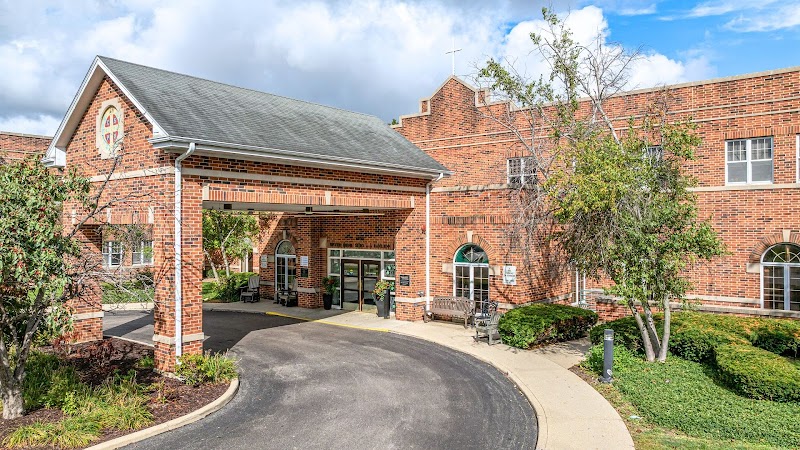
How is Citadel At Saint Benedict Staffed?

CMS rates CITADEL AT SAINT BENEDICT's staffing level at 2 out of 5 stars, which is below average compared to other nursing homes. Staff turnover is 55%, compared to the Illinois average of 46%. RN turnover specifically is 62%, which is notably high. RNs provide skilled clinical oversight, so turnover in this role can affect medical care quality.

What Have Inspectors Found at Citadel At Saint Benedict?

State health inspectors documented 10 deficiencies at CITADEL AT SAINT BENEDICT during 2023 to 2025. These included: 1 that caused actual resident harm and 9 with potential for harm. Deficiencies causing actual harm indicate documented cases where residents experienced negative health consequences.

Who Owns and Operates Citadel At Saint Benedict?

CITADEL AT SAINT BENEDICT is owned by a for-profit company. For-profit facilities operate as businesses with obligations to shareholders or private owners. The facility is operated by CITADEL HEALTHCARE, a chain that manages multiple nursing homes. With 99 certified beds and approximately 86 residents (about 87% occupancy), it is a smaller facility located in NILES, Illinois.

How Does Citadel At Saint Benedict Compare to Other Illinois Nursing Homes?

Compared to the 100 nursing homes in Illinois, CITADEL AT SAINT BENEDICT's overall rating (4 stars) is above the state average of 2.5, staff turnover (55%) is near the state average of 46%, and health inspection rating (4 stars) is above the national benchmark.

What Should Families Ask When Visiting Citadel At Saint Benedict?

Based on this facility's data, families visiting should ask: "Can you walk me through typical staffing levels on day, evening, and night shifts?" "Can I visit during a mealtime to observe dining assistance and food quality?" "How do you handle medical emergencies, and what is your hospital transfer rate?" "Can I speak with family members of current residents about their experience?" These questions are particularly relevant given the below-average staffing rating.

Is Citadel At Saint Benedict Safe?

Based on CMS inspection data, CITADEL AT SAINT BENEDICT has a clean safety record: no substantiated abuse findings (meaning no confirmed cases of resident harm), no Immediate Jeopardy citations (the most serious violation level indicating risk of serious injury or death), and is not on the Special Focus Facility watch list (a federal program monitoring the lowest-performing 1% of nursing homes). The facility has a 4-star overall rating and ranks #1 of 100 nursing homes in Illinois. While no facility is perfect, families should still ask about staff-to-resident ratios and recent inspection results during their visit.

Do Nurses at Citadel At Saint Benedict Stick Around?

CITADEL AT SAINT BENEDICT has a staff turnover rate of 55%, which is 9 percentage points above the Illinois average of 46%. Moderate turnover is common in nursing homes, but families should still ask about staff tenure and how the facility maintains care continuity when employees leave.

Was Citadel At Saint Benedict Ever Fined?

CITADEL AT SAINT BENEDICT has been fined $80,501 across 2 penalty actions. This is above the Illinois average of $33,884. Fines in this range indicate compliance issues significant enough for CMS to impose meaningful financial consequences. Common causes include delayed correction of deficiencies, repeat violations, or care failures affecting resident safety. Families should ask facility leadership what changes have been made since these penalties.

Is Citadel At Saint Benedict on Any Federal Watch List?

CITADEL AT SAINT BENEDICT is not on any federal watch list. The most significant is the Special Focus Facility (SFF) program, which identifies the bottom 1% of nursing homes nationally based on persistent, serious quality problems. Not being on this list means the facility has avoided the pattern of deficiencies that triggers enhanced federal oversight. This is a positive indicator, though families should still review the facility's inspection history directly.