ELEVATE CARE NILES

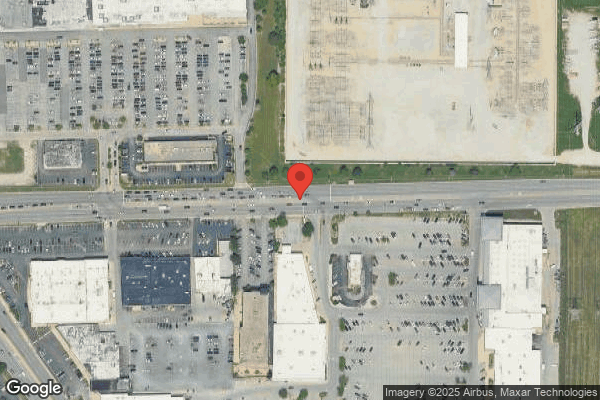
8333 WEST GOLF ROAD, NILES, IL 60714 (847) 966-9190
For profit - Limited Liability company 302 Beds ELEVATE CARE Data: November 2025
Trust Grade
0/100
#353 of 665 in IL
Last Inspection: October 2024

Within standard 12-15 month inspection cycle. Federal law requires annual inspections.

Overview

Elevate Care Niles has received a Trust Grade of F, indicating significant concerns about their care quality, which places them among the poorest facilities. They rank #353 of 665 in Illinois, meaning they are in the bottom half of nursing homes in the state, and #114 out of 201 in Cook County, suggesting limited options for improvement compared to local facilities. Although the facility is showing an improving trend, with issues decreasing from 14 in 2024 to 2 in 2025, there have been serious incidents reported, including failure to provide necessary medical care for a resident after a fall, which led to a fractured hip, and inadequate supervision during transfers, resulting in another fall. Staffing is a relative strength, with a turnover rate of 30% that is better than the Illinois average, but the facility still has a significant total of $263,812 in fines, which is concerning. While they have average RN coverage, these weaknesses highlight the need for families to carefully consider the care provided at this facility.

Trust Score
F
0/100
In Illinois
#353/665
Bottom 47%
Safety Record
High Risk
Review needed
Inspections
Getting Better
14 → 2 violations
Staff Stability
○ Average
30% turnover. Near Illinois's 48% average. Typical for the industry.
Penalties
✓ Good
$263,812 in fines. Lower than most Illinois facilities. Relatively clean record.
Skilled Nurses
✓ Good
Each resident gets 45 minutes of Registered Nurse (RN) attention daily — more than average for Illinois. RNs are trained to catch health problems early.
Violations
⚠ Watch
44 deficiencies on record. Higher than average. Multiple issues found across inspections.
★★☆☆☆
2.0
Overall Rating
★★☆☆☆
2.0
Staff Levels
★★★★☆
4.0
Care Quality
★★☆☆☆
2.0
Inspection Score
Stable
2024: 14 issues
2025: 2 issues

The Good

  • 4-Star Quality Measures · Strong clinical quality outcomes
  • Full Sprinkler Coverage · Fire safety systems throughout facility
  • No fines on record
  • Staff turnover below average (30%)

    18 points below Illinois average of 48%

Facility shows strength in quality measures, fire safety.

The Bad

2-Star Overall Rating

Below Illinois average (2.5)

Below average - review inspection findings carefully

Staff Turnover: 30%

16pts below Illinois avg (46%)

Typical for the industry

Federal Fines: $263,812

Well above median ($33,413)

Significant penalties indicating serious issues

Chain: ELEVATE CARE

Part of a multi-facility chain

Ask about local staffing decisions and management

The Ugly 44 deficiencies on record

13 actual harm
Feb 2025 2 deficiencies 2 Harm
SERIOUS (G) 📢 Someone Reported This

A family member, employee, or ombudsman was alarmed enough to file a formal complaint

Actual Harm - a resident was hurt due to facility failures

Quality of Care (Tag F0684)

A resident was harmed · This affected 1 resident

**NOTE- TERMS IN BRACKETS HAVE BEEN EDITED TO PROTECT CONFIDENTIALITY** Based on interview and record review, the facility failed to follow a provider order for a STAT (immediately) x-ray to be comple...

Read full inspector narrative →
**NOTE- TERMS IN BRACKETS HAVE BEEN EDITED TO PROTECT CONFIDENTIALITY** Based on interview and record review, the facility failed to follow a provider order for a STAT (immediately) x-ray to be completed for a resident after a fall. This failure applied to one (R1) of three residents reviewed for accidents and resulted in R1 having a delay in being transferred to the hospital for evaluation and treatment of a fractured hip, which required surgical intervention. Findings include: R1 is a [AGE] year-old female admitted to the facility on [DATE] with medical diagnoses that include: right femur fracture; unspecified dementia, moderate, w/out behavioral disturbance, psychotic disturbance, psychotic disturbance, mood disturbance, and anxiety; and mild cognitive impairment. Fall Report dated 1/24/25 3:34pm written by V8 (Licensed Practical Nurse / LPN) reads: Incident Description: Writer heard residents in the dining room yelling. When writer got to the dining room to assess what was going on the patient (R1) was noted laying on the floor on her right side while other resident (R2) was standing over her. Floor was noted dry and free of clutter. Noted walker was next to resident at the time of the incident. Immediate Action Taken: Patient was assessed from head to toe and was given pain medication and helped back to her room. NP (V9-Nurse Practitioner) assessed resident and ordered right hip x-ray and bilateral shoulder x-ray .Patient reported having pain in her right hip. There was no bruising or shortening of her legs . Mobility: Ambulatory with assistance Nursing progress notes read the following: 1/24/2025 3:58pm Nurses Note written by V8 (LPN) reads: Note Text: Writer heard residents in the dining room yelling at each other. When writer got to the dining room to assess what was going on the patient (R1) was noted laying on the floor on her right side while other resident (R2) was standing over her. Writer checked residents vitals and is as follow; bp (blood pressure) 126/86, rr (respiratory rate) 18, p (pulse) 71, o2 (oxygen saturation) 98%. Pupils equal and reactive and same size and no weakness bilateral, Patient reported having pain in her right hip. There was no bruising or shortening of her legs. Resident was assisted back to her room and given pain medication. The administrator was informed and the (V9) NP was informed. (V9) NP assessed patient and asked writer to order right hip x-ray and bilateral shoulder x-ray. All orders carried out. Administrator informed writer that she would contact family. Patient was assisted into bed and made comfortable. HOB (head of bed) raised and call light within reach. 2/08/2025 at 6:08PM V10 (Registered Nurse/RN) said, I have worked here almost a year. On 1/24/25 I worked 3-11pm. During that time, the morning nurse endorsed to me that there was an incident that another resident pushed R1 and that's why she fell. They ordered an x-ray. The morning nurse ordered the x-ray. Surveyor asked V10 if the x-ray company was called to find out the status. V10 responded, yes and they said that they would come but I don't remember them giving me a time frame. If an x-ray is ordered STAT (immediately) it should be ordered within 30 minutes to one hour. Since they said they would come, I endorsed it to the next nurse for them to follow-up again. Surveyor asked if it was expected that the x-ray company would not come within the timeframe of the eight hour shift that V10 worked. V10 said, no, I know it should have been done sooner. I don't remember what time I followed up with them. When asked if anything should have been done differently, V10 said, maybe I would have followed up again and informed the supervisor and then maybe we could have sent the patient to the hospital. During my assessment with her she was sleeping at first. Towards the end of the shift, I checked her again, I touched her left and right back and you could notice that she was in pain. The first thing I did was put the Lidocaine patch and give Tylenol since those pain orders were already in the system. V10 affirmed that she did not call the doctor to notify them that R1 was having pain but did endorse it to the oncoming nurse; because it was towards the end of V10's shift already. V10 added, I did assess her lower extremities and I didn't see any swelling or shortening of the leg. She (R1) was quiet, but she had facial grimacing when I touched her back. I applied the Lidocaine patch to her back. V10 said, sometimes when I call (x-ray company) they give a rough estimate but not an exact time. They may say we'll be there in the morning or evening but not an exact time. 2/8/25 at 6:20PM V11 (LPN) said, I have worked at the facility about 14-15 years. I normally work the overnight shift. I remember that the 3-11 nurse told me that R1 had a fall and that we were waiting for the x-ray company to come and take the x-ray. I made rounds and she was in bed sleeping so I did not touch her. When I made rounds again, she had her eyes open, and I asked her if she was in pain. She is hard of hearing, so I checked her leg. When I moved her leg, she made a noise and verbalized ow. I noticed the swelling and I called V2 (Director of Nursing/DON) and the doctor right away to tell them that I had to send her to the hospital. I called the x-ray company and they said they were on their way but with the swelling and the little bit of external rotation I did not want to wait for the x-ray company. I left a message with the doctor, called her POA (Power of Attorney), and notified V2 (DON) that I had to send R1 out. I called the ambulance, and they were here within 10 minutes. For x-rays that are ordered STAT, I don't really encounter that problem (with delays) because I work night shift so there are not a lot of incidents because the residents are sleeping. My expectation as a nurse is that if it's a STAT x-ray they come soon. I don't think that I would wait eight hours for a STAT x-ray; so, they should come right away. I would follow up again and see if they are really coming to do the x-ray and if they still are not coming and it's a fall, I would have to use my judgment as a nurse. If I notice something unusual, I will call the doctor, Director of Nursing, and POA right away to send the patient to the ER. I did my part as the nurse on duty. I know the assessment is very important as a nurse, especially when the patient has had a fall. I always make sure that I check them right away and do frequent rounds because they might not have a visible injury right away, but you never know. You might think there is nothing wrong and then later on you see something. I always ask the CNA (Certified Nurses Assistant) for help because if they are sleepy, they may hit you or something because it is a dementia unit. 2/08/2025 at 5:06PM V2 (DON) said, since R1 hasn't had a fall for years she can be independent. The reason we have her as supervision (on MDS) is more for incontinence because she needs assistance to the bathroom. Again, she hasn't had any falls. When she doesn't have an infection, her ambulation is quite good. For us, the concern was because of the UTI (urinary tract infection) and the COVID with this fall. She walks around in the morning and in the afternoon but it's not realistic for us to have a one to one. Someone is always there. There is always staff monitoring them. Someone always has to be visible in the hallway, but they can't just be sitting in the dining room. It has to be something that's going to work for all residents. I can't restrain her. She is safe to walk around with the walker. If we order a STAT x-ray, it should be done within a 4-6-hour window and we do call that in after we call the nurse practitioner. We noticed there was swelling in the right leg, and we notified the doctor. At 10:38pm it was the left right back where she was having pain. No mention of swelling. If the x-ray isn't done within 6 hours, we call the doctor to send them out to the hospital. If it's not STAT, then waiting 24 hours is okay. 2/8/25 at 3:20PM V9 (NP) said, I wasn't a witness to the incident. I just remember that it was unclear circumstances. She fell and broke her hip and required an ORIF (Open Reduction and Internal Fixation - (ORIF) is a type of surgery used to stabilize and heal a broken bone). Typically, those x-rays are ordered STAT (immediately) but I'm not sure what time the x-ray was done. V9 was asked if she would expect the facility to wait 12 hours for a STAT x-ray to be done. V9 said, if the patient was not feeling well, I would have expected it a lot sooner or the patient sent out. The nurses told me she was pain free and I didn't think she had broken that hip based on how she looked really. But if the nurses assessed and she was not in pain I could understand why she wasn't sent out sooner. When I saw her (immediately after the fall), she was stable, and I asked if she had any pain and she said no. It could have been pain from the fall and if they knew the x-ray department wasn't coming in time then of course they should not wait. As much as I wish they would come sooner, we are at their (x-ray company) mercy. For a STAT x-ray, I would ideally like it done within the hour but at least 3-5 hours. Review of R1's hospital record documents that R1 was admitted on [DATE] for a right, closed, hip fracture. Physical exam documents that R1's right hip was externally rotated, pulses intact and pain with movement of the hip. Hospital x-ray confirmed partially impacted right femoral neck fracture; mild to moderate displaced fracture of the right superior and inferior pubic rami. Hospital record also documents that R1 had sepsis, urinary tract infection, pneumonia, COVID-19, and leukocytosis present on admission, in addition to the fracture. Facility policy titled, Physician Notification of Laboratory/ Radiology/Diagnostic Results (last revised 7/8/24) reads: Purpose: To assure physician ordered diagnostic test are performed, and to assure test results are reported to the ordering physician so that prompt, appropriate action may be taken if indicated for the resident's care. Guidelines: A licensed nurse is responsible for assuring the laboratory is notified of physician's orders for testing. A requisition is to be completed and lab to be drawn on next scheduled lab draw day UNLESS Stat or Same Day order is received. oCollect and label specimen, name, date, time and name of test. Place in plastic transport bag - note stat. oCall for transport service. STAT or Same Day orders will be called to the laboratory service by the nurse who transcribes the order. A nurse is responsible for monitoring the receipt of test results. Laboratory and/or diagnostic company will contact assigned licensed nursing staff with any abnormal or critical results that require prompt attention. Test results should be reported to the primary care physician or other ordering practitioner pursuant §483.50 Laboratory, radiology, and other diagnostic services guidelines. Guidelines for Reporting Abnormal Results: o All Critical laboratory values - also called Alert or Panic values o X-ray or other diagnostic tests reveal suspected findings which may require immediate intervention including but not limited to: o Pneumonia o New fracture In the event a physician does not respond promptly to attempts to convey critical laboratory results, the alternate physician or Medical Director will be notified. Promptly may be defined based on the clinical condition of the resident and the judgement of the nurse in each individual situation. For example, some conditions may require immediate 911 intervention, others may be delayed 4 or more hours if the condition of the resident is stable. Should the alternate physician or Medical Director not respond, the Director of Nursing will be notified. The Director of Nursing interventions should include: o Assessment of the resident's clinical condition (in person or by phone) o Further attempt to contact the Physician, Alternate Physician or Medical Director o Emergency transfer based on clinical judgement .
SERIOUS (G) 📢 Someone Reported This

A family member, employee, or ombudsman was alarmed enough to file a formal complaint

Actual Harm - a resident was hurt due to facility failures

Accident Prevention (Tag F0689)

A resident was harmed · This affected 1 resident

**NOTE- TERMS IN BRACKETS HAVE BEEN EDITED TO PROTECT CONFIDENTIALITY** Based on interview and record review, the facility failed to provide supervision/touching assistance for a resident when moving ...

Read full inspector narrative →
**NOTE- TERMS IN BRACKETS HAVE BEEN EDITED TO PROTECT CONFIDENTIALITY** Based on interview and record review, the facility failed to provide supervision/touching assistance for a resident when moving from a seated to standing position, per the residents plan of care and assessments, in order to prevent a fall. This failure applied to one (R1) of three residents reviewed for accidents and resulted in R1 having a fall causing a fractured hip that required surgical intervention. Findings include: R1 is a [AGE] year-old female admitted to the facility on [DATE] with medical diagnoses that include: right femur fracture; unspecified dementia, moderate, w/out behavioral disturbance, psychotic disturbance, psychotic disturbance, mood disturbance, and anxiety; and mild cognitive impairment. R1's Minimum Data Set (MDS) assessments document the following: 1/4/25 Section GG Functional Abilities codes R1 as requiring supervision or touching assistance during sit to stand (ability to come to a standing position from sitting in a chair, wheelchair, or on the side of the bed); walk 10 feet (once standing, the ability to walk at least 10 feet in a room, corridor, or similar space); walk 50 feet with two turns (once standing, the ability to walk at least 50 feet and make two turns); walk 150 feet (once standing, the ability to walk at least 150 feet in a corridor or similar space). Fall Report dated 1/24/25 3:34PM written by V8 (Licensed Practical Nurse / LPN) reads: Incident Description: Writer heard residents in the dining room yelling. When writer got to the dining room to assess what was going on the patient (R1) was noted laying on the floor on her right side while other resident (R2) was standing over her. Floor was noted dry and free of clutter. Noted walker was next to resident at the time of the incident. Immediate Action Taken: Patient was assessed from head to toe and was given pain medication and helped back to her room. NP (Nurse Practitioner) assessed resident and ordered right hip x-ray and bilateral shoulder x-ray .Patient reported having pain in her right hip. There was no bruising or shortening of her legs . Mobility: Ambulatory with assistance Nursing progress notes read the following: 1/24/2025 3:58PM Nurses Note written by V8 (LPN) reads: Note Text: Writer heard residents in the dining room yelling at each other. When writer got to the dining room to assess what was going on the patient (R1) was noted laying on the floor on her right side while other resident (R2) was standing over her. Writer checked residents vitals and is as follow; bp (blood pressure) 126/86, rr (respiratory rate) 18, p (pulse) 71, o2 (oxygen saturation) 98%. Pupils equal and reactive and same size and no weakness bilateral, Patient reported having pain in her right hip. There was no bruising or shortening of her legs. Resident was assisted back to her room and given pain medication. The administrator was informed, and the NP was informed. NP assessed patient and asked writer to order right hip x-ray and bilateral shoulder x-ray. All orders carried out. Administrator informed writer that she would contact family. Patient was assisted into bed and made comfortable. HOB (head of bed) raised and call light within reach. 2/7/25 at 3:38PM V7 (Certified Nursing Assistant / CNA) said, I was standing by room [ROOM NUMBER]; not in the dining room. I was supervising the unit. R1 and R2 were having a verbal disagreement. I saw R1 put her hand on the walker to get up and the walker tipped over and she fell on the right side. At no point did I see R2 hit R1 or R1 hit R2. The nurse then came, and the other CNA came to help. No issues with either of them being aggressive with other residents. There were no other residents in the dining room at that time. 2/8/25 at 1:13PM V8 (LPN) said, I have worked here since May 2024. I normally work on the second floor but recently I have been floating around. Regarding the incident with R1 and R2, I was at the nurses station charting and I heard a commotion. I went to the dining room and R1 was on the floor. R2 was in the room, right next to her or over her. I don't remember exactly. The dining room is not in view of the nurses' station. I think they were right when you first go into the dining room. I don't recall any other residents being in there are the time. When I got there the CNA (V7) was there. I don't remember her name because I don't work with her that often, but it wasn't CNA (V4) because I know her, so yes it was V7 and then V4 came in after. R1 was hysterical and saying, I fell. I was asking her what happened, but she was just saying that her leg hurt. I just examined her, and we helped her get up and I called V1 (Administrator). R1's walker was in there with her. I usually see her getting up independently and she walks over to the dining room with her walker, sometimes I'll see her by the nurses station. Surveyor asked V8 if she would have expected someone to be in the dining room monitoring R1 and R2. V8 responded, there is usually someone in there monitoring. I know that around that time of day, a lot of them like to walk around. Right before the shift ends there are rounds and I am usually charting getting ready to go home. I don't know if the CNA was in there the entire time. She didn't report anything specific to me. I had to open my charting, call V1 (Administrator) and the Nurse Practitioner (NP). When I did go to get a statement from V7, I couldn't find her. I assumed she had left for the day. The NP ordered the x-ray. We helped R1 to her room and then right after that, the NP came to the floor and assessed her as well. Surveyor asked, what type of supervision is expected for a resident who has an MDS code of (4) Supervision / Touching Assistance. V8 said, I would say that you have to guide them and be there when they are getting up so if they look weak you may have to provide them with more assistance than usual. A lot of times they get up on their own, but you have to watch them. I would expect for someone to be around them when they are getting up from the bed or chair. I would probably say staff should be within eye length distance; within your view. I have never seen R1 get aggressive. I have heard about R2 getting aggressive, but I have never witnessed it; he may touch things or move things around; or he can get close to you. Again, I haven't experienced that with him. 2/7/25 at 2:03PM, V3 (LPN) said she was not present during the incident with R1 and R2. V3 said that the residents must always be monitored because this is a dementia unit. Some people can be more agitated, and we have to monitor them closely and they can fall. Safety is the priority. V3 added that she has not witnessed any abuse between R1 and R2 but that R1 can get mad at times, and she is hard of hearing so she can get frustrated. 2/7/25 at 2:17PM, V4 (CNA) said, I was here during the incident with R1 and R2, but I was in the room with another resident. R2 was out for a few months but he is calm now and seems to have gotten better actually. Someone is in the dining room at all times; the residents can fall. If activities is in the dining room, they will monitor them too. 2/7/25 at 2:34PM V2 (Director of Nursing) reviewed facility fall report with surveyor. V2 added that they were not aware that R1 had COVID at the time of the fall, until the hospital called to report it to them. There are cameras in the dining room, but you can ask V1 (Administrator) to see it. All of the progress notes and assessments are in the chart. 2/7/25 at 2:45PM V1 (Administrator) said there is no video to see currently because the cameras loop every 48 hours. V1 added, I didn't get a chance to look at the video. I had left early that day because I had just gotten back from vacation. This was our only incident for January. I unsubstantiated the abuse. I initially reported it as abuse because the nurse (V8) said she didn't know what happened but assumed R2 pushed R1. During my investigation though, V7 (CNA) said she saw when R1 fell and that R2 had not pushed her. V7 said she was walking towards the dining room and could not get to R1 before she fell. When I tried to interview R1, she said she couldn't hear me, and she was confused. The combination of COVID and UTI (urinary tract infection) explain a lot about why she fell. V1 added that R1 is normally very careful when getting up but that having the infections contributed to the fall. It had been a while since R1 had any falls or infection. 2/08/2025 at 5:06PM V2 (Director of Nursing) was interviewed, and surveyor asked if R1 should have been supervised when getting up from the chair or had supervision while in the dining room since her MDS has her coded as requiring supervision and/or touching assistance. V2 said, since R1 hasn't had a fall for years she can be independent. The reason we have her as supervision is more for incontinence because she needs assistance to the bathroom. Again, she hasn't had any falls. When she doesn't have an infection, her ambulation is quite good. For us, the concern was because of the UTI and the COVID with this fall. She walks around in the morning and in the afternoon but it's not realistic for us to have a one to one. Someone is always there. There is always staff monitoring them. Someone always has to be visible in the hallway, but they can't just be sitting in the dining room. It has to be something that's going to work for all residents. I can't restrain her. She is safe to walk around with the walker. 2/8/25 at 7:10PM V1 (Administrator) said, V7 (CNA) was standing in front of room [ROOM NUMBER] and if she had been in the dining room, she would not necessarily have been any closer to the resident. We will send you a picture of the distance from the room to the dining room entrance where the residents were at the time of the fall. She was about 5 feet from the resident at the time of the fall. Review of R1's care plans include: High Risk for Falls, Initiated: 2/18/21, Revised: 2/7/25 Interventions: Needs activities that minimize the potential for falls while providing diversion and distraction (Initiated: 2/18/21); Be sure call light is within reach and encourage (R1) to use it for assistance as needed (Initiated: 2/18/21) (R1) presents with a functional deficit in ambulation due to: generalized weakness, Initiated and Revised: 4/5/21 Interventions: Staff to assist as needed (Initiated: 4/5/21); Observe for signs/symptoms of fatigue, SOB (shortness of breath), pain, discomfort, or intolerance (Initiated: 4/5/21) (R1) has an ADL Self Care Performance Deficit related to Dementia and dx of HL, HTN (hypertension), and h/o (history of) UTI, Initiated and Revised: 2/18/21 Interventions: Encourage (R1) to use bell to call for assistance (Initiated: 2/18/21). R1's restorative observation - quarterly review, dated 11/12/24 documents that R1 has Maintained ability to ambulate 100-200 feet using rolling walker with staff supervision .Resident AO (Alert and Oriented) x1-2, able to express needs, able to feed self, able to follow simple command, continent of bowel, occasionally incontinent of bladder, ambulatory with supervision touching assist using rolling walker .Resident with ADL (Activities of Daily Living) Self Care Performance Deficit related to generalized weakness, unsteady gait and poor safety awareness. Resident requires supervision to partial assist to safely complete ADLs . R1's fall risk assessment dated [DATE], documents that R1 is high risk for falling, with a weak gait and mental status limitation of overestimates or forgets limits. 2/8/25 at 3:20PM V9 (Nurse Practitioner) said, I wasn't a witness to the incident. I just remember that it was unclear circumstances. She fell and broke her hip and required an ORIF (open reduction and internal fixation (ORIF) is a type of surgery used to stabilize and heal a broken bone). Review of R1's hospital record documents that R1 was admitted on [DATE] for a right, closed, hip fracture. Physical exam documents that R1's right hip was externally rotated, pulses intact and pain with movement of the hip. Hospital x-ray confirmed partially impacted right femoral neck fracture; mild to moderate displaced fracture of the right superior and inferior pubic rami. Hospital record also documents that R1 had sepsis, urinary tract infection, pneumonia, COVID-19, and leukocytosis present on admission, in addition to the fracture.
Dec 2024 1 deficiency
CONCERN (D) 📢 Someone Reported This

A family member, employee, or ombudsman was alarmed enough to file a formal complaint

Potential for Harm - no one hurt, but risky conditions existed

Quality of Care (Tag F0684)

Could have caused harm · This affected 1 resident

**NOTE- TERMS IN BRACKETS HAVE BEEN EDITED TO PROTECT CONFIDENTIALITY** Based on interview and record review, the facility failed to follow their call light policy and answer residents' call light in ...

Read full inspector narrative →
**NOTE- TERMS IN BRACKETS HAVE BEEN EDITED TO PROTECT CONFIDENTIALITY** Based on interview and record review, the facility failed to follow their call light policy and answer residents' call light in a timely manner for three (R1, R3, and R4) residents out of four residents reviewed for call lights in a total sample of four residents. This failure places residents at risk to be provided with inappropriate care and services to meet the resident's physical, mental and/or psychosocial needs. Findings include: On 12/15/2024, 9:29 AM, V5 (Certified Nursing Assistant) states that currently there are two certified nursing assistants working on this floor and one nurse. V5 states that there are approximately 22 residents on this floor. On 2/15/2024, 9:44 AM, R1 is laying down on her bed, head of her bed slightly elevated, and in no apparent distress. R1 is wearing black sunglasses. R1's call light is within reach. R1 reports that she has waited several hours to be changed. R1 states that sometimes staff take long to answer her call lights. R1 states that it takes 2 hours for someone to answer her call light. R1's MDS/Minimum Data Set, dated [DATE], documents that R1 has a BIMS/Brief Interview for Mental Status score of 15/15, indicating that R1 is cognitively intact. 12/15/2024, 9:57 AM, R3 is standing up, using oxygen via nasal cannula, with a steady gait. R3 states that she observes staff taking a long to attend to R1. R3 states that staff can take up to one hour before they answer R3's bedroom call light. R3's MDS/Minimum Data Set, dated [DATE], documents that R3 has a BIMS/Brief Interview for Mental Status score of 15/15, indicating that R3 is cognitively intact. 12/15/2024, 1:25 PM, R4 is sitting in his wheelchair in his bedroom, R4 is alert and responsive. R4 states that he does need assistance with staff to change his incontinence briefs. R4 states that he does utilize his call light to call for assistance. R4 states that he has waited more than 2 hours for his call light to be answered. R4 states that no other staff help answer call lights, and usually just the nursing aids. Sometimes the nurses answer the call lights. R4's MDS/Minimum Data Set, dated [DATE], documents that R4 has a BIMS/Brief Interview for Mental Status score of 14/15, indicating that R4 is cognitively intact. 12/15/2024, 10:22 AM, at the nurse's station with V5 (Certified Nursing Assistant) and V6 (Certified Nursing Assistant), V5 states that the call light system is at the nurse's station. It will alert like a doorbell, and it shows how long it's been on for. V5 states that residents could be waiting for a very long time for just some water. V5 states that residents could need urgent help. If the call lights are not answered in a timely manner their care can get delayed. 12/15/2024, 10:25 AM, V6 (Certified Nursing Assistant/CNA) states but if I am in the room giving a bed bath, and the call light is on, it won't get answered until I answer it. All staff are supposed to answer the call lights. V6 states I've seen 50 minutes there, pointing at the call light system where it reflects how long the call light has been on for. 12/15/2024, 12:41 PM, observed V5 and V6 collecting lunch trays. One call light went on. Call light noise heard at nurse's station. V10 (Financial Coordinator) sitting at nurse's station in front of computer. 12/15/2024, 12:43 PM, V6 went into room and answered call light. 12/15/24, 12:56 PM, call light sound went on, V8 (Registered Nurse) and V10 (Financial Coordinator) sitting at the nurse's station, V10 stated I just saw V5, where is she. 12/15/2024, 1:48 PM, V2 (Director of Nursing) states that when a resident pulls the call light, staff need to answer right away. V2 states sometimes its's challenging if the nurse is giving medication and giving patient care, it can take a little. They can't just leave to go answer the call light. Facility document dated 10/15/2024, titled Resident Council Meeting Minutes documents in part residents had mentioned regarding call light response. Facility document dated 2/2/2018, titled Call light documents in part, in all departments, resident call lights will be answered in timely manner. All staff should assist in answering call lights.
Oct 2024 6 deficiencies
CONCERN (D)

Potential for Harm - no one hurt, but risky conditions existed

Resident Rights (Tag F0550)

Could have caused harm · This affected 1 resident

**NOTE- TERMS IN BRACKETS HAVE BEEN EDITED TO PROTECT CONFIDENTIALITY** Based on observation, interview, and record review the facility failed to provide privacy and dignity to a totally dependent and...

Read full inspector narrative →
**NOTE- TERMS IN BRACKETS HAVE BEEN EDITED TO PROTECT CONFIDENTIALITY** Based on observation, interview, and record review the facility failed to provide privacy and dignity to a totally dependent and cognitively impaired resident. This deficiency affects one (R208) of three residents in the sample of 30 reviewed for Resident's rights. Findings include: R208 was admitted on [DATE] with diagnoses listed in part but not limited to Acute and chronic respiratory failure with hypoxia, dependence on ventilator, Hemiplegia and hemiparesis following cerebrovascular disease affecting right dominant side, Tracheostomy, Gastrostomy. On 10/1/24 at 11:57AM, R208 was observed lying in bed sleeping, leaning to the left side of the bed. He was exposed and uncovered wearing a gown and disposable brief. His body from his abdomen to lower extremities were exposed. A folded linen sheet was seen on the left corner side of the bed. The left heel protector was on the floor. The right heel protector was not properly placed. R208 was wearing bilateral hand mittens. The door was open and R208 was visible to any passerby walking in the hallway. The room is close to and can be viewed from the nurses station. Staff were observed at the nurses station and in the hallway. V15 (Nursing Supervisor) was showed observation. V15 said that R208 should be covered with linen for privacy and dignity. V15 took the folded linen from the corner of the bed and spread it to cover R208. On 10/1/24 at 1:30PM, Informed V1 (Administrator) and V2 (Director of Nursing) of above concern. Requested for policy. Facility's policy on Resident Rights reviewed 1/4/19 indicates: Purpose: To promote the exercise rights for each resident, including any who face barriers (such as communication problems, hearing problems and cognition limits) in the exercise of these rights. A resident, even though determined to be incompetent, should be able to assert these rights based on his or her degree of capability. Guidelines: Notice of resident rights will be provided upon admission to the facility. These rights include the resident's right to: *Exercise his or her rights. *Privacy and confidentiality.
CONCERN (D)

Potential for Harm - no one hurt, but risky conditions existed

Deficiency F0661 (Tag F0661)

Could have caused harm · This affected 1 resident

**NOTE- TERMS IN BRACKETS HAVE BEEN EDITED TO PROTECT CONFIDENTIALITY** Based on interview, and record review the facility failed to obtain discharge orders from the physician to transfer a resident (...

Read full inspector narrative →
**NOTE- TERMS IN BRACKETS HAVE BEEN EDITED TO PROTECT CONFIDENTIALITY** Based on interview, and record review the facility failed to obtain discharge orders from the physician to transfer a resident (R154) to another facility and failed to provide a discharge summary to the continuing provider and receiving facility at the time of discharge. This deficiency affects one (R154) of one in the sample of 30 reviewed for Discharge summary. Findings include: A review of R154's records show that R154 was admitted on [DATE] with diagnoses of Cellulitis of right lower limb, Unsteadiness on feet, Acute post hemorrhagic anemia and long-term use of antibiotics. R154 was identified as elopement/unauthorized departure risk on 9/25/24 indicated: A Evaluation: Resident have the physical ability to leave the facility; Resident verbalize anger and or a serious intent to leave the facility and has a history of unauthorized departure; Resident seek exits, pull door handles, hang around facility exits and stairways or wanders between floors; Resident becomes easily agitated, confused, and or disoriented and show poor judgement (wound not be able to safely care for him/herself outside of the facility); B. Outcome and recommendations: R154 is considered at risk for unauthorized departure/elopement/flight risk. The resident is considered at risk for unauthorized departure. Resident will be placed on elopement watch. R154's progress notes were reviewed. On 10/1/24, a progress noted was entered by V25 (LPN/Licensed Practical Nurse) that documents that R154 was out on pass at 9:13AM, then V32 (Social Service) documented that R154 was discharged to another facility at 12:13PM. V32 documented as if the resident was in the facility when discharged to another facility. R154's active physician order did not have discharge orders. There were episodes documented of R154's behavior and verbalization of leaving the facility on 9/25, 9/26 and 9/27/24. No monitoring elopement documentation was found in the chart. On 10/2/24 at 9:25AM, V1 (Administrator) said that R154 reported that he has eloped from the facility on 9/30/24 around 11:15PM. Elopement incident was done on 10/1/24 at 6:54AM. R154's friend and police officer were notified. R154's friend found him in a shelter home and took him to another facility of his choice. V1 said that R154 was a planned discharged to the facility he was transferred to. On 10/2/24 at 10:54AM, V32 (Social Service) said that he documented the discharge notes for R154 even though he was not in the facility. V32 said that it was a planned discharged to another facility of his choice. R154 had eloped from the facility and was found by his friend in a shelter home and brought him to the facility where he supposed to be transferring. On 10/2/24 at 11:28AM, V34 (Primary Care Physician) of R154 said that she was not aware that R154 eloped from the facility on the evening of 9/30/24 and was transferred to another facility. V34 said that R154 is homeless and was denied by the other facility. Only this facility accepted him, and he needs medical treatment. V34 said that she would expect the facility to notify her when R154 had eloped and transferred to another facility. V34 said that she did not give an order for him to be transferred to another facility. On 10/2/24 at 11:52AM, V35 Administrator and V36 admission Director of another facility where R154 was transferred said that R154 was dropped off by his friend to their facility. They are not aware that R154 had eloped from the facility. No discharged instructions and resident's personal belongings received. They called V32 Social Service to fax documents of R154 to their facility. R154's progress note by V32 (Social Service) dated 10/1/24 at 12:13PM, documented R154 was admitted on [DATE] and V32 assisted R154 with finding another nursing home due to resident stating this nursing home not meeting his medical needs and requesting to transfer to a nursing home in Chicago. R154 was discharged and this facility arranged for transportation to another nursing home facility on 10/1/24. R154 did not show any signs or symptoms of depression or manic episodes or behaviors. R154 was re-educated on safety, home needs and medical requests, including proper nutrition, medical advice, medication usage and side effects, doctor needs and all information pertaining to R154's health and well-being relative to discharge. R154 was asked if they needed any additional medical services. R154 is stable upon discharge. The resident was asked if they needed any additional medical information, help and or education on medications/prescriptions by nursing staff. The resident expressed that he is excited to be transferred to a nursing home and happy to be discharged to pursue individual goals. Social service will follow up and provide support as appropriate. On 10/3/24 at 9:27AM, Informed V32 (Social Service) that he wrote the discharge notes for R154 without a physician order of discharge to another facility. V32 did not document that R154 had eloped from the facility, went to shelter care, and was brought by R154's friend to another facility. Instead V32 charted that R154 was discharged from this facility and was transferred to another facility. V32 did not see nor spoke with R154 on 10/1/24. V2 (DON/Director of Nurses) said that they cannot document discharge summary if the resident is not in the facility. V2 said that nursing staff will usually write the discharge narrative which includes resident clinical condition/status/stability, vital signs, medications and treatment instructions, personal belongings, medical equipment, transportation arrangements and discharge instructions. V2 said that a discharge order should be obtained from the physician before they can discharge resident. On 10/3/24 at 2:20PM, V1 (Administrator) said that they don't have policy on Discharge summary. Facility unable to provide policy on discharge summary.
CONCERN (D)

Potential for Harm - no one hurt, but risky conditions existed

Respiratory Care (Tag F0695)

Could have caused harm · This affected 1 resident

**NOTE- TERMS IN BRACKETS HAVE BEEN EDITED TO PROTECT CONFIDENTIALITY** Based on observation and record review the facility failed to provide a resident (R111) with a backup tracheostomy tube of appro...

Read full inspector narrative →
**NOTE- TERMS IN BRACKETS HAVE BEEN EDITED TO PROTECT CONFIDENTIALITY** Based on observation and record review the facility failed to provide a resident (R111) with a backup tracheostomy tube of appropriate size at the bedside for accidental extubation. This deficiency affects one (R111) of three residents in the sample of 30 reviewed for Respiratory care. Findings include: R111 was admitted on [DATE] with diagnosis listed in part but not limited to Acute and chronic respiratory failure with hypoxia, Tracheostomy, Gastrostomy, Anoxic brain damage. Active physician order sheet indicates Change inner cannula 6.5 size every day and night and as needed. Comprehensive care plan indicates that she has tracheostomy for impaired breathing mechanics due to acute and chronic respiratory failure with hypoxia. Interventions: Keep an additional tracheostomy tube (same size as the resident's) at bedside for an emergency situation. On 10/1/24 at 11:42AM, Rounds were made to R111 with V8 (Respiratory Therapist) and V15 (Nursing Supervisor). R111 was observed lying in bed with tracheostomy tube on room air. V8 showed surveyor the spare tracheostomy tube size of 7.5 at bedside. V8 said that R111 is on trach size 6.5. V8 said that R111 should have a trach size of 6.5 at the bedside, not 7.5. V8 said that residents with a tracheostomy should have 1 same size and 1 downsize tracheostomy tube at bedside for emergency/accidental extubation. On 10/1/24 at 1:20PM, Informed V2 (Director of Nursing) of above concern identified. Facility's policy on Accidental Extubation indicates: Purpose: A patient's airway is essential to maintain the patient's cardiopulmonary status. In case of an accidental extubation, it is absolutely necessary to re-establish an airway as quickly as possible. Policy: It is the policy of this facility to prevent accidental extubation whenever possible, however not all accidental extubation are preventable. In such instances, management of extubation will be done in a safe and effective way in accordance with applicable rules and regulations and standard of care. II. Unable to reinsert tracheostomy tube A. If unable to re-insert tracheostomy tube of original size, a tracheostomy tube of the next smaller size should be inserted. IV. Special Considerations A. A backup tube the same size or one size smaller than the prescribed size will be always kept at bedside.
CONCERN (D)

Potential for Harm - no one hurt, but risky conditions existed

Pharmacy Services (Tag F0755)

Could have caused harm · This affected 1 resident

**NOTE- TERMS IN BRACKETS HAVE BEEN EDITED TO PROTECT CONFIDENTIALITY** Based on observation, interview, and record review the facility failed to implement its medication administration policy by fail...

Read full inspector narrative →
**NOTE- TERMS IN BRACKETS HAVE BEEN EDITED TO PROTECT CONFIDENTIALITY** Based on observation, interview, and record review the facility failed to implement its medication administration policy by failing to administer treatment medication by authorized personnel and failed not to administer medication treatment supplied for one resident to another resident. This deficiency affects one (R53) of three residents reviewed for Medication administration safety. Findings include: R53 was admitted on [DATE] with diagnosis listed in part but not limited to Type 2 Diabetes Mellitus with diabetic neuropathy, Morbid obesity due to excess calories, Acute and chronic respiratory failure with hypoxia, Tracheostomy. Active physician order sheet indicates Nystatin external powder 100,000 unit/gram (Nystatin Topical) apply to skin folds, topically every 12 hours for MASD (Moisture Associated Skin Disease) abdominal and breast folds. On 10/1/24 at 11:54AM. R53 was observed lying in bed with a tracheostomy connected oxygen. Nystatin powder medication container was seen on top of her bedside tray table. Observation was shown to V15 (Nursing Supervisor). The medication label read Nystatin powder 100,000 USP units/gram with R80's name. V15 said that medication should not be left at the resident bedside and medication treatment cannot be shared with another resident. R53 said that the CNAs (Certified Nurse Assistant) apply the nystatin powder to under her breast, abdominal folds, and groin areas. V15 said that CNAs cannot administer Nystatin medication to R53, only the nurse. On 10/1/24 at 1:15PM, Informed both nurses on 5th floor - V18 (RN/Registered Nurse) and V30 (LPN/Licensed Practical Nurse) of above observation. Both said that they did not apply the nystatin powder medication to R53. Both said, the wound care nurses are the one's administering the medication, and they are the one's documenting it in the MAR (Medication Administration Record). Both said, they were not aware that R80's nystatin medication was on R53's bedside tray table and they did not know how it got to R53's room because R80 is on the 2nd floor. Both said that medication should not be left at the resident bedside and medication treatment cannot be shared with another resident. Both said that CNAs cannot administer Nystatin medication to R53, only the nurse. On 10/1/24 at 2:00PM, Informed V2 (Director of Nursing/DON) of above observation. V2 said that medication should not be left at the resident bedside and medication treatment cannot be shared with another resident. V2 said that CNAs cannot administer medication to a resident. On 10/2/24 at 11:08AM, V16 (CNA) and V17 (CNA) said that they are administering the nystatin power medication that was at the bedside tray table of R53 to her groin, abdominal folds and under the breast as the resident requested when they were providing care to her. They did not notice that the Nystatin powder is R80's medication. They are aware that they are not allowed to administer medication, but they are just following the resident request. On 10/2/24 at 2:03PM, V10 (Wound Care Coordinator) said that they usually administered R53's nystatin medication but the nurses on the floor will document it. Informed V10 of above observation. V10 was not aware that R80's nystatin medication was at R53's bedside tray table. V10 said that medication should not be left at the resident bedside and medication treatment cannot be shared with another resident. V10 said that CNAs cannot administer Nystatin medication to R53, only the nurse. On 10/3/24 at 1:02PM, V31 (Wound Care Nurse) said he administrated R53's Nystatin powder treatment on 10/1/24 at 9AM and informed the floor nurse to document it. V31 said that he can document that he did administer the medication to R53, but it was already their practice that the floor nurse will document for them. V31 said that he used R53's Nystatin powder medication that was kept in the treatment cart. On 10/3/24 at 1:13PM, Informed V1 (Administrator) of above concerns and showed R53's Medication Administration record of Nystatin powder for September and October 2024. Policy: Medications are administered as prescribed in accordance with good nursing principles and practices and only by persons legally authorized to do so. Procedures: A. Preparation 4. Five Rights- Right resident, right drug, right dose, right route, and right time are applied for each medication being administered. B. Administration 1. Medications are administered only by licensed nursing, medical, pharmacy, or other personnel authorized by state laws and regulations to administer medications. 2. Medications are administered in accordance with written orders. 15. Medications supplied for one resident are never administered to another resident. D. Documentation (including electronic) 1. The individual who administers the medication dose records the administration on the resident's MAR directly after the medication is given. 3. Topical medications used in treatments are listed on the Treatment Administration Record.
CONCERN (E)

Potential for Harm - no one hurt, but risky conditions existed

Pressure Ulcer Prevention (Tag F0686)

Could have caused harm · This affected multiple residents

**NOTE- TERMS IN BRACKETS HAVE BEEN EDITED TO PROTECT CONFIDENTIALITY** Based on observation, interview, and record review the facility failed to follow manufacturer's instruction in using low air los...

Read full inspector narrative →
**NOTE- TERMS IN BRACKETS HAVE BEEN EDITED TO PROTECT CONFIDENTIALITY** Based on observation, interview, and record review the facility failed to follow manufacturer's instruction in using low air loss (LAL) mattress by using multiple layers of linens for residents with pressure ulcers and at high risk for skin impairment. The facility also failed to apply bilateral heel protectors as ordered by physician and care plan intervention. This deficiency affects all five ( R62, R100, R104, R112 and R208) residents in the sample of 30 reviewed for Pressure ulcer prevention management. Findings include: 1. On 10/1/24 at 11:57AM, R208 was observed sleeping, lying in bed leaning to the left side of the bed. He was exposed and uncovered. He was wearing gown and disposable brief. His body from abdomen to lower extremities were exposed. A folded linen sheet placed at the left corner side of the bed was seen. The left heel protector was on the floor. The right heel protector was not properly placed. R208 was wearing bilateral hand mittens. V15 (Nursing Supervisor) was showed observation. V15 said that R208 should have bilateral heel protectors in place. R208 was admitted on [DATE] with diagnosis listed in part but not limited to Acute and chronic respiratory failure with hypoxia, Tracheostomy, Dependence of respirator(ventilator), Hemiplegia and hemiparesis following cerebrovascular disease affecting right dominant side, Dysphagia, Gastrostomy, Stage 4 Pressure ulcer of sacral region. Active physician order sheet indicates heel protecting devices or offload to bilateral heels. Wound care: Left and right heel- cleanse with normal saline, apply skin prep cover with bordered gauze or foam dressing 3x/week and as needed. May cover with abdominal wrap with kerlix if gauze or foam does not stay. Comprehensive care plan indicates: R208 has pressure injury to sacrum extending to right buttocks, bilateral heels and right side back is at risk for delayed wound healing and is at very high risk for further alteration in skin integrity. Intervention: Off load heels using heel protecting devices. 2. On 10/1/24 at 11:59AM, R62 was observed lying in bed with LAL mattress. V15 (Nursing Supervisor) lifted the linen covering R62. A flat sheet and cloth pad was observed under R62 on the mattress. R62 is wearing a disposable adult brief. V15 said that residents on LAL mattresses should only have a flat sheet over the mattress, no cloth pad. R62 was admitted on [DATE] with diagnosis listed in part but not limited to Chronic respiratory failure, Tracheostomy, Dependence on Respirator, Gastrostomy, Cerebrovascular disease (CVA), Encephalopathy. Active physician order indicates: Low air loss mattress at all times. Comprehensive care plan indicates R111 is at high risk for developing skin breakdown related to immobility, bowel, and bladder incontinence, CVA with right sided weakness, Encephalopathy, and contracture to lower extremities. Intervention: Provide low air loss mattress at all times. 3. On 10/1/24 at 12:04PM, R104 was observed lying in bed with LAL mattress. V15 (Nursing Supervisor) lifted the linen covering R104. A flat sheet and cloth pad was observed under R104 on the mattress. R104 is wearing a disposable adult brief. V15 said that residents on LAL mattress should only have a flat sheet over the mattress, no cloth pad. R104 is admitted on [DATE] with diagnosis listed in part but not limited to Amyotrophic lateral sclerosis, Acute and chronic respiratory failure, Tracheostomy, Dependence on respirator, Gastrostomy. Active physician order indicates Low air loss mattress in use. Check for proper functioning and setting. Comprehensive care plan indicates R104 is at high risk for pressure ulcer development or skin alteration related to decreased mobility, lateral sclerosis, respiratory failure, vent dependence, atelectasis, incontinence, and self-care deficit. Intervention: Low air loss mattress at all times. 4. On 10/1/24 at 12:10PM, R112 was observed lying in bed with LAL mattress. V15 (Nursing Supervisor) lifted the linen covering R112. A flat sheet and cloth pad was observed under R112 on the mattress. R112 is wearing a disposable adult brief. V15 said that residents on LAL mattress should only have a flat sheet over the mattress, no cloth pad. R112 is admitted on [DATE] with diagnosis listed in part but not limited to Encephalopathy, Intracranial injury, Acute and chronic respiratory failure, Tracheostomy, Dependence on respirator, Gastrostomy, Stage 4 pressure ulcer left buttocks, Type 2 Diabetes Mellitus, Morbid obesity. Active physician order indicates: Low air loss mattress in use. Check for proper functioning and settings. Comprehensive care plan indicates: R112 is at very high risk for impaired skin integrity related to chronic disease process/comorbidities, impaired mobility, and incontinence. She has pressure injury to left buttocks ischium and is at high risk for delayed wound healing and is at risk for further alteration in skin integrity. Intervention: Low air loss mattress in place with appropriate settings and functioning properly. 5. On 10/1/24 at 12:16PM, R100 was observed lying in bed with LAL mattress. V15 (Nursing Supervisor) lifted the linen covering R100. A flat sheet and folded towel was obserevd under R100 over the mattress. R100 is wearing a disposable adult brief. V15 said that residents on LAL mattress should only have a flat sheet over the mattress, no folded towel. R100 is admitted on [DATE] with diagnosis listed in part but not limited to Amyotrophic lateral sclerosis, Tracheostomy, Dependence on respirator, Gastrostomy, Stage 4 pressure ulcer sacral region, Stage 4 pressure ulcer right and left buttocks, Unstageable pressure ulcer part of back, Deep tissue damage of left upper back, right elbow, right ankle, right upper back, Unstageable pressure ulcer of left elbow. Active physician order sheet indicates Low air loss mattress in use, Check for proper functioning and settings. Wound care: Buttocks/perineum/groin cleanse with normal saline (NS), pat dry, apply zinc oxide every day shift and as needed. Left elbow cleanse with NS, betadine paint cover with foam or bordered gauze 3x/week and as needed. Left ischium cleanse with NS, keep contact layer for 3 days, change adaptic, but leave skin substitute apply alginate light pack cover with foam or bordered gauze 3x/week and as needed. Left scapula cleanse with NS, betadine paint xeroform cover with foam or bordered gauze 3x/week and as needed. Mid upper back cleanse with NS, betadine paint, xeroform cover with foam or bordered gauze 3x/week and as needed. Right buttock/ischium cleanse with NS, keep contact layer for 3 days, change adaptic, but leave skin substitute apply alginate lightly pack cover with foam or bordered gauze 3x/week and as needed. Right elbow cleanse with NS apply foam or bordered gauze 3x/week and as needed. Right lateral distal foot cleanse with NS betadine paint cover with foam or bordered gauze 3x/week and as needed. Right lateral midfoot cleanse with NS betadine paint cover with foam or bordered gauze 3x/week and as needed. Sacrum cleanse with NS keep contact layer for 3 days, change adaptic but leave skin substitute apply alginate lightly pack cover with foam or bordered gauze 3x/week and as needed. Comprehensive care plan indicates: R100 has pressure injury to sacrum, bilateral buttock/ischium, bilateral elbow, mid upper back, bilateral scapula, right flank, right lateral mid foot/distal foot and is at risk for further alteration in skin integrity. Intervention: Low air loss mattress in place with appropriate settings and functioning properly. On 10/1/24 at 1:15PM, Informed V10 (Wound Care Coordinator/WCC) of above observations with V15 (Nursing Supervisor). Requested for policy. On 10/2/24 at 2:03PM, V10 (WCC) presented policy on pressure ulcer prevention and low air loss (LAL) mattress. V10 said that they only apply a flat sheet over the LAL mattress. V10 said that they follow physician orders and implement care plan interventions. Facility's policy on Pressure Ulcer Prevention revision 1/15/18 indicates: Purpose: To prevent and treat pressure sores/injury. Guidelines: 9. Pressure reducing (foam) mattress are used for all residents unless otherwise indicated. Specialty mattresses such as low air loss, alternating pressure, etc., may be used as determine clinically appropriate. Facility provided manufacture's recommendation for using low air loss mattress: 2. Cover the mattress system with a cotton sheet to avoid direct contact and reduce friction. Facility's policy on Wound Management 3/2/24 indicates: The facility will treat wounds according to physician's order and current standards of clinical practice.
CONCERN (E)

Potential for Harm - no one hurt, but risky conditions existed

Accident Prevention (Tag F0689)

Could have caused harm · This affected multiple residents

**NOTE- TERMS IN BRACKETS HAVE BEEN EDITED TO PROTECT CONFIDENTIALITY** On 10/01/24 at 11:10 AM, observed used needle syringe on top of R43's beside counter. R43 is alert and oriented and said the nur...

Read full inspector narrative →
**NOTE- TERMS IN BRACKETS HAVE BEEN EDITED TO PROTECT CONFIDENTIALITY** On 10/01/24 at 11:10 AM, observed used needle syringe on top of R43's beside counter. R43 is alert and oriented and said the nurse must have left it there. On 10/01/24 at 11:18 AM, V25 (LPN) said that used needle syringes should be disposed in a sharps container and not left at bedside. On 10/01/24 at 12:12 PM, V2 (Director of Nursing) said her expectations are not to have used needle syringes at bedside, the needle syringes should be discarded in the sharps container after use. Facility's policy on Syringe and Needle Disposal- Effective date 10/25/2014 Policy: Used syringes and needles are disposed of safely and in accordance with applicable laws and safety regulations. Procedure: B. Immediately after use, syringes and needles are placed into puncture resistant, one-way containers (sharps) specifically designed for that purpose. 3. On 10/1/2024 at 11:20 AM, R20 was observed with three medications in a plastic bag on top of the bedside table. Medications include one nose drop (Fluticasone) and two eyedrops (Latanoprost, Dorzalamide). R20 said the medications belongs to her. On 10/1/2024 at 11:23 AM, V21 (Licensed Practical Nurse/LPN) said R20 has an order for those three medications and those medications should not be at bedside. V21 proceeded to take the medications with her. On 10/1/2024 at 12:13 PM, V2 (Director of Nursing/DON) said it is the expectation that no medication should be left at residents' bedside table. Based on observation, interview, and record review the facility failed to monitor and supervise a resident (R154) who is identified at high risk for elopement that had eloped from the facility. The facility also failed to ensure no medications and used syringes were left at a resident's bedside. This deficiency affects all four residents (R20, R43, R53 and R154) in the sample of 30 reviewed for Residents' safety. Findings include: 1. On 10/1/24 at 11:00AM, R154 is not in his room according to resident roster given by the facility. V25 said that R154 is out on pass. R154's medical records document that R154 was admitted on [DATE] with diagnosis of Cellulitis of right lower limb, Unsteadiness on feet, Acute post hemorrhagic anemia and long-term use of antibiotics. R154 was identified as elopement /unauthorized departure risk on 9/25/24 indicated: A Evaluation: Resident have the physical ability to leave the facility; Resident verbalize anger and or a serious intent to leave the facility and has a history of unauthorized departure; Resident seek exits, pull door handles, hang around facility exits and stairways or wanders between floors; Resident becomes easily agitate, confused, and or disoriented and show poor judgement ( wound not be able to safely care for him/herself outside of the facility; B. Outcome and recommendations: R154 is considered at risk for unauthorized departure/elopement/flight risk. The resident is considered at risk for unauthorized departure. Resident will be placed on elopement watch. R154's progress note entered on 10/1/24 by V25 (LPN/Licensed Practical Nurse) that R154 was out on pass at 9:13AM, then V32 (Social Service) documented that R154 was discharged to another facility at 12:13PM. V32 documented as if the resident was in the facility when discharged to another facility. R154's active physician order did not have a discharge order. There were episodes documented of R154's behavior and verbalization of leaving the facility on 9/25, 9/26 and 9/27/24. No monitoring elopement documentation found in chart. On 10/2/24 at 9:15AM, Surveyor asked V27 (Night Supervisor) What happened to R154?. V27 said that on 9/30/24 around 11:15PM, V33 (RN/Registered Nurse) reported to her that R154 is missing. They searched the 4th floor unit and other floors but were unable to find R154. V27 said that R154 was up and about and goes to other floors. R154 is alert and oriented. He uses a wheelchair within the facility, but he can ambulate. V27 said that she notified V1 (Administrator) and V2 (Director of Nursing/DON) past midnight that resident is missing and cannot be found in the facility after thoroughly searched. V27 said that she notified R154's friend of his elopement. V27 said that she called the police around 6:00AM. V27 said that R154's friend found him in a shelter home and brought him to another facility. V27 said that she did not document because she assumed V33 (RN) documented what had happened. V27 said that she did not do the incident report because the management usually does the elopement incident. On 10/2/24 at 9:25AM, V1 (Administrator) said that they did not do an incident report and did not report to IDPH (Illinois Department of Public Health) of R154's elopement because he was found, unharmed and was brought to another facility of his choice. V1 said that R154 was a planned discharged to this facility. V1 was informed that there is no documentation of what happened on 9/30/24 between 3:00PM to 8:00AM 10/1/24. V1 did not present any incident documentation to surveyor. On 10/2/24 at 9:28AM, V9 (Social Service Director/SSD) said that R154 has planned to discharge to another facility of his choice. R154 is not an elopement risk as indicated in his admission assessment dated [DATE]. However, he presented elopement risk behavior on 9/25/24 and was placed on the elopement risk list and care planned for elopement. V9 said that he was not aware that R154 had eloped the facility until 10/1/24 when she came to work. On 10/2/24 at 9:45AM, V15 (Nursing Supervisor) said that it was endorsed to her by V27 (Night Supervisor) that on 9/30/24 evening shift that R154 eloped from the facility. She did not know what happened to R154. On 10/2/24 at 10:00AM, During resident council meeting, R96 said that recently a resident tried to elope from the facility and was caught at the front desk. R96 did not know the name of the resident. On 10/2/24 at 10:45AM, V25 (LPN/Licensed Practical Nurse) said that she did not know that R154 had eloped from the facility. She presumed that R154 was out on pass thats why she documented it. V25 said that R154 is still active in their system and appearing on the medication administration record. R154 is alert and oriented x 2 but with periods of forgetfulness. He propels himself in wheelchair within the facility, but he can ambulate. On 10/2/24 at 10:54AM, V32 (Social Service) said that he documented the discharge notes for R154 even though he was not in the facility. V32 said that it was a planned discharged to another facility of his choice. R154 had eloped from the facility and was found by his friend in a shelter home and brought him to the facility where he supposed to be transferring. V32 said that R154 was identified as risk for elopement and care planned on 9/25/24. On 10/2/24 at 11:28AM, V34 (Primary Care Physician) of R154 said that she was not aware that R154 eloped from the facility on the evening of 9/30/24 and was transferred to another facility. V34 said that R154 is homeless and was denied by other facilities. Only this facility accepted him, and he needs medical treatment. V34 said that she would expect the facility to notify her when R154 eloped and was transferred to another facility. V34 said that she did not give an order for him to be transferred to another facility. On 10/2/24 at 11:52AM, V35 (Administrator) and V36 (admission Director) of another facility where R154 was transferred said that R154 was dropped off by his friend to their facility. They are not aware that R154 had eloped from the facility. They called V32 (Social Service) to fax documents of R154 to their facility. On 10/2/24 at 1:29PM, V37 (Regional Director) said that they should have documentation of the elopement incident including an incident report but not necessary to report to IDPH because the resident is unharmed. On 10/2/24 at 1:41PM, V2 (DON/Director of Nurses) presented an elopement incident report dated 10/1/24 at 6:54AM that she completed. V2 said that she informed V27 (Night supervisor) that she will do the incident report. V2 said that she did not notify V34 (R154's Physician) and his case manager of elopement and transfer to another facility. V2 presented R154's police report of elopement incident date 9/30/24. On 10/2/24 at 7:09PM, V38 (LPN) said that she is not aware that R154 had eloped from the facility on evening of 9/30/24. She said that R154 is alert and oriented, propels himself in wheelchair. R154 goes to other floors and stays late. V38 is not aware that he is on elopement risk. She said that R154 has 5pm and 9pm scheduled medications. She cannot recall when she gave his medication and what time she last saw him in the unit. On 10/3/24 at 9:10AM, Surveyor asked V1 (Administrator) how soon they have to document or make an incident report for a missing person. Informed V1 that R154 was noted missing on 9/30/24 at 11:15PM and no documentation was in the resident chart about the elopement incident and the elopement incident report was initiated on 10/1/24 at 6:54AM. On 10/3/24 at 11:00AM, V1 (Administrator) said that she was told by corporate that it is accepted to document at end of the shift after the task was completed. On 10/3/24 at 9:27AM, V32 (Social Service) said that R154 was placed on elopement risk on 9/25 and the interdisciplinary team was notified. V39 (Interim SSD) said that residents on elopement risk should be on monitoring every 2 hours or at least every shift it should be documented. V2 (DON) said that nursing staff monitor R154 every 2 hours, but they did not have documentation. Informed V32 that he wrote the discharge notes for R154 without physician orders of discharge to another facility. V32 did not document that R154 had eloped from the facility, went to shelter care, and was brought by R154's friend to another facility. Instead V32 charted that R154 was discharged from this facility and was transferred to another facility. V2 said that they cannot document a discharge summary if the resident is not in the facility. V2 said that nursing staff will write the discharge narrative which include resident clinical condition/status/stability, vital signs, medications and treatment instructions, personal belongings, medical equipment, transportation arrangements and discharge instructions. V2 said that discharge orders should be obtained from the primary care physician. On 10/3/24 at 10:21AM, V3 (ADON/Assistant Director of Nurses) said she is not aware that R514 is an elopement risk. V3 said that on 9/26/24, R154 displayed exiting behaviors and was observed rummaging through the dietary food cart. Resident had called 911 multiple times and stated wanting to leave the facility. V3 said that V1 (Administrator) and V2 (DON) were notified of R154 's behavior. V3 said that residents at risk for elopement should be monitored every hour to visually see the resident and document in behavior monitoring or in progress notes. V3 said that R154 did not have documentation that elopement risk monitoring was done. V3 said that on 10/1/24 when she came to work, she was notified that R154 had eloped from the facility. On 10/3/24 at 10:36AM, V5 (Infection Control) said that he is not aware that R154 was on elopement risk. V5 said that on 9/28/24, he was called by reception staff that R154 was agitated and insisted to go out of the facility to go home. He went to see R154 and noted him to be agitated and insisted to go out of the facility to go home. V5 explained to the R154 the risk of going home without proper processess for his safety and well-being. V5 was able to convince the R154 to stay until proper discharge could be done. R154 went back up to the floor with a police officer (who according to receptionist was called by the R154). Discussed with the police officer that R154 was insisting to go home without proper and safe discharge planning. Police officer went to talk to R154. R154 was convinced to stay and follow proper process for safe discharge. V5 said that they should monitor resident every 2 hours and as needed who are at risk for elopement. V5 said that he has to check the policy but if she is the assigned nurse to R154 she will document monitoring done for R154. On 10/3/24 at 12:38PM, Informed V37 (Regional Director) of concerns above identified that there is no communication among the IDT (Interdisciplinary Team) that R154 was placed on elopement risk since 9/25/24. No documentation of elopement monitoring or supervision was done despite the risk of elopement. V34 (Physician of R154) was not notified of elopement and discharged to another facility. R154 was recently admitted to the facility due to a medical condition and needed treatment as indicated in his diagnosis and active physician order sheet. On 10/3/24 at 2:41PM, V33 (RN) said that when she made rounds on 9/30/24 around 11:15PM, she noted that R154 was not in his room. V33 said that he usually stays in the dining area on the first floor. Around 12:30AM, R154 was not yet back to his unit, she asked his 2 CNAs (Certified Nurses Assistant) to search for him. When they couldn't find him, she notified V27 11-7 Nursing supervisor. V27 notified V1 (Administrator) and V2 (DON) that R154 was missing. No code green announcement was done. They went floor to floor and asked staff to look for R154. She did not call V34 (Physician of R154). She did not document of the elopement incident; she assumed that the supervisor and DON would document. V33 said that she should have documented in R154's chart of his elopement and what they did. V33 said that she did not fill out the elopement incident report. On 10/3/24 at 8:14PM, V40 (3-11 shift supervisor) said that he is aware that R154 is at risk for elopement. V40 said that they monitor him every 2 hours but did not document it. V40 said that they should document monitoring done for R154. R154 is up and about and goes to different floors. He cannot recall when he last seen R154. He was not aware that R154 eloped from the facility on his shift. On 10/3/24 at 8:24PM, V41 (CNA) said that she is aware that R154 is risk for elopement. V41 said that they monitor him but did not document it. V41 said that she made rounds at 10:00PM, she did not see R154 in his room and in the unit. She did not report to the nurse because R41 usually goes to other floors/units and stays late at night. V4 said that she is not aware that R154 had eloped from the facility. Facility's policy on Code Green- Missing Resident/Elopement reviewed 11/15/18 indicates: Guidelines: 1. All personnel are responsible for reporting a cognitively resident attempting to leave the premises, or suspected of missing, to the charge nurse as soon as practical. This includes any resident did not sign out or did not notify a staff member of his or her leaving. 3. Should an employee discover that a resident is missing from the facility, he or she should: a. Immediately report the missing resident to the charge nurse or nursing supervisor. c. Alert staff by announcing Code Green over the paging system d. Inform staff of the name of the missing resident and visualize picture of resident if available e. Make a thorough search of the building premises. f. Notify the administrator and Director of Nursing immediately, if resident is not found after the search. g. The Administrator and Director of Nursing will evaluate the situation and develop a plan of action based on the individual resident. The following steps should occur: 1. A nurse should notify the attending physician. 2. Notify the resident legal representative/responsible party *Determine if friends or family knows where the resident may be attempting to go. 3. Notify the Sheriff and or police department and file a missing person report 4. Provide a search team with a resident identification information. 5. Increase search by a more extensive search of surrounding area. 6. Remain in contact with hospitals, nursing facilities, family members 7. Complete incident report and notify the state agency according to reporting guidelines. 8. Document appropriate notations in the medical record. 2. R53 was admitted on [DATE] with diagnosis listed in part but not limited to Type 2 Diabetes Mellitus with diabetic neuropathy, Morbid obesity due to excess calories, Acute and chronic respiratory failure with hypoxia, Tracheostomy. Active physician order sheet indicates Nystatin external powder 100,000 unit/gram (Nystatin Topical) apply to skin folds, topically every 12 hours for MASD (Moisture Associated Skin Disease) abdominal and breast folds. On 10/1/24 at 11:54AM. Observed R53 lying in bed with tracheostomy connected to oxygen. Observed Nystatin powder medication container on top of her bedside tray table. V15 (Nursing Supervisor) was shown observation. The medication label read Nystatin powder 100,000 USP units/gram with R80's name. V15 said that medication should not be left at the resident bedside for safety, and medication treatment cannot be shared with another resident. On 10/1/24 at 1:15PM, Informed both nurses on 5th floor- V18 (RN) and V30 (LPN) of above observation. Both said, they are not aware that R80's nystatin medication was at R53's bedside tray table and they did not know how it got to R53's room because R80 is on the 2nd floor. Both said that medication should not be left at the resident bedside for safety, and medication treatment cannot be shared with another resident. On 10/3/24 at 2:30PM, Informed V2 (DON) of above concerns. V2 said that medication should not be left at the resident bedside for safety, and medication treatment cannot be shared with another resident. Facility unable to provide Medication safety policy.
Sept 2024 2 deficiencies
CONCERN (D) 📢 Someone Reported This

A family member, employee, or ombudsman was alarmed enough to file a formal complaint

Potential for Harm - no one hurt, but risky conditions existed

ADL Care (Tag F0677)

Could have caused harm · This affected 1 resident

**NOTE- TERMS IN BRACKETS HAVE BEEN EDITED TO PROTECT CONFIDENTIALITY** Based on observation, interview, and record review the facility failed to provide assistance with activities of daily living for...

Read full inspector narrative →
**NOTE- TERMS IN BRACKETS HAVE BEEN EDITED TO PROTECT CONFIDENTIALITY** Based on observation, interview, and record review the facility failed to provide assistance with activities of daily living for 2 of 4 residents (R2, R3) reviewed for activities of daily living in the sample of 8. The findings include: 1. On 9/13/24 at 9:54 AM, R2 was in bed, dressed in a patient gown. R2 said she is waiting for the staff to help her get dressed and out of bed and into her chair. R2 said she likes to get up usually between 10:00 to 11:00 AM. R2 said it takes two staff and the mechanical lift machine to get her out of bed. On 9/13/25 at 11:27 AM, R2 was still in bed waiting for staff to get her up. On 9/13/24 at 12:05 PM, R2 was still in bed and was eating her lunch. R2 stated They are really dragging their feet about getting me up today and I'm a little upset about it. They had to get the dialysis residents up first so they are the priority. On 9/13/24 at 1:22 PM, R2 was dressed and up in her motorized wheelchair. R2 said they got her up about 1:15 PM and at least she was up in time to go to the activity at 2:00 PM. R2's Minimum Data Set, dated [DATE] shows R2 is cognitively intact and is dependent on staff for bed to chair transfers. R2's Care Plan shows R2 requires a full body lift for transfers and is dependent on two staff.2. R3's Minimum Data Set assessment dated [DATE] shows that R3 is always incontinent of stool and is dependent on staff for toileting and hygiene. On 9/13/24 at 9:58 AM, R3 was laying in bed. R3 said that his catheter is leaking and he was last changed around 5:00 AM. At 10:26 AM, V7 (Registered Nurse) went to R3's room to observe his catheter. R3's incontinence brief was wet. R3 stated, How come this is wet? when he touched the top of his brief. V7 then told R3 that she would have the Certified Nursing Assistants (CNAs) come in and change him. V7 exited the room and continued with passing medications. On 9/13/24 at 10:30 AM, V5 said, We are doing him next. We have not gotten to him yet today since there is only two of us and I was here for the first two hours of my shift by myself. V5 said that his shift starts at 7:00 AM. At 11:00 AM, V5 said that residents should be checked every two hours to see if they need to be changed. On 9/13/24 at 10:39 AM, V4 and V5 (CNAs) provided incontinence care to R3. R3's incontinence brief was wet and had stool present. R3's Care Plan shows that he is at high risk for further skin breakdown due to incontinence with an intervention to include: Educate Resident / Representative on importance of keeping skin clean and moisturized.
CONCERN (D) 📢 Someone Reported This

A family member, employee, or ombudsman was alarmed enough to file a formal complaint

Potential for Harm - no one hurt, but risky conditions existed

Deficiency F0725 (Tag F0725)

Could have caused harm · This affected 1 resident

Based on observation, interview, and record review the facility failed to ensure staffing was sufficient to provide care for residents for 3 of 8 (R1, R2, R3) residents reviewed for staffing in the sa...

Read full inspector narrative →
Based on observation, interview, and record review the facility failed to ensure staffing was sufficient to provide care for residents for 3 of 8 (R1, R2, R3) residents reviewed for staffing in the sample 8. The findings include: On 9/13/24 there were two nurses and 2 Certified Nursing Assistants (CNA) observed working on the second floor for 37 residents. On 9/13/24 at 9:39 AM, R1 said they are forever short staffed. It doesn't matter what shift. Only two Certified Nursing Assistants (CNA) on the floor for over 30 something residents. Some days especially on the weekends, they don't get me out of bed because they are working short staffed. On 9/13/24 at 9:54 AM, R2 was in bed, dressed in a patient gown. R2 said she is waiting for the staff to help her get dressed and out of bed and into her chair. R2 said she likes to get up usually between 10:00 to 11:00 AM. R2 said it takes two staff and the mechanical lift machine to get her out of bed. R2 said this week and last week on day shift there has only been 2 CNA for the day shift. R2 state Saturday I didn't get out of bed at all because there wasn't enough staff on days and then by the time the afternoon staff came it was already almost dinner and I go back to bed right after dinner, so it was like why bother. The CNAs working are good but they are not super people. On 9/13/25 at 11:27 AM, R2 was still in bed waiting for staff to get her up. On 9/13/24 at 12:05 PM, R2 was still in bed and was eating her lunch. R2 stated They are really dragging their feet about getting me up today and I'm a little upset about it. They had to get the dialysis residents up first, so they are the priority. On 9/13/24 at 1:22 PM, R2 was dressed and up in her motorized wheelchair. R2 said they got her up about 1:15 PM and at least she was up in time to go to the activity at 2:00 PM. On 9/13/24 at 10:15 AM, R5 stated We need more CNAs, like today they are short, some staff called off and I overheard them say - they better replace the staff because state is here but if you guys are not here, they won't do anything. The CNAs work very hard, and they need help. On 9/13/24 at 9:58 AM, R3 was lying in bed. R3 said that his catheter is leaking, and he was last changed around 5:00 AM. At 10:26 AM, V7 (Registered Nurse) went to R3's room to observe his catheter. R3's incontinence brief was wet. R3 stated, How come this is wet? when he touched the top of his brief. V7 then told R3 that she would have the Certified Nursing Assistants (CNAs) come in and change him. V7 exited the room and continued with passing medications. On 9/13/24 at 10:30 AM, V5 said, We are doing him next. We have not gotten to him yet today since there is only two of us and I was here for the first two hours of my shift by myself. V5 said that his shift starts at 7:00 AM. At 11:00 AM, V5 said that resident should be checked every two hours to see if they need to be changed. On 9/13/24 at 10:39 AM, V4 and V5 (CNAs) provided incontinence care to R3. R3's incontinence brief was wet and had stool present. On 9/13/24 at 10:35 AM, V4 (CNA) said there is usually 3 CNAs on day shift, but there was a call off and there was only 2 CNA's today. V4 stated there are 36 residents for 2 CNA's and it's a struggle to get people up when residents require two person transfers to get out of the bed and then we have to get showers done. On 9/13/24 at 11:05 AM, V5 CNA said on Monday, Wednesday, and Friday some residents have dialysis and have to get up and get downstairs, so they are the first priority. V5 said dialysis days are hard but they try to do their best. On 9/13/24 the second floor was observed from 11:04 AM to 12:15 PM. V4 and V5 were observed transferring resident with mechanical lifts which required both of them in the resident rooms, transporting residents in the elevator down to dialysis (one resident required both staff to push the resident in the chair and to push the oxygen concentrator) and then scrambling to pass the noon meal trays to the residents. When the CNAs left to transport the resident's downstairs to dialysis there were no CNAs left on the floor. The resident meal trays were delivered at 11:25 AM, but V4 and V5 were not able to start passing the trays until 11:45 AM and were finished delivering trays at 12:10 PM. At 12:15 PM, V5 said he needed to help a resident eat and then needed to get residents up still. On 9/13/24 at 12:48 PM, V9 (Scheduler) said the second floor is supposed to have 3 CNAs on days and PM shifts. V9 stated second floor is our heavy floor. There are heavy residents (dependent on staff) that take two people to care for. Today there was a call off and I was unable to find coverage. The facilities Grievances show two concerns in August 2024 and one concern already in September 2024 regarding call light response time and activity of daily living care. The facility's staffing schedule for today 9/13/24 shows there are two CNAs for second floor day shift. The staffing schedule from 8/13/24 to 9/13/24 (including 8/24/24) shows out of the last 32 days, 19 days only had two CNAs working on second floor.
Sept 2024 2 deficiencies
CONCERN (D) 📢 Someone Reported This

A family member, employee, or ombudsman was alarmed enough to file a formal complaint

Potential for Harm - no one hurt, but risky conditions existed

Accident Prevention (Tag F0689)

Could have caused harm · This affected 1 resident

**NOTE- TERMS IN BRACKETS HAVE BEEN EDITED TO PROTECT CONFIDENTIALITY** Based on observation, interview, and record review the facility failed to ensure the safety of resident by not having two staff ...

Read full inspector narrative →
**NOTE- TERMS IN BRACKETS HAVE BEEN EDITED TO PROTECT CONFIDENTIALITY** Based on observation, interview, and record review the facility failed to ensure the safety of resident by not having two staff members provide personal care for 1 of 3 residents reviewed for abuse/injuries of unknown origin in the sample of 14. The findings include: R2's Physician Order Set dated 9/7/24 shows diagnoses to include: Wedge compression fracture of unspecified lumber vertebra, unspecified osteoarthritis, hemiplegia with hemiparesis following cerebral infarction affecting the right dominate side, unspecified dementia without behavioral disturbance, nondisplaced fracture of the upper end of the right humerus, long term use of opiate analgesic. R2's progress noted dated 8/22/24 at 3:59PM shows resident sent out to ER for further evaluation R humerus acute fracture per x-ray result. Sent back today, with sling on R arm and dx of non-displaced R humerus fracture . R2's facility assessment dated [DATE] shows she is cognitively impaired. R2's Restorative assessment dated [DATE] shows R2 has an impairment to her upper extremity on one side and has an impairment to the lower extremity on both sides. This assessment shows R2 is dependent on staff for toileting, showering/bathing. R2 requires substantial/maximal assistance. Resident does none of the effort to complete the activity. Or the assistance of 2 or more helpers is required for the resident to complete the activity. R2's care plan with a target date of 9/5/24 shows she is at risk for falls due to ADL dependence, decreased mobility related to weakness, and diagnoses of CVA, right hemiplegia/hemiparesis, and wedge compression fracture of the lumbar vertebrae. R2's alteration in musculoskeletal status care plan related to history of fracture and diagnoses of osteoarthritis (OA) with a target date of 9/5/24 shows that R2 will remain free of injuries or complications. R2's functional deficit in bed mobility care plan with a target date of 9/5/24 shows [R2] will turn side to side with verbal cues and substantial/max assist. On 9/7/24 at 1:52PM, V16 (Certified Nurse Assistant-CNA) was in the room with R2, and said she was giving her a bath. R2's bed was raised up off the floor. R2 was undressed in bed, no sling to her right arm. R2's right arm was bent at the elbow with her hand resting on her chest, and her thumb turned inward. R2 had a dark, fading brownish bruise to her right mid arm extending below her elbow. R2's elbow appeared swollen. R2 had a small fading yellow/brown bruise to her right chest area, approximately 2 inches in length. V16 rolled R2 on her right side (injured side) away from her, to remove the soiled linens and apply a clean sheet and incontinence pad. V16 held R2 on her side with V16's arm partially extended and R2 held on to the rail. V16 placed R2 on her back and R2 continued to hold her right arm with her left hand. Her right arm remained sitting across the front of her chest. V16 then helped move her to the center of the bed using the incontinence pad, pushing her towards the right side of the bed. R2 reached for the rail with her left hand and tried to help. R2 was turned on her left side by V16 to remove the linens and pull the clean linens through. R2 was not able to move her right hand to assist with turning. V16 held her on her side with her hand on R2's back/shoulder and her arm partially extended. V16 helped R2 return to her back. V16 left the bed in the raised position, and left the room to get a gown for R2. R2 used her left arm to raise her right arm while V16 put the new gown sleeve on her right arm. After putting the gown on R2 said all done and V16 said she needed help to position her in bed. R2 asked for her hair to be combed, and V16 left the room to get a comb. R2's bed was left in the raised position. V28 (CNA) came into the room, and V28 and V16 used the incontinence pad to lift R2 higher in bed. V16 said she did not know how to put the sling on R2, and she took it off to give her the bath. V16 said she raised the bed when came in the room (to give care) and will lower it when she is done. On 9/7/24 at 10:52AM, V28 said R2's right arm is normally weak. R2 uses her left arm to move her right arm. V28 said no prior to the fracture, R2 did not have use of her right arm. V28 said R2 requires a two person assist, always. V28 said yes R2 requires a two person assist with incontinence care and needs two people to help her during the night. On 9/7/24 at 11:25AM, V16 said R2 is sometimes confused but they never have issues when caring for her. R2 will say things that don't make sense, but she has never seen her with behavior issues. V16 said R2 is total care and is a two person assist. R2 needs two staff for incontinence care, and repositioning. V16 said R2 always stays on her left side and leans against the rail with her left side. V16 said R2's right arm is contracted, and she uses her left arm to move the right arm. V16 said there is only one CNA on night shift, she is not sure how they provide care for R2. V16 said yes there are usually 2 people providing care. On 9/9/24 at 3:00PM, V14 (Registered Nurse) said she cares for R2. V14 said R2 is forgetful and requires assistance from staff with changing her incontinence brief, and bed baths. She needs assistance with meals but can feed herself. V14 said prior to R2's fracture, she was a one staff assist, and since the fracture, she requires a two staff assist. On 9/7/24 at 2:14PM V2 (Director of Nursing) said R2 recently had a fracture to her Right arm. They do not know what happened, but they are attributing it to her right hemiplegia, and atrophy due to her bones not moving. At 2:14PM, V2 said R2 needs assistance from 2 staff members for ADL care, repositioning, and bathing. V2 said it is more difficult to roll R2 on her right side and a bed bath would require two people. V2 said R2 is not able to assist with her right side, she can only assist with her left, and not using two people could cause her more pain. V2 said R2's right side is flaccid, and the CNAs know the level of care required because it is in the computer. V2 said in the computer it shows special instructions total assist of two staff. V2 said the staff don't always want to wait for assistance from a second person. On 9/9/24 at 10:10:AM, V22 ( Physician) said R2's (right) side of her body is so atrophied that her body weight could cause her arm to fracture. V22 said one staff should be able to provide care for her, the staff know they are not supposed to push or pull from that side of her body.
CONCERN (D) 📢 Someone Reported This

A family member, employee, or ombudsman was alarmed enough to file a formal complaint

Potential for Harm - no one hurt, but risky conditions existed

Pharmacy Services (Tag F0755)

Could have caused harm · This affected 1 resident

Based on observation, interview, and record review the facility failed to ensure a residents medications were available and administered on time for 1 of 3 residents (R1) reviewed for medications in t...

Read full inspector narrative →
Based on observation, interview, and record review the facility failed to ensure a residents medications were available and administered on time for 1 of 3 residents (R1) reviewed for medications in the sample of 14. The findings include: On 9/7/24 at 9:34 AM, R1 was lying on bed with a heating pad on his lower back. R1 said he's been having issues with a specific medication, Prazosin. R1 stated, It's a sleep aide that helps prevent my nightmares. I have PTSD (Post Traumatic Stress Disorder). R1 said this medication is frequently given late and wasn't given a couple of days. R1 said he is a nurse and knows how medications should be administered. R1 said if he doesn't get his medications as scheduled, it can make him loopy. R1 said he's not sure what the problem is, but it seems like poor time management. R1's Facesheet dated 9/7/24 showed diagnoses to include, but not limited to: prostate cancer, lumbar disc displacement, hypertension, major depressive disorder, anxiety, PTSD, and vitamin D deficiency. R1's Physician Order Sheet dated 9/7/24 showed an order for Prazosin 6 mg (milligrams) at bedtime for PTSD and nightmares. R1's August 2024 MAR (Medication Administration Record) showed R1 received 3 - 2 mg tablets for each dose at 9 PM. This document showed R1's Prazosin was not administered on 8/19/24 and 8/20/24. The medication is documented as NA = Not available. R1's Prazosin Resident Details report showed that he received 14 of 31 doses late (greater than 1 hour after the scheduled time of 9 PM). The facility provided a Packing Slip Proof of Delivery form dated 8/6/24 at 11:26 PM. This form showed R1 had 90 capsules of Prazosin delivered (this supply should have covered 30 days). R1's Pharmacy Phone Reorder Form showed on 8/20/24 at 7:49 PM the facility called to have R1's Prazosin refilled and the pharmacy noted that the facility must complete a too soon form, and pay. The facility provided a Packing Slip Proof of Delivery form dated 8/21/24 at 6 AM. This form showed R1 had 90 capsules of Prazosin 2 mg delivered. On 9/7/24 at 9:55 AM, V3 (RN - Registered Nurse) said medications should be administered within one hour before and one hour after the scheduled time. V3 said if there are issues with medication administration, refusals, or missing medications the nurse should document a note in the MAR and/or in the progress notes. V3 said the pharmacy supplies the medications in a bingo card format. V3 said at the end of each bingo card, there are pills outlined in blue and it states, Reorder. V3 said the nurse can reorder medications through the EMR (Electronic Medical Record), by calling the pharmacy, or sending a fax with all the pertinent information. On 9/7/24 at 2:49 PM, V9 (RN) said he changed NA on R1's Prazosin on 8/20/24 because the medication was not in the medication cart or in the medication room. V9 stated, All I can tell you is I didn't have the medication. I had to order some. On 9/9/24 at 9:30 AM, V29 (Pharmacist) said Prazosin in commonly used as a blood pressure medication, but has off-label uses for PTSD. V29 said the medication should be administered within one hour of the schedule time. V29 said delayed or missing doses could cause R1 behavior and/or psychological distress. The surveyor asked V29 to review the pharmacy records for R1's Prazosin. V29 said a 30 day supply (90 capsules) was delivered to the facility on 8/6/24. V29 said that supply should have been enough to cover beyond 8/19/24 and 8/20/24. V29 said there was a second delivery on 8/21/24 for another 30 day supply. V29 said there is a note in our system that R1's Prazosin was ordered too soon, the facility had to complete a form and agreed to pay for the early refill. On 9/9/24 at 2:30 PM, V2 (DON - Director of Nursing) said the facility policy is to administered medications within one hour of the scheduled time. V2 said she noticed that R1 had several late doses and she would be talking to the nurses. V2 said missed or delayed administration could cause issues for R1. V2 said he may have behavioral issues or trouble sleeping. V2 said the indication for R1's Prazosin was PTSD and nightmares. V2 said she didn't know why the nurses couldn't find R1's Prazosin. V2 said there should be more documentation in the MAR or progress notes regarding late administration, refusals, and medications not being available. (R1's Progress notes did not provide any additional information regarding the 14 late doses and the 2 days marked NA.) The facility's Medication Administration Policy dated effective 10/25/14 showed, Medications are administered as prescribed in accordance with good nursing principles and practices and only by persons legally authorized to do so. Personnel authorized to administer medications do so only after they have been properly oriented to the medication management system in the facility. The facility has sufficient staff and a medication distribution system to ensure safe administration of medications without unnecessary interruptions . Procedures: .B. Administration . 2. Medications are administered in accordance with written orders by prescriber . 6. Medications are administered without unnecessary interruptions . 12. Medications are administered within 60 minutes of scheduled time, except before, with or after meal orders, which are administered based on meal times . C. Refusals of Medication . 5. Medication refusal must be reported to the prescriber after (XX) number of doses are refused and there must be documentation of prescriber notification of such. D. Documentation: 1. The individual who administers the medication dose records the administration on the resident's MAR directly after medication is given . 6. If a dose of regularly scheduled medication is withheld, refused, not available, or given at a time other than the scheduled time . If an electronic MAR system is used, specific procedures required for resident identification, identifying the medications due at specific times, and documentation of administration, refusal, holding of doses, and dosing parameters such as vital signs and lab values are described in the system's user manual. These procedures should be followed, and may differ slightly from the procedures for using paper MARs .
Jun 2024 1 deficiency
CONCERN (D) 📢 Someone Reported This

A family member, employee, or ombudsman was alarmed enough to file a formal complaint

Potential for Harm - no one hurt, but risky conditions existed

ADL Care (Tag F0677)

Could have caused harm · This affected 1 resident

**NOTE- TERMS IN BRACKETS HAVE BEEN EDITED TO PROTECT CONFIDENTIALITY** Based on interview and record review the facility failed to provide a resident with assistance with ADLs (activities of daily li...

Read full inspector narrative →
**NOTE- TERMS IN BRACKETS HAVE BEEN EDITED TO PROTECT CONFIDENTIALITY** Based on interview and record review the facility failed to provide a resident with assistance with ADLs (activities of daily living) in preparation for an outside medical appointment. This failure applied to one (R4) of three residents reviewed for assistance with ADLs. Findings include: R4 is a [AGE] year-old resident admitted to the facility on [DATE]. R4 has medical diagnoses that include: Chronic Kidney Disease (Stage 4), Anemia, Congestive Heart Failure, Type 2 Diabetes, Osteoarthritis, Long Term use of Insulin, Hemiplegia and Hemiparesis following cerebral infarction affecting left non-dominant side, and Adjustment disorder with anxiety. R4's most recent MDS (Minimum Data Assessment) dated 04/23/24 documents that R4 has a BIMS (Brief Interview of Mental Status) score 15 (intact cognition) and has mobility impairment on both sides. R4's Current Care Plan includes the following Special Instructions: TRANSFERS: DEPENDENT X2 STAFF ASSIST WITH MECHANICAL LIFT - Focus renal insufficiency related to Chronic Kidney disease with intervention of Assist with ADLS and ambulation as needed. - Focus ADL Self Care Performance Deficit related to hemiplegia/weakness, pain, poor endurance, decreased safety awareness, and visual impairment with interventions of encourage R4 to use call bell for assistance. 06/01/24 at 3:33PM, R4 stated that she missed her opthalmology appointment on 4/4/24 because the CNA assigned to her did not get her ready on time. R4 added that by the time staff figured out she was supposed to be leaving for an appointment, transportation came and left. R4 said that now she can't get another appointment until August 2024. R4 confirmed that she needs help with dressing and bathing as she cannot do it herself. Review of nursing schedule for 4/4/24 documents that V10 (CNA) was assigned to R4 for that day. 06/01/24 at 4:45PM, V2 (Director of Nursing) confirmed that V10 no longer works at the facility and said, he just stopped showing up last week after we wrote him up for poor attendance. 5/31/24 at 9:36AM V8 (LPN) said that V9 (Medical Records Coordinator) coordinates transportation for resident appointments. V8 said that the nurse will give the appointment information to V9 so that she can set up transportation accordingly, usually with a couple days notice. 5/31/24 at 1:42PM V9 (Medical Records Coordinator) said that R4 has missed a couple of appointments because she refused to go; she didn't want to go. Like one day she said she didn't want to go because her hair wasn't washed. I was even going to go with her because she needs an escort, she cannot go by herself. I think she missed an eye doctor appointment last month. 06/01/24 at 4:30PM V9 said, (about 4/4/24 appointment), I went upstairs to get ready to take her. I don't recall her being ready to go but I told her that we had enough time to get her changed and ready to go; but she didn't want to. I tried to encourage her to go but she didn't want to go. I don't recall her being ready. We had enough time to get her ready, but she said she had already called and rescheduled. I could have gotten her ready in time. Review of Appointment/Transportation Notes for R4 documents: (R4), Appointment Type: Ophthalmologist, Appointment Date Set: 4/4/24, Time: 10am, Escort Needed? : yes, After Notes: Appointment was rescheduled due to patient upset and complaining she was not ready, transportation was on time and patiently waiting but was sent away because the patient did not want to go. 06/01/24 at 4:24PM, V1 (Administrator) and V2 (Director of Nursing) said that appointments are communicated to the nurses the day before and all the nurses have access to the calendar to see what appointments are upcoming or scheduled for that day, but the CNA's are supposed to get them ready. Both V1 and V2 affirmed that it was the CNA's responsibility that day (4/4/24) to get R4 ready in time for her appointment. Facility provided copy of Certified Nursing Assistant Job Description (undated), which includes: SUMMARY: The Certified Nursing Assistant (CNA) is responsible for providing resident care and support in all activities of daily living and ensures the health, welfare, and safety of all residents. ESSENTIAL DUTIES AND RESPONSIBILITIES: - Provide assistance with serving meals and feeding; providing fresh water and nourishment between meals. - Provide assistance in personal hygiene by giving bedpans, urinals, baths, backrubs, shampoos, and shaves; assisting with travel to the bathroom; helping with showers and baths. - Provide assistance in ambulating, turning, and positioning residents . - Performs other duties as assigned. Facility provided policy titled Activities of Daily Living (ADLS) (undated), which includes the following: Bathing : Washing and drying the body (excluding back and shampooing hair), including full body sponge bath, planning the task, and gathering supplies, and transfer into and out of tub/shower. Dressing : Selecting, obtaining, putting on, fastening (buttons, snaps, Zippers, Velcro, laces), and taking off all items of clothing, and putting on and removing braces and artificial limbs, socks and shoes, accessories (belts, jewelry, scarf tying, and knotting a tie.) Grooming : Maintaining personal hygiene, including planning the task and gathering supplies, combing and/or styling hair, face and hands, brushing teeth, shaving or applying makeup, oral hygiene, self manicure (safety awareness with nail care), and/or application of deodorant or powder.
May 2024 1 deficiency
CONCERN (D) 📢 Someone Reported This

A family member, employee, or ombudsman was alarmed enough to file a formal complaint

Potential for Harm - no one hurt, but risky conditions existed

Deficiency F0602 (Tag F0602)

Could have caused harm · This affected 1 resident

Based on interview and record review the facility failed to ensure residents were free from misappropriation of property for 2 of 3 residents (R9 and R10) reviewed for misappropriation of property in ...

Read full inspector narrative →
Based on interview and record review the facility failed to ensure residents were free from misappropriation of property for 2 of 3 residents (R9 and R10) reviewed for misappropriation of property in the sample of 12. The findings include: 1. R9's Incident Investigation Report dated 2/16/24 shows that on 2/16/24 R9 was missing her tablet. The facility's summary of the incident shows that R9 reported her Ipad (tablet) was missing. Surveillance cameras were reviewed and noted a suspicious staff member entering R9's room at 2:46 AM on 2/16/24. On 5/3/24 at 10:30 AM, R9 was laying in bed. R9 was non-verbal, had a tracheotomy and was on a ventilator. R9 was asked if her Ipad had been stolen and she shook her head yes. On 5/3/24 at 2:19 PM, V1 (Administrator) said that she had received a report on 2/16/24 that R9's Ipad was missing and she felt that someone stole it. V1 said that she immediately went and checked the cameras. V1 said that she witnessed V14 (Previous Certified Nursing Assistant) go into her room even though she was not on his assignment for the night. V1 said that she witnessed V14 exit the room with what appeared to be her (R9) Ipad under his scrub top. V1 said that the outline of the Ipad could be seen on his (V14) scrub top. V1 said that V14 immediately went to the dining room and placed something into his personal bag. V1 said that she could not tell exactly what it was because the lights were out in the dining room. V1 said that the police were informed and they tried to call V14 multiple times with no answer. V1 said that the police contacted her later that day and sent her an article from the Internet about a person arrested for theft at a nursing home in another state and it was V14 in the article. On 5/3/24 at 2:14 PM, V1 showed this surveyor video clips from her phone. The video shows V14 going into R9's room and exit the room around 2:47 AM with an outline of something rectangular under his scrub top. 2. R10's Incident Investigation Report dated 2/16/24 shows that R10 reported a missing credit card on 2/16/24. The summary of the investigation shows, Administration was notified by staff that the resident (R10) was missing his pre-paid cash card. Administrator immediately reviewed surveillance camera and noted a suspicious staff member (V14) entering the residents room multiple times in the early morning of 2/16/24. Around 12:19 AM, suspected staff (V14) was noted to be using a black card on all the vending machines and returned to the 5th floor to empty his pockets full of snacks and drinks from the vending machine at 12:25 AM .Administrator immediately interviewed the resident and asked if he (R10) could show the transactions on his cellphone of the prepaid cash card to verify if any transactions were made on the card. Administrator confirmed the transactions . On 5/3/24, V1 (Administrator) said that staff alerted her to a missing credit card that belonged to R10. V1 said that she immediately reviewed the cameras and found V14 going in and out of R10's room multiple times throughout the night. V1 said that she then saw V14 at the vending machine using a black credit card to purchase snacks and then saw him in the dining room emptying his pockets into his personal bag. V1 said that she went to R10 and asked him to explain what his card looked like and he said that it was black. V1 then asked to see the transactions on the card and R10 showed her multiple transactions for around the same time that R10 was on the camera at the vending machine. V1 said that it was about $6.50 in transactions. On 5/3/24 at 2:53 PM, V13 (Director of Human Resources) said that V14's background was checked before hire and it said that he was eligible for employment. V13 said that he did have a waiver in place but she did not know what it was for but according to his application, it was for writing bad checks. V13 said that V14 was hired on 1/8/24 and terminated on 2/22/24 for theft. The facility's Abuse Prevention and Reporting Policy revised on 10/24/22 shows, This facility affirms the right of our residents to be free from abuse, neglect, exploitation, misappropriation of property, deprivation of goods and services by staff or mistreatment.
Jan 2024 1 deficiency
CONCERN (D) 📢 Someone Reported This

A family member, employee, or ombudsman was alarmed enough to file a formal complaint

Potential for Harm - no one hurt, but risky conditions existed

Deficiency F0576 (Tag F0576)

Could have caused harm · This affected 1 resident

Based on observations, interview and record review the facility failed to ensure the resident had a phone in good working condition to communicate to 1 of 3 residents (R3) reviewed for phone access in...

Read full inspector narrative →
Based on observations, interview and record review the facility failed to ensure the resident had a phone in good working condition to communicate to 1 of 3 residents (R3) reviewed for phone access in the sample of 16. The findings include: On 1/26/24 at 9:20 AM, R3 was lying in bed alert and pleasant. R3 had a phone at bedside. R3 said this phone was not working. R3 said he stays in bed most of the time and uses his phone- my way to connect to the outside world-to call my family and my friends. R3 said he would be in the middle of a call then the phone all of a sudden stops working. R3 said he was not sure if someone has purposely disconnected the phone since he had heard a comment about him of you use the phone too much! R3's phone line was noted to be on the floor under an overbed table and not plugged in. V10 (R1's Certified Nursing Assistant-CNA) confirmed that the phone line was on the floor and unplugged V11 (License Practical Nurse-LPN) said R1 uses the phone all the time and call different people. V11 (LPN) said she had not heard R3 using his phone lately, that was because the phone was unplugged. V11 said residents have the right to use a phone. At 10AM, V2 Director of Nursing) came to R3's room and tried to make a call. V2 (DON) said the phone had a dial tone but then it disconnects, the wire phone connections were loose both to the wall and to the phone. Staff should be checking the phone to make sure it was functioning well. All residents have the right to use a phone that was in good working condition. V2 said the facility will replace R3's phone The facility policy entitled Residents Rights dated 8/23/17 show, To promote and exercise of rights for each residents, including any who face barriers (such as communication problems healing problems and cognition limits) in the exercise of these rights. A resident even though determined to be incompetent, should be able to assert these rights based on his or her degree of capability. -Exercise his or her rights -Use the phone
Dec 2023 1 deficiency 1 Harm
SERIOUS (G) 📢 Someone Reported This

A family member, employee, or ombudsman was alarmed enough to file a formal complaint

Actual Harm - a resident was hurt due to facility failures

Pressure Ulcer Prevention (Tag F0686)

A resident was harmed · This affected 1 resident

Based on observations, interviews, and record reviews, the facility failed to consistently monitor resident's skin every shift, turn and reposition every two hours, carry out wound treatment orders as...

Read full inspector narrative →
Based on observations, interviews, and record reviews, the facility failed to consistently monitor resident's skin every shift, turn and reposition every two hours, carry out wound treatment orders as prescribed, and implement pressure relieving interventions to prevent a facility acquired pressure ulcer from recurring for one resident. This affected one of three residents (R3) reviewed for pressure sore prevention. This failure resulted in R3's sacral/right buttock stage 3 pressure ulcer re-opening and new wound treatment orders to be obtained. Findings include: On 12/13/23 at 10:40am, this surveyor observed V12 CNA (certified nurse aide) perform incontinence care for R3. R3 was observed to have a small blue brief tucked within large yellow brief. There was a disposable incontinence pad also under R3. V12 removed the briefs, provided care, and placed two new briefs on R3. Barrier cream was not applied to R3. On 12/13/23 at 11:00am, this surveyor observed V3 (wound care nurse) perform wound care treatments for R3. R3's sacrum to right buttock stage 3 pressure ulcer was cleaned with normal saline, then medihoney, adaptic, and calcium alginate were applied to wound and covered with a bordered gauze dressing. On 12/13/23 at 12:43pm, V3 stated that R3' sacrum to right buttock wound opened again. V3 stated that V3 observed wound open during wound treatment today. V3 stated that he will notify the physician that wound has re-opened and obtain treatment orders. V3 stated that there should be a single flat sheet and one brief when a resident is on a low air loss mattress. V3 stated that a disposable incontinence pad and double briefing resident is not recommended. V3 stated that the low air loss mattress manufacturer's instructions recommend only a flat sheet under resident. V3 stated that he was not aware that V10 (wound care physician) changed R3's treatment order for R3's sacrum/right buttock wound on 12/6/23. V3 acknowledged R3's sacrum/right buttock treatment should have been changed on 12/6 per V10's order. V3 stated that low air loss mattress are designed to allow air flow to pass through and prevent moisture build up. On 12/13/23 at 2:00pm, V3 was observed performing wound care treatment for R3. R3's wound measures 2.5cm x 1cm. V3 stated that the wound is superficial, shallow open wound. On 12/13/23 at 3:15pm, V10 (wound care physician) stated that V10 was not aware staff have been placing two incontinence briefs on R3 when providing care. V10 stated that using two incontinence briefs could affect wound healing and should not be used. V10 stated that there is no literature in medical journals on what effect the incontinence pad would have on wound development or deterioration. V10 stated that it is common sense not to use two briefs and an incontinence pad under resident on low air loss mattress. V10 stated that he spoke with V3 (wound care nurse) and gave new treatment orders for R3's sacrum/right buttock wound. On 12/13/23 at 3:35pm, V11 (nurse) stated that when the order is written in the resident's EMR (electronic medical record), it is also entered on the resident's TAR (treatment administration record). V11 stated that all scheduled treatments will pop up when due when in the resident's EMR. V11 stated that if a treatment is scheduled for day shift, evening shift, and night shift, it will continue to pop up until it is marked as completed by the nurse on that shift. V11 stated that skin checks are completed every shift for all residents. V11 stated that if the scheduled treatment time on the TAR is blank then the treatment was not done. V11 stated that the nurse should make sure all scheduled treatments for his/her shift are completed. R3's medical record notes R3 with diagnoses including, but not limited to, left buttock stage 4 pressure ulcer, right buttock stage 3 pressure ulcer, chronic respiratory failure, tracheostomy, ventilator dependent, functional quadriplegia, gastrostomy, and anoxic brain damage. R3's MDS (minimum data set), dated 11/2/23, notes R3 with severely impaired cognition and total dependence on staff for all ADLs. R3's braden score, dated 12/8/23, notes resident is at very high risk for skin breakdown. R3's POS (physician order sheet), dated 11/10/23, notes an order for a low air loss mattress. There is an order, dated 11/15, for heel protector at all times or offload with pillows. On 12/2, skin checks every shift. On 12/11, turn and reposition every two hours and as needed. R3's ADL care plan, revised 10/21/22, notes R3 has an ADL self-care performance deficit related to activity intolerance, impaired mobility, and poor cognition. R3 is totally dependent and requires two person physical assistance with bed mobility. R3 is at risk for skin breakdown/pressure ulcer development related to impaired mobility, bladder/bowel incontinence, co-morbidities. On 10/21/23, R3's sacrum to right buttock stage 3 pressure ulcer re-opened. Interventions identified, but not limited to, apply moisture barrier ointment after each incontinent episode, heel protectors at all times or offload with pillows, low air loss mattress, and turn and reposition every 2 hours and as needed. V10 (wound care physician) note, dated 12/6/23, notes R3's musculoskeletal functional status is total care. R3's upper and lower extremities-contractures stiff. Sacrum to right buttock stage 3 pressure ulcer, re-opened on 10/21/23. Wound measures 2.5cm (centimeters) x 5cm, 50% epithelialization and 50% maroon. Treatment changed on 12/6 to clean with normal saline, apply zinc oxide, and cover with bordered gauze. R3's TAR (treatment administration record), dated December 2023, notes R3's skin was not checked on the evening shift or night shift on 12/10, the evening shift on 12/11, or the evening shift on 12/12. It also notes R3 was not turned or repositioned from 12:00pm until midnight on 12/12 or 8:00am and 10:00am on 12/13. The low air loss mattress manufacturer's instructions note the low air loss mattress is designed to prevent and treat pressure ulcers. Residents can directly lie on the mattress or cover with a sheet and tuck loosely to increase the comfort of the resident.
Nov 2023 1 deficiency
CONCERN (D) 📢 Someone Reported This

A family member, employee, or ombudsman was alarmed enough to file a formal complaint

Potential for Harm - no one hurt, but risky conditions existed

Incontinence Care (Tag F0690)

Could have caused harm · This affected 1 resident

**NOTE- TERMS IN BRACKETS HAVE BEEN EDITED TO PROTECT CONFIDENTIALITY** Based on observation, interview, and record review, the facility failed to ensure that staff provide incontinence care in a time...

Read full inspector narrative →
**NOTE- TERMS IN BRACKETS HAVE BEEN EDITED TO PROTECT CONFIDENTIALITY** Based on observation, interview, and record review, the facility failed to ensure that staff provide incontinence care in a timely manner. This failure applied to one (R1) of one resident reviewed for incontinence care. Findings include: R1 is a [AGE] year-old, originally admitted on : 1-16-2023 with medical diagnosis that include and are not limited to: cerebral palsy, hypertension and bipolar disorder. According to Minimum data set (MDS) dated : 10-25-2023 reads that R1's Brief Interview For Mental Status (BIMS) score is 15/15 intact cognition and section GG dated: 11-1-2023 reads, R1 is dependent on staff for incontinent care. On 11-17-2023 at 12:30pm R1 observed in bed. I am waiting for the staff to come and change me and get me up in the wheelchair. 12:32pm V7 (certified Nurse Assistant) said, I am here to change R1. V7 cleaned R1's face and body and provided incontinence care. V7 said the incontinence pad (diaper) is very saturated with urine. This is my first time changing R1 today, I know is after 12:40pm but I was very busy today, Friday's I had three dialysis patients that I need to get up, transfer to the chair on time for the dialysis treatment, I was not even able to take my 30 minutes lunch, I only took 10 minutes because I am very behind with my things. V7 completed the incontinence care an apply two incontinence briefs (diapers). At 12:50pm R1 said, I was last change at 5:30am and now 12:40pm, I had requested to be change but V7 was busy, so I had to wait 7 hours to be change, is not acceptable, waiting for very long time makes me feel uncomfortable, dirty and depressed. I request to have two diapers because they do not change me frequently enough and I do not want people to see my pants soak with urine, it happens when I am waiting for assistance and the urine leaks out into my cloths. I feel embarrassed. At 1:10pm V9 (Registered Nurse) said, I am the nurse responsible for R1 today, R1 is alert and oriented, able to verbalize her needs, is totally dependent on staff for incontinence care. Incontinence care needs to be done every 2 hours; no double diapers are allowed. I did not provide any incontinence care to R1 today, if the patient needs incontinence care I will ask (V7) Certified Nurse Assistant to do it. At 3:30pm V2 (Director of Nursing) said, my expectation is, resident's rounds/ incontinence care needs to be done every 2 hours or as needed, daily care needs to be completed before 11:00am. R1 is incontinent and needs the staff assistance. V1 presented policy titled: incontinence care dated: 4-20-21, read in part: Incontinent resident will be checked approximately every two hours and provide care after each episode.
Oct 2023 5 deficiencies 3 Harm
SERIOUS (G) 📢 Someone Reported This

A family member, employee, or ombudsman was alarmed enough to file a formal complaint

Actual Harm - a resident was hurt due to facility failures

Quality of Care (Tag F0684)

A resident was harmed · This affected 1 resident

**NOTE- TERMS IN BRACKETS HAVE BEEN EDITED TO PROTECT CONFIDENTIALITY** Based on interview and record reviews, the facility failed to include documentation in the residents medical record of assessmen...

Read full inspector narrative →
**NOTE- TERMS IN BRACKETS HAVE BEEN EDITED TO PROTECT CONFIDENTIALITY** Based on interview and record reviews, the facility failed to include documentation in the residents medical record of assessment and monitoring of tracheotomy status and cares provided. This failure affected one (R7) of one resident reviewed for tracheotomy care and resulted in R7 being found unresponsive, with tracheotomy tube not in place and the facility was not able to identify how long the resident was without the trache tube in place; R7 expired of respiratory distress. Findings include: R7 is a [AGE] year-old female, admitted in the facility on [DATE] with diagnoses of Chronic Respiratory Failure, Unspecified, Unspecified Whether with Hypoxia or Hypercapnia and Encounter for Attention to Tracheotomy. Nurse Practitioner progress notes dated [DATE] recorded that R7 was alert and oriented to time, place, person and event. She was able to write and mouth out words as a way of communication. She had a tracheotomy tube in placed to oxygen source. According to progress notes dated [DATE] time stamped 8:30 AM, V6 (Respiratory Therapist, RT) documented that around 7:25 AM, she was called to come to R7's room. As she entered the room, R7 appeared to be dusty and unresponsive. Code blue was called, and CPR (cardiopulmonary resuscitation) began. V6 observed in R7's left hand her trache. Another RT (V24) entered the room and replaced the trache and started ambu bagging the resident (R7). CPR was continued until paramedics entered and took over. Progress notes dated [DATE] time stamped 9:00 AM, R7 expired at 8:20 AM. On [DATE] at 11:17 AM, V6 was asked regarding R7. V6 stated, I remember she had her trache in her hand. I did start CPR immediately and chest compressions. I don't know how the entire trache got to her hand. When I started CPR, V24 (Respiratory Therapist) inserted the same trache to get an airway. The trache ties were there, one part is open and the other part still has the tie. I might say that she pulled it and it came out, not sure. She was alert and oriented. She had anxiety. She could have been redirected or notify nurse that she is anxious so PRN (as needed) medication for anxiety could be administered. V6 was also asked on what could be the cause of her (R7) death. V6 verbalized, Because she did need oxygen and she removed it, then it could be the cause of her death, which is due to lack of oxygen. On [DATE] at 12:24 PM, V24 (Respiratory Therapist) was interviewed regarding R7 but denied any knowledge regarding R7 and incident. However, in progress notes dated [DATE] time stamped 12:03 PM, V24 documented R7 was found unresponsive, CPR was done for 50 minutes. V5 (Licensed Practical Nurse, LPN) was also asked regarding R7. V5 replied, That time, I already saw her lying down, unresponsive. We tried to talk to her but she was not responding. We started CPR. After paramedics arrived, they checked her. And after one to two hours, they said she (R7) expired. Respiratory Therapist does trache care and changing of trache. They don't have a specific time, they do it as needed. As a nurse, I monitor resident's trache when doing rounds in the morning, when I started my shift, and during med pass. I checked trache every two hours or less. When I came that morning, I saw her unresponsive already. I was morning shift that time. Usually, after night shift gave report around 7 AM, I do my rounds. R7 was found unresponsive around 7:25 AM as progress note documented. There was no other documentation noted pertaining to R7's condition prior to 7:25 AM, unable to determine how long she (R7) was unresponsive. On [DATE] at 1:14 PM V16 (Respiratory Therapy Director) was interviewed regarding trache monitoring. V16 verbalized, Residents can remove their own trache. If it is a resident who continuously remove the trache or tubing, Nursing Department is informed so mittens could be used on those residents. Trache removal usually happens on residents who are very anxious, having periods of restlessness; when they have anxiety episode, they can remove the trache. Staff has to do frequent monitoring, if staff observed a resident having anxiety, let nurses know so PRN medication can be administered. If a resident is alert and conscious, staff has to redirect them and reeducate on the importance of trache in breathing process. Further review of R7's progress notes showed no documentation related to any anxiety episodes. Her (R7) face sheet listed Anxiety Disorder, Unspecified as one of the diagnoses. POS (Physician Order Sheet) dated [DATE] indicated that R7 had an order of Alprazolam tab 0.25mg (milligrams) - give 1 tablet via Gtube (gastrostomy tube) every 12 hours as needed for anxiety. MAR (Medication Administration Record) recorded that Alprazolam was administered to R7 on [DATE] and [DATE] only. R7's care plan on tracheotomy documented: Intervention ([DATE]) - Monitor for s/s (signs and symptoms) of respiratory distress (restlessness, agitation, confusion, increased heart rate (tachycardia), air hunger and / or bradycardia. On [DATE] at 2:10 PM, V10 (Nurse Practitioner, NP) was interviewed regarding R7. V10 stated, She was alert, oriented to time, place, person and event; very pleasant lady. She was diagnosed with acute hypoxemic and hypercapnia respiratory failure. When she was at the facility, she needed a trache collar to oxygen source. She felt anxious on and off. When I saw her last [DATE], she felt that she was having slow progression in mobility and she wanted to get disconnected from trache and oxygen. She wanted to get back to normal life. V10 was also asked about the importance of trache in R7's condition. V10 stated, If she cannot breathe and not getting adequate oxygenation, she would clearly not do well and need a trache. R7's Death Certificate dated [DATE] documented: date of death : [DATE] Causes: Respiratory Failure On [DATE] at 9:37 AM, V20 (NP/Pulmonology) was asked regarding tracheotomy care and respiratory failure. V20 stated, Residents with respiratory failure is not able to breathe on their own, they have tracheotomy placed on them to assist with breathing. It is a system that helps residents breathe on their own. The lungs cannot get enough oxygen in the blood, and not able to breathe out their carbon dioxide which is a waste gas. If trache is removed and no oxygen, you don't breathe, you die. Staff needs to make sure trache is in place, make sure the resident is alive and breathing. Staff needs to monitor residents for breathing and tracheotomy placement. Residents can still remove the trache when they are confused, or accidentally remove the trache when they scratch the neck. If residents are anxious, it is possible that they can also remove their trache. Facility's policy titled Tracheostomy Care, undated, does not specifically address procedures or guidelines on trache monitoring and management.
SERIOUS (G) 📢 Someone Reported This

A family member, employee, or ombudsman was alarmed enough to file a formal complaint

Actual Harm - a resident was hurt due to facility failures

Pressure Ulcer Prevention (Tag F0686)

A resident was harmed · This affected 1 resident

**NOTE- TERMS IN BRACKETS HAVE BEEN EDITED TO PROTECT CONFIDENTIALITY** Based on interview and record review, the facility failed to have effective interventions in place to prevent a resident, admitt...

Read full inspector narrative →
**NOTE- TERMS IN BRACKETS HAVE BEEN EDITED TO PROTECT CONFIDENTIALITY** Based on interview and record review, the facility failed to have effective interventions in place to prevent a resident, admitted with intact skin, from developing a Stage III pressure injury while in the facility. This failure applied to one (R4) of one resident reviewed for pressure ulcers. Findings include: R4 is a [AGE] year old female admitted to the facility 8/7/23 with diagnosis that include enterocolitis due to C-Diff, Acute and Chronic Respiratory Failure with Hypoxia, Tracheostomy, Dependence on Respirator (Ventilator), Chronic Kidney Disease Stage 5, Dependence on Renal Dialysis and Dementia. According to R4's electronic health record, she was admitted requiring total assistance for all activities of daily living including turning, repositioning and incontinence care. According to admission notes and assessments, R4 admitted to the facility with intact skin, and no skin conditions. R4 was transferred to the hospital 10/8/23, admitted for abdominal distention and is currently hospitalized during this investigation. The facility identified MASD (Moisture Associated Skin Dermatitis) 8/28/23 on the perineum and buttock. On 9/13/23 the facility identified a Stage 3 pressure ulcer to the sacrum. Treatment administration records reviewed from August to October identified treatments were put and place at the time of assessment and carried out as ordered. Wound assessment dated [DATE] identified wound to the sacrum as healed. On 10/18/23 at 10:19AM V21 Wound care NP said R4 developed MASD due to incontinence. The pressure injury likely developed due to infrequent repositioning in addition to incontinence, but it is hard to determine the exact cause because this patient has other health concerns that can contribute to skin break down. It is the goal however that any resident coming to the facility with in-tact skin will maintain intact skin unless the factors were unavoidable. I determined the stage of the wound to the sacrum as III because there was some slough that developed. At that time, I also recommended a low air loss mattress to help alternate pressure since R4 was bed bound. The air mattress does not take precedence over the staff providing manual assistance, but it is a helpful measurement. Since the wound was not very deep, we were able to heal it quickly using daily treatments. Policy titled Pressure Ulcer Prevention revised 1/15/18 states in part: Purpose: To prevent and treat pressure sores/pressure injury. Guidelines: 3. Change bed linen per schedule and whenever soiled with urine, feces or other material. 4. Keep bottom sheet dry and tightly stretched and free of wrinkles; 5. Turn dependent resident approximately every two hours or as needed and position resident with pillow pr pads protecting bony prominences as indicated.
SERIOUS (G) 📢 Someone Reported This

A family member, employee, or ombudsman was alarmed enough to file a formal complaint

Actual Harm - a resident was hurt due to facility failures

Accident Prevention (Tag F0689)

A resident was harmed · This affected 1 resident

**NOTE- TERMS IN BRACKETS HAVE BEEN EDITED TO PROTECT CONFIDENTIALITY** Based on interviews and record reviews the facility failed to follow their policy and procedures for fall prevention by not iden...

Read full inspector narrative →
**NOTE- TERMS IN BRACKETS HAVE BEEN EDITED TO PROTECT CONFIDENTIALITY** Based on interviews and record reviews the facility failed to follow their policy and procedures for fall prevention by not identifying and implementing personalized care plan interventions on admission and not providing adequate supervision for a resident at high risk for falls; they also failed to adequately supervise or remove a safety hazard when identified, for a resident at high risk for falls. These failures applied to two of three residents (R5 and R6) reviewed for falls and resulted in R5 sustaining a head injury requiring sutures. Findings include: R5 is an [AGE] year-old male with a diagnoses history of Prostate Cancer, Bone Cancer, Mild Cognitive Impairment, Major Depressive Disorder, Anxiety Disorder, and Cognitive Communication Deficit who was admitted to the facility 08/09/2023. R5's Hospital Record dated 08/09/2023 and included in the facilities electronic medical record documents he is a high fall risk with interventions implemented including: place of bed locked in lowest position, bed alarm set, side rails up times three, and frequent rounds maintained. R5's Fall Risk assessment dated [DATE] documents he was at moderate risk for falls. R5's current care plan initiated 08/10/2023 documents he is at high risk for falls related to confusion, being unaware of safety needs, hearing problems, and history of falls with interventions including: Review information on past falls and attempt to determine cause of fall, record possible root causes, alter remove any potential causes as possible, educate resident/family/ caregivers/ interdisciplinary team as to causes; effective 9/1/23 anticipate resident's needs, offer toileting before bedtime or during night shift when awake, encourage resident to use assistive device, therapy to screen; physical therapy to evaluate and treat as ordered or as needed; does not include low bed as an intervention. R5's current care plan initiated 08/18/2023 documents he displays socially inappropriate and maladaptive behavior as manifested by wandering aimlessly and leaving room Disrobed; These symptoms are related to mild cognitive impairment with interventions initiated 10/06/23 including: Use frequent reassuring phrases to help minimize feelings of fear and anxiety. Statements such as You are safe with me, You are okay, You are in good hands, and You and I are old friends will help instill a feeling of security and, in turn, should minimize incidents of maladaptive behavior. R5's current care plan initiated 10/06/2023 documents he exhibits movement behavior that may be interpreted as aimlessly roaming, wandering his unit, and wandering into peers rooms; behaviors are related to the diagnoses of Mild Cognitive Impairment of Uncertain or Unknown Etiology, poor safety awareness, and problems understanding the immediate environment with interventions including: Make rounds/room checks to minimize chance of unauthorized leave. R5's Nurse Practitioner progress note dated 8/9/2023 5:24 PM documents history of present illness (obtained from previous medical records and patient) patient is an [AGE] year-old male with past medical history of metastatic to bone prostate cancer, cognitive impairment, depression, anxiety, and delirium, who was admitted to the hospital on [DATE] with agitation/aggressive/erratic behavior and required soft restraints; was subsequently transferred to nursing facility for skilled nursing and rehab. R5's progress note dated 9/1/2023 03:13 AM documents: Heard a noise from patients room, CNA (Certified Nursing Assistant) went to check and call the nurse on duty. Patient was observed sitting by his bed bleeding at the back of his head, patient is alert and verbally responsive. 911 called. left message to V10 (Nurse Practitioner). R5's progress note dated 9/6/2023 3:44 PM documents: Removed three sutures. Facility Reported Incident Final Investigation Report dated 09/07/2023 documents on 09/01/2023 at 2:15 AM R5 had an unwitnessed mechanical fall inside his room; Assigned nurse observed R5 sitting on the floor by the edge of his bed; Observed with bleeding from the back of his head; When asked what happened, R5 stated he wanted to go to the bathroom to urinate, ambulated without using his walker, lost his balance and fell; R5 sustained a head injury, was sent to Lutheran General Hospital emergency room for further evaluation of head injury and staples to his head wound and was readmitted back to the facility at 10:59 AM; The facility concludes that the root cause of R5's fall included unsteady gait, impulsiveness related to cognitive impairment and poor safety awareness prompting him to overestimate his ambulatory ability; R5 returned to the facility from the emergency room with three staples which will be removed in one week. Care plan was reviewed to include nursing interventions of prompted toileting, anticipate his needs, remind to use assistive device, physician, and family aware of investigation; R5 is interviewable and alert and oriented times two. R5's progress note dated 10/2/2023 08:49 AM documents Patient seen and examined in room. Patient currently walking around room comfortably putting on his clothes. Patient has shown improved ambulation and strength but just limited by poor cognition and safety awareness. Facility Reported Incident Final Investigation Report dated 10/12/2023 documents on 10/06/2023 the facility received a complaint from R5's family claiming he was neglected, V9 (Family Member) reported he observed R5 in the bed with no sheets or clothes on during a weekend visit but could not specify when; multiple interviews with staff who worked with R5 from 10/02/2023 - 10/04/2023 included reports of him often attempting to get out of bed and in doing so hitting his elbows on the side rails, attempting to use the bathroom without calling for assistance, attempts to walk on his own and being redirected, and having a continual behavior of taking off his clothes and incontinence brief with staff constantly having to redress him; On 10/04/2023 V10 (Nurse Practitioner) noted in his progress notes: R5 had been hospitalized [DATE] for agitation, aggressive/erratic behavior and required soft restraints and was transferred to the facility for skilled nursing rehab; on 09/01/2023 R5 had a fall, hit the back of his head, lacerated his scalp, was sent to the hospital emergency room and returned the same day to the facility with staples to the back of his head; was being seen on 10/04/2023 for follow up and was observed to be more confused than usual, agitated, requires assistance with transfers and overall observed with weakness and confusion, was observed with scratch marks/skin abrasions that are self-inflicted when he hits side rails, table, etc; R5's care plan was reviewed and documents he displays socially inappropriate and maladaptive behavior as manifested by wandering aimlessly and leaving room disrobed and these symptoms are related to mild cognitive impairment. R6 is a [AGE] year-old male with a diagnoses history of Seizure, Traumatic Subdural Hemorrhage, Dementia without Behavioral Disturbance, History of Falling, Unsteadiness on Feet, Lack of Coordination, Abnormalities of Gait and Mobility, and Abnormal Posture who was admitted to the facility 02/12/2021. Observed R6 in his room lying down in his bed fully clothed with his bed in low position, observed a falling leaf next to his name outside his room. R6 stated he had a fall but didn't have to have any stitches or anything and had no scratches or scrapes from it. Observed a walker and wheelchair in the corner of R6's room. R6 stated the wheelchair and walker are not his and he has neither. R6's current care plan initiated 02/13/2021 documents he is at high risk for fall, is alert with periods of confusion, was admitted related to post Fall with Subdural Hematoma and multiple fractures and other Medical diagnoses of hypertension, depression, stroke, Senile Dementia; R6 is able to ambulate but with unsteady gait and resident is on medication Anti-seizure, Antidepressant and Anti-Hypertensive with interventions including: Evaluate fall risk on admission and as needed. R6's Quarterly Fall assessment dated [DATE] documents he does not use any ambulatory aids and is at high risk for falls. R6's progress note dated 8/23/2023 7:37 PM documents: At 4:25 pm, staff reported to writer that resident had a witnessed fall incident in the unit. Investigation initiated. On interview staff reported that they noticed resident standing by the nurses station with his cane. Staff noted the resident took several steps back and lost balance. Head to toe assessment done, bleeding noted on back of head, area cleansed with and covered with gauze. Resident could not explain what prompted him to step backwards. Resident was transferred via 911 to hospital emergency room for further evaluation; at 8:58 PM Called hospital for follow up, resident will be admitted with diagnosis of Head Bleed. Facility Reported Incident Final Investigation Report dated 08/24/2023 documents on 08/23/2023 at 4:25 PM staff reported to V2 (Director of Nursing /Registered Nurse) that R6 had a witnessed fall on the unit; Interviewed staff reported they noticed R6 standing by the nurses station and observed he took several steps back and lost his balance; R6 could not explain what prompted him to step backwards. Upon further review staff reported R6 was observed holding a cane which was not appropriate and was not included in the plan of care; [NAME] was removed from R6's room; R6 was readmitted from hospital, care plan was reviewed and revised with new interventions including screening and evaluation for physical therapy and occupational therapy. R6's progress note created by V10 (Nurse Practitioner) dated 8/29/2023 11:38 AM documents: Patient seen and examined today post readmission; on 8/23/23 patient was sent to the hospital after a fall, patient struck the back of his head and sustained a traumatic subdural hematoma, he was closely monitored and treated. Patients back of head small skin alteration is clean, dry, and intact. On 10/18/2023 at 11:01 AM V2 (Director of Nursing) stated R5's strength improved before he left the facility and was able to dress himself. V2 stated R5 was a high fall risk. V2 stated any review of past falls and root cause analysis information would be included in a fall risk management report. V2 agreed the purpose of reviewing past falls and developing a root cause analysis is to identify any personalized interventions that may be needed for a resident. V2 stated she uses the Morse fall evaluation and the nurse fall observation to assess if a resident is high risk for falls. V2 agreed an admitting residents hospital records are reviewed for fall history information and this information would be applied to the resident's care planned fall interventions. V2 stated V27 (Family Member) visited with R5 frequently and the facility does not rely on family to supervise residents. V2 stated R5's behaviors do put him at risk for falls. V2 stated the facility cannot provide one on one supervision daily because it is not sustainable. V2 stated rounds are conducted every two hours and as needed. V2 stated as needed indicates when staff is done working with another patient, they can go back to R5 even if it was sooner than two hours. V2 stated R5 may not necessarily need one on one supervision but does require increased supervision which is not currently part of his care plan. V2 stated most of the time R5 wore a gown and did not wear a robe. V2 stated the term disrobing in R5's care plan indicates removal of any clothing the resident is wearing. V2 stated R5's history of needing soft restraints while in the hospital prior to admitting to the facility indicates he could be restless or impulsive. V2 stated she cannot explain what specific interventions could have been in place to prevent R5's unwitnessed fall 09/01/2023. V2 stated R5's decision making limitations, and overestimation of his abilities related to his cognitive impairment contributed to his fall on 09/01/2023. V2 stated although R5 was receiving rehabilitative therapy he still required the use of an assistive device to ambulate. V2 stated a low bed might have minimized the risk of R5's fall. Observed V2 read R5's care plan and confirmed it did not include low bed as an intervention. V2 stated impulsiveness does include getting up an attempting to ambulate without asking for assistance as it was documented when he fell on [DATE]. V2 stated when R6 fell in August staff were present. V2 stated if staff observed R6 using a cane and was not approved to use one they should have taken it from him. V2 confirmed due to it not being appropriate for R6 to use a cane, him using one did contribute to his fall. The facility did not provide a risk management report for R5 and R5's medical records did not include a nurse fall observation. The facility's Fall Prevention Program Policy reviewed 10/18/2023 states: The purpose of the policy is To assure the safety of all residents in the facility, when possible. The program will include implementation of appropriate interventions to provide necessary supervision and assistive devices are utilized as necessary. The Fall Prevention Program includes the following components: Methods to identify risk factors, Use and implementation of professional standards of practice. Care Plan incorporates: Identification of all risk/issue, preventative measures. Safety interventions will be implemented for each resident identified at risk. The admitting nurse and assigned CNA (Certified Nursing Assistant) are responsible for initiating safety precautions at the time of admission. All assigned nursing personnel are responsible fore ensuring ongoing precautions are put in place and consistently maintained. The bed will be maintained in a position appropriate for resident transfers. The frequency of safety monitoring will be determined by the resident's risk factors and the plan of care.
CONCERN (D) 📢 Someone Reported This

A family member, employee, or ombudsman was alarmed enough to file a formal complaint

Potential for Harm - no one hurt, but risky conditions existed

Notification of Changes (Tag F0580)

Could have caused harm · This affected 1 resident

**NOTE- TERMS IN BRACKETS HAVE BEEN EDITED TO PROTECT CONFIDENTIALITY** Based on interviews and record reviews, the facility failed to follow their policy and procedures for notification of change in ...

Read full inspector narrative →
**NOTE- TERMS IN BRACKETS HAVE BEEN EDITED TO PROTECT CONFIDENTIALITY** Based on interviews and record reviews, the facility failed to follow their policy and procedures for notification of change in condition by not notifying a family member of the development of skin abnormalities for a resident at high risk for skin alteration. This failure applied to one of three residents (R5) reviewed for notice of change in condition. Findings include: R5 is an [AGE] year-old male with a diagnoses history of Prostate Cancer, Bone Cancer, Mild Cognitive Impairment, Major Depressive Disorder, Anxiety Disorder, and Cognitive Communication Deficit who was admitted to the facility 08/09/2023. R5's current care plan initiated 09/18/2023 documents risk for Impaired Skin Integrity related to chronic disease process, decreased mobility and incontinence with interventions including: Monitor Resident's awareness of sensation. R5's progress note dated 10/3/2023 2:17 PM created by V26 (Licensed Practical Nurse) documents: Resident is alert and oriented to person only. Scratches noted on hands. V10 (Nurse Practitioner) notified with order to applied antibiotic ointment to the site. R5's progress note 10/4/2023 4:51 PM documents patient is seen and examined today for follow up; patient is noted to be significantly more confused than usual .agitated, patient is noted with scratch marks and skin abrasions that are self-inflicted when patient hits the side rails, table, etc. Skin abrasions to arms and hands. Facility Reported Incident Final Investigation Report dated 10/12/2023 documents on 10/06/2023 the facility received a complaint from R5's family claiming he was neglected, V9 (Family Member) reported he observed R5 in the bed with no sheets or clothes on during a weekend visit but could not specify when; multiple interviews with staff who worked with R5 from 10/02/2023 - 10/04/2023 included reports of him often attempting to get out of bed and in doing so hitting his elbows on the side rails, attempting to use the bathroom without calling for assistance, attempts to walk on his own and being redirected, and having a continual behavior of taking off his clothes and incontinence brief with staff constantly having to redress him; On 10/04/2023 V10 (Nurse Practitioner) noted in his progress notes: he was being seen on 10/04/2023 for follow up and was observed to be more confused than usual, agitated, requires assistance with transfers and overall observed with weakness and confusion, was observed with scratch marks/skin abrasions that are self-inflicted when he hits side rails, table, etc. On 10/18/2023 at 11:01 AM V2 (Director of Nursing) stated she did not have any documentation of any communication with R5's family regarding scratches or bruises. V2 stated the cardiology clinic where R6 had his appointment on 10/05/23 verbally reported he had bruises. V2 stated if the nurse notified her of R5's scratches she could have assisted. V2 stated V26 (Licensed Practical Nurse) only notified R5's Nurse Practitioner of R5's identified scratches and did not inform her or his family. V2 stated if she had been notified, she would have investigated the root cause of R5's scratches. V2 stated it is the facility's policy to notify the family of any new skin abnormalities of scratches or bruises. V2 stated V27 (Family Member) developed COVID and was unable to visit R5 after approximately 09/30/2023. V2 stated even if V27 had been able to visit she should still be formally notified of any abnormal changes in his skin. The Facility's Notice of Change in Condition Policy reviewed 10/17/23 states: The purpose of the policy is: To ensure that medical care problems are communicated to the attending physician or authorized designee and family/responsible party in a timely, efficient, and effective manner. The facility will notify the resident's legal representative or an interested family member (if known) when there is an accident involving the resident which results in injury and has the potential for requiring physician intervention.
CONCERN (D) 📢 Someone Reported This

A family member, employee, or ombudsman was alarmed enough to file a formal complaint

Potential for Harm - no one hurt, but risky conditions existed

Incontinence Care (Tag F0690)

Could have caused harm · This affected 1 resident

**NOTE- TERMS IN BRACKETS HAVE BEEN EDITED TO PROTECT CONFIDENTIALITY** Based on observation, interview, and record review, the facility failed to ensure that staff provide incontinence care in a time...

Read full inspector narrative →
**NOTE- TERMS IN BRACKETS HAVE BEEN EDITED TO PROTECT CONFIDENTIALITY** Based on observation, interview, and record review, the facility failed to ensure that staff provide incontinence care in a timely manner for dependent residents and failed to ensure that staff follow facility incontinence care policy while providing care to residents. This failure affected two of two (R1, R12) residents reviewed for incontinence care. Findings include: R1 is a [AGE] year-old female who have resided at the facility since 2022, with past medical history including but not limited to Hypertensive heart and chronic kidney disease without heart failure, anemia, acute chronic respiratory failure, morbid (severe) obesity, dependence on supplemental oxygen, type 2 diabetes without complications, other chronic pain, etc. R1 was observed in her room in bed, awake, alert and oriented and stated that she is doing okay, resident stated that she still has an issue with being cleaned appropriately, she sometimes gets changed and sometimes she does not get changed on time. She added that most the time she must educate the staff on how to clean her appropriately and some of them don't like that. Facility Minimum Data Set (MDS) assessment sated 8/10/2023, section C (cognition) scored resident with a BIMS score of 15, indicating that resident is cognitively intact. Section G (functional) of the same assessment indicated that R1 requires extensive assistance with one to two staff physical assist for bed mobility, transfers, dressing and toilet use and total dependence for bathing. ADL care plan dated 1/27/2022 states that R1 has an ADL care performance deficit related to generalized weakness, limited mobility, shortness of breath, disease process, etc. R12 is [AGE] years old and have also resided at the facility since 2022, with past medical history of hypertensive chronic kidney disease with stage 1 through stage 4, type 2 diabetes, other specified abnormal uterine and vaginal bleeding, iron deficiency anemia, major depressive disorder, other hyperlipidemia, hemiplegia, and hemiparesis following cerebral infarction, vitamin D deficiency, etc. 10/17/2023 at 12:35PM, R12 was observed in her room awake and alert and stated that she was just moved to the 5th floor from the third floor yesterday, resident have her call light on and stated that she needs to be changed. Surveyor asked resident the last time she was changed, and she said yesterday evening, resident stated she is soaking wet, she has been served breakfast and lunch and yet to be changed. Resident stated that this is not the first time, it happens all the time on the third floor, they hardly have enough CNAs; they need 4 but most of the time they only have 2. 10/17/2023 at 12:40PM, observed incontinence care for R12 with V14 (C.N.A) who also stated that resident is soaking wet, V14 is not assigned to the resident and was not informed that she was supposed to change resident until few minutes ago. V14 removed resident's incontinence brief which was observed soaked with urine and brown in color, V14 added that the bed sheet and pad are also wet. Staff proceeded to clean resident with wet wipes, staff did not use any washcloth or towels, no soap or water. After wiping the resident with the wet wipe, V14 applied a clean incontinence brief on the resident, staff did not apply any barrier cream or powder to resident's perineal area either. Surveyor asked V14 if they are supposed to use soap and water when providing incontinence care and she said, only if the resident request that, most of the time she will ask them, and they will be okay with the wipes. R12's MDS assessment dated [DATE] scored her with a BIMs of 15, section G (functional) of the same assessment indicated that R12 requires extensive to total assistance of one to two staff for most ADL cares. Care plan dated 2/18/2022 states that R12 has ADL care performance deficit related activity intolerance, right sided hemiplegia, limited mobility, etc. 10/18/2023 at 12:15PM, V2 (DON) said that she provided in-service to staff on her second week here due to complaints of improper incontinence care from residents and family members. V2 said that for females, she expects staff to clean following the proper care of wiping from top to bottom, they should use soap and water, they should use different wash cloths in different body parts. Soap and water are necessary when providing incontinence care to help get rid of the smell, to prevent skin irritation, to prevent moisture associated dermatitis (MASD) and to be generally hygienic. Incontinence care policy revised 4/20/2021 states as its purpose, to prevent excoriation and skin breakdown, discomfort and to maintain dignity. Guidelines: Incontinent resident will be checked periodically in accordance with the assessed incontinent episodes or approximately two hours and provided perineal and genital care after each episode. Under procedure, the policy states in part, 4. Soap one cloth at a time to wash genitalia using a clean part of cloth for each swipe. Wash the labia first, then groin area. Rinse with remaining cloth using clean surfaces for all three surface areas. In females, separate labia, wash with strokes from top downwards (with gloved hands) each side separately with clean cloth. Keep labia separated with one hand. In males, wash the penis first, turn the resident to the side, then wash perineal area.
Jul 2023 8 deficiencies 2 Harm
SERIOUS (G) 📢 Someone Reported This

A family member, employee, or ombudsman was alarmed enough to file a formal complaint

Actual Harm - a resident was hurt due to facility failures

Pressure Ulcer Prevention (Tag F0686)

A resident was harmed · This affected 1 resident

Based on observation interview and record review the facility failed to ensure that one residents (R313) wound was assessed properly and worsening wound was identified, and doctor was notified for one...

Read full inspector narrative →
Based on observation interview and record review the facility failed to ensure that one residents (R313) wound was assessed properly and worsening wound was identified, and doctor was notified for one resident R313 of 3 residents reviewed for wounds in a sample of 33. Findings include: On 7/20/23 at 1:16 PM with V11 (Wound Care Coordinator) reviewing pictures and documentation of R313 sacral wound. All of the sacral wound assessment each week documents the wound to be 5x7/0 CM, area to be 35 centimeters, and the tissue to be bright pink or red=100%. 4/19/23 picture V11 states that there is some slough on the sacral wound and that V41 (Wound care nurse) assessment is incorrect but the treatment ordered is correct. Wound size documented 5x7x0 and 100% pink tissue. 4/26/2023 picture V11 states slough is more of non-adherent slough. There is a new/wider wound on the left buttock next to/attached to original sacral wound. V11 states there is more dead tissue and the measurement that V41 put is incorrect and yes these findings would signify a change in condition. 5/1/2023 picture measurement not correct some necrotic tissue. 5/8/2023 V11 states measurement incorrect and some necrotic tissue. V11 states she would say that this wound is unstageable with 90-95% slough and 5% pink viable tissue again what V41 documented is incorrect. 5/16/2023 picture V11 states the wound is unstageable and 95% slough. On 7/20/23 at 2:52 PM V2 (DON) states V2 states she expect if there is a change in condition or worsening wound that the staff will notify family and doctor and measure wound and chart what they see. Documentation should be in the resident's electronic medical record in the progress notes or wound rounds. V2 states she assumes within 24 hours of a change of condition the doctor and family should be notified. On 7/21/2023 at 1:45 PM V28 (Nurse Practitioner ) states they defer to wound care doctor to assess as soon as possible during next wound round. The facility should notify nurse practitioner and wound care doctor if worsening. V28 states a stage 4 wound should be consulted right away . V28 states Nothing should be delayed when it comes to wounds. Review of R313's progress notes did not show any documentation that family or doctor were notified of the 4/26/2023 change and worsening in wound condition. R313 progress note dated 5/20/23 documents a change in condition and with shortness of breath that is different than usual.
SERIOUS (G) 📢 Someone Reported This

A family member, employee, or ombudsman was alarmed enough to file a formal complaint

Actual Harm - a resident was hurt due to facility failures

Accident Prevention (Tag F0689)

A resident was harmed · This affected 1 resident

**NOTE- TERMS IN BRACKETS HAVE BEEN EDITED TO PROTECT CONFIDENTIALITY** On 07/18/2023 at 11:20AM during observation, R100's bed was observed with plugged in power strip on the side of his bed leaning ...

Read full inspector narrative →
**NOTE- TERMS IN BRACKETS HAVE BEEN EDITED TO PROTECT CONFIDENTIALITY** On 07/18/2023 at 11:20AM during observation, R100's bed was observed with plugged in power strip on the side of his bed leaning against the side rail with two chargers plugged on it and the cord coiled on the side rail. At 11:56AM, the above-mentioned was observed with V47 (Maintenance Assistant) and at 12:00PM, it was also observed with V15 (Maintenance Director). On 07/18/2023 at 11:56AM, V47 stated that he has always seen R100's extension cord like that. On 07/18/2023 at 12:00PM, V15 said that it should not be on the bed because it is not safe for the R100. R100's order summary report dated 7/21/2023 indicated admission date of 01/14/2021 and diagnoses including anxiety disorder due to known physiological condition and major depressive disorder, recurrent, mild. Facility Policy: Title: Electrical Equipment Review Date: 11/2022 Power Strips: The following are the circumstances where power strips are allowed in the facility: 4. Power strips are prohibited in patient care vicinity and may not be utilized for other devices, such as: personal electronics. Based on interview and record review the facility failed to provide safety by not following the mechanical lift manufacturer instruction. This failure resulted in R36 falling from a Mechanical lift while under staff direct care sustaining multicompartmental intracerebral hemorrhage (ICH). The facility also failed to follow its policy in reporting, investigating and monitoring of resident who has unwitnessed fall, and ensure resident's environment is free of accident hazards. This affected 3 of 5 residents (R36, R88, R100) reviewed for safety. Findings include: On 7/19/2023 at 12:09 PM, V25 (RN) said V32 (CNA) asked if she could help her transfer R36 into a dialysis chair with a Mechanical lift. V25 and V32 went to the resident room. V25 said that V32 was positioned on the resident right side and V25 was positioned on the resident left side. V25 said that V32 asked V25 to hook the purple loop onto the Mechanical lift hook. V25 said that she confirmed with V32 that all the purple loops are on all four sides of the Mechanical lift hooks. V25 said that the dialysis chair was positioned at the foot of the bed. V25 said that V32 elevated R36 up with the remote control. V25 said that once R36 was up, V25 went to the right side of R36 to guide her into the dialysis chair. V25 said that R36 was about 30 degrees above bed and was being moved towards the dialysis chair when R36 fell. V25 said that R36 body hit the floor first, and then R36 hit her head on the foot of the Mechanical lift. V25 said that V25 immediately assessed R36, called V11 (Wound Care Nurse) and V3 (Assistant Director of Nursing) ADON, and V11 and V3 also assessed R36. V25 said that V11 applied pressure on R36 head. V25 said that V3 and Wound Care Nurse stayed with R36 while V25 went and called 911. V25 said that V11 and V3 continued to stay with R36 and assessing her until 911 came and took R36 to the local hospital. V25 said that is possible that the resident slipped out of the sling because the loops were intact. Mechanical lift manufacturer instruction that stipulates when patient is elevated a few inches off the surface of the stationary object (wheelchair, commode or bed) and before moving the patient, check again to make sure that the sling is properly secured. On 7/19/2023 at 12:41 PM, V3 (ADON) said that she was called to room by V25 (RN) and upon entering the room, V3 noticed that R36 was on the floor. V3 said that R36 was noted with laceration at the back of her head. V3 said that V7 (Wound Nurse) was also present, so V7 applied pressure to the back of her head. 911 took R36 to local hospital. R36 was diagnosed with multicompartmental intracerebral hemorrhage (ICH), including: Left frontal intraparenchymal hemorrhage (IPH), with surrounding edema and subdural hematoma (SDH), L temporal SDH and subarachnoid hemorrhage (SAH), Left parafalcine SDH. On 7/20/2023 at 12:30 PM, V32 (CNA) said that V32 and V25 were transferring R36 to a dialysis chair using a Mechanical lift. V32 said that V32 and V25 confirmed all 4 purple loops were attached to the Mechanical lift hooks. V32 said that R36 fell from the sling while being transferred to the dialysis chair. V32 said that after the fall, she noticed that only 3 of the purple loops were intact. V32 said that she couldn't identify what caused the fall until the fire marshal came and inspected the Mechanical lift, then V32 said that V32 noticed that one of the metal lash was missing. V32 said that if she had noticed that a metal lash was missing prior to operating the Mechanical lift, she would have not used it and would have told V25 that they need to use another Mechanical lift. 07/20/2023 at 2:12 PM, V11 (Wound Care Coordinator) said that she was on second floor rounding when the floor nurse called V3 (Assistance Director of Nursing) and V11 into R36 room. V11 said that when she came to the room, R36 was on the floor with small amount of bleeding coming from back of R36 head and V11 applied pressure to the area where R36 is bleeding from until 911 arrived. 07/20/2023 at 2:24 PM, V2 said during her investigation, V25 (RN) and V32 (CNA) both said that used proper technique when transferring R36 with a Mechanical lift from her bed to dialysis chair. V2 confirmed that if the loops were properly secured, it might not gotten loose during the transfer. V2 said that the facility had an in-service in May which included all transfers. V2 said that right after the incident all clinical staff were in-serviced with return demonstration. V2 said that moving forward that all agency staff will be in-serviced to ensure that they are competent in transfer using Mechanical lift with return demonstrations and will be on-going. R36 is a [AGE] year old female admitted on [DATE] with a diagnosis not limited to acute and chronic respiratory failure, dependence on respirator (Ventilator) status, dependence on renal dialysis, and hypertensive heart and chronic kidney disease with heart failure and with stage 5 chronic kidney disease, or end stage renal disease. Facility Fall Prevention Program Effective Date: 11-28-12 Department: Nursing, Therapy, Administration Revisions: 11-21-17 Purpose: To assure the safety of all residents in the facility, when possible. The program will include measures which determine the individual needs of each resident by assessing the risk of falls and implementation of appropriate interventions to provide necessary supervision and assistive devices are utilized as necessary. Guidelines: The Fall Prevention Program includes the following components: Adherence to manufacturer's recommendation in use of alarm and medical devices and special care equipment. Battery Powered Patient Lift Manufacturer Instruction Lifting Patient WARNING When elevated a few inches off the surface of the stationary object (wheelchair, commode, or bed) and before moving the patient, check again to make sure that sling is properly connected to the hooks of the hanger bar. If any attachments are not properly in place, lower the patient back onto the stationary object (wheelchair, commode, or bed) and correct this problem. On 7/18/23 at 12:20pm Observed R88 lying on scoop mattress. V19 LPN said that R88 is at high risk for fall and just fell recently. On 7/19/23 at 9:58am, V7 Restorative Nurse (RN) said that she does the formulation and updating fall care plan. V2 DON does the initial investigation and root cause analysis after each fall. The floor nurse will do the fall incident documentation and report the incident. Review R88's medical record with V7 RN. V7 said that R88 is admitted on [DATE] with diagnosis listed in part but not limited to history of falling, Laceration to part of head due to fall, Vascular dementia. V7 said that admission fall assessment done on 1/5/23 indicated that R88 is at high risk for fall. V7 said that R88 has several incidents of unwitnessed fall namely: 2/1/23 - Unwitnessed fall. R88 observed sitting on the floor in his room. 5/15/23- Unwitnessed fall. R88 observed on prone position on the floor, bleeding on the left forehead. R88 was sent to hospital for suturing of laceration on left forehead. 7/14/23- Unwitnessed fall, R88 observed in supine position on the floor in his room. Informed V7 that on 7/11/23 at 4:54am documented by V30 RN on R88's progress notes indicated: Observed R88 sitting on the floor in his room. R88 denies any pain or headache, able to move all extremities and no shortening of his legs. R88's physician order dated 7/11/23 indicated: May send 911 to hospital emergency room due to fall. V29 Night shift Nursing supervisor documented that R88 strongly refused to go to the hospital. 911 paramedic staff and V29 spoke with R88's family member and refused R88 to be sent to the hospital. V7 said that she is not aware and was not notified that R88 had a fall incident on 7/11/23. V7 said that there is no fall investigation done regarding possible cause of R88's fall incident and fall care plan is not updated. V7 said that there is no fall incident done by V30 RN on 7/11/23. On 7/20/23 at 7:21am, V29 Night shift Nursing Supervisor said that on 7/11/23 R88 had unwitnessed fall, he was found sitting on the floor in his room. R88's fall incident report is completed by V30 RN on 7/11/23. V29 said that she reported to V2 DON about R88's fall incident. On 7/20/23 at 9:40am, V2 DON gave the fall incident report dated 7/11/23 done by V30 RN. V2 said that she was not notified of the incident report not until 7/19/23. V2 said that she did not complete the fall investigation and update the care plan not until she just learned about it yesterday. V2 said that V30 RN did not put R88's fall incident report in the risk management so she did not see it. On 7/20/23 at 11:30am, V7 Restorative Nurse said that she probably overlooks R88's fall incident report completed by V30 RN on 7/11/23. Facility's policy on Incident and Accident indicates: Policy: The incident/accident report is completed for all unexplained bruises or abrasions, all accidents, or incidents where there is injury or the potential to result in injury, allegations of theft and abuse registered by residents, visitors, or other and resident-to-resident altercations. Procedures: An incident/accident report will be completed for: 1. All serious accidents or incidents of residents 3. All unusual occurrences 1. An incident/accident report is to be completed by RN or LPN and is to include: a. Date and time of an incident/accident b. Full written statement and possible cause of incident, physical assessment, injuries noted, vital signs, treatment rendered and notification of appropriate parties. 4. Documentation on nurse's notes is to include: a. a description of the occurrence, the extent of injury, the assessment of the resident, vital signs, treatment rendered, and parties notified. b. A minimum of 72 hours of documentation by all three shifts on resident status after the incident. Vital signs, mental and physical state follow up, test, procedures, and findings are to be documented. 5. All incident/accident reports are reviewed, signed, and investigated by: a. Administrator b. DON or ADON Facility's policy on Fall prevention program indicates: Purpose: To assure safety of all residents in the facility, when possible. The program will include measures which determine the individual needs of each resident by assessing the risk of falls and implementation of appropriate interventions to provide necessary supervision and assistive devices are utilized as necessary. Quality Assurance Program will monitor the program to assure ongoing effectiveness. Guidelines: *Care plan incorporates: Addresses each fall, interventions are changed with each fall, Standards: *Accident/incident reports involving falls will be reviewed by the interdisciplinary team to ensure appropriate care and services were provided and determine possible safety interventions
CONCERN (D) 📢 Someone Reported This

A family member, employee, or ombudsman was alarmed enough to file a formal complaint

Potential for Harm - no one hurt, but risky conditions existed

Resident Rights (Tag F0550)

Could have caused harm · This affected 1 resident

Based on observation and interview the facility failed to ensure that one resident (R314) of 3 residents reviewed for incontinence care in a sample of 33, maintained his privacy and dignity while havi...

Read full inspector narrative →
Based on observation and interview the facility failed to ensure that one resident (R314) of 3 residents reviewed for incontinence care in a sample of 33, maintained his privacy and dignity while having incontinence care provided. Findings include: On 7/19/2023 at 11:09 AM surveyor knocked on door to R316 to talk to him. V33 (Friend of R314) opened the door and V27 (CNA) could be seen putting a clean blue diaper on R314 bare bottom while R316 is sitting up in recliner facing R314, R317 and his wife (V35) are also in the room in full view of R314 exposed buttocks. There were curtains in the room but none of them were pulled for privacy. Surveyor asks V27 if she would normally pull curtains before providing incontinence care and V27 states with frustration in her voice that she didn't come to the room to do incontinence care when they asked her to change R314's incontinent brief. On 7/19/2023 at 11:11 AM R36 (Nurse) states she expects CNA's to ask visitors to leave the room if they will and pull privacy curtains before providing ADL care because it is a privacy and dignity issue. On 7/19/2023 at 11:18 AM R37 (CNA) states when she changes a resident she pulls the curtain all the way because the resident has a right to privacy. On 7/19/23 at 11:30 AM V2 (DON) states she expects staff to pull the curtain around resident to provide privacy at least and ask visitors to leave. The facility's Dignity policy dated 4/23/18 documents the following: The facility shall promote care for resident in a manner and in an environment that maintains or enhances each resident's dignity and respect in full recognition of his or her individuality. Staff shall carry out activities in a manner which assists the resident to maintain and enhance his/her self-esteem and self-worth.
CONCERN (D)

Potential for Harm - no one hurt, but risky conditions existed

Deficiency F0679 (Tag F0679)

Could have caused harm · This affected 1 resident

Based on observation, interview, and record review the facility failed to ensure that one resident (R43) of 3 residents reviewed for activities, was raised from the bed in the last year. Findings inc...

Read full inspector narrative →
Based on observation, interview, and record review the facility failed to ensure that one resident (R43) of 3 residents reviewed for activities, was raised from the bed in the last year. Findings include: On 7/18/2023 at 11:28 AM R43 lying in bed and states he is bored and there is nothing to do. R43 states he wants to get out of bed for activities but no one gets him up. R43 states he doesn't remember last time he was up out of the bed. On 7/19/2023 at 11:30 AM R43 observed in bed and sleeping in bed. On 7/19/23 at 11:27 AM V36 (Nurse) states she has never seen R43 out of the bed. On 7/20/2023 at 11:30 AM R43 observer lying in bed and states he still hasn't been out of the bed and wants to get out of bed. R43 is not sure when the last time he was out of bed. On 7/20/23 at 11:35 AM V39 (Agency CNA) states she has worked hear over 1 year and has cared for R43 plenty of times. V39 states she has never seen R43 out of the bed. V39 states she is not aware of a get-up list. V39 states they usually just get up the same people that she knows gets up. V39 states she has never asked R43 if he wanted to get out of the bed. V39 states he doesn't have a sling for the full body mechanical lift. V39 states even if R43 wanted to get up, they couldn't get him up without a sling. On 7/20/23 at 11:37 AM V40 (CNA) states she has worked at the facility for years and states R43 does not get up. V40 states during Covid everyone stayed in there room and it stayed like that. V40 states there is not a get-up list that she is aware of. On 7/20/23 at 11:40 AM R64 (roommate of R43) comes over to surveyor and states R43 has never gotten out of the bed. On 7/20/23 at 11:43 AM V36 (Nurse) surveyor let nurse know R43 wants to get out of bed. On 7/20/23 at 11:33 AM R43 states he wants to get out of bed and no one has asked him and they never get him up. On 7/20/2023 at 1:42 PM V12 (Activity Director) states R43 gets activities on wheels. V12 states his last activity aid no longer works there as of a couple weeks ago and V12 states that V12 would be the person to see R43 for activity, but has not gotten the chance to see R43 in the last 2 weeks that his aid is gone. On 7/20/23 at 2:52 PM V2 (DON) states she is not familiar with R43. V2 states they are trying to get the get-up list implemented. V2 states if someone require a full body mechanical lift to transfer they have an assigned sling. 07/20/23 12:27 PM V31 (Physical Therapist) R43 was getting Range of Motion (ROM) muscle strengthening, and bed mobility therapy. R43 is needs a whole body mechanical lift for transfer and is able to be in geri-chair. V31 stated that R43 was just discharged from physical therapy today and for restorative to continue ROM exercises. I told the staff to put the patient in wheelchair. V31 states he has not seen R43 up in last year. V31 states during the time R43 was being seen by physical therapy, V31 asked staff to get R43 up. Review of R43's care plan is absent of a care plan for transfers or whole body mechanical lift to transfer. R43's name and room is absent on the facilities get-up list dated 7/17/2023.
CONCERN (D) 📢 Someone Reported This

A family member, employee, or ombudsman was alarmed enough to file a formal complaint

Potential for Harm - no one hurt, but risky conditions existed

Quality of Care (Tag F0684)

Could have caused harm · This affected 1 resident

**NOTE- TERMS IN BRACKETS HAVE BEEN EDITED TO PROTECT CONFIDENTIALITY** Based on observation, interview, and record review the facility failed to provide ongoing assessment, documentation, and notific...

Read full inspector narrative →
**NOTE- TERMS IN BRACKETS HAVE BEEN EDITED TO PROTECT CONFIDENTIALITY** Based on observation, interview, and record review the facility failed to provide ongoing assessment, documentation, and notification of primary care physician for appropriate treatment and worsening of resident's body rashes. The facility also failed to prevent resident who is at high risk for skin impairment to develop several blisters to his bilateral lower extremities. This deficiency affects two (R37 and R463) of four residents reviewed for Skin Impairment Management and Prevention. Findings include: On 7/19/23 at 9:40am, Observed V23 CNA providing incontinence care with R37. Observed red body rashes all over R37's body- sacral/groin area and back area has redness pimple rashes, red swollen bright rashes on bilateral and side of the body from armpit to waist, red swollen bright rashes underneath bilateral breast, scattered red pimple like rashes on her abdomen. R37 is scratching all over her body. R37 is confused unable to verbalize self to staff. V23 said that R37's has body rashes for a while. V23 applied Vit A and D ointment to body rashes. On 7/20/23 at 9:14am, Review R37's medical record with V11 WCN(Wound care nurse). R37 is re-admitted on [DATE] with diagnosis listed in part but not limited to Type 2 Diabetes Mellitus, Obesity. Most recent skin assessment dated [DATE] indicated that she is at high risk for skin impairment. V11 presented R37's weekly wound report summary for surgical donor site on right lower extremity from 1/26/23 to 7/12/23 indicating most recent notes dated 7/12/23 indicated: Partial thickness- 100% bright pink/red; scant serosanguineous; 10cmx10cmx0.10cm. V11 said that she is not aware that R37 has body rashes. V11 said that the floor nurses are responsible for assessment, documentation and calling the physician for treatment and updating of any skin changes. V11 said that she provides daily treatment for R37's right lower extremity surgical donor site and only documented weekly for the surgical donor site not for the rashes. Informed V11 of observation made to R37 on 7/19/23 with V23 CNA. Informed V11 that V23 CNA applied Vit A and D ointment to all body rashes. Review R37's physician order sheet indicated that R37 does not have order for Vit A and D ointment to be applied to body rashes. R37 has treatment order of Nystatin power 100,000 unit/gm only for the left armpit every 12 hours post cleanse with normal saline. R37 has currently rashes all over her body. No treatment order for her body rashes. On 7/20/23 at 11:30 V19 LPN said that she is aware that R37 has body rashes all over her body and has been receiving treatment of nystatin powder. Informed V19 that R37 has only treatment order of Nystatin power 100,000 unit/gm only for the left armpit every 12 hours post cleanse with normal saline. V19 said that she is not aware that it is only for left armpit she has been applying to her body particularly to bilateral under the breast, abdomen, and lateral side of the body. V11 said that she will call the physician for treatment order. On 7/20/23 at 11:42am, V23 CNA said that he informed V19 LPN about R37's body rashes observed during incontinence care yesterday. V23 said that V19 told him to notify V11 WCN. V23 said that he informed V11 and told him just to put the powder (Nystatin). On 7/21/23 at 10:04am Requested R37's bath shower documentation for July 2023. Informed V2 DON that surveyor is looking for the R37's skin assessment done during assigned bath day by CNA. On 7/21/23 at 10:37am, Showed V11 WCN of Facility's policy on Skin condition assessment and Monitoring of Non-Pressure. V11 said that she has not seen the policy. Review the policy with V11 and informed of above concerns regarding failed to provide ongoing assessment, documentation, and notification of primary care physician for appropriate treatment and worsening of resident's body rashes. R37 also is provided treatment to the rashes without order. Informed V11 that R37's skin impairment care plan intervention is not updated. On 7/21/23 at 11:01am, V2 DON said they don't have shower/bath documentation for R37 for July 2023. On 7/18/23 at 7:47am, V17 Family member said that staff at the facility are unable to ensure that R463 is being provided with wound treatment. R463 had developed wounds in the facility. On 7/19/23 at 12:33pm, V11 Wound Care Coordinator (WCN) said that she did wound care of R463 during her stay in the facility. Review R463's medical records with V11. R463 is initially admitted on [DATE] with diagnosis listed in part but not limited to Chronic Respiratory failure, irritant contact dermatitis due to fecal, urinary, or dual incontinence, Unstageable pressure ulcer of left buttocks, unstageable pressure ulcer of sacral region, Stage 2 pressure ulcer of right elbow. V11 said that R463 is re-admitted on [DATE] with multiple wounds with various stages of pressure ulcers and MASD. V11 said that V17 Family member is at bedside when she did the admission skin/wound assessment. Wound care physician seen R463 on 5/16/23 with new orders and implemented. V11 said that V17 is at bedside when the wound physician examined R463. V11 said that V17 comes on daily basis from 7am to 9pm and observed the nursing care. V11 WCN presented R463's Wound report from 5/5/23 to 6/21/23 indicated the following Pressure ulcers all present upon admission: Most recent wound assessment done on 6/21/23 indicated: 1. Left Buttocks- Unstageable- Epithelial 65%, slough 35%; scant serosanguineous; 4cmx 3.5cmx 7cm 2. Left foot plantar- Pyoderma Gangrenosum-Partial thickness- 100% necrotic; scant serosanguineous; 2cmx2.5cm 3. Right buttocks- MASD (Moisture Associated Skin Disorder)- Superficial 100% epithelial; scant serosanguineous; 2.5cmx2cmx1cm. 4. Right elbow- Stage 2 Pressure ulcer- 100% epithelial; scant serosanguineous; 1.5cmx1.5cm 5.Right thigh back- Skin tear- Superficial-100% epithelial; scant serosanguineous; 1.5cmx8cm 6. Sacrum- Unstageable Pressure ulcer- 100% bright pink/red; scant serosanguineous; 11cmx6cmx3cm V11 WCN said that R463 developed several blisters on his lower extremities. V11 said that the blisters are not classified as pressure ulcers because it located in non-pressure point areas. V11 said that V28 Nurse Practitioner (NP) saw R463 on 6/15/23 when his blister was identified and referred to Wound care team for treatment. V11 said that she did her assessment and obtained treatment orders on 6/16/23. V11 presented R463's wound summary report from 6/16/23 to 6/21/23 indicated all Facility Acquired Blisters to lower extremities. Most recent wound assessment done on 6/21/23 indicated: 1. Anterior foot outer- Blister- Superficial; Blood filled 100%; No measurement. 2. Left Lateral leg- Blister- Superficial; Blood filled 100%; Scant serosanguineous; 2.5cmx1cm 3. Left medial leg- Blister- Superficial; Blood filled 100%; Scant serosanguineous; No measurement. V11 WCN said that they don't measure wound blister. Informed V11 of inconsistency of V41 WCN documentation of R463's description of blister with her and V28 Nurse Practitioner's documentation. Both V11 WCN and V28 NP documented blister as fluid filled but V41 WCN documented as blood filled. V11 said that she cannot answer for V41 WCN because he is unavailable and out of the country for vacation. Review R463's care plan initiated on 3/15/23 with V11. Care plan intervention last revised last 5/5/23 when R463 was re-admitted . R463 care plan was not revised when he developed several blisters to his lower extremities. V11 said he did not update the interventions because they are providing the same interventions. V11 said that R463's newly developed blisters were not seen by wound care physician because she was discharged to the hospital on 6/23/23 per V17 Family member request for evaluation of his blisters. Facility's policy on Skin condition assessment and monitoring - Pressure and Non- Pressure indicates: Purpose: To establish guidelines for assessing, monitoring, and documenting the presence of skin breakdown, pressure injuries and other non-pressure skin condition and assuring interventions are implemented. Guidelines: *non-pressure skin condition (bruises/contusions, abrasions, lacerations, rashes, skin tears, surgical wounds, etc.) will be assessed for healing progress and signs of complications or infection weekly. * Residents identified will have a weekly skin assessment by a licensed nurse. *A wound assessment will be initiated and documented in the resident chart when pressure or other non-pressure skin conditions are identified by licensed nurse. *Each resident will be observed for skin breakdown daily during care and on the assigned bath day by the CNA. Changes shall be promptly reported to the charge nurse who will perform the detailed assessment. *Care givers are responsible for promptly notifying the charge nurse of skin breakdown *At the earliest sign of a pressure ulcer or other skin problem, the resident, legal representative and attending physician will be notified. The initial observation of the ulcer or skin breakdown will also be described in the nursing progress notes. Wound assessment/Measurement: 6. The resident's care plan will be revised appropriate, to reflect alteration of skin integrity, approaches, and goals for care 9. The attending physician shall be notified within 7 to 14v days of the resident's lack of response to treatment.
CONCERN (D)

Potential for Harm - no one hurt, but risky conditions existed

Respiratory Care (Tag F0695)

Could have caused harm · This affected 1 resident

**NOTE- TERMS IN BRACKETS HAVE BEEN EDITED TO PROTECT CONFIDENTIALITY** Based on observation, interview, and record review the facility failed to follow the physician order of resident receiving oxyge...

Read full inspector narrative →
**NOTE- TERMS IN BRACKETS HAVE BEEN EDITED TO PROTECT CONFIDENTIALITY** Based on observation, interview, and record review the facility failed to follow the physician order of resident receiving oxygen. This deficiency affects one (R52) of three residents in the sample of 33 reviewed for Respiratory care. Findings include: On 7/18/23 at 12:30pm, Observed R52 lying on bed with Oxygen (O2) via nasal cannula (NC) at 2LPM (liters per minute) with no labels on the tubing and humidifier. V19 LPN said that R52 does not need humidifier and labeling of tubing. V19 said that the oxygen tubing is changed weekly. On 7/18/23 at 2:37pm, Review R52's medical record with V6 MDS (Minimum Data Set)/Care plan Coordinator. R52 is admitted on [DATE] with diagnosis listed in part but not limited to Chronic Respiratory Failure. R52's physician order sheet indicated: Apply O2 continuously at 4LPM via NC every shift. Change oxygen tubing and humidifier every night shifts every Wednesday and date tubing. R52's MDS quarterly assessment dated [DATE] indicated that he is using oxygen treatment. R52 does not have care plan formulated for his oxygen usage. V6 said that she does the resident's care plan for the nursing services. She said that respiratory care plan should be formulated for resident who has order and receives oxygen therapy. She said that she did review and update R52's care plan on 6/22/23 but overlook to formulate his respiratory care for using oxygen. V6 said that they should implement physician order of resident receiving oxygen and humidifier. On 7/18/23 at 3:45pm, V2 DON said that they should implement physician order of resident receiving oxygen and humidifier. On 7/19/23 at 9:15am, V19 LPN said that they did nursing in-service yesterday regarding providing humidifier to resident with oxygen as ordered. On 7/19/23 at 9:20am, Observed R52 lying on bed with O2 at 2LPM with no humidifier and label at tubing. Showed observation to V19 LPN. V19 said that she saw R52 this morning when she came in with no humidifier and tubing label. V19 said that she is not aware that R52 has order of 4LPM of oxygen via NC. V19 said that V13 Central supply is still in the process of providing humidifier to resident with oxygen in the building. V13 went home already when they did in-service about following physician order of resident with oxygen and humidifier. V19 said that she will change the flow rate of R52's oxygen as ordered when V13 comes to the unit to bring the humidifier for R52. Facility's policy on Oxygen Therapy indicates: Purpose: To deliver oxygen in conditions in which insufficient oxygen is carried by the blood to the tissues. Indication for oxygen use via nasal cannula include Reverse the effects and symptoms of hypoxia, Decrease the work of breathing, and decrease the work of the heart. Policy: It is the policy of this facility that oxygen shall be used in a safe and effective manner in accordance with applicable rules and regulations and the standard of care. Equipment: *humidifier *flow meter *Nipple adapter *Deliver device (Nasal cannula, mask) *oxygen source (oxygen tank, concentrator, liquid oxygen) *no smoking signs Procedure: 1. Physician order: a. Verify physician's order 2. Set up and administration of oxygen b. Attach the nasal cannula/mask to the oxygen source and turn the flow meter to the order flow rate
CONCERN (E)

Potential for Harm - no one hurt, but risky conditions existed

Deficiency F0688 (Tag F0688)

Could have caused harm · This affected multiple residents

**NOTE- TERMS IN BRACKETS HAVE BEEN EDITED TO PROTECT CONFIDENTIALITY** Based on observation, interview and record review, the facility failed to provide services to maintain range of motion for four ...

Read full inspector narrative →
**NOTE- TERMS IN BRACKETS HAVE BEEN EDITED TO PROTECT CONFIDENTIALITY** Based on observation, interview and record review, the facility failed to provide services to maintain range of motion for four of seven residents (R47, R62, R70, R100) reviewed for range of motion in the sample of 33. Findings include: On 07/18/2023 at 11:14AM during observation, R47 was observed on bed alert but non-conversant with her fingers pressing against her palms on her left hand. No hand rolls were observed underneath the fingers. At 11:20AM, R100 was observed trying to get up from the bed without moving his left leg. At 11:47AM, R70 was observed lying on bed, awake but non-conversant with fingers touching his palms on both hands. No hand roll or carrot splint was observed. On 07/19/2023 at 3:46PM during observation with V7 (Restorative Nurse), R70 was again observed with fingers touching his palms on both hands with no hand roll or carrot splint under his fingers. At 3:52PM, R47 was observed with V7 with R47's fingers pressing against her palms on her left hand with no hand roll on. At 4:01PM, R100 was observed with V7 while trying to get up from the bed without moving his left leg. On 07/18/2023 at 11:20AM and on 07/19/2023 at 4:01PM, R100 mentioned that he cannot move his left hip, so he has to scoot little by little when he tries to get up but is able to move his left knee. On 07/19/2023 between 3:52PM to 4:01PM, V7 said that R70 should have a carrot splint or hand roll on both hands. She added that she recommended R47 to have hand rolls on left hand, but she did not put it on her assessment, so it is probably the reason why it is not applied on R47. She said it was the first time she heard that R100 cannot move his left hip and it is considered a mild contracture. On 07/21/2023 at 9:26AM, V2 (Director of Nursing) stated that she expects the nursing staff to report to restorative nurse any changes on range of motion noticed on any resident and she expects the restorative nurse to order splint or hand roll for the residents. R47's Order Summary Report dated 7/21/2023 indicated admission date 04/10/2015 and diagnoses including dementia and pressure ulcer of other site, stage 2. R47's Care Plan initiated on 05/11/2020 indicated R47 would benefit from an AROM (Active Range of Motion) program due to he is at risk for developing contractures related to generalized weakness with interventions including observe any signs of contractures during daily care and notify nurse of any new onset of pain or changes in ROM (range of motion). R47's Restorative Contracture Observation dated 07/20/2015 indicated R47's current ROM status is currently within functional limits, low risk for developing contractures, not a candidate for the contracture program, and will monitor quarterly. Another R47's Restorative Contracture Observation dated 06/07/2023 indicated ROM Evaluation Scale indicated mild contracture on left wrist and moderate contracture on left hand. R70's Order Summary Report dated 7/21/2023 indicated admission date of 12/29/2021, diagnoses including Huntington's disease and anxiety disorder, and order for carrot splint to both hands with order date of 6/16/2022. Care Plan initiated on 08/22/2022 indicated R100 would benefit from an AROM (Active Range of Motion) program due to he is at risk for developing contractures related to weakness and limited mobility with interventions including observe any signs of contractures during daily care and notify nurse of any new onset of pain or changes in ROM (range of motion). R70's Restorative Contracture Observation dated 05/19/2023 indicated ROM Evaluation Scale indicated moderate contracture on right and left hand. R70's Restorative Observation dated 05/19/2023 indicated impairment on both upper extremities. R70's Care Plan initiated 07/10/2018 indicated R70 would benefit from a B UE/LE (both upper extremities/lower extremities) PROM (passive ROM) program due to resident showing deformity to both upper and lower extremities related to generalized weakness. R100's order summary report dated 7/21/2023 indicated admission date of 01/14/2021 and diagnoses including anxiety disorder due to known physiological condition and major depressive disorder, recurrent, mild. R100's Care Plan initiated on 08/22/2022 indicated R100 would benefit from an AROM (Active Range of Motion) program due to he is at risk for developing contractures related to weakness and limited mobility with interventions including observe any signs of contractures during daily care and notify nurse of any new onset of pain or changes in ROM (range of motion). Facility Policy: Title: Restorative Nursing Program: Revisions: 1-4-19 Purpose: - To promote each resident's ability to maintain or regain the highest degree of independence as safely as possible. - Includes but not limited to, programs in walking/mobility, dressing and grooming, eating and swallowing, transferring, bed mobility, communication, splint or brace assistance, amputation care and continence programs. Guidelines: - Each resident will be screened for restorative nursing upon admission, annually, quarterly, and with any significant change in function. To determine a restorative need for a resident during their stay: - Review assessments quarterly and with significant changes in condition, including, but not limited to, an improvement or decline in: - Communication - Skin Integrity - Nutrition/Hydration - Cognition/Behavior - Swallowing/Eating - Activities of Daily Living - Mobility - Range of Motion -Elimination - Develop an individualized restorative program as appropriate based on the assessment information and update the resident care plan. On 07/18/23 at 11:33 AM, R62 was observed with V26 (RN) with no hand split on the left hand or right knee brace applied. V26 said that R62 should have the splint and knee brace applied by the restorative aide. On 07/19/2023 at 12:15 PM, V7 (Restorative Nurse) said that the restorative aide should have applied the splint and knee brace on R62. On 07/20/2023 at 1:30 PM, V2 (Director of Nursing) said that she expects her to apply splints and knee braces on the residents that need it. R62 is a [AGE] year old male admitted on [DATE] with a diagnosis not limited to gastro-esophageal reflux disease without esophagitis, anxiety disorder, personal history of sudden cardiac arrest, hypertensive heart disease without heart failure, and chronic respiratory failure.
CONCERN (E)

Potential for Harm - no one hurt, but risky conditions existed

Infection Control (Tag F0880)

Could have caused harm · This affected multiple residents

Based on observation interview, and record review the facility failed to implement appropriate infection prevention and control practices during medication administration including skin disinfection p...

Read full inspector narrative →
Based on observation interview, and record review the facility failed to implement appropriate infection prevention and control practices during medication administration including skin disinfection prior to administering injection to site and disinfection of medical equipment such as BP apparatus and oximeter after each resident use. This deficiency affects all six (R9, R55, R66, R87 R109 and R136) residents in the sample of 33 reviewed for infection control during medication administration. Findings include: On 7/18/23 at 11:14am, V18 LPN said that she will take R109 's vital signs prior giving her medications. V18 did not disinfect the BP (Blood Pressure) apparatus prior using it. V18 placed the BP (blood pressure cuff) around R109's left arm. Obtained vital signs results of BP 155/96, HR (Heart rate) 84, RR (respiratory rate) 17. V18 did not disinfect the BP apparatus after using it. On 7/18/23 at 11:27am, V18 LPN said that she will take R66 's vital signs prior giving his medications. V18 did not disinfect the BP apparatus and pulse oximeter prior using it. V18 placed the BP (blood pressure cuff) around R66's left arm and oximetry on his finger. Obtained vital signs results of BP 136/68, HR 80, RR 17, and Oxygen (O2) saturation (Sat) 96%. V18 did not disinfect the BP apparatus and pulse oximetry after using it. On 7/18/23 at 11:29am, V18 LPN did not disinfect the BP apparatus and pulse oximeter prior using it. V18 placed BP cuff over R136's left arm and apply pulse oximeter to her finger. Vital signs obtained BP 126/58, HR 60, RR 17, O2 sat 100%. V18 did not disinfect the BP apparatus after using it. On 7/18/23 at 11:50am, Informed V18 LPN of observation that she did not disinfect the BP apparatus after each resident used from R109, R66 and R136. V18 said that she should sanitized with bleach wipes the BP apparatus after each resident use, but she forgot to do it. On 7/18/23 at 11:55am V18 LPN prepared insulin lispro 8 units for R9. At 12:01pm, R9 said he preferred to get the injection to his right thigh. V18 administered insulin injection to R9's right lateral thigh without wiping the skin with alcohol. Informed V18 of observation made. V18 said she should wipe it with alcohol before administering it. She opens the alcohol pad but forgot to remove the alcohol and wipe the skin. On 7/18/23 at 2:33pm, Informed V5 Infection Preventionist of above observation. V5 said that staff should disinfect the medical equipment such as BP apparatus and oximeter after use each use and in between resident. The nurse should disinfect resident's skin prior to administration of injection to the site. On 7/18/23 at 3:45pm, V2 DON informed of above observation concern regarding disinfecting of medical equipment use in between residents and disinfection of skin prior to administering insulin injection. On 7/18/23 at 4:05pm, V21 RN said that she will take R87's vital signs before he will give her medications. V21 applied the BP cuff to R87's left arm and pulse oximeter to her finger. Vital signs obtained BP 119/50, HR 107, RR 18 and O2 sat 97%. V21 did not disinfect the BP apparatus and oximeter after use. On 7/18/23 at 4:16pm, V21 RN applied BP cuff to R55's right arm and finger. Vital obtained BP 137/81, HR 75, RR 18, O2 sat 97%. V21 did not disinfect the BP apparatus and oximeter after use. On 7/18/23 at 4:29pm, Informed V21 RN of above observation made that he did not disinfect the medical equipment (BP apparatus and oximeter) used between R87 and R55. V21 said he should disinfect the BP apparatus and pulse oximetry with bleach wipes after each resident use, but he just forgot it. Facility's policy on Cleaning and Sanitizing Wheelchairs and other medical equipment indicates: Purpose: To assure that devices are cleaned and sanitized on a regular or as needed basis. Guidelines: Medical equipment/devices will be cleaned and sanitized weekly or more often if needed, when used by the same resident. Equipment/devices used by more than one resident will be cleaned and sanitized between use. 5. Devices/equipment used for more than one resident shall be cleaned between each resident. Facility's policy on Subcutaneous injection indicates: Procedure: 7. Clean site with antiseptic swab beginning at center of site and rotating outward approximately 2.
Jun 2023 3 deficiencies 2 Harm
SERIOUS (G) 📢 Someone Reported This

A family member, employee, or ombudsman was alarmed enough to file a formal complaint

Actual Harm - a resident was hurt due to facility failures

Pressure Ulcer Prevention (Tag F0686)

A resident was harmed · This affected 1 resident

**NOTE- TERMS IN BRACKETS HAVE BEEN EDITED TO PROTECT CONFIDENTIALITY** Based on observation, interview, and record review the facility failed to follow their wound prevention policies and plan of car...

Read full inspector narrative →
**NOTE- TERMS IN BRACKETS HAVE BEEN EDITED TO PROTECT CONFIDENTIALITY** Based on observation, interview, and record review the facility failed to follow their wound prevention policies and plan of care interventions to include use of low air loss mattress and conduct skin condition assessments and measurements weekly. This affected 2 of 3 residents (R6, R8) reviewed for pressure sore prevention. This failure resulted in R6 having a deteriorating wound requiring debridement revealing a stage 4 pressure sore. Findings include: 1. R6 face sheet shows diagnosis of hemiplegia and hemiparesis following cerebrovascular disease, vascular dementia without behavioral disturbance, hypertensive heart and chronic kidney disease, chronic systolic heart failure, atherosclerotic heart disease, encounter for attention to gastrostomy, chronic embolism and thrombosis of right femoral vein, chronic embolism and thrombosis of left popliteal vein, long tern use of anticoagulants, abdominal distension, alcohol abuse, blindness of right eye, latent tuberculosis, and dysphagia. R6 braden score (risk for skin breakdown) dated 5/31/2023 denotes score of 10 (high risk) for skin breakdown. R6 progress notes denotes R6 was sent to hospital on 5/12/23 and returned to facility on 5/17/23. On 6/6/23 at 12:00pm R6 was observed sleeping in bed, R6 open his eye to voice, R6 did not follow redirection at this time. R6 resting on mattress with no pump noted at foot of bed or head of bed or on the floor near the bed. R6 has gastric tube feeding running at 45ml/hr., water flush at 130ml every 4 hours. Tube feeding labeled and dated. R6 has bilateral heel boots. R6 observed with bilateral hand mitten. R6 hair is cut low, facial hair observed trimmed. No body odor noted, no mouth odors noted. R6 observed resting on mattress, no mattress pumps noted. At 12:17pm wound care and skin check observation conducted with V8 (wound care nurse) and V9 (wound care coordinator). R6 skin was intact to heels bilaterally, skin intact to peri area, skin intact to elbows, skin intact to back, skin intact to back of head, skin intact to ear lobes. R6 has wound the size of a grapefruit to the right buttocks that extends to the sacrum; wound has black tissue with tan tissue were the wound is open partially. R6 has open area to the left buttocks the size of a half dollar; wound bed is pink, moist, surrounding tissue is hyperpigmented. V8 said the wound to the right buttock has tunnelling, V8 said the wound doctor is planning to debride the wound when it opens. V8 said the wound has open edges now and he will notify the wound physician for an update. V9 said R6 was admitted to the facility with the wound. Pain medication given prior to wound care observation. After wound care R6 repositioned for comfort. V9 said R6 mattress is a low air loss mattress, when asked where's the pump for the low air loss mattress, V9 then said R6 was resting on a pressure redistributing mattress, the facility regular mattress are pressure redistributing. R6 mattress was firm when pressed. V9 said the wound doctor usually see residents on Tuesday, however the wound doctor had an emergency, and he would see residents on Wednesday. V9 said R6 should have in place a low air loss mattress. On 6/14/23 V9 said the mattress should have been in place upon readmission on [DATE] or 5/18/23. R6 plan of care dated 9/14/2022 denotes in-part R6 has high risk for further skin breakdown related to decreased mobility, incontinence, O2 (oxygen) dependent, Dx (diagnosis) hemiplegia, heart failure, vascular, dementia, and blindness to right eye and refusal of care, 1- coccyx initiated 9/14/22, R6 wound site will show signs of improvement through next review date, initiated 5/18/2023. Apply moisture barrier after each incontinent episode, evaluate ulcer characteristics, keep skin clean and well lubricated, low air loss mattress 9/14/22, low air loss mattress 10/25/22, monitor bony prominences for redness, monitor nutritional status, monitor ulcer for signs of progressions or declination, off load heels while in bed, provide skin care per facility guidelines and PRN as needed, provide wound care per treatment order, RD (register dietitian) consults, turn and reposition every 2 hours and as needed, wound Dr/ Np consults as needed. R6 wound assessment dated [DATE] denotes in-part wound-coccyx, pressure ulcer, present on admission, size- 4.50 centimeters by 3.00 centimeters, unknown depth, area 13.50 centimeters squared. R6 wound assessment dated [DATE] denotes in-part wound-coccyx, pressure ulcer, present on admission, size- 4.50 centimeters by 3.00 centimeters, unknown depth, area 13.50 centimeters squared. R6 wound assessment completed by V38 (wound doctor) dated 5/30/23 denotes in-part patient seen on the request of the PCP (primary care provider) for skin ulcers/lesions. Skin problem site- coccyx, wound #4 coccyx un-staged, there is no exudate, infection or inflammation is none, the wound is 12 days since first recorded. Assessment and plan abnormal posture- monitor skin PROM, muscle weakness-low air loss mattress, reposition every 2 hrs (hours) and PRN, offload heels, heel protectors to both feet. Pressure ulcer sacral region, unstageable, frequency of treatment- daily and PRN, site should be cleaned with with normal saline, primary dressing-Medi honey, adaptic, ZN (zinc) oxide around, secondary dressing - foam island dressing, secure with off load, additional notes- please call me when the edges open so that I can debride and get the consent for debridement. Plan of care #5 continue with skin ulcer prevention protocol of the facility including daily skin check. #7 dressing change and plan discussed with treatment nurse. Avoid bony prominences under pressure, provide stage appropriate mattress, off load with heel protectors or pillows, repositioning in the bed and w/chair as needed, or per facility protocol, if patient cannot do it, education of staff and nurse assistant about prevention and treatment and repositioning as needed. Comments seen with WCC (wound care coordinator) (V8). Page 4 wound #4, coccyx, un-staged, pressure, date reported 5/18/23, size 8x11x0, 100% necrotic, undefined margins, treatment done 5/30/23. R6 wound assessment completed by V38 (wound doctor) dated 6/9/23 denotes in-part patient seen on the request of the PCP (primary care provider) for skin ulcers/lesions. Removal of necrotic tissue, slough, and biofilm and reduced bioburden, to promote healing and prevent infection. Tissue debrided was necrotic subcutaneous, necrotic muscle, percentage area was debrided 51-75%, viable wound bed was exposed. Page 5 denotes MDS stage 4, pressure, post debridement size- 9x11x2.5. Post debridement volume 247.5 centimeters squared. Necrotic/ escar color 90%, intact 10%. Treatment done 6/9/23, topical application gentamicin, calcium alginate, ZN( zinc) . Treatment has been changed. On 6/9/23 at 12:37pm V38 (wound physician) said R6 was re-admitted to the facility with the wound on 5/17/23, V38 said R6 wound has deteriorated, V38 said R6 has deep tissue injury. V38 said when there's deep tissue injury it takes about 72 hours or 4 days for the injury to present on the skin (show up). V38 describe deep tissue injury happens when pressure from bony prominences cause tissue to die due to lack of oxygen. V38 said it takes about 4 days for the injury to show on the skin because the injury happens deep inside. R6 admission dates were reviewed with V38 of 5/17/23, when 4 days is added to 5/17/23 the date is now 5/21/23, R6 wound assessment and images dated 5/24/23 reviewed with V38, R6 wound to coccyx measured the same as the 5/18/23. V38 was asked should the deep tissue injury should have come to the surface by then. V38 said R6 had a deep tissue injury. V38 said R6 deteriorated wound was debrided today to reveal a stage 4 pressure ulcer. V38 said wound debriding removes the necrotic tissue. V38 said the low air loss mattress assist pressure prevention. V38 was made aware that during the observation on 6/6/23 at 12:37pm R6 did not have the low air loss mattress in place, V38 said oh no that not good. V38 said not having that low air loss mattress in place can contribute to R6 wound deteriorating. V38 said cultures were sent today and R6 wound treatment was changed from honey to gentamicin. V38 said R6 previous wound healed. Facility policy tilted pressure injury and skin condition assessment with last review date 1/17/2018 denotes in-part to establish guidelines for assessing, monitoring, and documenting the presence of skin breakdown, pressure injuries and other ulcers and assuring interventions are implemented. The resident care plan will be revised as appropriate, to reflect alteration of skin integrity, approaches, and goals for care. Physician ordered treatments shall be initiated by staff on the electronic treatment administration record after each administration. Other nursing measure not involving medications shall be documented in weekly wound assessment or nurse noted. Facility policy titled pressure ulcer prevention with last revision date 1/15/2018 denotes in-part to prevent and treat pressure sores/pressure injury. Pressure reducing (foam) mattress are used for all residents unless otherwise indicated. Specialty mattress such as low air loss, alternating pressure, etc. may be used as determined clinically appropriate. Specialty mattress are typically used for residents who have multiple stage 2 wounds or one or more stage 3 or stage 4 wounds. Facility policy titled comprehensive care plan dated 11/17/17 denotes in-part to develop a comprehensive care plan that directs the care team and incorporates the resident's goal, preferences, and services that are to be furnished to attain or maintain the residents highest practicable physical, mental psychosocial well-being. The facility will develop and implement a comprehensive person centered care plan for each resident, consistent with the resident rights, that includes measurable objectives and timeframes to meet a resident's medical nursing and mental and psychosocial needs that are identified in the comprehensive assessment. 2.R8 care plan denotes R8 has diagnosis of chronic respiratory failure, obesity, DVT, glaucoma, long term use of anticoagulants, pressure ulcer left elbow, anemia, chronic kidney disease, atherosclerotic heart disease, acute embolism, long term use of insulin, protein calorie deficits. R8 Braden assessments dated 4/27/23 denotes score of 9 (very high risk). On 6/7/23 at 11:30am R8 observed for wound care with V9 (wound care coordinator) and V8 (wound care nurse), V9 (wound care coordinator), R8 left elbow noted with granulated tissue covering the wound bed, V9 said R8 only had preventive measures in place for the right elbow. On 6/8/23 V9 presents R8 wound documents denoting R8 has pressure wound to the right elbow, and R8 MAR denotes preventive dressing to the right elbow. On 6/9/23 at 9:50am skin check/wound care observation conducted with V8 (wound nurse), R8 noted with open area to the right elbow, wound bed observed moist and redden, with little yellow tissue inside wound bed. V8 said R8 has a stage 3 to the right elbow. V8 said R8 right elbow wound is facility acquired. On 6/9/23 at 1:50pm V9 (wound care coordinator) said she was not aware that R8 had an open wound to the right elbow. Review of R8 wound assessment completed by V35 (wound physician) on 5/23/23 denotes in-part right elbow, un-staged, pressure date reported 3/24/23, size- length (2 centimeters) by width (2 centimeters) by depth (0.2 centimeters). Post debridement measurements (2 centimeters) in length by (2 centimeters) in width by 0.4 centimeters in (depth). 60% granulation, 10% necrotic, and 30% slough. Pressure ulcer of right elbow, frequency of treatment- daily and PRN (as needed), site should be cleaned with normal saline, primary dressing- iodosorb adapatic, secondary dressing-4x4, secure with loose kerlix, wound debrided 5/23/2023. Plan of care #5 continue with skin ulcer prevention protocol of the facility including daily skin check. #7 dressing change and plan discussed with treatment nurse. Comments seen with WCC (wound care coordinator) V9 and wound nurse (V8). Facility wound report presented by V9 on 6/9/23 dated 6/9/23 denotes in-part R8, right elbow, date identified 6/9/2023, facility acquired (yes), pressure/ulceration, last assessed 6/9/23, stage 4, Length 2.50, width 2.50, depth 2.00, epithelia (pale pink or red) 100%, erythema, scant exudate, serosanguineous. Facility failed to present weekly skin assessments following the week of 5/23/23 for R8 during this survey. On 6/9/23 at 3:15pm V8 said weekly wound assessments include measurements, descriptions, including restaging the wounds by the physician. V8 said wound changes would be documents weekly or as needed, V8 said wound changes are necrotic tissue, slough, infection, change wound bed, and if the wound is purple, pale, if there's concerns for flow to the wounds, V8 said all residents admitted to facility with wounds will be seen by the wound doctor regardless of the stage of the wound. V8 said this allows for them to contact the wound doctor when there is a change int the wound. V8 said the wound doctor sees all residents with sacral wounds, stage 3 and stage 4 wound weekly. V8 said he can stage wounds and the wound physician will follow up with staging the wound. Facility policy titled pressure injury and skin condition assessment with revision date of 1/17/18 denotes in-part the purpose to establish guidelines for assessing, monitoring, and documenting the presence of skin breakdown, pressure injuries and other ulcers and assuring interventions are implemented. Pressure and other ulcers (diabetic, atrial, venous) will be assessed and measured at least every seven (7) days by licensed, and document in the resident's clinical record. A skin condition assessment and pressure ulcer risk assessment (Braden) will be completed at the time of admission/readmission. The pressure ulcer risk assessment will be updated quarterly and as necessary. Resident identified will have a weekly skin assessment by licensed nurse. A wound assessment will be initiated and documented in the resident's chart when pressure and/or other ulcers are identified by licensed. A disposable measuring device (one time use) will be used to measure dimensions, and if necessary, a clean cotton tipped applicator to measure wound depth/ tunneling/ undermining. Pressure injuries and other ulcer (arterial, diabetic, venous) will be measured at least weekly and recorded in centimeters in the resident's clinical record. A wound assessment for each open area will be completed and will include: site location, size( length x width x depth), stage of pressure ulcer, odor, drainage, description, date and initials od each individual performing the measurements.
SERIOUS (G) 📢 Someone Reported This

A family member, employee, or ombudsman was alarmed enough to file a formal complaint

Actual Harm - a resident was hurt due to facility failures

Accident Prevention (Tag F0689)

A resident was harmed · This affected 1 resident

**NOTE- TERMS IN BRACKETS HAVE BEEN EDITED TO PROTECT CONFIDENTIALITY** Based on observations, interviews, records reviewed the facility failed to develop and implement individualized and effective fa...

Read full inspector narrative →
**NOTE- TERMS IN BRACKETS HAVE BEEN EDITED TO PROTECT CONFIDENTIALITY** Based on observations, interviews, records reviewed the facility failed to develop and implement individualized and effective fall prevention interventions to prevent or reduce the incidents of falls with injury. This affected 2 of 3 residents reviewed for falls with injury. This failure resulted in R2 having an unwitnessed fall being transported to hospital with a change in condition post fall. R2 was admitted to the hospital for abnormal with a complex left cerebral subdural hematoma containing significant acute hemorrhage. R2 expired 14 days related to complication of the fall. This failure also resulted in R1 having an unwitnessed fall sustaining a comminuted right femoral intertrochanter fracture Findings include: 1.R2 was [AGE] years old with diagnosis including but not limited to Fibromyalgia, History of Falling (Onset [DATE]), and Weakness. Cognitive patterns dated [DATE] documents he has modified independence for daily decision making. On [DATE] at 11:54AM V22, Restorative Nurse, said the purpose of the CNA charting is to know how many people assist the residents and for the staff to know how much assistance the patient needs. V22 said CNAs are told to document every shift and every time they assist the residents. V22 said blanks in the charting means it (the care) did not happen. V22 said the residents should have bed mobility charted on all shifts. V22 said if the charting is not documented then it did not happen. V22 said a fall is a change in plane. V22 said unless I saw them fall then it is a fall. V22 said she updates the care plan after a fall but she does not document the root cause. V22 said the purpose of the root cause analysis is to know what caused the fall. On [DATE] at 1:32PM V18, Registered Nurse, said R2 usually did not try to get out of the bed. V18 said standard care included to round frequently and offer R2 help. V18 said R2 had a call light but I am not sure if he would use it. On [DATE] (morning) R2 was having normal behavior, he was non-verbal. V18 said R2 would sit up in the bed in the middle of the bed with his legs out. V18 said on [DATE] 9:00AM when I was rounding I saw him on the floor by his bed. V18 said I had seen R2 prior to the fall, R2 was sleeping. V18 said when I walked in the room R2 was laying on the floor on the mat. V18 said R2 was flat on his back. V18 said R2 could not stand but was able to pull himself up into a sitting position. V18 said I did not ask R2 what he was trying to do. V18 said I did not see him fall and the roommates said they did not see anything. The surveyor asked V18, did R2 hit his head and V18 said I don't know if he hit his head V18 said it is possible for the patient to have an injury without signs of injury. V18 said there was a night stand next to the bed on the side R2 fell. V18 said usual rounding is every 2 hours. V18 said I was checking R2 every 30 minutes. V18 said I reported to the oncoming nurse that R2 had a fall and had no signs of pain and the nurse practitioner saw him. V18 said when a resident falls we do a head to toe assessment and make sure there is no injury. V18 said we make sure they did not hit their head. On [DATE] at 1:53PM V10, Assistant Director of Nursing, said when a resident falls immediately the nurse develops a new intervention. V10 said the nurse communicates the intervention verbally to the next shift and then adds the new intervention to the careplan. During a phone interview on [DATE] at 11:08AM V28, Nurse, said on the evening shift [DATE] R2 fell and he was more anxious so she reported it to the doctor. V28 said R2's baseline is alert, but he can't talk or have conversations and can't communicate his needs. V28 said I don't know how R2 got on the floor on 3/8 (evening). V28 said at the start of her shift she was told R2 had a fall earlier. V28 said the intervention was to do more frequent rounding and keep an eye on him. V28 said we tried to check on R2 to make sure he was ok. V28 said she was notified R2 was on the floor by V34, Certified Nursing Assistant (CNA). V28 said on [DATE] she last saw R2 around dinner time, 5:00PM and could not recall if she saw R2 prior to the fall. On [DATE] at 10:19AM V13, Director of Nursing (DON), said V22 is the fall coordinator and she follows the falls in the building. V13 said V22 makes sure the interventions are in place. After V13 reviewed R2's incident report with the surveyor, V13 said on [DATE] at 9:00AM R2 was attempting to reach items from the floor. R2 said the intervention following R2's fall was to provide a reacher. V13 said when she interviews the staff following a fall she does not document it and she only documents the interviews if the incident is a reportable that goes to IDPH. V13 said the nurse's statement will be documented in the nurse's notes. The surveyor asked if the reacher was provided to R2 and V13 said I need to check with V22 if the reacher was provided. V13 said as a whole, R2 is difficult to redirect, very impulsive, and he does not ask for assistance. V13 said due to R2's cognitive status he is difficult to educate even with the use of an interpreter. The surveyor asked V13 how R2 was going to retain the information to use a reacher? V13 said R2 could do a return demonstration. V13 said R2 was told if you need assistance please call, but that was difficult for him to retain. V13 said there could have been more effective prevention interventions for R2. V13 said each resident fall should be addressed in the care plan or the care plan updated. V13 said I expect the interventions on the care plan to be carried out. At 11:26AM V13 said we did not do a monitoring sheet for R2 after his fall on [DATE] at 9:00AM, we did not do that intervention. On [DATE] at 2:58PM V22 said I don't know why there is a sign on R10's room (R2's former room mate) to keep the door closed. V22 said a person who has had previous falls should not have the room door closed. V22 said she discussed implementing the reacher with the staff but she did not physically provide it to R2. On [DATE] at 3:02PM V13 and V22 were asked together who is the fall coordinator for the facility. V12 said V22 is. V22 adamantly said I am not the fall coordinator. On a follow up in person interview on [DATE] at 3:28PM V28 said I could not tell if R2 hit his head, V28 said she was informed of R2's fall by the CNA who said the call light was on. V28 said I don't recall if the door to R2's room was closed. V28 said R2 does not usually wear shoes and I can't recall if he had socks on. V28 said I was not told anything about a reacher device to be used for R2. V28 said when she saw R2 he was on the floor, next to his bed, on a mattress and his head was near the footboard of his bed. V28 said I called the ambulance right away. On [DATE] at 3:15PM during in person interview V34, CNA, said I can't remember about R2's fall. V34 was unable to answer any of the surveyor's questions regarding R2 or his shift on [DATE]. V34 said he remembers entering R2's room because the call light was on and then saw R2 on the floor mattress but that was all he could remember. On [DATE] at 2:49PM The surveyor asked V39, LPN, about the sign on R10's door that reads keep door closed at all times. V39 said let me ask about the sign on the door and V39 approached R10. R10 (speaking in Korean to V39) said he does not recall his former room mates or anything else. R10 said he requested his door be kept closed since last fall because he feels a chill from the hall way. R10 told V39 who told the surveyor R10 requested the sign be put up on his door sometime last fall. R10 told V39 who told the surveyor the sign was put on his door by the Korean Manager. (Based on the interview is reasonable to conclude the door was closed when R2 fell.) On [DATE] at 11:53PM V40, Nurse Practitioner, said R2 was a fall risk because he as Dementia and he was not able to comprehend his safety needs. V40 said all fall precautions that could have been initiated, were initiated. V40 said I don't believe R2 could retain any information given to him by staff. V40 said the purpose of fall precautions is to prevent falls. V40 said if a patient's condition worsens, I expect the staff will check on the patient frequently. V40 said patients who are acute should be checked on more frequently. V40 said a significant hit on the head can cause a subdural hematoma. Incident Reports document R2 had a fall on [DATE] a fall on [DATE] at 9:00AM and a fall on [DATE] at 9:35PM. Behavior assessment dated [DATE] documents no behaviors related to psychosis, physical or verbal symptoms, or behaviors directed towards others. R2 had rejected care during 1-3 days of the assessment. R2's Functional Status assessment dated [DATE] documents he requires extensive assistance with bed mobility and transfers between surfaces. R2's Incident Report dated [DATE] documents R2 was sitting next to bed. Notes sections denotes encouraged R2 to ask for assistance and staff reminded to anticipate needs. R2's Incident Report dated [DATE] 9:00AM documents observed on the floor next to his bed. Root cause dated [DATE] notes R2 with history of falls, very impulsive, difficult to redirect. Attempting to reach items on floor/nightstand etc. R2's Incident Report dated [DATE] 9:35PM documents R2 had unwitnessed fall. Observed at the side of the bed. In supine position with head on the footboard side of the bed. R2's Behavioral Symptoms Code denotes 0 behaviors on [DATE] - [DATE]. R2's Documentation Survey Report dated [DATE] has no entry for day or evening shift. This includes Bed Mobility and Dressing. R2's Fall Scale Evaluation dated [DATE] notes R2 has a fall risk scale of 55. Scoring indicates high risk is a score of 45 and higher. Mental Status notes R2 overestimates or forgets limits. Careplan initiated on [DATE] documents R2 is a at risk for falls related to impaired cognition, limited mobility, weakness, incontinence, poor safety awareness, and history of fall. Intervention dated [DATE] denotes: staff to anticipate resident's needs. Encouraged to ask for assistance. Intervention dated [DATE] keep needed items water, etc. in reach. Assess ability to use and provide reacher. Intervention initiated on [DATE] denotes past falls and attempt to determine cause of falls. Record possible root cause. Careplan focus dated [DATE] denotes R2 has a right hip fracture related to a fall. R2's progress notes written by Nurse Practitioner dated [DATE] document fall precautions. R2's progress notes dated [DATE] at 10:53AM R2 had a recent fall. Progress notes at 11:12am written by nurse practitioner document status post fall follow up. Fall precautions to be maintained. On [DATE] at 9:52pm R2 had a fall. R2's progress notes dated [DATE] 3:06PM document R2 admitted for subdural hematoma. At 3:19AM R2 being admitted to the hospital with diagnosis of fall. R2's record including a head CT denotes result time [DATE] at 2:02AM examination is abnormal with a complex left cerebral subdural hematoma containing significant acute hemorrhage. R2's hospital record [DATE] at 10:45PM denotes R2 has known history of falls Hospital record on [DATE] documents R2 was intubated during operation and remains so. Post op drain and dressing indicated on R2's head. Procedures listed: cerebral angiogram for embolization, left die [NAME] holes with placement of drain, and intubation. R2's death certificate dated [DATE] documents cause of death 1. Complications of closed head injury 2. Fall. 2. R1 is [AGE] years old with a diagnosis including but not limited to Fracture of Right Femur ([DATE]), History of Falling ([DATE]), Long Term Use of Anticoagulant, Lack of Coordination, Abnormal Posture, and Difficulty in Walking. R1's Fall Scale Evaluation dated [DATE] notes R1 has a fall risk scale of 51. Scoring indicates high risk is a score of 45 and higher. On [DATE] at 12:26PM the surveyor observed R1 in his room, laying on his bed, no socks or shoes on his feet, and no floor mats in place. On [DATE] at 11:27AM R1 observed sitting in his room in his wheelchair. R1's floor being mopped and wet floor sign in the room. No floor mat observed in the room. On [DATE] at 11:40PM V13, DON, said R1 has only 1 fall incident report dated [DATE]. V13 said I did the investigation for this fall. V13 said R1 only complained of pain on [DATE] while in the facility. V13 said it was written in his hospital file that while in the hospital he reported that he fell in the facility. At 12:03PM V13 said the nurse at the hospital told me R1 fell and it is in the record. V13 said [DATE] is the only other fall R1 had. At 12:26PM V13 said I was verbally told when R1 went to the hospital he self reported the fall at the hospital. On [DATE] at 1:09PM V26, LPN, said when I started my medication pass on [DATE] I noticed R1 was not comfortable. V26 said I noticed R1's right leg with swelling at the hip and upper leg. V26 said R1's overbed table was at the foot of the bed and that was unusual because the table was usually next to him. V26 said there were no floor mats in the room when he was assessing R1. V26 said after the X-ray was completed I was notified R1 had a right leg fracture. V26 said R1 was not acting at his baseline. V26 said R1 was often self transferring without assistance from staff and often seen reaching under his bed. V26 said R1 would sometimes take himself to the bathroom. V26 said R1 would remind him and tell him to ask for help. V26 said R1 never used the call light. V26 said R1 needs at least supervision for transfers because he was unsteady before the fracture. V26 said he used an interpreter when talking to R1 about his pain. V26 said R1 said he did not know what happened to his leg. V26 said R1 was a fall risk before [DATE]. V26 said if a patient is on the floor it is a fall. On [DATE] at 1:33PM V27, Certified Nursing Assistant (CNA), said she spoke with R1 on [DATE] in Spanish and he only said he had pain in his leg and she told the nurse what R1 said. On [DATE] 3:15PM V32, CNA, was assigned to R1 on [DATE] evening shift. V32 said R1 tries to get out of bed. V32 said R1 thinks he can get up and assist the room mate, he sits up and tries to stand. V32 said R1 never fell on my shift. V32 said R1 tries to go from bed to wheelchair on his own and sometimes he is successful. V32 said if you see a resident on the floor it is a fall. V32 said if I saw a resident crawling around. I would report it as a fall, because I don't know how you (the person) got on the floor. On [DATE] at 10:19AM V13, DON, said via a phone conversation with the hospital staff I was told R1 said he fell in the facility. V13 provided a record from the hospital that reads I usually take steps in my wheelchair. The surveyor questioned the document because the document does not denote R1 said he fell. V13 said I used the wrong wording on the incident report. I worded it incorrectly. The surveyor reviewed R1's previous falls and incident reports with V13. V13 said I don't want to comment on R1's fall on [DATE]. V13 said I can't answer the root cause. V13 said a fall is a change in plane. V13 said we have some residents with behaviors that lower themselves to the floor. V13 said if it is a behavior there will a progress note and a careplan for the behavior. V13 said the plane is majority of the time the floor. On [DATE] at 10:12AM V14, Social Services Director, said behaviors are care planned. V14 said we document behaviors on a form in the record. V14 said crawling on the floor is a behavior that would be care planned. V14 said we would collaborate with the other departments and develop interventions. On [DATE] at 10:57AM V22 said the floor mat interventions for R1 was implemented. V22 said I don't know when we took the floor mats out. V22 said staff should be following the care plan. V22 said R1's episodes of crawling in the room should have been investigated. On [DATE] at 11:53PM V40, Nurse Practitioner, said R1's baseline is confused and he sometimes follows commands and his answers may or may not be appropriate. V40 said R1 was able to transfer himself prior to the fall. V40 said R1 did not understand the risk of his movements. V40 said it is an assumption that R1 fell because no fall was reported. V40 was asked if R1 was a fall risk and V40 responded of course, he was dementia and patient getting in and out if bed numerous times. V40 said everyone should be following the documented list of actions and precautions for the residents. V40 said The staff should be checking in on him constantly, make sure he is safe and in good condition. V40 said no staff saw what happened to R1, he was just complaining of pain. V40 said I can't recall if I was notified of the fall investigation results. R1's X-Ray dated [DATE] denotes X-Ray Right Hip, Unilateral Impression: acute moderately comminuted intertrochanteric fracture of the proximal right femur with deformity. R1's Incident Report dated [DATE] denotes observed lying on the floor. Notes: Sent to ER for further evaluation, Bilateral floor mats and low bed and continue therapy. R1's Incident Report dated [DATE] denotes R1 with complaints of pain to right leg. No witnesses found. (There is no mention this report is related to X-ray results from [DATE].) This incident was reported to IDPH. Final incident report denotes per hospital notes cause of injury related to unwitnessed fall, resident informed staff at hospital, I usually take steps to my wheelchair. The facility provided a document dated [DATE] (during R1's hospitalization period) Occupational Therapy I usually take steps to my wheelchair. Review of the facility Documentation Survey Reports dated [DATE]-[DATE] day shift have no documentation that assistance was provided with Activities of Daily Living (ADLs), including dressing and transferring. Review of the facility provided monthly fall Logs indicate R1 had a fall on [DATE] and on [DATE]. R1's progress notes dated [DATE] denotes R1 is a Very High Fall Risk due to impaired cognition and mobility. Review of R1's progress notes dated [DATE] denotes checked by the CNA patient is crawling on the floor R1's care plan denotes he is a high risk for falls. Interventions include on [DATE] review information on past falls and attempt to determine root cause of falls. The facility provided a 13 page care plan and there is no mention R1 has a behavior of crawling on the floor. R1's hospital record dated [DATE] denotes patient unable to provide meaningful history. Per EMS and nursing home report, patient had an unwitnessed fall today with persistent right hip pain. Hospital X-ray report dated [DATE] denotes x-ray hip 2 views right and pelvis impression: comminuted right femoral intertrochanter fracture. The facility Fall Prevention Policy effective date [DATE], in part denotes the program will include measures which determine the individual needs of each resident by assessing the risk of falls and implementation of appropriate interventions to provide necessary supervision and assistive devices are utilized as necessary. The fall prevention program, includes the following immediate change in in interventions, communication with direct care staff members, documentation requirements. Care plan incorporates: addresses each fall, interventions are changed with each fall, as appropriate, preventative measures. Accident/Incident reports involving falls will be reviewed by the team to ensure appropriate care and services were provided and determine possible safety interventions. Residents will be assigned approximately every 2 hours. The fall risk interventions will be identified on the care plan. Foot wear will be monitored to ensure the resident has proper fitting shoes and/or footwear is non-skid. In addition to these of Standard Fall Precautions, the following interventions may be implemented for residents identified at risk. The frequency of safety monitoring will be determined by the risk factors and the plan of care. In the event safety monitoring is initiated for 15-30 minute periods, a documentation record will be used to validate observations. Safety monitoring will be discontinued when the risk factors requiring monitoring is no longer evident.
CONCERN (D) 📢 Someone Reported This

A family member, employee, or ombudsman was alarmed enough to file a formal complaint

Potential for Harm - no one hurt, but risky conditions existed

Free from Abuse/Neglect (Tag F0600)

Could have caused harm · This affected 1 resident

**NOTE- TERMS IN BRACKETS HAVE BEEN EDITED TO PROTECT CONFIDENTIALITY** Based on interview and record review the facility failed to prevent a resident to resident verbal altercation from escalating in...

Read full inspector narrative →
**NOTE- TERMS IN BRACKETS HAVE BEEN EDITED TO PROTECT CONFIDENTIALITY** Based on interview and record review the facility failed to prevent a resident to resident verbal altercation from escalating into a resident to resident physical assault. This affected 2 of 3 (R3/R4) residents reviewed for resident to resident physical abuse. This failure resulted in R4 pushing R3 in the face after R3 made a derogatory statement. Findings include: R4 is [AGE] years old with diagnosis including, but not limited to Paraplegia, Incomplete, Major Depressive Disorder, and Anxiety Disorder. According to the Facility Incident Investigation dated 4/28/23 R4's BIMS score is 15, cognitively intact. R3 is [AGE] year old with diagnosis including but not limited to Chronic Kidney Disease, Traumatic Subarachnoid Hemorrhage, Cerebrovascular Disease with symptoms and signs Involving Cognitive Functions, and Vascular Dementia. Facility Incident Investigation dated 4/28/23 R3's BIMS score is 12, moderately impaired. Investigation states R3 was pushed in the face by R4. R3 noted with a small abrasion on the left side of his face. The final incident report denotes the incident can be substantiated. On 6/6/23 at 12:13PM R3 said I got into it with that guy because he is a [racial slur]. R3 said R4 took my glasses and broke them and poked me in the face with them. R3 said I was bleeding from where he poked me. On 6/6/23 at 12:39PM R4 said that one guy (R3) backed into me with his wheelchair and he called me [racial slur]. R4 said I put my hand on his face. R4 showed the surveyor his open hand and pushed it up against his own face. On 6/6/23 at 1:39 V12, Guest Relations, said on 4/22/23 I was alerted of an incident on the 3rd floor. V12 said R3 admitted to me he used a racial slur towards R4. V12 said R3 had bumped into R4 while both in their wheelchairs. V12 said R4 admitted to putting his hand in R3's face when R3 used the racial slur towards him. V12 said from R4 putting his hand on R3's face he broke R3's glasses, which R3 was wearing at the time, and the glasses cut R3's skin. V12 said no one witnessed what happened. On 6/6/23 at 2:38PM V14, Social Services Director, said R4's background check shows a qualified offense for possession of controlled substance, theft, violence, and murder. V14 said R4's criminal history record was obtained by the facility on 4/12/22. V14 said following receipt of a qualified offense we monitor the resident, make sure we care plan his qualified offense as an identified offender. V14 said the purpose to care plan is because it is part of the residents plan of care. We care plan the offense to monitor the resident to make sure he does not have any violent behaviors in the facility. V14 said violent behaviors include being verbally aggressive towards staff and other peers, being physically aggressive, or using vulgar language. The surveyor asked V14 if he would consider the incident between R3 and R4 a violent behavior? V14 responded yes. V14 said when R4 became physically aggressive R3's glasses were broken. V14 said R4 is alert and oriented times 3 to 4. On 6/7/23 at 10:18AM V16 , Certified Nursing Assistant (CNA), said I did not see the incident between R3 and R4 on 4/22/23, I had punched out. V16 said I found out about the incident the next day. On 6/7/23 at 10:53AM V17, Nurse, said he was called to the floor by staff who said there was an incident between R3 and R4. V17 said from what I was told, I don't know if staff witnessed the incident. V17 said R3 used a racial slur and R4 grabbed R3's face. V17 said it is important to document if a resident has a history of aggressive behavior. A review of R4's Criminal History Record dated 4/12/22 was completed. R4's care plan date initiated 4/27/22 notes R4's history of murder having served time in a jail or correctional facility. Interventions include to promote safety, intervene when inappropriate behavior is observed. R3's psyche progress note dated 3/19/23 documents staff reports that he (R3) is only verbally aggressive. Review of R3's progress notes dated 4/22/23 denote an abrasion on R3's left side of face under his left eye. Progress notes dated 4/24/23 denote R3's frames were broken. R3's care plan initiated on 7/6/21 denotes R3 has problems with good decision making, logic, reasoning, and social skills and/or judgement. Diagnosis of traumatic brain injury and vascular dementia. Care plan documents a history of R3 verbal abusive behavior directed at staff and a former roommate. Interventions include to attempt to calm the resident by explaining how to talk and behave. Additional behaviors noted in R3's care plan include trying to they a cup of coffee towards another resident in the patio. The facility Abuse policy revised on 10/24/22, Section Staff Supervision: supervisors will monitor the ability of the staff meet the needs of residents, including that assigned staff have knowledge of individual resident care needs. Situations such as inappropriate language, insensitive handling, or impersonal care will be corrected as the occur.
Feb 2023 2 deficiencies
CONCERN (D) 📢 Someone Reported This

A family member, employee, or ombudsman was alarmed enough to file a formal complaint

Potential for Harm - no one hurt, but risky conditions existed

Incontinence Care (Tag F0690)

Could have caused harm · This affected 1 resident

Based on observation, interview and record review the facility failed to ensure indwelling urinary catheter care was performed in a timely manner and in a manner to prevent infections for 2 of 3 resid...

Read full inspector narrative →
Based on observation, interview and record review the facility failed to ensure indwelling urinary catheter care was performed in a timely manner and in a manner to prevent infections for 2 of 3 residents (R2 and R4) reviewed for catheter care in the sample of 5. The findings include: 1. R2's Physician's Order dated 12/17/22 shows that R2 was given Bactrim (antibiotic) twice a day for 5 days due to an E.coli urinary tract infection. On 2/3/23 at 9:26 AM, V11, Certified Nursing Assistant (CNA) provided incontinence care to R2. R2 had a indwelling urinary catheter present. R2's incontinence brief was unfastened and pulled down. There was a small amount of stool on R2's incontinence brief. V11 cleaned R2's left and right groin area with a warm wash cloth. With the same wash cloth, V11 cleaned R2's front pubic bone area in a circular motion. V11 did not clean R2's labium area or the catheter tubing. V11 did not dry the area. On 2/3/23 at 9:26 AM, V11 stated, I only use hot water to clean, no soap because its her vagina. R2's Care Plan printed on 2/3/23 does not have an indwelling catheter plan of care. 2. On 2/3/23 at 9:40 AM, V12 (CNA) provided incontinence care to R4. R4 had an indwelling urinary catheter. R4's incontinence brief was unfastened and pulled down. R4's glans (head of penis) had a large amount of light brown dried discharge present. R4's meatus was reddened. R4 had dried stool present on his right scrotal area and had multiple areas of dry light brown drainage on his indwelling catheter tubing. V12 clean the perineal area using a wash cloth and disposable wipes. V12 had to clean the areas multiple times to get the dried drainage off. V12 had to use his gloved finger nail multiple times to scrape the discharge off of the catheter tubing. On 2/3/23 at 9:40 AM, V12 said that he had not been in to do incontinence care for R4 since starting his shift (7:00 AM). On 2/3/23 at 12:49 PM, V10 (CNA) said that catheter care is performed every time incontinence care is provided which should be every two hours. V10 said that for a female resident the groin area, labial area and tubing should be cleaned using soap and water. V10 said that it should be done going from front to back and using a different cloth for each area. V10 said that for a male resident, the penis, groin and and catheter tubing should be cleaned using soap and water and a different cloth for each area. The facility's Incontinence Care Policy revised on 1/16/18 shows, Incontinent residents will be checked periodically in accordance with the assessed incontinent episodes or every two hours and provided perineal and genital care after each episode .Soap one cloth at a time to wash genitalia using a clean part of the cloth for each swipe. Wash labia first then groin area. In the female, separate labia was with strokes from top downward (with gloved hand), each side separately with a clean cloth or clean area of the cloth. Keep labia separated with one hand. In the male resident, was the penis first, turn the resident to the side, then was perineal area. Rinse with remaining cloth using clean surface for all three areas (female) .Gently pat area dry with a towel from anterior to posterior.
CONCERN (D) 📢 Someone Reported This

A family member, employee, or ombudsman was alarmed enough to file a formal complaint

Potential for Harm - no one hurt, but risky conditions existed

Medication Errors (Tag F0758)

Could have caused harm · This affected 1 resident

**NOTE- TERMS IN BRACKETS HAVE BEEN EDITED TO PROTECT CONFIDENTIALITY** Based on interview and record review the facility failed to ensure psychotropic medications were discussed with the resident or ...

Read full inspector narrative →
**NOTE- TERMS IN BRACKETS HAVE BEEN EDITED TO PROTECT CONFIDENTIALITY** Based on interview and record review the facility failed to ensure psychotropic medications were discussed with the resident or resident representative before initiating a new psychotropic medication for 1 of 3 residents (R2) reviewed for psychotropic medication in the sample of 5. The findings include: 1. R2's Face Sheet printed on 2/3/23 shows that she was admitted to the facility on [DATE] and does not document any psychiatric diagnoses. R2's Minimum Data Set assessment dated [DATE] shows that her cognition is not intact. R2's Physician's Order Sheet (POS) printed on 2/3/23 shows an order dated 12/22/22 for, hydroxyzine (antihistamine used to treat anxiety) 25 milligrams (mg)-Give 1 tablet via G-Tube every 8 hours as needed for agitation/anxiety. R2's POS also shows an order dated 12/22/22 for, valproic acid solution (anti-convulsant used also to treat mood disorders) 250 mg/5 milliliter (ml)-Give 5 ml via G-Tube two times a day for mood disorder. R2's Psychiatric Nurse Practitioner Note dated 12/24/22 shows, Screaming for no reason. PLAN: start valproic acid 250 mg BID (twice a day), start hydroxyzine 25 mg Q8 PRN (every 8 hours as needed). R2's Care Plan printed on 2/3/23 does not have a psychotropic plan of care. R2's Electronic Medical Record does not document that R2's representative was informed regarding the need for valproic acid or hydroxyzine. On 2/3/23 at 1:35 PM, V2 (Director of Nursing) said that they do not have any consents of file for R2 for her hydroxyzine or valproic acid. V2 said that those medications should have a consent done before starting the medication to ensure that the resident or resident representative is in agreement with the plan. The facility's Psychotropic Medications Policy revised on 2/1/18 shows, Informed consent shall be obtained as follows: Psychotropic medications shall not be administered without the informed consent of the resident or the authorized resident representative .Side effects and dosage of the medication shall be described The plan to alternatives to psychotropic medications and/or use of psychotropic shall be incorporated into the care plan with suitable goals and approaches.
May 2022 8 deficiencies 3 Harm
SERIOUS (G)

Actual Harm - a resident was hurt due to facility failures

Free from Abuse/Neglect (Tag F0600)

A resident was harmed · This affected 1 resident

**NOTE- TERMS IN BRACKETS HAVE BEEN EDITED TO PROTECT CONFIDENTIALITY** R50 is a [AGE] year-old male admitted to the facility on [DATE] with diagnosis including but not limited to Encephalopathy, Wald...

Read full inspector narrative →
**NOTE- TERMS IN BRACKETS HAVE BEEN EDITED TO PROTECT CONFIDENTIALITY** R50 is a [AGE] year-old male admitted to the facility on [DATE] with diagnosis including but not limited to Encephalopathy, Waldenstrom Macroglobulinemia, Chronic Diastolic Heart Failure, and Obstructive and Reflux Uropathy. According to MDS (Minimum Data Set) dated 02/15/2022 under section C, R50 has BIMS (Brief Interview of Mental status) score of 14 indicating intact cognition. On 05/09/22 at 12:17 PM surveyor interviewed R50 about an incident that happened on 05/06/2022, R50 stated upon an interview, Couple of days ago, around 10:00 PM, another resident came into my room and started calling me names, and then he started punching my right forearm. He also hurt other people before. Somebody came in and told him to leave. Then they looked at me and my arm, and I got an x-ray couple of days later, but nothing is wrong with my arm. I believe the perpetrator is still here. I talked to the V3 (DON) the same night, I told him what I just told you. On 05/11/2022 at 10:24 AM Surveyor interviewed V3 (DON - Director of Nursing) regarding an incident that happened on 05/06/2022 involving R50, V3 stated, I was told by the nurse that R171 came into R50's room and hit him. V32 (LPN - Licensed Practical Nurse) then evaluated R50, no injury was noted, and x-ray was ordered. Notified family and the medical director. R171 was sent to the hospital for further evaluation for increased confusion, which resulted in hitting R50. Neither of them are violent, R171 is easily redirectable and it was very unusual for him to hit someone, that's why he was sent for further evaluation. V3 further stated, That floor (four south - dementia unit) needs more supervision, residents are demented, we're trying to keep them occupied but two demented patients walking into each other sometimes results in an altercation. On 5/11/2022 at 12:10 PM surveyor asked V21 to characterize R50, V21 stated, R50 has been here for a while, he rarely leaves the room. He gets a lot of packages but never opens them. He has a Power of Attorney who's involved in his care. Surveyor asked V21 to characterize R171, V21 stated, R171 is a very sweet but he's a sundowner, he wanders into residents' rooms but is easily redirectable. On 5/11/2022 at 12:10 PM Surveyor asked V21 why are there several altercation incidents in the four-south unit, V21 stated, Four south is a locked unit. There are a lot of residents with dementia, and a lot of them are not easily redirectable, wandering into others' room, getting into others' belongings, or just their personal space. Four south has expansive activity program. Activities keep residents engaged, prevent altercations, falls, and keep residents in one area. That allows us to monitor and supervise them easily. Four south is usually staffed with one nurse, two CNAs and one activity staff. More activities would benefit the unit. Based on interviews and record reviews, the facility failed to keep residents free from physical and sexual abuse. This failure affected two (R50 and R187) of four residents reviewed for abuse and resulted in R50 being physically abused by another resident and R187 experiencing fear while being touched inappropriately by another resident. Findings include: R187 is a [AGE] year old female, admitted in the facility with diagnosis of Major Depressive Disorder, Single Episode, Unspecified. MDS (Minimum Data Set) dated 03/18/2022 under Section C indicated that R187 has BIMS (Brief Interview for Mental Status) score of 15 which means intact cognition. According to abuse report dated 04/24/2022, R143 admitted to inappropriate touching R187 above clothing and flashing without her (R187) consent. On 05/10/2022 at 11:40 AM, R187 was asked regarding incident with R143. R187 stated, It happened in my room. He went to my room and got into my bed, put his hand into my mouth so I couldn't scream. He started touching me, my breasts. I started crying and told him to stop. It was a little scary at that time. He stopped and left the room. I went to the nurse and report it right away. The nurse checked me. I don't have any injuries or anything. I am not scared of him. Final Investigation report dated 04/29/2022 read: R143 stated during interview: I sometimes go into her room and I want to touch her. I attempted to touch on top of her pants and her breasts, but she pulled away and told me to get out of the room. R187's Progress notes dated 04/26/2022 authored by V16 (Nurse Practitioner) documented: Assessment/Plan: 12. Incident with another resident: Patient (R187) was touched inappropriately by another male resident at night while she was sleeping; patient reports no health concerns resulted from above. V8 (Registered Nurse, RN) was interviewed on 05/11/2022 at 10:24 AM regarding R187 incident with R143. V8 verbalized, The incident happened on 04/24/2022, around noon. I was doing my medication pass, I saw him (R143) with her (R187) in her (R187) room. He was talking to her but I was not listening. I remember she was feeling uncomfortable, she was looking at me like she was asking for my help to tell him (R143) to leave the room. I escorted him out of the room. He has Schizoaffective disorder, sometimes he says intrusive thoughts out loud, or talks to himself. She is always calm, nice and cooperative. As a nurse, we don't allow male residents to come into female residents' rooms for safety precautions. Sexual advances may occur. We do rounds every hour to check, talk to residents and redirect them. R143 has a diagnosis of Schizoaffective Disorder, Depressive Type, per his face sheet. On 05/11/2022 at 11:32 AM, V21 (Director of Social Services) stated in an interview that R143 admitted that he went to her room and tried touching her (R186) private parts. V21 continued, I asked her (R187) about the incident and she told me that it happened earlier in the day. She said she was sleeping, she woke up and he was standing there and was trying to touch her private areas, the breasts and was trying to put his hand inside her pants. She was assessed, I told V1 (Administrator) everything. I called paramedics and local authorities also came. During interviews by local authorities, she stated that he (R143) had his genitalia out while he was trying to touch her which she did not tell me during the interview. She said she did not say anything to me or to the nurse because she is afraid that he would kill her if she said anything. It makes sense because she did not tell me everything until I asked her. I am not aware of any rules in the facility that male residents are not allowed in female residents' rooms. Residents have rights but there should be some kind of boundaries between male and female residents when male residents going into female residents' rooms. Activities, CNAs (Certified Nurse Assistants) rand nurses need to be inserviced of the boundaries of male entering female rooms and vice versa, privacy, redirection, supervision and monitoring from staff. CNAs are supposed to do rounds as often as necessary to ensure privacy and safety of other residents. Involuntary Petition dated 04/24/2022 documented in part but not limited to the following: R143 was displaying sexually inappropriate behaviors and language towards a female peer. R143 confessed to exposing his genitalia and attempting to touch peer's breast and vaginal area. R143 often displays sexually abusive language, sexually threatening language and explicit/inappropriate language towards female peers. R143 expressed having overthinking, and auditory hallucinations stating, voices in my head are telling me to do bad things. R143 is a danger to peers and requires immediate hospitalization. On 05/11/022 at 1:13 PM, V3 was asked regarding interventions in preventing sexual abuse among residents in the facility. V3 stated, We need to set boundaries on female residents being visited or male residents coming into room; inform residents regarding interaction in the room or with supervision. Staff needs to intervene, ask if it was an invitation, especially if there are other residents residing in the room. Staff needs to monitor residents every two hours or as needed to ensure residents' needs are met and for safety purposes. V3 also added, He (R143) has Schizoaffective disorder. We need to monitor behavior and management for Schizophrenia. We need to supervise him and monitor regardless if there is a behavior or not because of his mental illness, medical illness and for psychotic episodes. He is alert, oriented and easily redirectable and can understand instructions. Just need guidance and monitoring. V1 (Administrator) also mentioned during interview on 05/11/22 at 2:43 PM, We always have an adequate amount of staff supervising and monitoring residents to ensure patients' needs are met, male residents roaming around or going into female residents' rooms without permission. Staff is constantly doing rounds in a shift and they do redirect residents when needed. We need to monitor and supervise residents with mental illness and redirect them. We monitor all residents and supervise them as needed and as frequent as possible for safety and prevention of incidents and redirection as necessary. R187's Care Plan dated 04/12/22 documented: The resident may voice allegations of mistreatment or exploitation. Interventions: assess the resident that they are safe and secure. Assure them that their needs will be addressed by trained caregivers. Keep the resident's representative informed about the behavior and staff interventions strategies, as appropriate; Investigate statements/allegations. Facility's policy titled Abuse Prevention and Reporting - Illinois reviewed date 12/17/2021, documented in part but not limited to the following: Guidelines: The resident has the right to be free from abuse, neglect, misappropriation of resident property, and exploitation. Establishing a Resident Sensitive Environment This facility desires to prevent abuse, neglect, exploitation, mistreatment and misappropriation of resident property by establishing a resident sensitive and resident secure environment. This will be accomplished by a comprehensive quality management approach involving the following: Resident Assessment: As part of the resident social history evaluation and MDS assessments, staff will identify residents with increased vulnerability for abuse, neglect, exploitation, mistreatment or misappropriation of resident property, or who have needs and behaviors that might lead to conflict. Through the care planning process, staff will identify any problems, goals and approaches, which would reduce the chances of abuse, neglect, exploitation, mistreatment or misappropriation of resident property for these residents. Staff will continue to monitor the goals and approaches on a regular basis.
SERIOUS (G)

Actual Harm - a resident was hurt due to facility failures

Pressure Ulcer Prevention (Tag F0686)

A resident was harmed · This affected 1 resident

**NOTE- TERMS IN BRACKETS HAVE BEEN EDITED TO PROTECT CONFIDENTIALITY** Based on observation, interview, and record review, the facility failed to 1.) prevent a resident (R98) from developing moisture...

Read full inspector narrative →
**NOTE- TERMS IN BRACKETS HAVE BEEN EDITED TO PROTECT CONFIDENTIALITY** Based on observation, interview, and record review, the facility failed to 1.) prevent a resident (R98) from developing moisture associated skin dermatitis related to incontinence and 2.) failed to assess and treat a neck wound for a resident (R173) at the time of admission. These failures affected two out of 10 residents reviewed for pressure ulcers and resulted in R173 having a delay in treatment for a neck wound, which progressed to a Stage III pressure ulcer. Findings include: R98 is a [AGE] year-old female admitted to the facility 07/05/2017 with diagnoses that include, chronic respiratory failure, diabetes, weakness and hypertension. R98 is alert and oriented but is unable to make needs known to staff as noted during observation and interview attempts. On 05/09/22 at 12:18PM R98 was observed in bed, with bilateral lower leg contractions, and heels resting on the mattress. The right heel was red in color and had noticeable skin peeling. R98 had on a disposable brief and sheets were observed to be soiled from underneath. On 5/10/22 at approximately 10:50 AM V22 Wound Care Coordinator said, the nurses are supposed to look at the skin and document on days that the residents get showers. The Certified nursing assistant will put if there is a skin issue in the electronic record and the nurse is supposed to follow up and assess. They should be documenting weekly on skin observation forms in the electronic record. It would not be beneficial for an air mattress to be covered with a bath blanket on the air mattress or a towel in between the resident and the air mattress because it will impede the healing process of the mattress. It should only be covered with a flat sheet. 5/10/22 at 11:40 AM R98 was observed receiving incontinence care before conducting a skin assessment with V22 Wound Care Coordinator. V28 and V29 Certified Nursing Assistants were observed changing R98 and there was a foul odor coming from the sheets, the brief was saturated and the sheets were soaked in urine and feces. V28 said I last changed her at 8am today. While repositioning for care, a soiled bath towel was noted in between the mattress and the flat sheet. The air mattress was saturated as well. R98's skin was observed to be reddened in color with multiple areas of open skin in areas of the sacrum, coccyx and labia. V22 said, I would assess this as moisture associated skin dermatitis in the perianal and scattered open areas caused by incontinence. R98 being wet for an extended period of time will certainly have accelerated this skin breakdown. It could have been prevented with frequent changes and repositioning. R98's Care Plan for Wound Care documents that R98 is high risk for skin breakdown related to immobility; Bowel and Bladder Incontinence and use of anti-coagulation therapy. Facility did not present weekly skin assessment notes upon request. R173 is a [AGE] year-old woman admitted to the facility 03/04/22 with diagnoses that include; tracheostomy, multiple sclerosis and functional quadriplegia. R173 was admitted with a tracheostomy and required a ventilator for primary respiration. R173 was not able to be interviewed as she is not alert or oriented. She is unable to make her needs known to staff. Initial comprehensive nursing assessment dated [DATE] documents that R173 had 1 skin alteration, a Stage IV pressure ulcer to the sacrum. In an initial respiratory note written for the same day, 3/4/22, it was noted that R173 also had a wound on the neck, and that nursing would be advised of the wound. There was no further assessment by nursing or wound care noted until 3/17/22. On 3/17/22 at 11:47AM, a wound assessment and details report documents that R173 had a Stage III pressure ulcer of the back of neck bright pink or red in color with serous exudate measuring 3.0 x 1.50 x 0.20 cm^2 (length x width x depth). The assessment states that the wound was present on admission. Physician Order Sheet dated 3/17/22 included orders for cleansing, med honey and foam dressing to be changed daily and as needed for back of the neck wound. Care plan initiated 3/7/22 and revised 3/17/22 said that R173 required wound care due to pressure injury to sacrum and back of neck upon admission. On 05/12/22 10:27 AM V22 Wound Care Coordinator said, the nursing and wound care team did not assess the wound on the back of the neck until 3/17/22. Although the wound was noticed by the Respiratory Therapist, they are not able to assess a skin issue. The nurse is supposed to assess. Since there was no assessment, there is no way of determining what type of wound was present and therefore did not have any treatment orders in place. By the time the wound care team saw R173, the wound was a Stage III. 05/12/22 12:45 PM V31 Wound Care MD said, The back of the neck wounds, when they open up, the skin opens very fast. I have no idea how old the wound was. Once a wound was identified, the treatment should be placed with urgency. Moisture Associated Skin Dermatitis (MASD) cause is secondary to exposure of body fluids including feces and urine. This could certainly transform into a pressure ulcer without treatment. MASD could have open skin with undefined edges and any moisture causes the skin to swell and skin breaks down. Facility Pressure Ulcer Prevention policy revised 1/15/18 reviewed and states in part; Purpose: to prevent and treat pressure sores/pressure injury. 3. Change bed linen per schedule and whenever soiled with urine, feces or other material. Turn dependent resident approximately every two hours or as needed and position resident with pillow or pads protecting bony prominences as indicated. Facility policy titled Wound Care Program: Pressure injury and Skin Condition Assessment revised 11/29/20 states in part, 2. Residents identified will have a weekly skin assessment by a licensed nurse; 3. A wound assessment will be initiated and documented in the resident chart when pressure and/or other ulcers are identified by licensed nurse; 4. Each resident will be observed for skin breakdown daily during care and on the assigned bath day by the CNA. Changes shall be promptly reported to the charge nurse who will perform the detailed assessment; 6. Care givers are responsible for properly notifying the charge nurse of skin breakdown; 7. At the earliest sign of a pressure injury or other skin problem, the resident, legal representative, and attending physician will be notified. The initial observation of the ulcer or skin breakdown will also be described in the nursing progress notes.
SERIOUS (G)

Actual Harm - a resident was hurt due to facility failures

Accident Prevention (Tag F0689)

A resident was harmed · This affected 1 resident

**NOTE- TERMS IN BRACKETS HAVE BEEN EDITED TO PROTECT CONFIDENTIALITY** R171 is a [AGE] year-old male admitted to the facility on [DATE] with diagnosis including but not limited to Vascular Dementia, ...

Read full inspector narrative →
**NOTE- TERMS IN BRACKETS HAVE BEEN EDITED TO PROTECT CONFIDENTIALITY** R171 is a [AGE] year-old male admitted to the facility on [DATE] with diagnosis including but not limited to Vascular Dementia, Essential Hypertension, Personal History of Transient Ischemic Attack, and Cerebral Infarction. According to MDS (Minimum Data Set) dated 04/18/2022 under section C, R171 has a BIMS (Brief Interview of Mental status) score of 3 indicating severe cognitive functioning. 05/11/2022 at 10:24 AM Surveyor interviewed V3 (DON - Director of Nursing) regarding an incident that happened on 05/06/2022 involving R50, V3 stated, I was told by the nurse that R171 came into R50's room and hit him. V32 (LPN - Licensed Practical Nurse) then evaluated R50, no injuries found, x-ray was ordered. Notified family and the medical director. R171 was sent to the hospital for further evaluation for increased confusion, which resulted in hitting R50. Neither of them are violent, R171 is easily redirectable and it was very unusual for him to hit someone, that's why he was sent for further evaluation. V3 further stated, That floor (four south - dementia unit) needs more supervision, residents are demented, we're trying to keep them occupied but two demented patients walking into each other sometimes results in an altercation. On 05/12/2022 at 1:35 PM attempted to interview V32 via phone, no answer. Care plan Wandering/Pacing/Roaming dated 04/18/2022 reads in part, R171 should be assessed for unauthorized departure risk; if staff see that resident is attempting to go into another resident room, gradually show him where his room is and ask him to show you a personal item from his room; and make rounds/room checks to minimize chance of unauthorize leave. R174 is [AGE] years old. Current diagnoses include but are not limited to: Cognitive Communication Deficit, Symptoms and Involving Cognitive Functions Following Unspecified Cerebrovascular Disease, Aphasia, Unsteadiness on feet, and Other Abnormalities of Gait and Mobility. The facility reported incident of 4/27/22 states: Resident (R174) observed crawling on floor by bedside with a laceration to the forehead. Resident (R174) unable to explain what happened. Sent to hospital and sutures applied to the laceration on the forehead. On 05/10/22 at 10:46 AM, Resident # 174 is in lying in bed awake, opening and closing eyes when spoken to. Noted a handrail on the right side of the bed and a half side rail on the left side of the bed. The call light is wrapped around the handrail hanging in front of Resident # 174 while in bed within his reach. R174 has a BIMS score of 3 which indicates cognitive impairment' may be unable to understand how to use the call light. No fall mat noted on either side of his bed. Resident # 174 is wearing yellow non-slip socks. Review of R174's care plan indicates: Resident # 174 is utilizing half side rails to serve as enabler during repositioning and bed mobility 8/4/2021 Ensure that the mattress is appropriately sized for the selected bed frame Evaluate resident level of independence in repositioning Show to resident or staff how to take full advantage of the side rail for positioning, turning and transfer Resident # 174 is high risk for falls d/t generalized weakness and cognitive impairment secondary to AMS, UTI, Global amnesia, history of CVA (Cardiovascular accident) CKD (Chronic Kidney Disease), HTN (Hypertension), BPH (Benign Prostatic Hyperplasia) and Depression. 10/26/21 Falling leaf provided. o 2/18/22 Continue PT and OT o 4/20/22 Sent out for evaluation. Fall evaluation at hospital. To resume screening from therapy upon return. o 5/1. Sent to ER for evaluation. o Review information on past falls and attempt to determine cause of falls. Record possible root causes. Alter remove any potential causes as possible. Educate resident/family/caregivers/interdisciplinary team as to causes. o Be sure call light is within reach and encourage resident to use it for assistance as needed Shows on [NAME]. o Ensure that resident is wearing appropriate footwear when ambulating or mobilizing in wheelchair. There are no appropriate individualized interventions documented regarding R174's ability to use the call light. There is no documentation of need for frequent monitoring or supervision. R174's MDS Minimum Data Set, dated [DATE] documents a BIMS Interview for Mental Status score of 03 out of 15. A score of 0-7 indicates the resident has severe cognitive impairment. Resident # 174's Restorative Care plan states: Resident # 174 presents with a functional deficit in Ambulation, due to: Generalized weakness 8/10/2021. Interventions-Explain program goals and procedure to resident. Shows on [NAME]. o Ensure resident is wearing proper footwear. Shows on [NAME]. o Apply gait belt to resident's waist. Shows on [NAME]. o Resident to continue gait sequence to cover goal distance, as tolerated. o Allow for rest periods, as needed. o Observe for signs/symptoms of fatigue, SOB, pain, discomfort, or intolerance. o Resident to continue gait sequence, with rest periods as needed, until the dining room is reached. No updates were made after his fall on 4/22/22. Resident # 174 presents with a functional deficit in Transfers, related to: Generalized weakness 4/5/2022. Interventions- Review goal and procedure to resident o Apply gait belt to resident's waist. o Cue & assist resident to place hand(s) on wheelchair arms or edge of bed and place feet flat on the floor. o Cue & assist resident to scoot forward to edge of bed, wheelchair or toilet seat. o Cue resident to lean forward. o Cue resident to push up with hands and feet to come to a stand. Assist as needed. o Pivot on feet until back of knees touch edge of bed, wheelchair or toilet seat. o On standing, cue resident to take short steps toward stronger side to turn until back of knees touch edge of bed, wheelchair or toilet seat. o Staff to assist as needed. No updates were made to this care plan area after the fall on 4/22/22. Review of the risk assessment for fall completed by V3 DON Director of Nursing was reviewed, indicates no injuries noted. On 05/12/22 at 12:24 PM, interview with V3 DON Director of Nursing regarding Resident 174's fall incident facility reported 4/27/22. V3 stated, The restorative nurse is the fall coordinator, but I am over all the falls for the residents. R174's BIMS score is 3, he's only alert and oriented to himself. He is ambulatory, but his gait is not steady. He shuffles and has poor posture. The incident happened on 4/20, but I reported it on 4/27. He was sent out due to the fall and had a laceration to his forehead. His interventions are low bed, he was screened by PT (physical therapy) for gait mobility and strength. He is on the falling leaf program. He is monitored closely with frequent rounding around the clock by all staff. The rounding is not documented. His aide that night was V35 CNA Certified Nurse Assistant, and the nurse was V34 RN Registered Nurse. There was another aide on the floor. I have statements from all of them. What was determined to be the cause of the fall? V3 DON stated, It occurred in his room on the floor crawling by the V35 CNA and he went to get the V34 Nurse to see what was wrong with him. R174 had a laceration to his forehead. He got out of bed and fell. It was late at night; his gait was unsteady so I'm not sure the exact cause. He has dementia, his BIMS is 3 and he can only be redirected. He paces and wanders into other rooms. What are the possible interventions to prevent R174 from falling? V3 stated, Monitoring and supervision R174 every 2 hours. He has a behavior of wandering, unsteady gait. We did labs a urinalysis t check for possible urinary tract infection. His medications were reviewed, and he was referred to physical therapy for evaluation again. On 05/12/22 at 01:04 PM, interview with V33 Rehab Director regarding R174's fall. V33 stated, R174 was evaluated upon readmission. He went to the hospital on 4/20/22, we were seeing him before that. He was on therapy at that time when he fell. Right now, he's on restorative. His functional limits are decreased safety awareness, unsteady gait he's not able to follow therapy with using the walker because of his dementia. I wasn't able to educate him with the walker. Staff have to watch him. We provided a wheelchair, but he just gets up and walks. He doesn't know how to use the wheelchair. His bed mobility is contact guard. He can move himself, transfer in bed, get out of bed but with unsteady gait. He has a restorative program. We recommended a low bed, no floor mat because if he tries to stand up he is high risk for falls. He is close to the nursing station. To observe him when walking to give him handheld assistance. He needs monitoring due to decreased safety awareness and decreased cognition. At 2:29 PM V3 stated, The nurse did the assessment for R174, but I did the risk assessment for the fall. V3 was inquired if he was at the facility on the date and time of R174's fall incident. V3 stated, No, I wasn't here, I just wrote what the nurse told me happened. Upon review of the change in condition evaluation completed on 4/20/22 at 8:49 PM by V3 DON indicates he completed the assessment. The initial report sent to IDPH Illinois Department of Public Health states the facility reported incident took place on 4/27/22. V3 DON did not present the requested nurse assessment of R174 after his fall incident on 4/22/22. R174 does not have a medical diagnosis of Dementia documented. V3 DON did not provide any documentation regarding frequent every 2 hour rounding on R174. R174's 4/19/22 Fall Risk Evaluation indicates a score of 17: At Risk. The revised 11/21/17 Fall Prevention Program states: Purpose: To assure the safety of all residents in the facility, when possible. The program will include measures which determine the individual needs of each resident by assessing the risk of falls and implementation of appropriate interventions to provide necessary supervision and assistive devices are utilized as necessary. Quality Assurance Programs will monitor the program to assure ongoing effectiveness. Guidelines: The fall prevention program includes the following components: methods to identify risk factors, methods to identify residents at risk, assessment time frames, use and implementation of professional standards of practice, immediate change in interventions thaw were successful, notification of physician, family/legal representative, communication with direct care staff members, documentation requirements, adherence to manufacturer's recommendation in use of alarm and medical devices and special care equipment. Care plan incorporates identification of all risk/issue, addresses each fall, interventions are changed with each fall, as appropriate, preventative measures. In addition to the use of Standard Fall Precautions, the following interventions may be implemented for residents identified at risk: The resident will be checked approximately every two hours, or as according to the care plan, to assure they are in a safe position. The frequency of safety monitoring will be determined by the resident's risk factors and the plan of care. Fall/safety interventions may include but are not limited to: Residents will be observed approximately every two hours to ensure the resident is safely positioned in the bed or a chair and provide care as assigned in accordance with the plan of care. Based on interviews and record reviews, the facility failed to provide required supervision and monitoring of residents assessed to require staff supervision. This failure affected three of three (R143, R174, and R171) residents reviewed for accidents and supervision and resulted in one resident (R143) from going into another resident's room (R187) and touching her inappropriately without consent; the facility also failed to supervise and monitor a resident according to their plan of care and the resident subsequently had a fall which resulted in one resident (R174) having to be transferred to the hospital for a laceration to the forehead that required sutures; and the facility failed to provide supervision to keep one resident (R171) from physically abusing another resident. Findings include: R143 is a [AGE] year old male, admitted in the facility on 12/30/2021 with diagnosis of Schizoaffective Disorder, Depressive type. MDS (Minimum Data Set) dated 04/08/2022 under Section C documented that R143 has BIMS (Brief Interview for mental Status) score of 13 which means intact cognition. According to abuse report dated 04/24/2022, R143 admitted to inappropriate touching R187 above clothing and flashing without her (R187) consent. On 05/10/2022 at 11:40 AM, R187 was asked regarding incident with R143. R187 stated, It happened in my room. He went to my room and got into my bed, put his hand into my mouth so I couldn't scream. He started touching me, my breasts. I started crying and told him to stop. He stopped and left the room. I went to the nurse and report it right away. I was okay, the nurse checked me. I don't have any injuries or anything. I am not sacred of him. V8 (Registered Nurse, RN) was interviewed on 05/11/2022 at 10:24 AM regarding R187 incident with R143. V8 verbalized, The incident happened on 04/24/2022, around noon. I was doing my medication pass, I saw him (R143) with her (R187) in her (R187) room. He was talking to her but I was not listening. I remember she was feeling uncomfortable, she was looking at me like she was asking for my help to tell him (R143) to leave the room. I escorted him out of the room. He has Schizoaffective disorder, sometimes he says intrusive thoughts out loud, or talks to himself. She is always calm, nice and cooperative. As a nurse, we don't allow male residents to come into female residents' rooms for safety precautions. Sexual advances may occur. We do rounds every hour to check, talk to residents and redirect them. R143 has a diagnosis of Schizoaffective Disorder, Depressive Type, per his face sheet. On 05/11/2022 at 11:32 AM, V21 (Director of Social Services) was asked for interventions in preventing incidents of going into another resident's room without permission. V21 stated, I am not aware of any rules in the facility that male residents are not allowed in female residents' rooms. Residents have rights but there should be some kind of boundaries between male and female residents when male residents going into female residents' rooms. Activities, CNAs (Certified Nurse Assistants) and nurses need to be inserviced of the boundaries of male entering female rooms and vice versa, privacy, redirection, supervision and monitoring from staff. CNAs are supposed to do rounds as often as necessary to ensure privacy and safety of other residents. On 05/11/022 at 1:13 PM, V3 was asked regarding R143 and supervision among residents in the facility. V3 stated, We need to set boundaries on female residents being visited or male residents coming into room; inform residents regarding interaction in the room or with supervision. Staff needs to intervene, ask if it was an invitation, especially if there are other residents residing in the room. Staff needs to monitor residents every two hours or as needed to ensure residents' needs are met and for safety purposes. V3 also added, He (R143) has Schizoaffective disorder. We need to monitor behavior and management for Schizophrenia. We need to supervise him and monitor regardless if there is a behavior or not because of his mental illness, medical illness and for psychotic episodes. He is alert, oriented and easily redirectable and can understand instructions. Just need guidance and monitoring. V1 stated on 05/11/22 at 2:43 PM, We always have an adequate amount of staff supervising and monitoring residents to ensure patients' needs are met, male residents roaming around or going into female residents' rooms without permission. Staff is constantly doing rounds in a shift and they do redirect residents when needed. We need to monitor and supervise residents with mental illness and redirect them. We monitor all residents and supervise them as needed and as frequent as possible for safety and prevention of incidents and redirection as necessary. R143's care plans documented: Care plan 03/17/2022: R143 has diagnosis of Schizoaffective Disorder and Bipolar Disorder. He exhibit symptoms of auditory hallucinations, psychosis, major depression, feelings of helplessness/hopelessness, poor insight/logic/judgment and contact with reality. Interventions: As warranted, conduct, carry out daily monitoring and supervision of resident; room safety checks; personal wellness check; mouth check during medication pass; behavior monitoring of the resident, looking especially for any change; evaluation of mental status, mood state, and thought content. Care plan 03/01/2022: R143 has a diagnosis of and history of Severe Mental Illness. Interventions: Explain facility rules, resident behavioral expectations and resident rights. Facility's Contract Between Resident and Facility stated in part but not limited to the following: No resident shall be deprived of any rights, benefits, or privileges guaranteed by law, the Constitution of the State of Illinois, or the Constitution of the United States solely on account of his or her status as a resident of the Community, nor shall a resident forfeit any of the following rights: 1. The right to live in an environment that promotes and supports each resident's dignity, individuality, independence, self-determination, privacy, and choice and to be treated with consideration and respect. Facility's policy titled, Incidents and Accidents dated 04/07/2019 does not specifically address any guidelines regarding residents' going to other residents' rooms without permission.
CONCERN (D)

Potential for Harm - no one hurt, but risky conditions existed

Incontinence Care (Tag F0690)

Could have caused harm · This affected 1 resident

Based on observation, interviews, and record reviews, the facility failed to follow their policy related to provision of incontinence care for three of three (R52, R168, and R170) residents reviewed f...

Read full inspector narrative →
Based on observation, interviews, and record reviews, the facility failed to follow their policy related to provision of incontinence care for three of three (R52, R168, and R170) residents reviewed for incontinence care. Findings include: On 05/09/2022, the following were observed: At 11:40 AM, R52 was observed in the dining room attending activities. When R52 stood up to reposition self in the chair, it was observed that the back of her pants was soaked with urine. R52 was asked when she was last changed, stated, I don't know. I need to be changed. R52 also smells urine. V6 (Certified Nurse Assistant, CNA) was notified regarding R52's wet pants. At 11:55 AM, V6 was observed providing incontinence care on R52. R52's incontinence brief appeared heavily soaked with urine. V6 was asked on when was R5's brief was last changed. V6 stated, I just got here around 11:30 AM. I still have to do my rounds. During incontinence care also, V6 was observed using disposable wet wipes to clean the genital area by wiping it from top to bottom. She (V6) discarded the wipes, then took new wipes to clean the groin areas. She turned R52 to her (R52) left side, took new wipes again and wiped the rectal area using one stroke. She then took new wipes to clean he back of her (R52) buttocks and back of thighs. Then, she (V6) put on the new incontinence brief on R52 and secured it. At 12:20 PM, V6 was again observed providing incontinence care on R170. R170's incontinence brief was heavily soaked with urine. V6 used the disposable washcloths to clean the genital area, groin, rectal area, buttocks and back of thighs, using one stroke per area. V6 was asked regarding use of disposable wash cloths. V6 stated, We use disposable wash cloths or cleaning cloths for incontinence care. R170's care plan dated 10/27/17 on bladder and bowel incontinence read: Check (R170) for incontinence. Wash, rinse and dry perineum. Change clothing PRN (when necessary) after incontinence episodes. At 1:11 PM, V6 was providing incontinence care on R168. R168 was wearing two incontinence briefs, the top brief was soaked with urine. V6 was again observed using the disposable washcloths during cleaning and wiping of R168's perineal area, rectal area, buttocks and back of thighs. R168's care plan dated 01/21/2021 on bowel and bladder incontinence documented: Incontinent: Check as required for incontinence. Wash, rinse and dry perineum. Change clothing PRN (when necessary) after incontinence episodes. V7 (CNA) was also asked regarding provision of incontinence care on residents and stated, Today is my first day on this floor and assigned to rooms situated on the other side of the hallway, not assigned to V7. Facility's policy titled, Incontinence Care revised date 04/20/21 stated in part but not limited to the following: Purpose: To prevent excoriation and skin breakdown, discomfort and maintain dignity. Guidelines: Incontinent resident will be checked periodically in accordance with the assessed incontinent episodes or approximately every two hours and provided perineal and genital care after each episode. Procedure: 4. Soap one cloth at a time to wash genitalia using a clean part of the cloth for each swipe. a. wash labia first then groin areas. b. rinse with remaining cloth using clean surfaces for all three surface areas (female). Do not place soiled soapy cloths back in clean basin water until procedure completed. May drape soiled cloths over the side of the wash basin, or place directly in soiled linen plastic bag. c. clean/rinse inner/upper thigh areas to remove urine moisture. Rationale/Amplification: In the female, separate labia wash with strokes from top downward (with gloved hand), each side separately with a clean cloth or clean area of the cloth. Keep labia separated with one hand. 6. Gently pat area dry with a towel from anterior to posterior. 7. Assist resident to turn to side away from you. 8. Using the final rinse cloth, from front washing, wash and rinse the peri-anal area. pat dry. 9. Change gloves and perform hand hygiene. 10. Apply incontinence brief or incontinence pad. 12. Remove gloves and perform hand hygiene. Do not touch any clean surfaces while wearing soiled gloves. On 05/11/22 at 1:13 PM, V3 (Director of Nursing) stated in an interview, All staff are trained regarding incontinence care. Incontinence care is provided as needed, to check and change every two hours. In providing incontinence care, staff need to wash, using soap and washcloth, dry with a towel. In the policy, we don't need to use the disposable washcloths. Facility policy titled Toileting revised 12/3/18 states in part; 3.) Check and Change- the decision may be made to not place the resident on a scheduled toileting program. Instead, the facility implements a care plan whereby the resident is checked frequently an cleaned as necessary. The facility may use supplies such as adult disposable briefs.
CONCERN (D)

Potential for Harm - no one hurt, but risky conditions existed

Unnecessary Medications (Tag F0759)

Could have caused harm · This affected 1 resident

Based on observation and record review, the facility failed to have a five percent (5%) or lower medication error rate. There were two medication errors out of 25 medication opportunities resulting in...

Read full inspector narrative →
Based on observation and record review, the facility failed to have a five percent (5%) or lower medication error rate. There were two medication errors out of 25 medication opportunities resulting in an 8 percent medication error rate. This failure affected one resident (R85) of eleven residents reviewed for medication administration. Findings include: On 05/10/2022 at 10:27am V12 (LPN) was observed during medication administration for R85. Upon medication reconciliation, it was observed that one medication was not given as ordered and that the wrong dose was given for another. AscorbicAcid Tablet 500 MG Give 2 tablet by mouth one time a day for supplement Only one tablet was given for a dose of only 500MG Ergocalciferol Tablet 50 MCG (2000 UT) Give 1 tablet by mouth one time a day for supplement was not given. Interview with V12 LPN Stated The medication is not here i will have to call and order it and give it later. Review of current physician order summary (POS) for (R85) shows that these medications were ordered and active. Review of Medication Administration Policy with a revised date of 1/1/2015 under administration of medication bullet number one states: Medications must be administered in accordance with a physician's order e.g the right resident, the right medications, the right dose, the right route and the right time.
CONCERN (F)

Potential for Harm - no one hurt, but risky conditions existed

Deficiency F0801 (Tag F0801)

Could have caused harm · This affected most or all residents

Based on observation, interview, and record review, the facility failed to employ a Certified Dietary Food Manager to oversee and manage the facility's dietary services. These failures applied to 152 ...

Read full inspector narrative →
Based on observation, interview, and record review, the facility failed to employ a Certified Dietary Food Manager to oversee and manage the facility's dietary services. These failures applied to 152 residents who receive meals and dietary services in the facility. Findings inlcude: On 05/09/22 at 11:02AM V36 Dietary Manager said, I don't have Food Manager certification. I took the class and they tried to send me with a company to take the test but I haven't had the opportunity to take it again. I know that it is a requirement but I haven't heard about it from anyone. I've been working here for over a year. I came in from being a restaurant manager. This is much different. On 5/11/22 V1 administrator said, I was not aware that V36 was not certified. I will try to find some information on that. V1 Administrator presented an email from V36 Dietary Manager that noted that V36 signed up to take the proctored Food Manager exam on 04/26/21. V36 is not currently scheduled to take the proctored exam. Surveyor requested documentation of certification requirements for V36 Dietary Manager, along with any policies or job requirements related to the position and none were provided during the course of this survey.
CONCERN (F)

Potential for Harm - no one hurt, but risky conditions existed

Food Safety (Tag F0812)

Could have caused harm · This affected most or all residents

**NOTE- TERMS IN BRACKETS HAVE BEEN EDITED TO PROTECT CONFIDENTIALITY** Based on observation, interview, and record review, the facility failed to follow their food safety policies related to 1.) ensu...

Read full inspector narrative →
**NOTE- TERMS IN BRACKETS HAVE BEEN EDITED TO PROTECT CONFIDENTIALITY** Based on observation, interview, and record review, the facility failed to follow their food safety policies related to 1.) ensuring that opened foods were properly labeled and dated; 2.) ensuring hot and cold food items were served at required temperatures 3.) ensuring that thermometers were calibrated and sanitized before and between taking food temperatures, and 4.) ensuring that kitchen maintained sanitary conditions. These failures applied to 152 residents who receive meals and dietary services in the facility. Findings include: On 05/09/22 10:14AM during Kitchen observation with V36 Dietary Manager: At 10:18 AM V36 said, I have been short staffed for a while. The carts should be cleaned and sanitized every two weeks or when it is visibly soiled. When it has been cleaned, the carts are dated so keep track of the next cleaning day. This cart was last cleaned on 3/25/22. It has been more than two weeks since it has been cleaned and checked and it has some visible food dried on it. These are the employee trays on here. At 10:22 AM Paint was seen to be peeling from stove hood. V36 said I should not be peeling because it could fall in the food While observing the walk in cooler, a cart last cleaned: 3/23/22 was defrosting meat on flat pans. V36 says we defrost on a separate cart so that the juice from the meat does not contaminate the rest of the food in the cooler. 2 containers of Sliced strawberries with sugar have a date of 8/13/21. Both containers were observed to be open with the seal broken. In one of the containers a black matter was seen at near the top of the container. V36 said they were just delivered but they are opened. I am not sure what this date indicates. They should have an open date from when the staff used it but they don't. I don't think it should be black inside of the container because strawberries aren't black. In the pantry, one package of glass noodles was opened, used not dated and not wrapped securely. V36 picked up the package and pulled noodles that were sticking out and was unable to identify the product until speaking with the cook. In the food prep area, observations included: Floor mixer not covered and not in use. The Meat Slicer was covered not in use and not cleaned with food particles on it. V36 said, the cooks and aides should clean the machine every time they are done using it. They should make sure that the machine is clean before covering. On 05/10/22 at 10:46 AM Kitchen Observation was conducted: Pot of oil was observed on the bottom of a rolling cart with an open bottle of electrolyte drink. [NAME] throws away immediately when questioned. Refrigerator #2 was observed with 1 opened container of unlabeled beans and removed from original packaging with a date of 3/31/22. V36 said, I don't know how long these are good for once they are opened. I don't have a cleaning schedule for any of the refrigerators. I am not sure when they are cleaned. [NAME] bean starch found in a container that has dried red liquid in the bottom. Soy bean paste and hot pepper paste do not have any open or expiration date. V36 asked the cook to throw the starch away and said, I am unfamiliar with these products because they are only used for the Korean meal substitutions. There is only one cook who prepares those foods, and I am not able to communicate really well with her. Sometimes I have to use a Social Worker as a translator, but he is not here today. Breakfast service just finished, and we are about to plate the lunch. The dishes are all stacked up with food still in them, because the person who cleans the pots and pans is not here yet. We shouldn't leave food lying around because it can attract bugs 10:55AM Milk products are outside of refrigerator for tray service not cooled or in ice. 11:00AM Food temperatures are conducted on the tray Line by V38 Dietary Aid. V38 did not clean or calibrate thermometer prior to checking temps. Used paper towel to wipe thermometer in between foods At 11:05AM V36 was asked by Surveyor to take temperatures in the remaining food items. V36 Came over to the tray line with a different thermometer that was taken from a prep table area. Surveyor asked if the thermometer was calibrated. V36 had not calibrated the thermometer. V36 also used paper napkins to wipe thermometer in between foods. Surveyor asked V36 about using any type of antibacterial wipes for cleaning thermometer. V36 said, I don't use alcohol wipes. I ordered them but the facility hasn't given any to me. If we don't use an antibacterial wipe, it could cause cross contamination. At 11:12AM V37 Dietary Aide gave V36 some alcohol swabs for the thermometer. Temperatures of soup ready to serve: Turkey- 110 Puree soup-120 Korean substitute soup- 120 11:22 V36 said I am not serving the soup because it is too cold. It will be colder once it got to the floor. The soup should not have been sitting out this long before starting tray line service. A test tray was sent to the fourth floor for temperature review. At 12:31PM V36 checked temperatures on the tray with the following: Ham- 110 Fried Potato- 110 Greens-108 Milk- 60 V36 says the food and especially the milk is too warm. The milk should be served between 32 and 40 degrees and hot food temperatures should be served at 120. Facility Policy titled Monitoring Food Temperatures for Meal Service updated 2020 includes: 3. b.- Thermometers are washed, rinsed sanitized before, and after each meal use. An alcohol swab may be used to sanitize between uses while taking temperatures during the same meal or if contamination of the thermometer occurs. e. If the serving/holding temperature of a cold food item or beverage is [NAME] 41 degrees °F or below (for less than four hours in duration) when checked prior to meal service, the item will be chilled on ice or in the freezer until it reaches 41 °F (or less) before service. f. Cold foods and beverages will be held on ice or in the cooling unit during meal service. g. Food temperatures of hot foods on room trays at the point of service are preferred to be at 120 degrees or greater to promote palatability for the resident. Policy titled Labeling and Dating Foods (Date Marking) updated 2020 states in part; 1. Date marking for dry storage food items: Once a case is opened, the individual food items from the case are dated with the date the item was received into the facility and placed in/om the proper storage unit utilizing the first in-first out' method of rotation. 2. Date marking for refrigerated storage food items: Once a case is opened, the individual, refrigerated food items are dated with the date the item was received into the facility and placed in/om the proper storage location utilizing the first in-first out method of rotation. Once opened, all ready to eat, potentially hazardous food will be re-dated with a use by date according to current safe food storage guidelines or by the manufacture's expiration date. 4. Prepared food or opened food items should be discarded when: The food item does not have a specific manufacturer expiration date and has been refrigerated for 7 days; the food item is leftover for more than 72 hours. Policy Titled Food Storage (Dry, Refrigerated, and Frozen) updated 2020 states in part; 1. General storage guidelines to be followed: a. All food items will be labeled. The label must include the name of the food and the date by which it should be sold, consumed, or discarded. d. Keep potentially hazardous foods out of the temperature danger zone (41 °F to 135 °F, or per state specific regulations).
CONCERN (F)

Potential for Harm - no one hurt, but risky conditions existed

Deficiency F0925 (Tag F0925)

Could have caused harm · This affected most or all residents

Based on observation, interview, and record review, the facility failed to maintain a pest free environment as noted by German roaches found in the kitchen and resident rooms. This failure has the pot...

Read full inspector narrative →
Based on observation, interview, and record review, the facility failed to maintain a pest free environment as noted by German roaches found in the kitchen and resident rooms. This failure has the potential to affect all 186 residents currently in the facility. Findings include: On 05/10/22 at 11:51AM two roaches were observed crawling in kitchen under clean pots and pans storage rack. On 5/10/22 at 11:52 AM V39 Dietician said, any issue with pests or bugs in the kitchen is not something that they would discuss with me. It would not be acceptable for any type of pests to be in the kitchen because they bring bacteria and germs to the food service operation. 12:06 PM V37 Dietary Aid said, I see bugs in the kitchen. They know about it because I see the exterminator, but the bugs are still here sometimes. Facility policy titled Pest Control revised 2/14/18 reads: 10. The facility shall be kept in such condition and cleaning procedures used to prevent the harborage or feeding of insects or rodents. Requested to review cleaning schedules from Dietary Manager. Dietary manager was unable to provide any documentation on cleaning. Facility pest control service inspection reports reviewed. On 4/27/22 German cockroaches were found in dresser and heaters of several resident rooms with treatments rendered. On 5/12/22 German Roach activity found in kitchen, Resident unit offices, and resident rooms.
Understanding Severity Codes (click to expand)
Life-Threatening (Immediate Jeopardy)
J - Isolated K - Pattern L - Widespread
Actual Harm
G - Isolated H - Pattern I - Widespread
Potential for Harm
D - Isolated E - Pattern F - Widespread
No Harm (Minor)
A - Isolated B - Pattern C - Widespread

Questions to Ask on Your Visit

  • "Can I speak with families of current residents?"
  • "What's your RN coverage like on weekends and overnight?"

Our Honest Assessment

Strengths
  • • 30% turnover. Below Illinois's 48% average. Good staff retention means consistent care.
Concerns
  • • Multiple safety concerns identified: 13 harm violation(s), $263,812 in fines, Payment denial on record. Review inspection reports carefully.
  • • 44 deficiencies on record, including 13 serious (caused harm) violations. Ask about corrective actions taken.
  • • $263,812 in fines. Extremely high, among the most fined facilities in Illinois. Major compliance failures.
  • • Grade F (0/100). Below average facility with significant concerns.
Bottom line: Trust Score of 0/100 indicates significant concerns. Thoroughly evaluate alternatives.

About This Facility

What is Elevate Care Niles's CMS Rating?

CMS assigns ELEVATE CARE NILES an overall rating of 2 out of 5 stars, which is considered below average nationally. Within Illinois, this rating places the facility higher than 0% of the state's 100 nursing homes. A rating at this level reflects concerns identified through health inspections, staffing assessments, or quality measures that families should carefully consider.

How is Elevate Care Niles Staffed?

CMS rates ELEVATE CARE NILES's staffing level at 2 out of 5 stars, which is below average compared to other nursing homes. Staff turnover is 30%, compared to the Illinois average of 46%. This relatively stable workforce can support continuity of care.

What Have Inspectors Found at Elevate Care Niles?

State health inspectors documented 44 deficiencies at ELEVATE CARE NILES during 2022 to 2025. These included: 13 that caused actual resident harm and 31 with potential for harm. Deficiencies causing actual harm indicate documented cases where residents experienced negative health consequences.

Who Owns and Operates Elevate Care Niles?

ELEVATE CARE NILES is owned by a for-profit company. For-profit facilities operate as businesses with obligations to shareholders or private owners. The facility is operated by ELEVATE CARE, a chain that manages multiple nursing homes. With 302 certified beds and approximately 147 residents (about 49% occupancy), it is a large facility located in NILES, Illinois.

How Does Elevate Care Niles Compare to Other Illinois Nursing Homes?

Compared to the 100 nursing homes in Illinois, ELEVATE CARE NILES's overall rating (2 stars) is below the state average of 2.5, staff turnover (30%) is significantly lower than the state average of 46%, and health inspection rating (2 stars) is below the national benchmark.

What Should Families Ask When Visiting Elevate Care Niles?

Based on this facility's data, families visiting should ask: "Can you walk me through typical staffing levels on day, evening, and night shifts?" "Can I visit during a mealtime to observe dining assistance and food quality?" "How do you handle medical emergencies, and what is your hospital transfer rate?" "Can I speak with family members of current residents about their experience?" These questions are particularly relevant given the below-average staffing rating.

Is Elevate Care Niles Safe?

Based on CMS inspection data, ELEVATE CARE NILES has a clean safety record: no substantiated abuse findings (meaning no confirmed cases of resident harm), no Immediate Jeopardy citations (the most serious violation level indicating risk of serious injury or death), and is not on the Special Focus Facility watch list (a federal program monitoring the lowest-performing 1% of nursing homes). The facility has a 2-star overall rating and ranks #100 of 100 nursing homes in Illinois. While no facility is perfect, families should still ask about staff-to-resident ratios and recent inspection results during their visit.

Do Nurses at Elevate Care Niles Stick Around?

ELEVATE CARE NILES has a staff turnover rate of 30%, which is about average for Illinois nursing homes (state average: 46%). Moderate turnover is common in nursing homes, but families should still ask about staff tenure and how the facility maintains care continuity when employees leave.

Was Elevate Care Niles Ever Fined?

ELEVATE CARE NILES has been fined $263,812 across 2 penalty actions. This is 7.4x the Illinois average of $35,717. Fines at this level are uncommon and typically indicate a pattern of serious deficiencies, repeated violations, or failure to correct problems promptly. CMS reserves penalties of this magnitude for facilities that pose significant, documented risk to resident health or safety. Families should request specific documentation of what issues led to these fines and what systemic changes have been implemented.

Is Elevate Care Niles on Any Federal Watch List?

ELEVATE CARE NILES is not on any federal watch list. The most significant is the Special Focus Facility (SFF) program, which identifies the bottom 1% of nursing homes nationally based on persistent, serious quality problems. Not being on this list means the facility has avoided the pattern of deficiencies that triggers enhanced federal oversight. This is a positive indicator, though families should still review the facility's inspection history directly.