ELEVATE CARE NORTH BRANCH

6840 WEST TOUHY AVENUE, NILES, IL 60714 (847) 647-6400
For profit - Corporation 212 Beds ELEVATE CARE Data: November 2025 1 Immediate Jeopardy citation
Trust Grade
0/100
#354 of 665 in IL
Last Inspection: April 2025

Within standard 12-15 month inspection cycle. Federal law requires annual inspections.

Overview

Elevate Care North Branch has received a Trust Grade of F, indicating significant concerns with the facility's care and operations. Ranking #354 out of 665 in Illinois and #115 out of 201 in Cook County places it in the bottom half of all facilities in the state, suggesting limited options for families seeking better care nearby. Unfortunately, the trend is worsening, with the number of reported issues increasing from 11 in 2024 to 13 in 2025. Staffing ratings are average at 2 out of 5 stars, with a turnover rate of 49%, which is about the same as the state average, while RN coverage is also rated average. However, the facility has been fined $234,006, which is concerning as it indicates potential compliance problems. Specific incidents raise serious alarms, such as a critical failure to notify a resident's physician during a medical emergency, leading to a delay in care that resulted in the resident's death. Additionally, there was a serious violation where staff ignored a resident's refusal to be transferred safely, causing them pain and emotional distress. Another incident involved incorrect antiviral medication dosing, leading to hospitalization and significant side effects for residents. While there are some strengths, such as good quality measures, these troubling findings highlight the need for families to carefully consider their options.

Trust Score
F
0/100
In Illinois
#354/665
Bottom 47%
Safety Record
High Risk
Review needed
Inspections
Getting Worse
11 → 13 violations
Staff Stability
⚠ Watch
49% turnover. Above average. Higher turnover means staff may not know residents' routines.
Penalties
✓ Good
$234,006 in fines. Lower than most Illinois facilities. Relatively clean record.
Skilled Nurses
○ Average
Each resident gets 40 minutes of Registered Nurse (RN) attention daily — about average for Illinois. RNs are the most trained staff who monitor for health changes.
Violations
⚠ Watch
57 deficiencies on record. Higher than average. Multiple issues found across inspections.
★★☆☆☆
2.0
Overall Rating
★★☆☆☆
2.0
Staff Levels
★★★★☆
4.0
Care Quality
★★☆☆☆
2.0
Inspection Score
Stable
2024: 11 issues
2025: 13 issues

The Good

  • 4-Star Quality Measures · Strong clinical quality outcomes
  • Full Sprinkler Coverage · Fire safety systems throughout facility
  • No fines on record

Facility shows strength in quality measures, fire safety.

The Bad

2-Star Overall Rating

Below Illinois average (2.5)

Below average - review inspection findings carefully

Staff Turnover: 49%

Near Illinois avg (46%)

Higher turnover may affect care consistency

Federal Fines: $234,006

Well above median ($33,413)

Significant penalties indicating serious issues

Chain: ELEVATE CARE

Part of a multi-facility chain

Ask about local staffing decisions and management

The Ugly 57 deficiencies on record

1 life-threatening 10 actual harm
Sept 2025 1 deficiency 1 Harm
SERIOUS (G) 📢 Someone Reported This

A family member, employee, or ombudsman was alarmed enough to file a formal complaint

Actual Harm - a resident was hurt due to facility failures

Deficiency F0552 (Tag F0552)

A resident was harmed · This affected 1 resident

**NOTE- TERMS IN BRACKETS HAVE BEEN EDITED TO PROTECT CONFIDENTIALITY** Based on interviews and record review, the facility failed to ensure that the rights of one (R1) of three residents reviewed for...

Read full inspector narrative →
**NOTE- TERMS IN BRACKETS HAVE BEEN EDITED TO PROTECT CONFIDENTIALITY** Based on interviews and record review, the facility failed to ensure that the rights of one (R1) of three residents reviewed for resident rights were respected when staff disregarded the resident's expressed refusal to be transferred via mechanical lift. This failure resulted in R1's actual harm evidenced by pain, loss of dignity, and emotional distress. Findings include:R1 is an [AGE] year-old-male admitted to the facility on [DATE] with diagnosis including but not limited to Unilateral Primary Osteoarthritis, Right Hip; Encounter for Orthopedic Aftercare Following Surgical Amputation; Acute Osteomyelitis, Left Ankle and Foot; Type 2 Diabetes Mellitus; Chronic Obstructive Pulmonary Disease; Hypertensive Chronic Kidney Disease; Dependence on Renal Dialysis; and Atherosclerotic Heart Disease of Native Coronary Artery.According to R1's MDS (Minimum Data Set) assessment dated [DATE] under section C, R1 has BIMS (Brief Interview of Mental Status) score of 15 indicating intact cognition.According to R1's MDS (Minimum Data Set) assessment dated [DATE] under section GG, R1's mobility related to transfer from bed-to-chair and chair-to-bed is assessed as dependent indicating need for 2 helpers with all effort placed on helpers. On 09/16/2025 at 11:56 AM V4 (Certified Nurse Assistant) said, I worked on 09/15/2025 between 3:00 PM and 11:00 PM. I was assigned to care for R1. Me and V5 (CNA) transferred R1 into the bed with mechanical lift when he returned form dialysis. R1 didn't like it, but he cannot move, and his left foot is amputated, so that is the only way to transfer R1. R1 was complaining of right hip pain during the transfer. I don't normally take care of R1, this was maybe the second time I transferred him. After R1 complained of right hip pain, we told V6 (Licensed Practical Nurse). I think V6 (LPN) checked on R1, but I'm not sure because after we put R1 in bed, we left.On 09/16/2025 at 12:12 PM R1 said, Yes, I called in a complaint yesterday. They (CNAs) came in to move me to the dialysis by putting me into a machine that lifts me up. In the process, my right hip, which is very arthritic, was very painful. I knew then, I don't want to do it again. When I returned (from dialysis), I told staff, that I don't want to use the mechanical lift again and they have to figure out another way to transfer me into the bed. Staff insisted there is no other way to move me, and they just proceeded to put me in the mechanical lift. I tried to stop them from doing it, but I couldn't. R1 took a pause, shook his head, then continued, As the machine was lifting me, you could hear click, click, click in my right hip. There is so much bone-on-bone friction in that hip, you can just imagine how much it hurt. Nobody came in to check on me or offer pain medication after that. One of the staff was V5 (CNA), I don't know the other one's name.On 09/16/2025 at 12:35 PM V7 (Physical Therapist) said, R1 just explained to me that he is absolutely against the use of mechanical lift. We used to transfer R1 with slide board; however, R1's physical ability declined upon his recent hospitalization and mechanical lift is the safest mean to transfer him right now.On 09/16/2025 at 12:40 PM V8 (Therapy Director) said, This is the first time I hear that R1 has such an issue with mechanical lift. If R1 really doesn't like a mechanical lift, we can try a slide board. R1 requires new physical ability assessment, due to recent hospitalization, to truly determine what is the safest way to transfer him.On 09/16/2025 at 12:46 PM V2 (Director of Nursing) said, If a resident adamantly refuses something, the staff should accommodate resident's request to the best of their ability, unless the refusal poses risk of any type of injury or compromises safety. If a mechanical lift is resident's recommended mean of transfer based on an assessment, we don't advise staff to look for another way because it poses safety concern. A resident should be given choice and education related to risks and safety concerns during transfer by other means than recommended by the assessment. For example, if a resident returns from dialysis and refuses to be transferred to bed via mechanical lift, we should educate a resident, but we still have to use a mechanical lift because a resident cannot stay in the chair. It is a safety concern for both resident and staff to change means of transfer if they are assessed to be safely transferred only with a mechanical lift.On 09/16/2025 at 2:02 PM V6 (Licensed Practical Nurse) said, I worked on 09/15/2025 between 3:00 PM and 11:00 PM. No one ever told me that R1 was in pan during a transfer. I went into R1's room when he returned form the dialysis, I actually went in there couple of times, and R1 never told me that he had an issue related to a mechanical lift transfer, that he was in pain, nor that he needed a pain medication.On 09/16/2025 at 2:48 PM V5 (CNA) said, I worked yesterday (09/15/2025). I assisted V4 (CNA) with R1's transfer. It was around 4:30 PM - 5:00 PM. R1 returned form the dialysis and needed to be transferred back into bed with mechanical lift, so there had to be two CNAs. R1 got agitated during the transfer. R1 really didn't want to be transferred with a mechanical lift. R1 kept saying No, no, no! As we set up a mechanical lift, R1 was attempting to take straps of the mechanical lift sling loops. V4 (CNA) and I proceeded with the transfer anyways. We continued because R1 was assessed to be transferred with a mechanical lift, so there was no other choice. We have resident rights in-services; I think they are done quarterly but I don't remember last time we had it.On 09/17/2025 at 11:44 AM V9 (Attending Nurse Practitioner) said, R1 was admitted to the facility (07/23/2025) for post left foot amputation skilled therapy. R1 was working with physical therapy and was able to transfer with some help into the wheelchair; however, shortly after, R1 had to be hospitalized due to low hemoglobin and was recently readmitted to the facility (09/12/2025). V9 said R1 is a very difficult resident, who is not compliant with care and recommendations. R1 is non-weight bearing on his left foot and has a right hip arthritis that had been treated with injections to alleviate the pain in the past. Surveyor asked about R1's arthritic right hip and pain that R1 experiences, V9 said, R1's small frame and movement or pressure would cause bone-on-bone frication causing inflammation, which would result in R1's additional pain. Surveyor asked V9 to elaborate on resident rights in relation to resident care, V9 said a resident can make decisions related to their care, even though, R1 might not have deep understanding of simultaneously occurring processes. V9 said, A resident can refuse patient care. Staff should document and educate a resident of the risks of not having care done. Residents are allowed to say No. Honoring resident right is important due to residents' autonomy. Transferring R1 against his wish could have caused his emotional distress.Absent is any documentation prior to 09/17/2025 to show R1's mechanical lift transfer refusal or provided education related to mechanical lift transfers.Absent is any care plan prior to 09/16/2025 to show R1's recommended means of transfer.V4's (CNA) and V5's (CNA) most recent resident right in-service dated 09/16/2025 reviewed. No prior V4's (CNA) and V5's (CNA) resident right in-service available upon request.The facility Resident Rights policy last reviewed on 01/04/2019 reads in part, Purpose: To promote the exercise of rights for each resident, including any who face barriers (such as communication problems, hearing problems and cognition limits) in the exercise of these rights. A resident, even though determined to be incompetent, should be able to assert these rights based on his or her degree of capability. Guidelines: Notice of resident rights will be provided upon admission to the facility. These rights include the resident's right to: Exercise his or her rights. Exercising rights means that residents have autonomy and choice, to the maximum extent possible, about how they wish to live their everyday lives and receive care, subject to the facility's rules, as long as those rules do not violate a regulatory requirement. The facility will not hamper, compel, treat differentially, or retaliate against a resident for exercising his/her rights. Facility practices designed to support and encourage resident participation in meeting care planning goals as documented in the resident assessment and care plan are not interference or coercion.
Apr 2025 10 deficiencies
CONCERN (D)

Potential for Harm - no one hurt, but risky conditions existed

Resident Rights (Tag F0550)

Could have caused harm · This affected 1 resident

**NOTE- TERMS IN BRACKETS HAVE BEEN EDITED TO PROTECT CONFIDENTIALITY** Based on observation, interview, and record review the facility failed to promote and respect resident's dignity during mealtime...

Read full inspector narrative →
**NOTE- TERMS IN BRACKETS HAVE BEEN EDITED TO PROTECT CONFIDENTIALITY** Based on observation, interview, and record review the facility failed to promote and respect resident's dignity during mealtime. This deficiency affects one (R47) of three residents in the sample of 28 reviewed for Resident Rights. Findings include: R47 was admitted on [DATE] with diagnosis listed, in part, but not limited to Hypertensive heart and chronic kidney disease with heart failure ad with stage 5 chronic kidney disease or end stage renal disease, Monoplegia of upper limb following non-traumatic intracerebral hemorrhage affecting right dominant side. admission MDS/Resident assessment done on 4/11/25 indicated: Section GG Functional abilities. GG0130 Self Care Coded 3 Requires partial moderate assistance in eating. Comprehensive care plan indicated that she has an ADL self-care performance deficit. On 4/15/25 at 12:18PM, R47 is alert, responsive and pleasantly confused. Observed R47 in her room, sitting in wheelchair with pillow place on her lap creating space between lunch tray placed on bedside tray table in front of her. She is eating by herself, with food all over her chest and her lap. She is using spoon and her hands to eat. The pillow is soiled with food. She has her cellphone connected to outlet which is wet/soiled with food. Observed long and dirty fingernails on both hands, with black matter inside the nails. Called V23 LPN (Licensed Practical Nurse), showed and informed observation made. V23 said that sometimes she needs assistance and supervision when eating. V23 said that the CNA (Certified Nurse Assistant) distributed and set up the tray to R47. V23 said that nail care is a CNA responsibility during daily ADLs care. V23 called V26 CNA. V26 said that she is the CNA assigned for R47, but she did not set up the lunch tray for R47. V26 said that lunch tray should be placed closer and accessible to resident. On 4/15/25 at 2:30PM, Informed V2 DON (Director of Nursing) of above observation. R47 soiling her clothes while eating. R47 needs assistance during meals. V2 said, CNA should ensure proper tray set up to resident regarding proper proximity of their tray during meal. V2 said that they don't place food protector to R47 during meals. On 4/16/25 at 12:26 PM, Informed both V1 Administrator and V2 DON that R47 needs partial/moderate assistance in eating as indicated in her MDS/Resident assessment. R47 was observed yesterday eating by herself without assistance, food all over her chest and lap and soiling her clothes from food. Facility's policy on Resident Right's reviewed 1/4/19 indicated: Purpose: To promote the exercise of rights for each resident, including any two face barriers (such as communication problems, hearing problems and cognition) in the exercise of these rights. A resident, even though determined to be incompetent, should be able to assert these rights based on his or her degree of capability. Facility's policy on Dignity reviewed 4/23/28 indicated: Guidelines: The facility shall promote care for residents in a manner and in an environment that maintains or enhances each resident's dignity and respect in full recognition of his or her individuality. The facility shall consider the resident's lifestyle and personal choices identified through the assessment processes to obtain a picture of his or her individual needs and preferences. Staff shall carry out activities in a manner which assists the resident to maintain and enhance his/her self-esteem and self-worth. Facility's policy on Feeding and assisting residents to eat indicated: Purpose: To assist the resident to obtain nutrient and hydration. To provide a socializing experience for the resident Procedure: 4. Tuck the napkin under the chin or place on clothing protector. Only necessary to prevent soiling of clothing.
CONCERN (D)

Potential for Harm - no one hurt, but risky conditions existed

Deficiency F0558 (Tag F0558)

Could have caused harm · This affected 1 resident

**NOTE- TERMS IN BRACKETS HAVE BEEN EDITED TO PROTECT CONFIDENTIALITY** Based on observation, interview, and record review the facility failed to ensure resident call light is within reach. This defic...

Read full inspector narrative →
**NOTE- TERMS IN BRACKETS HAVE BEEN EDITED TO PROTECT CONFIDENTIALITY** Based on observation, interview, and record review the facility failed to ensure resident call light is within reach. This deficiency affects one (R191) of three residents in the sample for 28 reviewed for accommodation of needs. Findings include: R191 is admitted on [DATE] with diagnosis, in part, but not limited to history of falls, hypertensive heart disease with chronic diastolic congestive heart failure, type 2 diabetes, hyperlipidemia, right femur fracture. A focused care plan for alteration in cardiovascular functioning related to congested heart failure, indicated intervention keep call light within reach dated 4/9/25. On 04/15/25 at 11:13 AM, R191 observed in bed with call light behind bed, R191 said she does not know where her call light is at. On 04/15/25 at 11:23 AM, V29 (Licensed Practical Nurse) made aware of above and said that call light should be within reach and not behind the bed. On 04/17/25 at 02:05 PM, V2 (Director of Nursing) said that all call lights should be within reach of resident, said that call lights are not to be behind the bed. Facility's policy on Call light revisions 2/2/18. Purpose: To respond to residents requests and needs in a timely and courteous manner. Guidelines: 1. All residents that have the ability to use a call light shall have the nurse call light system available at all times and within easy accessibility to the resident at the bedside or other reasonable accessible location.
CONCERN (D)

Potential for Harm - no one hurt, but risky conditions existed

ADL Care (Tag F0677)

Could have caused harm · This affected 1 resident

**NOTE- TERMS IN BRACKETS HAVE BEEN EDITED TO PROTECT CONFIDENTIALITY** Based on observation interview and record review the facility failed to provide nail care and assistance during meal to resident...

Read full inspector narrative →
**NOTE- TERMS IN BRACKETS HAVE BEEN EDITED TO PROTECT CONFIDENTIALITY** Based on observation interview and record review the facility failed to provide nail care and assistance during meal to resident who needs assistance with Activity of daily living (ADL). This deficiency affects one (R47) of three residents in the sample of 28 reviewed for ADL care. Findings include: R47 was admitted on [DATE] with diagnosis listed, in part, but not limited to Hypertensive heart and chronic kidney disease with heart failure ad with stage 5 chronic kidney disease or end stage renal disease, Monoplegia of upper limb following non-traumatic intracerebral hemorrhage affecting right dominant side. admission MDS/Resident assessment done on 4/11/25 indicated: Section GG Functional abilities. GG0130 Self Care Coded 3 Requires partial moderate assistance in eating. Comprehensive care plan indicated that she has an ADL self-care performance deficit. On 4/15/25 at 12:18PM, R47 is alert, responsive and pleasantly confused. Observed R47 in her room, sitting in wheelchair with pillow place on her lap creating space between lunch tray placed on bedside tray table in front of her. She is eating by herself, with food all over her chest and her lap. She is using spoon and her hands to eat. The pillow is soiled with food. She has her cellphone connected to outlet wet/soiled with food. Observed long and dirty fingernails on both hands, with black matter inside the nails. Called V23 LPN, showed and informed observation made. V23 said that sometimes she needs assistance and supervision when eating. V23 said that the CNA distributed and set up the tray to R47. V23 said that nail care is a CNA responsibility during daily ADLs care. V23 called V26 CNA. V26 said that she is the CNA assigned for R47, but she did not set up the lunch tray for R47. V26 said that lunch tray should be placed closer and accessible to resident. On 4/15/25 at 2:30PM, Informed V2 DON (Director of Nursing) of above observation. V2 said that CNA is responsible to provide nail care to resident during ADLs. CNA should ensure proper tray set up to resident regarding proper proximity of their tray during meal. V2 said that they don't place food protector to R47 during meals. On 4/16/25 at 12:26 PM, Informed both V1 Administrator and V2 DON that R47 needs partial/moderate assistance in eating as indicated in her MDS/Resident assessment. Informed both that R47 was observed yesterday eating lunch in her room without assistance. The food all over her chest, lap and soiling her clothes. Facility's policy on Feeding and assisting residents to eat indicated: Purpose: To assist the resident to obtain nutrient and hydration. To provide a socializing experience for the resident Procedure: 4. Tuck the napkin under the chin or place on clothing protector. Only necessary to prevent soiling of clothing. Facility's policy in Nail care revision date 1/25/28 indicated: 1. Observed condition of resident nails during each time of bathing. Note cleanliness, length uneven edges, hypertrophied nails.
CONCERN (D)

Potential for Harm - no one hurt, but risky conditions existed

Quality of Care (Tag F0684)

Could have caused harm · This affected 1 resident

**NOTE- TERMS IN BRACKETS HAVE BEEN EDITED TO PROTECT CONFIDENTIALITY** Based on observation, interview, and record review the facility failed to ensure ongoing assessment and monitoring are implement...

Read full inspector narrative →
**NOTE- TERMS IN BRACKETS HAVE BEEN EDITED TO PROTECT CONFIDENTIALITY** Based on observation, interview, and record review the facility failed to ensure ongoing assessment and monitoring are implemented to identify new skin impairment, worsening of skin disorder and to notify physician for appropriate wound /skin treatment. The facility also failed to update the Skin/wound care plan on a timely manner. This deficiency affects one (R47) of three residents in the sample of 28 reviewed for Quality of Care in Skin/ wound management. Findings include: R47 was admitted on [DATE] with diagnosis listed in part but not limited to Hypertensive heart and chronic kidney disease with heart failure ad with stage 5 chronic kidney disease or end stage renal disease, Monoplegia of upper limb following non-traumatic intracerebral hemorrhage affecting right dominant side. admission Braden/skin assessment done on 4/6/25 indicated that she is at risk for skin impairment. Physician order sheet indicated: Triamcinolone acetonide external cream 0.1% apply to affected areas topically two times a day for rashes. Moisture barrier after each peri care (CNA may apply, may keep at bedside) every shift for skin. Weekly shower/skin assessment. Acknowledgement of shower and skin assessment completed. If new skin issue: notify physician for order, notify family and complete nursing skin assessment form. Wound care: right anterior arm-cleanse with normal saline, pat dry and cover with dry dressing every MWF and PRN. Comprehensive care plan indicated she has skin impairment related to skin tear, blister and potential skin integrity impairment related to reduced mobility and current diagnosis. admission skin assessment quick shot dated 4/5/25 indicated: Right anterior arm- rashes; Right hand- fungal; Neck- rashes; Left hand- fungal. R47 is on restorative program for Active ROM (range of motion) to bilateral upper and lower extremities. On 4/15/25 at 12:18PM, R47's room has set up for contact isolation precaution. R47 is alert and pleasantly confused. Observed up in wheelchair with pillow place on her lap creating space between lunch tray placed on bedside tray table in front of her. She is eating by herself, with food all over her chest and lap. She is using spoon and her hands to eat. The pillow is soiled with food. She has her cellphone connected to outlet which is wet/soiled with food. Observed right hand fingers are reddened and swollen compared to left hand fingers. Observed long and dirty bilateral hand nails, with black matter inside the nails. Observed visible rashes on neck, chest, and bilateral hands/forearms. Called V23 LPN (Licensed Practical Nurse), showed and informed observation made. V23 said that sometimes R47 needs assistance/supervision with eating. V23 said that the CNA distributed and set up the tray to R47. V23 said that nail care is a CNA responsibility during ADL (Activity of daily living) care. V23 said that she is not aware of R47's right hand fingers reddened and swollen. V23 assessed bilateral hands. R47 said that she has eczema on her both hands. Observed right dorsal hand fingers irritated, reddened, and swollen. Observed on right hand supination-thickened, dry, hardened yellowish brown discoloration on index, middle and ring finger up to the palm area. Same observation made to the left-hand supination but more prominent on right hand. Skin disorders also observed in between fingers on both hands. V23 said that the wound care nurse is the one applying R47's skin treatment. On 4/15/25 at 12:27PM, Observed open wound on perianal area while V26 CNA was performing incontinence care. V26 said this is her first-time taking care of R47 and was not aware that she has open wound. On 4/15/25 at 12:43PM, Informed V12 DWC- Director Wound Care) of above observation. Reviewed R47's medical record with V12. V12 said R47 was admitted on [DATE] with rashes on neck and right anterior arm, fungal on right and left hand. Surveyor showed to V12 R47's worsening fungal on both hands. Observed right dorsal hand fingers irritated, reddened, and swollen. Observed on right hand supination-thickened, dry, hardened yellowish brown discoloration on index, middle and ring finger up to the palm area. Same observation made to the left-hand supination but more prominent on right hand. Skin disorders also observed in between fingers on both hands. V12 said they do not provide treatment and skin documentation for non-open wound. The floor nurse is the one applying skin treatment of triamcinolone cream to rashes and fungal areas. The floor nurse will also do the weekly documentation in the progress notes response from skin treatment for rashes and fungal. Informed V12 that no weekly documentation was found in the progress notes regarding rashes and fungal identified upon admission on bilateral hands and neck. Informed V12 of open wound observed on perianal area during incontinence care. V12 said he is not aware of this open wound. He was not notified by the floor nurse or CNA. V12 did skin assessment and measurement of R47's open wound on peri anal area. V12 said R47 has MASD (Moisture Associated Skin Disorder) on peri anal area, measures 2.5cm x 4.5cm x 0.1cm with maceration on peri wound. 40% granulation and 60% epithelial. V12 said that he will apply Vit A and D ointment for now until he gets treatment order from the physician. On 4/16/25 at 12:26PM, Informed V1 Administrator and V2 DON of above concerns. Informed both concerns of failure to ensure ongoing assessment and monitoring are implemented to identify new skin impairment, worsening of skin disorder and to notify physician for appropriate wound /skin treatment. On 4/17/25 at 9:30AM, Reviewed with V12 DWC R47 's wound skin assessment report completed by V12 DWC on 4/15/25 indicated: Neck/chest- rashes; Left hand dorsal- rashes; Left hand supination-rashes; Right hand dorsal- rashes; Right hand supination- rashes, scab formation, small bumps. Peri anal- MASD, facility acquired, 2.5cmx4.5cmx 0.1cm, scant blood, superficial, 60% epithelial, 40% red tissues. Informed V12 that he did not document accurately description observed. V12 wrote improvement of skin condition on both hands and neck and chest instead of worsening. Informed V12 that surveyor discussed with him the concerns of worsening of skin disorder for both bilateral hands and neck/chest observed. Informed again V12 of observation made that right dorsal hand fingers irritated, reddened, and swollen. Observed on right hand supination-thickened, dry, hardened yellowish brown discoloration on index, middle and ring finger up to the palm area. Same observation made to the left-hand supination but more prominent on right hand. Skin disorders also observed in between fingers on both hands. V12 said that he has not update R47's wound/skin care plan. He should update it within 24 hours. Facility's facility on Skin condition assessment and monitoring-Pressure and non-pressure revision 6/18/18 indicated: Purpose: To establish guidelines for assessing, monitoring, and documenting the presence of skin breakdown, pressure injuries and other non-pressure skin conditions and assuring interventions are implemented. Guidelines: *Pressure and other ulcers will be assessed and measured at least weekly by licensed nurse and documented in resident's clinical record. *Non-pressure skin conditions will be assessed for healing progress and signs of complications or infection weekly. *Each resident will be observed for skin breakdown daily during care and on the assigned bath day by the CNA. Changes shall be promptly reported to the charge nurse who will perform the detailed assessment. *Caregivers are responsible for promptly notifying the charge nurse of skin breakdown. *At the earliest sign of a pressure injury or other skin problem, the resident, legal representative and attending physician will be notified. The initial observation of the ulcer or skin breakdown will also be described the nursing progress notes. *The licensed nurse is responsible for notifying the attending physician, Director of Nursing and legal representative for any suspected wound infection. *Physician ordered treatment shall be initiated by the staff on the electronic treatment administration record after each administration. Other nursing measures not involving medications shall be documented in the weekly wound assessment or nurses' notes. Facility's policy on Comprehensive Care Plan revised 11/17/17 indicated: Purpose: To develop a comprehensive care plan that directs the care team and incorporates the resident's goals, preferences and services that are to be furnished to attain or maintain the resident's highest practicable physical, mental, and psychosocial well-being. Guidelines: The facility will develop and implement a comprehensive person-centered care plan for each resident, consistent with the resident rights, that includes measurable objectives and timeframes to meet a resident's medical, nursing, and mental and psychosocial needs that are identified in the comprehensive assessment. * The care plan should be revised on an ongoing basis to reflect changes in the resident and the care that resident is receiving.
CONCERN (D)

Potential for Harm - no one hurt, but risky conditions existed

Tube Feeding (Tag F0693)

Could have caused harm · This affected 1 resident

**NOTE- TERMS IN BRACKETS HAVE BEEN EDITED TO PROTECT CONFIDENTIALITY** Based on observation, interview, and record review the facility failed to ensure appropriate care and service provided to reside...

Read full inspector narrative →
**NOTE- TERMS IN BRACKETS HAVE BEEN EDITED TO PROTECT CONFIDENTIALITY** Based on observation, interview, and record review the facility failed to ensure appropriate care and service provided to resident on enteral/gastrostomy feeding tube to prevent possible complication. This deficiency affects one (R98) of three residents in the sample of 28 reviewed for Tube Feeding Management. Findings include: R98 was admitted on [DATE] with diagnosis listed in part, but not limited to Pneumonia, Chronic Respiratory failure, Pleural effusion, Anoxic brain damage, Gastrostomy, Tracheostomy. Active physician order sheet indicated: NPO (Nothing by mouth). Enteral feeding order very shift Jevity 1.5 at 55ml/hr. x21 hours or until 1155ml total volume infused. Flush and stop pump when feeding is completed. Head of bed elevated for shortness of breath while lying flat. Oral care every 8 hours and as needed. Comprehensive care plan indicated he has alteration in nutrition status related to Severe protein malnutrition, Anoxic brain damage, Tracheostomy, Gastrostomy and Respiratory failure. Intervention: Elevate head of bed as ordered. On 4/16/25 at 9:29AM, Surveyor and V2 DON (Director of Nursing) went to R98's room. Observed R98 lying flat on bed with GT (gastrostomy tube) connected to enteral feeding pump that is turned off. Observed large oral secretions draining to both side of his mouth to his neck. Observed whitish secretions on both side of the mouth. R98 has tracheostomy tube connected to oxygen. Informed V2 DON of R98's bed position. V2 said that R98'shis bed should be elevated. V2 then took the bed control and elevated the head of the bed. V2 called V32 RN (Registered Nurse). V32 said he forgot to turn on the machine after he administered R98's medication per GT. V32 said he administered R98's medication around 8:30AM. V32 said R98 did not vomit but has a lot of oral secretions. V32 left the room to call V18 Respiratory Therapist. V32 did not assess R98's respiratory status and did not wipe the secretions from R98's mouth. V18 said he made rounds on R98 around 8:00AM. V18 said R98 has a lot of salivary secretions. V18 did oral suctioning. V2 instructed V18 to wipe oral secretions from R98's mouth. On 4/16/25 at 12:36PM, Informed V2 DON of above concern identified that R98 head was not elevated after V35 administered the medication via GT which may cause possible aspiration. R98 has history of Pneumonia. V2 said that it is not necessary to keep the head elevated because the feeding tube is off. Informed V2 that per facility's policy indicates: Elevate head of bed to 30-45 degrees (Semi-fowler's or high fowler's position) and leave in this position at least for 30 minutes after administration of medications. R98's bed was not elevated after V32 administered medication from 8:30AM to 9:29AM. Facility's policy on Gastrostomy Tube-Feeding and care revision 8/3/20 indicated: Purpose: To provide nutrients, fluids, and medications, as per physician orders, to residents requiring feeding through an artificial opening into the stomach. Procedure: 5. Position resident on his/her back with head elevated to minimal 30 degrees and preferable 45 degrees. Facility's policy on Enteral tube Medication Administration effective date 10/25/14 indicated: Policy: The facility assures the safe and effective administration of enteral formulas and medications via enteral tubes. Procedures: Prepare medications for administration. 7. Elevate head of bed to 30-45 degrees (Semi-fowler's or high fowler's position) and leave in this position at least for 30 minutes after administration of medications.
CONCERN (D)

Potential for Harm - no one hurt, but risky conditions existed

Pharmacy Services (Tag F0755)

Could have caused harm · This affected 1 resident

Based on observation, interview, and record review the facility failed to ensure the scheduled medication was compared with the medication label prior to administration affecting 1 of 5 residents (R82...

Read full inspector narrative →
Based on observation, interview, and record review the facility failed to ensure the scheduled medication was compared with the medication label prior to administration affecting 1 of 5 residents (R82) reviewed for medication administration in a total sample of 28. Findings Include: On 4/15/2025 at 11:10 AM, V21 (Registered Nurse/RN) prepared the same medication from a multi dose Insulin vial not belonging to R28. V21 proceeded to administer medication to R82. On 4/15/2025 at 11:11 AM, V21 stated it's okay to give or borrow medication belonging to another resident since R28 needed to go down for Dialysis. On 4/15/2025 at 11:45 AM, V3 (Assistant Director of Nursing) stated when a medication is not available in the med cart, the nurse should use the convenience box to retrieve the needed medication. V3 said they have insulin available in the convenience box. On 4/16/2025 at 8:05 AM, V2 (Director of Nursing) stated nurses should not use medication not belonging to the resident. There should not be borrowing of medication. Instead staff should use the convenience box if medication is not available in the cart. Review of R82's Medical Record read admission date, 3/23/2025, Diagnosis Information include Type 2 Diabetes Mellitus without complications. Order Summary Report read order date 3/23/2025, Insulin Lispro Injection Solution 100 Unit/ML (Insulin Lispro). Inject as per sliding scale. Medication Administration Record indicate on 4/15/2025 R82 received 4 units of Insulin Lispro at 1200. Care Plan Report, 2/10/2025 read Focus: R82 has Diabetes Mellitus. Intervention: Diabetes medication as ordered by doctor. Policy and Procedure Policy Title: Medication Administration, Effective date 10/25/2014 Policy Medications are administered as prescribed in accordance with goo nursing principles and practices and only by persons legally authorized to do so. Personnel authorized to administer medications do so only after they have been properly oriented to the medication management system in the facility. The facility has sufficient staff and medication distribution system to ensure safe administration of medications without unnecessary interruptions. Procedures: A. Preparation 4. Five Rights - Right resident, right drug, right dose, right route and right time, are applied for each medication being administered. 5. Prior to administration, the medication and dosage schedule on the resident's medication administration record (MAR) are compared with the medication label. 11. If a medication with a current, active order cannot be located in the medication cart/drawer . medication removed from the night box/ emergency kit.
CONCERN (D)

Potential for Harm - no one hurt, but risky conditions existed

Deficiency F0757 (Tag F0757)

Could have caused harm · This affected 1 resident

**NOTE- TERMS IN BRACKETS HAVE BEEN EDITED TO PROTECT CONFIDENTIALITY** Based on observation, interview, and record review the facility failed to adequately monitor resident on antibiotics without ade...

Read full inspector narrative →
**NOTE- TERMS IN BRACKETS HAVE BEEN EDITED TO PROTECT CONFIDENTIALITY** Based on observation, interview, and record review the facility failed to adequately monitor resident on antibiotics without adequate indication. This deficiency affects one (R391) of three residents in the sample of 28 reviewed for Unnecessary medication. Findings include: On 4/15/25 at 10:54AM, Observed R391 lying in bed with oxygen via nasal cannula. He is alert and oriented, able to express self and needs to staff. He said that he was admitted 2 weeks ago. He said that he did not have any sign and symptoms of infection. R391 was admitted on [DATE] with diagnosis listed in part, but not limited to Acute and chronic respiratory failure, Chronic obstructive pulmonary disease, Hypertensive heart, and chronic kidney disease with heart failure. Active physician progress notes indicated Azithromycin oral table 500mg give 1 by mouth one time every Monday, Wednesday and Friday for infection dated 4/3/25. No clinical usage indication for specific infection. Comprehensive care plan indicated usage of antibiotic therapy for infection, no indicated of specific infection. No antibiotic/Mc Geer infection monitoring form completed in chart. Hematology test dated 4/4/25 ad 4/9/25 indicated normal WBC (White blood test). Daily body temperature taken since admission indicated no fever, normal body temperature. On 4/16/25 at 9:58AM, V7 Infection Preventionist (IP) said they have antibiotic stewardship program to reduce unnecessary use of antibiotics. They monitor resident on antibiotics using McGeer/Antibiotic monitoring form completed within 48 to 72 hours upon starting on antibiotics. Review R391's medical records with V7 IP. Informed V7 that R391 is on Azithromycin oral antibiotics but no specific indication for specific infection/diagnosis, no specific duration of antibiotics and no infectious disease consults for usage of antibiotics. V7 said he oversees completing McGeer/Antibiotic monitoring form for R391 usage of Azithromycin upon admission. V7 does not know why R391 was on antibiotics. On 4/16/25 at 1:30PM, V7 Infection Preventionist presented completed McGeer/antibiotic monitoring form dated 4/4/25 but no electronic signature and date indicated: #3. Verification of infection status: d. Does not meet criteria for infection. On 4/17/25 at 10:00AM, Informed V2 DON (Director of Nursing) of above concern. On 4/18/25 at 10:47AM, Informed V1 Administrator of above concern. Facility's policy on Antibiotic/Antimicrobial Stewardship Program-Mission Statement and Guidelines effective date 11/28/17 indicated: Mission Statement: This facility is dedicated to implement an Antibiotic/Antimicrobial Stewardship program to reduce the unnecessary use of antibiotics. This program help ensure that our resident get the right antibiotics at the right time for the right duration, and can improve individual patient outcomes, prevent deaths from resistant infections, slow antibiotic resistance, decrease Clostridium Difficile infections and reduce healthcare costs. The facility will strive to incorporate the core elements of antibiotic/antimicrobial stewardship into the daily activities and culture of the facility, creating awareness and work toward long term goals of reducing the unnecessary use of antibiotics. Guidelines: These core elements include the following: 5. Tracking-Monitor at least one process measure of antibiotic use and at least one outcome from antibiotic use 6. Reporting-Provide regular feedback and data on antibiotic use and resistance to prescribing clinicians, nursing staff and other relevant staff to increase awareness. * Medical Director will set standards for antibiotic prescribing practices for all physician providing care in the facility, review antibiotics use data gathered by tracking monitoring and provide feedback and recommendation to ensure that best practices are followed in the medical care or residents in the facility. *The DON will be responsible for providing ongoing education and feedback to staff regarding infection control and appropriate antibiotic prescribing practices through observations, monitoring, and tracking antibiotic use and report findings to the QAA committee. *The Consultant Pharmacist will review the use of antibiotics be performing medication regiment review, reviewing the clinical records and laboratory results, and making recommendations regarding antibiotic use. The Consultant Pharmacist may also provide education and or education materials to nursing staff to assist its increasing awareness and knowledge of appropriate antibiotic use. *The facility will utilize the McGeer's Criteria for determining if the infection meets criteria for treatment with an antibiotic.
CONCERN (D)

Potential for Harm - no one hurt, but risky conditions existed

Deficiency F0761 (Tag F0761)

Could have caused harm · This affected 1 resident

Based on observation, interview, and record review the facility failed to ensure outdated/expired medication was removed from resident medication supply affecting 1 of 5 (R20) residents reviewed for m...

Read full inspector narrative →
Based on observation, interview, and record review the facility failed to ensure outdated/expired medication was removed from resident medication supply affecting 1 of 5 (R20) residents reviewed for medication storage and labeling in a total sample of 28. Findings Include: On 4/15/2025 at 12PM, observed V22 (Licensed Practical Nurse/LPN) medication cart with an opened expired multi dose insulin vial belonging to R20. Insulin vial read Insulin Lispro, open date was not readable and expiration date of 4/11/2025. On 4/15/2025 at 12PM, V22 stated the expired insulin vial should be discarded and re-order from pharmacy. On 4/17/2025 at 1:30PM, V2 (Director of Nursing) stated expired medication should be removed, discarded and re-order from pharmacy. Review of R20's admission Record read admission date 12/3/2020. Diagnosis Information include Type 2 Diabetes Mellitus with Diabetic Peripheral Angiopathy without Gangrene; Order Summary, order date 8/3/2024 read: HumaLOG Injection Solution 100 UNIT/ML (Insulin Lispro) Inject subcutaneously before meals for diabetic. Care Plan Report, revision date 8/7/2021 read, Focus: R20 has Diabetes Mellitus. Interventions: Diabetes medication as ordered by doctor. Policy and Procedure: Policy Title: Storage of Medications, Effective date 10/25/2014 Policy: Medications and biologicals are stored safely, securely, and properly, following manufacturer's recommendations or those of the supplier. The medication supply is accessible only by licensed nursing personnel, pharmacy personnel, or staff members lawfully authorized to administer medications. Procedures: H. Outdated, contaminated, or deteriorated medications .disposed of according to procedures for medication disposal. Expiration Dating A. Expiration dates of dispensed medications shall be determined by pharmacist at the time of dispensing. E. 1 The nurse shall place a date opened sticker on the medication and enter the date opened and the new date of expiration. H. All expired medications will be removed from the active supply.
CONCERN (D)

Potential for Harm - no one hurt, but risky conditions existed

Food Safety (Tag F0812)

Could have caused harm · This affected 1 resident

Based on observation, interview and record review, the facility failed to ensure that dining service staff are wearing hair restraints (e.g. hairnet, hat and/or beard restraint) to prevent hair from c...

Read full inspector narrative →
Based on observation, interview and record review, the facility failed to ensure that dining service staff are wearing hair restraints (e.g. hairnet, hat and/or beard restraint) to prevent hair from contacting exposed food. This deficiency has the potential to affect 121 residents who consumes food from the kitchen. Finding includes: On 4/16/2025 at 11:30 AM, during subsequent visit to the kitchen to monitor food temperature, V25 (Dietary Aide) was observed in the kitchen without wearing a hair net. V25 said that he should have cover his hair with a hair net. On 4/16/2025 at 11:32 AM, V8 (Dietary Manager) said that V25 should have a hair net on. On 4/17/2025 at 1:32 PM, V1 (Administrator) said that he expects the dining service staff to wear the hair restraints. Facility Policy: Guideline & Procedure Manual Hair Restraints Guideline: The restraints shall be worn by all Dining Services staff when in food production areas, dishwashing areas, or when serving food. Procedure: 1. Staff shall wear hair restraints in all food production, dishwashing, and serving areas. 2. Hair restraints, hats, and/or beard guards shall be used to prevent hair from contacting exposed food.
CONCERN (D)

Potential for Harm - no one hurt, but risky conditions existed

Infection Control (Tag F0880)

Could have caused harm · This affected 1 resident

Based on observation, interview, and record review the facility failed to use appropriate infection control practices during resident care on contact isolation precaution. The facility also failed to ...

Read full inspector narrative →
Based on observation, interview, and record review the facility failed to use appropriate infection control practices during resident care on contact isolation precaution. The facility also failed to educate visitor on donning appropriate PPE (Personal Protective Equipment) when entering resident on contact isolation. This deficiency affects one (R47) of three residents in the sample of 28 reviewed for infection control. Findings include: On 4/15/25 at 12:18PM, R47's room was set up for contact isolation precaution. R47 is alert and pleasantly confused. Observed up in wheelchair with pillow place on her lap creating space between lunch tray placed on bedside tray table in front of her. She is eating by herself, with food all over her chest and lap. She is using spoon and her hands to eat. The pillow is soiled with food. She has her cellphone connected to outlet which is wet/soiled with food. Observed right hand fingers are reddened and swollen compared to left hand fingers. Observed long and dirty bilateral hand nails, with black matter inside the nails. Observed visible rashes on neck, chest, and bilateral hands/forearms. Called V23 LPN (Licensed Practical Nurse), showed and informed observation made. V23 called V26 CNA (Certified Nurse Assistant). V26 entered the room with proper PPE, then she realized and came out to wear gown and gloves. V23 LPN removed the food particles, on R47's chest, face, and hands. V23 cleaned R47's cellphone placed on her lap, and removed the soiled pillow covered. V23 removed her gown and gloves then performed hand sanitizing outside the door. Surveyor asked V23 why R47 is on contact isolation. V23 said that R47 is on contact isolation for Clostridium Difficile infection. Surveyor asked V23 if she needs to perform hand washing, she said using hand sanitizing is okay. On 4/15/25 at 12:27PM, Observed V26 CNA performed incontinence care with R47. After incontinence care, V26 removed soiled disposable brief and tossed in trash can. No isolation trash bin inside the room. No isolation bag for soiled linens/clothes. V26 rolled the soiled towel (that she used for incontinence care) and placed on bedside stand. She applied clean disposable brief without removing gloves and performing hand hygiene in between. Informed V26 of observation made. V26 said she should remove her gloves after touching soiled brief and linens, performed hand hygiene and wear new gloves before touching clean brief and linen. V26 then removed her gloves and applied a new pair of gloves without hand hygiene. On 4/15/25 at 12:39PM, V27 R47's friend came inside the room without wearing proper PPE (Personal protective equipment). V27 said that she has been visiting R47 twice a week for the past 2 weeks and no one told her that she must wear gown and gloves when entering the R47's room due to isolation. On 4/15/25 at 1:00PM, Called V2 DON (Director of Nursing) and informed of above observation. V2 said staff should perform hand hygiene when coming out resident with C. Diff infection because hand washing with soap and water physically removes the spores from the skin. Hand sanitizers are not effective against C. Diff spores. V2 said R47's visitor should be educated on wearing appropriate PPE and infection control practices for contact isolation when entering R47's room. On 4/15/25 at 2:58PM, Informed V7 Infection Preventionist of above observations and concerns. On 4/16/25 at 12:26PM, Informed both V1 Administrator and V2 DON of above concerns. On 4/17/25 at 9:15AM, V2 DON they for contact isolation set up for C. diff, don't have isolation bag/container for soiled clothes and garbage inside R47 room. They only use the regular trash can for the garbage. They combined R47's soiled clothes and linens to unit soiled hamper. On 4/17/25 at 10:00AM, V7 Infection Preventionist said that resident on contact isolation- for any infections including C. Diff only use the regular trash can inside the room for garbage disposal. The soiled clothes and linens are combined with unit soiled clothes/linens to be sent to laundry. Facility unable to provide policy on contact isolation set up. Facility's policy on Hand hygiene /Handwashing revision 1/10/18 indicated: Definition: Hand hygiene means cleaning your hands by using other hand washing (Washing hands with soap and water), antiseptic hand wash or antiseptic hand rub (i.e. alcohol-based hand sanitizer including foam or gel). Guidelines: When to wash hand with soap and water only (may use alcohol based hand hygiene sanitizer for all other): *After known or suspected exposure to Clostridium Difficile if your facility is experiencing an outbreak or higher endemic rates (alcohol based hand sanitizer should not be used) Examples of when to perform hand hygiene (either alcohol based hand sanitizer or hand washing) *After contact with blood, body fluids or excretions, mucous membranes, non-intact skin or wound dressings. *After gloves removal Facility's policy on Infection Precaution Guidelines revision date 5/15/23 indicated: Guidelines: it is the policy of this facility to, when necessary, prevent the transmission of infections within the facility with isolation precautions. B. Transmission- Based Precautions. Use the CDC Guidelines for Isolation Precautions to determine the infective materials, precaution needed, duration of precautions recommended. 3. Contact Precautions: In addition to standard precaution, use contact precautions for residents known or suspected to be infected with microorganism that can be easily transmitted by direct or indirect contact such as handling environmental surfaces or resident care items. In some instances, residents colonized with these organisms may also require contact precautions, for example, when a draining wound cannot be contained, when a resident exhibits noncompliant behavior with stool or other body fluids or when a resident has very poor personal hygiene, etc. The above includes epidemiologically important organisms (Multidrug-resistant organism) such as Methicillin-resistant Staphylococcus Aureus (MRSA) and Vancomycin-resistant Enterococcus (VRE), other highly transmissible infections such as Clostridium difficile and herpes (simplex or zoster), other transmissible conditions such as impetigo, pediculosis, scabies, and conditions such as rash of unknown origin, conjunctivitis, draining wounds, etc.
Mar 2025 1 deficiency
CONCERN (D) 📢 Someone Reported This

A family member, employee, or ombudsman was alarmed enough to file a formal complaint

Potential for Harm - no one hurt, but risky conditions existed

ADL Care (Tag F0677)

Could have caused harm · This affected 1 resident

Based on observation, interview and record review, the facility failed to follow their incontinence care policy by not checking for incontinence at least every two hours. This affected one of three re...

Read full inspector narrative →
Based on observation, interview and record review, the facility failed to follow their incontinence care policy by not checking for incontinence at least every two hours. This affected one of three residents (R1) reviewed for incontinence care. This failure resulted in R1 being soaked in urine for and not checked for incontinence for at least 4 hours. Findings Include: R1's minimal data set section C (cognitive pattern) dated 2/21/25 documents a score of fourteen which indicated cognitively intact. Section GG (functional abilities) document: toilet hygiene dependent helper does all the work. Resident does none of the effort to complete the activity. Section H documents: urinary continence: always incontinent. On 3/1/25 at 11:23am, V4 (CNA) said she started her shift at 7am. V4 said she checked on R1 between 7:00am -8:30am. R1 did not ask to be changed at that time. V4 said R1 asked for some water and a blanket which V4 provided. V4 said this is the first time she was providing incontinence care to R1. R1 had a strong smell of urine. R1 was observed with a saturated adult brief, a redden area on the left inner thigh consistent with R1's sack and penis print, sheet prints on anterior/posterior thighs, wet bed sheet and mattress. V4 and V5 (nurse) both said, R1 had a strong smell of urine. R1's adult brief was saturated with urine. R1's bedsheet and mattress were wet with urine. V5 said the prints on R1's skin are from laying on the bed sheets. V5 said this amount of urine did not occur in two hours. V5 said R1 is a heavy wetter. On 3/1/25 at 11:42am, R1 who was assessed to be alert, orient to person, place and time, said he screamed all night to be changed. R1 said he was changed around 1or 2 am and at 7:15am by the night shift CNA. R1 said, he urinated again and asked to be changed which the night CNA refused and said, I just changed you. R1 was unable to recall the night CNA's name. R1 said he was able to tell what time it was because there is a clock on the wall. R1 had a clock on the wall displaying the correct time that could be seen from R1's head of bed. R1 said, I need to be changed every hour, but staff will tell me I have to wait until every two hours. On 3/1/25 at 2:35pm, R4 (R1's roommate) who was assessed to be alert, orient to person, place and time, said R1 screamed for help all night long. On 3/1/25 at 2:53pm, V6 (DON) said residents should be changed every two hours and as needed to include their request. Incontinence Care Policy dated 11-28-12 documents: Incontinent resident will be checked periodically in accordance with the assessed incontinent episodes or approximately every two hours and provided perineal and genital care after each episode.
Feb 2025 1 deficiency
CONCERN (D) 📢 Someone Reported This

A family member, employee, or ombudsman was alarmed enough to file a formal complaint

Potential for Harm - no one hurt, but risky conditions existed

Deficiency F0583 (Tag F0583)

Could have caused harm · This affected 1 resident

**NOTE- TERMS IN BRACKETS HAVE BEEN EDITED TO PROTECT CONFIDENTIALITY** Based on interview and record review, the facility failed to ensure the confidentiality of a resident's financial records. This ...

Read full inspector narrative →
**NOTE- TERMS IN BRACKETS HAVE BEEN EDITED TO PROTECT CONFIDENTIALITY** Based on interview and record review, the facility failed to ensure the confidentiality of a resident's financial records. This failure applied to one (R1) of three residents reviewed for privacy and confidentiality. Findings include: R1 is a [AGE] year-old male who originally admitted to the facility on [DATE] and continues to reside in the facility. R1 has multiple diagnoses including but not limited to the following: Parkinson's disease, CHF, ESRD, COPD, dementia, delirium, and depression. R1's face sheet shows R1 is his own decision maker, however V7 (Family Member) is R1'S substitute decision maker. On 2/10/2025 at 12:45PM, V3 (Business Office Manager) said, I am responsible to handle the residents financial accounts. I receive and submit payments for them. Resident's financial information is confidential, and I never send e-mails containing any of this information. At 1:05PM, V10 (VP of Accounts Receivable) said we had a situation where V7 (family member) made a payment to the facility, but we did not receive it. V7 sent copies of R1's bank statements to show that the money was withdrawn from the account. At 1:25PM, V1 (Administrator) said we reviewed V3's e-mails and noted that on 1/6/2025 an e-mail was sent to the wrong individual with bank statements belonging to R1. E-mail written by V3 (Business Office Manager) dated 1/6/2025 shows records of R1's bank statements that was sent to an external and inaccurate recipient. R1's admission Packet and Contract dated and signed by R1 on 1/24/2024 states in part but not limited to the following: No resident shall be deprived of any of the following rights: The right to confidentiality of the resident's financial records. The release of a record shall be by written consent of the resident or the resident's representative.
Oct 2024 1 deficiency 1 Harm
SERIOUS (G) 📢 Someone Reported This

A family member, employee, or ombudsman was alarmed enough to file a formal complaint

Actual Harm - a resident was hurt due to facility failures

Deficiency F0760 (Tag F0760)

A resident was harmed · This affected 1 resident

**NOTE- TERMS IN BRACKETS HAVE BEEN EDITED TO PROTECT CONFIDENTIALITY** Based on interview and record review, the facility failed to ensure 2 of 3 (R2, R4) residents reviewed for viral infections in t...

Read full inspector narrative →
**NOTE- TERMS IN BRACKETS HAVE BEEN EDITED TO PROTECT CONFIDENTIALITY** Based on interview and record review, the facility failed to ensure 2 of 3 (R2, R4) residents reviewed for viral infections in the sample of 3 were administered the correct dose of antiviral medications. This failure resulted in R2 being hospitalized for 21 days and R4 having significant side effects. The findings include: 1. On 10/11/24 at 12:10 PM, V6, Nurse Practitioner (NP), said R2 was diagnosed with shingles and was put on Valtrex (an antiviral), 1 gram (1000 milligrams) three times a day for seven days, which is a standard dose for shingles. V6 said R2 dose should have been adjusted because he is a dialysis patient. R2's dose should have been 500 milligrams (mg) three times a day for seven days. V6 said she does not know why it was not adjusted; it just did not get adjusted. V6 said signs and symptoms of a Valtrex overdose would include confusion and delirium. V6 said R2 was sent to the hospital for low blood glucose but admits that part of it could have been that he had extra Valtrex in his system. V6 said patients with renal (kidney) problems should be given doses of antiviral medications (like Valtrex) based on their creatinine clearance (labs indicating kidney function). On 10/11/24 at 2:25 PM, V2, Director of Nursing, said R2 was admitted to the hospital (on 9/14/24) with altered mental status. V2 said R2 had been receiving Valtrex. V2 said it is his understanding that the NP put in an order for regular dosing versus renal dosing, and R2 was dependent on renal dialysis. V2 said the Valtrex dosing contributed to R2's hospitalization as there are precautions for Valtrex affecting renally impaired patients. V2 said signs and symptoms of Valtrex overdose include hallucinations and decreased mentation. V2 said R2's Valtrex dosage was larger than R2 could tolerate. R2's admission Record dated 9/24/24 shows R2's diagnoses include, but are not limited to, hypertensive heart and chronic kidney disease with heart failure and with stage 5 chronic disease, or end stage renal disease, congestive heart failure, end stage renal disease, and dependence on renal dialysis. R2's Order Summary Report dated 10/11/24 shows and order dated 9/9/24 for Valacyclovir (Valtrex) one gram by mouth every eight hours for cold sores, shingles, or genital herpes for seven days. R2's Medication Administration Record (MAR) for 9/1/24 to 9/30/24 shows R2 began receiving the prescribed Valtrex at 2:00 PM on 9/9/24 and received 12 doses from 9/9/24 to 9/14/24. R2's Progress Notes dated 9/14/24 at 11:57 AM show R2 was lethargic and slow to respond. R2 was sent via ambulance to the hospital. R2's Progress Notes dated 9/14/24 at 9:55 PM show R2 was admitted to the hospital with a diagnosis of altered mental status. R2's History and Physical (H&P) date of service 9/15/24 at 5:28 PM, shows R2 presented to the hospital with altered mental status with minimal responsiveness, herpes simplex infection of the chest wall, and end stage renal disease requiring hemodialysis. R2 had been receiving antivirals orally but he was getting 1 gram instead of the 500 mg for renal dose adjustment. Under the Assessment/Plan of the H&P the physician documented the following: Altered mental status most probably metabolic multifactorial secondary to the high dose of acyclovir and missing his scheduled dialysis on 9/14. R2's hospital Progress Note, date of service 10/3/24 at 5:40 PM, shows . toxic encephalopathy related to acyclovir toxicity present on admission . R2's After Visit Summary dated 10/5/24 show R2 was hospitalized from [DATE] to 10/5/24 with a diagnosis of altered mental status. 2. On 10/11/24 at 11:38 AM, R4 said he had shingles and was treated with Valtrex. R4 said he remembers getting dizzy when he was taking the Valtrex and felt much better once it was discontinued. R4's admission Record dated 10/11/24 shows his diagnoses include, but are not limited to, hypertensive heart and chronic kidney disease with heart failure and with stage 5 chronic disease, or end stage renal disease, congestive heart failure, end stage renal disease, and dependence on renal dialysis. R4's Order Summary Report dated 10/11/24 shows R4 was prescribed valacyclovir (Valtrex) one gram by mouth three times a day for seven days on 9/18/24. R4's Progress Notes from 9/24/24 at 11:52 AM show multiple staff report R4 is having bouts of confusion and hallucinations which have increased since he began taking Valtrex. R4's Progress Notes from 9/24/24 at 12:07 PM show R4 was observed with confusion. R4's MAR for 9/1/24 to 9/30/24 shows R4 received Valtrex one gram beginning on 9/18/24 at 2:00 PM and continued to receive an additional five doses before the medication dosage was reduced to 500 mg once a day. On 10/11/24 at 2:25 PM, V2, Director of Nursing, said the Valtrex dosing was improper. V2 said R4 was not originally given a renal dose of his Valtrex. V2 said R4 developed hallucinations after receiving Valtrex, so it was discontinued. V2 said it is the providers responsibility to order the proper dosage of medications. The facility's Administration Procedures for all Medications Policy (effective 10/25/2014) shows it is their policy to administer medications in a safe and effective manner.
Aug 2024 1 deficiency
CONCERN (D) 📢 Someone Reported This

A family member, employee, or ombudsman was alarmed enough to file a formal complaint

Potential for Harm - no one hurt, but risky conditions existed

Accident Prevention (Tag F0689)

Could have caused harm · This affected 1 resident

**NOTE- TERMS IN BRACKETS HAVE BEEN EDITED TO PROTECT CONFIDENTIALITY** Based on observation, interview and record review, the facility failed to follow their plan of care to prevent further fall and ...

Read full inspector narrative →
**NOTE- TERMS IN BRACKETS HAVE BEEN EDITED TO PROTECT CONFIDENTIALITY** Based on observation, interview and record review, the facility failed to follow their plan of care to prevent further fall and failed to keep the resident's immediate surroundings free of accidental hazards. This failure affects 1 (R1) of 4 residents reviewed for falls. Findings include: R1 is a [AGE] year old with diagnoses including but not limited to fracture of medial condyle of right tibia, fracture of seventh cervical vertebra, hypertensive heart disease, congestive heart failure, chronic obstructive pulmonary disease, spinal stenosis and repeat falls. Facility records showed post-fall assessments indicating R1's numerous falls on 7/9/23, 8/14/23, 10/21/23, 12/21/23, 3/4/24, 6/28/24, and with the most recent 7/6/24. On 8/3/24 at approximately 10:10 AM, surveyor entered R1's room which appeared dark and with no lighting turned on. R1 was lying awake in the first bed and a call light cord appeared above R1's bed away from her reach. There was one fall mat on the right side of the bed, however on the left side of the bed was a folded up fall mat was away from the bed itself. A bedside table was placed atop the right fall mat and had no personal items, water, or phone and did not appear to have any purpose. R1 was awake and able to answer surveyor's line of questioning. R1 knew her name, where she was living, and indicated it was 2024 and added, Why do people keep asking me? Surveyor asked what had happened to her right leg as she was wearing a leg brace. R1 said she had fallen after an altercation with some staff member. Surveyor asked what kind of altercation and if she knew who the staff person was, R1 said it was just a disagreement and the staff person was just careless and did not pay attention when she was transferring onto the wheelchair. Surveyor asked if this staff person said anything inappropriate to her, R1 stated, No, but I know she's Mexican with blonde hair. Surveyor asked R1 how she was feeling today and if the nurse had seen her this morning. R1 said she was feeling lousy and said she saw the nurse earlier when she got her medications. R1 also said she was not sure if her pain on her knee started after a chair transfer or if it happened while she was showering. R1 indicated when she was hospitalized , she forgot the timeline of events and everything became a blur when she was in the hospital. Surveyor asked about the shower and who assisted her to shower, R1 indicated it was a male staff person. Both occurrences were later affirmed by V3 (assistant director of nursing). R1's care plan dated 6/5/23 reads in part, (R1) at risk for falls. Gait/balance problems, pain secondary to cervical spinal stenosis with myelopathy and lumbar spinal stenosis status post cervical compression and fusion followed by lumbar compression and fusion, chronic left hemiplegia. Goal: R1 will not sustain serious injury through the review date. Interventions: Provide visual prompts call don't' fall in resident room. Apply bilateral floor mats when resident is in bed. Bed in lowest position. Falling leaf sign in place. Keep items, water, etc. in reach. Remind resident to call for assistance when ambulating. On 8/2/24 at 11:15 AM, V2 stated, She (R1) is confused and has psych affective disorder and a history of fabricating stories, history of verbal aggression towards staff. She fabricates like answering call lights. She is interviewable and she is here for fracture before, and she had neck fracture from upon admission She said she was going to go to the bathroom but then she was attempting to try to get out of bed and kicked the stand for the bedside table and bumped with her knee. She did not use the call light and she went back to bed. Surveyor asked if the resident is confused how V2 expected for the resident to use a call light to get assistance. V2 had no response. Surveyor asked if it was possible a bump into a side table could sustain an injury such as a knee fracture. V2 indicated that was what was reported to him. On 8/2/24 at approximately 12:30 PM, V3 (ADON) called V5 (night nurse) to speak to the surveyor. V3 remained in the room to witness the conversation. V5 stated, R1 was sleeping throughout the night without complaint and then early in the morning she was asking for ice pack while I was passing my morning medications. I assessed her knee and there was no swelling in sight, and she asked for stronger pain medications. I gave her the ice pack and put it on her knee. I asked do you need pain medication. That was all she told me and there was no swelling or any injury I saw. I did not even know she fell, and she did not get up at all during my shift because normally everyone is sleeping so she did not fall during my shift. I assessed her knee because I am feeling something on her knee, but I did not write any of this down, but I should have. That is a mistake on my part. V5 stated, She (R1) said my knee is pain and sometimes she has an attitude, but she did not say to look at her knee. When she asked for the ice pack, she said she was feeling pain on her knee, so I asked her what's really going on with her knee. She just said to give me ice pack for swelling. She did not allow me to look at her knee. She just said she has pain. Surveyor asked if V5 did any assessment or palpating (examine by touch) of her knee. V5 said, Yes I palpated her knee but like I said I didn't write this down. Surveyor reminded V5 earlier she indicated the resident didn't allow her to touch her knee but now she's claiming she palpated her knee. V5 said, I did assess her (R1) knee and all she tell (sic) me about the knee. She told me all I need is an ice pack, that is the reason. Surveyor asked if she knew how R1 got injured. V5 stated, I don't know what happened with the knee. She did not explain to me what happened, but I should have asked her, so I did not get part of the story. I didn't know what happened to her that night. I don't know anything. I was the only nurse night and there is no manager on duty, and I did not endorse this incident to the next shift. After this interview, surveyor asked V3 (ADON) whether V5 night shift nurse assessed R1's knee or just gave her the ice pack without looking at the knee, V3 said, I don't think she looked at the knee at all. Surveyor asked when the facility discovered R1's knee injury, V3 stated, It was the following shift on Monday 7/8/24 after V5 gave the ice pack to the resident. The nurse V8 (RN) assessed R1's knee because she complained of pain and didn't want to get up for therapy so that was when V8 assessed the resident and called the doctor for a stat x-ray. We tried to trace back how she may have gotten the injury. She was showered the day before on 7/7/24 by V7 (CNA) but there was no report of any fall. Then the DON (V2) investigated it and determined she may have hit her knee on the bedside table. Surveyor asked if the facility determined whether the resident sustained the fracture during transfer, during showering, or hitting of the bedside table. V3 indicated, their investigation was inconclusive. Review of R1's MDS (minimum data set) dated 4/29/24 prior to the incident showed R1 requiring substantial assistance with showering, and tub/shower transfers however was only provided this task by only one staff member V7. V7 (CNA) could not be reached for interviews after several attempts to call from surveyor and from administration. On 8/2/24 at approximately 1:00 PM, surveyor returned to R1's room. Outside the room were 3 names of residents residing in the room, one of which was R1 who was in bed 1. There were no indications or symbols denoting R1 was on any falling leaf program to designate the resident as being at risk for falls. As surveyor entered, the room remained darkened and with the resident in the same position and with one floor mat on the right and a folded up fall mat to the left and away from the bed. The call light remained above R1's head and away from her reach and there were no signs for the resident to prompt resident to call don't fall as indicated in the resident's plan of care. V3 (assistant director of nursing) was shown what surveyor had observed. V3 indicated the folded up mat should have been unfolded and extended across the floor to protect the resident from falling. V3 indicated she did not know where the signs to prompt R1 to call before she fell and acknowledged the call light was not within reach of the resident. V3 proceeded to move the bedside table atop the right floor mat which could have been an accidental hazard and had no purpose beside the resident as it had no other items on it the resident could have used. Surveyor asked V3 if she could ask R1 about her knee and to see if we could examine the injury. With R1's permission, V3 removed the right leg brace and showed the surveyor the fractured knee. V3 said there was some swelling remaining and slight bruising in the center of the knee area. Surveyor and V3 asked the resident if she was in any pain. R1 stated, I'm in pain when I'm moved. R1 went on to describe how she fell and said it may have occurred when V9 (CNA) transferred her to her wheelchair or when she was showered by V7 (CNA) but could not recall anymore. Surveyor asked when she started feeling the pain on her knee. R1 stated it was when she asked the night shift nurse for ice to put on her knee when she noticed there may have been a problem with her knee. Surveyor asked if V5 (night nurse) gave her the ice and if the nurse looked at her knee to assess her pain. R1 stated, No, she never looked at my knee. She just gave me the ice and left. Surveyor asked if V5 inquired why R1 needed the ice pack. R1 stated, No. She seemed very busy, and I saw her only once at the end of her shift. V6 (CNA) statement taken by V2 (DON) pertaining to R1's fall incident of 7/7/24 reads in part, Around 4:30 AM when I was changing R1 diaper she asked for an ice pack for her knees. She said she bumped her leg on the side table when she was going to get up to go to the bathroom. I gave her the ice pack from nurse (V5) and nurse looked at her right knee, but it wasn't swollen or anything. She (R1) said she just went on her briefs because she no longer wanted to get up after that just happened. She went back to sleep, and she did not wake up again for the rest of my shift. V6 (CNA) could not be reached for interviews after several attempts to call from surveyor and from administration. On 8/2/24 at approximately 2:15 PM, V8 stated to surveyor, The resident (R1) told me she doesn't want to get up because she was supposed to be getting physical therapy and so didn't want to get up and said her legs hurt. I checked and noticed her right knee was swelling. I gave her Tramadol (for pain) and she requested an ice pack. This was probably Monday around 9:30 in the morning and I called the NP right away to get an order for X-ray and the results were positive for a fracture, so we sent her out to the emergency room, and she was admitted for a knee fracture but no surgery just immobilizer. Hospital records authored by V10 (hospitalist doctor) reads in part, R1 is a [AGE] year old who presented to the emergency room with chief complaint of fall. Patient is alert and oriented to person, place, and year. Patient says she had a quarrel with a staff member, and they moved the wheelchair causing patient to fall at nursing home. Patient is not sure which day the fall happened. Per ER note, patient fell in the shower. She complaint of neck pain which says is worse, also complaints of low back pain and abdominal pain. CT knee without contrast result date 7/8/24 clinical indication: Right knee fracture. There is a moderate lipohemarthrosis decompressing into a 2 cm Baker's cyst. There is mildly scattered superficial subcutaneous edema. Impression: 1. Acute intra-articular medial tibial plateau fracture. Fall prevention policy and procedures dated 11/21/2017 reads in part, The program will include measures which determine the individual needs of each resident by assessing the risk of falls and implementation of appropriate interventions to provide necessary supervision and assistive devices are utilized as necessary. Fall/safety interventions may include: The resident's personal possessions will be maintained within reach when possible. These items include tissues, water, drinking glass and phone. Assistive devices such as walkers and canes will be placed within reach of those residents who have physician's orders to ambulate independently. The resident's environment will be kept clear of clutter which would affect ambulation and remove hazards. Lighting will be appropriate for the time of day and in accordance with the resident's desire and the plan of care. Call lights are answered promptly. Residents who require staff assistance will not be left alone after being assisted to bathe, shower, or toilet. Transfer conveyances shall be used to transfer residents in accordance with the plan of care.
Jul 2024 2 deficiencies 1 IJ
CRITICAL (J) 📢 Someone Reported This

A family member, employee, or ombudsman was alarmed enough to file a formal complaint

Immediate Jeopardy (IJ) - the most serious Medicare violation

Quality of Care (Tag F0684)

Someone could have died · This affected 1 resident

**NOTE- TERMS IN BRACKETS HAVE BEEN EDITED TO PROTECT CONFIDENTIALITY** Based on interviews and record review, the facility failed to contact and notify a resident's primary care physician regarding t...

Read full inspector narrative →
**NOTE- TERMS IN BRACKETS HAVE BEEN EDITED TO PROTECT CONFIDENTIALITY** Based on interviews and record review, the facility failed to contact and notify a resident's primary care physician regarding the onset of a residents change of condition and failed to send a resident out via 911 when all interventions failed to correct an elevated heart rate. This failure resulted in a delay of [R1] being sent to the hospital for a higher level of care more than 15 hours after the onset of the high heart rate and subsequent death. This was identified as an immediate jeopardy. V17 (Director of Nursing) was notified in the administrator's absence of the immediate jeopardy on [DATE] and presented with an immediate jeopardy template. The facility presented an acceptable removal plan to department on [DATE] after items were revised. The Immediate Jeopardy began on [DATE] and was removed [DATE]. The non-compliance remains at a level- 2 since the failure has the potential to affect all residents at this level and the facility needs time to evaluate the effectiveness of the interventions. Findings include: [R1] is a [AGE] year old male admitted to the facility on [DATE] with diagnosis including but not limited to Acute and Chronic Respiratory Failure with Hypoxia; Tracheostomy; Spastic Quadriplegic Cerebral Palsy; Seizures; Encounter for Attention to Gastrostomy; Myoneural Disorder; and Unspecified Intellectual Disabilities. [R1]'s life saving measures status as of [DATE] listed as: Full Code. [R1]'s care plan dated [DATE] reads in part, [R1] has a Tracheostomy s/p acute and chronic respiratory failure with hypoxia. Interventions: Monitor for signs/symptoms of respiratory distress (restlessness, agitation, confusion, increased heart rate (Tachycardia), air hunger, and/or bradycardia; Monitor level of consciousness, mental status, and lethargy PRN; Monitor respiratory rate, depth, and quality (work of breathing), Check and document every shift/as ordered. Resident has potential for alteration in respiratory functioning related to acute and chronic respiratory failure with hypoxia s/p tracheostomy. Interventions: Assess respiratory status, observe for shortness of breath, monitor lung sounds. Call physician for any changes in condition and as needed; Call physician for any changes in condition. [R1]'s progress note written by V12 (RN) dated [DATE] 6:45 AM reads in part, Nurse Name: (V12). Patient Name: ([R1]). Primary Chief Complaint: Medication request per patient. Vitals (not required): T: 98.3 (°F). HR: 151 (bpm). BP Sys: 144 (mm/Hg) /Dia: 81 (mm/Hg). RR: 22 (rpm). SpO2: 96 (%). Summary: 32 yo M with hx of afib with HR up 100s. requesting metoprolol po now. ok to give metoprolol 50mg now. Orders: metoprolol 50mg po x1. Disposition: Stay at Facility. Statement of Medical Necessity: Yes. Consent for telemedicine/virtual visit obtained from patient/POA: Yes. [R1]'s progress note written by V18 (RN) dated [DATE] 11:23 AM reads in part, Received [R1] eyes wide open, HR of 148, not in any visible distress, BP:128/80, O2 @97%, RR 22. One time order for metoprolol 50mg per (V13) given. Post metoprolol HR at 120. Will continue to monitor. [R1]'s progress note written by V8 (RN) dated [DATE] 1:38 PM reads in part, Per (V7) with order from (V15) for chest x-ray. Order placed. [R1]'s progress note written by V17 (RT Director) dated [DATE] 3:23 PM reads in part, (At) 1515 ([R1]) abnormal VS in respiratory distress, HR 160 RR >35bpm (44) sat 91-93% on TC 40%. Pt w/ small yellow thick secretions. AW patent, fio2 increased to 50%. WBC was 22.71 today, (V16 PCP) notified. (V15 Pulmonary Nurse Practitioner) notified, x-ray ordered. Pending results. ([R1]) will be placed on vent full support to prevent respiratory failure w/ settings AC 16 300 +5 40% per (V15). Will notify POA. [R1]'s progress note written by V15 (Pulmonary Nurse Practitioner) dated [DATE] 3:30 PM reads in part, Notified by (respiratory therapy) that ([R1]) for consult to be seen by our service on 7/14 08:48am. Notified that ([R1]) on continuous (tracheostomy collar) at 40% and had a 7 TTS trach in place. Then was notified by (respiratory therapy) at (3:20 PM) that ([R1]) had developed increased work of breathing, tachypnea with counted RR 52, HR 150s and sats in low 90s. ([R1]) was given (heart rate lowering medication), cardiology consulted, and ([R1]) had WBC 22 (22,000). ([R1]) placed on mechanical ventilation. [R1]'s vital sign [DATE] timeline: 00:46 AM - HR 105 beats per minute, RR 20 breaths per minute - no interventions 3:20 AM - HR 151 beats per minute, BP 144/81, RR 20 breaths per minute - tele health medicine notified by V12 (RN), one time dose of heart rate lowering medication ordered and administered. 9:11 AM - HR 148 beats per minute, BP 128/80 - V8 (RN) confirms with V13 (Admitting NP) that scheduled dose of heart rate lowering medication can be given at 9:00 AM in addition to previous dose. 10:36 AM - RR 20 breaths per minute - no interventions 11:07 AM - HR 120 beats per minute - no interventions 11:23 AM - HR 148 beats per minute, RR 22 breaths per minute -- no interventions 1:34 PM - V15 (Pulmonary NP) notified, STAT chest x-ray ordered (completed but not resulted until [DATE] 9:50 AM) and antibiotic ordered (never given). 3:15 PM - HR 160 beats per minute, RR 44 breaths per minute - [R1] placed on the ventilator. 3:23 PM - WBC was 22.71- V16 (PCP) notified, no new orders. 3:29 PM - BP 134/79 - no interventions 3:34 PM - V14 (Cardiac NP) notified, orders given at 3:44 PM 3:40 PM - HR 153 beats per minute 3:44 PM - STAT EKG ordered (never completed), heart rate lowering medication ordered (given) 3:51 PM - RR 31 breaths per minute - no interventions 4:45 PM - HR 130 beats per minute - no interventions 4:50 PM - RR 23 breaths per minute - no interventions 4:57 PM - HR 130 beats per minute, BP 132/72, RR 28 breaths per minute - no interventions 5:44 PM - HR 147 beats per minute - no interventions 5:59 PM - HR 145-150 beats per minute - V16 (PCP) notified; orders received to send [R1] to the hospital. 7:20 PM - HR 153 beats per minute, RR 33 breaths per minute, increased WOB - paramedics arrived. [R1]'s vital sign timeline shows delay in excess of 15 hours of recognizing and notifying primary care physician of resident's change in condition and need for higher level of care. No hospital transfer order found in [R1]'s electronic medical chart. The following orders were found in [R1]'s medical record. -[R1]'s Tracheostomy physician order dated [DATE], reads in part, High Humidity Tracheostomy Collar: FIO2 40% every day and night shift. -[R1]'s Ventilator physician order dated [DATE] at 3:30 PM reads in part, Mode: AC rate:16, Fio2: 40%, Peep: +5, Tidal Volume: 300. -[R1]'s medication physician order dated [DATE], reads in part, Metoprolol Tartrate Oral Tablet 50 MG, give 50 mg via G-Tube, give 1 tablet via G-Tube every 12 hours for HTN, Hold of SBP <110 or DBP <60. -[R1]'s medication physician order dated [DATE] at 9:31 AM, reads in part, Metoprolol Tartrate Oral Tablet 50 MG, Give 50 mg via G-Tube one time only for HTN for 1 Day. [R1]'s medication physician order dated [DATE] at 3:41 PM, reads in part, Cefepime HCl Solution Reconstituted 2 GM, use 2 grams intravenously every 12 hours for leukocytosis, suspected [NAME] for 7 days. -[R1]'s medication physician order dated [DATE] at 3:51 PM, reads in part, Diltiazem HCl Oral Tablet 30 MG (Diltiazem HCl), give 1 tablet by mouth every 6 hours for tachycardia, hold of SBP <100 and HR <70. Albuterol Sulfate Nebulization Solution (2.5 MG/3ML) 0.083%, 3 ml inhale orally via nebulizer every 4 hours as need for shortness of breath and wheezing. -[R1]'s Respiratory Medication Administration Record dated [DATE] reads in part, Albuterol Sulfate Nebulization Solution (2.5 MG/3ML) 0.083% 3ml inhale orally via nebulizer every 4 hours as needed for Shortness of Breath/Wheezing; not documented, blank space. [R1]'s Medication Administration Record dated [DATE] reads in part, Cefepime HCL Solution Reconstituted 2 GM; Use 2 gram intravenously every 12 hours for leukocytosis, suspected [NAME] for 7 days; documented as 6 = resident hospitalized , medication not given. Metoprolol Tartrate Oral Tablet 50 MG; Give 1 tablet via G-Tube every 12 hours for HTN Hold of SBP <110 or DBP <60; documented as given at 9:00 AM. Diltiazem HCL oral tablet 30 MG; Give 1 tablet by mouth every 6 hours for tachycardia Hold for SBP<100 and HR<70; documented as 6 = resident hospitalized ; medication not given. Metoprolol Tartrate Oral Tablet 50 MG; Give 50 mg via G-Tube one time only for HTN; documented as given at 9:46 AM. [R1]'s lab order dated [DATE] at 10:32 PM reads in part, Priority: Routine. CBC with Diff, Comprehensive Metabolic Panel, Lipid Panel w/reflex to direct LDL, Thyroid Stimuli Hormone, Hemoglobin A1C. Ordering physician: (V24 Admitting Physician). [R1]'s routine blood work ordered on [DATE] at 10:32 PM, collected [DATE] at 5:35 AM, results posted on [DATE] at 10:23 PM. WBC (White Blood Cells) 22.71 H (reference range 3.4-10.8). [R1]'s x-ray order dated [DATE] at 1:34 PM reads in part, Priority: STAT. Chest, 2 views. Ordering physician: (V15 Pulmonary Nurse Practitioner). [R1]'s STAT chest x-ray radiology report dated [DATE] reads in part, There is some patchy density at the right base suspicious for infiltrate. The left lung is overall clear. [R1]'s EKG order dated [DATE] at 3:44 PM reads in part, Priority: STAT. EKG. Routine, w/at least 12 leads, w/interpretation, and report. Ordering physician: (V16 Primary Care Physician). [R1]'s STAT EKG radiology report dated [DATE] reads in part, Canceled Study. [R1]'s vital sign timeline shows delay in excess of 15 hours of recognizing and notifying primary care physician of resident's change in condition and need for higher level of care. The local fire department ambulance's patient field care report contained the following information for services given to [R1] on [DATE]. [R1]'s ambulance run sheet dated [DATE] 7:26 PM reads, (Paramedic) dispatched to the above address for an unresponsive person. UOA (upon arrival), (Paramedic) found the ([R1]) lying supine in bed, staring to the right (V19) at his side, on a vent. ([R1]) is alert to his norm per RN (V10), but (V19) said that ([R1]) usually blinks and she hasn't seen him blink during the time she was there with him. The RN (V10) said that ([R1]) was tachycardic and gave him (heart rate lowering medication). (Paramedic) asked how much and when, the RN (V10) scratched his head and then walked away. ([R1]) is [AGE] year but has a body size of a [AGE] year old. ([R1]) is on O2 via trach, has a (urinary catheter) and G-tube. The RN (V10) handed (paramedic) a piece of paper with '(heart rate lowering medication)' written on it. (Paramedic) asked the RN (V10) what time he gave the medication. The RN (V10) said that he couldn't give more due to his B/P (blood pressure). Afterwards, (paramedic) asked what was the ([R1]'s) initial HR (heart rate) and B/P (blood pressure). The RN (V10) had a PCT (patient care technician) empty (urinary catheter) bag and then left the room. ([R1]'s) arms and legs were cool to the touch, but the ([R1]'s) core and head were warm to the touch. ([R1]) was moved to the cot via sheet. (Paramedic) bagged the ([R1]) via trach with a BVM (bag-valve-mask). No resistance felt when bagging. ([R1]'s) pulse and ETCO2 (end tidal [NAME] dioxide) were dropping. (Paramedic) noticed the ([R1]'s) HR (heart rate) dropped from 60's to 38 (beats per minute). (Paramedic) checked a manual HR (heart rate) and unable to feel a carotid or radial (pulse). At that time, (paramedic) noticed the rhythm was asystole. CPR (cardio-pulmonary resuscitation) initiated. (Paramedic) called (destination emergency department) back with update of a cardiac arrest. [R1]'s Death Certificate dated [DATE] reads in part, Cause of Death: A. Bilateral Pulmonary Embolism Non-Traumatic; B. Bilateral Hemorrhagic Pulmonary Consolidation; C. Thrombosis Left Iliac Vein. On [DATE] at 12:39 PM V7 (Respiratory Therapy Director) stated: [R1] was admitted to the facility on [DATE]. [R1]'s initial oxygenation orders were for tracheostomy collar 40% fio2 (5 liters per minute, fraction of inspired oxygen). [R1] was stable on those settings on [DATE] and [DATE]. Around 9:00 AM on [DATE] I was notified by V9 (Respiratory Therapist) that [R1] developed tachycardia (elevated heart rate) but had clear airway and appropriate oxygen saturation level. [R1]'s respiratory rate was into mid 20 breaths per minute, but it was not critical. I assessed [R1] at that time, and, following my assessment, I notified nurse on duty (V8 - Registered Nurse) and V15 (Pulmonary Nurse Practitioner). We are required to notify nurse on duty and pulmonary physician if we notice any resident change in condition. I was concerned with [R1]'s tachycardia. There were no new orders from respiratory side at that time, just to closely monitor. Around 3.15 PM, [R1] was in distress. [R1]'s heart rate was in 150's bpm (beats per minute), respiratory rate was over 35 breaths per minute, rapid and shallow, and oxygen saturation was 88-89% on tracheostomy collar. I immediately notified V15 (Pulmonary NP) and I received orders to place [R1] on ventilator to prevent respiratory failure. Right when, I placed [R1] on the ventilator. I notified V19 ([R1]'s family member) via phone, explained reasons behind putting [R1] on ventilator, and I also assured her that I will make sure [R1] has a private room. Based on V19's input, [R1] was sensitive to surrounding stimuli, including roommate's noise and such, so ` him in the private room. If our interventions would not work, we would call 911 at that time; however, respiratory therapy interventions were effective, [R1]'s oxygenation improved, respiratory rate decreased, and heart rate remained elevated, but it would not be an indication to be concerned from respiratory side; therefore, I didn't feel that it was appropriate to call 911 at that time. We also received stat orders for chest x-ray. Before I left, I gave [R1] PRN (as needed) breathing treatment, and [R1] appeared stable. On [DATE] at 1:22 PM V8 (Registered Nurse) stated: I worked [DATE] from 7:00 AM to 3:00 PM. I was assigned to care for [R1] that day. When I arrived at work, around 6.30 AM, I received a report from overnight nurse (V12 - Registered Nurse), that [R1]'s heart rate was in 150's bpm (beats per minute) and he was given medication to lower his heart rate around 4:50 AM. During my morning assessment, [R1]'s heart rate was about 148 bpm, but he didn't appear in any distress, [R1]'s respiratory rate was 22-23 breaths per minute and his blood pressure was also within normal range. Normal heart rate range is 60-100 bpm and respiratory rate 12-20 breaths per minute but [R1] didn't seem to be in distress. V13 (Admitting Nurse Practitioner) was on-site, so I told her about events from last night and this morning regarding [R1], and V13 (Admitting NP) said to give him another dose of medication to lower his heart rate, which was scheduled at 9:00 AM regardless. I went back around 10:00 AM to check on [R1], his heart rate was at 120 bpm at the time, V13 (Admitting NP) recommended further monitoring but didn't place additional orders. [R1]'s heart rate remained in the 120 (bpm) range. I checked [R1]'s vital signs twice more before the end of my shift (at 3:00 PM) and there was nothing concerning. If a resident has a change of condition, we are supposed to notify primary doctor or nurse practitioner and assess the resident. I don't believe there was nothing else I could have or should have done, because only [R1]'s heart rate remained in 120s (bpm), even though his heart rate was outside of normal range, I don't think there was anything else that should have been done. Heart rate could be elevated due to anxiety, infection, heat, respiratory issue, it could be several things. On [DATE] at 2:21 PM V9 (Respiratory Therapist) stated: I worked on [DATE] from 7:00 AM to 7:00 PM. I don't remember getting concerning report about [R1] from off going respiratory therapist. During my initial rounds, around 7.45a-8.15a, I noticed [R1] was tachycardic, his heart rate was over 150 (bpm). I informed V8 (RN - nurse on duty). From respiratory standpoint, [R1]'s oxygen saturation and respiratory rate were within normal range. V8 said that she would notify [R1]'s primary care doctor. After that, between 10a-12p, I did routine check on [R1]. [R1] was stable respiratory-wise, oxygen saturation and respiratory rate were within normal range, his heart rate was improved but remained over 120 bpm which is not withing normal range. I followed up with V8 and she confirmed that she was aware. I did next routine check between 2:00 PM - 2:30 PM. I have noticed that [R1]'s respiratory rate was over 30 breaths per minute, in addition, I noticed increased labor of breathing and use of accessory muscle. [R1]'s oxygen saturation was in high 80s (%) which is below normal range. [R1]'s was breathing was harder and faster than it should be, his respiratory status was jeopardized and required intervention. Before notifying anyone, I initiated interventions such as [R1]'s breath sounds and airway patency assessment, I suctioned [R1]'s tracheostomy, and I placed continuous pulse oximeter for monitoring. I did not notice any improvement in [R1]'s condition. At that point, I notified V7 (RT Director) to get a second opinion. I told him what intervention I had done. V7 notified V15 (Pulmonary NP) and we were given orders to place [R1] on a ventilator. After connecting [R1] to a ventilator, his oxygen saturation and respiratory rate improved to a normal range after; however, [R1]'s heart rate remained elevated between 130-160 bpm. We continuously monitored [R1] pulse oximetry and ventilator alarms. [R1]'s ventilator alarm was signaling high PEEP (positive end-expiratory pressure), which means that there might be some sort of obstruction in his airway. Peep alarm can be triggered by anxiety as well. Generally speaking, [R1] was fighting the ventilator. I notified V10 (LPN - afternoon nurse on duty). V10 (LPN) checked on [R1] and said he will give him some medication. I continued monitoring until around 4:00 PM - 5:00 PM, but I exhausted all respiratory interventions, yet [R1] remained triggering high PEEP alarm. At that point, V10 (LPN) contacted V16 ([R1]'s primary care physician) and received orders to send [R1] to the hospital, but it wasn't via 911. V10 (LPN) requested transport ambulance. V19 ([R1]'s family member) came in around 6.30 PM, after being notified of [R1]'s change of condition and placing him on the ventilator. V19 requested V10 to call 911. Paramedics arrived around 7.20 PM. Before that, around 7:00 PM, I completed a hand of report to the night shift respiratory therapist, I pointed out the need for [R1]'s continuous monitoring, elevated heart rate, and alarming vent, and I went home. On [DATE] at 3:15 PM V10 (Licensed Practical Nurse) stated: I started my shift around 3:00 PM on [DATE]. I noticed respiratory therapist placing [R1] on the ventilator. V8 (RN) said that [R1]'s heart rate was high during her shift, but they were able to control it. I assessed [R1] upon the beginning of my shift, and I noticed that his heart rate was elevated to about 145 -150 bpm. I notified the V17 (Director of Nursing). V17 (DON) V14 (Cardiac Nurse Practitioner), V14 (Cardiac NP) gave an order for medication to lower [R1]'s heart rate. I gave it to [R1], his heart rate didn't really improve, but his blood pressure decreased, I don't remember the exact numbers and I didn't document it, so I called V16 (Primary Care Physician). V16 (PCP) questioned me why wasn't [R1] sent out to the hospital throughout the day, and then, after further medical record review, V16 proceeded to give me an order to send [R1] to the hospital via transport ambulance. I questioned V16's decision and suggested that we should call 911; however, V16 said that if V14 (Cardiac NP) and V15 (Pulmonary NP) assessed [R1] earlier and didn't feel there was a critical need to send [R1] via 911, I should schedule transport ambulance to send him to the hospital. I scheduled transport ambulance for 9:00 PM. When V19 ([R1]'s family member) arrived in the facility, she looked at [R1] and insisted on calling 911. I then called 911. Paramedics arrived around 7:20 PM, they assessed [R1]'s vital signs, placed him on their stretcher, and transported him out of the facility. On [DATE] at 9:45 AM V13 (Admitting Nurse Practitioner) stated: I did not physically see [R1] on [DATE]; however, I admitted him on [DATE], and I was most familiar with [R1] when nurses called to notify about [R1]'s elevated heart rate. I'm in the facility on daily basis and it is easiest to reach me out of most medical staff. I confirmed that it is ok to give [R1] scheduled dose of medication to lower [R1]'s heart rate at 9:00 AM after receiving previous dose of the same medication earlier that morning. I was also waiting for routine blood test to come back that I ordered upon [R1]'s admission (on [DATE]). I also asked if [R1] is being followed by a cardiologist. Considering [R1] was treated for pneumonia prior to coming to the facility and being new to tracheotomy, I wasn't overly concerned with his tachycardia. I would become more concerned if [R1] developed additional symptoms, the rule of thumb is that, at least three elements of vital signs are abnormal, it might be an infection or sepsis, and it is appropriate then to send a resident out to the hospital. Knowing that his white blood cells level was elevated (to 22,000) in additional to tachycardia, I would definitely send him out to the hospital; however, I was gone (around 11:30 AM) by the time those blood work results came back. On [DATE] at 10:12 AM V14 (Cardiac Nurse Practitioner) stated: I was consulted to see [R1]; however, I did not see him that day ([DATE]). In the afternoon of [DATE], I was told that [R1] had a fast heart rate and was going to be placed back on the ventilator. Nurses asked me if I could see [R1] next time I'll be in the facility (Tuesday [DATE]). Fast heart rate can be associated with respiratory distress or failure, but I did not know his medical history. I always investigate resident's chart before I give orders; therefore, based on [R1]'s chart review, EKG (electrocardiogram) and heart rate lowering medication were two most appropriate orders. I was not aware that [R1]'s white blood cells level was elevated at that time. I don't know if my orders were carried out by the nurses. I did not receive any results of EKG. I don't know what happened after that. Typically, I don't send residents to the hospital, but if I feel the need, I will let the nurse know. For [R1], I didn't feel the need to send him out to the hospital. When I was told he was going back on the ventilator, it seemed like an appropriate intervention. I treat residents' fast heart rate fairly appropriate who reside in long term care facilities, I get often consulted for that. I did not know [R1] expired later that day, this is the first time I hear about it. On [DATE] at 10:59 AM V15 (Pulmonary Nurse Practitioner) stated: On [DATE] at 8:48 AM, I was notified that there was a new resident that I was consulted for. Even though, [R1] was admitted on the evening of [DATE]. I've never seen [R1] face to face, it is pretty typical though. V7 (RT Director) told me that [R1] was admitted with tracheostomy collar, verified orders for the tracheostomy with me, and that was it. Nothing unusual at that point. Later that day, at 3:20 PM, I was notified that [R1] had increased respiratory rate, to over 40 breaths per minute. V7 (RT Director) actually said that [R1]'s respiratory rate was 52 breaths per minute at that time, heart rate was in 150's bpm (beats per minute), his oxygen saturation level in the low 90%, and he was breathing shallow, all of which would tell me, [R1] was in acute respiratory distress. V7 (RT Director) asked for an order to put [R1] on the ventilator and for ventilator settings. Given [R1]'s condition, placing him on the ventilator was an appropriate intervention. V7 (RT Director) also had told me that his white blood cell level was elevated (to 22,000). Based on that, I pre-ordered sputum culture and antibiotic due to suspected respiratory infection. Later on [DATE], I checked [R1]'s electronic medical chart, and found out that he was transferred to the hospital. I could have sent [R1] to the hospital, but he was getting placed back on the ventilator, so I didn't think it was necessary. We usually try to stabilize residents in the facility; I feel that the facility is able to handle respiratory events, have qualified staff and appropriate equipment to do so. On [DATE] at 11:23 AM V16 (Primary Care Physician) stated: If you see someone in distress, you should call 911, not point fingers at other people. The problem is that there are too many agency nurses in the facility. Agency nurses don't care as much. Nurses should call 911 regardless of doctor's and family's opinion if a resident needs critical care. I rely on facility's nursing staff and what I'm told, they are my eyes and ears. Sometimes transporting via regular ambulance makes sense, but [R1]'s heart rate and respiratory rate showed that 911 should have been called. I never insisted on ordering transport ambulance for [R1]. At the very least, staff should have called 911 after second dose of heart rate lowering medication administered at 9:00 AM. It shows that didn't consistently bring [R1]'s heart rate down, so 911 should have been called at the latest around 11:00 AM - 12:00 PM. On [DATE] at 11:45 AM V12 (Registered Nurse) stated: On [DATE] around 3:00 AM, I was notified by respiratory therapist, that [R1]'s heart rate was in 150's (bpm), so, based on that, I reached out to tele health service, and I received an order for heart rate lowering medication. I gave it to [R1] as soon as I receive an order, not sure the exact time. I rechecked his heart rate 30 minutes after I gave medication, and it was around 120s (bpm). After that, around 6:00 AM, I gave [R1] his scheduled medications, and I rechecked his heart rate again, it was 98 (bpm) at that time. Considering [R1]'s heart rate was within normal range, and I endorsed it to the morning shift nurse (V8) and went home. On [DATE] at 11:59 AM V17 (Director of Nursing) stated: I was here (in the facility) on [DATE]. When I looked at [R1] around 3:30 PM, [R1] was already placed on the ventilator. I assessed him, he didn't have any abnormal breath sounds or heart sounds, did not appear to be in respiratory distress; however, [R1]'s heart rate was in high 130s to low 140s (bpm). I spoke to V14 (Cardiac NP), she prescribed heart rate lowering medication and STAT EKG. [R1] was sent out to the hospital before EKG was completed. V10 (LPN) updated V16 (PCP) about [R1]'s condition, and that's when V16 ordered [R1] to go to the hospital. I'm not sure about the exact order of events after that because I left for the day around 4:30 PM. Emergency is considered when there is a sudden change in resident's condition or if any type of injury occurs that can't be managed in the facility. If a resident with tracheostomy can benefit from the ventilator, they will be placed on it. [R1]'s elevated heart rate and white blood cell level, and later respiratory distress, didn't prompt us to call 911 because [R1] was managed by pulmonary, cardiac, and primary care providers. If there is an emergency beyond the capacity of the facility, 911 should be called. [R1]'s condition was managed appropriately until the time 911 was called, so around 7:20PM. I'm not sure if V10 (LPN) called 911 in addition V19 or it was V19 who called, considering V10 already scheduled transport ambulance at that time. I'm not sure if V10 would have called 911 without V19's persistence. Nurses can call 911 against physician's advice, it is within their scope of practice. Especially being physician's eyes and ears, nurses have better picture of the situation. I believe all staff interventions were appropriate for [R1] on [DATE]. I feel that nurses were pro-active enough in providing timely care. We did not discuss [R1]'s incident in QAPI meeting nor had any in-service for staff. On [DATE] at 4:10 PM In follow up interview, V17 (DON) stated: I believe V15 (Pulmonary NP) was on [R1]'s case and [R1]'s primary driver was his respiratory status; therefore, V16 was not notified until 5:59 PM. At the time of [R1]'s distress, around 3:30 PM, when his heart rate was in 160's (bpm), respiratory rate in 40s (breaths per minute), and white blood cell level results were known, V15 (Pulmonary NP) already placed an order for a ventilator. V16 (PCP) was not notified at 5:59 PM when all respiratory and cardiac interventions were exhausted. In regard to ordered laboratory and diagnostic tests, [R1]'s EKG was not completed on [DATE] because he was transported to the hospital. [R1]'s chest x-ray didn't result until the morning of [DATE], and blood work started posting in the portal in the early afternoon of [DATE]. CBC (Complete Blood Count) is prioritized, so it was most likely posted as a partial result and that's how nurses were aware of [R1]'s elevated white blood cell level before 10:23 PM when the rest of [R1]'s blood work results were available. [R1] was a hard stick, his blood sample was not collected until the morning of [DATE], even though the order was placed on [DATE]. Our laboratory doesn't notify us of any abnormal lab results, so it is up to the nurses to follow up on that. On [DATE] at 1:05 PM In follow up interview, V8 (Registered Nurse) stated: I didn't notify V16 (PCP) of [R1]'s change of condition on [DATE] because I wasn't aware of change of primary physician for him. [R1] was assigned to another primary physician when he was initially admitted on [DATE] and then it changed. Besides, V13 (Admitting NP) was on site and was aware of [R1]'s elevated heart rate from previous night, so I just asked her. Later that day ([DATE]), I called around 11:00 AM and spoke to V16. I told him about [R1]'s elevated heart rate, confirmed that he wasn't in any distress, and verified that [R1] had his blood drawn in the morning and results are still pending. V16 told me to monitor [R1] and notify him of blood work results. I checked for [R1]'s blood work results around 1:15 PM, and they were not posted at that time. I didn't talk to V16 again before the end of my shift. Another test for [R1] that was ordered during my shift, was STAT chest x-ray, but I don't remember it being done. In case resident's change of condition, nurse should notify their primary physician. Resident's profile lists their primary care physician, I didn't recheck [R1]'s assigned primary care physician on the morning of [DATE], I assumed it was the same as upon admission. On [DATE] at 1:46 PM V18 (Administrator) stated: I was notified of [R1]'s hospital admission and later succumbing to his change in condition in the evening of [DATE]. I was out of town at that time. I asked if V17 (DON) and V7 (RT Director) were looking into it, meaning if they are looking at reasons why [R1] was sent out and what was the reason for his change in condition. I didn't follow up after that. I didn't notify medical director. I'm not aware of any additional education provided to staff following the incident. On [DATE] at 2:52 PM In follow up interview, V10 (LPN) stated: If resident displays change in condition, nurses should notify V17 (DON) and resident's primary care physicia[TRUNCATED]
CONCERN (D) 📢 Someone Reported This

A family member, employee, or ombudsman was alarmed enough to file a formal complaint

Potential for Harm - no one hurt, but risky conditions existed

Notification of Changes (Tag F0580)

Could have caused harm · This affected 1 resident

**NOTE- TERMS IN BRACKETS HAVE BEEN EDITED TO PROTECT CONFIDENTIALITY** Based on interviews and record review, the facility failed to notify and inform a resident's primary care physician (PCP) of the...

Read full inspector narrative →
**NOTE- TERMS IN BRACKETS HAVE BEEN EDITED TO PROTECT CONFIDENTIALITY** Based on interviews and record review, the facility failed to notify and inform a resident's primary care physician (PCP) of the onset of a resident's elevated heart rate, interventions of a nurse practitioner and respiratory therapist not directly under the PCP, and continued changes of condition, including but not limited to abnormal labs for a resident within a timely manner. This applies to 1 resident ([R1]) in the sample. Findings include: According to the Facesheet, [R1] was a [AGE] year old male admitted to the facility on [DATE] with diagnosis including but not limited to Acute and Chronic Respiratory Failure with Hypoxia; Tracheostomy; Spastic Quadriplegic Cerebral Palsy; Seizures; Encounter for Attention to Gastrostomy; Myoneural Disorder; and Unspecified Intellectual Disabilities. [R1]'s care plan dated 06/13/2024 reads in part, [R1] has a Tracheostomy s/p acute and chronic respiratory failure with hypoxia. Interventions: Monitor for signs/symptoms of respiratory distress (restlessness, agitation, confusion, increased heart rate (Tachycardia), air hunger, and/or bradycardia; Monitor level of consciousness, mental status, and lethargy PRN; Monitor respiratory rate, depth, and quality (work of breathing), Check and document every shift/as ordered. Resident has potential for alteration in respiratory functioning related to acute and chronic respiratory failure with hypoxia s/p tracheostomy. Interventions: Assess respiratory status, observe for shortness of breath, monitor lung sounds. Call physician for any changes in condition and as needed; Call physician for any changes in condition. [R1]'s vital sign as documented for 06/14/2024 timeline: 00:46 (12:46 AM) - HR 105 beats per minute 3:20 AM - HR 151 beats per minute 9:11 AM - HR 148 beats per minute 11:07 AM - HR 120 beats per minute 11:23 AM - HR 148 beats per minute 3:15 PM - HR 160 beats per minute, RR 44 breaths per minute - [R1] placed on the ventilator. 3:23 PM - WBC was 22.71- V16 (PCP) notified, no new orders. 3:40 PM - HR 153 beats per minute 4:45 PM - HR 130 beats per minute - no interventions 4:57 PM - HR 130 beats per minute 5:44 PM - HR 147 beats per minute 5:59 PM - HR 145-150 beats per minute - V16 (PCP) notified; orders received to send [R1] to the hospital. 7:20 PM - HR 153 beats per minute [R1]'s record indicated facility staff did not contact V16 for 14 hours (12:46AM-3:23PM) past the onset of [R1]'s elevated heart rate. [R1]'s progress note written by V17 (Respiratory Therapist/ RT Director) dated 06/14/2024 3:23 PM reads in part, (At) 1515 ([R1]) abnormal (vital signs) in respiratory distress, HR 160 RR >35bpm (44) sat 91-93% on TC 40%. ([R1]) w/ small yellow thick secretions. (Airway) patent, fio2 increased to 50%. WBC was 22.71 today, (V16 PCP) notified. (V15 Pulmonary NP) notified, x-ray ordered. Pending results. ([R1]) will be placed on vent full support to prevent respiratory failure w/ settings AC 16 300 +5 40% per (V15). Will notify POA. [R1]'s progress note written by V15 (Pulmonary Nurse Practitioner) dated 06/14/2024 3:30 PM reads in part, Notified by (respiratory therapy) that ([R1]) for consult to be seen by our service on 7/14 08:48am. Notified that ([R1]) on continuous (tracheostomy collar) at 40% and had a 7 TTS trach in place. Then was notified by (respiratory therapy) at (3:20 PM) that ([R1]) had developed increased work of breathing, tachypnea with counted RR 52, HR 150s and sats in low 90s. ([R1]) was given (heart rate lowering medication), cardiology consulted, and ([R1]) had WBC 22 (22,000). ([R1]) placed on mechanical ventilation. Reviewed (electronic medical record) and gave order for sputum (culture) and empiric (antibiotic). (Chest x-ray) on 6/14: There is patchy right hilar and basilar density suspicious for pneumonia. [R1]'s lab order dated 06/12/2024 at 10:32 PM reads in part, Priority: Routine. CBC with Diff, Comprehensive Metabolic Panel, Lipid Panel w/reflex to direct LDL, Thyroid Stimuli Hormone, Hemoglobin A1C. Ordering physician: (V24 Admitting Physician). [R1]'s routine blood work collected 06/14/2024 at 5:35 AM, results posted on 06/14/2024 at 10:23 PM. WBC (White Blood Cells) 22.71 H (high) (reference range 3.4-10.8). On 06/27/2024 at 12:39 PM V7 (Respiratory Therapy Director) stated in part: [R1] was admitted to the facility on [DATE]. [R1]'s initial oxygenation orders were for tracheostomy collar 40% fio2 (5 liters per minute, fraction of inspired oxygen). [R1] was stable on those settings on 06/12/2024 and 06/13/2024. Around 9:00 AM on 06/14/2024 V7 was notified by V9 (Respiratory Therapist) that [R1] developed tachycardia (elevated heart rate) but had clear airway and appropriate oxygen saturation level. [R1]'s respiratory rate was into mid 20 breaths per minute, but it was not critical. V7 stated, I assessed [R1] at that time, and, following my assessment, I notified nurse on duty (V8 - Registered Nurse) and V15 (Pulmonary Nurse Practitioner). We are required to notify nurse on duty and pulmonary physician if we notice any resident change in condition. I was concerned with [R1's] tachycardia. There were no new orders from respiratory side at that time, just to closely monitor. Around 3.15 PM, [R1] was in distress. [R1's] heart rate was in 150's bpm (beats per minute), respiratory rate was over 35 breaths per minute, rapid and shallow, and oxygen saturation was 88-89% on tracheostomy collar. I immediately notified V15 (Pulmonary NP) and I received orders to place [[R1]] on ventilator to prevent respiratory failure. Right when, I placed [R1] on the ventilator. I notified V19 [R1]'s family member) via phone, explained reasons behind putting [R1] on ventilator, and I also assured her that I will make sure [R1] has a private room. On 07/01/2024 at 9:45 AM V13 (Admitting Nurse Practitioner) stated: I did not physically see [R1] on 06/14/2024; however, I admitted him on 06/13/2024, and I was most familiar with [R1] when nurses called to notify about [R1]'s elevated heart rate. I'm in the facility on daily basis and it is easiest to reach me out of most medical staff. I confirmed that it is ok to give [R1] scheduled dose of medication to lower [R1]'s heart rate at 9:00 AM after receiving previous dose of the same medication earlier that morning. I was also waiting for routine blood test to come back that I ordered upon [R1]'s admission (on 06/12/2024). I also asked if [R1] is being followed by a cardiologist. Considering [R1] was treated for pneumonia prior to coming to the facility and being new to tracheotomy, I wasn't overly concerned with his tachycardia. I would become more concerned if [R1] developed additional symptoms, the rule of thumb is that, at least three elements of vital signs are abnormal, it might be an infection or sepsis, and it is appropriate then to send a resident out to the hospital. Knowing that his white blood cells level was elevated (to 22,000) in additional to tachycardia, I would definitely send him out to the hospital; however, I was gone (around 11:30 AM) by the time those blood work results came back. On 7/1/2024 at 4:10 PM V17 (Director of Nursing) stated in part: I believe V15 (Pulmonary Nurse Practitioner) was on [R1]'s case and [R1]'s primary driver was his respiratory status; therefore, V16 (Primary Care Physician/PCP) was not notified until 5:59 PM. At the time of [R1]'s distress, around 3:30 PM, when his heart rate was in 160's (beats per minute), respiratory rate in 40s (breaths per minute), and white blood cell level results were known to be elevated, V15 (Pulmonary NP) already placed an order for a ventilator. V16 (PCP) was notified at 5:59 PM when all respiratory and cardiac interventions were exhausted. [R1]'s chest x-ray didn't result until the morning of 06/15/2025, and blood work started posting in the laboratory portal in the early afternoon of 06/14/2024. CBC (Complete Blood Count) is prioritized, so it was most likely posted as a partial result first and that's how nurses were aware of [R1]'s elevated white blood cell level before 10:23 PM when the rest of [R1]'s blood work results were available. [R1] was a hard stick, his blood sample was not collected until the morning of 06/14/2024, even though the order was placed on 06/12/2024. Our laboratory doesn't notify us of any abnormal lab results, so it is up to the nurses to follow up on them. On 7/2/2024 at 1:05 PM V8 (Registered Nurse) stated: I didn't notify V16 (PCP) of [R1]'s change of condition on the morning of 06/14/2024 because I wasn't aware of change of primary physician for [R1]. [R1] was assigned to another primary physician when he was initially admitted on [DATE] and then it was changed. Besides, V13 (Admitting Nurse Practitioner) was on site and was aware of [R1]'s elevated heart rate from previous night, so I just asked her for orders. Later that day (06/14/2024), I called around 11:00 AM and spoke to V16 (PCP). I told him about [R1]'s elevated heart rate, confirmed that he wasn't in any distress, and verified that [R1] had his blood drawn in the morning and results are still pending. V16 told me to monitor [R1] and notify him of blood work results. I checked for [R1]'s blood work results around 1:15 PM, and they were not posted at that time. I didn't talk to V16 (PCP) again before the end of my shift. Another test for [R1] that was ordered during my shift, was STAT chest x-ray, but I don't remember it being done. On 07/01/2024 at 10:59 AM V15 (Pulmonary Nurse Practitioner) stated: On 06/14/2024 at 8:48 AM, I was notified that there was a new resident that I was consulted for. Even though, [R1] was admitted on the evening of 06/12/2024. I've never seen [R1] face to face, it is pretty typical though. V7 (RT Director) told me that [R1] was admitted with tracheostomy collar, verified orders for the tracheostomy with me, and that was it. Nothing unusual at that point. Later that day, at 3:20 PM, I was notified that [R1] had increased respiratory rate, to over 40 breaths per minute. V7 (RT Director) actually said that [R1]'s respiratory rate was 52 breaths per minute at that time, heart rate was in 150's bpm (beats per minute), his oxygen saturation level in the low 90%, and he was breathing shallow, all of which would tell me, [R1] was in acute respiratory distress. V7 (RT Director) asked for an order to put [R1] on the ventilator and for ventilator settings. Given [R1]'s condition, placing him on the ventilator was an appropriate intervention. V7 (RT Director) also had told me that his white blood cell level was elevated (to 22,000). Based on that, I pre-ordered sputum culture and antibiotic due to suspected respiratory infection. Later, on 06/14/2024, I checked [R1]'s electronic medical chart and found out that he was transferred to the hospital. I could have sent [R1] to the hospital, but he was getting placed back on the ventilator, so I didn't think it was necessary. On 7/2/2024 at 4:06 PM V16 (Primary Care Physician) stated: Facility contacted me about [R1]'s condition at least a couple of times on 06/14/2024, but I don't remember nurses reporting that [R1] had elevated white blood cell level. The last time I remember I was called about [R1] was when the nurse, I don't remember their name, was trying to verify what ambulance service to use to transfer [R1] to the hospital. I think nurses should know what is appropriate for a resident at the time of change in condition, they are physically with the resident. I believe that if [R1] was provided higher level of care sooner, it is possible he would be alive today. Change in [R1]'s primary care physician dated 06/13/2024 at 9:38 AM reads in part, Team, please switch [R1) to (V16 - PCP). The facility Physician Notification of Laboratory/Radiology/Diagnostic Results dated 3/14/18 reads in part, Purpose: To assure physician ordered diagnostic test are performed, and to assure test results are reported to the physician so that prompt, appropriate action may be taken if indicated for the resident's care. Guidelines: A licensed nurse is responsible for assuring the laboratory is notified of physician's orders for testing. STAT or Same Day orders will be called to the laboratory service by the nurse who transcribes the order. A nurse is responsible for monitoring the receipt of test results. Guidelines for Reporting Abnormal Results: All critical laboratory values - also called Alert or Panic values; x-ray or other diagnostic tests reveal suspected findings which may require immediate intervention. In the event a physician does not respond promptly to attempts to convey critical laboratory results, the alternate physician or Medical Director will be notified. Promptly may be defined based on the clinical condition of the resident and the judgement of the nurse in each individual situation. Unless other parameters are ordered by physician: WBC (White Blood Cells) > 12,000. The licensed nurse is responsible for documenting the notification of results in the clinical record.
Apr 2024 5 deficiencies
CONCERN (D)

Potential for Harm - no one hurt, but risky conditions existed

Resident Rights (Tag F0550)

Could have caused harm · This affected 1 resident

**NOTE- TERMS IN BRACKETS HAVE BEEN EDITED TO PROTECT CONFIDENTIALITY** 2. On 04/21/2024, at 12:03 PM, R29 was having lunch. R29 was triggered for weight loss during the annual survey. R29 was given p...

Read full inspector narrative →
**NOTE- TERMS IN BRACKETS HAVE BEEN EDITED TO PROTECT CONFIDENTIALITY** 2. On 04/21/2024, at 12:03 PM, R29 was having lunch. R29 was triggered for weight loss during the annual survey. R29 was given pork loin, stuffing, green beans, and apples to eat. R29 was able to feed herself some apples and told the surveyor she was alright. At 12:05 PM, R29 drank some of her juice with a straw. She then used her spoon to give herself some coffee. At 12:10 PM, R29 told an aide that she was done with her meal. R29 did not consume any pork, stuffing or vegetables. At 12:11 PM, the aide took R29's lunch tray away. No staff offered R29 anything else to eat, assist R29 with lunch or encourage R29 to eat her lunch. On 04/22/2024, at 10:47 AM, V5 (Dietary Consultant) stated, R29 had a history of continuous weight loss. I make the dietary recommendations and the nursing staff should be carrying them out. I can encourage people to follow the recommendations, but I cannot ensure they get carried out. On 04/22/2024, at 11:10 AM, V24 (Certified Nursing Assistant) stated, Staff should observe and sit with her. She is losing weight and staff need to keep an eye on her. She will take a couple of spoon fills and then say she will say take it away or that she does what it. Someone should be with her. Aides can look up to see on her electronic chart to see what kind of assistance she requires. Based on observation, interview, and record review the facility failed to feed a resident in a dignified manner, for one of 12 residents (R44) reviewed for dining task and failed to provide feeding assistance to cognitively impaired resident with history of weight loss for one of three residents (R29) reviewed for feeding assistance in the sample of 27. Findings include: 1. R44's face sheet documents R44 is a [AGE] year-old admitted to the facility on 5.16.2023 with diagnoses including but not limited to: Hypertensive heart and chronic kidney disease with heart failure and with stage 5 kidney disease, Dependence on renal dialysis, Type 2 diabetes mellitus, and unspecified atrioventricular block. R44's MDS (Minimum Data Set of 4.8.2024) documents R44 is cognitively intact. On 4.20.2024 at 12:09 PM, V7 (Certified Nursing Assistant) was observed standing at R44's bedside while feeding resident. On 4.20.2024 at 12:16 PM, V7 said, I should be sitting when I feed residents. Feeding and Assisting Residents to Eat policy (undated) documents in part, Nursing personnel assisting should be positioned/seated at eye level with the resident to provide a relaxed and comfortable environment, and to avoid a standing over image.
CONCERN (D)

Potential for Harm - no one hurt, but risky conditions existed

Deficiency F0554 (Tag F0554)

Could have caused harm · This affected 1 resident

**NOTE- TERMS IN BRACKETS HAVE BEEN EDITED TO PROTECT CONFIDENTIALITY** Based on observation, interview, and record review, the facility failed to ensure residents who were self-administering medicati...

Read full inspector narrative →
**NOTE- TERMS IN BRACKETS HAVE BEEN EDITED TO PROTECT CONFIDENTIALITY** Based on observation, interview, and record review, the facility failed to ensure residents who were self-administering medications had a self-medication administration evaluation and a care plan (R55, R105) and failed to have a physician's order for self- administration of medications (R105) for three of three residents reviewed for self-administration of medications in the sample of 27. Findings include: 1. On 4.20.2024 at 12:28 PM, two Fluticasone Propionate Nasal sprays were observed at R55's bedside. V55 said he self-administers the nasal spray. R55's face sheet documents R55 is a [AGE] year-old admitted the facility on 3.31.2024 with diagnoses including but not limited to: Hypertensive heart disease with heart failure, Acute and chronic respiratory failure with hypercapnia, Dependence on supplemental oxygen, Unspecified asthma, and Morbid (severe) obesity due to excess calories. R55's MDS (Minimum Data Set of 4.7.2024) documents R55 is cognitively intact. R55's Self-medication administration evaluation was completed on 4.21.2024. R55's care plan (will self-administer nasal spray) was initiated on 4.1.2024. 2. On 4.20.2024 at 1:32 PM, with V2 (Director of Nursing), three bottles of supplements (Ashwagandha Capsules, Lysine Tablets, Turmeric Capsules) were observed on R105's over the bed table. R105's face sheet documents R105 is a [AGE] year-old admitted to the facility on 11.17.2023 with diagnoses including but not limited to: Acute and chronic respiratory failure with hypoxia, Acute and chronic respiratory failure with hypercapnia, Chronic obstructive pulmonary disease, Morbid (severe) obesity with alveolar hypoventilation, Type 2 diabetes mellitus with diabetic neuropathy, and chronic kidney disease, stage 1. R105's MDS (Minimum Data Set of 3.1.2024) documents R105 is moderately impaired. R105's Self-medication administration evaluation was completed on 4.20.2024. R105's care plan (will self-administer supplements, nasal spray) was initiated on 11.18.2023. All interventions were initiated/revised on 4.21.2024. R105's order summary report documents the following orders all with order dates of 4.20.2024: Ashwagandha Oral Capsules Give 1 capsule by mouth one time a day. Supplement unsupervised self-administration, Lysine Oral Tablet 1000 mg Give 1 tablet by mouth one time a day. Supplement unsupervised self-administration, and Turmeric Oral Capsule Capsules Give 1 capsule by mouth one time a day. Supplement unsupervised self-administration. 4.23.2024 at 8:50 AM, V2 (Director of Nursing) said, an assessment (self-medication administration) and physician's order must be obtained, and a care plan should be completed before a resident may self-administer medication. V2 said the resident should understand the dosage, what the medication is for, and the risks and benefits of the medication. Bedside Medication Storage Policy (Effective 10.25.2014) documents: Bedside medication storage is permitted or resident who wish to self-administer medications, upon the written order off the prescriber and once self-administration skills have been assessed and deemed appropriate in the judgement of the facility's interdisciplinary resident assessment team.
CONCERN (D)

Potential for Harm - no one hurt, but risky conditions existed

Deficiency F0761 (Tag F0761)

Could have caused harm · This affected 1 resident

**NOTE- TERMS IN BRACKETS HAVE BEEN EDITED TO PROTECT CONFIDENTIALITY** On 04/20/2024 at 11:34AM, observed a medication cart (identified as the 1-O medication cart) unattended. Observed five pills ins...

Read full inspector narrative →
**NOTE- TERMS IN BRACKETS HAVE BEEN EDITED TO PROTECT CONFIDENTIALITY** On 04/20/2024 at 11:34AM, observed a medication cart (identified as the 1-O medication cart) unattended. Observed five pills inside of an unlabeled clear medication cup on top of the unattended medication cart with the following pills inside: one small, orange, round pill one small, pink, oval pill one small yellow, round pill one small white, round pill one medium, beige round pill On 04/20/2024 at 11:34AM, V10 (Agency Licensed Practical Nurse/LPN) observed approaching 1-O medication cart. Surveyor made V10 aware of the unattended medications on top of the medication cart. V10 stated he prepared the unattended medications for R246. V10 stated he is aware of what could have happened. V10 stated someone could have potentially taken the medications and ingested them and had a harmful reaction to the medication. Facility policy dated 05/01/2028 titled Storage of Medications documents in part, Medications and biologicals are stored safely , securely, and properly, following manufacturer's recommendations or those of the supplier. The medication supply is accessible only by licensed nursing personnel, pharmacy personnel, or staff members lawfully authorized to administer medications. B. Medication rooms, carts, emergency kits/boxes, and medication supplies are locked when not attended by persons with authorized access. Based on observation, interview and record review, the facility failed to follow their medication administration policy by 1) not locking the medication cart when out of sight of the medication nurse, 2) by leaving medications on top of the medication cart for 2 residents (R90 and R246) while the medication cart was in the hallway and the medication nurse was out of sight of the medication cart, and 3) leaving medications unattended at a resident's bedside (R55). Findings Include: R90's Face Sheet documents resident is a [AGE] year-old with diagnoses including but not limited to: Dysphagia following Cerebral infarction, Epilepsy, unspecified, intractable, without Status Epilepticus, Type 2 Diabetes Mellitus with Hyperglycemia, Morbid (Severe) Obesity due to excess Calories, Chronic Kidney Disease, Stage 3 Unspecified, Atherosclerotic Heart Disease of Native Coronary Artery Without Angina Pectoris, Chronic Pain Syndrome, Gastro-Esophageal Reflux Disease without Esophagitis, Major Depressive Disorder, Single Episode, Unspecified. MDS section C (dated 01/24/2024) documents that R90 has a BIMS score of 15, indicating that R90's cognition is intact. Care plan (dated 01/26/2024) documents that R90 is at risk for falls due to impaired mobility/Paralysis (LUE and LLE), Gait/balance problems, Paralysis related to Hemiplegia/Hemiparesis post CVA affecting L dominant side, Chronic pain. On 04/20/2024 at 9:21am, during medication administration observation of V3 (registered nurse), surveyor observed V3 prepare a total of 18 scheduled medications (9am) for R90 with the medication cart located in the hallway, 2 rooms down from R90's room. V3 stated, I am going to put the 2 Tylenol tablets in a separate cup, in case R90 will not want them. I'll ask R90 if she wants the Tylenol when I bring the medications to her. I took the MiraLAX bottle out, but I won't pour the powder into the medication cup yet, in case R90 will not want the MiraLAX. Surveyor observed V3 separating the following medication: Acetaminophen 325mg (2 tablets) placed inside a clear medication cup (labeled 30ml) and 1 bottle of MiraLAX (17.9oz). Surveyor observed V3 walking away from the unlocked medication cart that was in the middle of the hallway and entering R90's room to administer R90's medication to R90, leaving the medication cart (identified as 2-O medication cart 2) unlocked and unattended and leaving the Acetaminophen medication and the MiraLAX bottle on top of the cart unattended. At 9:32am, V3 (registered nurse) returned to the medication cart after administering R90's medications. Surveyor inquired about the 2 medications that were left on top of the nursing cart unattended. V3 stated, No, we are not supposed to leave medications on top of the cart unattended. If we walk away from the medication cart, medications have to be put away inside the cart. We are never supposed to leave any medications unattended because it is a safety issue, and any resident can grab the medication and consume it. We are supposed to lock the medication cart when we walk away from it. When the medication cart is unattended, it has to be locked for resident safety. I left the Tylenol tablets and the MiraLAX bottle on accident, I did not mean to leave it on top of the medication cart. On 04/22/2024 at 9:24am V2 (director of nursing) stated, Per facility policy, leaving the medications unattended and unsecured on top of the medication cart is not acceptable. Leaving the medications at the resident's bedside is unacceptable. Leaving the medications at a resident's bedside is a safety concern because some medications are high risk, and the resident might not take the medications, or another resident can remove the medication from the bedside, and they might consume it themselves. Leaving the medications unattended and unsecured on top of the medication cart, while the medication cart is in the hallway, is unacceptable because a resident who is ambulatory and/or confused might take the medications and swallow it and that is a safety issue. Nurses must lock the medication cart when the nurse is not in direct view of the medication cart, or when the nurse walks away. The medication cart must be locked at all times when unattended. If the medication cart is not locked and unattended, a resident can access the medication cart and potentially self-administer medications that's not intended for them. Leaving the medication cart unlocked is a safety risk for the residents in the facility. R90's Physician Order (dated 08/08/2023r) states: Acetaminophen Oral Tablet 325 MG (Acetaminophen); Give 2 tablet by mouth three times a day for pain. R90's Physician Order (dated 08/08/2023r) states: Polyethylene Glycol 3350 Powder; Give 17 gram by mouth two times a day for constipation. Medication Administration Policy (dated 10/25/2014) states: During administration of medications, the medication cart is kept closed and locked when out of sight of the medication nurse or aide. No medications are kept on top of the cart. The cart must be clearly visible to the personnel administering medications, and all outward sides must be inaccessible to residents or others passing by. In addition, privacy is maintained at all times for all resident information by closing the MAR book/covering the MAR sheet or computer screen when not in use. On 4.20.2024 at 12:28 PM R55 was observed awake and alert, resting in bed. A medicine cup with four white tablets were observed on R55's over the bed table. R55 said the nurse left the pills there earlier; he wasn't going to take them because he didn't know what they are. On 4.20 2024 at 12:41 PM, when surveyor asked V8 (Licensed Practical Nurse-Agency) if she left medications at R55's bedside, V8 said, I did not. V8 accompanied surveyor to R55's room; surveyor asked V8 about the four white tablets in the medicine cup on R55's over the bed table. V8 said, It must be the ones I just gave him fifteen or twenty minutes ago. R5 said to V8, I was waiting for you to come back because I didn't know what they (pills) are, I wasn't going take them. On 4.20.2024 at 1:04 PM, V2 (Director of Nursing) said, medications should not be left at the resident's bedside. It's a safety concern; another resident or visitor could take the medicine or the resident it was given to might not take the medicine.
CONCERN (E)

Potential for Harm - no one hurt, but risky conditions existed

Pressure Ulcer Prevention (Tag F0686)

Could have caused harm · This affected multiple residents

**NOTE- TERMS IN BRACKETS HAVE BEEN EDITED TO PROTECT CONFIDENTIALITY** Based on observation, interview, and record review, the facility failed to ensure that low air loss mattresses were set at appro...

Read full inspector narrative →
**NOTE- TERMS IN BRACKETS HAVE BEEN EDITED TO PROTECT CONFIDENTIALITY** Based on observation, interview, and record review, the facility failed to ensure that low air loss mattresses were set at appropriate weight settings for five of five residents (R70, R80, R105, R124, R129) reviewed for low air loss mattresses in the sample of 27. Findings include: 1. On 4.20.2024 1:05 PM, R124 was observed resting in bed on a low air low mattress; weight was set for 230 pounds. V2 (Director of Nursing-DON) said, R124 doesn't look like he weighs 230 pounds. R124's face sheet documents a [AGE] year-old admitted to the facility on 12.4.2023 with diagnoses including but not limited to Sepsis, Elevated white blood count, Encounter for attention to tracheostomy, Dependence on respirator (Ventilator) status, and Pressure ulcer of unspecified part of back, stage 4. R124's MDS (Minimum Data Set of 3.19.2024) does not document R124's cognitive status or pressure ulcer risk. R124's current weight (4.3.2024) is 110.4 pounds. R124's Order summary report documents Low air loss mattress in use. Check for proper functioning and settings. Every shift. Order date/start date 3.30.2024. 2. On 4.20.2024 at 1:08 PM, R80 was observed resting in bed on a low air loss mattress; weight was set for 350 pounds. V2(DON) said, R80's not 350 pounds. R80's face sheet documents a [AGE] year-old admitted to the facility on 6.30.2021 with diagnoses including but not limited to: Encephalopathy, Chronic respiratory failure with hypoxia, Unspecified severe protein-calorie malnutrition, and Pressure ulcer of other site, stage 4. R80's MDS (Minimum Data Set of 3.25.2024) documents R80 is severely cognitively impaired; does not document pressure ulcer risk. R80's current weight (4.3.2024) is 160.2 pounds. R80's Order summary report documents Low air loss mattress in use. Check for proper functioning and settings. Every shift. Order date/start date 4.4.2024. 3. On 4.20.2024 at 1:18 PM, R129 was observed resting in bed on a low air loss mattress, weight was set for 280 pounds. V2 (DON) said R129 doesn't look like he weighs 280 pounds. R129's face sheet documents R129 is a [AGE] year-old admitted to the facility on 9.14.2023 with diagnoses including but not limited to: Anoxic brain damage, Cardiac arrest, Chronic respiratory failure, Encounter for attention to tracheostomy, and Dependence on respirator (Ventilator) status. R129's MDS (Minimum Data Set of 3.25.2024) does not document R129's cognitive status or pressure ulcer risk. R129's current weight (4.9.2024) is 186 pounds. R129's Order summary report documents Low air loss mattress in use. Check for proper functioning and settings. Every shift. Order date/start 4.4.2024. 4. On 4.20.2024 at 1:32 PM, R105 was observed sitting up in bed on a low air loss mattress, weight was set for 650 pounds. R105 said, I weigh 460 pounds. R105's face sheet documents R105 is a [AGE] year-old admitted to the facility on 11.17.2023 with diagnoses including but not limited to: Acute and chronic respiratory failure with hypoxia, Acute and chronic respiratory failure with hypercapnia, Chronic obstructive pulmonary disease, Morbid (severe) obesity with alveolar hypoventilation, Type 2 diabetes mellitus with diabetic neuropathy, and chronic kidney disease, stage 1. R105's MDS (Minimum Data Set of 2.19.2024) documents R105 is moderately impaired and is at risk for pressure ulcers; no treatments listed. R105's current weight (4.10.2024) is 460 pounds. R105's Order summary report documents Low air loss mattress in use. Check for proper functioning and settings. Every shift. Order date/start date 4.4.2024 5. On 4.20.2024 at 1:35 PM, R70 was observed sitting in bed on a low air loss mattress, weight was set for 280 pounds. R70 said to V2 (DON), I weigh 217 pounds, the mattress is too hard. R70's face sheet documents R70 is a [AGE] year-old admitted to the facility on 3.1.2024 with diagnoses including but not limited to: Acute osteomyelitis, Pressure ulcer of right heel, Type 2 diabetes mellitus with diabetic neuropathy, and Acute pulmonary edema. R70's MDS (Minimum Data Set of 3.3/2024) documents R70 is cognitively intact and is at risk for pressure ulcers; pressure reducing device for bed. R70's Order summary report documents Low air loss mattress in use. Check for proper functioning and settings. Every shift. Order date/start4.4.2024. R70's current weight (4.11.2024) is 207.8 pounds. On 4.20.2024 at 1:05 PM, V2 (DON) said, a wound (pressure ulcer) could worsen if the low air loss mattress weight setting is not set to the correct weight. On 4.20.2024 at 1:48 PM, V6 (Wound Care Coordinator) said if the weight setting on a low air loss mattress is set too high or too low, the risk for pressure injuries is increased.
CONCERN (E)

Potential for Harm - no one hurt, but risky conditions existed

Infection Control (Tag F0880)

Could have caused harm · This affected multiple residents

Based on observation, interview, and record review, the facility failed to follow infection control practices and discard soiled personal protective equipment/PPE appropriately for one resident (R246)...

Read full inspector narrative →
Based on observation, interview, and record review, the facility failed to follow infection control practices and discard soiled personal protective equipment/PPE appropriately for one resident (R246). This failure has the potential to affect 16 residents residing on the same wing in a total sample of 27. Findings include: On 04/20/2024 at 11:05AM, V10 (Agency Licensed Practical Nurse/LPN) informed surveyor that he is the nurse assigned to care for all residents residing on the 1-O unit of the facility. V10 informed surveyor R246 is on contact isolation due to R246 having a diagnosis of influenza. On 04/20/2024 at 11:48AM, surveyor observed V10 exiting R246's room wearing a gown and gloves. V10 began ambulating down the hall with the potentially infectious gown and gloves on. V10 then walked back into R246's room and doffs the gown and gloves in the hallway outside of R246's room. V10 placed the gown and gloves on top of R246's isolation cart located outside of R246's room. V10 then picked the gown and gloves up off the isolation cart and transported them to the nurse's station and placed the potentially infectious PPE inside a garbage bin located at the nurses' station. Surveyor asked V10 what the protocol is for disposing of PPE after exiting a resident's room who is on contact isolation. V10 stated he did not look to see if R246 had a garbage bin located inside of R246's room for V10 to dispose the potentially infectious PPE. V10 stated he does not think it matters where he places the potentially infectious gown and gloves. Surveyor observed contact isolation and droplet isolation signage on R246's door. Contact isolation sign documents Discard gloves before room exit and Discard gown before room exit. Surveyor donned full PPE to include mask, gown, gloves, and face shield and entered R246's room. Surveyor observed a garbage bin located adjacent to R246's bed and another garbage bin located inside of R246's bathroom inside of R246's room. On 04/22/2024 at 12:45PM, V2 (Director of Nursing/DON) stated that for residents on contact isolation with droplet isolation, staff should don appropriate PPE when entering a resident's room and should remove PPE prior to leaving the resident's room. V2 stated the PPE should not be worn outside in the halls or in common areas of the facility. V2 stated there is a potential risk of transmitting the infectious disease of the infected resident to others when PPE is worn outside the resident room and in the common areas. Facility census dated 04/20/2024 documents a total of 16 residents resides on the 1-O unit of the facility. Facility policy undated titled Contact Precautions documents in part, Purpose: To prevent the spread of infection within the facility through the use of Contact Precautions with residents when appropriate. Gloves should be removed before leaving the resident's room and hand hygiene should be performed immediately. The gown should be removed before leaving the resident's room.
Mar 2024 2 deficiencies 1 Harm
SERIOUS (G) 📢 Someone Reported This

A family member, employee, or ombudsman was alarmed enough to file a formal complaint

Actual Harm - a resident was hurt due to facility failures

Accident Prevention (Tag F0689)

A resident was harmed · This affected 1 resident

**NOTE- TERMS IN BRACKETS HAVE BEEN EDITED TO PROTECT CONFIDENTIALITY** Based on observation, interview and record review, the facility failed to provide adequate supervision and monitoring of residen...

Read full inspector narrative →
**NOTE- TERMS IN BRACKETS HAVE BEEN EDITED TO PROTECT CONFIDENTIALITY** Based on observation, interview and record review, the facility failed to provide adequate supervision and monitoring of residents at risk for falls and with a history of falls for 3 (R1, R3, R4) of 3 residents reviewed for accident hazards in the sample; failed to follow the plan of care to prevent injuries and future falls; and failed to train staff (including agency staff) on fall risk interventions. These failures resulted in all 3 residents requiring emergent transfers to the hospital emergency department. R1 sustained a left shoulder fracture; R3 sustained a non-displaced sacral fracture with required hospitalization; and R4 sustained a left tibia/fibula (ankle) fracture with required hospitalization and surgical intervention. Findings include: On 3/1/24 at 1:22 PM, V2 (director of nursing) presented surveyor with their fall incidents log in the past 90 days which showed a total of 45 falls. V2 indicated V15 (Restorative LPN/Falls Nurse) was the facility's designated fall nurse in charge of (implementing, monitoring and assessment) the fall prevention program. On 3/1/24 at 2:21 PM interview with V15 (restorative nurse) disputes V2's statement he was the Fall Nurse. V15 stated, I am the Restorative nurse here, not the Fall nurse. My title is Restorative nurse, and I am not in charge of falls; Is what they told you? I'm just part of the team. Surveyor asked to clarify his role. V15 stated, When I come in here, I check if there are any falls and report from nurses. I go to the nursing stations to get initial information about any fall, and we bring it up in the morning huddles. I do continuous in-service fall training and we do it every orientation for new employees. Surveyor asked when V15 conducted last fall risk training. V15 stated, I can't recall when the last time it was done but we have monthly town hall meetings about general nursing stuff. Surveyor asked V15 to provide any documentation showing when in-service training was last conducted by him. V15 indicated he would check but never came back to provide surveyor with said training materials. 1. R1 is an [AGE] year old with diagnosis listed in part with chronic kidney disease with heart failure, atrial fibrillation, congestive heart disease and mild cognitive impairment. Care plan dated 11/22/23 reads in part, (R1) has potential risk for falls. Gait/balance problems, Incontinence, Psychoactive drug use, Vision/hearing problems related to glaucoma, CHF, Hypertension, Atrial fibrillation. Goal: R1 will not sustain serious injury through the review date. Interventions: Keep furniture in locked position; Keep needed items, water, etc. in reach; Maintain a clear pathway, free of obstacles; Evaluated for adaptive equipment and supplies. Re-evaluate as needed for continued appropriateness and to ensure least restrictive device or restraint. R1 educated on using his walker or wheelchair per therapy recommendations; Encourage to participate in activities promote exercise, physical activity for strengthening and improved mobility; Be sure call light is within reach and encourage resident to use it for assistance as needed; Ensure resident is wearing appropriate footwear when ambulating or mobilizing in wheelchair. Fall assessments dated 11/29/22, 12/6/22, 2/28/23, and 12/24/23 all showed R1 to be at High Risk for Falling. Fall assessments dated 11/21/22 and 12/24/23 showed R1's history of fall incidents. On 3/1/24 at 10:35 AM, surveyor entered the locked dementia unit behind two double doors. R1 was in his room seated in his wheelchair, appearing very disoriented and unable to follow any line of questioning. R1 was fully dressed but had socks that appeared to have no grip on the floor as R1 was sliding his feet as he appeared stuck in between the bathroom and closet doors trying to maneuver himself out of the room. Surveyor exited the room in search of an aide or nurse and asked V4 who identified herself as the social worker and unit manager. Surveyor asked V4 where the nurses or aides were. V4 stated, It should be V8 (agency LPN) on that side taking care of R1, but I don't know where she is. Surveyor approached V7 (LPN) who indicated there were two nurses on the unit with 50 residents and 4 CNA's. V7 stated, I don't know where V8 is, but I don't take care of that side. I think V8 is probably in one of the resident rooms. On 3/1/24 at 11:45 AM, surveyor asked the V8 agency nurse about the unit, V8 stated, I know this is the dementia unit, but I don't know if I can tell you anything else because I am agency here. Surveyor asked if she was informed of any residents at risk of falls, V8 stated, No. I wasn't told anything. Surveyor asked if V8 received any endorsement from the nurse when she came in. V8 stated, No I wasn't told anything, like I said. Surveyor asked if V8 received any orientation about the residents specific to the unit. V8 stated, No. I just pick up the shift and I work it. I don't know where they put me, I just go where I'm told. The facility's internal investigation, along with the surveyor's investigation of R1's fall showed the following: On 12/24/2023 00:42 (12:42 AM) V5 (LPN) wrote in part: Nurses Note. 11:10 PM, CNA doing rounds found the patient (R1) on the floor by the side of the bed. Patient found lying on the left side of the body with the right leg straight and left leg slightly flexed. V5's signed statement on 12/26/23 obtained by V2 (director of nursing), reads in part, I (V5) came to my schedule shift 12/23/23. Once I got into the unit, (V17) agency nurse was rushing to go home. Both of us did the medication count and she handed keys and left. CNA then came to me and mentioned the patient was observed sitting on the floor. I immediately came to the room and observed patient sitting on the floor. Patient stated, I don't remember how I fell down. Doctor on call notified and ordered pain medication and x-ray, neurological checks taken and recorded. On 3/1/24 at 3:10 PM, Surveyor interviewed V5 who stated, (R1) was more of a newer patient for me because I was rotating in the facility, and I think it could have been the first time I was taking care of him. Surveyor asked if V5 was informed of R1's fall risk or plan of care to prevent R1 from falling. V5 stated, No, like I said I was pretty new to the unit (referring to the dementia unit). Surveyor asked if V5 received any endorsement from the outgoing agency nurse (V17). V5 stated, No. As I mentioned in my statement to the DON, agency nurse was in a rush to get out of there and she quickly did the medication count and just handed over the keys and left. I'd say about 30 minutes into my shift, my CNA called me to the room and said she found the resident on the floor beside his bed. I called the doctor, and he ordered x-rays and neuro checks. Surveyor clarified whether the facility staff informed her of R1's fall risk. V5 stated, I only found out afterwards when he fell but I didn't know. I was not told at all he was a fall risk. I only found out as soon as the other nurse came from the other unit told me. Surveyor asked V2 (DON) the identity of the agency nurse. V2 indicated it was V17 (Agency LPN). V2 stated, We no longer use V17 ever since incident. Surveyor requested contact information for V17 but was not provided any during the survey. On 1/2/2024 at 09:32 AM V16 (Nurse Practitioner) wrote in part, Progress Notes. Chief Complaint/Reason for this Visit: Debility, COVID 19 infection, recent fall with acute fracture of clavicle and left acromion, lab review. HPI (History of Present Illness) Relating to this Visit: Informed by staff today patient with recent diagnosis of COVID infection and recent fall with acute fracture of clavicle and left acromion. Patient was evaluated in the ED on 12/25/23. Hospital records dated 12/24/2023 authored by V18 (hospital ED physician) showed in part, HPI (History and Present Illness): Patient is an [AGE] year old male who presents to the ED with fall 2 days ago. Patient is a nursing home resident, was reporting shoulder pain and had an x-ray today which reportedly showed a left shoulder fracture. Patient currently reporting left shoulder and left hip pain. Indication: [AGE] year old male fall, trauma. Findings: Left clavicle: There is an acute mildly displaced and mildly angulated oblique fracture through the mid shaft of the left clavicle. There is mild posterior apex angulation and slight overriding of the major fracture fragments. Patient was placed in a sling his upper extremities are neurovascularly intact given a Norco for pain. 2. R3 is an [AGE] year old with diagnoses including history of falling, Parkinson's Disease, Osteoarthritis, and Dementia. R3's fall risk assessments dated 12/8/23, 1/2/24, 1/24/24, and 2/24/24 all showed the resident to be at High Risk for Falling. Facility fall incident report dated 2/21/2024 authored by V2 (director of nursing) reads in part, [AGE] year old female with diagnoses including history of falling, Parkinson's Disease, and Dementia. Her BIMS is at 04 (severe cognitive impairment). She requires partial assistance with transfers. CNA on duty stated resident was being assisted with transfer from the wheelchair to the bed to provide peri care. During transfer resident became agitated and attempted to push herself away from CNA. Resident's shin came into contact with bed frame. Resident sent out to hospital for evaluation and treatment. Resident admitted for left tibia/fibula fracture and returned to facility post ORIF (Open Reduction Internal Fixation) surgery on 2/24/24, weight bearing as tolerated with boot to left lower extremity. On 3/1/24 at 11:45 AM, R3 was seated in a high back wheelchair in the dining room dressed in hospital gown and black colored left leg brace. In one corner of the dining room sat V9 (agency CNA) with her focus directed at her laptop computer. V9 was asked her responsibility. V9 indicated she was there to monitor the residents. Surveyor asked how V9 was able to do this while focused on her computer. V9 did not respond and got up and walked away from surveyor. Surveyor approached R3 who appeared confused and was speaking nonsensical words spoken in Spanish and could not follow any line of questioning from the surveyor. V19 (activity aide) was asked her responsibility. V19 stated, I'm doing activities for the residents and we're doing trivia now. Surveyor asked who the residents were currently in the dining area were considered fall risk residents, V19 stated, I don't know. On 3/2/24 at 10:40 AM, surveyor entered the locked dementia unit and approached V13 (Agency LPN) and asked about the unit. V13 stated, I'm an agency nurse and it's my first time here. Surveyor asked if V13 knew the type of unit she was in. V13 stated, No. No one told me anything. Surveyor asked if V13 received any endorsement during shift change, V13 stated, No. The nurse was already gone when I got here. Surveyor clarified if V13 received any sort of orientation or training for the unit and/or whether V13 was informed of any residents at risk for falling and specifically for R1 and R3 who were assigned to her., V13 stated, Sorry, I wasn't told anything. I got here and was told to go here and that's it. On 3/2/24 at 11:15 AM, V1 (administrator) was informed about the information V13 had given. V1 indicated and affirmed it was an oversight and the facility was working to fix the nursing supervisory issues. On 3/1/24 at 1:30 PM, V2 (Director of nursing) was asked to provide investigation pertaining to 2/21/24 incident in order to identify staff involved. V2 indicated to surveyor there was no information found with no explanation. Hospital record dated 2/21/24 reads in part, This patient is an [AGE] year old female with a past history significant for Depression, hypertension, Parkinson's, Senile Dementia. Presents to hospital ED from nursing home after falling from bed with left Tibial Fracture and complains of Pain in left lower leg. Previous admission was for a right hip fracture a couple weeks prior to this admission. Further evaluation and work up as follows: Status post Fall, left leg pain, Left distal Fibula Fracture, Anemia, Chronic stable right hip fracture. 2/21/24 planned for ORIF of left [NAME] with Intramedullary Nailing of Left Distal Tibia Fracture. 3. R4 is an [AGE] year old cognitively impaired resident with diagnoses including Alzheimer's Disease, Dementia, and hypertensive kidney disease. R4's fall assessments dated 3/11/23, 9/7/23, 1/22/24 and 1/27/24 all assessed R4 as High Risk for Falling. R4's history of falls showed the resident falling on 3/11/23, 9/7/23 and 1/22/24. Care Plan dated 12/13/23 reads in part, (R4) is at risk for falls related to impaired cognition with poor safety awareness, risk factors: Alzheimer's Disease, Dementia, History of falls, Anemia, polypharmacy with psychoactive medications and its potential side effects and recent fall. Goal: Resident will resume usual activities and will lessen fall incident occurrences and or impact of injury if fall occurred. Interventions: Falling Leaf program for increased awareness of fall risk and augmented fall prevention approaches; Keep furniture in locked position; Keep needed items, water, etc. in reach; Maintain a clear pathway, free of obstacles; Place call light within resident's easy reach and use for assistance; Room close to nurses' station; Remind resident to use the call light to call for assistance for transfers and ambulation; Encourage to participate in activities promote exercise, physical activity for strengthening and improved mobility; Ensure resident is wearing appropriate footwear when ambulating. Facility incident report dated 1/12/24 submitted by V2 (director of nursing) reads in part, (R4) was observed laying on the floor next to her bed with feet closest to bed and head closest to door. Noted to have pain on right knee and limited mobility on right lower extremity. She (R4) is unable to say what happened. Received order to transfer to ED for further evaluation. Possible fracture on right sacral Aral noted per CT (Cat Scan). Hospital record dated 1/22/24 showed in part, Hospital course: (R4) is an [AGE] year old female admitted [DATE] for Urinary tract infection, Fall, Back pain unspecified back location. Status post Unwitnessed Fall Possible Sacral Alar Fracture. 1/23/2024 Orthopedics consult about possible Alar Sacral Fracture and state no restrictions, is healing and non-displaced. (Non-displaced fractures are still broken bones, but the bone pieces weren't moved far enough during the break to be out of alignment, but still considered a fracture.) Observations conducted on 3/1/24 at 10:37 AM showed R4 remaining in bed behind a closed door with no direct line of sight from staff. At 10:45 AM, Surveyor asked V7 (LPN) if R4 was one of her residents. V7 stated, Yes. This side is my unit (pointing down one hall) and I'd say we have about 50 residents and all of them have dementia because this is the dementia unit. Surveyor asked who the residents were at risk for falls. V7 stated, Most of them here are, maybe all of them. Surveyor asked if she was provided any in-service training related to fall prevention. V7 stated, I have but I don't remember when. On 3/2/24 at 10:45 AM, R4 remained behind a closed door of her room. When surveyor entered, there was a care giver was inside the room with R4. R4 was in the bathroom standing upright and was bending to squat over the toilet. R4 was fully naked and per V14, she assisted R4 to the bathroom so R4 could use the toilet. R4 was observed barefoot and naked with no foot wear or slip resistant socks worn. The resident appeared unsteady as she squatted down and was taking toilet paper to clean herself while V14 was at the door watching and not assisting R4. Surveyor asked V14 if she worked at the facility. V14 stated, I'm her care giver but I'm a CNA. Surveyor asked why she did not ask for facility staff to assist resident to the bathroom. V14 stated, I can't find anyone. Surveyor asked if V14 used the call light for staff to assist the resident to the bathroom. V14 stated, No. Surveyor asked if V14 knew if resident was at risk for falls and/or what those precautions were. V14 stated, I don't know, please ask (V4) Surveyor clarified whether the facility provided her training on fall prevention. V14 stated again, I don't know, ask (V4). Hospital record dated 2/21/24 reads in part, This patient is an [AGE] year old female with a past history significant for Depression, hypertension, Parkinson's, Senile Dementia. Presents to hospital ED from nursing home after falling from bed with left Tibial Fracture and complains of Pain in left lower leg. Previous admission was for a right hip fracture a couple weeks prior to this admission. Further evaluation and work up as follows: Status post Fall, left leg pain, Left distal Fibula Fracture, Anemia, Chronic stable right hip fracture. 2/21/24 planned for ORIF of left [NAME] with Intramedullary Nailing of Left Distal Tibia Fracture. Policy dated 11/21/17 titled Fall Prevention Program reads in part, To assure the safety of all residents in the facility, when possible. The program will include measures which determine the individual needs of each resident by assessing the risk of falls and implementation of appropriate interventions to provide necessary supervision and assistive devices are utilized as necessary. The program includes the following components: Methods to identify risk factors; Methods to identify residents at risk; assessment time frames; Use and implementation of professional standards of practice; Immediate change in interventions were successful; Notification of physician, family representative; Communication with direct care staff members. Fall/safety interventions may include but are not limited to: Direct care staff will be oriented an d trained in the Fall Prevention Program; The nurse call device will be placed within the resident's reach at all times; The resident's personal possessions will be maintained within reach when possible; The resident's environment will be kept clear of clutter which would affect ambulation and remove hazards; Residents will be observed approximately every two hours to ensure the resident is safely positioned in the bed or char and provide care as assigned in accordance with the plan of care; Call lights are answered promptly; Residents who require staff assistance will not be left alone after being assisted to bathe, shower, or toilet; Nursing personnel will be informed of residents who are at risk of falling; Foot wear will be monitored to ensure the resident has proper fitting shoes and/or footwear is non-skid.
CONCERN (D) 📢 Someone Reported This

A family member, employee, or ombudsman was alarmed enough to file a formal complaint

Potential for Harm - no one hurt, but risky conditions existed

Notification of Changes (Tag F0580)

Could have caused harm · This affected 1 resident

**NOTE- TERMS IN BRACKETS HAVE BEEN EDITED TO PROTECT CONFIDENTIALITY** Based on interview and record review, the facility failed to immediately inform resident representative(s) when there was an acc...

Read full inspector narrative →
**NOTE- TERMS IN BRACKETS HAVE BEEN EDITED TO PROTECT CONFIDENTIALITY** Based on interview and record review, the facility failed to immediately inform resident representative(s) when there was an accident/incident involving resident which resulted in injury for 1 (R1) of 3 residents reviewed for notification of changes. Findings include: R1 is an [AGE] year old with diagnosis in part with chronic kidney disease with heart failure, atrial fibrillation, congestive heart disease and mild cognitive impairment. The facility's internal investigation, along with the surveyor's investigation of R1's fall showed the following: On 12/24/2023 00:42 (12:42 AM) V5 (LPN) wrote in part: Nurses Note. 11:10 PM, CNA doing rounds found the patient on the floor by the side of the bed. Patient found lying on the left side of the body with the right leg straight and left leg slightly flexed. V5's signed statement on 12/26/23 obtained by V2 (director of nursing), reads in part, I (V5) came to my scheduled shift 12/23/23. Once I got into the unit, agency nurse was rushing to go home. Both of us did the medication count and she handed keys and left. CNA then came to me and mentioned the patient was observed sitting on the floor. I immediately came to the room and observed patient sitting on the floor. Patient stated, I don't remember how I fell down. Doctor on call notified and ordered pain medication and x-ray, neurological checks taken and recorded. Surveyor asked V2 (DON) the identity of the agency nurse and indicated it was V17 (Agency LPN). V2 stated, We no longer use V17 ever since that incident. Surveyor requested contact information for V17 but was not provided any during the survey. On 1/2/2024 at 09:32 AM V16 (Nurse Practitioner) wrote in part, Progress Notes. Chief Complaint/Reason for this Visit: Debility, COVID 19 infection, recent fall with acute fracture of clavicle and left acromion, lab review. HPI (History of Present Illness) Relating to this Visit: Informed by staff today patient with recent diagnosis of COVID infection and recent fall with acute fracture of clavicle and left acromion. Patient was evaluated in the ED on 12/25/23. Hospital records dated 12/24/2023 authored by V18 (hospital ED physician) showed in part, HPI (History and Present Illness): Patient is an [AGE] year old male who presents to the ED with fall 2 days ago. Patient is a nursing home resident, was reporting shoulder pain and had an x-ray today which reportedly showed a left shoulder fracture. Facility records showed no notification of the responsible party for R1's fall incident or transfer to the emergency room.
Dec 2023 2 deficiencies
CONCERN (E) 📢 Someone Reported This

A family member, employee, or ombudsman was alarmed enough to file a formal complaint

Potential for Harm - no one hurt, but risky conditions existed

Deficiency F0725 (Tag F0725)

Could have caused harm · This affected multiple residents

On 12/1/2023 at 12:38p, V2 (Director of Nursing/DON) stated the for 11pm-7am shift, on the first floor there is one nurse for 1-A and one nurse for 1-0 units with 2-3 CNAs for 1- A and 2 CNAs for 1-0....

Read full inspector narrative →
On 12/1/2023 at 12:38p, V2 (Director of Nursing/DON) stated the for 11pm-7am shift, on the first floor there is one nurse for 1-A and one nurse for 1-0 units with 2-3 CNAs for 1- A and 2 CNAs for 1-0. For 2nd floor there is one nurse for 2-A and one nurse for 2-0. We staff with 2-3 CNAs for 2-A and 2 CNAs for 2.0. If there is a call in, we will staff with our own staff or agency. If we cannot find anyone either one of the nurse managers will come in or myself (V2) will come in. On 12/1/2023 at 1:04pm, V2 (Director of Nursing/DON) stated, We had a last-minute nurse that was a no call no show (NCNS) and we could not find anyone else. We had 3 CNAs on 2-A, no nurse and they were instructed to get a nurse if any resident asked for PRN meds. When asked if residents got their scheduled meds that were due between 11pm and 7am on 10/21/2023, V2 stated, If any scheduled meds were due, they did not receive their medications but I will have to check. V2 stated V2 is responsible for ensuring the facility is staffed with nurses. V2 stated, Usually, the managers will work but none of the managers wanted to work or could work and I could not work because I was at my other job. On 12/1/2023 at 2:48pm V2 stated no scheduled medications were given to residents on 2-A on 10/21/2023, 11pm-7am shift. Medication administration time for night shift is 6am. Review of facility nursing staffing assignments (10/23) reviewed documents for unit 2-A, V35 (NCNS). Based on interview and record review, the facility failed to ensure a nurse was on duty for the second-floor memory care unit 2-A on 10/21/23 for the 11 pm to 7 am shift to meet the needs of the residents. This failure affected 45 out of 45 residents residing on the second-floor memory care unit. Findings include: Facility's 10/21/23 daily staffing schedule documents for the 2-A unit 11 pm to 7 am shift, there were 3 CNA's and 1 nurse scheduled, however the scheduled nurse V35 (LPN) was a NCNS (no call no show) that day. On 12/2/23 at 11:08 am, V2 (Director of Nursing) said he reviewed the medication administration records and he saw that on 10/21/23 the 6 am medications were not given to the residents on unit 2-A unit and when the oncoming nurse came in, she just gave the 9 am medications that were due. V2 said, on 10/21/23 there was a nurse on the second floor for the 2-O unit, but no nurse on duty for unit 2-A (facility has 2 units on the second floor, 2-A and 2-O). On 12/2/23 at 11:37 pm, V12 (RN) said, one day in October she was the only nurse on the second floor for the 11 pm to 7 am shift. V12 said, she was assigned to the 2-O unit and there was no nurse for 2-A unit. V12 said, she was informed by V2 to give any requested PRN (as needed) medications and go to 2-A if a residents needed assistance. The CNA's would let her know if residents on the unit need any medications or assistance. V12 said, no residents called for any medication and no resident needed to go out to the hospital. V12 said, she did not pass any medications for the 2-A unit residents that night as no resident requested any. On 12/4/23 at 10:54 am, V1 (Administrator) said the facility does not have a staffing policy and they follow the state regulation. On 10/21/23 for the 11 pm to 7 am shift there were 3 CNA's present and no nurse on duty. On 12/4/23 at 12:10pm R13 was observed in the dining room supervised by staff. R13 could not be interviewed. Facility's Medication Administration Audit Report, Schedule Date: 10/21/2023-10/22/2023, night shift 11 pm-7am documents all affected residents medications that were not administered. Facility's Registered Nurse (RN) job description documents in part: ESSENTIAL DUTIES AND RESPONSIBILITIES: Prepare & administer medications as ordered by the physician. Facility Assessment Tool for 11/2022 through 10/2023 documents in part: There is a locked unit on the second floor for residents with memory care problems. Part 2: Services and Care We Offer Based on our Residents' Needs- Awareness of any limitations of administering medications, Administration of medications that residents need. Administrative code TITLE 77: PUBLIC HEALTH Section 300.1230 Direct Care Staffing documents in part: e) The facility shall schedule nursing personnel so that the nursing needs of all residents are met.
CONCERN (E) 📢 Someone Reported This

A family member, employee, or ombudsman was alarmed enough to file a formal complaint

Potential for Harm - no one hurt, but risky conditions existed

Deficiency F0760 (Tag F0760)

Could have caused harm · This affected multiple residents

On 12/1/2023 at 1:04pm, V2 (Director of Nursing/DON) stated, We had a last-minute nurse that was a no call no show (NCNS) and we could not find anyone else. We had 3 CNAs on 2-A, no nurse and they wer...

Read full inspector narrative →
On 12/1/2023 at 1:04pm, V2 (Director of Nursing/DON) stated, We had a last-minute nurse that was a no call no show (NCNS) and we could not find anyone else. We had 3 CNAs on 2-A, no nurse and they were instructed to get a nurse if any resident asked for PRN meds. When asked if residents got their scheduled meds that were due between 11pm and 7am on 10/21/2023, V2 stated, If any scheduled meds were due, they did not receive their medications but I will have to check. V2 stated V2 is responsible for ensuring the facility is staffed with nurses. V2 stated, Usually, the managers will work but none of the managers wanted to work or could work and I could not work because I was at my other job. On 12/1/2023 at 2:48pm V2 stated no scheduled medications were given to residents on 2-A on 10/21/2023, 11pm-7am shift. Medication administration time for night shift is 6am. Review of facility nursing staffing assignments (10/23) reviewed documents for unit 2-A, V35 (NCNS). Based on interview and record review, the facility failed to ensure a nurse was on duty for the second-floor memory care unit A to administer significant medications. This failure affected 20 residents (R13 and R15-R32) out of 45 residents residing on the second-floor memory care unit. Findings include, On 12/2/23 at 11:08 am V2 (Director of Nursing) said he reviewed the medication administration records and he saw that on 10/21/23 the 6 am medications were not given to the residents on unit 2A unit. V2 stated, When the oncoming nurse came in, she just gave the 9 am medications that were due. V2 said, on 10/21/23 there was a nurse on the second floor for the 2-O unit, but no nurse on duty for unit 2-A (facility has 2 units on the second floor, 2-A and 2-O). On 12/2/23 at 11:37 pm, V12 (RN) said, one day in October she was the only nurse on the second floor for the 11 pm to 7 am shift. V12 said, she was assigned to the 2-O unit and there was no nurse for 2-A unit. V12 said, she was informed by V2 to give any requested PRN (as needed) medications and go to 2-A if a residents needed assistance. The CNA's would let her know if residents on the unit need any medications or assistance. V12 said, no residents called for any medication and no resident needed to go out to the hospital. V12 said, she did not pass any medications for the 2-A unit residents that night as no resident requested any. On 12/4/23 at 10:54 am, V1 (Administrator) said the facility does not have a staffing policy and they follow the state regulation. On 10/21/23 for the 11 pm to 7 am shift there were 3 CNA's present and no nurse on duty. On 12/4/23 at 12:10pm R13 was observed in the dining room supervised by staff. R13 could not be interviewed. Facility's Medication Administration Audit Report, Schedule Date: 10/21/2023-10/22/2023, night shift 11 pm-7am documents in part the following significant medications were not administered: R13's Lidocaine Patch 4 % and Levothyroxine Sodium Oral Tablet, R15's Nicotine Transdermal Patch 24 Hour 7 MG/24HR, R16's Levothyroxine Sodium Tablet 50 MCG, R17's Diltiazem HCl and Midodrine HCl Oral Tablet 10 MG, R18's Lidocaine Patch 4 %. R19's Lidocaine Patch 4 %, R20's Lidocaine Patch 4 %, R21's Lidocaine Patch 4 %. R22's Lidocaine Patch 4 %, R23's Lisinopril Tablet 10 MG, R24's Lidocaine Patch 4 % and Hydralazine HCl 100 mg, R25's Levothyroxine Sodium Tablet 25 MCG, R26's Albuterol Sulfate HFA Aerosol Solution 108 (90 Base) MCG/ACT 2 and Lidocaine Patch 4 %. R27's Lidocaine Patch 4 % and Spiriva Respimat Inhalation Aerosol Solution 2.5 MCG/ACT. R28's Levothyroxine Sodium Tablet 25 MCG, R29's Spiriva Handi-Haler Capsule 18 MCG. R30's Levothyroxine Sodium Oral Tablet, R31's Diclofenac Sodium External Gel 1 %. R32's Timolol Maleate Ophthalmic Solution 0.5 % , R33's Lidocaine External Cream 4 %. Facility's Registered Nurse (RN) job description documents in part: ESSENTIAL DUTIES AND RESPONSIBILITIES: Prepare & administer medications as ordered by the physician. Facility Assessment Tool for 11/2022 through 10/2023 documents in part: There is a locked unit on the second floor for residents with memory care problems. Part 2: Services and Care We Offer Based on our Residents ' Needs- Awareness of any limitations of administering medications, Administration of medications that residents need.
Sept 2023 1 deficiency 1 Harm
SERIOUS (G) 📢 Someone Reported This

A family member, employee, or ombudsman was alarmed enough to file a formal complaint

Actual Harm - a resident was hurt due to facility failures

Accident Prevention (Tag F0689)

A resident was harmed · This affected 1 resident

**NOTE- TERMS IN BRACKETS HAVE BEEN EDITED TO PROTECT CONFIDENTIALITY** Based on interview and record review, the facility failed to ensure 2 persons physical assist for bed mobility was utilized whil...

Read full inspector narrative →
**NOTE- TERMS IN BRACKETS HAVE BEEN EDITED TO PROTECT CONFIDENTIALITY** Based on interview and record review, the facility failed to ensure 2 persons physical assist for bed mobility was utilized while providing incontinence care to prevent an avoidable incident. This affected one of three residents (R2) reviewed for avoidable accidents during care. This failure resulted in R2 sustaining four skins tears to the left arm. Findings Include: R2 is a [AGE] year-old with the following diagnosis: type 2 diabetes, end stage renal disease with dialysis, dementia, and peripheral vascular disease. R2 was admitted to the facility on [DATE]. A Skin note dated 8/22/23 documents a new skin alteration was found on R2. The Skin Assessment at 8/22/23 documents there's a new skin condition noted. The left forearm was noted with new skin tears. There's no documentation of how many skin tears. R2 reported being changed when the skin tears occurred. All wound assessment details reports were reviewed. Skin tears were noted on 8/22/23 to the left dorsal wrist, left, medial forearm, left, distal forearm, left, proximal forearm, and left upper arm. These are all documented as skin tears that were facility acquired. The Final Incident Report dated 8/28/23 documents, R2 reported to the administrator the overnight CNA (V11) caused skin tears to the left arm while changing R2. The police were notified. R2 admitted V11 came into the room throughout the night to ask to change R2, but R2 kept yelling at V11 to leave. At around 6 AM, R2 allowed V11 to change R2. While changing R2, V11 rolled R2 over with R2's left arm to change R2. R2 did not think V11 was trying to hurt R2. R2 stated that V11 had to reposition R2 several times to be cleaned up. R2 did not notice the skin tears until R2's family member brought it to R2's attention. When V11 was interviewed, V11 reported changing R2 at 6 AM. V11 reported R2 was upset with V11 for turning on the lights while providing care. V11 reported that V11 assisted in turning R2 with the left arm to roll R2 over to be changed. V11 stated R2 needed to be reposition several times for proper peri care to be provided. V11 denied seeing any skin tears and did not report any issues in the nurse report because there were no concerns after providing care. Upon investigation, no other residents complained about V11. R2 has skin that is thin and fragile. While being cleaned, V11 was repositioning R2 with the left arm, which may have caused the skin tears. R2 stated that V11 was not trying to hurt R2 and there was no intent for harm. The Police Report dated 8/22/23 documents the police were called to the facility for possible abuse to R2. R2 stated V11 cleaned R2 this morning around 6:00AM. R2 reported not being able to move in the bed without assistance so V11 helped R2 roll onto R2's side. R2 endorsed once on R2's side, V11 began cleaning R2 but was aggressive so R2 would scream out. R2 stated any time R2 would scream out then V11 would squeeze R2's arm causing the skin tears. V11 is currently suspended from the facility pending investigation. On 9/19/23 at 1:50PM, R2 was visited in the dialysis room and allowed the surveyor to come speak with R2. R2 had a Geri sleeve covering the left hand with the fingers exposed the went all the way up to about one inch above R2's elbow. The sleeve was removed by the dialysis nurse. Two areas that were the size of a dime were closed but had a lighter, pink discoloration than the rest of the skin. R2 pointed to the two areas and stated that was where the skin tears were before they healed. When asked how R2 got the skin tears, R2 stated, Someone tried to beat me up. The surveyor asked R2 other questions related to the incident but R2 would not respond. On 9/19/23 at 3:08PM, V7 (Restorative Nurse) stated R2 is totally dependent and is not able to do any ADL care independently. V7 endorsed R2 can partially help when turning from side to side. V7 stated, (R2) only needs one person performing incontinence care because bed mobility is about moving in the bed yourself, not about when you're being turned during incontinence care. That is not considered bed mobility. V7 stated both nurses and CNA's have access to the charting system to see how each resident should be cared for. V7 stated agency staff also has access to the computers. V7 stated, Each situation is different and it depends on the CNA but if they need to get someone else because they don't feel comfortable doing incontinence care alone then they need to ask someone for help. V7 stated the facility does these assessments so each staff member knows how to care for each resident, and the residents are being given the best care that can be provided. On 9/19/23 at 3:21PM, V8 (Wound Care Coordinator) stated R2 had skin tears to the left arm, left wrist, dorsal, left, forearm, proximal, left forearm medial, and left upper arm with some general bruising noted to all the skin care sites. V8 reported all the skin tears were found on August 22. V8 endorsed being told by R2's family and R2 that the CNA caused them during the night shift when R2 was being changed. V8 stated R2 is at risk for having skin tears easily because she is on blood thinners and has had a history of skin tears in the past. V8 endorsed doing wound care on R2 and R2 is a maximum assist when turning in bed. V8 stated V8 performs the wound care with another wound tech so there's always two people turning R2. V8 denied R2 being able to hold onto the side rail when turned. On 9/19/23 at 3:43PM, V9 (CNA) stated R2 can help staff very little when they are providing care. V9 endorsed R2 can only put R2's hand over the side rail to hang on. V9 reported R2 is a two person assist with the transfer but when staff is turning R2 and changing R2, two people are not required. V9 stated R2 can hang onto the side rail so you don't have to use two staff. V9 endorsed when staff changes a resident, they must turn the resident side to side to make sure they're completely clean. V9 stated, I normally turn the resident to the side and clean them while I hold them with my other hand. On 9/19/23 at 4:06PM, V10 (Nurse) stated staff normally just turn R2 with one person since R2 can hold onto the rail. V10 endorsed the only time staff uses two people is when we transfer R2 out of bed. V10 reported staff goes by what each resident can do with how much assistance is provided. V10 stated, If they can help us turn then we only use 1 person to change them. On 9/20/23 at 9:38AM, V11 stated R2 had a bowel movement so V11 was cleaning R2 and turned R2 on the side facing the window. R2 endorsed being alone when cleaning R2. V11 stated, I turned R2 and held R2 with one arm and cleaned R2 with the other arm. V11 reported not having access to the computer and V11 did not know how many people R2 needed to turn. On 9/27/23 at 1:44PM, V1 (Administrator) stated when R2 and V11 were interviewed, they both agreed there was no ill intent to harm but maybe the skin tear occurred during repositioning. V1 reported the facility provided education to V11 that R2 had sensitive skin so repositioning needed to be done carefully. V1 endorsed V11 was the only one changing R2 that night. V11 stated all agency staff are given access to the computer system usually on their first day. V11 stated if agency staff doesn't have access, then they should be asking other staff on how residents should be cared for. The Restorative Observation dated 7/18/23 documents R2 turns self from side to side in bed with a two-person physical assist. R2 turns from left to right and turns from right to left with a two-person physical assist. R2 needs a two-person physical assist to be able to center self in the bed. R2 is an extensive assist with bed mobility. Program progress documents R2 needs a two person staff assist. R2 is always incontinent of bowel and bladder. R2 has no independent movement and needs motivation. The Minimum Data Set (MDS) Section G dated 7/19/23 documents R2 needs an extensive two-person physical assist with bed mobility. Bed mobility is defined as how a resident moves to, and from lying position, turns side to side, and positions body while in bed or alternate sleep furniture. The Care Plan dated 1/8/21 documents R2 requires staff assist with bed mobility function related to but not limited to diagnosis of diabetic neuropathy, end stage renal disease, and generalized muscle weakness. R2 would benefit from a bed mobility, restorative nursing program for bed mobility positioning. This care plan also documents R2 has an actual ADL self-care deficit related to weakness, impaired mobility, and decrease physical function. There are interventions for both care plans that staff should assist with bed mobility, turning and positioning as necessary. There is no specific documentation on how many staff are required to assist R2 bed mobility on the care plan. The Care Plan revised on 8/28/23 documents R2 has active wounds and has potential for skin impairment related to history of wounds, reduced mobility, age, thin/ fragile skin, bowel and bladder, incontinence, and diagnoses. On 8/22/23, four skin tears were noted to the left arm.
Sept 2023 17 deficiencies 6 Harm
SERIOUS (G) 📢 Someone Reported This

A family member, employee, or ombudsman was alarmed enough to file a formal complaint

Actual Harm - a resident was hurt due to facility failures

Accident Prevention (Tag F0689)

A resident was harmed · This affected 1 resident

**NOTE- TERMS IN BRACKETS HAVE BEEN EDITED TO PROTECT CONFIDENTIALITY** III. Nursing note documented on [DATE] at 6:23AM, reads in part: R16 was found unresponsive and with no pulse or respiration by ...

Read full inspector narrative →
**NOTE- TERMS IN BRACKETS HAVE BEEN EDITED TO PROTECT CONFIDENTIALITY** III. Nursing note documented on [DATE] at 6:23AM, reads in part: R16 was found unresponsive and with no pulse or respiration by the nurse at approximately 6:15AM. Code blue called. 911 called. R16 was still warm to the touch. CNA stated she last saw resident at around 4 am, and R16 was able to open his eyes. On [DATE] at 12:00 PM V16 (RN) stated V16 was assigned R16 on [DATE] night shift. V16 stated the last time he saw R16 was at around 2 am and CNA last saw R16 around 4 am. At approximate 6 in the morning, V16 noted R16 was unresponsive with no pulse and not breathing. V16 called code blue and other staff came into the unit. CPR was initiated by other nurses while V16 called 911. Paramedics then arrived and took over the care. Paramedics called the time of death at approximately 6:30 in the morning. V16 stated V19 (RN) responded to the code blue, and one agency nurse, but cannot recall the name. V16 stated he worked double that night, 3-11 and 11-7 shift. V16 stated, during the evening shift, R16's family was at bedside and R16 was not in distress. During the last round V16 saw R16 breathing, asleep with the rise and fall of chest. On [DATE] at 11:30 AM, V18 (CNA) stated she does not recall R16 and that V18 is an agency staff and works in different facility. Denied remembering R16 or any situation in the facility that a 911 was called and a resident expired. Reviewed Point of Care documentation where CNA documents the care given to a resident. Dated [DATE], all shifts with no documentation and no initials to show a care was provided. Fire Department report dated [DATE], reads in part: dispatched 6:22:48. Dispatched for cardiac arrest. Crew found staff performing CPR (Cardiopulmonary Resuscitation). Crew asked staff when was the last time R16 was seen alive. Staff said they did not know that they are from different wing and was asked to help. Crew assessed R16 and found to be cold to the touch, rigor, mottled skin, and pooling of blood to the back side. Cardiac monitor was placed and the rhythm noted was Asystole. Time of death 6:34AM. Bilateral eyes, nonreactive, fixed. On [DATE] at 10:00 AM, V39 (Cook County Medical Examiner Investigator Badge number 73) stated that rigor mortis obvious by 2 hours after death on limbs, and after 6 to 8 hours rigor mortis will start to go away. Blood pooling becomes more obvious 3 to 4 hours after death. It is okay to say that a body with obvious blood pooling in the back side had expired 3-4 hours when found with obvious sign of death, such as blood pooling. On [DATE] at 12:00 PM, V1 (Administrator) the facility does not have a specific rounding/monitoring and supervision policy. Facility practice is to check on residents at least every 2 hours, or often as needed. On[DATE] at 3:00 PM, V9 (Director of Nursing) stated that nursing staff are expected to check on the residents at least every 2 hours, change and provide care as needed. Check for safety and for any changes in condition and report to the attending doctor. There are 3 Deficient Practice Statements: I. Based on interview and record review the facility failed to implement effective fall interventions to include monitoring/supervision, and safe outpatient transport. This affected three of three residents (R1, R17, and R18) reviewed for fall prevention. This failure resulted in R1 getting out of bed at approximately 3:30am falling to the floor sustaining a right femoral neck fracture. II. Based on interview, observation and record review, the facility failed to follow their employee hand book policy and not sleep while on duty. The facility also failed to ensure the facility was safe by not ensuring entrance doors were locked. This failure has the potential to affect all 27 residents on 1A unit and 10 residents on 1-0 unit. On 8.4.23 at 4:00am the facility was observed to be unsecured, and 3 facility staff was found to be sleeping on duty. III. Based on interview and record review, the facility failed to follow their rounding facility practice and conduct resident checks at least every 2 hours. This affected one of three residents (R16) reviewed for 2 hourly checks. This failure resulted in R16 being found over three hours lifeless, unresponsive with rigor mortis, cold to the touch, mottled skin, and pooling of blood to the back side. Findings include: I. R1 R1 admitted to the facility on [DATE] with a diagnosis of type II diabetes, kidney disease, encephalopathy, and history of falling. R1's fall risk dated [DATE] documents: R1 is at high risk for falling. Under gait: impaired gait (difficulty rising from the chair, uses chair arms to get up, bounces to rise, keeps head down when walking, watched the ground, grasps furniture, person or aid when ambulating, cannot walk unassisted). Under mental status: overestimates or forgets limits. R1's fall care plan dated [DATE] documents: R1 is at high risk for falls due to impaired balance, gait and mobility, needs assistance with surface-to-surface transfer related to weakness and impaired cognition with confusion secondary to dementia, diabetes, unsteadiness on feet, lack of coordination and history of falling and recent fall on [DATE]. Interventions in place prior to fall on [DATE]: Keep furniture in locked position. Date Initiated: [DATE]; Maintain a clear pathway, free of obstacles. Avoid repositioning furniture. Date Initiated: [DATE]; Keep needed items, water, etc. in reach. Date Initiated: [DATE]; Encourage to participate in activities that promote exercise, physical activity for strengthening and improved mobility. Date Initiated: [DATE]; Be sure call light is within reach and encourage resident to use it for assistance as needed Date Initiated: [DATE] Revision on: [DATE]; Ensure that resident is wearing appropriate footwear (nonskid socks/rubber soled shoes) when ambulating or mobilizing in wheelchair. Date Initiated: [DATE] On [DATE] at 3:29PM, V19 (Nurse) said R1 was fall risk and would try to get up form bed. V19 would be looking for coffee at times. At time of fall, R1 observed coming out of room by V83 (CNA). V83 attempted to get to R1, but he fell on his right side by door of his room. On [DATE] 946AM, V83 (CNA) said R1 was a fall risk and would try to get up and walk from his wheelchair. On [DATE] 10:30Am, V5 (social service) said R1 had behavior of being restless and attempting to get up unassisted. Interventions in place were to move closer to nursing station, frequent rounding at least every 2 hours and R1 needed to be supervised. On [DATE] at 12:44am, V41 (CNA) said R1 had behaviors of trying to get up unassisted and tries to get coffee. R1 hospital record dated [DATE] documents: x-ray of right hip: transverse, displaced and overlapped subcapital fracture of the right femoral neck. R17 R17 admitted to the facility on [DATE] with a diagnosis of major depressive disorder, cyst of pancreas, cauda equina syndrome, hyperlipidemia, vascular disease, and hypertension. R17 progress notes dated [DATE] documents R17 informed writer that she fell on her right side with wheelchair yesterday on her way to V88 (MD) appointment. R17 said she informed the doctor and x-rays were done aside from scheduled back x-rays and no injury noted. Body assessment done, no bruise, no swelling. On [DATE] at 2:05PM, R17 who was alert and oriented x 3 said on [DATE] she was going to doctor appointment and she fell in the facility van while she was in her wheelchair. R17 said the driver did not strap her wheelchair in correctly and when the facility van turned right the wheelchair tipped over causing the resident to fall while in the wheelchair to her right side. On [DATE] at 1:36PM, V90 (transportation company) said R17 did sustain a fall on the transportation trip on [DATE]. V90 was unable to provide any further information. On [DATE] at 11:20AM, V1(Administrator) said transportation called to inform the facility of the incident but unsure of the date or who spoke to the company. V1 said they have no control over the transportation company and if a resident is a fall risk, they will provide an escort. R18 R18 was admitted to the facility on [DATE] with a diagnosis of encephalopathy, traumatic subdural hemorrhage without loss of conscious, aphasia, repeated falls, hemiplegia, and hemiparesis affecting right side, epilepsy, acute respiratory failure with hypoxia, pulmonary nodule, heart failure, hyperlipidemia, atherosclerotic heart disease and dementia. R18 fall report dated [DATE] documents resident was observed sitting on the floor beside wheelchair. Under location: dining room. No injuries observed. On [DATE] at 12:58PM, V47(CNA) said she was assigned to monitor dining room on [DATE]. V47 said she was talking to another resident in the room when she heard a resident screaming. V47 said she turned around and observed R18 on the floor by his wheelchair. On [DATE] at 11:59AM, V2 (DON) said staff are to be always monitoring the dining room when there are residents in the room. Staff should be able to see all residents to ensure they are supervised and overseeing their safety. -- II. On [DATE] at 4:00AM, while walking to enter the facility, V57 (CNA) was observed through outside glass door sleeping in the hallway on unit 1-0 wing in a patient dialysis chair. On [DATE] at 4:02am, V55 (CNA) and V54 (CNA) was observed laying on a resident's Geri-chairs, with the light cut off in the dark with eyes closed consistent with sleeping. V58 (RT) said, those are the CNA 's for this unit, one is from agency. V58 did not reply when asked how long V55 and V54 were in the back, sleeping/resting in the Geri-chairs. On [DATE] at 4:13am, V55 (CNA) remained in the Geri-chair in a reclined position in the dark. On [DATE] at 4:15am, V54 (agency CNA) remained in the Geri-chair in a reclined position in the dark, eyes closed consistent with sleeping. Surveyor walked past V54 who did not move or shift. At 4:30am, V54 awoke said and I'm on break. On [DATE] at 2:12PM, V2 (DON) said staff should not be sleeping because they are on the job and cannot monitor residents. Staff should be monitoring for safety, and you cannot do that if you are sleeping. On [DATE] at 12:10PM, V1 (Administrator) said certified nursing aides are expected to be rounding on patients at least every two hours, answering call lights and completing any assigned tasks. For residents on the vent unit, staff should be rounding more frequently but at a minimum every two hours. Staff should not be taking breaks in residents areas and should not be sleeping on units. V1 said she reviewed the video footage on that morning and observed V55 (CNA) in chair for almost two hours, V54(CNA) for almost an hour and V57 (CNA) was in chair for fifteen to twenty minutes before surveyors arrived in the building. Those staff were all terminated or placed on do not return list. Certified nursing job description undated documents: the certified nursing assistant (CNA) is responsible for providing resident care and support in all activities of daily living and ensures health, welfare, and safety of all residents. Midnight census dated [DATE] documents 27 residents on unit 1-A. CNA assignment sheet dated [DATE] 11am- 7 shift documents V57 (CNA) was assigned to midnight census dated [DATE] documents - 10 residents. On 8.4.23, at 4:00 am, three surveyor staff entered the facility through the main door. The main door was an automatic double sliding doors that were observed open. The second door which was an automatic sliding door was observed open as well. There were no staff present at the front desk. Surveyor were able to walk right into the facility and enter the 1-0 unit. On [DATE] at 2:40PM, V101 (consultant) said there is a nursing station desk at the second door and staff are usually at the desk to see anyone coming in or leaving. If staff are rounding or providing patient care they should still be able to see anyone coming or leaving the building. On [DATE] at 11:57AM, V101 (consultant) said the facility entrance doors would preferrable be closed during off hours to ensure nothing comes in that is not supposed too. On [DATE] at 2:20PM, V2 (DON) said they do not have anything in place for someone monitoring nursing station/ desk on overnights. Facility census dated [DATE] documents: 140 residents
SERIOUS (G) 📢 Someone Reported This

A family member, employee, or ombudsman was alarmed enough to file a formal complaint

Actual Harm - a resident was hurt due to facility failures

Incontinence Care (Tag F0690)

A resident was harmed · This affected 1 resident

**NOTE- TERMS IN BRACKETS HAVE BEEN EDITED TO PROTECT CONFIDENTIALITY** Based on observation, interview and record review, the facility failed to assess, monitor, prevent urinary tract infections and ...

Read full inspector narrative →
**NOTE- TERMS IN BRACKETS HAVE BEEN EDITED TO PROTECT CONFIDENTIALITY** Based on observation, interview and record review, the facility failed to assess, monitor, prevent urinary tract infections and secure indwelling catheters. This affected four of four (R6, R7, R27, R39) residents reviewed for indwelling catheter and catheter care. This failure resulted in R6 sustaining labia wound consistent with the width of the indwelling catheter, R7 being diagnosis with sepsis due to polymicrobial infection, R27 having a partially obstructed urine output with feces caked on the catheter and R39 who had a history of urinary retention complaining of abdominal pain which result in a urinary tract infection. Findings includes: (R6) R6 had the diagnosis of Neuromuscular Dysfunction of Bladder. Minimal data set dated [DATE] section H documents: indwelling catheter On 7/28/23 at 9:37am, V38 (medical doctor) said, R6 did not received Foley catheter care using any aseptic techniques. R6's Foley insertion site was not cleaned properly. The facility was not practicing infection control protocols. There is no way that many bacteria are jumping into a Foley without facility staff spreading contaminates. Emergency Department (ED) note dated 4/8/23 documents: Foley catheter is out and is draining white pus material. ED diagnosis documents: Urinary tract infection associated with indwelling urethral catheter. R6's old catheter from nursing home was not stabilized with a stat lock or tape to the leg and only was being held by R6's diaper. While changing out the Foley a wound was found to the labia with the same width of the Foley catheter. Urine Culture collected date 4/8/23 at 2014 (8:14 pm) documents: Three or more organisms present (polymicrobial sepsis): gram positive cocci in chains, staphylococcus and yeast, etiology was unclear. R6 was admitted with UTI possible urosepsis. (R7) R7 had the diagnosis of Neuromuscular Dysfunction of Bladder. Minimal data set dated [DATE] section H documents: indwelling catheter On 8/4/23 at 9:19am, V59 (nurse practitioner) said, R7's Foley infection was related to poor care. Hospital paperwork dated 4/14/23 documents: R7 was admitted to the floor at this time. Urine culture positive for proteus mirabilis and Providencia stuartii. UA dated 4/14 with moderate leukocytes and many bacteria. Nursing admission report undated documents: Sepsis secondary to UTI. (R27) R27 was diagnosis with Anoxic Brain Damage, Acute Respiratory Failure with Hypoxia, encounter for attention to Tracheostomy, dependence on respirator (ventilator), End Stage Renal Disease Dependence on Renal Dialysis and Pressure Ulcer of Sacral (Stage 4). Minimal data set section H (bladder and bowel) dated 6/7/23 documents: Indwelling catheter On 7/28/23 at 9:37am, V38 (medical doctor) said, R27's Foley catheter was infected. The cultures showed multiple drug resistance organisms. R27's catheter was not changed appropriated if at all. The insertion site was not cleaned properly. The facility was not practicing infection control. There is no way that many bacteria are jumping into a Foley. On 7/28/23 at 3:11pm, V43 (wound tech/CNA) said, R27 had a Foley. V43 said when R27 had a bowel movement, the fecal matter would come up in between R27's legs and cover the Foley. After a bowel movement, R27's Foley tube would need to be clean from the insertion site down. V43 said V43 did not provide any care for R27. R27 was discharged to the hospital. On 7/28/23 at 3:52pm, V45 (restorative aide) said, V45 provided ADL care for R27 with V43. On 8/4/23 at 9:44am, V4 (wound nurse) said V4 didn't see any Foley orders for R27. R27's physician order sheet dated 7/1/23 - 7/31/23- did not document any Foley order. Hospital paperwork dated 7/21/23 documents: Foley looks like it was sliding in and out with caked on stool, kinked and foul-smelling. R27's Foley and penis was caked with stool. Foley was knotted through the stat lock partially obstruction output. (R39) R39's minimal data set dated [DATE] section H documents: indwelling catheter On 8/10/23 at 2:00pm, R39 was observed to have the tubing from indwelling catheter through the stabilization device attached to R39's left upper anterior thigh. This tubing was draped over R39's left lateral thigh, under left thigh, under R39's left hand, and then draped over the bed. R39's indwelling catheter was not visible. On 8/10/23 at 2:00pm, V30 RN (registered nurse) stated R39's indwelling catheter tubing looked okay. When questioned if the indwelling catheter or the tubing should be inserted through the stabilization device on R39's left thigh, V30 appeared puzzled and did not respond. When asked to see R39's indwelling catheter, V30 again appeared puzzled and did not respond. This surveyor asked V30 to remove the fastener on R39's incontinence brief and pull back brief so catheter could be visualized. R39's catheter was under penis, went down the right side of scrotum, under scrotum, and ended at left groin. When questioned if R39's catheter looked okay, V30 responded yes. This surveyor asked V30 to reposition R39's indwelling catheter so skin under catheter could be assessed. R39's skin was reddened from the catheter. Progress noted dated 8/6/23 documents: R39 was sent out for lower abdominal pain, ended up having urinary retention. R39's urine culture results, dated 8/10/23 documents: urine with more than 100,000 colonies/ml candida albicans: candida infection. Progress noted dated 8/13/23 documents: R39 complains of abdomen pain. Visibly upset, anxious and concerned that there is something wrong. Progress noted dated 8/14/23 documents: R39 was transported to the hospital. Policy, revised 9/1/2016, notes catheter stabilization shall be used to preserve the integrity and position of the catheter.
SERIOUS (G) 📢 Someone Reported This

A family member, employee, or ombudsman was alarmed enough to file a formal complaint

Actual Harm - a resident was hurt due to facility failures

Deficiency F0692 (Tag F0692)

A resident was harmed · This affected 1 resident

**NOTE- TERMS IN BRACKETS HAVE BEEN EDITED TO PROTECT CONFIDENTIALITY** Based on interview and record review, the facility failed to monitor and implement an effective to plan to prevent an unplanned ...

Read full inspector narrative →
**NOTE- TERMS IN BRACKETS HAVE BEEN EDITED TO PROTECT CONFIDENTIALITY** Based on interview and record review, the facility failed to monitor and implement an effective to plan to prevent an unplanned significant weight loss for residents receiving enteral feedings. This affected two of three residents (R6, R46) reviewed for significant weight loss. This failure resulted in R6 having a 15.8% weight loss in one month (2/2/23 - 3/7/23) and R46 having a 12.9% weight loss in two months. Findings Include: (R6) R6 had the diagnosis of dysphagia and encounter for gastrostomy tube. On 7/26/23 at 11:08am, V44 (dietitian) said, on March 30th R6 had a weight loss. V44 was going to increased R6 feeding but R6 was sent to the hospital. On 7/26/23 at 11:26am, V29 (nurse) said, V29 pushed air into R6's g-tube to check for placement and R6 grimaced with pain and R6 had a bulge and redness at the g-tube site. R6's progress note dated 4/4/23 documents: Writer (V29) noticed bulging on g-tube site. Auscultated and no sound detected. Noted grimacing when flushed with air. R6 was discharged to the hospital. R6 returned. emergency room doctor checked and it was only the balloon. On 7/27/23 at 12:38pm, V30 (nurse) said, R6 had a problem with her g-tube being flush and grimaced with pain a few days prior to my assessment. I flushed R6's g-tube and noticed a bulged at the g-tube site. R6 was sent to the hospital on 4/8/23 for a dislodged PEG tube. Progress note dated 4/6/23 documents: (V30) observed resident (R6) grimacing upon air flushing and observed bulging. Feeding stopped. On 8/16/23 at 4:15pm, V44 said, V44 was looking through the R6's chart. V44 said, R6's weight for February was the same weight recorded in the hospital so V44 cannot vouch for that weight being accurate. V44 said V44 requested a re-weight that was not done for February. R6 had the monthly weight recorded in March. V44 said, the goal was to get R6 to gain weight. On 7/28/23 at 9:37am, V38 (medical doctor) said, R6 had malabsorption related to stopped feeding. On 8/15/23 at 1:54PM, V2 (DON) said, if a resident was receiving gastronomy tube feeding, they should not lose weight. Dietitian note dated 3/30/23 documents: R6 has a significant weight loss. 2/13 (readmit weight per hospital)-136.6#, 2/2-152.1#, 1/19 (adm)-150.6#. Weight loss of -6.3% x 2 weeks, -15.8% x 1 mo. R6's weight report document: dated 4/4/23 - 124.3 pounds, 3/7/23- 128.0 pounds, 2/13/23 -136.6 pounds 2/2/23 - 152.1 pounds. Physician order sheet dated 2/16/23 documents: Glucerna 1.5 Cal @ 50 mL/h VIA PUMP ASSIST x 21 h or until 1050 mL given. May hold TF 1 h q shift for wound care, other ADLs. Hospital paper dated 4/8/23 documents: R6 presented to the ED with the chief complaint of g-tube dysfunction. Tube has not been functioning for the past four (4) days per emergency medical service (EMS) report. Nursing home stated they were unable to flush anything through or give tube feeding, so they have been infusing an unknown amount of dextrose through an IV they placed. Percutaneous gastrostomy (PEG) tube not appearing to be in correct place/mal positioned. ED diagnosis documents: Gastrostomy tube dysfunction: Dysphagia: severe protein calorie malnutrition with PEG tube. R6's weight was 119 pounds and 0.8 ounces R46 R46 was admitted to the facility on [DATE] with a diagnosis of anoxic brain damage, moderate protein-calorie malnutrition, dysphagia, and encounter for gastrostomy, pressure ulcer stage four, anemia, and persistent vegetative state. On 8/4/23 at 5:50am, V2 assessed R46 for incontinence. R46 was lying on right side and was turned onto her back. R46's gown was wet. V2 lifted R29's gown and observed a face towel wrapped around R46's gastrostomy tube. V2 stated, V2 was informed that this is a chronic problem for R46 because stoma is large. V2 said the towel should not be wrapped around R46's tubing, there should be a gauze dressing/drain sponge at the insertion site. V2 said, R46's stoma is draining a lot. R46's stoma was observed to be oozing brown liquid consistent with the brown enteral feeding being pumped through R46's g-tube site. R46 was oozing from the proximal stoma with every inspired breath. V2 said, R46's feeding should not be oozing out. V2 said the nurse is expected to notify the physician and not just wrap a towel around it. V2 said, if R46's feeding is oozing out it can't be determined how much feeding R46 is actually receiving. On 8/15/23 at 1:07pm, V44 (dietician) said, V44 was not notified of any additional weight loss for R46 for the month of August by the facility. V44 said, V44 found out about R46's current weight loss through a chart review last week. V44 said, V44 has not made any changes yet to R46's tube feeding due to the facility not having their monthly Nutritional at risk meeting because Illinois Department of Public Health (IDPH) was in the building. V44 said, it was on V44's to-do list. V44 confirmed, R46 sustained a 6.9% weight loss in one month which was significant. R46 had a 12.9% weight loss in three months after review of current August weight. V44 said, V44 increased R46's feedings on 7/30/23 due to weight loss and requested a reweigh of the resident to ensure weight loss. V44 said, V44 never received the re-weigh information and does not see the information in medical record. V44 said, V44 would not expect R46 to lose weight nor was R46 on a weight loss program but there can be other factors contributing to weight loss like malabsorption, diuretic use or wounds. On 8/15/23 at 1:54pm, V2 said, V2 was just made aware of R46's weight loss. V2 said if a resident was receiving gastronomy tube feeding, they should not lose weight. A resident may have weight loss which can vary based on resident's co-morbidities. V2 said, V2 did not see any follow-up for the progress notes 6/4/23 and V2 would expect someone to follow-up with R46's gastronomy tube site leaking because that is not expected. R46's weight loss could be associated with the gastronomy site leaking due to resident not receiving feeding. We do monthly weights to evaluate any trends and put in new interventions. V2 said R46 doesn't not have a reweighs. R46's weight summary documents on 8/9/23 weight 122.4 pounds 7.5 percent change comparison to weight 6/6/23 140.6, 12.9 percent 18.9 pounds; 5.0 percent change over 30 days comparison weight 7/10/23 131 pounds 6.9 percent nine pounds. 7/10/23 weight 130.6 pounds 5 percent change over thirty days comparison weight 6/6/23 141 pounds which 7.1 percent loss of ten pounds; 6/6/23 weight 140.6; 5/4/23 132 pounds; 4/4/23 133.8 pounds; 3/11/23 132.4 pounds; 3/6/23 135.2 pounds. R46's progress note dated 6/4/23 documents: Patient has an increased work of breathing (WOB). Upon assessing patient, patient has leakage around the gastrostomy tube site. Nurse notified. R46's dietary note dated 7/30/23 documents: current tube feeding orders: 1.5 Cal at 45 milliliters/hour x 18 hour via pump assist or until 1080 mL given. Weight 130.6pounds (7/10), BMI 29.3 (overweight, Body mass index BMI not accurate for heights under 60). Weight history: 6/6-140.6 pounds, 5/4-132 pounds, 4/4-133.8pounds, 3/6 (admission)-135.2pounds. Weight changes of -7.1% x 1 month, -2.4% x 3 months. Previously triggered for significant weight gain (in June). Increase feeding rate related to weight loss. Enteral feeding 1.5 Cal at 55 milliliters/hour x 21 hour via pump assist. Weight Monitoring Policy undated documents: To ensure the client maintains acceptable parameters of nutritional status unless their clinical condition demonstrates that this is not possible.
SERIOUS (G) 📢 Someone Reported This

A family member, employee, or ombudsman was alarmed enough to file a formal complaint

Actual Harm - a resident was hurt due to facility failures

Tube Feeding (Tag F0693)

A resident was harmed · This affected 1 resident

Based on observation, interview and record review, the facility failed to follow their gastrostomy tube (g-tube) policy by not monitoring, assessing or inspecting the stoma site for placement, signs o...

Read full inspector narrative →
Based on observation, interview and record review, the facility failed to follow their gastrostomy tube (g-tube) policy by not monitoring, assessing or inspecting the stoma site for placement, signs of infections, and gastric leaking. This affected three of three residents (R6, R46, R10) reviewed for G-tube policy and procedures. This failure resulted in (R6) being hospitalized with an infected g-tube site which required surgical interventional; R46's g-tube feeding leaking out at the insertion site with each inspiration; and R10 having leaking g-tube site with no dressing. Findings Include: R6 On 7/26/23 at 11:26AM, V29 (nurse) said, V29 checked R6's g-tube for residual without any issues then I pushed air into R6's g-tube to check for placement. R6 grimaced with pain. V29 said, V29 saw a bulge/bubble and redness at R6's g-tube stoma. R6 was sent to the hospital and returned. The hospital did not do anything for R6 g-tube. Progress note dated 4/4/23 documents: Writer (V29) noticed bulging on g-tube site. Auscultated and no sound detected. Noted grimacing when flushed with air. R6 was discharged to the hospital. R6 returned. emergency room doctor checked and it was only the balloon. On 7/27/23 at 12:38pm, V30 (nurse) said, V30 flushed R6's g-tube and noticed a bulged at the g-tube site. V30 got an ordered for a stat abdominal x-ray that was not done when ordered. R6 was sent to the hospital on 4/8/23 for a dislodged PEG tube. Progress note dated 4/6/23 documents: (V30) observed resident (R6) grimacing upon air flushing and observed bulging. Feeding stopped. STAT KUB. Radiology report dated 4/7/23 documents: Percutaneous gastrostomy tube overlies the left upper abdominal quadrant, for intraluminal confirmation, consider repeat imaging with pre and post air administration. Radiology report dated 4/8/23 documents: Tip of gastrostomy tube is not adequately within the stomach after air insufflation. On 7/28/23 at 9:37am, V38 (medical doctor) said, R6 was hospitalized with an abscess in the abdominal wall due to poor g-tube care and insufficient/poor dressing changes, if any. R6's g-tube infection was associated with extremely poor gastrostomy care and infection control practices. Infection spread to the abdominal wall. Microorganism deposited air, air leaked into R6's abdominal wall resulting in a very serious but preventable infection that required surgical debridement and drain in place. R6 had a multiple drug resistance polymicrobial infection. This massive infection made it hard to remove R6's old g-tube. R6's blood stream was infected as result of the g-tube infection. R6's blood culture contained yeast. Yeast does not naturally grow in the blood. R6's g-tube was not clean properly. R6 had to be given total parenteral nutrition intravenously. On 8/4/23 at 8:08am, V2 (DON) said, Y/N -on the medication administration record (MAR) is asking, (Y) means yes it was done or (N) means no it was not completed, it is my expectation to document every task complete, if its blank, that task was not completed or didn't happen. Medical Administration records dated 3/1/23 - 3/31/23 document: G-tube care and dressing change every night shift Y/N. On 3/2/23, 3/3/23, 3/5/23, 3/6/23, 3/15/23 and 3/20/23 documents: (N/no) and 3/9/23, 3/14/23, 3/16/23, 3/19/23, 3/23/23 and 3/27/23 was blank/no documentation. Medical Administration record dated 4/1/23 - 4/8/23 document: G-tube care and dressing change every night shift Y/N. 4/2/23 and 4/6/23 was blank/no documentation. Hospital paperwork dated 4/8/23 documents: R6 present to the emergency department (ED) with the chief complaint of gastrostomy tube dysfunction. Tube has not been functioning for the past four (4) days per emergency medical service (EMS) report. Nursing home stated, they were unable to flush anything through or give tube feeding, so they have been infusing an unknown amount of dextrose through an intravenous (IV) they placed. G-tube with drainage around the insertion site. Percutaneous gastrostomy (PEG) tube not appearing to be in correct place/malposition. Abdominal x-ray report with G-tube in indeterminate location. R6 presented from the nursing home for G-tube malfunction, buried bumper/entrapped bumper with feeding leaking to G-tube site track. It is not clear how long this buried bumper syndrome has been ineffective. Minimal tenderness noted at the PEG site. Abdominal exam reveals soft, with 2 milliliter mm x 2 mm opening over previous G-tube site 20mL of foul smelling purulent drainage with white specks suspected to be particulate of feed present. Purulence expressed from former G-tube site, recommend ostomy bag to be place over opening. R6 was admitted with fever and leukocytosis. Not a simple G-tube replacement. Sever dissecting soft tissue infection deep to the edge abdominal wall extending from the level of the catheter balloon into the lower pelvis and beneath the fascia. JP drain remain in place at prior PEG tube location with purulent output. Decreasing but persistent air-fluid collection along the left ventral abdomen and in the lower abdomen/pelvis with coiled surgical drain with tip terminating in the left upper quadrant cranial to the dominant component of air fluid in the left central abdomen. Active infection and drainage of pus/feeding tube. Localized infection due to poor gastrostomy site care at nursing home. Gastrostomy Tube-Feeding and care dated 8/3/20 documents: Stoma site care: inspect the surrounding skin for redness, tenderness, swelling, irritation, purulent draining, or gastric leakage. R46 On 8/4/23 at 5:50am, V2 assessed R46 for incontinence. R46 was lying on right side and was turned onto her back. R46's gown was wet. V2 lifted R29's gown and observed a face towel wrapped around R46's gastrostomy tube. V2 stated, V2 was informed that this is a chronic problem for R46 because stoma is large. V2 said the towel should not be wrapped around R46's tubing, there should be a gauze dressing/drain sponge at the insertion site. V2 said, R46's stoma is draining a lot. R46's stoma was observed to be oozing brown liquid consistent with the brown enteral feeding being pumped through R46's g-tube site. R46 was oozing from the proximal stoma with every inspired breath. V2 said, R46's feeding should not be oozing out. V2 said the nurse is expected to notify the physician and not just wrap a towel around it. V2 said, if R46's feeding is oozing out it can't be determined how much feeding R46 is actually receiving. On 8/11/23 at 2:16pm, V2 (DON) said, V2 asked V56 (nurse) to check R46's g-tube site. V56 applied a drain sponge and the drainage stop. V2 said, V56 called the doctor but V56 did not document it. If it's not documented is not done. On 8/11/23 at 2:22pm, V56 (nurse) said, V2 texted me to check R46 due to her g-tube draining. When V56 assessed R46, R46 was on her back, head up and G-tube site was not draining. I applied a drain sponge and told the day shift nurse to call the doctor. I did not call the doctor. I would not call the doctor if I did not observe any drainage. On 8/15/23 at 2:46pm, V96 (diagnostic imaging personnel) said, the R46 g-tube placement cannot be confirmed which is why a non-ionic contrast was suggested. Air inflation in a negative pressure ionic contrast. Respiratory note dated 6/4/23 documents: patient (R46) has an increased work of breathing (WOB). R46 has leakage around the g-tube site. Progress note 8/11/23 documents: Reported by CNA residents (R46) g-tube ostomy is leaking. Writer immediately attended and assessed. Resident noted with scant drainage on g-tube site, non-distended, bowel sounds are present in all quadrants. Ordered STAT KUB. Abdominal 1 view dated 8/12/23 documents: Gastrostomy tube seen in place with tip in left mid abdomen, its position cannot be commented, wound recommend non-ionic contrast injected via gastrostomy for tip confirmation. Gastrostomy Tube-Feeding and care dated 8/3/20 documents: Stoma site care: inspect the surrounding skin for redness, tenderness, swelling, irritation, purulent draining, or gastric leakage. R10 On 7/27/23 at 9:40am, R10 was observed lying in bed. R10's gown was observed to have a 3 inches x 5 inches area of dried dark red drainage over R10's upper abdominal area. On 7/27/23 at 10:55am, V33 CNA (certified nurse aide) was observed providing incontinence care for R10. When V33 removed R10's gown, drainage on gown was directly over R10's gastrostomy site. R10 did not have a dressing at gastrostomy tube insertion site. On 7/27/23 at 12:10pm, V31 LPN (licensed practical nurse) stated the night shift nurse is responsible for changing the gastrostomy tube insertion site dressing. V31 stated he is unsure if R10 currently has a dressing at gastrostomy tube insertion site. V31 stated all gastrostomy tubes should have a dressing unless physician orders no dressing. On 7/27/23 at 12:30pm, V30 RN (registered nurse) stated all gastrostomy tubes should have a dressing covering insertion site. V30 stated the nurse on night shift is responsible for changing this dressing. V30 stated if a dressing is not present, V30 will place dressing after cleaning site with normal saline.
SERIOUS (G) 📢 Someone Reported This

A family member, employee, or ombudsman was alarmed enough to file a formal complaint

Actual Harm - a resident was hurt due to facility failures

Deficiency F0697 (Tag F0697)

A resident was harmed · This affected 1 resident

**NOTE- TERMS IN BRACKETS HAVE BEEN EDITED TO PROTECT CONFIDENTIALITY** Based on interview and record review, the facility failed to follow their pain policy by not developing an effective pain manage...

Read full inspector narrative →
**NOTE- TERMS IN BRACKETS HAVE BEEN EDITED TO PROTECT CONFIDENTIALITY** Based on interview and record review, the facility failed to follow their pain policy by not developing an effective pain management plan for one resident with persistent pain and break through pain after 1 to 2 hours. This affected one of three residents (R17) reviewed for pain management. This failure resulted in R17 experiencing episodes of pain crying to staff, expressing being unhappy with current pain management plan and requesting to go the hospital. R17 required spinal surgery for hardware and pain management. Findings include: R17 admitted to the facility on [DATE] with a diagnosis of major depressive disorder, cyst of pancreas, cauda equina syndrome, hyperlipidemia, vascular disease, fusion of spine, wedge compression fractures t7- t10 vertebra and hypertension. R17's brief interview for mental status score dated 4/6/23 documents a score of 15/15 which indicates cognitively intact. R17's Minimum Data Set, dated [DATE] under section J pain management documents: have you had pain or hurting in last 5 days with a score of 'yes'. On 8/4/23 at 9 :10 AM, R17, who was alert and oriented at time of interview R17, said she was taking pain medication two to three times a day with no relief. R17 said she told everyone about her pain with no changes. R17 said pain medication would relieve her pain for an hour to two hours but then return. R17 said she would get Tylenol in-between for pain but was not helpful. R17's progress note dated 4/15/23 documents: Resident complained of pain despite having Morphine 15 mg q 12 hours. Notified V84 (MD) with order Acetaminophen 325 mg give 2 tabs every 4 hours. Noted and carried out. R17's progress note dated 4/18/23 documents: R17 informed writer that she is still having unresolved pain from her mid back throughout the day even with scheduled morphine medication. Writer called V88 (neurosurgeon) office and spoke to staff who will give the message to the nurse. A nurse will callback. R17 encounter note dated 5/16/23 reviewed: patient reports she has had excruciating pain over the past month without an inciting event. Pain is located between her scapula at the top of her construct. No weakness. During encounter patient became tearful and stated if she had to live with the pain any longer, she would kill herself. Orders placed CT of spine, Xray scoliosis and referral to pain clinic. Pain documents as 10/10 worst pain ever. R17 palliative progress note dated 5/18/23 documents: R17 reports pain 8/10 pulling, stabbing in the back radiating up to bilateral scapulae and around towards the chest with sharp poking pain, pain worse since revision surgery in 11/2022. R17 admits she feels the screws in her back and reports fair relief from her current treatment. R17 palliative progress notes 6/6/23 documents: R17 reports pain in back radiated to chest, moderate to severe, worse with movement. Patient reports pain with deep breathing, sneezing and cough- reports increase in symptoms in the past week. R17's progress note dated 6/25/23: patient seen in follow up for back pain. Not happy with current pain management. Discussed with daughter in detail neuro surgery referral ordered. R17's progress note dated 6/27/23 documents: Daughter and resident requesting to send resident out to the emergency room to be evaluated for her back pain. R17 reported pain is eight out of ten. R17 hospital records dated 6/28/23 documents under history: R17 with pertinent thoracic and lumbar fusion as well as recent traumatic burst fracture of lumbar region with compression fracture T7 through T10 presents now for evaluation of severe back pain. Patient reports the pain has become progressively worse in the last couple of weeks now not responding to medications in her current skilled nursing facility. She (R17) reports back in May that in the process of returning for a follow-up visit she was inappropriately strapped in to wheelchair on what a tipping over resulting in an acute injury. Patient reports that the pain is most severe in the mid part of her upper back right between her shoulder blades and she is reporting shooting pain down her right arm and wrapping around the right side of her chest. The right side of her chest discomfort is worse with deep inspiration. Nursing home records reviewed but no discrete indication for the transfer was contained. She did however have prior plain films done at the nursing facility which revealed what they described as burst compression fractures in both the thoracic and lumbar regions. Recent imaging reflects: Impression 1. Noncontract cervical and thoracic spine CT examinations shows new findings at the cranial termination of multilevel posterior instrumentation/fusion of the thoracic segments as detailed. 2. Findings are consistent with fusion failure and possibly discitis/osteomyelitis at T3/T4 level. 3. The cervical segments show multilevel deformities of disc related spondylosis in the upper and mid cervical segments as noted. Under chief complaint and reason for admission documents T5 vertebra fracture and hardware failure. Hospital note dated 6/28/23 documents: The patient is a [AGE] year-old female, known to the Neurosurgery Service. The patient has had a previous T10 to pelvis, which required extension of hardware all the way up to the level of T5, which she had proximal junctional kyphosis. At that time, the surgery was done and it went very well. This was done back in September of 2022. She recovered very nicely. However, over a period, she developed increased stress along the level of T4, the un-instrumented level resulting in proximal junctional kyphosis to the point at which the vertebral body collapsed. Once the vertebral body collapsed, she developed some significant amount of back pain and numbness and tingling in the thoracic dermatomal distribution. She came in for evaluation and a scoliosis film was performed and it was evident that she had a positive sagittal balance, which required correction of the kyphotic deformity. She was a surgical candidate and was taken to the OR for correction. On 8/10/23 at 10:10AM, V49 (Nurse) said R17 would complain of back pain most days she took of her. R17 would usually rate her pain 8/10. R17 had scheduled pain medication twice a day and she would usually ask for additional mediation in the afternoon. R17 had a Tylenol as needed order. V49 said she did not think Tylenol was working anymore for R17, but she was being seen by palliative and neurosurgeon. V49 does not recall contacting V88 (neurosurgeon) about pain except once because R17 was requesting an appointment sooner because of her pain but was unable to get a sooner appointment. On 8/10/23 at 11:20AM, V9 (ADON) said R17 was always in pain and was referred to palliative on 5/18/23. R17 was having more pain after the fall on 5/16/23. Nurses are expected to call the doctors when there is a change and if pain worsens, then resident should be sent out to the hospital. On 8/9/23 at 10:07AM, V93 (palliative nurse) said she was referred to see R17 in May for more psychosocial support. V93 said R17's pain was being managed by pain clinic at hospital and they would the primary source for prescribing or changing pain medication. On 8/9/23 at 11:26am V84 (MD) said R17 was having pain from surgery in her back. R17 pain was being treated with morphine, Norco and Lidoderm patch. CT scans performed on 6/16/23 were ordered by V88 (neurosurgeon) and not aware of results or findings. Xray was done on 6/25/23 and referred to V88. R17 was receiving a high dose of controlled pain medications and did not feel comfortable with patient being on additional medications due to her small size. Patient was being followed by palliative and rehab for pain management On 8/10/23 at 3:03PM, V91 (pharmacy) said 15 mg is the lowest dose of morphine and is not weight based. Recommended to start with lowest dose for short period of time and monitor for effectiveness. V91 said, 15 mg can be given every 8 hours but would be based on doctor preference and patent tolerance. On 8/10/23 at 2:52PM, V92 (CNA) said R17 was in pain all the time. She was crying form the pain and would ask me to get the nurse for pain pills. On 8/1/23 at 12:55, V25 (therapy) said R17 was referred to therapy on 5/26/23 but refused evaluation due to pain. Pain management program revised 1/29/18 documents: to establish a program which can effectively manage pain in order to remove adverse physiologic and physiological effects of unrevealed pain and to develop an optimal pain management plan to enhance healing and promote wellness.
SERIOUS (G) 📢 Someone Reported This

A family member, employee, or ombudsman was alarmed enough to file a formal complaint

Actual Harm - a resident was hurt due to facility failures

Deficiency F0776 (Tag F0776)

A resident was harmed · This affected 1 resident

**NOTE- TERMS IN BRACKETS HAVE BEEN EDITED TO PROTECT CONFIDENTIALITY** Based on interview and record review, the facility failed to ensure the contracted radiology contractor conducted a stat x-ray i...

Read full inspector narrative →
**NOTE- TERMS IN BRACKETS HAVE BEEN EDITED TO PROTECT CONFIDENTIALITY** Based on interview and record review, the facility failed to ensure the contracted radiology contractor conducted a stat x-ray instead of a routine/standard x-ray. This affected one of three residents (R1) reviewed for radiology testing per order. This failure resulted in R1 having to wait 7 hours for an x-ray and treatment of a which revealed right femoral neck fracture. Finding include: R1 admitted to the facility on [DATE] with a diagnosis of type II diabetes, kidney disease, encephalopathy, and history of falling. R1's progress note dated 4/20/23 at 7:30AM documents: Endorsed by night nurse that (R1) resident was seen by CNA from the nursing station walking out of his room, (R1's) knees buckled and CNA ran to steady R1 but was not able to hold him on time and R1 fell on his right side. Head to assessment done and noted facial grimacing upon movement on right leg. Resident (R1) verbalized pain on his right knee. No swelling/redness/bruising noted. No shortening of the extremity. Doctor aware and received order STAT x-ray of right knee/right hip. R1's physician order sheet dated 4/20/23 at 8:00AM, x-ray of right hip and right knee stat. On 7/26/23 at 1:51PM, V26 (x-ray representative) said R1's x-ray was called in as a stat x-ray on 4/20/23 at 8:03AM, informed nurse that it would not be able to do it stat. Technician arrived at 2:02PM, results faxed to the facility 2:12PM. Facility was called at 3:20PM to report results. On 8/9/23 at 11:59AM, V2 (DON) said stat x-ray should be performed within 4 hours. If they are unable to provide service within time frame then the doctor should be notified and possibly send resident to Emergency room. R1's medical record did not document any documentation to the doctor after x-ray order to inform of delay in x-ray. R1's right hip x-ray dated 4/20/23 documents: There is a contour deformity of the right femoral neck, with questionable lateral lucency. Findings suspicious for femoral neck fracture. Recommended CT for further evaluation. R1 progress note dated 4/20/23 at 2:56PM documents: ambulance called and gave an estimated time of arrival of one hour to one and one half hours. R1 progress note dated 4/20/23 at 4:11PM documents: resident transported to local hospital.
CONCERN (D) 📢 Someone Reported This

A family member, employee, or ombudsman was alarmed enough to file a formal complaint

Potential for Harm - no one hurt, but risky conditions existed

Notification of Changes (Tag F0580)

Could have caused harm · This affected 1 resident

Based on interviews and record reviews, the facility failed to notify a resident's representative/POA (power of attorney) with changes in skin condition and new treatment orders. This failure affected...

Read full inspector narrative →
Based on interviews and record reviews, the facility failed to notify a resident's representative/POA (power of attorney) with changes in skin condition and new treatment orders. This failure affected one resident (R41) out of three reviewed for notification of change in condition in a sample of 60. Findings include: On 8/25/23 at 11:55am, V21 (nurse supervisor) stated V84 (attending physician) asked her to check the results of the scabies test performed on R41. V21 stated she relayed results to V84 and R41's nurse. V21 stated V21 is unsure of which nurse she notified. V21 stated V21 asked the nurse to contact R41's family of negative results. V21 denied following up to ensure R41's family was notified. On 8/25/23 at 12:15pm, V4 (wound care nurse) stated V4 informed infectious disease physician on 8/17/23 R41's scabies test result was negative and V4 received an order for a dermatology consult. V4 denied informing R41's POA of the test result prior to 8/23/23. On 8/25/23 at 1:20pm, V2 DON (director of nursing) stated R41's MAR (medication administration record) notes R41's skin is assessed weekly. V2 acknowledged there is no documentation noting R41's skin rash and its location on R41's body. V2 stated the resident's family should be notified with any alterations in skin and before treatment is initiated. V2 stated family should have been notified of R41's rash and physician ordered treatments attempted. V2 stated R41's family should have been notified of R41's scabies test result when staff became aware of it on 8/17/23. R41's POS (physician order sheet) notes an order, dated 4/20/23, for tolnaftate external powder 1%, apply topically three times a day for rash for 10 Days. 4/22/23 there is an order for nystatin powder, apply to left axilla topically one time a day for fungal infection. 5/31/23 notes orders for nystatin external powder 100,000 unit/gram, apply to left axilla topically one time a day for redness and miconazole nitrate 2%, apply to buttocks topically every 12 hours for antifungal. 6/20/23 notes orders for nystatin external powder 100,000 unit/gram, apply to left lateral trunk/arm topically three times a day for redness and fluconazole tablet 200mg (milligrams), give one tablet via gastrostomy tube in the morning for fungal on her left upper trunk for 7 Days. 7/29/23 notes an order for triamcinolone acetonide cream 0.1%, apply to both arms topically two times a day for rash for two weeks. 8/15/23 notes an order for skin test for scabies. R41's laboratory test result for scabies notes the specimen was collected on 8/16/23 at 11:30am. Results were reported on 8/17/23 at 10:32am. R41's POA was not notified until 8/23/23 by V4 (wound care nurse) of R41's treatment order for rashes and results for scabies negative. Review of R41's medical records, dated 4/20/23, 5/31, 6/20, 7/29, and 8/17, does not note any documentation R41's POA was notified of skin conditions or treatment plans initiated. Review of this facility's family notification policy, revised 11/13/2018, notes the purpose of this policy is to notify the family/responsible party in a timely, efficient, and effective manner.
CONCERN (D) 📢 Someone Reported This

A family member, employee, or ombudsman was alarmed enough to file a formal complaint

Potential for Harm - no one hurt, but risky conditions existed

Report Alleged Abuse (Tag F0609)

Could have caused harm · This affected 1 resident

Based on interview and record review, the facility failed to follow the Abuse Prevention and Reporting policy by not immediately reporting an allegation of abuse to the regulatory agency. This affecte...

Read full inspector narrative →
Based on interview and record review, the facility failed to follow the Abuse Prevention and Reporting policy by not immediately reporting an allegation of abuse to the regulatory agency. This affected one of three residents (R13) reviewed for abuse reporting. Findings include: On 7-25-23 at 1:06 PM, Surveyor informed V1 (Administrator) about allegation of visitor to resident (R13) mental abuse. On 7-26-23 at 12:16 PM, V1 (Administrator) said she did not report allegation of visitor to resident mental abuse yesterday (7-25-23) and said she will report allegation to state agency today (7-26-23). V1 said she did not send the reportable on 7-25-23 when surveyor made concern of allegation because she wanted to clarify. V1 asked for clarification at 12:16 PM on 7-26-23, however the surveyor has been at the facility since 8:45 AM on 7-26-23. V1 said she faxed the Initial Stated reportable on 7-26-23 at 1:54 PM as documented on the fax confirmation. Abuse Prevention and Reporting - Illinois (reviewed 10-24-22) documents: Any allegation of abuse or any incident that results in serious bodily injury will be reported to the Depart of Public Health immediately, but not more than two hours after the allegation of abuse. When an allegation of abuse, exploitation, neglect, mistreatment, or misappropriation of resident property has occurred, the resident's representative and the Department of Public Health's regional office shall be informed that an occurrence of potential abuse, neglect, exploitation, mistreatment, or misappropriation of resident property has been reported and is being investigated. Initial State Reportable fax confirmation documents: Date 7-26-23 at 1:54 PM.
CONCERN (D) 📢 Someone Reported This

A family member, employee, or ombudsman was alarmed enough to file a formal complaint

Potential for Harm - no one hurt, but risky conditions existed

ADL Care (Tag F0677)

Could have caused harm · This affected 1 resident

Based on observation, interview and record review the facility failed to provide staff assisted activities of daily living to include incontinence checks and care at least every two hours, and bathing...

Read full inspector narrative →
Based on observation, interview and record review the facility failed to provide staff assisted activities of daily living to include incontinence checks and care at least every two hours, and bathing at least twice a week. This affected four of four residents (R27, R10, R35, and R41) all reviewed for activities of daily living. This failure resulted in R27 developing facility acquired moisture associated dermatitis. Findings include 1. R27 has the diagnosis of Anoxic Brain Damage and Ventilator dependence. Minimal data set section G (functional pattern) dated 6/6/23 document: R27 is total dependent with one-person physical assist with personal hygiene - how a resident washes/ drying face/hand and toileting. Wound assessment date 7/19/23 documents: R27 had a facility-acquired, moisture associated dermatitis (MASD), located on his peri-anal area identified on 06/28/2023 measuring 4.00 x 4.00 x 0.00 (L x W x D) with a surface area of 16.00 cm3. On 8/4/23 at 8:08am, V2 (DON) said, ADL care includes but not limited to incontinence care and daily hygiene. A resident's face should be free of debris, if eyes are seen with gunk/goop, then that potion of the resident face was missed during ADL care. On 8/4/23 at 9:44am, V4 (wound nurse) said, R27 had facility acquired MASD caused by incontinent. Hospital paperwork dated 7/21/23 documents: Patient (R27) left eye with mild green discharge with opening. Incontinence care policy dated 4/20/21 documents: to prevent excoriation and skin break down. 2. R10 has the diagnosis of Dementia and Hemiplegia and Hemiparesis affecting left non-dominate side. Minimal data set section G (functional pattern) dated 6/7/23 document: total dependence with one person physical for toileting. On 8/4/23 at 4:42am, R10 was observed lying on his left side with a thick adult brief (consistent with gel expansion from absorption of liquid) in between his legs, a yellow irregular shape ring exceeds and outlined the shape of R10's adult brief on the sheet. V56 (nurse) removed R10's adult brief, a strong smell of urine emerged, small gel balls consistent with the inside of an adult brief were observed on the top portion of R10's buttock. Dark yellow urine saturated the entire back portion of R10's adult brief with a small amount of smeared bowel movement in the middle and the front of the brief was stained with yellow urine. V56 said, the yellow urine ring did not occur within two hours. Incontinence care policy dated 4/20/21 documents: Incontinent resident will be checked periodically in accordance with the assessed incontinent episodes or approximately every two hours and provide perineal and genital care after each episode. 3. R35 has the diagnosis of respiratory failure with encounter for tracheostomy. Minimal data set section G (function status) dated 7/10/23 documents. R35 is total dependent with one-person physical assist with toileting On 8/4/23 at 5:30am, the surveyor observed V2 (director of nursing) check R35 for incontinence. R35's brief was observed to be saturated with urine. V2 turned R35 to right side. R35's fitted sheet was wet from R35's shoulders to mid-thigh. There was a brown ring outlining wet area. On 8/4/23 at 5:30am, V2 stated, that the brown ring indicates R35's linen and brief had been wet for a while. V2 stated that the CNAs (certified nurse aides) are expected to round on all residents every two hours to reposition and check/change residents as needed. The surveyor opened the linen and garbage isolation bins in R35's room. V2 stated that the bins should not be empty near the end of the shift. V2 stated there should be isolation gowns, gloves, and incontinent briefs in the garbage isolation bin and linen in the other bin. On 8/4/23 at 5:35am, V2 asked V54 (CNA), in the presence of the surveyor, when was the last time V54 rounded on her residents. V54 responded she last rounded at 1:00am. Incontinence care policy dated 4/20/21 documents: Incontinent resident will be checked periodically in accordance with the assessed incontinent episodes or approximately every two hours and provide perineal and genital care after each episode. 4. On 8/25/23 at 11:55am, V21 (nursing supervisor) stated residents are scheduled twice a week for shower/bed bath. On 8/25/23 at 12:15pm, V4 (wound care nurse) stated staff complete a skin assessment weekly on residents and document on shower sheets. On 8/25/23 at 1:20pm, V2 DON (director of nursing) stated residents receive a shower/bed bath twice a week. R41's shower/bed bath documentation, dated 8/12/23, in POC (point of care) charting was reviewed. R41's shower/bed bath sheet, dated 8/23/23, was reviewed. R41's bath sheet notes a bed bath was documented in POC. V2 acknowledged documentation of this bed bath in R41's electronic medical record cannot be found. V2 was informed this is all of the shower/bed bath documentation for August 2023 was presented. V2 stated after reviewing R41's shower/bath sheet and documentation, R41 did not receive bed baths twice a week. R41's MDS (minimum data set), dated 6/29/23, notes BIMS (brief interview of mental status) score is 15 out of 15. R41 is dependent on staff for bed mobility, toileting, hygiene, and bathing. This facility's shower/complete bed bath policy, revised 1/31/2018, notes a shower or bed bath will be offered two times per week and as needed or requested.
CONCERN (D) 📢 Someone Reported This

A family member, employee, or ombudsman was alarmed enough to file a formal complaint

Potential for Harm - no one hurt, but risky conditions existed

Deficiency F0678 (Tag F0678)

Could have caused harm · This affected 1 resident

**NOTE- TERMS IN BRACKETS HAVE BEEN EDITED TO PROTECT CONFIDENTIALITY** Based on interview and record review, the facility failed to follow their cardiopulmonary policy by not assessing the 6 criteria...

Read full inspector narrative →
**NOTE- TERMS IN BRACKETS HAVE BEEN EDITED TO PROTECT CONFIDENTIALITY** Based on interview and record review, the facility failed to follow their cardiopulmonary policy by not assessing the 6 criteria for signs of irreversible death prior to initiating CPR. This affected one of one resident (R16) reviewed for appropriateness of CPR (Cardiopulmonary Resuscitation). This failure resulted in R16 being found lifeless, unresponsive with rigor mortis, skin mottled, pooling of blood to the back side when 911 arrived with facility staff performing CPR. Findings Include: Nursing note documented on [DATE] at 6:23AM, reads in part: R16 was found unresponsive and with no pulse or respiration by the nurse at approximately 6:15AM. Code blue called. 911 called. R16 was still warm to the touch. CNA stated she last saw resident at around 4 am and R16 was able to open his eyes. R16 full code status. On [DATE] at 12:00 PM V16 (RN) stated V16 was assigned R16 on [DATE] night shift. V16 stated the last time he saw R16 was at around 2 am and CNA last saw R16 around 4 am. At approximate 6 in the morning, V16 noted R16 was unresponsive with no pulse and not breathing. V16 called code blue and other staff came into the unit. CPR was initiated by other nurses while V16 called 911. Paramedics then arrived and took over the care. Paramedics called the time of death at approximately 6:30 in the morning. V16 stated V19 (RN) responded to the code blue, and one agency nurse, but cannot recall the name. V16 stated he worked double that night, 3-11 and 11-7 shift. V16 stated, during the evening shift, R16's family was at bedside and R16 was not in distress. During the last round V16 saw R16 breathing, asleep with the rise and fall of chest. Fire Department report dated [DATE], reads in part: dispatched 6:22:48. Dispatched for cardiac arrest. Crew found staff performing CPR (Cardiopulmonary Resuscitation). Crew asked staff when was the last time R16 was seen alive. Staff said they did not know that they are from different wing and was asked to help. Crew assessed R16 and found to be cold to the touch, rigor, mottled skin, and pooling of blood to the back side. Cardiac monitor was placed and the rhythm noted was Asystole. Time of death 6:34AM. Bilateral eyes, nonreactive, fixed. On [DATE] at 3pm, V9 (ADON) stated R16 is not an unexpected death because he came in the facility very sick due to his medical condition. It was not investigated because it was expected death. R16 came in the facility not looking well already. V9 stated, facility staff needs to call 911 for a full code resident but I do not expect them to perform CPR to a resident with obvious sign of death, such as rigor mortis. We follow our CPR policy. Nurses will assess resident and will not continue with CPR if all clinical signs are present for obvious death. On [DATE] at 10:00 AM, V39 (Cook County Medical Examiner Investigator Badge number 73) stated that rigor mortis obvious by 2 hours after death on limbs, and after 6 to 8 hours rigor mortis will start to go away. Blood pooling becomes more obvious 3 to 4 hours after death. It is okay to say that a body with obvious blood pooling in the back side had expired 3-4 hours when found with obvious sign of death, such as blood pooling. Cardiopulmonary Resuscitation (CPR) with revision date of [DATE] reads in part: This facility will provide basic life support, including CPR, when a resident requires such emergency care, prior to the arrival of emergency medical services, subject to physician order and resident choice indicated in the resident's advance directives. Nurses and other care staff are educated to initiate CPR, as recommended by the American Heart Association (AHA) unless: A valid Do Not Resuscitate order in place. Attempt to perform CPR would place rescuer at risk or serious injury or mortal peril. Regardless of full code status if there are obvious clinical signs of irreversible death including but not limited to the following: pupils fixed, and dilated, mottled discoloration of the body or rigor mortis is present, Skin cold to touch, absence of reflexes, bowel and bladder sphincter control gone, and absence of vital signs (pulse and blood pressure) with the presence of the other symptoms listed above. Before a decision to not resuscitate is made, two licensed nurses must verify the clinical signs above. The findings shall be documented in the nursing notes. The attending physician will be notified.
CONCERN (D) 📢 Someone Reported This

A family member, employee, or ombudsman was alarmed enough to file a formal complaint

Potential for Harm - no one hurt, but risky conditions existed

Deficiency F0777 (Tag F0777)

Could have caused harm · This affected 1 resident

Based on interview and record review, that facility failed to follow physician orders by not ensuring a stat abdominal x-ray for an acute change in condition of an abdominal bulge. This affected one o...

Read full inspector narrative →
Based on interview and record review, that facility failed to follow physician orders by not ensuring a stat abdominal x-ray for an acute change in condition of an abdominal bulge. This affected one of three residents (R6) reviewed for radiology orders. This failure resulted in a 2-day delay in a needed G-tube replacement. Findings Include: On 7/27/23 at 12:38pm, V30 (nurse) said, R6 had a stat order for an abdominal x-ray (KUB) that was not completed. Stat orders should be completed within two (2) hours and if not done, then the doctor must be notified. On 8/02/23 at 3:41pm, V48 (lab personnel) said, I don't see an order for R6's stat (KUB) on 4/6/23. Stats are a priority. R6 has an order for a KUB placed on 4/7/23. On 8/3/23 at 9:19am, V59 (nurse practitioner) said, I was not informed of R6 not having a stat KUB completed for more than 24 hours. I was not called. I expect to be called in any situation. I would have sent R6 out to the hospital. On 8/9/23 at 11:59AM, V2 (don) said stat x-ray should be performed within four (4) hours. If they are unable to provide service within time frame then the doctor should be notified and possibly send resident to Emergency room. Progress note dated 4/6/23 documents: STAT KUB. Physician order sheet dated 4/6/2023 documents: STAT KUB with air insufflation for g-tube placement. Progress note 4/8/23 documents: Called ALLSTAT to follow up regarding KUB result, per ALLSTAT the air insufflation was not done, placed a new order for KUB with air insufflation to check for g-tube placement.
CONCERN (D) 📢 Someone Reported This

A family member, employee, or ombudsman was alarmed enough to file a formal complaint

Potential for Harm - no one hurt, but risky conditions existed

Deficiency F0919 (Tag F0919)

Could have caused harm · This affected 1 resident

Based on observations and interviews, the facility failed to ensure residents had a functioning call light system at the bedside. This failure affected one resident (R31) out of three residents review...

Read full inspector narrative →
Based on observations and interviews, the facility failed to ensure residents had a functioning call light system at the bedside. This failure affected one resident (R31) out of three residents reviewed for call lights. Findings include: On 8/4/23 at 4:30am, R35's bedside call light system was observed to have a plug in the wall and the call light cord removed from the plug. On 8/4/23 at 5:30am, V2 DON (director of nursing) stated every resident should have a call light cord kept within reach while in bed. V2 stated R35's call light system is nonfunctional and there is no way for call light to be activated to alert staff that R35 needs assistance. V2 stated R35's call light needs to be replaced immediately. On 8/16/23 at 11:30am, V2 DON stated this facility does not have a policy related essential equipment being maintained and operational.
CONCERN (E) 📢 Someone Reported This

A family member, employee, or ombudsman was alarmed enough to file a formal complaint

Potential for Harm - no one hurt, but risky conditions existed

Safe Environment (Tag F0584)

Could have caused harm · This affected multiple residents

**NOTE- TERMS IN BRACKETS HAVE BEEN EDITED TO PROTECT CONFIDENTIALITY** Based on observation, interview and record review, the facility failed to ensure resident rooms and common areas were being main...

Read full inspector narrative →
**NOTE- TERMS IN BRACKETS HAVE BEEN EDITED TO PROTECT CONFIDENTIALITY** Based on observation, interview and record review, the facility failed to ensure resident rooms and common areas were being maintained at comfortable air temperatures during an excessive heat warning. This failure affected 13 of 13 (R60, R14, R22, R23, R1, R55- R59, R31, R28, R29) reviewed for inadequate cooling. Findings include: On 8/24/23 at 12:18PM, tour with V3 (maintenance director) said, he monitors the thermostats daily to ensure they are at 70 -75 degrees Fahrenheit (F). V3 denied any concerns with air-conditioning prior to the tour. V3 said he checked the temperatures earlier that morning with no concerns. Surveyor team conducted tour of facility with V3 (maintenance director) to observe and record resident room temperatures. V3 had an infrared thermometer with no humidity reading on the device. On 8/24/23 at 12:50PM, R60's room temperature was observed at 83 degrees (F). R60's wall unit air conditioning was not working. R60 complained of his room being hot. R60 said his air conditioning unit has been broken for a year. R60 had a fan in the room that his daughter purchased for him. On 8/24/23 at 1:08pm, R14 said, I am hot. V3 (maintenance director) temped R14's room above R14 head on the bed while R14 was resting in bed. R14's room was observed to be 80F. V104 ([NAME] director of environmental service) said this room should not be 80F. R14 was observed with gown off, shoulder exposed, sheet covering breast. On 8/24/23 at 1:11pm, R22 and R23's room was observed with no fans. R22 was resting in bed fully clothed. R23 was in bed with a gown on and family in the room. R23's family said it was hot. R23 shook her head up and down to agree with family. R23 moved left arm up and down to fan face. V3 (maintenance director) temped R22/R23's room above each resident's personal space on the wall directly behind each resident. R23's personal space was observed at 85F. R22's personal space was observed at 83F. On 8/24/23 at 1:13pm, the 2nd floor common area/dining room which was surrounded by windows with blinds open with direct sunlight shining through was observed at 81 degrees Fahrenheit. There were residents (R1, R55- R59) sitting at multiple tables with no fans or air conditioning in the area. There was no observation of additional hydration being provided to the residents on the unit. V3 said the heating and cooling wall unit in the common area was not working because it was utilized only for heat. On 8/24/23, R31's room temperature was 82 degrees Fahrenheit. The air conditioning unit in the room was not on. On 8/24/23, R28 and R29 room was observed with no fans. V3 (maintenance director) temped R28/R29's room above each resident's personal space on the wall directly behind both resident. R28's personal space was observed at 83F. R29 personal space was observed at 86F. On 8/24/23 at 1:47PM documents, according to Accuweather temperatures in [NAME], Illinois to be at 97 degrees with humidity reading of 54 percent and indoor humidity 54 percent (dangerously humid). Feel-like temp was 110 degree Fahrenheit. High of 102. According to the national weather service, there was an excessive heat warning that started on 8/23/23 at 11:00am through 8/24/23 at 8:00pm for Illinois. Code [NAME] - Extreme Weather dated 9/22/22 documents: To provide staff specific guidance and instruction on how to initiate an emergency code and steps to be taken to ensure the safety of residents and staff in the event of extreme weather/temperature related condition. The facility will follow requirement to maintain facility temperatures between 71-81 degrees Fahrenheit. The following measure should be taken during extreme heat and humidity: Increase fluid intake by providing and encouraging additional fluids depending upon the individual resident's physical condition. If an air conditioning unit/s fails in an area of the facility and/or temperature becomes uncomfortable, upon the direction of the administrative personnel, resident affected may be moved to another room and/or area in the facility where the temperature is adequate. General Physical Plant Measures: the windows blinds and/or curtains may be closed when exposed to direct sunlight and/or hot wind. Immediately report any difficulties in the air conditioning to the facility Director of Plant Operations.
CONCERN (E) 📢 Someone Reported This

A family member, employee, or ombudsman was alarmed enough to file a formal complaint

Potential for Harm - no one hurt, but risky conditions existed

Deficiency F0694 (Tag F0694)

Could have caused harm · This affected multiple residents

Based on observations, interviews, and record reviews, this facility failed to ensure licensed nursing staff were able to demonstrate the knowledge and skills to monitor midline and PICC (peripherally...

Read full inspector narrative →
Based on observations, interviews, and record reviews, this facility failed to ensure licensed nursing staff were able to demonstrate the knowledge and skills to monitor midline and PICC (peripherally inserted central catheter) intravenous sites for complications, including infection and blood clots, administer intravenous medications, and perform central line intravenous catheter dressing changes for six residents (R17, R26, R27, R30, R37, R39) out of six residents reviewed for care and management of midline and peripherally inserted central intravenous catheters. Findings include: On 8/1/23 at 1:50pm, V2 DON (director of nursing) stated an LPN (licensed practical nurse) can administer an intravenous (IV) antibiotic into a peripheral intravenous continuous infusion. V2 stated the nurses are expected to be monitoring peripheral, midline, and PICC (peripherally inserted central catheters) intravenous sites for swelling, leaking, not flushable, and no blood return. V2 stated if nurse observes any of these signs, the nurse is expected to stop the infusion and contact the physician for orders. V2 stated at this facility all intravenous catheters are discontinued by an RN (registered nurse). V2 stated the nurse is expected to document the resident's name, drug name, and date and time administered on the intravenous medication. V2 stated the nurse is expected to document the date and time and the nurse's initials on the intravenous tubing and site. V2 stated the nurse is expected to document in the resident's progress notes intravenous catheter insertion, date and time, number of attempts, size of catheter inserted, and resident tolerance of procedure. V2 stated this facility has standing orders when intravenous site is established for intravenous flushes, site care, and dressing changes. V2 stated intravenous medications administered via a midline catheter or PICC line should be infused via an IV pump. On 8/4/23 at 10:45am, V60 LPN stated V60 is unsure if an infusion pump is needed when infusing into a midline or PICC line. V60 stated there isn't an infusion pump in R17's room. V60 stated R17 has two ports on PICC line but only one port is functioning. V60 stated she does not know how long port has not been functioning or if the physician was notified. On 8/16/23 at 11:30am, R39's medical record was reviewed with V2 DON. R17: On 8/4/23 at 10:30am, R17 stated the nurse lost the cap to one of the two ports of R17's PICC line. R17 stated the nurse informed R17 she would get a new cap but never did. R17 stated the nurses do not infuse her antibiotics through an infusion pump. R17 stated no staff have measured her arm circumference prior to V9's ADON (assistant director of nursing) attempt today. R17 stated V9 brought in a tape measure to measure R17's arm but it was too small and V9 has not come back with a longer measuring tape. R17 stated a few days ago the nurse infused the antibiotic medication and afterwards port stopped working. R17 stated now she only has the one port available for use. Review of R17's MAR, dated August 2023, notes V49 LPN changed R17's PICC line dressing on 8/8/23. Heparin lock flush 100units/ml, 5mls were administered by V75 LPN on 8/3 at 10:00pm; by V73 LPN on 8/5 at 10:00am and 10:00pm; by V61 LPN on 8/13 at 10:00am; and V68 LPN on 8/13 at 10:00pm. There is no documentation found noting R17's PICC line was flushed with heparin on 8/2 at 10:00pm, 8/11 at 10:00am, 8/11 at 10:00pm, or 8/14 at 10:00pm. On 8/1 at 9:00am, V49 LPN administered vancomycin 1 gram intravenously into R17's PICC line. There is no documentation found noting R17 received vancomycin on 8/5 at 9:00pm. There is no documentation found in R17's medical record noting R17's arm circumference or external length of catheter were measured or R17's PICC line was flushed with 10ml of normal saline in July or August 2023. R26: On 7/27/23 at 10:20am, this surveyor observed tigecycline 100mg (milligrams) infusing directly into R26's right arm midline catheter, not via piggyback into a continuous infusion. V31 LPN was observed flushing R26's midline catheter after antibiotic infusion completed. Review of R26's medical record, dated 7/21/23, notes R26 had a midline catheter inserted to R26's right arm while in hospital. R26's MAR, dated July 2023, notes R26's midline IV (intravenous) catheter was flushed with 10ml (milliliters) of normal saline before and after medication administration by V14 LPN, V31 LPN, and V61 LPN. It also notes V14 LPN, V31 LPN, and V61 LPN administered tigecycline 100mg intravenously directly into R26's midline catheter, not via piggyback into a continuous infusion. R27: Review of R27's medical record, dated 6/19/23, notes R27 had a PICC line inserted to R27's left arm. Review of R27's POS (physician order sheet), dated 6/19/23, notes an order for vancomycin 1.25 grams intravenous every Monday, Wednesday, and Friday. Flush PICC line with 10mls normal saline every 12 hours. Cefepime 1 gram intravenous every 24 hours. Review of R27's MAR, dated June 2023, notes V63 LPN, V66 LPN, V73, and V103 LPN administered vancomycin 1.25 grams intravenously directly into R27's PICC line catheter at insertion site, not via piggyback into a continuous infusion. V40 LPN, V61 LPN, V62 LPN, V63 LPN, V64 LPN, V66 LPN, and V103 LPN flushed R27's PICC line with 10mls normal saline. V61 LPN and V63 LPN administered cefepime 2 grams intravenously directly into R27's PICC line catheter at insertion site, not via piggyback into a continuous infusion. R27's MAR, dated July 2023, notes V64 LPN, V66 LPN, V73 LPN, V77 LPN, and V95 LPN administered vancomycin 1.25 grams intravenously directly into R27's PICC line catheter at insertion site, not via piggyback into a continuous infusion. It also notes V49 LPN and V63 LPN administered cefepime 2 grams intravenously directly into R27's midline catheter at insertion site, not via piggyback into a continuous infusion. V31 LPN, V49 LPN, V63 LPN, V64 LPN, V66 LPN, V69 LPN, V73 LPN, V77 LPN, V78 LPN, and V95 LPN flushed R27's PICC line with 10mls normal saline. There is no documentation found noting R27's PICC line dressing, needleless connector, arm circumference or external length of catheter was measured at any time in June or July 2023. There is also no documentation noting nurses monitored R27's PICC line site was observed before and after administration of intermittent medications, during dressing changes, routinely for signs/symptoms of infiltration/extravasation, or documented in R27's notes at least every shift considering prescribed therapy and R27's condition. R30: R30 was admitted to this facility on 7/27/23. R30's hospital record, dated 7/27/23, notes R30 had a PICC line inserted to R30's right upper arm. Review of R30's POS (physician order sheet), dated 7/27/23, notes orders to change PICC line dressing, needleless connector, and measure the external catheter length from insertion site to base of the hub and record in centimeters every night shift every seven days and as needed. Cefazolin sodium 3 grams intravenous every 8 hours. Flush PICC line catheter using SAS (saline-antibiotic-saline) method with 10mls normal saline before and after medication. Review of R30's MAR (medication administration record), dated July 2023, notes V79 LPN changed R30's PICC line dressing and needleless connector on 7/27/23. There is no documentation found noting R30's arm circumference or external length of catheter was measured between 7/27/23 and 7/31/23. It also notes V32 LPN, V49 LPN, V61 LPN, V66 LPN, and V79 LPN infused cefazolin sodium 3 grams intravenously to R30's PICC line. V32 LPN, V49 LPN, V61 LPN, V66 LPN, and V79 LPN also flushed R30's PICC line with normal saline 0.9% 10mls before and after intravenous medication administered. Review of R30's MAR, dated August 2023, notes V79 LPN changed R30's PICC line dressing and needleless connectors on 8/1 and 8/3. V40 LPN, V66 LPN, V72 LPN, V79 LPN, and V80 LPN infused cefazolin sodium 3 grams intravenously to R30's PICC line. V40 LPN, V66 LPN, V72 LPN, V79 LPN, and V80 LPN also flushed R30's PICC line with normal saline 0.9% 10mls before and after intravenous medication administered. There is no documentation noted in R30's medical record noting R30's arm circumference or external length of catheter was measured 8/1-8/16. R37: R37's MAR (medication administration record), dated July 2023, notes V14 LPN, V31 LPN administered cefepime (antibiotic) 1 gram intravenously directly into R37's midline catheter, not via piggyback into a continuous infusion. It also notes V31 LPN administered vancomycin (antibiotic) 1 gram directly into R37's midline catheter at insertion site. R37's MAR, dated July 2023, notes R37's midline IV catheter was flushed with 10ml (milliliters) of normal saline before and after medication administration by V14 LPN, V27 LPN, V31 LPN, V32 LPN, V49 LPN, V61 LPN, V62 LPN, V63 LPN, V64 LPN, V65 LPN, V66 LPN, V67 LPN, and V95 LPN. R37's MAR, dated July 2023, notes V14 LPN changed R37's midline catheter dressing on 7/14, 7/21, and 7/28. It also notes V27 LPN changed R37's midline catheter dressing on 7/7. R39: On 8/4/23 at 4:30am, this surveyor observed R39 lying supine in bed. R39's PICC line dressing was observed to have the upper left corner and the right lower corner of the clear dressing not adhered to skin. R39's PICC line insertion site was observed to be exposed to air. On 8/10/23 at 2:00pm, this surveyor observed the skin under R39's PICC line clear dressing to have red streaks extending from the site towards right axilla. On 8/10/23 at 2:00pm, V30 stated R39's PICC line dressing looked okay and the redness was on the outside of the clear dressing. On 8/4/23 at 5:45am, V2 DON stated R39's PICC line dressing is non-occlusive and should be changed. There is no documentation found noting the nurse changed the dressing to R39's PICC line insertion site was changed prior to scheduled dressing change on 8/8. On 8/16/23 at 11:30am, R39's medical record was reviewed with V2 DON. When asked for clarification on R39's intravenous catheter, V2 stated on 7/7 a PICC line was inserted into R39's right upper arm while in hospital. V2 stated V2 contacted the outside IV company to see if a midline catheter was placed for R39 at any time. V2 stated V2 was informed this company never received an order or placed a midline catheter for R39. V2 stated the midline catheter orders placed on 8/1/23 are wrong. V2 stated orders regarding R39's PICC line should have been entered into R39's electronic medical record on 7/7/23 when R39 was re-admitted from the hospital. R39 was admitted to this facility on 6/30/23. On 7/7/23, R39 had a PICC line single lumen placed in right upper arm while in hospital. Review of R39's POS, dated 7/7/23, notes orders for cefazolin sodium 3000mg intravenously every 8 hours and normal saline 0.9% 10mls intravenously every 8 hours for flush. Review of R39's MAR, dated July 2023, notes V32 LPN, V40 LPN, V49 LPN, V62 LPN, V63 LPN, V66 LPN, V69 LPN, V73 LPN, and V95 LPN administered cefazolin sodium 3000mg intravenously and normal saline 0.9% 10mls intravenous flush directly into R39's PICC line. There is no documentation found noting R39's PICC line dressing, needleless connector, arm circumference or external length of catheter was measured at any time in July 2023. There is also no documentation noting nurses monitored R39's PICC line site was observed before and after administration of intermittent medications, during dressing changes, routinely for signs/symptoms of infiltration/extravasation, or documented in R39's notes at least every shift considering prescribed therapy and R39's condition. Review of R39's POS, dated 8/1/23, notes orders for midline IV catheter-change catheter site dressing every night shift every 7 days, midline IV catheter-when not in use flush each lumen with 10mls normal saline every night shift every 7 days, and change needleless connectors every night shift every 7 days. Review of R39's POS, dated 8/11/23, notes orders for fluconazole 200mg intravenously one time a day. Review of R39's MAR, dated August 2023, notes V95 LPN administered fluconazole 200mg intravenously directly into R39's PICC line, not via piggyback into a continuous infusion. V31 LPN, V40 LPN, V61 LPN, V64 LPN, V65 LPN, V66 LPN, V76 LPN, and V95 LPN administered cefazolin sodium 3 grams intravenously directly into R39's PICC line, not via piggyback into a continuous infusion. There is no documentation noting R39 received cefazolin sodium 3 grams intravenous on 8/4 at 2:00pm or 8/9 at 2:00pm. There is no documentation noting R39's PICC line was flushed with 10mls normal saline on 8/4 at 2:00pm, 8/9 at 2:00pm, or 8/13 at 10:00pm. The Illinois Department of Financial and Professional Regulation notes the LPN who possesses the proper education, training, and experience may administer antibiotic medications through a peripheral IV line via piggyback for a continuous infusion of fluids through an IV access device. A peripheral line is defined as a short catheter inserted through the skin into a peripheral vein. Antibiotics may also be administered through peripheral access for intermittent infusions. Administration of medications via intravenous push and adding heparin in heparin locks is not allowed.
CONCERN (E) 📢 Someone Reported This

A family member, employee, or ombudsman was alarmed enough to file a formal complaint

Potential for Harm - no one hurt, but risky conditions existed

Deficiency F0726 (Tag F0726)

Could have caused harm · This affected multiple residents

Based on observations, interviews, and record reviews, this facility failed to ensure licensed nursing staff were able to demonstrate the knowledge and skills to monitor midline and PICC (peripherally...

Read full inspector narrative →
Based on observations, interviews, and record reviews, this facility failed to ensure licensed nursing staff were able to demonstrate the knowledge and skills to monitor midline and PICC (peripherally inserted central catheter) intravenous sites for complications, including infection and blood clots, administer intravenous medications, and perform central line intravenous catheter dressing changes for six residents (R17, R26, R27, R30, R37, R39) out of six residents reviewed for care and management of midline and peripherally inserted central intravenous catheters in a sample of 48. Findings include: On 8/1/23 at 1:50pm, V2 DON (director of nursing) stated an LPN (licensed practical nurse) can administer an intravenous (IV) antibiotic into a peripheral intravenous continuous infusion. V2 stated the nurses are expected to be monitoring peripheral, midline, and PICC (peripherally inserted central catheters) intravenous sites for swelling, leaking, not flushable, and no blood return. V2 stated if nurse observes any of these signs, the nurse is expected to stop the infusion and contact the physician for orders. V2 stated at this facility all intravenous catheters are discontinued by an RN (registered nurse). V2 stated the nurse is expected to document the resident's name, drug name, and date and time administered on the intravenous medication. V2 stated the nurse is expected to document the date and time and the nurse's initials on the intravenous tubing and site. V2 stated the nurse is expected to document in the resident's progress notes intravenous catheter insertion, date and time, number of attempts, size of catheter inserted, and resident tolerance of procedure. V2 stated this facility has standing orders when intravenous site is established for intravenous flushes, site care, and dressing changes. V2 stated intravenous medications administered via a midline catheter or PICC line should be infused via an IV pump. On 8/4/23 at 10:45am, V60 LPN stated V60 is unsure if an infusion pump is needed when infusing into a midline or PICC line. V60 stated there isn't an infusion pump in R17's room. V60 stated R17 has two ports on PICC line but only one port is functioning. V60 stated she does not know how long port has not been functioning or if the physician was notified. On 8/16/23 at 11:30am, R39's medical record was reviewed with V2 DON. R17: On 8/4/23 at 10:30am, R17 stated the nurse lost the cap to one of the two ports of R17's PICC line. R17 stated the nurse informed R17 she would get a new cap but never did. R17 stated the nurses do not infuse her antibiotics through an infusion pump. R17 stated no staff have measured her arm circumference prior to V9's ADON (assistant director of nursing) attempt today. R17 stated V9 brought in a tape measure to measure R17's arm but it was too small and V9 has not come back with a longer measuring tape. R17 stated a few days ago the nurse infused the antibiotic medication and afterwards port stopped working. R17 stated now she only has the one port available for use. Review of R17's MAR, dated August 2023, notes V49 LPN changed R17's PICC line dressing on 8/8/23. Heparin lock flush 100units/ml, 5mls were administered by V75 LPN on 8/3 at 10:00pm; by V73 LPN on 8/5 at 10:00am and 10:00pm; by V61 LPN on 8/13 at 10:00am; and V68 LPN on 8/13 at 10:00pm. There is no documentation found noting R17's PICC line was flushed with heparin on 8/2 at 10:00pm, 8/11 at 10:00am, 8/11 at 10:00pm, or 8/14 at 10:00pm. On 8/1 at 9:00am, V49 LPN administered vancomycin 1 gram intravenously into R17's PICC line. There is no documentation found noting R17 received vancomycin on 8/5 at 9:00pm. There is no documentation found in R17's medical record noting R17's arm circumference or external length of catheter were measured or R17's PICC line was flushed with 10ml of normal saline in July or August 2023. R26: On 7/27/23 at 10:20am, this surveyor observed tigecycline 100mg (milligrams) infusing directly into R26's right arm midline catheter, not via piggyback into a continuous infusion. V31 LPN was observed flushing R26's midline catheter after antibiotic infusion completed. Review of R26's medical record, dated 7/21/23, notes R26 had a midline catheter inserted to R26's right arm while in hospital. R26's MAR, dated July 2023, notes R26's midline IV (intravenous) catheter was flushed with 10ml (milliliters) of normal saline before and after medication administration by V14 LPN, V31 LPN, and V61 LPN. It also notes V14 LPN, V31 LPN, and V61 LPN administered tigecycline 100mg intravenously directly into R26's midline catheter, not via piggyback into a continuous infusion. R27: Review of R27's medical record, dated 6/19/23, notes R27 had a PICC line inserted to R27's left arm. Review of R27's POS (physician order sheet), dated 6/19/23, notes an order for vancomycin 1.25 grams intravenous every Monday, Wednesday, and Friday. Flush PICC line with 10mls normal saline every 12 hours. Cefepime 1 gram intravenous every 24 hours. Review of R27's MAR, dated June 2023, notes V63 LPN, V66 LPN, V73, and V103 LPN administered vancomycin 1.25 grams intravenously directly into R27's PICC line catheter at insertion site, not via piggyback into a continuous infusion. V40 LPN, V61 LPN, V62 LPN, V63 LPN, V64 LPN, V66 LPN, and V103 LPN flushed R27's PICC line with 10mls normal saline. V61 LPN and V63 LPN administered cefepime 2 grams intravenously directly into R27's PICC line catheter at insertion site, not via piggyback into a continuous infusion. R27's MAR, dated July 2023, notes V64 LPN, V66 LPN, V73 LPN, V77 LPN, and V95 LPN administered vancomycin 1.25 grams intravenously directly into R27's PICC line catheter at insertion site, not via piggyback into a continuous infusion. It also notes V49 LPN and V63 LPN administered cefepime 2 grams intravenously directly into R27's midline catheter at insertion site, not via piggyback into a continuous infusion. V31 LPN, V49 LPN, V63 LPN, V64 LPN, V66 LPN, V69 LPN, V73 LPN, V77 LPN, V78 LPN, and V95 LPN flushed R27's PICC line with 10mls normal saline. There is no documentation found noting R27's PICC line dressing, needleless connector, arm circumference or external length of catheter was measured at any time in June or July 2023. There is also no documentation noting nurses monitored R27's PICC line site was observed before and after administration of intermittent medications, during dressing changes, routinely for signs/symptoms of infiltration/extravasation, or documented in R27's notes at least every shift considering prescribed therapy and R27's condition. R30: R30 was admitted to this facility on 7/27/23. R30's hospital record, dated 7/27/23, notes R30 had a PICC line inserted to R30's right upper arm. Review of R30's POS (physician order sheet), dated 7/27/23, notes orders to change PICC line dressing, needleless connector, and measure the external catheter length from insertion site to base of the hub and record in centimeters every night shift every seven days and as needed. Cefazolin sodium 3 grams intravenous every 8 hours. Flush PICC line catheter using SAS (saline-antibiotic-saline) method with 10mls normal saline before and after medication. Review of R30's MAR (medication administration record), dated July 2023, notes V79 LPN changed R30's PICC line dressing and needleless connector on 7/27/23. There is no documentation found noting R30's arm circumference or external length of catheter was measured between 7/27/23 and 7/31/23. It also notes V32 LPN, V49 LPN, V61 LPN, V66 LPN, and V79 LPN infused cefazolin sodium 3 grams intravenously to R30's PICC line. V32 LPN, V49 LPN, V61 LPN, V66 LPN, and V79 LPN also flushed R30's PICC line with normal saline 0.9% 10mls before and after intravenous medication administered. Review of R30's MAR, dated August 2023, notes V79 LPN changed R30's PICC line dressing and needleless connectors on 8/1 and 8/3. V40 LPN, V66 LPN, V72 LPN, V79 LPN, and V80 LPN infused cefazolin sodium 3 grams intravenously to R30's PICC line. V40 LPN, V66 LPN, V72 LPN, V79 LPN, and V80 LPN also flushed R30's PICC line with normal saline 0.9% 10mls before and after intravenous medication administered. There is no documentation noted in R30's medical record noting R30's arm circumference or external length of catheter was measured 8/1-8/16. R37: R37's MAR (medication administration record), dated July 2023, notes V14 LPN, V31 LPN administered cefepime (antibiotic) 1 gram intravenously directly into R37's midline catheter, not via piggyback into a continuous infusion. It also notes V31 LPN administered vancomycin (antibiotic) 1 gram directly into R37's midline catheter at insertion site. R37's MAR, dated July 2023, notes R37's midline IV catheter was flushed with 10ml (milliliters) of normal saline before and after medication administration by V14 LPN, V27 LPN, V31 LPN, V32 LPN, V49 LPN, V61 LPN, V62 LPN, V63 LPN, V64 LPN, V65 LPN, V66 LPN, V67 LPN, and V95 LPN. R37's MAR, dated July 2023, notes V14 LPN changed R37's midline catheter dressing on 7/14, 7/21, and 7/28. It also notes V27 LPN changed R37's midline catheter dressing on 7/7. R39: On 8/4/23 at 4:30am, this surveyor observed R39 lying supine in bed. R39's PICC line dressing was observed to have the upper left corner and the right lower corner of the clear dressing not adhered to skin. R39's PICC line insertion site was observed to be exposed to air. On 8/10/23 at 2:00pm, this surveyor observed the skin under R39's PICC line clear dressing to have red streaks extending from the site towards right axilla. On 8/10/23 at 2:00pm, V30 stated R39's PICC line dressing looked okay and the redness was on the outside of the clear dressing. On 8/4/23 at 5:45am, V2 DON stated R39's PICC line dressing is non-occlusive and should be changed. There is no documentation found noting the nurse changed the dressing to R39's PICC line insertion site was changed prior to scheduled dressing change on 8/8. On 8/16/23 at 11:30am, R39's medical record was reviewed with V2 DON. When asked for clarification on R39's intravenous catheter, V2 stated on 7/7 a PICC line was inserted into R39's right upper arm while in hospital. V2 stated V2 contacted the outside IV company to see if a midline catheter was placed for R39 at any time. V2 stated V2 was informed this company never received an order or placed a midline catheter for R39. V2 stated the midline catheter orders placed on 8/1/23 are wrong. V2 stated orders regarding R39's PICC line should have been entered into R39's electronic medical record on 7/7/23 when R39 was re-admitted from the hospital. R39 was admitted to this facility on 6/30/23. On 7/7/23, R39 had a PICC line single lumen placed in right upper arm while in hospital. Review of R39's POS, dated 7/7/23, notes orders for cefazolin sodium 3000mg intravenously every 8 hours and normal saline 0.9% 10mls intravenously every 8 hours for flush. Review of R39's MAR, dated July 2023, notes V32 LPN, V40 LPN, V49 LPN, V62 LPN, V63 LPN, V66 LPN, V69 LPN, V73 LPN, and V95 LPN administered cefazolin sodium 3000mg intravenously and normal saline 0.9% 10mls intravenous flush directly into R39's PICC line. There is no documentation found noting R39's PICC line dressing, needleless connector, arm circumference or external length of catheter was measured at any time in July 2023. There is also no documentation noting nurses monitored R39's PICC line site was observed before and after administration of intermittent medications, during dressing changes, routinely for signs/symptoms of infiltration/extravasation, or documented in R39's notes at least every shift considering prescribed therapy and R39's condition. Review of R39's POS, dated 8/1/23, notes orders for midline IV catheter-change catheter site dressing every night shift every 7 days, midline IV catheter-when not in use flush each lumen with 10mls normal saline every night shift every 7 days, and change needleless connectors every night shift every 7 days. Review of R39's POS, dated 8/11/23, notes orders for fluconazole 200mg intravenously one time a day. Review of R39's MAR, dated August 2023, notes V95 LPN administered fluconazole 200mg intravenously directly into R39's PICC line, not via piggyback into a continuous infusion. V31 LPN, V40 LPN, V61 LPN, V64 LPN, V65 LPN, V66 LPN, V76 LPN, and V95 LPN administered cefazolin sodium 3 grams intravenously directly into R39's PICC line, not via piggyback into a continuous infusion. There is no documentation noting R39 received cefazolin sodium 3 grams intravenous on 8/4 at 2:00pm or 8/9 at 2:00pm. There is no documentation noting R39's PICC line was flushed with 10mls normal saline on 8/4 at 2:00pm, 8/9 at 2:00pm, or 8/13 at 10:00pm. The Illinois Department of Financial and Professional Regulation notes the LPN who possesses the proper education, training, and experience may administer antibiotic medications through a peripheral IV line via piggyback for a continuous infusion of fluids through an IV access device. A peripheral line is defined as a short catheter inserted through the skin into a peripheral vein. Antibiotics may also be administered through peripheral access for intermittent infusions. Administration of medications via intravenous push and adding heparin in heparin locks is not allowed. The Illinois Nurse Practice Act, effective 01/04/2021, notes Competence means an expected and measurable level of performance integrates knowledge, skills, abilities, and judgment based on established scientific knowledge and expectations for nursing practice. Practice as a licensed practical nurse means a scope of basic nursing practice, as directed by a physician, and includes all of the following and other activities requiring a like skill level for which the LPN is properly trained: conducting a focused nursing assessment and contributing to the ongoing comprehensive nursing assessment of the patient performed by the RN; collaborating in the development and modification of the RN's comprehensive nursing plan of care for all types of patients; implementing aspects of the plan of care; participating in health teaching and counseling to promote, attain, and maintain the optimum health level of patients; serving as an advocate for the patient by communicating and collaborating with other health service personnel; participating in the evaluation of patient responses to interventions; communicating and collaborating with other health care professionals; providing input into the development of policies and procedures to support patient safety.
CONCERN (E) 📢 Someone Reported This

A family member, employee, or ombudsman was alarmed enough to file a formal complaint

Potential for Harm - no one hurt, but risky conditions existed

Deficiency F0836 (Tag F0836)

Could have caused harm · This affected multiple residents

**NOTE- TERMS IN BRACKETS HAVE BEEN EDITED TO PROTECT CONFIDENTIALITY** Based on observation, interview and record review, the facility failed to follow the Illinois Respiratory Act and job descriptio...

Read full inspector narrative →
**NOTE- TERMS IN BRACKETS HAVE BEEN EDITED TO PROTECT CONFIDENTIALITY** Based on observation, interview and record review, the facility failed to follow the Illinois Respiratory Act and job description qualifications and have a licensed respiratory therapist. Unqualified staff was observed performing respiratory care on three of three residents (R35, R37 and R47) reviewed for licensed respiratory therapist. Findings include: On 8/4/23 at 4:02am, V58 (respiratory therapist) was observed wearing an ID with his typed name and the word student underneath. V58 said, I passed my boards. I am not a student. This is my first night working. V58 provided suctioning for R47. V58 was the only respiratory therapist working unit 1A. At 5:00Am, V58 (RT) was observed providing tracheostomy suctioning for R37. At 5:30, V58 (RT) was observed performed suctioning R35. R35's respiratory administration record for August documents V58 (respiratory therapist) signed off on the following care: tracheostomy care, oral care, and suction tracheostomy. R37's respiratory administration record for August documents V58 (respiratory therapist) signed off on the following care: tracheostomy care, oral care, atropine drops, ipratropium bromide treatment and suction tracheostomy. R47's respiratory administration record for August documents V58 (respiratory therapist) signed off on the following care: changing inner cannula, tracheostomy care, oral care and suction tracheostomy. On 8/10/23 at 3:34PM, V89 (HR) said V58 was a respiratory therapy student at another elevate care and not a full-time employee at facility. V58 has not presented any information from state about passing or receiving his license. V58 was under a preceptor until he passed his exam. On 8/10/23 at 3:57PM, V58(RT) said he graduated in May and is waiting for state. V58 said he called Illinois department of financial and professional regulation, IDFPR and they said it can take up to 8 weeks. V58 said the facility said they checked with their legal department who said it was ok for him to work by himself after he passed his exam. V58 said he usually works with another respiratory therapist, and this was the first time working alone On 8/10/23 at 4:30PM, V15 (RT manager) said he was on vacation when V58 worked at the facility. V15 said he would need to confirm with Human resources if V58 could work on the unit without a license. On 8/10/23 at 4:20pm, V94 (Illinois department of financial and professional regulation) said there is no active license on file for V58 (RT). On 8/9/23 at 1:14pm, V37 (Director Human Resources) said, V58 (respiratory therapist) was hired as needed (prn). V58 started on 8/3/23. V58 works full time at a sister facility. Timecard/Edit/ Missed punch authorization form dated 8/3/23 documents: Time in 6:50pm - Time out 7:15am. Please check one option for timecard edit: new hire orientation. Email date 8/4/23 documents: This letter was sent to verify that the individual (V58) listed has successfully completed the respective National Board for Respiratory examination(s) and hold the corresponding credential(s) issued by this board. Credential (CRT), Exam Date (6/16/23) Valid Thru (6/30/28). Job description dated 6/23/23 and signed by V58 documents: position title: respiratory therapist (RT)- qualification: Respiratory Therapist with current unencumbered state licensure. On 8/4/23, 8/9/23 and 8/10/23 V58 name was searched on the Illinois department of financial and professional regulation license look up website with no findings. Illinois Respiratory Care Practice Act documents under section 10 documents: Basic respiratory care activities means and includes all of the following activities:(1) Cleaning, disinfecting, and sterilizing equipment used in the practice of respiratory care as delegated by a licensed health care professional or other authorized licensed personnel.(2) Assembling equipment used in the practice of respiratory care as delegated by a licensed health care professional or other authorized licensed personnel.(3) Collecting and reviewing patient data through non-invasive means, provided that the collection and review does not include the individual's interpretation of the clinical significance of the data. Collecting and reviewing patient data includes the performance of pulse oximetry and non-invasive monitoring procedures in order to obtain vital signs and notification to licensed health care professionals and other authorized licensed personnel in a timely manner.(4) Maintaining a nasal cannula or face mask for oxygen therapy in the proper position on the patient's face.(5) Assembling a nasal cannula or face mask for oxygen therapy at patient bedside in preparation for use.(6) Maintaining a patient's natural airway by physically manipulating the jaw and neck, suctioning the oral cavity, or suctioning the mouth or nose with a bulb syringe.(7) Performing assisted ventilation during emergency resuscitation using a manual resuscitator.(8) Using a manual resuscitator at the direction of a licensed health care professional or other authorized licensed personnel who is present and performing routine airway suctioning. These activities do not include care of a patient's artificial airway or the adjustment of mechanical ventilator settings while a patient is connected to the ventilator. Basic respiratory care activities does not mean activities that involve any of the following:(1) Specialized knowledge that results from a course of education or training in respiratory care.(2) An unreasonable risk of a negative outcome for the patient.(3) The assessment or making of a decision concerning patient care.(4) The administration of aerosol medication or medical gas.(5) The insertion and maintenance of an artificial airway.(6) Mechanical ventilatory support.(7) Patient assessment.(8) Patient education.(9) The transferring of oxygen devices, for purposes of patient transport, with a liter flow greater than 6 liters per minute, and the transferring of oxygen devices at any liter flow being delivered to patients less than [AGE] years of age. Under section 50c documents: A person may practice as a respiratory care practitioner if he or she has applied in writing to the Department in form and substance satisfactory to the Department for a license as a licensed respiratory care practitioner and has complied with all the provisions under this Section except for the passing of an examination to be eligible to receive such license, until the Department has made the decision that the applicant has failed to pass the next available examination authorized by the Department or has failed, without an approved excuse, to take the next available examination authorized by the Department or until the withdrawal of the application, but not to exceed 6 months. An applicant practicing professional registered respiratory care under this subsection (c) who passes the examination, however, may continue to practice under this subsection (c) until such time as he or she receives his or her license to practice or until the Department notifies him or her that the license has been denied. No applicant for licensure practicing under the provisions of this subsection (c) shall practice professional respiratory care except under the direct supervision of a licensed health care professional or authorized licensed personnel. Facility census dated 8/4/23 verified by V15(RT manger) documents: ten ventilators dependent and five tracheostomy residents at the facility.
CONCERN (E) 📢 Someone Reported This

A family member, employee, or ombudsman was alarmed enough to file a formal complaint

Potential for Harm - no one hurt, but risky conditions existed

Room Equipment (Tag F0908)

Could have caused harm · This affected multiple residents

**NOTE- TERMS IN BRACKETS HAVE BEEN EDITED TO PROTECT CONFIDENTIALITY** Based on observation, interview, and record review, the facility failed to have an effective maintenance program to ensure the a...

Read full inspector narrative →
**NOTE- TERMS IN BRACKETS HAVE BEEN EDITED TO PROTECT CONFIDENTIALITY** Based on observation, interview, and record review, the facility failed to have an effective maintenance program to ensure the air conditioning units to maintain the facilities temperature between 71- and 81-degrees Fahrenheit for 4 of 4 nursing units reviewed for inadequate cooling. Findings include: On 8/24/23 at 12:50PM, R60's room temperature was at 83 degrees. R60's air conditioning wall unit was not working. On 8/24/23 at 1:10PM, vent in 2A hallway was observed to be partially closed, which was limiting the amount of cold air being emitted into common hallway. No fan observed. V104 (regional director of environmental service) said the vents should be open and unsure why they were not. On 8/24/23 at 1:13PM, the 2A common area/dining room that was surrounded by windows, blinds opened with direct sunlight was shining through, temperature was observed at 81 degrees Fahrenheit with residents sitting at tables. No fans observed. The cooling/heating unit in common area was not on. V3 (maintenance director) said, the heating and cooling wall unit in the common area was not working because it was utilized only for heat. There was a large wall vent on the opposite wall to the left of the heating/cooling unit in that area, blowing a minimal amount of cool air. On 8/24/23, R31's room temperature was 82 degrees Fahrenheit. No fans observed. The air conditioning unit in the room was not on or unable to be turned on by V3 (maintenance director). On 8/25/23 at 2:53pm, V3 (maintenance director) said, R31's air conditioning unit was not fixed yesterday. R31's wall air conditioning unit was observed not blowing any air when surveyor place hand over the vents which were opened and no control knobs were present. V3 (maintenance director) switched the air conditioner singular metal prone where the knob would be three times with a pair of plyers. The air conditioner did not turn on. V3 put his hand into the unit, said the pipe is cold. R31's unit needs a thermometer stat. On 8/24/23 at 1:11pm, R22 and R23 room was observed with room temperature of 85 degrees Fahrenheit. Air conditioning unit was on, but with minimal cool air blowing from unit. V104 (regional director of environmental service) said the units are old and need to be replaced. On 8/25/23 at 2:54pm, V104 (regional director of environmental service) said, we should know which units were functioning/working prior to the two extreme weather days. According to the national weather service, there was an excessive heat warning that started on 8/23/23 at 11:00am through 8/24/23 at 8:00pm for Illinois. On 8/24/23 at 1:47PM according to Accuweather temperatures in [NAME], Illinois to be at 97 degrees with humidity reading of 54 percent and indoor humidity 54 percent (dangerously humid). Reel feel 110-degree Fahrenheit. High of 102. Code [NAME] - Extreme Weather dated 9/22/22 documents: To provide staff specific guidance and instruction on how to initiate an emergency code and steps to be taken to ensure the safety of residents and staff in the event of extreme weather/temperature related condition. The facility will follow requirement to maintain facility temperatures between 71-81 degrees. General Physical Plant Measures: the windows blinds and/or curtains may be closed when exposed to direct sunlight and/or hot wind. Immediately report any difficulties in the air conditioning to the facility Director of Plant Operations. Internal building temperature may be taken in various location of the building, including area occupied by residents, at regular intervals, particular between 8am to 10am. Temperatures may be taken by the facility Director of Plant Operation, his assistant and/or the Nursing Supervisor and/or her designee to monitor the temperature and determine the cooler rooms/are within the facility as necessary. Use addition fan in various location throughout the building to circulate cooler airflow as needed. Continue to close the windows, blinds and/or curtains when exposed to direct sunlight and/or hot wind if cooling units are operable. There are 2 Deficiency Practice Statements on this tag: Based on observations, interviews, and record reviews, the facility failed to provide staff training and perform daily AED battery checks to ensure the two AEDs were in good working condition. Findings include: On 7/27/23 at 2:45pm, this surveyor observed the AED device for the second-floor nursing units was flashing red. The pads were not connected to the device. On 7/27/23 at 2:45pm, this surveyor asked V49 LPN (licensed practical nurse) to demonstrate location of battery on the AED device. V49 was observed turning the AED and looking at device from all angles. V49 stated V49 is not sure where the battery is located and if there is a spare battery for this device. V49 turned on the AED device and the voice prompt stated replace battery now. V49 turned off the device and placed back on wall where it is stored. V49 did not change the battery or notify staff device needed a new battery. On 7/27/23 at 2:55pm, this surveyor observed the AED device for the first-floor nursing units. The pads were not connected to the device. On 7/27/23 at 2:55pm, this surveyor asked V21 RN (registered nurse) to demonstrate location of battery on the AED device. V21 was observed turning the AED and looking at device from all angles. V21 stated V21 is not sure where the battery is located and if there is a spare battery for this device. On 7/28/23 at 9:00am, this surveyor observed the AED device for the second-floor nursing units was flashing red. The pads were not connected to the device. On 7/28/23 at 9:00am, V9 ADON (assistant director of nursing) stated the battery was changed yesterday. V9 stated the device takes one 9-volt battery. V9 stated V36 (director of central supply) gave V9 a new battery yesterday. V9 stated the nurses should be checking the AED daily to ensure it is functioning properly. V9 stated V36 should not be checking the AED devices. V9 stated V9 is unsure why the device continues to flash red. V9 turned on the AED device and the voice prompt stated replace battery now. V9 was observed removing the battery and inserting a new one. The AED device was observed to continue to flash red. V9 turned off the device and placed back on wall where it is stored. V9 did not remove the AED device from service. On 7/28/23 at 9:15am, V9 and V34 (nurse) stated they did not know how to open the battery compartment on the first floor AED device. V9 and V34 stated they do not know where the spare batteries are located. V9 asked V3 (maintenance director) to demonstrate how the battery compartment is opened. V3 stated it needs a screwdriver to open compartment. When questioned location of screwdriver for this device, V3 stated the screwdriver is kept in the maintenance department in the basement. V9 stated there should be a screwdriver kept with the additional batteries and readily available at the nurses' station where AED device is located. When asked if this is concerning, V9 stated 'absolutely'. On 8/1/23 at 2:00pm, V49 LPN stated V3 (maintenance director) picked up the AED device from the second-floor nursing unit this morning for repairs. On 7/27/23 at 2:30pm, V36 (director of central supply) stated V36 checks AED devices once a month and completes a checklist. V36 stated there is one AED device located on first floor and one on second floor. V36 stated he connects pad to check device and then removes it. On 7/28/23 at 9:25am, V36 came to the nurses' station, took a pocket knife out of his pants pocket and used it to open the battery compartment. V36 stated the spare batteries are in the code blue cart. V36 stated V36 gave the new batteries to V34 (nurse) to place in the code blue cart. On 8/11/23 at 2:30pm, V1 (administrator) stated this facility is not required to have an AED device. When questioned why this facility has two AED devices if not required, V1 responded that's a good question, I have to talk to the regional consultant. When questioned who is responsible for ensuring staff are trained in AED use, V1 responded I don't know. V1 stated staff do not need to be competencies on AED devices. V1 was unable to state the purpose of an AED device. When questioned if there was a code blue announced overhead today, should staff utilize the AED, V1 responded only those staff trained to use AED should use it. V1 unable to state reason AED is checked by non-clinical staff, V36 (director of central supply). V1 is unable to state reason spare batteries for both AED devices is kept in the maintenance department and not with code blue cart and not readily available if needed. Manufacturer's guidelines note store the AED device with the pads attached. Routine unit maintenance notes to check the active status indicator is flashing green daily. If the unit does not flash green after inserting a new battery, the AED is non-operational and needs servicing. Maintenance-related prompts replace battery now indicates the battery is almost discharged and the AED may not be able to deliver defibrillation shocks; replace the battery immediately. The manufacturer provides an operator's checklist for the facility to use. The operator's checklist notes to document the AED's serial number and its location; check spare battery and pads are available; and check the active status indicator is flashing green daily. After each time the AED device is used, clean the device, attach a new pad package, perform a manual self test, and check to make sure the active status indicator is flashing green. Check the AED status screen when the device is turned off by pressing the center softkey button. The status screen will display the AED status, battery status, and pad status.
Jan 2023 1 deficiency
CONCERN (D) 📢 Someone Reported This

A family member, employee, or ombudsman was alarmed enough to file a formal complaint

Potential for Harm - no one hurt, but risky conditions existed

Accident Prevention (Tag F0689)

Could have caused harm · This affected 1 resident

Based on interview and record review, the facility failed to have a plan in place with effective interventions to reduce or prevent the incident of falling. This affected 1 of 3 residents (R1) reviewe...

Read full inspector narrative →
Based on interview and record review, the facility failed to have a plan in place with effective interventions to reduce or prevent the incident of falling. This affected 1 of 3 residents (R1) reviewed for falls. This failure led to R1 having multiple unwitnessed falls. Findings include: On 1-25-23 at 12:25 PM, V2 (DON) said R1 is alert, oriented x2, and able to make needs known. With R1's BIMS score of 8, there is some confusion and poor safety awareness. R1 has a history of falls at home and 3 falls at the facility. R1 had 3 unwitnessed falls with no serious injury. Two of these of these falls were when R1 was on isolation for Covid. When a resident is under Covid isolation, the door must be closed. On 1-25-23 on 11:27 AM, V4 (Restorative Nurse) said R1 is moderate risk for falls but due to the multiple falls, R1 is high risk for falls. V4 is not aware of R1's safety awareness. In all 3 falls, R1 would get up by himself without calling for assistance. Calls lights were in reach when found however he did not use them. R1 with BIMS score of 8 means he can be forgetful and poor cognition and difficult to re-educate. Staff should provide visual prompts to ask for help. MDS documents R1 requires 1 person assistance with transfers and walking. R1 should be placed in chair in common area under supervision. All 3 falls were unwitnessed falls and staff was unable to prevent these falls. On 1-25-23 at 12:17 PM, V6 (LPN) said R1 is alert oriented x1-2 with confusion. R1 requires assistance for transfers and ambulation. R1 has physical limitation and requires 1-person assistance with transfer and ambulation. R1 believes he can do things by himself when needs assistance. R1 has impaired safety awareness. R1 will try to get up by himself without asking. Staff reinforces R1 to use the call light for assistance and will agree. R1 is a high fall risk with BIMS score of 8. Morse Fall Scale Evaluation (MFSE) dated 9-15-22, 9-24-22, and 9-29-22 document R1 as a High Fall Risk and MFSE dated 9-15-22 documents R1 as a Moderate Fall Risk. Fall Incident dated 9-18-22 documents: Nursing Description: Res was prepared for breakfast and suddenly stood up and fell sustaining a small skin tear on right eyebrow with small bleeding and a bump, ice pack applied. Resident Description: Res. is unable to remember how it happened due to forgetfulness and bouts of confusion. Fall Incident dated 9-24-22 documents: Nursing Description: This writer was informed by CNA that patient is on the floor. Immediately went to the patient, and seen patient on floor, on a sitting position with legs extended, assessed patient with no injury noted. Skin is intact. No new bruising noted. No change of LOC. ROM within baseline, able to move all extremities. Resident Description: Patient states: I was trying to get up and fell Fall Incident dated 9-29-22 documents: Nursing Description: Approx. 1347 writer was notified by one of our nurses that resident seen sitting on the floor next to his bed. Writer immediately attended to the resident. Resident Description: Resident stated he wanted to sit on the couch. Fall Policy (Revised 11-21-17) documents: Purpose: To assure the safety of all residents in the facility, when possible. The program will include measures which determines the individual needs of each resident by assessing the risk of falls and implementation of appropriate interventions to provide necessary supervision and assistive devices are utilized a necessary. R1's MDS (ARD 9-23-22) documents: BIMS score= 8, Transfer (Support) = 1-person assist, Locomotion (Support) = 1-person assist, Did the resident have a fall any time in the last month prior to admission or reentry? yes, Did the resident have a fall any time in the last 2-6 months prior to admission/entry or reentry? yes, Has the resident had any falls since admission/entry or reentry or the prior assessment, whichever is more recent? yes, Number of falls since admission or Prior assessment- no injury: one, Number of falls since admission or Prior assessment- Injury (except major): one.
Dec 2022 1 deficiency
CONCERN (D) 📢 Someone Reported This

A family member, employee, or ombudsman was alarmed enough to file a formal complaint

Potential for Harm - no one hurt, but risky conditions existed

Safe Environment (Tag F0584)

Could have caused harm · This affected 1 resident

Based on observation, interview, and record review, the facility failed to maintain a homelike environment for a residents' room by having a damaged bedside table, chipping paint on room wall, and by ...

Read full inspector narrative →
Based on observation, interview, and record review, the facility failed to maintain a homelike environment for a residents' room by having a damaged bedside table, chipping paint on room wall, and by having a wall bumper guard with two nails sticking out of it. This failure applied to one (R6) of seven residents reviewed for environment. Findings include: On 12/10/22 at 12:49pm, while interviewing R6 in his room, surveyor made the following observations: a piece of the bedside table was missing on the upper right side, leaving the trim dangling and the lower right side was also cracked, with pieces missing, exposing frayed edges; there was a section on the wall (approximately 4x10 inches) next to clothes wardrobe, with peeling paint and plaster exposed; and there was a wall bumper guard resting on top of the clothes wardrobe, with approximately 8 inches of the bumper guard hanging over the top of the wardrobe with a nail sticking out of the bottom. Surveyor asked R6 if staff comes in to clean and maintain his room regularly and he stated that as far as he can tell, they come in to clean but he can't see well and assumes they do a good enough job. When asked about the bedside table, R6 stated that it's been like and that his wife gets concerned with the way the table is and the outlets behind it. Interview with V7 (Family Member) on 12/10/22 at 11:19am, V7 confirmed that she is concerned with R6's bedside table being loose. On 12/10/22 at 1:44pm, surveyor went to R6's room with V3 (Maintenance Director) and pointed out observations made earlier. V3 stated the facility obtains the tops of the bedside tables from an outside company and then he installs them - he will get this one replaced. V3 stated when the room is empty, he preps the room - the chipping paint on the wall is from a hand sanitizer dispenser that was removed but he can't paint it now because there is a resident currently occupying the room. When asked about the bumper guard resting on top of the wardrobe, V3 stated, It's a bumper guard, it should be on the wall, it protects the wall from being scratched (with wheelchairs, etc.) . I don't know why it's on top of there (wardrobe). I'll take it with me. When V3 took the bumper guard down, surveyor noted that there was a nail sticking out on the bottom-side of each end of the bumper guard. Interview with V2 (ADON) on 12/10/22 at 2:33pm, V2 stated, We have assigned staffing that are supposed to check on those rooms. I will have to see who was responsible for that block. They are guardian angels who check on the rooms and report if anything needs to be repaired. We hadn't gotten a report about that room yet. Facility was asked to provide any documentation of housekeeping and/or maintenance policy. Facility only provided Housekeeping Guidelines (undated), which had not mention of maintenance of furniture and resident rooms specifically.
Dec 2022 10 deficiencies
CONCERN (D)

Potential for Harm - no one hurt, but risky conditions existed

Deficiency F0558 (Tag F0558)

Could have caused harm · This affected 1 resident

Based on observations, interviews, and record reviews, the facility failed to ensure the resident's call device has a call device string long enough to be within easy reach of a resident. This failure...

Read full inspector narrative →
Based on observations, interviews, and record reviews, the facility failed to ensure the resident's call device has a call device string long enough to be within easy reach of a resident. This failure affected 1 (R7) resident reviewed for Call Device in a total sample of 58 residents. Findings include: On 11/28/2022 at 12:05pm, R7's call device string was about 2 -3inches from the switch, not within reach of R7. This surveyor pointed this out to V18 (Social Service Director). V18 checked R7's call device and stated, Call light string got disconnected, not within his (R7) reach. There is no way for (R7) to call for help. So, we are going to fix that. R7's (10/17/2022) Minimum Data Set documented, in part: Section C. Cognitive Patterns. C0500. BIMS Summary Score: 8. Indicating R7's mental status was moderately impaired. Section G. Functional Status. G0110 Activities of Daily Living (ADL) Assistance. I. Toilet use - how resident uses the toilet room, commode, bedpan, or urinal; transfer on/off toilet; cleanses self after elimination; changes pad; manages ostomy or catheter; and adjusts clothes: 4/2 coding Total dependence/One person physical assist. R7's (Target Date: 01/27/2023) Care Plan documented, in part: Focus: (R7) at risk for fall d/T (due to) impaired weakness . Desired Outcome: Will be free from injury related to falls. Interventions: . Keep call light and desired personal items within reach . Focus: (R7) has an actual ADL Self-Care Deficit d/t (due to) weakness and decreased physical function. Desired Outcome: (R7) will attain and maintain highest practical self-sufficiency with ADL function. Interventions: . Encourage (R7) to use call light/button for assistance . The (Revisions: 2-2-18) Call Light documented, in part: Purpose: To respond to residents' request and needs in a timely and courteous manner. Guidelines: Resident call lights will be answered in timely manner. 1. All residents that have the ability to use a call light shall have the nurse call light system available at all times and within easy accessibility to the resident at the bedside or other reasonable accessible location.
CONCERN (D)

Potential for Harm - no one hurt, but risky conditions existed

Safe Environment (Tag F0584)

Could have caused harm · This affected 1 resident

Based on observation, interview and record review, the facility failed to ensure a sanitary, homelike environment for 2 residents (R77 and R90) in the sample of 58 residents. Findings include: On 11/...

Read full inspector narrative →
Based on observation, interview and record review, the facility failed to ensure a sanitary, homelike environment for 2 residents (R77 and R90) in the sample of 58 residents. Findings include: On 11/28/22 at 11:04 AM, V9 (Certified Nursing Assistant/CNA) was made aware of trash on R77 and R90's bedroom floor, including 3 disposable gloves, an empty wipe pouch and crumbs/debris. V9 stated, That's gloves on the floor and empty wipes. The surveyor pointed out the overflowing trash can with no liner and inquired who is responsible for ensuring that the trash is maintained. V9 replied, Usually I can grab whatever, but there were no trash bags in here. V9 stated that housekeeping is down the hall and hasn't made her way down to this room yet. At 11:08 AM, R90 walked into the room and picked up the gloves off the floor with his (R90) bare hands and placed the gloves on his (R90) finished breakfast tray. V9 instructed R90 to leave it and that she (V9) would take care of it, but R90 picked up the gloves anyway. On 11/28/22 at 11:20 AM, V6 (Housekeeping Director) stated that housekeeping staff clean the rooms daily but if some rooms require more attention, then they can go back. The surveyor inquired if the trash can is expected to have a liner. V6 replied, Yes, and added that the trash can has to be sanitized if it doesn't have a liner. V6 added, They (CNAs) can get trash bags from us if they don't have it. On 11/30/22 at 1:22 PM, the surveyor inquired who is responsible for ensuring the cleanliness of a resident's room. V2 (ADON/Assistant Director of Nursing) stated, Everybody should be responsible. It doesn't have to be just housekeeping. The surveyor inquired what the risk is to a resident if he or she is picking up trash from the floor. V2 replied, Risk for falls, they could slip, they could be scavenging in the garbage if they're a dementia patient. V2 added that trash should not be on the floor. R77's admission Record documents diagnoses including but not limited to history of falling and orthostatic hypotension. R77's 10/20/22 BIMS (Brief Interview for Mental Status) determined a score of 3, indicating that R77's cognition is severely impaired. R90's admission Record documents diagnoses including but not limited to dementia and psychosis. R90's 11/15/22 BIMS score determined a score of 5, indicating R90's cognition is severely impaired. The undated facility Housekeeping Guidelines documents in part, Purpose: To provide guidelines to maintain a safe and sanitary environment for residents, facility staff and visitors. Standards: . 3. Waste handling and disposal will be in accordance with local and state regulations . 6. Housekeeping personnel shall adhere to daily cleaning assignments developed to maintain the facility in a clean and orderly manner . 9. The Administrator and Environmental Services Director will routinely make visual quality control observations to ensure that a high level of sanitation is maintained.
CONCERN (D)

Potential for Harm - no one hurt, but risky conditions existed

Deficiency F0742 (Tag F0742)

Could have caused harm · This affected 1 resident

**NOTE- TERMS IN BRACKETS HAVE BEEN EDITED TO PROTECT CONFIDENTIALITY** Based upon observation, interview, and record review the facility failed to ensure that resident does not develop patterns of de...

Read full inspector narrative →
**NOTE- TERMS IN BRACKETS HAVE BEEN EDITED TO PROTECT CONFIDENTIALITY** Based upon observation, interview, and record review the facility failed to ensure that resident does not develop patterns of decreased social interaction and/or increased withdrawn, angry, or depressive behaviors while residing in the facility. This affected R1, one of four residents in a sample of 58 residents. Findings during survey conducted at the facility include: On 11/28/2022 at 11:30 AM R91 noted in bedroom yelling out. When surveyor asked what was wrong, R91 replied, Nothing. Two roommates were present in the room watching television. Surveyor asked nurse V8, Nurse Supervisor, if R91 yelled out often. V8 replied, This is normal for her. I just gave her some Tylenol. R1 was admitted to the facility on [DATE]. R1 has the following diagnosis: Alzheimer's disease with late onset, unspecified dementia- unspecified severity with other behavior disturbances, and other recurrent depressive disorders. The last Psychiatric Evaluation was completed on 9/13/2021. It was recommended per the evaluation that the staff monitor for mood/ behaviors as well as provide supportive/ behavior interventions. On 11/29/22 at 2:05 PM Resident noted in wheelchair in activity room, sitting at table yelling out. No activities were observed. Surveyor asked Registered Agency Nurse (V22) if this was normal for R91 to yell out and he replied, She yells out often. Surveyor then inquired about what interventions are in place when R91 yells out. V22 stated, The Psychiatric Dr. should be notified if R91 continues to yell out. V22 also stated that Nursing staff are to document behaviors and/or effectiveness of medication for R91. On 11/30/22 the Assistant Director of Nursing (V2), who is also responsible for the facilities Psychotropic program, was interviewed. V2 was asked if she was aware of the yelling out behavior exhibited by R91. V2 stated, I have heard about her yelling out once before. The Nurses are supposed to chart the behavior daily in Point Click Care. Surveyor asked V2 if Psychiatrist was aware of R91's yelling out. V2 replied, I mentioned that she needs to be seen but I know that he (the Psychiatrist), has been overwhelmed because he has not had a Nurse Practitioner to assist him in a while. Surveyor requested Behavior tracking from V2 on 11/30/22 at 11:50 am and received tracking for the month of November. Surveyor then requested Behavior tracking for the months of August, September, and October from V2 at 1:38 pm, but didn't receive anything. Behavior tracking was requested from V1, by surveyor (via email) on 12/01 at 9:49 AM, but only received behavior tracking for October. Behavior tracking dated 10/1/2022- 10/31/2022 indicates that V91's behaviors were not tracked on the night shift for the following days: 10/19, 10/22, 10/24. 10/26, 10/29 and 10/31/2022. Surveyor noted that new orders for antidepressant medication were entered into Point Click Care on 11/30/2022 by V2.
CONCERN (D)

Potential for Harm - no one hurt, but risky conditions existed

Unnecessary Medications (Tag F0759)

Could have caused harm · This affected 1 resident

**NOTE- TERMS IN BRACKETS HAVE BEEN EDITED TO PROTECT CONFIDENTIALITY** Based on observation, interview and record review, the facility failed to have a five percent (5%) or lower medication error rat...

Read full inspector narrative →
**NOTE- TERMS IN BRACKETS HAVE BEEN EDITED TO PROTECT CONFIDENTIALITY** Based on observation, interview and record review, the facility failed to have a five percent (5%) or lower medication error rate. There were five medication errors out of 30 medication opportunities, resulting in a 16.67% medication error rate and affected three (R35, R55, R99) residents observed for medication pass. Findings include: On 11/29/22 at 8:33 am, V22 (Registered Nurse, RN) was observed on the second floor at the 2A team 2 medication cart. Surveyor observed V22 prepare and count 4 pills total that were administered to R35. Upon surveyor reconciling R35's medications that were ordered for administration and medications that were observed as administered and documented by V22, the following medication error was identified: 1.) Omission error: Folic Acid 1 mg give 1 tablet by mouth once a day for anemia related to iron deficiency anemia secondary to blood loss (chronic). 2.) Omission error: MiraLax Powder 17 gm/scoop 1 scoop by mouth two times a day for bowel management mix in water/liquid. R35's Medication Administration Audit Report (MAAR) documents that Folic Acid 1 mg was administered at 08:33 am on 11/29/22 and MiraLax Powder 17 gm/scoop by mouth two times a day for bowel management mix in water was administered at 08:33 am on 11/29/22. However, the preparation or administration of these medication was not observed by the surveyor. R35's Brief Interview for Mental Status (BIMS) dated 11/04/22 documents R35 with a score of 06 which indicates that R35 has some cognitively impairments. R35's face sheet shows that R35 was admitted to the facility on [DATE] with diagnoses which include but are not limited to: Anemia, Carcinoma in Situ of other part of the intestines. On 11/29/22 at 8:44 am, V22 (Registered Nurse, RN) was observed on the second floor at the 2A team 2 medication cart. Surveyor observed V22 prepare and count 5 pills total that were administered to R55. Upon surveyor reconciling R55's meddications that were ordered for administration and medications that were observed as administered and documented by V22, the following medication error was identified: 1.) Omission error: Acidophilus Probiotic 1 tablet give 1 capsule by mouth two times a day for Probiotic. 2.) Omission error: Oyster Shell Calcium/D Tablet 500-200 mg/unit give 1 tablet by mouth twice a day for supplement. R55's Medication Administration Audit Report (MAAR) documents that: Acidophilus Probiotic 1 tablet give 1 capsule by mouth two times a day for Probiotic; was administered at 08:44 am on 11/29/22 and Oyster Shell Calcium/D Tablet 500-200 mg/unit give 1 tablet by mouth twice a day for supplement was administered at 08:44 am on 11/29/22. However, the preparation or administration of these medication was not observed by the surveyor. R55's Brief Interview for Mental Status (BIMS) dated 10/11/22 documents R55 with a score of 12 which indicates that R55 has a moderate cognitive impairment. R55's face sheet shows that R55 was admitted to the facility on [DATE] with diagnoses which include but are not limited to: Vitamin D deficiency and Unilateral primary osteoarthritis, right knee. On 11/29/22 at 8:55 am, V22 (Registered Nurse, RN) was observed on the second floor at the 2A team 2 medication cart. Surveyor observed V22 prepare and count 4 pills total that were administered to R99. Upon surveyor reconciling R99's medications that were ordered for administration and medications that were observed as administered and documented by V22, the following medication error was identified: 1.) Omission error: Polyethylene Glycol 3350 Powder give 17 grams by mouth one time a day for constipation. R99's Medication Administration Audit Report (MAAR) documents that: Polyethylene Glycol 3350 Powder give 17 grams by mouth one time a day for constipation was administered at 08:59 am on 11/29/22 however the preparation or administration of this medication was not observed by the surveyor. R99's Brief Interview for Mental Status (BIMS) dated 11/14/22 documents R99 with a score of 07 which indicates that R99 has severe cognitive impairment. R99's face sheet shows that R99 was admitted to the facility on [DATE] with diagnoses which include but are not limited to: Unspecified dementia, unspecified severity with other behavioral disturbance and unspecified protein malnutrition. On 11/30/22 at 1:38 pm, V2 (Assistant Director of Nursing, ADON) was interviewed regarding the facility's policy regarding medication administration. V2 stated, Medications should be given according to the physicians orders. Medications that are not given should not be signed out. Medications signed out but not given we (referring to the facility's nursing management team) have to investigate that. When V2 was asked regarding the importance of a resident receiving ordered medications V2 stated, So we make sure that the medications are working for the intended use for the resident. Facility's document dated revised 01/01/15 and titled Medication Administration Policy documents, in part: II. Administration of Medications: Medications must be administered in accordance with a physician's order, e.g., the right resident, right medication, right dosage, right route, and right time. Facility's job description document titled Registered Nurse, RN documents, in part: Summary: The RN is responsible for providing direct nursing care to the residents . Essential Duties and Responsibilities: Prepare and administer medications as ordered by the physician.
CONCERN (D)

Potential for Harm - no one hurt, but risky conditions existed

Deficiency F0813 (Tag F0813)

Could have caused harm · This affected 1 resident

On 11/28/22 at 11:34 AM, No temperature log was noted on R59's personal refrigerator. The surveyor did not see a thermometer in the refrigerator. R59 reached under the freezer portion of the refrigera...

Read full inspector narrative →
On 11/28/22 at 11:34 AM, No temperature log was noted on R59's personal refrigerator. The surveyor did not see a thermometer in the refrigerator. R59 reached under the freezer portion of the refrigerator which was noted to have a thick layer of white frost encompassing the freezer. R59 was unable to pull out the thermometer due to being frozen stuck to the top shelf under the freezer. On 11/28/22 at 11:53 AM, this observation was brought to the attention of V11 (RN/Registered Nurse) who confirmed that the thermometer was stuck in the refrigerator. R59 was able to finally pull the thermometer out and showed the surveyor that there was ice inside of the thermometer. The surveyor inquired why it's important to ensure the correct temperature in the resident's refrigerator. V11 replied that food can get spoiled or if the food gets frozen then the resident might not be able to eat it. On 11/30/22 at 1:55 PM, V6 (Director of Housekeeping) provided the surveyor R59's completed temperature log which V6 stated is in a binder in her (V6) office since the logs get lost. The temperature was documented as 43 degrees Fahrenheit for 11/28/22. The surveyor inquired if a thermometer is frozen stuck in the refrigerator, would you say it's measuring the temperature appropriately? V6 replied, Not really. V6 added, All the food is gonna be frozen. V6 also stated that if the temperature is too hot then the food can spoil so it's important to check the temperature. R59's 11/15/22 BIMS (Brief Interview for Mental Status) determined a score of 15, indicating R59's cognition is intact. Based on observations, interviews, and record reviews, the facility failed to ensure resident's personal refrigerator has a temperature monitoring log for R122 and failed to ensure there are available functioning thermometers inside the residents' personal refrigerator for R59 and R122 to prevent foodborne illness. These failures affected 2 (R59 and R122) residents in the total sample of 58residents. Findings include: On 11/28/2022 at 11:25 AM, there was a small refrigerator by R122's bedside. V15 (Certified Nursing Assistant) checked R122's refrigerator for inside thermometer, per this surveyor's request, and stated, I (V15) am not seeing it right now. It should be inside the fridge. (V6) does her (V6) checks. (V6) is the Housekeeping Manager. On 11/28/2022 at 11:26 AM, V15 checked for R122's refrigerator temperature monitoring log, per this surveyor's request. V15 looked on the top and on the sides of R122's refrigerator and stated, It (temperature log) is usually on the side of the refrigerator. I (V15) don't see it now. On 11/29/2022 at 2:50pm, surveyor inquired about resident's refrigerator temperature monitoring. V6 (Housekeeping Manager) stated, Everyday, on a daily basis, we check the temperature. I (V6) keep the temperature log in my office so not to misplace them. There should be a thermometer inside the resident's refrigerator to make sure temperature is between 33F-43F. We don't want the food to get frost or spoiled. On 11/29/2022 at 3:05pm, V6 checked the temperature log binder for R122's personal refrigerator, per this surveyor's request, and stated, He (R122) does not have one. On 11/30/2022 at 9:41am, surveyor inquired about thermometer in resident's personal refrigerator. V25 (Maintenance Director) stated, I (V25) ordered a couple of the thermometers. Housekeeping keeps record of the thermometers and temperatures. If nobody else is here and I (V25) am here and resident bought a new fridge, I (V25) would provide for thermometer. If I (V25) am not here, housekeeping provides for the thermometer. I (V25) was not made aware that there was no thermometer in (R122)'s refrigerator. On 11/30/22 at 9:44am, surveyor inquired about the importance of providing thermometer in the resident's personal refrigerator. V25 stated, It's for the food. To keep it nice and cool; preventing spoilage, they need to have a thermometer in there. R122's (10/31/2022) Minimum Data Set documented, in part Section C. Cognitive Patterns. C0500. BIMS Summary Score: no entry. C0700. Short-term Memory OK coding 1 for Memory problem. C0800. Long-term Memory OK. Coding 1 for Memory problem. Section G. Functional Status. G0110. Activities of Daily Living (ADL) Assistance. H. Eating - how resident eats and drinks, regardless of skill: 1 / 2 coding Supervision / One person physical assist. The (undated) RESIDENTS WITH REFRIGERATOR include R59 and R122. The (undated) Food from Family, Visitors, Community documented, in part Guideline: Residents may choose to accept food from family, friends, or other guest and may choose to participate in meals provided by community groups. In order to prevent foodborne illness outbreaks, the facility will ensure proper handling, serving, and storage of any food items brought into the community. Procedure: 6 . A facility may choose to utilize a specific refrigerator or area of cooler for resident food. The (undated) Refrigerators in Resident Rooms documented, in part Guideline: In keeping with the home-like environment for residents, some residents will request to have a refrigerator in the room. Residents and/or responsible that request to have a refrigerator in the room will be counseled on food safety guidelines. Resident and/or responsible party will agree to allow periodic safety checks by staff and allow staff to discard outdated food per safety guidelines. Procedure: 1. Housekeeping Department will keep a current list of rooms with resident refrigerators. 2. Each refrigerator shall have a temperature log with daily entry. Each Refrigerator will have an inside thermometer. 3. The housekeeper will enter the temperature once daily.
CONCERN (E)

Potential for Harm - no one hurt, but risky conditions existed

Deficiency F0679 (Tag F0679)

Could have caused harm · This affected multiple residents

Based upon observation, interviews, and record review the facility failed to provide an ongoing program to support residents in their choice of activities, both facility-sponsored group and individual...

Read full inspector narrative →
Based upon observation, interviews, and record review the facility failed to provide an ongoing program to support residents in their choice of activities, both facility-sponsored group and individual (1:1) activities for four of four residents: (R1, R91, R32, and R2) from a sample of 58 residents, with the potential to affect the entire 2A unit. Findings during a survey conducted at the facility on 11/28/2022 include: On 11/28/2022 at 11:34 AM, R1 was observed in bed room alone in bed with a frown upon his face. When writer asked V8, Nurse Supervisor, if R1 gets out of bed, she replied, He doesn't get out of bed much. He doesn't like going to the activity room with his peers. R1 has a BIMS (Brief Interview for Mental Status) score of 3 which indicates cognitive impairment. R1 has the following diagnosis: Unspecified Dementia, Unspecified severity with other behavioral disturbances, Legal blindness, and Depression unspecified. Surveyor then visited the activity room at 11:40 AM and observed residents sitting quietly without activity in progress. Upon searching for an activity aide, writer was told by V22, Registered Nurse Agency They are on break. On 11/29/2022 at 2:00 PM, R1 was observed again alone in bed looking around with a frown upon his face. At 2:05 PM, surveyor visited the activity room again and observed the residents sitting quietly without activities in place. Surveyor stayed in activity room until 2:15 PM to observe for possible activity. On 11/30/22 at 11:15 AM, Residents observed in the activity room without activity. V33 and V34, both Certified Nursing Assistants/CNAs, were observed on cellular phones sitting in the activity room. When surveyor asked about activity staff, V33 replied, I think they are on break. No activity staff were observed in the activity room on 11/28, 11/29, or 11/30/2022. Surveyor visited the activity department (next to activity room) and interviewed the Activity Directory (V26). When V26 was asked if the activity staff were away from the activity room often, she replied, My activity aides are usually in the activity room with the residents but they are helping me decorate. Surveyor obtained an activity schedule from V26, then inquired about the 11:00 Jewelry Making class (as scheduled on the calendar). Activity Aide (V35) intercepted and stated that the jewelry activity was done from 11:00AM to 11:15 AM. Surveyor then asked what was made during the jewelry activity. V35 then admitted that the activity was not done because they did not have materials for the activity. Surveyor inquired about the Baking Social on 11/29 (as scheduled on calendar). V35 stated that Bingo was done instead on 11/29 at 2:00 PM, however during observation between 2:05 and 2:15, no activity was held. Survey asked V26 (Activities Director) if bedbound, vulnerable patients (Such as R1) participated in activities. V26 replied, They are supposed to have daily 1:1 activities at the bedside. Writer asked if there was an activity schedule for 1:1 activities and a list of patients who requires 1:1 activities. V26 replied, I've only been here two weeks, so I am still getting the program together. Surveyor asked V26 if R1 was able to read braille. V26 replied, I'm not sure but we can order audio books to entertain him. Surveyor asked if any patients, such as R1 were receiving 1:1 bedside activities and V26 replied, Not at this time. I just met with our corporate consultant yesterday about creating a list with patients who require 1:1 beside activities. V26 then recorded the names of R1, R32, R91 and R2 for inclusion to the list of residents needing bedside 1:1 activities. Upon record review, neither R1, R2, R32 nor R91 had care plans which included any goals or interventions related to 1:1 activities or resident's preference regarding activities. Surveyor noted that the Activity Care plans for R91 and R32 were updated on 11/30/2022 by V26. On 11/30/2022 at 10:05 AM, surveyor requested an Activities policy from V1 but was not provided with one. According to the State Operations Manual, activities are designed to meet the interests of and support the physical, mental, and psychosocial well-being of each resident, encouraging both independence and interaction in the community.
CONCERN (E)

Potential for Harm - no one hurt, but risky conditions existed

Deficiency F0761 (Tag F0761)

Could have caused harm · This affected multiple residents

On 11/29/22 at 9:25 am, surveyor observed the facility's second floor 2A unit, Team 1 medication cart at the nursing station unlocked and unattended. At 9:27 am, V7 (Licensed Practical Nurse, LPN) wal...

Read full inspector narrative →
On 11/29/22 at 9:25 am, surveyor observed the facility's second floor 2A unit, Team 1 medication cart at the nursing station unlocked and unattended. At 9:27 am, V7 (Licensed Practical Nurse, LPN) walked to the unlocked medication cart from the east side of the second-floor hallway. This surveyor was standing at the unlocked medication cart at the nursing station. V7 stated, I (V7) am sorry. I (V7) forgot to lock my cart (referring to the unlocked medication cart). When V7 was asked regarding the importance of ensuring that the medication cart is locked when unattended V7 stated, Patients can overdose on medications. I'm sorry, I (V7) was down the hall. On 11/29/22 at 11:10 am, during medication observation with V22 (Registered Nurse, RN), surveyor observed V22 leave Team 2 2A medication cart unlocked and unattended and entered R130's room. V22 closed R130's room door with surveyor and administered medications to R130. When V22 returned to V22's Team 2 2A's unlocked medication cart V22 stated, Shoot! I (V22) left my medication cart unlocked. When V22 was asked regarding the importance of ensuring that the medication cart is locked when unattended V22 stated, It is important for resident safety. On 11/30/22 at 1:38 pm, V2 (Assistant Director of Nursing, ADON) was interviewed regarding the facility's medication carts and V2 stated, The medication carts should be locked at all times when the nurse is not with the medication cart or if the medication cart is not visible to the nurse. When V2 was asked regarding the importance of ensuring the medication cart is locked when the medication cart is not visible to the nurse V2 stated, Anybody can pick up anything there, digest what they are not supposed to and give ill effects. People can die. Facility's document dated 07/02/19 titled Medication Storage documents, in part: Purpose: To ensure proper storage, labeling and expiration dates of medications, biological's, syringe and needles . 3.2 Facility should ensure that all medications and biological's, including treatment items, are securely stored in a locked cabinet/cart or locked medication room that is inaccessible by residents and visitors. Facility's document dated revised 01/01/15 titled Medication Administration Policy documents, in part: Policy: Level of Responsibility: I. Only a licensed nurse is permitted to administer medication to residents . Medication Storage Areas (medication room, medication cart, treatment cart) must be locked when not in use by authorized personnel. Authorized personnel include licensed nurses and the facility's pharmacist. Based on observation, interview and record review, the facility 1. failed to discard expired medications; 2. failed to discard medications of discharged and expired residents; 3. failed to maintain adequate temperature for 1 medication room refrigerator out of 2 refrigerators reviewed and; 4. failed to ensure 2 medication carts are locked out of 4 medication carts reviewed; The deficient practices affected R85, R94, R104, R116, R131 and R485 and has the potential to affect 48 residents who receive medications from 3 medications carts out of the 4 carts reviewed for medication storage and labeling. Findings include: On 11/28/22 at 10:58 AM with V16, Registered Nurse, refrigerator inside 1st floor medication room was inspected. V16 stated the thermometer is registering a temperature of 53 degrees Fahrenheit. V16 also stated that she is not sure what the temperature range should be. Inside the 1st floor medication room refrigerator, the following were observed with V16, Registered Nurse: R485 has 4 Kwik pens of Insulin Glargine 100 units/ml inside the medication room refrigerator. V16 stated R485 is already discharged . V16 stated, When residents are discharged , usually they go home with their medications. Since the patient is not here, we should dispose of it. R116 has a Kwik Pen of Insulin Lispro 100 units/ml inside the medication room refrigerator with an open date of 10/11/22. V16 stated, This is already expired, it should have been discarded already R112 has an opened vial of Levemir 100 units/ml. V16 stated, R112 actually transferred to another facility I think last week. There are no open and discard dates on this vial of LEVEMIR 100 units/ml. Usually they transfer with all of their medications. It should have been labeled with open and discard dates. On 11/28/22 at 11:30 AM with V8, Registered Nurse, 2A-2 medication cart was inspected. The following were observed: R104 has an opened Albuterol Sulfate HFA opened on 6/6/22. V8 stated, This is already expired. This should have been discarded. On 11/28/22 at 11:45 AM, the refrigerator inside the 2nd floor medication room was observed with V8, Registered Nurse, and the following were observed, R94 had the following medications: SYMPTOM KIT has a label that says: Do not use after 09/03/2022 Morphine Sulfate 20 mg/ml solution Exp Date 9/16/22 Lorazepam Intensol 2mg/ml Exp Date 9/3/22 On 11/29/22 at 11:03 AM, the first floor medication cart 2 was inspected with V23, Licensed Practical Nurse. The following were observed inside the medication cart: R131 has an opened Fluticasone Propionate nasal spray 50 mcg. V23 stated, R131 is already discharged and when they are discharged , we put it in the bin in the medroom (medication room) and the managers take care of it. R85's Albuterol Sulfate HFA 90 mcg has an opened date 5/28/22, no discard date. V23 stated This is already expired; it should be discarded. Facility's document dated 07/02/19 titled Medication Storage documents, in part: Facility should ensure that medications and biologicals that: (1) have an expired date on the label; (2) have been retained longer than recommended by manufacturer or supplier guidelines; or (3) have been contaminated or deteriorated, are stored separate from other medications until destroyed or returned to the supplier . Once any medication or biological package is opened, Facility should follow manufacturer/supplier guidelines with respect to expiration dates for opened medications. Facility staff should record the date opened on the medication container when the medication has a shortened expiration date once opened .Facility should ensure that medications and biologicals are stored at their appropriate temperatures according to the United States Pharmacopeia guidelines for temperature ranges. Room Temperature: 59 - 77 F or 15 - 25 C Refrigeration: 36 - 46 F or 2 - 8 C
CONCERN (F)

Potential for Harm - no one hurt, but risky conditions existed

Staffing Information (Tag F0732)

Could have caused harm · This affected most or all residents

Based on observation, interview and record review, the facility failed to post the daily nursing staffing. This failure has the potential to affect all 128 residents residing in the facility. Findings...

Read full inspector narrative →
Based on observation, interview and record review, the facility failed to post the daily nursing staffing. This failure has the potential to affect all 128 residents residing in the facility. Findings include: On 11/28/22 V1 (Administrator) present facility's census of 128 residents. On 11/28/2022 at 9:15 am, upon entrance to the facility, no daily staffing was observed posted in the facility. On 11/28/22 at 10:39 am, surveyor inquired about the posting of daily staffing with V12 (Receptionist). V12 stated, It (referring to the daily staff posting) should be posted here at the receptionist desk. I (V12) get it (referring to the daily staff posting) emailed from V3 (Staffing Coordinator) and place it here (pointing to an empty protector sheet stand). When V12 was asked when the last time the daily staffing was posted in the empty protector sheet stand at the receptionist desk, V12 stated, I (V12) don't know. V3 did not email it to me. On 11/29/22 at 9:40 am, V3 (Staffing Coordinator) was interviewed regarding the daily staff posting for the facility. V3 stated that V3 is responsible for the facility's daily staff posting at the front desk area. V3 stated the facility's daily staff posting should be displayed at the front desk every day. When V3 was asked regarding no daily staff posting on 11/28/22 V3 stated, I (V3) am not sure why there was no daily staff posting. I (V3) print it (referring to the daily staff posting) every day for the first-floor night shift nurse and email it (referring to the daily staff posting) to the receptionist every day. Facility's Job description document titled Scheduler documents, in part: Summary: The Staffing Coordinator\Scheduler position is responsible for ensuring appropriate staffing for our facility while maintaining the staffing regulations.
CONCERN (F)

Potential for Harm - no one hurt, but risky conditions existed

Food Safety (Tag F0812)

Could have caused harm · This affected most or all residents

Based on observation, interview and record review the facility failed to ensure food in the walk-in freezer was dated; failed to ensure expired food was discarded on or before the expiration date; and...

Read full inspector narrative →
Based on observation, interview and record review the facility failed to ensure food in the walk-in freezer was dated; failed to ensure expired food was discarded on or before the expiration date; and failed to ensure kitchen employees wore hair restraints while preforming kitchen duties. These failures have the potential to affect 116 residents in the facility who are receiving an oral diet. The findings include: On 11\28\2022 at 9:42am in the main kitchen observed V42 (Dietary Aide) standing in the middle of the kitchen with no hair net on V42's head. On 11\28\2022 at 9:45am in the walk- in freezer no dates were observed on a white box of frozen pasta spätzle dumplings and a white box containing young turkey meat. On 11\28\2022 at 9:50am observed a round white container of cottage cheese labeled with an expiration date of 9\24\2022. On 11\30\2022 at 12:04pm V42 (Dietary Aide) stated, I don't know why I have to wear a hairnet. V42 stated someone taught me to wear the hairnet and that is what I do. On 11\30\2022 at 12:05pm V4 (Dietary Manager/Food Service Director) stated the kitchen employees need to wear a hair nets while working in the kitchen so that the employee do not contaminate the food with hair. V4 stated the purpose of dating the boxes or containers of food/meat is that when these items are delivered, we can utilize the items dated first in and first out, the stock is rotated. V4 stated expired items should be removed from the coolers, refrigerators, and freezers on or before the expiration date to prevent food borne illness. Reviewed the Facility's undated Policy titled Employment Practices documents in part, underneath clothing, uniforms, shoes etc. Employees must use hair restraints such as hair nets and beard restraints as needed. Reviewed the Facility's undated Policy titled, Labeling and dating foods documents in part, Policy: To decrease the risk of food borne illness and to provide the highest quality foods are labeled with the date received, the date opened and the date by which the item should be discarded. Reviewed the Facility's undated policy titled Storage of Frozen Foods documents in part, underneath procedures are followed; First-In-First Out (FIFO).
CONCERN (F)

Potential for Harm - no one hurt, but risky conditions existed

Garbage Disposal (Tag F0814)

Could have caused harm · This affected most or all residents

Based on observation, interview and record review the facility failed to ensure the outside dumpster lid was free of holes to prevent pests and rodents from entry into the garbage bin. This failure ha...

Read full inspector narrative →
Based on observation, interview and record review the facility failed to ensure the outside dumpster lid was free of holes to prevent pests and rodents from entry into the garbage bin. This failure has the potential to affect all 128 residents residing in the facility. Findings include: The (11\28\2022) facility census was 128. On 11\30\2022 at 12:52pm, the outside large dumpster was observed with an open hole on the black lid top. Three gray squirrels were observed going into the and out of the open hole on the black lid top of the large dumpster. This surveyor pointed this out to V25 (Director of Maintenance). V25 stated, The hole in the garbage dumpster lid is not supposed to be like that because the squirrels and rats will be able to get into the garbage dumpster. The surveyor inquired about the importance of the dumpster lid being free of holes and damage. V25 stated, To make sure no animals get into the dumpster. We (the facility) don't want to attract animals that may go inside the building. The 12\01\2022 email correspondence with V1(Administrator) documented in part No policy for the outside dumpster.
Nov 2022 1 deficiency
CONCERN (D) 📢 Someone Reported This

A family member, employee, or ombudsman was alarmed enough to file a formal complaint

Potential for Harm - no one hurt, but risky conditions existed

Free from Abuse/Neglect (Tag F0600)

Could have caused harm · This affected 1 resident

**NOTE- TERMS IN BRACKETS HAVE BEEN EDITED TO PROTECT CONFIDENTIALITY** Based on interviews and record reviews, the facility failed to prevent an incident of staff to resident verbal abuse. This affec...

Read full inspector narrative →
**NOTE- TERMS IN BRACKETS HAVE BEEN EDITED TO PROTECT CONFIDENTIALITY** Based on interviews and record reviews, the facility failed to prevent an incident of staff to resident verbal abuse. This affected 1 of 3 (R1) residents reviewed for allegations of abuse. This failure resulted in R1 being told to shut up and to stop crying, because she was not a baby. Findings include: On 10/29/22 at 12:03pm, V11 (R1's family member 2) stated, The lady called the guy (V13), his name is V13 and when V13 came in, V13 told my mom (R1) to shut up. Documented on Final Report (dated 10/31/22) of the Facility reported Incident investigation which occurred 10/25/22. R2 was interviewed and also reported that V13 told R1 to don't cry. Be quiet. You are not a baby. R2 stated that is poor customer service but not intentional harm to R1. On 10/29/22 at 2:20pm, V2 (Director of Nursing) stated, R1 reported to me that a male CNA (V13) came in the room and told R1 shut up!, why are you crying, you're not a baby, stop crying. Police record dated 10/25/22 reads in part: R1 states that V13 yelled at R1 and told R1 To shut up and to stop crying because she was not a baby. R2 confirmed similar comments that R2's overheard R1 and V13 making. On 11/1/22, V23 (Detective from [NAME] Police Department) stated that witnessed statement from R2 and victim's statement (R1) confirmed the comment that V13 said to R1 don't be a baby, stop crying, you are not a baby. Facility's Abuse Prevention and Reporting -Illinois policy, reads in part: This facility affirms the right of our resident to be free from abuse, neglect, exploitation, misappropriation of property, deprivation of goods and services by staff or mistreatment. This facility therefore prohibits abuse, neglect, exploitation, and misappropriation of property, deprivation of goods and services by staff or mistreatment of residents. In order to do so, the facility has attempted to establish a resident sensitive and resident secure environment. The purpose of this policy is to assure that the facility is doing all that is within its control to prevent occurrences of abuse, neglect, exploitation, misappropriation of property, deprivation of goods and services by staff or mistreatment of residents. Verbal abuse maybe considered to be a type of mental abuse. Verbal abuse includes the use of oral, written, gestures communication, or sounds, to residents within hearing distance, regardless of age, ability to comprehend or disability. Examples of mental and verbal abuse include but are not limited to: Harassing a resident; Mocking, insulting, ridiculing; Yelling or hovering over a resident, with the intent to intimidate, Threatening residents, including but not limited to, depriving a resident care or withholding a resident from contact with family, friends; and Isolating a resident from social interaction or activities.
Understanding Severity Codes (click to expand)
Life-Threatening (Immediate Jeopardy)
J - Isolated K - Pattern L - Widespread
Actual Harm
G - Isolated H - Pattern I - Widespread
Potential for Harm
D - Isolated E - Pattern F - Widespread
No Harm (Minor)
A - Isolated B - Pattern C - Widespread

Questions to Ask on Your Visit

  • "What changes have you made since the serious inspection findings?"
  • "Can I speak with families of current residents?"
  • "What's your RN coverage like on weekends and overnight?"

Our Honest Assessment

Strengths
  • • Licensed and certified facility. Meets minimum state requirements.
Concerns
  • • Multiple safety concerns identified: 1 life-threatening violation(s), 10 harm violation(s), $234,006 in fines. Review inspection reports carefully.
  • • 57 deficiencies on record, including 1 critical (life-threatening) violation. These warrant careful review before choosing this facility.
  • • $234,006 in fines. Extremely high, among the most fined facilities in Illinois. Major compliance failures.
  • • Grade F (0/100). Below average facility with significant concerns.
Bottom line: Trust Score of 0/100 indicates significant concerns. Thoroughly evaluate alternatives.

About This Facility

What is Elevate Care North Branch's CMS Rating?

CMS assigns ELEVATE CARE NORTH BRANCH an overall rating of 2 out of 5 stars, which is considered below average nationally. Within Illinois, this rating places the facility higher than 0% of the state's 100 nursing homes. A rating at this level reflects concerns identified through health inspections, staffing assessments, or quality measures that families should carefully consider.

How is Elevate Care North Branch Staffed?

CMS rates ELEVATE CARE NORTH BRANCH's staffing level at 2 out of 5 stars, which is below average compared to other nursing homes. Staff turnover is 49%, compared to the Illinois average of 46%.

What Have Inspectors Found at Elevate Care North Branch?

State health inspectors documented 57 deficiencies at ELEVATE CARE NORTH BRANCH during 2022 to 2025. These included: 1 Immediate Jeopardy (the most serious level, indicating potential for serious harm or death), 10 that caused actual resident harm, and 46 with potential for harm. Immediate Jeopardy findings are rare and represent the most serious regulatory concerns. They require immediate corrective action.
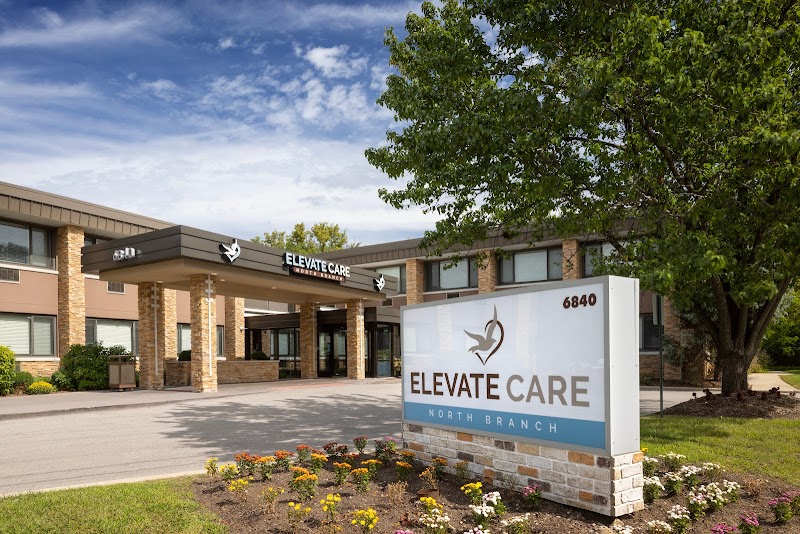
Who Owns and Operates Elevate Care North Branch?

ELEVATE CARE NORTH BRANCH is owned by a for-profit company. For-profit facilities operate as businesses with obligations to shareholders or private owners. The facility is operated by ELEVATE CARE, a chain that manages multiple nursing homes. With 212 certified beds and approximately 138 residents (about 65% occupancy), it is a large facility located in NILES, Illinois.
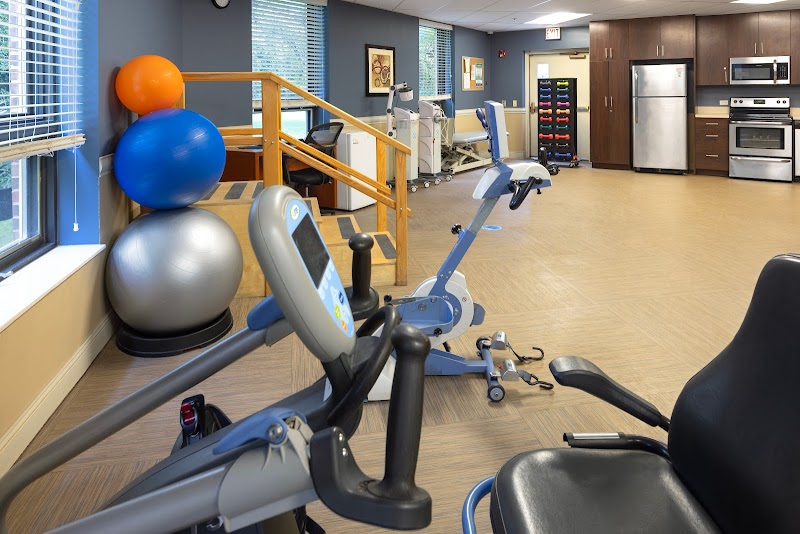
How Does Elevate Care North Branch Compare to Other Illinois Nursing Homes?

Compared to the 100 nursing homes in Illinois, ELEVATE CARE NORTH BRANCH's overall rating (2 stars) is below the state average of 2.5, staff turnover (49%) is near the state average of 46%, and health inspection rating (2 stars) is below the national benchmark.

What Should Families Ask When Visiting Elevate Care North Branch?

Based on this facility's data, families visiting should ask: "What changes have been made since the serious inspection findings, and how are you preventing similar issues?" "Can you walk me through typical staffing levels on day, evening, and night shifts?" "Can I visit during a mealtime to observe dining assistance and food quality?" "How do you handle medical emergencies, and what is your hospital transfer rate?" These questions are particularly relevant given the facility's Immediate Jeopardy citations and the below-average staffing rating.

Is Elevate Care North Branch Safe?

Based on CMS inspection data, ELEVATE CARE NORTH BRANCH has documented safety concerns. Inspectors have issued 1 Immediate Jeopardy citation (the most serious violation level indicating risk of serious injury or death). The facility has a 2-star overall rating and ranks #100 of 100 nursing homes in Illinois. Families considering this facility should ask detailed questions about what corrective actions have been taken since these incidents.

Do Nurses at Elevate Care North Branch Stick Around?

ELEVATE CARE NORTH BRANCH has a staff turnover rate of 49%, which is about average for Illinois nursing homes (state average: 46%). Moderate turnover is common in nursing homes, but families should still ask about staff tenure and how the facility maintains care continuity when employees leave.

Was Elevate Care North Branch Ever Fined?

ELEVATE CARE NORTH BRANCH has been fined $234,006 across 4 penalty actions. This is 6.6x the Illinois average of $35,419. Fines at this level are uncommon and typically indicate a pattern of serious deficiencies, repeated violations, or failure to correct problems promptly. CMS reserves penalties of this magnitude for facilities that pose significant, documented risk to resident health or safety. Families should request specific documentation of what issues led to these fines and what systemic changes have been implemented.

Is Elevate Care North Branch on Any Federal Watch List?

ELEVATE CARE NORTH BRANCH is not on any federal watch list. The most significant is the Special Focus Facility (SFF) program, which identifies the bottom 1% of nursing homes nationally based on persistent, serious quality problems. Not being on this list means the facility has avoided the pattern of deficiencies that triggers enhanced federal oversight. This is a positive indicator, though families should still review the facility's inspection history directly.