GENERATIONS AT REGENCY
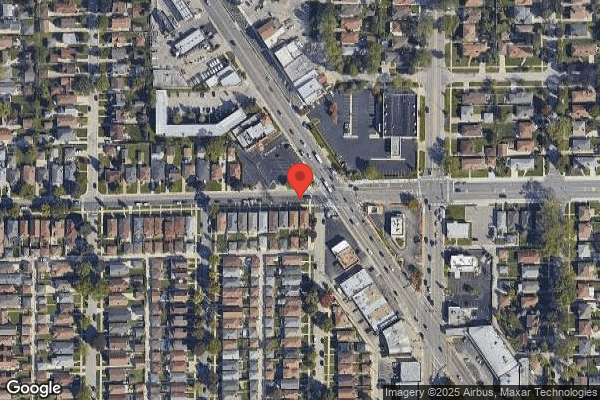
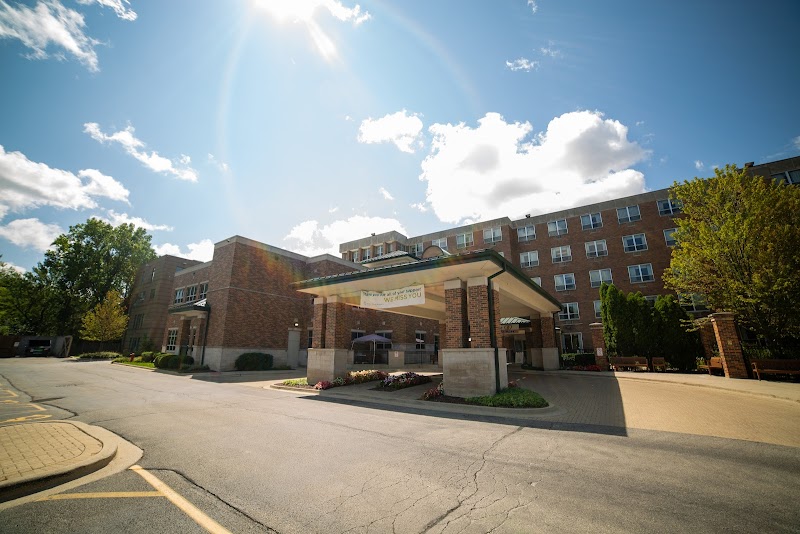
6631 MILWAUKEE AVENUE, NILES, IL 60714 (847) 647-7444
For profit - Limited Liability company 254 Beds GENERATIONS HEALTHCARE Data: November 2025
Trust Grade
5/100
#239 of 665 in IL
Last Inspection: April 2025

Within standard 12-15 month inspection cycle. Federal law requires annual inspections.

Overview

Generations at Regency in Niles, Illinois has a Trust Grade of F, indicating significant concerns about the quality of care provided. They rank #239 out of 665 facilities in the state, placing them in the top half, but their county rank is #77 out of 201, meaning there are better options locally. The facility is showing improvement, as issues decreased from 11 in 2024 to 9 in 2025. Staffing is a mixed bag here; while their turnover rate of 35% is better than the state average, they only received 2 out of 5 stars for staffing and quality measures, suggesting there is room for improvement in care quality. Recent inspections found serious issues, including a resident who lost 10% of their weight due to inadequate meal supervision and another who fell from their wheelchair and sustained injuries due to improper seating. Overall, while there are some positive aspects, families should weigh these serious concerns carefully.

Trust Score
F
5/100
In Illinois
#239/665
Top 35%
Safety Record
High Risk
Review needed
Inspections
Getting Better
11 → 9 violations
Staff Stability
○ Average
35% turnover. Near Illinois's 48% average. Typical for the industry.
Penalties
✓ Good
$112,185 in fines. Lower than most Illinois facilities. Relatively clean record.
Skilled Nurses
○ Average
Each resident gets 37 minutes of Registered Nurse (RN) attention daily — about average for Illinois. RNs are the most trained staff who monitor for health changes.
Violations
⚠ Watch
34 deficiencies on record. Higher than average. Multiple issues found across inspections.
★★★☆☆
3.0
Overall Rating
★★☆☆☆
2.0
Staff Levels
★★☆☆☆
2.0
Care Quality
★★★☆☆
3.0
Inspection Score
Stable
2024: 11 issues
2025: 9 issues

The Good

  • Full Sprinkler Coverage · Fire safety systems throughout facility
  • No fines on record
  • Staff turnover below average (35%)

    13 points below Illinois average of 48%

Facility shows strength in fire safety.

The Bad

3-Star Overall Rating

Near Illinois average (2.5)

Meets federal standards, typical of most facilities

Staff Turnover: 35%

11pts below Illinois avg (46%)

Typical for the industry

Federal Fines: $112,185

Well above median ($33,413)

Significant penalties indicating serious issues

Chain: GENERATIONS HEALTHCARE

Part of a multi-facility chain

Ask about local staffing decisions and management

The Ugly 34 deficiencies on record

8 actual harm
Apr 2025 8 deficiencies 2 Harm
SERIOUS (G)

Actual Harm - a resident was hurt due to facility failures

Incontinence Care (Tag F0690)

A resident was harmed · This affected 1 resident

Deficiency Text Not Available

Read full inspector narrative →
Deficiency Text Not Available
SERIOUS (G)

Actual Harm - a resident was hurt due to facility failures

Deficiency F0692 (Tag F0692)

A resident was harmed · This affected 1 resident

**NOTE- TERMS IN BRACKETS HAVE BEEN EDITED TO PROTECT CONFIDENTIALITY** Based on observations, interviews, and record reviews, the facility failed to document accurate meal intakes, offer alternative ...

Read full inspector narrative →
**NOTE- TERMS IN BRACKETS HAVE BEEN EDITED TO PROTECT CONFIDENTIALITY** Based on observations, interviews, and record reviews, the facility failed to document accurate meal intakes, offer alternative meal options, and notify the physician or nurse practitioner of significant weight loss. Additionally, the facility failed to implement the dietitian ' s recommendations and follow the physician ' s orders to increase Remeron for weight management. This deficient practice affected two of the seven residents (R62 and R103) reviewed for nutrition and unplanned weight loss prevention. As a result, Resident R62 experienced a 10% unplanned weight loss over a six-month period. Findings include: On 4/8/25 at 12:10 PM, R62 was observed in dining room for lunch meal. Staff were observed setting up R62's tray. R62 was observed replacing the cover on plate and self propelling wheelchair out of dining room. On 4/8/25 at 12:15 PM, R62 was observed self propelling wheelchair into dining room. R62 lifted the cover over plate then replaced cover and left dining room. Staff were observed removing R62's tray and place on the cart for dirty plates. R62 did not consume meal. On 4/9/25 at 11:15 AM, V7 RD (registered dietitian) stated that V7 audits all resident weights each month. V7 stated that V7 will request a resident be re-weighed if there is a change in weight of 5 or more pounds in one month. V7 stated that residents with weight loss are monitored and discuss during morning meeting with the interdisciplinary team. On 4/10/25 at 1:00 PM, V15 LPN (licensed practical nurse) stated that the CNAs (certified nurse aides) document the amount eaten for each resident in their POC (point of care) charting. V15 stated that the CNAs will inform the nurse if the resident does not eat a meal. When questioned if V15 was aware that R62 did not eat lunch on 4/8, V15 did not respond. R62's POC charting, dated 4/8/25, does not note amount eaten for lunch was documented. R62's medical record does not note any documentation on 4/8/25 related to R62 not eating lunch. R62's POS (physician order sheet) notes an order for LCS (Low Concentrated Sweets) diet, Regular texture, Regular/Thin consistency. R62's weight documentation: On 4/9/25, R62's weight was 125 pounds On 3/10, R62's weight was 128 pounds On 1/8, R62's weight was 130.6 pounds On 10/4/24, R62's weight was 139 pounds R62's weight documentation notes 10.07% weight loss for 6 months. V7 RD (registered dietitian) note, dated 4/10/25, notes significant weight loss review. Current weight record for 4/9/25 recorded at 125 pounds. Weight over 1, 3, and 6 months are as follows: 1 month - 3/10/25 - 128(2.3%), 3 months - 1/8/25 - 130.6(4.3%), and 6 months - 10/4/24 - 139(10.1%). Significant weight loss at 6 months, which is unplanned/unavoidable and likely related to a combination of variable oral intake at mealtimes and behaviors associated with her diagnosis of dementia. Recommendations were to have a psychiatric consult placed as resident has the tendency to wheel herself around the unit throughout the day, and sometimes during mealtimes, in which case she may miss her meal. Nurse practitioner was also informed of recommendations. BMI (body mass index): 22.1 - underweight; desirable BMI for age >65: 23-29.9. Diet: Regular, LCS, thin liquids. Double portions and snack at lunch and dinner. Supplement(s): Supercereal at breakfast and Med Pass 120 ml (milliliters) three times daily. R62's medical record notes R62 was last seen by V7 on 12/4/24. This facility's weight maintenance policy, revised 03/2022, notes all significant, unplanned, or trending weight changes must be investigated by the facility. The director of nursing will refer all concerns and recommendations to the appropriate department for action. The director of nursing or designee will ensure physicians and resident representatives are informed of significant or trending weight fluctuations or concerns regarding a change in the resident's nutritional status. R103 was admitted to the facility on [DATE] with a diagnosis of parkinsonism, dementia, and contractures. R103 progress notes dated 1/15/25: Registered Dietician follow up. Resident's weight has trended down x past 6 months, in which weight history and current nutritional interventions were discussed with Nurse Practitioner. Resident is receiving Super cereal at breakfast, Health Shake q meal, Pro-Stat Sugar Free 30 ml every day and Remeron 7.5 mg at bedtime, thus Nurse Practitioner was agreeable to increasing dose of Remeron to 15 mg q HS. R103's nurse practitioner progress notes dated 1/17/25: patient seen and examined. Reason for visit: Weight loss. dietician following discussed with dietician will increase Remeron to 15mg continue all interventions per dietician. On 4/10/25 at 10:29AM, V12 (Nurse practitioner) said she would expect her orders to be followed as ordered. V12 said any new orders are verbally relied to the nurse to put into the electronic computer system. V12 said Remeron would be ordered to help increase a resident's appetite with weight loss. On 4/9/25 at 11:13AM, V7(dietician) said he expects his recommendations to be followed unless the physician does not agree. V7 said he recalls speaking to the V12 (nurse practitioner) about increasing Remeron due to weight loss for R103. V7 said R103 body max index was 14.3 which is considered underweight. R103's current physician order documents. Remeron 15 mg. Give 0.5 tablet (7.5MG) orally at bedtime with a start date of 10/24/24. R103's medication administration record for January, February. March and April documents: Remeron 15 mg. Give 0.5 tablet (7.5MG) orally at bedtime. Facility policy physician orders revised 5/2017 documents: all residents medications, and treatments must be ordered by a licensed physician or nurse practitioner. Physician orders must be reviewed every 60 days. The nursing staff member who took the order or the one assigned to the resident is responsible to transcribe the order. On monthly basis, the physician orders will be reviewed for accuracy by nursing personal.
CONCERN (D)

Potential for Harm - no one hurt, but risky conditions existed

Deficiency F0558 (Tag F0558)

Could have caused harm · This affected 1 resident

**NOTE- TERMS IN BRACKETS HAVE BEEN EDITED TO PROTECT CONFIDENTIALITY** Based on observation, interview and record review, the facility failed to follow their Call Light policy. The facility failed to...

Read full inspector narrative →
**NOTE- TERMS IN BRACKETS HAVE BEEN EDITED TO PROTECT CONFIDENTIALITY** Based on observation, interview and record review, the facility failed to follow their Call Light policy. The facility failed to place the call light within reach for one resident (R40) of three residents reviewed for call light accessibility in a total sample of 55 residents. Findings include: On 4/8/25 at 1040AM observed R40 in bed, watching television. Mouth piece/puffer call light not within reach. Head of bed elevated and the puffer call light was above the head of bed, above her head and on right side facing the door area. R40 stated she cannot reach the call light because it is not close to her mouth. R40 unable to reach the call light, noted to have limited range of motion on her right arm. On 4/8/25 at 1043AM, confirmed with V5 (CNA). V5 Stated that staff usually placed R40's call light closer to her mouth. R40 is not able to reach and use her call light at this moment because of its placement. I will reposition her and place the puffer call light closer to R40. R40's Joint Mobility assessment dated [DATE], reads in part: Right shoulder with severe joint limitation with 0-25% available ROM (Range of Motion), right elbow with moderate to severe limitation with 25 to 50% available ROM, and right wrist with severe joint limitation with 0-25% ROM. On 4/9/25 at 11:30AM, V6 (Restorative Nurse) stated that R40 has a limited range of motion on her right arm, needs staff assistance for right arm range of motion. R40 would not able to use her call light if the call light is not position within her reach and by her mouth. Due to poor right arm range of motion R40 will not be able to reach the call light with her hand to place it closer to her mouth. Staff needs to make sure it is closer to R40's mouth so R40 could utilize the call light. Call light policy with a revision date of 6/21, reads in part: Functioning call light placed to where it is accessible to the resident.
CONCERN (D)

Potential for Harm - no one hurt, but risky conditions existed

Comprehensive Care Plan (Tag F0656)

Could have caused harm · This affected 1 resident

Based on observations, interviews, and record reviews, the facility failed to follow its comprehensive care plans policy and accurately assess and revise care plans as changes in the residents' condit...

Read full inspector narrative →
Based on observations, interviews, and record reviews, the facility failed to follow its comprehensive care plans policy and accurately assess and revise care plans as changes in the residents' conditions dictate for three residents (R46, R49, and R91) out of three reviewed for care plans in a sample of 55. Findings include: On 4/9/25 at 12:00 PM, R49 was observed to have an electronic monitoring device on her left wrist. On 4/10/25 at 1:05 PM, V20 (MDS (minimum data set) coordinator) stated that this facility changed computer systems in October 2024. V20 stated that all care plans in the residents' current electronic medical record are up-to-date. V20 stated that care plans are important so that everyone is on the same page with the resident's care. V20 stated that a resident's care plan is updated when there is a change in resident's condition. V20 stated that care plans are reviewed quarterly, annually, and upon admission to this facility. V20 stated that care plans are reviewed with MDS. V20 stated that V20 is responsible for entering any new diagnosis that is identified. V20 stated that the interdisciplinary team participates and completes the appropriate portions of the care plan. R46: R46 was re-admitted to this facility on 1/25/25 from the hospital. R46 returned with a new diagnosis of iron deficiency anemia . R46's medical records notes R46 had a quarterly MDS completed on 11/4/24 and 2/3/25. R46's care plan does not note a care plan was initiated related to the new diagnosis of iron deficiency anemia. R49: R49's POS (physician order sheet), dated 9/19/24, notes an order for an electronic monitoring device - check and record placement every shift. R49's medical records notes R49 had a quarterly MDS completed on 12/10/24 and 3/10/25. R49's care plan does not note a care plan was initiated related to wandering risk and use of electronic monitoring device. R91: R91's POS, dated 9/19/24, notes an order for regular diet pureed texture, nectar/mildly thick consistency, supercereal with breakfast. R91's medical records notes R91 had a quarterly MDS completed on 11/1/24 and 1/16/25. R91 also had an MDS for significant change on 3/14/25. R49's care plan does not note a care plan was initiated related to mechanically altered diet or behaviors of taking other residents drinks. This facility's comprehensive care plans policy, reviewed 04/2017, notes the comprehensive care plan will be developed with input from the interdisciplinary team, which includes at a minimum: attending physician, registered nurse responsible for the resident, nurse aide with responsibility for the resident, a member of food and nutrition services staff, to the extent practicable, the participation of the resident and the resident's representative, other appropriate staff or professionals in disciplines as determined by the resident's needs. Services are to be furnished to attain or maintain the resident's highest practicable well being, measurable objectives and timeframes, the resident's goals for admission and desired outcomes. Care plans are revised as changes in the resident's condition dictates.
CONCERN (D)

Potential for Harm - no one hurt, but risky conditions existed

Deficiency F0776 (Tag F0776)

Could have caused harm · This affected 1 resident

**NOTE- TERMS IN BRACKETS HAVE BEEN EDITED TO PROTECT CONFIDENTIALITY** Based on interview and record review, the facility failed to follow their radiology or other diagnostic ordering policy by not f...

Read full inspector narrative →
**NOTE- TERMS IN BRACKETS HAVE BEEN EDITED TO PROTECT CONFIDENTIALITY** Based on interview and record review, the facility failed to follow their radiology or other diagnostic ordering policy by not following physician orders to obtaining an x-ray for one resident (R60) for one of one reviewed radiology services. Findings include: R60 admitted to the facility on [DATE] with a diagnosis of anemia, type II diabetes, pain in left and right shoulder R60's nurse practitioner progress note dated 3/28/25 documents: history of shingles, neuropathy and neuropathic pain / left shoulder pain. patient wants another left shoulder x-ray done. One was done in the past and showed shoulder dislocation and patient refused to have it corrected. Will repeat x-ray. R60's physician order dated 3/28/25 document left shoulder x-ray. On 4/10/25 at 10:29AM, V12 (Nurse practitioner) said she ordered x-ray for R60 due to complaints of pain. V12 said she would expect the x-ray to be completed within a few days and was unaware the x-ray was not completed until after the surveyor requested the results on 4/8/25. V12 said she did receive the results and put in a referral for rehab specialist to see the resident and possible give a pain injection due to arthritis. On 4/9/25 at 1:02PM, V3(director of nursing, DON) said R60's x-ray was not completed as ordered. V3 said there was an error in placing the order and the x-ray was not completed until 4/9/25. V3 said when an x-ray order is placed it will usually be conducted within 24 hours. Facility policy or other diagnostic ordering policy dated 9/17 documents under objective: to provide or obtain radiology or other diagnostic monitoring in accordance with the orders of the physician, physician assistant or nurse practitioner. Upon receipt of the order, the nurse processing the order will notify the appropriate service provider.
CONCERN (D)

Potential for Harm - no one hurt, but risky conditions existed

Infection Control (Tag F0880)

Could have caused harm · This affected 1 resident

Based on observations, interviews, and record reviews, the facility failed to follow its the posted infection control signage and don appropriate PPE (personal protective equipment) prior to entering ...

Read full inspector narrative →
Based on observations, interviews, and record reviews, the facility failed to follow its the posted infection control signage and don appropriate PPE (personal protective equipment) prior to entering one resident's room that is on enhanced barrier precautions and performing blood draw This affected one of one resident (R105) reviewed for infection control in a sample of 55. Findings include: On 4/9/25 at 9:45 AM, signage noting enhanced barrier precautions was noted on entry door to R105's room. On 4/9/25 at 9:45 AM, V8 (outside laboratory staff) was observed in R105's room on the left side of R105's bed leaning over R105 to draw blood from R105's right hand. V8 was not wearing gloves or gown while performing direct resident care. On 4/9/25 at 2:30 PM, V9 IP nurse (infection prevention nurse) stated that staff are expected to don gown and gloves prior to performing direct resident care for residents on enhanced barrier precautions. V9 stated that the outside laboratory staff are aware of this facility's infection control policy and are expected to follow it. V9 stated that V9 spoke with V8 regarding not wearing appropriate PPE (personal protective equipment) when performing blood draws for residents. V9 stated that V8 informed her that she is unable to feel the resident's vein when wearing gloves. V9 stated that it is not acceptable to not wear gloves. V9 stated that she is responsible for infection control and this will not be tolerated at this facility. R105's POS (physician order sheet) dated 1/23/25, notes enhanced barrier precautions: related to medical device, wound site, and history of C-Auris CRAB sputum, NDM of the urine and CRE urine and sputum and wound site. The enhanced barrier precautions signage notes all providers and staff must wear gloves and gown for high-contact resident care activities.
CONCERN (E)

Potential for Harm - no one hurt, but risky conditions existed

Pressure Ulcer Prevention (Tag F0686)

Could have caused harm · This affected multiple residents

Based on observation, interview and record review, the facility failed to ensure low air loss mattress devices were on the correct weights setting for residents who are at risk in developing pressure ...

Read full inspector narrative →
Based on observation, interview and record review, the facility failed to ensure low air loss mattress devices were on the correct weights setting for residents who are at risk in developing pressure ulcers. This failure has the potential to affect four (R28, R92, R116 and R168) out of four residents reviewed for pressure ulcer care in a final sample of 55 residents. Findings include: On 4/8/25 at 10:45AM, observed R92 in bed, on low air loss mattress set to normal pressure below 80. Setting confirmed with V4 (LPN). Record reviewed R92 weight record dated 3/10/25 is 105.6 lbs. On 4/8/25 at 10:47AM, observed R116 in bed, on low air loss mattress set to normal pressure between 210 to 250. Setting confirmed with V4 (LPN). Record reviewed R116 weight record dated 3/10/25 is 113.9 lbs. On 4/8/25 at 10:50AM, observed R28 in bed, on low air loss mattress is power off. Mattress deflated. Confirmed with V4 (LPN) that the low air loss mattress is deflated. V4 checked and tried to turn on, observed it is unplugged. V4 plugged the low air loss mattress and turned the power on. Low pressure light on and blinking. Per V4 it would take a while for the inflation. Setting placed between 120 to150. R28's recorded weight on 3/10 25 is 139.6 lbs. On 4/9/25 at 9:48AM, observed R92 in bed and in low air loss mattress set on normal pressure between 150 to 180. Setting confirmed with V4 (LPN). Record reviewed R92 weight record dated 3/10/25 is 105.6 lbs. On 4/9/25 at 10AM, observed R168 in bed, on low air loss mattress setting between 250 to 280. Setting confirmed with V4 (LPN). Recorded weight on 3/10/25 is at 247.8 lbs. On 4/10/25 at 9:57AM, V11 (Wound nurse) stated that they place residents in low air loss mattress because they are either with pressure ulcer or at risk for pressure ulcer injury, especially those who are high risk. Stated that R92 has no active wound but assessed as High Risk. R168 has no active wounds, and also assessed as high risk. R116 has no active pressure wound and assesses as high risk. That R116 has vascular wounds in lower extremities and on hospice. R28 has no active wound and assessed to be at high risk, V11 stated that the setting is set based on residents weights. And if there are changes in resident's weight, then the staff need to adjust the setting. I check and the other staff checks the setting and if the bed is in working order. If the low air loss mattress is not on and deflated, then the preventative measure would not be working. R92's Braden scale for predicting pressure sore risk dated 3/1/25 is 11 (High Risk). Care plan for potential skin breakdown/pressure ulcer with interventions of may use low air loss mattress for pressure reduction. R168's Braden scale for predicting pressure sore risk dated 3/14/25 is 13 (Moderate Risk). Care plan for potential skin breakdown with intervention of may use low air loss mattress for pressure reduction. R116's Braden scale for predicting pressure sore risk dated 1/14/25 is 13 (Moderate Risk). Care plan for potential skin breakdown/pressure ulcer. R28's Braden scale for predicting pressure sore risk dated 1/06/25 is 12 (High Risk). Care plan for potential for skin breakdown/pressure ulcer with intervention of may use low air loss mattress for pressure reduction. Alternating Pressure Air Mattress policy with a revision date of 5/17, reads in part: objective is to provide pressure relief. Pressure Ulcer Treatment and Management with a revision date of 5/`7, reads in part: Residents with pressure ulcers will have a physician's order for treatment. The plan of care will include the presence of the pressure ulcer and include the individual description of the treatment plan including: pressure relief, turning and repositioning, additional nutritional measure, need for assistance with mobility and range of motion. Resident with pressure ulcers will be determined to be high risk for pressure ulcer prevention and all components of the At Risk protocol will include: pressure relieving devices, nutritional support, and assistance with mobility including repositioning and ROM (Range of Motion) as outlined in the At Risk Protocol. Pressure Ulcer Prevention Protocol with a revision date of 5/18, reads in part: Resident will be assessed to determine their risk factors for pressure ulcer development. Resident will be assessed to determine their risk factor for pressure ulcers development, upon admission and at least quarterly thereafter. All beds in the facility will have pressure reducing mattresses unless pressure relieving mattresses are required according to resident's needs. Interventions necessary to maintain skin integrity or to promote healing will be incorporated into the plan of care based on each resident's individual needs and risks, which may include: Use of pressure reducing devices, such as pressure reducing mattresses, mattresses overlays, w/c cushioning devices if needed.
CONCERN (E)

Potential for Harm - no one hurt, but risky conditions existed

Accident Prevention (Tag F0689)

Could have caused harm · This affected multiple residents

**NOTE- TERMS IN BRACKETS HAVE BEEN EDITED TO PROTECT CONFIDENTIALITY** Based on observations, interviews, and record reviews, the facility failed to effectively supervise one resident on a thickened ...

Read full inspector narrative →
**NOTE- TERMS IN BRACKETS HAVE BEEN EDITED TO PROTECT CONFIDENTIALITY** Based on observations, interviews, and record reviews, the facility failed to effectively supervise one resident on a thickened liquid diet from drinking a cup of thin liquids from another resident's meal tray for a resident assessed with mild to moderate risk for aspiration. This failure affected one resident (91) out of three reviewed for mechanically altered diets in a sample of 55. Based on observation, interview and record review, the facility failed to present a smoking policy that included the safe use and how the facility would supervise residents using electronic smoking materials and failed to complete quarterly smoking assessments. This affected four of four residents (R111, R61, R8, and R161) reviewed for smoking safety and supervision. Findings include: On 4/8/25 at 12:05 PM, staff was observed pouring thin liquid juice container, 120ml (milliliters) into a cup for R165 and placing the cup on her tray. 04/08/25 at 12:05 PM R91 was observed taking a cup filled with thin liquids off another resident's tray and drink from it. Resident consumed 100% of the liquid in this cup. At 12:15 PM, R91 was given her lunch tray, pureed diet with nectar thick liquids. On 4/10/25 at 10:00 AM, V12 NP (nurse practitioner) stated that mechanically altered diets are ordered for a reason. When informed that R91 drank a cupful of thin liquids, V12 responded that V12 didn't think R91 was able to feed or drink by herself. On 4/10/25 at 1:20 PM, 17 CNA (certified nurse aide) stated that R91 will reach for cups that are close by R91 and drink from cup. On 4/10/25 at 1:35 PM, V16 LPN (licensed practical nurse) stated that R91 has a behavior of reaching for cups nearby and drinking from the cups. R91's modified barium swallow study, dated 11/5/2020, notes R91 presented with a mild-moderate oropharyngeal phase dysphagia. Reduced safety with thin liquids due to premature spillage, impulsive sips, and delayed pharyngeal swallow response resulting in silent aspiration in slight amounts with thin liquids at the onset of the swallow and frequent deep penetration to the vocal folds with accumulating residue. Aspiration also noted after the swallow due to mild-moderate to moderate levels of thin residue spilling into the trachea after the swallow without sensation or ability to elicit a cough. No airway invasion noted with puree or mildly thickened liquids (nectar thick liquids). This facility's supervision of resident nutrition policy, dated 05/2017, notes nursing personnel are responsible for assuring that residents are served the correct dietary tray. R111 was admitted to the facility on [DATE] with a diagnosis of type II diabetes, hemiplegia affecting left side, major depressive disorder and peripheral vascular disease. R111's brief interview for mental status dated 2/22/25 documents a score of 14/15 which indicates cognitively intact. On 4/8/25 at 10:14AM, R111 was observed with smoking material in his room. R111 said he is a smoker and is able to smoke on the patio unsupervised. R111 smoking risk assessment dated [DATE] documents a score of 3 which indicates safe smoker. The facility was asked to present any other smoking assessments for R111. No other assessments were given to the surveyor. R111 medical record did not document any other assessments upon review. R111 current plan of care did not document any current smoking plan of care. On 4/10/25 at 9:42AM, V2(Vice president Operations) said smoking assessments are conducted on admission, quarterly, annual and with changes, V2 said the smoking assessments were not conducted until this morning and care plans were updated this morning. Smoking Policy 2/2017 documents: Resident's clinical record will be updated to reflect smoking status. Resident will be re-evaluated quarterly and annually thereafter unless circumstances warrant an off-cycle assessment related to a change in baseline, i.e change in cognition, change in physical functioning or behavioral concerns that may impact the safety and welfare of the resident or others. Care plans will be created/updated as necessary to reflect the resident's preference or needs. R61 R61 brief interview for mental status dated 3/24/25 documents a score of eight which indicates moderate cognitive impairment. On 4/8/25 at 10:33am, R61 who was assessed to be alert and oriented to person place and time, said he is a smoker and inhaled on his vape pen. On 4/9/25 at 4:10pm, V3 (don) said, R61 does not have a smoking assessment. R61 was supposed to quit smoking in September 2024. Independent smokers can hold on to their smoking material. V3 said, she was not aware R61 had a vape pen. R61's progress note dated 9/24/24 documents: former smoker. On 4/10/25 at 9:42AM, V2(Vice President Operations) said, smoking assessments are conducted on admission, quarterly, annual and with changes, V2 said, the smoking assessments were not conducted until this morning. Care plans were also updated this morning. R61's smoking and safety assessment dated [DATE] documents: Supervision, designated smoking location and smoking times are determined by facility policy. R61 use tobacco and vape products. Smoking Management care plan dated 4/10/25 documents: I (R61) desire to smoke. I have been assessed to determine safety factors. I am aware of the facility policy encompassing electronic, as well as tobacco-based products does not allow a resident to carry any smoking materials. Smoking is only allowed outside at designated times with proper distancing. I have been made of the rules and I voluntarily agree to follow all the rules. I acknowledge that smoking is a privilege and I agree to behave safely. Smoking Policy 2/2017 documents: Resident's clinical record will be updated to reflect smoking status. Resident will be re-evaluated quarterly and annually thereafter unless circumstances warrant an off-cycle assessment related to a change in baseline, i.e. change in cognition, change in physical functioning or behavioral concerns that may impact the safety and welfare of the resident or others. Care plans will be created/updated as necessary to reflect the resident's preference or needs. Those resident who have been assessed and determined to be an at risk smoker will be allowed to participate in the center's supervised smoking programs. These identified individuals will have smoking material made available to them when under direct supervision of a staff member. Individuals who smoke will smoke in designated areas only. R8's R8's smoking and safety assessment dated [DATE] documents: Supervision, designated smoking location and smoking times are determined by facility policy. R8 use tobacco. Balance problems while sitting and standing. Unable to extinguish tobacco or marijuana safely. Requires supervision to ensure tobacco extinguish properly. Resident has a brace on right leg from injury prior to admission. On 4/10/25 at 9:42AM, V2(Vice President Operations) said, smoking assessments are conducted on admission, quarterly, annual and with changes, V2 said, the smoking assessments were not conducted until this morning. Care plans were also updated this morning. Smoking Management care plan dated 4/10/25 documents: I (R8) desire to smoke. I have been assessed to determine safety factors. I am aware of the facility policy encompassing electronic, as well as tobacco-based products does not allow a resident assessed as compromised to carry any smoking materials. Smoking is only allowed outside, at designated times with proper distancing. I have been made aware of the rules and I voluntarily agree to follow all the rules. I acknowledge that smoking is a privilege and I agree to behave safely. I have been counseled concerning the innumerable hazards, health risks and complications associated with smoking. Smoking Policy 2/2017 documents: Resident's clinical record will be updated to reflect smoking status. Resident will be re-evaluated quarterly and annually thereafter unless circumstances warrant an off-cycle assessment related to a change in baseline, i.e change in cognition, change in physical functioning or behavioral concerns that may impact the safety and welfare of the resident or others. Care plans will be created/updated as necessary to reflect the resident's preference or needs. R161 R161's brief interview for mental status dated 1/13/25 documents a score of fifteen which indicates cognitively intact. R161's smoking and safety assessment dated [DATE] documents: Supervision, designated smoking location and smoking times are determined by facility policy. Product resident use: Tobacco, Marijuana and vape product not check. On 4/10/25 at 9:42AM, V2(Vice President Operations) said, smoking assessments are conducted on admission, quarterly, annual and with changes, V2 said, the smoking assessments were not conducted until this morning. Care plans were also updated this morning. On 4/11/25 at 11:30am, R161 who was assessed to be alert and orient to person, place and time, said, he smokes occasionally. Smoking Management care plan dated 4/10/25 documents: I (R161) have been assessed to determine safety factors. I am aware of the facility policy encompassing electronic, as well as tobacco-based products does not allow a resident assessed as compromised to carry any smoking materials. Smoking is only allowed outside, at designated times with proper distancing. I have been made aware of the rules and I voluntarily agree to follow all the rules. I acknowledge that smoking is a privilege and I agree to behave safely. Smoking Policy 2/2017 documents: Resident's clinical record will be updated to reflect smoking status. Resident will be re-evaluated quarterly and annually thereafter unless circumstances warrant an off-cycle assessment related to a change in baseline, i.e change in cognition, change in physical functioning or behavioral concerns that may impact the safety and welfare of the resident or others. Care plans will be created/updated as necessary to reflect the resident's preference or needs.
Jan 2025 1 deficiency
CONCERN (D) 📢 Someone Reported This

A family member, employee, or ombudsman was alarmed enough to file a formal complaint

Potential for Harm - no one hurt, but risky conditions existed

Free from Abuse/Neglect (Tag F0600)

Could have caused harm · This affected 1 resident

**NOTE- TERMS IN BRACKETS HAVE BEEN EDITED TO PROTECT CONFIDENTIALITY** Based on interview and record review, the facility failed to prevent and protect a resident from resident-to-resident physical a...

Read full inspector narrative →
**NOTE- TERMS IN BRACKETS HAVE BEEN EDITED TO PROTECT CONFIDENTIALITY** Based on interview and record review, the facility failed to prevent and protect a resident from resident-to-resident physical abuse. This failure applied to two of two (R1, R2) residents reviewed for abuse. Findings include: Facility reported incident (FRI) dated 10/11/2024 documents: R1 reported to the nurse that R2 slapped her in the face. R1 was noted to have a scratch to the left side of face. R1's face sheet dated 01/08/2025 documents that R1 is a [AGE] year-old female admitted to the facility on [DATE] with diagnosis history of Hypertensive heart disease, dyslipidemia, gastroesophageal reflux disease, chronic obstructive pulmonary disease, chronic kidney disease and depression. R1's Minimum Data Set (MDS) dated [DATE] documents that R1 has a Brief Interview for Mental Status (BIMS) score of 9 (moderate cognitive impairment). 1/06/2025 at 12:05 PM V9 (Licensed Practical Nurse/LPN) said that R1 does have behaviors during her shift and speaks the same language as R1 and able to communicate well. R1 is alert but forgetful and has no aggressive behaviors. R1 experiences behaviors during the PM shift/sundowning such as crying and talking continuously. V9 (LPN) translated for R1 and said that R1 was using the restroom and was coming back to her bed when R2 got upset, slapped her face and left two red marks to the face. R1 said that the nurses were putting medication on her face but the scratch is healed and the roommate is no longer in the room. R1's nurses notes dated 10/11/2024 documents: R1 noted to have small red scratches on left side of the face, and order for bacitracin medication twice a day for 7 days. R2 is a female admitted to the facility on [DATE] with the diagnosis history of dementia, strokes, atrial fibrillation, end stage renal disease on hemodialysis, diabetes, depression, arthritis, heart failure, hypertension, and Hyperlipidemia. R2's Minimum Data Set (MDS) dated [DATE] documents that R1 has a Brief Interview for Mental Status (BIMS) score of 8 (moderate cognitive impairment). 1/06/2025 at 11:55AM R2 was sitting at the edge of the bed and waiting for lunch, verbalized being tired and did not want to talk regarding the incident with R1. R2 said, I do not remember anything, leave me alone. 1/07/2025 at 3:00 PM V8 (Certified Nursing Assistant/CNA) said, I witnessed R1 and R2 fighting and R2 said that she had dialysis and was very tired and wanted to sleep but R1 was talking and talking, when R2 threw a cup of water on R1 and scratched her face. V8 said that R1 was upset that R2 had three sons visiting and was inside of the bedroom. R1 started to talk and R2 didn't understand R1 and they started to fight. It was the only time I have seen R2 getting aggressive and R1 is never aggressive. 01/07/2025 at 3:33PM V11 (Licensed Practical Nurse) said that R1 called and notified V11 that R2 hit R1's face with her hand. V11 stated that R1 and R2 were separated and one scratch was noted to R1's left side of the face. V11 notified supervisor and V1 (Administrator). V11 said that R2 was tired and wanted to go to sleep and R1 was talking nonstop. R2 got upset and had a fight with R1 and the language barrier between that made it worst. 01/06/2025 on 1:27PM V4 (Social Services Director) said that was not aware of any incident involving R1 and R2 because he was out town on vacation (10/09/2024-10/20/2024) and V3 (Assistant Administrator) and V1 were covering for him during that time. 01/07/2025 at 3:30PM V2 (Director of Nursing) said that R1 and R2 had no previous aggressive behavior and R2 was moved to the first floor and no aggressive behavior was noted for R2. R2 stayed on the first floor and returned to the fourth floor on 10/24/2024. V1 and social services were the ones responsible to evaluate and decide if resident is safe to return to the same unit prior to moving R2 with another resident. 01/07/2025 at 3:35PM V1 sad that R2 moved back to the unit after the interdisciplinary team met and social service completed an evaluation. Facility completed behavior assessment and monitor for R2's behaviors. V1 was not able to provide notes of the meeting or social services assessment. On 01/07/2025 at 3:35PM V1 (Administrator) presented policy titled: Facility Abuse Prevention Guidance (Revised October 2022), which reads: Policy Statement: This facility affirms the right of our residents to be free from abuse, neglect, exploitation, misappropriation of property, deprivation of goods and services by staff or mistreatment. This facility therefore prohibits abuse, neglect, exploitation, misappropriation of property, and mistreatment of residents. In order to do so, the facility has attempted to establish a resident sensitive and resident secure environment. The purpose of this policy is to assure that the facility is doing all that is within its control to prevent occurrences of abuse, neglect, exploitation, misappropriation of property, deprivation of goods and services by staff and mistreatment of residents. This will be done by: -Orienting and training employees on how to deal with stress and difficult situations, and how to recognize and report occurrences of abuse, neglect, exploitation, and misappropriation of property. -Establishing an environment that promotes resident sensitivity, resident security, and prevention of mistreatment. The facility is committed to protecting our residents from abuse, neglect, exploitation, misappropriation of property and mistreatment by anyone including, but not limited to facility staff, other residents, consultants, volunteers, staff from other agencies providing services to the individual, family members or legal guardians, friends, or any other individuals. Physical Abuse is the infliction of injury on a resident that occurs other than by accidental means and that requires medical attention (77 Ill. Adm. Code 300.330). Physical abuse includes hitting, slapping, pinching, kicking, and controlling behavior through corporal punishment (42 CFR 483.12 Interpretive Guidelines)
Oct 2024 1 deficiency 1 Harm
SERIOUS (G) 📢 Someone Reported This

A family member, employee, or ombudsman was alarmed enough to file a formal complaint

Actual Harm - a resident was hurt due to facility failures

Accident Prevention (Tag F0689)

A resident was harmed · This affected 1 resident

**NOTE- TERMS IN BRACKETS HAVE BEEN EDITED TO PROTECT CONFIDENTIALITY** Based on observations, interviews, and record reviews, the facility failed to effectively supervise and ensure one resident was ...

Read full inspector narrative →
**NOTE- TERMS IN BRACKETS HAVE BEEN EDITED TO PROTECT CONFIDENTIALITY** Based on observations, interviews, and record reviews, the facility failed to effectively supervise and ensure one resident was seated properly in wheelchair with feet on footrests or elevated off floor prior to transporting. This affected one of three residents' (R1) reviewed for safety. This failure resulted in R1 falling from the wheelchair sustaining a laceration to forehead requiring seven sutures and a left patella fracture. Findings include: On 10/12/24 from 11:20 AM until 12:40 PM R1 was observed sitting in wheelchair in the dining room. R1 was observed sitting with back against wheelchair back and holding a doll. R1 was able to feed self once her meal was set up for her. R1 was not observed shifting weight, leaning forward in wheelchair, or making any sudden movements. On 10/12/24 at 12:40 PM, V3 CNA (certified nurse aide) was observed transporting R1 to R1's room. R1's room is directly across from the nurses' station. V3 and V4 CNA were observed transferring R1 from wheelchair to bed. R1's wheelchair was placed next to bed. V4 placed a gait belt around R1's waist and drag pivoted R1 onto her bed. R1's legs were bent at the knees throughout transfer. R1 was not able to straighten legs to support R1's weight. R1's upper body was observed leaning far forward. R1 was totally dependent on V3 and V4 for transfer. R1's care plan, initiated 5/1/2015, notes R1 has risk or actual needs/symptoms related to Alzheimer's disease and dementia. Interventions include provide reminders for ADL (activities of daily living) and provide cues and supervision for ADLs every day. R1 falls care plan, initiated 5/1/2015, notes R1 is at high risk for falling related to decreased bed mobility and ambulation, Alzheimer's disease, dementia, muscle weakness, difficulty in walking, and multiple comorbidities. R1's falls risk assessment, dated 7/16/24, notes R1 is at high risk for falls. R1's OT (occupational therapy) evaluation, dated 6/25/24 notes R1 dependent for upper body dressing, transfers, and unable to stand and bear weight. R1's OT Discharge summary, dated [DATE], notes R1 requires substantial/maximum assistance with upper body dressing. R1 requires substantial/maximum assistance with transfers from bed to wheelchair to bed. R1 is able to stand for 30 seconds with maximum assistance of two persons. R1 achieved maximum potential with OT and was discharged from skilled therapy. R1's MDS (minimum data set), dated 7/16/24, notes R1 with functional limitation in range of motion in both upper extremities. R1's cognitive status for daily decision making is severely impaired. R1's ADL care plan, initiated 8/6/2019, notes R1 is at risk for ADL decline related to generalized weakness and deconditioning. Interventions include transfers - R1 is dependent on staff for all transfers, use mechanical lift device for all transfers. Wheelchair - R1 requires substantial/maximum assistance for locomotion. R1 may require two person assist in periods of lethargy, weakness. On 10/12/24 at 12:40 PM, V3 CNA (certified nurse aide) stated prior to R1's fall, R1 was able to self-propel in wheelchair. V3 denied witnessing R1 lean forward in wheelchair or attempt to stand unassisted by staff. On 10/12/24 at 12:45 PM, V4 CNA stated prior to R1's fall, R1 was able to self-propel in wheelchair. V4 denied witnessing R1 lean forward in wheelchair or attempt to stand unassisted by staff. V4 stated prior to fall R1 was able to take a few steps with staff assistance. On 10/13/24 at 4:15 PM, V5 LPN (licensed practical nurse) stated on 8/17/24, V5 was in the resident room next door to R1's room. V5 stated when V5 exited room V5 observed R1 on the floor. V5 stated V6 CNA informed her R1 leaned forward and fell out of wheelchair. V5 stated R1 was able to stand while sitting in wheelchair but would sit right back down. V5 stated R1 was able to self-propel in wheelchair prior to the fall. On 10/14/24 at 12:13 PM, V9 CNA stated she was working on 8/17/24 evening shift when R1 fell. V9 stated prior to the event she was sitting at nurses' station charting on computer. V9 stated R1 is a two person transfer and she instructed V6 to let her know when she was ready to have her assist with transferring R1 to bed. V9 stated V6 CNA stated, okay R1 lets go. V9 stated she did not hear V6 call out to R1 after this. V9 stated no other words were spoken prior to the fall. V9 stated she then heard a boom and looked up to find R1 lying on the floor on side in a fetal position; R1's legs are semi contracted. R1's medical record, dated 8/17/24 at 7:08pm, V5 LPN (licensed practical nurse) noted after eating dinner, R1 was being taken to bed by V6 CNA in wheelchair upon which R1 leaned forward in wheelchair and fell forward, face down to the floor. Upon assessment R1 received moderate sized abrasion to middle of forehead with moderate blood present. R1 remains alert, and verbal during occurrence. Neurological check initiated: no deficits noted. No indication of pain or discomfort. No vomiting or loss of consciousness observed. Pupils equal and reactive to light. Level of consciousness and range of motion to all four extremities at baseline. R1's vital signs stable. EMS (emergency medical services) 911 called and arrived within 5 minutes of occurrence. R1 transported to the hospital for further evaluation. On 8/18, the emergency room nurse said R1 had CT (computerized tomography) scan of the head, cervical spine, facial bones, and all are negative. R1 received seven sutures to laceration on forehead. On 8/22 at 11:00am, V7 LPN noted V7 was notified by therapy upon R1 assessment, R1 grimacing and pointing fingers to the left knee. Upon assessment V7 noted R1's left knee swollen, light redness, warm to touch, skin intact. On pain scale, R1's pain is 6 out of 10. Acetaminophen administered. V8 NP (nurse practitioner) informed with order to send R1 back to the hospital to repeat CT scan, radiology due to R1's recent fall. On 8/22, V8 NP noted laceration of mid forehead with seven sutures, discoloration of right and left eyes, and discoloration of chin. Left knee redness and swelling, limited range of motion. 8/22 at 3:56pm, R1 returned to facility with diagnosis of non-displaced transverse fracture of left patella- brace (knee immobilizer) applied in the emergency room with order to follow up with orthopedic surgeon. This facility's investigation into R1's fall notes R1 is cognitively impaired, with memory and recall problems. R1 communicates primarily in Polish. Per V6 CNA, R1 looked tired, V6 went to R1, unlocked brakes on wheelchair and was preparing to wheel R1 to room when R1 suddenly leaned forward resulting in R1 falling from wheelchair. V6 is no longer employed at this facility and was unable to be interviewed during this survey.
May 2024 9 deficiencies
CONCERN (D)

Potential for Harm - no one hurt, but risky conditions existed

Resident Rights (Tag F0550)

Could have caused harm · This affected 1 resident

**NOTE- TERMS IN BRACKETS HAVE BEEN EDITED TO PROTECT CONFIDENTIALITY** Based on observation, interview, and record review, the facility failed to maintain a resident's dignity during lunch dining for...

Read full inspector narrative →
**NOTE- TERMS IN BRACKETS HAVE BEEN EDITED TO PROTECT CONFIDENTIALITY** Based on observation, interview, and record review, the facility failed to maintain a resident's dignity during lunch dining for one (R67) resident in a total sample of 35 residents. Findings include: On 05/21/2024 at 12:01 PM, surveyor located on the 5th floor of the facility and observes meal carts arrive in the dining room. 5th floor of facility is identified as a locked memory care unit. On 05/21/2024 at 12:27PM, surveyor observes R67 sitting at a table inside the 5th floor dining room. Surveyor observes V8 (Certified Nursing Assistant/CNA) standing over R67 while V8 fed R67 her lunch meal. On 05/21/2024, surveyor observes multiple other staff members sitting down while feeding residents in the dining room. Surveyor only observes V8 standing to feed a resident, no other staff members are observed standing to feed residents their meal. On 05/23/2024 at 12:07 PM, surveyor located on the 5th floor of the facility in the dining room. On 05/23/2024 at 12:08PM, surveyor observes R67 sitting at a table inside the 5th floor dining room. Surveyor observes V8 (CNA) standing over R67 while V8 fed R67 her lunch meal. On 05/23/2024 at 12:21PM, V21 (CNA Supervisor) states the CNAs have to sit down while feeding the residents their meals. V21 states it is not okay for the CNA staff to stand up while feeding the residents because it is a dignity issue. V21 states if a staff member stands up while feeding the resident, it signals that the staff is rushing the resident to eat. V21 states when a staff member sits down when feeding a resident, it creates a home-like environment for the resident. On 05/23/2024 at 12:23PM, V8 (CNA) states she stands up to feed R67 because R67 has her eyes closed and she wants R67 to see V8. V8 states R67 also speaks Polish so V8 stands to feed R67 so R67 can hear V8's voice. On 05/23/2024, surveyor observes multiple other staff members sitting down while feeding residents in the dining room. Surveyor only observes V8 standing to feed a resident, no other staff members are observed standing to feed residents their meal. On 05/23/2024 at 12:41PM, V2 (Director of Nursing/DON) states the staff should be sitting while feeding any resident because it creates a relaxing environment and enjoyable experience for the residents. V2 states it does not matter what the resident's cognitive status is because standing while feeding any resident creates a dignity issue for the resident. R67's face sheet documents that R67 has diagnoses not limited to: Alzheimer's disease, torticollis, muscle weakness, need for assistance with personal care, dysphagia, and unspecified dementia. R67's MDS/Minimum Data Set, dated [DATE] documents that R67 does not score on the BIMS/Brief Interview for Mental Status scale. R67's MDS documents that R67 is dependent with eating and other Activities of Daily Living/ADL activities. R67's care plan dated 07/15/2023 documents that R67 has a cognitive loss and documents in part, Assure R67 that safety, security, and dignity are paramount. Facility provided document titled Long-Term Care Ombudsman Program Residents' Rights for People in Long-Term Care Facilities documents in part, Your facility must treat you with dignity and respect and must care for you in a manner that promote your quality of life. Facility policy dated 10/21 titled Resident Dignity and Privacy Policy documents in part, 1. All residents should: a.) be treated with dignity in the way in which the staff deal with dressings, bathing, feeding, incontinence and all other needs.
CONCERN (D)

Potential for Harm - no one hurt, but risky conditions existed

Deficiency F0558 (Tag F0558)

Could have caused harm · This affected 1 resident

**NOTE- TERMS IN BRACKETS HAVE BEEN EDITED TO PROTECT CONFIDENTIALITY** Findings include: R151 current face sheet documents is [AGE] year old individual with medical diagnosis that include but not li...

Read full inspector narrative →
**NOTE- TERMS IN BRACKETS HAVE BEEN EDITED TO PROTECT CONFIDENTIALITY** Findings include: R151 current face sheet documents is [AGE] year old individual with medical diagnosis that include but not limited to: Acute and chronic respiratory failure with hypoxia, Difficulty in walking, not elsewhere classified, Localized swelling, mass and lump, lower limb, bilateral, Hypertensive heart and chronic kidney disease with heart failure and stage 1 through stage 4 chronic kidney disease, or unspecified chronic kidney disease, Personal history of transient ischemic attack (TIA), and cerebral infarction without residual deficits. R151's MDS (Minimum Data Set) section C- Cognitive Patterns dated 04/24/2024 document R51's BIMS (Brief Interview for Mental Status) as 09/15, indicating R151 has moderate cognitive impairment. R151's MDS section GG-Functional Abilities and Goals documents R151 uses a wheelchair and is dependent on staff for toileting hygiene, needs substantial/maximal assistance with shower/bathe self, lower body dressing and putting on/taking off footwear. R151 needs partial/moderate assistance with upper body dressing and personal hygiene and upper body dressing. On 5/21/2024 at 12:45am, R151 was observed fumbling with her bedside table and stated she was trying to untangle her oxygen tubing from under the table to free it and loosen it. Observed under the bedside table was a spill of clear liquid. R151 was seated at the edge of her bed, with her feet on the floor. R151 was observed wearing a nasal cannula with oxygen running and tubing connected to the oxygen concentrator. At 12:49am, R151 put her call on for staff assistance to help detangle her oxygen tubing and wipe floor where the spill was, and floor was wet. R151 stated staff do not answer call lights and sometimes it takes over one hour before staff come to help her, and sometimes they do not come. R151 stated she feels bad that staff do not respond to her call light when she puts it on. Surveyor stayed in R151's room and call light remained on until 01:10pm. V12(Certified Nursing Assistant-CNA) come to R151's room to deliver food to other residents in R151's room and did not answer R151's call until he delivered R151's tray at 01:10pm. V12 assisted R151 with the tangled oxygen tubing and delivered her food. V12 stated he did not know R151's call light was on, and R151 is always putting on her call light on and keeps pressing it multiple times. V12 stated any staff member should answer the call light as soon as possible because the resident can be in distress needing immediate assistance. 05/22/24 11:00 AM V2(Director of Nursing-DON) stated call light should be answered as soon as possible when the resident puts it on to first determine the resident's need, then care/assistance is provided based on the resident's needs. V2 stated all staff should answer the call light notify the appropriate staff who can provide care to resident if the staff who answered the call light cannot assist the resident. On 5/21/2024 at 1:16pm, V13(Licensed Practical Nurse-LPN) stated he call lights are answered by CNAs but if nurses are not busy, they too can answer call lights. V13 stated he was busy and did not see R151's call light on. V13 stated call light should be answered when the resident puts it on because it can be an emergency that need to be attended to right away. R151's care plan dated 01/02/2024 documents: Visual reminder to utilize the call light for assistance posted in room. Facility Policy titled Call Light dated 06/21 documents: -Staff are to answer the call light in a prompt, calm courteous manner. Based on observation, interview and record review the facility failed to ensure two residents (R30 and R34) had a call light within reach and the facility failed to answer the call light within a timely manner for one resident (R151). Findings include: On 05/21/2024 at 12:06 PM, surveyor observed R34's call light is on the floor. R34 stated she does not know where her call light is. R34's facesheet documents in part: R34's diagnosis; Unspecified dementia, psychotic disturbance, mood disturbance, Hypothyroidism, Type 2 diabetes mellitus, Gastro-esophageal reflux disease, Chronic obstructive pulmonary disease, (primary) hypertension, pain in left knee due to osteoarthritis of knee. R34's care plan documents in part: Call light within reach. Findings include: On 5/21/24 at 12:20 PM, Observed R30 lying in bed. Surveyor did not see a call light in place. Surveyor asked R30 where the call light was. R30 said Its behind my head. They put it so I can hardly get it. Surveyor asked R30 what's the purpose of the call light. R30 said I press the button if I need them. I have to yell out if I cannot reach the call light. Surveyor asked R30 to reach for the call light. R30 made slight movements attempting to look for the call light and said Its behind this pillow. I can't get to it. Minimum Data Set, 4/9/2024, Brief Interview for Mental Status score indicates R30 has moderate cognitive impairment. On 5/21/24 at 12:30 PM, Surveyor returned to R30's room with V27 (Certified Nursing Assistant). V27 located the call light on the floor and wrapped it around R30's left upper side rail. V27 stated the call light should not be on the floor. When R30 leans to the left the call light falls down so R30 cannot reach it. If R30 cannot reach the call light R30 will yell out for assistance. V27 stated V27 did not use the clip on the call light to secure it because R30 is just going to lean to the left and it will fall again. On 5/23/24 at 2:00 PM, V2 (Director of Nursing) stated all residents should have appropriate call lights accessible to them. The call light should not be on the floor. The purpose of the call light is to alert staff that the resident needs assistance. Anybody can answer a call light. The clip on the call light should be utilized to clip where it is within reach of the resident. If one way of securing the call light is not working, then try a different way to secure the call light to keep the light in place. Staff does purposeful rounding, but they are not in each room [ROOM NUMBER]/7. We don't encourage the resident to yell for assistance, best case scenario is the light will be in reach at all times. Facility Call Light policy, 6/21, documents in part: Functioning call light placed where it is accessible to the resident.
CONCERN (D)

Potential for Harm - no one hurt, but risky conditions existed

Deficiency F0657 (Tag F0657)

Could have caused harm · This affected 1 resident

**NOTE- TERMS IN BRACKETS HAVE BEEN EDITED TO PROTECT CONFIDENTIALITY** Based on interview and record review the facility failed to follow their policy and routinely invite resident's representative t...

Read full inspector narrative →
**NOTE- TERMS IN BRACKETS HAVE BEEN EDITED TO PROTECT CONFIDENTIALITY** Based on interview and record review the facility failed to follow their policy and routinely invite resident's representative to participate in a care plan conference for 1 resident (R121) in a total sample of 35 residents. Findings include: R121's Face sheet documents that R121 is a [AGE] year-old male admitted to the facility on [DATE] who has diagnoses not limited to: encephalopathy, persistent vegetative state, dependence on respirator (ventilator) status, encounter for attention to tracheostomy, epilepsy, chronic respiratory failure. 05/21/24 11:58 AM V26 (R121's Mother/ Guardian) at bedside, call light within reach. V26 states that she has informed the Director of Nursing that she does not want R121 's indwelling urinary catheter to be changed by a Licensed Practical Nurse because V26 states that she does not feel comfortable with that due to R121 has had a lot of infections in the past. V26 states that the doctor informed her that a RN or Doctor should be changing the indwelling urinary catheter. Surveyor questioned V26 if she has been involved in R121's care planning and V26 states that she has not been asked to do so. Surveyor explained what care plan conference is and V26 states that she has not been offered by staff to participate in R121 's care plan conference. V26 states that she is there every day, and she has not been asked to attend a care plan conference for R121. 05/23/24 02:26 PM V10 (Assistant administrator) states that she is currently responsible for admission and Discharge Care plans and ongoing care plans. V10 states that V26 is here every day and V10 states that V26 is involved in R121 's care. V10 states that she has not coordinated R121's care plan but V10 states that she believes that the previous social services coordinator addressed R121 's care plan meeting. 5/23/24 4:02 PM V10 provided surveyor with R121's care conference note dated 09/15/2023. 5/23/24 4:02 PM V10 states that it is supposed to be documented if the resident's POA was offered to be involved in residents' quarterly care plan meeting. R121's care plan documents in part: last care conference: 09/15/2023 next care conference: 12/14/2023 Facility document titled Interdisciplinary Team Care Planning and Care Conference, dated 3/18, documents in part: To the extent practicable, the resident, the resident's family or the resident's legal representative should participate in the development of the care .Every effort will be made to schedule care plan meetings at the best time of the day for resident and family. Facility document titled Comprehensive Care Plans, not dated, documents in part: Resident and/or representative will be afforded the opportunity to sign acknowledgement of participation and approval of plan of care .Care plans are revised as changes in the resident's condition dictates, but no less than on a quarterly basis.
CONCERN (D)

Potential for Harm - no one hurt, but risky conditions existed

Deficiency F0676 (Tag F0676)

Could have caused harm · This affected 1 resident

**NOTE- TERMS IN BRACKETS HAVE BEEN EDITED TO PROTECT CONFIDENTIALITY** Based on interview and record review, facility failed to ensure residents are provided with regular baths twice a week for resid...

Read full inspector narrative →
**NOTE- TERMS IN BRACKETS HAVE BEEN EDITED TO PROTECT CONFIDENTIALITY** Based on interview and record review, facility failed to ensure residents are provided with regular baths twice a week for residents for 1 (R53) out of three residents reviewed for ADL care in a sample of 35. Findings include: On 05/21/2024 at 11:35 AM, R53 stated that she hasn't received a shower in a week. She wanted a shower on Saturday but they never gave her one. On 05/23/2024 at 2:00 PM, V2 (Director of Nursing) stated that all residents are supposed to receive baths twice a week. V2 stated that R53 is supposed to receive a bath on Wednesdays and Saturdays. V2 stated that R53 received a bath on Wednesday 5/22, Wednesday 5/15, Wednesday 5/8, and Saturday 4/28. If the residents refuses, it should be documented on the tasks by CNA and nurses. R53's ADL report documents in part: R53 received a bath on 5/22, 5/15, 5/8, 5/5 and then 4/28. Reviewed R53's progress notes. No documentation of resident refusing. Reviewed 3rd floor shower binder. shower sheets was not found for the following dates: 5/22, 5/15, 5/8, 5/5. R53's Facesheet documents in part: R53's room number is 312-1. Facility shower sheets documents in part: room [ROOM NUMBER]-1 receives showers in morning on Wednesdays and in the evenings on Saturdays.
CONCERN (D)

Potential for Harm - no one hurt, but risky conditions existed

Deficiency F0692 (Tag F0692)

Could have caused harm · This affected 1 resident

Based on interview and record review, facility failed to follow their policy to ensure resident's nutritional status are within acceptable parameters for 1 (R111) out of three residents reviewed for s...

Read full inspector narrative →
Based on interview and record review, facility failed to follow their policy to ensure resident's nutritional status are within acceptable parameters for 1 (R111) out of three residents reviewed for significant weight loss in a sample of 35. Findings include: On 05/21/2024 12:23 PM, surveyor observed R111 had not received any lunch. R111 was asleep in bed. On 05/21/2024 at 12:45 PM, surveyor observed R111 still had not received any lunch tray. On 05/21/2024 at 1:15 PM, R111 finally received her tray but was not fed. At 1:25 R111 was finally fed by CNA. On 05/23/2024 at 1:30 PM, V14 (Consultant Dietician) stated that she runs the weight report for every resident each month and then goes through to see who would have weight loss. V14 stated that she reviews the chart of the residents who have weight loss and add the appropriate interventions. V14 stated that some interventions she would put in place would be; supplements, preference could be updated. V14 stated that she isfamiliar with R111. V14 stated that she did trigger for weight loss last month. V14 stated that R111 was 114 lbs in March and she dropped down to 97 lbs in April. V14 stated she did not add any new interventions in the month of April for R111. V14 stated the facility does not have Ensures. The facility does not allow it. We only have health shake and ice cream provided by the kitchen. V14 stated that she does not update the care plan. She is not sure what is in the resident's care plan. R111's weight from December 2023 to May 2024 documents in part: 05/07/2024 12:49 PM Weight: 96.8 lbs 04/02/2024 11:15 AM Weight: 97.0 lbs 03/05/2024 12:29 PM Weight: 114.6 lbs 02/06/2024 07:19 AM Weight: 113 lbs 01/11/2024 10:16 AM Weight: 112.4 lbs 12/12/2023 10:22 AM Weight: 114 lb R111's diet order in her physician order sheet documents in part (12/2023): Diet: General, mechanical soft texture, Thin liquids. Super cereal at breakfast. Milk with all meals. Add Imperial Vanilla shake at breakfast and at dinner. No new supplements added on 04/02/2024. Reviewed R111's care plan. care plan to updated with significant weight loss problem and appropriate interventions. Reviewed R111's progress note by V14 documents in part (4/30/2024) : Significant weight loss 15.6% past 1 month, 13.7% past 3 months, 16.4%-6 months. Weight on 4/2/2024 is 97lbs, 3/5/2024 114.6lbs, 1/1/2024 112.4lbs, 10/11/2023 116lbs. Diet: Regular Mechanical Soft texture, Thin liquids. Staff provides assist prn at all meals. Supplements: Super cereal at breakfast, Health shake twice a day-breakfast and dinner, milk with all meals. Progress note does not document notifying nurse practitioner with new recommendations or adding new supplements. Facility's Weight Maintenance policy (undated) documents in part: It is the policy of this facility to monitor the nutritional status of all residents, including all significant or trending patterns of weight change to maintain acceptable parameters of nutritional status. All significant, unplanned or trending weight changes must be investigated by the facility. In the case of a significant or trending weight change the following steps will be taken, determine possible cause, determine plan of action, notify physician and responsible party. The registered dietician will assess each resident with a significant weight change and make appropriate recommendations to the physician.
CONCERN (D)

Potential for Harm - no one hurt, but risky conditions existed

Tube Feeding (Tag F0693)

Could have caused harm · This affected 1 resident

Based on record review, observation, and interview, the facility failed to check the gastrointestinal tube (G-tube) infusion and water flush rate for 1 of 1 resident (R163) reviewed for G tubes in the...

Read full inspector narrative →
Based on record review, observation, and interview, the facility failed to check the gastrointestinal tube (G-tube) infusion and water flush rate for 1 of 1 resident (R163) reviewed for G tubes in the sample of 35. Findings include: On 05/22/24 at 12:10 PM Surveyor with V15 (Registered Nurse) observed R163 g-tube feeding infusing Nepro Carb Steady at 45ml/hr infusing with 350ml water flush. On 05/22/2024 at 12:12PM V15 stated, I just took over R163 care today, the previous nurse had to leave. I was unaware the water flush was set wrong at 350 ml the previous nurse started the feeding at 10:00AM. Water flush should be set at 250ml as documented in the physician orders. On 5/23/2024 at 9:30AM V14 (Consultant Dietician) stated, I worked here for over three and a half years. I'm here once a week. I usually have a list prepared in advanced or referral to see residents. We have meetings once a month to communicate with nursing, Nurse practitioners and the Director of Nursing. I received reports on matrix with communication. I also follow resident that receive dialysis and tube feedings, and weight changes. V163 was on dialysis when she came to facility but no longer is on dialysis. The physician wanted her on Nepro her weight was elevated we have been maintaining it at 130 pounds weight she also had some abnormal labs. I estimated R163 needs with her actual weight, she is getting around 1800kcal 84 gr of protein 1657 cc of H2o we added protein due to skin ulcer bun creatinine is a little better. R163 tube feeding order is 45cc/hr and H2o flush is 250. When I'm here I look at g-tube bottles to make sure they are infusing correctly. If I notice rate for feeding or water flush is incorrect, I will address it immediately to the nursing staff, Assistant Director of nursing or Director. All staff should follow physicians orders for all nutritional needs. On 5/23/2024 at 11:28AM V18 (Registered Nurse) stated, I started R163 tube feeding and water flush before leaving yesterday around 10:00AM-11:00AM. Nurses should check g-tube feeding to make sure it's infusing rate and water flush correct each shift. We are also checking during medication administration. If feeding rate or water flush is incorrect it can possibly cause decrease nutritional intake, possible electrolyte imbalance or fluid overload. R163 feeding pump was set already since started on tube feeding so I didn't check the infusion rate. Nurses should check the electronic medication record or physician orders to verify feeding orders and water flushes every shift. Reviewed Record Physician orders dated 2/27/2024 document, Flush tube with 250mL water Every 6 Hours 06:00 PM, 12:00 AM, 06:00 AM, 12:00 PM. Facility policy date 09/2023 titled Tube Feeding/Enteral nutrition documents in part,1. To maintain the desired nutritional and fluid status of a resident. Facility policy dated 12/2023 title Physician Orders documents in part,5. Physician orders will be implemented by facility staff.
CONCERN (D)

Potential for Harm - no one hurt, but risky conditions existed

Respiratory Care (Tag F0695)

Could have caused harm · This affected 1 resident

**NOTE- TERMS IN BRACKETS HAVE BEEN EDITED TO PROTECT CONFIDENTIALITY** Based on observation, interview, and record review the facility failed to provide continuous oxygen therapy per physician order ...

Read full inspector narrative →
**NOTE- TERMS IN BRACKETS HAVE BEEN EDITED TO PROTECT CONFIDENTIALITY** Based on observation, interview, and record review the facility failed to provide continuous oxygen therapy per physician order for 1 resident (R160) in a total sample of 35 residents. Findings include: R160's Face sheet documents that R160 is a [AGE] year-old female admitted to the facility on [DATE] who has diagnoses not limited to: Anoxic brain damage, acute and chronic respiratory failure with hypoxia, encounter for attention to tracheostomy, tracheostomy status, dependence on renal dialysis. R160's Minimum Data Set (MDS), dated [DATE], documents R160 is severely cognitively impaired. 05/21/24 12:04 PM surveyor observed R160 in bed slightly HOB elevated, tracheostomy intact, respiratory Rate 22, surveyor observed oxygen concentrator off. Surveyor observed oxygen tank at red/empty mark. observed the liters/minute which read 4l/min. 05/21/24 12:05 PM Observed V3 (respiratory therapist) walking out the restroom, surveyor questioned V3 regarding R160 and V3 states that nurses are mainly responsible for the residents with trach collars without vents. V3 states that respiratory therapist supports the nurse with the trach collar residents. Surveyor questioned V3 if R160 is supposed to be on continuous oxygen, and V3 states that R160 is supposed to be on continuous oxygen via trach collar. V3 states that CNAs bring the residents back from dialysis. V3 states that R160 has an order for 2 liters/minute of oxygen via trach collar. Surveyor and V3 walked into R160's room and V3 states that R160 is stable. Surveyor asked V3 if the oxygen tank was on red/empty and V3 states that the oxygen tank is at red/empty. V3 states that R160 just got back from dialysis. Surveyor observed V3 place Resident #160 on the oxygen concentrator and turn on the oxygen concentrator. On 05/21/2024 12:21 PM V25 (Certified Nursing Assistant) states that he transferred R160 to her bed after she returned from dialysis. V25 states that he told V3 that R160 was back in her room from dialysis. V25 states that her oxygen tank was not empty at the time that transferred R160 to bed. V25 states that he informed V3 that R160 was back before he went to his lunch break, V25 states that his lunch break is from 11:30 AM- 12:00 PM. V25 states that respiratory therapists take care of oxygen. 05/23/2024 10:52 AM V2 (Director of Nursing) states that the nurse or respiratory therapist should attend to the resident as soon as possible to switch the resident from the oxygen tank to the concentrator. V2 states that if a resident is supposed to be on continuous oxygen and the oxygen tank is empty, the resident's oxygen saturation can fluctuate. R160's Physician Order Sheet dated 05/22/2024 documents: -oxygen order high humidity trach collar (HHTC) 35% 4 liters per minute (lpm) via oxygen concentrator continuously. Facility document titled Oxygen Therapy documents in part: It is the policy of this facility that oxygen shall be used in a safe and effective manner in accordance with applicable rules and regulations. Nurses and Respiratory Therapists may start oxygen per physician order.
CONCERN (E)

Potential for Harm - no one hurt, but risky conditions existed

Deficiency F0761 (Tag F0761)

Could have caused harm · This affected multiple residents

Based on observation, interview, and record review, the facility failed to a) properly date opened eyedrops for two residents (R81, R14); b) properly discard insulin on expiration date for three resid...

Read full inspector narrative →
Based on observation, interview, and record review, the facility failed to a) properly date opened eyedrops for two residents (R81, R14); b) properly discard insulin on expiration date for three residents (R97, R44, R185); and failed to properly secure one medication cart. These failures were found on four of five medication carts reviewed. Findings include: On 5/21/24 at 9:32 AM, observed 5th floor 2nd medication cart in front of the nursing station, not locked. The two nurses on duty were sitting behind the nursing station, V5 (Licensed Practical Nurse) and V6 (Licensed Practical Nurse), no other nursing staff were at the cart. Reviewed the 5th floor 2nd medication cart with V5 and observed Insulin Lispro Injection vial labeled opened 4/12/24, expire 5/9/24 for R97. V5 stated the medication cart should not have been left unlocked. Someone would have easy access to it. The medication cart has medicines, narcotics, insulins, and syringes inside. If a resident accessed the contents in the cart, they could be harmful to the resident. This is the dementia unit. The insulin is expired and expired medications should not be passed to the residents. Passing expired medications could potentially be harmful to the resident. They could get sick. The expired medication could possibly not work as it should. R97 Physician Order Summary, printed 5/23/24, documents in part order: Humalog U-100 Insulin (Insulin Lispro) solution. On 5/21/24 at 10:00 AM, Reviewed 5th floor 1st medication cart with V6 (Licensed Practical Nurse) and observed two bottles of Latanoprost Ophthalmic Solution 0.005%, one for R81 and one for R14. Both bottles were not sealed and were not labeled with the dates they were opened or the discard dates. V6 stated eyedrops should be labeled with the date opened and the expiration date. The eyedrops are good for approximately 30 days from opening. R81 Physician Order Summary, printed 5/23/24, documents in part order: Latanoprost drops 0.0005%. R14 Physician Order Summary, printed 5/23/24, documents in part order: Latanoprost drops 0.0005%. On 5/23/24 at 10:20 AM, Reviewed 4th floor 2nd medication cart with V13 (Licensed Practical Nurse) and observed Admelog Insulin Lispro vial labeled opened 4/14/24, expire 5/13/24 for R44. V13 stated the insulin was expired according to the labeled dates. There should not be expired medications in the medication cart they should be discarded. Expired insulin may not work the way it is supposed to. It may do harm to the resident. R44 Physician Order Summary, printed 5/24/24, documents in part order: Admelog U-100 Insulin Lispro (insulin lispro) solution. On 5/23/24 at 10:41 AM, Reviewed 3rd floor 2nd medication cart with V9 (Licensed Practical Nurse) and observed Insulin Aspart injection vial labeled opened 4/24, expire 5/22 for R185. V9 stated there should not be expired medications in the medication cart. If the medication is expired, it may not work as well. Expired medication should not be given to the residents. When we leave the medication cart, we always lock the cart to keep medications and residents safe. If the cart is not locked the residents or anybody can access the contents of the cart. R185 Physician Order Summary, printed 5/24/24, documents in part order: Novolog U-100 Insulin aspart (insulin aspart u-100) solution. On 5/23/24 at 2:00 PM, V2 (Director of Nursing) stated if the medication cart is not within sight of the nurse the cart should be locked. If the nurse walks away from the cart, it should be locked. The medication carts are locked for the safety of the residents, and anyone, that they don't go in the cart and take something. It is the responsibility of the nurse to make sure the cart is secure. Insulin should be labeled with the open and expiration date. Generally, insulins are good 28 days from opening. When they open insulin, the nurse should label the date opened, count 28 days, and label the discard date. Insulin labeled with expiration date 5/9/24 should not have been in the cart on 5/21/24. Eye drops are labeled with the date opened but discard date is the manufacturer date. Facility policy Storage of Medications, 8/2023, documents in part: No discontinued, outdated, or deteriorated drugs or biologicals are available for use in this facility. All such drugs are destroyed. Compartments containing drugs and biologicals are locked when not in use, and trays or carts used to transport such items are not left unattended. (Compartments include, but are not limited to, drawers, cabinets, rooms, refrigerators, carts, and boxes.) Facility policy Labeling of Medications, 12/2021, documents in part: All drugs and medications maintained in the facility shall be properly labeled in accordance with current state and federal regulations. Commonly Used Medications - Discard Timeframes, no date, documents in part: **Date opened and discard date should be entered on products. Insulin and Insulin related, Humalog, Humulin, Novolog, Lantus, discard timeframe is 28 days. Eye drops, all others including Artificial Tears, discard timeframe is 28 days.
CONCERN (F)

Potential for Harm - no one hurt, but risky conditions existed

Food Safety (Tag F0812)

Could have caused harm · This affected most or all residents

Based on observation, interview and record review the facility failed to store and label food items in accordance with professional standards for food service safety. This failure has the potential to...

Read full inspector narrative →
Based on observation, interview and record review the facility failed to store and label food items in accordance with professional standards for food service safety. This failure has the potential to affect 180 residents that eat food from the kitchen. Findings include: On 05/21/24 at 9:27 AM, surveyor conducted kitchen observation with V4 (Food Service Supervisor). On 05/21/2024 at 9:36 AM observations in the walk-in freezer: -more than a liter of frozen corn stored in large plastic bag not labeled or dated -large bag of frozen fries not labeled or dated 05/21/24 9:36 AM, V4 stated that he cannot lie about it, it should be labeled and dated. Facility census report dated 05/21/2024 documents there are 197 residents. Facility document not dated documents list of 17 residents who have order for nothing by mouth (NPO). Facility document titled Storage of Frozen Foods dated 2017, documents in part: If taken out of original container, food is tightly wrapped and labeled with the name of the item and the use by date .Opened products that have not been properly sealed and dated are discarded.
Feb 2024 1 deficiency
CONCERN (D) 📢 Someone Reported This

A family member, employee, or ombudsman was alarmed enough to file a formal complaint

Potential for Harm - no one hurt, but risky conditions existed

Transfer Requirements (Tag F0622)

Could have caused harm · This affected 1 resident

**NOTE- TERMS IN BRACKETS HAVE BEEN EDITED TO PROTECT CONFIDENTIALITY** Based on observation, interview and record, the facility failed to meet the requirement to transfer 1 (R2) of 4 residents review...

Read full inspector narrative →
**NOTE- TERMS IN BRACKETS HAVE BEEN EDITED TO PROTECT CONFIDENTIALITY** Based on observation, interview and record, the facility failed to meet the requirement to transfer 1 (R2) of 4 residents reviewed for involuntary discharge notice in the sample. This failure resulted in R2 being refused back to the facility where he resided since May of 2023. Findings include: R2 is a [AGE] year-old resident with diagnosis of vascular dementia without behavioral disturbance, mood disturbance, anxiety, hypertension, Atrial fibrillation, and chronic kidney disease. Dementia Care Plan dated 5/29/23 reads in part, I display cognitive challenges including poor awareness, poor concentration, poor energy and impaired attention. My insight is disrupted/poor, as is my judgment. I have reduced cognitive processing speed and deficits in executive functions such as abstract reasoning, planning, problem-solving, impaired conversational skills, impulsivity, lack of initiation and poor social judgment. I need cues/supervision to make daily decisions. I have a diagnosis of Vascular Dementia. On 12/11/23, R2 was involuntarily discharged to a psychiatric hospital for treatment and was denied readmission back to the facility. A State notice form titled, Notice of Involuntary Transfer or Discharge and Opportunity for Hearing for Nursing Home Residents marked the rationale for this discharge as being due to, The safety of individuals in this facility is endangered. On 2/13/24 at 10:15 AM, V2 (DON/Director of Nursing) stated, We had to discharge R2 because he was a danger to himself and others. He became violent and aggressive and tried on many occasions to elope from the facility. On the day we transferred him to the psychiatric hospital, he was trying to jump out of the window Surveyor asked if V2 witnessed this herself, V2 stated, No. I was told this by staff because the window was cracked open, although it would be impossible to jump out because it has a safety feature and can only be cracked open several inches. Surveyor asked which staff member reported this to her, V2 stated, This was reported to me by V3 (LPN), but I can provide you with other staff members who witnessed R2's behavior. On 2/13/24 at 10:20 AM, V1 (Administrator) stated, I had spoken to the hospital discharge planner and explained (R2) was coming and I would not be able to take him back due to the safety risk. The discharge planner asked to fax over the involuntary discharge form although we sent the packet with the residents discharge and provided to the EMT's when they got here. Observations on 10:35 AM of R2's previous room and other rooms on the floor showed the windows being very difficult to open and only opened several inches. On 2/13/24 at 2:35 PM, V3 (LPN) stated, I was the nurse the day we discharged the resident, so yes I remember him. The first couple of days he (R2) was moved up to my floor, he was doing much better than he did on his previous floor. But then he didn't like it at all, and he wanted to go somewhere, and he said he felt like he was in prison. Surveyor asked the type of floor R2 was placed on, V3 stated, It's a locked dementia floor. Surveyor asked if R2 was given time to get acclimated to his new surroundings, V3 stated, Maybe he was, I don't know. Surveyor asked if she received any dementia training, V3 stated, Yes but it was quite a while ago. Surveyor asked about R2's alleged aggressive behavior, V3 stated, He was agitated sometimes and sometimes he would refuse his medications. Surveyor asked if R2 ever tried to hit her or demonstrate any physical violence towards her or anyone, V3 stated, He never hit me or anyone I know of, but he did try to swing at me because he didn't like his roommate. Surveyor asked what would trigger this type of response and how she intervened, V3 stated, I don't know why he did this, and I don't remember what I did. Surveyor asked if she saw R2 trying to jump out the window, V3 stated, I never saw this happen, but he blocked the door and when I tried to come in, I saw the window was cracked open. The resident must have opened the window. Surveyor asked if R2 could get out the window. V3 stated, No, it can't be opened wide enough. Surveyor asked about V3's allegation that the resident tried to put his fingers in an electrical outlet. V3 stated, I never said this or saw this, but other staff said he put his fingers in the electrical outlet. Surveyor asked if anyone reported to maintenance so they could put plastic guards on the outlets, V3 stated, No we didn't think of that. Surveyor asked if she ever felt endangered by R2, V3 stated, No sir, not at all. On 2/13/24 at 2:50 PM, V5 (LPN) stated, (R2) used to be a resident on the 4th floor and he escaped from there, so he was transferred to the 5th floor. During time on the 5th floor, (R2) didn't escape from the 5th floor, so it probably was a better floor for him. Surveyor asked if V5 could recall any time R2 became physically or verbally aggressive towards him or any other residents, V5 stated, There were times there he would say some words like Leave me alone, get out of my face. Surveyor asked if V5 ever felt endangered by R2, V5 stated, No, never. Surveyor asked about any type of physical violence R2 may have exhibited. V5 stated, One time on the day we were going to discharge him, (R2) tried to grab one of the ambulance people who came here, and he fought with them. Surveyor clarified that V5 saw R2 grabbing and fighting with the ambulance people, V5 stated, Yes I did. Ambulance dispatch report dated 12/11/23 disputes V5's statement about R2's behavior and reads in part, Basic Life Support unit responding to an [AGE] year-old male for a non-emergent transfer from nursing home to hospital for a psychiatric evaluation. Crew donned PPE (Personal Protective Equipment) and found the patient in standing position alert and oriented times 3. Crew assessed patient on scene and obtained vital signs within normal limits. The patient was seated onto the stretcher with no assistance all by himself. The patient was safely loaded into the ambulance and was monitored enroute to the destination hospital. Enroute to the destination, the patient's health acuity did not change. At all times appropriate. On 2/13/24 at 3:00 PM, V8 (CNA Coordinator) stated, I knew (R2) when he was on both units. (R2) was very stubborn, he wanted his way, and it was hard redirecting him. (R2) became aggressive and he to tried to injure himself. Surveyor asked V8 to elaborate on this self-injurious behavior. V8 stated, He (R2) tries to punch himself on his body. Surveyor asked if V8 observed this behavior and how she intervened when this happened. V8 stated, I don't remember, but I know he tried hitting himself. Surveyor asked if R2 hit himself in the face or other body part. V8 stated, I think on his arm, I don't remember. He also pushed the bed to the door. I tried to open the door, but he would not let us in. When we got in, I saw the window was open, and the screen was moved up. He (R2) admitted to opening the window. He didn't exactly say he was trying to get out of the window because you can't open it but 5 inches. (R2) is at times aggressive. He tried to push me, but he did not touch me. He didn't do anything to me. Surveyor clarified whether the resident made physical contact with V8 or threatened V8 in any way. V8 stated, No he didn't but he did push the nurse (V3) and she was pregnant at the time. Surveyor asked when V8 saw this happen, V8 stated, When we were trying to discharge the resident, he pushed V3 and she's pregnant. Review of MDS (Minimum Data Set) dated 8/28/23 and 11/27/23 of Section E for behaviors showed R2 with no indicators of psychosis, no behavioral symptoms that were present or with frequency. No physical behavioral symptoms directed toward others, no verbal behavioral symptoms direct toward others and no rejection of care that was present including wandering behavior. On 2/14/24 at 2:05 PM, V7 (CNA) stated, Most of the time (R2) was not confused and he knew what he was doing. I was on duty that day he was sent out. He barricaded himself around noon time. I was in the dining room at the time. Surveyor asked why V7 came to talk to the surveyor. V7 stated, The DON asked me to talk to you because I know (R2). I was not part of the staff trying to get him out of the room. Surveyor asked if V7 saw R2 hit the nurse or any other staff or residents. V7 stated, I never saw (R2) hit anyone. Surveyor asked if presented any danger to herself, V7 stated, No. On 2/14/24 at 3:15 PM, V1 (Administrator) and V2 (Director of Nursing) both affirmed R2 never physically nor verbally threatened or endangered the lives of any residents or staff in the facility. V1 indicated she was told that her staff were no longer able to manage R2's behavior. V1affirmed never witnessing any of R2's behaviors that endangered staff or residents as listed in the form used to discharge R2. Surveyor asked V1 if the hospital social worker was told R2 could not return, V1 indicated no recollection of what was said. However, on 2/13/24 at 10:30 AM, V10 (hospital discharge planner) indicated that she needed to seek alternative placement for R2 because the facility refused to accept the resident back to the facility. Per surveyor's record review there was no physician's entry in R2's notes regarding how the facility was unable to meet R2's behavioral needs. There were no interventions noted in the care plan from the facility to modify R2's behavior to safely remain at the facility.
Oct 2023 2 deficiencies 1 Harm
SERIOUS (G) 📢 Someone Reported This

A family member, employee, or ombudsman was alarmed enough to file a formal complaint

Actual Harm - a resident was hurt due to facility failures

Accident Prevention (Tag F0689)

A resident was harmed · This affected 1 resident

**NOTE- TERMS IN BRACKETS HAVE BEEN EDITED TO PROTECT CONFIDENTIALITY** Based on interview and record review, the facility failed to have effective interventions in place to keep a resident free from ...

Read full inspector narrative →
**NOTE- TERMS IN BRACKETS HAVE BEEN EDITED TO PROTECT CONFIDENTIALITY** Based on interview and record review, the facility failed to have effective interventions in place to keep a resident free from fall related injury for a resident with a history of falls. This failure applied to one (R6) of one resident reviewed for accidents and supervision and resulted in R6 experiencing four falls in four months and sustaining a laceration to the head requiring three staples and a subdural hematoma. Findings include: R6 is an [AGE] year-old male who has multiple diagnoses including but not limited to the following: difficulty in walking, altered mental status, need for assistance with personal care, muscle weakness, frontotemporal neurocognitive disorder, unsteadiness on feet, abnormalities of gait and mobility, failure to thrive, and dementia. Per fall report and progress notes for R6 dated 7/8/23, shows resident had an unwitnessed fall while ambulating in his room. R6 was noted to have a laceration to the back of the head and was sent to the hospital where he returned to the facility with three staples. Per fall report, no recommendations were made. Per plan of care, resident did receive a bed alarm that was later discontinued on 8/14/23 and reinstated on 9/8/23. Per fall report and progress notes for R6 dated 8/10/23, shows resident had a witnessed fall while ambulating in room. R6 was seen ambulating with shoes that were bigger than his feet. R6 fell backward in room and hit back of his head. R6's closet was assessed to ensure shoes fit, plan to ensure resident is wearing proper footwear, and roommate's shoes were moved out of reach. Per fall report and progress notes for R6 dated 9/25/23, shows resident had an unwitnessed fall and was found on the floor next to the bed. Interventions were to provide toileting assistance prior to going to bed and a medication review was completed. Per fall report and progress noted for R6 dated 10/1/23, show resident had an unwitnessed fall while ambulating in his room. R6 was found in room behind door, laying on his left side with bed sheet wrapped around lower extremity. R6 was sent to the hospital where he sustained a subdural hematoma and was later admitted to inpatient hospice. On 10/25/23 at 12:16PM, V5 (Licensed Practical Nurse) was interviewed regarding R6. V5 said I took care of R6 many times. R6 had dementia and got very confused later in the day. R6 was noncompliant with care and needed a lot of redirection. R6 would do things like put two legs in one leg pant, put items down his pants, rummage through his closet, etc. V5 said R6 was constantly getting up without asking for assistance. R6 had advanced dementia and could not use the call light. R6 needed one on one supervision but we do not provide this at the facility. V5 said, We would try and have a staff member with him at all times, but that is not something we could sustain. His (R6's) room was not close to the nursing station but was closer to the dining room. I know he had falls but I do not remember specifics. Per R6's fall reports, V5 was the nurse on 8/10/23 and 9/25/23, however V5 could not provide this surveyor with any details on the falls. It is to be noted that resident (R6) resided in a room on the other side of the unit, not visible or in close proximity to the nursing station. On 10/23/23 at 12:19PM, V17 (Restorative Director) was interviewed regarding the fall prevention program within the facility. V17 said, (V18 - Assistant Director of Nursing) and me are responsible to complete the fall reports. (V18) lets me know what interventions will be put in place and I add them to the reports and care plans. Some interventions that we utilize in the facility are low beds, floor mats, bolsters that are built into the mattress, anti-slide wheelchair device, anti-roll back brakes, etc. On 10/25/23 at 10:45AM, V2 (Director of Nursing) was interviewed regarding R6. V2 said, I am not familiar with his (R6) falls as I started here in August. I did know (R6) was confused, impulsive, and unaware of his safety. This surveyor requested names of staff members that could provide information regarding R6 and his falls. V2 directed this surveyor to interview V18 (Assistant Director of Nursing). At 11:45AM, this surveyor attempted to interview V18 regarding R6 and his falls. However, V18 said she was not familiar with R6 and could not provide much information about his falls. On 10/24/23, all fall reports for R6 from July 2023-October 2023 were requested from both V1 (Administrator) and V2 (Director of Nursing). Fall reports for 7/8/2023, 9/25/23, and 10/1/2023 were received. The fall list reported falls for R6 on 7/8/2023, 9/25/23, and 10/1/2023. Progress notes dated 8/10/23 showed R6 sustained a fall. Requested fall report for 8/10/23 from V1 and V2 on multiple occasions on 10/25/23. This surveyor was provided a document without R6's name present and brought concern up to V1. Later, this surveyor was given a fall report from 8/10/23. It is to be noted the fall on 8/10/23 was not listed on the fall list and was not initially given to this surveyor with the requested documents. It is also to be noted that this surveyor received fall reports and care plans on 10/26/23, two days after they were requested that did not match the original documents received. It is also to be noted that some of the interventions listed on the original care plan received were not part of the new care plan received on 10/26/23. Facility policy titled Falls Prevention and Management with reviewed dated of 2/2023 states in part but not limited to the following: The purpose of this policy is to support the prevention of falls by implementation of a preventative program that promotes the safety of residents based on care processes that represent the best ways we currently know of preventing falls. Development of the fall risk care plan is based on results of the falls assessment as well as investigation of all circumstances and related resident outcomes. The care plan addresses universal fall precautions and individual fall risk factors as applies to the resident. Staff shall maintain communication with appropriate personnel when situations or residents behavior suggest that the current interventions are not effective. The facility shall re-evaluate as needed to promote safety.
CONCERN (D) 📢 Someone Reported This

A family member, employee, or ombudsman was alarmed enough to file a formal complaint

Potential for Harm - no one hurt, but risky conditions existed

Quality of Care (Tag F0684)

Could have caused harm · This affected 1 resident

**NOTE- TERMS IN BRACKETS HAVE BEEN EDITED TO PROTECT CONFIDENTIALITY** Based on interview and record review, the facility failed to ensure accurate patient identifying information was provided to par...

Read full inspector narrative →
**NOTE- TERMS IN BRACKETS HAVE BEEN EDITED TO PROTECT CONFIDENTIALITY** Based on interview and record review, the facility failed to ensure accurate patient identifying information was provided to paramedic personnel at the time of emergency transfer and led to a resident being admitted to the hospital emergency room under another resident's information. This failure applied to one (R3) of one resident reviewed for hospital transfer. Findings include: R3 is a [AGE] year-old female admitted to the facility 3/30/21 with diagnoses that included congestive heart failure, hemiplegia and hemiparesis following cerebral infarction, dysphagia, and cognitive communication deficit. R3 was sent to the hospital on 9/8/23 and did not return. R2 is a [AGE] year-old female admitted to the facility 8/3/23 with diagnoses that include encephalopathy, myocardial infarction, alcoholic cirrhosis of the liver with ascites, spinal stenosis, history of breast cancer, nutritional anemias, alcohol dependence with withdrawal. According to nurse progress notes dated 9/8/23, R3 was assessed by the nurse on duty to have difficulty breathing and not responding to verbal cues. On 10/25/23 at 7:40AM, V10 (Registered Nurse) said, R3 was sent out 911 emergently to a local hospital during the night shift early morning. V10 said she was the nurse on duty and responsible for assessment and transfer for R3. At the time of transfer, 911 paramedics arrived and V10 gave report and prepared documents to the paramedics. V10 said these documents included the face sheet of the Resident and the full Physician Order Sheet, including medications and treatments. Once the paramedics left with R3, V10 notified V20 (R3's spouse) regarding the change in condition and disposition. V20 went to the hospital emergency room to attend the bedside, however on arrival, the hospital did not have a record of R3 being admitted . V20 called the facility, spoke with V10 and it was determined that R3 was sent to the hospital with another resident's (R2) identifying paperwork which included name, birth date, social security, insurance information, diagnoses and medication list. V10 said, once she was notified and identified the mistake, the records were faxed to the hospital, however, R3 had already been admitted under R2's information. V10 was informed later by the family that R2 was in the ICU (Intensive Care Unit). During the interview, V10 said, I believed it happened because I printed out information for other residents who were going out on appointment that day, and I must have picked up the wrong information and handed it to the paramedics. On 10/24/23 V2 Director of Nursing said, I am aware R2 was transferred to the hospital with the documents of another resident. I think the nurse in the middle of the night was tired and maybe anxious and somehow got the wrong paperwork. We are all human and we make mistakes. I did an in-service with the nurse but not the whole staff. V2 said, I don't think we have a policy regarding this issue, but I think that it would go hand in hand with the rights of the patient- such as making sure we are providing the right care to the right person at the right time and so on. I recognize that this incident could have adversely affected the care R3 received while in the hospital if no one would have caught it. Grievances reviewed included two printed letters submitted on R3's behalf, regarding this incident. In the note dated 9/19/23 V2 Director of Nursing wrote, Received another call from resident's daughter informing writer that medical records obtained from facility related to residents discharge on [DATE] were missing pages. Writer asked which pages were missing and daughter informed writer that all pages were missing since initially the wrong paperwork was given to EMT (Emergency Medical Technician) when resident discharged .
May 2023 2 deficiencies 1 Harm
SERIOUS (G) 📢 Someone Reported This

A family member, employee, or ombudsman was alarmed enough to file a formal complaint

Actual Harm - a resident was hurt due to facility failures

Accident Prevention (Tag F0689)

A resident was harmed · This affected 1 resident

Deficiency Text Not Available

Read full inspector narrative →
Deficiency Text Not Available
CONCERN (D) 📢 Someone Reported This

A family member, employee, or ombudsman was alarmed enough to file a formal complaint

Potential for Harm - no one hurt, but risky conditions existed

Free from Abuse/Neglect (Tag F0600)

Could have caused harm · This affected 1 resident

**NOTE- TERMS IN BRACKETS HAVE BEEN EDITED TO PROTECT CONFIDENTIALITY** Based on interview and record review, the facility failed to prevent a resident-to-resident physical assault. This affected 2 of...

Read full inspector narrative →
**NOTE- TERMS IN BRACKETS HAVE BEEN EDITED TO PROTECT CONFIDENTIALITY** Based on interview and record review, the facility failed to prevent a resident-to-resident physical assault. This affected 2 of 5 residents (R1, R3) reviewed for physical abuse. This failure resulted in R1 attacking R3 and grabbing R3's arm. Findings include: On 5-16-23 at 10:24 AM V1 (Administrator) said R1 is alert, oriented x2, and unable to make her needs known. R1 has dementia and Alzheimer's disease. R1 is very unpredictable. R1 has a history physical and verbal aggression toward self, other residents, and staff. Behaviors started last July or August 2022. V1 said R1 had several episodes of aggressive behavior and she was petitioned to the hospital for evaluation 4 times and Involuntary discharge on ce. Based the increasing severity of her aggressive behaviors the facility was unable to meet R1's mental health needs. V1 said R1 abused R3 by grabbing her arm. V1 is not aware of another resident getting kicked, however R1 has attempted to hit and kick staff. On 5-9-23 at 10:31 AM, V3 (Alzheimer Unit Director/ Social Worker) said on 3-10-23, R1 had a physical altercation with R3. Staff reported R1 grabbed R3's arm. Staff had to intervene and separate R1 and R3. R3 did not have any injury or bruises noted. R1 was not verbal towards R3. R1 was verbally aggressive towards staff when they were redirecting R1. R1 was verbally and physically aggressive towards the 2 CNAs who were separating R1. V3 is not aware of the two CNA having any injury. V3 said R1 is very impulsive and unpredictable. V3 said R1 is kept in public eye (dining room) and should be rounded on every 10-15 minutes due to impulsiveness. R1 was given PRN medication, de-escalation techniques, MD notified and was petitioned to psych hospital for eval. R1 was discharged from facility due to repeated aggressive behaviors and unable to meet R1's needs. On 5-9-23 at 10:59 AM, V4 (LPN) said R1 was alert and oriented x2. Initially R1 did not have any aggressive behaviors (physically or verbally) during nursing rounds. V4 said R1 has a history of verbal and physical aggressive and was informed during nursing report. V4 said he does not normally work on R1's floor and has not witnessed R1's aggressive behaviors. V4 said he was informed that R1 was having more behaviors like refusing medication and care. V4 said he heard staff talking about bringing R1 back to her room after an incident with another resident. V4 did not see the altercation but heard the staff when they were separating R1 and bringing her back to the room. V4 said R1 was refusing to go back to the room, R1 was shouting her refusal to return to her room, and R1 was trying to hit staff during redirection. V4 said he saw R1 hit staff. V4 said staff was not injured. V2 was present and provided safety to R1. V4 assessed R3 and no injury noted. R3 denied pain. V4 notified NP and NP came to room, unit manager was involved. PRN Haldol given. MD notified and ordered to send to hospital. R1 was petitioned to the hospital because R1 was not in right frame of mind. V4 has not seen R1 since the transfer. If a resident has aggressive behaviors this resident should not be with other residents for safety reasons. On 5-9-23 at 11:23 AM, V5 (CNA) said R1 was alert and confused. V5 said R1 was having more aggressive behaviors. V5 said R1 has history of physical and verbal aggression. R1 will be aggressive towards residents and staff. V5 said she saw R1 screaming at staff when they were trying to redirect R1 and will physically throw herself off the chair to make herself fall during redirection. V5 said she has seen R1 strike staff and residents prior to the incident. R1 is impulsive and unpredictable. V5 said R1 requires more supervision due to her decline in ADLs and increased confusion. Progress Note dated 03/10/2023 at 10:40 AM documents: Resident was brought to the dinner room for breakfast at 7:30am. Another resident was placed at the same table. According to CNA R1 stood up and unprovoked grabbed another resident by the left upper arm. It took 2 staff members to separate resident and bring her to the room. R1 was extremely agitated and aggressive toward staff, hitting, punching, kicking, and screaming at staff. Haldol was administered at this time. After Haldol was administered complete body check was completed. No skin discoloration, scratches or redness noted. POA and MD made aware and order to send resident to Hospital for psychiatrist evaluation was given. Writer was informed that dementia director is completing a petition + certification for involuntary admission. Resident was placed on constant supervision until ambulance arrived. Progress Note dated 03/10/2023 at 10:40 AM documents: writer was informed that the resident (R1) became physically aggressive this morning. The resident was removed from the area away from others with staff supervision. She (R1) continued to become combative towards staff upon being approached and is unable to be redirected. The psych MD was made aware and provided orders to send the resident (R1) to hospital for psychiatric evaluation to which writer completed an involuntary petition. Nurse on Duty, Assistant Director of Nursing, and Administrator were made aware. Transportation for the resident is estimated to arrive in two hours. The resident's daughter/POA, is aware of the transfer to hospital. The resident remains under close staff supervision. Staff will continue to monitor, and writer will update the resident's plan of care. Progress Note dated 03/16/2023 at 12:00 PM documents: The IDT has evaluated, re-evaluated care strategies to maintain the resident's (R1) safety in this group living situation. Multiple care strategies have been tried with little success. The resident (R1) remains aggressive and violent. This writer was notified by administration and the resident's psychiatrist that the facility does not meet the level of care needed for the resident (R1). The IDPH involuntary transfer/discharge form was completed. A copy of the completed form was sent via certified mail to the resident's daughter. The form was also faxed to IDPH: (217) [PHONE NUMBER], the office of the Ombudsman: (217) [PHONE NUMBER], as well as given to the resident and hospital (sent to (773) [PHONE NUMBER]). The facility's bed hold policy was also mailed to the resident's daughter/POA as well as the resident and hospital. The hospital and this writer are seeking placement in an appropriate setting for this resident (R1). Initial State Reportable dated 3-10-23 documents: Summary of Incident: On 3-10-23 R1 was observed to be physically aggressive to resident R3 by grabbing her arm CNA immediately separated the residents. Full body assessments completed with no injuries noted on either resident. ADON, Administrator, providers, and POA notified. Final State Reportable documents: Conclusion: Due to R1's aggressive outbursts of behaviors it is apparent that R1 is a danger to staff and residents within this facility. Unfortunately, this facility is unable to meet R1's needs. An IVD due to aggressive behaviors has been issued to St. Bernard's Hospital, the State of Illinois and Office of the Ombuds and R1's POA as well as a bed hold policy.
Feb 2023 1 deficiency
CONCERN (D) 📢 Someone Reported This

A family member, employee, or ombudsman was alarmed enough to file a formal complaint

Potential for Harm - no one hurt, but risky conditions existed

ADL Care (Tag F0677)

Could have caused harm · This affected 1 resident

**NOTE- TERMS IN BRACKETS HAVE BEEN EDITED TO PROTECT CONFIDENTIALITY** Based on observation, interview and record review, the facility failed to provide incontinence care to prevent oversaturation of...

Read full inspector narrative →
**NOTE- TERMS IN BRACKETS HAVE BEEN EDITED TO PROTECT CONFIDENTIALITY** Based on observation, interview and record review, the facility failed to provide incontinence care to prevent oversaturation of an incontinence brief for one resident (R5) out of five residents reviewed for incontinence care in a sample of five. Findings include: The facility's Activities of Daily Living policy dated 5/2021 documents, Residents will be provided with care, treatment, and services as appropriate to maintain or improve their ability to carry out activities of daily living (ADLs). To ensure that their activities of daily living (ADLs) does not diminish unless the circumstances of their clinical condition(s) demonstrate that diminishing. Residents who are unable to carry out activities of daily living independently will receive the services necessary to maintain good nutrition, grooming and personal and oral hygiene. Appropriate care and services will be provided for residents who are unable to carry out ADLs independently, with the consent of the resident and in accordance with the plan of care, including appropriate support and assistance with: a. Hygiene (bathing, dressing, grooming, and oral care). b. Mobility (transfer and ambulation, including walking). c. Elimination (toileting). d. Dining (meals and snacks. e. Communication (speech, language, and any functional communication systems). R5's minimum data set (MDS) dated [DATE] documents R5 as, always incontinent and needing extensive assistance with two plus individuals with toileting. R5's current care plan documents, Provide incontinence care after each incontinent episode. On 12/26/23 at 12:20 PM, V10, Certified Nursing Assistant (CNA), stated, If the resident is total care, then we round every two hours if not more. If they are alert and oriented, they will press their call light and let us know they need to be changed. There's no schedule for the alert and oriented residents because they can tell us when they need changing. On 2/26/23 at 12:24 PM a strong urine like odor could be smelled in the second floor hallway. On 2/26/23 at 12:26 PM V4, Assistant Director of Nursing (ADON) stated, The urine smell is coming from (R5)'s room. The CNA is in there now changing her. On 2/26/23 at 12:27 PM upon arriving at R5's room, V11, CNA is observed repositioning R5. There were linens and a hospital gown wadded up on the floor at the foot of R5's bed. After repositioning R5, V11, CNA, donned gloves and picked up the linen sitting on the floor leaving large wet spot on the floor under where the linen was sitting. As V11, CNA, walked by this surveyor with the linen to exit the room, a strong urine like odor was detected coming from the linen. On 2/26/23 at 12:32 PM, R5 stated, The CNA had to change me because my gown and bedding were soaked. My (incontinence brief) was full so it leaked out. It's happened before. The last time I was changed was before breakfast sometime around 8:00 AM this morning. This is a usual occurrence with me. Just a few days ago I wound up urinating so much that it leaked out onto my wheelchair. I don't always know when I've gone. I can't tell. That's the problem. A lot of the times, unless I push my call light, I don't get changed for hours at a time. For example, if I come back from activities around 2:00 PM, I may not get changed until 6:00 or 7:00 PM. I leak through my (incontinence brief) a lot because of it. On 2/26/23 at 12:37 PM, V11, re-entered the room, grabbed R5's soiled depends, pushed it down into the garbage, tied the bag and lifted it out of the trash. After V11, CNA, lifted the clear garbage bag out of the trash bin, this surveyor asked to see the Depends. The Depends was saturated to the point that it looked yellow in color and urine was dripping from it inside the trash bag. V11, CNA, stated, It's pretty soaked. I had to change all her bedding and gown because (R5) urinated through her depends. Yes, the gown and bedding were both wet from urine. (R5) is alert and oriented, so typically with alert and oriented residents, I wait until they push their call light to change her (incontinence brief). If I haven't heard from them in a while, I'll usually go check on them. On 2/26/23 at 12:50 PM, V1 Administrator, stated, Not being changed for four and half hours is not what we do here. The resident should have been checked before that.
Feb 2023 2 deficiencies 1 Harm
SERIOUS (G) 📢 Someone Reported This

A family member, employee, or ombudsman was alarmed enough to file a formal complaint

Actual Harm - a resident was hurt due to facility failures

Accident Prevention (Tag F0689)

A resident was harmed · This affected 1 resident

**NOTE- TERMS IN BRACKETS HAVE BEEN EDITED TO PROTECT CONFIDENTIALITY** Based on interview and record review the facility failed to develop effective interventions to prevent or reduce the risk of fal...

Read full inspector narrative →
**NOTE- TERMS IN BRACKETS HAVE BEEN EDITED TO PROTECT CONFIDENTIALITY** Based on interview and record review the facility failed to develop effective interventions to prevent or reduce the risk of falling for a resident with dementia, unsteady gait, poor safety awareness, and high risk for falls. This failure affected 1 of 3 residents (R2) reviewed for fall prevention. These failures resulted in R2 being involved in a fall incident casing pain to the left hip area. R2 was sent to the local hospital and evaluated and treated for a left hip fracture. Findings include: R2 face sheet shows R2 is [AGE] year-old female with diagnosis of dementia, anxiety disorder, psychosis, chronic kidney disease, hyperlipidemia, dysphagia, unsteadiness on feet, abnormal weight loss, altered mental status, history of acute respiratory disease, hypertension. On 2/6/23 at 12:50PM V18 (R2 family) said she doesn't feel like the facility put adequate fall interventions in place for R2. V18 said R2 fell in November and sustained a hematoma and bruise to her head. V18 said V19 (Nurse) informed her that R2's bed alarm was not in place on 12/19/22 when R2 fell. V18 said she had questions why the nurse didn't hear R2's alarm sounding but instead heard R2 yelling for help. V18 said she voiced this concern with the facility and she (V18) was told that R2 fiddled with the alarm and it was not on. V18 said R2 fell in the dining room on 12/27 and she wonder how it happened. V18 said she has concerns about R2's falls at the facility. V18 said R2 sustained a hip fracture and had surgery and R2 has since passed away. V19 was called on 2/6/23, message text and voice mail left for V19. However, V19 did not return call to surveyor during this survey. R2 MDS dated [DATE] section C denotes 1 for short term memory problems, 1 for long term memory problems, cognitive skill for daily decisions making 3 for severely impaired. Inattention (difficulty focusing attention) is noted at 2 (behavior present, fluctuates). Disorganized thinking (rambling or irrelevant conversation, unclear or illogical ideas or unpredictable switching from subject to subject) 2 is noted 2 (behavior present, fluctuates). Section G for activities of daily living denotes R2 requires extensive assist and 1-person physical assist with bed mobility. Transfer shows R2 requires extensive assist and 1-person physical assist with transfers. R2 fall report dated 11/18/22 denotes in part, R2 observed on the floor post fall. R2 unable to verbalize what happened that led to fall d/t diagnosis of dementia. R2 is in temporary new environment d/t COVID-19 status and unable to acclimate easily to environment d/t dementia. R2 transferred to hospital for further medical evaluation. CT negative for major injury. R2 to continue skilled therapies, bed alarm provided at this time. On 2/5/23 at 11:20am V5 (Restorative nurse/ falls nurse) said R2's fall was due to R2 being in a new surrounding due to room being temporary changed. V5 said the intervention was to put a bed alarm in place. R2 fall report dated 12/19/22 denotes in-part fall, time 1:50am, resident room, sleeping or lying in bed, witness-none. R2 observed on the floor post fall. R2 observed sitting on the floor, arms on each side, legs positioned straight. R2 unable to verbalize what happened that led to fall. R2 is noted sitting on folding chair brought by family, chair observed folded. Chair removed from room. Family educated in regards extra furniture in. Family verbalized understanding. Fall precautions remain in place and working condition. Staff to continue to monitor and redirect R2 as needed. On 2/5/23 at 11:20 am V5 (restorative nurse/ falls nurse) said the intervention was to remove the clutter from R2 room (regarding 12/19/22 fall). V5 said she don't know what R2 was trying to do. V5 doesn't know why R2 was out of the bed at 1:50 am (on 12/19/22). R2 fall risk dated 12/19/22 denotes in-part R2 is high fall risk (score 15), has intermittent confusion, balance problems with walking, requires use of assistive devices, R2 is up adlib, assistance to/from toilet, use antihypertensive, R2 had 1-2 falls in last 3 months, decline in functional status, referrals to fall program, continue current care plan. R2 fall investigation dated 12/27/22 denotes in-part, fall, dining room, ambulating, witness-none. Injuries- right eyebrow. R (right) forehead noted with raised discoloration area. R2 observed on the floor in dining room post fall. Per R2, she wanted to get some water. Head to toe assessment done, no injuries sustained. R2 transferred to her room, fluids offered. R2 referred to NP post fall, referred to neurologist MD (Medical Doctor) D/T (due/to) increased falls. Fall precautions remain in place and in working conditions. Staff to continue to monitor and redirect R2 as needed. Recommendations- none noted. On 2/5/23 at 11:20am V5 (restorative nurse/ falls nurse) said the intervention was to refer R2 to the neurologist (regarding 12/27/22 fall). V5 said R2 had not seen the neurologist by date of discharge on [DATE]. V5 said the water cooler was about 10 feet from R2 wheelchair. V5 was asked if the dining room floor was wet when R2 slipped and fell. V5 said she didn't know; she would have to ask the nurse that was on duty. V5 said she completed the investigation for this fall. V5 said she did not ask the nurse if the floor was wet when R2 fell. V5 said staff was in the dining room passing dinner trays. V5 was asked why staff in the dining room didn't redirect R2 immediately when R2 got up from the wheelchair. V5 respond that, We do our best to monitor. V5 was asked if there were new interventions put in place after the fall on 12/27/22. V5 said the neuro consult. Review of R2 most current POS (physician order sheet) there are no orders noted for a neurologist consult noted. R2 progress note dated 12/31/22 while passing medications in the dining room, writer heard sound of bed alarm coming from resident's room (R2's room), immediately went to resident's room accompanied by another RN. Walked into the resident's room, observed resident lying on the floor next to her bed on left lateral side. Un-witnessed fall, resident was immediately immobilized on the floor in order to perform head to toe assessment. Assessed resident for pain, patient denied any pain. Resident A/O x 1 on and off, confused in her base line mental status. DX: Unspecified dementia with behavioral disturbance. V/S checked BP: 151/73 P:98/MIN SPO2: 97% RA T: 98.2 F tympanic R:19/min. Writer asked the resident what happened, resident unable remember and verbalize due to dementia cognitive. Resident was asked if she hit her head, resident verbalized No, I did not hit my head, only my left elbow. Resident denied any pain. Resident did not complain of any headache, nausea, or dizziness. Writer immediately performed head to toe assessment with another nurse, head, and neck intact, no redness, no discolorations or swelling observed. Writer observed small superficial skin tear on left elbow, no swelling, and no redness no S/S of infection at the area, first aid provided tolerated well. Resident is able to move her head and neck without any limitations or pain. Eyes checked: PERRLA. Resident is able to move her upper and lower extremities without any limitations, no Rotation/Deformity/Shortening noted. Hand Grasp: Equal in upper extremities. Neurological assessment initiated due to un-witnessed fall/ in resident's baseline. After the assessment resident was placed safely on her bed. Bed at lowest position, call light within reach, bed alarm on all the time. Nursing supervisor/ POA/MD made aware. R2 fall investigation dated 12/31/22 denotes fall, activity- sitting, witness- none. Injuries none noted. Immediate action neuro checks initiated, placed in wheelchair, 1:1 supervision implemented, ROM (range of motion) W/I (within) normal limits for residents, POA notified of occurrence, resident care card updated, assess for pain, encourage resident to ask for assistance before standing, referred to PT, placed in bed, head to toe body check, notified immediate supervisor, CNA assigned updated, refer to other physician, neuro assessment, MD notified, refer to OT. Conclusion written by V5 (restorative nurse) entered on 2/4/23 at 12:34 pm R2 observed on the floor next to her bed post fall. R2 unable to verbalize to staff what happened that led to fall D/T Dx (diagnosis) of dementia. R2 denied pain or discomfort post fall. First aide provided to left elbow by NOD (nurse on duty). Staff to continue to remind R2 not ambulate/ transfer without staff assistance. R2 referred to skill therapies post fall. R2 has fall preventions measures in place and in working condition. Staff to continue to monitor and redirect. On 2/4/23 at 4:10 p.m. V7 said on 12/31/22 she was near the dining room when she heard a bed alarm and as she went to see where the alarm as coming from, she noticed R2 laying on the floor near her bed. V7 said R2 had an abrasion to the left elbow and first aid was rendered. V7 said she completed an assessment along with the other nurse. R2's range of motion to the upper and lower extremity was within normal range for R2. V7 said R2 denied pain and could not say what happen. V7 said she had just walked past R2 room and saw R2 sitting on her bed. V7 said her, another nurse and V6 all got R2 up and placed R2 in the wheelchair and escorted R2 to the dining room. V7 said R2 has dementia and has poor safety awareness. V7 omitted going into R2 room to determine if R2 needed something and or to determine why was R2 sitting at R2's bedside just prior to the fall. V7 was asked what R2's behavioral disturbance was. V7 said she did not know about R2 having a behavioral disturbance. On 2/5/23 at 11:20 am V5 (restorative nurse/ falls nurse) said the intervention was to give R2 verbal reminders not to ambulate without assistant. V5 said this is done if the staff sees R2 trying to get up from the bed. V5 was asked if the staff was doing that already. V5 responded, I care planned that on 1/2/23. V5 said R2 was referred to physical therapy also. V5 was asked what was R2 trying to do when R2 fell. V5 said R2 could not say because R2 has dementia. V5 was asked if the nurse should have gone in to R2's room see if she needed anything when she saw R2 sitting at the bed side. V5 responded, Yeah if she saw (R2) trying to get up, but she didn't know if R2 was trying to get up. V5 was asked if it's reasonable to believe that one must come to a sitting positing before getting up from bed, and that could be an indicator that a person may be trying to get up if they're sitting on the bed. V5 said R2 would usually sit in her chair at the bedside, so she would not think R2 was trying to get up from bed. V5 said she doesn't know what R2 was trying to do. V5 said R2 has dementia and poor safety awareness. V5 said R2's room is in a high traffic area so R2 can be monitored by staff as they walk pass or are sitting at the nurse station. V5 was asked how was R2 being monitored. V5 said staff should check on R2 frequently, redirect R2 if R2 is trying to get out of bed, toilet R2 as needed, provide water if R2 needed it. V5 said R2 was put on 1:1 monitoring after the fall on 12/31/22. V5 said she conducts the fall investigation at the facility and the root cause of the fall and interventions are developed with the interdisciplinary team. V5 said the facility does not have a fall prevention program. They use universal fall precautions. V5 said the fall interventions should be developed and implemented based on the root cause of the fall. V7 (Nurse) omitted putting R2 on 1 to 1 monitoring after the fall on 12/31/22. V7 said R2 was put in the wheelchair and taken to the dining room with the other residents. On 2/6/23 at 2:13pm V9 (ADON) said all falls should be thoroughly investigated. V9 said the falls are reviewed in the daily morning meetings. V9 said the falls interventions are developed with the interdisciplinary team. V9 said, we don't know what R2 was trying to before she was observed on the floor on 12/31/23. V9 said it is not uncommon for R2 to be sitting at the bedside because that's what R2 used to do before she started having falls. V9 said R2 had COVID-19 infection and was weaker. V9 was asked if R2 was weaker according to what she just said, would it be reasonable to believe R2 could fall if she is observed sitting at the bedside alone, has poor safety awareness, needs one-person physical assist with bed mobility, and recently had a fall from the bed and is a high fall risk. V9 said she would expect the nurse to go in R2 room if she saw R2 at sitting at the bedside to redirect R2. V9 said R2 needs one-person assist with bed mobility and transfer. Review of R2's current POS shows there were no orders noted to limit R2's movement or keep R2 in the bed until R2 gets the left hip X-ray completed. V10 (CNA) said R2 was up in the wheel chair for her shift (3-11pm) on 1/4/23. R2 Xray dated 1/4/23 shows in-part R2 had the alignment is normal, acute left femoral neck fracture. The joint appears well maintained. The soft tissue is unremarkable. R2 progress note dated 1/5/23 denotes in-part on call Doctor called and ordered the patient to be sent to ER (emergency room) for evaluation. On 2/5/23 at 11:20am V5 said that fall risk assessment is not accurate because R2 should not be up at liberty, R2 requires monitoring. V5 said the fall risk assessment should be completed accurately because that information is used to developed plan of care for fall intervention. R2 fall risk assessment dated [DATE] denotes a fall score of 22 (high risk). R2's care plan shows problem start date 2/3/2020. R2 is at risk for falling R/T poor safety awareness, d/t Dementia Dx (diagnosis), Anxiety, and Unsteadiness on feet. R2 is non-compliant with fall prevention measures. R2 will remain free from injury r/t (related to) fall target date 2/28/23. Xray of Left hip/femur/ thigh ordered d/t complaints of pain post fall. R2 referred to skilled therapies post fall. Give R2 verbal reminders not to ambulate/transfer without assistance. Neuro consult d/t recent falls. R2 referred to NP post fall. Provide R2 an environment free of clutter. Provide R2 with safety device/appliance: bed alarm. Transfer R2 to RMC ER for further medical evaluation post fall. Assure R2 wears proper well-maintained footwear. Assure floor is free of glare, liquids, foreign objects, encourage R2 to assume a standing position slowly, encourage R2 to use environmental devices such as hand grips, handrails, keep call light in reach at all times, observe frequently and place in a high traffic area when out of bed, occupy R2 with meaningful distractions, provide R2 with an environment free of clutter, keep personal items and frequently used items within reach. Facility Fall Prevention and Management policy with revised date on 3/2022, denotes in part the purpose of this policy is to support the prevention of falls by implementation of preventive program that promotes the safety of resident based on care process that represents the best ways we currently know of preventing falls. The falls prevention and management program is designed to assist staff in providing individualize, person centered care. The falls prevention and management program provide a framework and tools to identify and communicate about a resident risk of falls. Additionally, the program addresses a safe process to follow for supporting a resident who has experienced a fall event. Fall prevention and management practices includes separate activities. Universal fall precautions, standardized assessment of fall risk factors, care planning and interventions to address risk factors, post fall response including analysis of procedures and outcomes. Universal fall precautions are safety measures that are taken to reduce the chance of falls for all residents, regardless, of individual fall risk. The fall risk assessment is used to identify fall risk factors. Developing of fall risk care plan is based on results of the fall assessment as well as investigation of all circumstances and related resident outcomes. The care plan addresses universal fall precautions and individualize fall risk factors as applies to the resident. A fall care plan will be implemented as part of the baseline care plan to address universal fall precautions and as part of the comprehensive care plan utilizing information from the fall risk assessment. The care plan will be reviewed and revised at least quarterly and with any fall event the resident might experience. Alarms may be useful method of altering staff of a resident's movement which may pose a risk to their safety. Staff shall maintain communication with appropriate personnel when situations or resident behaviors suggest that the current interventions are not effective. The facility shall re-evaluate as needed to promote safety. Past history of a fall is the single best predictor of future falls. In fact, 30-40% of those residents who fall will do so again. This, it is critical for staff to respond quickly and effectively after a fall. A post fall response includes immediate actions to assure the safety of the resident, assessment/ clinical review, investigation and observation of the fall circumstance, implementation of immediate actions to prevent further falls, notification of appropriate parties.
CONCERN (D) 📢 Someone Reported This

A family member, employee, or ombudsman was alarmed enough to file a formal complaint

Potential for Harm - no one hurt, but risky conditions existed

Deficiency F0700 (Tag F0700)

Could have caused harm · This affected 1 resident

**NOTE- TERMS IN BRACKETS HAVE BEEN EDITED TO PROTECT CONFIDENTIALITY** Based on interview and record the facility failed to follow their practice to lower bed rails to the down position when not in u...

Read full inspector narrative →
**NOTE- TERMS IN BRACKETS HAVE BEEN EDITED TO PROTECT CONFIDENTIALITY** Based on interview and record the facility failed to follow their practice to lower bed rails to the down position when not in use for 1 of 3 residents (R2) reviewed for injury to the of unknown origin. This failure resulted in discoloration to left arm from R2 leaning on bed rail when in bed. Findings include: R2 progress note dated 11/09/22 at 2:15 pm denotes family with concerns regarding discoloration to left upper arm. Writer performed assessment of site, noted with fading discoloration. Spoke with staff regarding any possible instances that would cause discoloration to left upper arm. Per staff no instances known to occur. Resident favors laying/leaning to left side. Discoloration site lines up with bed rail. Restorative nurse informed padding will be added to side rail to avoid any further discoloration. NP aware with new orders for CBC, CMP. All orders verified and carried out. Family (POA) at bedside for assessment and investigation. Family agreed with interventions and investigation findings. Will continue to monitor resident at this time. On 2/4/23 at 2:17 pm V5 (Restorative Nurse) said the side rails on R2's bed is for bed mobility and transfer. V5 said R2 cannot lean on the bed rails if they are in the down position. V5 said the rails must have been in the up position. V5 said the rails should only be in the up position when staff are using them to assist R2 with bed mobility or transfers. V5 said staff should put the rails in the down position after use. V5 said R2 should not be leaning on the rails when laying in the bed. The bed rails should not be in the up position when R2 is in the bed. On 2/6/23 at 1:52 pm V13 (Nurse) said she does remember the situation with R2 having discoloration to the left arm and it was related to R2 leaning on the bed rail. V13 said the discoloration took several days for it to resolve. R2 bed rail assessments dated 10/24/22 show in-part, side rails/halos are indicated and serve as an enabler to promote independent bed mobility. R2 MDS dated [DATE] denotes R2 requires extensive assist with one-person, physical assist with bed mobility. On 2/6/23 at 12:25 pm V12 (physical therapist) said R2 needs physical assist with hand placement on the bed rail. R2 needs one-person physical assist with bed mobility. On 2/6/23 at 2:13 pm V9 (ADON) was asked if the bed rails were appropriate for R2. V9 said that's a question for V5 (Restorative Nurse). Facility bed rail use policy dated 2017 denotes in part to provide for the use of bed rails to promote mobility and safety. Resident care plan will include use of bed rail as assessed. R2 care plan denotes R2 is limited in physical mobility, requires use of bed rails for bed mobility R/T (related to) generalized muscle weakness. R2 will use bed rails for bed mobility with staff assistance. R2 representative educated on risks and benefits of bed rail use. Place bed in lowest possible position. Maintain body in functional alignment when at rest. Do not allow resident to lie too close to side rails. Monitor for presence of pain/intolerance during bed mobility. Provide limited assistance for repositioning/transferring. Bed rails up daily while in bed to aid in mobility.
Oct 2022 7 deficiencies 2 Harm
SERIOUS (G)

Actual Harm - a resident was hurt due to facility failures

Pressure Ulcer Prevention (Tag F0686)

A resident was harmed · This affected 1 resident

**NOTE- TERMS IN BRACKETS HAVE BEEN EDITED TO PROTECT CONFIDENTIALITY** Based on observation, interview, and record review, the facility failed to prevent a resident who is fully dependent on staff fo...

Read full inspector narrative →
**NOTE- TERMS IN BRACKETS HAVE BEEN EDITED TO PROTECT CONFIDENTIALITY** Based on observation, interview, and record review, the facility failed to prevent a resident who is fully dependent on staff for care from developing facility acquired pressure ulcers. This failure applied to one (R111) of six residents reviewed for pressure ulcers and resulted in R111 developing three facility acquired pressure ulcers; an unstageable wound to the left buttock, a stage IV wound on the left hip, and a stage IV to the sacrum. Findings include: R111 is a [AGE] year old female who was originally admitted to the facility on [DATE] with multiple diagnoses including: type II diabetes mellitus, dementia, depression, psychosis, hyperlipidemia, hypertension, hemiplegia, urinary incontinence, stage IV pressure ulcer of left hip, unstageable pressure ulcer of right ankle, stage IV pressure ulcer of sacral region, cerebral infarction, contracture of muscle, weakness, anemia, acute kidney failure, need for assistance with personal care, and dysphagia. MDS (Minimum Data Set) Annual assessment dated [DATE] notes that R111 has one facility acquired stage IV pressure ulcer and is totally dependent on staff for care, requiring 2+ staff assist for transfers and bed mobility. Per facility wound assessment since 10/11/22, resident has multiple facility acquired pressure ulcers including an unstageable to left buttock (2.0 cm x 1.5 cm) originally identified 10/11/22, stage IV to left hip (4.7 cm x 2.0 cm) originally identified 10/3/22, and a stage IV to sacrum (4.8 cm x 3.6 cm) originally identified 08/08/22. On 10/11/22 at 1:00 PM, V20 (Wound Care Registered Nurse) was observed performing wound care. V20 said R111's left hip and sacrum pressure ulcer are both facility acquired. She was also notified today of a new skin alteration. During treatment, V20 said the new skin alteration is a new facility acquired unstageable pressure ulcer (2.0 cm x 1.5 cm). Says the wound doctor does come once a week, typically on Mondays, to provide treatment. Per Wound Management Detail Report dated 09/22/22 and created by V15 (RN/ADON) states in part but not limited to the following: Left hip skin tear (4.0 cm x 4.0 cm) was originally identified on 09/22/22: Skin Tear Type: Total flap loss: entire wound bed exposed; Comments: Resident noted with new skin alteration to left hip. Per medical record documentation, wound care doctor did not see and assess this skin alteration until 10/3/22 (11 days later). Documentation from wound doctor on 10/03/2022 classified skin alteration as a stage IV pressure ulcer. There was no modification to the resident's plan of care to address this change in skin alteration. Last noted care plan interventions related to skin alteration were documented on 8/8/2022. Per Wound Management Detail Report dated 10/03/2022, created by V20 (RN) states (in part): Stage IV left hip pressure ulcer (5.0 cm x 2.0 cm) originally identified on 10/03/2022: Tissue Type: Necrotic Tissue, Wound edges/margins: well defined wound edges, Wound healing status: Declining, Comments: Seen by wound MD, wound reclassified. Wound bed 80% necrotic tissue, 20% skin. Wound noted declining, resident has poor appetite, and resident is bedbound. Review of medical record does not indicate that any additional assessment or care plan interventions were put in place to specifically address declining wound, resident's nutritional status, and lack of mobility. R111's current care plan with problem start date of 08/11/2016 includes: Problem: R111 is at risk to develop further pressure ulcers and/or skin breakdown due to diabetes mellitus, sepsis, dysphagia, hypertension, muscle weakness, difficulty walking, repeated falls, syncope and collapse, anxiety, incontinence, decreased mobility, and decreased body activity. Also requires total assistance to do activities of daily living. Goal: R111's wound sites will show signs of improvement through the next review date. Interventions include: Approach: Daily Skin Checks During the course of this survey, no documentation provided to show that resident was getting daily skin checks as ordered. On 10/12/22 at 2:00 PM, V15 (RN/ADON) was interviewed in regard to resident's active pressure ulcers. V15 said, the sacrum, left hip, and left buttock pressure ulcers are all facility acquired .originally identified the left hip wound as a skin tear due to it being superficial. R111 did have an order for weekly skin checks. It is noted that from 09/26/22 to 10/03/22 the wound deteriorated from a skin tear to a stage IV pressure ulcer. Asked V15, if in her experience, she has seen a wound deteriorate from a skin tear to a stage IV pressure ulcer in less than a week and she did not provide an answer. V15 said, it was noted that (R111) started declining in May of 2021. During the course of this survey, no documentation of modification to resident's plan of care to show that resident was declining or that interventions were put in place to address R111's decline. Facility policy titled 'Pressure Ulcer Prevention Protocol' dated 05/18 states in part but not limited to the following: Objective: Residents will be assessed to determine the risk factors for pressure ulcer development. Procedure: 4. Interventions necessary to maintain skin integrity or to promote healing will be incorporated into the plan of care based on each resident's individual needs and risks. Facility policy titled 'Pressure Ulcer Treatment and Management' dated 05/17 states in part but not limited to the following: Objective: Residents who receive treatment for pressure ulcers. Guidelines: 8. Residents with pressure ulcers will be determined to be at high risk for pressure ulcer prevention and all components of the At Risk protocol will include: pressure relieving devices, nutritional support, and assistance with mobility including repositioning and ROM as outlined in the At Risk Protocol.
SERIOUS (G)

Actual Harm - a resident was hurt due to facility failures

Deficiency F0697 (Tag F0697)

A resident was harmed · This affected 1 resident

**NOTE- TERMS IN BRACKETS HAVE BEEN EDITED TO PROTECT CONFIDENTIALITY** Based on observation, interview, and record review, the facility failed to perform an initial pain screening and comprehensive p...

Read full inspector narrative →
**NOTE- TERMS IN BRACKETS HAVE BEEN EDITED TO PROTECT CONFIDENTIALITY** Based on observation, interview, and record review, the facility failed to perform an initial pain screening and comprehensive pain assessment upon readmission for a resident (R57) who is at risk for pain; failed to ensure an ongoing pain management program was implemented for a resident (R57) who required treatment and care that was not reflected in resident's individualized comprehensive care plan; failed to follow their facility policy and procedure for pain management. This failure has caused R57's pain level to remain consistently high without successful interventions by the facility. Findings include: On 10/09/2022 at 10:53 AM, surveyor heard yelling out while making observations on the third floor. At 10:55 AM, entered R57's room and observed resident lying in bed, sling loosely in place to left upper arm, and visibly experiencing pain. While weeping and holding her left upper arm, R57 said that she broke her arm and it hurts so much. R57 said, taking pain medicine but it is not enough. R57 said she last had pain medicine this morning and has asked for more, then said, the nurse, he knows. R57 then informed surveyor that she wants an increase in her pain medicine. When asked to rate her current pain level on a numerical scale of 0-10, R57 rated her current pain level at 20 then said it makes her feel bad and wants to die when having so much pain. On 10/09/2022 at 12:25 PM, reviewed R57's electronic medical record with the following noted: Past medical history not limited to Nondisplaced Fracture of Upper End of Left Humerus, Hypertensive Heart and Kidney Disease with Heart Failure and Stage 1-4 Chronic Kidney Disease, Unspecified Abnormalities of Gait and Mobility, and Pain in Left Shoulder. Active physician orders showed physical and occupational therapy ordered 5 times a week for 8 weeks, left arm sling related to nondisplaced fracture of upper end of left humerus daily, pain assessment every shift, lidocaine 4% apply 1 patch transdermal to left shoulder daily, zanaflex (tizanidine) 2 mg take 1 capsule at bedtime as needed for muscle spasm or muscle pain; acetaminophen 325mg 2 tablets as needed every 6 hours for mild (1-3) to moderate (3-6) pain, and hydrocodone-acetaminophen 5-325mg 1 tablet as needed every 6 hours for severe pain (7-10). readmission pain screening and comprehensive pain assessment dated [DATE] documents that R57 is unable to move 1 or more extremities, pain screening section 1 documents that in the last 5 days, R57 had vocal complaints of pain, had received scheduled and as needed pain medication. Pain assessment section indicates to complete for residents identified as experiencing pain in section 1. Section 2 and remainder of pain assessment which included diagnosis, frequency of pain, effect on sleep and activities, pain site, verbal descriptor pain scale, accompanying symptoms, character/duration/onset of pain, interventions and outcome was not completed for R57. On 10/10/2022, reviewed R57's electronic medical record with the following noted: Nurse Practitioner note dated 10/09/2022 12:48PM showed, Patient seen and examined at bedside. Care discussed with staff RN. Reason for the visit: LT shoulder/arm pain. HPI: Patient is a [AGE] year-old female seen today for complaints of LT shoulder/arm. c/o pain in LT shoulder/arm. resting in bed, appears agitated. on Norco 5/325 for pain control. Patient c/o severe pain despite Norco therapy. give one-time Norco 5/325 for breakthrough pain. increase Norco to 10/325 Q6hPRN. Nurse's note dated 10/09/2022 12:51 PM showed, late entry: resident continuous screamed for her PRN Norco 5-325 mg to be increased after ad med, stating it has not been strong enough to subside her pain. NP made aware and gave N.O to give resident another 1 tab of the Norco 5-325 mg and increased the strength of the Norco from 5-325 mg to 10-325 mg. Nurse's note dated 10/10/2022 07:23 AM reads, Patient was awake on and off, Received Norco from pharmacy at 0300 and a dose was given immediately. Nurse's note dated 10/10/2022 12:36 PM reads, Norco given for pain PRN as requested. R57's active physician's orders include order for hydrocodone-acetaminophen 10-325 mg 1 tablet Every 6 Hours PRN as needed for severe pain (7-10) with start date of 10/09/2022. R57's Care plan includes, (last reviewed 09/12/2022) at risk for alteration in psychosocial wellbeing; problem start date of 06/11/2021. Care plan also showed, R57 has alteration in Rest and Comfort r/t pain secondary to Polyneuropathy, Cellulitis of unspecified finger and diabetic amyotrophy, left humerus fracture. Edited: 10/10/2022. On 10/11/2022 at 1:26 PM, surveyor observed R57 lying in bed resting. She rated her current pain level on numerical scale of 0-10 at 3 then added when I move the pain is 10. On 10/12/2022, reviewed R57's electronic medical record with the following noted: Medication Administration History from 10/01/2022-10/11/2022 showed R57 received acetaminophen 650mg on 10/8 at 10:17am for pain to left shoulder rated at 6 and at 4:48pm for pain rated at 8. On 10/10/22, R57 received acetaminophen 650mg at 12:09am for pain rated 6. On 10/10/22, R57 received hydrocodone-acetaminophen 10-325mg at 3:27am for pain rated at 8 and at 12:22pm for pain rated at 5. On 10/11/22, R57 received hydrocodone-acetaminophen 10-325mg at 1:52am for pain rated at 7 and at 8:27am for pain rated at 7. It was noted that R57 did not receive her lidocaine pain patch to her left shoulder on 10/5, 10/7, 10/10, and 10/11 because patch was unavailable. Medication Administration History from 10/04/2022-10/09/2022 showed the following: 10/7/22 at 5:52AM, R57 received hydrocodone-acetaminophen 5-325mg for pain to left shoulder rated at 9. 10/07/22, R57 received hydrocodone-acetaminophen 5-325mg for pain rated at 7 at 12:00pm and again at 8:05pm for pain rated an 8. 10/08/22 at 5:58AM, R57 received hydrocodone-acetaminophen 5-325mg for pain rated at 7 - at 12:17pm for pain rated at 6 - and again at 10:50pm for pain rated at 8. R57's pain assessment on 10/4/22 documents that R57 rated her pain level at 8 on 2 of 3 shifts. 10/6 she rated her pain level at 7 during PM shift. On 10/7 she rated her pain level at 6 during PM shift. On 10/8, R57 rated her pain level at 6 on day shift and 8 on PM shift. On 10/10, she rated her pain level at 5 on day shift and 8 on PM shift. On 10/11, R57 rated her pain level at 7 on day shift. Nurse's note dated 10/11/2022 06:17 AM showed pain med @ 0153 given slightly relieved. On 10/12/2022 at 1:15pm, interviewed V3 (Director of Nursing) who said residents are assessed for pain upon admission then quarterly if identified. She then said when admitted with a diagnosis of a fracture and/or pain, the resident should have an initial pain screening and comprehensive pain assessment completed and a pain management care plan in place upon admission. V3 added that the nurse who completed R57's readmission assessment had missed multiple sections within the pain screening and assessment portion. Reviewed facility's Pain Management policy last reviewed/revised 05/17 that showed the following: Objective: It is the policy of this facility to screen all residents for pain; identify those who are experiencing pain; and assess and develop an effective individualized pain management care plan. Procedure: 1. All residents will be screened for the presence of pain symptoms. The facility nursing staff will complete the pain screening form upon admission, with quarterly assessments, readmission from hospital stay. 3. The resident without cognitive impairment will be assessed utilizing the numeric rating scale and verbal descriptor scale. 4. The physician will be informed of resident's initial complaint of pain and review the resident's pain management plan during routine visits. 5. An individualized pain management care plan will be developed for each resident who experiences pain.
CONCERN (D)

Potential for Harm - no one hurt, but risky conditions existed

Deficiency F0561 (Tag F0561)

Could have caused harm · This affected 1 resident

Based on observation, interviews, and record reviews, the facility failed to follow their policy and procedures for honoring a resident's right to self-determination by not informing the physician of ...

Read full inspector narrative →
Based on observation, interviews, and record reviews, the facility failed to follow their policy and procedures for honoring a resident's right to self-determination by not informing the physician of a resident's request to receive medications later than scheduled. This failure applies to one of one resident (R184) in a total sample of 35 residents reviewed for choices. Findings include: On 10/10/22 at 11:46 AM R184 stated he has problems sleeping and the nurse insists on waking him up at 6 AM in the morning to take medicine. R184 stated they used to wake him up at 4AM. R184 asked why they (facility) can't wake him at 8 in the morning instead. R184 stated that when this happens, he can't get back to sleep and sleeps through breakfast and lunch, then is awake until 4AM, then disrupted again for early morning medication. On 10/11/22 at 10:27 AM V16 (Licensed Practical Nurse) stated R184 does complain when he is woken up at 6 AM for medications but is compliant with all other medications administered at 8AM and later. R184's October 2022 medication administration record documents that he receives blood sugar measurements, a muscle relaxer, nerve pain medication, vasodilator, thyroid medication, and a pain patch at 6am daily. R184's progress note dated 09/29/2022 07:08 AM documents: Resident is alert and in stable condition, refused his 6 AM medications, stated that he doesn't want anyone to wake him up in the morning for medicines. No signs and symptoms of distress noted. Endorsed to AM nurse to notify Nurse Practitioner. R184's progress note dated 10/05/2022 07:49 AM documents Resident is alert and in stable condition, no signs and symptoms of distress noted. Resident refused his 6 AM medications at 7AM. He stated that he does not want to be disturbed when asleep. On 10/12/22 at 12:24 PM V3 (Director of Nursing) stated if a resident expresses they do not wish to be woken up early for medications the facility should work with the physician to accommodate the residents needs and review their medications to determine if it is possible to reschedule medications. V3 stated an adjustment was now made to R184's medication regimen to a later time which is something that could have been done when the issue was first brought to the nurses attention. V3 stated she is not sure why the adjustment was not made prior to now.
CONCERN (D)

Potential for Harm - no one hurt, but risky conditions existed

Deficiency F0657 (Tag F0657)

Could have caused harm · This affected 1 resident

Based on interview and record review, the facility failed to develop and have a care plan in place for a resident receiving psychotropic medications. This failure applied to one (R35) of four resident...

Read full inspector narrative →
Based on interview and record review, the facility failed to develop and have a care plan in place for a resident receiving psychotropic medications. This failure applied to one (R35) of four residents reviewed for unnecessary medications. Findings include: R35 is a male who was admitted to the facility 4/8/22 with diagnoses that include anxiety disorder and depression. R35 is fully intact cognitively with a BIMS of 15/15, alert and oriented, but nonverbal due to tracheostomy. On 8/24/22 R35 returned to the facility after hospitalization with continued orders for anti-depressant and anti-psychotic medications: escitalopram oxalate tablet 10 mg; 1 tablet/ gastric tube once daily and olanzapine tablet 5 mg; 1 tablet/gastric tube at bedtime. On 10/12/22 at 10:58 AM V3 Director of Nursing said, I wasn't able to find any care plan for the psychotropic medication, but I will check with MDS. V3 later came back and said, I don't have any further information to provide. During the course of this survey, the facility did not provide an individualized care plan with areas, goals and interventions for psychiatric medications for R35. Facility policy titled Psychotropic Medication updated January 2021 states in part; the goals of psychotropic medication and non-pharmacologic approaches will be addressed in the resident's care plan. The care plan will also include the type of psychotropic drug(s) to be monitored for side effects daily, such as gait disorders, movement disorder, cognitive or behavior changes, discomfort (pain, constipation etc ), signs of hypotension, dry mouth (cholinergic effects).
CONCERN (D)

Potential for Harm - no one hurt, but risky conditions existed

Deficiency F0658 (Tag F0658)

Could have caused harm · This affected 1 resident

Based on observation, interview, and record review, the facility failed to have an active physician's order for oxygen prior to administration of oxygen therapy for a resident. This failure applied to...

Read full inspector narrative →
Based on observation, interview, and record review, the facility failed to have an active physician's order for oxygen prior to administration of oxygen therapy for a resident. This failure applied to one (R57) of one resident reviewed for oxygen therapy. Findings include: On 10/09/2022 at 10:55 AM, surveyor observed R57 lying in bed with an undated oxygen nasal cannula in place to her nostrils with an oxygen concentrator in use. R57 said that she is on 4 liters of oxygen. Also observed a wheelchair in the corner of her room with a portable oxygen tank attached to the back of wheelchair. On 10/09/2022 at 12:25 PM, reviewed R57's electronic medical record with the following noted: Past medical history not limited to Acute Diastolic (congestive) Heart Failure, Hypertensive Heart and Chronic Kidney Disease with Heart Failure and Stage 1 through Stage 4 chronic kidney disease, or unspecified Chronic Kidney Disease, Depression, Anxiety Disorder, Chronic Obstructive Pulmonary Disease with (acute) exacerbation, and Fatigue. Current physician's orders: Fluticasone Furoate-Vilanterol 200-25 MCG/ACT Aerosol Powder inhale 1 puff by mouth once daily, Ipratropium-Albuterol 0.5-2.5 (3) MG/3ML Solution use 1 ampule per nebulizer 3 times daily as needed for wheezing. No current active order found for continuous or as needed oxygen therapy. R57 Care Plan edited 09/12/2022 showed, Problem Start Date: 04/21/2021: R57 has ineffective breathing pattern related to chronic obstructive pulmonary disease with (acute) exacerbation with interventions to administer medications as ordered; administer oxygen per MD's order; observe oxygen precautions; monitor oxygen saturation via pulse oximetry every shift; monitor/document respiratory status every shift. Last 3 documented oxygen saturation levels with use of oxygen therapy showed on 10/11/2022 06:15 AM O2 Saturation: 99 % Oxygen Use: Yes - Liter flow-2; 10/09/2022 05:30 PM O2 Saturation: 97.6 % Oxygen Use: Yes - Liter flow-2; 10/07/2022 06:04 AM O2 Saturation: 98 % Oxygen Use: Yes - Liter flow-2. On 10/11/2022 at 1:26 PM, surveyor observed R57 lying in bed resting with an undated oxygen nasal cannula in place and oxygen concentrator in use, set at 4 liters. Also noted wheelchair in the corner of her room with portable oxygen tank attached to the back. On 10/12/2022 at 1:09 PM, interviewed V3 (Director of Nursing) who said her expectations of the nursing staff is to verify the actual medication order prior to administering the medication. V3 then said respiratory assessments should be completed initially upon admission, care planned, and completed quarterly. V3 then informed surveyor that R57 was recently readmitted and that it was our error with not obtaining a current order for oxygen. Reviewed Physician's Orders policy provided by facility with last reviewed/revised date of 05/17 that showed the following: Objective: All resident medications, and treatments must be ordered by a licensed physician or nurse practitioner. Policy Interpretation and Implementation: 1. All medications administered to the resident must be ordered in writing by the resident's attending physician or nurse practitioner. 4. The physician's order sheet (POS) is to be faxed to the pharmacy upon receipt of new medication orders. 5. The nursing staff member who took the order, or the one assigned to the resident is responsible to transcribe order. 6. Transcribing the order includes: writing new orders on medication administration record. For Facilities on electronic health record (EHR), orders must be promptly entered into computer and attached to appropriate flowsheet. 7. On a monthly basis, the physician's orders will be reviewed for the accuracy by nursing personnel (facility or pharmacy nursing staff). Reviewed Medication Administration policy provided by facility with last reviewed/revised date of 05/17 that showed the following: Objective: To document the administration and ordering of those medications deemed necessary by the physician to improve and/or stabilize specific diagnosis of the resident. Procedure: 1. No medication will be given without an order from the resident's physician. 2. The physician's order must include: name of medication, dosage, frequency, and route of administration. 3. The physician must provide a diagnosis for each medication to support the need for the medication. 5. All physician's orders must be accurately transcribed to the MAR and the TAR as needed. 6. All medications must be administered to the resident in the manner and method prescribed by the physician. 11. Documentation of meds given will be done in a consistent manner by the nurse placing her initials in the appropriate space on the MAR. Documentation on the MAR will be done at the time of administration of the medication. 12. The physician will review all orders on a monthly basis and sign the order sheet, indicated renewal of the orders.
CONCERN (D)

Potential for Harm - no one hurt, but risky conditions existed

Incontinence Care (Tag F0690)

Could have caused harm · This affected 1 resident

**NOTE- TERMS IN BRACKETS HAVE BEEN EDITED TO PROTECT CONFIDENTIALITY** R111 is a [AGE] year old female who was originally admitted to the facility on [DATE] with multiple diagnoses of but not limited...

Read full inspector narrative →
**NOTE- TERMS IN BRACKETS HAVE BEEN EDITED TO PROTECT CONFIDENTIALITY** R111 is a [AGE] year old female who was originally admitted to the facility on [DATE] with multiple diagnoses of but not limited to the following: type II diabetes mellitus, dementia, depression, psychosis, hyperlipidemia, hypertension, hemiplegia, urinary incontinence, cerebral infarction, multiple pressure ulcers, contracture of muscle, weakness, anemia, acute kidney failure, need for assistance with personal care, and dysphagia. R111 noted to have catheter place on 08/17/2022 to help aid in wound healing due to currently having multiple pressure ulcers including one on the left buttock, left hip, right ankle, and sacrum. On 10/9/22 at 11:10 AM, R111 was noted to be sleeping in bed. Noted room to smell like urine. Observed resident catheter tubing and bag to be on floor with no privacy bag covering catheter bag. Noted tubing to be kinked on ground and not draining properly. Observed catheter tubing to be filled with urine however catheter bag only about 75 ml full of urine. Urine in tube noted to be cloudy in color with sediment observed. On 10/10/22 at 11:30 AM, observed R111 to be sleeping in bed with catheter attached. Noted catheter tubing to be full of urine and about 100 ml of amber colored urine in bag. Tubing observed to be full of sediment. Interviewed V8 (Licensed Practical Nurse) in regard to R111's catheter care. V8 said it looks as if the tubing needs to be changed. V8 said the tubing should be flushed on each shift. V8 stated, it is V8's understanding that it was flushed on night shift and V8 should flush it during V8's shift today. Observed catheter bag to be smashed in privacy bag and tubing to be kinked. V8 said the catheter was placed for this resident to help aid in wound healing. On 10/11/22 at 12:25 PM, V3 (Director of Nursing) in regard to catheter care. V3 said urinary catheter bag or tubing should never be on the floor. V3 said it is V3's expectation that the urinary catheter should be changed once a week or when it is indicated such as sedimentation, blood, or any indication of a urinary tract infection (UTI). If a resident's room smells like urine, it could be an indication that the catheter is leaking. Per progress note dated 10/10/22 written by V8 states in part but not limited to the following: '(Urinary catheter) noted to have low drainage approximate. 80 ml or urine output after breakfast. Tubing noted to appear cloudy and sedimented. When rechecked the urinary catheter it was noted that the resident urinary catheter is leaking and has urine on the product. Per progress note dated 08/25/22 written by V13 (Licensed Practical Nurse) states in part but not limited to the following: 'Informed by wound nurse and CNA that resident's urinary catheter is leaking and will need to be replaced. Writer attempted to reinsert urinary catheter however unsuccessful. Endorsed to next shift to reinsert urinary catheter. Progress note written later by V14 (Licensed Practical Nurse) states 'urinary catheter re-inserted'. Last noted progress note of urinary catheter being changed. Per facility Medication Administration Summary, no noted change of urinary catheter bag or tubing since 08/25/2022. Facility policy titled 'Urinary Catheter Insertion & Maintenance' with revision date of 7/21 states in part but not limited to the following: Objective: To maintain constant urinary drainage based on a physician's order. Procedure: 2. Attach drainage bag to bed frame, below level of resident's bladder- not touching the floor. 5. Change catheter as ordered by the physician. Both catheter and urinary drainage bag should be changed as needed when clinical indications such as infection, obstruction, or when the closed system is compromised. Based on observation, interview, and record review, the facility failed to provide adequate incontinence care for a resident dependent on staff for care by not properly cleaning the resident and by not maintaining a resident's urinary catheter in accordance with facility protocol. This failure applied to two of two residents (R6 and R111) reviewed for incontinence and catheter care. Findings include: R6 is a 96- year- old female who has resided in the facility since 2017, with medical history including, but not limited to Alzheimer's disease, asthma, hypertension, hyperlipidemia, generalized weakness, falls. R6 was admitted to the facility with intact skin and developed a stage 3 pressure ulcer to her left buttock while at the facility. Facility Minimum Data Set (MDS) assessment dated [DATE] coded R6 with a score of 14, indicating moderate risk for alteration in skin integrity. Section G of the same assessment coded resident as extensive with 2 persons physical assist for bed mobility, total dependence with 2-person physical assist for transfer, and as needing extensive assist with one-person physical assist for personal hygiene and toilet use. On 10/11/22 12:30 PM, observed wound care for resident with V20 (Wound Care Nurse) and V21 (RN) for R6 and noted resident with a large amount of bowel movement that is dark in color and pasty. V20 and V21 provided incontinence care to R6 using wet towels to wipe off the bowel movement. They also used some wet wipes to wipe resident's bottom. V20 and V21 did not use any soap or water to clean the resident and did not clean the resident's labial area. Resident was noted with a large area of redness on her bottom and a quarter size open area to the resident's buttocks. Surveyor noted that R6 still had dark colored stool in the wet wipe after V20 wiped the resident. Surveyor asked V20 and V21 if they noticed the redness at the resident's bottom and if R6 is supposed to get any barrier cream. V20 and V21 stated that R6 is supposed to get a barrier cream but the just didn't apply any. 10/12/2022 at 11:08AM, V3 (DON) said that the certified Nurse Assistant (CNA) supervisor conducts in-services with CNAs and nurses yearly and completes the skill validation. V3 said staff are supposed to keep residents clean and dry, they can use soap and water or use a spray. They are also supposed to wipe from front to back, clean the labial area. These are the standards of care and the facility policy. A document presented by V3 (DON) titled Perineal care, with a revision date of 05/17 stated that its objective is to cleanse perineum and to prevent infection and odors. Under procedure, the document stated to wash perineal area with soap and water or perineal cleanser. Begin cleansing from the cleanest area in front to the most soiled area in back. Be sure that a clean surface of the washcloth is used for each wipe. On a female resident, clean the labia and its folds first.
CONCERN (F)

Potential for Harm - no one hurt, but risky conditions existed

Food Safety (Tag F0812)

Could have caused harm · This affected most or all residents

Based on observation, interview, and record review, the facility failed to follow their food safety policies and procedures related to ensuring that opened/left over foods were properly stored and lab...

Read full inspector narrative →
Based on observation, interview, and record review, the facility failed to follow their food safety policies and procedures related to ensuring that opened/left over foods were properly stored and labeled/dated to ensure proper infection control processes were followed. This failure applies to 178 residents who currently receive meals and dietary services from the facility kitchen. Findings include: Per facility's NPO (Nothing by Mouth) List Report, there were 12 identified residents on NPO. Per Resident Census report, the facility has 190 residents currently residing. On 10/09/22 at 9:35 AM, upon entering the kitchen V9 (Dietary Aide) said they are working short today and unfortunately, they do not have time to show the surveyor around. Observed reach-in cooler and observed portioned pudding cups with no label or date. Observed walk-in freezer with boxes of ground beef on the ground. Noted two dirty gloves balled up on rack in corner of cooler. Box of opened banana nut muffins were not wrapped correctly and exposed to freezer air. Box of frozen dinner roll dough was opened to expose freezer air and all compressed together. Noted cobbler crust sheets to be opened and not wrapped completely. Breadsticks noted to have no date or label. Noted box of breaded chicken patties not wrapped and exposed to freezer air. Also observed open soft drink beverage and sparkling tangerine mango drink to not have label or date on them. Observed walk-in cooler with full pan of Jell-O to be covered with no label or date. Noted gallon of 2% milk to be opened with no date. Dry storage room was observed. Noted large container of thickener to be open and uncovered. Area for dented cans was observed to be dirty with garbage, sugar packet, and built-up utensils. Noted #10 can of cranberry sauce and bottle of lemon juice with no date. Observed opened bag of egg noodles and corn flakes without a label or date. At 10:30 AM, V6 (Dietary Manager) came in and spoke with this surveyor. V6 said, an order came in yesterday and they have yet to put all the products away. The soft drink and sparkling drink are the employee's personal drinks and they should not be in the walk-in cooler. V6 said the staff are to use the sanitizer spray bottles instead of the red buckets, however when tried to locate sanitizer bottles, they had a hard time finding them. Observed to not have sanitizer bottles in use during food preparation. Facility policy titled 'Food Storage dated 01/16 states in part but not limited to the following: Objective: 1. Food storage areas shall be maintained in a clean, safe, and sanitary manner. Procedure: 1. Food storage areas shall be clean at all times. 2. All foods or food items are not requiring refrigeration shall be stored at least six (6) inches above the floor. Facility policy titled 'Labeling and Dating Foods' dated 2021 states in part but not limited to the following: Policy: To decrease the risk of food borne illness and to provide the highest quality, foods is labeled with the date received, the date opened and the date by which the item should be discarded. Procedure: Canned food and other shelf stable items are labeled with the date received. Refrigerated food prepared in the healthcare community is labeled with the date to discard or to use by.
Understanding Severity Codes (click to expand)
Life-Threatening (Immediate Jeopardy)
J - Isolated K - Pattern L - Widespread
Actual Harm
G - Isolated H - Pattern I - Widespread
Potential for Harm
D - Isolated E - Pattern F - Widespread
No Harm (Minor)
A - Isolated B - Pattern C - Widespread

Questions to Ask on Your Visit

  • "Can I speak with families of current residents?"
  • "What's your RN coverage like on weekends and overnight?"

Our Honest Assessment

Strengths
  • • 35% turnover. Below Illinois's 48% average. Good staff retention means consistent care.
Concerns
  • • Multiple safety concerns identified: 8 harm violation(s), $112,185 in fines, Payment denial on record. Review inspection reports carefully.
  • • 34 deficiencies on record, including 8 serious (caused harm) violations. Ask about corrective actions taken.
  • • $112,185 in fines. Extremely high, among the most fined facilities in Illinois. Major compliance failures.
  • • Grade F (5/100). Below average facility with significant concerns.
Bottom line: Trust Score of 5/100 indicates significant concerns. Thoroughly evaluate alternatives.

About This Facility

What is Generations At Regency's CMS Rating?

CMS assigns GENERATIONS AT REGENCY an overall rating of 3 out of 5 stars, which is considered average nationally. Within Illinois, this rating places the facility higher than 99% of the state's 100 nursing homes. This mid-range rating indicates the facility meets federal standards but may have areas for improvement.
How is Generations At Regency Staffed?

CMS rates GENERATIONS AT REGENCY's staffing level at 2 out of 5 stars, which is below average compared to other nursing homes. Staff turnover is 35%, compared to the Illinois average of 46%. This relatively stable workforce can support continuity of care.

What Have Inspectors Found at Generations At Regency?

State health inspectors documented 34 deficiencies at GENERATIONS AT REGENCY during 2022 to 2025. These included: 8 that caused actual resident harm and 26 with potential for harm. Deficiencies causing actual harm indicate documented cases where residents experienced negative health consequences.
Who Owns and Operates Generations At Regency?

GENERATIONS AT REGENCY is owned by a for-profit company. For-profit facilities operate as businesses with obligations to shareholders or private owners. The facility is operated by GENERATIONS HEALTHCARE, a chain that manages multiple nursing homes. With 254 certified beds and approximately 182 residents (about 72% occupancy), it is a large facility located in NILES, Illinois.
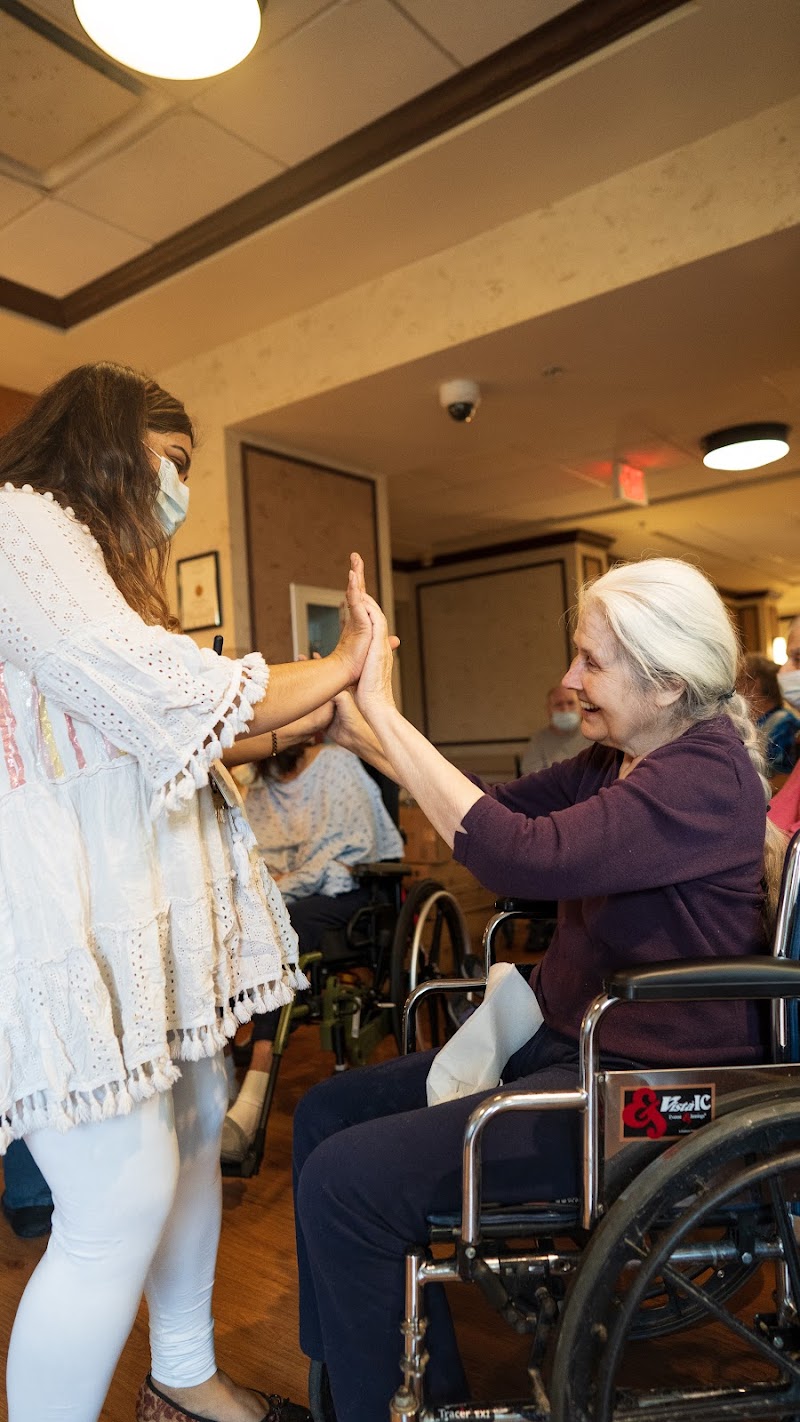
How Does Generations At Regency Compare to Other Illinois Nursing Homes?

Compared to the 100 nursing homes in Illinois, GENERATIONS AT REGENCY's overall rating (3 stars) is above the state average of 2.5, staff turnover (35%) is significantly lower than the state average of 46%, and health inspection rating (3 stars) is at the national benchmark.

What Should Families Ask When Visiting Generations At Regency?

Based on this facility's data, families visiting should ask: "Can you walk me through typical staffing levels on day, evening, and night shifts?" "Can I visit during a mealtime to observe dining assistance and food quality?" "How do you handle medical emergencies, and what is your hospital transfer rate?" "Can I speak with family members of current residents about their experience?" These questions are particularly relevant given the below-average staffing rating.

Is Generations At Regency Safe?

Based on CMS inspection data, GENERATIONS AT REGENCY has a clean safety record: no substantiated abuse findings (meaning no confirmed cases of resident harm), no Immediate Jeopardy citations (the most serious violation level indicating risk of serious injury or death), and is not on the Special Focus Facility watch list (a federal program monitoring the lowest-performing 1% of nursing homes). The facility has a 3-star overall rating and ranks #1 of 100 nursing homes in Illinois. While no facility is perfect, families should still ask about staff-to-resident ratios and recent inspection results during their visit.

Do Nurses at Generations At Regency Stick Around?

GENERATIONS AT REGENCY has a staff turnover rate of 35%, which is about average for Illinois nursing homes (state average: 46%). Moderate turnover is common in nursing homes, but families should still ask about staff tenure and how the facility maintains care continuity when employees leave.

Was Generations At Regency Ever Fined?

GENERATIONS AT REGENCY has been fined $112,185 across 3 penalty actions. This is 3.3x the Illinois average of $34,201. Fines at this level are uncommon and typically indicate a pattern of serious deficiencies, repeated violations, or failure to correct problems promptly. CMS reserves penalties of this magnitude for facilities that pose significant, documented risk to resident health or safety. Families should request specific documentation of what issues led to these fines and what systemic changes have been implemented.

Is Generations At Regency on Any Federal Watch List?

GENERATIONS AT REGENCY is not on any federal watch list. The most significant is the Special Focus Facility (SFF) program, which identifies the bottom 1% of nursing homes nationally based on persistent, serious quality problems. Not being on this list means the facility has avoided the pattern of deficiencies that triggers enhanced federal oversight. This is a positive indicator, though families should still review the facility's inspection history directly.