NILES NSG & REHAB CTR
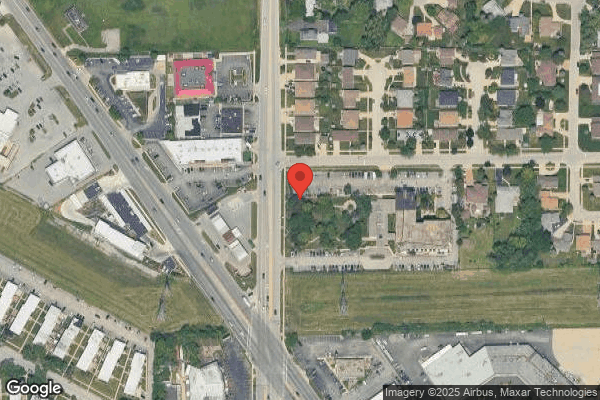
9777 GREENWOOD, NILES, IL 60714 (847) 967-7000
For profit - Limited Liability company 304 Beds INFINITY HEALTHCARE CONSULTING Data: November 2025
Trust Grade
90/100
#69 of 665 in IL
Last Inspection: December 2024

Within standard 12-15 month inspection cycle. Federal law requires annual inspections.

Overview

Niles Nursing & Rehab Center has earned an impressive Trust Grade of A, indicating that it is highly recommended and considered excellent in quality. With a state rank of #69 out of 665 facilities in Illinois, they are in the top half, and they rank #22 of 201 in Cook County, showing they are one of the better options in the area. The facility has a stable trend, with only one issue reported in both 2024 and 2025. Staffing is a concern, as they received a below-average rating of 2 out of 5 stars, though their turnover rate of 20% is significantly better than the state average of 46%. Importantly, they have recorded no fines, which is a positive sign regarding compliance. However, there have been serious incidents, such as a failure to assess medication side effects, leading to a resident's hospitalization for lithium toxicity. Additionally, there was a concern where a resident did not receive their prescribed meal on time, and another incident involved improper medication storage temperatures, which could compromise patient safety. While there are strengths in the facility, especially in their overall ratings and lack of fines, families should be aware of these specific weaknesses when considering this nursing home for their loved ones.

Trust Score
A
90/100
In Illinois
#69/665
Top 10%
Safety Record
Moderate
Needs review
Inspections
Holding Steady
1 → 1 violations
Staff Stability
✓ Good
20% annual turnover. Excellent stability, 28 points below Illinois's 48% average. Staff who stay learn residents' needs.
Penalties
✓ Good
No fines on record. Clean compliance history, better than most Illinois facilities.
Skilled Nurses
○ Average
Each resident gets 37 minutes of Registered Nurse (RN) attention daily — about average for Illinois. RNs are the most trained staff who monitor for health changes.
Violations
⚠ Watch
11 deficiencies on record. Higher than average. Multiple issues found across inspections.
★★★★★
5.0
Overall Rating
★★☆☆☆
2.0
Staff Levels
★★★★☆
4.0
Care Quality
★★★★★
5.0
Inspection Score
Stable
2024: 1 issues
2025: 1 issues

The Good

  • 4-Star Quality Measures · Strong clinical quality outcomes
  • Low Staff Turnover (20%) · Staff stability means consistent care
  • Full Sprinkler Coverage · Fire safety systems throughout facility
  • No fines on record
  • Staff turnover is low (20%)

    28 points below Illinois average of 48%

Facility shows strength in quality measures, staff retention, fire safety.

The Bad

Chain: INFINITY HEALTHCARE CONSULTING

Part of a multi-facility chain

Ask about local staffing decisions and management

The Ugly 11 deficiencies on record

1 actual harm
Mar 2025 1 deficiency 1 Harm
SERIOUS (G) 📢 Someone Reported This

A family member, employee, or ombudsman was alarmed enough to file a formal complaint

Actual Harm - a resident was hurt due to facility failures

Quality of Care (Tag F0684)

A resident was harmed · This affected 1 resident

**NOTE- TERMS IN BRACKETS HAVE BEEN EDITED TO PROTECT CONFIDENTIALITY** Based on interview and record review, the facility failed to assess side effects and adjust medication for one resident (R2) out...

Read full inspector narrative →
**NOTE- TERMS IN BRACKETS HAVE BEEN EDITED TO PROTECT CONFIDENTIALITY** Based on interview and record review, the facility failed to assess side effects and adjust medication for one resident (R2) out of three residents reviewed for medication adjustment based on blood level result. This failure resulted to R2 being hospitalized on [DATE] with diagnosis of altered mental status and lithium toxicity. Findings include: On 3/19/2025 at 1:34, V12 (Registered Nurse-RN) said V12 was the nurse for R2 on 2/28/2025. V12 said that she received the lithium blood test result of 1.53 mEq/L (milliequivalent/Liter). V12 said that the normal range of lithium blood level is between 0.6 - 1.20 mEq/L. V12 said lithium level of 1.53 is high. V12 said that V12 notified the V15 (Medical Nurse Practitioner/NP) that was making rounds on the residents. V12 said that no new order was received from V15. V12 also said that V12 charted that V15 reviewed the lab results. V12 said that R2 was alert and oriented x 3 -4 and able to make her needs known. V12 said that R2 is ambulatory and goes downstairs for lunch with her friends. V12 said that V12 administered R2's medications to her as ordered. On 03/20/2025 at 11:06 AM, V12 said that the normal range for lithium level is 0.6 - 1.20. V12 said that high lithium level can result in patients having tremors, altered mental status, weakness, confusion, coma, and death. On 3/19/2025 at 12:55 PM, V11 (RN) said that V11 has taken care of R2 when R2 was a patient of the facility. V11 said that R2 is alert, and oriented x3. V11 said that R2 was cooperative, continent, and ambulatory. V11 said that R2 is able to express her needs. V11 said that normal lithium level is between 0.6 - 1.20 mEq/L. V11 said that V11 notifies the doctor of lithium level result regardless of whether it is normal or abnormal. V11 said that she was not the nurse that took care of R2 on February 28, 2025. On 3/20/2022 at 9:49 AM, V11 said that the reason why the lithium blood level is checked every month is to determine if the level is high or low. V11 said that lithium blood of 1.53 is high. V11 said that signs and symptoms of high lithium level are diarrhea, vomiting, abdominal pain, altered mental status such as disorientation, not able to speak clearly, confusion, and unsteady gait. V11 said that she was the day shift RN on 3/7/2025. V11 said that V11 was aware of R2's lithium level result of 2.81 mEq/L. V11 said that V10 (Assistant Director of Nursing) notified V16 (Psych Nurse Practitioner) of R2's lithium level result. V11 said that V10 received an order for R2's lithium carbonate to be discontinued. On 3/19/2025 at 2:56 PM, V13 (RN) said that V13 had R2 as one of V13 residents for about one year. V13 said that V13 always works the PM shift. V13 said that R2 was oriented x 4 and very cooperative. V13 said that R2 walks with normal gait and with no assistive device. V13 said that R2 only needs supervision with ADL's (Activities of Daily Living). V13 said that around March 4th, V13 received report from the previous shift nurse that R2 was having a minor cough, and general weakness. V13 said that V15 (Medical Nurse Practitioner) gave an order for respiratory panel and ordered cough syrup. V13 said that all the respiratory panel came back negative. V13 said that in a couple of days, R2's condition changed from general weakness to confused state and V13 reached out to V15 for detailed labs. V13 said that V13 received an order on 3/6 evening shift for CBC (Complete Blood Count), CMP (Comprehensive Metabolic Panel), Chest X-ray, and urine culture to rule out UTI (Urinary Tract Infection) and sepsis to be drawn on the morning of 3/7. V13 said that every medication is prefilled by pharmacy, and V13 only dispenses it. V13 said V13 never dispenses more than what is ordered. On 03/20/2025 at 10:20 AM, V14 (RN) said that V14 is familiar with R2 because V14 provided care to R2 before. V14 said that R2 was oriented x 3-4, able to make her needs known, and ambulatory. V14 said that V14 was the nurse that sent R2 to (Local Emergency Room/ER). V14 said that V14 makes a quick assessment before getting shift report and observed that R2 was weak, and not like herself. During shift report, V14 said that V11 (off going RN) reported to V14 that R2's lithium level was elevated, and the lithium carbonate was discontinued. V14 said that V11 reported that R2 is weak and V14 should monitor R2 closely. V14 said that made V14 put R2 on V14's priority list. V14 said that V14 continued to monitor R2. V14 said that V14 checked R2's blood sugar, and it was normal. V14 said that V14 proceeded to assess other residents. V14 said after about 5 minutes, V14 went back to check on R2 and observed that R2 was getting weaker, and V14 said that V14 felt R2 needs to be transferred to the hospital. V14 said that V14 called the shift supervisor. V14 said the shift supervisor called V15 (Medical Nurse Practitioner) who was in the facility at the moment but on a different floor. V14 said that V15 came to assess R2 and V15 gave the order to transfer R2 to (Local ER). V14 said that monthly lithium levels are ordered so that medication can be adjusted depending on the test result. V14 said that the normal lithium level is between 0.6 - 1.20 mEq/L. V14 said that a Lithium level of 2.81 is high. V14 said that some of the side effects of high lithium levels are weakness, seizure, confusion, dizziness, and altered mental status. On 03/20/2025 at 11:20 AM, V10 (Assistant Director of Nursing), said that lithium levels are drawn in order to adjust the medication, and to find out if any toxicity is happening. V10 said that toxicity happens when levels go above normal range, and it can affect the mental status. V10 said that when mental status is altered symptoms include confusion, unable to walk, severe headache, vomiting, abdominal pain, seizure, coma, and death. V10 said that the normal range for lithium blood level is between 0.6 - 1.20. V10 said that a lithium of 1.53 is mildly abnormal because it is above the normal level. V10 said that staff follow the doctor's order. V10 said that on 3/7/2025, V10 reviewed the lithium lab result of 2.81 at 1:23 PM. V10 said V10 called V16 (Psych NP) and notified V16 of the 2.81 lithium level result. V10 said that V16 discontinued the lithium carbonate 450 mg (milligrams). V10 said that moderate toxicity is between 2.5 - 3.5, and severe toxicity is greater than 3.5. On 03/20/2025 at 12:08 PM, V2 (Director of Nursing), said that the lithium blood draws are ordered to monitor the levels. V2 said that the purpose is to make sure that the medication is actually treating the patient. V2 said that V2 does not memorize the range for normal lab results. V2 said that when V2 looks at the lab results, V2 looks at the range. V2 said that toxicity is when the result is above the normal range. V2 said that signs of lithium toxicity are nausea, vomiting, abdominal pain, restlessness, weakness. coma, and maybe death. V2 said that V2 was aware of R2's lithium level result of 2.81 on 3/7/2025. V2 said that when V10 called V16 (Psych NP), V16 discontinued R2's lithium Carbonate. V2 said that when V15 (Medical NP) came later and saw R2, V15 ordered for R2 to be sent out to the hospital. On 3/20/2025 at 12:50 PM, V15 (Medical NP) said that lithium carbonate was ordered for R2 because R2 has schizoaffective disorder. Levels are drawn to make sure that she is being treated with a dose that is appropriate for her to prevent toxicity. V15 said that toxicity is too high of the lithium level. V15 said that altered mental status is a sign of lithium toxicity such as nausea, vomiting, confusion, and kidney failure. V15 said that you want the level to be less than 1.5 and also assess the patient condition. V15 said that she will say that a lithium level of 1.53 is on the high side, but she will also assess the patient symptoms. V15 said that she was aware of R2's lithium level on 2/28/2025. V15 said that V15 collaborates with the psych NP and V15 told the nurse to inform the psych NP R2's lithium level result. V15 said that it is the decision of the psych NP to adjust the lithium carbonate dose for R2. V15 said that she was not managing R2's psychotropic medication. On 3/20/2025 at 1:19 PM, V16 (psych NP) said that R2 was V16's patient. V16 said that R2 is alert, oriented and usually pleasant. V16 said that V16 was not aware of R2's lithium level of 1.53 mEq/L on 2/28/2025. V16 said that if he was notified of the 1.53 mEq/L lab result on 2/28/2025, V16 would have discontinued R2's lithium carbonate. V16 said that staff was to notify psych NP about results of psych medications and notify medical NP of medical medications. V16 said that V16 saw R2 last in January. V16 said that V16 is required to see residents every 60 days. V16 said that V16 was notified of the lithium level of 2.81 on 3/7/2025. V16 said that V16 ordered for the lithium carbonate to be discontinued. V16 said that lithium toxicity is above 2.5 mEq/L. V16 said that lithium toxicity signs include nausea, vomiting, diarrhea, and confusion. V16 said that he ordered for the patient to be monitored. V16 said that V15 (Medical NP) is responsible for sending residents out to hospital for medical reasons, and V16 sends patients to the hospital for behavioral reasons. V16 said that V16 did not contact V15 regarding R2's high lithium level. V15 said that she was notified of the level on 3/7/2025 of 2.81 in the morning. V15 said that V15 told the staff to make sure that the psych NP is notified. V15 said that when V15 came to facility, V15 assessed R2. V15 said that R2 was confused. V15 said that R2 could not answer her questions appropriately like R2 normally does, so V15 sent R2 out to the hospital. R2 is a [AGE] year-old female admitted to the facility on [DATE]. R2's order indicates that R2 was on Lithium Carbonate tablet 450 mg twice a day. Review of the medical administration record from 10/24/2025 to 3/7/2025 indicated that R2 received Lithium Carbonate 450 mg twice daily as ordered. R2's blood lithium level from 10/24/2025 to 3/7/2025 indicated that R2's blood lithium level for 2/28/2025 = 1.53 mEq/L and for 3/7/2025 = 2.81 mEq/L were above the normal range of 0.6 - 1.20 mEq/L. R2's electronic medication administration record indicated that R2 continued to be medicated with Lithium carbonate 450 mg twice daily after a lithium level of 1.53 mEq/L. Review of R2's progress note indicated that R2's weakness started on 3/4/2025. V13 (RN) indicated that R2 was weak on 3/4/2025; V11 (RN) indicated that R2 was weak both on 3/5 & 3/6; V15 (Medical NP) indicated that R2 had general weakness on 3/6 and indicated in V15's note that R2 should continue lithium 450 mg twice daily; On 3/7/2025, V15 indicated that R2 was not able to follow commands and was only speaking minimally. V14 (RN) indicated that R2 had increased confusion and general weakness on 3/7. Lab result from (Local ER) indicated that R2's lithium level on 3/7/2025, was 2.8. It was indicated on R2's ER record that R2 was admitted with 1) Altered Mental Status (AMS) and 2) Lithium Toxicity. The facilities Policy and Procedure for Psychotropic Drugs Usage indicates: Policy: Factors that may contribute to or are responsible for changes in a resident's behavior will be identified by the facility. Such factors may include but are not limited to psychosocial and/or environmental stressors, medical conditions, etc. Procedure: 1. Each resident receiving an antipsychotic medication for organic brain disorders is observed for. Adverse reactions and side effects.
Dec 2024 1 deficiency
CONCERN (D)

Potential for Harm - no one hurt, but risky conditions existed

Deficiency F0761 (Tag F0761)

Could have caused harm · This affected 1 resident

Based on observations, interviews, and record review, the facility failed to follow the pharmacy policy by not noting and implementing open date labels for three of 31 (R76, R196, and R203) residents ...

Read full inspector narrative →
Based on observations, interviews, and record review, the facility failed to follow the pharmacy policy by not noting and implementing open date labels for three of 31 (R76, R196, and R203) residents reviewed during medication storage and labeling task in the sample of 61. Findings include: On 12/03/24 at 10:01 AM inspection of the 3rd floor (high side) medication cart was conducted. Opened and undated medication was observed for: R76 - Fluticasone-Salmeterol Inhalation Aerosol Powder Breath Activated 100-50 MCG/ACT (Fluticasone-Salmeterol) - no open date written. R196 - Budesonide-Formoterol Fumarate Inhalation Aerosol 160-4.5 MCG/ACT (Budesonide-Formoterol Fumarate Dihydrate) - no open date written. R203 - Fluticasone Furoate-Vilanterol Inhalation Aerosol Powder Breath Activated 100-25 MCG/ACT (Fluticasone Furoate-Vilanterol) - no open date written. R76's active physician order dated 10/04/2024 reads in part, Fluticasone-Salmeterol Inhalation Aerosol Powder Breath Activated 100-50 MCG/ACT (Fluticasone-Salmeterol) 1 puff inhale orally two times a day for Acute respiratory failure with hypoxia. R196's discontinued physician order dated 02/11/2023 - 05/06/2024 reads in part, Budesonide-Formoterol Fumarate Inhalation Aerosol 160-4.5 MCG/ACT (Budesonide-Formoterol Fumarate Dihydrate) 2 puff inhale orally at bedtime related to OTHER ASTHMA. R203's active physician order dated 11/08/2023 reads in part, Fluticasone Furoate-Vilanterol Inhalation Aerosol Powder Breath Activated 100-25 MCG/ACT (Fluticasone Furoate-Vilanterol) 1 puff inhale orally one time a day related to CHRONIC OBSTRUCTIVE PULMONARY DISEASE. R76's November 2024 medication administration record shows that R76 has been getting the inhaler as scheduled, two times a day. R203's November 2024 medication administration record shows that R203 has been getting the inhaler as scheduled, one time a day. On 12/03/24 at 10:20 AM V20 (Registered Nurse) stated, I always put an open date on inhalers when I initially open them. I don't know if it makes any difference, but it is better when they're dated because when it's not used regularly it may be used long after its opened. Certain medication, especially with shortened expiration date, such as inhalers, have to be used within specific date, those medication lose its effectiveness. On 12/03/24 at 02:53 PM V3 (Director of Nursing/DON) stated, it is important to date shortened expiration date medications upon opening, in order to know how long they're good for. If nurses don't date shortened expiration medications upon opening, they may get used passed recommended time, and then those medications become ineffective and don't work as they should. Two out of three inhalers identified to be undated during medication label and storage task, are good to use for 6 weeks from open date and one is good for 3 months. V3 (DON) presented surveyor with visual evidence that the above inhalers are dated now, surveyor asked how does V3 (DON) know when those inhalers were opened, V3 (DON) responded, We estimated the open date. Pharmacy policy United R: Expiration guidelines for inhalation products dated 07/2013 reads in part, Once these products are opened, they, must be used within a specific timeframe to avoid reduced potency, and potentially, reduced efficacy. Advair diskus (fluticasone/salmeterol) 1 month after removed from foil pouch, Symbicort (budesonide/formoterol) 3 months after removed from foil pouch, Breo Ellipta Discard 6 weeks after removal from foil tray.
Nov 2023 3 deficiencies
CONCERN (D)

Potential for Harm - no one hurt, but risky conditions existed

Safe Environment (Tag F0584)

Could have caused harm · This affected 1 resident

**NOTE- TERMS IN BRACKETS HAVE BEEN EDITED TO PROTECT CONFIDENTIALITY** Based on observation, interview, and record review the facility failed to provide an environment that was clean and free of perv...

Read full inspector narrative →
**NOTE- TERMS IN BRACKETS HAVE BEEN EDITED TO PROTECT CONFIDENTIALITY** Based on observation, interview, and record review the facility failed to provide an environment that was clean and free of pervasive odor by failing to clean a resident's room per facility policy and protocols. This failure affected one resident (R64) of one resident reviewed for housekeeping on the sample list of 50. Findings include: R64 is a [AGE] year-old female who was originally admitted to the facility on [DATE], with past medical history of Heart failure, type 2 diabetes, weakness, need for assistance with personal care, sepsis, morbid (severe) obesity due to excess calories, major depressive disorder, psoriasis, weakness, anxiety disorder, etc. On 11/13/23 at 12:00PM R64's door was closed with contact isolation sign on the door and an isolation bin with personal protective equipment (PPE). After opening the door, R64 was sitting on her bed, awake, alert and oriented and stated that she is doing okay. R64's room was very dirty with pervasive odor, paper towel was littered all over the bathroom floor and garbage can was overflowing with garbage. R64 said, I am sorry my room is dirty, no one comes in to clean the room because they said I have a disease. I came back from the hospital on Friday and since then, no housekeepers have entered the room. R64 stated that it is very frustrating to her, they act as if they will die if they come into her room. On 11/13/23 at 12:20PM, R64 was standing at her door with her walker and complaining to the nurse (V5) who was in the hallway passing medication about her room that has not been cleaned. V5 (nurse) told resident that her room was cleaned yesterday but resident insisted that no housekeeper has been in her room since Friday. Review of medical record showed that resident was sent to the hospital for fever and chills, was treated for sepsis, cellulitis and leg wound infection, was readmitted to the facility on Friday, 11/10/2023 and on contact isolation for MDRO in wounds. The facility's grievance/concern log showed a concern filed on 9/21/2023 by a resident regarding improper cleaning of her room. On 11/13/23 at 12:08PM, V20 (Housekeeper) was observed cleaning resident's rooms on the low side of unit 3 near R64's room, V20 was asked whether she cleaned the resident's room, and she said not yet. V20 added that she is scared of going into the room because she has cancer but she thinks the room was cleaned by the 3 to 11pm shift the previous day. On 11/14/2023 at 2:10PM, V21 (Housekeeping Director) said that V20 did not clean the resident's room because she was afraid, she relied on V20 to switch the room with another housekeeper. There are nine housekeepers on day shift, two on each floor (2, 3, 4, and 5) and one on the first floor. V21 said that she can move V20 to another floor to avoid a repeat of what happened yesterday, she added that she saw resident's room after concerns were noted and it was filthy. V21 said the room was cleaned right away and that the resident being on isolation is not an excuse not to clean her room. Housekeeping policy (undated) provided by V2 (Assistant Administrator) stated its purpose as to provide a clean, attractive, and safe environment for residents, visitors, and staff. The section of the policy titled infectious area cleaning policy and procedure daily cleaning states the same purpose as above, responsibility indicated housekeeping staff/laundry staff. Under protective equipment, the policy states in part to check with nursing staff on requirements for entering isolation room and ensure there is a sign on the door. Wear proper PPE and any other item recommended by the manufacturer. Daily cleaning procedures item 4 states, empty trash and put the filled liner in the isolation garbage within the room. 7. Using cleaning cloths impregnated with a disinfectant cleaner, start at one side of the door and working around the entire room, clean all surfaces of cabinets, lockers, bedside tables, overbed tables, IV poles, wheelchairs, commode, call bell/cord, blood pressure cuff, medical apparatus, etc. Follow manufacturer's guideline or product supplier recommendation. Daily cleaning of infectious area section of the policy under Note for Viruses stated in part, for MRSA, Noro virus influenza, or Covid 19, use Clorox clean up disinfectant cleaner with bleach, Clorox healthcare bleach wipes with a dwell time of 5 minutes, 30 seconds to be left on the surface.
CONCERN (D)

Potential for Harm - no one hurt, but risky conditions existed

Deficiency F0740 (Tag F0740)

Could have caused harm · This affected 1 resident

**NOTE- TERMS IN BRACKETS HAVE BEEN EDITED TO PROTECT CONFIDENTIALITY** Based on observation, interview, and record review, the facility failed to implement care plan interventions addressing behavior...

Read full inspector narrative →
**NOTE- TERMS IN BRACKETS HAVE BEEN EDITED TO PROTECT CONFIDENTIALITY** Based on observation, interview, and record review, the facility failed to implement care plan interventions addressing behaviors of anxiety, agitation, and physical aggression for a resident with cognitive impairment and mental disorder. This failure applied to one (R87) of one resident reviewed for behavior management on the sample list of 50. Findings include: R87 is a [AGE] year-old, male, initially admitted in the facility on 03/14/2014 with diagnoses of Huntington's Disease; Bipolar Disorder, Current Episode Depressed, Mild or Moderate Severity, Unspecified; Unspecified Dementia, Unspecified Severity, with other Behavioral Disturbance; Schizoaffective Disorder, Unspecified; Schizophrenia, Unspecified; Unspecified Psychosis Not Due To A Substance Or Known Physiological Condition and Degenerative Disease of the Basal Ganglia, Unspecified. R87's POS (Physician Order Sheet) dated 08/29/23 documented: Physical Aggression every shift. Resident has signs and symptoms of physical aggression at times. Anxiety every shift. Clonazepam (Benzodiazepine) tablet 0.5mg (milligrams) give one tablet by mouth three times a day, Haloperidol (Antipsychotic) tablet 2mg give 2 tablets by mouth two times a day, Seroquel (Antispychotic) tablet 400mg give 1 tablet by mouth at bedtime. On 11/15/23 at 12:25 PM, R87 was observed in the dining room, sitting in his wheelchair. There were other residents observed in the dining room eating lunch. Suddenly, R87 stood up, his chair alarm went off. V17 (Certified Nurse Assistant, CNA) went to R87 to stop him from standing up. He (R87) sat down but stood up again. V5 (Registered Nurse, RN) went to R87 and assisted V17 to stop him (R87) and have him sit in his wheelchair. R87 insisted to stand up and walk away but V5 and V17 were holding his (R87) arms and hands suppressing him (R87) to walk and made him sit in the wheelchair. Both V5 and V17 stated, You need to sit down, you might fall. What do you need? R87 did not respond but kept on standing up while both (V5 and V17) staff insisted him to sit in the wheelchair. At this time, as V5 and V17 restricting him to stand up and walk, R87 became more agitated and started pushing V5 and V17. V5 stated in a quite loud manner, You need to let go of me, you need to sit down. He (R87) sat down in the wheelchair but still insisted on standing up and pushing V5 and V17 again in an aggressive manner. At this time, R87 became uncontrollable. V5 left to get some assistance by calling code gray. V17 tried to make R87 sit in the wheelchair but he kept on standing up, walked towards the chair in front of him (R87) and sat down, while V17 tried to ask what he needs, he (R87) responded that he wants to go back to his room. V17 was asked regarding R87's behavior. V17 stated, He do that at times. We try to call somebody for help. He is really strong. V5 was interviewed regarding R87's behavior. V5 replied, Recently yes, he's standing up from his wheelchair or from bed. That is why he has a chair and bed alarm. He was on Clonazepam and Haldol. We just redirect him to sit down and ask what he needs. He is too heavy, so we need a second person. We make sure he is not getting harm. If he is not listening and might be harmful to others, we have anti-anxiety medication to give. On 11/15/23 at 12:50 PM, V18 (Social Services Director) was asked regarding R87. V18 mentioned, He has a history of that behavior but has not done it in a while. He usually yells out. We make sure he has bed alarm and chair alarm on. We watch and stay with him. Report to CNA and RN. If he calms down, it's okay and continue to monitor. If he does not calm down, reach out to physician. R87's care plan on behavioral distress dated 06/01/22 documented the following interventions: If the resident becomes verbally or physically abusive attempt to calm the resident by explaining that ladies and gentlemen do not talk/behave this way. We do not touch other people. If talking to the resident is not successful in stopping the behavior, try to walk with the resident to a quiet area, away from other individuals. Intervene by speaking calmly and professionally in a soft tone of voice. Staff should avoid raising own voice, since this tends to make the resident more upset. This may cause the situation to escalate. Ask the resident to calmly explain what is causing this upsetting behavior. Praise the resident to speaking calmly and appropriately. On 11/15/23 at 2:05 PM, V3 (Director of Nursing) was asked on the right approach to R87 to prevent behavior escalation. V3 stated, Sometimes he is verbally abusive and physically aggressive. He could swing. There was an incident before that he wants to get coffee, he stood from wheelchair, and he swung his arms at staff. It happened in the hallway. He gets agitated when tries to get something and thinks staff is preventing him to do so. We have to talk to him on a clear soft tone. At times he could be aggressive, at times he could be redirected. If not able to redirect him, speak to him and bring him to his room. Separate from other residents by bringing him back to his room. Then, ask him what he needs. With the incident today, code gray was announced, which means violent resident. I went there and approached him in a calm manner. I redirected him and took him to his room. He told me that he wants to go to bed. We laid him down to bed. After two minutes, he said he wanted to go to the toilet. I asked the CNA for assistance. I also asked Social Services to provide one on one. Facility's policy titled Behavior Management Psychotropic Medication Protocol undated, stated in part but not limited to the following: Procedure: 3. Established resident receiving psychotropic/psychoactive medications/behavior management program: d. The interdisciplinary care team will update the care plan to include the problem behavior goals and approaches. e. The planned interventions for each individual resident's behavior will be communicated to the appropriate staff members, interventions and response will be documented.
CONCERN (E)

Potential for Harm - no one hurt, but risky conditions existed

Grievances (Tag F0585)

Could have caused harm · This affected multiple residents

R225's physician orders for diet indicate 4/19/23 general diet mechanical soft with pureed meat texture, thin liquids consistency, Korean food, super cereal @ breakfast. Whole milk BID. The 10/19/23 c...

Read full inspector narrative →
R225's physician orders for diet indicate 4/19/23 general diet mechanical soft with pureed meat texture, thin liquids consistency, Korean food, super cereal @ breakfast. Whole milk BID. The 10/19/23 care plan indicates R225 with potential for nutritional risk related to new CVA Cerebrovascular Accident; Dysphagia, Dementia. Diet downgraded to pureed. Needs assistance with eating. Interventions indicate prepare/serve the resident's nutritional diet as ordered. Prescribed diet is: general/pureed. Mechanical soft with pureed meat. On 11/13/23 at 01:14 PM, lunch arrived to the 5th floor dining room. At 1:45 PM, R225 does not have a lunch tray prepared. R225 is a mechanical soft diet with puree meat. V4 ADON (Assistant Director of Nursing) in the dining room who were preparing lunch trays. V4 and staff were unable to locate R225's lunch meal. V4 ADON placed a call to the kitchen from her cell phone informing them to prepare a lunch tray for R225. V4 said, I just called the kitchen, they're going to make R225 a tray and bring it up. On 11/16/23 at 10:00 AM , V8 Dietary Manager said, Our food is fresh, it's a challenge. We are working on managing our time better. I had a cook that was injured so I helped out on Monday. We're not late all the time. Lunch for 5th floor didn't arrive until 1:14 PM. V8 said, We have a sheet that we mark when the food leaves the kitchen. Once it leaves it's out of our control. The 5th floor lunch times for the high side is 12:20 PM and low side 12:40 PM. It was late on Monday. We have staff on the units to help serve. V8 said, I missed a couple resident council meetings. I received a grievance from R165, he's from the 1st floor. I signed off on it. The staff didn't bring it up to me about other resident concerns about late meals. Moving forward today I'm going to in-service my staff on meal times. That's my solution. V8 did not have an answer to how the late meals could affect residents. On 11/16/23 at 10:09 AM, V4 ADON Assistant Director of Nursing said, The kitchen supervisor is trying hard to prepare it. The preparation is from fresh food, it's Korean. It's like home cooked, it takes time. R225's tray wasn't in his room at the time. V4 said, One of the CNA's Certified Nurse Assistant found it after you left. It was on one of the other carts. When V4 was asked, Why was the tray not found while staff were looking for it on the carts? V4 said, I don't know. V4 said, We address it in our stand up meetings, we say it's a problem. It's addressed through leadership to the Kitchen Supervisor, the Administrator and Director of Nursing to communicate. We offer to help pick up the trays from the kitchen. We help pass trays to residents. Each manager has a floor to help everyday. I'm on 5th floor. I help make sure everything is organized and everyone is practicing infection control. V4 said, It affects the residents, they get upset when they're hungry. It frustrates them. Based on observation, interview, and record review the facility failed to follow their policy and procedures for making efforts to ensure resident's grievances regarding late mealtimes were resolved promptly and to the resident's satisfaction. This failure affects three of three residents (R80, R165 and R22). This failure has the potential to affect all 283 residents in the facility who receive meals. Findings include: Per facility census provided during the course of this survey, there are currently 283 residents in the facility. The Facility's Meal Schedule documents lunch times for 4th and 5th floors are from 12:10 PM - 12:30 PM. On 11/13/23 from 12:30 PM - 1:29 PM Observed several residents waiting in the 4th floor dining area for lunch to be served. V8 (Dietary Director) stated the lunch meal was delayed due to a dietary staff being injured and informed she had to assist with meal prep and service. V19 (Certified Nursing Assistant) and V11 (Transportation Coordinator) stated lunch is normally served at 12:30 PM. On 11/13/23 at 1:29 PM Observed lunch being delivered to 4th floor dining area. On 11/14/23 at 11:33 AM during resident council meeting, R80 and R165 stated meals are frequently late. R165 stated this happens about 40% of the time. R80 and R165 stated there's a dietary staff shortage. R165 stated about 2-3 months ago he documented 7 weeks' worth of observations of late meals and turned it in to the facility. R165 stated he reported the times meals were served as opposed to when they should have been served. Resident Council Concern Form dated 08/17/2023 documents R165 expressed concern about meals being served late. Resident Council Meeting Report from August 08/17/2023 documents residents are concerned about meals being late. A grievance form dated 09/21/2023 documents a concern regarding MDR (Main Dining Room) issues stating 90% of these problems would be solved with proper staffing. Resolution includes assigning department managers along with a certified nursing assistant to monitor and assist for all meals and assistant administrator continuously overseeing as well. The facility's Grievance Policy reviewed 11/16/2023 states: The Grievance Official will: If necessary, take any required immediate action to prevent further potential violations of any resident right while the violation is being investigated.
Feb 2023 1 deficiency
CONCERN (D) 📢 Someone Reported This

A family member, employee, or ombudsman was alarmed enough to file a formal complaint

Potential for Harm - no one hurt, but risky conditions existed

Safe Environment (Tag F0921)

Could have caused harm · This affected 1 resident

Based on observation, interview, and record review the facility failed have an effective cleaning policy and practice to remove urine odors in the resident room and bathroom. This affects 1 (R1) of 3 ...

Read full inspector narrative →
Based on observation, interview, and record review the facility failed have an effective cleaning policy and practice to remove urine odors in the resident room and bathroom. This affects 1 (R1) of 3 residents reviewed for odors and cleanliness. Findings include: On 2/25/23 at 11:31am R1 was observed resting in low bed R1 was observed to be awake but not verbal at this time, orientation was undetermined. On 2/25/23 at 11:31am observation of R1's room noted to have an odorous smell near bathroom door. Upon opening the bathroom door, the odorous smell became more pronounced. The toilet bowl was noted to have a dark stained area in the back of the toilet where the toilet base met the floor. At 12:00pm V1 (Housekeeper) toured with surveyor. V1 said this was her first time going into R1's room today. V1 pulled down her mask and said, I smell urine; I'm going to clean it now. At 12:30pm V1 was observed to be cleaning the adjunct room to R1's room. V1 said she was finished cleaning R1's room including the bathroom. At 1:21pm during follow-up observation of R1's bathroom with V2 (Housekeeper), V2 said, I smell urine. V2 said he would clean the bathroom immediately. V2 was made aware that the housekeeper cleaned it recently. V2 replied he used to work this section and when he worked in this section, there was an issue with the bathroom smelling like urine. The dark stained area/debris remained in the back of the toilet where the toilet base met the floor. V2 said the facility has a solution that they use for urine odors. V2 escorted surveyor to the housekeeping closet. On the housekeeper cart, there was a bottle of (brand name) urine remover noted. V2 said the housekeeper should be using this solution for urine odors. V2 was asked if the solution is effective against urine smells. V2 replied sometimes the urine is saturated through the floor. V2 was asked if that was the situation for R1's bathroom. V2 said sometimes that is the issue. On 2/25/23 at 1:52pm V3 (Director of Housekeeping) said when cleaning the resident room, the housekeeper does an ocular inspection for safety hazards, like spills, and cleans safety hazards first. V3 said the housekeeper then checks the walls, removes the trash, replaces bags, wipes dressers, sweeps and mops. V3 said the housekeeper then cleans the bathroom, cleaning the sink first, wipes down handrails, then clean the toilet bowl, wipes the toilet seat, cleans the inside of the bowl with toilet brush, and mopping is the last task. The housekeeper puts solution in bucket, wets the mop, then mops the floor using a figure 8 motion removing debris as they mop. V3 said the floor should be mopped 2 to 3 times. V3 said regular solution is used for mopping, however if there is urine on the floor or if a urine smell is present, the urine remover solution should be used. V3 said she was aware that R1's family had concerns with R1's room being dirty, and issues were resolved with housekeeping cleaning the room. V3 said she is aware that there are concerns with R1's room and bathroom smelling of urine. V3 replied that the housekeeper cleans the bathroom twice a day, and they are following the manufacturer's instructions for usage. V3 said the resident room and bathroom should not smell like urine, this (facility) is their home, and their home should not smell like urine. Review of facility concern log, concern form dated 1/22/23 for R1, denotes in part family stated that room is very dirty again, floor is sticky, food particles on floor, bedding, and chair. Resolution date 1/23/23. Review of the (brand name) urine remover cleaning solution denotes general instructions: spray directly onto stains until completely covered. Rinse with water or wipe with a clean damp cloth. For grout and tougher stains, spray directly onto stain until completely covered, wait 5 minutes, then rinse with water or wipe down. Facility General Cleaning Resident Rooms policy documents in part to provide a clean, attractive and safe environment for residents, visitors and staff.
Mar 2022 5 deficiencies
CONCERN (D)

Potential for Harm - no one hurt, but risky conditions existed

Deficiency F0583 (Tag F0583)

Could have caused harm · This affected 1 resident

2. 03/09/22 10:34 AM - During R458's wound care, (V27) CNA (Certified Nurses Assistance), in preparation for the resident's wound care, unfastened R458's adult diaper without pulling the curtains full...

Read full inspector narrative →
2. 03/09/22 10:34 AM - During R458's wound care, (V27) CNA (Certified Nurses Assistance), in preparation for the resident's wound care, unfastened R458's adult diaper without pulling the curtains fully or closing the door. R458 has a roommate. V6 (Wound Care Nurse) closed the door before changing R458's wound. At 10:48 AM, while the wound care was in process, V28 (CNA) came into the room without knocking at the door. V27, on 3/9/22 at 10:50am, V27 was asked what he should have done before unfastening R458's diaper, and she said, pulled the curtains and closed the door. V28, on 3/9/22 at 10:51am was asked what she should have done before entering the room, and she said knock and wait to be invited in. V6, on 3/9/22 at 10:55 am, said V27 should have pulled the curtain and closed the door before unfastening R458's diaper, and also said that V28 should have knocked on the door and wait to be invited in. V4, on 3/10/22 at 2:00 pm, said she expected her staff to knock at the resident's door, wait to be invited in, close the door, introduce themselves, and pull the privacy curtain if there is a roommate before providing direct care to the residents. Policy and Procedure Resident Privacy and dignity Purpose: To ensure that all residents are provided with dignity and privacy. To provide all residents with a home like environment that promotes dignity and respect to the residents of the facility. Policy: 2. Staff will knock on the resident's door prior to entering the resident's room. Staff will be invited into the resident's room if the resident is capable of the invitation. The staff will announce their presence after knocking to any resident that is unable to respond to the request to the request for entrance. 3. Privacy will be maintained for all resident's receiving ADLs such bathing, dressing and peri-care with the resident room/shower room door closed and curtain drawn. Based on observation, interview, and record review the facility failed to maintain privacy of electronic medical records, and maintain visual privacy for two residents (R258, R458) of four residents reviewed for medication administration and six residents reviewed for wound care in the sample of 37. Findings include: 1. On 3/9/22 at 8:25 AM V21 (RN-Registered Nurse) prepared medications to administer to R258. V21 left the computer open to the MAR (Medication Administration Record) for R258. V21 administered medication to R258 via the g-tube (gastric tube). V21 did not close the privacy curtain for R258. R249, a roommate, was seated in a chair with R258 in her direct line of sight. During the medication administration R30, roommate, came around the curtain to the open area with R258 in her line of sight. V21 said, I should have closed the privacy curtain and turned off the computer. On 3/10/22 at 1:30 PM V4 (Assistant Director of Nursing) said, the nurse should pull the privacy curtain when giving those meds through the g-tube (gastric tube). The computer screen should be left blank when it is unattended. A policy and procedure titled Enteral Tube Care and Feeding, revised 1/12/22 indicates 4. Introduce self, explain procedure and provide privacy. A policy titled Medical Records, undated, indicates Electronic clinical system kiosks are designed with HIPAA (Health Insurance Portability and Accountability Act) privacy screens to limit casual viewing of resident information when in use in public areas.
CONCERN (D)

Potential for Harm - no one hurt, but risky conditions existed

Report Alleged Abuse (Tag F0609)

Could have caused harm · This affected 1 resident

**NOTE- TERMS IN BRACKETS HAVE BEEN EDITED TO PROTECT CONFIDENTIALITY** Based on observation, interview and record review the facility failed to follow its abuse prevention program by failure of the s...

Read full inspector narrative →
**NOTE- TERMS IN BRACKETS HAVE BEEN EDITED TO PROTECT CONFIDENTIALITY** Based on observation, interview and record review the facility failed to follow its abuse prevention program by failure of the staff to immediately notify the abuse coordinator (Administrator) of a resident-to-resident altercation that occurred in the facility. This deficiency affects two ( R226 and R109) of three in a sample of 37 residents reviewed for Abuse prevention program management. Findings include: On 3/8/22 at 11:17am, Observed by the corner of the hallway closer to the public phone on second floor beside the nursing station, R226 was screaming and yelling for help as she carried the chair in front of her to use as a shield from R109 who is aiming both of his clenched fists towards her. V7 RN (Registered Nurse) and V10 CNA ( Certified Nurse Assistant) came to help and separated the two residents. R109 went to his room and R226 stayed by the public phone seated on the chair. V10 CNA said that R109 used to sit in the chair in the corner by the hallway, but R226 used it and he got mad. On 3/9/22 at 9:50am, V13 RN said that she did not hear any report about a resident-to-resident altercation on the second floor yesterday. Reviewed both R226 and R109's progress notes, no documentation of resident-to-resident altercation occurred yesterday. V13 said that if she observes or becomes aware of an altercation between residents, she will immediately report it to the administrator and document the incident. On 3/9/22 at 10:43am, V10 CNA said that R226 and R109 were fighting about the chair yesterday. V10 CNA said that R109 used to sit in that chair, but R226 used it and he got mad. V10 said that she did not report it to the administrator because she expects V7 RN to report it because she also observed and helped to separate both residents. She added that if she observed it by herself, she would report it to the nurse, supervisor, or administrator. On 3/9/22 at 10:50am, V15 Social Service Director said that she is not aware of the altercation that happened between R226 and R109. She said that if she observed or if the incident was reported to her, she would notify the administrator immediately. She would also document the incident and update both resident's care plan. On 3/9/22 at 10:57am, V7 RN said that R109 was trying to hit R226 because she used the chair, R109 usually sits on it by the corner of the hallway. They separated the two residents. She said she did not document the incident and did not report it to the supervisor or to the administrator, but she reported it to V17 Social Worker. She said she should have documented it and completed an incident report, but forgot it. She said that she has been working in the facility since [DATE] and has not attended abuse in-services. On 3/9/22 at 11:06am, V17 Social Worker said that V7 RN told her about R226 and R109 altercation, but he did not witness it. He said that he did not report to V15 Social Service Director or to Administrator, and did not document the incident because he did not witness it. He said he should have reported it to the administrator and documented it. He said that he has been working in the facility since [DATE] and has not attended abuse in-services. On 3/9/22 at 12:09pm, V4 ADON said that any staff who witness altercations between residents should report immediately to the administrator. On 3/9/22 at 1:38pm, V1 Administrator said that he just learned today about the altercation between R226 and R109. He said the staff should report to him immediately any resident-to-resident altercation that occurs in the facility. He said that he initiated a resident to resident abuse investigation and submitted initial report to IDPH. On 3/9/22 at 2:00pm, V2 Assistant Administrator (AA) provided copy of the initial resident to resident abuse report submitted to IDPH. Report indicated that the incident happened on 3/9/22 instead of 3/8/22. Showed discrepancy of the report to V2 to have it corrected. On 3/9/22 at 2:20pm V2 provided a copy of the revised incident which indicated: incident dated 3/8/22 and reported to administrator on 3/9/22. R226 was admitted on [DATE] with diagnosis to include Dementia with behavioral disturbance, schizoaffective disorder, bipolar type, unspecified psychosis not due to a substance or known physiological condition. R109 was admitted on [DATE] with diagnosis to include Aphasia following cerebral infarction, Dementia with behavioral disturbance, Restlessness and agitation. Facility's Abuse prevention program indicated: V. Identification of Allegation/Internal reporting requirements: Employees are required to immediately report any incident, allegation or suspicion of potential abuse, neglect, misappropriation of resident property, mistreatment, or a crime against a resident they observed, hear about, or suspect to the administrator if available or an immediate supervisor who must immediately report it to the administrator. In the absence of the administrator, reporting can be made to the DON. Any incident, allegation or suspicion of potential abuse, neglect, exploitation, misappropriation of resident property, mistreatment or a crime against a resident is reported to a covered individual; covered individuals are notified annually of these reporting requirements.
CONCERN (D)

Potential for Harm - no one hurt, but risky conditions existed

Quality of Care (Tag F0684)

Could have caused harm · This affected 1 resident

Based on observation, interview and record review the facility failed to notify the physician of an edematous (swelling) right hand and arm for one of one resident reviewed for notification of change ...

Read full inspector narrative →
Based on observation, interview and record review the facility failed to notify the physician of an edematous (swelling) right hand and arm for one of one resident reviewed for notification of change in condition in a sample of 37. Findings include: On 3/9/2022 at 11:00am R80 was observed coming out the washroom, and her right arm and hand has 2-3 plus edema and hanging down on her side. R80 is observed using left arm to move right hand. On 3/9/2022 at 11:05am V22 (Registered Nurse) observed R80 right hand and arm with surveyor and said yes, it's always edematous. The certified nursing assistant-(CNA) should apply the sling or the restorative staff, I think. On 3/9/2022 at 11:10am V26(Restorative Nurse) said R80 receives (Active assistive range of motion-AAROM) daily she does not wear a sling anymore. I did not know that R80's right hand and arm has edema, I would have had the physical therapy department to evaluate and then take their recommendations from there. The restorative aid did not notify me of any edema. On 3/9/2022 at 11:20am V24(Restorative Aid) said I did active assistive range of motion with R80. I did notice that her right hand was edematous, I did not notify the nurse, they already knew about it. I should have notified the restorative nurse I didn't do that. On 3/9/2022 at 12:00 pm V23(Primary Attending Physician) said I was not aware that R80 right hand and arm was edematous if so, I would have ordered an x-ray and elevate the extremity until results are in. 3/11/2022 at 10:50am a review of R80's face sheet indicated a diagnosis of repeated falls, history of falling, and Hemiplegia and Hemiparesis following unspecified cerebrovascular disease affecting right dominant side. A fall incident report dated 9/19/2021 that indicates R80 had an injury to the right forehead with swelling. A root cause analysis that resident fell to her right side. And returned on 9/23/2021 with a diagnosis of fracture of medial orbital wall and suspected non-displaced fracture of the distal humerus and suspected loosening of some of the internal fixation hardware which she has a history. A progress note dated 9/19/2021 that indicated R80 tried to get out the bed and lost her balance and fell. R80 hit her right forehead on the floor and sustained a bump on the right forehead. Physician ordered to monitor resident and do Neuro checks. On 9/24/2021 A Illinois department of public health incident report indicated the conclusion Resident fell on 09/19.2021 to her right side. MD-medical doctor was notified. Received orders to monitor. Swelling to right eye increased on 09/20/2021. MD and family notified. Received orders to transfer to ER-emergency room for evaluation. Resident was admitted . Resident returned on 09/23/2021 with a diagnosis of Fracture of medial orbital wall and suspected nondisplaced fracture of the distal right humerus and loosening of some of the internal fixation hardware. A care-plan dated 10/1/2021 indicated a problem with impaired mobility and limited strength at risk for joint stiffness/limitation secondary to musculoskeletal, neuromuscular, and cognitive disorder. On 09/19/2021 a history of falls. On 10/05/2021 right arm sling, on 11/3/2021 right arm weight bearing as tolerated on. Intervention number 10. Collaborate with Physical therapy and Occupational therapy PT/OT for changes/decline w/joint mobility function. A restorative program for R80 indicated (active range of motion-AROM) on 3/3/2022, 3/4/2022, 3/5/2022, 3/6/2022, 3/7/2022, 3/8/2022, 3/9/2022. Facility Policy: dated 6/26/2011 Policy and Procedure/ Change in Resident's Condition or Status Purpose: To ensure that the resident's attending physician and representative is notified of changes in the resident's condition and /or status. Policy: 1. The nurse will notify the resident's attending physician when: . There is a significant change in the resident's physical, mental and psychosocial status. 3. A significant change of condition is a decline or improvement in the resident's status. . Will not normally resolve itself without intervention by staffing or by implementing standard disease related clinical interventions. 6.The nurse will record in the resident's medical record any changes in the resident's medical condition or status.
CONCERN (D)

Potential for Harm - no one hurt, but risky conditions existed

Deficiency F0688 (Tag F0688)

Could have caused harm · This affected 1 resident

Based on observation, interview and record review the facility failed to provide a bilateral knee brace to prevent/decrease knee flexion and tightness as ordered in a timely manner. This failure affec...

Read full inspector narrative →
Based on observation, interview and record review the facility failed to provide a bilateral knee brace to prevent/decrease knee flexion and tightness as ordered in a timely manner. This failure affects one(R223) of three in a sample of 37 residents reviewed for Restorative Program Management. Findings include: On 3/8/22 at 10:48am, Observed R223 resting in bed. V8 RN (Registered Nurse) and V9 CNA (Certified Nurse Assistant) said that R223 is a total care resident and is nonverbal. Observed bilateral heel protectors in place and the resident was not wearing bilateral knee braces. On 3/8/22 at 11:58am, Observed V9 CNA providing morning care to R223. No bilateral knee brace observed. On 3/8/22 at 1:28pm, V9 CNA said that she is the regular CNA for R223. She only applied bilateral heel protectors. He does not wear bilateral knee braces. On 3/9/22 at 9:30am, V9 CNA said that she has not seen R223 wearing bilateral knee braces. For splint and braces, the restorative aide is the one to apply. On 3/9/22 at 9:58am V13 RN said that she is the nurse for R223 and she is not aware if the resident has an order for a bilateral knee braces. Surveyor and V13 reviewed R223's Physician orders for March 2022 which indicated: 3/3/22 Brace order, use bilateral knee brace 4 to 5 hours as tolerated by patient. Check skin frequently for any redness, any skin irritation or any discomfort. Surveyor and V13 went to R223's room. Observed R223 resting in bed, not wearing bilateral knee braces. V13 searched the room and found both knee braces inside the drawer. On 3/9/22 at 10:52am V16 Restorative Aide said that he is assigned to 2nd floor and 3rd floor restorative program. R223 is not listed for splint or braces. She was called by V13 RN regarding R223 bilateral braces as ordered. She took the bilateral braces and said that she will show it to V18 Restorative Nurse for approval, and if she could apply it. She said that for the resident's splint and braces, she applies them after breakfast and removes it before the end of her shift. Reviewed 2nd floor restorative program list for residents dated 3/4/22 indicated that R223 is not listed for splint/ braces. R223 is listed for AAROM ( Active Assistive Range of Motion) and grooming program. On 3/10/22 at 9:42am V18 Restorative Nurse said that she is responsible for the restorative program for all residents in the facility. Asked V18 if she is aware of R223's order for bilateral knee braces on 3/3/22. She said that she has to wait for 5 to 7 days to evaluate the resident after receiving the order .She said that they initiated it on 3/8/22 when the knee brace arrived. She is not aware if R223's physician was notified of the delay in application of knee brace. Informed V18 that surveyor has interviewed both nurse and CNA who worked with R223, both said that R223 has not been using bilateral knee braces. V18 was made aware that V4 ADON provided documentation of bilateral knee brace was applied on 3/8/22, but both V16 Restorative aide and V9 CNA stated they did not apply R223's knee braces. V18 said that they should not document if it was not done. On 3/10/22 at 9:58am, V6 WCN ( Wound Care Nurse) said that she has been doing R223's wound treatment of sacral and bilateral heels on daily basis and she has not seen him wearing bilateral knee braces. On 3/10/22 at 10:06am, V20 Physical Therapist said that she as the one who took the order and documented for R223's use of bilateral knee braces to prevent/decrease knee flexion tightness, to use for 4 to 5 hours/day as he tolerates it. V20 said that she gave in-services to the nursing staff on the same day she wrote the order on 3/3/22. V19 Therapy Director provided copy of in-service attendance provided to floor Nurse, Restorative aide, and CNA. V20 said that R223's knee braces are available for them to apply since 3/3/22. V20 provided copy of her therapy documentation dated 3/3/22 that staff training, and education was provided. On 3/10/11 at 11:22am, V9 CNA said that she did not apply the knee brace on 3/8/22 and 3/9/22 and she just mistakenly documented it. She added that she is very busy and just marking it without reading. Facility's Range of Motion and Splint policy and procedure provided by V4 ADON indicates: ( V4 said that they use the same policy for braces) Procedure for splints: 4. Once the resident has been evaluated by skilled therapist and the facility has recommendations for the splint; the Restorative Nurse and the Skilled therapist will select an appropriate splint and order per current vendor. 7. Once the splint arrives, the Restorative Department will update the care plan, will label the splint with resident name, will initiate the daily splint application tracking log in the point of care. 9. Educate resident and staff on use of the adaptive equipment upon arrival and PRN as indicated. Facility's Physician orders ( following physician order) policy indicated: it is the policy of the facility to follow the order of the physician.
CONCERN (E)

Potential for Harm - no one hurt, but risky conditions existed

Deficiency F0761 (Tag F0761)

Could have caused harm · This affected multiple residents

Based on observation, interview and record review the facility failed to maintain storage temperatures for refrigerated medications in one of four medication rooms reviewed for medication storage. Fin...

Read full inspector narrative →
Based on observation, interview and record review the facility failed to maintain storage temperatures for refrigerated medications in one of four medication rooms reviewed for medication storage. Findings include: On 3/10/22 at 11:15 AM a medication refrigerator had a digital thermometer that indicated that the temperature was 73.6 degrees (Fahrenheit). The refrigerator contained three 10 ml (milliliter) vials of Humulin N insulin, two 10 ml vials of asparte insulin, two 3 ml dulaglutide pens, four 3 ml lantus insulin pens, ten insulin detemir pens, ten 3 ml asparte insulin flexpens in a plastic bag with condensation, four 1 ml heparin vials, six 2 mg lorazepam vials in a plastic bag, one box of 25 lorazepam vials, two 30 ml bottles of lorazepam. All of the medications were unopened. V13 (Registered Nurse) said, the night shift checks the refrigerator temperatures. The temperature log was requested but was not provided. On 3/10/22 at 1:30 PM V4 (Assistant Director of Nursing) said, those medications should be thrown out. The refrigerator temp should be about 40 degrees (Fahrenheit) not 70 degrees. A policy titled Medication Storage In The Facility, dated 6/29/11, indicates; 11. Medications requiring refrigeration or temperatures between 36 degrees Fahrenheit and 46 degrees Fahrenheit are kept in a refrigerator. Medications requiring storage 'in a cool place are refrigerated unless otherwise directed on the label. 12. A thermometer must be kept in the refrigerator containing medications to allow proper temperature monitoring.
Understanding Severity Codes (click to expand)
Life-Threatening (Immediate Jeopardy)
J - Isolated K - Pattern L - Widespread
Actual Harm
G - Isolated H - Pattern I - Widespread
Potential for Harm
D - Isolated E - Pattern F - Widespread
No Harm (Minor)
A - Isolated B - Pattern C - Widespread

Questions to Ask on Your Visit

  • "Can I speak with families of current residents?"
  • "What's your RN coverage like on weekends and overnight?"

Our Honest Assessment

Strengths
  • • Grade A (90/100). Above average facility, better than most options in Illinois.
  • • No fines on record. Clean compliance history, better than most Illinois facilities.
  • • 20% annual turnover. Excellent stability, 28 points below Illinois's 48% average. Staff who stay learn residents' needs.
Concerns
  • • 11 deficiencies on record, including 1 serious (caused harm) violation. Ask about corrective actions taken.
Bottom line: Generally positive indicators. Standard due diligence and a personal visit recommended.

About This Facility

What is Niles Nsg & Rehab Ctr's CMS Rating?

CMS assigns NILES NSG & REHAB CTR an overall rating of 5 out of 5 stars, which is considered much above average nationally. Within Illinois, this rating places the facility higher than 99% of the state's 100 nursing homes. This rating reflects solid performance across the metrics CMS uses to evaluate nursing home quality.

How is Niles Nsg & Rehab Ctr Staffed?

CMS rates NILES NSG & REHAB CTR's staffing level at 2 out of 5 stars, which is below average compared to other nursing homes. Staff turnover is 20%, compared to the Illinois average of 46%. This relatively stable workforce can support continuity of care.

What Have Inspectors Found at Niles Nsg & Rehab Ctr?

State health inspectors documented 11 deficiencies at NILES NSG & REHAB CTR during 2022 to 2025. These included: 1 that caused actual resident harm and 10 with potential for harm. Deficiencies causing actual harm indicate documented cases where residents experienced negative health consequences.

Who Owns and Operates Niles Nsg & Rehab Ctr?

NILES NSG & REHAB CTR is owned by a for-profit company. For-profit facilities operate as businesses with obligations to shareholders or private owners. The facility is operated by INFINITY HEALTHCARE CONSULTING, a chain that manages multiple nursing homes. With 304 certified beds and approximately 277 residents (about 91% occupancy), it is a large facility located in NILES, Illinois.

How Does Niles Nsg & Rehab Ctr Compare to Other Illinois Nursing Homes?

Compared to the 100 nursing homes in Illinois, NILES NSG & REHAB CTR's overall rating (5 stars) is above the state average of 2.5, staff turnover (20%) is significantly lower than the state average of 46%, and health inspection rating (5 stars) is much above the national benchmark.

What Should Families Ask When Visiting Niles Nsg & Rehab Ctr?

Based on this facility's data, families visiting should ask: "Can you walk me through typical staffing levels on day, evening, and night shifts?" "Can I visit during a mealtime to observe dining assistance and food quality?" "How do you handle medical emergencies, and what is your hospital transfer rate?" "Can I speak with family members of current residents about their experience?" These questions are particularly relevant given the below-average staffing rating.

Is Niles Nsg & Rehab Ctr Safe?

Based on CMS inspection data, NILES NSG & REHAB CTR has a clean safety record: no substantiated abuse findings (meaning no confirmed cases of resident harm), no Immediate Jeopardy citations (the most serious violation level indicating risk of serious injury or death), and is not on the Special Focus Facility watch list (a federal program monitoring the lowest-performing 1% of nursing homes). The facility has a 5-star overall rating and ranks #1 of 100 nursing homes in Illinois. While no facility is perfect, families should still ask about staff-to-resident ratios and recent inspection results during their visit.

Do Nurses at Niles Nsg & Rehab Ctr Stick Around?

Staff at NILES NSG & REHAB CTR tend to stick around. With a turnover rate of 20%, the facility is 26 percentage points below the Illinois average of 46%. Low turnover is a positive sign. It means caregivers have time to learn each resident's needs, medications, and personal preferences. Consistent staff also notice subtle changes in a resident's condition more quickly. Registered Nurse turnover is also low at 20%, meaning experienced RNs are available to handle complex medical needs.

Was Niles Nsg & Rehab Ctr Ever Fined?

NILES NSG & REHAB CTR has no federal fines on record. CMS issues fines when nursing homes fail to meet care standards or don't correct problems found during inspections. The absence of fines suggests the facility has either maintained compliance or corrected any issues before penalties were assessed. This is a positive indicator, though families should still review recent inspection reports for the full picture.

Is Niles Nsg & Rehab Ctr on Any Federal Watch List?

NILES NSG & REHAB CTR is not on any federal watch list. The most significant is the Special Focus Facility (SFF) program, which identifies the bottom 1% of nursing homes nationally based on persistent, serious quality problems. Not being on this list means the facility has avoided the pattern of deficiencies that triggers enhanced federal oversight. This is a positive indicator, though families should still review the facility's inspection history directly.