GROVE OF NORTHBROOK,THE
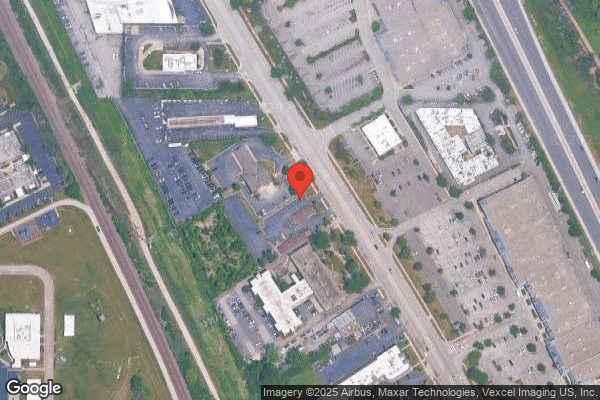
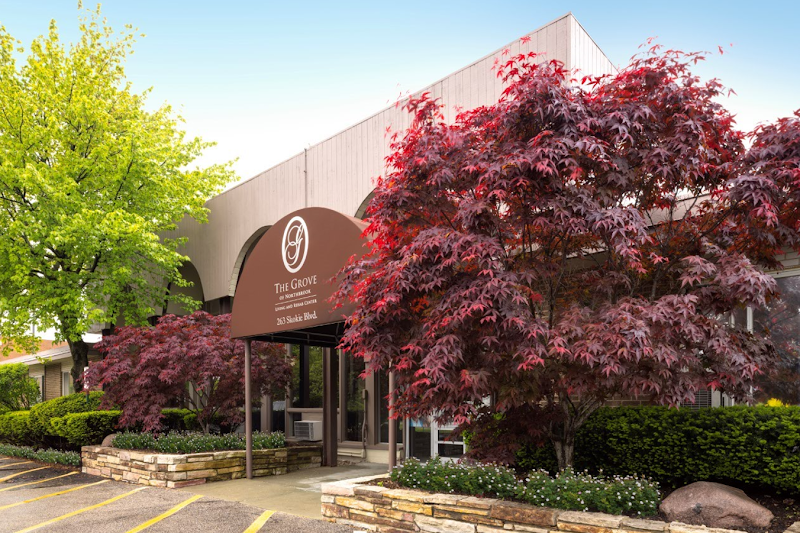
263 SKOKIE BOULEVARD, NORTHBROOK, IL 60062 (847) 564-0505
For profit - Limited Liability company 134 Beds LEGACY HEALTHCARE Data: November 2025 1 Immediate Jeopardy citation
Trust Grade
43/100
#245 of 665 in IL
Last Inspection: June 2024

Within standard 12-15 month inspection cycle. Federal law requires annual inspections.

Overview

Grove of Northbrook has a Trust Grade of D, indicating below-average performance with some significant concerns. It ranks #245 out of 665 facilities in Illinois, placing it in the top half but still indicating room for improvement. Unfortunately, the trend is worsening, as the number of reported issues increased from 4 in 2023 to 6 in 2024. Staffing is a relative strength with a turnover rate of just 9%, well below the state average, and the facility has good RN coverage, exceeding 94% of state facilities, which helps catch potential problems early. However, there have been serious incidents, such as a resident eloping from the facility when proper monitoring protocols were not followed, and another resident fell and fractured their shoulder due to improper equipment being used during care. While there are strengths in staffing and RN coverage, these critical safety failures raise concerns about the overall quality of care.

Trust Score
D
43/100
In Illinois
#245/665
Top 36%
Safety Record
High Risk
Review needed
Inspections
Getting Worse
4 → 6 violations
Staff Stability
✓ Good
9% annual turnover. Excellent stability, 39 points below Illinois's 48% average. Staff who stay learn residents' needs.
Penalties
○ Average
$64,870 in fines. Higher than 54% of Illinois facilities. Some compliance issues.
Skilled Nurses
✓ Good
Each resident gets 47 minutes of Registered Nurse (RN) attention daily — more than average for Illinois. RNs are trained to catch health problems early.
Violations
⚠ Watch
17 deficiencies on record. Higher than average. Multiple issues found across inspections.
★★★☆☆
3.0
Overall Rating
★★★☆☆
3.0
Staff Levels
★★★☆☆
3.0
Care Quality
★★★☆☆
3.0
Inspection Score
Stable
2023: 4 issues
2024: 6 issues

The Good

  • Low Staff Turnover (9%) · Staff stability means consistent care
  • Full Sprinkler Coverage · Fire safety systems throughout facility
  • No fines on record
  • Staff turnover is low (9%)

    39 points below Illinois average of 48%

Facility shows strength in staff retention, fire safety.

The Bad

3-Star Overall Rating

Near Illinois average (2.5)

Meets federal standards, typical of most facilities

Federal Fines: $64,870

Above median ($33,413)

Moderate penalties - review what triggered them

Chain: LEGACY HEALTHCARE

Part of a multi-facility chain

Ask about local staffing decisions and management

The Ugly 17 deficiencies on record

1 life-threatening 1 actual harm
Dec 2024 1 deficiency 1 IJ
CRITICAL (J) 📢 Someone Reported This

A family member, employee, or ombudsman was alarmed enough to file a formal complaint

Immediate Jeopardy (IJ) - the most serious Medicare violation

Accident Prevention (Tag F0689)

Someone could have died · This affected 1 resident

**NOTE- TERMS IN BRACKETS HAVE BEEN EDITED TO PROTECT CONFIDENTIALITY** Based on observation, interviews, and record review, the facility failed to follow its Code Yellow (elopement) Policy regarding ...

Read full inspector narrative →
**NOTE- TERMS IN BRACKETS HAVE BEEN EDITED TO PROTECT CONFIDENTIALITY** Based on observation, interviews, and record review, the facility failed to follow its Code Yellow (elopement) Policy regarding monitoring residents identified as at risk for elopement. This failure resulted in R1 eloping from the facility and being off grounds for an unknown amount of time before a search was started, and a Code Yellow was called. All 15 residents being monitored for risk of elopement can be affected by this failure. The Immediate Jeopardy began on 10/23/2024 when R1 eloped from the facility, and the door alarm was canceled by the staff without initiating the code yellow protocol. V1 (Administrator) and V2 (Director of Operations) were notified on 12/02/2024 at 3:45 PM of the Immediate Jeopardy. The surveyor confirmed by observation, interview, and record review that the Immediate Jeopardy was removed on 12/03/24, but noncompliance remains at Level Two because additional time is needed to evaluate the implementation and effectiveness of the in-service training. Findings include: R1 is a [AGE] year old female admitted to the facility on [DATE]. Diagnosis includes: chronic multifocal osteomyelitis, multiple sites; mild cognitive impairment of uncertain or unknown etiology; gangrene, not elsewhere classified; adult failure to thrive; tachycardia, unspecified; hypotension, unspecified; hypothermia, not associated with low environmental temperature; osteomyelitis,unspecified; schizophrenia, unspecified; hypocalcemia; anemia, unspecified; unspecified severe protein-calorie malnutrition; unvaccinated for covid-19; personal history of covid-19; and patient'snoncompliance with other medical treatment and regimen for other reason. R1's MDS Section C Brief Interview for Mental Status (BIMS) score is 15 (intact cognition). R1's BIMS on 11/07/2024 is 99 (interview incomplete as R1 chose not to interview). R1's care plan states R1 is a DNR (Do Not Resuscitate) and has poor decision-making skills and poor judgment. She has been homeless for the past 2 years and was found to be unable to care for herself. She has a court appointed guardian that is in contact with R1 and facility. The facility sits in the parking lot of an outdoor mall, and is bordered on three sides by retail outlets and the main entrance faces a major expressway (which has a chain link fence barrier and road shoulder and landscaping before the expressway) making it inaccessible to anyone not physically fit to scale the fence and access the expressway. The facility is corralled on three sides by a privacy fence, so anyone leaving from the B doorway would be forced to walk around the fence in front of an external security camera before being able to make it to the bus stops on a busy street (which is about a 5-10 minute walk for an otherwise healthy person). The facility exit doors all have alarm monitors on them, and are all near a nursing station. There is a keypad on the wall next to the door to deactivate the alarm, or for the staff to disable the alarm prior to exiting and entering the door without setting off the alarm. Each nursing station and Reception desk was verified to have an elopement/Code yellow book in the nursing station. In addition to the protocol, there was a list of elopement risk residents that were posted in each nursing station. During the time of observation, the B nursing station was not occupied. Also, line-of-sight to the doors is not always available, so the alarm is the primary warning system. The door alarm did sound (when activated by staff activity) during survey, and was only audible within a few feet of the door. Many staff also reported they could not hear the door alarms from other areas of the building when they are not nearby. Record review and interviews revealed the Receptionist is the primary person to monitor the security cameras for the facility. The receptionist also controls the main door for visitors and answers phone calls. The monitoring of the alarm and camera is just one of the responsibilities of the Receptionist, and the desk is monitored by different people on a part-time basis during the week. On 11/29/24 at 12:40PM, V8, Wound Care Nurse, stated when R1 was first admitted to the facility, she had gangrene to her toes related to frostbite, and was in a lot of pain. R1's wounds were debrided and eventually she was able to move fast without pain, but she still received daily wound care. V8 stated R1 did not want to go to orthopedic appointments, and she was also recommended for surgery. R1 did have the necrotic skin removed, and she always slept in a chair. R1 would also wear the shoes of her choice instead of surgical shoes. R1 would also refuse treatment from time to time; this was reported to the guardian for R1 and R1's physician. R1 was seen by the Wound Care Nurse on the morning before she left. V8 could not remember the exact time he saw her on that day. On 11/30/2024 at 2:00PM, V15, Restorative aide, stated V15 was downstairs on the day R1 eloped and she was exercising downstairs with a group of residents. When she came upstairs to assist with lunch with the other residents, that is when V15 found out about the Code Yellow. She did not hear the alarm because of the television that was playing in her group. V15 stated she saw R1 earlier in the day before breakfast, and confirmed her (electronic monitoring) device was working, V15 stated when she is with a group, she cannot leave the group that she is working with to respond to the door alarms. V15 stated leaving her group could compromise the safety of the group. V15 verbalized she was able to join the group in the parking lot later and searched the retail stores for R1. On 11/29/24 at 2:30PM, V11, Certified Nursing Assistant/CNA, stated she saw R1 around 9:00AM on 11/23/24, and then about 5 minutes after that. R1 was on V11's case load that day. V11 remembers a Code Yellow was called around lunch time. V11 verbalized R1 did not need any assistance with her AM routine, so she only saw her briefly, and then would have checked on her again within the next two hours. When asked if two hours had passed since the last time she had seen R1, V11 could not remember. V11 stated she let the LPN (Licensed Practical Nurse) (V5) on the central unit know prior to her going on break, but did not recall hearing the door alarm. V11 could only remember R1 was noticed to be missing based on her lunch tray was untouched around lunchtime. V11 knew the Code yellow protocol and to do a head count during a Code Yellow. On 11/29/24 at 11:30AM, V5, LPN, stated V5 was the nurse on duty during the elopement. V5 said there were a lot of alarms going off that day. There were deliveries and staff entering and leaving that day. V5 also stated even though the nursing station is right in front of the exit that R1 left from, V5 was down the hall passing meds to the other residents that she was assigned to, so she did not hear the alarm sounding. V5 knew where the high risk for elopement log for residents on that side of the building. V5 also knew where the names of the high risk residents were posted. V5 knew the Code Yellow protocol, including conducting the head count. On 11/29/24 at 2:35PM, V5 added R1 does not have scheduled AM meds; her AM meds are only PRN, so she would not have a time on when she would have seen R1 without passing meds to her. On 11/29/2024 at 1:41PM, V9,CNA, stated he has been a CNA for about a year, and he normally works on the D station and was doing patient care on the day R1 eloped. V9 stated he was looking for a mechanical lift and there was one in the hall near the central exit. V9 apologetically said he heard the alarm when he got the mechanical lift from the hall, and he just turned off the alarm without checking to see if anyone left, or notifying anyone about the alarm. V9 stated he was in a rush to get back to his patient with the lift. V9 verbalized he just looked at the door and made a mistake, and feels really bad about it. V9 stated he did not open the door to check out what was going on the outside; he was going through the building looking for someone to assist with the transfer. V9 stated he cannot remember if there was anyone in the B nursing station at the time, but he found his supervisor, V10, to assist with the transfer, however, he still did not report to V10 the door alarm was sounding. V9 said V10, CNA, later discovered R1 was missing after lunch. V9 did not see R1 prior to her leaving the facility. V9 is familiar with the Code Yellow procedure and has since been in-serviced on what to do. On 11/29/2024 at 2:10PM, V10,CNA, stated she went to the bedroom of R1 on the day that she eloped and noticed her breakfast tray was not touched. V10 and her staff then started a search for R1. V10 was not sure about the time, she just knew it was about lunch time, as R1's breakfast tray was delivered to her room. R1 always eats in her room and the tray was untouched. After the search, it was determined she was not in the facility, V10 and some other staff started a search of the stores and buildings in the parking lot around the facility. V10 also got into her car and went to Chicago and started checking homeless areas. V10 verbalized she went to the city and started pulling back the blanket of homeless people sleeping on the streets to check for R1. She also asked people on the streets for information about R1. V10 stated she searched until the early hours of the morning, because she wanted R1 to be safe. V10 also verbalized she was in communication with her team of co-workers during the search, but cannot say that her colleagues searched as long as her. V10 said she searched the city based on hunches that she had. V10 stated she did not hear the door alarm prior to V9 disarming it, and V10 was familiar with the Code Yellow policy. On 11/29/2024 at 2:15PM, V16, CNA who was on duty at the time of the elopement. V16 stated she has worked at the facility for about 2 months as a CNA, on the day in question, V16 heard the door alarm, but was in a room providing care to a resident that is a total care. V16 verbalized she could not stop what she was doing and leave her resident alone. The next time she was alerted to the Code Yellow was from the overhead paging system, which was around lunchtime. V16 then began to search in the shower and around the facility. V16 stated she did go out to the lot and look around, but then came back inside to look in the bathrooms and in the facility. V16 stated she has been trained in the Code Yellow protocol. V16 did indicate she knew the procedure for Code Yellow. V16 was providing care in rooms (room numbers), which were right next to the point of exit for R1. On 11/30/2024 at 3:00PM, V18, Recptionist, stated V18 was the Receptionist on duty at the time of the elopement, and no longer works at the facility. V18 verbalized she didn't see R1 leave the facility (via the monitor), or what could have prevented her from seeing R1 leave the facility, as the equipment was functional on the day of the elopement. V18 said when the nurse silenced the alarm, she thought the situation was over. V18 verbalized she did call the Code Yellow when advised, but she was not trained on notifying of the all clear. She stated she has had in-service training, but did not have a clear understanding of the protocol. On 11/29/30 at 10:45AM, V1, Administrator, and V3, Director of Social Services, were interviewed. They discussed facility's efforts to coordinate with local and other municipal police departments, sister facilities, Chicago Transit Authority (CTA) and hospitals, in addition to facility staff members going into the communities to search for R1. V1 described the Code Yellow policy, and how the protocol should have worked. V1 and V3 also described how they started to in-service staff on proper execution of the policy. as well as revisions made to the Code Yellow policy. V1 also stated he was able to view the video of R1 leaving the facility through the door of station B. V1 was able to describe the clothing R1 was wearing, and that she had taken her belongings in two bags attached to her rolling walker. The video was not saved, and was erased by the camera system looping over the video. V3 was able to provide care plans and other documents related to facility policies. V3 also stated she is keeping a log of the efforts to return R1 to the facility. V3 did not share the log, and provided verbal information on progress towards R1's return to the facility. V1 also stated the door alarms are tested daily by the Maintenance Director. On 11/29/2024, V1, Administrator, V4, Activities Director, V6, Registered Nurse/RN, V7, CNA, V12, CNA, V13, RN, V14, Social Serivces, and V17, Part-time Receptionist, and all knew the protocol for Code Yellow and how to activate the head count. All workers also verbalized being recently in-serviced on the Code Yellow protocol. On 11/30/2024 at 12:05PM, V2 (VP of Operations) stated he was informed of the elopement around 1:30PM/2:00PM. V2 stated he was able to contact the CTA (Chicago Transit Authority) via the local police, and was able to determine R1 was near a sister facility and sent worker(s) to CTA facility to retrieve her, but was too late when they got there. It was determined by the CTA that R1 had gone into Chicago. V2 confirmed his team has searched known areas for R1 and homeless people to gather, and maintained contact with hospitals daily. On 12/01/2024 at 10:00AM, reviewed facility Code Yellow plan, dated 11/01/16 and revised 07/26/24, which reads: When the door alarm sounds, staff members shall immediately respond to determine the cause of the alarm; A) The staff member responding to the alarm shall check the outside/vicinity of the area to determine if a resident has exited the building. B) If upon investigation no reason can be found for the sounding of the alarm the Administrator/DON/designee must be notified. C) A head count will be completed on all units and completed accounting of all residents given to the administrator/DON The Immediate Jeopardy that began on 11/23/24, was removed on 12/03/24, when the facility took the following actions to remove the immediacy: 1.) Facility staff immediately called a Code Yellow on 11/23/24 at 1:00PM, when facility determined that resident was missing. Staff conducted a search inside the facility including outside of facility premises. 2.) A Police Report was immediately filed for a missing resident, R1, on 11/23/24 at 1:15PM to Officer (name, badge#) of the (city) Police Department. 3.) On 11/23/24, the CNA who responded to the alarm door was immediately educated not to turn off the alarm until a visual check/search is completed. This training was conducted by the Asst. Administrator. 11/23/24 at 3:15PM. 4.) The Receptionist assigned was educated on 11/23/24 to make sure to look at the monitor to make sure no resident had exited, and not to turn off the alarm until a visual check/search is completed. On 11/23/24at 3:00PM Training was conducted by Assistant Administrator. The in-service included proper Alarm Response and utilization of the zone panel & camera system. Discussed appropriate times to call Code Yellow and to not cancel the alarm until given the 'all clear' following a head count. Emphasized the scope of receptionist responsibilities as the 'security station' of the facility. 5.) All employees were in serviced to ensure an immediate response to an exit door alarm is done, educated not to turn off the alarm until a visual check/search is completed. A head count is also to be completed to ensure that all residents are accounted for. If a resident is noted missing, staff to follow the facility protocol on missing residents. This was initiated on 11/23/24 and completed on 11/26/24. This in service will also be provided for every newly hired staff moving forward. 11/23/24 at 4:30PM. The training was initially conducted by Social Services and Assistant Administrator on 11/23/24 for those present. The training continued both in person and over the phone for the remaining employees over the next 3 days and was conducted by Food Services Director, CNA Supervisor, Social Services, Assistant Administrator, and Administrator. HR Manager printed out a complete facility roster which was cross-referenced to ensure all employees were educated. 6.) The Maintenance Director conducted an immediate check of the facility exit alarmed doors. All exit doors are alarmed and functioning. This check was initiated on 11/23/24 and will continue checking daily. 7.) A facility wide audit to identify residents at risk for elopement, those at-risk for elopement must have photos in the elopement list posted on the bulletin board on each unit and at the reception desk for quick reference. Currently, there are 15 residents identified at risk for elopement. Audit was completed on 11/23/24 by Assistant Administrator/Social Services Director. Resident photos are taken upon admission to the facility and Elopement List is posted at each nursing station (both in a binder and on bulletin board for quick reference) and at the reception desk. Staff were in-serviced that bulletin boards will be used as the central location point in which to reference the elopement list at each nurse's station. 8.) The Social Service Department reassessed residents identified for elopement and elopement care plan was reviewed and updated. This was initiated and completed on 11/23/24 at 6:00PM by Social Services. 9.) On 11/23/24, a facility door alarm drill was conducted to ensure staff are appropriately responding to an exit alarmed door and not to turn off the alarm until a visual check /search is completed. A facility protocol was put in place to ensure a head count is conducted after the visual check/search is done to ensure all residents are accounted for. This in-service was initiated by Social Services at 5:00PM on 11/23/24. 10.) The facility has identified approximately 25 (city) & surrounding area hospitals which facility staff continue to call daily in search of R1. This began on 11/23/24 and is ongoing. 11.) On 11/30/24, (electric company) was called in to provide extra sound devices to project a more amplified sound to ensure staff can hear & respond to an alarm. (Electric company) will complete the work order on 12/1/24 to install necessary devices to address the concern. 12.) On 12/1/24, (electric company) arrived at 7:00AM and installed 7 new sound devices throughout the facility which project a more amplified sound to ensure staff better hear the door alarms. (Electric company) has also placed an order for dome lights to be installed at each exit door. This will hopefully be done by weeks end. 13.) All receptionists were in-serviced on Alarm Response and Utilization of Camera System to ensure camera is checked thoroughly before canceling the alarm system. This was completed on 12/1/2024. Receptionist separated from the facility on 11/27. Training was conducted by Assistant Administrator. The in-service included proper Alarm Response and utilization of the zone panel & camera system. Also discussed were appropriate times to call Code Yellow and to not cancel the alarm until given the 'all clear' following a head count. Lastly, we emphasized the scope of their responsibilities as representing the 'security station' of the facility. 14.) An additional in-service was conducted to all employees of the new amplified alarm devices to ensure staff are familiar with the amplified sound and respond immediately to the alarm. All staff were also in serviced on the purpose and locations of the zone panels should an exit alarm be sounded to determine location of alarm if uncertain. Staff were also in serviced on the location of the elopement risk residents' list that is posted on the bulletin board in every nurse's station for quick reference. This was initiated on 12/2/2024 and will be completed by end of day on 12/3/24. Training was initiated by our two Social Services Designees and our Social Services Director on 12/2/24 for those employees who were present. The training continued both in person and over the phone for the remaining employees through 12/3 and was conducted by the Food Services Director, CNA Supervisor, Social Services/Assistant Administrator, Administrator and Guest Relations. The HR Manager printed out a complete facility roster which was cross-referenced to ensure that all employees were educated. 15.) A QA (Quality Assurance) audit tool was initiated on 11/23/24 to ensure the main exit door alarm system and the (electronic monitoring) system are checked for functionality daily and documented by maintenance. This will be done daily x14 days and 3x/week x2 weeks and weekly x 8 weeks. 16.) A QA audit was initiated on 11/23/24 to ensure staff are following door alarm drill, and all residents are accounted for. This audit will be done daily x7 days and 3x/week x3 weeks and weekly x 8 weeks. 17.) The QA audit tool that was initiated on 11/23/24 was revised after the additional amplified alarms were installed by (electric company) on 12/1/24 to ensure the exit door alarm system remains amplified. This will be conducted daily x7days, 3x/weekly x 8 weeks. The QA tool revisions were made on 12/1/24 at 5:00PM 18.) A QA Audit was initiated on 12/1/24 to ensure receptionists are responding to an alarm system by initiating a 'Code Yellow' and checking the camera thoroughly before canceling the alarm system. This QA will be completed daily x 7 days and 3x/week x8 weeks. The QA audit was initiated at Approximately 11:00AM on 12/1/24. 19.) The elopement policy was reviewed and revised on 12/2/2024, which included specifying types of door alarms and defining them, as well as creating a centralized location at each nurse's station for quick reference of the elopement list. Policy was also revised to reflect the facility's specific protocols on Routine Procedure for Wandering Residents and Prevention of Missing Residents/Elopement. Training on the revised Elopement Policy was initiated by Social Services on 12/2/24 for those employees who were present. The training continued both in person and over the phone for the remaining employees through 12/3, and was conducted by the Food Services Director, CNA Supervisor, Social Services/Assistant Administrator, Administrator and Guest Relations. The HR Manager printed out a complete facility roster which was cross-referenced to ensure that all employees were educated. 20.) The QA trends will be discussed in QAPI scheduled on 12/9/24 and then monthly. 21.) The facility Medical Director was notified of the basis of abatement plan, and has approved on 12/2/24.
Jun 2024 4 deficiencies
CONCERN (D) 📢 Someone Reported This

A family member, employee, or ombudsman was alarmed enough to file a formal complaint

Potential for Harm - no one hurt, but risky conditions existed

Abuse Prevention Policies (Tag F0607)

Could have caused harm · This affected 1 resident

**NOTE- TERMS IN BRACKETS HAVE BEEN EDITED TO PROTECT CONFIDENTIALITY** Based on observation, interview, and record review, the facility failed to implement its abuse prevention policy by failure to c...

Read full inspector narrative →
**NOTE- TERMS IN BRACKETS HAVE BEEN EDITED TO PROTECT CONFIDENTIALITY** Based on observation, interview, and record review, the facility failed to implement its abuse prevention policy by failure to complete abuse assessment and update abuse care plan after allegation of resident-to-resident physical altercation. This deficiency affects three (R25, R78 and R87) of three residents reviewed for Abuse prevention policy. Findings include: 1. Review Incident report of Resident-to-resident physical altercation involving R25 and R87 completed by V1, Administrator, indicated on 3/22/24 at 7:05AM, upon entering room, V28, RN (Registered Nurse), observed R25 on the floor. Upon initial interview of residents, it appeared that there was a disagreement over the volume of R87's TV. As R25 attempted to scurry away back to his bed with R87's remote, he lost his balance and fell. V1 interviewed R25 on 3/25/24. R25 admits to trying to take R87's remote control on the morning of 3/22/24, as he felt the volume of his TV was too loud. R25 also admitted to then taking his cell phone off the bed after R87 grabbed the remote back. R25 alleged R87 pushed him when R87 attempted to get his cell phone back from him, causing him to lose his balance and fall. R25 was immediately assessed and was able to move all his extremities with only slight discomfort to his back. R25 was sent to local hospital for precautionary evaluation and returned soon thereafter with no new orders or injury. V1 interviewed R87 on 3/22/24 and 3/25/24. In both instances, R87 alleged on 3/22/24, his roommate R25 walked over to his bed unprovoked and grabbed the remote control off his bed. R87 was able to immediately retrieve his remote at which time R25 grabbed for his cell phone. As R87 attempted to grab his phone back, R25 lost his balance and fell as he tried to scurry away R87. R87 strongly denied ever pushing R25 at any time. There were no witnesses to the alleged incident. R25 was re-admitted on [DATE], with diagnoses listed in part but not limited to Psychotic disorder with delusion due to known physiological condition, bipolar disorder current episode depressed severe with psychotic features, Dementia with behavioral disturbance, Schizophreniform disorder, Alzheimer's disease, Cerebral infraction. Abuse/Neglect assessment done on 12/8/16 indicated he is at risk for abuse due to his history of abuse and substance abuse, as well as his mental health diagnosis and his history of abrasive/aggressive behavior. Abuse/neglect /trauma factors care plan for abuse neglect trauma assessment updated on 10/21/22. Both Abuse/neglect assessment and Abuse care plan intervention were not updated after the physical abuse resident to resident altercation on 3/22/24. R87 was admitted on [DATE], with diagnoses listed in part but not limited to Dementia with other behavioral disturbance, Paranoid personality disorder, Psychosis, Alzheimer's disease with late onset. Abuse/Neglect assessment done 2/10/22 indicated he at risk due to mental issues, presents with signs and symptoms of mood distress. Resident has history of exhibiting verbal outbursts when he becomes upset. Comprehensive care plan did not indicate abuse/neglect prevention care plan. After resident-to-resident physical altercation incident on 3/26/24, both abuse/neglect assessment and abuse care plan were not updated. On 6/4/24 at 8:24AM, R87 was lying in bed. He was alert and oriented, and could verbalize his needs to staff. R87 said he denied having resident to resident alteration with another resident, and denied incident happened last March 2024. On 6/4/24 at 8:38AM, R25 was lying in bed sleeping. Several attempts were made to interview R25, but he was sleeping, and nursing staff said that he becomes agitated when they wake him. On 6/4/24 at 8:53AM, V4, Social Service Director (SSD), said they do abuse/neglect assessment upon admission, quarterly, and as needed, such as when there is an allegation or incident of abuse. V4 said abuse/neglect prevention care plan is formulated after assessment, if indicated. V4 said after abuse/neglect/resident to resident altercation allegation or incident, the abuse/neglect assessment and abuse prevention care plan is updated. Reviewed R25's and R87's resident to resident physical altercation incident report with V4. Reviewed R25's and R87's abuse assessment and abuse prevention care plan with V4. Medical records of both residents indicated abuse/neglect assessment and abuse care plan was not updated after the resident-to-resident physical altercation incident on 3/22/24. 2. R78 was admitted on [DATE], with diagnoses listed in part but not limited to Epilepsy, Mild cognitive impairment, Dysarthria following cerebral infarction, Apraxia following cerebrovascular disease. Abuse/neglect admission assessment done on 10/3/19 indicated she is at risk for abuse. Resident triggered on numerous areas on depression assessment and per guardian, has hoarding tendencies. Guardian reports compulsive spending. Care plan indicated presence of abuse and neglect factors. She has history of serous trauma. Abuse assessment and abuse/neglect prevention care plan were not updated after resident-to-resident physical altercation incident on 6/7/23. R78's resident to resident physical altercation, dated 6/7/23 at 8:40AM, indicated R78 stated another resident hit her on her right shoulder as they passed each other in the hallway earlier in the morning. Both residents were immediately separated and monitored for safely. Upon initial assessment, R78 was noted with no redness, bruising or discomfort. Later in the day of 6/7/23, R78 complained of slight discomfort to her right shoulder. Tylenol was given with good result. Precautionary X-ray taken with negative results. R78 did not complaint of additional lingering discomfort. There were no witnesses to the incident or what led to the incident. On 6/7/24 at 9:30AM, reviewed R78's resident to resident physical altercation, dated 6/7/23, with V4, SSD. R78's abuse/neglect assessment and abuse prevention care plan were not updated after the incident of resident-to-resident altercation. V4 said resident 's abuse assessment and abuse prevention care plan should be updated after resident-to-resident altercation. Facility's policy on Abuse and Neglect, reviewed 7/14/23, indicates: Policy statement: it is the policy of the facility to provide professional care and services in an environment that is free from any type of abuse, corporal punishment, misappropriation of property, exploitation, neglect, or mistreatment. The facility follows the federal guidelines dedicated to prevention of abuse and timely and thorough investigation of allegations. These guidelines include compliance with the seven (7) federal components of prevention and investigation. Prevention: *Identify, correct, and intervene in situations in which abuse, neglect, exploitation and or misappropriation of resident properly is more likely to occur. *Develop and implement policy on abuse, neglect, theft, exploitation, and misappropriation of property. *Identification, assessment, care planning for intervention and monitoring of resident with needs and behavior that might lead to conflicts or neglect. *The supervision of staff to identify inappropriate behaviors, such as using derogatory language, rough handling, ignoring residents while giving care, directing residents who toileting assistance to assistance to urinate or defecate in their beds.
CONCERN (D)

Potential for Harm - no one hurt, but risky conditions existed

Quality of Care (Tag F0684)

Could have caused harm · This affected 1 resident

**NOTE- TERMS IN BRACKETS HAVE BEEN EDITED TO PROTECT CONFIDENTIALITY** Based on observation, interview, and record review, the facility failed to ensure the resident received medications, treatments,...

Read full inspector narrative →
**NOTE- TERMS IN BRACKETS HAVE BEEN EDITED TO PROTECT CONFIDENTIALITY** Based on observation, interview, and record review, the facility failed to ensure the resident received medications, treatments, and care as ordered by physician. This deficiency affects one (R25) of three residents in the sample of 24 reviewed for Quality of care. Findings include: R25 was re-admitted on [DATE] with admitting diagnoses but not limited to Type 2 Diabetes Mellitus (DM), Hypertension, Chronic Kidney disease, Cerebral infarction, Psychotic disorder with delusions due to known physiological condition, bipolar disorder current episode depressed severe with psychotic features, Dementia with other behavioral disturbance, Anxiety disorder, Alzheimer's disease, Gastroesophageal reflux (GERD). R25's physician order sheet indicates: Consistent carbohydrates diet. Regular texture. Thin liquids. Double portions. Metformin HCl oral tablet 500mg 1 tab twice a day for DM, Lamotrigine oral tablet 25mg 2 tabs for bipolar, Lorazepam tab 0.5mg 1 tab by mouth daily for anxiety, Risperdal 3mg 1 tab by mouth twice a day for schizophrenia, Sertraline HCl 100mg 1 tab by mouth daily for depression, Torsemide 20mg 1 tab by mouth daily for edema, Aldactone 25mg 1 tab by mouth daily for edema, Aspirin EC delayed release 81mg 1 tab by mouth daily for anti-platelet aggregation, Cholecalciferol 1000 unit 1 tab by mouth daily for Vit D deficiency, Claritin 10mg 1 tab by mouth daily for allergy, Folic acid 1mg 1 tab by mouth daily for supplement, Lidocaine external patch 4% apply to low back, bilateral knees in the morning for pain, Miralax oral powder 17 gm/scoop 1 scoop by mouth twice a day for constipation, Pantoprazole sodium oral tablet delayed release 20mg 1 tab by mouth daily before breakfast for GERD, Senna plus 8.6-50mg 1 tab by mouth twice a day for constipation, Thiamine HCl 50mg 1 tab by mouth daily for supplement, Vit B12 100mg 1 tab by mouth daily for supplement. On 6/4/24 at 8:38AM, R25 was lying in bed sleeping, with mouth open and eyes covered with wash cloth. Breakfast tray was left on bedside tray table. On 6/4/24 at 9:36AM, R25 was still sleeping in bed, with breakfast tray left on bedside tray table. V13, Licensed Practical Nurse (LPN), said R25 has behavioral issues. R25 does not want to be awakened. R25 can be agitated, aggressive, and will call 911. They will just wait for him to wake up. On 6/4/24 at 11:38 AM, R25 was still sleeping in bed. V21, Certified Nurse Assistant (CNA) Supervisor, said they took away the breakfast tray because R25 was still sleeping. V21 said R25 does not want to be awakened. R25 can be agitated, aggressive, and will call 911. They will just wait for him to wake up. On 6/4/24 at 12:16PM, R25 was still sleeping in bed, with lunch tray left on bedside table. On 6/4/24 at 12:57PM, R25 was still sleeping in bed, with lunch tray left on bedside table. On 6/4/24 at 1:42PM, R25 was still sleeping in bed, with lunch tray left on bedside table. V27, CNA, said she is the CNA assigned for R25. V27 said they don't wake up R25 for breakfast or lunch; they will just leave the tray at bedside for him to eat when he wakes up. On 6/4/24 at 2:30PM, R25 was still sleeping in bed, with lunch tray left on bedside table. V3, Assistant Director of Nursing (ADON), and V13, LPN, both said R25 has behavioral issues and can be agitated and aggressive when awakened for meals. R25 will wake up on his own time. Both said R25 has routine sleeping pattern of awake at nighttime and sleeping during daytime. V13 said she did not give R25's morning medications because he is sleeping. V13 said he has daily and twice a day scheduled medications. V13 said she did not call the doctor of R25's omission of 9am scheduled medications, and omission of breakfast and lunch meals because this is his baseline behavior. Reviewed R25's medical records with V13 and V3. R25 is diabetic and on metformin 500mg twice a day. Blood sugar test last done 6/1/24. V13 said R25 has order of blood sugar test before meal daily. The facility did not formulate individualized care plan interventions to address resident needs such as adjusting time of his medications, treatment, and care. There are discrepancies with documentation in MAR (Medication Administration Record) and Restorative program log for May and June 2024, indicating medications and treatment were given despite resident was sleeping. Nurse Practitioner's documentation on 5/29/24 had no documentation of R25's omitting medications, treatment, and care due to alteration in sleeping pattern. Dietary/Nutrition documentation on 5/20/24 had no indication of R25 missing breakfast and lunch due to sleeping. Daily blood sugar testing before breakfast reviewed from May 1 to June 4, 2024, indicates missing blood sugar test on the following days: June 2, 3 and 4. May 17, 19, 20, 21, 22, 23 and 24. Restorative log documentation on 6/4/24 indicated Dressing and grooming and transfers were provided for 15 mins, but R25 was observed sleeping. Restorative program for Active range of motion and ambulation daily as ordered was not done. R25's Medication administration Record (MAR) from May 1 to June 4 ,2024 indicates medications at 9am were given (marked checked), even R25 is sleeping. On 6/6/24 at 10:00AM, informed V2, Director of Nursing/DON of concerns identified that R25 has not been getting his scheduled 9am medications, treatment and care as ordered by physician. All interdisciplinary team is aware of R25 sleeping habit (awake at night and sleeps during the day) but no attempts to individualized care plan intervention to meet resident needs such as changing medications and treatment timing. The physician, Nurse Practitioner, dietitian, and pharmacist were not notified of resident not receiving is scheduled medications, treatment, and care at 9am because he was sleeping. There are no documentation in R25 progress notes that physician or nurse practitioner were notified of resident omission of medications, treatment, and care. No nursing monitoring documentation of resident's activities at night when he is awake. On 6/6/24 at 11:03AM, V22, Physician, said he is aware of R25 alteration in sleeping pattern, but he is not aware of each individual occurrence that R25 omitted his medications because he was sleeping. V22 said he is expecting the nurses to call him if the resident did not take his medications or treatment was not given so that he can make necessary changes in timing of medications or treatment. On 6/7/24 at 11:32AM, V32, Nurse Practitioner, said she comes weekly to the facility, but she is not aware the resident has been missing/omitting his medications and treatments because he is sleeping. She was only notified recently and addressed the concerns. Facility's policy on Missed Medication revised 7/28/23 indicates: Policy statement: It is the facility's policy to administer medications to the residents and promote resident's rights of refusal at the same time. The policy will address missed medications. Procedures: 3. If the resident refuses the medication, explain to the resident the importance of the medication and the risk associated with missing the dose 4. If the resident continues to refuse the medication, indicate in the eMAR the refused medication 6. If the medication that is missed is ordered more than once daily, call physician to determine if the physician would like to order anything related to the missed dose or would want to have missed dose administered to the resident when is become available. Facility's policy on Physician orders revised 7/28/23 indicates: Policy statement: It is the policy of this facility to ensure that all resident/patient medications, treatment, and plan of care must be in accordance to the licensed physician's orders. The facility shall ensure to follow physician orders as it is written in the POS (Physician order sheet). Procedures: 2. All medications administered to the resident/patient must be ordered in writing by the patient's attending physician. 6. Physician orders will be carried out at a reasonable time. 9. Provision of care, treatment and services administered by the facility to the patient must be approved by the attending physician unless these treatment and services are governed by the facility's clinical policy and procedures and approved by the medical director. .
CONCERN (D)

Potential for Harm - no one hurt, but risky conditions existed

Drug Regimen Review (Tag F0756)

Could have caused harm · This affected 1 resident

**NOTE- TERMS IN BRACKETS HAVE BEEN EDITED TO PROTECT CONFIDENTIALITY** Based on observation, interview, and record review, the facility failed to follow up with pharmacy recommendation review and doc...

Read full inspector narrative →
**NOTE- TERMS IN BRACKETS HAVE BEEN EDITED TO PROTECT CONFIDENTIALITY** Based on observation, interview, and record review, the facility failed to follow up with pharmacy recommendation review and document physician response in resident medical record. This deficiency affects one (R28) of three residents in the sample of 24 review for Pharmacy medication review. Findings include: R28 was admitted on [DATE], with diagnoses listed in part but not limited to Schizoaffective disorder, Bipolar disorder, Antisocial personality, Anxiety disorder, Pressure ulcer, Spina bifida. Active physician order sheet (POS) indicates Depakote ER oral tablet extended release 24-hour 500mg give 1 tablet by mouth two times a day for treatment. Valporic Acid oral capsule 250mg give 1 capsule by mouth two times a day for treatment. No clinical indication for usage of Depakote and Valporic acid. On 6/4/24 at 11:08AM, R28 was lying in bed. He was alert and oriented, could verbalize self to staff. V15, Wound Care Nurse, said R28 has behavioral issues. R28's Consultant pharmacist recommendation, dated 5/30/24, indicated: Resident has orders for Depakote ER 500mg BID (twice a day) and Valporic acid 250mg BID which may represent duplicate therapy as both have very similar therapeutic activities. Please clarify with prescriber if resident is to continue both of the above orders. On 6/6/24 at 1:32PM, V3, Assistant Director of Nursing (ADON), said they follow up with pharmacy recommendation review within 3 days. Informed V2, Director of Nursing (DON), V3, ADON, and V29, Nursing Consultant, of R28's Pharmacy recommendation, dated 5/30/24, was not followed up. R28's medical records including active physician orders and progress notes does not indicate documentation for clarification of physician orders for Depakote and Valporic acid as recommended by pharmacist. On 6//6/24 at 2:18PM, V26, Psychotropic Nurse, presented a copy of the pharmacy recommendation where she just wrote she notified the physician and continue as ordered. She said she did not write a physician order on R28's physician order sheet, or document notification with orders in progress notes. V26 said V3, ADON, received all the pharmacy recommendations for follow up. On 6/7/24 at 9:15AM, V3, ADON, said after the Pharmacist consultant completed the resident's medication review, the recommendations were emailed to V2, DON, and V3, ADON. V3 is responsible for following up with pharmacy recommendation within 3 days. V3 said V26, Psychotropic nurse, is responsible for following up with psychotropic medication recommendations. V3 said after the nurse call the physician or Nurse Practitioner regarding pharmacist recommendation, they should document it in the resident progress notes and write orders in there is new orders made. On 6/7/24 at 10:02AM, V26, Psychotropic nurse, was notified Depakote and Valporic acid written on POS did not have clinical indication for medication usage. Facility's policy on Medication regimen review, revised 7/28/23, indicates: Policy: The consultant pharmacist shall provide pharmaceutical care consultation including the medication regimen review at least once a month for each resident residing in certified areas of a skilled long term care facility. For residents residing in long term care facilities licensed for the developmentally disabled or assisted living, pharmaceutical care consultation including medication regimen review will be conducted in compliance with state regulation. Procedure: 6. The consultant pharmacist us available to consult with the prescribing physicians, the Medical Director or nursing staff regarding recommendations resulting from the medication regimen review. It is the responsibility of the facility to assure that each of the recommendations result in a written response by either a physician or nurse, as appropriate. The attending physician/Medical Director must document in the medical record that the identified irregularity has been reviewed and subsequent action taken, if required. In the event where no change will be made as a result of the identified irregularity, the physician/Medical Director will document rationale in the medical record.
CONCERN (D)

Potential for Harm - no one hurt, but risky conditions existed

Deficiency F0761 (Tag F0761)

Could have caused harm · This affected 1 resident

Based on observation, interview, and record review, the facility failed to keep the medication cart locked during medication administration when cart was out of site. The facility also failed to keep ...

Read full inspector narrative →
Based on observation, interview, and record review, the facility failed to keep the medication cart locked during medication administration when cart was out of site. The facility also failed to keep the medications refrigerated as manufacturer recommendation. This deficiency affects all three residents (R49, R55 and R97) in the sample of 24 reviewed for Medication Safety Storage. Findings include: On 6/4/24 at 6:15AM, checked medication cart and count controlled substance/narcotic medications with V10 RN (Registered Nurse). Observed R49 's opened Lorazepam 2mg/ml bottle in the locked controlled drawer in the medication cart. V10, RN, said they kept all the controlled substance/narcotic meds in the locked drawer in the medication cart. Informed V10 lorazepam should be in the medication refrigerator as indicated on the medication bottle and manufacturer recommendation. On 6/4/24 at 6:33AM, checked medication cart and count controlled substance/narcotic medications with V11 RN. Observed R97's Lorazepam 2mg/ml bottle in the locked controlled drawer in the medication cart. V11 RN said they keep all the controlled substance/narcotic meds in the locked drawer in the medication cart. On 6/4/24 at 7:45AM, observed V13, RN, prepared medications for R55. After she prepared medications, the medication cart was left unlocked, and V13 went to R55's room to administer medications. V13 went back to unlocked medication cart at 7:57AM. V13 said she just forgot to lock it. She added it should be locked at all times when the medication cart is out of site during medication administration. On 6/4/24 at 11:38AM, V2, Director of Nursing, said the medication cart should be always locked when out of site during medication administration. V2 said they should follow manufacturer recommendation for medication storage. Facility's policy on Medication Storage, Labeling and Disposal revised 8/24/23. Policy statement: It is the facility's policy to comply with federal regulations in storage, labeling and disposal of medications. 3. Medications will be stored safely under appropriate environment controls. 4. Medications will be secured in locked storage area. Facility's policy on Medication Pass revised 7/28/23 indicates: Policy statement: It is the policy of the facility to adhere to all Federal and State regulations with medication pass procedures. Procedures: Controlled substances: 2. All meds are to be stored I room at temperature as recommended by manufacturer (example: meds needing refrigeration will be stored in the refrigerator)
Jan 2024 1 deficiency
CONCERN (D) 📢 Someone Reported This

A family member, employee, or ombudsman was alarmed enough to file a formal complaint

Potential for Harm - no one hurt, but risky conditions existed

Accident Prevention (Tag F0689)

Could have caused harm · This affected 1 resident

**NOTE- TERMS IN BRACKETS HAVE BEEN EDITED TO PROTECT CONFIDENTIALITY** Based on interview and record review, the facility failed to supervise residents to prevent them from drinking alcohol, becoming...

Read full inspector narrative →
**NOTE- TERMS IN BRACKETS HAVE BEEN EDITED TO PROTECT CONFIDENTIALITY** Based on interview and record review, the facility failed to supervise residents to prevent them from drinking alcohol, becoming drunk and falling. This applies to 3 of 3 residents (R3, R4 and R5) reviewed for supervision in the sample of 7. The findings include: R3's MDS (Minimum Data Set Assessment), dated 12/26/23, shows she has no cognitive impairment. R3's Care Plan, last reviewed on 1/16/24, states, Alcohol addiction/dependency have negatively impacted my health and cognitive functioning. I acknowledge mixing a concoction of alcoholic beverages in my room while at (facility). Due to my addiction history and husband's reports of her begging to go to the bar while out on pass and general expectation that I will pursue alcohol, I am not appropriate for independent out on pass. The interventions include: Implement increasingly restrictive interventions in a effort to help the resident break the addictive cycle. Interventions may include: supervision while in the community, restricted independent pass privileges, implementation of money guidance and budget controls to reduce/prevent access to substances. R3's Fall report, dated 12/1723, states, At 11:30 PM (V11, Certified Nursing Assistant/CNA) calling NOD (Nurse on Duty) to check resident on the dining room floor. NOD checked resident immediately resident seen sitting down on the dining floor and claiming she lost her balance and slid to the floor. Assessed resident both upper and lower extremities able to move without any pain. Both legs are equal. No bones protruding on both sides. Able to stand up with assist. Resident assisted back to bed. Vital signs taken. Neuro check initiated. Denies hitting the head. MD informed and with order to send to the hospital for X-ray. R3's Hospital Documents, dated 12/18/23, state, Brief Synopsis: (R3) is a [AGE] year old female with a PMHx (Past Medical History) of alcoholic liver cirrhosis complicated by Hepatic Encephalopathy, Non-insulin Dependent diabetes Mellitus, essential hypertension, seizure disorder, major depression with psychosis who presented from the skilled nursing facility with unwitnessed fall. Patient reported consuming 3-4 drinks of vodka the night prior and she had a fall and was unable to get up. Her alcohol level was .233. She had mild abdominal pain and lipase was notable elevated to 565. CT (Computed Tomography) showed mild pancreatic ductal dilation, no inflammation or lesions seen. R3's Progress Notes, dated 12/18/23, states, At 1:55 AM resident was being sent to Hospital due to fall and per Hospital resident found out that she intoxicated with alcohol. Per Hospital x-ray of pelvis and chest x-ray done with negative of fractures. Resident still in ER on IV fluids due to intoxication then they will run labs again. If result will be normal resident will come back to facility. Endorsed to A.M. nurse. R3's Progress Notes, dated 12/19/23, state, At 1:45 PM, resident returned from (local) Hospital ambulating with unsteady gait. Paramedic was walking with resident, stand by assist. Instructed and encourage resident to use walker during ambulation. Resident was evaluated post unwitnessed fall on 12/17/2023 with no fractures and negative CT scan per result records, and resident was treated for alcohol intoxication and mild acute alcoholic pancreatitis and lactic acidosis. R3's Progress Notes, dated 12/20/23, and written by V6 (Nurse Practitioner) state, Patient seen via video call regarding her recent ER encounter status post unwitnessed fall. Alcohol level was .233, she admits drinking vodka the night before the fall. She also complained of abdominal pain with lipase level of 565, CT abdomen with mild pancreatic ductal dilation. Patient was hydrated at the hospital with improvement symptoms wise and was sent back to (Facility). Currently patient reports having unsteady gait. She usually ambulates with walker independently. She denies pain or discomfort and is not in any acute distress. Promises not to drink alcohol ever again . On 1/19/24 at 9:30 AM R3 stated, The floors had just been waxed a few days before and I had my slippers on. I just slipped and fell. Me and (R5) had a little Christmas party in the dining room. We weren't supposed to but we had our own party. We had a bottle of Vodka-(R4) brought it in and (R5) paid for it. After I fell, I got up and I went to bed. Then they came in and and got me out of bed and put me in the ambulance. They were more concerned about my heart and my EKG than my fall. I know the rules are no alcohol. I went to the cafeteria to get a snack before bed and I slipped. I kind of caught myself with my hands. I wasn't hurt and I got myself up. I have a walker because therapy thinks I fell because my legs are weak, but I can walk without it. I didn't fall because I didn't have a walker. I fell because the floors were waxed and I had been drinking. On 1/19/24 at 1:30 PM, V11 (CNA) stated, I saw her on the floor as I was walking to my unit. She was saying help me, help me. I asked her what happened, and she told me the floor was slippery and she just wanted me to help her get up. I told her I had to get the nurse first, so I called for the nurse. (R3's) speech was slurred and she was walking funny. I kind of thought, did you drink? I just kept asking her if she was okay because she was walking sideways. She kept saying she was fine. We walked her to her room and got her in bed. She was very heavily perfumed, and that is all I could smell. She usually doesn't wear that much perfume. I went back to the dining room but I didn't see any alcohol. That is the only time I have heard of her doing that. The residents are not allowed to have alcohol in the facility. On 1/19/24 at 12:45 PM, V9 (Registered Nurse/RN) stated, It was right at the change of shift, and I was moving from one unit to the other. The CNA called to me and told me that (R3) fell. (R3) kept denying that she actually fell. We helped her up and she was very wobbly. She had been with a couple other residents (R4, R5) in the dining room for a while. She was just so wobbly. I called the doctor and I called my supervisor. (R3) smelled like alcohol and the doctor said to send her out. I had not ever seen her like this before. She seemed impaired. No one else was in the dining room with her when she fell, but (R4) and (R5) had been in there with her. They were having fun in there. We found out from the hospital that (R3's) blood alcohol level was really high. Residents are not allowed to have alcohol in the facility. On 1/19/24 at 9:50AM, R4 stated, I did not witness (R3) fall, I didn't see anything. She told me she was in bed and they came and got her out and took her by ambulance to the hospital. There was a bottle of alcohol brought in- ok, I brought it in. It was me, (R5) and (R3). It was a 750ml bottle and there wasn't any left when we were done, so I guess we drank it all. I had a pass to go out and (after that) they restricted it for like 3 weeks. I have it back now. When I was with (R3), she seemed fine. She was not stumbling or slurring her words or anything. No one wants to be treated like they are 12. They say this is not a jail, but there is really no freedom. It was never my intention to have anything happen to her. She seemed fine, and then she went to the hospital, and of course they drew blood and found the alcohol. I had gone back to my room and went to bed. R4's MDS, dated [DATE], shows she has no cognitive impairment. On 1/19/24 at 12:20 PM, R5 stated, The alcohol came from (Local Grocery Store). R5 did not want to say who brought it in, but when Surveyor asked if it was (R4) who got the alcohol, R5 agreed that it was. R5 continued, We sat in the dining room for a couple of hours. R5 was asked if R3 seemed impaired when they were done, and R5 smiled and stated, We all were. I went back to my room and went to bed. I did not see (R3) fall. I was diagnosed with Dementia a while back, and they took my pass away. I can't go out without someone going with me. I have never brought alcohol in before. We just wanted to have a little party. R5's MDS, dated [DATE], shows he has not cognitive impairment.
Dec 2023 3 deficiencies 1 Harm
SERIOUS (G) 📢 Someone Reported This

A family member, employee, or ombudsman was alarmed enough to file a formal complaint

Actual Harm - a resident was hurt due to facility failures

Accident Prevention (Tag F0689)

A resident was harmed · This affected 1 resident

Based on interviews and record reviews, the facility failed to use the proper equipment when providing incontinence care. This affected one of three residents (R11) reviewed for safety during care. Th...

Read full inspector narrative →
Based on interviews and record reviews, the facility failed to use the proper equipment when providing incontinence care. This affected one of three residents (R11) reviewed for safety during care. This failure resulted in the use of a sit to stand device while providing incontinence care, contributing to R1 falling and sustaining a right shoulder fracture. Findings include: R11's MDS (Minimum Data Set), dated 7/7/23, notes R11's BIMS (Brief Interview for Mental Status) score is 15 out of 15. R11 is totally dependent on two persons physical assistance with transfers. R11 requires extensive assistance of two persons physical assistance with toileting. Functional limitation in range of motion notes impairment in both upper and lower extremities. R11's restorative assessment, dated 7/3/23, notes R11 with limitation in range of motion (flexion and extension) of both shoulders and both knees. R11's ADL (activities of daily living) care plan, initiated 4/26/2017, notes R11 has an ADL self-care performance deficit related to impaired balance. R11 has history of falls, limited balance and gait is unsteady, and limited mobility. On 4/22/2021, use mechanical lift (sit to stand) for transfers was added. The focus of this care plan was updated on 2/19/2022 to include discontinue sit to stand lift device now and use full mechanical lift device due to bilateral shoulder pain. R11's incontinence care plan, initiated 4/26/2017, notes R11 displays total bowel/bladder incontinence related to impaired mobility. R11 is unable to stand without staff interventions. R11 with obesity, weakness, and easily gets tired. The focus of this care plan was updated on 8/1/23 to discontinue use of mechanical lift (sit to stand) due to shoulder injury, limited range of motion especially of right shoulder. R11's falls care plan, initiated 4/26/2017, notes R11 is at high risk for falls related to incontinence, muscle weakness, lack of coordination, and unable to stand without staff interventions. On 12/1/23 at 1:10 PM, R11 who was assessed to be alert and oriented x 3, stated she is not able to bear weight on her legs. R11 stated V36, CNA (Certified Nursing Assistant) was using sit to stand lift device, and R11 fell hitting right upper arm and shoulder on floor. On 12/1/23 at 11:55 AM, V27 (Rehabilitation Director) stated R11 was seen by skilled therapy from February to March 2023. V27 stated at the time R11 was discharged from skilled therapy, it was recommended R11 use full mechanical lift device. On 12/1/23 at 1:20 PM, V8 (Restorative Nurse) stated R11 likes staff to use sit to stand lift device when providing incontinence care. V8 stated R11 was assessed and is appropriate for full mechanical lift device, not the sit to stand lift device. V8 stated residents have to be able to bear weight in order to use the sit to stand lift device. V8 stated R11 let go of the bar on the lift device with R11's right hand, and the CNAs lowered R11 to the floor. V8 stated V8 has educated R11 and staff regarding transferring R11 with full mechanical lift device for safety reasons. V8 stated the fall was due to a judgment error of staff to use sit to stand rather than full mechanical lift device. On 12/5/23, V36, CNA (Certified Nursing Assistant) stated V36 was providing incontinence care using the sit to stand lift device, R11 started to slide, and V36 and another CNA lowered R11 onto the floor. V36 stated when R11 is sitting in the wheelchair, the sit to stand lift device is used for incontinence care. R11's physical therapy discharge note, dated 3/21/23, notes R11's functional assessment for transfers with sit to stand - not applicable, chair/bed to chair transfer - dependent, toilet transfer - dependent. R11's mobility function score is 3 out of 12. R11's occupational therapy discharge note, dated 3/27/23, notes R11's functional assessment for toileting hygiene - dependent. R11's mobility function score is 0 out of 12. R11's hospital record, dated 7/27/23, notes, (R11) presented to the emergency room with complaints of right shoulder and elbow pain. (R11) has history of chronic right shoulder pain. (R11) reported last night she was being assisted in transfer with CNA using lift device and (R11) was standing with lift, then fell landing on her right shoulder. (R11) complained of increased right shoulder pain. X-rays done at facility reports possible humeral neck fracture. (R11) with bilateral lower leg lymphedema. Right shoulder x-ray shows comminuted fracture of the proximal humerus. Right elbow x-ray shows questionable impaction fracture of the right radial neck. The manufacturer's instructions for use of sit to stand lift device includes, but is not limited to, individuals must be able to support the majority of their own weight, otherwise injury can occur.
CONCERN (D) 📢 Someone Reported This

A family member, employee, or ombudsman was alarmed enough to file a formal complaint

Potential for Harm - no one hurt, but risky conditions existed

Free from Abuse/Neglect (Tag F0600)

Could have caused harm · This affected 1 resident

**NOTE- TERMS IN BRACKETS HAVE BEEN EDITED TO PROTECT CONFIDENTIALITY** Based on interview and record review, the facility to follow their abuse policy and prevent incident of resident-to-resident phy...

Read full inspector narrative →
**NOTE- TERMS IN BRACKETS HAVE BEEN EDITED TO PROTECT CONFIDENTIALITY** Based on interview and record review, the facility to follow their abuse policy and prevent incident of resident-to-resident physical assault, and resident to resident inappropriate touching. This affected three of four (R4, R5, and R10) residents reviewed for abuse prevention. Findings include: On 11-30-23 at 11:05 AM, R4 said she does not remember what happened. R4 said sometimes R5 is nice, and sometimes (R5) hates (R4's) guts. R4 said R5 will yell at her in-front of other people. R4 does not recall the altercation, but a physical altercation may have happened with R5. R4 said R5 has gotten so mad that she wanted to hit R5 before. R4 said she was sent out to the hospital for this incident. R4 said she tries to stay away from R5 as much as she can. R4 said there was no previous altercation before this incident. R4 said she threw an empty can of pop at another resident (name withheld) during another altercation with another resident. On 11-30-23 at 11:24 AM, R5 said R4 was mad at her going into another resident's room. R4 was hitting R5 with both arms, and R5 was using her unaffected arm to defend herself. R5 said R4 hit her right arm. R5 said there was no bruising or cut, however, she had pain. R5 described the arm pain at 5 out of 10. R5 said she had x-rays done and no findings of any fracture. R5 said this was the only altercation with R4. R5 said she is not aware of R4 having physical aggression towards other residents. R5 said R4 was her friend at one time, however, R5 tries to stay away from R4 with very little contact. R5 denies any concerns of resident-to-resident abuse. On 11-30-23 at 12:49 PM, V1 (Administrator) said R4 is alert, oriented, and able to make her needs known. V1 is not aware of any other history of aggressive behaviors. R4 admitted to V1 that she hit R5 in the arm. R5 complained of arm pain and x-rays taken with no findings of fractures. R4 and R5 were separated, and R4 was sent for petitioned for evaluation. R4 returned to facility, and both R4 and R5 remain separated. On 11-30-23 at 2:00 PM, V2 (Director of Nursing/DON) said she does not remember the incident between R4 and R5. V2 said after R4's return to facility, R4 and R5 had room changes, staff continue to monitor residents for behaviors, and psychiatrist is involved with R4. V2 said she is not aware of R4 having any aggressive behaviors, and is not aware of R4 and R5 having previous incidents. On 11-30-23 at 1:13 PM, V12 (Certified Nurse Aide Supervisor/CNA Supervisor) said R4 is alert oriented and able to make her needs known. V12 said she is not aware of aggressive behaviors with residents or staff. V12 said R4 is able to follow directions, and R4 is easy to redirect. V12 said she is not aware of R4 and R5 having history of altercations/incidents. V12 said she monitors all her residents and ensure R4 and R5 are separated. On 11-30-23 at 11:49 AM, V18 (Social Services Director/SSD) said R4 is alert, oriented x2-3, and able to make her needs known. R4 has bipolar disorder, dementia with behavior disturbance, dementia with agitation, major depression, low self-esteem, and generalized anxiety disorder. R4 has delusions, hallucinations, and hospitalized due to psychosis. R4 has frequent delusions and seeks reassurance from staff. V18 said she is not aware of any previous altercations between R4 and R5. V18 said she is not aware of R4 having aggression towards any other residents. R5 is alert, oriented x2-3, and able to make her needs known. V18 is not aware of R5 having aggressive behaviors. R5's Progress Note, dated 6-7-23, documents: Resident reported to this writer that she was hit on right upper arm by a peer this morning. ADON (Assistant Director of Nursing), social services, and administrator were notified. This writer performed head to toe assessment. No new skin concerns noted. Resident verbalized pain on right shoulder and radiating to right elbow. Resident has chronic pain on right shoulder and verbalized she received lidocaine cream this morning to area as ordered. This writer offered pain reliever medication and resident refused at first. This writer observed resident able to actively move right elbow and right shoulder with no restrictions but resident continues to verbalize pain. Cold pack was applied to right shoulder. No behavior observed at this time. At 10:45 AM, this writer offered Tylenol for pain management and resident agreeable. Tylenol 650 mg was administered by mouth and effective. This writer notified NP (Nurse Practitioner) with new order for STAT x-ray of right upper extremity (right shoulder, right humerus, right elbow, right forearm). This writer notified (company) of STAT order. Resident was seen by occupational therapy this shift. Vitals: 140/86BP 96.9T 72P 18R 96% oxygen saturation at room air. Will continue to monitor for any changes in condition. R5's Progress Note, dated 6-7-23, documents: Resident was involved in an incident this morning with another peer. Facility protocol was initiated. Resident agreeable to meet with psychotherapist today. Voicemail left for guardian. Awaiting call back. R5's Radiology Note, dated 6-8-23, documents: 1. Right forearm AP and lateral- Relatively good bone mineral density. No fracture, dislocation, bone destruction or periostitis. Small olecranon spur at the triceps tendon insertion. Otherwise, normal right forearm x-ray. No comparison exam. 2. Right Humerus, AP and Lateral - Good bone mineral density. No fracture, dislocation, or other bony abnormality. Normal right humerus x-ray 3. Sternum, oblique and lateral - Good bone mineral density. No fracture or retrosternal soft tissue swelling. No other skeletal abnormality. Normal sternum x-ray. No comparison exam. 4. Right elbow, three views -Good bone mineral density. No fracture, dislocation, or evidence of joint effusion. No degenerative arthrosis. Small olecranon spur at the triceps tendon insertion. Small Otherwise, normal right elbow x-ray. No comparison exam. 5. Right shoulder, three views Good bone mineral density. No fracture, dislocation, or significant degenerative change. No other skeletal abnormality. Normal right shoulder x-ray. No comparison exam. Relayed Results: Faxed results to De. [NAME] Follow up: Will endorse to morning nurse in AM. Initial State Reportable, dated 6-7-23, documents: Allegation Details: What was the reported allegation of abuse? On 6-7-23 at approximately 8:40 AM, resident (R5) stated that fellow resident (R4) hit her on the shoulder as they passed each other in the hallway earlier in the morning. (R5) was assessed and noted with no redness or bruising. (R4) admitted to hitting (R5) claiming they were arguing over something, As a result, (R4) will be sent to hospital for an evaluation. Residents MD and guardian were made aware of the incident. (R4) is her own responsible party. Final State Reportable, dated 6-7-23, documents: Narrative of the Final Report Investigation: On 6-7-23 at approximately 8:40 AM, resident (R5) stated that fellow resident (R4) hit her on the shoulder as they passed each other in the hallway earlier in the morning. Both residents were immediately separate and monitored for safety. Upon initial assessment, (R5) was noted with no redness, bruising, or discomfort. Later in the day on 6-7-23, R5 complained of slight discomfort to her right shoulder. Tylenol was given with good result. Precautionary x-ray was taken with negative results, (R5) did not complain of any additional lingering discomfort. (R4) admitted to hitting (R5) claiming they were arguing over something silly but couldn't exactly recall what it was. (R4) does not have a history of physical aggression towards staff or peers and regrets the way she acted. Due to her behavior, (R4) was admitted to local hospital. As both ladies are often seen hanging around each other, both were strongly encouraged to stay away from one another upon (R4's)return from the hospital. Residents MD (Medical Doctor) and guardian were made aware of the incident. (R4) is her own responsible party. Petition for Involuntary/Judicial Admission, dated 6-7-23, documents: (R4) is a 62 y/o Caucasian female with dx (diagnosis) of Bipolar D/O (disorder), Major Depressive D/O. Generalized Anxiety D/O, & suicidal ideations. Resident is presenting with verbal and physical aggression towards peer. Resident placed on 1:1. Resident is need of immediate hospitalization and evaluation to prevent harm to self and/or others. On 12-1-23 at 11:39 AM, R4 said she was not romantically involved with R10. R4 said R10 gave her an unwanted kiss on the cheek. R4 said she did not ask or was prepared for a kiss. R4 said she did not attempt to stop R10 because she was afraid him. R4 said she heard rumors of R10 coming out of prison, and R4 was scared of and intimidated by R10. R4 said R10 kissed R4, went away, and R4 reported R10 to Social Services. R4 said R10 was sent to hospital for delusional behaviors. R4 said she is satisfied with facility handling the incident. R4 said she has seen R10 talk to other residents about religion prior to this incident. On 12-1-23 at 11:18 AM, R10 said he kissed R4 on the forehead. R10 said R4 was not expecting this kiss from R10. R10 said R4 was not protesting or telling R10 to stop. After the kiss, R10 went away. Later the staff questioned R10 about why he kissed R4. R10 said he was told that he was going to the hospital because he kissed a girl on the forehead without permission. On 12-1-23 at 12:11 PM, V18 (Social Services Director/SSD) said R10 is alert, oriented, and able to make his needs known. R10 has a lot of delusional behaviors and hallucinations centering around religion. V18 said R10 had delusions prior to SSD employment at facility. R10 is seen by psychiatrist and psychotherapist. V18 said R10 would receive standard rounding by staff. Religious delusions were not a threat to himself or others, however an unwanted kiss was a behavior escalation and R10 was petitioned for psychiatric evaluation. On 12-1-23 at 10:46 AM, V23 (Licensed Practical Nurse/ LPN) said R4 is alert, oriented, and able to make her needs known. R4 is attention seeking. V23 said she was made aware of a R10 did something to R4. V23 said this was not witnessed by V23, but it was reported R10 kissed or touched R4 on the forehead. V23 said R10 was talking about religion and having delusional moments. V23 found R10 on the floor and asked what he was doing and R10 said why are you disturbing me? V10 said he was praying to Jesus and Jesus was sitting next to him. V23 said she notified psychiatrist who gave order to petition due to delusional behaviors. V23 thinks R10 was admitted at that time. V23 said R4 said R10 did something she did not like and R4 didn't give any detail. V23 called social services who met with R4. R10's Social Service Progress notes, dated 7-10-23, 7-11-23, 7-17-23, and 7-19-23, documents R10 having delusional episodes. Initial State Reportable, dated 7-19-23, documents: On 7-19-23 at approximately 9:15 AM, (R4) alleged to social worker that earlier in the morning resident (R10) pecked her on the forehead as he said Good Morning to her. She claimed to never have any prior issues with (R10). Both residents were immediately separated and placed on 1:1 observation. (R10) will be sent for psychiatric evaluation due to an increase in delusional thought process. Residents MD made aware of the allegation. Both residents are their own responsible parties. Final Reportable, dated 7-24-23, documents: Narrative of the Final Report Investigation: On 7-19-23 at approximately 9:15 AM, (R4) alleged to social worker that earlier in the morning resident (R10) pecked her on the forehead as he said Good Morning to her. She claimed to never have any prior issues with (R10), nor has (R10) ever displayed such behavior in the past. Writer spoke to (R10) soon thereafter. (R10) admitted to lightly pecking (R4) on her forehead while saying 'good morning' to her that day. (R10) claimed to be good friends with (R4), and did not mean to make her feel uncomfortable in any way. (R10) admitted to this write that he regretted what he did and apologized to (R4). Both residents were immediately separated and placed on 1:1 observation. (R10) was educated /counseled on displaying appropriate behavior towards peers. (R10) was sent to local hospital for psychiatric evaluation due to an increase in delusional thought process. Upon return, both residents were encouraged to stay away from one another. Residents MD made aware of the allegation. Both residents are their own responsible parties. Care Plans updated. Petition For Involuntary/Judicial admission documents: (R10) is a 60 y/o Caucasian male with dx of Schizoaffective D/O, Bipolar D/O, Major Depressive D/O, & Anxiety D/O. Resident is presenting with an increase in delusional though content and hallucinations centering around religion. Resident is intrusive towards staff and peers, pushing his religious beliefs onto others. Resident is in need of immediate hospitalization and evaluation to prevent harm to self and/or others. Abuse and Neglect Policy, dated 7-14-23, documents: Policy Statement: It is the policy of the facility to provide professional care and services in an environment that is free from any type of abuse, corporal punishment, misappropriation of property, exploitation, neglect, or mistreatment.
CONCERN (D) 📢 Someone Reported This

A family member, employee, or ombudsman was alarmed enough to file a formal complaint

Potential for Harm - no one hurt, but risky conditions existed

Quality of Care (Tag F0684)

Could have caused harm · This affected 1 resident

Based on interview and record review, the facility failed to follow hospital discharge instructions and neurosurgeon's recommendation for a repeat CT (Computed Tomography) scan of head prior to restar...

Read full inspector narrative →
Based on interview and record review, the facility failed to follow hospital discharge instructions and neurosurgeon's recommendation for a repeat CT (Computed Tomography) scan of head prior to restarting anticoagulant therapy. This affected one of three residents (R1) reviewed for physician orders and discharge instructions. Findings Include: R1 was admitted in the facility on 10/12/23. R1 had right temporal parietal intraparenchymal hemorrhage and was taken emergently for right craniotomy for hematoma evacuation on 10/3/23. Hospital record on 10/17/23 hospitalization reads: Per Neurosurgery recommendation, R1 needs repeat CT in approximately one week with follow up prior to determining whether to restart formal AC (Anticoagulant). Physician order sheet Warfarin 2.5 mg by mouth in the evening for 3 days, start date 11/3/23, with order date on 11/2/23, and Enoxaparin 60mg/0.6ML two times a day, start date 11/8/23, with order date of 11/7/23. On 11/21/23 at 1:30PM, V4 (Registered Nurse/RN) stated V4 received a call from neurosurgery nurse and instructed to have the INR in therapeutic level before the CT scan can be done. V4 stated V4 relayed this call to V5 (Nurse Practitioner/NP), and V5 ordered to start R1 on warfarin 2.5mg. On 11/21/23 at 2:20PM, V5 (Nurse Practitioner) stated, (R1) has an aortic valve replacement, goal is to have INR of 2.5 to 3.5 and we have to play with the dose because INR was low. November 7, INR was 1.1 and (V14, Physician) ordered to give warfarin and start in enoxaparin injection until INR is in therapeutic level. On 11/28/23 at 1:45PM, V14 (Physician) stated V14 was the covering physician, and the INR result was relayed to V1,4 and the result was not in therapeutic level, and V14 added enoxaparin injection order. When asked if V14 was aware during hospitalization R1 was placed in warfarin with Enoxaparin Bridge and on 10/3/23 developed large right temporal parietal intraparanchymal hemorrhage, V14 stated V14 was not aware about the bleeding, and he based his order on the stroke diagnosis and heart valve replacement. V14 stated INR was in the low level, and would like it in the therapeutic level fast. On 11/29/23 at 11:00 AM, V5 (Nurse Practitioner) stated V5 was aware about the brain bleed upon initial admission in the facility, and V5 documented it in history and physical on 10/13/23. When V4 (RN) called and relayed neurosurgery wants R1 to be in the therapeutic level of INR, V5 started warfarin and not enoxaparin. V5 was on vacation when enoxaparin was started, and V5 knew the enoxaparin was added. V5 spoke to R1's attending physician, and agreed to keep the enoxaparin injection order along with warfarin, because INR was not in therapeutic level. V5 denied communicating with neurosurgeon about anticoagulant medication prior and while on warfarin and enoxaparin, while R1's was in the facility. On 11/20/23, R1 sent out to hospital due to abdominal bleeding at the injection site. Was found to be having acute subdural hemorrhage, without much compression of the brain and or midline shift. Hospital Record, dated 11/20/23, reads: 10/17/23, R1 was evaluated for chest pain with new T wave inversion and elevated troponin. In lights of R1's recent neurosurgical intervention and held anticoagulation, we were contacted for further support in R1's management. Repeat CT head was reviewed with our team with improving heme, no acute hemorrhage. If anticoagulation was indicated from a cardiac standpoint, it was advised that heparin could be started preferably without boluses. Recommended repeat CT head when patient reached therapeutic levels and close neurologic monitoring. Bridging was not recommended given bleed risk per discussion with cardiology.
Mar 2023 1 deficiency
CONCERN (E) 📢 Someone Reported This

A family member, employee, or ombudsman was alarmed enough to file a formal complaint

Potential for Harm - no one hurt, but risky conditions existed

Deficiency F0573 (Tag F0573)

Could have caused harm · This affected multiple residents

**NOTE- TERMS IN BRACKETS HAVE BEEN EDITED TO PROTECT CONFIDENTIALITY** Based on interview and record review, the facility failed to follow their medical records request and access policy and furnish ...

Read full inspector narrative →
**NOTE- TERMS IN BRACKETS HAVE BEEN EDITED TO PROTECT CONFIDENTIALITY** Based on interview and record review, the facility failed to follow their medical records request and access policy and furnish records upon request with 2-day advance notice for 4 of 5 (R1, R2, R4, R6) residents reviewed for medical records request. Findings include: On 3/13/23 at 8:40am, V1 (Department of Health/ Mental Health) said the facility has not been sending the requested records for the residents when requested to the [NAME] Young Center, and this has been an issue since October 2022. V1 said wait is sometime more than 30 days. On 3/13/23 at 11:38am, V3 ([NAME] Young Center representative) said the facility has not been sending the requested medical records for the residents; V3 said she had to send multiple requests for the records. V3 said she has received records greater than 30 days after initial request. V3 said she has called the facility and spoke to V2 (Administrator) regarding the matter, with no resolution and sometimes no response to the email. V3 said she requested R1's records on 10/6/22 and received on 11/1/22; R2's record on 11/16/22 and received them on 1/30/23; R4's records were requested on 11/14/22 and received on 2/1/23; and R6's records were requested on 2/21/23 and received on 3/13/23. On 3/12/23 at 10:21am, V5 (Medical Records personnel) said he is responsible for processing the facility medical records. V5 said he was working remotely from 10/18/22 until 11/1/22. V5 said he continued with his duties for processing medical records at that time. V5 said the facility gets medical record request via fax and email. V5 said he was not getting any medical records requested via fax when he worked remotely. V5 said he doesn't know who was getting the faxed medical request at that time. V5 said he doesn't know who was responsible for getting the medical record request off the fax machine at that time to send to him, so he coud process the request. V5 said when he's in the facility, he checks the fax machine 4 to 5 times a day for requests, and he checks his email constantly for requests. V5 said when he gets a request, he then sends the request to the corporate office for approval and directives for processing. V5 said corporate processes the very large records, and corporate delegates him to process any records less than 1000 pages. V5 said the turnaround time for processing medical records is 2 weeks. Request was made to review all medical record requests from 10/1/22 to 3/12/23. V5 presented 9 medical record requests including request for R1, R5, R6. V5 did not present a medical record request for R2 or R4. On 3/13/23 at 10:40am, V2 (Administrator) said he does not know what the turnaround time is for a medical record request, and he would have to review the policy. V2 said he spoke to someone from the [NAME] Young Center. V2 said it was a while back, but he does not remember who it was. V2 presented an email from the [NAME] Young Center. V2 said V5 was out for medical leave for a while, and V5 was working remotely for a while also. V5 said he does not know was responsible for checking the fax machine and sending the medical request to V5 when he was working remotely. R1's medical record request form to The Grove of Northbrook, dated 11/01/22, was reviewed. R2's medical record request form to The Grove of Northbrook, dated 11/14/22, was reviewed. R4's medical record request form to The Grove of Northbrook, dated 11/16/22, was reviewed. R6's medical record request form to The Grove of Northbrook, dated 02/21/23, was reviewed. On 3/13/23 at 11:05am, R4 said she was working with the [NAME] Young Center, and the facility should send the records if they ask for them. On 3/13/23 at 11:12am, R1 said she was working with the [NAME] Young Center, and the facility should send the records if they ask for them. Facility policy titled Medical record request and access, dated 7/28/2,2 denotes in-part: the facility will follow federal regulation in regard to medical records access and request for copies of a resident or responsible family member. In the event federal regulation does not have specific guidance on medical records access and request, the facility will follow the state requirement on this particular area. The resident or legal representative of the resident will be allowed access to inspect residents' medical records within 24 hours of a valid oral or written request to the administrator excluding weekends or holidays. If the resident or the legal representative makes a valid request to make copies of the medical record, the facility will furnish the records upon request and 2 days advance notice to the facility.
Jul 2022 7 deficiencies
CONCERN (D)

Potential for Harm - no one hurt, but risky conditions existed

Deficiency F0583 (Tag F0583)

Could have caused harm · This affected 1 resident

Based on observation, interview, and record review, the facility failed to provide privacy for one resident (R84) of eight residents reviewed for privacy in the sample of 25. Findings include: On 7/26...

Read full inspector narrative →
Based on observation, interview, and record review, the facility failed to provide privacy for one resident (R84) of eight residents reviewed for privacy in the sample of 25. Findings include: On 7/26/22 at 11:40 AM, V15 (Certified Nursing Assistant) was preparing to provide incontinence care to R16. V15 entered the bathroom that was shared with the room next door without knocking. R84 was in the bathroom on the toilet. V15 did not excuse herself, and proceeded to wet the washcloths she used for R16. V15 was asked if she should have knocked on the door. V15 said, Yes, I should have knocked. On 7/28/22 at 2:47 PM, V2 (Director of Nursing) said, all staff should knock on the door before entering. A Policy titled, Privacy and Dignity indicates, 2. Knocking prior to entering resident's will be done by all staff.
CONCERN (D)

Potential for Harm - no one hurt, but risky conditions existed

ADL Care (Tag F0677)

Could have caused harm · This affected 1 resident

**NOTE- TERMS IN BRACKETS HAVE BEEN EDITED TO PROTECT CONFIDENTIALITY** Based on observation, interview, and record review, the facility failed to shave facial hair and provide nail care to a dependen...

Read full inspector narrative →
**NOTE- TERMS IN BRACKETS HAVE BEEN EDITED TO PROTECT CONFIDENTIALITY** Based on observation, interview, and record review, the facility failed to shave facial hair and provide nail care to a dependent resident. This deficiency affects one (R54) of 6 residents in the sample of 25 reviewed for Personal hygiene and Grooming. Findings include: R54 was admitted on [DATE], with diagnoses to include Metabolic Encephalopathy, Multiple Sclerosis, Flaccid hemiplegia affecting dominant side, Cerebral Infarction due to occlusion or stenosis or the cerebral artery. R54's care plan indicates she has ADLs selfcare performance deficit related to hemiplegia of left sided extremities. R54 requires assistance with ADLs (Bed mobility, transfers, dressing, walking, personal hygiene, eating and toileting). On 7/26/22 at 11:30 AM, V11 CNA (Certified Nursing Assistant) said she just finished providing morning care and incontinent care to R54, and preparing her for mechanical lift transfer from bed to recliner chair. V11 said R54 needs total care with ADLs (Activity of daily living). Observed R54 with facial hair on chin area and long, dirty fingernails on both hands. On 7/26/22 at 12:17 PM, V11, CNA, said she performs personal hygiene and grooming to the resident on a daily basis during morning care. V11 said she is aware R54 has facial hair and dirty fingernails. V11 said she did not shave her, and did not do nail care. Reviewed R54's electronic medical record with V11, CNA and V12, CNA. There was no documentation in the plan of care where the CNAs documented care rendered, or R54 refused care. On 7/27/22 at 11:10 AM, V2, DON (Director of Nursing), said CNAs are expected to provide personal hygiene and grooming, including shaving facial hair and nail care to dependent resident during morning care. Facility's policy on General Care indicates: it is the facility's policy to provide care for every resident to meet their needs. Procedures: 1. Upon admission or readmission, the facility will evaluate the resident for physical and psychosocial needs. Physical needs would include but are not limited to ADL, wound care, medical needs, etc. Psychosocial needs would include but are not limited to areas of mental and psychosocial well-being.
CONCERN (D)

Potential for Harm - no one hurt, but risky conditions existed

Deficiency F0688 (Tag F0688)

Could have caused harm · This affected 1 resident

Based on observation, interview, and record review, the facility failed to use hand splints to prevent/decrease further contractures for one of one residents (R4) reviewed for contractures in a sample...

Read full inspector narrative →
Based on observation, interview, and record review, the facility failed to use hand splints to prevent/decrease further contractures for one of one residents (R4) reviewed for contractures in a sample of 25 residents. Findings include Care plan review, dated 7/15/22, includes, residents require use of right- and left-hand roll assistance program. The resident has an ADL Self Care Performance Deficit r/t disease process osteoarthritis .Hand roll to right and left hand to prevent further contraction until next review 10/12/22. On 7/26/22 at 11:30 AM, R4 was observed sitting up in a chair without splints to bilateral arms. R4 has contractures to both hands. On 7/26/22 at 11:50 AM, V13 (Electronic Medical Record/Medical Record Nurse) stated there is no order for hand splints. On 7/27/22 at 12:10 PM, V2 (Director of Nursing) and V9 (Restorative Nurse), both stated R4 should have a hand roll in her hands to prevent further contractures. Facility policy, dated 7/28/21, includes Policy Statement, It is the policy of this facility to assess for comprehensive nursing and restorative need upon admission . Procedures: 3. Nursing and Restorative Service may include the following .(c) Contracture Prevention and Management . (i). PROM/AROM Exercises, (ii). Splint/orthotic Management . 5. Evaluation as to the need of adaptive equipment/enabling device to help accommodate the resident's need, promote optimal functioning . 6Restorative Program shall be reflected and indicated in the resident's electronic restorative log and the frequency by the nurses, cnas and/or restorative aides .
CONCERN (D)

Potential for Harm - no one hurt, but risky conditions existed

Drug Regimen Review (Tag F0756)

Could have caused harm · This affected 1 resident

**NOTE- TERMS IN BRACKETS HAVE BEEN EDITED TO PROTECT CONFIDENTIALITY** Based on observation, interview, and record review, the facility failed to report pharmacist recommendations to the Physician. T...

Read full inspector narrative →
**NOTE- TERMS IN BRACKETS HAVE BEEN EDITED TO PROTECT CONFIDENTIALITY** Based on observation, interview, and record review, the facility failed to report pharmacist recommendations to the Physician. This deficiency affects one ( R113) of three residents in the sample of 25 reviewed for pharmacy medication review. Findings include: R113 is admitted on [DATE], with diagnosis to include Bipolar disorder and Major depressive disorder. Active Physician order sheet for 7/26/22 indicates she is on Divalproex Sodium ER oral tablet extended release 24-hour 500mg 3 tablets by mouth at bedtime for Bipolar depression. There were no laboratory orders written. Review of R113's consultant pharmacy recommendations to MD (Physician) form, dated 7/16/22, indicates R113 Divalproex Sodium ER 500mg tablets to take 3 tablets every night at bedtime recommending staff to obtain a serum drug level at this time to monitor the drug therapy. There was no physician response noted. Review of R113's medical records showed no documentation indicating R113's primary care physician was notified of the pharmacy's recommendation. R113's physician order sheet does not indicate an order of serum drug level of Divalproex to monitor therapy. On 7/28/22 at 10:43 AM, V2, Director of Nursing/DON said the pharmacist does monthly resident medication reviews. Any recommendation form received from the pharmacist will be called to the physician for approval as soon as possible. On 7/28/22 at 2:38 AM, V17, Consultant Pharmacist said the pharmacy medication review was done at the facility on 7/16/22. All pharmacy recommendations were sent to V2, DON, and V3, Assistant Director of Nursing/ADON on the same day for them to follow the recommendations made. Facility's policy on Monthly Drug Regimen Review indicates: it is the policy of this facility to ensure that medications are reviewed monthly by the pharmacist. Procedure: 2. The pharmacist must report any irregularities to the attending physician and the facility's Medical director, Director of Nursing and these reports must be acted upon. *Any irregularities noted by the pharmacist during this review must be documented on a separate, written report that is sent to the attending physician and the facility's medical director and director of nursing and lists, at a minimum, the resident's name, the relevant drug and the irregularity the pharmacist identified. *The attending physician must act upon the identified irregularity, if any, action has been taken to address it, it must be documented. If there is to be no change in the medication, the attending physician should document his or her rationale in the resident's medial record.
CONCERN (E)

Potential for Harm - no one hurt, but risky conditions existed

Safe Environment (Tag F0584)

Could have caused harm · This affected multiple residents

Based on observation and interview, the facility failed to repair leaking water from the air-conditioning unit in the resident's room. This deficiency affects 4 (R14, R20, R34 and R54) residents in th...

Read full inspector narrative →
Based on observation and interview, the facility failed to repair leaking water from the air-conditioning unit in the resident's room. This deficiency affects 4 (R14, R20, R34 and R54) residents in the sample of 25 reviewed for Safe environment. Findings include: On 7/27/22 at 9:37AM, water was leaking from the air conditioning unit in R54's room, which caused a puddle of water on the floor going under the bed. Surveyor observed towel soaked with water placed at the base of the air conditioner. V10, Licensed Practical Nurse/LPN was showed problem in R54's room. V10 said she did not notice the puddle of water, and did not place the towel to absorb the water. V10 said no one reported to her there was leaking water from the air conditioner. V10 said, (R14) always carries a towel, she probably placed the towel to absorb the water. On 7/27/22 at 9:40 AM, R20, who resides in the same room, said V7, Maintenance Director, has been working with that air conditioner. R20 said V10, LPN, placed the towel there earlier. R34 ,who also resides in the same room, said she did not place that towel at the base of the air-conditioner. On 7/27/22 at 9:42 AM, V14, Certified Nursing Assistant/CNA said he is the assigned CNA for R54. V14 said he came in at 6:30 AM, and he already observed the towels were placed at the base of the air conditioner to absorb the leaking water. He did not report it to maintenance because it was too early. On 7/27/22 at 9:45 AM, V7, Maintenance Director, said the air conditioning unit has problems with the condenser. He said the drainage pipe was clogged, so the water instead of draining outside, it drains back to the inside, causing a puddle of water on the floor. He said it has had the same problem since last week. He said nobody told him of the water leaking problem again. He said staff should call him if there is problem so he could repair it immediately. On 7/27/22 at 10:01 AM, V6, Environmental Services, said they are short of housekeeping aides today. She said there is no assigned housekeeping aide in the unit until this afternoon at 3pm, but a housekeeping aide from other unit is available if needed. She said no one reported to her leaking water from the air conditioning unit in R54's room. On 7/27/22 at 3:02 PM , Requested facility's policy on Safe environment from V2, DON ( Director of Nursing) On 7/28/22 at 10:33 AM, Follow up requested policy from V2, DON. V2 said they don't have a policy.
CONCERN (E)

Potential for Harm - no one hurt, but risky conditions existed

Accident Prevention (Tag F0689)

Could have caused harm · This affected multiple residents

**NOTE- TERMS IN BRACKETS HAVE BEEN EDITED TO PROTECT CONFIDENTIALITY** 2. R38 was admitted on [DATE], with diagnoses not limited to: Diabetes, Hypertension, Dementia, symptomatic epilepsy. Fall risk ...

Read full inspector narrative →
**NOTE- TERMS IN BRACKETS HAVE BEEN EDITED TO PROTECT CONFIDENTIALITY** 2. R38 was admitted on [DATE], with diagnoses not limited to: Diabetes, Hypertension, Dementia, symptomatic epilepsy. Fall risk assessment, dated 9/05/2020, indicated R38 is high risk for falls. R38 had a fall incident on 1/11/2021. Alarm list updated on 7/29/2022 indicates R38 has a bed alarm started on 5/13/2018. R38 is on the fall monitoring list, updated on 7/26/2022. R38 was not care planned as high risk for falls, and the care plan did not indicate use of a bed alarm. On 7/26/2022 at 10:50 AM, R38 was observed lying in bed with bed alarm. On 7/26/2022 at 11:55 AM, V16 (Nurse) checked the bed alarm, and said that it was off. V16 turned it back on, and said it should be turned on. On 7/28/2022 at 12:15 PM, V9 said bed alarms should be checked for functioning every morning, mainly by Restorative Aide, but all staff are expected to check and inform V9 or Restorative department if it is not working. 3. R77 was admitted on [DATE], with diagnoses not limited to: Diabetes, unsteadiness of feet, lack of coordination, spinal stenosis, and polyosteoarthritis. admission fall risk assessment, dated 2/18/2020, indicated R77 is high risk for fall. R77 had a falls on 3/16/2021 and 4/16/2022. Care plan indicated high risk for falls, with intervention that includes bed sensor alarm to staff when R77 is trying to rise up without assistance to prevent fall. Alarm list updated 7/29/22 indicates R77 has a bed alarm started 4/06/2020. R77 is on the fall monitoring list updated on 7/26/2022. On 7/26/2022 at 10:45 AM, R77 was observed sitting in her wheelchair; no bed alarm was observed on her bed. On 7/26/2022 at 11:58 AM, V16 checked R77, and said R77 does not have any bed alarm. On 7/28/2022 at 12:15 PM, V9 said bed alarms should be checked for functioning every morning, mainly by Restorative Aide, but all staff are expected to check, and inform V9 or Restorative department if it is not working. 4. R85 was admitted on [DATE], with diagnoses not limited to: Parkinson's disease, unsteadiness on feet, unspecified abnormalities of gait and mobility, unspecified lack of coordination, and history of falling. R85 fall risk assessment upon admission, dated 6/22/2021, indicates high risk for fall. R85 had a fall incidents on 7/6/2021, 7/24/2021, 8/10/2021, 8/19/2021, 9/8/2021 twice, 9/11/2021, 10/5/2021 and 3/16/2022. Care plan indicated high risk for falls, with intervention that includes provide use of bed alarm for safety and reminder to ask help or any assistance to prevent fall. Alarm list updated on 7/29/2022 indicated R85 had a bed and chair alarm started 7/6/2021. R85 is on the fall monitoring list updated on 7/26/2022. On 7/26/2022 at 11:18 AM, R85 was observed lying on her bed with bed alarm, but no wheelchair and chair alarm at bedside observed. On 7/26/22 at 11:18 AM, V16 checked the bed alarm, and said that it was off, and V16 turned the bed alarm on. V16 said she was not sure where R85's wheelchair alarm was. On 7/28/2022 at 12:15 PM, V9 said bed alarms should be checked for functioning every morning, mainly by Restorative Aide, but all staff are expected to check, and inform V9 or Restorative department if it is not working. Care plan reviewed with V9 for R85 fall on 10/5/2021, and V9 admitted she updated the care plan on 7/28/2022. Incident report for R85 fall on 3/16/22 was reviewed with V9. V9 said the root cause analysis for 3/16/22 fall was not done. Facility's policy on Fall occurrence indicates it is the policy of the facility to ensure that residents are assessed for risk for falls, that interventions are put in place and interventions are re-evaluated and revised as necessary. Procedures: 5. The fall coordinator will review the incident report and may conduct his/her own fall investigation to determine the reasonable cause of fall. 6. The nurse may immediately start interventions to address falls in the unit, even prior to the Falls Coordinator's investigation. 7. Ultimately, the Fall coordinator may change the interventions provided by the nurse if the Falls Coordinator's investigation identifies a more appropriate intervention for the individual fall. 8. The Falls Coordinator will add the intervention in the resident's care plan. 10. The interventions will be re-evaluated and revised as necessary. Facility's fall prevention program guidelines indicates: The fall prevention program guidelines shall be implemented to promote safety of all residents in the facility. This program shall include measures to determine the individual needs each residents by assessing the risk for fall and the implementation of evidence- based prevention interventions. Procedures: 5. All fall incidents shall be monitored, analyzed, root causes identified by the DON or designee. 8. An individualized evidence-based plan of care shall be created to reflect fall prevention interventions which could be but not limited to: K. May utilize personal alarms when appropriate such as bed alarms, chair and motion sensor alarm and floor mat alarms. Based on observation, interview, and record review, the facility failed to conduct a fall investigation to determine the cause of a fall, failed to update a resident's fall care plan after each fall incident, and failed to ensure a functional alarm was attached a resident who is at risk for falls. This deficiency affects 4 (R38, R72, R77 and R85) residents in the sample of 25 reviewed for Fall prevention management. Findings include: 1. R72 was admitted on [DATE], with diagnoses to include Disorder of the brain, Unsteadiness on feet, Gait and mobility abnormality. Lack of coordination, need for assistance with personal care, history of falling, and ataxic gait. R72's care plan indicates he is at high risk for falls. admission fall assessment, dated 4/1/19, re-admission fall assessment, dated 7/8/19, and re-admission fall assessment, dated 8/15/20, all indicated R72 is at high risk for fall. On 7/26/22 at 10:49 AM, V10, Licensed Practical Nurse/LPN said R72 had an unwitnessed fall in his bathroom on 7/11/22. R72's unwitnessed fall incident, dated 7/11/22 at 1:30 PM indicates: V10, LPN called by CNA (Certified Nursing Assistant) to R72's room and found him sitting on the bathroom floor next to the toilet. R72 stated, I tried to stand up after using the bathroom and I lost my balance and landed my butt on the floor. Head to toe assessment was done and staff transferred him back to his wheelchair by mechanical lift. No injuries observed at the time of the incident. On 7/27/22 at 9:47 AM, R72 said that he put on the call light, but only one came, so he went to the bathroom and transferred himself. On 7/27/22 at 10:05 AM, V10 LPN said she is the nurse who worked with him when he fell. She said she came to answer his call light, but he was already on the floor. On 7/27/22 at 10:10 AM, V5 MDS(Minimum Data Set)/Care Plan Coordinator said the Restorative Nurse is the one who does the root cause analysis and updates the fall care plan interventions. R72's fall incident report, dated 7/11/22, indicated no root cause analysis done and the fall care plan was not updated. On 7/27/22 at 10:22 AM, V9, Restorative Nurse, said after each resident fall, a fall investigation and root cause analysis of the fall is conducted. After investigation, the fall care plan should be updated based on root cause analysis, and the individualized care plan is updated to prevent future falls. V9 said a fall assessment is done upon admission, re-admission, quarterly, and after each fall incident. V9 said the fall assessment after each incident report is done by the floor nurse. Informed V9 that no fall assessment done after fall incident on 7/11/22. V9 said she did not do the root cause analysis and did not update the fall care plan interventions after the fall incident. She said it was not done. She added she works on the unit most of the time and overlooked it. On 7/28/22 at 11:03 AM, V2, Director or Nursing/DON, said, Fall assessment is done upon admission, re-admission, quarterly, and after each fall incident. The fall care plan is updated based on root cause analysis after each incident to prevent future fall.
CONCERN (E)

Potential for Harm - no one hurt, but risky conditions existed

Deficiency F0761 (Tag F0761)

Could have caused harm · This affected multiple residents

Based on observation, interview, and record review, the facility failed to follow their Medication Storage Policy by not returning to the pharmacy expired medications belonging to R3, R4, R6, R19, and...

Read full inspector narrative →
Based on observation, interview, and record review, the facility failed to follow their Medication Storage Policy by not returning to the pharmacy expired medications belonging to R3, R4, R6, R19, and R112; the facility also failed to return, destroy or store seperately expired stock medications. This affects 5 residents (R3, R4, R6, R19, and R112) in the sample reviewed for medication storage. Findings: D - WING MEDICATION CART On 7/27/2022 at 10:23 AM, surveyor observed: 1. Latanoprost 0.005% ophthalmic solution, belonging to R4, opened on 4/23/22. Label indicates Refrigerate unopened. Store opened at room temperature. Discard after 6 weeks. 2. Glycopyrrolate/formoterol fumarate for R19 was not in a foil wrapper, and there was no indication of the date the medication was opened. Label indicates Discard 3 months after removal from the foil pouch. On 7/27/22 at 10:41 AM, V13, Licensed Practical Nurse (LPN), verified there is no open date for R19's Glycopyrolate/formoterol fumarate, and R4's Latanoprost ophthalmic solution was opened on 4/23/22. V13 said no open date is needed for the inhaler, but the Latanoprost should have been discarded. A - WING MEDICATION CART On 7/27/2022, at 11:35 AM, the following medications were observed in the cart: 1. Docusate sodium 100mg tablet with 75 tablets remaining in the bottle, with expiration date of 6/2022. 2. Vitamin D3 10mcg (400 IU) with 55 soft gel capsules left in the bottle, and an expiration date of 10/2021. 3. Prochlorperazine 10 mg for R6 with 2 pills left, with expiration date of 5/4/2022. 4. Prochlorperazine 10 mg for R112, with use by date of 5/30/22, and with 30 pills left. 5. Phenazopyridine 200 mg, with use by date 5/30/2022, with 7 pills left. 6. Amlodipine 5 mg for R3, with use by date of 2/28/22. 7. Microdot glucose gel, with use by date of 6/2022, with 2 tubes left. On 7/27/2022, V10, LPN, verified Docusate, Vitamin D3, R6's Prochlorperazine, R112's Prochlorperazine and Phenazopyridine, R3's Amlodipine and Microdot glucose gel were all expired. V10 added R112's Prochlorperazine was discontinued. On 7/28/2022 at 2:00 PM, V10 said they removed expired medications, and put them in a bag to return to the pharmacy. On 7/28/2022 at 2:30 PM, V2 Director of Nursing (DON), said she expects her staff to remove expired medication, put them in the return to pharmacy bag, and hand it over to her (V2) or V2's assistant. On 7/28/2022 at 2:45 PM, V2 said the facility does not have a policy on Expired Medication, and they don't need to date Glycopyrrolate/formoterol fumarate when opened. On 7/28/2022 at 3:00 PM, V2 confirmed with the facility pharmacist Glycopyrrolate/formoterol fumarate should be dated once opened. V2 further said the pharmacy told her (V2) the medication is no longer effective after being opened for 3 months. Policy Title: Discontinued Medications: Policy When medications are discontinued by the prescriber or the resident is discharged and medications are not sent with the resident, the medications are stored in a secure and separate area from the active medications. Residents whose medications are sent home on discharge are provided medications in accordance with state laws and regulations, and according to discharge medication policies. Procedures 2. Medications are removed from the medication cart or active supply immediately upon receipt of an order to discontinue (to avoid inadvertent administration).
Understanding Severity Codes (click to expand)
Life-Threatening (Immediate Jeopardy)
J - Isolated K - Pattern L - Widespread
Actual Harm
G - Isolated H - Pattern I - Widespread
Potential for Harm
D - Isolated E - Pattern F - Widespread
No Harm (Minor)
A - Isolated B - Pattern C - Widespread

Questions to Ask on Your Visit

  • "What changes have you made since the serious inspection findings?"
  • "Can I speak with families of current residents?"
  • "What's your RN coverage like on weekends and overnight?"

Our Honest Assessment

Strengths
  • • 9% annual turnover. Excellent stability, 39 points below Illinois's 48% average. Staff who stay learn residents' needs.
Concerns
  • • Multiple safety concerns identified: 1 life-threatening violation(s), 1 harm violation(s), $64,870 in fines, Payment denial on record. Review inspection reports carefully.
  • • 17 deficiencies on record, including 1 critical (life-threatening) violation. These warrant careful review before choosing this facility.
  • • $64,870 in fines. Extremely high, among the most fined facilities in Illinois. Major compliance failures.
  • • Grade D (43/100). Below average facility with significant concerns.
Bottom line: Trust Score of 43/100 indicates significant concerns. Thoroughly evaluate alternatives.

About This Facility

What is Grove Of Northbrook,The's CMS Rating?

CMS assigns GROVE OF NORTHBROOK,THE an overall rating of 3 out of 5 stars, which is considered average nationally. Within Illinois, this rating places the facility higher than 99% of the state's 100 nursing homes. This mid-range rating indicates the facility meets federal standards but may have areas for improvement.

How is Grove Of Northbrook,The Staffed?

CMS rates GROVE OF NORTHBROOK,THE's staffing level at 3 out of 5 stars, which is average compared to other nursing homes. Staff turnover is 9%, compared to the Illinois average of 46%. This relatively stable workforce can support continuity of care.

What Have Inspectors Found at Grove Of Northbrook,The?

State health inspectors documented 17 deficiencies at GROVE OF NORTHBROOK,THE during 2022 to 2024. These included: 1 Immediate Jeopardy (the most serious level, indicating potential for serious harm or death), 1 that caused actual resident harm, and 15 with potential for harm. Immediate Jeopardy findings are rare and represent the most serious regulatory concerns. They require immediate corrective action.
Who Owns and Operates Grove Of Northbrook,The?

GROVE OF NORTHBROOK,THE is owned by a for-profit company. For-profit facilities operate as businesses with obligations to shareholders or private owners. The facility is operated by LEGACY HEALTHCARE, a chain that manages multiple nursing homes. With 134 certified beds and approximately 128 residents (about 96% occupancy), it is a mid-sized facility located in NORTHBROOK, Illinois.
How Does Grove Of Northbrook,The Compare to Other Illinois Nursing Homes?

Compared to the 100 nursing homes in Illinois, GROVE OF NORTHBROOK,THE's overall rating (3 stars) is above the state average of 2.5, staff turnover (9%) is significantly lower than the state average of 46%, and health inspection rating (3 stars) is at the national benchmark.

What Should Families Ask When Visiting Grove Of Northbrook,The?

Based on this facility's data, families visiting should ask: "What changes have been made since the serious inspection findings, and how are you preventing similar issues?" "Can I visit during a mealtime to observe dining assistance and food quality?" "How do you handle medical emergencies, and what is your hospital transfer rate?" "Can I speak with family members of current residents about their experience?" These questions are particularly relevant given the facility's Immediate Jeopardy citations.

Is Grove Of Northbrook,The Safe?

Based on CMS inspection data, GROVE OF NORTHBROOK,THE has documented safety concerns. Inspectors have issued 1 Immediate Jeopardy citation (the most serious violation level indicating risk of serious injury or death). The facility has a 3-star overall rating and ranks #1 of 100 nursing homes in Illinois. Families considering this facility should ask detailed questions about what corrective actions have been taken since these incidents.

Do Nurses at Grove Of Northbrook,The Stick Around?

Staff at GROVE OF NORTHBROOK,THE tend to stick around. With a turnover rate of 9%, the facility is 37 percentage points below the Illinois average of 46%. Low turnover is a positive sign. It means caregivers have time to learn each resident's needs, medications, and personal preferences. Consistent staff also notice subtle changes in a resident's condition more quickly.

Was Grove Of Northbrook,The Ever Fined?

GROVE OF NORTHBROOK,THE has been fined $64,870 across 2 penalty actions. This is above the Illinois average of $33,728. Fines in this range indicate compliance issues significant enough for CMS to impose meaningful financial consequences. Common causes include delayed correction of deficiencies, repeat violations, or care failures affecting resident safety. Families should ask facility leadership what changes have been made since these penalties.

Is Grove Of Northbrook,The on Any Federal Watch List?

GROVE OF NORTHBROOK,THE is not on any federal watch list. The most significant is the Special Focus Facility (SFF) program, which identifies the bottom 1% of nursing homes nationally based on persistent, serious quality problems. Not being on this list means the facility has avoided the pattern of deficiencies that triggers enhanced federal oversight. This is a positive indicator, though families should still review the facility's inspection history directly.