NORTHBROOK HEALTH AND REHAB
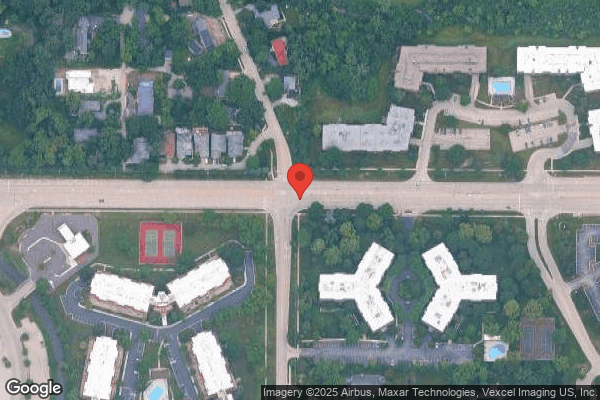
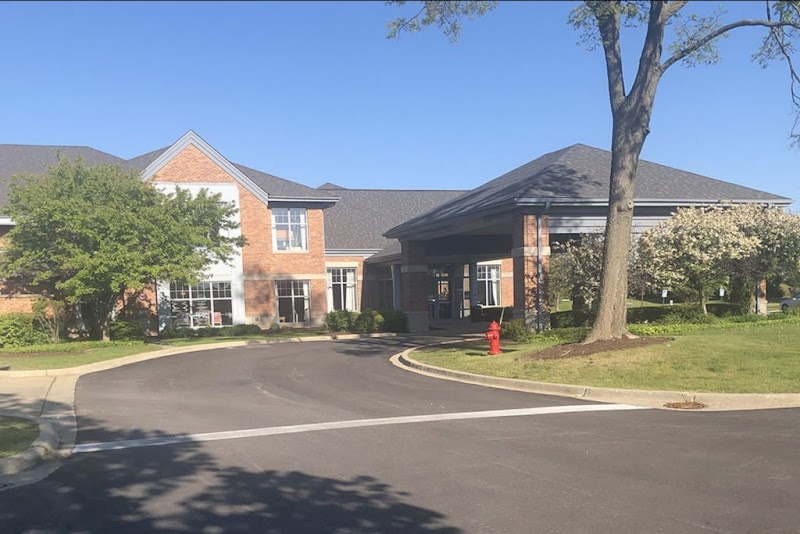
4101 LAKE COOK ROAD, NORTHBROOK, IL 60062 (847) 562-1770
For profit - Limited Liability company 147 Beds Independent Data: November 2025
Trust Grade
78/100
#70 of 665 in IL
Last Inspection: June 2025

Inspected within the last 6 months. Data reflects current conditions.

Overview

Northbrook Health and Rehab has a Trust Grade of B, indicating it is a good choice for families seeking care for their loved ones. Ranked #70 out of 665 facilities in Illinois, it is in the top half, and at #23 out of 201 in Cook County, it offers a relatively strong local option. The facility is improving, having reduced issues from 7 in 2024 to zero in 2025. However, staffing is a weakness with a rating of 2 out of 5 stars and a turnover rate of 34%, which is below the state average. Notably, there have been serious incidents, including a resident who required 33 stitches after a transfer mishap and another who sustained multiple fractures due to inadequate monitoring. On a positive note, RN coverage is notable, ensuring that residents receive the attention necessary to catch potential problems early.

Trust Score
B
78/100
In Illinois
#70/665
Top 10%
Safety Record
Moderate
Needs review
Inspections
Getting Better
7 → 0 violations
Staff Stability
○ Average
34% turnover. Near Illinois's 48% average. Typical for the industry.
Penalties
○ Average
$22,493 in fines. Higher than 70% of Illinois facilities. Some compliance issues.
Skilled Nurses
✓ Good
Each resident gets 45 minutes of Registered Nurse (RN) attention daily — more than average for Illinois. RNs are trained to catch health problems early.
Violations
⚠ Watch
11 deficiencies on record. Higher than average. Multiple issues found across inspections.
★★★★★
5.0
Overall Rating
★★☆☆☆
2.0
Staff Levels
★★★★☆
4.0
Care Quality
★★★★★
5.0
Inspection Score
Stable
2024: 7 issues
2025: 0 issues

The Good

  • 4-Star Quality Measures · Strong clinical quality outcomes
  • Full Sprinkler Coverage · Fire safety systems throughout facility
  • No fines on record
  • Staff turnover below average (34%)

    14 points below Illinois average of 48%

Facility shows strength in quality measures, fire safety.

The Bad

Staff Turnover: 34%

12pts below Illinois avg (46%)

Typical for the industry

Federal Fines: $22,493

Below median ($33,413)

Minor penalties assessed

The Ugly 11 deficiencies on record

2 actual harm
Mar 2024 7 deficiencies
CONCERN (D)

Potential for Harm - no one hurt, but risky conditions existed

Resident Rights (Tag F0550)

Could have caused harm · This affected 1 resident

Based on observation, interview, and record review, the facility failed to ensure resident dignity while dining and needing assistance during eating. This deficiency affects 1 of 3 residents (R71) rev...

Read full inspector narrative →
Based on observation, interview, and record review, the facility failed to ensure resident dignity while dining and needing assistance during eating. This deficiency affects 1 of 3 residents (R71) reviewed for meal assistance. Findings include: On 3/26/2024 at 12:30PM, observed V18 (Certified Nursing Assistant/CNA) standing over R71 during lunch while assisting R71 to eat. On 3/26/2024 at 12:45PM, V18 said she should sit down while assisting with feeding. On 3/27/2024 at 8:51AM, V2 (Director of Nursing) stated staff/CNA should be sitting down and within eye level when assisting resident with eating. R71's admission Record indicated a diagnosis of Unspecified Dementia, Unspecified Severity, with other Behavioral Disturbance, Dysphagia, Oral Phase and Need Assistance with Personal Care. R71's Care Plan included: Initiated 12/17/2021, Revision 4/11/2023. Focus: The resident has an ADL (activities of daily living) self-care performance deficit r/t ADL needs and participation vary, confusion, dementia, fatigue, COPD, impaired balance, weakness. Interventions: Resident currently requires assistance with ADLs: Eating: limited X1. Policy and Procedure: Dignity Guidelines: The facility shall promote care for residents in a manner and in an environment that maintains or enhances each resident's dignity and respect in full recognition of his or her individuality. The facility shall consider the resident's lifestyle and personal choices identified through the assessment processes to obtain a picture of his or her individual needs and preferences. Staff shall carry out activities in a manner which assists the resident to maintain and enhance his/her self-esteem and self-worth. Maintaining a resident's dignity should include but is not limited to the following: Promoting resident independence and dignity while dining, such as avoiding: Staff standing over residents while assisting them to eat.
CONCERN (D)

Potential for Harm - no one hurt, but risky conditions existed

Deficiency F0554 (Tag F0554)

Could have caused harm · This affected 1 resident

**NOTE- TERMS IN BRACKETS HAVE BEEN EDITED TO PROTECT CONFIDENTIALITY** Based on observation, interview, and record the facility failed to implement its policy on resident self-administration of medic...

Read full inspector narrative →
**NOTE- TERMS IN BRACKETS HAVE BEEN EDITED TO PROTECT CONFIDENTIALITY** Based on observation, interview, and record the facility failed to implement its policy on resident self-administration of medication. This deficiency affects 1 of 1 resident (R84) in the sample of 21 reviewed for Resident Self administration of medication. Findings include: On 3/26/24 at 12:21PM, observed a nasal spray bottle at bedside of R84. R84 said that she brought the medication from the hospital, and she has been taking it since she came to this facility. R84 said that she is taking it on daily basis every 4 to 6 hours. The medication is not labeled. Called V14 (Licensed Practical Nurse/LPN) who is the nurse assigned to R84 and showed observation made. V14 said that she is not aware that R84 has medication at bedside. V14 said that R84 did not have order for nasal spray. V14 added that R84 does not have order to have medication at bedside. V14 said that all resident's medication should be kept in medication cart and should be given by the nurse. V14 said that she will call the doctor. On 3/26/24 at 12:35PM, Review R84's active physician order sheet indicates no order for nasal spray. Progress notes and Care plan does not indicate that R84 preferred to take nasal spray at bedside. On 3/26/24 at 2:28PM, Informed V3 (Assistant Director of Nursing) of the above observation made. V3 said that no medication at resident's bedside unless ordered by primary care physician. All medications taken by a resident in the building should have a physician order. Requested the policy. On 3/26/24 at 5:02PM, Informed V1 (Administrator) and V2 (Director of Nursing) of above observation made. V2 gave surveyor the policy on Resident Self-administration of medication. On 3/27/24 at 9:30AM, observed R84's nasal spray at bedside table not in locked drawer. Review R84's physician order sheet indicates nasal spray nasal solution 1 spray in each nostril every 6 hours as needed for stuffy nose. Patient may keep at bedside and self-administer. No skill assessment tool was done to evaluate R84's competency for self-administration of medication. No IDT (Interdisciplinary Team) documentation of determining R84's ability to self-administration of medication. On 3/27/24 at 9:48AM, Review policy with V2 and informed her that they did not implement their policy for R84. They did not complete Assessment for Self-administer medications tool to determine R84's ability to self-administer. Medication is not kept in locked drawer in the resident room. The IDT did not formulate care plan intervention for R84's self-administration of medication. V2 said they don't have the assessment form indicated in the policy. V2 said V11 (Unit Manager) documented R84 demonstrated self-administration of nasal spray to her and called physician for medication to be administered at bedside. Surveyor informed V2 that R84's care plan has impaired cognitive function/dementia or impaired thought processes related to impaired decision making which needs IDT to determine R84's ability for self-administering of medication. On 3/27/24 at 1:50PM, V2 presented another policy for Resident Self-Administration. Review policy provided which still indicates that facility failed to implement its policy. On 3/28/24 at 10:05AM, Informed V2, V3, V21 (Nurse Consultant) and V23 (Vice President of Clinical Operations) of the above concerns. R84 was admitted on [DATE] with diagnosis listed in part but not limited to Acute respiratory failure with hypoxia, anxiety disorder. R84 is alert and oriented. She can verbalize her needs to staff. Medication Administration Record (MAR) indicates: nasal spray nasal solution 1 spray in each nostril every 6 hours as needed for stuff nose. Patient may keep at bedside and self-administer dated 3/26/24. No documentation that R84 self-administered the medication. Facility's policy on Self Administration of Medication and Treatments indicates: General: Self-administration of medications and treatments are done to prepare a resident for discharge and to help the resident maintain their independence. The decision for self-administration is done by the interdisciplinary team. Policy: 1. Self-administration of medications and treatments are determined by physician order after determining that a resident is able to self-administer. 2. Medications and treatments that are self-administered are kept in a locked drawer in the resident room. 3. All medications and treatments that are self-administration are signed out in the EMAR (Electronic Medication Administration Record) and ETAR (Electronic Treatment Administration Record). Procedure: 1. If it determined by a member of the interdisciplinary team, or of the resident requests to self-administer, a self-administer assessments completed, it is documented in the resident's chart and the physician is called for an order to self-administer medications and keep the medications at the bedside. 2. Assessment of the ability to self-administer medications will be done by nursing using the tool Assessment for Self-Administer Medications. 6. A care plan is for resident who self-administer, and documentation should be present in the nursing notes of teaching related to self-administration of the medications or treatments. Facility's on Policies and Procedures- Pharmacy Services for Nursing Facilities Revised [DATE] IIA10: Self -Administration of Medications: Policy: In order to maintain the resident's high level of independence, residents who desire to self-medications are permitted to do so if the facility's interdisciplinary team has determined that the practice would be safe for the resident and other residents of the facility and there is a prescriber's order to self-administer. Procedure: A. If the resident desires to self-administer medications, an assessment is conducted by the interdisciplinary team (IDT) of the resident's cognitive (including orientation to time), physical and visual ability to carry out this responsibility during the care planning process. C. For those residents who self-administer, the IDT verifies the president's ability to self-administer medications by means of a skill assessment conducted on a quarter basis or when there is a significant change in condition. 5. Similar reviews of administration technique is conducted for other dosage forms such as inhalers, sublingual tablets, eye drops, injections, etc. 6. The resident is asked to complete a bedside record indicating the administration of the medication (If bedside storage is to be used). D. The results of the IDT assessment of resident skills and of the determination regarding bedside storage are recorded in the resident's medical record, on the care plan. For each authorized for self-administration, the label contains a notation that it may be self-administered. E. If the resident demonstrates the ability to safety self-administer medications, a further assessment of the safety of bedside medication storage is conducted.
CONCERN (D)

Potential for Harm - no one hurt, but risky conditions existed

Pressure Ulcer Prevention (Tag F0686)

Could have caused harm · This affected 1 resident

**NOTE- TERMS IN BRACKETS HAVE BEEN EDITED TO PROTECT CONFIDENTIALITY** Based on observation, interview, and record review the facility failed to ensure implementation of pressure ulcer prevention as ...

Read full inspector narrative →
**NOTE- TERMS IN BRACKETS HAVE BEEN EDITED TO PROTECT CONFIDENTIALITY** Based on observation, interview, and record review the facility failed to ensure implementation of pressure ulcer prevention as ordered by the physician to a resident who is at high risk for developing skin impairment. This deficiency affects 1 of 3 residents (R48) in the sample of 21 reviewed for Pressure Ulcer Prevention Program. Findings include: On 3/26/24 at 12:01PM, observed R48 lying in bed with V13 (Licensed Practical Nurse/LPN). Bilateral heel protector/heel boots are at bedside chair. V13 said that R48 uses the bilateral heel protectors only at night. R48 is admitted on [DATE] with diagnosis listed in part but not limited to Type 2 Diabetes Mellitus (DM), need for assistance with personal care, non-traumatic intracerebral hemorrhage. Active physician order sheet indicates: Offload bilateral heels with pillows when in bed. Monitor heels for significant changes every shift for protection. Care Plan indicates: R48 is at risk for skin impairment/pressure injury. Fragile thin skin, impaired/limited mobility, incontinence. Intervention: Bilateral heel lifts on all the time. R48 has impaired circulation related to Type 2 DM. R48 has an ADL (Activity of Daily Living) self-care performance deficit. Braden scale for predicting pressure sore risk dated 2/22/24 indicated that R48 is at moderate risk. On 3/26/24 at 2:28PM, V3 (Assistant Director of Nursing/ADON) said that she is also the Wound Care Nurse (WCN) while V10 is on training for WCN. V3 said that she has taken care of R48. Informed V3 of above observation. V3 said that R48 should have bilateral heel protector at all times. On 3/27/24 at 9:36AM, V2 (Director of Nursing/DON) and V21 (Nurse Consultant) said that they are expected to implement intervention for prevention of skin impairment as indicated in physician order and resident's care plan. On 3/28/24 at 9:38AM, observed R48 in her room with V3 (ADON). Observed R48's bilateral heels with blanchable redness. Facility's policy on Wound Prevention indicates: Purpose: Identify those residents that are high risk for developing pressure areas using Braden Plus form. Relieve or remove pressure. Stimulate circulation. Management of interventions: 1. Staff will care for residents as indicated in the resident's care plan, regarding individualized interventions.
CONCERN (D)

Potential for Harm - no one hurt, but risky conditions existed

Deficiency F0687 (Tag F0687)

Could have caused harm · This affected 1 resident

**NOTE- TERMS IN BRACKETS HAVE BEEN EDITED TO PROTECT CONFIDENTIALITY** Based on observation, interview, and record review the facility failed to provide necessary foot care and treatment for diabetic...

Read full inspector narrative →
**NOTE- TERMS IN BRACKETS HAVE BEEN EDITED TO PROTECT CONFIDENTIALITY** Based on observation, interview, and record review the facility failed to provide necessary foot care and treatment for diabetic resident. This deficiency affects 1 of 3 residents (R48) in the sample of 21 reviewed for Foot Care Management. Findings include: On 3/26/24 at 12:01PM, observed R48 lying in bed with V13 (Licensed Practical Nurse/LPN). Observed bilateral heel protectors/heel boots were in the bedside chair. Surveyor requested V13 to check for R48's feet. V13 lifted the top sheet covering the feet of R48. Observed bilateral long thick yellowish brown colored toenails, with dry scaly skin and swollen feet. V13 said that podiatrist comes every Thursday to the facility. The Wound care nurse is the one scheduling resident to be seen by podiatrist. V13 added that R48 is diabetic. On 3/26/24 at 2:28PM, V3 (Assistant Director of Nursing/ADON) said that she is helping V10 (Wound Care Nurse/WCN) while he is on training. V13 said that the WCN is responsible for referring resident to be seen by podiatrist. Informed V3 of above observation made. V13 said that she has taken care of R48 but didn't notice of her long toenails. V3 said that the podiatrist comes every Thursday and will refer R48. Surveyor requested foot care management. R48 is admitted on [DATE] with diagnosis listed in part but not limited to Type 2 Diabetes Mellitus (DM), Need for assistance with Personal care, non-traumatic intracerebral hemorrhage. Active Care Plan indicates: R48 has an ADL (Activity of Daily Living) self-care performance deficit. R48 has impaired circulation related to Type 2 DM. Intervention: Podiatry consult PRN (as needed). R48 has potential for hyper/hypoglycemia related to DM. Intervention: Refer to podiatrist as needed. Take care when providing foot care to monitor for changes in condition and report PRN. R48's last podiatrist consultation was on 5/4/23 indicated: R48 seen for assessment and medically necessary debridement of painful long thickened nails several years duration gradually worsening over the last several weeks. On 3/27/24 at 2:00PM, V2 (Director of Nursing/DON) and V1 (Administrator) said that they don't have policy and procedure for Diabetic Foot Care Management. On 3/28/24 at 9:38AM, observed R48 in her room with V3 (ADON). Observed R48's bilateral heels with blanchable redness. Redness on right side on the great long toenails. R48 still with long thick yellowish brown colored toenails on both feet. Facility unable to provide policy on Diabetic foot care management. Facility's policy on Foot Care revision date 10/18/22 indicates: Policy: Foot care is given to promote cleanliness, prevention infection, control odor, provide comfort, monitor for skin breakdown, promote healing, and includes treatment to prevent complications from a variety of conditions that affects optimal foot health. Procedure: 8. Resident requiring foot care who have complicating disease processes must be referred to qualified professionals (i.e., podiatrist, a Doctor of Medicine (MD) and a doctor of osteopathy) who can treat foot problems/disorders. 9. Facility staff will also assist the resident, if necessary, in making appointments to visits a qualified person as well as help with arranging transportation to and from such outside appointments.
CONCERN (D)

Potential for Harm - no one hurt, but risky conditions existed

Tube Feeding (Tag F0693)

Could have caused harm · This affected 1 resident

**NOTE- TERMS IN BRACKETS HAVE BEEN EDITED TO PROTECT CONFIDENTIALITY** Based on observation, interview, and record review the facility failed to elevate the head of bed at least 30-degree angle and c...

Read full inspector narrative →
**NOTE- TERMS IN BRACKETS HAVE BEEN EDITED TO PROTECT CONFIDENTIALITY** Based on observation, interview, and record review the facility failed to elevate the head of bed at least 30-degree angle and check for Gastrostomy Tube (GT) placement prior to water flush, administering feeding and medication to GT site. This deficiency affects 1 of 3 residents (R157) in the sample of 21 reviewed for Tube feeding Management. Findings include: On 2/26/24 at 3:04pm observed V16 (Agency Registered Nurse) preparing for R157's GT (Gastrostomy tube) feeding and reading instructions of GT tubing connector. On 3/26/24 at 3:30PM, observed V16 hang and connect the feeding bottle of (brand name of tube feeding) 1.2 liter to the GT feeding pump. R157 lying in bed with head of the bed less than 30-degree angle elevation. On 3/26/24 at 3:47PM, observed V16 use the graduated cylinder to get 200ml of water from the bathroom faucet. V16 flushed the 200ml water using 60ml syringe without checking for placement. Surveyor asked V16 what angle of degree R157's head is positioned? V16 said that R157 is on 10-degree angle head elevation. Then V16 connected the feeding tube to R157 GT site and turned on the feeding pump. V16 elevated R157's head. On 3/26/24 at 3:52PM, R157's feeding pump machine alarming sound. V16 Agency Nurse turned off the feeding machine and V16 prepared medication for R157. After preparing for R157's medication (Valproic Acid 10ml placed in medicine cup). V16 aspirated the medication in the medication cup using 60ml syringe and flushed the GT site without checking for placement. After administered the medication she turned on the feeding pump machine. On 3/26/23 at 4:03PM, R157's feeding pump machine keeps on alarming sound. V16 called V15 (Registered Nurse/RN) to help her with trouble shooting R157's feeding pump. V15 checked the feeding pump and informed V16 the reason for the feeding pump's malfunction/alarming because V16 did not reset the volume to be infused. On 3/26/24 at 4:09PM, asked both V15 and V16 what was the GT feeding administration procedure. V15 said that they have to check the GT placement via auscultation using stethoscope prior to start of feeding, flushing or medication administration. V15 added that resident should be positioning at least 30-degree angle or higher. Informed both of observation made with V16 that she did not check GT placement before flushing with 200 water to start R157's GT feeding. R157 was position at 10-degree angle (less than 30 degree) when V16 administered water and feeding via GT. On 3/26/24 at 4:30PM, Informed V19 (Unit Manager) of above observation made and requested for Policy on Tube Feeding Management. On 3/26/24 at 5:02PM, Informed V1 (Administrator) and V2 (Director of Nursing/DON) of above observation made and requested for policy. On 3/27/24 at 9:38AM, V2 (DON) presented policy on Gastrostomy Tube feeding and Care. On 3/28/24 at 10:02AM, V3 (Assistant Director of Nursing/ADON) said that they verify/check GT the placement via auscultation using stethoscope. V3 said that she listens to the air as she instills into the GT. On 3/28/24 at 10:05AM, V2 said that they check GT placement via auscultation. On 3/28/24 at 10:08AM, Informed V2 (DON), V3 (ADON), V21 (Nurse Consultant) and V23 (Vice President of Clinical Operation) that the facility is not following its policy on checking for tube placement. They are using auscultation instead of aspiration as indicated in their policy. Surveyor requested for Nursing competency skills for Gastrostomy tube feeding and care since the last survey. V2 DON said that they do not have any. R157 is re-admitted on [DATE] with diagnosis listed in part but not limited to Hemiplegia and hemiparesis following cerebral infarction affecting left non-dominant side, Dysphagia, gastrostomy status. Active physician order sheet indicates: Enteral feed order every shift (brand name of tube feeding) 1.2 at 65ml/hr x 17 hours total of 1100ml infused. Flush G-tube with 200ml of water every 4 hours. Flush feeding tube with 20ml water before and after medication every shift. Care plan indicates R157 requires tube feeding related to poor appetite and weight loss. Intervention: Check tube placement as needed. Keep head on bed elevated while tube feeding is infusing. Facility's policy on Gastrostomy Tube-Feeding and Care effective date: 5/17/22 indicates: Purpose: To provide nutrients, fluids, and medications as per physician orders to residents requiring feeding through an artificial opening into the stomach. Procedure: 5. Position resident on his/her back with head elevated to minimal 30 degree and preferable 45 degrees. 7. Observe for tube feeding placement before: a) Starting feeding b) Water flushes and hydration and c) Medication administration. Checking for tube placement: a. Aspirate to visually verify stomach contents. Gastric fluid normal appears clear or yellow with mucus or may appear milky if residual remains from previous feeding. Aspirated contents must be returned to the stomach to maintain pH, fluid, and electrolyte balance. Facility's policy on General guidelines for administering medication via enteral tube Revised [DATE] indicates: Policy: The facility assures the safe and effective administration of enteral formulas and medications via enteral tubes. Procedures: B. Inservice training on bacteriological safely, administration and monitoring of enteral solutions and medication via the enteral tube is provided by the facility to nursing personnel.
CONCERN (D)

Potential for Harm - no one hurt, but risky conditions existed

Deficiency F0761 (Tag F0761)

Could have caused harm · This affected 1 resident

**NOTE- TERMS IN BRACKETS HAVE BEEN EDITED TO PROTECT CONFIDENTIALITY** Based on observation, interview, and record review the facility failed to ensure that no medication is kept at bedside and safel...

Read full inspector narrative →
**NOTE- TERMS IN BRACKETS HAVE BEEN EDITED TO PROTECT CONFIDENTIALITY** Based on observation, interview, and record review the facility failed to ensure that no medication is kept at bedside and safely stored and locked in medication cart. This deficiency affects 1 of 3 (R84) residents in the sample of 21 reviewed for Medication storage and safety. Findings include: On 3/26/24 at 12:21PM, observed a nasal spray bottle at bedside of R84. R84 said that she brought the medication from the hospital, and she has been taking it since she came to this facility. The medication is not labeled. Called V14 (Licensed Practical Nurse/LPN) who is the nurse assigned to R84 and showed observation made. V14 said that she is not aware that R84 has medication at bedside. V14 said that R84 did not have order for nasal spray. V14 added that R84 does not have order to have medication at bedside. V14 said that all resident's medication should be kept in medication cart and should be given by the nurse. V14 said that she will call the doctor. On 3/26/24 at 2:28PM, informed V3 (Assistant Director of Nursing/ADON) of above observation made. V3 said that no medication is allowed at resident's bedside unless ordered by primary care physician. All medications taken by a resident in the building should have physician order. On 3/26/24 at 5:02PM, informed V1 (Administrator) and V2 Director of Nursing (DON) of the above observation made and requested the policy. R84 was admitted on [DATE] with diagnosis listed in part but not limited to Acute respiratory failure with hypoxia, anxiety disorder. As of 2/26/24, the active physician order sheet does not indicate that R84 has an order for nasal spray. R84 is alert and oriented x 3. She can verbalize her needs. Facility's policy on Policy and Procedures- Pharmacy Services for Nursing Facilities Revised [DATE] indicates: IIA1: Equipment and supplies for administering medications Policy: The facility maintains equipment and supplies necessary for the preparation and administration of medications to residents. Procedures: A. The following equipment and supplies are acquired and maintained by the facility for the proper storage, preparation, and administration of medications. 1. Lockable medication carts, cabinets, drawers and or rooms with well lit medication preparation areas. IIA2: Medication Administration- General Guidelines Policy: Medications are administered as prescribed in accordance with good nursing principles and practices and by persons legally authorized to do so. Procedures: A. Preparation 1. Medications are prepared only by licensed nursing, medical, pharmacy or other personnel authorized by the state laws and regulations to prepare and administer medications. B. Administration 1. Medications are administered only by licensed nursing, medical, pharmacy or other personnel authorized by state laws and regulations to administer medications 2. Medications are administered in accordance with written order of the prescriber.
CONCERN (D)

Potential for Harm - no one hurt, but risky conditions existed

Infection Control (Tag F0880)

Could have caused harm · This affected 1 resident

**NOTE- TERMS IN BRACKETS HAVE BEEN EDITED TO PROTECT CONFIDENTIALITY** Based on observation, interview, and record review the facility failed to follow its infection control protocol for the after ca...

Read full inspector narrative →
**NOTE- TERMS IN BRACKETS HAVE BEEN EDITED TO PROTECT CONFIDENTIALITY** Based on observation, interview, and record review the facility failed to follow its infection control protocol for the after care of a nebulizer mask after resident use. This deficiency affects 1 of 3 (R84) residents in the sample of 21 reviewed for infection control. Findings include: On 3/26/24 at 12:21PM, observed R84's nebulizer mask exposed on top of the bedside drawer. No plastic bag available at bedside for the nebulizer mask. R84 said that the nurse administered her breathing treatment to her. On 3/26/24 at 2:28PM, informed V3 (Assistant Director of Nursing/Infection Control) of the above observation. V3 said that the nebulizer mask should be cleaned and placed in plastic bag after each use for infection control. Requested the policy from V3. R84 is admitted on [DATE] with diagnosis listed in part but not limited to Acute Respiratory Failure with Hypoxia, Anxiety Disorder. Active Physician order sheet indicates: Albuterol Sulfate HFA Aerosol Solution 108(90 Base) MCG/ACT Give 2 inhalation orally every 4 hours as needed for SOB or wheezing maximum 12 inhalations/24hrs; Ipratropium-Albuterol inhalation solution 0.5-2.5 (3) MG/3ML (Ipratropium-Albuterol) 3ml inhale orally every 6 hours as needed for wheezing. Facility policy on Nebulizer-Medication Administration effective 5/19/22 indicates: Guidelines: Nebulizer-Administering medications through a small volume (Handheld) Nebulizer 23. When equipment is completely dry, store in a plastic bag with the resident's name and the date on it.
Oct 2023 2 deficiencies 1 Harm
SERIOUS (G) 📢 Someone Reported This

A family member, employee, or ombudsman was alarmed enough to file a formal complaint

Actual Harm - a resident was hurt due to facility failures

Accident Prevention (Tag F0689)

A resident was harmed · This affected 1 resident

**NOTE- TERMS IN BRACKETS HAVE BEEN EDITED TO PROTECT CONFIDENTIALITY** Based on observation, interview, and record review the facility failed to ensure a resident was safely transferred for 1 of 4 re...

Read full inspector narrative →
**NOTE- TERMS IN BRACKETS HAVE BEEN EDITED TO PROTECT CONFIDENTIALITY** Based on observation, interview, and record review the facility failed to ensure a resident was safely transferred for 1 of 4 residents (R3) reviewed for safety in the sample of 15. This failure resulted in R3 sustaining a laceration to the right lower leg needing an emergency room visit requiring 33 stitches to the laceration. The findings include: R3's electronic medical record accessed on 10/27/23 show R3 is a [AGE] year-old Russian speaking resident with diagnoses that include weakness, peripheral venous insufficiency, and diabetes. R3's facility assessment dated [DATE] show R3 has severe cognitive impairment. R3 needs maximal assistance for transfers from wheelchair to bed. R3's Facility Reported Incident (FRI) dated 8/25/23 sent to the state agency as final (date of incident 8/20/23) show, (R3) has received a skin tear from the transfer. R3 was immediately assessed. The right lateral leg was cleansed with normal saline, and a pressure dressing applied . On 8/20/2023 the two CNAs (agency CNAs) were assisting R3 back to bed. During the stand and pivot, resident knees buckled and the two staff members were able to assist her to a full standing position and pivot her to sitting on side of bed. The injury occurred by the skin rubbing against the bed frame and the area of injury aligns and can explain how the injury shape presented. The report also shows that R3's physician gave orders to send R3 to the emergency room (ER.) R3's Emergency Department (ED) notes dated 8/20/23 show, Large jagged laceration to right lower extremity. Patient- A 94 y/o came in from nursing home for laceration to right lower leg. Per EMS facility reports that her leg got caught on the sharp edge of the bed when she was being moved around. Laceration is actively bleeding. R3's ED discharge instructions dated 8/21/23 show: large, jagged laceration to right lower extremity. Wound closed with a total of 33 non- absorbent sutures. Wound wrapped in clean gauze. Instructed to follow up in 7 days for suture removal. On 10/27/23 at 10:15 AM R3 was in the common area. R3 had a dressing to the right lower leg. V6 (Registered Nurse/RN) who can also speak in Russian interpreted for this surveyor. R3 said she was fine and cannot recall what happened to her right lower leg. V6 said R3's wound to her right lower leg was due to an injury from the bed frame while R3 was being transferred by agency CNAs. On 10/27/23 at 10:30 AM, R3 was in her room. V8 (Wound Nurse) was providing wound treatment to R3. R3's right lower leg wound was irregular and jagged shaped. V8 said R3's right leg wound was a V shaped wound measuring 1.5 cm x 3 cm with tunneling 3.0 cm at 10 o'clock. V8 said this wound was from trauma sustained approximately two months ago from R3's bed frame after R3 was being transferred to her bed by the 2 agency CNAs. The wound had not healed yet. V6 (RN) who was also in the room pointed to R3's metal bed frame and said to this surveyor that she had applied paddings to the sharp edges on R3's metal bed frame. R3's metal bed frame was observed. There were missing protective caps of the sharp edges of R3's metal bed frame which was pointed out to V6. V6 said she will be adding more paddings. On 10/27/23 at 12:15 PM, V7 (RN) said she was R3's nurse on 8/20/23 when the incident happened. V7 said she was called in the room and saw R3's leg bleeding. V7 said she was told that both Certified Nursing Assistance (who were agency CNAs) were in the process of transferring R3. During the transfer, R3 was too close to the metal frame of the bed and that R3's right leg was scraped. V7 said she sent R3 to the local hospital and received sutures to her right leg. The wound has not completely healed. V7 said when transferring a resident, make sure there was enough space and away from the bed's metal frame to prevent injury. On 10/27/23 at 1:30 PM, V2 (Director of Nursing/DON) said she was the one who completed the investigation of the incident involving R3 and the 2 agency CNAs (V11 and V12). Both V11 and V12 placed R3 who was sitting in her wheelchair at the side of her bed. V11 and V12 did a pivot transfer and R3's legs buckled. R3's right leg skin rubbed against the bed frame and that had caused the injury. V2 (DON) said the bed frames have been padded. V2 stated the shape of R3's wound perfectly aligned with the shape of the metal frame that would cause the injury. R3 received 33 stitches in the emergency room. V2 said R3 has edema and fragile skin and was prone to wounds. V2 said in-services have been provided to V11, V12 and to other staff regarding safe transfers to prevent injuries. On 10/27/23 at 10:40 AM, V9 (Nurse Practitioner) said R3 sustained her right lower wound during transfers. It was an unfortunate incident that could have been avoided. V9 said staff should ensure residents were transferred safely to prevent injuries.
CONCERN (D) 📢 Someone Reported This

A family member, employee, or ombudsman was alarmed enough to file a formal complaint

Potential for Harm - no one hurt, but risky conditions existed

Free from Abuse/Neglect (Tag F0600)

Could have caused harm · This affected 1 resident

Based on interview and record review the facility failed to ensure a resident was free from physical abuse for 1 of 3 residents (R2) reviewed for abuse in the sample of 15. The findings include: R2's...

Read full inspector narrative →
Based on interview and record review the facility failed to ensure a resident was free from physical abuse for 1 of 3 residents (R2) reviewed for abuse in the sample of 15. The findings include: R2's physician order sheet dated 10/23 show R2 has diagnoses that include hemiplegia, hemiparesis following cerebral infarction, and vascular dementia. R1's physician order sheet dated 10/23 show R1 has diagnoses that include idiopathic neuropathy and dementia with behavioral disturbances. The Facility Reported Incident-Final dated 8/11/23 (date of incident 8/8/23) sent to the state agency under conclusion show: R2 and R1 reside on the (XX) floor (at the time of the incident). R2 was sitting in the dining room next to the nurse's station when R1 walked by R2 and struck R2 on the right side of R2's face. Staff immediately responded and separated both residents. Physician ordered for R1 to be sent to the hospital for evaluation. R1 returned to the facility and had been placed on 1:1 monitoring. A head-to-toe assessment was completed on R2. Some redness was noted on the right side of R2's face, cold compress was applied. On 10/27/23 at 9:20 AM, R2 was in bed in his room. R2 was alert and pleasant. When asked about the incident of him being hit by another resident, R2 could not recall the incident. V3 (Assistant Director of Nursing/ADON) who was with this surveyor said R2 was moved from XX floor to ZZ floor per R2's family's request after R2 was struck in the face by R1. V3 said R2 was pleasant and quiet and keeps to himself. R1 was a wanderer and is now on 1:1 monitoring since the incident. V3 said when a resident hit another resident, it is abuse. On 10/27/23 at 9:30 AM, R1 was pacing back and forth on XX floor. R1 was being followed by a staff V13 (Certified Nursing Assistant/CNA). V13 said he was assigned to provide 1:1 monitoring to R1 today to prevent R1 from hitting other residents. On 10/27/23 at 11:27 AM, V1 (Administrator) said on 8/8/23, R2 was sitting quietly in the dining room when R1 walked by him and struck R2's right side of his face without provocation. R2 had redness to his face and R1 was sent for psychiatric evaluation. R1 came back to the facility. R1 had been on 1:1 monitoring to prevent R1 from hitting other residents. V1 said when a resident hit another resident-this can be classified as abuse. The facility policy on Abuse dated 9/8/22 show Abuse is the willful infliction of injury unreasonable confinement, intimidation or punishment with resulting physical harm, pain, or mental anguish. Abuse also includes deprivation by an individual, including a caretaker, of good and services that are necessary to attain or maintain physical, mental, and psychosocial well-being. Instances of abuse of all residents irrespective of any mental or physical condition, cause physical harm, pain, or mental anguish. It includes verbal abuse, sexual abuse, physical abuse, and mental abuse including facilitated or enabled through the use of technology (mental abuse including but not limited, abuse that facilitated or caused by nursing home staff taking or using photographs recording in any manner that would demean or humiliate a resident.) Willful, as used in this definition of abuse, means the individual must have acted deliberately, not that individual must have intended to inflict injury or harm.
Jan 2023 2 deficiencies 1 Harm
SERIOUS (G)

Actual Harm - a resident was hurt due to facility failures

Accident Prevention (Tag F0689)

A resident was harmed · This affected 1 resident

Based on observation, interview and record review, the facility failed to protect a cognitively impaired resident from severe injury(s) by failing to effectively monitor the resident; and failed to im...

Read full inspector narrative →
Based on observation, interview and record review, the facility failed to protect a cognitively impaired resident from severe injury(s) by failing to effectively monitor the resident; and failed to implement interventions from resident's behavioral plan of care which resulted in R50 being emergently transferred to local hospital for treatment of multiple fractures to the wrist and forearm. This failure affected 1 (R50) of 34 residents in the sample reviewed for accident/hazards. Findings include: On 01/24/23 at 10:23 AM, reviewed list of department reportables for last 6 months that showed R50 obtained a fracture of unknown origin in November 2022. At 12:10 PM, R50 was observed asleep in her wheelchair in room on the first-floor unit. There were no assistive devices or protective coverings observed on or near R50 that could have prevented her from receiving any further injury(s). Reviewed R50's electronic medical records with the following noted: R50 is a cognitively impaired resident with past medical history including but not limited to: Insomnia, Dysphagia, Aphasia, Cognitive Communication Deficit, Unsteadiness on Feet, Lack of Coordination, Weakness, History of Falling, and Displaced Spiral Fracture of Shaft of Right Ulna. MDS (minimum data set) dated 01/13/2023 showed R50 with a BIMS (Brief Interview of Mental status) score of 99 denoting severe cognitive impairment and an inability to complete the interview due to this severe cognitive decline. This same MDS showed a behavior being exhibited 4 to 6 times during the period of assessment and required extensive assistance in all activities of daily living including (but not limited to) transfers and toileting. Care plan with last completion date of 01/17/2023 reads in part, The resident is/has potential to be physically aggressive. Dementia, Poor impulse control during providing care, procedures or assistance. Resident is combative, pounding on the table with her right hand due to confusion. Goal: The resident will not harm self or others through the review date. Interventions showed: Monitor behavior episodes and attempt to determine under-lying cause. Monitor/document/report PRN and signs and symptoms of resident posing danger to self and others. When the resident becomes agitated, intervene before agitation escalates. The resident has severely impaired cognitive function or impaired thought processes related to Difficulty making decisions, Impaired decision making. Resident is unable to complete her BIMS interview. The resident has a communication problem r/t Expressive Aphasia, Language barrier, Slurring. Date initiated for all was 04/12/2022. Current physician orders with start date of 4/18/22 showed to, monitor behaviors with codes used: Behavior Code 0=No Behavior 1=Fear/Panic 2=Anger 3=Scream/Yell 4=Danger/Self/Others 5=Delusions 6=Hallucinations 7=Sad/Tearful 8=Emot. withdrawal/Withdrawal act. 9=Other(describe) Interventions- 1=Music, aromatherapy 2=Reminiscence, reality orientation 3=Exercise, activity 4=1:1 5=Reduce Stim 6=PRN given Outcome- I=Improved S=Same W=Worse Side Effects 0=None 1=EPS 2=Tardive Dys. 3=Hypotension 4=Inc. behavior 5=Sedation/drowsiness 6=Inc. falls/dizziness. R50's eMar (electronic medication administration record) reviewed from November 2022 to present that showed inconsistent behavioral monitoring was completed as ordered by physician, and no documented behavioral notes found from 11/10/2022 through 11/28/2022 (date of incident). R50's Health Status Note dated 11/28/2022 09:00 showed, Resident noted with blue/green in color discoloration to right forearm. When site is touched pt c/o pain and is noted grimacing. Pt is A&0 x 1 and is unable to verbalize what happened. Pt is very combative and is noted to swing arms at staff during care. Tylenol administered. Pt does have dialysis today. Contacted MD by phone and updated. Received orders for stat x ray of right forearm, ulna, radius, hand 2 view. All orders carried out. R50's Radiology Note dated 11/28/2022 13:45 showed, Relayed x-ray result to NP of MD by phone. Received orders to send pt. to Glenbrook hospital for treatment and evaluation (Dx fx to distal ulna and ulnar styloid) All orders carried out. DON made aware. R50's eMar (electronic medication administration record) Hour of Administration Note dated 11/28/2022 21:29 showed, The resident was not received at the taken over of the shift. It was reported that the resident fell and had fracture at the distal ulna. Presently in the hospital. Records from the hospital dated 11/28/2022 showed, 2 views of right radius and ulna show a spiral fracture of the mid to distal diaphysis of the right ulna. Nurse Practitioner Note dated 11/29/2022 10:30 showed, f/u closed displaced spiral fracture of shaft of the right ulna. FALLS: Maintain fall and safety precautions. BEHAVIORAL CHANGES: Nursing staff reports increased agitation and combativeness toward staff during nursing care. In-house psych consulted and patient's Seroquel dose was adjusted to 50mg TID. Records from the orthopedic visit dated 12/19/2022 showed, R ulnar shaft fx (fracture). Short arm cast, NWB (non-weight bearing), finger/elbow ROM (range of motion), f/u (follow up) 4 weeks. On 01/25/2023 at 2:06 PM, interview V9 (Advanced Practice Registered Nurse) who said this last week, R50's behaviors are better which could be contributed to the increase in seroquel. She then said her behavior has been regulated by psych because they were having issues with her agitation and she gets in moods where she doesn't like to be bothered. When asked what staff should be doing to manage her behaviors, V9 said R50 should be monitored, staff should keep day/night orientation, keep her busy and at ease, and calm her with redirection and/or activities. When asked if any different interventions could be implemented by staff to prevent this behavior, V9 said staff could pad her chair for example to prevent injury, and she is not sure why this was not implemented prior. V9 added that facility staff reported R50 was sent out due to pain to her arm from banging on the table then said that she has never witnessed any resident pounding on a table which would cause a fracture. On 01/25/2023 at 3:00 PM, V10 (Medical Doctor) said he knew R50 previously, she's had a cognitive decline over the last few years, some of which is irreversible. He added that R50 is at risk for having traumatic fractures. V10 then said R50's behavior issues are mainly managed by psych as well as facility staff and he was not aware R50 had a behavior of banging her hand/arm on the table. V10 added that R50's fracture could have been the result of direct impact or a fall. On 01/25/2023 at 3:30 PM, V16 (Registered Nurse) said R50 is alert 1-2, transfers with 1 assist and has the tendency to be combative. V16 said her personal actions such as, body language and tone, along with explaining what she is doing to R50 helps calm her and lessen combative or resistive behaviors. On 01/25/2023 at 3:00 PM, V17 (Restorative Aide) said R50 is combative at times but he talks nice to her, holds her hand to calm her both of which lessen her combative and/or resistive behaviors. A scientific research paper pertaining to spiral fractures from Encyclopedia of Forensic Sciences (Second Edition), 2013 via ScienceDirect reads, Spiral fractures occur due to torsion or twisting force that produces a fracture that circles or spirals around the shaft.
CONCERN (F)

Potential for Harm - no one hurt, but risky conditions existed

Food Safety (Tag F0812)

Could have caused harm · This affected most or all residents

Based on observation, interview, and record review, the facility failed to properly label and store multiple refrigerated food items; failed to identify and discard expired dairy products within accep...

Read full inspector narrative →
Based on observation, interview, and record review, the facility failed to properly label and store multiple refrigerated food items; failed to identify and discard expired dairy products within acceptable timeframe; and failed to follow their facility standards and guidelines for food labeling and storage. Findings include: On 01/23/2023 at 10:48 AM, during initial tour of kitchen with V7 (Dietary Manager), surveyor entered walk in fridge #1 and observed a crate filled with vitamin A&D milk cartons dated 01/17/2023, one carton was undated. Also observed in this same fridge, a 1/4 stack of yellow cheese wrapped in clear cling wrap that was not labeled or dated. On 01/23/2023 at 10:50 AM, entered walk in freezer #1 and observed a large box of opened and exposed waffle fries that were not properly stored and unlabeled. At 10:53 AM, V7 opened reach in refrigerator #1 and surveyor observed an opened and unlabeled jar of grape jelly, a package of turkey, a package of ham, and a package of yellow cheese all individually wrapped in clear cling wrap, and all were unlabeled. On 01/23/2023 at 10:56 AM, V7(Dietary Manager) said any food item that is expired or unlabeled should be thrown away immediately, then said she's been having issues with some milk cartons being undated. Reviewed facility standards and guidelines for food labeling and storage last revised 03/02/2021 that showed, foods are labeled and dated for identification purposes and to ensure they are discarded within acceptable time frames according to HACCP guidelines; opened and perishable items are discarded after 72 hours or dated with the use by date; items not considered perishable are dated when the original container is opened.
Understanding Severity Codes (click to expand)
Life-Threatening (Immediate Jeopardy)
J - Isolated K - Pattern L - Widespread
Actual Harm
G - Isolated H - Pattern I - Widespread
Potential for Harm
D - Isolated E - Pattern F - Widespread
No Harm (Minor)
A - Isolated B - Pattern C - Widespread

Questions to Ask on Your Visit

  • "Can I speak with families of current residents?"
  • "What's your RN coverage like on weekends and overnight?"

Our Honest Assessment

Strengths
  • • 34% turnover. Below Illinois's 48% average. Good staff retention means consistent care.
Concerns
  • • 11 deficiencies on record, including 2 serious (caused harm) violations. Ask about corrective actions taken.
  • • $22,493 in fines. Higher than 94% of Illinois facilities, suggesting repeated compliance issues.
Bottom line: Generally positive indicators. Standard due diligence and a personal visit recommended.

About This Facility

What is Northbrook Health And Rehab's CMS Rating?

CMS assigns NORTHBROOK HEALTH AND REHAB an overall rating of 5 out of 5 stars, which is considered much above average nationally. Within Illinois, this rating places the facility higher than 99% of the state's 100 nursing homes. This rating reflects solid performance across the metrics CMS uses to evaluate nursing home quality.

How is Northbrook Health And Rehab Staffed?

CMS rates NORTHBROOK HEALTH AND REHAB's staffing level at 2 out of 5 stars, which is below average compared to other nursing homes. Staff turnover is 34%, compared to the Illinois average of 46%. This relatively stable workforce can support continuity of care.

What Have Inspectors Found at Northbrook Health And Rehab?

State health inspectors documented 11 deficiencies at NORTHBROOK HEALTH AND REHAB during 2023 to 2024. These included: 2 that caused actual resident harm and 9 with potential for harm. Deficiencies causing actual harm indicate documented cases where residents experienced negative health consequences.

Who Owns and Operates Northbrook Health And Rehab?

NORTHBROOK HEALTH AND REHAB is owned by a for-profit company. For-profit facilities operate as businesses with obligations to shareholders or private owners. The facility operates independently rather than as part of a larger chain. With 147 certified beds and approximately 112 residents (about 76% occupancy), it is a mid-sized facility located in NORTHBROOK, Illinois.

How Does Northbrook Health And Rehab Compare to Other Illinois Nursing Homes?

Compared to the 100 nursing homes in Illinois, NORTHBROOK HEALTH AND REHAB's overall rating (5 stars) is above the state average of 2.5, staff turnover (34%) is significantly lower than the state average of 46%, and health inspection rating (5 stars) is much above the national benchmark.

What Should Families Ask When Visiting Northbrook Health And Rehab?

Based on this facility's data, families visiting should ask: "Can you walk me through typical staffing levels on day, evening, and night shifts?" "Can I visit during a mealtime to observe dining assistance and food quality?" "How do you handle medical emergencies, and what is your hospital transfer rate?" "Can I speak with family members of current residents about their experience?" These questions are particularly relevant given the below-average staffing rating.

Is Northbrook Health And Rehab Safe?

Based on CMS inspection data, NORTHBROOK HEALTH AND REHAB has a clean safety record: no substantiated abuse findings (meaning no confirmed cases of resident harm), no Immediate Jeopardy citations (the most serious violation level indicating risk of serious injury or death), and is not on the Special Focus Facility watch list (a federal program monitoring the lowest-performing 1% of nursing homes). The facility has a 5-star overall rating and ranks #1 of 100 nursing homes in Illinois. While no facility is perfect, families should still ask about staff-to-resident ratios and recent inspection results during their visit.

Do Nurses at Northbrook Health And Rehab Stick Around?

NORTHBROOK HEALTH AND REHAB has a staff turnover rate of 34%, which is about average for Illinois nursing homes (state average: 46%). Moderate turnover is common in nursing homes, but families should still ask about staff tenure and how the facility maintains care continuity when employees leave.

Was Northbrook Health And Rehab Ever Fined?

NORTHBROOK HEALTH AND REHAB has been fined $22,493 across 2 penalty actions. This is below the Illinois average of $33,304. While any fine indicates a compliance issue, fines under $50,000 are relatively common and typically reflect isolated problems that were subsequently corrected. Families should ask what specific issues led to these fines and confirm they've been resolved.

Is Northbrook Health And Rehab on Any Federal Watch List?

NORTHBROOK HEALTH AND REHAB is not on any federal watch list. The most significant is the Special Focus Facility (SFF) program, which identifies the bottom 1% of nursing homes nationally based on persistent, serious quality problems. Not being on this list means the facility has avoided the pattern of deficiencies that triggers enhanced federal oversight. This is a positive indicator, though families should still review the facility's inspection history directly.