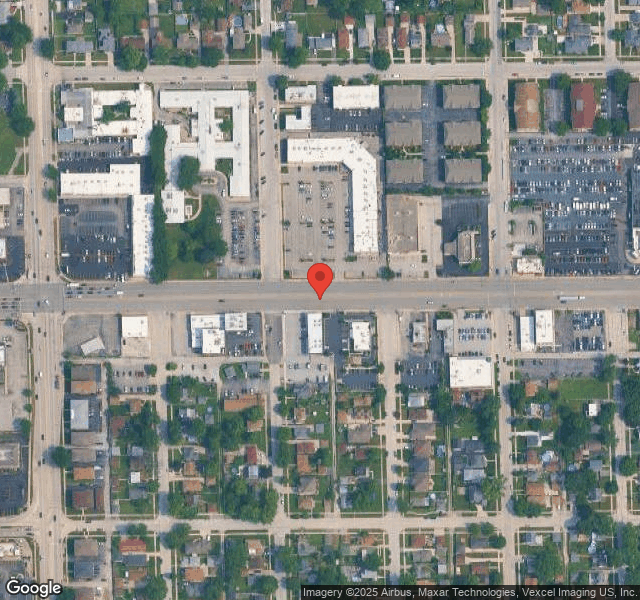

ALIYA OF OAK LAWN

6300 WEST 95TH STREET, OAK LAWN, IL 60453 (708) 599-8800
For profit - Limited Liability company 191 Beds ALIYA HEALTHCARE Data: November 2025 3 Immediate Jeopardy citations
Trust Grade
0/100
#313 of 665 in IL
Last Inspection: January 2025

Within standard 12-15 month inspection cycle. Federal law requires annual inspections.

Overview

Aliya of Oak Lawn has received a Trust Grade of F, indicating serious concerns about the facility's care and operations. Ranking #313 out of 665 facilities in Illinois places them in the top half, but this is overshadowed by their troubling performance. The facility is showing signs of improvement, having reduced issues from 26 in 2024 to 13 in 2025, but significant challenges remain. Staffing is a major concern with a low rating of 1 out of 5 stars and a turnover rate of 62%, well above the state average. Families may be alarmed to know that the facility has faced $321,253 in fines, which is higher than 82% of Illinois facilities, suggesting repeated compliance problems. Furthermore, there have been critical incidents reported, including a resident being sexually abused by a Registered Nurse, and another resident with dementia leaving the facility and sustaining injuries after falling near a busy street. While the facility has more RN coverage than 77% of state facilities, which is a positive aspect, the overall performance and safety concerns make it essential for families to weigh these factors carefully when considering this nursing home for their loved ones.

Trust Score
F
0/100
In Illinois
#313/665
Top 47%
Safety Record
High Risk
Review needed
Inspections
Getting Better
26 → 13 violations
Staff Stability
⚠ Watch
62% turnover. Above average. Higher turnover means staff may not know residents' routines.
Penalties
✓ Good
$321,253 in fines. Lower than most Illinois facilities. Relatively clean record.
Skilled Nurses
✓ Good
Each resident gets 50 minutes of Registered Nurse (RN) attention daily — more than average for Illinois. RNs are trained to catch health problems early.
Violations
⚠ Watch
75 deficiencies on record. Higher than average. Multiple issues found across inspections.
★★☆☆☆
2.0
Overall Rating
★☆☆☆☆
1.0
Staff Levels
★★★★★
5.0
Care Quality
★☆☆☆☆
1.0
Inspection Score
Stable
2024: 26 issues
2025: 13 issues

The Good

  • 5-Star Quality Measures · Strong clinical quality outcomes
  • Full Sprinkler Coverage · Fire safety systems throughout facility
  • No fines on record

Facility shows strength in quality measures, fire safety.

The Bad

2-Star Overall Rating

Below Illinois average (2.5)

Below average - review inspection findings carefully

Staff Turnover: 62%

16pts above Illinois avg (46%)

Frequent staff changes - ask about care continuity

Federal Fines: $321,253

Well above median ($33,413)

Significant penalties indicating serious issues

Chain: ALIYA HEALTHCARE

Part of a multi-facility chain

Ask about local staffing decisions and management

Staff turnover is elevated (62%)

14 points above Illinois average of 48%

The Ugly 75 deficiencies on record

3 life-threatening 11 actual harm
Aug 2025 3 deficiencies 1 Harm
SERIOUS (G) 📢 Someone Reported This

A family member, employee, or ombudsman was alarmed enough to file a formal complaint

Actual Harm - a resident was hurt due to facility failures

Free from Abuse/Neglect (Tag F0600)

A resident was harmed · This affected 1 resident

Based on interview and record review, the facility failed to follow their abuse policy and prevent resident-to-resident sexual inappropriateness. This affected two of three residents (R1 and R2) revie...

Read full inspector narrative →
Based on interview and record review, the facility failed to follow their abuse policy and prevent resident-to-resident sexual inappropriateness. This affected two of three residents (R1 and R2) reviewed for abuse. This failure resulted in R2 touching, groping and fondling R1 inappropriately resulting in R1 feeling helpless, scared, tearful and feeling uncomfortable. Findings Include:R1 was admitted to the facility with diagnoses of reduced mobility and functional quadriplegia. R1s Minimal data set (MDS) section C (cognitive patterns) dated 7/14/25 documents: a score of fifteen which indicates cognitively intact. Section GG (functional abilities) documents: R1's is dependent on staff to roll left to right, sit to lying and lying to sitting on the side of bed. R1's care plan initiated on 07/13/2025 documents: ABUSE/NEGLECT: My comprehensive assessment reveals a history of suspected abuse and/or neglect or factors that may increase my susceptibility to abuse/neglect AEB/as evidenced by on 08/18/25 R1 was touched inappropriately by another male resident. Nursing note dated 8/18/25 documents: Writer heard resident (R1) yell out for help, writer got up to go to the yelling. Writer observed R1 in his bed with another resident near the bedside. Resident (R1) stated, he did not know what he was doing or if he (R2) was touching him because he couldn't feel it. On 8/23/25 at 2:45pm, R1 who was assessed to be alert and oriented to person, place and time, said he was in bed when R2 entered his room via wheelchair. R1 said, R2 rolled on the side of his bed, stopped his wheelchair, stood up, lifted R1's gown and ripped opened R1's adult brief. R1 said, R2 put his hand around his penis and started rubbing it. R1 said, he was scared, he yelled for help and R3 saved his life. R1 said, he felt uncomfortable. R1 said, he does not have sexual activities with men. R1 said, he is not like that. R1 said, the facility needs security. On 8/20/25 at 11:15am, R3 who was assessed to be alert and oriented to person, place and time, said R1 was yelling for about four minutes. R3 said, he walked to R1's room. R3 said, he saw R2 standing up on the side of R1's bed with his right hand on R1's penis moving up and down while holding his (R2's) penis while moving his left hand moving back and forth. R3 said, R2 is aware of his behavior. R3 said, R2 rolls through the hallway looking for bedbound residents. R2 does not bother residents that can walk. R2 has touched other bedbound residents before. R2 waits and watches until staff is not looking, go into resident's room and touch them inappropriately. R3 said, R1 is contracted with his arms up by his head and his legs are stuck open, knee up and apart. R1 could only yell for help. R3 said, V6 (certified nursing assistant/CNA) was the first to enter R1's room. On 8/20/25 at 2:12pm, video watched with V1 (administrator), V4 (assistant administrator) and V14 (director of nursing/ DON). V1 said, the video time is an hour ahead. R1 was seen entering R2's room at 11:17am per the recording time on the video but it was actually 12:17 per V1. R2 was seen exiting R1's room at 11:19am per the recording time on the video but it was actually 12:19 per V1. On 8/20/25 at 12:26pm, V6 (cna) said, said when she entered R1's room. R1 was observed with his gown up. R2 pulled up R1's gown, pushed R1's adult brief to the side and touched R1's penis. R3 called the nurse. V6 said, she had to fix R1's adult brief and pull down R1's gown. V6 said, R1 was crying when she entered his room. V6 said, R1 reported not feeling safe at the facility and wanting to die. V6 said, R1 reported he has never been touch by a man before. V6 said, R1 reported R2 had his hand in R1's adult brief touching his penis. Nursing note dated 8/20/25 documents: Patient (R1) is going to be admitted for sexual assault.On 8/26/25 at 1:34pm, V5 (nurse) said, she was the reporting nurse for R1. V5 said, she was aware that R1 has a history of inappropriate touching other residents. V5 said, R1 reported, that R2 touch his anus. Nursing note dated 7/17/25 documents: RN (V5) noticed resident (R2) kept going into another resident room. The resident (R2) is trying to inappropriately touch the other resident and tell him he loves him. On 8/26/25 at 2:45pm, V12 (R2's power of attorney/POA) said, R2 has dementia and a history of same sex relationships. V12 said, she received a call about R2's incident with R1. V12 said, she has received calls from the facility prior to R1's incident about R2 inappropriate touching other residents. V12 said, the facility has been so patient with R2. Now the facility is acting like they do not have any patience with R2, like they can tolerate R2 anymore. R2 will do the same thing at any facility. The current facility found a new facility for R2 but they refused to accept him after R2's recent inappropriate touching incident with R1.R2's Behavior note created on 8/18/25 documents: Behavior Description: Inappropriately touching another resident. Behaviors: resident (R2) observed inappropriately touching a resident (R1). Nursing note dated 8/18/25 documents: Writer heard a resident (R1) yell out for help, writer got up to go to the yelling. Writer observed above resident (R2) in his wheelchair bending and reaching over to a resident (R1) in bed. Resident (R2) being petitioned to the hospital for inappropriate sexual behavior towards his peer. On 8/20/25 at 1:45pm, V2 (social service) said, she was made aware, R2 inappropriately touched R1 during the morning meeting. V2 said, she was informed, R2 opened R1's adult brief and had his hand in R1's brief. R1 reported he felt uncomfortable because he was not a homosexual. On 8/20/25 at 2:31pm, V3 (nurse practitioner) said, she was informed on Monday 8/18/25 that another resident touched R1. V3 said, she saw R1 on Tuesday. V3 said, R1 reported R2 lifted his gown and grabbed his penis. R1 reported he can't get erect because he is paralyzed. R1 said, he was not gay. R1 was crying. V3 said, she suggested R1 go to the hospital. On 8/20/25 at 11:49am, V10 (restorative aide) said, she was instructed to move R1 to a different room. V10 said, R1 requested that she stay with him because R1 reported being scared. V10 said, she was informed R1 was inappropriately touched by R2. On 8/20/25 at 11:59am, V11 (cna) said, she saw R1 crying. V11 said, she asked R1 was he okay. V11 said, R1 replied, please don't leave him. V11 said, R1 was scared to be left alone. V11 said, R1 is contracted and dependent on staff for assistance. V11 said, she was informed R2 took off R1's adult brief. On 8/20/25 at 12:12pm, V7 (nurse) said, she heard a resident yelling help, help, help. V7 said, staff started running towards the yelling. R1 was in bed on his back. R2 was standing by R1's bed, reaching under R1's gown. R1's adult brief was loose. V7 said, R1 reported he didn't know what R2 was doing. On 8/20/25 at 12:39pm, V8 (cna) said, she heard R3 telling R2 to get out of R1's room. R1 is contracted with his hands stuck behind his head. R1's legs are contracted opened. V8 said, R1 is dependent on staff for assistance. R2 is a wander. R2 should not have been in R1's room. Hospital Paperwork dated 8/19/25 documents: Patient (R1) present to emergency department for evaluation after an assault. R1 does not feel safe. Emergency Department diagnoses: Sexual assault of adult. Per emergency service: R1 was manually grouped by another resident, allegedly witness by another resident. (8/21/25) Case manager spoke with patient (R1) at bedside who was alert and orient times four, declined to discharge to long term care facility, states he just left a facility where he was molested. Police report dated 8/19/25 documents: office responded to nursing home in regard to a criminal sexual abuse report. R1 was lying in bed alone. While laying down, R2 entered R1's room in a wheelchair. R1 rolled his wheelchair next to R1's bed and came to a stop. R2 then stood up and opened R1's diaper. R1 related that R2 placed his right hand in R1's adult brief and began to groan. R1 does not have any sense of feeling below the waist and did not know exactly what R2 was doing to his genitals. R1 began to call for a nurse while R2 was moving his hand around R1's genitals. R3 entered the room and began to shout at R2 to stop. Abuse policy dated 10/2022 documents: The facility affirms the right of our residents to be free from abuse, neglect or exploitation. Sexual abuse includes but is not limited to sexual harassment, sexual coercion or sexual assault including non-consensual or non-competent to consent sexual activity.
CONCERN (D) 📢 Someone Reported This

A family member, employee, or ombudsman was alarmed enough to file a formal complaint

Potential for Harm - no one hurt, but risky conditions existed

Report Alleged Abuse (Tag F0609)

Could have caused harm · This affected 1 resident

**NOTE- TERMS IN BRACKETS HAVE BEEN EDITED TO PROTECT CONFIDENTIALITY** Based on interview and record review the facility failed to follow its abuse policy by not reporting an allegation of abuse to t...

Read full inspector narrative →
**NOTE- TERMS IN BRACKETS HAVE BEEN EDITED TO PROTECT CONFIDENTIALITY** Based on interview and record review the facility failed to follow its abuse policy by not reporting an allegation of abuse to the regulatory state agency within 24 hours. This affected two of three residents (R1, R2) reviewed for abuse policy. Findings Include:R2's Behavior note created on 8/18/25 at (12:49) documents: Behavior Description: Inappropriately touching another resident. Behaviors: resident (R2) observed inappropriately touching a resident (R1). Nursing note dated 8/18/25 documents: Writer heard a resident (R1) yell out for help, writer got up to go to the yelling. Writer observed above resident (R2) in his wheelchair bending and reaching over to a resident (R1) in bed. Resident (R2) being petitioned to the hospital for inappropriate sexual behavior towards his peer. On 8/20/25 at 3:45pm, V1 (administrator) said, if she is aware of an abuse allegation it should be reported to Illinois Department of Public Health within two to twenty-four hours. V1 said, she was informed of R1's incident by V4 (assistant administrator) followed by V14 (director of nursing) on 8/19/25. V1 said, R1's incident should have been reported if staff felt like it was abuse. V1 said, she did not report the incident due to being off but V4 should have because she was in the building. On 8/23/25 at 2:45pm, R1 who was assessed to be alert and oriented to person, place and time, said he was in bed when R2 entered his room via wheelchair. R1 said, R2 rolled on the side of his bed, stopped his wheelchair, stood up, lifted R1's gown and ripped opened R1's adult brief. R1 said, R2 put his hand around his penis and started rubbing it. R1 said, he was scared, he yelled for help and R3 saved his life. R1 said, he felt uncomfortable. R1 said, he does not have sexual activities with men. R1 said, he is not like that. R1 said, the facility needs security. On 8/20/25 at 11:15am, R3 who was assessed to be alert and oriented to person, place and time, said R1 was yelling for about four minutes. R3 said, he walked to R1's room. R3 said, he saw R2 standing up on the side of R1's bed with his right hand on R1's penis moving up and down while holding his (R2's) penis while moving his left hand moving back and forth. R3 said, R2 is aware of his behavior. R3 said, R2 rolls through the hallway looking for bedbound residents. R2 does not bother residents that can walk. R2 has touched other bedbound residents before. R2 waits and watches until staff is not looking, go into resident's room and touch them inappropriately. R3 said, R1 is contracted with his arms up by his head and his legs are stuck open, knee up and apart. R1 could only yell for help. R3 said, V6 was the first to enter R1's room. On 8/20/25 at 12:26pm, V6 (cna) said, said when she entered R1's room. R1 was observed with his gown up. R2 pulled up R1's gown, pushed R1's adult brief to the side and touched R1's penis. R3 called the nurse. V6 said, she had to fix R1's adult brief and pull down R1's gown. V6 said, R1 was crying when she entered his room. V6 said, R1 reported not feeling safe at the facility and wanting to die. V6 said, R1 reported he has never been touched by a man before. V6 said, R1 reported R2 had his hand in R1's adult brief touching his penis. On 8/20/25 at 2:12pm, video watched with V1 (administrator), V4 (assistant administrator) and V14 (director of nursing/ DON). V1 said, the video time is an hour ahead. R1 was seen entered R2's room at 11:17am per the recording time on the video but it was actually 12:17 per V1. R2 was seen exiting R1's room at 11:19am per the recording time on the video but it was actually 12:19 per V1. Facility timeline documents: At 12:19, V6 (cna) was noted running from the east nurses' station area towards R1's room. V8 (cna) came from room [ROOM NUMBER] and noted walking towards R1's room. R3 was noted talking and pointing into R1's room while standing in the hallway. R2 out of R1's room with V7 (nurse) behind him. At 12:22pm, V14 (therapy director), V15 and R3 walked over to administrators' office to report that R2 was noted in R1's room standing over R1 by the foot of the bed. On 8/26/25 at 1:34pm, V5 (nurse) said, she was the reporting nurse for R1 on 8/18/25. V5 said, R1 reported, that R2 touch his butt hole. Facility reportable date of the incident 8/19/25 documents: Time of incident: 2:30pm: Sexual: Describe Alleged Incident: Nurse Practitioner who reported the resident, R1 reports to her that another resident (R2) was sexually inappropriate towards him, Hospital Paperwork dated 8/19/25 documents: Patient (R1) present to emergency department for evaluation after an assault. Emergency Department diagnoses: Sexual assault of adult.Police report dated 8/19/25 documents: office responded to nursing home in regard to a criminal sexual abuse report. R1 was lying in bed alone. While laying down, R2 entered R1's room in a wheelchair. R1 rolled his wheelchair next to R1's bed and came to a stop. R2 then stood up and opened R1's diaper. R1 related that R2 placed his right hand in R1's adult brief and began to groan. R1 does not have any sense of feeling below the waist and did not know exactly what R2 was doing to his genitals. R1 began to call for a nurse while R2 was moving his hand around R1's genitals. R3 entered the room and began to shout at R2 to stop. Abuse policy dated 10/2022 documents: Internal reporting requirement and identification of allegations. Employee are required to report any incident, allegation or suspicion of potential abuse, neglect, exploitation, mistreatment or misappropriation of resident property they observed, hear about, or suspect to the administrator or the compliance officer. In the absence of the administrator, reporting can be made to an individual who has been designated to act in the administrator's absence. Any allegation of abuse or any incident that results in serious bodily injury will be reported to Illinois Department of Public Health immediately, but not more than two hours after the allegation of abuse. Any incident that does not involve abuse and does not result in serious bodily injury shall be reported with in twenty-four hours.
CONCERN (D) 📢 Someone Reported This

A family member, employee, or ombudsman was alarmed enough to file a formal complaint

Potential for Harm - no one hurt, but risky conditions existed

Accident Prevention (Tag F0689)

Could have caused harm · This affected 1 resident

Based on interview and record review, the facility failed to effectively monitor and supervise a resident with a diagnosis of dementia from wandering into another resident's room without permission an...

Read full inspector narrative →
Based on interview and record review, the facility failed to effectively monitor and supervise a resident with a diagnosis of dementia from wandering into another resident's room without permission and sexually touching another resident. This affected two of three residents (R1, R2) reviewed for supervision of resident with dementia.Findings Include:On 8/23/25 at 2:45pm, R1 who was assessed to be alert and oriented to person, place and time, said he was in bed when R2 entered his room via wheelchair. R1 said, R2 rolled on the side of his bed, stopped his wheelchair, stood up, lifted R1's gown and ripped opened R1's adult brief. R1 said, R2 put his hand around his penis and started rubbing it. R1 said, he was scared, he yelled for help and R3 saved his life. R1 said, he felt uncomfortable. R1 said, he does not have sexual activities with men. R1 said, he is not like that. R1 said, the facility needs security. On 8/20/25 at 11:15am, R3 who was assessed to be alert and oriented to person, place and time, said R1 was yelling for about four minutes. R3 said, he walked to R1's room. R3 said, he saw R2 standing up on the side of R1's bed with his right hand on R1's penis moving up and down while holding his (R2's) penis while moving his left hand moving back and forth. R3 said, R2 is aware of his behavior. R3 said, R2 rolls through the hallway looking for bedbound residents. R2 does not bother residents that can walk. R2 has touched other bedbound residents before. R2 waits and watches until staff is not looking, go into resident's room and touch them inappropriately. R3 said, R1 is contracted with his arms up by his head and his legs are stuck open, knee up and apart. R1 could only yell for help. R3 said, V6 was the first to enter R1's room. On 8/20/25 at 2:12pm, video watched with V1 (administrator), V4 (assistance administrator) and V14 (director of nursing/ DON). V1 said, the video time is an hour ahead. R1 was seen entered R2's room at 11:17am per the recording time on the video but it was actually 12:17 per V1. R2 was seen exiting R1's room at 11:19am per the recording time on the video but it was actually 12:19 per V1. On 8/20/25 at 12:26pm, V6 (cna) said, said when she entered R1's room. R1 was observed with his gown up. R2 pulled up R1's gown, pushed R1's adult brief to the side and touched R1's penis. R3 called the nurse. V6 said, she had to fix R1's adult brief and pull down R1's gown. V6 said, R1 was crying when she entered his room. V6 said, R1 reported not feeling safe at the facility and wanting to die. V6 said, R1 reported he has never been touched by a man before. V6 said, R1 reported R2 had his hand in R1's adult brief touching his penis. Nursing note dated 8/20/25 documents: Patient (R1) is going to be admitted for sexual assault.On 8/26/25 at 1:34pm, V5 (nurse) said, she was the reporting nurse for R1. V5 said, she was aware that R1 has a history of inappropriate touching other residents. V5 said, R1 reported, that R2 touch his butt hole. Nursing note dated 7/17/25 documents: RN (V5) noticed resident (R2) kept going into another resident room. The resident (R2) is trying to inappropriately touch the other resident and tell him he loves him. On 8/26/25 at 2:45pm, V12 (R2's POA) said, R2 has dementia and a history of same sex relationships. V12 said, she received a call about R2's incident with R1. V12 said, she has received calls from the facility prior to R1's incident about R2 inappropriate touching other residents. V12 said, the facility has been so patient with R2. Now the facility is acting like they do not have any patience with R2, like they can tolerate R2 anymore. R2 will do the same thing at any facility. The current facility found a new facility for R2, but they refused to accept him after R2's recent inappropriate touching incident with R1.R2's Behavior note created on 8/18/25 (12:49) documents: Behavior Description: Inappropriately touching another resident. Behaviors: resident (R2) observed inappropriately touching a resident (R1). Nursing note dated 8/18/25 documents: Writer heard a resident (R1) yell out for help, writer got up to go to the yelling. Writer observed above resident (R2) in his wheelchair bending and reaching over to a resident (R1) in bed. Resident (R2) being petitioned to the hospital for inappropriate sexual behavior towards his peer. On 8/20/25 at 2:31pm, V3 (nurse practitioner) said, she was informed on Monday 8/18/25 that another resident touched R1. V3 said, she saw R1 on Tuesday. V3 said, R1 reported R2 lifted his gown and grabbed his penis. R1 reported he can't get erect because he is parlayed. R1 said, he was not gay. R1 was crying. V3 said, she suggested R1 go to the hospital. On 8/20/25 at 12:39pm, V8 (cna) said, she heard R3 telling R2 to get out of R1's room. R1 is contracted with his hands stuck behind his head. R1's legs are contracted opened. V8 said, R1 is dependent on staff for assistance. R2 is a wander. R2 should not have been in R1's room. Hospital Paperwork dated 8/19/25 documents: Patient (R1) present to emergency department for evaluation after an assault. R1 does not feel safe. Emergency Department diagnoses: Sexual assault of adult. Per emergency service: R1 was manually grouped by another resident, allegedly witness by another resident. (8/21/25) Case manager spoke with patient (R1) at bedside who was alert and orient time four declined to discharge to long term care facility, states he just left a facility where he was molested. Police report dated 8/19/25 documents: office responded to nursing home in regard to a criminal sexual abuse report. R1 was lying in bed alone. While laying down, R2 entered R1's room in a wheelchair. R1 rolled his wheelchair next to R1's bed and came to a stop. R2 then stood up and opened R1's diaper. R1 related that R2 placed his right hand in R1's adult brief and began to groan. R1 does not have any sense of feeling below the waist and did not know exactly what R2 was doing to his genitals. R1 began to call for a nurse while R2 was moving his hand around R1's genitals. R3 entered the room and began to shout at R2 to stop.
Apr 2025 4 deficiencies 1 Harm
SERIOUS (G) 📢 Someone Reported This

A family member, employee, or ombudsman was alarmed enough to file a formal complaint

Actual Harm - a resident was hurt due to facility failures

Accident Prevention (Tag F0689)

A resident was harmed · This affected 1 resident

Deficiency Text Not Available

Read full inspector narrative →
Deficiency Text Not Available
CONCERN (D) 📢 Someone Reported This

A family member, employee, or ombudsman was alarmed enough to file a formal complaint

Potential for Harm - no one hurt, but risky conditions existed

Deficiency F0554 (Tag F0554)

Could have caused harm · This affected 1 resident

Based on observations, interviews, and record reviews, the facility failed to follow its policy and ensure that residents had physician orders for medications stored at the bedside and were assessed f...

Read full inspector narrative →
Based on observations, interviews, and record reviews, the facility failed to follow its policy and ensure that residents had physician orders for medications stored at the bedside and were assessed for self-administration of medications. This affected two of three residents (R1, R7) reviewed for self-administration of medications Findings include: On 3/29/25 at 10:16 AM, R7 was observed to have a bottle of refresh eye drops on bedside table. R7 stated that the nurses have been administering this medication to him twice a day since his admission to this facility. R7 stated that he is not able to self-administer this medication. R7 stated that he is waiting for the nurse to administer eye drops. On 3/29/25 at 3:00 PM, R1 was observed to have a container of oral antidiarrheal medication on bedside table. R1 stated that R1 has diarrhea intermittently due to medical condition and has asked the nurse to have medication ordered. R1 stated that when R1 asks for this medication, the nurse informs R1 that the facility does not have any antidiarrheal medication. R1 stated that R1's family member brought in this medication so R1 can self-administer when needed. On 3/29/25 at 11:05 AM, V2 DON (director of nursing) stated that before a resident can self-administer medications, a skill assessment needs to be done. V2 stated that if the resident's BIMS (brief interview of mental status) is high enough and if the resident can demonstrate how to administer medication safely to themself, a physician order would be obtained. R7's BIMS, dated 3/27/25, notes R7's score is 15 out of 15. R7 is cognitively intact. R7's POS (physician order sheet) does not note an order for refresh eye drops, an order to self-administer or store these eye drops at bedside. R1's BIMS, dated 2/20/25, notes R1's score is 12 out of 15. R1's cognition is moderately impaired. R1's POS does not note a current order for loperamide (antidiarrheal) oral medication. There is no order to self-administer or store this medication at bedside. This facility's self-administration of medications by residents' policy, undated, notes an interdisciplinary team determines the resident's ability to self-administer medications by means of a skill assessment, in part: the resident is instructed in the medication, the resident is requested to read the label, and demonstrate the steps involved in self-administration of the medication. A further assessment of the safety of bedside medication storage is conducted. If the interdisciplinary team approves the resident to self-administer and store medications at bedside, a physician order will be obtained.
CONCERN (E) 📢 Someone Reported This

A family member, employee, or ombudsman was alarmed enough to file a formal complaint

Potential for Harm - no one hurt, but risky conditions existed

ADL Care (Tag F0677)

Could have caused harm · This affected multiple residents

**NOTE- TERMS IN BRACKETS HAVE BEEN EDITED TO PROTECT CONFIDENTIALITY** Based on observations, interviews, and record reviews, the facility failed to follow its policy and provide showers/complete bed...

Read full inspector narrative →
**NOTE- TERMS IN BRACKETS HAVE BEEN EDITED TO PROTECT CONFIDENTIALITY** Based on observations, interviews, and record reviews, the facility failed to follow its policy and provide showers/complete bed bath for residents requiring moderate assistance to total dependence of staff for bathing and failed to remove a bedpan from underneath a resident for approximately 35 minutes. This affected four of four residents (R1, R3, R4, and R7) out of 4 reviewed for ADL (Activities of Daily Living) care Findings include: On 3/31/25 at 2:00 PM, R3 was observed to have a brown substance embedded underneath R3's fingernails. On 3/29/25 at 9:05 AM, R4 stated that R4 is not receiving showers/complete bed baths. R4 stated that he does not recall the last time he was bathed. R4 stated that it takes up to an hour for staff to answer his call light. R4 stated that he has to wait his turn. R4 stated that there are others worse off than he is. R4 stated that he tries to do things for himself but it is not working too good. On 3/29/25 at 10:16 AM, R7 stated that R7 has not received a shower/bath since admission to this facility on 3/20/25. R7 stated that R7 washed himself in the bathroom today as best he could. On 3/29/25 at 3:00 PM, R1 stated that R1 has not received a complete bed bath since returning from hospital on 3/15/25. R1 stated that this facility does not have any barrier cream, the staff informed R1's family member that he would need to speak with the wound care nurse to get some barrier cream. R1 stated they are always shorthanded here, the Certified Nursing Assistant/CNAs have more than 20 residents each. R1 stated that she activated her call light at 1:30 PM and at 2:30 PM she still was not changed. On 3/31/25 at 2:00 PM, R3 stated that R3 has not received a shower/bath since admission to this facility on 3/25/25. R3 stated that R3 is starting to smell. R3 stated that if he can smell himself, he knows others smell him too. R3's family member was present at bedside and stated that R3 was given a bedpan to have a bowel movement. R3 stated that he was unsure how long he was on the bedpan waiting to have it removed and get cleaned up before his family member came in. R3's family member stated that it took 35 minutes after she arrived to get staff to assist R3. On 3/29/25 at 11:05 AM, V2 DON (director of nursing) stated that residents receive showers/complete bed baths twice a week, one on day shift and one on evening shift. V2 stated that residents can receive shower/complete bed bath when requested. Resident shower sheets for February and March 2025 requested on 3/29/25 at 2:00 PM and again on 3/31/25 at 11:33 AM. Shower sheets were not made available to this surveyor to review during the survey. R1's MDS (minimum data set), dated 2/20/25, notes R1 is totally dependent on staff for bathing, toileting, and personal hygiene. R3's functional abilities assessment, dated 3/26/25, notes R3 requires substantial/maximum assistance with bathing and toileting. R4's MDS, dated [DATE], notes R4 requires substantial/maximum assistance with bathing and toileting. R7's MDS, dated [DATE], notes R7 requires moderate assistance with bathing and toileting. This facility's bathing policy, revised 3/17/25, notes all residents are offered a bath or shower at least one time per week. More frequent bathing or showering is given as needed or requested.
CONCERN (E) 📢 Someone Reported This

A family member, employee, or ombudsman was alarmed enough to file a formal complaint

Potential for Harm - no one hurt, but risky conditions existed

Deficiency F0725 (Tag F0725)

Could have caused harm · This affected multiple residents

**NOTE- TERMS IN BRACKETS HAVE BEEN EDITED TO PROTECT CONFIDENTIALITY** Based on observations, interviews, and record reviews, the facility failed to ensure sufficient direct care staff were available...

Read full inspector narrative →
**NOTE- TERMS IN BRACKETS HAVE BEEN EDITED TO PROTECT CONFIDENTIALITY** Based on observations, interviews, and record reviews, the facility failed to ensure sufficient direct care staff were available to meet the needs of its residents. This affected four of four residents (R1, R3, R4, and R7) and rooms on the east and northeast unit. Findings include: On 3/29/25 at 8:45 AM, the assignment sheet notes no CNA was assigned to residents in rooms on the east and northeast unit. Thirteen residents reside in these rooms. On 3/29/25 at 9:30 AM, V5 CNA was observed being informed by V9 CNA that V5 needed to take an assignment because one CNA did not come to work today. V5 stated that V5 is supposed to be transporting residents to and from dialysis. On 3/29/25 at 10:00 AM, V17 (restorative aide) stated that V17 was just informed V17 needed to pick up an assignment. V17 was observed to start providing care to residents in rooms on the east and northeast unit. On 3/31/25 at 2:00 PM, R3 was observed to have a brown substance embedded underneath R3's fingernails. On 3/31/25 at 2:00 PM, R3 stated that R3 has not received a shower/bath since admission to this facility on 3/25/25. R3 stated that R3 is starting to smell. R3 stated that if he can smell himself, he knows others smell him too. R3's family member was present at bedside and stated that R3 was given a bedpan to have a bowel movement. R3 stated that he was unsure how long he was on the bedpan waiting to have it removed and get cleaned up before his family member came in. R3's family member stated that it took 35 minutes after she arrived to get staff to assist R3. R3's family member stated that she expressed a concern on 3/26 regarding call lights and the wait time for staff to come to R3's room. R3 and R3's family member stated that there has been no improvement in the care provided. R3's family member pointed to a large pile of dirty linens on a chair and stated this has been here since he was admitted to this facility. R3's functional abilities assessment, dated 3/26/25, notes R3 requires substantial/maximum assistance with bathing and toileting. R3's BIMS (brief interview of mental status) score was 12 out of 15. On 3/29/25 at 9:05 AM, R4 stated that R4 is not receiving showers/complete bed baths. R4 stated that he does not recall the last time he was bathed. R4 stated that it takes up to an hour for staff to answer his call light. R4 stated that he has to wait his turn. R4 stated that there are others worse off than he is. R4 stated that he tries to do things for himself but it is not working too good. R4's MDS, dated [DATE], notes R4 requires substantial/maximum assistance with bathing and toileting. R4's BIMS score is 11 out of 15. On 3/29/25 at 10:16 AM, R7 stated that R7 has not received a shower/bath since admission to this facility on 3/20/25. R7 stated that R7 washed himself in the bathroom today as best he could. R7's MDS, dated [DATE], notes R7 requires moderate assistance with bathing and toileting. R7's BIMS score is 15 out of 15. On 3/29/25 at 3:00 PM, R1 stated that R1 has not received a complete bed bath since returning from hospital on 3/15/25. R1 stated they are always shorthanded here, the CNAs have more than 20 residents each. R1 stated that she activated her call light at 1:30 PM and at 2:30 PM she still was not changed. R1's MDS (minimum data set), dated 2/20/25, notes R1 is totally dependent on staff for bathing, toileting, and personal hygiene. On 3/29/25 at 12:00 PM, V4 (staff scheduler) stated that staffing is based on the facility's census. V4 stated that they are budgeted for 28 CNAs (certified nurse aides) and 21 nurses per day for 140 residents. V4 stated that typically there are 11 CNAs on day shift, 11 on evening shift, and 7 on night shift. V4 stated that typically there are 6 nurses on day shift, 6 on evening shift, and 5 on night shift. V4 stated that the day shift for nurses and CNAs 6:30 AM. V4 offers no explanation why staff assignments changed three times between 6:30 AM and 10:00 AM or why no staff was assigned to one set of rooms on the east nursing unit until 9:30 AM. On 3/29/25 at 12:08 PM, V5 CNA stated that V5 was scheduled to work as dialysis transporter today. V5 stated that V5 works weekdays from 12:00 PM-8:00 PM and weekends from 9:00 AM-5:00 PM. On 3/29/25 at 12:15 PM, V6 CNA stated that V6 is working on the west nursing unit today. When questioned if V6 is able to meet the needs of assigned residents, V6 stated that it depends on the number of CNAs working that day. V6 stated that if there are only two CNAs working on the west nursing unit, then each CNA has 17 or more residents. V6 stated that V6 is not able to complete showers, respond to call lights, toilet/provide incontinence care, turn/reposition residents, and chart. V6 stated that there is no definite assignment until 9:00 AM routinely and they start at 630 AM. V6 stated that sometimes V6 is informed of assignment changes. V6 stated that yesterday one CNA called off so only had two CNAs on the west nursing unit. On 3/29/25 at 12:25 PM, V7 CNA stated that if a CNA calls off, assignment will change until another CNA comes in. V7 stated that yesterday nobody showed up for front set on the northeast nursing unit in the morning. V7 stated that V7 stayed in her area but helped the nurse passed breakfast trays to the front set residents until staff came in. On 3/29/25 at 12:50 PM, V8 CNA stated that V8 floats to all nursing units. V8 stated that for the past one month she has worked on west nursing unit. V8 stated that most of the time V8 is assigned to 17 residents. V8 stated that the assignments change routinely, sometimes V8 is not told. V8 stated that V8 does not start her assignment until she knows for sure she isn't going to be pulled to another unit. V8 stated that previously V8 would start her work and then get pulled to another area and is required to chart on both assignments.
Mar 2025 2 deficiencies
CONCERN (D) 📢 Someone Reported This

A family member, employee, or ombudsman was alarmed enough to file a formal complaint

Potential for Harm - no one hurt, but risky conditions existed

Menu Adequacy (Tag F0803)

Could have caused harm · This affected 1 resident

Based on observation, interview, and record review the facility failed to follow the resident food preference for one of 3 residents (R2) reviewed for food preference not being followed. Findings inc...

Read full inspector narrative →
Based on observation, interview, and record review the facility failed to follow the resident food preference for one of 3 residents (R2) reviewed for food preference not being followed. Findings include: On 3/8/25 at 9:21am R2 was observed in the bed, R2 stated he did not eat his meal. At 9:30am R2 observed alert to person, place, date, and situation. R2 stated he refuses to go hungry because the facility can't get his meal right. R2 stated when he requests the regular meal, he gets a salad (substitute), and when the aides bring the wrong meal. R2 stated someone comes reviews the menu with him daily and they continue to get it wrong. At 9:23am surveyor observed R2 breakfast tray with assist from V9 (CNA), V9 stated he was R2's aide, and R2 ate most of his meal. V9 retrieved R2 tray and there were two boiled eggs (uneaten), 2 slices of bacon (uneaten), unopened milk, bowl of hot cereal (uneaten) noted on R2's (tray that was being sent back to the kitchen). V9 said he stated R2 ate his meal because R2 usually eats his meal, V9 stated he did not review what R2 ate before he placed the tray to be returned to the kitchen. R2 meal ticket was retrieved from the breakfast tray, it is denoted that R2 dislikes are bacon, cereal, mushrooms, and scramble eggs. R2 care plan denotes dietary consult to modify meal and snack plan related to known food allergies or intolerances, and honor food preferences. On 3/9/25 at 9:35am V10 (Dietary Manager) said R2 meal ticket shows R2 has a dislike for bacon, V10 stated R2 should not receive food items that he dislikes.
CONCERN (F) 📢 Someone Reported This

A family member, employee, or ombudsman was alarmed enough to file a formal complaint

Potential for Harm - no one hurt, but risky conditions existed

Deficiency F0919 (Tag F0919)

Could have caused harm · This affected most or all residents

Based on observation, interview, and record review the facility failed to have a functioning call light system and failed to develop an effective plan for the residents to call for assistance on the N...

Read full inspector narrative →
Based on observation, interview, and record review the facility failed to have a functioning call light system and failed to develop an effective plan for the residents to call for assistance on the North unit, this affects 28 of 28 resident (R1, R3, R4, R5, R6, R7, R8, R9, R10, R11, R12, R13, R15, R16, R17, R18, R19, R20, R21, R22, R23, R24, R25, R26, R27, R28, R29, and R30) reviewed for functioning call system. Findings include: On 3/8/25 at 11:12am V4 (Administrator) stated the call light system is not working in the North unit. V4 stated the call light system has not been working for one week, and that the part to fix the issue has been ordered. V4 stated the facility has implemented hand bells, and frequent rounding for residents. 3/8/25 at 11:22am V1 (Maintenance Assistant) stated the call light system is not working and the call lights system on the North unit has not been working for 3 to 4 weeks. V1 stated there's an electrical issue, and it's bigger than replacing a part. V1 stated the facility has implemented frequent rounding and hand bells for the residents to use. 3/8/25 at 11:32am R1 observed alert to person, place, time, and situation. R1 stated she yells out for help when she needs something. R1 stated she cannot use the hand bell that the facility put in place. R1 stated she must yell loud, and she also hears other residents yelling out for assistance. R1 stated she shouldn't have to yell out for help. R1 face sheet denotes in-part R1 has diagnosis of multiple sclerosis, and quadriplegia. R1 soft touch call light was pressed, the light did not come at the bedside, the light did not come on at the doorway, there were no sound activated at the nurse station. 3/8/25 at 11:13am R29, observed alert to person, place and situation stated the staff don't respond to that bell when he uses it, it doesn't work! 3/8/25 V8 (Nurse Manager) identified R1, R3, R4, R5, R6, R7, R8, R9, R10, R11, R12, R13, R15, R16, R17, R18, R19, R20, R21, R22, R23, R24, R25, R26, R27, R28, R29, and R30 all residing on the North unit that use/ activate a working call light. 3/8/25 at 2:23pm V6 (Maintenance Director) stated the call lights system on the North unit stop working on 2/14/25. V6 stated the button that the resident press to activate the light and sound at the nurse station is not working. V6 stated the company informed him that there is a shortage in the main power line on the north unit. V6 stated that the call light was not working to the administrator on 2/14/25. V6 present logbook documentation for call light system, twenty-four resident rooms on the north unit failed during the week of 2/14-2/18, twenty-four resident rooms on the north unit failed during the week of 2/18-2/22, twenty-four resident rooms on the north unit failed during the week of 2/23-2/27, and twenty-four resident rooms on the north unit failed during the week of 3/3-3/8. During a follow up interview on 3/9/25 at 10:45am with V6, V6 stated the call lights are for resident to use when they need assistance. The facility should always have a functioning call light system. It's the method for the residents to summons the staff when they need help or care.
Feb 2025 2 deficiencies
CONCERN (D) 📢 Someone Reported This

A family member, employee, or ombudsman was alarmed enough to file a formal complaint

Potential for Harm - no one hurt, but risky conditions existed

ADL Care (Tag F0677)

Could have caused harm · This affected 1 resident

**NOTE- TERMS IN BRACKETS HAVE BEEN EDITED TO PROTECT CONFIDENTIALITY** Based on observations, interviews, and records reviewed the facility failed to provide bathroom/toileting assistance to 2 (R1 an...

Read full inspector narrative →
**NOTE- TERMS IN BRACKETS HAVE BEEN EDITED TO PROTECT CONFIDENTIALITY** Based on observations, interviews, and records reviewed the facility failed to provide bathroom/toileting assistance to 2 (R1 and R8) dependent residents. This failure affected 2 of 3 residents reviewed for toileting assistance. The findings include: A. On 2/18/25 at 10:34AM R8's call light on, lit, beeping. At 10:39AM call light remains on. A staff member entered the room and R8's family requested assistance to take R8 to the washroom. Staff member left to get nursing assistance. At 10:40AM V4, Certified Nursing Assistant/CNA, entered R8's room and stated I got to get help and V4 left R8's room. At 10:53AM the surveyor asked V14, R8's family if they had been assisted. V14 stated the CNA said she is coming back she has to get help. R8 in the bed. At 11:04AM V14 stated we are still waiting, he (R8) has to have a bowel movement and they need 2 staff to help him. R8 stated yes, I gotta go. The call light has been turned off and is not lit or beeping anymore. The surveyor was standing outside of R8's room within hearing distance and in sight of the door. On 2/18/24 at 11:02AM V4, CNA, stated the computer system shows us the level of assistance needed by the resident, therapy will tell us, or the off going CNA will tell us. On 2/18/25 at 11:08AM V15, Nurse, stated he, R8, can't stand, the family has been told he is a mechanical lift. V15 stated he will just have to go and we will have to change his diaper. The surveyor left the unit after interviewing V15. R8 was still in his bed and had not been assisted to the toilet. The surveyor observed R8 waiting 34 minutes for assistance in using the washroom to have a bowel movement. On 2/19/25 at 12:53PM V4 stated on 2/18/25 R8's granddaughter stated R8 wanted to use the toilet, I told her he is a more than one person assist. V4 stated R8 can't stand at all. V4 stated I left the room and went to find an aide to help me, I didn't find one. V4 stated I told the nurse, V15, then we went and got him on the toilet. V4 stated V15 helped me get R8 into the bathroom V4 stated when I got in the room R8 was in wheelchair. V4 stated I didn't put R8 in the wheelchair. V8 stated I could have offered a bed pan. V4 stated R8 is a 2 person assist, not a mechanical lift. V4 stated we stood R8 up and he pivoted onto the toilet. V4 stated she assisted R8 onto the toilet in like 10 minutes from when she had entered the room. (The surveyor spoke with V15 at 11:08AM and R8 had not been assisted. V4 was in R8's room at 10:40AM.) On 2/19/25 10:47AM V10, Assistant Administrator, stated a resident can get on the toilet from a mechanical lift or use a side commode. V10 stated for R8 a solution is not to let him be incontinent and then change him. V10 stated if the resident can use the toilet staff are expected to assist. V10 stated the staff could have offered a bed pan to R8. R8's diagnosis includes, but are not limited to Disc Disorder with Myelopathy, Cognitive Communication Deficit, and Dementia. Functional Abilities and Goals dated 2/12/25 identifies on admission R8 is dependent on staff for toileting hygiene. Transfers requires partial to moderate assist. Actual toilet transfers were not attempted at the time of the assessment. The assessment does not indicate R8 requires a mechanical lift for transfers, nor does R8's care plan. CNA charting (Documentation Survey Report) for 2/18/25 shows R8 was incontinent of bowel and bladder at 12:36PM, documented by V4. B. R1's diagnosis include, but are not limited Benign Neoplasm of Left Ovary, Unsteadiness on Feet, Protein-Calorie Malnutrition, and Post Surgical Aftercare Following Surgery on the Genitourinary System. R1 admitted to the facility on [DATE]. R1's cognitive score is 12, moderately impaired. On 2/18/25 at 10:28AM R1 stated the bed was really wet and I had had a bowel movement in the bed. R1 stated it was miserable and uncomfortable waiting for help. R1 stated they just didn't come to help me when I asked after lunch. On 2/18/25 at 12:59PM V9, R1's family, stated I went to visit R1 on 2/7/25 and when I got there R1 grabbed my hand and was crying, saying I don't want to be here. V9 stated the staff had not cleaned R1 up after lunch and she had been left that way for some time. V9 stated I talked to V10, Assistant Administrator, about my concerns for that day. On 2/18/25 at 1:15PM V6, CNA, stated I had just gotten here on 2/7/25, it was around 2:38PM-2:40PM. V6 stated R1's daughter stated my mom has been waiting to be changed. V6 stated R1 was not on my set, but I went to change her. V6 stated R1 was soaking wet and in feces, it looked like it was there for quite a bit. V6 stated the sheets were a little brown and had been there for some time. V6 stated the sheets and R1's gown was so wet, so the sheet got wet, and it changed to a brown color where it was. V6 stated I told the nurses, V11 was one of them. On 2/19/25 10:47AM V10, Assistant Administrator, stated I did not speak to V6 about R1's care. V10 stated V9 did not report concerns except about a meal try not picked up. V10 stated I expect staff to check and change residents regularly and change as needed. V10 stated visible indications that a patient has not been changed can include if the patient has wet clothing or the bed is wet. V10 stated the color of the sheets is different, the smell is strong. V10 stated the sheets change color to a tinted brown to yellow shade. V2, LPN, and V11, RN, working on 2/7/25 both stated they don't remember R1, or any concerns reported to them related to R1. R1's care plan dated 2/5/25 states rounding at a minimum of every 2 hours and prompt or assist for change on position, toileting, offer fluids, and ensure resident is warm and dry. R1's MDS assessment dated [DATE] for Functional Ability (Section GG) identifies R1 is dependent for toileting hygiene. Requires substantial to maximal assistance with bed mobility and transfers, including toilet transfers. Bowel and Bladder assessment (Section H) identifies R1 is occasionally incontinent of urine and frequently incontinent of bowel R1's CNA charting (Documentation Survey Report) for 2/7/25 bowel/bladder continence, eating, and bed mobility nothing documented for 6:30am-2:30pm shift. The facility Certified Nurse's Aide basic function states, in part, to provide assigned resident with routine daily nursing care in accordance with established nursing care procedures. 5. Keep incontinent residents clean, dry, and odor free. 6. Assist residents with bowel and bladder functions. 8.Keep residents dry, changing clothes and gown when wet or soiled. 9.Make beds and change linens when soiled. 15. Maintain records accurately and timely. 16. Chart timely and accurately in (computer system.)
CONCERN (D) 📢 Someone Reported This

A family member, employee, or ombudsman was alarmed enough to file a formal complaint

Potential for Harm - no one hurt, but risky conditions existed

Accident Prevention (Tag F0689)

Could have caused harm · This affected 1 resident

Based on interviews and records reviewed the facility failed to monitor and provide supervision during a smoking break. This affected two of three residents (R2, R3) reviewed for supervision. This fai...

Read full inspector narrative →
Based on interviews and records reviewed the facility failed to monitor and provide supervision during a smoking break. This affected two of three residents (R2, R3) reviewed for supervision. This failure resulted in a resident to resident-to-resident altercation. The findings include: The facility reported investigation dated 2/6/25 states R2 and R3 were in disagreement and exchanged words. On 2/18/25 at 11:16AM R3 stated R2 didn't like what I was saying to her. R3 stated R2 was calling me a B*%ch N*&&#% (derogatory, cursing, racist words). R3 stated R2 was standing and lost her balance. R3 stated R2 did not fall but lost her balance. R3 stated I did not push her; I waved her hand out of my face. On 2/19/25 at 9:35AM R2 stated on Thursday 2/6/25 I was outside on the smoking patio, after the 1:00PM smoking time opened. R2 stated R3 came to me and stated he didn't like the way I treat him. R2 stated I told R3 to leave then, if you don't like it go and I was pointing to the door. R2 stated instead R3 came at me and lifted me by my shirt and threw me, I hit the wall and went running inside and told the activity staff right away. R2 is in her 50's with diagnoses including Legal Blindness and Depression. R3 is in his 50's with diagnoses including Post Traumatic Stress Disorder and Major Depressive Disorder. On 2/18/25 at 11:34AM V3, Social Services, stated R3 was placed on wellbeing checks for an altercation with another patient. V3 stated I heard R2's and R3's versions of the story. V3 stated R2 claimed they exchanged words. R3 stated R2 put her finger in his face. V3 stated I was made aware by being called into the office and notified by V5, Director of Nursing/DON. V3 stated both R2 and R3 have cussed staff out in the past. V3 stated R2 has periods of agitation, she is verbally aggressive with staff and can be with residents when things don't go her way. On 2/19/25 at 9:50AM V11, Registered Nurse/RN, stated smoking is done by activity department. V11 stated there is a time for smoking. V11 stated the residents have a designated places to smoke and are monitored. On 2/19/25 at 11:29AM V12, Activity Aide, stated for smoking one of us, activity staff, watch the residents. V12 stated the residents smoke outside the north dining room area, on the patio, or they go out for fresh air. V12 stated it depends on the weather if I will go outside and watch them smoke or watch from the window. V12 stated on 2/6/25 R3 and R2 were outside. V12 stated I was at the door watching them, from inside. V12 stated I had patients inside doing my activity. V12 stated I turned around talking to the other patients. V12 stated R2 ran in the door saying, you better come get him (R3), he put his hands on me. V12 stated my back was turned and I didn't see what happened. V12 stated R2 was hollering and screaming. V12 stated I asked R2, who put his hands on you. V12 stated R2 replied R3, and I want to press charges, he put his hands on me. V12 stated R2 was screaming and using profanity. V12 stated R3 came to the door and stated, you all better get her. V12 stated R2 said he pushed her against the wall. V12 stated I had seen them talking but I didn't see him put his hands on her. V12 stated then V13, Activity Director, came and took R2 in the office to calm her down. V12 stated the other activity aid was off that day. V12 stated V13 was in an office not in the area when it happened. On 2/19/25 at 11:42AM V13, Activity Director, stated I was in my office and heard the commotion. V13 stated I was told R2 and R3 were on the patio. V13 stated R2 said R3 muffed me he like pushed her. V13 said this occurred during smoke break. V13 said if we are not outside with the residents, then we are in the area watching. V13 said for this incident it was not effective supervision. On 2/19/25 at 12:24PM V5, Director of Nursing, stated on 2/6/25 I was told there was a commotion with R2. V5 said R2 wanted the police called and complained about her shoulder hurting. V5 stated at baseline R2 has argumentative moments, they are verbal, she antagonizes the other residents and stirs up things. V5 stated R2 said R3 was acting funny. V5 said the staff told me R3 doesn't do things like this. On 2/20/25 at 11:33AM V16, Social Services, said we have a smoking contract for smokers we have a designated area. V16 said the activities will open the smoking time and staff should be present when smoking. I don't know if they will require increased supervision with smoking if the resident violates the smoking contract. V16 said in the past R2 has been caught with a lighter in her room. V16 said after R2 was caught smoking in a non-designated area we updated the care plan. On 2/20/25 at 12:03PM V17, Psychiatry Nurse Practitioner, stated I was asked to see R2 and R3 because they had an altercation. V17 said R3 said R3 came up to him and got in his face. V17 said R2 said R3 was the instigator. On 2/20/25 at 1:21PM V10, Assistant Administrator, said R3 stated R2 called him negative, derogatory, and racist words and had her finger in his face. V10 said R3 said he moved R2's hand out of his face. V10 said I was not told R2 lost balance during the altercation. V10 said R2 came in yelling and then she went back to smoke. V10 said residents should not be putting hands on other residents. V10 said there were not staff that saw what happened. V10 said staff should be outside with the residents to try to stop situations from escalating. V10 said smoke monitoring is done by activity department. R2's care plan dated 1/14/25 identifies she will be monitored or placed in the supervised smoking program. R2 demonstrates noncompliance with safe smoking regulations, smoking at non-designated times, smoking in rooms and other non-designated areas. Care plan identifies R2's memory is impaired and has difficulty with decision making, insight, logic, planning and organization of thoughts. R2's Safe Smoking Evaluation dated 1/24/25 identifies R2's non-compliance with smoking policy is a moderate problem. R2 is potentially unsafe smoker. R3's care plan created 9/19/25 and updated on 2/7/25 identifies he is verbally aggressive and displays agitation episodes towards staff and other residents. Interventions include intervene when behavior is observed. Statements taken from related to the incident document by V13 identifies R2 yells and screams when she wants. V12 written statement identifies R2 has a temper and argues with other residents. (Occurrence date on form is 3/7/25. V7, Administrator, stated the statements should be dated for February.) The facility Smoking Policy dated January 2024 states, in part, some residents may require more intensive supervision staff supervision while smoking. These residents smoke separately from other residents, under the supervision of a staff member specifically designated to assist them. Behaviors that may trigger additional supervision while smoking include but are not limited to using smoking materials in an inappropriate manner. Smoking is permitted only in designated areas.
Jan 2025 2 deficiencies
CONCERN (E)

Potential for Harm - no one hurt, but risky conditions existed

Deficiency F0761 (Tag F0761)

Could have caused harm · This affected multiple residents

**NOTE- TERMS IN BRACKETS HAVE BEEN EDITED TO PROTECT CONFIDENTIALITY** Based on observation, interview, and record review, the facility failed to follow the pharmacy policy by not noting and implemen...

Read full inspector narrative →
**NOTE- TERMS IN BRACKETS HAVE BEEN EDITED TO PROTECT CONFIDENTIALITY** Based on observation, interview, and record review, the facility failed to follow the pharmacy policy by not noting and implementing open date labels for five of five (R148, R410, R22, R24, R131) residents reviewed during medication storage and labeling task in the sample of 31. Findings include: On 01/14/2025 at 12:10 PM Surveyor conducted inspection of the 1st floor (middle side) medication cart. Undated medication, unopened insulin not properly stored in facility/medication refrigerator noted for five residents: R148 Lantus Solo Injection Pen 100unit/ML - No open date written as directed by protocol noted on medication. Not stored in appropriate facility/medication refrigerator per pharmacy policy for all unopened insulin. R410 Lantus Solo Injection Pen 100unit/ML - No open date written as directed by protocol noted on medication. Not stored in appropriate facility/medication refrigerator per pharmacy policy for all unopened insulin. R22 Lantus Solo Injection Pen 100unit/ML, and Humalog Kwik Pen 100/ML - No open date written as directed by protocol noted on medication. Not stored in appropriate facility/medication refrigerator per pharmacy policy for all unopened insulin. R24 NovoLog FlexPen Subcutaneous Solution Pen-injector 100 UNIT/ML (Insulin Aspart) - No open date written as directed by protocol noted on medication. Not stored in appropriate facility/medication refrigerator per pharmacy policy for all unopened insulin. R131 Lantus Solo Injection Pen 100unit/ML - No open date written as directed by protocol noted on medication. Not stored in appropriate facility/medication refrigerator per pharmacy policy for all unopened insulin. R148's active physician order dated 01/08/2025 reads in part, Insulin Lispro Injection Solution 100 UNIT/ML, Inject as per sliding scale: if 61 - 150 = no insulin; 151 - 200 = 1 unit; 201 - 250 = 2 units; 251 - 300 = 3 units; 301 - 350 = 4 units; 351 - 400 = 5 units ; 401 - 450 = 5 units give insulin and call DR, subcutaneously three times a day for DM. R410's active physician order dated 01/04/2025 reads in part, Lantus Solostar 100 UNIT/ML Solution pen-injector, INJECT 12 UNITS SUB-Q AT BEDTIME *CHART & ROTATE SITE* *DO NOT MIX WITH ANY OTHER INSULINS* *HIGH ALERT DRUG* R22's active physician order dated 05/02/2024 reads in part Humalog Kwikpen 100 UNIT/ML Solution pen-injector, INJECT SUB-Q THREE TIMES DAILY PER SS: 200-250=2 UNITS, 251-300=4 UNITS, 301-350=6 UNITS, 351-400=8 UNITS, *HIGH ALERT DRUG* (DX: DM) R24's active physician order dated 12/16/2023 reads in part Fiasp FlexTouch 100 UNIT/ML Solution pen-injector, INJECT SUB-Q BEFORE MEALS PER SS: 151-200=2 UNITS, 201-250=4 UNITS, 251-300=6 UNITS, [PHONE NUMBER]=8 UNITS, 351-400=10 UNITS, CALL MD IF <150 OR >400 *CHART & ROTATE SITE* *HIGH ALERT DRUG* (TI) R131's active physician order dated 12/30/2023 reads in part Lantus Solostar 100 UNIT/ML Solution pen-injector, INJECT 40 UNITS SUB-Q DAILY AT BEDTIME *CHART & ROTATE SITE* *DO NOT MIX WITH ANY OTHER INSULINS* 01/14/2025 at 12:10PM Surveyor reviewed Medication Cart (Middle) with V21 (Licensed Practical Nurse/LPN) and observed R148's and R410's Lantus Solo Insulin Pen 100 unit/mL with no open date as directed by protocol noted on medication, and not stored in the appropriate facility/medication refrigerator. V21(LPN) stated insulin pens were sent from pharmacy but not sure when they were received. V21(LPN) stated she wasn't sure how long the pens were in the medication cart. V21 stated in summary, Insulin Pens are good for 28 days and need to be labeled with an open and expiration date. Original bag from pharmacy noted with residents' personal information, medication name, dosage, and storage instructions. Prescription bags are clearly labeled from pharmacy with a blue sticker store in fridge until opened. On 01/14/2025 at 12:40PM Surveyor reviewed Medication Cart (North) with V22(Registered Nurse/RN) and observed R131s', R24s' Lantus Solo Insulin Pen 100 unit/mL and R22s' Lantus Solo Insulin Pen 100 unit/mL and Humalog Kwikpen 100 UNIT/ML with no open date, and not stored in the appropriate facility/medication refrigerator. V22(RN) stated pharmacy sent the insulin pens but wasn't sure how long they had been stored in the medication cart. V22 stated insulin pens are good for 30 days and should be labeled with an open and expiration date. Prescription bags for R22, R24, and R131 contain a blue label stating store in fridge until opened. Surveyor interviewed V2 (Director of Nursing/Regional) who stated in the summary, it is important for the nurses to ensure both open and expiration dates are noted on the labels for insulin pens, in order to know how long they're good for and maintain efficacy. V2(DON) stated unopened insulin pens should be stored in the appropriate facility/medication fridge until needed. V2(DON) stated insulin pens should be stored in privacy bags and dated 28 days after opening so the medication can be discarded per manufacture's expiration date. V2(DON) stated she started an in-service on Insulin Storage. V2 stated the purpose of the medication in-service is to make sure nursing staff understands proper storage and labeling. Record review for medication protocol detailed that pharmacy policy 3.5: Refrigerated Products dated 07/2024 reads in part Medications required by the FDA to be stored in a refrigerator may be subject to special handling, storage, and record keeping: 2. Upon delivery, the nurse will be responsible for storing the medication in the appropriate facility/medication refrigerator. 5. Insulin Storage: all unopened insulin should be refrigerated. If unopened insulin is left at room temperature, the date opened would be the date it was sent from the pharmacy located on the prescription label. Expiration date for each insulin product varies, and facilities should refer to the insulin expiration date reference.
CONCERN (F)

Potential for Harm - no one hurt, but risky conditions existed

Food Safety (Tag F0812)

Could have caused harm · This affected most or all residents

**NOTE- TERMS IN BRACKETS HAVE BEEN EDITED TO PROTECT CONFIDENTIALITY** Based on observation, interview, and record review, the facility failed to 1. Label and date opened food in the freezer, 2. Foll...

Read full inspector narrative →
**NOTE- TERMS IN BRACKETS HAVE BEEN EDITED TO PROTECT CONFIDENTIALITY** Based on observation, interview, and record review, the facility failed to 1. Label and date opened food in the freezer, 2. Follow their policy on use of hair restraints by staff entering the kitchen without putting on a hair net and failing to use a beard restraint while in the kitchen, 3. Maintain infection control by placing a pair of oven gloves and a package of gravy inside clean and sanitized pots in the food preparation area and clean a whisk used during meal preparation, 4. Follow their policy on use of standardized recipes by not using a recipe during food preparation for lunch, and 5. Follow their policy on maintaining the proper sanitation level in the three compartment sink. These failures have the potential to affect all 151 residents who receive oral meals from the facility's kitchen. Findings include: On 1/13/24 at 10:28 AM, during review of the freezer noted one clear bag of food with no label or open date. V4 Dietary Manager/DM was inquired of the bag. V4 DM stated, It's potatoes, I'm not sure when it was opened, had to be over the weekend. It should have a use by date on it. On 1/14/25 at 9:24 AM, V7 Dietary Aide is in the kitchen and is not wearing a hair net. V9 Dietary Aide has a moustache and beard and is wearing a surgical mask while in the kitchen. On 1/14/25 at 9:38 AM a large cooking pot hanging on a rack in the food preparation area has two oven gloves sitting inside of the pot. A medium cooking pot hanging on a rack in the food preparation area has a 22.6-ounce (1/2 used) bag of chicken gravy inside of the pot. On 1/14/25 at 9:41 AM, V4 Dietary Manager was inquired of the items found inside the cooking pots. V4 DM stated, It shouldn't be in there. It's contaminating the pots. On 1/14/25 at 10:09 AM, V14 [NAME] put an unmeasured amount of salt, black pepper, and melted butter into two separate metal containers and filled them with water. V14 then placed both containers on the steam table and covered them with lids. V14 [NAME] was inquired of the containers. V14 [NAME] stated, I'm preparing my water for the cheesy mashed potatoes. V14 [NAME] is not using a recipe or measuring spices/ingredients while preparing the cheesy mashed potatoes. V14 was asked which residents would be receiving the cheesy mashed potatoes for lunch? V14 [NAME] stated, Regular, mechanical soft and puree residents except those who can't have cheese. V14 stated I'm making regular and enhanced mashed potatoes. V14 [NAME] was inquired of enhanced mashed potatoes. V14 [NAME] stated, It has whole milk and cheese. On 1/14/25 at 10:19 AM, V14 [NAME] poured 8 ounces of whole milk, an unmeasured amount of melted butter, and water in a pan and put it on the stove. V14 [NAME] opened a large bag of cheese and with a gloved hand put two handfuls of cheese into the pot. V14 [NAME] then poured an unmeasured amount of powdered mashed potatoes into the pot and mixed it with a large whisk. V14 put the whisk into a pitcher of water sitting in the food preparation sink. V14 [NAME] is not using a recipe or measuring utensils to prepare the enhanced mashed potatoes. V14 [NAME] did not wash the large whisk. On 1/14/25 at 10:25 AM, V14 [NAME] put an unmeasured amount of salt, black pepper, melted butter, and water into a metal container and placed it onto the stove. V14 [NAME] added an unmeasured amount of powdered mashed potatoes into the container. V14 [NAME] removed the large whisk from the pitcher of water in the food preparation sink and began to stir the potato mixture. V14 put the whisk into a pitcher of water sitting in the food preparation sink. V14 [NAME] is not using a recipe or measuring utensils to prepare the mashed potatoes. V14 [NAME] did not wash the large whisk. On 1/14/25 at 10:26 AM V14 [NAME] was inquired of his preparation. V14 stated, I'm making plain mashed potatoes. On 1/14/25 at 10:29 AM, V14 put an unmeasured amount of water into a metal container and placed it onto the stove. V14 [NAME] removed the large whisk from the pitcher of water in the food preparation sink, tapped the whisk on the inside of the food preparation sink and used it to stir an unmeasured amount of brown gravy mix into the water on the stove. V14 put the whisk into a pitcher of water sitting in the food preparation sink. V14 [NAME] is not using a recipe or measuring utensils to prepare the gravy. V14 [NAME] did not wash the large whisk. On 1/14/25 at 10:33 AM, V8 Director of Rehab entered the kitchen from the main dining room with a food tray and handed it to a dietary aide. V8 is not wearing a hair net. V8 was inquired of entering the kitchen. V8 stated, Oh, I should have on a hair net, I was just helping out. There are no hair nets available at the kitchen entrance from the main dining room. On 1/14/25 at 10:38 AM, V14 [NAME] was inquired of meal preparation. What should be used to ensure accurate amounts of seasoning or ingredients are used during food preparation? V14 stated, It's the recipe. I failed to use it to know what to put in. How do you know how much seasoning was put into each container while preparing the food? V14 stated, I should use measuring cups, but I taste it after it's done. V14 showed this surveyor measuring cups and spoons he removed from the drawers at the food preparation table. V14 [NAME] was inquired of using the whisk. After using a cooking utensil what should be done to ensure it's safe to use again? V14 [NAME] state, I should change the whisk, it needs to be cleaned. It could be contaminated, but I soak it in hot water. On 1/14/25 at 10:46 AM, V9 Dietary Aide has a moustache and beard and is wearing a surgical mask under his chin. He is receiving and removing clean dishes from the dishwashing machine. V9 was inquired of his mask. V9 stated, I don't have to cover my beard in the kitchen, only out in the building because of the residents and visitors. On 1/15/25 at 8:50 AM, V7 Dietary Aide is in the kitchen and is not wearing a hair net. On 1/15/25 at 9:34 AM, V4 Dietary Manager was inquired of hair net usage. V4 stated, Everyone should wear a hair net, so hair doesn't fly into the food. V4 stated anyone with a beard should wear a beard cover because hair can get into the food or anywhere. V4 was inquired of V14 [NAME] meal preparation regarding use of a recipe. V4 stated, V14 should follow a recipe so the meal comes out properly and for the resident's diet. I have measuring cups and spoons. On 1/15/24 at 9:40 AM, V9 Dietary Aide is at the three-compartment sink washing pots and pans. V9 tested the three-compartment sink for the sanitation level. V9 dipped the chemical test strip which indicated 100 ppm (parts per million) of quaternary solution. V4 Dietary Manager was asked what the chemical solution concentration should indicate for proper sanitation. V4 said, It should be 200. Quaternary sanitizer solution concentration range is 200 ppm per the posted manufacturer guidelines above the three-compartment sink. On 01/15/25 02:08 PM, V4 Dietary Manager was inquired of the kitchen infection control policy. V4 said, We are still looking for one. V4 DM did not provide a policy for infection control. The 2020 Guideline & Procedure Manual Labeling and Dating Foods (Date Marking) policy states in part: Procedure: All foods stored will be properly labeled according to the following guidelines. 3. Date marking for freezer storage food items- once a package is opened, it will be re-dated with the date the item was opened and shall be used by the safe food storage guidelines or by the manufacturer's expiration date. The 2020 Guideline & Procedure Manual Hair Restraint policy states in part: Guideline: Hair restraints shall be worn by all dining services staff when in food production areas, dishwashing areas, or when serving food. Procedure: 1. Staff shall wear hair restraints in all food production, dishwashing, and serving areas. 2. Hair restraints, hats, and/or beard guards shall be used to prevent hair from contacting exposed food. Facial hair is discouraged. Any facial hair that is longer than the eyebrow shall require coverage with a beard guard in the production and dishwashing areas. The 2020 Guideline & Procedure Manual Storing Utensils, Tableware, and Equipment policy states in part: Guideline: Employees will store utensils, tableware, and equipment according to the following guidelines. Procedure 1. Cleaned and sanitized utensils and equipment will be stored at least six inches off the floor in a clean, dry location in a way that keeps them from contamination by splash, dust, or other means. 5. Cleaned and sanitized equipment and utensils should be handled in a way that protects them from contamination. The June 2024 [NAME] Healthcare Kitchen Policy Food Safety & Sanitation Standard Recipes policy states in part: Standardized recipes will be available in the kitchen and used for food preparation according to the menu and spreadsheets unless signed off for subs by a dietitian. Procedure: All foods will be prepared using standardized recipes that coincide with the menu cycle spreadsheets. Standardized recipes include number of servings, serving sizes, ingredients, and preparation instructions. The undated facility three compartment sink policy states in part: policy: the facility will clean and sanitize food service equipment, pots and pans, utensils, dishes, and tableware using three compartment sink using the proper procedure. Procedure: 5. Sinks will be prepared as follows: c. Sink three- iv. Add the appropriate amount of sanitizer to the water according to the manufacturer's guidelines: 3. Quaternary Ammonium: 200 PPM (parts per million). Test the water in the sink using the manufacturer's suggested test strips to ensure appropriate concentration s noted above. Record concentration on a Sanitizer Concentration Log.
Dec 2024 1 deficiency
CONCERN (E) 📢 Someone Reported This

A family member, employee, or ombudsman was alarmed enough to file a formal complaint

Potential for Harm - no one hurt, but risky conditions existed

Quality of Care (Tag F0684)

Could have caused harm · This affected multiple residents

**NOTE- TERMS IN BRACKETS HAVE BEEN EDITED TO PROTECT CONFIDENTIALITY** Based on interviews and record reviews the facility failed to follow their policy and procedures for medication administration b...

Read full inspector narrative →
**NOTE- TERMS IN BRACKETS HAVE BEEN EDITED TO PROTECT CONFIDENTIALITY** Based on interviews and record reviews the facility failed to follow their policy and procedures for medication administration by not ensuring residents received medication and treatments as ordered by the physician. This failure applied to three of three (R1, R2, R3) residents reviewed for medication administration. Findings include: R1 a [AGE] year old, male admitted to the facility 11/05/2024 with diagnoses history of pulmonary embolism and deep vein thrombosis, morbid obesity, Alcohol use disorder, diabetes, Hypertension, and left humerus fracture. On the (MDS) Minimal data Set assessment of 11/18/2024 section C the BIMS (Brief Interviewed Mental status) score was 12/15. On 12/05/2024 at 10:45AM R1 stated that he is not getting his Norco pain medication as ordered and facility does not have medication in stock. R1 stated the facility is only giving half of his dose. R1 said, also he is not getting some of his routine medication as ordered by the physician. R1 physician order state Norco medication is ordered as needed 1-2 tablets as needed for pain. R1 needs to request for the medication and let nurses know if he needs 1 or 2 tablets at a time. Electronic medication administration records reviewed and R1 is getting pain medication every shift but routine medications reviewed with concerns of multiple medication not signed as given during different days and different shifts for the month of December of 2024. Medications not signed as given were: 1. Metformin 500mg 1 tab for diabetes in the evening dated 12/03/2024. 2. Quetiapine fumarate 25mg 1 tablet for depression at bedtime dated 12/03/2024 and 12/05/2024. 3. Eliquis 5mg 1 tablet scheduled 5:00PM dated 12/03/2024. 4. Magnesium Oxide 500mg 1 tablet supplement scheduled 5:00PM dated 12/03/2024. 5. Gabapentin 400mg scheduled 5:00PM dated 12/03/2024. 6. Oxymetazoline nasal spray scheduled 5:00PM for allergy dated 12/03/2024 and 12/05/2024. 7. Ammonium Lactate medicated lotion applies to lower extremities for dry skin scheduled 5:00PM dated 12/03/2024. R1's Current Physician Orders document an active order effective 11/05/2024 for the medications not signed as given for the month of December 2024. R1's Medical Practitioner progress note dated 12/5/2024 documents that R1 takes Metformin for diabetes and to monitor blood glucose level and for neuropathy R1 is taking Gabapentin and taking Eliquis for deep vein thrombosis. R2 is [AGE] year-old male admitted to the facility on [DATE]-[DATE] with diagnoses history of sepsis, end stage renal disease on hemodialysis, hypertension, diabetes DM2, neuropathy, and anemia. On the (MDS) Minimal data Set assessment of 11/18/2024 section C the BIMS (Brief Interviewed Mental status) score was 15/15. R2 is no longer in the facility and electronic medication administration records reviewed for the month November and December 2024. There are concerns with multiple routine medications not signed as given during different days and different shifts for the month of November and December 2024. Medications not signed as given were: 1- epoetin alfa injection 1000 units subcutaneous scheduled for 11/02/2024. 2- insulin glargine 12 units bedtime scheduled for 9:00PM 12/03/2024. 3- carvedilol 25mg 1 tablet scheduled for 4:00PM 12/03/2024. 4- Gabapentin 100mg 1 capsule scheduled for 4:00PM 12/03/2024. 5- hydralazine 100mg 1 tablet scheduled for 4:00PM 12/03/2024. 6- isosorbide dinitrate 10mg 1 tablet scheduled for 4:00PM 12/03/2024. 7- sevelamer HCl Oral 1 Tablet 800 MG scheduled for 4:00PM 12/03/2024. R2's Current Physician Orders document an active order effective 10/18/2024 for the medications not signed as given for the month of November and December 2024. R2's Medical Practitioner progress note dated 11/14 /2024 documents that R2's takes Sevelamer for end stage renal failure, Insulin Glargine for diabetes, Epoetin Alfa Injection for anemia, Gabapentin for neuropathy and carvedilol and hydralazine for hypertension. On 12/05/2024 and 12/09/2024 in separate interviews V10 (Licensed Practical Nurse/LPN) and V11 (Unit Manager), both stated that if a medication is missing for a resident, nurses can remove from the emergency convenience box and reorder missing medication. If a narcotic medication needs to be removed, nurses are expected to call pharmacy to obtain a code to open the (emergency convenience box). If a medication was not giving to a resident, nurses are expected to call and notify physician. On 12/09/2024 at 12:24PM V2 (Director of Nursing) stated, nurses are expected to give medication and sign out medication as they give them. If medications are not sign in the electronic medication administration records, they were not given. On 12/05/2024 at 3:39PM V1 (Administrator) presented Facility Policy titled Medication Administration revision date 01/2024, which reads: Guideline: 18. Document as each medication is prepared on the MAR. 22. If Medication is not given as ordered, document in the reason on the MAR and notify Health care Provider if required. 26. If medication is ordered, but not present, check if was misplaced and then call the pharmacy to obtain the medication, if available, obtain it from the contingency or convenience.R3 is a [AGE] year-old female with a diagnoses history of partial paralysis following stroke, cognitive communication deficit, recurrent major depressive disorder, anxiety disorder, adjustment disorder, end stage renal disease, peripheral neuropathy, legal blindness, confirmed adult abandonment and neglect who was admitted to the facility 06/07/2024. On 12/09/2024 at 10:40 AM R3 stated she has inconsistently worn her medication patch and the nurses have given inconsistent information on when she is supposed to have it applied. R3 stated she was told it should be worn daily, then every three days, and once weekly and this is confusing. R3 stated they (facility) don't always have her scheduled medications available. R3 stated she is supposed to receive an antianxiety medication before going to dialysis to keep her calm and they were supposed to order it, but she just finally received it the other day. R3 stated they have to go to two different carts to find her medications and this shouldn't be that way. R3 stated she has had to go without her anxiety medication during dialysis at times and just tries to deal with it. R3 stated when this happens, she does feel anxious during dialysis, and it makes her want to discontinue receiving dialysis. R3 stated her right leg is like a big fat turkey leg and her cardiologist was going to give her something for her foot as well but she hasn't received it. R3 stated she doesn't have on compression hose. Observed R3's right leg swollen and without a Compression hose applied. R3 stated the swelling comes all the way up her right leg. R3's Current Physician Orders document an active order effective 06/20/2024 for Injection of 5000 units of Heparin (Blood Thinner) subcutaneously every 8 hours for deep vein thrombosis (Blood Clot) prevention; an active order effective 08/11/2024 for 50 MG Hydralazine (antihypertensive) tablet to be given by mouth four times a day for hypertension hold if blood pressure below 110/60; an active order effective 10/20/2024 for one 50 MG Lyrica (nerve pain reliever) capsule to be given by mouth at bedtime for neuropathy; an active order effective 11/07/2024 for one 0.25 MG Alprazolam (antianxiety) tablet to be given mouth one time a day every Monday, Wednesday, and Friday for anxiety give before dialysis; an active order effective 11/13/2024 for application (compression stocking) every morning/remove every evening one time a day; an active order effective 11/22/2024 for completion of weekly skin check to ensure no new skin alterations are present. (If new alteration is present completely new Skin Condition assessment); and an active order effective 11/28/2024 for application of one Catapress TTS 3 (clonidine antihypertensive transdermal) patch transdermally in the morning every Tuesday for hypertension and remove per schedule. R3's November and December 2024 Medication Administration Record documents missing information for Multiple scheduled medications including Heparin across multiple shifts on multiple days; missing information for administration of scheduled Alprazolam on 11/25/2024 and 12/04/2024 and marked with a 9 referring to nurses notes; missing information for application of compression hose on multiple days in November and on 12/01/2024; missing information on Saturday 11/23/2024 for application of antihypertensive Catapress TTS 3 (Clonidine) transdermal patch scheduled to be applied every Saturday and missing information on Tuesday 12/03/2024 for application of antihypertensive Catapress TTS 3 (Clonidine) transdermal patch scheduled to be applied every Tuesday for with both entries marked with a 9 referring to nurses notes; missing information for administration of Lyrica on multiple days in November and December 2024 and marked with a 9 referring to nurses notes in multiple entries; missing information for administration of Hydralazine across multiple shifts on multiple days in November and from 12/03/2024 - 12/04/2024; and missing information for skin audits scheduled on Mondays in November and December 20204. R3's current care plan documents she is at risk for bleeding/bruising related to antiplatelet medication use with interventions including administer Medication as ordered she has potential for altered cardiac function related to diagnosis: hypertension with interventions including monitor and document any edema; medication as ordered; R3 has an alteration in comfort related to left heel pain with interventions including administer pain meds and treatments as ordered; R3 requires the use of psychotropic medication (Alprazolam) to assist with managing mood and behavior related to diagnoses of (anxiety) with targeted symptoms/ behaviors of (refusal of care, and restlessness) with interventions including administer medication as ordered; R3 has a diagnosis of/ history of coronary vascular accident (stroke) with right residual effects with interventions including monitor for pain and provide pain medications, per physician orders. R3's Medical Practitioner progress note dated 11/12/2024 documents on exam patient has a right swollen leg, with pain from her right hip radiating down to her right foot and pitting edema with plan for right lower extremity including edema-monitoring; continue heparin (blood thinner), and apply compression hose as appropriate. R3's Medical Practitioner progress note dated 11/13/2024 documents patient is a [AGE] year-old female patient past medical history of coronary vascular accident with right-sided partial paralysis, hypertension, end stage renal disease and on hemodialysis, hyperlipidemia, and diabetes mellitus that that was seen to establish care earlier in the week and was seen today to follow-up on complaints of right leg swelling and pain. Patient continues to have edema. R3's medication administration progress note dated 11/16/2024 and 11/28/2024 for her scheduled 50 MG Hydralazine tablet to be given by mouth four times a day documents she was going to or in dialysis. R3's medication administration progress note dated 11/19/2024, 11/20/2024, 11/21/2024, 11/24/2024, 11/27/2024, 11/29/2024, 12/02/2024, 12/04/2024 for her scheduled 50 MG Lyrica Capsule to be given by mouth at bedtime for neuropathy was on order. on order. R3's medication administration progress note dated 11/23/2024 for her scheduled 50 MG Lyrica Capsule to be given by mouth at bedtime for neuropathy documents a new script was needed and the pharmacy was contacted for reorder. R3's medication administration progress note dated 11/26/2024 for her scheduled 50 MG Lyrica Capsule to be given by mouth at bedtime for neuropathy documents was awaiting pharmacy. R3's medication administration progress note dated 12/3/2024 for her scheduled (Clonidine) antihypertensive transdermal patch to be applied transdermally in the morning every Tuesday for hypertension and removed per schedule was on order. R3's medication administration progress note dated 12/4/2024 for here scheduled 0.25 Alprazolam (Benzodiazapine antianxiety) tablet to be given by mouth before dialysis once daily every Monday, Wednesday, and Friday for anxiety was on order. R3's Medical Practitioner progress note dated 12/4/2024 documents she states today that her Clonidine (antihypertensive) patch was not being placed regularly and was just placed for the first time in a month. She also states that she has not been given a compression stocking for her right lower extremity that was ordered. R3's progress notes from 11/23/2024 and 12/03/2024 do not include information regarding application of Clonidine transdermal antihypertensive patch. On 12/09/2024 at 2:29 PM V2 (Director of Nursing) stated if medications are not available when scheduled to be given the nurse should call the pharmacy to order what is needed and medications should be ordered before they run out. V2 stated she would reorder medications when they are down to a five-day supply. V2 stated R3's Hydrazaline and Lyrica medications can be pulled from the facility's Cubex (medication supply) when needed and if it's not available there the physician should be called, and it should be charted why the medication is not available. V2 agreed that missing medication administration documentation also makes it difficult to determine if medications are being provided as ordered. V2 could not explain why R3 did not have her compression hose on as ordered.
Nov 2024 2 deficiencies 1 Harm
SERIOUS (G) 📢 Someone Reported This

A family member, employee, or ombudsman was alarmed enough to file a formal complaint

Actual Harm - a resident was hurt due to facility failures

Incontinence Care (Tag F0690)

A resident was harmed · This affected 1 resident

**NOTE- TERMS IN BRACKETS HAVE BEEN EDITED TO PROTECT CONFIDENTIALITY** Based on observation, interview, and record review, the facility failed to obtain orders for urinary catheter and urinary cathet...

Read full inspector narrative →
**NOTE- TERMS IN BRACKETS HAVE BEEN EDITED TO PROTECT CONFIDENTIALITY** Based on observation, interview, and record review, the facility failed to obtain orders for urinary catheter and urinary catheter care; the facility also failed to implement care plan interventions related to urinary catheter care and monitoring, including monitoring for signs of urinary tract infection symptoms. This failure applied to one of three (R11) residents reviewed for catheter care and resulted in R11's emergent hospitalization and subsequent diagnosis of septic shock requiring intensive care unit admission. Findings include: R11 is a [AGE] year-old male admitted to the facility on [DATE] with diagnoses including but not limited to Schizophrenia; Atherosclerotic; Heart Disease of Native Coronary Artery without Angina Pectoris; Chronic Kidney Disease; and Obstructive and Reflux Uropathy. According to R11's admission MDS (Minimum Data Set) assessment dated [DATE], under section H, R11 had indwelling urinary catheter present upon admission. Absent are any physician orders to show R11 had urinary catheter or required urinary catheter care. On 11/04/2024 at 11:46 AM Surveyor interviewed V22 (Registered Nurse) who stated in the summary, I started my shift on 10/16/2024 at 6:30 AM. I received a hand off report indicating that R11 had a fever and received fever medication overnight. V24 (Registered Nurse) who worked overnight, received an order to collect urinalysis and urine culture sensitivity test. R11's urine sample was collected and sent by the time I arrived. V24 (RN) stated that the last time she checked R11's temperature, it was 98.9 (degrees Fahrenheit). During my morning assessment, R11 was alert and oriented x(times) 3 and very talkative, as always. I asked if R11 needed pain medication, he denied pain and asked for cold water. I rechecked R11's temperature before giving morning medications and it was 100.1 (degree Fahrenheit), so I gave another dose of fever medication. When I rechecked R11's temperature an hour later, it was 104.1 (degree Fahrenheit). R11 kept asking for more water. The only abnormal vital sign was his temperature. I notified V27 (Nurse Practitioner) who gave orders for stat blood work. I told V27 (NP) that it will take up to 4 hours and I don't feel comfortable waiting, so V27 (NP) ordered to send R11 to the hospital. I decided to give a little more time before I send R11 out, because I wanted to see if the temperature will go down. I checked the temperature again; it was still 104 (degrees Fahrenheit) and that time R11 became confused. I called V27 (NP) again and she confirmed the second time that it is appropriate to send to R11 to the hospital. I didn't look at R11's urinary catheter, I hadn't fully assessed R11 that morning. R11's urinary catheter was special, and nurses were not supposed to touch it. Certified Nurse Assistants provide perineal care with every brief change, that's when they're supposed to provide urinary catheter care. Nurses are supposed to do urinary catheter assessments once a shift. It should be documented only if there are abnormalities related to the catheter. Nurses document urine output, but it's usually done if there is an order. I base my documentation on abnormalities, there is not enough time to document everything. Sequence of R11's documented temperatures and fever medication administration, per record review shows: - 10/16/2024 01:10 AM - 100.5 degrees Fahrenheit - fever medication administration documented at 00:45 AM - 10/16/2024 08:26 AM - 98.2 degrees Fahrenheit - 10/16/2024 10:06 AM - 99.2 degrees Fahrenheit - 10/16/2024 11:30 AM - 104.5 degrees Fahrenheit - - fever medication administration documented at 11:09 AM On 11/04/2024 at 12:01 PM Surveyor interviewed V23 (Wound Care Nurse/Licensed Practical Nurse) who stated in the summary, I went in after breakfast to change R11's dressings. R11 complained about pain to his penis. I opened his brief to conduct an assessment and observed a brown discharge from his penis. R11 was very cold and shaking but his body was warm to the touch. R11 generally complained of penis pain when we repositioned him. R11 had a penile implant that he was admitted with. R11 stated the implant placement procedure went wrong, hospital doctors suggested that it should have been removed, but R11 declined. Once I noticed the brown discharge, I notify V22 (RN). When I told V22 (RN), she came in to do her assessment, and I exited the room. I document in real time; therefore, the progress note shows the time when I saw R11, which was (10/16/2024) 11:47 AM. Last time I saw R11, before 10/16/2024 was on Monday 10/14/2024 and he appeared fine. On 11/04/2024 at 1:37 PM Surveyor interviewed V19 (Director of Nursing) who stated in the summary, R11 does not have urinary catheter order nor urinary catheter care order. Urinary care is part of ADL (Activities of Daily Living) and incontinence care, and it should be done every 2 hours and as needed, which is related to Certified Nurse Assistant duties. Nurses should assess urinary catheter and document every shift. Nurses were not supposed to change R11's urinary catheter due to penile implant, it had to be changed in the urologist office. Upon request from V19 (/Director of Nursing/DON) absent is any urinary catheter assessment to show R11 urinary catheter was assessed during R11's stay in the facility (08/21/2024 - 10/16/2024). On 11/04/2024 at 1:57 PM Surveyor interviewed V26 (Certified Nurse Assistant) who stated in the summary, as a CNA, I provide urinary catheter care with ADLs, every two hours or as needed. I document it in the task area in resident's electronic medical record under Bladder Continence tab. That should be documented every two hours. If there is blood in the tubing or bag, cloudiness, or change in urine appearance, it needs to be reported to the nurse on duty. R11's urinary continence sheet for October 2024 shows that urinary catheter care was provided 12 times in the entire month. On 11/04/2024 at 3:14 PM Surveyor interviewed V27 (Nurse Practitioner) who stated in the summary, I was on-site (in the facility) on 10/15/2024, when I saw R11 during my rounds, between 9:30a-10:00a. R11 complained about penile pain. I completed my assessment and ordered urinalysis and urine culture sensitivity test. I order R11's test verbally with nurse on duty (V29 Licensed Practical Nurse). There was no blood, and urine was flowing without obstruction; however, based on the labs, I was going to decide whether I should move R11's urology appointment sooner (originally scheduled for 11/4/2024). The following day, V22 (RN) called me and told me that the R11 has a fever. I told her that we have to send R11 out to the hospital if his temperature reaches 104 (degrees Fahrenheit). I talked to V22 (RN) later that day, and she told me that she sent R11 out. Surveyor asked V27 (NP) to clarify how R11 suffered from septic shock, V27 (NP) said, R11 had a chronic urinary catheter, which body recognized as a foreign object. In the process of trying to fight it, the body can go into a septic shock. Antibiotic treatment is detrimental in preventing septic shock. I specifically ordered R11's urine analysis on 10/15/2024 to monitor for UTI (Urinary Tract Infection) and order antibiotic if needed. Urinary assessment and care play also a big role in preventing infection and should not be undermined. On 11/04/2024 at 3:45 PM Surveyor interviewed V24 (Registered Nurse) who stated in the summary, On 10/16/2024 around midnight, I checked R11's temperature and it showed that he had some fever, I don't remember what it was, but it is in my progress note. I called the third-party provider and received orders for urinalysis and urine culture sensitivity test. I collected urine and left it for the lab to pick it up in the morning. I think the third-party provider ordered antibiotic to be started after the urine lab results come back. On 11/04/2024 at 3:57 PM Surveyor interviewed V29 (Licensed Practical Nurse) who stated in the summary, I took care of R11 on 10/15/2024 on day shift. R11 was his usual self that day. As a matter of fact, V27 (Nurse Practitioner) was there, and she looked at R11 as well. V27 (NP) told me that R11's urinary catheter is a special kind and was inquiring about R11's urology appointment. I think she ordered some labs that day, but I don't remember, there was so much going on. Normally, medical provider relay lab orders to me, I transcribe it into the resident's electronic medical record, print it and put it into the lab binder. If there are stat lab, I call the lab. I am not sure if V27 (NP) ordered any labs R11 that day (10/15/2024). Upon request from V19 (DON), absent are any R11's urine related labs ordered on 10/15/2024. R11's laboratory order dated 10/16/2024 3:13 AM reads in part, URINALYSIS, W/REFLEX CandS ** SENT Uncollected 10/16/24 3:14 AM CT ** one time only. R11's laboratory results showed: Collection Date: 10/16/2024 00:00 (AM); Received date: 10/16/2024 12:54 (PM); Reported Date: 10/22/2024 08:01(AM). Detected abnormalities include but are not limited to: BLOOD, SEMI-[NAME]. Large (presence). Escherichia coli ESBL GREATER THAN 100,000 COLONIES/ML. Enterobacter aerogenes GREATER THAN 100,000 COLONIES/ML. Progress note dated 10/15/2024 written by V27 (NP) reads in part, (R11) was seen and examined on this day for the above CC (chief complaint). (R11) was sitting on his bed when he reported to be doing well. (R11) reported pain in his penis, (R11) has a special foley and has an upcoming Urology appt, his (urinary catheter) has not been changed since admission. New verbal orders for UA/CS given to nursing. New order - UA&CS, Upcoming Urology services appt November 4th. Progress note dated 10/16/2024 1:10 AM written by V24 (RN) reads in part, (R11) c/o intermittent hot and cold, noted to be shaking. Temperature elevated at 100.5, (Urinary) catheter in situ. (R11) also hypertensive at 179mmHg systolic and hypoxic at 89% before supplemental O2 applied. Given (fever medication), (R11) now states he feels marginally better, but his feet are cold. Denies any dyspnea, states he has an infection in my penis. Progress note dated 10/16/2024 10:06 AM written by V22 (RN) reads in part, A & o X 2-3 febrile 99.2 prn (fever medication) given. noted (urinary) cath patent & intact output 240 ml cloudy & dark yellow. Ate 97% of his breakfast, AM meds well tolerated, drank 700 ml of cold water within 3 hrs. temp recheck @ 11:30 temp 104.5 & agitated. Informed NP likewise called 911.VS:BP 111/64 HR 95 RR 20 TEMP 104.5 SPO2 95% RA. Progress note dated 10/16/2024 11:37 AM written by V23 (Wound Care Nurse/LPN) reads in part, While performing wound care, (R11) complained of pain to penis, rated at 6/10. Upon assessment, (R11) noted with brown discharge from penis around (urinary) catheter site. Nurse in duty made aware. R11's hospital record dated 10/16/2024, (R11) is a [AGE] year-old male with (past medical history) significant for chronic (urinary catheter), HFrEF s/p AICD s/p cardiac arrest, CAD, HTN, HLD, asthma, presenting to the (local hospital) emergency department via EMS transfer from (the facility) for fever 104 (degrees Fahrenheit), penile pain, cloudy urine. (R11) arrived to the ED on 4L NC and is AOx4. admission vitals febrile 103 (degrees Fahrenheit), tachypneic 24, hypotensive 84/54 satting 94%. (R11) reported ED physicians that he has had penile pain for the past 1 year approximately and has a chronic (urinary) catheter. Reports 2 days of weakness, fatigue, (R11) denies cough, shortness of breath, chest pain, abdominal pain, vomiting, diarrhea and only endorses some rhinorrhea. (R11) also endorsed chronic left leg wound but denies any pain. Urine from (urinary) catheter discolored and (R11) report condensed milk urine consistency in (urinary catheter) bag. Assessment and plan: [AGE] year-old male with PMH (past medical history) significant for chronic (urinary catheter), HFrEF s/p AICD s/p cardiac arrest, CAD, HTN, HLD, asthma admitted to MICU (medical intensive care unit) for urosepsis requiring pressors. R11's urinary catheter care plan dated 08/22/2024 reads in part, (R11) requires use of an indwelling catheter r/t (Obstructive uropathy) is at risk for of infection. (R11) Will remain free of complications and infection of foley catheter placement throughout next review. Interventions: Assess for continued need of indwelling catheter; Empty Foley bag every shift and as needed; Monitor for s/s UTI: flank pain, strong odor, increased temp, decreased output, hematuria. The facility Indwelling catheter care policy dated 01/2024 reads in part, Daily and PRN catheter care will be done to promote comfort and cleanliness. Responsible party: RN, LPN, CNA. Catheter bag to be emptied at the end of every shift, and PRN. Record output and catheter care in POC. Absent is laboratory related policy per V19 (Director of Nursing) statement. The facility Registered Nurse/Licensed Practical Nurse job description reads in part, Implement total nursing care plan through assessment, planning, and evaluation; Administer prescribed medications and treatments according to policy and procedures; evaluate treatment effectiveness on continuing basis; Recognize significant changes in the condition of residents and take necessary action; Document nursing care rendered, resident response , and all other pertinent and necessary data as outlined in facility's policies and procedures.
CONCERN (D) 📢 Someone Reported This

A family member, employee, or ombudsman was alarmed enough to file a formal complaint

Potential for Harm - no one hurt, but risky conditions existed

Free from Abuse/Neglect (Tag F0600)

Could have caused harm · This affected 1 resident

**NOTE- TERMS IN BRACKETS HAVE BEEN EDITED TO PROTECT CONFIDENTIALITY** Based on interview and record review, the facility failed to protect a resident from being physically abused by another resident...

Read full inspector narrative →
**NOTE- TERMS IN BRACKETS HAVE BEEN EDITED TO PROTECT CONFIDENTIALITY** Based on interview and record review, the facility failed to protect a resident from being physically abused by another resident. This failure applied to two of two (R1, R2) residents reviewed for abuse. Findings include: R1 is a [AGE] year-old female with diagnoses listed in part with atrial fibrillation, chronic obstructive pulmonary disease, protein calorie malnutrition, heart failure and osteoarthritis. R2 is a [AGE] year-old male with diagnoses listed in part with bipolar disorder, major depressive disorder, vascular dementia, and history of violent behavior. V1 administrator and abuse prohibition coordinator was unable to be interviewed due to the administrator no longer being employed by the facility during the start of this investigation. Facility records show that on 9/21/24 at 12 PM, R2 hit R1 in the back of her head while in a group activity. On 10/16/24 at 12:30 PM, R1 stated, I was passing by and got hit in the back of the head. There were two other men (patients) that saw this. I ain't seen no nurses around, no. I saw this guy (R2) in a wheelchair and as I was passing by, he hit me from behind the back of my head. It startled me but it didn't hurt. It was just shocking that someone would do that, but I figured out he must've been crazy, but he shouldn't be doing that to people. Surveyor asked if any nurse examined her to ensure she was not hurt, R1 stated, No, no nurse checked me out after this happened. Asked again, R1 stated, Yes I'm sure nobody checked me out. Surveyor asked if there were any staff that saw this incident, R1 stated, No there were no staff around, there was a nurse all the way at the end of the hall, but no staff were around. Surveyor asked if she felt abused by R2, R1 indicated that she did not and that she attributed the resident's behavior to him having mental issues beyond his control. On 9/26/24 at 1:30 PM, V17 (Social Worker) wrote in progress notes, 1:1- Social worker met with patient to discuss any concerns. Patient was resting comfortably in her bed. Patient was in a pleasant mood and had no concerns. Patient thanked the Social Worker for checking in on her and for the conversation. On 10/17/24 at 10:45 AM, V38 (RN) stated, I was sitting right at the nursing station about 10 feet away from where the incident happened. I heard a slap and I got up and saw R2 passing by R1. That's when I discovered R2 slapped R1 in the back of the head for no reason. I assessed R1 right away and she said she was fine and that she was just startled by R2. I then called the doctor and informed the Assistant Administrator (V2) and family, and we sent R2 out to the hospital. On 11/4/24 at 12:20 PM, V20 (Director of Social Services) indicated that she checked in on R1 to ensure she was okay after her encounter with R1, and the resident was fine and had no concerns about the encounter whatsoever. On 9/22/24 at 9:00 AM V21 (Nurse Practitioner), wrote in progress notes, [AGE] year-old female seen today for admission due to recent hospitalization for lower back and bilateral lower extremity pain. The patient has a past medical history of Bladder cancer, coronary artery disease, COPD, diabetes, gout, and hypertension. Per chart the pain was lasting a total of five days. The patient also noted to have foul smelling urine. The patient's urine was tested and was found to have yeast and was treated. She was also treated for pain management and hypertension in the emergency room and sent for rehab. Patient seen in bed and stated that that she was not in any pain. Patient appears in no apparent distress. Today this patient continues with increase lower extremity muscle weakness and associated fatigue requiring assistance with ADLs. She currently participates in physical therapy utilizing a wheelchair and requires maximum assistance with bed transfers. She is weakest in the mornings but improves throughout the day. Lab and chart reviewed. On 11/4/24 at V21 (Nurse Practitioner) indicated upon interview that she recalled the visit with R1 and that she was not aware of the encounter with R1 and that the purpose of her visit was just for a follow-up to ensure R1 was transitioning well to the facility after hospitalization for lower extremity pain and that the patient had a history of bladder cancer. V21 added that there was no mention of any encounter with another resident.
Oct 2024 2 deficiencies
CONCERN (D) 📢 Someone Reported This

A family member, employee, or ombudsman was alarmed enough to file a formal complaint

Potential for Harm - no one hurt, but risky conditions existed

Free from Abuse/Neglect (Tag F0600)

Could have caused harm · This affected 1 resident

Based on interview and record review, the facility failed to protect residents from mental abuse and intimidation by staff. This failure affected three of three residents (R2, R7 and R8) living in the...

Read full inspector narrative →
Based on interview and record review, the facility failed to protect residents from mental abuse and intimidation by staff. This failure affected three of three residents (R2, R7 and R8) living in the facility at the time of this survey and reviewed for mental abuse. Findings include: R2, R7 and R8 were interviewed on 9/30/24 during a complaint survey conducted in the facility. These residents expressed concerns regarding staff telling the residents not to speak with the Survey Team or participate with survey activities during a licensure survey that was conducted in the facility from 9/9/24 to 9/12/24. R2, R7 and R8 asked to keep their identities confidential regarding this concern in fear that the staff would retaliate or refuse to provide care. At 3:45pm, R7 stated during the survey of 9/9/24, staff informed R7 not to speak with the State Agency surveyors. R7 stated, that when a nursing staff member is upset with R7, R7 don't get care as requested or the nursing staff takes longer to answer the call light. R7 stated when one staff is mad, staff tell the other staff members who exhibit the same behavior of not providing care as needed. R7 stated, the nursing staff comes into the room, and don't tell us their names, so I can't tell you who they are specifically. At 3:54pm R8 stated the staff told me not to talk to the surveyors. R8 stated, the CNA (Certified Nursing Assistant) pointed to a Surveyor passing the door and told me to shut up, not to talk to them. I felt like I was a child when they said that to me. I was afraid if I didn't do as they said, the CNA would be mean to me. At 3:56pm, R2 was observed alert coherent and lying in bed. R2 mentioned that during the survey of 9/9/24, CNAs came into the room and requested R2 not to cooperate with the survey team or else the CNA would get in trouble and lose their jobs in the facility. R2, R7 and R8 did not disclose the identity of the staff members. V3 (Assistant Director of Nursing) and V19 (Regional Clinical Consultant) were informed of this allegation 10/1/24 at 1:22pm as V1 Administrator was not available. V3 and V19 stated they were unaware on any concerns of this nature voiced by any residents in the facility and that they would follow up. At 4:00pm V3 stated the administrative staff had begun an investigation which included speaking to residents about any concerns with staff mistreatment and provided copies of Resident's Rights booklets to all Residents in the facility. On 10/2/24 at 10:35AM V1 (Administrator) was interviewed over the phone and stated V3 did inform V1 about the allegation and initiating an investigation into the concern. V1 stated if the allegation included specific staff members, they would be immediately suspended pending an allegation of mental abuse. Currently with the information provided, the facility is educating staff and Residents of their Rights and following up with each resident to determine if they will come forward with any additional complaints about staff. Resident's Rights booklet (no revision date) states in part; You have the right to complain to your facility and to get a prompt response. Your facility may not threaten or punish you in any way for asserting your rights or contacting outside organizations and advocates including the following agencies: Illinois Department of Public Health. Facility document titled: Compliance/False Claims Act/Ethics Program and Code of Conduct revised 2/13 states in part: Respect resident rights at all times. [Don't] Mistreat a resident in any way. Abuse Policy revised 10/22 states in part; Mental Abuse includes, but is not limited to, humiliation, harassment, threats of punishment or deprivation. Even if the resident might not comprehend disparaging comments, verbal or mental abuse might have taken place if the intent was willful and the content abusive. Verbal or mental abuse is just that much more harmful if the intent was willful, the content abusive, and the resident indicates that possible verbal or mental abuse occurred, proceed with abuse investigation procedures and interviews.
CONCERN (D) 📢 Someone Reported This

A family member, employee, or ombudsman was alarmed enough to file a formal complaint

Potential for Harm - no one hurt, but risky conditions existed

Deficiency F0602 (Tag F0602)

Could have caused harm · This affected 1 resident

**NOTE- TERMS IN BRACKETS HAVE BEEN EDITED TO PROTECT CONFIDENTIALITY** Based on interview and record review, the facility failed to ensure a resident's phone was not stolen by a visitor of the facili...

Read full inspector narrative →
**NOTE- TERMS IN BRACKETS HAVE BEEN EDITED TO PROTECT CONFIDENTIALITY** Based on interview and record review, the facility failed to ensure a resident's phone was not stolen by a visitor of the facility. This failure applied to one (R3) of three residents reviewed for misappropriation of property. Findings include: R3 is a [AGE] year-old female who originally admitted to the facility on [DATE] and later discharged home on 9/6/2024. admission nurses note dated 8/16/2024 indicated resident is alert and oriented x(times) 3. Facility Reported Incident dated 8/23/2024 shows that R3 had reported their cell phone was missing and believes a visitor for another resident took it from her room. V9 (family member) stated they received a phone call from an unknown male that was attempting to access the passcode to R3's phone. V9 reported that V12 (family member) identified himself and was later found out to be R6's family member that was visiting the day of 8/23/24. On 10/1/2024 at 1:50PM, V9 was interviewed regarding incident on 8/23/24. V9 stated we kept calling R3's phone but she was not answering. I received a call from an unknown number, but the caller identification said V12's name. V12 stated he was trying to help R3 with her phone and he needed the passcode. I originally thought V12 was an employee and unfortunately, I did give him the passcode. V9 stated R3 told me that she was sleeping on 8/23/24 and she remembers seeing a young male that she did not know walk out of her room. I was extremely concerned for her safety and well-being because someone was in her room unsupervised that should not have been. A mobile payment application of R3's was hacked and stolen close to $300 from it. At no point was the phone or money reimbursed by the facility. I feel as if there was no resolution done by the facility. The police were called, and a report was filed. They informed me that they believe a family member of R6's who lived next door to R3 was the one that took the phone (V12). At 2:35PM, V8 (Director of Customer Experience) was interviewed. V8 stated I was the manager in the building at night on 8/23/24. I received a call from V16 (family member) saying that R3's phone had been misplaced and that R3 needed some assistance. I interviewed R3 who said she believes her phone was stolen and she said she saw a man exiting her room earlier that day. R3 stated she did not know who this man was as they were not familiar looking and not wearing uniforms. R3 is alert and oriented. V8 stated visitors should be visiting the resident they are there to see and are not to be going in other resident's room. V8 stated we do not have escorts for visitors, but the CNA's and nurses are present in the hallway and should be supervising. I later did an in-service to the staff to ensure visitors are signing in and out of the visitor log and identifying themselves. Reviewed visitor log for 8/23/24, it is to be noted that V12 (family member) was not on the visitor log that day. On 10/2/2024, V1 (Administrator) was interviewed regarding the incident with R3 on 8/23/24. V1 stated I was informed on 8/23/24 that R3 had gotten her cell phone and during my investigation it was founded that V12 was believed to have stolen it when visiting R6. I interviewed R6 who acknowledged that V12 was their family member and had visited earlier that day. V12 apparently went down the hall, went into R3's room, and took her cell phone. I later found out that about $300 was taken from one of her (R3) account as well. V1 stated visitors should be visiting the residents they are there to see and at no time should they be entering another resident's room. We do not have security or cameras currently, and there is no situation where visitors can be monitored all of the time. Police report dated 8/23/24 was received and reviewed by this surveyor. Abuse Policy dated 10/2022 states in part but not limited to the following: This facility affirms the right of our residents to be free from abuse, neglect, exploitation, misappropriation of property, deprivation of goods and services by staff or mistreatment. This facility therefore prohibits abuse, neglect, exploitation, misappropriation of property, and mistreatment of residents. Misappropriation of resident property (theft) is the deliberate misplacement, exploitation, or wrongful, temporary or permanent, use of a resident's belongings or money without the resident's consent. Any missing money, jewelry, watches, smart phones, tablets, computers, or large fixed property such as radios or TVs should be considered and treated as a possible theft.
Sept 2024 2 deficiencies
CONCERN (D) 📢 Someone Reported This

A family member, employee, or ombudsman was alarmed enough to file a formal complaint

Potential for Harm - no one hurt, but risky conditions existed

Deficiency F0679 (Tag F0679)

Could have caused harm · This affected 1 resident

**NOTE- TERMS IN BRACKETS HAVE BEEN EDITED TO PROTECT CONFIDENTIALITY** Based on observation, interview, and record review the facility failed to provide activities to meet the need/interest of one re...

Read full inspector narrative →
**NOTE- TERMS IN BRACKETS HAVE BEEN EDITED TO PROTECT CONFIDENTIALITY** Based on observation, interview, and record review the facility failed to provide activities to meet the need/interest of one resident (R4) who was bed bound with deformities. This failure affected one resident in a total sample of twenty-five residents. Findings include: R4 is a [AGE] year-old resident admitted to the facility on [DATE] with medical diagnoses including but not limited to: Multiple sclerosis, unspecified severe-protein malnutrition, and quadriplegia. Minimum Data Set (MDS) dated [DATE] documents Brief Interview for Mental Status (BIMS) score of 14 which suggests cognition is intact. MDS also documents R4 requires partial/moderate assistance with eating, substantial/maximal assistance with oral hygiene, and is dependent for cares with toileting hygiene, shower/bathe self, upper and lower body dressing, putting on/taking off footwear and personal hygiene. On 09/09/2024 at 11:04 AM, R4 stated, she only has partial use of right hand. On 09/09/2024 at 1:23 PM, R4 stated, I used to paint which I love to do. I have canvases above my cabinet. I would like to go to activities, but they don't come and take me. I don't have a wheelchair. On 09/11/2024 at 10:17 AM, V39 Certified Nursing Assistant (CNA) stated, I am familiar with R4. She does not go out of her room for activities. She does not have a wheelchair. Activities goes in to drop off a newsletter, but I have not seen them do activities with her in her room. On 09/11/2024 at 9:54 AM, V38 Registered Nurse (RN) stated, I am familiar with R4. I am not sure if she comes out of her room. She has frequent interaction in her room as she requires a lot of care. CNA's and activities go in R4's room multiple times a day. I know activities talks to R4. On 09/11/2024 at 10:02 AM, V16 CNA stated, activities comes every morning to see R4 and other residents that do not come out to activities. They always offer them daily chronicles and always invite them to come to activities. I do not know if they do activities in R4's room. On 09/11/2024 at 10:47 AM, V40 Activity Director stated, I am familiar with R4. She is on a one-to-one weekly conversation that we provide with her. We provide activities 3-4 times a day 7 days a week. For one-to-one residents we provide visits 3 x a week. We have about 20 one to one residents. V40 stated, due to R4 being contracted and not having use of her hands she cannot do activities. Surveyor relayed that R4 requested someone to come and paint with her. V40 stated, R4 never expressed this request to me. When asked if she thought R4 would benefit from any other type of activity V40 stated, maybe jigsaw puzzles or peg board activities. V40 stated, I did not know R4 could move either hand at all. I do have access to MDS, and we do look at those for our residents. I did know R4 had the push button call light and could use it. Activities Department Program Policy dated 1/2023 states (in part): Philosophy and Policy It is the philosophy of the facility to treat each resident as a unique individual with specific physical, psychological, and spiritual needs. It is the policy of the facility to provide a competent variety of therapeutic recreation opportunities designed to meet, in accordance with the comprehensive assessment, the interests and physical, mental, and psycho-social well-being needs of each individual resident. Procedure The Activity Department shall provide a structured, series of meaningful programming. It shall be based upon the identified needs and interests of each resident and provide opportunities for residents to gain new leisure skills. The resident population shall be invited to take an active role in the planning, participation, and evaluation of all therapeutic recreation programs. 1. To promote frequent opportunities for engaging in leisure time pursuits. 2. To exercise the residents existing recreation abilities. 3. To choose activities that promote social, cognitive, and physical functioning. 4. To sustain current interest of the residents through the provision of a broad range of program offerings. 5. To prevent further cognitive and sensory regression through provision of ability-appropriate interventions, especially suited for Aimpaired@ residents (i.e., orientation programs, sensory stimulation, etc.). 6. To prevent and/or remedy social isolation through provision of interaction-oriented activities.
CONCERN (D) 📢 Someone Reported This

A family member, employee, or ombudsman was alarmed enough to file a formal complaint

Potential for Harm - no one hurt, but risky conditions existed

Quality of Care (Tag F0684)

Could have caused harm · This affected 1 resident

**NOTE- TERMS IN BRACKETS HAVE BEEN EDITED TO PROTECT CONFIDENTIALITY** R2 is a [AGE] year-old female admitted to the facility on [DATE] for rehabilitation and discharged on 08/06/24. Diagnoses includ...

Read full inspector narrative →
**NOTE- TERMS IN BRACKETS HAVE BEEN EDITED TO PROTECT CONFIDENTIALITY** R2 is a [AGE] year-old female admitted to the facility on [DATE] for rehabilitation and discharged on 08/06/24. Diagnoses included but not limited to myopathies, dysarthria, and anarthria, stiff-man syndrome, dysphagia, anemia, anxiety, depression, angina, hemothorax, atelectasis. R2's 8/06/24 Minimal data Set (MDS) assessment section C - Brief Interviewed Mental status (BIMS) score of 12 indicated moderate cognitive impairment, GG section substantial assistance to transfer from chair to bed and toileting needs. R2's EMAR (Electronic Medication Administration Record) reviewed for Diazepam administration showed code 9 for the following dates. 8/2/2024, 8/3/2024, 8/4/2024, 8/5/2024, and 8/6/2024. On 09/11/24 at 11:03AM surveyor asked V2 (Director of Nursing) what does the code 9 mean when documented on the EMAR. V2 stated, code 9 used for the Diazepam means that resident did not receive the medication. V2 stated, I do not know why R2 did not receive that medication, but nurses can obtain medications from the emergency convenience box if needed. August 2024 MAR (Electronic Medication Administration Record) Medication order documents: Diazepam Tablet 5 MG Give 10 mg by mouth two times a day for anxiety. On 09/12/2024 at 12:09PM V32 RN (Registered Nurse) stated, when I use code 9, I usually write the reason, but I don't remember why I did not give R2 medication (referring to Diazepam). On 09/12/24 at 2:53PM surveyor spoke with V31 LPN. V31 stated, I don't recall what I gave to R2 and do not remember. Surveyor read note V31 documented in R2's EMAR. R2 medication not available on 8/4/2024 at 12:48:15. V31 repeated, I do not remember, and I don't know if the facility has emergency medication box, I don't have one in my side. During the course of this survey, surveyor called V33 RN, V30 LPN with no response to phone call. V1 (Administrator) and V2 (Director of Nursing) facility was unable to reach V33 and V30. R17 admitted on [DATE] with diagnoses include difficulty in walking, cognitive communication, cellulitis of left lower limb, acute kidney failure. R17's 6/7/24 BIMS (Brief Interviewed Mental status) score of 15 indicates cognitive intact. R17's September 2024 EMAR (Electronic Medication Administration Record) on 9/8/2024 signature box blank for the following medications: Eliquis Oral Tablet 5 MG (Apixaban) Give 1 tablet by mouth two times a day for prophylaxis. Scheduled 08:00 AM Lactobacillus Oral Capsule (Lactobacillus) Give 1 capsule by mouth two times a day for supplement. Scheduled 08:00 AM Gabapentin Capsule 100 MG Give 100 mg by mouth three times a day for neuropathy Scheduled 08:00AM and 12:00 PM Furosemide Tablet 40 MG Give 1 tablet by mouth one time a day for edema Hold if SBP <110. Scheduled 08:00 AM Potassium Chloride ER Tablet Extended Release 20 MEQ Give 2 tablet by mouth one time a day for hypokalemia. Scheduled 08:00 AM. Multi-Vitamin/Minerals Tablet (Multiple Vitamins-Minerals) Give 1 tablet by mouth one time a day for Nutritional Supplement. Scheduled 08:00 AM. R16 admitted to facility 7/3/2024 Anemia, unspecified, Chronic Obstructive Pulmonary Disease, Essential (Primary) Hypertension, Generalized Anxiety Disorder, Diverticulosis of Large Intestines. R16's 8/19/24 BIMS score of 13 indicates cognitive intact. R16's September 2024 EMAR (Electronic Medication Administration Record) on 9/8/2024 signature box blank for the following medications: Aspirin Tablet 325 MG Give 1 tablet by mouth one time a day. Schedule for 08:00AM. Baclofen Tablet 10 MG Give 1 tablet by mouth one time a day. Scheduled 08:00 AM. Benefiber Powder (Wheat Dextrin) Give 1 packet by mouth one time a day. Scheduled 08:00 AM. Cyanocobalamin Tablet 1000 MCG Give 1 tablet by mouth one time a day. Scheduled 08:00 AM. Ferrous Sulfate Tablet 325 (65 Fe) MG (Ferrous Sulfate) Give 1 tablet by mouth one time a day. Scheduled 08:00 AM. Fluticasone-Umeclidinium-Vilanterol Inhalation Aerosol Powder Breath Activated 100-62.5-25 MCG/ACT (Fluticasone-Umeclidinium-Vilanterol) 1 puff inhale orally one time a day. Scheduled 08:00AM. Lisinopril Tablet 20 MG Give 1 tablet by mouth one time a day. Scheduled 08:00 AM. Multivitamin Oral Tablet (Multiple Vitamin) Give 1 tablet by mouth one time a day. Scheduled 08:00 AM. Naltrexone HCl Oral Tablet 50 MG (Naltrexone HCl) Give 1 tablet by mouth one time a day. Scheduled 08:00 AM. Vitamin C Oral Tablet (Ascorbic Acid) Give 1 tablet by mouth one time a day. Scheduled 08:00 AM. Cephalexin Tablet 500 MG Give 1 tablet by mouth every 12 hours for R/O Cellulitis for 7 Days. Scheduled 08:00 AM. Gabapentin Capsule 100 MG Give 100 mg by mouth three times a day for pain. Scheduled 08:00AM and 12:00 PM. Guaifenesin ER Tablet Extended Release 12 Hour 600 MG Give 2 tablet by mouth every 12 hours. Scheduled 08:00 AM. On 09/11/2024 at 3:02PM surveyor reviewed EMAR for R16 and R17 with V2. V2 stated if medications are not signed medications are not given. On 09/11/2024 at 2:29pm and 09/12/2024 at 3:30PM surveyor called V44 RN; messages left. During course of survey unable to contact V44. Reviewed progress notes for R16 and R17 for 8/9/2024 without any record of medications missed notification to physician. Facility Policy titled Medication Administration revision dated 01/2024. documents (in part): General: All medications are administered safely and appropriately to aid residents to overcome illness, relieve and prevent symptoms and help in diagnosis. Level of Responsibility: RN, LPN Guideline: 22: If Medication is not given as ordered, document in the reason on the MAR and notify Health care Provider if required. 26 If medication is ordered, but not present, check if was misplaced and then call the pharmacy to obtain the medication, if available, obtain it from the contingency or convenience. Based on interview, and record review the facility failed to follow their policy and resident care plan related to skin care and activities of daily living for one dependent resident (R4) to keep skin clean and failed to follow doctors' orders to administer three residents (R2, R16, R17) their prescribed medication. These failures affected four of four residents reviewed for improper nursing care in a sample of twenty-five. Findings include: R4 is a [AGE] year-old resident admitted to the facility on [DATE] with medical diagnoses including but not limited to: Multiple sclerosis, unspecified severe-protein malnutrition, and quadriplegia. Minimum Data Set (MDS) dated [DATE] documents Brief Interview for Mental Status (BIMS) score of 14 which suggests cognition is intact. Section GG documents R4 requires partial/moderate assistance with eating, substantial/maximal assistance with oral hygiene, and is dependent for cares with toileting hygiene, shower/bathe self, upper and lower body dressing, putting on/taking off footwear and personal hygiene. Progress note dated 08/30/2024 at 10:36 AM from nurse practitioner documents: Skilled Nursing Home Subsequent Visit - Date of Service 08/30/2024 Recently admitted back to this facility. Patient. was recently re-admitted from local hospital after she was sent out due to complaints of maggots in wounds. Off note there were concerns that maggots were coming out of patient's suprapubic catheter wound and the perineal area, was sent out for this reason. Infectious disease was consulted for possible infection however no infectious seen. Computed tomography (CT/cat scan) anteroposterior (A/P) also unremarkable for any acute signs of skin and soft tissue infection (SSTI). Essentially patient was diagnosed with stercoral colitis status post CAT scan. Gastrointestinal was consulted and recommended enemas and relistor injection with miralax. Off hospital records no maggots was found after complete body check was done. She was eventually stabilized and returned back to sub-acute rehab (SAR). Patient is in stable condition with no acute distress/labored breathing noted. Patient was sent to this facility for continuity of care. Patient is stable. On 09/09/2024 at 11:04 am R4 stated, I have a wound on my torso, and they found maggots. I do not have any maggots on my wound now. When they changed the dressing, they seen the maggots. Surveyor asked if she could see wounds but R4 refused as wound care was already completed for the day. On 09/10/2024 at 8:22 AM Surveyor called V17 (R4's Power of Attorney - POA). V17 stated, V22 Certified Nursing Assistant (CNA) on evening shift found the maggots in wound. V17 spoke with V3 Assistant Director of Nursing (ADON) and V5 (Wound Care Specialist) and they told me it was from fruit she was eating in her bed. V17 stated, R4 stated she never refuses a shower, but R4 may ask to have shower later if R4 is in pain. V17 was very upset and stated he was looking into placement elsewhere for his sister due to facility's inability to properly care for her. On 09/10/2024 at 9:14AM surveyor went with V20 (Wound doctor), V5 and V21 (Certified Nursing Assistant (CNA) to do wound care for R4. V5 stated, R4 has a history of refusing things. R4 agreed that surveyor could watch her next scheduled wound care tomorrow (9/11/2024). When surveyor asked V5 about the incident with maggots V5 stated R4 has had moisture associated skin damage (MASD) in groin and further stated, R4 had some fruit in bed. V5 stated, I am not a specialist in bugs, so I do not know what a maggot is. I did not see any insect in the wound. V5 stated, R4 had some fruit flies flying around, but I don't recall when this was. I (V5), V3 and V1 (Administrator) met with V17. I (V5) came in on end of meeting and discussed healed wounds. I (V5) was not in any conversation regarding bed bugs, or maggots. V20 stated, I was not made aware of any of this. I (V20) would not be surprised if there were fruit flies as she has a lot of food all around her. V20 stated, I (V20) was not made aware of any insects by wound. She has declined being seen. I see her every couple of weeks. Surveyor asked V20 if getting maggots on a wound could be preventable. V20 stated, getting maggots in a wound can be preventable. Sometimes we use maggots to help heal wounds. We have never used maggots in R4's wounds. V20 further stated, to prevent maggots some interventions would be to change linens, housekeeping (making sure room is clean), changing nephrostomy tubes, wound care and educating R4 regarding turning, refusals, and the need to do dressing changes. Surveyor asked V20 did R4 refuse wound care due to pain. V20 stated, R4 is getting pain medications prior to wound care. I (V20) last saw her for wounds on 09/03/2024. Surveyor asked if R4's wound care could be done on 9/11/2024 at 9 am. V5 stated that would be fine. On 09/10/2024 at 10:11 am surveyor asked V22 (CNA) if she took care of R4 on 8/19/2024. V22 stated, I am aware of R4 having maggots in her wound. V22 described V5 but did not know her name. V22 stated, V5 was in the room with V8 Licensed Practical Nurse (LPN). I (V22) left out of the room, and they cleaned up the maggots. A lot happened. V22 and V8 had to change her. V22 stated, I (V22) saw two maggots. They looked like rice-colored worms. I pulled back the covers and seen 2 maggots on top of her (R4's) incontinence brief. I (V22) told V8, and she stated you (V22) are lying. V8 didn't believe me and came and looked. V8 went out of the room and came back with V2 Director of Nursing (DON) and V3 and V5, who I described earlier. Basically, they (V2, V3, V5) were all in there I came out of R4's room. They stated she needed a shower. They were in the room. When I was ready to put her in the shower. I went in there and helped V8 and wound care nurse V5 with removing the maggots. They were everywhere I can't say they were coming out of the wound. They were between her legs, on her stomach folds some on her legs but nothing above her chest. I did not see fruit flies in that room, I just seen the maggots. V22 further stated, Another CNA V23 and I showered R4. By the time we (V22, V23) got R4 in the shower we got all the maggots off her. We showered her for like an hour. They stripped her bed, changed her room and when we were done her whole room was changed. I do not think V23 seen any maggots. I did let V23 know everything because she was going to be helping me. I did not take any pictures of the maggots. I did not get a chance to document that day because we were already behind. I did not chart after that. We do incontinence rounds every 2 hours and residents get showers 2 times a week. I had worked on a Monday August 19th and that was the day it happened. I did not have any communication with the family about this. I notified V8 and she got V2, V3 and V5 to come in. On 09/10/2024 at 10:34 AM surveyor asked V8 LPN if she worked with R4 before and do you recall an issue with maggots. V8 stated, I do recall finding maggots with a CNA. I do not know her name. I do not know when it was. It was about 2-3 weeks ago. CNA and I were together to go do wound care. I was on one side and CNA was on other side. R4 had pillows for protection. I (V8) removed pillows. I (V8) removed the brief and noticed something white. I moved things around a little more to see what it was. I seen little white worms. There was a significant amount. They were under her stomach folds. R4 snacks a lot and has a lot of open fruit in her room. I did not see any (referring to maggots) in R4 peri area. I did not see any on her back or legs. At that point I went to get help. I got V2 and V5. We gowned up started cleaning her up and got her out of the room. I (V8), V5 and CNA removed all visible maggots and transferred R4 via manual lift to shower bed and took her to shower room. After that housekeeping came in the room. I do not remember who that was. The CNA who was with me and another CNA took R4 to shower room to shower her. While they were in shower room, I helped clean up the room. She had watermelon, some bananas and more open food in there. We threw maggots and trash out. Maintenance/housekeeping came and did a deep cleaning. I (V8) believe V5 notified family. I did not put in a nursing note for what I seen as I was under the impression that V5 and the assigned nurse for that area would put in the note. I told V24 RN that was caring for R4 what happened as well. V24 came in the room and was looking flush and so I offered to help clean up the mess. V24 was in the room and seen the maggots. She works evening shift. R4 did not have on a dressing as it was MASD in stomach folds. V8 identified V24 as the nurse that was assigned to R4 on 8/19/2024. On 09/10/2024 at 11:37 am surveyor asked V24 if she took care of R4 and if she recalled R4 having maggots. V24 stated, I have worked with R4. I do recall a couple weeks ago that she had an issue with maggots. I was not in the room and did not see the maggots. I just heard it from V8. I was not able to go to the room because I was doing the medication. I did help move her to the other room after CNA's gave her a shower. I was told we needed to move resident to another room so we could clean the room. I do not recall who told me to move her to another room. While the housekeeping was cleaning the room, we needed to move her to another room. I did not see maggots. On 09/10/2024 at 11:52 AM surveyor asked V2 about R4's incident with maggots. V2 stated, I am familiar with R4. V2 stated, there was a situation when I was called to R4's room where there were fruit flies and gnats as she had a bunch of open food. R4 was headed to the shower by the time I got over there. I did not see any maggots on R4's body or in her room. My expectation for residents regarding showers is they are offered twice a week and if they refuse the nurse is notified. The staff uses shower sheets for documenting showers and refusals. They will write if bed bath is given instead of shower. CNA's do incontinence rounds every 2 hours. I did not meet with V17 regarding bed bugs or maggots. I know V17 met with V1 and V3 regarding a concern of bed bugs. I was not made aware by any staff regarding bed bugs or maggots. I did not assist in cleaning up the room. They moved R4 to deep clean her room. I was called over the refusal to get rid of the fruit. I assume that she was moved because V17 had a concern of bed bugs. Both residents were moved out of the room to see if there were any extermination needs. I do not know how often V17 visits, and I have never met him. The exterminator was called out, but I do not know what they found. I was not in the meeting with V3 and V1 and V17. V3 is on vacation, and I will try to have her call you guys. On 09/10/2024 at 12:48 PM surveyor asked V1 if he was familiar with R4 and maggot incident. V1 stated, yes, V17 came into the facility upset about a conversation the day before. R4 called him and told him she had maggots in skin folds. There were no complaints of bed bugs. I did have the pest control come out and there were no bugs of any kind. V17 was concerned if maggot issue happened and what we (facility) were going to do. R4 has a long history of non-compliance. I asked him not to bring in perishable items and help with her non-compliance. I (V1) did not see any maggots. At that time staff did report seeing maggots. R4 was taken to the shower immediately and her room was changed to have pest control come in to evaluate the situation. I cannot remember who reported seeing the maggots. It was kind of a heightened situation. In my expectation I would not like to see maggots on a resident, but I can see that it can happen. R4 did not have any injuries associated with anything. Everything was cleaned up. There was no infection associated with anything. Surveyor asked V1 if staff should have documented about maggot situation. V1 stated, I would say the staff should chart on this situation. R4 went out to the hospital a day or two after for evaluation as V17 wanted R4's wounds evaluated. Surveyor asked V1 if someone from management team document on R4's issue with maggots. V1 stated, I would expect from the management team to have charted what happened to the best of their knowledge at the time. Going forward we don't allow perishable items in her room. We asked V17 not to bring items in. We check on R4 on a daily basis to make sure no food is staying in there. R4 eats in her bed in her room, but staff is aware to not allow food items to stay open for prolonged periods of time in R4's room. Surveyor asked V1 what could have prevented the situation with maggots on R4 from happening. V1 stated, routine body checks and ADL care can be done to prevent this from happening in the future. R4 does have a long history of refusing. I cannot say the staff did anything wrong here. We are just trying to put a spotlight on this, so this doesn't happen again. On 09/11/2024 at 10:29 AM surveyor reviewed shower sheets for R4 from 06/04/2024 to present. 5 of the 14 shower sheets show are marked that resident refused shower/bed bath. Dates of refusals are 06/04/2024, 06/25/2024, 07/23/2024, 08/22/2024 and 09/02/2024. Days R4 received showers/bed baths are 06/11/2024, 06/18/2024, 07/02/2024, 07/09/2024, 07/16/2024, 08/13/2024, 09/04/2024, 09/07/2024 and 09/09/2024. On 09/11/2024 at 9:17 AM surveyor accompanied V5 and V21 to observe wound care for R4. R4 refused to let surveyor observe wounds or wound care as V5 stated, R4's wound care was already changed as they were wet and needed to be changed. During this survey, V3 and V23 did not respond to surveyor or facility call. On 09/12/2024 V3 never called surveyors during course of investigation. Nursing Progress note dated 08/19/2024 at 5:20pm documents: Note: Was called to room by wound care observed lying in bed with crumbs in the bed around her and multiple open containers off fresh cut fruit at the bedside and flowers in a vase. R4 was noted with what appeared to be fruit flies on the external skin in the groin area which was dry and unsoiled as patient has both a suprapubic catheter and nephrostomies. No open wounds noted in perineal areas. Skin noted to be moist with MASD and intact with areas of scarring from past wounds which have been healed. Room and mattress terminally cleaned. R4 showered and thoroughly cleaned head to toe. Post shower patient was placed into a clean room with only essential items. Patients previous room has been deep cleaned. Spoke to V17 and expressed that R4 is allowed to have food items of choice but to please only send one container of fruit at a time to limit open foods in room which can be an attractant. V17 expressed gratitude at the update and our interventions to clean the patient. Nursing Progress note dated 08/20/2024 at 9:20am documents: Note: Care conference held with V17 and wife regarding R4. R4 did not attend but was looped in on all things discussed after the meeting. V17 is aware that the R4 often has open containers of food in the room brought in from outside stores. Strategies for the safety of R4 were discussed and care planned as patient preference. R4 often has staff unwrap candies and lay them on her blanket so R4 can reach them with her good hand. per conversation with V17, one of R4's shower days was moved to Sunday so that V17 can help encourage R4 to take a shower as she has refused in the past. V17 voiced understanding of all cleanliness items in place to keep R4 well. Social Service will also refer patient back to hospice for her advanced disease management. writer let V17 know that he may ask for updates at any time and whiter is happy to be the point person for further updates. Family was pleased with the overall plan of care and her current environment. Care plan dated 12/6/2023 documents: Focus: R4 is at risk for skin complications related to (r/t) due to her medical history of multiple sclerosis (MS), wound on sacrum (Resolved) right ischial tuberosity, wound to right lateral knee (Resolved), wound to left heel (Resolved) Goals: R4's Area to right lateral -knee right ischial tuberosity will show signs of healing throughout next review. Interventions include: o Assist and encourage resident to turn and reposition every one to two hours and as needed (PRN). Nursing assistant [NA] (date initiated 12/06/2023) o Conduct daily body audit. Report areas of redness/skin breakdown to nurse [NA] (date initiated 04/10/2024) o Educate resident on the risks of infection and poor healing r/t non-compliance. Nursing [Nrsg] (dated initiated 12/06/2023) o Notify medical doctor (MD) of abnormal findings. [Nrsg] (date initiated 12/06/2023) o Provide skin care after each incontinent episode. (date initiated 12/06/2023) o Skin assessment daily Nursing [N] (date initiated 12/06/2023) Care plan dated 08/13/2024 documents: Focus activities of daily living (ADL): R4 requires assist with daily care needs r/t MUSCLE WASTING AND ATROPHY, NOT ELSEWHERE CLASSIFIED, MULTIPLE SITES Goals: Staff will anticipate and meet all of residents needs on a daily basis through next review that is (ie): clean, dry, groomed, turned and positioned o Will maintain current daily care abilities with assistance from the staff without showing a decline throughout next review. Interventions include: o Encourage/ Assist with turning and repositioning every two hours and as needed. [CNA] (date initiated 08/13/2024) o Keep clean and dry after each incontinent episode. [CNA] (date initiated 08/13/2024) o Monitor skin integrity during routine care and report abnormal findings. [CNA] (date initiated 08/13/2024) Care plan dated 08/20/2024 documents: Focus: R4 has moisture associated skin damage (MASD) to the left groin (resolved). MASD to sacrum, venous stasis wound to the left shin, reopened stage 4 pressure injury to right ischium r/t MS, contractures, moisture. Goal: Areas will remain stable/heal throughout next review. Interventions include Assist and encourage resident to turn and reposition every one to two hours and as need (PRN). (date initiated 08/20/2024) Monitor area for signs and symptoms (s/s) of infection: odor, drainage, color, size (date initiated 08/20/2024) Skin assessment daily (date initiated 08/20/2024) Skin care prevention policy dated 01/2023 documents (in part): General: All residents will receive appropriate care to decrease the risk of skin breakdown. Guideline: 5. All residents unable to reposition themselves will be repositioned as needed, based on a person-centered approach (minimum of every 2 hours) 9. Clean skin at time of soiling and at routine intervals. Activities of Daily Living Policy dated 2/2023 documents (in part): General: A program of activities of daily living is provided to prevent disability and return or maintain residents at their maximal level of functioning based on their diagnosis. Procedure: A. Hygiene f. Showers or baths are scheduled, and assistance is provided when required.
May 2024 1 deficiency
CONCERN (D) 📢 Someone Reported This

A family member, employee, or ombudsman was alarmed enough to file a formal complaint

Potential for Harm - no one hurt, but risky conditions existed

Report Alleged Abuse (Tag F0609)

Could have caused harm · This affected 1 resident

Based on interviews and record reviews, the facility failed to follow its abuse prevention policy and report an allegation of physical abuse immediately. This affected one of three residents R1 review...

Read full inspector narrative →
Based on interviews and record reviews, the facility failed to follow its abuse prevention policy and report an allegation of physical abuse immediately. This affected one of three residents R1 reviewed for reporting allegations of abuse. Findings include: On 5/28/24 at 11:48 AM, V2 DON (director of nursing) was made aware on 5/16/24 of an allegation of physical abuse involving R1. The allegation involved staff hitting and pinching R1. V2 stated that R1 went to the hospital on 5/16/24. V2 stated that the hospital did not notify the facility of R1's allegation. V2 stated that R1 had a bruise on left arm on 5/15/24. On 5/29/24 at 10:15 AM, V1 (administrator) stated that V2 DON did not inform him of the abuse allegation involving staff hitting and pinching R1. V1 was informed that he was not present in the facility on 5/28/24 at 11:48 AM when V2 was informed of the allegation of abuse. V1 stated that V2 informed him that this surveyor had a concern for physical abuse but not an allegation of abuse involving staff hitting and pinching R1. R1's skin condition report, dated 5/15/24 at 7:30 PM, notes V4 CNA (certified nurse aide) observed bruising to R1's left arm. V6 RN (registered nurse) assessed R1 and noted skin discoloration (dark purple/red) measuring 4cm (centimeters) x 1 cm on R1's left forearm. R1 is alert and oriented x/times 2. R1 was unable to tell V6 how and when the skin discoloration happened. R1's medical record, dated 5/16/24, V6 RN noted R1 was admitted to the hospital with subarachnoid bleeding. R1's hospital records, dated 5/16/24, notes R1 presented to the emergency room for evaluation of leg pain/arm pain. R1 was alert and disoriented. CT (computerized tomography) scan of R1's head notes a small acute subarachnoid bleed along the left superior frontal area of brain, possible trace subdural bleed. No evidence of intracranial aneurysm or vascular malformation. R1's family member informed emergency room nurse that R1 had been saying facility staff have been hitting R1. emergency room tech also reported that R1 stated that facility staff will hit or pinch R1. This facility's abuse prevention policy, dated 10/2022, notes under the law and the facility's policy, every employee is obligated to report any incident or suspicion of abuse. Any charge or accusation that there was abuse must be reported to a department head and the administrator, so it can be properly investigated, even if it is obvious that the resident is incorrect or mistaken. Any allegation of abuse will be reported to the State Surveying and Certification Agency immediately, but no more than two hours after the allegation of abuse. The nursing staff is responsible for reporting the appearance of suspicious bruises or abnormalities of an unknown origin as soon as it is discovered.
Apr 2024 5 deficiencies
CONCERN (D)

Potential for Harm - no one hurt, but risky conditions existed

ADL Care (Tag F0677)

Could have caused harm · This affected 1 resident

Based on observation, interview, and record review the facility failed to provide timely incontinence care for 1 of 3 dependent resident, R13 in a sample of 28 reviewed for activities of daily living....

Read full inspector narrative →
Based on observation, interview, and record review the facility failed to provide timely incontinence care for 1 of 3 dependent resident, R13 in a sample of 28 reviewed for activities of daily living. Findings include: On 4/9/2024 at 10:30am R13 informed this writer that she had been waiting all morning to for assistance with incontinence care and to be placed in her wheelchair, and no one had returned since bringing her breakfast tray. R3 stated the last incontinence care assistance had been at 4:30am when her blood glucose was obtained by the nurse. On 4/9/2024 at 10:40am V3(Assistant Director of Nursing-ADON) observed with the writer R13 hospital gown soaked from the waist down, the smell of urine, the depends on was soaked with dark urine and the bed linen wet with urine. On 4/9/2024 at 10:45am V3 stated this is not okay the nursing assistants should be making rounds every two hours and as needed. On 4/9/2024 at 10:42am V24(Lead Certified Nursing Assistant-CNA) stated I will assist R13 in cleaning up. V24 stated the CNA for R13 is in another resident room. The nursing staff is expected to do rounds every two hours and as needed this is not okay, she does want to be up for bingo. On 4/12/2024 at 10:30am V20(Certified Nursing Assistant-CNA) stated that she is R13's nursing assistant most of the time and that she entered her room at 7am to round and observed that she was wet but not a lot, so she did not do any incontinence care. V20 stated she then proceeded to take her vital signs and then do other resident vital signs. V20 stated the breakfast trays arrived and V20 told R13 that she would return after breakfast and was not able to return to her room. V20 stated she did ask the lead CNA to assist R13 I don't know what happened after that. On 4/12/2024 at 9:45am V2(Director of Nursing-DON) stated the certified nursing assistants should round every two hours and as needed. An order Summary Report dated 4/10/2024 indicates that R13 has a diagnosis of a need for assistance with personal care. A care-plan dated 9/28/2024 that R13 is at risk for further skin complications related to physical limitations, incontinence. Interventions to assist and encourage resident to turn and reposition every one to two hours and as needed. Provide skin care after each incontinent episode. Facility Policy: Incontinence care revised on 1/2024 General: Incontinence care is provided to keep residents as dry, comfortable and odor free as possible. It also helps in preventing skin breakdown. Guideline: 4. Remove soled clothing and linen.
CONCERN (D) 📢 Someone Reported This

A family member, employee, or ombudsman was alarmed enough to file a formal complaint

Potential for Harm - no one hurt, but risky conditions existed

Accident Prevention (Tag F0689)

Could have caused harm · This affected 1 resident

**NOTE- TERMS IN BRACKETS HAVE BEEN EDITED TO PROTECT CONFIDENTIALITY** Based on observation, interview, and record review the facility failed to implement fall prevention interventions to a resident ...

Read full inspector narrative →
**NOTE- TERMS IN BRACKETS HAVE BEEN EDITED TO PROTECT CONFIDENTIALITY** Based on observation, interview, and record review the facility failed to implement fall prevention interventions to a resident who is at high risk and with history of falls. This deficiency affects one (R20) of three residents in the sample of 28 reviewed for Fall Prevention Program. Findings include: On 4/9/24 at 11:10AM, V12 Restorative Nurse presented to surveyor list of residents on fall prevention program. V12 stated that R20 is at high risk for falls due to history of falls. R20 should be in lowest position when in bed for safety. On 4/9/24 at 11:16AM, rounds made with V12 Restorative Nurse to R20's room. R20 lying flat on bed in high position approximately 38 inches from the floor alone in her room. V12 stated that R20 should be in lowest position when in bed for safety and should not be left alone when the bed is in high position. V12 called the CNA (Certified Nurse Assistant) assigned to R20. V13 CNA stated that she placed R20 in highest position because she is preparing her to get up and left her because she had to look for the mechanical lift. V12 stated that V13 CNA should place R20's bed in lowest position before leaving R20 alone in her room for safety. R20 was admitted on [DATE] with diagnoses listed in part but not limited to Encephalopathy, Dementia, Psychotic disturbance, Anxiety, Cerebrovascular disease. Fall care plan indicates that R20 is at high risk for falls related to weakness due to recent hospitalization for respiratory failure. Intervention: Keep bed in lowest position. R20 had history of 2 episodes of unwitnessed fall in her room. Facility's policy on Fall Prevention and Management review date 1/2024 indicates: General: This facility is committed to maximizing each resident's physical, mental and psychosocial well-being. While preventing all falls is not possible, the facility will identify and evaluate those residents at risk for falls, plan for preventive strategies and facilitate as safe an environment as possible. All resident falls shall be reviewed, and the resident's existing plan of care shall be evaluated and modified as needed. Guidelines: 2. Resident at risk for falls will have fall risk identified on the care plan with intervention implemented to minimize fall risk.
CONCERN (D)

Potential for Harm - no one hurt, but risky conditions existed

Pharmacy Services (Tag F0755)

Could have caused harm · This affected 1 resident

Based on observation, interview, and record review the facility failed to sign the shift-to-shift controlled substance count sheet acknowledging that actual count of controlled substances and count sh...

Read full inspector narrative →
Based on observation, interview, and record review the facility failed to sign the shift-to-shift controlled substance count sheet acknowledging that actual count of controlled substances and count sheet matches the quantity documented. This deficiency affects one (North Unit Medication cart 1) of four medication carts reviewed for Handling, Storage and Record Keeping of Controlled Substance. Findings include: On 4/9/24 at 11:06AM, Checked North medication cart 1 with V11 Licensed Practical Nurse (LPN). Narcotic and controlled substance shift to shift count sheet incomplete. Missing numerous nurse's signatures dated: 4/2/24- 2nd and 3rd shift; 4/3/24- 1st and 3rd shift; 4/4/24- 1st shift; 4/8/24- 1st, 2nd and 3rd shift. V11 stated that both nurses, off-going and on-coming, will sign after counting the narcotic/controlled substance count sheet. On 4/9/24 at 12:30PM, informed above observation to V3 Assistant Director of Nursing (ADON). V3 stated that the going off duty nurse and coming on duty nurse are to count all controlled drugs together at each change of shift and sign. Facility's policy on Controlled Substance review date 1/10/2024 indicates: General: Medications classified by the FDA (Food and Drug Authority) as controlled substances have high abuse potential and may be subject to special handling, storage and record keeping. Policy: 11. All scheduled II-controlled substances (and other schedules if facility policy so dictates) will be counted each shift or whenever there is an exchange of keys between off -going and on-coming licensed nurses. The two nurses will: d. Both nurses will sign the Shift/Shift Controlled Substance Count Sheet acknowledging that the actual count of controlled substance and count sheet matches the quantity documented.
CONCERN (D)

Potential for Harm - no one hurt, but risky conditions existed

Deficiency F0761 (Tag F0761)

Could have caused harm · This affected 1 resident

Based on observation, interview, and record review the facility failed to monitor and document medication refrigeration temperature and failed to place date on tuberculin purified protein after openin...

Read full inspector narrative →
Based on observation, interview, and record review the facility failed to monitor and document medication refrigeration temperature and failed to place date on tuberculin purified protein after opening as manufacturer recommendation. This deficiency affects both two medication rooms (West and North unit) reviewed for Safe Medication Storage. Findings include: On 4/9/24 at 9:31AM, Checked [NAME] unit medication room storage with V10 Licensed Practical Nurse (LPN). Used/opened not dated tuberculin purified protein 5ml vial. The vial has instructions to discard after 30 days from opening. V10 LPN stated that they should write the date after opening the tuberculin vial. On 4/9/24 at 11:23AM, Checked North unit medication room storage with V11 LPN. Actual medication refrigerator temperature is 40F read by V11 LPN. On April 2024 refrigerator temperature monitoring log was not recorded from 4/4, 4/6, 4/7, 4/8 and 4/9/24. V11 LPN stated that the night shift is responsible for monitoring and documenting the medication refrigerator temperature daily. Reviewed March 2024 Medication Refrigerator temperature monitoring log with V11 LPN which indicated temperature was not monitored and documented on the following dates: 3/1, 3/2, 3/3, 3/9, 3/10, 3/11, 3/12, 3/22, 3/30 and 3/31/24. Medications inside the refrigerator are 3 boxes of lorazepam, 2 boxes of suppository, 1 bottle of vancomycin suspension, 1 bottle of cephalexin suspension, 1 insulin Humulin R vial, 3 insulin pen, 6 IVPB (Intravenous piggy bag) medications and 2 MVI (multivitamin) vials. On 4/9/24 at 12:30PM, informed the above observation to V3 Assistant Director of Nursing (ADON). V3 stated that the Medication refrigerator temperature should be monitored and recorded daily. Multi dose vials should be dated after opening. Facility's policy on Medication Storage in the facility review date 1/2024. General: Medications and biologicals are stored safety, securely and properly following the manufacture or supplier recommendations. The medication supply is accessible only to licensed nursing personnel, pharmacy personnel, or staff members lawfully authorized to administer medications. Procedure: 12. A thermometer must be kept in the refrigerator containing medications to allow proper temperature monitoring. 18. Facility staff will assure that the multi-dose vial is stored following manufacturer's suggested storage conditions
CONCERN (D)

Potential for Harm - no one hurt, but risky conditions existed

Deficiency F0883 (Tag F0883)

Could have caused harm · This affected 1 resident

**NOTE- TERMS IN BRACKETS HAVE BEEN EDITED TO PROTECT CONFIDENTIALITY** Based on interview and record review, the facility failed to offer influenza, Pneumococcal and COVID immunizations as required t...

Read full inspector narrative →
**NOTE- TERMS IN BRACKETS HAVE BEEN EDITED TO PROTECT CONFIDENTIALITY** Based on interview and record review, the facility failed to offer influenza, Pneumococcal and COVID immunizations as required to three of five residents (R21, R107, and R133) reviewed for immunization in a sample of 28 residents. Finding include: During record review on 4/11/2024 at 11:00 AM, R107 and R133' s immunization records did not indicate that these residents received or refused the Pneumococcal, Influenza and COVID vaccine. R21's immunization record indicated that she last received the Pneumococcal vaccination on 10/1/2022. There was no documentation of any given or refused of the vaccination. On 4/11/24 at 11:45am, and V2 (Director of Nursing) and V4 (Infection Prevention) both stated, all immunization given or refused should be documented. V4 stated that, she is responsible for checking that residents' s immunizations are up to date once admitted into the facility. V4 stated that she took over the position two weeks ago. On 4/11/23 at 1:45 pm, V2 and V15(Unit Manager) both stated that all residents admitted into the facility are assessed by the admitting nurse for immunization and documented in the resident's medical record. Facility Policy Reviewed 1/2024 reads: Pneumococcal Vaccination. Guideline: 1. All current residents or the resident's responsible party will be screened and offer the pneumococcal vaccine within the first week of admission and annually eligible per CDC guidelines. 2. if the resident or responsible party declines the vaccine this information will be documented in the immunization tab of the electronic health record. Facility Policy Reviewed 5/21/2023 reads; COVID-19 VACCINATION-Resident General: COVID-19 vaccination is one of the Core Principle of COVID-19 Infection Prevention. [NAME] is dedicated to ensuring that vaccination is available for all residents. Policy: all residents will be offered the COVID-19 vaccine. Facility Policy Reviewed 1/2024 reads; Influenza (Flu)Vaccine. Guideline: annually all residents all residents' responsible parties will be asked if they want to receive the influenza vaccine.
Mar 2024 6 deficiencies 2 IJ
CRITICAL (J) 📢 Someone Reported This

A family member, employee, or ombudsman was alarmed enough to file a formal complaint

Immediate Jeopardy (IJ) - the most serious Medicare violation

Free from Abuse/Neglect (Tag F0600)

Someone could have died · This affected 1 resident

**NOTE- TERMS IN BRACKETS HAVE BEEN EDITED TO PROTECT CONFIDENTIALITY** Based on interviews and record review, the facility failed to protect the resident ' s right to be free from sexual abuse by sta...

Read full inspector narrative →
**NOTE- TERMS IN BRACKETS HAVE BEEN EDITED TO PROTECT CONFIDENTIALITY** Based on interviews and record review, the facility failed to protect the resident ' s right to be free from sexual abuse by staff. This failure applied to one of three (R3) residents reviewed for sexual abuse that resulted in R3 being sexually abused by a facility RN (Registered Nurse). The Immediate Jeopardy began on 03/02/24 when R3 was sexually abused by a facility Registered Nurse (V14). V1 (Administrator) and V2 (Director of Nursing) were notified of the Immediate Jeopardy on 03/07/24 at 1:15PM. The surveyor confirmed by interview and record review that the Immediate Jeopardy was removed on 3/11/24, but noncompliance remains at Level Two because additional time is needed to evaluate the implementation and effectiveness of the in-service training. Findings include: R3 is an [AGE] year-old female with diagnoses that include history of Hereditary Hemochromatosis, Femur Fracture, Primary Generalized Osteoporosis, and Essential Hypertension who was admitted to the facility 03/02/2024. R3's past medical history does not include cognitive or psychological disorders. On 03/04/2024 at 11:45 AM observed R3 sitting in a chair in her room with a cast covering her entire left arm. R3 stated she fell on Saturday 03/02/2024 at her home and damaged her elbow and that is why she was admitted to the facility. In response to surveyor asking R3 about an allegation of sexual abuse, R3 stated she wants to forget about it. R3 stated there have been so many people coming to see her about it. R3 stated a male nurse observed her walking around in her room, walked her over to her bed sat her down, and told her he didn't want her walking around the room on her own. R3 stated he offered to help her undress because he saw she was in no condition to do it on her own with her arm being the way it was. R3 stated the male nurse left the room and returned. R3 stated the male nurse examined her mouth with his fingers and asked her if her teeth were hers and she answered yes. R3 stated the male nurse then began pulling her teeth as if to see if they were false and she assured him they were hers. R3 stated the male nurse then kneeled in front of her and placed his fingers in her pants and then inside her vagina and moved his finger around in a circular motion. R3 stated she stopped him there and didn't know what to make of what the male nurse had done to her. R3 stated the male nurse then told her I'm going to leave you now you're clean. R3 stated she asked the male nurse what that meant, and he stated it meant there was nothing in her that would cause her problems. R3 stated what the male nurse did made her feel dirty, angry, and violated. R3 stated she didn't realize what the male nurse was doing until it was over, and she then wondered if he would attack her next. R3 stated she then told another nurse, and the nurse called the police. R3 stated the male nurse was African or African American. R3 stated as a Christian what the male nurse did to her made her feel bad. R3 to appeared stressed, agitated, and sad while reporting the abuse allegation to the surveyor. On 03/05/2024 at 12:38 PM observed R3's facial expression change from relaxed and content to display a frown and discomfort when surveyor asked follow up questions about her sexual abuse allegation. R3 stated on 03/02/2024 V14 (Registered Nurse) told her he had to do what he was doing to her during the alleged sexual abuse incident, because it was his job and if he didn't do it, he would lose his job. R3 stated V14 had been in her room more than once that day telling her not to walk on her own which she didn't like. R3 stated during the incident V14 sat her on the bed, kneeled in front of her, and placed his hands in her pants. R3 stated she told the administrator she never wanted to see V14 again after the incident. R3 stated the administrator has since come back and talked to her about the incident and explained the process of admissions examinations and she told him she was not aware of that process because she had never been in a nursing home before. R3 stated she told the administrator what V14 did to her, and he didn't say much about it in response. Initial Abuse Investigation Reports dated 03/02/2024 documents: Administration received report at 7PM from the nurse on duty that R3 reported to her family member an allegation of inappropriate touching during her assessment by her admitting nurse. R3 stated a male nurse, V14 (Registered Nurse), touched her on or near her buttocks and genitalia during her initial body check assessment. The alleged nurse and reporting nurse stated the resident appeared confused about the events of the allegation during initial interview. The reporting nurse informed that the resident told her he touched her inappropriately, the alleged nurse and a female nurse aide completed the initial assessment as part of their routine care during an admission with the patient's consent, the alleged nurse denied the incident, his assisting nurse aide stated there was no inappropriate behavior on part of the nurse as well. The administrator spoke with V12 (Family Member) responsible party who received the report, to inquire about conversation with the resident. V12 stated R3 felt the nurse touched her inappropriately during the process. Administration informed them there would be an investigation immediately initiated, the staff member would be suspended, and local law enforcement would be notified for report. V14's (Registered Nurse) witness statement dated 03/02/2024 documents he explained to R3 that a head-to-toe assessment would be performed and obtained verbal consent from R3 to perform; attempt to perform complete assessment on R3 with a CNA (Certified Nursing Assistant) present for the entire assessment. V15's (Certified Nursing Assistant) witness statement dated 03/02/2024 documents she was the CNA assigned to R3, she went in R3's room to do a skin assessment with the nurse, R3 was told everything that was going to be done with her consent prior to initiating; she helped the nurse assess R3's skin from head to toe, helped dress R3 when done and the nurse left the room after. V15 stated the nurse never returned to R3's room, the nurse was only assigned to do the admission and she was there with the nurse for the entire assessment. Police Report dated 03/02/2024 documents at 7:04 PM police responded to the nursing home in regarding a criminal sexual assault report; R3 reported a male nurse penetrated her vagina with his finger. R3 could not confirm the time of the incident. R3 reported the nurse entered her room during the time she was using the bathroom. When she came out of the bathroom, she was unable to pull her pants up because of her broken arm, the male nurse assisted her to sit down on her bed. The male nurse then began asking questions about her teeth. After checking her teeth (possibly for dentures), the male nurse placed his hand in her pants and penetrated her vagina with his finger; R3 stated the male nurse moved his finger in a circular motion inside her vagina, she attempted to push the nurse away but couldn't then he left the room. R3 reported no one else was present during this incident. R3 described the nurse as darker skinned and speaking with an accent. The alleged perpetrator was identified as V14 (Registered Nurse) reported he went into R3's room with V15 (Certified Nursing Assistant) present to perform a full physical examination, both denied that V14 touched R3's vagina. V14 denied going into R3's room other than during the physical examination. V13 (Charge Nurse) was interviewed and confirmed an initial physical examination procedure does not involve examining the genital area; and that she observed V14 go into R3's room multiple times after the physical examination. She (V13) does not know why V14 was in R3's room; no one else was in the room with V14. V13 stated that V14 is no longer R3's nurse, and he will not be going into the room anymore. V13 told the police officer she has taken over as R3's nurse for the night. V13 was given the report number for her records. The officer went back to speak with R3 one more time. The officer explained to R3 that V14 is no longer her nurse and should not be in her room. R3's progress note dated 3/3/2024 6:04 PM documents a telehealth evaluation was conducted in response to an Allegation of Abuse. Patient reporting during admit that the male nurse inserted fingers into her vagina during exam. V14's (Registered Nurse) personnel file was reviewed 03/04/2024 and documents a hire date of 03/18/2019. A Healthcare Worker Criminal History Records Information Check was performed 02/27/2019. A Consumer Reporting Agency Background Application was performed 02/27/2019. An Illinois State Police background check was performed 03/13/2019. A Global Human Resources Research report was performed 02/28/2019. A National Sex Offender Search was performed 03/13/2019. An Illinois State Sex Offender search was performed 03/13/2019. An Illinois Department of Corrections check was performed 03/13/2019. An Abuse training was completed in 2019, and does not include any other background checks or abuse prevention trainings after these time frames. Statement from V2 (Director of Nursing) documents she interviewed R3 on 03/05/2024 in her room regarding the incident that occurred on Saturday 03/02/2024. R3 reported the (alleged) nurse escorted her into the building from the ambulance and sat her on the bed. R3 reported the (alleged) nurse asked her if she had dentures and asked her to open her mouth and proceeded to examine her mouth. R3 reported she didn't understand the need for his exam because she stated to him all her teeth were her own. R3 reported she was sitting at the side of the bed when the (alleged) nurse inserted his fingers in her vagina and scratched her and she knew it was wrong and asked him to stop because she is a virgin, and a man has never touched her down there. R3 stated the (alleged) nurse removed his hand and told her she was all clean and walked out of the room and never returned. V2 asked if the same man entered R3's room at all again with another worker, she stated no he never returned. Statement from V13 (Licensed Practical Nurse) dated 03/06/2024 10:19 AM documents On Saturday 03/03/2024, V13 received a call from V12 (Family Member) of R3. V12 informed V13 that R3 was sexually assaulted by a male, and this male worked at our facility. V12 then asked was this a normal thing that happens at the facility. V12 further stated that R3 has never been touched down there before. V12 was very upset, she demanded a call back from the administrator of the facility. V13 tried reassuring V12 there may have been a misconception or misunderstanding and explained the admissions process and requirement of having a physical assessment. V12 stated she understood this, but the nurse touched R3 inappropriately. V12 stated R3 told her that the male employee put his finger in her. V13 told V12 she would call the administrator and will give her a call. V13 reported to the administrator that V12 told her R3 informed her she was touched inappropriately and does not recall telling him that V12 stated the male put his finger in R3's vagina, however she did inform the doctor of this. V13 stated she was instructed to call the police and notify the physician. Statement from V10 (Assistant Director of Nursing) dated 03/06/2024 documents when R3 was asked about what occurred this weekend she (R3) stated when is this going to be over. V10 explained that it is not our intent to make her revisit this but just part of a thorough investigation and that clinical staff are mandated reporters and required to take the steps both the facility and the state are performing. R3 started to state that she shouldn't have said anything, and V10 reassured her that our goal is to make sure she feels safe and cared for. R3 then began describing how the nurse in question walked her in from the ambulance but it was a long way, he took her to the room, and she sat down on the edge of the bed, she then changed focus to the fall that resulted in her arm being fractured. Statement from V13 (Registered Nurse) dated 03/07/2024 at 10:00 AM documents in addition to her (V13) previous statement, she (V13) was also instructed to have the accused nurse (V14) to wait for the police to be questioned and while waiting, sit at the nurses station, write a statement, and not to move around the building. V13 was at the nurses station the entire time. After the conversation with the police the nurse punched out and exited the facility. Final Abuse Investigation report dated 03/08/2024 documents: The police were called at 7:04 PM and reported to the facility for investigation. Administration instructed V13 (Registered Nurse) to have V14 stop work and come off the unit away from resident contact to await police interview and sit with him until then. Per police records the officer arrived on scene at 7:24 PM, the officer interviewed the employees involved including V13, V14, and V15 (Certified Nursing Assistant) as well as R3. Per police record R3 reported that a male nurse had penetrated her vagina with his finger and stated this occurred sometime this afternoon but was unsure of the exact time. Upon interview V13 and V14 reported giving R3 a head-to-toe visual examination and both denied any touching of the vaginal area. V14 denied going into R3's room other than just for the assessment. The police interviewed V13, and she (V13) reported observing V14 go into R3's room multiple times after the initial exam and did not know the reason. V13 stated no one else went in the room with V14. V14 and V13 were in the nurse's station during the duration of the investigation while he was speaking with the officer and closing out his records to turn over his patients to his coworker V13. At 8:11PM, the administrator called the facility to check on the progress and asked V14 to stop his work and leave the premises since the police completed their interview with him. The police finished their interviews with all involved and left the facility at 8:42 PM. On Monday Morning 03/04/2024 the state survey agency came into the facility to conduct a facility reported incident review. V1 (Administrator), and V2 (Director of Nursing) interviewed R3, and they were informed of additional information including the allegation that V14 inserted his fingers into her vagina during an examination. R3 described the oral examination and body check and did not recall the witnessing nurse aide being part of the examination. R3 reported V14 did not return later, and this was the only incident. R3 reported she could not recall the time of the incident. On further follow up interviews with V14 during the course of the investigation, V14 reported he initially received the resident's admission paperwork from the ambulance company when she(R3) was admitted to the facility around 3PM. Shortly after R3's arrival V14 saw R3 down the hallway walking near the therapy gym and offered to assist her back to her room. While walking R3 to her room V14 reported he met V15 (CNA) at R3's doorway and she took over to assist her to her bed. Later in the shift between 4PM-5PM, V14 approached V15 and requested assistance with conducting a body assessment for R3. The allegation could not be substantiated; R3's assessment identified cognitive impairment and she could not remember the witnessing nurse aide as assisting the nurse during the body assessment. V14 was supervised by staff and in the presence of law enforcement and no contact with residents after the allegation was made. The initial confusion of the incident was contributed to cognitive impairment during her initial body assessment. The cognitive impairment of the resident is supported by the evaluation of social service, licensed speech therapist and documents from her most recent hospitalization. R3's admission Clinical Hospital Reports dated 02/27/2024 documents she is an [AGE] year-old female with a past medical history of Hereditary Hemochromatosis, Hypertension, Osteoarthritis who was seen at the hospital for left elbow pain and reported that while she was at home with two of her family members she slipped and fell while outside doing yard work and trying to start the lawnmower. A Left elbow x-ray revealed a fracture of her left arm; she is neurovascularly intact, alert, and oriented x/times 3 (to person, place, and time), with normal speech. Physical Exam Neurological Status: Normal orientation, normal memory; the hospital Physician's Progress Note dated 02/28/2024 documents intervention options and potential risks and benefits of interventions for R3's fracture were discussed with her and her family members; R3 is an elderly individual with frail body habitus. She (R3) is a right-hand dominant individual who lives alone and is an active person. she also drives a car. She (R3) chose the surgical intervention to get the best possible outcome from this fracture. She understood the risks and benefits and understood that surgical complications can occur and may require additional interventions. R3 and her family members had many questions which were addressed, and it was believed they understood. R3 has signed the consent for the surgery. R3's hospital/clinical report which includes a CT scan (computerized tomography) of her head do not include a reference or note of cognitive impairment. R3's admission Evaluation dated 03/02/2024 at 5:28 PM created by V14 (Registered Nurse) documents her mentation as alert and oriented x3. R3's neurological status as oriented to person, place, and time; has the ability to move her upper and lower extremities. R3 has no impairment in lower extremity range of motion, with steady sitting, standing, and gait balance. R3's admission progress note dated 3/2/2024 at 6:01 PM created by V14 (Registered Nurse) documents she is an [AGE] year-old female patient received from local hospital this afternoon accompanied by local transportation company. Admitting for post care after fall at home, resulting in an elbow fracture. Skin assessment completed, bruises noted on left knee area, right arm, and left breast side. Left mid back area bruises/redness noted. Redness noted on buttock area. Left arm cast noted (left elbow fracture). Safety maintained, call light and personal belongings in reach, bed in lowest position, all needs attended by staff. Report given to on floor nurse. R3's Current Physician Orders do not include cognitive or psychotropic medications. R3's admission social services comprehensive assessment section for trauma factors including abuse dated 03/03/2024 at 1:36 PM documents she has a history of abuse with no factors that increase the resident's vulnerability such as dementia, confusion, disorientation, poor insight/poor judgment, or poor communication skills and no psychiatric history and/or present mental health diagnosis, including psychotic symptoms (e.g., delusional thinking, hallucinations), or possible misinterpretation of events and the intentions of others. The community survival skills section documents R3 is sufficiently alert, oriented, coherent, and knowledgeable allowing her to be considered for independent outside pass privileges. R3 knows how to ask for/seek help in an emergent or problematic situation and appears to be capable of unsupervised outside pass privileges at this time. The section for Prior Living Arrangements/Discharge Potential documents, R3 previously lived at home alone independently, reported having 7 stairs to enter her home, 17 stairs inside her home leading down to the basement and approximately 15 upstairs, and has good discharge potential. R3's Minimum Data Set, dated [DATE] documents she has a Basic Interview for Mental Assessment score of 12 out of 15. R3's progress note dated 3/4/2024 14:02 created by V17 (Social Services Worker) documents social worker met with patient. Patient is a pleasant [AGE] year-old female admitted to the facility on [DATE]. Patient reports living alone in a bungalow style home with about 7 stairs into house and about 14 stairs into basement and to the second floor. Patient provided her primary care physician's name and phone number. It is the patients wish to go back to her home upon discharge. R3's Medical Practitioner Note Progress Note dated 3/8/2024 at 12:00 PM documents her neurological status as Grossly normal without focal neurological deficits. On 03/04/2024 at 1:25 PM V1 (Administrator) stated he did not send R3 to the hospital because he was originally told R3's alleged sexual abuse incident involved her being touched inappropriately on a surface level. V1 stated however after further conversation now it seems the nurse allegedly went further and touched her inwardly. V1 stated R3 wasn't aware there was CNA (Certified Nursing Assistant) with the nurse the entire time he was with her so there seems to be some confusion. On 03/04/2024 at 1:39 PM V12 (Family Member) stated on 03/02/2024 R3 told her that she was told a physical or body check needed to be performed and she didn't expect they had to touch her on her bottom and didn't expect a finger to go into her vaginal area. V12 stated after she received this report from R3, she called the facility and asked to speak with a female nurse to ensure she didn't get the male nurse who was alleged to have touched R3 inappropriately. V12 stated she spoke with V13 (Licensed Practical Nurse) and informed her of what R3 told her and V13 was appalled. V12 stated she asked V13 if sticking a finger in the vagina was a normal procedure and V13 stated it was absolutely not and was shocked of what was reported. V12 stated V13 advised she would inform the Administrator about what was reported. V12 stated V1 (Administrator) then contacted her. V12 stated V1 was concerned that R3 may be confused but she is a sharp lady and is never confused. V12 stated R3 even told her she is a single woman and has never been touched like that in her life. V12 stated V19 (Police Officer) from local police department contacted her as well. V12 stated on the day of the incident after V13 spoke with R3 she told her she needed to call the police. V12 stated the police came and spoke to R3 at the facility and then contacted her. V12 stated R3 doesn't have any children and was never married. V12 stated R3 didn't feel comfortable with a male nurse telling her how to go to the bathroom. V12 stated R3 did not mention anyone else being in the room during the incident, but the facility mentioned someone else was in the room which they should have been. V12 stated she is pretty sure she told V1 everything that R3 told her. On 03/04/2024 at 2:37 PM V13 (Licensed Practical Nurse) stated V12 (Family Member) reported to her Saturday 03/02/2024 that R3 informed her that a male placed his fingers inside her vagina. V13 stated she tried to explain the process of assessment to V12. V13 stated she was R3's nurse but V14 (Registered Nurse) performed the admission physical assessment and all procedures involved in admitting a resident to the facility. V13 stated she initially notified the administrator of what was reported to her and then the police. V13 stated she spoke to the police officer after he interviewed the alleged nurse and asked what she thought about the whole situation. V13 stated she responded that she wasn't sure what she thought about it because she wasn't familiar with the resident or employee. On 03/04/2024 at 4:33 PM V15 (Certified Nursing Assistant) stated while working the evening shift from 2-10PM on 03/02/2024, R3 was newly admitted and while getting R3 situated in her room V14 (Registered Nurse) asked her to assist him with completing R3's physical skin assessment. V15 stated R3 was wearing pants and a shirt that she was admitted in. V15 stated V14 asked R3 if it was ok to perform the skin assessment. V15 stated during the assessment she and V14 raised R3's shirt just above her breast and pulled her pants halfway down to observe for any abnormalities. V15 stated afterwards they also turned her on her side to check her back and bottom. V15 stated the whole process was explained to R3 as it was taking place. V15 stated V14 also continued speaking with R3 about her medications. V15 stated she doesn't recall V14 going back into R3's room after the assessment and he left the room when she did. V15 stated she later went back into R3's room when she pulled the call light and assisted R3 with removing tags from her clothes. V15 stated at approximately 5:30 PM R3 was up and around in the hallway. V15 stated she was assigned to 11 rooms on the unit where R3's room was located during her shift. V15 stated she also brought R3 her dinner around 6PM. V15 stated she last saw R3 when she collected her tray during which time, she was lying in her bed sometime at or after 7 or 8PM. V15 stated she did not have her eyes on V14 throughout her entire shift and could not be certain of his whereabouts at all times. On 03/05/2024 at 2:37 PM V2 (Director of Nursing) stated V14 (Registered Nurse) wasn't assigned to R3's room on 03/02/2024, however when there are multiple admissions the nurses' alternate admissions. V2 stated V14 normally works on the unit where R3's room is located. On 03/05/2024 at 3:14 PM V14 (Registered Nurse) stated that on 03/02/2024 he was working on another unit but there were multiple admissions on the unit where R3's room was located, and he was assigned to do admissions only on that unit. V14 stated he and a CNA (Certified Nursing Assistant) went to R3's room together to perform an assessment. V14 stated upon entering R3's room she was sitting on her bed and he and the CNA explained the assessment procedures and she consented to the procedures. V14 stated throughout the whole assessment the CNA was present. V14 stated after he left once the assessment was complete and the CNA continued to assist R3, and he never returned to the room again. V14 stated while he was working, he saw R3 walking in the hall on the other side of the unit where R3's room is located near a different room and told the CNA R3 was out of the room and asked them to redirect R3 back to her room. V14 stated when we explained to R3 about the head-to-toe assessment she (R3) seemed alert and oriented but after that we found her alertness to be on and off because after explaining safety protocols such as not trying to ambulate on her own or using the call light to call for assistance when she needed it, she continued to leave her room and was not using the call light. V14 stated R3 can walk by herself, but her gait was unstable. V14 stated after R3 was assessed by therapy to determine if she can ambulate with a walker or wheelchair etc. it would be safer for her to ambulate. V14 stated after speaking with the police he was taking care of his patients in the 17 rooms he was assigned until the administrator told him to clock out and go at approximately 8:15 to 8:30 PM. V14 stated his CNA was assisting him with working with the residents he was assigned to. V14 stated once he completed R3's admission assessment he provided the report to V13. V14 stated after the police officer's arrival he still needed to pass medications and perform other duties and was not aware of what was going on with the situation, so he continued working until he left the facility. V14 stated the police spoke with him and the CNA around 7 or so but before he left at 8:30 PM. On 03/05/2024 at 3:37 PM V16 (Certified Nursing Assistant) stated she has worked for the facility for approximately 4 weeks and has worked with R3 once on Sunday 03/05/2024 and has been assigned to her today. V16 stated R3 seems to be alert and does not appear confused at any time. On 03/05/2024 at 3:51 PM V17 (Social Worker) stated R3 lives alone in a bungalow style home and has been doing things all alone. When asked by surveyor about R3's discharge potential V17 stated R3 can likely go home with some home health services and home maker services. V17 stated R3 seems cognitively intact and was able to give me the last four digits of her zip code, was able to show her where all her contacts were written down in her room, and stated R3 expressed that she writes everything down to keep up with it. V17 stated R3 doesn't always want to press the call light for assistance but seems alert and oriented and has a BIMS (Basic Interview for Mental Status) score of 12. On 03/06/2024 at 3:35 PM V1 (Administrator) stated he wasn't in the building the day of the alleged sexual abuse incident with R3. V1 stated there were inconsistencies in what R3 reported regarding the sexual abuse allegation. V1 stated the inconsistencies in what R3 has reported to him when interviewing her with V2 (Director of Nursing) included stating there was only one instance when she saw V14 (Registered Nurse), V14 came into her room when she was attempting to use the bathroom. V14 came in and told her to stay in the chair or bed and he would assist her. That V14 came in and gave her an oral assessment, checked her teeth, did a body check on her then checked down in her genitalia and inserted his finger into R3's vagina, at which point she was stunned. He (V14) finished up and he left the room. V1 stated he interviewed V15 (CNA) to go over the situation and she stated the only other time she saw V14 with R3 was when R3 left her room either before or after the assessment, likely before. V1 stated V15 reported that R3 was down by therapy and likely lost, and V14 was going past at the time and V15 saw V14 redirect R3 back to her room, then she went in to assist him with the initial nursing assessment and helped R3 get set up for the assessment. V1 stated R3 doesn't remember that the CNA was there during her nursing assessment and reports V14 engaged in the extra activities with her by himself. V1 stated R3 also maintains she was only with V14 one time and it's confusing as to if this was during the initial assessment or any other time and the fact that she's reporting only seeing him the one time. V1 stated there is no way for him to know if R3's recollection of the moments involved in the alleged sexual abuse incident that day could be affected due to trauma. V1 stated there is evidence out there that trauma does affect the memories of people who have experienced sexual abuse. V1 stated there have been objective assessments that indicate R3 has cognitive impairment, social services staff did a BIMS (Basic Interview for Mental Score) assessment that show cognitive impairments, and there are also cat scans (computerized tomography) from R3's hospital records that indicate brain impairment so there's a lot going on and it's difficult to say where her cognition really lies. V1 stated the fact that R3 is also confusing her timeline of events also presents some issues. V1 stated R3 maintains only having one encounter with V14 and reports inconsistencies in the timeline of the events that took place. V1 stated it wasn't until Monday R3 reported to him that V14 placed his fingers inside her vagina. V1 stated the initial report from V13 (Licensed Practical Nurse) was that R3 was touched inappropriately and then later after having some more thought about it she added the additional detail of vaginal penetration. On 03/06/2024 at 3:58 PM V22 (Detective) stated he was just at the facility to go over the facts of the case with R3 and to do an additional interview of her recollection of the events. V22 stated It was initially reported R3 was coming out of the bathroom and having a difficult time pulling her pants up due to the condition of her arm. The nurse came in to assists her with pulling her pants up then digitally penetrated her and used his finger in a circular motion. V22 agreed that time, trauma of the event, and constant questioning may have an impact on R3's recollection of the events. V22 stated also due to R3 falling at the house, having surgery, and being transported to the facility for rehab. She (R3) may be unable to recollect the events in a clear manner. V22 stated he's no expert in recognizing a person's cognitive impairments however R3 spoke clearly and didn't seem to have any cognitive issues. V22 stated just as the surveyor inquired, R3 is getting tired of telling the story over and over. On 03/07/2024 at 12:40 PM V12 (Family Member) stated
CRITICAL (J) 📢 Someone Reported This

A family member, employee, or ombudsman was alarmed enough to file a formal complaint

Immediate Jeopardy (IJ) - the most serious Medicare violation

Investigate Abuse (Tag F0610)

Someone could have died · This affected 1 resident

**NOTE- TERMS IN BRACKETS HAVE BEEN EDITED TO PROTECT CONFIDENTIALITY** Based on interviews and record review, the facility failed to follow their policy and procedures for preventing residents from f...

Read full inspector narrative →
**NOTE- TERMS IN BRACKETS HAVE BEEN EDITED TO PROTECT CONFIDENTIALITY** Based on interviews and record review, the facility failed to follow their policy and procedures for preventing residents from further potential abuse by staff, after an allegation of staff to resident sexual abuse was made. This failure applied to one of three (R3) residents reviewed for sexual abuse investigation procedures and has the potential to affect the 126 residents currently in the facility. The Immediate Jeopardy began on 03/02/24 when R3 was sexually abused by a facility Registered Nurse (V14). V1 (Administrator) and V2 (Director of Nursing) were notified of the Immediate Jeopardy on 03/07/24 at 1:15PM. The surveyor confirmed by interview and record review that the Immediate Jeopardy was removed on 3/11/24, but noncompliance remains at Level Three because additional time is needed to evaluate the implementation and effectiveness of the in-service training. Findings include: R3 is an [AGE] year-old female with diagnoses that include history of Hereditary Hemochromatosis, Femur Fracture, Primary Generalized Osteoporosis, and Essential Hypertension who was admitted to the facility 03/02/2024. R3's past medical history does not include cognitive or psychological disorders. On 03/04/2024 at 11:45 AM observed R3 sitting in a chair in her room with a cast covering her entire left arm. R3 stated she fell on Saturday 03/02/2024 at her home and damaged her elbow and that is why she was admitted to the facility. In response to surveyor asking R3 about an allegation of sexual abuse, R3 stated she wants to forget about it. R3 stated there have been so many people coming to see her about it. R3 stated a male nurse observed her walking around in her room, walked her over to her bed sat her down, and told her he didn't want her walking around the room on her own. R3 stated he offered to help her undress because he saw she was in no condition to do it on her own with her arm being the way it was. R3 stated the male nurse left the room and returned. R3 stated the male nurse examined her mouth with his fingers and asked her if her teeth were hers and she answered yes. R3 stated the male nurse then began pulling her teeth as if to see if they were false and she assured him they were hers. R3 stated the male nurse then kneeled in front of her and placed his fingers in her pants and then inside her vagina and moved his finger around in a circular motion. R3 stated she stopped him there and didn't know what to make of what the male nurse had done to her. R3 stated the male nurse then told her I'm going to leave you now you're clean. R3 stated she asked the male nurse what that meant, and he stated it meant there was nothing in her that would cause her problems. R3 stated what the male nurse did made her feel dirty, angry, and violated. R3 stated she didn't realize what the male nurse was doing until it was over, and she then wondered if he would attack her next. R3 stated she then told another nurse, and the nurse called the police. R3 stated the male nurse was African or African American. R3 stated as a Christian what the male nurse did to her made her feel bad. R3 to appeared stressed, agitated, and sad while reporting the abuse allegation to the surveyor. On 03/05/2024 at 12:38 PM observed R3's facial expression change from relaxed and content to display a frown and discomfort when surveyor asked follow up questions about her sexual abuse allegation. R3 stated on 03/02/2024 V14 (Registered Nurse) told her he had to do what he was doing to her during the alleged sexual abuse incident, because it was his job and if he didn't do it, he would lose his job. R3 stated V14 had been in her room more than once that day telling her not to walk on her own which she didn't like. R3 stated during the incident V14 sat her on the bed, kneeled in front of her, and placed his hands in her pants. R3 stated she told the administrator she never wanted to see V14 again after the incident. R3 stated the administrator has since come back and talked to her about the incident and explained the process of admissions examinations and she told him she was not aware of that process because she had never been in a nursing home before. R3 stated she told the administrator what V14 did to her, and he didn't say much about it in response. Initial Abuse Investigation Reports dated 03/02/2024 documents: Administration received report at 7PM from the nurse on duty that R3 reported to her family member an allegation of inappropriate touching during her assessment by her admitting nurse. R3 stated a male nurse, V14 (Registered Nurse), touched her on or near her buttocks and genitalia during her initial body check assessment. The alleged nurse and reporting nurse stated the resident appeared confused about the events of the allegation during initial interview. The reporting nurse informed that the resident told her he touched her inappropriately, the alleged nurse and a female nurse aide completed the initial assessment as part of their routine care during an admission with the patient's consent, the alleged nurse denied the incident, his assisting nurse aide stated there was no inappropriate behavior on part of the nurse as well. The administrator spoke with V12 (Family Member) responsible party who received the report, to inquire about conversation with the resident. V12 stated R3 felt the nurse touched her inappropriately during the process. Administration informed them there would be an investigation immediately initiated, the staff member would be suspended, and local law enforcement would be notified for report. V14's (Registered Nurse) witness statement dated 03/02/2024 documents he explained to R3 that a head-to-toe assessment would be performed and obtained verbal consent from R3 to perform; attempt to perform complete assessment on R3 with a CNA (Certified Nursing Assistant) present for the entire assessment. V15's (Certified Nursing Assistant) witness statement dated 03/02/2024 documents she was the CNA assigned to R3, she went in R3's room to do a skin assessment with the nurse, R3 was told everything that was going to be done with her consent prior to initiating; she helped the nurse assess R3's skin from head to toe, helped dress R3 when done and the nurse left the room after. V15 stated the nurse never returned to R3's room, the nurse was only assigned to do the admission and she was there with the nurse for the entire assessment. Police Report dated 03/02/2024 documents at 7:04 PM police responded to the nursing home in regarding a criminal sexual assault report; R3 reported a male nurse penetrated her vagina with his finger. R3 could not confirm the time of the incident. R3 reported the nurse entered her room during the time she was using the bathroom. When she came out of the bathroom, she was unable to pull her pants up because of her broken arm, the male nurse assisted her to sit down on her bed. The male nurse then began asking questions about her teeth. After checking her teeth (possibly for dentures), the male nurse placed his hand in her pants and penetrated her vagina with his finger; R3 stated the male nurse moved his finger in a circular motion inside her vagina, she attempted to push the nurse away but couldn't then he left the room. R3 reported no one else was present during this incident. R3 described the nurse as darker skinned and speaking with an accent. The alleged perpetrator was identified as V14 (Registered Nurse) reported he went into R3's room with V15 (Certified Nursing Assistant) present to perform a full physical examination, both denied that V14 touched R3's vagina. V14 denied going into R3's room other than during the physical examination. V13 (Charge Nurse) was interviewed and confirmed an initial physical examination procedure does not involve examining the genital area; and that she observed V14 go into R3's room multiple times after the physical examination. She (V13) does not know why V14 was in R3's room; no one else was in the room with V14. V13 stated that V14 is no longer R3's nurse, and he will not be going into the room anymore. V13 told the police officer she has taken over as R3's nurse for the night. V13 was given the report number for her records. The officer went back to speak with R3 one more time. The officer explained to R3 that V14 is no longer her nurse and should not be in her room. R3's progress note dated 3/3/2024 6:04 PM documents a telehealth evaluation was conducted in response to an Allegation of Abuse. Patient reporting during admit that the male nurse inserted fingers into her vagina during exam. V14's (Registered Nurse) personnel file was reviewed 03/04/2024 and documents a hire date of 03/18/2019. A Healthcare Worker Criminal History Records Information Check was performed 02/27/2019. A Consumer Reporting Agency Background Application was performed 02/27/2019. An Illinois State Police background check was performed 03/13/2019. A Global Human Resources Research report was performed 02/28/2019. A National Sex Offender Search was performed 03/13/2019. An Illinois State Sex Offender search was performed 03/13/2019. An Illinois Department of Corrections check was performed 03/13/2019. An Abuse training was completed in 2019 and does not include any other background checks or abuse prevention trainings after these time frames. Statement from V2 (Director of Nursing) documents she interviewed R3 on 03/05/2024 in her room regarding the incident that occurred on Saturday 03/02/2024. R3 reported the (alleged) nurse escorted her into the building from the ambulance and sat her on the bed. R3 reported the (alleged) nurse asked her if she had dentures and asked her to open her mouth and proceeded to examine her mouth. R3 reported she didn't understand the need for his exam because she stated to him all her teeth were her own. R3 reported she was sitting at the side of the bed when the (alleged) nurse inserted his fingers in her vagina and scratched her and she knew it was wrong and asked him to stop because she is a virgin, and a man has never touched her down there. R3 stated the (alleged) nurse removed his hand and told her she was all clean and walked out of the room and never returned. V2 asked if the same man entered R3's room at all again with another worker, she stated no he never returned. Statement from V13 (Licensed Practical Nurse) dated 03/06/2024 10:19 AM documents On Saturday 03/03/2024, V13 received a call from V12 (Family Member) of R3. V12 informed V13 that R3 was sexually assaulted by a male, and this male worked at our facility. V12 then asked was this a normal thing that happens at the facility. V12 further stated that R3 has never been touched down there before. V12 was very upset, she demanded a call back from the administrator of the facility. V13 tried reassuring V12 there may have been a misconception or misunderstanding and explained the admissions process and requirement of having a physical assessment. V12 stated she understood this, but the nurse touched R3 inappropriately. V12 stated R3 told her that the male employee put his finger in her. V13 told V12 she would call the administrator and will give her a call. V13 reported to the administrator that V12 told her R3 informed her she was touched inappropriately and does not recall telling him that V12 stated the male put his finger in R3's vagina, however she did inform the doctor of this. V13 stated she was instructed to call the police and notify the physician. Statement from V10 (Assistant Director of Nursing) dated 03/06/2024 documents when R3 was asked about what occurred this weekend she (R3) stated when is this going to be over. V10 explained that it is not our intent to make her revisit this but just part of a thorough investigation and that clinical staff are mandated reporters and required to take the steps both the facility and the state are performing. R3 started to state that she shouldn't have said anything, and V10 reassured her that our goal is to make sure she feels safe and cared for. R3 then began describing how the nurse in question walked her in from the ambulance but it was a long way, he took her to the room, and she sat down on the edge of the bed, she then changed focus to the fall that resulted in her arm being fractured. Final Abuse Investigation report dated 03/08/2024 documents: The police were called at 7:04 PM and reported to the facility for investigation. Administration instructed V13 (Registered Nurse) to have V14 stop work and come off the unit away from resident contact to await police interview and sit with him until then. Per police records the officer arrived on scene at 7:24 PM, the officer interviewed the employees involved including V13, V14, and V15 (Certified Nursing Assistant) as well as R3. Per police record R3 reported that a male nurse had penetrated her vagina with his finger and stated this occurred sometime this afternoon but was unsure of the exact time. Upon interview V13 and V14 reported giving R3 a head-to-toe visual examination and both denied any touching of the vaginal area. V14 denied going into R3's room other than just for the assessment. The police interviewed V13, and she (V13) reported observing V14 go into R3's room multiple times after the initial exam and did not know the reason. V13 stated no one else went in the room with V14. V14 and V13 were in the nurse's station during the duration of the investigation while he was speaking with the officer and closing out his records to turn over his patients to his coworker V13. At 8:11PM, the administrator called the facility to check on the progress and asked V14 to stop his work and leave the premises since the police completed their interview with him. The police finished their interviews with all involved and left the facility at 8:42 PM. On Monday Morning 03/04/2024 the state survey agency came into the facility to conduct a facility reported incident review. V1 (Administrator), and V2 (Director of Nursing) interviewed R3, and they were informed of additional information including the allegation that V14 inserted his fingers into her vagina during an examination. R3 described the oral examination and body check and did not recall the witnessing nurse aide being part of the examination. R3 reported V14 did not return later, and this was the only incident. R3 reported she could not recall the time of the incident. On further follow up interviews with V14 during the course of the investigation, V14 reported he initially received the resident's admission paperwork from the ambulance company when she(R3) was admitted to the facility around 3PM. Shortly after R3's arrival V14 saw R3 down the hallway walking near the therapy gym and offered to assist her back to her room. While walking R3 to her room V14 reported he met V15 (CNA) at R3's doorway and she took over to assist her to her bed. Later in the shift between 4PM-5PM, V14 approached V15 and requested assistance with conducting a body assessment for R3. The allegation could not be substantiated; R3's assessment identified cognitive impairment and she could not remember the witnessing nurse aide as assisting the nurse during the body assessment. V14 was supervised by staff and in the presence of law enforcement and no contact with residents after the allegation was made. The initial confusion of the incident was contributed to cognitive impairment during her initial body assessment. The cognitive impairment of the resident is supported by the evaluation of social service, licensed speech therapist and documents from her most recent hospitalization. R3's admission Clinical Hospital Reports dated 02/27/2024 documents she is an [AGE] year-old female with a past medical history of Hereditary Hemochromatosis, Hypertension, Osteoarthritis who was seen at the hospital for left elbow pain and reported that while she was at home with two of her family members she slipped and fell while outside doing yard work and trying to start the lawnmower. A Left elbow x-ray revealed a fracture of her left arm; she is neurovascularly intact, alert, and oriented x/times 3 (to person, place, and time), with normal speech. Physical Exam Neurological Status: Normal orientation, normal memory; the hospital Physician's Progress Note dated 02/28/2024 documents intervention options and potential risks and benefits of interventions for R3's fracture were discussed with her and her family members; R3 is an elderly individual with frail body habitus. She (R3) is a right-hand dominant individual who lives alone and is an active person. she also drives a car. She (R3) chose the surgical intervention to get the best possible outcome from this fracture. She understood the risks and benefits and understood that surgical complications can occur and may require additional interventions. R3 and her family members had many questions which were addressed, and it was believed they understood. R3 has signed the consent for the surgery. R3's hospital/clinical report which includes a CT scan (computerized tomography) of her head do not include a reference or note of cognitive impairment. R3's admission Evaluation dated 03/02/2024 at 5:28 PM created by V14 (Registered Nurse) documents her mentation as alert and oriented x3. R3's neurological status as oriented to person, place, and time; has the ability to move her upper and lower extremities. R3 has no impairment in lower extremity range of motion, with steady sitting, standing, and gait balance. R3's admission progress note dated 3/2/2024 at 6:01 PM created by V14 (Registered Nurse) documents she is an [AGE] year-old female patient received from local hospital this afternoon accompanied by local transportation company. Admitting for post care after fall at home, resulting in an elbow fracture. Skin assessment completed, bruises noted on left knee area, right arm, and left breast side. Left mid back area bruises/redness noted. Redness noted on buttock area. Left arm cast noted (left elbow fracture). Safety maintained, call light and personal belongings in reach, bed in lowest position, all needs attended by staff. Report given to on floor nurse. R3's Current Physician Orders do not include cognitive or psychotropic medications. R3's admission social services comprehensive assessment section for trauma factors including abuse dated 03/03/2024 at 1:36 PM documents she has a history of abuse with no factors that increase the resident's vulnerability such as dementia, confusion, disorientation, poor insight/poor judgment, or poor communication skills and no psychiatric history and/or present mental health diagnosis, including psychotic symptoms (e.g., delusional thinking, hallucinations), or possible misinterpretation of events and the intentions of others. The community survival skills section documents R3 is sufficiently alert, oriented, coherent, and knowledgeable allowing her to be considered for independent outside pass privileges. R3 knows how to ask for/seek help in an emergent or problematic situation and appears to be capable of unsupervised outside pass privileges at this time. The section for Prior Living Arrangements/Discharge Potential documents, R3 previously lived at home alone independently, reported having 7 stairs to enter her home, 17 stairs inside her home leading down to the basement and approximately 15 upstairs, and has good discharge potential. R3's Minimum Data Set, dated [DATE] documents she has a Basic Interview for Mental Assessment score of 12 out of 15. R3's progress note dated 3/4/2024 14:02 created by V17 (Social Services Worker) documents social worker met with patient. Patient is a pleasant [AGE] year-old female admitted to the facility on [DATE]. Patient reports living alone in a bungalow style home with about 7 stairs into house and about 14 stairs into basement and to the second floor. Patient provided her primary care physician's name and phone number. It is the patients wish to go back to her home upon discharge. R3's Medical Practitioner Note Progress Note dated 3/8/2024 at 12:00 PM documents her neurological status as Grossly normal without focal neurological deficits. On 03/04/2024 at 1:25 PM V1 (Administrator) stated he did not send R3 to the hospital because he was originally told R3's alleged sexual abuse incident involved her being touched inappropriately on a surface level. V1 stated however after further conversation now it seems the nurse allegedly went further and touched her inwardly. V1 stated R3 wasn't aware there was CNA (Certified Nursing Assistant) with the nurse the entire time he was with her so there seems to be some confusion. On 03/04/2024 at 1:39 PM V12 (Family Member) stated on 03/02/2024 R3 told her that she was told a physical or body check needed to be performed and she didn't expect they had to touch her on her bottom and didn't expect a finger to go into her vaginal area. V12 stated after she received this report from R3, she called the facility and asked to speak with a female nurse to ensure she didn't get the male nurse who was alleged to have touched R3 inappropriately. V12 stated she spoke with V13 (Licensed Practical Nurse) and informed her of what R3 told her and V13 was appalled. V12 stated she asked V13 if sticking a finger in the vagina was a normal procedure and V13 stated it was absolutely not and was shocked of what was reported. V12 stated V13 advised she would inform the Administrator about what was reported. V12 stated V1 (Administrator) then contacted her. V12 stated V1 was concerned that R3 may be confused but she is a sharp lady and is never confused. V12 stated R3 even told her she is a single woman and has never been touched like that in her life. V12 stated V19 (Police Officer) from local police department contacted her as well. V12 stated on the day of the incident after V13 spoke with R3 she told her she needed to call the police. V12 stated the police came and spoke to R3 at the facility and then contacted her. V12 stated R3 doesn't have any children and was never married. V12 stated R3 didn't feel comfortable with a male nurse telling her how to go to the bathroom. V12 stated R3 did not mention anyone else being in the room during the incident, but the facility mentioned someone else was in the room which they should have been. V12 stated she is pretty sure she told V1 everything that R3 told her. On 03/04/2024 at 2:37 PM V13 (Licensed Practical Nurse) stated V12 (Family Member) reported to her Saturday 03/02/2024 that R3 informed her that a male placed his fingers inside her vagina. V13 stated she tried to explain the process of assessment to V12. V13 stated she was R3's nurse but V14 (Registered Nurse) performed the admission physical assessment and all procedures involved in admitting a resident to the facility. V13 stated she initially notified the administrator of what was reported to her and then the police. V13 stated she spoke to the police officer after he interviewed the alleged nurse and asked what she thought about the whole situation. V13 stated she responded that she wasn't sure what she thought about it because she wasn't familiar with the resident or employee. On 03/04/2024 at 4:33 PM V15 (Certified Nursing Assistant) stated while working the evening shift from 2-10PM on 03/02/2024, R3 was newly admitted and while getting R3 situated in her room V14 (Registered Nurse) asked her to assist him with completing R3's physical skin assessment. V15 stated R3 was wearing pants and a shirt that she was admitted in. V15 stated V14 asked R3 if it was ok to perform the skin assessment. V15 stated during the assessment she and V14 raised R3's shirt just above her breast and pulled her pants halfway down to observe for any abnormalities. V15 stated afterwards they also turned her on her side to check her back and bottom. V15 stated the whole process was explained to R3 as it was taking place. V15 stated V14 also continued speaking with R3 about her medications. V15 stated she doesn't recall V14 going back into R3's room after the assessment and he left the room when she did. V15 stated she later went back into R3's room when she pulled the call light and assisted R3 with removing tags from her clothes. V15 stated at approximately 5:30 PM R3 was up and around in the hallway. V15 stated she was assigned to 11 rooms on the unit where R3's room was located during her shift. V15 stated she also brought R3 her dinner around 6PM. V15 stated she last saw R3 when she collected her tray during which time, she was lying in her bed sometime at or after 7 or 8PM. V15 stated she did not have her eyes on V14 throughout her entire shift and could not be certain of his whereabouts at all times. On 03/05/2024 at 2:37 PM V2 (Director of Nursing) stated V14 (Registered Nurse) wasn't assigned to R3's room on 03/02/2024, however when there are multiple admissions the nurses' alternate admissions. V2 stated V14 normally works on the unit where R3's room is located. On 03/05/2024 at 3:14 PM V14 (Registered Nurse) stated that on 03/02/2024 he was working on another unit but there were multiple admissions on the unit where R3's room was located, and he was assigned to do admissions only on that unit. V14 stated he and a CNA (Certified Nursing Assistant) went to R3's room together to perform an assessment. V14 stated upon entering R3's room she was sitting on her bed and he and the CNA explained the assessment procedures and she consented to the procedures. V14 stated throughout the whole assessment the CNA was present. V14 stated after he left once the assessment was complete and the CNA continued to assist R3, and he never returned to the room again. V14 stated while he was working, he saw R3 walking in the hall on the other side of the unit where R3's room is located near a different room and told the CNA R3 was out of the room and asked them to redirect R3 back to her room. V14 stated when we explained to R3 about the head-to-toe assessment she (R3) seemed alert and oriented but after that we found her alertness to be on and off because after explaining safety protocols such as not trying to ambulate on her own or using the call light to call for assistance when she needed it, she continued to leave her room and was not using the call light. V14 stated R3 can walk by herself, but her gait was unstable. V14 stated after R3 was assessed by therapy to determine if she can ambulate with a walker or wheelchair etc. it would be safer for her to ambulate. V14 stated after speaking with the police he was taking care of his patients in the 17 rooms he was assigned until the administrator told him to clock out and go at approximately 8:15 to 8:30 PM. V14 stated his CNA was assisting him with working with the residents he was assigned to. V14 stated once he completed R3's admission assessment he provided the report to V13. V14 stated after the police officer's arrival he still needed to pass medications and perform other duties and was not aware of what was going on with the situation, so he continued working until he left the facility. V14 stated the police spoke with him and the CNA around 7 or so but before he left at 8:30 PM. On 03/05/2024 at 3:37 PM V16 (Certified Nursing Assistant) stated she has worked for the facility for approximately 4 weeks and has worked with R3 once on Sunday 03/05/2024 and has been assigned to her today. V16 stated R3 seems to be alert and does not appear confused at any time. On 03/05/2024 at 3:51 PM V17 (Social Worker) stated R3 lives alone in a bungalow style home and has been doing things all alone. When asked by surveyor about R3's discharge potential V17 stated R3 can likely go home with some home health services and home maker services. V17 stated R3 seems cognitively intact and was able to give me the last four digits of her zip code, was able to show her where all her contacts were written down in her room, and stated R3 expressed that she writes everything down to keep up with it. V17 stated R3 doesn't always want to press the call light for assistance but seems alert and oriented and has a BIMS (Basic Interview for Mental Status) score of 12. On 03/05/2024 at 4:14 PM V18 (Human Resource Director) stated she runs license checks yearly along with another database to check for any background or disciplinary issues regarding the nurse's license. V18 stated the database will also show you if a license was removed and reinstated as well as any licenses under your name. V18 stated she is not sure why these checks have not been conducted for V14 (Registered Nurse) since he was hired. V18 stated there have been a few transitions in the company, administration, and HR (Human Resources) personnel of the facility in the last two years. V18 stated she was trained to perform these checks while working at a previous facility. V18 stated she has not received any formal training on running employee background checks since she began working at this facility in July. V18 stated V1 (Administrator) asked her about what the background check policy is for this facility, and she text corporate to confirm if the practices she had been trained on at the previous facility were the same for this facility. V18 stated V20 (Corporate) advised her that licensing status and license related background checks should be ran yearly to ensure they are renewed and in good standing. V18 stated who knows what these people have done if we have only run their license checks every 2 years. V18 stated she is not sure why V14's background has not been run since he was hired but she has been cleaning up the workload from the previous HR staff and she is behind in running these checks on staff. V18 stated she will prioritize doing this based on becoming aware of V14's background check status being overdue. On 03/06/2024 at 3:11 PM V1 (Administrator) stated he asked V14 (Registered Nurse) to stay with the nurse who reported the abuse allegation until the police arrived and began interviewing them and he left after. V1 stated V14 was supposed to punch out after he was interviewed by the police. V1 stated he would have to look at the time record to confirm when V14 left the and is going through the process of confirming when V14 left. On 03/06/2024 at 3:35 PM V1 (Administrator) stated he wasn't in the building the day of the alleged sexual abuse incident with R3. V1 stated there were inconsistencies in what R3 reported regarding the sexual abuse allegation. V1 stated the inconsistencies in what R3 has reported to him when interviewing her with V2 (Director of Nursing) included stating there was only one instance when she saw V14 (Registered Nurse), V14 came into her room when she was attempting to use the bathroom. V14 came in and told her to stay in the chair or bed and he would assist her. That V14 came in and gave her an oral assessment, checked her teeth, did a body check on her then checked down in her genitalia and inserted his finger into R3's vagina, at which point she was stunned. He (V14) finished up and he left the room. V1 stated he interviewed V15 (CNA) to go over the situation and she stated the only other time she saw V14 with R3 was when R3 left her room either before or after the assessment, likely before. V1 stated V15 reported that R3 was down by therapy and likely lost, and V14 was going past at the time and V15 saw V14 redirect R3 back to her room, then she went in to assist him with the initial nursing assessment and helped R3 get set up for the assessment. V1 stated R3 doesn't remember that the CNA was there during her nursing assessment and reports V14 engaged in the extra activities with her by himself. V1 stated R3 also maintains she was only with V14 one time and it's confusing as to if this was during the initial assessment or any other time and the fact that she's reporting only seeing him the one time. V1 stated there is no way for him to know if R3's recollection of the moments involved in the alleged sexual abuse incident that day could be affected due to trauma. V1 stated there is evidence out there that trauma does affect the memories of people who have experienced sexual abuse. V1 stated there have been objective assessments that indicate R3 has cognitive impairment, social services staff did a BIMS (Basic Interview for Mental Score) assessment that show cognitive impairments, and there are also cat scans (computerized tomography)[TRUNCATED]
SERIOUS (G) 📢 Someone Reported This

A family member, employee, or ombudsman was alarmed enough to file a formal complaint

Actual Harm - a resident was hurt due to facility failures

Accident Prevention (Tag F0689)

A resident was harmed · This affected 1 resident

**NOTE- TERMS IN BRACKETS HAVE BEEN EDITED TO PROTECT CONFIDENTIALITY** Based on observation, interview, and record review, the facility failed to provide effective and individualized fall interventio...

Read full inspector narrative →
**NOTE- TERMS IN BRACKETS HAVE BEEN EDITED TO PROTECT CONFIDENTIALITY** Based on observation, interview, and record review, the facility failed to provide effective and individualized fall interventions for a resident assessed to be at high-risk of falling. This failure affected one (R6) of one resident reviewed for falls which resulted in R6 requiring urgent hospitalization for pain, and subsequently being diagnosed with a fracture of the right hip. Findings include: R6 is [AGE] years old and admitted to the facility 1/5/24 with diagnoses that included Dysphagia, Cognitive Communication Deficit, Malnutrition, Chronic Obstructive Pulmonary Disease, Congestive Heart Failure, and Osteoporosis. R6 is assessed to be alert to person and situation, but has episodes of confusion, according to assessments in the electronic health record. R6 has had seven falls in the facility since admission (approximately five weeks) with the most recent fall on 2/16/24 resulting in a fracture of the right hip. Four of the seven falls were documented to have occurred while R6 was sitting in the wheelchair and while not being monitored by staff or in a highly visible area. Fall incident report dated 2/16/24 indicates that nursing staff had recently attended to R6, assisted R6 to the washroom and left R6 in the wheelchair inside the bedroom. Shortly after while nursing staff was rounding, R6 was found lying on the floor and R6 said R6 was trying to get to the restroom. (R6) was assessed to have hip pain and was placed in bed using a mechanical lift. The nurse on duty gave acetaminophen for the complaint of pain and called the provider to order portable x-ray. According to nursing progress note written following the shift on 2/17/24 at 1:40PM when the x-ray technicians reported to the facility, R6 demonstrated too much pain to carry out the procedure. R6 was then sent to the emergency room via 911. R6 was admitted to the hospital with diagnosis of Right Hip Fracture. According to hospital records dated 2/17/24, R6 underwent surgical intervention to treat the fracture and returned to the facility on 2/21/24. On 3/5/24 at 1:05PM V23 COTA (Certified Occupational Therapy Assistant) said that they had been working with R6 since admission. V23 said that since the fall with fracture, R6 is less motivated to complete the exercises, likely because of pain and anxiety. V23 stated typically the nurse is asked to medicate prior to therapy sessions which occur at least five days during the week. Care Plan for falls was initiated 1/5/24 on admission and shows revisions after each fall, however, does not address prevention of falls occurring from the wheelchair. It is to be noted that after the fall on 2/16/24, the care plan shows the following added interventions: Provide nonslip wheelchair cover (Date Initiated: 2/16/24) and Evaluate multiple falls to determine commonalities or patterns (Date Initiated: 2/22/24). On 3/7/24 at 3:00PM V29 Restorative Nurse said, that R6's fall interventions were being managed as a joint effort from the nursing and restorative teams. V29 said, that they were not sure of all the interventions placed for R6 to prevent falls and referred surveyor to the electronic health record. On 3/11/24 at 12:10PM V31 Registered Nurse said, V31 was the nurse on duty when R6 fell on 2/16/24. V31 said an intervention placed for falls was to have R6's room closer to the nurse's station and an anti-slip pad was placed in the wheelchair seat, but R6 fell because R6 was standing up out of the wheelchair to walk and then fell. V31 acknowledged that R6 was alone while sitting in the chair unsupervised and the fall was unwitnessed. Fall prevention and Management Policy revised 1/24 states in part; Guidelines: 2. Residents at risk for falls will have fall risk identified on the interim plan of care with interventions implemented to minimize fall risk. Facility Guideline following a fall incident: 3. A fall risk evaluation is completed by the Nurse. A score of 10 or greater indicates the resident is at high risk for falls; a score of less than 10 indicates at risk for fall. 4. Care plan to be updated with a new intervention based on root cause analysis after each fall occurrence.
SERIOUS (G) 📢 Someone Reported This

A family member, employee, or ombudsman was alarmed enough to file a formal complaint

Actual Harm - a resident was hurt due to facility failures

Deficiency F0697 (Tag F0697)

A resident was harmed · This affected 1 resident

**NOTE- TERMS IN BRACKETS HAVE BEEN EDITED TO PROTECT CONFIDENTIALITY** Based on observation, interview, and record review, the facility failed to maintain an available supply of pain medication as or...

Read full inspector narrative →
**NOTE- TERMS IN BRACKETS HAVE BEEN EDITED TO PROTECT CONFIDENTIALITY** Based on observation, interview, and record review, the facility failed to maintain an available supply of pain medication as ordered for a resident. This failure applied to one of one (R6) resident reviewed for pain and resulted in R6 experiencing uncontrolled pain, rating 10 out of 10, related to a fracture of the right hip sustained while living in the facility. Findings include: R6 is [AGE] years old and admitted to the facility 1/5/24 with diagnoses that include Dysphagia, Cognitive Communication Deficit, Malnutrition, Chronic Obstructive Pulmonary Disease, Congestive Heart Failure, And Osteoporosis. R6 is assessed to be alert to person and situation, but has episodes of confusion, according to assessments in the electronic health record. A Comprehensive Pain Assessment was competed at the time of admission dated 1/5/24 which indicated R6 did not have any acute or chronic pain. According to the electronic medical record, seven falls have been documented for R6 since admission, with the most recent fall occurring 2/16/24 that resulted in hospitalization and surgical interventions to treat a fracture of the right hip. Hospital discharge medications ordered acetaminophen 325 milligrams (two tablets) and tramadol 50 milligrams every eight hours as needed for pain. Upon return to the facility, Physician's Order Sheet (POS) included two medications to be utilized for pain management- acetaminophen 325 milligrams (one tablet) every six hours for pain, and tramadol 50 milligrams every eight hours as needed for pain. While on the unit on 3/11/24 at 12:36PM, R6 was observed awake lying in bed and preparing to eat lunch. A CNA (Certified Nursing Assistant) was assisting and setting up the lunch tray and repositioning. While repositioning, R6 was observed to have facial grimacing and furrowed brow. R6 pointed to the right and said, my hip and butt hurt really bad. It seems like it hurts all the time- the nurses and the doctors don't do enough for me when I have asked them, so I just sit and live with it. At 12:43PM, V24 LPN (Licensed Practical Nurse) said, that R6 had not been given any medication or pain interventions at any time during the shift since 6:30AM. V24 went to assess R6 who stated a numerical pain scale of 10 out of 10. V24 returned to the medication cart and noted that the pain medication Tramadol was not available. V24 said that they remember giving the last tablet while working 3/8/24 but could not remember if it was reordered at that time. V24 said that the medications are usually ordered directly from the Medication Administration screen in the electronic chart and can be accessed when signing off on the medication. V24 acknowledged that the pain medication would not have been available after giving the last dose. On 3/5/24 at 1:05PM V23 COTA (Certified Occupational Therapy Assistant) said that they had been working with R6 since admission. R13 said since the fall with fracture, R6 is less motivated to complete the exercises likely because of pain, and anxiety and typically the nurse is asked to medicate prior to therapy sessions which occur at least five days during the week. The Medication Administration Record for February and March (to present date) shows nurse signatures for administering tramadol are absent, however, the medication was signed out on the controlled substance monitoring log for five tablets which was received by the facility on 2/21/24. Care Plan dated 2/22/24 lists nursing interventions that include, administer pain meds and treatments as ordered, assess effectiveness of pain medication, assess pain characteristic: duration, location, quality and monitor for nonverbal indicators of pain (moaning, crying, grimacing, wincing) On 3/12/24 at 12:40PM V2 Director of Nursing said that the nature of nursing is that any medications given should be documented on the medication administration record, and with as needed medications, the pain assessment should be documented when the medications are given. The nurse should be assessing the resident at least once per shift and when asking for pain medications, I am not sure why the controlled sheet does not correlate with the administration record, or why the medication was not ordered at the time the last pill was removed. The pain medication should always be available to be give as ordered. V2 also said, according to the hospital transfer record, R6 should have been receiving two tablets of acetaminophen unless expressly stated differently by the physician. V2 was unaware of the discrepancy between the transfer order and the current physician order sheet. Medication Administration Policy revised 1/24 states in part: Guideline- 24. Document reason and response for any PRN (as needed) mediation. Facility Policy-Pain Management revised 1/24 states in part: Guidelines: The pain management program is based on a facility-wide commitment to resident comfort. Pain is defined as whatever the experiencing person says it and exists whenever he or she says it does. Pain Management is defined as the process of alleviating the resident's pain to a level that is acceptable to the resident and is based on his or her clinical condition ad established treatment goals. Pain management is a multidisciplinary care process that includes the following: Observing for the potential for pain; Effectively recognizing the presence of pain; Identifying the characteristics of pain; Addressing the underlying causes of the residents pain; Developing and implementing approaches to pain management; Identifying and using specific strategies for different levels and sources of pain; Monitoring for the effectiveness of intervention; and modifying approaches as necessary. It is important to recognize cognitive, cultural, familial, or gender specific influences on the resident' ability or willingness to verbalize pain. For example, some cultures value stoicism and a high threshold for pain which may influence a resident's wiliness to report pain or accept pain-relieving interventions. Policy: 4. If nursing recognizes pain, the staff may attempt non-pharmacological intervention, physical modalities, body alignment, rehabilitation therapy, exercises, ad/ or cognitive/behavioral interventions. 5. Licensed Nursing may notify the Health Care Provider of any new development of pain, change in pain, change in condition that could potentially cause pain, for pharmacological interventions based on the individual's pain factors. 6. If pain has not been managed consistent with the resident's goals and needs, the interdisciplinary team may need to reconsider current interventions ad revise those interventions as needed; or if pain has been maintained and/or resolves, the nursing staff will work with the physician to taper or discontinue analgesics.
CONCERN (D) 📢 Someone Reported This

A family member, employee, or ombudsman was alarmed enough to file a formal complaint

Potential for Harm - no one hurt, but risky conditions existed

ADL Care (Tag F0677)

Could have caused harm · This affected 1 resident

**NOTE- TERMS IN BRACKETS HAVE BEEN EDITED TO PROTECT CONFIDENTIALITY** Based on interview and record review, the facility failed to provide and document timely incontinence care for a resident depend...

Read full inspector narrative →
**NOTE- TERMS IN BRACKETS HAVE BEEN EDITED TO PROTECT CONFIDENTIALITY** Based on interview and record review, the facility failed to provide and document timely incontinence care for a resident dependent on staff for assistance with ADLs (activities of daily living). This failure applied to one of one (R9) resident reviewed for incontinence care. Findings include: R9 is an [AGE] year-old who admitted to the facility 2/26/24 after hospitalization for diagnoses of Adult Failure to Thrive and Left Hip Osteoarthritis. R9 entered the facility with a stage II pressure sore to the sacrum and facility staff assessed R9 to be incontinent of bowel and urine on admission. Progress notes in the electronic health record indicated that R9 was alert, cognitively intact and pleasant. On 3/5/24 at 1:22PM, R9 was observed lying in bed, receiving incontinence care by nursing staff. Immediately after care was rendered, R9 was noted to be alert and coherently aware. During interview R9 expressed how lack of staff over the previous weekend resulted in laying in urine and fecal excrement for several hours. R9 mentioned that R9 did not receive any incontinence care during the morning shift, and that R9 had to call a family member to intervene and communicate with the nurses on R9's behalf. R9 said, that although the call light was repeatedly activated, staff would come into the room, and simply turn off the call light. Staff also scolded R9 saying that there wasn't enough staff to assist all the residents at once. R9 said, that made R9 feel like R9's own needs didn't matter enough amongst all the other residents. Because of this, R9 said that R9's family had initiated a discharge to a different facility. R9 was discharged to another facility to continue subacute rehabilitation on 3/7/24. On 3/7/24 at 12:50PM V32 Family member said that R9 called to tell them at 5:30PM on 3/2/24 get me out of this hell hole! because R9 had been lying in a soiled brief since the previous night. Shortly after, V32 arrived at the facility and found R9 lying in bed and noted urine and bowel odors. V32 went to the nurse's station to ask for help and noted that the unit was short staffed of Certified Nursing Assistants according to the nurse on duty. On 3/11/24 at 12:26PM, V25 CNA was interviewed and said, that V25 came to work on 3/2/24 but requested to go home around 10:00AM due to illness. V25 said, that V25 was one of three CNAs on the unit that day and was unsure if all of the residents in V25's assignment had care rendered prior to V25 leaving the building. At 12:01PM V26 CNA said that V26 were also working the same unit at the time V25 was sent home on 3/2/24. V26 said that although the facility does use agency staff on occasion, V25 was not replaced, and they (CNAs) continued to work the unit with only two CNA's. V26 said that it is difficult to get all the needs of the residents done timely, and sometimes staff may tell the residents that they may need to wait or be patient due to staffing concerns. V26 said that usually, full staffing for thirty (plus) residents has four CNAs scheduled on a good day but usually three has been the norm. V26 said that the shift was a bit harder when V25 left. Point of Care assessments as documented by Certified Nursing Assistants were reviewed and noted that R9 did not receive any incontinence care during the morning shift (6:30AM to 2:00PM). Care Plan for R9 was reviewed and noted that although R9 was assessed on admission to have urinary incontinence, a related care plan was not initiated until 3/5/24. Goals of this care plan include: Will be maintained in as clean and dry dignified state as possible. Within the care plan was a focus was initiated 2/29/24 which said that R9 required skilled nursing care, and that ADL (activities of daily living) should be documented as provided every shift.
CONCERN (E) 📢 Someone Reported This

A family member, employee, or ombudsman was alarmed enough to file a formal complaint

Potential for Harm - no one hurt, but risky conditions existed

Deficiency F0725 (Tag F0725)

Could have caused harm · This affected multiple residents

Based on interview and record review, the facility failed to provide and maintain an adequate amount of nursing staff to care for 33 residents who required minimal to moderate assistance on the short-...

Read full inspector narrative →
Based on interview and record review, the facility failed to provide and maintain an adequate amount of nursing staff to care for 33 residents who required minimal to moderate assistance on the short-term rehabilitation unit of the facility. This failure applied to one (R9) of one resident reviewed for nursing care and has the potential to affect 33 residents currently on the rehabilitation unit of the facility. Findings include: On 3/5/24 at 1:22PM R9 was observed receiving incontinence care from a CNA (certified nursing assistant). When finished, R9 told the surveyor that they had been admitted to the facility for about a week and had some concerns with receiving care in a timely manner. R9 specifically noted the past Saturday (3/2/24) was particularly bad because no CNA came to render incontinence care during the morning shift (6:30AM- 2:00PM) and they weren't seen until early evening. R9 said, that although the call light was repeatedly activated, staff would come into the room, and simply turn off the call light. Staff also scolded R9 saying that there wasn't enough staff to assist all the residents at once. R9 said, that that made them feel like they and their needs didn't matter enough amongst all the other residents. On 3/11/24 at 12:26PM, V25 CNA was interviewed and said, that V25 came to work on 3/2/24 but requested to go home around 10:00AM due to illness. V25 said, that V25 was one of three CNAs on the unit that day and was unsure if all of the residents in V25's assignment had care rendered prior to leaving the building. At 12:01PM V26 CNA said that V26 was also working the same unit at the time V25 was sent home on 3/2/24. V26 said that although the facility does use agency staff on occasion, V25 was not replaced, and they continued to work the unit with only two CNA's. V26 said that it is difficult to get all the needs of the residents done timely, and sometimes staff may tell the residents that they may need to wait or be patient due to staffing concerns. V26 said that usually, full staffing for thirty (plus) residents has four CNAs scheduled on a good day but usually three has been the norm. V26 said that the shift was a bit harder when V25 left. On 3/7/24 at 10:39AM V27 Unit Manager said, they were not in the building over the weekend and did not know that a CNA was sent home during the shift. On 3/7/24 at 3:30PM V2 DON (Director of Nursing) said that they were unaware of staffing concerns that occurred over the weekend of 3/2/24 because they were not the manager on duty, and it was not relayed to them. Daily Assignment Sheets and Master schedule was reviewed for 3/2/24 for the morning and evening shifts and indicated that half of morning shift was staffed by two nurses and two CNAs, and the evening shift was staffed with two CNAs and two nurses- one of whom was sent home at 8:30PM. Facility Policy titles Staffing revised 1/24 states in part. General: To have appropriate numbers of staff available to meet the needs of the residents. Responsible Party: Administrator, DON, Nursing Supervisors. Guideline: 1. Staffing is based on the State Agency formula for determining numbers and levels of staff. 2. Staffing is then increased based on the needs of the resident population. 4. Staffing is supplemented as needed by outside agencies.
Jan 2024 7 deficiencies
CONCERN (D) 📢 Someone Reported This

A family member, employee, or ombudsman was alarmed enough to file a formal complaint

Potential for Harm - no one hurt, but risky conditions existed

Deficiency F0559 (Tag F0559)

Could have caused harm · This affected 1 resident

**NOTE- TERMS IN BRACKETS HAVE BEEN EDITED TO PROTECT CONFIDENTIALITY** Based on interviews and record reviews, the facility failed to follow their room change/transfer policy and procedures by not en...

Read full inspector narrative →
**NOTE- TERMS IN BRACKETS HAVE BEEN EDITED TO PROTECT CONFIDENTIALITY** Based on interviews and record reviews, the facility failed to follow their room change/transfer policy and procedures by not ensuring a resident's representative was notified of a room change and not obtaining the resident representative's permission to change the resident's room. This failure applied to one of three residents (R19) reviewed for resident's rights. Findings include: R19 is a [AGE] year-old female with a diagnoses history of Legal Blindness, Disorders of Muscle, Convulsions, and Muscle Wasting and Atrophy who was admitted to the facility 07/21/2022. R19's Quarterly Minimum Data Set assessment dated [DATE] documents she has a basic interview for mental assessment score of 9. On 01/18/2024 at 12:45 PM observed R19 in her room sitting in her wheelchair dressed, with her hair combed into a ponytail in front of the television being assisted by V8 (Certified Nursing Assistant) while eating. V8 stated R19 has been in her current room for less than a year. V8 stated R19 was moved from another room close to her current room because the bed in her former room stopped working and maintenance at the time wasn't sure how to fix it. V8 stated R19's bed was caved in and therefore was moved to her current room. On 01/22/2024 at 2:07 PM V2 (Director of Nursing) stated resident's family should be informed of room changes unless the resident is alert and oriented and agrees to the change. V2 stated based on R19's cognitive status her family probably should have been notified. V2 stated she's not sure why R19's room needed to be changed due to her bed being broken. V2 stated R19's bed could have been switched out instead of having her room changed. On 01/22/2024 at 2:15 PM V49 (Family Member) stated R19 has dementia and is blind. V49 stated R19's room was changed because her bed was broken and now, she's in a room with her bed closer to the door where someone could throw something in and hurt her. V49 stated he was not notified of R19's room change and asked why her bed couldn't be replaced instead of changing her room. On 01/22/2024 at 3:03 PM V2 (Director of Nursing) stated social services normally documents when the family is notified of room changes on a notice of room change form however one has not been found for R19. V2 stated a room change for a broken bed would only be needed if the bed was a specialized bed. Per R19's Census Report she was her room was changed on 08/28/2023. R19's face sheet documents V49 is her primary contact. R19's medical records do not document any attempt to notify V49 (Family Member) that her room was changed in August 2023. The facility's Room Change/Transfer Policy reviewed 01/24/2024 states: The General Purpose is To assure that residents and/or their representative are appropriately notified of room transfers. The facility makes every effort to keep room transfers to a minimum to enable each resident to become familiar with his/her floor and immediate surroundings. When a resident is being moved to a new room at the request of the facility, the residents, family or resident representative shall receive an explanation in writing of why the move is required. Staff will provide written notification of the room change to resident and/or resident's representative as necessary. Designated staff will document that the occupants have been properly informed in the respective medical record.
CONCERN (D) 📢 Someone Reported This

A family member, employee, or ombudsman was alarmed enough to file a formal complaint

Potential for Harm - no one hurt, but risky conditions existed

ADL Care (Tag F0677)

Could have caused harm · This affected 1 resident

**NOTE- TERMS IN BRACKETS HAVE BEEN EDITED TO PROTECT CONFIDENTIALITY** Based on observations, interviews, and record reviews the facility failed to follow their policy and procedures for assistance w...

Read full inspector narrative →
**NOTE- TERMS IN BRACKETS HAVE BEEN EDITED TO PROTECT CONFIDENTIALITY** Based on observations, interviews, and record reviews the facility failed to follow their policy and procedures for assistance with activities of daily living by not ensuring a dependent resident who is blind received assistance with grooming her hair, dressing, incontinence care, being transferred out of bed, and storing her clothing and belongings in an orderly manner. This failure applies to one of three residents (R19) reviewed for activities of daily living. Findings include: R19 is a [AGE] year-old female with a diagnoses history of Legal Blindness, Disorders of Muscle, Convulsions, and Muscle Wasting and Atrophy who was admitted to the facility 07/21/2022. On 01/17/2024 at 12:33 PM Observed a urine smell on the North unit where R19's room is located. V8 (Certified Nursing Assistant) stated R19 is blind. Observed R19 in her room lying in her bed in her gown eating. When asked by surveyor if R19 wants to get out of bed R19 stated she would like to. Observed R19's hair to be a slightly messy. V8 stated R19 needs to be frequently changed and urinates a lot because she drinks a lot of water. On 01/17/2024 at 2:10PM Observed R19 in her bed in a gown. R19 stated she would like to get out of the room for activities if she can participate. Observed R19 with a mild body odor and mild bowel odor. On 01/18/2024 at 10:17 AM Observed R19 lying in her bed in her gown sleeping. Observed R19's hair to be in a messy ponytail with some hair hanging out from the back. On 01/18/2024 at 12:45 PM Observed R19's closet with clothes placed in various areas in a disorganized manner. Observed a few of R19's clothing hanging on hangers. In R19's room closet observed old holiday paper wrapping crumpled up and sitting on top of bags that contain some of R19's clothing items. V8 (Certified Nursing Assistant) stated the Certified Nursing Assistants are responsible for organizing the resident's clothing and closet and she will address it. On 01/22/2024 at 10:45 AM Observed a strong urine odor throughout the North throughout unit hallway where R19's room is located. Observed a strong urine odor in R19's room near her. Observed R19 lying in her bed in her gown with her hair in a slightly messy bun. R19 stated she was last changed in the morning sometime. R19 stated to the surveyor she needs some clothes. Observed R19's closet with her clothes disorganized, unfolded, and stored in various places including inside plastic bags, observed a crumpled piece of holiday wrapping paper sitting on top of a plastic bag containing R19's clothes. On 01/22/2024 at 11:25 AM V39 (Certified Nursing Assistant) stated she began her shift at 6:30 AM and she changed R19 at 6:45 AM. V39 stated when she changed R19 at 6:45 AM she was soaked, and her linens were soiled, and she had to change them. V39 stated she is not sure when R19 was last changed prior to 6:45 AM because the aides that are ending their shift don't give a report. V39 stated she changed R19 again at 11:00 AM and her brief was full, but it did not spill out onto her clothes or bed. On 01/22/2024 at 12:49 PM V39 (Certified Nursing Assistant) stated the CNA's (Certified Nursing Assistants are responsible to groom the resident's hair. V39 stated she didn't ask R19 if she wanted to get out of bed because she's never seen her out of bed not even when she was on another wing. V39 asked R19 if she wanted to get out of bed and R19 responded she would want to get up, but she needs clothes. V39 stated she wasn't sure if R19 required two-person assistance to get out of bed because she had not transferred her out of bed before. On 01/22/2024 at 2:15 PM V49 (Family Member) stated R19 has dementia and is blind. V49 stated R19 has clothes with the tags still on them and they don't put them on her. 01/24/2024 12:48 PM V2 (Director of Nursing) stated CNA's (Certified Nursing Assistants) should check and change residents every 2 hours. V2 stated incontinence care should be documented whenever the residents have been changed to ensure that they are being checked and changed regularly. R19's current care plan documents she has a self-care deficit as evidenced by physical deficits related to sustaining a fracture after a fall and needing assistance with activities of daily living with interventions including assistance with daily grooming and dressing; R19 has urinary incontinence related to physical limitations with interventions including providing incontinence care as needed. R19's point of care bowel and bladder reports from January 2024 documents no incontinence care from 01/21/2024 at 6:32 PM until 01/22/2024 at 11:09 AM. The facility's ADL (Activities of Daily Living) Policy reviewed 01/18/2024 states: A program of activities of daily living is provided to prevent disability and return or maintain residents at their maximal level of functioning based on their diagnosis. Resident's hair should be combed.
CONCERN (D) 📢 Someone Reported This

A family member, employee, or ombudsman was alarmed enough to file a formal complaint

Potential for Harm - no one hurt, but risky conditions existed

Accident Prevention (Tag F0689)

Could have caused harm · This affected 1 resident

**NOTE- TERMS IN BRACKETS HAVE BEEN EDITED TO PROTECT CONFIDENTIALITY** Based on observation, interview, and record review, the facility failed to follow their fall prevention policy by not implementi...

Read full inspector narrative →
**NOTE- TERMS IN BRACKETS HAVE BEEN EDITED TO PROTECT CONFIDENTIALITY** Based on observation, interview, and record review, the facility failed to follow their fall prevention policy by not implementing fall preventative measures per the president's plan of care. This failure applied to two (R1, R2) of six residents reviewed for accident/hazards. Findings include: 1.R1 is a [AGE] year-old with diagnoses of spinal stenosis, hypertension, cerebral infarction and hemiplegia. A facility reported incident report dated 11/27/2023 authored by V47 (LPN) reads in part, At 7:11 AM nurse observed patient sitting on the floor in front of her wheelchair. When asked what happened the patient stated that she slid off her wheelchair trying to open the door to the restroom. Patient has one-person limited assist with transfer and is incontinent of bowel and bladder. X-ray ordered and completed. MD notified of left hip X-ray report of impacted intertrochanter with various deformity. Patient sent to hospital. admitted with diagnosis of left displaced femoral neck fracture. On 1/17/24 at 12:50 PM, R1 was observed seated upright on the left side of the of the edge of the bed. R1's legs were dangling with bare feet and dressed in a hospital gown. R1's bed was bed was positioned in a tilted manner with the foot of the bed higher than the head of the bed and with bed several feet above the floor. A call light was dangling on the opposite side of where R1 was seated and away from her reach. R1 stated, My leg is hurting me, so I wanted to get up. Surveyor asked if she obtained any pain medications for her leg, R1 affirmed that a nurse came in earlier to provide her with medications. Surveyor asked about her recent fall, R1 pointed to the bathroom door in front of her bed and stated, I fell in there. I reached for the doorknob, and I fell. Surveyor asked if she asked for assistance to go to the bathroom, R1 stated, No. No one will come so I went myself. On 1/18/24 at 10:55 AM, R1 was observed in bed asleep with the foot of the bed raised higher the head of the bed. R1 sank in the bed and left leg was dangling off the bed. The bed was not in the lowest position as her care plan prescribed. Surveyor asked V14 (LPN) about R1, V14 stated, I'm permanent nurse here and I know R1 very well. She is alert and oriented times four (cognitively intact) and I think she fell several months ago so she would be considered a fall risk. Surveyor asked how R1 fell and what precautions they took to keep her from falling, V14 stated, I'm not sure how she fell but I do know that if they had fallen before, she would be considered a fall risk. Surveyor asked what precautions they had for R1, V14 stated, Her bed should be in the lowest position, and I see that it isn't. She also gets therapy and they come here in the afternoon to get her. On 1/22/24 at 12:35 PM, R1 was observed sitting in her wheelchair dressed in a hospital gown and with bare feet and no footrests to place her feet on. Review of care plan showed R1 should have nonskid socks at all times. Surveyor asked R1 if she needed help, R1 indicated she was waiting for her aide (V44) to assist her to the bathroom and that V44 told her to wait until after lunch. Fall risk assessment dated [DATE] showed R1 with a score of 12 and at a high risk for falls. Care plan dated 9/9/23 reads, R1 is at high risk for falls due to needs for assistance with ADLs (activities of daily living), history of falls, impaired balance/poor coordination, potential medication side effects, syncope, unsteady gait, impaired cognition, co-morbidities, lower extremity weakness, history of CVA. Interventions: Bed in low position. Encourage to transfer and change positions slowly. Evaluate medications if patient demonstrates changes in mental status, ADL function, appetite, neurological status, etc. Implement use of preventative device: nonskid socks at all times; Low bed; Provide assist to transfer and ambulate as needed; Reinforce need to call for assistance. Hospital record dated 11/28/23 authored by V16 (emergency room doctor) reads in part, This is a [AGE] year-old female with past medical history described in detail below presents for evaluation after fall at nursing home. Per EMS report, staff found patient on the floor, unclear mechanism of fall. At facility, x-rays were obtained demonstrating intertrochanteric fracture of left femur. Patient expressing pain with movement of left hip, has not born weight since fall. 2. R2 is a [AGE] year-old with diagnosis of dementia, cognitive communication deficit, dysphagia, atrial fibrillation and congestive heart failure. Facility incident report dated 12/18/23 authored by V2 (Director of Nursing) reads in part, Patient noted on 12/13/23 with pain to right hip post-fall. MD notified gave new order for x-ray. Results of X-ray showed no recent fracture or dislocation. Patient complained of right hip pain on 12/15/23. MD notified new order to send to ER for evaluation. Patient admitted to hospital of hip pain. Records indicated Cat Scan completed during hospital stay showing displaced T-type fracture of acetabulum (hip fracture). On 1/17/24 at 12:40 AM, R2 was observed resting in bed and dressed in a hospital gown. The bed was raised up several feet above the ground with R2's head raised higher than her torso. There was a walker leaning against the head of the bed and no observed fall mats on the floor. A call light was clipped to R2's blanket surveyor asked how she was doing but could not follow any line of questioning. V11 (RN) came into the room and stated to surveyor that R1 a high risk for falls and with history of falls. V11 stated, She (R2) is confused and tries to get up, so we try to put her in activities a lot to keep her occupied Surveyor asked if R2 had gotten up yet since it was past noon, V11 stated, No we haven't gotten her up for several days because she has a urinary tract infection and we put her on antibiotics. Surveyor asked what fall precautions were implemented for R2, V11 stated, They should have put mats down when the resident is in bed and it should be in the lowest position. I think the CNA left it up this high when she was cleaning up the resident. On 1/18/24 at 10:40 AM, R2 was observed half asleep while seated in a high-back wheelchair beside her bed and her feet were dangling off the wheelchair and had no footrests that could prevent her from falling forward. R2 was swaying back and forth and appeared she would fall. A call light was lying on the floor far away from R1 to use. Surveyor went to look for the nurse to intervene and V11 RN came to the room. V11 stated, I'm sorry (R2) should have footrests because she could fall forward. I asked the CNA to make sure she had them, but I think she is still looking for one. Surveyor asked how R2 would be able to ask for help since her call light was not within her reach, V11 stated, Oh no, that should not be on the floor. I keep telling the CNAs to ensure it is clipped on her, but they just tell me that she wouldn't know how to use it anyway. Surveyor asked to find the CNA to assist and V4 (CNA) came in the room. Surveyor asked V4 what she observed about R2, V4 stated, She should have footrests because she can fall forward, and her call light isn't within her reach, and it should be. On 1/18/24 at 2:50 PM, R2 was asleep in bed with the bed raised up high. V11 (RN) was asked to come into the room to view R2. V11 stated, I can't believe they left her like this again. I told the CNA to keep the bed low, I'm sorry. Surveyor asked who the aide was, V11 stated, That aide already left at 2:30 today but the new one has not come in yet. Surveyor asked who covers the unit when the aides are gone, V11 indicated that the nurses should be covering. At 3:00 PM, V43 (CNA) was asked if she had R2 as her resident on her shift, V43 stated, I don't have her, I have the other side. Her CNA hasn't arrived yet. Care plan dated 11/27/23 reads in part, Fall: (R2) is at high risk for falls related to strength impairments, balance deficits, limited activity tolerance Interventions: Will remain free of falls causing hospitalizations related/to injury thru next review. Keep bed in lowest position; Keep frequently used items within reach; Monitor labs/ notify MD of abnormal findings; Staff to assist as needed. Fall risk evaluation dated 12/13/23 showed R2 with a score of 29 making the resident at very high risk for falls. Hospital records from emergency room dated 12/15/23 authored by V15 (emergency room Doctor) reads in part, This is a [AGE] year-old with primary history of hypertension, atrial fibrillation, who presents for fall. Patient reports she slipped 2 days ago at her skilled nursing facility. She is unsure if she hit her head. Patient is complaining of right hip pain. Cat Scan imaging demonstrates what appears to be inferior pubic fracture, acetabular fracture. Orthopedics consulted, evaluated patient. Plan for admission for physical therapy, occupational therapy, pain control. Fall policy dated 1/2023 titled Fall Prevention and Management reads in part, This facility is committed to maximizing each resident's physical, mental and psychosocial well-being. While preventing all falls is not possible, the facility will identify and evaluate those residents at risk for falls, plan for preventive strategies, and facilitate as safe an environment as possible. Residents at risk for falls will have fall risk identified on the interim plan of care with interventions implemented to minimize fall risk. A fall risk evaluation is completed by the nurse. A score of 10 or greater indicates the resident is at high risk for falls; a score of less than 10 indicates at risk for fall. Care plan is to be updated with a new intervention based on root cause analysis after each fall occurrence. Complete the follow-up monitoring form every shift for 72 hours.
CONCERN (D) 📢 Someone Reported This

A family member, employee, or ombudsman was alarmed enough to file a formal complaint

Potential for Harm - no one hurt, but risky conditions existed

Deficiency F0697 (Tag F0697)

Could have caused harm · This affected 1 resident

Based on observations, interviews, and record reviews, the facility failed to follow their policy and procedures for pain management by not examining a resident's newly reported pain in a timely manne...

Read full inspector narrative →
Based on observations, interviews, and record reviews, the facility failed to follow their policy and procedures for pain management by not examining a resident's newly reported pain in a timely manner, not performing, and documenting a pain assessment for newly reported pain, and not ensuring a resident received pain management as needed. This failure applied to one of three residents (R19) reviewed for pain management. Findings include: On 01/18/2024 at 2:42 PM Observed R19 moaning in pain and stating she's in pain while pointing to her upper abdomen. R19 stated she was hurting. On 01/18/2024 at 2:43 PM Surveyor informed V13 (Licensed Practical Nurse) of R19 moaning and reporting pain in her upper abdomen V13 stated she had just recently administered some pain medications to R19. V13 stated she will go and check on R19 but she's off the clock. V13 stated R19 had never reported this pain to her but she'll check up on R19 after she finishes counting medications with the oncoming nurse V28 (Registered Nurse). V28 confirmed she was aware of what the surveyor reported to V13 about R19's reported pain and that she is preparing to begin her shift. Observed V13 and V28 continue counting medications. Observed V13 go to the nurse's station and gather her belongings and prepare to leave the facility after completing counting medications with V28. On 01/18/2024 at 2:48 PM Observed V28 (Registered Nurse) enter R19's room. V28 stated R19 had recently received Tramadol (Pain Medication), but she will examine her. R19's Physician Order Sheet documents an active order effective 07/21/2022 for one 50 mg Tramadol tablet by mouth every 6 hours as needed for Severe Pain and 650 mg Tylenol by mouth every 6 hours as needed for Pain. R19's progress notes from 01/18/2024 do not include any reports of pain, pain scale or evaluations nor administration of any pain medication. R19's January 2024 Medication Administration Record does not include any pain scale or administration of pain medication on 01/18/2024. R19's medical records do not include any pain assessments for the month of January. On 01/24/2024 at 12:48 PM V2 (Director of Nursing) stated nurses can't stop conducting the count of narcotic medications if they receive a report of a resident having pain unless it was excruciating. V2 stated if a nurse receives a report of a resident being in pain and they had recently been given medication and not in excruciating pain she would say it would be ok for the nurse to complete counting the narcotic medications prior to following up on the resident's pain issue. V2 stated the nurse wouldn't know if the resident's pain was excruciating unless they checked them. V2 stated if the nurse receives a report of a resident being in pain and the report needs to be followed up on, she would expect them to secure the narcotics then check the patient. V2 stated any prescribed as needed medications should have been signed out on the MAR (Medication Administration Record) when administered. V2 stated if the medication is not signed out as being given on the MAR the only way to confirm it was administered would be by counting the medication, but it should have been signed out on the MAR if administered. V2 stated if there is a report of new pain from a resident a pain assessment should be completed. V2 stated the nurse should conduct an assessment to see if a resident's pain is new. V2 stated if R19 had not previously reported abdominal pain the nurse should perform an assessment and provide medication if there is an order for it. V2 stated she doesn't know where R19's pain was located when V13 originally medicated R19 prior to receiving the report of R19's abdominal pain. V2 stated when a resident receives pain medication there should be a revaluation to see if the pain medication was effective and this should be noted in the MAR. The facility's Pain Management Policy reviewed 01/24/2024 states: General Purpose is To promote resident comfort. This will be accomplished through providing our residents the means to receive necessary comfort. The pain management program is based on a facility-wide commitment to resident comfort. Pain is defined as whatever the experiencing person says it is and exists whenever he or she says it does. Pain management is a multidisciplinary care process that includes the following: Effectively recognizing the presence of pain. Pain is assessed using the Comprehensive Pain Assessment: when new pain is identified, when existing pain worsens. Pain will be assessed at least once every shift and documented in the EMAR (Electronic Medication Administration Record) using the pain scale appropriate for the patient.
CONCERN (D) 📢 Someone Reported This

A family member, employee, or ombudsman was alarmed enough to file a formal complaint

Potential for Harm - no one hurt, but risky conditions existed

Deficiency F0790 (Tag F0790)

Could have caused harm · This affected 1 resident

**NOTE- TERMS IN BRACKETS HAVE BEEN EDITED TO PROTECT CONFIDENTIALITY** Based on observations, interviews, and record reviews, the facility failed to follow their dental care policy and procedures by ...

Read full inspector narrative →
**NOTE- TERMS IN BRACKETS HAVE BEEN EDITED TO PROTECT CONFIDENTIALITY** Based on observations, interviews, and record reviews, the facility failed to follow their dental care policy and procedures by not ensuring a resident received routine dental services to meet their needs. This failure applies to one of three residents (R19) reviewed for dental care. Findings include: On 01/18/2024 at 2:48 PM Observed R19 with a missing tooth, with multiple cavities, with some tarter buildup. R19 stated all her teeth are loose. On 01/18/2024 at 3:19 PM V2 (Director of Nursing) stated R19 does not have any record of being seen by the dentist and has no order to see the dentist. R19's admission assessment dated [DATE] does not document any abnormalities with her teeth. R19's Medical Practitioner Comprehensive assessment dated [DATE] does not document any abnormalities with her teeth. R19's current care plan does not include dental care. R19's medical records reviewed 01/18/2024 did not include a dental exam/evaluation. R19's progress note dated 01/18/2024 at 4:57 PM states the social worker spoke to dental hygienist and made her aware that patient needs to be seen ASAP. Dental hygienist agreed to come see the patient this evening. On 01/22/2024 at 2:07 PM V2 (Director of Nursing) stated R19's teeth showed signs of decay and she was referred to be seen by the dentist. On 01/25/2024 at 9:28 AM V2 (Director of Nursing) stated residents are evaluated for their oral/dental condition on admission. V2 stated R19's admission evaluations did not include any oral/dental abnormalities. V2 stated the facility becomes aware of oral/dental abnormalities if residents complain of pain, if family members report them, or if identified by the nurse or CNA (Certified Nursing Assistants). V2 stated CNAs should provide oral care daily and should notify the nurse if they observe any abnormalities or changes in their dental status. V2 stated when R19 was admitted she was on a minced diet, but she is not sure why. V2 stated the CNA's may not have reported any dental abnormalities for R19 if there was no change from when she was admitted . V2 stated if there were any oral abnormalities present on admission this should have been included in R19's comprehensive admission assessments. V2 stated when oral/dental abnormalities are observed the residents are seen by the dental hygienist. V2 stated R19's current oral condition was not a recent change but had to occur over some years. V2 stated if this was the case for R19 it should have been identified in her admission assessments. The facility's Dental Care Policy reviewed 01/25/2024 states: The General purpose is To provide for needed dental services to our residents. The admitting nurse performs a dental assessment on each resident on admission. If dental care is needed, the nurse informs the resident and/or resident representative. If the resident would like to use the facility dentist, the dentist is notified. Documentation by the dentist is recorded in the resident's medical record. Nursing will document dental issues in the electronic medical record.
CONCERN (D) 📢 Someone Reported This

A family member, employee, or ombudsman was alarmed enough to file a formal complaint

Potential for Harm - no one hurt, but risky conditions existed

Room Equipment (Tag F0908)

Could have caused harm · This affected 1 resident

Based on observations and interviews, the facility failed to follow their policy and procedures for ensuring resident care equipment is in safe operating condition by not identifying a blind resident'...

Read full inspector narrative →
Based on observations and interviews, the facility failed to follow their policy and procedures for ensuring resident care equipment is in safe operating condition by not identifying a blind resident's wheelchair was in disrepair and in need of replacement. This failure applied to one of three residents (R19) reviewed for resident rights. Findings include: On 01/17/2024 at 2:10PM R19 stated when she's in her wheelchair her shoulder and neck hurts and her legs hurt as well. On 01/18/2024 at 12:45 PM Observed R19 in her room sitting in her wheelchair. Observed the back of R19's chair to be bent and lack supportive form/structure. On 01/22/2024 at 2:15 PM V49 (Family Member) stated R19 has dementia and is blind. V49 stated the back of R19's wheelchair is broken, and it was reported to the nurse a couple of times. V49 stated the social service worker assured R19's wheelchair would be taken care of, but nothing has been done. On 01/22/2024 at 3:03 PM V2 (Director of Nursing) stated 15 new wheelchairs have been ordered by the facility but had not yet been received. On 01/23/2024 at 12:30 PM V2 (Director of Nursing) the rental wheelchair for R19 did not arrive yesterday but it did come today. V2 stated the rental wheelchair did not fit R19 well because she needs a high back chair. V2 stated the facility currently does not have a high back wheelchair. V2 stated today the rental company will bring a high back wheelchair for R19 and we the facility will also need to order some high back wheelchairs. V2 stated R19's current wheelchair would need to be replaced for comfortability and support. 01/24/2024 12:48 PM V2 (Director of Nursing) stated she became aware of R19's wheelchair condition once the surveyor brought it to her attention during the survey.
CONCERN (E) 📢 Someone Reported This

A family member, employee, or ombudsman was alarmed enough to file a formal complaint

Potential for Harm - no one hurt, but risky conditions existed

Abuse Prevention Policies (Tag F0607)

Could have caused harm · This affected multiple residents

**NOTE- TERMS IN BRACKETS HAVE BEEN EDITED TO PROTECT CONFIDENTIALITY** Based on interview and record review, the facility failed to follow its abuse policy by failing to assess residents for abuse ri...

Read full inspector narrative →
**NOTE- TERMS IN BRACKETS HAVE BEEN EDITED TO PROTECT CONFIDENTIALITY** Based on interview and record review, the facility failed to follow its abuse policy by failing to assess residents for abuse risk and failed to develop an abuse care plan for these residents. This failure affected five (R9, R10, R11, R13 and R16) of five residents reviewed for abuse. Findings include: R16 is a [AGE] year-old male who have resided at the facility since 3/20/2023, with past medical history of encounter for orthopedic aftercare following surgical amputation, other acute osteomyelitis right ankle and foot, type 2 diabetes with foot ulcer, hyperglycemia, diabetic nephropathy, sepsis unspecified, difficulty walking, hyperlipidemia, acute respiratory failure with hypoxia, etc. 1/18/2024 at 10:10AM, R16 was observed in his room, awake and alert and stated that he is doing okay, just tired today. R16 stated that he had an issue with a driver who was supposed to take him to dialysis, the driver refused to tell R16 his name when he asked, stating that R16 does not need to know his name, the driver handled him roughly while bringing him out of the van. The incident was reported to the facility, they investigated, and he has not had any problem since then. Facility reported incident dated 12/13/2023 documented that R16 made an allegation of abuse against a transportation driver who was supposed to take him to a dialysis appointment. Review of resident's medical record indicated that he was admitted to the facility on [DATE], there is no documented abuse risk assessment for R16 upon admission, quarterly or after the abuse allegation on 12/13/2023. R16 does not have an abuse care plan in place. R13 is [AGE] years old with past medical history of encounter for other orthopedic aftercare, unsteadiness on feet, need for assistance with personal care, cellulitis of left lower limb, metabolic encephalopathy, hyperlipidemia, etc. Review of R13's medical record did not show any documented abuse risk assessment or care plan. R9 is [AGE] years of age. Current diagnoses include but are not limited to Non-Pressure Chronic Ulcer of other part of the Right Foot with Bone Involvement without evidence of Necrosis, Cognitive Communication Deficit, Dysphagia, and Encephalopathy. On 1/18/24 at 11:00 AM, R9's care plan was reviewed and does not reflect R9 being assessed for abuse. No abuse assessment and care plan are documented. The abuse policy was reviewed. R10 is [AGE] years of age. Current diagnoses include but are not limited to Disorder of the Muscle, Cognitive Communication Deficit, End Stage Renal Disease with Dependence on Renal Dialysis. On 1/18/24 at 11:00 AM, R10's care plan was reviewed and does not reflect R10 being assessed for abuse. No abuse assessment or care plan is documented. The abuse policy was reviewed. R11 is [AGE] years of age. Current diagnoses include but are not limited to Encephalopathy, Legal Blindness, Respiratory Failure, Type 2 Diabetes Mellitus, End Stage Renal Failure On 1/18/24 at 11:00 AM, R11's care plan was reviewed and does not reflect R11 being assessed for abuse. No abuse assessment or care plan is documented. The abuse policy was reviewed. A document presented by V1 (administrator) titled abuse policy and prevention program 2022, states in part, the facility affirms the right of our residents to be free from abuse, neglect, exploitation, misappropriation of property, deprivation of goods and services by staff or mistreatment. Under resident assessment, the policy states that as part of the resident's life history on the admission assessment, comprehensive care plan and MDS assessment, staff will identify residents with increased vulnerability for abuse, neglect, exploitation, mistreatment, history of trauma, or misappropriation of resident property who have needs, triggers and behaviors that might lead to conflict. Through the care planning process, staff will identify any problems goals, and approaches, which could reduce the chances of abuse, neglect, exploitation, mistreatment, or misappropriation of resident property for theses residents. Staff will continue to monitor goals and approaches on a regular basis and update as necessary. On 1/22/2023 at 12:30PM, V1 (Administrator) said that all residents are assessed for abuse upon admission, and it should be care planned, the assessment should also be documented in the medical record and updated quarterly. V1 added that when there is an incident of abuse or allegation of abuse, residents are supposed to be reassessed, care plan updated and there should be a follow up with the resident to make sure they are okay. Surveyor requested for any documented abuse assessment or abuse care plan for these residents, but none was provided. On 1/22 2024 at 2:45PM, V1 (Administrator) said I will be up front with you, there is no abuse risk assessments or care plan for the residents that the social workers are working with right now, the new administration is working something out and the social workers have been in-serviced. The facility also did a quality improvement (QAPI) with social workers, moving forward the assessments will be completed, care planned and documented. The facility is just updating the system, currently, there is no abuse assessments or care plan for the residents.
Nov 2023 5 deficiencies 1 IJ
CRITICAL (J) 📢 Someone Reported This

A family member, employee, or ombudsman was alarmed enough to file a formal complaint

Immediate Jeopardy (IJ) - the most serious Medicare violation

Accident Prevention (Tag F0689)

Someone could have died · This affected 1 resident

**NOTE- TERMS IN BRACKETS HAVE BEEN EDITED TO PROTECT CONFIDENTIALITY** Based on observations, interviews and record reviews, the facility failed to adequately monitor a resident with advancing dement...

Read full inspector narrative →
**NOTE- TERMS IN BRACKETS HAVE BEEN EDITED TO PROTECT CONFIDENTIALITY** Based on observations, interviews and record reviews, the facility failed to adequately monitor a resident with advancing dementia and history of wandering, recent episodes of wanting to leave the facility unauthorized, and without facility staff knowledge. This affected one of three residents (R1) reviewed for supervision and monitoring. This failure resulted in R1 leaving the facility unauthorized, being found walking and falling on the sidewalk next to a busy street. A bystander notified EMS (emergency medical services) 911 for police assistance for R1. R1 was transported to the local hospital for further treatment. R1 sustained a laceration and nasal fracture. The immediate jeopardy started on 10/10/2023. V1 (interim administrator) and V12 (administrator) were notified on 10/24/2023 of the immediate jeopardy. The surveyor confirmed the immediacy was removed on 11/7/23 but remains at a level two because additional time is needed to evaluate the implantation and effectiveness of the in-service training. Findings include: Upon entering this facility on 10/17/23, this surveyor observed the main doors unlocked and no staff present at the front desk in the main lobby. There were no staff observed in the four offices across from the main desk. There were three residents outside unsupervised. Five minutes lapsed before a staff member came to the main lobby to assist this surveyor. On 10/17/23 at 12:00pm, V4 (director of rehabilitation) stated that R1 had cognitive issues. V4 stated that V4 saw R1 on 10/10/23 for physical therapy session. V4 stated that he tried to have R1 use a two wheeled walker, but R1 was noncompliant with its use. V4 stated that R1 walked without an assistive device; R1's balance was off, gait unsteady, and R1 was a fall risk. V4 stated that R1 would wander off the nursing unit, staff were able to re-direct R1. V4 stated that on 10/10/23, R1 exhibited elopement type behaviors. V4 stated that R1 has decreased safety awareness and needed line of sight monitoring for safety. V4 stated that he did communicate these cognitive and safety concerns with R1's nurse and social worker on 10/10/23. R1's physical therapy note, dated 10/10/23, notes R1 is at high risk for falls secondary to decreased safety awareness and requires line of sight supervision secondary to elopement type behaviors. Communicated to nursing and social worker about this concern. On 10/17/23 at 1:40pm, V5 CNA (certified nurse aide) stated that R1 was confused, ambulatory, balance off, and will hold on to walls at times. V5 stated that on 10/10/23, R1 was really confused, wandering on unit, re-directed to his room by staff several times. V5 stated that dinner is served between 6:30pm and 7:00pm. V5 stated that V5 last saw R1 before dinner. V5 denied seeing R1 leaving the facility. V5 stated that a police officer came in and spoke with R1's nurse, unsure of time. On 10/17/23 at 1:47pm, V6 (nurse) stated that R1 was alert and oriented x 1. V6 stated that when R1's family present, R1 was oriented x 2. V6 stated that R1 was not aware of what was going on around him. V6 stated that R1 ambulated and was a little off balance sometimes. V6 stated that on 10/10, R1 came out to the nurses' station once, stood near water fountain, stated he wanted to cook, was attempting to remove plastic covering from water fountain. V6 stated that R1 was re-directed back to his room. V6 stated that she doesn't think therapy gave her an update on R1. V6 stated that the main door is open/unlocked from 8:00am-8:00pm, other doors are always locked. V6 stated that she worked day shift on 10/10/23 and did walking rounds with the oncoming nurse between 2:15pm and 2:30pm; R1 was in his room and appeared calm at that time. On 10/18/23 at 12:20pm, V9 CNA stated that she worked the evening shift on 10/10/23. V9 stated that at the beginning of shift, V9 went into R1 and R4's room to obtain R4's vital signs and observed R1 sitting on his bed. V9 stated that she didn't think anything about it because she was only assigned to R4. V9 stated that a little before 7:00pm, she brought R1 his meal tray, R1 was not present in room. V9 stated that she didn't think anything about it because residents go out to smoke. V9 stated that the next thing she knew the police were at the nurses' station informing V7 (nurse) that R1 had fallen in the parking lot. On 10/18/23 at 1:00pm, V7 (nurse) stated that R1 was last seen by V7 between 6:15pm and 6:30pm when he passed medications to R1 and R4. V7 stated that R1 was laying in his bed at that time. V7 stated that he did not see R1 after that as he got a new admission at 6:30pm. V7 stated that he was in with new admit performing an assessment. V7 stated that when he came out, he went to the nurses' station and observed a police officer at the nurses' station. V7 stated that the officer asked him if he had a resident on this unit with that name and responded yes. V7 stated that the police officer informed him that he observed R1 in the parking lot and saw R1 fall sustaining a laceration to R1's head. Police officer called EMS (emergency medical services) 911 and R1 was transported to the local hospital. On 10/18/23 at 3:45pm, V3 (interim director of nursing) stated that if a resident is missing, all staff are expected to stop what they are doing, do head count of residents, and search facility for resident. V3 stated that residents exhibiting wandering/elopement type behaviors should be monitored more often by staff. V3 stated that the main doors are unlocked from 8:00am to 8:00pm and a receptionist is at the main desk during that time. V3 stated that during the day shift, the activity aide will monitor the front desk so receptionist can take a meal break. V3 stated that on the evening shift, the receptionist will call the nursing units to find a nurse or CNA that can cover the front desk. On 10/19/2023 at 2:00pm, V1 (interim administrator) presented a timeline of events involving R1 on 10/10/23. On 10/10/23 at lunchtime per staff interviews, R1 displayed confusion such as walking with his bags saying he was looking for his truck and staff were able to reorient R1. V1 confirmed this was an accurate timeline of events. On 10/18/23 at 4:05pm, V11 (receptionist) stated that she worked 4:00pm-8:00pm on 10/10/23. V11 stated that residents are supposed to sign in and out when they go outside to smoke, but usually they don't. V11 stated that she writes their names in the logbook as they go out and come back in. V11 stated that she did not see R1 exit the building that evening. V11 stated that she must call around to find staff that would be able to cover the main desk when she takes break. V11 stated that she does leave main desk unattended to use the bathroom as she is only gone a few minutes. V11 stated that sometimes it is difficult to distinguish residents from visitors by what they are wearing. R1's medical record notes R1 was admitted to this facility on 10/4/2023 with diagnoses including, but not limited to, metabolic encephalopathy, dementia with behavioral disturbances, and cerebral amyloid angiopathy. R1's BIMS (brief interview of mental status) score, dated 10/10/23, is 3 out of 15. This facility's fast track assessment, dated 10/3/23, was completed while R1 was still in the hospital. Per R1's family, R1 has slowly been having some confusion at baseline. R1 has got very confused since R1's primary caregiver (family member) went to the hospital and R1 has not been caring for himself. Met with R1 at bedside. On one occasion, R1 did leave his house and could not find his way home. R1's pre-admission hospital record, dated 9/29/23-10/4/23, notes R1 is confused. Speech intact. Progressively worsened dementia with intermittent confusion. R1 had sundowning and agitation in hospital. R1 is alert and oriented x 2, unable to provide much history. R1 was brought into the emergency room by a local police officer for wandering around the streets. R1 is acting more confused than normal, he typically knows his name, address, days of the week, and what is happening. Neurologist noted R1 was found wandering around the streets at the police department. MRI (magnetic resonance imaging) of brain compared with MRI of brain completed in April 2023 consistent with numerous chronic lobar micro-hemorrhages in the bilateral cerebral hemispheres which have increased. This is consistent with progression of cerebral amyloid angiopathy. R1's confusion is likely consistent with amyloid spell and worsening of his baseline dementia which could be vascular related. R1's pre-admission hospital physical therapy (PT) documentation notes R1 is alert, confused, oriented to person. R1's overall functional communication is impaired. Attention span is impaired. R1 can follow one step commands. Organization, sequencing, and problem-solving functioning is impaired. Memory is impaired, decreased recall of recent events, decreased short term memory. Safety Awareness/Insight - decreased awareness of need for safety and decreased awareness of need for assistance. Awareness of Deficits - assistance required to compensate for deficits and decreased awareness of deficits. Impairments that require further therapy intervention: executive functioning, safety awareness, cognition, strength, activity tolerance and balance. R1's EMS (emergency medical services) report, dated 10/10/23, notes dispatch was notified at 7:20pm of resident injury. Ambulance crew arrived on scene at 7:25pm. In summary, crew called to the scene for wellbeing check for R1 due to multiple falls. Upon arrival crews located R1 seated in rear seat of police squad car. R1 found alert and oriented x 2 with no obvious distress. R1 presents with obvious injury to right eyebrow with controlled bleeding. R1 reports multiple falls while walking on sidewalk. Unknown if loss of consciousness occurred. Police on scene report locating R1 walking down 95th street confused. Police called to the scene by passerby who witnessed falls and not on scene. Police made contact with R1's family member who arrived on scene shortly after ambulance crew's arrival. R1's family informed crew that R1 is currently residing at this facility, and she was not contacted by facility to notify of R1 missing from facility. R1 reports pain and burning to abrasion on right side of face and bilateral knees. R1 and R1's family request transport for evaluation to hospital. R1 assisted to stretcher and care provided in route to hospital without complications. This facility notified of R1's locations and transport by police on scene. R1's hospital medical record, dated 10/10/23, notes R1 presented to the emergency room at 7:55pm. R1's history obtained from EMS as R1 is confused. EMS states that bystander saw R1 fall multiple times, so they called EMS. Upon their arrival, police informed him that R1 was a resident at this facility. No missing person report had been filed. They noted bleeding from R1's forehead. Discharge summary from 10/4/23 was reviewed; R1 presented with altered mental status and confusion, which was thought to be due to worsening of R1's dementia. CT (computerized tomography) scan of R1's head noted nondisplaced fracture at the midline and right para midline nasal bone. The immediate jeopardy that began on 10/10/2023 was removed on 11/7/23 when the facility took the following actions to remove the immediacy: Immediate Action All windows were checked on 10/11/23 and confirmed they were secure. Door alarms were checked on 10/11/23 and confirmed they were secure. Identify all residents that have the potential to be affected. R1 was not identified as an elopement risk prior to the incident on 10/11/2023 and was not identified on a list of elopement risk residents. He was not care planned for being at risk for elopement. Per the hospital records and family interview, R1 was noted to have a UTI and the facility was informed that the wandering behavior was an isolated incident. Upon admission, Nursing completed their Initial Nursing Evaluation and behaviors of exit-seeking, etc were not noted. In addition, there were not any elopement attempts from his date of admission on [DATE] until the 10/10/23 incident. The facility maintained an ongoing list of elopement risk residents prior to the incident, and all current residents were assessed to determine if at high-risk for elopement on 10/11/23 and ongoing. Additional residents were added to the list of elopement risk residents at that time. The most recent update prior to 10/11/2023 is attached. Interventions that will be accomplished A list of residents At Risk for Elopement with names and pictures were updated on 10/11/2023 and placed at the nurse's stations and reception desk. This list is updated as new elopement risks are identified. Current protocol was updated to have all new admissions assessed by social services for elopement risk upon admission, quarterly, annually, and as needed based on behaviors on 10/11/2023. The admission department screens all new admissions to communicate with the interdisciplinary team and floor nurses any Residents that are newly incoming with identified elopement risk behaviors. They are evaluated for implementation of the elopement risk protocol that includes individualized care plan interventions. In addition, if the admitting nurse identifies elopement risk behaviors during the admission process, it will be communicated to the interdisciplinary team for individualized plan of care and to implement the elopement risk protocol. This was completed on 10/11/2023. Interventions that will be implemented to prevent high risk residents from eloping from front entrance while receptionist is present include High Risk Elopement List which includes pictures and name of resident. The High-Risk Elopement List will be placed at the front desk and at every nurse's station by the SSD. This was completed by the SSD facility on 10/11/23. Front Desk Education: The high-risk elopement list and the requirement to inquire the names of resident and to remind all visitors to sign visitor log. All front desk staff were educated on proper coverage of the front desk. Breaks and lunches are to be handed off to one of the non-clinical managers to maintain coverage of the front desk/reception area. Receptionists were educated starting on 10/11/23 and completed on 10/11/23 either in person or over the phone. The receptionists that were educated over the phone signed off on the education prior to their next scheduled working shift. This education will continue with any reception staff at the time of hire and regularly thereafter. Exit door checks weekly performed by maintenance director. This is an additional precaution taken by the facility in the case of any potential concerns for other exits not monitored by reception. The weekly checks are documented and shown to the administrator to ensure completion and compliance. The elopement policy and procedure was reviewed and updated on 10/11/23 to include communicating any elopement/wandering behaviors to the nurse and/or SSD Education On 10-11-2023 education was initiated and completed on 10/11/23 is on-going for all newly hired staff. This includes V5 and V7 regarding the Elopement policy and procedure. This was provided to all staff in house and through phone education if not in house. All new employees will be educated prior to working independently. Reception was educated on Elopement policy and procedure including the need to remind staff and visitors to sign appropriate log, redirect any high-risk elopement residents from the front door, maintain front desk coverage, and to communicate any elopement/wandering behaviors they may witness to social services. All new employees will be educated prior to working independently. Elopement Drills will be completed once a week for the first 4 weeks, then once every 2 weeks for the next 4 weeks, then once a month for 6 months and quarterly thereafter to ensure education staff competence and understanding of elopement education. QAPI Director of Specialized Services to audit new admissions 3x a week for the next quarter Medical Director was contacted on 10/11/23 and discussed the incident that occurred with R1, and facility plans to prevent further incidents. The Administrator or designee will audit for compliance to elopement policy five days a week for 4 weeks, and then 3 times a week for 4 weeks and then weekly for 4 weeks. Any deficiencies will be corrected immediately and reviewed accordingly.
SERIOUS (G) 📢 Someone Reported This

A family member, employee, or ombudsman was alarmed enough to file a formal complaint

Actual Harm - a resident was hurt due to facility failures

Quality of Care (Tag F0684)

A resident was harmed · This affected 1 resident

Based on interviews, and record reviews. The facility to follow their physician order policy and failed to document administered medication in the MAR (Medication Administration Record). Facility fail...

Read full inspector narrative →
Based on interviews, and record reviews. The facility to follow their physician order policy and failed to document administered medication in the MAR (Medication Administration Record). Facility failed to enter order for glucagon intramuscular injection (medication used for hypoglycemia) in physician order sheet and failed to document glucagon administration in resident's MAR. This deficient practice affects one resident (R4) of three residents reviewed for physician order and medication administration documentation. Finding Include: During record review R4 had a hypoglycemic (low blood sugar) reaction on 10/11/23. Documented on 10/11/23 that R4 had a blood sugar reading of 37 mg/dl and R4 unresponsive. Glucagon IM (intramuscular) given. Blood sugar went up to 39 mg/dl. Nurse practitioner made aware. Glucagon IM given again. Blood sugar went up to 59 mg/dl. R4 unresponsive and 911 was called. On 10/26/23 at 10AM, V20 (Nurse Practitioner) interviewed stated that V20 received a call from V17 registered nurse (RN) around 7-730am, nurse reported that R4 has low blood sugar, and that glucagon shot was already given. V20 gave order to give another shot of glucagon. And said she will be coming in the facility to see the resident. On 10/26/23 at 1:00PM, V17 (RN) confirmed that V17 gave 2 shots of glucagon taken from the east and northeast crash cart. V17 tried getting glucagon injection first from cubex (medication machine) but the computer was taking so long, so V17 grabbed the glucagon injections from the 2 crash carts. On 10/27/23 at 12PM re-interviewed V20 (Nurse Practitioner) stated that V20 reviewed documentation for that day and V20 documented that R4 received 4 glucagon injections in the facility. V20 does not recall who reported this to V20, but V20 stated that's what was documented as what we did to R4 while in the facility. If I documented 4 doses of glucagon was given, then R4 received 4 glucagon injections that day. What happened is what was documented in my notes. On 11/3/23 at 1:30 PM, V3 (Previous DON/Infection Control Nurse) stated that the facility has 3 emergency carts, and each cart has glycogen IM injection. They have Cubex (Electronic Medication Machine) that has 2 glucagon IM injection in there. For emergency, nurse should attend to resident's emergency needs, then call the attending doctor, enter the order in electronic charting physician order, and sign the MAR. It is expected to enter orders and sign the MAR for it is a form of documentation that a medication is administered to a resident. V20 documentation dated on 10/11/23, and uploaded in R4's chart on 10/27/23, reads in part: RN called this morning. R4 blood sugar is very low. Gave orders to give glucagon and recheck sugar. RN gave 4 shots of glucagon, APN in building R4 still not responding: RN at bedside. R4's blood sugar got as high as 59. R4 was still unresponsive. 911 called and R4 sent to ER (Emergency Room). Physician order sheet and Medication Administration for October 2023 provided by the facility reviewed and there is no order for glucagon IM injection and documentation in MAR that the glucagon IM injection was given on 10/11/23. Medication Administration policy dated 1/2023, reads in part: All medications are administered safely ad appropriately to aid residents to overcome illness, relieve and prevent symptoms and help in diagnosis. An order is required for administration of all medication. Physician Orders policy dated 2/20/23, reads in part: Drugs will be administered only upon a clean, complete and signed order of a person lawfully authorized to prescribe. Verbal orders will be received only by licensed nurses or pharmacist and confirmed in writing by the physician. Electronic orders transmitted via NCPDP Script 10.6 will be accepted. Each medication order is documented in the resident's medication record with the date and signature of the person receiving the order. The order is recorded on the physician order sheet in PCC and the Medication Administration Record (MAR) or Treatment Administration Record (TAR). Based on interviews and record reviews, the facility failed to monitor, re-evaluate the treatment plan for a resident's facility acquired wound, and revise treatment to reduce the risk of worsening or developing an infection. This affected one of three residents (R11) reviewed for wounds. This failure resulted in R11 developing a wound on top of right second toe on 9/11/23. On 9/22/23, R11 was admitted to the hospital with a wound infection with bone involvement requiring amputation of the toe. Findings include: On 10/26/23 at 8:45am, R11 who was assessed to be alert and oriented to person, place, and time, stated that he hit his right second toe on his bed frame, it was bleeding, and he informed the nurse. R11 stated that the nurse cleaned the toe and put a dressing on it and did not do anything else with his wound. R11 stated that he has decreased sensation to feet related to diabetes. R11 stated that he was not aware that his toe wound was worsening. R11 stated that he found out in the hospital his toe was infected to the bone and required amputation. On 10/26/23 at 11:15am, V22 (wound care nurse) stated that does not recall R11. V22 stated that wound care team (nurse and physician) sees all residents with pressure and non-pressure wounds. V22 stated that the wound care team would have continued to monitor and treat R11's right second toe wound once it was identified. V22 stated that if R11's initial treatment order was to apply betadine and leave open to air, R11 would have been seen 3 times a week by wound care nurse and once a week by the wound care physician. V22 stated that any wounds on the feet would require doppler study to rule out or in if wound was a pressure ulcer. On 10/26/23 at 12:40pm, V17 (nurse) stated that if the nurse identifies a new wound on a resident, the nurse is expected to report wound to the physician and the wound care nurse. V17 stated that the nurse is expected to obtain initial wound care treatment orders from the physician and provide wound care treatments until the resident is seen by the wound care team. V17 stated that she does not recall if the wound care team was providing wound treatments to R11's wound on top of right second toe. V17 stated that she performed some of the wound treatments and the wound did not look bad. On 11/3/23 at 10:30am, V14 (wound care coordinator) acknowledged that the wound care team should have been monitoring R11's right second toe wound between 9/12 and 9/22. On 11/3/23 at 12:40pm, V14 stated that she reviewed R11's chart and did not find any additional notes for R11, other than the ones on 9/11 and 9/12. V14 stated that she spoke with V17 (nurse) who performed some of the wound treatments, V17 does not recall the toe looking bad. V14 stated that she has no explanation for reason R11 went to the hospital with an infected right second toe wound to the bone, with purulent drainage, requiring surgical amputation. V14 stated that she was not working here at the time wound was identified and V31 (former wound care nurse) did not offer any further information. On 9/11/23, V31 (former wound care nurse) noted V31 made aware of R11's new skin impairment. Skin assessment completed. R11 is noted with a wound to his right second toe. R11 stated I keep bumping my foot on my bed's foot board and that is what caused my wound on my toe. Wound care provided and R11 tolerated well. On 9/12/23, V32 (wound care physician) noted R11 with wound to right second toe partial thickness. Wound measured 1.1cm (centimeters) x 2cm with dried fibrinous scab. Treatment plan betadine apply three times per week. There is no further documentation in R11's medical record noting R11's right second toe wound was monitored by the wound care team from 9/13/23 until hospitalization with right second toe infection on 9/22/23. On 9/12/23, V32 (wound care physician) noted R11 with wound to right second toe partial thickness. Wound measured 1.1cm (centimeters) x 2cm with dried fibrinous scab. Treatment plan betadine apply three times per week. There is no further documentation in R11's medical record noting R11's right second toe wound was managed by the wound care team from 9/13/23 until hospitalization with right second toe infection on 9/22/23. R11's TAR (treatment administration record), dated September 2023, notes V17 provided wound care treatment to R11's right second toe wound on 9/13, 9/15, and 9/18. There is no documentation found noting R11 received any further wound treatments between 9/18 and 9/22. Review of R11's medical record notes diagnoses including, but not limited to, osteomyelitis right ankle and foot, diabetes, sepsis, difficulty walking, generalized muscle weakness, amputation of toes left foot and right great toe. R11's POS (physician order sheet), dated 9/11/23, notes orders for an x-ray of R11's right foot wound, right second toe; podiatry consult related to right second toe wound; and right second toe-cleanse with normal saline or wound cleanser, paint with betadine, and leave open to air every Monday, Wednesday, and Friday. On 9/22 there is an order to send R11 to the hospital to rule out sepsis. R11's progress notes, dated 9/11/23, V17 (nurse) noted R11 seen by nurse practitioner. Right second toe tip open. R11 states he hit toe on foot of bed. Wound care nurse made aware. New orders for antibiotic oral x/times 7 days. On 9/22/23, V17 (nurse) noted temperature 100, blood pressure 160/88, heart rate 110 beats/minute, oxygen saturation level 97% on room air, respirations 18/minute. Order received to send R11 to the local hospital. R11 admitted for gangrene second toe. R11's hospital medical record, dated 9/22-9/28, R11 presented to the hospital with chief complaint of infection in right second toe, ulcer of right second toe, fever, and elevated heart rate. Podiatric surgery was consulted for evaluation of right digit with necrotic tissue and gangrenous changes. R11 noted with full thickness necrotic ulceration, right second digit at the distal tip extends plantarly to the IPJ (interphalangeal joint) with a necrotic base that measures approximately 2cm (centimeters) x 1cm. Surrounding skin with apparent sloughing of epidermal tissue. There is bogginess and crepitus noted upon palpation of the distal tip of the second digit. Mild purulence noted. Right second digit is also swollen and reddened. A sharp excisional wound debridement down to and including the level of the bone was performed on 9/22/23. Deep wound cultures were taken which noted proteus mirabilis, E. faecalis/VRE. R11 was very upset that R11 has to get the toe amputated due to infection in bone. Soft tissue necrotizing infection right second toe (x-ray of foot noted soft tissue emphysema to the distal tip of second digit). On 9/26/23, R11's right second toe was surgically amputated.
SERIOUS (G) 📢 Someone Reported This

A family member, employee, or ombudsman was alarmed enough to file a formal complaint

Actual Harm - a resident was hurt due to facility failures

Pressure Ulcer Prevention (Tag F0686)

A resident was harmed · This affected 1 resident

**NOTE- TERMS IN BRACKETS HAVE BEEN EDITED TO PROTECT CONFIDENTIALITY** Based on interviews and record reviews, the facility failed to follow their skin care prevention policy. Facility failed to iden...

Read full inspector narrative →
**NOTE- TERMS IN BRACKETS HAVE BEEN EDITED TO PROTECT CONFIDENTIALITY** Based on interviews and record reviews, the facility failed to follow their skin care prevention policy. Facility failed to identify a skin alteration upon readmission in the facility and failed to have appropriate treatment for a pressure injury skin alteration. This affected one of three residents (R4) reviewed for pressure ulcer. This failure resulted in R4 being admitted to the facility with unassessed stage 2 pressure ulcer in the sacrum area on 8/25/23 R4 went without treatment and R4's stage 2 progressed into an unstageable by 9/5/23. Findings Include: R4 readmitted to the facility on [DATE]. Reviewed Admission/readmission Evaluation dated 8/25/23: there is no documentation for any skin alteration in sacral and/or coccyx area for R4. Hospital record dated 8/23/23, reads in part: Coccyx stage 2 pressure injuries measures 4.0cm x 3.0 cm x 0.1 cm. scant serosanguinous drainage. Peri-wound notes with blanching erythema On skin progress notes dated 8/26/23, reads in part: Redness and discoloration observed to R4's sacral area. R4's Shower sheet reviewed from August 2023 to September 2023. On 8/27/23, sacral area was circled. Abnormal skin assessment was categorized in skin worksheet as: broken, bruised or reddened areas. On 8/27/23 to 9/23/23, the sacrum area was circled in the skin worksheet, indicating abnormal findings. New Skin Condition dated on 9/5/23, reads in part: Coccyx open area sacrum. Progress notes dated 9/5/23, reads in part: Nurse Practitioner and son made aware of new skin alteration and treatment in place. Facility wound doctor first documentation of sacral wounds was on 9/5/23, reads in part: Unstageable due to necrosis, wound size 3 x 2x 0.1 cm. Per-wound radius: surrounding DTI (deep tissue injury) (purple/maroon), maceration ecchymosis, Moderate serosanguinous. Physician Order Sheet reviewed, and Sacral wound has a treatment order on 9/5/23 to cleanse with Normal Saline Solution. Apply Thera honey, then cover with bordered gauze. Apply z-guard to peri-wound every Tuesday, Thursday, and Saturday, and as needed. R4's Braden assessment dated [DATE] shows 13 (Moderate Risk) for pressure sore. On 10/24/23 at 10:00 AM, V14 (wound nurse) stated that R4's wound on 9/5/23 was documented that the wound on sacral has opened/unstageable. Acquired in the facility. Treatment: thera honey. Prior to this sacral to open was just redness. Verified by V14 that there is no other documentation prior to 9/5/23 about the sacral wound, it was just redness. On 11/3/23 at 12:40pm V14 (wound nurse) stated that barrier cream is for redness only and not appropriate for any other skin alteration higher than stage 2. Expectation for the staff to do if there is a change in skin alteration is to notify MD and get appropriate treatment, informed the wound nurse, and do incident note. Upon admission our expectation is for the nurse to do a full body assessment and have treatment order for any skin issues. For unstageable necrotic pressure injury, it is not appropriate to have just barrier cream for treatment, most of the time the wound MD would place them in medihoney. If barrier cream is the treatment for an unstageable then it was not being treated appropriately. Skin Care Prevention policy dated 1/2023, reads in part: All resident will receive appropriate care to decrease the risk of skin breakdown. The nursing department will review all new admission/readmissions to put a plan in place for prevention based on the resident's activity level. Comorbidities, mental status, risk assessment and other pertinent information. All residents will be evaluated for changes in their skin condition.
CONCERN (D) 📢 Someone Reported This

A family member, employee, or ombudsman was alarmed enough to file a formal complaint

Potential for Harm - no one hurt, but risky conditions existed

Notification of Changes (Tag F0580)

Could have caused harm · This affected 1 resident

Based on interviews and record reviews, the facility failed to notify the resident's family or representative of wounds identified and/or update family on deteriorated wounds. This affected two of thr...

Read full inspector narrative →
Based on interviews and record reviews, the facility failed to notify the resident's family or representative of wounds identified and/or update family on deteriorated wounds. This affected two of three (R10, R11) residents reviewed for notification of change. Findings include: On 10/26/23 at 11:15am, V22 (wound care nurse) stated that V22 is familiar with R10. V22 stated that R10 had a stage 3 left buttock pressure wound and a non-pressure wound to right lateral lower leg. V22 stated that R10 also had a wound to right buttock, that resolved in facility. V22 stated that she works Monday through Friday to perform wound care treatments for all residents with wounds. V22 stated that V22 rounds with V32 (wound care physician) on Tuesdays. V22 stated that V32 sees all residents with wounds weekly, except surgical wounds. V22 stated that the wound care nurse contacts the family if a new wound is identified, wound is declining, or new wound present on admission. V22 stated that the wound care nurse is supposed to chart in the resident's progress notes when family is updated. V22 stated that V22 started at this facility two weeks ago and would not have called R10's family; R10's wound was unchanged the whole time she saw R10. V22 stated that V22 assumed the wound care coordinator or previous wound care nurse would have notified the family when R10's wounds were identified on admission. V22 stated that V22 does not recall R11. V22 stated that wound care team (nurse and physician) sees all residents with pressure and non-pressure wounds. V22 stated that the wound care team would have continued to monitor and treat R11's right second toe wound once it was identified. V22 stated that if R11's initial treatment order was to apply betadine and leave open to air, R11 would have been seen 3 times a week by wound care nurse and once a week by the wound care physician. V22 stated that any wounds on the feet would require doppler study to rule out or in if wound was a pressure ulcer. R10's admission skin assessment, dated 9/23/23, notes R10 is status post right hip surgery. Surgical site with dressing. R10 also noted with wounds to right buttock, left buttock, and right lateral lower leg. Wound care provided and R10 tolerated it well. Orders noted and carried out. No other skin alteration noted. R10's skin and wound evaluation, dated 9/23/23, notes a stage 3 left buttock wound, present on admission, measuring 5.3cm x 1.2cm. R10 with a stage 3 pressure wound of the right buttock, present on admission, measuring 1.5cm x 0.9cm. R10 also with a right lateral lower leg non-pressure wound, present on admission, measuring 1.9cm x 0.7cm, 100% eschar (black tissue). There is documentation noting R10's family was notified of R10's wounds. R10's skin and wound evaluation, dated 9/26/23, notes a stage 3 left buttock wound, measuring 5.8cm x 1.9cm. R10 with a stage 3 pressure wound of the right buttock, measuring 0.9cm x 0.4cm. R10 also with a right lateral lower leg non-pressure wound, measuring 1.5cm x 0.8cm. There is documentation noting R10's family was notified of R10's wounds. R10's skin and wound evaluation, dated 10/12/23, notes a stage 3 left buttock wound, measuring 5.0cm x 1.6cm. R10's right buttock wound resolved. R10 also with a right lateral lower leg non-pressure wound, measuring 1.4cm x 0.7cm. There is documentation noting R10's family was notified of R10's wounds. Review of V32's (wound care physician) note, dated 9/26/23, notes R10 with a stage 3 pressure wound of the right buttock measuring 7.2cm (centimeters) x 2.2cm x 0.2cm, 30% slough (yellow tissue) and 70% granulation (pink) tissue. R10 had a stage 3 pressure wound to the left buttock measuring 2.1cm x 1.7cm, 100% granulation tissue. R10 also had a non-pressure wound to right lower leg measuring 2.7cm x 1.7cm, scabbed. There is no documentation found in V32's notes that R10's family was informed of wounds present on admission. On 9/11/23, V31 (former wound care nurse) noted V31 made aware of R11's new skin impairment. Skin assessment completed. R11 is noted with a wound to his right second toe. R11 stated I keep bumping my foot on my bed's foot board and that is what caused my wound on my toe. Wound care provided and R11 tolerated well. There is no documentation noting R11's family was notified of wound. On 9/12/23, V32 (wound care physician) noted R11 with wound to right second toe partial thickness. Wound measured 1.1cm (centimeters) x 2cm with dried fibrinous scab. Treatment plan betadine apply three times per week. There is no documentation found in V32's notes that R11's family member was informed of wound. R11's hospital medical record, dated 9/22-9/28, R11 presented to the hospital with chief complaint of infection in right second toe and ulcer of right second toe. Bedside incision and drainage on 9/22 noted purulent drainage. Wound culture taken on 9/22 noted proteus mirabilis, E. faecalis/VRE (vancomycin-resistant enterococci). R11 was very upset that R11 has to get the toe amputated due to infection in bone. Soft tissue necrotizing infection right second toe (x-ray of foot noted soft tissue emphysematous to the distal tip of second digit). On 9/26/23, R11's right second toe was surgically amputated. There is no documentation found in R11's medical record noting R11 or R11's family were made aware of the deterioration of R11's wound on right second toe.
CONCERN (D) 📢 Someone Reported This

A family member, employee, or ombudsman was alarmed enough to file a formal complaint

Potential for Harm - no one hurt, but risky conditions existed

Medical Records (Tag F0842)

Could have caused harm · This affected 1 resident

Based on interviews and record reviews, the facility failed to maintain complete and accurate medical records for two residents (R10 and R11) out of three reviewed for accuracy of documentation. Findi...

Read full inspector narrative →
Based on interviews and record reviews, the facility failed to maintain complete and accurate medical records for two residents (R10 and R11) out of three reviewed for accuracy of documentation. Findings include: On 10/31/23 at 11:00am, V14 (wound care coordinator) stated that when wound care nurse takes photograph of resident's wound the program used will automatically note wound measurements. V14 stated that V32 (wound care physician) manually measures wound size. V14 stated that this is reason wound measurements don't always match up. V14 reviewed the wound care team notes and stated that it looks like V32 mixed up the wound sites, right buttocks, and left buttocks, when he documented. On 10/31/23 at 12:50pm, V14 clarified the sites of R10's left buttock and right buttock were switched in V32's (wound care physician) note dated 9/26/23. Review of V32's (wound care physician) note, dated 9/26/23, notes R10 with a stage 3 pressure wound of the right buttock measuring 7.2cm (centimeters) x 2.2cm x 0.2cm, 30% slough (yellow tissue) and 70% granulation (pink) tissue. R10 had a stage 3 pressure wound to the left buttock measuring 2.1cm x 1.7cm, 100% granulation tissue. R10 also had a non-pressure wound to right lower leg measuring 2.7cm x 1.7cm, scabbed. R10's skin and wound evaluation, dated 9/26/23, V31 noted a stage 3 left buttock wound, measuring 5.8cm x 1.9cm. R10 with a stage 3 pressure wound of the right buttock, measuring 0.9cm x 0.4cm. R10 also with a right lateral lower leg non-pressure wound, measuring 1.5cm x 0.8cm. There is documentation noting R10's family was notified of R10's wounds. On 10/31/23 at 11:00am, V14 (wound care nurse) was informed that the photo taken on 9/11/23 of R11's right foot notes a wound on a resident's right great toe. V14 stated that she will review R11's right foot wound notes. On 10/31/23 at 12:50pm, V14 stated that she spoke with V31 (former wound care nurse) who took the picture of R11's right toes. V14 stated per V31 this picture, taken 9/11/23, is of the right second toe. Photo was taken up close, so it is difficult to identify the anatomical location. V31 stated that the toe was swollen, which gives it the appearance of being a big toe. On 11/3/23 at 10:30am, V14 reviewed picture of R11's right foot taken on 9/11/23. V14 stated that V31 stated that the second toe was edematous, reason it looks like it is the great toe. V14 was asked to clarify the dorsal aspect of the foot, responded it is the top of the foot. When questioned if the picture shows the dorsal aspect of R11's foot, V14 stated that is the plantar (bottom) aspect of his toes. V14 acknowledged that the photograph of R11's right foot, dated 9/11/23, notes a wound on the plantar aspect of the toe and R11's wound was located on the dorsal aspect of R11's second toe. V14 acknowledged this is not a photograph of R11's foot in R11's electronic medical record V14 acknowledged that wound care should have been monitoring resident's wound between 9/12 and 9/22 at 12:40pm: stated that she reviewed R11's chart and did not find any additional notes for R11, other that 9/11 and 9/12. V14 stated that she spoke with the nurse who performed some of the wound treatments, the nurse does not recall the toe looking bad. V14 has no explanation for reason resident went to hospital with wound, with purulent drainage, to bone requiring amputation. V14 stated that she was not working here at the time wound was identified and former wound care nurse did not offer any further information.
Oct 2023 1 deficiency
CONCERN (D) 📢 Someone Reported This

A family member, employee, or ombudsman was alarmed enough to file a formal complaint

Potential for Harm - no one hurt, but risky conditions existed

Report Alleged Abuse (Tag F0609)

Could have caused harm · This affected 1 resident

Based on interviews and records reviewed the facility failed to report an allegation of abuse for 1 (R1) who reported to staff she was drugged and raped. This failure affected one of three (R1) reside...

Read full inspector narrative →
Based on interviews and records reviewed the facility failed to report an allegation of abuse for 1 (R1) who reported to staff she was drugged and raped. This failure affected one of three (R1) residents reviewed for investigation of abuse allegations. Findings include: R1's diagnosis includes but are not limited to Cognitive Communication Deficit, End Stage Renal Disease and Dependence on Renal Dialysis. On 10/4/23 at 2:14PM V8, Certified Nursing Assistant (CNA), stated on Saturday morning 9/30/23, R1 said she felt sleepy, she said they drugged her last night. V8 stated R1 told her this after breakfast. V8 stated when she handed R1 her dentures she was crying. V8 stated I told the nurse on duty that R1 said she was drugged. On 10/4/23 at 2:26PM V15, Registered Nurse, stated after dialysis, while getting R1 from her chair into bed, R1 was crying. V15 stated R1 said she was raped. V15 stated she was drugged and felt like she was drunk. V15 stated R1 was upset and crying. V15 stated R1 has never made accusations like this before. On 10/5/23 at 11:10AM V17, Nurse, stated no one reported that R1 reported feeling drugged to her during her shift on 9/30/23. V17 stated V8, CNA, did not report any concerns related to R1 to her. On 10/5/23 at 11:22AM V18, Licensed Practical Nurse (LPN), stated if a resident reports being drugged with grogginess observed I would call the doctor and let the administrator know. V18 stated it may be an abuse allegation or accident occurred. V18 stated I would report immediately, even if I could not prove that it happened. On 10/5/23 at 12:08PM V19, Infection Preventionist, stated a resident saying they feel like they were drugged could be an abuse allegation and should be reported immediately to the administrator and the doctor. On 10/5/23 at 12:20PM V26, Nurse, stated no one reported any concerns about R1 to her on her shift on 9/30/23. On 10/10/23 at 11:10AM V30, Administrator, stated she was made aware of R1's allegation on Monday, 10/2/23. V30 stated R1 reported to her that she felt groggy, out of it, and could not focus as part of her statement on 10/2/23. V30 stated I spoke with the CNAs and assigned staff during the investigation. V30 stated R1 did not mention she was drugged. The facility Abuse Policy and Prevention Program 2022 states Employees are required to report any incident, allegation, or suspicion of potential abuse, neglect, exploitation, misappropriated of resident property they observe, hear about, or suspect to the administrator immediately, to an immediate supervisor who must then immediately report it to the administrator or the compliance officer.
Sept 2023 1 deficiency
CONCERN (D) 📢 Someone Reported This

A family member, employee, or ombudsman was alarmed enough to file a formal complaint

Potential for Harm - no one hurt, but risky conditions existed

ADL Care (Tag F0677)

Could have caused harm · This affected 1 resident

**NOTE- TERMS IN BRACKETS HAVE BEEN EDITED TO PROTECT CONFIDENTIALITY** Based on observation, interview, and record review the facility failed to ensure a resident who requires extensive assist of sta...

Read full inspector narrative →
**NOTE- TERMS IN BRACKETS HAVE BEEN EDITED TO PROTECT CONFIDENTIALITY** Based on observation, interview, and record review the facility failed to ensure a resident who requires extensive assist of staff with ADLs (activities of daily living) received incontinence care. This applied to one (R3) of three residents reviewed for activities of daily living in the sample of five. Findings include: R3's face sheet shows she is a [AGE] year-old female with diagnosis including hemiplegia and hemiparesis following cerebral infarct affecting the left non-dominate side, malignant neoplasm of the colon, muscle wasting and atrophy and heart disease. R3's Minimum Data Set assessment dated [DATE] shows she's cognitively intact, requires extensive two person assist with toileting and frequently incontinent. On 9/22/23 at 9:11 AM, R3 was observed lying in bed. A strong permeating smell of urine was present. R3 said she was soiled and needed to be changed. I already told the staff early this morning, I needed to be changed. I was last changed last night. R3 pressed her call light for assistance. At 9:15 AM, a staff member who did not introduce herself to R3 answered her call light, R3 said I need to be changed and was told let me get your CNA (Certified Nursing Assistant). At 9:18 AM, another staff member that did not identify herself came to R3's room and picked up her breakfast tray. R3 said she needed to be changed and was told, I'm not your CNA, today, I'll let her know and left the room. At 9:43 AM, V8 and V12 (Both CNA's) entered the room to provide incontinence care. R3's incontinent brief was heavily saturated with urine. On 9/22/23 at 10:09 AM, V8 (CNA) said she was busy with other residents and did not have time to change R3. Residents should be checked and changed every two hours for incontinence care. The facility's Incontinence Care Policy dated 1/23 states, Incontinence care is provided to keep residents as dry, comfortable and odor free as possible. It also helps to prevent skin breakdown.
Aug 2023 3 deficiencies 1 Harm
SERIOUS (G) 📢 Someone Reported This

A family member, employee, or ombudsman was alarmed enough to file a formal complaint

Actual Harm - a resident was hurt due to facility failures

Quality of Care (Tag F0684)

A resident was harmed · This affected 1 resident

**NOTE- TERMS IN BRACKETS HAVE BEEN EDITED TO PROTECT CONFIDENTIALITY** Based on interview and record review the facility failed to adequately complete skin checks and assess one resident's (R4) foot ...

Read full inspector narrative →
**NOTE- TERMS IN BRACKETS HAVE BEEN EDITED TO PROTECT CONFIDENTIALITY** Based on interview and record review the facility failed to adequately complete skin checks and assess one resident's (R4) foot for signs and symptoms of infection. This failure resulted in R4 sustaining sepsis due to an abscess on the bottom of his Right foot and subsequently requiring debridement to the bottom of the Right foot and to be discharged from the hospital with a wound vacuum. Findings include: R4 was an [AGE] year-old male who originally admitted to the facility on [DATE] and later expired on [DATE]. R4 has multiple diagnoses including but not limited to the following: osteomyelitis, depression, unsteadiness on feet, sepsis, abscess of Right foot, muscle weakness, subdural hemorrhage, muscle wasting, myocardial infarction, hyperlipidemia, hypertension (HTN), emphysema, chronic obstruction pulmonary disease (COPD), and coronary artery disease (CAD). R4's Podiatry note dated [DATE] states in part but not limited to the following: R4 states currently he is in pain along the Right foot and at time he notices drainage on his socks. Macerated area noted along the second toe head, bottom of the Right good. Purulent drainage noted upon palpation. Temperature was warm from the toes to the shin. Edema is present. Pain on palpation noted along the Right second toe. Due to the infected nature of the abscess present, patient was sent to the emergency department. On [DATE] at 1:35PM, V4 (Wound Care Nurse) was interviewed regarding R4's wound. V4 said I started in this role in the middle of February 2023. I was caring for R4 after he was readmitted here. From my understanding, the facility did not have a wound care nurse in place prior to my start date. R4 wanted to come back to the facility after his stay at the hospital. R4 was discharged from the hospital and admitted to another facility. We did not have a wound care nurse here at the time and probably felt as if they could not adequately care for him. At 3:25PM, V18 (Registered Nurse) was consulted due to R4's foot. V18 said R4 was complaining of pain to the bottom of his Right foot during therapy, so a podiatry consult was ordered. He had a callous on the bottom of his Right foot. When V10 (Podiatrist) came in to see him, she sliced away a piece of his skin and puss poured out of his foot. She immediately told me that he needs to go to the hospital. V18 said skin checks are done during shower days but then some residents have orders for daily or weekly skin checks. On [DATE] at 2:39PM, V10 (Podiatrist) was interviewed regarding R4 and evaluation on [DATE]. V10 said I was told by the staff that I was consulted due to a callous on the bottom of R4's Right foot. R4 told me there was a painful callous on his Right foot. When I saw R4's foot, it was warm in temperature, swelling was present, and it was red in color from his toes all the way up to his ankle. It was a clear and visible infection. It was not a callous. I peeled back the soft skin a bit and pus poured out of the bottom of his foot. He was complaining of pain during this procedure and was clearly uncomfortable. I think that the patient complained about a callous to the staff and the nurse never looked at his foot. I told the nurse on duty that we needed to send him to the emergency room immediately. On [DATE] at 12:05PM, V2 (Director of Nursing) was interviewed regarding skin checks within the facility. V2 said her expectation is that the staff is looking at the resident's skin every time they are providing care. However, full skin checks are completed at least two times a week on the resident's scheduled shower days. During this time, they are getting an in-depth observation of the resident's skin including every crevice and under every fold of their skin. Hospital records dated [DATE] state in part but not limited to the following: Admitting diagnoses: Right foot abscess and sepsis. Non-healing wound to Right foot, status post irrigation and debridement of Right foot. Magnet Resonance Imaging (MRI) shows ulcer, cellulitis, and osteomyelitis to the Right foot. Edema and myositis noted with fluid collection possibly an abscess. Recommendation for discharge wound vacuum at 125 mm hg and change three times weekly. Physician Order Sheet for R4 shows resident had order for body audit one time a day for seven days with start date of [DATE]. Skin checks were requested however no documentation was received. Reviewed shower report for [DATE] shows in part but not limited to the following that R4 had scheduled showers on Wednesdays and Saturdays. R4 received a shower on [DATE] as scheduled but did not receive a shower on scheduled day of [DATE]. Facility policy titled Skin Care Prevention dated 01/2023 states in part but not limited to the following: All residents will receive appropriate care to decrease the risk of skin breakdown. Guideline: Dependent residents will be assessed during care for any changes in skin condition including redness, and this will be reported to the nurse. All residents will be evaluated for changes in their skin condition.
CONCERN (D) 📢 Someone Reported This

A family member, employee, or ombudsman was alarmed enough to file a formal complaint

Potential for Harm - no one hurt, but risky conditions existed

Accident Prevention (Tag F0689)

Could have caused harm · This affected 1 resident

**NOTE- TERMS IN BRACKETS HAVE BEEN EDITED TO PROTECT CONFIDENTIALITY** Based on interview and record review, the facility failed to follow their policy and procedure regarding fall management and fai...

Read full inspector narrative →
**NOTE- TERMS IN BRACKETS HAVE BEEN EDITED TO PROTECT CONFIDENTIALITY** Based on interview and record review, the facility failed to follow their policy and procedure regarding fall management and failed to adequately assess one resident (R4) for their risk for falls. Findings include: R4 was an [AGE] year-old male who originally admitted to the facility on [DATE] and later expired on [DATE]. R4 has multiple diagnoses including but not limited to the following: osteomyelitis, depression, unsteadiness on feet, sepsis, abscess of Right foot, muscle weakness, subdural hemorrhage, muscle wasting, myocardial infarction, hyperlipidemia, HTN, emphysema, COPD, and CAD. Minimum Data Set (MDS) assessment dated [DATE] shows that R4 needed assistance with all Activities of Daily Living (ADL's) and was frequently incontinent of bowel and bladder. Facility Reported Incident dated [DATE] states in part but not limited to the following: R4 was observed on the floor close to his bed. Nurse on duty asked patient what happened and R4 stated I was using the urinal by sitting at the edge of the bed and fell on my face. Noted big swelling to forehead, no bleeding noted. Physician notified with order to send R4 to emergency room for Computerized Tomography Scan (CT)of the head. On [DATE] at 1:15PM, V23 (Registered Nurse) was interviewed regarding R4's fall. V23 said I was the nurse on duty when R4 fell. I was notified by the Certified Nursing Assistant (CNA) that R4 was on the floor. I rushed to his room and observed him next to his bed on the floor. R4 said he was attempting to use his urinal by sitting on the edge of the bed. He said he was not in any pain and was able to use all of his extremities. I noted some swelling to his forehead and received an order to send him to the hospital. He did not use his call light to ask for help. I educated him to always use his call light when he needs assistance. He was alert and oriented to person and place however he had moment of confusion. I remember him being weak and unstable. He needed assistance with majority of his (ADLs). Hospital records dated [DATE] state in part but not limited to the following: R4 sustained a fall in his room, striking his Right forehead on the concrete floor and was transferred to the hospital for further evaluation. R4 has a relatively noticeable bruise and swelling to his Right forehead/temple area. R4 has been found to have an intracranial bleed on CT scan. R4 related that he has had a number of falls recently. Requested fall risk assessments for R4 however, did not receive throughout the course of the survey. On [DATE] at 2:13PM, V2 (Director of Nursing) said we should be doing fall risk assessments upon admission, after a fall, and quarterly. I do not believe these were done prior to me starting at the facility in 02/2023. R4 was at risk for falls when he admitted here, I believe he had falls at home prior to coming to our facility. On [DATE] as 1:41PM, V2 was interviewed again regarding falls. V2 said a fall risk assessment is done upon admission in order to identify residents that are at risk for falls. They are done after a fall as well to identify the cognitive status of residents and identify any new interventions that may be appropriate for this resident. The care plan is updated with any new interventions and reviewed to see if the interventions that we currently had in place are still appropriate. R4 care plan dated [DATE] states in part but not limited to the following R4 is at risk for falls due to new environment, need for assistance with ADLs, weakness, and COVID-19. Goal: Minimize risk for falls. Intervention: Provide assist to transfer and ambulate as needed. Facility policy titled Fall Prevention and Management dated 02/2023 states in part but not limited to the following: The facility will identify and evaluate those residents at risk for falls, plan for preventive strategies, and facilitate as safe an environment as possible. Upon admission: A fall risk evaluation will be completed on admission, readmission, quarterly, significant changes, and after each fall.
CONCERN (E) 📢 Someone Reported This

A family member, employee, or ombudsman was alarmed enough to file a formal complaint

Potential for Harm - no one hurt, but risky conditions existed

Pressure Ulcer Prevention (Tag F0686)

Could have caused harm · This affected multiple residents

**NOTE- TERMS IN BRACKETS HAVE BEEN EDITED TO PROTECT CONFIDENTIALITY** Based on observation, interviews, and record reviews, the facility failed to follow their protocol related to use of low air los...

Read full inspector narrative →
**NOTE- TERMS IN BRACKETS HAVE BEEN EDITED TO PROTECT CONFIDENTIALITY** Based on observation, interviews, and record reviews, the facility failed to follow their protocol related to use of low air loss mattresses used for the prevention of skin breakdown for four (R15, R16, R18 and R19) of five residents reviewed for pressure ulcers. Findings include: R15 is a [AGE] year-old, female, admitted in the facility on 06/13/20 with diagnoses of paraplegia, unspecified and pressure ulcer of Right hip, stage 4. Wound Evaluation and Management Summary dated 08/01/23 documented: stage 4 pressure wound of the Left ischium and stage 4 pressure wound of the Right hip. Plan of care indicated off-load wounds. Care plan on impaired skin integrity dated 07/25/23 recorded: Intervention: pressure redistributing support surface - low air loss mattress. On 08/07/23 at 2:10PM, R15 was observed in bed, alert, oriented. R15 stated she got the Left pressure ulcer because she had been laying too much on her Left side to offload the Right side because of the pressure ulcer. R15 is on a low air loss mattress. It was observed that the air mattress was covered with a fitted sheet. On top of the fitted sheet where R15 was laying is a blanket folded into four layers. She was also wearing the incontinent brief. R16 is a [AGE] year-old, female, admitted in the facility on 02/03/23 with diagnoses of multiple sclerosis, muscle weakness generalized and contracture of Right knee. Wound Evaluation and Management Summary dated 07/25/23 recorded: Stage 4 pressure wound sacrum and Stage 4 pressure wound of the Left ischium. Plan of care indicated off-load wounds. Care plan dated 05/31/23 documented: Interventions: Friction reducing device; pressure redistributing device on bed and cushion on chair. R16's air mattress was also observed covered with a fitted sheet and a blanket folded into two layers where she was laying. She was also wearing an incontinent brief. R18 is a [AGE] year-old, female, admitted in the facility on 07/05/23 with diagnoses of pressure ulcer of sacral region, unstageable and pressure ulcer of Left heel, unstageable. Wound Evaluation and Management Summary dated 08/01/23 documented: Stage 4 pressure wound sacrum, Stage 4 pressure wound of the Left heel, Stage 2 pressure wound of the Left ischium and Stage 2 pressure wound of the Right ischium. Plan of care also indicated off load wounds. Care plan on impaired skin integrity dated 08/01/23 documented: Interventions: Use pressure redistribution surface of bed or chair bound. On 08/07/23 at 2:38PM, R18 was observed in bed. V15 (Wound Care Nurse) stated that she (R18) has pressure ulcer on the Left ischium and on the sacrum. R18 was observed using a regular mattress. R19 is a [AGE] year-old female, admitted in the facility on 07/126/23 with diagnoses of acute respiratory failure with hypoxia and unspecified sequelae of unspecified cerebrovascular disease. Wound Evaluation and Management Summary dated 08/08/23 recorded: Stage 4 pressure wound sacrum; Stage 2 pressure wound of the Right buttock; Unstageable DTI of the Left heel and Unstageable Deep Tissue Injury (DTI) of the Right heel. Plan of care indicated off-load wounds. R19 was also using an air mattress, covered with a fitted sheet. A blanket folded into four layers was observed on top of the fitted where R19 was laying. She was also wearing an incontinent brief. On 08/07/23 at 2:45PM, V15 was asked regarding use of air mattresses. V15 replied, We only put a flat sheet because fitted sheets compress the air making it unable for distribution. More beddings are not recommended. The mattress will not properly distribute air pressure if it's too many layers. For Stage 3 and up and Unstageable pressure ulcers, we provide air mattress. We also provide air mattress to residents if they are high risk for pressure ulcer development. On 08/10/23 at 2:21PM, V4 (Wound Care Director) also stated in an interview that for stages 2 - 3 and unstageable pressure ulcers, air mattress need to be provided. V4 continued, They need the alternate pressure in the mattress to help release the pressures into the affected areas more so if they cannot turn or reposition. If they are not provided, pressure ulcers deteriorate and has the risk for developing more pressure ulcers. For the air mattress, it should be a flat sheet covering the mattress. Fitted sheet can cause the mattress not to work properly. Too many layers defeat the purpose of having the air loss mattress. The wounds can also deteriorate and can further develop other pressure ulcers also. Facility's policy titled Skin Care Prevention dated 1/2023 documented in part but not limited to the following: General: All residents will receive an appropriate care to decrease the risk of skin breakdown. Guideline: 15. For residents who are bed or chair bound, provide a chair cushion and pressure reducing mattress. Manufacturer's guidelines for air mattress stated in part but not limited to the following: Installation Instructions Step 2: You may place a thin cotton sheet over the quilted mattress top cover.
Jul 2023 16 deficiencies 3 Harm
SERIOUS (G) 📢 Someone Reported This

A family member, employee, or ombudsman was alarmed enough to file a formal complaint

Actual Harm - a resident was hurt due to facility failures

Quality of Care (Tag F0684)

A resident was harmed · This affected 1 resident

Based on interviews and record reviews, the facility failed to re-evaluate a resident's discharge plan and modify this plan when a resident had a change in condition to include elevated temperature, e...

Read full inspector narrative →
Based on interviews and record reviews, the facility failed to re-evaluate a resident's discharge plan and modify this plan when a resident had a change in condition to include elevated temperature, elevated white blood count and deteriorating stage 4 pressure sore. This affected 1 of 3 residents (R9) reviewed for change in condition on the sample list of 36. This failure resulted in R9 going to the hospital 48 hours post discharge and being admitted with an infected sacral pressure ulcer, osteomyelitis (bone infection) in wound, low blood pressure (73/63), elevated heart rate (101 beats/minute), increased respirations (24/minute), and diminished responsiveness to stimuli. Findings include: On 7/18/23 at 3:30pm, R9's family member stated that V17 (social services) telephoned him on 6/7/23 at 4:30pm to inform him R9 needed to be discharged the following day because insurance coverage was ending on 6/9/23. R9's family member stated that he does not recall being informed that he could appeal R9's discharge due to R9's sacral wound. R9's family member stated that he was not informed of R9's elevated temperature or elevated white blood cell count on 6/9/23 or that R9's sacral wound was infected. On 7/18/2023 at 10:15am, V20 (social services director) stated that social services, skilled therapy, nursing, and the resident's insurance make up the IDT (interdisciplinary team) involved in discharge planning. V20 stated that R9's family member was advised to come in for wound care training on 6/10/23. V20 stated that she believes R9's family member came in for this training. V20 stated that R9's family member did not express any concerns related to R9's discharge. V20 stated that she thought R9's family was okay with taking R9 home with a stage 4 sacral pressure ulcer. V20 did not follow up with R9's family member to ensure safe discharge home. V20 stated that IDT meet once a week to set discharge date s for residents. V20 stated that she relies on the nurses and nurse practitioners to inform her of a resident's wound status. V20 stated I'm sure that the clinical staff review wound care notes, but she doesn't review wound notes or speak with wound care team. V20 unable to articulate reason the wound care team is not involved with the discharge planning process. V20 stated that V20 set up for R9 to have a wheelchair provided for home use by an outside DME (durable medical equipment) company. V20 was informed that this surveyor contacted this DME company and there is no record of V20 contacting this company to request any medical equipment. V20 stated that she did not follow-up with the home health agency and confirm start date for daily wound care treatments. On 7/11/23 at 12:13pm, V67 (representative at DME company) stated that she could not find any referral for DME for R9. V67 stated that she checked their computer system four different ways to see if any requests were made, using R9's name, date of birth , phone number, and address. V67 stated that she is unable to find any requests made between 5/23/23 and 6/10/23 for R9. On 7/11/23 at 12:30pm, V68 (home health nurse) stated that the home health agency received a referral on 6/9/23. V68 stated that this agency was waiting for insurance approval for services. V68 stated that after received insurance authorization, R9's family member was contacted to set up first visit and she was informed that R9 was in the hospital with an infected sacral pressure ulcer. V20 presented an order form for R9's wheelchair request. This form does not note the name of the DME company request was made. There are no delivery or product request notes documented on this form. V20 was unable to present any documentation of the response to referrals sent to the home health agency and the DME company. On 7/18/23 at 11:00am, V51 (wound care physician) stated that he was not involved in R9's discharge planning process. V51 stated that he was not made aware of R9's elevated temperature or elevated WBC (white blood cell - increases due to infection or inflammation) results on 6/9/23. V51 stated that R9 was last seen on 6/6/23 when R9's sacral wound was observed to be deteriorating. V51 stated that he is present once a week for wound care rounds and to monitor wound progress. V51 stated that he was not aware R9 was being discharged to home on 6/10/23. V51 stated that he did not speak with V61 (attending physician) prior to R9's discharge but his notes are readily available in R9's electronic medical record for V61 to review. V51 (wound care physician) documentation, dated 5/30/23, noted R9's unstageable sacral pressure ulcer measured 6.7cm x 7.7cm x 0.2cm, 70% eschar (dead tissue), 10% slough, and 20% skin, moderate blood tinged drainage. On 6/6, R9's wound was reclassified as a stage 4 sacral pressure ulcer. Wound measured 11.8cm x 8.3cm x 0.6cm, 70% eschar, 10% slough, and 20% skin, moderate blood tinged drainage; wound deteriorating. On 7/18/23 at 2:30pm, V61 (attending physician) stated that V61 does not recall being notified of R9's abnormal laboratory results that were ordered urgently on 6/9/23. V61 stated that he does not think anyone contacted him. V61 stated that V61 expects communication from the nursing staff regarding any changes in a resident's medical condition. V61 stated that V51 (wound care physician) should notify V61 if V51 has any concerns with discharging a resident with wounds. V61 stated that V61 did not speak with V51 regarding R9's deteriorating stage 4 sacral pressure ulcer. V61 stated that V61 was aware of R9's temperature 101 degrees on 6/9/23, but temperature normalized after receiving fever reducing medication. When questioned if R9's discharge to home would have been postponed if V61 was made aware of R9's WBC (white blood cell count) had increased to 16.7 on 6/9, V61 responded it is hard to say because he would have to look at the whole clinical picture. V61 stated that he could have held R9's discharge to further evaluate reason for elevated WBC. V61 stated that the home health agency could have assessed R9's sacral wound and done further work-up regarding elevated WBC. V61 was informed that R9 did not receive any home health services due to being hospitalized after discharge from this facility with an infected sacral pressure ulcer. V61 stated that R9's transition to home would have been better if home health services had been done. Review of R9's medical record, dated 5/29/23, notes V20 (social services director) and representative from therapy had a care conference with R9 and R9's family member. R9 and R9's family member were provided with an update on how R9 has been doing in therapy and the recommendations for home. Review of R9's medical record, dated 6/9/23, notes V60 (nurse) notified V50 NP (nurse practitioner) that R9 is scheduled for discharge in the morning and was noted to have an elevated temperature of 101 degrees. New orders received for urgent complete blood count. There is no documentation found noting V60 notified R9's family member or V51 (wound care physician) of R9's change in condition on 6/9/23. There is no documentation found in R9's medical record noting V61 (attending physician) or V51 were notified of R9's abnormal laboratory results.
SERIOUS (G) 📢 Someone Reported This

A family member, employee, or ombudsman was alarmed enough to file a formal complaint

Actual Harm - a resident was hurt due to facility failures

Accident Prevention (Tag F0689)

A resident was harmed · This affected 1 resident

**NOTE- TERMS IN BRACKETS HAVE BEEN EDITED TO PROTECT CONFIDENTIALITY** 3) R20 was diagnosis with Dementia, Cognitive communication deficit, unsteadiness on feet and history of falls with injury. R20 ...

Read full inspector narrative →
**NOTE- TERMS IN BRACKETS HAVE BEEN EDITED TO PROTECT CONFIDENTIALITY** 3) R20 was diagnosis with Dementia, Cognitive communication deficit, unsteadiness on feet and history of falls with injury. R20 required extensive assistance with two plus person physical assist with bed mobility and transfers. R20 required limited assist with one person physical assist for eating. R20 had lower extremity impairment on one side. Fast track report dated 4/17/23 documents: R20 was at risk for falls. Progress note dated 5/6/23 documents: Writer was called into room by aide for assistance. Upon arrival into the room, writer noticed resident (R20) was on the floor on her left side laying on a pillow with a small bowl close to her face. Resident not able to tell what happened due to cognitive impairment. Incident report dated 5/6/23 documents: Left eyebrow began to swell. Discharge to hospital. Predisposing Physiological Factors: confused, incontinent, weakness/fainted, gait imbalance and impaired memory. Predisposing situation factor documents: recent room change. On 7/11/23 at 2:49PM, V2 (DON) said, R20 was noted lying on the floor on her face. R20 rolled out of bed. R20 had some redness and bruising on her face. R20's fall interventions were to kept bed in the low position, to minimal risk just in case R20 happen to fall. I guess they felt like the intervention was a good one moment. On 7/12/23 at 12:54PM, V29 (MDS) said, R20 required one person physical assist with eating and two plus person physical assist with turning and repositioning which mean staff has to and will turn the resident for bed mobility. On 7/12/23 at 1:23PM, V18 (physical therapy) said, R20 was not able to roll from lying on her back to a side lying position. R20 was low level in cognition and physical function. R20 did not initiated any movements. R20 was maximum assist for bed mobility. R20 required ninety percent of staff assistance to turn and reposition in bed. Care plan initiated 4/26/23 documents: R20 was at risk for falls due to impaired balance/poor coordination, potential medication side effect, unsteady gait, history of falls and weakness. Interventions: bed in low position, encourage to transfer and change position slowly, provide assist to transfer and ambulated as needed and implement use of preventive device: non-skid socks. Rehabilitation evaluation status post functional decline dated 5/3/23 documents: R20 was referred for skilled therapy related to a noted functional decline, decrease in strength, transfers, ambulation and the ability to perform self- care ADL's. Past medical history: falls with a left femur fracture. Orientation: alert and orient to person, confused. Positive for generalized weakness and bilateral upper tremors. High fall risk: follow all facility fall precaution. Witness statement by V27 (cna) dated 5/7/23 documents: While during rounds and collecting lunch trays. I walked into R20's room at 1:20PM. R20 was noted on the floor on her left side with a pillow near her head. Hospital record dated 5/6/23 documents: R20 had an unwitnessed mechanical fall sustaining ecchymosis to left forehead. Fall Prevention and Management policy dated 1/2023 documents: The facility will identify and evaluate those residents at risk for fall, plan for prevention strategies, and facilitate as safe an environment as possible. Based on interview and record review, the facility failed to follow their fall prevention and management policy to include developing and implementing fall prevention plan of care, failing to utilize two person assistance for toileting/bed mobility and transfers for three of three residents (R16, R15, and R20) reviewed for falls on the sample list of 36. This failure resulted in R15 falling from the bed, while receiving care from facility staff, and sustaining a laceration requiring three staples and a left parietal subdural hemorrhage. Findings include: 1) R16 was admitted to the facility on [DATE] with a diagnosis of repeated falls, unsteadiness on feet, dementia, osteoarthritis, major depressive disorder and hypertension. R16 facility reportable dated 3/1/23 documents: R16 was in pain at a scale of 8. R16 reported he had a fall during the early morning. Swelling and guarding was noted to right knee and R16 complained of pain to the front and back of his right leg. Unwitnessed fall occurred in resident's bathroom and R16 did not notify staff of incident. Resident admitted to local hospital with diagnosis of fracture of right femur. R16's pre admission documents dated 2/20/23 documents under safety: decreased awareness of need for assistance and decreased awareness of need for safety. Under history and physical documents: R16 presented to emergency room for frequent falls. Upon discussion with patient, he notes he has been falling more recently as much as two times today. Thinks falls are mechanical in nature states he does not always use his walker when going around the house. R16's hospital record dated 3/1/23 documents under CT of lower extremity right: acute basicervical femoral neck/intertrochanteric proximal femur fracture. Under history documents: He was discharged to rehab facility and coming today for a new mechanical fall that resulted in fracture. Per patient he was trying to go the bathroom and fell, and lied on the floor for at least 30 minutes. R16 medical record documents only on fall risk evaluation dated 3/1/23 which documents a score of 22 which indicates resident is at high risk for falls. There were no other fall risk evaluations in the medical record. R16's admission evaluation dated 2/20/23 under fall risk factors documents: none of the above. Under proceed to care plan there is nothing checked or documents for fall interventions. R16's plan of care alteration in musculoskeletal status related to weakness date initiated 2/21/23 with revision date of 3/7/23. Under interventions: assist the resident needs to change position frequently. Alternate rest with activity out of bed in order to prevent respiratory complications with date initiated 2/21/23, created date 2/21/23, revision date 3/7/23. Monitor for at risk for falls. Educate resident, family on safety measures that need to be taken in order to reduce risk for falls. Date initiated 2/27/23, created on 3/7/23, revision 3/7/23. R16's at risk for fall care plan was initiated and created on 3/7/23. On 7/12/23 at 12:50PM, V29 (Minimum data set, MDS nurse) said she was unable to provide any fall care plan for R16 prior to 3/7/23. Fall care plans are generated from the admission assessment of the nurse when patient is admitted . On 7/20/23 at 4:10PM, V2 (DON) said she did not see a fall care plan or interventions in place prior to R16's fall. V2 said all residents should have a fall care plan on admission. Facility fall prevention and management policy dated 1/2023 documents: a fall risk evaluation will be completed on admission, readmission and quarterly, significant change and after each fall. Residents at risk for falls will have fall risk identified on the interim plan of care and the ISP with interventions implemented to minimize falls. 2) R15 was admitted to the facility on [DATE] with a diagnosis of multiple myeloma, muscle wasting, anemia, acute kidney disease, and type II diabetes. R15 brief interview for mental status dated 1/16/23 documents a score of 13/15 which indicates cognitively intact. R15 minimum data set (MDS) under functional status dated 1/16/23 documents for bed mobility a score of 3 for self-performance which indicates extensive assistance and a score of 3 under support which indicates two plus persons for physical assist. For toilet use a score of a score of 3 for self-performance which indicates extensive assistance and a score of 3 under support which indicates two plus persons for physical assist. Under bladder and bowel documents under urinary incontinence care 2 frequently incontinent. R15's fall risk factors on admission dated 10/28/22 documents under fall history none of the above. R15's care plan dated 1/11/23 documents under Activities of daily living (ADL) Self care deficit as evidenced by physical deficits related to recent hospitalization due to shortness of breath and generalized weakness noted with diabetic ketoacidosis, hyperlipidemia, hypothyroidism, multiple myeloma and chronic kidney disease. Interventions: ADL assist: usually transfers with mechanical lift and two person assist. Facility final reportable dated 1/24/23 documents under summary of events: On 1/22/23 patient as sent to emergency room following an incident at facility resulting in scalp laceration. Records reports staples were applied to head laceration. Under type of injuries documents: scalp laceration and 0.8 cm left partial hemmorage. Under timeline documents: on 1/22/23 while facility staff were providing assistance with incontinence care, patient started rolling out of the bed and staff were unable to stop her from rolling out of the bed. Witness statement dated 1/23/23 for V16(certified nursing aide, CNA) documents: I was doing rounds around 9:00 PM- 9:15 PM. I went to change the resident after I had gathered the supplies. I took off the incontinence brief and washed her private area. I turned toward the door and she started to roll. I tried to stop her but she fell out of bed on the floor. R15's hospital record dated 1/22/23 documents under diagnosis laceration of scalp, closed head injury, hyperglycemia. Under CT head documents left parietal subdural 0.8 cm hemorrhage; scalp hematoma. Under history documents: Patient states she was at rehab center, she was getting changed when she rolled over and fell out of bed hitting her head. Patient has a scalp laceration received 3 staples in emergency room. R15's transfer notification progress note dated 1/22/23 documents: Patient was being changed by facility staff and accidentally fell out of the bed hitting her head. This injury resulted in significant bleeding from the head. On 7/12/23 at 2:41 PM, V15 (Nurse) who was identified as the nurse working with R15 at time of fall said V16(CNA) reported to him that she was changing R15's incontinence product, when she turned R15, she rolled off the bed. V15 said the bed was at waist level and there were no other staff in the room at time of incident. On 7/12/23 at 12:50 PM, V29 (Minimum data set, MDS nurse) said under section G functional status is determined by staff point of care charting. A score of 3 under supports indicates the patient required 2 or more person assist with the task.
SERIOUS (G) 📢 Someone Reported This

A family member, employee, or ombudsman was alarmed enough to file a formal complaint

Actual Harm - a resident was hurt due to facility failures

Deficiency F0760 (Tag F0760)

A resident was harmed · This affected 1 resident

Based on observation, interview and record review, the facility failed to follow physician order blood glucose parameters for the administration of insulin. This affected one of three (R35) residents ...

Read full inspector narrative →
Based on observation, interview and record review, the facility failed to follow physician order blood glucose parameters for the administration of insulin. This affected one of three (R35) residents reviewed significant medication error on the sample list of 36. This failure resulted in the facility administering 5 units of insulin to R35, whose blood glucose levels were not within physician ordered parameters, subsequently R35 was found verbally unresponsive, hard to arouse and hospitalized with the diagnosis of hypoglycemia. Findings Include: On 7/13/23 at 12:59PM, code blue was called to R35's room. R35's skin was observed pale and pasty. R35 was moaning with mouth opened wide while staff was doing the sternum rub. Emergency medical technician (EMT) service arrived and checked R35's blood glucose level which resulted at 44mg/dL (milligrams per deciliter) (normal range 70-100mg/dL). On 7/13/23 at 1:27PM, V44 (nurse) said, I took R35's blood glucose this morning. The result was 119mg/dL. V44 could not recall the exact time R35's blood glucose was taken or when insulin was given. I administered five units of insulin per R35's physician order. R35 was found unresponsive around lunch. I re-checked R35's blood glucose which resulted at 50 mg/dL. I administered two amples of glucagon which raised R35's blood glucose the mid to high fifties low sixties. On 7/13/23 at 3:55PM, V47 (R35's family) said, R35 was given too much insulin. R35's blood glucose was 44mg/dL. R35 doesn't eat much food. R35 had to be discharge to the hospital for medical evaluation. On 7/14/23 at 11:32AM, V2 (Director of Nursing) said, R35's incident yesterday was a reportable event and a medication error. Physician order sheet dated 7/11/23 documents: HumuLIN R Injection Solution 100 UNIT/ML. Inject five units subcutaneously one time a day for diabetes once daily if glucose > (greater than) 200. Medication administration record dated 7/13/23 at 10:07AM documents: V44 administered Insulin subcutaneously to R35's right upper quadrant (RUQ/abdomen). Progress note dated 7/13/23 documents: 9am Received patient (R35) in bed, blood sugar checked at 119 mg/dL. Five (5) units of Humulin R injection solution 100 unit/ml given subcutaneously in her RUQ abdomen. At 1:01pm while rounding noted (R35) verbally unresponsive and hard to arouse. Blood sugar/glucose checked at 50 mg/dL. Called Code Blue and 911. Glucagon 1mg/1ml (milligrams/milliliter) administered via subcutaneous to her right back of arm. Recheck blood glucose at 56 mg/dL. R35 was drowsy but aroused to sternal rub, open eyes, and mumbled words. Administered another dose of glucagon 1mg/1ml subcutaneous via left lower quadrant. Rechecked blood glucose at 62 mg/dl. R35 more awake and alert and verbally responsive. Oral dose of glucagon gel given by a fellow nurse. Sternal rub continued to keep patient aroused. Patient verbally responding. Hospital paperwork dated 7/13/23 documents; Patient (R35) alert and oriented times four brought to ED (emergency department) from the nursing home with complaints of hypoglycemia. Per emergency medical service (EMS) registered nurse (RN) might have given the R35 too much insulin causing her blood glucose to be forty-four. R35 states that she had no preceding symptoms, felt well this morning, no light headiness, chest pain, syncope, shortness of breath, fever, nausea, vomiting or any other symptoms preceding receiving insulin. Emergency Department (ED) diagnosis: Hypoglycemia (low blood sugar) secondary to wrong insulin dose. Employee report dated 7/13/23 documents: V44 did not follow medication order as written. Diabetes Management date 1/2023 documents: To provide guideline for the management residents: Guideline: Residents with a diagnosis of diabetes with be managed per physician's orders.
CONCERN (D) 📢 Someone Reported This

A family member, employee, or ombudsman was alarmed enough to file a formal complaint

Potential for Harm - no one hurt, but risky conditions existed

Notification of Changes (Tag F0580)

Could have caused harm · This affected 1 resident

Based on interview and record review, the facility failed to follow their change in resident condition policy and notify the residents emergency contact after a fall incident. This affected 1 of 3 res...

Read full inspector narrative →
Based on interview and record review, the facility failed to follow their change in resident condition policy and notify the residents emergency contact after a fall incident. This affected 1 of 3 residents (R19) reviewed for notification. Findings Include: On 7/12/23 at 3:15PM, V2 (don) said, the supervisor notifies the family after any incident. R19's family was not notified at the time of the fall. On 7/13/23 at 12:41PM, V48 (R19's emergency 2nd contact) said, we (R19's emergency 1st contact) were not called or notified of R19's fall. I was informed by R19's roommate that staff picked him up off the floor. I had to update the nursing staff about R19's fall. I spoke with V2 (don) who has not provided any information related to R19's fall to this day. Fall incident dated: 3/9/23 documents agencies/people notified: physician on 3/10/23 at 19:45. R19 progress noted dated 3/10/23 documents: It was then brought to my attention by (patient's family) that patient had a fall sometime last night, this went undocumented and family wasn't notified. R19's family alerted writer on 3/10/23 at 8PM, R19 told her he fell last night during night shift 3/9/23. R19's roommate also stated that patient fell and he had to call staff to come help R19 up. R19 said, he was trying to go to the restroom and lost balance, denied hitting head and stated the other people out there came to help me up. R19's face sheet documents: V48 as emergency 2nd contact. Change in resident condition dated 1/2023 documents: It is the policy of the facility, except in a medical emergency, to alert the resident's physician and resident's responsible party of a change in condition. The communication with the resident and their responsible party as well as the physician will be documented in the resident's medical records or other appropriated documents.
CONCERN (D) 📢 Someone Reported This

A family member, employee, or ombudsman was alarmed enough to file a formal complaint

Potential for Harm - no one hurt, but risky conditions existed

Safe Environment (Tag F0584)

Could have caused harm · This affected 1 resident

Based on observation, interview and record review, the facility failed to ensure residents have a secure place to store their personal items. This failure affected five of five residents (R17, R18, R1...

Read full inspector narrative →
Based on observation, interview and record review, the facility failed to ensure residents have a secure place to store their personal items. This failure affected five of five residents (R17, R18, R19, R23, R28) reviewed personal belongings on the sample list of 36. Findings Include: 1) On 7/7/23 at 11:42AM, R17 who was assessed to be alert and oriented times, person, place and time, said, I had thirty-one dollars and two candy bars that was stolen from my room when I went to the hospital. I had the items in my night stand. I was not able to lock my nightstand. I did not have a key. I returned from the hospital and noticed my items was missing. R17's witness statement dated 4/19/23 documents: R17 reported, when she went to the hospital thirty-one dollars (a twenty dollar bill, two five dollar bills and a single dollar), (food items) and a facility hair brush was missing. R17 stated, she last saw the items when she went to the hospital, they were in the top drawer of the nightstand. R17 stated, the money was in the open on the side of the drawer. V59's (nurse) undated witness statement documents: R17 tried to pay me when I offered R17 a muffin. R17 placed her money inside a black glove, folded the glove and placed it inside a blue bag. V24's (environmental service director) witness statement dated 4/19/23 documents: When R17 was re-admitted , her belonging were taken to R17. At that time, R17 stated, she had money in her drawer. I told her that no money was found, R17 said, it had to have been stolen. 2) On 7/7/23 at 2:34PM, R23 was assessed to be alert and oriented to person, place and time, said, I don't have a key to my night stand to secure my personal items. R23's nightstand was observed with a key lock. 3) On 7/11/23 at 1:50PM, R28 was assessed to be alert and oriented to person, place and time, said, I don't have a key to my nightstand. R28's nightstand was observed with a key lock. 4) On 7/7/23 at 12:32PM, R18 who was assessed to be alert and oriented to person, place and time said, I had a gold bracelet with birth stones that was taken off my wrist while I was asleep. I went sleep wearing it and awoke to it missing/stolen. I did not have a key to my nightstand to secure my items. I was hurt my bracelet was stolen. On 7/13/23 at 10:00AM, V35 (Certified Nursing Assistant) stated, R18 had a bracelet. The facility's (investigation file form) dated 5/17/23 documents: R18 reported, her bracelet was stolen. R18 thought it was stolen from her wrist when she was sleeping. 5) On 7/13/23 at 12:41PM, V48 (R19's family) stated, R19 was sent to hospital without the base/cell phone to his halter (heart) monitor. R19 was also missing a hair brush. R19's items have not been replaced. On 7/11/23 at 2:34PM, V2 (Director of Nursing) stated, I had to get another halter monitor for R19. I don't know what happen to it. I was doing round any the nurse informed me she had to order new heart. V2 was asked to submit documentation for R19's replaced halter monitor. V2 didn't submit any documentation. On 7/14/23 at 10:48AM, V43 (Administrator) stated, residents are able to lock their values in the administrator office. I am not sure if residents have keys for their nightstands. On 7/18/23 at 2:18PM, V56 (Housekeeping) stated, the residents don't have keys to lock their night stands.
CONCERN (D) 📢 Someone Reported This

A family member, employee, or ombudsman was alarmed enough to file a formal complaint

Potential for Harm - no one hurt, but risky conditions existed

Free from Abuse/Neglect (Tag F0600)

Could have caused harm · This affected 1 resident

Based on observation, interview and record review, the facility failed to follow their abuse policy by failing to report an injury of unknown origin occurrence for one of three (R21) residents reviewe...

Read full inspector narrative →
Based on observation, interview and record review, the facility failed to follow their abuse policy by failing to report an injury of unknown origin occurrence for one of three (R21) residents reviewed for injury of unknown origin on the total sample of 36. Findings Include: R21 has the diagnosis of Dementia and repeated falls. Minimal data set section C (cognitive patterns) dated 6/1/23 documents: a score of three which indicates severely impaired. Section G (functional status) documents: requires extensive assistance with two person physical assist with bed mobility and transfers. On 7/7/23 at 9:00AM, R21 was observed with dark red-purplish bruise to the left inner eye. On 7/7/23 at 2:10PM, V8 (nurse) completed a body assessment, R21 was observed with dark red-purplish bruised left corner/inner eye and two red-purplish bruised circular areas to the right upper forearm the size of a quarter and a dime. V8 said, nothing was reported to me regarding R21 having any bruising. R21 was unble to report what happened. On 7/7/23 at 3:01PM, V2 (Director of Nursing) stated, I expect bruising on the face, head and upper body to be reported immediately. I would start investigation. I don't have any current investigation for R21. On 7/7/23 at 4:00PM, V36 (Certified Nursing Assistant) stated, I saw R21's bruised eye earlier. I don't know what happen. I didn't report it to anyone. Abuse policy dated 10/2022 documents: the nursing staff is responsible for reporting the appearance of suspicious bruises, laceration or other abnormalities of an unknown origin as soon as it is discovered. This report is to be documented on a facility incident report and provided to the nursing supervisor, administrator or designated individual. Following the discovery of any suspicious bruises, laceration or other abnormalities of an unknown origin, the nurse shall complete a full assessment of the resident for other bruises, laceration or pain.
CONCERN (D) 📢 Someone Reported This

A family member, employee, or ombudsman was alarmed enough to file a formal complaint

Potential for Harm - no one hurt, but risky conditions existed

Deficiency F0661 (Tag F0661)

Could have caused harm · This affected 1 resident

Based on interviews and record reviews, the facility failed to provide residents with a complete and accurate discharge summary to include current medical conditions and post discharge needs at the ti...

Read full inspector narrative →
Based on interviews and record reviews, the facility failed to provide residents with a complete and accurate discharge summary to include current medical conditions and post discharge needs at the time of discharge to home. This failure affected two residents (R5 and R10) out of 5 residents reviewed for discharge on a sample of 36. Findings include: 1) On 7/11/23 at 11:05am, R5's family member stated that she was informed of R5's discharge date , 3/28/23, and time. R5's family member stated that when she arrived to pick up R5, she was informed that the physician had not signed off of on R5's discharge yet. R5's family member stated that she was unable to wait until physician called back. R5's family member stated that the staff informed her that R5's discharge instructions would be emailed to her after physician called back. V5's family member stated that she still has not received paperwork. V5's family member stated that staff were going to have R5's prescriptions sent to R5's pharmacy, but never did. R5's family member had to contact R5's primary care physician to obtain prescriptions. Review of the medical record notes R5 was admitted to this facility on 3/17/23 with diagnoses including epileptic seizure, generalized muscle weakness, chronic pain syndrome, malignant neoplasm of esophagus, and malignant neoplasm of colon. Review of R5's discharge instructions does not note discharge information (most recent vital signs). The medications section does not list post discharge medications with drug name, dosage, frequency, route, indications for use, and last administration. It also did not reconcile current medications with medications taken at home prior to admission or note any medication education was provided. R5's discharge summary notes prescriptions to be called into R5's pharmacy. There is no documentation noting name of pharmacy or which prescription medications would be called in. 2) R10's medical records document R10 was admitted to this facility on 2/23/23 with diagnoses including displaced right femur fracture status post surgical repair, cognitive communication deficit, unsteadiness on feet, coronary artery disease, diabetes, and chronic kidney disease, dialysis dependent. R10's wound care documentation, dated 3/17/23, notes R10 with a left buttock pressure ulcer stage 2, measuring 3.94cm (centimeters) x 1.68cm, 100% granulation tissue, wound stable. Left heel DTI (deep tissue injury), measuring 4.94cm x 3.43cm. Right heel DTI, measuring 3.52cm x 2.98cm. There is no documentation found in R10's medical record noting family receiving training on wound care treatments to be done after discharge to home. R10's discharge instructions does not document discharge information (discharge date , reason for discharge, most recent vital signs, most recent blood sugar results, or ADLs (activities of daily living)). The Nursing Section does not document blood sugar monitoring or wound care treatments for R10's three pressure ulcers. The medications section does not list post discharge medications with drug name, dosage, frequency, route, indications for use, and last administration. On 7/13/23 at 1:25pm, V2 DON (director of nursing) stated that social services will inform the night shift nurses residents that will discharge the following day so the nurses can initiate the discharge process of completing discharge instructions and packing resident's belongings. V2 stated that dietary manager, social services, nursing, and activity director will collaborate on the resident's discharge. V2 stated that the resident is sent home with a copy of medications, laboratory results, and discharge summary. V2 acknowledged that R5 and R10's discharge summaries are incomplete and do not provide an accurate assessment of R5 or R10's current condition/medications/treatments at the time of discharge. On 7/14/23 at 3:00pm, V49 (wound care director) stated that V49 is not part of the IDT (interdisciplinary team) meetings regarding post discharge wound care needs. V49 does not document on the discharge summary (my transition home) form for any resident being discharged with wounds. V49 stated that she has never been asked to complete the wound care section when a resident is discharged . V49 stated that the floor nurses do wound care discharge training with the resident's family.
CONCERN (D) 📢 Someone Reported This

A family member, employee, or ombudsman was alarmed enough to file a formal complaint

Potential for Harm - no one hurt, but risky conditions existed

ADL Care (Tag F0677)

Could have caused harm · This affected 1 resident

Based on interviews and record reviews, the facility failed to provide showers and/or complete bed baths to residents requiring extensive assistance of staff for bathing. This failure affected one res...

Read full inspector narrative →
Based on interviews and record reviews, the facility failed to provide showers and/or complete bed baths to residents requiring extensive assistance of staff for bathing. This failure affected one resident (R6) out of three reviewed for ADL (activities of daily living) care in a sample of 36. Findings include: On 7/12/23 at 9:20am, V25 RN (registered nurse) stated that showers are to be completed two times a week per the set shower schedule. On 7/12/23 at 9:55am, V22 CNA (certified nurse aide) stated that residents are scheduled to receive a shower twice a week. V22 stated that residents can receive a shower more often if they request. R6's medical record documents R6 was admitted to this facility on 3/22/23 with diagnoses including quadriplegia cervical spine 5-7 incomplete, polymyalgia rheumatica, spinal stenosis, hypothyroidism, and diabetes. R6 was discharged to the community on 5/24/23. R6's MDS (minimum data set), dated 3/28/23, notes R6 did not receive a shower or complete bed bath between 3/22/23 admission and 3/28 when R6's functional status was reviewed. R6's shower schedule notes document R6 was to receive a shower every Monday and Thursday by the evening shift staff. R6's shower record for April and May 2023 were requested. V2 DON (Director of Nursing) presented two shower sheets for R6. On 5/1/23 R6 refused shower due to complaints of stomach ache. On 5/20/23, R6 received a shower. No further documentation was provided during this survey that R6 received showers twice a week during stay at this facility. The facility's Bathing policy, dated 1/1/2023, notes all residents are offered a bath or shower at least once per week by the CNA. More frequent bathing or showering is given as needed.
CONCERN (D) 📢 Someone Reported This

A family member, employee, or ombudsman was alarmed enough to file a formal complaint

Potential for Harm - no one hurt, but risky conditions existed

Deficiency F0678 (Tag F0678)

Could have caused harm · This affected 1 resident

**NOTE- TERMS IN BRACKETS HAVE BEEN EDITED TO PROTECT CONFIDENTIALITY** Based on interview and record review, the facility failed to follow their Presumed Death policy by not assessing the 5 criteria ...

Read full inspector narrative →
**NOTE- TERMS IN BRACKETS HAVE BEEN EDITED TO PROTECT CONFIDENTIALITY** Based on interview and record review, the facility failed to follow their Presumed Death policy by not assessing the 5 criteria for signs of irreversible death. This affected one of one (R3) residents reviewed for appropriateness of (CPR) Cardiopulmonary Resuscitation on the sample list of 36. Findings Include: R3's medical record documents on [DATE] at 6:29AM by V30 (LPN-agency nurse) that an aide on duty found R3 unresponsive without pulse. R3 expired [DATE] at 0500, all parties notified. R3 was full code On [DATE] at 11:00AM, V30 (LPN) stated she is unable to recall the incident on [DATE] for R3. Unable to remember R3 and the facility because she is an agency nurse and worked at numbers of facilities. I must have forgotten to document that I call 911 and I don't remember at all this incident of R3. I do not recall who I worked with and who the CNA (Certified Nursing Assistant) was that found R3 unresponsive. On [DATE] at 2:00PM, V14 (RN) stated that he was working in the [NAME] Unit, and he heard code blue. Went to R3's room and saw some staff were already in the room. Recalls V26 (LPN) was one of the nurses in the North unit. When V14 walked in the room, V14 found R3 unresponsive in bed, cool to touch, no pulse, no blood pressure, and not breathing. V14 recalls providing CPR and the one who performed chest compression to R3. Does not recall who instructed other staff to call 911 but someone did and 911 was called. Nursing staff continued to do CPR (Cardio Pulmonary Resuscitation) until fire department arrived in the building. On [DATE] at 1015AM, V54 (CNA) stated that V54 was not the assigned CNA for R3. V54 remembers working with V53 (CNA) and V57 (CNA) in the unit on that shift. V54 came in her shift around 1030PM, and R3's call light was on and V54 answered and responded to call light. R3 requested for ice water. V54 provided ice water. R3 was alert at that time and was not in distress. V54 remembers that V57 was the assigned CNA to R3. V54 heard code blue and V54 was in the room of another resident. V54 went to R3's room and nurses also came in and staff started CPR. This was around 4:30AM. It was an agency nurse and another nurse she does not recall who were on schedule in the North unit. V54 also remembers V14 was in the unit performing CPR to R3. On [DATE] at 11:30AM, V26 (LPN) stated that she remembered that a code was called and V26 with another resident doing wound treatment. V26 grabbed the crash cart and went to R3's room, along with the other staff. V26 also stated that she was working with an agency staff nurse and does not recall the name of that nurse. V26 stated that she assisted with CPR, V26 was holding the ambu bag and V14 providing chest compression. When the paramedics arrived, she stepped out of the room to print some documents. Cannot recall if there was a nurse left in the room, when the paramedic arrived in the room. R3's body is a still slightly warm to touch and denied observing any stiffness in the muscle. On [DATE] at 3PM V2 (DON) stated that her expectation if a the nursing staff observed a full code resident unresponsive, no pulse and not breathing, to initiate code blue, call 911 and initiate CPR until 911 (emergency personnel) comes in the facility. If a resident is a full code, unresponsive and even with rigor mortis, my expectation for the staff is to call code blue, call 911 and initiated CPR and to continue providing CPR until the 911 paramedics pronounced the body had expired. We don't start the presumed death policy until the paramedic verified that a resident had expired. Then the nurses will follow the presumed death criteria policy. On [DATE] at 12:00 PM V58 (Cook County Medical Examiner) stated that typically rigor mortis is not an exact science. There are different factors on how long for post mortem changes to present itself. In general, stiffness of the body present first in smaller muscle such as jaw, and then later stage is the stiffness of larger muscles such as the extremities. Typically in 2 hours to 3 hours rigor mortis can show in larger muscles such as upper and lower extremities. On [DATE] at 12:30PM V14 (RN) stated that he does not recall assessing for bowel and bladder (for incontinence) and cannot remember if he checked R3's (pupils). Did not notice stiffness but remembers that R3 is not moving and no vitals. Recalls that V14 left when paramedics arrive in North unit and told V26 that he is going back to his unit. Fire Department Patient Care Record dated [DATE] and shows that the call was at 4:44AM, and on the scene at 4:51AM, at patient at 4:53. In summary, crew called to scene for full arrest. Crew found no staff doing CPR. 2 crew arrived first on scene to find R3 laying in bed with no pulse, no respiration and rigor mortis set in. R3 also had mottling of the skin along with asystole present on the monitor. emergency room doctor confirmed the time of death at 5:00AM. On [DATE] at 12:38PM V46 (EMT lead) stated that full arrest means no pulse, no breathing. R3 was with obvious death signs upon arrival in the facility, no one was performing CPR when they arrived at resident's bedside. Rigor mortis was already obvious. Nothing was reported to their team in regards to when was the nursing staff last seen R3 responsive and breathing. Presumed Death Criteria Policy with a revision date of [DATE] reads in part: To provide guidance on emergency measures for patient/resident with an unwitnessed cardiac event, unusual occurrences, or un-anticipated death. Cardiopulmonary Resuscitation (CPR) will not be performed after an unwitnessed cardiac arrest if ALL of the following are present: a) Pupils fixed and dilated b) Mottled discoloration of the body c) Absence of reflexes d) Loss of Bowel and Bladder sphincter control e) Absence of Vital Signs (pulse, respiration, and blood pressure) with present of other symptoms listed above. Before the decision to not resuscitate is made, A through E must be verified by two licensed nurses, one of which shall be a Registered Nurse. The finding shall be documented in the medical record, postmortem care should be provided. The attending physician and family will be notified.
CONCERN (D) 📢 Someone Reported This

A family member, employee, or ombudsman was alarmed enough to file a formal complaint

Potential for Harm - no one hurt, but risky conditions existed

Pressure Ulcer Prevention (Tag F0686)

Could have caused harm · This affected 1 resident

Based on interviews and record reviews, the facility failed to implement effective wound prevention interventions to reduce risk or prevent the risk of a stage 4 sacral pressure ulcer from deteriorati...

Read full inspector narrative →
Based on interviews and record reviews, the facility failed to implement effective wound prevention interventions to reduce risk or prevent the risk of a stage 4 sacral pressure ulcer from deteriorating and becoming infected. This failure affected one resident (R9) out of three residents reviewed for pressure ulcers on the sample list of 36. Findings include: On 7/14/23 at 3:00pm, V49 (wound care director) stated that R9 was alert but confused. V49 stated that R9 was not able to turn/reposition self in bed; R9 required extensive assistance of staff to turn. V49 stated that R9 was incontinent of bowel and bladder. V49 stated that the wound care team changed R9's sacral wound dressing daily and nursing is expected to change dressing when it becomes soiled or wet due to incontinence. V49 stated that wound care treatments should be documented in the resident's TAR (treatment administration record). On 7/18/23 at 11:00am, V51 (wound care physician) stated that he was not made aware of R9's elevated temperature or elevated WBC (white blood cell - increases due to infection or inflammation) results on 6/9/23. V51 stated that R9 was last seen on 6/6/23 when R9's sacral wound was observed to be deteriorating. V51 stated that he is present once a week for wound care rounds and to monitor wound progress. On 7/18/23 at 2:30pm, V61 (attending physician) stated that V61 does not recall being notified of R9's abnormal laboratory results that were ordered urgently on 6/9/23. V61 stated that he does not think anyone contacted him. V61 stated that V61 expects communication from the nursing staff regarding any changes in a resident's medical condition. V61 stated that V61 did not speak with V51 regarding R9's deteriorating stage 4 sacral pressure ulcer. V61 stated that V61 was aware of R9's temperature 101 degrees on 6/9/23, but temperature normalized after receiving fever reducing medication. V61 acknowledged that further testing should have been done to determine reason WBCs increased. R9's MDS (minimum data set), dated 5/29/23, notes R9's BIMS (brief interview of mental status) score is 6 out of 15. R9 has severe cognitive impairment. R9 requires extensive assistance of two staff members for bed mobility, transfers, and dressing. R9 requires extensive assistance of one staff member for toileting and hygiene. R9 is frequently incontinent of bowel and bladder. Review of R9's pre-admission hospital records, dated 5/15/23 - 5/23/23, notes R9 was admitted to the hospital with diagnosis of a sacral pressure ulcer. R9 was noted to have an unstageable sacral pressure ulcer, measuring 8cm (centimeters) x 5cm x 0.3cm, 21-40% slough (yellow tissue). R9's white blood cell count in the hospital was 6.9 (normal range is 4.2 -11). R9's skin assessment documentation, dated 5/24/23, notes R9 with an unstageable sacral pressure ulcer, present on admission. R9's braden (pressure ulcer risk) assessment, dated 5/31/23, notes R9 is at high risk for skin breakdown. V51 (wound care physician) documentation, dated 5/30/23, noted R9's unstageable sacral pressure ulcer measured 6.7cm x 7.7cm x 0.2cm, 70% eschar (dead tissue), 10% slough, and 20% skin, moderate blood tinged drainage. On 6/6, R9's wound was reclassified as a stage 4 sacral pressure ulcer. Wound measured 11.8cm x 8.3cm x 0.6cm, 70% eschar, 10% slough, and 20% skin, moderate blood tinged drainage; wound deteriorating. R9's POS (physician order sheet), dated 5/24/23, notes the following: sacral wound: cleanse with normal saline/wound cleanser, pat dry, apply a medicated debriding gel and moisture absorbing dressing, and covered with a bordered gauze dressing every Monday, Wednesday, and Friday and as needed. This order was discontinued on 6/6/23. On 6/6, sacral wound care treatment was changed to apply antimicrobial solution moistened gauze to sacral wound and cover with bordered gauze dressing daily and as needed. Review of R9's MAR (medication administration record), dated 5/24 -6/10, notes R9's sacral pressure ulcer dressing was changed 5/24, 5/29. 5/31, 6/2, 6/5, 6/8, and 6/9. There is no documentation noting R9's dressing was changed on 5/26, 6/7, or 6/10. R9's dressing was changed on 5/30 by V51 (wound care physician). There is no documentation found in R9's medical record noting R9's sacral dressing was changed as needed due to incontinence of bowel and bladder. Review of R9's medical record, dated 6/8/23, V50 NP (nurse practitioner) noted to monitor R9's laboratory results closely. Review of R9's medical record, dated 6/9/23, notes V60 (nurse) notified V50 NP (nurse practitioner) that R9 is scheduled for discharge in the morning and was noted to have an elevated temperature of 101 degrees. New orders received for urgent complete blood cell count. There is no documentation found noting V60 notified R9's family member or V51 (wound care physician) of R9's change in condition on 6/9/23. There is no documentation found in R9's medical record noting V61 (attending physician) or V51 were notified of R9's abnormal laboratory results, WBC (white blood cell count) increased to 16.7 on 6/9 from 12.91 on 6/5. Review of R9's post discharge hospital record, dated 6/12/23, notes R9 presented to the hospital decreased responsiveness, low blood pressure (73/63), increased heart rate (101 beats/minute), increased respirations (24/minute), lethargy, and suspected infection. R9 alert and oriented x 0, opens eyes to command otherwise does not follow commands. WBC (white blood cell) count 25.6. Osteomyelitis of sacral wound. sacral wound cultures positive for two bacterias requiring three intravenous antibiotics to treat.
CONCERN (D) 📢 Someone Reported This

A family member, employee, or ombudsman was alarmed enough to file a formal complaint

Potential for Harm - no one hurt, but risky conditions existed

Incontinence Care (Tag F0690)

Could have caused harm · This affected 1 resident

Based on interview and record review, the facility failed to properly assess a residents with an indwelling Foley and failed to correctly perform a voiding trail. This failure affects one of three res...

Read full inspector narrative →
Based on interview and record review, the facility failed to properly assess a residents with an indwelling Foley and failed to correctly perform a voiding trail. This failure affects one of three residents (R22) reviewed for indwelling catheter on the sample list of 36. Findings Include: R22 was admitted with the diagnosis of Cervical Disc Disorder with Myelopathy, Encounter for surgical aftercare following surgery on nervous system. Major Depressive Disorder, Diabetes, Spinal Stenosis, Morbid Obesity, Hyperlipidemia and Hypertension. Progress note dated 2/21/23 documents: Patient (R22) has a Foley in place. R22 verbalized was placed after surgery. R22's face sheet did not document any medical diagnosis related to the medical necessity for a Foley catheter. Physician order sheet dated 3/1/23 documents: voiding training via clamp every six hours then allow to drain, reevaluate voiding training tomorrow morning. End date 3/2/23. Progress note dated 3/2/23 documents: voiding training in progress. Resident started complaining of pain at 4:30 pm. Stated he is having a burning sensation and can't void through his Foley. Foley was clogged and drained 600 ml. On 7/20/23 at 1:54pm, V66 (Medical Doctor) stated, Foley's are removed immediately unless medically necessary. If a resident requires a permanent Foley a supra-pubic catheter will be placed. The protocol for a voiding trial is to remove the Foley, complete a bladder scan within one hour after the removal to determine the urine residue left in the bladder after a void. A voiding trial cannot be done by clamping an inserted Foley. On 7/20/23 at 2:49pm, V2 (Director of Nursing) stated, resident must have a medical diagnosis for a Foley. We don't have any assessment or any document for medical necessity for R22's Foley. R22 was admitted with the Foley after a cervical surgery. The Foley was in place to ensure urine drainage. I am not sure what the facility's protocol was when R22 was admitted . During a voiding trial, they Foley must be removed. A Foley should never be clamped for a voiding trial. Physician order dated 3/6/23 documents: voiding training-remove Foley. Monitor output bladder scan >200 notify MD/NP with results to reinsert Foley. Progress note dated 3/6/23 documents: Writer received order to remove Foley. Foley removed patient (R22) voided in urinal 400 ml. R22 refused bladder scan said he had to go bathroom for bowel movement. R22 in no pain or distress will continue to monitor. R22's assessments dated 2/20/23 -3/11/23 did not document a Foley assessment.
CONCERN (D) 📢 Someone Reported This

A family member, employee, or ombudsman was alarmed enough to file a formal complaint

Potential for Harm - no one hurt, but risky conditions existed

Pharmacy Services (Tag F0755)

Could have caused harm · This affected 1 resident

Based on interviews and record reviews, the facility failed to follow its controlled substance policy and medication administration policy and consistently monitor the effectiveness of pain medication...

Read full inspector narrative →
Based on interviews and record reviews, the facility failed to follow its controlled substance policy and medication administration policy and consistently monitor the effectiveness of pain medication and accurately document and account for the administration of morphine sulfate (narcotic pain medication). This affected one of three residents (R5) reviewed for narcotic medications on the sample list of 36. Findings include: Review of R5's medical record notes R5 was admitted to this facility on 3/17/23 with diagnoses including: Malignant Neoplasm of Esophagus, Malignant Neoplasm of Colon, and Chronic Pain Syndrome. R5's Medication Administration Records, dated 03/17/23 - 3/21/23, notes R5's morphine sulfate IR (immediate release) 0.5 tablet every 12 hours as needed for pain control was administered 3/19 at 5:44pm; 3/20 at 10:52am and 4:56pm; and 3/21 at 5:04am. R5's controlled substance sheet, dated 3/19 - 3/21/23, notes R5's morphine sulfate IR 0.5 tablet every 12 hours as needed was signed out on 3/19 at 12:30pm and 10:00pm; 3/20 at 1:00am, 10:52am, and 5:00pm. There is no documentation found in R5's medical record noting R5 complained of pain, received morphine sulfate IR, and was re-assessed for the effectiveness of the medication on 3/19 at 12:30pm or 10:00pm or on 3/20 at 1:00am. R5's MAR, dated 3/21 - 3/28, notes R5's morphine sulfate IR 0.5 tablet every 6 hours as needed for pain control was administered 3/21 at 1:05pm; 3/22 at 11:45am; 3/23 at 00:03am, 6:11am, 12:16pm, and 6:23pm; 3/25 at 2:12pm; 3/26 at 00:50am and 11:30am; 3/27 at 1:01am and 10:46am. R5's controlled substance sheet, dated 3/21/23 - 3/28/23, notes R5's morphine sulfate IR 0.5 tablet every 6 hours as needed was signed out on 3/21 at 1:00am and at 1:00pm; 3/22 at 6:00am, 12:00pm, and 6:00pm; 3/23 at 12:00am, 6:00am, and 8:00pm; 3/24 at 12:00pm and 2:00pm; 3/25 at 2:30am and 2:00pm; 3/26 at 1:00am and 11:30am; 3/27 at 1:00am, 10:47am, and 5:30pm; 3/28 at 5:00am. There is no documentation found in R5's medical record noting R5 complained of pain, received morphine sulfate IR, and was re-assessed for the effectiveness of the medication on 3/21 at 1:00am, 3/22 at 6:00am or 6:00pm, 3/23 at 8:00pm, 3/24 at 12:00pm and 2:00pm, 3/25 at 2:30am, 3/27 at 5:30pm, or 3/28 at 5:00am. There is no documentation in R5's medical record on 3/23/23 noting morphine sulfate IR was removed from the locked narcotic storage box and administered to R5 at 12:16pm and 6:23pm. On 7/13/23 at 12:05pm, V2 DON (director of nursing) stated that the nurse is expected to document in MAR (medication administration record) and controlled substance sheet whenever scheduled and as needed morphine sulfate (narcotic pain medication) is given. V2 stated that R5 was receiving morphine sulfate 15mg (milligrams) oral every 12 hours and every 6 hours as needed for pain control. R5's MAR for March and controlled substance sheet were reviewed with V2. V2 acknowledged that the medication administration times on R5's MAR and controlled substance sheets do not match. V2 stated that the nurse is expected to document on the controlled substance sheet and the MAR at the time of administration. On 7/18/23 at 12:30pm, V2 DON re-reviewed R5's MAR and controlled substance sheets. V2 stated that the staff do not follow the resident's MAR regarding the last dose a resident received an as needed controlled substance. V2 stated that staff administer as needed medications per the controlled substance sheet. V2 stated that staff sign out the medication at the time of administration on the controlled substance sheet and then later sign out the medication in the MAR. Review of this facility's controlled substance policy, dated 01/2023, notes while a controlled substance is in use the nursing staff will maintain the following medication records: record each dose at the time of administration on the MAR and the controlled substances count sheet. Review of this facility's medication administration policy, dated 01/2023, notes to check the medication administration record and verify the medication is being administered at the proper time, in the prescribed dose, and by the correct route. Document as each medication is prepared in the MAR. Document reason and response for any as needed medication.
CONCERN (D) 📢 Someone Reported This

A family member, employee, or ombudsman was alarmed enough to file a formal complaint

Potential for Harm - no one hurt, but risky conditions existed

Deficiency F0773 (Tag F0773)

Could have caused harm · This affected 1 resident

Based on interviews and record reviews, the facility failed to follow its policy and notify the physician of abnormal lab values. This affected one of (R9) three residents reviewed for laboratory resu...

Read full inspector narrative →
Based on interviews and record reviews, the facility failed to follow its policy and notify the physician of abnormal lab values. This affected one of (R9) three residents reviewed for laboratory results on the sample list of 36. Findings include: On 7/12/23 at 2:38pm, V15 (nurse) stated that when laboratory results are known, the nurse relays those results to the physician. V15 stated that the physician is notified of normal and abnormal laboratory results. V15 stated that the nurse has to contact the outside laboratory company when urgent laboratory testing is ordered. V15 stated that the outside laboratory company comes to the facility 1-2 hours after being notified; the results are known quickly. V15 stated that if the results are not known by the end of the nurse's shift, it is documented that laboratory results are pending on the 24 hour report and oncoming nurse is given verbal update. V15 stated that the outside laboratory uploaded the results into this facility's computer system. V15 stated that an alert should pop up in the resident's record when results are uploaded, but this does not always happen. V15 stated that the nurse needs to check the results section of the resident's electronic medical record to see if any new laboratory results have been reported. On 7/18/23 at 2:30pm, V61 (attending physician) stated that V61 does not recall being notified of R9's abnormal laboratory results that were ordered urgently on 6/9/23. V61 stated that he does not think anyone contacted him. V61 stated that V61 expects communication from the nursing staff regarding any changes in a resident's medical condition. R9's POS (physician order sheet), dated 6/9/23, notes an order for an urgent CBC (complete blood count). V50 NP (nurse practitioner) noted on 6/8/23 to monitor laboratory results closely. The outside laboratory collected R9's blood sample on 6/9/23 at 5:35pm. The results were uploaded into R9's electronic medical record at 9:33pm. The lab result was not reviewed until 6/10/23 at 10:00pm by V2 DON (director of nursing). R9's medical record, dated 6/9/23 at 4:29pm, notes V60 (nurse) notified V50 NP that R9 is scheduled for discharge in the morning and was noted to have an elevated temp of 101 degrees. New orders received for urgent. The oncoming nurse made aware, the outside laboratory company notified of urgent order, and endorsed to nurse to follow up with physician. There is no documentation found in R9's medical record noting the physician was notified of abnormal CBC results, WBC (white blood cells -- indicating infection or inflammation) were 16.7 (normal range is 4.2-11). R9's previous CBC result, dated 6/5/23, notes R9's WBC count was 12.91. Review of this facility's laboratory results policy, dated 01/2023, notes when the lab results come back to the facility, the nurse will review. The nurse will communicate the results to the physician and document in the resident's electronic medical record. If the results are abnormal, the nurse will communicate the results per the physician's request.
CONCERN (D) 📢 Someone Reported This

A family member, employee, or ombudsman was alarmed enough to file a formal complaint

Potential for Harm - no one hurt, but risky conditions existed

Medical Records (Tag F0842)

Could have caused harm · This affected 1 resident

Based on interview and record review, the facility failed to document a fall occurrence in the medical record. This affected one of three (R19) residents reviewed for medical records on the sample lis...

Read full inspector narrative →
Based on interview and record review, the facility failed to document a fall occurrence in the medical record. This affected one of three (R19) residents reviewed for medical records on the sample list of 36. Findings Include: On 7/18/23 at 12:39PM, V2 (DON) said, at the point R19 was picked off the floor, staff should have informed the nurse R19 had a fall so that nurse could document the incident. It is my expectation that the nurse, document the incident at the time of the fall. Progress noted dated 3/10/23 documents: It was then brought to my attention by (patient's family) that patient (R19) had a fall sometime last night, this went undocumented and family wasn't notified. Patients (R19) family alerted writer on 3/10/23 at 8PM, R19 told her he fell last night during night shift 3/9/23. R19's roommate also stated that patient fell and he had to call staff to come help R19 up. R19 said, he was trying to go to the restroom and lost balance, denied hitting head and stated the other people out there came to help me up.
CONCERN (D) 📢 Someone Reported This

A family member, employee, or ombudsman was alarmed enough to file a formal complaint

Potential for Harm - no one hurt, but risky conditions existed

Deficiency F0919 (Tag F0919)

Could have caused harm · This affected 1 resident

Based on observation and interview, the facility failed to ensure call lights were working order for two resident rooms. This affected two of three residents (R12, R16) reviewed for call lights on the...

Read full inspector narrative →
Based on observation and interview, the facility failed to ensure call lights were working order for two resident rooms. This affected two of three residents (R12, R16) reviewed for call lights on the sample list of 36. Findings include: On 7/8/23 at 2:50PM, V63 (Maintenance) was shown call lights in R16 previous room and R12's room. R16's room Call light was missing red button within the call light. Surveyor and V63 attempted to activate call light but were unsuccessful. V63 said the call light would need to be replaced. R12's call light when pressed was not activating the light outside the resident's room or within the room to indicate it was pulled. V63 said the call light would need to be replaced. On 7/12/23 at 10:18AM, V63 (Maintenance) said they do not check call lights. If they are not working staff will report or write in maintenance log of any concerns.
CONCERN (E) 📢 Someone Reported This

A family member, employee, or ombudsman was alarmed enough to file a formal complaint

Potential for Harm - no one hurt, but risky conditions existed

Deficiency F0698 (Tag F0698)

Could have caused harm · This affected multiple residents

Based on observations, interviews, and record reviews, the facility failed to ensure residents are transported back to their units in a timely manner post dialysis treatment. This affected five of fiv...

Read full inspector narrative →
Based on observations, interviews, and record reviews, the facility failed to ensure residents are transported back to their units in a timely manner post dialysis treatment. This affected five of five residents (R10, R30, R31, R32, and R33) reviewed dialysis on the sample list of 36. Findings include: On 7/7/23, R30's dialysis treatment completed at 10:09am; R31's treatment was completed at 10:51am; and R32's treatment was completed at 10:20am. On 7/7/23 at 11:20am, V64 (dialysis nurse) stated that staff are notified when the resident's dialysis treatment is done and resident is ready to be transported back to his/her room. V64 stated that V64 gives staff 30 minutes to pick up resident. V64 stated that if the resident is still not picked up, dialysis staff will make repeated calls to the nurses' station for staff to pick up resident. V64 stated that R32 has been waiting for one hour so far to be returned to her room. V64 stated that R33's treatment finished at 9:53am; R33 was also waiting an hour before staff came to get him. V64 stated that it routinely takes staff about an hour to pick up these residents. On 7/7/23 at 1:00pm, R30 stated that R30 typically has to wait 1-1.5 hours for staff to pick her up from dialysis. R30 stated that it's not right and it makes her angry. R30 stated that R30 is tired and uncomfortable sitting in a recliner for 4 hours for treatment and then having to wait for more than one hour for staff to get her. On 7/11/23 at 9:16am, R10's family member stated that R10 had long wait times before staff picked R10 up from dialysis. R10's family member stated that she had to get R10 from dialysis on several occasions because R10 had been waiting for a long time for staff and nobody was coming for R10. On 7/12/23 at 10:20am, R30 completed dialysis treatment. Staff did not pick up R30 until 11:01am. R32 completed dialysis treatment at 10:35am. Staff did not pick up until 11:15am. On 7/18/23 at 1:00pm, R31 stated that there are only six residents receiving dialysis treatments. R31 stated that we reside on different nursing units. R31 stated that there is no reason we should have to wait one hour or more for staff to pick us up from dialysis and take us to our rooms. Review of R10's dialysis treatment record notes on 2/28/23, R10's treatment started at 10:07am and ended at 12:44pm, R10 was transported by staff to R10's room on 1:30pm. On 3/3/23, R10's treatment started at 10:46am and ended at 1:25pm, R10 was transported by staff to R10's room at 2:25pm. On 3/10/23, R10's treatment started at 10:22am and ended at 1:10pm, R10 was transported by staff to R10's room at 1:50pm. On 3/13/23, R10's treatment started at 10:14am and ended at 12:55pm, R10 was transported by staff to R10's room at 1:30pm. On 3/15/23, R10's treatment started at 10:20am and ended at 1:00pm, R10 was transported by staff to R10's room at 1:30pm.
May 2023 1 deficiency
CONCERN (D) 📢 Someone Reported This

A family member, employee, or ombudsman was alarmed enough to file a formal complaint

Potential for Harm - no one hurt, but risky conditions existed

Abuse Prevention Policies (Tag F0607)

Could have caused harm · This affected 1 resident

Based on interview and record review, the facility failed to follow their Abuse Policy and Prevention Program by not removing a Certified Nursing Assistant (CNA) from resident contact immediately. Thi...

Read full inspector narrative →
Based on interview and record review, the facility failed to follow their Abuse Policy and Prevention Program by not removing a Certified Nursing Assistant (CNA) from resident contact immediately. This failure affected 1 resident of 3 reviewed for employee to resident abuse. Findings include: On 5-11-23 at 9:20 AM, V1 (Administrator) stated when an abuse allegation is received an investigation is started, interviews are done, and the employee is immediately suspended pending investigation. V1 stated the suspension of an employee is for resident protection. On 5-10-23 at 1:00 PM, V2 Director of Nursing (DON) stated V6 (CNA) worked the 2nd shift on 5-6-23 after the allegation of employee to resident abuse was received during the 1st shift. V2 stated she was unaware V6 picked up an extra shift through the staffing director. V2 stated V6 should have been suspended on 5-6-23 after the allegation was received. V2 stated V6 should have not picked up an extra shift. V2 stated the alleged employee is suspended from patient care to protect all residents and may return when cleared of the allegation. On 5-15-23 at 1:22 PM, V6 (CNA) stated she worked a double 6:30 AM to 2:30 PM and 2:30 PM to 10:30 PM. V6 state she was not aware of the suspension until 5-7-23, when V2 (DON) called V6 to explain the suspension pending the abuse investigation. V6's Employee Timecard dated 5-6-23 documents V6 worked a double shift. Abuse Policy and Prevention Program dated 10-2022) documents: Protection of Residents: Employees of this facility who have been accused of abuse, neglect, exploitation, mistreatment, or misappropriation of resident property will be removed from resident contact immediately. The employee shall not be permitted to work until the results of the investigation have been reviewed by the administrator and it is determined that any allegation of abuse, neglect, exploitation, mistreatment, or misappropriation of resident property is unsubstantiated.
Oct 2022 9 deficiencies
CONCERN (D)

Potential for Harm - no one hurt, but risky conditions existed

Deficiency F0558 (Tag F0558)

Could have caused harm · This affected 1 resident

Based on observation, interview and record review, the facility failed to keep call lights within resident's reach for two (R68, R335) of six residents reviewed for call lights in a sample of 19. Fin...

Read full inspector narrative →
Based on observation, interview and record review, the facility failed to keep call lights within resident's reach for two (R68, R335) of six residents reviewed for call lights in a sample of 19. Findings include: On 10/11/2022 at 10:45AM, R68 was observed sitting in a wheelchair by the foot of the bed with his coccyx area at the edge of the wheelchair and upper back resting on the back of the chair. Call light was noted on the nightstand by the head of the bed. On 10/11/2022 at 11:13AM, R335 was observed lying in bed, call light was noted on the floor. On 10/11/2022 at 10:45AM, R68 and R335 were observed with V11 (Registered Nurse) and noted their call lights out of the residents' reach. V11 stated all call lights should be within residents' reach. On 10/11/2022 at 2:12PM, V2 (Director of Nursing) stated that all call lights are expected to be within residents' reach especially to the residents who need assistance with their ADLs (Activities of Daily Living). R68's Order Summary Report dated 10/11/2022 indicated admission date of 09/19/2022 and diagnoses not limited to sequelae of cerebrovascular disease, sequelae of cerebral infarction, muscle wasting and atrophy. Admission/re-admission Evaluation dated 09/19/2022 indicated presence of weakness and observed generalized weakness on Clinical Evaluation Neurological. R335's Order Summary Report dated 10/11/2022 indicated admission date of 10/06/2022 and diagnoses not limited to cerebrovascular disease, hemiplegia and hemiparesis following cerebral infarction affecting left non-dominant side and cerebral infarction due to unspecified occlusion or stenosis of right middle cerebral artery. Admission/re-admission Evaluation dated 10/07/2022 indicated presence of weakness and observed weaknesses on left upper extremity, left lower extremity and right lower extremity on Clinical Evaluation Neurological. Facility Policy: Title: Call Light Copyrighted 2022 Purpose: To use a call light and/or sound system to alert staff to patient needs Procedure: 6. Position call light conveniently for use and within reach.
CONCERN (D)

Potential for Harm - no one hurt, but risky conditions existed

Deficiency F0578 (Tag F0578)

Could have caused harm · This affected 1 resident

Based on interview and record review, the facility failed to ensure that the resident's advance directive is reflected in the resident's medical record for one (R60) of five residents reviewed for adv...

Read full inspector narrative →
Based on interview and record review, the facility failed to ensure that the resident's advance directive is reflected in the resident's medical record for one (R60) of five residents reviewed for advance directives in a sample of 19. Findings include: R60's Order Summary Report indicates admission date of 10/03/2022 with diagnoses of generalized anxiety disorder, chronic obstructive pulmonary disease, Parkinson's disease and atherosclerotic heart disease, and an order for Full Code with order date of 10/03/2022. Social Service Note dated 09/18/2022 indicated R60 remains a DNR. Do-Not-Resuscitate (DNR)/Practitioner Orders for Life-Sustaining Treatment (POLST) Form signed by Nurse Practitioner on 09/14/2016 indicated Do Not Attempt Resuscitation/DNR. On 10/13/2022 at 10:43AM, V29 (Social Service Director) stated that residents who have signed POLST form should have a physician's order reflecting their chosen treatment if it comes to a point that they are noted with no pulse and not breathing. Facility Policy: Title: Social Services Guidelines Advance Care Planning Code Status The patient's code status is established at the time of admission/re-admission through a physician's order. The code status order is entered into Point Click Care (PCC) .
CONCERN (D)

Potential for Harm - no one hurt, but risky conditions existed

Deficiency F0657 (Tag F0657)

Could have caused harm · This affected 1 resident

**NOTE- TERMS IN BRACKETS HAVE BEEN EDITED TO PROTECT CONFIDENTIALITY** Based interview and record review, the facility failed to develop and implement care plans for residents on antibiotic, anticoag...

Read full inspector narrative →
**NOTE- TERMS IN BRACKETS HAVE BEEN EDITED TO PROTECT CONFIDENTIALITY** Based interview and record review, the facility failed to develop and implement care plans for residents on antibiotic, anticoagulant treatment, and update a care plan for a resident with COVID infection for three (R1, R60, R335) of four residents reviewed for care plans in a sample of 19. Findings include: R60's Order Summary Report indicated admission date of 10/03/2022 with diagnoses of a urinary tract infection and an order for Cefdinir 300mg (milligrams) 1 capsule by mouth two times a day for UTI (urinary tract infection) for 10 days with order date of 10/03/2022. Care plan was reviewed and did not indicate R60 is on antibiotic treatment. R335's Order Summary Report indicated admission date of 10/06/2022, with diagnoses of embolism and thrombosis of deep veins of left upper extremity and an order for Heparin Sodium (Porcine) Injection Solution, Inject 1500 units subcutaneously every 8 hours for dvt (deep vein thrombosis) PROP (prophylaxis) with order date of 10/07/2022. Care plan was reviewed and did not indicate R335 is on anticoagulant treatment. On 10/13/2022 at 10:33AM, V1 (Administrator) stated that all physician orders should be included in the baseline care plan and comprehensive care plan. Facility Policy: Title: Interdisciplinary Care Planning Updated: 03/2018 Purpose: To provide guidelines on the process of the interdisciplinary care planning. Baseline Care Planning Requirements: - A baseline care plan must be - Developed within 48 hours of patient's admission. - Include the minimum healthcare information necessary to properly care for a patient including, but not limited to Physician orders Comprehensive Care Planning Requirements: - A comprehensive care plan must be - Reviewed and revised by the interdisciplinary team after each assessment, including both the comprehensive, quarterly, and significant change review assessments. 2. R1 was admitted on [DATE]. R1's COVID-19 antigen test dated 10/7/22 indicated that she tested positive for COVID. R1's care plan was not revised to implement care for actual COVID infection. On 10/13/22 at 1:18pm review of R1's care plan with V17 RN Unit Manager. R1's care plan does not indicate it was revised to include R1's COVID infection. V17 stated that the care plan should be revised and updated when there is a change in resident condition such as COVID infection. V17 stated that the Minimum Data Set/MDS coordinator or her as unit manager should have updated the care plan.
CONCERN (D)

Potential for Harm - no one hurt, but risky conditions existed

Quality of Care (Tag F0684)

Could have caused harm · This affected 1 resident

Based on observation, interview and record review, the facility failed to follow physician order to apply TED (thromboembolic deterrent) hose for one (R335) of one resident reviewed for edema manageme...

Read full inspector narrative →
Based on observation, interview and record review, the facility failed to follow physician order to apply TED (thromboembolic deterrent) hose for one (R335) of one resident reviewed for edema management in a sample of 19. Findings include: On 10/11/2022 at 11:13AM, R335 was observed lying in bed without knee high TED hose on. On 10/12/2022 at 12:35PM, R335 was observed with V11 (Registered Nurse) lying in bed without knee high TED hose on. On 10/12/2022 at 12:35PM, V11 stated that R335 should have a TED hose on as prescribed. R335's Order Summary Report indicated admission date of 10/06/2022, diagnoses of acute embolism and thrombosis of deep veins of left upper extremity and an order to apply knee high TED hose AM (morning) and remove for bedtime one time a day for edema/swelling with order date of 10/07/2022. Admit/Re-Admit Progress Note dated 10/07/2022 indicated pulses unable to palpate due to edema. General Progress note dated 10/07/2022 indicated R335 was seen by MD (Doctor of Medicine), new order received and knee-high TED hose for AM and remove for bedtime.
CONCERN (D)

Potential for Harm - no one hurt, but risky conditions existed

Pressure Ulcer Prevention (Tag F0686)

Could have caused harm · This affected 1 resident

Based on observation, interview and record review the facility failed to ensure interventions for pressure ulcer prevention were implemented and failed to apply heel boots for 1 of 4 residents (R13) r...

Read full inspector narrative →
Based on observation, interview and record review the facility failed to ensure interventions for pressure ulcer prevention were implemented and failed to apply heel boots for 1 of 4 residents (R13) reviewed for pressure ulcers in a sample of 19. Findings include: On 10/11/2022 at 12:30pm R13 was observed in bed with heel protectors on the chair. On 10/11/2022 at 12:33pm V4(Certified Nursing Assistant-CNA) observed with surveyor, R13 in bed without heel boots. V4 stated he should have the boots on, I usually apply them at night. On 10/11/2022 at 2:30pm V2(Director of Nursing-DON) stated R13's heel boots should be on if he wants them on and the staff should follow the doctor's orders. An Order Summary Report dated 10/13/2022 indicated a diagnoses of difficulty walking, hemiparesis following unspecified cerebrovascular disease affecting right dominant side. A care plan dated 6/13/2022 with a focus of at risk for alteration in skin integrity, an intervention for off-loading boots to bilateral lower extremities BLE to be worn while in bed. ` Facility Policy: Skin Management Guidelines 3/2022 Guidelines: Intrinsic factors that follow the patient regardless of care setting that may increase the risk of skin alterations and pressure injuries include: Pressure injury- Immobility and shear, excessive moisture, previous history of pressure ulcer. Mobility- the degree of the individual's ability to control body position in bed. Skin prevention strategies that can be implemented upon admission for any patient may include, but are not limited to the following: Repositioning and off-loading pressure Pressure reducing support surfaces. Care plan interventions to consider based upon the specific Braden sub-scales include: Mobility Friction/Shearing: heel/elbow protection Heel off-loading-positioning, use of orthotics Skin Quick Reference: Skin Management Goals: -Reduce the risk of development of skin alterations -Repositioning/Off- loading pressure -Pressure-reducing support surfaces
CONCERN (D)

Potential for Harm - no one hurt, but risky conditions existed

Incontinence Care (Tag F0690)

Could have caused harm · This affected 1 resident

**NOTE- TERMS IN BRACKETS HAVE BEEN EDITED TO PROTECT CONFIDENTIALITY** Based on observation, interview and record review the facility failed to maintain the indwelling catheter below the resident's b...

Read full inspector narrative →
**NOTE- TERMS IN BRACKETS HAVE BEEN EDITED TO PROTECT CONFIDENTIALITY** Based on observation, interview and record review the facility failed to maintain the indwelling catheter below the resident's bladder to prevent back flow of urine into the bladder. This deficiency affects one (R20) of three residents in the sample of three reviewed for urinary catheter management. Findings include: On 10/11/22 at 12:15pm after V15 LPN (Licensed Practical Nurse) and V18 CNA ( Certified Nurse Assistant) provided wound care to R20, V18 CNA picked up the catheter drainage bag and held it close to the resident's chest while trying to fix the cloth privacy bag. R20's urine from the drainage bag was observed back flowing into the tubing. On 10/11/22 at 2:31pm, Informed V2 DON (Director of Nursing) of above observation. V2 stated that indwelling catheter drainage bag should never be handled above the bladder of resident to avoid infection. R20 is re-admitted on [DATE] with diagnoses to include cerebral infraction, dysphagia following cerebrovascular disease (CVA), gastrostomy, metabolic encephalopathy, chronic kidney disease, dementia, history of COVID infection. R20's physician order sheet indicates maintain Fr 16 Foley catheter with 10ml balloon for stage 4 sacral wound and change PRN (As needed) for obstruction every shift. R20's care plan indicates urinary incontinence related to weakness CVA. Facility's policy on Indwelling urinary catheter (Foley) care and management: Implementation: * Keep the drainage bag below the level of the patient's bladder to prevent backflow of urine into the bladder, which increases the risk of UTI. However, don't place the drainage bag on the floor to reduce the risk of contamination and subsequent UTI.
CONCERN (D)

Potential for Harm - no one hurt, but risky conditions existed

Respiratory Care (Tag F0695)

Could have caused harm · This affected 1 resident

**NOTE- TERMS IN BRACKETS HAVE BEEN EDITED TO PROTECT CONFIDENTIALITY** Based on observation, interview and record review the facility failed to follow physician orders in administration of oxygen to ...

Read full inspector narrative →
**NOTE- TERMS IN BRACKETS HAVE BEEN EDITED TO PROTECT CONFIDENTIALITY** Based on observation, interview and record review the facility failed to follow physician orders in administration of oxygen to a resident. This deficiency affects one (R20) of three residents in the sample of 19 reviewed for oxygen management. Findings include: On 10/11/22 at 10:30am R20 was observed lying in bed without oxygen. R20's oxygen concentrator machine was observed off at bedside. R20 is non-verbal. On 10/11/22 at 11:40am, V15 Licensed Practical Nurse/LPN and V18 CNA stated that R20 is not using oxygen. R20 was re-admitted on [DATE] with diagnoses to include cerebral infraction, dysphagia following cerebrovascular disease, gastrostomy, metabolic encephalopathy, chronic kidney disease, dementia, history of COVID infection. R20's physician order sheet indicates oxygen via nasal cannula at 2 LPM (liter per minute) continuously, notify MD/NP (medical doctor/nurse practitioner) if oxygen saturation is below 92% every shift. R20's care plan indicates she has altered respiratory status/difficulty breathing r/t (related to) respiratory distress/COVID positive. Intervention: Provide oxygen as ordered. R20 is at risk for respiratory impairment related to COVID positive. On 10/12/22 at 9:58am, R20 was observed awake lying-in bed without oxygen. R20's O2 concentrator was observed at bedside off. R20 is non- verbal. On 10/12/22 at 10:29am, V3 LPN stated that R20 does not use her oxygen. Surveyor advised V3 that R20's POS (physician order sheet) indicated oxygen continuously at 2LPM. V3 stated that she just recently started working in the facility and is not familiar with R20. V3 stated she has to check R20's chart. On 10/12/22 at 2:12pm surveyor informed V2 DON (director of nursing) of above observation. V2 said that they should follow physician order in administration of oxygen. Facility's policy on Medication and treatment guidelines, Long Term Care: General: Medications and treatment are administered in accordance with standard of practice and state specific and federal guidelines. Facility's policy on Oxygen administration, long term care: Implementation: * Verify the practitioner's order for oxygen therapy. * Help place the prescribed oxygen delivery device on the resident. Documentation: *Record the date and time of oxygen administration, the type of delivery device, the oxygen flow rate, the resident's vital signs, oxygen saturation level, skin color, respiratory effort and breath sounds, the resident's response before and after initiation of therapy and any complications and the nursing actions that you took.
CONCERN (D)

Potential for Harm - no one hurt, but risky conditions existed

Deficiency F0761 (Tag F0761)

Could have caused harm · This affected 1 resident

**NOTE- TERMS IN BRACKETS HAVE BEEN EDITED TO PROTECT CONFIDENTIALITY** Based on observation, interview, and record review, the facility failed to dispose of expired medications from the North side me...

Read full inspector narrative →
**NOTE- TERMS IN BRACKETS HAVE BEEN EDITED TO PROTECT CONFIDENTIALITY** Based on observation, interview, and record review, the facility failed to dispose of expired medications from the North side medication room for one (R20) of one resident reviewed for medication storage and labeling in one of four medication rooms observed. Findings include: On 10/11/22 at 12:00pm during observation, the North Side medication room was observed with two [NAME]/Tazo 3.375g intravenous (IV) which expired on 8/14/22 and 10 [NAME]/Tazo 3.375g IV which expired on 8/17/22. During an interview on 10/11/22 at 12:00 pm with V2 (Registered Nurse), V2 stated that expired medications should be return to the pharmacy. During an interview on 10/11/22 at 2:15pm, both V1(Administrator) and V2 (Director of Nursing) stated that expired medication should be return to the pharmacy or discarded per policy. Facility's policy dated 5/4/22, Titled: Disposal/Destruction of Expired or Discontinued. Applicability. This policy 8.2 sets forth procedure relating to medication disposal and destruction. Procedure:4; Facility should place all discontinued or outdated medication in a designated, secure location which is solely for discontinued medications .7; facility should dispose of discontinued medication, outdated medication or medication left in the facility after a resident has been discharge in a timely fashion .
CONCERN (E)

Potential for Harm - no one hurt, but risky conditions existed

Infection Control (Tag F0880)

Could have caused harm · This affected multiple residents

Based on observation, interview and record review the facility failed to implement hand hygiene during wound and incontinence care, failed to use PPE (Personal Protective Equipment), and failed to com...

Read full inspector narrative →
Based on observation, interview and record review the facility failed to implement hand hygiene during wound and incontinence care, failed to use PPE (Personal Protective Equipment), and failed to complete a resident COVID surveillance assessment. This deficiency affects all 6 (R1, R20, R63, R72, R135 and R136) residents in the sample of 19 reviewed for infection Control. Findings include: On 10/11/22 at 10:55am, no signage was observed at the entrance of the double door of COVID Airborne Isolation Unit (CAIU). There are 4 residents (R1, R72, R135 and R136) with positive for COVID infection in the unit. Surveyor observed R135's room does not have isolation cart in front of his door. Surveyor observed with V14 CNA (certified nursing assistant) that all 3 isolation carts in CAIU/COVID unit do not have face shield supplies. All 4 resident's rooms do not have an isolation hamper just garbage bin inside their rooms. On 10/11/22 at 11:00am, surveyor observed V14 come out of R1's room without disinfecting her face shield and proceeded to another resident's room on another unit. On 10/11/22 at 11:05am V15 LPN was observed coming out of R135's room without disinfecting her face shield and proceeded to another resident's room on another unit. On 10/11/22 at 11:11am V16 Physician was observed donning gown and gloves from R135's isolation cart. V16 did not have face shield. V16 checked on residents- R135 and R1 who are both on isolation for COVID. V16 did not change gown or gloves in between. V16 went out of the COVID unit with her isolation gown and gloves on. V16 removed the gown and gloves on East unit and rolled it together keeping it close to her clothes. Surveyor informed V16 of observation made. V16 did not respond, just smiled. V16 state she is looking to dispose of her gown and gloves. V17 RN Unit Manager showed the garbage cart for her to dispose the gown and gloves. On 10/11/22 at 11:28am, V2 DON made rounds to CAIU/COVID unit. V2 stated that residents can share the isolation cart. V2 stated that there is no need to have face shield in the COVID isolation cart because the staff should disinfect their face shield after care. Surveyor advised V2 of above observation made that V14 and V15 who did not disinfect their face shield after providing care to R135 and R1. Also informed V2 of observation made of V16. V2 stated that both V14 and V15 should disinfect their face shields after providing care for COVID positive residents. V2 stated that V16 should be wearing a face shield and should remove the gown and gloves in the resident's room. On 10/11/22 at 11:40am, surveyor observed V15 place the wound care supplies on bedside tray table without a liner. V15 and V18 CNA performed wound care to R20's sacral and right heel. V15 did not perform hand hygiene after changing gloves during wound dressing change. V15 returned the remaining gauze, paper tape and hydrogel individual small containers from R20's bedside tray table to the treatment cart drawer. On 10/11/22 at 12:23pm, surveyor informed V15 of above wound observation made. V15 stated that she forgot to do hand hygiene after removing gloves. V15 state that she should perform hand hygiene-hand washing or hand sanitizing after removing gloves during wound care. On 10/11/22 at 12:40pm, V14 and V15 stated that they are not aware that they have to disinfect their face shields after taking care of a COVID resident. On 10/11/22 at 2:31pm surveyor informed V2 of above observation. V2 stated that hand hygiene should be performed after removing gloves and before donning gloves during wound care. Wound care supplies should be placed on a liner inside the resident room. Any supplies left that was not in a liner should be disposed of or has to be disinfected before returning them inside the treatment cart. On 10/12/22 at 10:05am, V19 OTR (occupational therapist) was observed preparing to perform bedside therapy with R63 with gloves on. V19 checked R63 for incontinence. R63 was soiled with urine. V19 cleaned R63 and applied a clean disposable adult brief without changing gloves and performing hand hygiene. V19 used the same gloves during the entire procedure. On 10/12/22 at 10:20am, surveyor informed V19 of above observation. V19 stated she forgot to change gloves and perform hand hygiene after cleaning the resident and before applying the clean disposable adult brief. On 10/12/22 at 10:29am, V3 LPN stated that COVID surveillance assessments are done every shift to all residents on the COVID unit. Review all 4 residents in the COVID unit (R135, R1, R72 and R136) with V3 LPN. Noted that all residents COVID surveillance assessments were only done beginning 10/11/22. All 4 residents tested positive for COVID 10/7/22 but COVID surveillance assessment was only done starting 10/11/22. No assessment done since 10/7/22 to 10/10/22. On 10/12/22 at 10:35am, V20 MDS/Care (minimum data set) plan Coordinator stated that COVID surveillance assessment is done every shift to residents who has (+) COVID. Reviewed all 4 residents on the COVID unit (R135, R1, R72 and R136) with V20. Noted that all residents COVID surveillance assessment were only done beginning 10/11/22. All 4 residents were tested positive for COVID since 10/7/22 but COVID surveillance assessment was only done starting 10/11/22. No assessment done since 10/7/22 to 10/10/22. On 10/12/22 at 11:04am, V21 Corporate Mobile DON/Infection Control Coordinator stated that due to COVID outbreak all visitors are screened and given N95 mask, gown and face shield when coming to the facility. Surveyor informed V21 that yesterday (10/11/22) no observation was made that receptionist gave PPE (personal protective equipment) - N95 mask, gown and face shield to the visitors. V21 stated that each resident on the COVID unit should have an isolation cart with supplies of PPE. V21 stated that PPE for COVID resident includes face shield/eye protection, N95, gown and gloves. V21 stated that respiratory /COVID surveillance assessment is done every shift for residents who have tested positive for COVID. Surveyor informed V21 that all 4 residents (R1, R72, R135 and R136) COVID surveillance assessments were reviewed with V3 and V20. V20 indicated that the assessments were only initiated on 10/11/22 (yesterday) when surveyor asked for it. V21 looked into e-chart of stated residents and found out that it was only done 10/11/ to 10/12/22. No assessment was done from 10/7/22 since all resident tested positive for COVID. Facility's policy on Clinical monitoring and measures plan indicates: Enhance measures becomes effective when any employee present with a positive COVID-19 test or a patient tests positive and was not previously being cared for in transmission based (airborne-droplet) precautions prior to testing. SNF (Skilled nursing Facility) Complete Respiratory Surveillance UDA, including vital signs on all patients residing on the affected unit/hall (where patient tested positive or positive employee worked) every shift. If indicated, activate COVID-19 Airborne Isolation Unit (CAIU). The CAIU is dedication location with the facility's physical plant which allows for cohorting or patients diagnosed with COVID-19. Facility's policy on COVID-19 PPE usage guide : Community transmission rate : High: N95- use during close contact with residents. Procedure mask- use when in areas of the center where resident encounters can occur. Eye protection- use when in areas of the center where resident encounters can occur. Facility's policy on Personal Protective Equipment usage guide: Face shield/Googles: Conservation guidance: if conservation is required and unable to obtain, face shield or googles, safely glasses may be cleaned when visible soiled with approved cleaner or soapy hot water, rinsed and allowed to dry. Facility's policy on Hand hygiene indicates: Hand hygiene is the single most important measure for reducing the risk of the spread of infection. Hand hygiene is part of the standard precautions. It can reduce the transmission of healthcare associated infections to patients and staff. The term hand hygiene includes either handwashing with soap and water or use of alcohol-based hand sanitizer products ( gels, rinses, foams). Hand hygiene occurs before and after each direct patient contact. Hand washing occurs after contact with blood, body fluids, secretions, excretions and equipment or contaminated articles. The following is a list of some situations that require hand hygiene: *Before and after direct patient contact *Before and after entering isolation precaution settings *Before and after changing a dressing *Before applying gloves *After removing gloves or aprons *After handling soiled or used linens, dressing, bedpans, catheters and urinals *After removing PPE
Understanding Severity Codes (click to expand)
Life-Threatening (Immediate Jeopardy)
J - Isolated K - Pattern L - Widespread
Actual Harm
G - Isolated H - Pattern I - Widespread
Potential for Harm
D - Isolated E - Pattern F - Widespread
No Harm (Minor)
A - Isolated B - Pattern C - Widespread

Questions to Ask on Your Visit

  • "What changes have you made since the serious inspection findings?"
  • "What safeguards are in place to prevent abuse and neglect?"
  • "Why is there high staff turnover? How do you retain staff?"
  • "Can I speak with families of current residents?"
  • "What's your RN coverage like on weekends and overnight?"

Our Honest Assessment

Strengths
  • • Licensed and certified facility. Meets minimum state requirements.
Concerns
  • • Multiple safety concerns identified: Federal abuse finding, 3 life-threatening violation(s), 11 harm violation(s), $321,253 in fines, Payment denial on record. Review inspection reports carefully.
  • • 75 deficiencies on record, including 3 critical (life-threatening) violations. These warrant careful review before choosing this facility.
  • • $321,253 in fines. Extremely high, among the most fined facilities in Illinois. Major compliance failures.
  • • Grade F (0/100). Below average facility with significant concerns.
Bottom line: This facility has a substantiated abuse finding. Extreme caution advised. Explore alternatives.

About This Facility

What is Aliya Of Oak Lawn's CMS Rating?

CMS assigns ALIYA OF OAK LAWN an overall rating of 2 out of 5 stars, which is considered below average nationally. Within Illinois, this rating places the facility higher than 0% of the state's 100 nursing homes. A rating at this level reflects concerns identified through health inspections, staffing assessments, or quality measures that families should carefully consider.

How is Aliya Of Oak Lawn Staffed?

CMS rates ALIYA OF OAK LAWN's staffing level at 1 out of 5 stars, which is much below average compared to other nursing homes. Staff turnover is 62%, which is 16 percentage points above the Illinois average of 46%. High turnover can affect care consistency as new staff learn residents' individual needs.

What Have Inspectors Found at Aliya Of Oak Lawn?

State health inspectors documented 75 deficiencies at ALIYA OF OAK LAWN during 2022 to 2025. These included: 3 Immediate Jeopardy (the most serious level, indicating potential for serious harm or death), 11 that caused actual resident harm, and 61 with potential for harm. Immediate Jeopardy findings are rare and represent the most serious regulatory concerns. They require immediate corrective action.

Who Owns and Operates Aliya Of Oak Lawn?

ALIYA OF OAK LAWN is owned by a for-profit company. For-profit facilities operate as businesses with obligations to shareholders or private owners. The facility is operated by ALIYA HEALTHCARE, a chain that manages multiple nursing homes. With 191 certified beds and approximately 143 residents (about 75% occupancy), it is a mid-sized facility located in OAK LAWN, Illinois.

How Does Aliya Of Oak Lawn Compare to Other Illinois Nursing Homes?

Compared to the 100 nursing homes in Illinois, ALIYA OF OAK LAWN's overall rating (2 stars) is below the state average of 2.5, staff turnover (62%) is significantly higher than the state average of 46%, and health inspection rating (1 stars) is much below the national benchmark.

What Should Families Ask When Visiting Aliya Of Oak Lawn?

Based on this facility's data, families visiting should ask: "What changes have been made since the serious inspection findings, and how are you preventing similar issues?" "What safeguards and monitoring systems are in place to protect residents from abuse or neglect?" "How do you ensure continuity of care given staff turnover, and what is your staff retention strategy?" "Can you walk me through typical staffing levels on day, evening, and night shifts?" These questions are particularly relevant given the facility's Immediate Jeopardy citations, the substantiated abuse finding on record, the facility's high staff turnover rate, and the below-average staffing rating.

Is Aliya Of Oak Lawn Safe?

Based on CMS inspection data, ALIYA OF OAK LAWN has documented safety concerns. The facility has 1 substantiated abuse finding (meaning confirmed case of resident harm by staff or other residents). Inspectors have issued 3 Immediate Jeopardy citations (the most serious violation level indicating risk of serious injury or death). The facility has a 2-star overall rating and ranks #100 of 100 nursing homes in Illinois. Families considering this facility should ask detailed questions about what corrective actions have been taken since these incidents.

Do Nurses at Aliya Of Oak Lawn Stick Around?

Staff turnover at ALIYA OF OAK LAWN is high. At 62%, the facility is 16 percentage points above the Illinois average of 46%. High turnover means new staff may not know residents' individual needs, medications, or preferences. It can also be disorienting for residents, especially those with dementia who rely on familiar faces. Families should ask: What is causing the turnover? What retention programs are in place? How do you ensure care continuity during staff transitions?

Was Aliya Of Oak Lawn Ever Fined?

ALIYA OF OAK LAWN has been fined $321,253 across 8 penalty actions. This is 8.9x the Illinois average of $36,291. Fines at this level are uncommon and typically indicate a pattern of serious deficiencies, repeated violations, or failure to correct problems promptly. CMS reserves penalties of this magnitude for facilities that pose significant, documented risk to resident health or safety. Families should request specific documentation of what issues led to these fines and what systemic changes have been implemented.

Is Aliya Of Oak Lawn on Any Federal Watch List?

ALIYA OF OAK LAWN is not on any federal watch list. The most significant is the Special Focus Facility (SFF) program, which identifies the bottom 1% of nursing homes nationally based on persistent, serious quality problems. Not being on this list means the facility has avoided the pattern of deficiencies that triggers enhanced federal oversight. This is a positive indicator, though families should still review the facility's inspection history directly.