OAK LAWN RESPIRATORY & REHAB
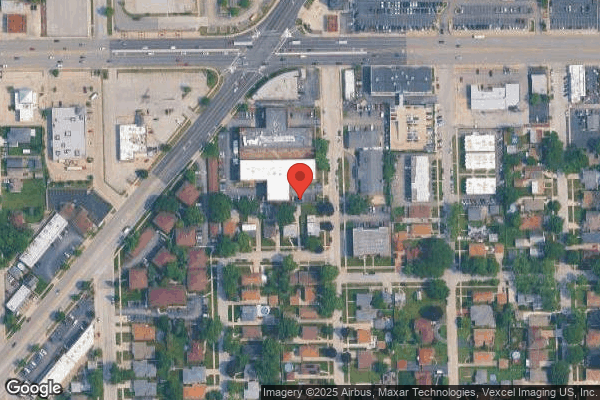
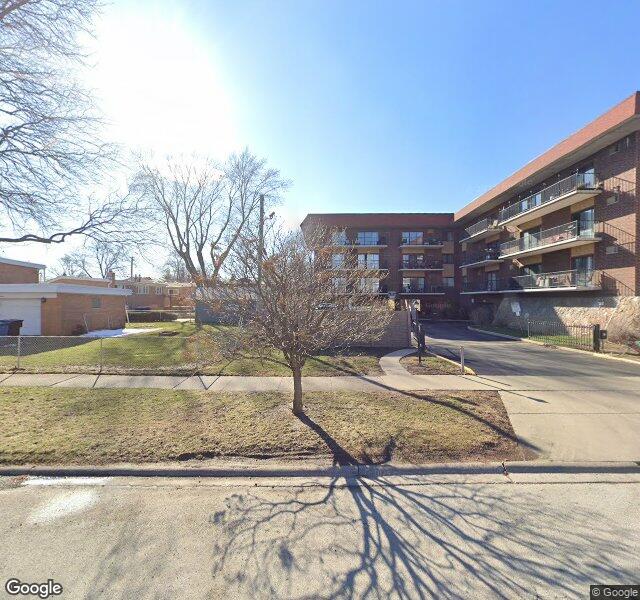
9525 SOUTH MAYFIELD, OAK LAWN, IL 60453 (708) 636-7000
For profit - Limited Liability company 143 Beds INFINITY HEALTHCARE CONSULTING Data: November 2025 2 Immediate Jeopardy citations
Trust Grade
0/100
#592 of 665 in IL
Last Inspection: December 2024

Within standard 12-15 month inspection cycle. Federal law requires annual inspections.

Overview

Oak Lawn Respiratory & Rehab has received a Trust Grade of F, indicating significant concerns and a very poor overall quality of care. Ranking #592 out of 665 facilities in Illinois places it in the bottom half statewide, and #182 out of 201 in Cook County suggests that only a handful of local options may be better. Unfortunately, the facility's performance is worsening, with issues increasing from 8 in 2024 to 14 in 2025. Staffing is a major concern, with a troubling 75% turnover rate, significantly higher than the Illinois average, indicating instability. In terms of RN coverage, it is average, which may not be sufficient to catch critical issues. Families should be particularly alarmed by recent incidents, including a failure to provide a safe environment where room temperatures exceeded 80 degrees, risking heat-related illnesses for residents. Additionally, there was a serious incident where a resident was physically abused by staff, leading to severe injuries and a delayed abuse investigation. While there are efforts to improve care, the repeated issues and high fines totaling $343,080, higher than 91% of Illinois facilities, raise serious red flags about the quality of care at this nursing home.

Trust Score
F
0/100
In Illinois
#592/665
Bottom 11%
Safety Record
High Risk
Review needed
Inspections
Getting Worse
8 → 14 violations
Staff Stability
⚠ Watch
75% turnover. Very high, 27 points above average. Constant new faces learning your loved one's needs.
Penalties
○ Average
$343,080 in fines. Higher than 67% of Illinois facilities. Some compliance issues.
Skilled Nurses
✓ Good
Each resident gets 47 minutes of Registered Nurse (RN) attention daily — more than average for Illinois. RNs are trained to catch health problems early.
Violations
⚠ Watch
71 deficiencies on record. Higher than average. Multiple issues found across inspections.
★☆☆☆☆
1.0
Overall Rating
★☆☆☆☆
1.0
Staff Levels
★★☆☆☆
2.0
Care Quality
★☆☆☆☆
1.0
Inspection Score
Stable
2024: 8 issues
2025: 14 issues

The Good

  • Full Sprinkler Coverage · Fire safety systems throughout facility
  • No fines on record

Facility shows strength in fire safety.

The Bad

1-Star Overall Rating

Below Illinois average (2.5)

Significant quality concerns identified by CMS

Staff Turnover: 75%

29pts above Illinois avg (46%)

Frequent staff changes - ask about care continuity

Federal Fines: $343,080

Well above median ($33,413)

Significant penalties indicating serious issues

Chain: INFINITY HEALTHCARE CONSULTING

Part of a multi-facility chain

Ask about local staffing decisions and management

Staff turnover is very high (75%)

27 points above Illinois average of 48%

The Ugly 71 deficiencies on record

2 life-threatening 8 actual harm
Jul 2025 1 deficiency
CONCERN (D) 📢 Someone Reported This

A family member, employee, or ombudsman was alarmed enough to file a formal complaint

Potential for Harm - no one hurt, but risky conditions existed

Accident Prevention (Tag F0689)

Could have caused harm · This affected 1 resident

**NOTE- TERMS IN BRACKETS HAVE BEEN EDITED TO PROTECT CONFIDENTIALITY** Based on interview and record review, the facility failed to follow their elopement policy by not allowing a resident to leave t...

Read full inspector narrative →
**NOTE- TERMS IN BRACKETS HAVE BEEN EDITED TO PROTECT CONFIDENTIALITY** Based on interview and record review, the facility failed to follow their elopement policy by not allowing a resident to leave the facility unauthorized without staff knowledge. This affected one of three residents R1 reviewed for leaving the facility unauthorized. This failure resulted in R1 being found about 450 ft from the facility walking down the street within minutes after leaving. Findings Include: R1's hospital referral package dated 6/16/25 documents: Per emergency department patient (R1) with tendency to roam the street. Psychiatric: Cognition and Memory: Cognition is impaired. Memory is impaired. Comment: Highly impaired insight plus judgement. R1 was admitted on [DATE] with the diagnosis of Dementia with other behavioral disturbance. Minimal data set dated [DATE] documents a score of twelve which indicates moderate cognitive impairment. Nursing note dated 6/20/25 documents: Resident (R1) is alert, forgetful and oriented to self and situation. Elopement Risk Review dated 6/20/25 documents: Ambulation: Confined to chair/bed (non-mobile without assistance) no; Predisposing diseases/condition: Does resident have a diagnosis of Dementia/ Alzheimer's or severe mental illness or period of confusion: yes; Cognitive process: does resident pace or wander: yes; History of elopement episodes for the past three (3) months: yes; Does the resident readily accept nursing home placement: no Elopement risk: score twenty-one(21); Category: High Risk for Elopement. R1's care plan initiated 6/20/25 documents: Resident (R1) demonstrates movement behavior that may be interpreted as wandering, pacing or roaming related to the diagnosis of Dementia and problems understanding the immediate environment. Attempting to leave facility without a responsible escort (elopement). Pacing, roaming or wandering in and out of peers' rooms. Engaging in theme behavior, believes he/she is in another time and place with specific responsibilities (must deliver mail due to being a retired mail carrier), the resident is a new admission and not familiar with his/her environment. Nursing note dated 6/21/25 documents: 72 hour charting: Resident (R1) up and about. R1 is alert and orient 1- 2 with confusion, at baseline. R1 indicated to exhibit wandering behavior and is being monitored closely by staff for safety. Community Survival Skills assessment dated [DATE] documents: Due to R1 diagnosis of Dementia, R1 does not appear to be capable of unsupervised outside pass privileges at this time.Nursing note dated 7/4/25 created 7/14/25 documents: (V8 nurse) Writer was informed by staff that the (R1) attempted to exit the facility with accompanying (R2) peer's family members. All families entering the building have been educated not to allow residents to join them in the elevator, given that this is a secure unit with elopement precautions in place. R1 was observed on the first floor; the (V9) receptionist promptly notified nursing, and R1 was redirected back to her room. R1 was reoriented to baseline, with education provided that R1 resides in the facility and may leave only with approved pass authorization from her POA. R1 is known to wander and is considered an elopement risk.Physician Progress note dated 7/4/25 created 7/16/25 documents: V11 (nurse practitioner) Writer informed by V2 DON via message that patient (R1) was noted on the first floor after being on the elevator with another patient family that was leaving the unit. R1 was redirected and assisted back to the second floor. Spoke with nurse on duty and discussed elopement precautions and frequent rounding to be done to ensure R1 does not exit unit unless supervised by POA or staff due to being elopement risk with diagnosis of dementia, understanding voiced. Per nurse on duty the R1 did not leave the building and was easily redirected back to the unit. V11 request that families are made aware that staff should be notified of any residents attempting to leave the unit via elevator when they exit the facility. On 7/16/25 at 9:26am, V3 (complainant) said, she and V4 saw R1 on 95th street (7/4/25 @ 3pm) getting ready to cross the street. On 7/16/25 at 10:00pm, V4 (cna) said, he was off work. V4 said, he left the building around 3:15pm. V4 said, he saw R1 walking down 95th street. V4 said, he called out to R1, asked R1 what she was doing to which R1 replied taking a stroll. V4 said, he brought R1 back to the building, stop at V9's desk to inform her that R1 was found outside the building on 95th street. V4 said, he took R1 to V8 (nurse). V8 was the nurse on R1's unit. V8 did not know R1 left the building. V4's witness statement dated 7/17/25 documents: On July 4th, V4 saw R1 on 95th and walked R1 down the street back into the building. Let the front desk know and then took R1 back upstairs. On 7/16/25 at 10:58am, V8 (nurse) said, R1 attempted to exit the facility with R2's family. R1 went down the elevator. V4 (cna) brought R1 back to the unit. V8's statement documents: On 7/4/25 at 2:40pm, V8 was making the schedule for 3-11 shift when V9 called and asked if R1 was on the unit. V8 completed a head count with peer nurse. R1 was coming off the elevator with cna. On 7/16/25 at 11:02am, V5 (cna) said, she was sitting in the hallway at the end of R1's unit, because R1 got onto elevator, that requires a code, left the building and made it to 95th street. V4 brought R1 back into the building.On 7/16/25 at 11:19am, V9 (receptionist) said, R2's visitors V12-V13 (R2's visitors) signed out on the visitation log and proceeded to exit. V9 said, she saw someone walk pass really fast behind V12/V13. V9 said, she stood up, checked the computer because she was not sure if R2 was leaving with her family. V9 said, she recalled that only two (2) people came to visit R2 and three (3) people were leaving. V9 said, about one minute later, V4 (cna) brought R1 back into the facility. V9 said, R1 was a new admit. V9 said, she had never seen R1 before. V9 said, R1 left the building via the front lobby exit. V9 said, staff was standing in front of her desk but did not intervene. V9 said, V4 took R1 back to her unit on the second floor. V9 said, R1 exited after R2's family around 3:11pm on 7/4/25.V9's witness statement dated 7/16/25 documents: V9 observed a person walking past her behind two family members whom V9 did not recognize while at the front desk. V9 said, she checked the electronic computer system what R2 looked like. Two (V5-V6 certified nursing assistants/cna) knew who R1 was. V4 immediately walked R1 back in the building. As V5/V6 were standing at the front desk and said, that's R1 On 7/16/25 at 11:41am, V2 (don) said, she did not work on the 7/4/25. V2 said, she got some missed calls. V2 said, she got a call from V9 called to report R1 left out the building with R2's family.V2 said, she was informed that V4 brought R1 back in. V2 said, she was not aware R1 was on 95th street. Staff/certified nursing assistant (CAN) on R1's unit had to put in code for R1 to exit via the elevator. R1 was had yellow pass status which meant she need someone (family, staff or power of health care) to take R1 out of the building. On 7/16/25 at 12:51pm, V11 (nurse practitioner) said, she was not aware R1 left the building. V11 said, she was notified via message that, R1 was on the first floor. On 7/16/25 at 1:01pm, V1 (administrator) said, a true elopement is when a resident is found outside facility and staff doesn't know that they are missing, or when someone driving past and see one of the resident that no one knows is out of the building. V1 said, she has not have any true elopements. V1 said, residents that are high risk for elopement are residents who are exit seeking, mobile, with a diagnosis of Dementia, cognitively impairment residents, newly admitted or newly orientated to building. V1 said, R1 was not a true elopement. R1 was witnessed by staff leaving and redirected. V1 said, V9 reported seeing V12/V13 leaving but did not know R1 who left with R2 family. V1 said, the facility does not have a wander guard system. R1's unit has an elevator has a key pad to which the code must be entered to exit R1's floor. Nothing was written down, no new systems was implemented and she did not view cameras for R1 incident. V1 said, the cameras are for quality assurance purpose only. On 7/16/25 at 4:02pm, V12 (R2's visitor) said, he was with V13 when a female resident got on the elevator with him after staff entered the code. The code was enter three different time because the elevator did not come the first time. V12 was unable to identify which staff member entered the code. V12 said, a small, dark skin, thick staff member entered the code once and then another staff member entered the code a second/third time. V12 said, he was unable to determine if the staff member was a nurse or certified nursing assistant but they all had on scrubs. V12 said, he did not received any education from the facility about letting residents on the elevator. V12 said, he thought it was odd that a resident would be allowed on the elevator since staff had to enter a code for the elevator in order exit the second floor. V12 said, the sign out time on the visitation log was correct as far as he could remember. Visitation log dated 7/4/25 documents: V12 signed out at 3:11pm. On 6/17/25 at 9:17am, V4 (cna) said, R1 was found in the corner of 95th in front of the dental office. R1 had turned the corner off [NAME] and was walking east bound on 95th street. Google map documents: The dentist office was 450 feet away from the facility, mostly flat, with a two (2) minute estimate time of arrive (eta) by walking. R1 was returned to the facility less than ten minutes of leaving the facility by V4On 7/18/25 at 7:53am, V14 (R1's power of authority) said, R1 has a history of wandering. R1 would leave the house, go to located business and always find her way home. R1 was probably trying to find her way home when she left the building. V14 said, she wouldn't want R1 roaming the streets because she could have been hit by a car. V14 said, R1 said would have been extremely confused, fearful, agitated and scared wandering the streets in a neighborhood that was not familiar to R1. V14 said, she was scared for R1 during the interview to hear R1 was out of the building and found on the corner away from the facility. V14 said, R1 is mixed raced. V14 said, it is very concerning that R1 was out of the building with no identification or supervision. V14 said, if R1 was seen by united state immigration and customs enforcement R1 could have been detained. V14 said, she received a call from the facility at 9:30pm, informing her that R1 wanted to go home. V14 said, she was surprised by the call. The facility should have been able to address R1's needs. V14 said, she does not recall the nurse or the date she called. V14 said, she spoke to R1, along with other family member, R1 eventually forgot she wanted to leave prior to the end of the phone call. V14 said, she was not aware, R1 was out of the building. Elopement Policy no date document: It is the policy of this facility that all resident are provided adequate supervision to meet each resident's nursing and personal care needs. Resident at risk for elopement will be provide at least one of the following safety precautions, staff supervision of the facility exit either directly or by video camera. Procedure for the response to missing resident: The administrator/designee shall contact the resident's representative.
Jun 2025 9 deficiencies
CONCERN (D) 📢 Someone Reported This

A family member, employee, or ombudsman was alarmed enough to file a formal complaint

Potential for Harm - no one hurt, but risky conditions existed

Resident Rights (Tag F0550)

Could have caused harm · This affected 1 resident

Based on observation, interview and record review the facility failed to allow a resident access to a bedroom shower room for 1 of 1 dependent resident (R10) reviewed for showering assistance. Findin...

Read full inspector narrative →
Based on observation, interview and record review the facility failed to allow a resident access to a bedroom shower room for 1 of 1 dependent resident (R10) reviewed for showering assistance. Findings include: On 6/12/2025 at 11:15am R10 was observed in bed, R10 said the nursing staff will not assist me with a shower because, I will not go to another floor, I have a working shower in my bedroom the door to the shower room is broken and it has not opened in over a month and that's how long I have not showered, I spoke to the director of nursing and she told me also to use the upstairs shower room. On 6/12/2025 at 11:20am V2 (Director of Nursing-DON) said R10 refuses to shower on the upstairs unit her shower room door will not open, and I don't know how long it's been broken or if the maintenance staff is aware, she's been offered other shower rooms. On 6/13/2025 at 9:45am V10(Laundry Supervisor) said I am not in maintenance, I do not have access as to how long the door has not opened, I did replace the doorknob and it opens now, the entrance to the shower room is open in the joining room my staff cleans it every day. On 6/13/2025 at 9:50am this writer and V10 observed the entrance to R10 shower room door open and the joining room door open, shower room clean and functioning. An admission record dated 6/13/2025 indicates that R10 has a diagnosis of Quadriplegia, paraplegia, obesity, muscle weakness. A care-plan dated 9/27/2024 that indicates R10 require assistance with all activity of daily living with an intervention of bathing and dressing require total assistance and 1 staff for bathing and dressing (Totally Dependent on staff). A skin monitoring comprehensive CNA shower review dated 4/16/2025 and 5/21/2025 no other shower sheets. Facility Policy: Resident Rights As a resident of this facility, you have the right to a dignified existence and to communicate with individuals and representatives of choice. The facility will protect and promote your rights as designated below. Exercise of Rights. . You have the right to freedom to exercise your rights of this facility and as a citizen or resident of the United States without fear of discrimination, restraint, interference, coercion or reprisal. (Free Choice). You must be informed of and may participate in planning your care and treatment and any changes in your care and treatment.
CONCERN (D) 📢 Someone Reported This

A family member, employee, or ombudsman was alarmed enough to file a formal complaint

Potential for Harm - no one hurt, but risky conditions existed

Deficiency F0554 (Tag F0554)

Could have caused harm · This affected 1 resident

**NOTE- TERMS IN BRACKETS HAVE BEEN EDITED TO PROTECT CONFIDENTIALITY** Based on observation, interview, and record review the facility failed to assess resident for safe medication self-administratio...

Read full inspector narrative →
**NOTE- TERMS IN BRACKETS HAVE BEEN EDITED TO PROTECT CONFIDENTIALITY** Based on observation, interview, and record review the facility failed to assess resident for safe medication self-administration. This deficiency affects one (R5) of three residents in the sample of three reviewed for Medication safety. Findings include: On 6/13/25 at 10:29AM, R5 observed in room, inhaler laying on top of bedside table, no name or open date available. R5 said she is allowed to have it at bedside. On 6/13/25 at 10:35AM, V3 (Licensed Practical Nurse) said that residents are not supposed to have medications at bedside, but some can, V3 said she will check for order. On 6/13/25 at 11:46AM, V9 said that the self-medication administration assessment for R5 was not completed on 2/13/25, the assessment lock date was on 6/13/25, indicating it was not completed until 6/13/25. V9 said that the assessment should have been locked on 2/13/25. On 6/17/25 at 11:07AM, V3 said all medication should be kept inside package so it can have the residents name, medication name and instructions, and date it was opened and stored in package for infection control purposes. On 6/17/25 at 11:31AM, V2 (Director of Nursing) said that the medication kept at bedside should be stored it the packaging sent from pharmacy, it will include resident name, medication instructions and date medication was opened. R5 is admitted on [DATE] with diagnosis listed in part but not limited to multiple sclerosis, chronic obstructive pulmonary disease, epilepsy unspecified, muscle weakness, diabetes mellitus due to underlying condition with hyperglycemia, other asthma. Physician order summary report active order 5/29/25 Albuterol sulfate HFA aerosol solution 108(90) base mcg/act 2 puff inhale orally every 4 hours as needed for shortness of breath. Active order on 2/13/25- May have inhaler at bedside. Self-administration of Medications assessment dated [DATE] not completed. Care plan initiated on 6/13/25 for R5 expresses the desire to self-administer her medications and has capability to administer them safely. R5 will use rescue Albuterol inhaler per orders. 5.3: Self-Administration of Medication by Residents Policy: Self-administration medications will be encouraged if it is desired by the resident, safe for the resident and other residents of the facility, ordered by the attending physician, and approved by the interdisciplinary team. Procedure: 4. If the resident demonstrates the ability to safely self-administer medications, a further assessment of the safety of bedside medication storage is conducted. c. The medications provided to the resident for bedside storage are kept in the containers dispensed by UnitedRx. 5. A physician order is obtained to self-administer medications if the above storage and skill assessment has been approved for the resident by the interdisciplinary team. The order is recorded on the MAR.
CONCERN (D) 📢 Someone Reported This

A family member, employee, or ombudsman was alarmed enough to file a formal complaint

Potential for Harm - no one hurt, but risky conditions existed

Deficiency F0557 (Tag F0557)

Could have caused harm · This affected 1 resident

Based on observation, interview and record review the facility failed to provide a resident with the proper footwear while up in the dining area and the hallway for 2 of 2 resident's R7, and R8 review...

Read full inspector narrative →
Based on observation, interview and record review the facility failed to provide a resident with the proper footwear while up in the dining area and the hallway for 2 of 2 resident's R7, and R8 reviewed for dignity. Findings include: On 6/12/2025 at 2:25pm this writer observed R7 exiting the dining area with out socks or shoes on her feet and R8 sitting at the dining room table without shoes on his feet. On 6/12/2025 at 2:30pm V12 (Certified Nursing Assistant-CNA) observed with this writer R7 with out socks or shoes on her feet, V12 said I'm working over form 11-7 shift I'm assisting her with socks and shoes now, she's been in the dining room all morning. On 6/12/2025 at 3:00pm V2 (Director of Nursing-DON) said I expect R7 to have on shoes and socks daily because she walks the hallway. An admission record dated 6/13/2025 indicates that R7 has a diagnosis of dementia, need for assistance with personal care. A care plan dated 12/10/2024 that has a self-care deficit, and I require assistance with activity of daily living to maintain my highest level of functioning an intervention of aid with activity of daily living as required per my dependence needs, a risk for falls and to ensure resident has proper footwear and nonskid socks prior to activity of daily living care dated 12/26/2024. On 6/12/2025 at 2:35pm V11(Certified Nursing Assistant-CNA) observed with writer R8 in the dining room without shoes on his feet. V12 said when I started my shift this morning I couldn't find his shoes, V11 and writer went into R8 room and V11 opened the closet door and located R8 shoes in a plastic bag on the shelf and said I guess his daughter put them up in the closet. On 6/12/2025 at 3:00pm V2 said I expect all residents to have socks and shoes on their feet. V2 and writer observed R8 shoes in the closet on the top shelf in a bag. An admission record indicates that R8 has a diagnosis of Alzheimer disease, dementia, and need assistance with personal care. A care plan dated 2/10/2025 that indicates R8 has self-care deficit and require assistance with activity of daily living to maintain highest level of functioning, an intervention to aid with all activity of daily living as required per my dependence needs, ensure I am wearing appropriate footwear that promote exercise, physical and good traction when ambulating or mobilizing in my wheelchair and during transfers. Facility Policy: Resident Rights As a resident of this facility, you have the right to a dignified existence and to communicate with individuals and representatives of choice. The facility will protect and promote your rights as designated below. Dignity. The facility will treat you with dignity and respect in full recognition of your individuality.
CONCERN (D) 📢 Someone Reported This

A family member, employee, or ombudsman was alarmed enough to file a formal complaint

Potential for Harm - no one hurt, but risky conditions existed

Deficiency F0657 (Tag F0657)

Could have caused harm · This affected 1 resident

**NOTE- TERMS IN BRACKETS HAVE BEEN EDITED TO PROTECT CONFIDENTIALITY** Based on observation, interview, and record review the facility failed to update care plan of resident with Self-Medication Admi...

Read full inspector narrative →
**NOTE- TERMS IN BRACKETS HAVE BEEN EDITED TO PROTECT CONFIDENTIALITY** Based on observation, interview, and record review the facility failed to update care plan of resident with Self-Medication Administration. This deficiency affects one (R5) resident in the sample of three reviewed for Care plan revision. Findings include: On 6/13/25 at 11:26AM, V9 (Regional Nurse Consultant) said that there should be a care plan initiated when the order for self-medication administration was received, no care plan was initiated on 2/13/25. V9 said the care plan was initiated on 6/13/25. R5 is admitted on [DATE] with diagnosis listed in part but not limited to multiple sclerosis, chronic obstructive pulmonary disease, epilepsy unspecified, muscle weakness, diabetes mellitus due to underlying condition with hyperglycemia, other asthma. Physician order summary report active order 5/29/25 Albuterol sulfate HFA aerosol solution 108(90) base mcg/act 2 puff inhale orally every 4hours as needed for shortness of breath. Active order on 2/13/25- May have inhaler at bedside. Self-administration of Medications assessment dated [DATE] not completed. Care plan initiated on 6/13/25 for R5 expresses the desire to self-administer her medications and has capability to administer them safely. R5 will use rescue Albuterol inhaler per orders. 5.3: Self-Administration of Medication by Residents Policy: Self-administration medications will be encouraged if it is desired by the resident, safe for the resident and other residents of the facility, ordered by the attending physician, and approved by the interdisciplinary team. Procedure: 4. If the resident demonstrates the ability to safely self-administer medications, a further assessment of the safety of bedside medication storage is conducted. c. The medications provided to the resident for bedside storage are kept in the containers dispensed by UnitedRx. 5. A physician order is obtained to self-administer medications if the above storage and skill assessment has been approved for the resident by the interdisciplinary team. The order is recorded on the MAR. 11. Update the residents care plan quarterly or as indicated by the change in medication scheduling, dose or change in residents's condition with a reassessment of the resident's knowledge and ability to self-administer medication. IDT Care Planning Policy and Procedure (Person- Center Plan of Care) revised 6/2020 Each resident will have a comprehensive assessment completed that will assist in the development of an individualized (Person- Centered) plan of care that will include goals and interventions aimed to improve or maintain the residents highest level of function, prevent decline, decrease risk of complications of medical conditions, medications and diagnosis, decrease risk of injury or to promote comfort at end of life. 1. Each resident will have a comprehensive assessment completed by the interdisciplinary team upon admission, quarterly and with significant changes and an individualized care plan will be developed and updated as needed with quarterly assessments, re-admissions, and changes in condition. 8. The care plan schedule will be updated weekly and communicated to team members on the weekly schedule.
CONCERN (D) 📢 Someone Reported This

A family member, employee, or ombudsman was alarmed enough to file a formal complaint

Potential for Harm - no one hurt, but risky conditions existed

Tube Feeding (Tag F0693)

Could have caused harm · This affected 1 resident

Based on observation, interview and record review the facility failed to ensure that a dependent resident was not lying flat in bed while an enteral gastrointestinal tract tube feeding was infusing fo...

Read full inspector narrative →
Based on observation, interview and record review the facility failed to ensure that a dependent resident was not lying flat in bed while an enteral gastrointestinal tract tube feeding was infusing for 1 of 3 residents (R9) reviewed for tube feeding. Findings include: On 6/12/2025 at 11:00am R9 was observed by this writer with head of bed elevated at 20-degree angle and resident laying low in the bed feet touching the foot board. On 6/12/2025 at 11:05am V11 (Certified Nursing Assistant-CNA) observed with writer, R9 laying low in bed, V11 said his hospice CNA left him this way, his head of bed should be at a 40-degree angle to prevent him from choking and he should be pulled up higher in bed, when his hospice CNA is not here for him I should be monitoring R9 and proceeded to pull R9 up in the bed and raise the head of the bed to a 40-degree angle. V2(Director of Nursing-DON) said all residents with feeding tubes head of bed should be at a 30-40-degree angle and pulled up in bed to prevent aspiration. An admission record dated 6/13/2025 indicates that R9 has diagnosis of unspecified protein calorie malnutrition and gastrostomy status and chronic kidney disease and muscle wasting. An order summary report dated 6/13/2025 indicates R9 head of bed should be always elevated at a 45-degree angle except during activity of daily living care every shift. A care-plan dated 1/20/2025 that indicates R9 need assistance with all activity of daily living as required per dependent needs, bed mobility. Facility Policy: Guidelines for Enteral Feeding: Adult Purpose: To provide guidance to qualified licensed clinical staff in hanging and maintaining and managing and administering tube/feeding and enteral nutrition-to residents to include medication administration. Procedure: 6. The nurses will elevate the head of the bed 30-45 degrees while the tube feeding is infusing and will maintain this elevation for 30-45 minutes after the feeding is completed.
CONCERN (D) 📢 Someone Reported This

A family member, employee, or ombudsman was alarmed enough to file a formal complaint

Potential for Harm - no one hurt, but risky conditions existed

Respiratory Care (Tag F0695)

Could have caused harm · This affected 1 resident

**NOTE- TERMS IN BRACKETS HAVE BEEN EDITED TO PROTECT CONFIDENTIALITY** Based on observation, interview, and record review the facility failed to ensure oxygen tubing is stored, changed and dated week...

Read full inspector narrative →
**NOTE- TERMS IN BRACKETS HAVE BEEN EDITED TO PROTECT CONFIDENTIALITY** Based on observation, interview, and record review the facility failed to ensure oxygen tubing is stored, changed and dated weekly and as needed. This deficiency affects one (R2) of three residents reviewed for Respiratory Care. Findings include: On 6/12/25 at 2:25PM, R2 observed in room with oxygen tubing on top of bedside drawer uncovered. R2 said that the staff places it there when he does not need it. On 6/12/25 at 2:30PM, V2 (Director of Nursing) verified with surveyor oxygen tubing on top of bedside drawer uncovered and unlabeled, said that oxygen tubing should be placed in a plastic bag when not in use and stored in the drawer, the tubing is changed weekly or as needed. R2 is admitted on [DATE] with diagnosis in part but not limited to chronic obstructive pulmonary disease (COPD), essential hypertension, tobacco use, alcohol abuse, anxiety disorder, human immunodeficiency virus, unspecified abnormalities of breathing. Physician order summary report active order 6/6/25 Oxygen at 2-3L/min per nasal cannula every shift for COPD/asthma exacerbation. Oxygen Administration Policy Policy: It is the policy of this facility to provide oxygen to maintain levels of saturation to residents as needed and as ordered by the attending physician. Orders are entered into the clinical under Medication Administration Record. Procedures: 4. Tubing, humidifier bottles and filters will be changed, cleaned and maintained no less that weekly and PRN. Each will be labeled with date, time and initialed by staff completing this service to equipment.
CONCERN (D) 📢 Someone Reported This

A family member, employee, or ombudsman was alarmed enough to file a formal complaint

Potential for Harm - no one hurt, but risky conditions existed

Pharmacy Services (Tag F0755)

Could have caused harm · This affected 1 resident

Based on observation, interview and record review, the facility failed to account for the Shift change accountability record for controlled substances. This deficiency affects one of four medication c...

Read full inspector narrative →
Based on observation, interview and record review, the facility failed to account for the Shift change accountability record for controlled substances. This deficiency affects one of four medication carts (1st floor medication cart). Findings include: On 6/12/25 at 3:15PM, V5(Licensed Practical Nurse) said that controlled substance check is done daily on each shift with incoming nurse to verify narcotic count, V5 observed on controlled substance sing in sheet that dates were missing initials, said that the nurse did not sign. On 6/12/25 at 3:15PM, V6 (Licensed Practical Nurse) said that controlled substance is counted each day on each shift. V6 verified that there were dates with missing initials and said that if the initials are not there it does not mean the count was not done, V6 said she was not here on those dates. On 6/12/25 at 4:05PM, V2 (Director of Nursing) made aware of above findings with V5 and V6 of empty spaces not initialed in the days for 6/3/25, 6/10/25 and 6/11/25 and when asked to provide a copy of sheet the copy was given with all dates filled with initials. V2 said her expectations are that the narcotic sign in sheet is signed by both nurses one for incoming nurse and the other for nurse who is leaving, the narcotic count is done every day three times a day for each shift, said she was unaware of missing initials. On 6/12/25 at 4:15PM, V1(Administrator) said that her expectations for narcotic count is to be done every day /every shift. Is unaware that some days are not signed off on the narcotic daily sign in sheet. V1 made aware of empty spaces in the days for 6/3/25, 6/10/25 and 6/11/25 and was asked to provide a copy of sheet the copy was given with all dates filled. V1 said she understood the concern. 3.3: Controlled Substances Policy: Medications classified by the FDA as controlled substances have high abuse potential and may be subject to special handling, and record keeping. Procedure: 4. While a controlled substance is in use the nursing staff will maintain the following medication records. b. All schedule II-controlled substances (and other schedules if facility policy so dictates) will be counted each shift or whenever there is an exchange of keys between off-going and on-coming licensed nurses. The two nurses will: 2. Both nurses will count the number of packages of controlled substances that are being reconciled during the shift/shift count and document on Shift Controlled Substance Count Sheet. 4. Both nurses will sign the Shift/Shift Controlled Substance Count Sheet acknowledging that the actual count of controlled substances and count sheet matches the quantity documented.
CONCERN (D) 📢 Someone Reported This

A family member, employee, or ombudsman was alarmed enough to file a formal complaint

Potential for Harm - no one hurt, but risky conditions existed

Deficiency F0761 (Tag F0761)

Could have caused harm · This affected 1 resident

**NOTE- TERMS IN BRACKETS HAVE BEEN EDITED TO PROTECT CONFIDENTIALITY** Based on observation, interview, and record review the facility failed to ensure the medications are stored safely, securely, an...

Read full inspector narrative →
**NOTE- TERMS IN BRACKETS HAVE BEEN EDITED TO PROTECT CONFIDENTIALITY** Based on observation, interview, and record review the facility failed to ensure the medications are stored safely, securely, and properly following manufacturer/supplier recommendations. This deficiency affects one resident (R5) in a sample of three residents reviewed for Self-Administration of Medications by Residents. Findings include: On 6/13/25 at 10:29AM, R5 observed in room, inhaler laying on top of bedside table, no name or open date available. R5 said she is allowed to have it at bedside. On 6/13/25 at 10:35AM, V3 (Licensed Practical Nurse) said that residents are not supposed to have medications at bedside, but some can, V3 said she will check for order. On 6/17/25 at 11:07AM, V3 said all medication should be kept inside package so it can have the residents name, medication name and instructions, and date it was opened and stored in package for infection control purposes. On 6/17/25 at 11:31AM, V2 (Director of Nursing) said that the medication kept at bedside should be stored it the packaging sent from pharmacy, it will include resident name, medication instructions and date medication was opened. R5 is admitted on [DATE] with diagnosis listed in part but not limited to multiple sclerosis, chronic obstructive pulmonary disease, epilepsy unspecified, muscle weakness, diabetes mellitus due to underlying condition with hyperglycemia, other asthma. Physician order summary report active order 5/29/25 Albuterol sulfate HFA aerosol solution 108(90) base mcg/act 2 puff inhale orally every 4hours as needed for shortness of breath. Active order on 2/13/25- May have inhaler at bedside. Self-administration of Medications assessment dated [DATE] not completed. Care plan initiated on 6/13/25 for R5 expresses the desire to self-administer her medications and has capability to administer them safely. R5 will use rescue Albuterol inhaler per orders. 5.3: Self-Administration of Medication by Residents Policy Policy: Self-administration medications will be encouraged if it is desired by the resident, safe for the resident and other residents of the facility, ordered by the attending physician, and approved by the interdisciplinary team. Procedure: 4. If the resident demonstrates the ability to safely self-administer medications, a further assessment of the safety of bedside medication storage is conducted. c. The medications provided to the resident for bedside storage are kept in the containers dispensed by UnitedRx. 5. A physician order is obtained to self-administer medications if the above storage and skill assessment has been approved for the resident by the interdisciplinary team. The order is recorded on the MAR.
CONCERN (E) 📢 Someone Reported This

A family member, employee, or ombudsman was alarmed enough to file a formal complaint

Potential for Harm - no one hurt, but risky conditions existed

ADL Care (Tag F0677)

Could have caused harm · This affected multiple residents

Based on observation, interview and record review the facility failed to ensure activities of daily living (ADL) for dependent resident's, which included showers and grooming of hair and fingernails, ...

Read full inspector narrative →
Based on observation, interview and record review the facility failed to ensure activities of daily living (ADL) for dependent resident's, which included showers and grooming of hair and fingernails, was provided for 4 of 4 resident's (R7, R8, R9 and R10) reviewed for activity of daily living. Findings include: On 6/12/2025 at 2:20pm R7 was observed walking out the dining area with hair not combed and heavy soiled feet. On 6/12/2025 at 2:25pm V12 said showers are twice weekly I'm from the over night shift and I did not shower anyone, I'm assisting R7 now with her hair and putting on some socks I don't know when her last shower was completed her feet are dirty because she takes off her socks and walk around barefoot. On 6/12/2025 at 3:00pm V2(Director of Nursing-DON) observed with this writer R7 hair not combed, and heavy soiled feet, V2 said I don't think she had a shower today her feet are not cleaned, and her hair is not combed, I expect all resident's to be groomed and showered twice weekly and as needed. An admission record dated 6/13/2025 indicates that R7 has a diagnosis of dementia, need for assistance with personal care. A care plan dated 12/10/2024 that has a self-care deficit, and I require assistance with activity of daily living to maintain my highest level of functioning an intervention of aid with activity of daily living as required per my dependence needs, bathing and dressing I usually require extensive assistance and 1 person support. On 6/12/2025 at 2:35pm this writer observed with V11, R8 in the dining area with a full beard. On 6/12/2025 at 2:38pm V11 said I thought R8 daughter shave him she was just here today. On 6/12/2025 at 3:00pm V2 said I expect all resident's to be shaved and groomed daily and as needed he should not have a full beard. An admission record indicates that R8 has a diagnosis of Alzheimer disease, dementia, and need assistance with personal care. A care plan dated 2/10/2025 that indicates R8 has self-care deficit and require assistance with activity of daily living to maintain highest level of functioning, an intervention to aid with all activity of daily living as required per my dependence needs grooming. On 6/12/2025 at 2:38pm this writer observed R9 in bed with a full beard and long soiled fingernails. On 6/12/2025 at 2:40pm this writer observed with V11(Certified Nursing Assistant-CNA) R9 beard and long fingernails. On 6/12/2025 at 2:42pm V11 said R9 has a hospice aid that comes in and shaves and cut his fingernails, I thought she cleaned him up, I'll start cleaning him up now. On 6/12/2025 at 3:00pm V2 said R9 does have a hospice aid but the CNA assigned daily to him should ensure that what ever the hospice aid did not do that she does. An admission record indicates R9 has a diagnosis of orthopedic care after surgical amputation, gastrostomy placement, chronic kidney disease. A care plan for self-care deficit that require assistance with Activity of daily living intervention to aid with all activity of daily living as required per my dependence needs, personal hygiene. On 6/12/2025 at 2:15pm this writer observed R10 in bed with long curved fingernails, R 10 said I don't want my fingernails cut off I want them cut down and I would like a shower. On 6/12/2025 at 3:05pm V2 observed with writer R10 long curved fingernails and R10 complaint of not having a shower. On 6/12/2025 at 3:07pm V2 said that R10 will not allow the staff to cut off her fingernails she never said she wanted them cut down and R10 refuses showers. An admission record dated 6/13/2025 indicates that R10 has a diagnosis of quadriplegia, obesity. A care plan dated 9/27/2024 for self-care deficit and require assistance with activity of daily living for bathing dressing and personal hygiene. Facility Policy: Activities of Daily Living (Routine Care) Policy: Residents are given routine daily care and HS care by a C.N.A. or a nurse to promote hygiene, provide comfort and provide homelike environment. ADL care is provided throughout the day, evening and night as care planned and/or as needed. ADL care is coordinated between the resident and the care givers with emphasis on resident preferences as much as possible. . Assisting the resident in personal care such as bathing, showering, dressing, eating, hair care, oral care, nail care, appropriate skin care (as indicated and as per care plan) as well as encouraging participation in physical social and recreational activities.
Feb 2025 1 deficiency
CONCERN (D) 📢 Someone Reported This

A family member, employee, or ombudsman was alarmed enough to file a formal complaint

Potential for Harm - no one hurt, but risky conditions existed

Deficiency F0679 (Tag F0679)

Could have caused harm · This affected 1 resident

Based on interview and record review the facility failed to follow their activity calendar and implement and engage the residents in social activities of tabletop games on 2/25/25 for 4 of 6 (R6, R7, ...

Read full inspector narrative →
Based on interview and record review the facility failed to follow their activity calendar and implement and engage the residents in social activities of tabletop games on 2/25/25 for 4 of 6 (R6, R7, R8, R9) residents reviewed for social activities. Findings include: On 2/25/25 at 11:25am upon entering the dining room on the second floor. V6 approached with surveyor. V6 introduced herself as the Activity's Director. V6 entered with the surveyor. V6 said she was coming to the second floor to see what activities was taking place. V6 said there were no activities going on. V6 said she does the activities with the residents. On 2/25/2025 at 11:25am V7 (CNA) and V8 (CNA) was observed in dining room, V7 said she was talking to a resident. V8 (CNA) said she was doing one to one monitoring with a resident. Board games were observed stacked up sitting the table. There were no staff observed engaging the residents with activities. R6 was observed in dining room with his head down on the table and not engaged by staff. R7 observed with his head down, not being engaged in social activities. R8 was observed sitting there and not engaged. R9 was observed in chair and not engaged in social activities. Facility activity calendar posted on gray board outside of the dining room, denotes 10:00am - exercise, 10:30am the perks and 11:00am tabletop games. Lunch was served after 12:00pm. On 2/25/25 at 3:00pm V2 (Administrator) said there is room for improvements in the activity department, she is working with the activity department with programs. On 2/26/25 at 2:45pm V4 (Director of Nursing) said the perk is the daily chronicles that the activity aide reads to the resident. Facility policy activity department program policy denotes in-part it is the philosophy of oak lawn respiratory and rehab ctr. to treat each resident as a unique individual with specific physical, psychological, and spiritual needs. It is the policy of oak lawn rehab ctr. To provide a competent variety of therapeutic recreation opportunities designed to meet, in accordance with the comprehensive assessment, the interest and physical, mental, and psycho-social, well being needs of each individual resident. The activity shall provide a structured, series of meaningful programming.
Jan 2025 2 deficiencies 1 Harm
SERIOUS (G) 📢 Someone Reported This

A family member, employee, or ombudsman was alarmed enough to file a formal complaint

Actual Harm - a resident was hurt due to facility failures

Free from Abuse/Neglect (Tag F0600)

A resident was harmed · This affected 1 resident

Deficiency Text Not Available

Read full inspector narrative →
Deficiency Text Not Available
CONCERN (D) 📢 Someone Reported This

A family member, employee, or ombudsman was alarmed enough to file a formal complaint

Potential for Harm - no one hurt, but risky conditions existed

ADL Care (Tag F0677)

Could have caused harm · This affected 1 resident

Based on observation, interview and record review, the facility failed to provide appropriate care for residents with incontinence by not ensuring that incontinence care was provided at least every tw...

Read full inspector narrative →
Based on observation, interview and record review, the facility failed to provide appropriate care for residents with incontinence by not ensuring that incontinence care was provided at least every two hours. This affected one of three residents (R10) reviewed for incontinence care. This failure resulted in R10 being left soiled and saturated in urine for over five hours and feeling cold. Finding Include: R10 was diagnosis with hemiplegia and hemiparesis following cerebral infraction affecting left non-dominant side, functional quadriplegia, reduce mobility and need for assistance with personal care. Minimal data set section C (cognitive pattern) dated 11/1/24 documents a score of twelve which indicates moderate cognitive impairment. Section GG (functional abilities) documents: R10 has impairments on one side to the upper and lower extremity. R10 is dependent (helper does all of the effort) for toileting hygiene. Section H (bowel and bladder) dated 11/6/24 documents: Always incontinence of urine. Care plan dated 5/3/22 documents: R10 is incontinent of bladder/bowel. This problem is related to poor cognition skills, inability to communicate need for toileting. Intervention: Administer appropriate cleansing and peri-care after each incontinent episode. On 1/28/25 at 12:38pm, R10 was observed with V6 (cna). R10 was observed in bed with a strong smell of urine. R10 said, he was cold. R10 was observed laying on a wet chuck/pad with a large dark brown irregular shape ring extended to the edges of the pad. R10's entire adult brief was saturated with dark yellow urine. V6 said, R10 was last changed at 7:30am. V6 said, R10 was a heavy wetter. Residents are supposed to be checked and changed every two hours. On 1/28/25 at 12:41pm, V23 (nurse) said, R10 was soiled and saturated with strong smelling urine, a wet pad and a brown dried urine ring on the pad. V23 said, R10's adult brief was saturated with orange-yellow urine. Incontinence Care policy undated documents: To ensure that resident's receive as much assistance as needed for cleansing the perineum and buttock after an incontinent episode or with routine daily care. Frequency depends on bladder diary result and or routine minimal every two hours checks as well as care planning.
Jan 2025 1 deficiency 1 Harm
SERIOUS (G) 📢 Someone Reported This

A family member, employee, or ombudsman was alarmed enough to file a formal complaint

Actual Harm - a resident was hurt due to facility failures

Free from Abuse/Neglect (Tag F0600)

A resident was harmed · This affected 1 resident

**NOTE- TERMS IN BRACKETS HAVE BEEN EDITED TO PROTECT CONFIDENTIALITY** Based on observation, interview and record review, the facility failed to protect a resident with severe cognitive impairment fr...

Read full inspector narrative →
**NOTE- TERMS IN BRACKETS HAVE BEEN EDITED TO PROTECT CONFIDENTIALITY** Based on observation, interview and record review, the facility failed to protect a resident with severe cognitive impairment from physical abuse; and failed to follow the facility abuse policy and abuse care planning for one (R1) of five residents reviewed for abuse. This deficiency resulted in R2 hitting R1 in the face. R1 sustained discoloration to left eye, and bleeding to nose and mouth. R1 was sent to the hospital and was diagnosed with facial hematoma as a result of physical trauma. Findings include: R1 is a [AGE] year-old, female, admitted in the facility on 12/03/24 with diagnoses of Dementia in other Diseases Classified Elsewhere, Mild with Agitation; Unspecified Psychosis not due to a Substance or Known Physiological Condition; Schizoaffective Disorder, Unspecified; Anxiety Disorder, Unspecified; and Bipolar Disorder, Current Episode Depressed, Mild or Moderate Severity, Unspecified. MDS (Minimum Data Set) dated 12/10/24 documented: Section C, BIMS (Brief Interview for Mental Status) score of 3, which means severe cognitive impairment. Final incident report dated 12/16/24 recorded that on 12/12/24, R1 was noted with discoloration around left eye. R1 was unable to articulate what happened to her left eye. R1 was sent to the hospital for further evaluation and treatment. Progress notes dated 12/12/24 documented R1 returned to facility with no new orders and negative CT (Computed Tomography) scans results. R1's hospital records dated 12/12/24 indicated that she was diagnosed with facial hematoma because of physical trauma. CT of cervical spine, facial bones and head were performed on R1 with unremarkable results. On 01/06/25 at 11:11 AM, R1 was in the dining room, sitting in a chair closed to V4 (Certified Nurse Assistant, CNA). R1 was observed standing up and pacing from time to time but V4 tried to redirect her until she goes back to sit in the chair. R1 is alert and oriented to self but at times won't look or respond when asked. She (R1) ambulates with her head down. She is verbal but unable to hold a conversation. A light discoloration around R1's left eye was observed. R1 was asked about the discoloration, did not respond. She stood up again and walked towards a wheelchair parked in the corner. She was rubbing the wheelchair seat pad repeatedly, subsequently redirected by V4 again. R1 was asked again on what happened to her left eye, simply stated my roommate hit me. This was heard by V4 and V5 (CNA) who both verbalized that R2 was the roommate and was identified as the alleged perpetrator who hit her (R1) in the left eye. On 01/06/25 at 12:23 PM, V1 (Administrator) was asked regarding incident between R1 and R2. V1 replied, . I did the investigation with R1 and R2. It was that morning that they found R1 with discoloration on the left eye. R1 and R2 were in the room and was then separated. Physician was notified, R1 was sent out. V9 (Restorative Aide, RA) told me that she (R1) has a discoloration to the eye and when they were trying to remove her (R1) from the room, R2 became aggressive and attempted to hit her (R1). V6 (CNA) and V9 were there, they witnessed the incident. R2 did not hit R1. I don't know how she got the discoloration of the eye. When I interviewed R2 and asked if she hit her (R1), she (R2) said that she (R2) wants her (R1) out of her (R2) way and denied hitting her (R1). It is hard for us to say if she was hit by R2 or she (R1) bumped her head to something else. R1 is highly demented, and she wanders around. She (R1) is oblivious to where she is going. On 01/06/24 at 2:19 PM, V9 was interviewed regarding R1 and R2. V9 stated, That day, I was doing my rounds, I walked into R1's and R2's room, I saw dry blood on the floor. R1 was standing, I asked how she (R1) was doing, she turned around and I saw blood from her nose, mouth. The blood was already dry, and she had a black eye on the left eye. I took her (R1) hand, took her out to hallway, I saw V6. She (V6) came to me and asked her (V6) about what happened, she said she doesn't know. We asked other staff for help; they came in and I left. I called V1 and V2 (Director of Nursing). V6 was also interviewed on 01/06/25 at 11:20 AM regarding R1 and R2 incident on 12/12/24. V6 verbalized, That incident, it happened like around 6:30 AM, I came out from another resident's room. One of the RAs said that there was a discoloration to R1's left eye, like a black eye, and there was blood in her (R1) nose and mouth. That those were not on R1's face before. I removed R1 from the scene, called the nurse and the nurse went to assessed her. I saw R2, her (R1) roommate, with blood on her (R2) hand. I asked her (R2) and she said she hit her (R1) because she was in her (R2) space. She (R2) hit her (R1). I notified V1 and V2 and she (R1) was sent out to the hospital. R1 wanders from room to room. She will just stand there talking to herself, but not aggressive. She can be easily redirected. When she (R1) wanders or walk in the hallway, one of us will walk with her and turn her around and bring her back to the dining room. So she won't intrude other's space. R2 is a known offender, she curses all out, verbally aggressive to staff and residents. I have not seen her hit anybody, but she will yell what she will do to you. Her behavior had been reported. Each time she had episodes, we notify nurses. When she (R2) was admitted , she was in another room but had an altercation with R7, her roommate. I heard her (R2) yelling. I went to the room, and she (R2) said that she doesn't want anybody touching her (R2) stuff. So, she (R2) was moved to another room. A week or two later, R1 was moved to her (R2) room. Progress notes dated 10/27/24 recorded that R2 requested to be transferred to another room due to not getting along with peers. Surveyor attempted to ask R7 on 01/06/25 at 11:45 AM regarding incident with R2 but she (R7) did not respond to question. Instead, R7 responded that she had a fall and now she is fine and happy. R7 was confused. Per MDS dated [DATE], R7 has BIMS score of 6 (which means severe cognitive impairment) and has a diagnosis of Unspecified Cerebral Palsy and Cognitive Communication Deficit. On 01/06/25 at 1:58 PM, V8 (Licensed Practical Nurse, LPN) was asked regarding R1 and R2. V8 stated, That day, 12/12/24, I was working that morning. I ran to the floor, and I was asked to assess R1. I went to her (R1) room, she had a discoloration to her left eye. I called physician and supervisors and there was an order for me to send her (R1) out to the hospital. R1 was unable to tell me what happened. I wasn't sure where it came from. I know R2 was her roommate. I asked her (R2) and she said she didn't know. No one reported anything to me or witnessed anything. I was just told that she had the discoloration to her left eye. I am not sure where she got the discoloration to her left eye. V8 was also asked regarding R1 and R2 behaviors. V8 verbalized, R1 is alert, oriented to self; she has Dementia, she is very confused. She is unaware of her safety and unable to make her needs known. We like to keep her in the dining room because she does walk around. When she is in the hallway, staff walks with her. She can easily be redirected. When she is in the room, staff has to do frequent checks on her because she will get up and wanders around. She walks with her head down, she touches things. R1 and R2 were roommates. R2 is alert, oriented, able to verbalize needs; sometimes she could be a little verbally aggressive to me, and to staff. She does have a behavior of verbal aggression. It could be anything or people rummaging through her things. She had a room change last 10/27/24 because she assumed that her roommate, R7, was rummaging through her things. She was yelling to me and wanted a room change that time, that she does not want to be in that room. She curses when she is upset. Per R2's face sheet, she was admitted in the facility on 10/25/24 with diagnoses of Schizoaffective Disorder, Bipolar Type;Schizophrenia Unspecified; and Anxiety Disorder, Unspecified. MDS dated [DATE] recorded R2 has BIMS score of 15 which means no impairment in cognition. Progress notes dated 10/27/24 documented R2 requested room change due to not getting along with peers. Progress notes dated 11/15/24 also documented that R2 was using inappropriate words in the common area. CHIRP (Criminal History Information Response Process) dated 10/25/24 recorded R2 is an identified offender and had history of incarceration for criminal damage to property. On 01/06/25 at 2:35 PM, V10 (Social Services Director) was also asked regarding awareness on R1 and R2's behavior. V10 stated, R1 is confused. She was in my elopement list because she walks with confusion. R2 used to be a resident here. She had delusional behavior. I was not aware of any verbal aggression. She had a room change on 10/27/24 due to resident (R2) choice compatibility. There was no incident reported. She (R2) chose to be removed, or her room be changed. During interview also with V1 on 01/06/25 at 12:23 PM, she was asked regarding R1, R2 and room change. V1 stated, We do room changes when we see residents not getting along with each other and they requested it; and for safety like for fall risk residents by placing them close to nurses' station. Residents who are known for aggression will be removed and put them in a private room by themselves with no room mates. There was no behavior of R2 being aggressive to staff and other residents, but she is resistive to care. If she has a known behavior of aggression to other residents, I will not pair her with a roommate. If a resident is not getting along with anybody, we are not going to pair them up. I am not aware that she (R2) has an aggressive behavior towards staff and residents. Screening Assessment for Indicators of Aggressive and/ or Harmful Behavior dated 12/26/24 documented that R1 appears to be at low risk for indicators of aggressive and/ or harmful behavior currently. Trauma Screening dated 12/04/24 documented R1 appears to be at minimal symptomology for trauma based off this assessment. On 01/07/25 at 2:18 PM, V2 was asked regarding abuse assessment and care planning. V2 replied, I am involved in care planning of residents. We do care planning upon admission. The IDT (interdisciplinary team) will come together and will develop care plan based from problems identified from previous facility. After 72 hours, we meet again and we see where we at, care plans are developed with interventions. If any behavior or fall or any incident occurs, we meet again and develop the care plan. We develop care plan on admission. The care plan is based on the problems upon admission. We don't do care plans for abuse. If there is no abuse, we don't do care plan for abuse. If there is an incident of abuse, it should be care planned. For R1, she has dementia, she is not vulnerable to be abused, so there is no abuse care plan. Further review of R1's medical records showed that there was no abuse care plan, and abuse assessment even after 12/12/24 abuse report. R1's care plan dated 12/04/24 regarding disoriented to place and time, recorded in part but not limited to the following: Intervention - Provide reassurance to help the resident feel safe and secure On 01/07/25 at 12:58 PM, V12 (Physician) was asked regarding R1. V12 verbalized, She wanders around, very confused. Yes, I was notified regarding altercation between her and the other resident. I think its because one of them is getting in another's space. I was notified regarding the discoloration to her left eye, bleeding to nose and mouth, she was sent out for evaluation. I was not sure of what happened. She (R1) is demented and always looking around and roommate didn't like it. Residents should not get injuries and needs to be protected while in the facility. Facility's policy titled Abuse Prevention Program, dated 3/1/21 documented in part but not limited to the following: Policy It is the policy of this facility to prohibit and prevent resident abuse, neglect, exploitation, mistreatment, and misappropriation of resident property and a crime against a resident in the facility. The following procedures shall be implemented when an employee or agent becomes aware of abuse or neglect of a resident, or of an allegation of suspected abuse or neglect of a resident by a third party. [NAME] Screen-Train-Report-Identify-Investigate-Protect-Prevent Procedure VII. Prevention The facility desires to prevent abuse, neglect, exploitation, misappropriation, and a crime against a resident by establishing a resident-sensitive and resident-secure environment. This will be accomplished by a comprehensive Quality Assurance Performance Improvement approach. As part of the social history evaluation and MDS assessments, staff will identify residents with increased vulnerability for abuse, neglect, exploitation, mistreatment, or who have needs and behaviors that might lead to conflict. Through the care planning process, staff will identify any problems, goals and approaches which would reduce the chances of mistreatment for these residents. Staff will continue to monitor the goals and approaches on a regular basis. Facility's policy titled, Abuse and Crime Reporting dated 01/2019 stated in part but not limited to the following: Policy This facility will not tolerate resident abuse or mistreatment or crimes against a resident by anyone, including staff members, other residents, consultants, volunteers, and staff of other agencies, family members, legal guardians, friends, or other individuals. Facility's policy titled IDT Care Planning Policy and Procedure (Person-Centered Plan of Care), dated 6/2020 documented in part but not limited to the following: Each resident will have a comprehensive assessment completed that will assist the development of an individualized (Person-Centered) plan of care that will include goals and interventions aimed to improve or maintain the residents highest level of function, prevent decline, decrease risk of complications of medical condition, medications and diagnosis, decrease risk of injury or to promote comfort at end of life. The resident has the right to unless adjudged to be incompetent or otherwise found to be incapacitated under the laws of the State, participate in planning care and treatment changes in care and treatment. The facility must have evidence that the resident and/ or responsible party was afforded the opportunity to participate in care planning. It is the policy of the facility to assist residents to participate (Example: helping residents, families, surrogates or representatives understand the assessment and care planning process; when feasible, holding care plan meetings at the time of day when the resident is functioning best, planning enough time for information exchanges and decision making and encouraging residents to attend). 1.Each resident will have a comprehensive assessment completed by the Interdisciplinary team upon admission, quarterly and with significant changes and an individualized care plan will be developed and updated as needed with quarterly assessments, re-admissions, and changes in conditions. 6. New Admissions/Readmissions will have baseline care plans initiated by nursing with actual and potential problems identified and the comprehensive care plan will continue to be developed with the completion of the MDS Assessment process within the RAI (Resident Assessment Instrument) rules and regulations. New residents will be added to the Calendar within 72 hours of admission and resident/family/responsible party will be notified of the upcoming meeting. 7. Residents care plans will be reviewed and updated as needed with re-admissions, quarterly re-assessments, annually and with changes in conditions (Example: revisions may be made to the problem statement, goals and interventions). New care plans will be initiated with new significant problem area.
Dec 2024 2 deficiencies
CONCERN (D)

Potential for Harm - no one hurt, but risky conditions existed

Unnecessary Medications (Tag F0759)

Could have caused harm · This affected 1 resident

Based on observation, interview and record review, the facility failed to have a five percent (5%) or lower medication error rate. There were nine (3) medication errors out of 30 medication opportunit...

Read full inspector narrative →
Based on observation, interview and record review, the facility failed to have a five percent (5%) or lower medication error rate. There were nine (3) medication errors out of 30 medication opportunities, resulting in a 10% medication error rate. This applies to 2 residents (R20, R42) of 4 residents observed during medication administration. Findings included: 1. On 12/17/2024 at 9:50 AM Medication observation with V17 (Agency Registered nurse) completed for R20. R20 has a diagnosis of anemia, benign prostatic hyperplasia, elevate prostate antigen and failure to thrive. V17 omitted giving Cyanocobalamin Tablet 1000 MCG and finasteride 5mg 1 tab was missing from the medication cart, medication not given. Per Physician order sheet dated: December 2024 reads: a-Cyanocobalamin Tablet 1000 MCG Give 1 tablet by mouth one time a day scheduled for 9:00AM b- Finasteride Tablet 5MG Give 1 tablet by mouth one time a day scheduled for 9:00AM 2. On 12/17/2024 at 9:36 AM Medication observation with V17 (Agency Registered nurse) completed for R42. R42 has a diagnosis of anemia, nausea, vomiting, acquired absence of parts of the digestive tract, volvulus, and gastric-esophageal reflux disease with esophagitis. Pantoprazole Sodium 1 Tablet Delayed Release 40 MG scheduled for 8:00AM given at 9:36AM. Per Physician order sheet dated: December 2024 reads: Pantoprazole Sodium Tablet Delayed Release 40 MG Give 1 tablet by mouth one time a day scheduled 8:00AM. On 12/17/2024 at 9:36 AM during medication administration V17 left medications unattended on the table for R42 to go to her medication cart outside of the dinning room to pick-up a straw for R42 to take his medication with water. R359 was sitting next to R42 during the incident and other residents were in the dining room as well. Surveyor remained by the R42's table. On 12/17/24 at 09:40AM V17 said that she was not supposed to leave medication on the table unattended and go to the medication cart to pick up a straw outside the dining room. V17 said that the facility medication administration policy states that medication must be under the nurse's supervision at all the times and V17 needs to observe R42 to swallowing medications. On 12/17/2024 at 11:32 AM V2(Director of Nursing) said that medications times are 9:00AM, 1:00PM, 5:00PM, 7:00PM, and 9:00PM. Nurses have one hour before and on hour after to administer medications. The first floor has 31 residents and 34 residents for the second floor. Nurse on the first floor can get extra assistance of the unit manager and second floor V2 stated that she can assists the nurse as needed and nurses are aware to call for assistance. V17 is agency nurse and V2 said that earlier today she offered help to V17 who said that she was fine. V2 said not being aware that V17 had medications not administered-on time. On 12/18/24 at 11:14 AM V2 said, nurses are expected to pass medications one hour before and one hour after the scheduled time. If a medication is schedule for 8:00AM and giving at 9:30AM, it is late, and nurse will have to notify the physician, or the in-house nursing practitioner of the medication was given late. If medication is not available in the facility or emergency convenience box, nurse will have to select number 9 under the electronic medication administration record, and it will trigger a response and will require a nurse to chart under the progress notes and call physician or in-house nursing practitioner for directions. V2 said, nurses are expected to keep medications under their supervision at times and observe residents swallowing medications. Facility does not have any resident on self-administration program currently. On 12/18/2024 at 12:00 PM V1(Administrator) presented: Facility Policy titled: 5.2: Medication Administration, undated, reads: 16. Give the resident the medication. 17. Remain with the resident to ensure that the medication is swallowed. 19. Circle initials on MAR if medication is not administered as ordered and record reason in the PRN/Omission Medication section of the MAR or as appropriate in electronic medication administration record. Facility Policy titled: Policy and Procedure, Medication Administration, undated, reads: Unless otherwise specified by physician, medications will be administered within 60 minutes before or after the facility's dosing scheduled, expect before and after meals orders and non-routine orders medications.
CONCERN (F)

Potential for Harm - no one hurt, but risky conditions existed

Food Safety (Tag F0812)

Could have caused harm · This affected most or all residents

Based on observation, interview, and record review, the facility failed to 1.follow their policy on hand washing by not performing hand hygiene when entering the kitchen, 2. failed to follow their pol...

Read full inspector narrative →
Based on observation, interview, and record review, the facility failed to 1.follow their policy on hand washing by not performing hand hygiene when entering the kitchen, 2. failed to follow their policy on use of gloves by not performing hand hygiene prior to putting on gloves and when removed, 3. failed to follow their policy on use of hair restraints by staff entering the kitchen without putting on a hair net, 4. failed to follow their policy on use of wipe cloths by leaving cloths on the food preparation table and not ensuring they are in a sanitation bucket, 5. failed to follow their policy on use of sanitizing buckets by failing to maintain the sanitizing solution at 200 ppm (parts per million) of quaternary solution , 6. failed to follow their policy on use of thermometers by failing to sanitize a thermometer prior to obtaining food temperatures, and 7. failed to follow their policy on use of standardized recipes by not using a recipe during food preparation for lunch. These failures have the potential to affect all 63 residents who receive oral meals from the facility's kitchen. Findings include: On 12/17/27 at 9:55 AM, V13 [NAME] in Training was observed in the food preparation area cooking the lunch meal. Review of the menu for lunch states: beef taco, Spanish rice, seasoned corn, fruit mix, and flour tortilla. V13 [NAME] removed her gloves after touching multiple surfaces, threw them in the garbage and put on a new pair of gloves without performing hand hygiene in the handwashing sink. On 12/17/24 at 10:04 AM, V13 [NAME] removed the thermometer from the holder, rinsed it off under the faucet with water in the food preparation sink, then wiped it off with a wet wiping towel that was lying on the food preparation table. V13 inserted the thermometer into the cooked ground beef then rinsed it off again in the prep sink and laid the thermometer on the food prep table uncovered. V13 did not clean the thermometer with an alcohol wipe and did not put the wet wiping towel into the sanitation bucket. On 12/17/24 at 10:06 AM, V13 [NAME] removed her gloves from cooking, threw them in the garbage, and opened the kitchen door for the delivery person. V13 put on a clean pair of gloves without performing hand hygiene in the handwashing sink. V13 continued to prepare the lunch meal wearing the gloves touching multiple surfaces. On 12/17/24 at 10:08 AM, V13 [NAME] poured the ground beef in a colander and transferred it to another pan. She removed her gloves, threw them in the garbage, and put on a clean pair of gloves without performing hand hygiene in the handwashing sink. On 12/17/24 at 10:12 AM, V13 [NAME] filled a pitcher with water and poured it into the ground beef with a package of taco seasoning. V13 did use a recipe for the measurement of the water put into the ground beef. On 12/17/24 at 10:15 AM, V13 [NAME] removed her gloves from cooking, threw them in the garbage, and opened the kitchen door for the delivery person. V13 put on a clean pair of gloves without performing hand hygiene in the handwashing sink and continued to prepare lunch. On 12/17/24 at 10:20 AM, V12 Dietary Manager was asked to test the sanitation bucket in the food preparation area. V12 dipped a chemical test strip into the sanitation bucket which indicated 100 ppm (parts per million) of quaternary solution. V12 was asked what the chemical solution concentration should indicate for proper sanitation. V12 said, It should be 200. Quaternary sanitizer solution concentration range is 150-200 ppm. On 12/17/24 at 10:22 AM, V13 [NAME] removed her gloves from cooking, threw them in the garbage, and opened the kitchen door for the delivery person. V13 put on a clean pair of gloves without performing hand hygiene in the handwashing sink and continued to prepare lunch. On 12/17/24 at 10:28 AM and at 10:31 AM, V13 [NAME] removed her gloves from cooking/ touching multiple surfaces and threw them in the garbage. V13 put on a clean pair of gloves without performing hand hygiene in the handwashing sink and continued to prepare lunch. On 12/17/24 at 10:34 AM, V6 Activity CNA (Certified Nurse Assistant) entered the kitchen and put the lunch substitution list on the food prep table. V6 did not perform hand hygiene and put on a hair net upon entering the kitchen. V6 was inquired of entering the kitchen. V6 said, I don't come in here often, I should put on a hair net and wash my hands. On 12/17/24 at 10:37 AM, V12 DM Dietary Manager said, It's been down since I started. Will follow up with administrator regarding maintenance. On 12/17/24 at 10:39 AM, V13 is cleaning the thermometer in the food preparation sink. V13 poured a liquid cleaning substance on a wet wiping towel, wiped the thermometer with the towel, rinsed the thermometer and put the cover on it. V13 placed the wet wiping towel on the food preparation table. V13 did not clean the thermometer with alcohol wipes. V13 did not put the wet wiping towel in the sanitation solution. On 12/17/24 at 10:41 AM, V15 Dietary Aide is removing dishes from the dishwasher and touching multiple surfaces while wearing gloves. V15 removed his gloves, threw them in the garbage, and put on a clean pair of gloves without performing hand hygiene in the handwashing sink. On 12/17/24 at 10:50 AM, V13 [NAME] is preparing two beef burgers for lunch substitutions. V13 put an unmeasured amount of lemon pepper salt on each burger. V13 did not follow a recipe or determine if the residents had any dietary restrictions on salt intake prior to using the unmeasured seasoning. On 12/17/24 at 10:56AM, 10:59 AM, and 11:01 AM, V13 [NAME] removed her gloves from cooking/ touching multiple surfaces and threw them in the garbage. V13 put on a clean pair of gloves without performing hand hygiene in the handwashing sink and continued to prepare lunch. On 12/17/24 at 11:07 AM, while wearing the same gloves during cooking, V13 [NAME] took the food processor over to the dishwasher machine and washed it. V13 returned to the food preparation area removed her gloves and threw them in the garbage. V13 put on a clean pair of gloves without performing hand hygiene in the handwashing sink and continued to prepare lunch. On 12/17/24 at 11:09 AM, V12 Dietary Manager is putting away the food delivery in the refrigerator. V12 picked up the wet wiping towel off the food preparation table and wiped the handles and door of the refrigerator. V12 put the wet wiping towel back on the food preparation table. V12 did not put the wet wiping towel in the sanitation solution. On 12/17/24 at 11:14 AM, V13 [NAME] is preparing the tortilla shells in the food processor for the pureed diet residents. V13 [NAME] put pieces of tortilla shells into the food processor and poured two 236 ml (milliliter) cartons of milk on top of them during the process. V13 is not using a recipe with measurements for the puree entrée. V13 [NAME] removed her gloves and threw them in the garbage. V13 put on a clean pair of gloves without performing hand hygiene in the handwashing sink and continued to prepare lunch. On 12/17/24 at 11:31 AM and 11:33 AM, V13 [NAME] washed her hands in the handwashing sink and returned to the food preparation area while drying her hands with a paper towel. V13 placed the paper towel down on the food preparation table, put on clean gloves and continued to prepare the food. V13 did not dispose of the used paper towel in the garbage. By V13 placing the used paper towel on the food preparation table caused it to become contaminated. V13 did not clean and sanitize the food preparation table. On 12/17/24 at 11:36 AM, V13 [NAME] removed her gloves from cooking/ touching multiple surfaces and threw them in the garbage. V13 put on a clean pair of gloves without performing hand hygiene in the handwashing sink and continued to prepare lunch. On 12/17/24 at 11:37 AM, V15 Dietary Aide prepared sandwiches, removed his gloves, put them in the garbage and put on a clean pair of gloves. V15 did not perform hand hygiene in the handwashing sink before putting on a clean pair of gloves. On 12/17/24 at 11:39 AM, V13 [NAME] removed the cover from the thermometer and placed it into a pan of rice to read the temperature. V13 placed the thermometer on the food prep table. V13 did not use an alcohol wipe to clean the thermometer before and after its use. On 12/17/24 at 11:41 AM, V13 [NAME] wiped the thermometer with a wet wiping towel under the faucet in the food preparation sink. V13 removed a pan from the oven. V13 placed the thermometer inside the food and took the temperature. V13 laid the thermometer on the food preparation table. V13 did not use an alcohol wipe to clean the thermometer before and after its use. On 12/17/24 at 11:52 AM, V13 [NAME] picked up the thermometer from the food preparation table and placed it into a pan of broccoli. V13 put the thermometer back onto the food preparation table. V13 did not use an alcohol wipe to clean the thermometer before and after its use. V13 poured an unmeasured amount of lemon pepper salt, garlic powder, and black pepper onto the broccoli. V13 did not follow a recipe or determine if the residents had any dietary restrictions on salt intake prior to using the unmeasured seasonings. On 12/17/24 at 12:00 PM, V13 put water into a container on the stove and poured an unmeasured amount of iodized salt into the water. V13 said, I'm making mashed potatoes. V13 did not follow a recipe or determine if the residents had any dietary restrictions on salt intake prior to using the unmeasured seasonings. On 12/17/24 at 12:12 PM, V16 Dietary Aide is scooping sour cream into condiment cups for lunch on the dishwashing area table. V16 was inquired of his location while preparing food. V16 said, I didn't know where else to go. They wash dishes here; I shouldn't do it here. On 12/17/24 at 12:24 PM, V13 [NAME] was inquired of food preparation concerns. During food preparation when gloves are removed what should be done? V13 said, Wash hands and put on another pair. How should a thermometer be cleaned and used? V13 said, Clean it with sterilized water and soap, then sterilize with sanitized water every time I use it. Where should wet wiping towels be kept and why? V13 said, Should be in the green (soap) bucket. After using put back for cross contamination of area. They shouldn't be on the prep table. What should be used when preparing food to ensure accurate measurements and ingredients? V13 said, A recipe. I didn't have the recipe, but I'd use the measuring cups and spoons. It's important for the resident's health. What is the food preparation sink used for? V13 said, It's only for rinsing stuff off. The three compartment sink doesn't work. When you wash and dry your hands, what should be done with the paper towel? V13 said, Throw it away because of cross contamination. On 12/17/24 at 12:37 PM, V12 Dietary Manager was inquired where wet wiping towels are to be kept and why? V12 said, Put it back into the sanitation or soap bucket for sanitation reasons. On 12/17/24 at 2:23 PM, V1 Administrator was inquired of the three compartment sink not working and maintenance. V1 said, It's been at least a month. We did order some parts. We had the plumber come in, there was a leakage. On 12/18/24 12:02 PM, V12 Dietary Manager was inquired of the kitchen concerns. During food preparation when gloves are removed what should be done? V12 said, Wash your hands for sanitation and stop germs for infection control. How should a thermometer be cleaned and used? V12 said, It should be cleaned with an alcohol pad. It should be inserted into food for thirty seconds. Each time it's put into food it should be cleaned with an alcohol pad. What should be used when preparing food to ensure accurate measurements and ingredients? V12 said, Use measuring cups and spoons, a recipe book tells what and how much to use. What is the food preparation sink used for? V12 said, Just to run water in it to cook with. It's only for food purposes. Not for cleaning. When you wash and dry your hands, what should be done with the paper towel? V12 said, Dispose of it in the garbage. And you shouldn't touch the garbage can. V12 was inquired of having the menu recipes available during food preparation. V12 said, I came in on Sunday and changed out the new recipes for the winter menu. I put the recipe book on top of the cook table in the morning. V13 didn't ask me for any recipes. V12 was inquired of which residents received the broccoli and mashed potatoes prepared by V13 [NAME] and the number of residents who receive mechanical soft and pureed meals. V12 said, Now we have 14 residents with mechanical soft diets and 6 residents with pureed diets. They both received the broccoli. There are 5 residents that don't get rice, they got mashed potatoes. The 4/2017 Food Safety & Sanitation Handwashing policy states in part: Policy: The facility will practice safe food handling and avoid cross contamination through proper and adequate handwashing techniques. Procedure: The Food & Nutrition Department Manager or designee will ensure that employees practice proper hygiene and handwashing at all times. The 4/2017 Food Safety & Sanitation Glove Use policy states in part: Policy: The facility will practice safe food handling and avoid cross contamination through proper use of gloves. Procedure: Employees are required to wash hands before using gloves. The 4/2017 Food Safety & Sanitation Employee Health & Personal Hygiene policy states in part: Policy: Food service employees shall maintain good personal hygiene and free from communicable illnesses and infections while working in the facility. Procedure: Hair restraints will be worn at all times. The 4/2017 Food Safety & Sanitation Sanitizing Buckets policy states in part: Policy: The facility will use sanitizing buckets with wipe cloths to sanitize preparation and food service areas. Procedure: The Food and Nutrition Department Manager or designee will ensure that sanitizing buckets are used in food preparation and service areas and are changed often. Sanitizer concentration range for quaternary 150 - 200 ppm (parts per million). The 4/2017 Food Safety & Sanitation Thermometer Calibration & Use policy states in part: Policy: Thermometers will be calibrated before use. Procedure: Food thermometers will be sanitized between taking food temperatures. Alcohol swab may be used to clean the thermometers between each use. It is recommended to have more than one thermometer available. The 4/2022 Food Safety & Sanitation Standardized Recipes policy states in part: Policy: Standardized recipes will be available in the kitchen and used for food preparation. Procedure: All foods will be prepared using standardized recipes on the menu cycle spreadsheets. Standardized recipes include number of servings, serving sizes, ingredients and preparation instructions.
Nov 2024 1 deficiency 1 Harm
SERIOUS (G) 📢 Someone Reported This

A family member, employee, or ombudsman was alarmed enough to file a formal complaint

Actual Harm - a resident was hurt due to facility failures

Accident Prevention (Tag F0689)

A resident was harmed · This affected 1 resident

**NOTE- TERMS IN BRACKETS HAVE BEEN EDITED TO PROTECT CONFIDENTIALITY** Based on interview and record review, the facility failed to prevent an accident for a resident assessed to require two staff as...

Read full inspector narrative →
**NOTE- TERMS IN BRACKETS HAVE BEEN EDITED TO PROTECT CONFIDENTIALITY** Based on interview and record review, the facility failed to prevent an accident for a resident assessed to require two staff assistance with incontinence care. This failure affected one (R1) of three residents reviewed for falls and resulted in R1 experiencing a fall while being assisted with incontinence care by only one staff member. R1 required emergent hospital transfer for evaluation and sustained a left forehead hematoma, skin tear to right forearm, and left fifth metacarpal fracture. Findings include: R1 is an [AGE] year old female admitted to the facility on [DATE] with the diagnosis history of left Peri-prosthetic hip fracture, non-displaced fracture of 5th metacarpal of left hand, left subdural hematoma, COPD, left foot drop, osteoporosis, cataract, depression, hypertension, and Gastro-esophageal reflux disease. Per record review, on 09/28/2024 R1 rolled out of bed while receiving incontinence care requiring R1 to go to the emergency room for further evaluation. Hospital records documented that R1 had a hematoma to the left forehead, skin tear to right forearm and Xray results showed Left fifth metacarpal fracture. On 10/02/2024 R1 had a change of mental status and returned to the hospital. Hospital records reviewed with computerized tomography of the head showed a left 7mm subdural hematoma with 4mm midline shift as well as falcine and tentorial subdural hematoma. R1 was admitted to the NCCU (Neuroscience Critical Care Unit) for closer monitoring. On the (MDS) Minimal data Set assessment of 08/01/2024 section C the BIMS (Brief Interviewed Mental Status) score was 15/15. On MDS of 08/01/2024 GG section R1 is dependent with toileting and roll side to side. Resident does none of the effort to complete the activity. Or the assistance of 2 or more helpers is required for the resident to complete the activity. On 11/25/24 at 10:44 AM R1 said that V7 (Certified Nursing assistant) was changing her brief and turned her towards the window and she rolled off the bed and hit her face on the oxygen concentrator. R1 said, It happened too fast, I fell face down, the staff helped me back to bed and the ambulance was here. The staff placed the mechanical lift pads under me and lifted me to bed. I still cannot understand what happened, and we did not do anything else differently. I went to the hospital and got all the testing done I got a fracture to my hip, left little finger and a big bump to my left side of my head. I was in the ER until 2:00AM before I came back to the facility. I returned to the hospital because I noticed that I did not make sense and I knew that something was not right. I ended up having a bleed in my brain, the hospital kept me for couple days and I came back. R1 said that she is not able to help with transfers and turn from side to side by herself and requires assistance. R1 said that she requires two assistants when she is getting changed, repositioned and getting out bed but that V7 changed her briefs by herself on the day of the fall. On 11/25/2024 at 12:06PM V7 (Certified Nursing Assistant/CNA) said that R1 rolled out bed during incontinence care. R1 crossed her right leg and rolled out the bed. V7 said that she was providing incontinence care by herself when R1 rolled out bed. R1 requires two person assistance for incontinence care but V7 was the only one providing incontinence care during the fall in question. On 11/25/2024 at 02:08PM V9 (Agency Registered Nurse) said that she was passing medications when she heard a loud boom coming out from R1's room and immediately went there to check and saw the R1 on the floor. V9 stated that R1 was stable and assessed her and assisted her back to bed by using a mechanical lift with two certified nursing assistants and called 911 and sent R1 to the hospital. V9 (Agency Registered Nurse) said that R1 is dependent and requires two person assistance with her care and because of her size and not able to help much. V9 affirmed that on the day of the fall, V7 (Certified Nursing assistant) was providing incontinence care to R1 by herself. On 11/26/2024 at 12:27PM V2 (Director of Nursing) said that nursing is expected to follow (MDS) Minimal Data Set assessment GG section while providing incontinence care. Certified nursing assistants can check under tasks under the electronic medical records and check how many assistants each resident requires and how to care for residents. When a resident is dependent with care, staffs are expected to follow the requirements of two assistants. V7 (Certified Nursing assistant) should have asked for assistance and placed the call light for someone to come and help her with R1's incontinence care. On 11/26/2024 at 02:00PM V1 (Administrator) said that V7(Certified Nursing Assistant) was suspended during the investigation and if R1 required two assistants for incontinence care, V7 should have followed the requirement and gotten assistance. On 11/26/2024 at 02:15PM V10 (Nurse Practitioner) said that R1 fell on [DATE] and gave orders to send R1 to the hospital for further evaluation. R1 returned during the night and on 10/02/2024 R1 was having confusion which is not common for her because R1 is very alert and oriented. V10 gave orders to send R1 to the hospital for further evaluation and computerized tomography scan of the head; report showed that R1 had a subdural hematoma. V10 said, I don't know why the hospital did not keep R1 after the fall to monitor her head trauma. Even though the computerized tomography scan of the head was negative the day of the fall, it is not uncommon to have a subdural hematoma 36 hours to 48 hours later. On 11/25/2024 at 2:23PM V1(Administrator) presented facility Policy Titled, Incontinence Care, (undated) which includes: Policy: It is the policy of the facility to ensure that resident's receive as much assistance as needed for cleansing the perineum and buttocks after an incontinence episode or with routine care daily. Procedure: 7. Assist resident to the side lying position by turning towards caregiver, unless more than one caregiver is present. If more than one caregiver present, one caregiver provides support of the resident side lying position while the other caregiver completes the procedure.
Nov 2024 1 deficiency
CONCERN (D) 📢 Someone Reported This

A family member, employee, or ombudsman was alarmed enough to file a formal complaint

Potential for Harm - no one hurt, but risky conditions existed

Deficiency F0761 (Tag F0761)

Could have caused harm · This affected 1 resident

**NOTE- TERMS IN BRACKETS HAVE BEEN EDITED TO PROTECT CONFIDENTIALITY** Based on interviews and records reviewed the facility failed to follow their policy to ensure that medications were stored safel...

Read full inspector narrative →
**NOTE- TERMS IN BRACKETS HAVE BEEN EDITED TO PROTECT CONFIDENTIALITY** Based on interviews and records reviewed the facility failed to follow their policy to ensure that medications were stored safely and securely. This affected one of three residents (R4) reviewed for medication storage. This failure resulted in one resident (R4) accessing the medication cart. The findings include: On 11/2/24 at 1:28PM V8, Registered Nurse (RN), said I worked on 10/20/24, on the night shift. V8 said I received in report from V11, Licensed Practical Nurse (LPN), I think that was her, that R4 got into the medication cart. V8 said I was told the CNA reported seeing R4 in the cart. V8 said R4 told me she was counting her medication in the cart, I was counting my oxy. V8 said V11 and R4 did not tell me how R4 got in the cart. V8 said I did not report to anyone because V11 told me she reported to the Director of Nursing (DON). V8 said R4's room was outside the nurses station. On 11/2/24 at 1:52PM V2, CNA, said R4 was loud and rude and she would go off. V2 said I never saw R4 in pain. V2 said if R4's medication comes a minute after it is due then she starts saying she is in pain. V2 said I came out of a resident room and R4 was putting the keys back in the binder on the nurses cart. V2 said I saw R4 with the nurse's keys in her hands. V2 said R4 said she was trying to see if she had 2 cards. V2 said the nurse was taking care of another resident in her room. V2 said R4 walked away to the elevator. V2 said I pushed the lock on the cart and took the nurse the keys. V2 said I handed the nurse the keys and told her R4 had the keys. V2 said I didn't know R4 would do that, but she would look at her medication and say there goes my medication. V2 said the cart was unlocked when I walked into R4. On 11/3/24 at 10:35AM V5, Director of Nursing (DON), said on 10/21/24 a manager reported to me the nurse reported that R4 had the key to the medications cart. V5 said I went to speak to V12, because she reported it and I called V8 and V11. V8 told me V11 said the keys were in the drawer. V5 said the CNAs never reported they saw R4 with the keys to the med cart. V5 said V11 told me she left the keys in the drawer during her wound care to another resident. V5 said I told V11 you should have the keys on you. V5 said the expectation is that they notify me. V5 said I don't know if R4 was in the cart. V5 said the expectation is that the medication cart keys are to stay on the nurses at all times. V5 said the medication that could have side effects, antihypertensives, blood thinner, and diabetics medications are stored in the cart. Attempts to reach V11 on 11/2/24 at 2:03PM and 11/3/24 at 10:12AM were unsuccessful. R4 diagnosis include but are not limited to Low Back Pain, Schizoaffective Disorder, Bipolar Disorder, Insomnia, Sciatica, Personal History of Traumatic Brain Injury, Cannabis Abuse, Nicotine Dependence, and Bariatric Surgery. R4 admitted to the facility on [DATE]. Progress notes reviewed fated 10/18/24 - 10/22/24. No progress notes related to R4 being seen with the medication cart keys. On 10/20/24 R4's progress notes documents a referral to another facility. On 10/22/24 R4 was transported/discharged to another facility. Order Summary Report for R4 documents Psychological Services. Oxycodone -Acetaminophen tablet 5/325mg 1 tablet every 8 hours as needed for pain. R4's Medication Administration Record for October 2024 documents Oxycodone -Acetaminophen tablet 5/325mg administered on 10/19/24 at 1:00PM; 10/20/24 at 12:50PM; 10/20/24 8:18PM; and 10/21/24 at 12:00PM. R4's Preadmission Screening and Resident Review (PASRR) dated 5/11/24 documents you have attempted to end your life in the past by taking your mom's pain pills. You need help from others to make safe decisions. Schedule reviewed for Sunday 10/20/24 identifies V11, LPN, on 3:00PM - 11:00PM shift and V8 RN on 11:00PM - 7:00AM shift. R4's care plan includes interventions for socially inappropriate and maladaptive/disruptive behavior manifested by a disturbed sense of entitlement. R4 refuses to see psychotherapy professional. R4 has a history of substance abuse/chemical dependency related to diagnosis cannabis abuse. Smoking care plan identifies non compliance with safe smoking regulation by smoking at non designated times, begging, borrowing, stealing, selling and or trading for smoking materials. Expectation of Nurses documents DO NOT LEAVE KEYS TO MED CART IN A DRAWER EVER. Witness Statement dated 10/21/24 from V8 regarding R4 for incident date 10/21/24 documents I relieved V11 on her shift she stated to me watch out for [R4] she tried to take her keys. I endorsed behavior to oncoming nurse for 7:00 - 3:00PM shift. Interviewed by V5. Witness Statement dated 10/21/24 from V11 regarding R4 for incident date 10/21/24 documents I saw R4 behind the nurses' station. Interviewed V5 asked V11 where her medication cart keys were. V11 states in the nurses' station drawer. V11 said R4 did not have the key or access to the key. Nurse stated you know this women is crazy and probably looking for Norcs. Witness Statement dated 10/21/24 from V12 regarding R4 for incident date 10/21/24 documents I was informed by outgoing nurse (V8) that R4 was trying to get nurses' keys to get into the Norc box and watch out for the behavior. Facility policy Medication Storage in the Facility dated May 2024 states Medication and biologicals are stored safely, securely, and properly. The medication supply is accessible only to licensed nursing personal. Medication rooms, carts, and medication supplies are locked or attended by person with authorized access: Licensed Nurses, Consultant Pharmacist, Pharmacist Technician, Individual Lawfully Authorized to Administer Drugs, and Consultant Nurses. All drugs classified as schedule 2 of the Controlled Substance Act will be stored under double locks. Residents who have been trained in self-administration will have access only to their individual drug supply.
Jun 2024 3 deficiencies 1 IJ (1 facility-wide)
CRITICAL (L) 📢 Someone Reported This

A family member, employee, or ombudsman was alarmed enough to file a formal complaint

Immediate Jeopardy (IJ) - the most serious Medicare violation

Safe Environment (Tag F0921)

Someone could have died · This affected most or all residents

⚠️ Facility-wide issue

**NOTE- TERMS IN BRACKETS HAVE BEEN EDITED TO PROTECT CONFIDENTIALITY** Based on observations, interviews, and record reviews, the facility failed to provide a safe environment and ensure comfortable ...

Read full inspector narrative →
**NOTE- TERMS IN BRACKETS HAVE BEEN EDITED TO PROTECT CONFIDENTIALITY** Based on observations, interviews, and record reviews, the facility failed to provide a safe environment and ensure comfortable room temperatures in resident rooms with temperatures above 80 degrees Fahrenheit and humidity above 60%. The facility failed to identify all residents at high-risk for heat stroke/heat exhaustion. The facility failed to follow their extreme weather conditions policy and implement an effective plan to monitor ambient temperatures in resident rooms. The facility failed to develop and implement an effective plan to monitor residents' physical condition and increasing residents' comfort. This failure has the potential to affect all 47 residents (R2-R48) residing in this facility. The Immediate Jeopardy began on 06/18/2024 when the building temperatures were observed to be above 80 degrees Fahrenheit and humidity above 60%. V1 (Administrator) was notified on 06.21.2024 at 10:10am. The surveyor confirmed by observation, interview and record review the immediate jeopardy was removed on 06.21.2024, non-compliance remains at level two because additional time is needed to evaluate the implementation and effectiveness of the in-service and training. Findings include: A review of the facility census on 06.18.2024 there are currently 47 residents residing in the facility. On 6/18/24 at 11:30 AM, this surveyor observed V13 (director of maintenance) check temperature and humidity in each resident room. The resident room temperatures and humidity were checked with central air conditioner and portable fans running on high: Room Temperature w/AC Humidity % 206 83.5 65.3 207 83.4 63.9 218 84.5 64.2 217 84.7 61.5 208 84.7 64.4 209 83.8 63.6 215 83.8 63.4 214 83.7 65.2 211 83.7 64.3 216 84.4 60.9 202 82.9 63 224 81.9 62.1 200 82.2 62.1 223 81.2 67.9 222 82.9 63.9 221 83 63.5 106 83.2 63.4 119 84.1 64.4 121 83.2 64.2 104 83.1 58.6 117 84.4 65.4 120 83.7 59 113 83.4 65 108 83.4 65.9 105 83.7 59.8 122 81.4 63.8 Per www.timeanddate.com/weather, dated 6/18/24 at 10:53 AM, the outside temperature in Oak Lawn, IL was 84 degrees with 61% humidity. The highest temperate was 93 degrees with humidity of 41% at 2:53 PM. On 6/18/24 at 11:35 AM, R2's family member was observed holding a portable fan on high blowing directly onto R2's upper torso and face. R2's family member was observed soaking a mouth swab in ice water and swabbing R2's mouth and lips. On 6/18/24 at 11:36 AM, R8 states as long as she remains one foot away from fan on high she is okay. On 6/18/24 at 11:38 AM, R9 and R10 state that there is no air movement even with AC and fans running. On 6/18/24 at 11:40 AM, R11 states he checked his room temp yesterday and it was 84 degrees. R11 stated that the air conditioner is set on high but no air is blowing out. On 6/18/24 at 11:42 AM, R13 stated that he is hot. R13 stated that staff told him the air conditioning unit in his room was broken. R13 stated that he has been without air conditioning in his room for one month. V13 was observed checking R13's air conditioning unit and informed R13 that there was nothing wrong with his unit, it was turned off and V13 turned it on. Review of this facility's maintenance request log, dated 5/25/24, notes convector unit in R13's room not working. It also notes the control knob on convector unit in R13's room are missing; need to use pliers to turn knob. There is no documentation found noting these concerns were addressed by maintenance. On 6/18/24 at 11:45 AM, R14 stated that the air conditioning unit in her room is on high but room does not feel cold at all. On 6/18/24 at 11:46 AM, R6 stated that, It is not as hot in his room today, like it has been. On 6/18/24 at 11:49 AM, R7 stated that it is too hot in her room. On 6/18/24 at 11:53 AM, R12's family member stated it is too warm in room even with air conditioning on. On 6/18/24 at 2:30 PM, R16 was observed to have a pitcher with clear liquid half full. No ice observed in pitcher. Condensation noted on pitcher and nightstand table. R16's pitcher was on nightstand next to head of bed and was not within reach. On 6/18/24 at 2:30 PM, R17 stated that he has water in his pitcher. R17 stated that staff have not been offering him additional fluids today. R17's water pitcher was observed to be full of clear liquid, no ice. On 6/18/24 at 2:30 PM, R7, R8, R9, R10, R14, and R22 were observed with water pitchers with water, no ice. All stated that their water is warm. All denied being offered cold drinks throughout the day. All denied being offered and assisted into dining area where it is cooler. On 6/18/24 at 11:30 AM, V13 (director of maintenance) stated that he works at a sister facility and started coming to this facility yesterday (6/17/24). V13 stated that he came to facility today at 9:00 AM to fix air conditioner units in main lobby and conference room adjacent to it. V13 stated that he did not check facility temperatures yesterday or today prior to 11:30 AM. On 6/18/24 at 1:39 PM, V2 DON stated that the nurses are checking vital signs once a shift. Stated that the nurses work 12-hour shifts. V2 stated that the staff are monitoring residents' physical condition by checking vital signs twice a day. V2 stated that physician orders were received for residents receiving enteral feedings via gastrostomy tube to increase water flushes to maintain hydration. Review of R15 and R20's POS (physician order sheet) notes orders were obtained to increase water flushes on 6/19/24 with this increase to start on 6/20/24 at 2:00 PM. Review of R21's POS, notes an order was obtained to increase water flushes on 6/19/24 with this increase to start on 6/19 at 3:00 PM. On 6/18/24 at 1:55 PM, V2 presented a computer generated list of all residents' temperature results from 6/15 through 6/18 at 1:50 PM. On 6/15/24, 16 residents had temperature checked only once; 18 residents had temperature checked twice; and 13 residents did not have temperature checked at all. On 6/16, 18 residents had temperature checked only once; 16 residents had temperature checked twice; and 13 residents did not have temperature checked at all. On 6/17, 15 residents had temperature checked only once; 10 residents had temperature checked twice; and 22 residents did not have temperature checked at all. On 6/18, 1 resident had temperature checked and 46 residents did not have temperature checked at all. On 6/18/24 at 1:45PM, V12 (administrator) stated that this is her second day at this facility. V12 stated that the previous maintenance person director walked out on 6/5/24. V12 stated that there has been no maintenance staff present in facility until 6/17/24. V12 stated that she does not know who has been checking facility ambient temperatures, if at all. V12 stated that this facility should be following its extreme weather condition policy at this time. Review of this facility's temperature log book notes last time facility temperatures were checked was on 6/3/24 at unknown time. On 6/18/24 at 2:04 PM, V19 (manager with outside heating and cooling company) stated that their employee came out to switch over system mid-May. V19 stated that the facility called to clean coils on air conditioning unit yesterday afternoon. V19 stated that the service technician has not come to facility yet to perform work order. V19 stated that no call was received regarding resident room temperatures being high. V19 stated that V19 considers temperatures 81-84.7 degrees Fahrenheit to be an emergency, facility did not notify him that this service call needs to be changed to an emergency. On 6/18/24 at 3:05 PM, V12 (administrator) stated that the outside heating and cooling company came out this morning and cleaned the coils in the air conditioning unit. V12 denied notifying company of the high temperatures in facility. On 6/18/24 at 3:20 PM, V14 CNA (certified nurse aide) stated that he worked on Sunday, denied residents complaining of indoor temperature then. V14 stated that he makes sure residents' rooms are cool, gives residents ice water, and checks on residents every two hours to see if they are okay. V14 stated that he refills residents' water pitchers when they are empty. V14 denied residents complaining of elevated room temperatures today. On 6/18/24 at 3:24 PM, V15 CNA worked last night from 11:00 PM-7:00 AM. V15 stated that she is working 3:00 PM-11:00 PM today. V15 stated that during the night the resident room temperatures felt cooler than currently. V15 stated that at the start of her shift, she provides fresh ice water to her assigned residents. On 6/18/24 at 3:31 PM, V16 LPN (licensed practical nurse) stated that she worked 7:00 AM-3:30 PM on first floor nursing unit. V16 stated that at the beginning of shift the resident room temperatures felt a little cooler, then the temperature quickly increased. V16 stated that she makes sure residents are checked frequently. V16 stated that she has been rounding constantly bringing residents with ice water, and taking ambulatory residents outside where it is cooler. On 6/18/24 at 3:46 PM, V17 LPN stated that she is working 7:00 AM-7:00 PM on second floor nursing unit today. V17 stated that the residents' room temperatures were the same as today. V17 stated that she keeps residents hydrated, trying to keep windows and blinds closed, and ambulatory residents taken outside where it is cooler. On 6/18/24 at 6:30 PM, R2's family member stated that a family member is present in this facility daily during the day and evening. R2's family member stated that R2 is not eating, and they use mouth swabs soaked in ice water to swab R2's mouth and lips. R2's family member stated that if they were not present in this facility, staff would not swab R2's mouth. On 6/18/24 at 1:34 PM, V12 (administrator) presented a list of high-risk residents for heat stroke/heat exhaustion. This list contained residents with respiratory diseases. This list did not identify bed bound residents, residents with total dependence on staff for fluid intake, or residents with gastrostomy tubes receiving enteral feedings. On 6/19/24 at 8:30 AM, R18 and R8 stated that room is still hot. Both stated that they must request fluids and ice. Both denied staff offering cold drinks to them. On 6/19/24 at 8:35 AM, R10 stated that yesterday he felt dizzy, weak, and had a headache when the room temperature got high. R10 stated that he does not have any symptoms at this time. R10 stated that his room is still warm and there is no air circulating. R10's water pitcher was observed to be full of clear liquid. R10's cup was on nightstand behind him and not within reach. On 6/19/24 at 8:35 AM, R19 was observed to have a cup half filled with thickened water on R10's bedside table, not within reach. On 6/19/24 at 8:39 AM, this surveyor observed a cooler filled with ice and pitcher of water at the second floor nurses' station. On the second floor nursing unit continuous observation from 8:39 AM until 11:20 AM: On 6/19/24 at 9:00 AM, this surveyor did not observe any staff passing ice water to residents or checking on all the residents' physical condition. R44 stated that her room remains hot. On 6/19/24 at 9:15 AM, this surveyor did not observe any staff passing ice water to residents or checking on all the residents' physical condition. On 6/19/24 at 9:30 AM, this surveyor did not observe any staff passing ice water to residents or checking on all the residents' physical condition. On 6/19/24 at 9:45 AM, this surveyor did not observe any staff passing ice water to residents or checking on all the residents' physical condition. On 6/19/24 at 10:00 AM, this surveyor did not observe any staff passing ice water to residents or checking on all the residents' physical condition. On 6/19/24 at 10:15 AM, this surveyor did not observe any staff passing ice water to residents or checking on all the residents' physical condition. On 6/19/24 at 10:30 AM, this surveyor did not observe any staff passing ice water to residents or checking on all the residents' physical condition. On 6/19/24 at 10:35 AM, R23 was observed exiting room and walking to the nurses' station for a cup of water. On 6/19/24 at 10:45 AM, this surveyor did not observe any staff passing ice water to residents or checking on all the residents' physical condition. On 6/19/24 at 10:50 AM, staff were observed passing out popsicles to residents. R20 nor R22 received a popsicle. On 6/19/24 at 8:40 AM, R18's was observed to have window air conditioning unit sitting on R18's nightstand, not installed. R18 stated that her room is hot. On 6/19/24 at 8:41 AM, signage posted on the wall next to R20, R21, and R22's room notes please pass ice water to residents each shift per diet order. On 6/19/24 at 8:42 AM R20 was observed to have a water pitcher full of clear liquid no ice with a straw piercing the lid. Liquid did not appear to be nectar thickened. Pitcher was not within R20's reach. R20 was observed to have enteral feedings tubing attached to gastrostomy tube, not infusing. R20's POS (physician order sheet) notes R20's diet order is pureed diet with nectar thickened liquids. On 6/19/24 at 8:42 AM, R21 was observed to have a water pitcher full of clear liquid no ice with a straw piercing the lid. Pitcher was not within R21's reach. R21 was observed to have enteral feedings tubing attached to gastrostomy tube, not infusing. R21's POS notes R20's diet is nothing by mouth. On 6/19/24 at 8:42 AM, R22 was observed to have a water pitcher full of clear liquid no ice with a straw piercing the lid. Pitcher was not within R22's reach. R22's POS notes R22's diet order is general diet with thin liquids. On 6/19/24 at 8:50 AM, R23 did not have a pitcher or cup in R23's room. R23's POS notes R23's diet order is general diet with thin liquids. On 6/19/24 at 11:20 AM, this surveyor observed V13 (director of maintenance) check temperature and humidity in each resident room. The resident room temperatures and humidity were checked with central air conditioner and portable fans running on high: Second floor nursing unit: Room Temperature w/AC Humidity % 206 80.6 52 207 80.2 52.1 218 80.6 52.2 217 81 55.4 208 80.9 57.1 209 81 57.7 215 80.8 59.7 214 80.5 59.3 211 80.5 54.6 216 80.9 57 202 79.5 51.7 224 78.4 53 200 78.3 50.8 223 79.1 55.6 222 80.2 50.9 221-A 80.4 53 First floor nursing unit at 11:30 AM: 106 80.4 59.1 119 81 62.2 121 78.7 60.3 104 78.2 60.1 117 81.9 60.3 120 79.6 57.7 113 81.1 59.2 108 81.9 57 105 79.3 62.1 122 77.7 61.5 100 78.1 60.5 102 77.7 61.4 123 77.9 60.3 101 77.9 61.4 103 77.7 59.4 Per www.timeanddate.com/weather, dated 6/19/24 at 7:53 AM, the outside temperature in Oak Lawn, IL was 82 degrees with 65% humidity. The highest temperate was 94 degrees with humidity of 38% at 1:53 PM. On 6/19/24 at 11:30 AM, V13 (director of maintenance) stated that he is putting in window air conditioning units in the resident rooms on the second floor today. V13 stated that he does not have enough window air conditioners to place one in each resident room on the second floor. On 6/19/24 at 1:45 PM, there are 16 rooms with residents on the second floor. Four of these rooms, room [ROOM NUMBER], room [ROOM NUMBER], room [ROOM NUMBER], and room [ROOM NUMBER], do not have window air conditioning units installed as of yet. On 6/20/24 at 12:30 PM, V19 (outside heating and cooling company) stated that the rooftop has two compressors and one is totally nonfunctional. V19 stated that he gave V12 (administrator) an estimate to replace the rooftop unit and is waiting for decision. V19 stated that this unit cannot be repaired. V19 stated that yesterday the technician came out to check the outside chiller pumps and these are pumping cold water to the convectors in the resident rooms. V19 stated that these units in the residents' rooms needed extensive cleaning due to not blowing air. V19 stated that he does not know when the facility last performed preventive maintenance on the units in the residents' rooms. V19 stated that once these units were cleaned, cold air was blowing into the residents' rooms. V19 stated that there are three units on the second floor (rooms 222 has two units and room [ROOM NUMBER]) that need new motors which V19 did order today. V19 stated that the technician cleaned a total of 15 rooms yesterday and has 4 rooms that still need to be done; V19 is unsure which rooms still need to be done. V19 stated that the technician will be at this facility tomorrow to finish cleaning the units on the second floor. On 6/20/24 at 3:00pm, V25 (technician with outside heating and cooling company) stated that he spoke with V12 (administrator) and V13 (director of maintenance) yesterday regarding what needs to be done in this faci
SERIOUS (G) 📢 Someone Reported This

A family member, employee, or ombudsman was alarmed enough to file a formal complaint

Actual Harm - a resident was hurt due to facility failures

Free from Abuse/Neglect (Tag F0600)

A resident was harmed · This affected 1 resident

**NOTE- TERMS IN BRACKETS HAVE BEEN EDITED TO PROTECT CONFIDENTIALITY** Based on interview and record review, the facility failed to prevent or determine an injury of unknown origin for one resident. ...

Read full inspector narrative →
**NOTE- TERMS IN BRACKETS HAVE BEEN EDITED TO PROTECT CONFIDENTIALITY** Based on interview and record review, the facility failed to prevent or determine an injury of unknown origin for one resident. This affected one of three residents (R1) reviewed for injury of unknown origin. This failure resulted in R1 sustaining bruising to the left hip, left hand, and left shin and superficial scratches to R1's back and treated at the local hospital. Findings Include: R1 is a [AGE] year old, female resident in the facility with diagnoses of but not limited to: Psychosis not due to substance or known physiological condition, anxiety disorder, acute stress reaction, and adult physical abuse. R1 has a BIMS of 15 (Cognition Intact). Facility Reported Incident with date of occurrence of 3/28/24, reads in part: R1 alleged rough treatment/abuse by agency staff nurse. Upon investigation, R1 has a history of non-receptive to touch and difficulty allowing anyone in her personal space related to history of adult physical abuse. However, body assessment did indicate bruises noted of unknown origin. R1 statement was inconsistent: Stating her clothing items ripped off and cut up (clothing was intact) Stating that 2 staff person in the room (camera indicates one person in the room). R1 stated 'a staff person standing outside guarding her door during alleged abuse (Camera indicated no one standing outside of room during time indicated). Unable to substantiate allegation of R1 was willfully physically abused by the staff person. R1's Facility Progress note dated 3/28/24, reads in part: skin assessment bruise to left lower leg bruise reddish in color, size of a yellow egg yolk. Noted bruise to upper left hip, grayish blue with size of a medium [NAME] seed. Also, noted reddish bruise to both forearms. Lower right back noted two scratches, red, wound edges attached no drainage or bleeding noted. Unable to measure L (length) x W (Width) x D (Depth) of scratches due to resident DX of OCD. Police Report dated 3/28/24, reads in part: Spoke with R1 in the presence of daughter. R1 said she was waiting in her room for her daughter to come to bring her clothes so that she could shower. R1 says that the nurse (V5) comes in and says that R1 has to take shower and got verbally aggressive towards R1. R1 says that they took her roommate out of the room. R1 says that she follows the nurse out of the room when the nurse then pushed her back in the room. R1 said she is pushed into shower. R1 says that the nurse said she was going to use scissors to cut her shirt off. R1 says that she takes her own shirt off but keep her pants on. R1 says the nurse grabs both of her hands and pushes her into the wall, while striking her on the head with the shower head. Writer observed no visible injuries to R1's head during interview. R1 says she got scratches on her wrist, which look like rash marks, scratched to her right shoulder. R1 says from getting pushed into the wall she got bruise to her lower left leg. R1 sad the nurse ripped her shirt off, where V1 (administrator) went and got the clothes from the shower and had no rip marks on them. Hospital record dated 3/28/24, reads in part: R1 presents for evaluation after alleged assault at nursing facility. R1 and daughter at bedside report that there was an altercation approximately 1200 today wherein R1 did not want to shower and was injured by staff as they attempted to force her to shower. R1 reports being hit on Left temporal region of skull with shower head, as well as scratches on back and bruised on Left Hip, L shin during this altercation. Endorses L hand pain. Physical exam. Skin: Bruising left hip, left hand, and left shin present. Superficial nonbleeding scratches to back. Mental status: Alert, and oriented to person, time and place. Psychiatric: tearful and anxious. R1 to ED (Emergency Department) after daughter called 911 due to R1 states she was pushed, grabbed and bruised by nursing staff. On 6/13/24 at 11:03AM, V1 (administrator) R1 reported that staff forced her to take a shower. Rambled on and backing up from me. V1 did not substantiate due to contradicting stories. R1 reported they ripped R1's clothes off, V1 asked and R1 said the nurse. R1 showed me her clothes, and R1's clothes were not ripped. They made R1 take a shower and force R1 to take a shower. Hair was wet, evidence she had taken a shower. R1 reported that she was hit in the head with the shower, facility has detachable shower head. R1 kept saying They for what V1 can see was there was one person, the nurse. Ran back the video tape and observed the nurse was the only person went inside the room, and R1 stated there were several people, could not name them but keep on saying them and nurse. Approximately for a brief time, the only and other person that came in the room before the nurse was the therapy person. Hospital would not give any more information when we tried to do follow up, because the daughter does not want the information to be given to us. V1 also stated that V1 was unable to ascertain how and when R1 sustained the documented injury during complete body assessment. Staff knows to report to Director of Nursing (DON) and DON to report to V1 for any noted bruising in any residents. Nothing was reported to V1 by DON, regarding R1's bruising. V1 was only made aware of the injury after the wound nurse assessed R1. Asked R1 how R1 sustained the bruising, and R1 would not say anything. Police was also called, they have to wait for the daughter because R1 will not talk to the police unless her daughter is present. Daughter was also saying You did this, the facility did this to Mom (R1). V1 stated I do not know how R1 sustained those injuries. I did my due diligence with my investigation. Doing staff and residents interviews, review the recordings. No one reported to me any abuse for R1 or any residents in the facility. On 6/13/24 V11 (R1's Daughter) stated that R1 had bruising on her body. R1 reported to V11 that a nurse hit R1 while taking a shower. Abuse Prevention Program policy with a revised date of 1/2019, reads in part: All incidents, allegations or suspicion of abuse, neglect, exploitation, misappropriation of property, or crime against a resident should be documented. Any incident or allegation involving abuse, neglect, exploitation, misappropriation of resident property, or crime against resident will result in an abuse investigation. For Resident injuries not involving allegation of abuse or neglect, the administrator will appoint a person to gather further facts to make a determination as to whether the injury should be classified as an Injury of Unknown origin. An injury should be classified as an injury of unknown origin when both of the following condition are met: The source of the injury was not observed by any person of the source pf the injury could not be explained by the resident; and the injury is suspicious because of the extent of the injury or the location of the injury (the injury is located in area not generally vulnerable to trauma) or the number of injuries observed at one particular point in time or the incident of injury overtime. VII Prevention: The facility desires to prevent abuse, neglect, exploitation, misappropriation of proper and a crime against a resident by establishing a resident-sensitive and resident- secure environment. This will be accomplished by a comprehensive quality assurance performance improvement approach. Policy: This facility will not tolerate resident abuse or mistreatment of crimes against a resident, including staff member other residents, consultant, volunteer and staff of other agency, family member, legal guardian, friend and other individual. Procedure: Any alleged violation involving mistreatment, abuse, neglect, exploitation, and misappropriation of resident property and any injuries of unknown origin or reasonable suspicion of a crime against a resident must be reported to the Administrator or DON. The Administrator I am the abuse coordinator.
CONCERN (D) 📢 Someone Reported This

A family member, employee, or ombudsman was alarmed enough to file a formal complaint

Potential for Harm - no one hurt, but risky conditions existed

Resident Rights (Tag F0550)

Could have caused harm · This affected 1 resident

Based on interviews, and record review, the facility failed to honor a residents preference for showering. This affected one of three residents (R4) reviewed for residents rights. Findings Include: In...

Read full inspector narrative →
Based on interviews, and record review, the facility failed to honor a residents preference for showering. This affected one of three residents (R4) reviewed for residents rights. Findings Include: Interviewed R4 on 6/29/24 at 10:15AM. R4 stated she's never had a shower and did not know the days of her showers. Surveyor has to give the shower schedule information for R4. R4 shower days are Monday and Thursday Evening shift. R4 stated R4 never knew about the shower chair. R4 requested for shower bed because R4 was using the shower bed at home. The staff never offered the shower chair, so R4 thought there is no shower chair in the facility. R4 stated that staff clean R4 every day, but R4 still wants that water on R4's body. R4 want R4's shower and not just bed bath. R4 stated, (R4)'s been in the facility for 3 weeks now, and has only received bed baths, not shower. R4 was admitted in the facility on 5/23/24, and still a current resident in the facility. R4 has a BIMs score of 15 (Cognitively intact). On 6/21/24 at 9AM, V12 (Administrator) stated that they don't have the shower sheets for R4. What they have is the documentation from Point of Care, the self-performance and staff performance. Nothing specific on R4's skin assessment and the bathing care provided to the resident. V12 stated that they will not be able to provide the shower sheet because they do not have it for R4. Policy on Resident Rights, Respect and Dignity date January 2016, reads in part: It is the policy of this organization that all residents have the right to a dignified existence, self-determination, and communication with and access to people and services inside and outside facility. A resident has the right: To exercise his or her rights as a resident of the facility and a citizen or resident of the U.S. and be free of interference, coercion, discrimination, or reprisal by this organization of its employees for the exercise of such right. To be fully informed of his or her rights and all rules and regulations governing resident conduct and responsibilities during the stay in the facility. Emphasis on Care with Dignity: This facility is dedicated to providing care in a manner and in an environment that maintains or enhances each resident dignity and respect in full recognition of his or her individuality. Dignity is defined as kind, appropriate, considerate and respectful interactions with residents. Staff are responsible for carrying out activities that assist the resident to maintain and enhance each resident's self-esteem and self-worth. Example of dignified care include: Grooming residents as they wish to be groomed. Offering assistance when needed.
Mar 2024 1 deficiency 1 IJ
CRITICAL (J) 📢 Someone Reported This

A family member, employee, or ombudsman was alarmed enough to file a formal complaint

Immediate Jeopardy (IJ) - the most serious Medicare violation

Free from Abuse/Neglect (Tag F0600)

Someone could have died · This affected 1 resident

**NOTE- TERMS IN BRACKETS HAVE BEEN EDITED TO PROTECT CONFIDENTIALITY** Based on interviews and record reviews, the facility failed to protect a resident (R1) from physical abuse by staff and failed t...

Read full inspector narrative →
**NOTE- TERMS IN BRACKETS HAVE BEEN EDITED TO PROTECT CONFIDENTIALITY** Based on interviews and record reviews, the facility failed to protect a resident (R1) from physical abuse by staff and failed to follow their abuse protocols by staff not promptly reporting an incident of resident abuse. This failure applied to one (R1) of four residents reviewed for abuse and resulted in R1 being emergently transferred to the local emergency room for evaluation of pain to his head, neck and ribs and subsequently being admitted for assault and a fracture to his right third digit; this failure also led to a delay in the initiation of an abuse investigation as a result of staff not immediately reporting the abuse. The Immediate Jeopardy began on 3/2/24 when R1 was physically abused by V3 (Registered Nurse). V1 (Administrator) was notified of the Immediate Jeopardy on 3/12/24 at 10:12AM. The surveyor confirmed by observation, interview, and record review that the Immediate Jeopardy was removed 3/14/24, but noncompliance remains at Level Two because additional time is needed to evaluate the implementation and effectiveness of the in-service training. Findings include: R1's referral documentation from previous facility dated 02/22/2024 reviewed, no behavior documentation noted. R1's electronic medical record indicated that resident admitted to the facility on [DATE]. R1's nursing progress note dated 02/27/2024 23:26 (11:36 PM) indicated R1 admitted from another nursing home and is alert and oriented times three. There was no Brief Interview for Mental Status (BIMS) Score available for R1. R1's general progress note dated 03/02/2024 19:58 (07:58 PM) submitted by V3 (Registered Nurse) indicated that R1 came to the nurse's station that morning to heat up some food in the microwave. V3 offered to heat up R1's food when resident became uncontrollable and was screaming and throwing trays. V3's note then indicated that resident went to his room and called the police then was taken to the local hospital. Note also included the following statement, physical confrontation with the other resident with no further details documented. R1's nursing progress note dated 03/03/2024 03:46 submitted by V4 (Registered Nurse) indicated that R1 was admitted to a local hospital with the diagnosis of an alleged assault. On 03/04/2024, reviewed facility investigation reports submitted to the department of public health by the facility from 12/2023 through current with no investigation report found for R1. On 03/04/2024 at 1:58 PM, V2 (Director of Nursing) said she was informed by V3 (Registered Nurse) that on 03/02/2024, R1 had come out of his room to warm up some food when R1 became agitated with V3, R1 then called the police and was transferred to the hospital. V2 (DON) said she believed, being told by either V3 (RN) or V4 (RN), that R1 had been fighting with someone, whom she assumed was either with the emergency medical technicians (EMT's) or the emergency room staff. On 03/04/2024 at 2:33 PM, V4 (Registered Nurse) said on 03/02/2024, she had received shift-to-shift report from V3 (Registered Nurse) who indicated that R1 was being aggressive and that the resident was sent to the hospital. V4 (RN) added that she could not recall whether V3 indicated that there was any type of a physical altercation with R1. V4 (RN) then said she followed up with the hospital and was told by the emergency room staff that R1 was admitted for an alleged assault. She added that no further details were communicated, nor did she ask for any additional information. V4 (RN) then said that she informed V2 (DON) of R1's status. Reviewed R1's hospital paperwork dated 03/02/2024 that indicated R1 was seen in the emergency room and reported being hit to the head, neck and back areas by a male nurse at the facility. R1 also said he was pushed by this same nurse and sustained an injury to his right finger and complained about pain to the back of his head, neck and ribs. Hospital assessment revealed no aggressive behaviors, generalized tenderness to back of head, mid spine, right shoulder area and lateral chest along with an area of torn skin to his right ring finger. R1's diagnostic results showed a fracture to right third digit. No aggressive behavior documentation was found within R1's hospital paperwork. On 03/05/2024 at 10:43 AM, R4 said R1 was his roommate and that they both recently had admitted to the facility. R4 then said on the morning of 03/02/2024, he was in his room and could hear what sounded like an altercation in the hallway. He then said a few minutes later, R1 came into the room and called the police from his cell phone and reported being assaulted by a male nurse. R4 then said later the day and the following day, some staff were talking to him about the incident and said V3 and R1 had gotten into a fight where R1 punched V3 several times and V3 had punched R1 once or twice. On 03/05/2024 at 11:07 AM, V3 (Registered Nurse) said on day of incident, R1 became upset when he (R1) couldn't heat up a container of food by himself. V3 said after he assisted R1's with his food, R1 went back to his room but shortly after, came out of his room and tried to get on the elevator to smoke but the elevator was full. V3 said R1 began throwing breakfast trays and items from these trays when he (V3) physically took R1's hands from the tray cart and placed them on his walker because R1 appeared unsteady on his feet. V3 (RN) then said R1 calmed down and went back to his room. When asked to clarify the physical confrontation with the other resident from his progress note dated 03/02/2024, V3 said some residents had come out of their rooms when R1 was yelling and throwing trays down the hall near them but no contact was made. He added that at no time was there any physical confrontation between R1, himself or any other resident. V3 (RN) then said the police came shortly after and asked for R1 so he (V3) took them to R1's room where he was sitting on his bed eating. V3 (RN) said he did not notice any injury or bleeding to R1, but the police informed him that R1's hand was bleeding so he (V3) left the room to get supplies from his med cart and when he returned, the police and R1 were both gone. V3 added that one officer stayed behind to get R1's resident information and he (V3) asked this officer why they were taking R1 from the facility but V3 was only informed that the resident (R1) had called them. V3 (RN) then said he called V2 (Director of Nursing) and informed her about the incident, R1's behaviors, and that the police took R1 to the local emergency room. On 03/05/2024 at 12:15 PM, V2 (Director of Nursing) said there is video surveillance in the hallways including on the second floor but, she would need to check if they are working because the last that she knew, they were not working. Surveyor requested to review video surveillance if available at this time. On 03/05/2024 at 1:48 PM, attempted to call R1's provided cell phone number. No answer, detailed message was left. On 03/05/2024 at 1:57 PM, V7 (Certified Nursing Assistant) said on 03/02/2024 she worked with V9 (Agency Certified Nursing Assistant) on the second floor. V7 added that she observed R1 trying to heat up some food, but the second floor male African nurse (V3) was being extremely aggressive verbally to R1. V7 (CNA) added that V3 was trying to tell R1 to use another microwave but R1 did not want to do so and R1 was telling the nurse (V3) to leave him alone. She then said a loud verbal altercation between this nurse (V3) and R1 began and was loud. She then witnessed this male nurse (V3) and R1 hitting each other with closed fists to the upper body, and the nurse was trying to shove R1 back into his room. V7 (CNA) added that she has never seen anything like this incident before and couldn't believe how comfortable the nurse (V3) seemed to be fighting with R1 in the open. She then said about 10-15 minutes after incident, the front desk called the unit indicating that the police were in the building who then left the facility with R1. V7 also said through her agency's app, employees can leave a review for a facility and indicated there were multiple reviews about a second floor male African nurse for this facility that is very rude. She added that she left a review stating this male nurse (V3) had fought with a resident in the hallway and that V9 may not want to say anything about the incident so she can continue working at the facility and not be put on the do not return list. On 03/05/2024 at 2:33 PM, surveyor met with V1 (Administrator) and V2 (Director of Nursing) regarding concerns with R1's and the status of video surveillance review. V1 said the video surveillance has not been working since she started almost two months. At 2:32 PM, V2 (DON) aid after being informed by V4 (RN) of R1's admitting diagnosis, she didn't believe the assault had occurred at the facility, and she thought it had occurred with the EMT's or in the emergency department. At 2:35 PM, V1 said to V2, why didn't you tell me!?! V1 then said she should have been contacted immediately after R1's diagnosis was obtained because it is considered abuse. V1 then said she would have sent the nurse (V3) home and initiated an abuse investigation. At 3:37 PM, V1 (Administrator) said she suspended V3 (RN) and has submitted an initial report to the department. V1 provided surveyor with copy of initial report which indicated she was made aware of an alleged abuse allegation by surveyor on 03/05/2024 that involved V3 (Registered Nurse) and R1; V3 was suspended pending investigation. On 03/06/2024 at 12:15 PM, V9 (Agency Certified Nursing Assistant) said she worked at the facility on 03/02/2024. She added that during the passing of morning trays, a resident, who she was unable to identify by name, had gotten upset because he wanted more coffee. V9 then said this resident began slinging food trays when a male nurse verbally asked him to stop then she saw this same nurse take the tray away from the resident. V9 (CNA) said that she did not see any type of physical altercation between the nurse or resident, she just heard a loud commotion while passing trays to other residents in their rooms. She then saw the police coming off the elevator and a few minutes later take this same resident off the unit. On 03/06/2024 at 2:10 PM, attempted to call R1's cell phone number a second time. No answer, detailed message was left. Requested abuse screen for R1 from facility. As of 03/06/2024 at 03:04 PM, no abuse screen was provided, and no abuse screen or care plan were found in R1's medical records. On 03/12/2024 at 10:12 AM, V1 (Administrator) said based on the information received during this complaint investigation, she has terminated V2 (Director of Nursing) and will be terminating V3 (Registered Nurse). On 03/12/2024 at 10:15 AM, V11 (MDS Coordinator and Restorative Director) said she is not aware of any abuse screens or of the process in which quarterly/annual screening of residents for abuse is performed. On 03/12/2024 at 1:13 PM, V12 (Medical Doctor) said he saw R1 on the day of incident (03/02/2024) that led to R1 being sent out to the emergency room. V12 then said when he saw R1, the resident was nice and calm, talked pleasantly, and displayed no behaviors. V12 added that his size and stature that can be intimidating to some people. V12 also said that no behaviors were reported to him by the facility staff regarding R1 while he (V12) was at the facility, and that R1's behaviors began while at the hospital. (No documentation was found regarding the above mentioned encounter between V12 and R1). Reviewed facility abuse prevention program policy last revised 01/2019 that reads in part: Policy: It is the policy of this facility to prohibit and prevent resident abuse, neglect, exploitation, mistreatment, and misappropriation of resident property and a crime against a resident in the facility. The following procedures shall be implemented when an employee or agent becomes aware of abuse or neglect of a resident, or of an allegation of suspected abuse or neglect of a resident by a third party. III. Orientation and Training of Employees: During orientation of new employees, the facility will cover at least the following topics: staff obligations to prevent and report abuse, neglect, exploitation, mistreatment, any crime against the resident, theft and how to distinguish theft from lost items and willful abuse from insensitive staff actions that should be corrected through counseling and additional training. Staff should report their knowledge of allegations without fear of reprisal. how to assess, prevent, and manage aggressive, violent, and/or catastrophic reactions of residents in a way that protects both residents and staff. what constitutes abuse (physical, mental, sexual, verbal), neglect, exploitation, mistreatment, and misappropriation of resident property. an employee's obligation under the law (Elder Justice Act) for reporting a suspected crime to the facility, the sate survey agency, and local law enforcement; the time frames for reporting; and management's obligation to prohibit retaliation against anyone who makes a report. V. Identification of Allegations/Internal Reporting Requirements: Employees are required to immediately report any incident, allegation, or suspicion of potential abuse, neglect, exploitation, misappropriation of resident property, mistreatment or a crime against a resident they observe, hear about, or suspect to the Administrator if available or an immediate supervisor who must immediately report it to the Administrator. In the absence of the Administrator, reporting can be made to the Director of Nursing (DON). Any incident, allegation, or suspicion of potential abuse, neglect, exploitation, misappropriation of resident property, mistreatment or a crime against a resident is reported to a covered individual; covered individuals are notified annually of these reporting requirements. Supervisors shall immediately inform the administrator or in the absence of the Administrator, the DON of all reports of incidents, allegations or suspicion of potential abuse, neglect, exploitation, misappropriation of property, mistreatment or a crime against a resident. Upon learning of the report, the Administrator or in the absence of the Administrator, the DON shall initiate an incident investigation. VII. Prevention: The facility desires to prevent abuse, neglect, exploitation, misappropriation, and a crime against a resident by establishing a resident-sensitive and resident-secure environment. This will be accomplished by a comprehensive Quality Assurance Performance Improvement approach. Abuse and Crime Reporting: Policy: This facility will not tolerate resident abuse or mistreatment or crimes against a resident by anyone, including staff members, other residents, consultants, volunteers, and staff of other agencies, family members, legal guardians, friends or other individuals. All personnel must promptly report any incident or suspected incident of resident abuse, mistreatment, neglect, or exploitation including injuries of an unknown origin. All personnel, residents, visitors, etc. are encouraged to report incidents of resident abuse, mistreatment or neglect or suspected abuse, mistreatment or neglect, without fear of retaliation or retribution from the facility or its staff. For the purposes of this policy, and to assist staff members in recognizing abuse, the following definitions shall pertain: 1. Abuse: the willful infliction of injury, unreasonable confinement, intimidation, or punishment with resulting physical harm or pain or mental anguish or deprivation by an individual, including a caretaker, of goods or services that are necessary to attain or maintain physical, mental, psychosocial well-being. Willful, as used in this definition of abuse, means the individual must have acted deliberately, not that the individual must have intended to inflict injury or harm. 4. Physical abuse: hitting, slapping, pinching, kicking, etc. It also includes controlling behavior through corporal punishment. The Immediate Jeopardy that began on 3/2/24 was removed on 3/14/24 when the facility took the following actions to remove the immediacy: 1. The facility Administrator immediately initiated staff education, based on concerns reported by the IDPH surveyor on 3/6/24. a. On 3/6/24, facility SSD conducted re-education on abuse prevention, identification, and reporting, for all employees scheduled on that day. b. On 3/12/24, facility Administrator provided all management personnel with reeducation on the facility's abuse policy, including but not limited to education on the prevention, identification and reporting of abuse. c. All facility personnel who have not yet been in-serviced, will receive re-education upon start of next scheduled shift. Training for all available staff will be completed by 3/15/24. d. All facility and contracted staff who were unable to be in-serviced, due to FMLA, vacations, agency staff, etc. will be prohibited from working until the abuse reeducation has been completed. A tracking tool was put in place on 3/14/24 and will be used to verify training. e. The DON/designee will re-educate contracted agency personnel at the start of their next scheduled shift. A tracking tool was put in place on 3/14/24 and will be used to verify training. This will be on-going. 2. The facility Administrator, SSD, DON, and Nursing Supervisor have been assigned the responsibility of ensuring that all facility and contracted employees receive abuse reeducation prior to working next scheduled shifts. 3. Administrator posted additional signage regarding the reporting of abuse. Signage was posted in prominent places of throughout the facility, directing both staff and residents on process for reporting abuse. 4. On 03/12/2024, the facility SSD, and HIM interviewed capable residents (cognitively able to participate) regarding any occurrences of mistreatment / abuse, and feelings of safety in the facility. Residents were also educated on rights to be free from abuse, and ways to report mistreatment of any kind. SSD and DON performed visual observations of residents for indicators of abuse risk on 3/14/24. SSD and Nursing management personnel will review all existing abuse risk care plans and implement care plans for any residents with newly identified abuse risk accordingly, by 3/15/24. 5. On 3/12/24, the facility Administrator, Director of Nursing, Regional Nurse Consultant reviewed the facility resources and policies related to abuse and no changes were made at this time. 6. On 3/12/24, the facility Administrator developed an audit tool to monitor compliance with the facilities abuse policy and this abatement plan. The Administrator will complete random audits 3 times weekly for 30 days, and 1 time weekly thereafter. 7. This abatement plan and all related audits will be reviewed weekly by the RDO/designee and during the facility's next QAPI Committee Meeting scheduled for 3/22/24. The Regional Nurse Consultant will review compliance audits and report findings to the facility's QAPI Committee for review monthly, for the next 3 months. 8. R1 is not in the facility.
Dec 2023 1 deficiency
CONCERN (D) 📢 Someone Reported This

A family member, employee, or ombudsman was alarmed enough to file a formal complaint

Potential for Harm - no one hurt, but risky conditions existed

Deficiency F0604 (Tag F0604)

Could have caused harm · This affected 1 resident

**NOTE- TERMS IN BRACKETS HAVE BEEN EDITED TO PROTECT CONFIDENTIALITY** Based on interview and record review, the facility failed to keep one resident (R1) free from restraints, in a sample of 7 resid...

Read full inspector narrative →
**NOTE- TERMS IN BRACKETS HAVE BEEN EDITED TO PROTECT CONFIDENTIALITY** Based on interview and record review, the facility failed to keep one resident (R1) free from restraints, in a sample of 7 residents reviewed for restraints. Findings include: R1 is [AGE] years old with the diagnosis not limited to: Dementia, Anxiety Disorder, Muscle wasting and Atrophy, Repeated Falls. R1's Brief Interview for Mental Status score is 9, meaning moderate cognitive impairment. Facility's reportable to state agency with incident date of 12/05/2023 at 7:30 am documents in part: It was reported to administrator and Director of nursing that resident R1 was observed to be restrained to his wheelchair. Resident immediately had the restraint device removed. Resident was assessed with finding of no injury or distress. MD notified. Family notified. Staff member who applied the restraint was identified as V11, C.N.A. Employee was suspended pending investigation. R1 denied distress or harm. V11 was interviewed and stated that she secured the resident to his chair in attempt to prevent him from falling. She stated that she did not intend to harm him but acted in attempt to keep him safe. Employee stated that she did not consider the restraint a form of abuse. There were no other witnesses to the alleged incident, other than the Activity Director (V10) who initially reported the incident. The employee stated that she noted R1 sitting in his wheelchair, secured with a sheet. The employee stated that R1 did not appear to be harmed or in distress. The employee stated that she immediately removed the sheet and reported the incident. Other employees on duty at the time deny having any knowledge of the incident. On 12/16/23 at 8:17 am V2 (Director of Nursing) said restrains are not allowed in the facility without a doctor's order, and if the doctor orders a restraint it will be only for a short term. V2 said, there was a incident that was reported to the state. Activity director (V10) observed R1 sitting in a chair and a sheet was observed on his waist around the chair. V2 said, the employee said she had to go and check on another resident and she did not want R1 to fall so she put the sheet around him. V2 said, R1 is busy he tries to get up and he is a fall risk, R1 has Dementia, and his balance is off. V2 said, a sitter is with R1 all day because he keeps on getting up. V2 said, V11 was in-serviced along with all the staff, that the facility does not tolerate restraints and there needs to be a doctors order. V2 said, she found the employee did this for safety and not as a form of abuse, however the employee was terminated because she did use a restraint on R1 and it is not the policy of the facility. On 12/16/23 at 9:10 am V2 said, incident happened on 12/05/2023 at 7:30 am over the night shift. That day there were 2 CNA's and the sitter on duty so V2's expectation was for V11 to ask for help and not restrain the resident. V2 said, if V11 needed breaks, or if she needed to go to the bathroom, she should have asked for help from the CNA's or the nurse on duty. On 12/16/23 at 9:28 am R1 was observed sitting in hallway with a sitter V13 (Certified Nursing Assistant). R1 could not recall the incident and stated he was doing well and he just finished his breakfast. V13 said, he is staff of the facility, he is to sit with R1 and watch him. V13 said, if he needs to be relieved, he will ask another staff member for help. V13 received in service about not using restraints, if he would have to be relieved, he would not tie a sheet around a resident instead he would ask another staff to relieve him. On 12/16/23 at 9:48 am V14 (Licensed Practical Nurse) said, R1 is a fall risk and he cognitively is not 100%. He often tries to get up and it's more often than not, that is why he has a sitter. V14 said, if his sitter has to have a break, she will relieve him or the CNA's will. V14 said, for a resident to have a restraint, there has to be a doctors order. R1's physician orders (12/16/23) did not document order for restraint use. R1's care plan documents in part: (11/20/23) cognitive impairment: R1 is disoriented to: place time. This problem is related to: This problem is related to: Diagnosis of Alzheimer's disease or another form of dementia. R1's (11/17/23) care plan documents: R1 is (High) risk for falls r/t Confusion, Deconditioning, Incontinence, Unaware of safety needs. R1 will not sustain serious injury through the review date. Bed in lowest position, call light within reach, frequent visual rounding, one on one sitter, and floor mats at bedside. Facility's (11/2016) policy Physical Restraints/Seclusion Policy documents in part: Resident must have a complete order for the restraint which includes the type of the restraint and when it is to be applied.
Dec 2023 2 deficiencies
CONCERN (F) 📢 Someone Reported This

A family member, employee, or ombudsman was alarmed enough to file a formal complaint

Potential for Harm - no one hurt, but risky conditions existed

Deficiency F0725 (Tag F0725)

Could have caused harm · This affected most or all residents

Based on interview and record review, the facility failed to schedule sufficient staff to meet resident care needs in a timely manner for seven shifts of ninety shifts reviewed. This failure has the p...

Read full inspector narrative →
Based on interview and record review, the facility failed to schedule sufficient staff to meet resident care needs in a timely manner for seven shifts of ninety shifts reviewed. This failure has the potential to affect all 56 residents listed on the facility census. Findings include: On 12/5/23 at 3:55 PM R3 said sometimes the staff tell us that there is only one CNA (Certified Nursing Assistant)on duty, so we have to wait a long time to get changed. Then one girl tries to take care of the whole floor, that has happened several times. On 12/5/23 at 4:05 PM R4 said sometimes I have to wait all day to get changed. I'm not going to sugar coat anything. Once a shift is not enough to get changed. I'm incontinent. I have to take Lasix (diuretic) sometimes and that makes me urinate more. When we ask to be changed, sometimes they say, I already changed you. On Monday no one came in and changed us all day. On 3-11pm shift, sometimes there is one person. I have been left unchanged for 20 hours . On 12/7/23 at 10:50 AM R5 said they take a long time to answer the lights if they come at all. Especially in the afternoons. It seems like they're always short. I'm glad that I can get up and walk, so I can go get something if I need it. On 12/6/23 at 2:10 PM V2 (Director of Nursing/Scheduler) said the minimum staffing for nurses on the first floor is two nurses on the 7-3 and 3-11 shifts, one nurse on the 11-7 shift. The minimum for the second floor is one nurse for all three shifts. The minimum for CNAs on the first floor is two CNAs for three shifts and the second floor is two CNAs for all three shifts. We usually schedule three to four CNAs on the first floor for the 7-3 and 3-11 shifts when possible. If there is only one CNA available for the floor, then the nurses are to help them out. The CNAs will go to the floor with one CNA to help them out. If there are call offs we try to get our in-house staff to pick up more shifts. On 12/7/23 at 3:50 PM V1 (Administrator) said the DON (Director of Nursing) was mistaken when she said that the minimum is two CNAs for the first and second floors for all shifts. Our CNA minimum is two on the first floor and one on the second floor. She (DON) didn't sleep well last night, and she was mistaken when she said that. We don't have a policy for the minimum staffing. The Daily Nursing Schedule and random time records were reviewed for thirty days. The Daily Nursing Schedule indicates the following: Saturday 11/4/23 3-11 shift one CNA second floor, Thursday 11/9/23 11-7 shift one CNA first floor, Friday 11/10/12 11-7 shift one CNA second floor, Sunday 11/12/23 3-11 shift one CNA second floor, Monday 11/13/23 11-7 shift one CNA second floor, Friday 11/17/23 11-7 shift one CNA first floor, one CNA second floor, Sunday 11/26/23 3-11 shift one CNA second floor. The facility did not provide a policy for staffing or scheduling, as requested, during the course of this survey.
CONCERN (F) 📢 Someone Reported This

A family member, employee, or ombudsman was alarmed enough to file a formal complaint

Potential for Harm - no one hurt, but risky conditions existed

Deficiency F0727 (Tag F0727)

Could have caused harm · This affected most or all residents

Based on interview and record review, the facility failed to have RN (Registered Nurse) coverage for 8 hours/day 7 days/week for one day, 11/24/23 of thirty days reviewed for nursing coverage. This fa...

Read full inspector narrative →
Based on interview and record review, the facility failed to have RN (Registered Nurse) coverage for 8 hours/day 7 days/week for one day, 11/24/23 of thirty days reviewed for nursing coverage. This failure has the potential to affect all 56 residents in the facility. Findings include: The Daily Nursing Schedule was reviewed for thirty days 11/1/23-11/30/23. There was no Registered Nurse coverage for 11/24/23. There was no RN clocked in for 11/24/23. On 12/6/23 at 2:10 PM V2 (Director of Nursing/Scheduler) said we have an RN in the building for at least eight hours every day. I am here every weekday and sometimes I will come in on a weekend day. We have an agency to send an RN if we don't have anybody to pick up a shift. I didn't have an RN on the schedule on 11/24/23. If I came in that day it was just for a few hours. The facility census lists the census as 56 residents at the time of this survey. Policy Registered Nurse Coverage, undated Except when waived under paragraph (e) or (f) of section 483.35 (b) (1)-(3). It is the policy of the facility to provide the services of an RN for at least 8 consecutive hours per 24 hour day, 7 days weekly. 1. The person responsible for the nursing schedule will write the schedule to ensure that at least 8 consecutive hours of RN services are scheduled each 24 hour day, 7 days per week. 3. If there is the potential for a 24 hour period at which time there would not be an RN to provide services for an 8 hour consecutive period in any given 24 hour period, the Director of Nursing and the Administrator will be immediately informed so that incentives can be put into place to provide the required consecutive 8 hours of RN services for that specified 24 hour period. Note: The DON (RN) may serve as the charge nurse only when the facility has an average daily census of 60 or fewer residents.
Nov 2023 1 deficiency
CONCERN (E) 📢 Someone Reported This

A family member, employee, or ombudsman was alarmed enough to file a formal complaint

Potential for Harm - no one hurt, but risky conditions existed

ADL Care (Tag F0677)

Could have caused harm · This affected multiple residents

**NOTE- TERMS IN BRACKETS HAVE BEEN EDITED TO PROTECT CONFIDENTIALITY** Based on observation, interview and record review the facility failed to ensure residents who are dependent on staff for toileti...

Read full inspector narrative →
**NOTE- TERMS IN BRACKETS HAVE BEEN EDITED TO PROTECT CONFIDENTIALITY** Based on observation, interview and record review the facility failed to ensure residents who are dependent on staff for toileting received incontinence care. This applies to 4 of 9 residents (R4, R5, R6 and R9) reviewed for activities of daily living in the sample of 9. The findings include: 1. On 11/25/23 at 9:00 AM, R4 was observed laying in bed. R4 said they were short staffed last night, the last time he was changed was at 10:30 PM. R4 said he told the staff he was soiled this morning and the CNA (Certified Nursing Assistant) said she would change him when she gets me up from bed. On 11/25/23 at 9:10 AM, V9 (CNA) said she is R4's CNA today. She has to pass breakfast trays then has to feed residents and is not sure when she can change R4. On 11/25/23 at 10:30 AM, V9 (CNA) provided incontinence care to R4. R4's incontinent brief was heavily saturated with urine. R4's face sheet shows he is a [AGE] year-old male with diagnoses including quadriplegia, hemiplegia affecting his left non-dominant side, muscle wasting and type 2 diabetes. R4's Minimum Data Set assessment dated [DATE] shows he is cognitively intact, dependent on staff with two people assist for toileting, limited range motion affecting bilateral upper and lower extremities, and always incontinent of urine. R4's current care plan shows he is frequently incontinent of bowel and bladder with interventions to administer appropriate cleansing & peri-care after each incontinent episode. 2. On 11/25/23 at 9:20 AM, R5 was observed laying in his bed. A strong permeating smell of urine was present. He said I have been sleeping in my urine and feces all night. No one has come to check on me. R5 pulled back the covers, his incontinent brief was bulging of urine and his gown was saturated with urine. At 10:07 AM, V9 (CNA) provided incontinence care to R5. His incontinent brief, incontinent pad and bed sheets were saturated with urine. V9 said R5 was soiled with urine soaked thru bedsheets. She started at 7:00 AM and was busy assisting residents with the breakfast meal. R5's face sheet shows he is a [AGE] year-old male with diagnoses including multiple sclerosis, hemiplegia and epilepsy. R5's Minimum Data Set assessment dated [DATE] shows he has limited range of motion affecting one side to his upper and lower extremities, is dependent on staff for toileting and frequently incontinent. 3. On 11/25/23 at 10:45 AM, R6 was laying in bed. A strong permeating smell of urine was present. V9 checked his incontinent brief, it was heavily saturated with urine and stool. V9 said he's soaking wet. R6's face sheet shows he is [AGE] year-old male with diagnoses including legal blindness, pressure ulcer sacral region stage 4, dysphagia, and frontotemporal neurocognitive disorder. R6's Minimum Data Set assessment dated [DATE] shows he has limited range of motion affecting one side of his upper extremity and bilateral lower extremities, total dependent on staff for toileting, and always incontinent. 4. On 11/25/23 at 9:04 AM, a strong permeating urine smell was coming from R9's room. R9 said she did not receive incontinence care during the night shift. She was soaked with urine thru the bed sheets, and she just received incontinence care about 5 minutes ago. If we don't ask to get changed, they don't come and check on you. R9's face sheet shows she is [AGE] year-old female with diagnoses including wedge compression fracture of fourth thoracic vertebra, pressure ulcer of sacral region, history of falling, and need for assistance of personal care. On 11/25/23 at 10:45 AM, V9 (CNA) said resident should be checked and changed every to hours for incontinence care. V9 said there were several residents soaked with urine during her rounds from the previous shift. On 11/25/23 at 12:46 PM, V10 (Licensed Practical Nurse-LPN) said R9 is alert and oriented, she knows what's going on. She is incontinent and needs staff assistance with toileting.
Sept 2023 3 deficiencies 1 Harm
SERIOUS (G) 📢 Someone Reported This

A family member, employee, or ombudsman was alarmed enough to file a formal complaint

Actual Harm - a resident was hurt due to facility failures

Free from Abuse/Neglect (Tag F0600)

A resident was harmed · This affected 1 resident

Based on interviews and records reviewed the facility failed to follow their policy to prevent or determine an injury of unknown origin. This affects one of three residents (R1) reviewed for injury of...

Read full inspector narrative →
Based on interviews and records reviewed the facility failed to follow their policy to prevent or determine an injury of unknown origin. This affects one of three residents (R1) reviewed for injury of unknown origin. This failure resulted in (R1) being found with a change in skin pigmentation and sent to the hospital for an evaluation and admitted with a hip wound consistent with a second degree burn. The findings include: R1's diagnosis include but are not limited to Hemiplegia Affecting Right Dominant Side, Dementia, Contracture Left Hand, Hypertension, Cognitive Communication Deficit, Adult Failure to Thrive, and Need For Assistance with Personal Care. R1 is severely cognitively impaired. R1 is African American. On 9/27/23 at 9:47AM V11, Certified Nursing Assistant (CNA) said I worked night shift on 9/22/23. V11 said at 11:00PM I saw R1, she was dry and asleep. V11 said at around 12:00PM -12:30PM the nurse did rounds and came and told me R1 was wiggling and wet so I went to change her. V11 said when I pulled the covers I saw it on her hip, before I took off the diaper. V11 said It looked like a burn to me. V11 said it was puffed up, round, white, and around the diaper had blood on the side. V11 said I told the nurse to come look. On 9/27/23 at 5:03PM V3, Nurse, said stuff happens and no one had told me anything. V3 said I came in at 7:00PM on 9/22/23. V3 said I went in to see R1 and saw a circular area, no blood, a white patch, and no signs of distress. V3 said the area was about the size of a hand. V3 said I didn't call anyone on the night shift, because I didn't see her in distress and I didn't know if she already had it. On 9/27/23 at 9:11AM V5, CNA, said when I left at 11:00PM on Friday 9/22/23 R1 did not have a mark. V5 said when I came in on Saturday 9/23/23 morning the CNA asked me if I knew about the mark, I said no. V5 said I saw the spot, it looked like her skin turned white and I could see pigment spots of her skin on it. On 9/26/23 at 11:02AM V1, Wound Nurse, said the Director of Nursing (DON), told me to check R1 on 9/23/23. V1 said I saw a discoloration, white patch the size of a pear, no drainage, not puffy, and not open. V1 said R1 did not have a history of pressure ulcers. V1 said R1 was sent to the hospital for evaluation. V1 said we didn't understand what it was. V1 said looked like they rubbed her with bleaching cream. V1 said I don't know what it was, I don't know what they were using on her. On 9/27/23 at 10:00am V12, Registered Nurse, said the DON called the facility and asked me to call the hospital and ask about R1. V12 said, I initially was told by the nurse she was admitted for burns. The nurse asked me to call back. V12 said I was confused when I checked the chart I saw she was very dependent on staff. V12 said I told the DON and she said call them back. V12 said then I was told by the nurse, the family did not want the hospital to disclose any information to us. On 9/27/23 at 10:13AM V9, DON, said the clerk spoke to me and said R1's daughter needed the wound nurse. V9 said this call happened around 11:00AM. V9 said the area appeared Saturday morning. V9 said the conclusion is that this is was a skin discoloration, not a wound. V9 said the nurse should have told me about it. V9 said no one mentioned a burn to me, I don't know what it was. V9 said an injury of unknown injury is when something happened that was not witnessed and we don't know what happened. V9 said we would document that on an incident report. V9 said from midnight until the wound nurse saw it, we don't know what it was. On 9/27/23 at 11:30AM V7, Administrator, said I was aware the wound nurse said it was not a wound on R1. V7 said the family insisted calling the police and going to the hospital. V7 said I have not looked at camera footage for the care of R1. R1's progress notes dated 9/24/23 6:30AM written by V3 states general report from CNA that R1 has a wound. Not sure if it was an old wound. Endorsed to the next nurse that left hip missing skin. R1's progress notes dated 9/23/23 at 12:39PM written by V1 states writer made aware on 9/23/23 of intact, discolored skin patch on left hip. 15 x 8.5, size of large pear-shaped diamond, surrounding area small non raised reddish dots. Patch has small block of petechia. R1's functional States dated 8/12/23 notes R1 requires extensive assistance with bed mobility and dressing. R1 requires total dependence with transfer and toilet use. R1's care plan indicates R1 is has allegation of abuse. Goal sates R1 will be treated with respect, dignity, and reside in the facility free of mistreatment. R1 is at risk for alteration in skin integrity. R1's hospital records dated 9/23/23 states: left hip wound concerning for second degree burn 8x10cm area of white leathery discoloration consistent with a second degree burn located on the left lateral hip and extends posteriorly. Due to concerns for patient safety and elder abuse, plan to admit. The facility had no incident report or documented investigation to explain the left hip area observed on R1. The facility Abuse Prevention Program revised 1/2019 states For resident injuries not involving an allegation of abuse or neglect, the administrator will gather facts to decide whether the injury should be classified as an injury of unknown injury. Abuse Prevention Program states if the injury is classified injury of unknown origin the time frames for reporting and investigating abuse will be followed. All incidents will be documented, whether or not abuse occurred, alleged or suspected. The charge nurse must complete an incident report. All staff must report any incident of resident abuse. The facility undated Incident/Accident/ Falls policy states The incident report will be completed as information is obtained. The occurrence will be documented. Some occurrences will require a more extensive investigation. Including skin tears and bruises.
CONCERN (D) 📢 Someone Reported This

A family member, employee, or ombudsman was alarmed enough to file a formal complaint

Potential for Harm - no one hurt, but risky conditions existed

Report Alleged Abuse (Tag F0609)

Could have caused harm · This affected 1 resident

Based on interviews and records reviewed the facility failed to follow their policy to report an injury of unknown origin for one (R1) of three residents reviewed for abuse reporting. The findings inc...

Read full inspector narrative →
Based on interviews and records reviewed the facility failed to follow their policy to report an injury of unknown origin for one (R1) of three residents reviewed for abuse reporting. The findings include: R1's diagnosis include but are not limited to Hemiplegia Affecting Right Dominant Side, Dementia, Contracture Left Hand, Hypertension, Cognitive Communication Deficit, Adult Failure to Thrive, and Need For Assistance with Personal Care. R1 is severely cognitively impaired. R1 is African American. On 9/27/23 at 9:47AM V11, Certified Nursing Assistant (CNA) said I worked night shift on 9/22/23. V11 said at 11:00PM I saw R1, she was dry and asleep. V11 said at around 12:00PM -12:30PM the nurse did rounds and came and told me R1 was wiggling and wet so I went to change her. V11 said when I pulled the covers I saw it on her hip, before I took off the diaper. V11 said It looked like a burn to me. V11 said it was puffed up, round, white, and around the diaper had blood on the side. V11 said I told the nurse to come look. V11 said in the morning I spoke with the Director of Nursing and she said the nurse did not tell her about it. V11 said I told her it was a wound the size of a bowl. V11 said the DON said she was not informed. On 9/27/23 at 5:03PM V3, Nurse, said stuff happens and no one had told me anything. V3 said I came in at 7:00PM on 9/22/23. V3 said I went in to see R1 and saw a circular area, no blood, a white patch, and no signs of distress. V3 said the area was about the size of a hand. V3 said I didn't call anyone on the night shift, because I didn't see her in distress and I didn't know if she already had it. On 9/26/23 at 11:02AM V1, Wound Nurse, said the Director of Nursing (DON), told me to check R1 on 9/23/23. V1 said I saw a discoloration, white patch the size of a pear, no drainage, not puffy, and not open. V1 said R1 did not have a history of pressure ulcers. V1 said R1 was sent to the hospital for evaluation. V1 said we didn't understand what it was. V1 said looked like they rubbed her with bleaching cream. V1 said I don't know what it was, I don't know what they were using on her. On 9/27/23 at 10:00am V12, Registered Nurse, said the DON called the facility and asked me to call the hospital and ask about R1. V12 said, I initially was told by the nurse she was admitted for burns. The nurse asked me to call back. V12 said I was confused when I checked the chart I saw she was very dependent on staff. V12 said I told the DON and she said call them back. V12 said then I was told by the nurse, the family did not want the hospital to disclose any information to us. On 9/27/23 at 10:13AM V9, DON, said the clerk spoke to me and said R1's daughter needed the wound nurse. V9 said this call happened around 11:00AM. V9 said the area appeared Saturday morning. V9 said the conclusion is that the is was a skin discoloration, not a wound. V9 said the nurse should have told me about it. V9 said no one mentioned a burn to me, I don't know what it was. V9 said an injury of unknown injury is when something happened that was not witnessed and we don't know what happened. V9 said we would document that on an incident report. V9 said from midnight until the wound nurse saw it, we don't know what it was. On 9/27/23 at 11:30AM V7, Administrator, said the wound nurse said the area was not a wound. They insisted calling the police and going to the hospital. V7 said I have not looked at camera footage fro R1. Weekly Wound Evaluation dated 9/24/23 at 12:46PM documented by V1 notes R1 has Right Hip discoloration length 15 by width 8.5. R1's progress notes dated 9/24/23 6:30AM written by V3 states general report from CNA that R1 has a wound. Not sure if it was an old wound. Endorsed to the next nurse that left hip missing skin. R1's progress notes dated 9/23/23 at 12:39PM written by V1 states writer made aware on 9/23/23 of intact, discolored skin patch on left hip. 15 x 8.5, size of large pear-shaped diamond, surrounding area small non raised reddish dots. Patch has small block of petechia. R1's functional Status dated 8/12/23 notes R1 requires extensive assistance with bed mobility and dressing. R1 requires total dependence with transfer and toilet use. R1's care plan indicates R1 has history of allegation of abuse. Goal sates R1 will be treated with respect, dignity, and reside in the facility free of mistreatment. R1 is at risk for alteration in skin integrity. R1's hospital record dated 9/23/23 states Assessment: left hip wound concerning for second degree burn 8x10cm are of white leathery discoloration consistent with a second degree burn located on the left lateral hip and extends posteriorly. Due to concerns for patient safety and elder abuse, plan to admit. The facility had no incident report or documented investigation to explain the left hip area observed on R1. The facility Abuse Prevention Program revised 1/2019 states For resident injuries not involving an allegation of abuse or neglect, the administrator will gather facts to decide whether the injury should be classified as an injury of unknown injury. Abuse Prevention Program states if the injury is classified injury of unknown origin the time frames for reporting and investigating abuse will be followed. All incidents will be documented , whether or not abuse occurred, alleged or suspected. The charge nurse must complete an incident report. All staff must report any incident of resident abuse. The facility undated Incident/Accident/ Falls policy states The incident report will be completed as information is obtained. The occurrence will be documented. Some occurrences will require a more extensive investigation. Including skin tears/bruise
CONCERN (D) 📢 Someone Reported This

A family member, employee, or ombudsman was alarmed enough to file a formal complaint

Potential for Harm - no one hurt, but risky conditions existed

Investigate Abuse (Tag F0610)

Could have caused harm · This affected 1 resident

Based on interviews and record review the facility failed to follow their policy to investigate the cause an injury of unknown injury for one resident (R1) of three residents reviewed for investigatio...

Read full inspector narrative →
Based on interviews and record review the facility failed to follow their policy to investigate the cause an injury of unknown injury for one resident (R1) of three residents reviewed for investigation of injury of unknown origin. Findings include: R1's diagnosis include but are not limited to Hemiplegia Affecting Right Dominant Side, Dementia, Contracture Left Hand, Hypertension, Cognitive Communication Deficit, Adult Failure to Thrive, and Need For Assistance with Personal Care. R1 is severely cognitively impaired. R1 is African American. On 9/27/23 at 10:13AM V9, DON, said the clerk spoke to me and said R1's daughter needed the wound nurse. V9 said this call happened around 11:00AM. V9 said the area appeared Saturday morning. V9 said the conclusion is that the it was a skin discoloration, not a wound. V9 said the nurse should have told me about it. V9 said no one mentioned a burn to me, I don't know what it was. V9 said an injury of unknown injury is when something happened that was not witnessed and we don't know what happened. V9 said we would document that on an incident report. V9 said from midnight until the wound nurse saw it, we don't know what it was. V9 said I did not speak to anyone at the hospital. V9 said they told our nurse they family did not want information given to us. On 9/27/23 at 11:30AM V7, Administrator, said the wound nurse said it was not a wound. V7 said the family insisted on calling the police and going to the hospital. V7 said I have not looked at camera footage. R1's progress notes dated 9/24/23 6:30AM written by V3 states general report from CNA that R1 has a wound. Not sure if it was an old wound. Endorsed to the next nurse that left hip missing skin. R1's progress notes dated 9/23/23 at 12:39PM written by V1 states writer made aware on 9/23/23 of intact, discolored skin patch on left hip. 15 x 8.5, size of large pear-shaped diamond, surrounding area small non raised reddish dots. Patch has small block of petechia. R1's hospital records dated 9/23/23 states: left hip wound concerning for second degree burn 8x10cm are of white leathery discoloration consistent with a second degree burn located on the eft lateral hip and extends posteriorly. Due to concerns for patient safety and elder abuse, plan to admit. The facility had no incident report or documented investigation to explain the left hip area observed on R1. The facility Abuse Prevention Program revised 1/2019 states For resident injuries not involving an allegation of abuse or neglect, the administrator will gather facts to decide whether the injury should be classified as an injury of unknown injury. Abuse Prevention Program states if the injury is classified injury of unknown origin the time frames for reporting and investigating abuse will be followed. All incidents will be documented, whether or not abuse occurred, alleged or suspected. The charge nurse must complete an incident report. All staff must report any incident of resident abuse. The facility undated Incident/Accident/ Falls policy states The incident report will be completed as information is obtained. The occurrence will be documented. Some occurrences will require a more extensive investigation. Including skin tears/bruise.
Sept 2023 10 deficiencies 1 Harm
SERIOUS (G) 📢 Someone Reported This

A family member, employee, or ombudsman was alarmed enough to file a formal complaint

Actual Harm - a resident was hurt due to facility failures

Accident Prevention (Tag F0689)

A resident was harmed · This affected 1 resident

**NOTE- TERMS IN BRACKETS HAVE BEEN EDITED TO PROTECT CONFIDENTIALITY** Based on interview and record review, the facility failed to prevent R212 from falling on 4/17/23 resulting in R212 sustaining a...

Read full inspector narrative →
**NOTE- TERMS IN BRACKETS HAVE BEEN EDITED TO PROTECT CONFIDENTIALITY** Based on interview and record review, the facility failed to prevent R212 from falling on 4/17/23 resulting in R212 sustaining a laceration to the back of the head requiring 3 staples on the right side. The facility also failed to prevent R212 from falling again on 4/26/23 resulting in R212 sustaining a laceration to the left side of his forehead and receiving steri-strips and surgical glue to the forehead. This failure affected one resident (R212) of four residents reviewed for falls in a total sample of 22. Findings include: On 9/20/23 at 11:30 am, both V1(Administrator) and V2(Director of Nursing) both stated that they were not working at the facility during R212's fall incident and as such cannot answer any questions regarding R212's incident. V1 stated that he started working at the facility on 5/15/23 and V2 started 5/23/23. On 9/21/23 at 10:25 am, V7 (MDS RN) stated that R212 was resistant to care and would attempt to get out of bed. On 9/21/23 at 12:10 pm, V27 (RN Agency) stated that she cannot remember taking care of R212. On 9/21/23 at 12: 20 pm, V28 (RN Agency) was not available for a phone call. On 9/22/23 at 9:15 am, V14 (License Practicing Nurse) was not available for a phone call. Facility was unable to produce an admission fall care plan for 3/17/23. Fall risk care plan document 4/17/23 interventions as follows: bed low floor mats, bed in lowest position, encouragement to request assistance from staff prior to reaching for items outside of his immediate grasp. Facility's fall risk review dated 4/17/23 indicates R212 has a fall score of 15, Category: High Risk for Fall. Progress note entered on 4/17/23 at 2:20 am indicates CNA heard a loud noise and entered the room at 1:45 am. Observed resident sitting on a floor mat . observed laceration to back of head, on the right side. Observed small scratches over the right eye .MD made aware, received orders to send to hospital . Facility incident report dated 4/17/23 indicates, Injury Type: Abrasion -location Right eye, Injury Type: laceration-location Top of scalp. Facility's document reported to IDPH on 4/17/23 indicates, Initial Report; Descriptions of Occurrence: On 4/17/23 at 1:45 am, Resident sustained fall incident with head injury . Final Report; Descriptions of Occurrence: On 4/17/23 at 1:45 am, Resident sustained fall incident with head injury . on 4/17/23 at 10:14 am R212 returned to facility in stable condition with staples to right posterior head. Pain management in place. Progress note entered on 4/17/23 at 10:14 am indicates, R212 returned from hospital. R212 has three staples on the left side of scalp. R212 still seems to be fidgety and unable to be redirected. R212 continuous to attempt to get out of bed. R212's Hospital Discharge summary dated [DATE] indicates; Diagnoses: Laceration of scalp without foreign body .and Traumatic injury of head ., Done Today; Laceration Repair. Facility's fall risk review dated 4/26/23 indicates R212 has a fall score of 15, Category: High Risk for Fall. Progress note dated 4/26/23 at 8:04 pm indicates R212 had an unwitnessed fall with laceration to the left side of his forehead New orders from NP (Nurse Practitioner) to send to hospital . call light and personal items are in arms reach and will continue to monitor. Facility's incident report dated 4/26/23 indicates, Injury Type: Bruise -location Forehead, Injury Type: laceration-location Forehead. Facility's document reported to IDPH indicates, Initial Report; Descriptions of Occurrence: On 4/26/23 at 9:00pm Resident sustained fall incident with head injury . Final Report: 4/27/23 at approximately 4:00pm, facility notified resident received steri-strips and surgical-glue to left forehead. Occurrence Resolution. Resident remains in the hospital. Family has decided on alternate SNF (skill Nursing Facility) placement. Facility policy undated indicates the following: Fall -Initial plan of Care; if a resident is admitted and is found to be at risk for falls or has a history of falls, the physician should be contacted for any appropriate orders and an initial and individual plan of care will need to be developed with appropriate intervention to prevent falls.
CONCERN (D) 📢 Someone Reported This

A family member, employee, or ombudsman was alarmed enough to file a formal complaint

Potential for Harm - no one hurt, but risky conditions existed

Investigate Abuse (Tag F0610)

Could have caused harm · This affected 1 resident

Based on interview and record review the facility failed to complete an investigation for an allegation of resident-to-resident abuse for two residents (R9, R51) of four residents reviewed for abuse i...

Read full inspector narrative →
Based on interview and record review the facility failed to complete an investigation for an allegation of resident-to-resident abuse for two residents (R9, R51) of four residents reviewed for abuse in the sample of 22. Findings include: A report was sent to the Illinois Department of Public Health on 7/7/23 alleging that R9 made physical contact with R51. In a visit 9/19/23-9/22/23 the facility did not provide any documentation of an investigation of the incident. There are no interviews of potential witnesses. There is no documentation in the progress notes or care plans of R9 and R51. On 9/19/23 at 11:14 AM R51 said there was a little incident with (R9) a few weeks ago. I was watching a TV program in the big room across the hall with a friend (R52). I went to get my jacket. When I went back into the room the TV had been changed. I asked (R52) if he changed the TV since we were watching a program. He said that (R9) had changed the channel without asking. I picked up the remote off the table and changed it back. As I walked (R9) was yelling and tried to hit me and missed. Then she scratched at me with her pointed fingernails. She caught her nails in my shirt and wasn't able to scratch my skin. I haven't had any problems. (V1) Administrator talked to us. R51 is alert and oriented to person, place, time, and situation. On 9/19/23 at 12:00 PM (R52) said (R9) tried to hit (R51) and missed. R52 is alert and oriented to person, place, time, and situation. On 9/19/23 at 12:33 PM R9 said I have not hit anybody or tried to scratch anybody. I never argued about a TV remote. Nobody has hit me. R9 is alert and oriented to person, place, time, and situation. On 9/21/23 at 11:40 AM V1 (Administrator) said there was a confrontation between (R51) and (R9). It took place on 7/7/23. The confrontation was in the main dining room. One tried to grab the remote from the other. I spoke with both of them and found that (R9) tried to grab the remote from (R51). (R51) said that (R9) tried to grab the remote from him. I talked to them about boundaries. I did not talk to the employee who reported the incident. I don't remember who that was. There were other residents present in the room, I did not interview them. I don't remember who was there. I talked to (R51) and R(9). I generally do an investigation when it's not conclusive based on initial observation. Policy: Abuse Prevention Program revised 01/2019 VI. Investigation All incidents, allegations or suspicion of abuse, neglect, exploitation, misappropriation of property, or a crime against a resident will be documented. Any incident or allegation involving abuse, neglect, exploitation, misappropriation of property, or a crime against a resident will result in an abuse investigation. The investigator will submit a final report of the conclusion of the investigation in writing within 5 working days of the incident. The final investigation report shall contain the following: Name, Age, Diagnosis and mental status of the resident allegedly abused, neglected, or exploited. The original allegation (note day, time, location, the specific allegation, by whom, witnesses to the occurrence, circumstances surrounding the occurrence and any noted injuries. Facts determined during the process of the investigation, review of medical record and interview of witnesses. Conclusion of the investigation based on known facts.
CONCERN (D)

Potential for Harm - no one hurt, but risky conditions existed

Deficiency F0688 (Tag F0688)

Could have caused harm · This affected 1 resident

Based on observation, interview and record review, the facility failed to provide services to maintain range of motion for three of three residents (R37, R39, R47) reviewed for range of motion in a sa...

Read full inspector narrative →
Based on observation, interview and record review, the facility failed to provide services to maintain range of motion for three of three residents (R37, R39, R47) reviewed for range of motion in a sample of 22. Findings include: On 09/19/2023 at 11:20AM during observation with V2 (Director of Nursing), R37 was observed with the fingers on her left hand pressing against her palm without a hand splint or hand roll on, and the resident was unable to open her hands by herself. At 11:15AM, R47 was also noted with the fingers on the left hand pressing against her palm without a hand splint or hand roll on, and the resident was unable to open her hands by herself. On 09/19/2023 at 11:20AM, V2 said that she will have V7 (Restorative Nurse) come and see R37 and R47. On 09/21/2023 at 2:39PM, V7 said that R37 should have her left-hand splint on. V7 also stated that R47 should have a splint on her left hand and would have been started on it if R47 was assessed during the significant change assessment on 08/13/2023. V7 said that splints prevent further contractures and it protects the palm from any possible injury caused by the nails or fingers. V7 also mentioned that she is not sure if she needs to do a complete restorative assessment of residents quarterly and annually. R37's Medication Review Report indicated admission date of 03/29/2023 with diagnoses including hemiplegia and hemiparesis following cerebral infarction affecting left non-dominant side and contracture, left hand with an order to wear left hand palm guard/hand roll in the morning after ADL (activities of daily living) care and off in the evening for 4-6 hours with order date of 05/26/2023. R37's most recent restorative assessment was dated 05/16/2023, and it indicated severe loss of range of motion on left wrist and fingers and poor muscle strength of left wrist, and currently using left palm guard/hand roll. R37's care plan initiated on 04/25/2022 indicated R37 will benefit from a splint/brace. R47's Medication Review Report indicated admission date of 11/04/2022, and diagnoses including cerebrovascular disease and hemiplegia and hemiparesis following cerebral infarction affecting left non-dominant side. R47's most recent restorative assessment was dated 04/08/2023. On 9/19/23 at 1:32: PM R39 said that she was not receiving exercises. The Minimum Data Set for R39 indicates that R39 has limited range of motion in both lower extremities. On 9/21/23 V7 (Minimum Data Set/Restorative Nurse) provided Restorative notes for R39 that indicated that R39 was receiving Bed Mobility: Will be able to participate in turning from side to side with extensive one staff assist, daily as tolerated. The documentation indicates that bed mobility has been provided two to three times daily. There is no documentation that she received range of motion exercises. A Physical Therapy referral dated 8/3/23 recommended ROM BUE, BLE (range of motion exercises, both upper extremities, both lower extremities) in all available planes 3 sets of 15 each. On 9/21/23 at 2:50 PM V7 said (R39) was not on the Restorative program for ROM exercises. I did not receive this Therapy Referral for (R39). I have updated her care plan to include ROM exercises. The restorative program is needed to maintain muscle strength and the ability to move and prevent contractures. Policy: Restorative Nursing Program dated 11/28/12 Documentation of the interventions and the resident's response will be completed with each implementation. Each resident's progress will be evaluated periodically by the licensed nurse.0g Facility Policy: Title: Restorative Nursing Program Review/Revisions: 1-4-19 Purpose: - To promote each resident's ability to maintain or regain the highest degree of dependence as safely as possible. - Includes, but is not limited to, programs in walking/mobility, dressing, grooming, eating and swallowing, transferring, bed mobility, communication, splint or brace assistance, amputayion care and continence programs. Guidelines To determine a restorative need for a resident during their stay: - Review assessments quarterly and with significant changes in condition, including, but not limited to, an improvement or decline in: - Range of Motion
CONCERN (D)

Potential for Harm - no one hurt, but risky conditions existed

Respiratory Care (Tag F0695)

Could have caused harm · This affected 1 resident

Based on observation, interviews and record review, the facility failed to follow their oxygen administration policy and failed to follow the orders for oxygen administration. This deficient practice ...

Read full inspector narrative →
Based on observation, interviews and record review, the facility failed to follow their oxygen administration policy and failed to follow the orders for oxygen administration. This deficient practice affects one resident (R43) of three residents reviewed for oxygen administration in a total sample of 22 residents. Findings Include: On 9/19/23 at 10:45 AM, observed R43 in bed and using CPAP (Continuous Positive Airway Pressure) machine connected to an oxygen concentrator. Oxygen concentrator observed to be at 7L (Liters) per minute. On 9/19/23 at 11:00 AM, confirmed with V5 (LPN) that the oxygen concentrator is set at 7L. V5 stated that R43 is supposed to be on 2-4L of oxygen. On 9/20/23 at 8:55AM, observed R43 sitting in bed, CPAP not in use. R43 awake and oxygen concentrator is set to 3L with bottle humidifier. R43 stated that usually a humidifier is used, but does not know why there was nothing connected yesterday. R43 thinks she is supposed to be on 2-3L of oxygen as needed. R43's POS (Physician Order Sheet) reviewed oxygen order with start date of 9/19/23 Oxygen at 3 liters per minute via nasal cannula. CPAP at bedtime ON at 9PM, and OFF at 8AM, setting at 2 liters per minute with a start date 12/3/21. On 9/22/23 at 9:00AM, V2 (DON) stated We follow doctor's order on how much oxygen flow we administer to a resident. Oxygen Administration Policy (not dated), reads in part: It is the policy of this facility to provide oxygen to maintain level of saturation to residents as needed and as ordered by the attending physician. Orders are entered into this clinical record under Medication Administration Record.
CONCERN (D)

Potential for Harm - no one hurt, but risky conditions existed

Deficiency F0760 (Tag F0760)

Could have caused harm · This affected 1 resident

Based on observation, interview and record review, the facility failed to ensure residents are free from significant medication error for one of four residents (R9) observed for medication administrat...

Read full inspector narrative →
Based on observation, interview and record review, the facility failed to ensure residents are free from significant medication error for one of four residents (R9) observed for medication administration in a sample of 22. Findings include: On 09/20/2023 at 12:00PM during medication administration observation, V5 (Licensed Practical Nurse/LPN) was observed preparing insulin lispro kwik pen for R9. V5 was observed priming the insulin pen without a needle and without holding the pen upright. V5 then proceeded to put on the needle, prepare the dose and administered the insulin to R9. On 09/20/2023 at 12:05PM, V5 said that she usually primes the insulin pen without the needle on and she has not been told otherwise. On 09/21/2023 at 3:14PM, V2 (DON) stated that there should be a needle on the insulin pens when primed because if not, it might give the wrong dose to the resident. On 09/21/20203 at 3:25PM, V34 (Pharmacy Consultant) stated that insulin pens should be primed with a new needle in place. V34 also said that if the needle is not present when priming, the right dose might not be given to the resident. R9's Medication Review Report dated 09/21/2023 indicated admission date of 05/05/2020, diagnoses including other specified diabetes mellitus with hyperglycemia, and order for insulin lispro sliding scale with order date of 12/30/2020. Facility Document: Policy Title: Insulin Pen Injection Administration Procedure: 7. Always use a new needle for each injection. Remove protective tab from needle and screw it into the pen device. 8. To prime: turn the dose selector to 2 units. Hold pen with the needle pointing up and tap the cartridge gently to move air bubbles to the top. Press the button all the way in. A drop of insulin should appear at the tip of the needle. Manufacturer's Insert Prime before each injection. - Priming your Pen means removing the air from the Needle and Cartridge that may collect during normal use and ensures that the Pen is working correctly. - If you do not prime before each injection, you may get too much or too little insulin.
CONCERN (E)

Potential for Harm - no one hurt, but risky conditions existed

Resident Rights (Tag F0550)

Could have caused harm · This affected multiple residents

Based on observation, interview, and record review, the facility failed to ensure resident privacy by not knocking on the door and introducing themselves before entering the resident rooms. This failu...

Read full inspector narrative →
Based on observation, interview, and record review, the facility failed to ensure resident privacy by not knocking on the door and introducing themselves before entering the resident rooms. This failure affected 9 residents (R21, R41, R27, R39, R19, R9, R32, R56, and R13) of 9 residents reviewed for privacy in a total sample of 22. Findings include: On 9-20-23 at 8:43 AM at 9:00 AM during medication administration observation, V5 (Licensed Practical Nurse/LPN) was observed going inside R32 and R56's room twice without knocking on the door, announcing self, or asking permission to come in. At 9:15 AM during medication administration observation, V9 (Registered Nurse/RN) was observed going inside R13's room without knocking on the door, announcing self, or asking permission to come in. Between 11:45 AM - 12:00 PM during medication administration observation, V5 was again observed going inside R9's room without knocking on the door, announcing self, or asking permission to come in. On 9-20-23 at 10:30 AM, during Resident Council Meeting, R21, R41, R27, R39, and R19 made concerns of staff not knocking and introducing themselves before entering the room. Residents Rights documents: Privacy- you have the right of privacy over your person and clinical records. Your privacy will include: personal care, medical treatments, telephone use, visits, letters, and meetings of your family and resident groups. Dignity- The facility will treat you with dignity and respect in full recognition of your individuality. Resident council minutes date (March 23, 2023 and April 20, 2023) documents: Nursing: Residents stated that the CNAs are not knocking on their doors when entering their rooms.
CONCERN (E)

Potential for Harm - no one hurt, but risky conditions existed

Pharmacy Services (Tag F0755)

Could have caused harm · This affected multiple residents

Based on observation, interview and record review, the facility failed to maintain infection control practices for the medication refrigerator for one of one medication rooms observed for medication s...

Read full inspector narrative →
Based on observation, interview and record review, the facility failed to maintain infection control practices for the medication refrigerator for one of one medication rooms observed for medication storage. The facility failed to date and discard inhalers per manufacturer's recommendation for one of two medication carts affecting three residents (R24, R32, R57) in a sample of 22. The facility also failed to have a system to account for the receipt of all controlled medications for two of two medication carts (First floor Team 1 and Team 2 medication carts) observed for medication storage affecting all 11 residents receiving controlled medications on both carts. Findings include: 1. On 09/19/2023 at 10:36AM during observation with V8 (Agency Registered Nurse/RN), second floor medication room refrigerator was observed with one strawberry yogurt and an open bag of milk chocolate candies. On 09/20/2023 at 9:12AM during observation with V5 (Licensed Practical Nurse/LPN), Team 1 medication cart was observed with the following: 1. R32's opened budesonide-formoterol fumarate 160/4.5 micrograms (mcg) inhaler, not in a foil pouch, without open date 2. R57's opened fluticasone furoate-vilanterol 100-25mcg inhaler in an open foil tray with open date of 07/30/2023 3. R24's opened fluticasone propionate-salmeterol diskus 250-50mcg inhaler, not in foil pouch, with open date of 04/12/2023 On 09/19/2023 at 10:36AM, V8 said that the strawberry yogurt and the milk chocolate candies should not be in the medication refrigerator. On 09/19/2023 at 10:43AM, V2 (Director of Nursing) said that there should not be any food items inside the medication refrigerator. On 09/20/2023 at 9:12AM, V5 said that inhalers should be dated and should be discarded per manufacturer's recommendation. On 09/21/2023 at 3:14PM, V2 stated that nurses should put an open date on inhalers to know when to discard it. Facility Documents: Title: Medication insert (budesonide-formoterol fumarate) Revised: December 2017 How should I store inhaler? - Throw away inhaler when the counter reaches 0 or 3 months after you take the inhaler out of its foil pouch, whichever comes first. Title: Instructions for Use (fluticasone furoate-vilanterol) Important Notes: - Write the Tray opened and Discard dates on the inhaler label. The Discard date is 6 weeks from the date you open the tray. Title: Instructions for Use (fluticasone propionate-salmeterol) Important information about your inhaler: - Write the date you opened the foil pouch in the first blank on the label. - Write the use by date in the second blank line on the label. That date is 1 month after the date you wrote in the first line. Policy Title: Medication Storage Revisions: 7/2/19 Purpose: To ensure proper storage, labeling and expiration dates od medications, biologicals, syringes and needles. 3.5 Facility should ensure that food is not to be stored in the refrigerator, freezer, or general storage areas where medications and biologicals are stored. 5. Once any medication or biological package is opened, facility should follow manufacturer/supplier guidelines with respect to expiration dates for opened medications. Facility staff should record the date opened on the medication container when the medication has shortened expiration date once opened. Pharmacy Policy: Title: Medication Storage in the Facility Date: March 2023 Policy: Medications and biologicals are stores safely. Securely, and properly following the manufacturer or supplier recommendations. The medication supply is accessible only to licensed nursing personnel, pharmacy personnel, or staff members lawfully authorized to administer medications. 13. Refrigerated medications are to be stored separate from fruit juices, applesauce, and other foods used in administering medications. Other food [(for example) e.g., employee lunches, activity department refreshments] should not be stored in this refrigerator. 2. On 09/20/2023 at 9:12AM during review with V5 (Licensed Practical Nurse/LPN) of controlled medications, First Floor Team 1 medication cart was noted with incomplete receipt information on controlled drug receipt/record/disposition form for the following: 1. R40's Modafinil 100 milligrams (mg) 2. R32's Tramadol 50mg 3. R9's Alprazolam 0.25mg 4. R9's Hydrocodone-acetaminophen 5-325mg 5. R52's Hydrocodone-acetaminophen 7.5-325mg 6. R43's Tramadol 50mg 7. R51's Tramadol 50mg (2 forms) 8. R51's Butalbital, acetaminophen, caffeine, and codeine 50-300-40-30mg (2 forms) 9. R27's Hydrocodone-acetaminophen 5-325mg On 09/20/2023 at 9:30AM during review with V9 (Registered Nurse/RN) of controlled medications, First Floor Team 2 medication cart was noted with incomplete receipt information on controlled drug receipt/record/disposition form for the following: 1. R55's Zolpidem 5mg 2. R2's Clonazepam 0.5mg (2 forms) 3. R2's Tramadol 50mg 4. R38's Hydrocodone-acetaminophen 5-325mg 5. R62's Hydrocodone-acetaminophen 5-325mg On 09/20/2023 at 9:12AM, V5 stated that the form should be signed and dated by the nurse receiving the medication and indicate the doses received. On 09/20/2023 at 9:30AM, V9 said that the nurse receiving the controlled medications should sign that it was received, the date it was received, and the number of doses received. On 09/21/2023 at 3:14PM, V2 (Director of Nursing) stated that nurses who receive the controlled medications should sign, date, and indicate the dose received on the controlled drug receipt/record/disposition form of each medication. Facility Policy: Title: Controlled Substances Policy: Medications classified by the FDA (Food and Drug Administration) as controlled substances have high abuse potential and may be subject to special handling, storage, and record keeping. Procedure: 4. All controlled substances orders will be delivered to a licensed nurse. It is the nurse's responsibility to promptly: b. Sign the manifest sheet verifying receipt of medication and quantity of medication.
CONCERN (E)

Potential for Harm - no one hurt, but risky conditions existed

Deficiency F0761 (Tag F0761)

Could have caused harm · This affected multiple residents

Based on observation, interview and record review, the facility failed to maintain infection control practices for the medication refrigerator for one of one medication rooms observed for medication s...

Read full inspector narrative →
Based on observation, interview and record review, the facility failed to maintain infection control practices for the medication refrigerator for one of one medication rooms observed for medication storage. The facility failed to date and discard inhalers per manufacturer's recommendation for one of two medication carts affecting three residents (R24, R32, R57) in a sample of 22. The facility also failed to have a system to account for the receipt of all controlled medications for two of two medication carts (First floor Team 1 and Team 2 medication carts) observed for medication storage affecting all 11 residents receiving controlled medications on both carts. Findings include: 1. On 09/19/2023 at 10:36AM during observation with V8 (Agency Registered Nurse/RN), second floor medication room refrigerator was observed with one strawberry yogurt and an open bag of milk chocolate candies. On 09/20/2023 at 9:12AM during observation with V5 (Licensed Practical Nurse/LPN), Team 1 medication cart was observed with the following: 1. R32's opened budesonide-formoterol fumarate 160/4.5 micrograms (mcg) inhaler, not in a foil pouch, without open date 2. R57's opened fluticasone furoate-vilanterol 100-25mcg inhaler in an open foil tray with open date of 07/30/2023 3. R24's opened fluticasone propionate-salmeterol diskus 250-50mcg inhaler, not in foil pouch, with open date of 04/12/2023 On 09/19/2023 at 10:36AM, V8 said that the strawberry yogurt and the milk chocolate candies should not be in the medication refrigerator. On 09/19/2023 at 10:43AM, V2 (Director of Nursing) said that there should not be any food items inside the medication refrigerator. On 09/20/2023 at 9:12AM, V5 said that inhalers should be dated and should be discarded per manufacturer's recommendation. On 09/21/2023 at 3:14PM, V2 stated that nurses should put an open date on inhalers to know when to discard it. Facility Documents: Title: Medication insert (budesonide-formoterol fumarate) Revised: December 2017 How should I store inhaler? - Throw away inhaler when the counter reaches 0 or 3 months after you take the inhaler out of its foil pouch, whichever comes first. Title: Instructions for Use (fluticasone furoate-vilanterol) Important Notes: - Write the Tray opened and Discard dates on the inhaler label. The Discard date is 6 weeks from the date you open the tray. Title: Instructions for Use (fluticasone propionate-salmeterol) Important information about your inhaler: - Write the date you opened the foil pouch in the first blank on the label. - Write the use by date in the second blank line on the label. That date is 1 month after the date you wrote in the first line. Policy Title: Medication Storage Revisions: 7/2/19 Purpose: To ensure proper storage, labeling and expiration dates od medications, biologicals, syringes and needles. 3.5 Facility should ensure that food is not to be stored in the refrigerator, freezer, or general storage areas where medications and biologicals are stored. 5. Once any medication or biological package is opened, facility should follow manufacturer/supplier guidelines with respect to expiration dates for opened medications. Facility staff should record the date opened on the medication container when the medication has shortened expiration date once opened. Pharmacy Policy: Title: Medication Storage in the Facility Date: March 2023 Policy: Medications and biologicals are stores safely. Securely, and properly following the manufacturer or supplier recommendations. The medication supply is accessible only to licensed nursing personnel, pharmacy personnel, or staff members lawfully authorized to administer medications. 13. Refrigerated medications are to be stored separate from fruit juices, applesauce, and other foods used in administering medications. Other food [(for example) e.g., employee lunches, activity department refreshments] should not be stored in this refrigerator. 2. On 09/20/2023 at 9:12AM during review with V5 (Licensed Practical Nurse/LPN) of controlled medications, First Floor Team 1 medication cart was noted with incomplete receipt information on controlled drug receipt/record/disposition form for the following: 1. R40's Modafinil 100 milligrams (mg) 2. R32's Tramadol 50mg 3. R9's Alprazolam 0.25mg 4. R9's Hydrocodone-acetaminophen 5-325mg 5. R52's Hydrocodone-acetaminophen 7.5-325mg 6. R43's Tramadol 50mg 7. R51's Tramadol 50mg (2 forms) 8. R51's Butalbital, acetaminophen, caffeine, and codeine 50-300-40-30mg (2 forms) 9. R27's Hydrocodone-acetaminophen 5-325mg On 09/20/2023 at 9:30AM during review with V9 (Registered Nurse/RN) of controlled medications, First Floor Team 2 medication cart was noted with incomplete receipt information on controlled drug receipt/record/disposition form for the following: 1. R55's Zolpidem 5mg 2. R2's Clonazepam 0.5mg (2 forms) 3. R2's Tramadol 50mg 4. R38's Hydrocodone-acetaminophen 5-325mg 5. R62's Hydrocodone-acetaminophen 5-325mg On 09/20/2023 at 9:12AM, V5 stated that the form should be signed and dated by the nurse receiving the medication and indicate the doses received. On 09/20/2023 at 9:30AM, V9 said that the nurse receiving the controlled medications should sign that it was received, the date it was received, and the number of doses received. On 09/21/2023 at 3:14PM, V2 (Director of Nursing) stated that nurses who receive the controlled medications should sign, date, and indicate the dose received on the controlled drug receipt/record/disposition form of each medication. Facility Policy: Title: Controlled Substances Policy: Medications classified by the FDA (Food and Drug Administration) as controlled substances have high abuse potential and may be subject to special handling, storage, and record keeping. Procedure: 4. All controlled substances orders will be delivered to a licensed nurse. It is the nurse's responsibility to promptly: b. Sign the manifest sheet verifying receipt of medication and quantity of medication.
CONCERN (E)

Potential for Harm - no one hurt, but risky conditions existed

Deficiency F0804 (Tag F0804)

Could have caused harm · This affected multiple residents

Based on observation, interview, and record review the facility failed to follow the recipe for pureed bread for five residents (R4, R37, R40, R57, and R58) of five residents reviewed for pureed diets...

Read full inspector narrative →
Based on observation, interview, and record review the facility failed to follow the recipe for pureed bread for five residents (R4, R37, R40, R57, and R58) of five residents reviewed for pureed diets in the sample of 22. Findings include: On 09/20/23 at 11:10 AM V33 (Cook) prepared pureed bread by putting six slices of white bread in the food processor. She then added approximately six ounces of water and processed the mixture. The pureed food was covered with foil wrap and left on the table. On 9/20/23 at 11:27 AM V32, (Dietary Director) was asked why the water was used for the pureed bread. She said we don't always order the bread mix. The recipe calls for water. We usually use the ends of the bread that would be thrown away. On 9/20/23 at 11:30 AM V33 added the pureed bread to the steam table. On 9/20/23 at 11:50 AM the temperature of the pureed bread was 197 degrees F measured by V2 (DON). Recipe: undated Scratch Puree Bread: Be sure to use the seedless bread. Add 1 slice of bread to the food processor with 2 Tbsp (tablespoons) of milk and blend to a smooth consistency. If not serving immediately, cover and refrigerate at 41 degrees until ready to serve.
CONCERN (E)

Potential for Harm - no one hurt, but risky conditions existed

Infection Control (Tag F0880)

Could have caused harm · This affected multiple residents

Based on observation, interview and record review, the facility failed to implement appropriate transmission-based precautions and ensure nebulizer and C-pap mask were properly stored in plastic bag a...

Read full inspector narrative →
Based on observation, interview and record review, the facility failed to implement appropriate transmission-based precautions and ensure nebulizer and C-pap mask were properly stored in plastic bag and left open to air. This failure affects six of six residents (R10, R16, R29, R37, R47, R48) observed for infection control in a sample of 22. Findings include: 1. On 09/19/2023 between 10:45AM to 11:20AM V29 (Certified Nursing Assistant/CNA) was observed going outside of an isolation room twice to get linens from the linen cart without any gown on and going back inside without putting a gown on. A sign outside the door reads Enhanced Barrier Precautions. On 09/19/2023 at 11:21AM, V29 said she didn't think she has to wear a gown to do incontinence care and change linens for residents in the room (R37, R47, R48 and R10). V29 then looked at the door and read the sign that reads Enhanced Barrier Precautions. V29 then stated that she was sorry, and she should have worn a gown before going inside the room. On 09/19/2023 at 11:30AM, V2 (Director of Nursing) said that all staff who will do incontinence care to residents on Enhanced Barrier Precautions should wear a gown and gloves before going inside the room. Medication Review Reports dated 09/21/2023 of R37, R47, R48 and R10 indicated order for Enhanced Barrier Precaution. 2. On 9-19-23 at 10:14 AM, surveyor observed R16's nebulizer mask on the side table open to air and not stored in plastic bag. On 9-19-23 at 10:15 AM, surveyor observed R29's nebulizer mask on the radiator, open to air, and not stored in a plastic bag. On 9-20-23 at 9:04 AM, V2 (DON) said the nurse who finished giving the treatment is responsible for cleaning and storing the mask in a plastic bag. V2 said the masks are stored in a plastic bag to ensure infection control. On 9-19-23 at 10:21 AM, V3 (Agency RN) at 10:21 AM, said the nurse who finishes giving the treatment or the nurse on duty after equipment is done being used is responsible for cleaning and storing the masks in a plastic bag. V3 said the masks are stored in the plastic bag for infection control. Administering Nebulizer Therapy Policy and Procedure (no date) documents: the connecting tubing will be changed on a weekly basis and will be cleaned and covered after each use. Facility Documents: Title: Enhanced Barrier Precaution Sign Providers and Staff must also: Wear gloves and a gown for the following High-Contact Resident Care Activities. - Dressing - Changing Linens - Providing Hygiene - Changing briefs or assisting with toileting Do not wear the same gown and gloves for the care of more than one person. Policy Title: Enhanced Barrier Precautions Last Revised: 5/23/2023 Policy: It is the policy of the facility to ensure that additional appropriate PPE (Personal Protective Equipment) is utilized, when indicated, to prevent the spread of Multidrug-resistant organisms also known as MDROs. Enhanced Barrier Precautions (EBP): Enhanced Barrier Precautions are defined as the use of PPE (gowns and gloves) during high-contact resident care activities that generate opportunities for transfer of MDROs in the form of blood or body fluids, onto the hands and/or clothing of the rendering caregiver. Examples of High-Contact Resident Care Activities at which time EBP is to be practiced are: d) providing Hygiene - ADLs (Activities of Daily Living) e) Changing Linens f) Changing Briefs/Assisting with Toileting
Aug 2023 1 deficiency
CONCERN (F) 📢 Someone Reported This

A family member, employee, or ombudsman was alarmed enough to file a formal complaint

Potential for Harm - no one hurt, but risky conditions existed

Administration (Tag F0835)

Could have caused harm · This affected most or all residents

Based on observation, interview and records review the facility failed to follow it protocol for hot weather emergency, by failing to document areas of the facility affected by insufficient cooling as...

Read full inspector narrative →
Based on observation, interview and records review the facility failed to follow it protocol for hot weather emergency, by failing to document areas of the facility affected by insufficient cooling as denoted by the emergency plan. Failure to document the ambient temperatures in the resident care area and common areas put the residents and workers at risk for heat related injuries. This failure could have affected all 60 residents, on census by exposing them to heat related injury or illness. Findings include: Surveyor arrived on sites at 10:35AM on 08/25/23 and found the facility to be comfortable at that time, there were fans in operation throughout the first floor, second floor and common areas as well as administrative areas. I met with V1, V2 and V3 to inform of survey for inadequate cooling, V2 was able to explain that the facilities cooling system is antiquated, but still functions. However, on extremely hot days the chiller does not provide enough cold water to cool the pipes and provide cool air. V2 went on to explain that when it gets too hot, the facility will provide fans and window AC to supplement the cooling system in areas overwhelmed by heat. When asked how would he know if the temps are too hot, he was unable to explain what is too hot. I asked how he would know what the temperature of an area is and V2 verbalized that the facility has a gun that measures temperatures instantly, however it is not around, and no one knows where it is, a few minutes later he thought he know where the gun to measure temps could be found and went to retrieve it. While he was gone I asked V1 about an Emergency Operations Plan (EOP) and Hazard Vulenebility Assessment (HVA). He verbalized that the facility does have it and when V2 came back into the conference room, he was sent to get the EOP and V2 returned with the EOP, and water temp book as well as the gun, V3 also arrived back with nursing schedule for August. It was now 11:05AM, I asked V2 if he knew how to use the device to take temp reading, and he said he could figure it out. I asked if he could take the temp of the conference room to understand how to use the device. He measured the temp of the conference room at 79.4 degrees and relative humidity at 54%. We then proceeded to the second floor to start measuring ambient temps. V2 operated the gun and surveyor wrote down the reading on a floor plan of the facility. Surveyor also interviewed workers and residents as we passed them in the hall or room. Also, most of the rooms with window air conditioners (AC) had the bedroom door open or the shades to the window open. V2 said he was aware of these circumstances reducing the cooling capacity of the AC, but that is what the resident likes to do. As we encountered residents, I was able to talk to residents who verbalized that they were warm, some said hot and a few said that they were actually cold! R4 was in bed under a blanket with only his head exposed, verbalized that he has been cold throughout the extreme heat. There were also situations of the supplemental ACs being turned off or turned down. V2 said that when he left the building last night, all of the ACs were running and it was not just the fan blowing on the AC, V2 said that someone had to have turned them off and/or down. He had not idea who did that, however no resident complained that they were hot during the temp verifying tour. We went to each area of the building and measured the temp and no temp exceed 80 degrees, the dining area that was verified to be used as a staging area for the residents was also measured and read 74.2 degrees. The common area (halls, dining room and therapy area) all measured under 80 degrees. It is impossible determine what the actual reading were during the actual days of extreme temps as there were no reading taken or logs kept for this time frame. During the tour a housekeeper approached us to verbalize that yesterday, it was hot on one end of the building away from the therapy room, he said it was so hot, I have to leave and go home because of my bronchitis, he verbalized that V2 knew about it because V2 is his supervisor, he also said V1 knew that he went home sick yesterday as well. Once we returned to the conference room, I looked at the EOM and it included the HVA (which actually had a procedure for extreme weather, the disaster plan read in part, during extreme weather conditions, ambient air temperatures will be monitored and documented for various locations throughout the building such as dining areas, lounges and a sampling of residents room. V2 and V3 verbalized providing all of the elements of the disaster plan except the documentation. V2 has no documentation's of any room temperatures for anytime's since he has been employed at the facility (which is less than 3 months). V3 verbalized that the nurse provide mitigation's as well per the disaster plan including relocation of residents to cooler areas, monitoring high risk patients, providing ice to cool high risk patients and encouraging proper clothing. However none of these interventions were documented, and V3 verbalized that it was more important to do the task and get to the documentation later. It can not be determined how high temperatures reached in resident care and living areas during the heat emergency, it can only be said that based record review of the HVA and interviews from administration and workers the cooling system was inadequate and that temperatures were not measure as required by the EOP, placing residents and workers at risk for heat related illness.
Jul 2023 2 deficiencies
CONCERN (D) 📢 Someone Reported This

A family member, employee, or ombudsman was alarmed enough to file a formal complaint

Potential for Harm - no one hurt, but risky conditions existed

Quality of Care (Tag F0684)

Could have caused harm · This affected 1 resident

**NOTE- TERMS IN BRACKETS HAVE BEEN EDITED TO PROTECT CONFIDENTIALITY** Based on observation, interview, and record review the facility failed to ensure ongoing monitoring and assessments were provide...

Read full inspector narrative →
**NOTE- TERMS IN BRACKETS HAVE BEEN EDITED TO PROTECT CONFIDENTIALITY** Based on observation, interview, and record review the facility failed to ensure ongoing monitoring and assessments were provided for a resident experiencing acute swelling, and failed to communicate radiology results to the provider for 1 of 3 residents reviewed for change in condition in the sample of 7. The findings include: R1's Facility assessment dated [DATE] shows R1 has severe cognitive impairment and is dependent on staff for toileting, transferring, dressing, eating, and personal hygiene. R1's Physician Orders printed July 9, 2023 shows R1 has diagnoses to include dysphagia, presence of vascular implants and grafts, hemiplegia affecting right side, dementia without behavioral disturbance, contracture left hand, need for assistance with personal care, and adult failure to thrive. R1's physician orders shows an order dated 6/20/23 for XRay right leg STAT for pain. Swelling and tender to verbal touch. R1's physician orders shows an order dated 7/8/23 shows Right foot xray 2 views related to swelling. R1's nurse note dated 6/20/23, authored by V13 (Wound Care Nurse- LPN) shows writer was informed by daughter of pain and swelling upon movement in right lower extremity. Assess resident's lower right extremity facial grimacing and moaning pain upon movement noted. No bruising or warm to touch noted. Resident has history of hemiplegia, unspecified affecting right dominant side. Informed nurse on duty X-Ray ordered. There is no evidence the X-Ray results from 6/20/23 were communicated to the provider. The next nurse assessment of R1 (9 days later) shows on 6/29/23 RN called to bedside to assess pt lower right extremities. Assessment shows RLE edematous non-pitting, cold to touch, pallor and dull. Pt grimaces in pain during pitting assessment. DON made aware of the situation. Page sent out to Notify MD of status change and request orders for send out. R1's SBAR Summary for Providers progress noted dated 6/29/23 at 6:51PM and authored by V10 shows situation: Altered mental status Edema (new or worsening). This assessments shows nursing observations, evaluation and recommendations are: non pitting edema, dull pallor, cool to touch. Pain on auscultation. Pt to be evaluated by ER MD to rule out DVT. This assessment shows Primary Care Provider responded with the following feedback: A. Recommendations: Send Patient out for DVT evaluation. B. New Testing Orders: Venous Doppler. C. New Intervention Orders: Other- Pain medication given. The next nurse note dated 6/30/23 at 12:33 shows resident admitted to [hospital] with dx RLE DVT (right lower extremity Deep Vein Thrombosis). R1's progress notes dated 7/3/23 at 1:00PM show writer received resident from [local hospital] .skin within normal limits, no redness, rash, pallor, cuts or bruising noted. RUE/LLE appears atraumatic no swelling or pain noted . R1's progress notes on 7/7/23 at 10:28AM shows the resident has right foot swelling and warm to touch. Writer notified [Nurse Practitioner]. Orders X-ray and Labs. R1's 7/8/23 at 3:10PM nurse note shows X-ray of right foot done this shift. Result pending. As of 7/9/23 there was no follow up assessment regarding R1's right foot swelling. There is no evidence R1's X-ray results were communicated to the provider. On 7/9/23 at 11:42AM, V2 (Director of Nursing-DON) said she was working the night R1 had her change in condition (6/29/23). V2 said the nurse called her and the treatment nurse (V13) down to R1's room. R1's daughter said her legs were swollen. We assessed her and her right leg was swollen, cool to touch, and when you touched it, she would holler. I do not know when it started. This was the first of me assessing her. The nurse was going to call the doctor, she had a history of DVTs. It was a no-brainer to send her out. It was a new change. On 7/9/23 at 11:58AM V13 said [R1'] daughter asked for her to come down and look at her leg (on 6/29/23). V13 said R1's leg was swollen, tender to touch, and cool. The first thing I thought of was a DVT. She has a history of DVTs. She was immediately sent out. It was [leg] cool to touch. Her daughter said her leg was swollen the day before. Her legs swell from time to time. Last time we ruled it out with an x-ray (referring to the event on 6/20/23). She is hemiplegic and does swell from time to time on her right side. That time (6/20/23) her daughter told me and I looked at her and her legs were warm to the touch, not cool. The X-ray came back with no abnormality, it was just swollen. On 7/9/23 at 1:45PM, V13 said she is pretty sure the nurse looked at R1's leg every day. They assess her whole body every day but she doubts if they would document it. They would only document it if they see something abnormal. On 7/9/23 at 2:01PM V10 (Registered Nurse) said he was caring for R1 on 6/29/23, the night she went to the hospital. V10 said R1's daughter came and told him her lower legs were swollen. He did an assessment at shift change and thought it was because she was sitting up. The nurse he got report from said it was normal for her to have swollen legs. He looked at her again noticed her lower extremity was swollen, cool to the touch, she was grimacing on palpation, and her leg color was dull and pale. He noticed she had a history of DVT and he reached out to the provider. He paged the provider, the supervisor on duty, and the DON. V10 said it would be up to the provider on how often assessments are done for a resident V10 said if a resident needed x-rays, he would monitor the resident until the x-ray results come back. The results would then be phoned to the provider and this would be documented in the notes. On 7/9/23 at 3:00PM V3 (LPN) said she was working on 7/8/23. She said the X-ray company showed up at the facility to take an X-ray of R1. She was not sure why they were there and did not know R1 was getting an X-ray. She did not have any concerns with swelling for R1 and R1 did not have any swelling that she saw. There is no additional assessment documented for R1 regarding the swelling. There is no evidence the X-ray results were communicated to the provider after they were completed on 7/8/23. On 7/9/23 at 3:05PM, V2 said the protocol would be to notify the provider of the x-ray results obtained on 6/20/23 and document this in the progress notes. V2 said she would expect a follow up assessment to see if the swelling worsened on 6/20/23. You should be able to see in the progress notes what is going on with the patient. You document to communicate to other staff members what is going on with the resident. V2 was unable to provide any assessment of R1's legs from 6/20/23 (when swelling was identified) to 6/29/23, when R1's condition changed and she was sent to the hospital. V2 was unable to provide any evidence the provider was notified of the X-Ray results from 6/20/23. V2 said she would expect to have an assessment on 7/8/23 to show why the x-ray was ordered on 7/8/23. V2 was unable to provide a follow up or ongoing assessment for the swelling documented on 7/8/23. R2' entire care plan printed 7/9/23 was reviewed. R1 had a care plan initiated on 3/28/22 that shows R1 has hemiplegia affecting the right dominate side. There are no interventions to monitor for edema to extremities. There were no other care plans to identify swelling to lower extremities or to monitor for swelling to lower extremities from a history of DVTs or a history of hemiplegia. The facility did not provide a policy on nursing assessments.
CONCERN (D) 📢 Someone Reported This

A family member, employee, or ombudsman was alarmed enough to file a formal complaint

Potential for Harm - no one hurt, but risky conditions existed

Safe Environment (Tag F0921)

Could have caused harm · This affected 1 resident

**NOTE- TERMS IN BRACKETS HAVE BEEN EDITED TO PROTECT CONFIDENTIALITY** Based on observation, interview, and record review the facility failed to ensure a resident's over the bed light worked, and fai...

Read full inspector narrative →
**NOTE- TERMS IN BRACKETS HAVE BEEN EDITED TO PROTECT CONFIDENTIALITY** Based on observation, interview, and record review the facility failed to ensure a resident's over the bed light worked, and failed to ensure a resident's bed worked properly for 1 of 7 residents (R1) reviewed for furnishings in the sample of 7. The findings included: R1's Facility assessment dated [DATE] shows R1 has severe cognitive impairment and is dependent on staff for toileting, transferring, dressing, eating, and personal hygiene. R1's Physician Orders printed July 9, 2023 shows R1 has diagnoses to include dysphagia, presence of vascular implants and grafts, hemiplegia affecting right side, dementia without behavioral disturbance, contracture left hand, need for assistance with personal care, and adult failure to thrive. On 7/9/23 at 11:00AM, R1's bed was extending parallel (long way) to the wall touching the wall the entire length of the right side of the bed. R1's roommate's bed was facing the opposite way, with only the headboard of the bed touching the wall. R1 had a metal light frame attached to the wall directly above the right side of the bed. The light frame did not have a top, or light bulbs. It only had the metal frame on the sides with nothing inside or on top. R1 did not have any other lights on her side of the room. V2 looked at the light and said the light is not working, it's missing the bulb. They are supposed to fix it. V2 looked at R1's bed and said it's an older bed, and V4 (Registered Nurse-RN) said it has a remote that raises the foot of the bed. V14 (Certified Nurse Assistant- CNA) moved the bed away from the wall and there was a large brown sticky liquid stain extending on the floor on the left side of R1's bed. V14 picked the remote up from under the bed. V14 raised the head of the bed, raised the entire bed, but was unable to raise the foot of R1's bed. V14 said the bed was broken and the feet would not raise. V15 (Maintenance) came in the room and said he was not aware R1's light was missing a bulb and the feet of R1's bed would not raise. V15 said he sprayed the brown sticky substance on R1's floor and he was going to clean it up. He took a paint scraper and started scraping the thick brown substance. V15 said he thought it was tube feeding. V2 said the liquid was not noticed by housekeeping because of the position R1's bed was previously in. V2 pointed to the ceiling above R1's bed and said they recently replaced the ceiling tiles and are fixing up R1's room. On 7/9/23 at 11:00 AM, V14 said she was not sure how long R1's light and bed were not working. V14 said she would report broken items to maintenance or the administrator and they usually get right on it when we tell them. On 7/9/23 at 11:50AM, V13 (RN-Wound Care Nurse) said if a light or bed is broken, they put in an order to maintenance for repair. They will immediately come and fix it. On 7/9/23 at 2:15PM, the light above R1's bed had an exposed bulb. There was no cover over the bulb. There were two metal brackets attached to the side of the bulb, visible where a cover would typically be. On 7/9/23 at 2:47PM, V16 (Maintenance Director) said he was not aware of any repairs needed for R1's light or R1's bed. V16 said he only repaired the tile on the ceiling. No one said anything about the light or the bed and it was not listed in the maintenance repair log book. V16 said staff are supposed to put it in the book and he looks at the books daily to see what needs repaired. If a repair needs done it needs to be put in the book at the nurse station. Anyone can put a repair order in the book, nurses, CNAs, managers. The facility Maintenance Request log (undated), located at the 1st floor nurse station shows entries with the beginning date of 4/26/23 and last entry dated 6/19/23. This log does not show any request for repair to R1's light or R1's bed during this time. There are no requests entered for R1's room on this log. The facility Maintenance Policy dated 1/2/23 shows 1.4 Work Order System . shall have a comprehensive work order system that includes all work request information: source of work, description of work, priority, cost to complete, days to complete, and hours to perform. This information is required for (ORG,NAME) to plan for the delivery of maintenance services as well as evaluate performance. To obtain the greatest effectiveness from the work order system, all work request and activities performed by maintenance staff must be recorded on work orders.
Jun 2023 2 deficiencies
CONCERN (D) 📢 Someone Reported This

A family member, employee, or ombudsman was alarmed enough to file a formal complaint

Potential for Harm - no one hurt, but risky conditions existed

Deficiency F0658 (Tag F0658)

Could have caused harm · This affected 1 resident

Based on observation, interview and record review, the facility failed to provide care in accordance with professional standards of quality by failing to follow physician orders for medication adminis...

Read full inspector narrative →
Based on observation, interview and record review, the facility failed to provide care in accordance with professional standards of quality by failing to follow physician orders for medication administration as prescribed. This failure affected 3 (R8, R14, R15) of 3 residents reviewed for medication administration and has the potential to affect all 63 residents residing in the facility. Findings include: On 06/05/2023 at 11:25 AM, observed V19 (Agency Licensed Practical Nurse) at her med cart on the second floor with a plastic medicine cup full of pills on top of the cart. V19 said this was her first day at the facility and she was just about to re-check the medications within the cup before administering them to R14. Observed on V19's computer screen, an administration box labeled overdue that was red with the number 5 within box. When asked what time the medications were due to be administered, V19 said 9AM and I still have five residents left to administer their morning medications to after him. V19 then showed surveyor multiple, empty pill packs dated 05/23/2023 and said the medications within the cup were: pantoprazole sodium 40 milligram (mg) one tablet, lisinopril 5mg one tablet, clopidogrel bisulfate 75mg one tablet, benztropine mesylate 1mg one tablet, empagliflozin 10mg one tablet, metoprolol succinate 25mg one tablet, levetiracetam 750mg one tablet and a docusate sodium 100mg tablet removed from a stock bottle. On 06/05/2023 at 11:30 AM, V19 (Agency Licensed Practical Nurse) said the electronic medication record for R14 showed that the levetiracetam order reads 7.5 milliliters (ml) liquid form which was not available, along with two other medications, paroxetine 20mg and spironolactone 25mg, both also not available. Then V19 said oh, I don't think he gets these anymore and proceeded to remove three tablets she identified as pantoprazole sodium 40mg tablet, clopidogrel bisulfate 75mg tablet, and benztropine mesylate 1mg one tablet from the medicine cup with her ungloved hand. Surveyor was unable to determine which medications were being removed. At 11:36 AM, when asked why the medications removed were included in the medicine cup initially, V19 had no response then said she needs to find the DON about the missing meds and walked down the hallway without administering any medications at this time. Reviewed R14 active physician's orders that reads in part: lisinopril 5mg tablet by mouth one time a day for hypertension, empagliflozin 10mg tablet by mouth one time a day for blood glucose, metoprolol succinate 25 mg by mouth one time a day for hypertension, levetiracetam 100 ml by mouth two times a day for seizures, docusate sodium 100mg capsule by mouth two times a day, paroxetine 20mg tablet by mouth one time a day for antidepressant, spironolactone 25mg tablet by mouth one time a day for fluid volume excess, metoprolol succinate 25 mg by mouth one time a day for hypertension. On 06/06/2023 at 09:35 AM, observed first floor med cart against wall near nurse's station to be unlocked with screen of resident's name visible and not private. At 09:38 AM, observed V20 (Agency Registered Nurse) sitting at the first-floor nurse's station who then walked to the unlocked med cart. When asked if the cart should be left unlocked with resident information visible, V20 said, I just got this cart, all that was from the previous nurse. She then said this was her first time at the facility, she just got here and hasn't passed any medications yet because she was having login issues. At 10:09 AM, V20 said she is the only nurse working on first floor with a total of 28 residents. On 06/06/2023 at 10:27 AM, observed V20 (Agency Registered Nurse) remove from pill packs dated 06/06/2023 and administer to R15 the following medications: aspirin 81mg one tablet, ferrous sulfate 325mg one tablet, furosemide 40mg one tablet, nifedipine 30mg and 90mg tablet, oxybutynin chloride extended release 5mg one tablet, ascorbic acid 500 mg one tablet, vitamin A tablet 10000-unit one tablet, multivitamin one tablet, cholecalciferol 2000mg one tablet. Surveyor observed on V20's computer screen, an administration box labeled overdue that was red with the number 27 within the box. At 10:30 AM, V20 said that she assumed the previous nurse had administered some medications because she hadn't agreed to come in to work the shift until after 8:00AM, then added that every medication she administers this morning will be late and exceed the one hour administration time window. Reviewed R15 active physician's orders that reads in part: aspirin 81mg one tablet by mouth one time a day related to heart failure, ferrous sulfate 325mg one tablet by mouth one time a day for supplement, furosemide 40mg one tablet by mouth two times a day for heart failure, nifedipine extended release 30mg one tablet by mouth one time a day take with 90mg = 120mg for hypertension, nifedipine extended release 90mg one tablet by mouth one time a day take with 30mg = 120mg for hypertension, oxybutynin chloride extended release 24 hour 5mg one tablet by mouth one time a day for bladder relaxation, vitamin C tablet (ascorbic acid) 500 mg by mouth one time a day for supplement, vitamin A tablet 10000-unit by mouth one time a day for supplement, multivitamin one tablet by mouth one time a day for supplement, cholecalciferol 2000mg one tablet by mouth one time a day for supplement On 06/06/2023, reviewed R8's June 2023 electronic medication record and noted resident's dementia, pain, and blood thinner medications were not documented as being administered on the 5th and 6th. Requested R8's April and May administration records for review, none received. R8's active physician's orders read in part: apixaban tablet 5 milligram (mg) give one tablet via gastrostomy tube (g-tube) two times a day for blood thinner; donepezil hcl tablet 5mg give one tablet via g-tube at bedtime for dementia; gabapentin capsule 100mg give one capsule via g-tube three times a day for neuropathy, pain. On 06/07/2023 at 2:39 PM, V2 (Director of Nursing/DON) said her expectations for nurses is to administer medications as scheduled and no later than one hour after the scheduled time or 10AM which will avoid the need to adjust future administration times to accommodate for late medication administrations and nurses should remove medications from the current date pill packs. V2 (DON) added that if a medication is administered late, the nurse should inform their physician and document in the resident's medical record. V2 then said new agency nurses are to review the in-service binder at front desk and sign and date prior to starting their shift. V5 (Nurse Consultant) added that the DON should be monitoring that these in-services are being completed, should assist with med pass as needed, and follow-up with the floor nurses to offer assistance as needed. When asked why V2 did not assist with medication administration on either 06/05/2023 or 06/06/2023, V2 (DON) said they were busy days for everyone. Reviewed R8, R14, and R15 progress notes with no documentation found of resident's physicians being contacted regarding late and/or lack of medication administration. Reviewed agency binder located at front desk, neither V19 nor V20 signed the required medication administration in-services. Reviewed undated following physician orders policy provided by facility that reads in part it is facility policy to follow the orders of the physician. Reviewed undated medication administration policy and procedure provided by facility that reads in part: Purpose: To ensure that resident medications are administered in a timely manner Policy: Unless otherwise specified, medications will be administered within sixty (60) minutes before or after the facility's dosing schedule 1. Licensed professional nurses administer medications according to times documented on the medication administration record. 2. Medication administration pass may begin sixty (60) minutes before the scheduled times of administration but may not exceed sixty minutes after the scheduled times of administration. Reviewed Medication Administration Plan of Correction provided by the facility on 06/07/2023 that showed: The Director of Nursing (DON) will ensure medications in the facility are administered by the provider's order by the facilities Medication Administration Policy. The DON will ensure medications are administered within one-hour before and one-hour after medication is scheduled. In the event the unit nurse may be approaching the medication administration parameters of the allowed time to administer medications the DON/Assistant Director of Nursing will assist the unit nurse in administering medications. The medication administration within the facility will remain in compliance according to the facilities Medication Administration Policy.
CONCERN (D) 📢 Someone Reported This

A family member, employee, or ombudsman was alarmed enough to file a formal complaint

Potential for Harm - no one hurt, but risky conditions existed

Quality of Care (Tag F0684)

Could have caused harm · This affected 1 resident

**NOTE- TERMS IN BRACKETS HAVE BEEN EDITED TO PROTECT CONFIDENTIALITY** Based on interviews and record reviews, the facility failed to communicate physician's orders for one (R8) of three residents re...

Read full inspector narrative →
**NOTE- TERMS IN BRACKETS HAVE BEEN EDITED TO PROTECT CONFIDENTIALITY** Based on interviews and record reviews, the facility failed to communicate physician's orders for one (R8) of three residents reviewed for improper nursing care that resulted in R8's surgical procedure having to be rescheduled due to blood thinners not being held for three days prior to resident's double mastectomy surgery. Findings include: R8's face sheet showed resident admitted to the facility on [DATE]. Face sheet also showed R8 has a past medical history not limited to: cerebral infarction due to unspecified occlusion or stenosis, type 2 diabetes mellitus, chronic obstructive pulmonary disease, hypertension, dysphagia (oropharyngeal phase), attention to gastrostomy tube (g-tube), cognitive communication deficit, protein-calorie malnutrition, unspecified lump in left breast, dementia, and methicillin resistant staphylococcus aureus infection. R8's Minimum Data Set, dated [DATE] indicates resident has severe cognitive impairment. R8's physician's orders reads in part: pre-op instructions to hold G-tube starting at 6/21/23 at midnight in addition to nothing by mouth (NPO) after midnight. Ok to give water flushes as ordered; pre-op instructions in place to hold Apixaban 3 days before surgery, cholecalciferol, docusate sodium, folic acid, lisinopril, multivitamin liquid, and polyethylene glycol day of surgery. On 06/06/2023 at 2:25 PM, V25 (Medical Records/Central Supply/Transportation Scheduler) said she received R8's paperwork from the nurse working that day after resident returned from her appointment. V25 added that she received a phone call from R8's son with the date and time of her surgery which she then informed department managers at the following morning meeting and placed surgery date on the calendar located at the nurse's station. At 2:45 PM, V25 provided paperwork which showed on 04/20/2023, she documented on electronic facility bulletin board. R8's physician note dated 5/5/2023 13:51 reads in part, Routine Medical Visit: Chief Complaint. Per staff/scheduler patient's son (Power of Attorney/POA) has been scheduling many outside consults with neurologist and oncologist but no progress notes uploaded or given to facility by family after appt. Per staff patient has a procedure scheduled for breast surgery on 5/17 but no progress or documentation noted. Facility has reached out to POA to obtain records. R8's physician note dated 4/7/2023 14:02 documented by V38 (Agency Licensed Practical Nurse) reads in part, resident brought back into the facility at 12pm with no new orders. Follow up with further appointments on Wednesday May 3rd, 2023, at 9:15AM & follow up with further appointments on Friday June 16th, 2023, at 9AM. Attempted to call V38 on 06/07/2023 and /6/08/2023 with no answer and unable to leave a message. R8's general progress note dated 3/23/2023 11:48 showed, resident's son at beside for an over the phone appointment with cardiology. Cardiology is okay with resident having surgery to remove breast cancer. Still waiting for approval from anesthesia. No further nursing progress notes noted indicating R8's surgical plan. Reviewed May 2023 calendar provided by V25 (Medical Records/Central Supply/Transportation Scheduler) that showed R8 had a surgery scheduled for 05/17/2023 and will be admitted . Reviewed care communication and facility bulletin board notes provided by V25 that she documented on 05/12/2023 and 05/15/2023 instructions for R8's surgery scheduled for 05/17/2023. Reviewed pre-surgery instructions dated 04/07/2023 that were uploaded by V25 on 04/11/2023 and included follow up appointments charted by V38 on 05/03/2023 and 06/16/2023. Pre-surgery orders for R8 were not found in resident's discontinued physician's orders prior to her 05/17/2023 surgery date. On 06/07/2023 at 2:29 V2 (Director of Nursing/DON) said the nurse who received R8's paperwork should have entered the orders. V5 (Nurse Consultant) added that the DON at the time should have followed up to ensure all R8's pre-operative orders were entered, and everyone was aware of her upcoming surgery. On 06/07/2023 at 2:35 PM, V5 (Nurse Consultant) said that he personally entered R8's preop orders for her surgery scheduled on 6/21/2023 and is documented on communication board and nursing calendar. Reviewed undated following physician orders policy provided by facility that reads in part it is facility policy to follow the orders of the physician.
Apr 2023 3 deficiencies
CONCERN (D) 📢 Someone Reported This

A family member, employee, or ombudsman was alarmed enough to file a formal complaint

Potential for Harm - no one hurt, but risky conditions existed

Deficiency F0558 (Tag F0558)

Could have caused harm · This affected 1 resident

Based on observation, interview, and record review the facility failed to ensure that call lights were in place for dependent residents, this failure affects 4 of 9 residents (R3, R11, R7, R8) reviewe...

Read full inspector narrative →
Based on observation, interview, and record review the facility failed to ensure that call lights were in place for dependent residents, this failure affects 4 of 9 residents (R3, R11, R7, R8) reviewed for accommodation of needs. Findings include: On 4/15/23 at 9:40am R7 observed resting in bed, R7 call light observed out of reach, tucked in the second draw of nightstand. R7 said she did not know where her call was. R7 said she use the call light to call for assistant. At 10:50am call light remains out of reach. R7 plan of care dated 4/25/22 denotes in part I'm (R7) at risk for falls, I will have safe environment, interventions are to place my call light within reach and encourage me to use it for assistance as needed. On 4/15/23 at 9:40am R8 observed resting in bed, alert. No call light string available for R8 to use. The call box is noted to have a one switch with one string; that string was traced to R7 bed, and there is no call light string for R8 use. R8 plan of care dated 7/13/22 denotes in-part I require extensive assist and 1 staff provides weight bearing support, interventions are to keep my call light in reach. On 4/15/23 at 9:55am R11 said the aides don't always put her call light where she can reach it. R11 plan of care denotes, at risk for falls R/T (related to) requires ADL (activity of daily living) assist for transfers and mobility related tasks, impaired range of motion and/or loss of functional movement of joint(s), incontinence of bowel, decreased strength and endurance, use of psychotropic medication, be sure call light is within reach and encourage the resident to use it for assistance as needed. Staff to respond promptly to all requests for assistance. On 4/15/23 at 10:37am R3 observed resting in bed, call light observed on the floor, out of reach. R3 said she did not know where her call was. R3 said she use the call light to call for assistant. R3 said she can not walk due to having multiple sclerosis. At 2:25pm R3 call light remained on the floor out of reach for R3. R3 plan of care dated 12/14/22 denotes in-part I'm (R3) at risk for falls as evidenced by the following risk factors and potential contributing diagnosis: decreased safety awareness, decreased strength and endurance, general weakness, has episodes of Incontinence of bladder, has episodes of Incontinence of bowel, history of falls prior to admission, impaired gait, and balance. Place my call light within reach and encourage me to use it for assistance as needed. On 4/16/23 at 1:32pm V10 (Interim DON) said all resident should have their call lights within reach, V10 said resident use the call light to call for assistant and they also use the call light for emergency. Review of the facility reportable dated 3/31/23 denotes in-part that R11 family reported to V8 (Administrator) that her sister CNA (Certified Nursing Assistant) repeatedly places call light out of reach. Alleged staff member has been removed from scheduled pending abuse investigation outcome. R11was interviewed, she states alleged aide will move her blow call light care and doesn't replace, she further knowledges that CNA (certified Nursing assistant) provides adequate ADL care. Facility policy titled call lights use, dated 2006 denotes in-part the procedures purpose: to respond promptly to residents call for assistance, to assure call system is in proper working order, bedside call light in functioning order, emergency call light in functioning order. All facility personnel must be always aware of call lights, when providing care to residents be sure to position the call light conveniently for the residents to use. Tell the residents where the call light is and show him/her how to use the call light.
CONCERN (D) 📢 Someone Reported This

A family member, employee, or ombudsman was alarmed enough to file a formal complaint

Potential for Harm - no one hurt, but risky conditions existed

Investigate Abuse (Tag F0610)

Could have caused harm · This affected 1 resident

Based on interviews and records reviewed the facility failed to complete a thorough investigation by not documenting accurate names of staff interviewed or interviewing staff on duty who witnessed the...

Read full inspector narrative →
Based on interviews and records reviewed the facility failed to complete a thorough investigation by not documenting accurate names of staff interviewed or interviewing staff on duty who witnessed the incident alleged to be abuse.This failure affected 1 of 3 (R1) residents' abuse investigations reviewed. The findings include: On 4/15/23 at 11:48AM V5, CNA, said once an employee allegation of abuse is reported an investigation is done and the employee is sent home. On 4/16/23 at 10:13AM V2, Human Resources/ Business Office Manager, said there are no employee files found for V17 or V16. At 12:28 V2 reviewed V15's employee file and said there are no other disciplinary actions in her file. V2 reviewed V9's employee file and said V9 has one suspension dated 4/12/23. At 2:04PM V2 said V9 has just the write up on 4/12/23, no other. On 4/16/23 at 12:42PM V10, Interim Director of Nursing, said I checked with V8, Administrator, and she said V17 was suspended following R1's investigation. On 4/16/23 at 2:06PM V11, CNA, said on Friday 2/24/23 during day shift she was cleaning R1's room and R1 became upset and was screaming. V11 said 2 other CNAs were in the room when she was in R1's room. V11 said V8, Administrator, entered the room when R1 was screaming at V11 because of how loud R1 was screaming. V11 said the next day I was place on suspensions for 3 days pending investigation. V11 reported V14 was present in the room. V11 named either V15 or V16, but V11 she does not know the last name of the CNA. On 4/17/23 at 9:56AM V8, Administrator, said she investigated the allegation made by R1. V8 said the allegation was reported to her on 2/25/23. V8 said R1 said the alleged incident occurred on 2/24/23. V8 said the allegation was that V11 was verbally abusive to R1. V8 said only R1's room mate was in the room when the alleged verbal abuse happened. V8 said I did not speak to V14, CNA.V8 said the names listed on the report are the people I interviewed. V8 said if a CNA is taken off the schedule for an abuse allegation the DON should complete a formal form. Review of Facility reported record for R1 alleges incident happened on 2/24/23. Report documents R1 reported on 2/25/23 at 6:30PM that R1 said that a CNA spoke to her in a disrespectful manner. Report documents immediate action taken: staff members involved in allegation were immediately removed from schedule. Report documents staff interviews with V11, V16, V17, and V18, all CNAs. Report does not document specific staff removed from schedule. A review of V9's, CNA, employee file was conducted. V9 has one suspension dated 4/12/23. A review of the agency staff log completed. V16 and V17 are not named on the list. A review of the facility final investigation report submitted to IDPH on 3/1/23 was completed. 1 witness statement is included. Signature is either V15 or V16. Review of the 2/24/23 schedule completed. First floor staff includes V22, LPN, and V11, V14, and V20, all CNAs. No statements were available for review or mentioned in the report from V22, V14 or V20. V15 was assigned to the second floor. V16 and V17 are not named on the schedule. V9 was assigned to the 3-11pm. The surveyor was unsuccessful in attempts to contact V15, now former employee, on 4/16/23 at 1:09PM and on 4/17/23 at 11:04AM. The facility Abuse Prevention Program revised on 3/1/21 documents written statements from witnesses will be included in the investigation. The program states attach a summary of all interviews conducte with the names and identifying information.
CONCERN (E) 📢 Someone Reported This

A family member, employee, or ombudsman was alarmed enough to file a formal complaint

Potential for Harm - no one hurt, but risky conditions existed

Employment Screening (Tag F0606)

Could have caused harm · This affected multiple residents

Based on interviews and records reviewed the facility failed to follow their Abuse Prevention Policy to initiate reference checks, check the Health Care Worker Registry, and fingerprint checks for 4of...

Read full inspector narrative →
Based on interviews and records reviewed the facility failed to follow their Abuse Prevention Policy to initiate reference checks, check the Health Care Worker Registry, and fingerprint checks for 4of 4 employees reviewed for abuse policy and hiring practices. The Findings Include: On 4/15/23 at 11:21AM V2, Human Resources/ Business Office Manager, said when hiring staff we go to the portal and print background checks and check the healthcare worker registry for eligibility. V2 said these documents are placed in the employee file. V2 said we do not have hiring waivers. At 3:11PM V2 said all new hires must have an application in their file. V2 reviewed V11, CNA, employee file with the surveyor and said there is no background check or healthcare registry check in V11's file. V2 said the purpose of checks and eligibility is for the safety of the residents to make the applicant has no disqualifies and to make sure the applicant is eligible to work in a nursing home. V2 said I am not sure if V11 has had any disciplinary actions issued to her. V2 said if V11 had been disciplined or suspended then she should have a form in her file. On 4/16/23 at 10:13AM V2 said V15, CNA, should have an application for employment in her employee file and a reference check. V2 said V15 was suspended after she walked out of a shift on 3/8/23 and V15 was terminated the next day. On 4/16/23 at 12:42PM V10, Interim Director of Nursing, said the purpose of completing reference checks on potential employees is to serve as character witness, to obtain information on the person's work history, to be sure the person is who they say they say they are and have the experience they say they have. On 4/16/23 at 2:06PM V11, CNA, said I have been working at the facility for about a year. On 4/17/23 at 12:21PM V2 said V19 had been employed at the facility since July of 2022. The surveyor reviewed V11's employee file and no background check, healthcare registry check, and reference checks forms are not documented or signed. Review of V15's employee file does not include an employment application or a reference check. Review of V14's employee file does not include a completed reference check, Review of V19's employee file does not include a completed reference check, or background check. The facility Abuse Prevention Program revised 3/1/21 states Prior to a new employee starting a working schedule: initiate a reference check from previous employer(s), in accordance with the facility policy. Check the Health Care Worker Registry for prior reports of abuse and previous finger print results, sex offender website, and State Police livescan fingerprint.
Feb 2023 2 deficiencies
CONCERN (D) 📢 Someone Reported This

A family member, employee, or ombudsman was alarmed enough to file a formal complaint

Potential for Harm - no one hurt, but risky conditions existed

Pressure Ulcer Prevention (Tag F0686)

Could have caused harm · This affected 1 resident

Based on interview and record review the facility failed follow their wound care practice and conduct a wound evaluation to include measurements for a resident identified with ulcer to sacrum. This af...

Read full inspector narrative →
Based on interview and record review the facility failed follow their wound care practice and conduct a wound evaluation to include measurements for a resident identified with ulcer to sacrum. This affected 1 of 3 (R2) residents reviewed for pressure ulcer. This failure resulted in no evaluation of R2 wounds for 6 days subsequently developing an unstageable pressure sore measuring 2.0cm x 1.5 cm with 50% slough. Findings include: R2 face sheet and records shows R2 has diagnosis of acute respiratory failure with hypoxia, covid-19, Parkinson's disease , atherosclerotic heart disease, hypertension, diabetes mellitus, anxiety, restlessness, abnormalities of gait and mobility, unsteadiness on feet, cognitive communication deficits, dysphagia, arthritis, cerebral infraction, chronic kidney disease, chronic pain, congestive heart failure, coronary heart disease, high cholesterol, pneumonia, myocardial infraction, uncomplicated senile dementia. R2 progress notes dated 11/23/21 denotes in-part a head to body assessment was completed, ulcer was noted to coccyx area, skin tear to left shoulder blade area, discoloration to let hip, and multiple scars and redness to bilateral lower extremities. R2 skin notes dated 11/29/21, late entry date 12/2/22 denotes in-part 70 y.o (year old) recently readmitted resident. Hx (history of) of ARF ( acute renal failure), Parkinson's disease, DM( diabetes mellitus) , kidney injury, dysphagia, HTN, history of falls. Resident is alert and oriented to only person. Head to toe skin assessment completed. Resident noted with multiple bruising over both upper and lower extremities, left post hip, right anterior hip. Many scattered excoriations over lower legs, old scar noted to abdomen RUQ (right upper quadrant), dry flaky skin to bilateral feet. Wound to sacrum noted. Resident is incontinent of bowel and bladder, requires total assist. Full ROM (Range of Motion) to upper extremities, weakness noted to lower extremities. Consumes 25-75% of puree meals. New orders given and noted. R2 weekly skin check dated 11/23/21 denotes R2 has loss of skin integrity, R2 has new loss of skin integrity, box is checked for following resident current skin care interventions. R2 wound evaluation dated 11/29/21 denotes in part sacrum pressure injury (pre-admission) unstageable 2.0 centimeters length by 1.5 centimeters in width , depth (nm) , wound identified 12/24/21, wound is not healed, pain management in place, no tunneling, no undermining, no sinus tract, no exudate, 50% slough, wound color: yellow and red, peri wound: defines, surrounding tissue: erythema, temperature: warm, current treatment: zinc oxide cream, treatment order 11/29/2021, current preventive measures: pressure redistribution mattress, vitamin supplements, other interventions: barrier cream. R2 POS (physician order sheet) dated 11/29/21 shows zinc oxide cream 6% apply to sacrum topically every day shift every Mon, Wed, Fri, Sun for wound care Cleanse with nss (normal saline solution), pat dry, apply zinc oxide cream, cover with foam dressing, and apply to sacrum topically as needed for wound care soilage or dislodgement. R2 TAR (Treatment Administration Record) does not denote any wound treatments to the sacrum prior to 11/29/21. R2 progress notes 11/23/21 does not denote measurements for the ulcer to the sacrum, R2 POS does not denote treatment orders for the sacral wound prior to 11/29/22. R2 TAR does not denote treatment rendered to sacrum prior to 11/29/21, and R2 first wound evaluation is noted to be 11/29/21. On 2/10/23 at 11:29am V13 (Nurse) said she rounds with the wound physician and document wound measurements and input orders for wound treatment. V13 said upon admission and or readmission a complete skin assessment should be conducted of all residents, V13 said if a resident has pressure ulcer each pressure ulcer should be measured and documented. V13 said this can be done by the wound nurse or the nurse with the trained skill set. V13 said if the resident has wounds, the physician should be notified for orders as appropriate. V13 said the resident would be referred for consult with the wound physician. V13 said wound treatments should be completed as ordered. V13 preventive measures would be put in place such as pressure reducing mattress and protein supplement. V13 said she can't speak why R2 wound measurements and treatments were not initiated for 6 days, because she was not employed at the facility at that time. Facility previous wound nurse was no longer employed at the facility. R2 care plan dated 11/30/21 denotes R2 is at risk of developing pressure ulcer or alteration to skin r/t (related to) incontinence, location- sacrum wound, skin will be checked during routine care on daily basis and weekly bath or shower. Any concerns to be conveyed to charge nurse for further evaluation and /or treatment changes or interventions and call MD prn (as need). Skin assessment to be done on admission and PRN for new issues. Weekly measurements and documentation. Braden scale upon admission and per facility protocol. Initiate upon admission skin protocol for any wound stages accordingly. Facility wound management protocol denotes a wound care plan is to develop for all residents and updated quarterly as needed. Review of facility wound management policy does not address when should initial wound evaluation should be conducted. R2 wound care plan is noted to be developed 7 days after readmission to the facility. Facility policy titled baseline care plan assessment/ comprehensive care plans denotes in-part it is the policy of the facility to ensure that every resident has a baseline care plan completed and implemented within 48 hours of admission. The baseline care plan is intended to promote continuity of care and communication among nursing home staff, increase resident safety and safeguard against adverse events that are most likely to occur right after admission: and to ensure the resident and representative, if applicable, are informed of the plan of delivery of care and services by receiving a written summary of the baseline care plan. The baseline care will continue to be updated with changes in risk factors, goals and interventions until the comprehensive care plan is completed.
CONCERN (F) 📢 Someone Reported This

A family member, employee, or ombudsman was alarmed enough to file a formal complaint

Potential for Harm - no one hurt, but risky conditions existed

Deficiency F0727 (Tag F0727)

Could have caused harm · This affected most or all residents

Based on interviews and records reviewed the facility failed to schedule a Registered Nurse for 8 hours, 7 days a week. This failure has the potential to effect 82 residents residing in the facility. ...

Read full inspector narrative →
Based on interviews and records reviewed the facility failed to schedule a Registered Nurse for 8 hours, 7 days a week. This failure has the potential to effect 82 residents residing in the facility. Findings include: On 2/9/23 at 1:46PM V6, Director of Nursing (DON), said we have 3 RNs on staff, plus myself, we have 4 RNs. V6 said majority of the time there is an RN on the schedule. V6 said the requirement is a scheduled RN, for an 8 hour shift, per day. V6 said I don't recall working the floor for an RN shortage. V6 said I will work when there is not a nurse. On 2/10/23 at 9:20AM the surveyor requested time cards for V14 and V15. V6 said they are agency nurses. The surveyor requested time cards for V9 and V13, both RNs for 30 days. V6 said only V9 will have a card because V13 is on salary. On 2/10/23 at 11:32AM the surveyor, again requested time card information and agency nurse time logs. Review of 30 days of nursing schedules completed. No RN is listed on Friday 1/20/23; Thursday 1/26/23; Friday 2/3/23.
Jan 2023 5 deficiencies
CONCERN (D) 📢 Someone Reported This

A family member, employee, or ombudsman was alarmed enough to file a formal complaint

Potential for Harm - no one hurt, but risky conditions existed

Pressure Ulcer Prevention (Tag F0686)

Could have caused harm · This affected 1 resident

**NOTE- TERMS IN BRACKETS HAVE BEEN EDITED TO PROTECT CONFIDENTIALITY** Based on observation, interview and record review the facility failed to ensure the prescribed wound treatment was provided and ...

Read full inspector narrative →
**NOTE- TERMS IN BRACKETS HAVE BEEN EDITED TO PROTECT CONFIDENTIALITY** Based on observation, interview and record review the facility failed to ensure the prescribed wound treatment was provided and treatments were performed for a resident with a stage 4 sacral pressure ulcer and failed to ensure a treatment order was in place for unstageable pressure on the left buttock. This applies to 1 of 3 residents (R3) reviewed for pressure ulcers in the sample of 51. The findings include: R3's face sheets shows she is a [AGE] year-old female with diagnoses including unstageable pressure ulcer to the left buttock, stage 4 sacral pressure ulcer, dementia, adult failure to thrive, cerebral infarction, hemiplegia affecting right side and atrial fibrillation. R3's Wound Physician Report dated 1/11/23 documents R3 has a stage 4 sacral pressure wound measuring 8 cm (centimeters) x 4.9 cm x 0.6 cm. The wound has undermining at 0.8 cm at 3 o'clock with moderate amount of exudate. The treatment plan is to apply medihoney, calcium alginate and foam dressing three times a week. The same report shows R3 has unstageable deep tissue injury of the left buttock with patrial thickness. The left buttock wound measures 1.2 cm x 0.6 cm x not measurable cm with moderate amount of exudate. The treatment plan is to apply foam dressing three times a week. On 1/13/23 at 10:42 AM, V16 (Certified Nursing Assistant-CNA) repositioned R3 to her side. A saturated dressing to R3's sacrum was observed. There was no dressing observed on R3's left buttock wound. V2 (DON) was in the room, she said V3 (ADON) was going to change R3's dressing. V3 said the treatment for R3's sacral wound is calcium alginate and a foam dressing. V3 cleansed the wound with normal saline and applied the calcium alginate and foam dressing (V3 did not apply the medi-honey) V3 did not apply a treatment to R3's left buttock wound. On 1/13/23 at 12:57 PM, V3 (ADON) said she's new it's her 2nd week and she does not know who is over the wound program. V3 said when providing wound treatments staff should check the orders and follow the prescribed treatment. V3 confirmed she did not apply the medihoney to R3's wound and did not apply the treatment to R3's left buttock wound. V3 said wounds should have treatments in place and staff should sign off the treatment orders when given. If the treatment is not signed off it was not given. R3's Treatment Administration Record (T.A.R.) dated January 2023 shows orders to cleanse the sacral wound with normal saline, pat dry, apply medihoney, apply calcium alginate and cover with foam dressing three times a week. The T.A.R shows 3 out of 6 treatment orders were not signed off performed. The T.A.R shows orders to apply a foam dressing to the left buttock three times a week. The T.A.R shows 4 out of 4 treatments were not signed off performed. The facility's Wound Cleansing and Dressings undated Policy states, It is the policy of this facility to perform wound dressing changes as orders by the physician using clean technique on all chronic or contaminated wounds. A moist wound environment is most favorable for optimal wound healing V. Documentation of the dressing is completed on the Treatment Administration Record (TAR) .
CONCERN (D) 📢 Someone Reported This

A family member, employee, or ombudsman was alarmed enough to file a formal complaint

Potential for Harm - no one hurt, but risky conditions existed

Accident Prevention (Tag F0689)

Could have caused harm · This affected 1 resident

**NOTE- TERMS IN BRACKETS HAVE BEEN EDITED TO PROTECT CONFIDENTIALITY** Based on observation, interview, and record review the facility failed to ensure fall interventions were in place for 2 of 6 res...

Read full inspector narrative →
**NOTE- TERMS IN BRACKETS HAVE BEEN EDITED TO PROTECT CONFIDENTIALITY** Based on observation, interview, and record review the facility failed to ensure fall interventions were in place for 2 of 6 residents (R6, R9) reviewed for falls in the sample of 51. The findings include: 1. On 1/13/23 at 9:37 AM, V7 Licensed Practical Nurse was passing medications on second floor and said R6 and R9 are fall risks in his assignment. On 1/13/23 at 9:45 AM, R6 was in bed sleeping, R6's bed was next to the wall on the left side. R6 had bolsters (triangular wedges) next to him on both sides. R6's floor mat was across the room (not at R6's bedside) and the bed was not lowered to the floor. On 1/13/23 at 10:24 AM, V11 Certified Nursing Assistant (CNA) said R6 is a fall risk, he has bed bolsters, floor mats, and his bed should be in the lowest position. On 1/13/23 at 12:42 PM, R6 was in bed sleeping in a L position with his head on the bolster which was hanging half off the bed. R6's floor mat was across the room. V7 with this surveyor, stated that is R7's normal position. That's why we have the wedge in place so he won't fall. He should have this floor mat by the bed (R7 slid the floor mat from across the room and put it next to R6's bed). R6's Falls and Accident/Incident Resident Management Reviews shows R6 had falls 11/17/22 and 1/6/23, where R6 rolled out of bed. The interventions listed after the fall 11/17/22 were low bed and bilateral floor mats and after the fall on 1/6/23 bed bolsters were added. R6's Care Plan dated 11/17/22 shows low bed to prevent injury, bilateral floor mats to prevent injury. 2. On 1/13/23 at 10:05 AM, R9 was in bed with the right side of the bed against the wall. R9 floor mat was folded up at the end of R9's bed and there was no fall mat on the left side of the bed. R9's call light was on the floor approximately two feet from R9's bed. R9 said she can move in bed by herself. On 1/13/23 at 10:12 AM, V10 CNA said R9 is a risk for falls, her bed should be in low position, the fall mats should be on floor next to her bed, and her call light should be within reach. V10 said R9 will pull the call light when she needs help. R9's Minimum Data Set (MDS) dated [DATE] shows R9 has had two or more falls since admission. R9's Care Plan dated 4/8/22 shows R9 is at risk for falls with interventions floor mats place my call light within reach. The facility's Incident Report dated 8/13/22 to 1/13/23 shows R9 had 4 falls in the last 6 months. The facility's undated Incidents/Accidents/Falls Policy shows All falls will have a site investigation .this will help provide information to enable staff to roll out interventions to prevent another similar occurrence.
CONCERN (D) 📢 Someone Reported This

A family member, employee, or ombudsman was alarmed enough to file a formal complaint

Potential for Harm - no one hurt, but risky conditions existed

Deficiency F0919 (Tag F0919)

Could have caused harm · This affected 1 resident

**NOTE- TERMS IN BRACKETS HAVE BEEN EDITED TO PROTECT CONFIDENTIALITY** Based on observation, interview, and record review the facility failed to ensure residents had a working call light for 2 of 6 r...

Read full inspector narrative →
**NOTE- TERMS IN BRACKETS HAVE BEEN EDITED TO PROTECT CONFIDENTIALITY** Based on observation, interview, and record review the facility failed to ensure residents had a working call light for 2 of 6 residents (R7, R11) reviewed for call lights in the sample of 51. The findings include: 1. On 1/13/23 at 9:55 AM, R7 was in bed A, in room. V2 Director of Nursing, with this surveyor went into R7's room. The room had three beds available. V2 showed this surveyor, there was a call light switch with a call light string for bed B and C. R7 had no call light switch or string for bed A. V2 stated there is no call light for bed A. All residents should have one to call for assist. I didn ' t know there was no call light for R7. R7 stated I pull the call light if I need help. I have to use the one over there (pointing to bed B). R7's Facesheet dated 1/13/23 shows R7 is in room bed A. R7's Minimum Data Set (MDS) dated [DATE] shows R7 requires limited assistance of one person for activities of daily living (ADL) and has moderately impaired cognition. R7's Care Plan dated 8/23/22 shows Place my call light within reach and encourage me to use it for assistance as needed. On 1/13/23 at 2:03 PM, V17 Maintenance Director said he was not aware of rooms not having a call light. V17 said all residents should have a switch to pull a call light. 2. On 1/13/23 at 10:10 AM, R11 was in room bed A. R11 had a call light switch above his bed with a string that extended over to bed B. R11's stated I don't have a call light string, I have to get up and flip the switch. R11's Facesheet dated 1/13/23 shows R11 is in room bed A. R11's MDS dated [DATE] shows R11 requires extensive assistance for ADLs and is cognitively intact. R11's Care Plan dated 5/18/22 shows I would like staff to provide me with a safe environment with .a working and reachable call light. The facility's Call Lights Policy dated 7/11 shows Check all call lights daily and report any defective call lights to the nurse immediately.
CONCERN (D) 📢 Someone Reported This

A family member, employee, or ombudsman was alarmed enough to file a formal complaint

Potential for Harm - no one hurt, but risky conditions existed

Safe Environment (Tag F0921)

Could have caused harm · This affected 1 resident

Based on observation, interview and record review the facility failed to ensure a resident's room was maintained in a safe operable manner. This applies to 1 of 3 residents (R3) reviewed for building ...

Read full inspector narrative →
Based on observation, interview and record review the facility failed to ensure a resident's room was maintained in a safe operable manner. This applies to 1 of 3 residents (R3) reviewed for building maintenance in the sample of 51. The findings include: On 1/13/23 at 10:42 AM, R3 was lying in bed. The window positioned under R3's headboard was missing the bottom window panel/frame. Exposed nails, insulation and wood was observed. The broken window frame was in the room against the wall near the window. V16 (Certified Nursing Assistant) said she wasn't sure how long the window frame has been broken; she thinks for weeks. On 1/13/23 at 1:59 PM, V17 (Director of Maintenance) said started three weeks ago. He's been trying to get the rooms up to PAR with painting and patching repairs. Said he initiated a maintenance log for the staff to fill out of the repairs needed and they can also call me and report any issues. Said no one told me About R3's window frame being off. That would need to be done immediately could be a safety hazard. On 1/13/23 at 9:04 AM, V1 (Administrator) said she started on 12/12/22 and noticed there were some building up keeps that needed to be done. The building doesn't need to be new, just presentable. The facility's undated Maintenance Requests and Repairs Policy states, The maintenance department is responsible for maintaining the building, grounds, and equipment in a safe operable manner at all times .Maintaining the building in compliance with current federal, state, and local laws, regulations, and guidelines, maintaining the building in good repair and free from hazards .
CONCERN (E) 📢 Someone Reported This

A family member, employee, or ombudsman was alarmed enough to file a formal complaint

Potential for Harm - no one hurt, but risky conditions existed

Quality of Care (Tag F0684)

Could have caused harm · This affected multiple residents

**NOTE- TERMS IN BRACKETS HAVE BEEN EDITED TO PROTECT CONFIDENTIALITY** Based on observation, interview and record review the facility failed to ensure necessary emergency supplies were available in t...

Read full inspector narrative →
**NOTE- TERMS IN BRACKETS HAVE BEEN EDITED TO PROTECT CONFIDENTIALITY** Based on observation, interview and record review the facility failed to ensure necessary emergency supplies were available in the crash cart in the event of an emergency. This applies to 47 of 73 residents (R2, R5, R6, R8, R11-R51) residents reviewed for quality of life in the sample of 51. The findings include: The facility's data sheet provided on [DATE] shows a census of 73 residents. The facility's full code resident list provided on [DATE] shows 46 full code residents in the facility. 1. On [DATE] at 11:53 AM, V15 (LPN-Agency) said on [DATE], she was R2's nurse that day and he had a code blue. V15 said she was in another room when she heard the code blue called. When she entered the room two other nurses (agency) were in the room performing CPR and someone called 911. V15 said one of the nurses was giving compressions and the other was performing the ambu bag. V15 said the CNA reported while passing the dinner trays, R2 was slumped over in his chair and tried to wake him up, but he was unresponsive with no pulse and code blue was called. The paramedics arrived and R2 was sent out to the local hospital. After the incident one of the agency nurses said the facility needs to take care of the crash cart, because nothing was in the cart. R2's physician order sheets dated through [DATE] shows he is a full code with diagnoses including sepsis, cellulitis of left lower limb, heart failure, cerebral infarction and occlusion and stenosis of bilateral carotid arteries. R2's nurses note dated [DATE] documents (R2) was found unresponsive in his room. Code blue and 911 paramedics called. R2 is a full code. CPR (Cardiopulmonary Resuscitation) performed until 911 arrived. The paramedics dictated pulse on (R2) before transporting to the local hospital. On [DATE] at 12:13 PM, V2 (DON) said when a code blue is called all the nurses in the building responds. The first nurse who responds stays with the patient and initiated CPR. Two staff remain with the resident until 911 arrives. Staff should bring the crash cart and the supplies used should be replaced. 2. On [DATE] at 12:20 PM, the crash cart was observed on the 2nd floor. There was no lock on the crash cart. The crash cart checklist was located on top of the cart with the items listed needed in the crash cart. V2 said the crash cart should have lock so no one takes items out of the cart and night shift nurses should be signing of the crash cart checklist daily. The nurses know to check the cart. The list showed these items should be in the first drawer: 0.9 NS x 3 bags, D5 ½ NS x 1 bag, Angio cath 20 GA x 4, Angio Cath 22 GA x 4, primary tubing x3, luer lock valve x2, IV start kit x3, saline flush x3, airway x1, tongue depressors x5. 2nd drawer listed: alcohol pads x one box, tape 2 rolls, abdominal pads one package, kerlix two rolls, ace wraps x2, scissors x1, gauze 2x2 one package, gauze 4 x4 one package, biohazard bags one roll, gloves on box. 3rd drawer listed: one blood pressure cuff, stethoscope, isolation gowns one bag, isolation mask one box, suction catheter x2, yankhauer suction x2, venti mask x1, O2 (oxygen) mask rebreather x1, oxygen tubing x2. 4th drawer listed: sharps container, extension cord and flashlight. The list also shows ambu bag and suction machine should be located on top of the cart and CPR board on the side of the cart. On [DATE] at 12:20 PM, V2 (DON) checked the crash cart with the surveyor. The crash did not have the following: suction machine, angio cath 22 GA x 4, angio cath 20 GA x 4, IV start kits x 1, primary tubing x 1, airway, scissors, venti mask, O2 mask rebreather and oxygen tubing x 2. V2 said the crash cart should have all the supplies in the event of an emergency your not trying to look for the things you need. On [DATE] at 12:33 PM, the first floor crash cart was checked with V2 (DON). The crash cart did not have the following: 0.9 NS IV bag, D5 ½ NS IV bag, Angio Cath 22 GA and 20 GA 4 each, IV start kits x 3, tape, scissors, stethoscope, venti-mask, rebreather mask, and oxygen tubing x 1. The 2nd floor Emergency Cart Daily Monitoring Sheet dated [DATE] shows the sheet was not signed off from [DATE] to [DATE] (11 days). The sheet shows the tab lock number to be recorded (this was left blank all days). The sheet also shows the staff to sign off the oxygen tank filled, suction machine set up, and CPR board present with the nurses signature. The sheet states, YOU MUST REPLENISH WHATEVER YOU TAKE OUT OF THIS CART. The 1st floor Emergency Cart Daily Monitoring Sheet dated [DATE] shows the sheet signed was signed off daily. The sheet shows YOU MUST REPLENISH WHATEVER YOU TAKE OUT OF THIS CART.
Nov 2022 3 deficiencies
CONCERN (D) 📢 Someone Reported This

A family member, employee, or ombudsman was alarmed enough to file a formal complaint

Potential for Harm - no one hurt, but risky conditions existed

Quality of Care (Tag F0684)

Could have caused harm · This affected 1 resident

**NOTE- TERMS IN BRACKETS HAVE BEEN EDITED TO PROTECT CONFIDENTIALITY** Based on observation, interview, and record review, the facility failed to administer medications as ordered by physician for tw...

Read full inspector narrative →
**NOTE- TERMS IN BRACKETS HAVE BEEN EDITED TO PROTECT CONFIDENTIALITY** Based on observation, interview, and record review, the facility failed to administer medications as ordered by physician for two (R3 and R4) of three residents reviewed for medication administration. Findings include: R3 is a [AGE] year old, female, admitted in the facility on 09/28/22 with diagnoses of Malignant Neoplasm of Stomach, Unspecified and Acute Kidney Failure, Unspecified. Hospital records dated 10/14/22 documented the following diagnoses: AMS (altered mental status), Unspecified AMS type and UTI (urinary tract infection) with hematuria, Site Unspecified. Urine bacterial culture performed on 10/15/22 indicated that her (R3) urine was found to have more than 100,000 CFU/ml (colony forming unit per milliliters) of Klebsiella Pneumoniae (bacteria causing UTI). After Visit Summary dated 10/15/22 documented a medication order of Nitrofurantoin, macrocrystal-monohydrate (Macrobid, antibiotic for the treatment and prevention of UTI) 100 mg (milligrams) capsule - take one capsule by mouth in the morning and one capsule in the evening for five days. Start: Oct. 15, 2022; End: Oct. 20, 2022. According to R3's MAR (medication administration record), Macrodantin (Nitrofurantoin Macrocrystal) was started on 10/18/22. The order is to start on 10/15/22. R3's progress notes dated 10/17/22, time stamped at 2 PM, documented: antibiotic, script was found and transcribed. Per MAR also, Macrodantin was not given on 10/20/22 at 9 in the morning, with a code 3 (meaning absent from facility) as signed. Per progress notes dated 10/20/22 at 6:45 AM, R3 left facility for an orthopedic appointment but came back at 12:49 PM. On 11/15/22 at 3:08 PM, V2 (Director of Nursing) was asked regarding R3's Macrodantin order. V2 replied, Macrodantin has an order to start on 10/15/22, but it was started on 10/18/22. Probably the nurse on the floor did not enter the order and was found later. This means there was a delay on the antibiotic and the infection could get worse. V2 was also asked regarding medication orders. V2 verbalized, All physician orders will be carried out. This includes hospital discharge orders, clinic visits, anything from physicians whether in house or outpatient. If a resident is out for doctor's appointment, medications should be administered upon return. If its twice or three times or four times a day, the medications should be properly given. R3's After Visit Summary, Endocrinology Clinic dated 10/17/22 documented: Instructions: Please resume Hydrocortisone 10 mg in the morning and 5 mg in the early afternoon (3-4 PM). Today's medication changes: 3 days only like this: 10/17 take 10 mg afternoon 10/18 take 20 mg morning (8AM); take 10mg afternoon (4PM) 10/19 take 20mg morning (8AM); 10mg afternoon (4PM) After three days go back to original directions take 10 mg morning and take 5 mg afternoon. Per R3's MAR, Cortef (Hydrocortisone) was not started on 10/17/22 but on 10/18/22 at 5 PM. The order is to give Cortef on 10/17/22. According to progress notes dated 10/18/22, time stamped at 8:21 AM: Medication unavailable. NOD (nurse on duty) will f/u (follow-up with pharmacy regarding missing medication. Resident stable at this time. R3's MAR also recorded that Cortef was not given on 10/18/22 at 9 AM due to unavailability. It was also not given on 10/20/22 at 9 AM because R3 went to her doctor's appointment but came back at 12:49 PM. V2 was interviewed regarding R3's Hydrocortisone order. V2 stated, For the Hydrocortisone orders, the family picked up the medications. When she (R3) came back, she does not have the Cortef, the family must have brought it in. The nurse has to notify the doctor regarding medication availability and late administration. According to records, the nurse did not notify the physician. I don't know what happened. If a resident is out for doctor's appointment, medications should be administered upon return. If its twice or three times or four times a day, the medications should be properly given. R3's progress notes dated 10/22/22, change in condition, documented in part: Outcomes of physical assessment: Mental status evaluation - increased confusion (example: disorientation) Nursing observations, evaluation, and recommendations are: remains confused Primary care provider feedback: A. Recommendations - send resident (R3) to the hospital for an evaluation. Progress notes dated 10/22, time stamped at 10:53 PM documented that R3 was transported to the hospital. On 11/15/22 at 9:15 AM, V16 (Hospital Physician) was interviewed regarding R3's condition and hospitalization. V16 replied, She (R3) is a lady with gastric cancer. She had multiple surgeries, came back with altered mental status. She needs steroid to improve her mental status, as altered mental status is caused by pituitary suppression secondary to chemotherapy. She needs the steroid replacement therapy. If not, she becomes weak and will have altered mental status. She became more confused in the nursing home, so she was sent back to the hospital and was diagnosed with UTI. She had a prescription for antibiotic, V17 (Family Member) did not see staff getting the medication in the facility - Macrobid was ordered. When she was here recently (10/22/21), she was tested for steroid level and it was unmeasurable which means she is not taking it. She was also noted to have active UTI. She was in poor condition when she came to us. R4 is a [AGE] year old, female, admitted in the facility on 04/01/22 with diagnoses of Cerebral Infarction, Unspecified; Type 2 Diabetes Mellitus without Complications; Chronic Obstructive Pulmonary Disease, Unspecified; Schizophrenia, Unspecified; Bipolar Disorder, Unspecified and Unspecified Dementia, Unspecified Severity, without Behavioral Disturbance, Psychotic Disturbance, Mood Disturbance and Anxiety On 11/14/22 at 11:30 AM, R4 was observed on bed; awake, had on ongoing tube feeding of Glucerna at 300ml (milliliters) remaining in bottle at 55ml/hr. (milliliter per hour). R4 is verbal but refused to talk to surveyor. R4's POS (Physician Order Sheet) documented the following medication orders: Ambien tablet 5 mg give one tab (tablet) via G-tube (gastrostomy tube) at bedtime Aspirin tablet chewable 81 mg via g-tube one time a day Atorvastatin Calcium tablet 40 mg give one tablet via g-tube at bedtime Donepezil HCl (hydrochloride) 5 mg give one tablet via g-tube at bedtime Folic acid tablet 1 mg give one tablet via g-tube one time a day Lisinopril tablet 10 mg give one tablet via g-tube in the morning Meclizine HCl tablet 12.5mg give 12.5 mg via g-tube one time a day Multi-Vitamin/Minerals tablet give one tab via g-tube one time a day Norvasc tablet 5 mg give one tablet via g-tube in the morning Pantoprazole Sodium Tablet Delayed Release 40mg give one tablet via g-tube one time a day Seroquel tablet 50 mg give 50 mg via g-tube at bedtime Seroquel tablet 50 mg give 50 mg via g-tube two times a day (start date 10/15/22) Vit D3 tablet 5000 units give one tablet by mouth one time a day Apixaban tablet 5 mg give one tablet via g-tube two times a day Namenda tablet 10 mg give one tablet via g-tube two times a day Gabapentin capsule 100 mg give one capsule via g-tube three times a day According to R4's MAR (medication administration record) dated September to November 2022, the following medications were not signed: Ambien - 09/21; 10/26 Aspirin - 09/10 Atorvastatin - 09/21; 10/26 Donepezil - 09/21; 10/26 Folic acid - 09/10 Lisinopril - 09/10 Meclizine HCl - 09/10 Multi-Vitamin/Minerals - 09/10 Norvasc - 09/10 Pantoprazole Sodium - 09/10 Seroquel 50 mg - 09/21; 10/26 at 5 PM Vit D3 - 09/10 Apixaban - 09/10 at 6 AM; 10/26 at 6 PM Namenda - 09/10 at 6 AM; 10/26 at 6 PM Gabapentin - 09/4 at 2 PM; 09/9 at 2 PM; 09/10 at 6 AM; 09/15 at 10 PM; 09/18 at 2 PM; 09/21 at 10 PM; 10/02 at 2 PM; 10/15 at 10 PM; 10/26 at 10 PM; 11/03 at 10 PM On 11/14/22 at 11:45 AM, V3 (Licensed Practical Nurse, LPN) was asked regarding R4 and medication administration. V3 replied, She has a G-tube and at the same time, she eats by mouth. Her medications are all administered via G-tube. If she refused medications, I will try again later and most of the time when I come back, she takes the medications. In the MAR, if the medication is not signed, the medications are not given. We have to sign the medications. V2 (Director of Nursing) was interviewed on 11/15/22 at 3:08 PM regarding medications. V2 stated, I expect staff administer ordered medications. If there are medications requiring blood pressure monitoring, it should be done and administer the medications. Document in the MAR that medications were given. If its blank, the medication was not given. If MAR was not signed, means medications are not given. Facility's policy titled Medication Administration, undated, documented in part but not limited to the following: Policy: Unless otherwise specified by the physician, medications will be administered within 60 minutes before or after the facility's dosing schedule, except before or after meal orders and non-routine time ordered medications. 4. Medication Administration Record will be signed after for each medication administered to the resident. Medications that are refused by the resident or are not administered for other reasons will be circled on the particular day of no administration. The reason for not administering the medication will be documented on the back of the Medication Administration Record. Facility's policy titled Drug Administration-General Guidelines, undated, stated in part but not limited to the following: Policy: Medications are administered as prescribed, in accordance with good nursing principles and practices and only by persons legally authorized to do so. Procedure: Medications are administered in accordance with written orders of the attending physician. 9. The resident's MAR is initialed by the person administering a medication, in the space provided under the date, and on the line for that specific medication dose administration. Initials on each MAR are verified with a full signature in the space provided on the MAR or on a master signature sheet. Facility's policy titled Physician orders - Following Physician Orders, undated, documented in part but not limited to the following: Policy: It is the policy of the facility to follow the orders of the physician. At the time of admission the facility must have physician orders for the resident's immediate care. The facility will have orders to provide essential care to the resident, consistent with the resident's mental and physical status upon admission.
CONCERN (E) 📢 Someone Reported This

A family member, employee, or ombudsman was alarmed enough to file a formal complaint

Potential for Harm - no one hurt, but risky conditions existed

Deficiency F0658 (Tag F0658)

Could have caused harm · This affected multiple residents

**NOTE- TERMS IN BRACKETS HAVE BEEN EDITED TO PROTECT CONFIDENTIALITY** Based on observation, interview, and record review, the facility failed to ensure that medications were administered in a timely...

Read full inspector narrative →
**NOTE- TERMS IN BRACKETS HAVE BEEN EDITED TO PROTECT CONFIDENTIALITY** Based on observation, interview, and record review, the facility failed to ensure that medications were administered in a timely manner and as ordered for four (R3, R4, R12 and R13) of four residents reviewed for medication administration. Findings include: R3 is a [AGE] year old, female, admitted in the facility on 09/28/22 with diagnoses of Malignant Neoplasm of Stomach, Unspecified and Acute Kidney Failure, Unspecified. After Visit Summary dated 10/15/22 documented a medication order of Nitrofurantoin, macrocrystal-monohydrate (Macrobid, antibiotic for the treatment and prevention of UTI) 100 mg (milligrams) capsule - take one capsule by mouth in the morning and one capsule in the evening for five days. Start: Oct. 15, 2022; End: Oct. 20, 2022. According to R3's MAR (medication administration record), Macrodantin (Nitrofurantoin Macrocrystal) was started on 10/18/22. The order is to start on 10/15/22. R3's progress notes dated 10/17/22, time stamped at 2 PM, documented: antibiotic, script was found and transcribed. Per MAR also, Macrodantin was not given on 10/20/22 at 9 in the morning, with a code 3 (meaning absent from facility) as signed. Per progress notes dated 10/20/22 at 6:45 AM, R3 left facility for an orthopedic appointment but came back at 12:49 PM. On 11/15/22 at 3:08 PM, V2 (Director of Nursing) was asked regarding R3's Macrodantin order. V2 replied, Macrodantin has an order to start on 10/15/22, but it was started on 10/18/22. Probably the nurse on the floor did not enter the order and was found later. This means there was a delay on the antibiotic and the infection could get worse. V2 was also asked regarding medication orders. V2 verbalized, All physician orders will be carried out. This includes hospital discharge orders, clinic visits, anything from physicians whether in house or outpatient. If a resident is out for doctor's appointment, medications should be administered upon return. If its twice or three times or four times a day, the medications should be properly given. R3's After Visit Summary, Endocrinology Clinic dated 10/17/22 documented: Instructions: Please resume Hydrocortisone 10 mg in the morning and 5 mg in the early afternoon (3-4 PM). Today's medication changes: 3 days only like this: 10/17 take 10 mg afternoon 10/18 take 20 mg morning (8AM); take 10mg afternoon (4PM) 10/19 take 20mg morning (8AM); 10mg afternoon (4PM) After three days go back to original directions take 10 mg morning and take 5 mg afternoon. Per R3's MAR, Cortef (Hydrocortisone) was not started on 10/17/22 but on 10/18/22 at 5 PM. The order is to give Cortef on 10/17/22. According to progress notes dated 10/18/22, time stamped at 8:21 AM: Medication unavailable. NOD (nurse on duty) will f/u (follow-up with pharmacy regarding missing medication. Resident stable at this time. R3's MAR also recorded that Cortef was not given on 10/18/22 at 9 AM due to unavailability. It was also not given on 10/20/22 at 9 AM because R3 went to her doctor's appointment but came back at 12:49 PM. V2 was interviewed regarding R3's Hydrocortisone order. V2 stated, For the Hydrocortisone orders, the family picked up the medications. When she (R3) came back, she does not have the Cortef, the family must have brought it in. The nurse has to notify the doctor regarding medication availability and late administration. According to records, the nurse did not notify the physician. I don't know what happened. If a resident is out for doctor's appointment, medications should be administered upon return. If its twice or three times or four times a day, the medications should be properly given. R3's progress notes dated 10/22/22, change in condition, documented in part: Outcomes of physical assessment: Mental status evaluation - increased confusion (example: disorientation) Nursing observations, evaluation, and recommendations are: remains confused Primary care provider feedback: A. Recommendations - send resident (R3) to the hospital for an evaluation. Progress notes dated 10/22, time stamped at 10:53 PM documented that R3 was transported to the hospital. On 11/15/22 at 9:15 AM, V16 (Hospital Physician) was interviewed regarding R3's condition and hospitalization. V16 replied, She (R3) is a lady with gastric cancer. She had multiple surgeries, came back with altered mental status. She needs steroid to improve her mental status, as altered mental status is caused by pituitary suppression secondary to chemotherapy. She needs the steroid replacement therapy. If not, she becomes weak and will have altered mental status. She became more confused in the nursing home, so she was sent back to the hospital and was diagnosed with UTI. She had a prescription for antibiotic, V17 (Family Member) did not see staff getting the medication in the facility - Macrobid was ordered. When she was here recently (10/22/21), she was tested for steroid level and it was unmeasurable which means she is not taking it. She was also noted to have active UTI. She was in poor condition when she came to us. R4 is a [AGE] year old, female, admitted in the facility on 04/01/22 with diagnoses of Cerebral Infarction, Unspecified; Type 2 Diabetes Mellitus without Complications; Chronic Obstructive Pulmonary Disease, Unspecified; Schizophrenia, Unspecified; Bipolar Disorder, Unspecified and Unspecified Dementia, Unspecified Severity, without Behavioral Disturbance, Psychotic Disturbance, Mood Disturbance and Anxiety On 11/14/22 at 11:30 AM, R4 was observed on bed; awake, had on ongoing tube feeding of Glucerna at 300ml (milliliters) remaining in bottle at 55ml/hr. (milliliter per hour). R4 is verbal but refused to talk to surveyor. R4's POS (Physician Order Sheet) documented the following medication orders: Ambien tablet 5 mg give one tab (tablet) via G-tube (gastrostomy tube) at bedtime Aspirin tablet chewable 81 mg via g-tube one time a day Atorvastatin Calcium tablet 40 mg give one tablet via g-tube at bedtime Donepezil HCl (hydrochloride) 5 mg give one tablet via g-tube at bedtime Folic acid tablet 1 mg give one tablet via g-tube one time a day Lisinopril tablet 10 mg give one tablet via g-tube in the morning Meclizine HCl tablet 12.5mg give 12.5 mg via g-tube one time a day Multi-Vitamin/Minerals tablet give one tab via g-tube one time a day Norvasc tablet 5 mg give one tablet via g-tube in the morning Pantoprazole Sodium Tablet Delayed Release 40mg give one tablet via g-tube one time a day Seroquel tablet 50 mg give 50 mg via g-tube at bedtime Seroquel tablet 50 mg give 50 mg via g-tube two times a day (start date 10/15/22) Vit D3 tablet 5000 units give one tablet by mouth one time a day Apixaban tablet 5 mg give one tablet via g-tube two times a day Namenda tablet 10 mg give one tablet via g-tube two times a day Gabapentin capsule 100 mg give one capsule via g-tube three times a day According to R4's MAR (medication administration record) dated September to November 2022, the following medications were not signed: Ambien - 09/21; 10/26 Aspirin - 09/10 Atorvastatin - 09/21; 10/26 Donepezil - 09/21; 10/26 Folic acid - 09/10 Lisinopril - 09/10 Meclizine HCl - 09/10 Multi-Vitamin/Minerals - 09/10 Norvasc - 09/10 Pantoprazole Sodium - 09/10 Seroquel 50 mg - 09/21; 10/26 at 5 PM Vit D3 - 09/10 Apixaban - 09/10 at 6 AM; 10/26 at 6 PM Namenda - 09/10 at 6 AM; 10/26 at 6 PM Gabapentin - 09/4 at 2 PM; 09/9 at 2 PM; 09/10 at 6 AM; 09/15 at 10 PM; 09/18 at 2 PM; 09/21 at 10 PM; 10/02 at 2 PM; 10/15 at 10 PM; 10/26 at 10 PM; 11/03 at 10 PM On 11/14/22 at 11:45 AM, V3 (Licensed Practical Nurse, LPN) was asked regarding R4 and medication administration. V3 replied, She has a G-tube and at the same time, she eats by mouth. Her medications are all administered via G-tube. If she refused medications, I will try again later and most of the time when I come back, she takes the medications. In the MAR, if the medication is not signed, the medications are not given. We have to sign the medications. V2 (Director of Nursing) was interviewed on 11/15/22 at 3:08 PM regarding medications. V2 stated, I expect staff administer ordered medications. If there are medications requiring blood pressure monitoring, it should be done and administer the medications. Document in the MAR that medications were given. If its blank, the medication was not given. If MAR was not signed, means medications are not given. On 11/16/22 at 11:45 AM, V14 (Registered Nurse, RN) was observed passing medications on R13. Per MAR, the following medications should be administered at 9:00 AM: Allopurinol tablet 100 mg one tablet by mouth in the morning Aspirin EC tablet Delayed Release 81mg give one tablet by mouth one time a day Docusate Sodium capsule 100 mg give one capsule by mouth one time a day Duloxetine HCL capsule Delayed Release Particles 30 mg one capsule by mouth one time a day Famotidine 20 mg give one tablet by mouth two times a day Glycolax Powder give 17gms (grams) by mouth one time a day Lisinopril tablet 20 mg by mouth one time a day Metformin HCL tablet 500 mg one tablet by mouth two times a day Topiramate tablet 25 mg one tablet by mouth two times a day At 12:00 PM, V14 was again observed administering R12's medications. Per MAR, the following medications should be given at 9:00 AM: Magnesium Oxide 400 mg by mouth two times a day Ferrous Sulfate 325 mg by mouth two times a day Cholecalciferol 50 mcg (micrograms), 2000units one tablet one time a day Procardia XL tablet Extended Release 24 hour 60mg one tablet by mouth every 12 hours. Pentoxyfiline ER tablet Extended Release 400 mg one tablet by mouth one time a day Polyethylene Glycol Powder give 17 grams by mouth one time a day Renal Vite tablet 0.8 mg one tablet by mouth one time a day Sevelamer tablet 800 mg give one tablet by mouth three times a day R12 was asked regarding her medications that were administered at 12 PM. R12 stated, Because I have diabetes, it is not okay to take my medications so late, I need to take my medications on time. V14 was asked regarding late medication pass. V14 replied, I am an agency nurse. I am the only nurse on the first floor and I have 30 residents right now. There should be two nurses on this floor. These are the morning medications. These are the 9 AM medications and should be given an hour before and an hour after. Facility's policy titled Medication Administration, undated, documented in part but not limited to the following: Purpose: To ensure that resident medications are administered in a timely manner and documentation is completed to substantiate administration. Policy: Unless otherwise specified by the physician, medications will be administered within 60 minutes before or after the facility's dosing schedule, except before or after meal orders and non-routine time ordered medications. 4. Medication Administration Record will be signed after for each medication administered to the resident. Medications that are refused by the resident or are not administered for other reasons will be circled on the particular day of no administration. The reason for not administering the medication will be documented on the back of the Medication Administration Record. Facility's policy titled Drug Administration-General Guidelines, undated, stated in part but not limited to the following: Policy: Medications are administered as prescribed, in accordance with good nursing principles and practices and only by persons legally authorized to do so. Procedure: Medications are administered in accordance with written orders of the attending physician. 8. Medications are administered within 60 minutes of scheduled time, except before or after meal orders, which are administered precisely as ordered. Unless otherwise specified by the physician, routine medications are administered according to the established medication administration schedule for the facility. 9. The resident's MAR is initialed by the person administering a medication, in the space provided under the date, and on the line for that specific medication dose administration. Initials on each MAR are verified with a full signature in the space provided on the MAR or on a master signature sheet. Facility's policy titled Physician orders - Following Physician Orders, undated, documented in part but not limited to the following: Policy: It is the policy of the facility to follow the orders of the physician. At the time of admission the facility must have physician orders for the resident's immediate care. The facility will have orders to provide essential care to the resident, consistent with the resident's mental and physical status upon admission.
CONCERN (E) 📢 Someone Reported This

A family member, employee, or ombudsman was alarmed enough to file a formal complaint

Potential for Harm - no one hurt, but risky conditions existed

Pressure Ulcer Prevention (Tag F0686)

Could have caused harm · This affected multiple residents

**NOTE- TERMS IN BRACKETS HAVE BEEN EDITED TO PROTECT CONFIDENTIALITY** Based on interview and record review, the facility failed to conduct weekly skin monitoring per facility protocol for a cognitiv...

Read full inspector narrative →
**NOTE- TERMS IN BRACKETS HAVE BEEN EDITED TO PROTECT CONFIDENTIALITY** Based on interview and record review, the facility failed to conduct weekly skin monitoring per facility protocol for a cognitively impaired resident, assessed to be at risk for skin breakdown. This failure applied to one (R1) of four (R1, R4, R6, and R7) residents reviewed for pressure ulcers. Findings include: R1 was an [AGE] year old female initially admitted to the facility on [DATE] with multiple diagnoses including but not limited to the following: protein calorie malnutrition, pneumonia, psychosis, anxiety, dementia, dysphagia, aphasia, CHF, and CKD. Per Initial Wound Evaluation Management Summary dated [DATE], ten separate unstageable DTI pressure ulcers were identified at this time to the sacrum (2.0 cm x 2.0 cm x not measureable) left hip (9.0 cm x 5.0 cm x not measureable), right shoulder (2.0 cm x 2.1 cm x not measureable), right elbow (3.0 x 1.0 cm x not measureable), right hip (8.0 cm x 8.5 cm x 0.1 cm), right thigh (9.0 cm x 2.0 cm x not measureable), right knee (2.5 cm x 2.5 cm x not measureable), right calf (2.0 cm x 2.0 cm x not measureable), right lateral ankle (2.0 cm x 1.7 cm x not measureable), and right medial foot (8.0 cm x 2.0 cm x not measureable). On [DATE] at 12:30 PM, V7 (Wound Care Nurse) was interviewed regarding R1's pressure ulcers. V7 said R1 was admitted to the facility with no wounds and up until [DATE], she never had any pressure ulcers. I informed by a CNA (Certified Nursing Assistant) on [DATE] that she had no skin alterations when this CNA was preparing to give R1 a shower. I completed a full body assessment at this time which is when I realized the resident had multiple open areas. I asked V9 (Wound Care Doctor) to come in and assess the resident as well. She was only seen once by the wound care doctor because she expired less than a week later. This is not common for a resident to have multiple, newly identified unstageable DTI pressure ulcers. There are usually signs or symptoms that present prior to the wounds getting to this point. Skin checks should be done by the CNA's and nurses on a weekly basis, the resident is provided with ADL (activities of daily living) care every day, and each resident should be receiving a shower at least two times weekly. These are all opportunities for the CNA's and nurses to identify any new skin alterations. The CNA's should be notifying the nurse and then the nurse should be notifying me if there are any changes in a resident's skin. Per facility weekly skin check assessment, a skin check was completed on [DATE] (when the pressure ulcers were identified) and the next one prior was completed on [DATE]. It is to be noted that there was no documentation provided related to a skin check being completed between these times on R1. V7 stated there should have been skin checks done on a weekly basis between [DATE] and [DATE]. Per facility shower sheets with skin check, showers were completed on [DATE], [DATE], [DATE], [DATE], [DATE], and [DATE]. No skin alterations documented on any of the shower sheets until [DATE]. Per wound care progress note dated [DATE] completed by V9 states in part but not limited to the following The patient's rapid decline, mental status changes, anorexia and several DTIs suggest Kennedy terminal ulcers. Goals of therapy were addressed, she was appropriately on hospice per family. Per physician orders, resident was admitted to hospice services on [DATE]. On [DATE] at 2:30 PM, V9 was interviewed. V9 said at this time, I cannot say it is common for a resident to have ten, new unstageable DTI pressure ulcers. However, when I assessed her on [DATE], I felt as if she was at the end of life. At this stage in life, a resident's blood flow will stop and we tend to find these DTI wounds develop. These unavoidable pressure ulcers can form very rapid in many locations. R1's care plan with initiation date of [DATE] and resolved date of [DATE] states in part but not limited to the following: Focus: The residents is at increased risk for skin integrity related to: incontinence of bladder, incontinence of bowel. Goal: The resident will not develop any skin integrity issues thru next review, unless the disease process causes unavoidable deterioration. Interventions: Skin will be checked during routine care on a daily basis and during the weekly/bi-weekly bath or shower schedule. Per facility's policy titled Pressure Injury Prevention dated [DATE] states in part but not limited to the following: Policy: It is the policy of this facility to implement measures to protect the resident's skin integrity and prevent skin breakdown whenever possible. Purpose: The purpose of this policy is to establish and provide consistent measures for the prevention of pressure injuries based upon the assessment of pressure injury risk.
Sept 2022 14 deficiencies 2 Harm
SERIOUS (G)

Actual Harm - a resident was hurt due to facility failures

Comprehensive Care Plan (Tag F0656)

A resident was harmed · This affected 1 resident

**NOTE- TERMS IN BRACKETS HAVE BEEN EDITED TO PROTECT CONFIDENTIALITY** Based on observations, interviews, and record reviews, the facility failed to follow their policies and procedures for fall prev...

Read full inspector narrative →
**NOTE- TERMS IN BRACKETS HAVE BEEN EDITED TO PROTECT CONFIDENTIALITY** Based on observations, interviews, and record reviews, the facility failed to follow their policies and procedures for fall prevention by not developing a comprehensive and individualized plan of care for a resident admitted at risk for falls and failed to evaluate and modify interventions following an unwitnessed fall. This failure applied to one (R19) of one resident reviewed for fall interventions and resulted in R19 requiring emergent transfer to hospital as a result of a head injury. Findings include: R19 is a [AGE] year-old female with a diagnoses history of Cognitive Communication Deficit, History of Falling, and Chronic Embolism and Thrombosis of Unspecified Deep Veins of Lower Extremity who was originally admitted to the facility 06/24/2022. R19's admission Fall risk review dated 06/24/2022 documents a score of 12 with high risk for falls, is non-ambulatory, incontinent, has gait/balance issues including a balance problem while standing/walking, decreased muscular coordination/jerking movements, and has 3 or more health conditions. On 08/29/22 at 12:30 PM Observed R19 with a large area of bruising on right side of her face. R19 stated she slipped and fell about a week ago. R19's Current care plan documents she is at risk for falls related to: a History of Falls, Cognitive Impairments, Requiring assistance with activities for daily living and for transfers and mobility related tasks, Incontinence of Bowel, Incontinence of Bladder, and Decreased Strength and Endurance, Impaired Gait and Balance, General weakness, as well as Diagnoses of; A fibrillation, Heart Failure, Acute Kidney Failure, Muscle Wasting and Atrophy, Dysphagia, Lack of Coordination, Need for Assistance with Personal Care, Protein Calorie Malnutrition, and Recent history of COVID 19 with interventions including: Be sure call light is within reach and encourage the resident to use it for assistance as needed. Staff to respond promptly to all requests for assistance; Complete the Fall Risk Review per the facility protocol; I would like staff to review information on my past falls and attempt to determine the cause of my fall(s). Record possible root causes on my care plan. Alter/remove any potential causes if possible. Educate me, my family, caregiver and Interdisciplinary Team as to the continued risk factors and interventions used to help prevent future falls; Nursing Staff will complete a Fall Risk Assessment per Facility Fall Protocol; Follow the facility Fall Protocol; right side floor mats. R19's Fall Observation Incident Report dated 08/15/2022 documents R19 was observed on the floor after an unwitnessed fall, was evaluated and noted with a large lump to the right side of her forehead, right cheek red and swollen, and a small lump on the back of the right side of head; R19 was unable to describe what happened, was confused and disoriented; emergency medical services was called; R19 was sent to the hospital. R19's Post Fall risk review dated 08/15/2022 does not include notes of any incidents or concerns; and documents a final score of 7 with a score of 10 or above being higher risk. R19's Hospital Record dated 08/15/2022 documents her chief complaint as a fall with head injury with History of Present Illness information including: head injury to right side of forehead, onset sudden with trauma. Presents to emergency department after suffering a head injury; mechanical fall at nursing home hitting the right side of her forehead, arrived with hematoma (bruise) to right forehead and back of head; patient is not anticoagulated; Emergency Medical Responders documented she recalled the incident, was alert and oriented, and reported that she tripped and fell from walking. R19's Hospital Discharge summary dated [DATE] documents she was discharged with a diagnosis of head injury. On 08/31/22 at 10:26 AM V28 (Corporate [NAME] President/Registered Nurse) stated she observed a bruise on R19's face and was informed by the resident and staff that it was the result of a fall she experienced 10 days ago. On 09/01/22 at 09:57 AM V2 (Director of Nursing) stated R19's fall assessment was done on admission. V2 stated R19 is not on any blood thinners. V2 stated R19 still has a bruise on her face from her fall. V2 stated V29 (Licensed Practical Nurse) was speaking about R19's bruise yesterday and stated at the time of her fall she had some swelling around her eye and cheek area. V2 stated R19 had not had any falls prior to this incident. V2 stated she is not sure why fall mats were only recommended for one side of R19's bed. V2 was unable to provide a root cause analysis or contributing factors for R19's fall. V2 stated after a resident falls a root cause analysis is performed and the care plan is updated to include findings. V2 was unable to explain how R19's fall risk decreased per her 08/15/2022 fall risk review completed after her fall. V2 stated there should have been personalized interventions in R19's care plan to prevent her from falling and there are not currently any personalized fall interventions included in her care plan for fall prevention. V2 was unable to identify any personalized interventions that may prevent R19 from falling. V2 stated an internal report dated 08/16/2022 documents per the interdisciplinary team the resident will be educated regarding mobility safety. The facility's Fall Policy reviewed 09/01/2022 states: The purpose of our Fall Prevention and Management Program is to: Provide appropriate interventions to prevent falls. Through an interdisciplinary approach, this facility will provide fall prevention and implement interventions to prevent falls as much as possible. The facility will achieve these goals through: Interventions that are implemented based upon the identified risk factors. Fall Prevention includes: Implement individualized approaches/interventions based upon resident risk. Interdisciplinary care plan is implemented for residents at risk and may include: Supervision as appropriate.
SERIOUS (G)

Actual Harm - a resident was hurt due to facility failures

Deficiency F0697 (Tag F0697)

A resident was harmed · This affected 1 resident

**NOTE- TERMS IN BRACKETS HAVE BEEN EDITED TO PROTECT CONFIDENTIALITY** Based on observations, interviews, and record reviews the facility failed to follow their policy and procedures for preventing a...

Read full inspector narrative →
**NOTE- TERMS IN BRACKETS HAVE BEEN EDITED TO PROTECT CONFIDENTIALITY** Based on observations, interviews, and record reviews the facility failed to follow their policy and procedures for preventing and minimizing pain by not ensuring that pain was adequately controlled by not ensuring that pain medication was available to be administered as ordered. This failure applied to two (R33 and R49) of two residents reviewed for pain management and resulted in R33 and R49 experiencing pain greater than a level ten for multiple days. Findings include: Reviewed grievance/concern log entry for R33 dated 06/21/2022 that showed R33 was concerned that he doesn't have anymore Tramadol for pain and the PRN (as needed) Tylenol and Ibuprofen is not helping. Staff called pharmacy to follow-up with refill request, informed medication would be delivered that evening. R33's log dated 08/30/2022 showed same concerns with pain medication again not being available. On 08/30/22 at 08:59 AM, R33 said he had not received his pain medication (Tramadol 50mg) for a couple of days. He then rated his current pain level as 10 on numerical scale from 0-10. At 09:05 AM, observed V4 (Registered Nurse) administer to R33 Ibuprofen 200mg two tablets in place of his scheduled pain medication (Tramadol 50mg) which was unavailable for morning dose administration. V4 said the pain medication was reordered on 08/29/2022 and should've come in. On 08/30/2022 at 3:20 PM, R33 said he isn't always receiving Tramadol two times a day, hasn't received it all on some days, then said the ibuprofen doesn't help his pain. R33 then said he gets upset and feels sad when he does not receive his Tramadol twice everyday. Reviewed R33's active physician's orders that showed orders for Tramadol 50mg one tablet by mouth every twelve hours for pain (active 07/26/2022), diclofenac sodium gel 1% apply to left knee topically twice daily for arthritis (active 07/26/2022), and gabapentin 300mg give one capsule by mouth three times a day for neuropathy (active 07/26/2022). Reviewed R33's medication administration record (MAR) for August 2022 that showed diclofenac sodium gel 1% was not administered at 1700 (5:00 PM) on 08/09 and was not administered at 0900 (9:00 AM) on 08/12, 08/25, and 08/30. MAR showed that R33 was not administered Tramadol 50mg at 0900 on 08/12 and 08/30 and was not administered at 2100 (9:00 PM) on 08/28. MAR also showed R33 was not administered gabapentin 300mg capsule at 0900 and 1300 (1:00 PM) on 08/12. Requested copies of R33's Tramadol controlled substance logs for the last three months. Facility provided logs for June and July 2022 only. Reviewed log with date received of 07/18/2022 that showed R33 only received one dose of his scheduled Tramadol 50mg on 07/26/2022 at 5:00 PM. Reviewed R33's electronic medication administration record for August 2022 that showed R33 is scheduled to receive Tramadol 50mg at 9:00 AM and 9:00 PM daily. Reviewed R33's care plan last revised 07/27/2022 that showed he is at increased risk for alteration in pain/comfort related to recent history of fall with fracture, history of spinal fusion, past medical history of arthritis and gastroesophageal reflux disease with interventions to administer analgesic (pain) medication as ordered per plan of care. Reviewed R33's pain assessment dated [DATE] at 10:34 that showed R33 has a scheduled pain medication regimen, receives as needed pain medications as well. Assessment also showed that R33 reported having frequent pain in the last five days and rated pain scale at 10 on a numerical scale of 1-10 with moderate intensity. Reviewed facility's undated medication administration policy that showed nurses administer medications according to times documented on the medication administration record (MAR) and medications that are refused or not administered should be documented with reason for missed dose. No documentation found regarding multiple missed doses of R33's pain medications and/or pain gel. 2. On 08/30/22 at 09:50 AM R49 stated she has been waiting on her narcotic pain patch since Friday. R49 stated V5 (Licensed Practical Nurse) paged the doctor about this and has not gotten a response. Observed R49 crying stating I'm just in so much pain. R49 stated she is in so much pain she gets jitters. Observed R49 hunched over to her right side with expressions of pain on her face. R49 stated her pain level has been over 10 consistently. R49 stated her back, arm, hands, and neck are in pain. R49 stated she has had brain and spine surgery. R49 stated she hasn't slept because of her pain, and she is tired. R49 stated the nerves in her body are going crazy because of the pain. R49's current physician order documents an active order effective 05/24/2022 for monitoring and recording pain scale every shift; and an active order effective 08/08/2022 for application of one 25mcg narcotic pain patch topically every 72 hours for pain. R49's current care plan documents she is at risk for reoccurrence of increased uric acid and flare ups of painful joints related to Gout and at increased risk for alteration in pain/discomfort related to impaired mobility with interventions including: Complete the Pain assessment upon Admission, Re-admission, Quarterly and as needed for new onset of pain; Medications as ordered per physician; Report any changes to physician; Assess and document the frequency and intensity of the pain symptoms. Use the residents verbal reports and staffs clinical judgement for the assessment; Monitor for verbal and nonverbal expressions of pain; Administer analgesic medication as ordered per plan of care; Offer as needed analgesic medication prior to activities of daily living/rehabilitation, wound care etc. and as indicated for pain management. R49's August 2022 Medication Administration Record documents she did not receive her narcotic pain patch scheduled for application topically every 72 hours from 08/07/2022 - 08/10/22, and 08/26/2022 - 08/31/2022. R49's Medication Administration Progress note dated 8/8/2022 05:46 documents narcotic pain patch 25 mcg/hour scheduled every 72 Hour to be applied transdermally for pain was not available. Called pharmacy and was notified it needs signed script. R49's progress notes from 08/26/2022 - 08/31/2022 does not document an attempt to administer her narcotic pain patch nor the status of the medication. R49's Narcotic Pain Patch Pharmacy orders requested from the facility 09/01/2022 was not provided at the time of exiting the survey. On 09/01/22 at10:48 AM V2 (Director of Nursing) stated R49 receives a narcotic patch for pain. V2 stated per R49's medication administration record she did not receive her narcotic pain patch from 08/07/2022 - 08/10/22, and from 08/26/2022 - 08/31/2022. V2 stated R49 received the patch on 08/04/2022 at night and should have received it again on the 08/07/2022. V2 stated R49 should have received her narcotic pain patch during those times. V2 stated the concern with R49 not receiving her scheduled narcotic pain patch would be experiencing pain. V2 stated there was a strong possibility there had been an ongoing issue with obtaining a prescription from the physician. V2 stated there has been a delay in having the physician sign for the prescription and difficulty with contacting the physician. V2 stated the nurse should requested a refill before R49 completely ran out of her narcotic pain patch. The facility's Pain Management Policy reviewed 09/01/2022 states: The facility's mission is to promote resident comfort. The purpose of the policy is to accomplish that mission through an effective pain management program, and providing our residents the means to receive necessary comfort. We will achieve these goals through: o Preventing and minimizing anticipated pain when possible. o Using pain medication judiciously to balance the resident's desired level of pain relief with avoidance of unacceptable adverse consequences. For the purpose of this policy, pain is defined as (whatever the experiencing person says it is, existing whenever the experiencing person says it does).
CONCERN (D)

Potential for Harm - no one hurt, but risky conditions existed

Transfer Notice (Tag F0623)

Could have caused harm · This affected 1 resident

**NOTE- TERMS IN BRACKETS HAVE BEEN EDITED TO PROTECT CONFIDENTIALITY** Based on observation, interview, and record review, the facility failed to provide notices of resident transfer to the resident'...

Read full inspector narrative →
**NOTE- TERMS IN BRACKETS HAVE BEEN EDITED TO PROTECT CONFIDENTIALITY** Based on observation, interview, and record review, the facility failed to provide notices of resident transfer to the resident's representative and to the Office of the State Long-Term Care Ombudsman after a resident was emergently transferred to the hospital. This failure applied to one (R7) of one resident reviewed for discharge and transfer. Findings include: R7 is a [AGE] year old female admitted to the facility on [DATE] with diagnoses that include COPD, unspecified asthma, and unspecified osteoarthritis. R7 was reviewed as a closed record and is not currently in the facility. Review of medical record documents that resident went to appointment on 8/19/22 and the physician's office made the decision to admit the resident to the hospital. Nursing progress note dated 8/19/2022 11:50, reads: Note Text: This nurse received A call from (local hospital) that resident will be getting admitted due to (Hypotension). Resident family was made aware as well as DON. Staff will continue to monitor. Nursing progress note dated 8/19/2022 07:45, reads: Note Text: THIS WRITER WAS INFORMED BY THE OVERNIGHT NURSE THAT RESIDENT WAS SENT OUT TO xxx HOSPITAL FOR EVALUATION DUE TO ABNORMAL V/T'S.STAFF WILL CONTINUE TO F/U. 09/01/2022 at 11:39AM, interview with V31 (Family Member) stated that she is the POA (power of attorney) for R7. V31 confirmed that R7 is still in the ICU and said, I knew she was going for an appointment with the pain doctor but they never notified me that she was being hospitalized . I don't know their procedure but I figured that the escort accompanying her to the appointment would have called the facility and then they should have called me to let me know she was being admitted . I don't know the procedure if they even follow up with them once they are in the hospital, as of today, I have not heard from anyone in the facility. I found out that my mother was in the hospital from the ER nurse that called me, not the facility. I did not receive any kind of bed hold notice. V31 proceeded to ask surveyor what is a bed hold notice. Surveyor explained the function of a bed hold notice and V31 said, no, I did not get that, thank you for explaining. 09/01/22 02:49 PM, interview with V2 (DON), when asked about R7 being hospitalized while out at doctor's appointment. V2 said, we consider it a transfer. Our admission person follows up with resident to find out their status when they are in the hospital. Record doesn't say that she was given a bed hold notice. She did go out 911. I don't see anything in the progress notes about the patient being sent out. When asked about notification protocol, V2 stated that the nurse is responsible for notifying the POA but doesn't believe that anyone notifies the ombudsman. Facility was asked to provide their policy for notification of transfers; facility provided page 13 from admission Packet - Agreement of admission (undated), and there is no mention of how notifications of transfers are handled.
CONCERN (D)

Potential for Harm - no one hurt, but risky conditions existed

Deficiency F0625 (Tag F0625)

Could have caused harm · This affected 1 resident

**NOTE- TERMS IN BRACKETS HAVE BEEN EDITED TO PROTECT CONFIDENTIALITY** Based on observation, interview, and record review, the facility failed to provide a resident's representative with a notice of ...

Read full inspector narrative →
**NOTE- TERMS IN BRACKETS HAVE BEEN EDITED TO PROTECT CONFIDENTIALITY** Based on observation, interview, and record review, the facility failed to provide a resident's representative with a notice of bed-hold policy after a resident was emergently transferred to the hospital. This failure applied to one (R7) of one resident reviewed for discharge and transfer. Findings include: R7 is a [AGE] year old female admitted to the facility on [DATE] with diagnoses that include COPD, unspecified asthma, and unspecified osteoarthritis. R7 was reviewed as a closed record and is not currently in the facility. Review of medical record documents that resident went to appointment on 8/19/22 and the physician's office made the decision to admit the resident to the hospital. Nursing progress note dated 8/19/2022 11:50, reads: Note Text: This nurse received A call from (local hospital) that resident will be getting admitted due to (Hypotension). Resident family was made aware as well as DON. Staff will continue to monitor. Nursing progress note dated 8/19/2022 07:45, reads: Note Text: THIS WRITER WAS INFORMED BY THE OVERNIGHT NURSE THAT RESIDENT WAS SENT OUT TO xxx HOSPITAL FOR EVALUATION DUE TO ABNORMAL V/T'S.STAFF WILL CONTINUE TO F/U. 09/01/2022 at 11:39AM, interview with V31 (Family Member) stated that she is the POA (power of attorney) for R7. V31 confirmed that R7 is still in the ICU and said, I knew she was going for an appointment with the pain doctor but they never notified me that she was being hospitalized . I don't know their procedure but I figured that the escort accompanying her to the appointment would have called the facility and then they should have called me to let me know she was being admitted . I don't know the procedure if they even follow up with them once they are in the hospital, as of today, I have not heard from anyone in the facility. I found out that my mother was in the hospital from the ER nurse that called me, not the facility. I did not receive any kind of bed hold notice. V31 proceeded to ask surveyor what is a bed hold notice. Surveyor explained the function of a bed hold notice and V31 said, no, I did not get that, thank you for explaining. 09/01/22 02:49 PM, interview with V2 (DON), when asked about R7 being hospitalized while out at doctor's appointment. V2 said, we consider it a transfer. Our admission person follows up with resident to find out their status when they are in the hospital. Record doesn't say that she was given a bed hold notice. She did go out 911. I don't see anything in the progress notes about the patient being sent out. When asked about notification protocol, V2 stated that the nurse is responsible for notifying the POA but doesn't believe that anyone notifies the ombudsman. Facility was asked to provide their bed-hold policy; facility provided page 13 from admission Packet - Agreement of admission (undated), which discusses re-admission Bed-Hold Policy for Private Pay residents. R7's facility profile sheet documents that R7's payer source(s) were Medicaid and Medicare.
CONCERN (D)

Potential for Harm - no one hurt, but risky conditions existed

Deficiency F0655 (Tag F0655)

Could have caused harm · This affected 1 resident

**NOTE- TERMS IN BRACKETS HAVE BEEN EDITED TO PROTECT CONFIDENTIALITY** Based on observation, interview, and record review, the facility failed to develop and implement a resident centered baseline ca...

Read full inspector narrative →
**NOTE- TERMS IN BRACKETS HAVE BEEN EDITED TO PROTECT CONFIDENTIALITY** Based on observation, interview, and record review, the facility failed to develop and implement a resident centered baseline care plan for a newly admitted resident within 48 hours of admission in order to meet the resident's individualized needs and to determine specified care to be provided. This failure applied to one (R78) of one resident reviewed for baseline care plans. Findings include: R78 is a [AGE] year old male who was admitted to the facility on [DATE] and expired in the facility on 6/19/22. R78 was reviewed as a closed record. R78 had diagnoses that included: sepsis due to pseudomonas, unspecified dementia without behavioral disturbance, schizophrenia, and dysphagia unspecified. Nursing progress note dated 6/19/2022 15:51 reads: Note Text: At 8 am resident is sleeping in bed with no signs of distress noted skin warm dry to touch with no complaints of pain at this time. Staff made an attempt to feed the resident but resident refused his breakfast after 3 trials. G tube patent and intake infusing per MD order. At 9:30 am ADl care was performed, resident sleeping comfortably in bed with head of bed elevated no signs of distress noted. At 11:15am upon making rounds resident was observed sleeping in bed with no s/s of distress noted. At 11:30 am Lunch was served and staff made an attempt to feed resident twice but resident refused. Family member made aware of residents not eating the food. Gtube patent and intake infusing per MD order. At 2:05pm resident medication was administered via G Tube and flushed per MD order. Resident sleeping in bed in stable condition and vital sign are within normal range. B/P 130/73, T98.2 P76 R16 97% At 2:35pm ADL care was performed on resident and resident was repositioned with head of bed elevated. At 2:59 pm upon making final rounds resident was observed with change of condition. Upon assessment staff was unable to detect cardiac pulse and O2 sat. Code blue was immediately initiated and CPR started. At 3:05pm the paramedics arrived at the building while CPR was going. At 3:15 resident was pronounced dead. Family member was called and informed and MD made aware. Postpartum care was rendered to the remains and awaiting family member for funeral arrangements. Review of resident EMR (electronic medical record) does not include any documentation of a baseline careplan being developed for R78. Care plan tab in R78's EMR has notification in red letters indicating that baseline careplan is overdue. Interview with V2 (DON) on 09/01/22 02:39 PM, was asked if death was expected for R78, V2 stated that she just started at the end of June and was not familiar with resident. V2 was asked about plan of care for R78 because there were no care plans noted in the medical record. V2 replied, saying, I don't see any care plans for him. There's an initial care plan that's done on admission; at the time of admission. I don't know why he doesn't have any care plans. It looks like it wasn't done. Electronic medical record currently shows that his baseline care plan is overdue. We need the care plans at admission because they do screening and assessment for the resident. We need to know how to care for the patient, for example, if they are a fall risk, they need interventions and for us to determine what level of care the patient needs. The MDS person completes the initial and comprehensive care plans. 09/01/22 02:55 PM, interviewed V4 (MDS/RN), who stated that the baseline care plan is done right away; within 48 hours. The comprehensive starts on about after admission and the MDS assessment, which is done around the 8th day. Facility provided document titled, Baseline Care Plan Assessment/Comprehensive Care Plans (last revised 3/23/21), which reads: Policy: It is the policy of the facility to ensure that every resident has a Baseline Care Plan completed and implemented within 48 hours of Admission. The Baseline Care Plan is intended to promote continuity of care and communication among nursing home staff, increase resident safety, and safeguard against adverse events that are most likely to occur right after admission; and to ensure the resident and representative, if applicable, are informed of the initial plan of delivery of care and services by receiving a written summary of the Baseline Care Plan. The Baseline Care Plan will continue to be updated with changes in risk factors, goals and interventions until the Comprehensive Care Plan is completed . Procedure: 1. Upon admission to the facility, the admitting nurse will initiate the Baseline Care Plan Assessment to establish an initial plan of care to identify potential problems and to initiate appropriate goals and interventions. The Baseline Care Plan Assessment will be completed within 48 hours of admission and will address areas of imminent concern. At a minimum, it will address initial goals based on admission orders, physician orders, dietary orders, therapy services, social services and PASARR recommendations. Observations, interview(s) with the resident and/or their representative, information obtained from the physician as well as review of the available medical records on admission will be reference points for development of the Baseline Care Plan Assessment. a) The IDT Team will assist in the completion and implementation of the Baseline Care Plan to ensure compliance of completion within 48 hours per the regulation . c) In the event that the resident is admitted over the weekend (Friday Admissions after 5:00pm) and the IDT Team is not available to participate in the completion and implementation of the Baseline Care Plan, it will be the responsibility of the admitting Nursing staff and the scheduled in-house weekend manager to ensure that the Baseline Care Plan is completed and implemented within 48 hours . 2. Within 72 hours following the admission of the resident, the Baseline Care Plan Assessment will be reviewed/discussed and revised as needed by the IDT team at the Morning Meeting/CQI (Clinical Quality Indicator) Meeting. The Baseline Care Plan will continue to be revised until the final completion of the Comprehensive Care Plan . d) The summary (copy of the signed Baseline Care Plan and current POS) will be uploaded in the facility EMR System as reference as to what was provided to the resident and/or representative . *The facility has chosen to provide a copy of the Baseline Care Plan Assessment itself along with a copy of the POS to serve as the summary as it meets all of the required components of the federal Regulation (F655).
CONCERN (D)

Potential for Harm - no one hurt, but risky conditions existed

Deficiency F0661 (Tag F0661)

Could have caused harm · This affected 1 resident

**NOTE- TERMS IN BRACKETS HAVE BEEN EDITED TO PROTECT CONFIDENTIALITY** Based on observation, interview, and record review, the facility failed to prepare a discharge summary that included a recapitul...

Read full inspector narrative →
**NOTE- TERMS IN BRACKETS HAVE BEEN EDITED TO PROTECT CONFIDENTIALITY** Based on observation, interview, and record review, the facility failed to prepare a discharge summary that included a recapitulation of the resident's stay, a final summary of the resident's status, and reconciliation of all pre- and post-discharge medications; the facility also failed to convey the discharge summary to the receiving facility at the time of discharge. This failure affected one (R76) of one resident reviewed for transfer and discharge. Findings include: R76 is a [AGE] year old female initially admitted to the facility on [DATE] with diagnoses including but not limited to: chronic obstruction pulmonary disease (COPD), convulsions, polyosteoarthritis, chronic ischemic heart disease, osteoporosis, hyperlipidemia, gastro-esophageal reflux disease, depressive disorder, psychosis, anxiety disorder, panic disorder, hypertension, unsteadiness on feet, anemia, dysphagia. R76's medical records reviewed during the course of this survey and did not contain a complete discharge summary including a recapitulation of the resident's stay, including a final summary of the resident's status, and reconciliation of all pre- and post-discharge, medications, and discharge instructions. On 08/31/22 at 10:30 AM, V1 (Administrator) was asked to provide all discharge summary and documentation related to R76's transfer to another facility. V1 later provided a brief discharge progress notes from 07/29/2022. No completed discharge summary was provided during the course of this survey. Progress note dated 7/29/2022 15:41, documents that IDT conducted care conference with resident and resident representative today. Resident and resident representative's concerns were voiced. Discharge planning initiated in an effort to transfer to selected facility. Per Census, resident was then discharged on that same day 07/29/2022. No documentation of any required discharge information being provided to the receiving facility was provided during the course of this survey. 08/31/22 at 2:00 PM, V2 (DON) was asked about R76's discharge. V2 said a discharge summary was never completed for this resident. It is my expectation that the discharging nurse would complete a discharge summary after the resident leaves. Facility's policy titled Transfer and Discharge Policy and Procedure stated in part but not limited to the following: Procedure: Discharge to a lower level of care or another long term care facility where the facility will be administrating the resident's medications 10. Completed a Discharge Summary Form .
CONCERN (D)

Potential for Harm - no one hurt, but risky conditions existed

Quality of Care (Tag F0684)

Could have caused harm · This affected 1 resident

Based on observation, interview, and record review, the facility failed to follow physician medication orders by not administering medication by the correct route and by failing to ensure that pain me...

Read full inspector narrative →
Based on observation, interview, and record review, the facility failed to follow physician medication orders by not administering medication by the correct route and by failing to ensure that pain medication was available and in stock for resident to receive according to physician orders. This failure applied to two (R33 and R64) of two residents reviewed during medication administration. Findings include: On 08/30/22 at 06:48 AM, V3 (Licensed Practical Nurse) said R64 prefers to take his medications by mouth even though his order says to administer through the gastrostomy tube (g-tube). At 06:52 AM, observed V3 (Licensed Practical Nurse) administer to R64: Gabapentin 300mg one capsule and Omeprazole 20mg one tablet all by mouth. Reviewed R64's active physician's orders that showed orders for Gabapentin Tablet 300mg one capsule via g-tube three times daily and Omeprazole Suspension 2mg/ml give 10ml via g-tube two times daily. No progress note found for R33 indicating the facility requested to change the route of administration. On 08/30/22 at 08:59 AM, R33 said he had not received his pain medication (Tramadol 50mg) for a couple of days. At 9:05 AM, observed V4 (Registered Nurse) administer to R33 Ibuprofen 200mg two tablets in place of his scheduled pain medication (Tramadol 50mg) that was unavailable for administration. V4 said the pain medication was reordered on 08/29/2022 and should've come. Reviewed R33's active physician's orders that showed orders for Tramadol 50mg one tablet by mouth every twelve hours for pain (active 07/26/2022) and Ibuprofen 400mg one tablet by mouth every eight hours as needed for pain. On 09/01/2022 at 4:46 PM, V2 (Director of Nursing) said her expectations of nursing regarding medication administration is to administer medications as ordered at the correct time and verify the right medication is administered to the right resident. She then said controlled substances, especially pain medications should be reordered within three days prior to the last dose to avoid running out of the medication. Reviewed facility's undated pharmacy drug administration policy (5.1) that showed medications are administered in accordance with written orders of the attending physician. Under Ten Rights for Administration, policy showed to administer medications as instructed on the MAR, verify right route against MAR. Under Tips for Safe Medication Administration, policy showed to obtain MD (medical doctor) order to change pill to liquid or liquid to pill form. Reviewed facility's undated pharmacy medication administration policy (5.2) that showed if there is any discrepancy between the MAR and label, check physician orders before administering medication.
CONCERN (D)

Potential for Harm - no one hurt, but risky conditions existed

Incontinence Care (Tag F0690)

Could have caused harm · This affected 1 resident

Based on observations and interviews the facility failed to follow their protocol for ensuring timely incontinence care for a resident who had been sitting with a loose stool for an extended period of...

Read full inspector narrative →
Based on observations and interviews the facility failed to follow their protocol for ensuring timely incontinence care for a resident who had been sitting with a loose stool for an extended period of time resulting in the resident experiencing discomfort. This failure applied to one (R49) of one resident reviewed for incontinence care. Findings include: On 08/30/22 at 09:48 AM R49 stated she had been sitting in loose bowels for 20 minutes. R49 stated she informed her Certified Nursing Assistant and was told she'll return. Observed R49 with an odor of feces. R49 stated she had pressed her call light twice already. R49 stated the CNA advised she'd be back and never returned. Observed R49 moaning in discomfort and leaning to her right side. R49 stated she needed to remain in this position because she was too uncomfortable from the loose stools on her bottom. On 08/30/22 at 10:01 AM V30 (Certified Nursing Assistant) stated R49 pulled the call light about ten minutes ago and reported she had a bowel movement. V30 stated she informed R49 she would be back after assisting another resident. V30 stated stated R49 didn't report she had loose bowels. On 08/30/22 at 10:11 AM Observed R49 heavily soiled with loose stools in her adult brief when incontinence care was initiated by V30. On 08/30/22 at 10:40 AM V30 stated when she came out of the room from assisting with another resident she saw R49's call light was on and checked in to see what she needed. V30 stated R49 then informed her she had a bowel movement and needed to be changed. V30 stated she advised R49 as soon as she was done assisting another resident she would return. On 09/01/22 at 10:24 AM V2 (Director of Nursing) stated she does not see any documentation of R49 having diarrhea. V2 stated the CNA (Certified Nursing Assistant) who provided R49 with incontinence care that observed loose stools should have reported the stools to the nurse. V2 stated V30 should have requested someone to assist R49 when she notified her that she needed to be changed due to having a bowel movement due the time sensitivity and potential for skin break down. V2 stated a resident should be changed immediately after notifying staff they have had a bowel movement. V2 stated a bowel movement may cause discomfort or pain if not removed right away.
CONCERN (D)

Potential for Harm - no one hurt, but risky conditions existed

Unnecessary Medications (Tag F0759)

Could have caused harm · This affected 1 resident

Based on observation, interview, and record review, the facility failed to administer medications as ordered to maintain a medication error rate of less than 5% (percent). There were 25 medication opp...

Read full inspector narrative →
Based on observation, interview, and record review, the facility failed to administer medications as ordered to maintain a medication error rate of less than 5% (percent). There were 25 medication opportunities with four errors resulting in a 16% (percent) medication error rate. This failure applied to three (R3, R33, R64) of six residents observed during the medication administration task. Findings include: On 08/30/22 at 06:48 AM, V3 (Licensed Practical Nurse) said R64 prefers to take his medications by mouth even though his order says to administer through the gastrostomy tube (g-tube). At 06:52 AM, observed V3 (Licensed Practical Nurse) administer to R64: Gabapentin 300mg one capsule and Omeprazole 20mg one tablet all by mouth. Reviewed R64's active physician's orders that showed orders for Gabapentin Tablet 300mg one capsule via g-tube three times daily and Omeprazole Suspension 2mg/ml give 10ml via g-tube two times daily. No progress note found for R33 indicating the facility requested to change the route of administration. On 08/30/22 at 08:34 AM, observed V4 (Registered Nurse) not administer R3's Metoprolol Tartrate 25mg tablet because R3 refused her have her blood pressure checked. V4 then said she will document and notify R3's physician of her refusal and missed medication. Reviewed R3's active physician's orders that showed orders for Haloperidol 5mg one tablet by mouth two times a day, Divalproex Sodium Delayed Release 250mg one tablet by mouth two times daily, Benztropine Mesylate 1mg one tablet by mouth two times daily, and Metoprolol Tartrate 25mg one tablet by mouth two times daily. On 08/30/2022 at 3:00 PM, reviewed R3's progress notes with no documentation found indicating R3's missed/refused medication dose or of her physician being notified. At 03:02 PM, V4 (Registered Nurse) said she paged R3's physician with no response yet. She then said R3 had just returned to facility after an outing, will check R3's blood pressure then attempt to page physician again regarding missed medication this morning and R3's current blood pressure reading. On 08/31/2022, reviewed R3's progress note with created date of 08/30/2022 at 17:36/5:36 PM that showed R3's physician was notified of her missed morning dose of Metoprolol. On 08/30/22 at 08:59 AM, R33 said he had not received his pain medication (Tramadol 50mg) for a couple of days. At 09:05 AM, observed V4 (Registered Nurse) administer to R33 Ibuprofen 200mg two tablets in place of his scheduled pain medication (Tramadol 50mg) that was unavailable for administration. V4 said the pain medication was reordered on 08/29/2022 and should've come. Reviewed R33's active physician's orders that showed orders for Tramadol 50mg one tablet by mouth every twelve hours for pain (active 07/26/2022) and Ibuprofen 400mg one tablet by mouth every eight hours as needed for pain. On 08/30/22 at 03:02 PM, V4 (Registered Nurse) said she contacted R33's physician and the pharmacy regarding the missed Tramadol dose and said R33 needed a new prescription for his scheduled Tramadol 50mg. On 09/01/2022 at 4:46 PM, V2 (Director of Nursing) said her expectations of nursing regarding medication administration is to administer medications as ordered at the correct time and verify the right medication is administered to the right resident. She then said controlled substances, especially pain medications should be reordered within three days prior to the last dose to avoid running out of the medication. Reviewed facility's undated medication administration policy that showed nurses administer medications according to times documented on the medication administration record (MAR) and medications that are refused or not administered should be documented with reason for missed dose. Reviewed facility's undated pharmacy drug administration policy (5.1) that showed medications are administered in accordance with written orders of the attending physician. Under Procedure, policy showed if a regularly scheduled medication is withheld, refused, or given at another time other than the scheduled time, an explanatory note is entered. Under Ten Rights for Administration, policy showed to administer medications as instructed on the MAR, verify right route against MAR, and nursing must document refusals. Under Tips for Safe Medication Administration, policy showed to obtain MD (medical doctor) order to change pill to liquid or liquid to pill form. Reviewed facility's undated pharmacy medication administration policy (5.2) that showed the purpose is to administer all medications safely and appropriately to aid residents to overcome illness, relieve and prevent symptoms, and help in diagnosis. Under Procedure, policy showed if there is any discrepancy between the MAR and label, check the resident's physician order prior to administering medication and to call the pharmacy or supervisor to obtain a medication that was ordered but not available for administration.
CONCERN (E)

Potential for Harm - no one hurt, but risky conditions existed

Safe Environment (Tag F0584)

Could have caused harm · This affected multiple residents

**NOTE- TERMS IN BRACKETS HAVE BEEN EDITED TO PROTECT CONFIDENTIALITY** Based on observation and interview, the facility failed to maintain a safe, clean, and homelike environment by failing to keep f...

Read full inspector narrative →
**NOTE- TERMS IN BRACKETS HAVE BEEN EDITED TO PROTECT CONFIDENTIALITY** Based on observation and interview, the facility failed to maintain a safe, clean, and homelike environment by failing to keep furniture, equipment, and room condition functional and in good repair, by failing to keep rooms in a clean, sanitary condition, and by failing to store resident's belongings in a dresser/closet. The failures applied to three of three (R35, R42, and R73) residents reviewed for environment. Findings include: On 08/29/22 at 10:30 AM, R35's room was observed to have a garbage bag on side table with various belongings including clothing and reading book. Observed resident's dresser to be empty. Also observed roommate, R10 to have garbage bag of belongings such as clothes, tissue paper, clean incontinence products, and shoes. Spoke with V6 (Environmental Service Director) said that the bags on the floor are most likely due to room changes and have yet to be unpacked. Observed V6 to turn dresser in room [ROOM NUMBER] around. Noted front of dresser to be inaccessible and front facing towards wall. On 08/30/22 at 11:40 AM, V3 (LPN) said that they moved a lot of resident's rooms on Saturday, 08/27/22. At 10:50 AM, R73 said his overhead light needs a string and he has no way of using it without the string. Says he has asked V6 to replace the string, but he is still waiting on it to be fixed. At 11:00 AM, R42 said he is concerned with his bed because he has no way of adjusting it himself. Observed to have a crank in the front of the bed to adjust positioning. V6 says this bed is older and we have some around the facility. Asked V6 how he is supposed to adjust his own bed, in which he said he would have to use his call light and ask for help. However, R42 said his call light does not even work. Attempted to try call light, noted to get stuck and did not function properly. Also noted R42 to have bags of belongings on floor with clothes and clean incontinence products. Asked resident if this is where his belongings are kept, in which resident stated I don't even have a dresser. Noted no dresser in resident area. At 08/31/3022 at 12:05 PM, observed wallpaper torn in hallway on wall across nursing station with two holes in the wall. On 08/29/22 10:54 AM, observed breakfast tray on cabinet in bathroom of room [ROOM NUMBER], date of meal not indicated or found. On 08/29/22 at 11:02 AM, observed heat/cooling unit in room [ROOM NUMBER] to be visibly soiled with moderate amount of liter on top of unit. Noted walls within room and behind beds with visible deep scrapes. Noted wall next to bathroom door with deep scrapes and a hole near the bottom of wall. On 08/29/22 at 11:17 AM, observed hand sanitizer dispenser in room [ROOM NUMBER] to not be working. On 08/30/2022 at 07:13 AM, hand sanitizer dispenser in room [ROOM NUMBER] not working. On 08/29/22 at 11:48 AM, observed in R17's room, a large amount of water spilled on the floor in front of dresser near bed 2. Observed several towels/cloths under the unit with a visible line of water coming from under the unit to the puddle of water near center of room. At 12:01 PM, aide entered room to deliver lunch tray to R28. Observed aide step over the puddle of water to place tray on bedside table then step over puddle of water again to exit room. On 08/29/22 at 12:09 PM, room [ROOM NUMBER] is empty. Observed long orange extension cord on the floor near window plugged into an outlet, nothing plugged into outlet. Facility provided documentation of work orders with none being related to above mentioned areas of concern. Facility's policy titled Resident Belongings with effective date of 11/5/2021 stated in part but not limited to the following: Laundry Staff: 5. Clothing items must be delivered to the resident's room and placed in the resident closet or drawers Facility Policy titled Resident Room Daily Cleaning- Occupied dated 10/21/14 stated in part but not limited to the following: Policy: To ensure that the resident room is cleaned appropriate to resemble a homelike environment.
CONCERN (E)

Potential for Harm - no one hurt, but risky conditions existed

Deficiency F0761 (Tag F0761)

Could have caused harm · This affected multiple residents

**NOTE- TERMS IN BRACKETS HAVE BEEN EDITED TO PROTECT CONFIDENTIALITY** Based on observation, interview, and record review, the facility failed to follow their medication storage policy for eye drops ...

Read full inspector narrative →
**NOTE- TERMS IN BRACKETS HAVE BEEN EDITED TO PROTECT CONFIDENTIALITY** Based on observation, interview, and record review, the facility failed to follow their medication storage policy for eye drops and expired or discontinued medications. This failure applies to four (R34, R52, R60, R77) of four resident's medications reviewed in one medication storage room, and in two of four medication carts during the medication storage and labeling facility task. Findings include: On 08/30/22 at 7:08 AM, observed treatment cart next to room [ROOM NUMBER] on the second floor was unlocked. Approached V7 (Licensed Practical Nurse) who was walking on the unit to inquire on what was stored within the cart. V7 opened the drawers and surveyor observed two pairs of scissors in the first/top drawer, multiple wound care creams and ointments supplied by facility's pharmacy in the second drawer, two bottles of Dakin's (wound cleanser with bleach) and two bottles of hydrogen peroxide all within the third drawer. When asked if the cart should be locked, V7 (Licensed Practical Nurse) said yes it should be. On 08/30/2022 at 07:24 AM, performed medication storage and labeling task on V5's (Licensed Practical Nurse) medication cart who was working on the first floor with the following issues found: R52: Two opened and undated bottles of Prednisolone Acetate Suspension 1% eye drops. Reviewed R52's active physician orders that showed an active order for Pred Forte Suspension 1% (prednisolone acetate) Instill 1 drop in both eyes every 6 hours. R60: Three unopened Humalog (Insulin Lispro) pens and two unopened Humulin 70/30 insulin pens individually bagged in top drawer. Observed blue stickers on all five bags of unopened insulin pens that showed refrigerate until opened with received date of 08/2022. Reviewed R60's active orders, both insulins were not listed. Reviewed discontinued orders and noted Humalog (Insulin Lispro) and Humulin 70/30 insulin were both discontinued with no discontinued date documented. R77: One bottle of Rhopressa eye drops, one bottle of Latanoprost eye drops, one bottle of Brimonidine eye drops, one bottle of Dorzolamide HCl eye drops, and one bottle of Pred Forte (prednisolone acetate) eye drops in top drawer all individually bagged, opened and undated. Reviewed R52's active physician orders that showed orders for Rhopressa Solution 0.02 % (Netarsudil Dimesylate) Instill 1 drop in both eyes every evening, Latanoprost Solution 0.005 % Instill 1 drop in both eyes at bedtime, Brimonidine Tartrate Solution 0.2 % Instill 1 drop in both eyes two times a day, Dorzolamide HCl-Timolol Mal Solution 22.3-6.8 MG/ML Instill 1 drop in right eye two times a day, and Prednisolone Acetate Suspension 1% Instill 1 drop in left eye four times a day. On 08/30/2022 at 07:32 AM, V5 (Licensed Practical Nurse) said R60's unopened insulins should be stored in the medication fridge and not in the med cart. He also said R52's and R77's eye drops should all have been dated after being opened. On 08/31/22 at 07:51 AM, reviewed medication storage room on first floor with V5 (Licensed Practical Nurse). Observed a white medication refrigerator on a stand with an unlocked padlock on top of fridge. At 07:53 AM, observed a black medication refrigerator next to the previous white refrigerator that contained a dozen small sized garden tomatoes and a half empty bottle of water. V5 said both fridges are for medications only and that both fridges should always be locked. On 09/01/2022 at 11:39 AM, performed medication storage and labeling task on V17's (Agency Licensed Practical Nurse) medication cart who was working on the second floor with the following issue found. During controlled substance reconciliation, observed a medication card for R34 of Tramadol 50mg with 16 tablets left on card with received date of 11/18/2020, and an expiration date of 11/10/2021. Reviewed controlled substance log that showed R34 last received Tramadol in June (2022). V17 then said the medication should not be in the med cart because it is expired, and that she will give the medication to V2 (Director of Nursing) for return to the pharmacy. Reviewed R34's discontinued physician's orders and medication administration record that showed R34's Tramadol order was discontinued on 05/22/2021. On 09/01/2022 at 11:56 AM, observed second floor clean utility room unlocked and wide open with tube feedings, bathing supplies, and medical supplies on shelves within room. At 11:57 AM, V2 (Director of Nursing) said the clean utility door should be closed and locked at all times. Reviewed facility's undated medication storage policy that showed under policy that medications and biologicals are stored safely, securely, and properly following the manufacturer or supplier recommendations. Under procedures the policy showed that medication rooms, carts, and medication supplies are locked or attended by person with authorized access; medications requiring refrigeration are kept in a refrigerator; other foods should not be stored in this refrigerator. Reviewed facility's undated pharmacy refrigerated products policy (3.5) that showed upon delivery, the nurse will be responsible for storing the medication in the appropriate facility/medication refrigerator. Reviewed facility's undated pharmacy medication administration policy (5.2) that showed if the medication is discontinued or outdated, remove medication for proper disposal.
CONCERN (F)

Potential for Harm - no one hurt, but risky conditions existed

Menu Adequacy (Tag F0803)

Could have caused harm · This affected most or all residents

Reviewed grievance/concern log for R17 dated 05/07/2022 that showed R17 had concerns with what he was served for breakfast; served toast with hot cereal; sausage only other option (he is a no pork res...

Read full inspector narrative →
Reviewed grievance/concern log for R17 dated 05/07/2022 that showed R17 had concerns with what he was served for breakfast; served toast with hot cereal; sausage only other option (he is a no pork resident). Follow-up by dietary included not being served pork at any meal and provided specific menu. R17 did not indicate to surveyor during interviews that he received specific menus from dietary services. On 08/29/22 at 11:48 AM, R17 said the food is good about half of the time. He added that he doesn't eat beef or pork then said dietary offers substitutes of peanut butter and jelly sandwich or a cold cut sandwich. R17 said either sandwich does not equal a meal. At 12:02 PM, R17 called surveyor back to his room and showed his lunch tray. He then said I'm not eating that. Observed three large portions on his plate, unable to identify what the three portions were. No menu posted in room. At 12:04 PM, R17 requested a meal substitution. At 12:05 PM, surveyor observed a menu posted near nurse's station dated 06/13/2022 for week 4 Wednesday that listen chicken taco for lunch. At 12:36 PM, R17 said the lunch substitute was a tuna fish sandwich, they had no chicken. He then said he'll just wait for supper and hope it's edible. At 12:37 PM, R73 who was in R17's room showed surveyor pictures from his phone of food/meals previously served. Both R17 and R73 said that breakfast is usually always a hardboiled egg, a small muffin, and sometimes a bowl of hot or cold cereal. R17 added that fluids are filled halfway in the cups, milk comes in carton because staff say they don't want to spill the liquids. Based on observations and interviews, the facility failed to follow their policy and procedures for ensuring menus are followed and failed to identify the residents meal preferences resulting in meals being served that were insuffient for meeting the resident's needs. This failure applied to four (R17, R48, R73, and R126) of four residents reviewed for nutrition and has the potential to affect all 75 residents currently in the facility. Findings include: On 08/29/22 from 09:51 AM - 10:10 AM Observed breakfast menu for today to include choice of hot or cold cereal, scrambled eggs with cheese, and toast. Observed all residents breakfast meal prepared without including eggs and cheese. On 08/29/22 at 12:35 PM R126 stated he doesn't like butter or creamy items and his breakfast often has butter on it. On 08/30/22 at 08:40 AM R48 stated normally there is hard boiled served with breakfast but was not today. R48 stated she was looking forward to the eggs. R73 reported he had one piece of toast and corn flakes for breakfast and it was not enough. R73 stated this happens four days out of the week and is not adequate. On 09/01/22 at 11:51 AM V25 (Dietary Technician) stated she is not responsible for having meal tickets filled out however the dietary manager is responsible. V25 stated it is important to follow a mapped out menu every day. V25 stated the kitchen has a spreadsheet that they should follow that instructs on menu items, portion sizes, scoop sizes. V25 stated if a portion of the meal is missing or menu items not included there would be a concern with the balance of meals and whether residents are still hungry or satisfied. V25 stated we would want the residents to be happy and healthy and get what they need.
CONCERN (F)

Potential for Harm - no one hurt, but risky conditions existed

Food Safety (Tag F0812)

Could have caused harm · This affected most or all residents

Based on observations and interviews, the facility failed to follow their policy and procedures for preparing food under sanitary conditions by not using PPE (Personal Protective Equipment properly, n...

Read full inspector narrative →
Based on observations and interviews, the facility failed to follow their policy and procedures for preparing food under sanitary conditions by not using PPE (Personal Protective Equipment properly, not wearing required hair covering while working in the kitchen, not performing hand hygiene when necessary, not ensuring sanitizer solution was prepared properly, not ensuring the kitchen area is in good repair and free from contamination, not ensuring food equipment was cleaned and stored properly, and not ensuring the ice machine was thoroughly clean when in use. Findings include: On 08/29/22 from 09:51 AM - 10:10 AM Observed V20 (Dietary Aide) working in the kitchen in the dish area without a hairnet on. V20 stated he was not wearing a hairnet because he was hot. Observed V21 (Dietary Aide) washing dishes with her mask worn underneath her chin. V21 stated she was wearing her mask underneath her chin because she was hot. V22 (Cook) stated V19 (Dietary Manager) was not there and comes in and helps out sometimes but is in and out. V22 stated the dietary manager was supposed to start on the first but should be onsite tomorrow. Observed there were no testing strips available for the sanitizer solution prepared for kitchen use. V22 stated she informed V19 by phone a couple of days ago that she needed some testing strips for the sanitizer. Observed an area of the ceiling near the kitchen window over the prep sink that appears to have water damage and with cracked and peeling paint pieces. Observed pieces of cracked paint covering a large area of the floor underneath the prep sink. V22 stated sandwiches, desserts, and cereals are prepared on the prep sink. Observed a rack of clean dishes with clean saucers having debris and residue on the surface. V22 stated the saucers were cleaned and wasn't sure if the dark debris was coming from the ceiling area above the dish rack. On 08/29/22 at 10:25 AM V22 (Cook) stated there is not enough paper dishware and cutlery to serve all the residents with and could not provide a plan for serving the residents meals on sanitary dishware due to being unable to confirm the sanitizer levels in the kitchen. On 08/30/22 from 06:06 AM - 08:04AM Observed V19 (Dietary Manager) walking through building and in the kitchen with no mask on since. V19 stated she was not wearing her mask because she had not had a chance to get it and could not wear an N95 because of asthma. Observed V19 wearing her mask underneath her nose while preparing breakfast. Observed all of the resident's meal tickets that were placed meal trays to be served throughout the facility did not include preferences or allergies. Observed meat slicer uncovered with debris and residue while not in use. Observed a cut out panel above the kitchen doors stained around the border with brown residue and with bubbled paint on and around the panel. Observed V23 (Dietary Aide) doffed and donned gloves while preparing toast without performing hand hygiene. Observed (Dietary Manager) doffed and donned gloves while preparing hot cereal without performing hand hygiene. Observed limescale buildup on border of ice machine under the lid, pink residue on the inside of the lid, and some dark residue on the inside flap. On 09/01/22 at 11:51 AM V25 (Diet Technician) stated has worked for the facility as a fill in for a few months. V25 stated she comes in to the facility twice a week. V25 stated V19 (Dietary Manager) is helping out because there are staffing issues. V25 stated the meat slicer should be sanitized and once it has been cleaned and dried should have a bag over it and be covered. V25 stated the ice machine should be free of residue of any kind. V25 stated face masks should be worn completely covering nose and mouth and hair nets worn to prevent the spread of microbes. V25 stated there needs to be sanitizer testing strips to ensure the right amount of chemical sanitizer is used to kill microbes and to ensure there is not too much sanitizer in the solution. V25 stated testing strips should be used when preparing sanitizer to ensure proper levels. V25 stated the kitchen ceiling condition is a concern because we don't want ceiling particles falling into the food or anywhere in the kitchen. V25 stated there are dietary manager and staffing issues happening and unfortunately there are some challenges getting staff. On 09/01/22 at 12:28 PM V25 (Diet Tech) stated staff should wash hands with soap and warm water for 20 seconds after donning gloves and before donning a new pair. The facility's Sanitizing Policy reviewed 09/01/2022 states: Quarternary ammonium solutions remain at 200ppm. Too much sanitizer may result in chemical contamination of food.
CONCERN (F)

Potential for Harm - no one hurt, but risky conditions existed

Infection Control (Tag F0880)

Could have caused harm · This affected most or all residents

Based on observation, interview, and record review, the facility failed to properly prevent the spread of infections by staff not wearing proper personal protective equipment (PPE's), failing to ensur...

Read full inspector narrative →
Based on observation, interview, and record review, the facility failed to properly prevent the spread of infections by staff not wearing proper personal protective equipment (PPE's), failing to ensure that staff were properly notified of residents on isolation precautions, failing to ensure that blood pressure equipment was properly sanitized in between residents, and they failed to ensure that urine collection containers were properly cleaned. This failure has the potential to affect all 75 residents currently residing in the facility. Findings include: On 08/29/22 at 10:30 AM, R73's room was observed to have two urine containers on resident's side table about a quarter full of urine. On 08/30/22 at 11:40 AM, noted R73 to still have two urine containers about a quarter full of urine, observed to be unchanged. On 08/29/22 at 10:45 AM, noted R70 to have isolation bin outside of room. Asked V7 (Licensed Nurse Practitioner) why R70 was on isolation. V7 said She has something in her urine, just put a gown on. V7 could not verbally tell this surveyor what kind of isolation precautions R70 was on. Per facility isolation list, R70 has CRE-KPC in the urine. On 08/30/2022 at 08:49 AM, observed V4 (Registered Nurse) obtain R9's blood pressure, then at 09:00 AM she obtained R33's blood pressure using the same blood pressure equipment without sanitizing between residents or performing hand hygiene. On 08/31/22 at 11:58 AM, noted R326 to have isolation sign 'Blue Zone' on door, however no isolation bin noted to be stocked near resident room. Asked V2 (Director of Nursing/Infection Preventionist) if R326 was on isolation, said she was unsure, however the resident does have an isolation sign on her door, so I assume she is on isolation. Said the 'Blue Zone' means the resident is under investigation due to not being vaccinated for COVID-19 and newly admitted . At 12:05 PM, observed V18 (Receptionist) with surgical mask underneath chin, not being worn correctly. At 12:15 PM, observed V7 and V8 (Certified Nursing Assistant) on second floor unit with shield on top of her head. At 2:30 PM, observed V19 (Dietary Manager) in hallway on first floor unit with no eye protection on. On 08/31/22 at 2:00 PM, V2 was interviewed in regards to infection control and said that it is the expectation that all staff at this time wear a surgical mask and eye protection while in the facility. Facility's policy titled Standard Precautions stated in part but not limited to the following: Purpose: To prevent the spread of infection within the facility through the use of Standard Precautions with all residents. Policy: It is the policy of this facility that: All resident blood, body fluids, excretions, and secretions other than sweat will be considered potentially infectious. Standard Precautions will be used for all residents. Personal Protective Equipment (PPE): Masks and/or eyewear - should be worn during procedures that are likely to generate/splashing of blood/body fluids. Facility's policy titled Transmission Based Precautions stated in part but not limited to the following: Purpose: To prevent the spread of infection within the facility through the use of Transmission Based Precautions with residents when appropriate. Facility's policy titled Hand Hygiene stated in part but not limited to the following: Purpose: To decrease the risk of transmission of infection by appropriate hand hygiene. Handwashing / hand hygiene is generally considered the most important single procedure for preventing healthcare-associated infections.
Understanding Severity Codes (click to expand)
Life-Threatening (Immediate Jeopardy)
J - Isolated K - Pattern L - Widespread
Actual Harm
G - Isolated H - Pattern I - Widespread
Potential for Harm
D - Isolated E - Pattern F - Widespread
No Harm (Minor)
A - Isolated B - Pattern C - Widespread

Questions to Ask on Your Visit

  • "What changes have you made since the serious inspection findings?"
  • "What safeguards are in place to prevent abuse and neglect?"
  • "Why is there high staff turnover? How do you retain staff?"
  • "Can I speak with families of current residents?"
  • "What's your RN coverage like on weekends and overnight?"

Our Honest Assessment

Strengths
  • • Licensed and certified facility. Meets minimum state requirements.
Concerns
  • • Multiple safety concerns identified: Federal abuse finding, 2 life-threatening violation(s), 8 harm violation(s), $343,080 in fines, Payment denial on record. Review inspection reports carefully.
  • • 71 deficiencies on record, including 2 critical (life-threatening) violations. These warrant careful review before choosing this facility.
  • • $343,080 in fines. Extremely high, among the most fined facilities in Illinois. Major compliance failures.
  • • Grade F (0/100). Below average facility with significant concerns.
Bottom line: This facility has a substantiated abuse finding. Extreme caution advised. Explore alternatives.

About This Facility

What is Oak Lawn Respiratory & Rehab's CMS Rating?

CMS assigns OAK LAWN RESPIRATORY & REHAB an overall rating of 1 out of 5 stars, which is considered much below average nationally. Within Illinois, this rating places the facility higher than 0% of the state's 100 nursing homes. A rating at this level reflects concerns identified through health inspections, staffing assessments, or quality measures that families should carefully consider.

How is Oak Lawn Respiratory & Rehab Staffed?

CMS rates OAK LAWN RESPIRATORY & REHAB's staffing level at 1 out of 5 stars, which is much below average compared to other nursing homes. Staff turnover is 75%, which is 29 percentage points above the Illinois average of 46%. High turnover can affect care consistency as new staff learn residents' individual needs. RN turnover specifically is 100%, which is notably high. RNs provide skilled clinical oversight, so turnover in this role can affect medical care quality.

What Have Inspectors Found at Oak Lawn Respiratory & Rehab?

State health inspectors documented 71 deficiencies at OAK LAWN RESPIRATORY & REHAB during 2022 to 2025. These included: 2 Immediate Jeopardy (the most serious level, indicating potential for serious harm or death), 8 that caused actual resident harm, and 61 with potential for harm. Immediate Jeopardy findings are rare and represent the most serious regulatory concerns. They require immediate corrective action.

Who Owns and Operates Oak Lawn Respiratory & Rehab?

OAK LAWN RESPIRATORY & REHAB is owned by a for-profit company. For-profit facilities operate as businesses with obligations to shareholders or private owners. The facility is operated by INFINITY HEALTHCARE CONSULTING, a chain that manages multiple nursing homes. With 143 certified beds and approximately 67 residents (about 47% occupancy), it is a mid-sized facility located in OAK LAWN, Illinois.

How Does Oak Lawn Respiratory & Rehab Compare to Other Illinois Nursing Homes?

Compared to the 100 nursing homes in Illinois, OAK LAWN RESPIRATORY & REHAB's overall rating (1 stars) is below the state average of 2.5, staff turnover (75%) is significantly higher than the state average of 46%, and health inspection rating (1 stars) is much below the national benchmark.

What Should Families Ask When Visiting Oak Lawn Respiratory & Rehab?

Based on this facility's data, families visiting should ask: "What changes have been made since the serious inspection findings, and how are you preventing similar issues?" "What safeguards and monitoring systems are in place to protect residents from abuse or neglect?" "How do you ensure continuity of care given staff turnover, and what is your staff retention strategy?" "Can you walk me through typical staffing levels on day, evening, and night shifts?" These questions are particularly relevant given the facility's Immediate Jeopardy citations, the substantiated abuse finding on record, the facility's high staff turnover rate, and the below-average staffing rating.

Is Oak Lawn Respiratory & Rehab Safe?

Based on CMS inspection data, OAK LAWN RESPIRATORY & REHAB has documented safety concerns. The facility has 1 substantiated abuse finding (meaning confirmed case of resident harm by staff or other residents). Inspectors have issued 2 Immediate Jeopardy citations (the most serious violation level indicating risk of serious injury or death). The facility has a 1-star overall rating and ranks #100 of 100 nursing homes in Illinois. Families considering this facility should ask detailed questions about what corrective actions have been taken since these incidents.

Do Nurses at Oak Lawn Respiratory & Rehab Stick Around?

Staff turnover at OAK LAWN RESPIRATORY & REHAB is high. At 75%, the facility is 29 percentage points above the Illinois average of 46%. Registered Nurse turnover is particularly concerning at 100%. RNs handle complex medical decisions and coordinate care — frequent RN changes can directly impact care quality. High turnover means new staff may not know residents' individual needs, medications, or preferences. It can also be disorienting for residents, especially those with dementia who rely on familiar faces. Families should ask: What is causing the turnover? What retention programs are in place? How do you ensure care continuity during staff transitions?

Was Oak Lawn Respiratory & Rehab Ever Fined?

OAK LAWN RESPIRATORY & REHAB has been fined $343,080 across 5 penalty actions. This is 9.4x the Illinois average of $36,510. Fines at this level are uncommon and typically indicate a pattern of serious deficiencies, repeated violations, or failure to correct problems promptly. CMS reserves penalties of this magnitude for facilities that pose significant, documented risk to resident health or safety. Families should request specific documentation of what issues led to these fines and what systemic changes have been implemented.

Is Oak Lawn Respiratory & Rehab on Any Federal Watch List?

OAK LAWN RESPIRATORY & REHAB is not on any federal watch list. The most significant is the Special Focus Facility (SFF) program, which identifies the bottom 1% of nursing homes nationally based on persistent, serious quality problems. Not being on this list means the facility has avoided the pattern of deficiencies that triggers enhanced federal oversight. This is a positive indicator, though families should still review the facility's inspection history directly.